Investigate sleep disorders like insomnia and apnea, while examining the psychological and physical impacts of chronic sleep deprivation.
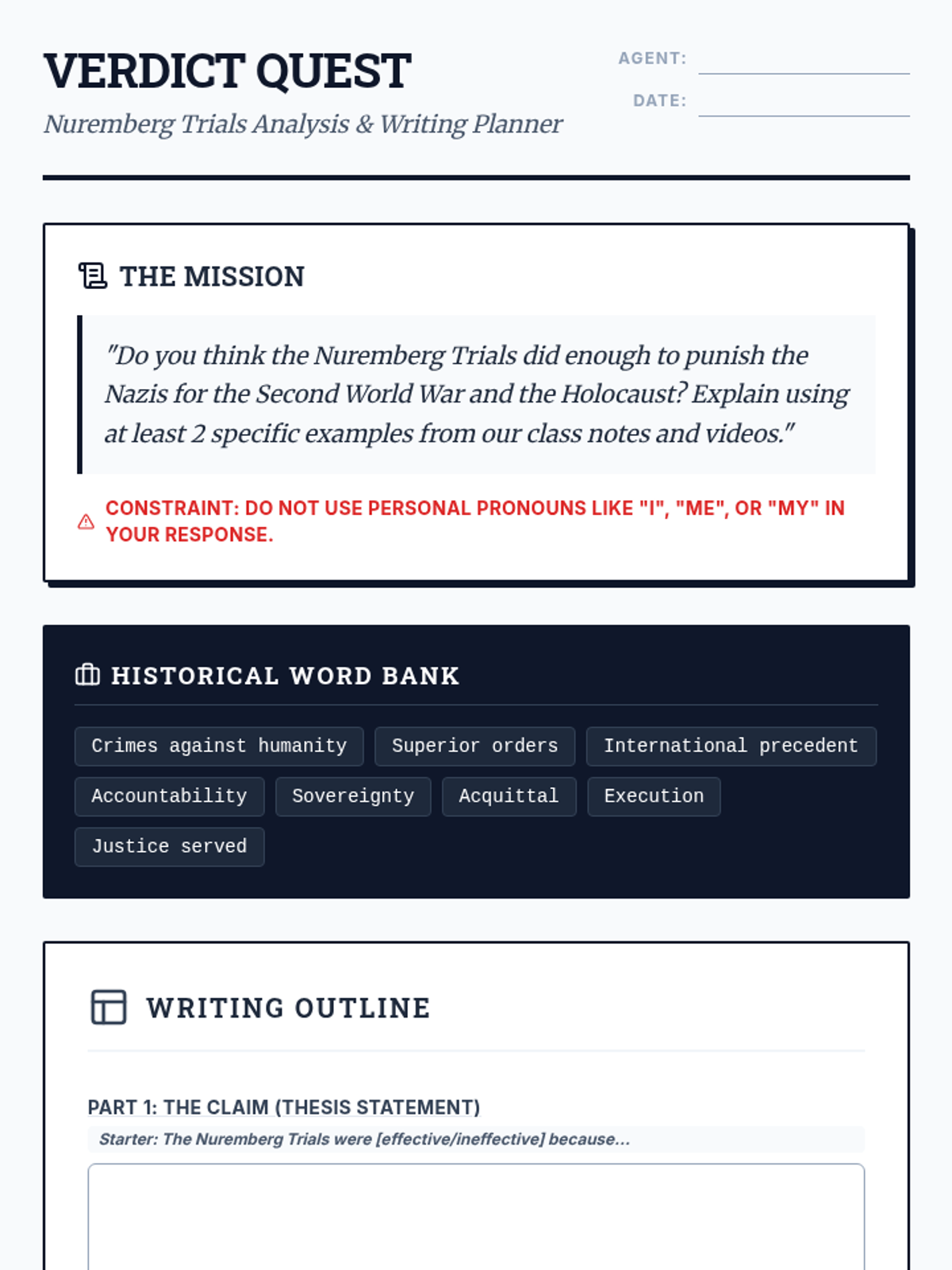
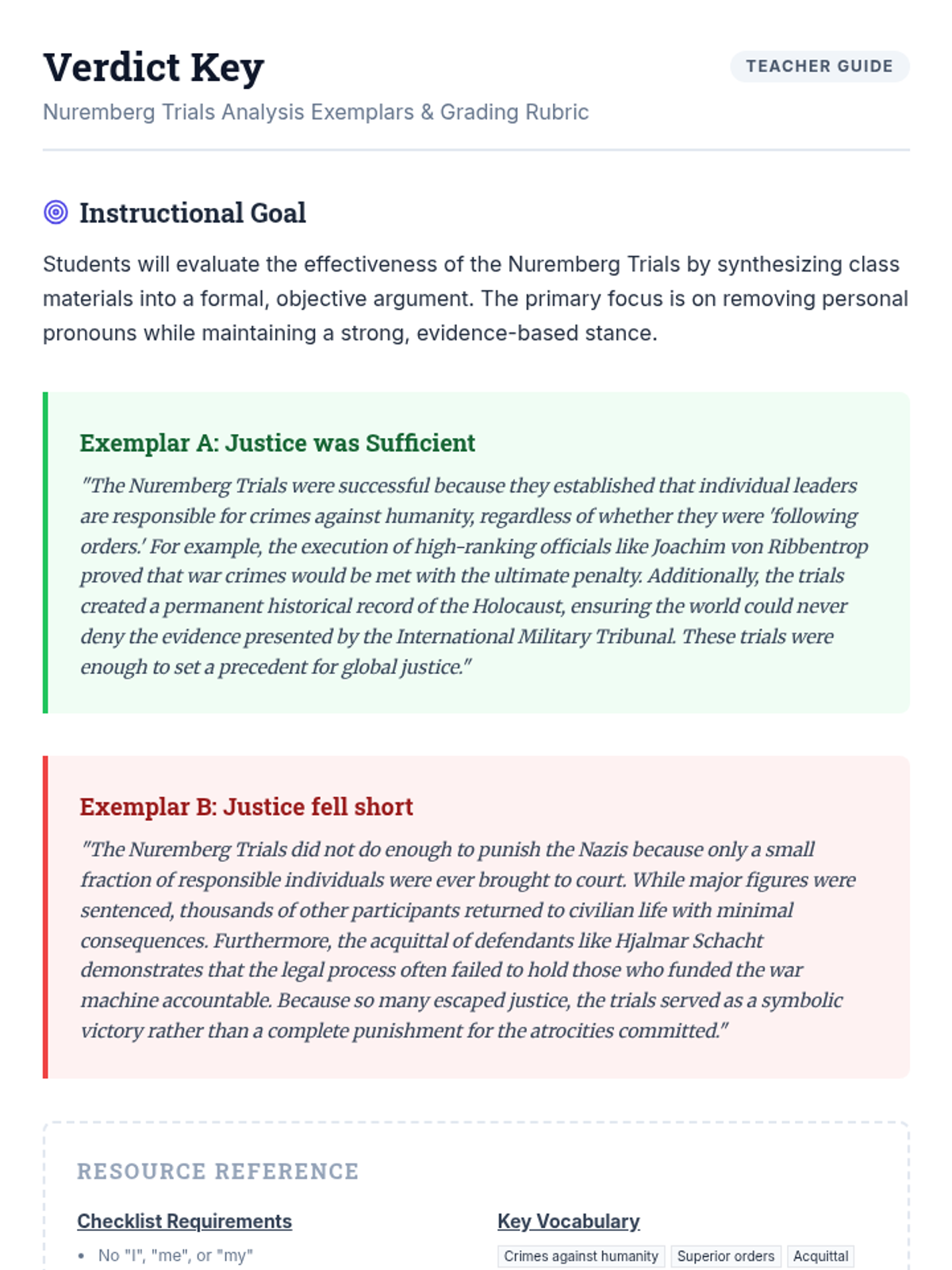
A lesson focused on evaluating the historical impact and adequacy of the Nuremberg Trials through structured writing and evidence-based argumentation.
A comprehensive exploration of America's westward expansion, covering the ideological drive of Manifest Destiny, the industrial feat of the Transcontinental Railroad, and the social movement of the Exodusters.
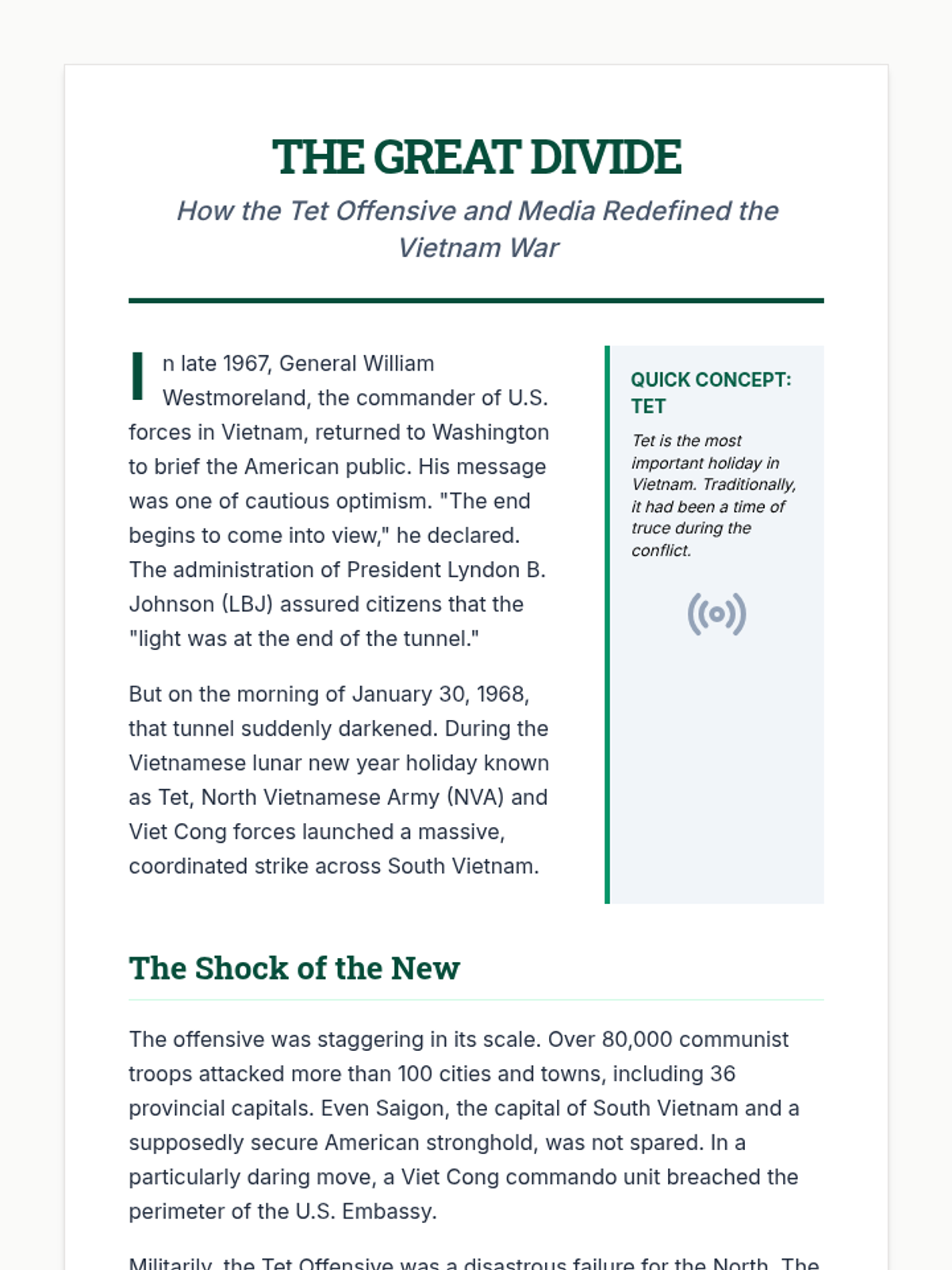
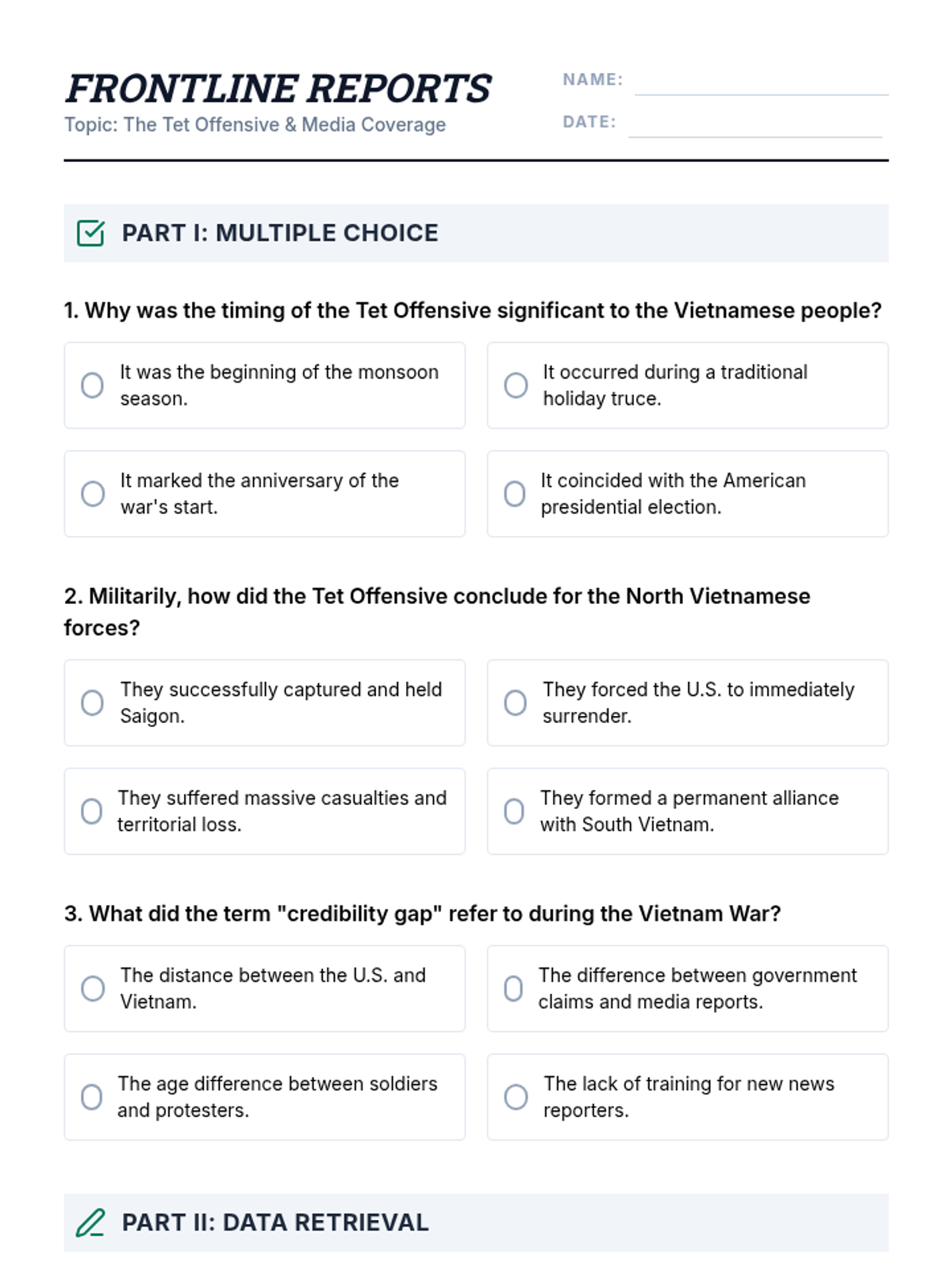
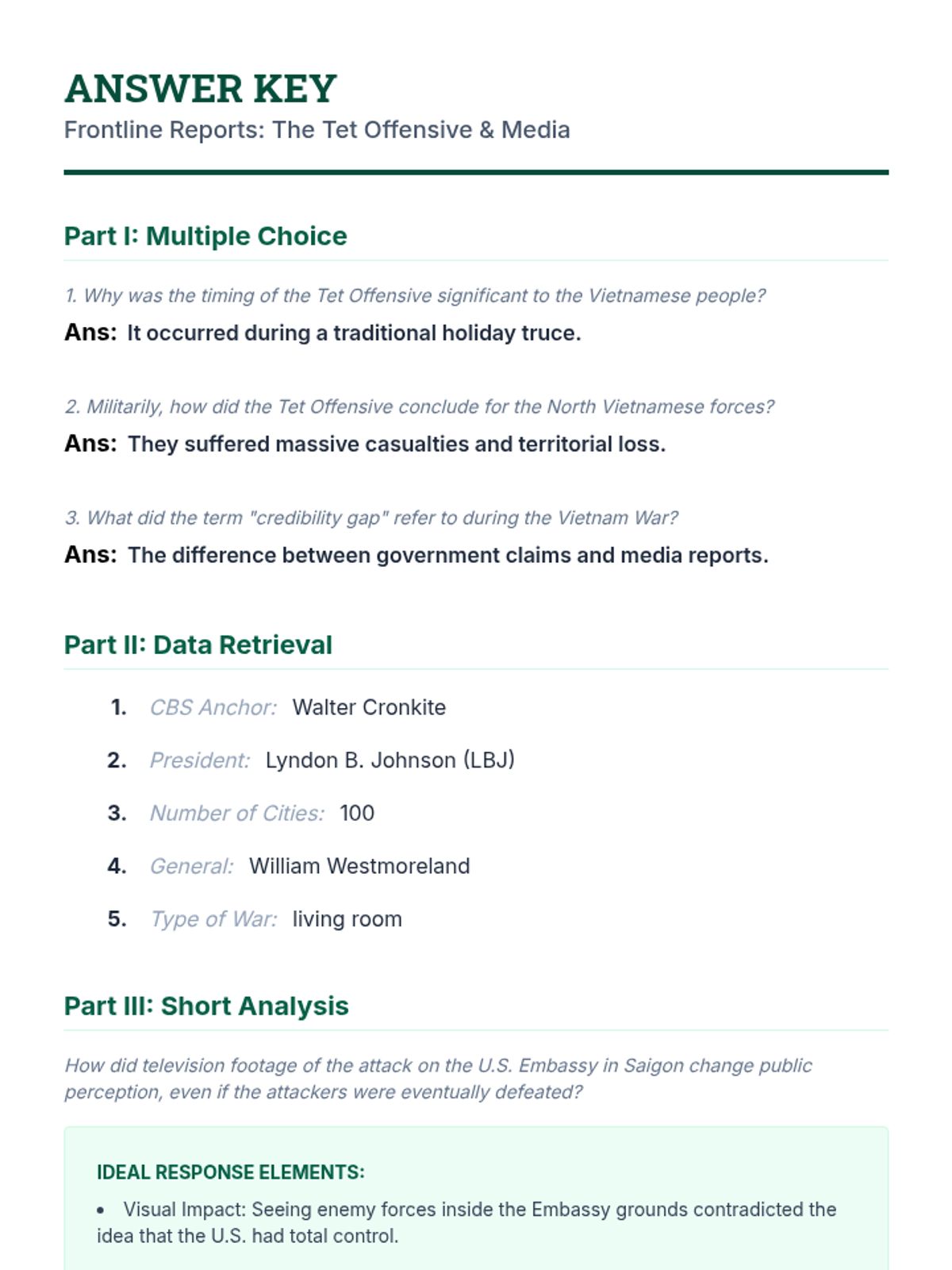
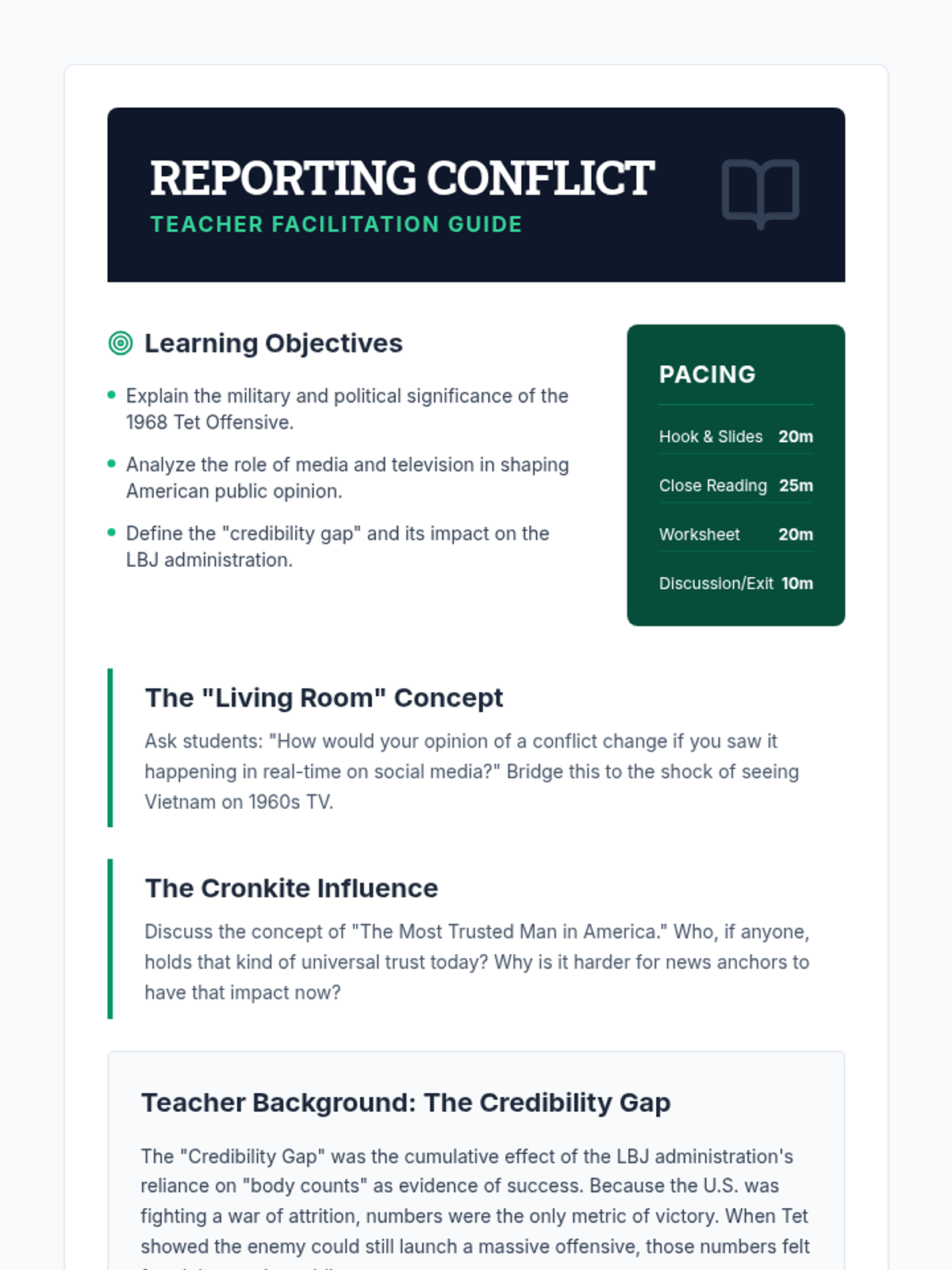
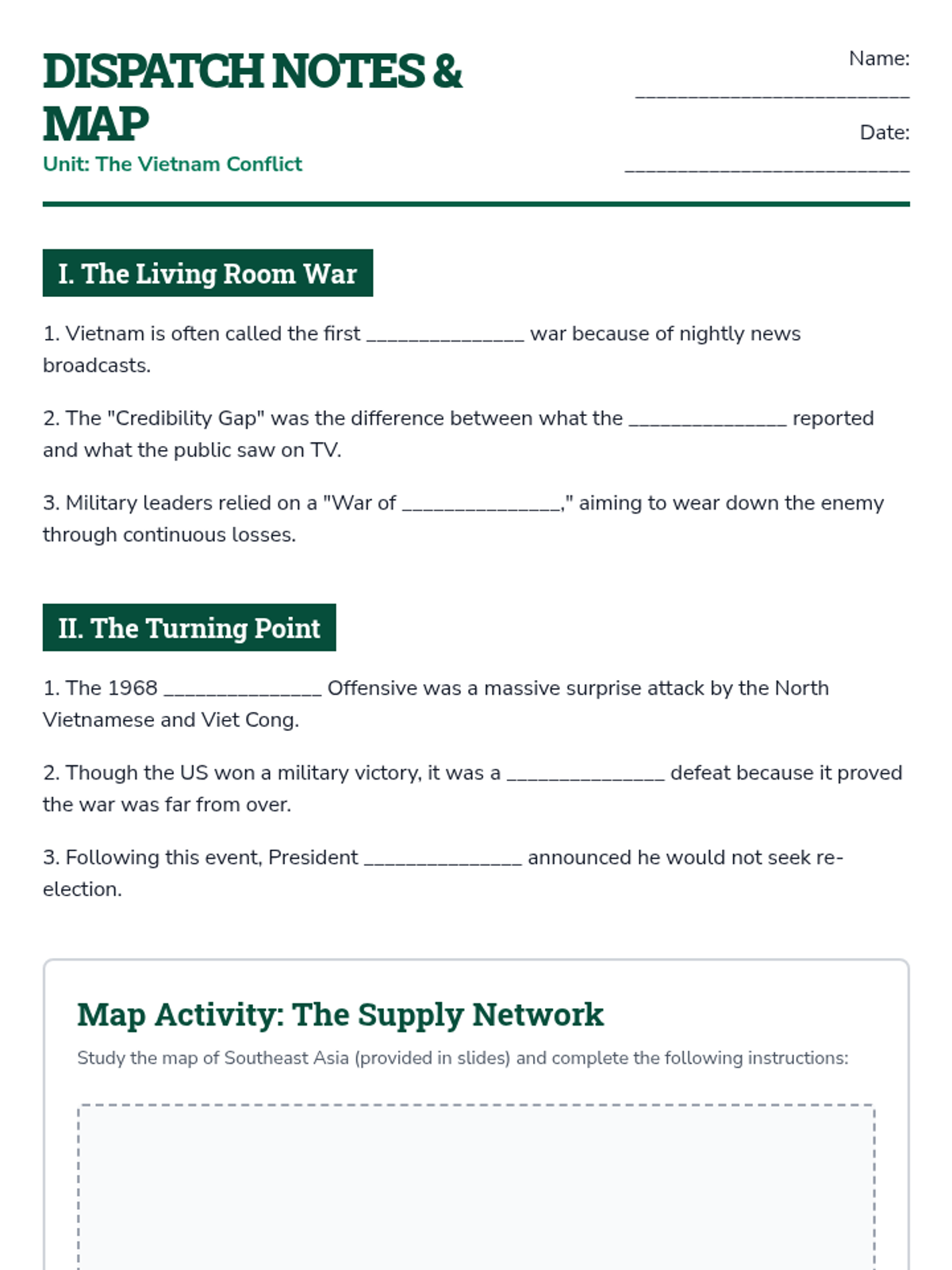
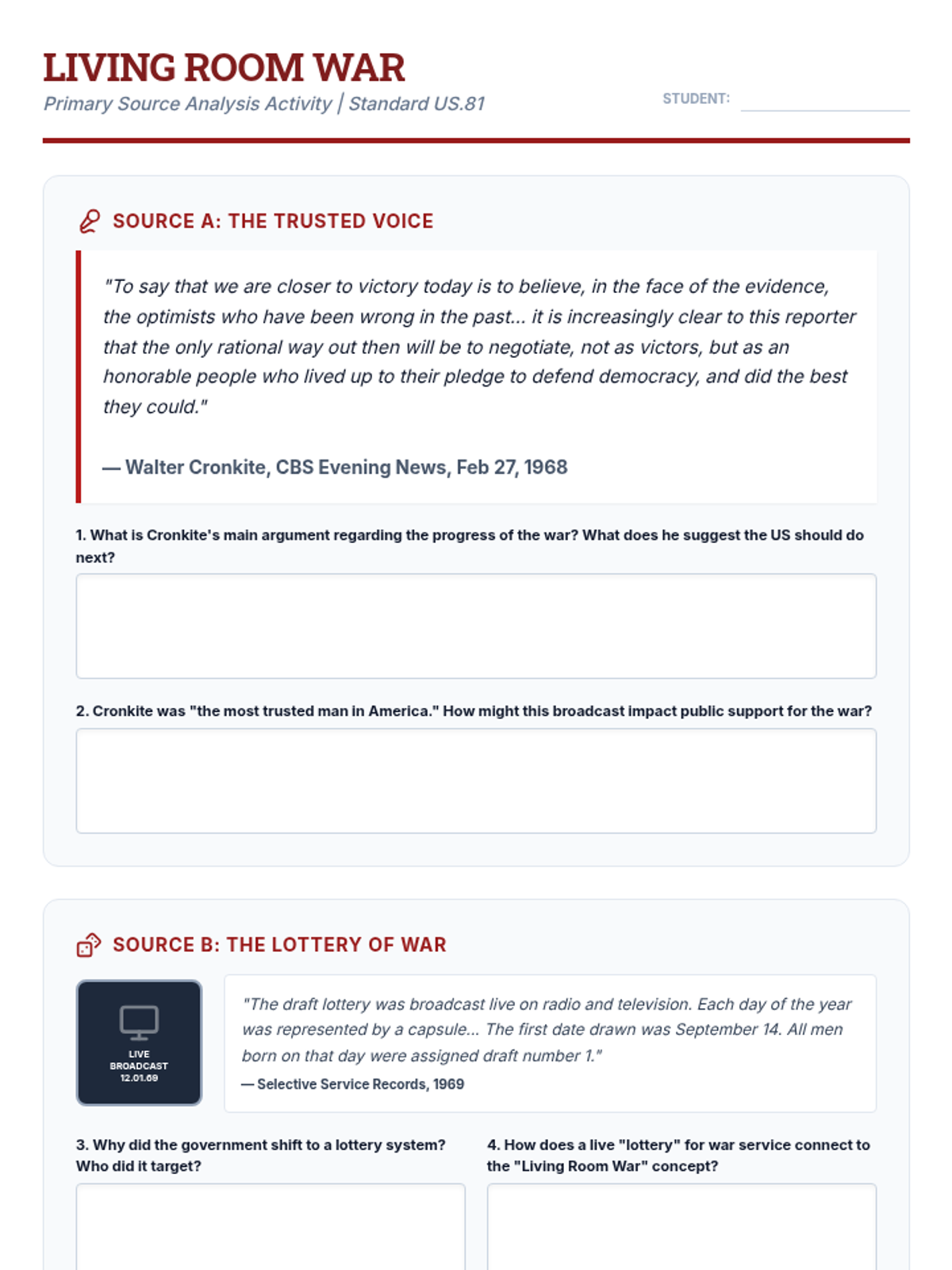
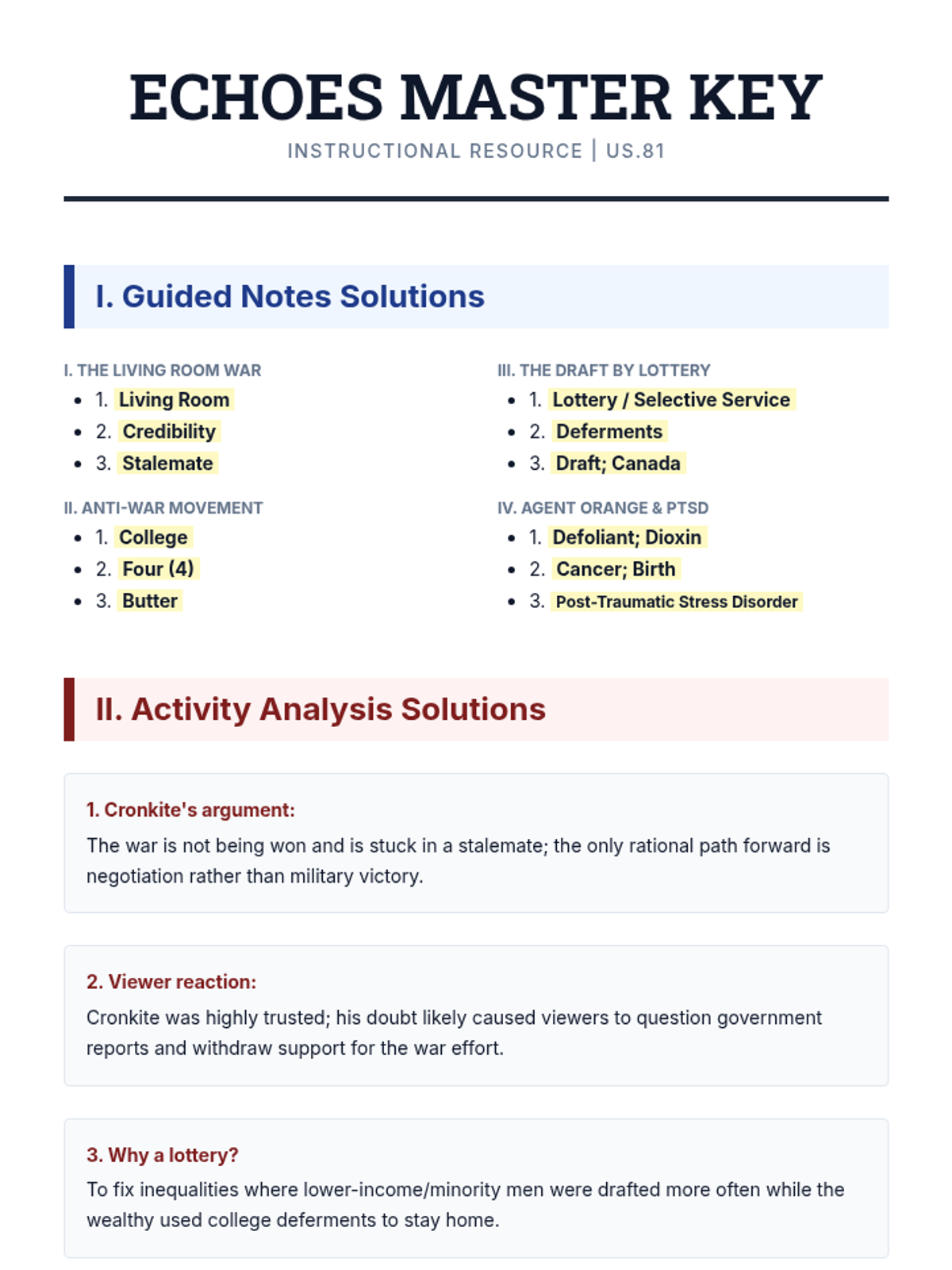
An in-depth exploration of the Tet Offensive and the pivotal role of media coverage during the Vietnam War, examining how the 'Living Room War' changed American public opinion and created a credibility gap.
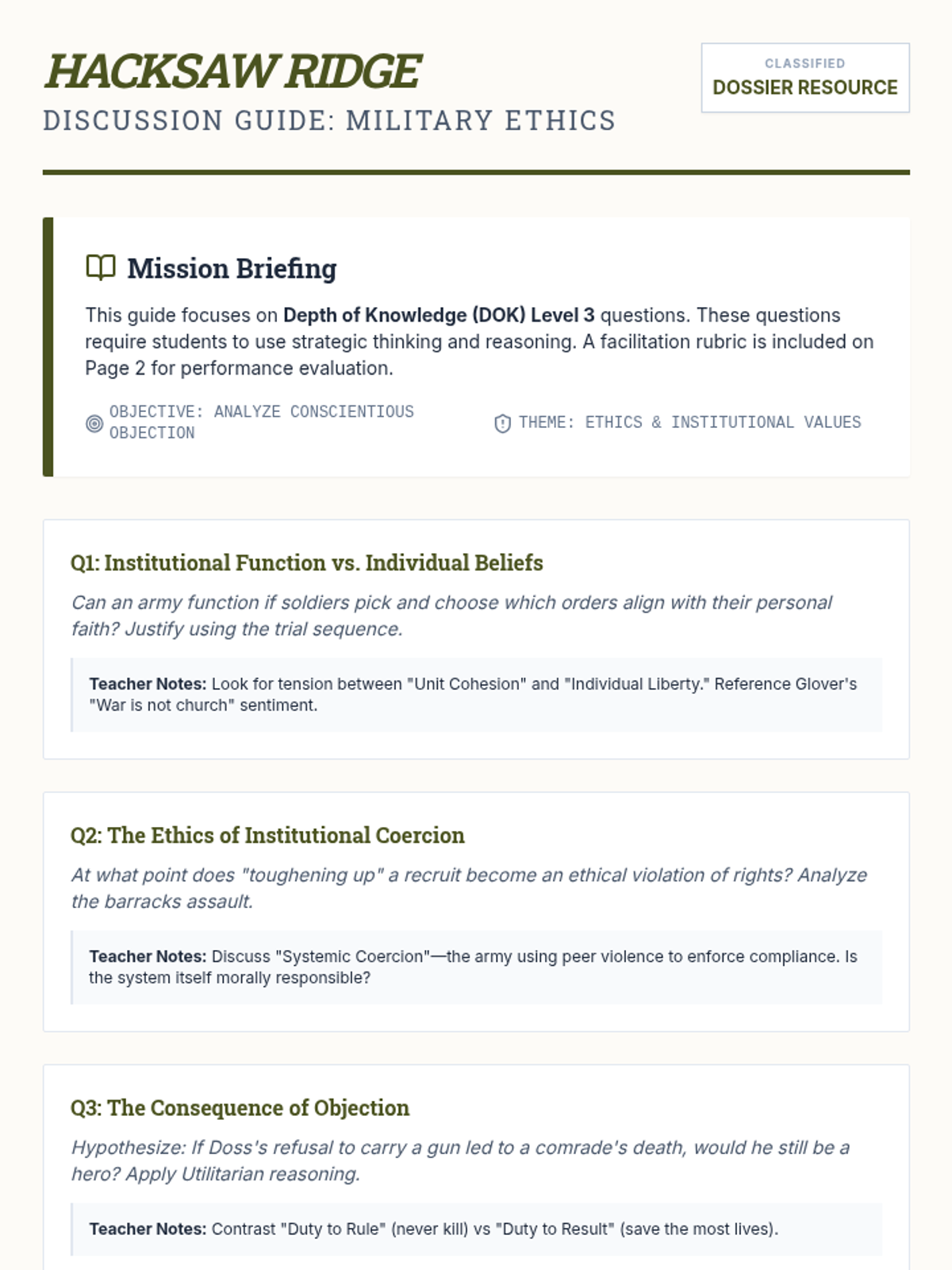
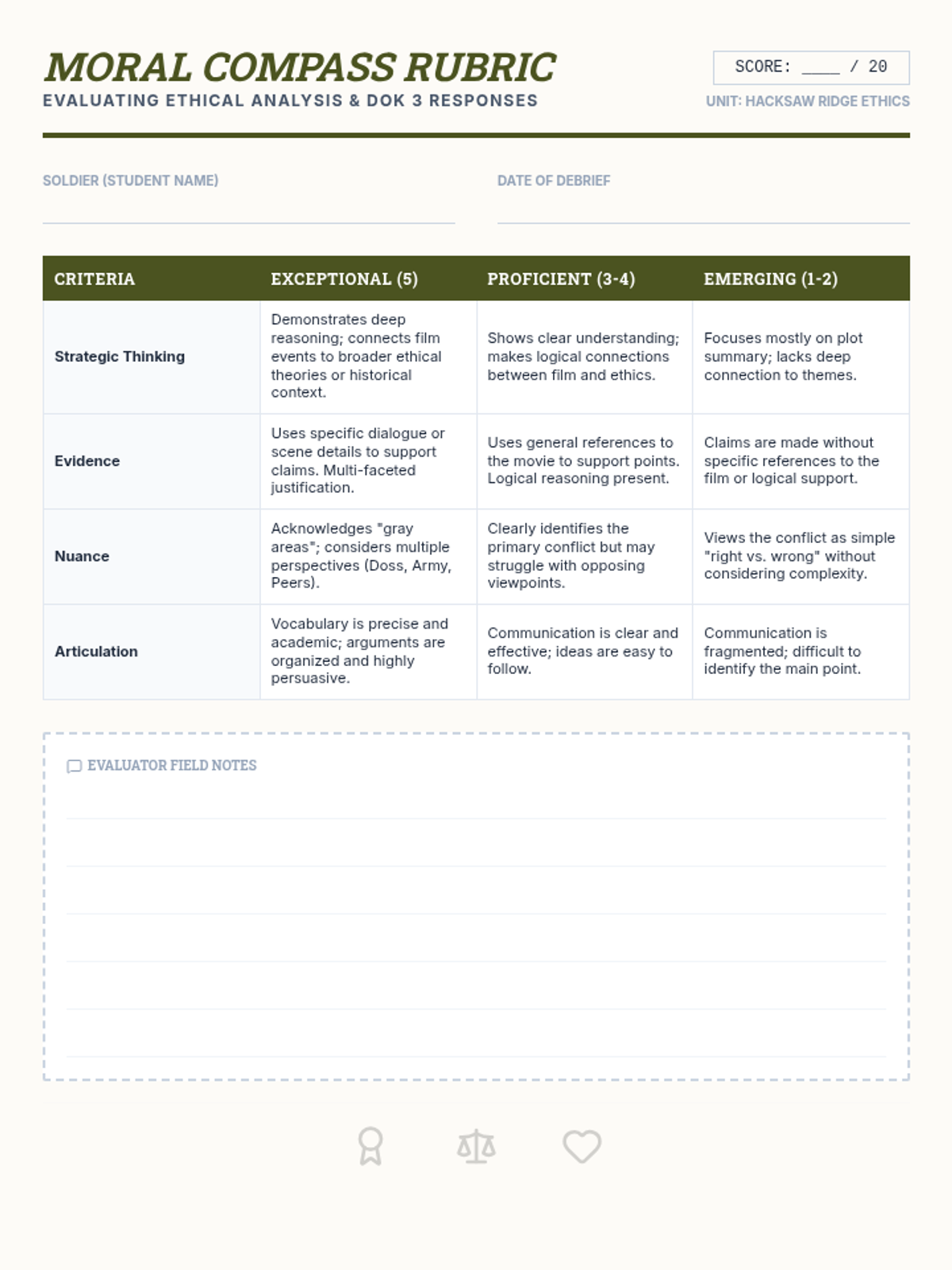
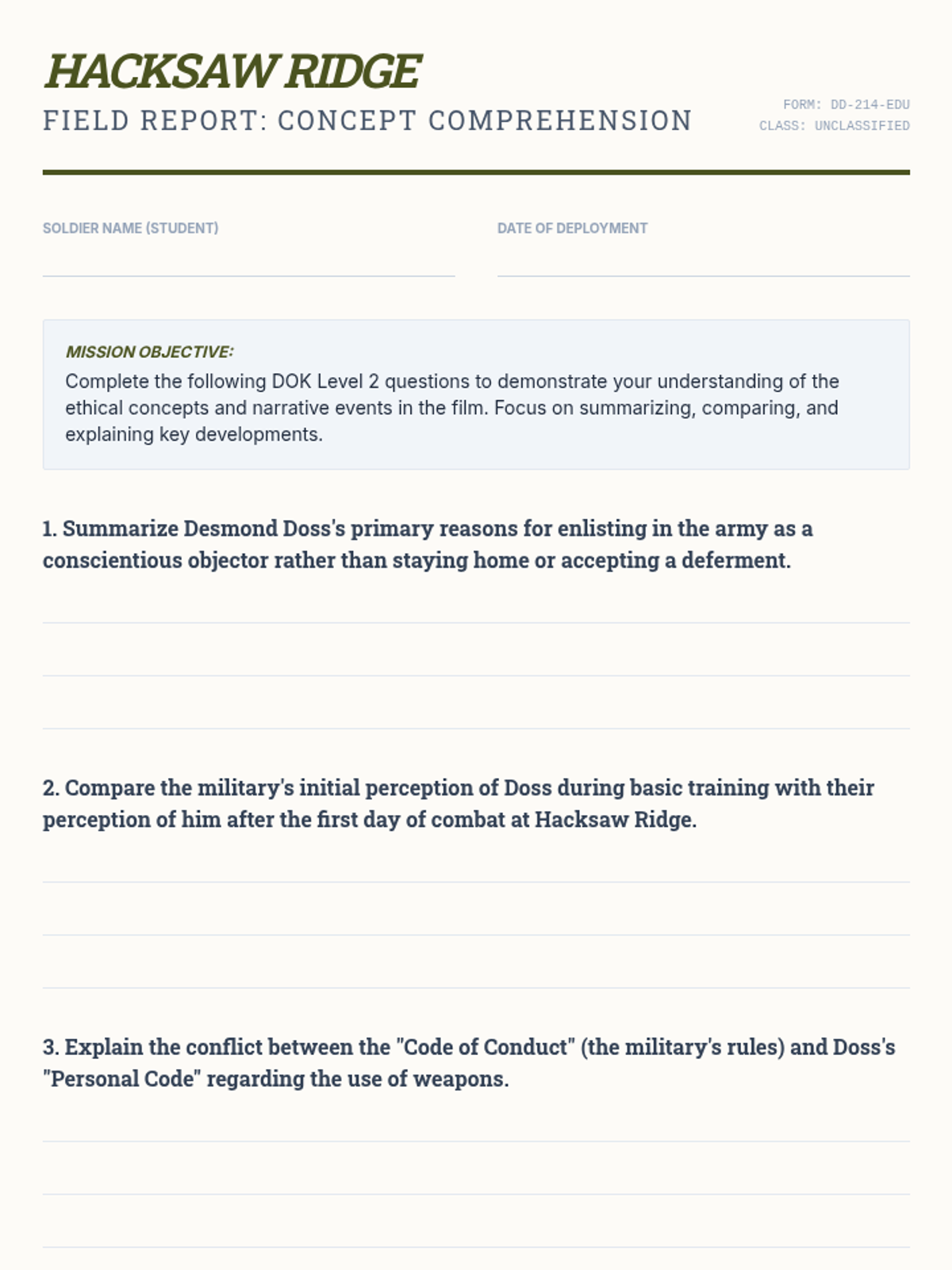
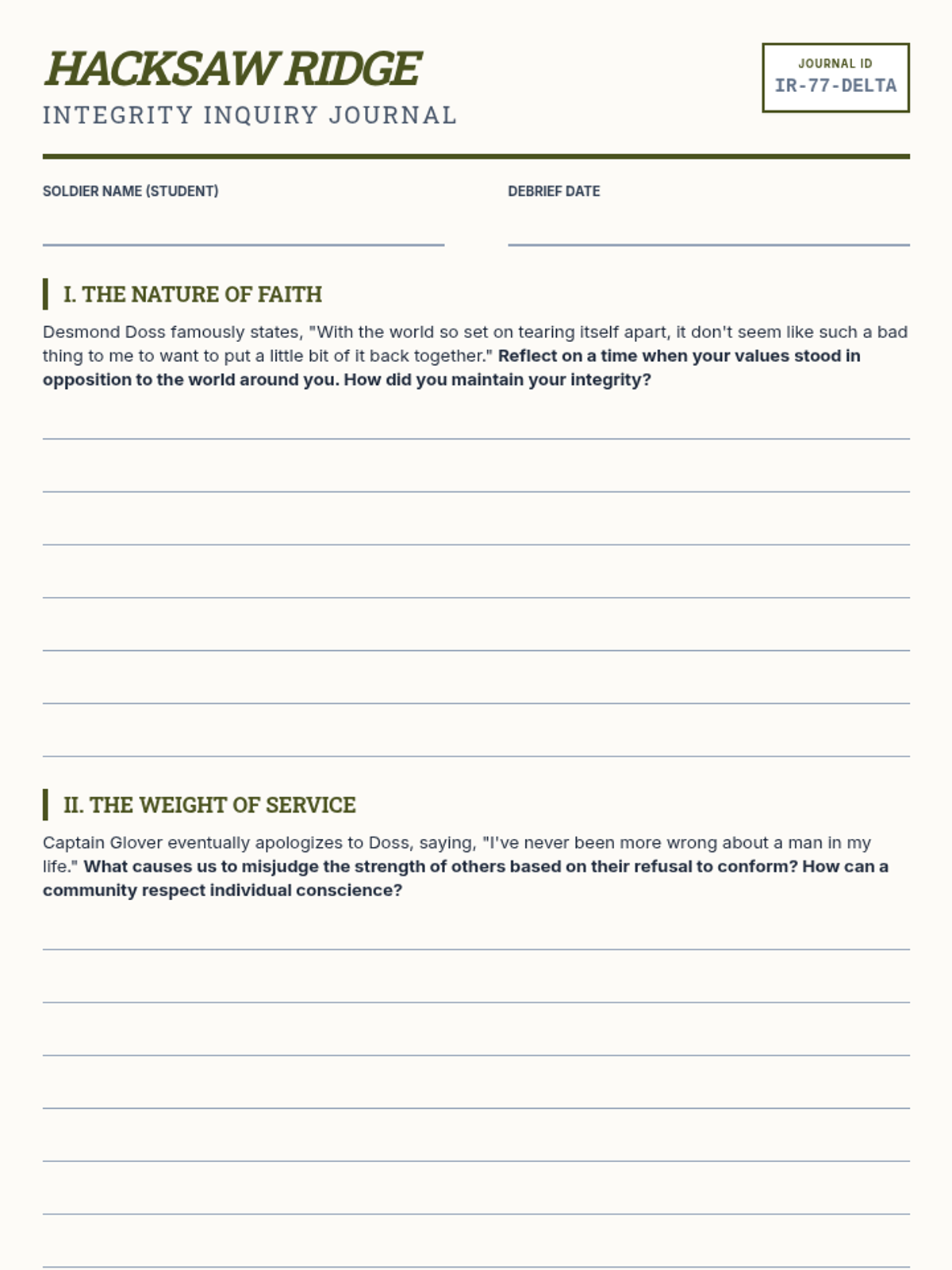
An in-depth exploration of conscientious objection and military ethics through the lens of the film Hacksaw Ridge, featuring DOK Level 3 discussion prompts and evaluation tools.
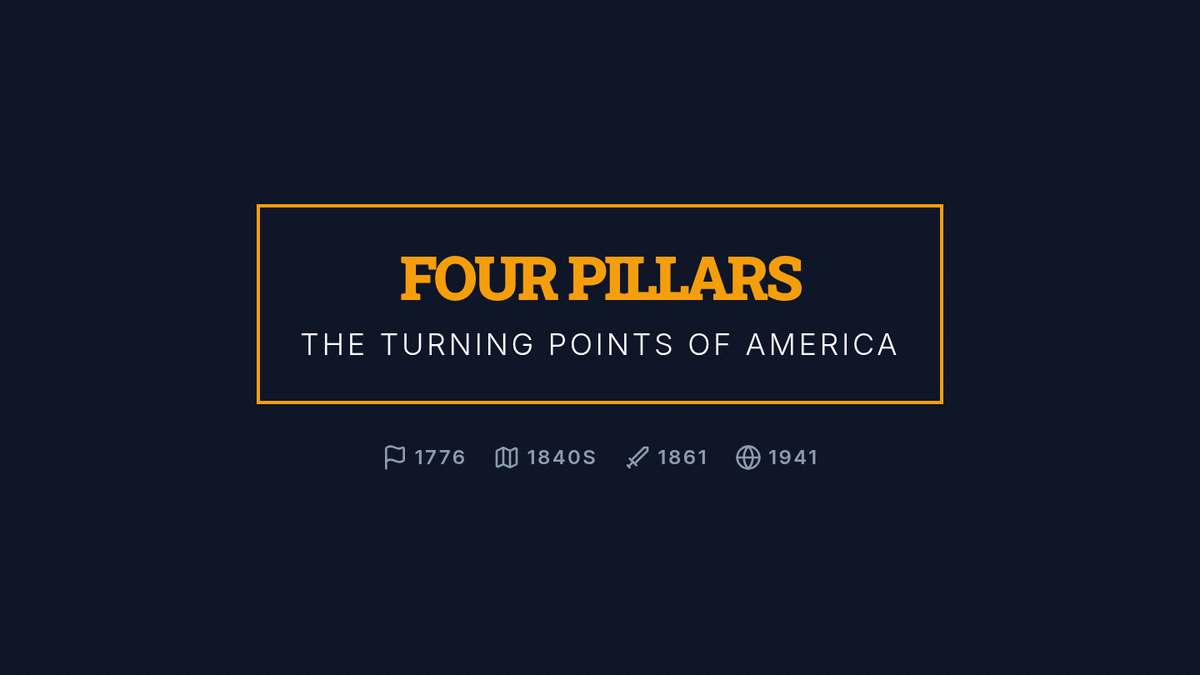
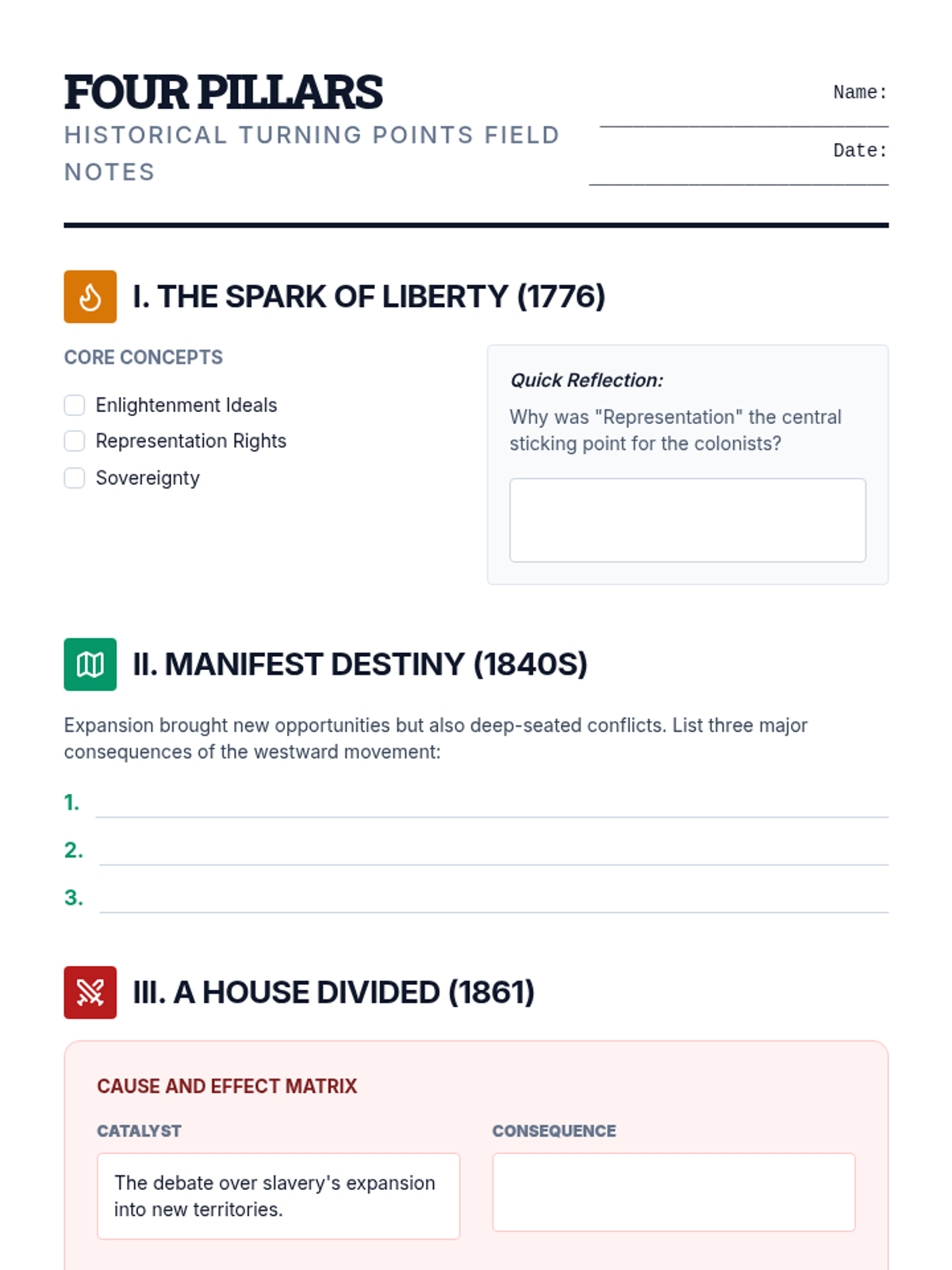
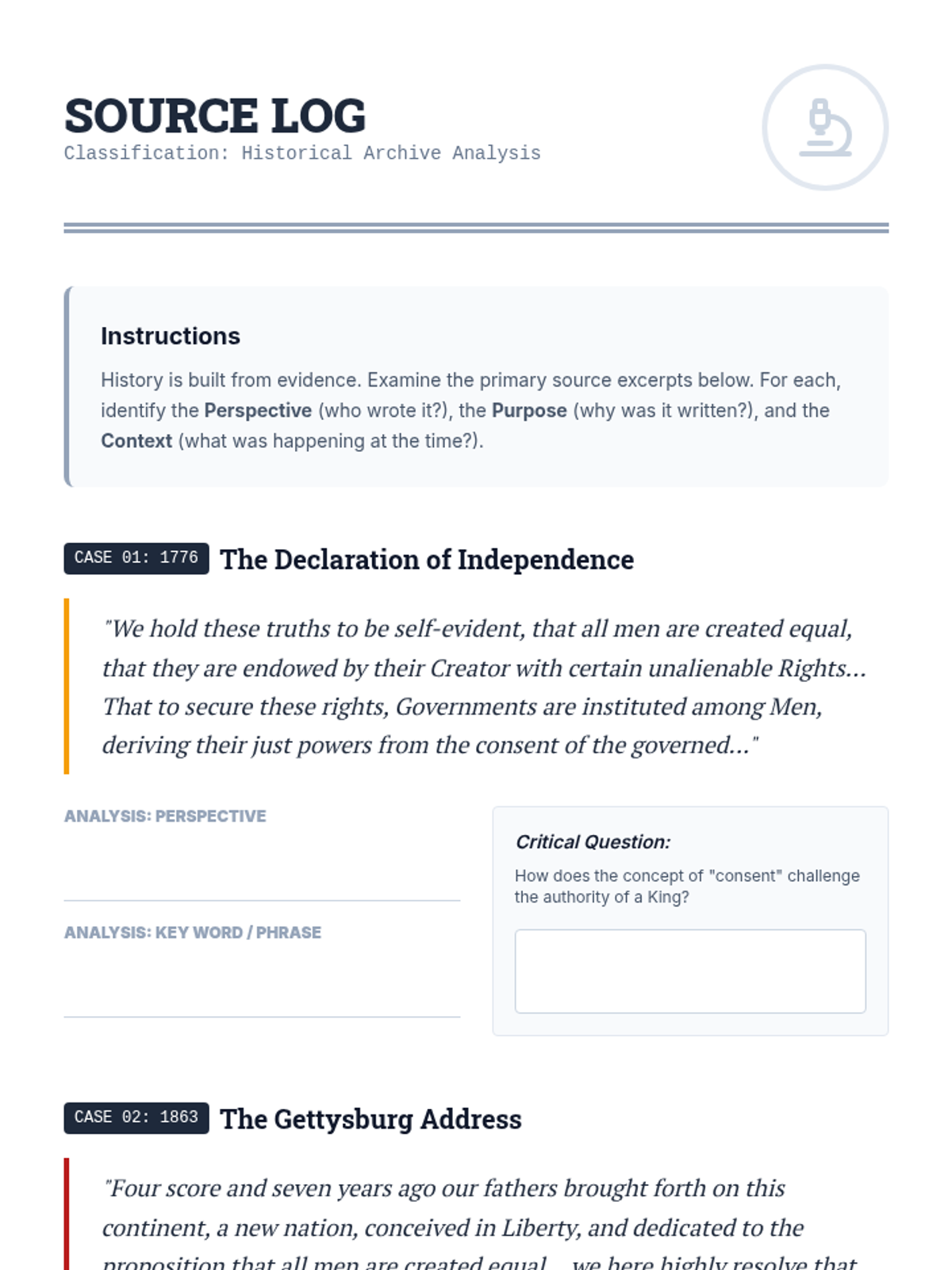
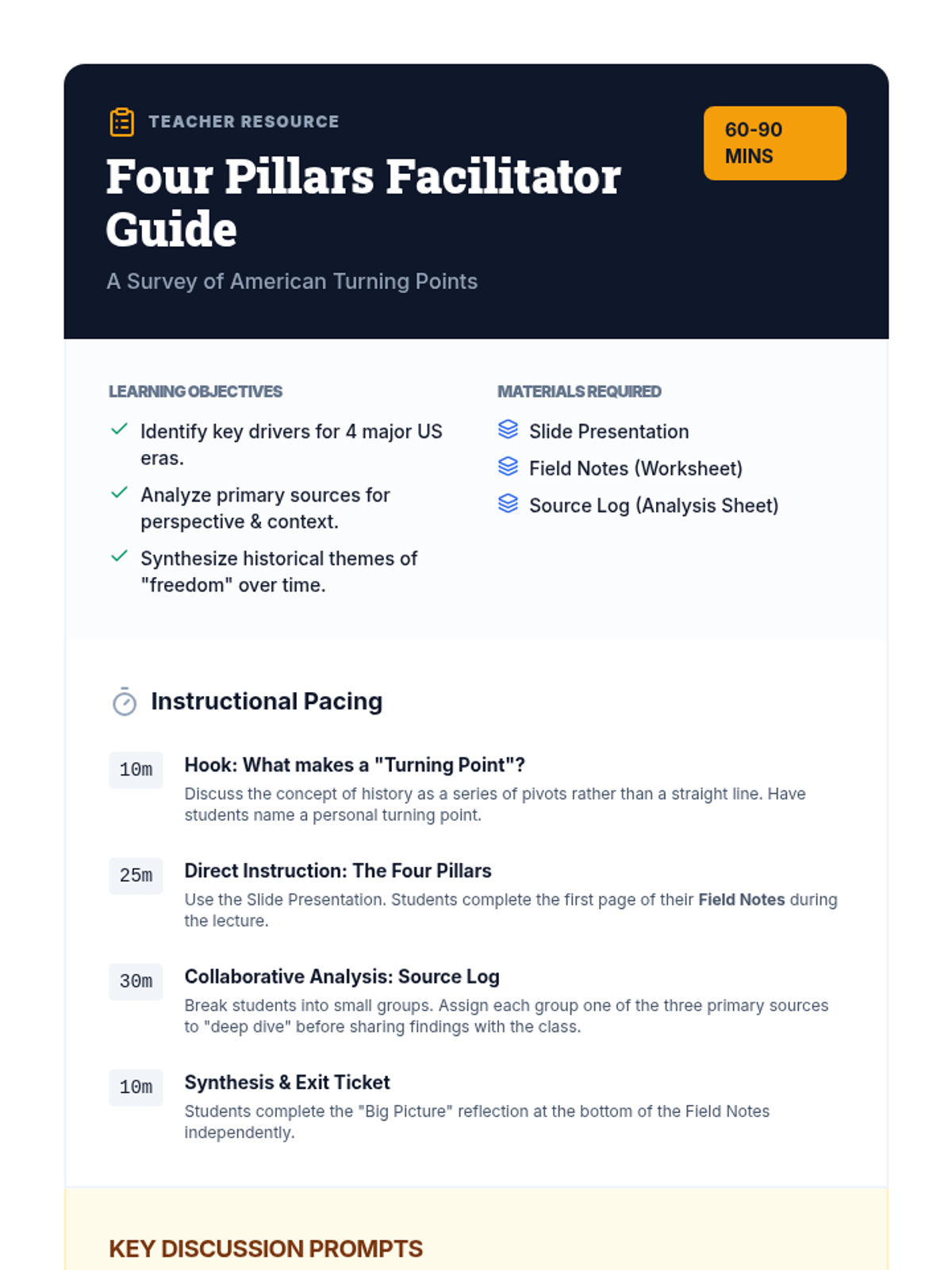
An intensive survey lesson covering the critical events and lasting impacts of the American Revolution, Westward Expansion, the Civil War, and World War II. Students will analyze primary sources and synthesize information across different eras to understand historical continuity and change.
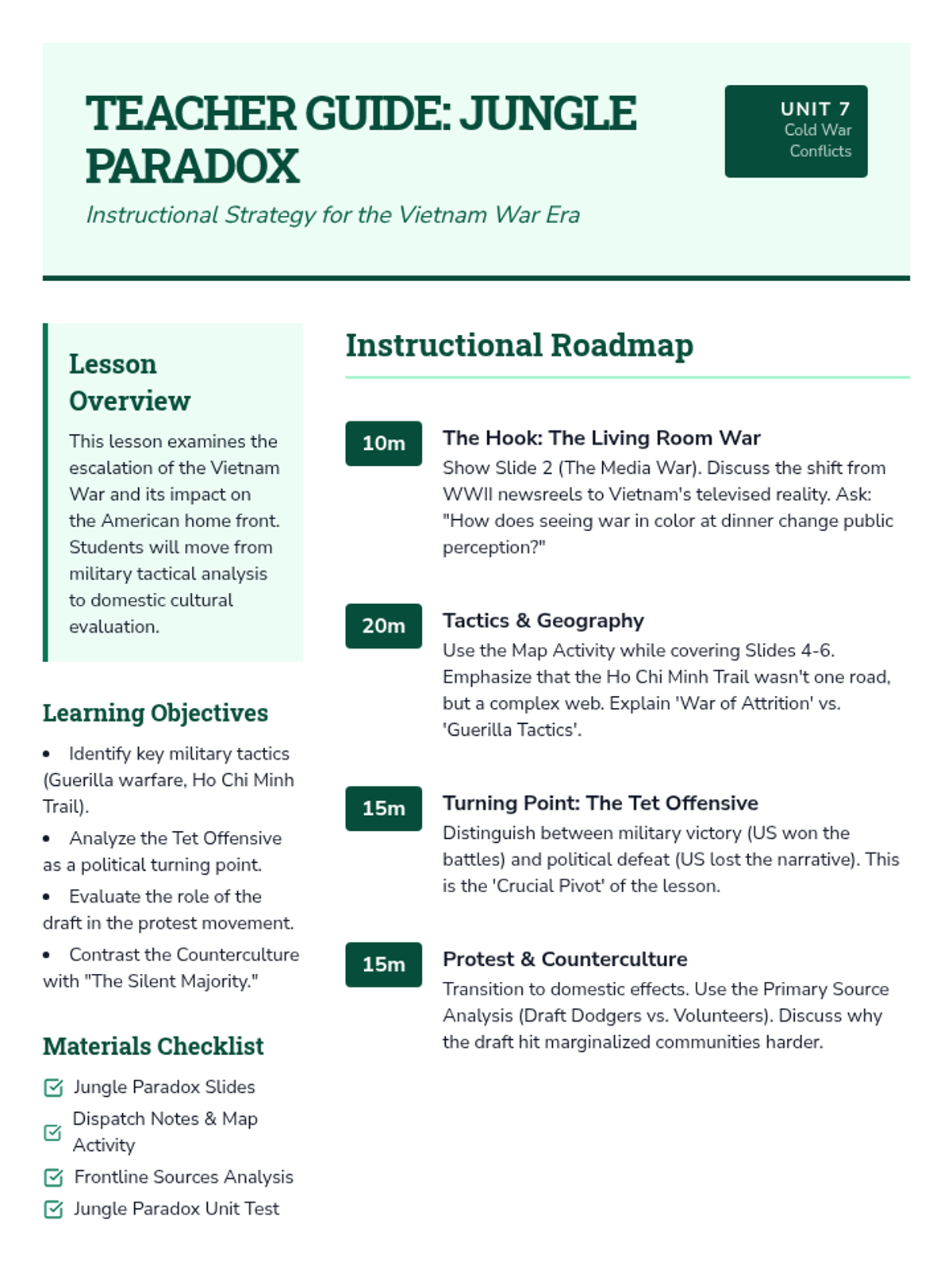
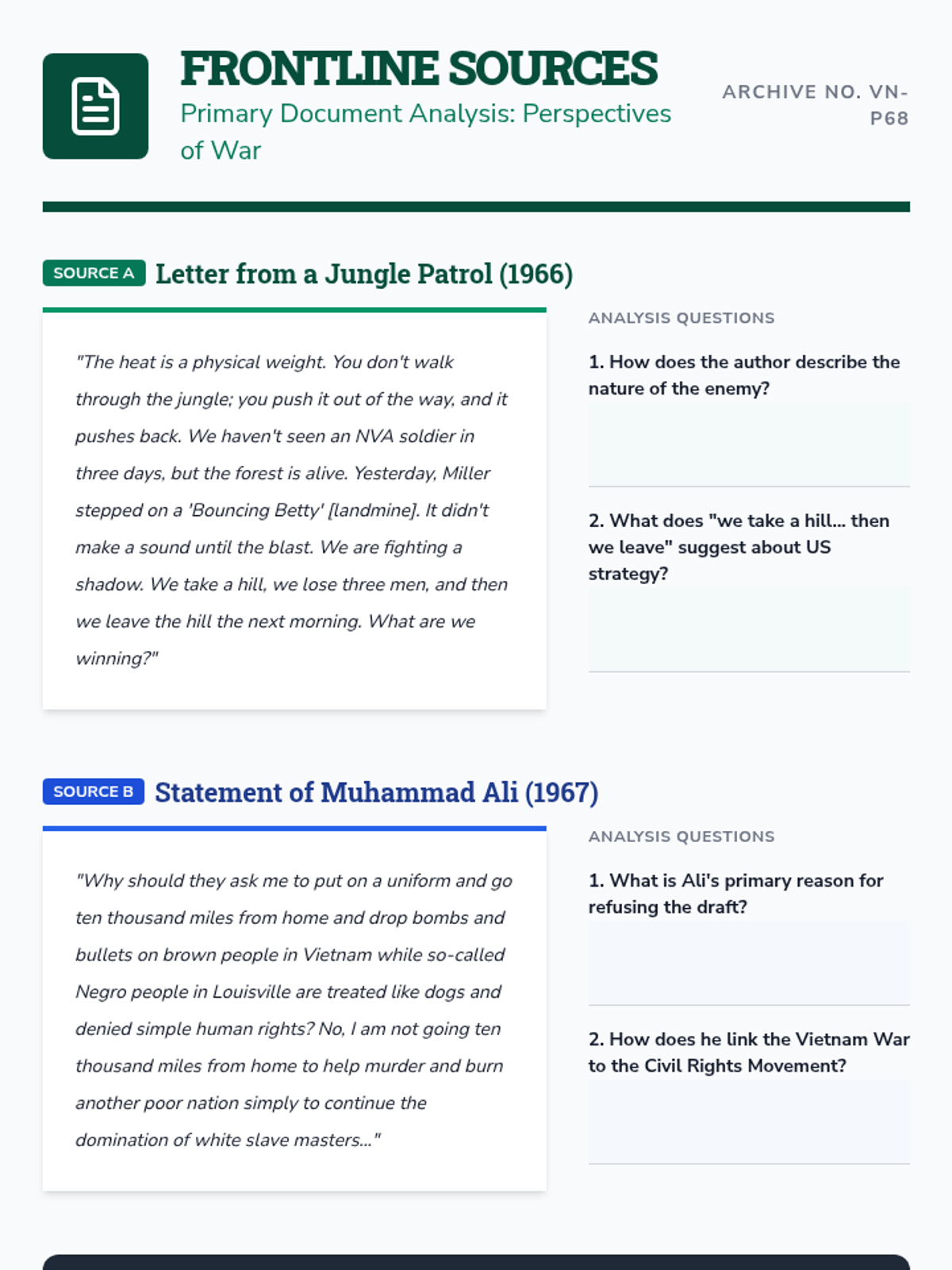
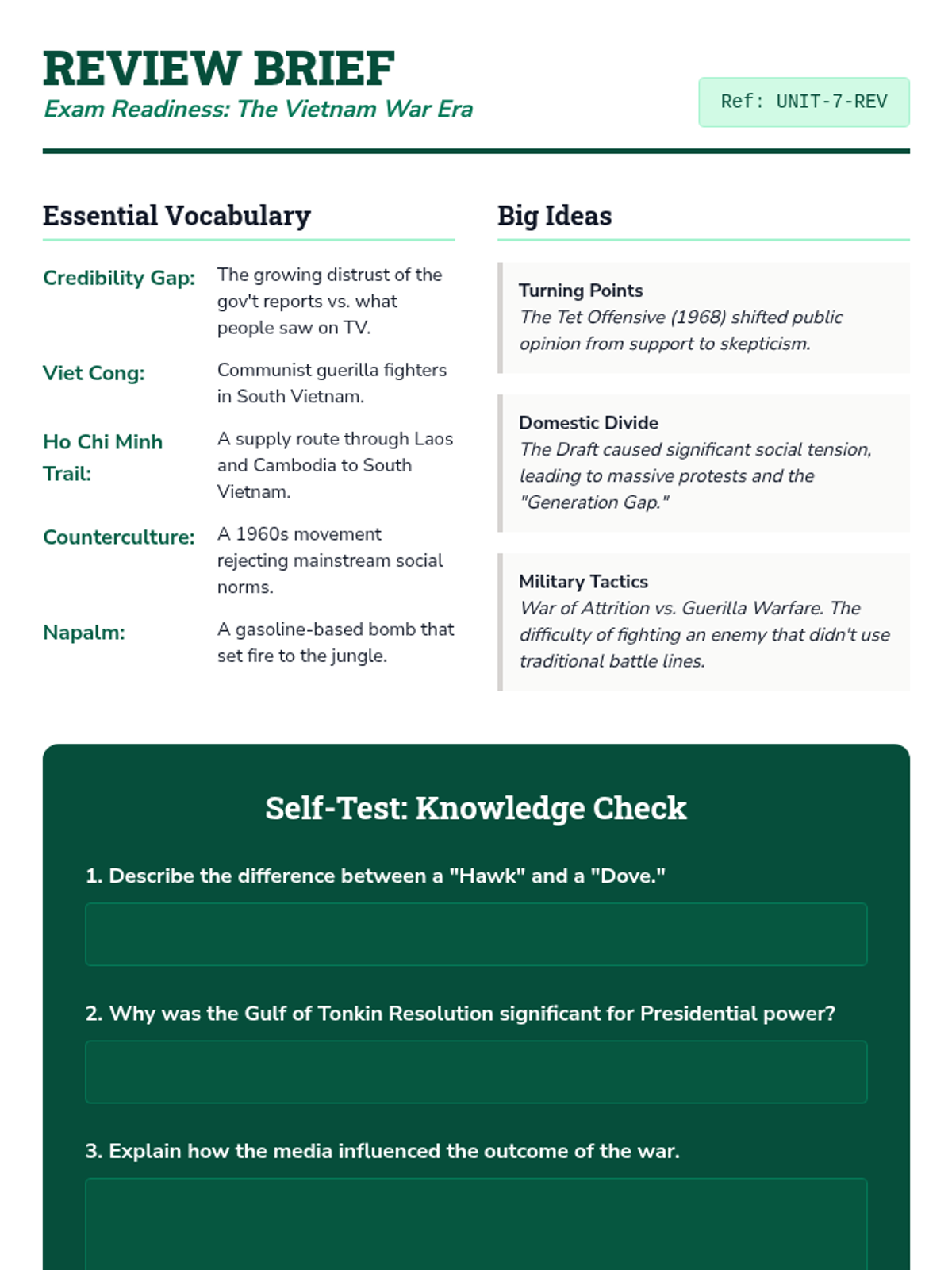
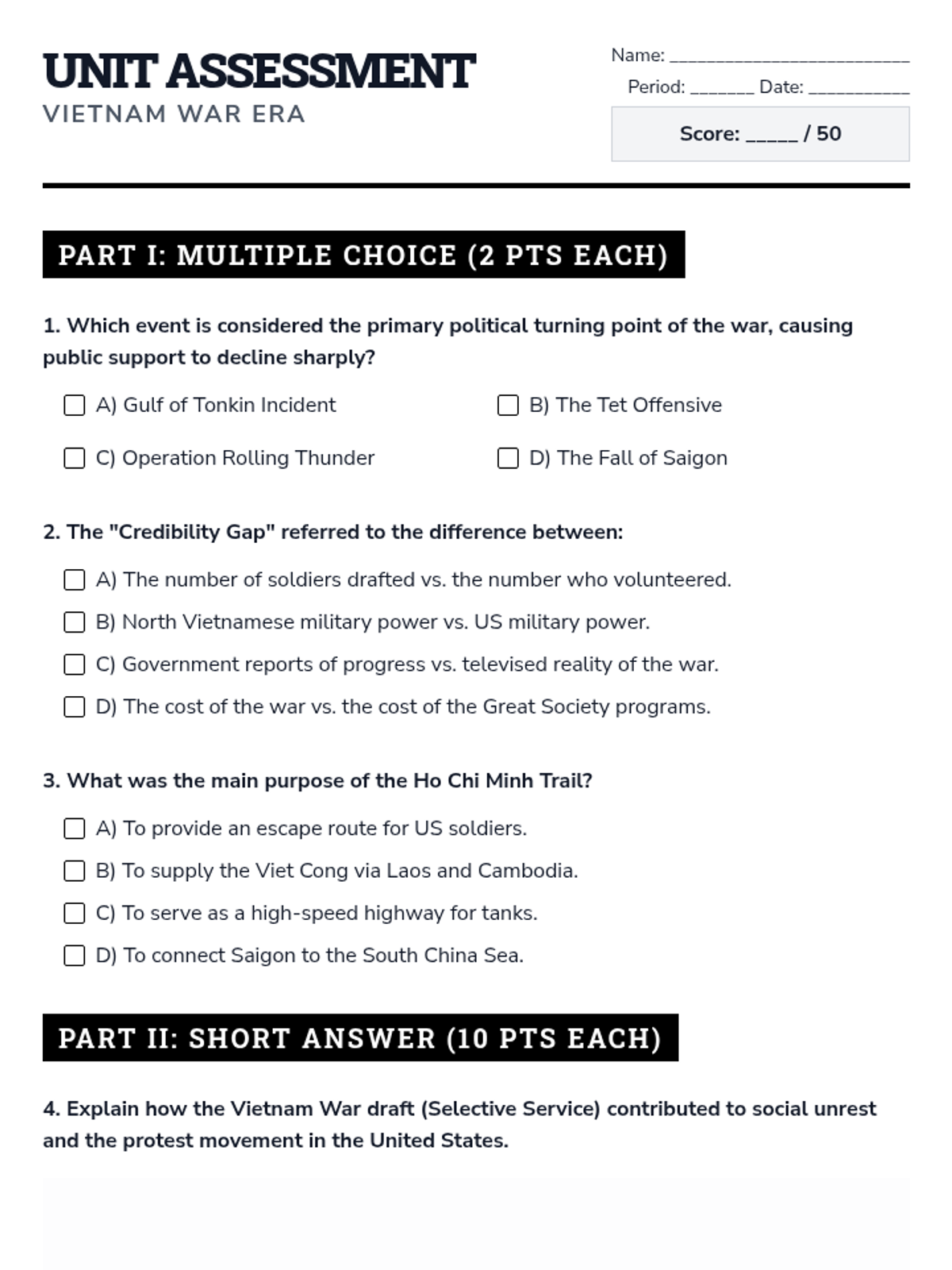
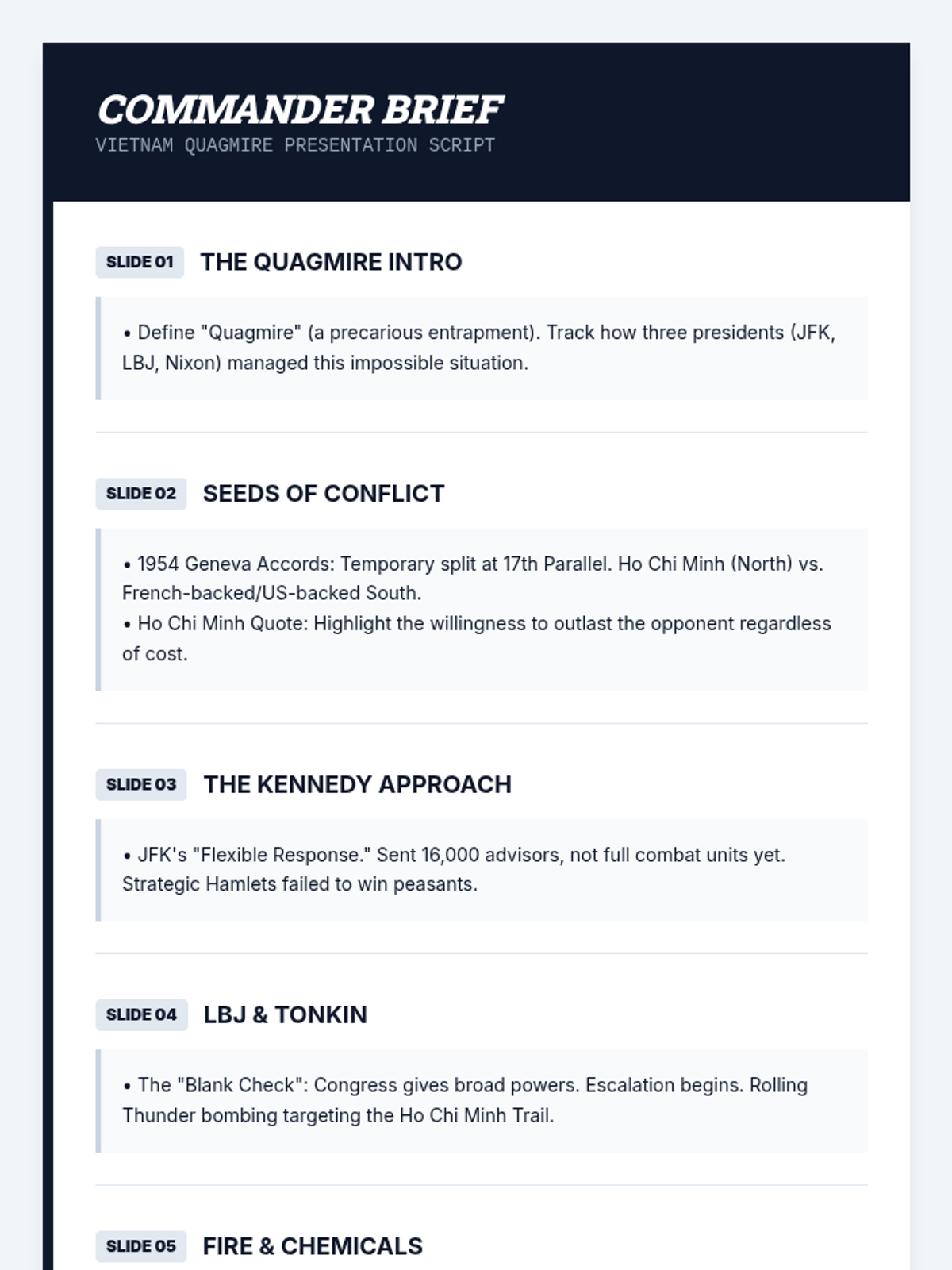
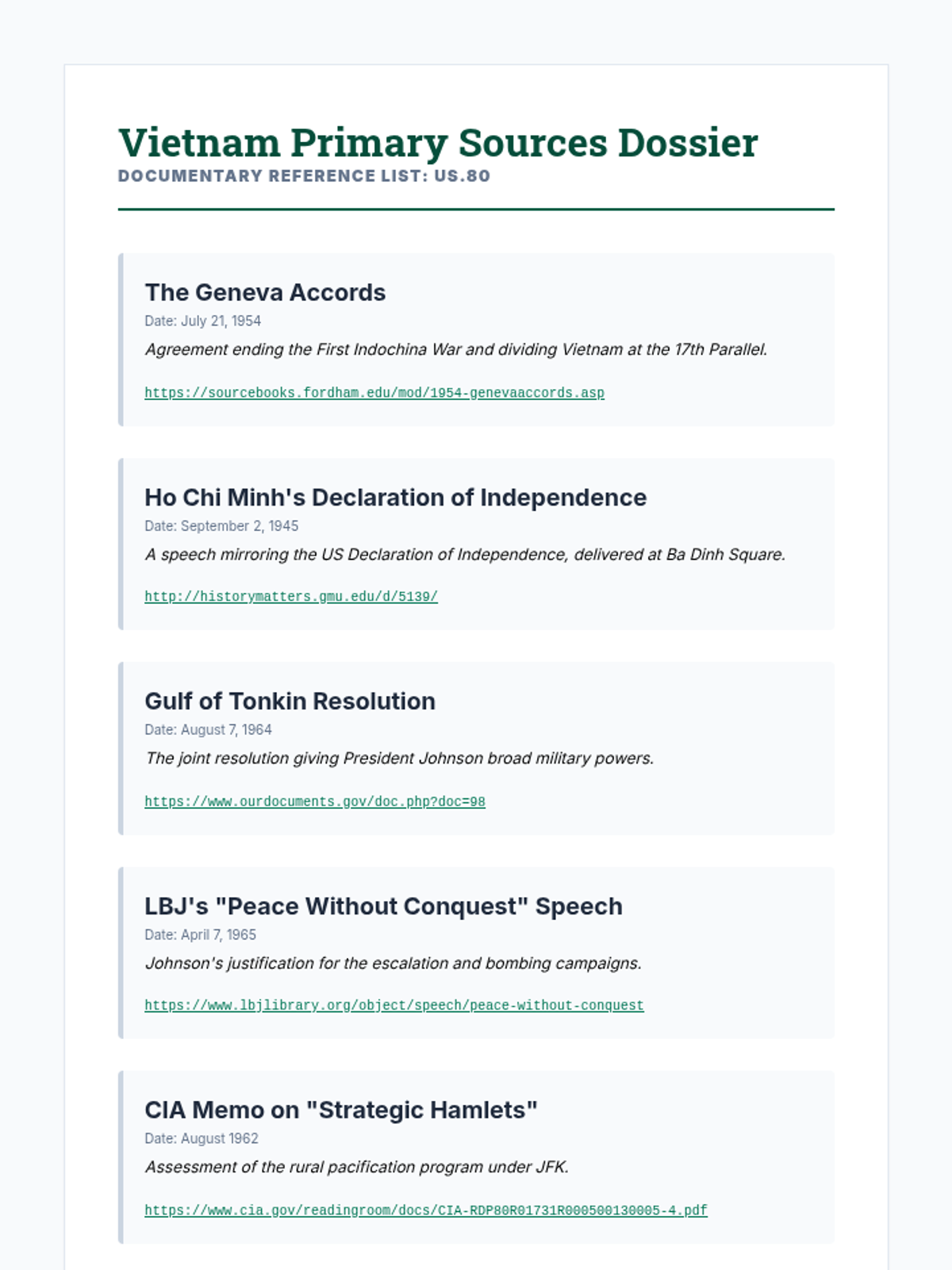
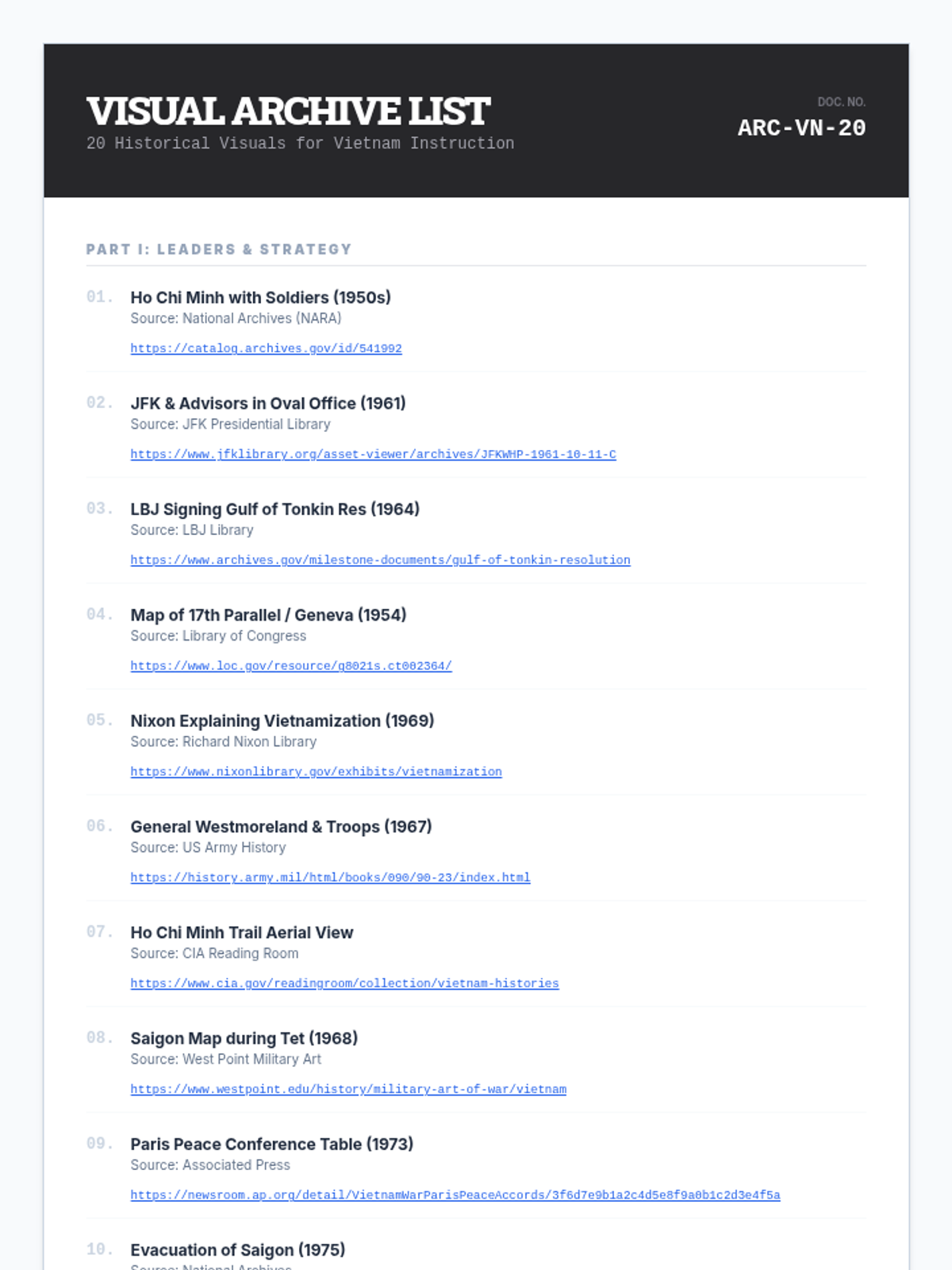
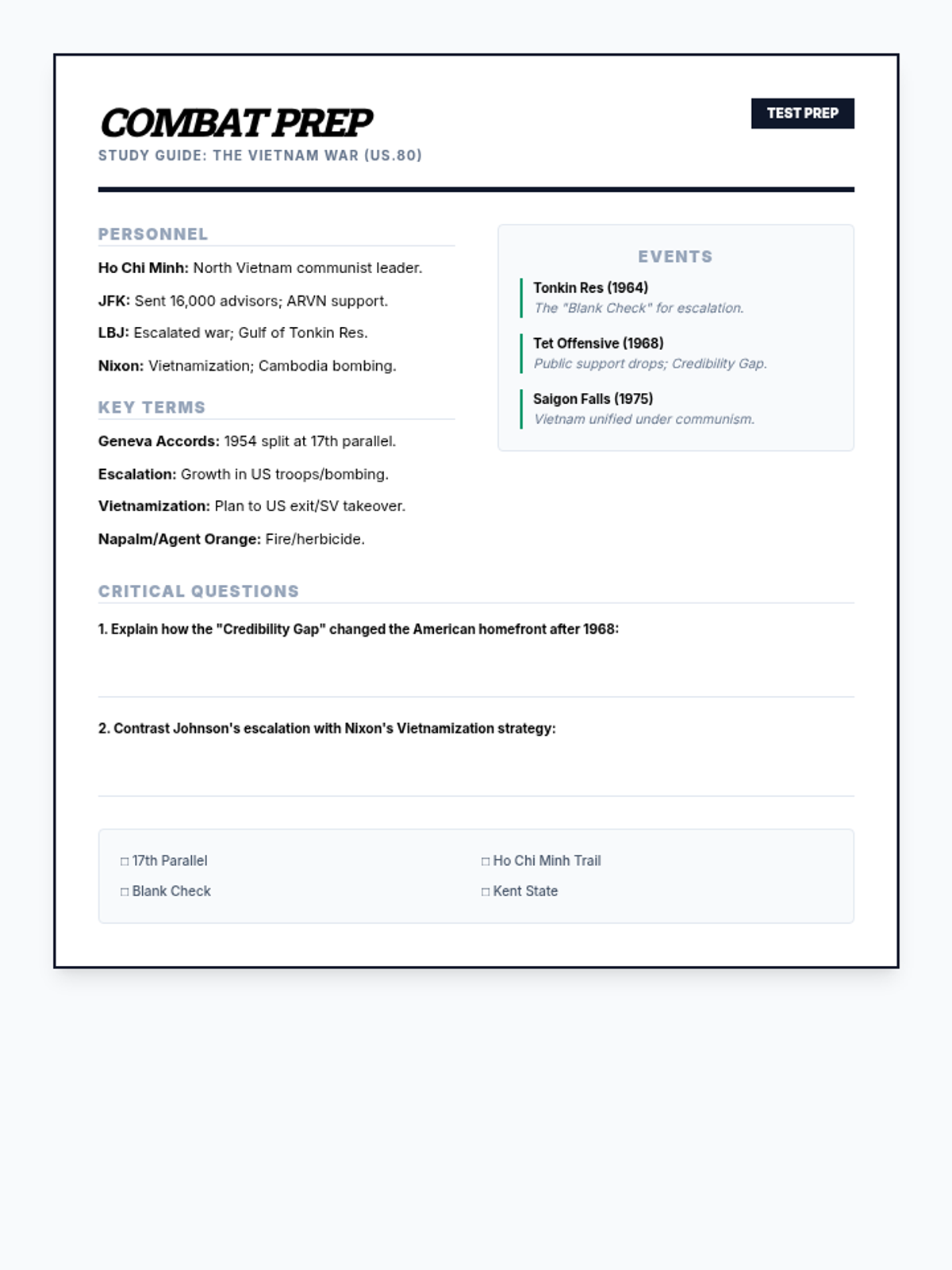
A comprehensive exploration of the Vietnam War era, covering military tactics, political turning points, and the seismic cultural shifts of the 1960s. Students analyze primary sources, map the conflict, and evaluate the domestic impact of the war.
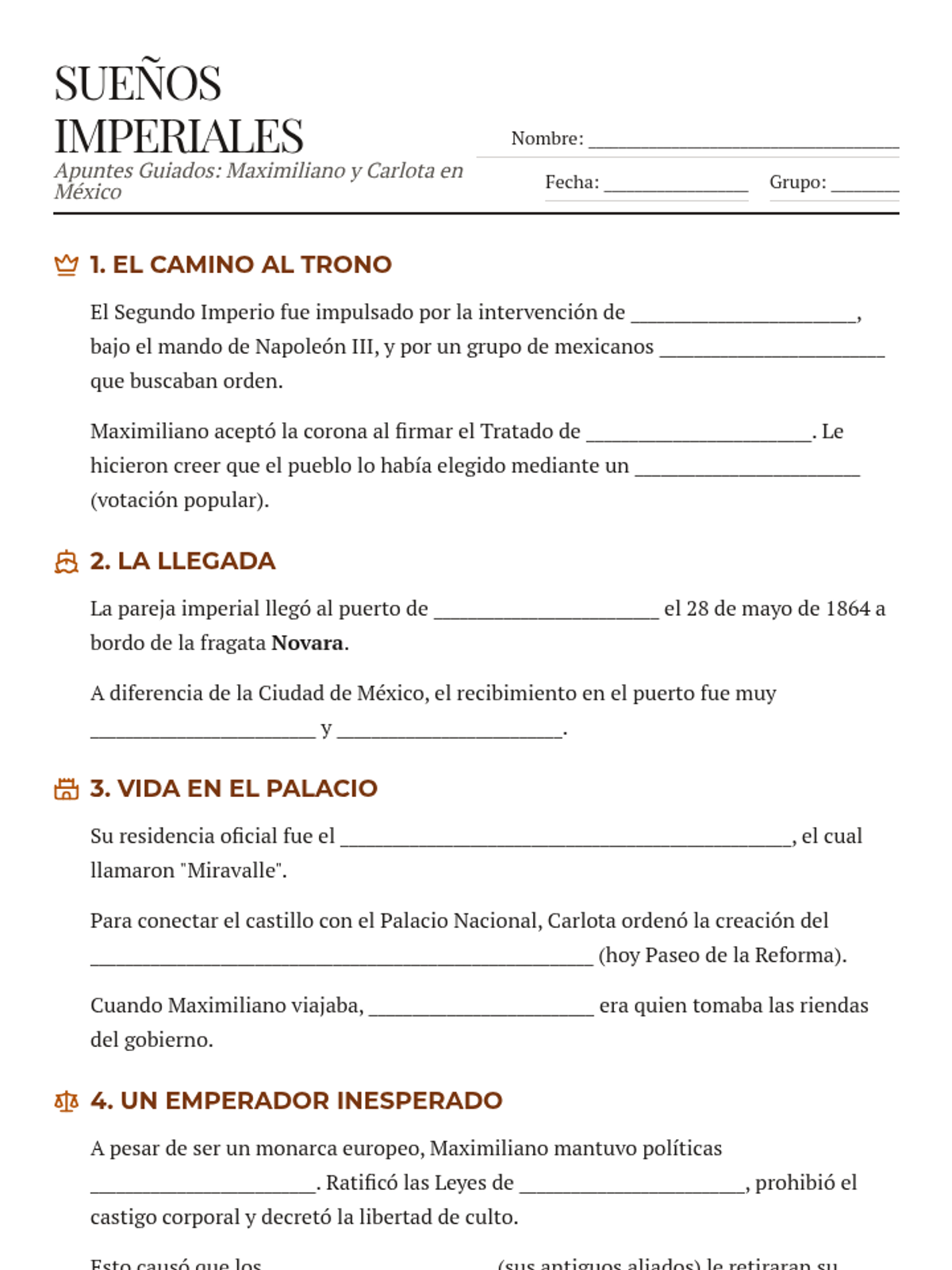
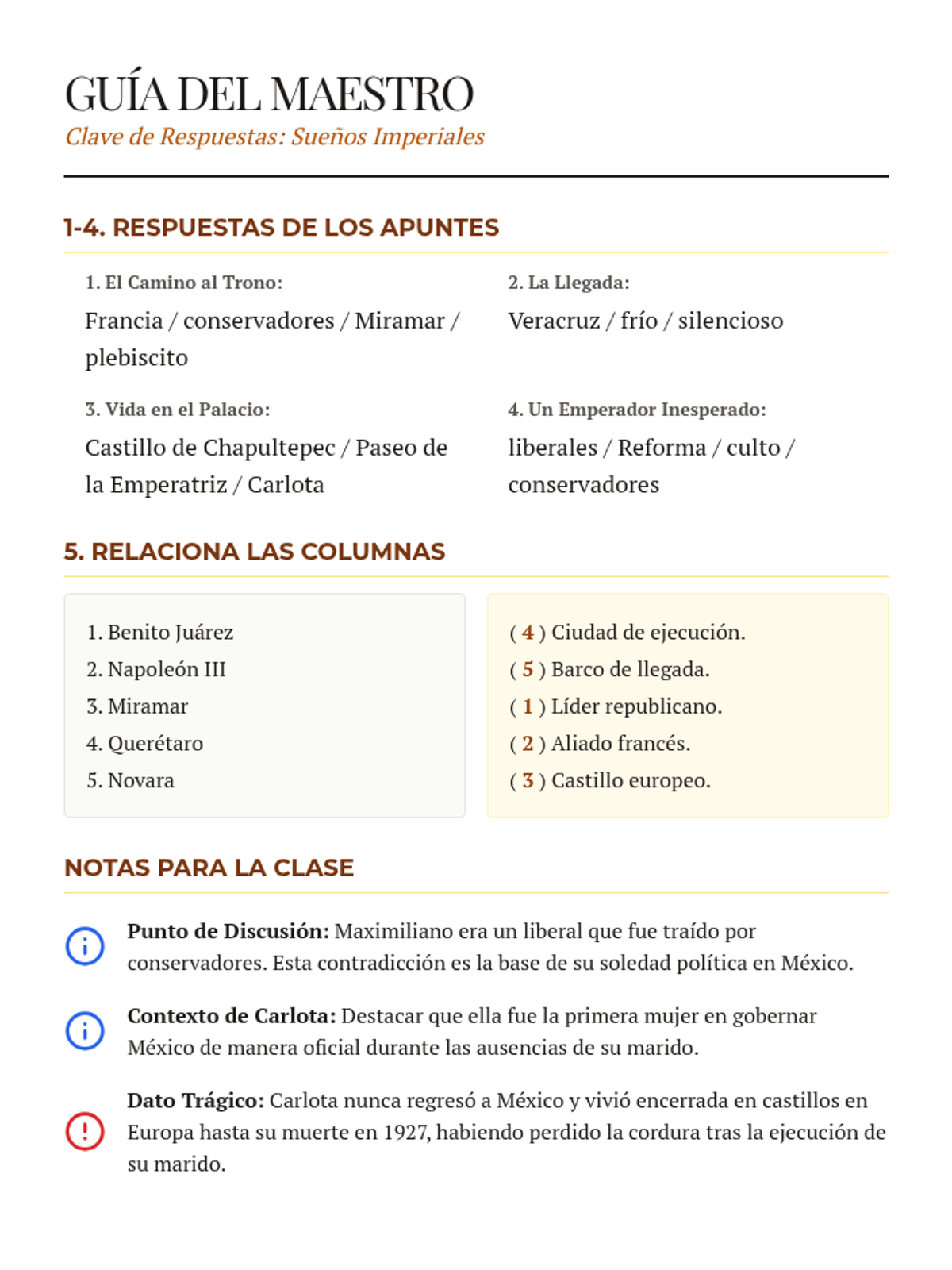
A lesson exploring the lives, reign, and eventual downfall of Maximilian I and Empress Carlota during the Second Mexican Empire, focusing on their time in Mexico.
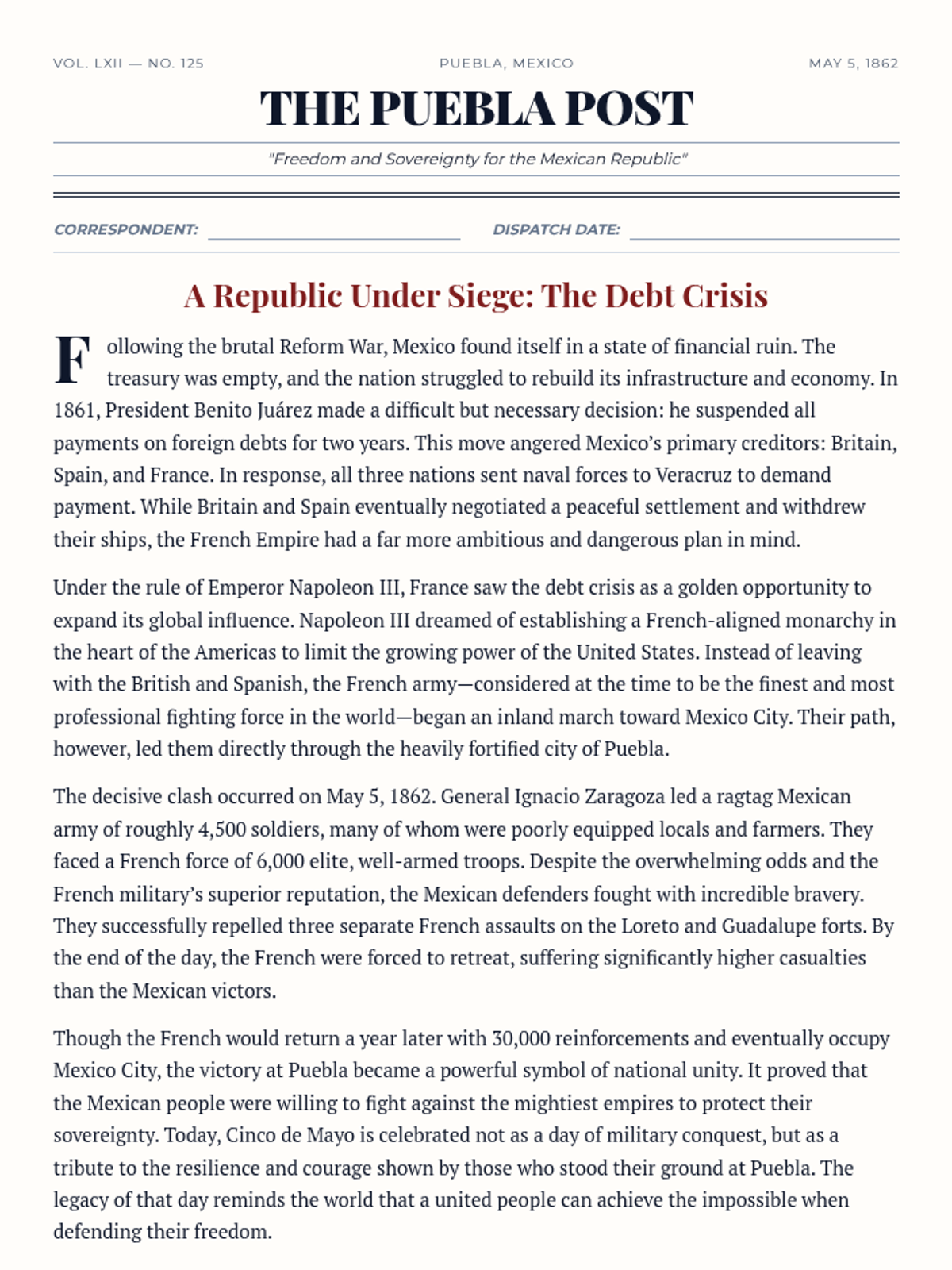
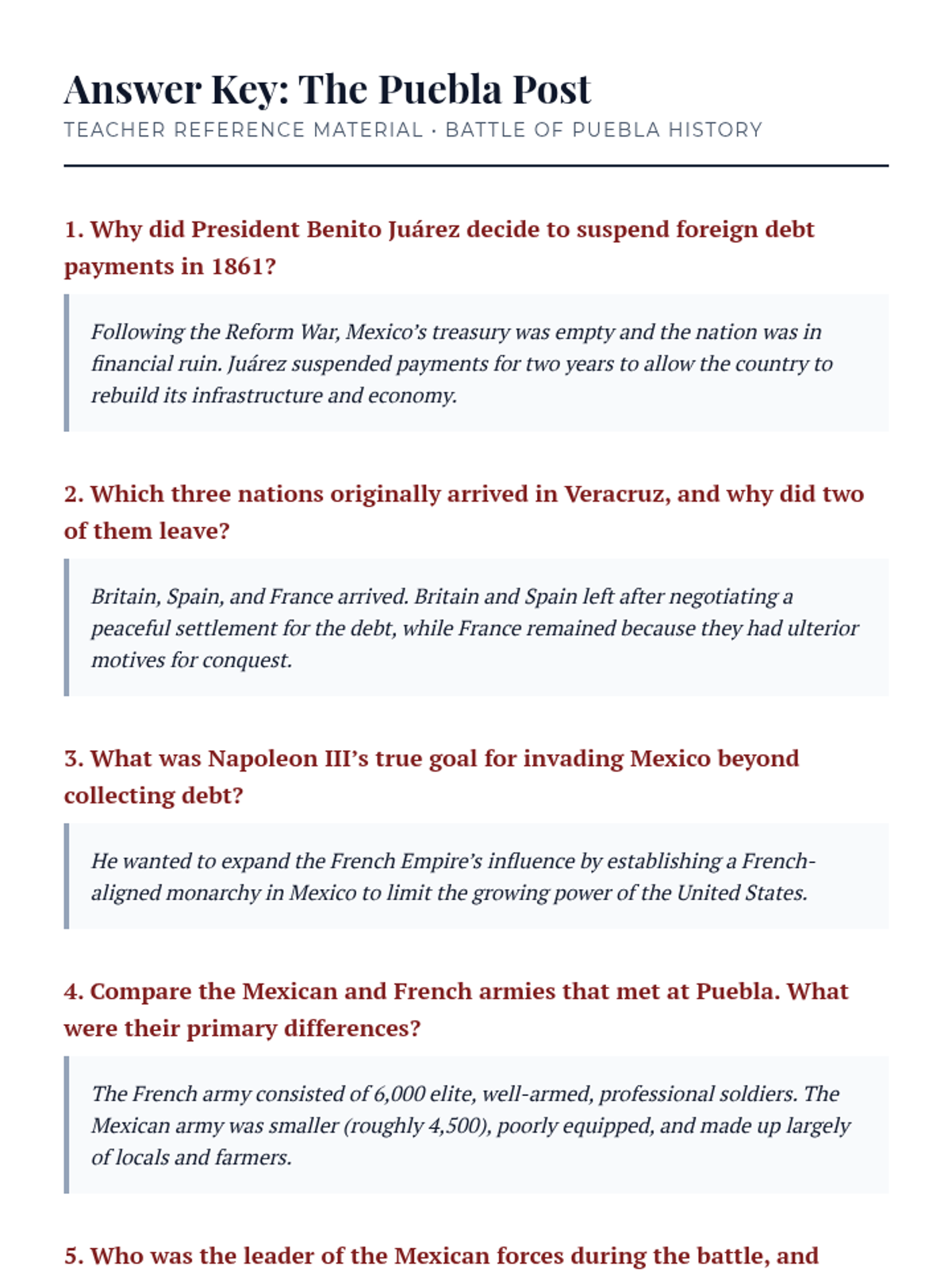
A lesson exploring the historical roots of Cinco de Mayo, focusing on the debt crisis and the Battle of Puebla.
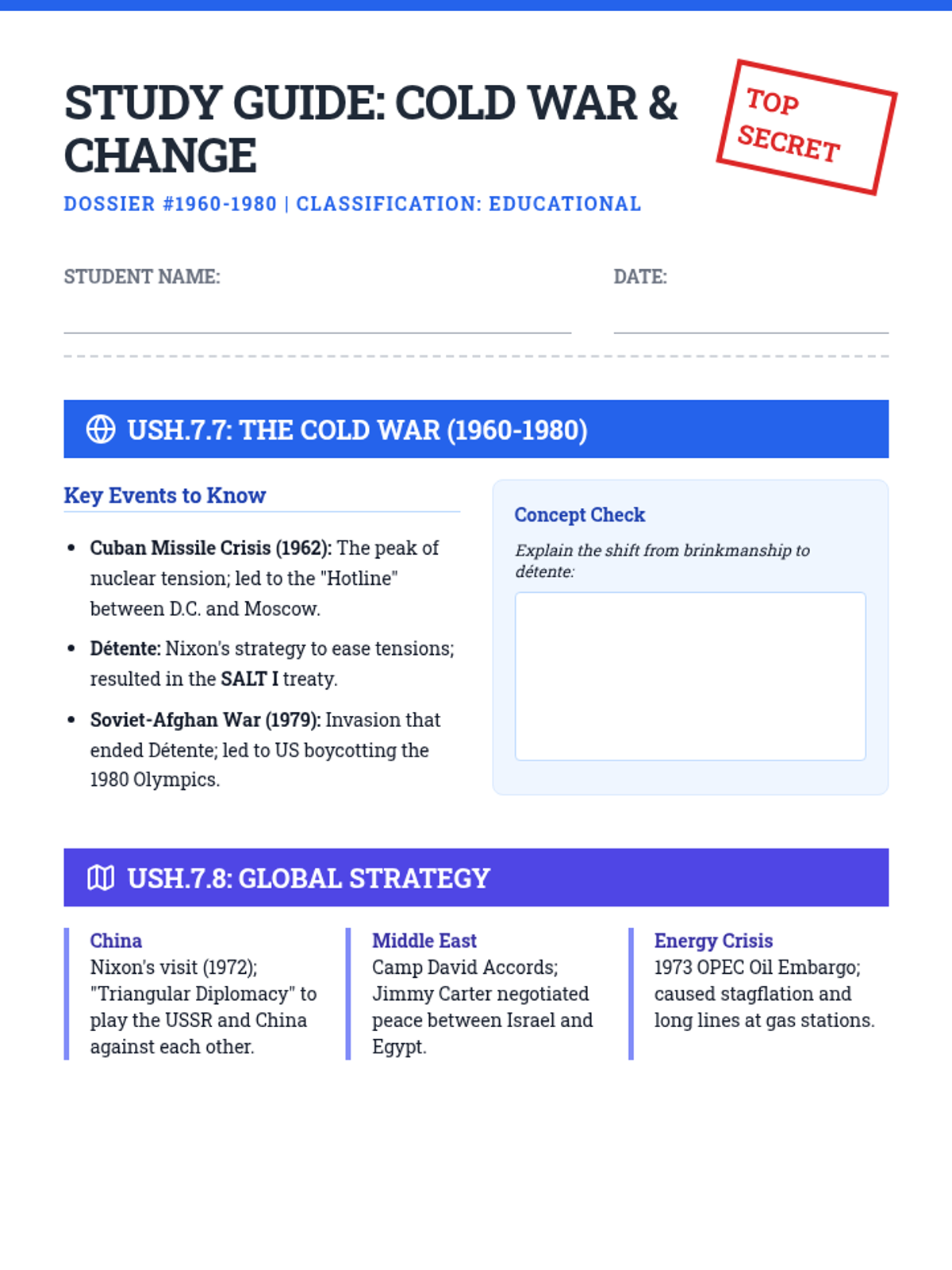
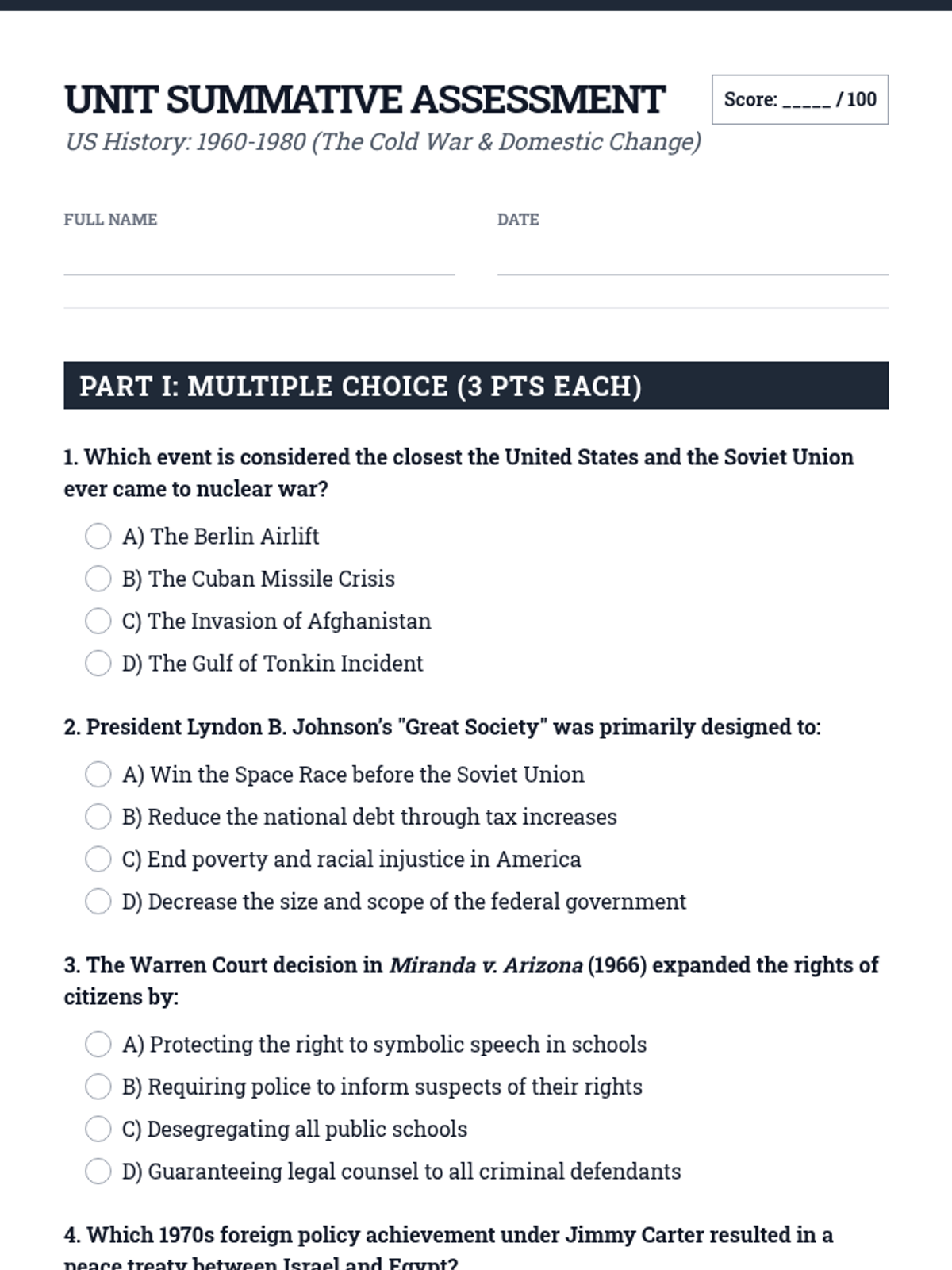
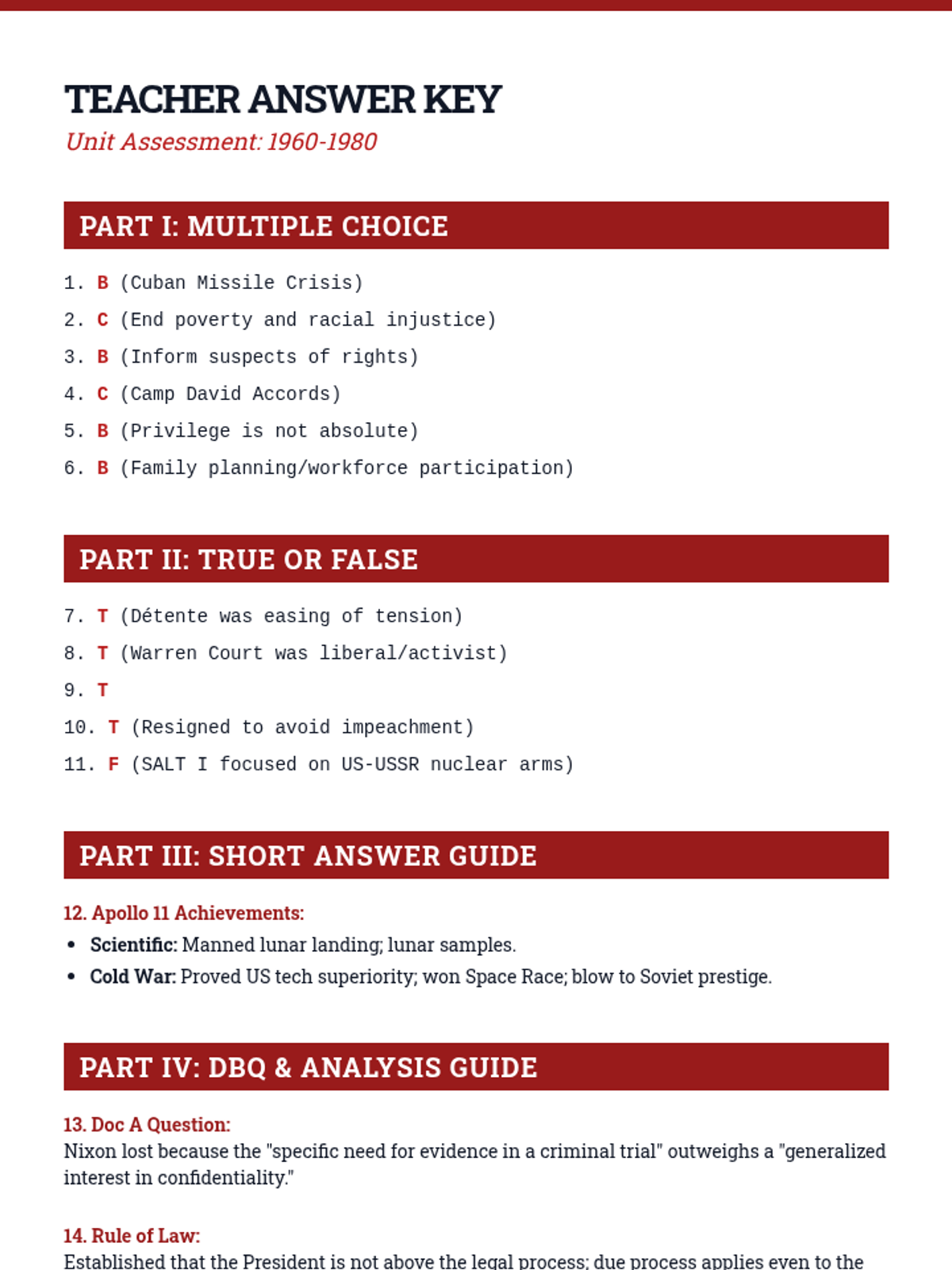
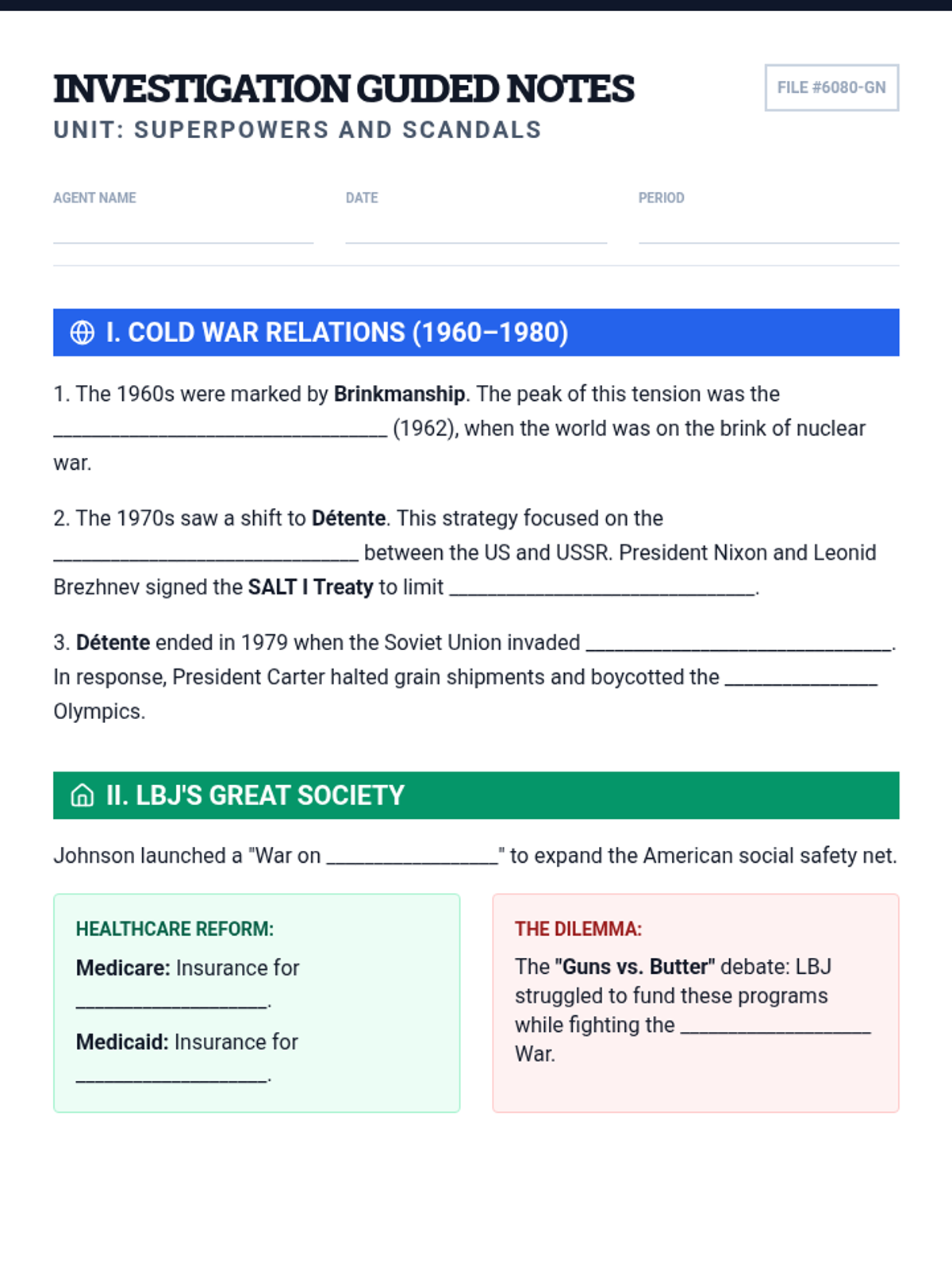
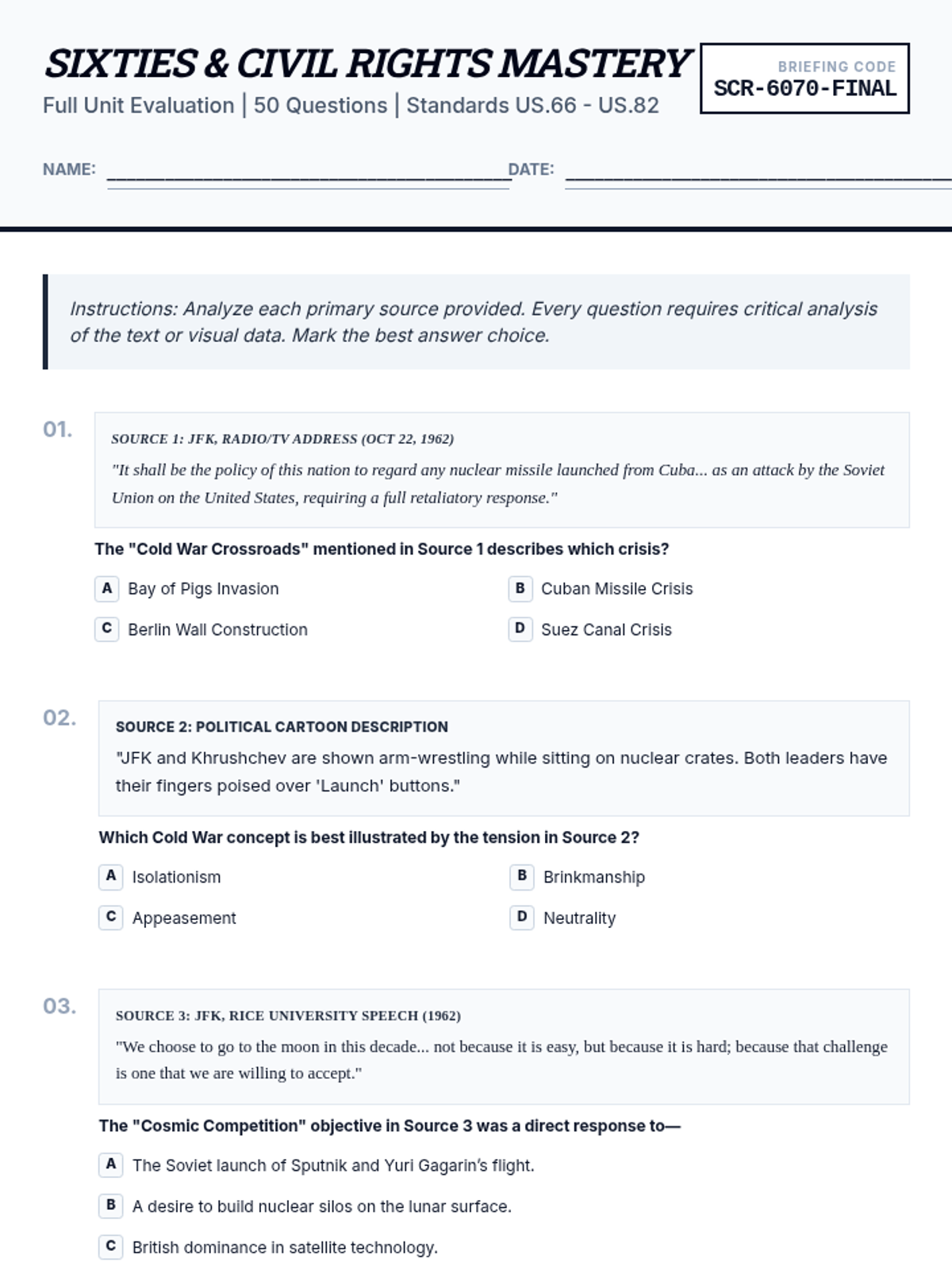
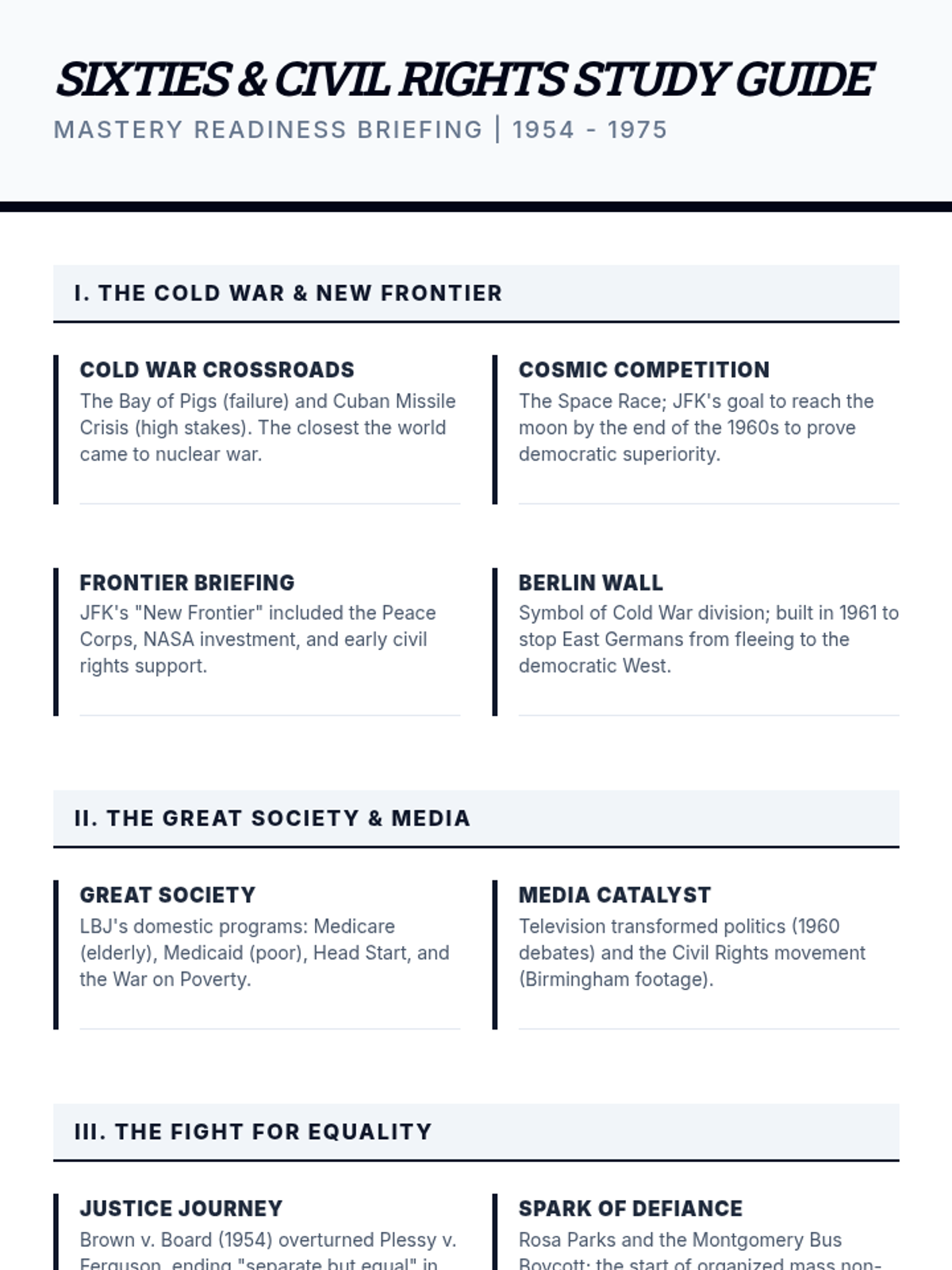
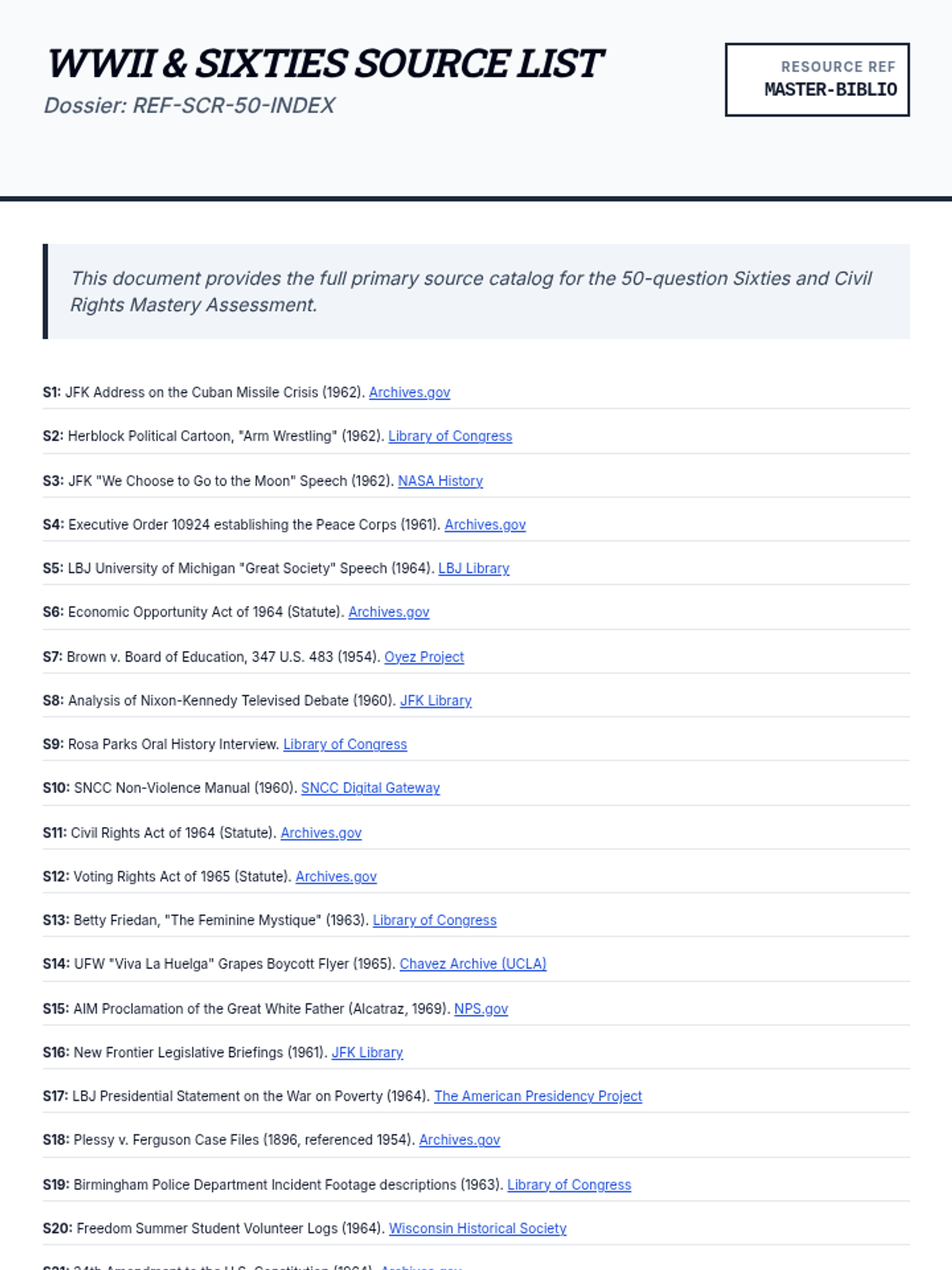
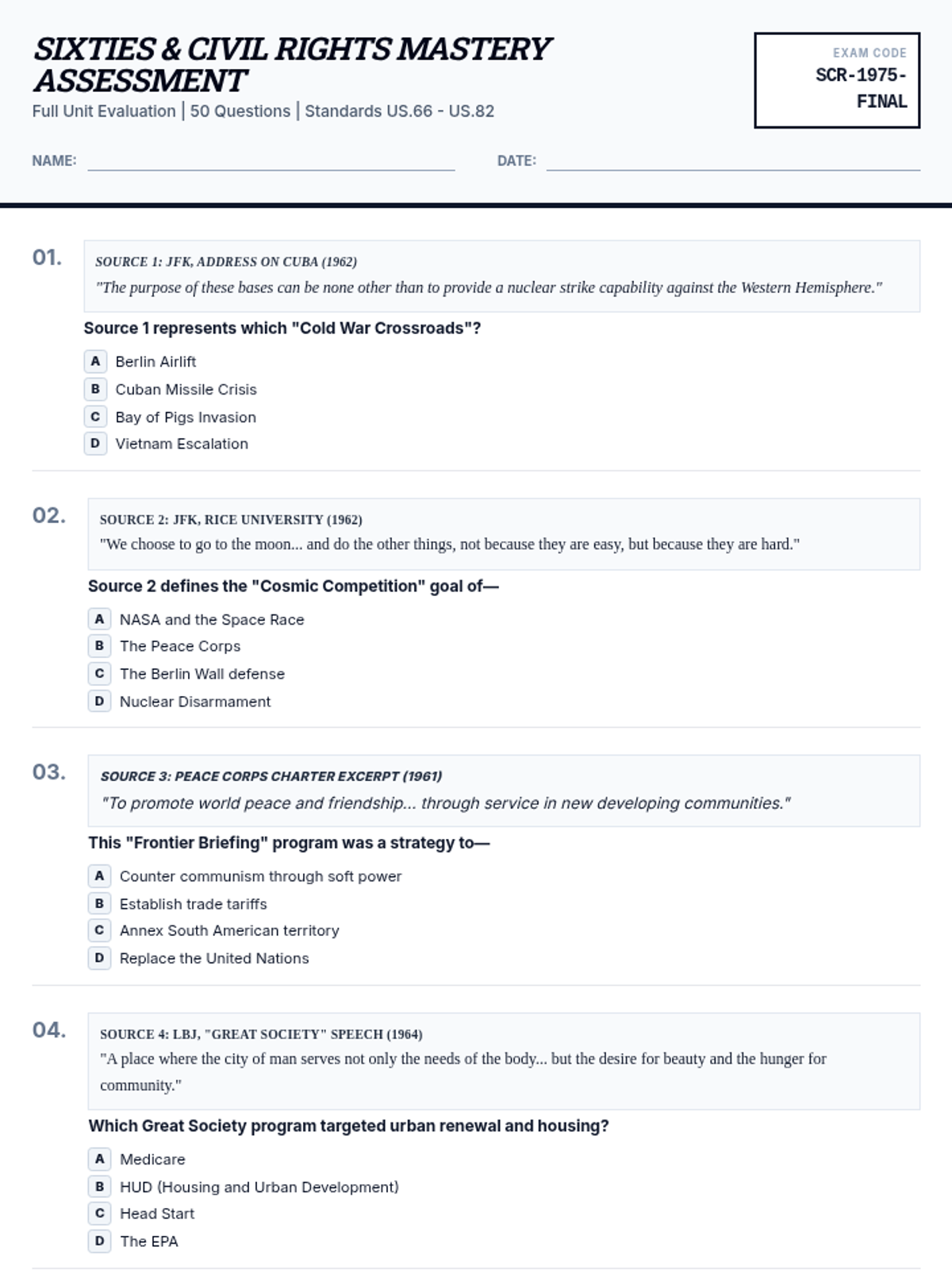
The final assessment and preparation materials for the unit on 1960-1980 US History.
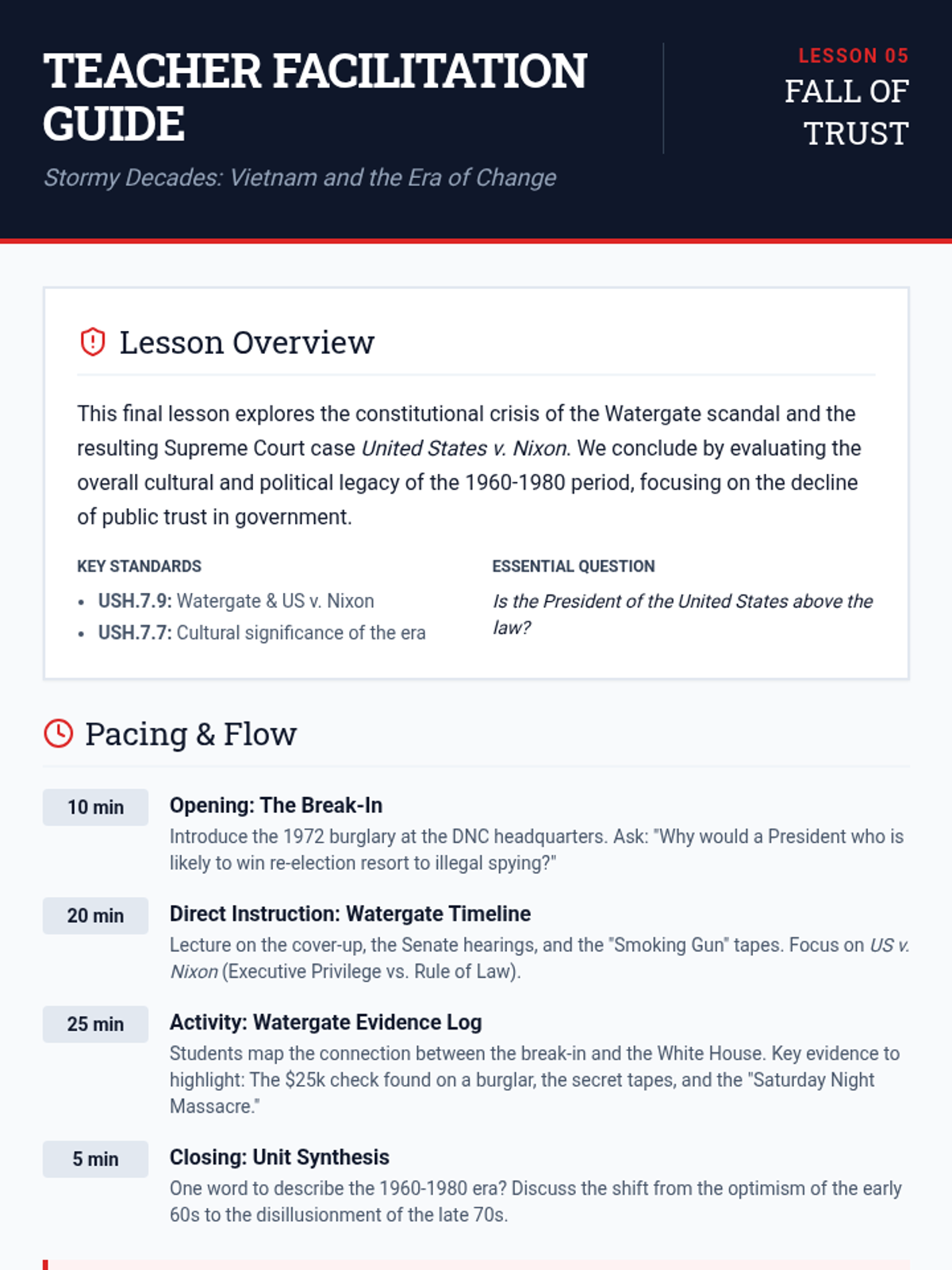
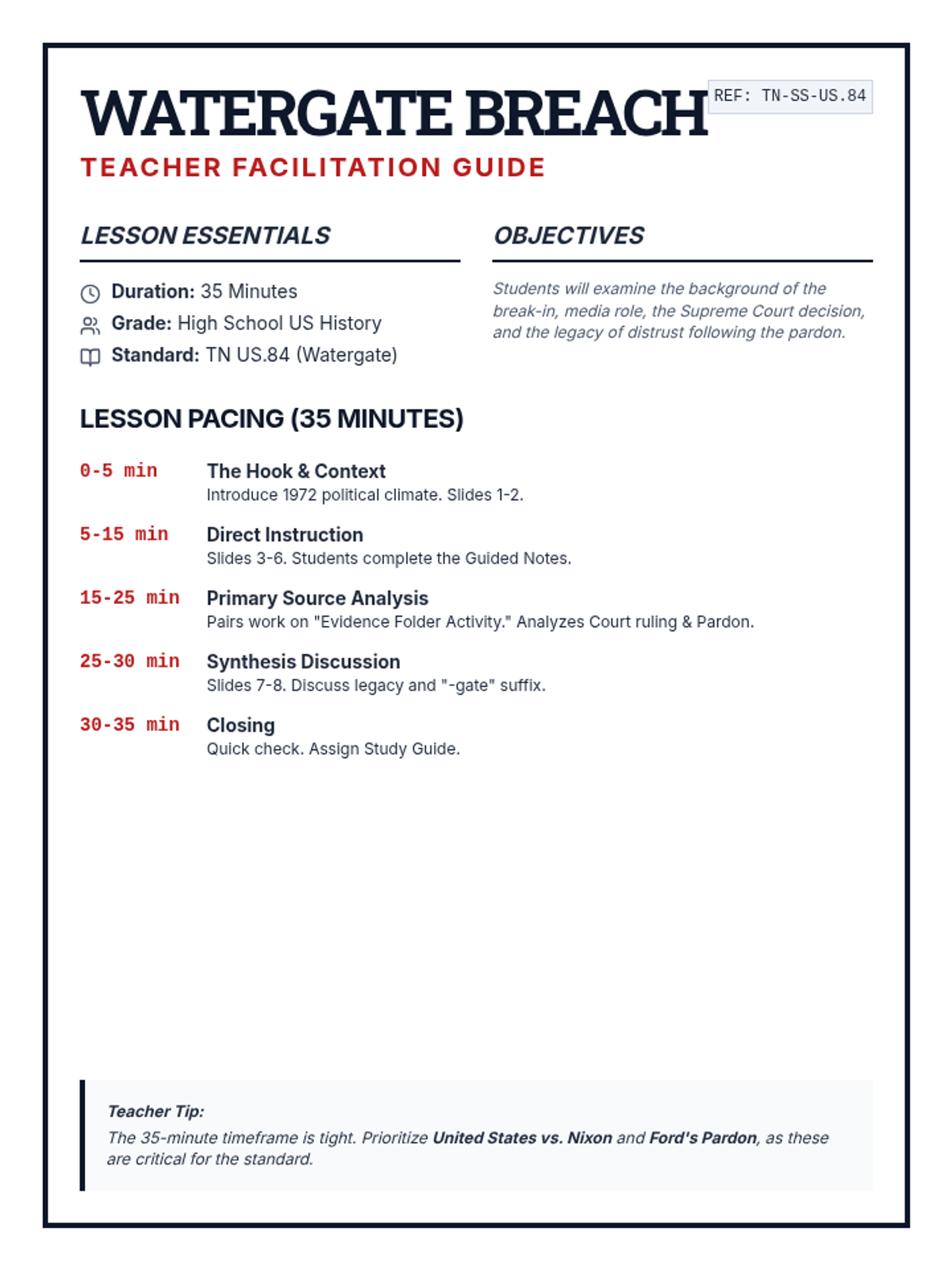
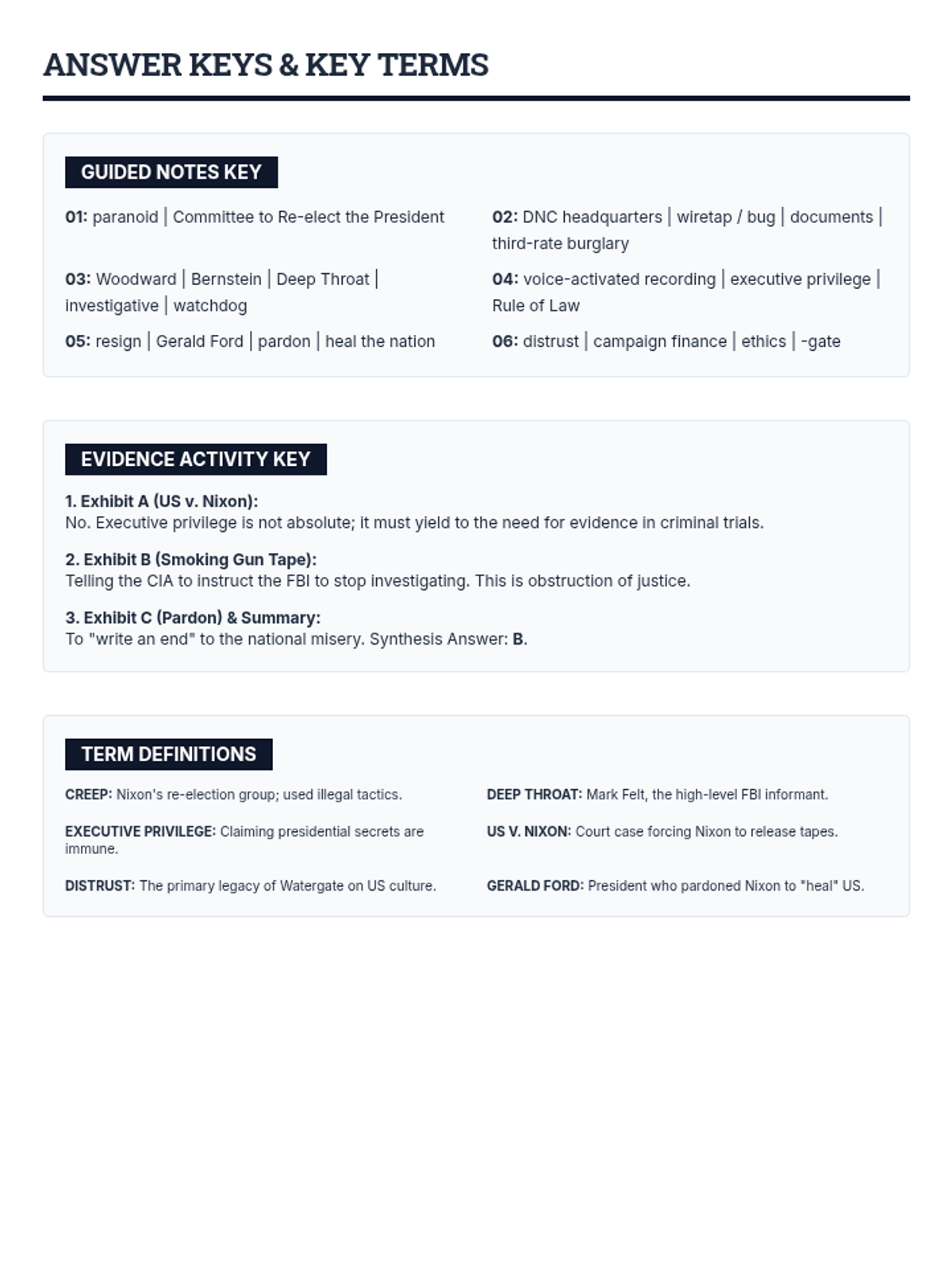
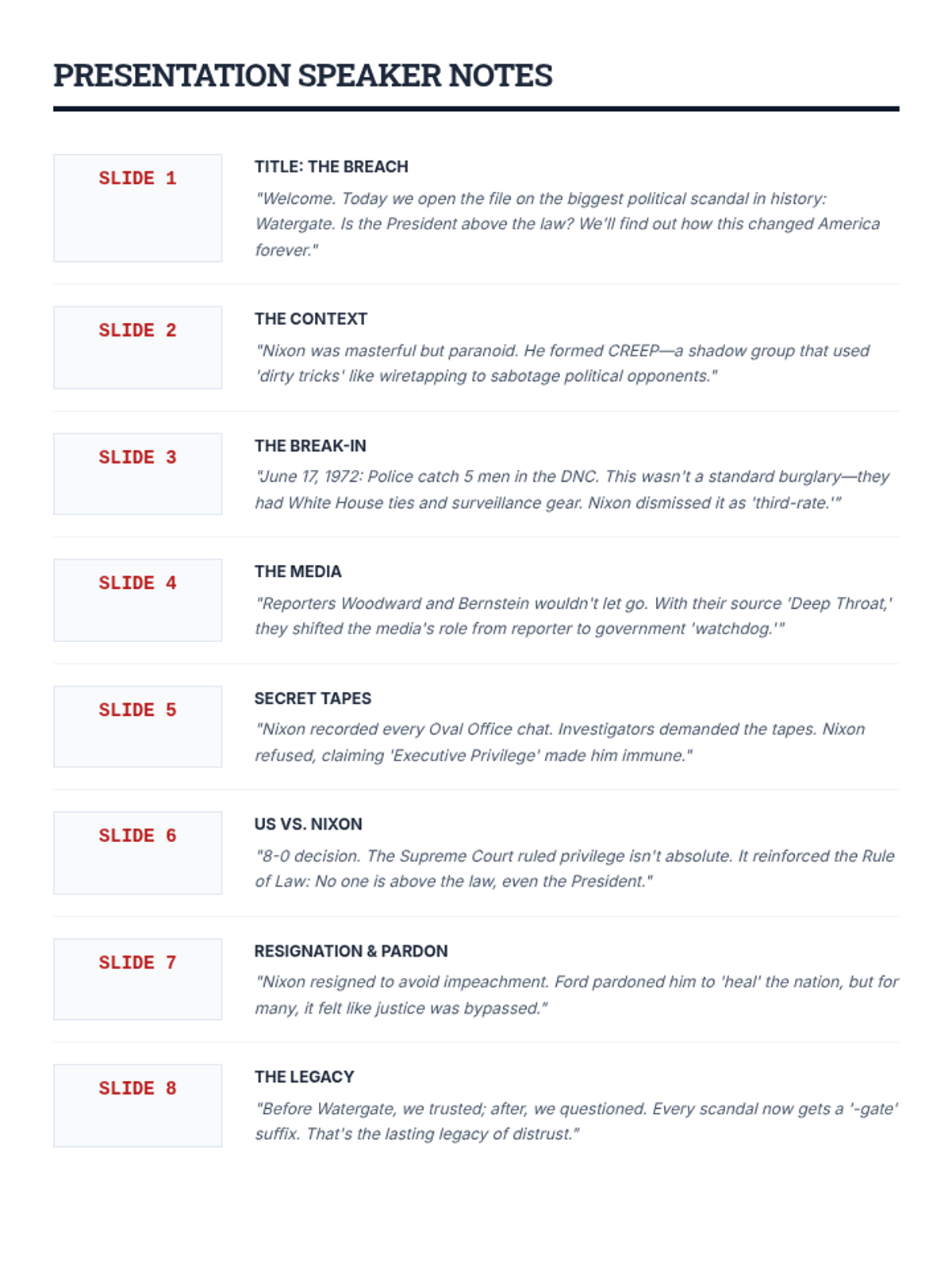
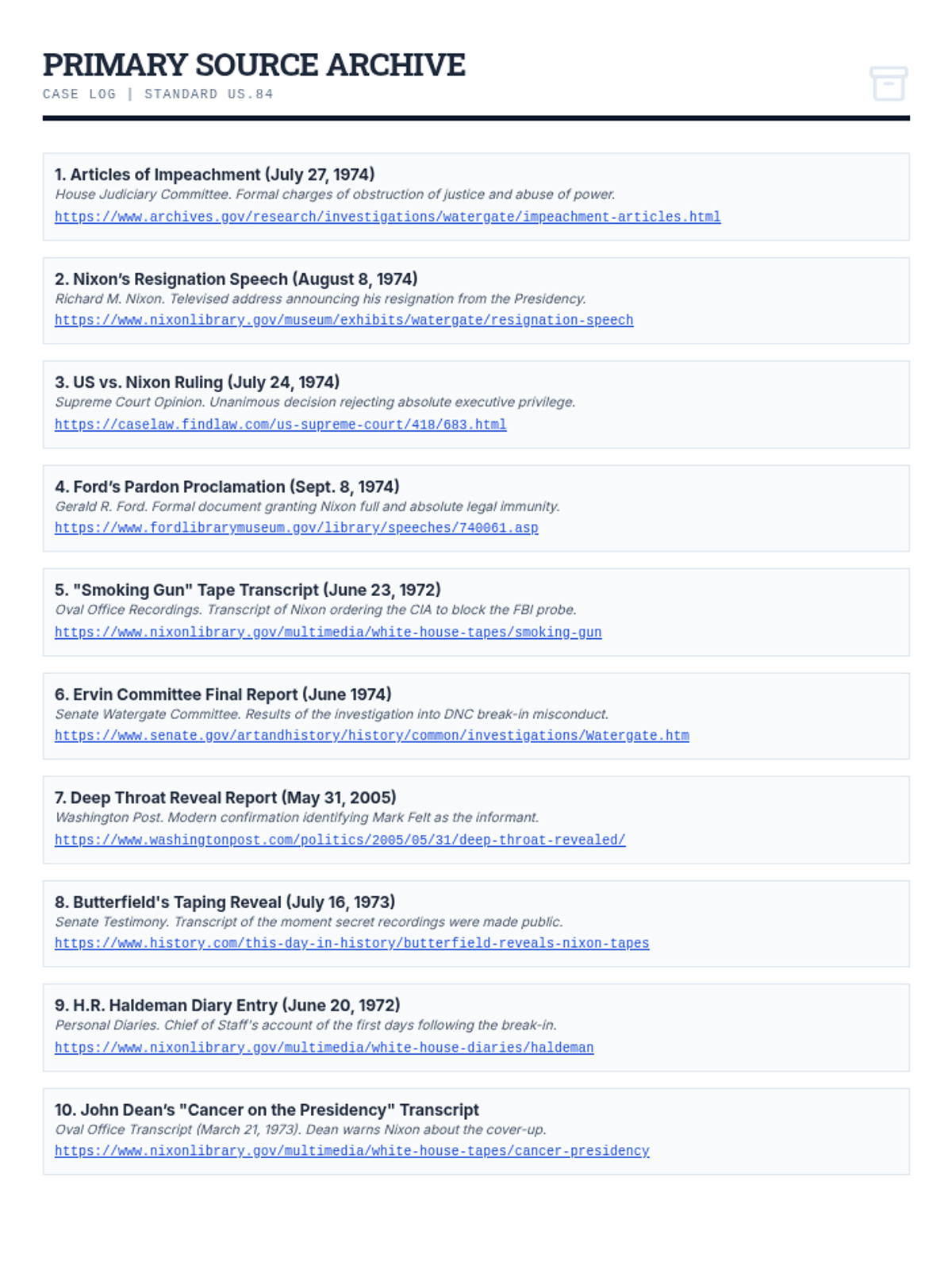
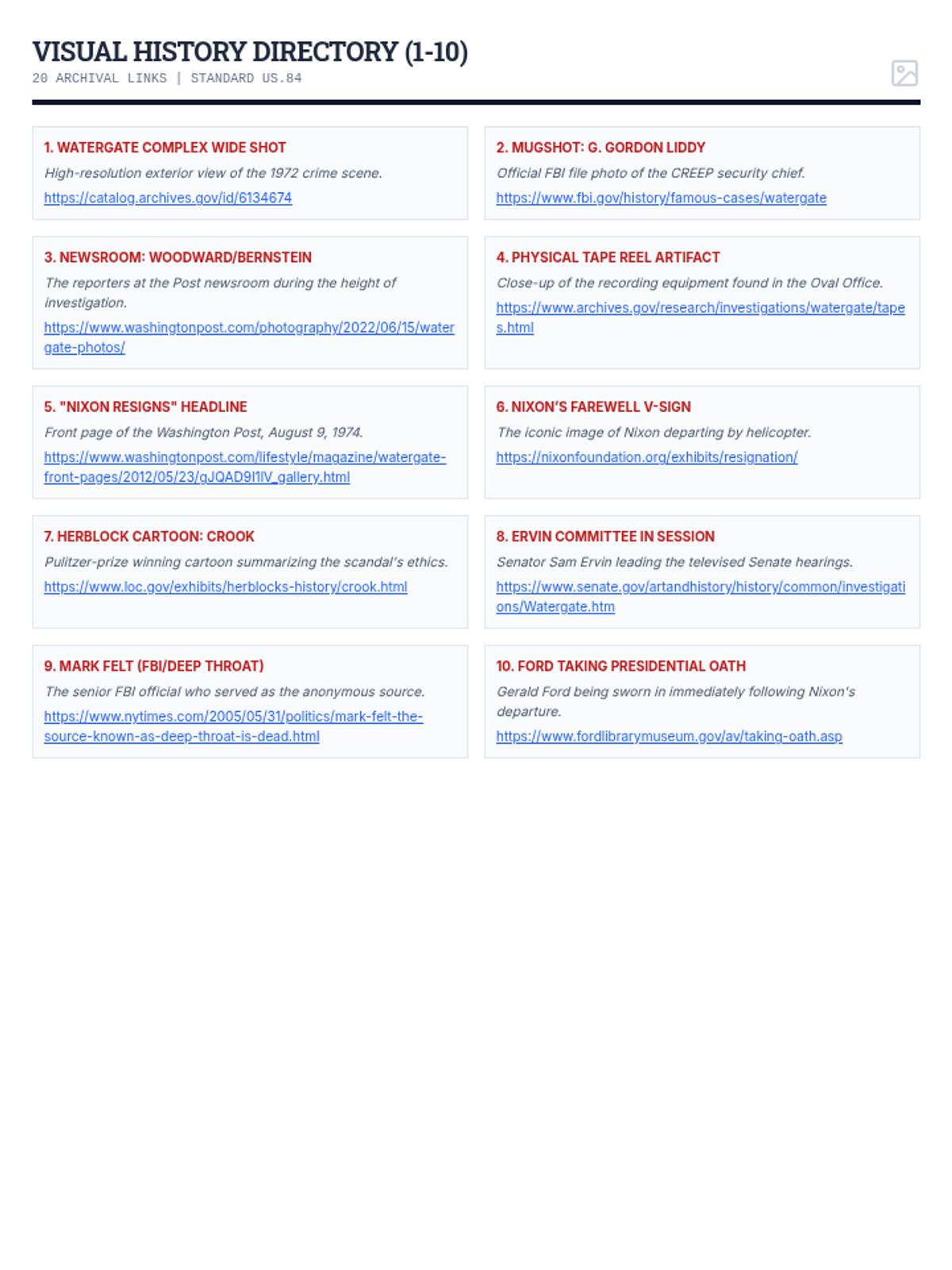
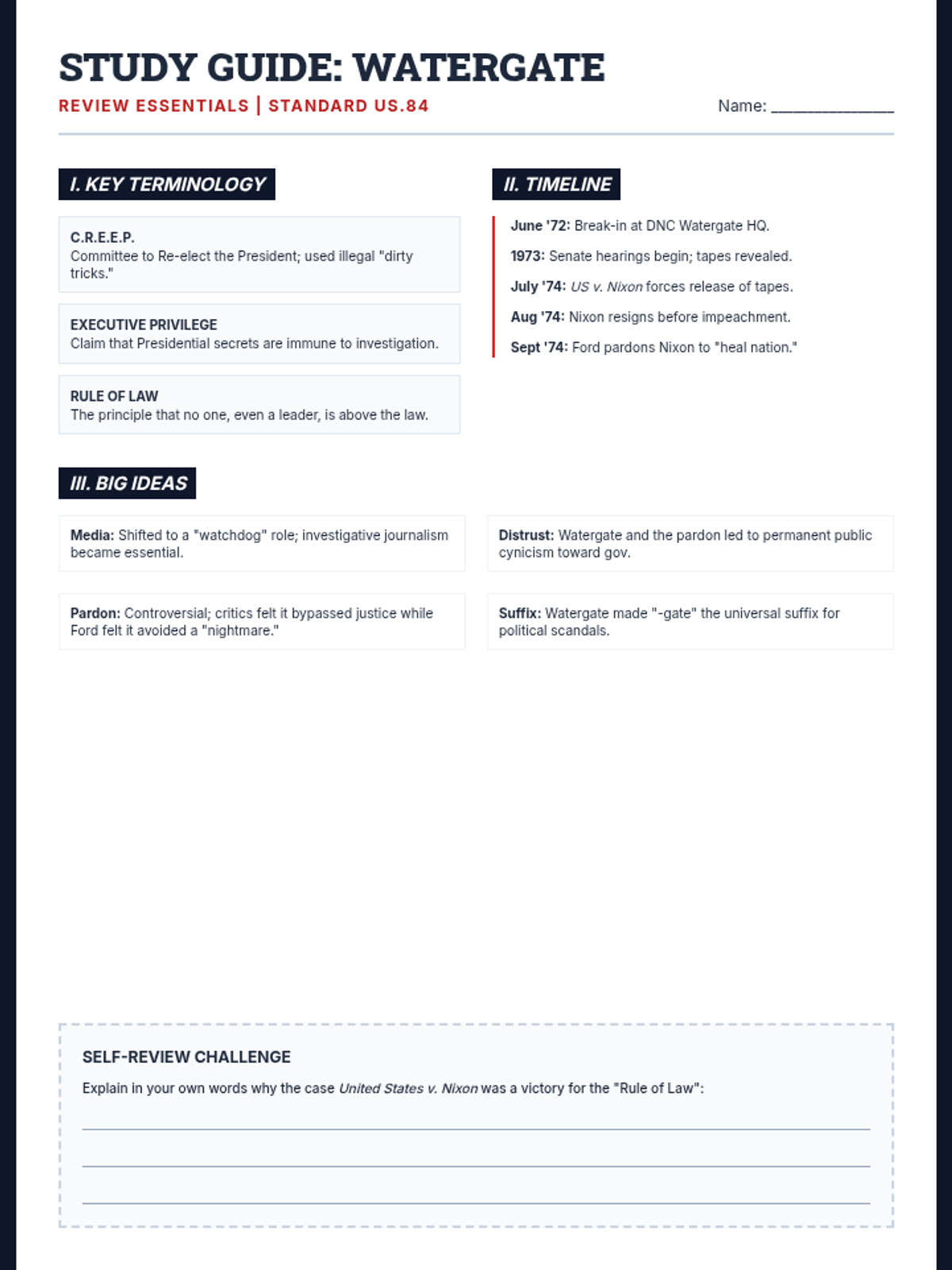
Analyze the Watergate scandal, the Supreme Court's ruling in US v. Nixon, and the resulting shift in American trust in government and the presidency.
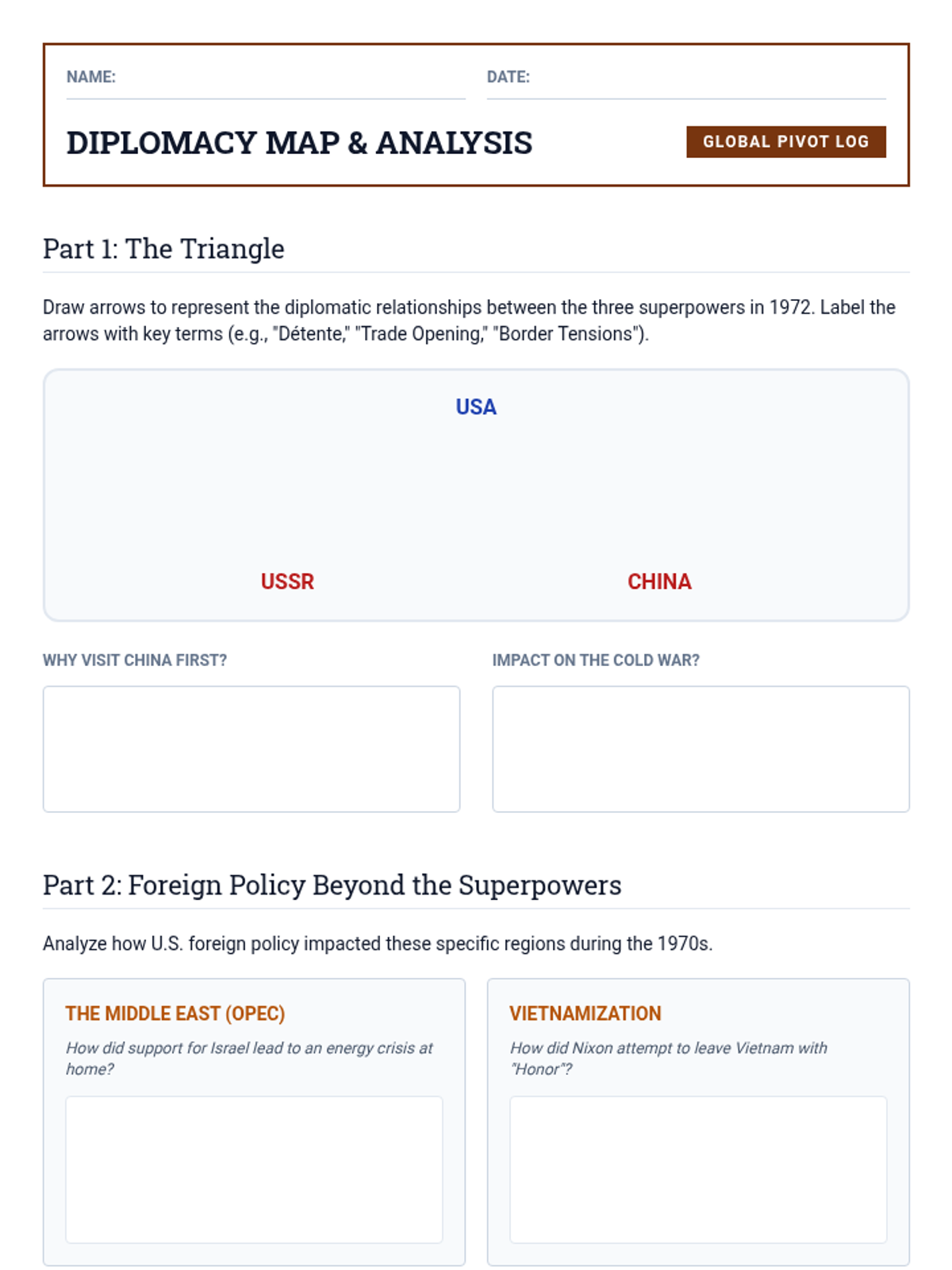
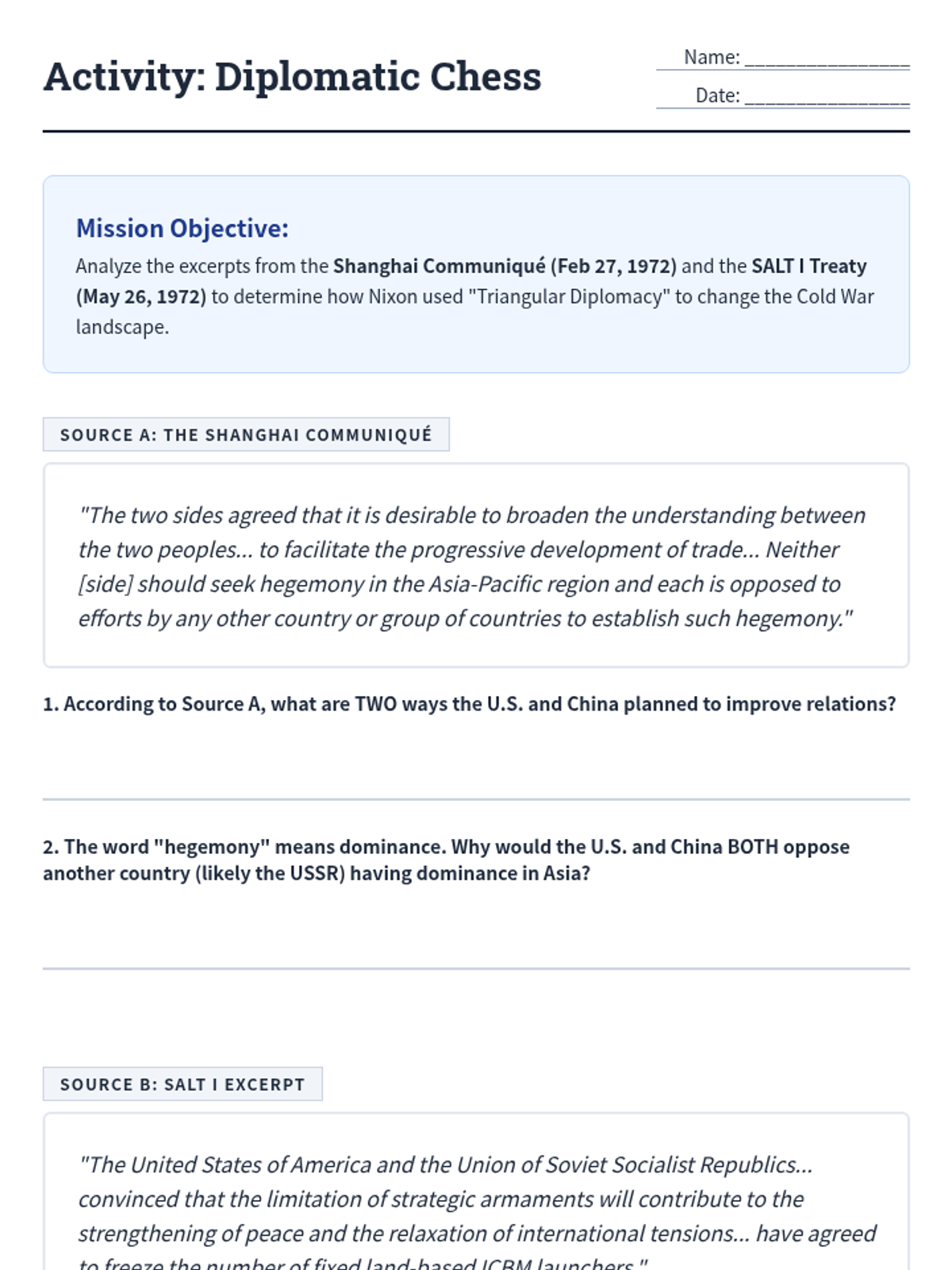
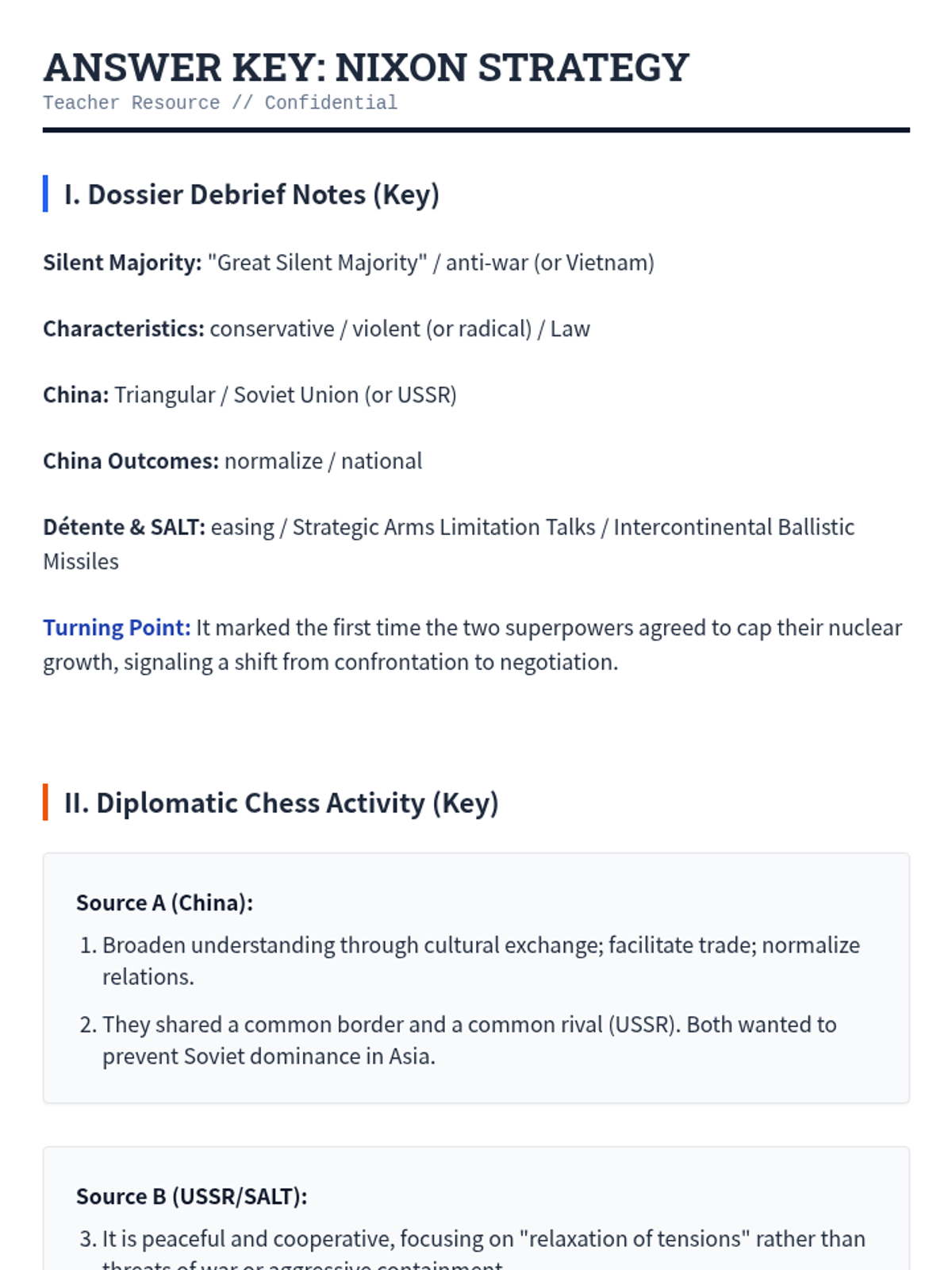
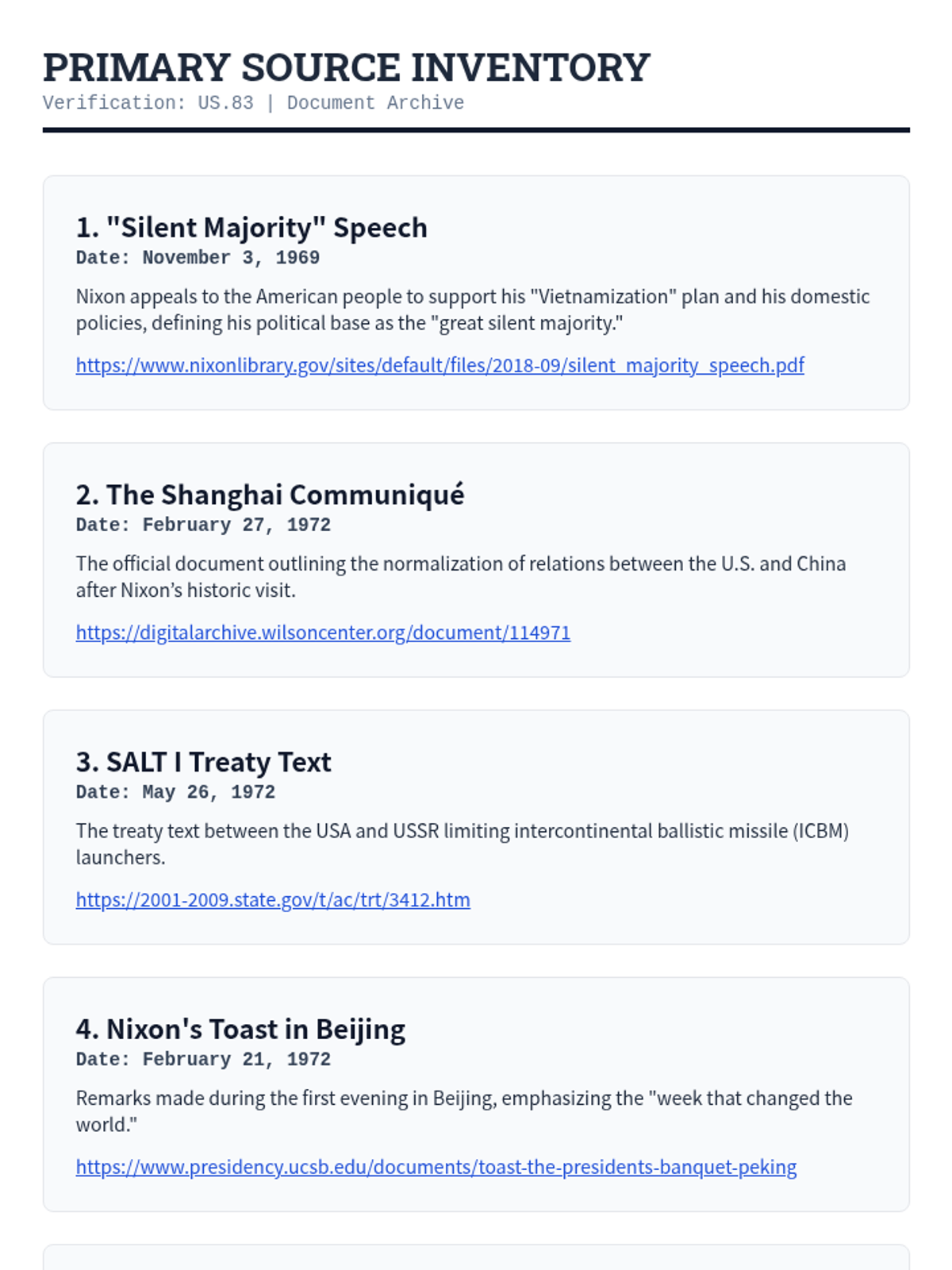
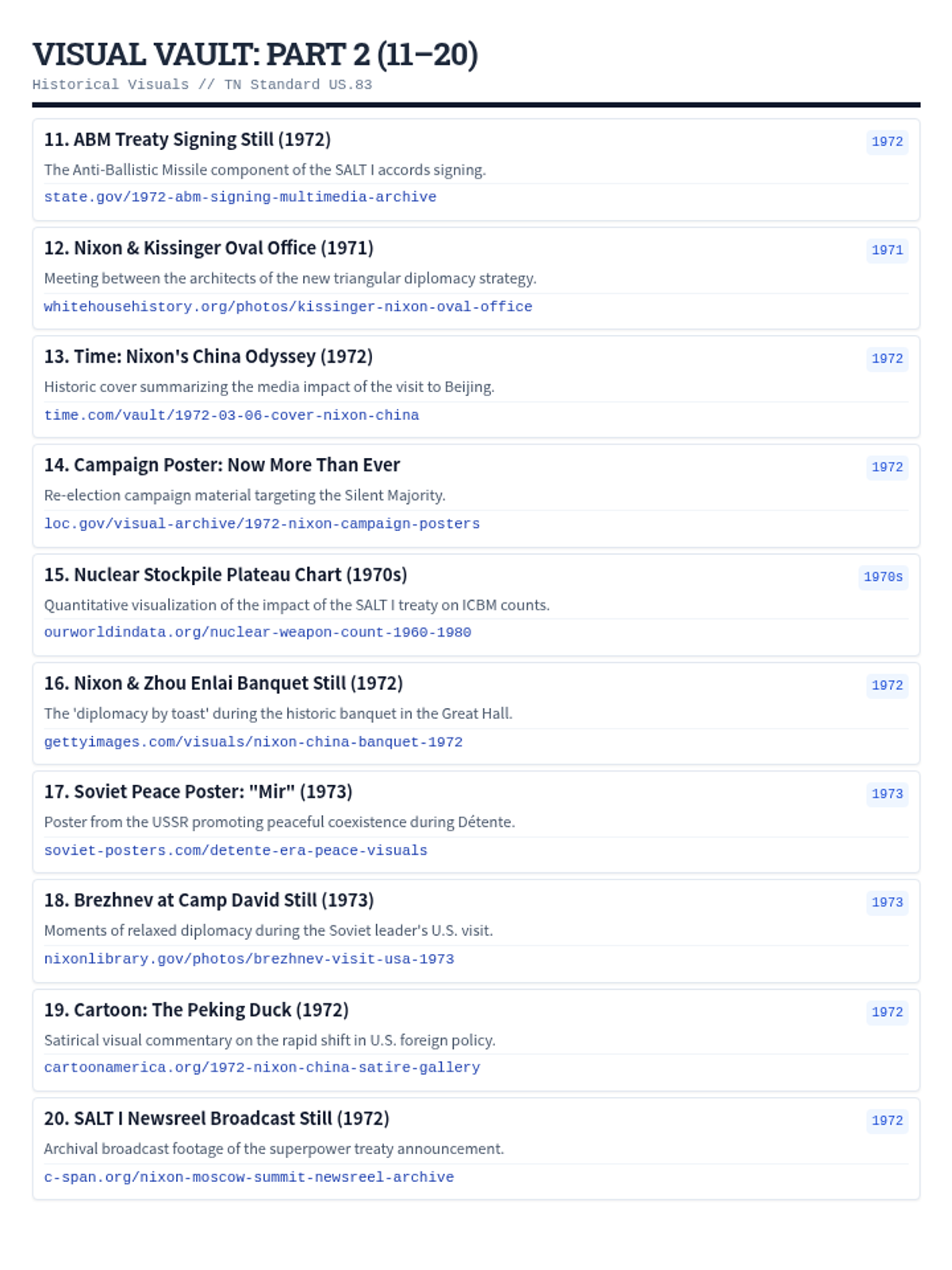
Investigate the shift in U.S. foreign policy under Richard Nixon, including the policy of détente with the Soviet Union, the opening of relations with China, and the complex path to exiting Vietnam.
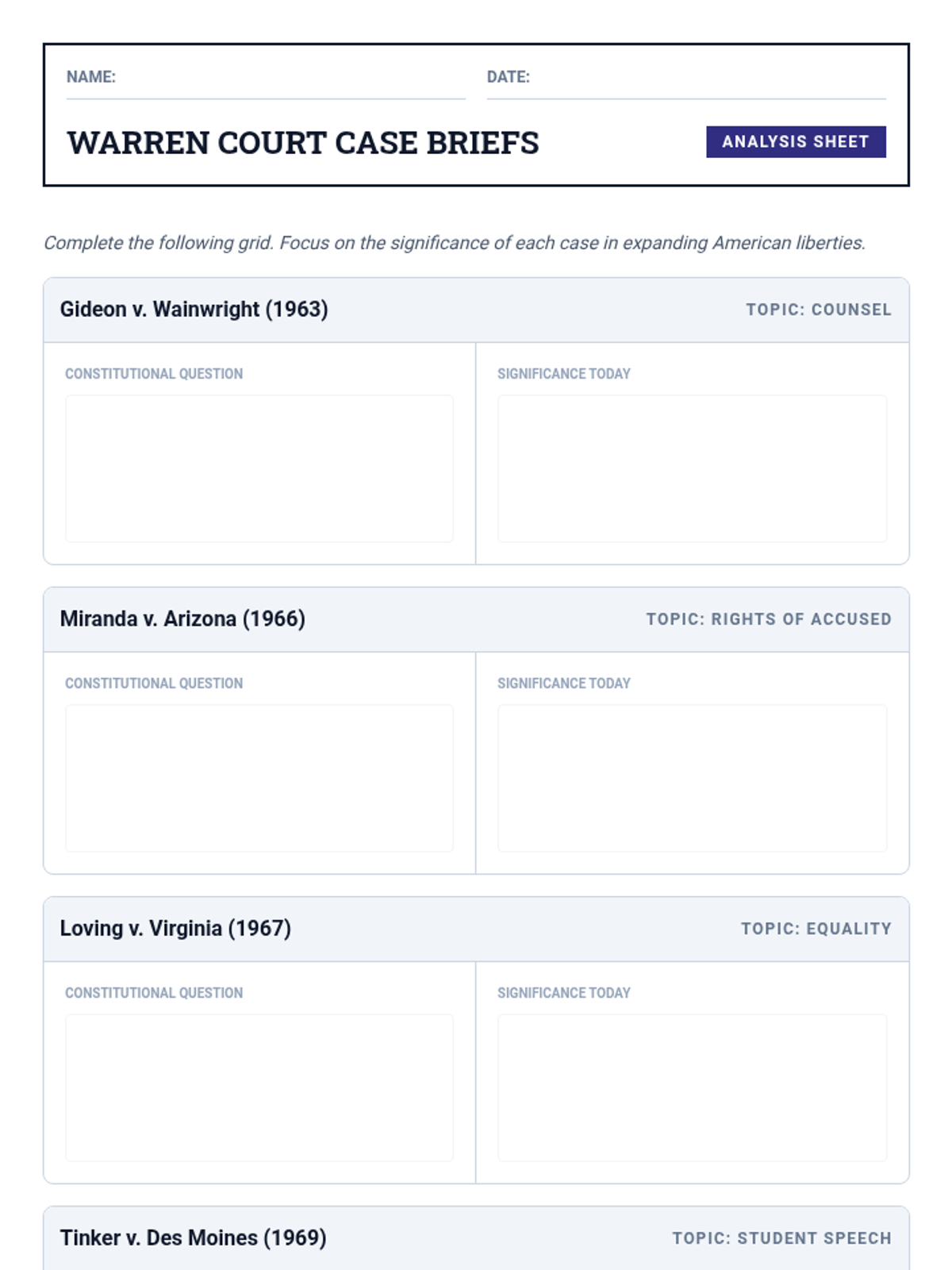
Examine the transformative legal landscape of the 1960s through the key decisions of the Warren Court and the rise of the counterculture movement during the Vietnam era.
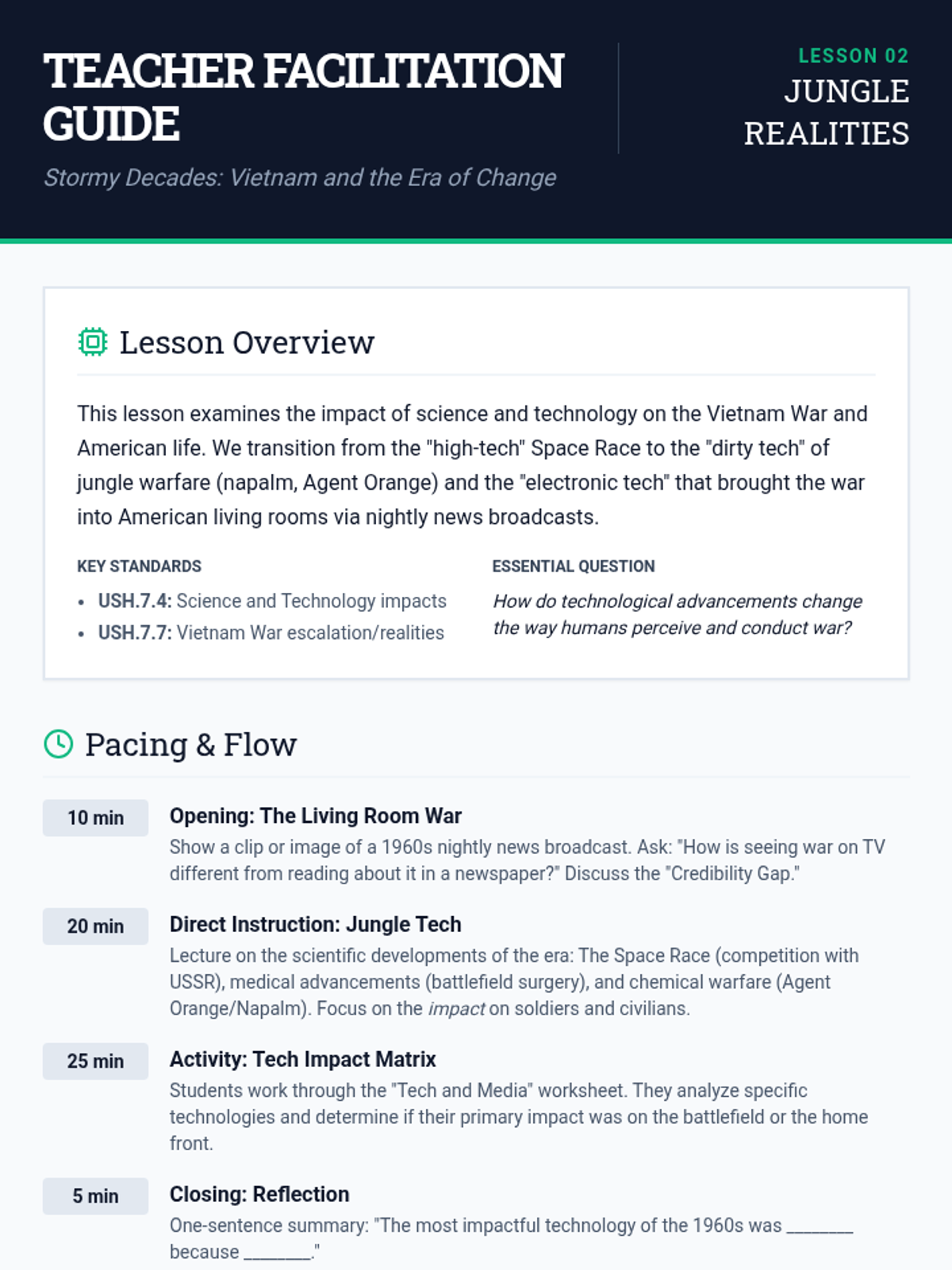
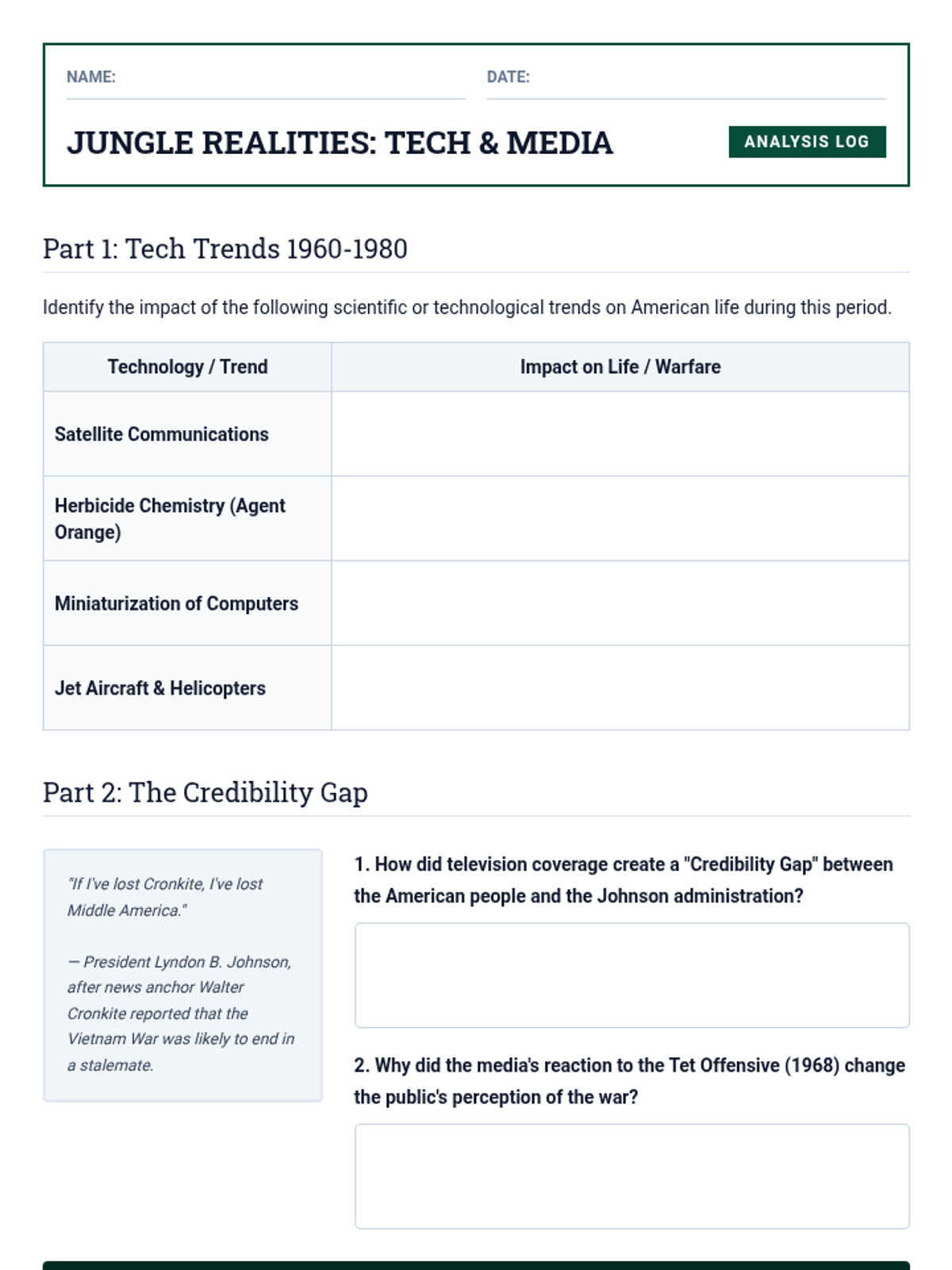
Analyze how scientific and technological advancements, from satellite communications to chemical weaponry like Agent Orange, transformed the American experience of the Vietnam War and the Space Race.
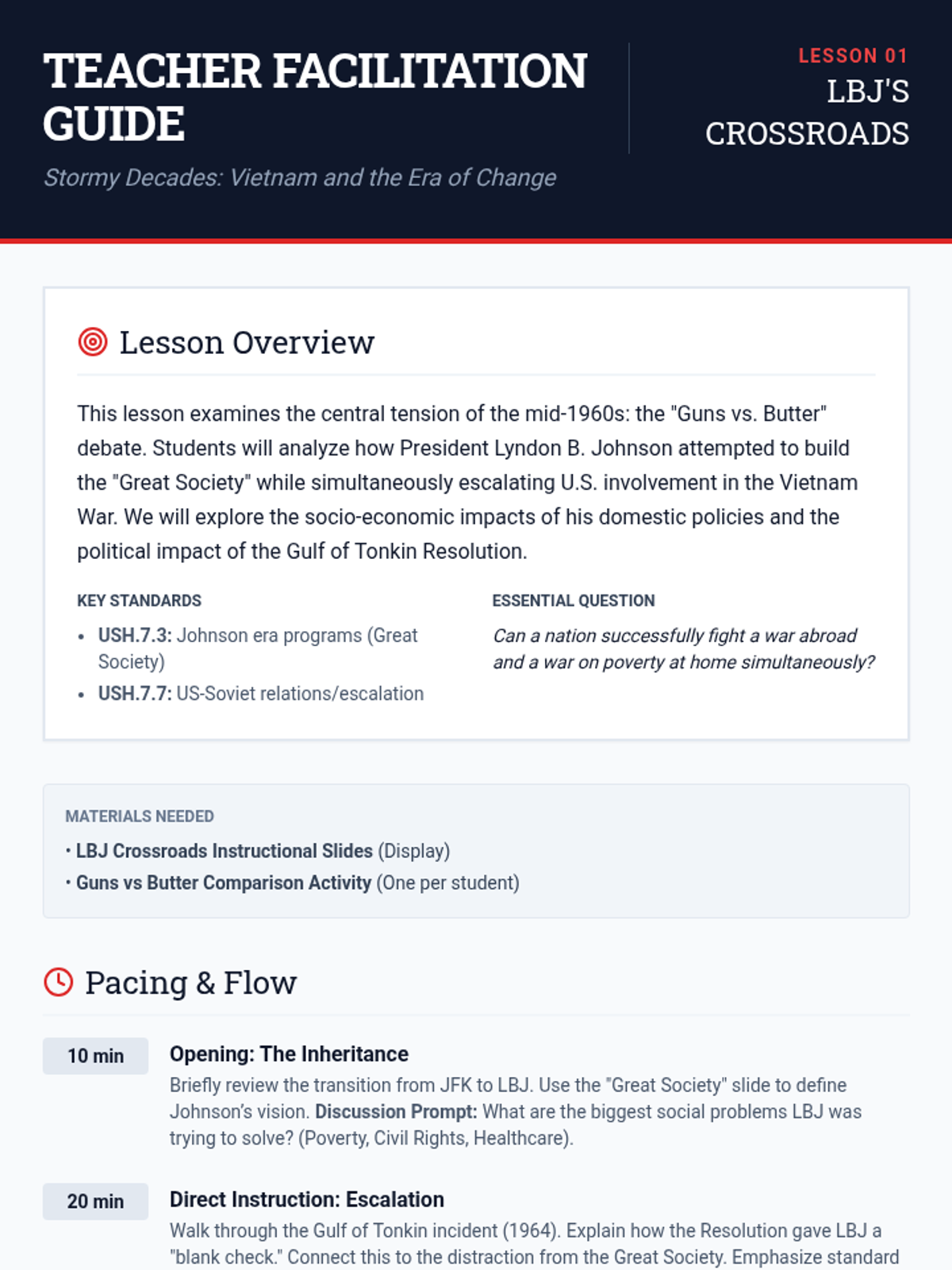
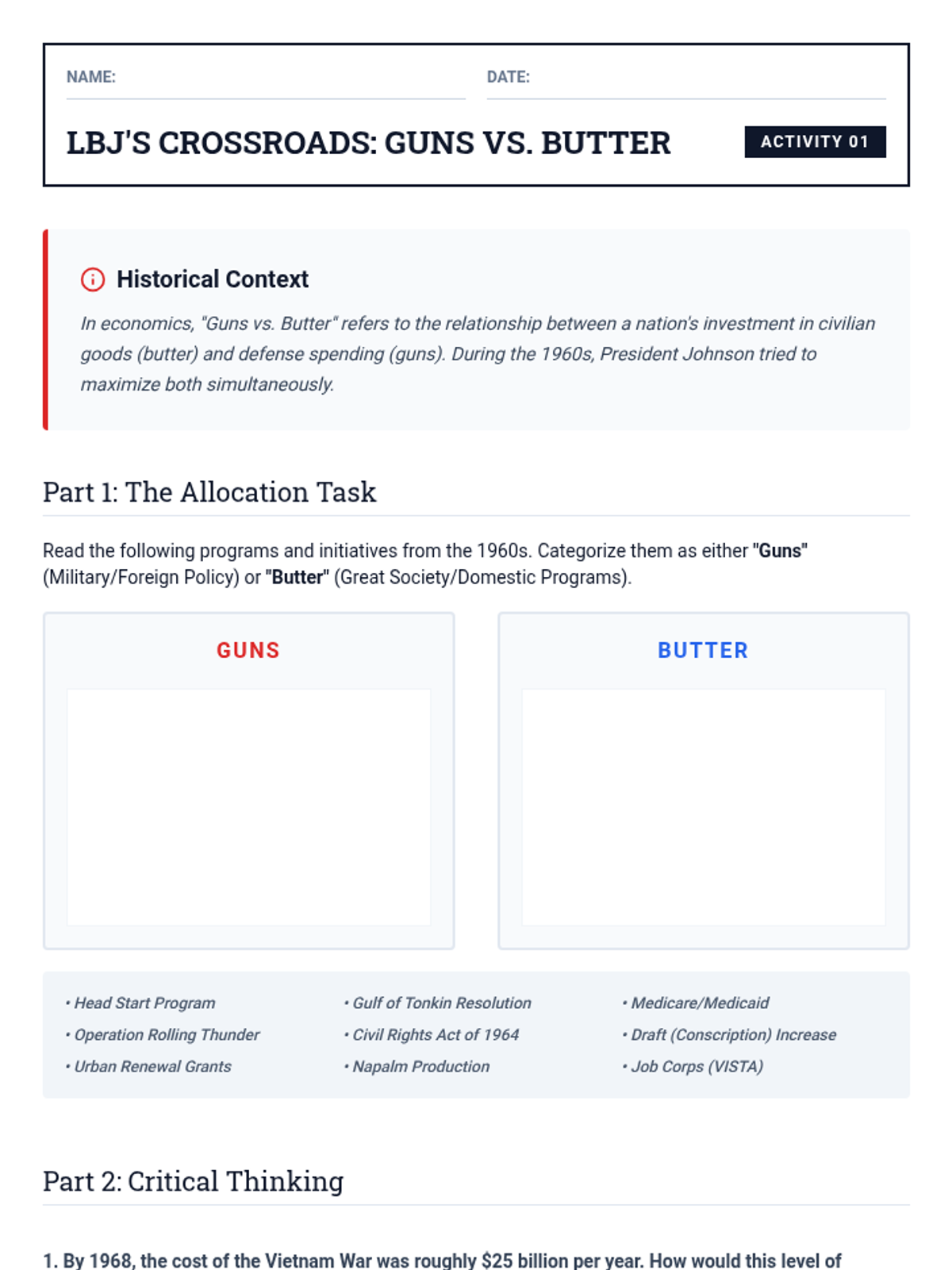
Explore the dual priorities of Lyndon B. Johnson's presidency: the ambitious 'Great Society' domestic programs and the escalating commitment to the Vietnam War following the Gulf of Tonkin Resolution.
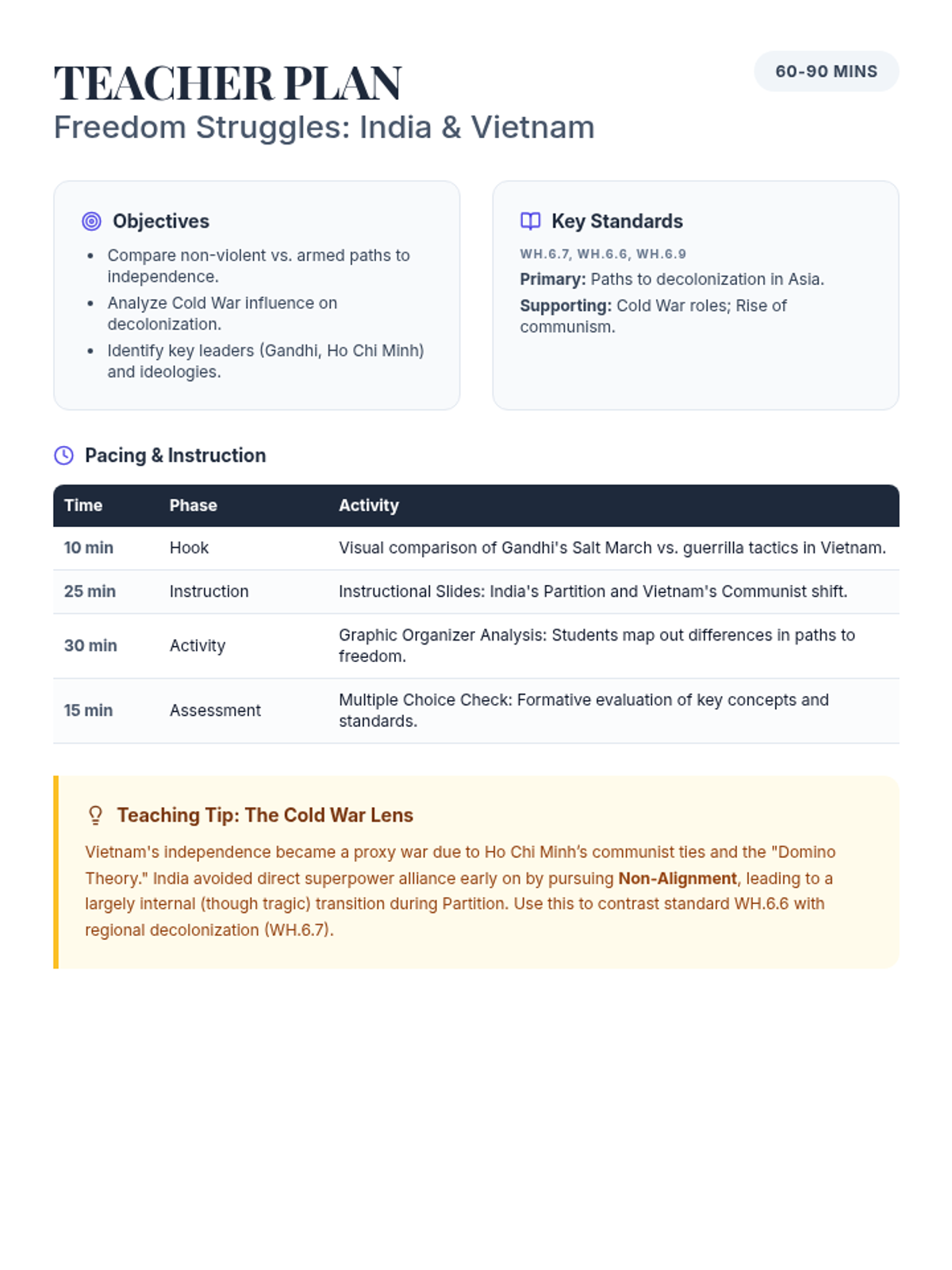
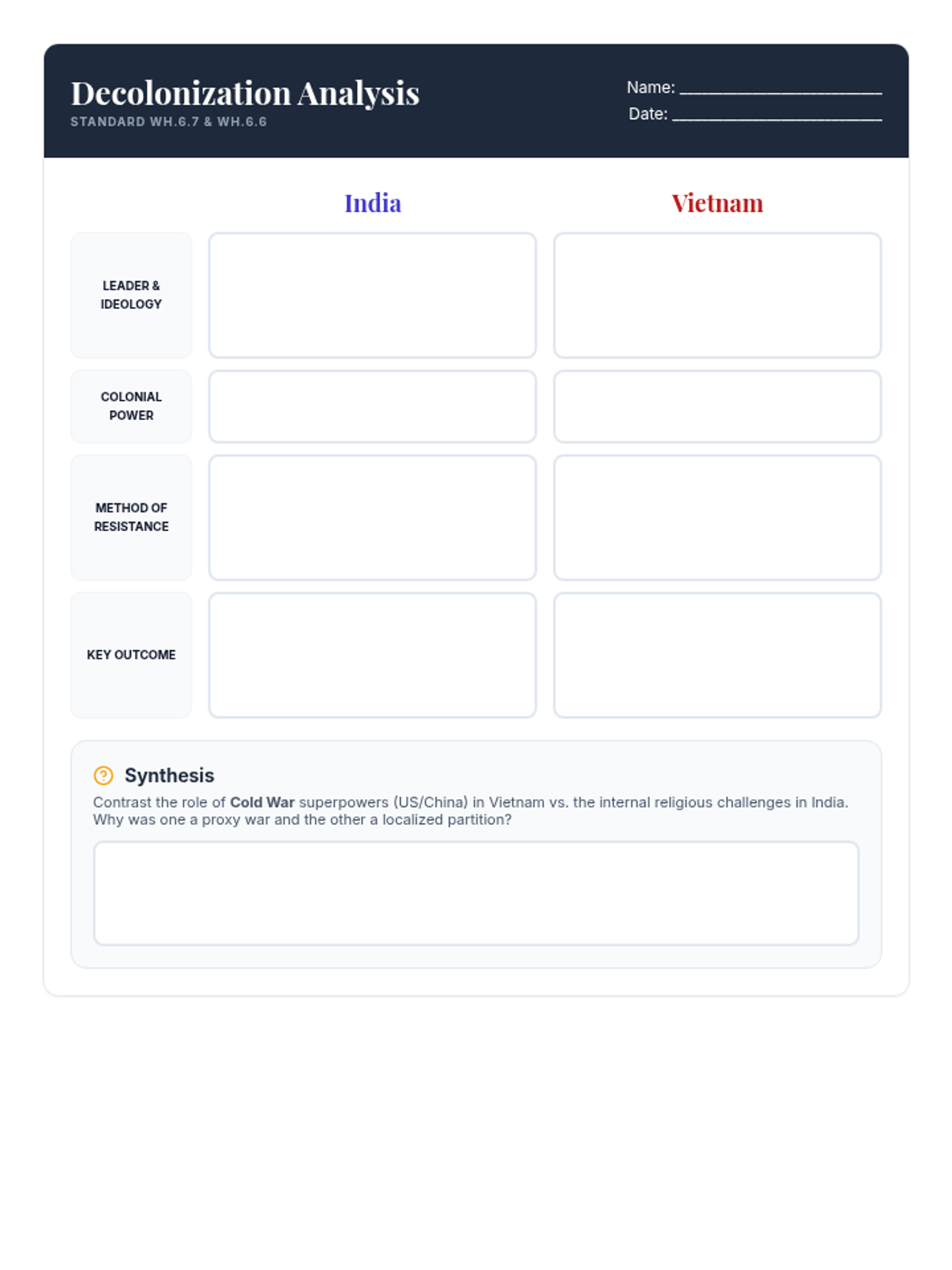
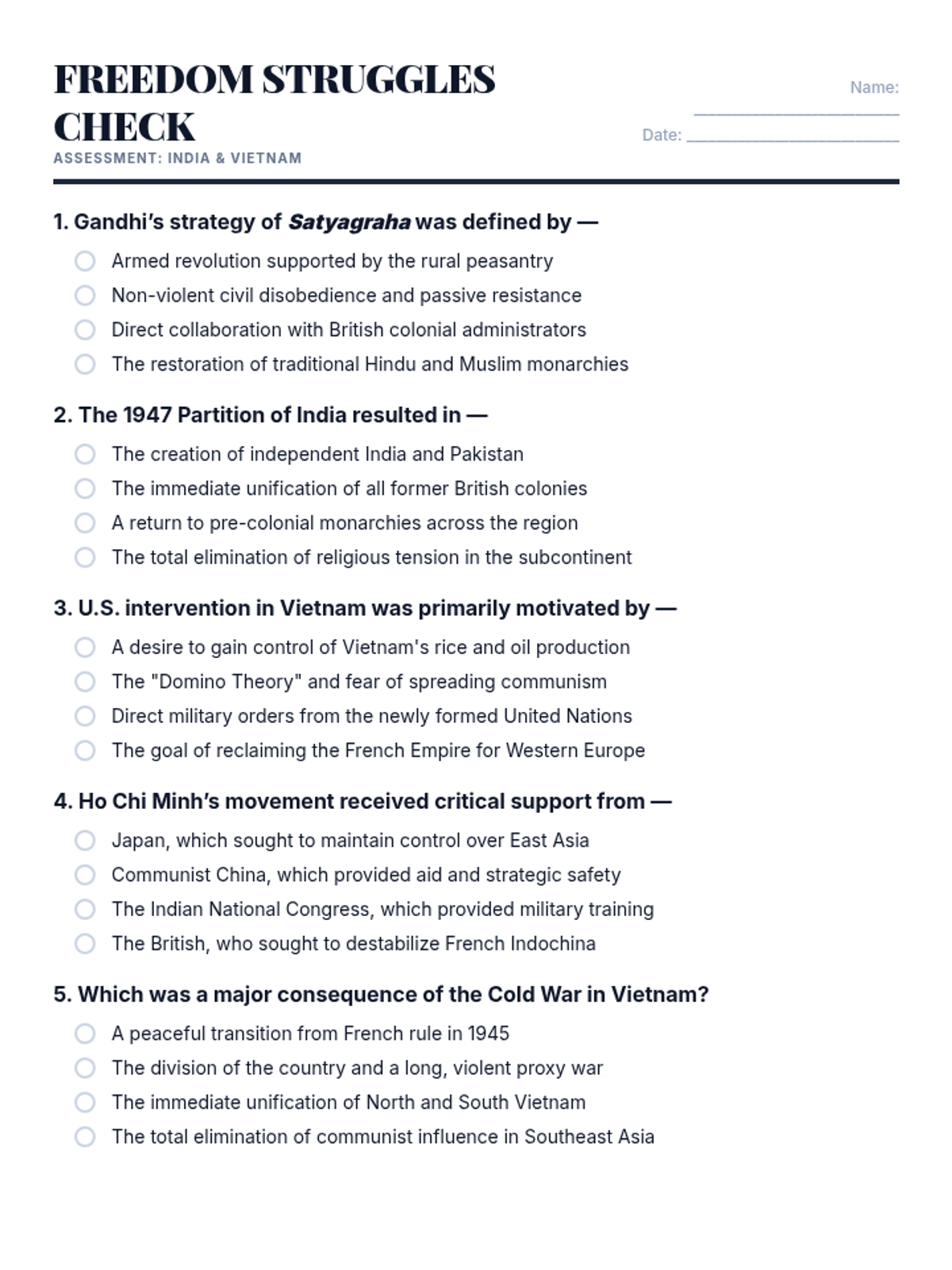
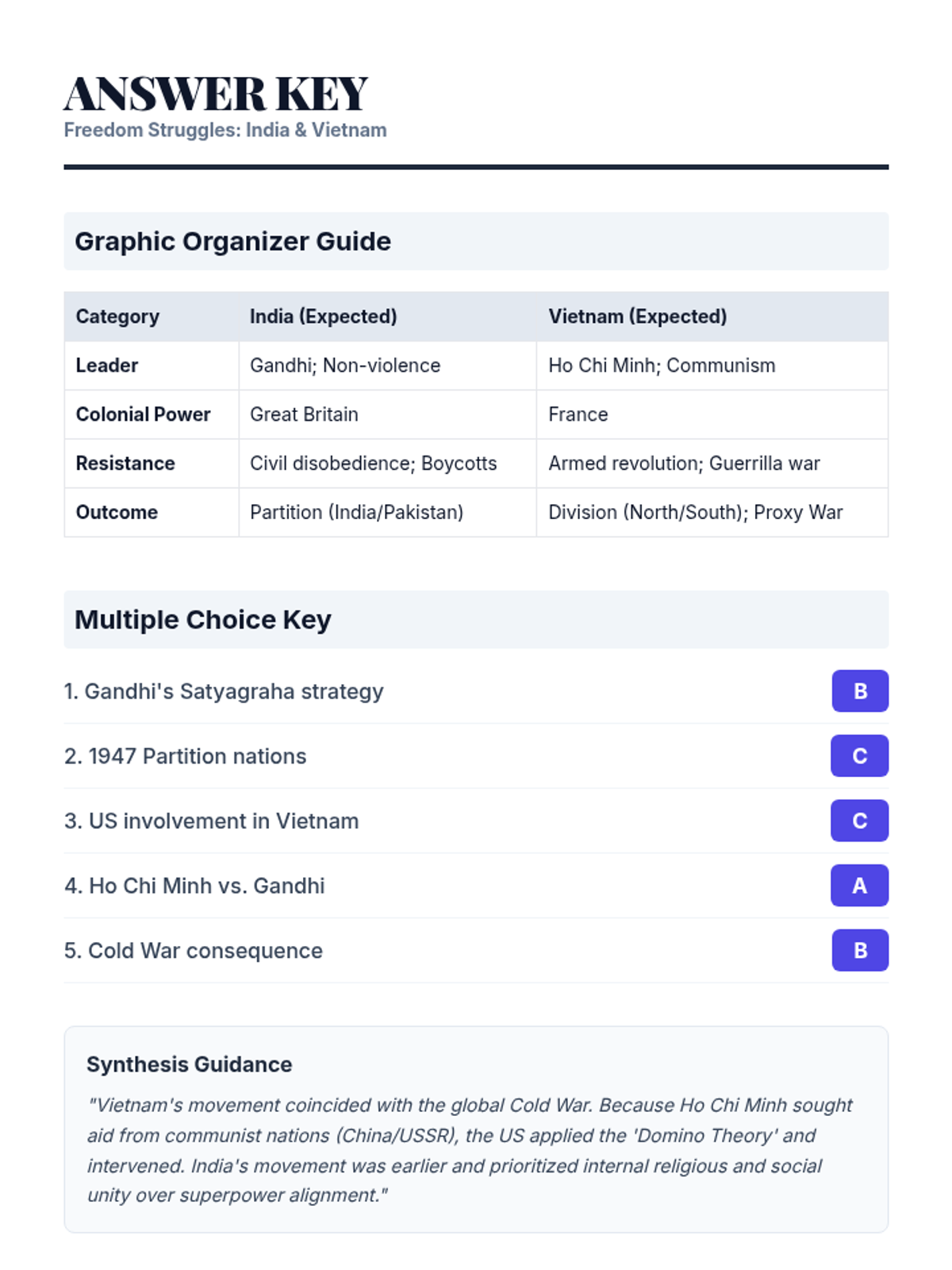
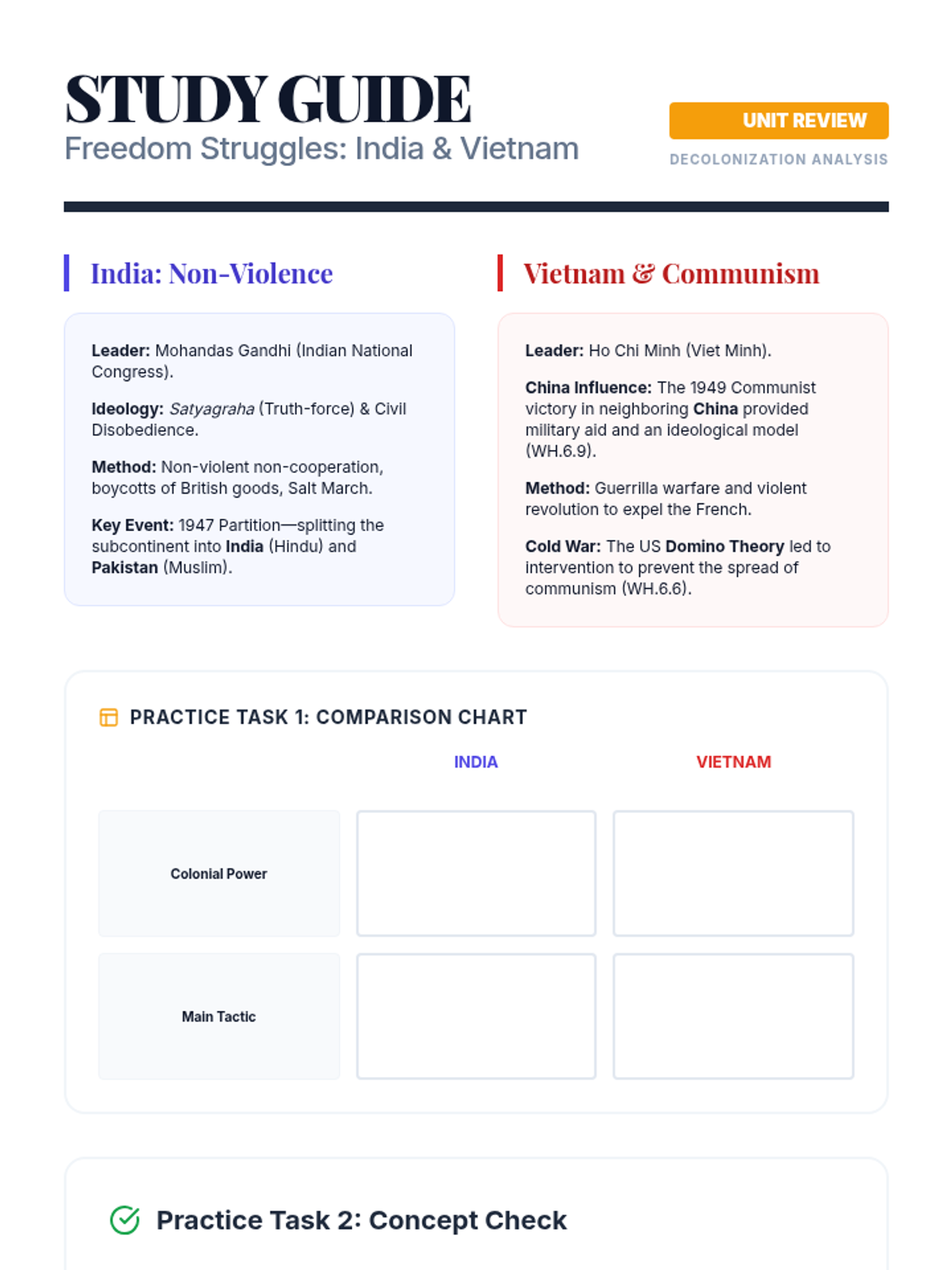
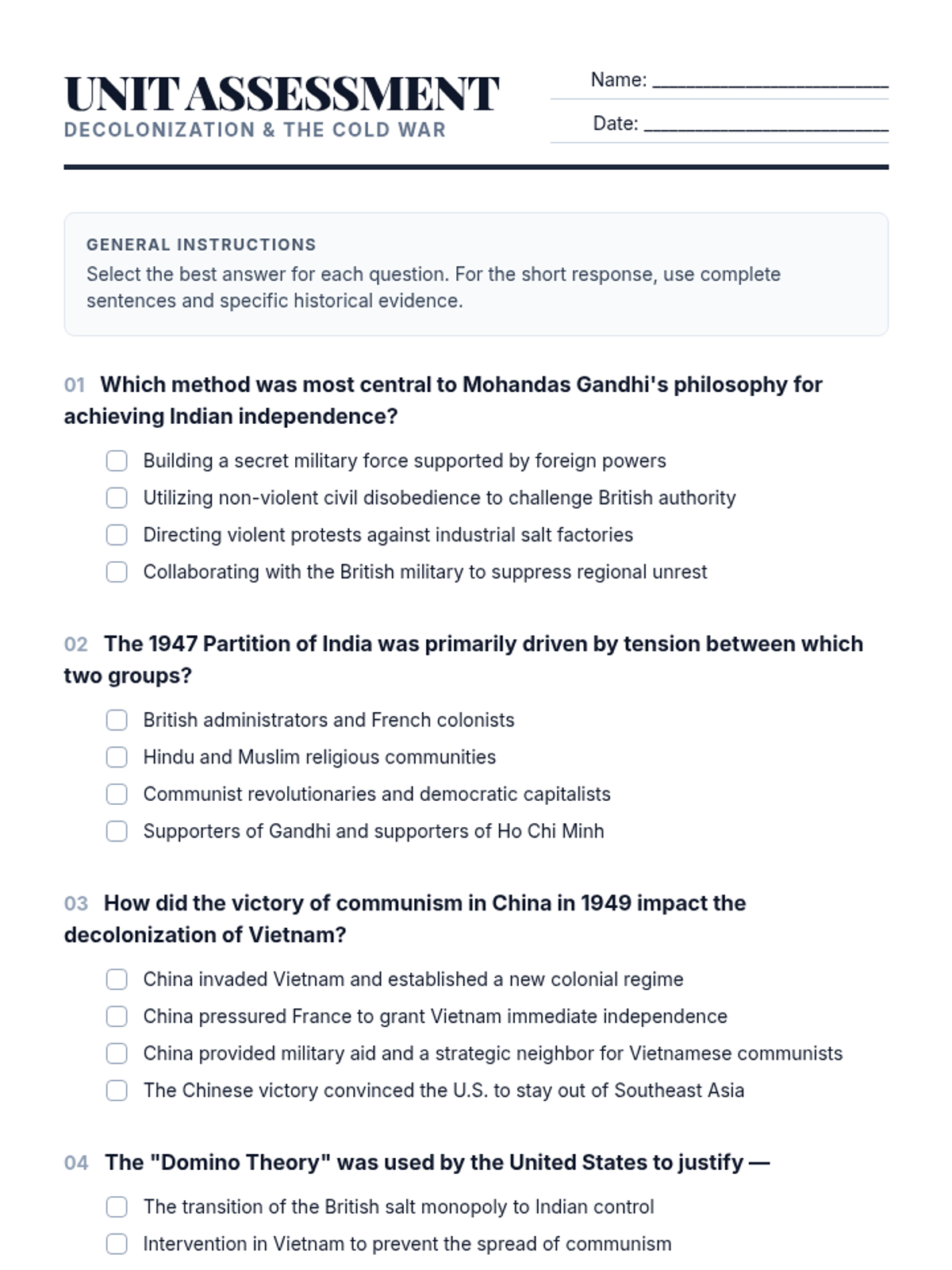
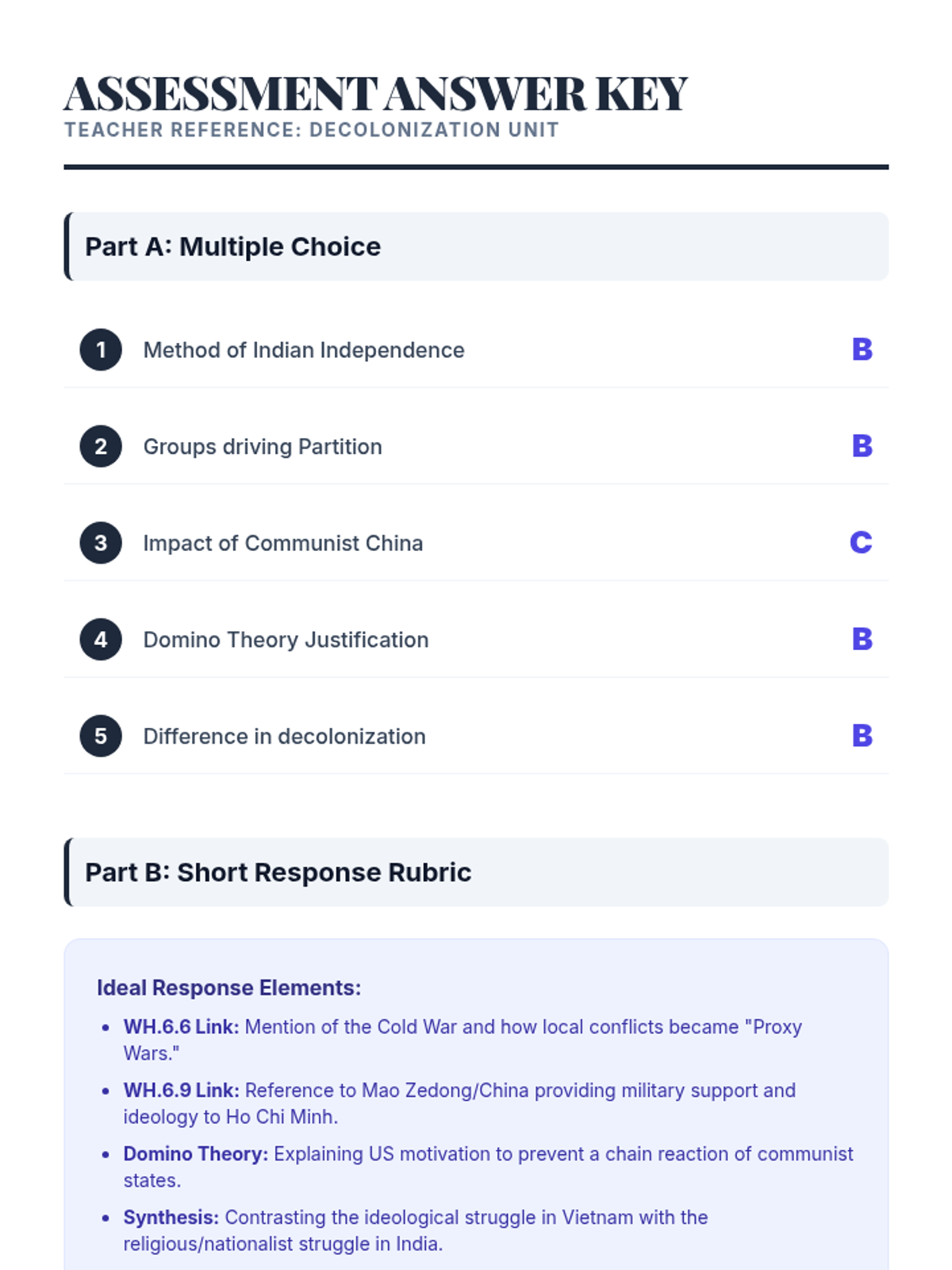
A comprehensive lesson exploring the divergent paths to independence in India and Vietnam, examining non-violent resistance, armed struggle, and the influence of Cold War ideologies.
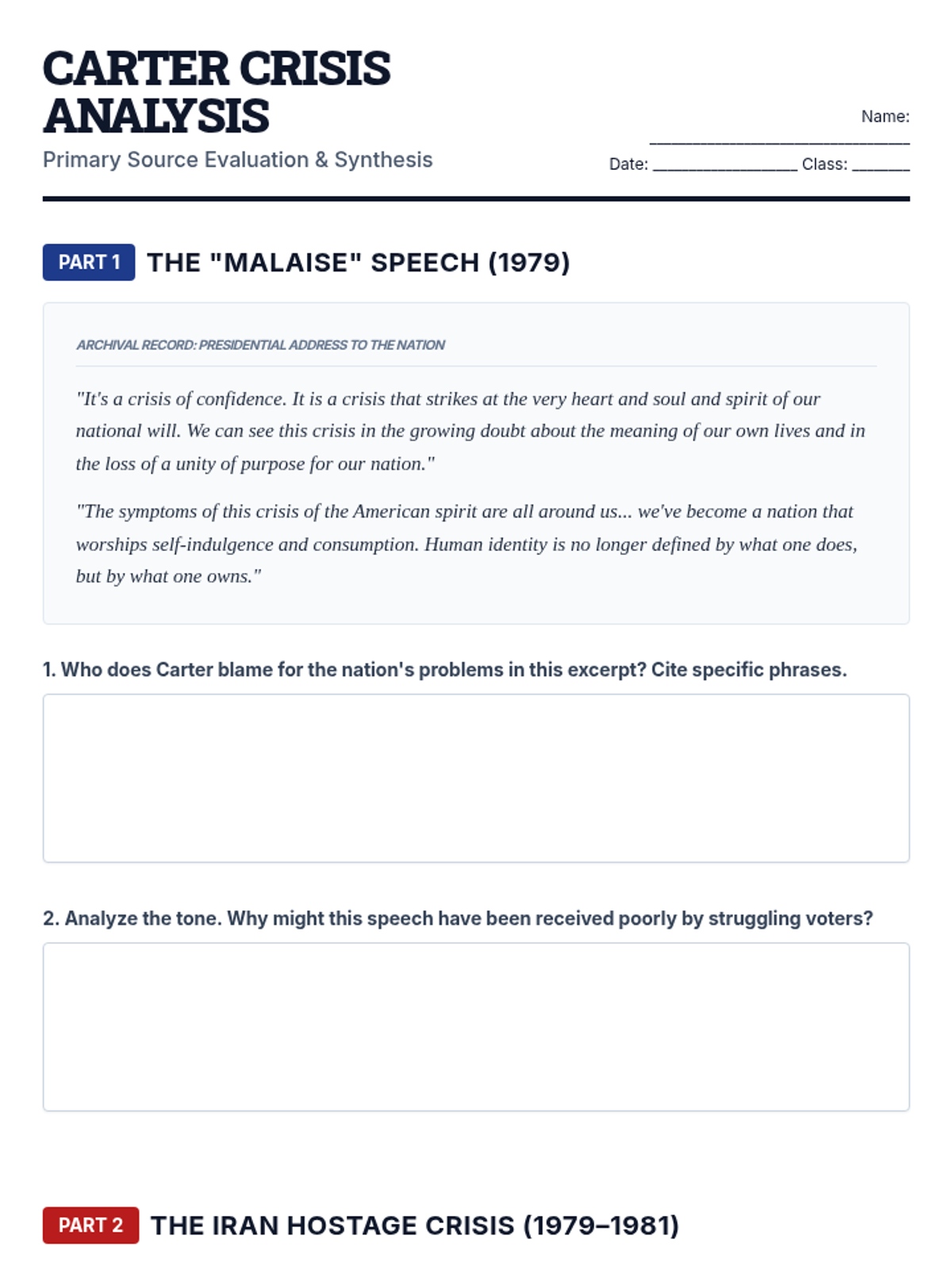
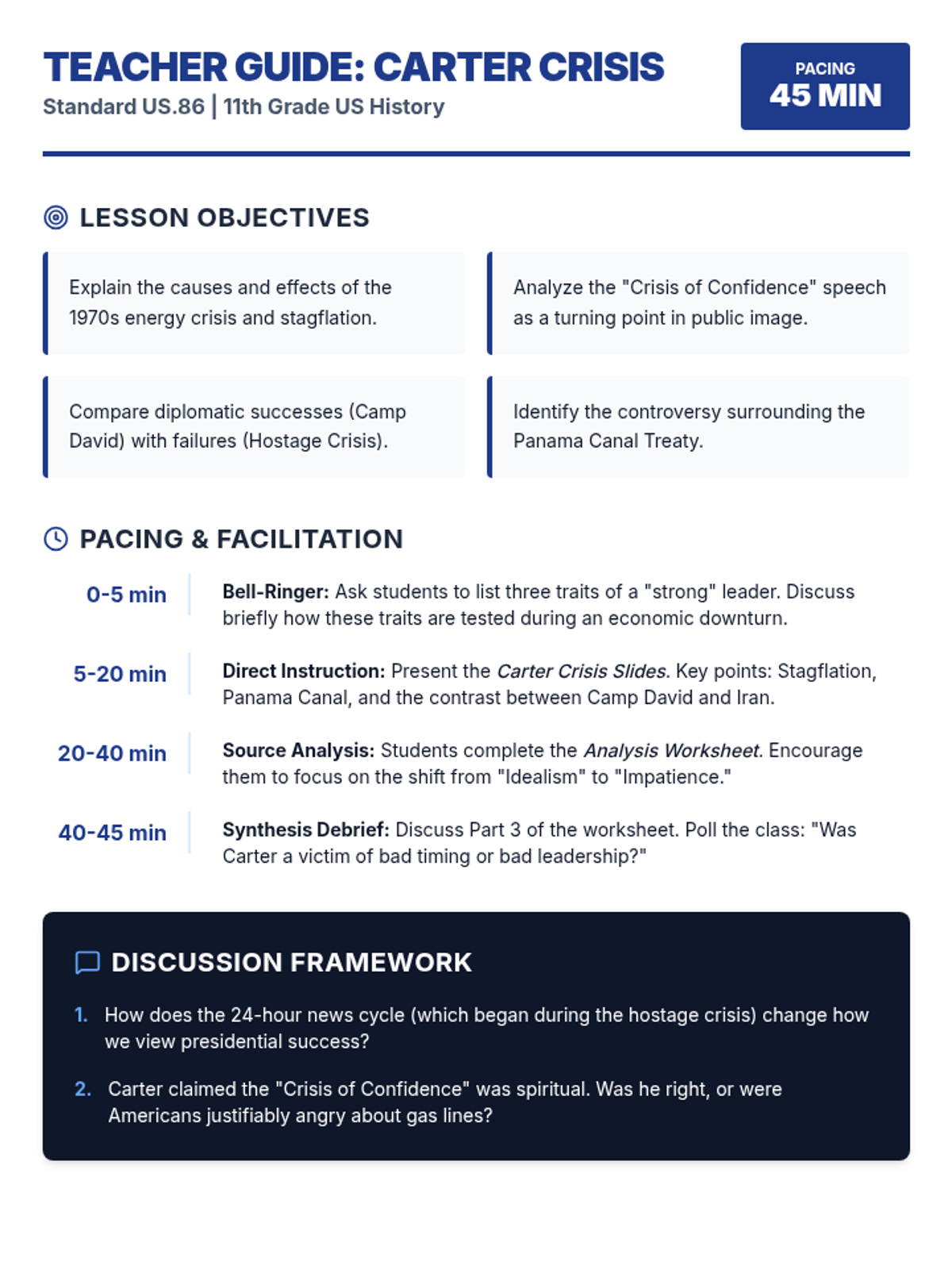
A comprehensive 45-minute history lesson on Jimmy Carter's presidency, focusing on the domestic and foreign challenges that defined his administration through primary source analysis.
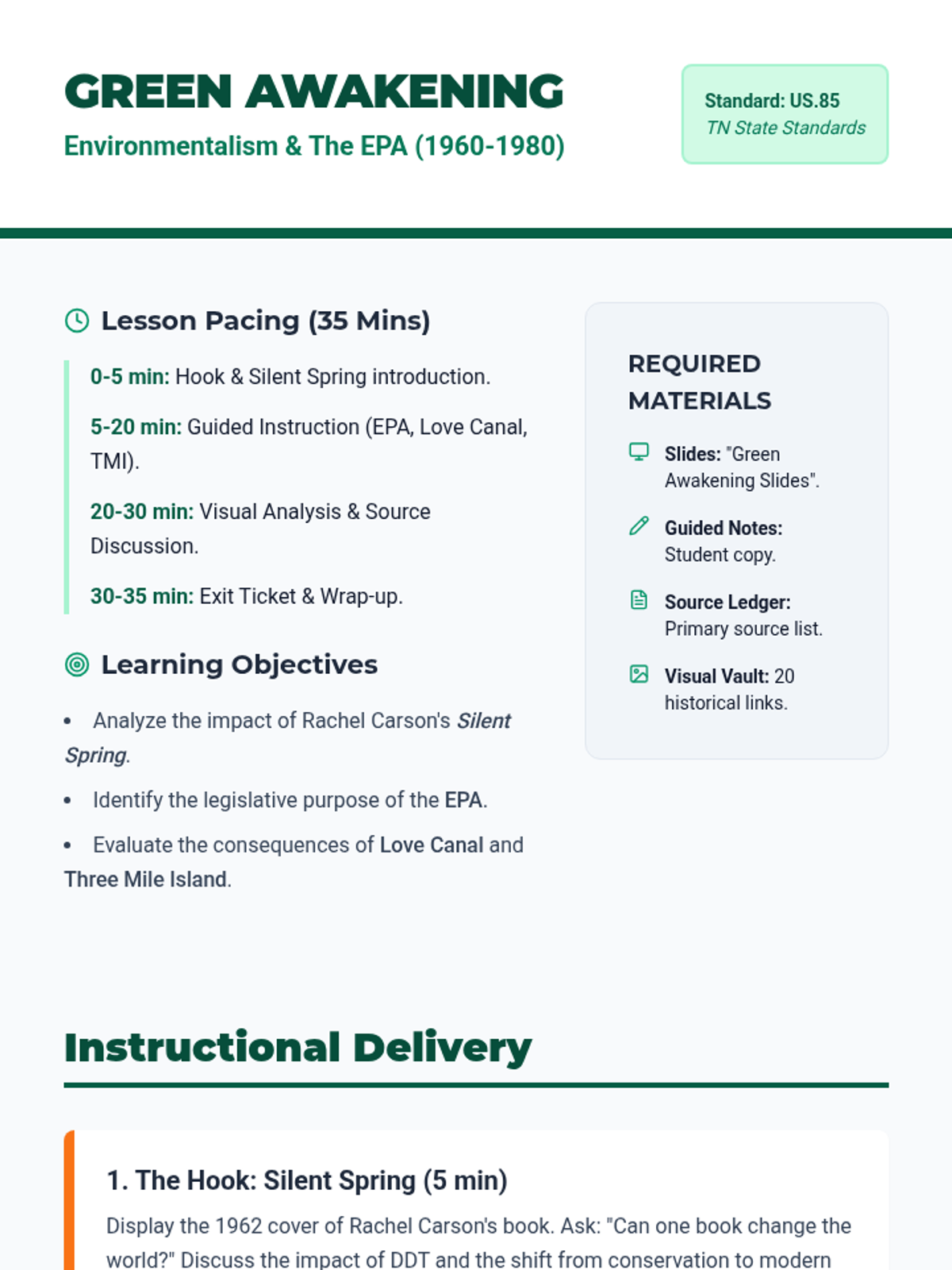
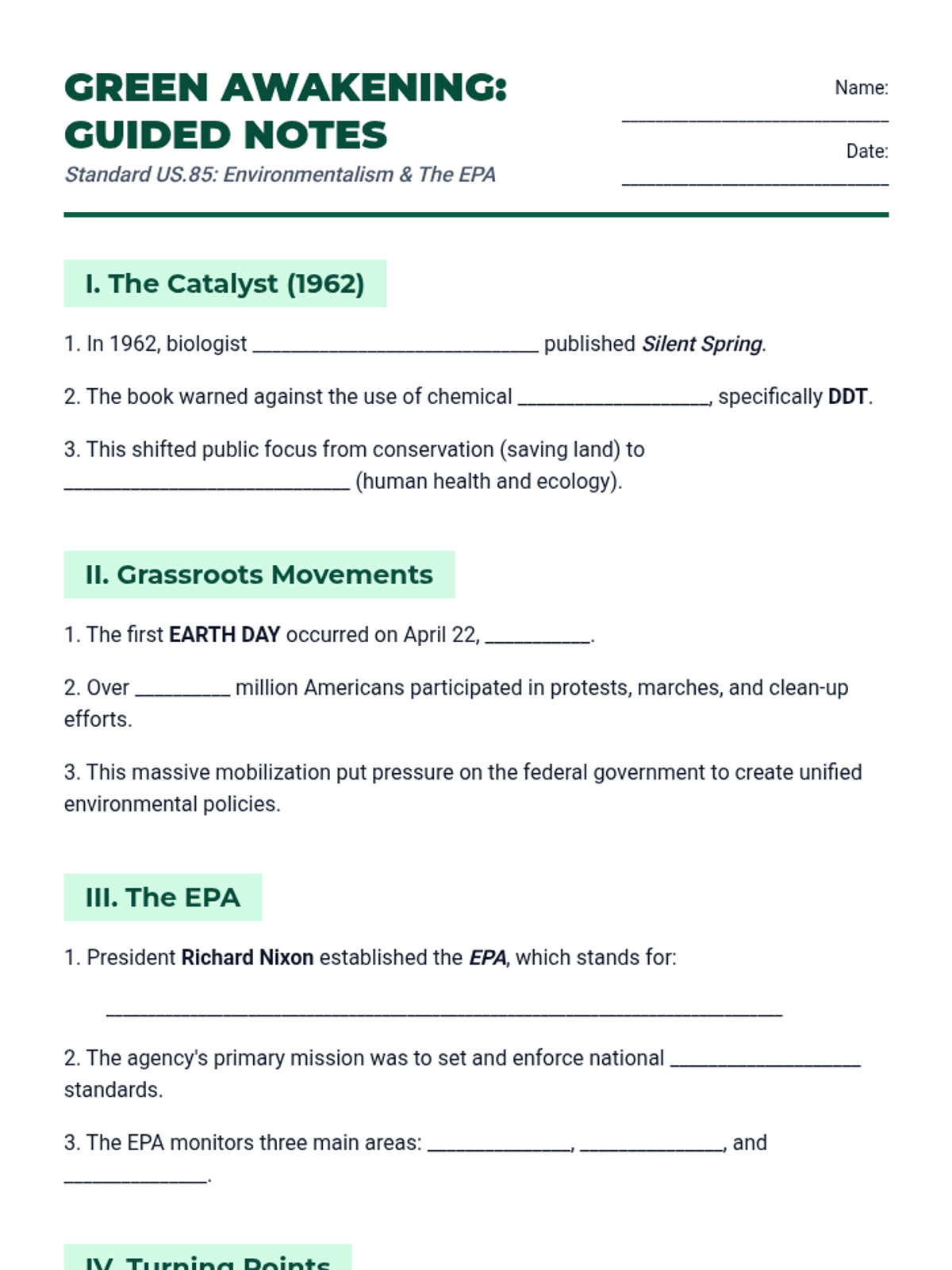
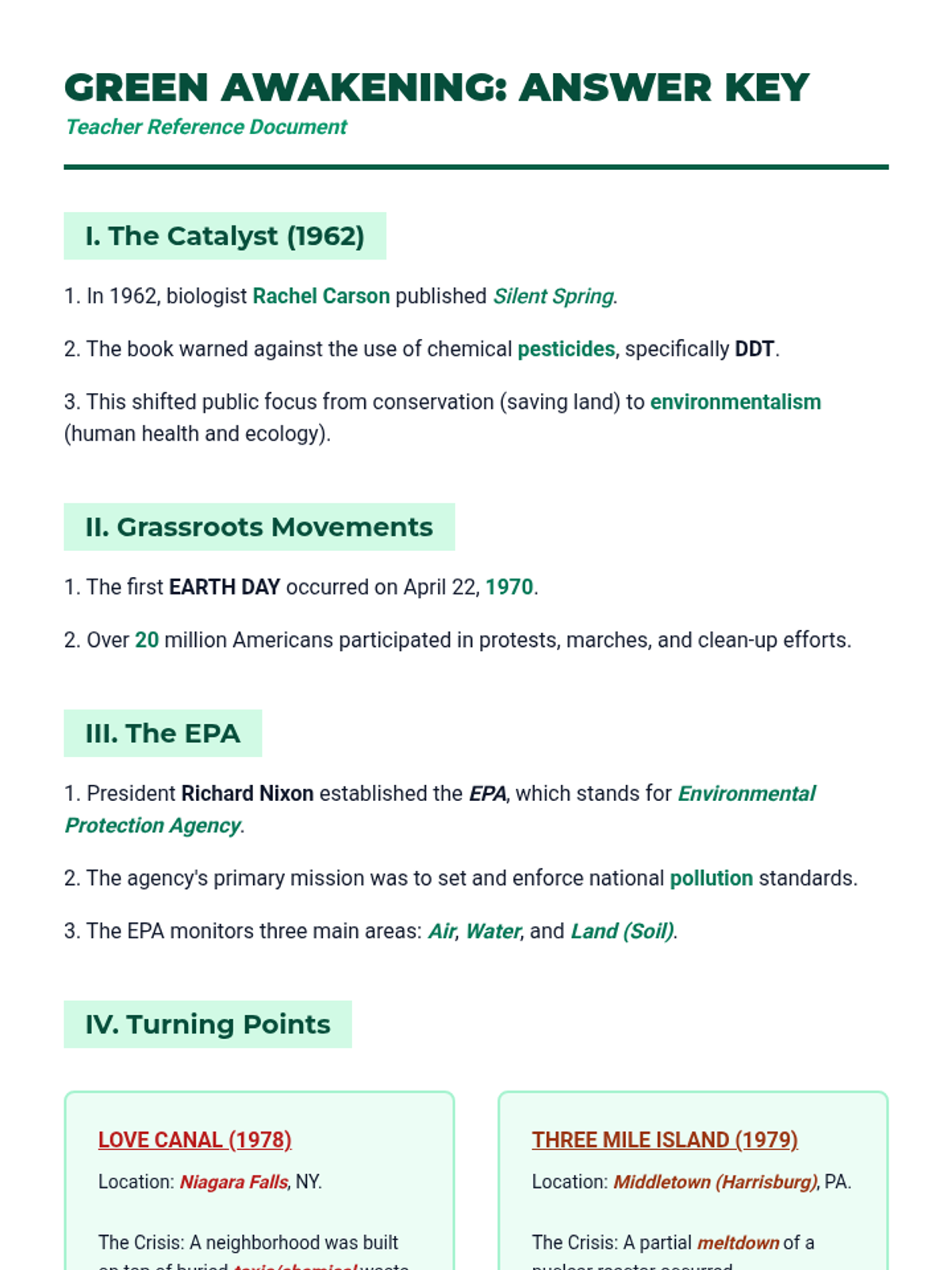
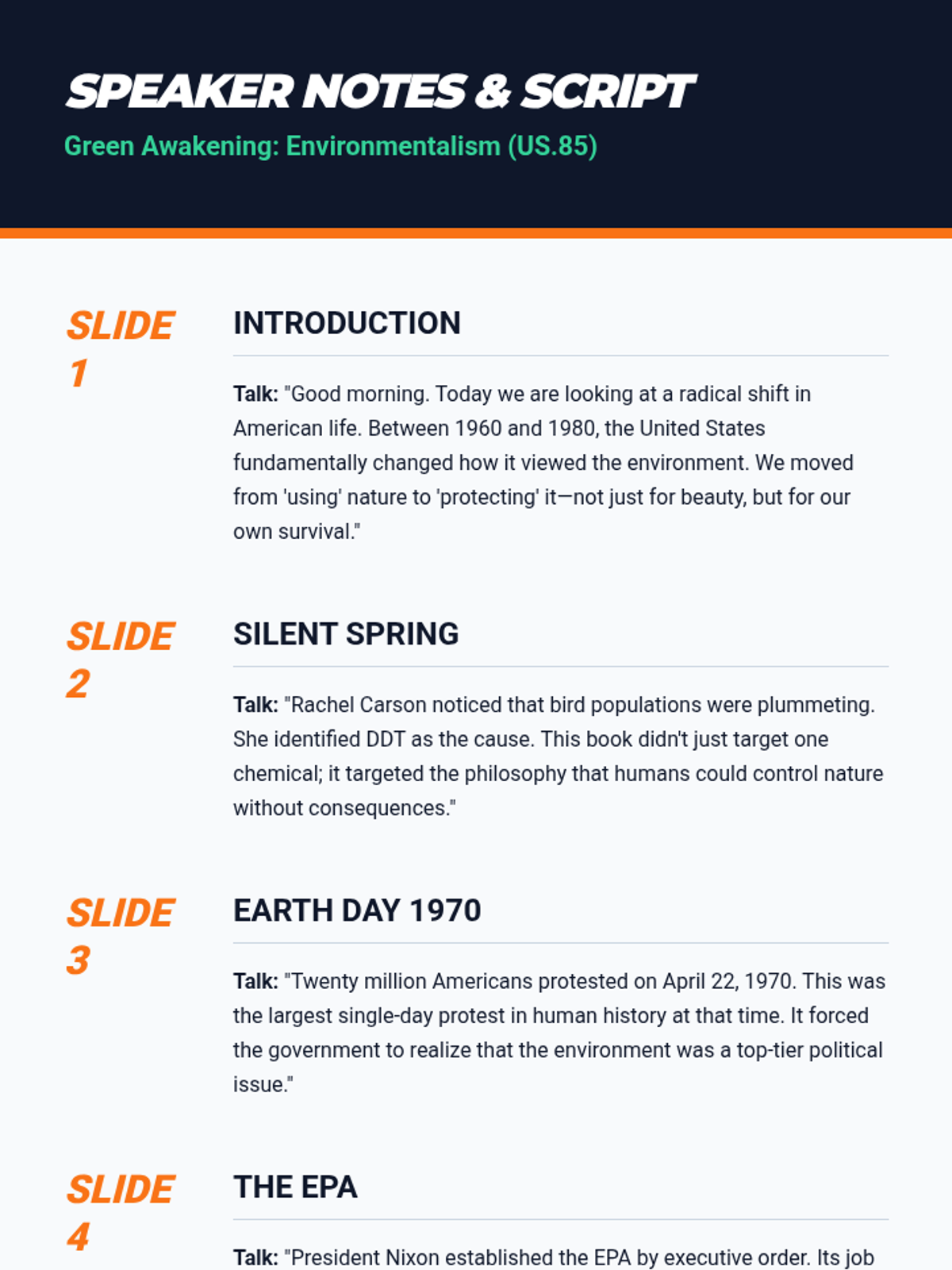
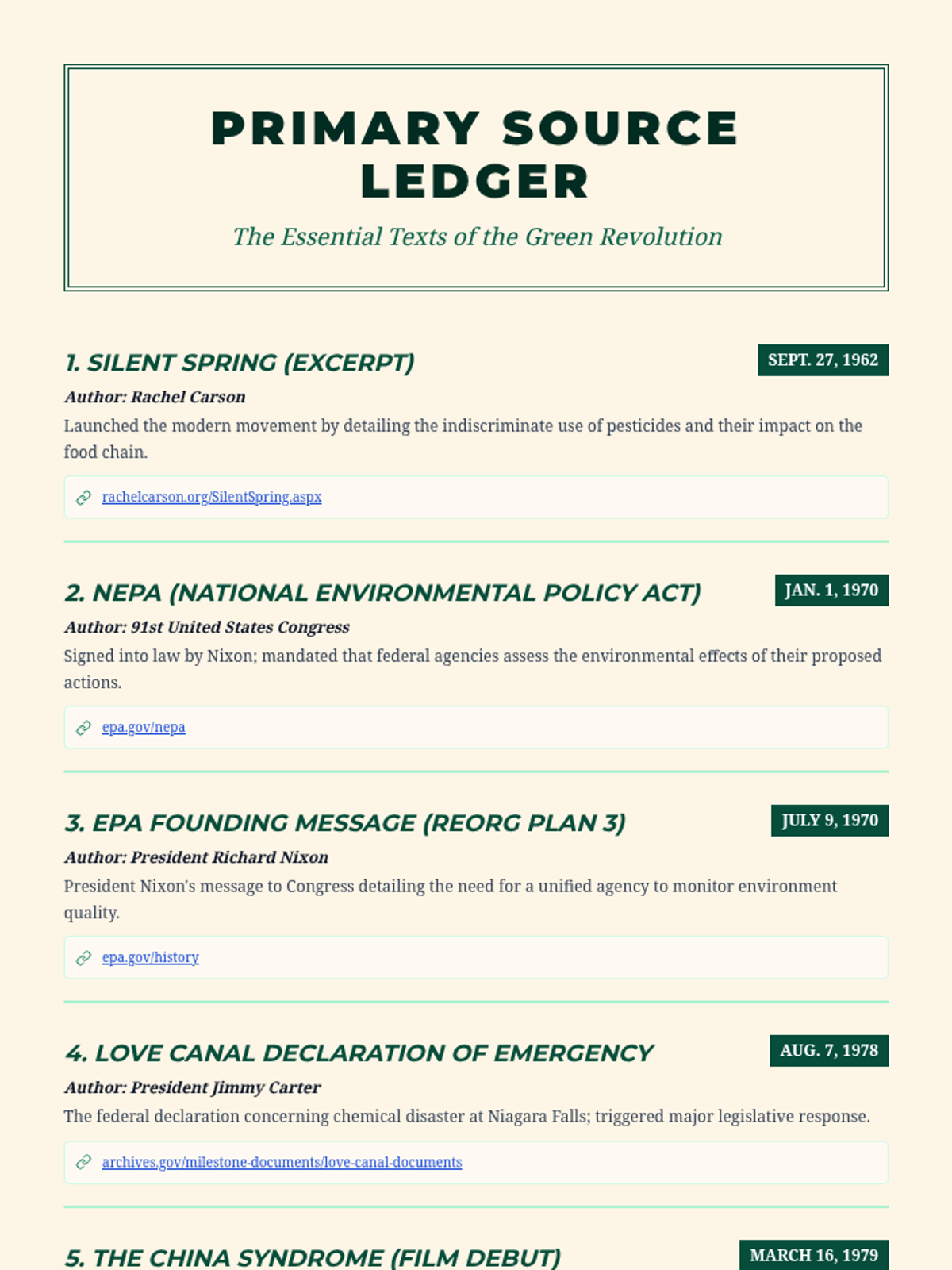
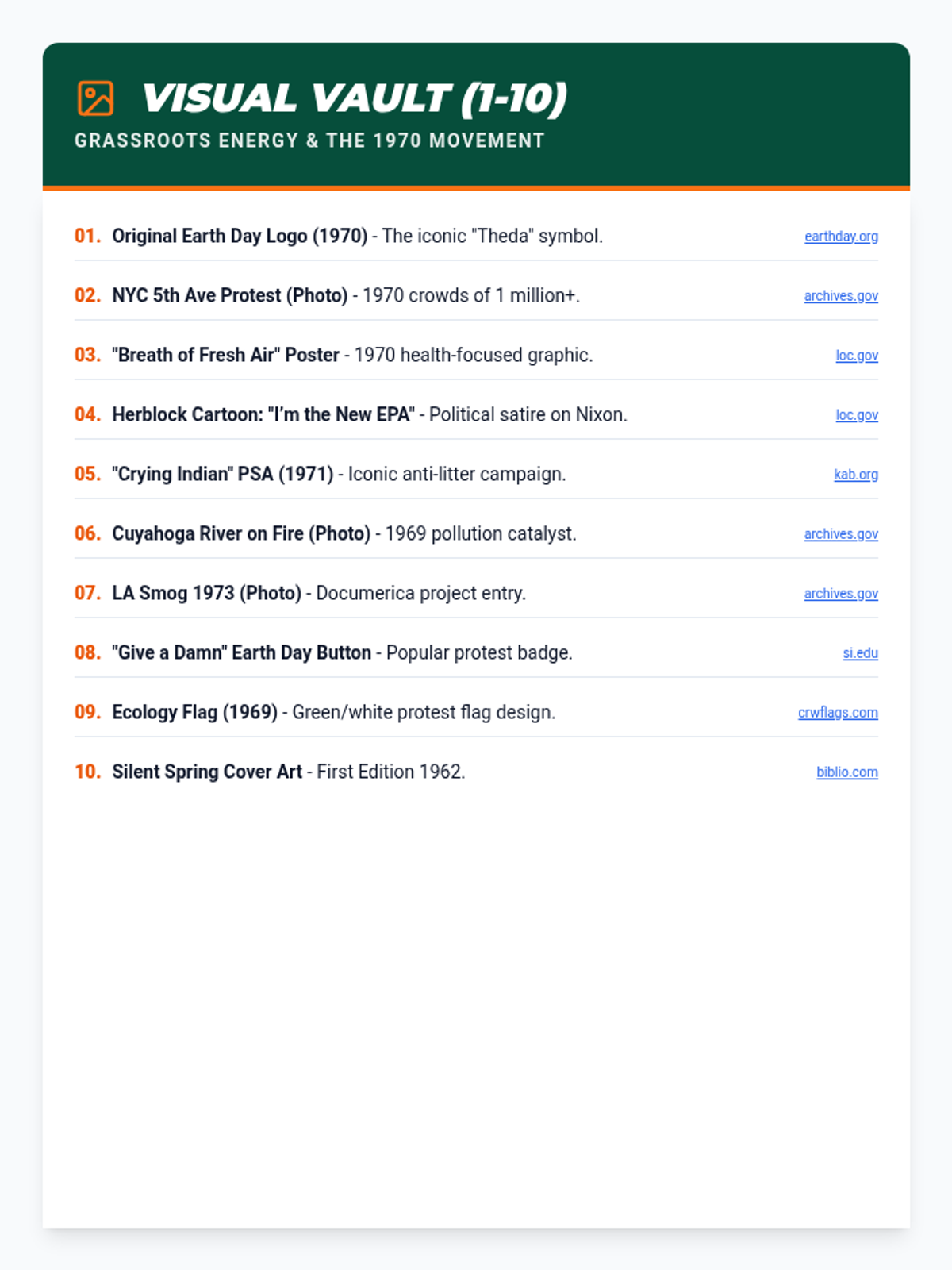
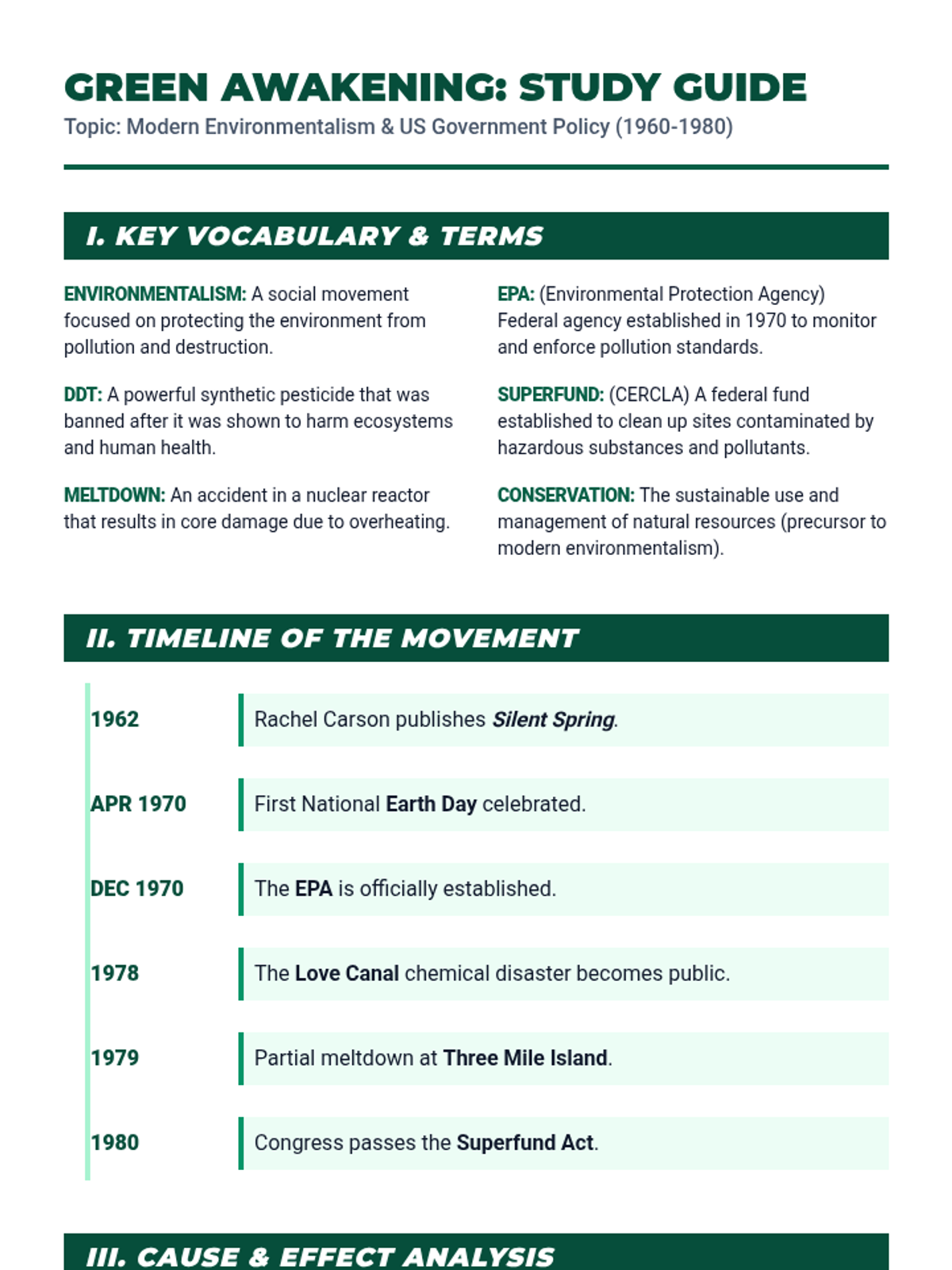
A 35-minute lesson exploring the rise of environmentalism in the United States, focusing on the creation of the EPA and the impact of the Love Canal and Three Mile Island disasters. Students analyze the transition from grass-roots activism to federal policy through primary sources and historical visuals.
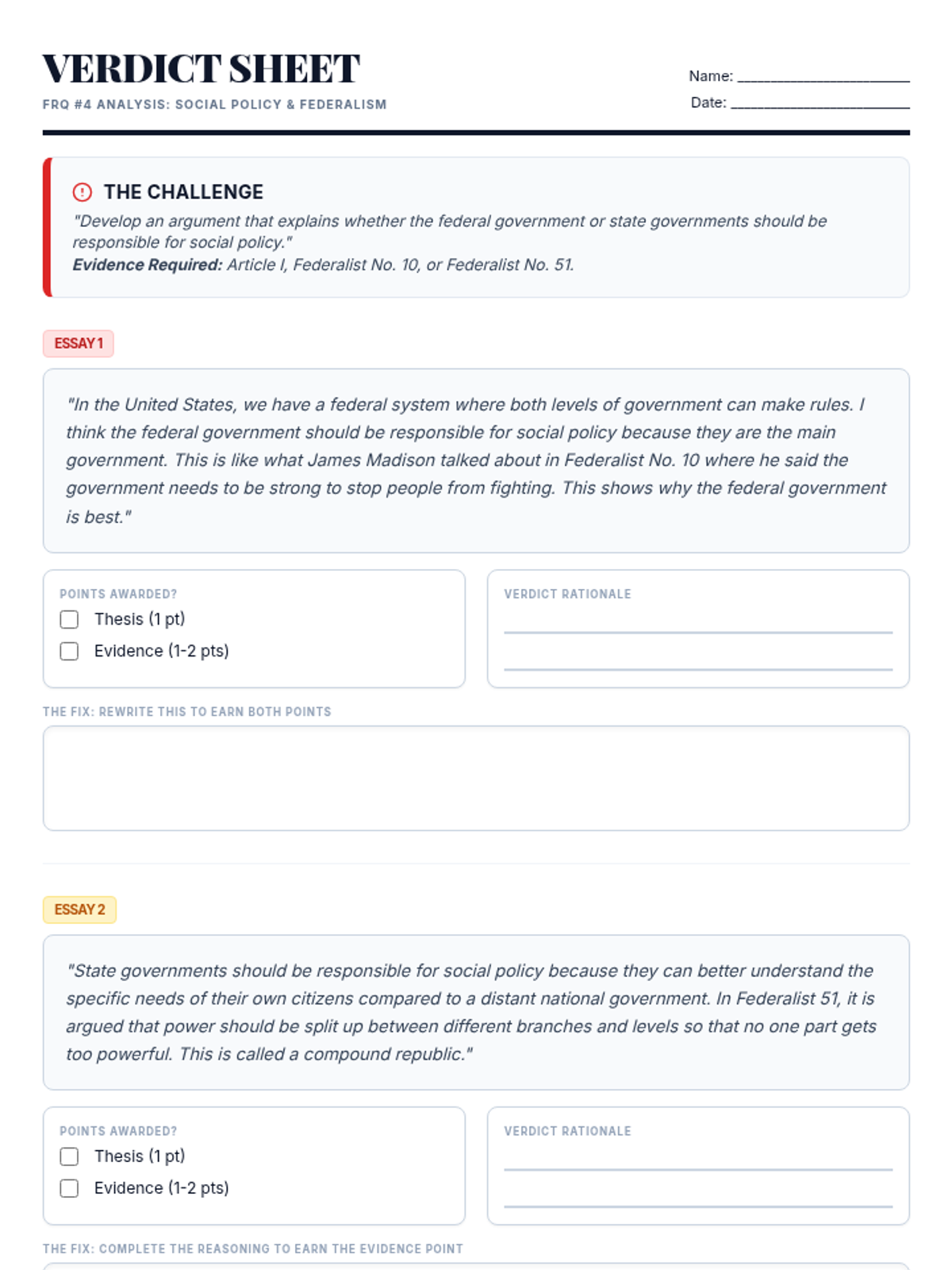
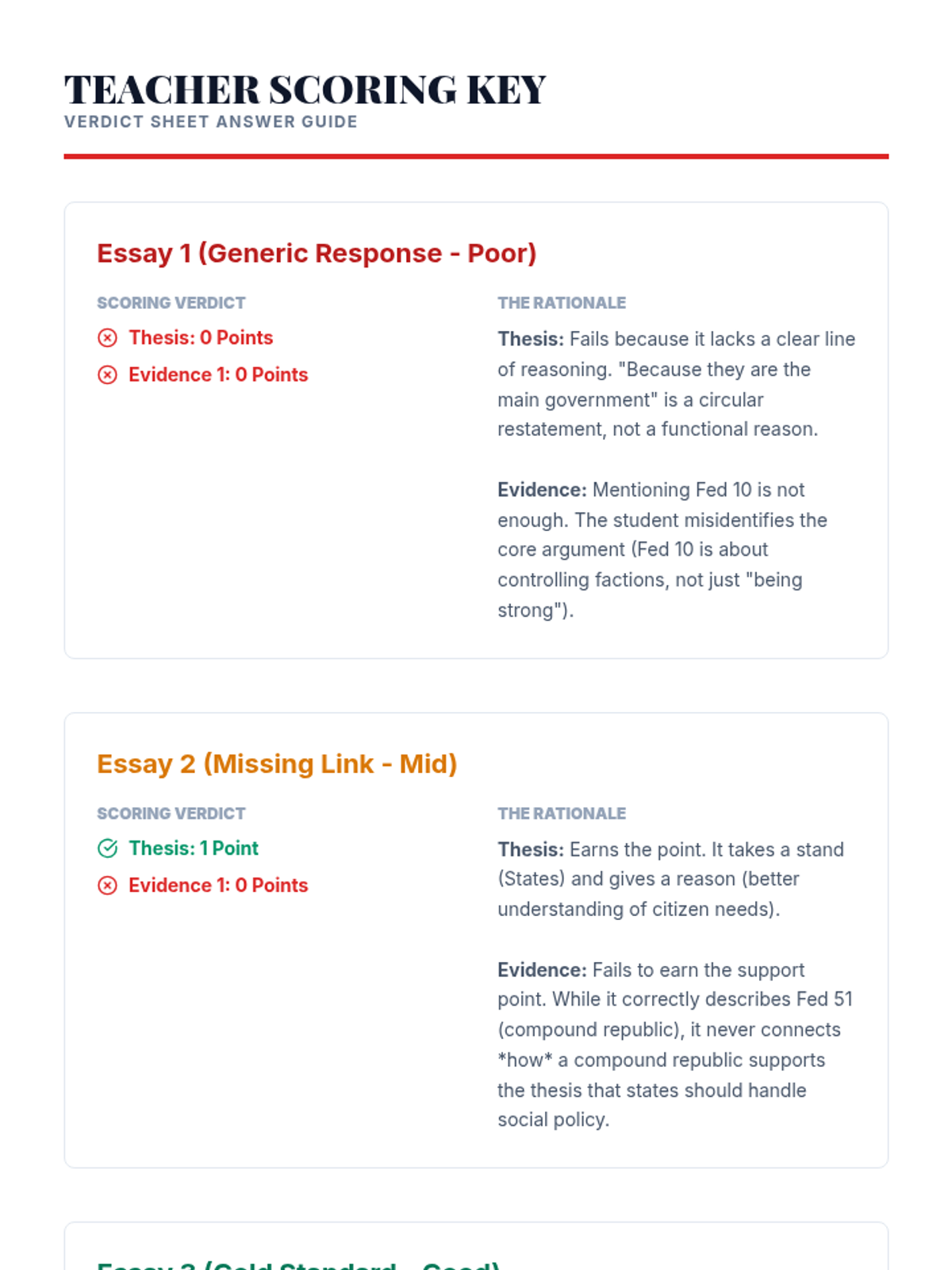
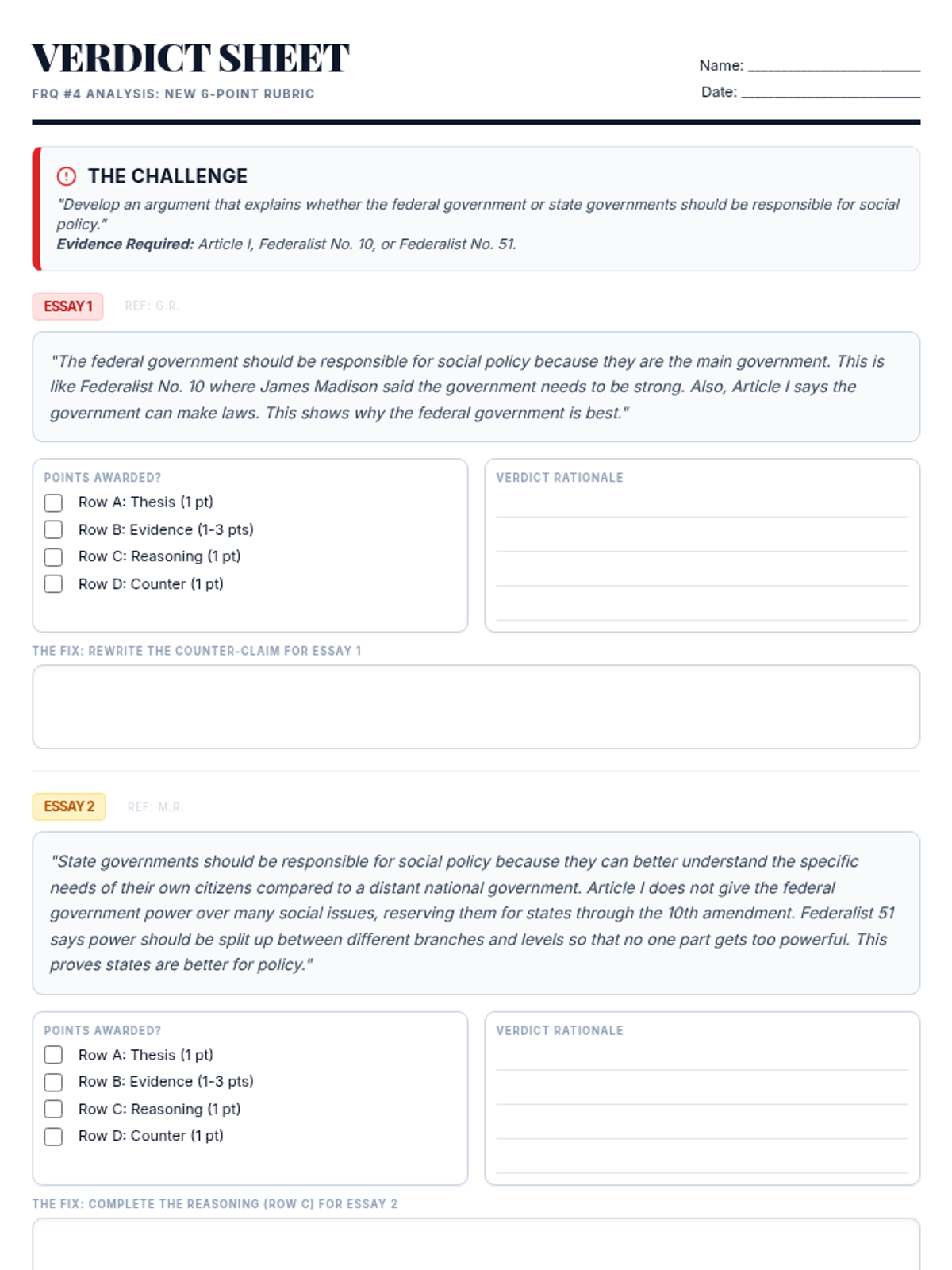
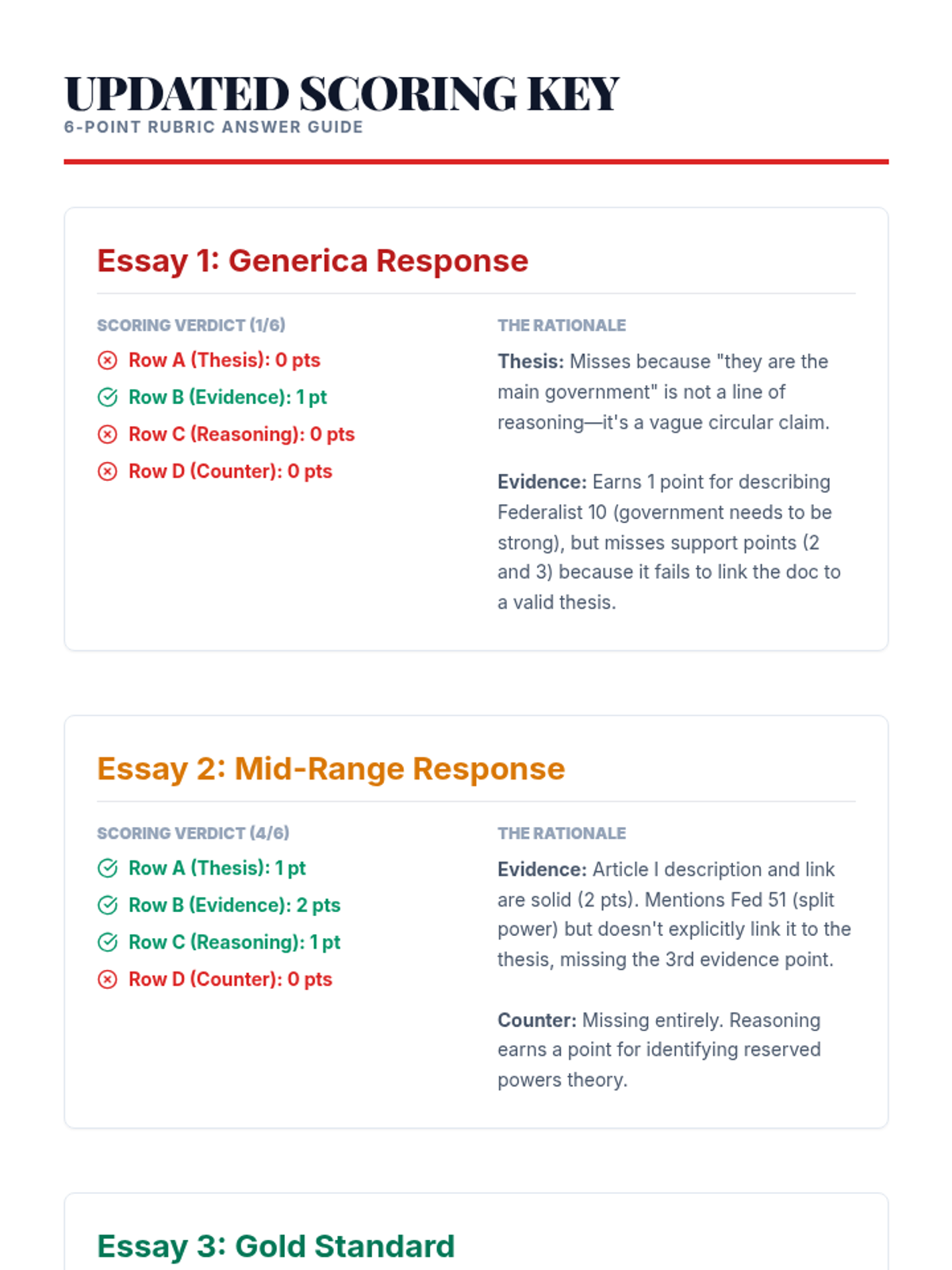
A deep dive into AP Government Argument Essay FRQs, focusing on the debate between constitutional structures and citizen participation in social movements through sample analysis and rubric application.
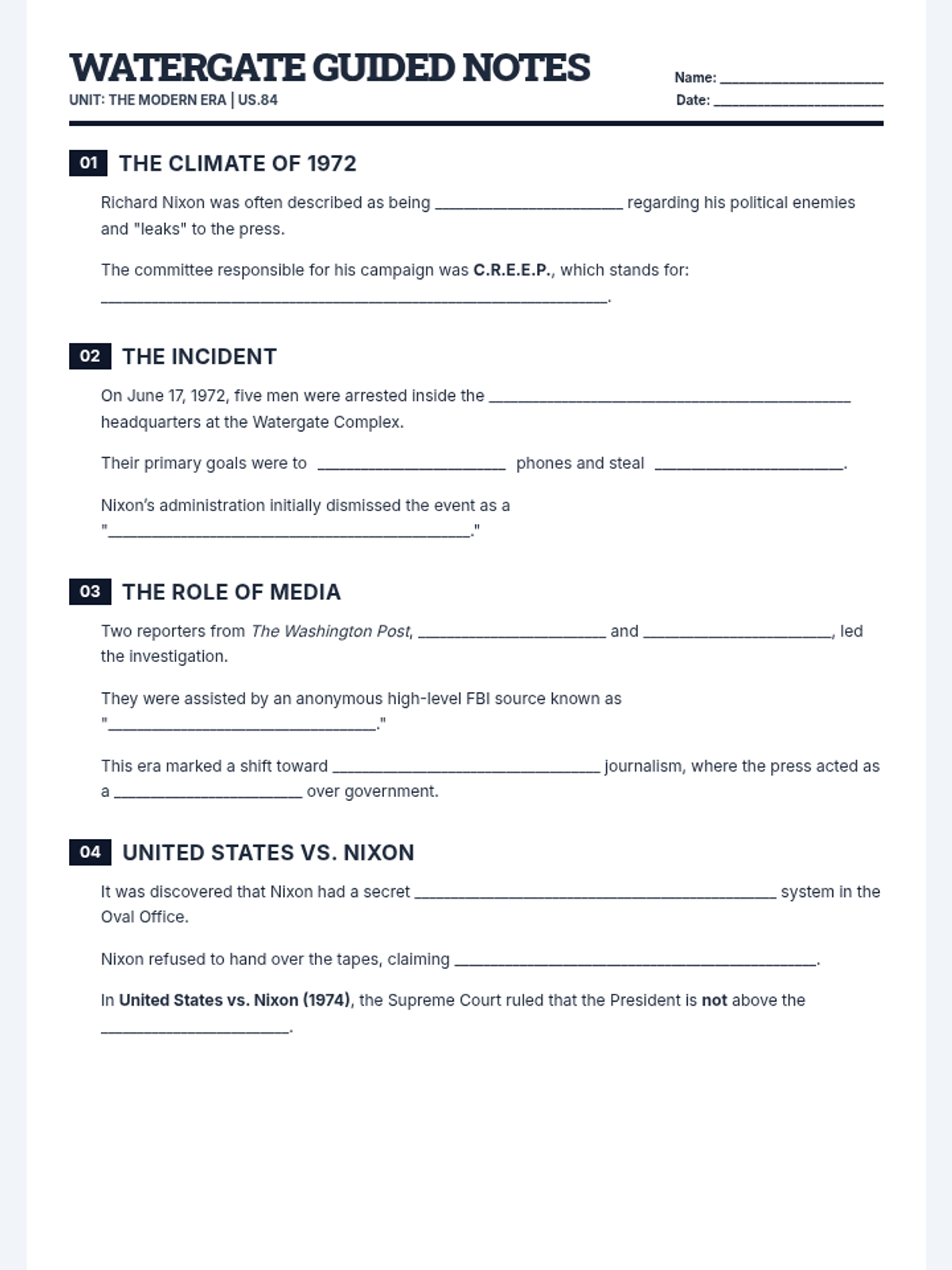
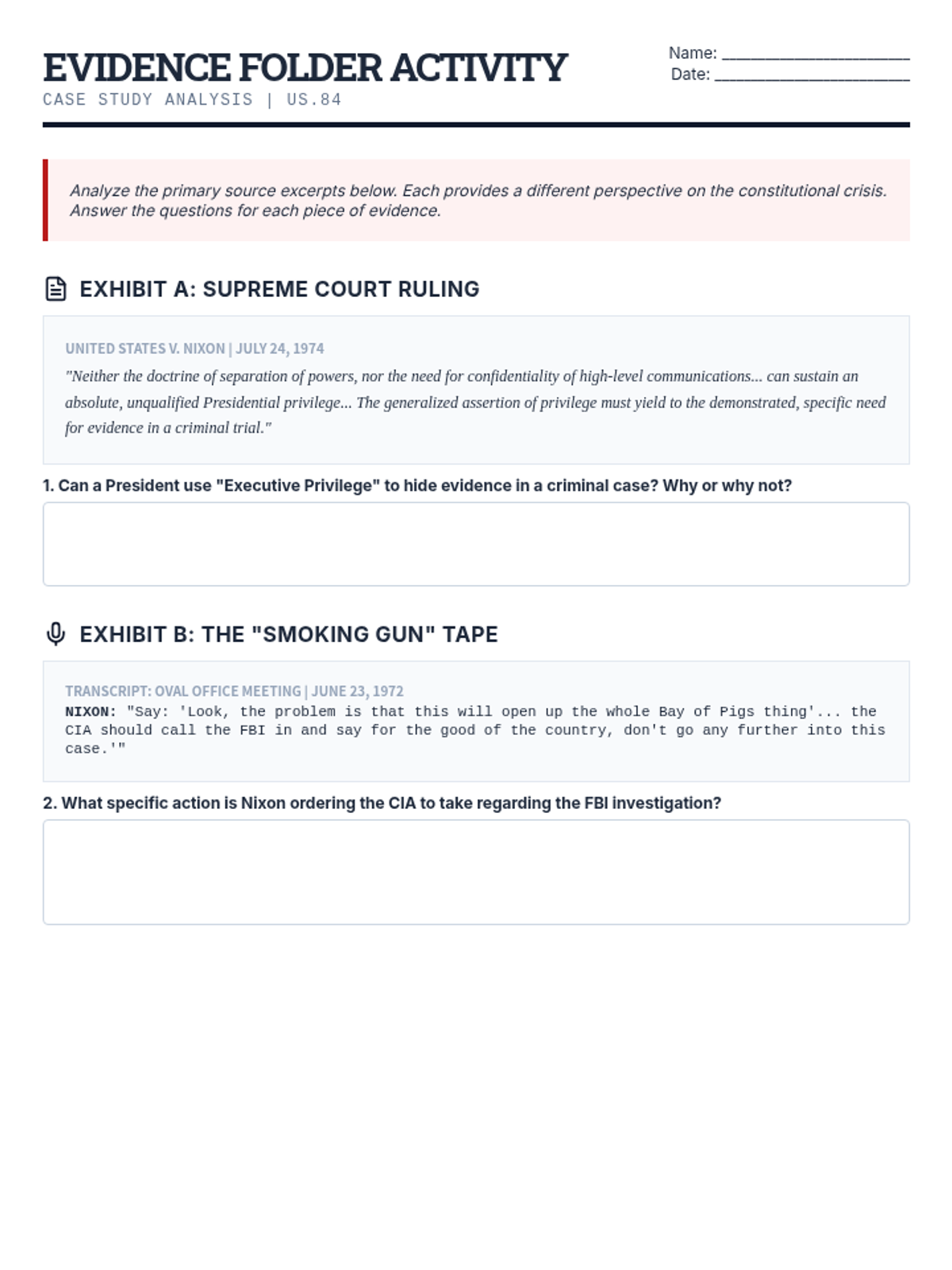
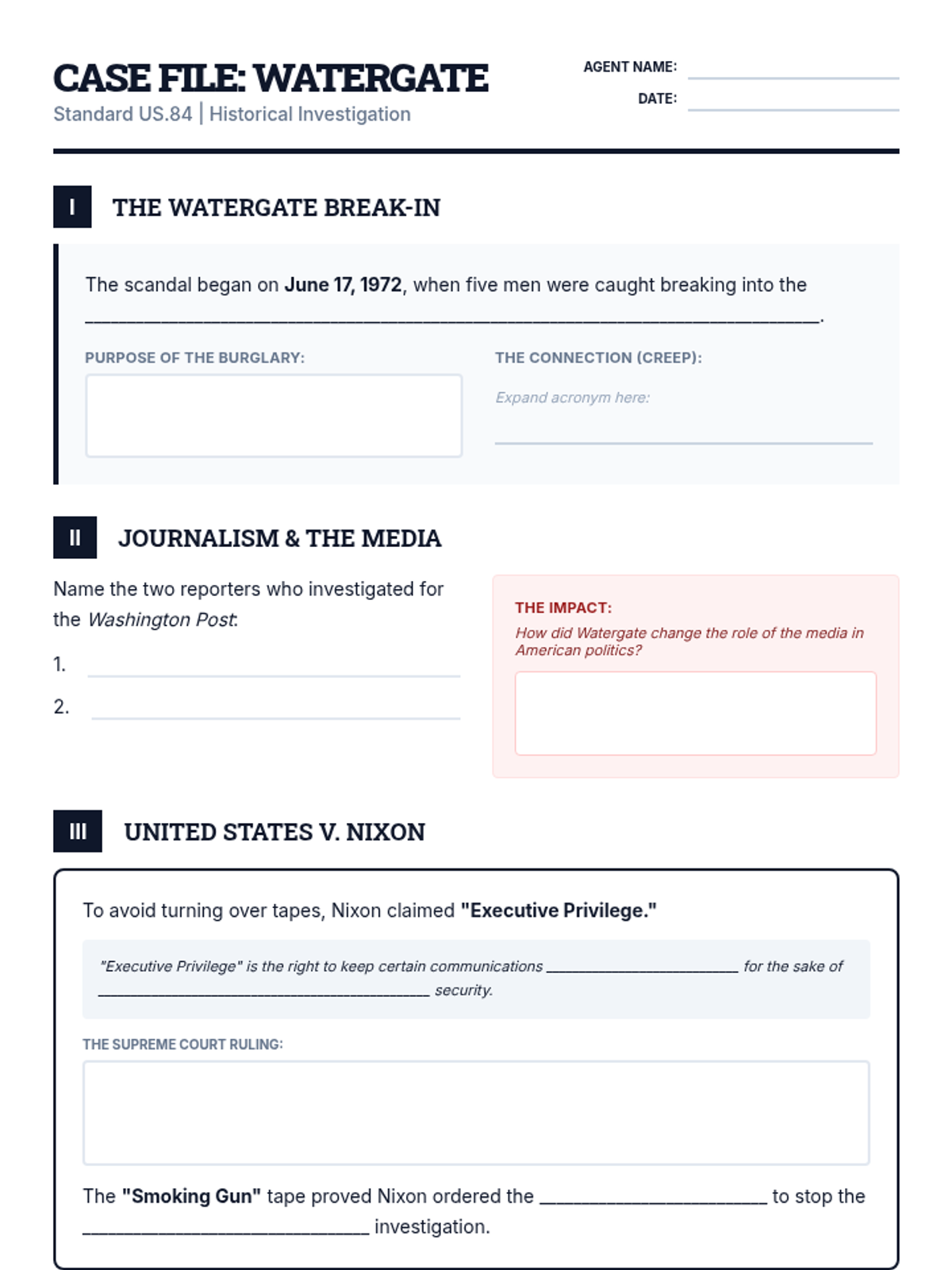
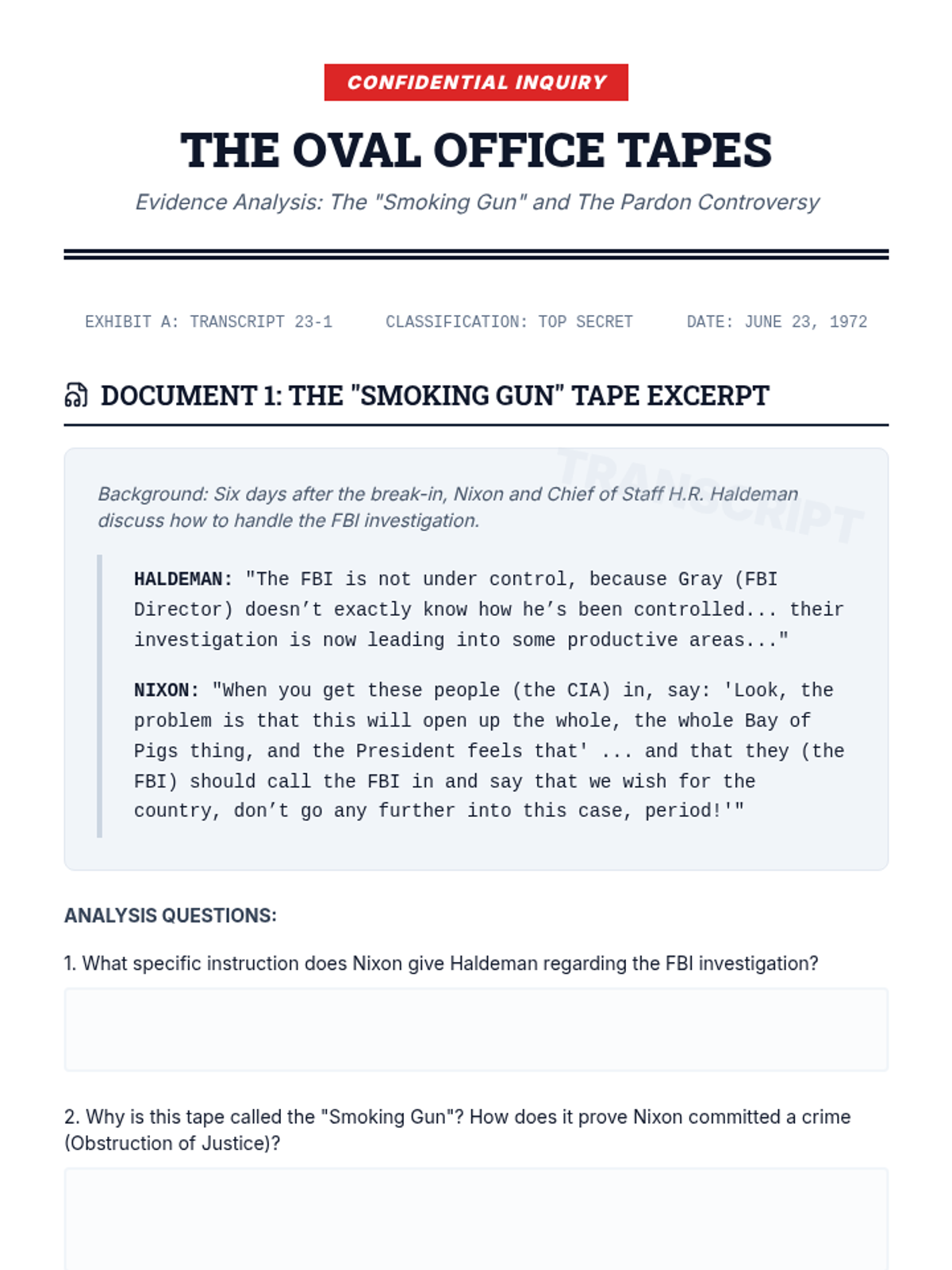
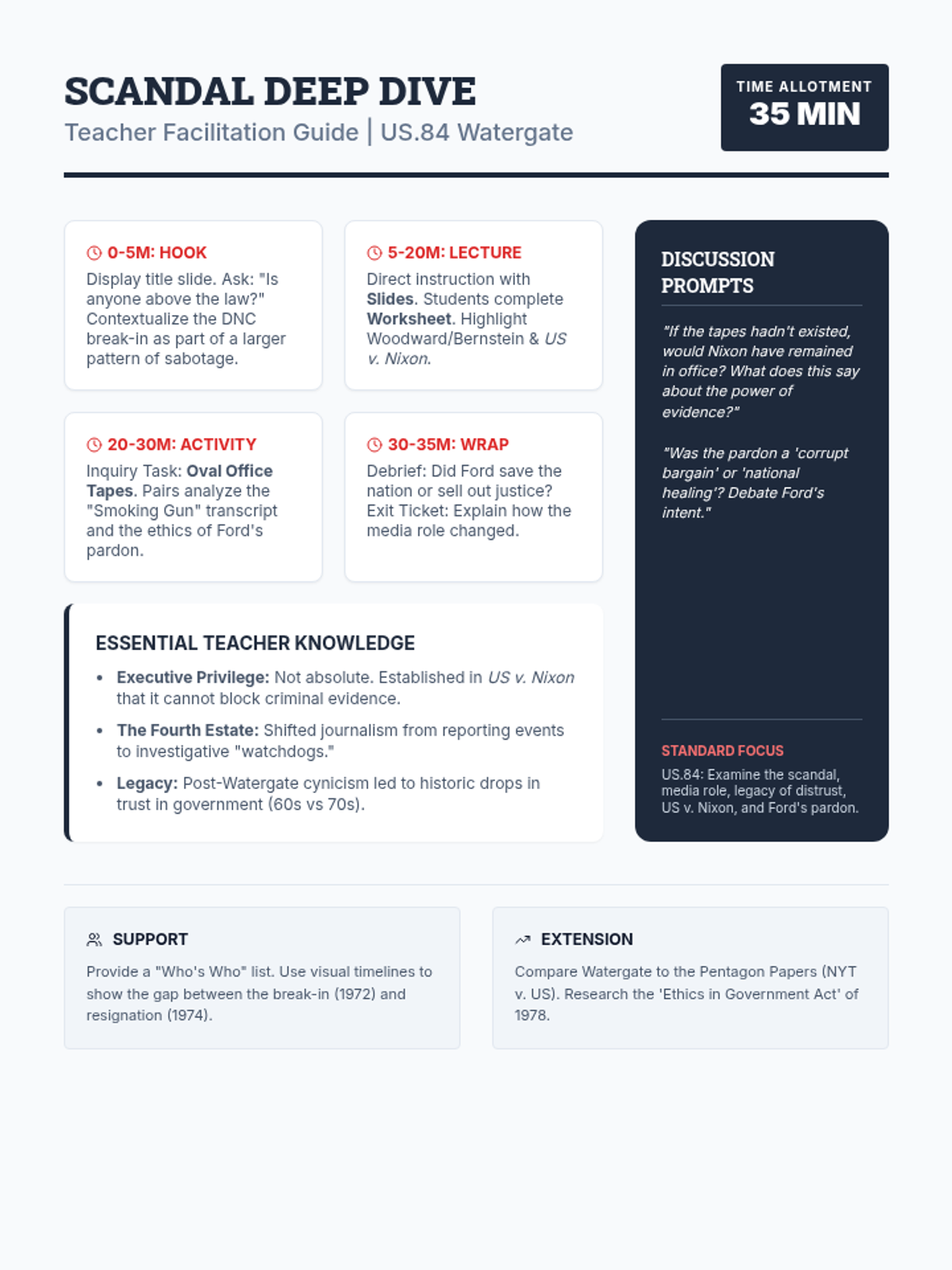
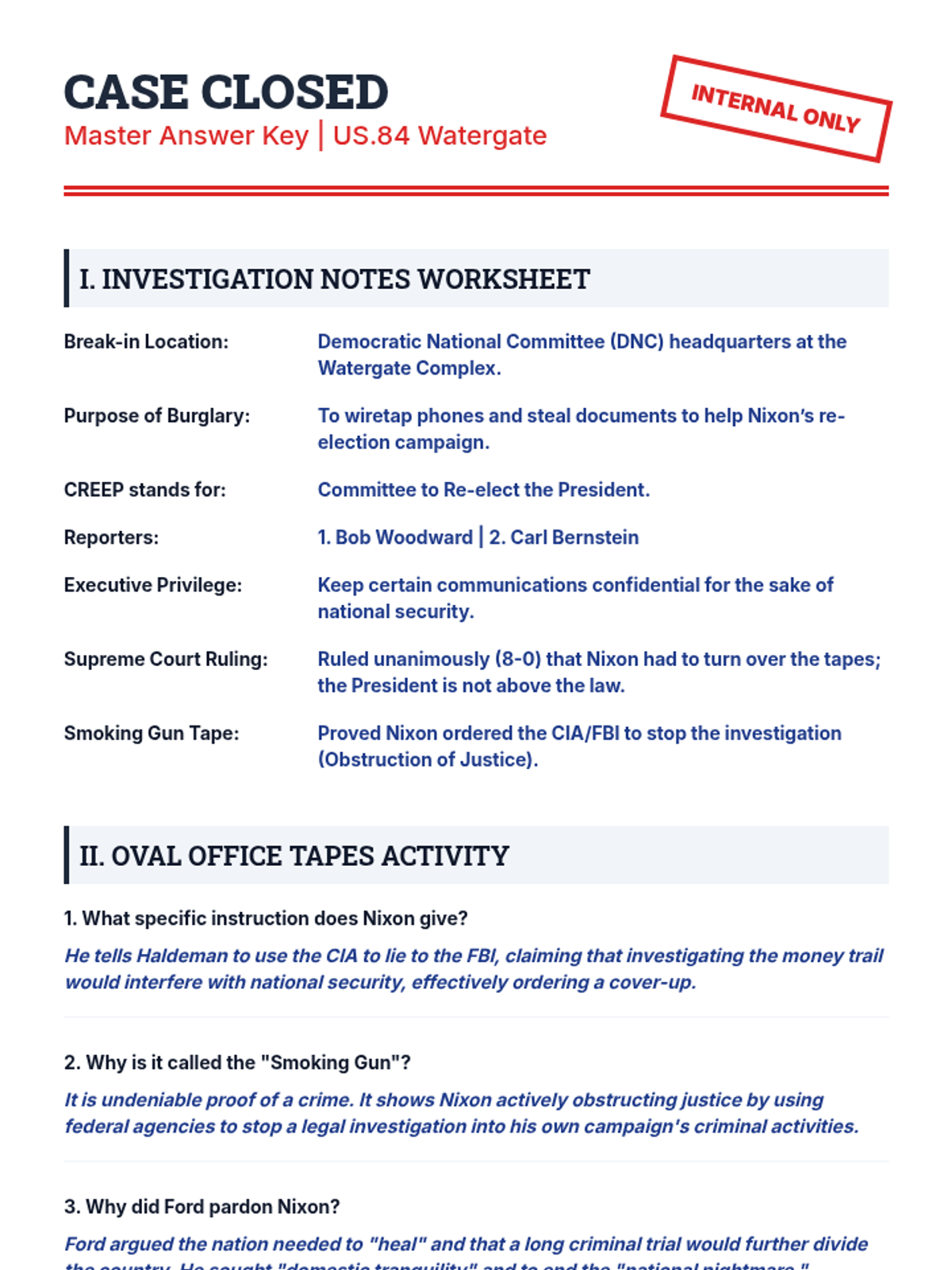
A comprehensive 35-minute lesson on the Watergate scandal, covering the break-in, media role, Supreme Court case, and historical legacy. Includes slides, guided notes, primary source activities, and a detailed study guide.
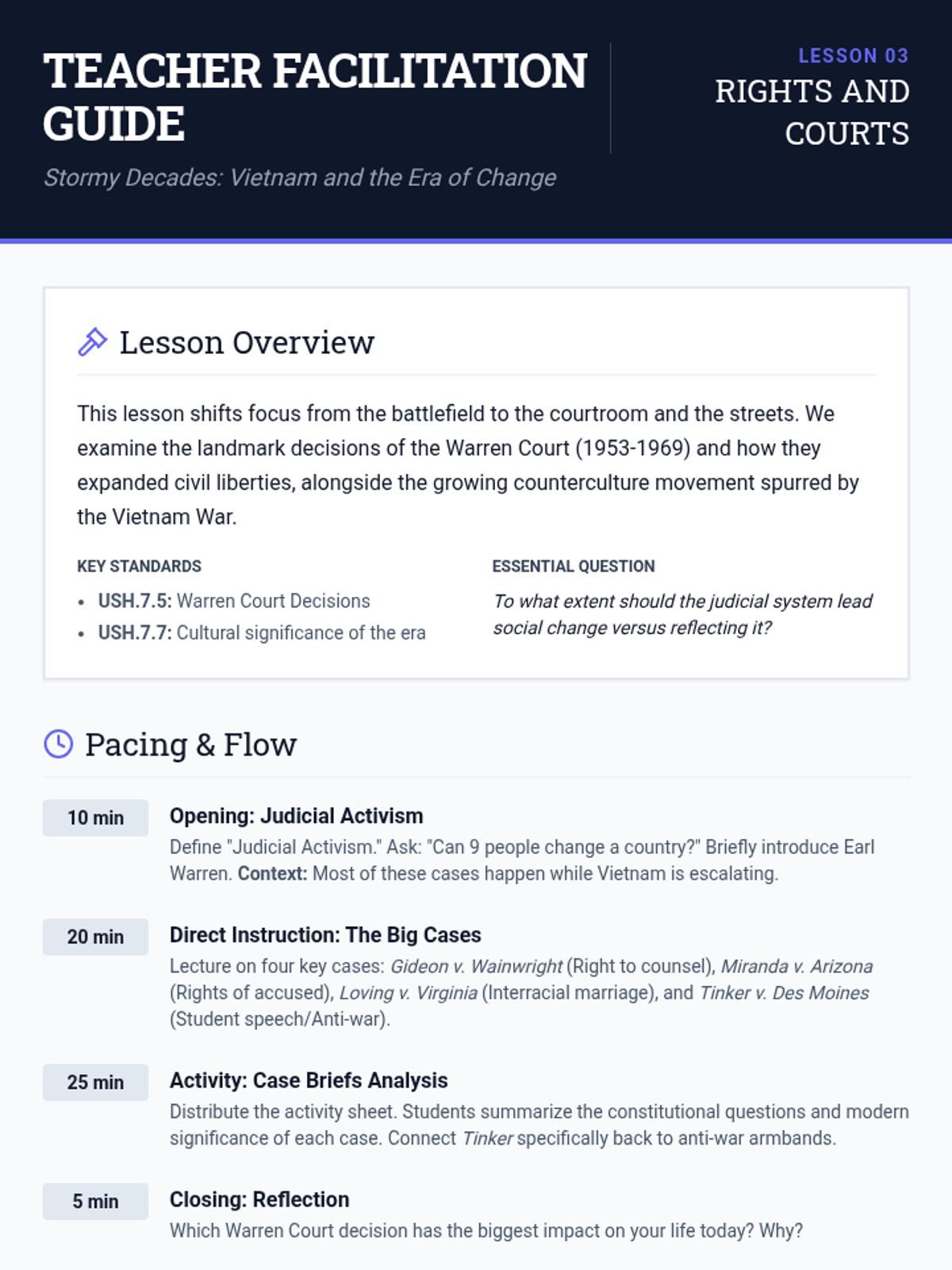
A comprehensive 35-minute lesson on the Watergate scandal, covering the break-in, the role of investigative journalism, the Supreme Court case US v. Nixon, and the lasting impact on American trust in government.
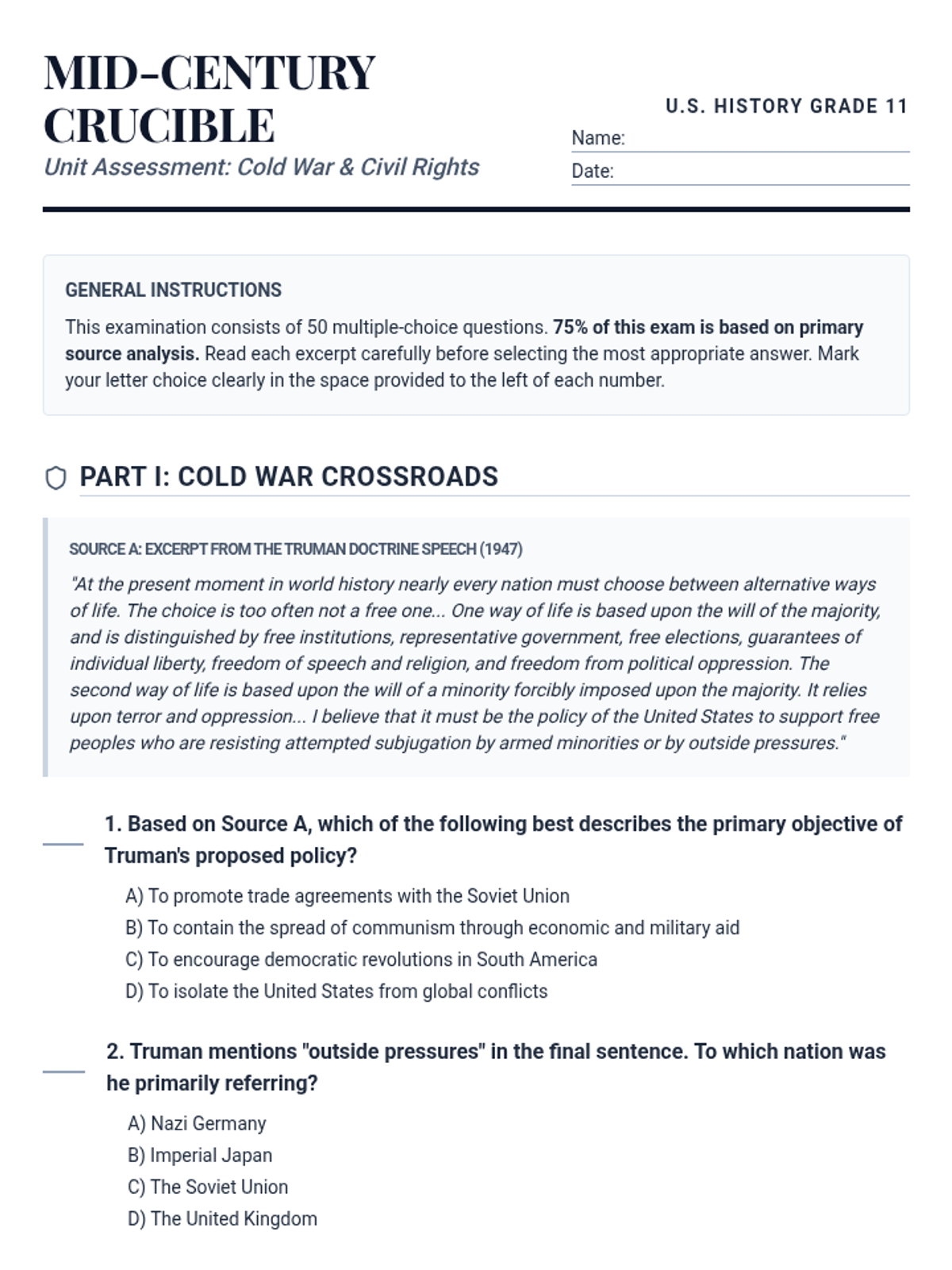
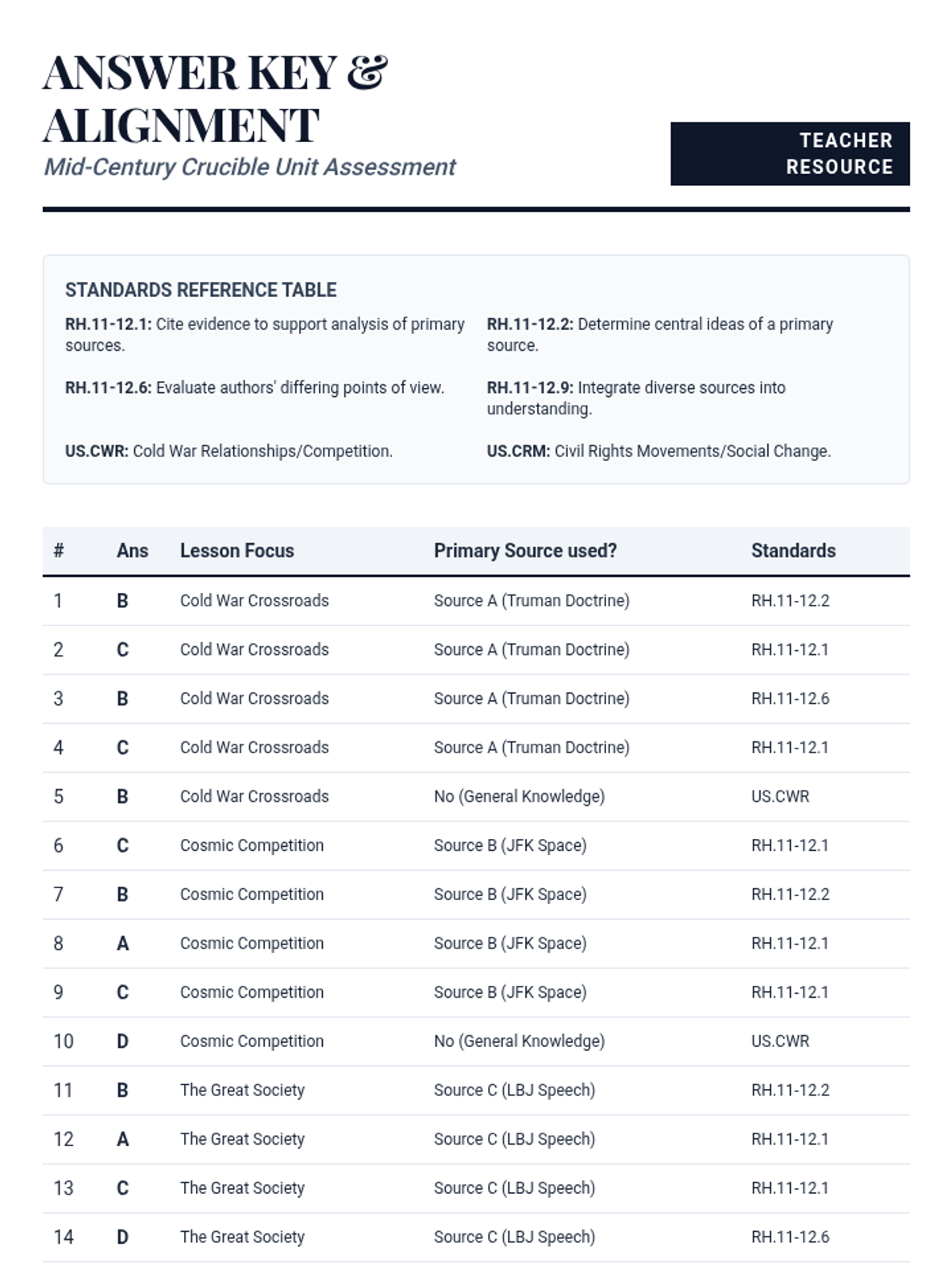
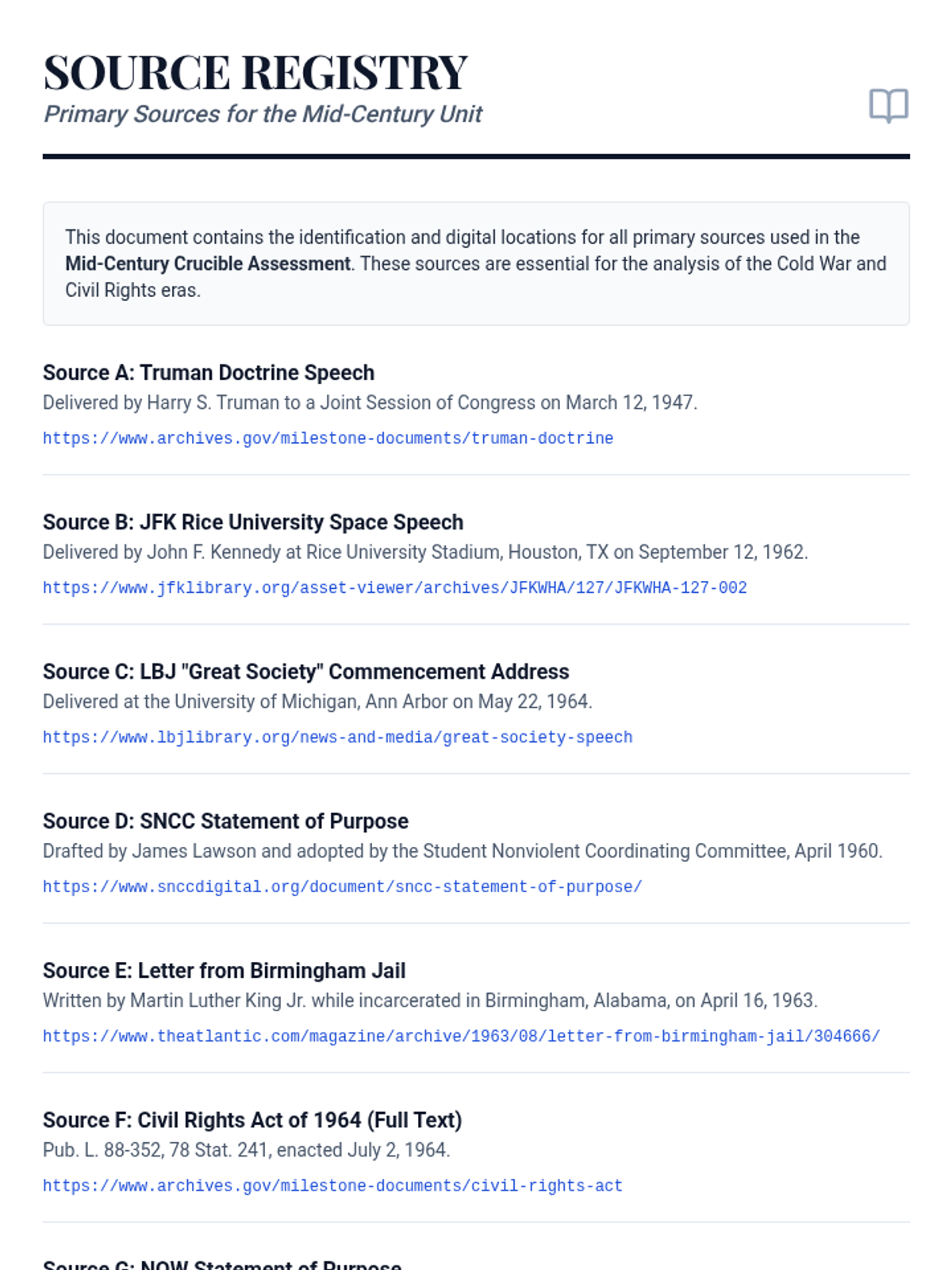
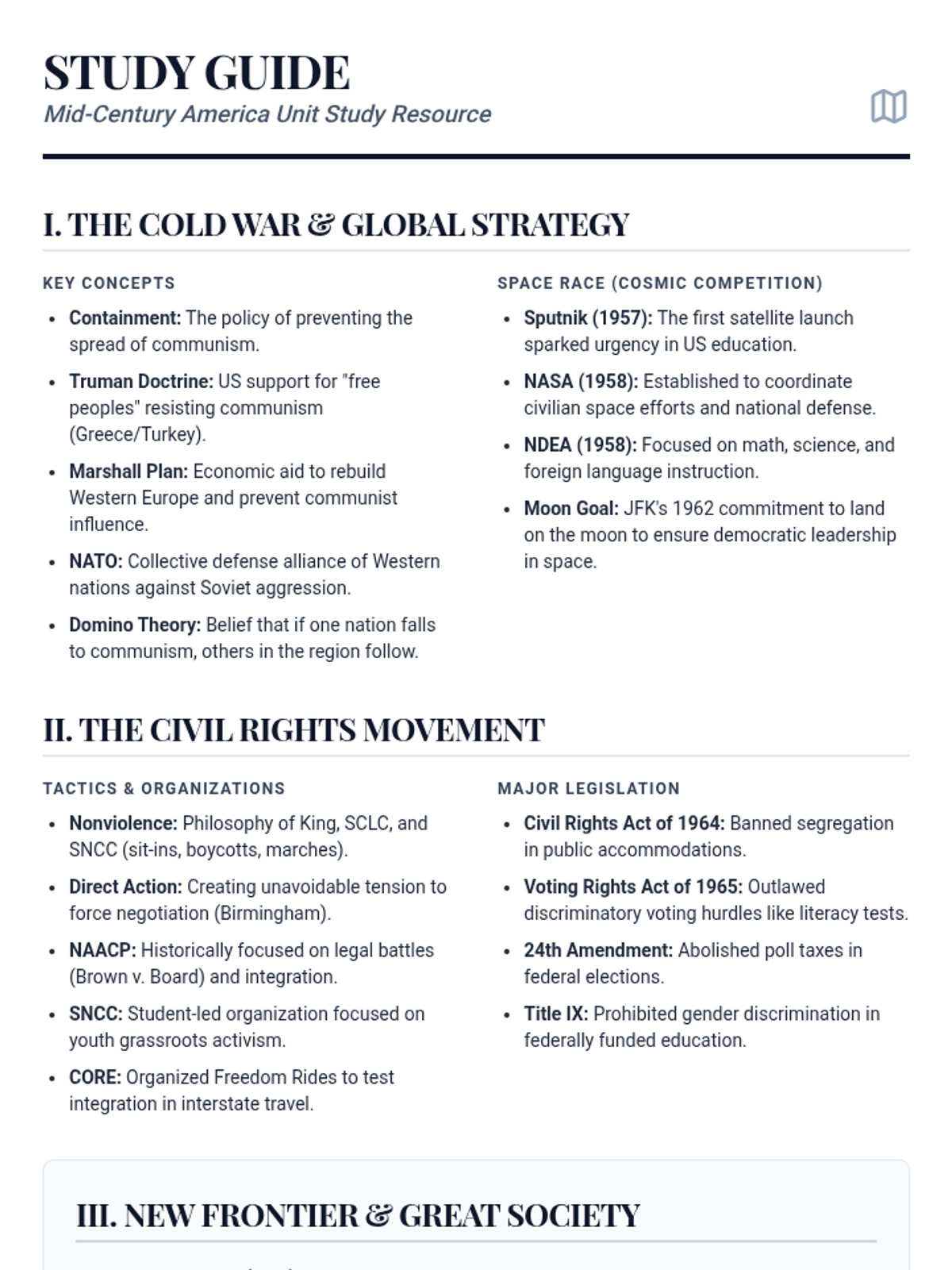
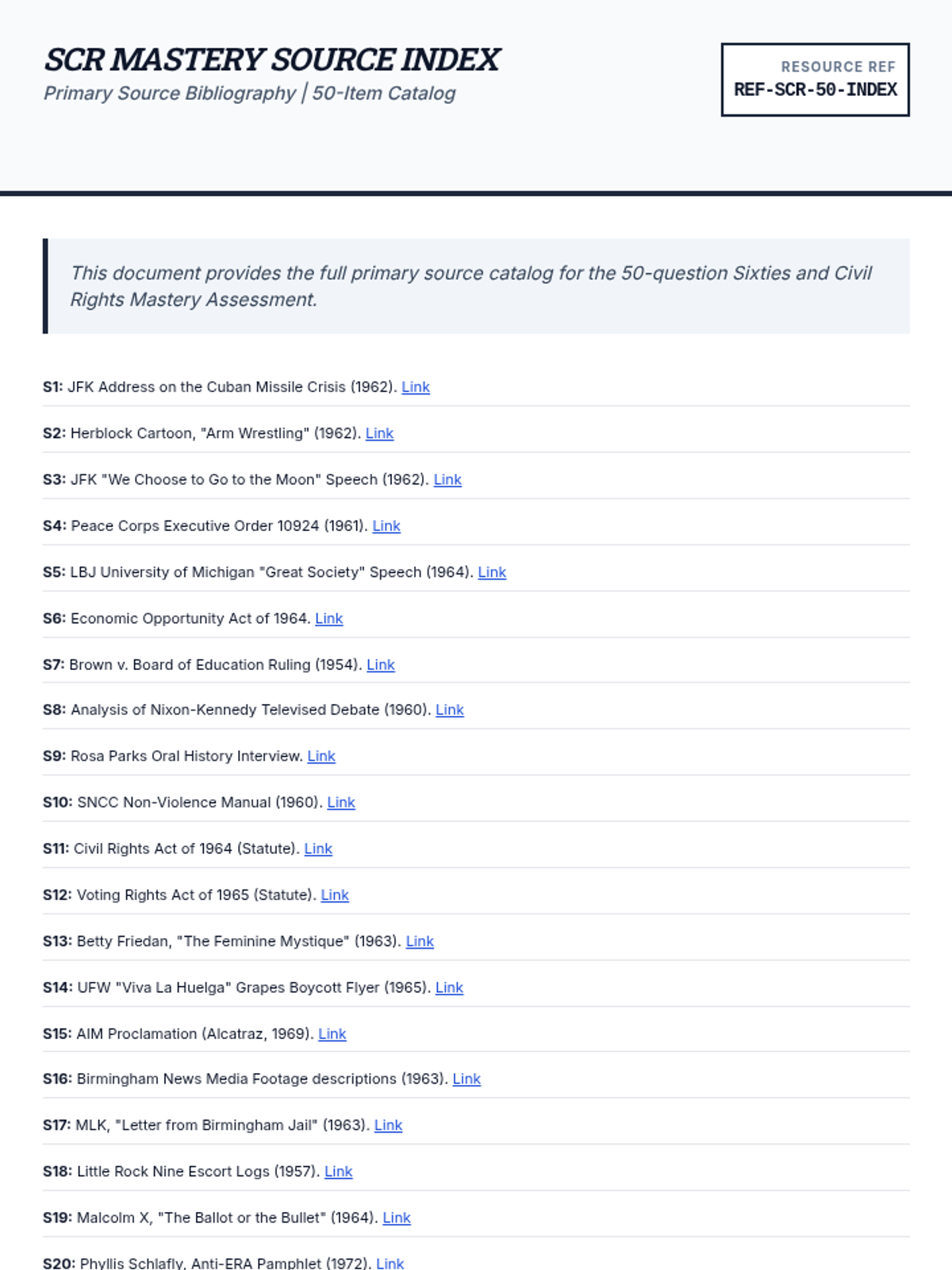
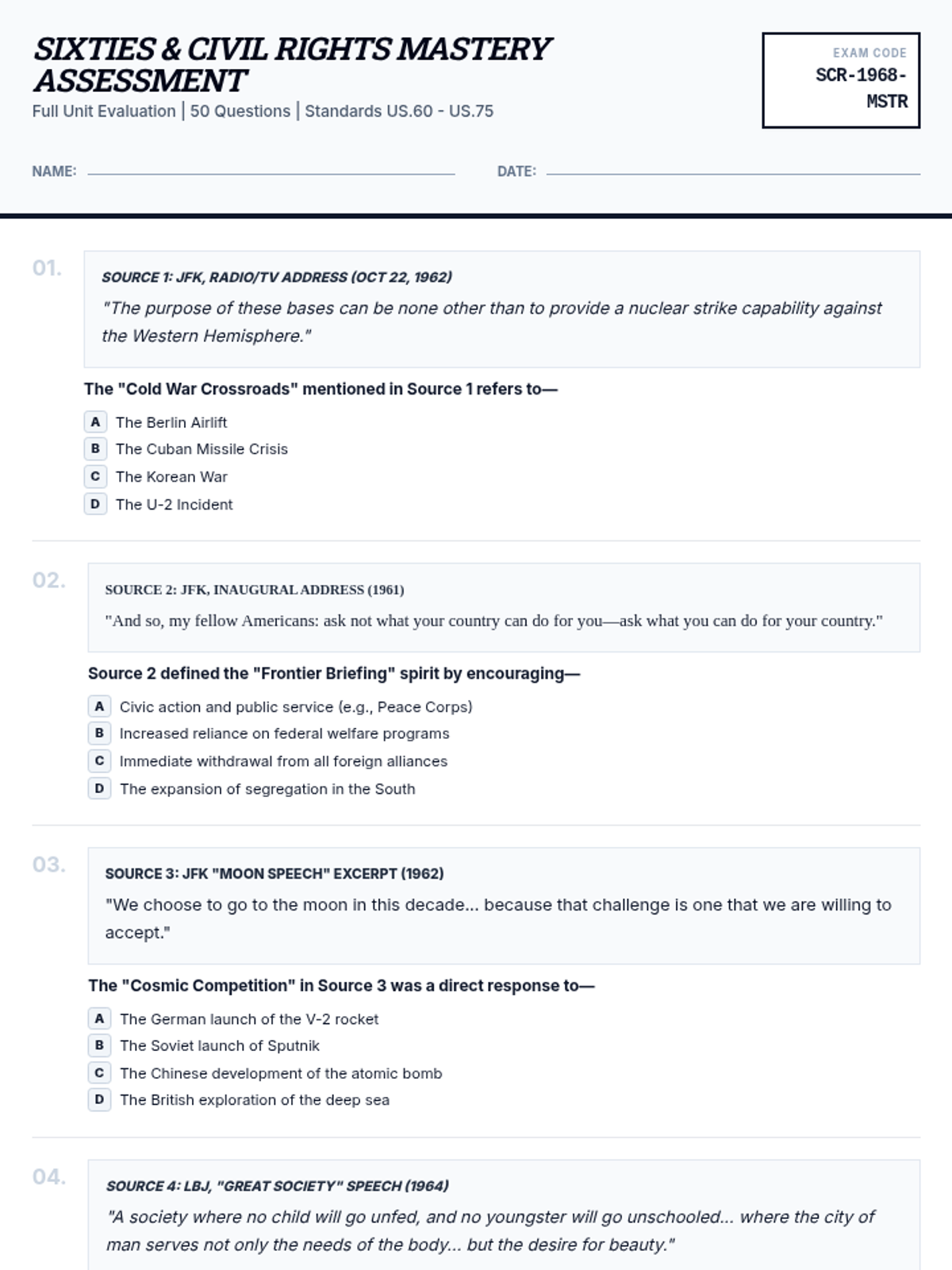
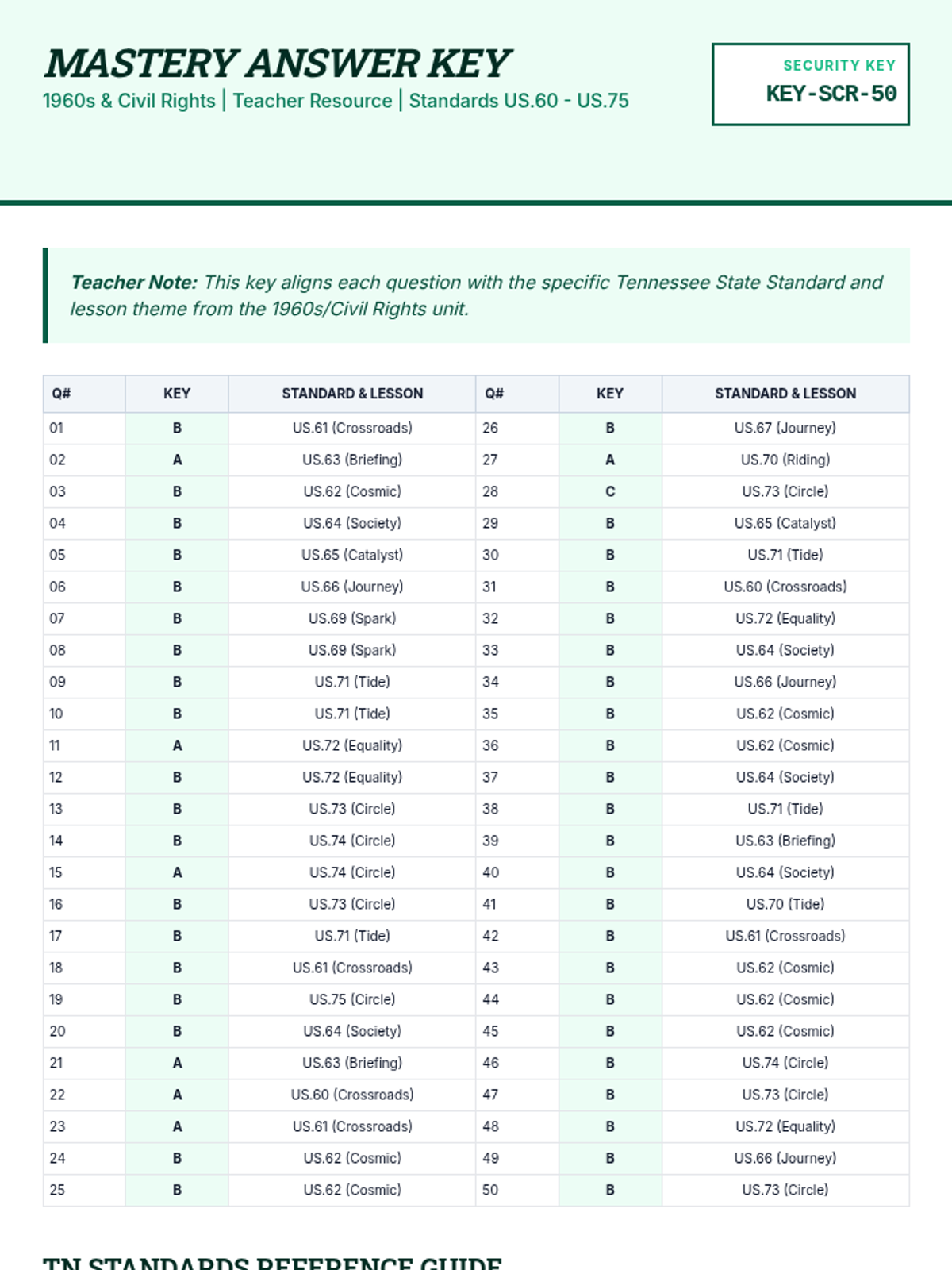
The final assessment for the unit covering the Cold War and Civil Rights eras through primary source analysis and content mastery.
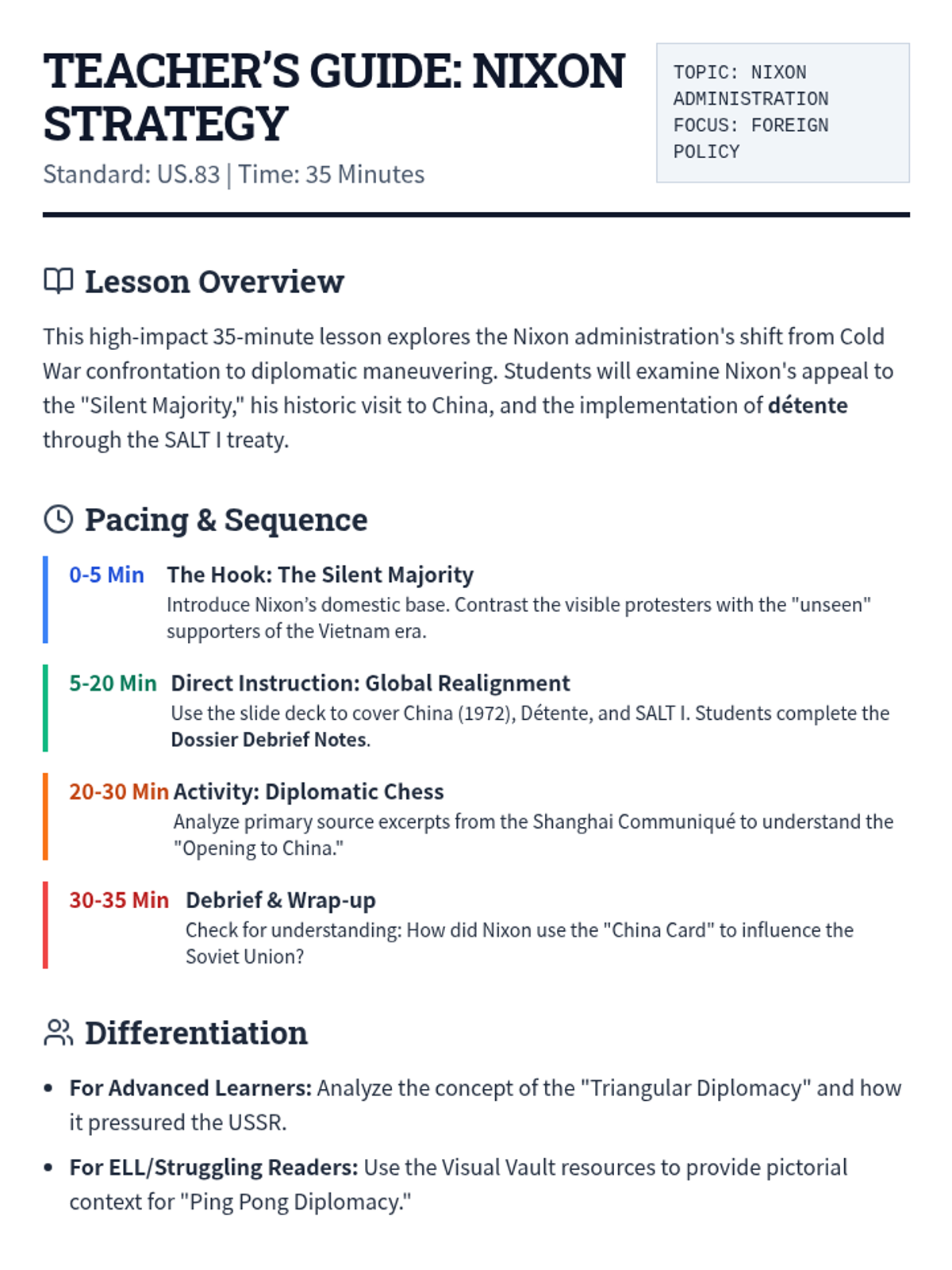
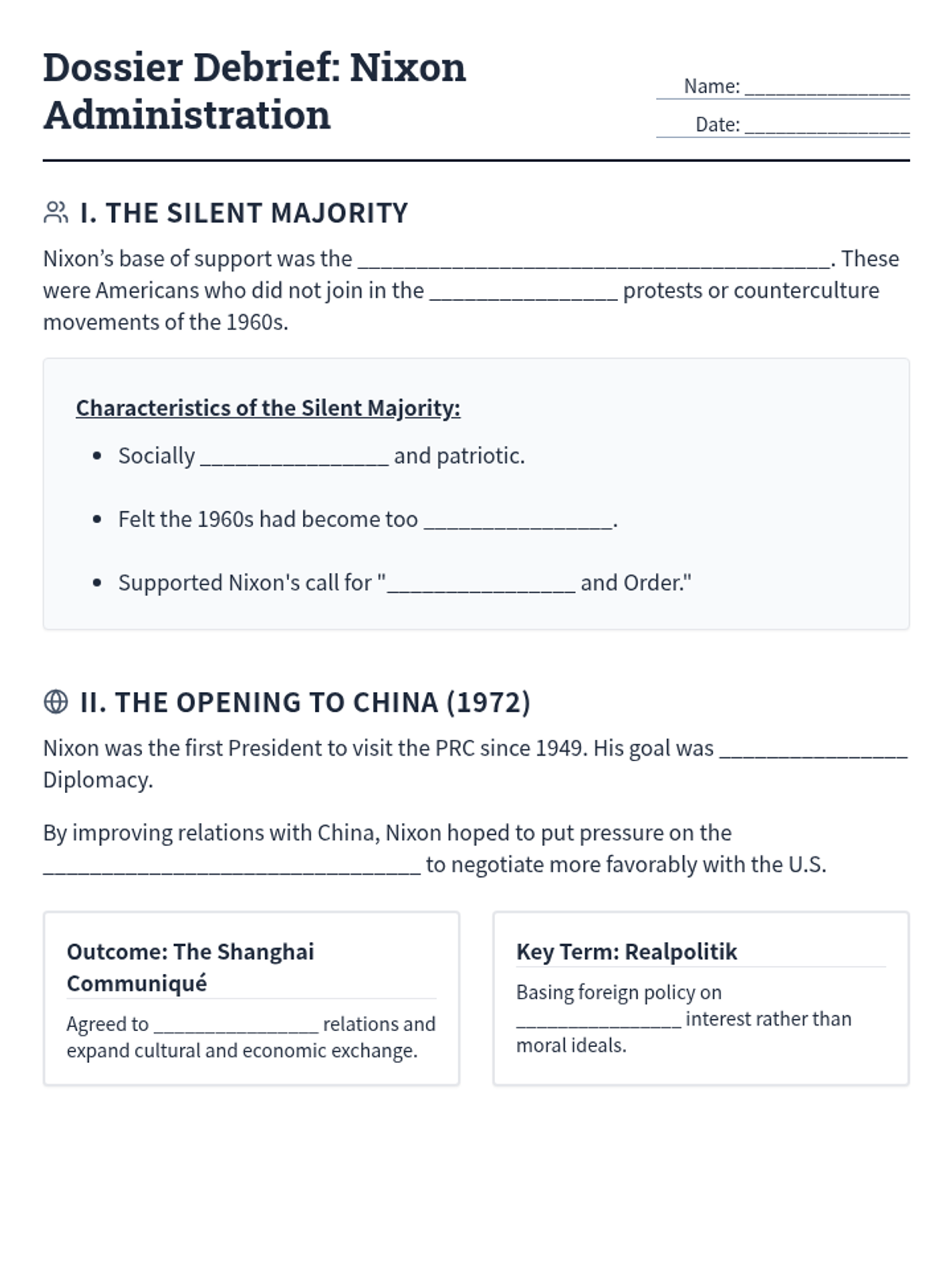
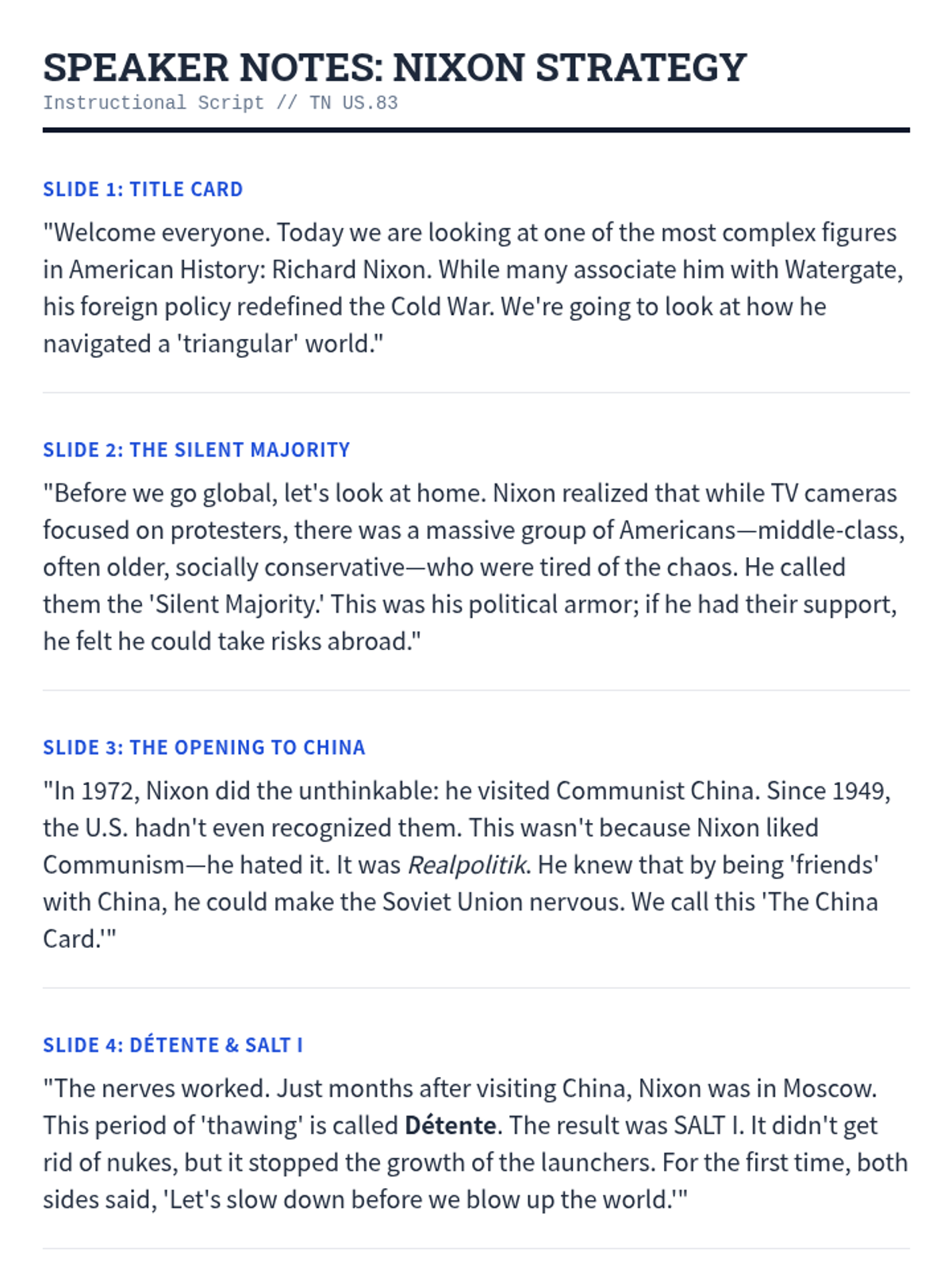
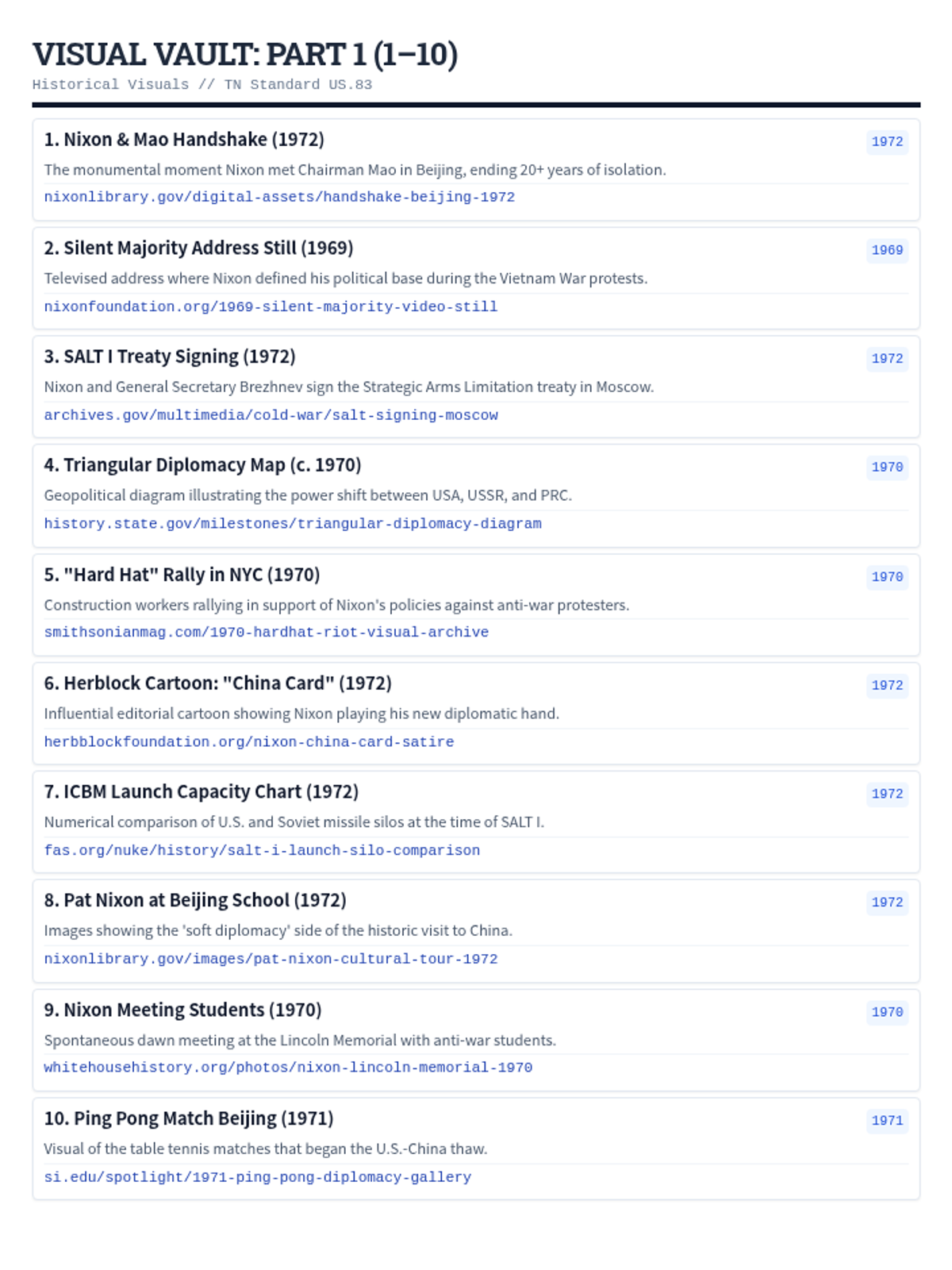
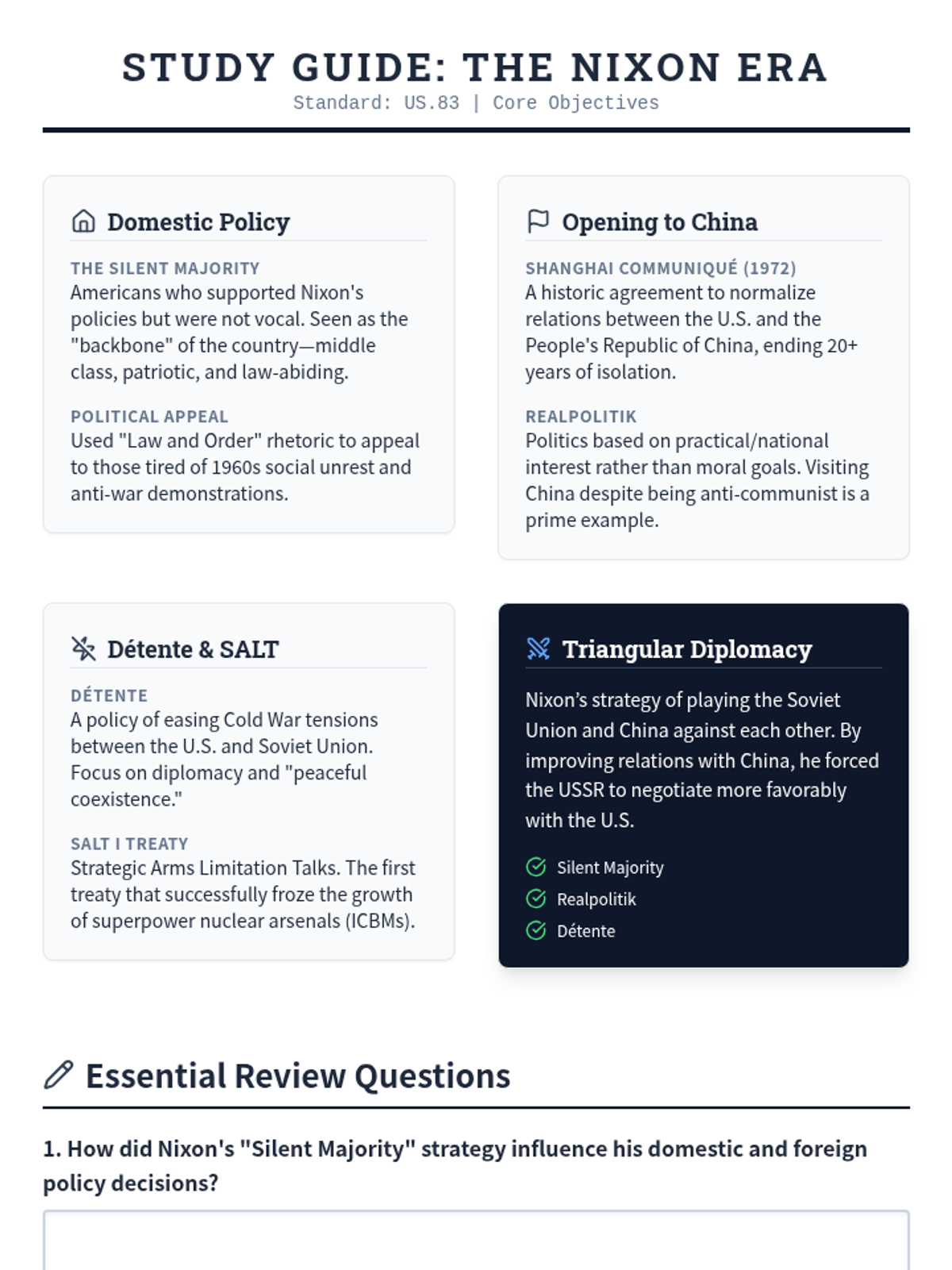
A high-speed dive into the pivotal foreign policy and domestic strategies of Richard Nixon, focusing on China, the USSR, and the 'Silent Majority.'
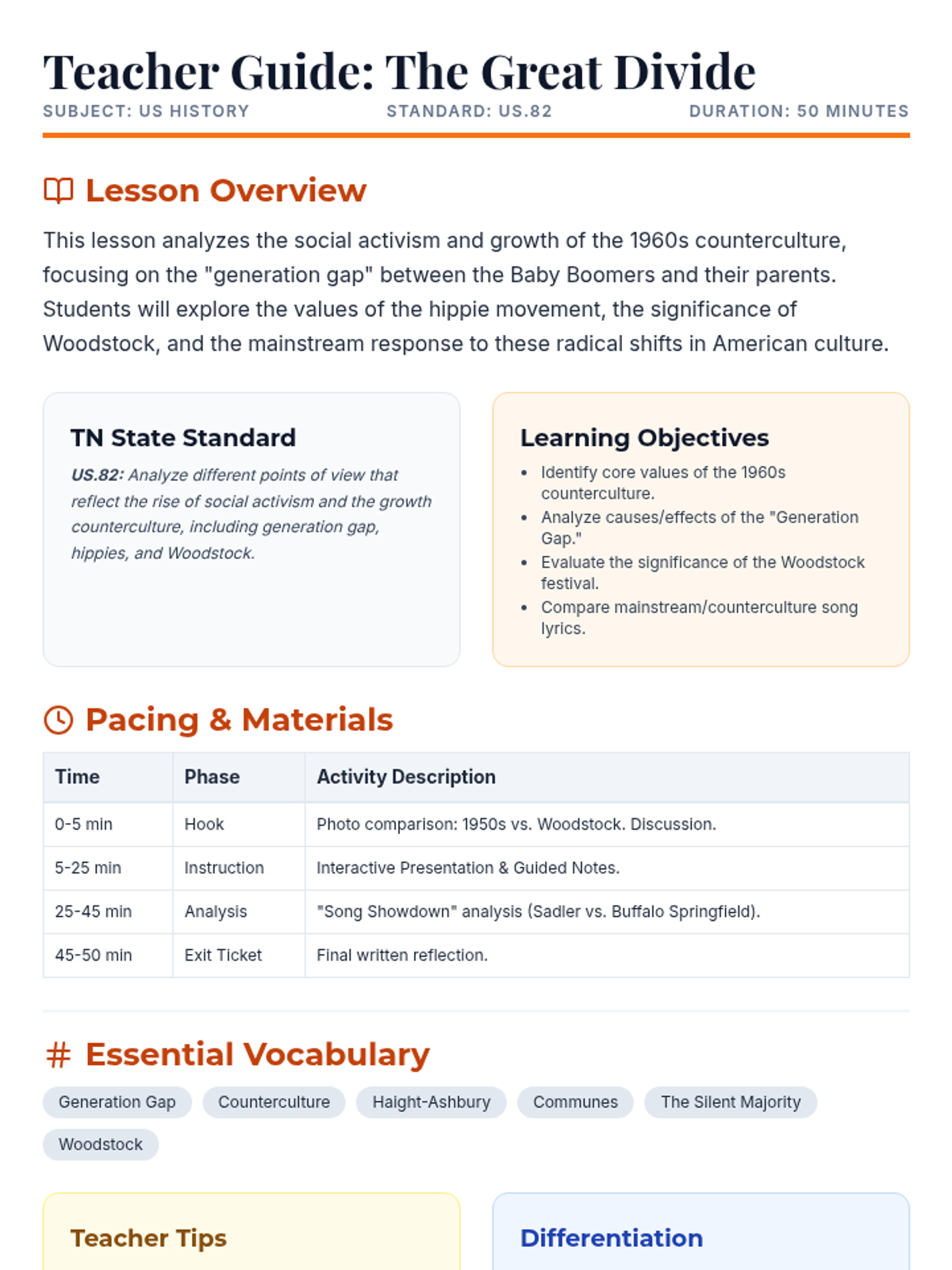
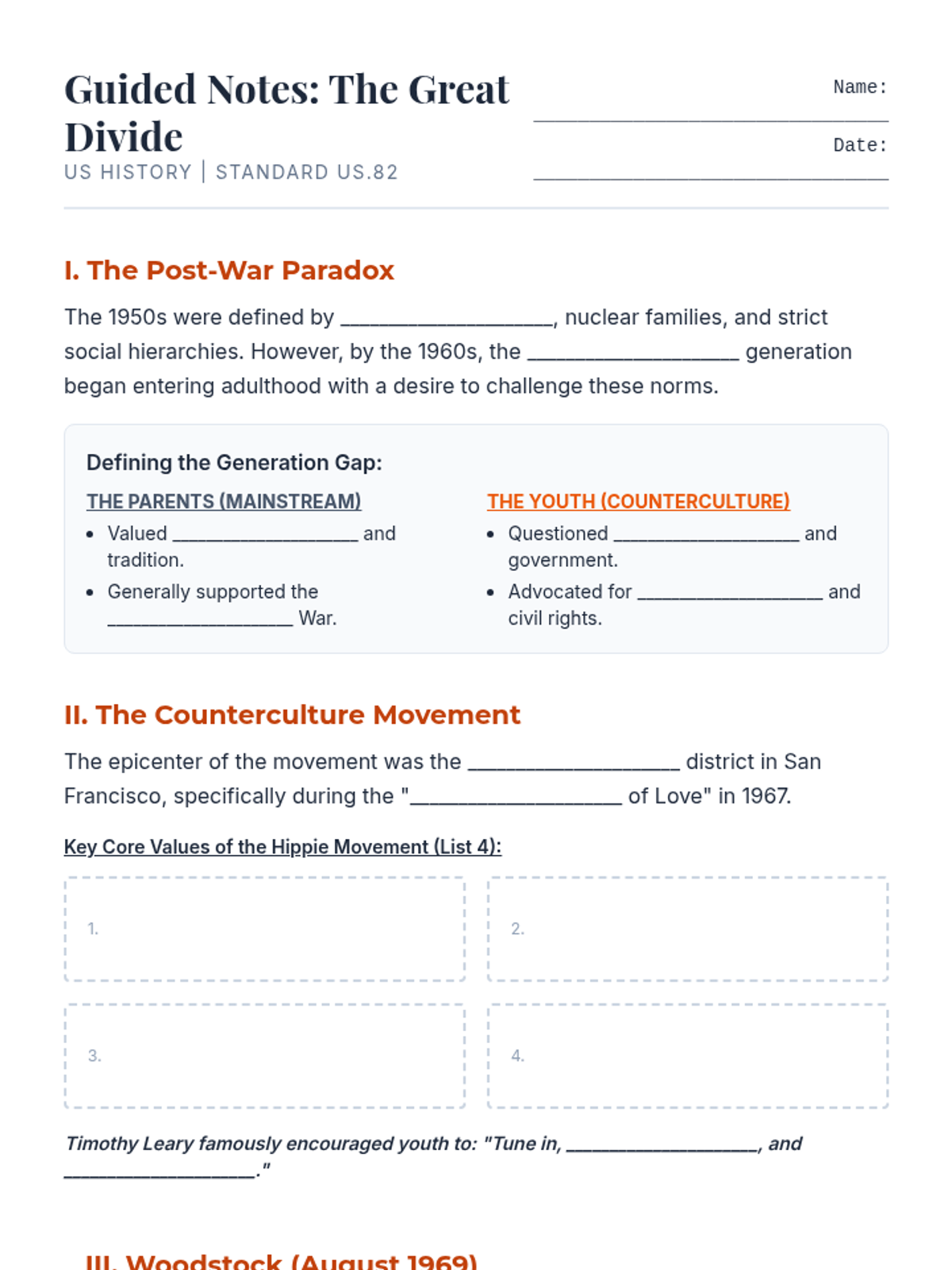
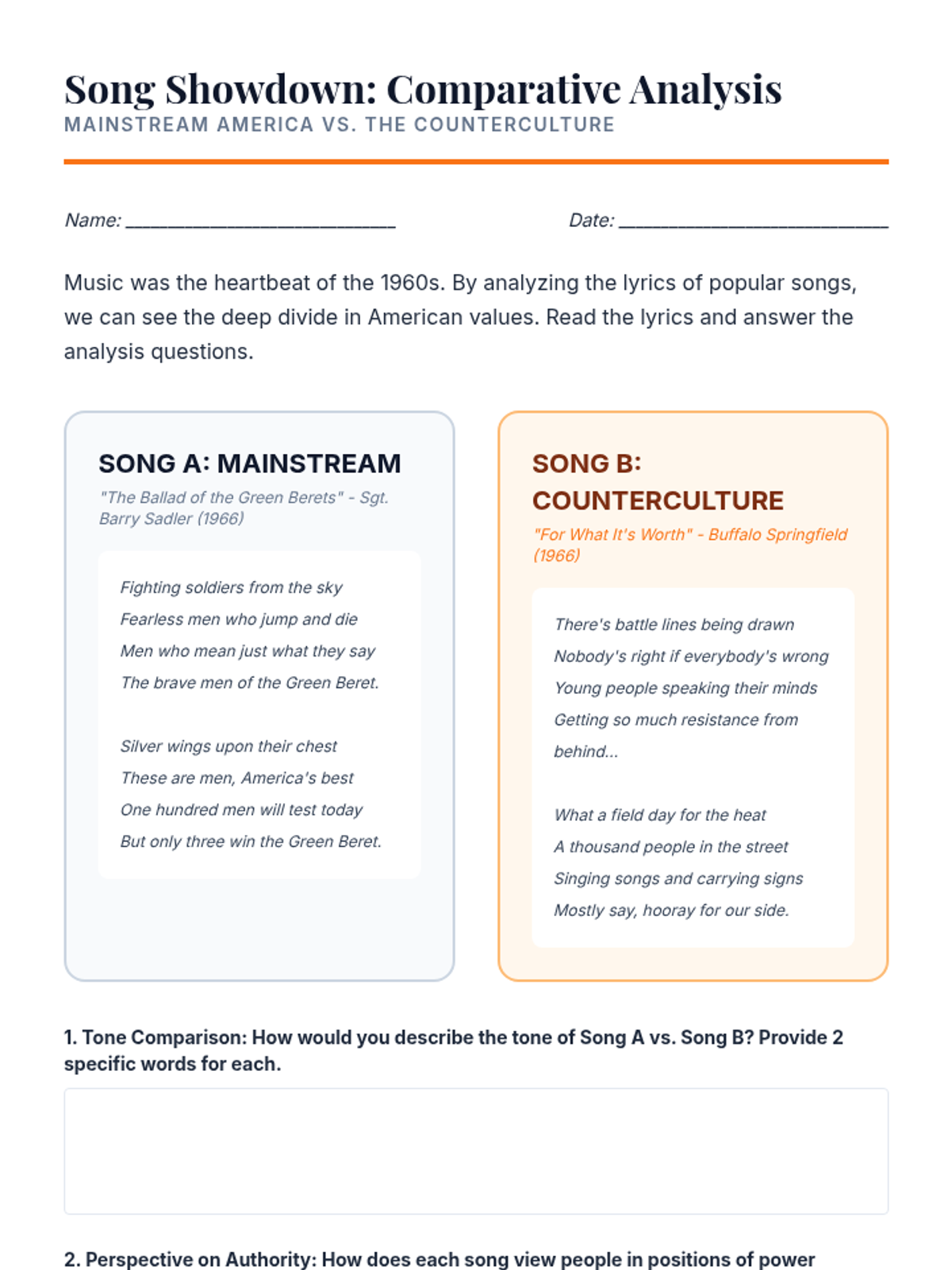
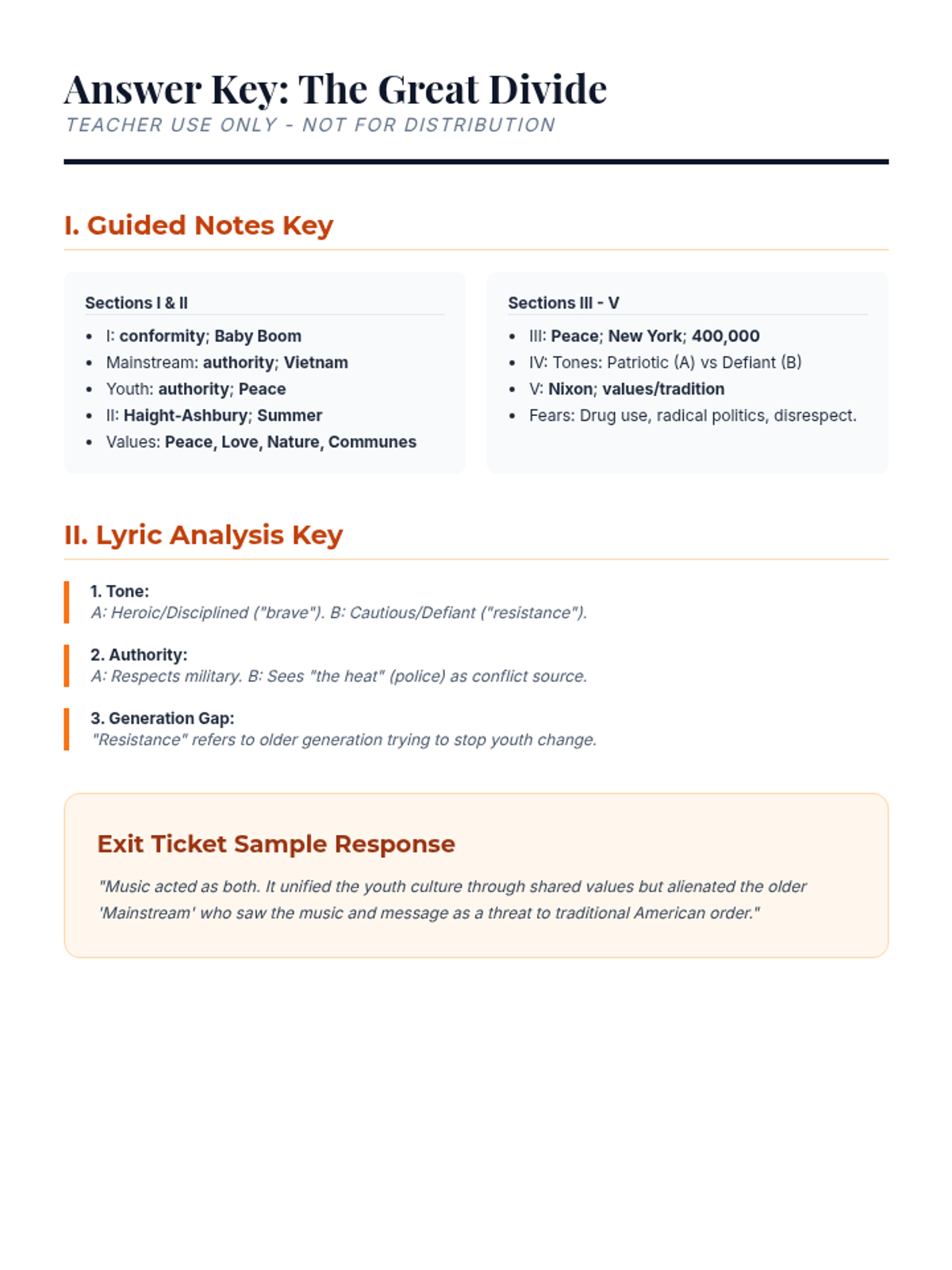
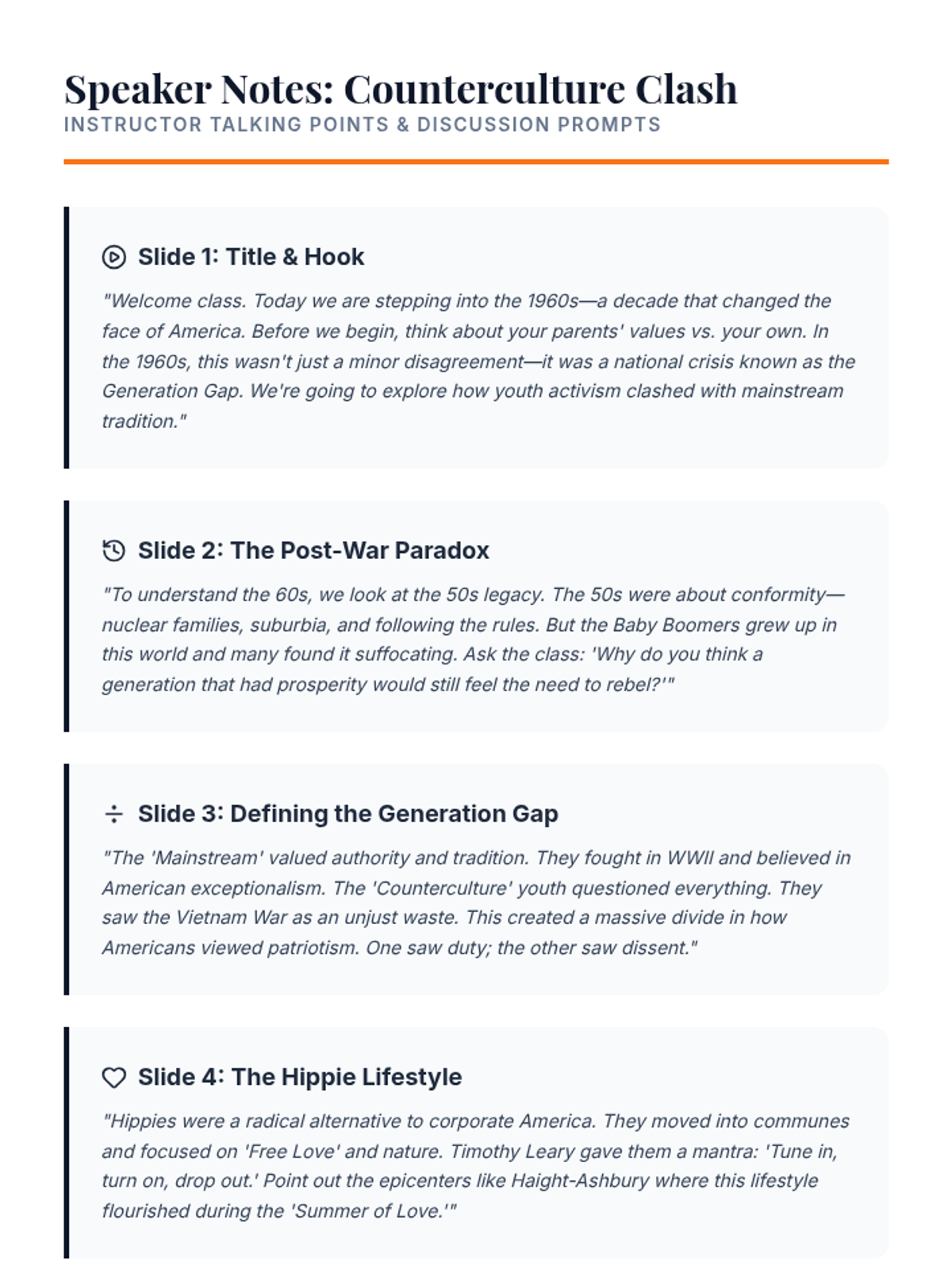
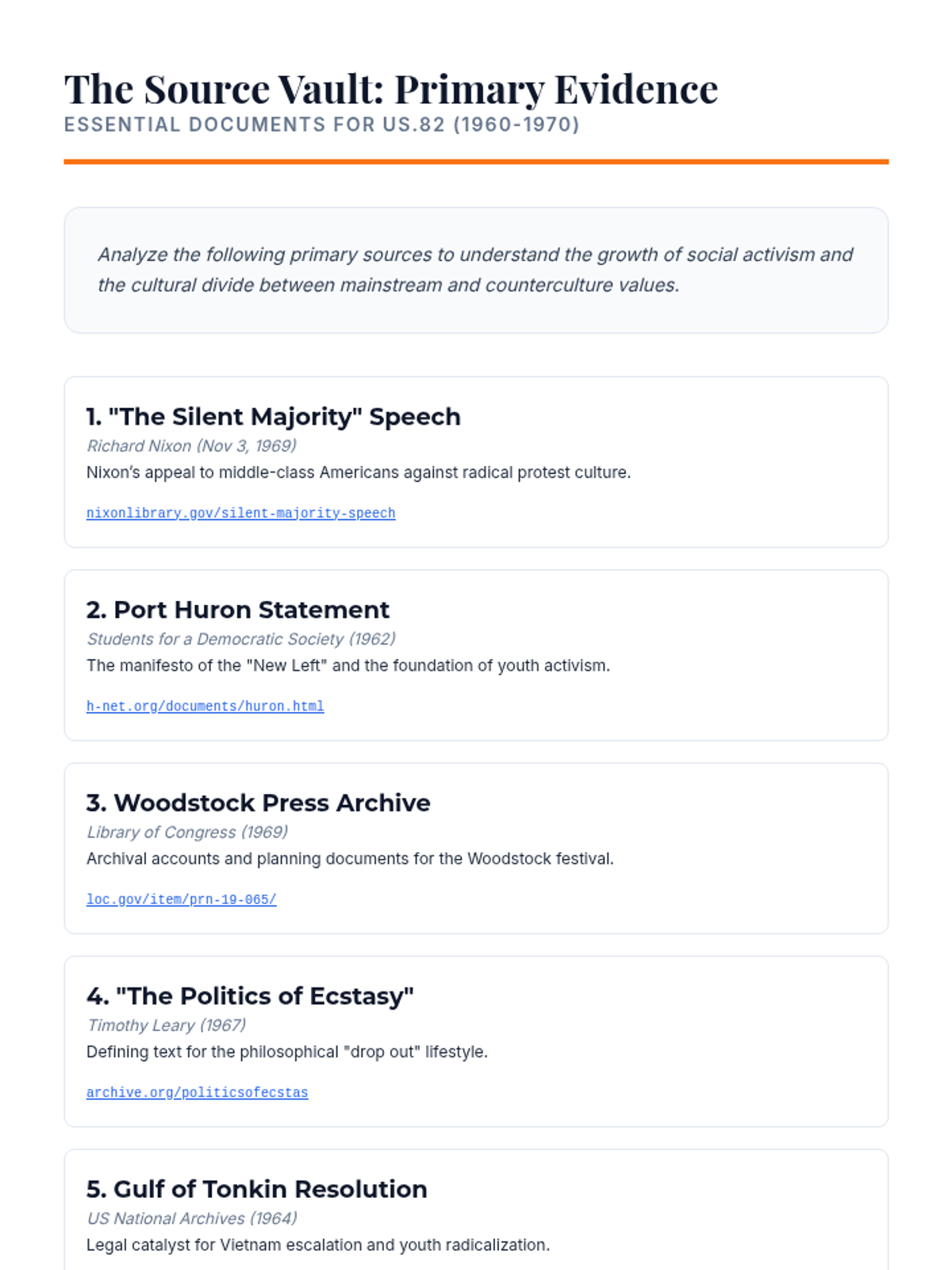
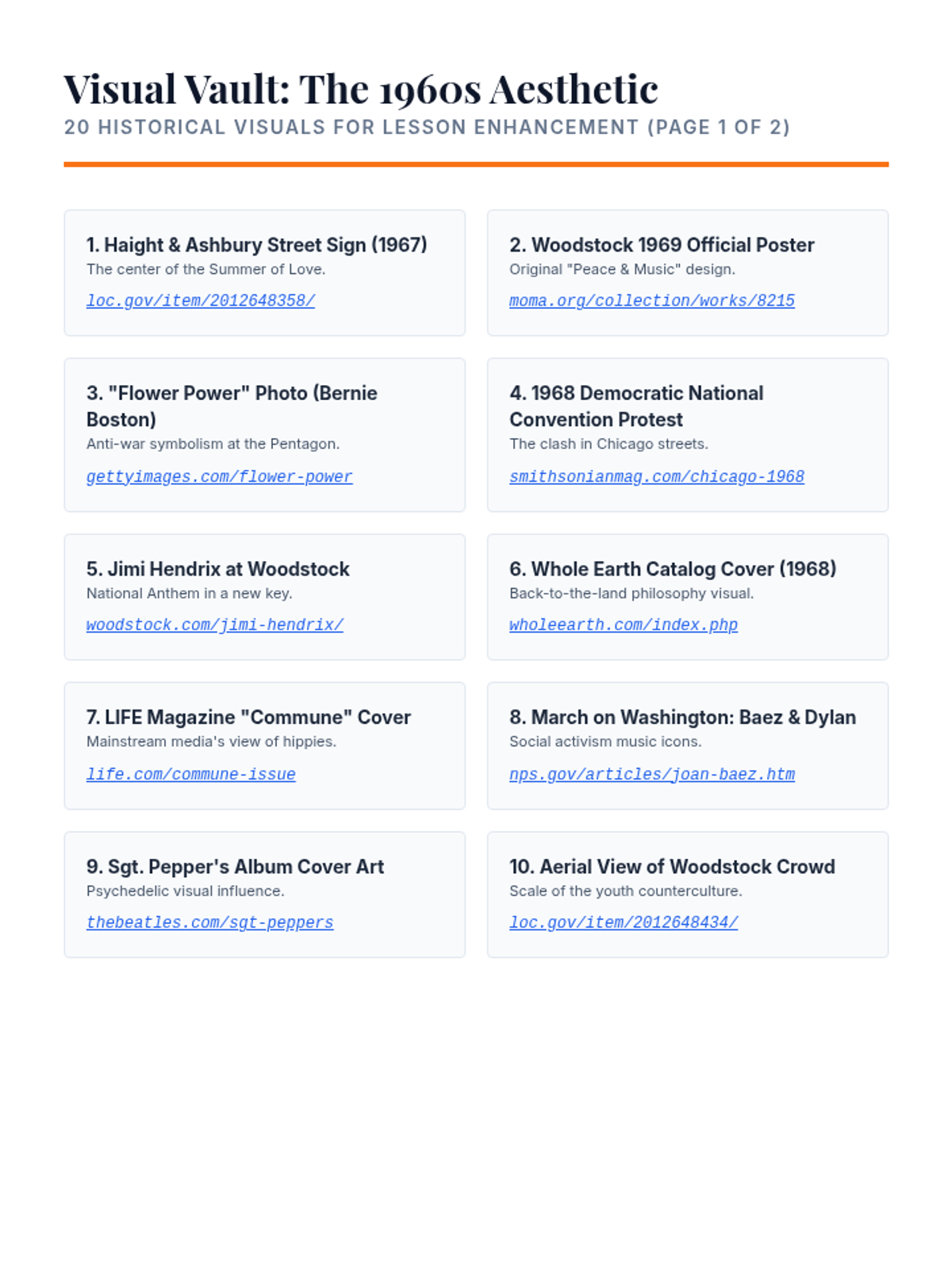
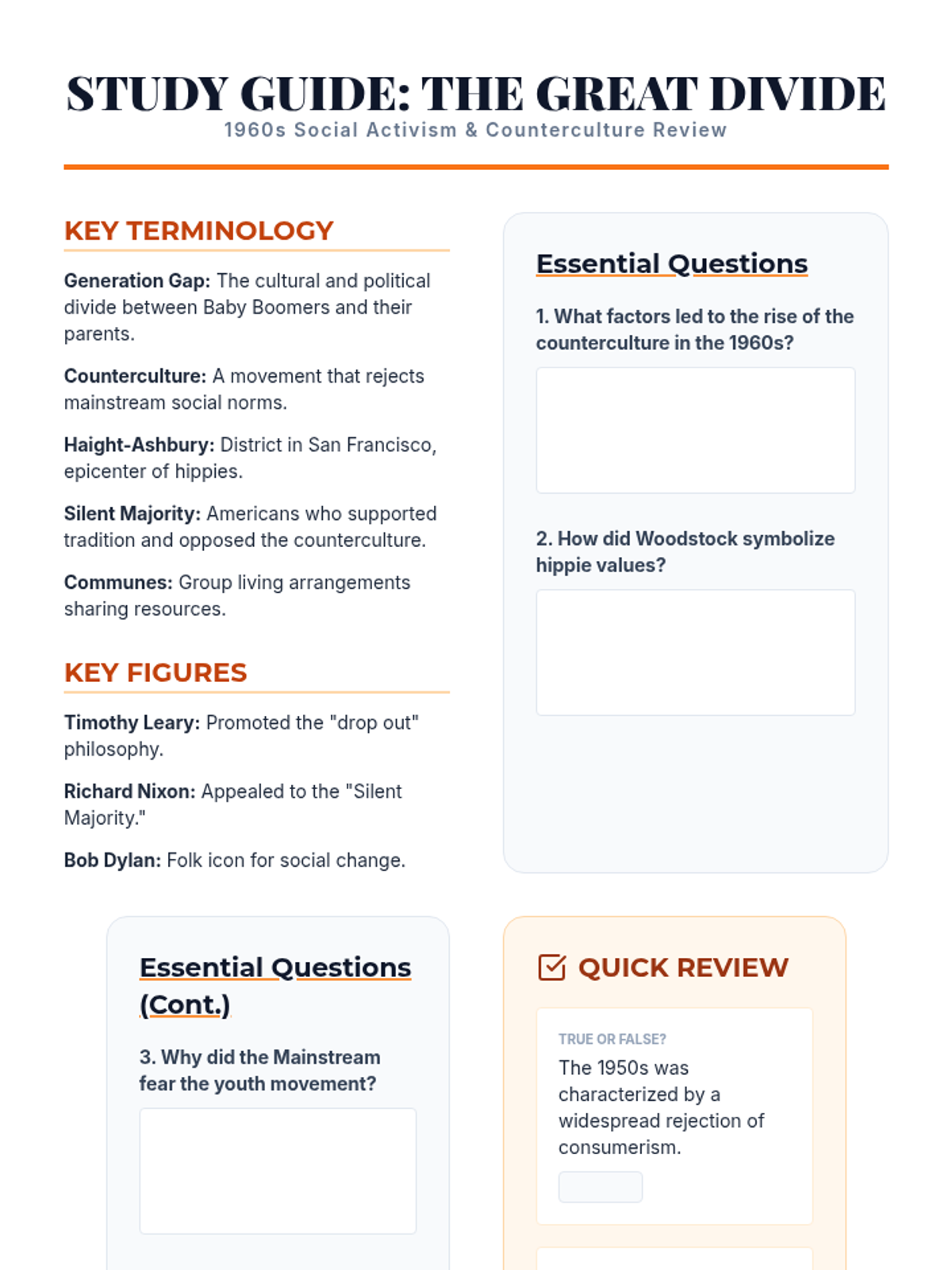
A 50-minute exploration of the 1960s counterculture movement, the generation gap, and the clash between mainstream values and the rise of social activism as defined by TN Standard US.82.
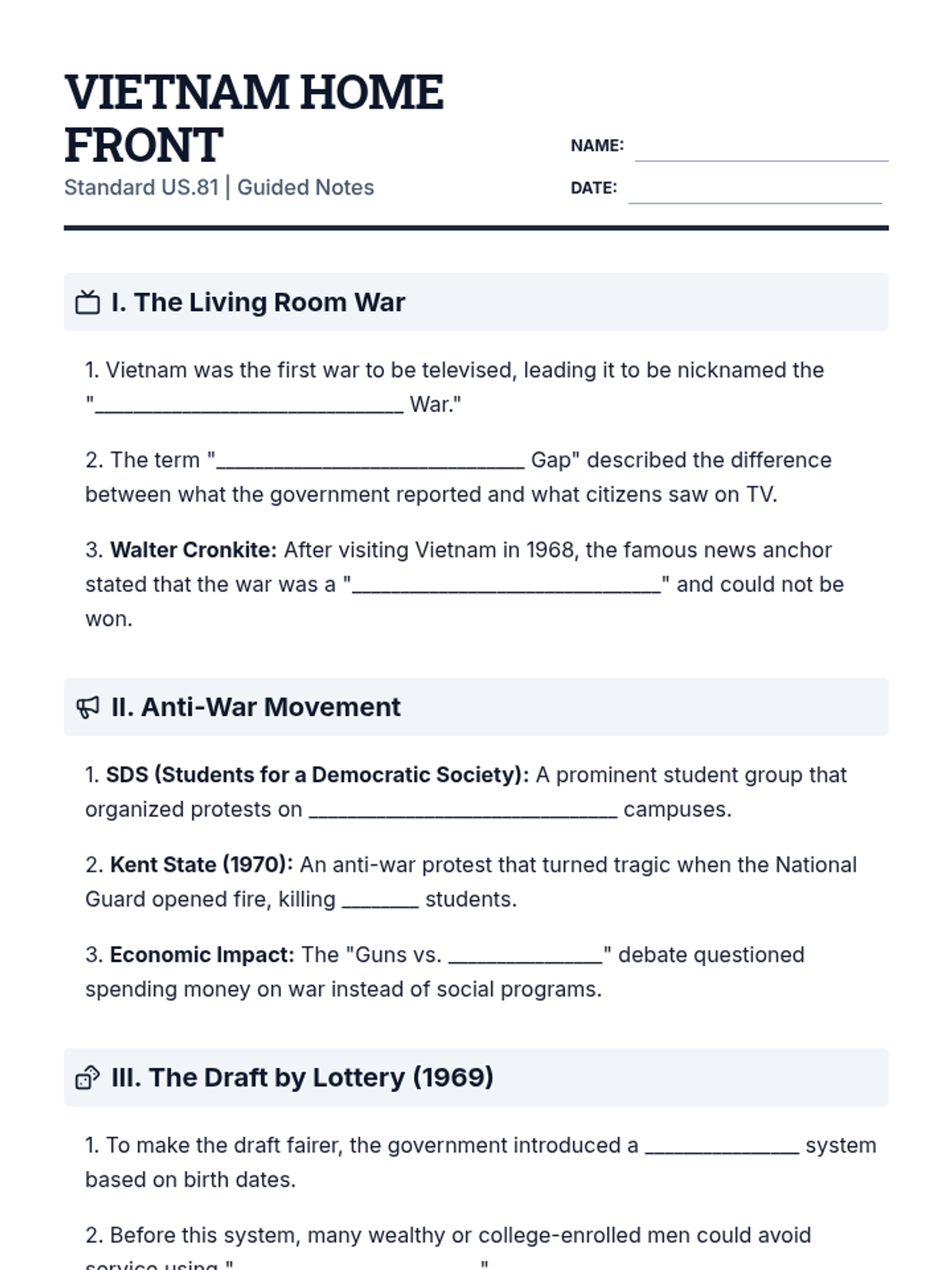
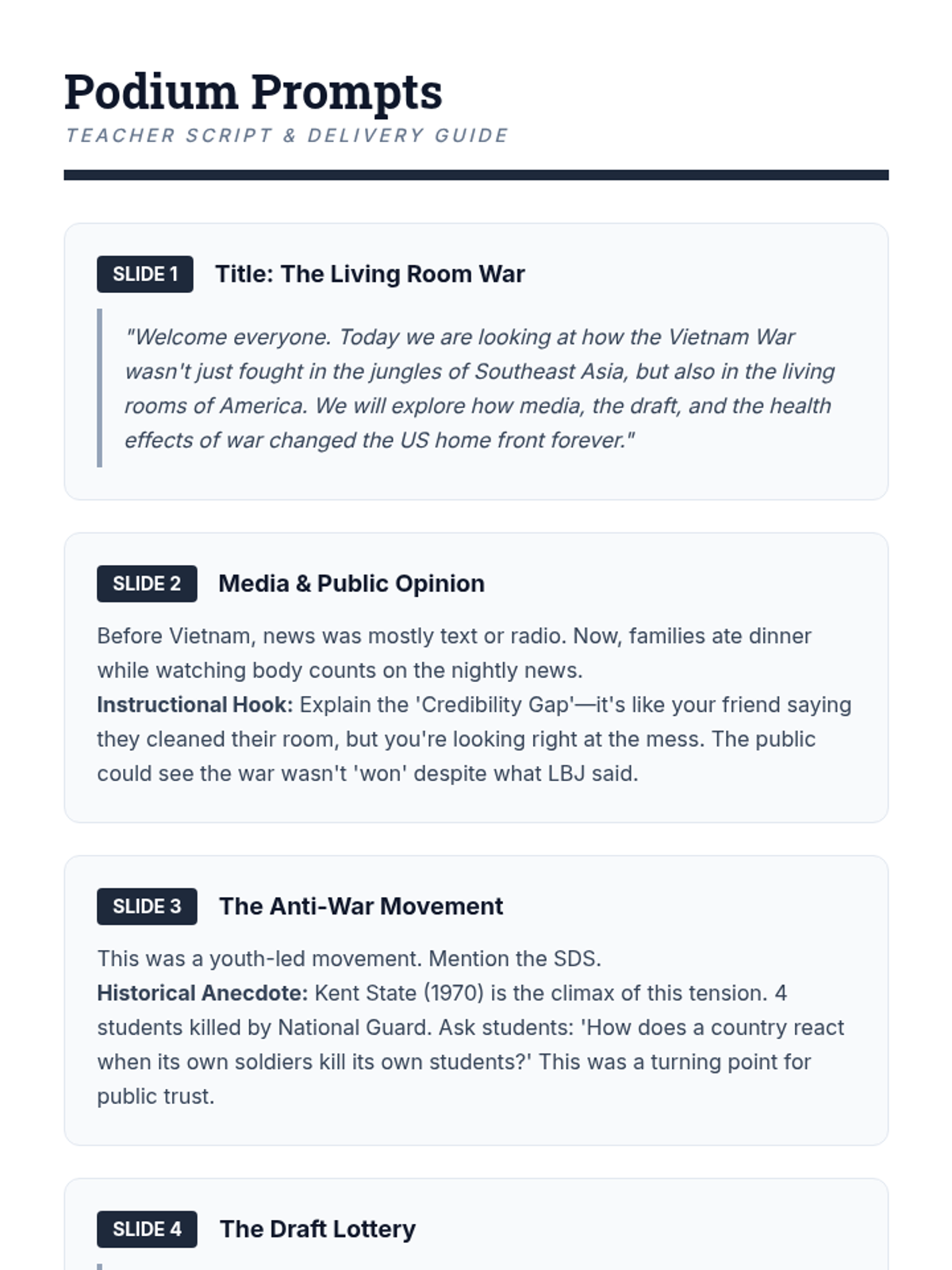
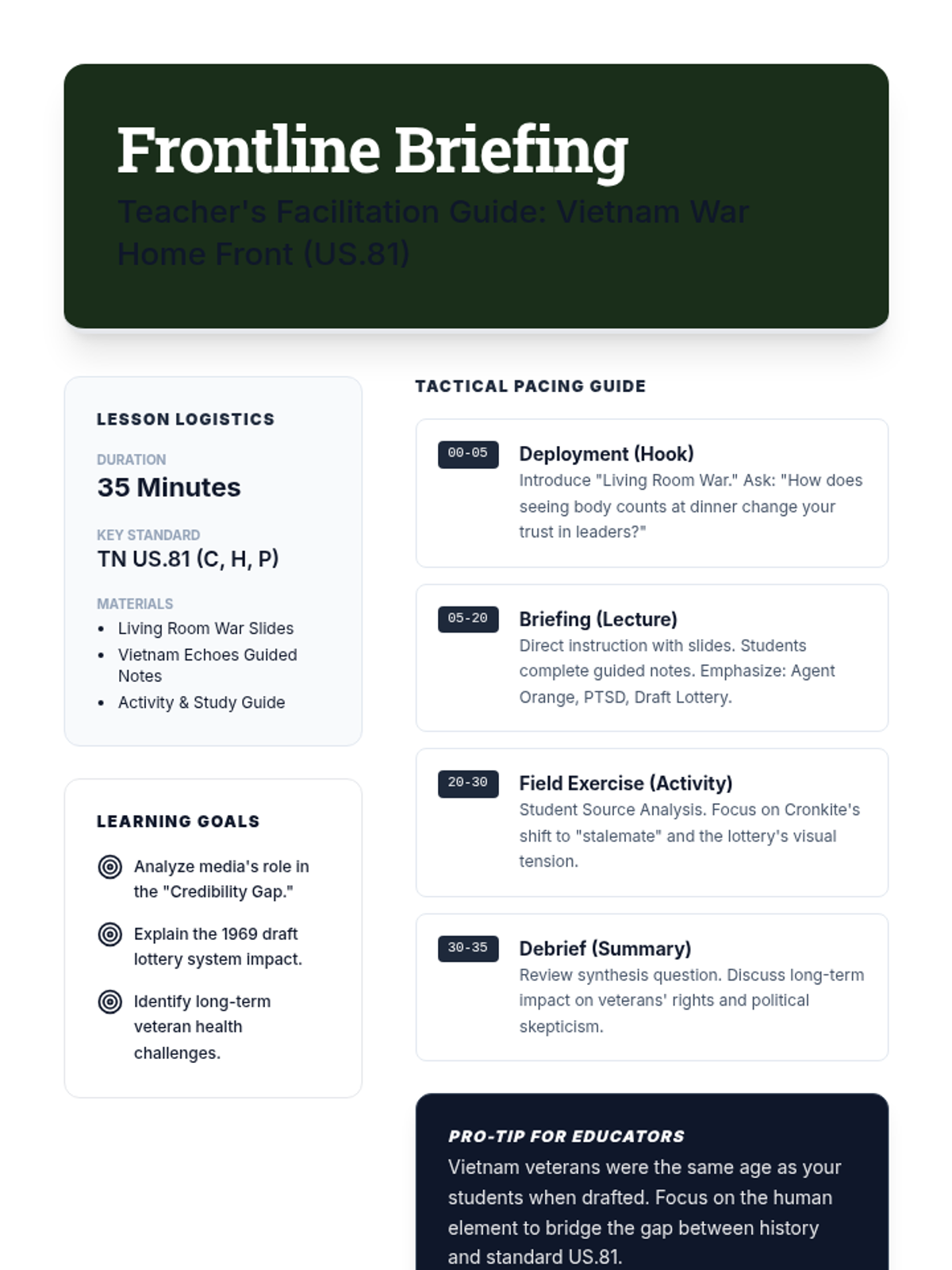
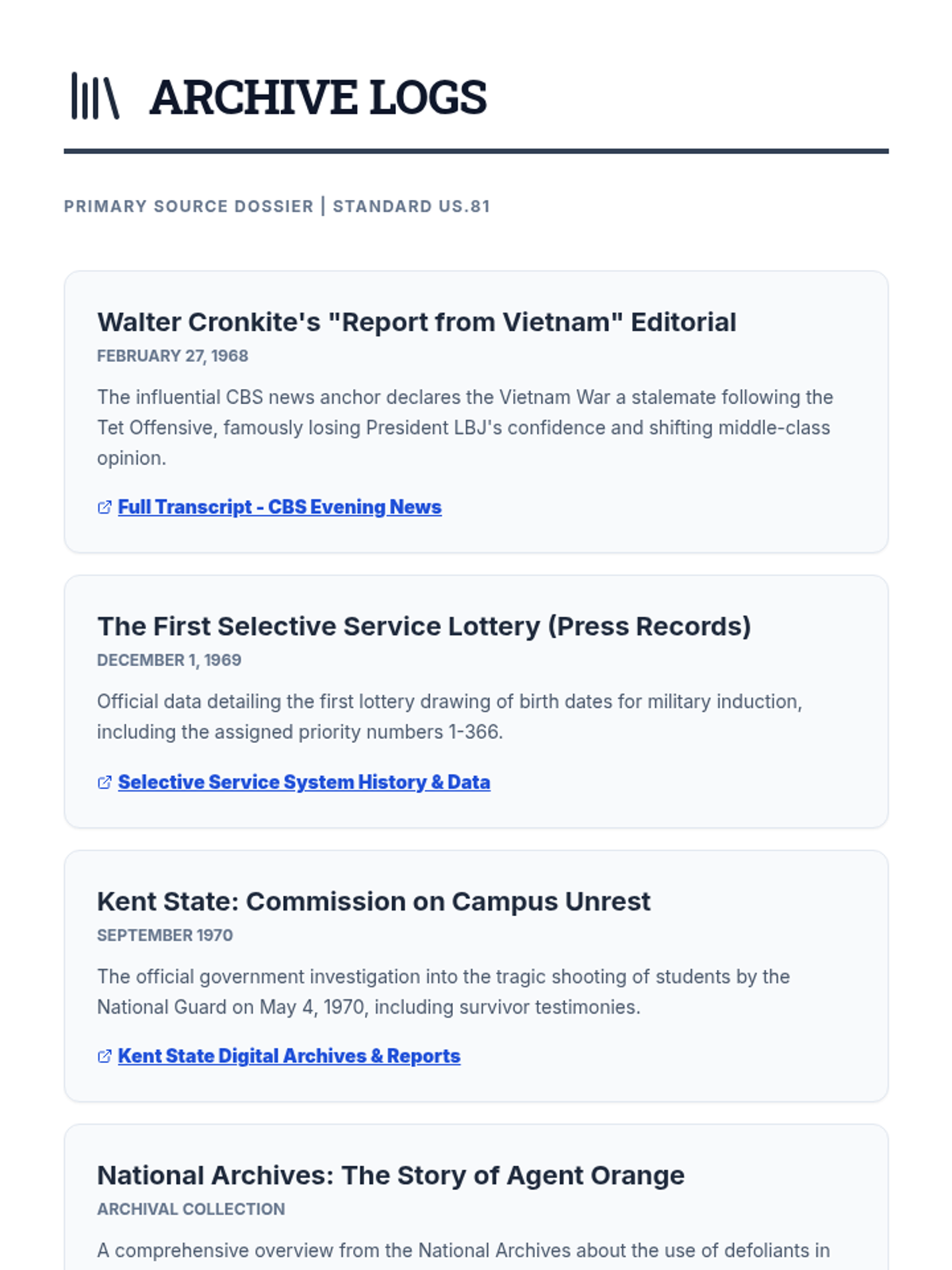
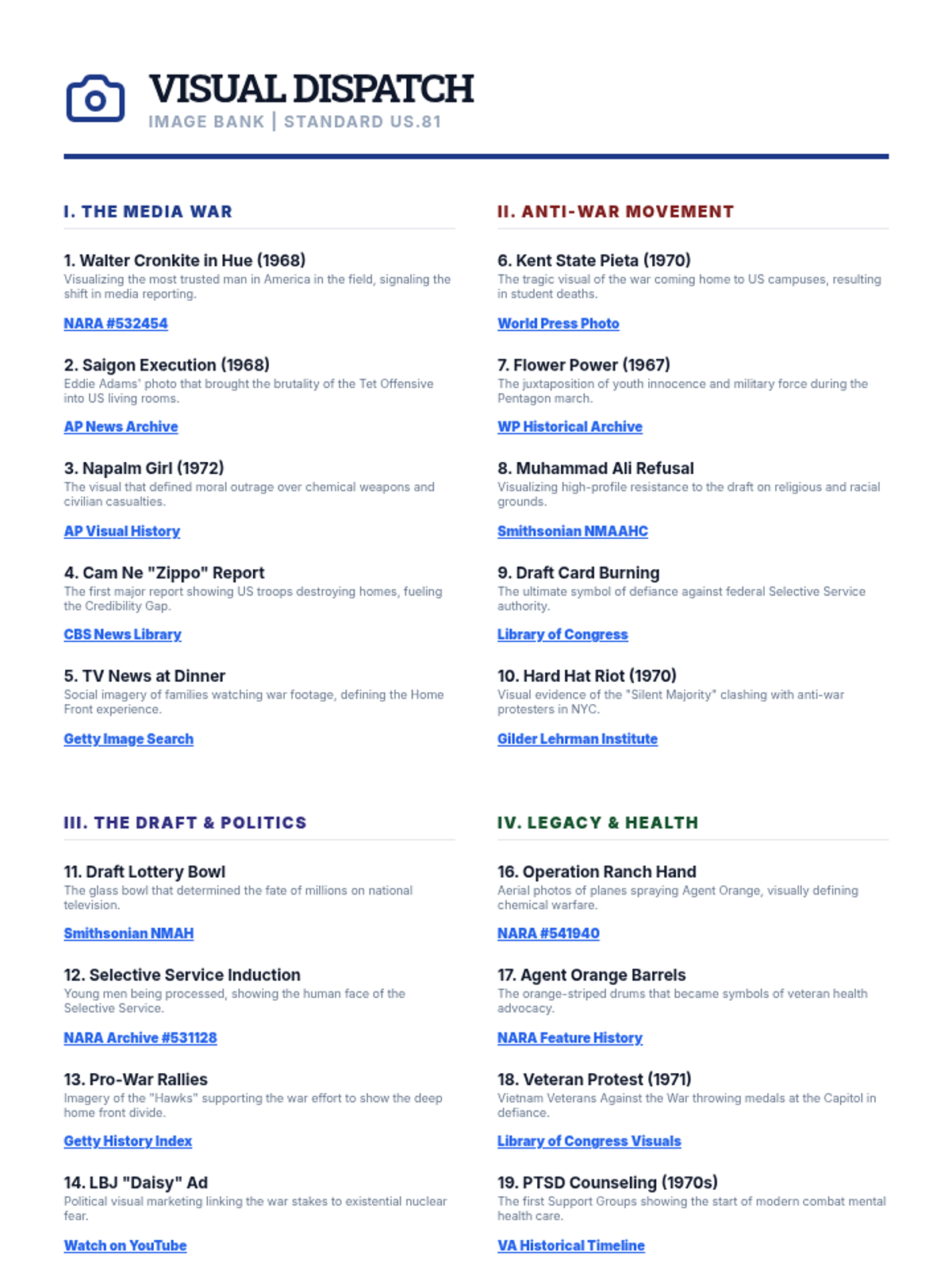
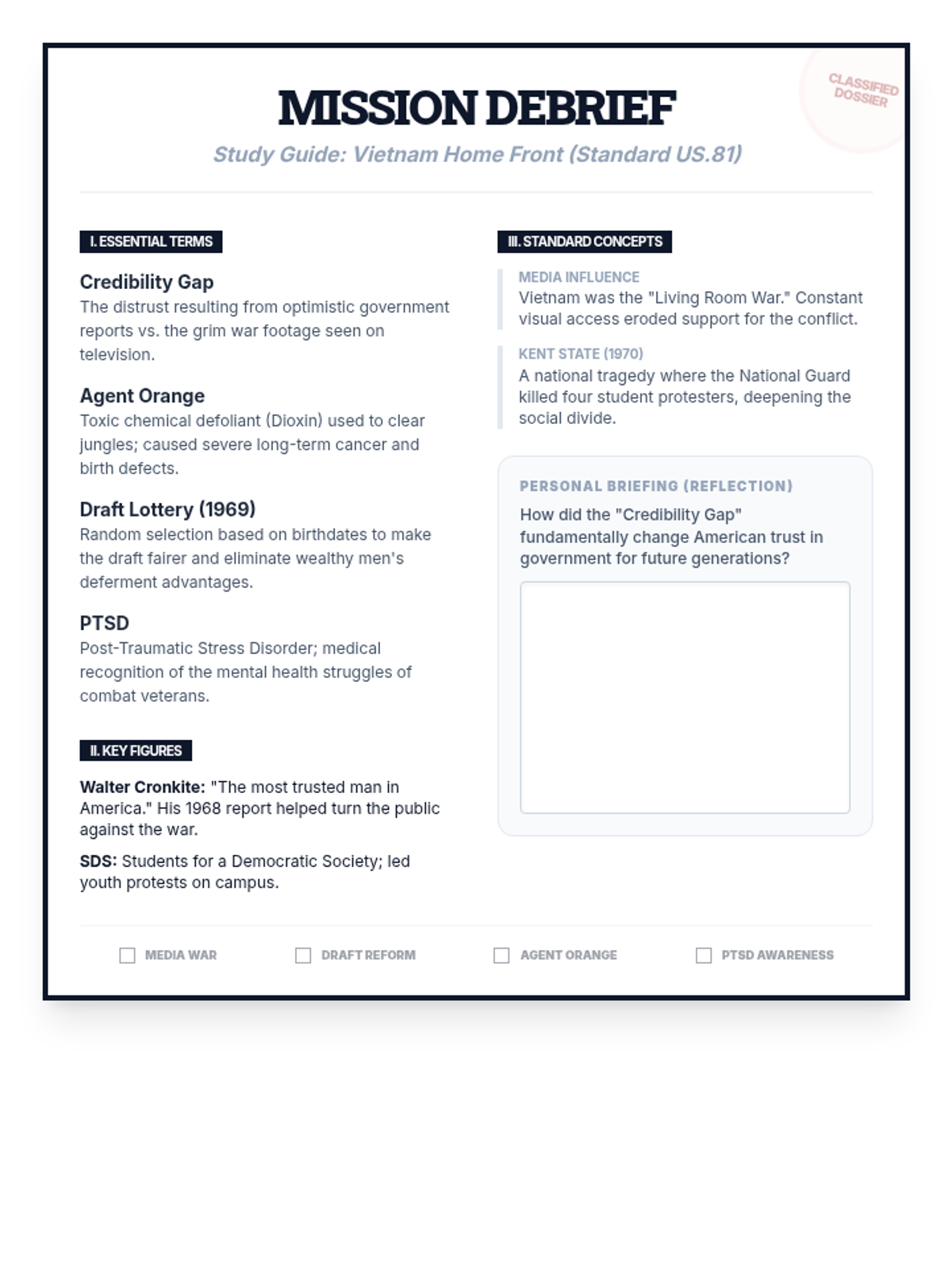
A comprehensive 35-minute high school lesson exploring the impact of the Vietnam War on the American home front, focusing on media, protest, the draft, and the long-term health effects on veterans.
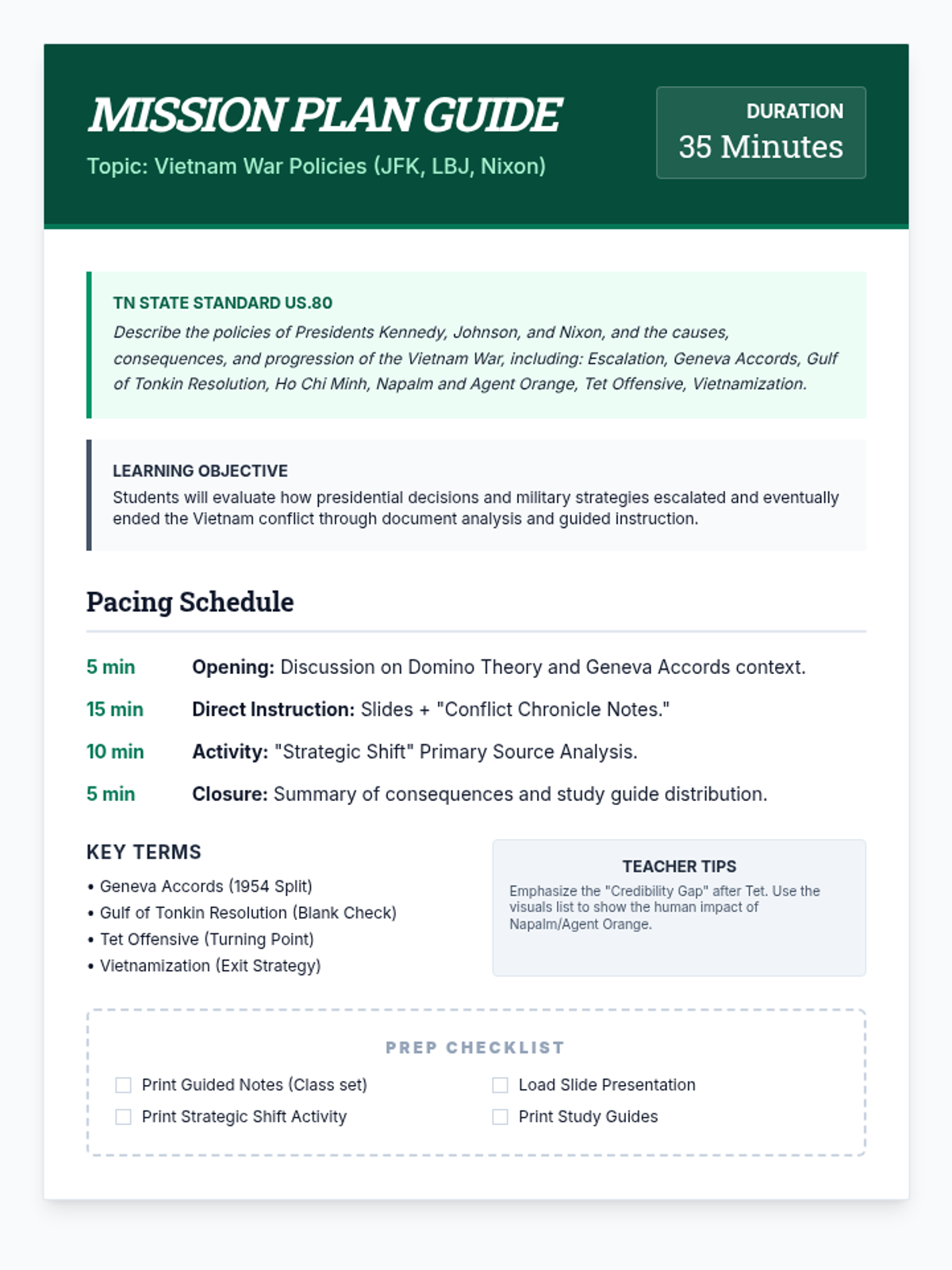
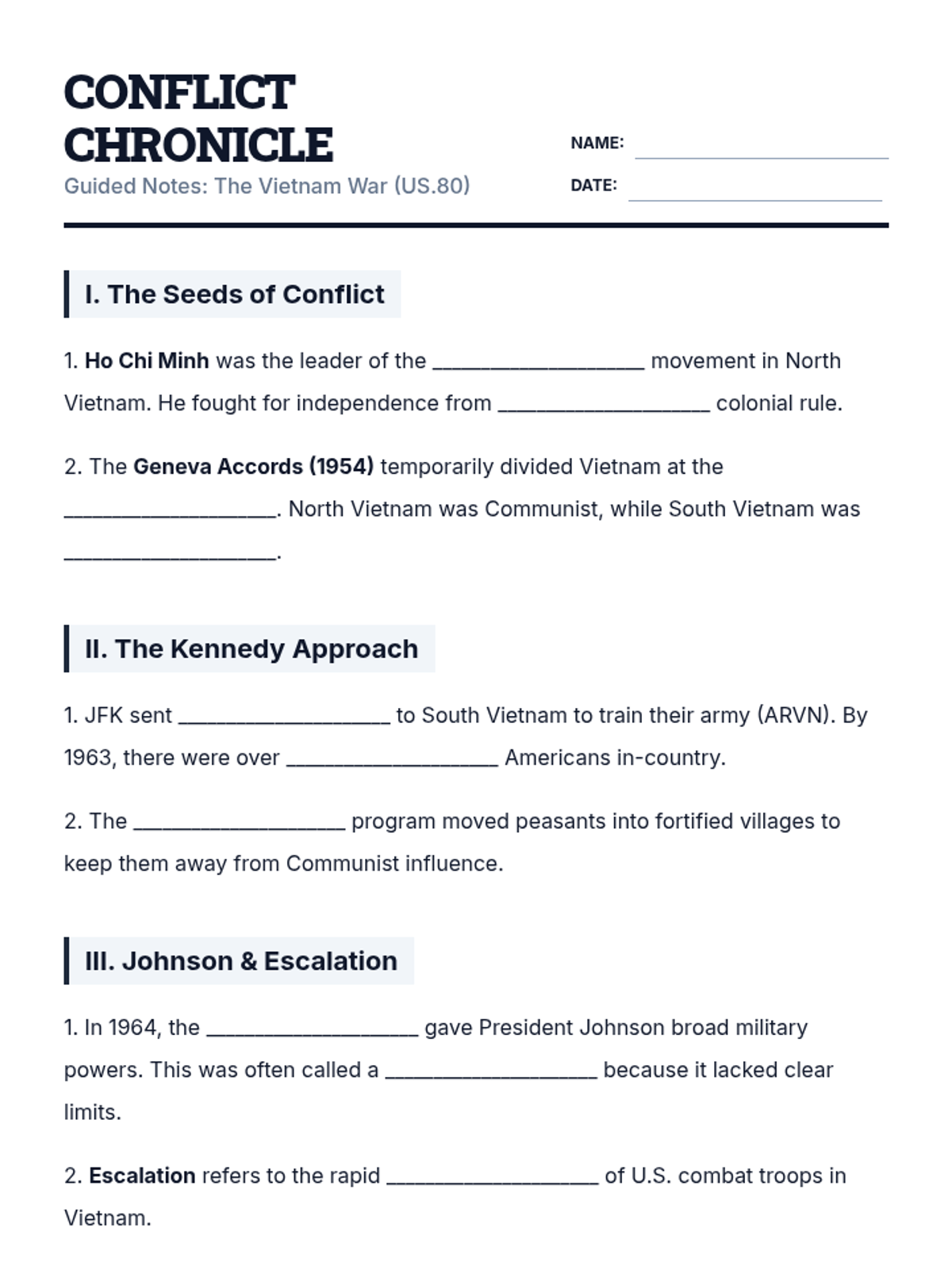
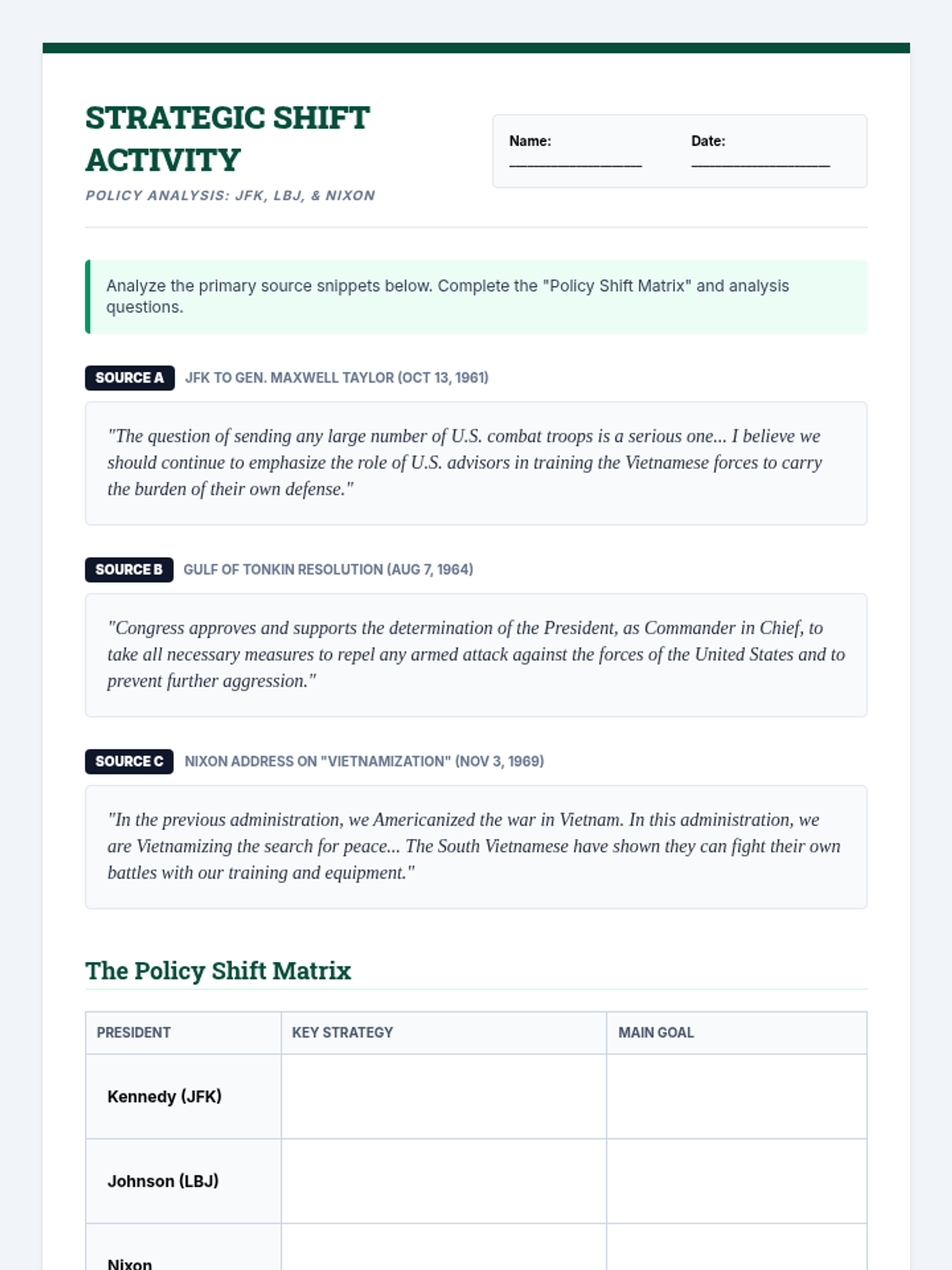
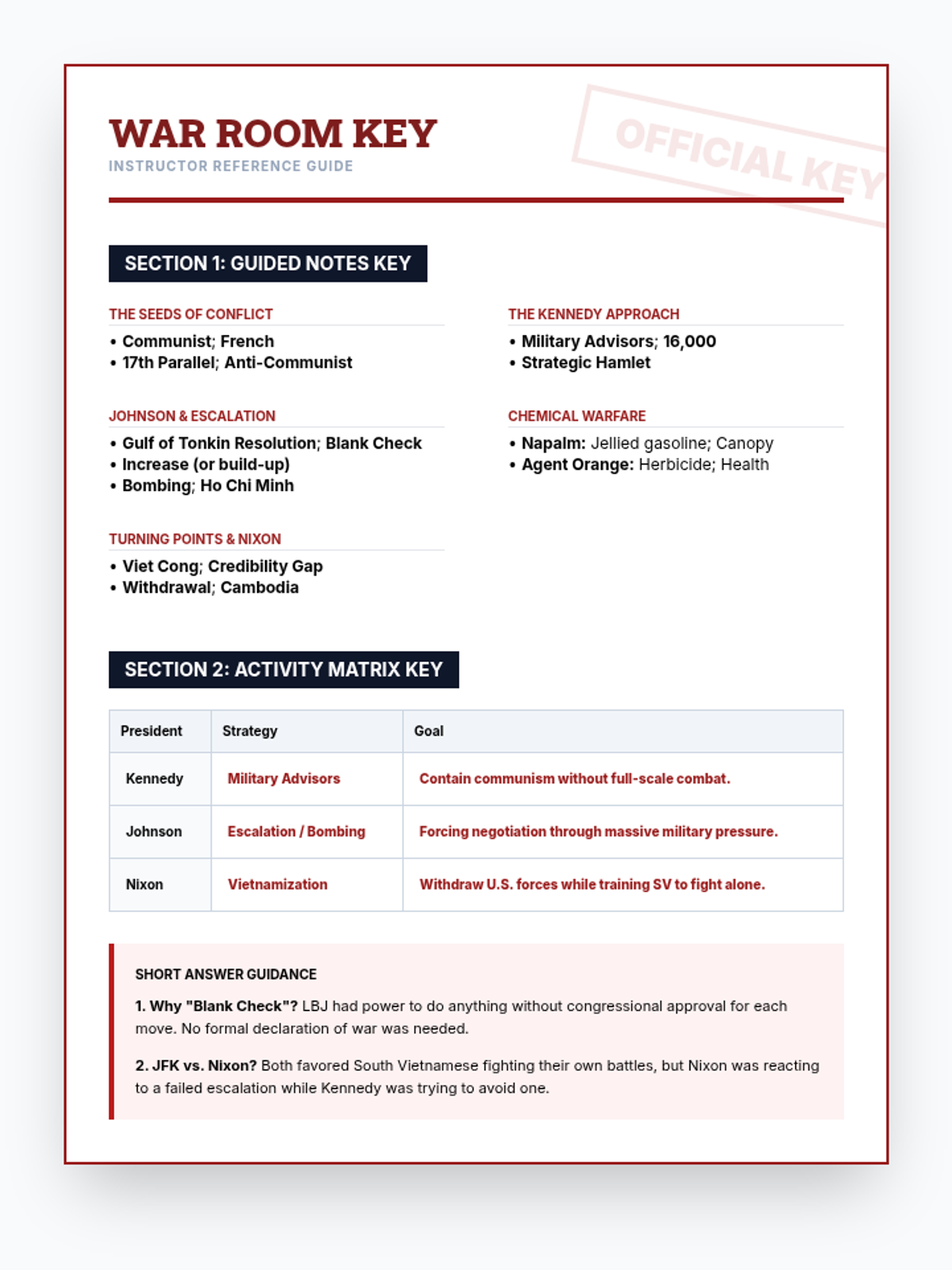
A comprehensive high school lesson covering the Vietnam War through the policies of JFK, LBJ, and Nixon, including key turning points and military strategies.
Mastery assessment for the 1960s and Civil Rights Era, covering JFK, LBJ, the Space Race, and the various movements for equality.
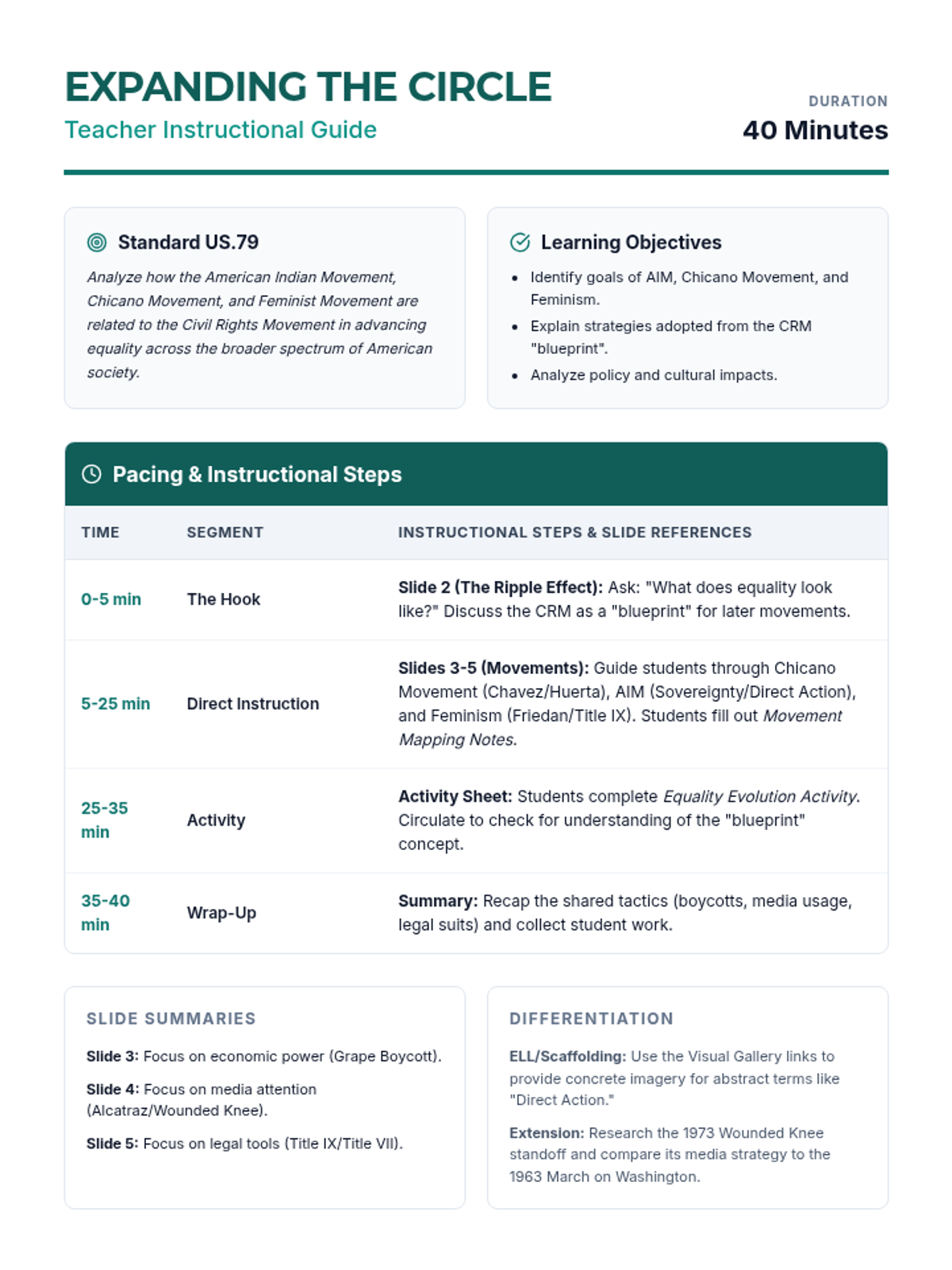
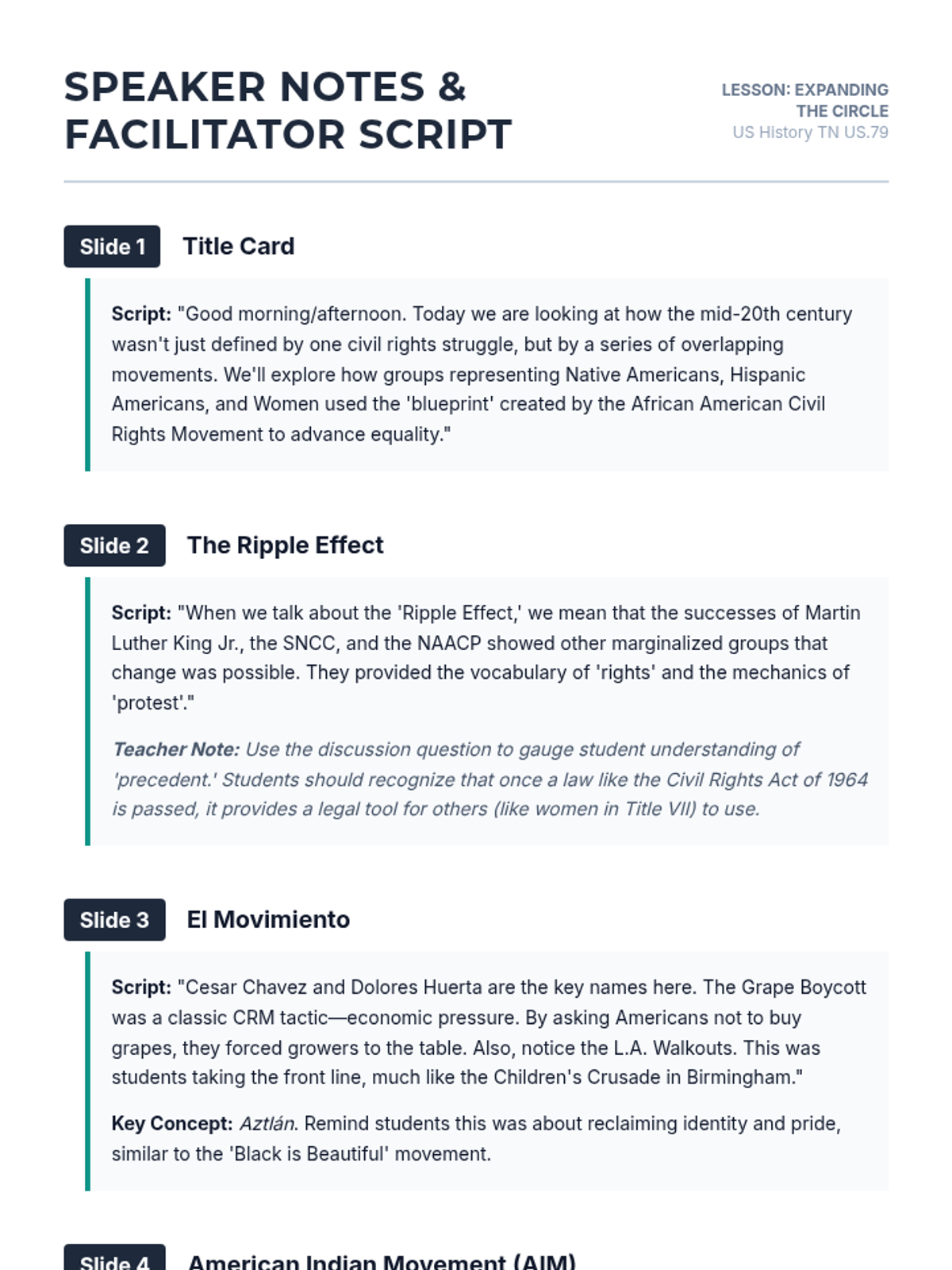
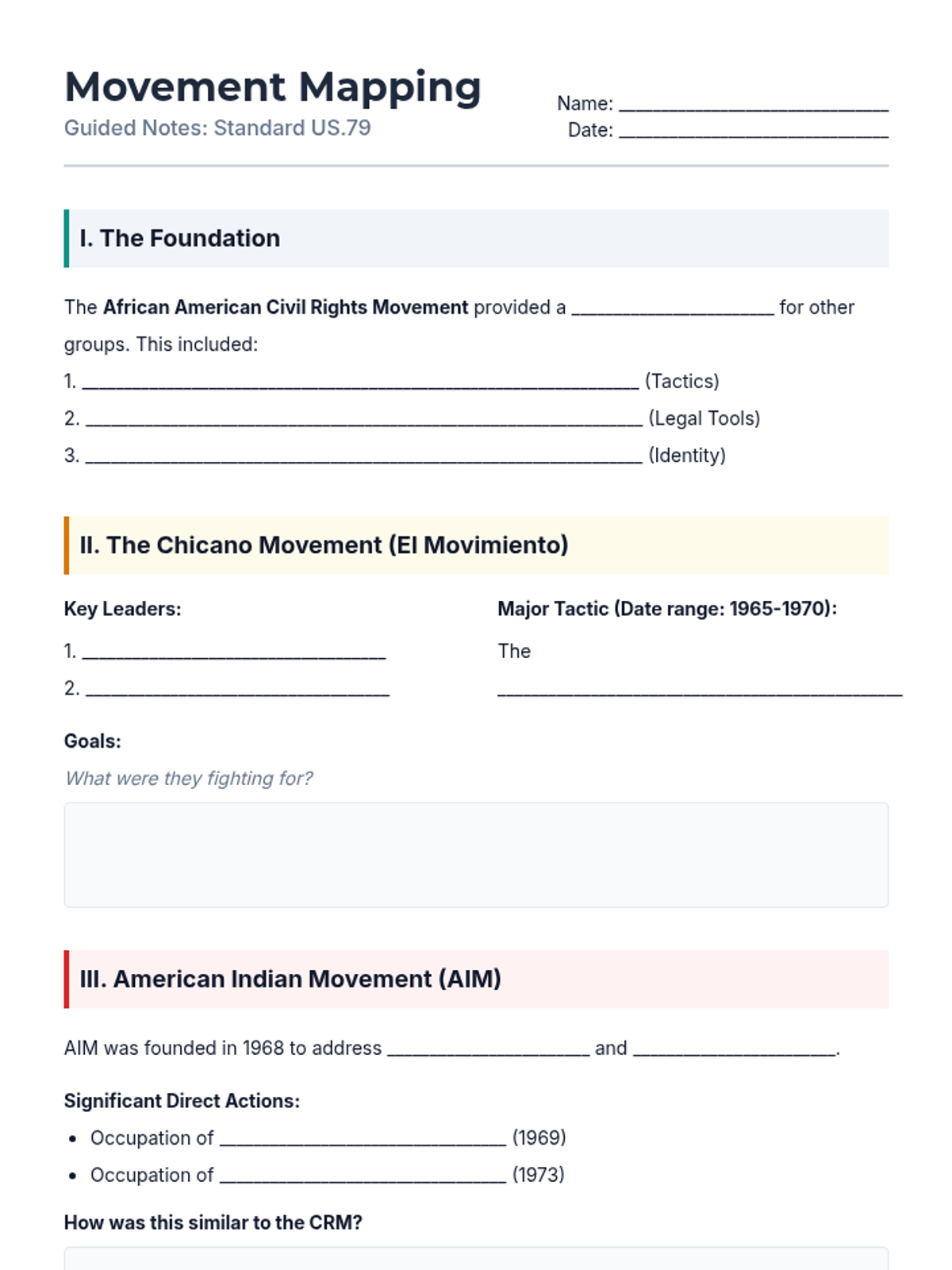
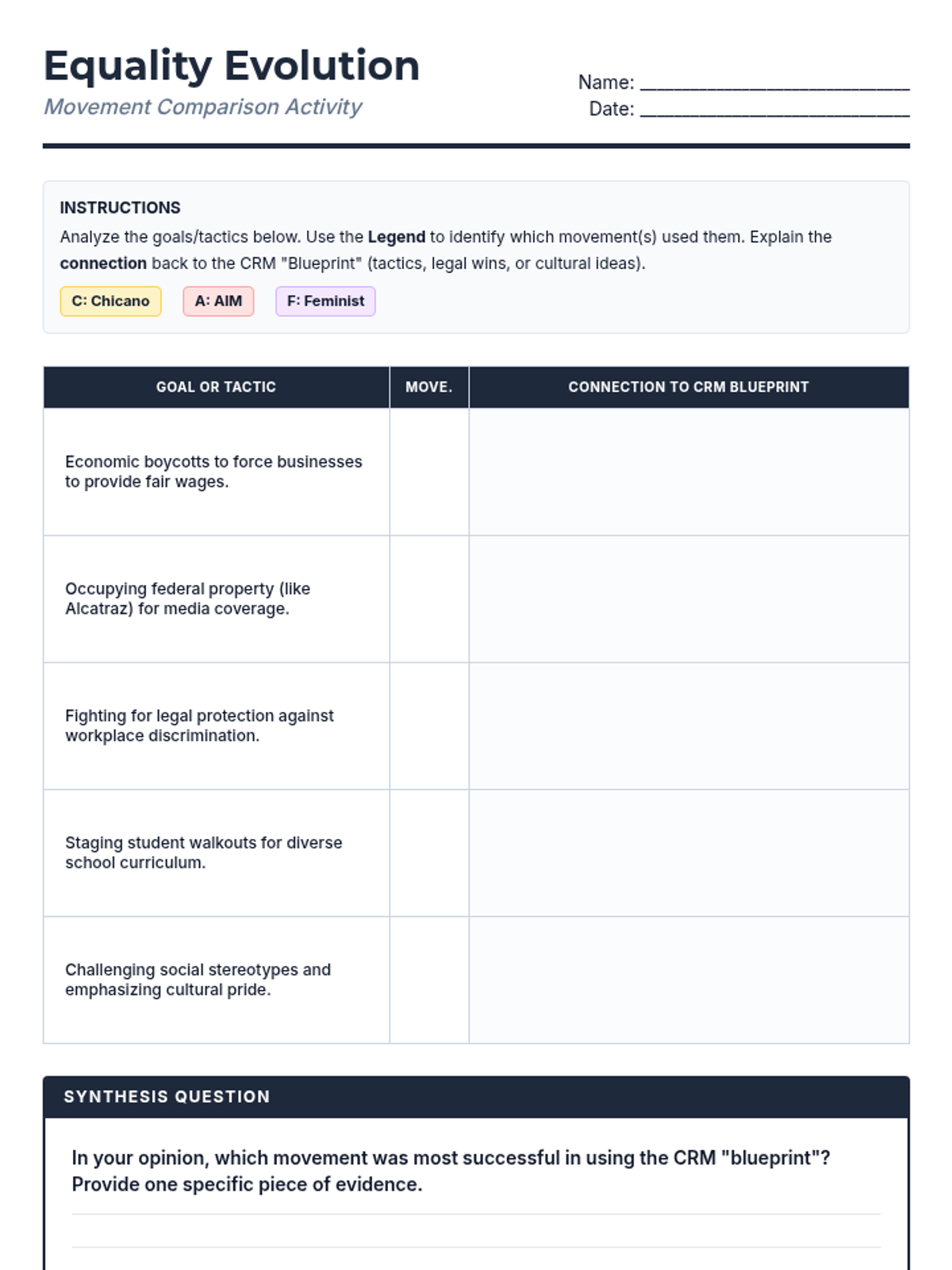
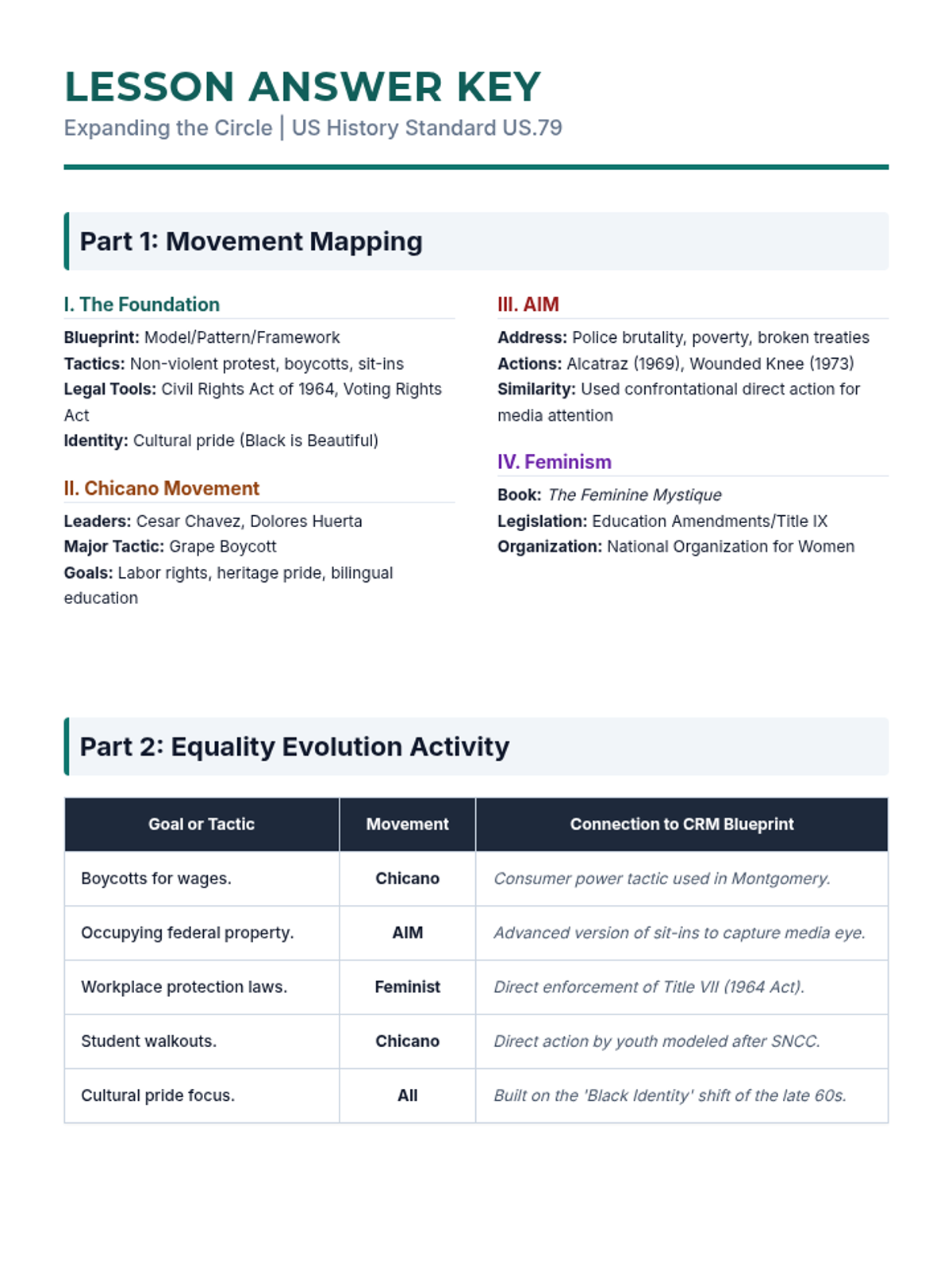
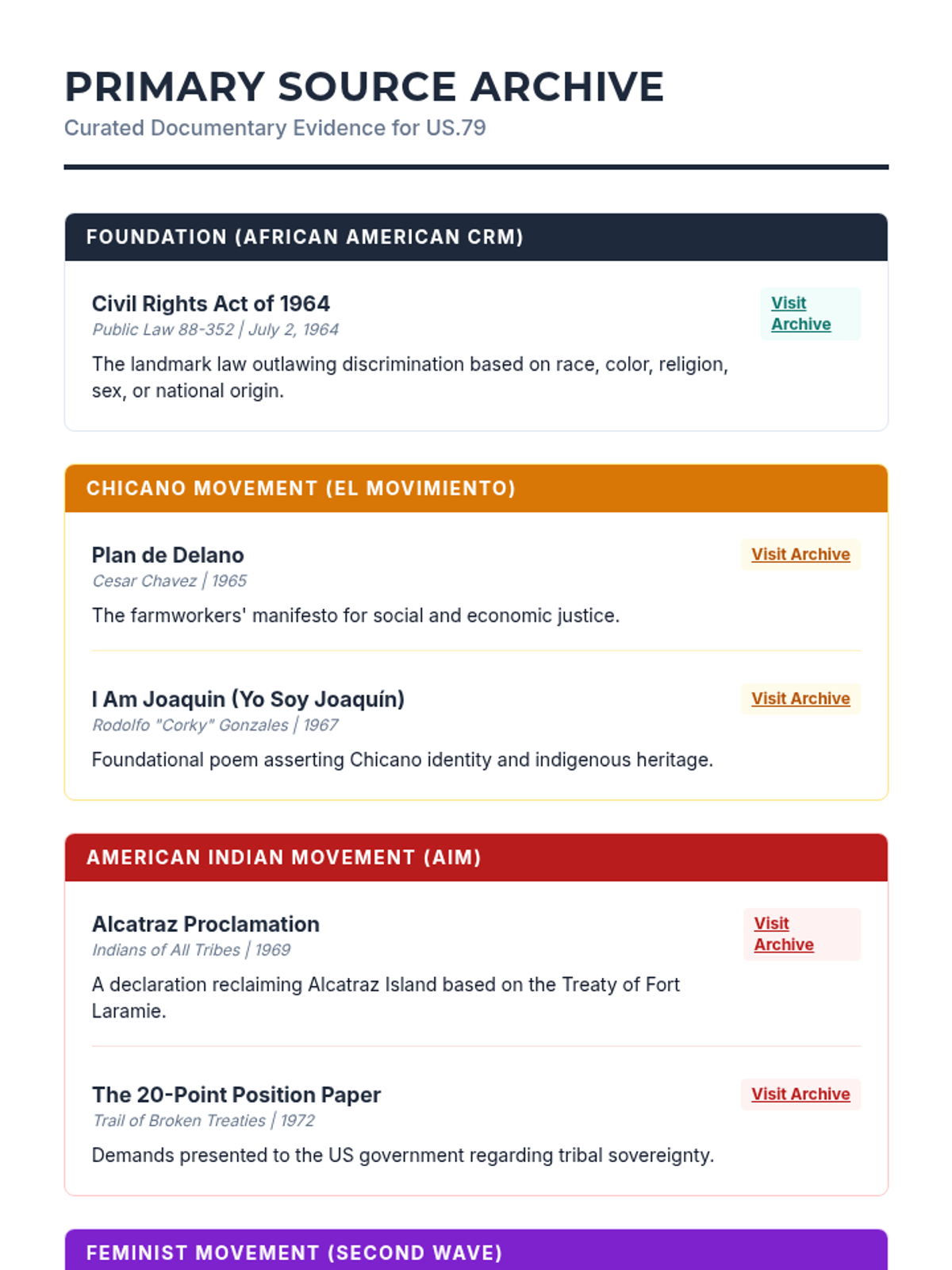
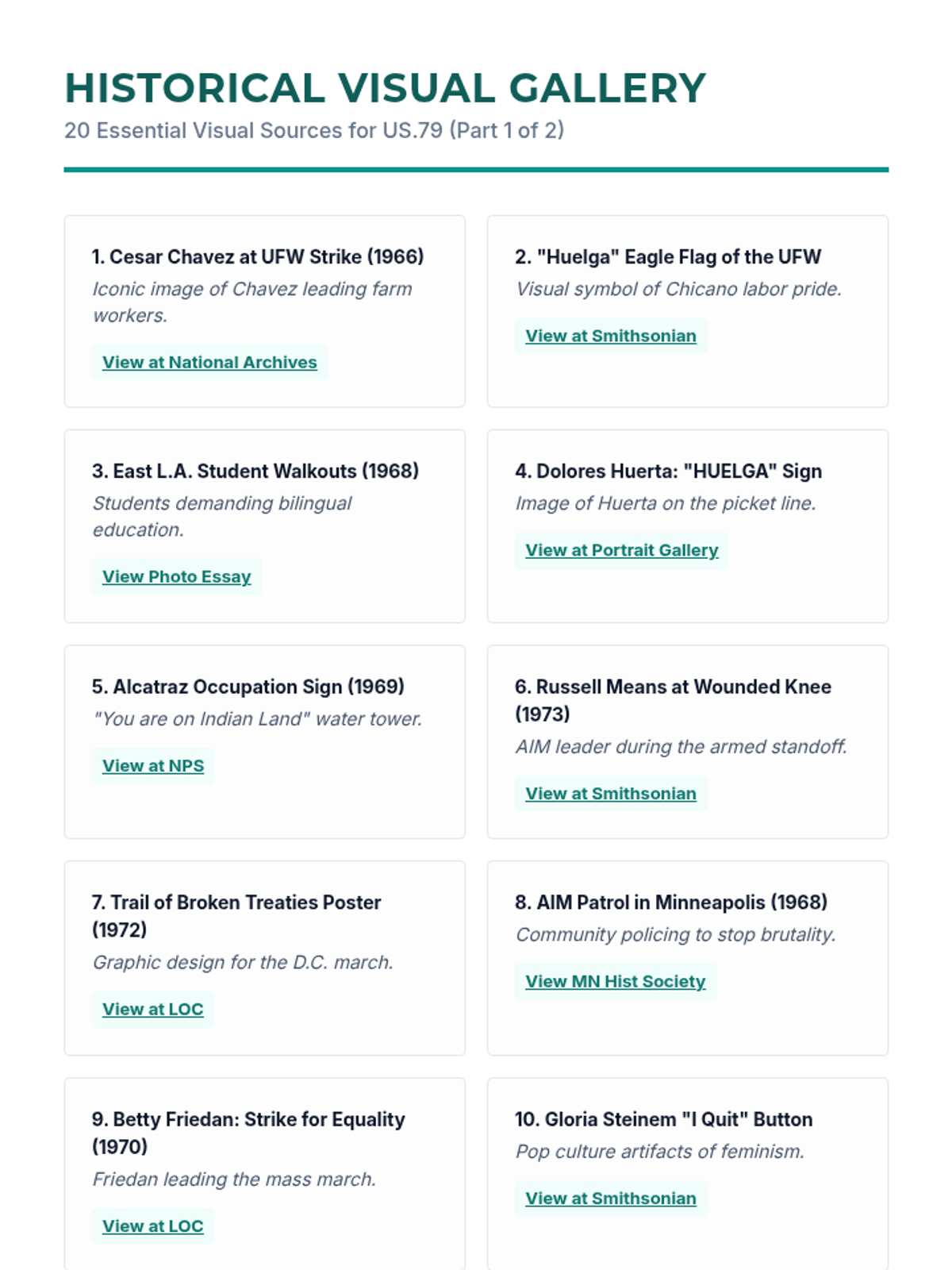
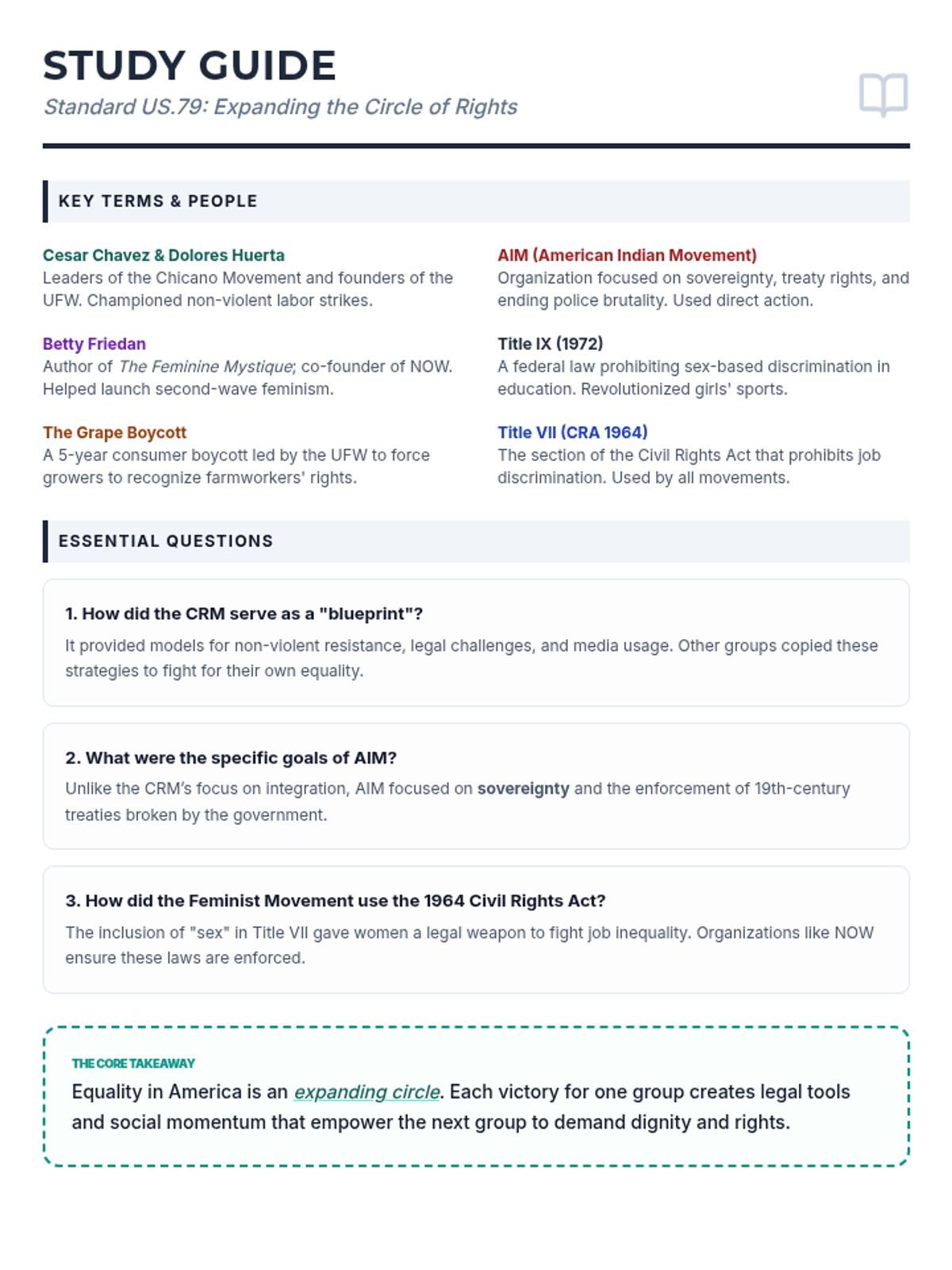
A 40-minute high school US History lesson exploring the interconnectedness of the American Indian Movement, Chicano Movement, and Feminist Movement with the broader Civil Rights Movement, as per TN Standard US.79.
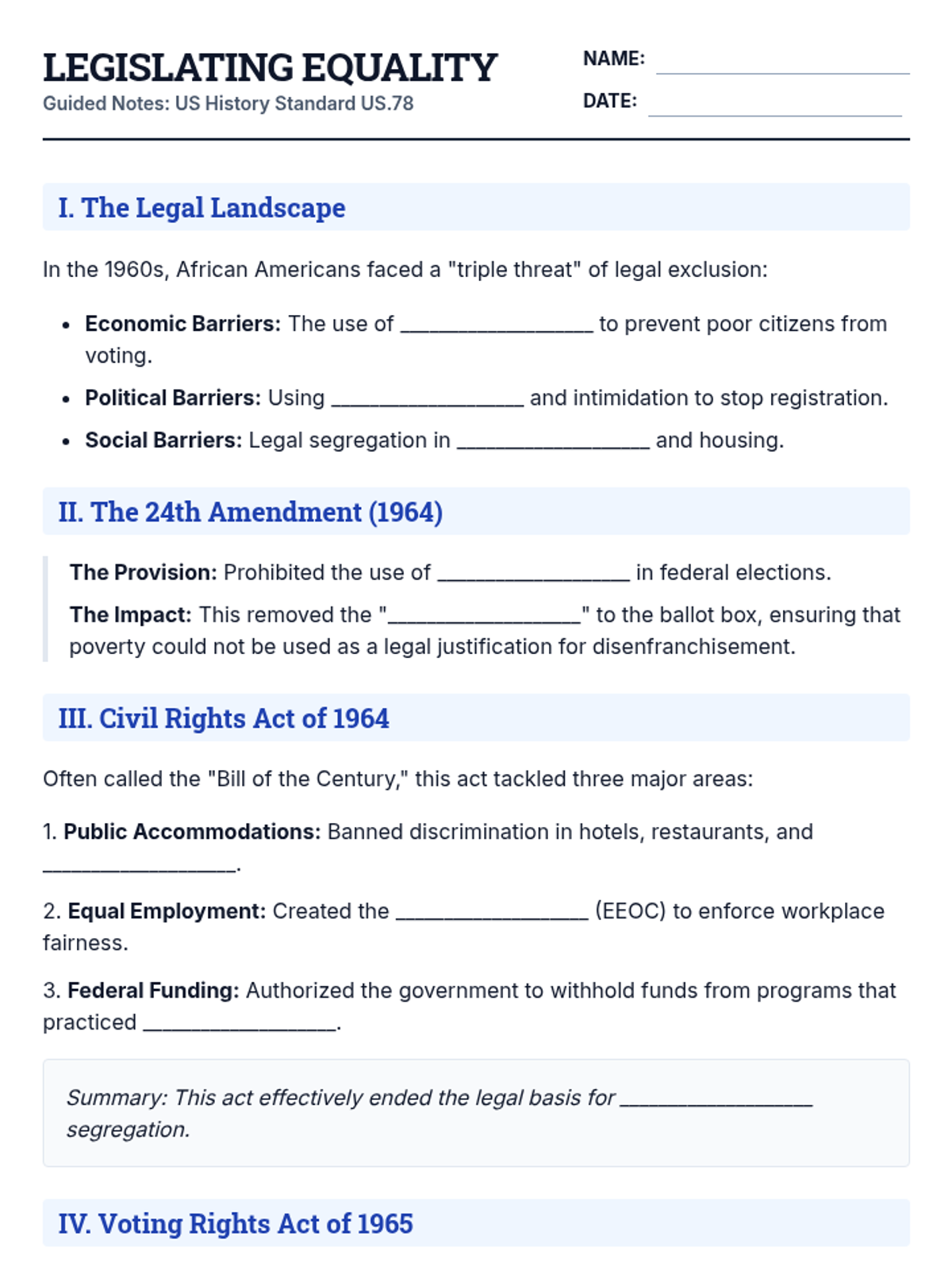
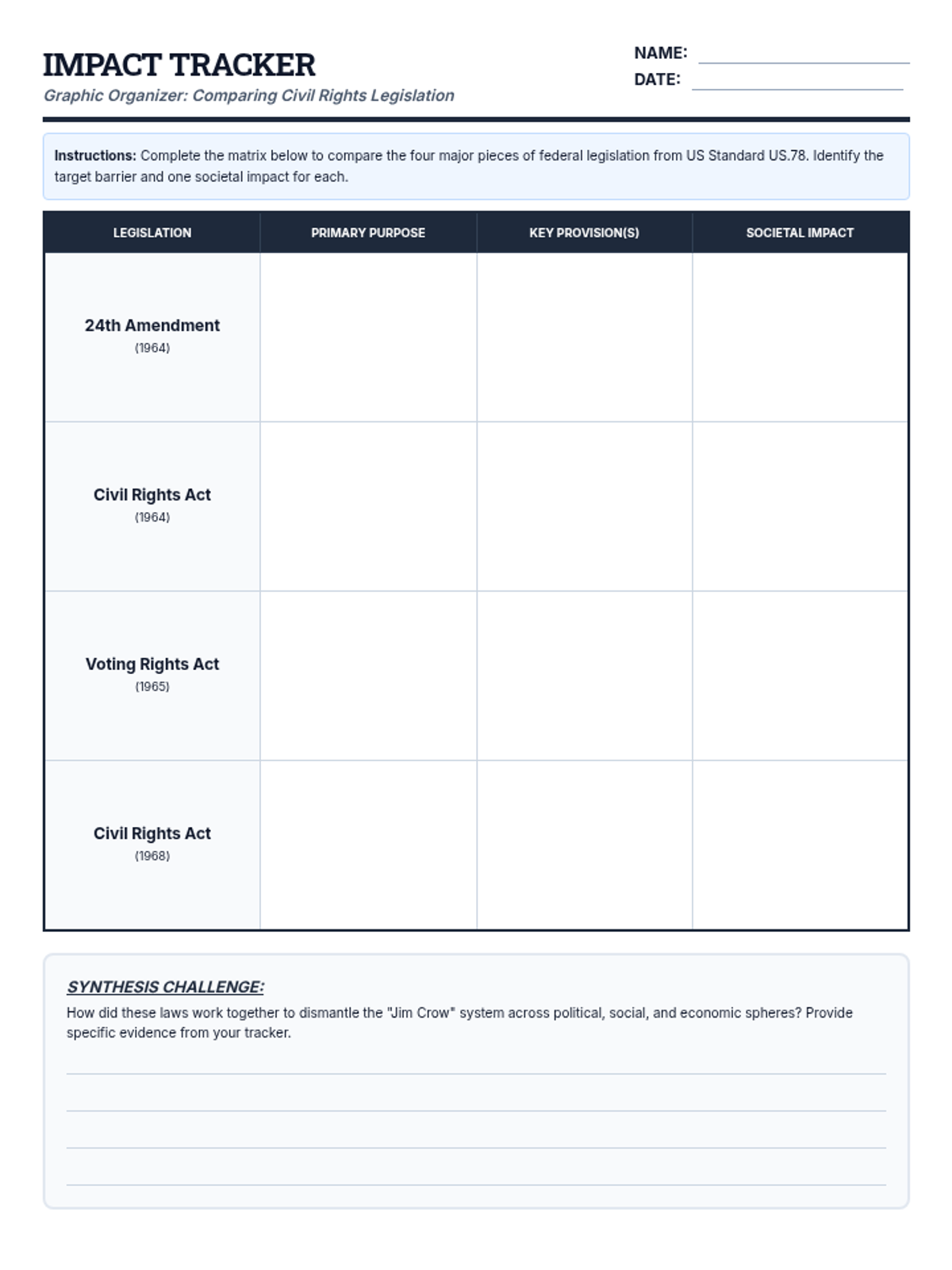
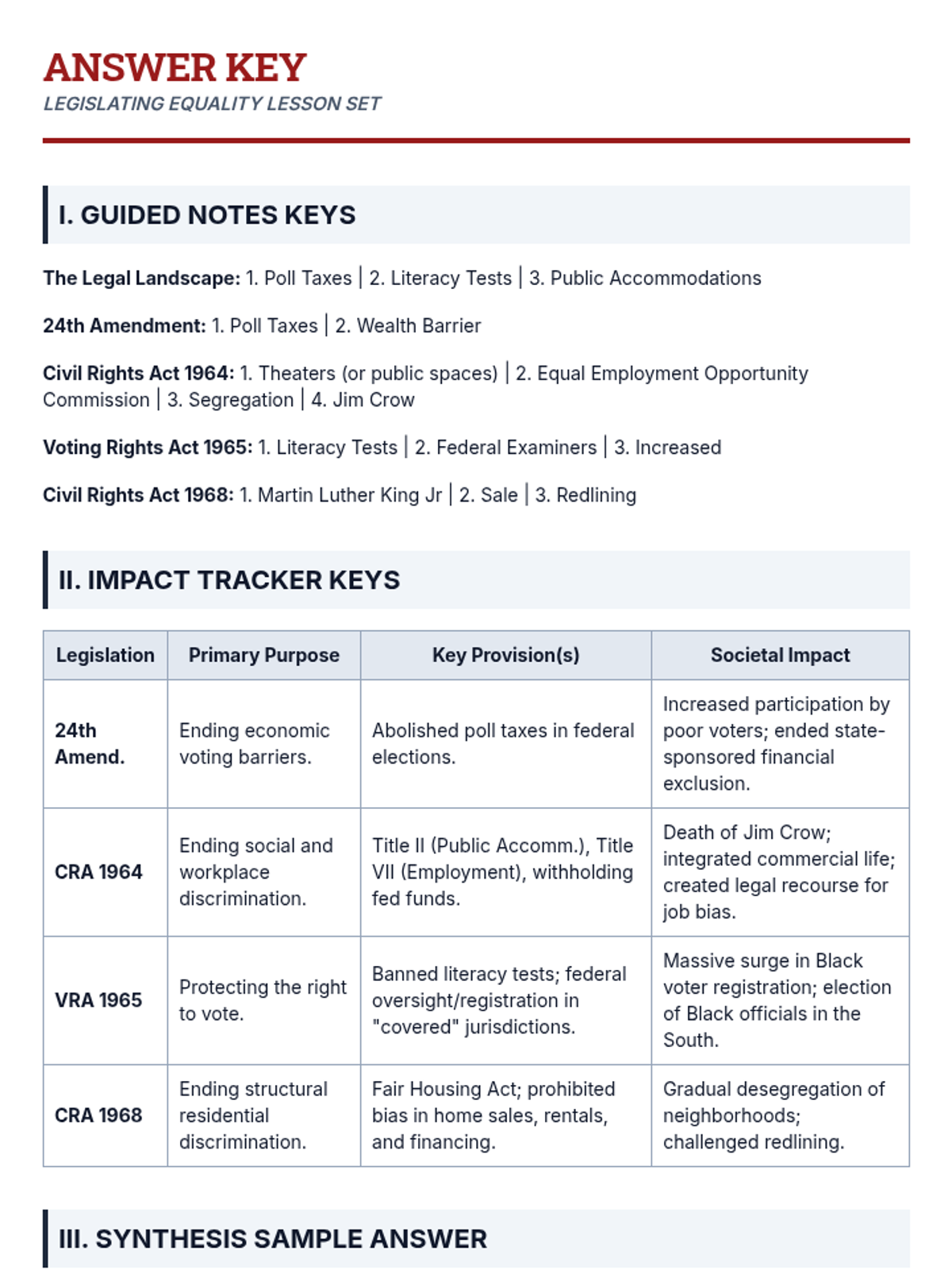
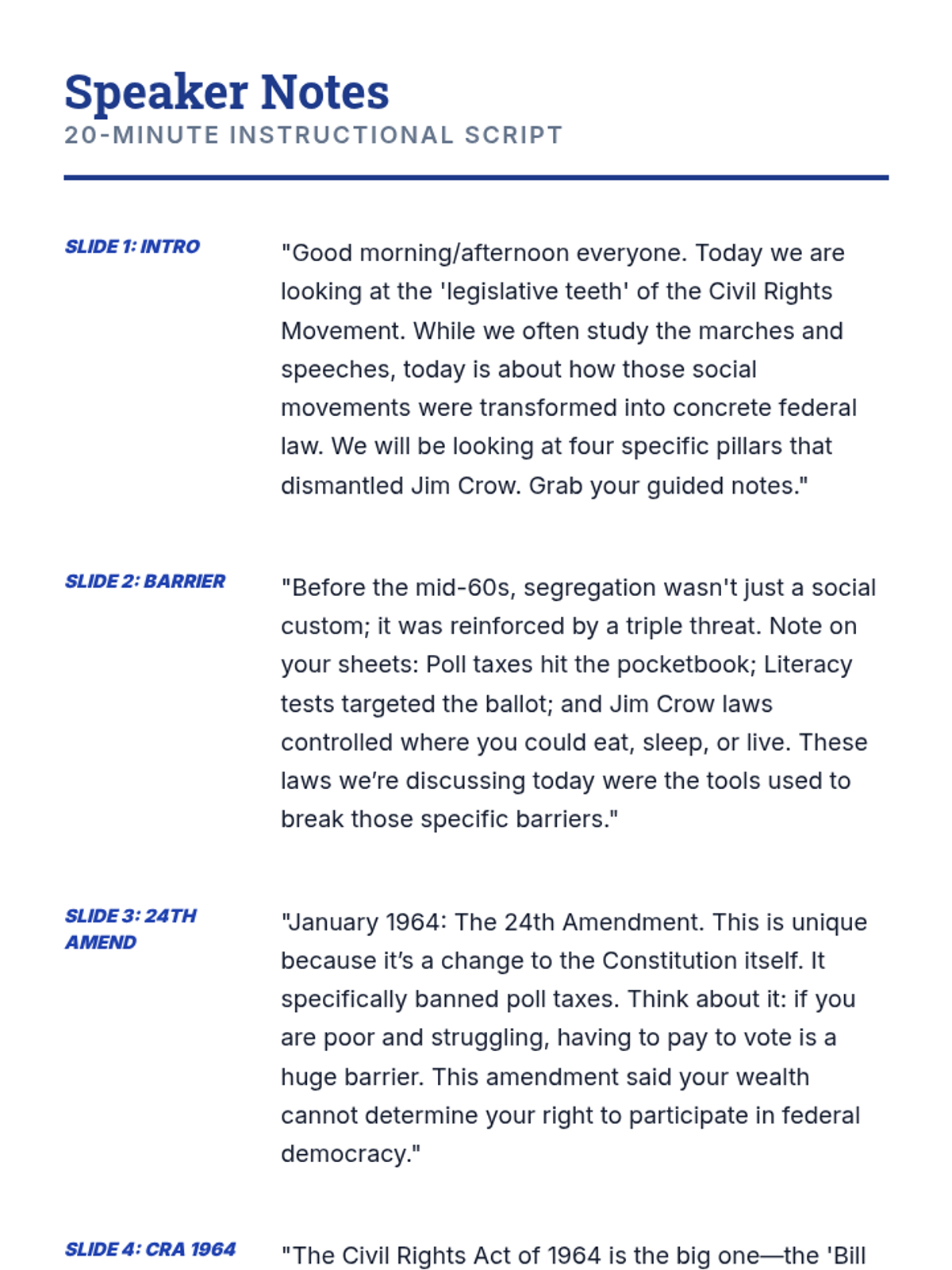
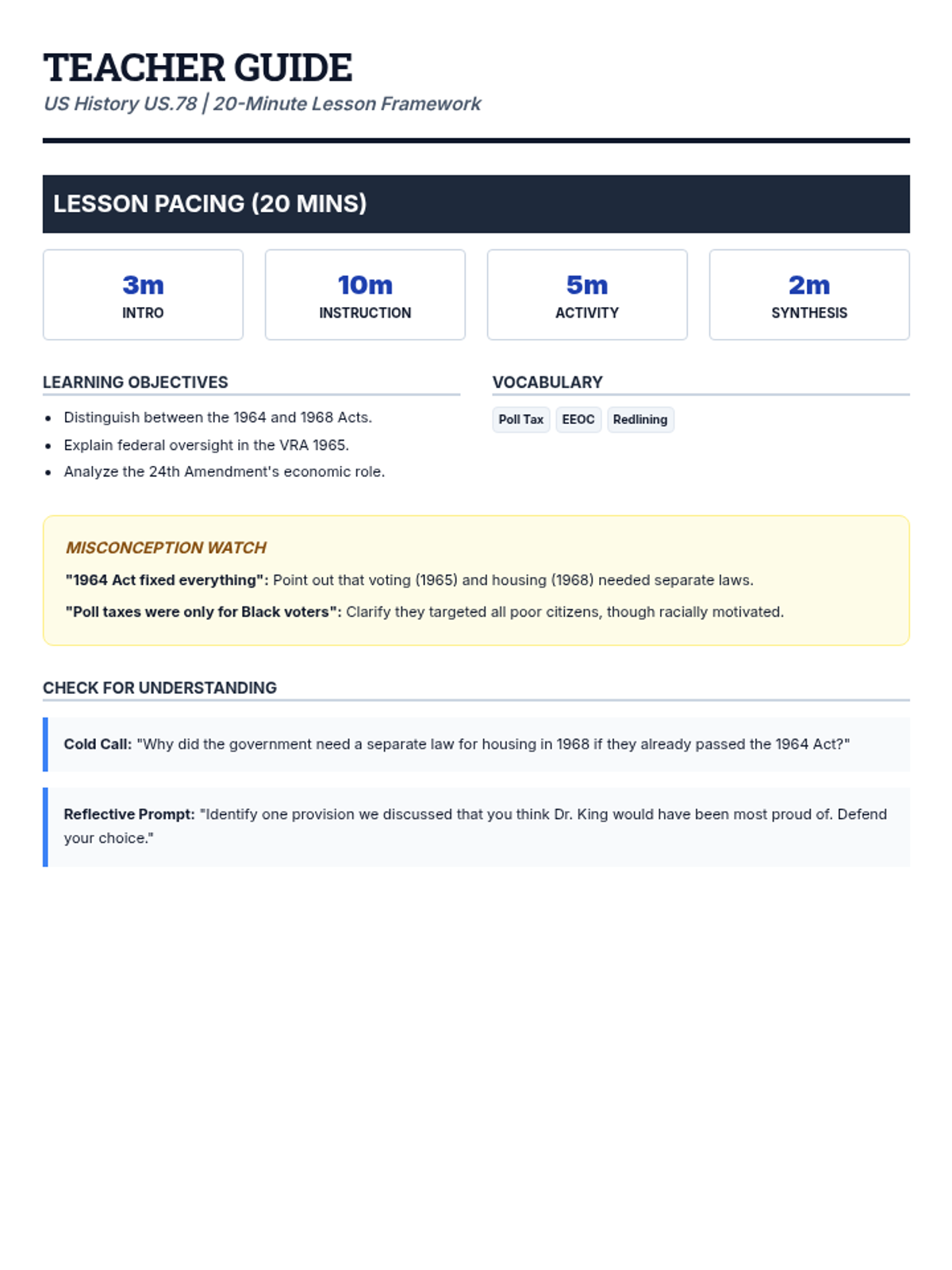
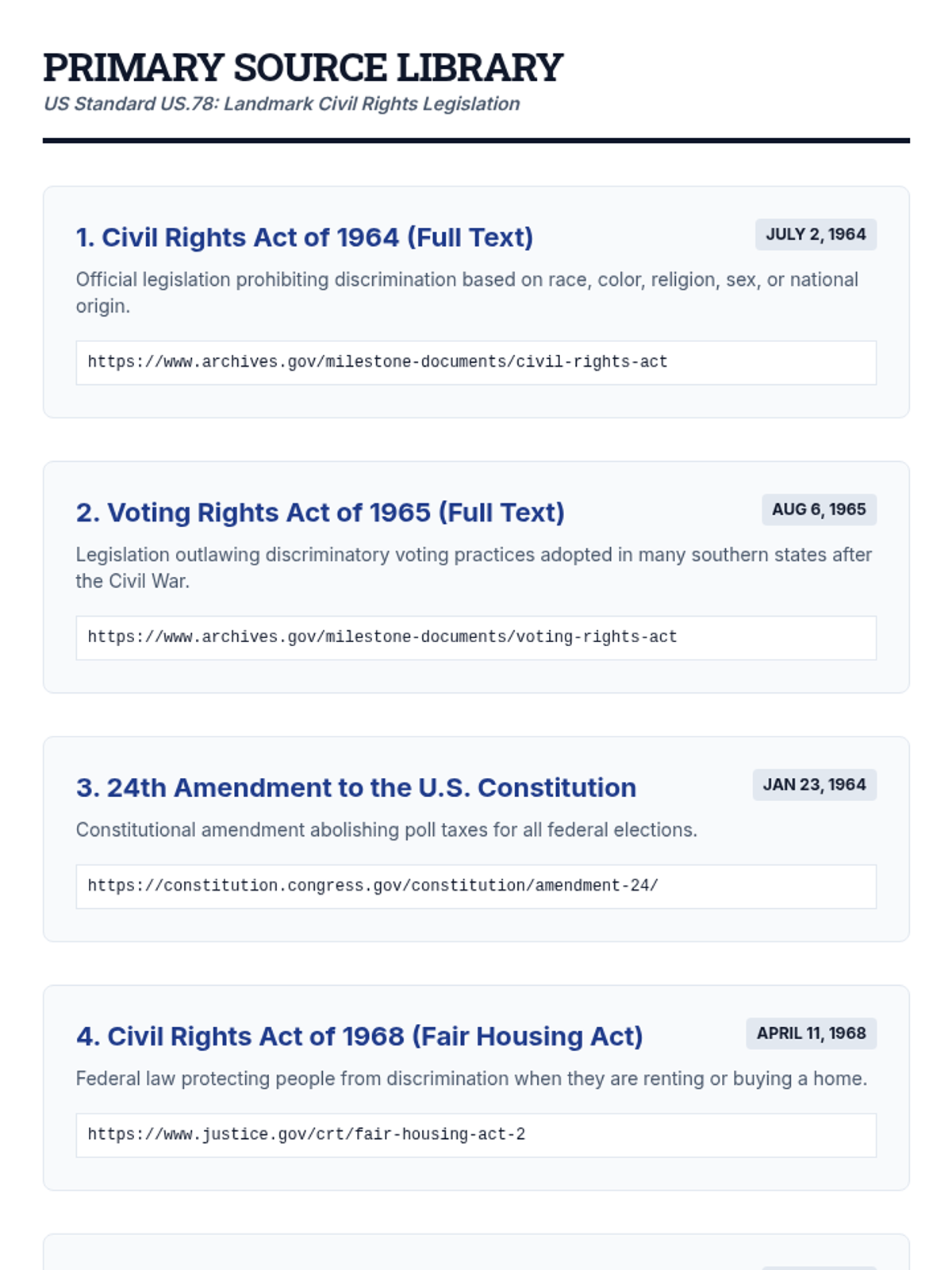
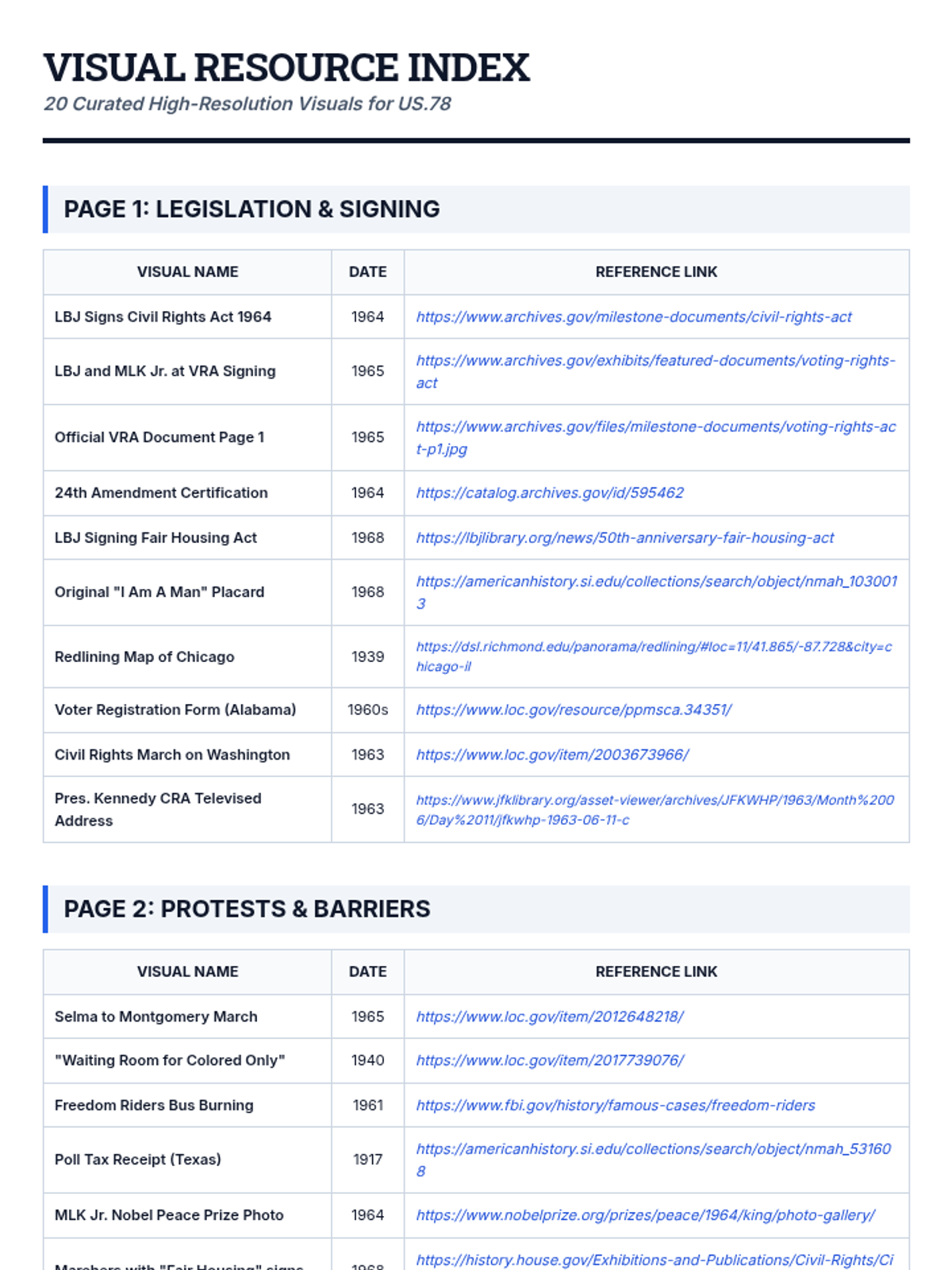
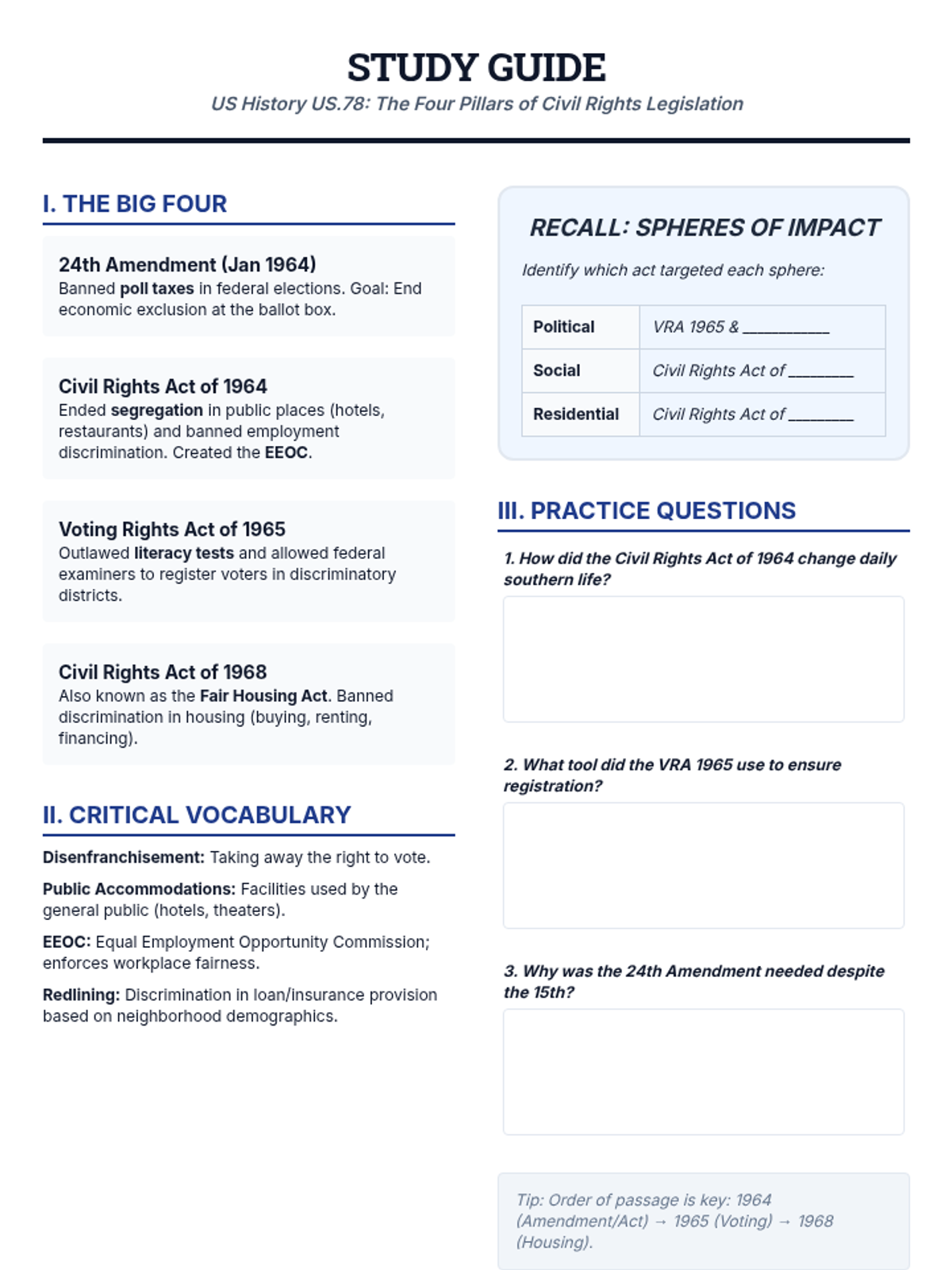
A concise 20-minute analysis of key civil rights legislation including the 24th Amendment and the Acts of 1964, 1965, and 1968. Students explore the specific legal impacts and societal changes brought about by these landmark federal actions.
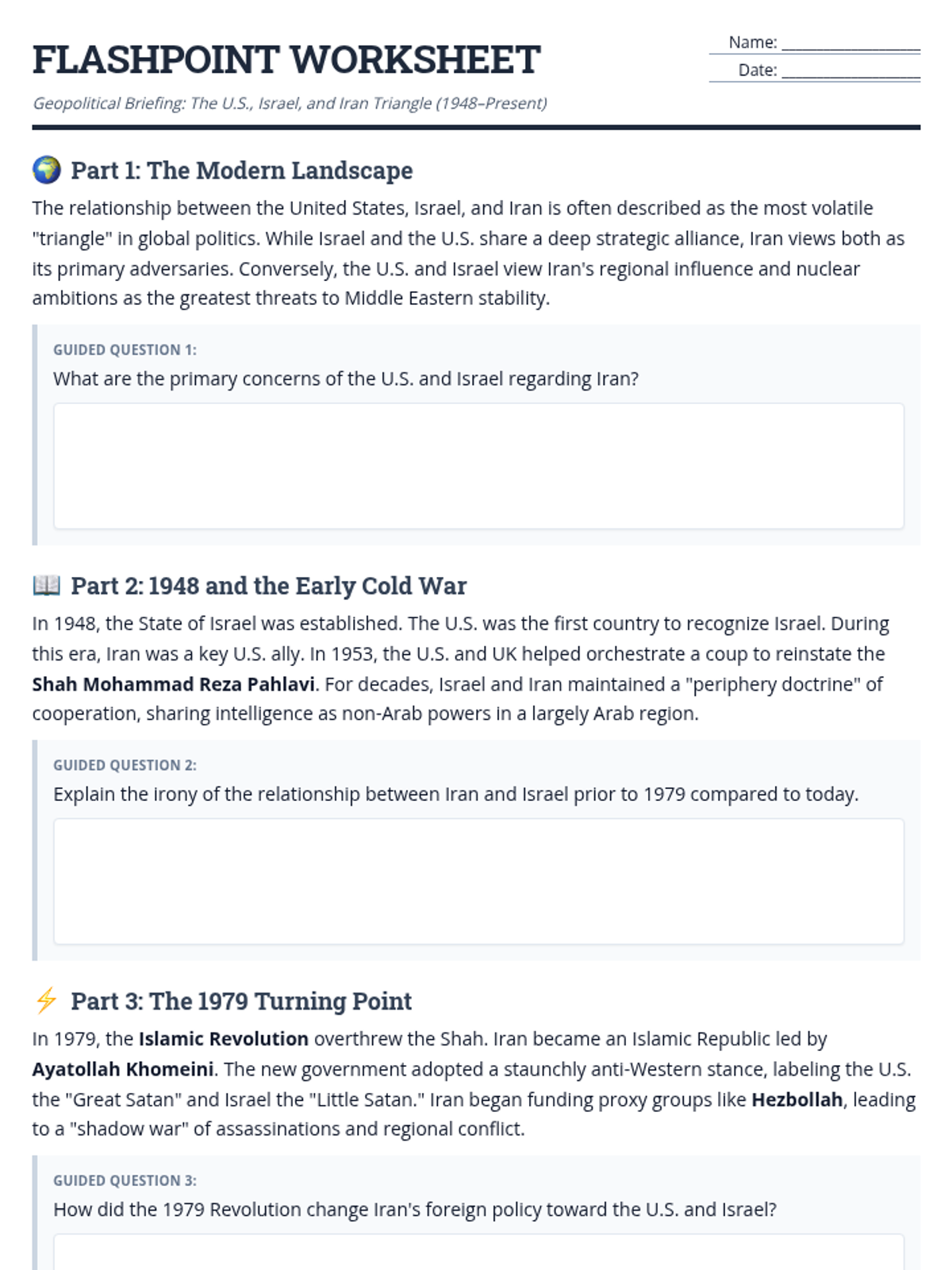
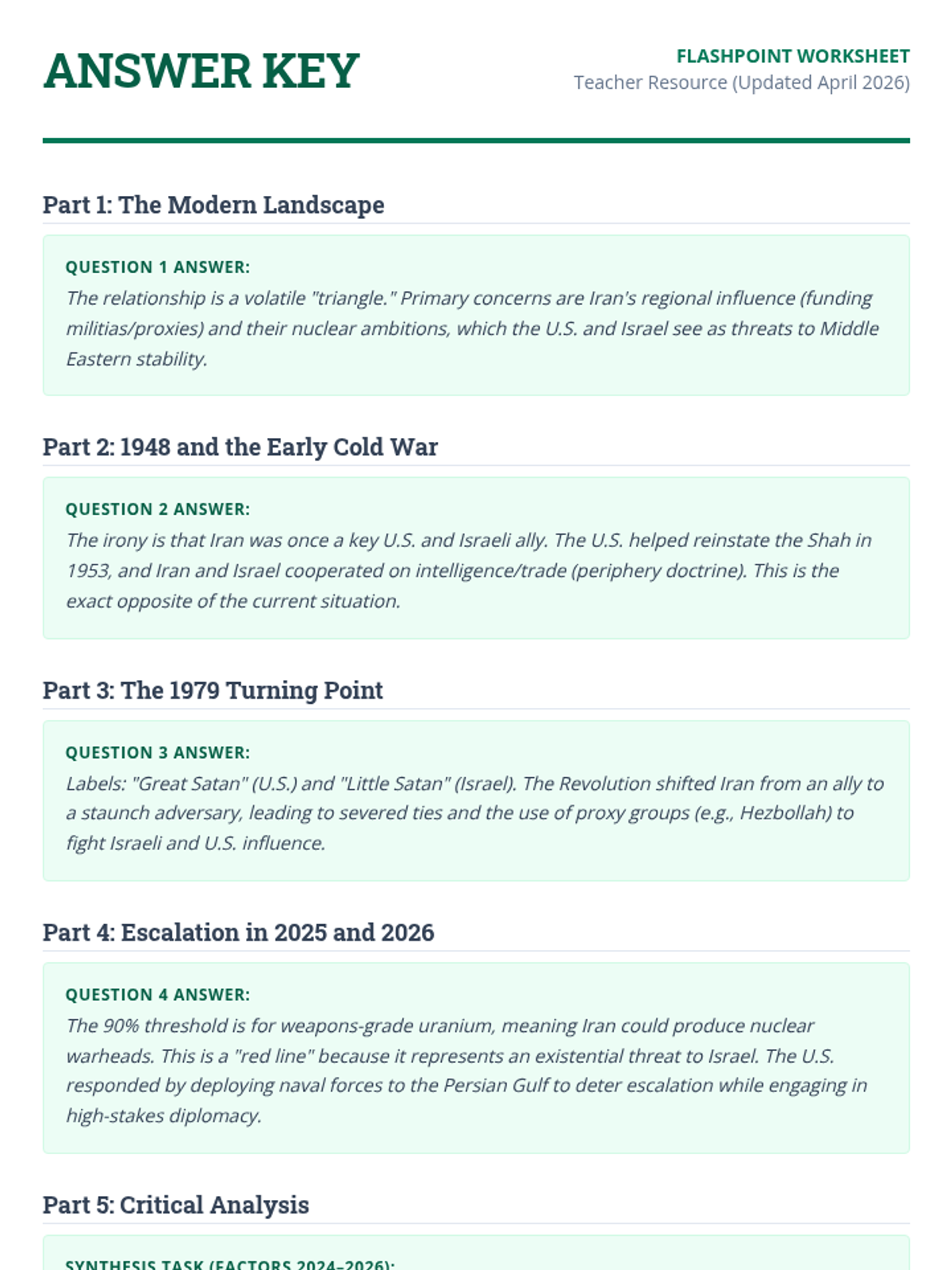
A high school level lesson covering the complex historical and modern relationship between the United States, Israel, and Iran from 1948 to the present day.
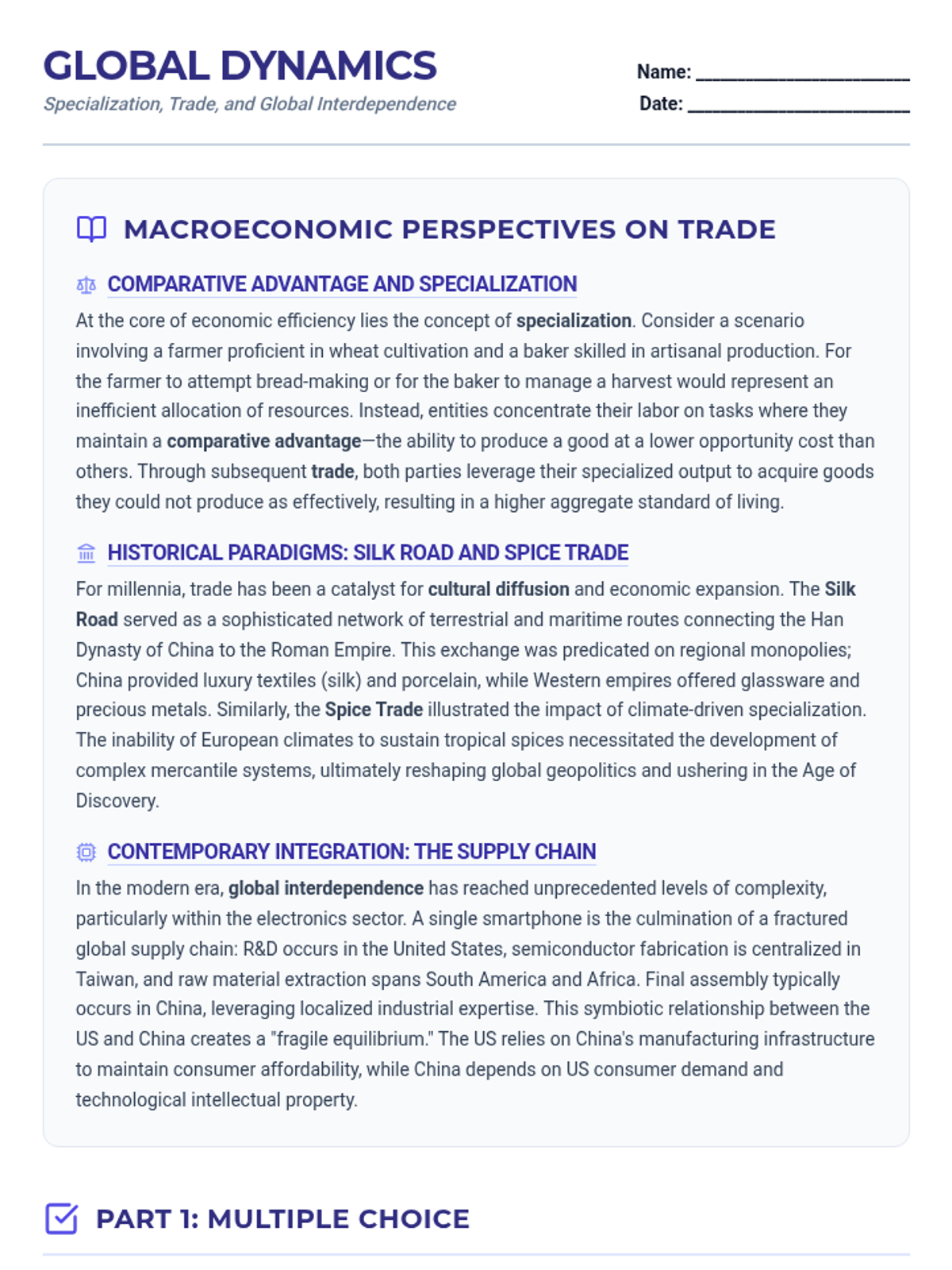
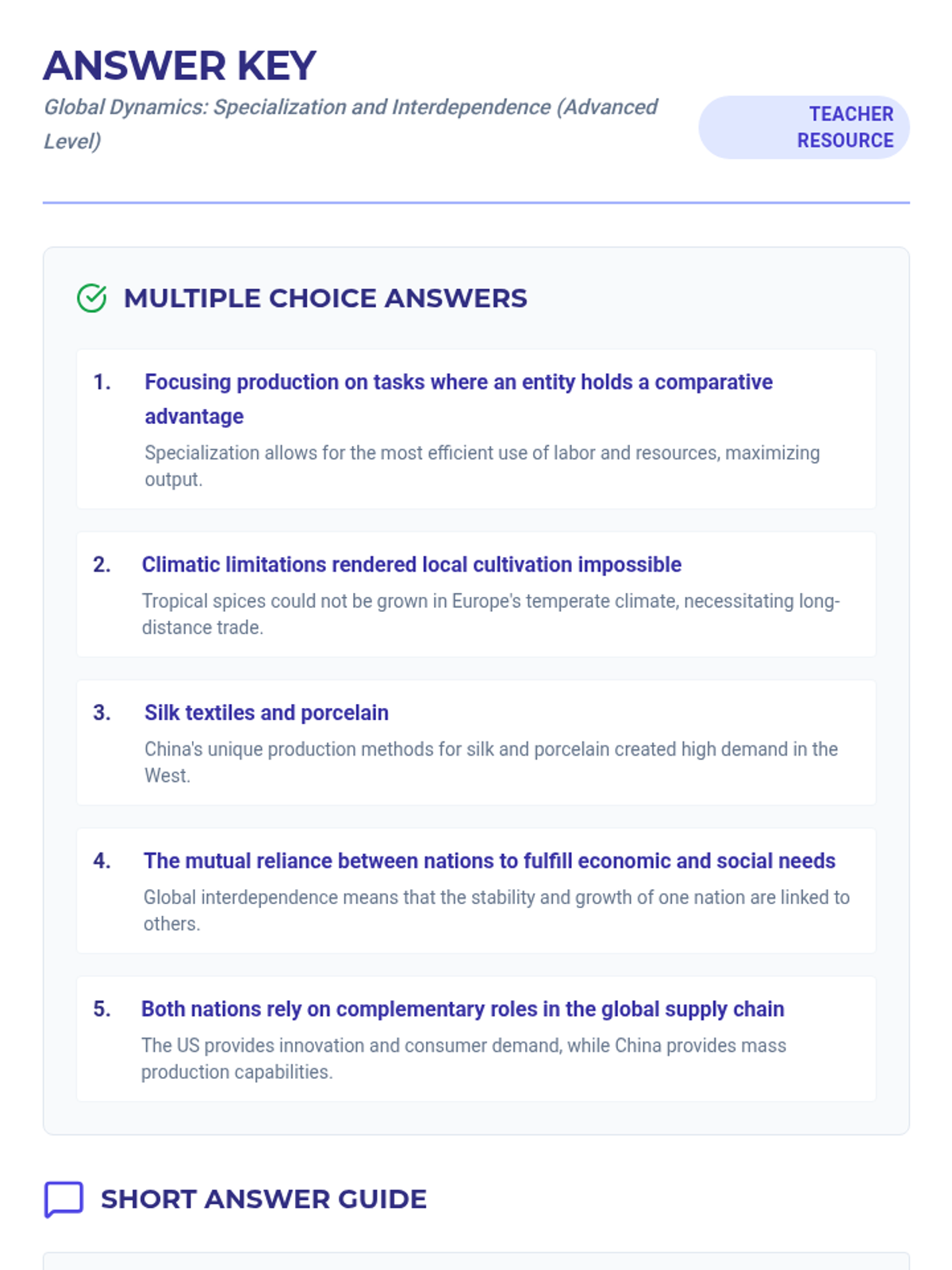
This lesson introduces students to the concepts of specialization, trade, and economic interdependence using historical and modern examples. Students will explore how individuals and nations rely on each other to fulfill their needs and wants.
A review of the unit's key concepts and a final assessment on the shared characteristics and unique contributions of medieval civilizations.
Investigating the architecture, arts, and daily routines of people living in medieval castles, monasteries, and Japanese shrines.
A cross-cultural examination of medieval technology, from agricultural tools to navigational instruments and architectural marvels.
A look at the thriving economy of the Islamic Empire through trade networks, the Silk Road, and the impact of the Crusades.
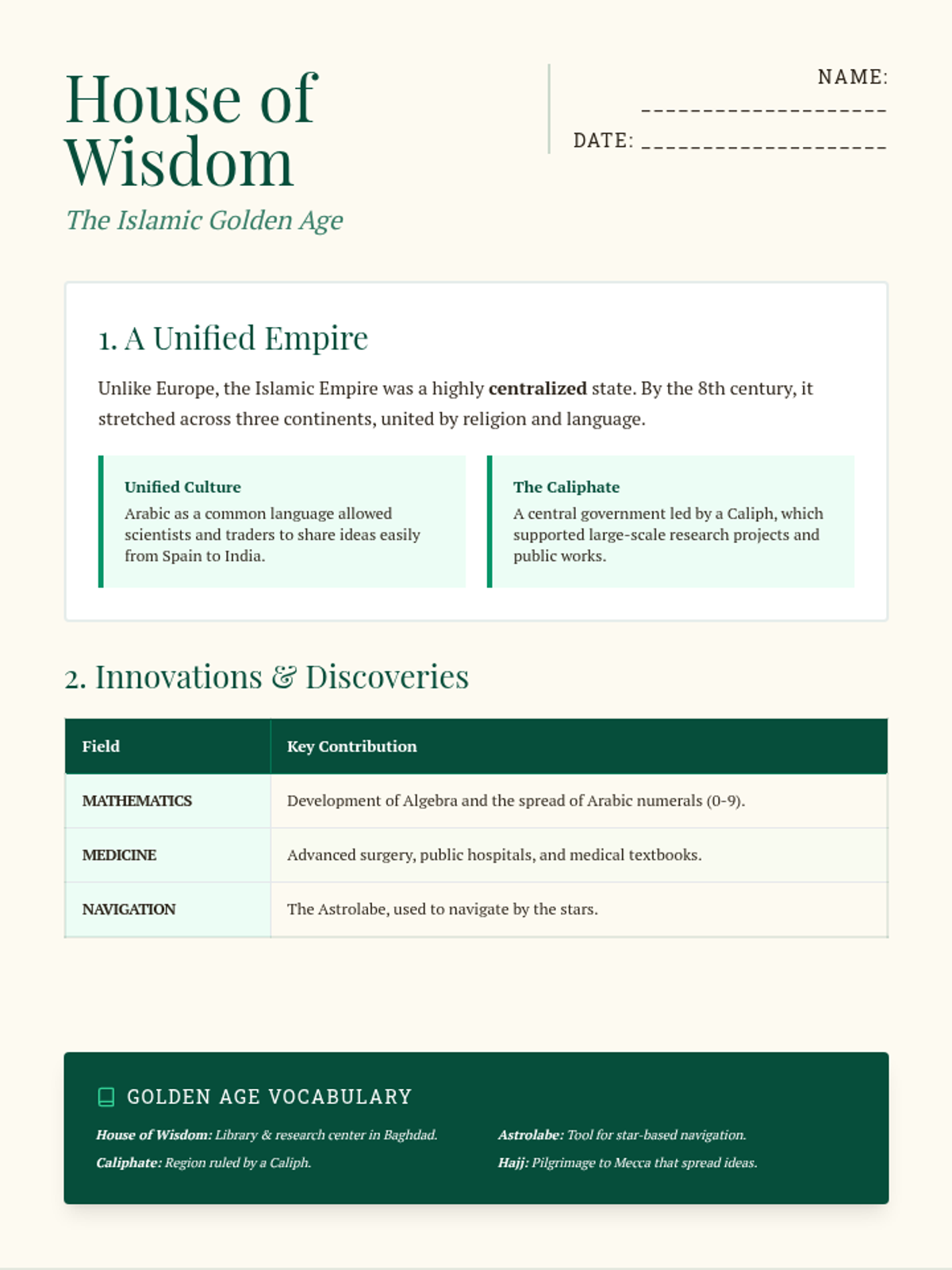
Exploring the Golden Age of the Islamic Empire, focusing on advancements in science, math, and the role of Islam in unifying a diverse caliphate.
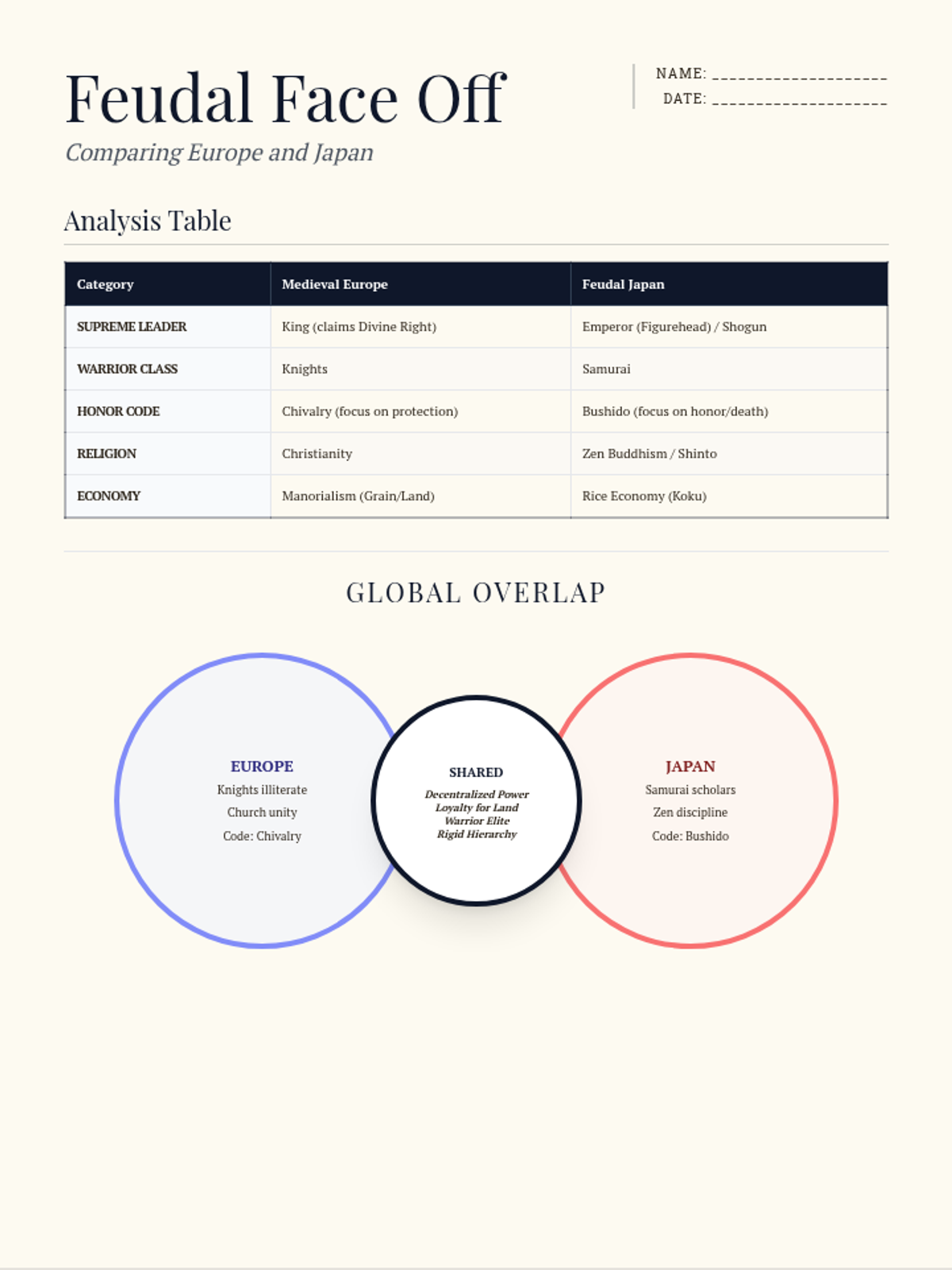
A comparative study of European and Japanese feudalism, highlighting similarities in social structures and differences in culture and technology.
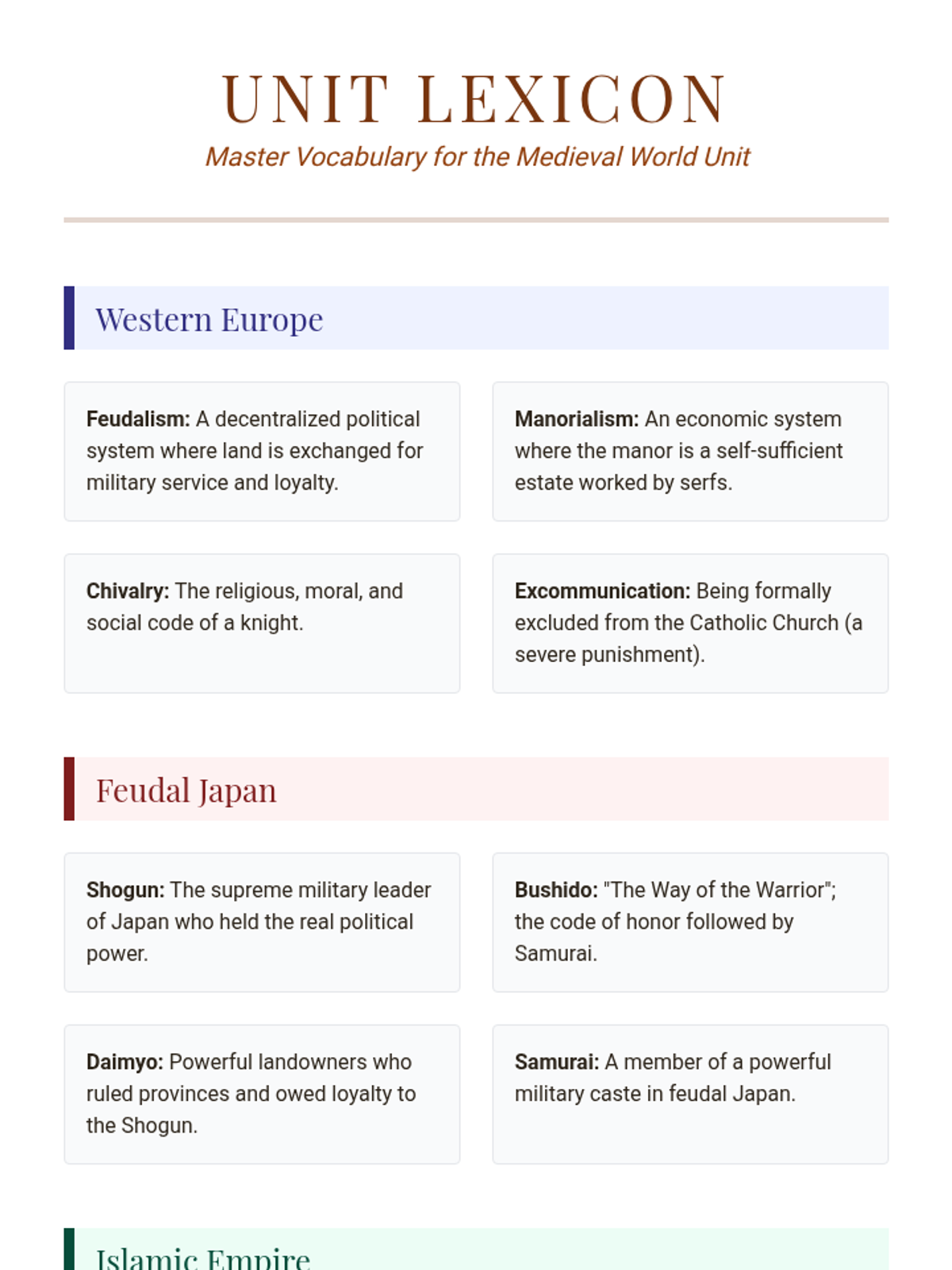
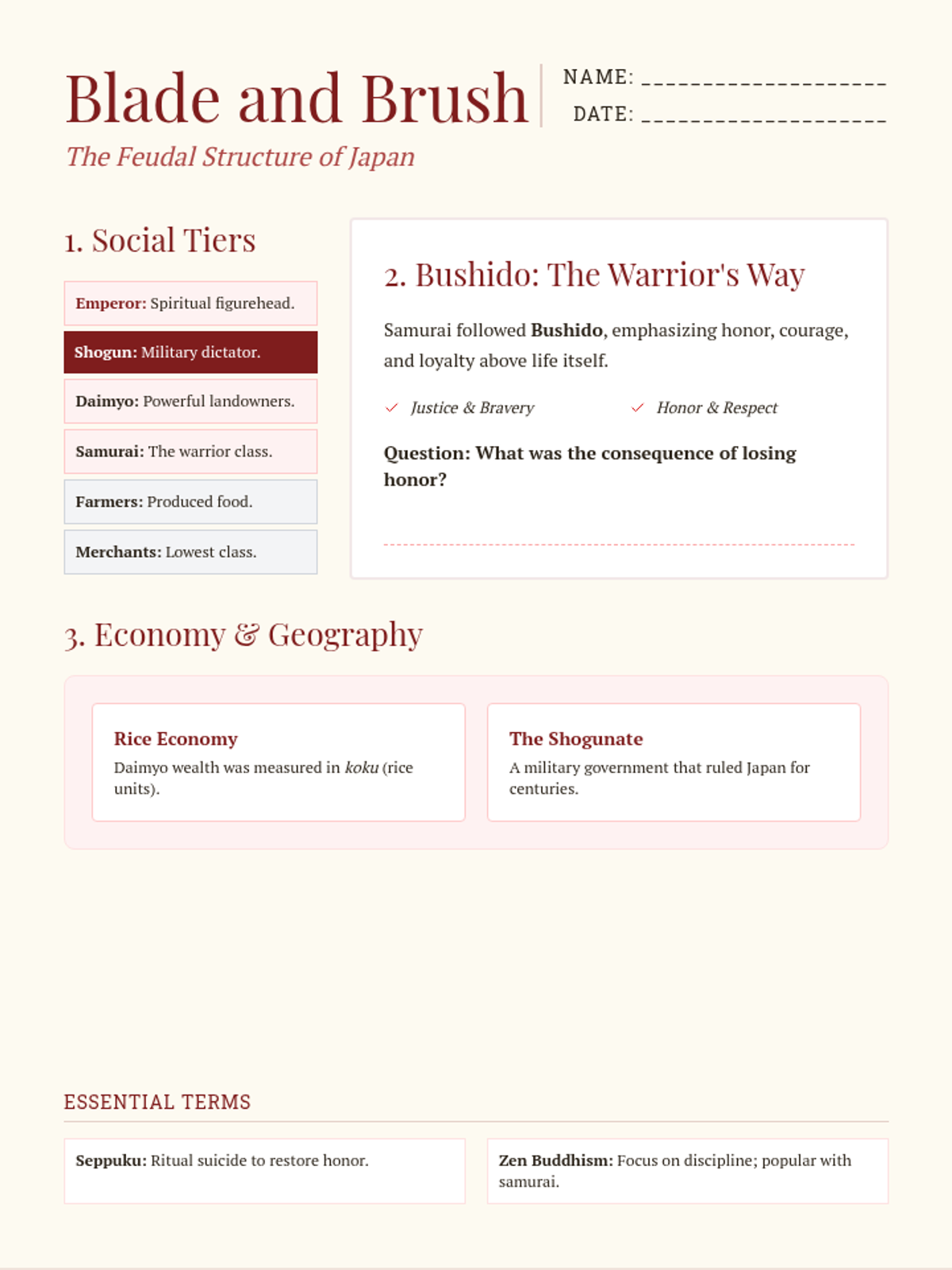
An analysis of Japan's feudal government, the role of the Shogun, and the code of the Samurai.
A deep dive into the influence of the Roman Catholic Church on medieval European society, politics, and daily life.
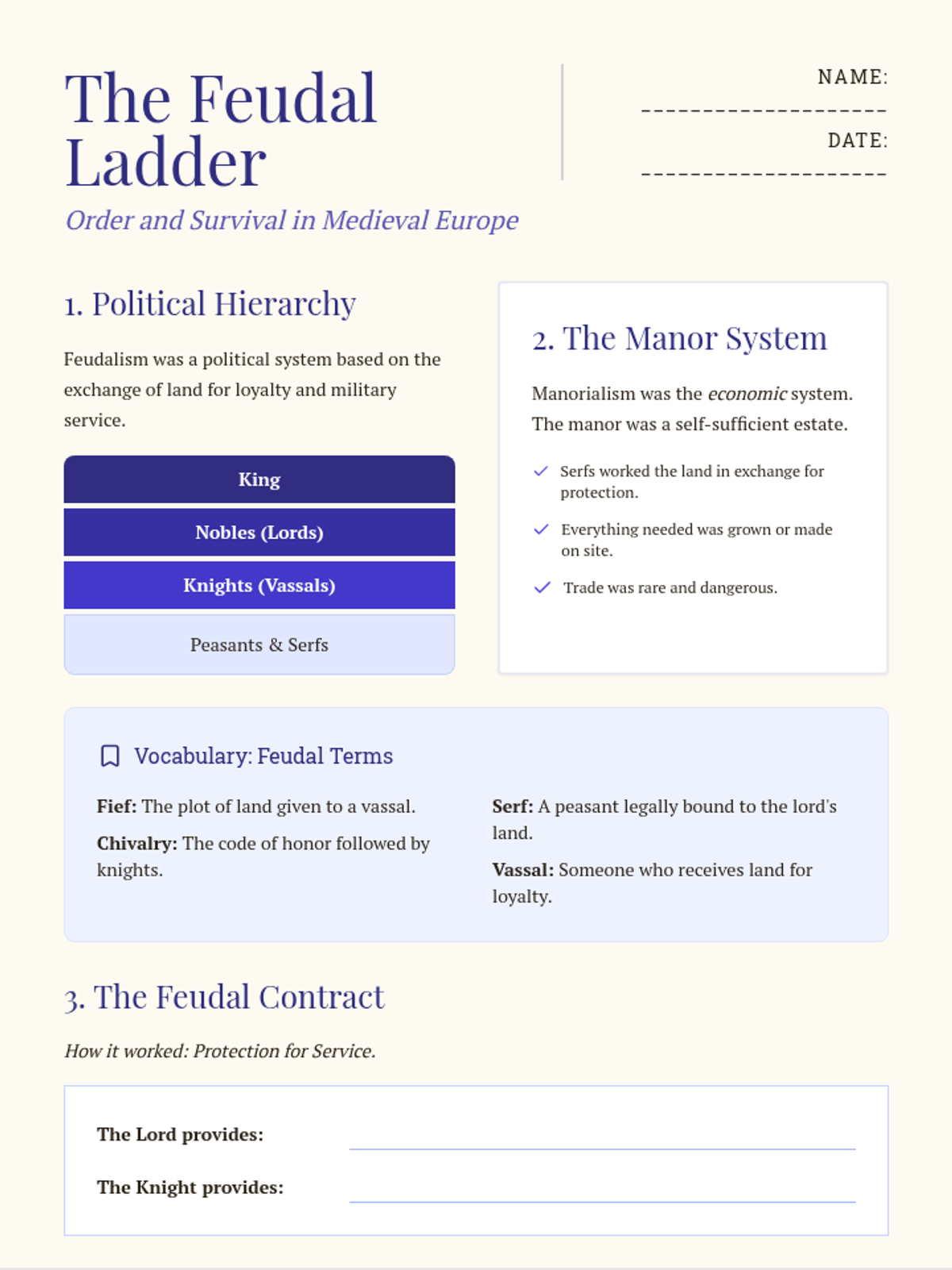
An exploration of the feudal system and manorialism in Western Europe, focusing on the social hierarchy and agrarian economy.
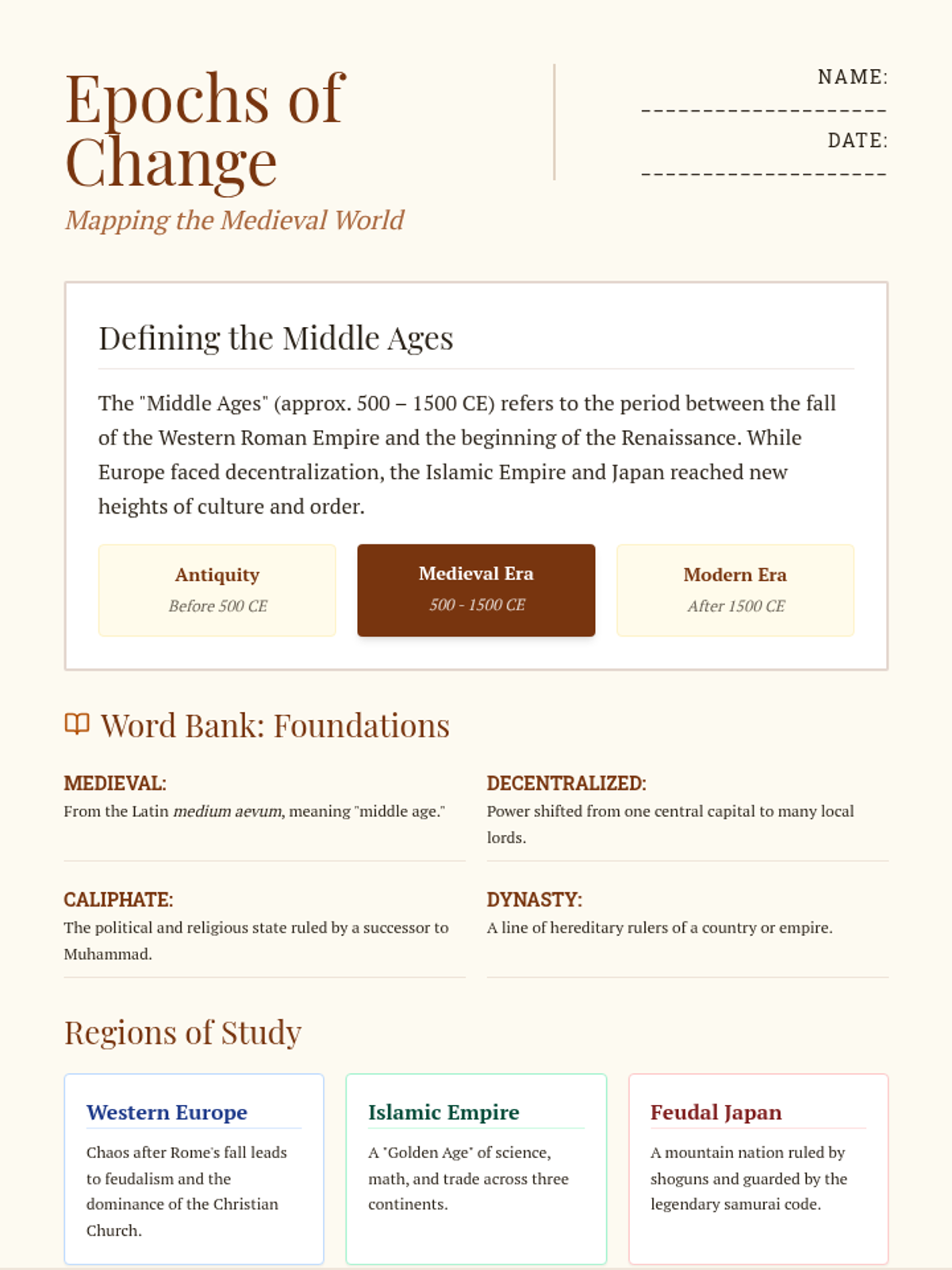
An introduction to the global Middle Ages, defining the time period and setting the stage for the rise of regional powers in Europe, Japan, and the Islamic world.
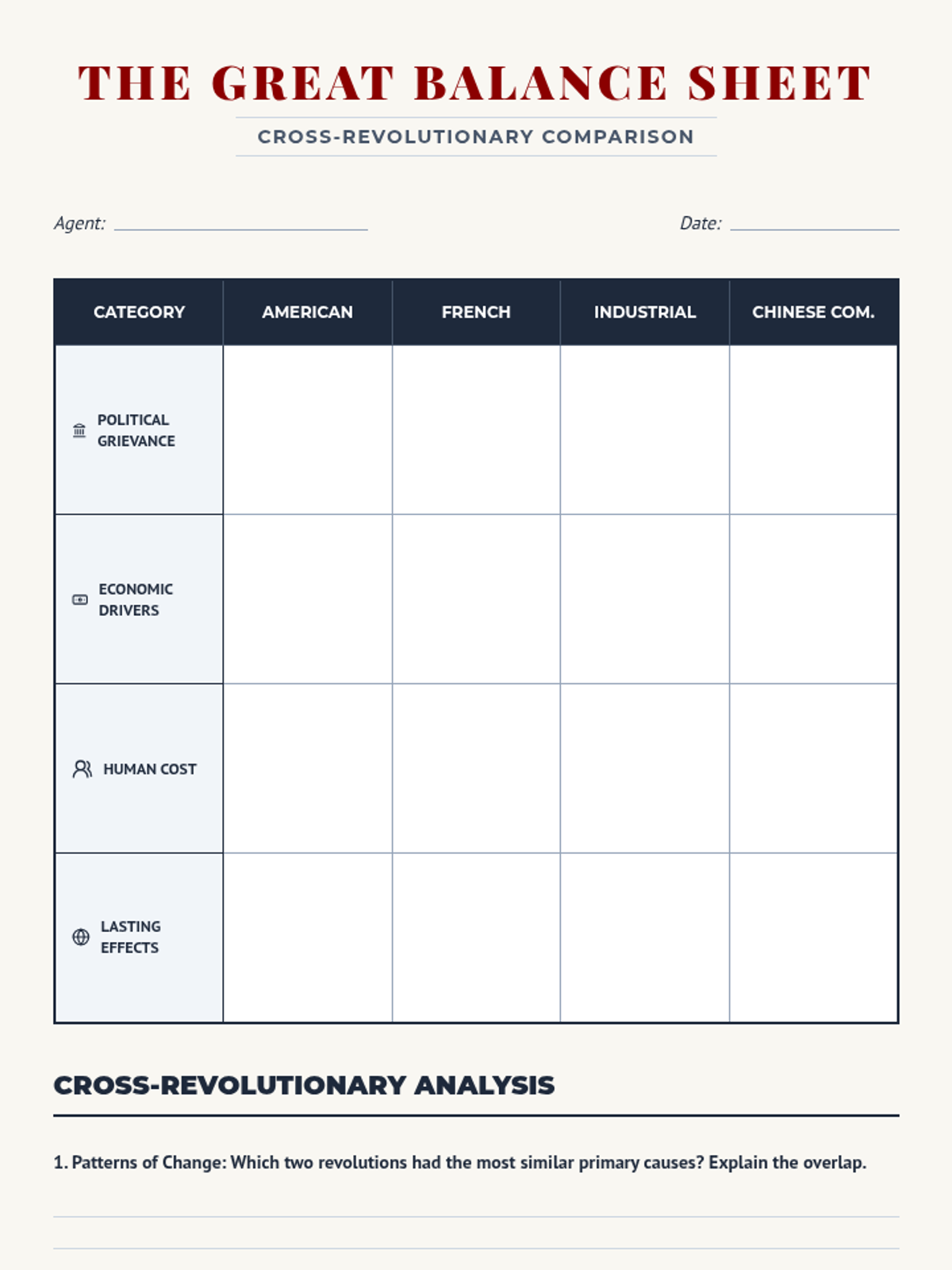
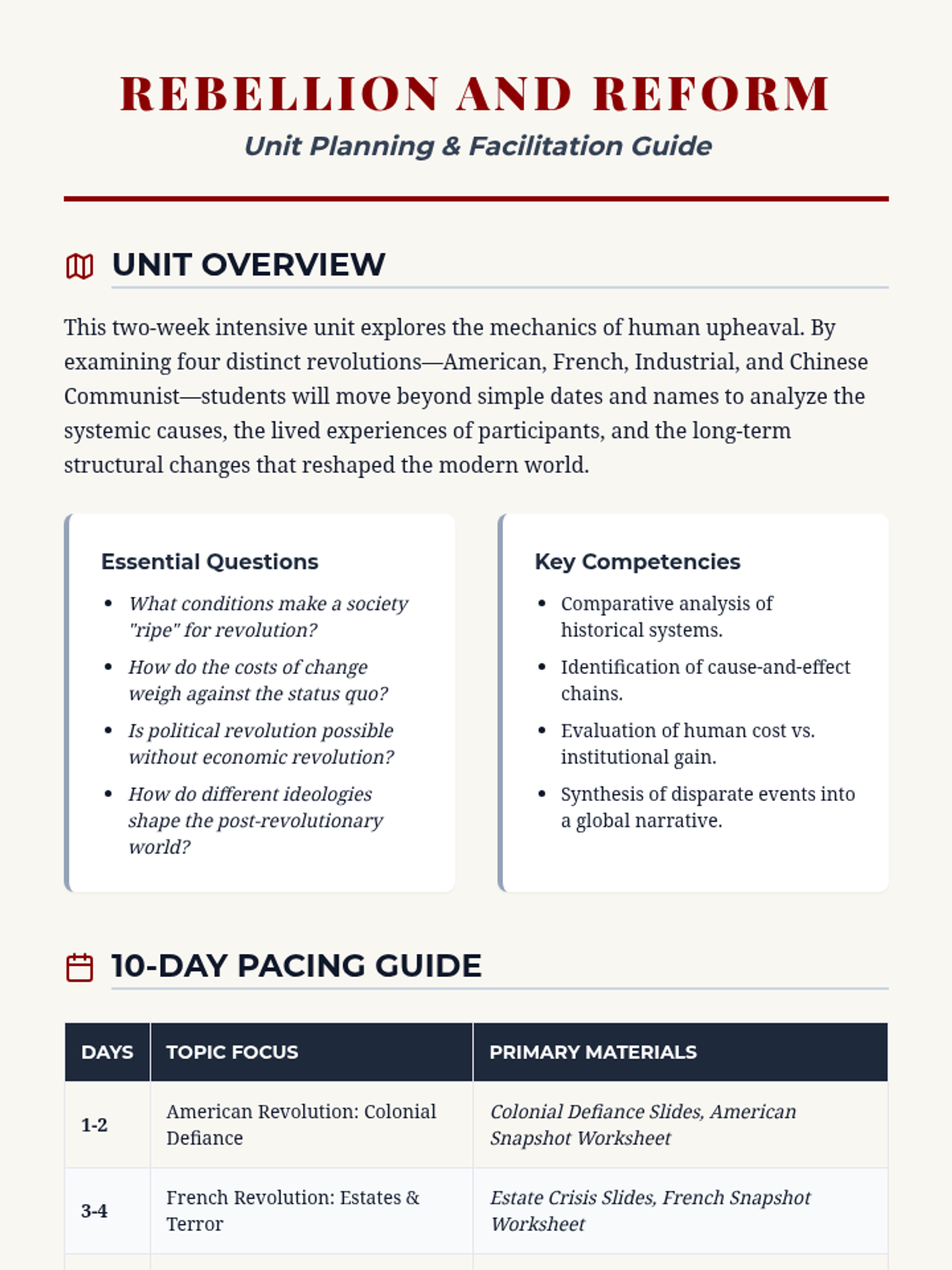
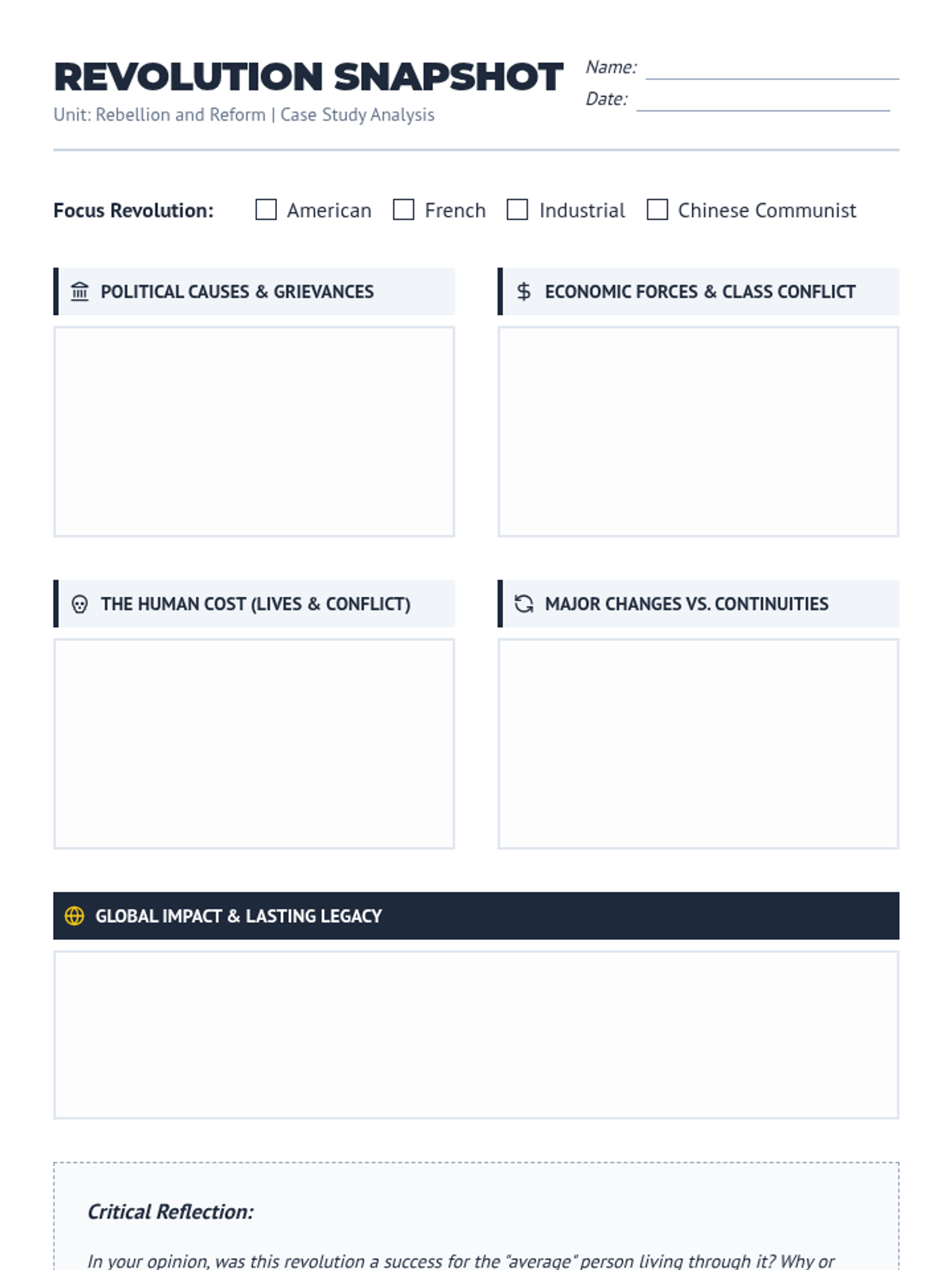
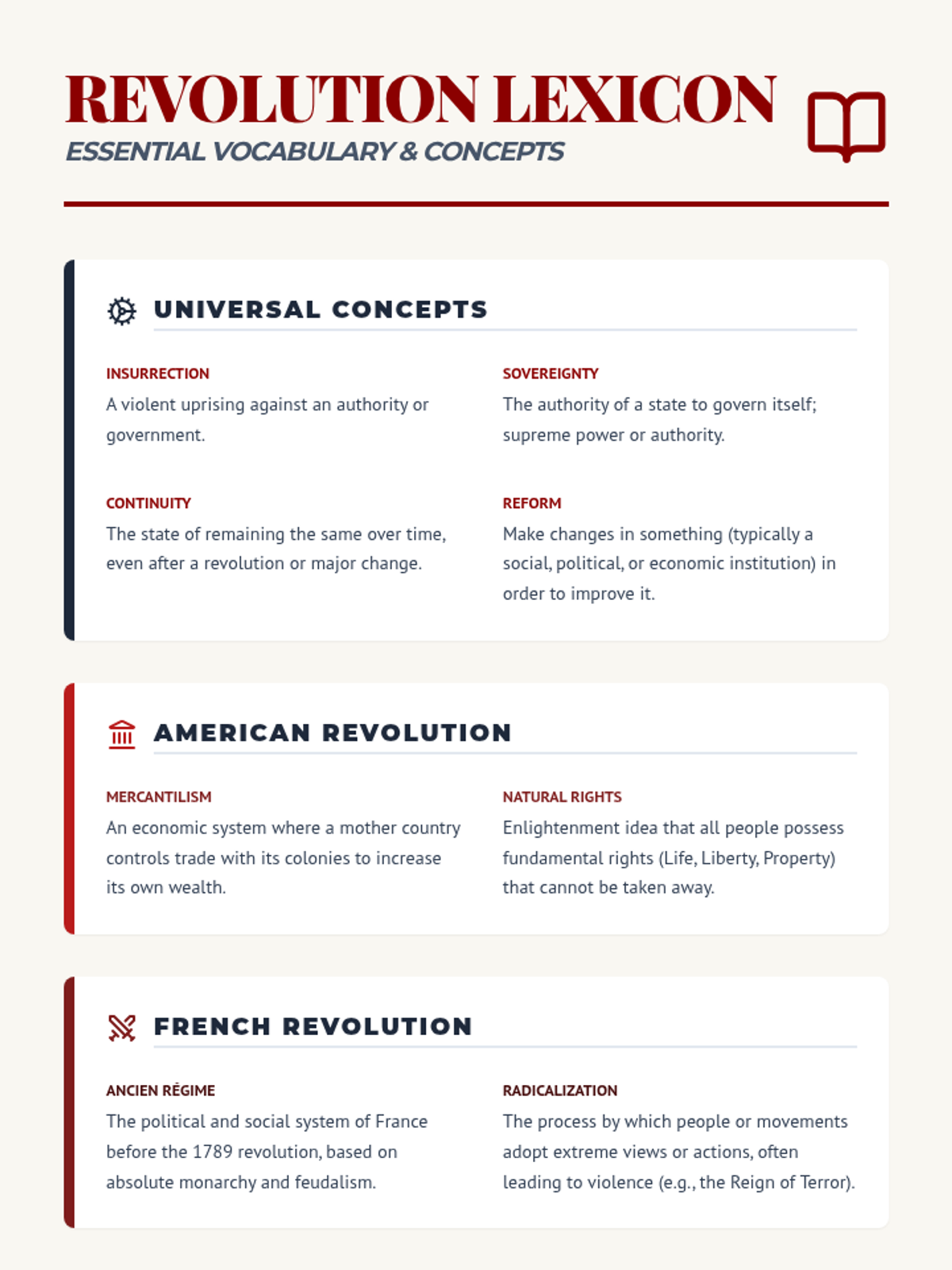
A synthesis lesson where students compare and contrast all four revolutions using comprehensive graphic organizers and critical thinking prompts.
Traces the fall of the Qing Dynasty, the rise of Mao Zedong, and the radical restructuring of Chinese society under Communism.
Explores the shift from agrarian economies to manufacturing hubs, the rise of urbanization, and the profound social changes of the 18th and 19th centuries.
Analyzes the collapse of the Ancien Régime, the radical transformation of French society, and the rise of Napoleon Bonaparte.
Examines the political and economic grievances of the 13 colonies, the ideological shift toward democracy, and the establishment of the United States.
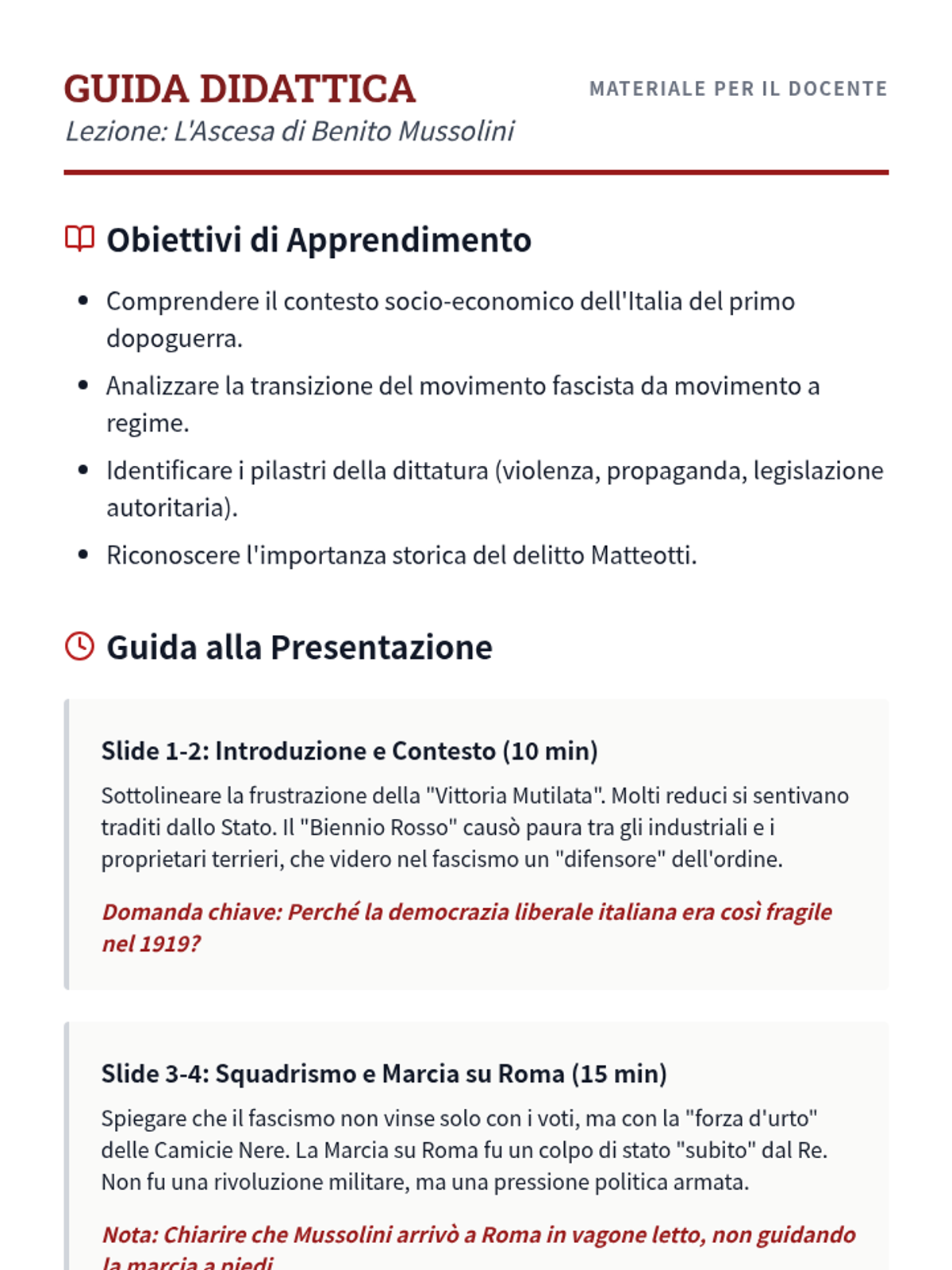
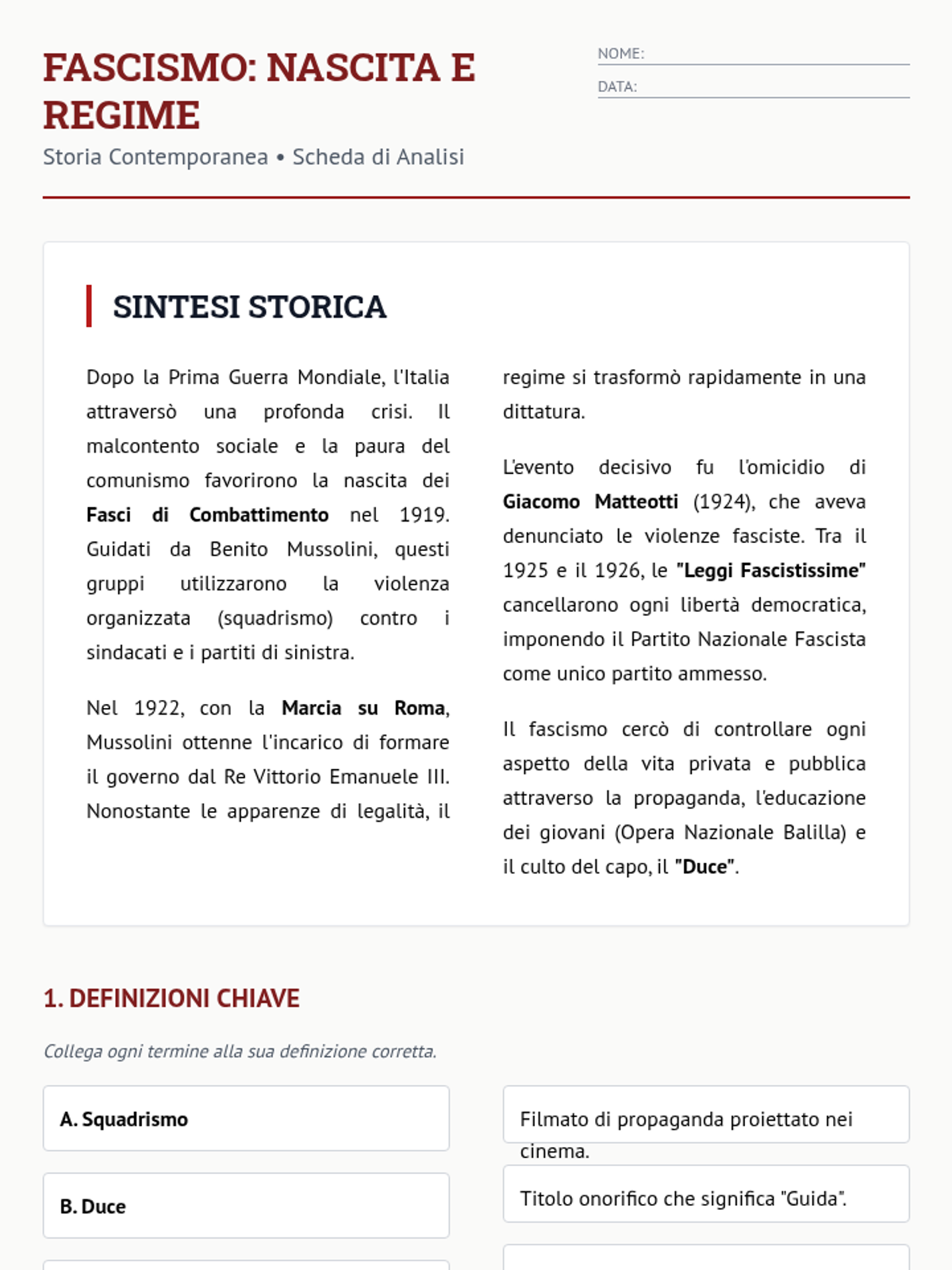
Una lezione approfondita sull'ascesa di Benito Mussolini, il consolidamento del regime fascista e l'impatto della sua dittatura sull'Italia e sul mondo.
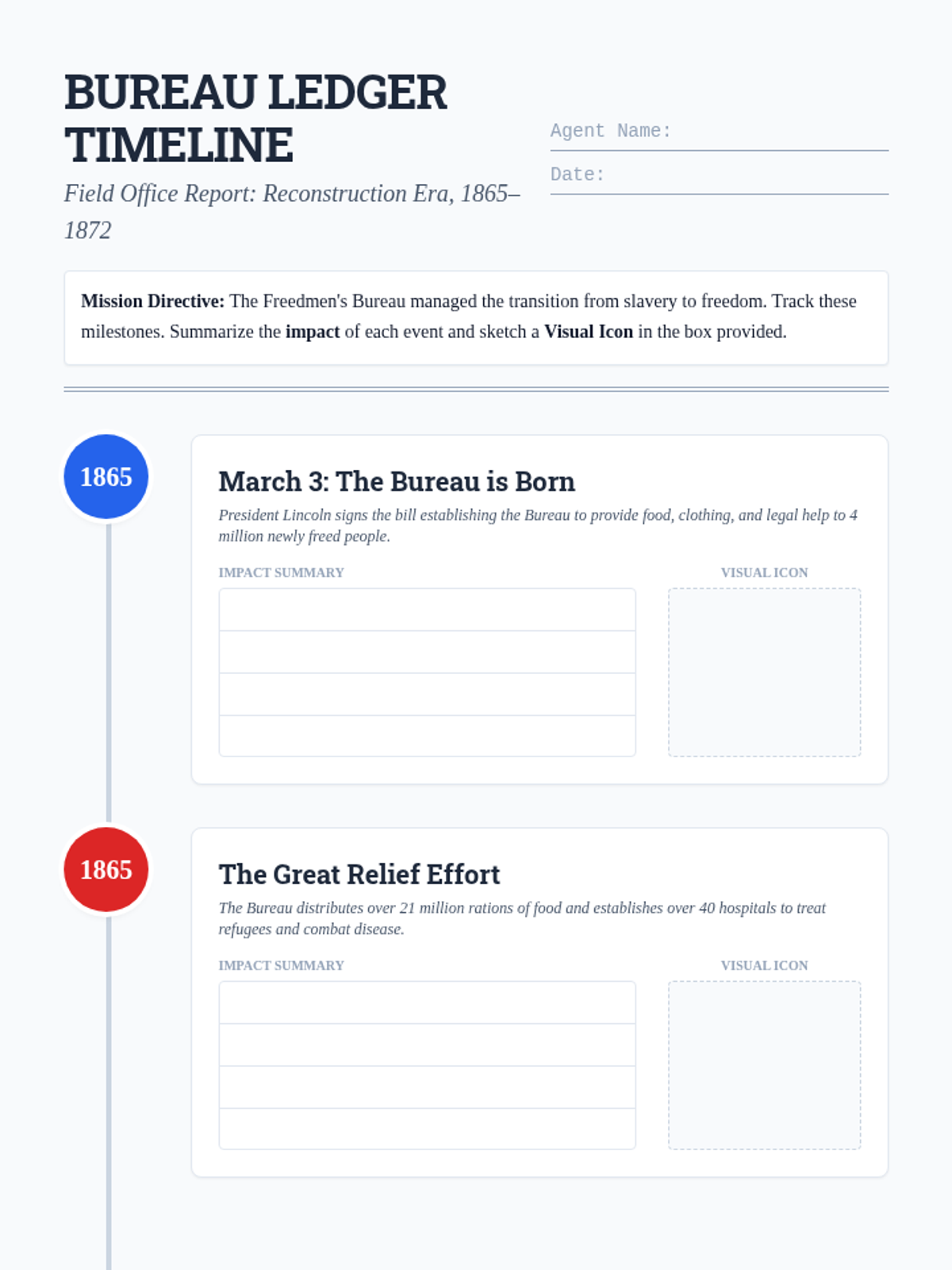
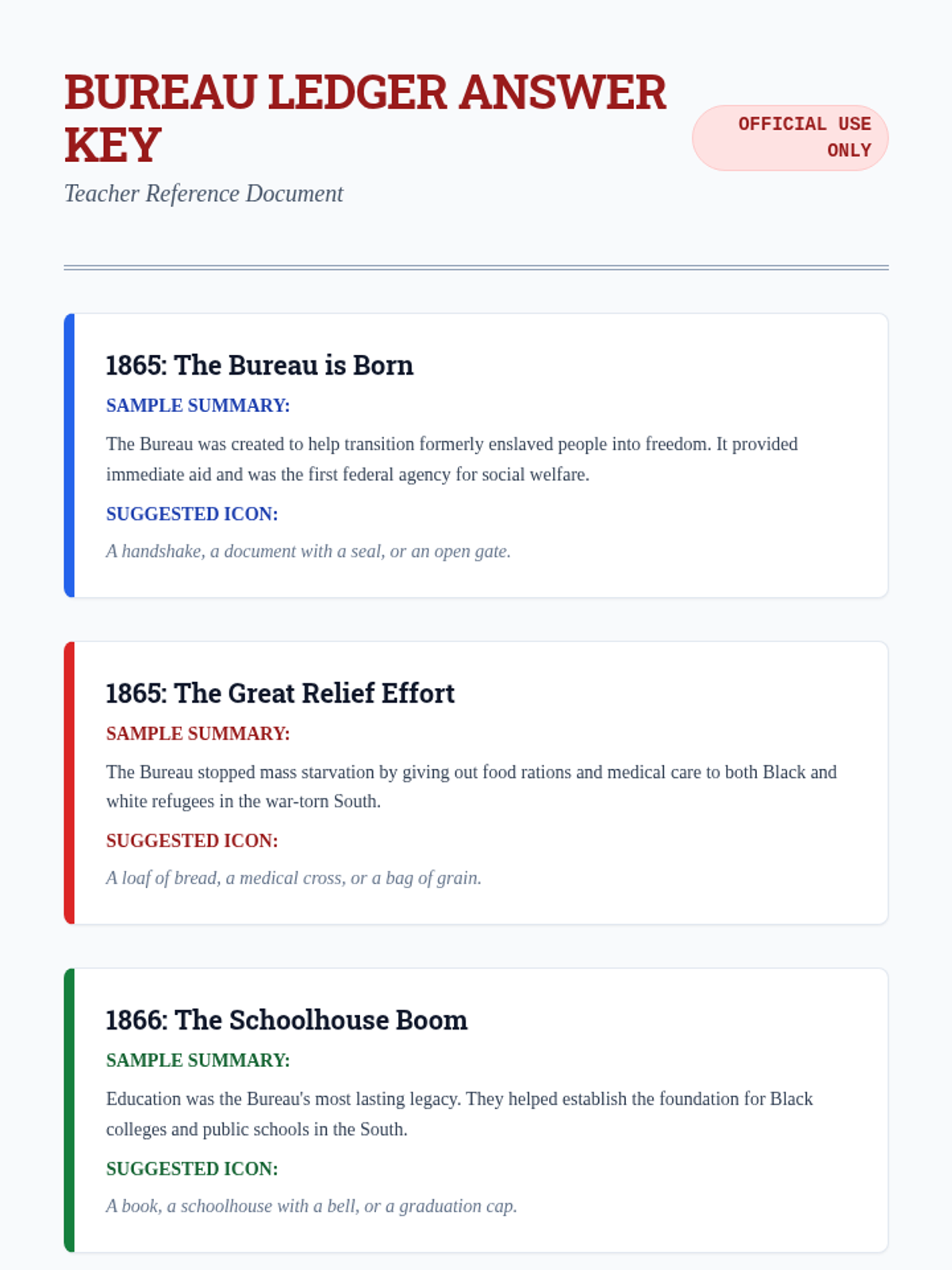
A lesson exploring the impact of the Freedmen's Bureau during the Reconstruction Era through a visual timeline and primary source analysis.
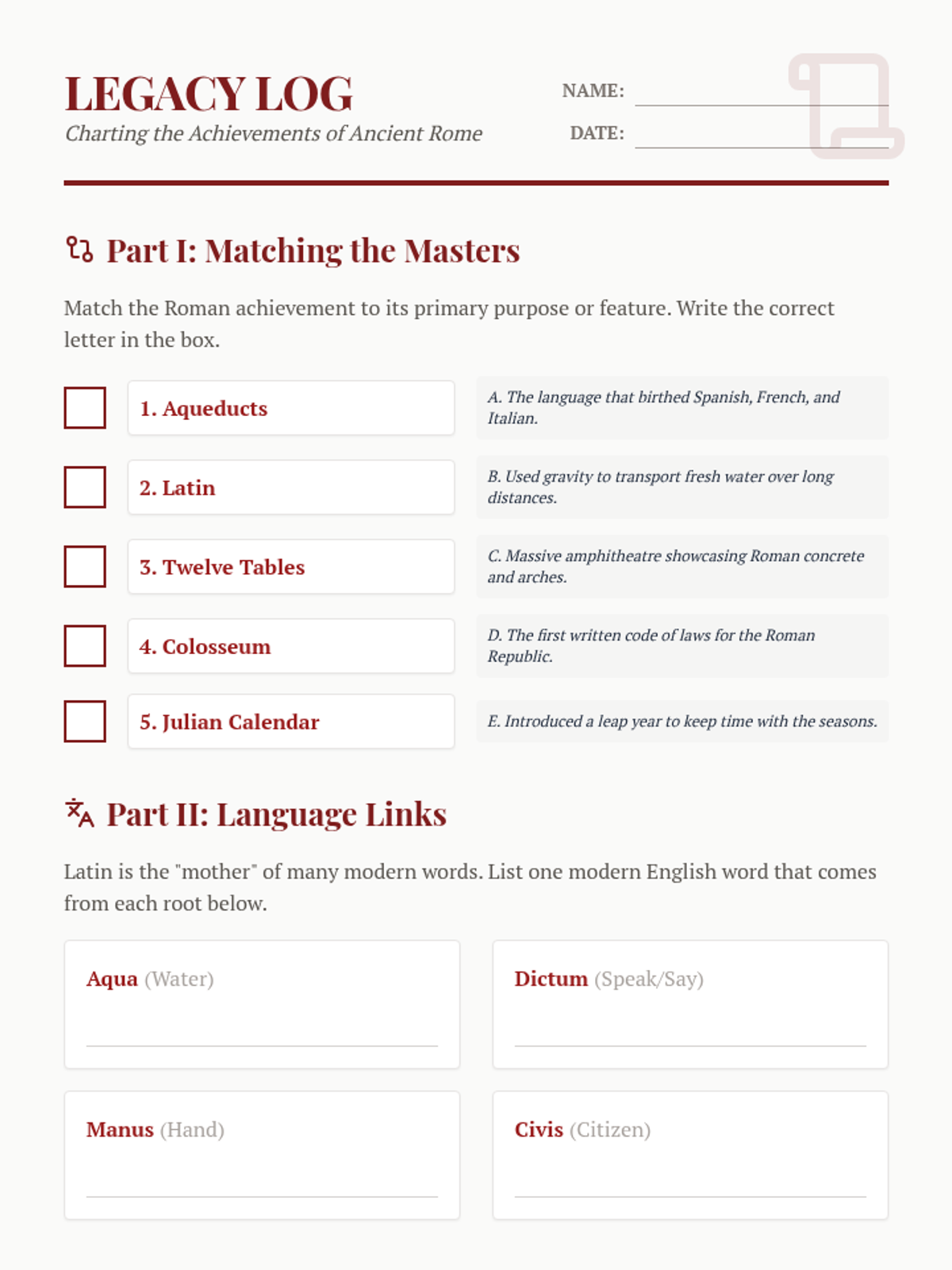
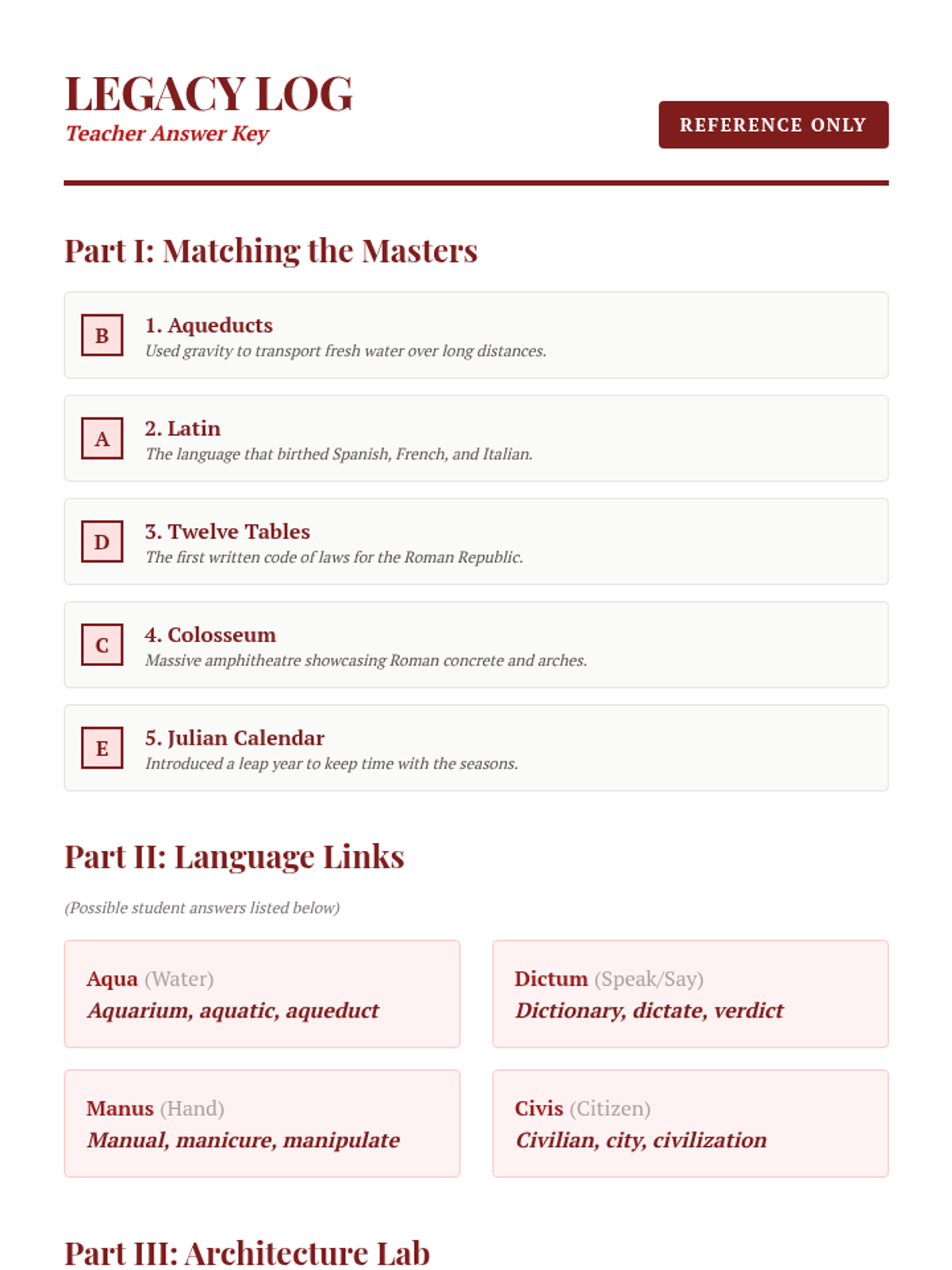
Explore the monumental achievements of Ancient Rome in engineering, architecture, language, and science, and discover how they continue to influence our world today.