Students become meteorologists to investigate air pressure, temperature, and moisture. They simulate fronts and interpret weather maps to understand the Earth's atmospheric systems.
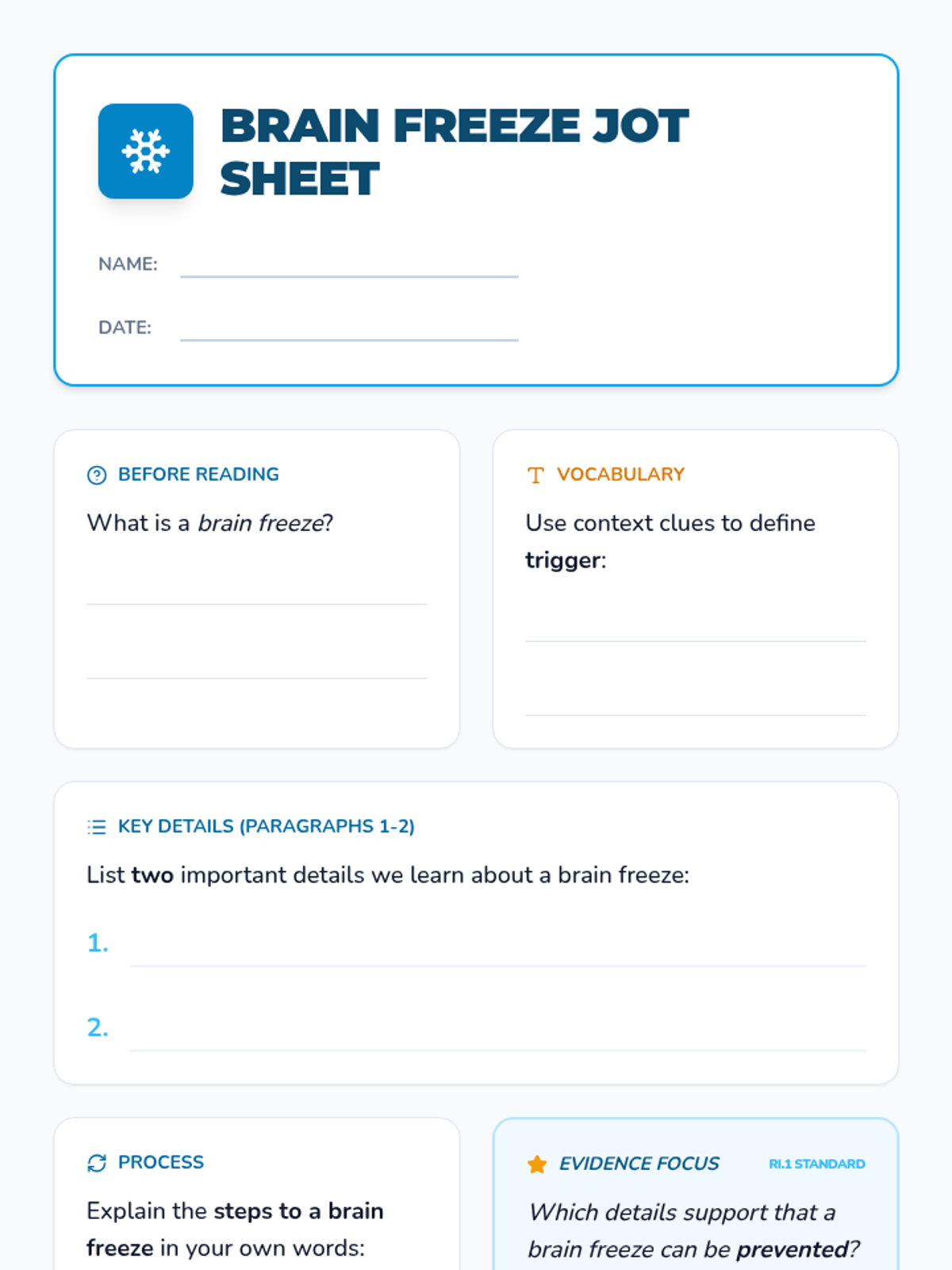
A comprehensive lesson exploring the scientific causes, effects, and prevention of brain freeze (ice cream headaches). Students read an informational text, analyze evidence, and understand the biological protection mechanisms of the brain.
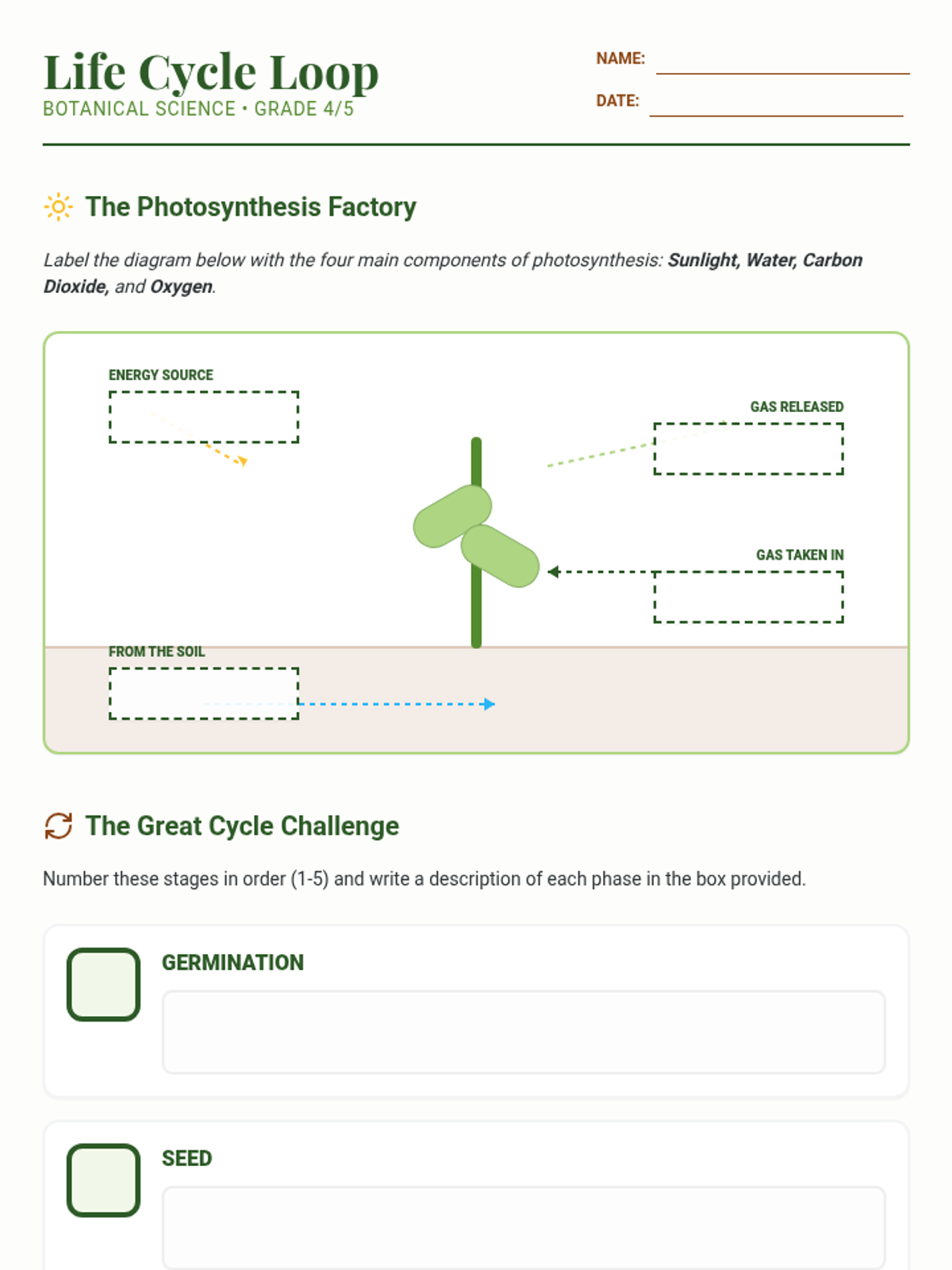
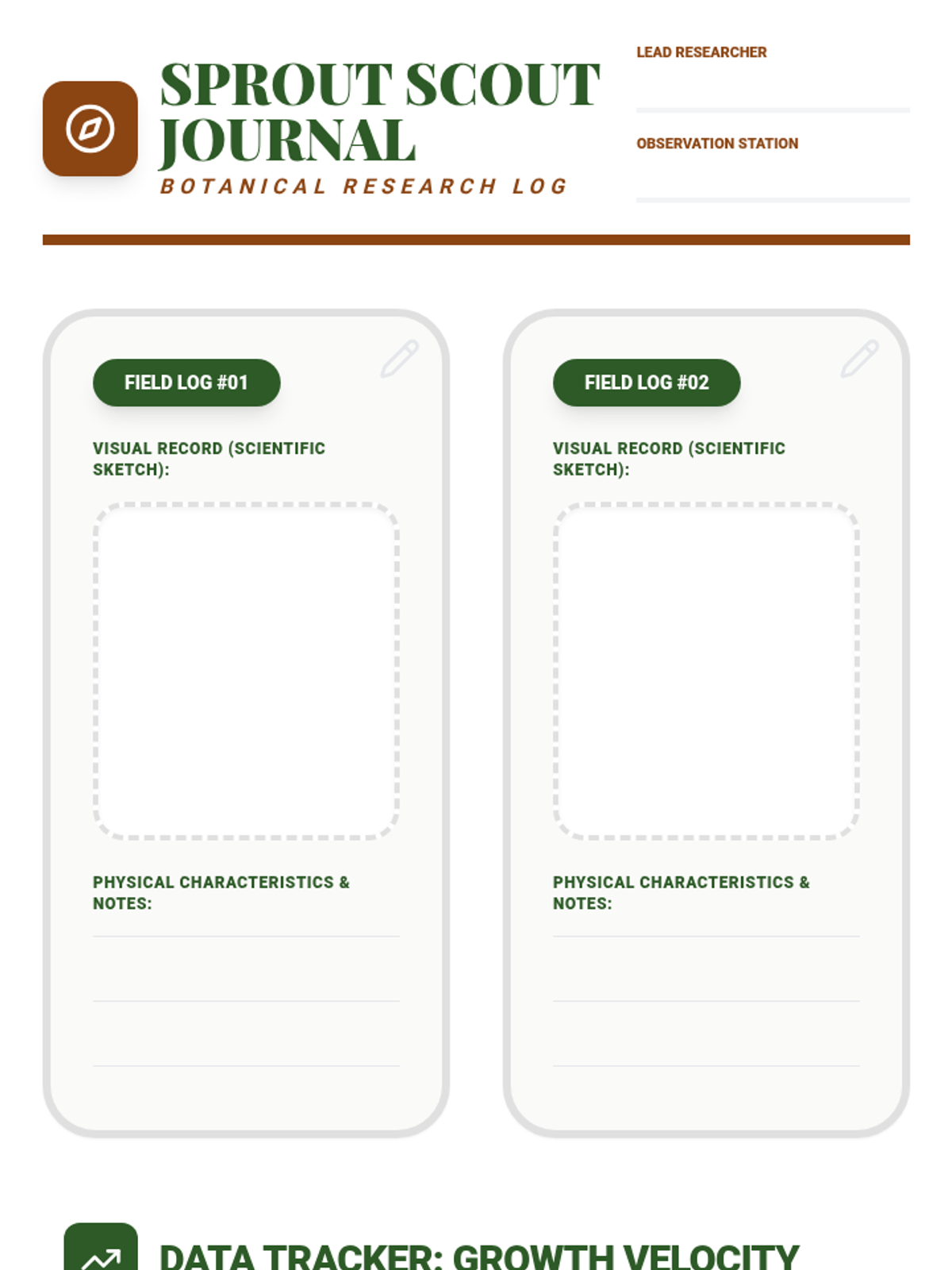
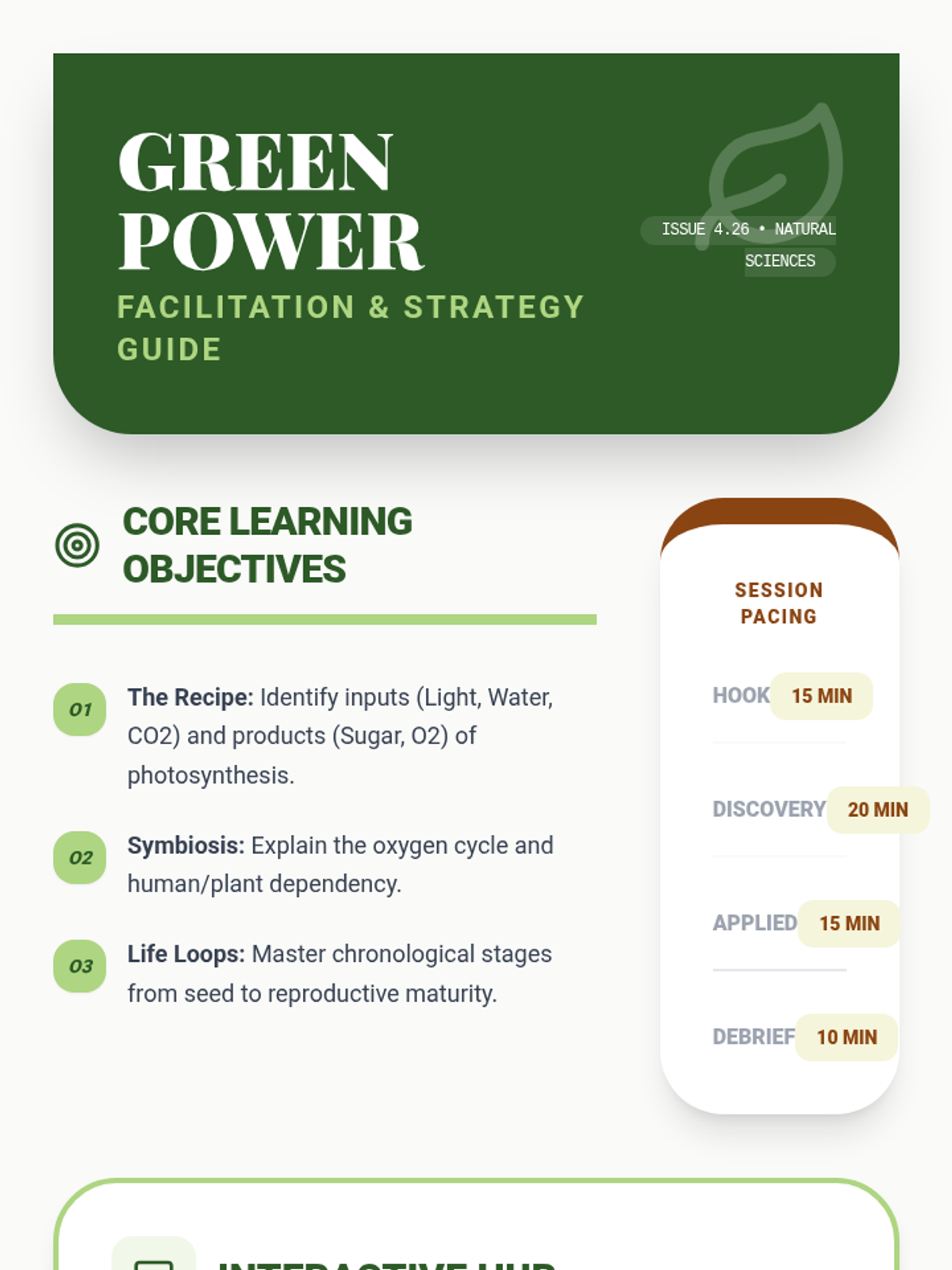
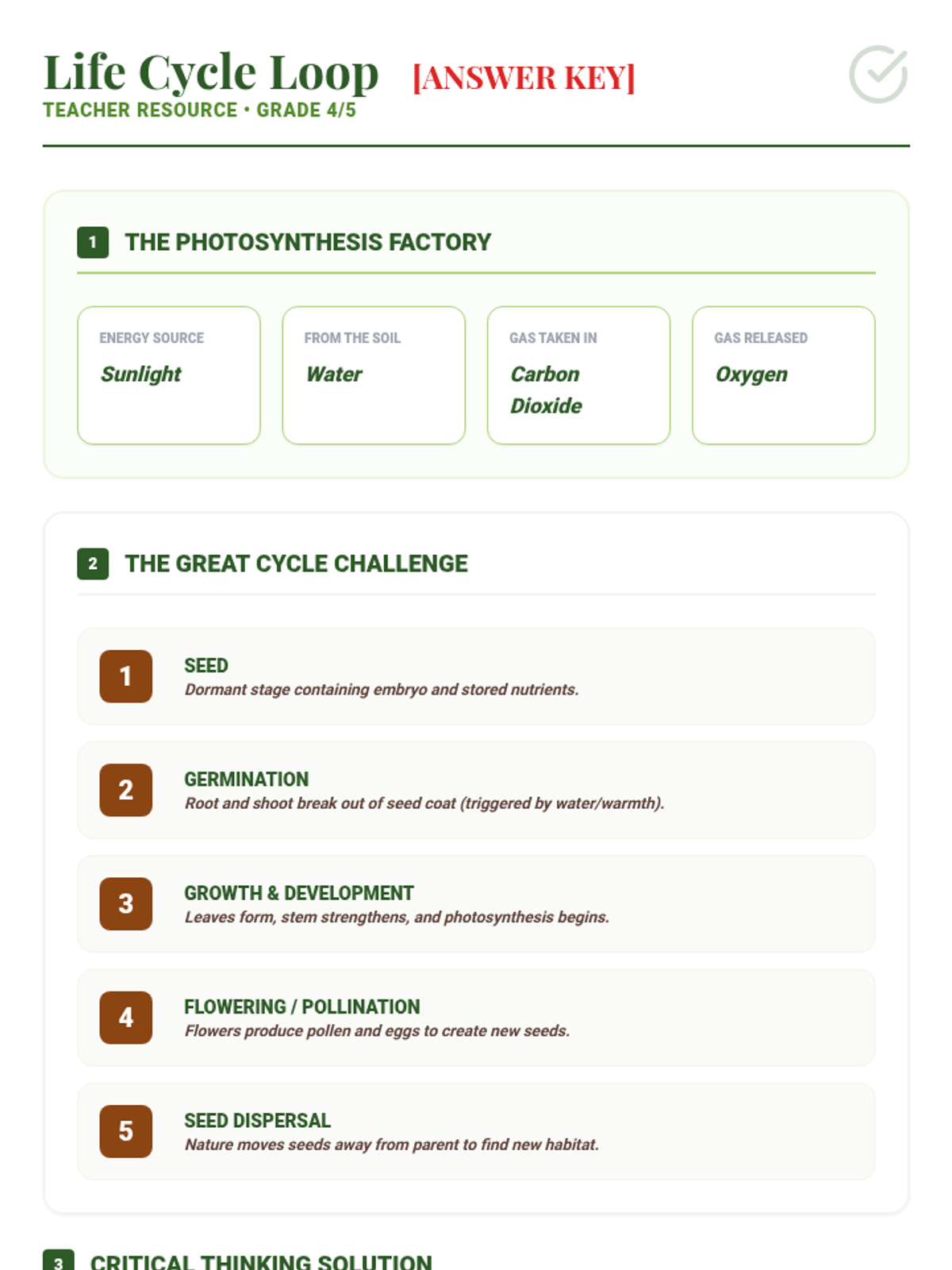
A comprehensive exploration of photosynthesis and plant life cycles designed for Grade 4/5 students. Students will learn how plants harness solar energy to create food and follow the developmental stages of a plant from seed to maturity.
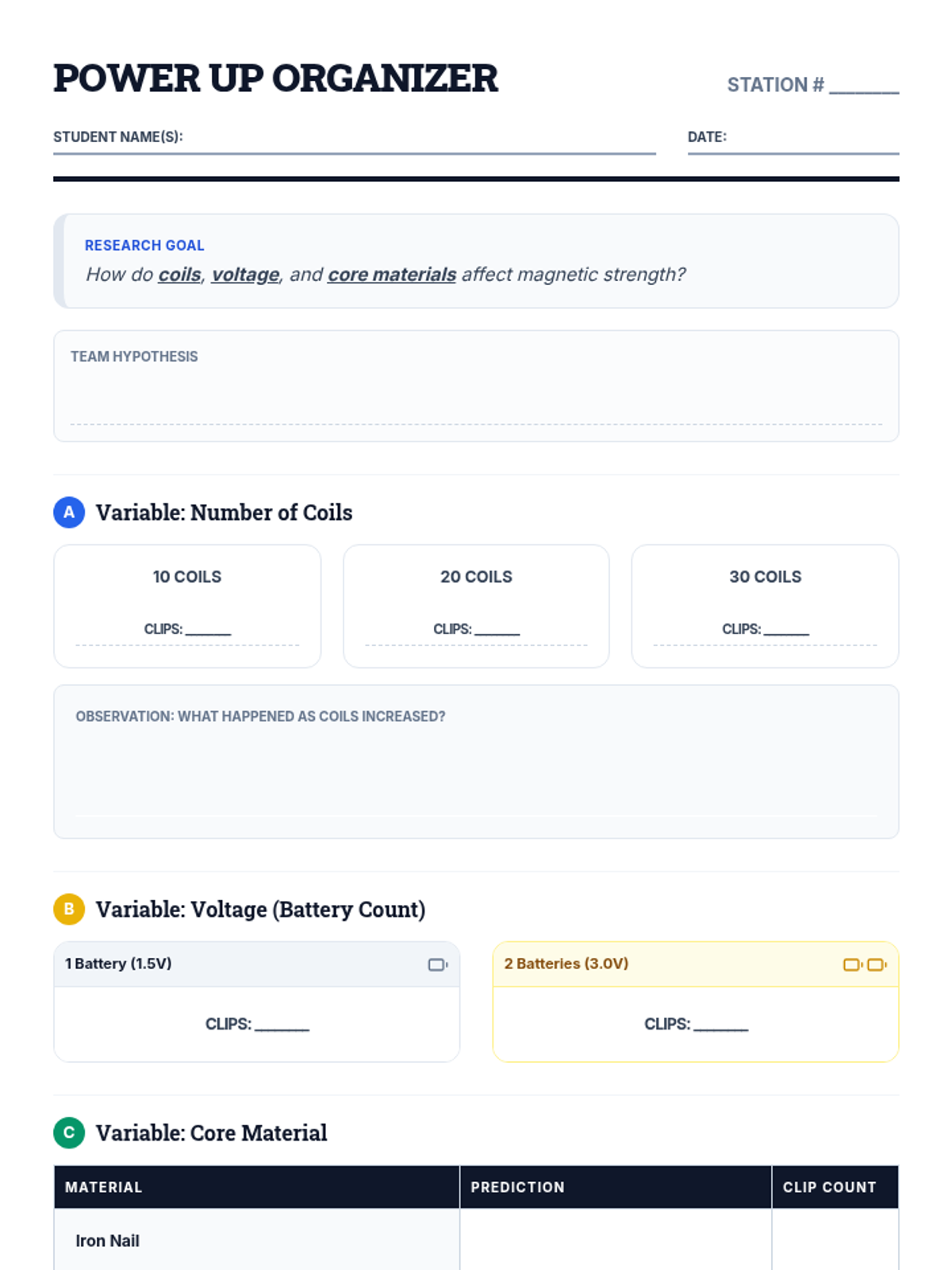
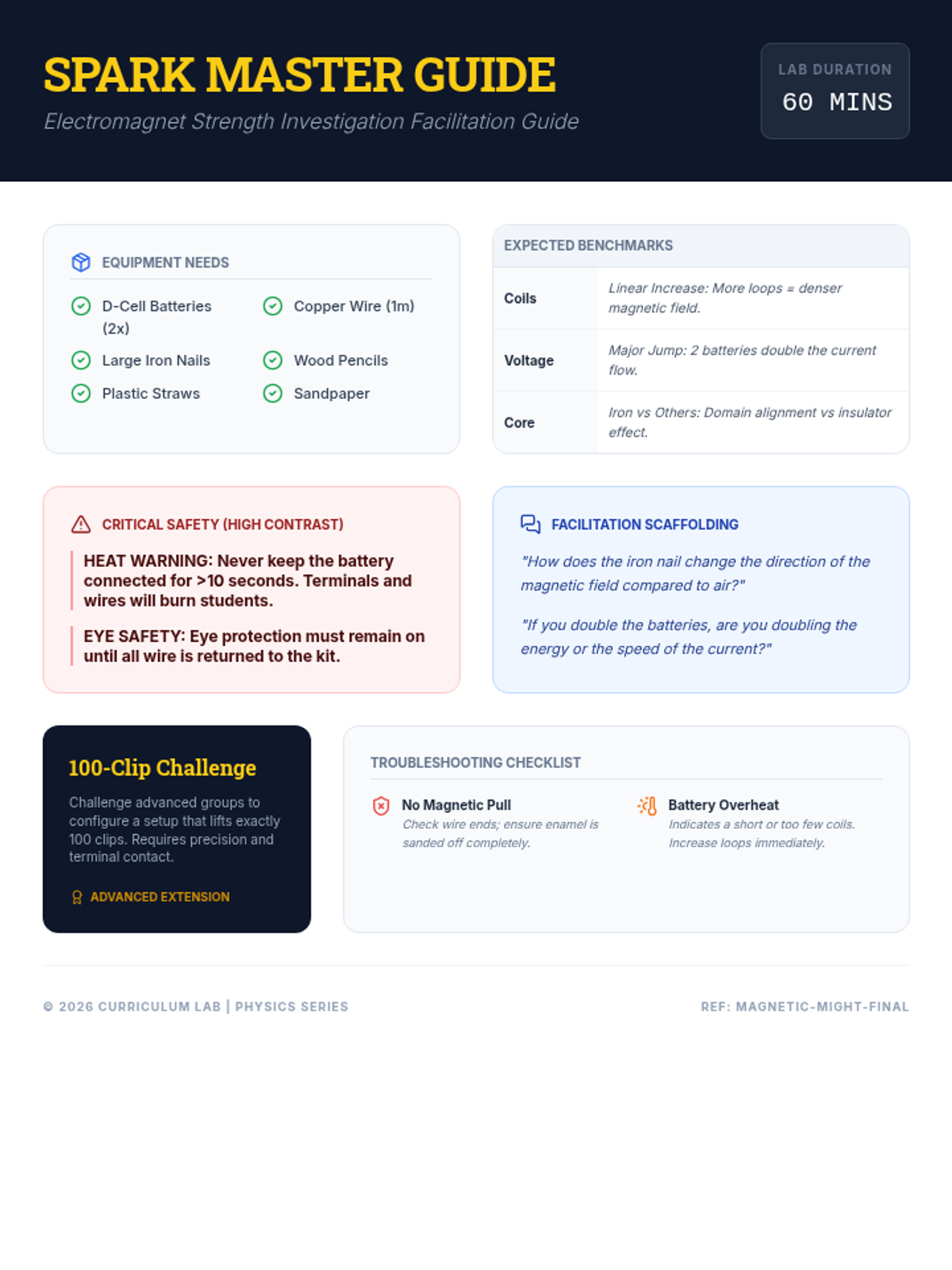
A hands-on laboratory investigation where students explore how varying wire coils, voltage, and core materials affect the strength of an electromagnet.
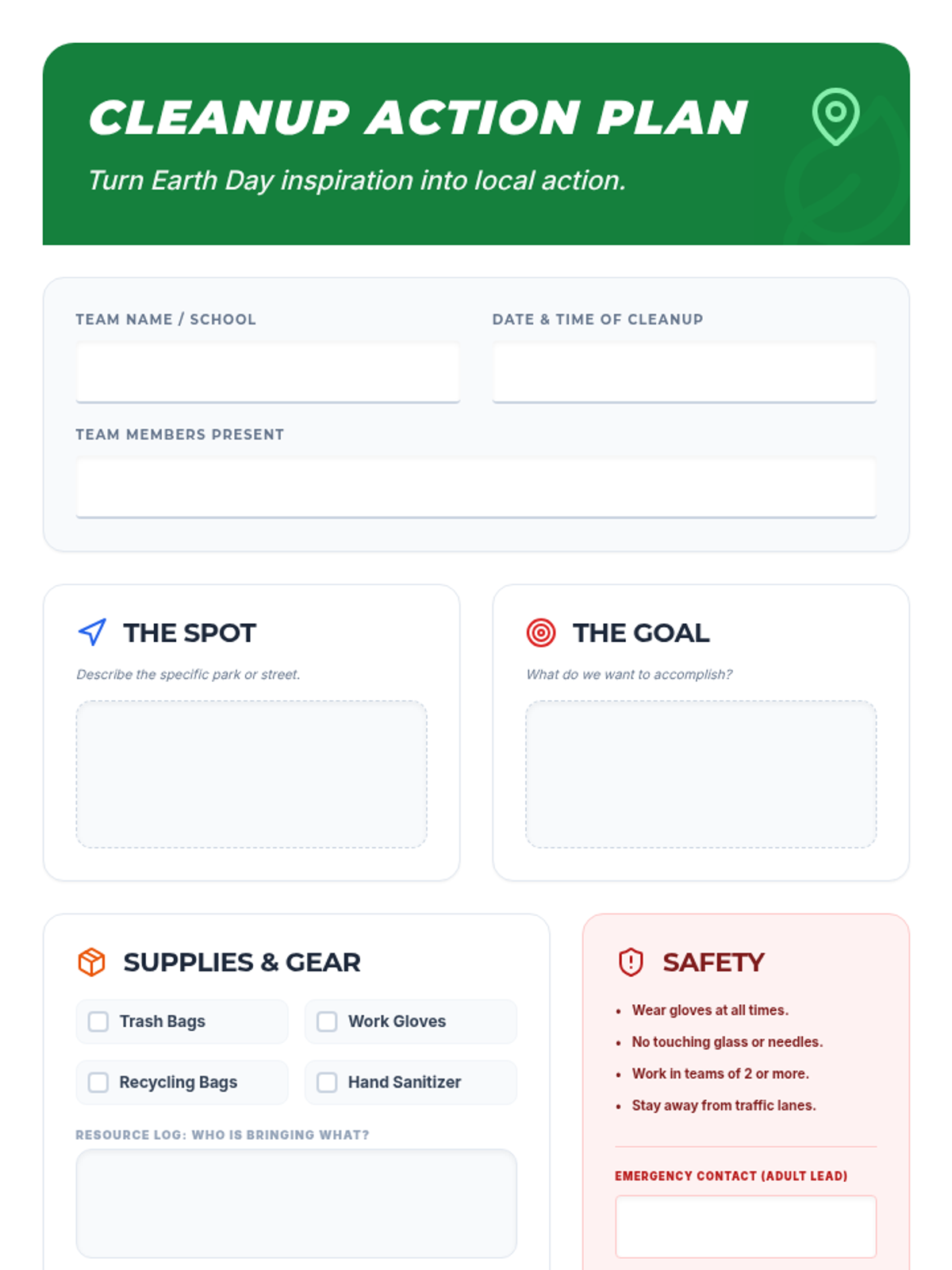
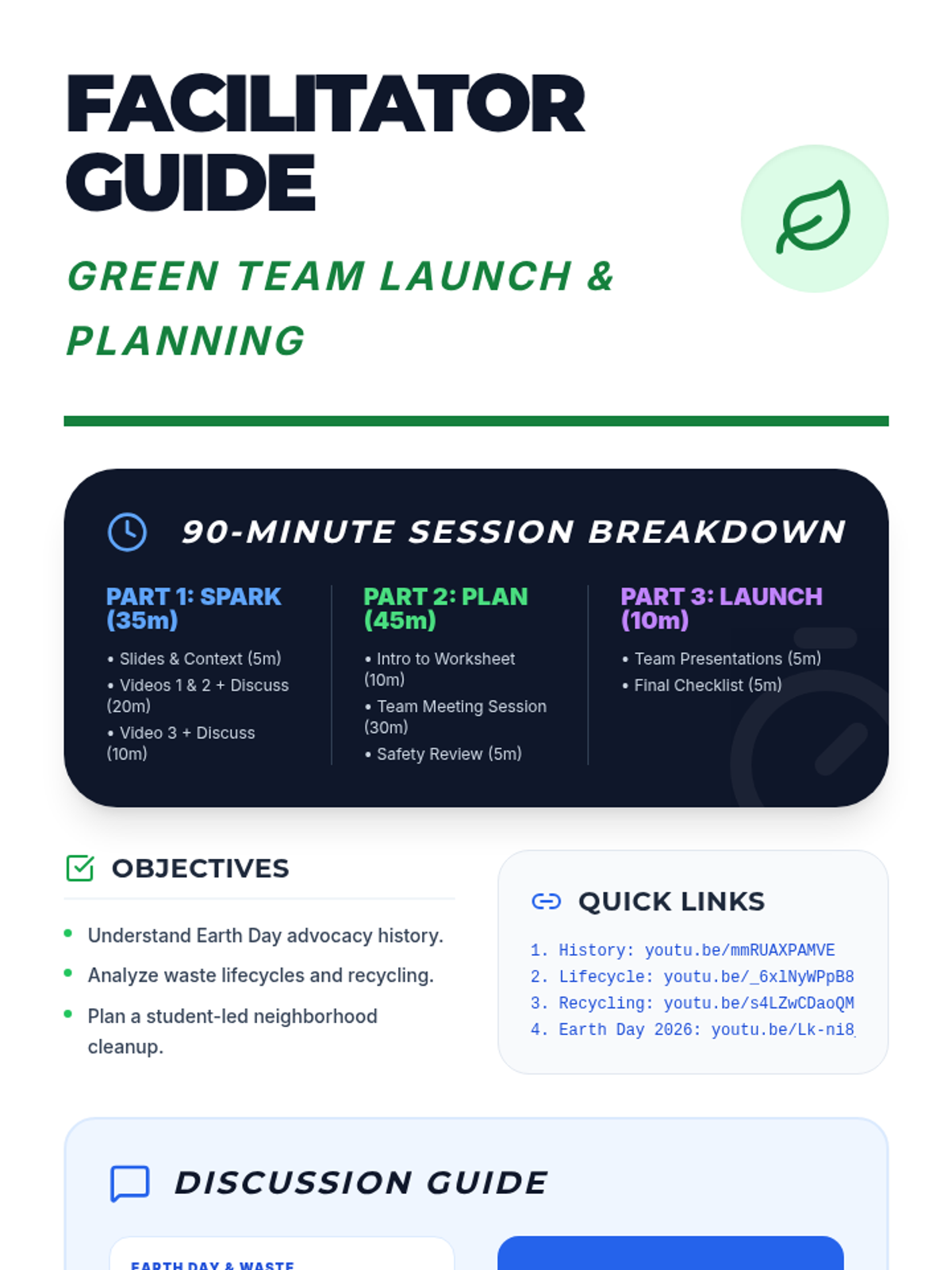
A comprehensive lesson to inspire and equip students to organize their own neighborhood or park cleanup for Earth Day. Includes background on Earth Day, the impact of waste, and a practical planning framework for student-led action.
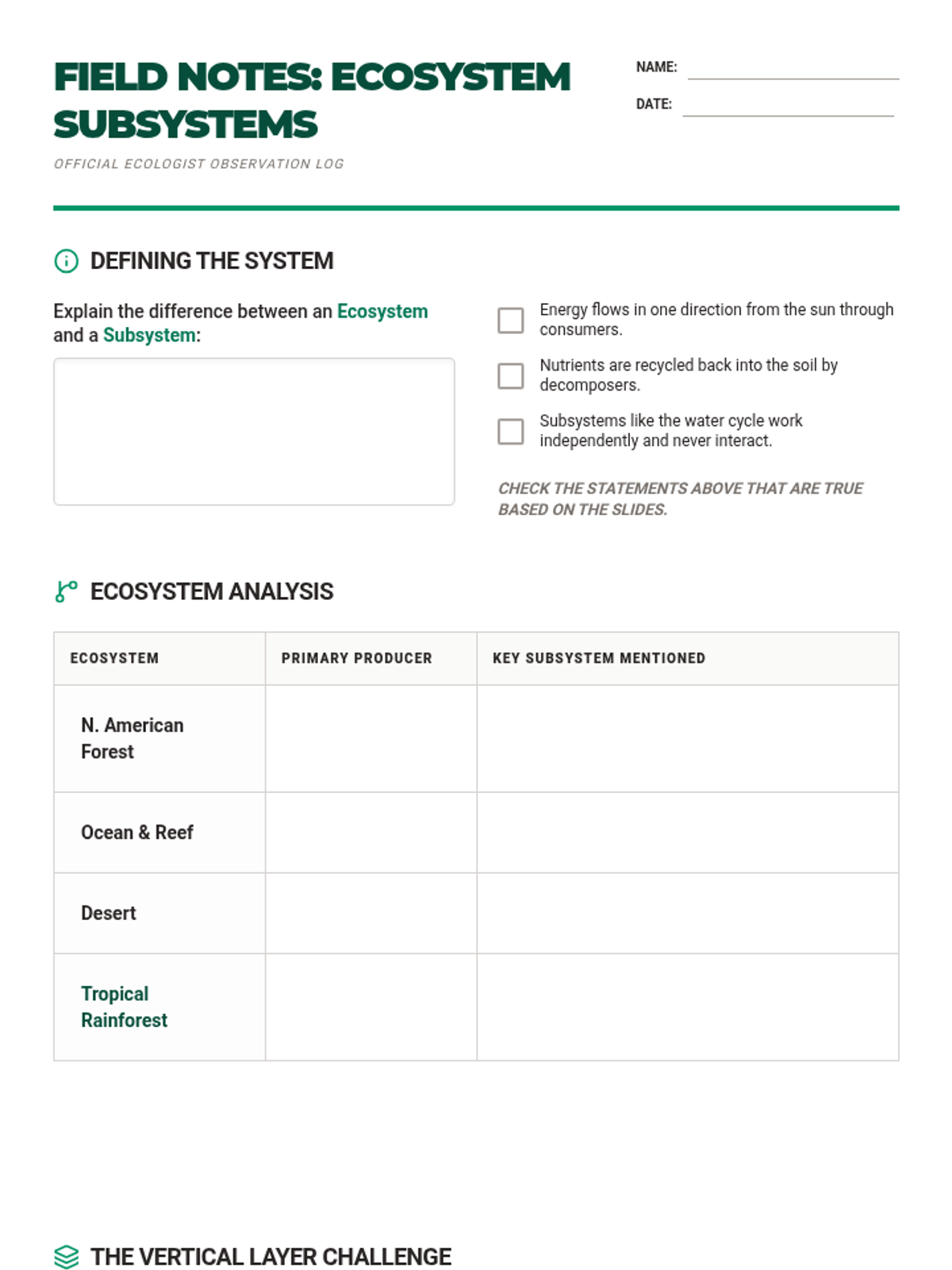
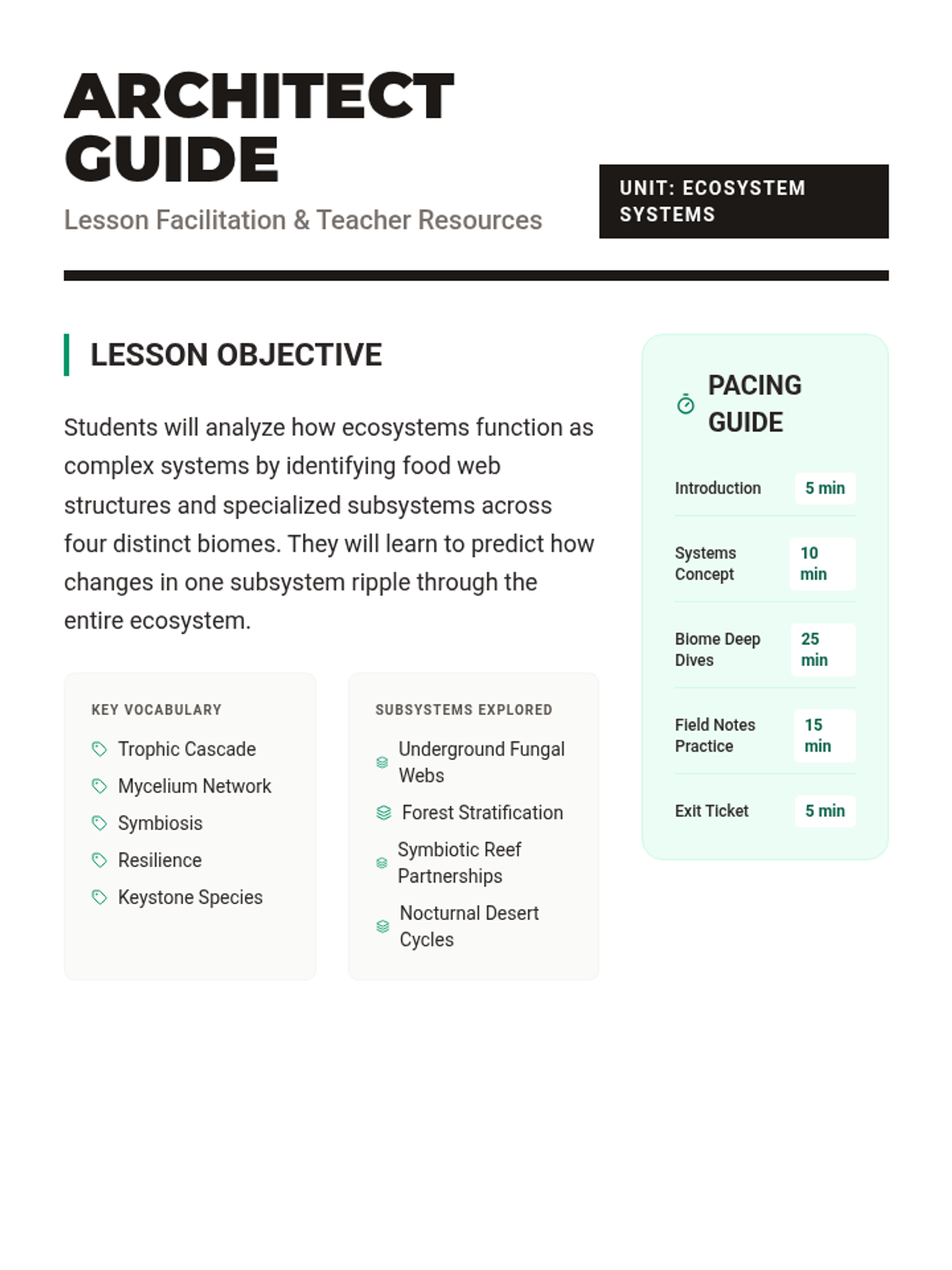
A comprehensive lesson exploring ecosystems as complex systems, focusing on food webs and subsystems across four major biomes: North American Forests, Oceans/Coral Reefs, Deserts, and Tropical Rainforests.
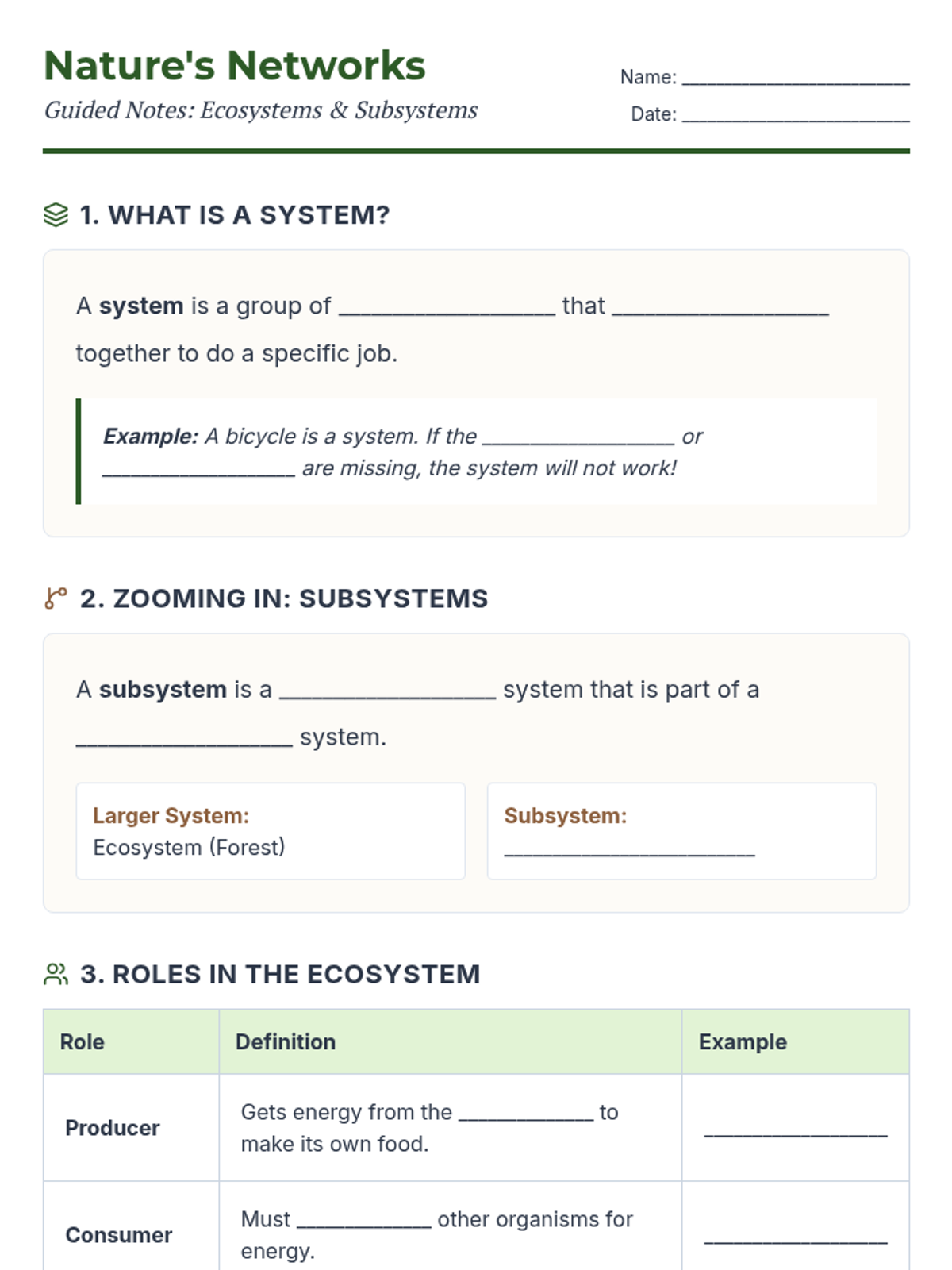
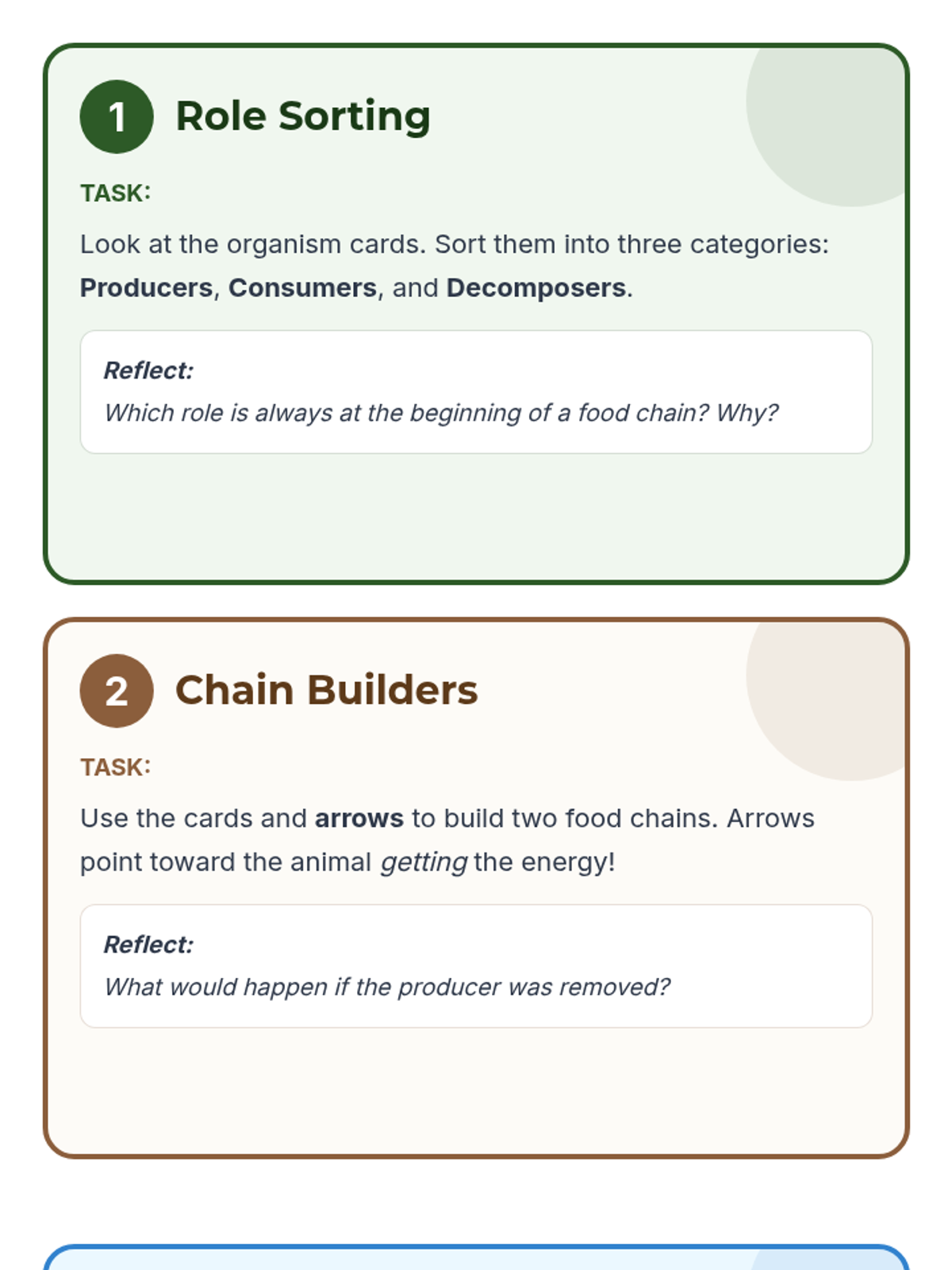
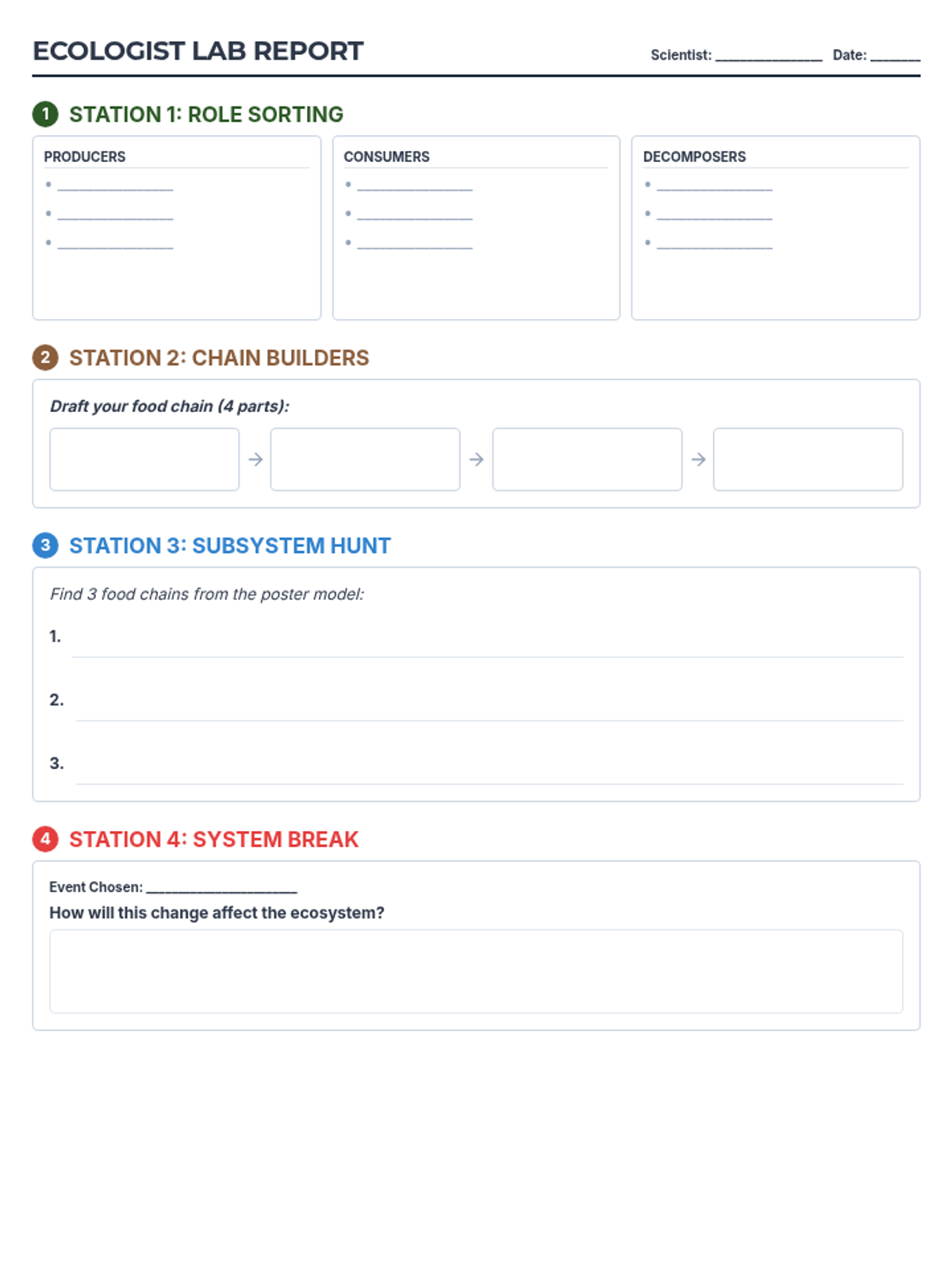
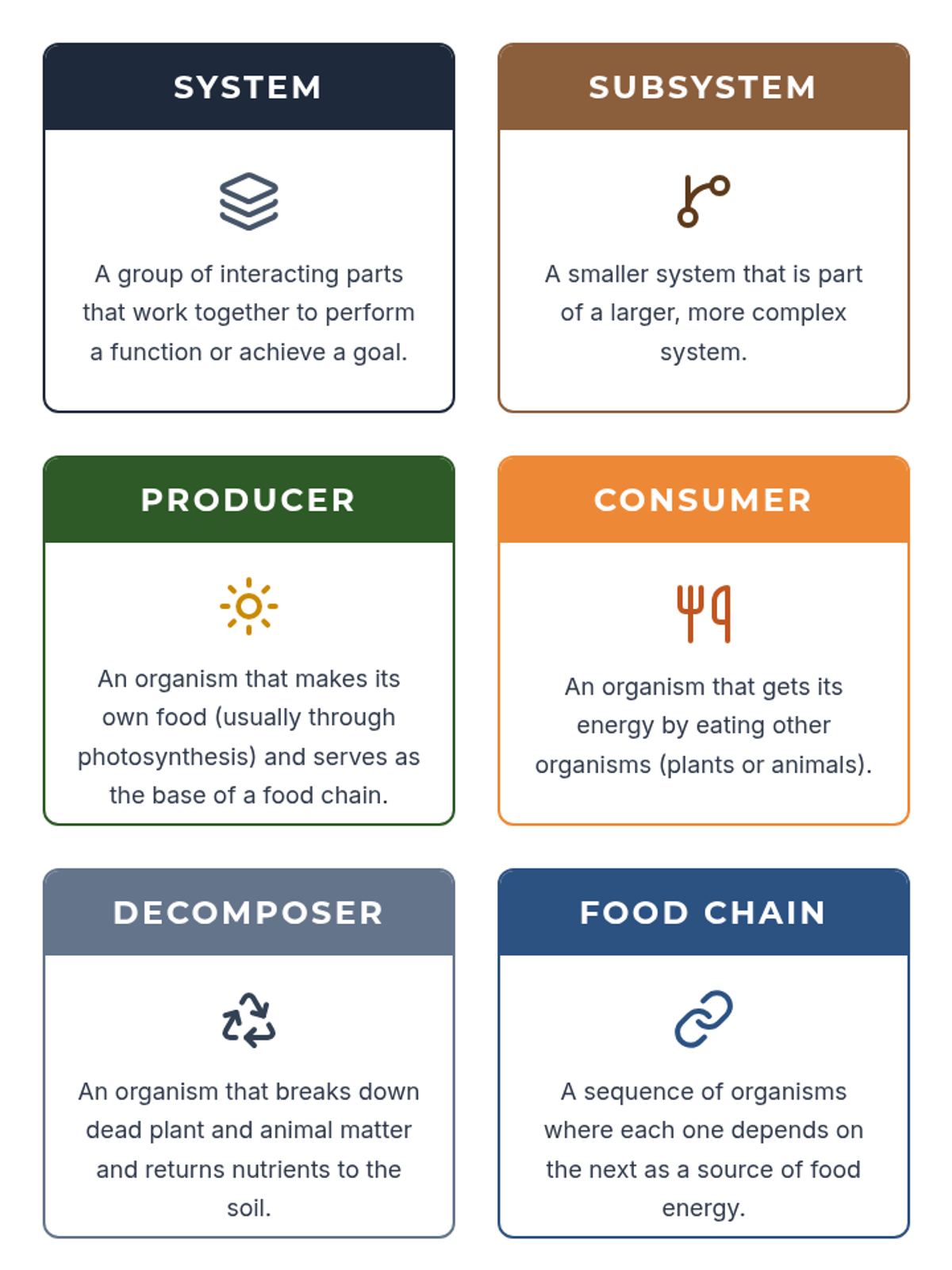
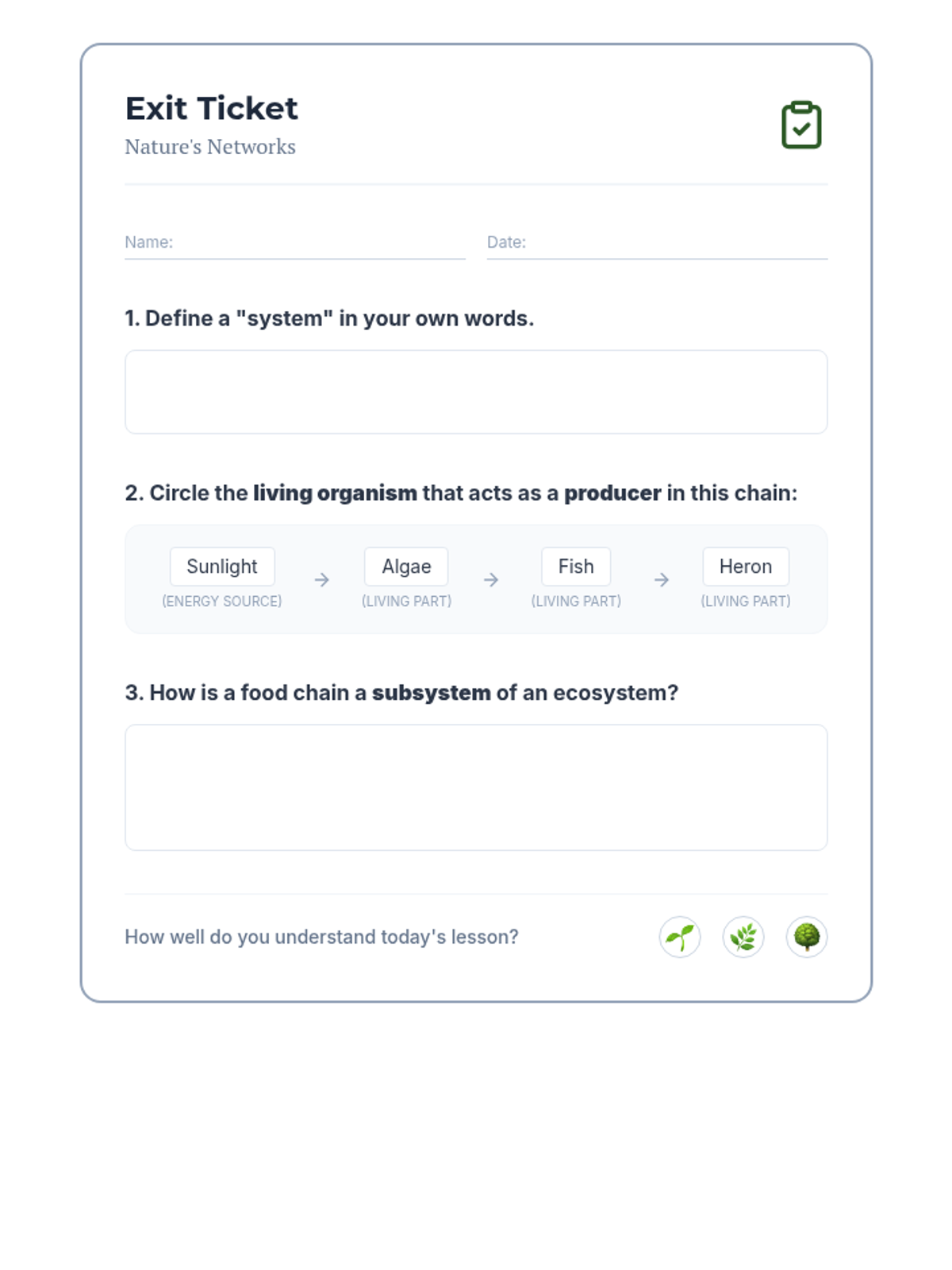
A comprehensive lesson on ecosystems as systems, exploring the roles of producers, consumers, and decomposers as subsystems within a food chain. Students will identify how energy flows through these interconnected parts.
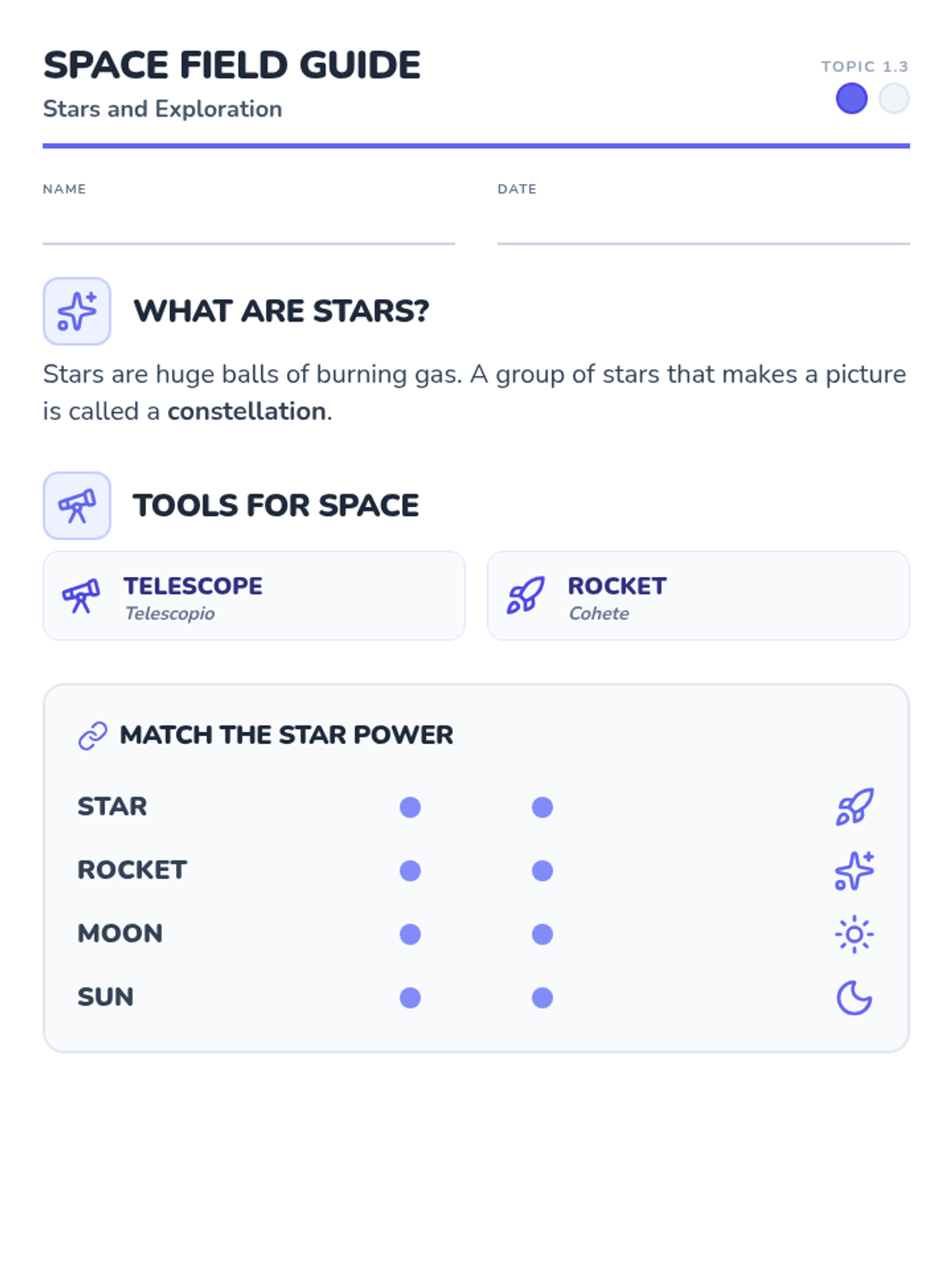
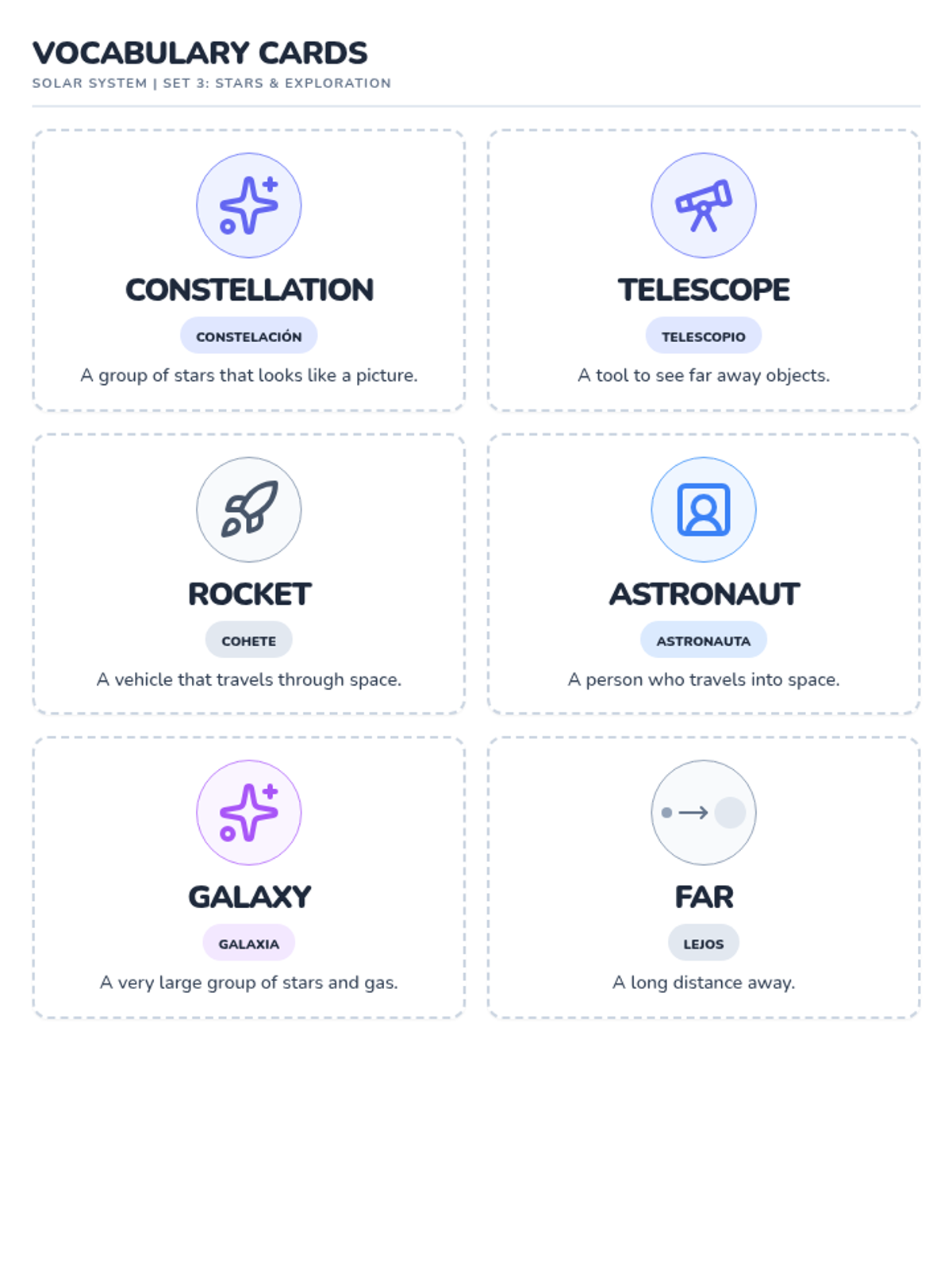
An exploration of stars, constellations, and the technology humans use to study deep space.
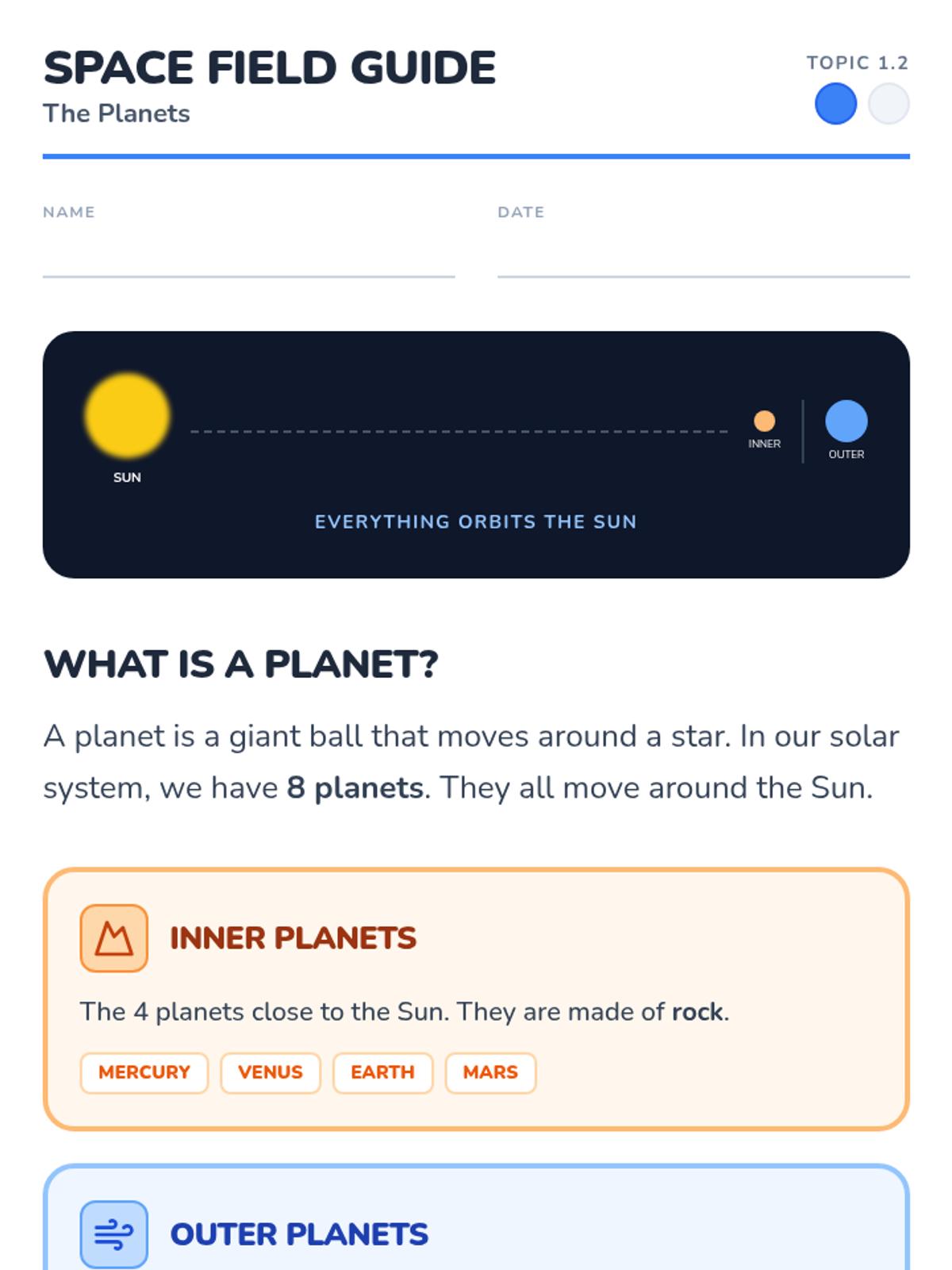
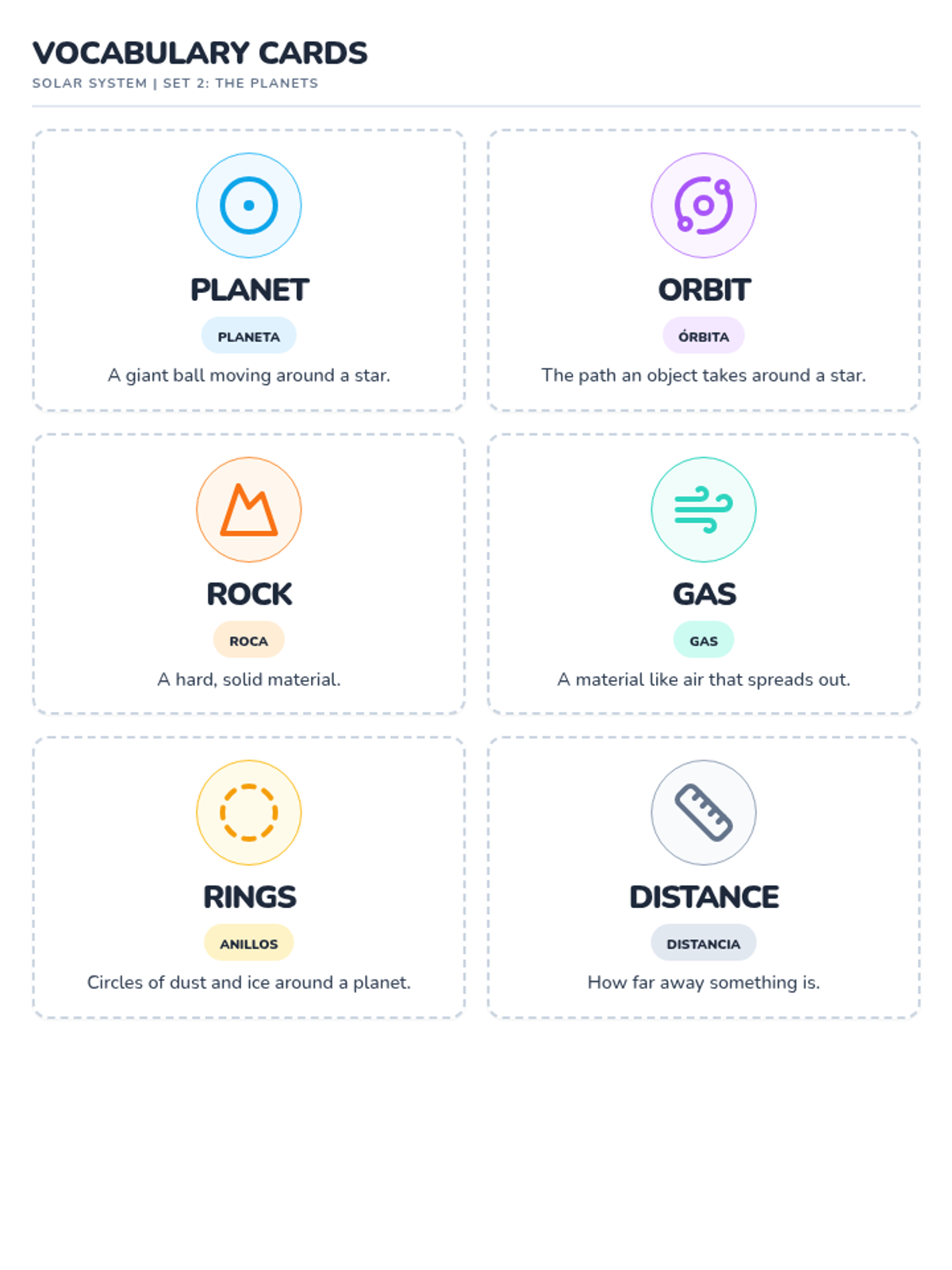
A simplified tour of the eight planets in our solar system, categorized into rocky inner planets and gas giant outer planets.
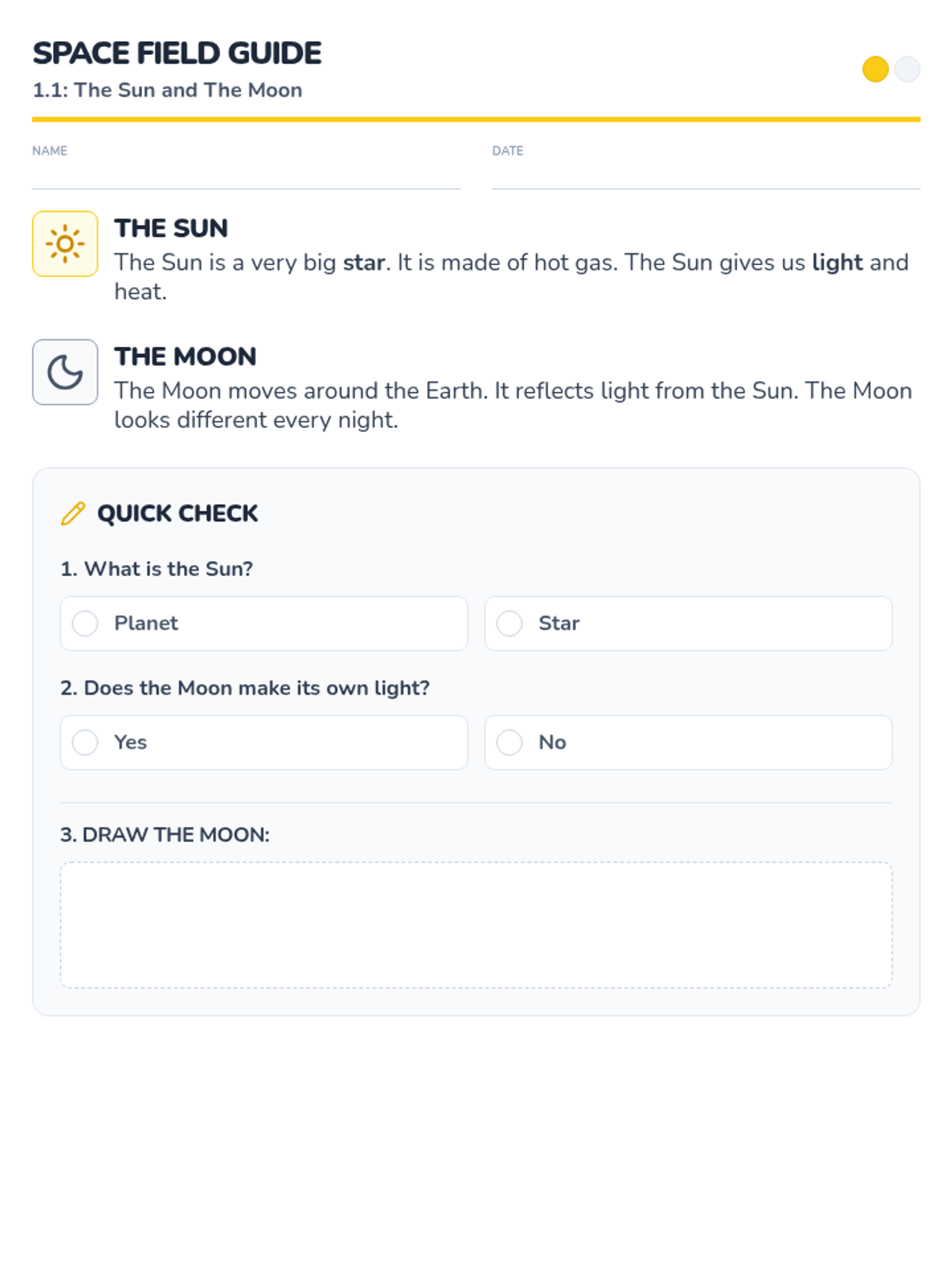
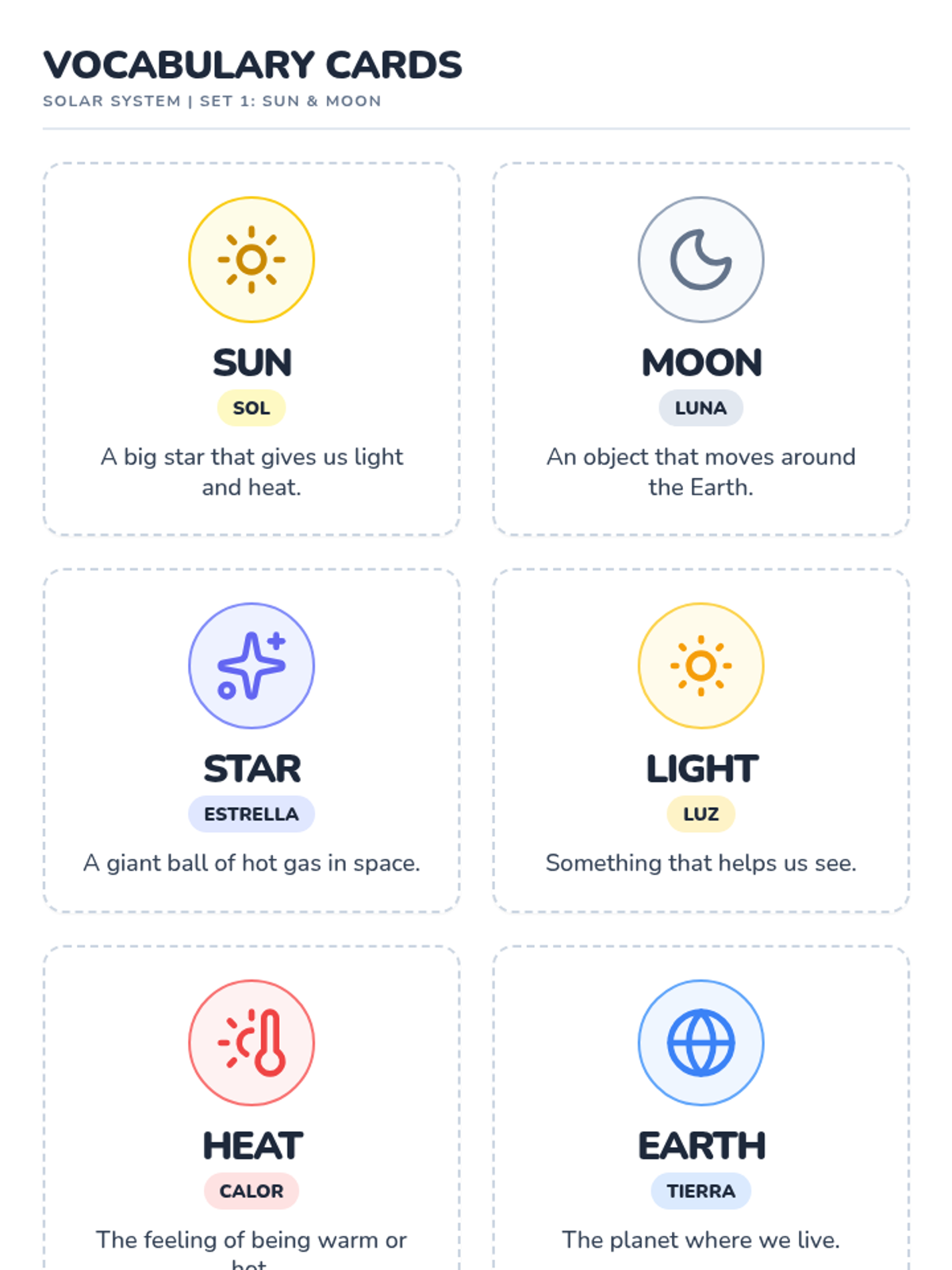
An introduction to our nearest neighbors in space: the Sun and the Moon, focusing on their basic characteristics and roles.
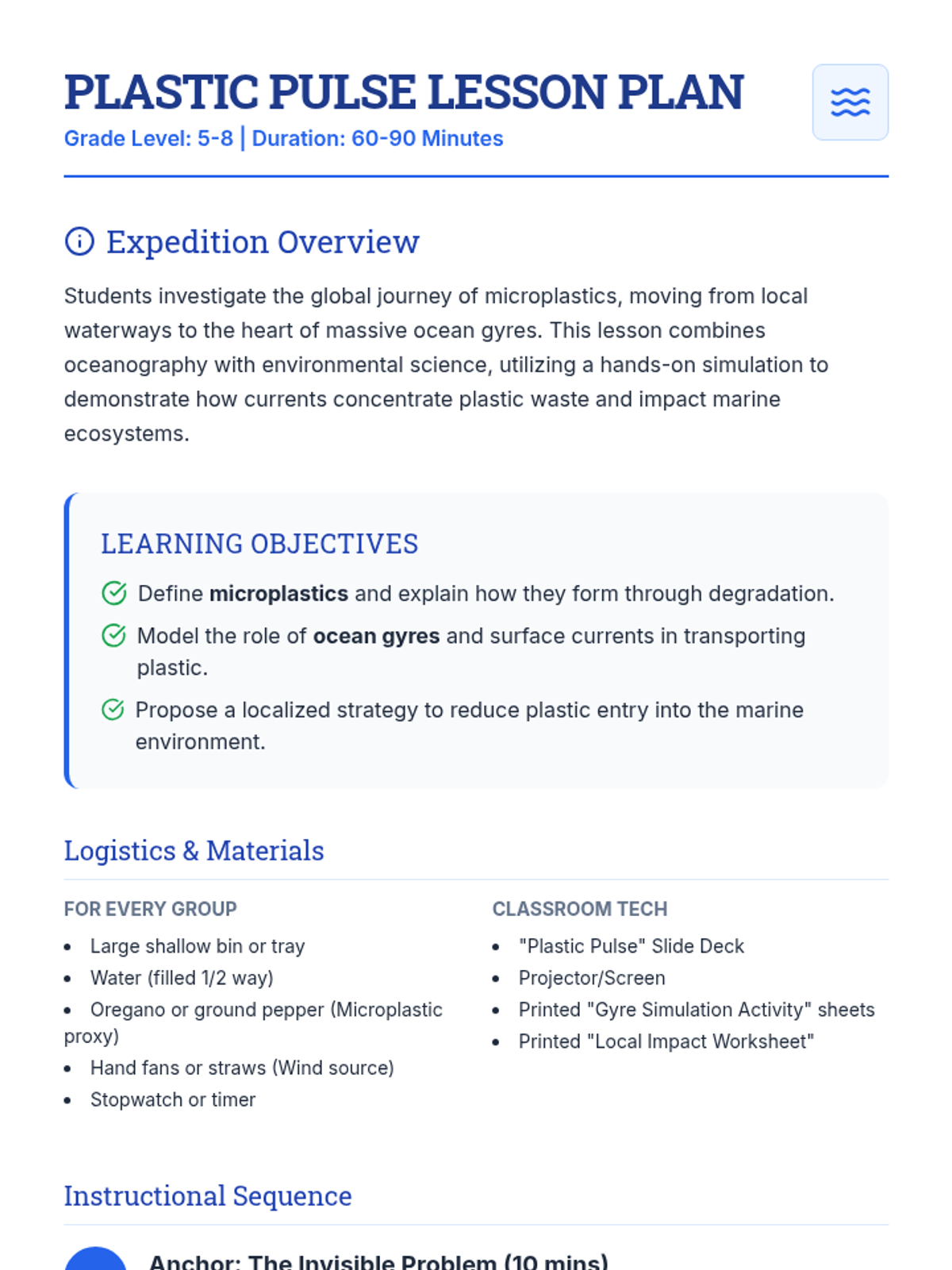
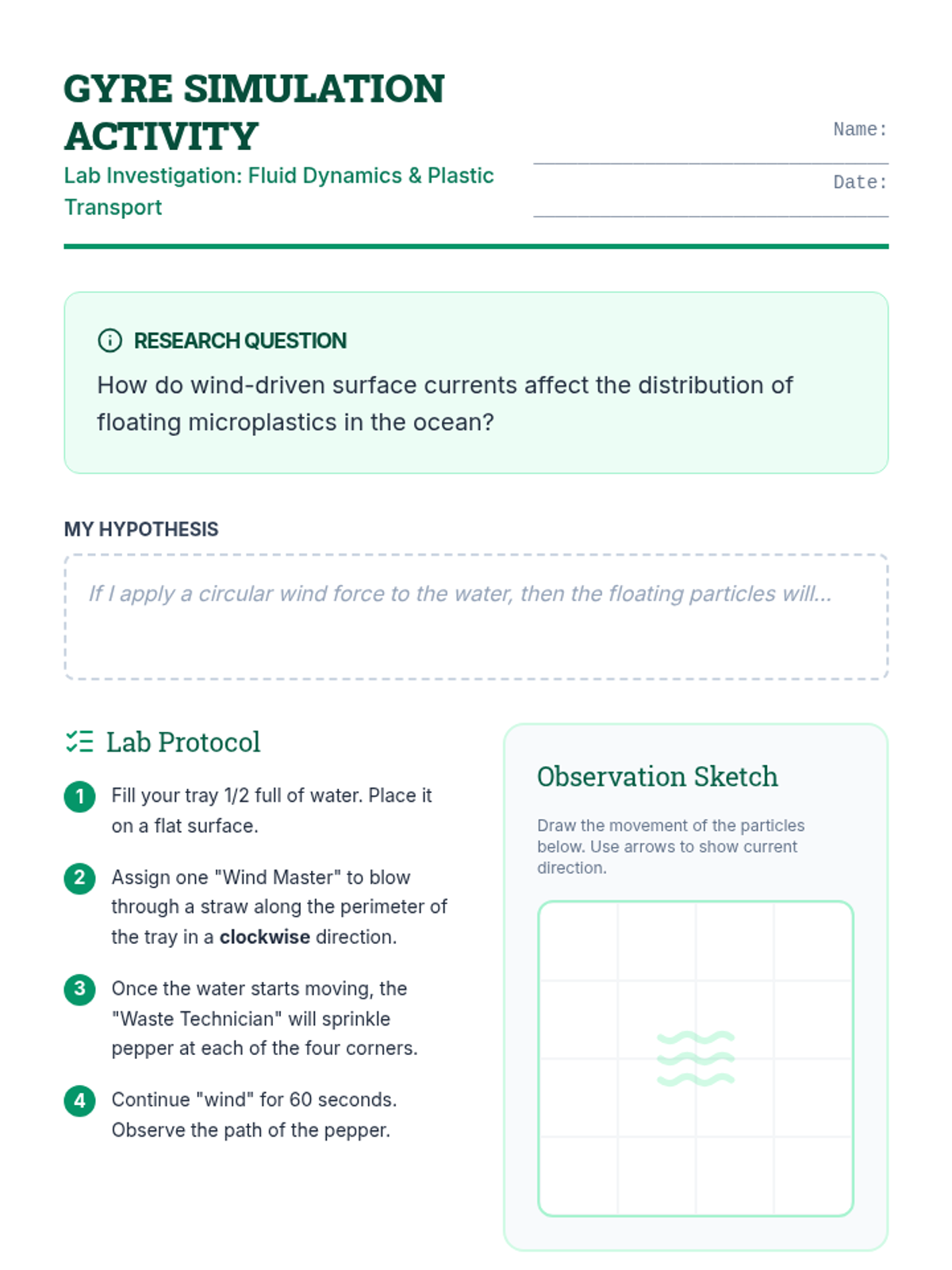
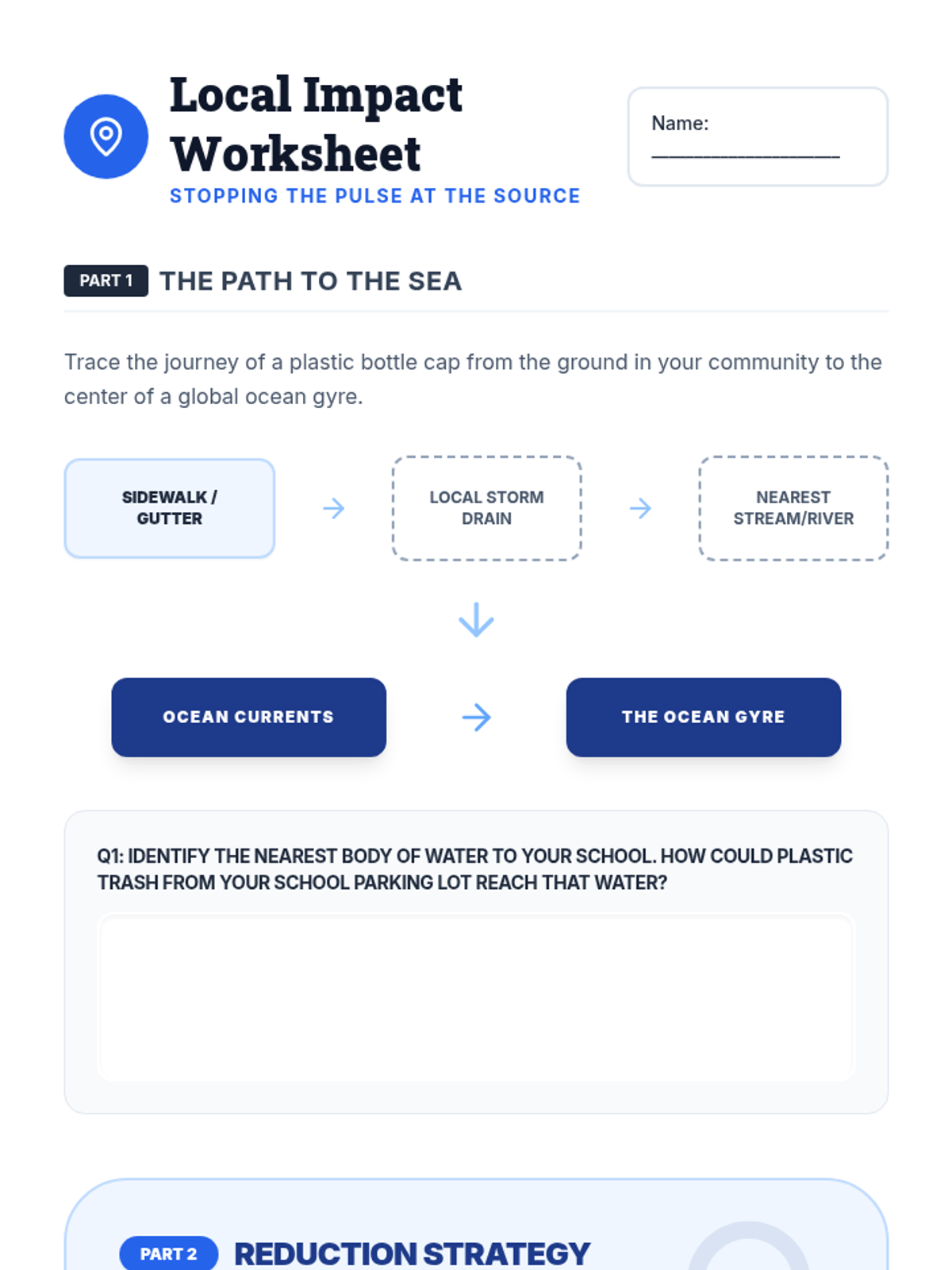
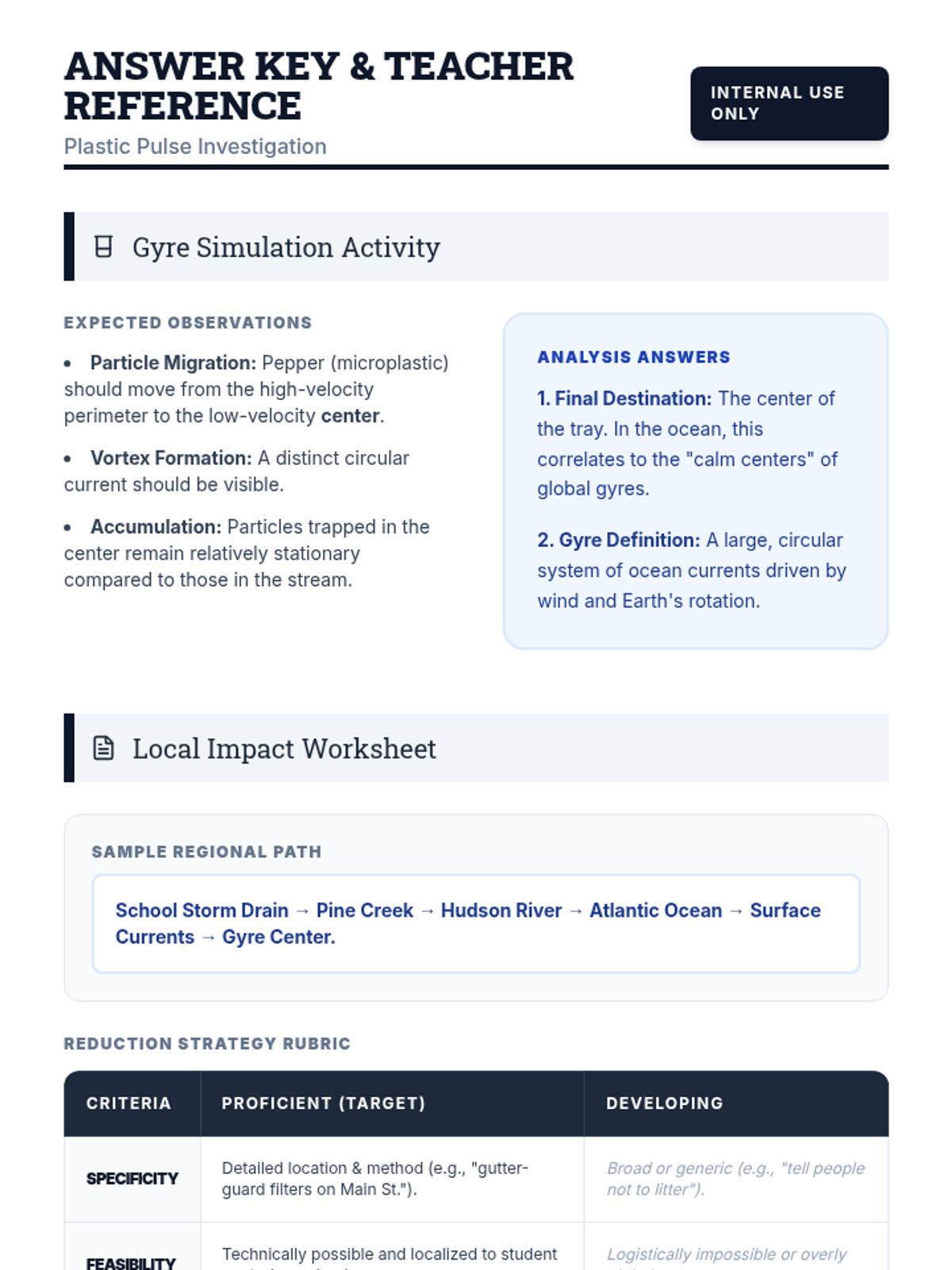
A hands-on investigation into the global journey of microplastics through ocean currents, where students simulate marine gyres and design localized reduction strategies.
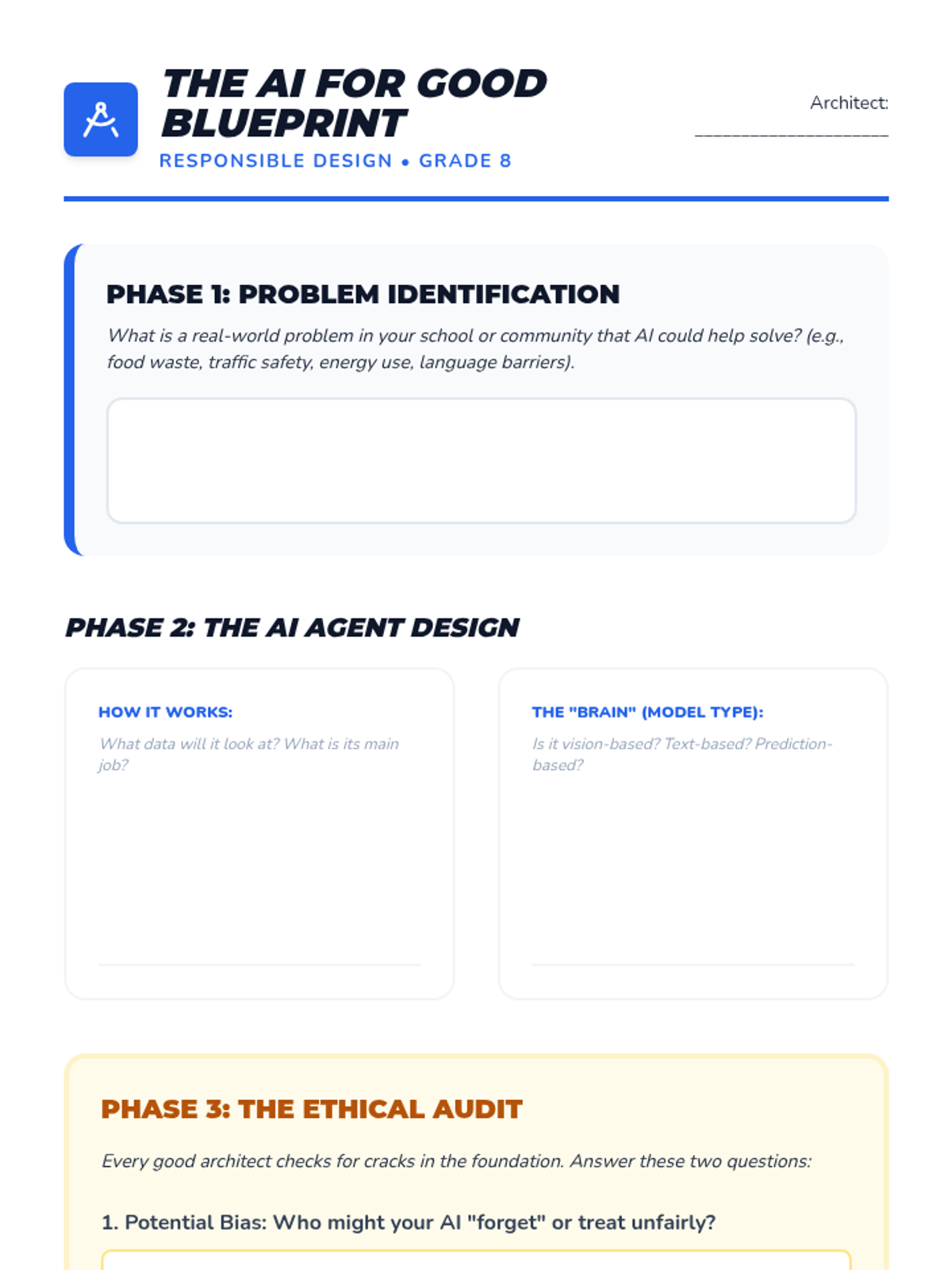
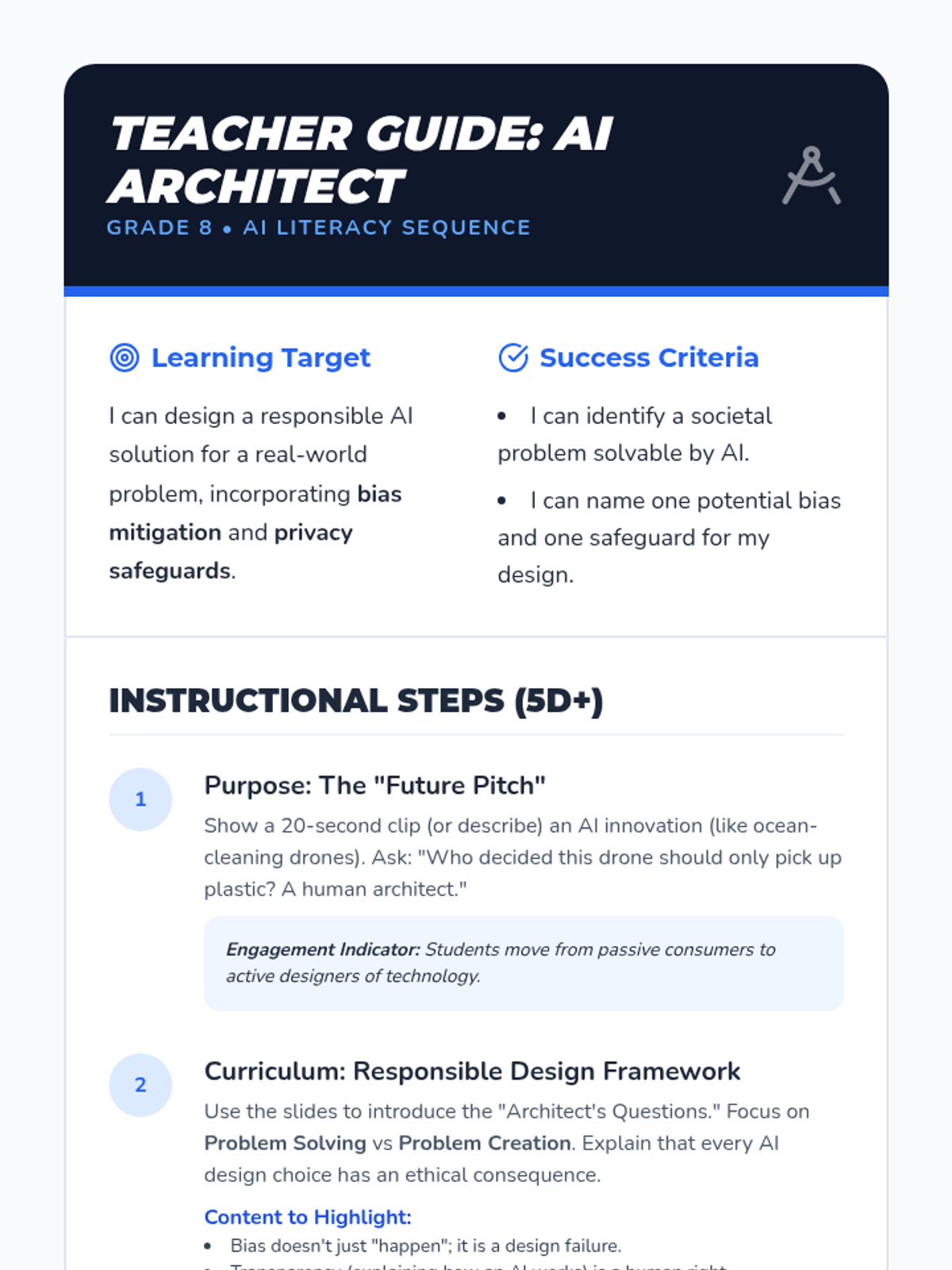
Students culminate their AI literacy journey by designing an AI solution for a real-world problem. They focus on responsible design, identifying potential biases, and ensuring societal benefit.
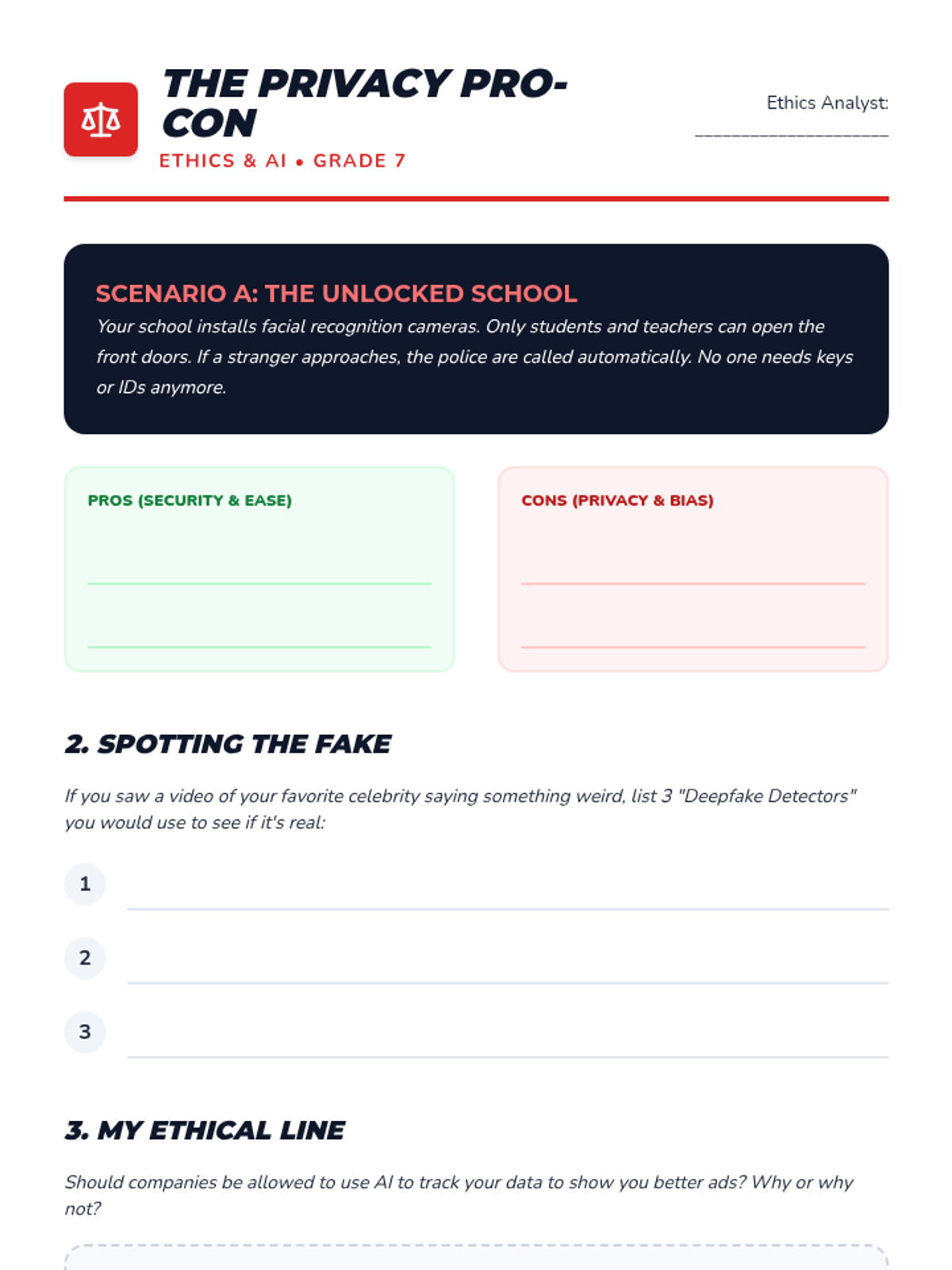
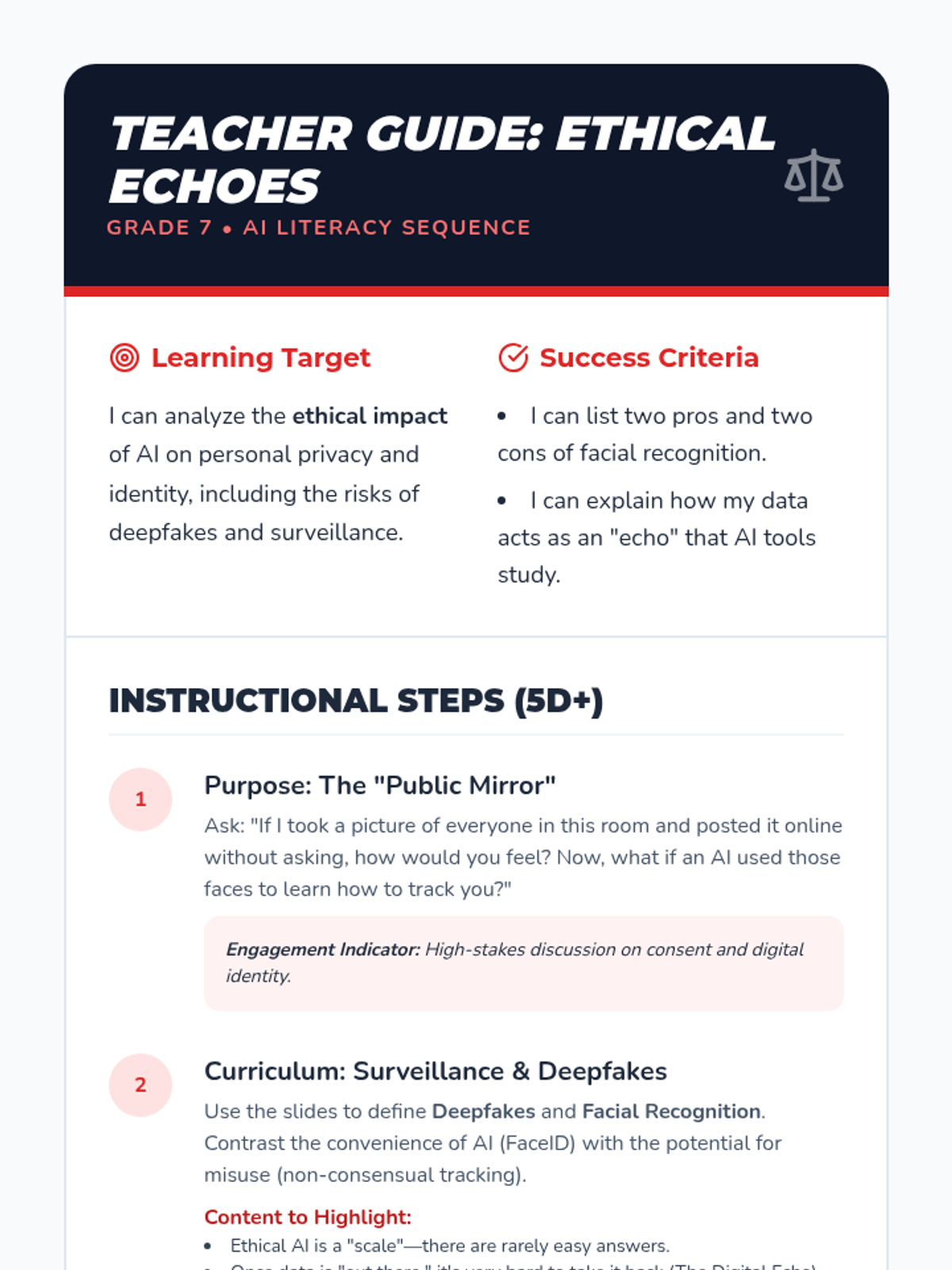
Students analyze the ethical implications of AI on privacy and identity. They explore deepfakes, facial recognition, and the balance between security and personal freedom.
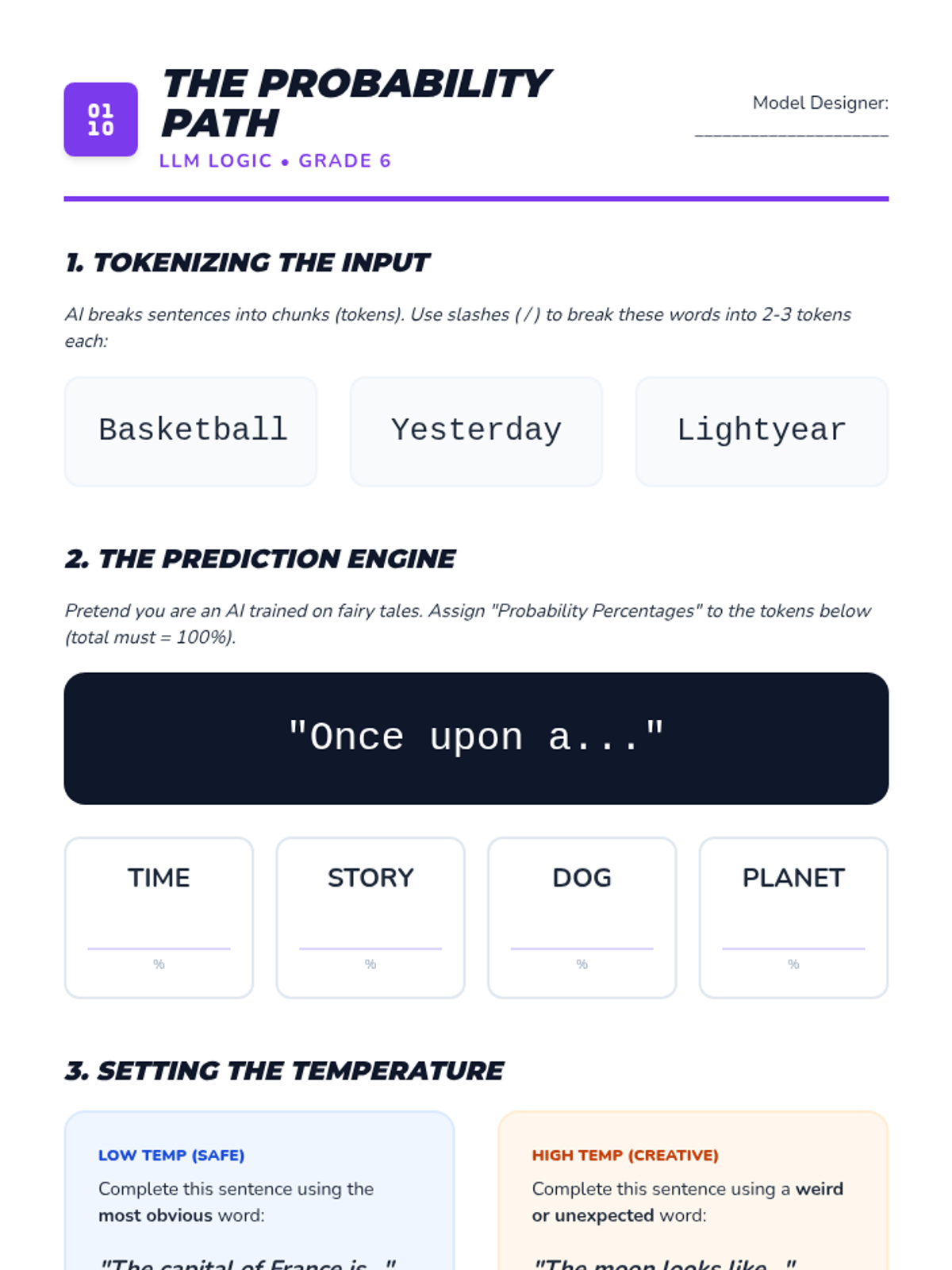
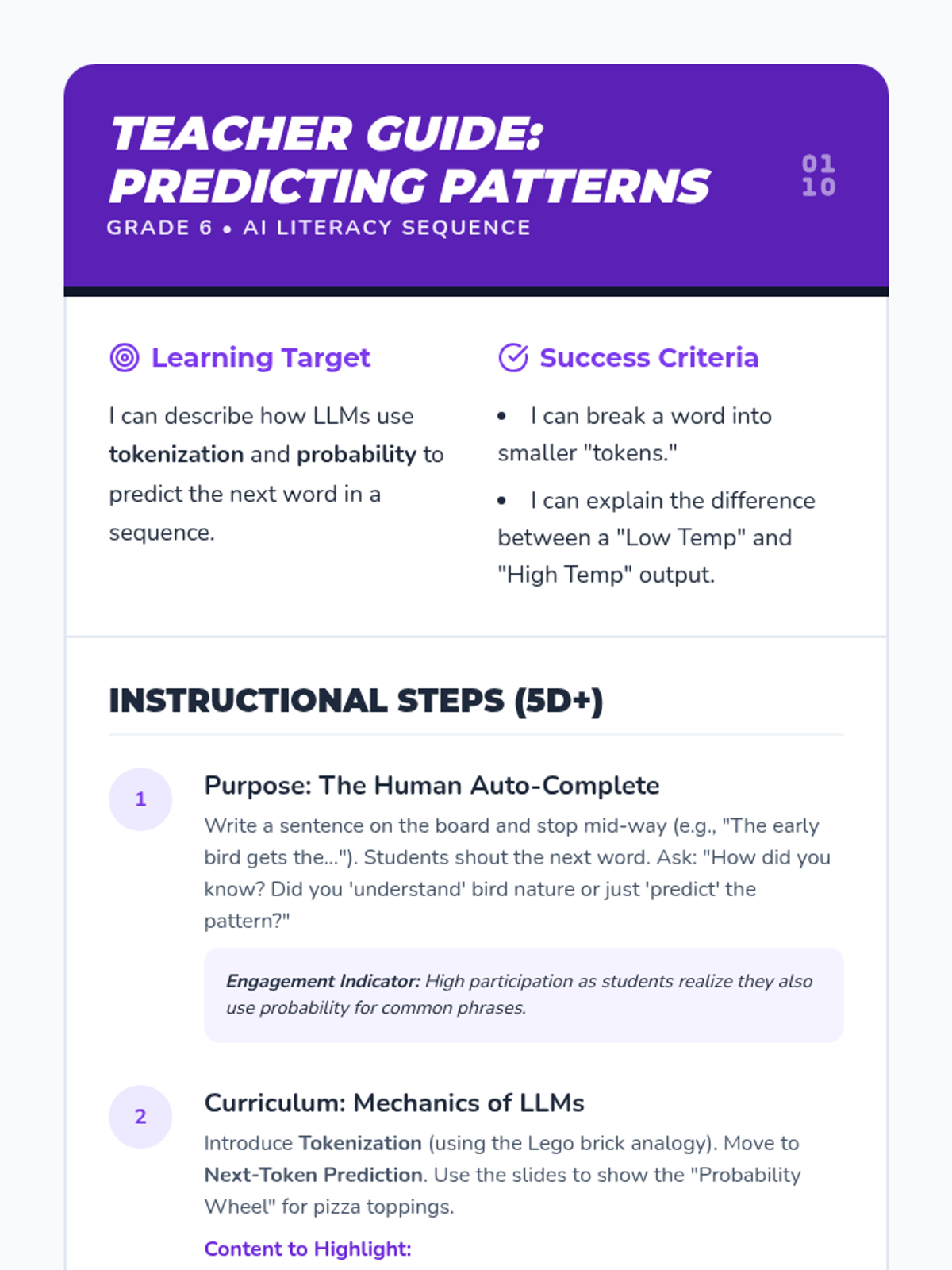
Middle school students dive into the mechanics of Large Language Models (LLMs). They learn about tokenization, probability, and how AI "predicts" the next word in a sequence.
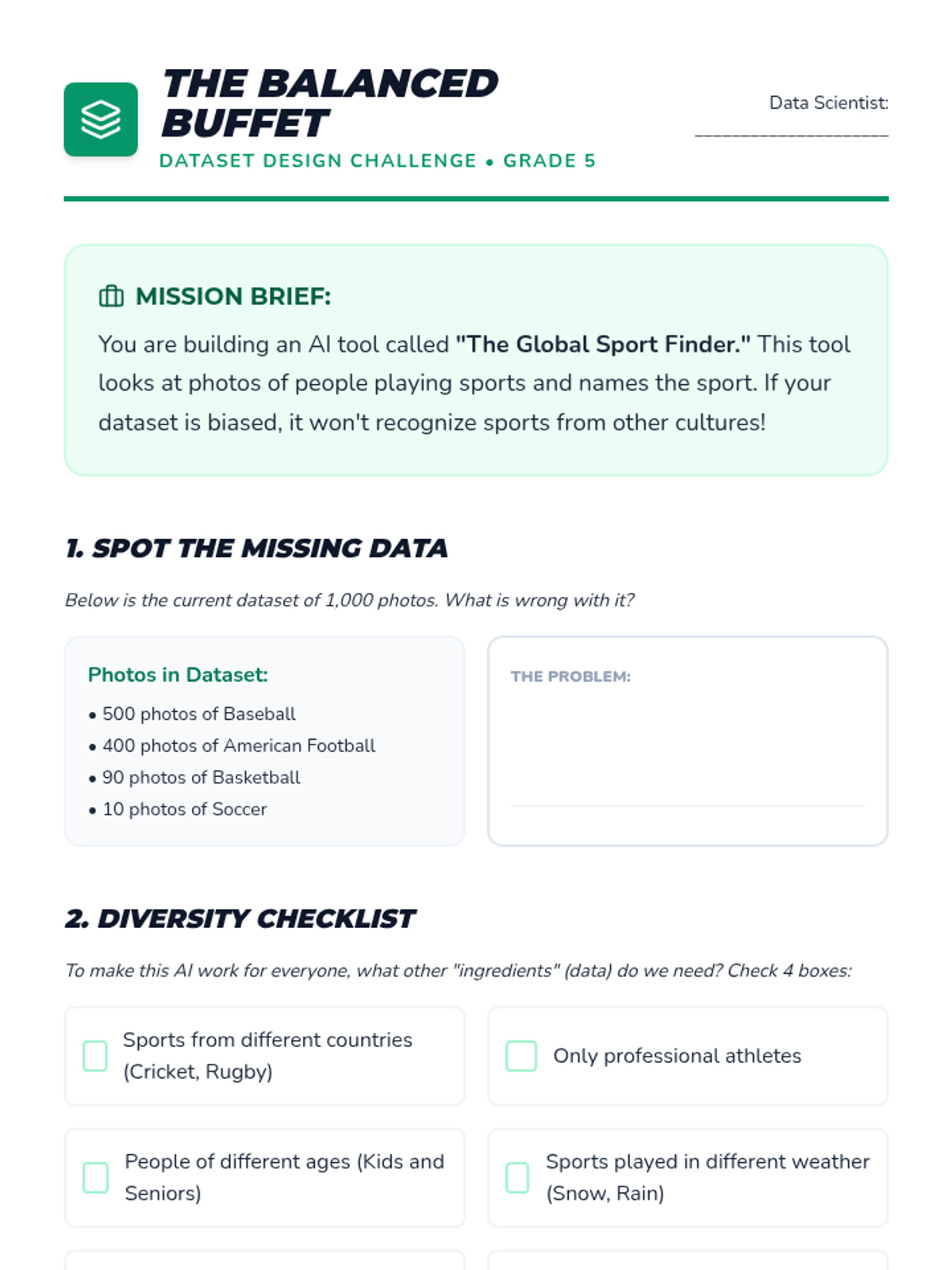
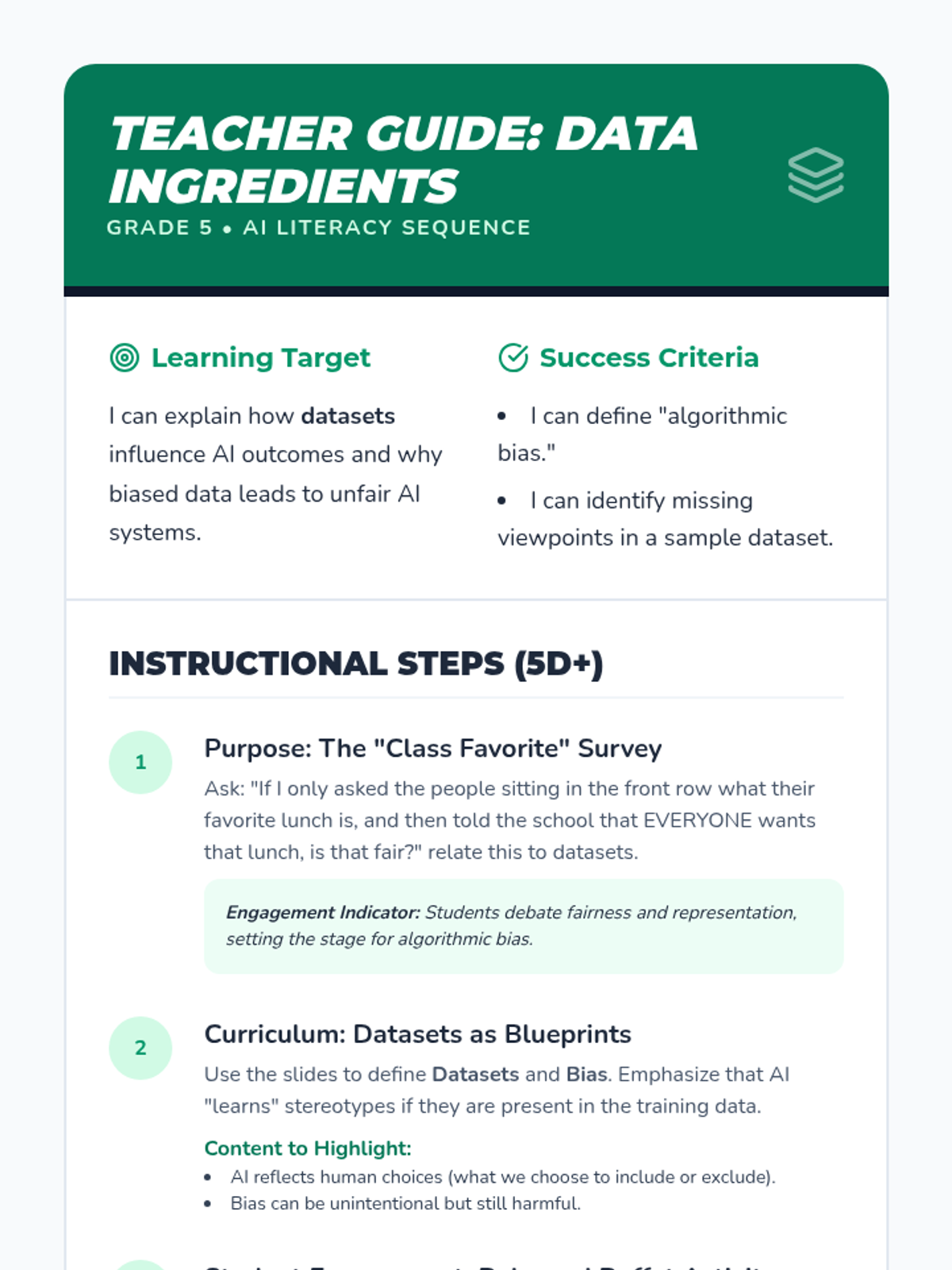
Students explore the "ingredients" of AI: datasets. They learn how biased or incomplete data can lead to unfair or inaccurate AI systems and practice creating a balanced dataset.
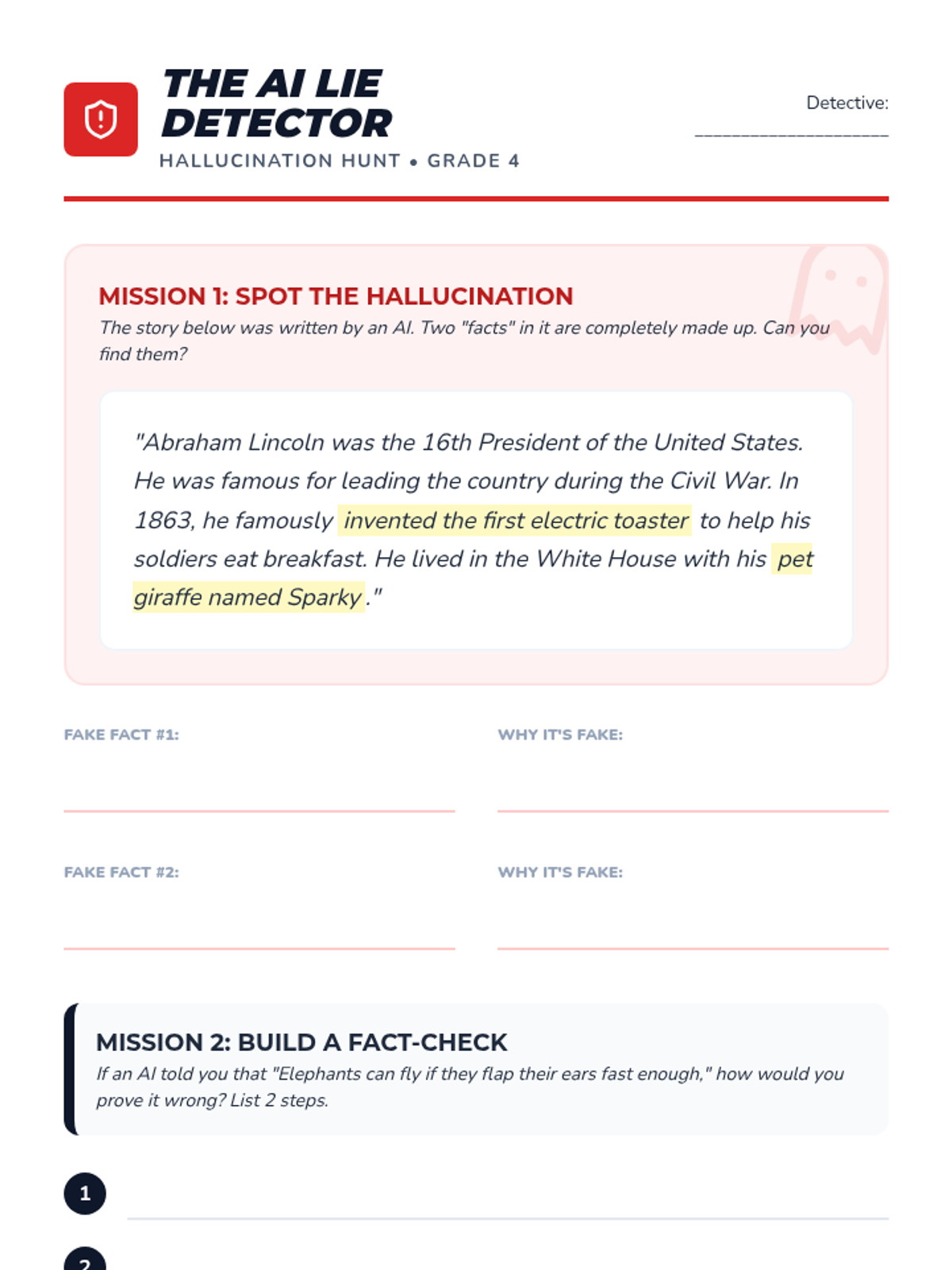
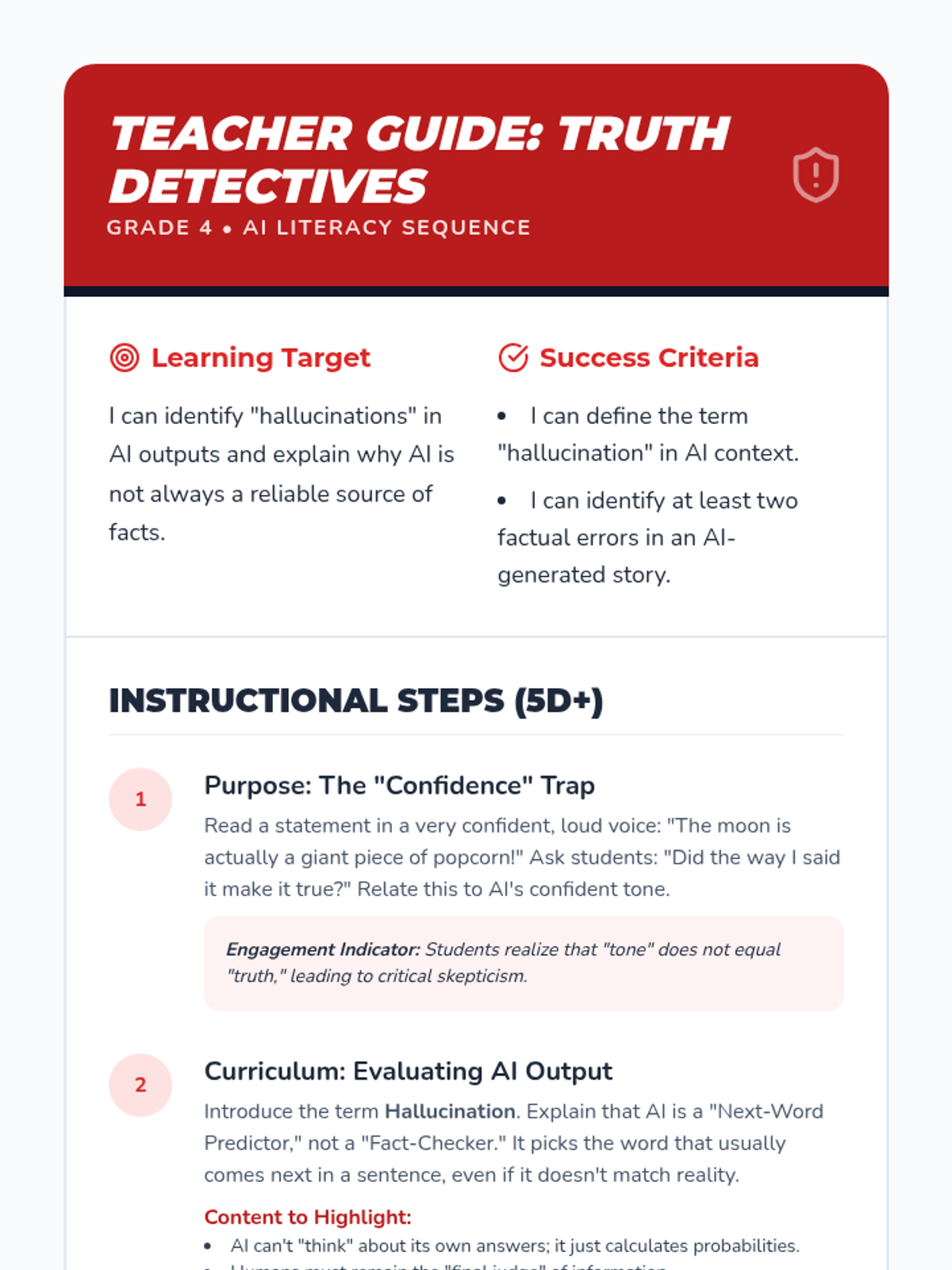
Students learn to critically evaluate AI outputs by identifying "hallucinations" and factual errors. They explore why AI sometimes makes mistakes and how to verify information.
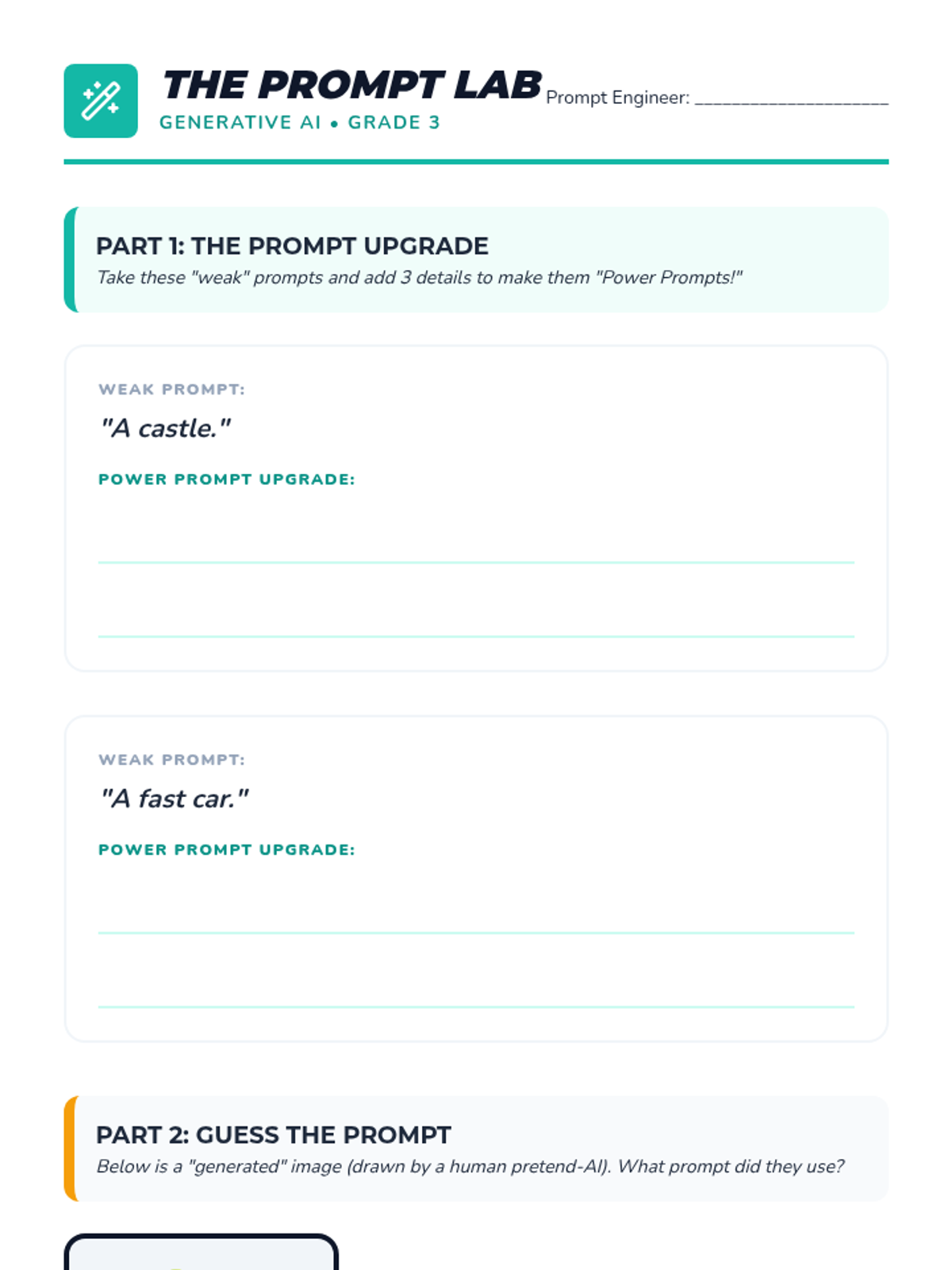
Students explore Generative AI and the importance of prompt engineering. They learn how to communicate effectively with AI to create specific images and text.
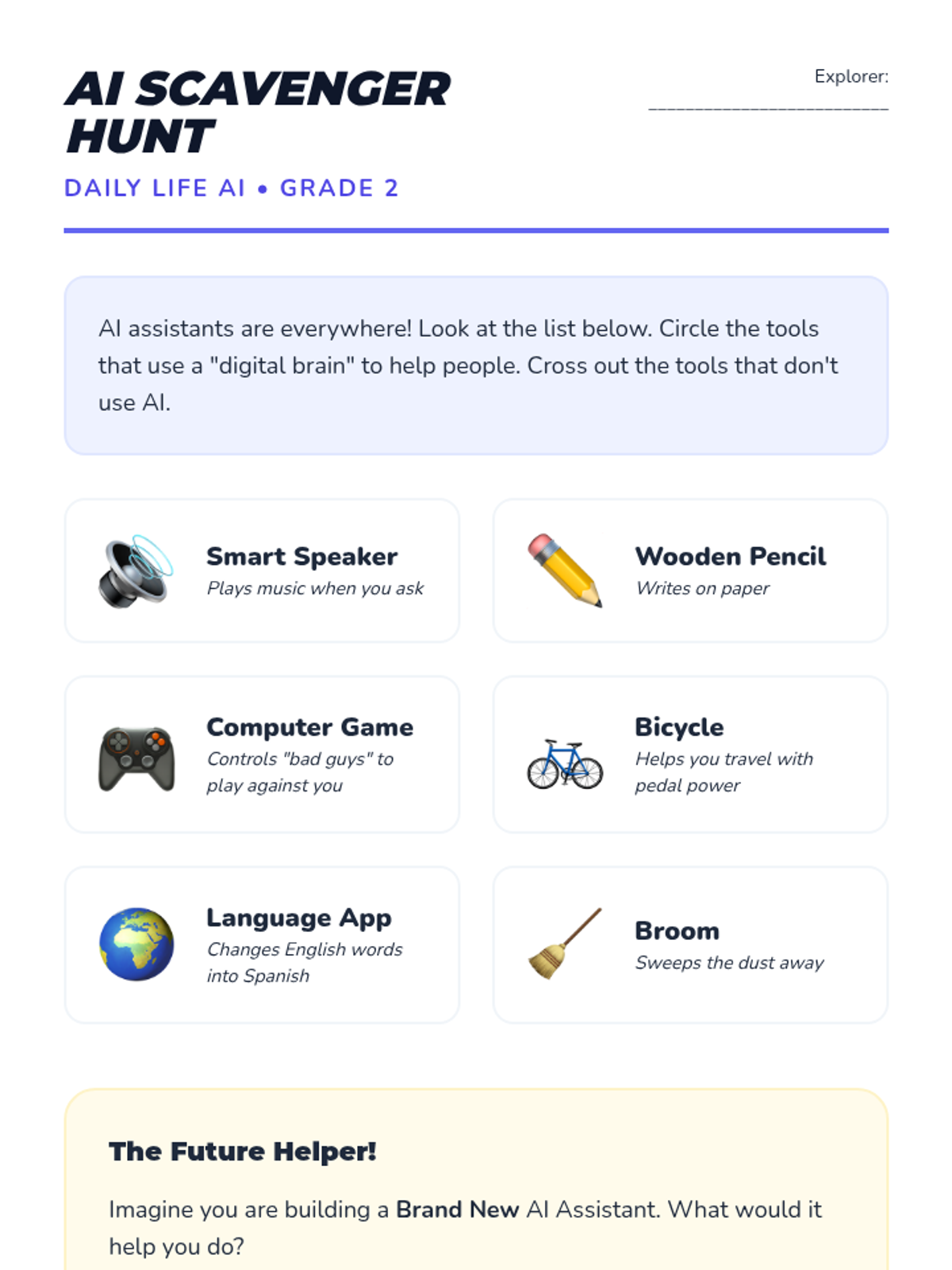
Students discover how AI works as a "smart assistant" in daily life. They identify AI in common devices and reflect on how it helps people solve problems.
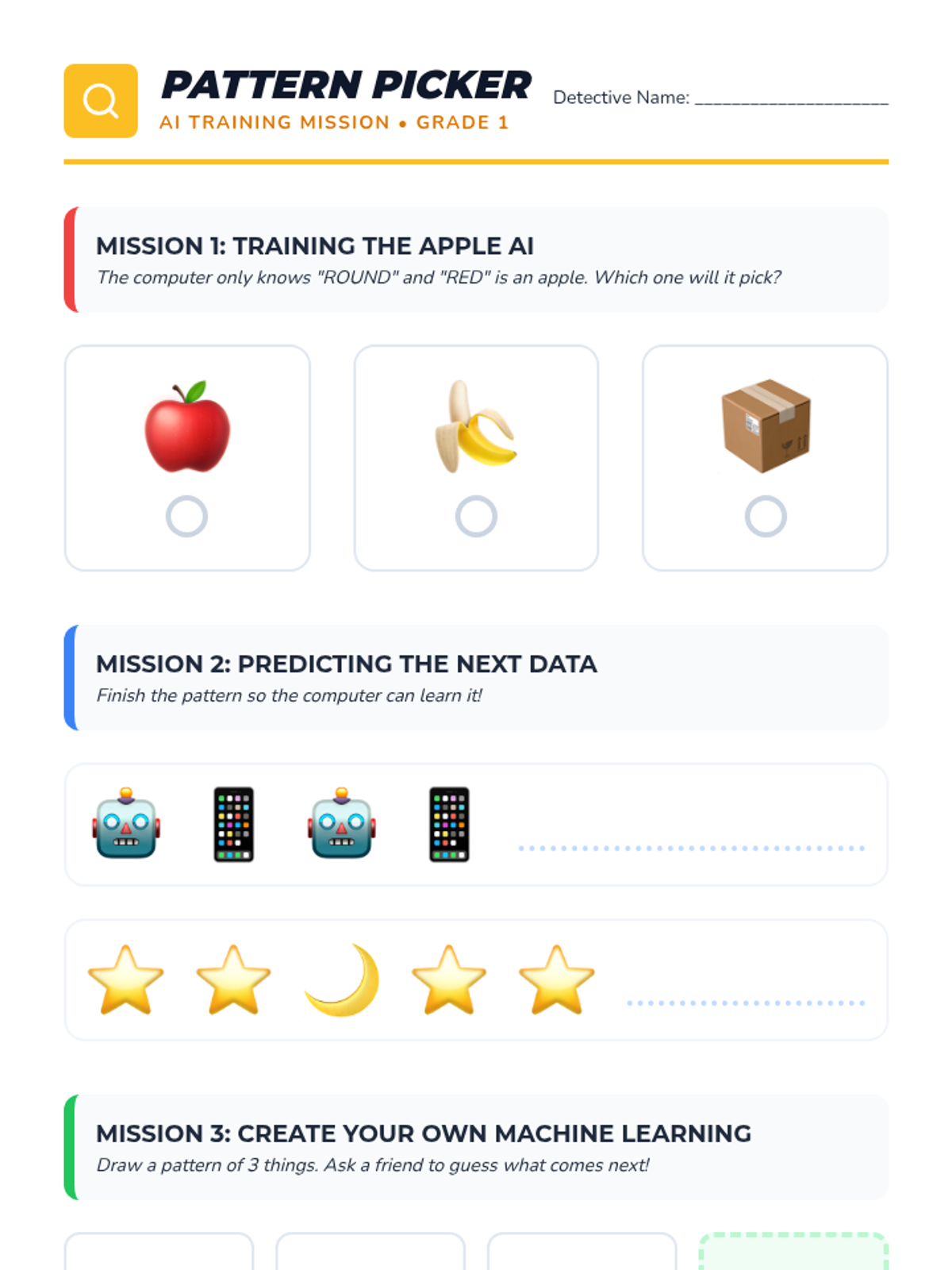
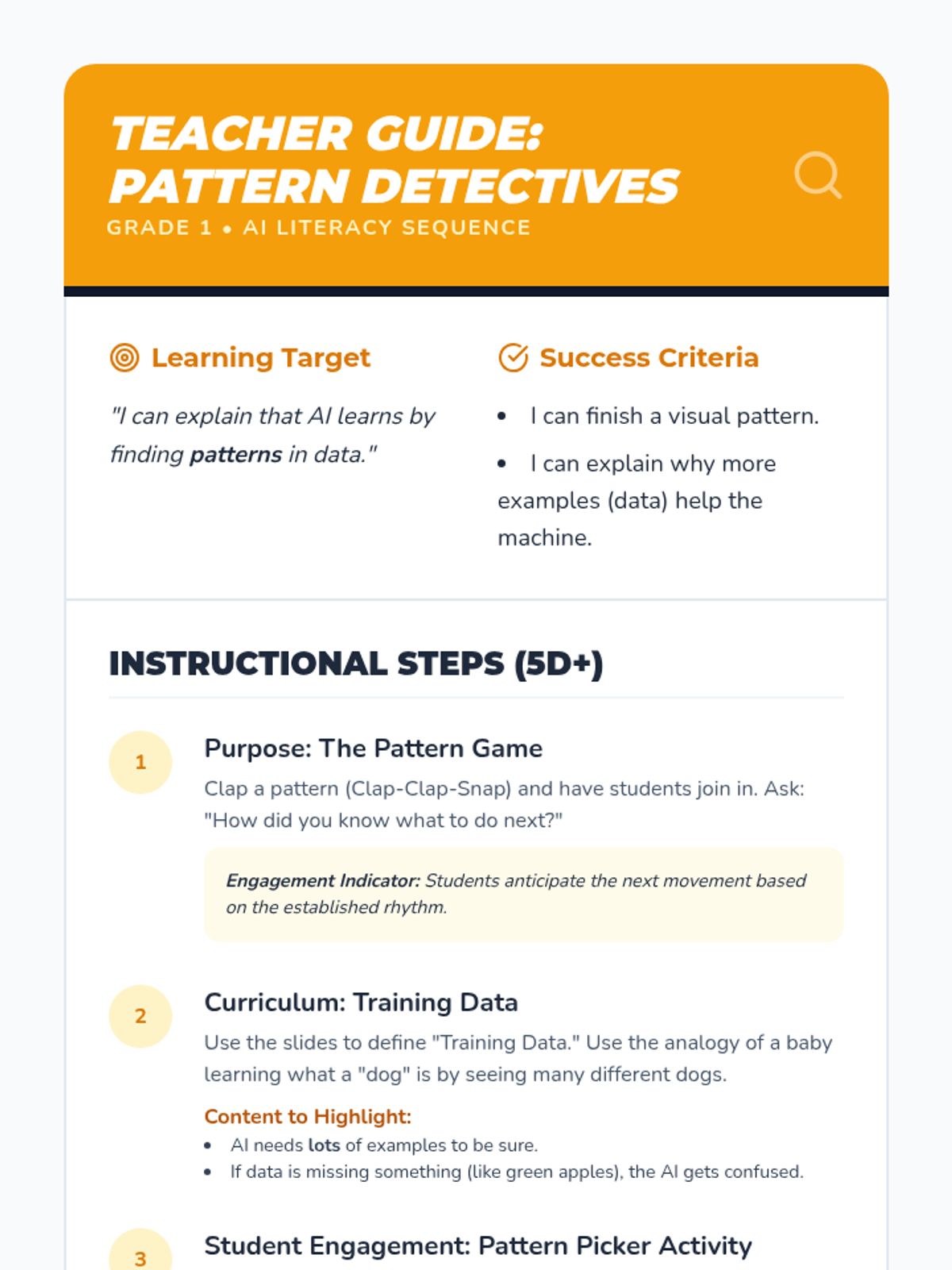
Students explore the foundation of AI learning: pattern recognition. They learn that computers need many examples (data) to understand rules and make predictions.
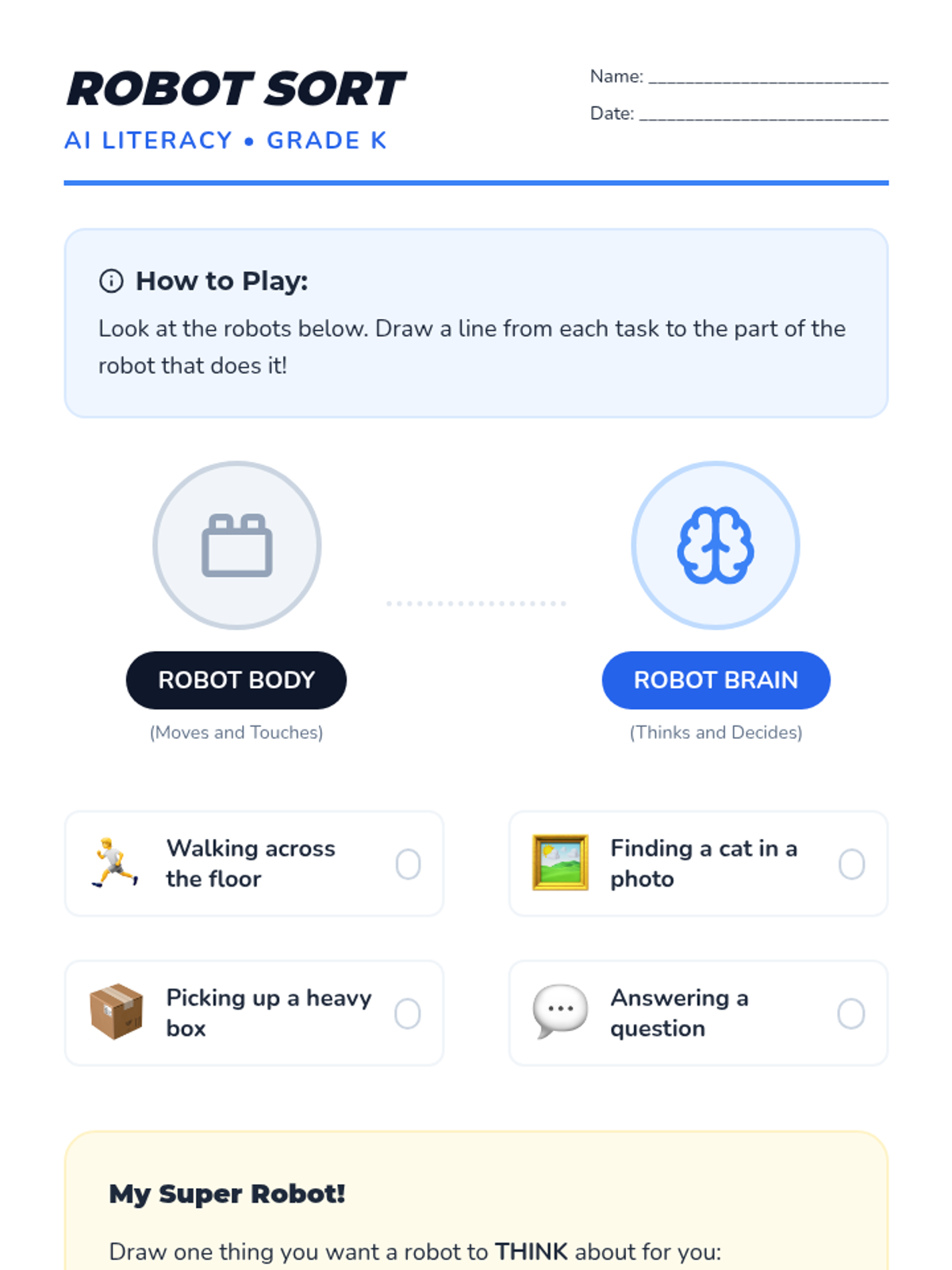
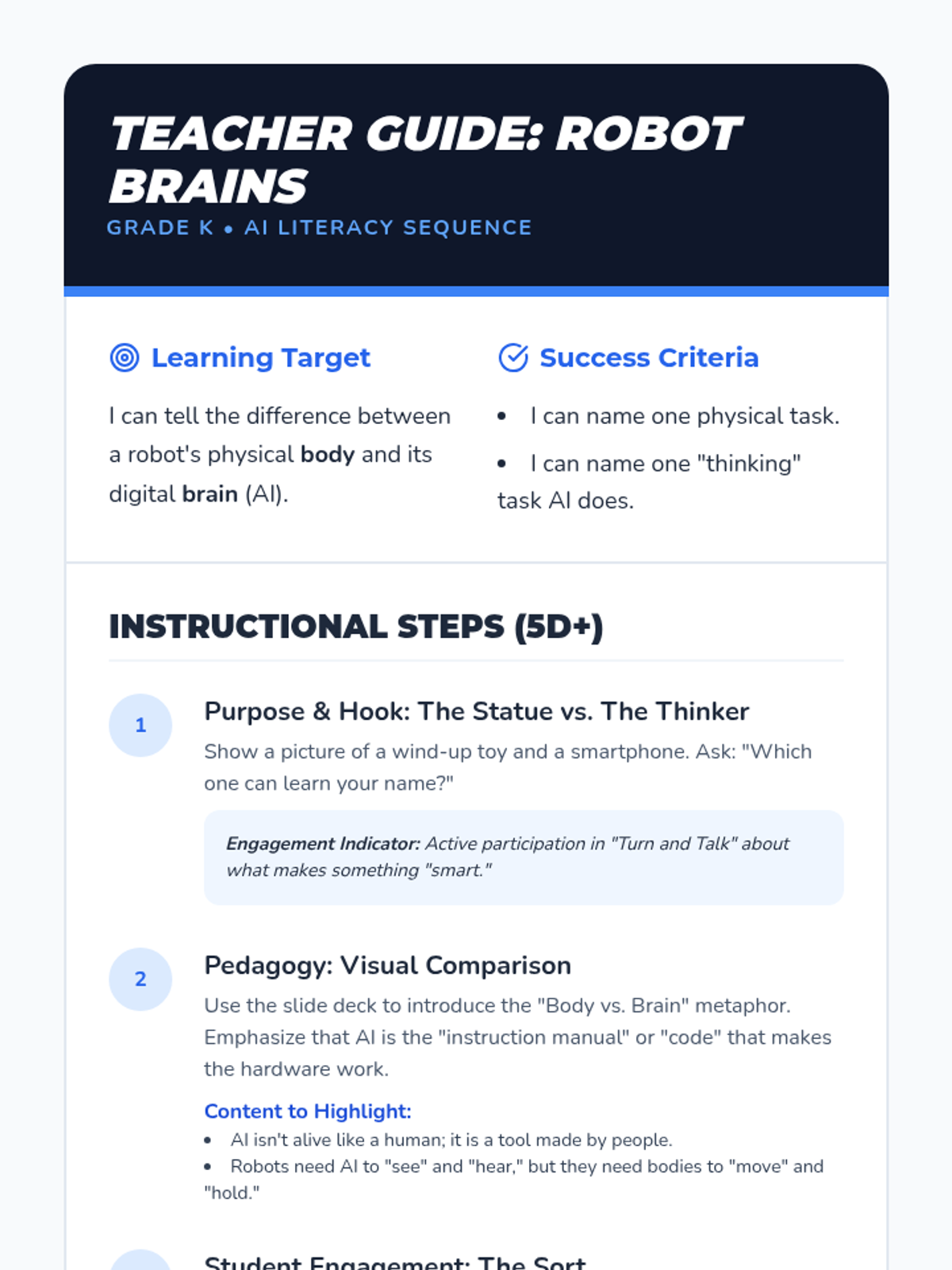
Introduces the concept of AI by distinguishing between a robot's physical body and its digital 'brain'. Students explore how AI 'thinks' differently than humans and machines.
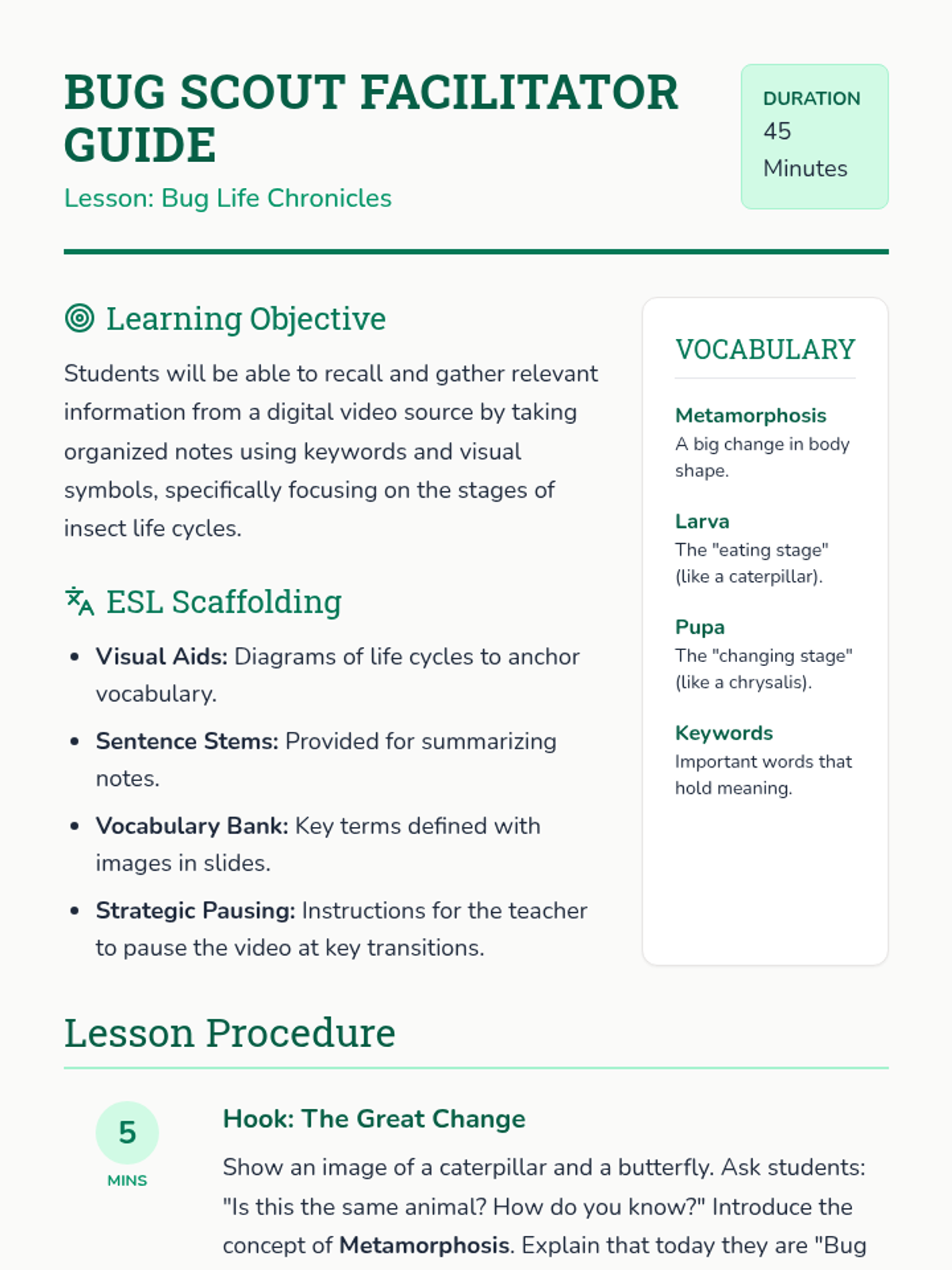
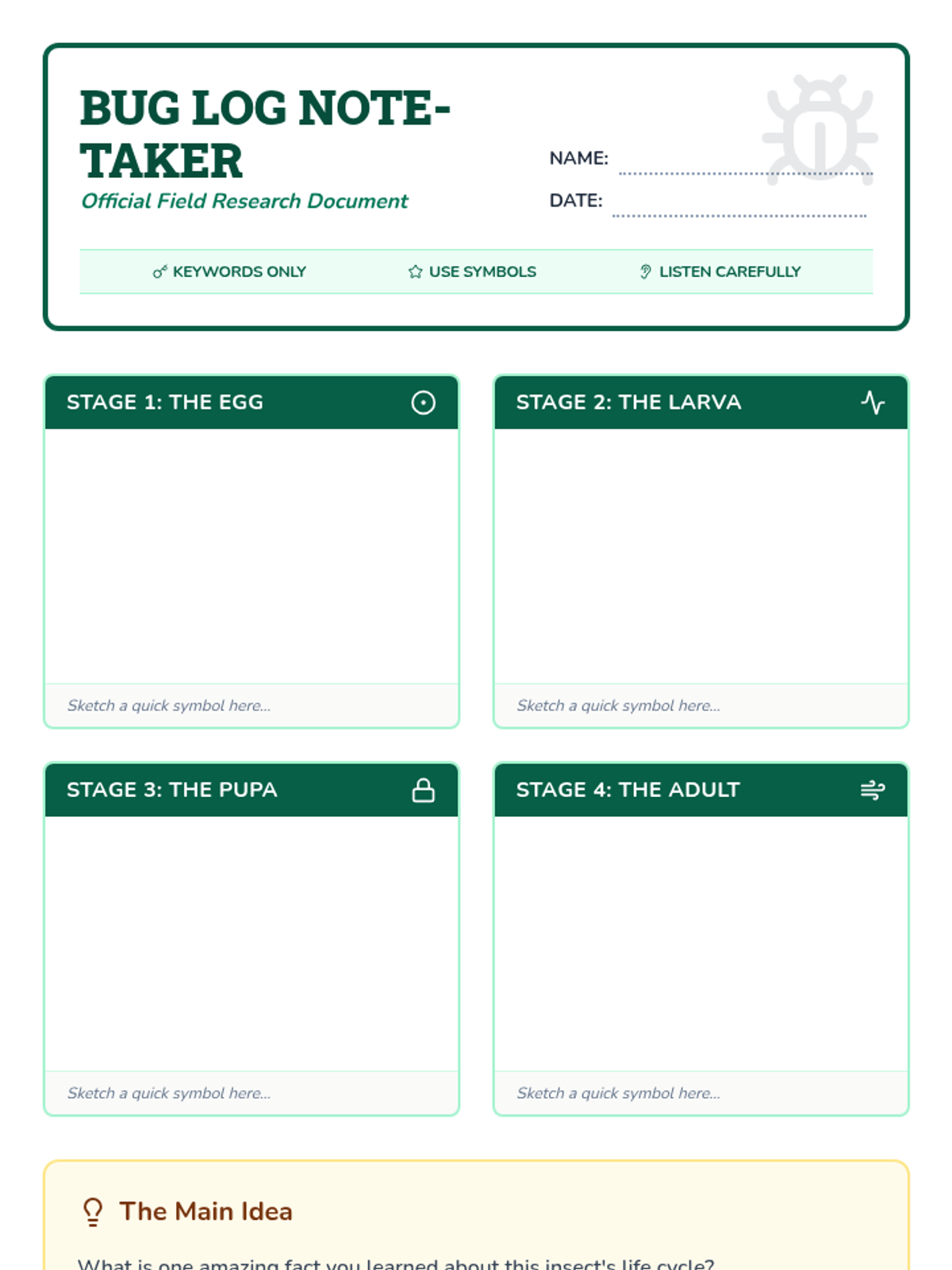
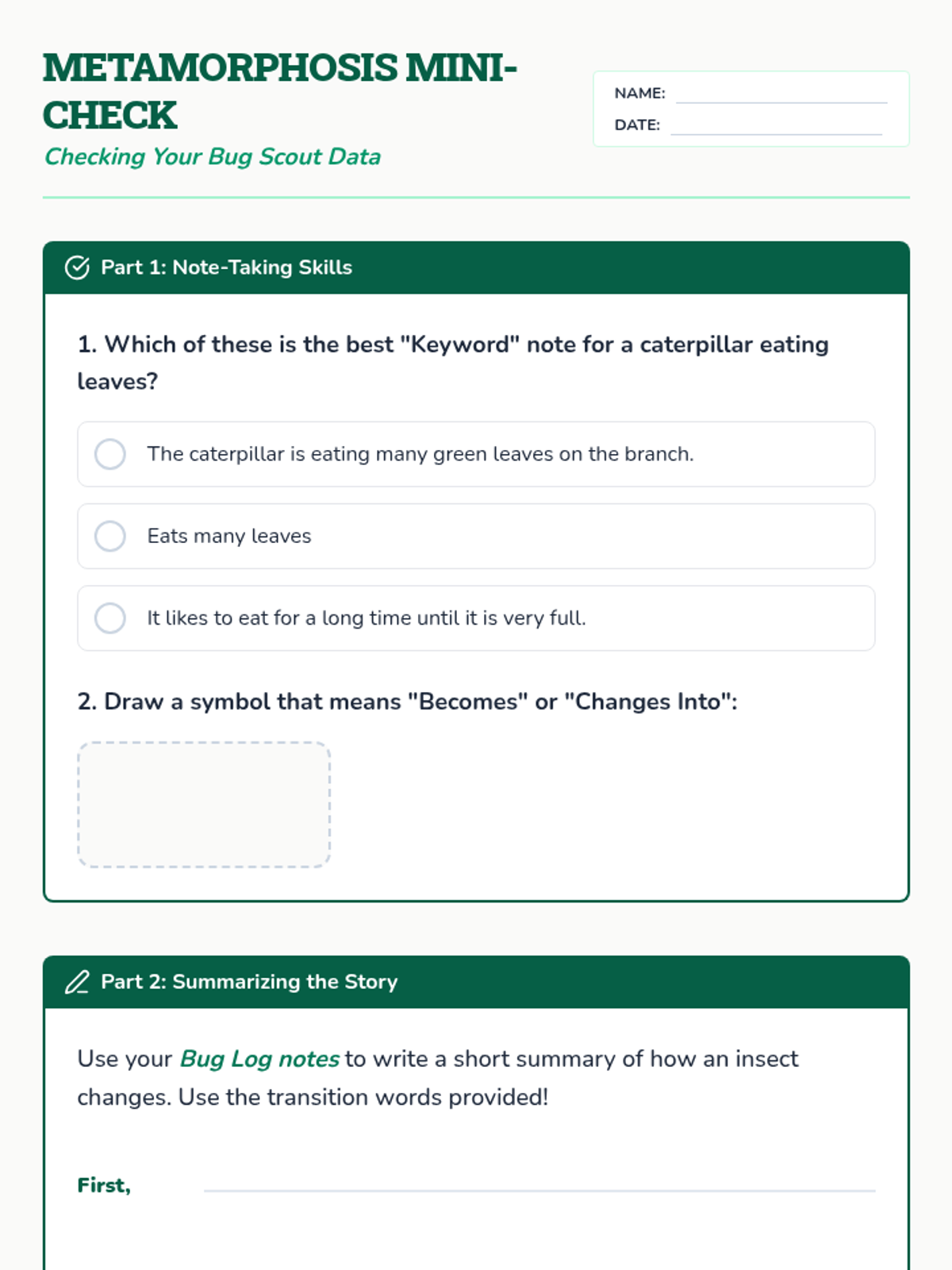
In this 45-minute lesson, Grade 5 ESL students learn to gather information from a digital source by taking organized notes on insect life cycles. Students practice identifying keywords, using visual symbols, and summarizing stages of metamorphosis.
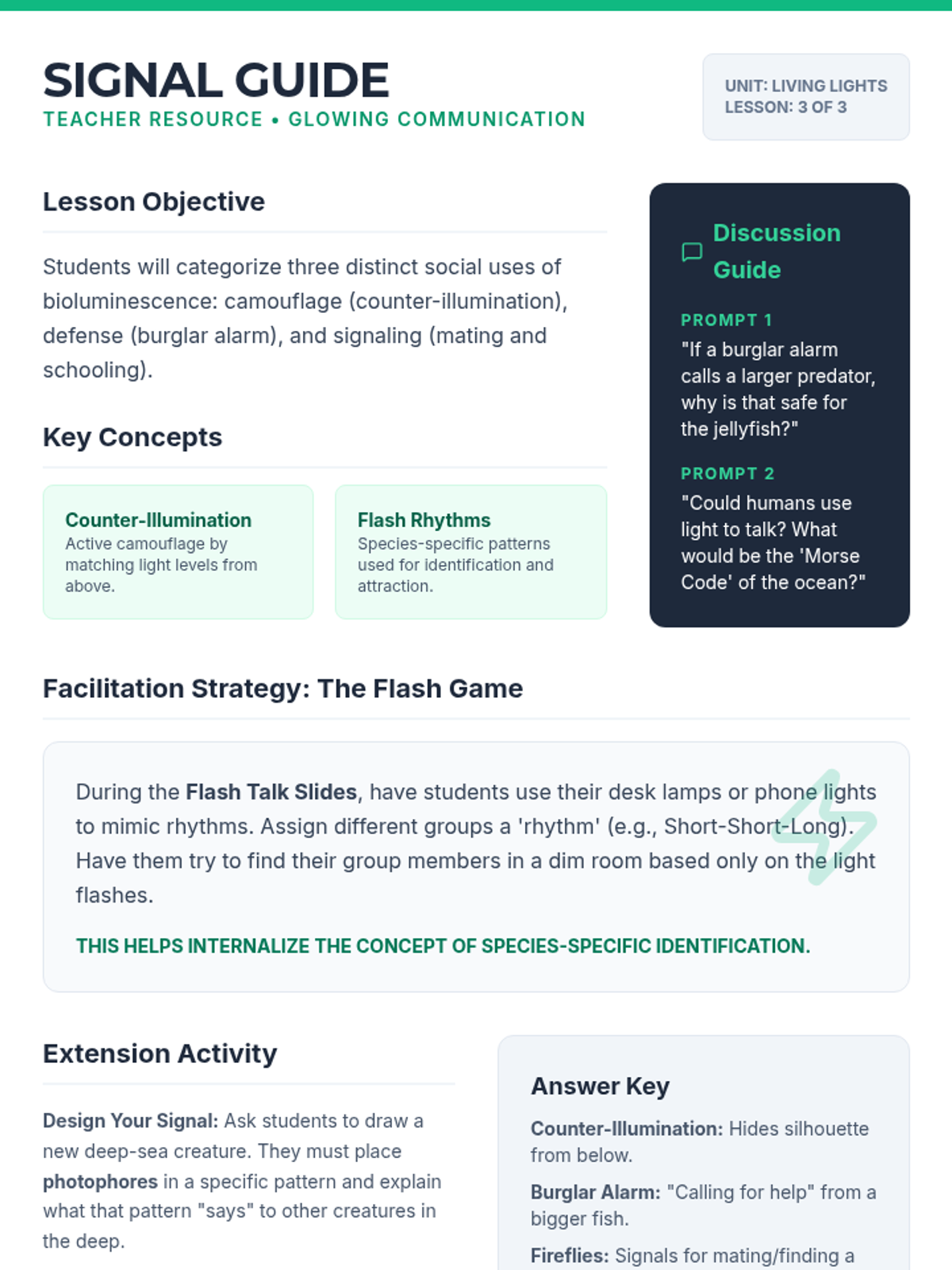
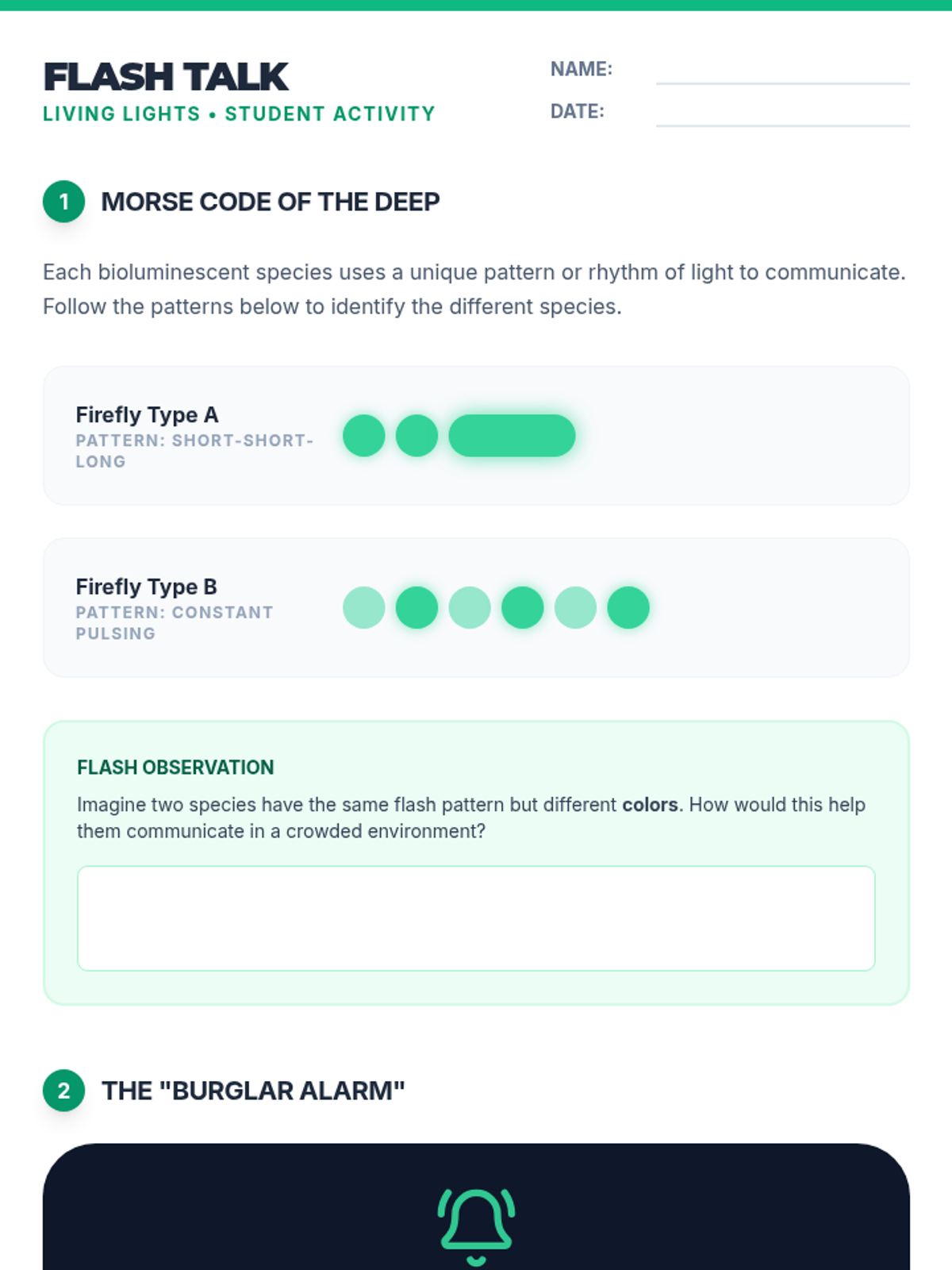
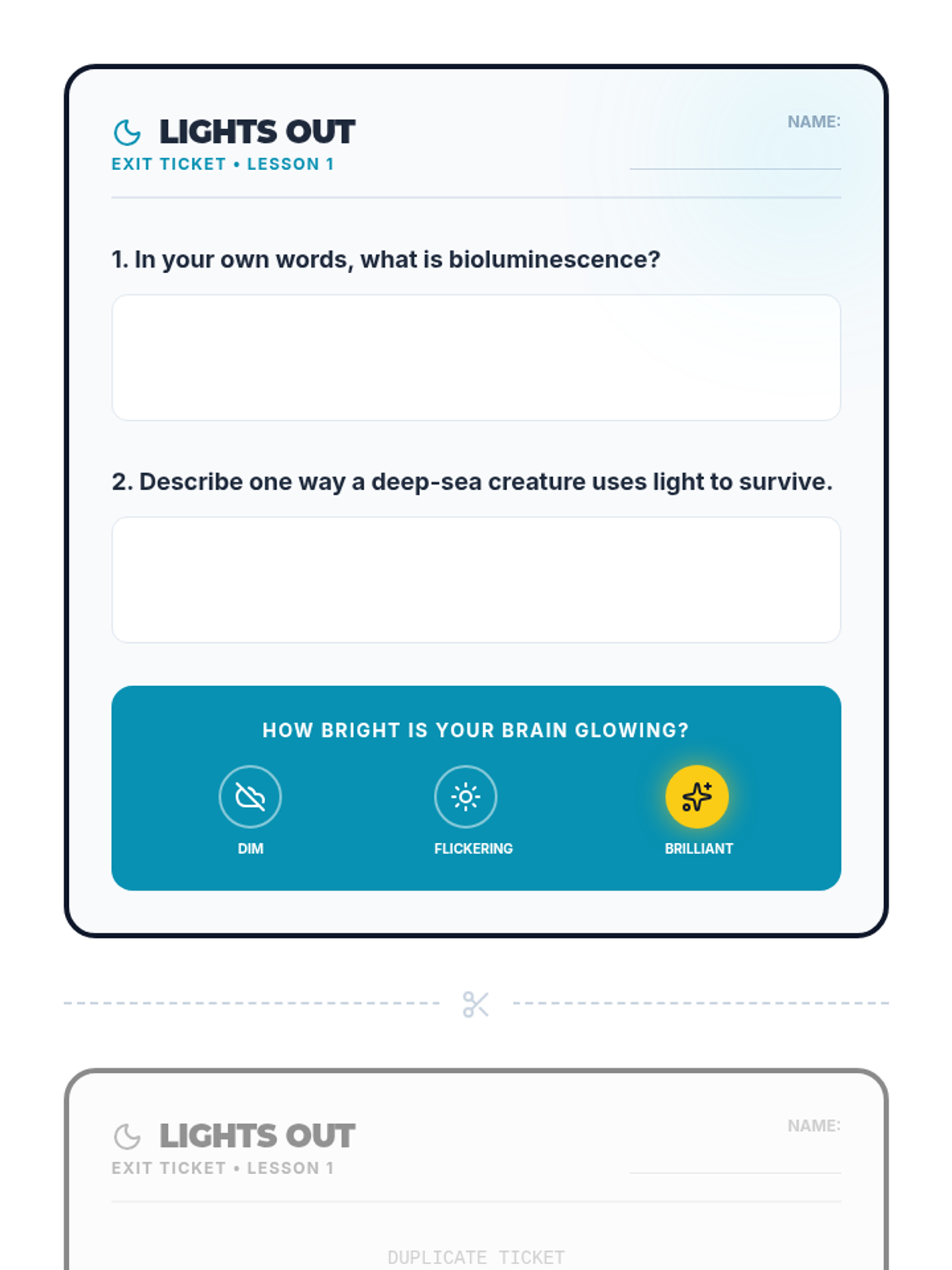
How and why organisms use light for social interactions, communication, and complex behaviors. Students explore strategies like counter-illumination and burglar alarms.
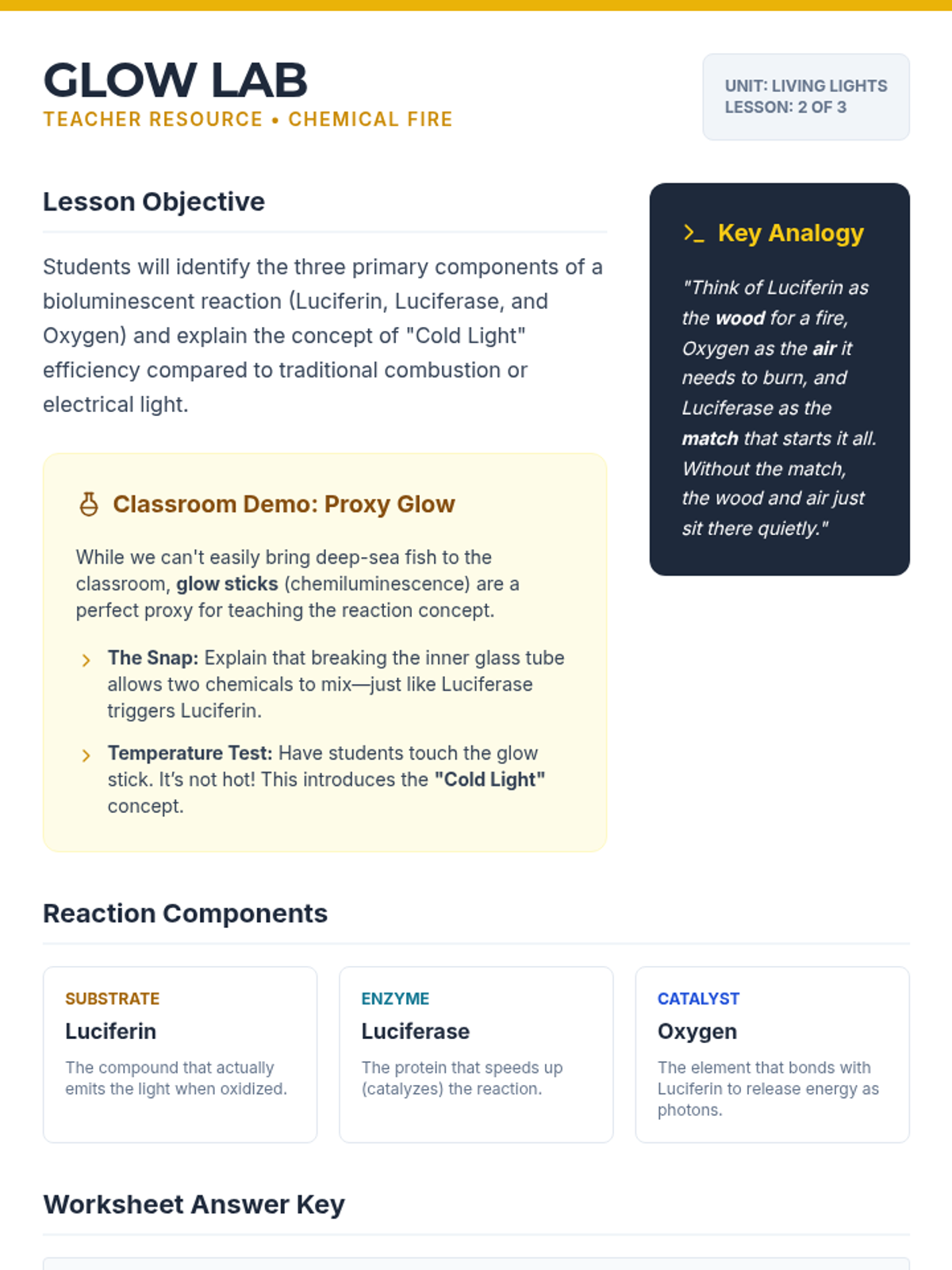
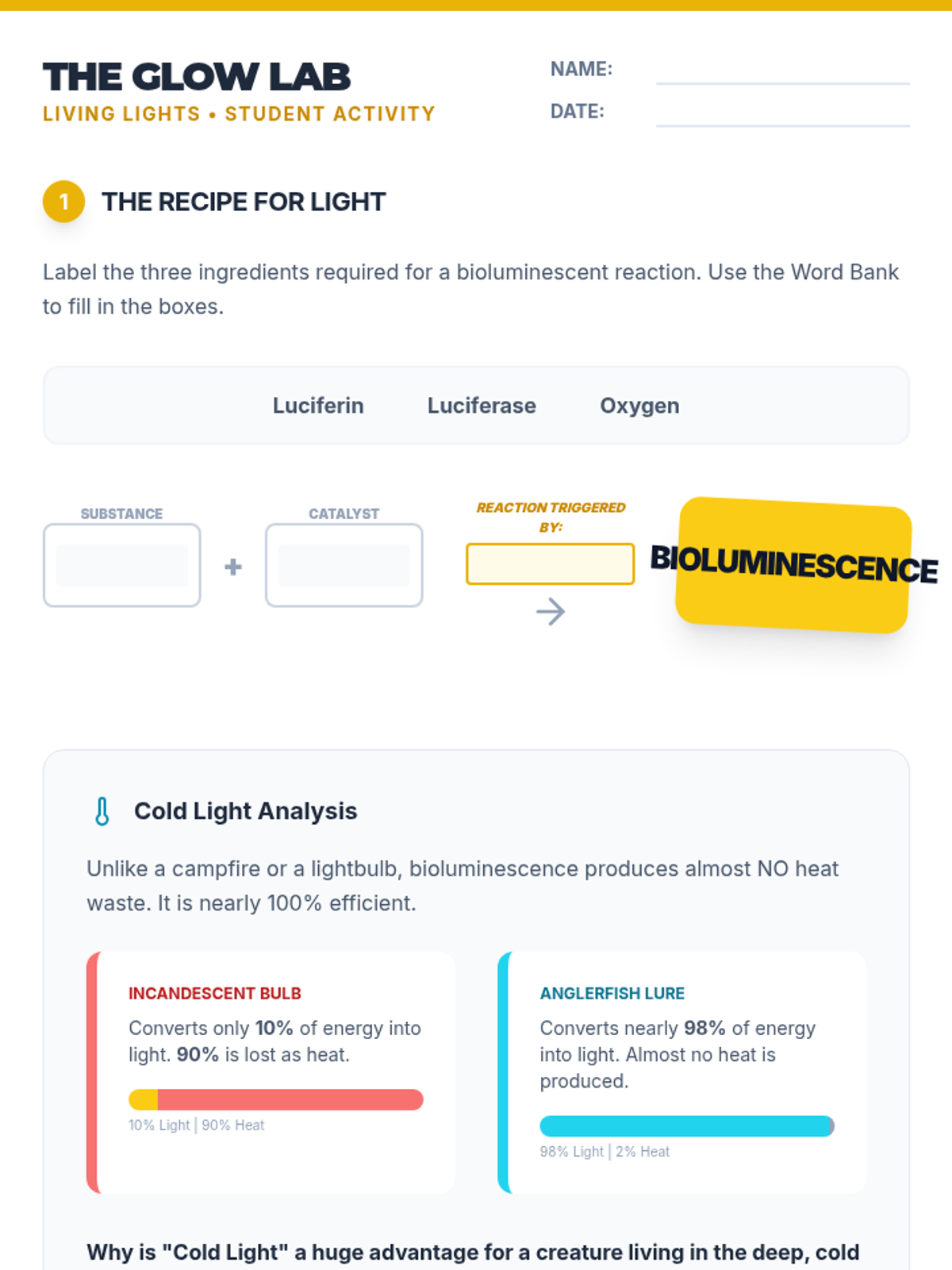
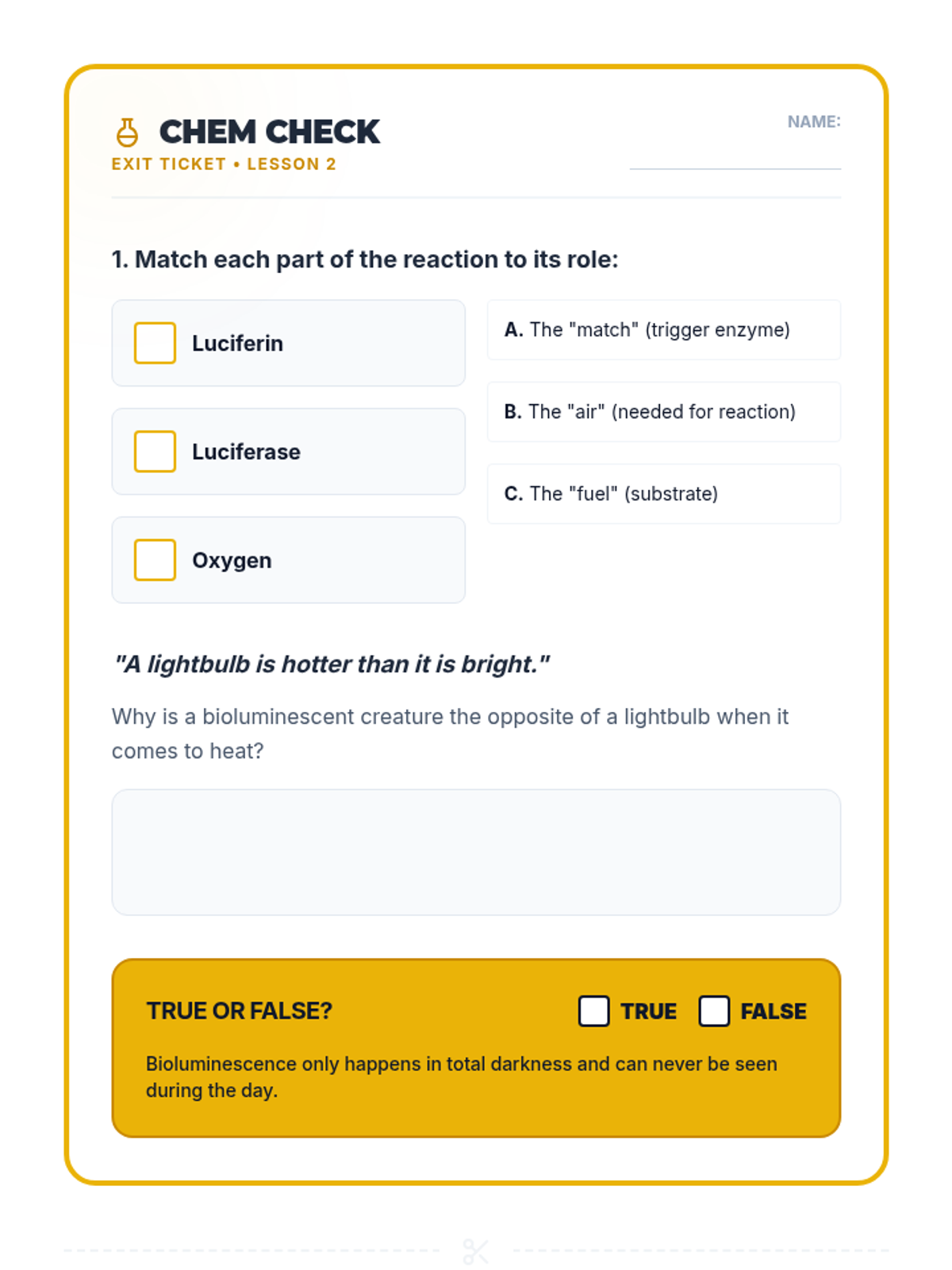
How is light made? Students break down the chemical reaction of bioluminescence, exploring the interaction between luciferin, luciferase, and oxygen.
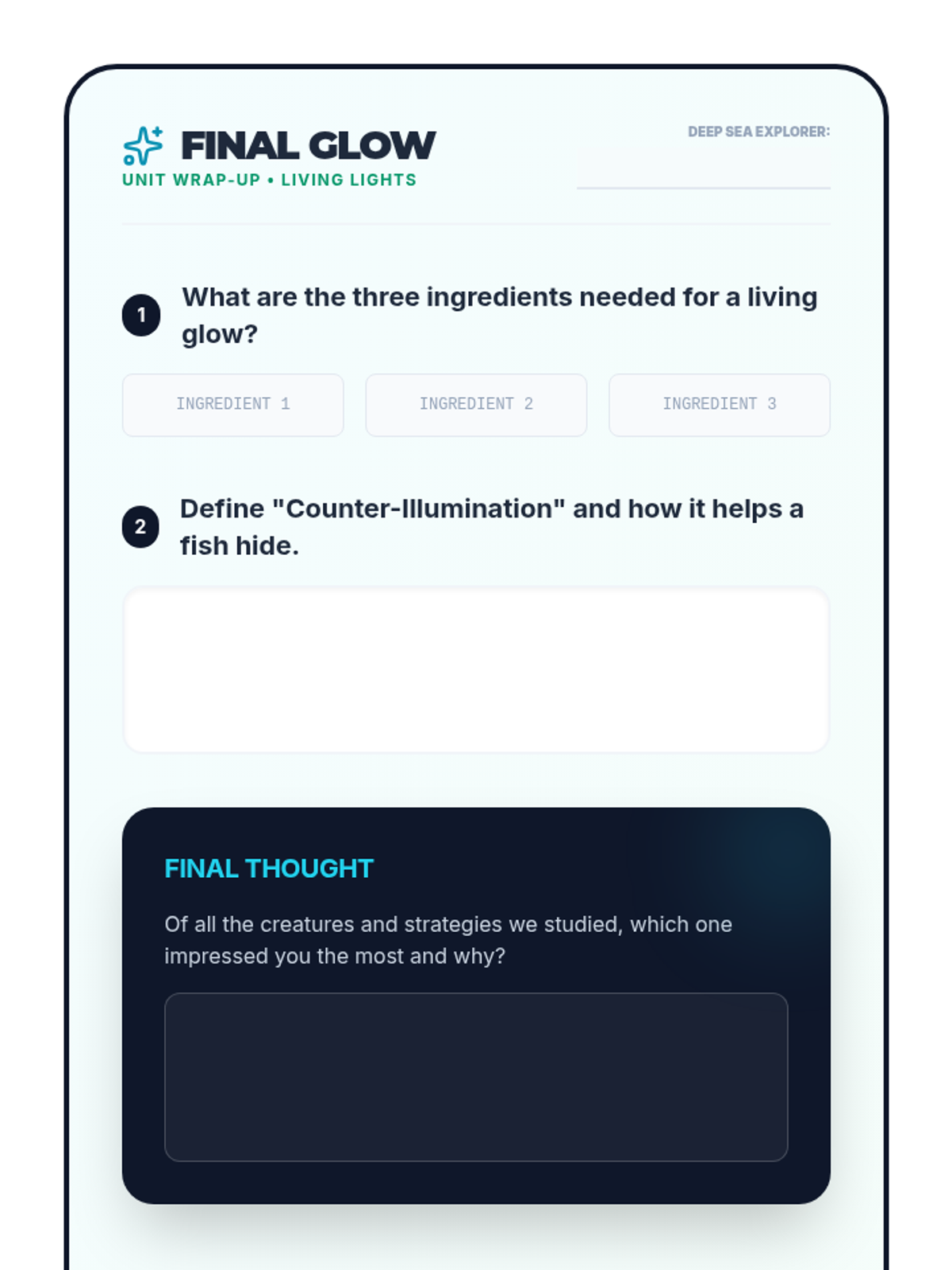
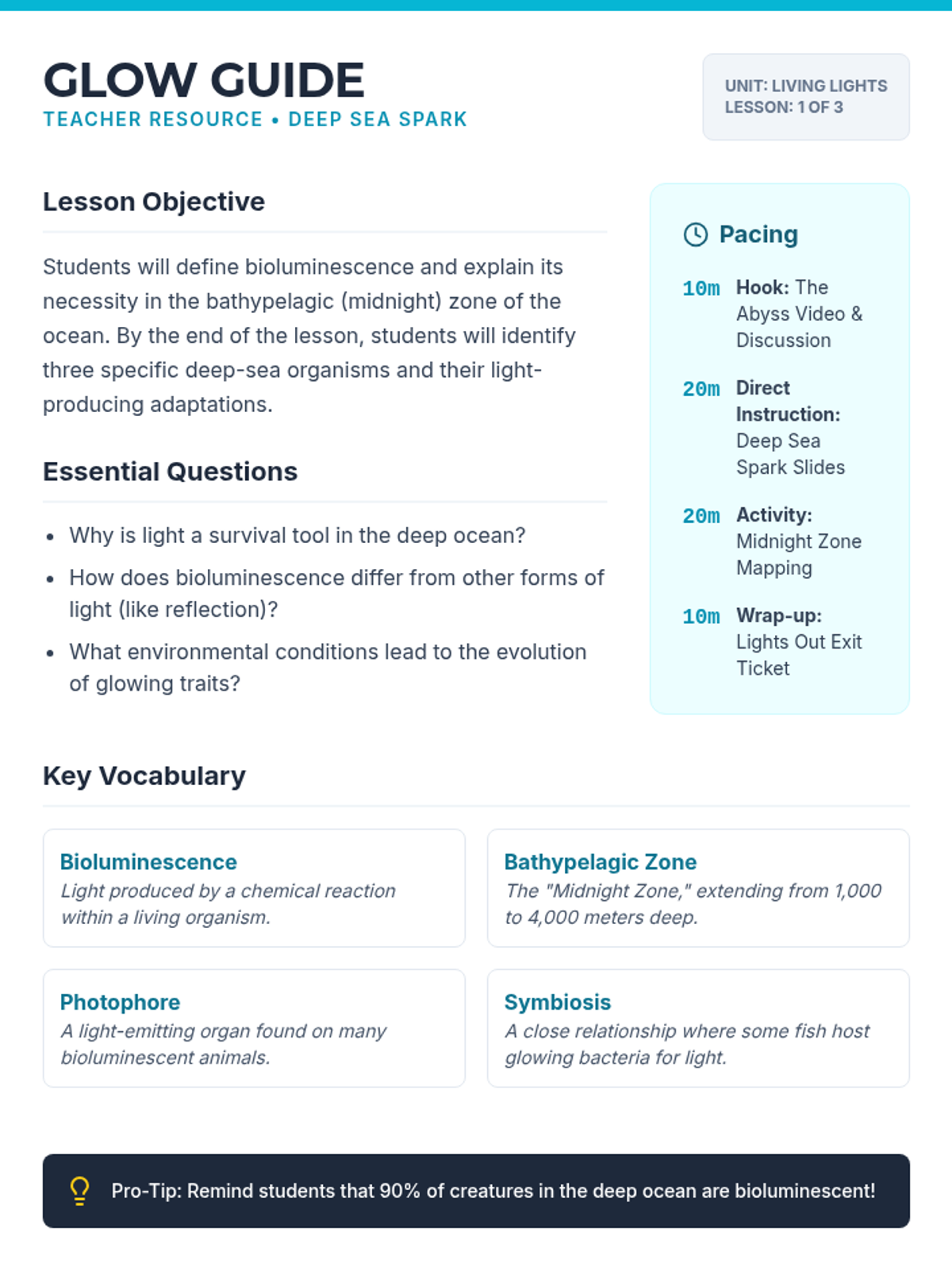
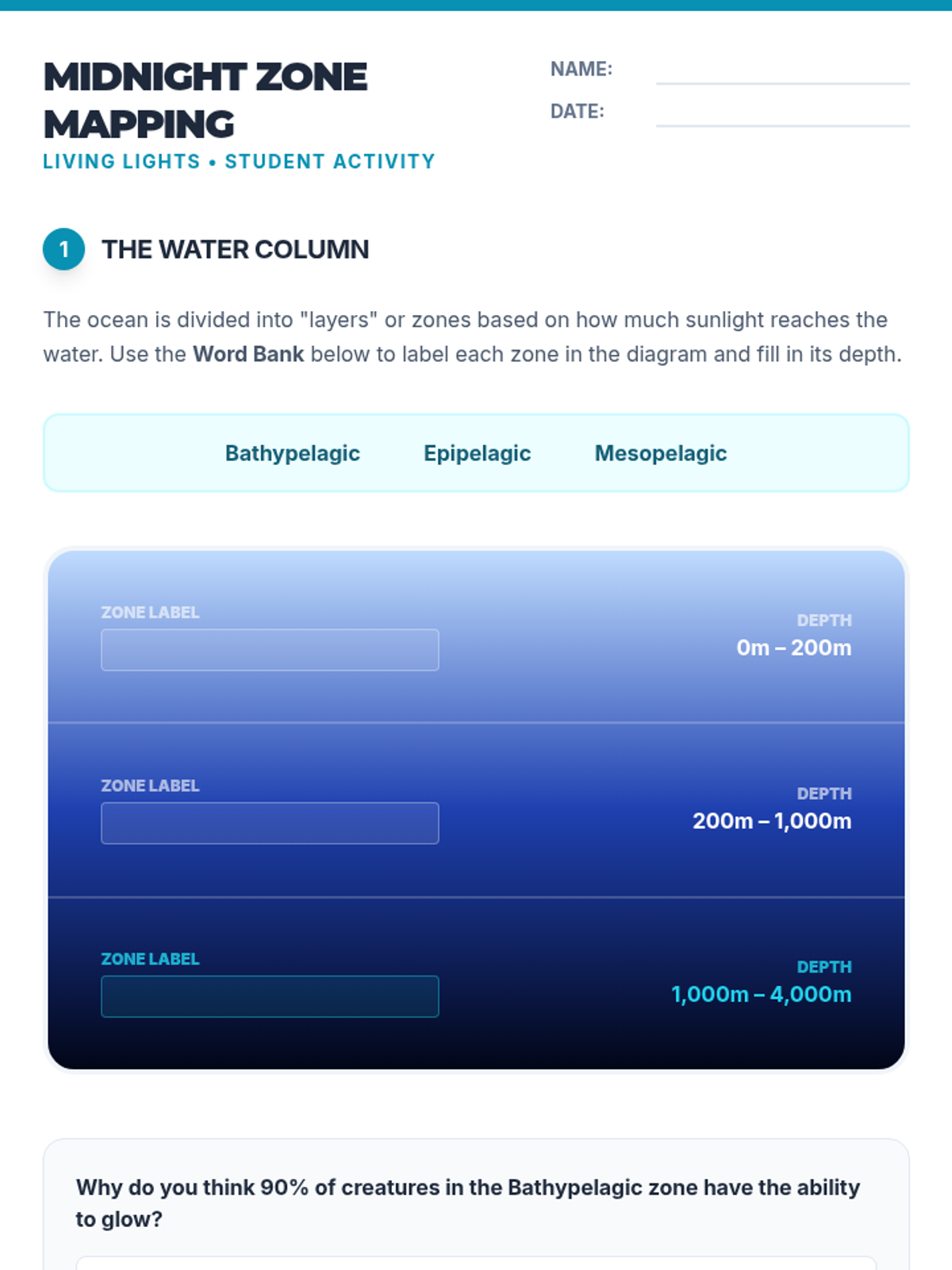
Discover the mysterious world of the deep ocean's midnight zone. Students explore how creatures create light in total darkness and identify the physical adaptations of bioluminescent marine life.
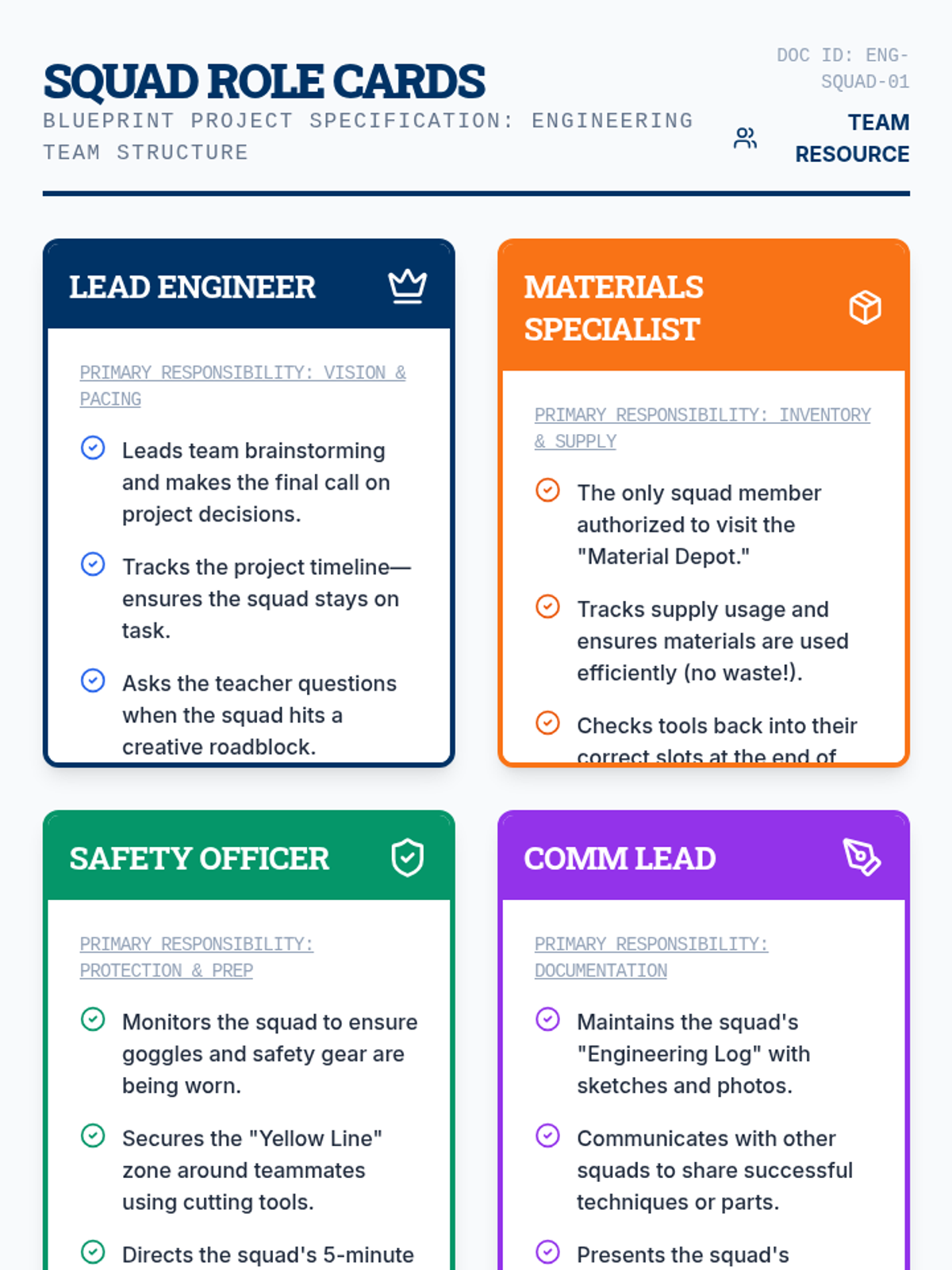
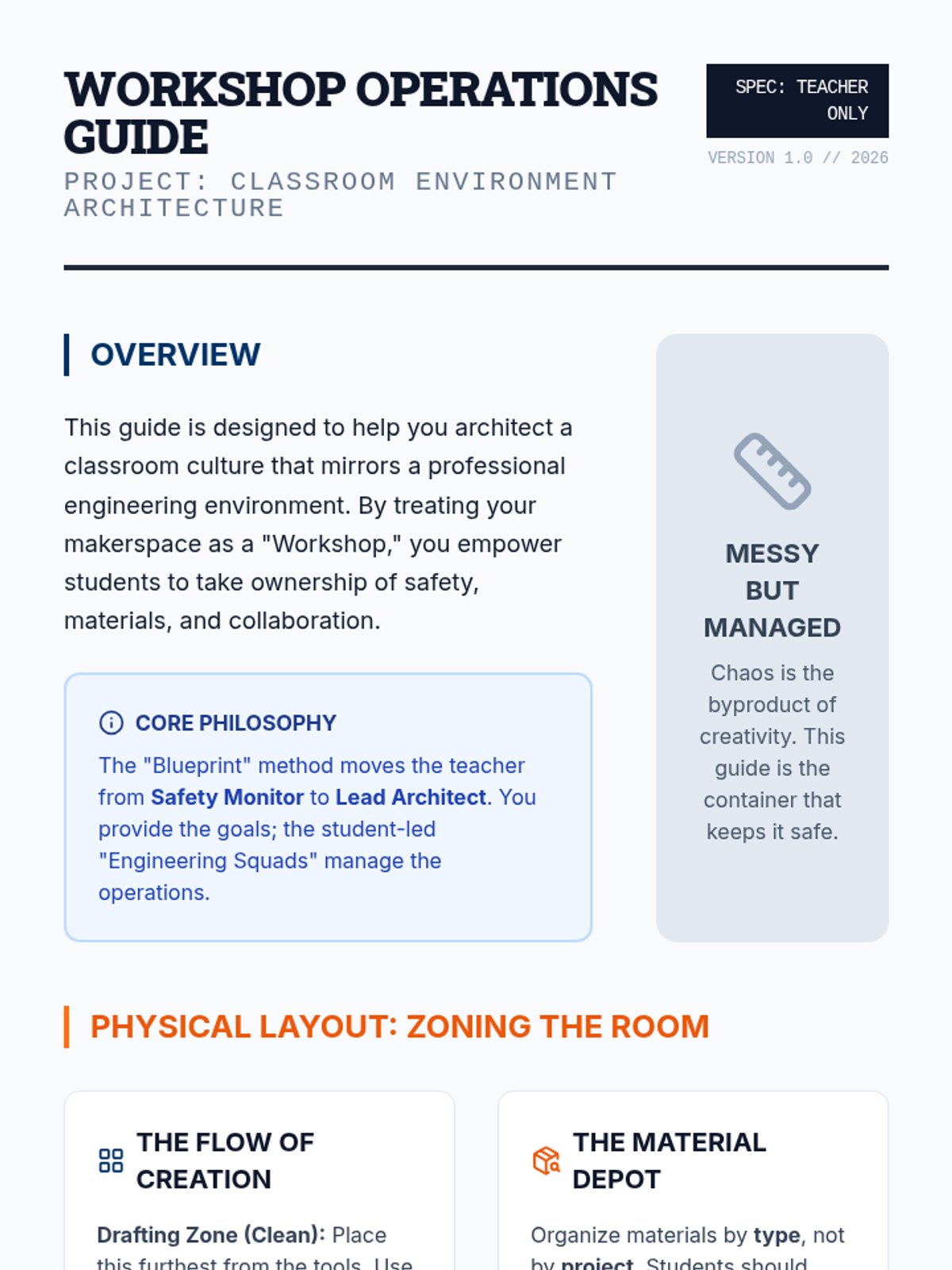
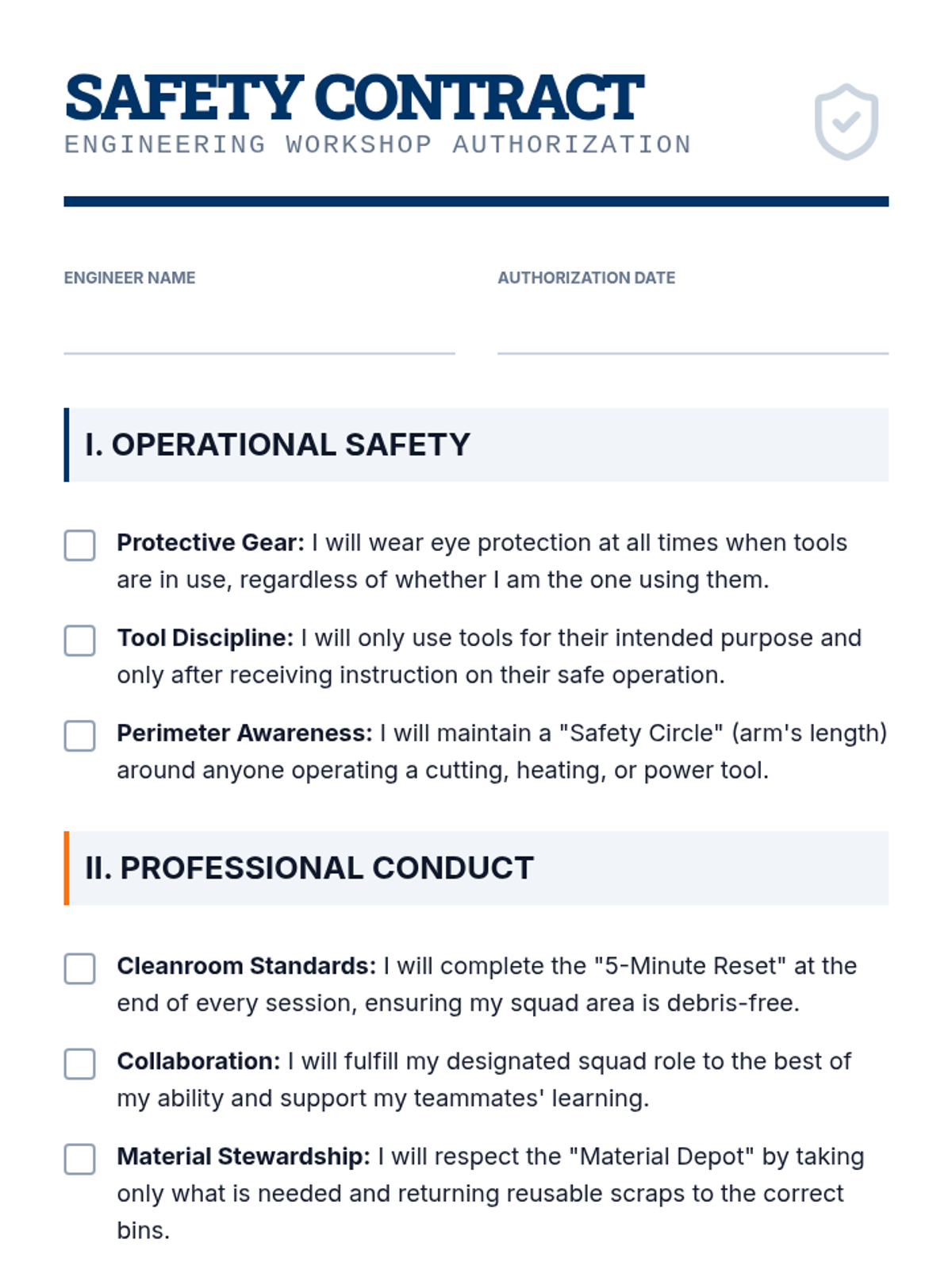
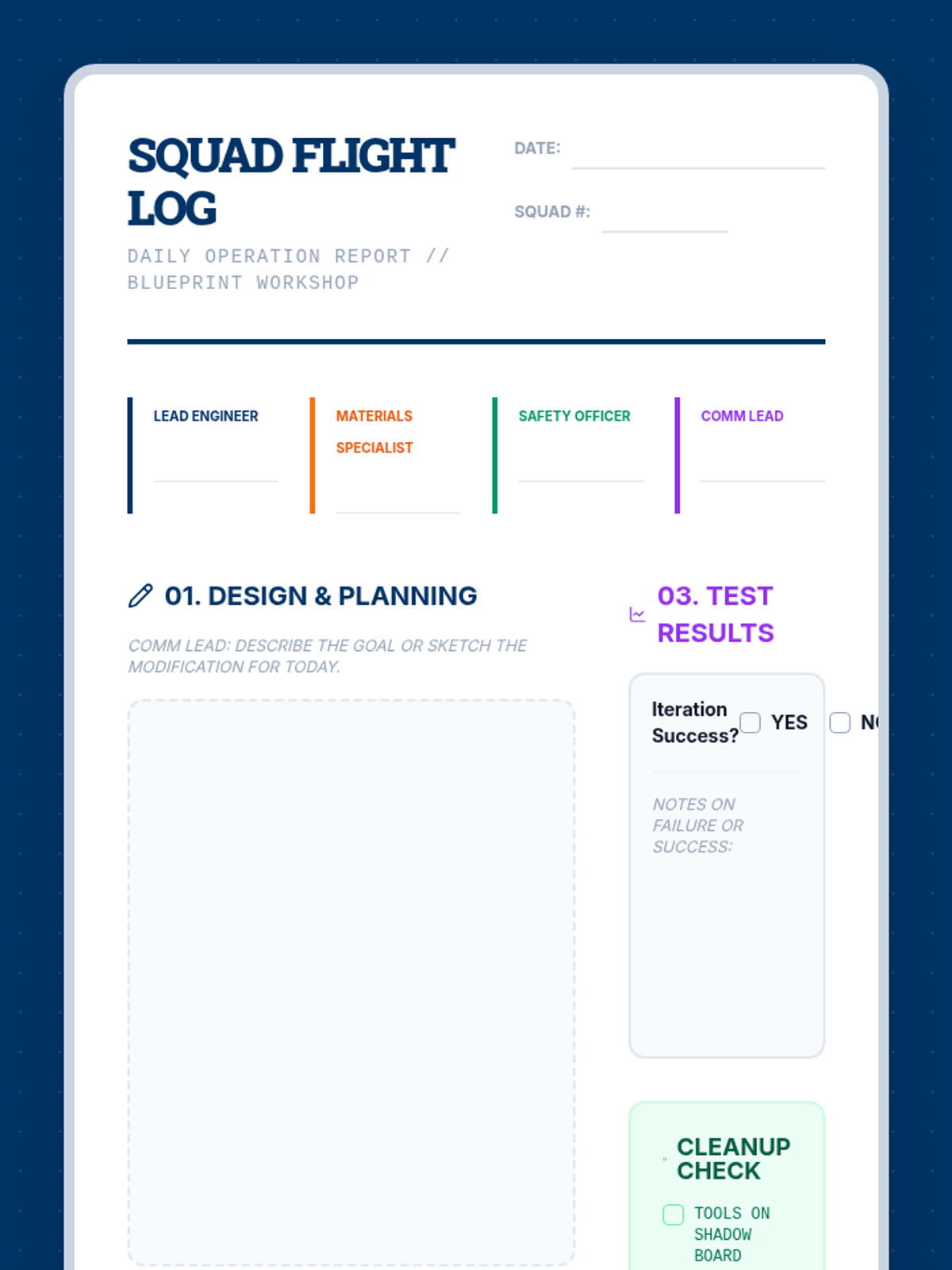
A foundational toolkit for setting up a physical engineering and maker space, covering physical layout, collaborative roles, and essential classroom routines.
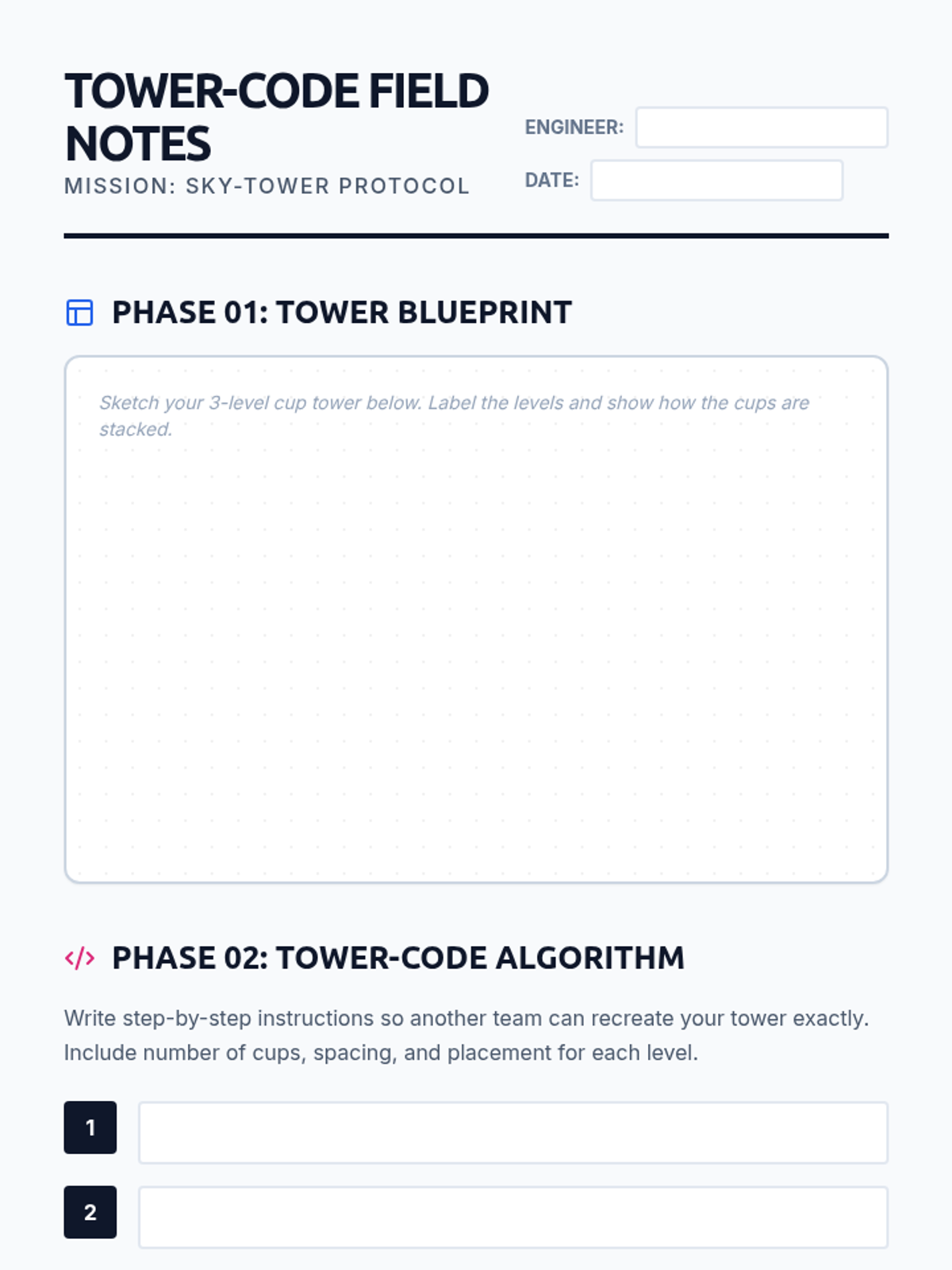
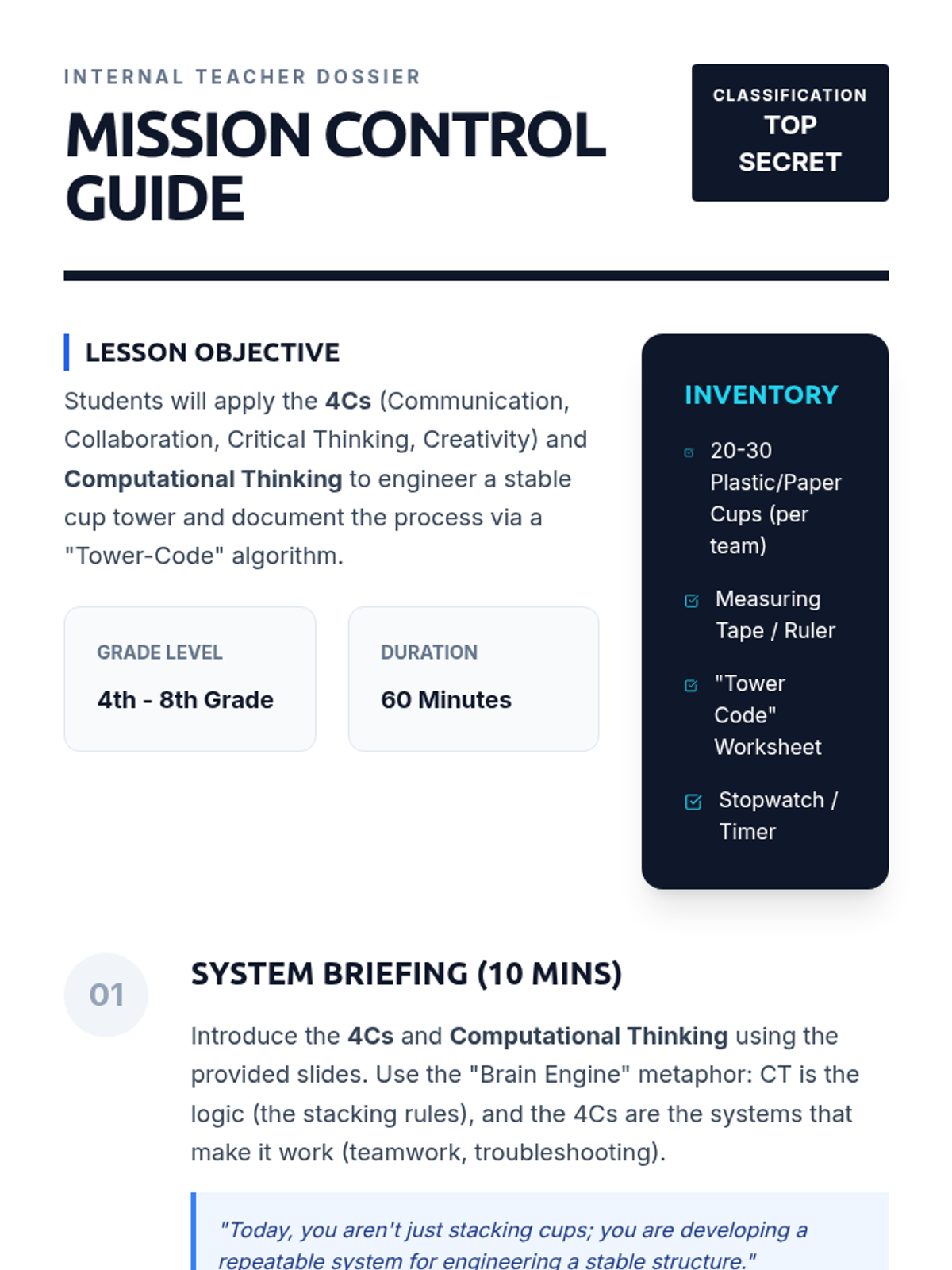
A high-stakes engineering challenge where students use the 4Cs and Computational Thinking to design, build, and document the ultimate cup tower structure.
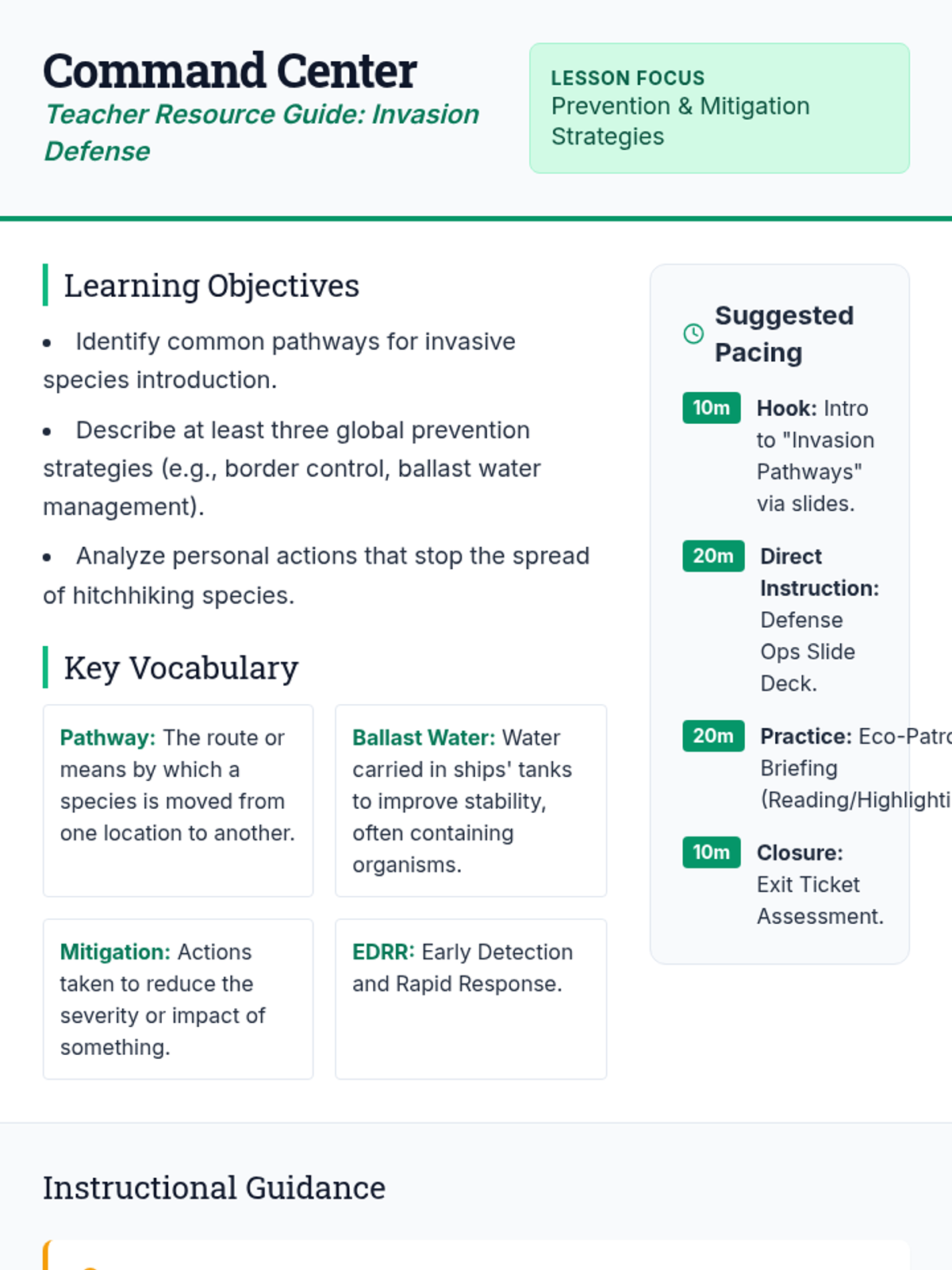
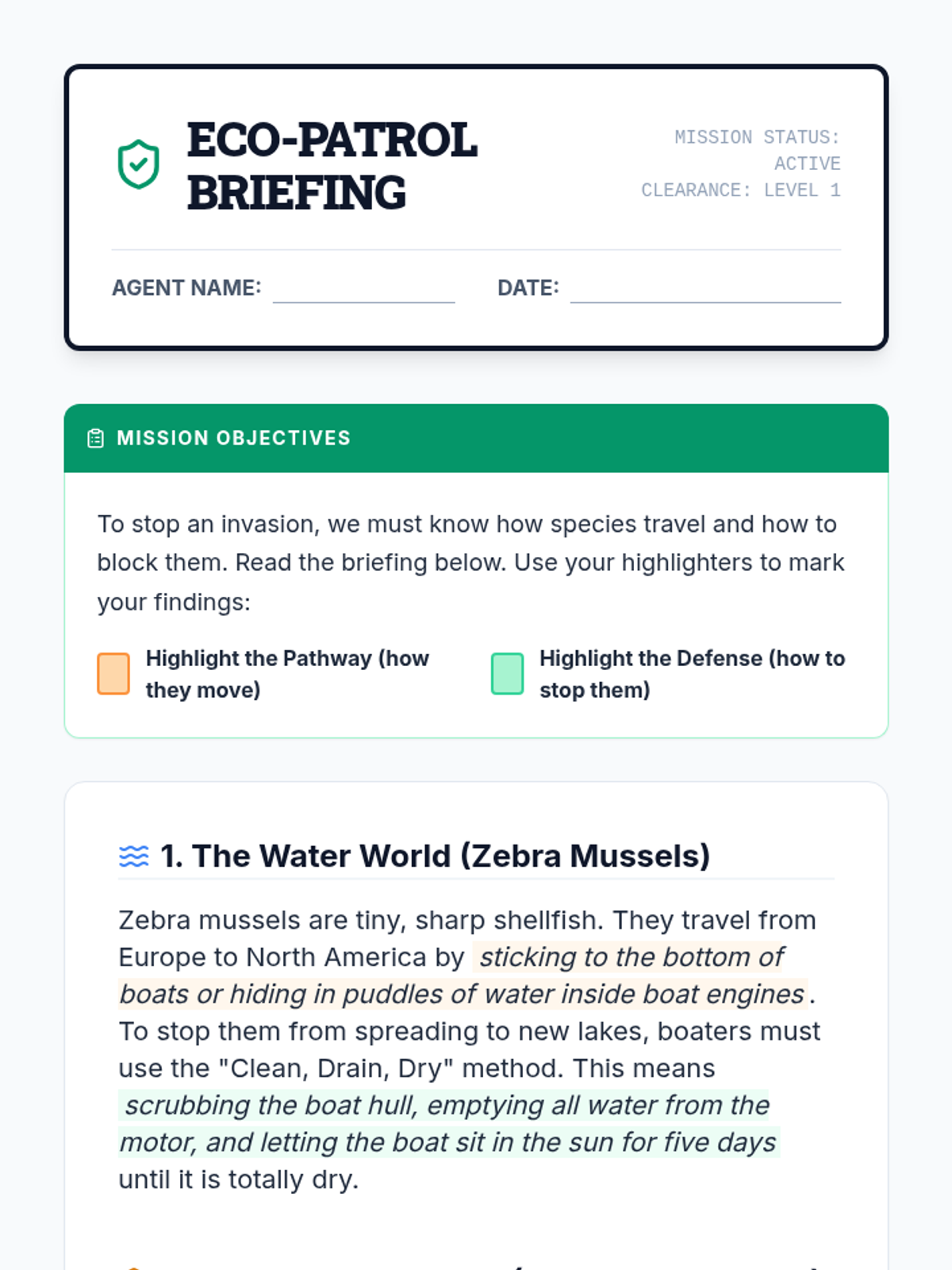
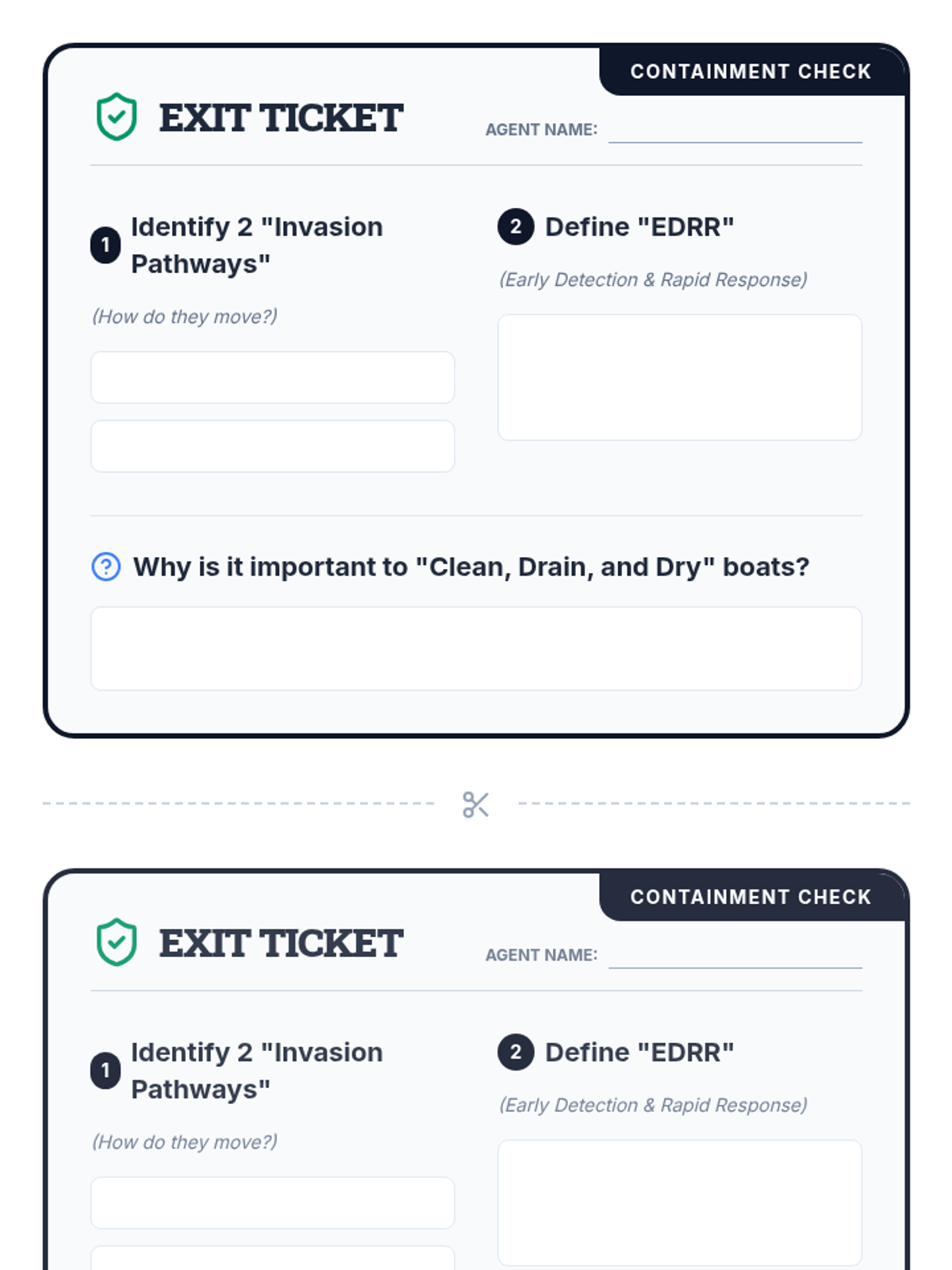
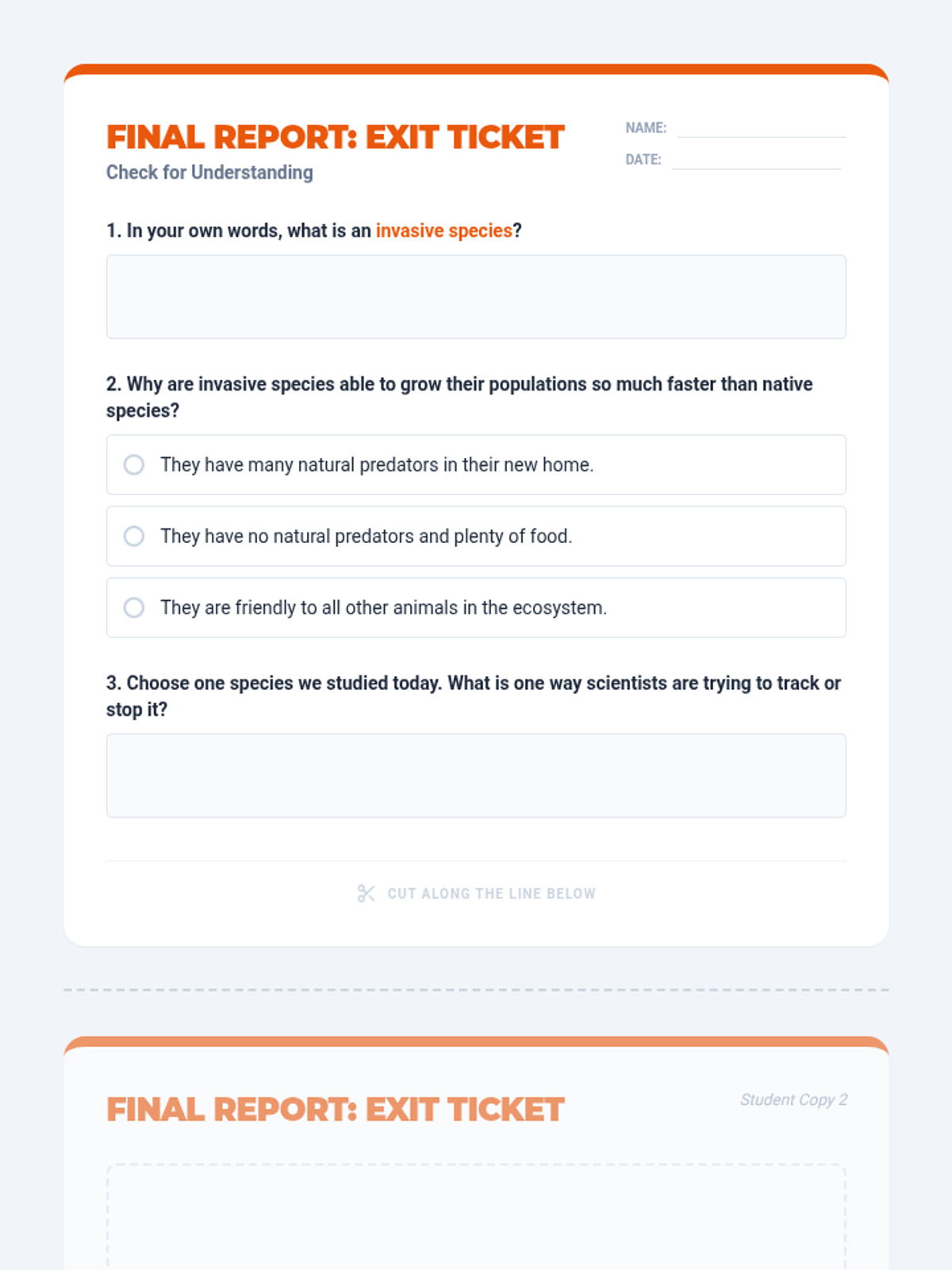
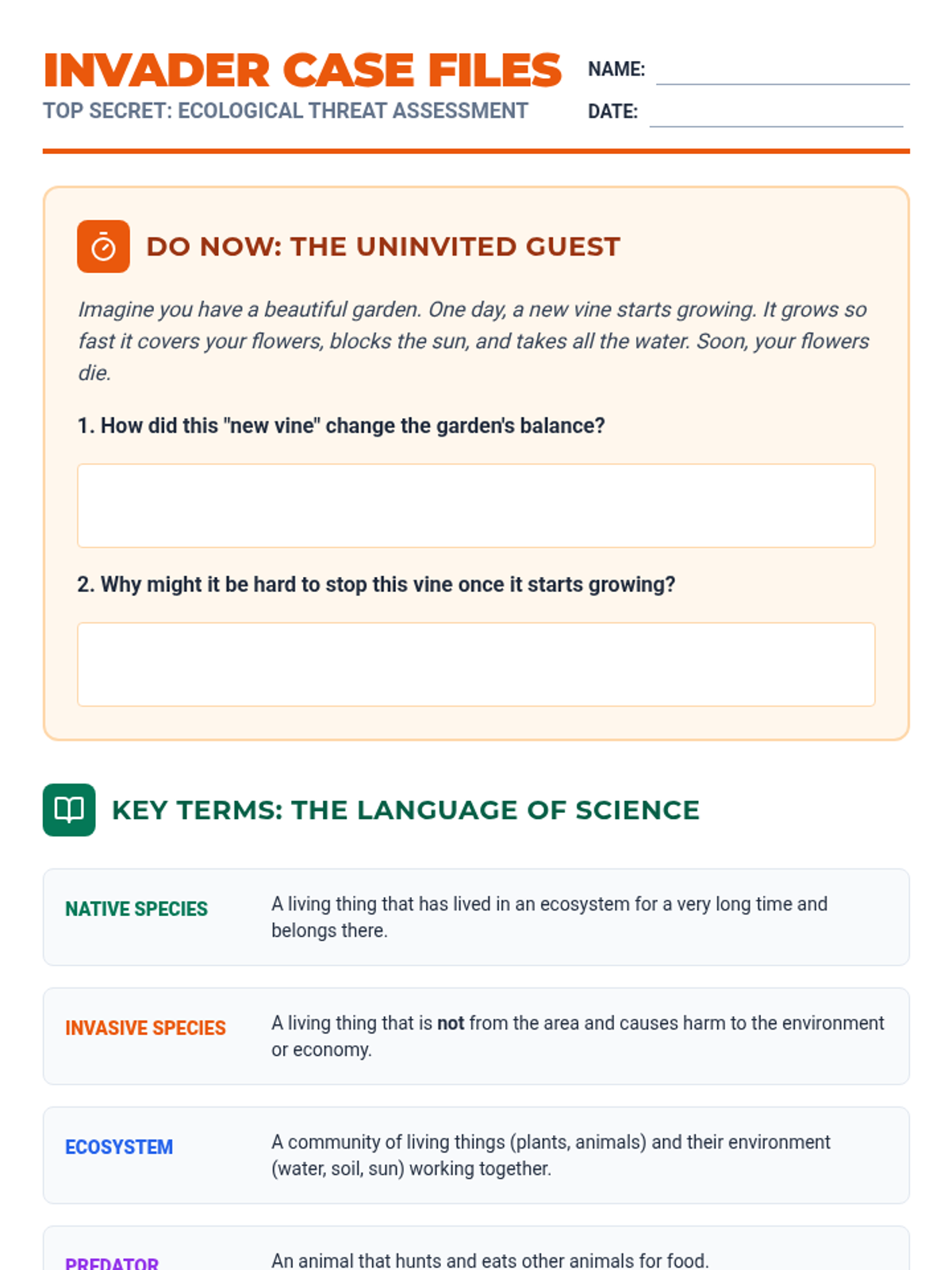
A comprehensive lesson on invasive species prevention, featuring visual slides, a modified reading task for accessibility, and assessment tools. Students learn to identify pathways and implement global prevention strategies.
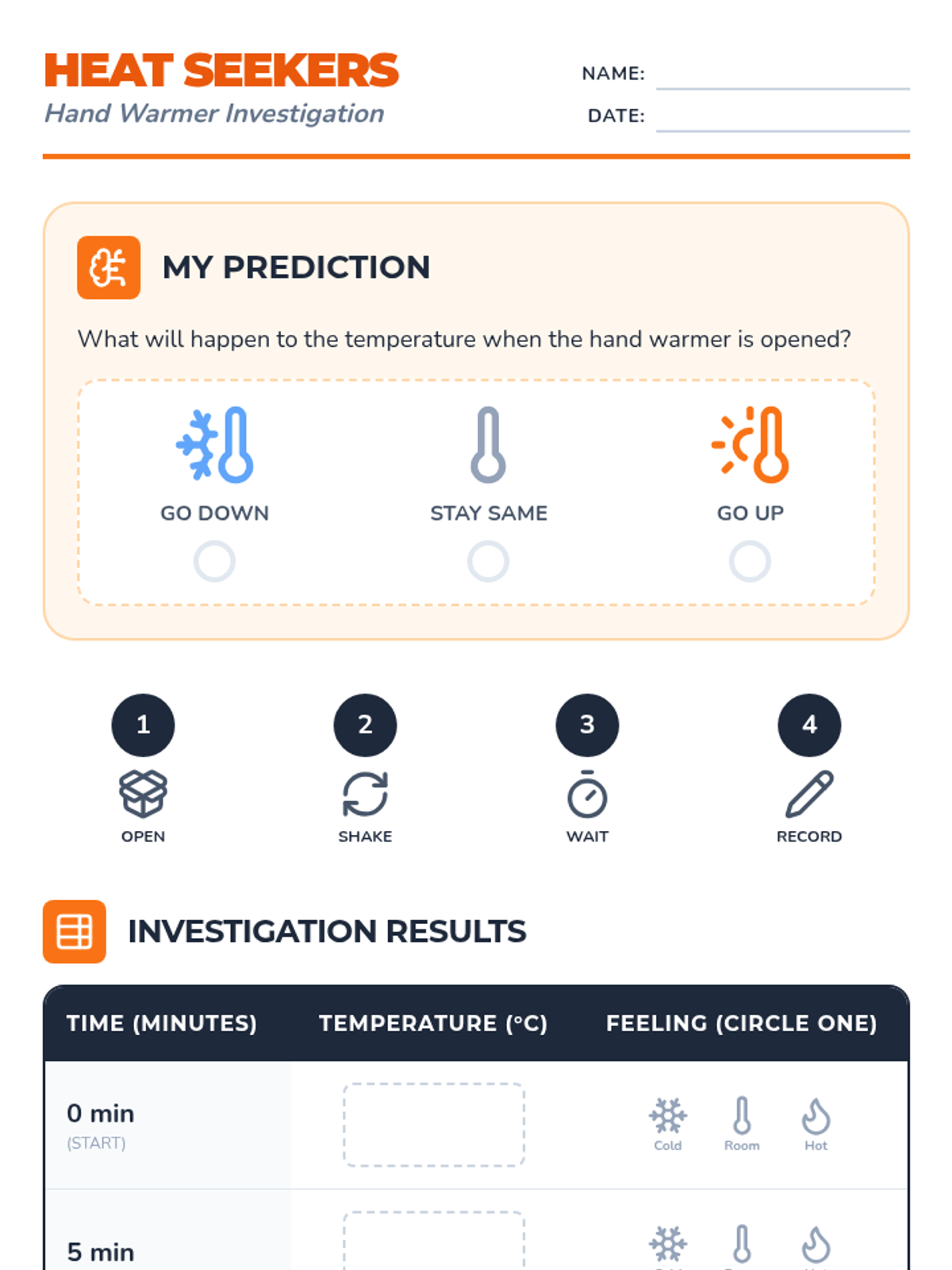
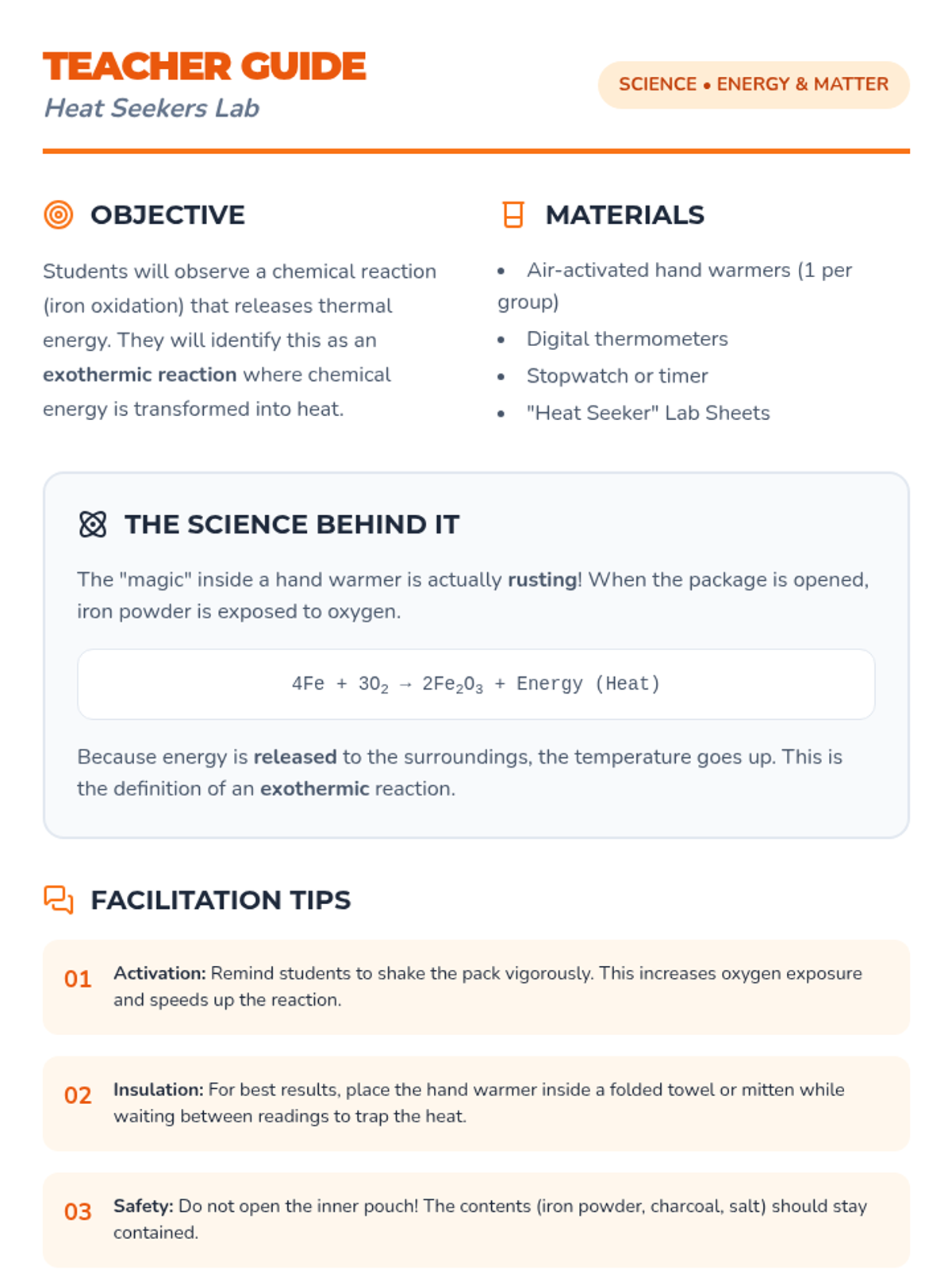
An investigation into exothermic reactions using hand warmers. Students observe and record temperature changes to understand how chemical energy transforms into heat energy.
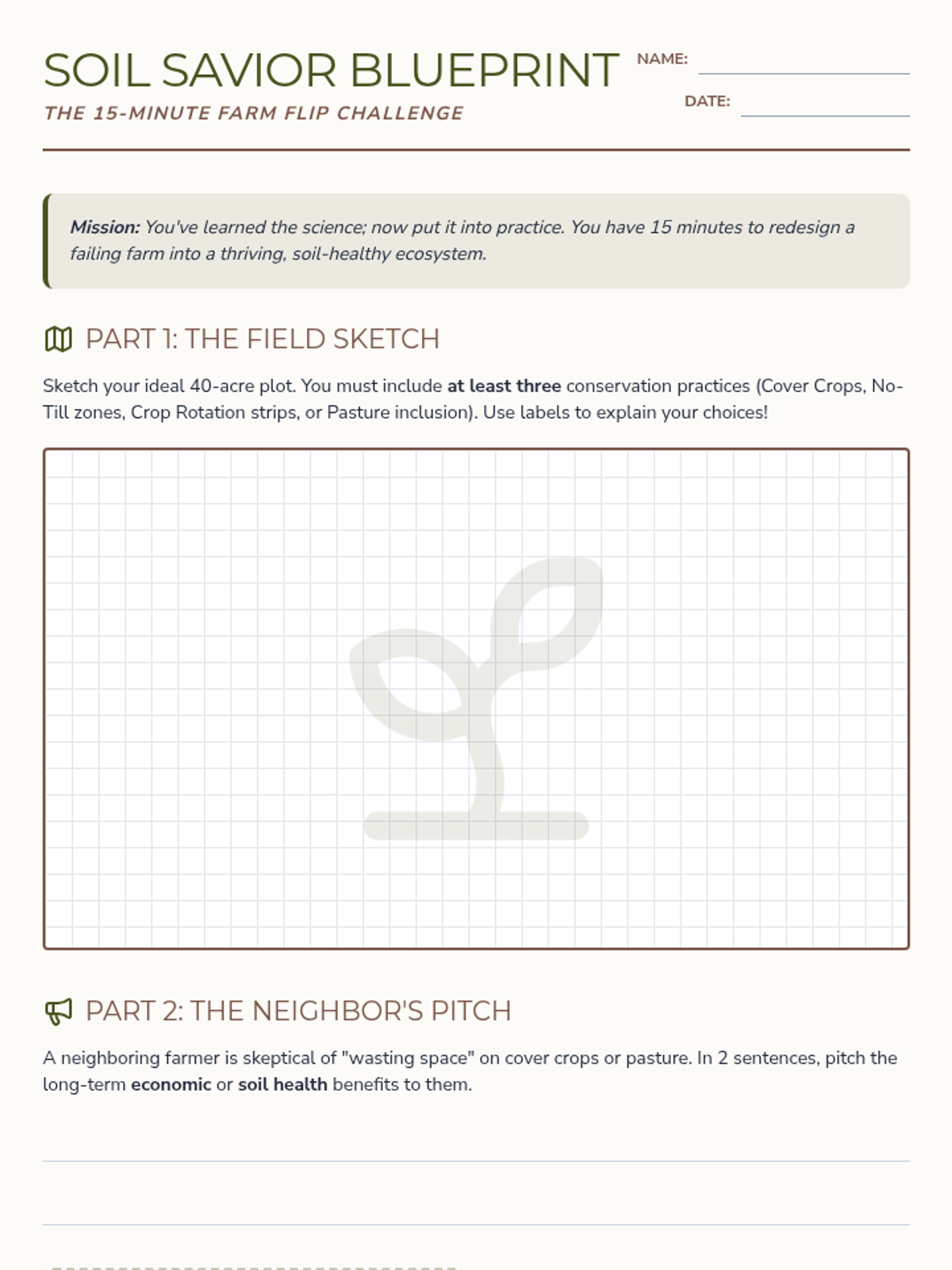
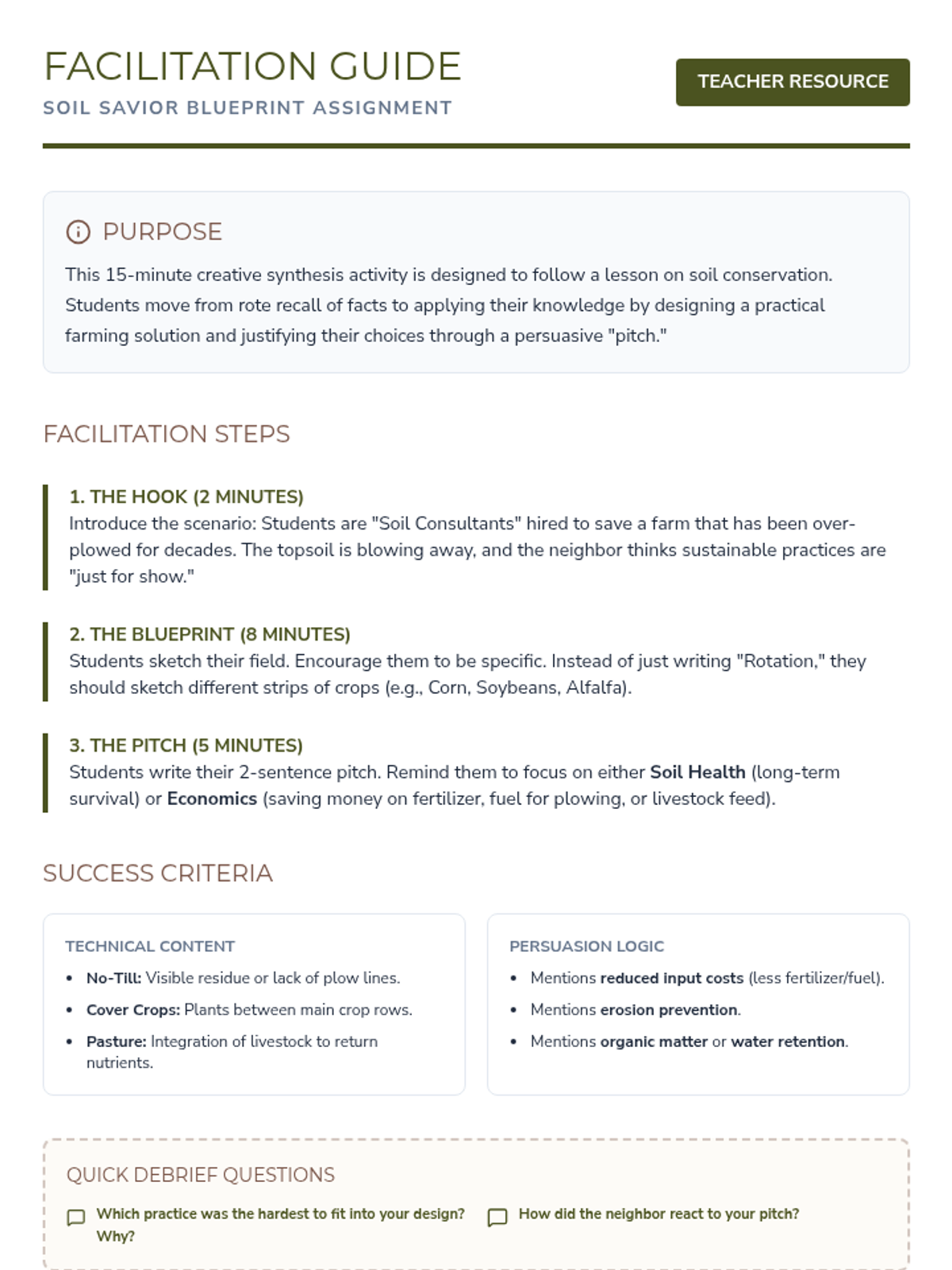
A quick, creative wrap-up lesson where students apply their knowledge of soil conservation practices to design a sustainable farm plot and craft a persuasive pitch.
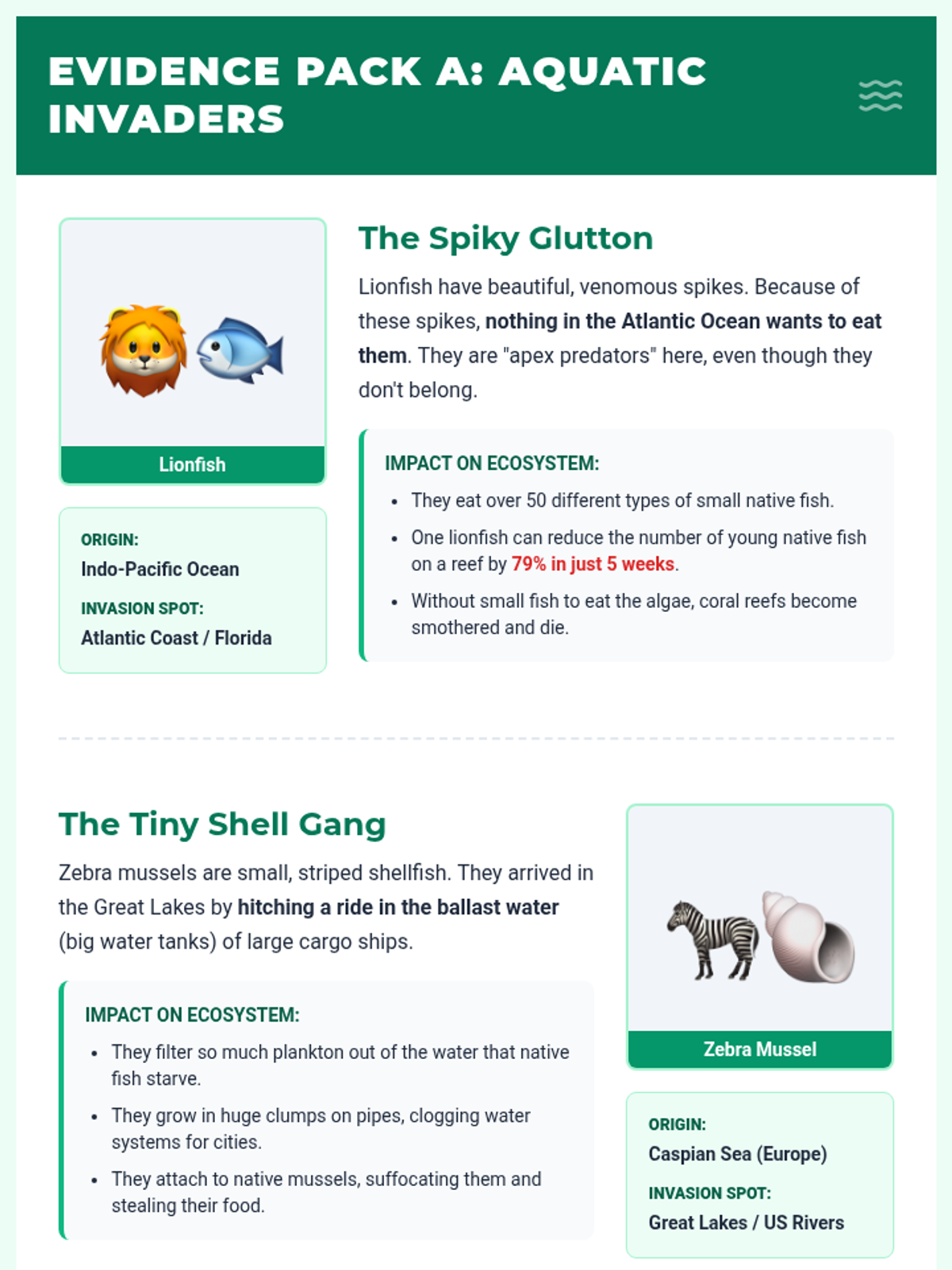
A comprehensive lesson on invasive species featuring case studies of Lionfish, Spotted Lanternflies, Zebra Mussels, and Burmese Pythons. Students explore the scientific process and ecological impacts through simplified text and visual supports.
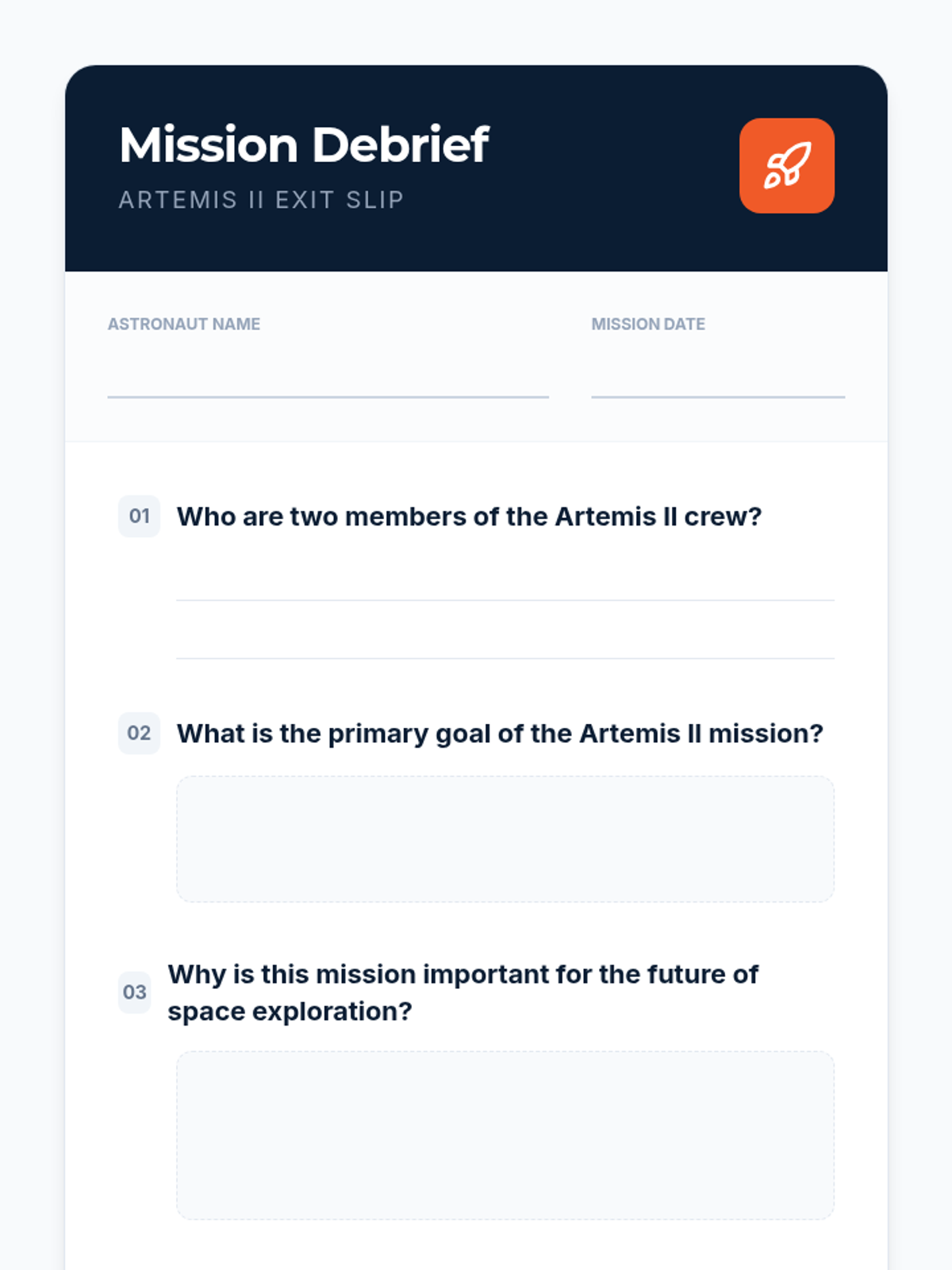
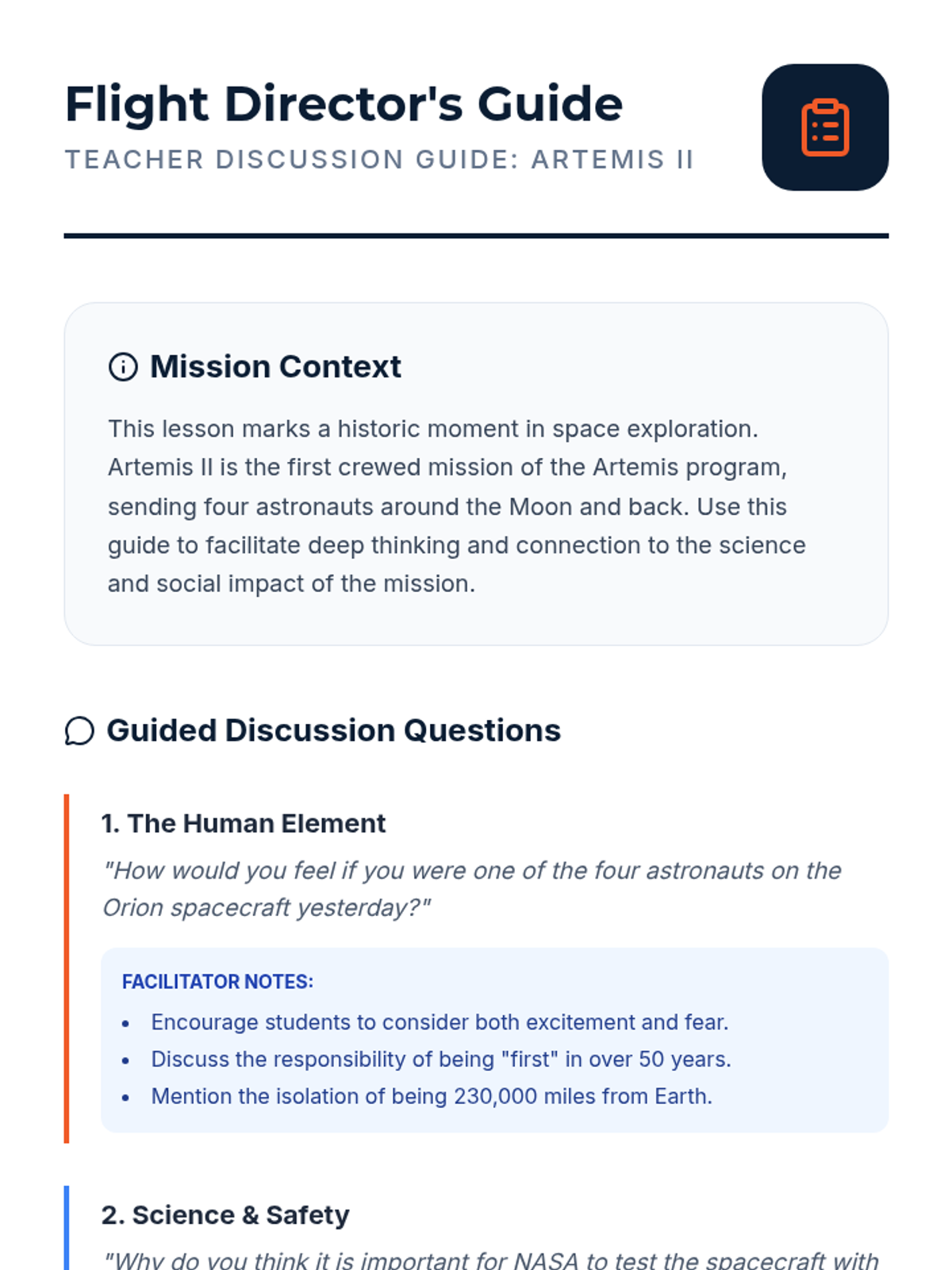
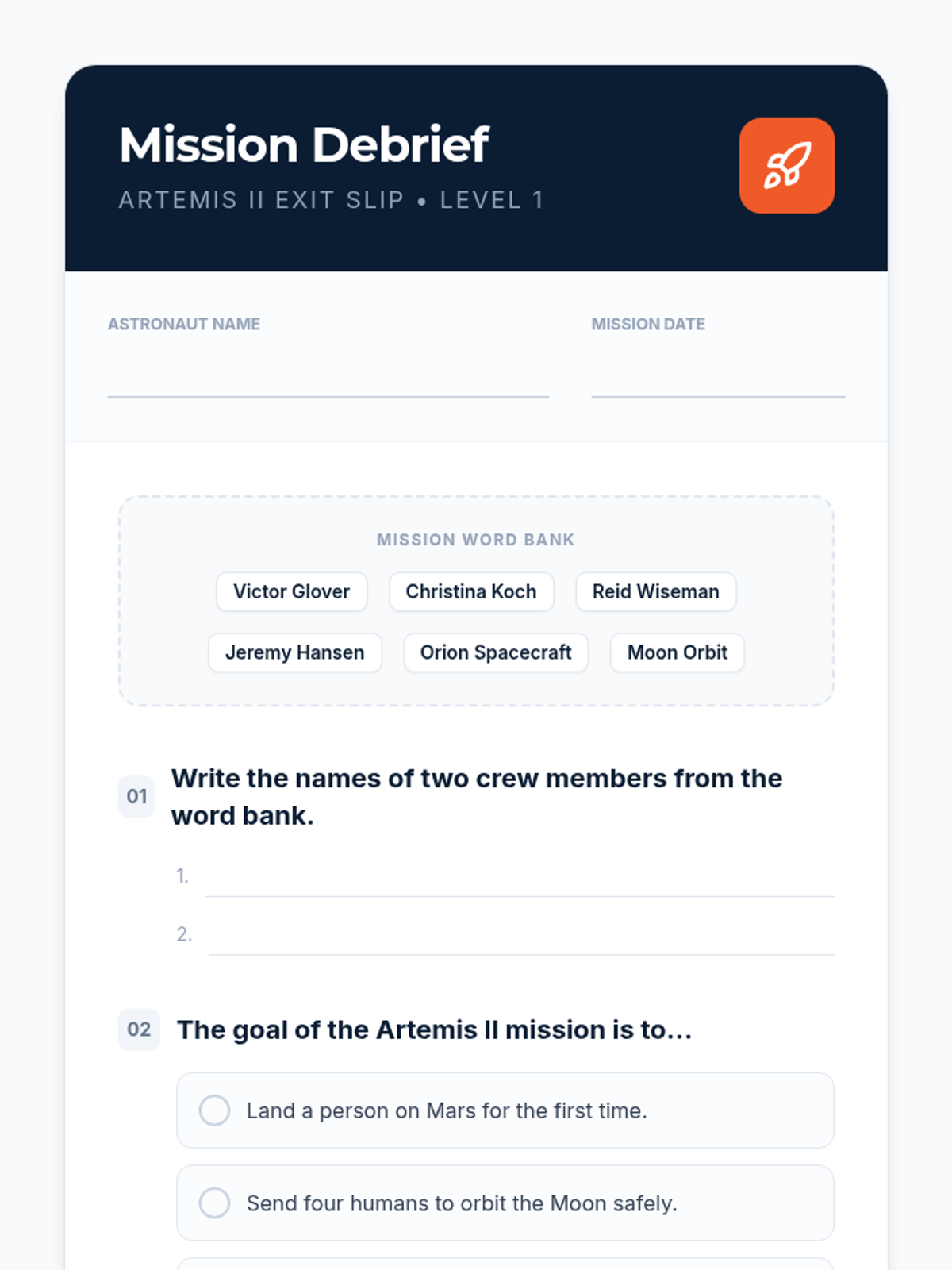
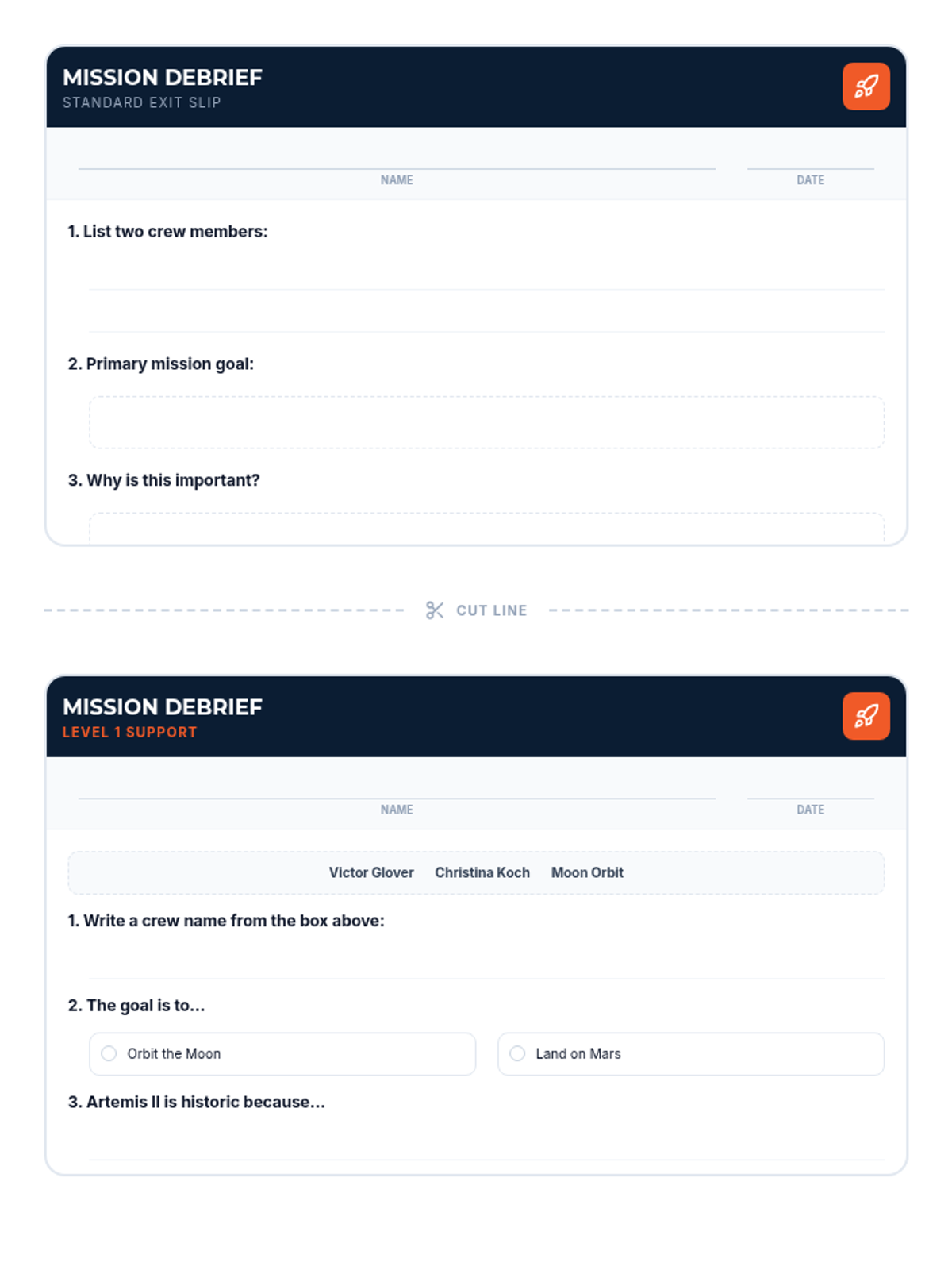
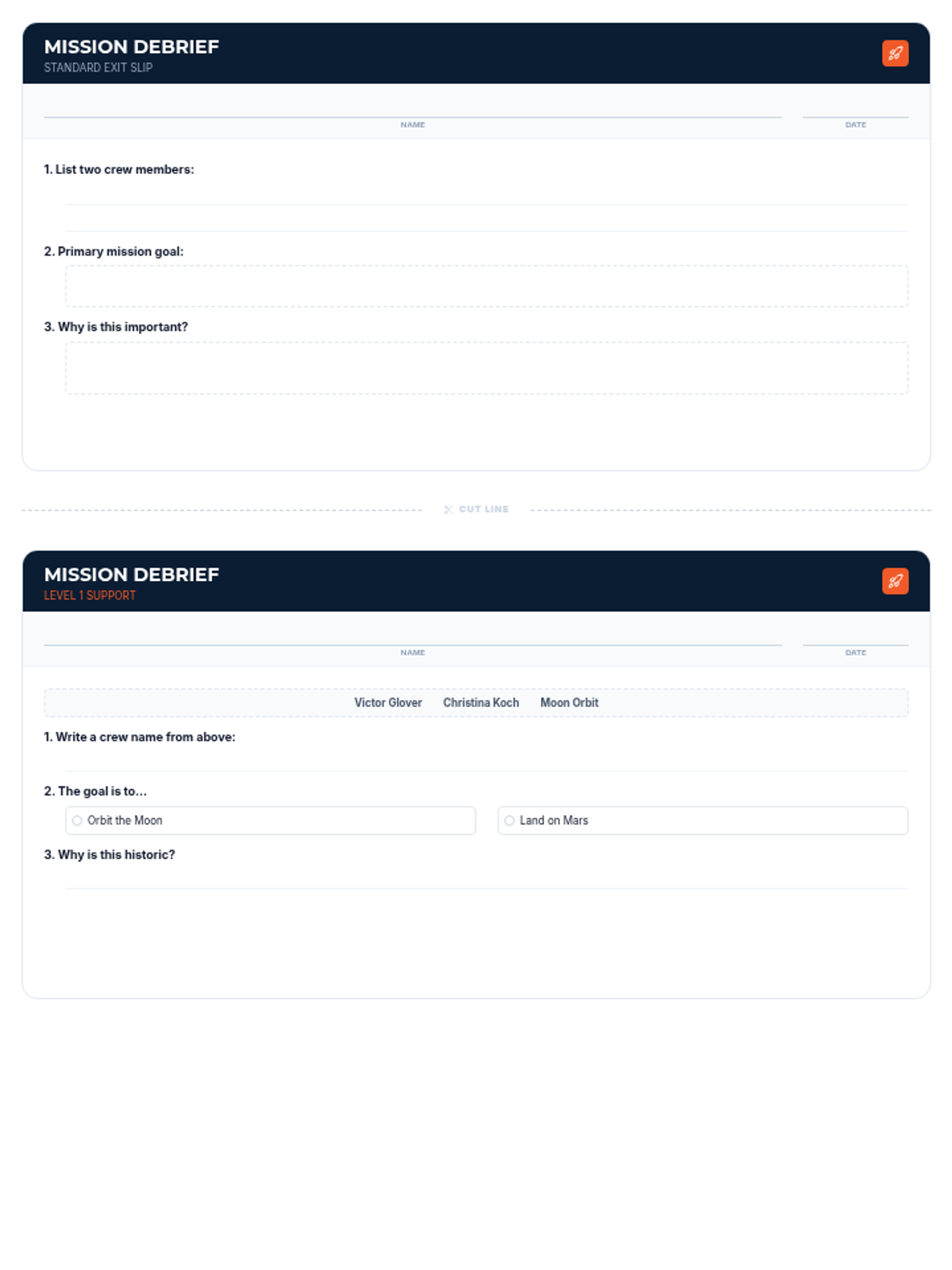
A comprehensive lesson for 5th graders covering the Artemis II mission, including crew details, mission goals, preparation, and its historical significance for future lunar exploration.
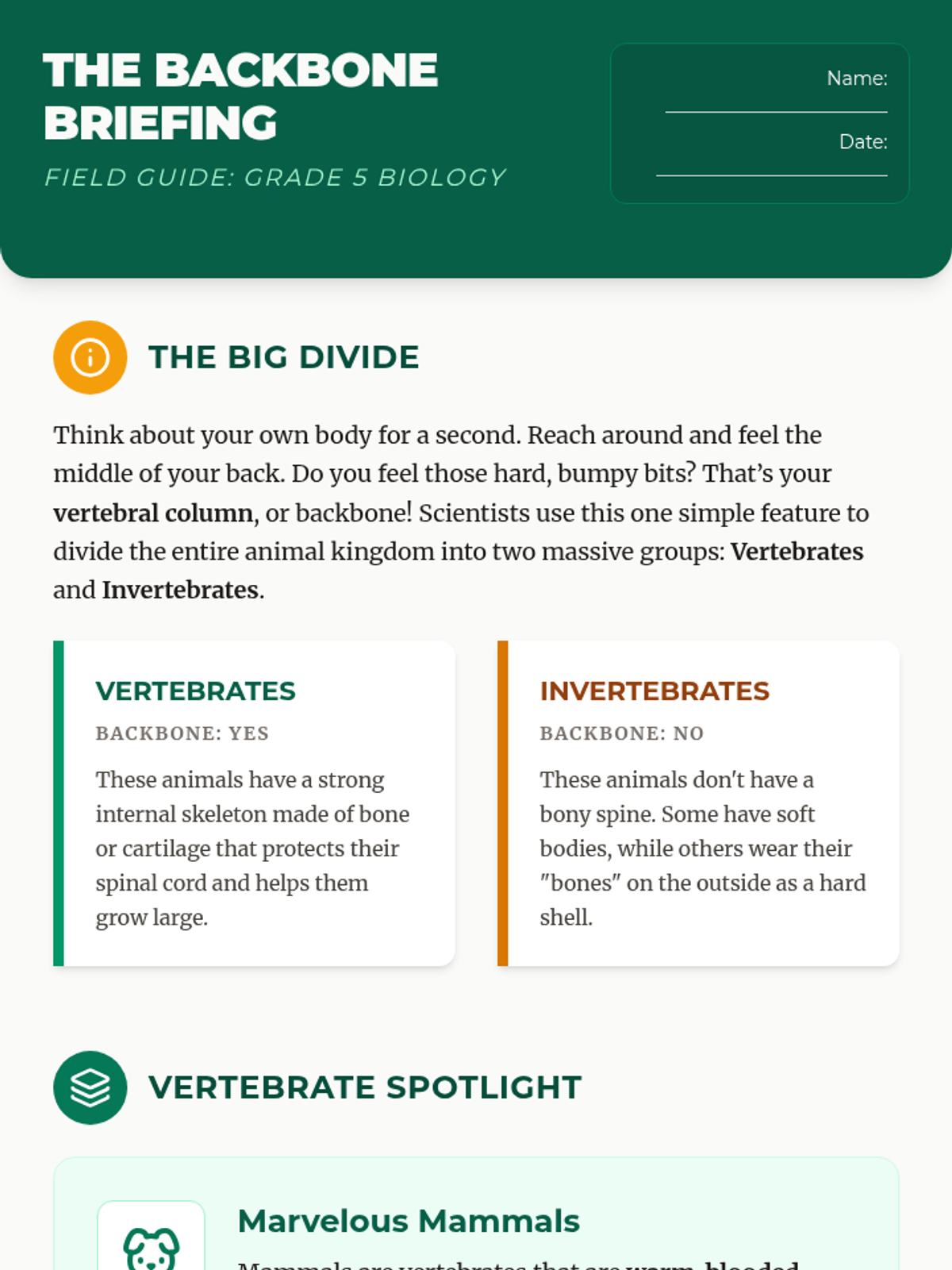
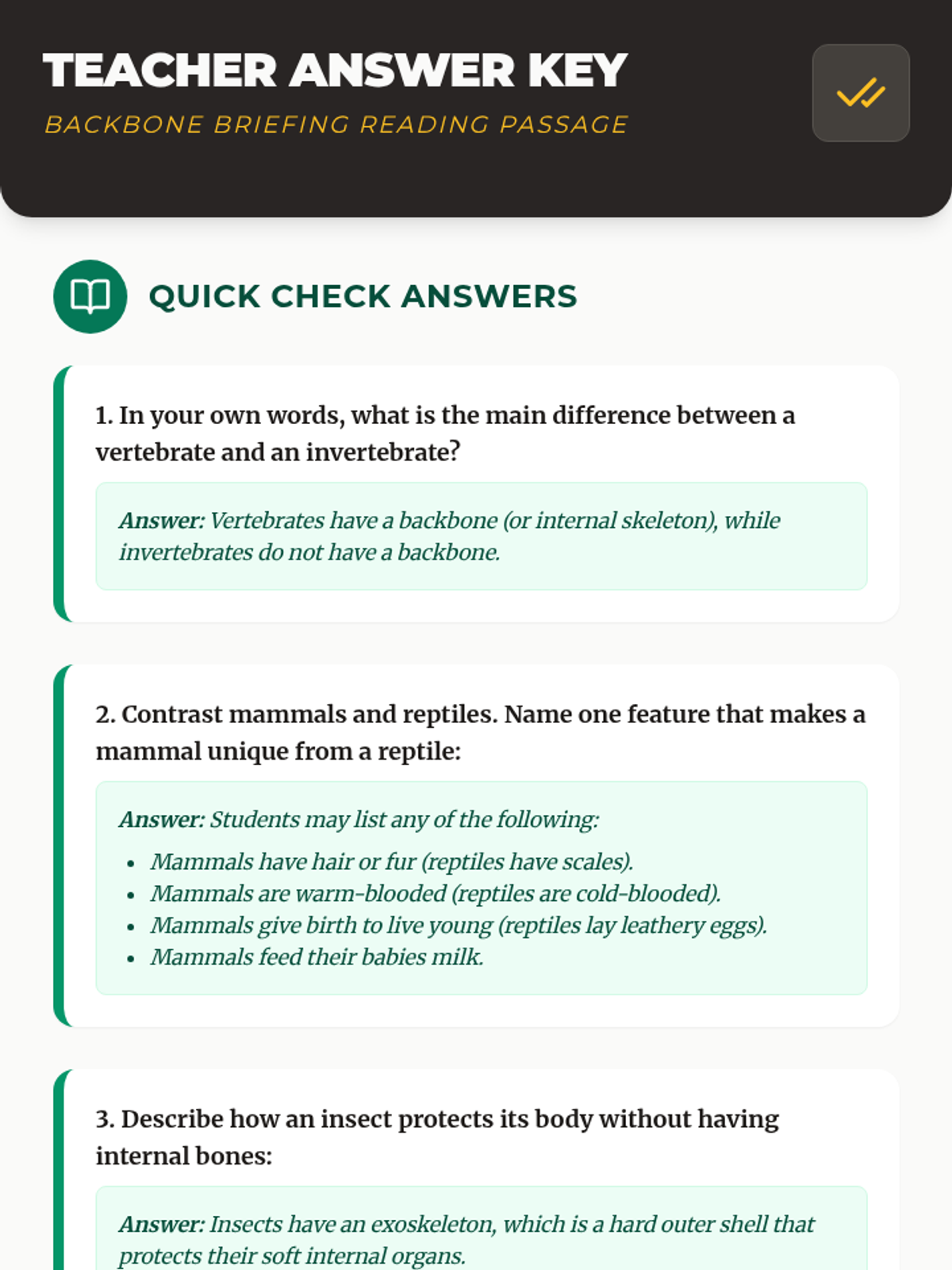
A lesson exploring the differences between vertebrates and invertebrates, focusing on mammals, reptiles, and insects through informational reading and classification activities.
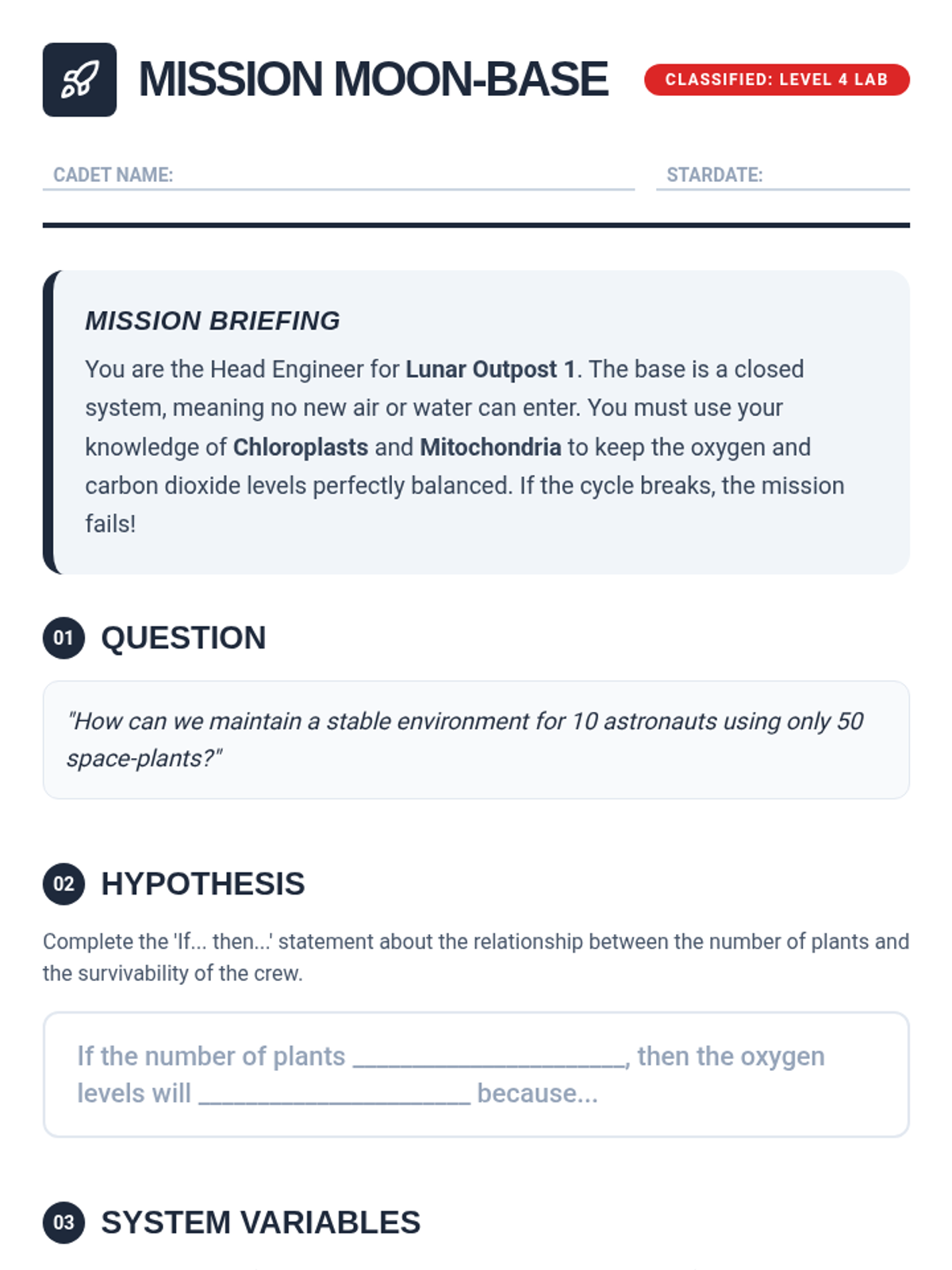
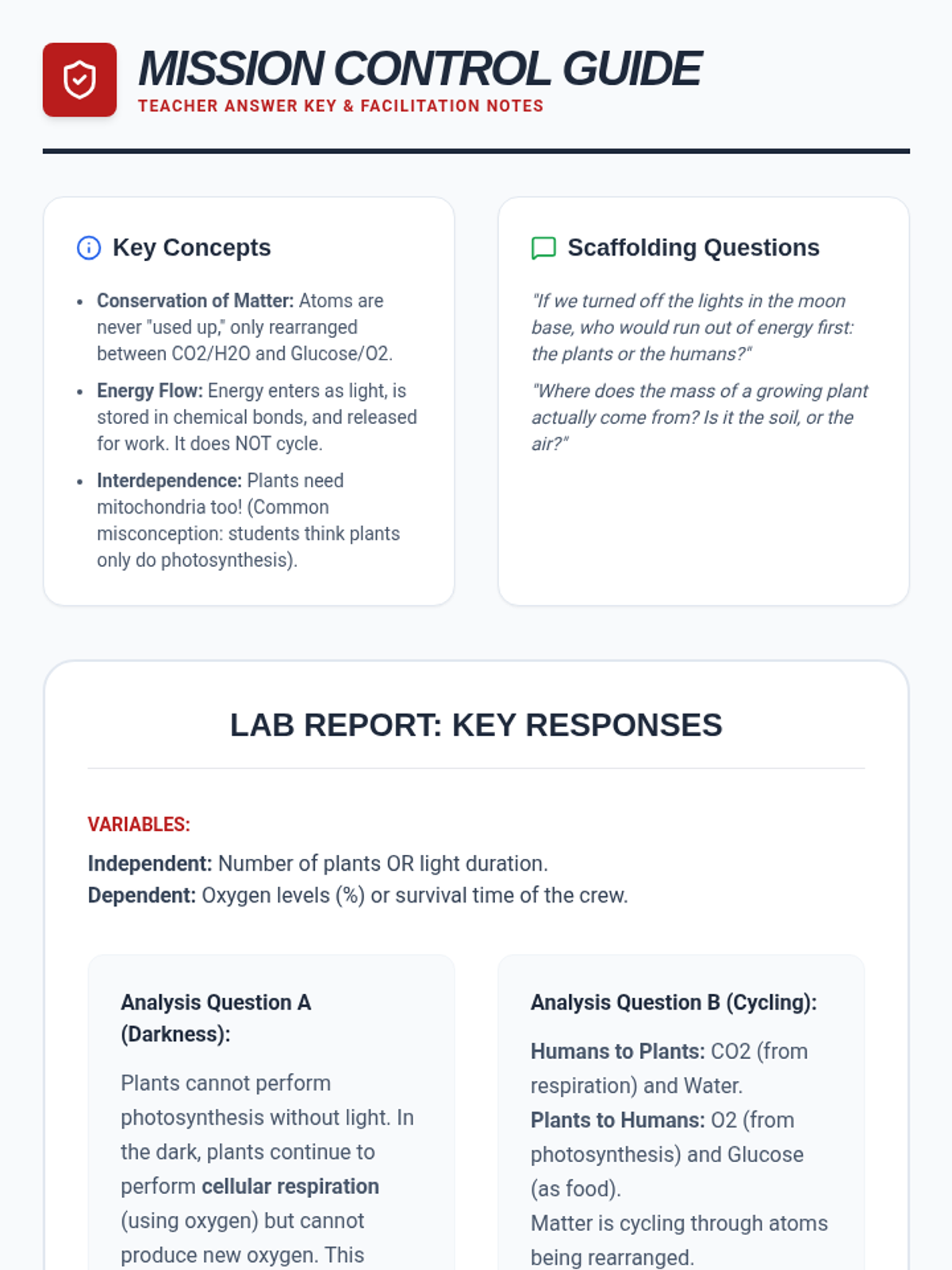
The culminating lesson where students synthesize their knowledge of chloroplasts and mitochondria. They will conduct a 'Mission Moon-Base' hypothetical lab using the scientific method to balance a closed-loop life support system.
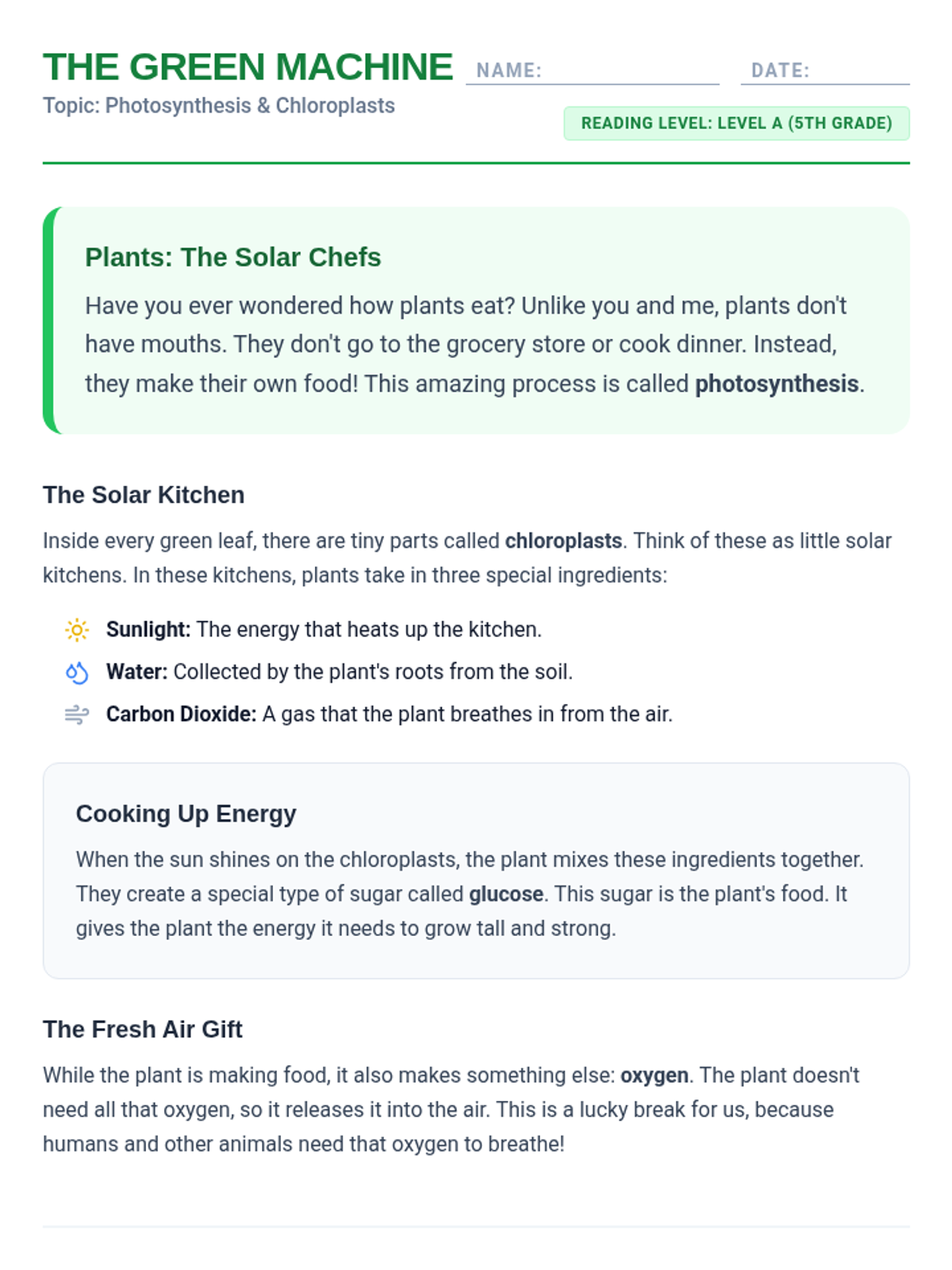
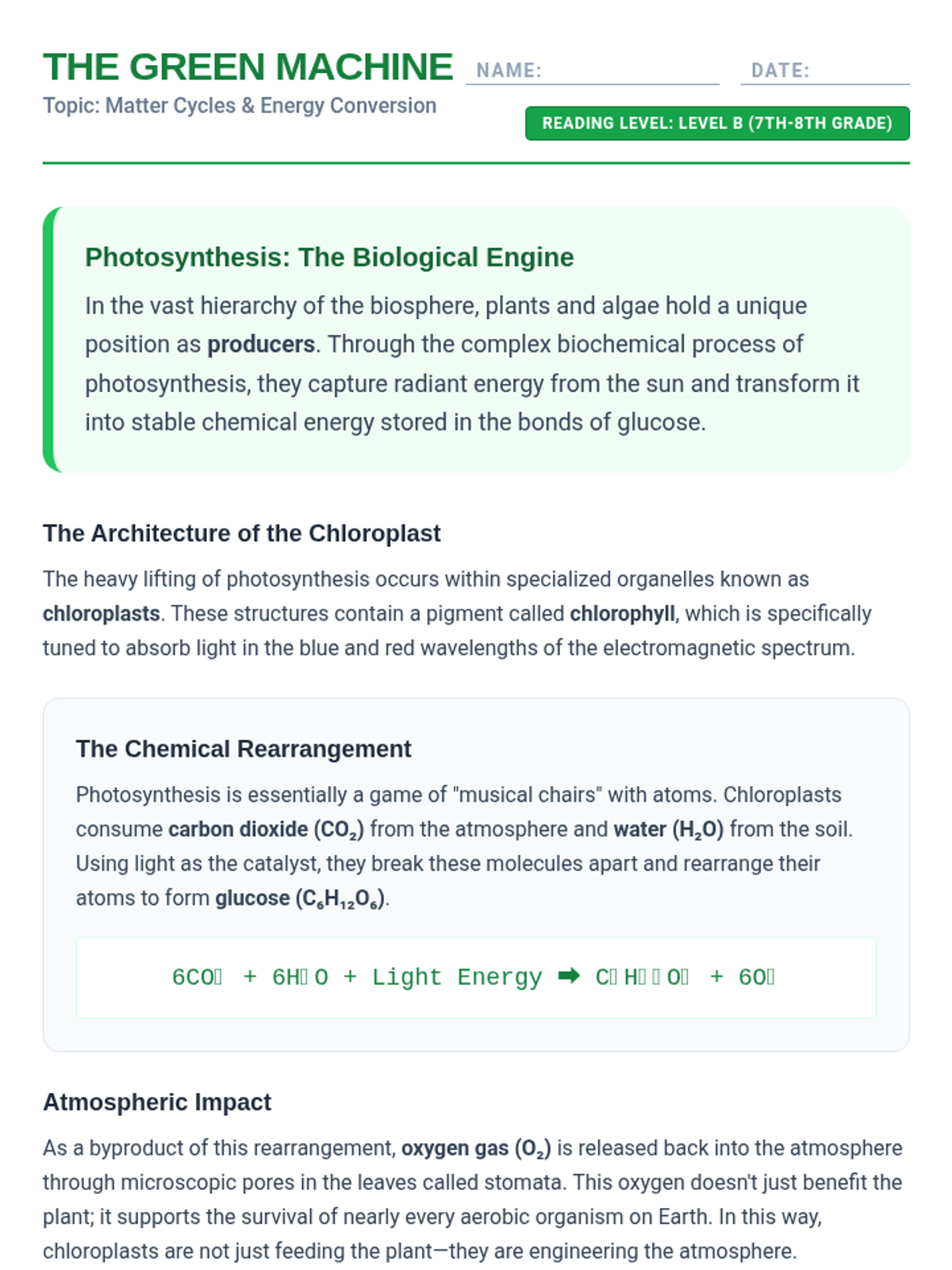
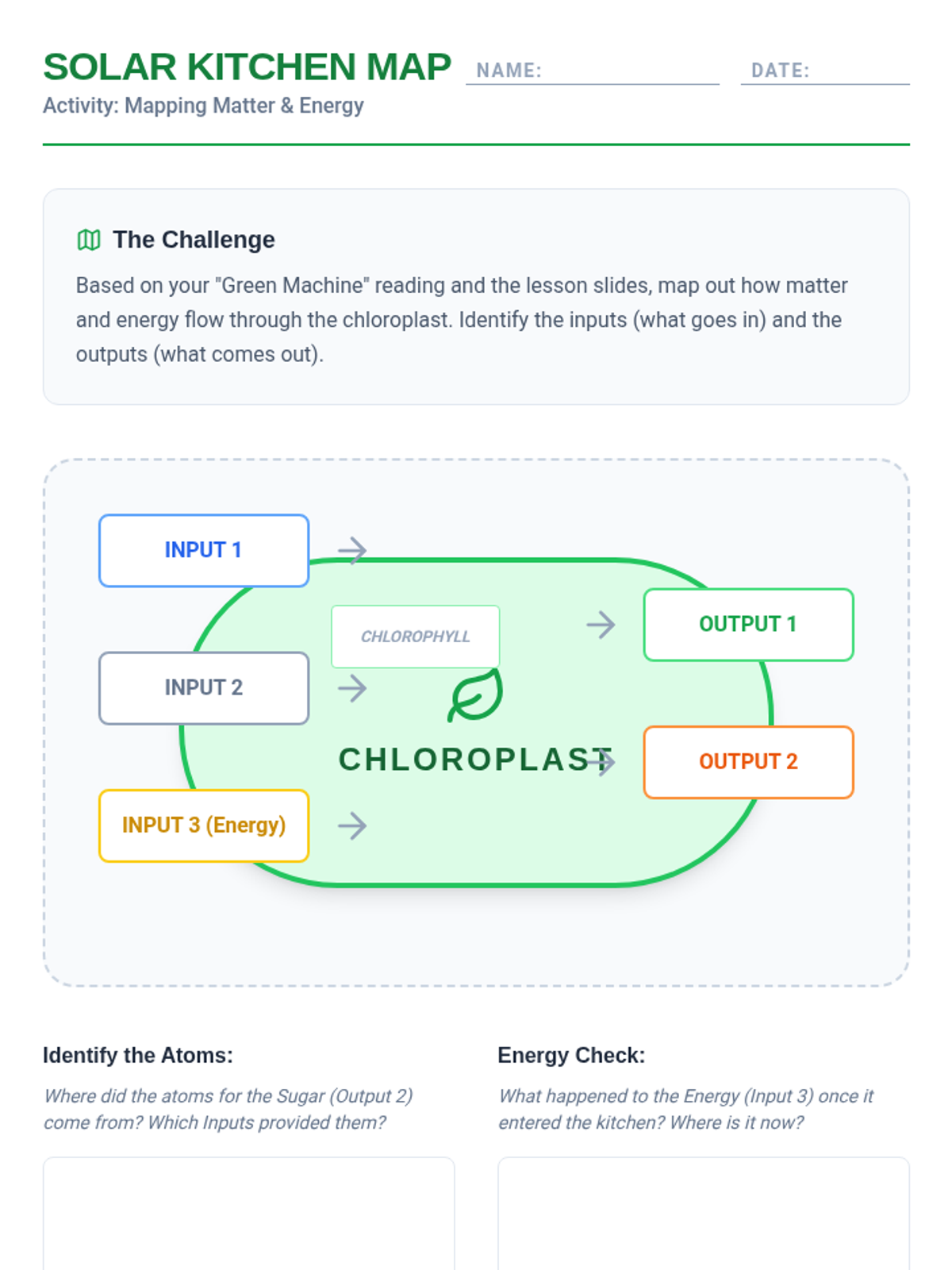
An introductory exploration of photosynthesis and the structure of chloroplasts, framing them as the 'solar kitchens' of the cell. Students will read differentiated texts and map out the inputs and outputs of the process.
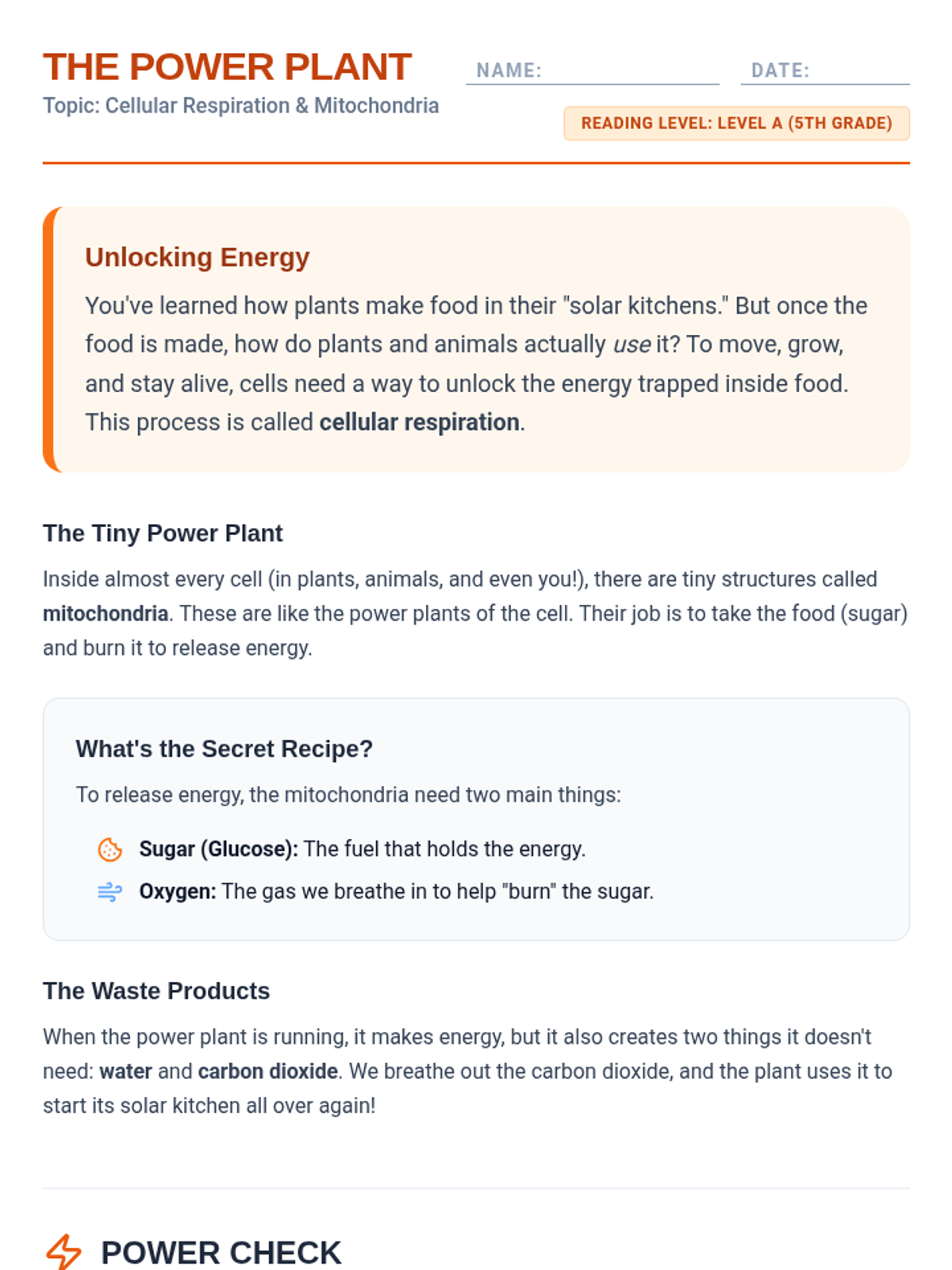
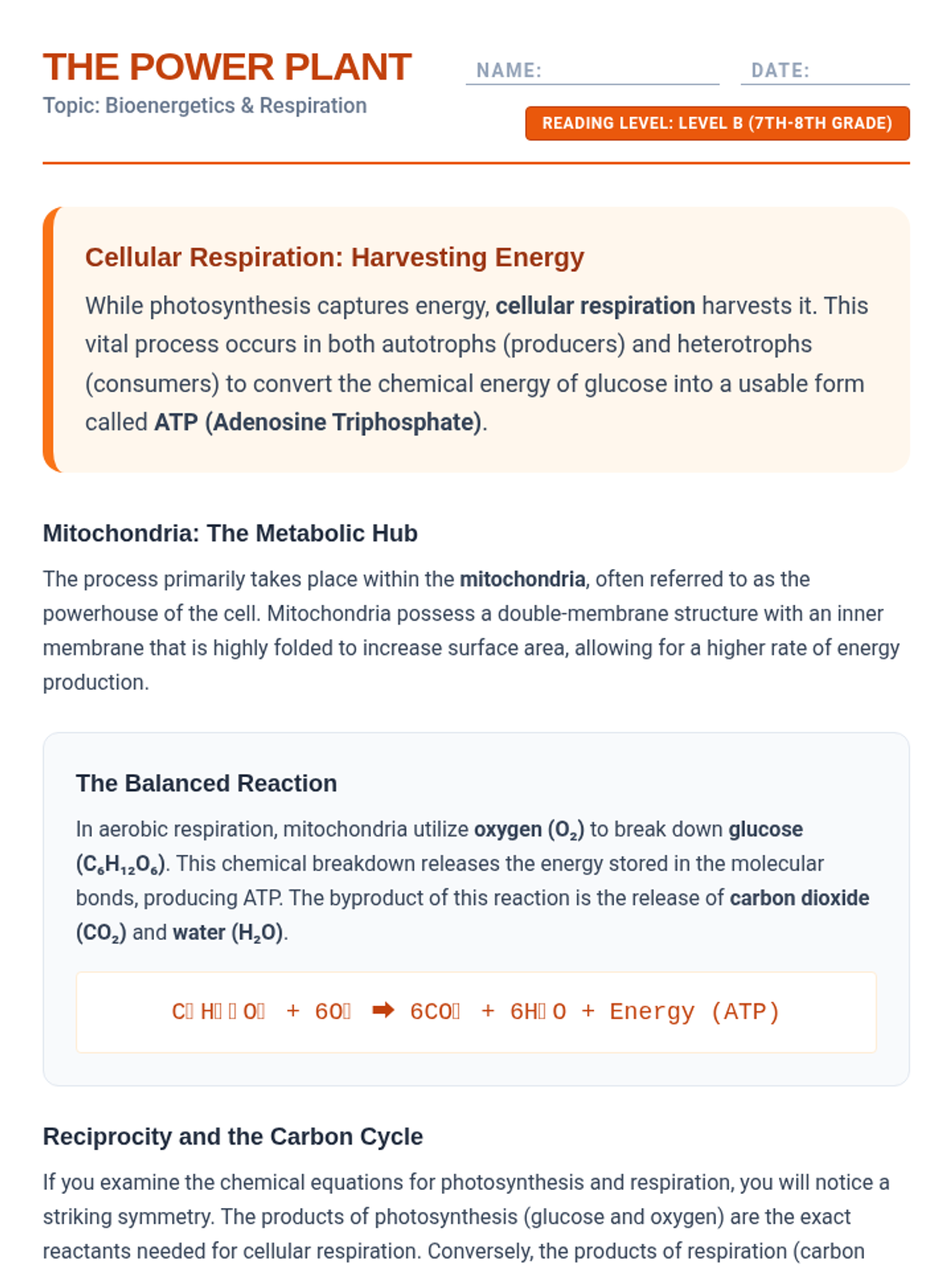
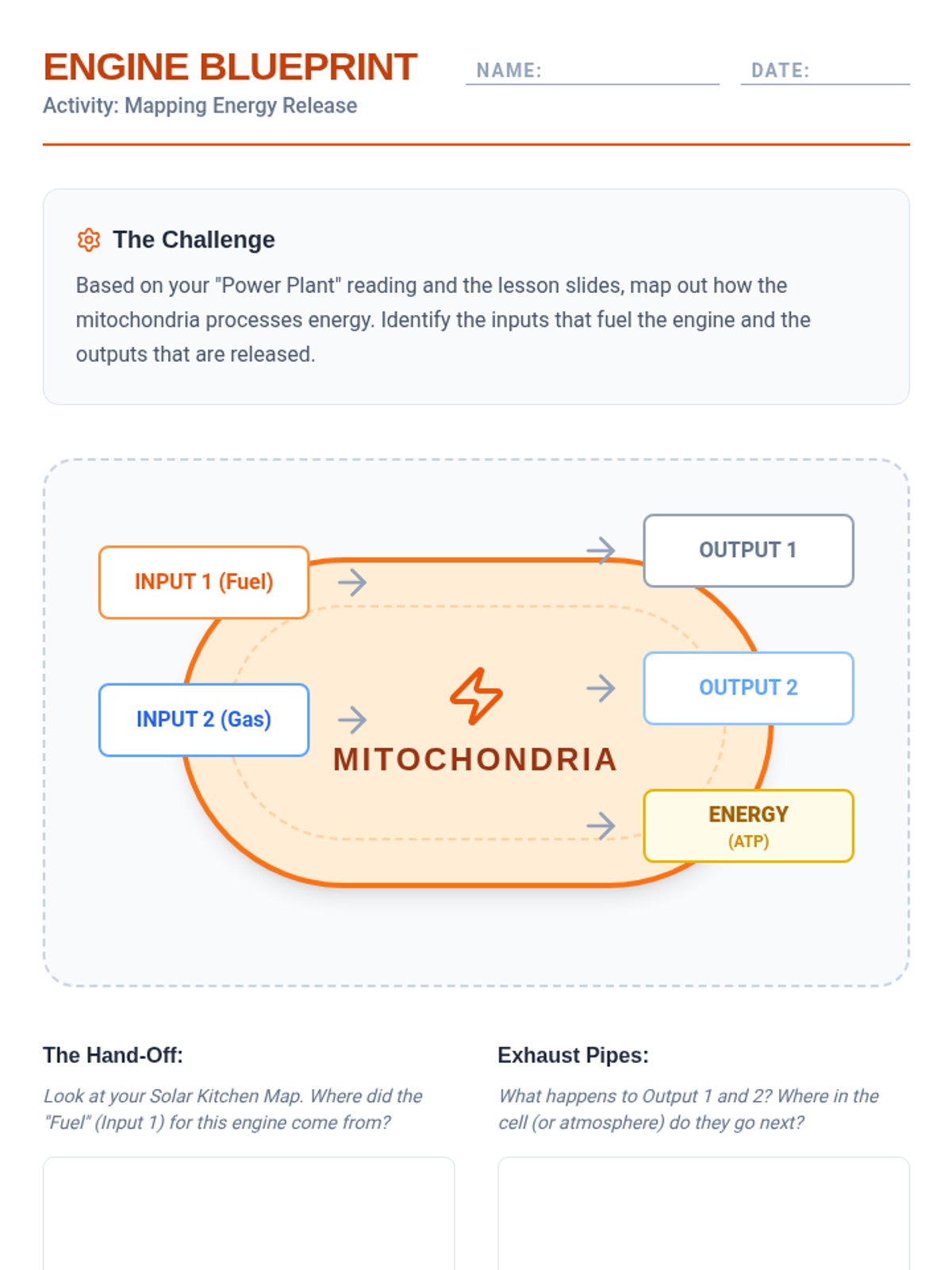
An exploration of cellular respiration and mitochondria, framing them as the 'energy engines' that power life. Students will compare and contrast this process with photosynthesis to prepare for the final lab.