A lesson focusing on avoiding ambiguity in lists through sentence restructuring and reordering, rather than relying solely on the Oxford comma. Students will learn about assumed apposition and practice shifting sentence components for clarity.
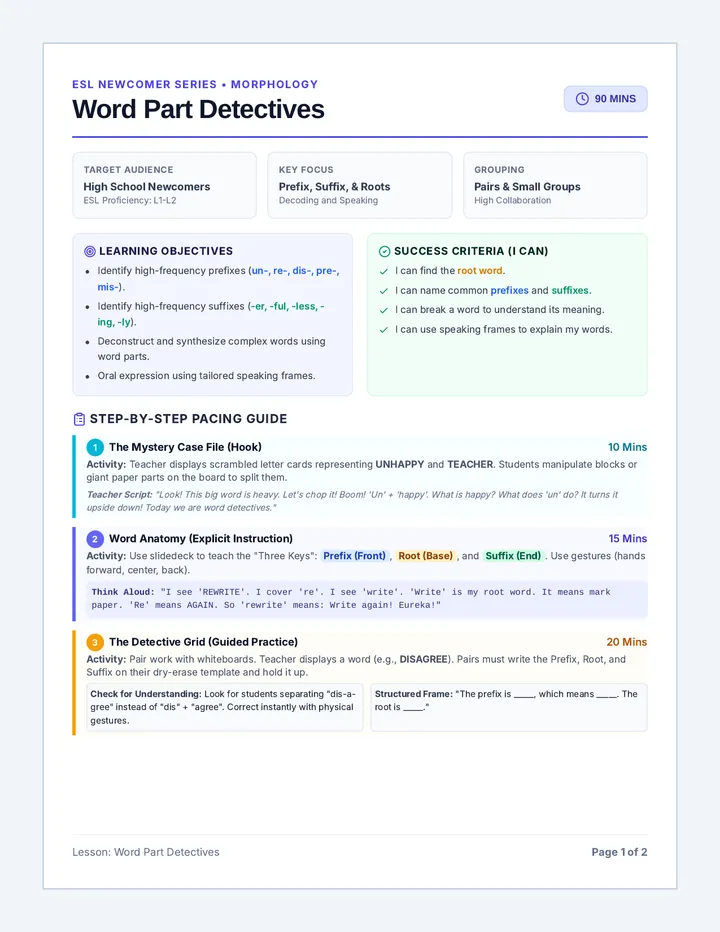
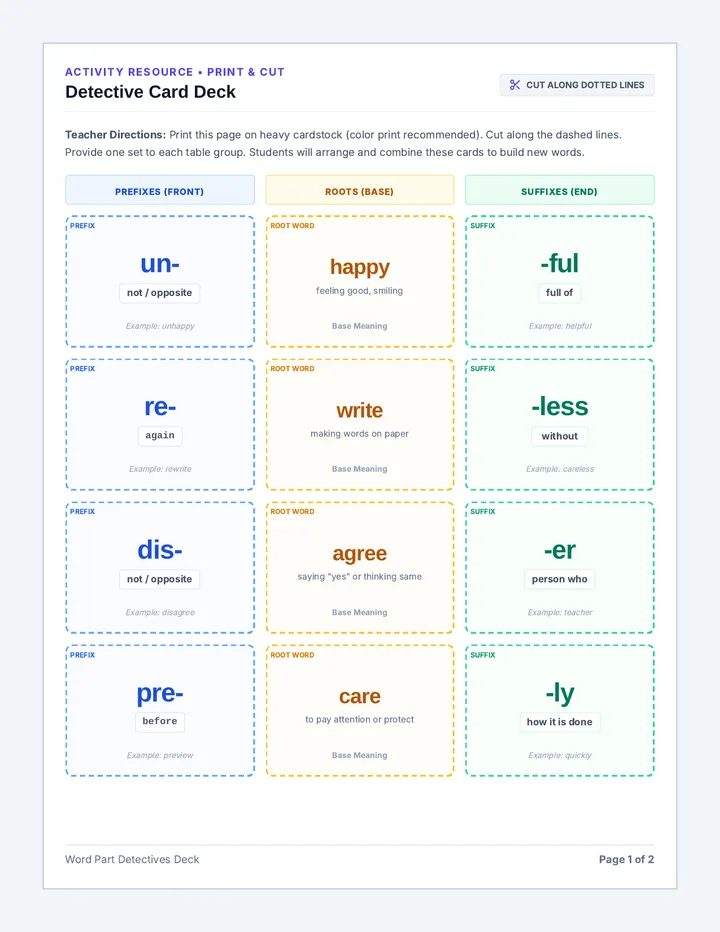
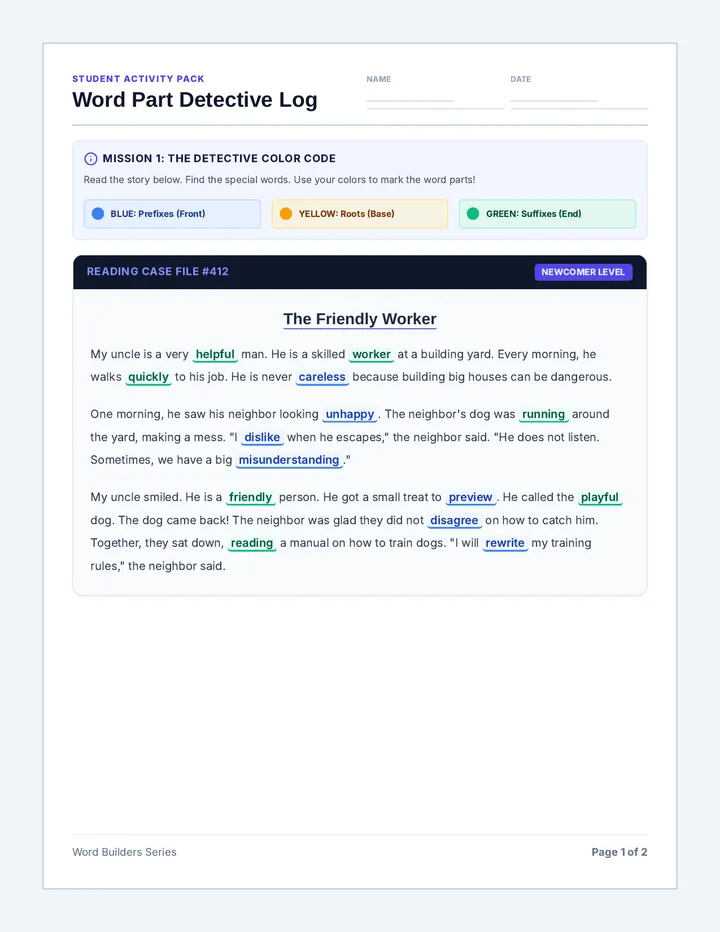
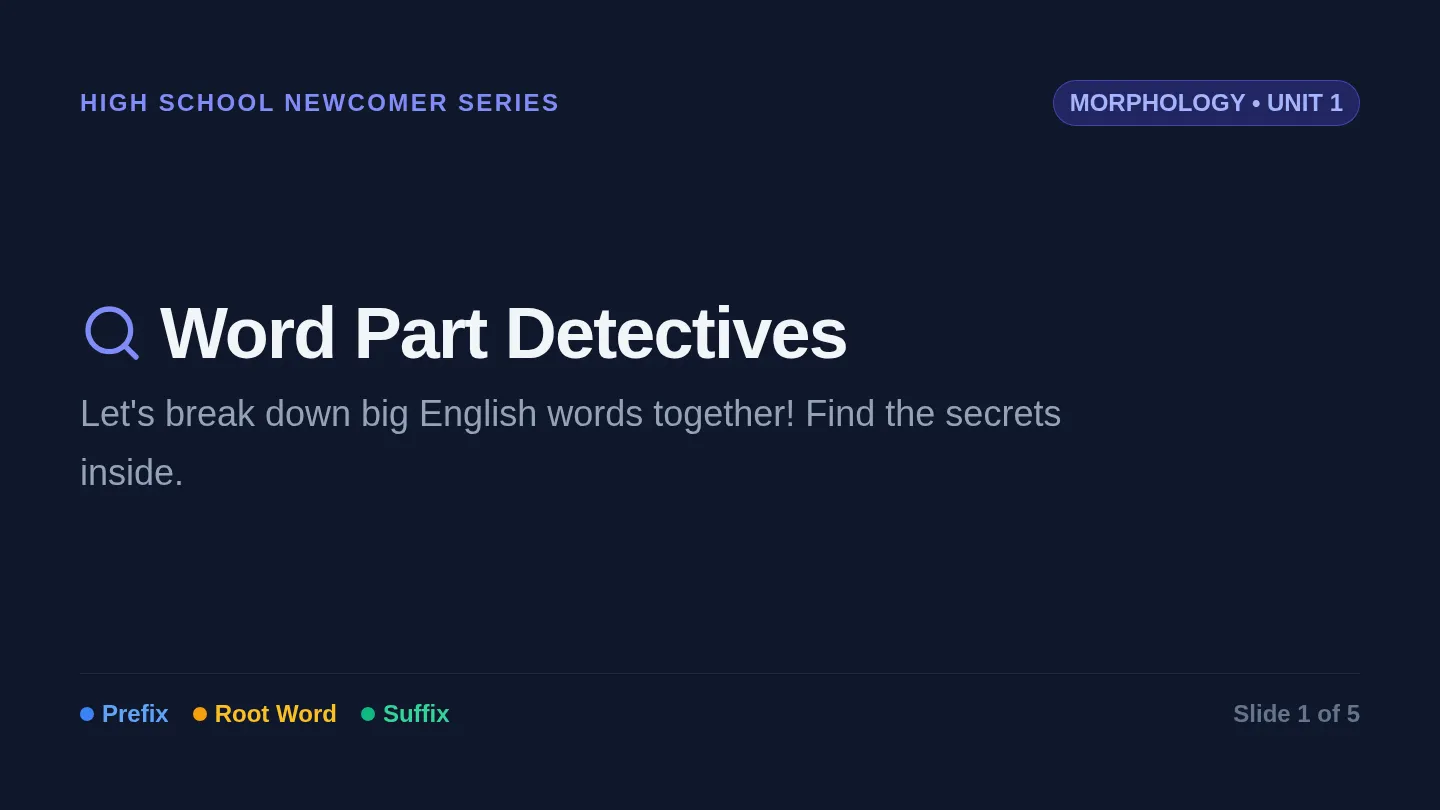
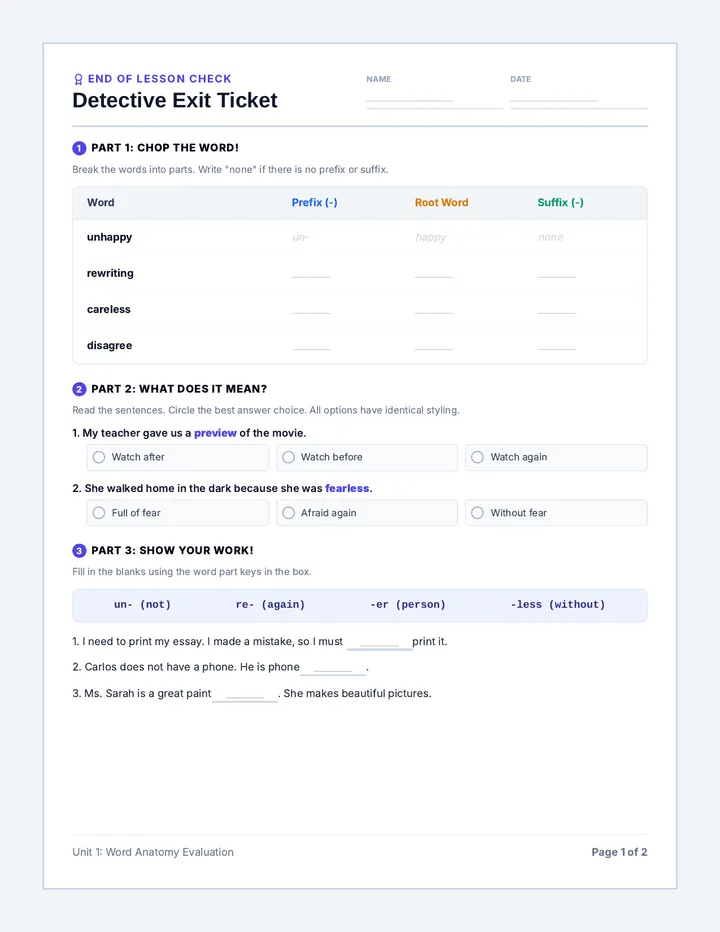
A foundational vocabulary and morphology unit designed specifically for high school newcomer ESL students. It focuses on breaking down unfamiliar English words into high-frequency prefixes, suffixes, and root words using heavy visual aids, scaffolded sentence stems, and highly collaborative activities.
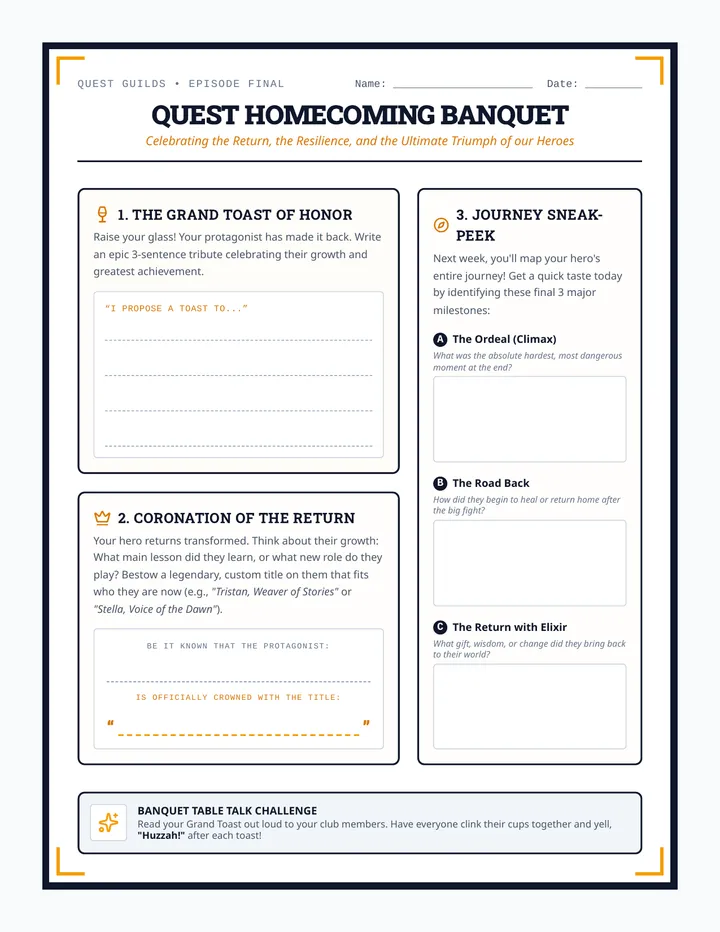
The celebratory final meeting of the book clubs, designed as a festive victory banquet. Students commemorate their protagonist's return through a grand ceremonial toast, active crossover badge trading with other groups, and a high-interest 5-minute teaser of the Hero's Journey mapping project.
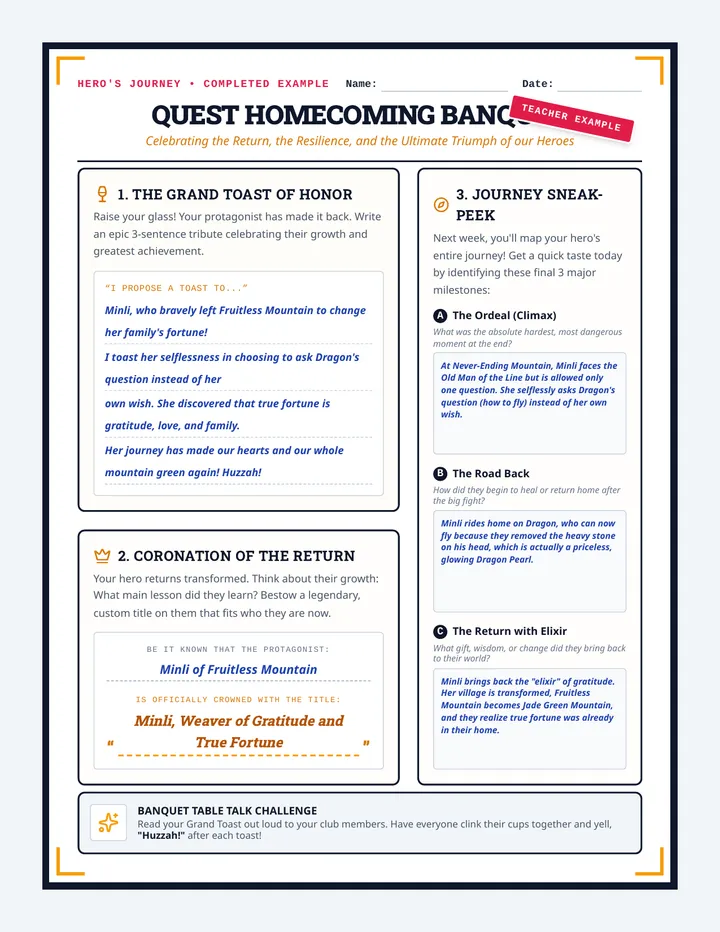
A completed 2-page teacher example of the Homecoming Banquet Placemat for the novel "Where the Mountain Meets the Moon" by Grace Lin. Features specific, high-quality sample student responses mapping Minli's journey while leaving classmate names and signatures blank for pedagogical modeling.
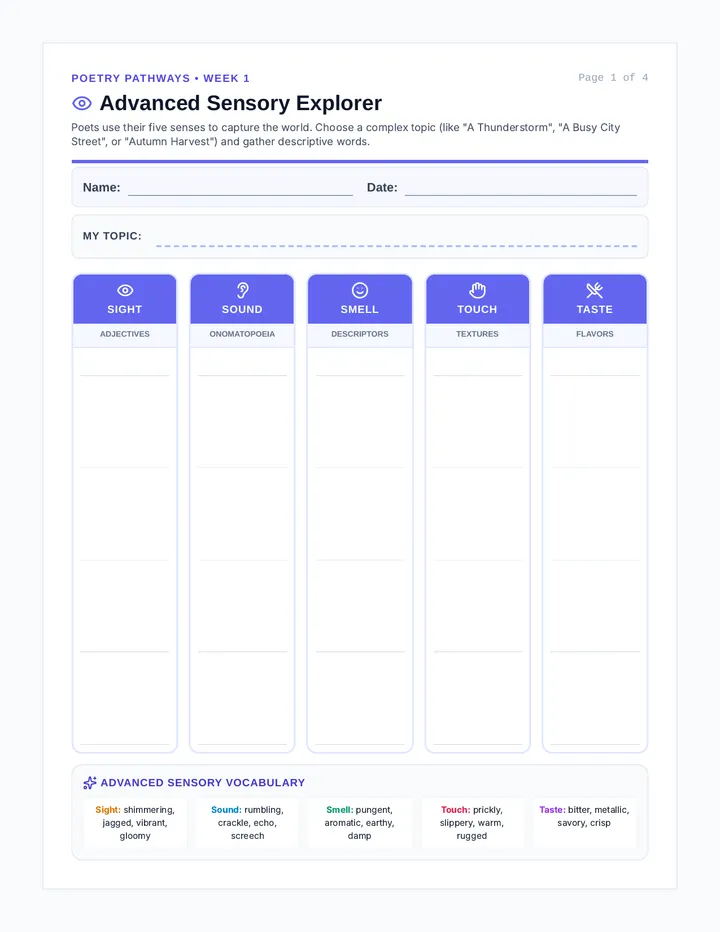
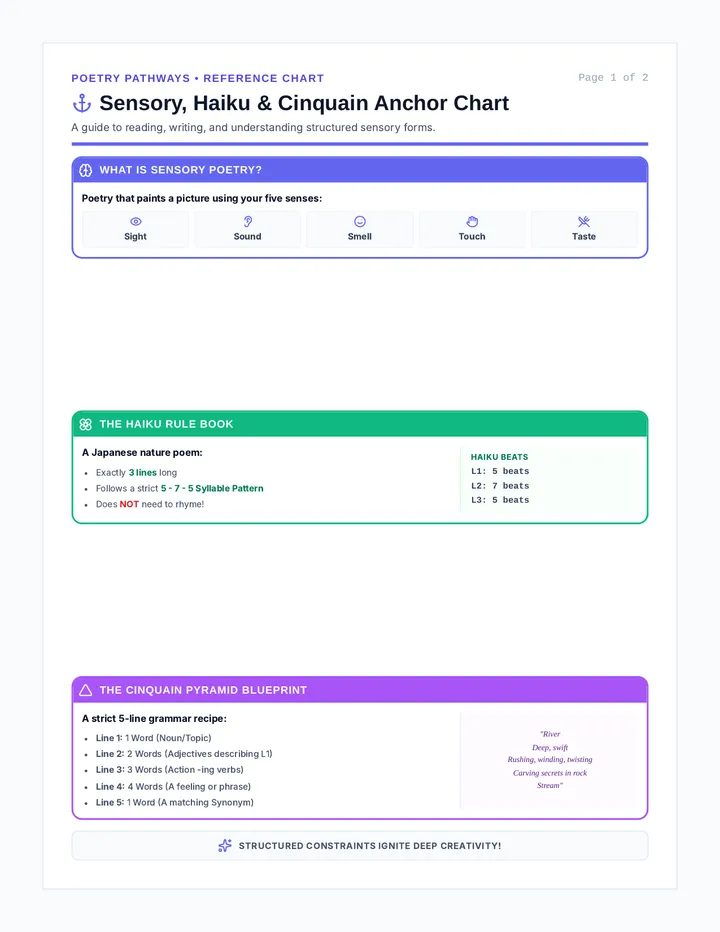
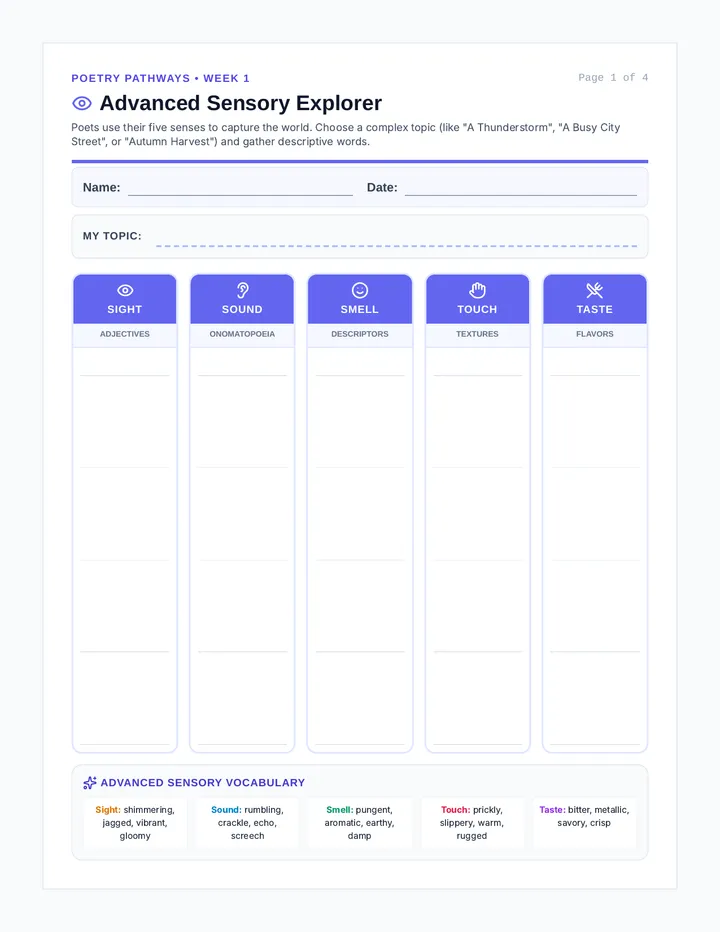
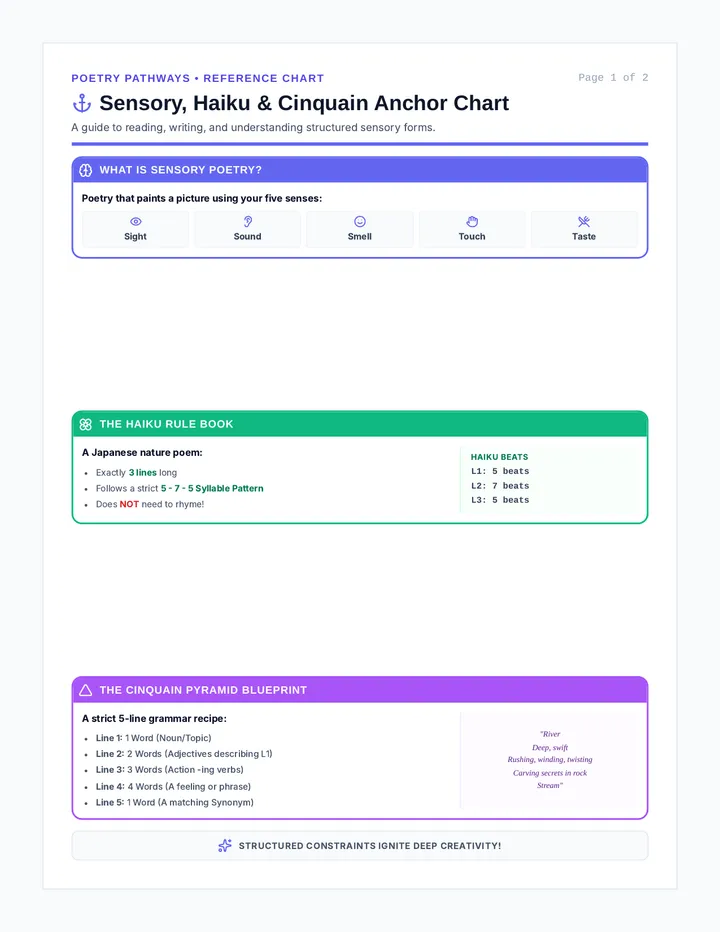
A comprehensive 4-week poetry curriculum designed for students requiring high structure and visual supports. It covers diverse poetry types (Haiku, Color, Acrostic, Couplets, Concrete, Free Verse, and Metaphor/Simile) with scaffolds like word banks, sentence frames, and graphic organizers.
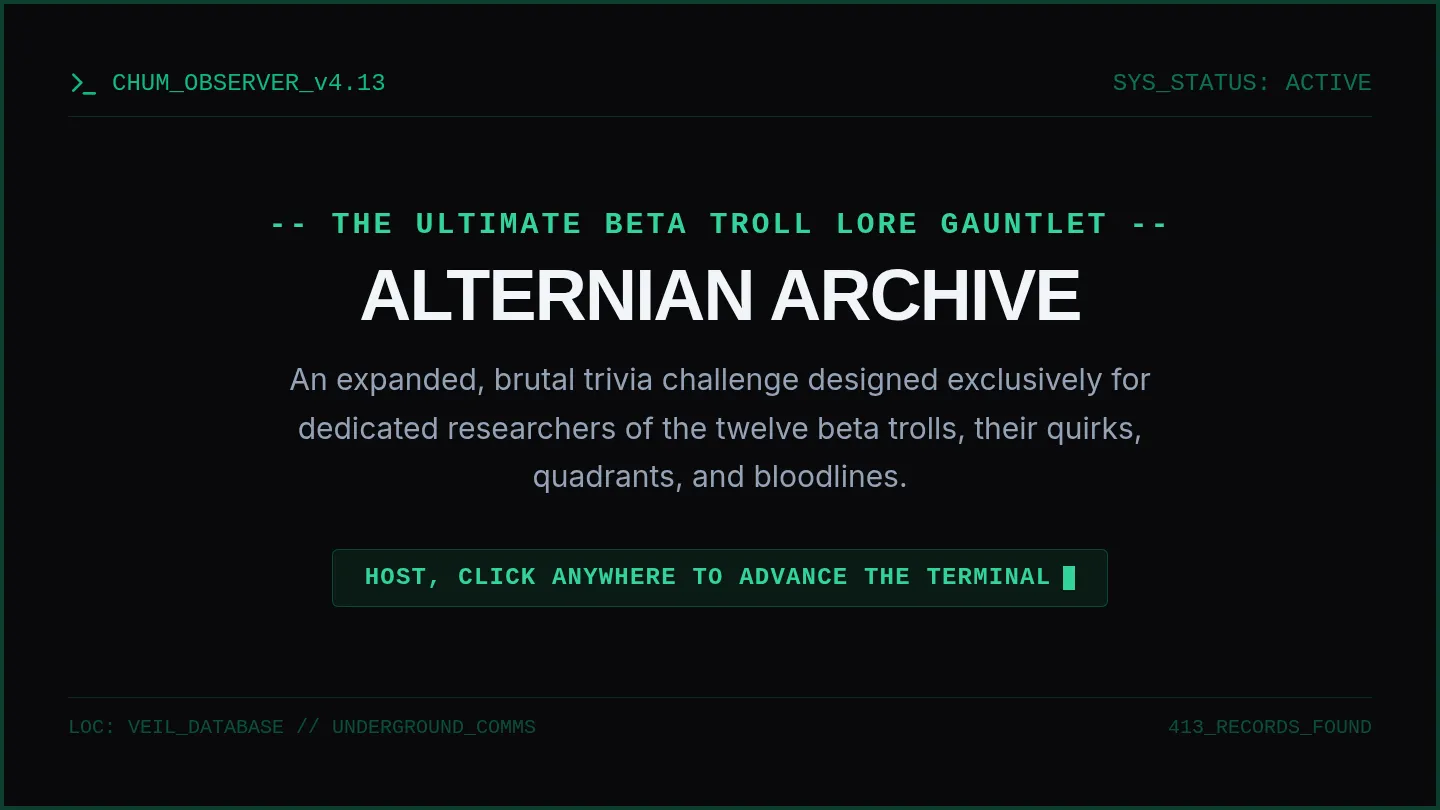
A high-intensity, visually striking trivia showdown centered on the deep-cut lore of the Homestuck Beta Trolls. Designed specifically for dedicated fans, this lesson challenges students with complex questions on relationships, quirks, and Alternian history.
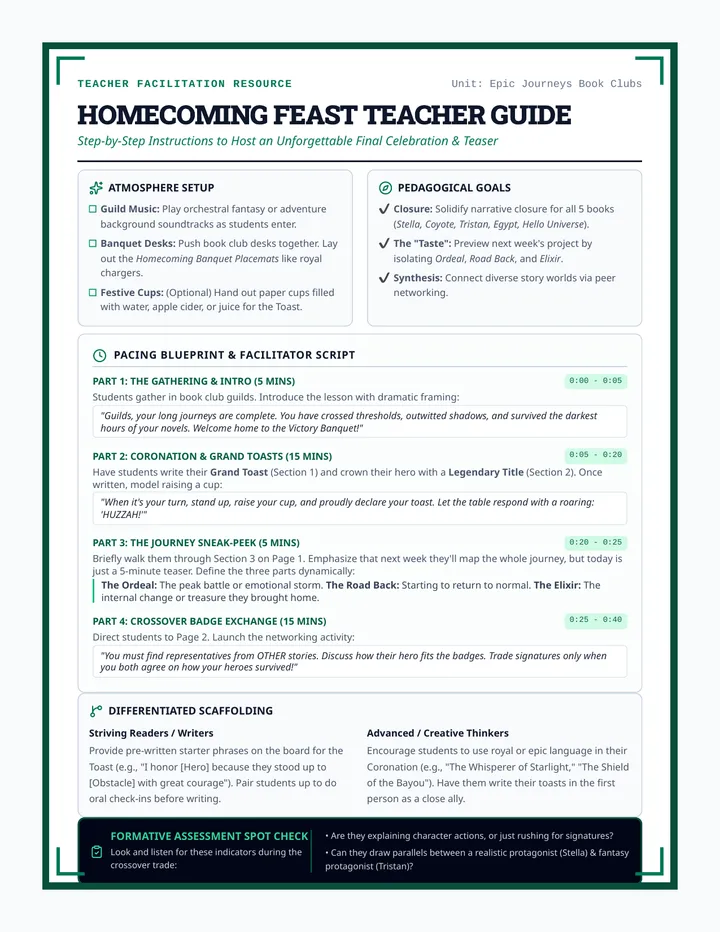
A 1-page teacher facilitation guide for running the final book club celebration meeting. Features a 45-minute step-by-step lesson plan, classroom setup checklist, teacher talk scripts for a theatrical 'Toast Ceremony', and instructions for scaffolding both the Hero's Journey preview and the crossover networking activity.
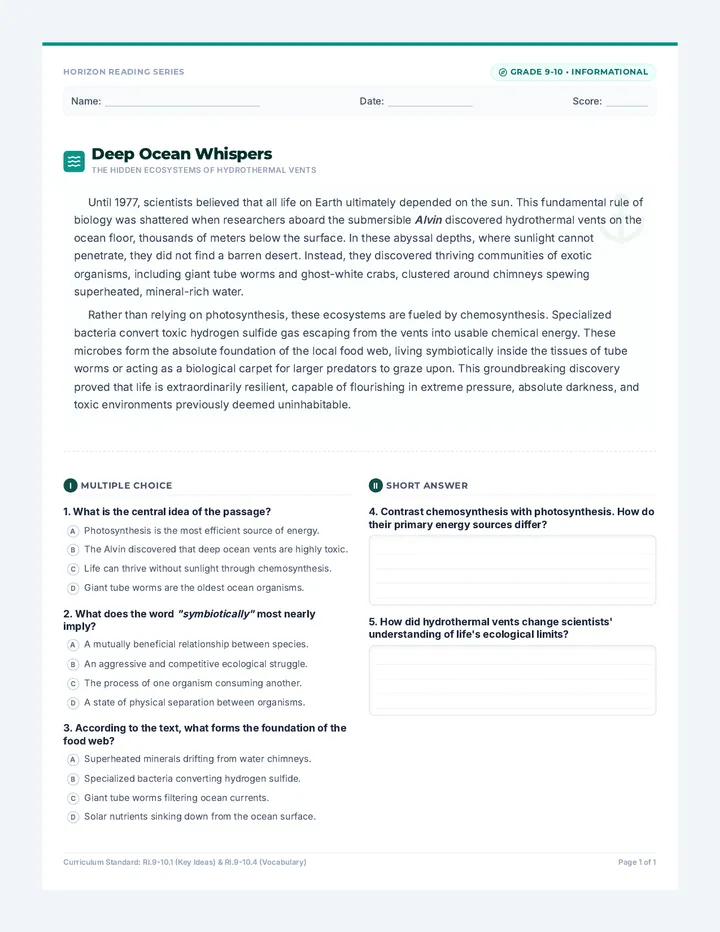
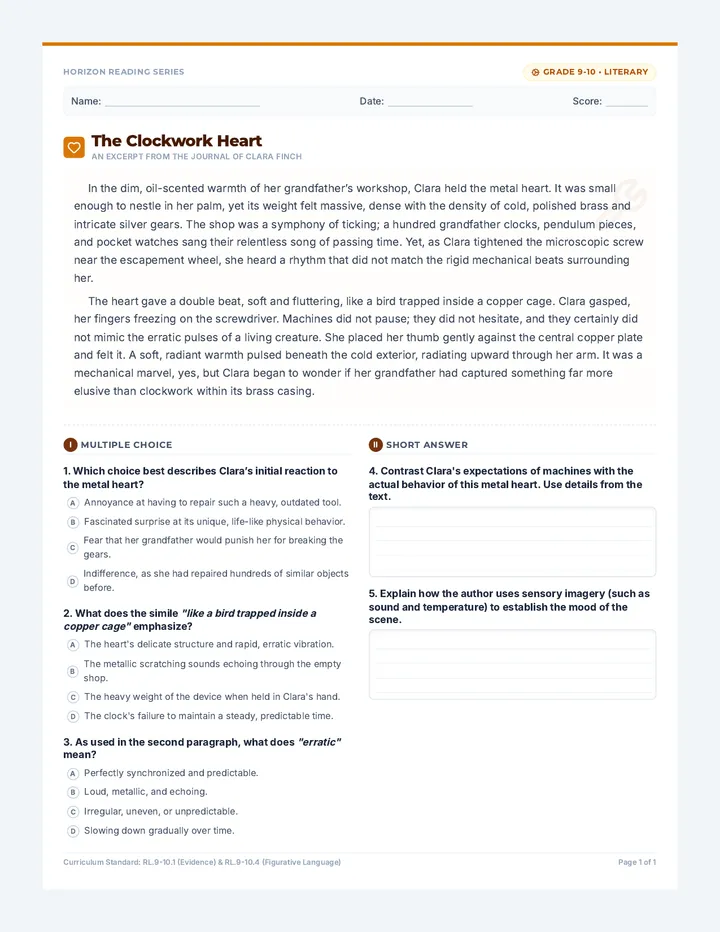
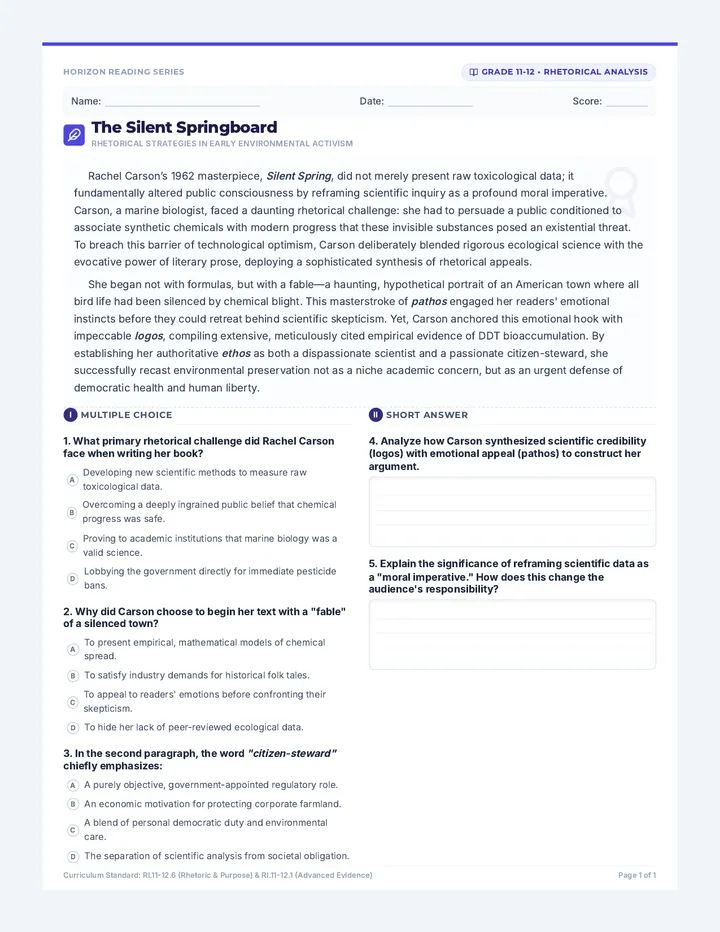
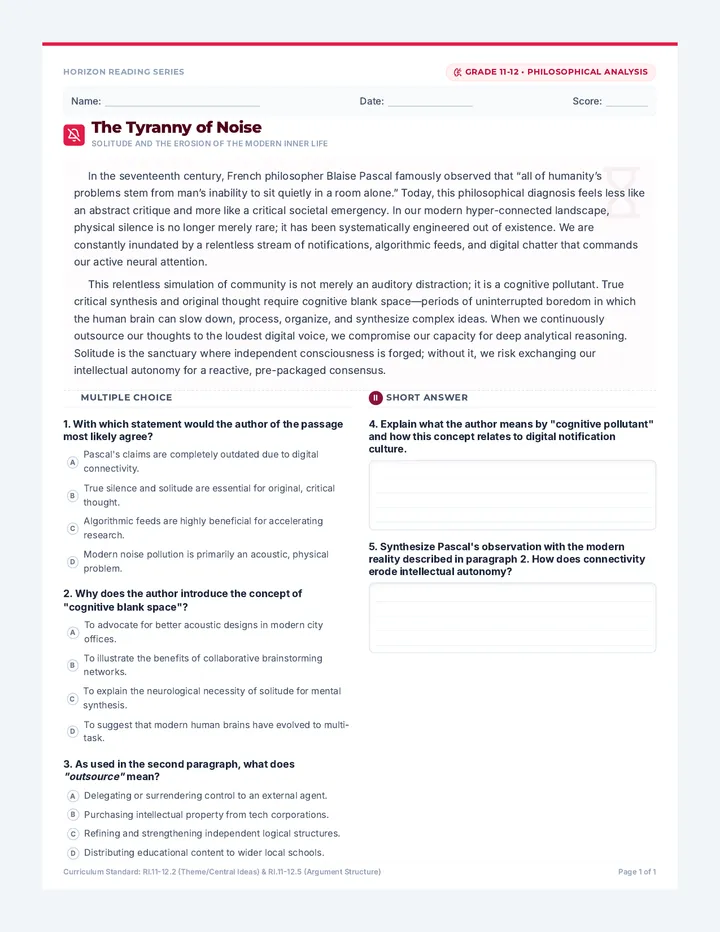
A cohesive, beautifully designed collection of reading comprehension worksheets spanning high school grades 9-12. Each single-page worksheet features a high-interest, curriculum-aligned text followed by three standards-aligned multiple-choice questions and two critical short-answer questions.
A dynamic 90-minute lesson where newcomers learn to identify root words, prefixes, and suffixes. Through color-coded physical cards, collaborative games, and visual anchor charts, students practice decoding unfamiliar words and speaking with structured sentence frames.
A 2-page celebratory student worksheet for the final book club meeting in a light, celebratory banquet theme. Page 1 features an epic toast-writing activity, a refined Coronation of the Return block with explicit directions and perfectly aligned CSS-dashed writing lines, and a 3-step Hero's Journey roadmap with Hero's Journey branding. Page 2 features a gamified crossover badge exchange board with responsive CSS-dashed layout borders for neat student handwriting alignment under the Hero's Journey brand.
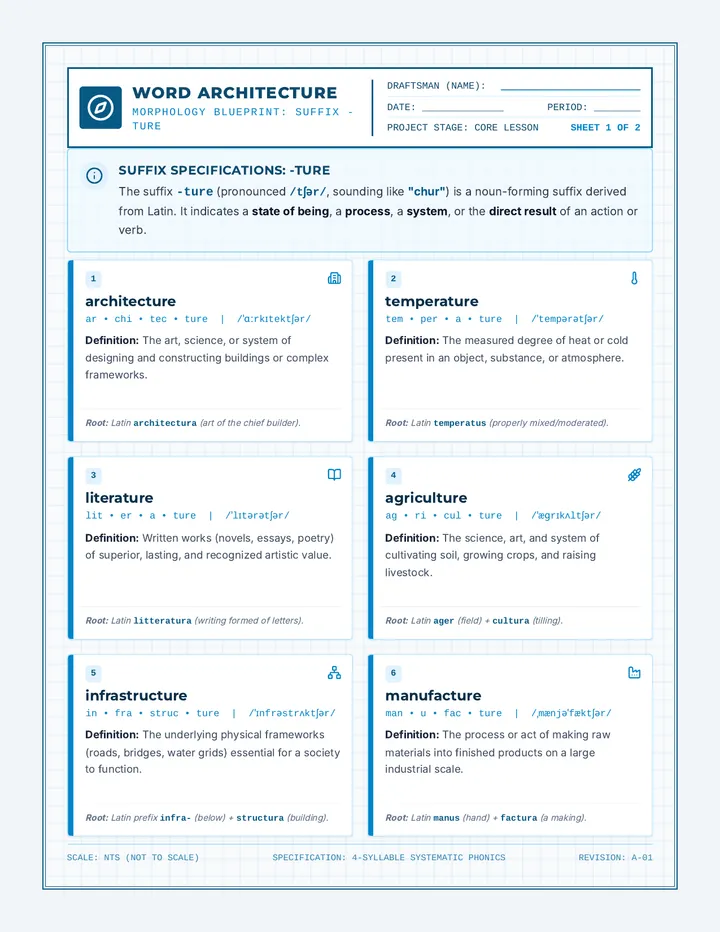
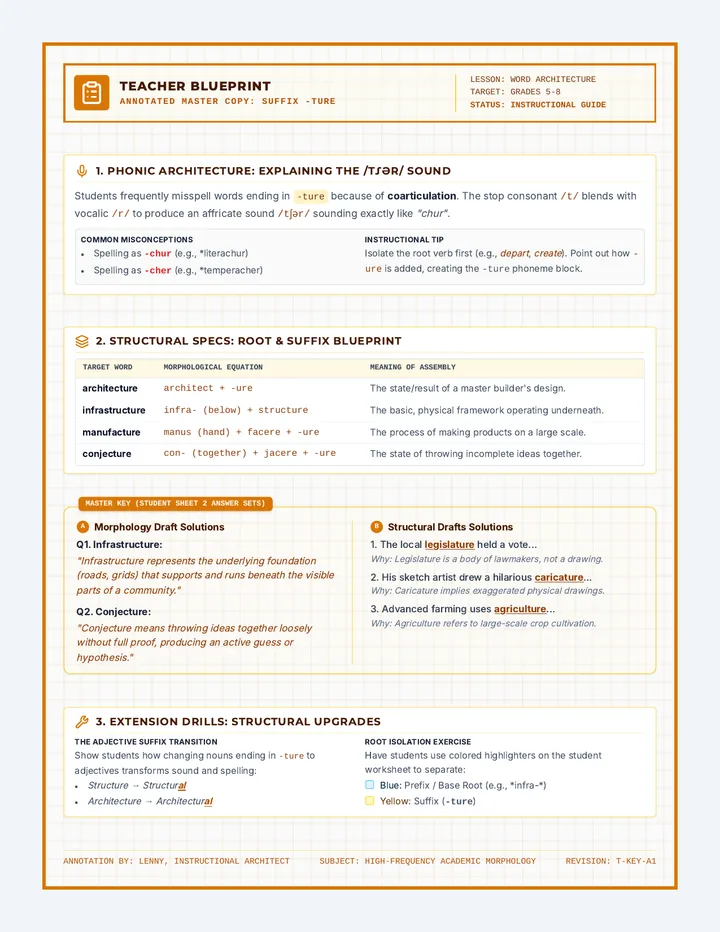
A middle school vocabulary lesson exploring 3-to-4 syllable academic words ending in the suffix -ture. Students examine pronunciation, morphological structure, definitions, and applications through a technical drafting/blueprint theme.
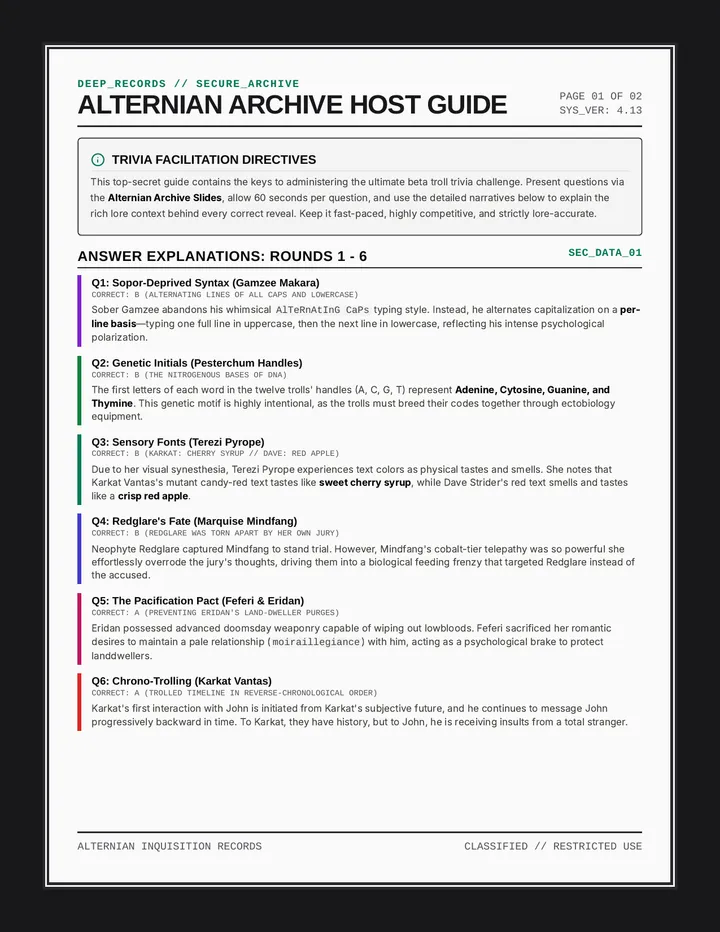
A print-ready, high-contrast 2-page Host Guide and Lore Explainer for the Alternian Archive trivia deck. Features a top-secret retro computer printout aesthetic, detailed answer explanations, and a quick-scoring grid.