Students compare Linear and Binary search methods through physical simulations with cards, exploring how 'divide and conquer' strategies drastically reduce the number of steps required to find data.
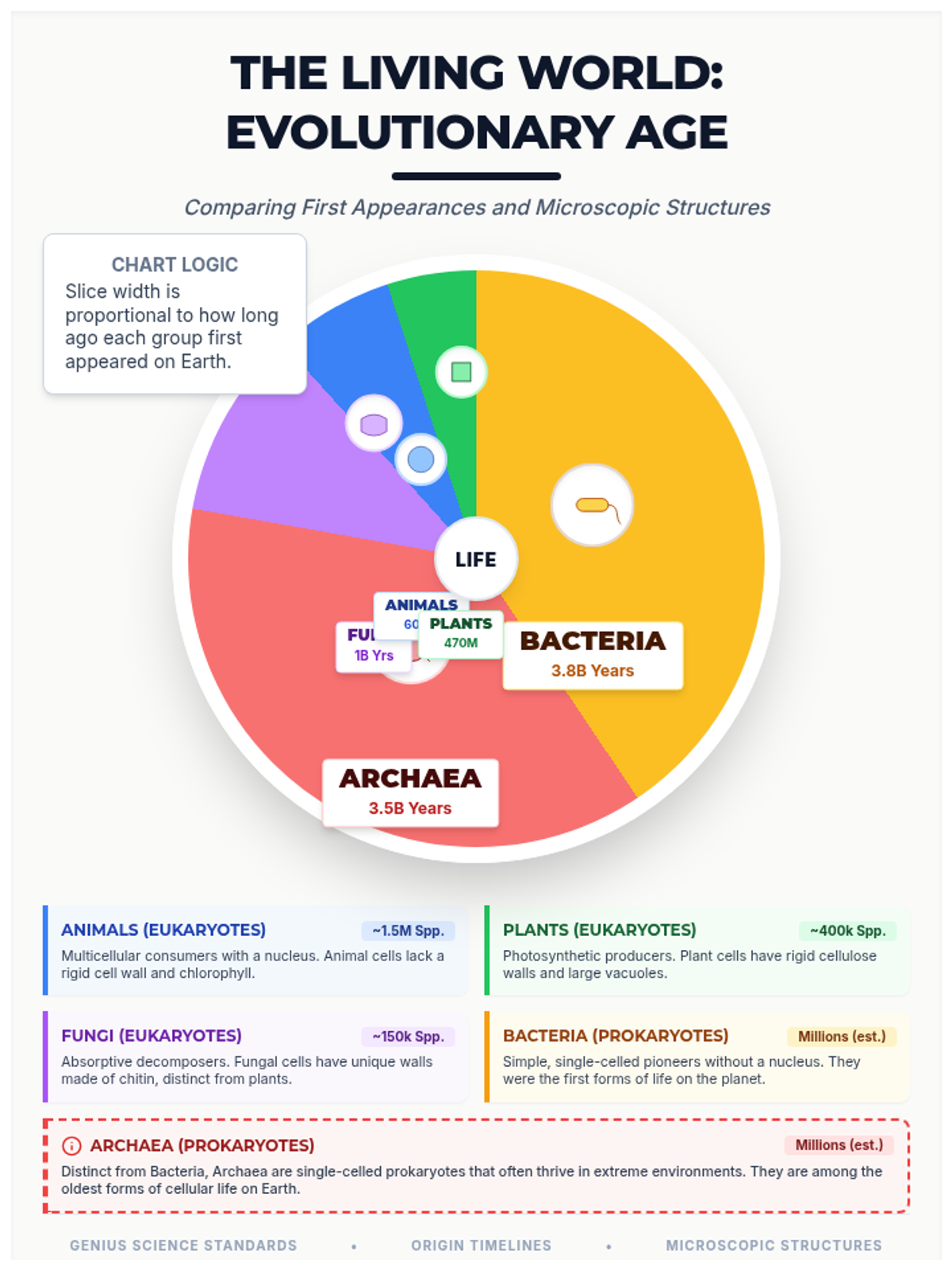
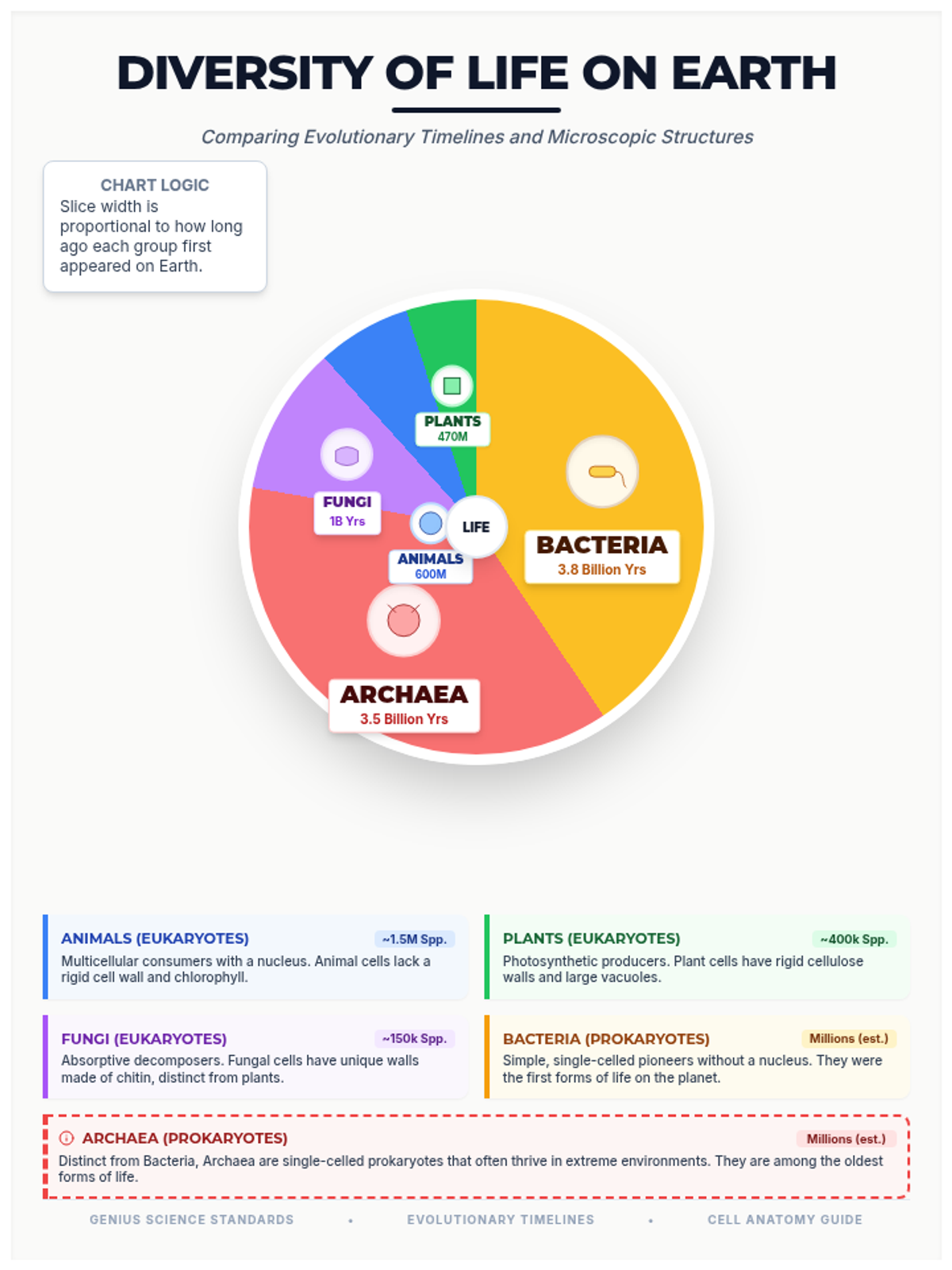
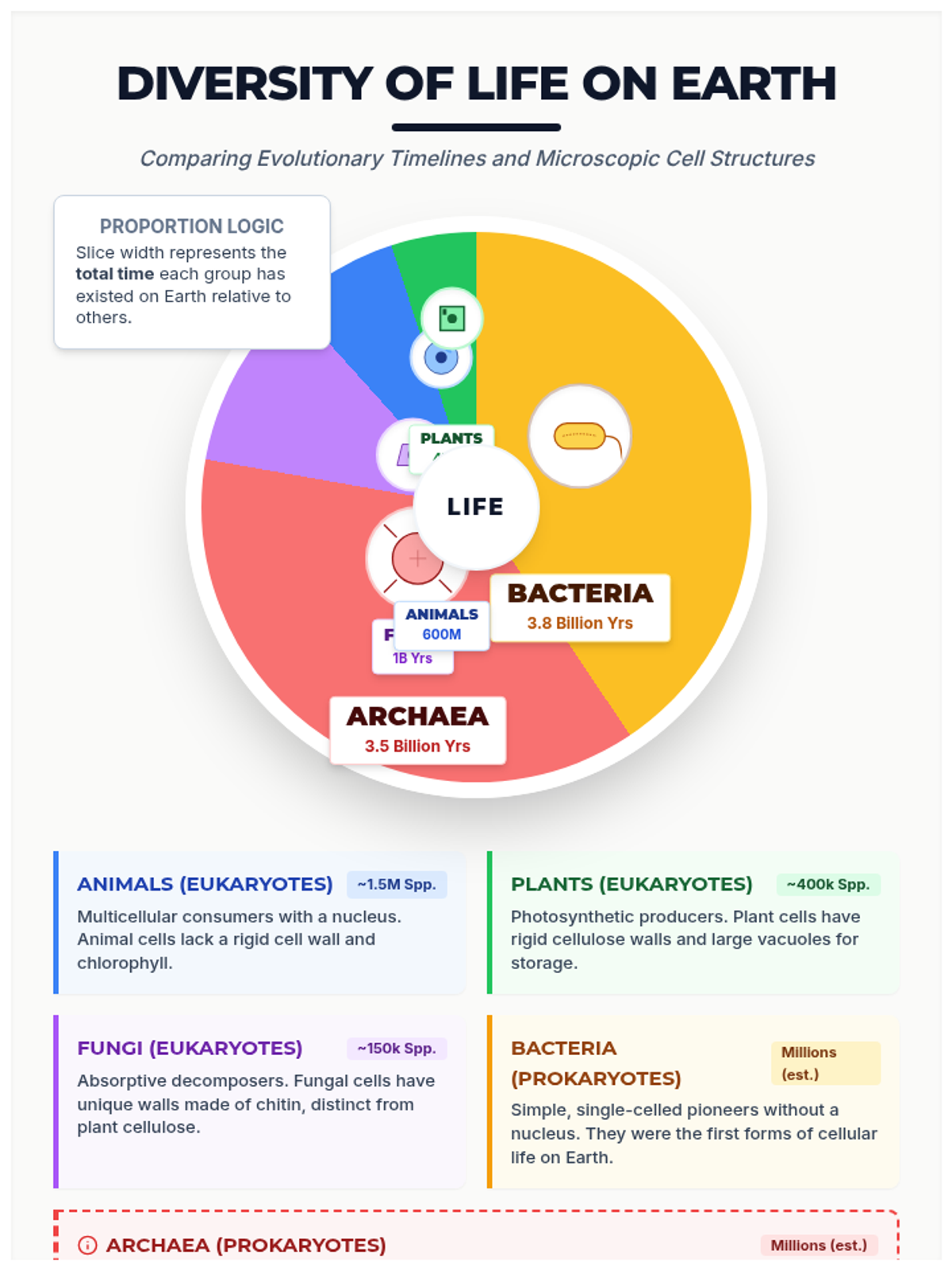
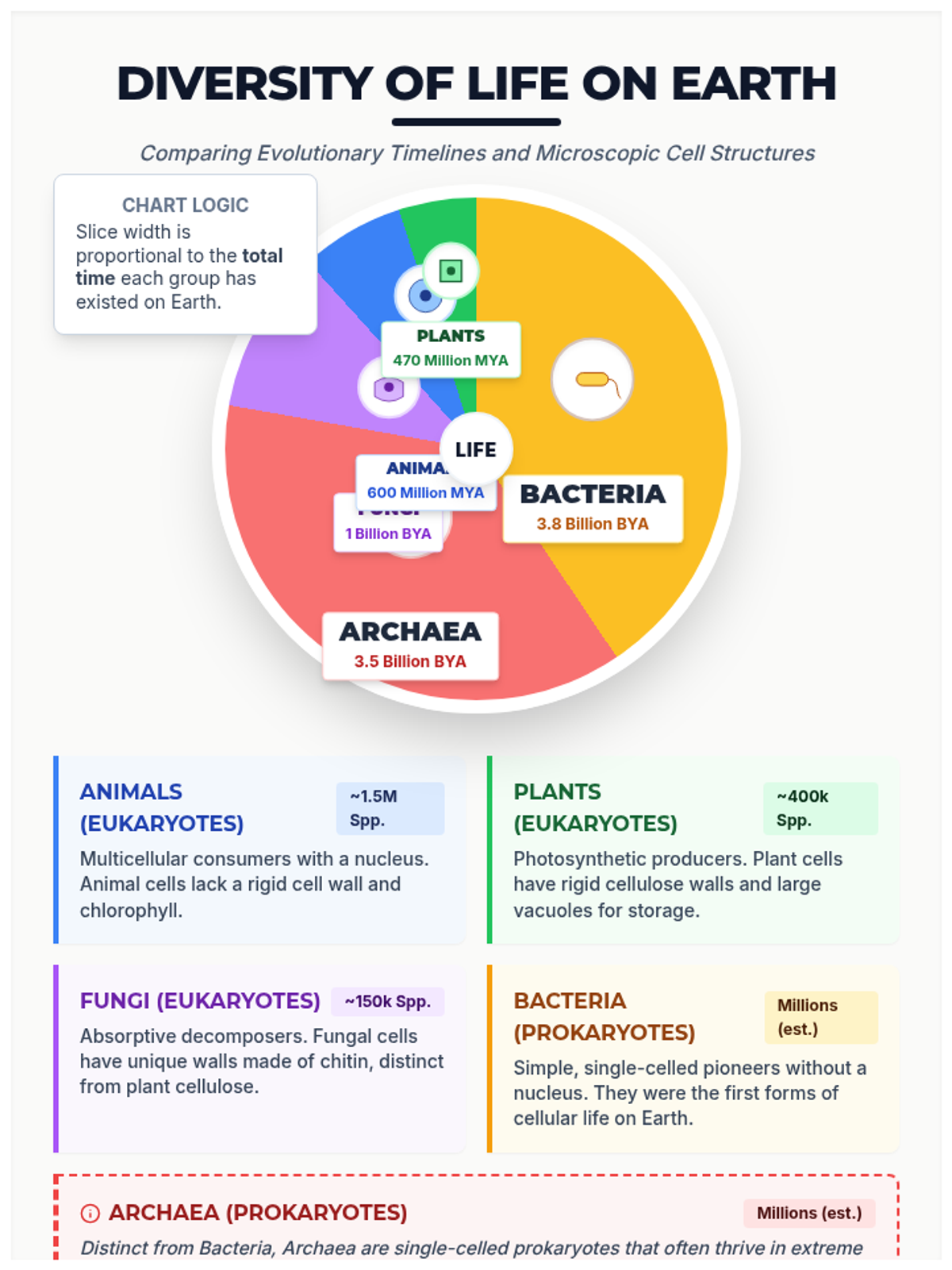
Explore the classification of life through the 5 Kingdoms: Animals, Plants, Fungi, Bacteria, and Viruses. Students will learn the key characteristics that define each group and discuss the unique biological status of viruses.
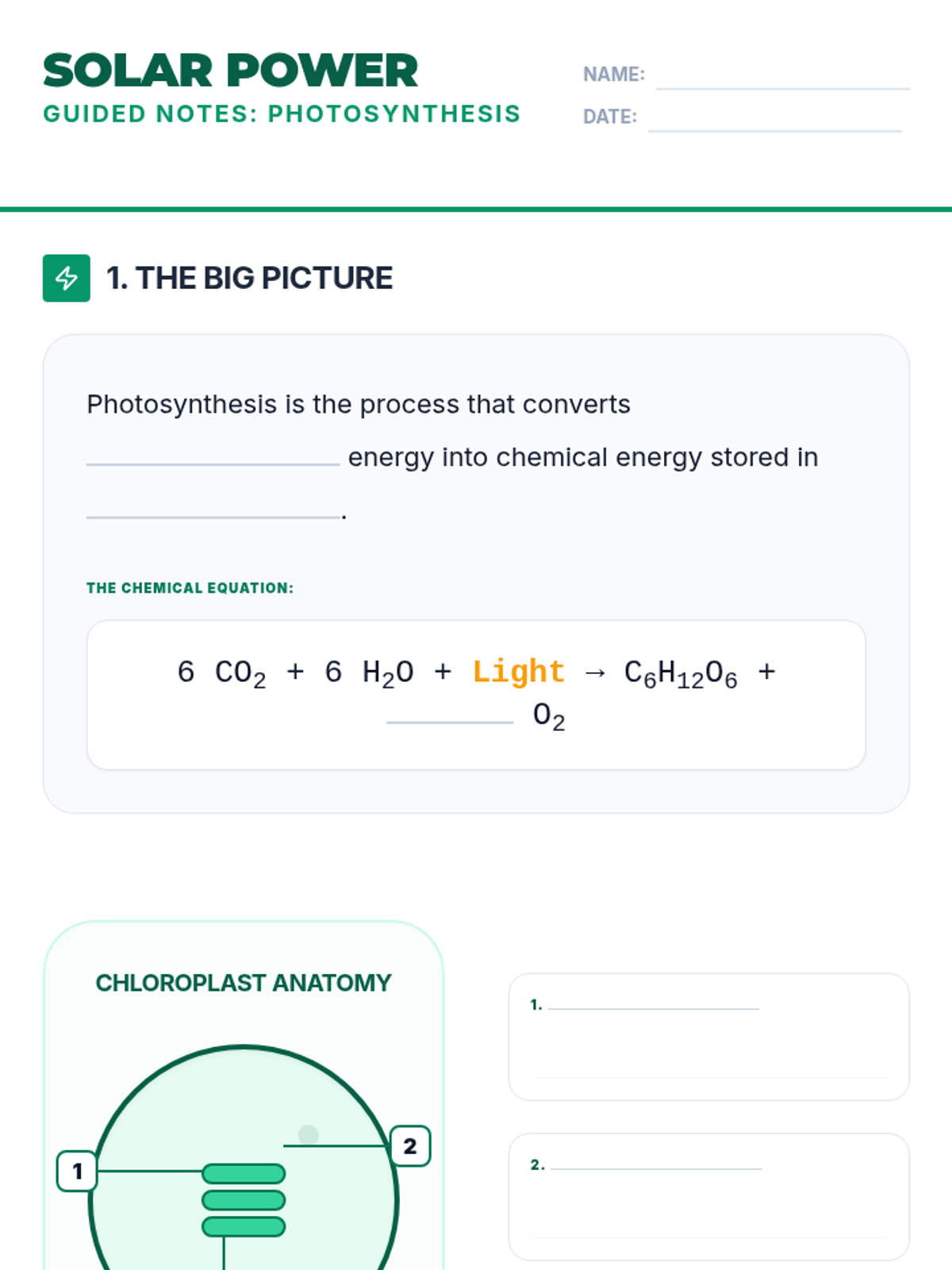
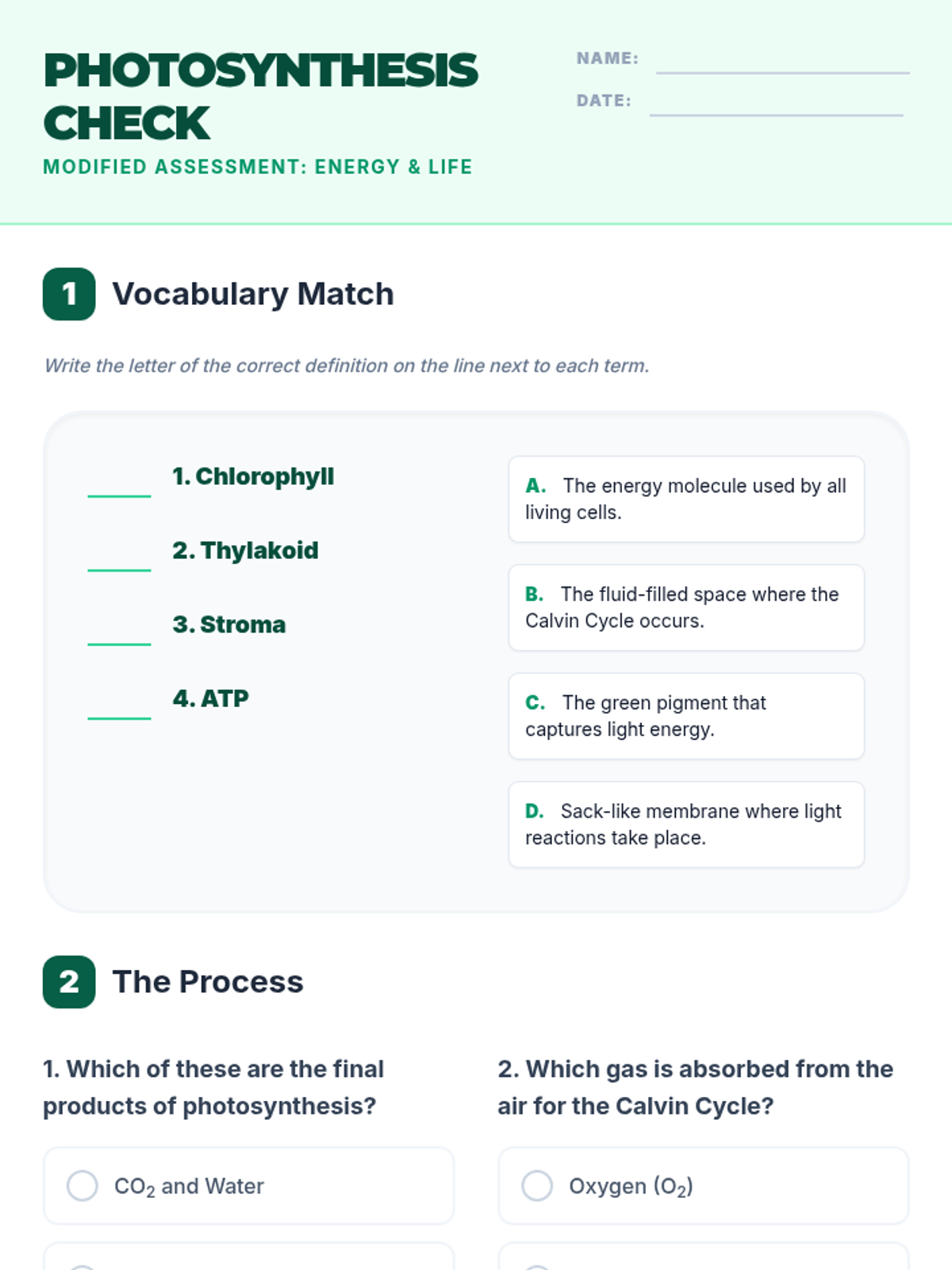
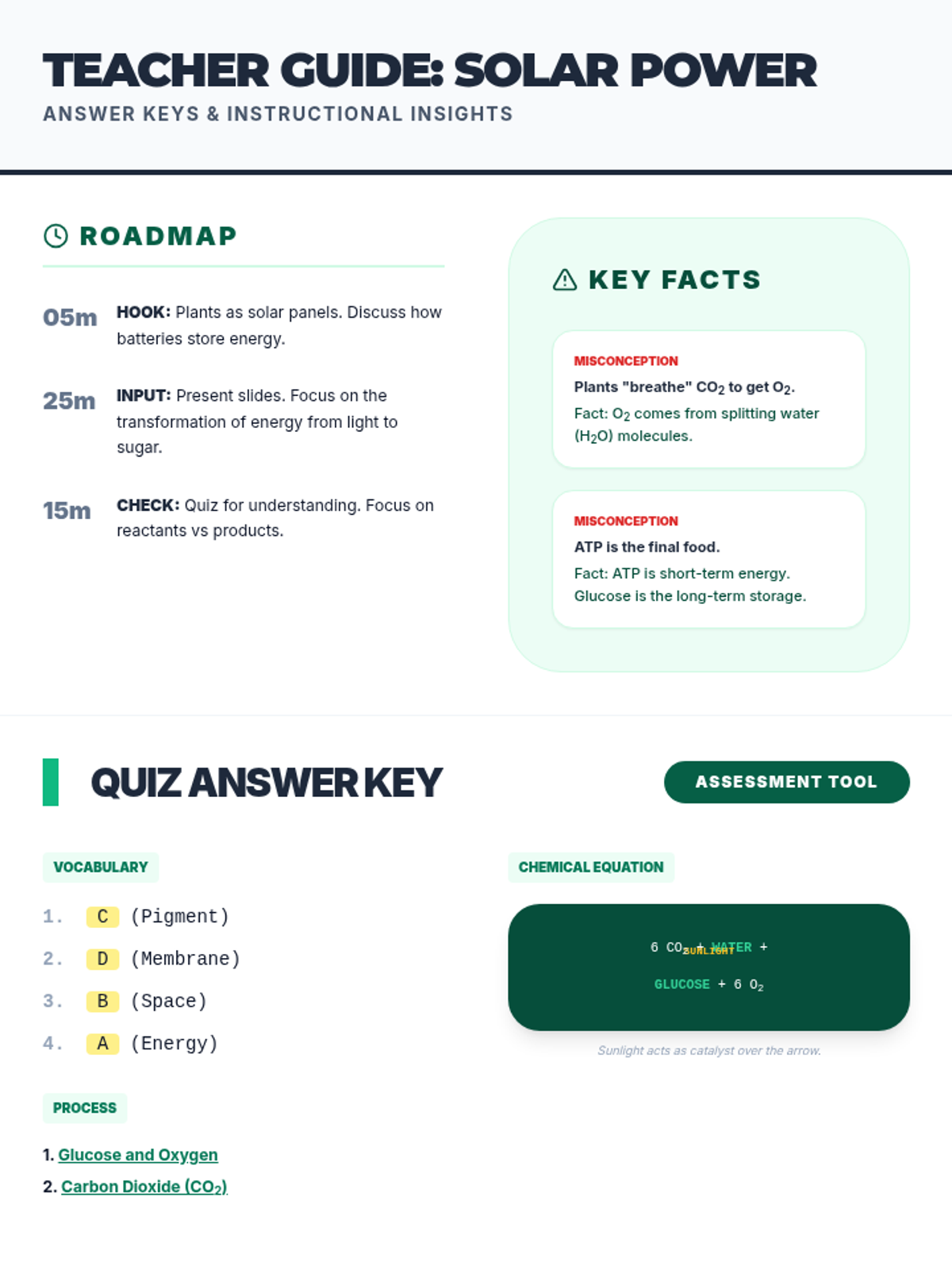
A comprehensive dive into photosynthesis, covering chloroplast anatomy, the light-dependent and light-independent reactions, and the flow of energy through ATP and NADPH.
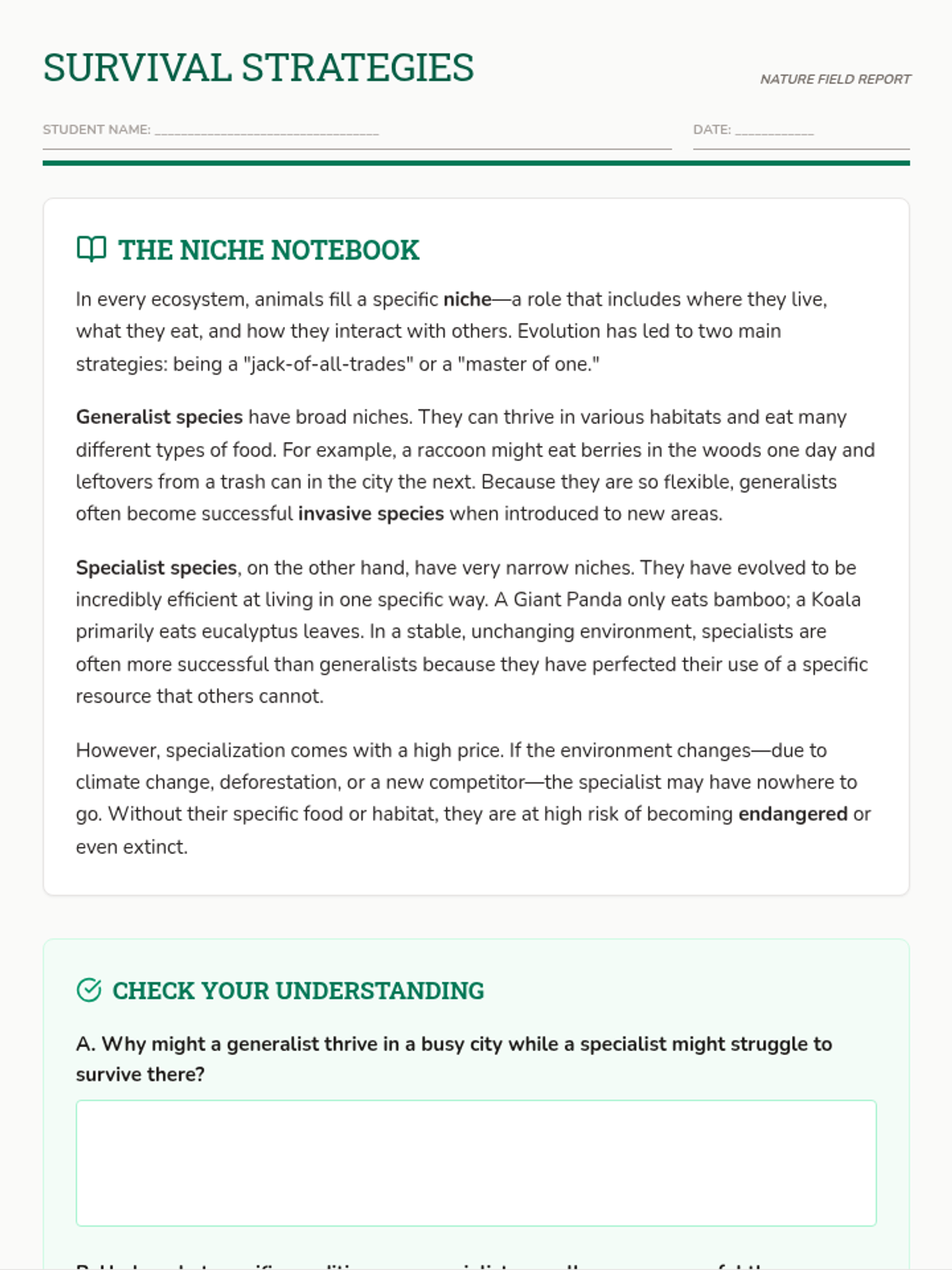
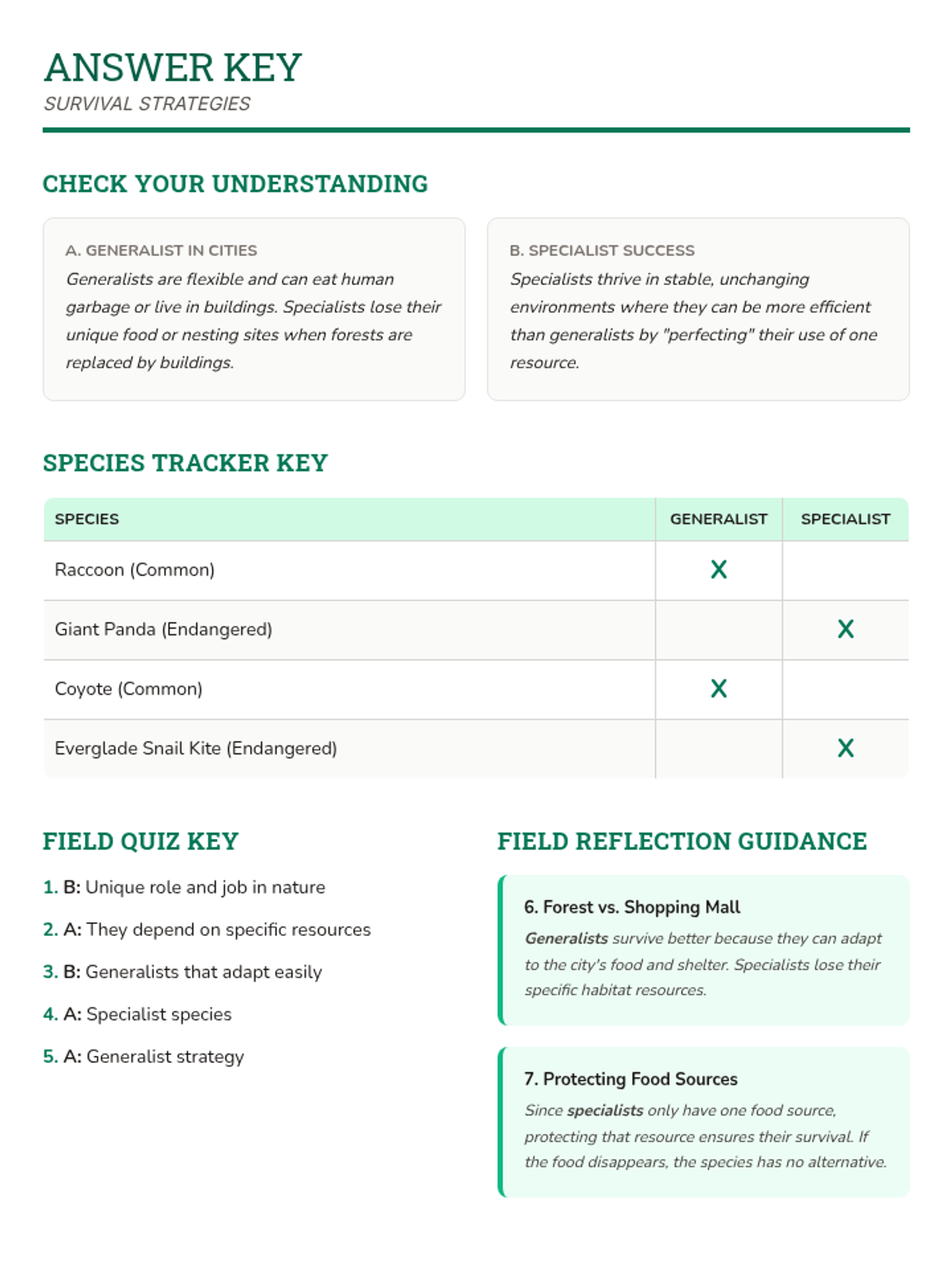
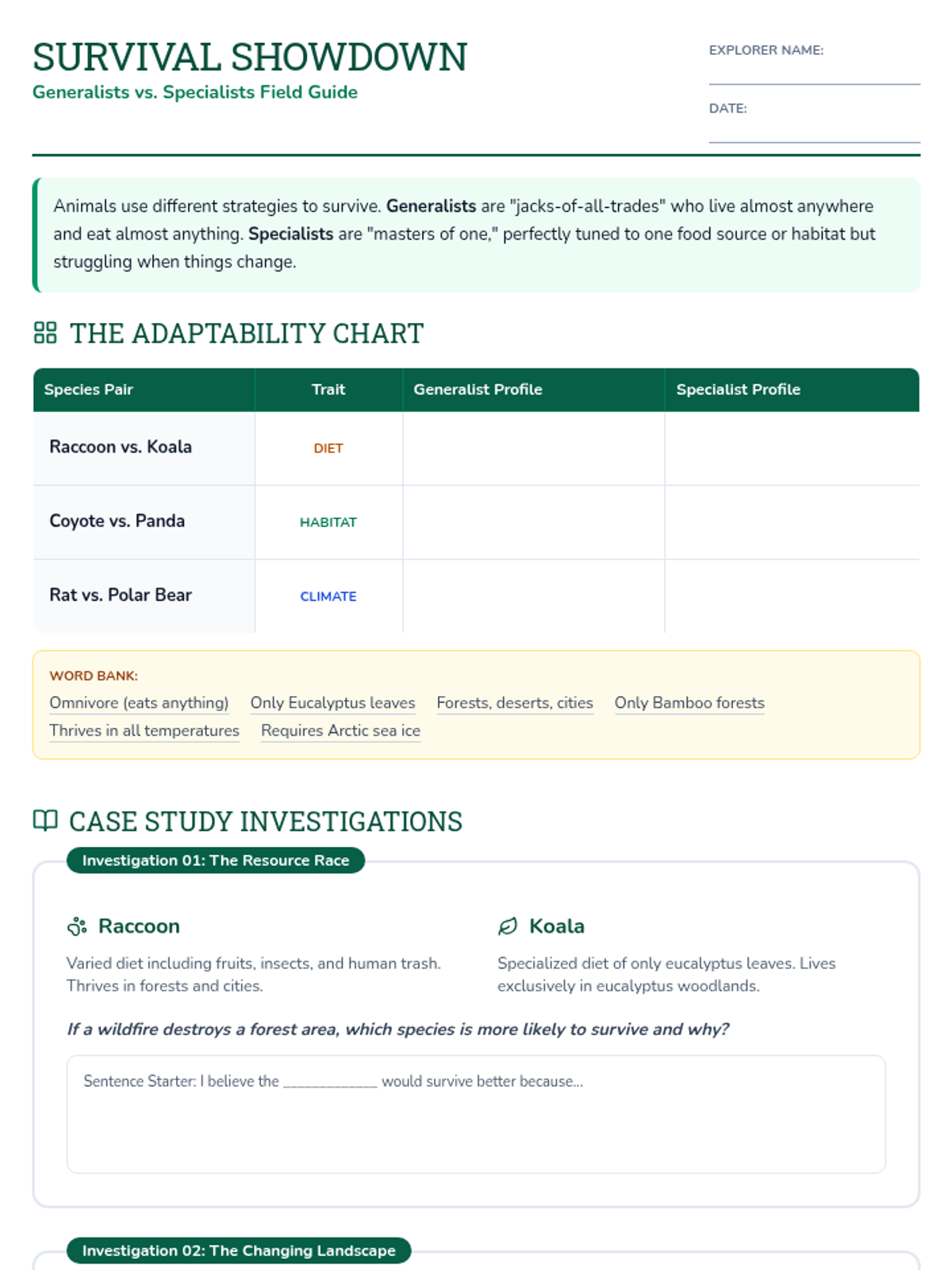
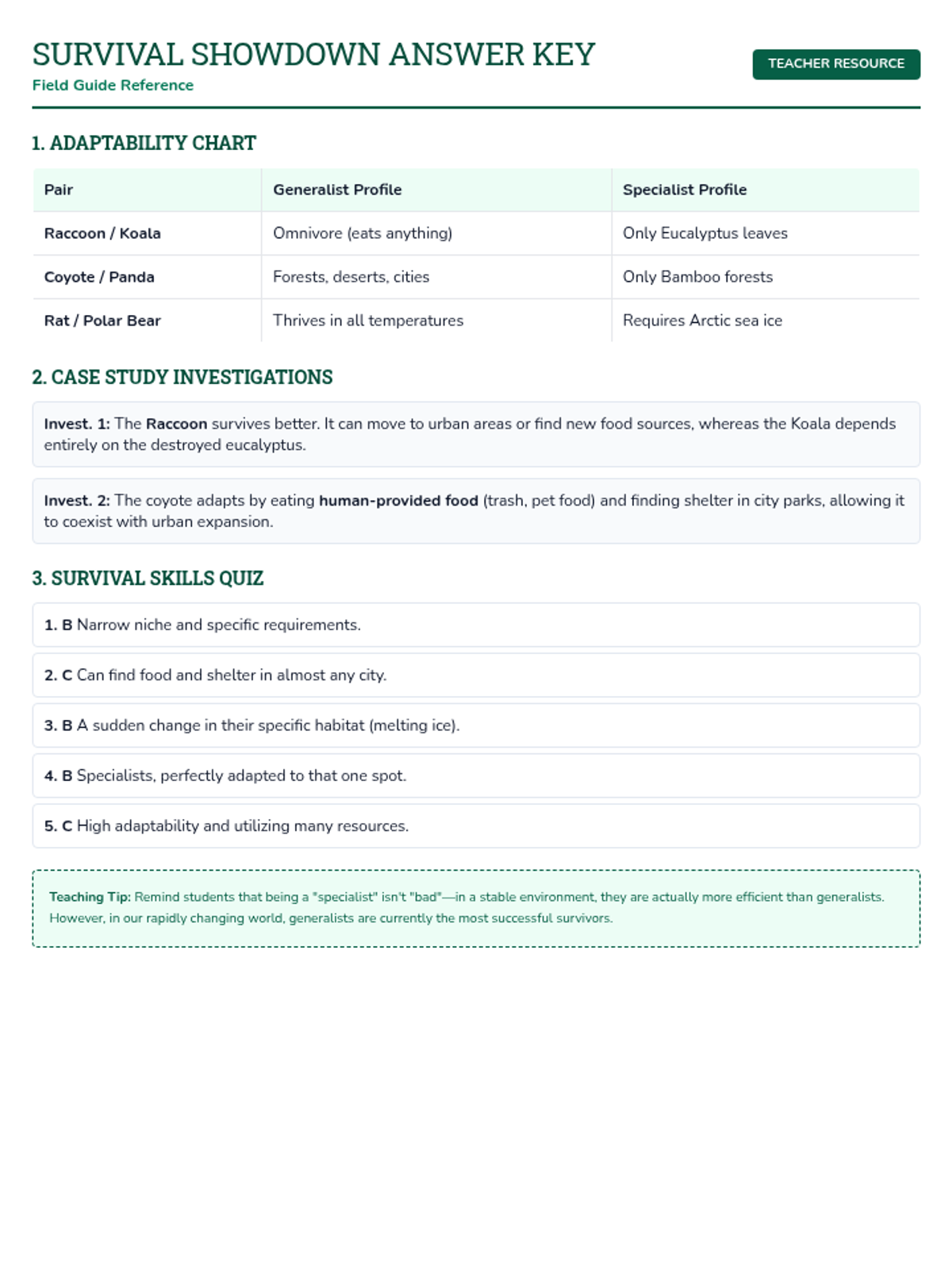
A lesson exploring the differences between generalist and specialist species, focusing on how their niches affect their survival and impact on ecosystems.
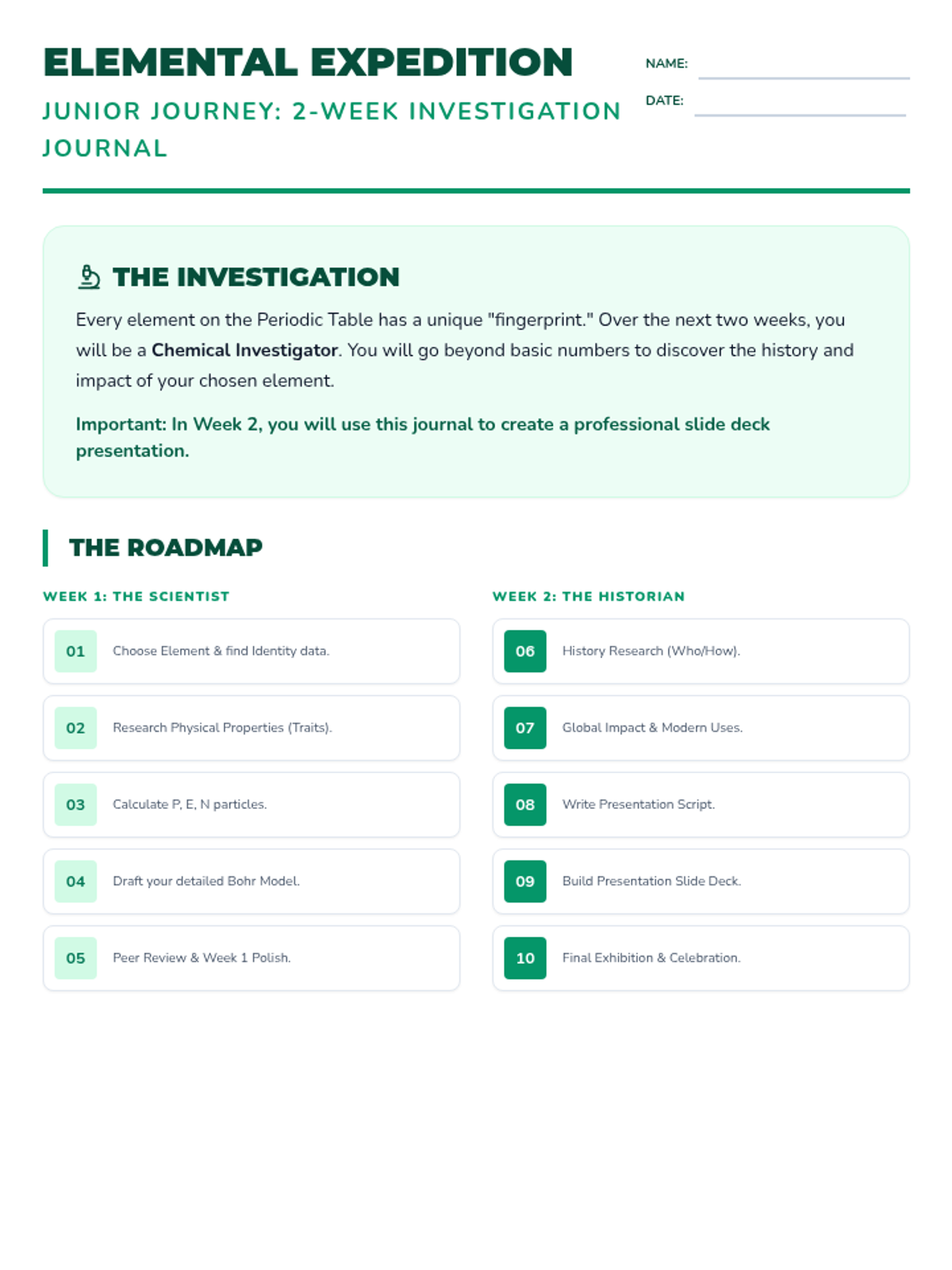
A comprehensive two-week version of the element research project for juniors, allowing for deeper dives into historical context and atomic modeling.
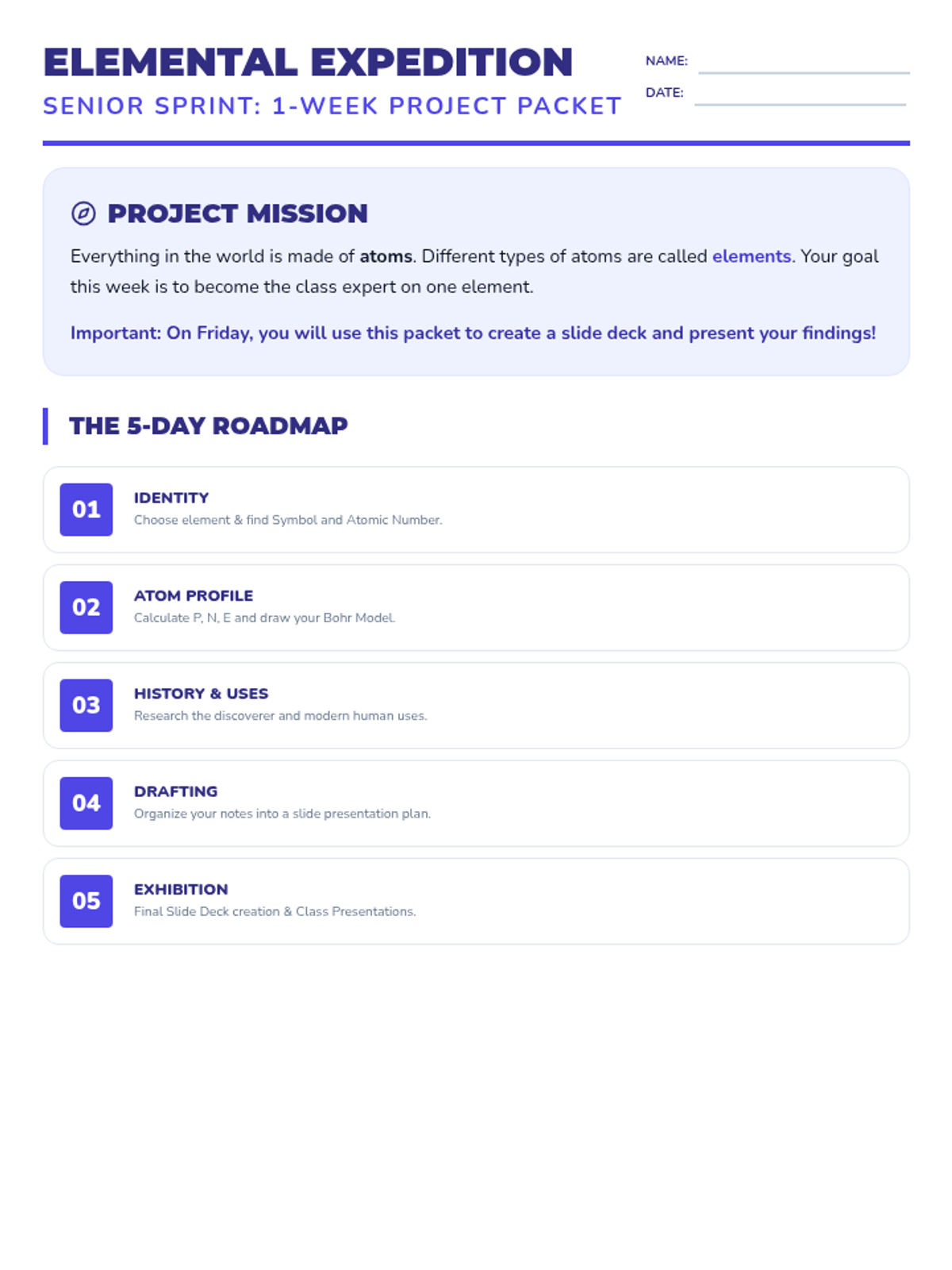
An accelerated one-week version of the element research project designed for seniors, focusing on core atomic data and primary uses.
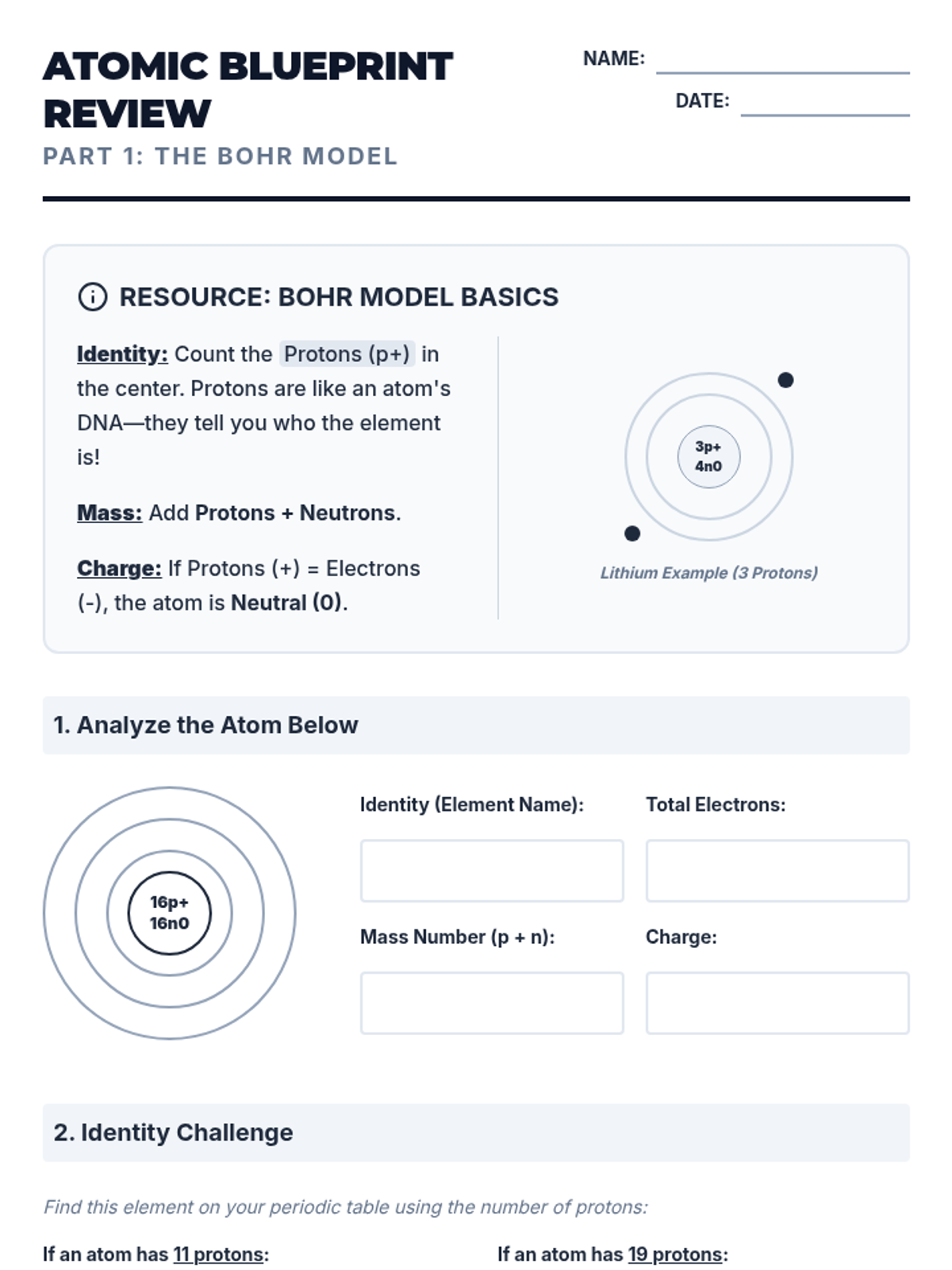
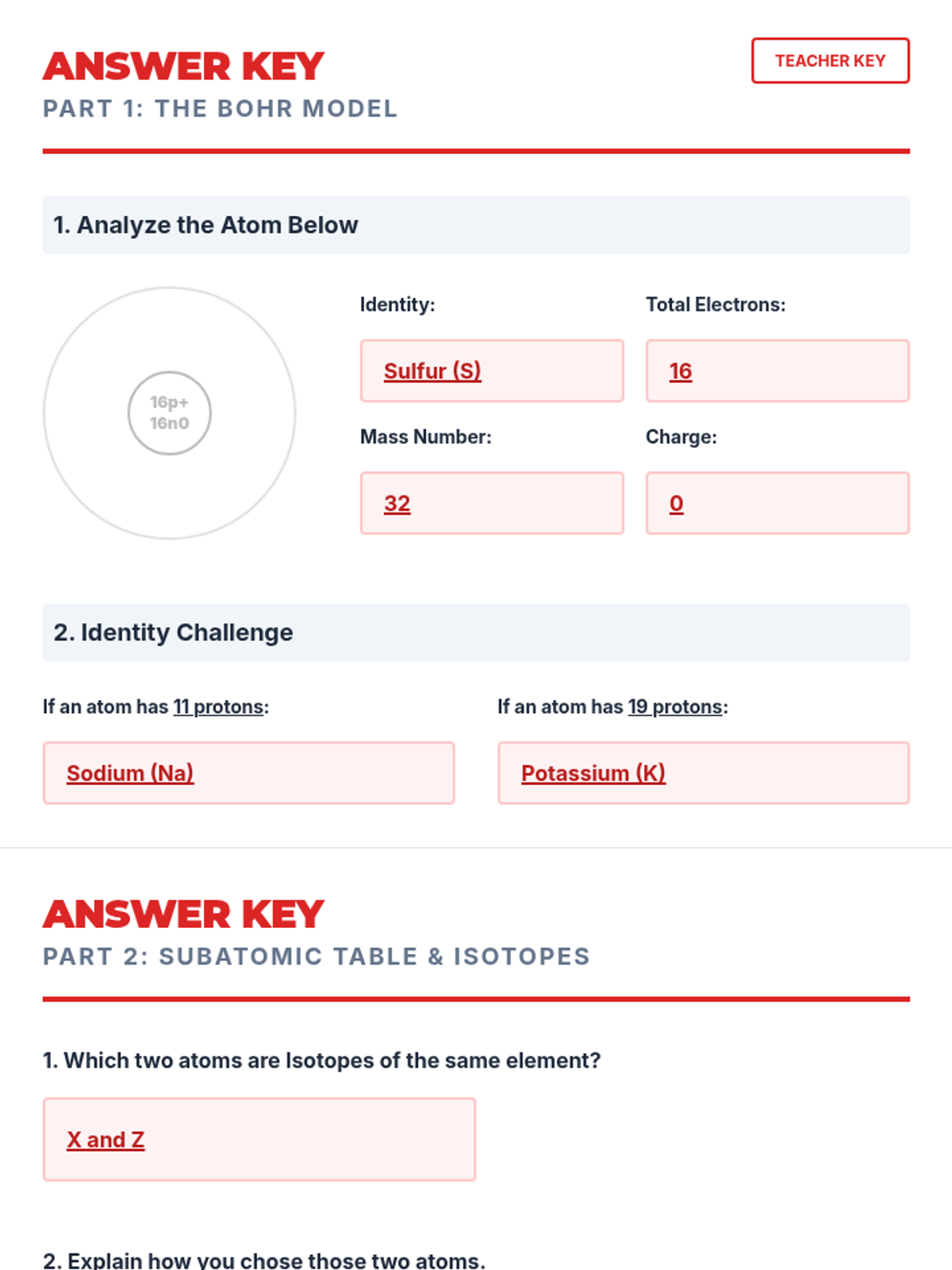
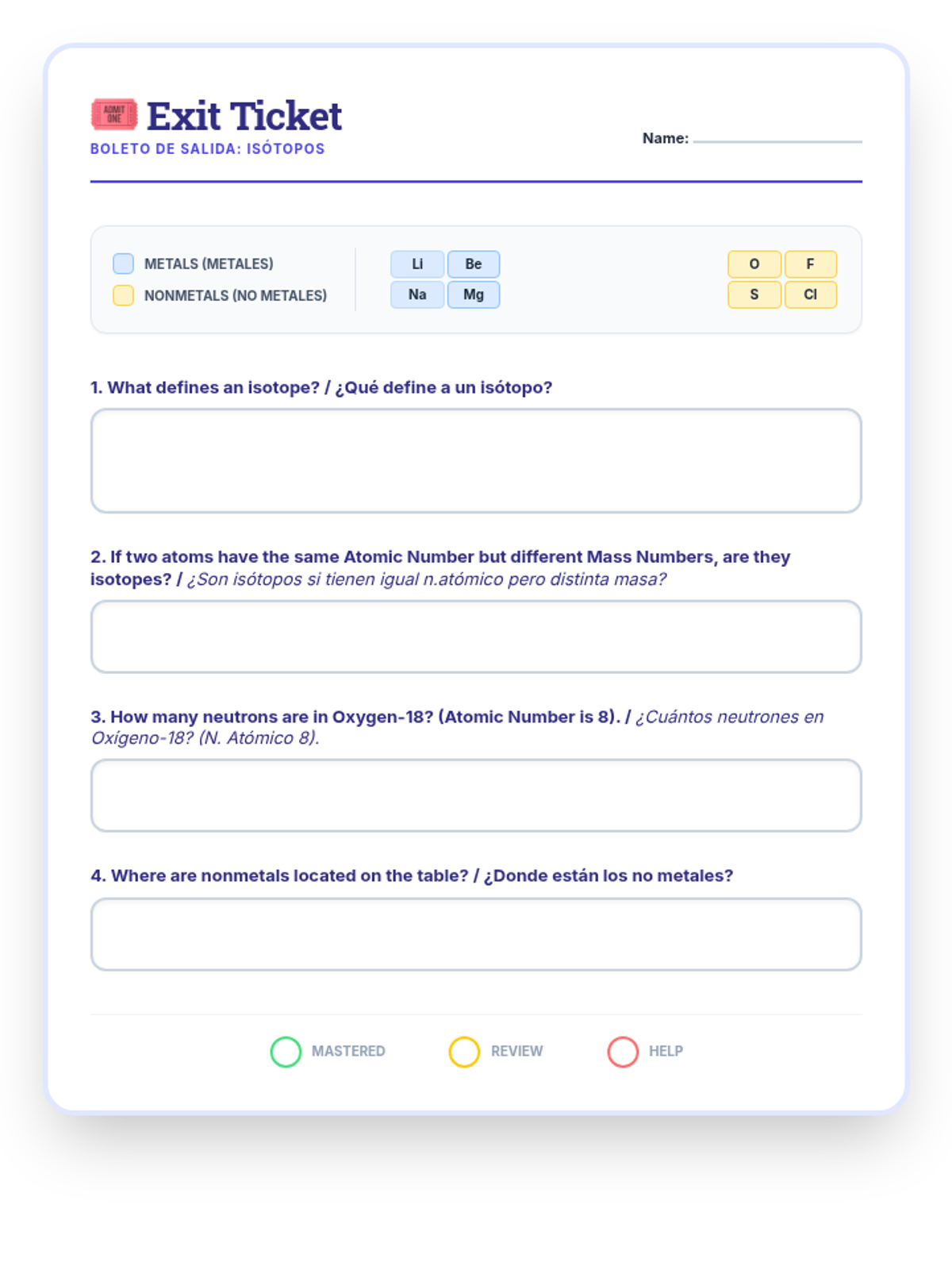
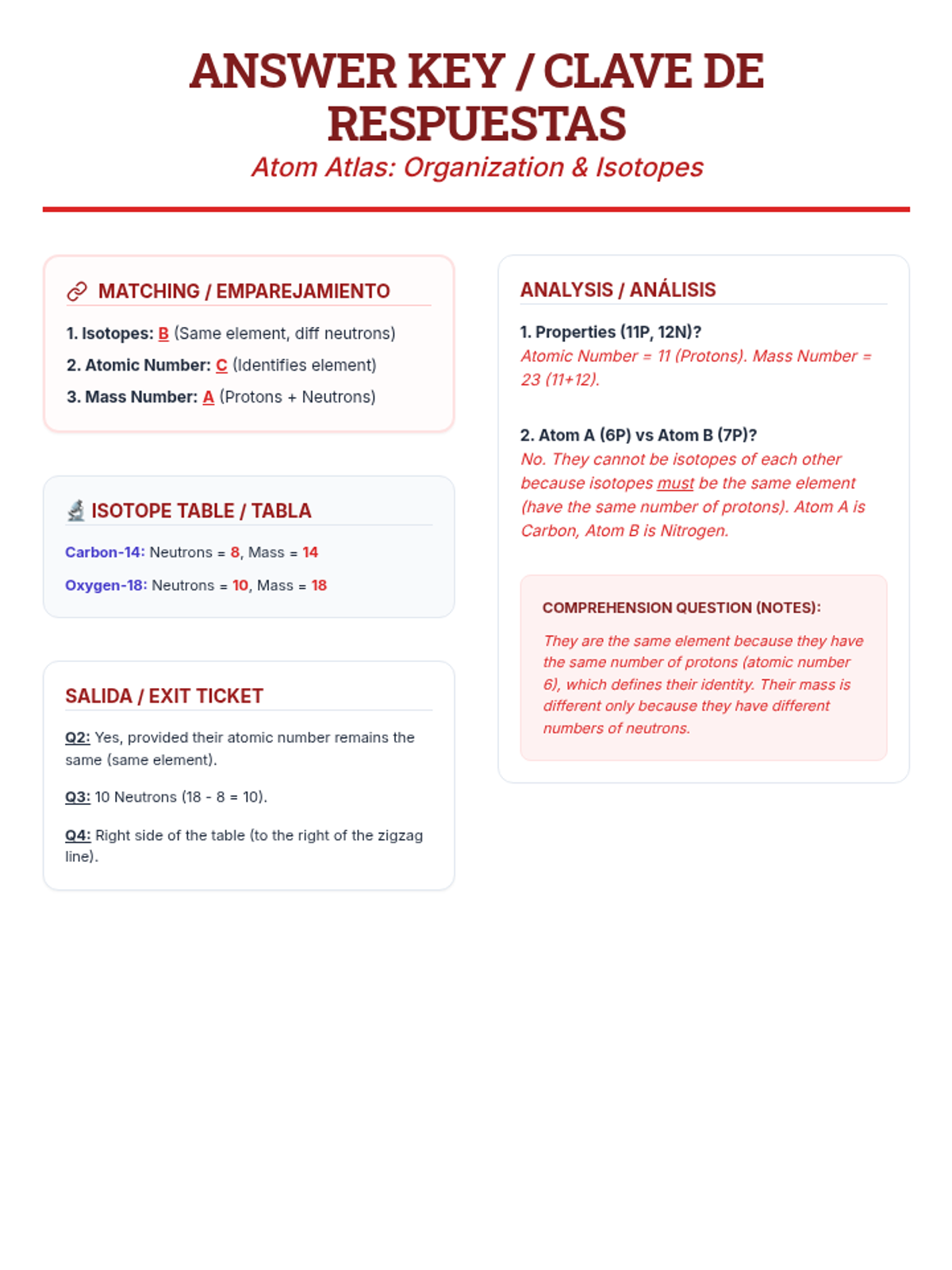
A comprehensive review sequence focusing on atomic structure, Bohr models, isotopes, and electron configurations designed for high school chemistry students.
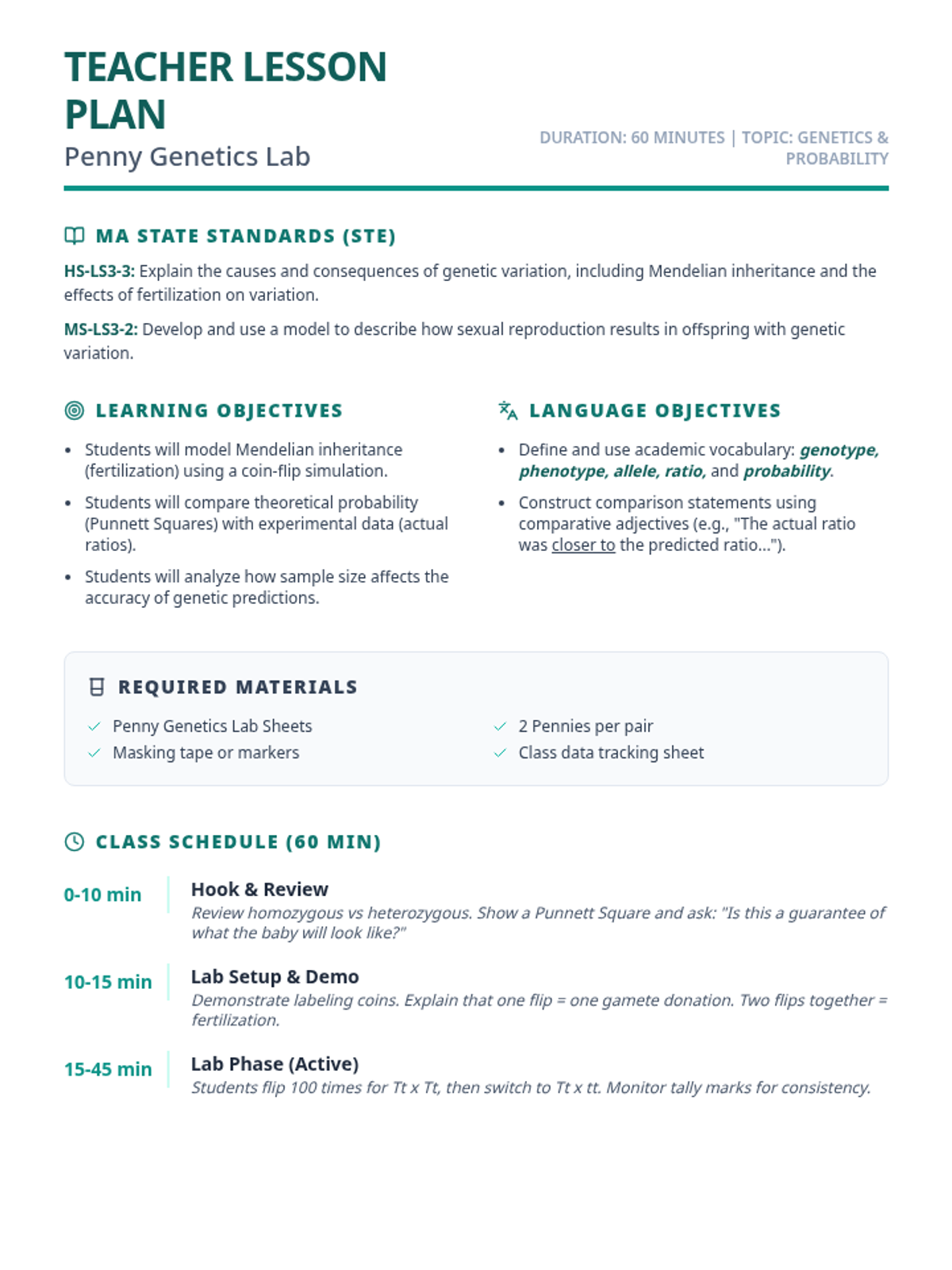
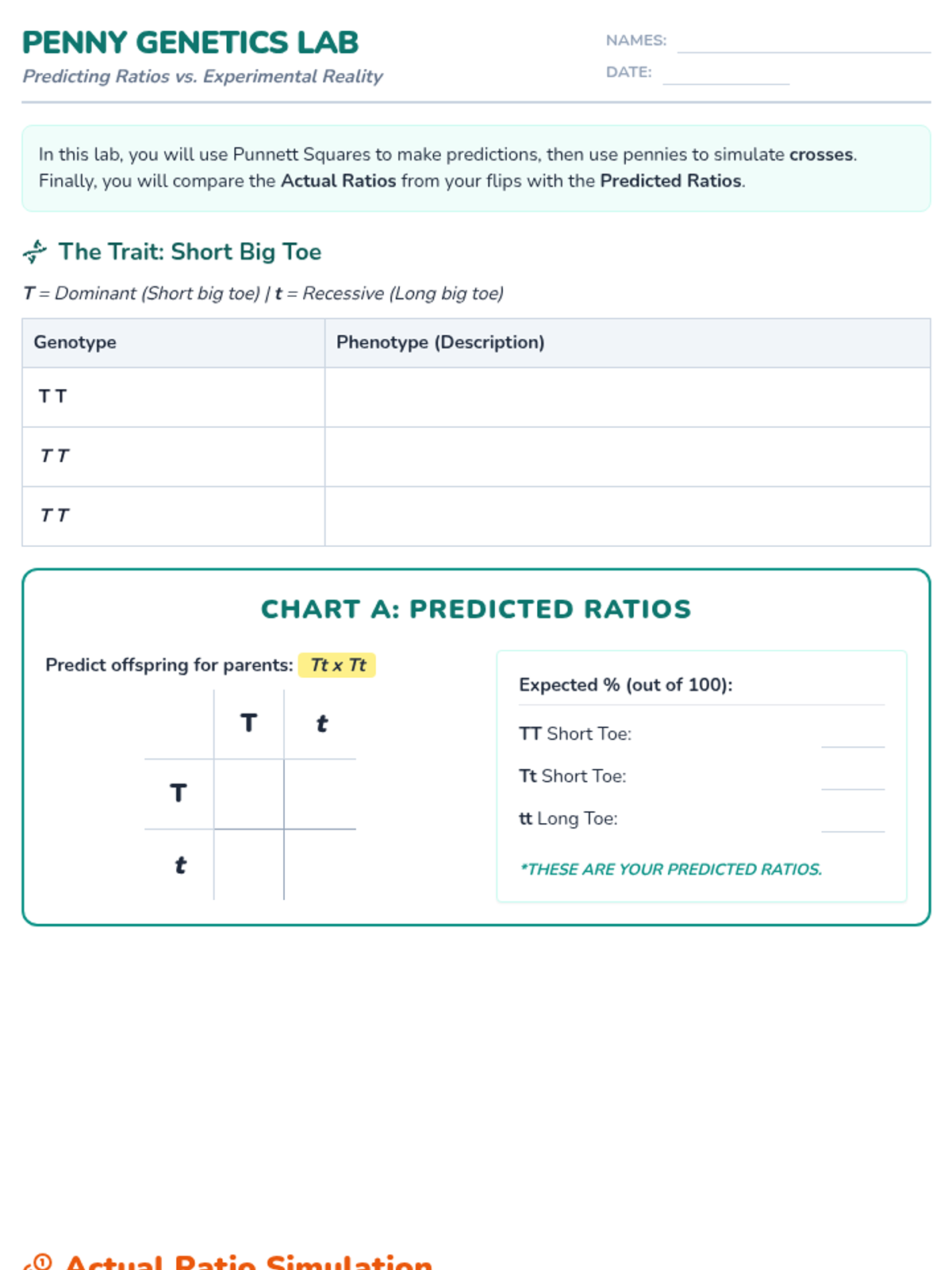
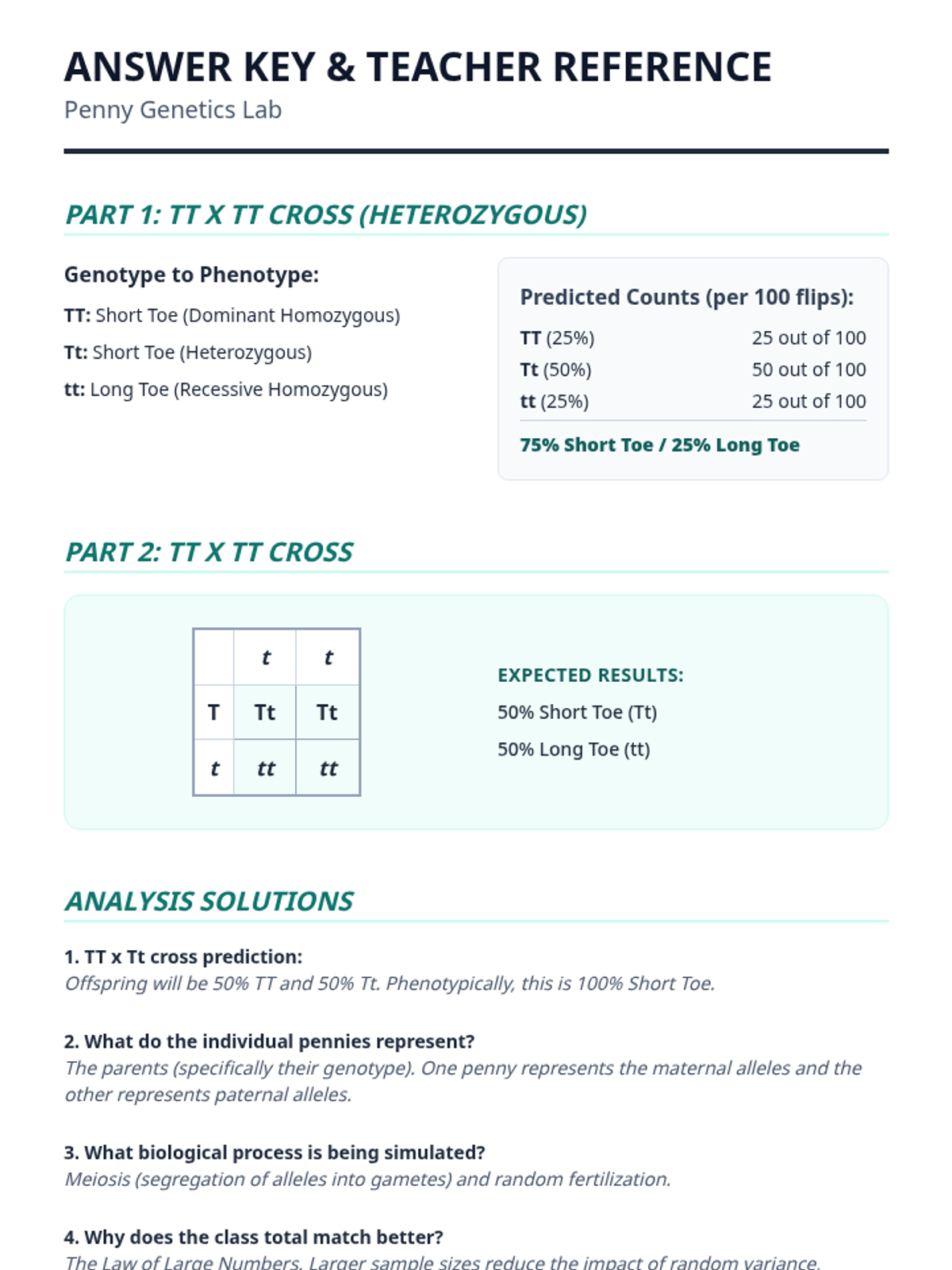
A 60-minute hands-on lab exploring the relationship between Punnett square predictions and actual genetic outcomes using coin-flip simulations. Students compare theoretical probability with experimental data to understand how fertilization works.
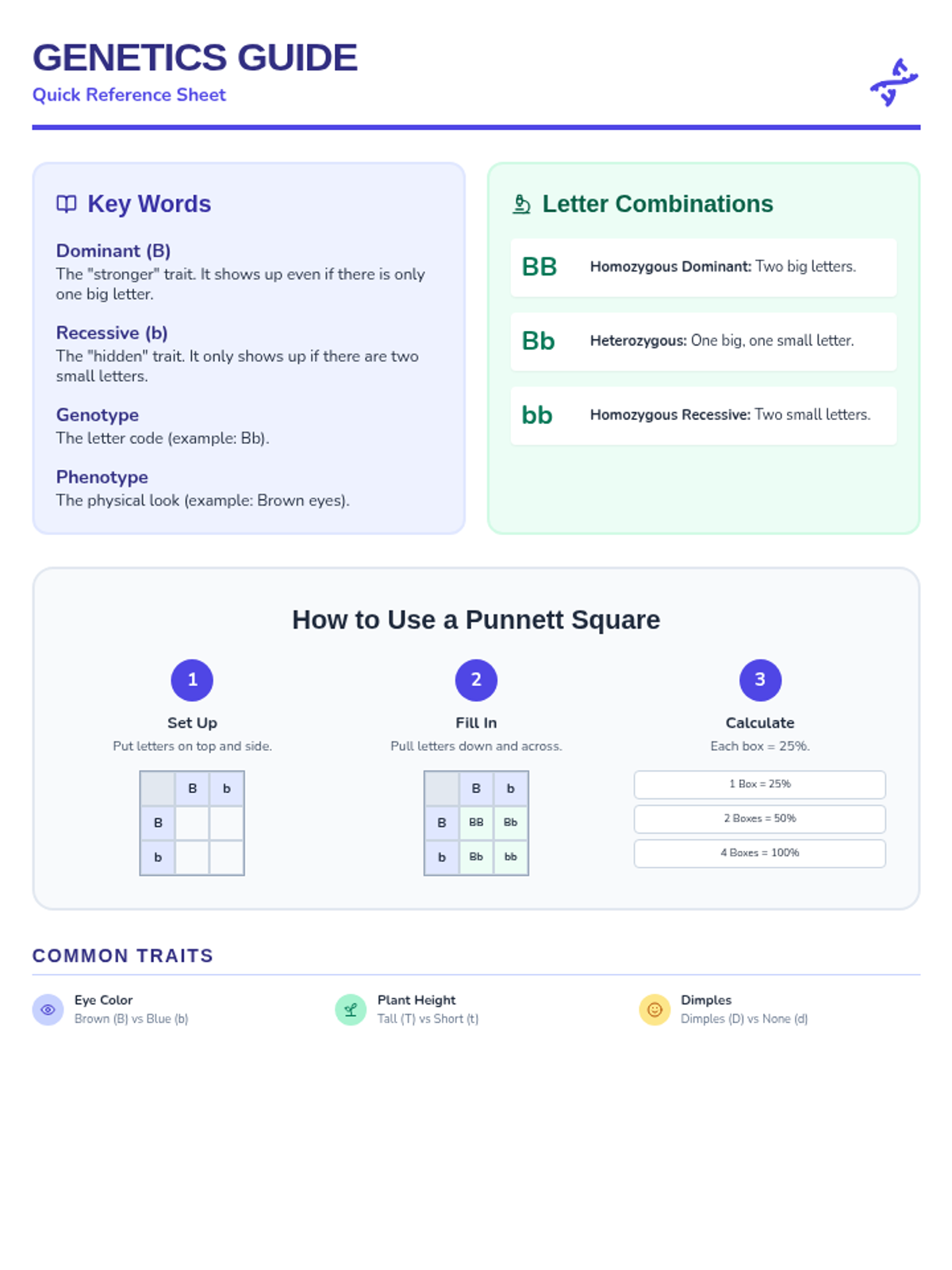
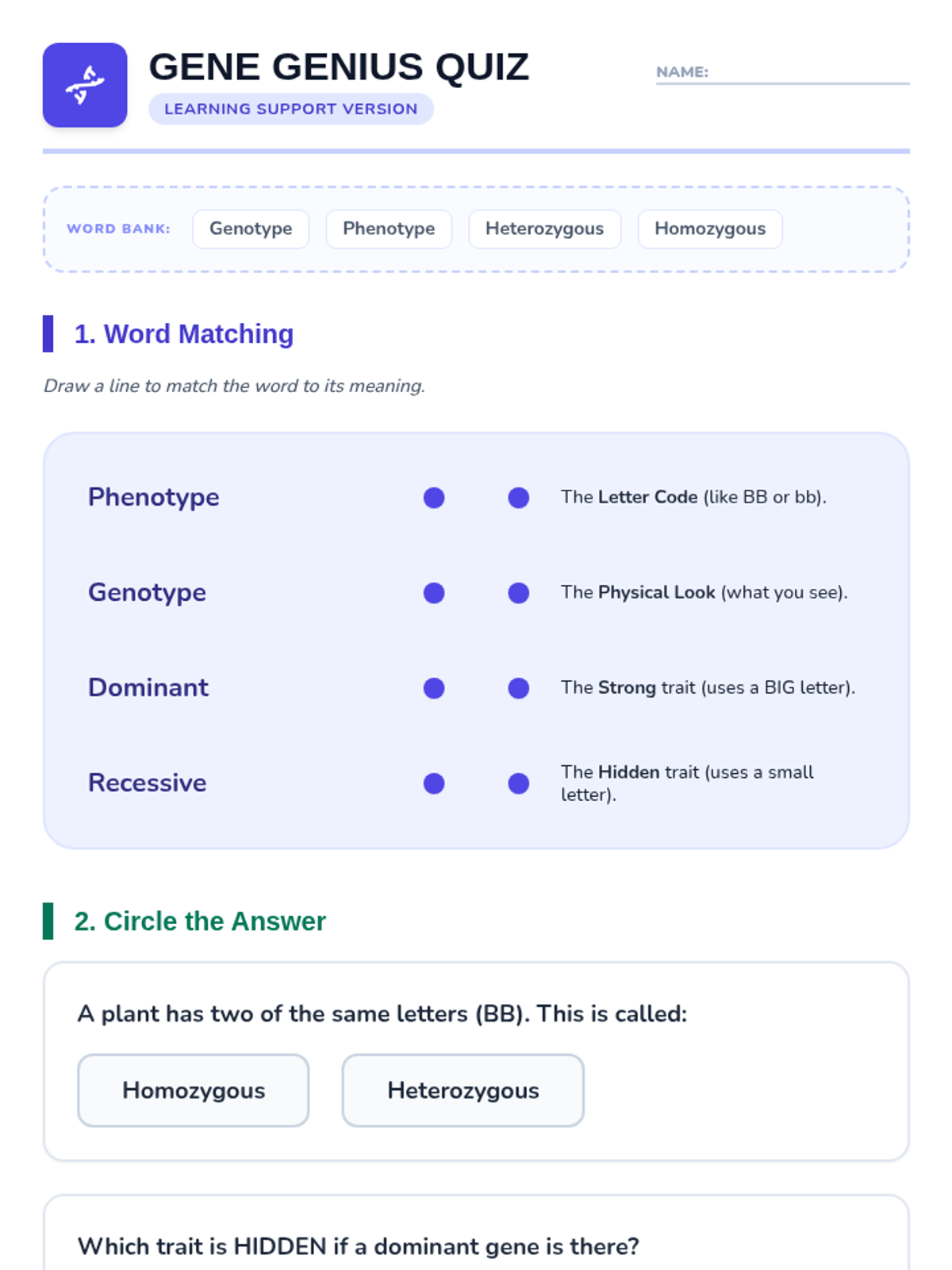
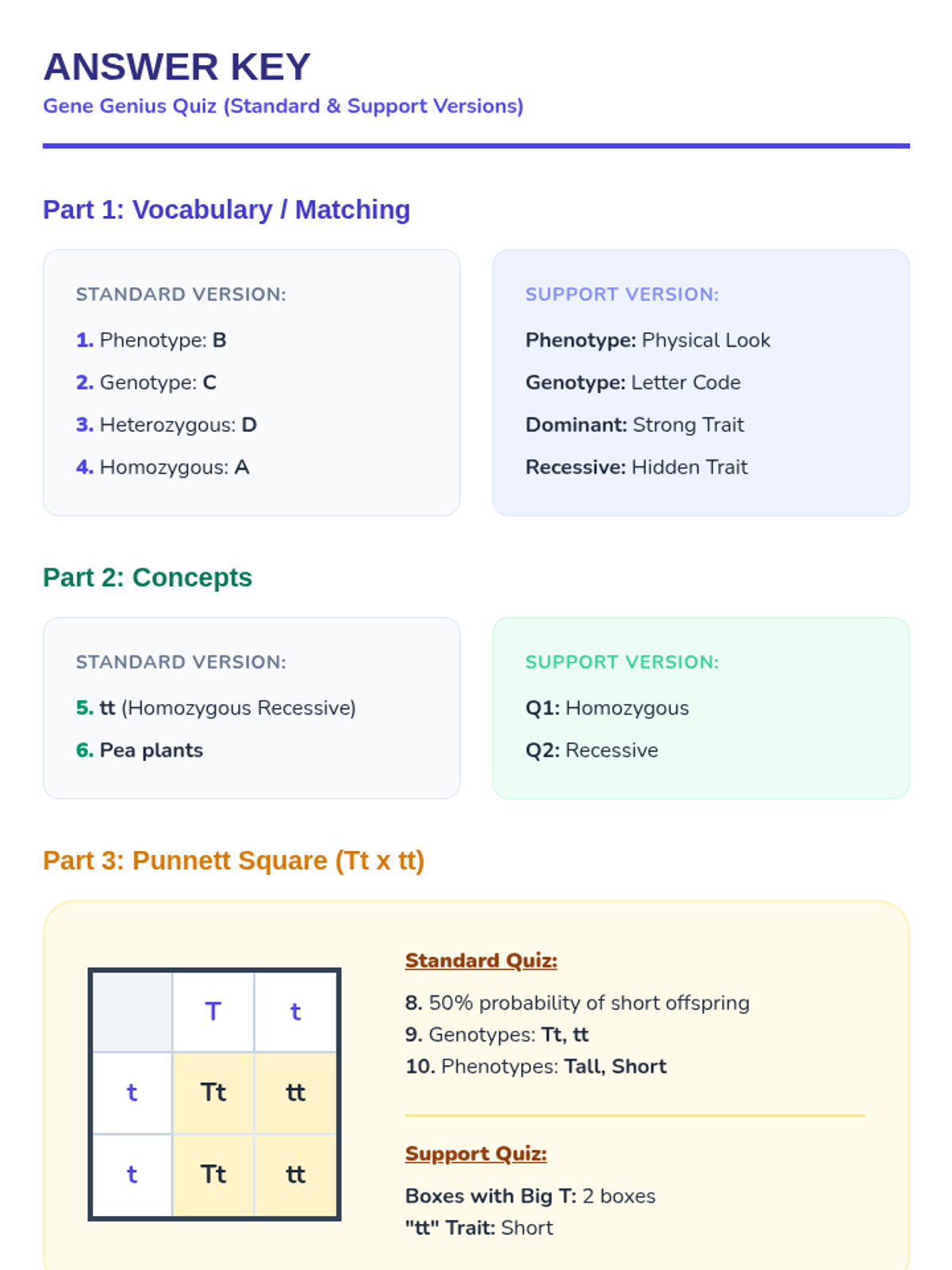
A focused lesson on Mendelian inheritance and Punnett squares, featuring visual-heavy materials and differentiated assessments for varying learner needs.
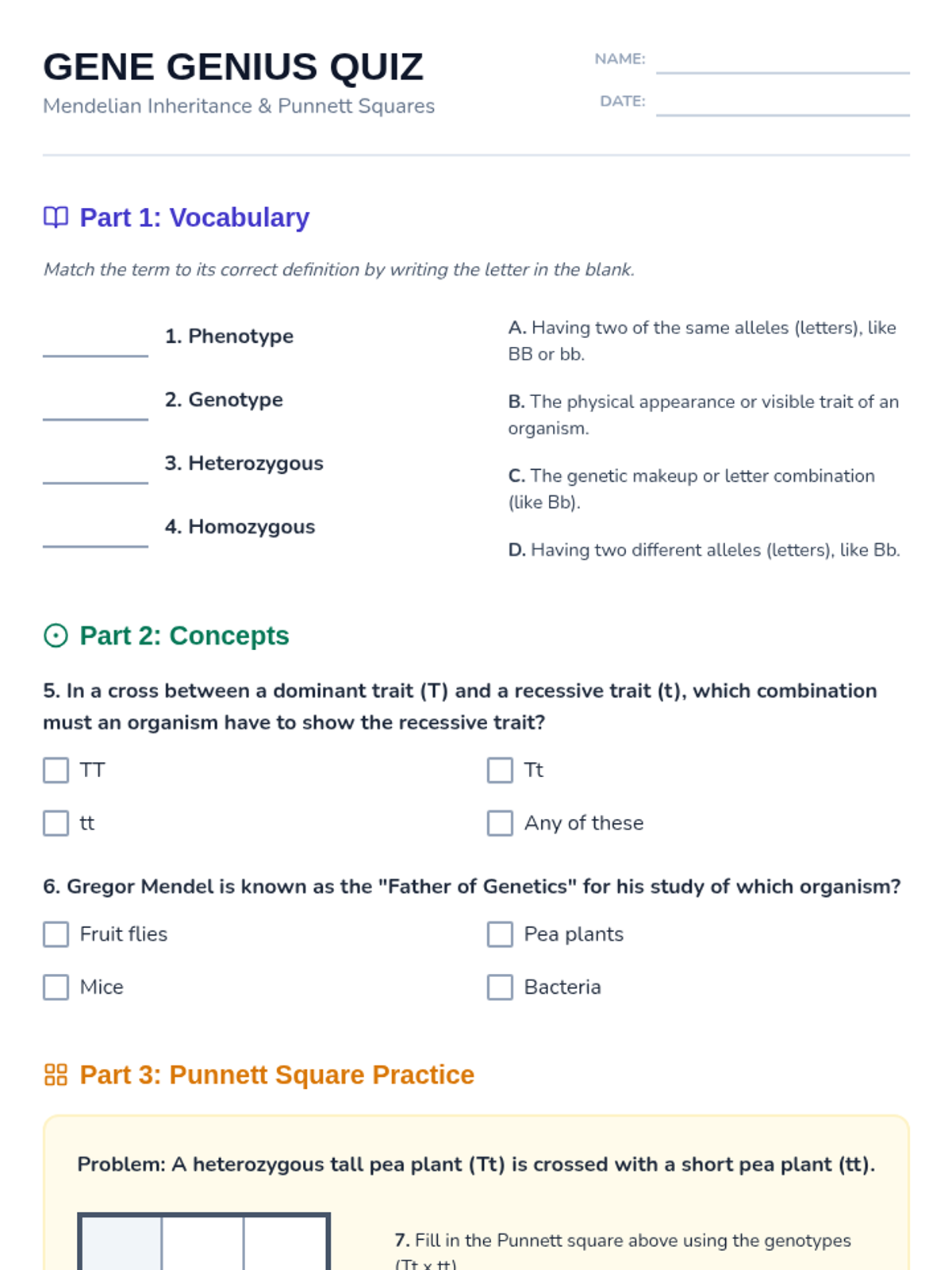
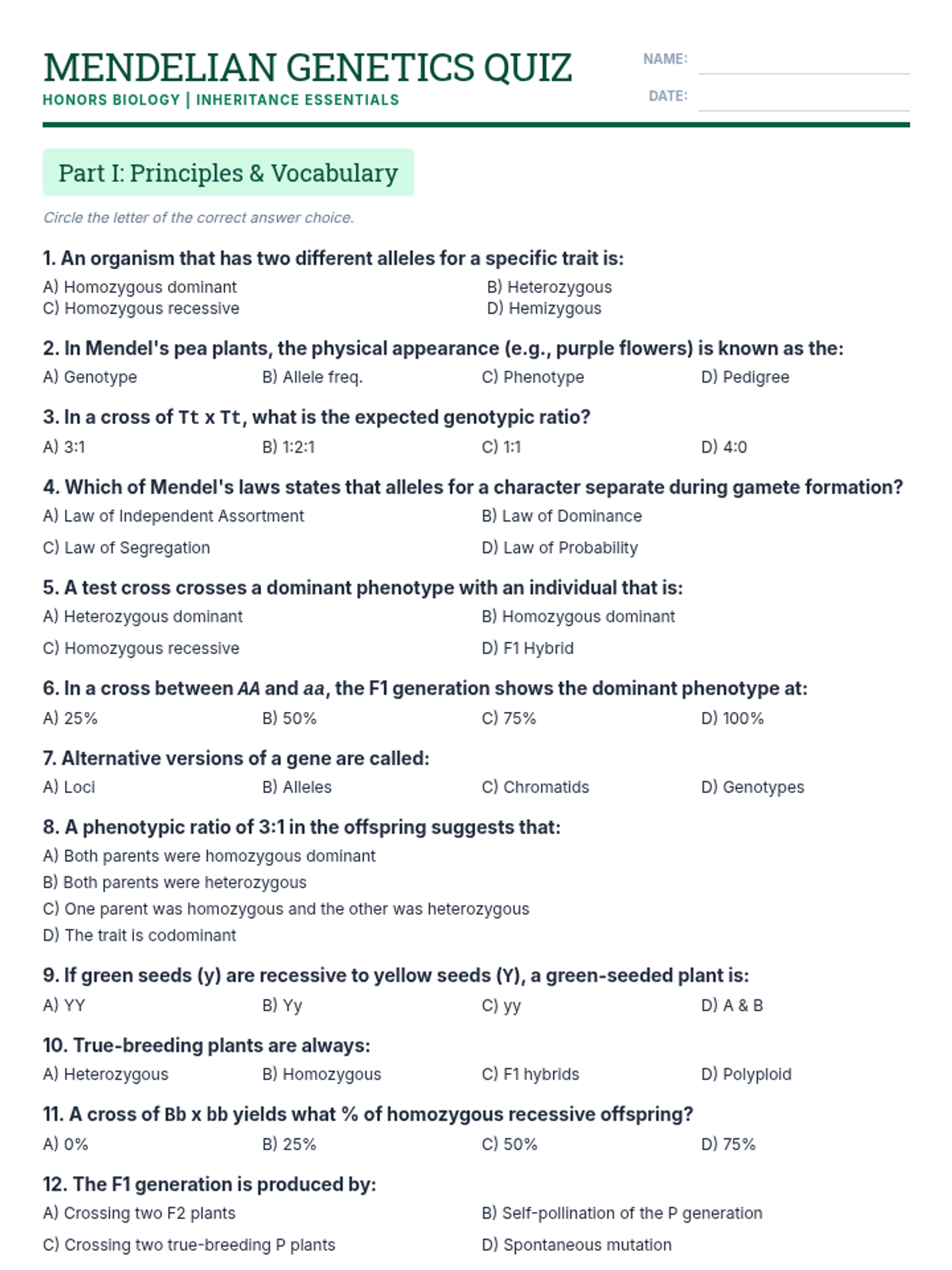
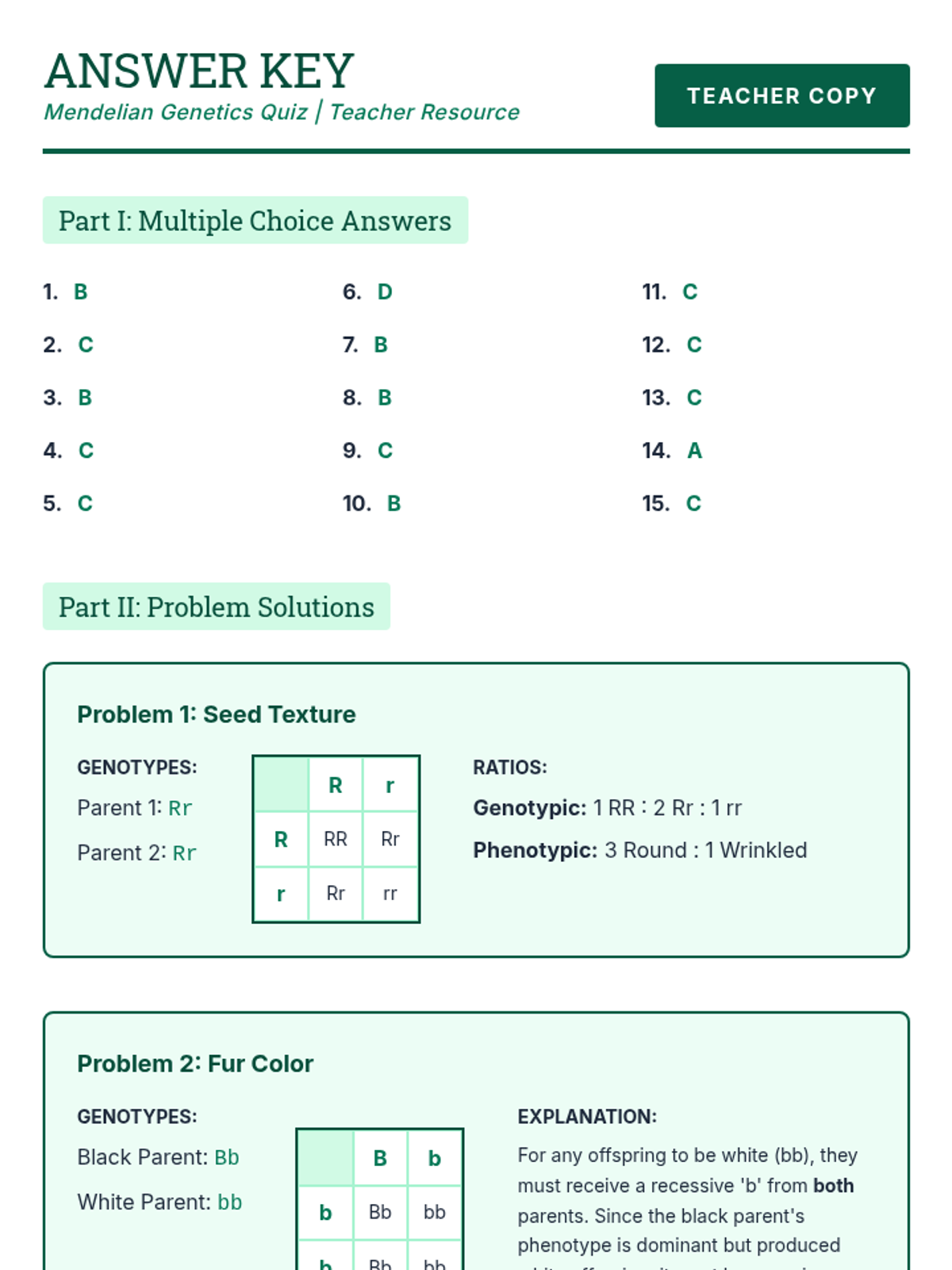
A rigorous assessment on the principles of Mendelian inheritance, covering monohybrid crosses, terminology, and probability ratios for honors biology students.
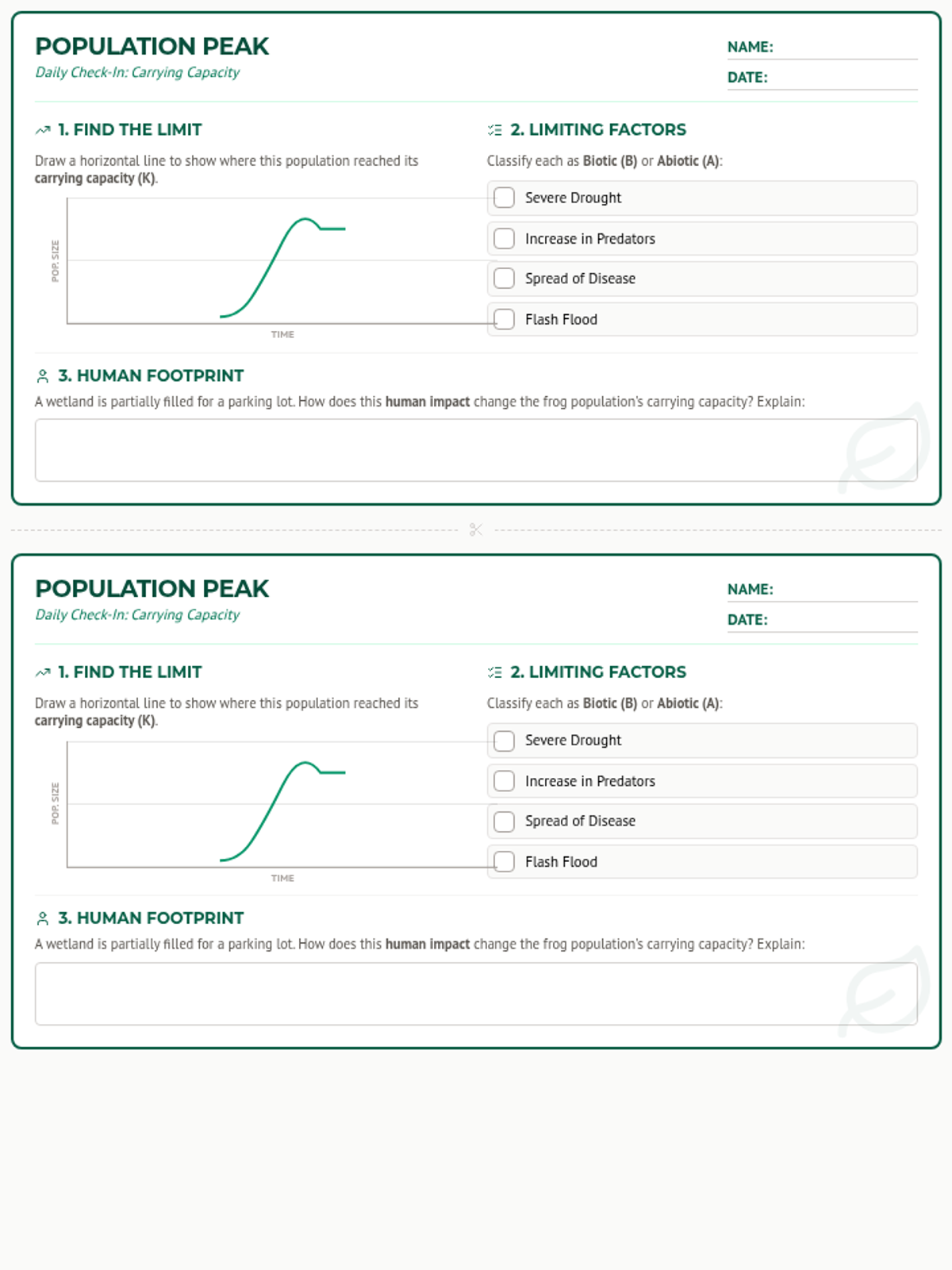
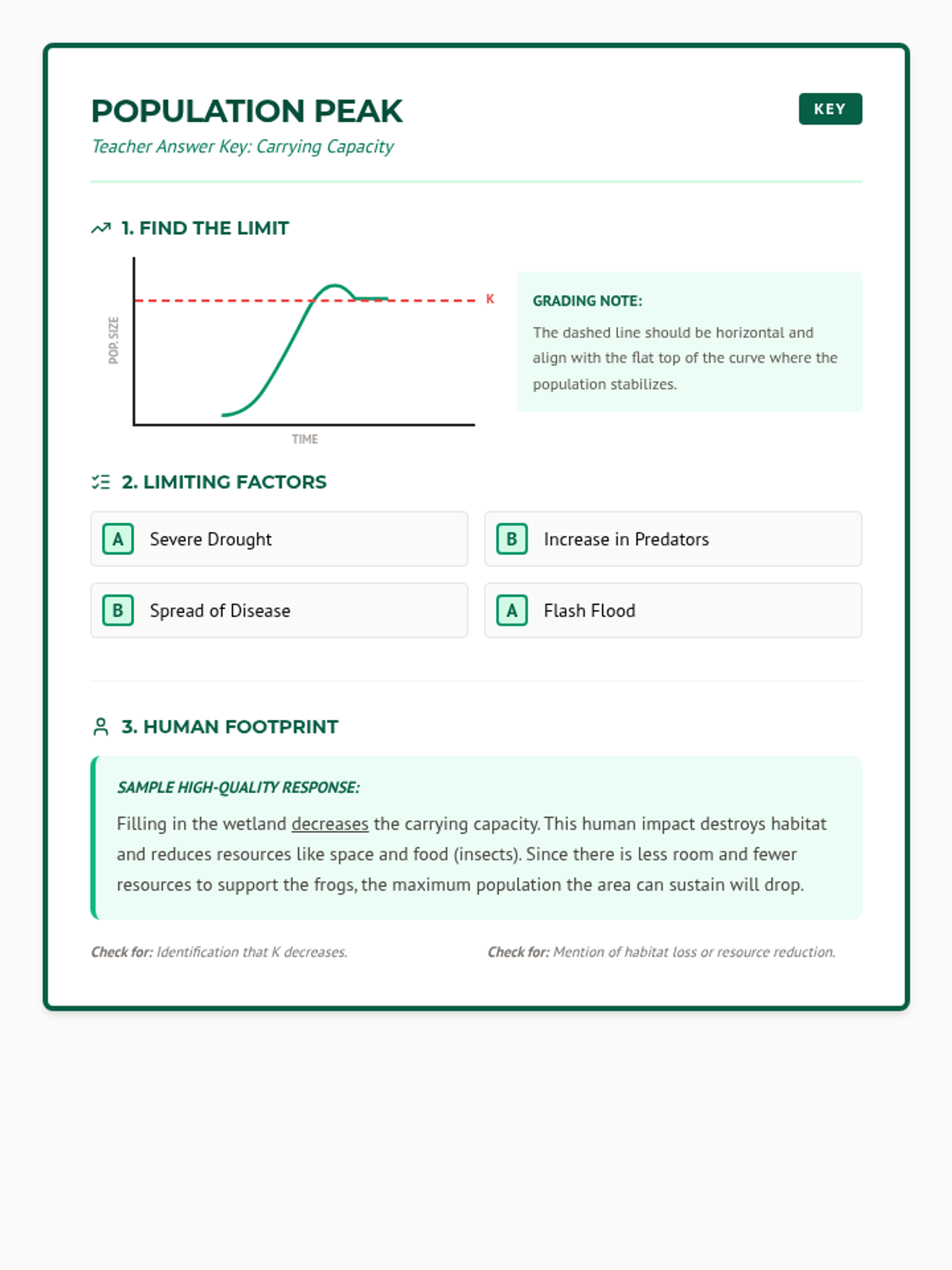
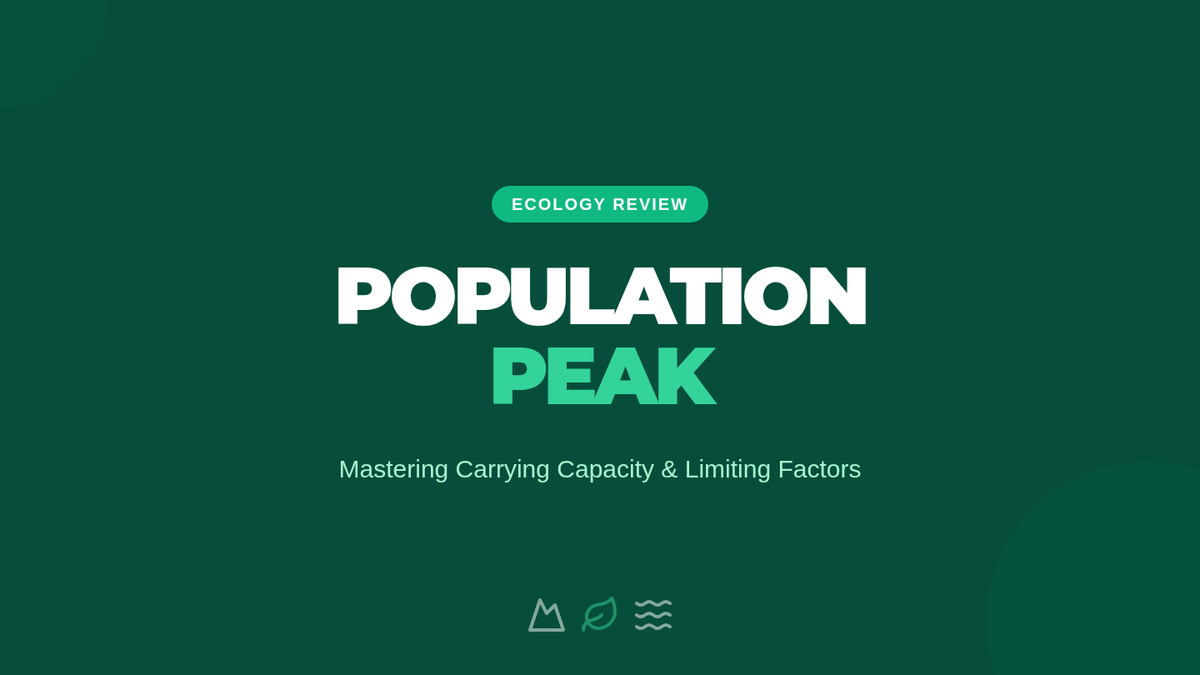
A quick review session focused on population carrying capacity, identifying biotic and abiotic limiting factors, and examining human environmental impacts. Includes a visual presentation for review and printable assessment tools.
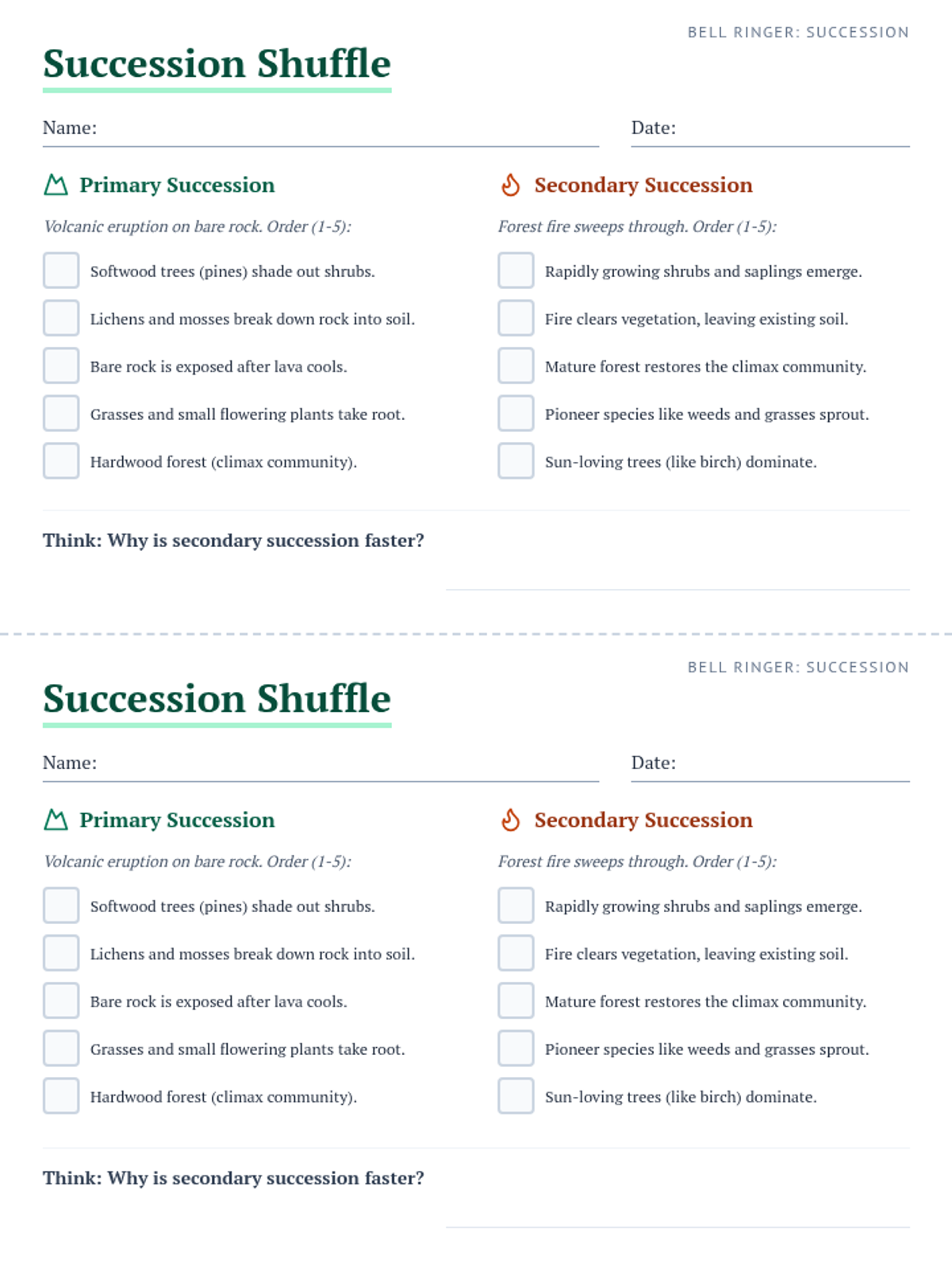
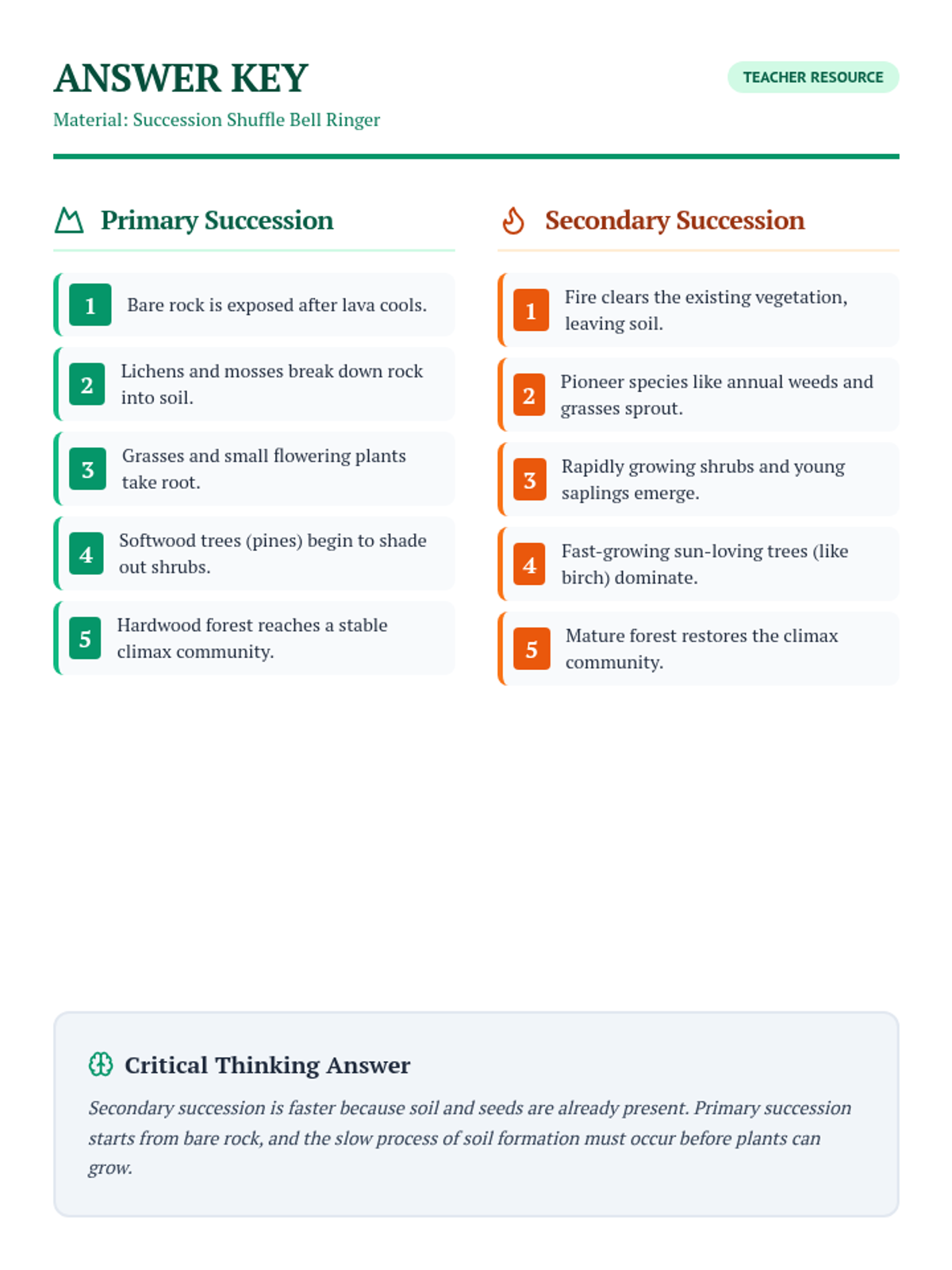
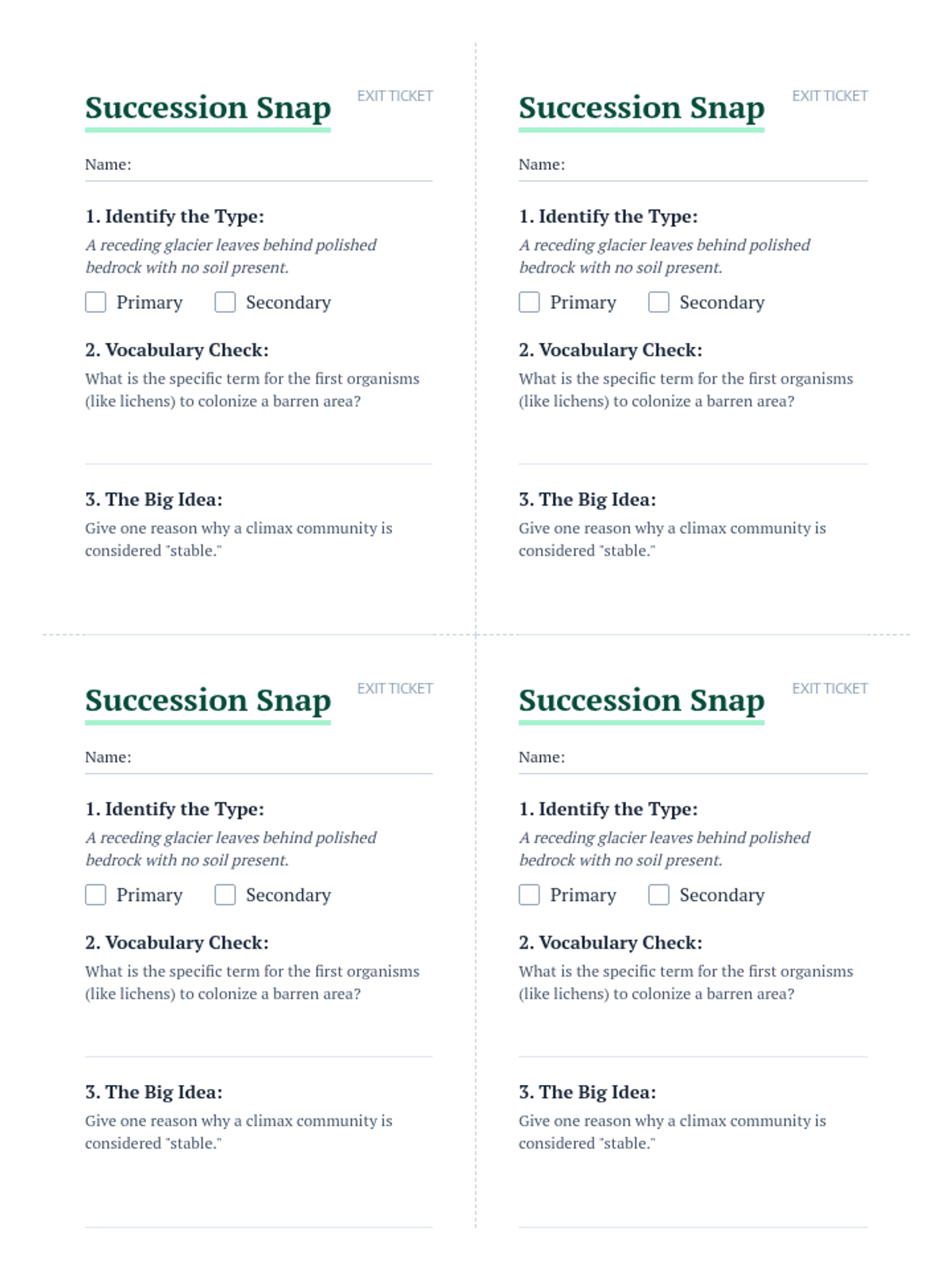
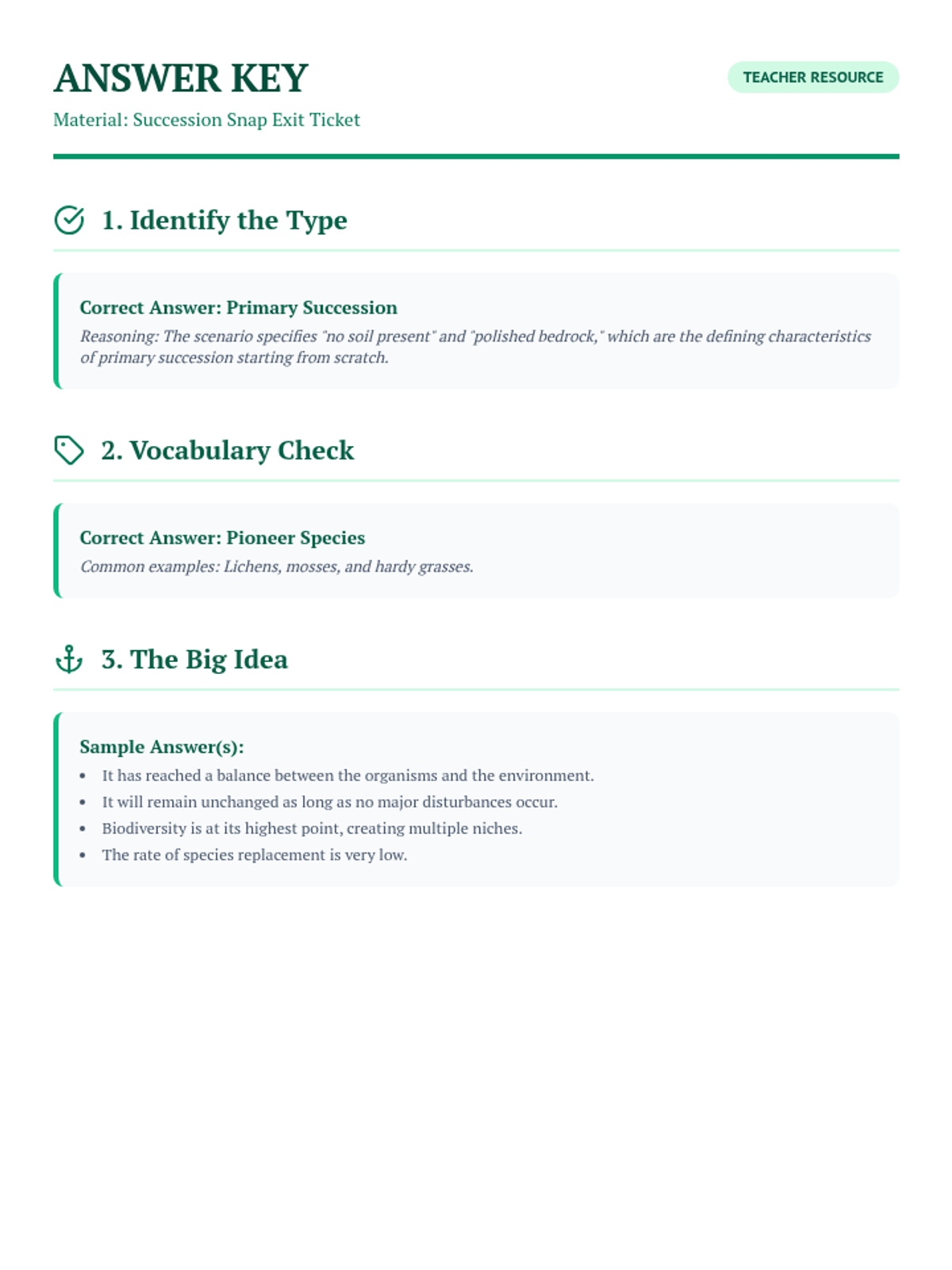
A quick, engaging bell ringer activity designed to review the stages of primary and secondary ecological succession through a sequence ordering task.
Explore the survival strategies of generalist and specialist species through case studies of raccoons, koalas, pandas, and more. Students analyze diet, habitat, and adaptability to understand how different species thrive or struggle in changing environments.
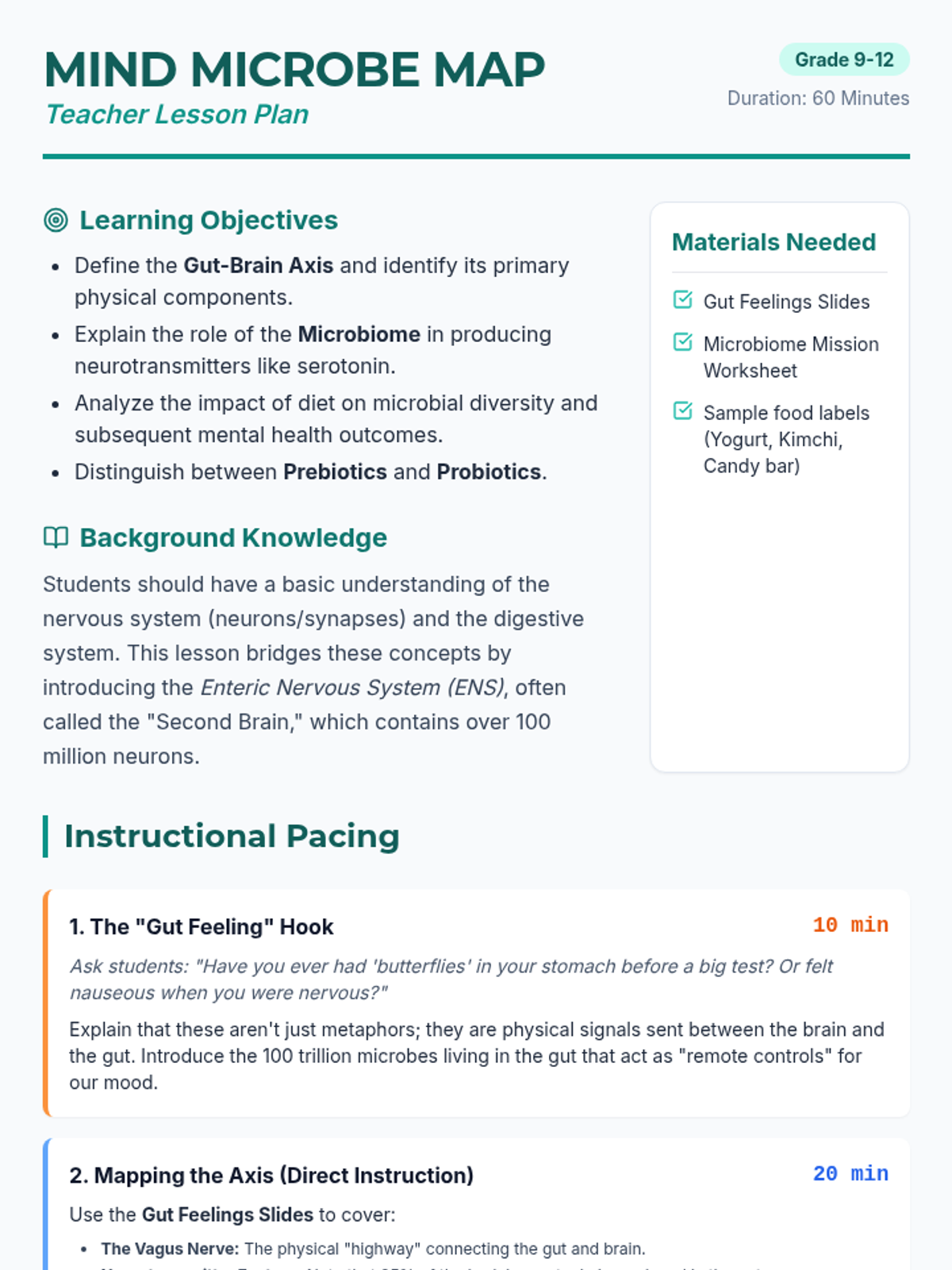
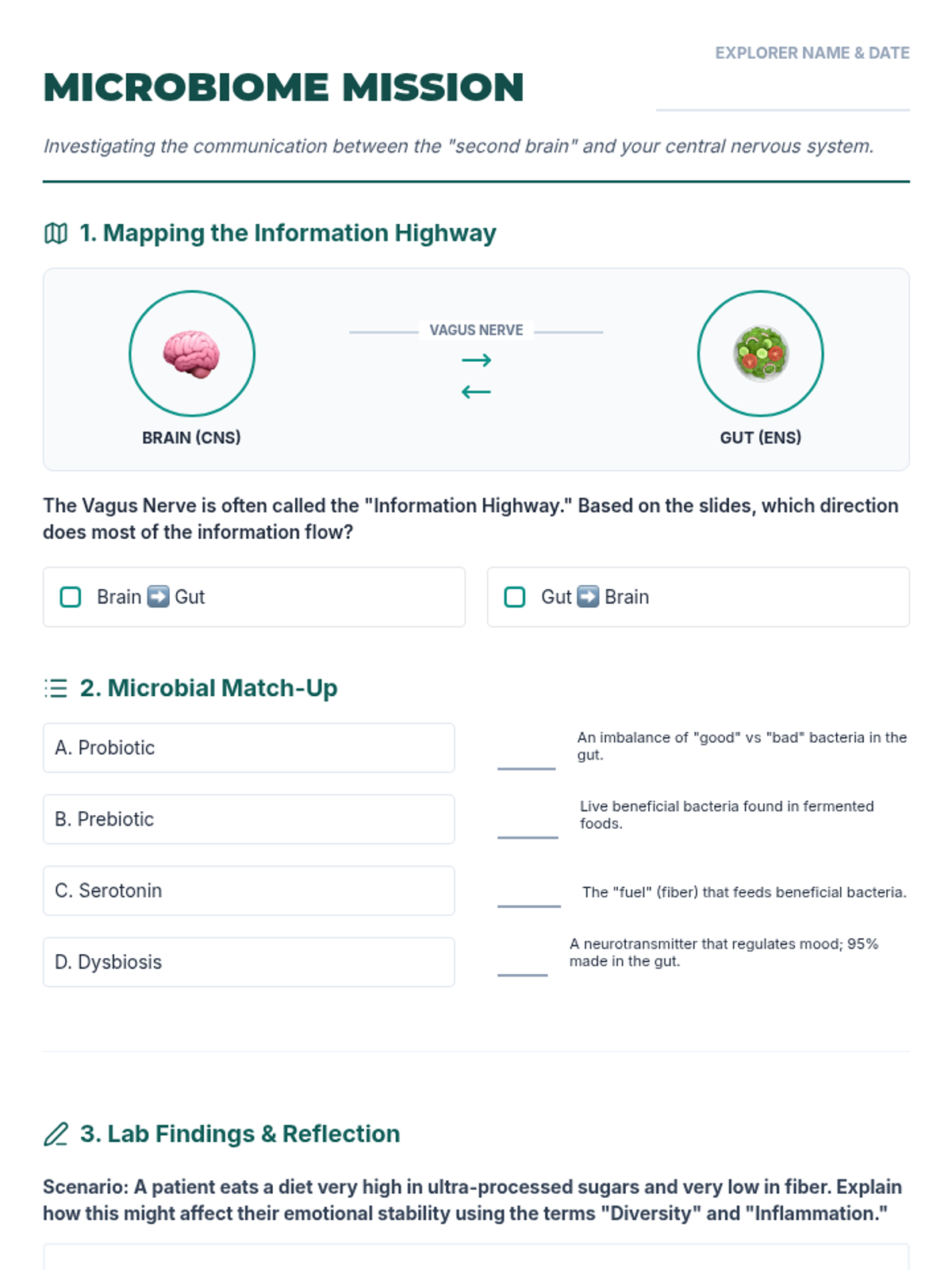
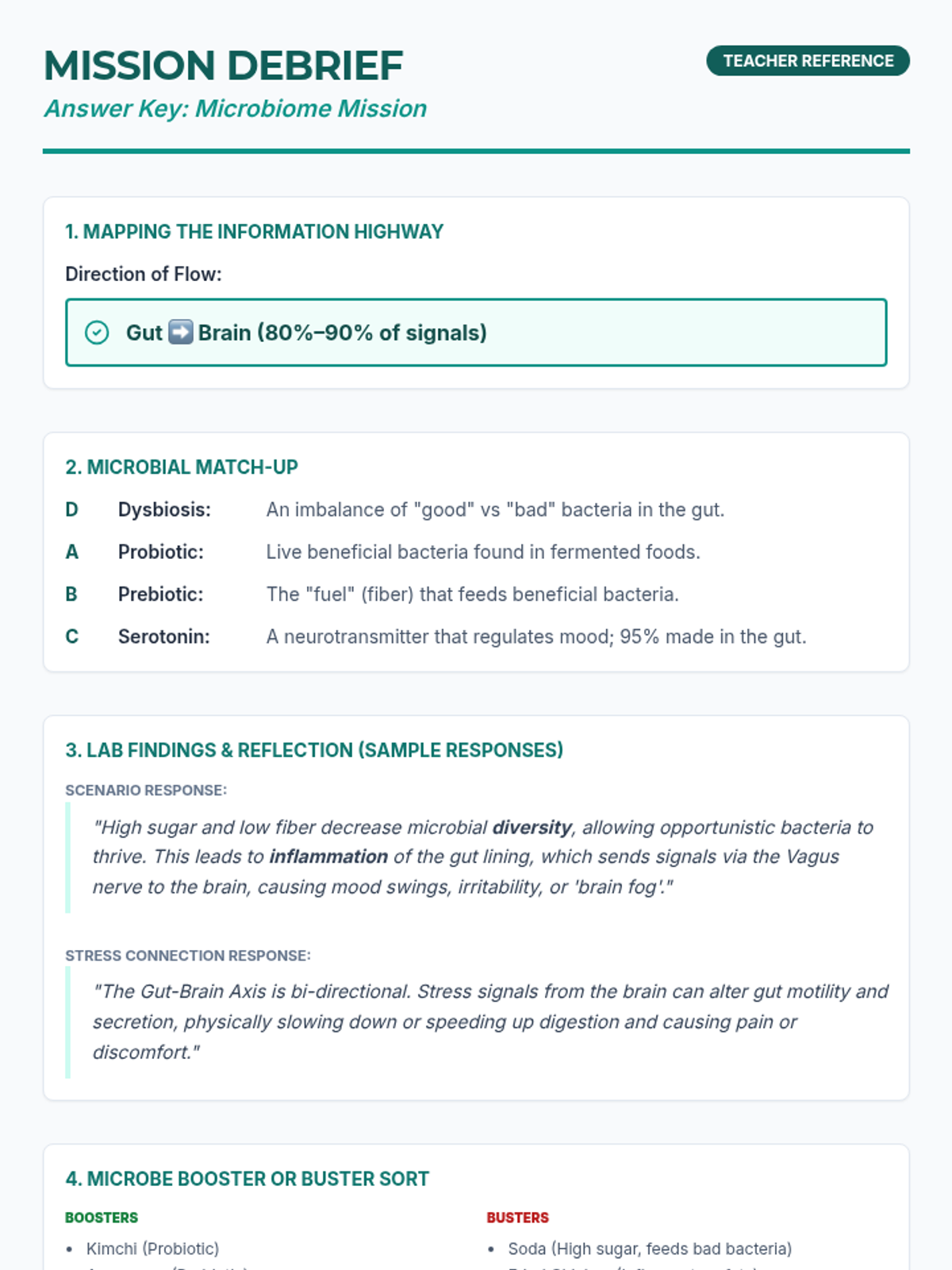
A comprehensive lesson exploring the gut-brain axis and how the microbiome influences mental health, neurotransmitter production, and emotional well-being.
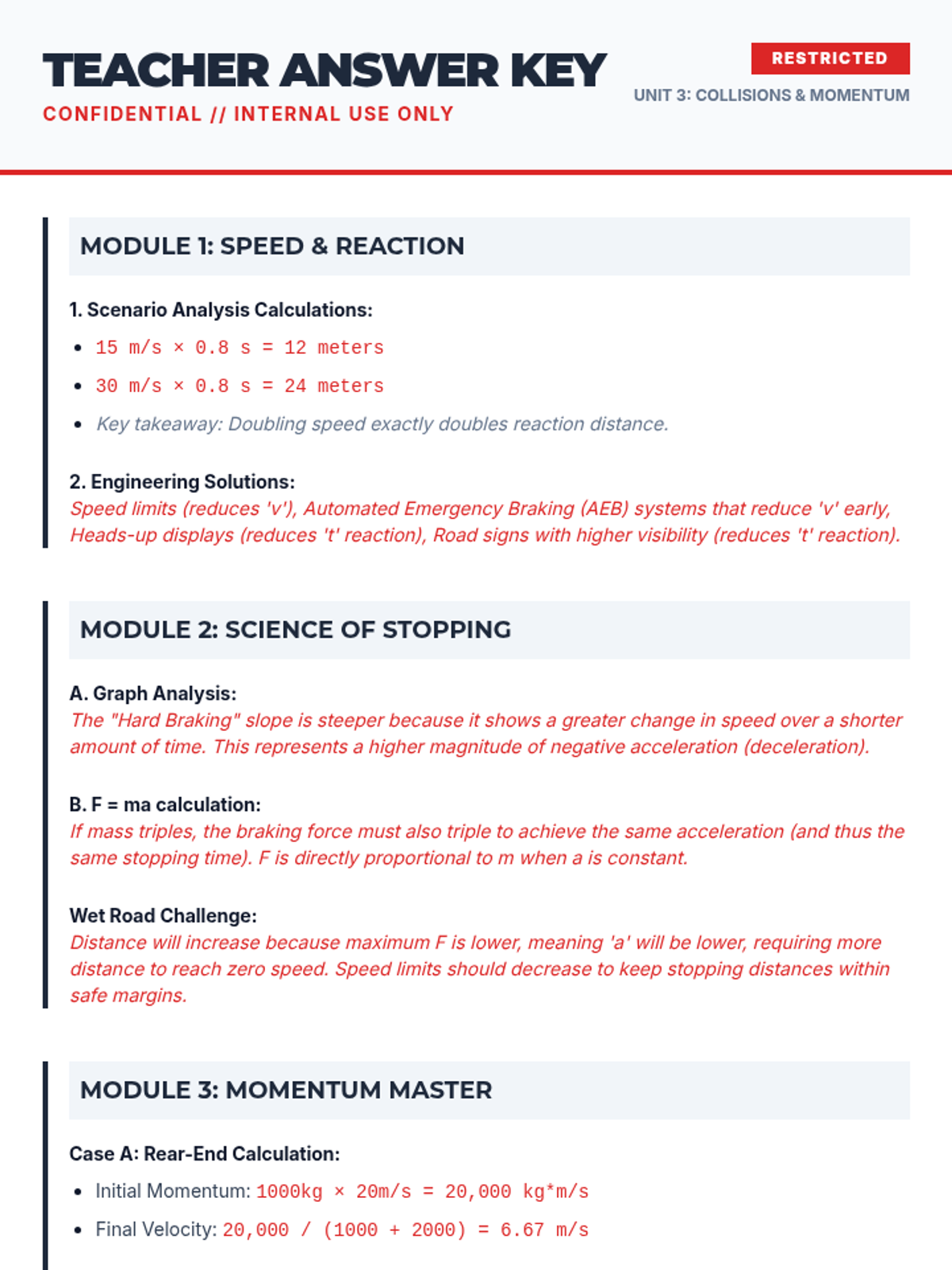
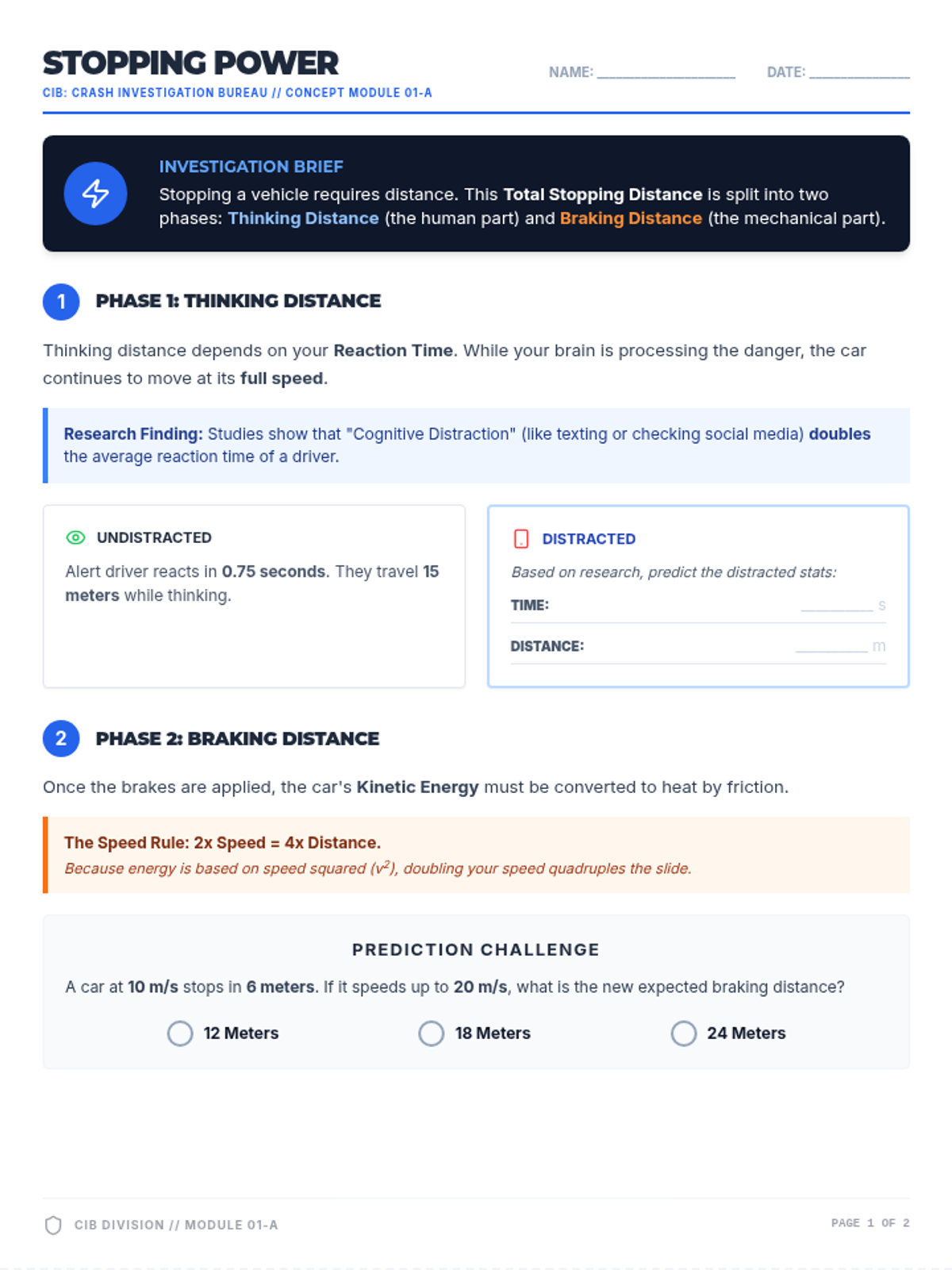
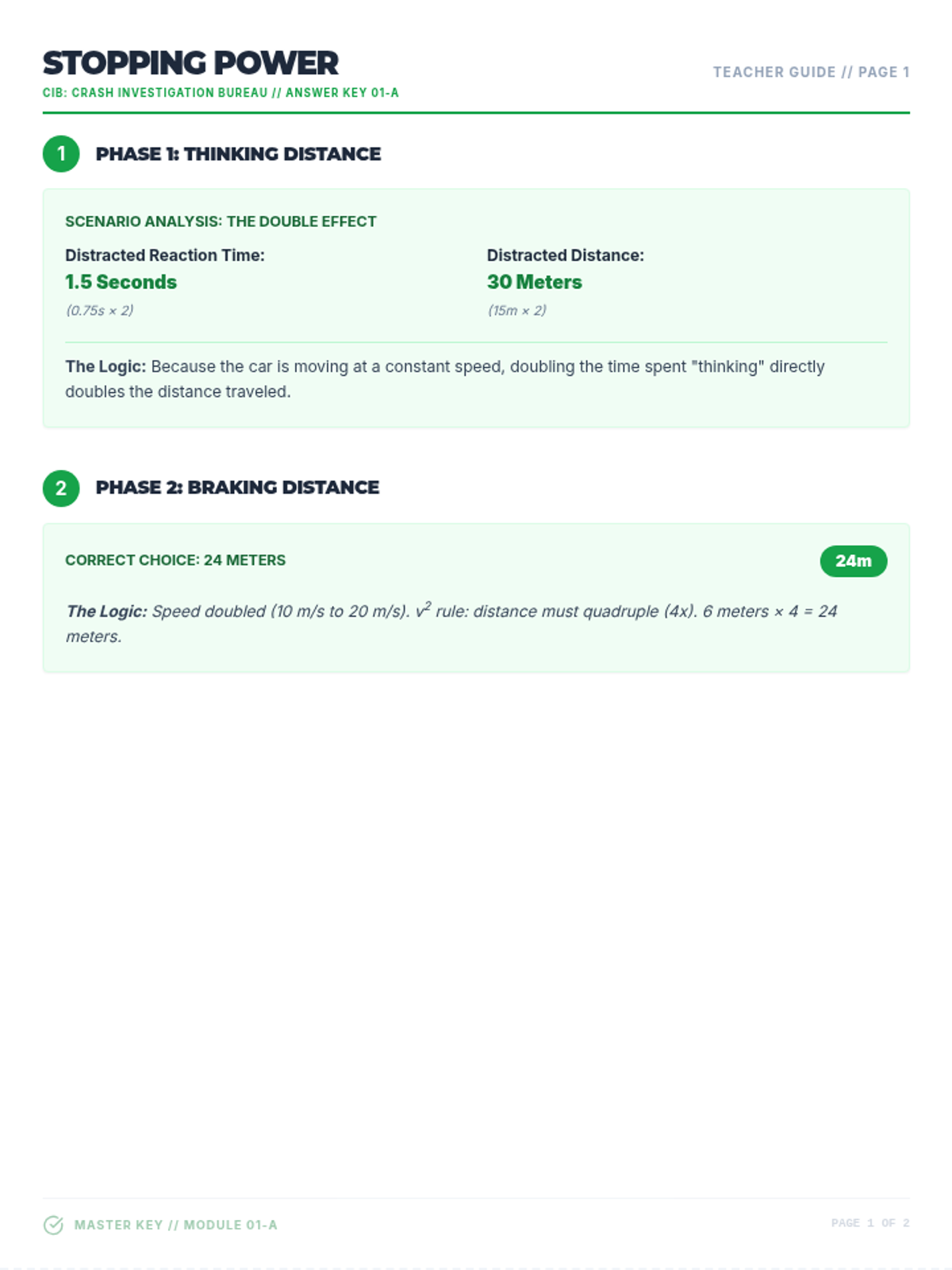
A series of independent modules covering mathematical models of reaction distance, braking forces, momentum conservation, and safety engineering.
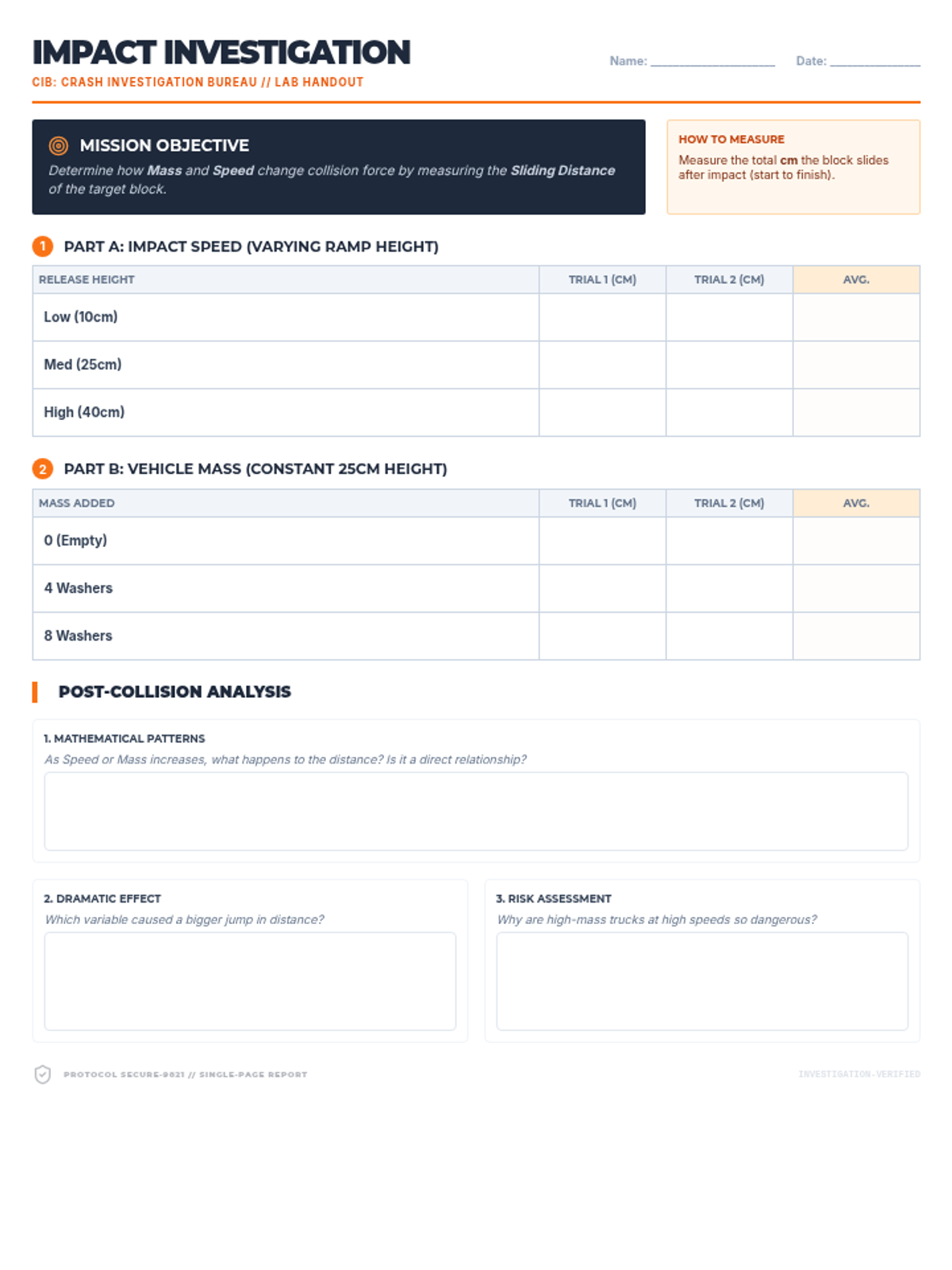
A hands-on interactive session where students investigate the relationship between mass, speed, and impact force using ramps and sliding targets.
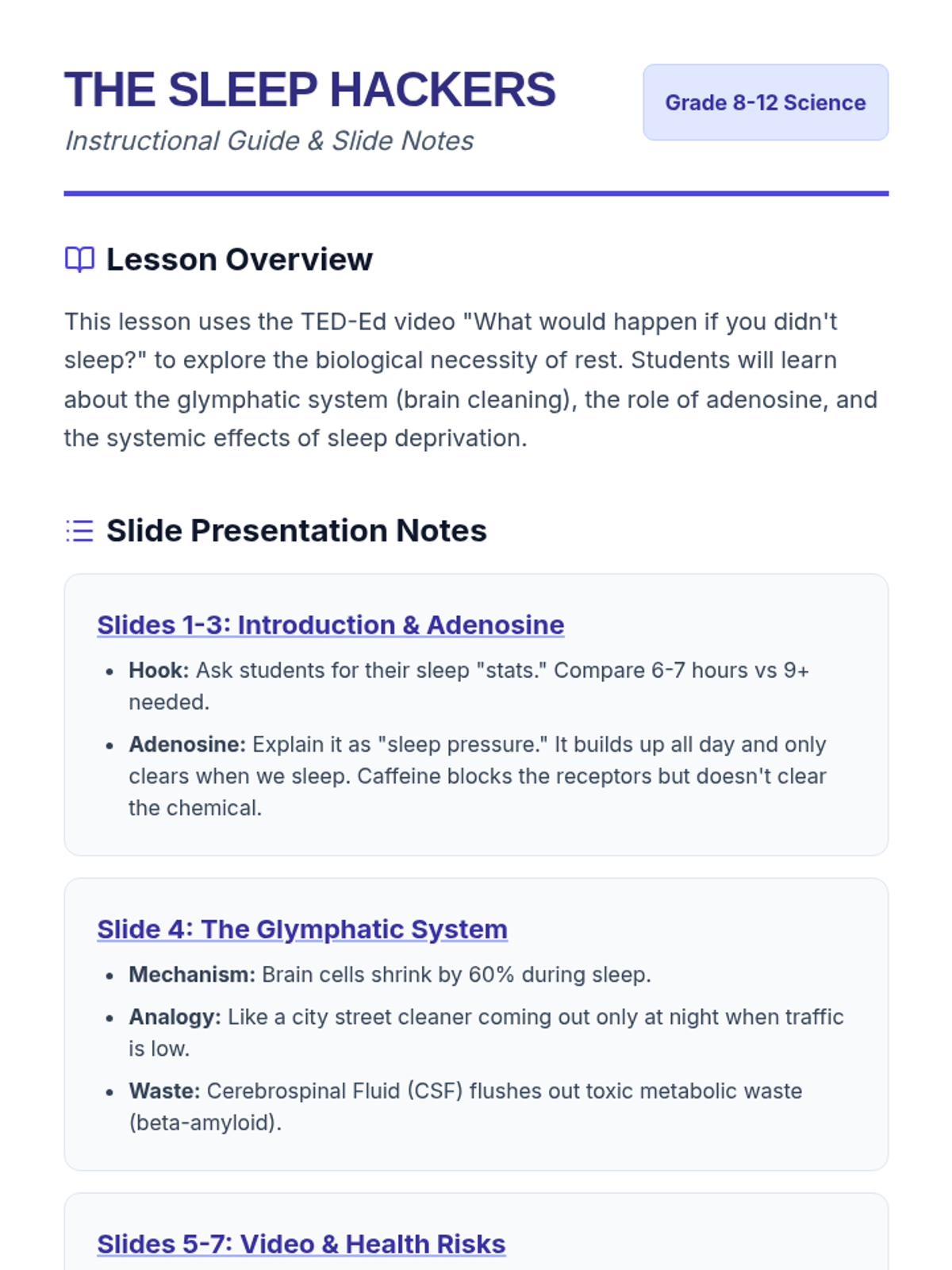
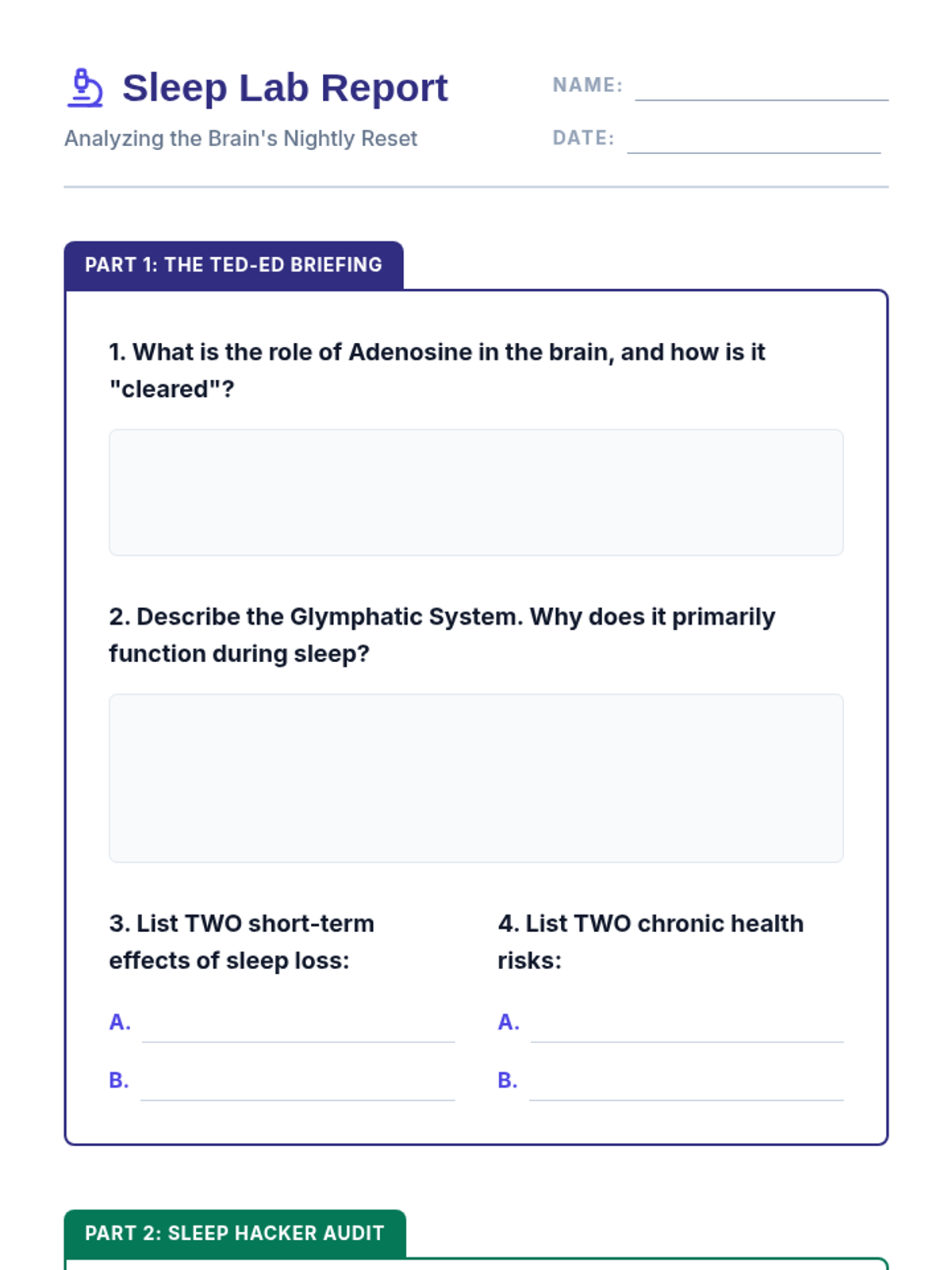
An exploration of the biological necessity of sleep, the mechanics of how the brain cleans itself during rest, and the physiological consequences of sleep deprivation.
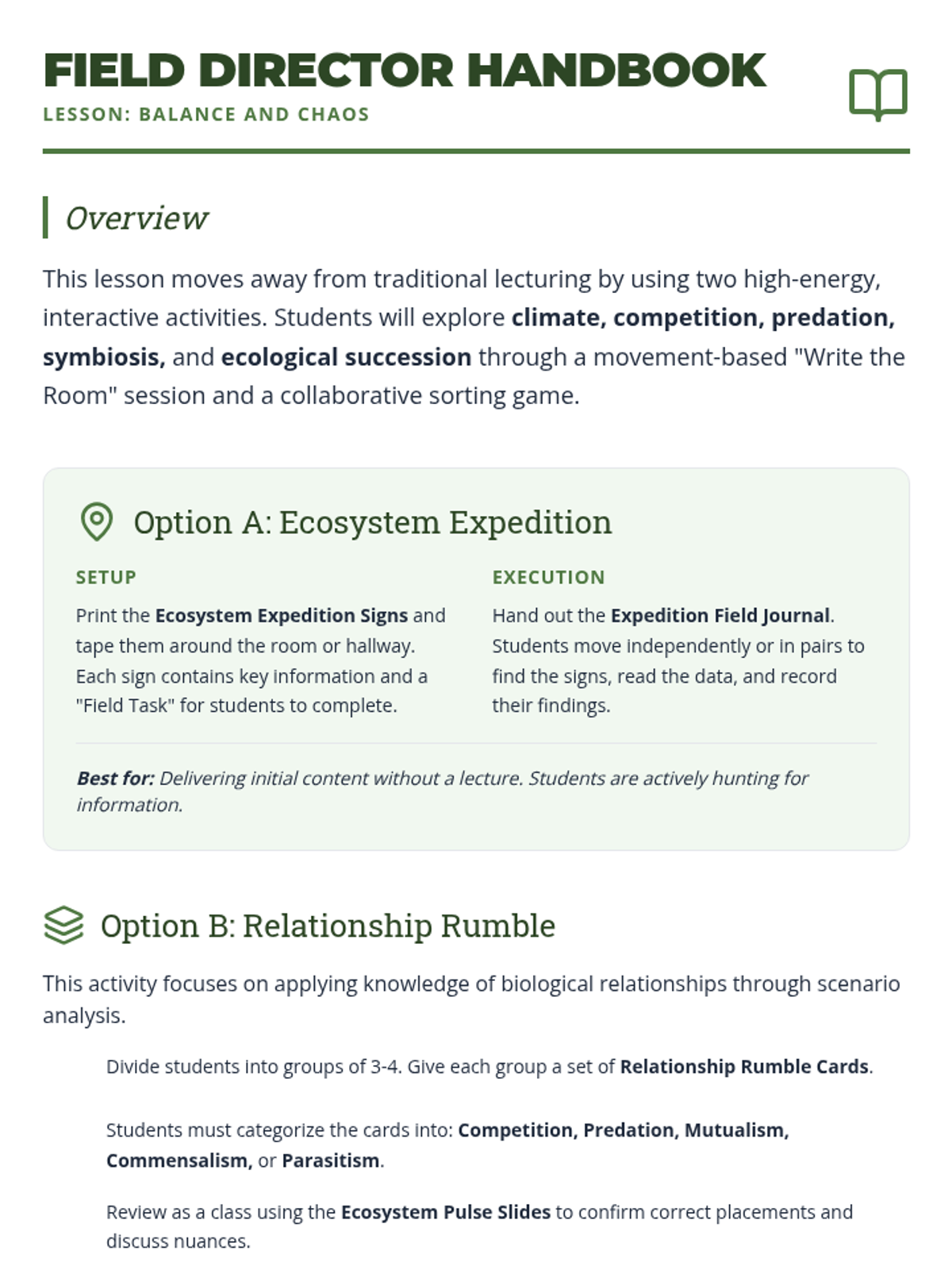
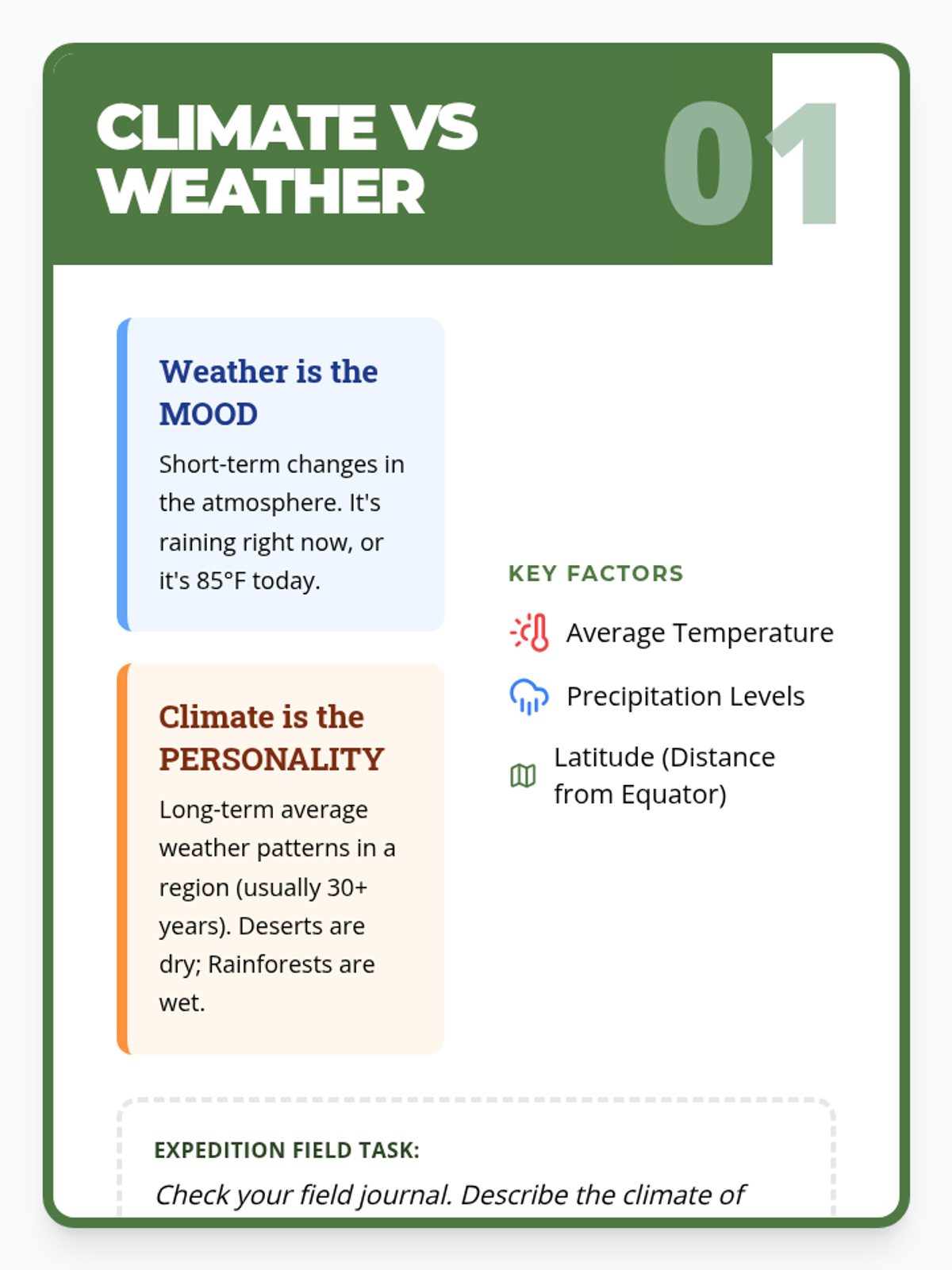
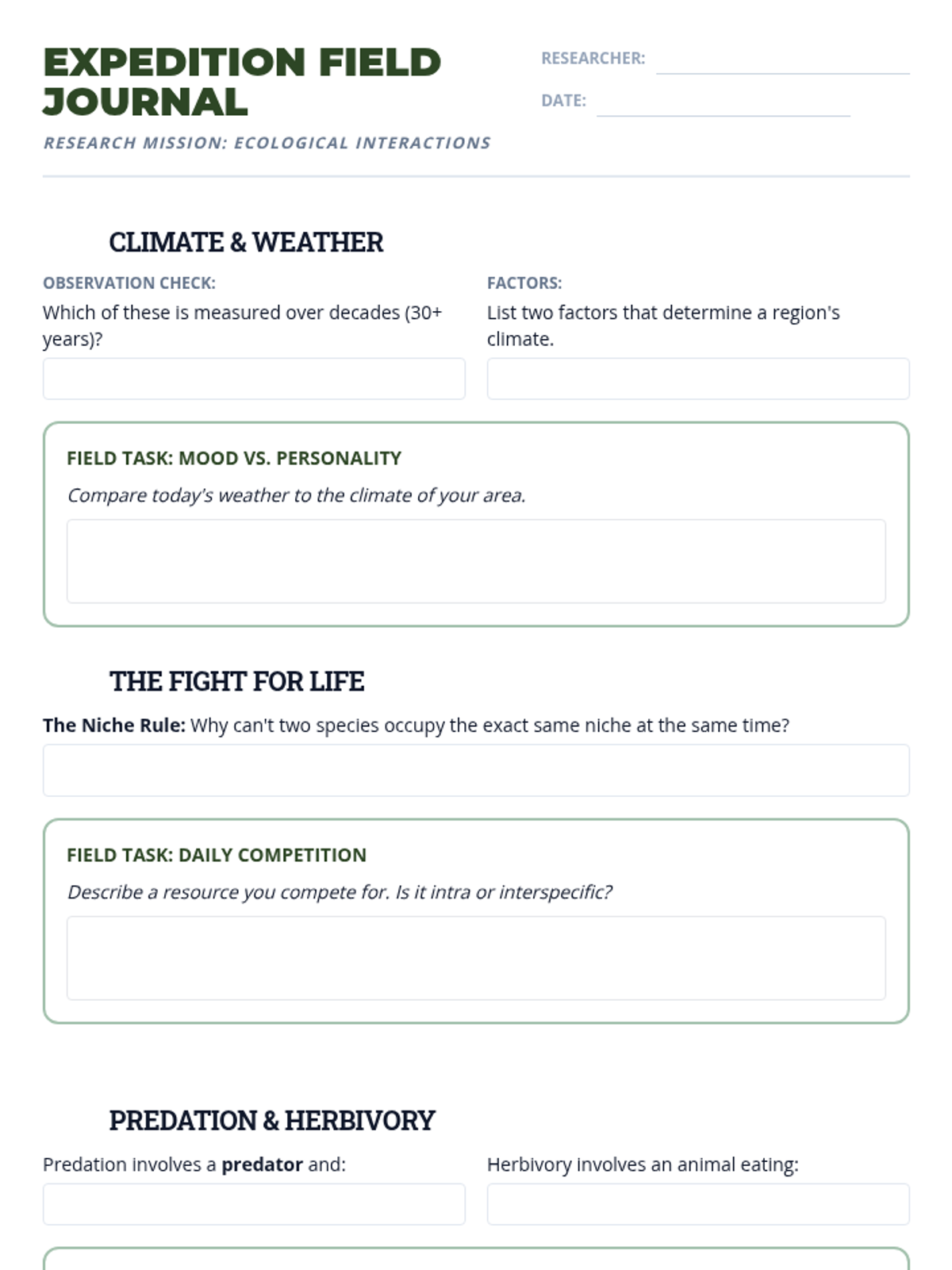
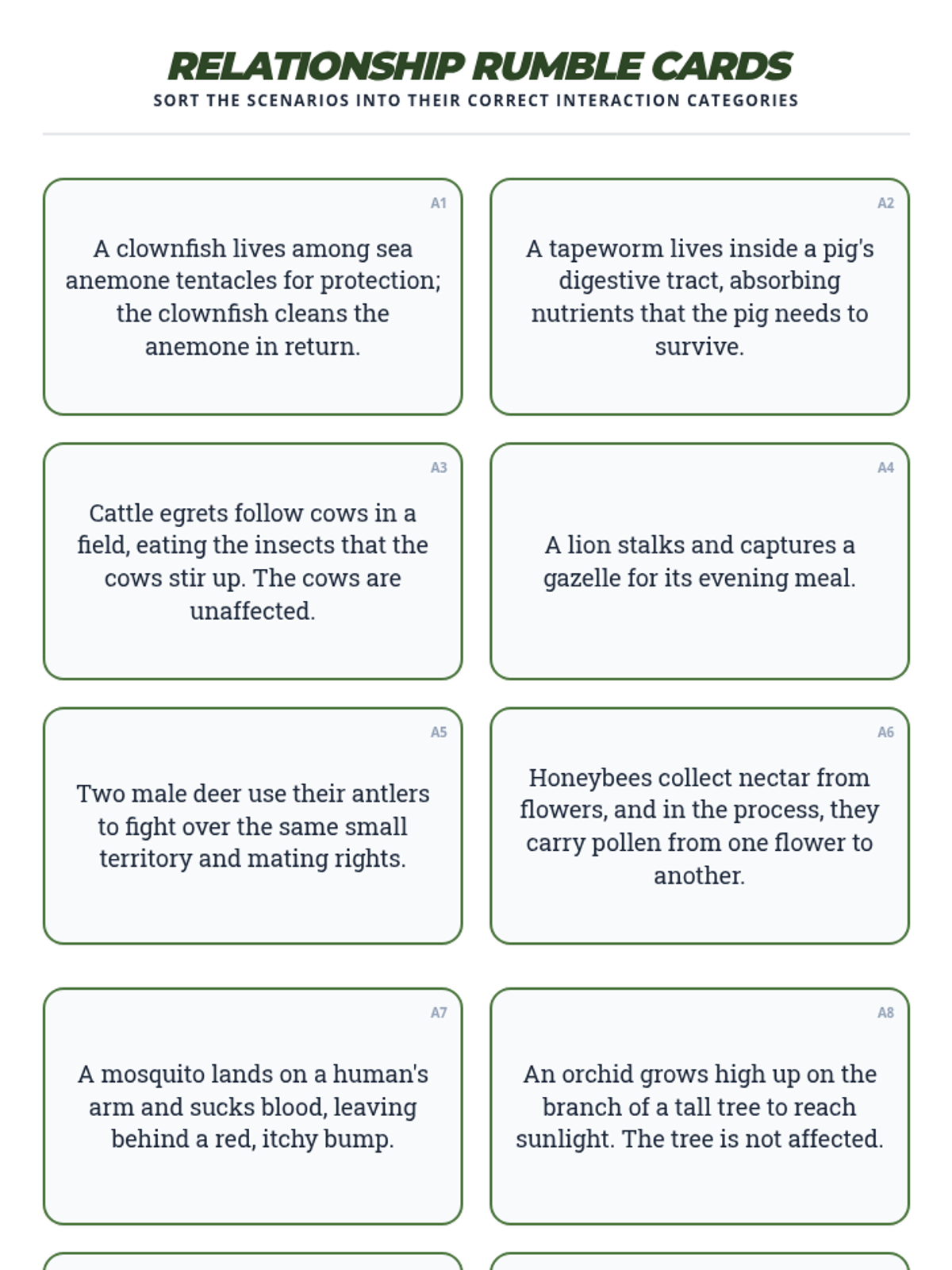
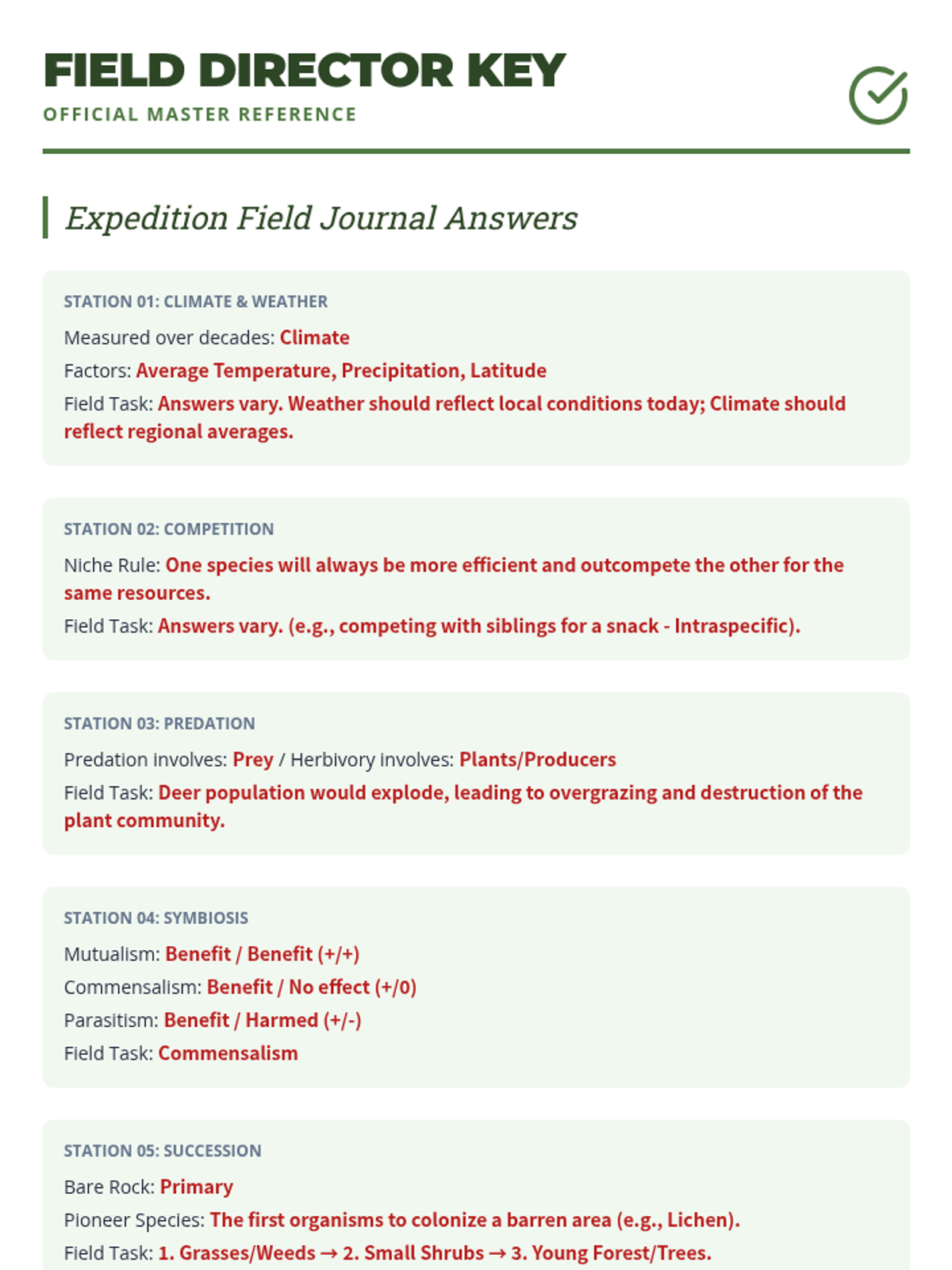
A deep dive into how organisms interact with each other and their environment through climate, competition, symbiosis, and succession.
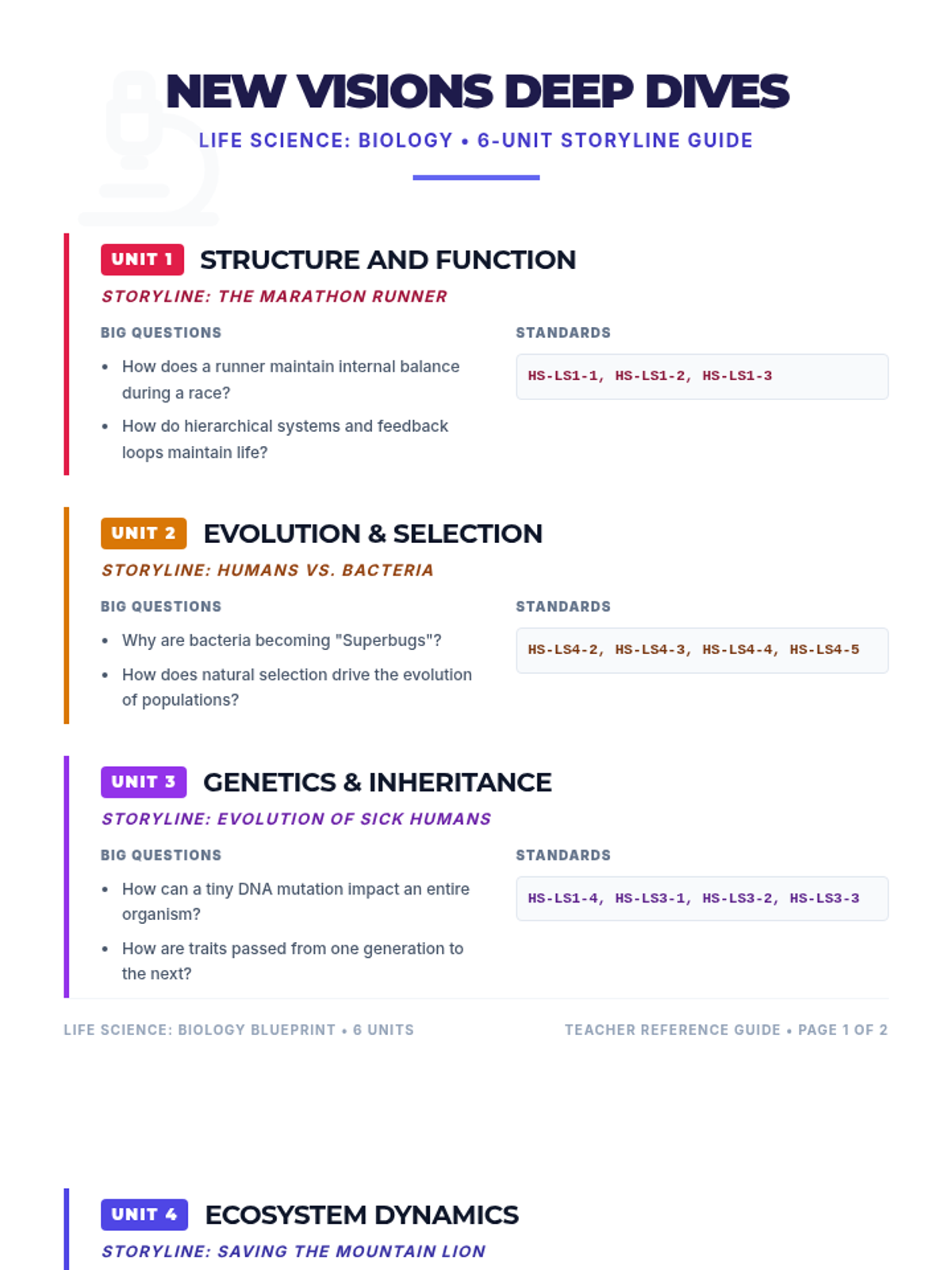
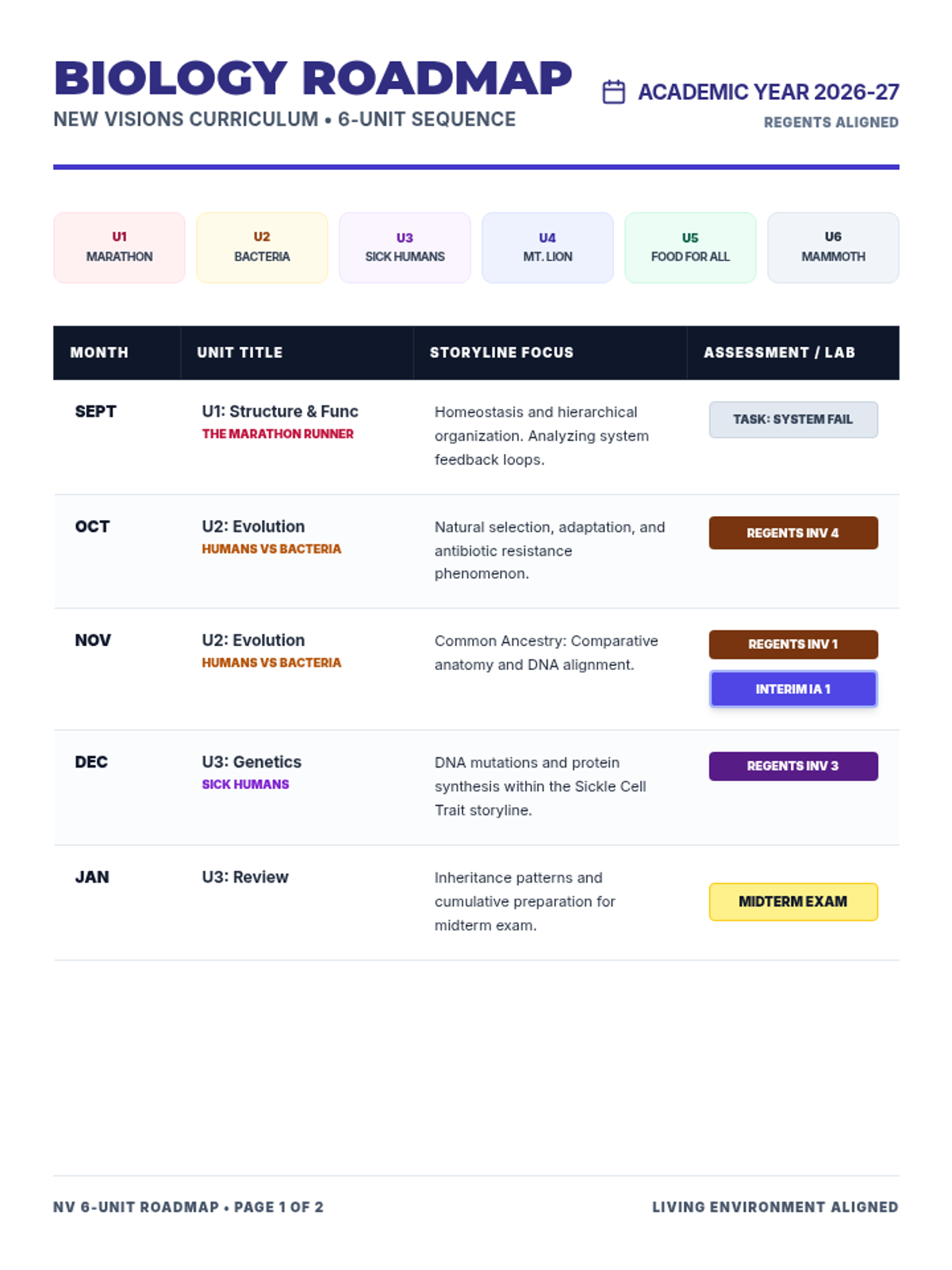
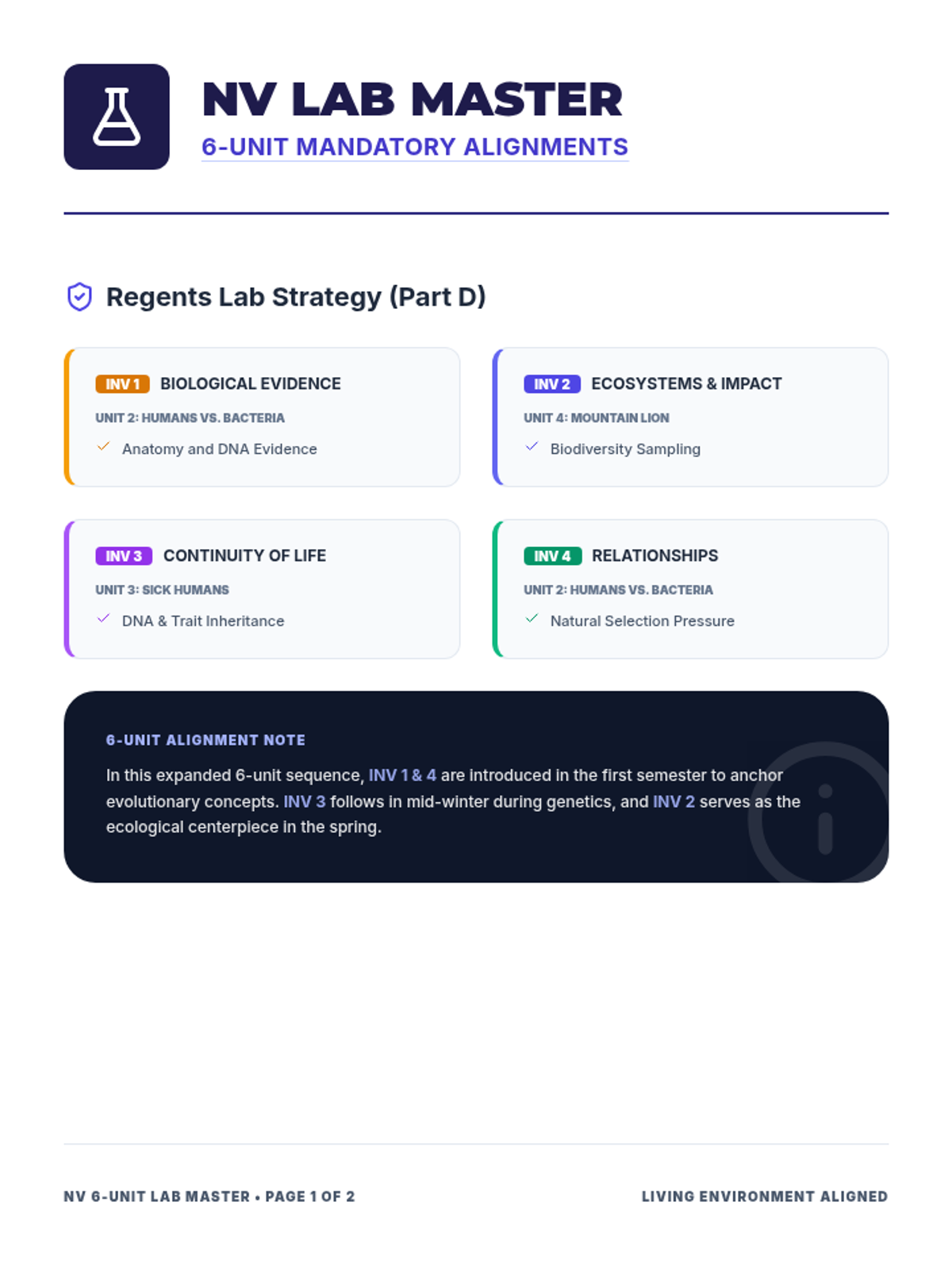
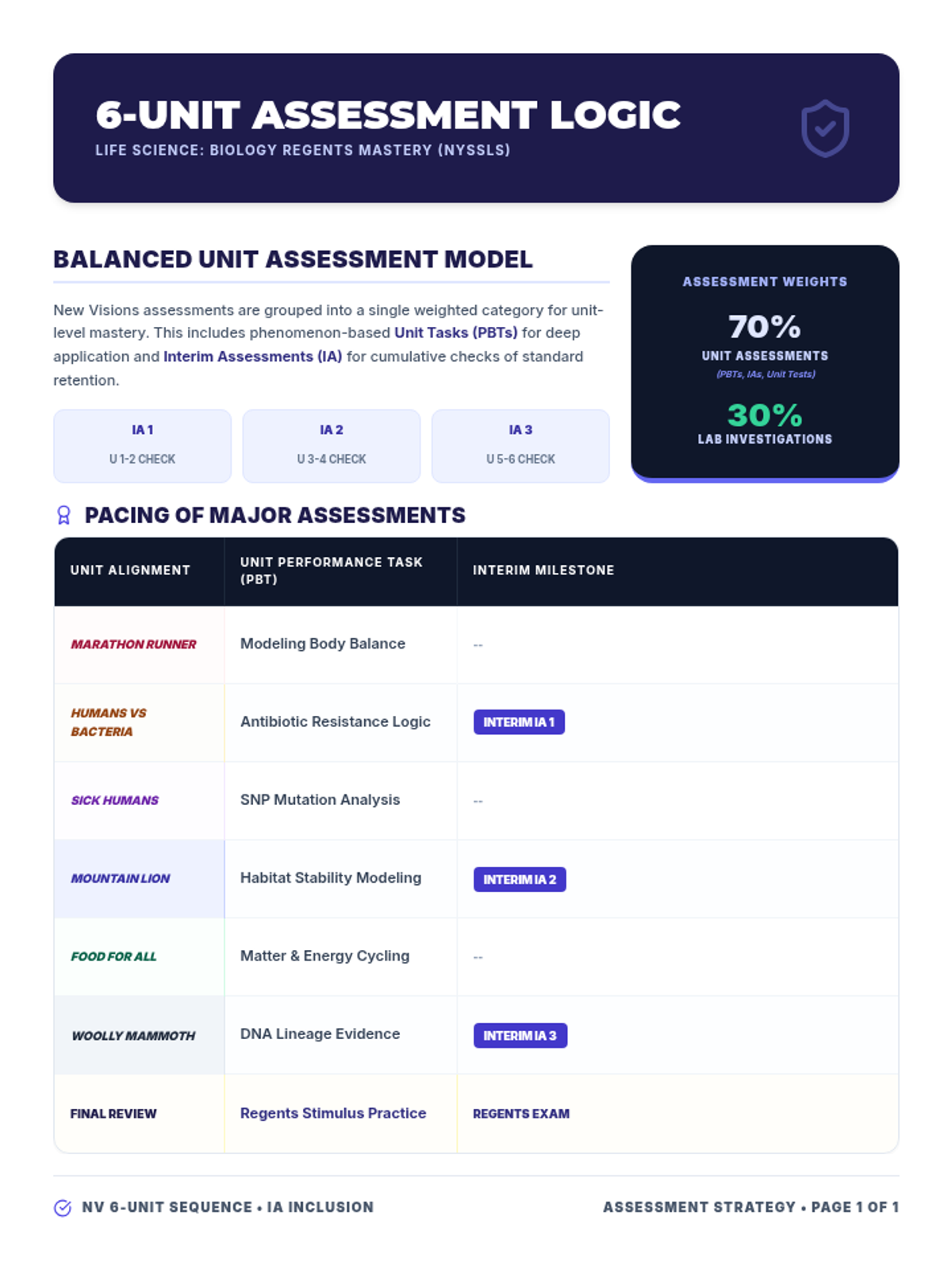
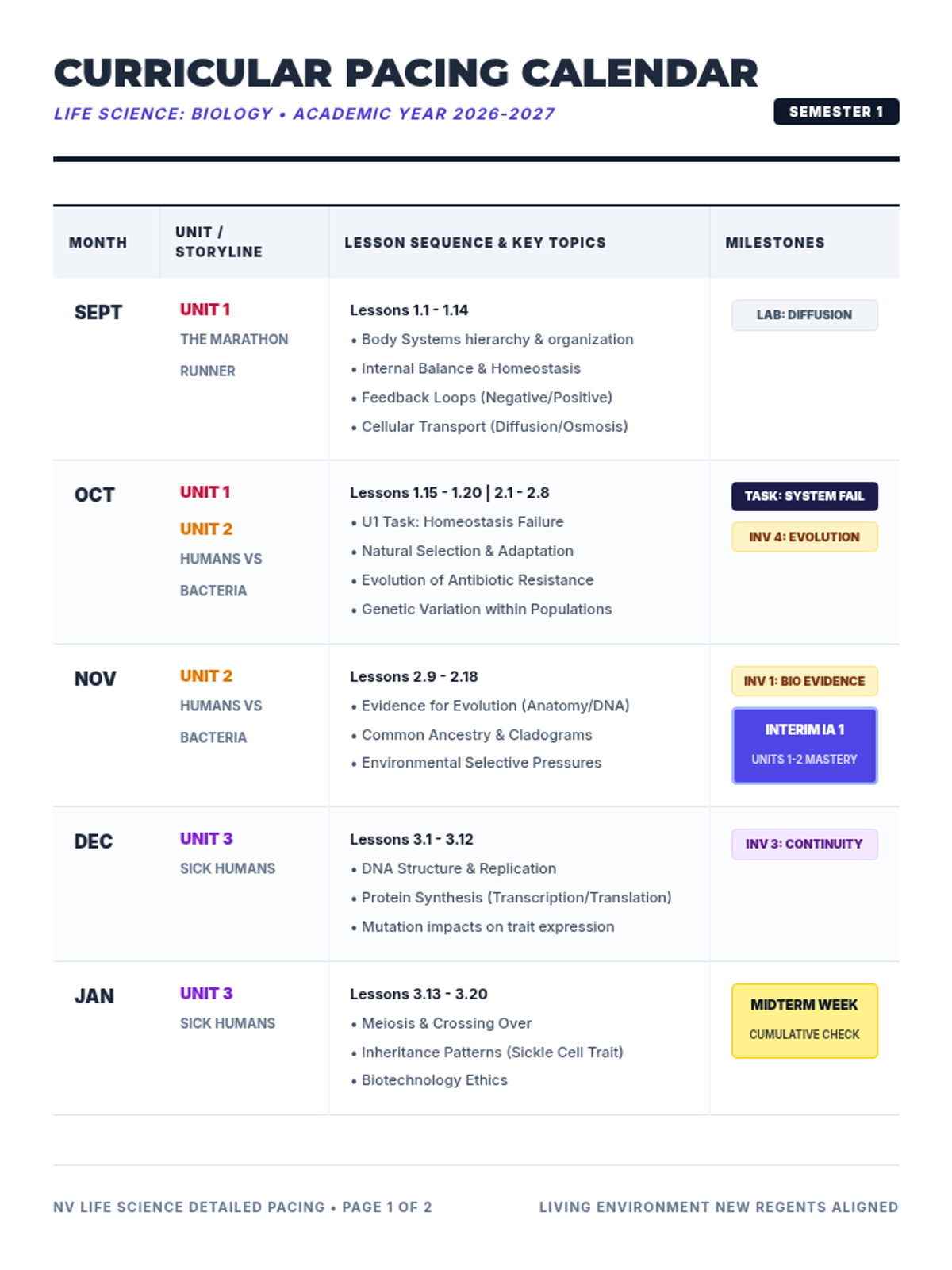
The foundational planning materials for the full-year Life Science: Biology curriculum, providing a high-level roadmap and detailed unit breakdowns.
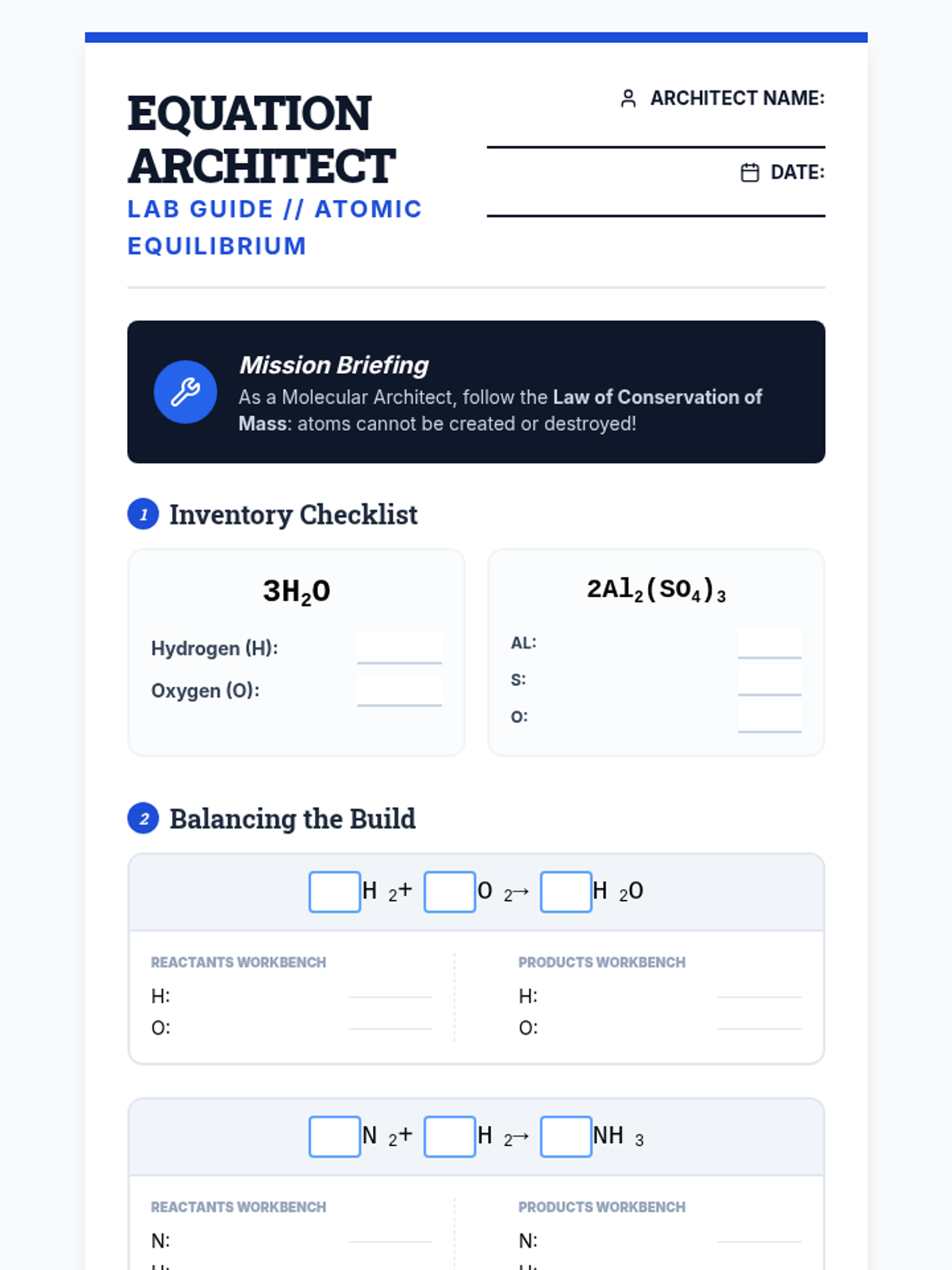
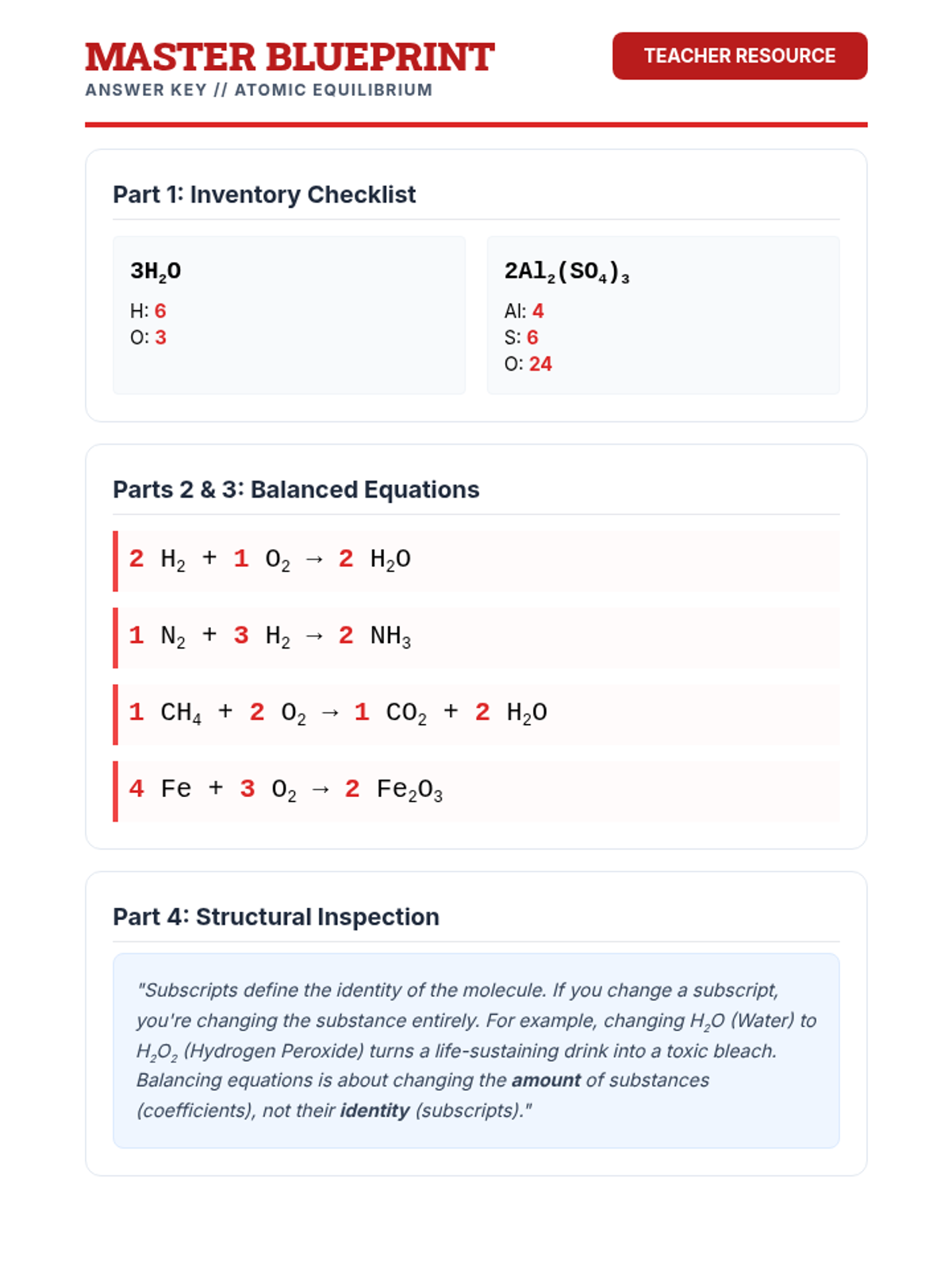
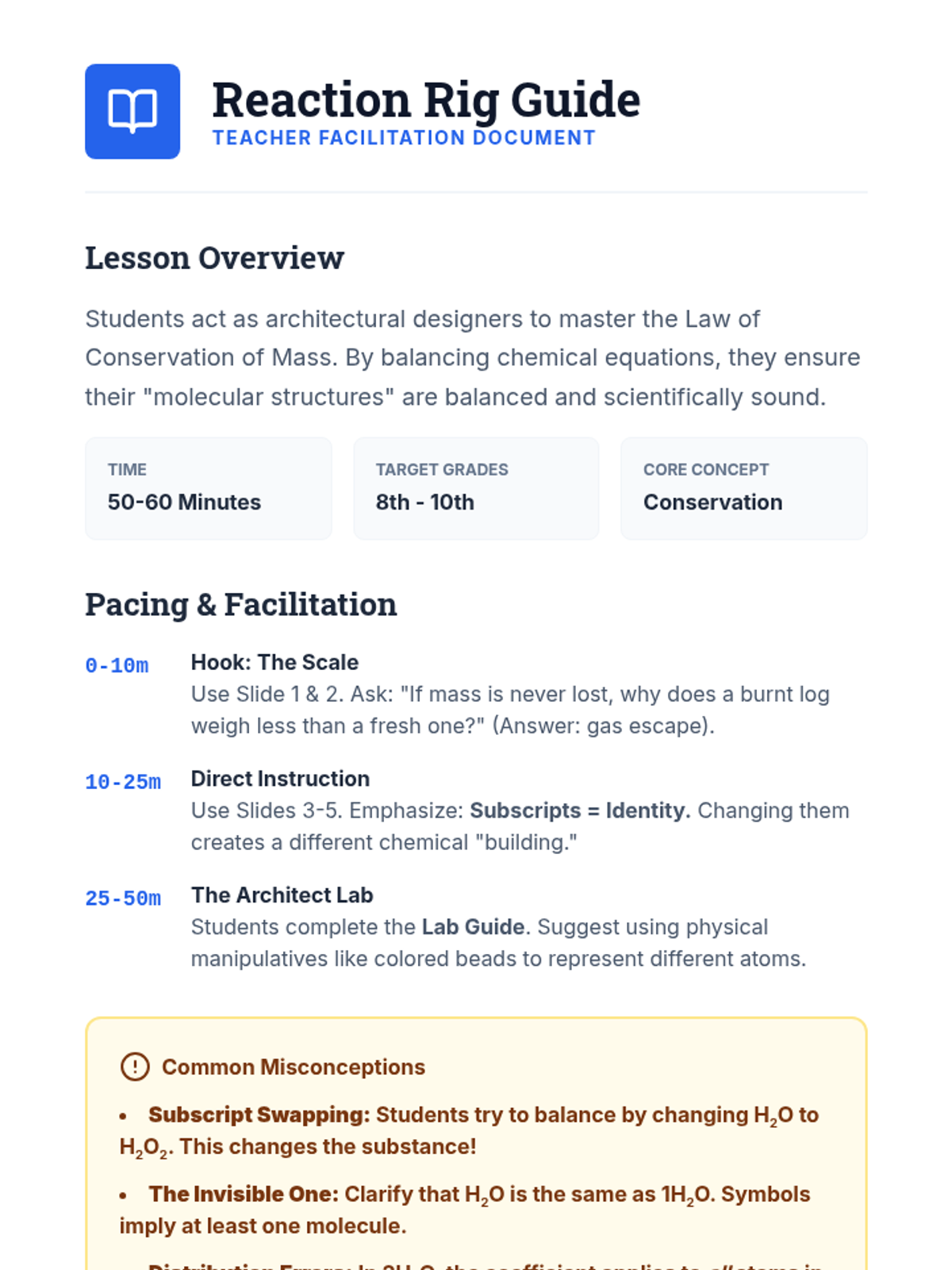
A comprehensive lesson on balancing chemical equations, focusing on the Law of Conservation of Mass and the visual representation of atoms. Students act as 'Molecular Architects' to build balanced chemical reactions.
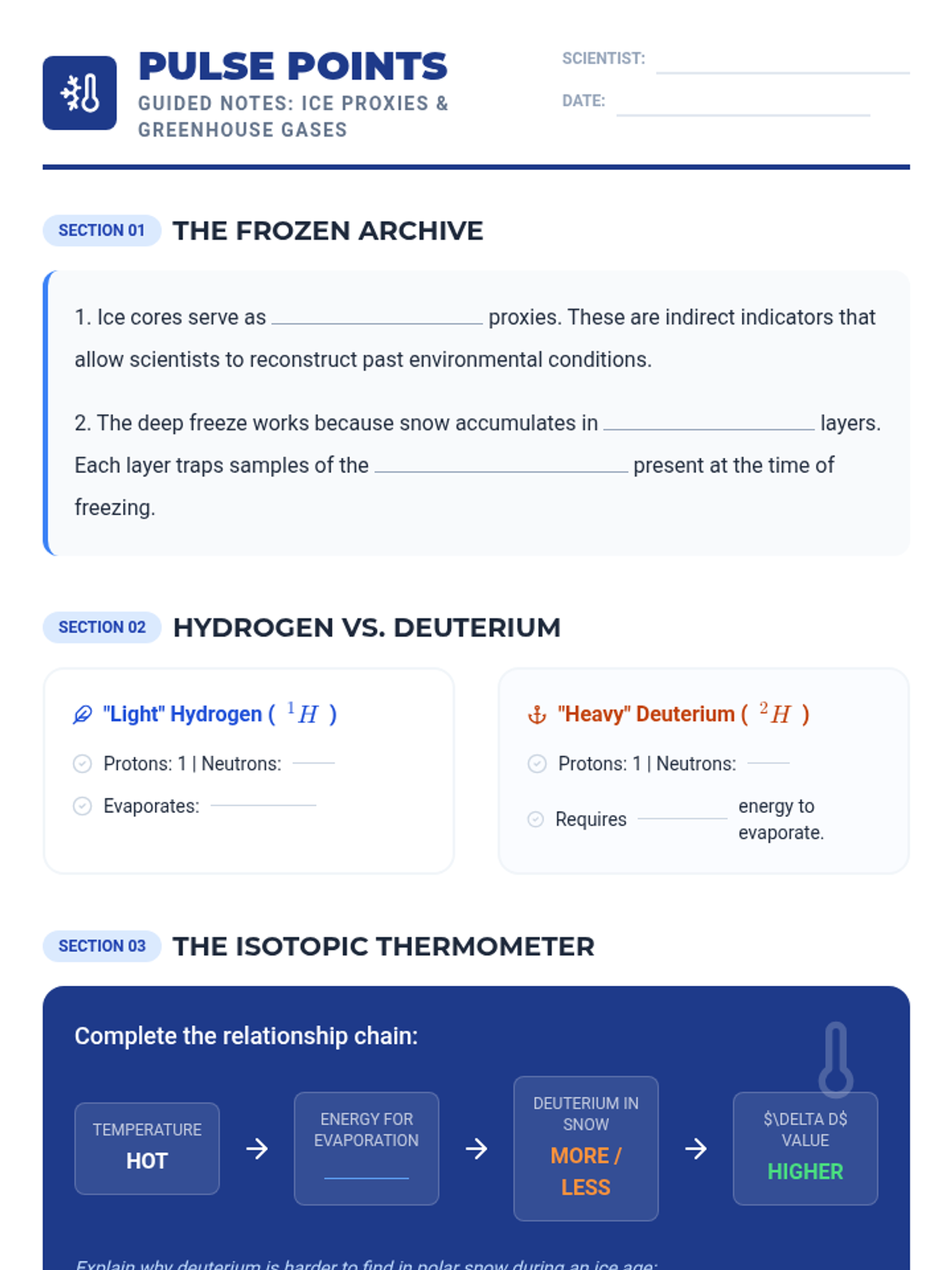
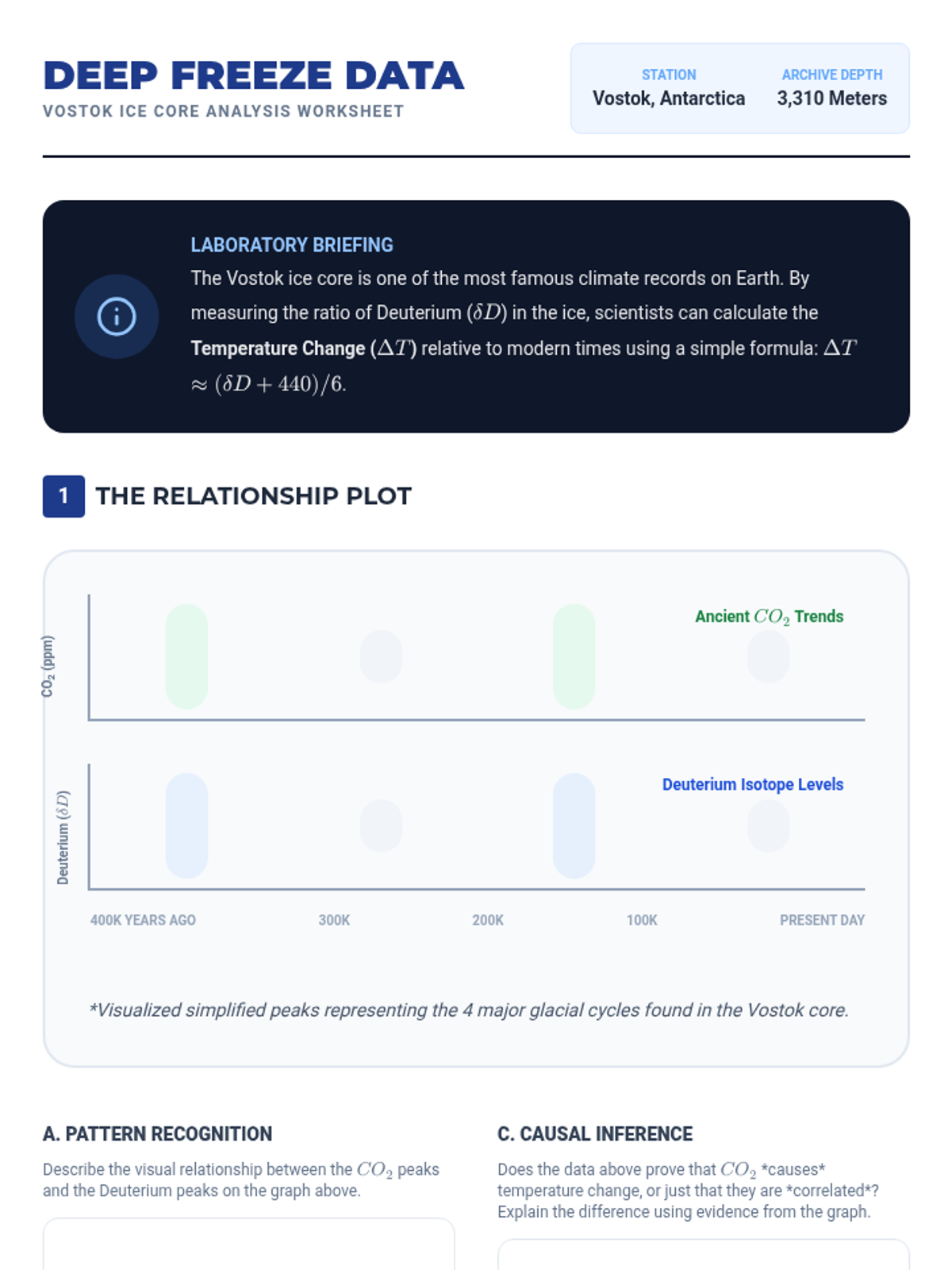
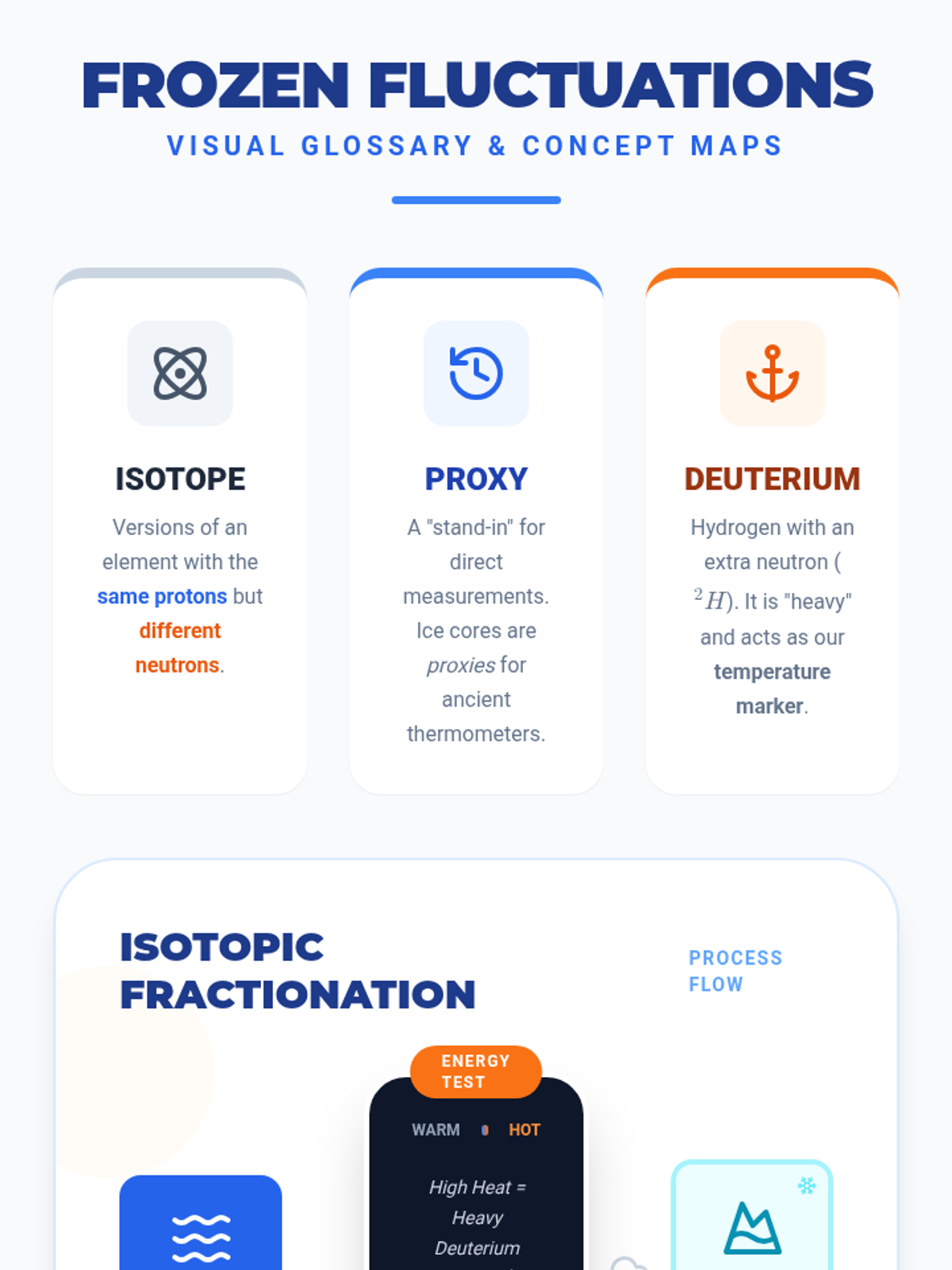
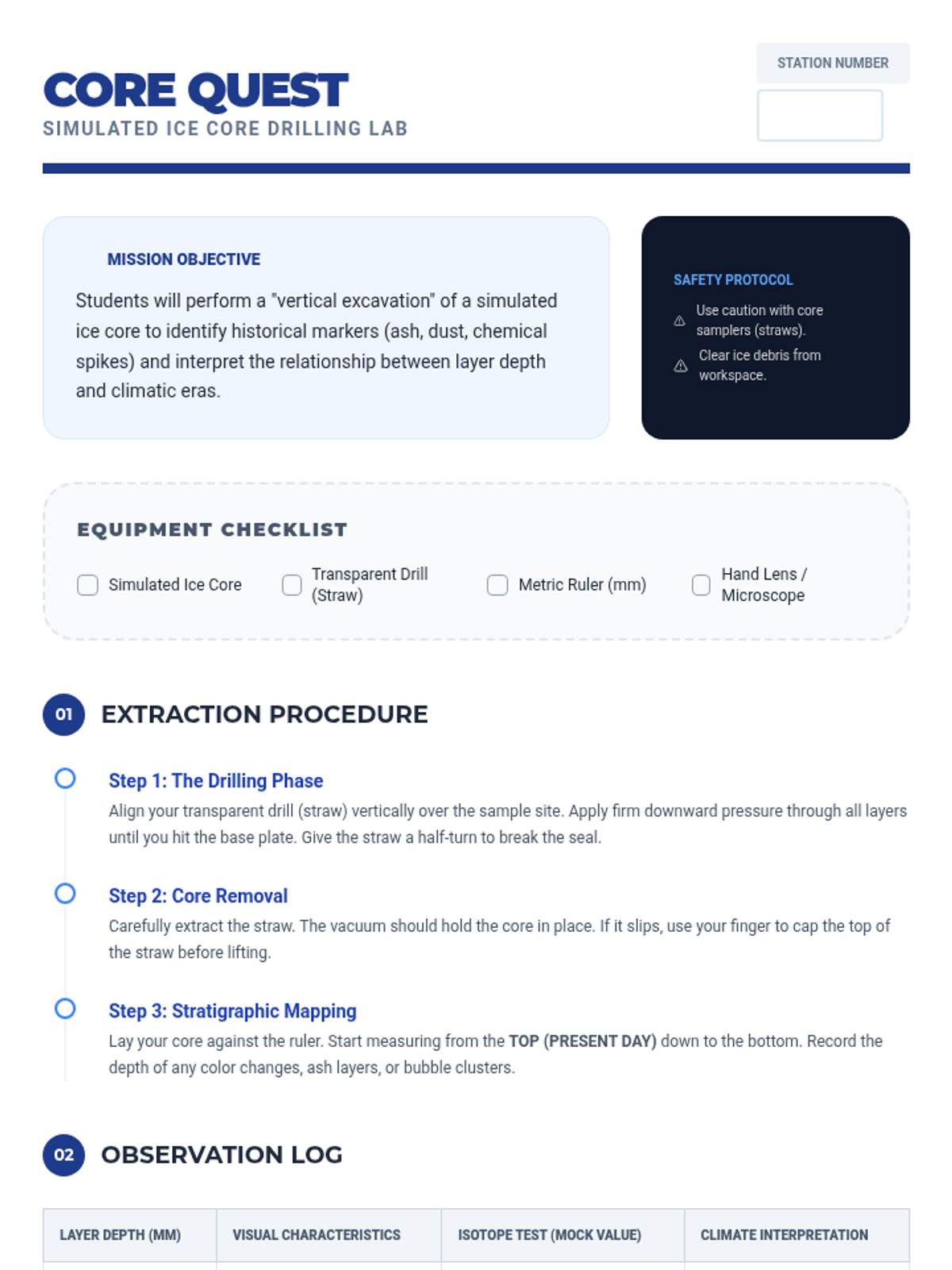
A high school lesson exploring the relationship between deuterium isotopes in ice cores and historical greenhouse gas levels to reconstruct past climates. Students analyze isotopic data to understand how scientists decode Earth's climate history from the deep freeze.
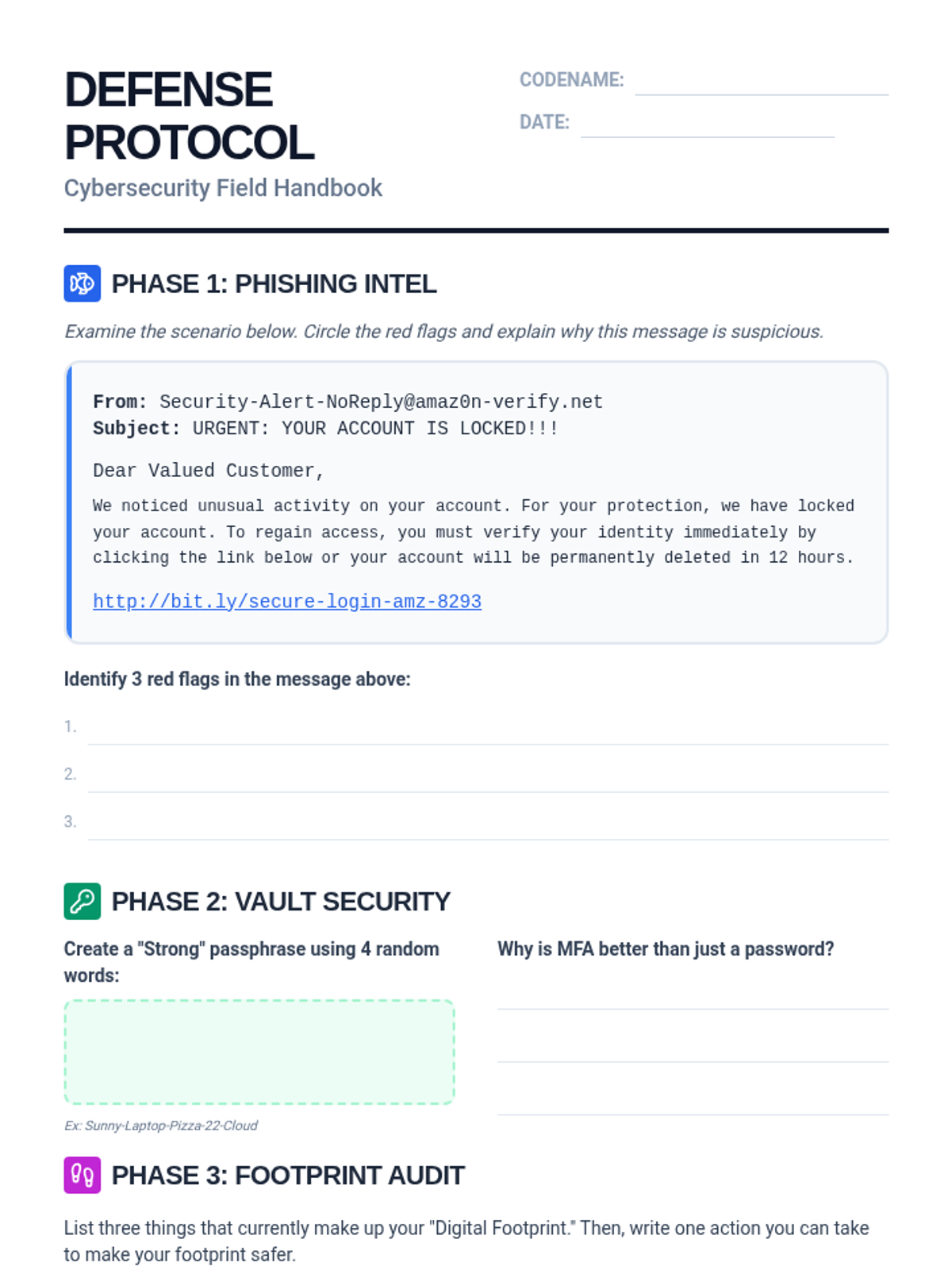
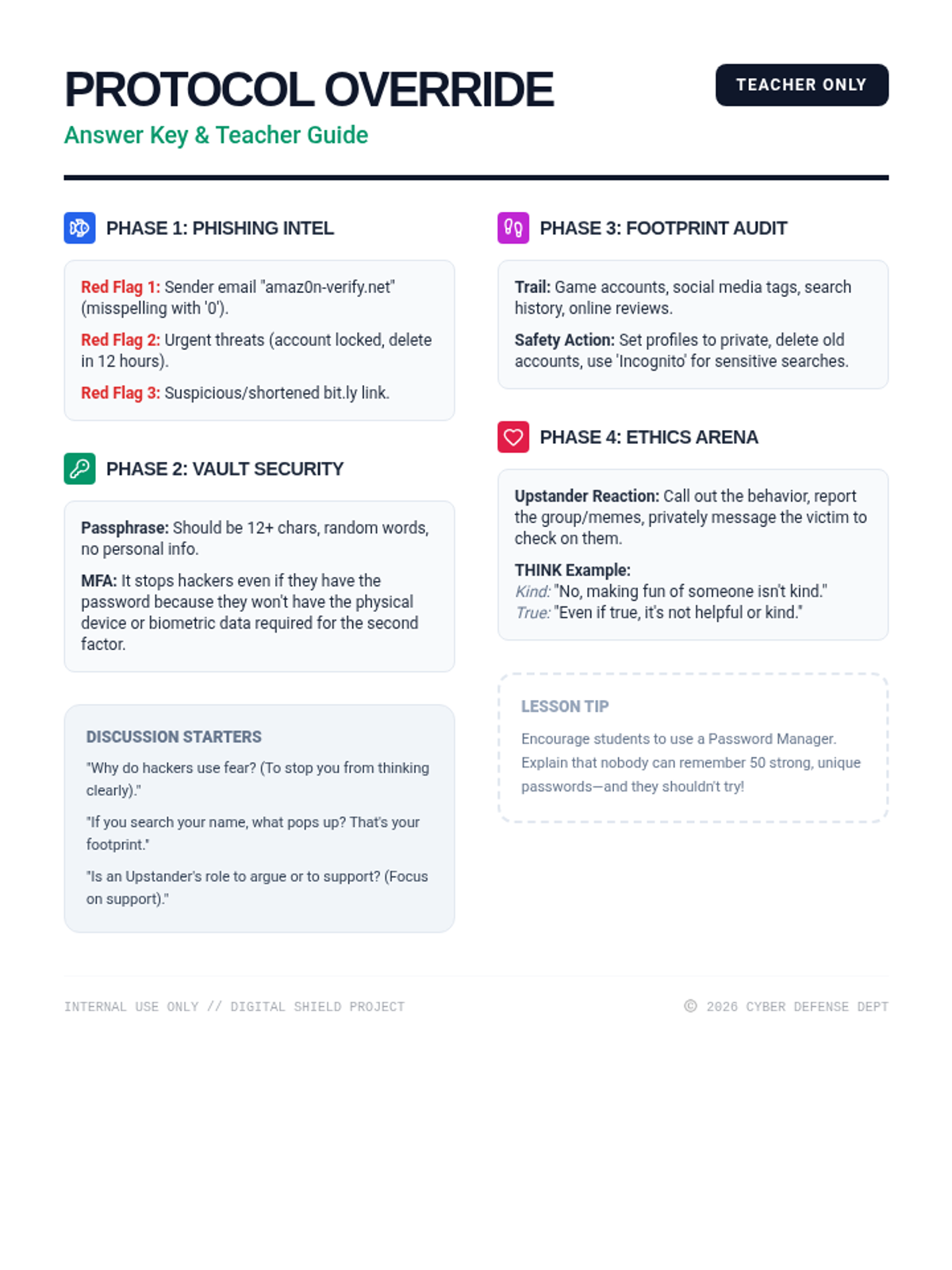
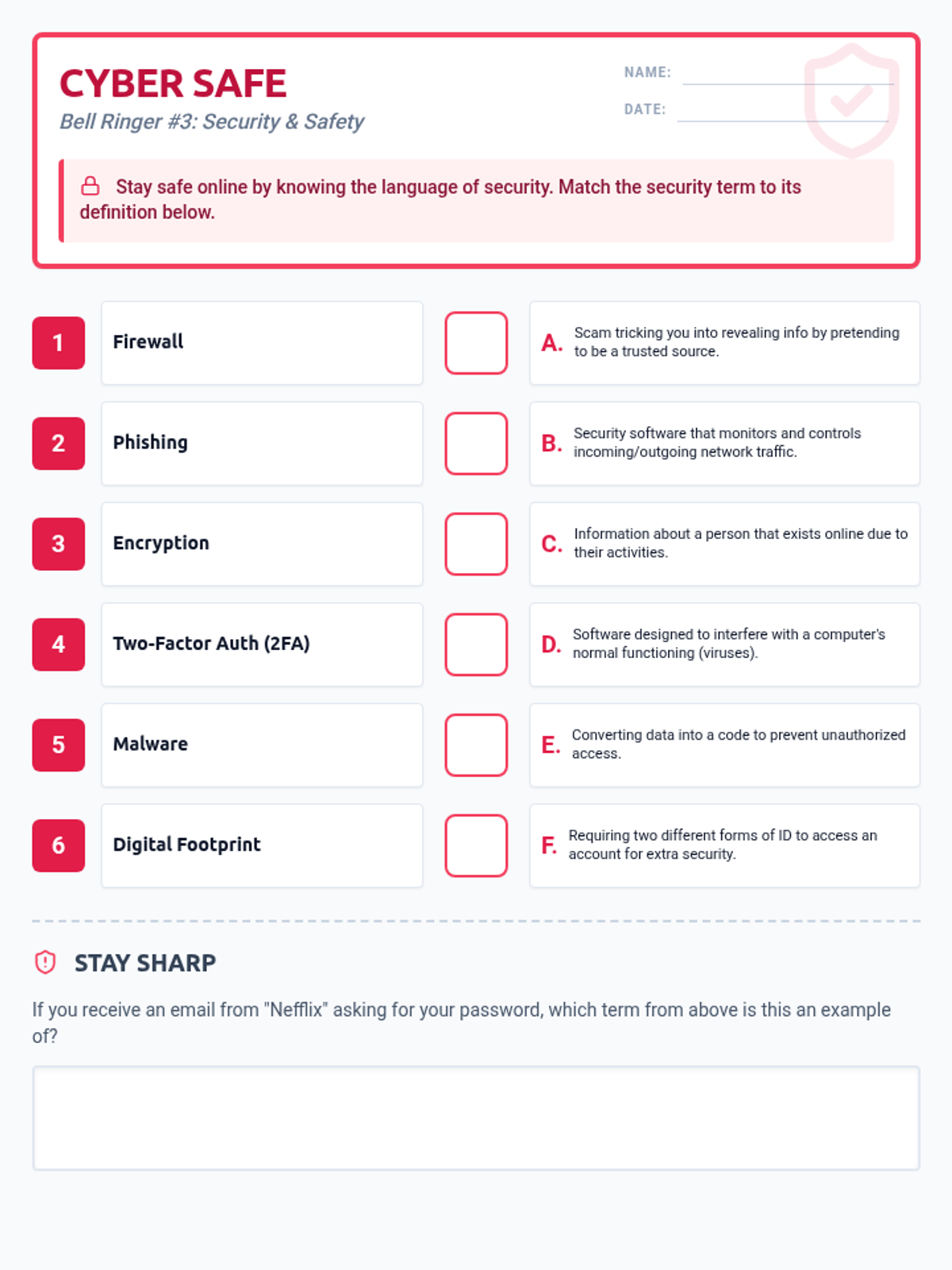
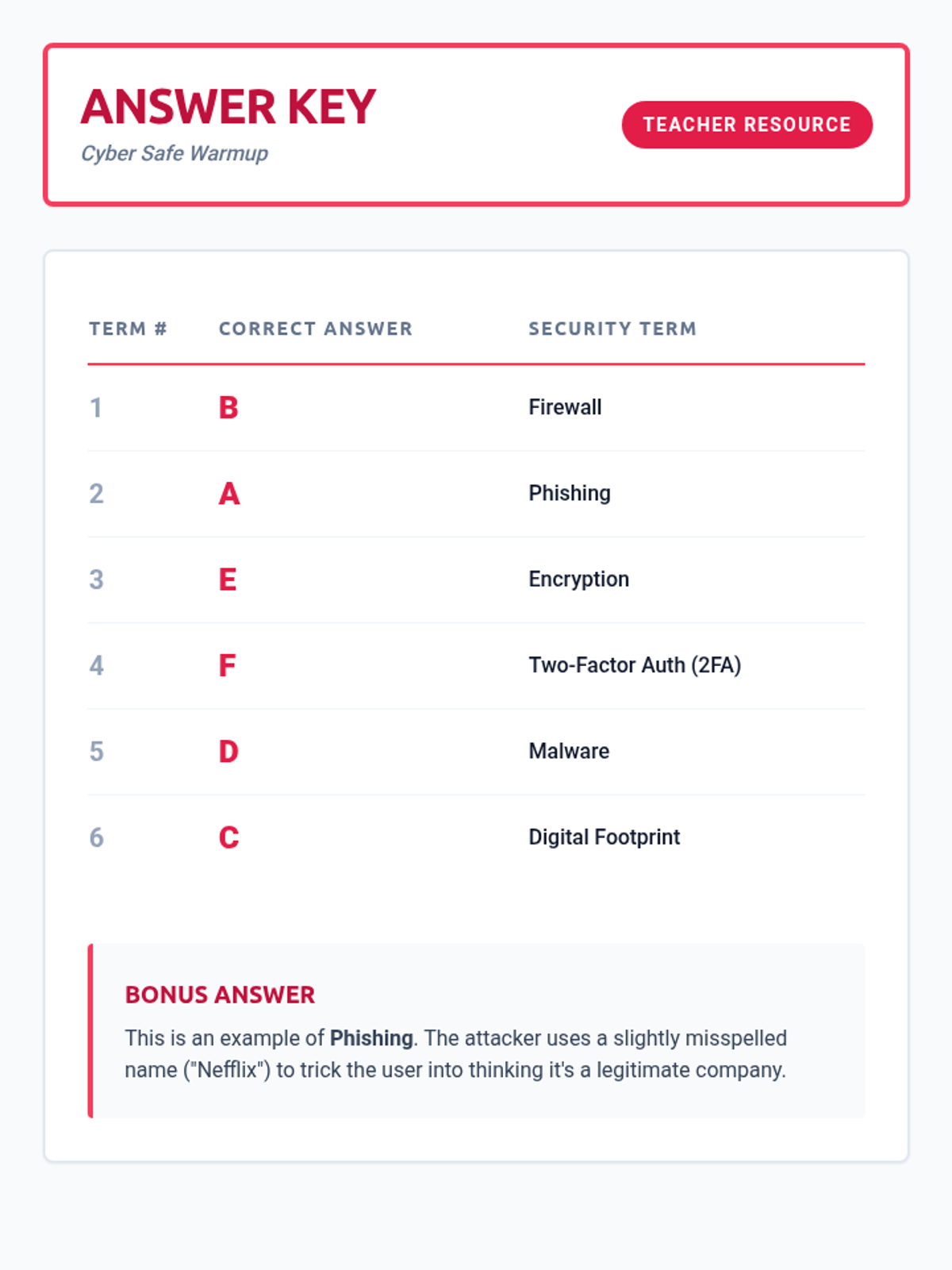
A comprehensive introduction to cybersecurity essentials, covering phishing, password security, digital footprints, and online ethics. Students learn to protect themselves and act responsibly in the digital world.
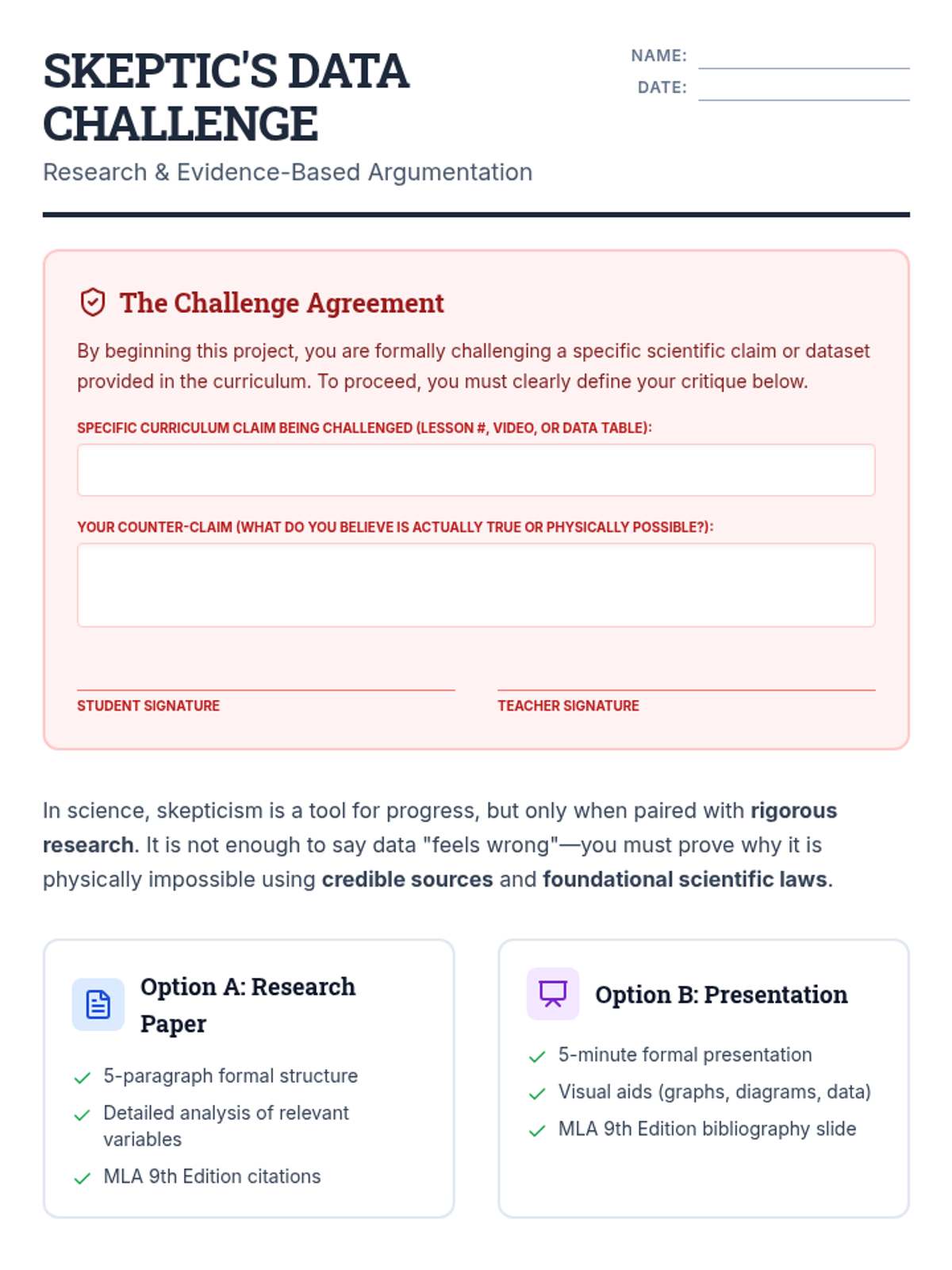
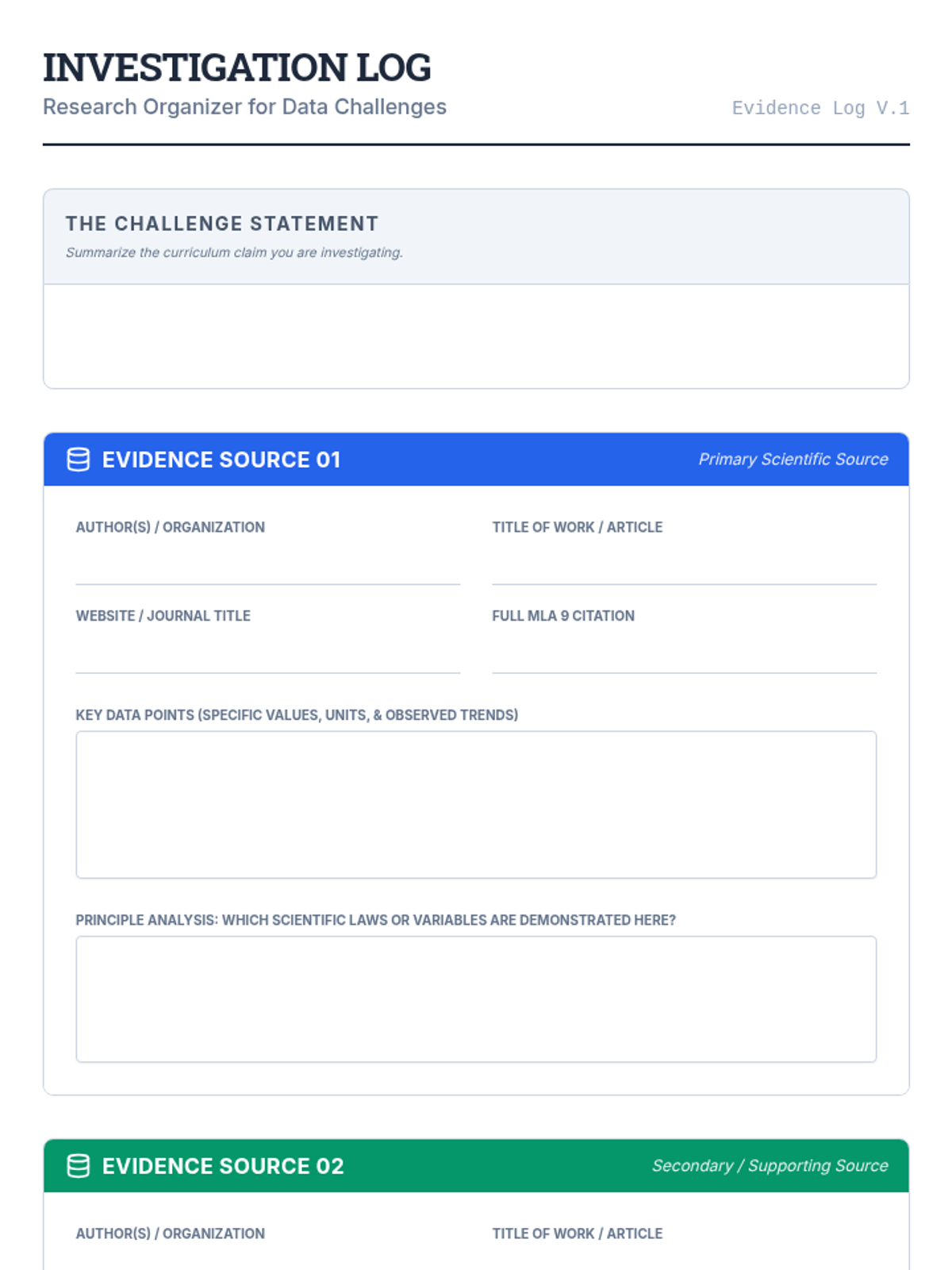
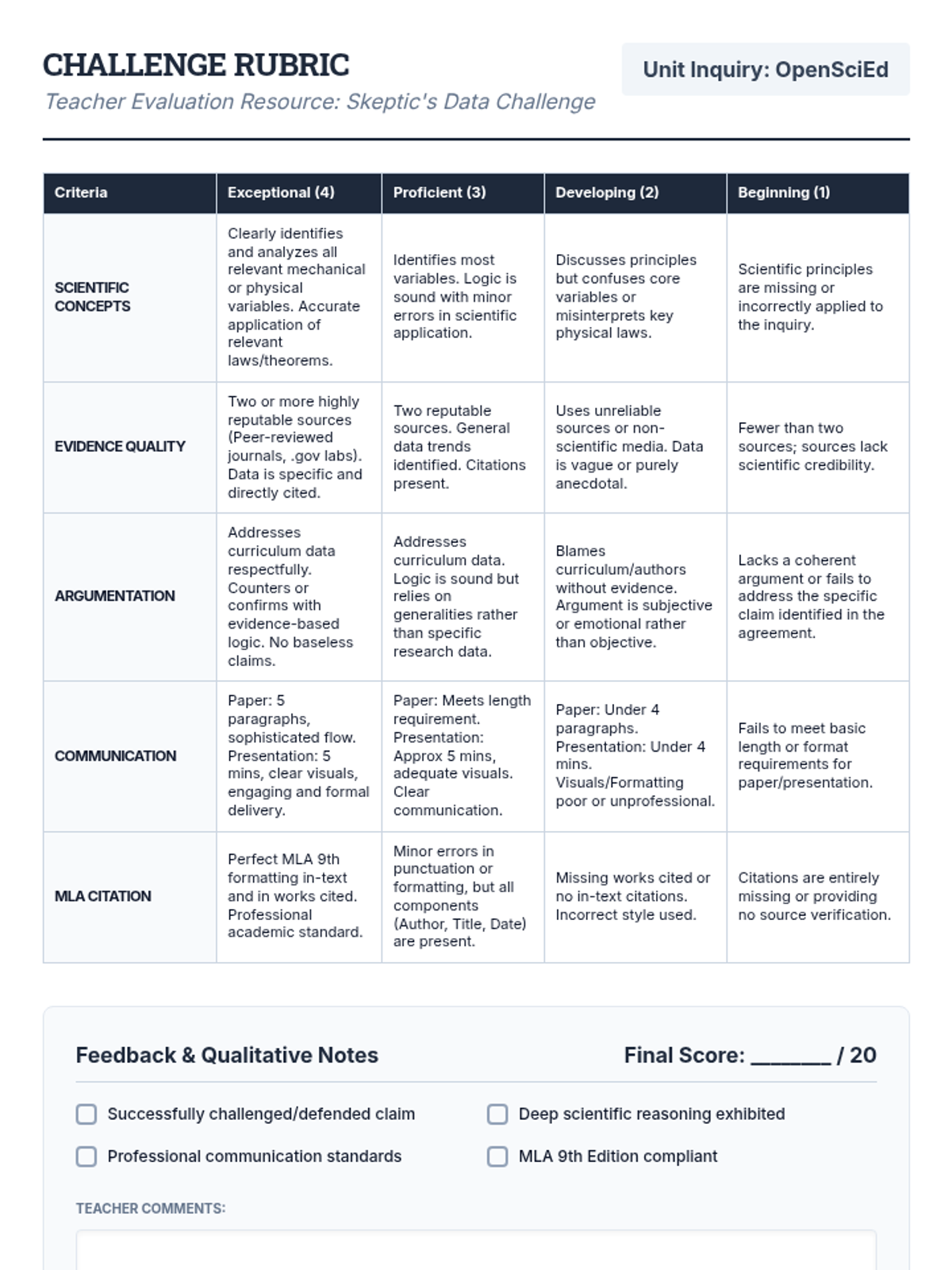
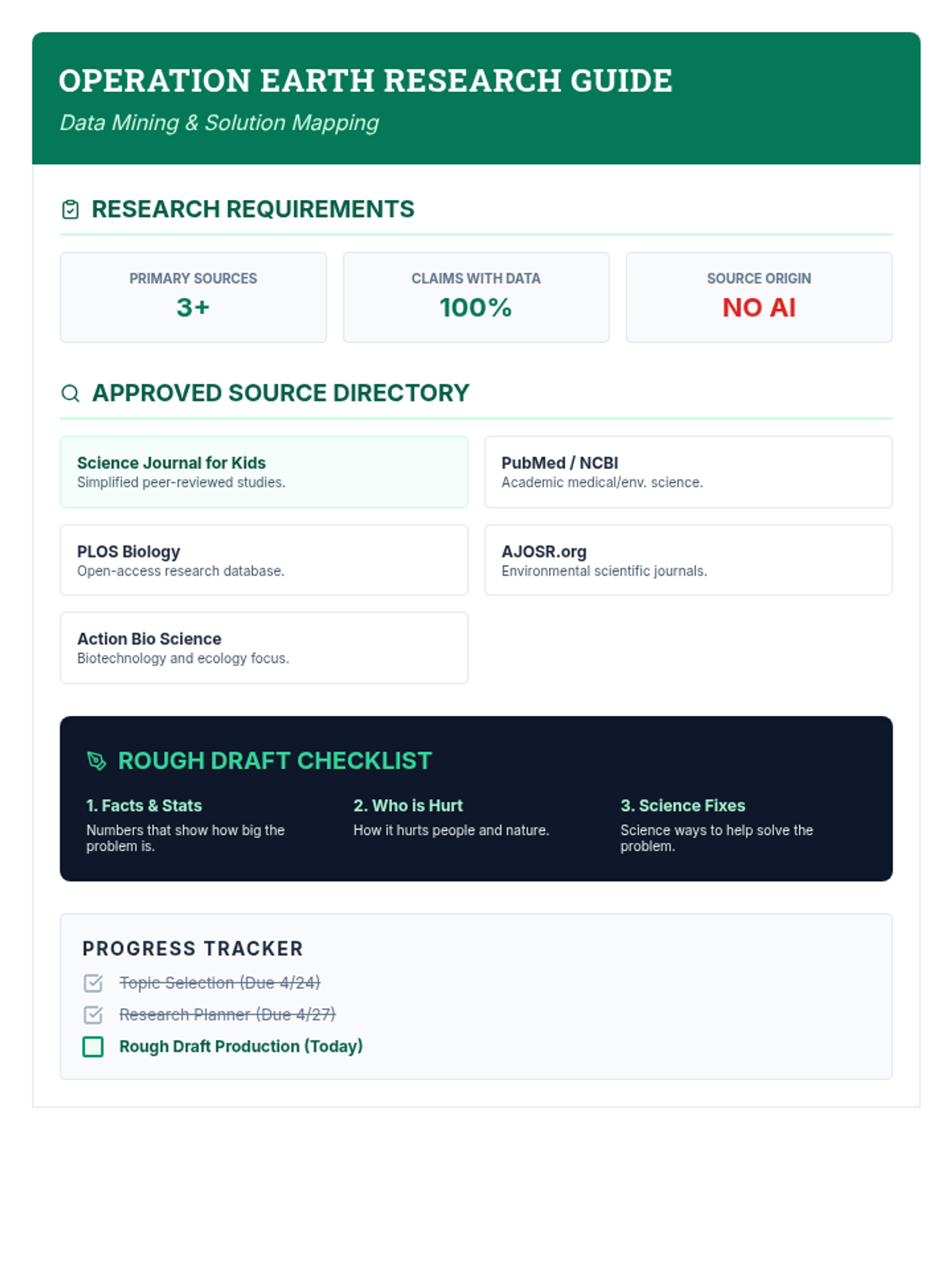
An optional enrichment lesson for students to investigate curriculum data through formal research and evidence-based argumentation, honoring scientific inquiry and rigorous data validation.
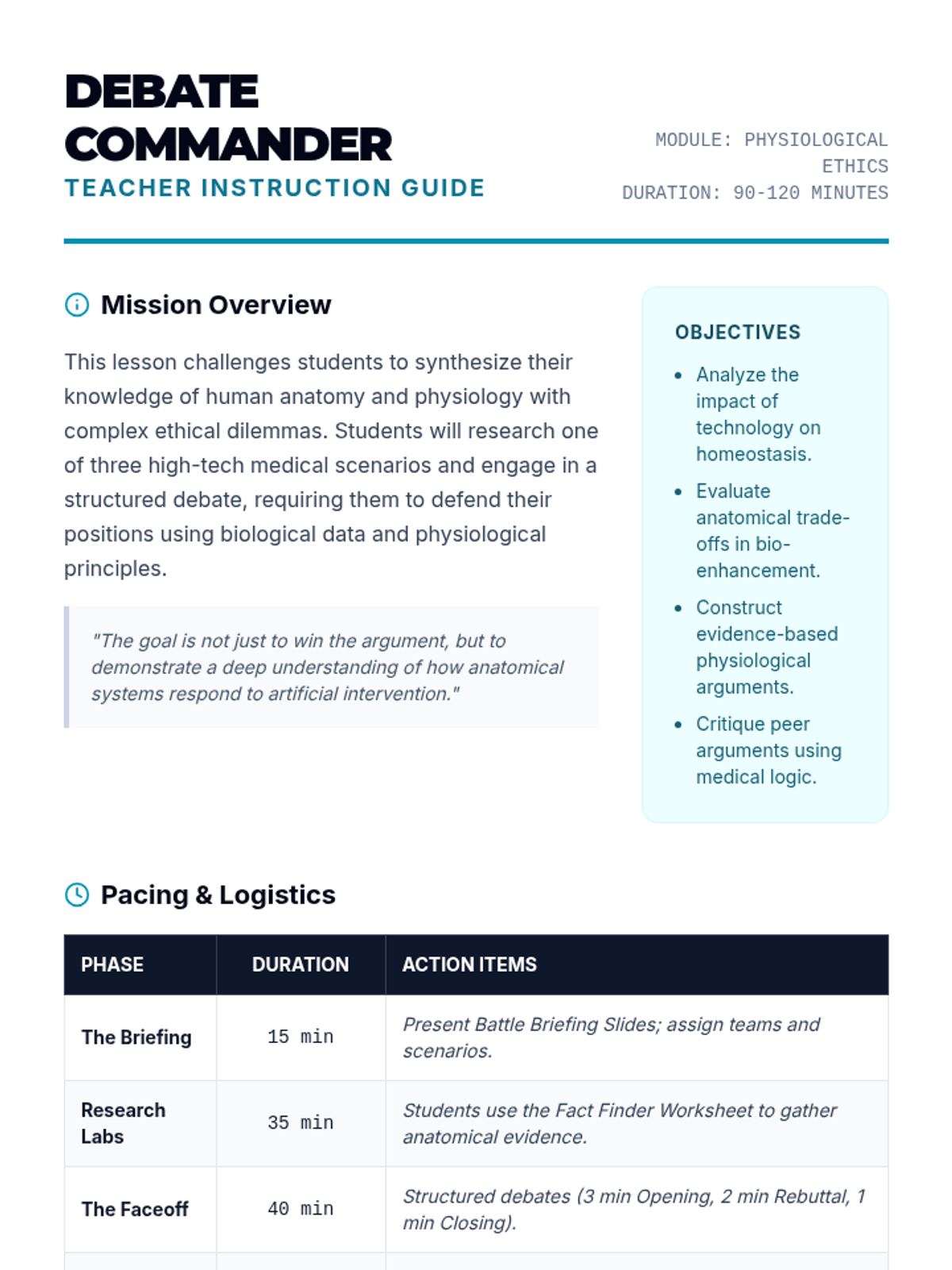
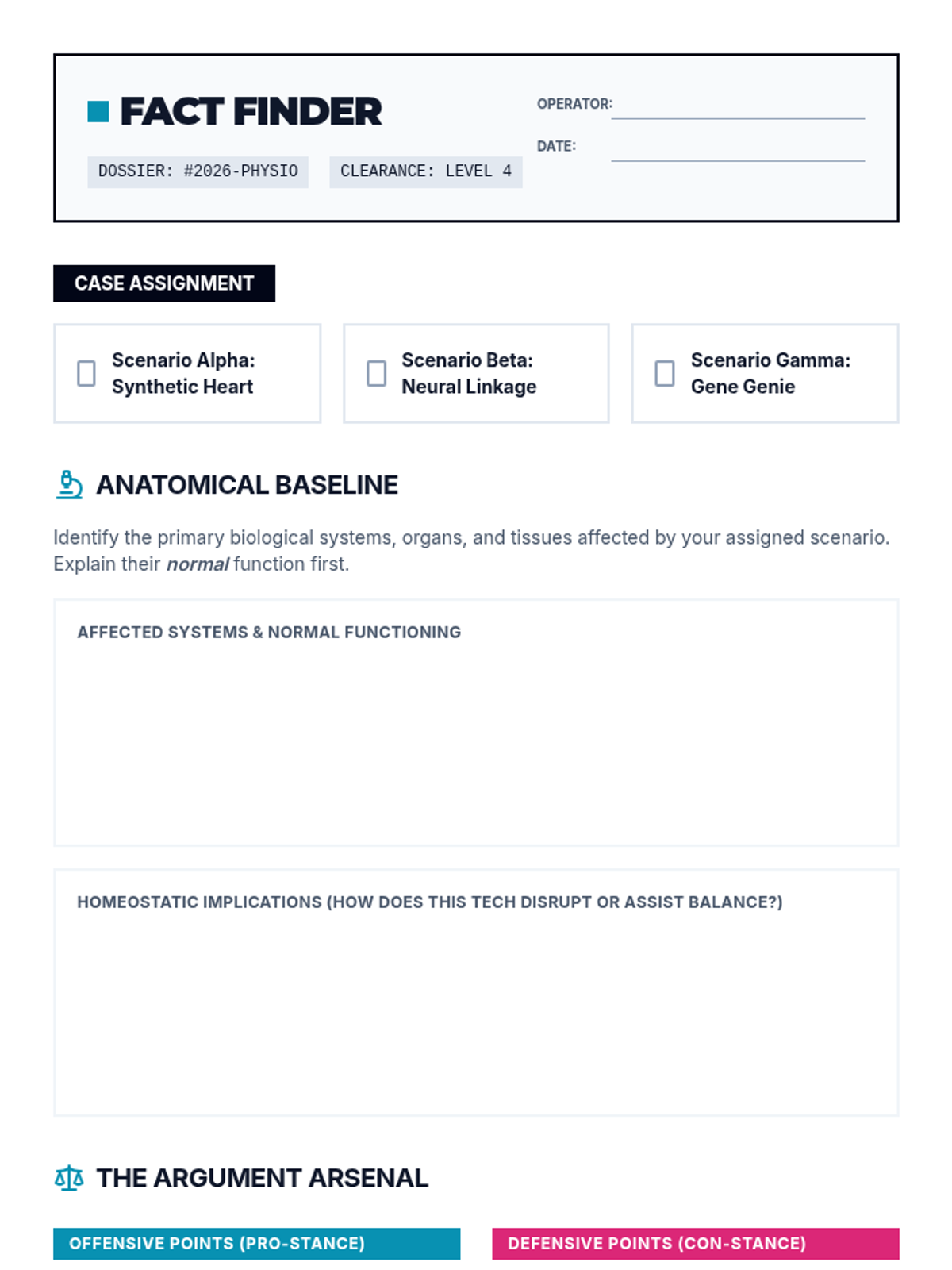
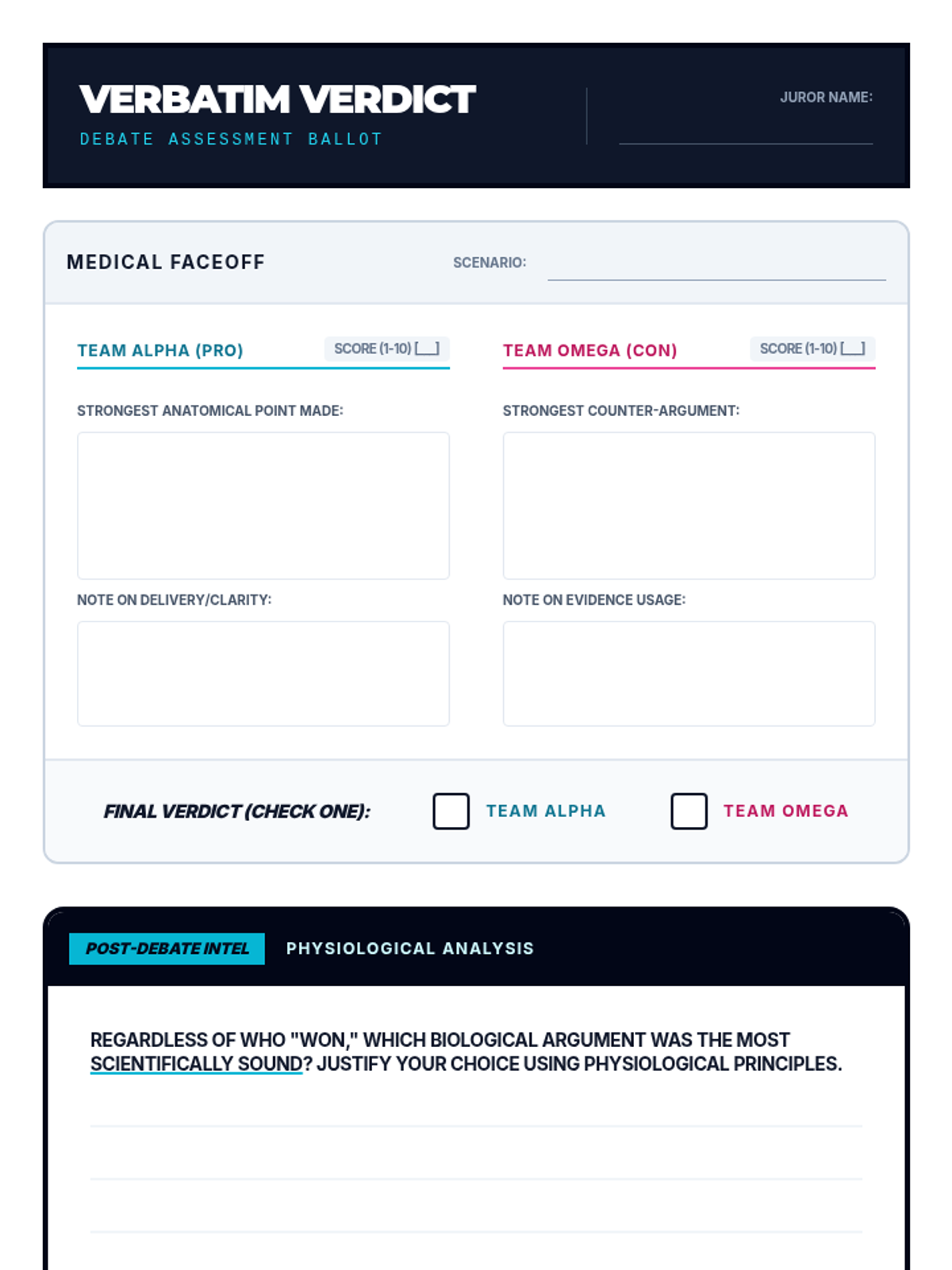
A high-stakes debate lesson where students explore the ethical and physiological implications of human bio-enhancement and medical technology.
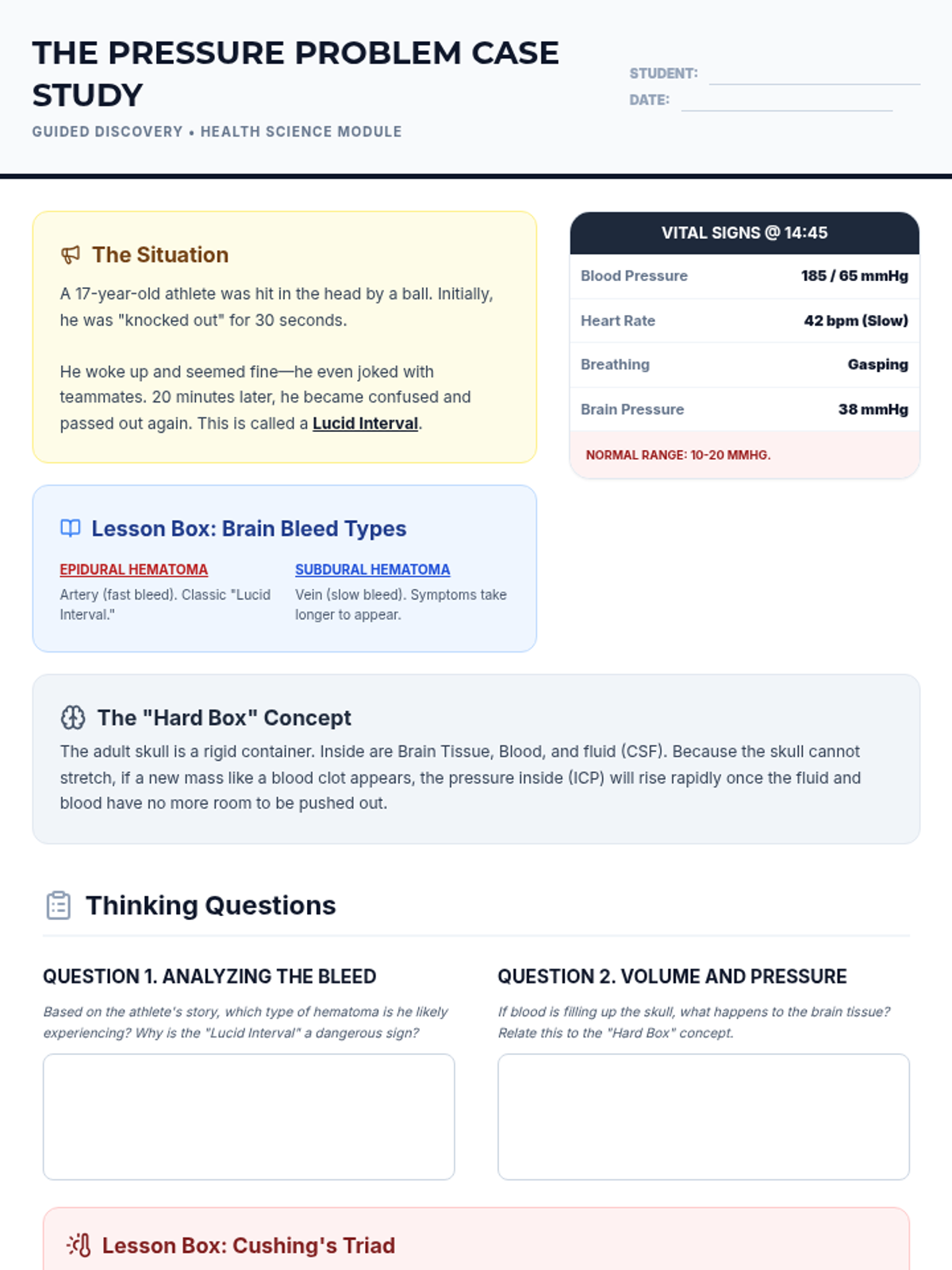
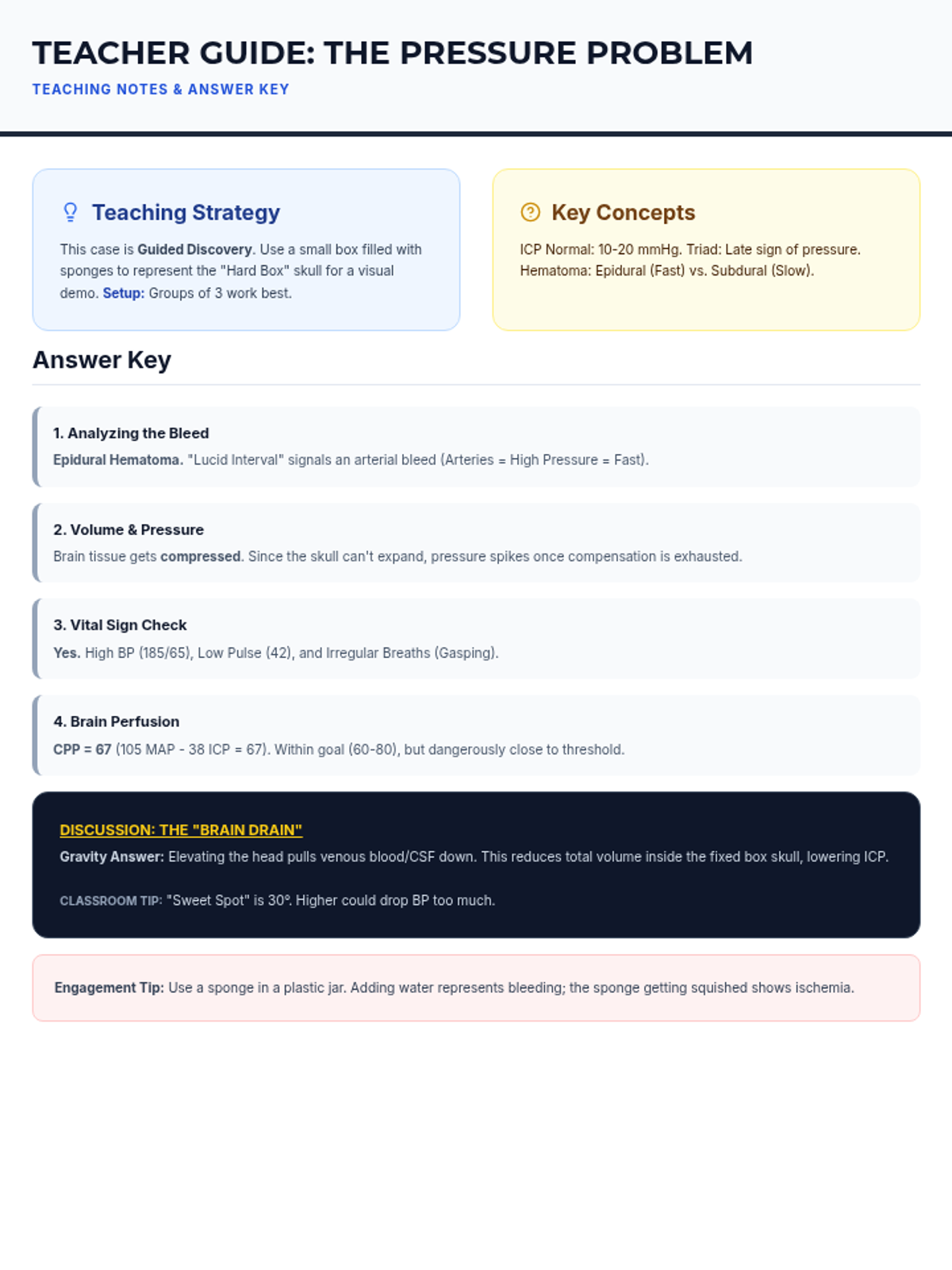
A health-science focused lesson on the anatomy, physiology, and clinical implications of increased intracranial pressure, featuring the Monro-Kellie doctrine and Cushing's Triad.
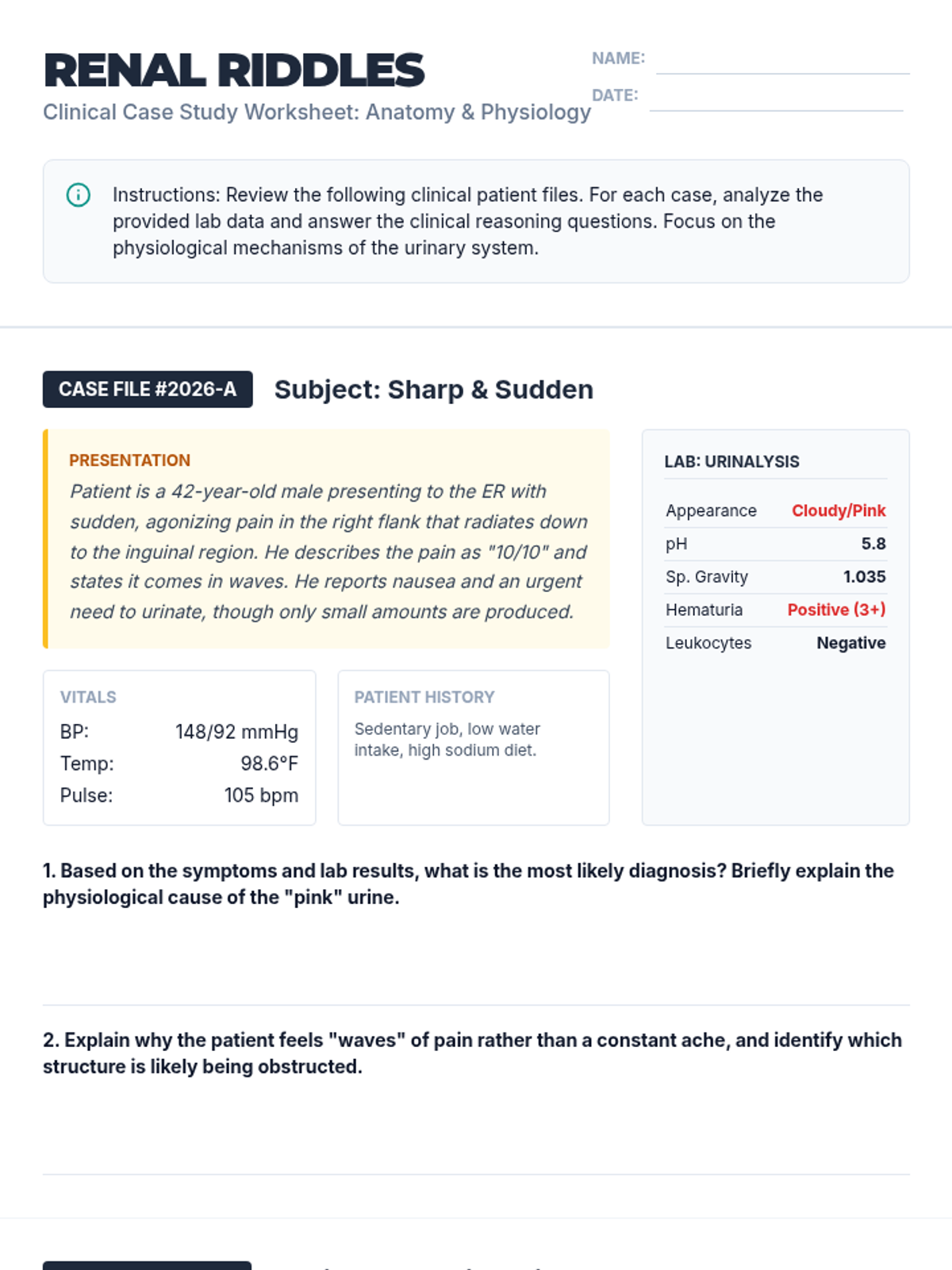
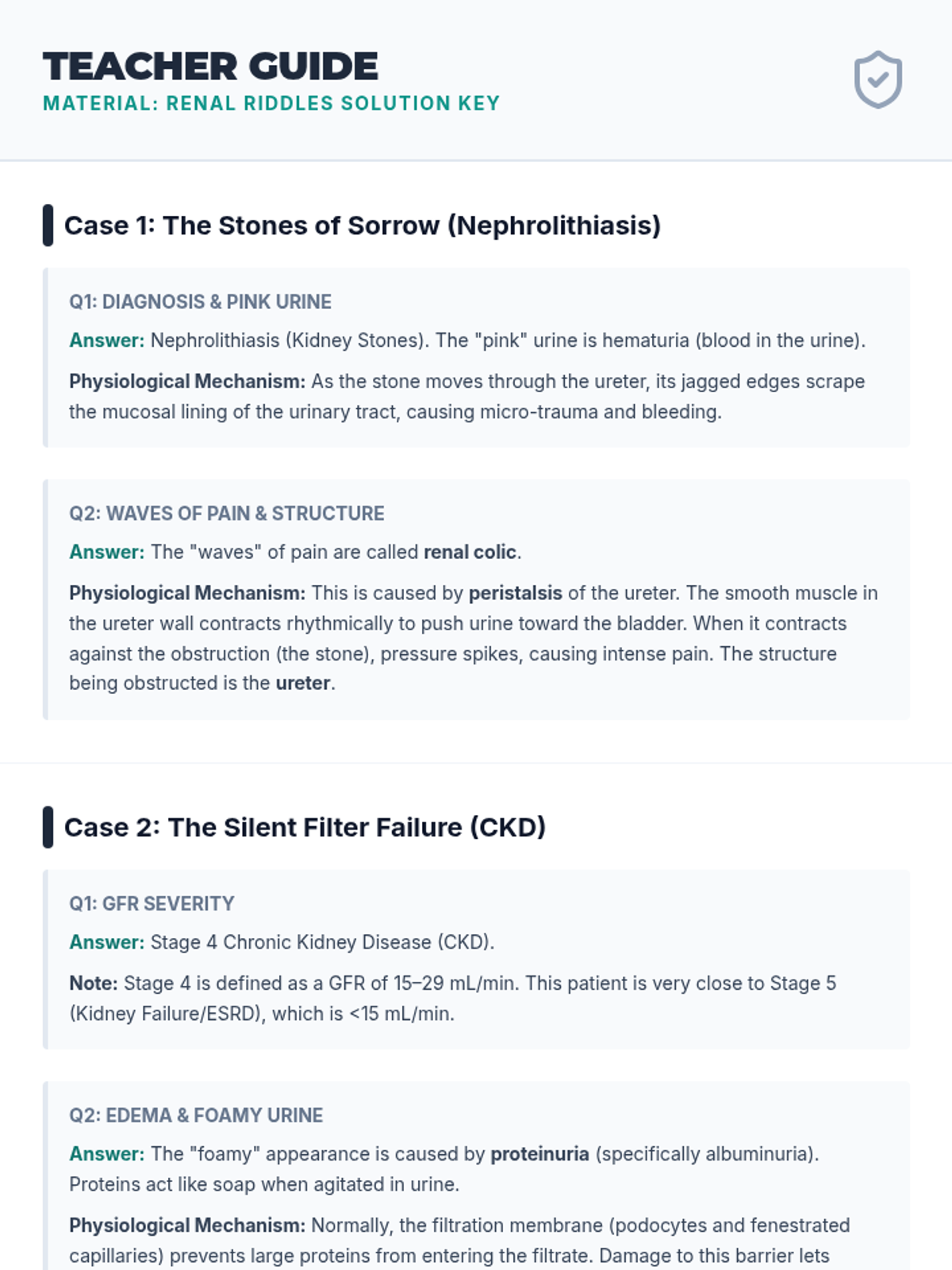
A series of clinical case studies exploring urinary system pathology, diagnostic testing, and physiological principles for advanced Anatomy & Physiology students.
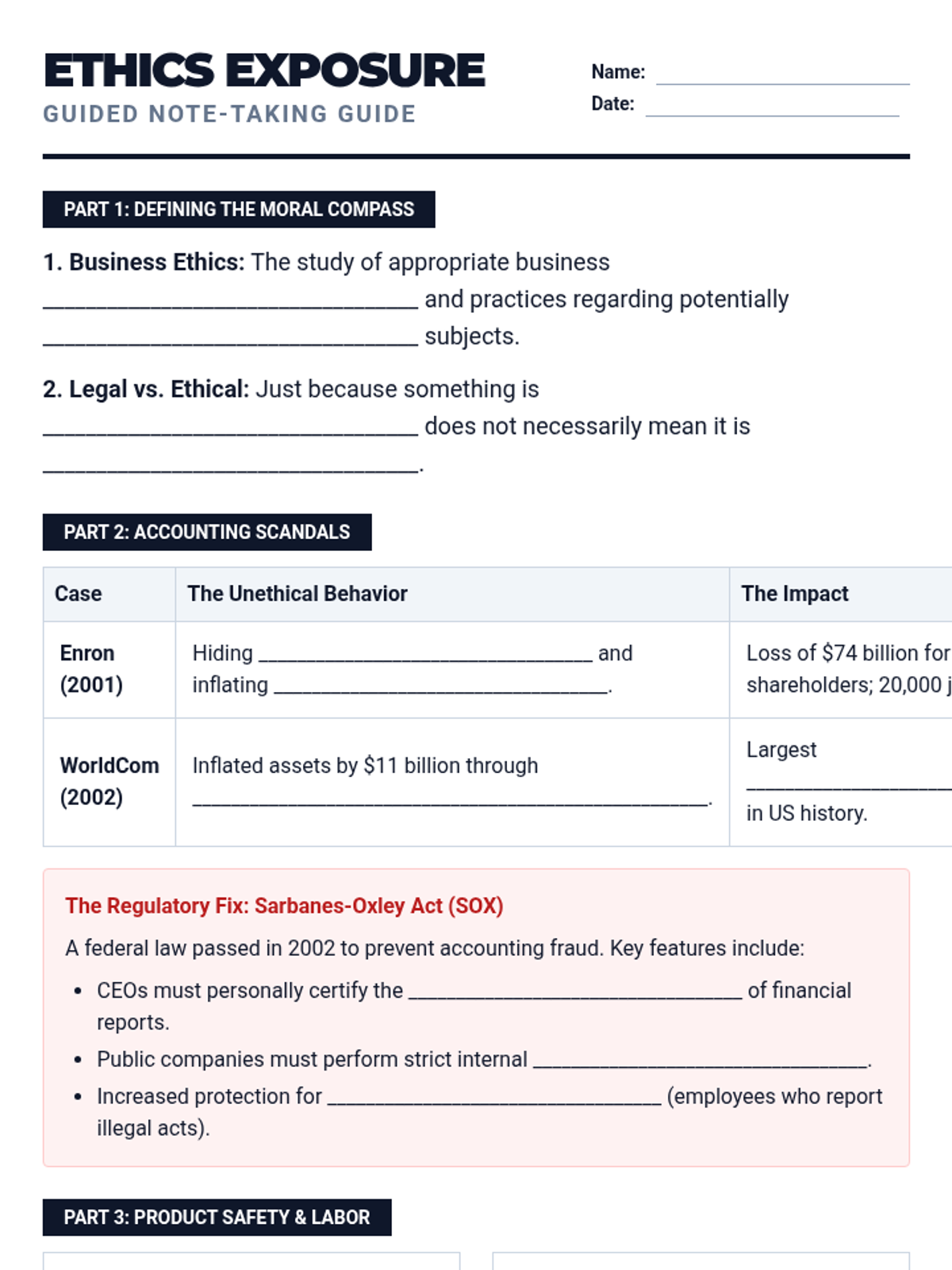
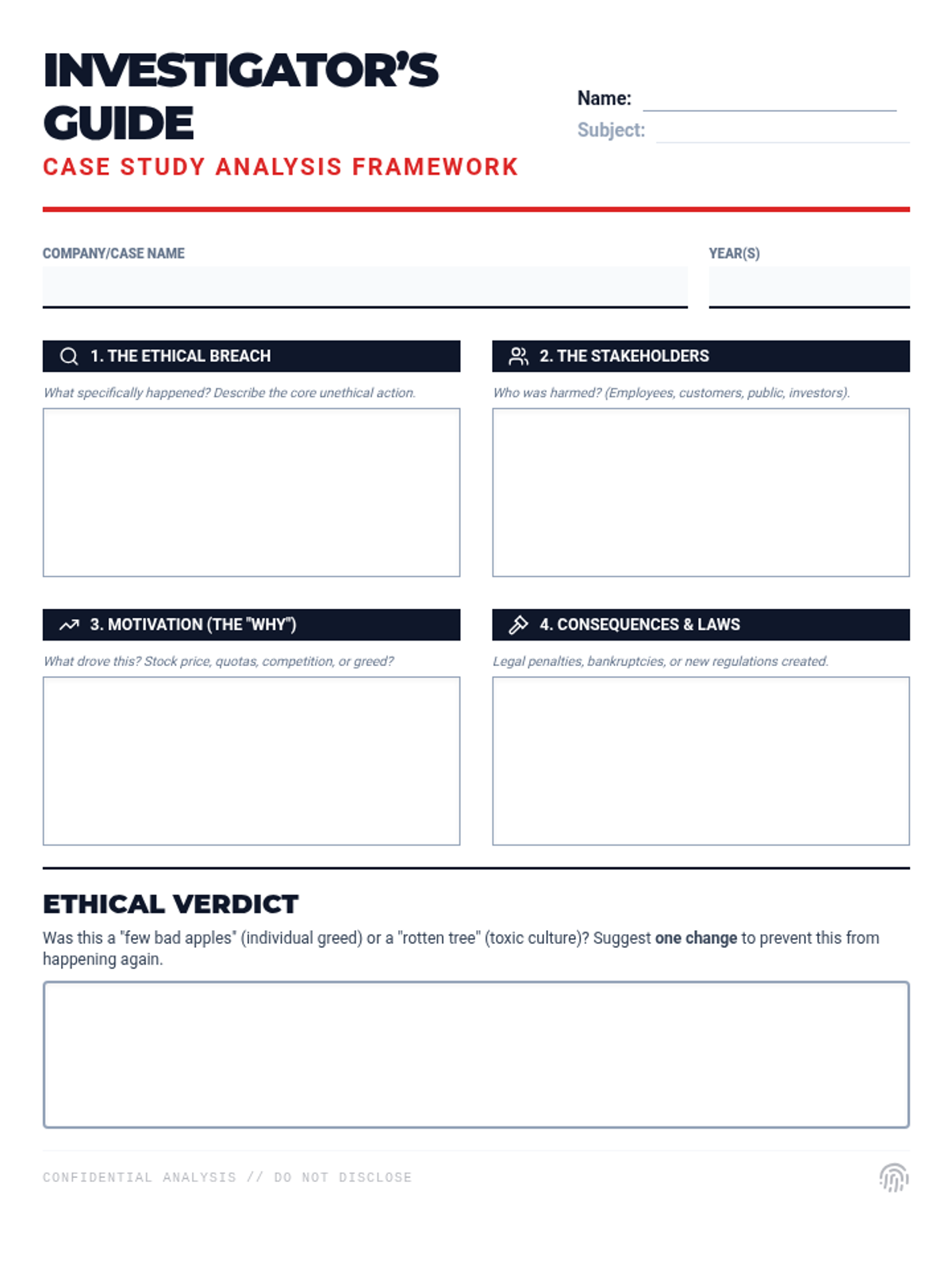
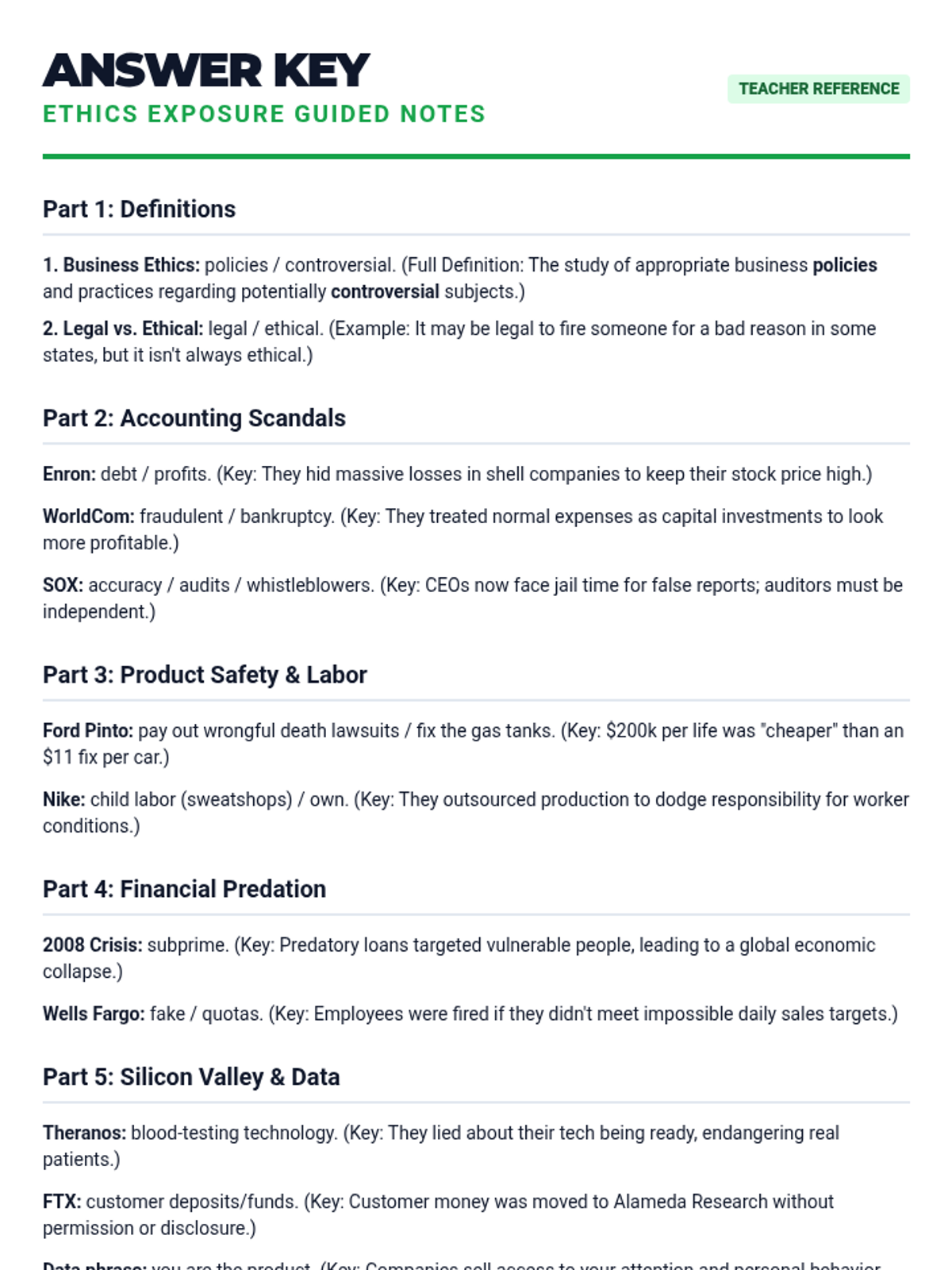
An introductory lesson on business ethics, covering major historical scandals, regulatory responses, and modern ethical dilemmas in the corporate world.
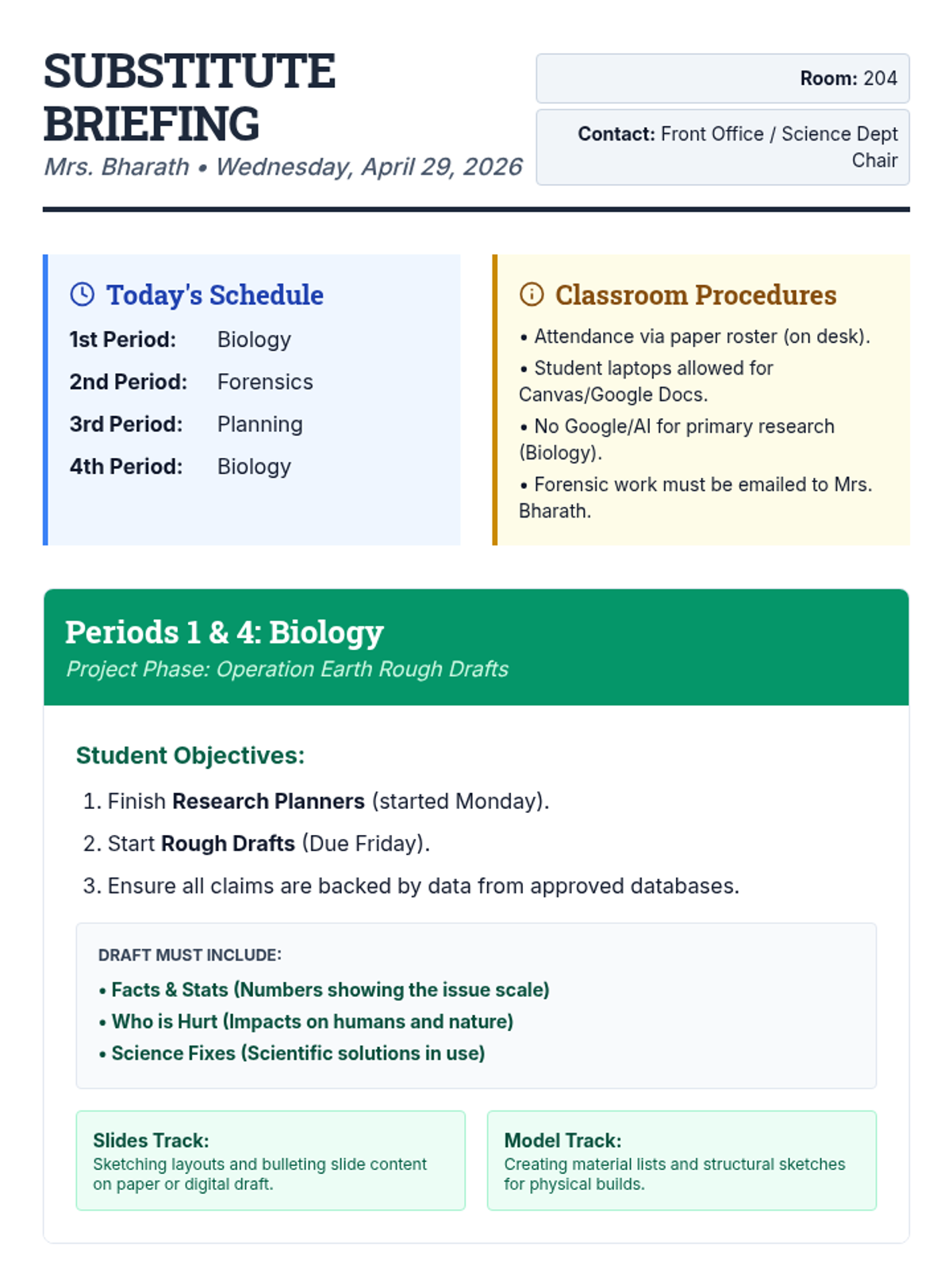
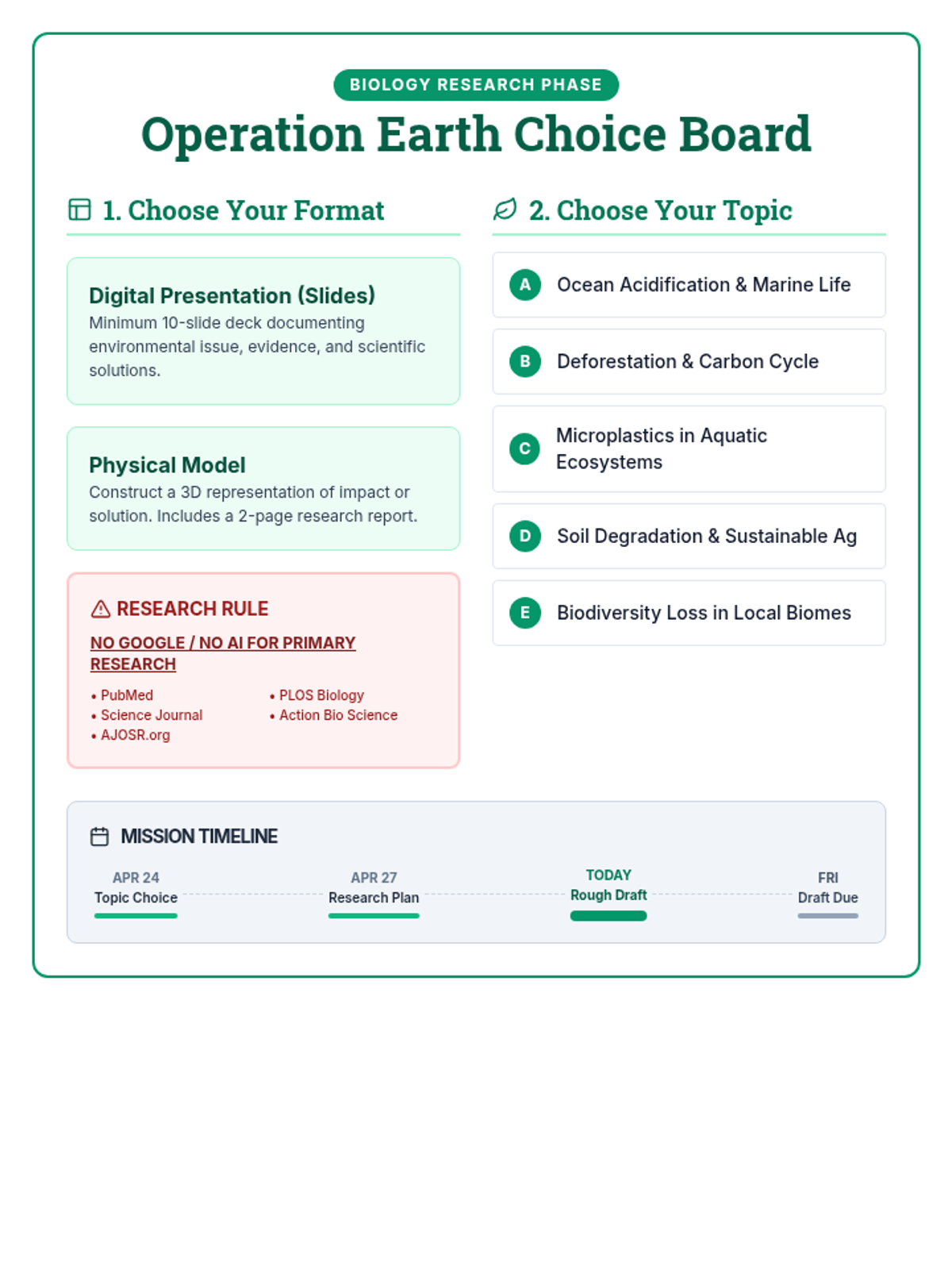
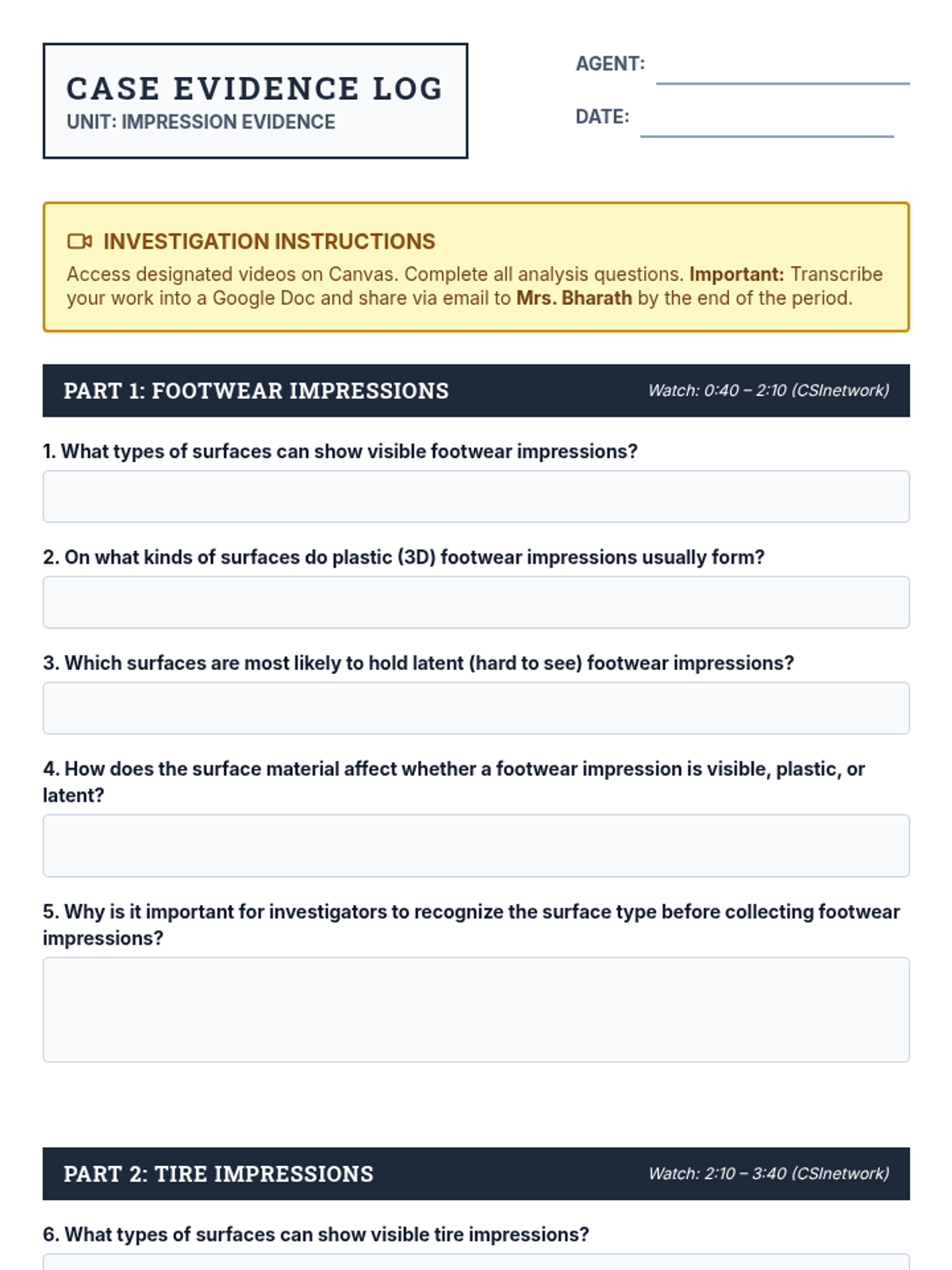
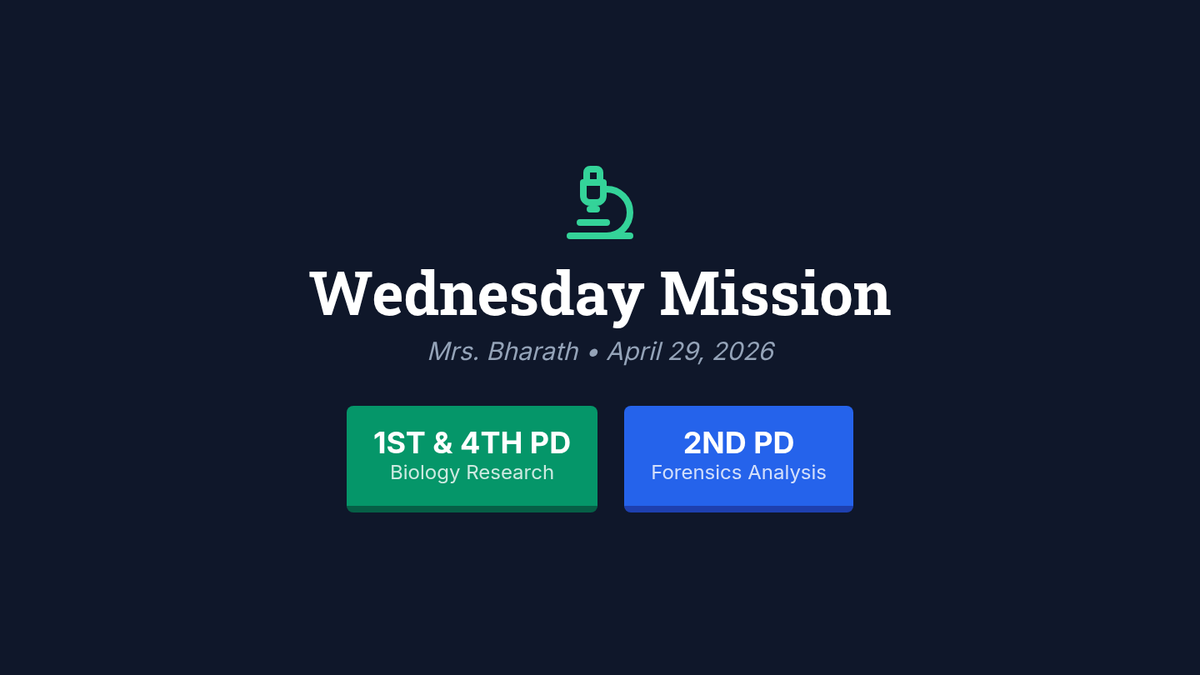
A comprehensive substitute teacher plan for 1st and 4th period Biology and 2nd period Forensics, focusing on environmental research and forensic impression evidence.
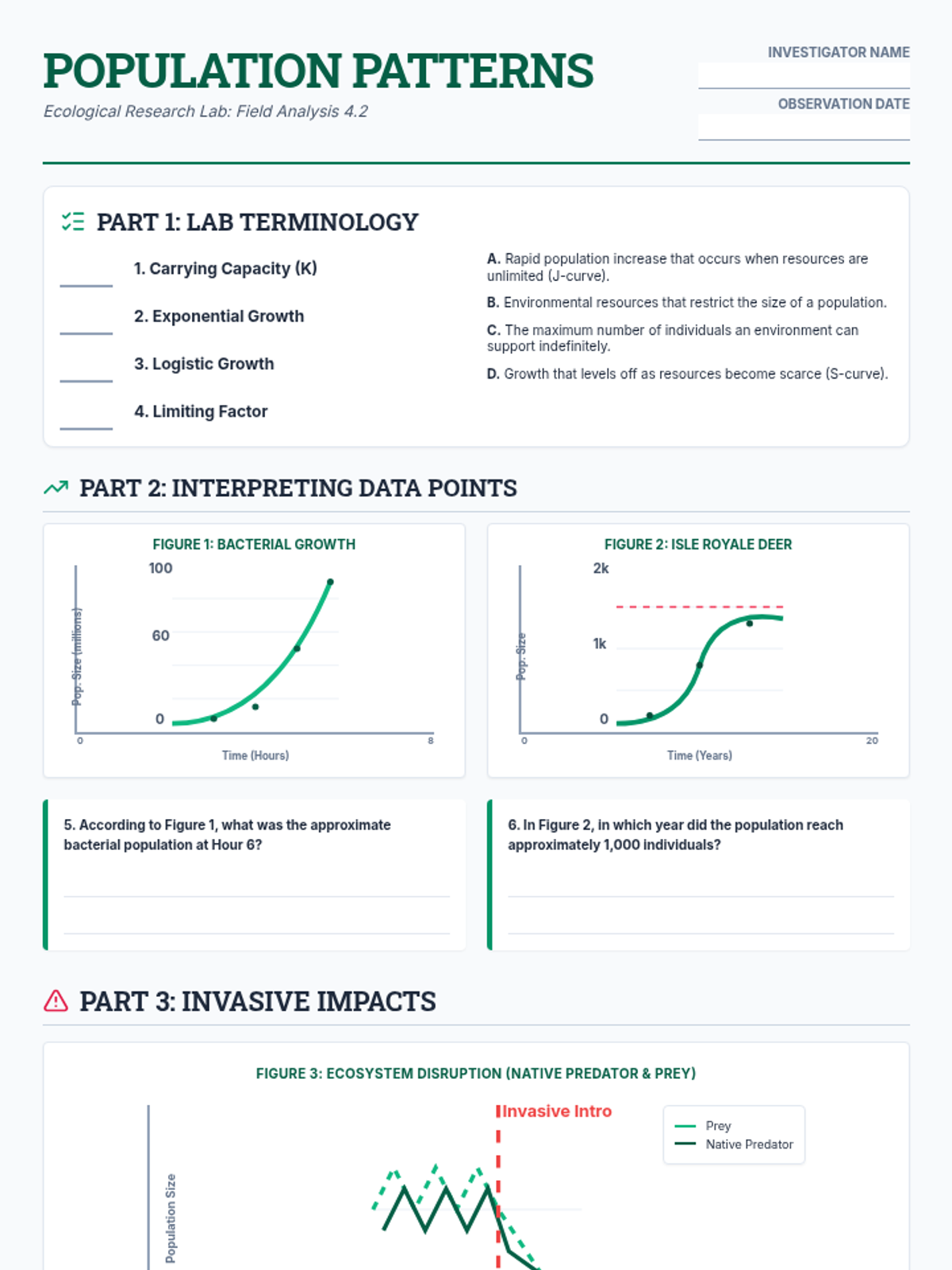
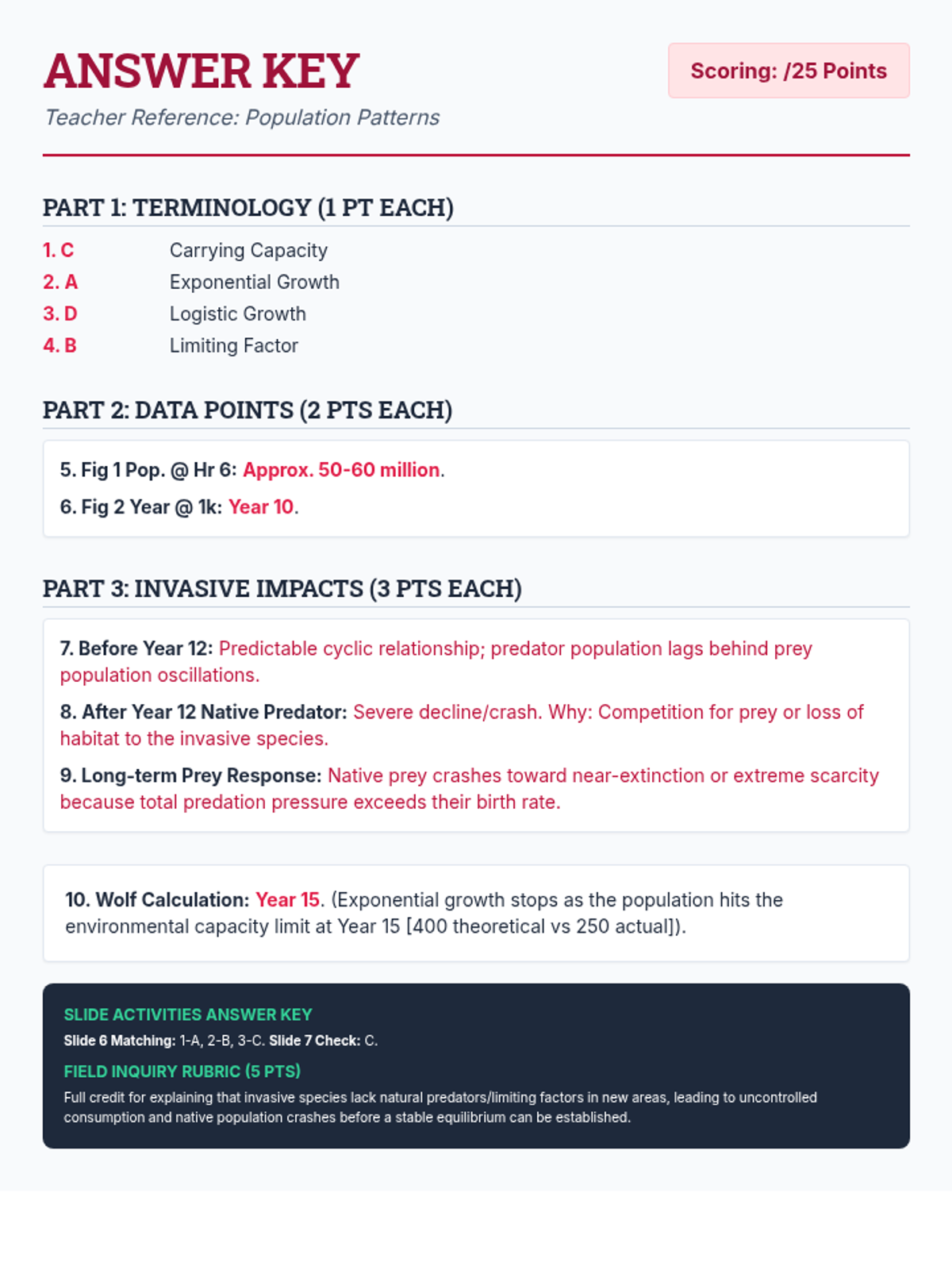
Students learn to distinguish between exponential and logistic population growth models, identify carrying capacity, and understand the role of limiting factors in shaping biological communities.
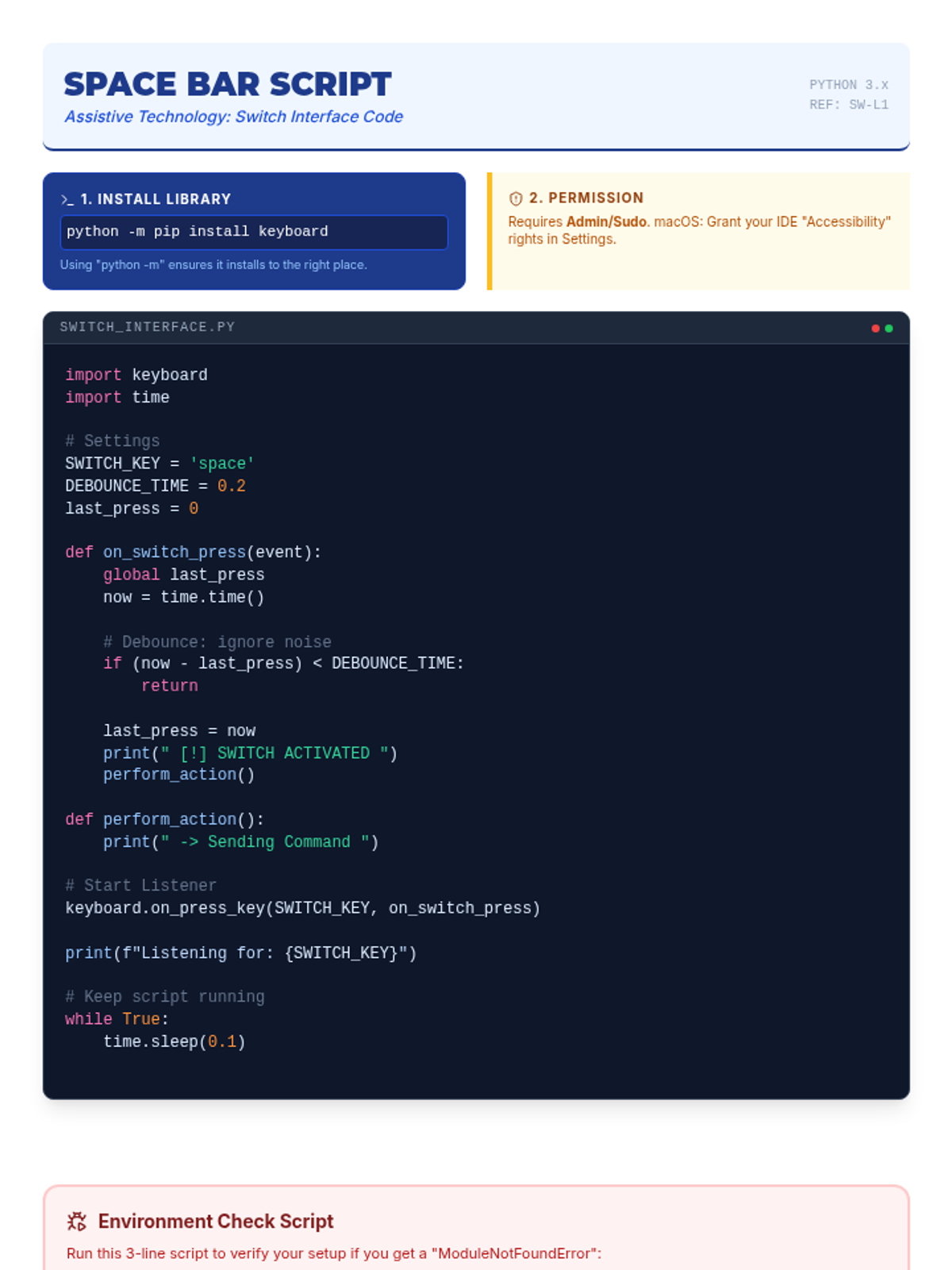
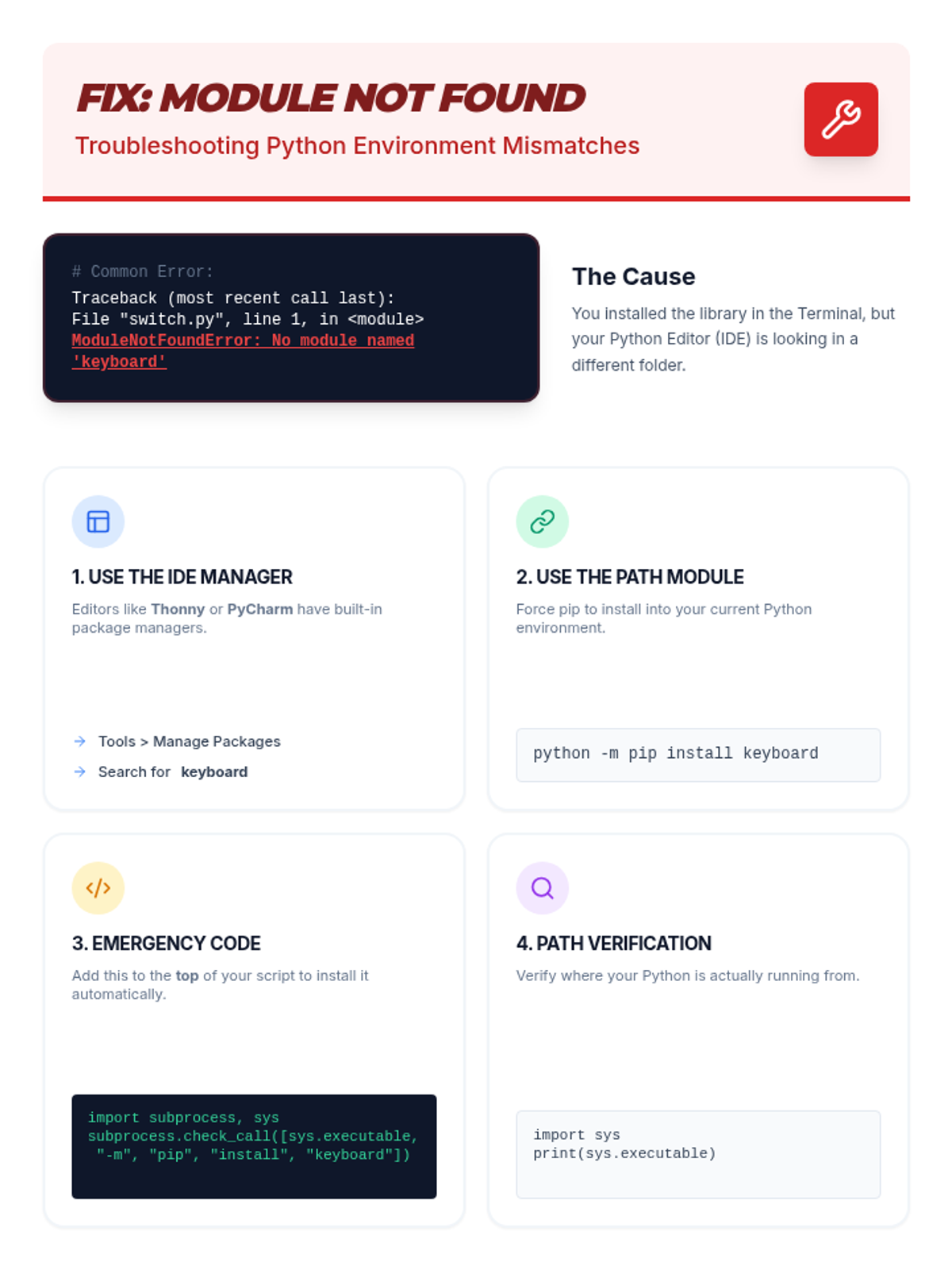
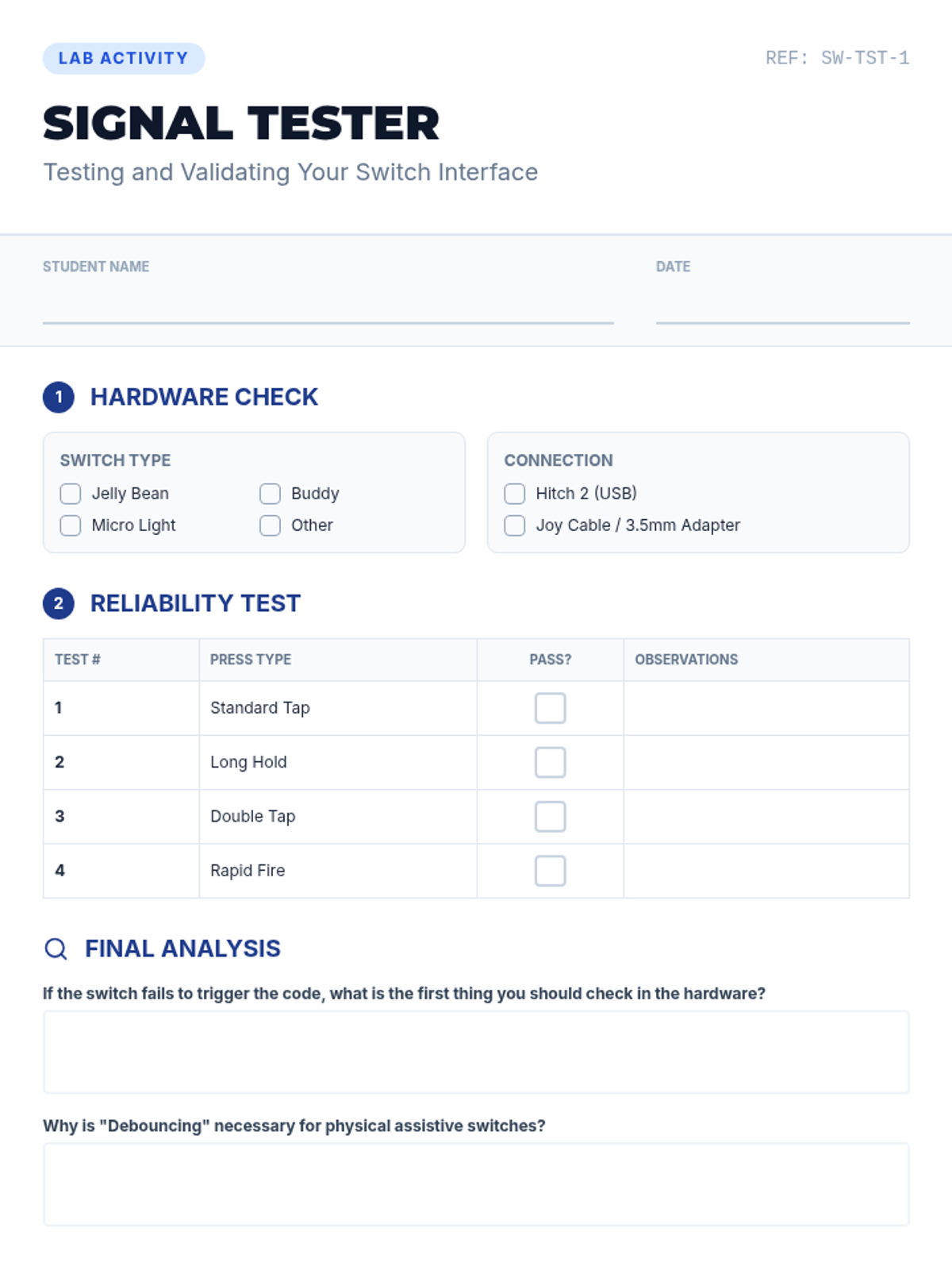
This lesson covers the logic and programming required to create a digital switch interface using Python, focusing on key bindings and signal processing.
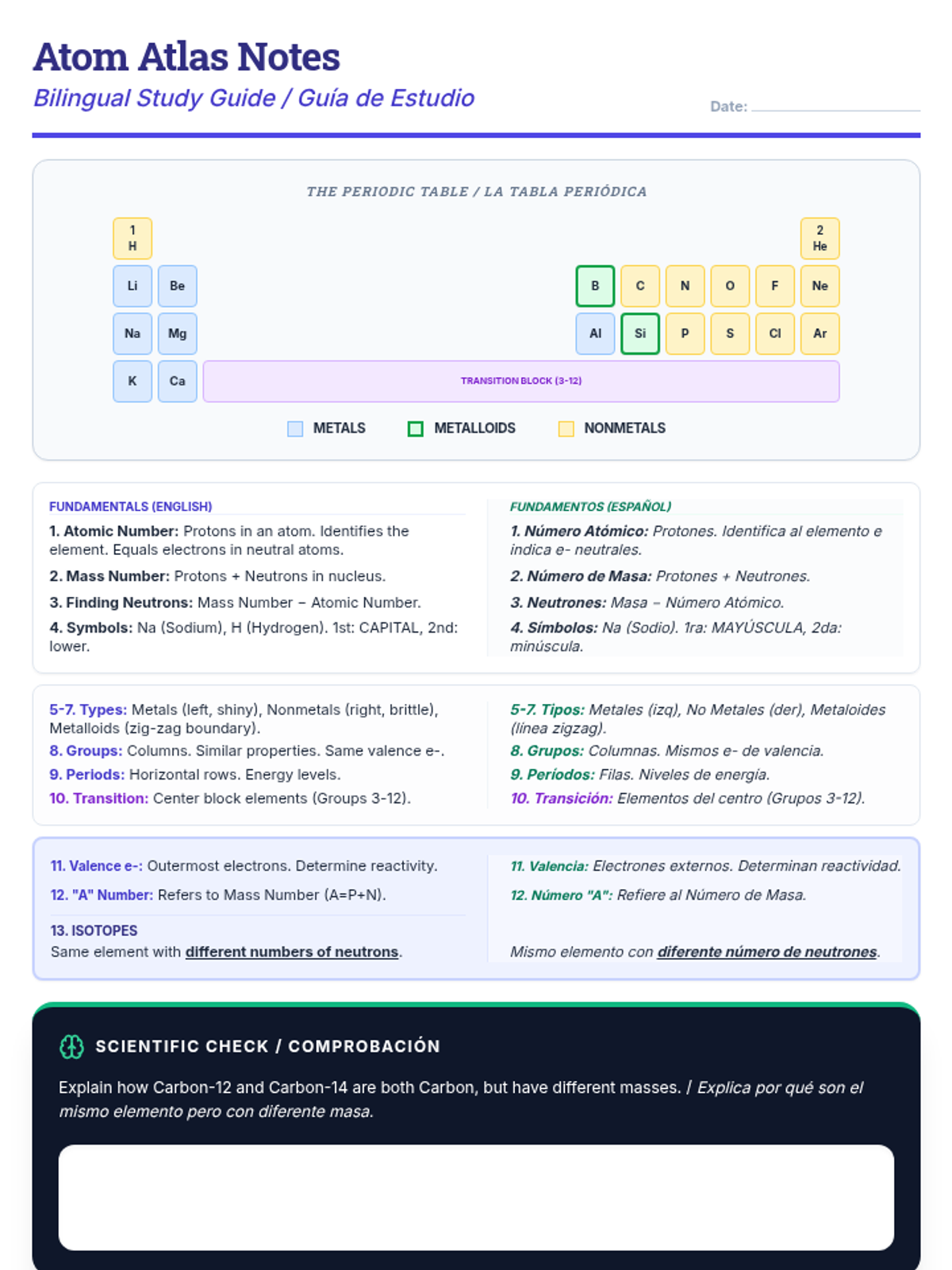
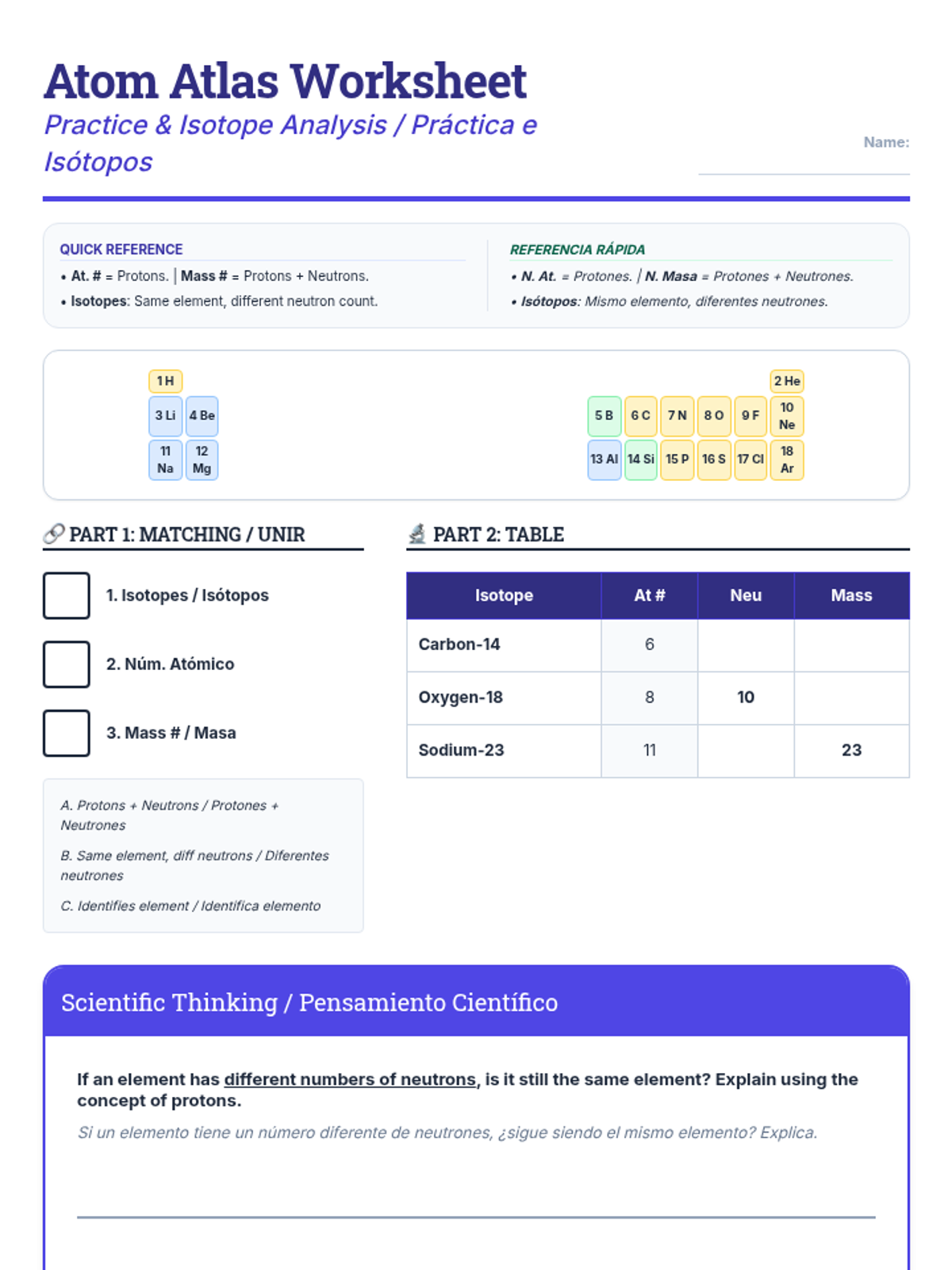
An introductory lesson on how the periodic table is organized, covering atomic numbers, mass, types of elements, and periodic trends.
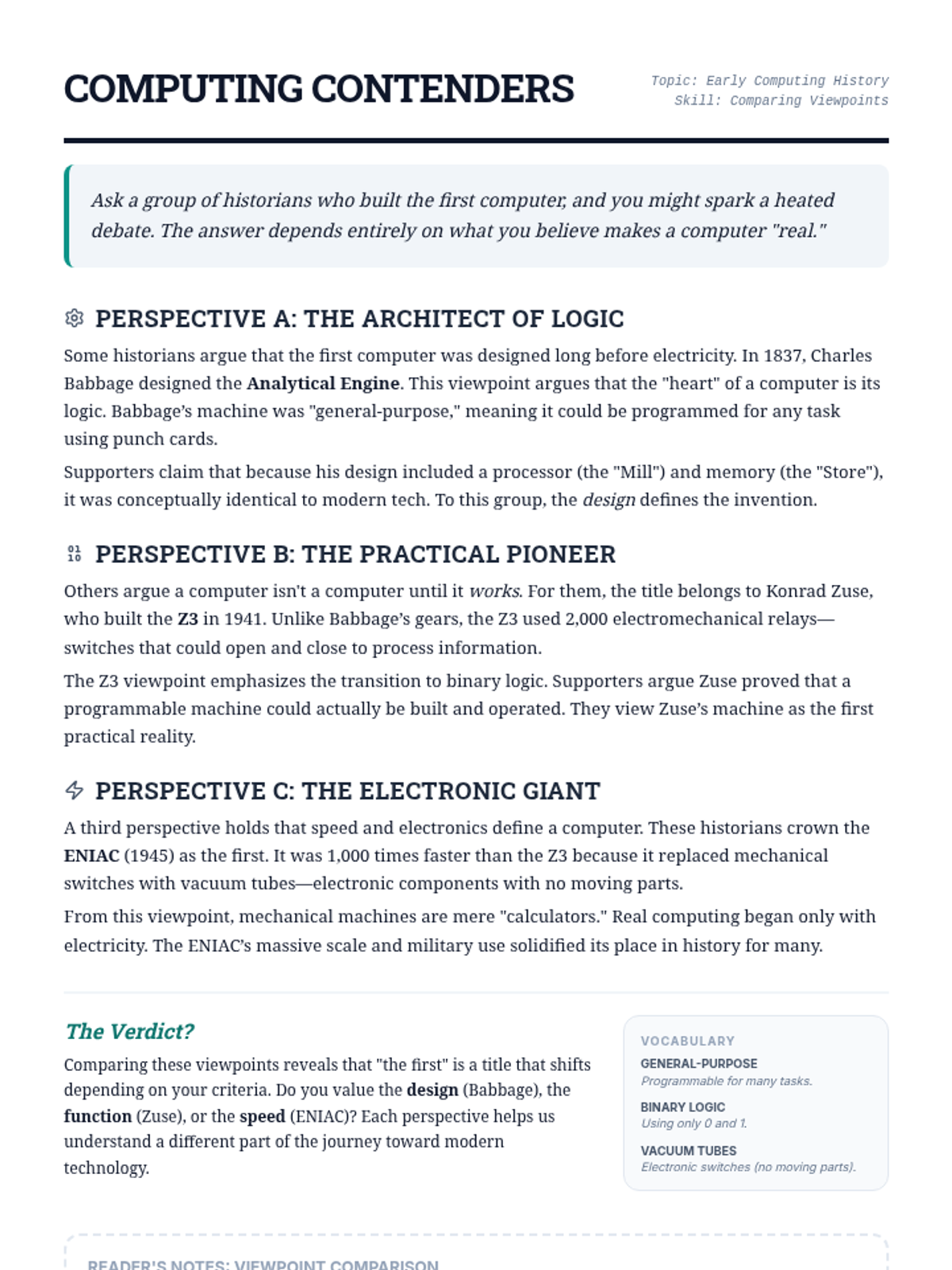
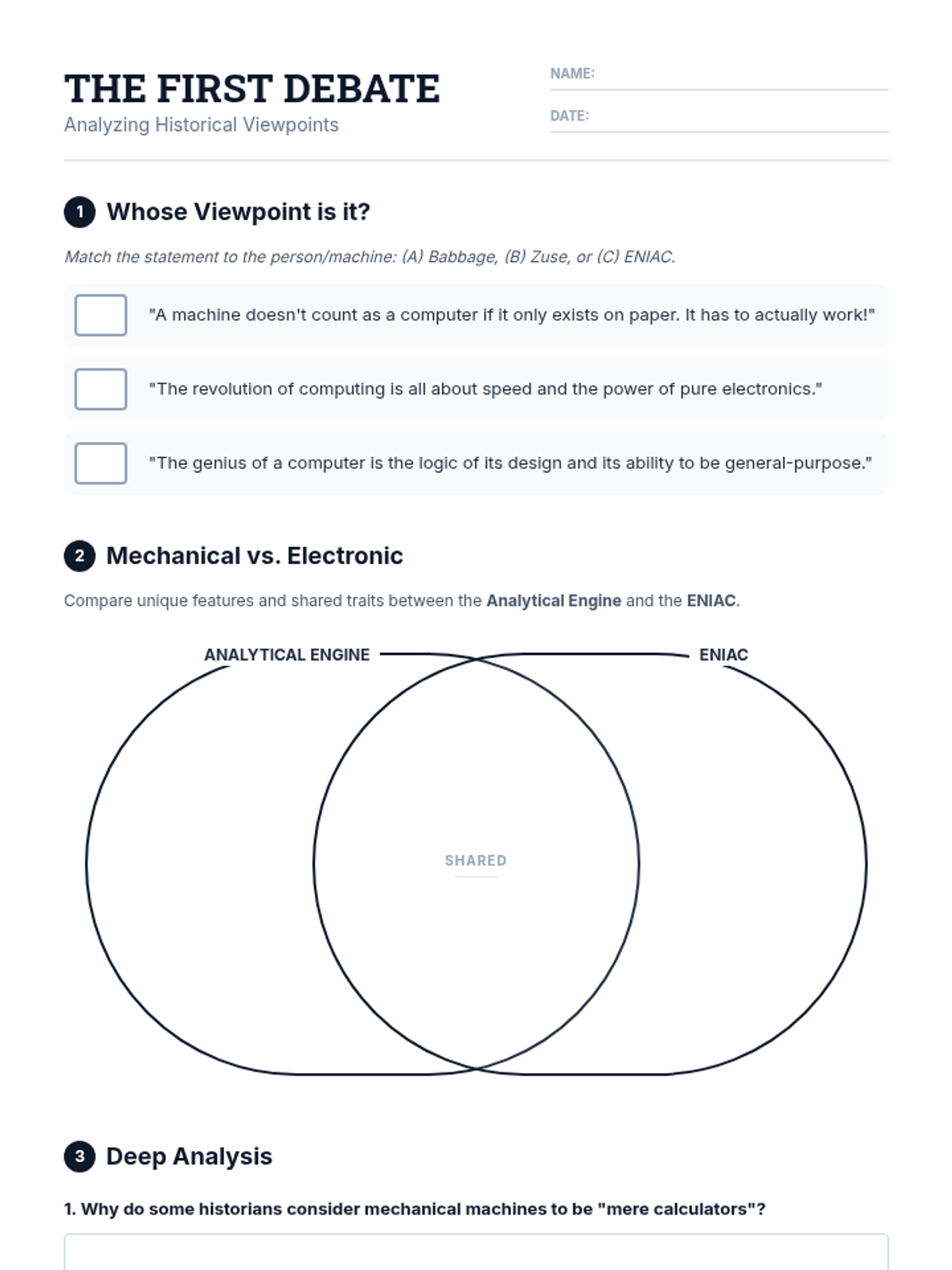
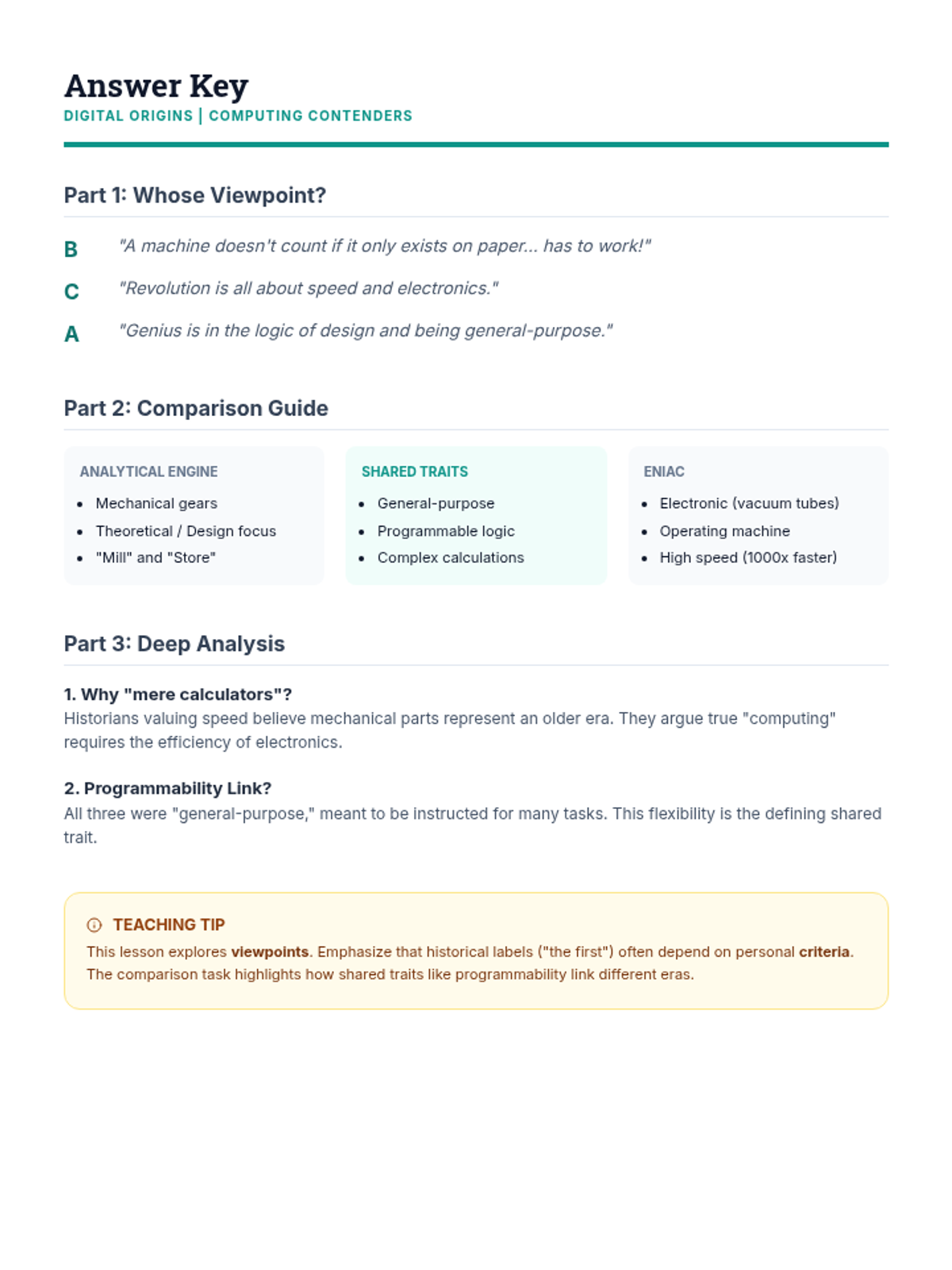
A lesson exploring the evolution of early computing machines and the varying historical perspectives on which machine deserves the title of the 'first' computer. Students will analyze different viewpoints based on technical criteria like programmability, electronics, and logic.
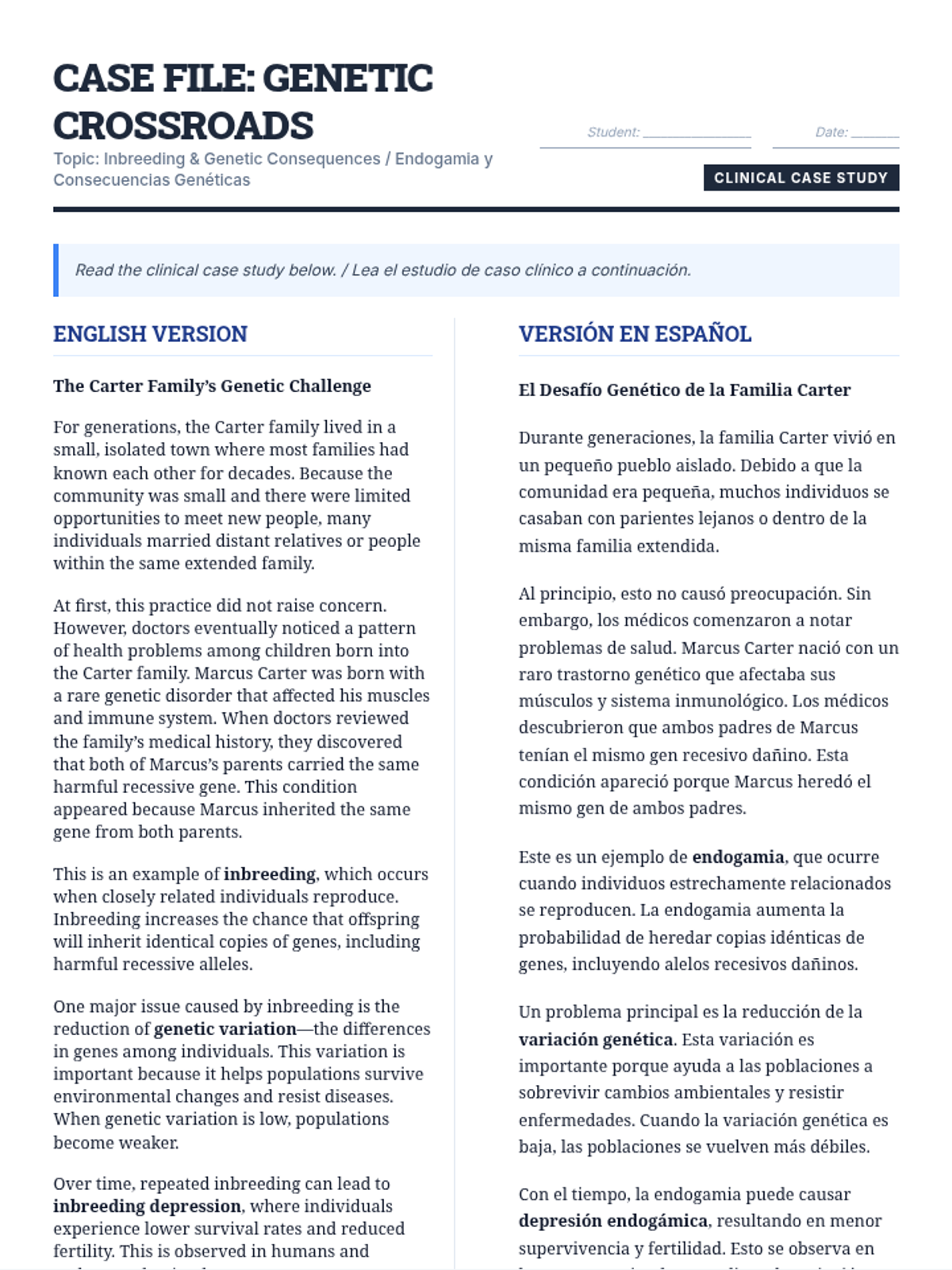
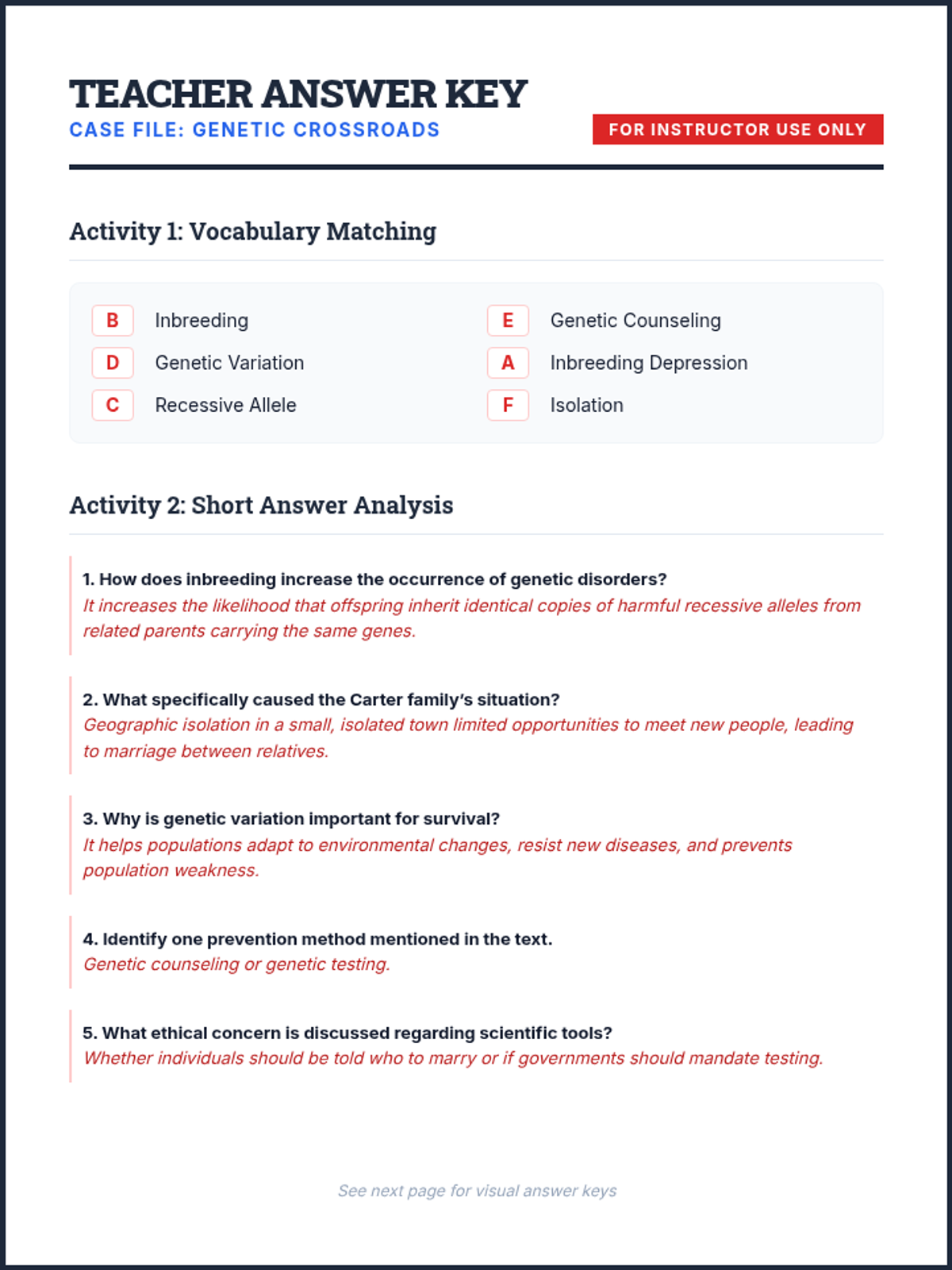
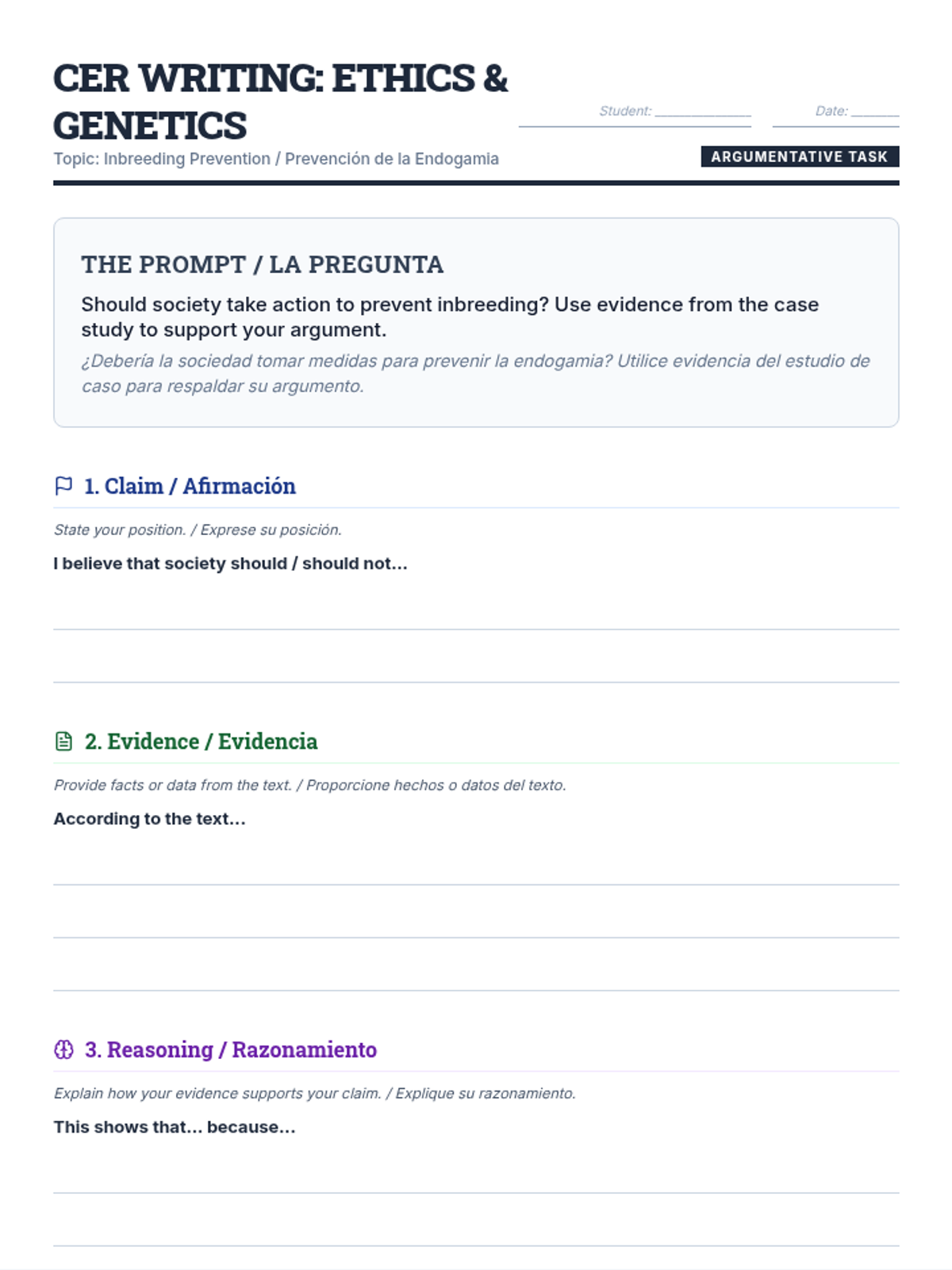
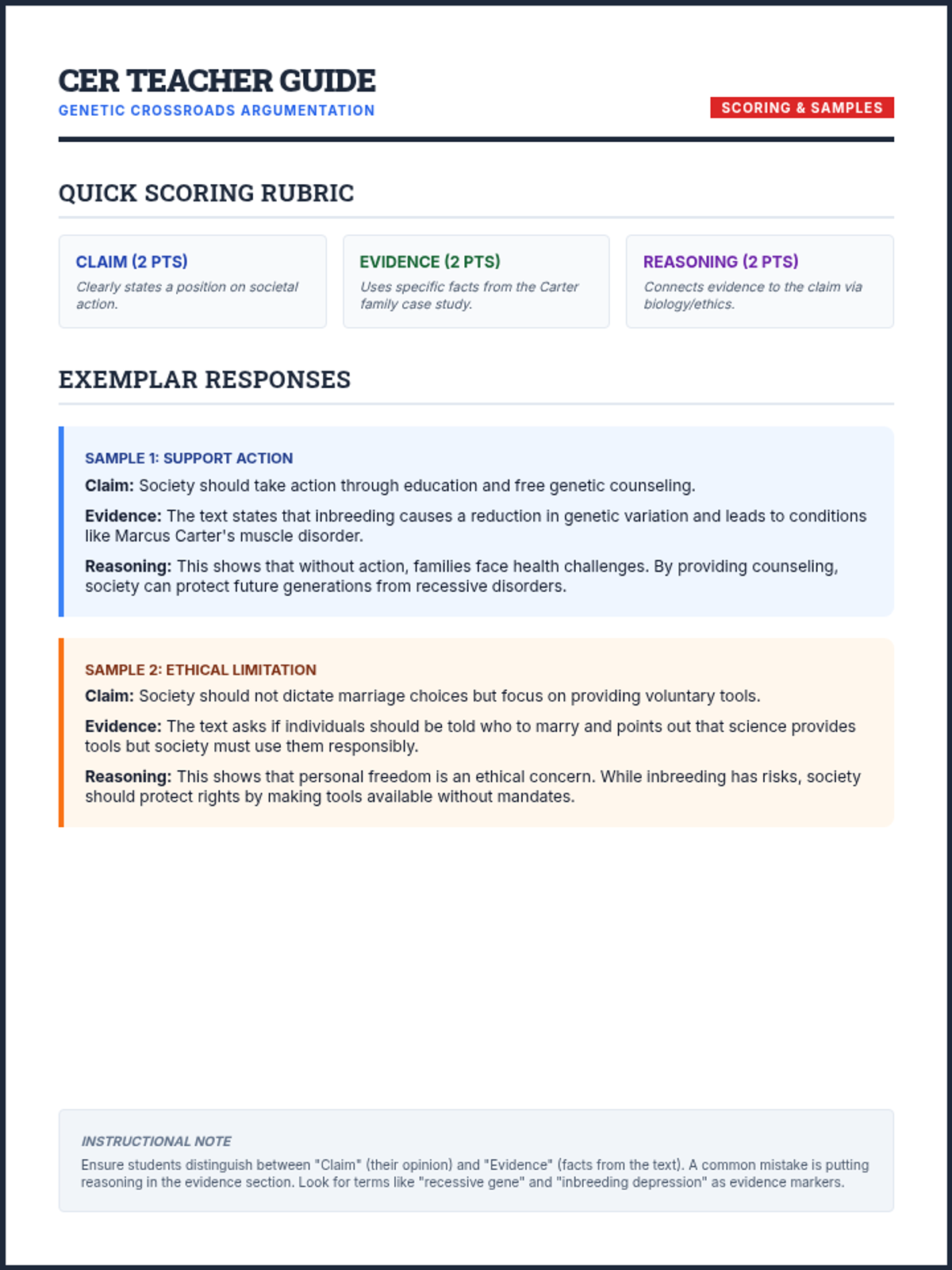
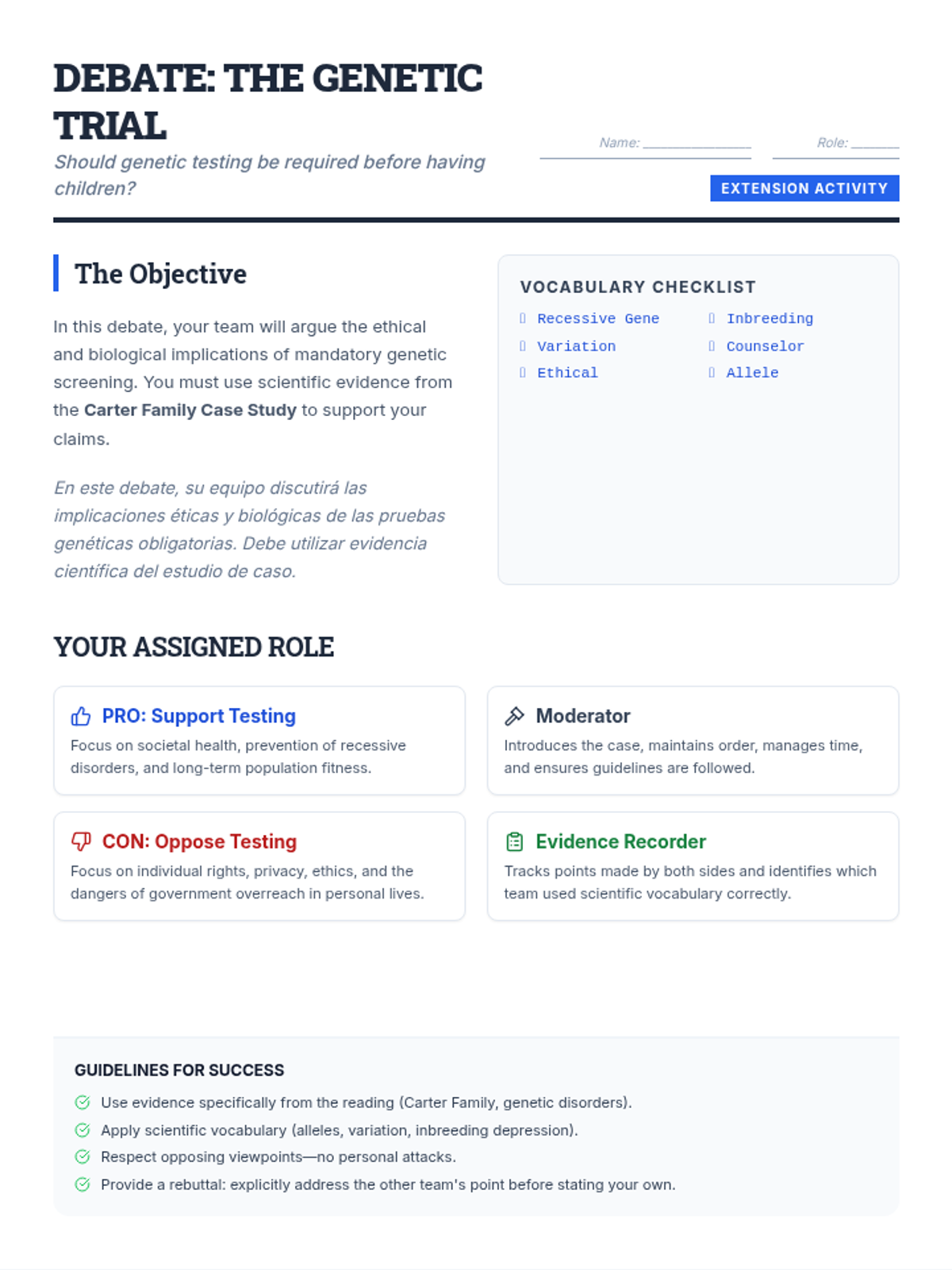
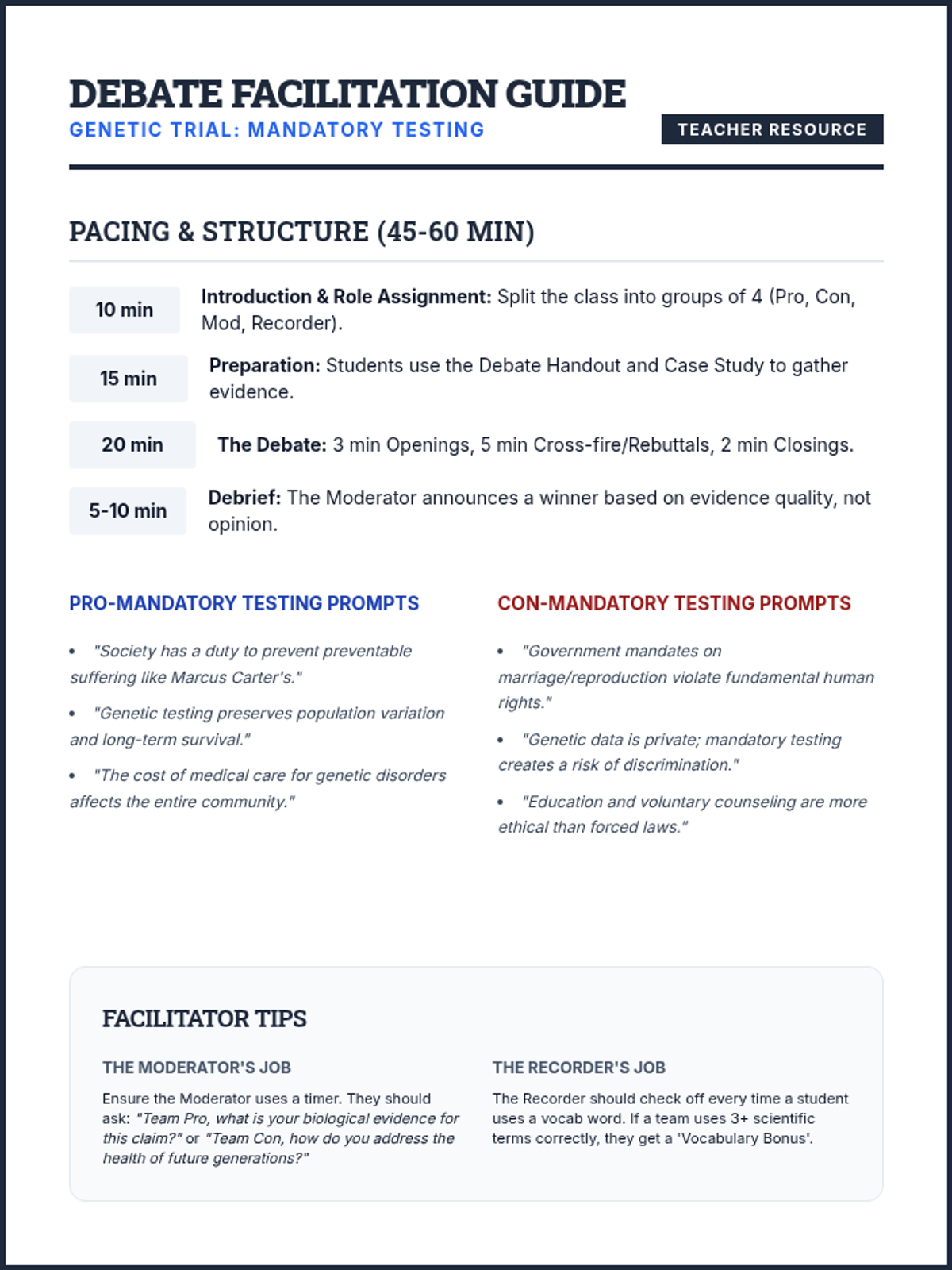
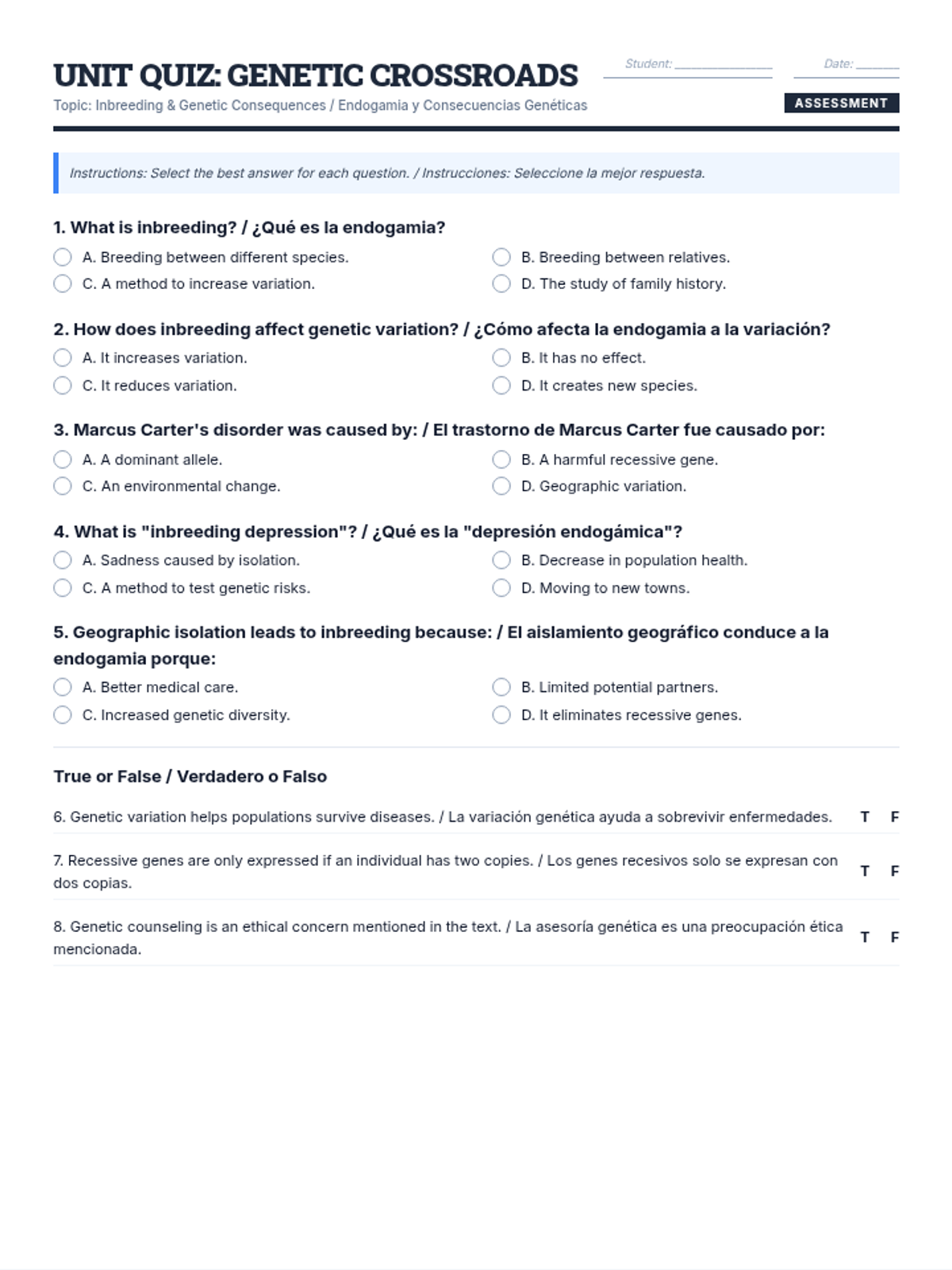
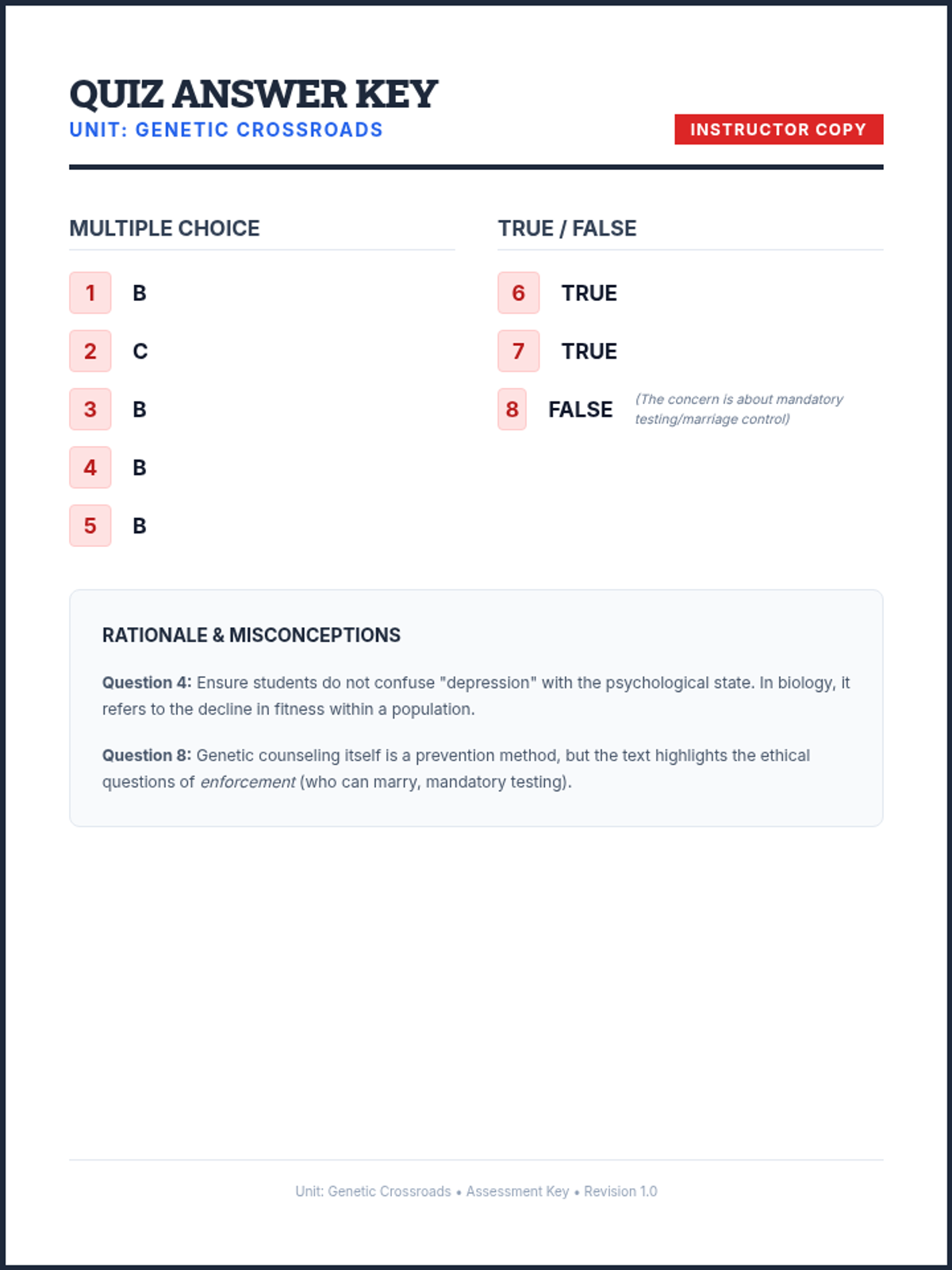
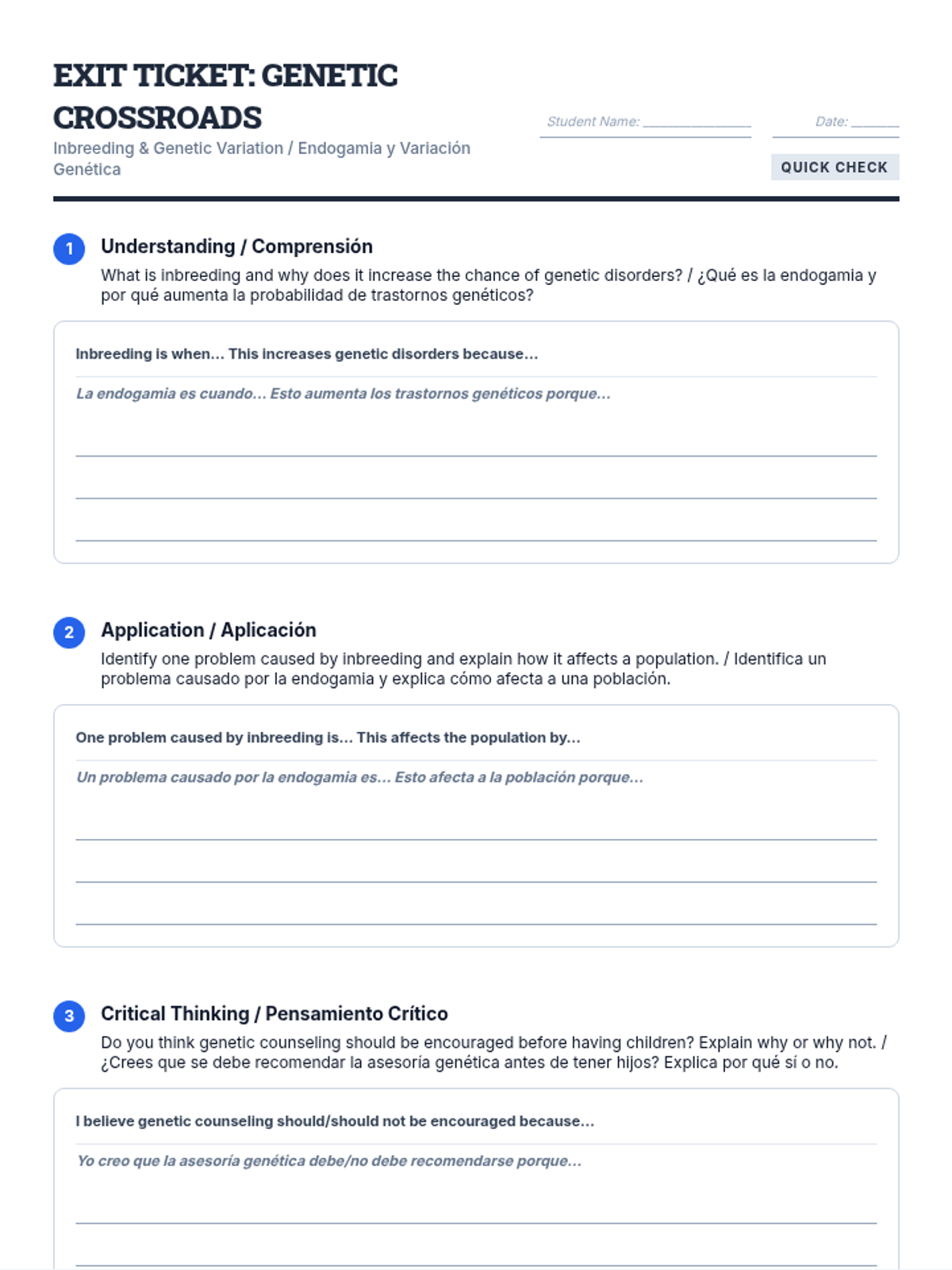
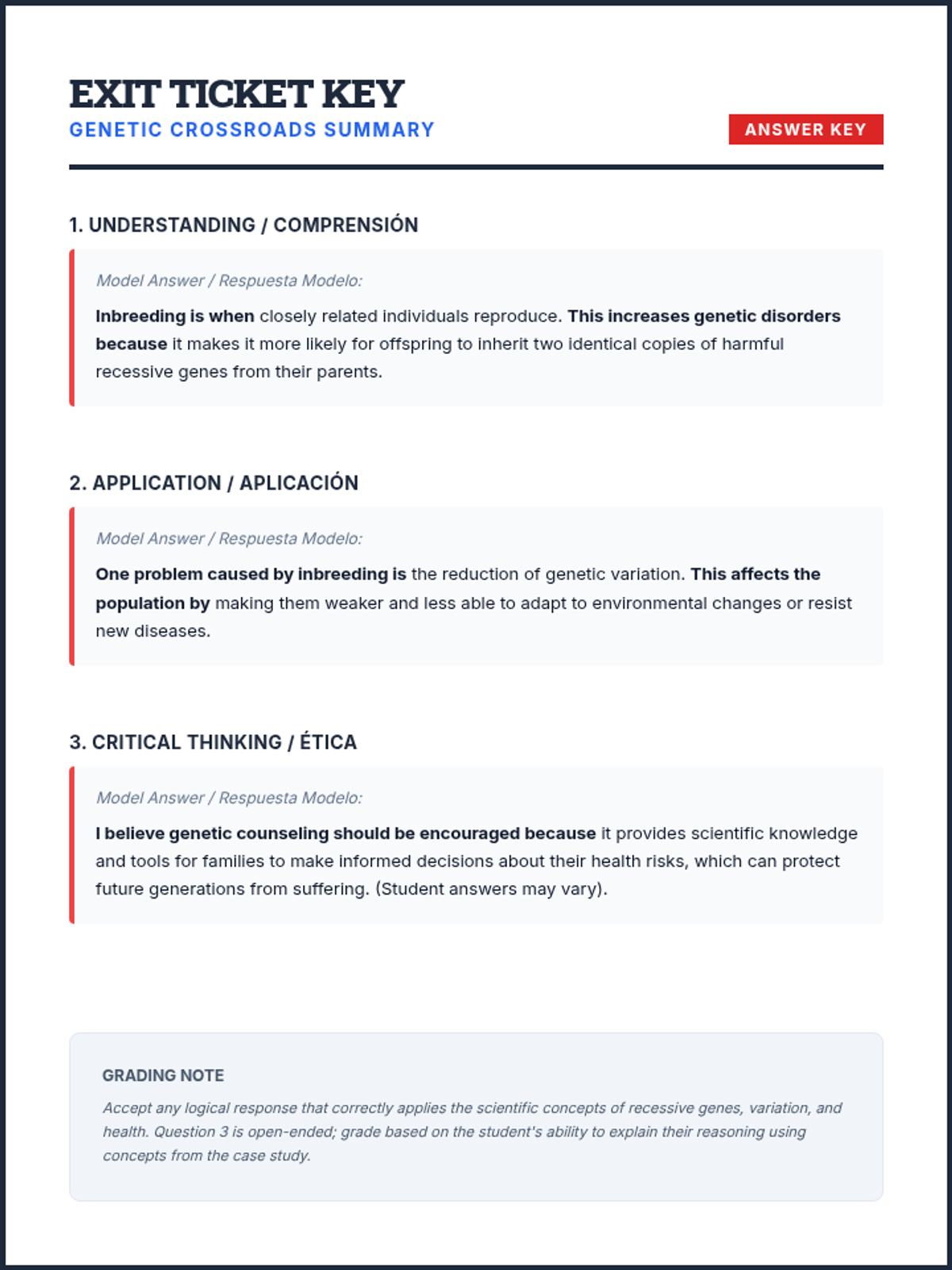
A biology lesson focused on the genetic implications of inbreeding, utilizing a bilingual case study to explore recessive traits, genetic variation, and population health.
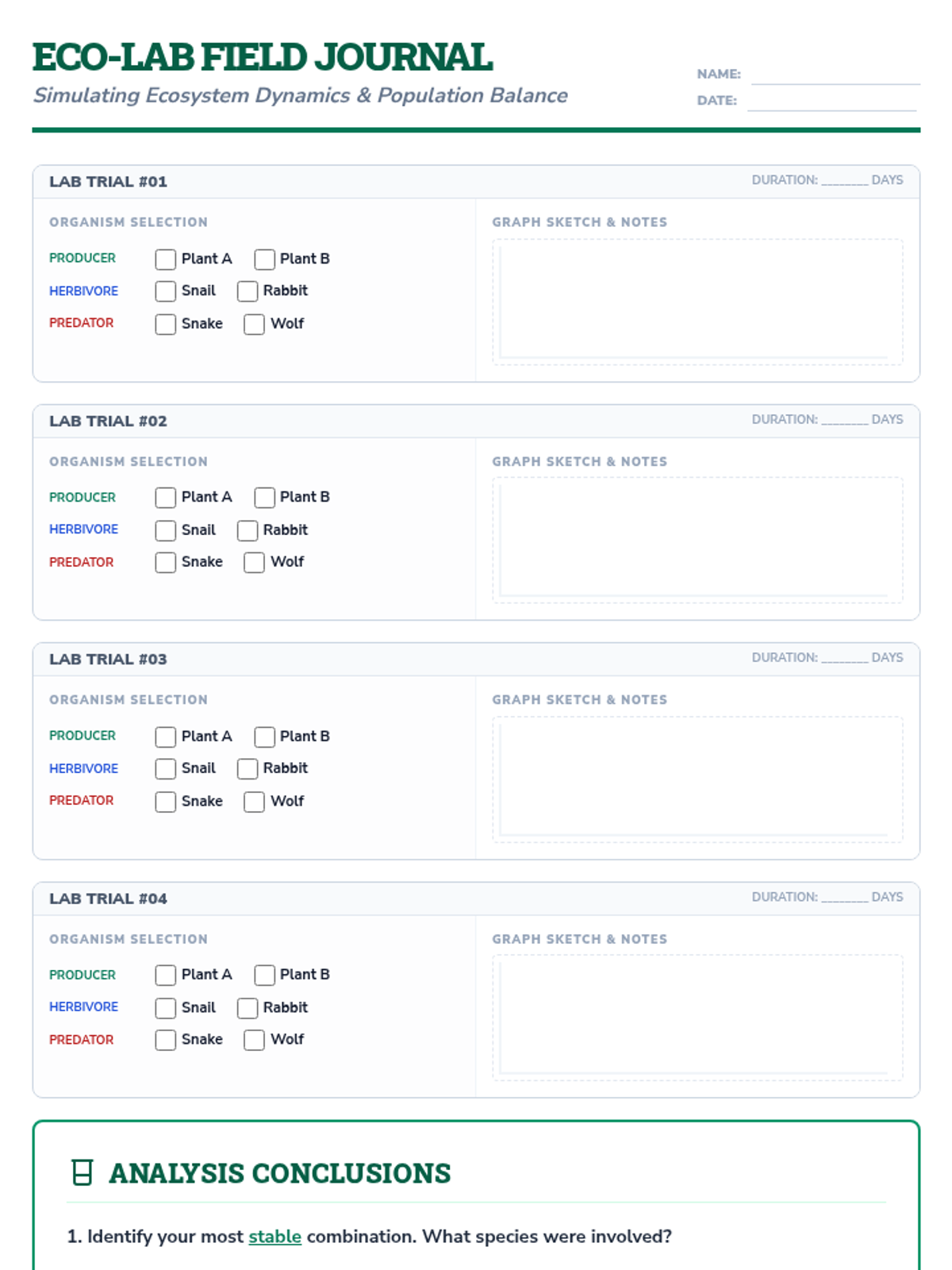
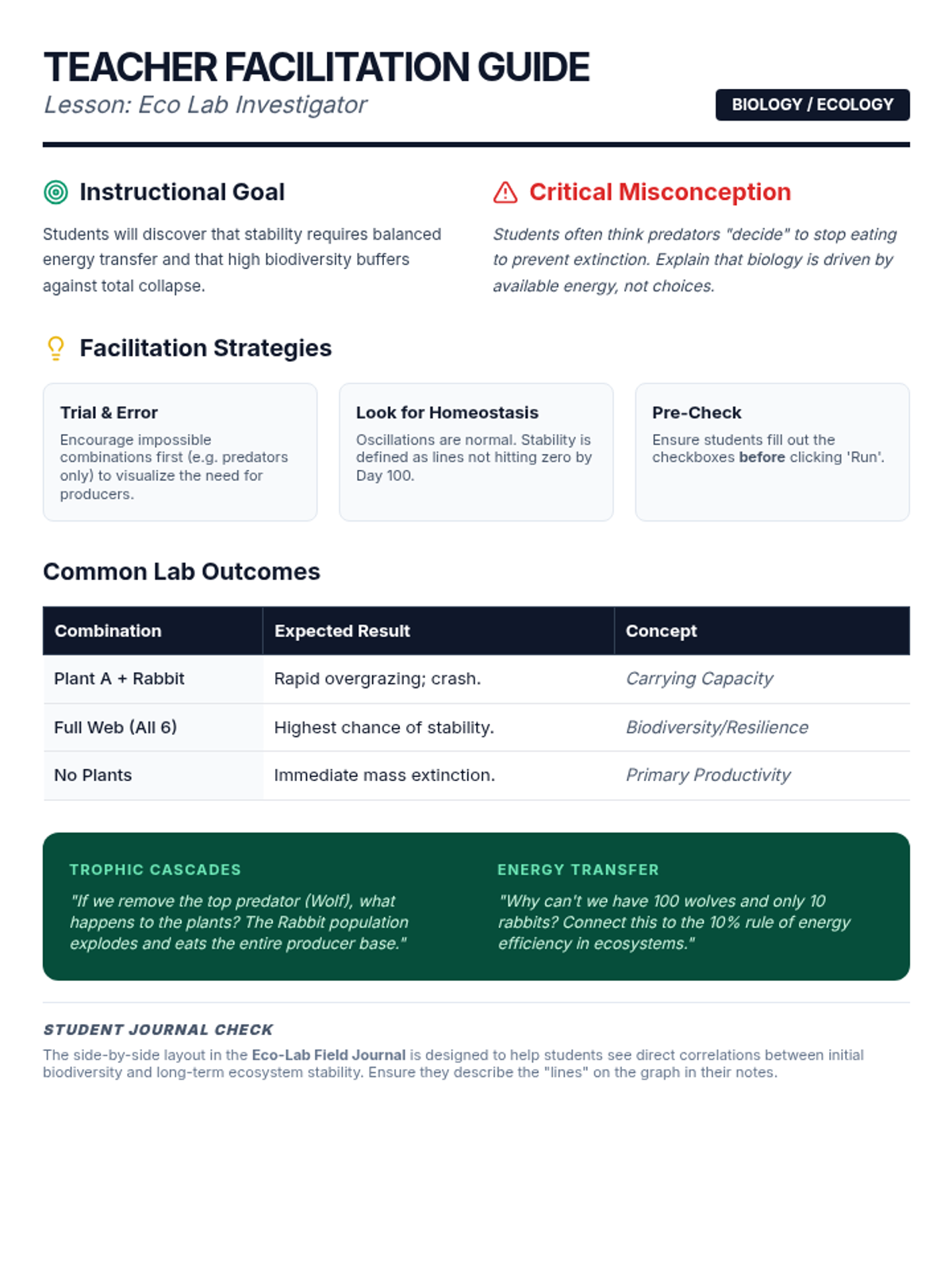
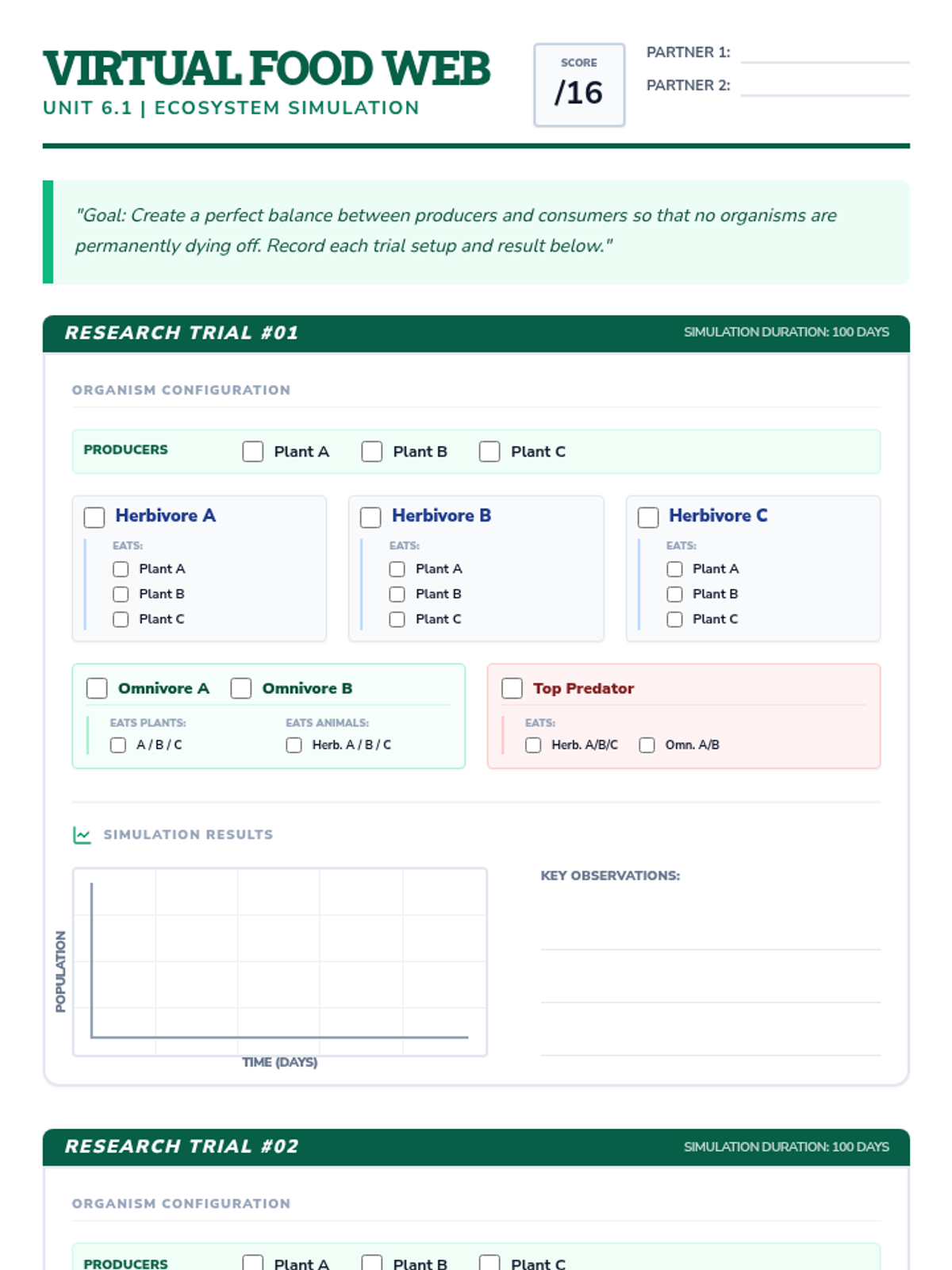
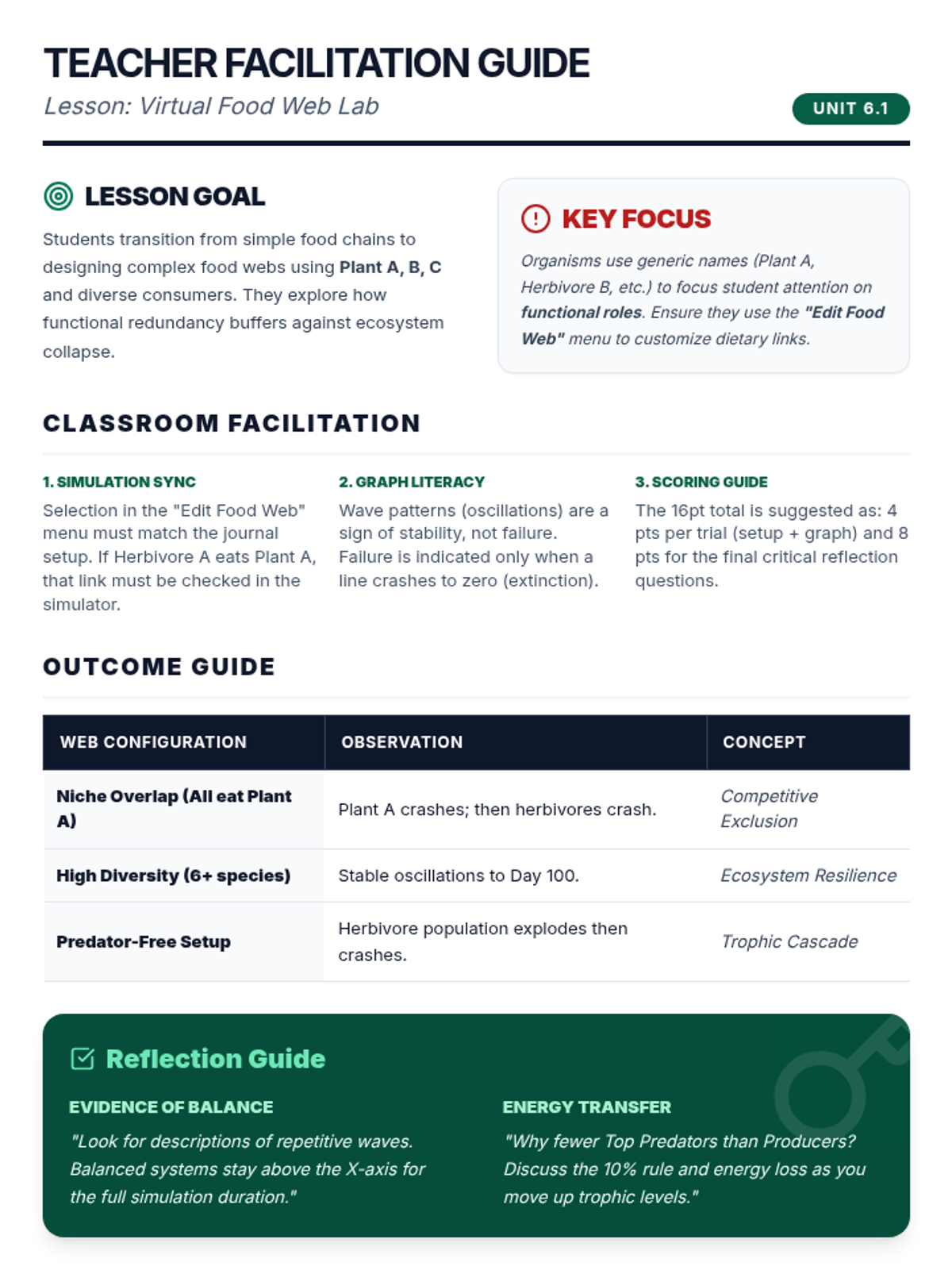
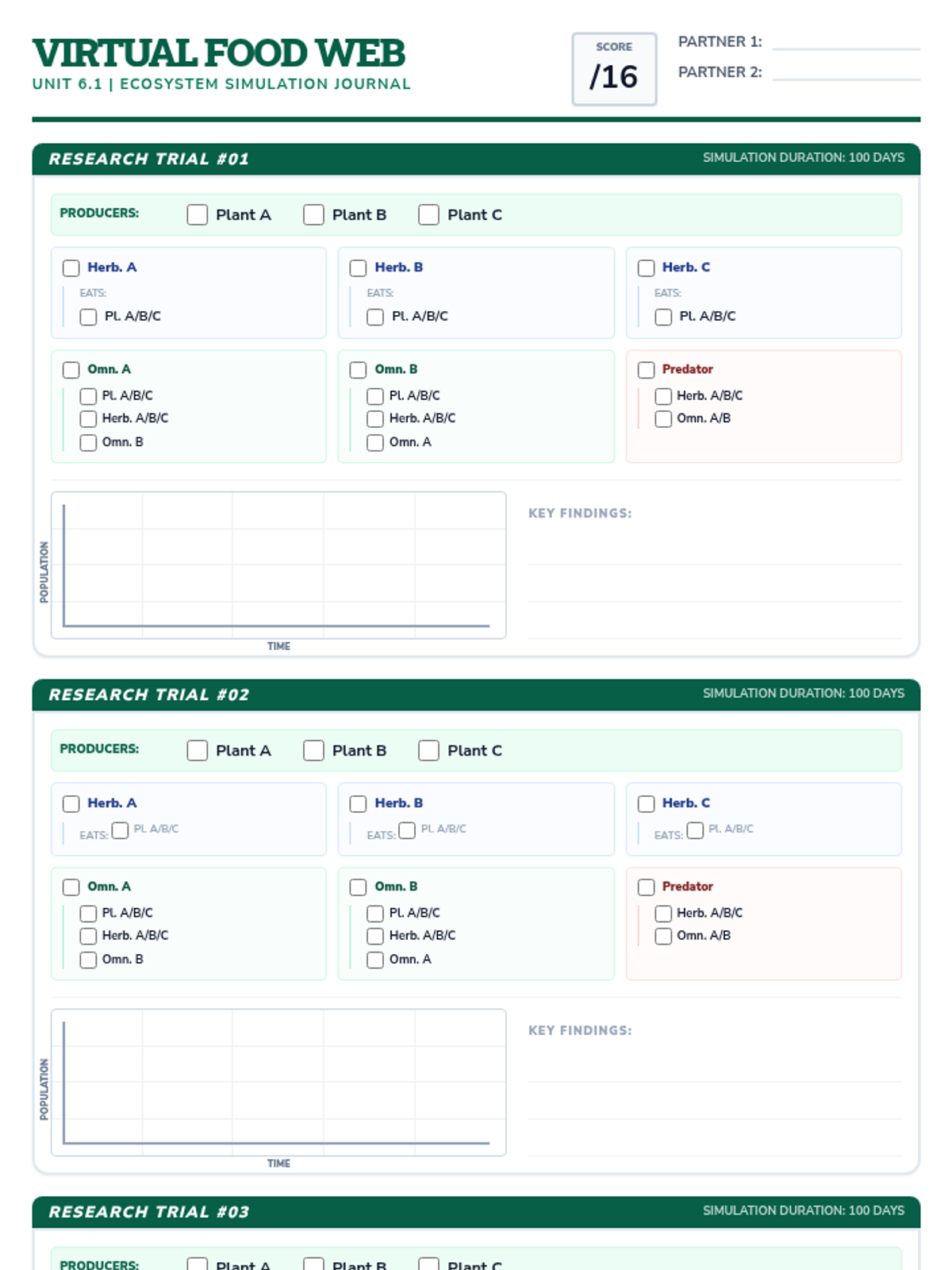
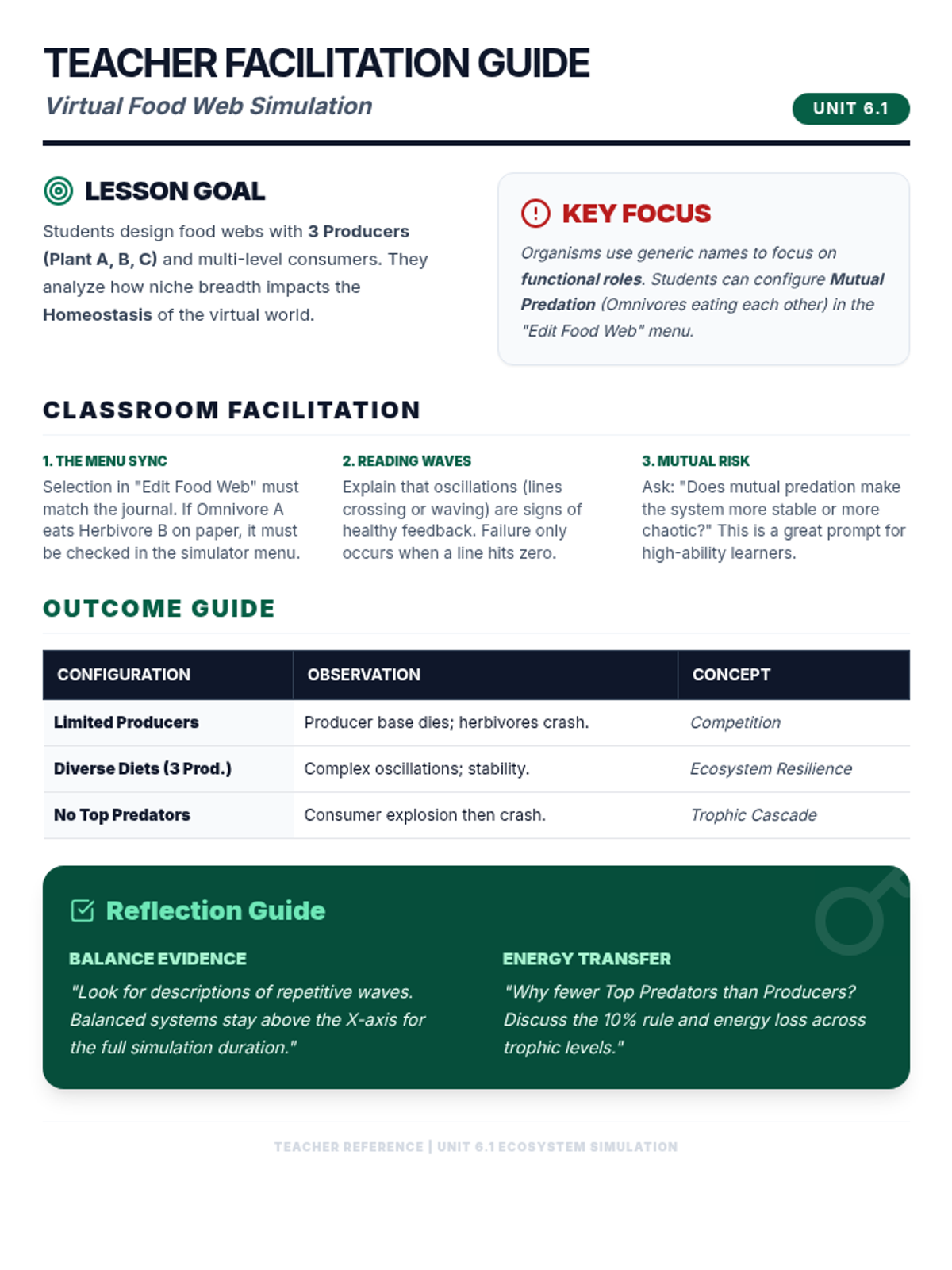
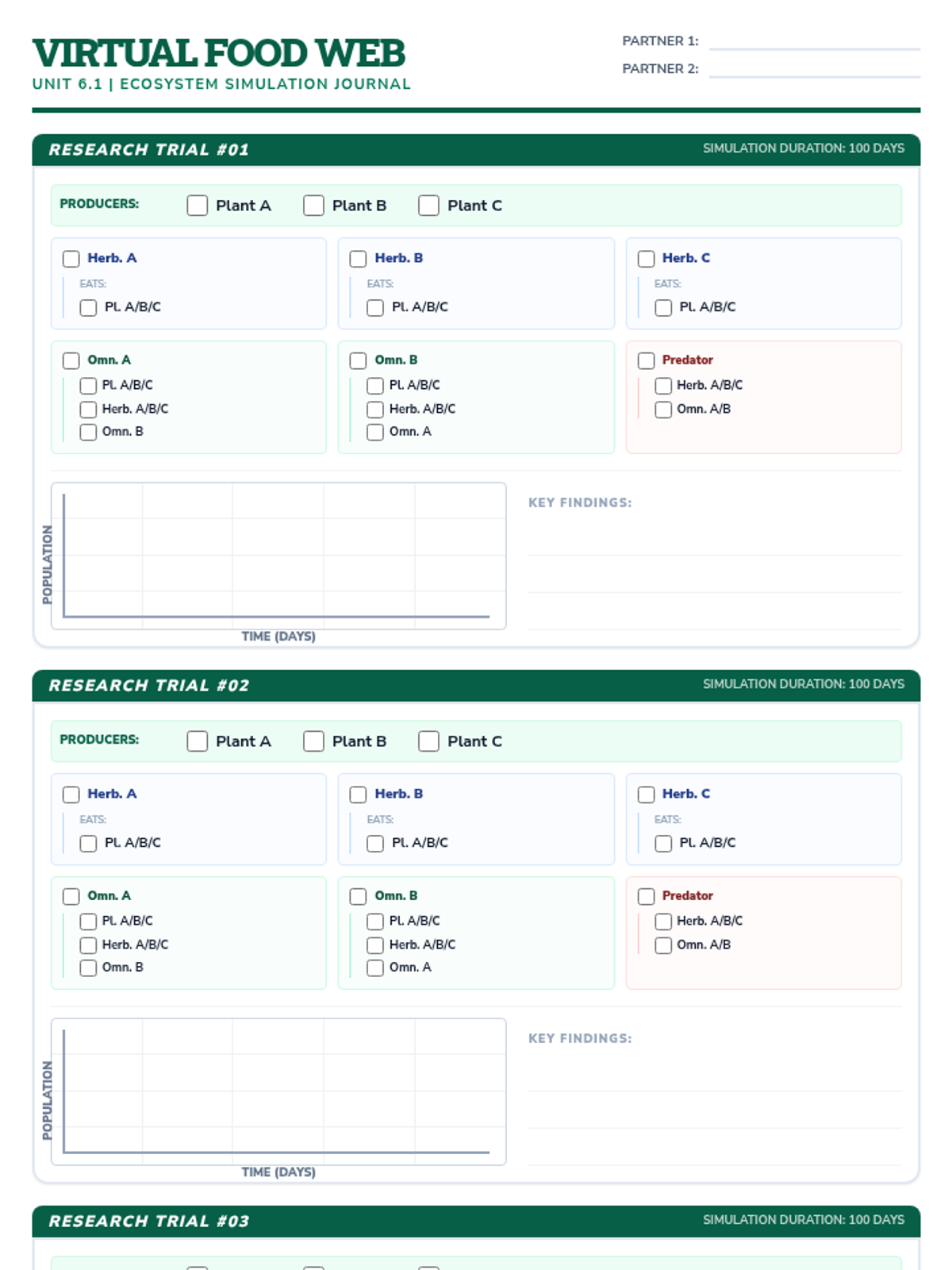
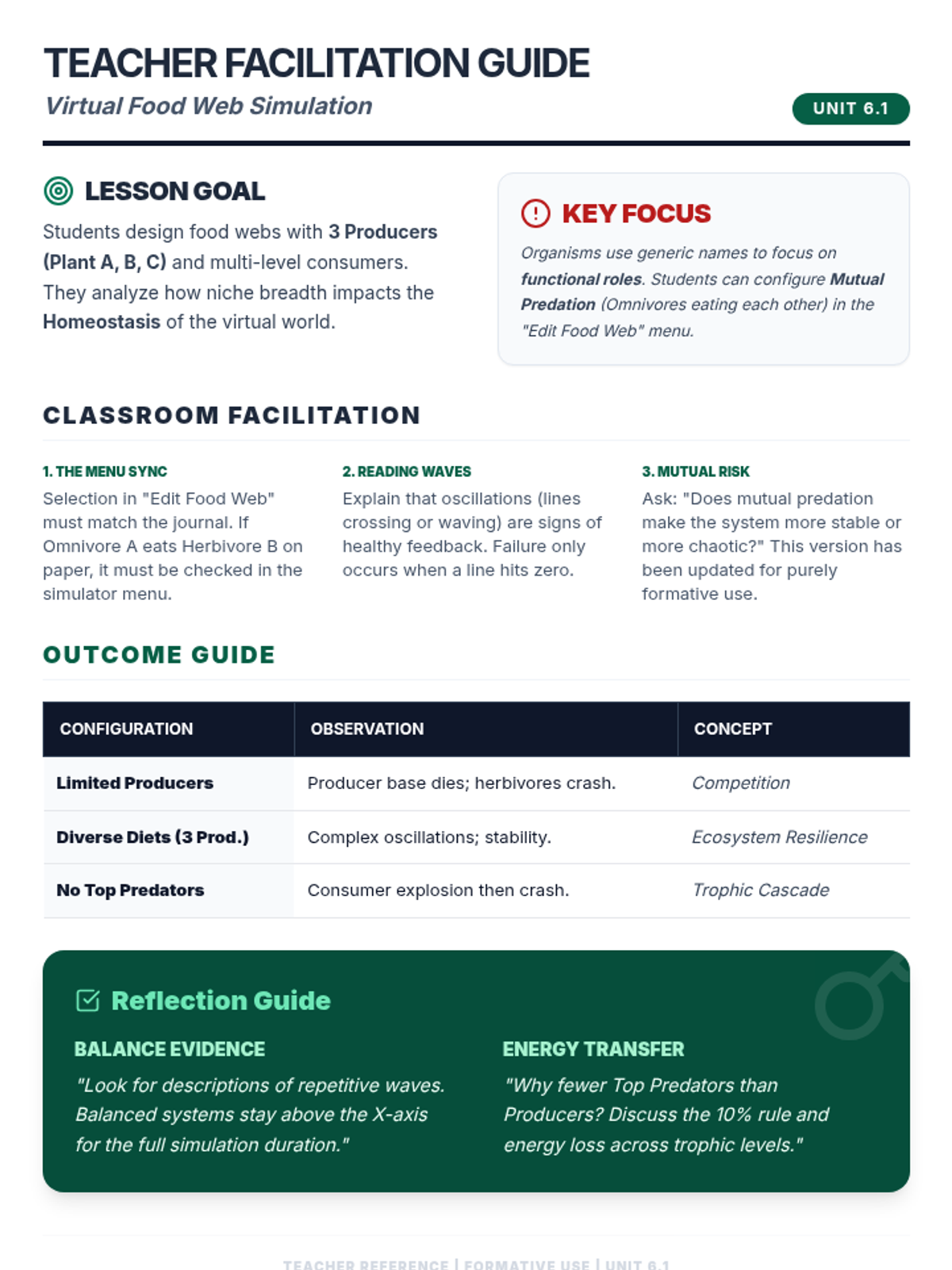
Students use an interactive ecology simulator to explore population dynamics by testing various combinations of producers, primary consumers, and secondary consumers. They record their findings in a structured field journal to identify patterns of stability and extinction.
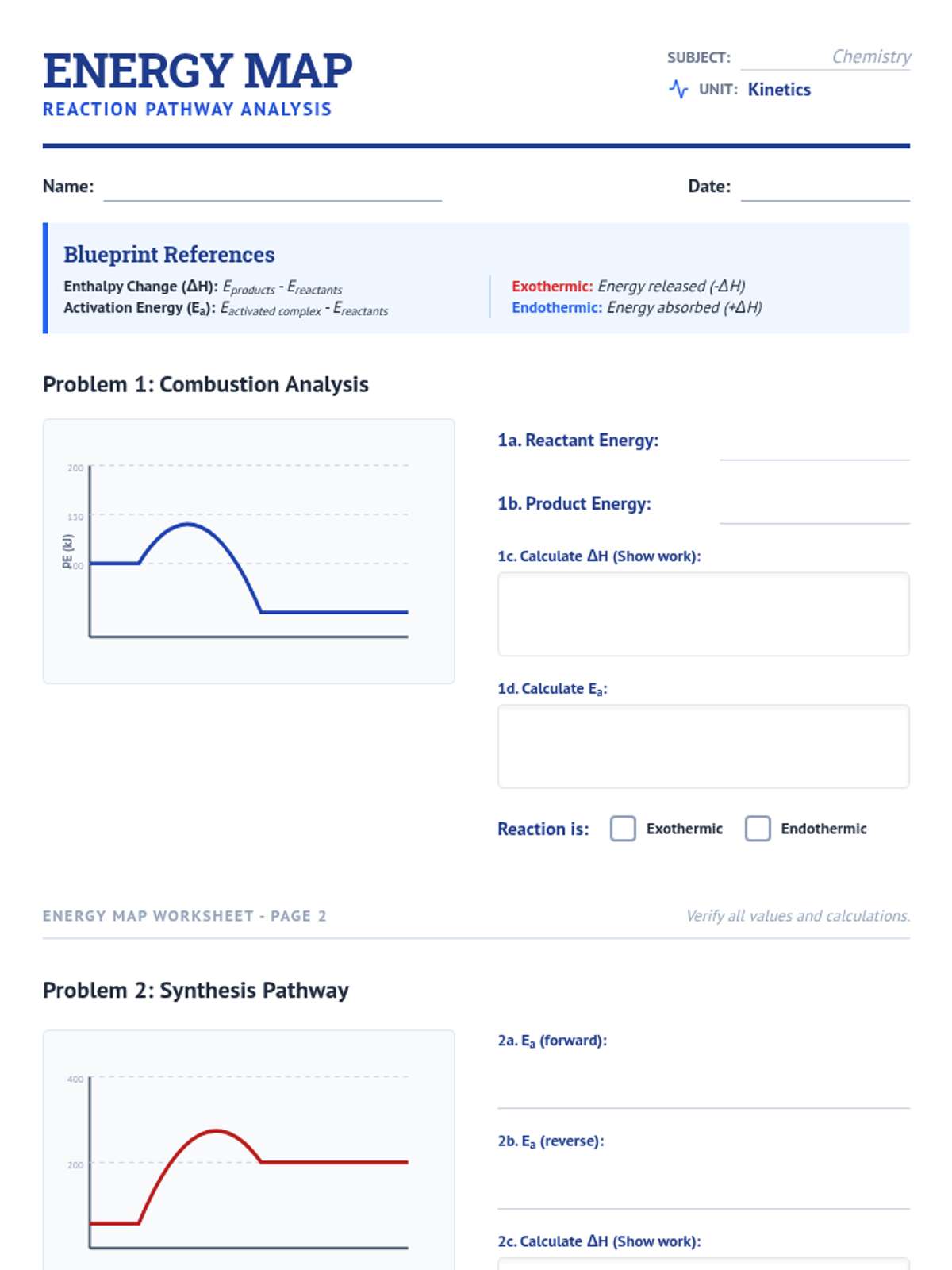
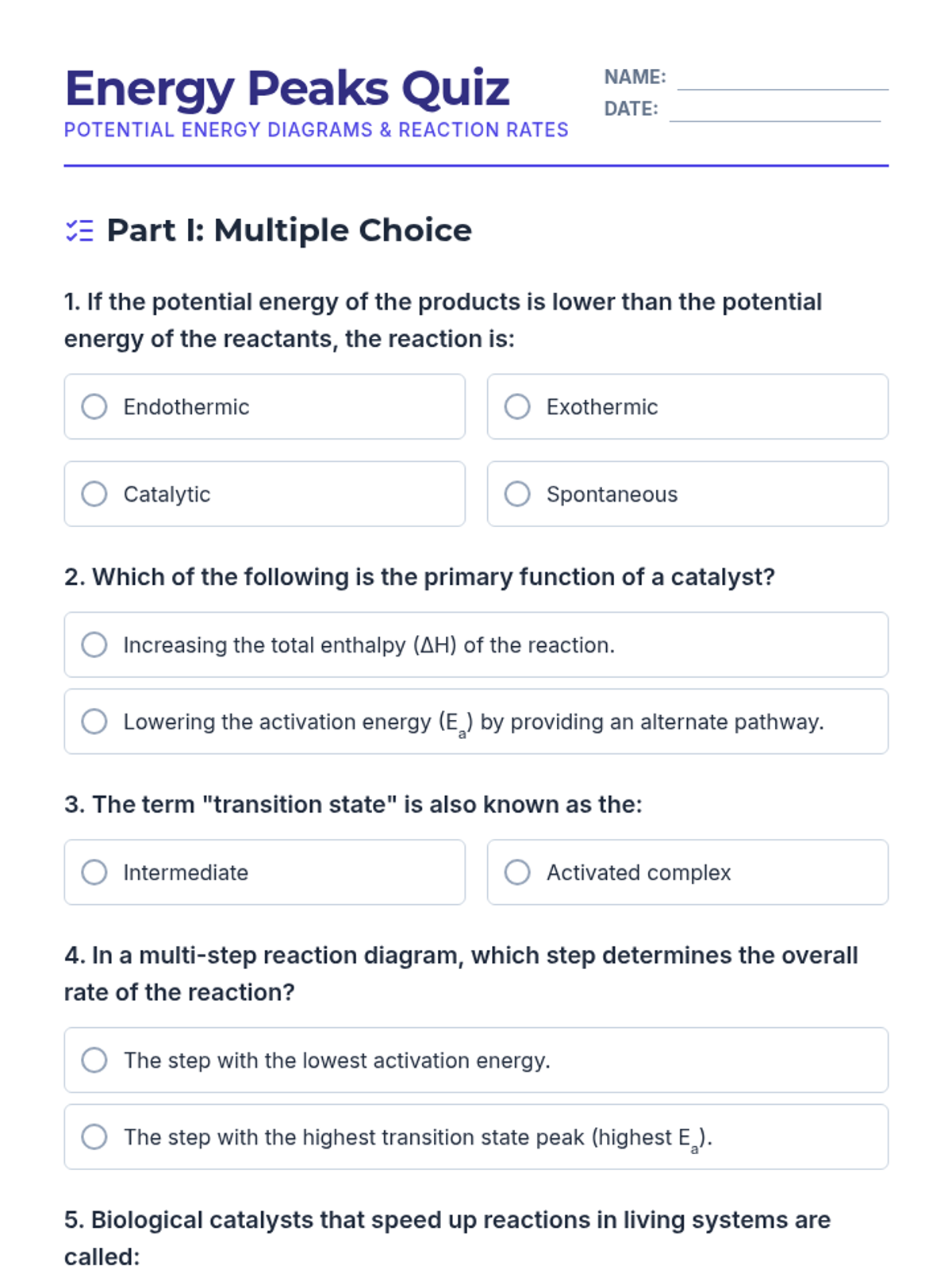
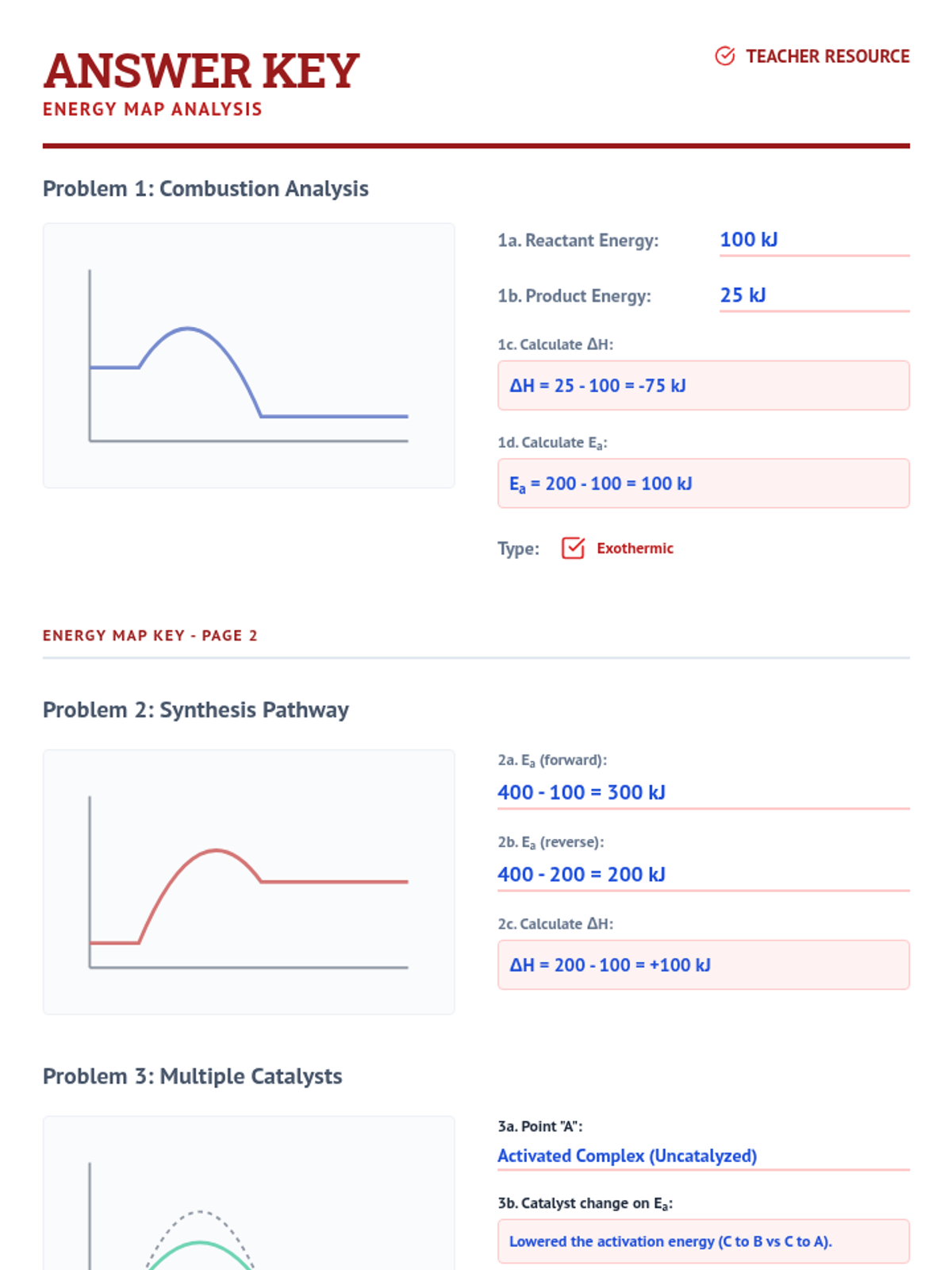
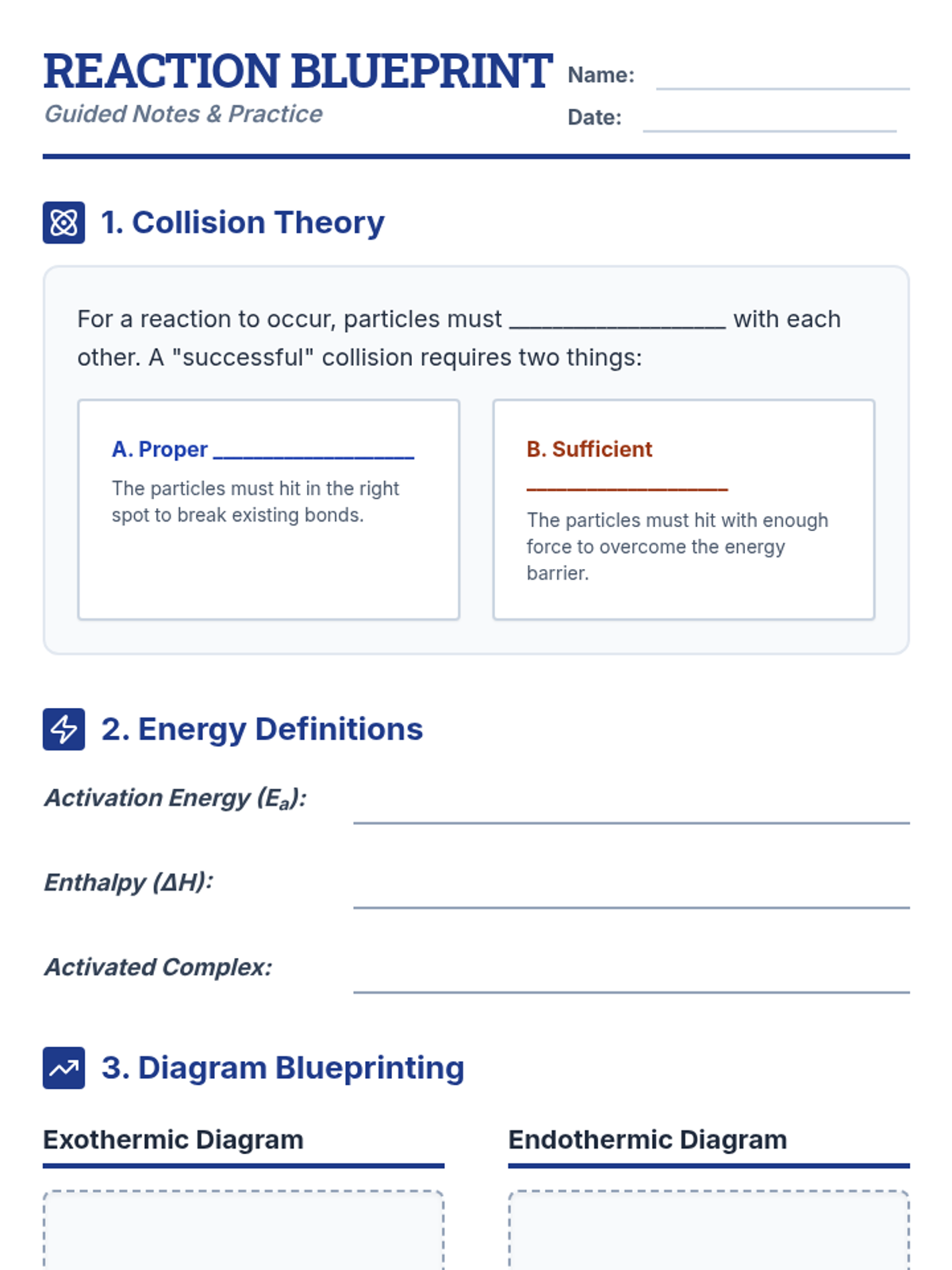
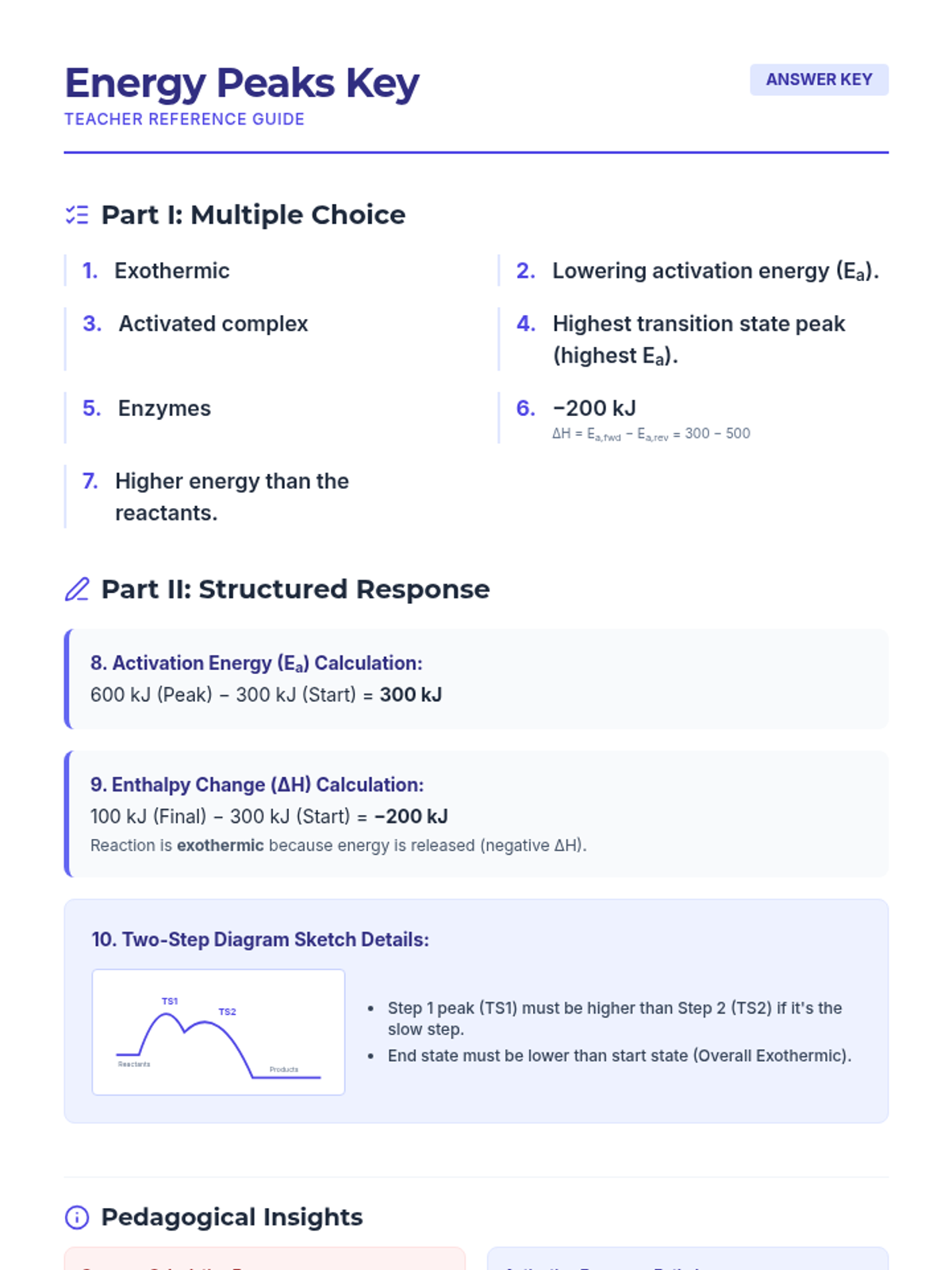
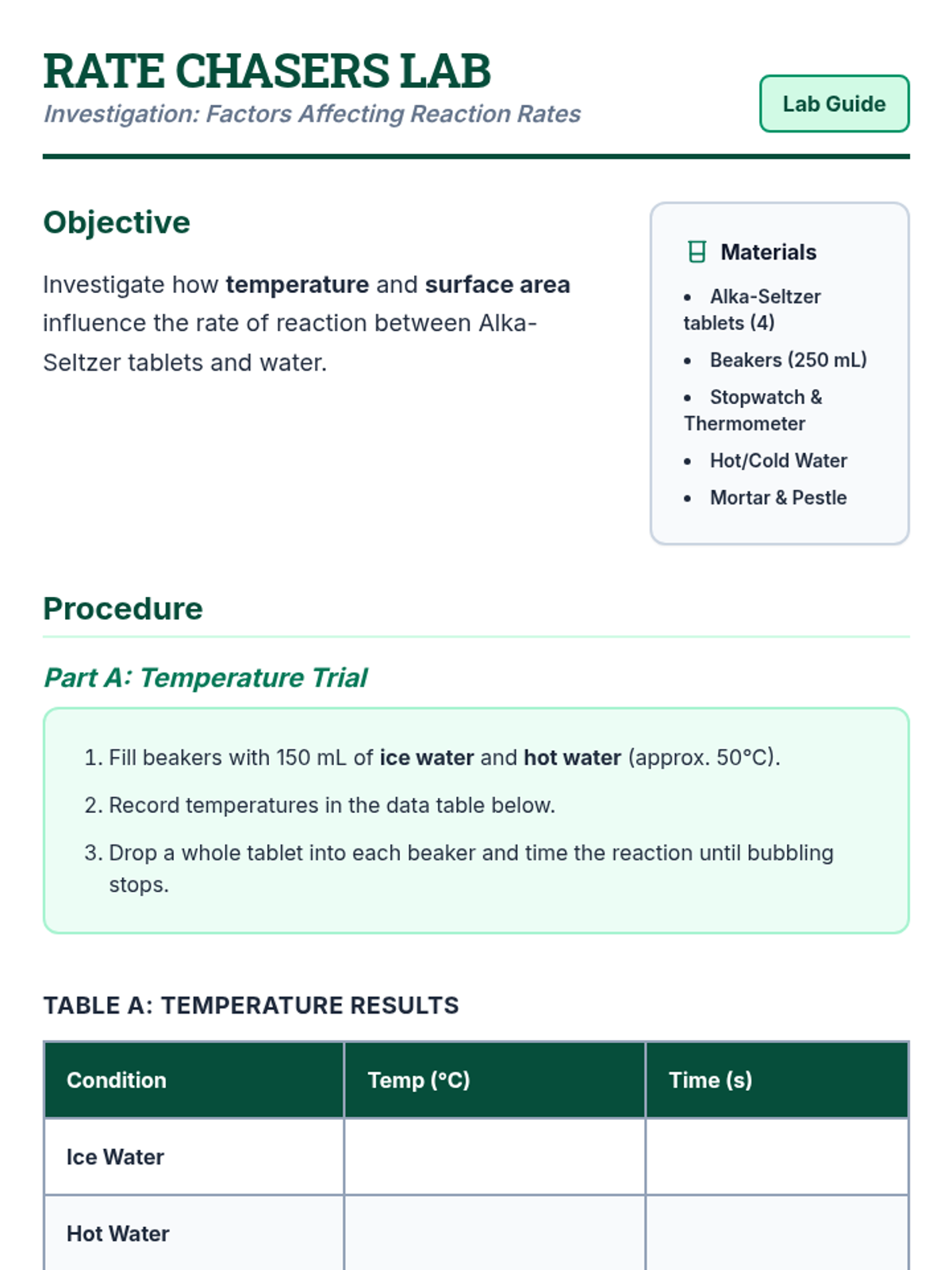
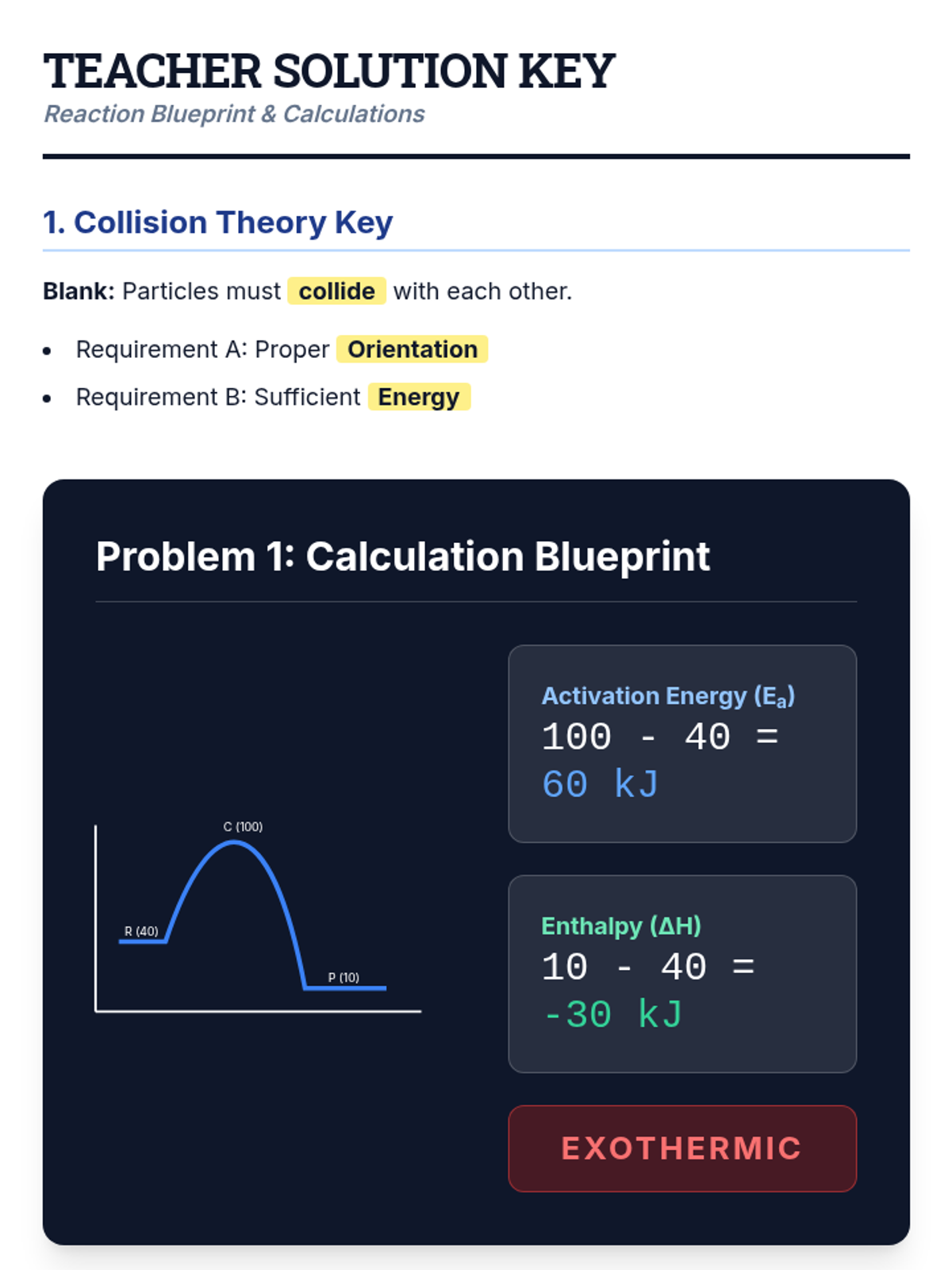
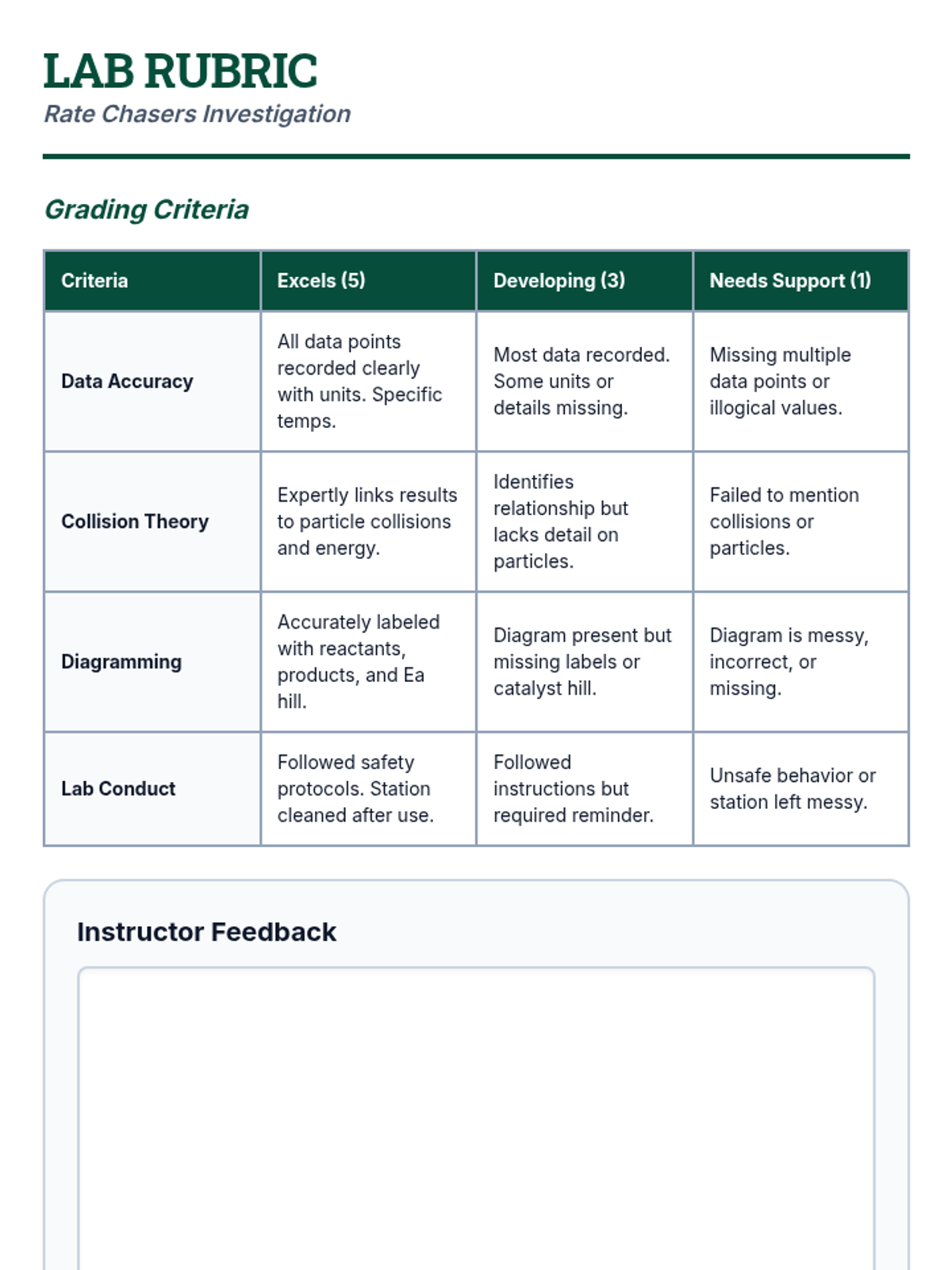
A comprehensive lesson exploring the mechanics of chemical reactions, including collision theory, energy diagrams, and the factors that influence reaction rates. Students will learn to visualize and calculate energy changes while conducting a hands-on investigation.
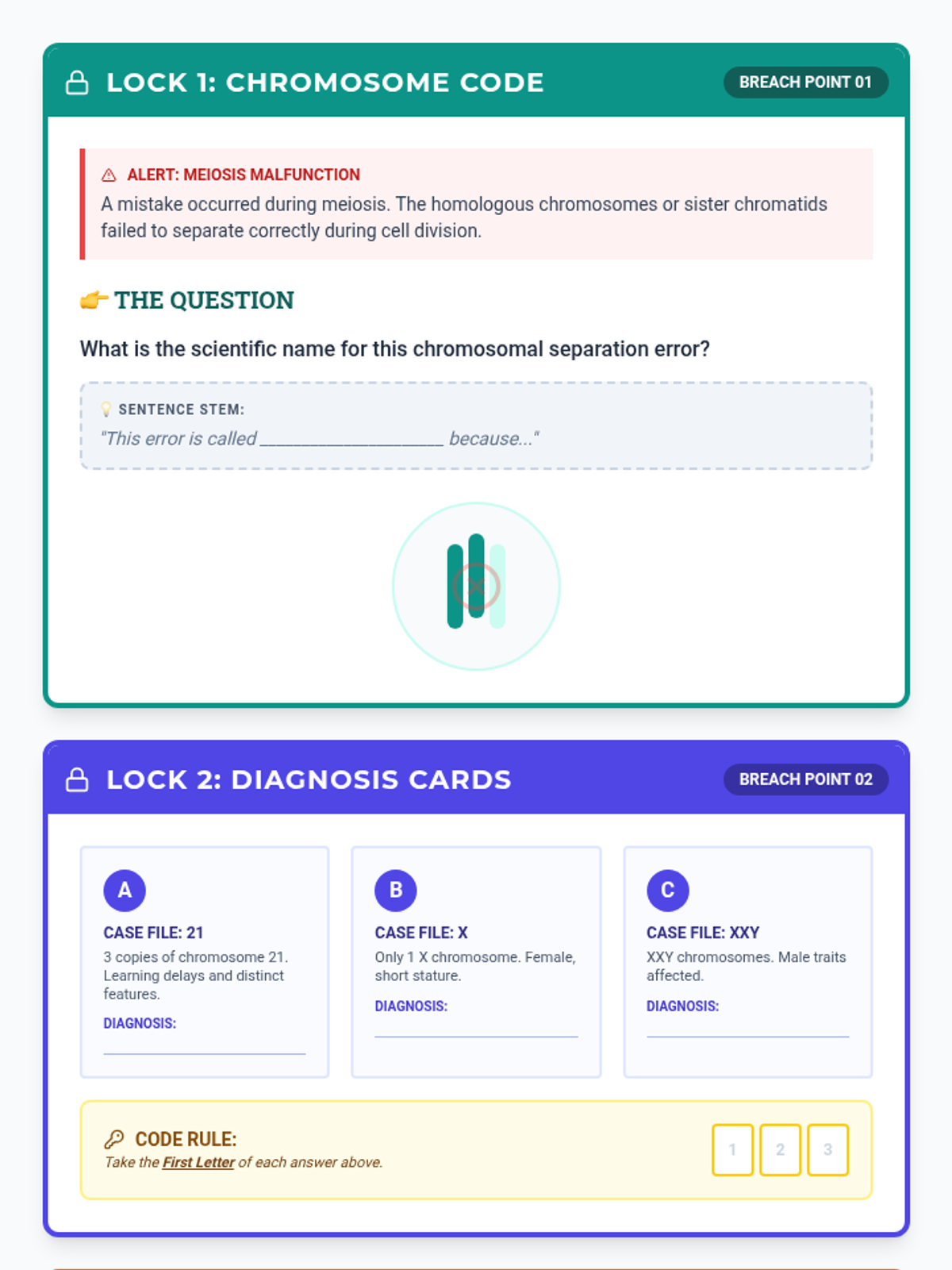
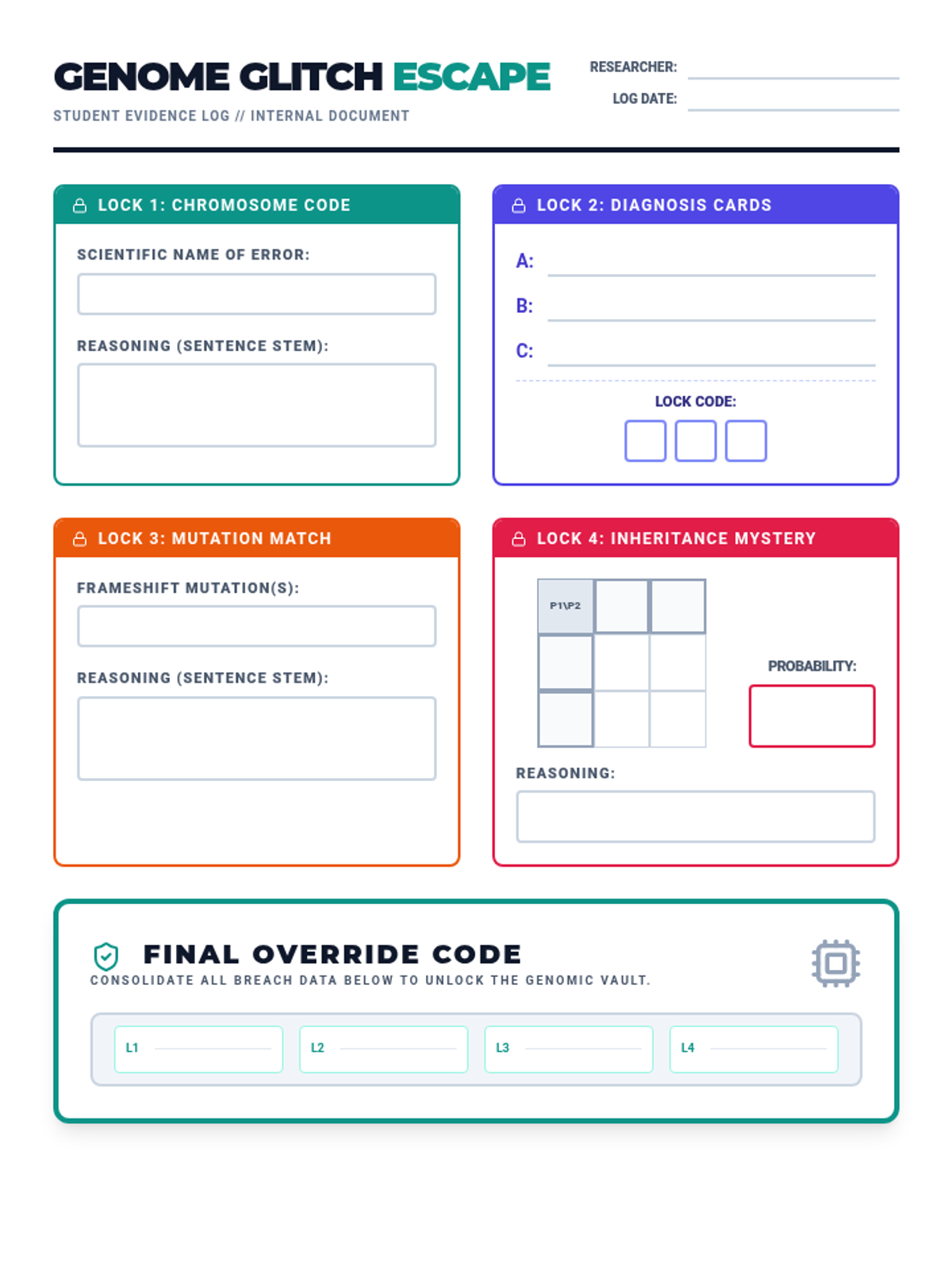
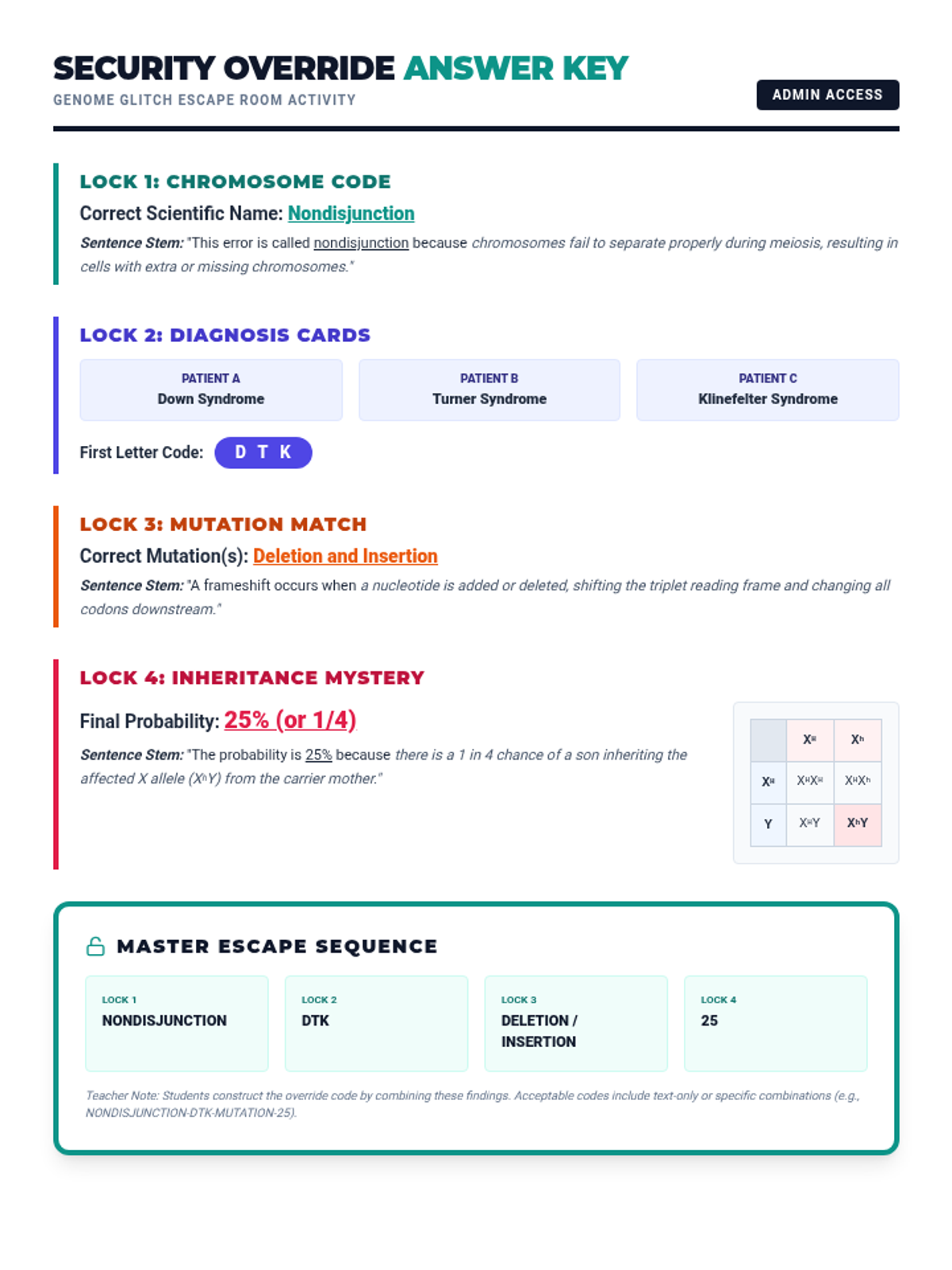
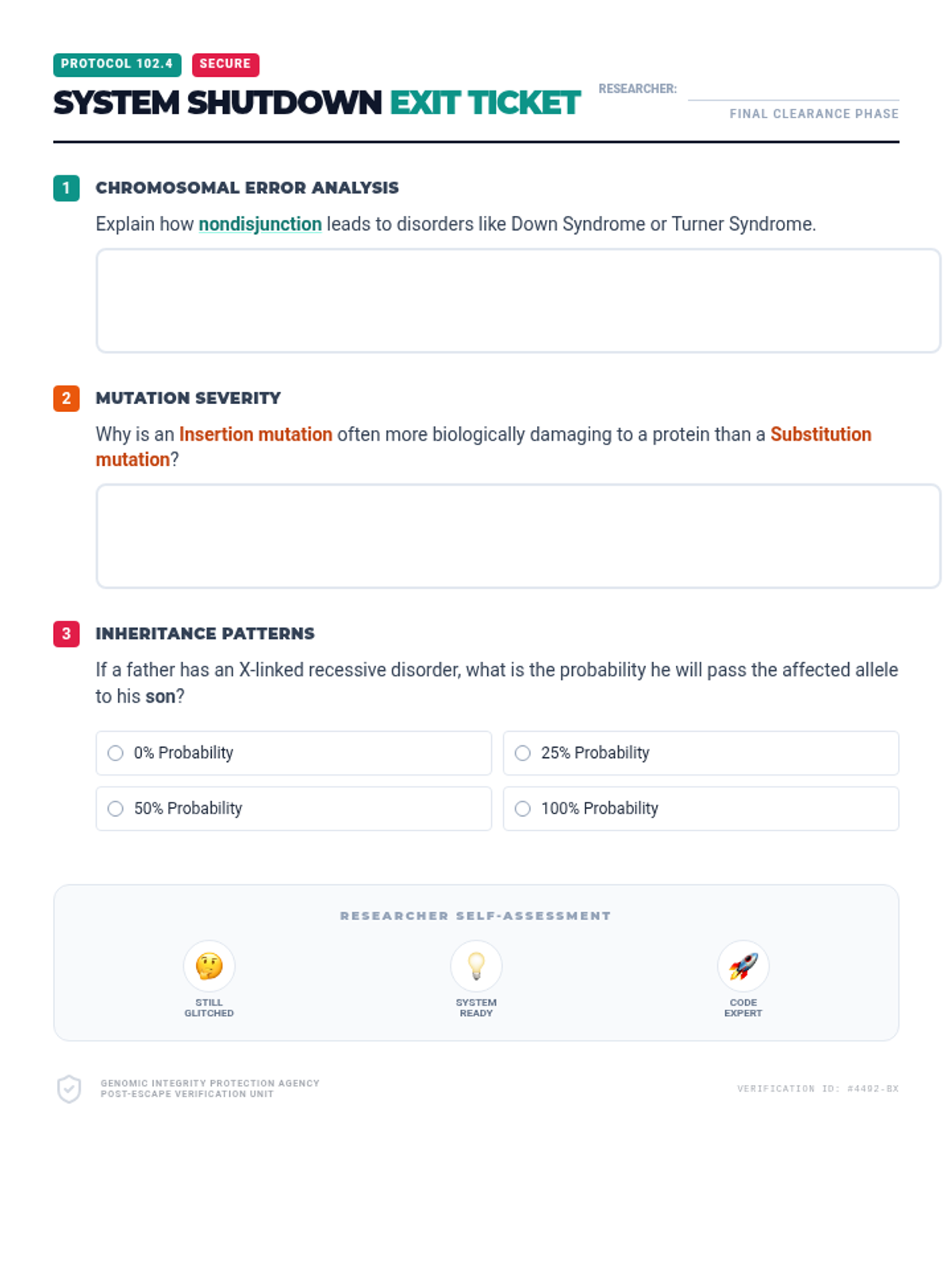
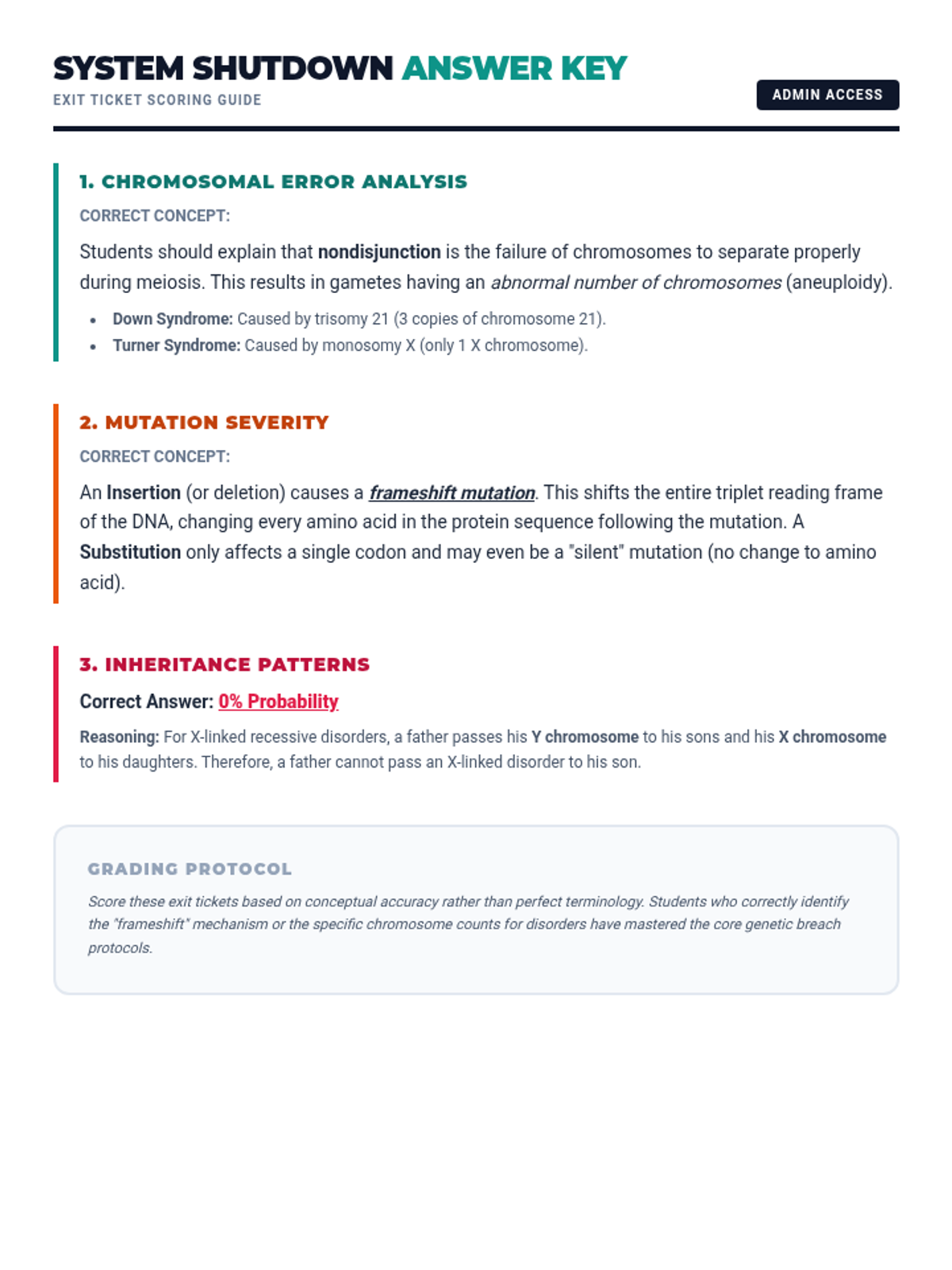
An immersive genetics escape room activity where students solve puzzles related to chromosomal errors, mutations, and inheritance patterns to 'unlock' a breached genomic system.
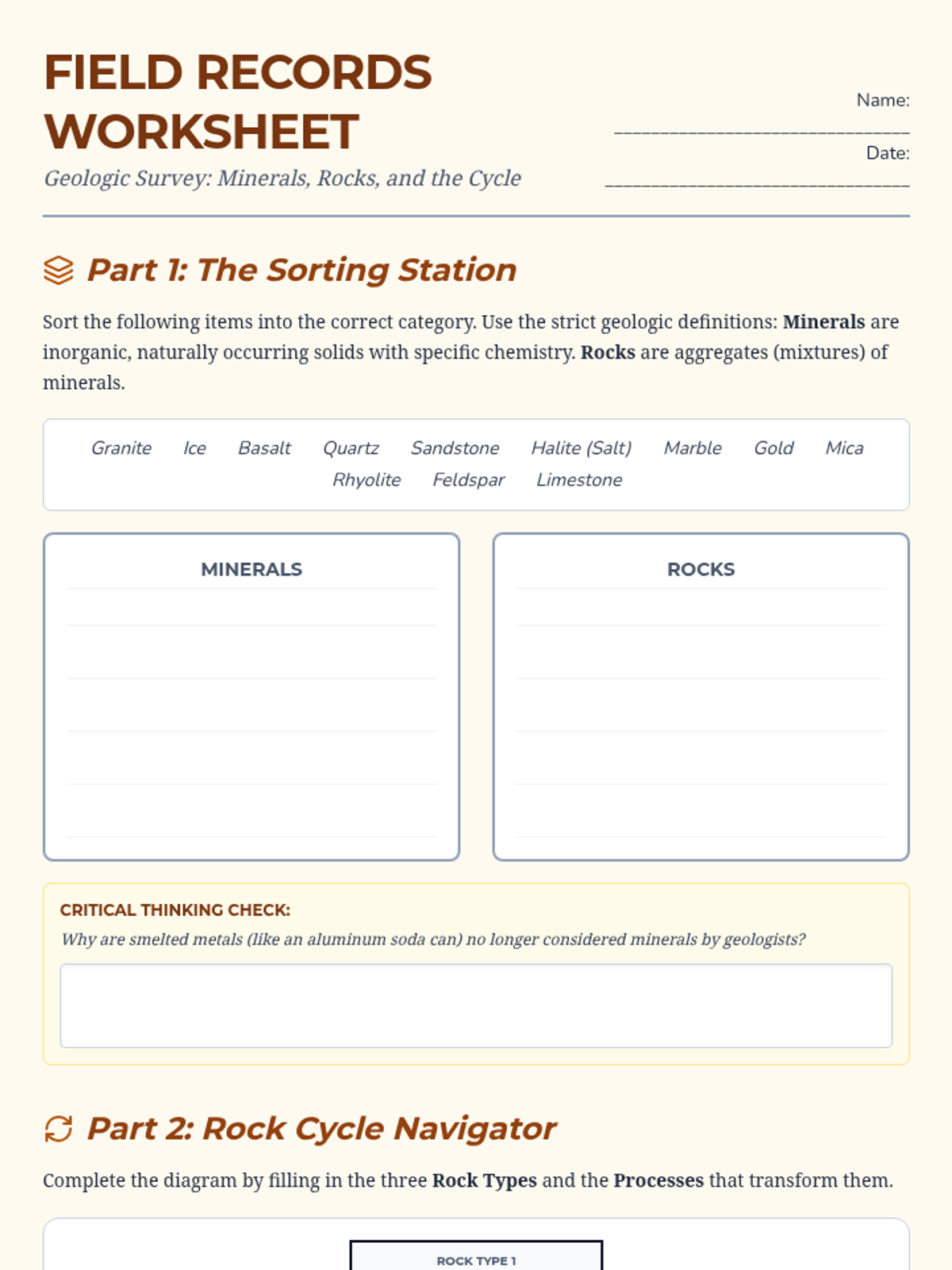
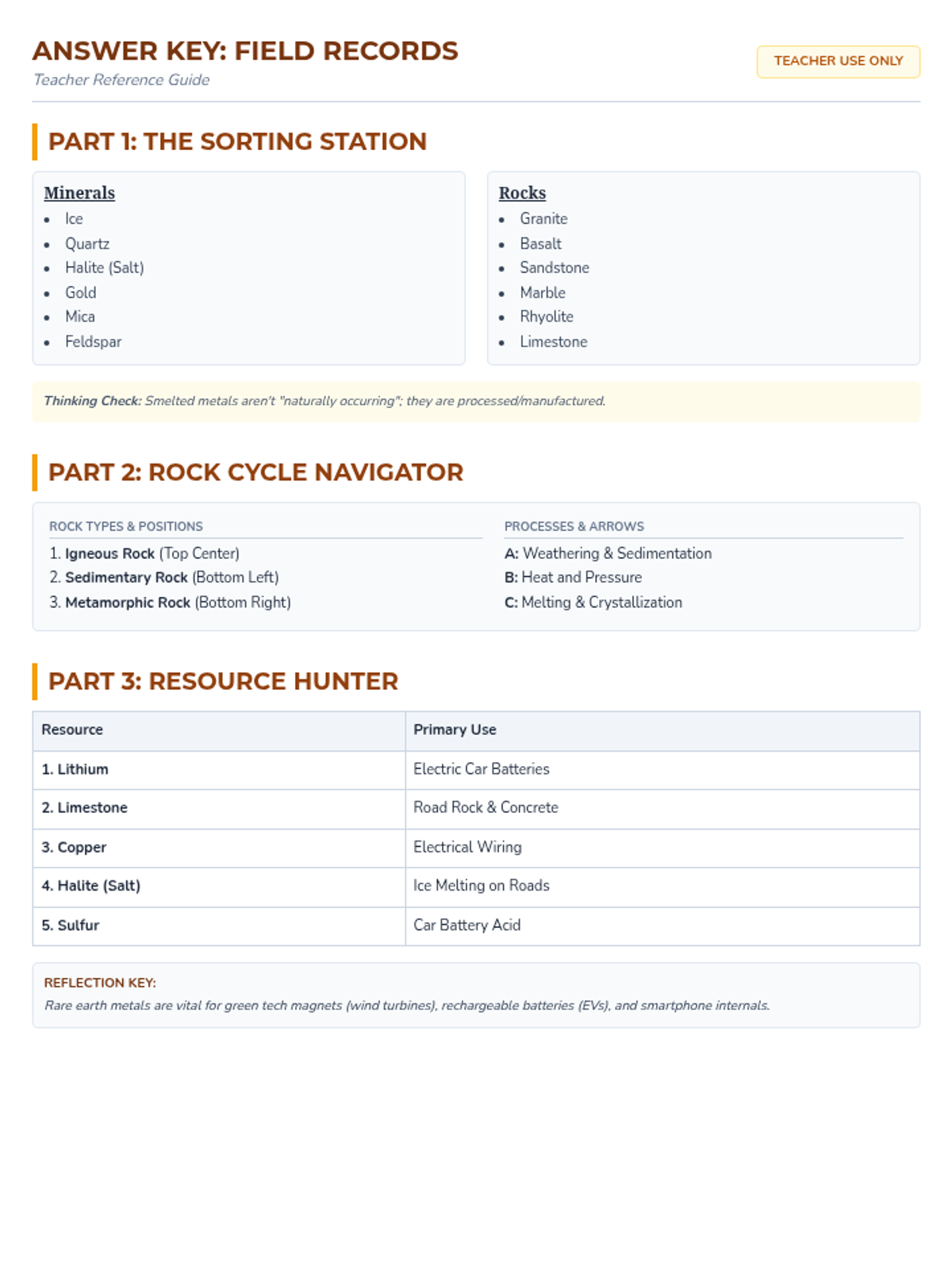
An exploration of the fundamental building blocks of Earth's crust, focusing on the differences between minerals and rocks, the dynamic processes of the rock cycle, and the economic importance of geologic resources.
Students learn key terms related to online safety, privacy, and responsible digital behavior.
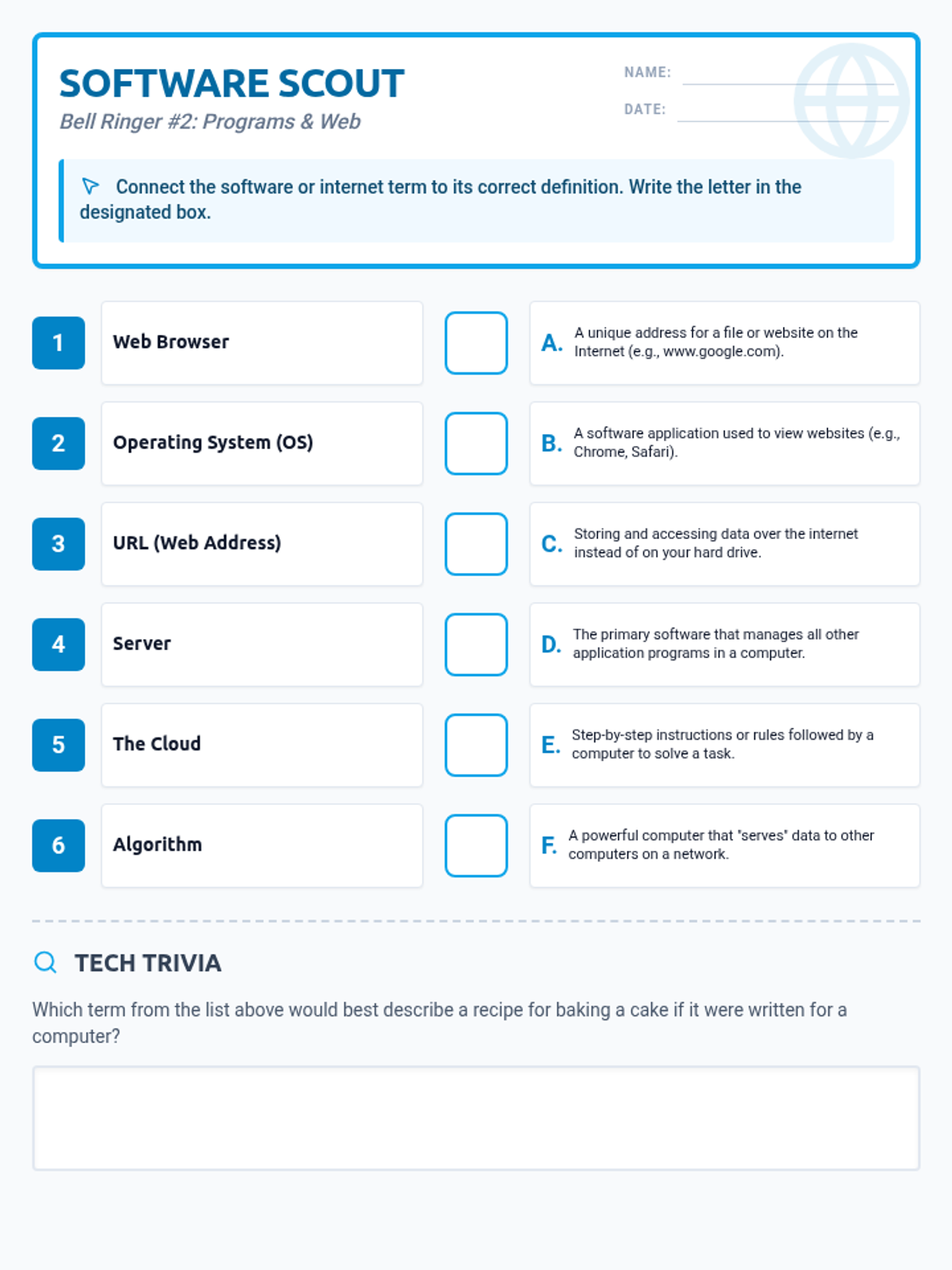
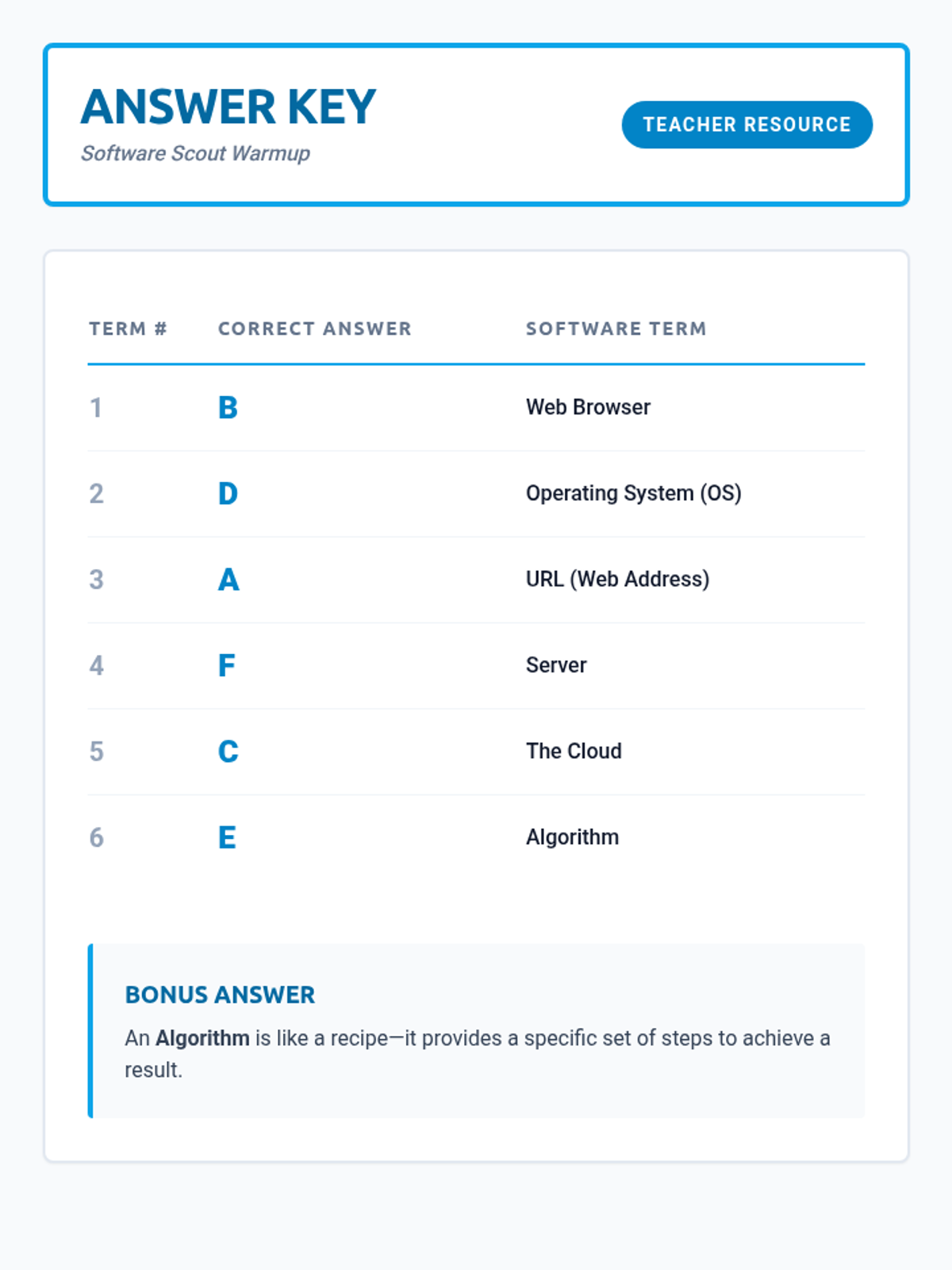
Students explore vocabulary related to software applications, the internet, and digital navigation.
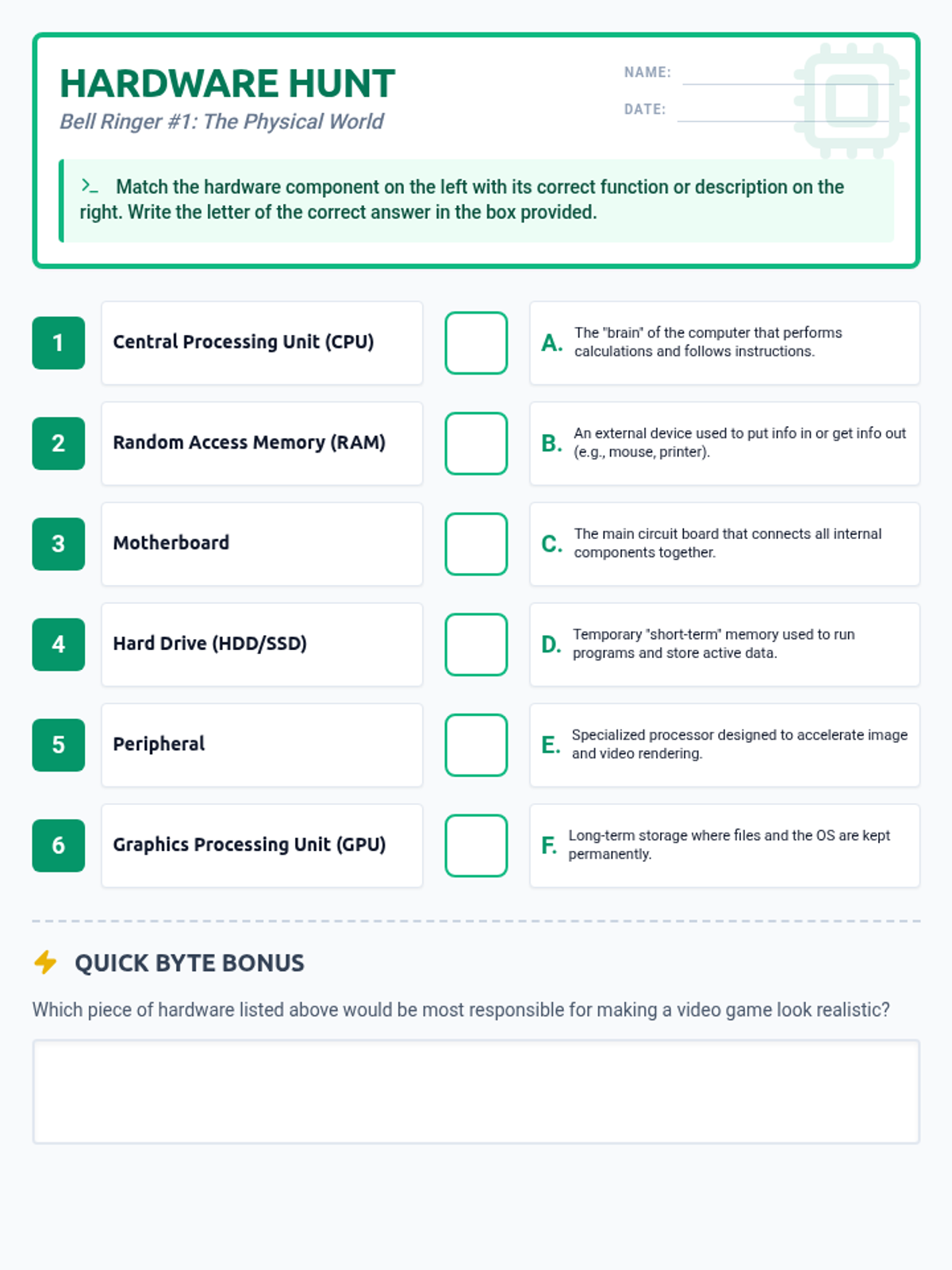
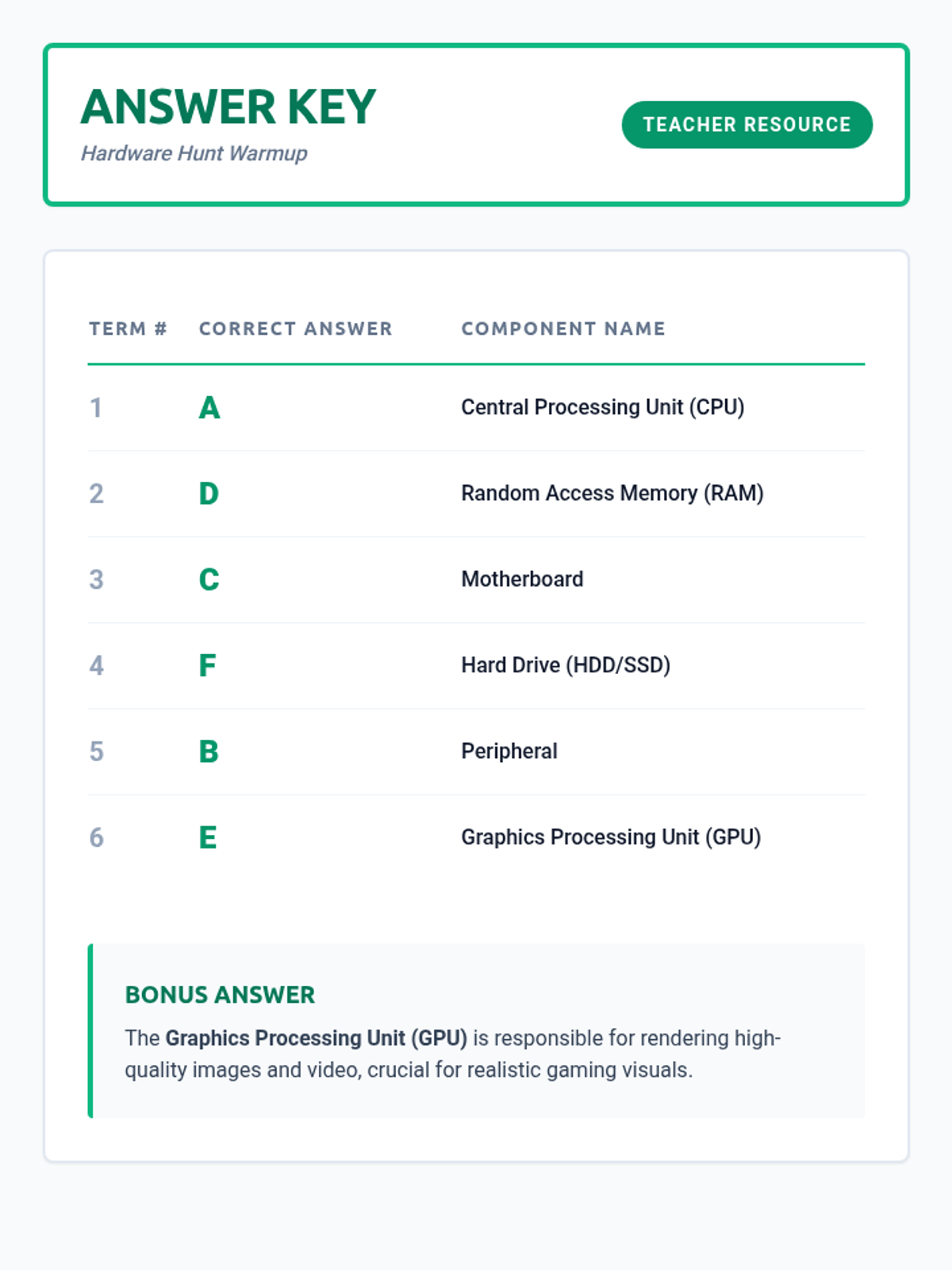
Students identify and define common physical components of a computer system.
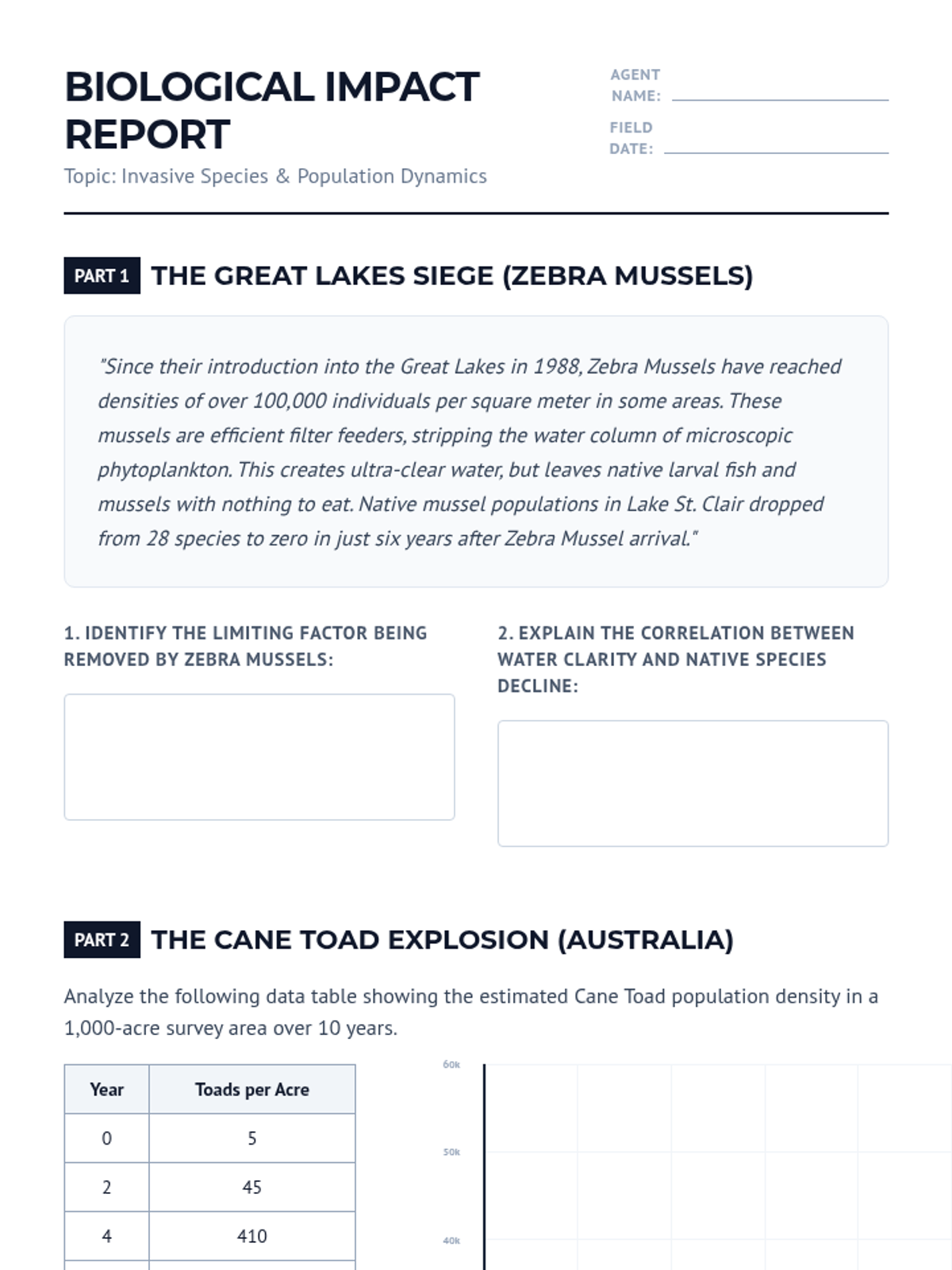
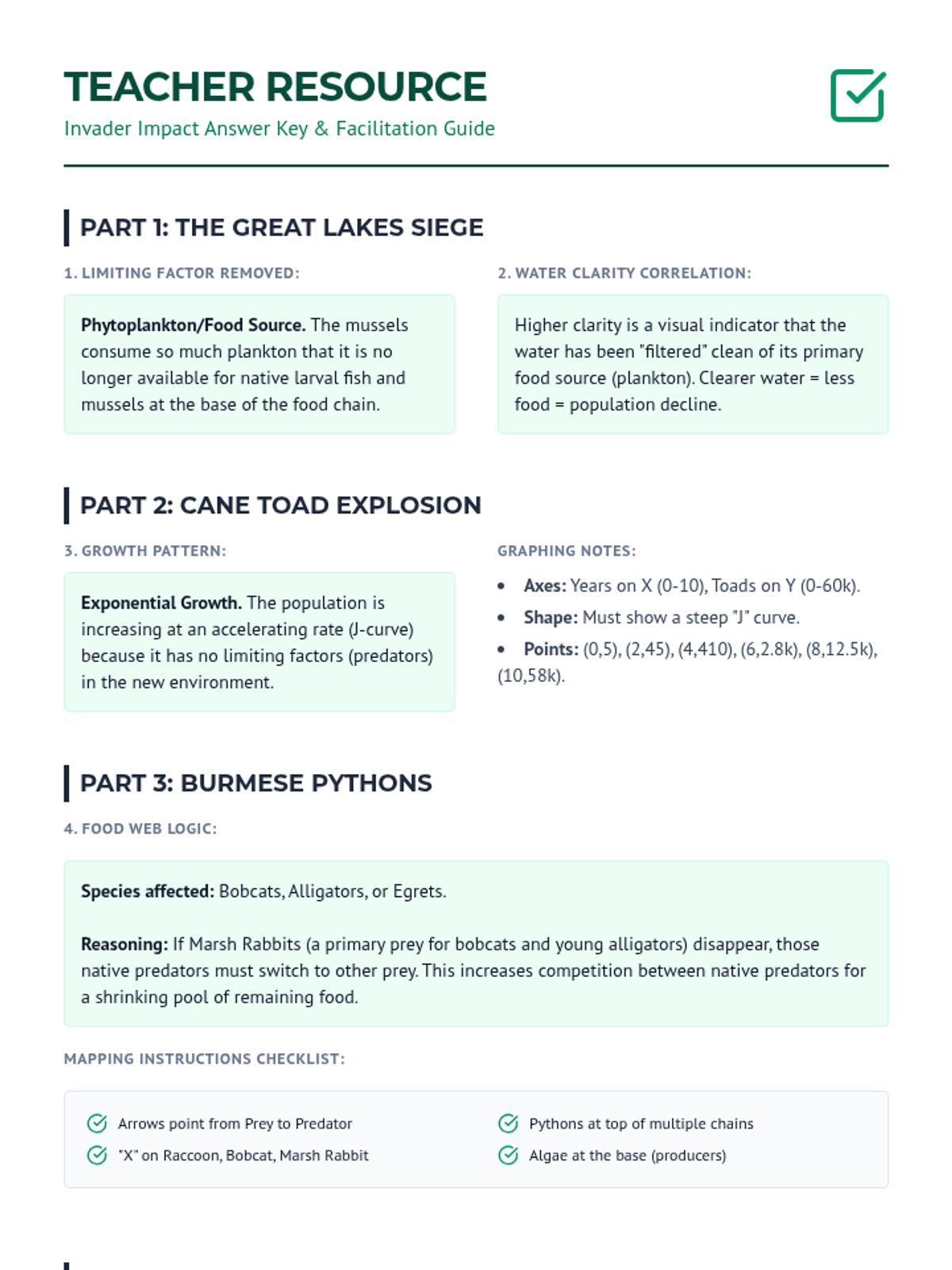
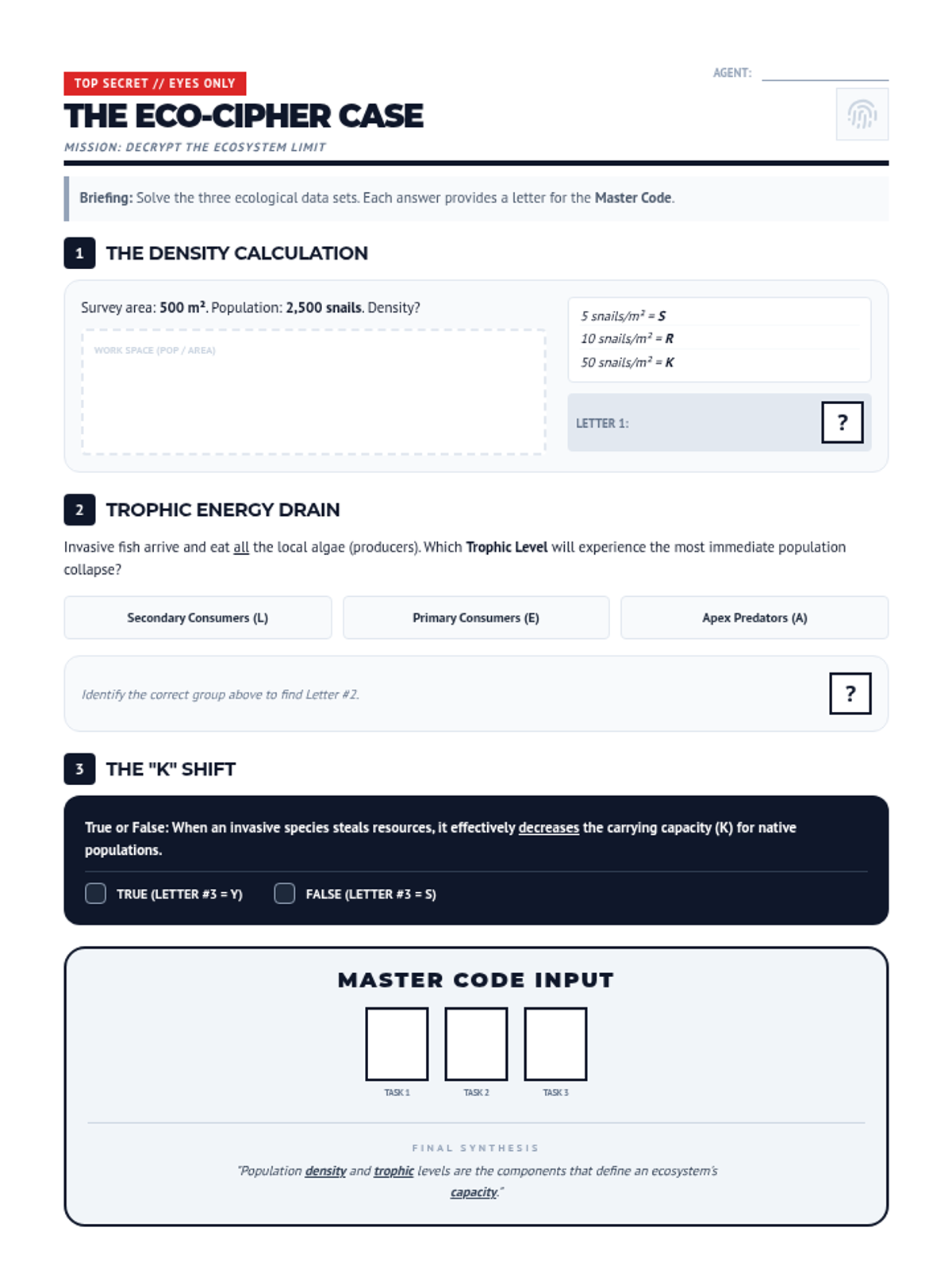
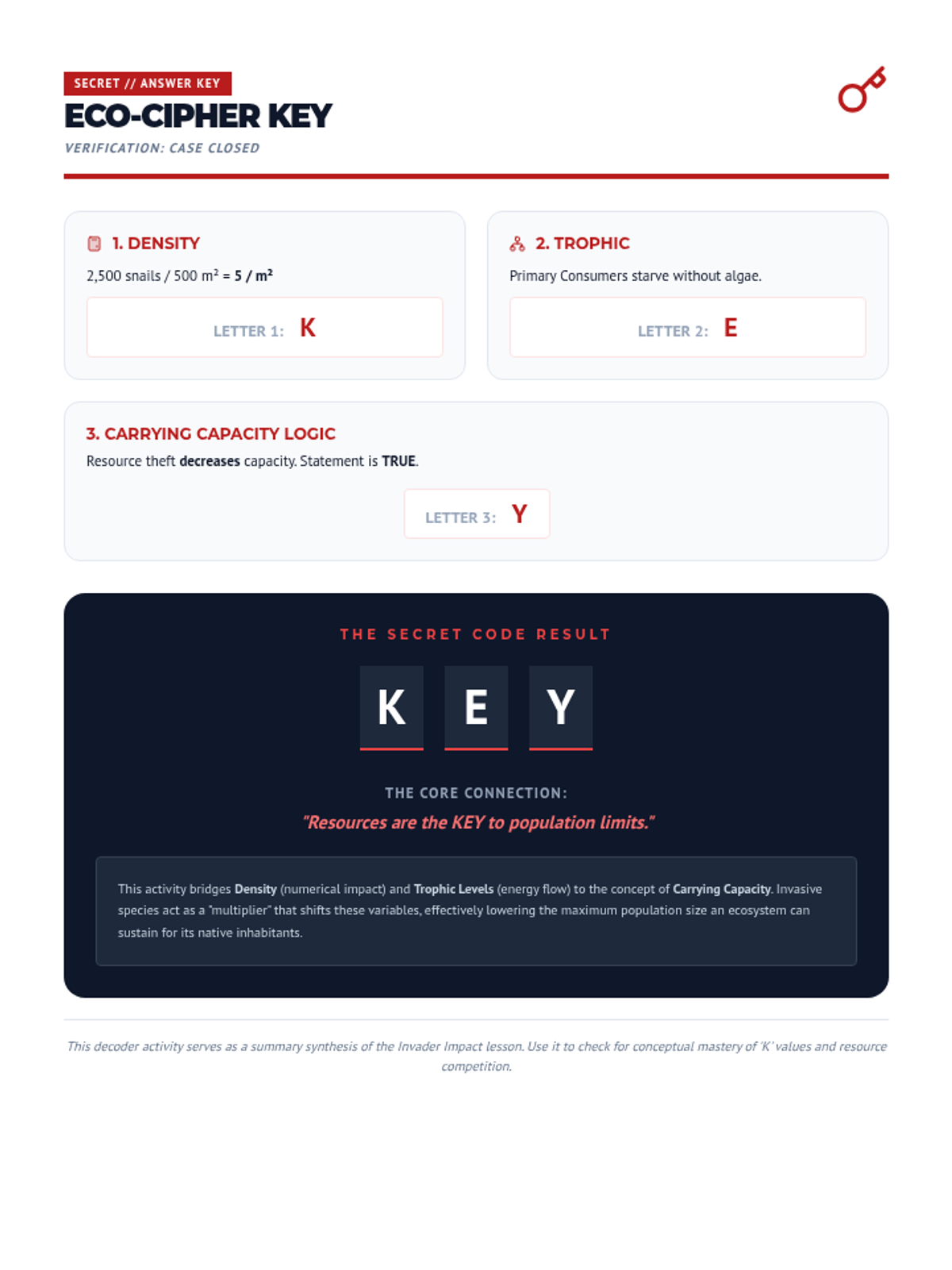
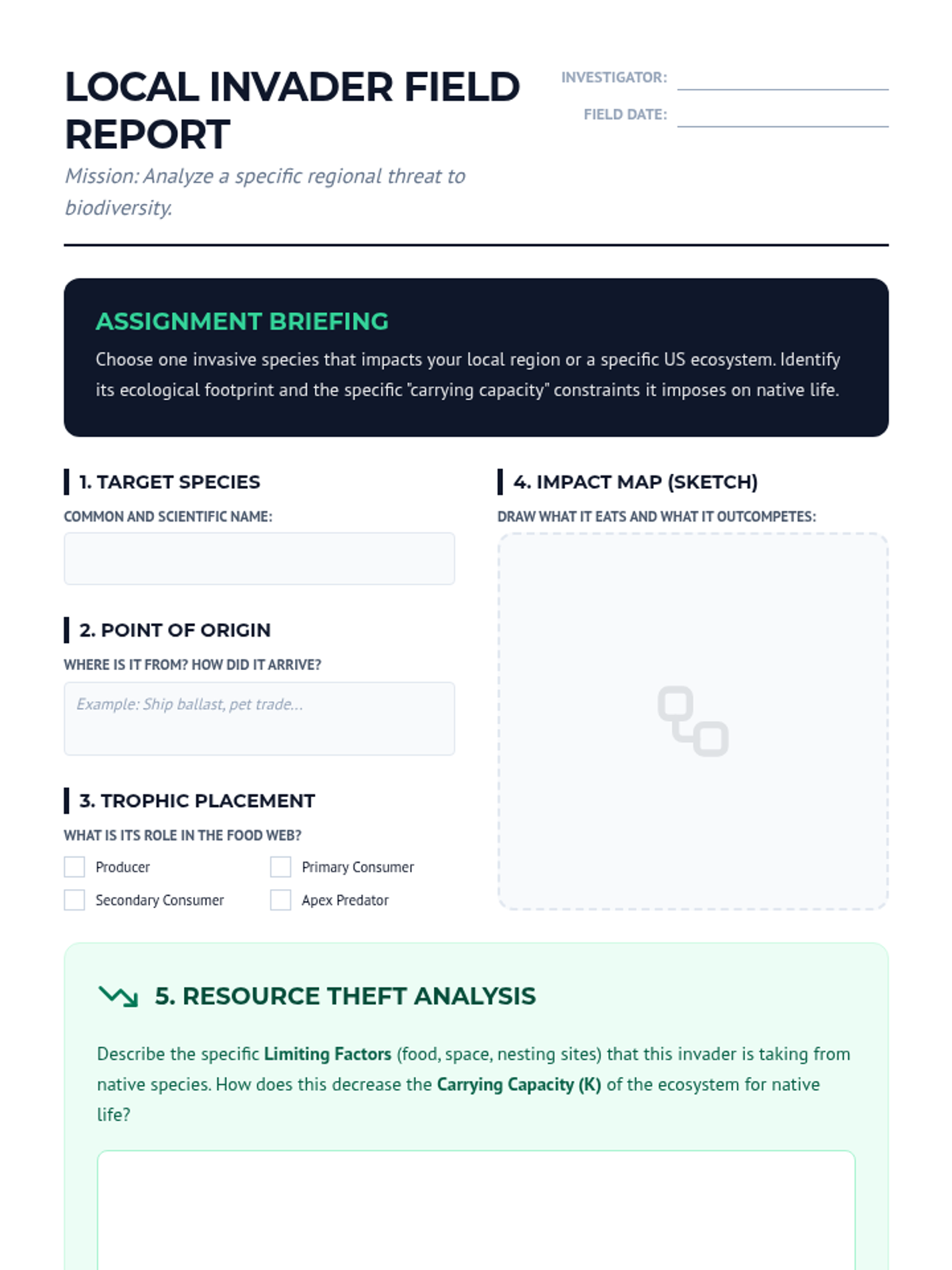
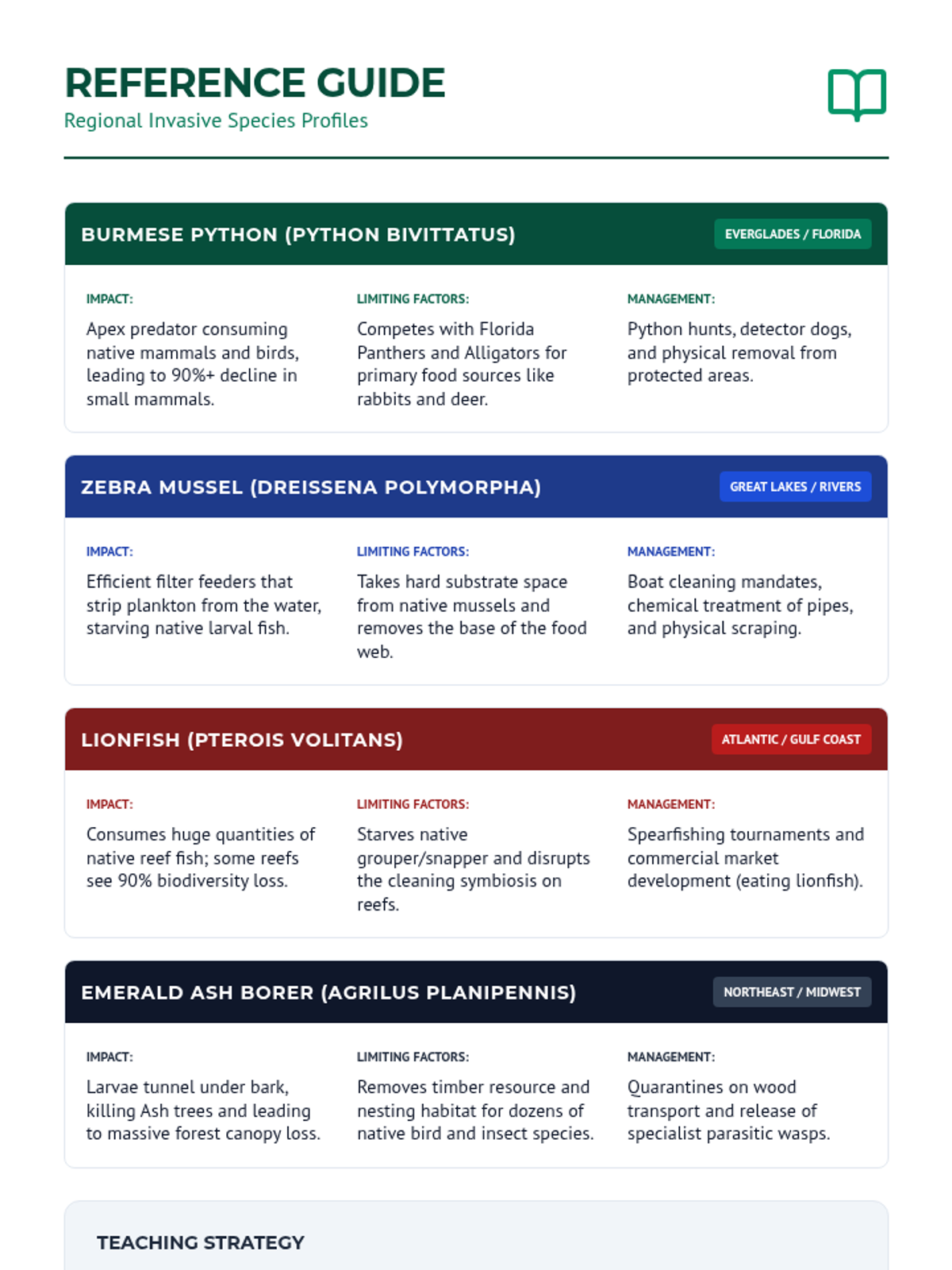
A comprehensive lesson on invasive species focusing on their dramatic impact on local populations and ecosystems through data analysis and food web mapping.