Students launch their research mission by selecting a specific sub-topic and evaluating two distinct sources for reliability, relevance, and reading level.
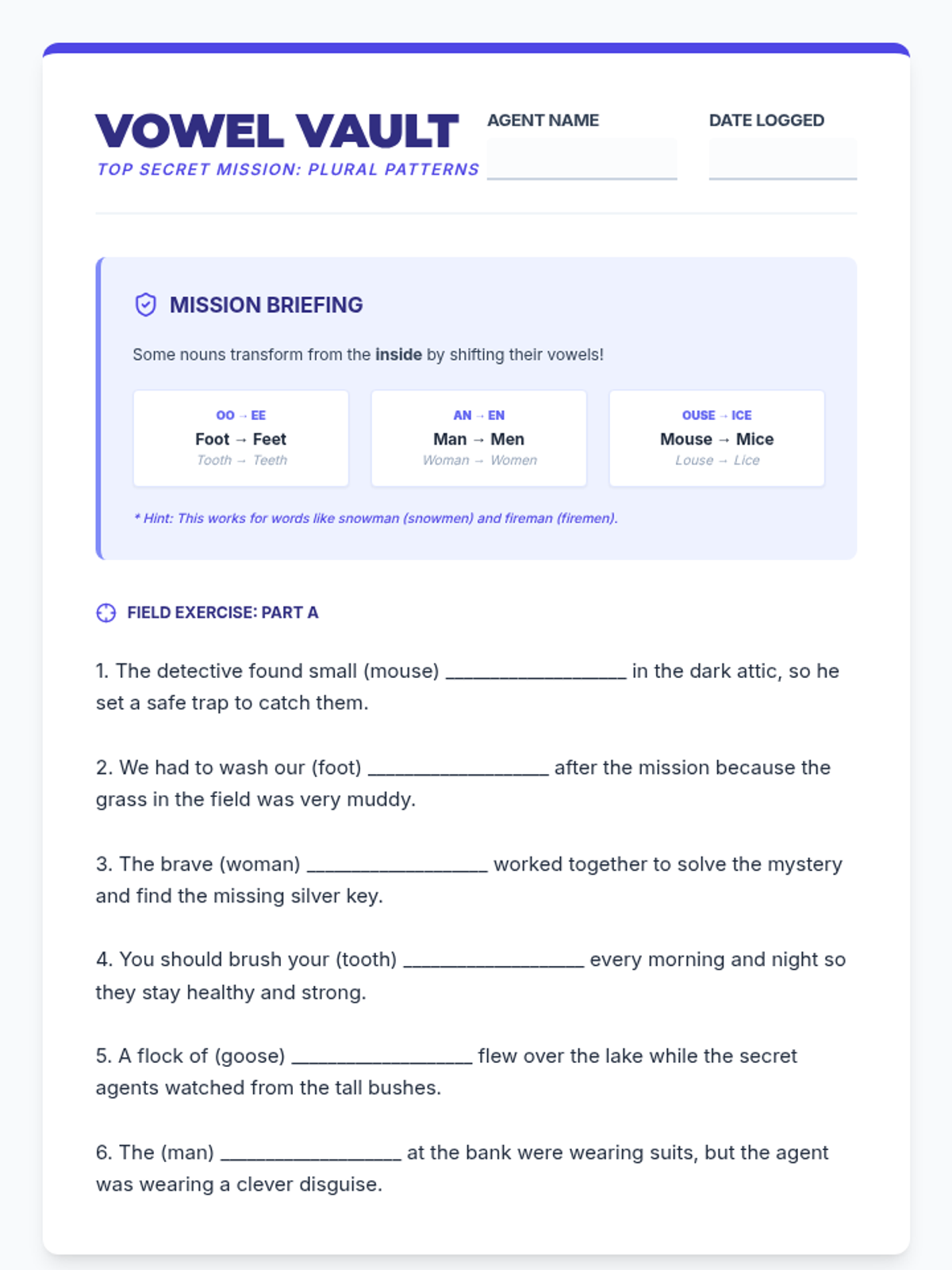
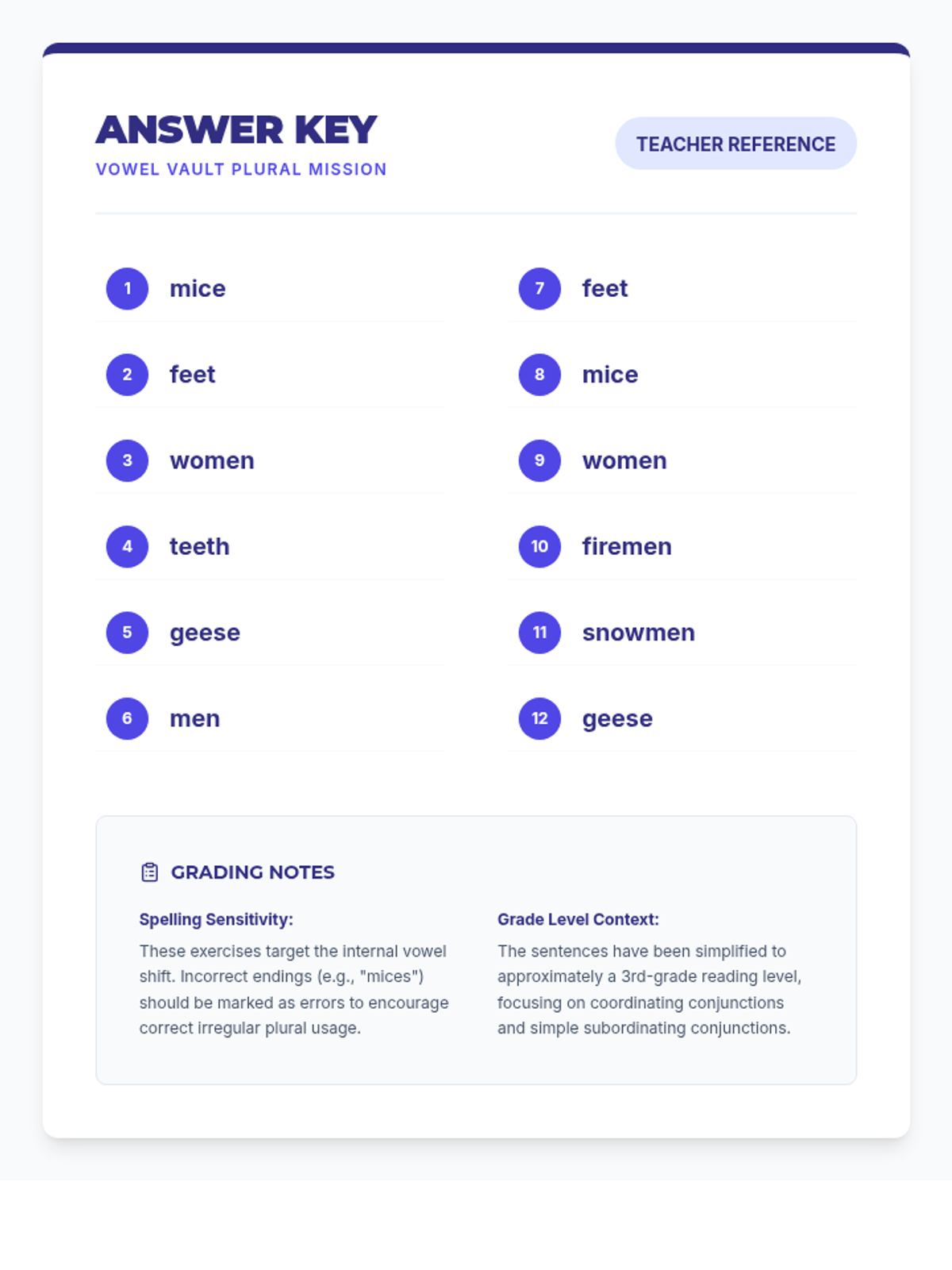
A focused lesson on irregular plural nouns that undergo vowel shifts, designed for 4th-grade students to master common internal spelling changes.
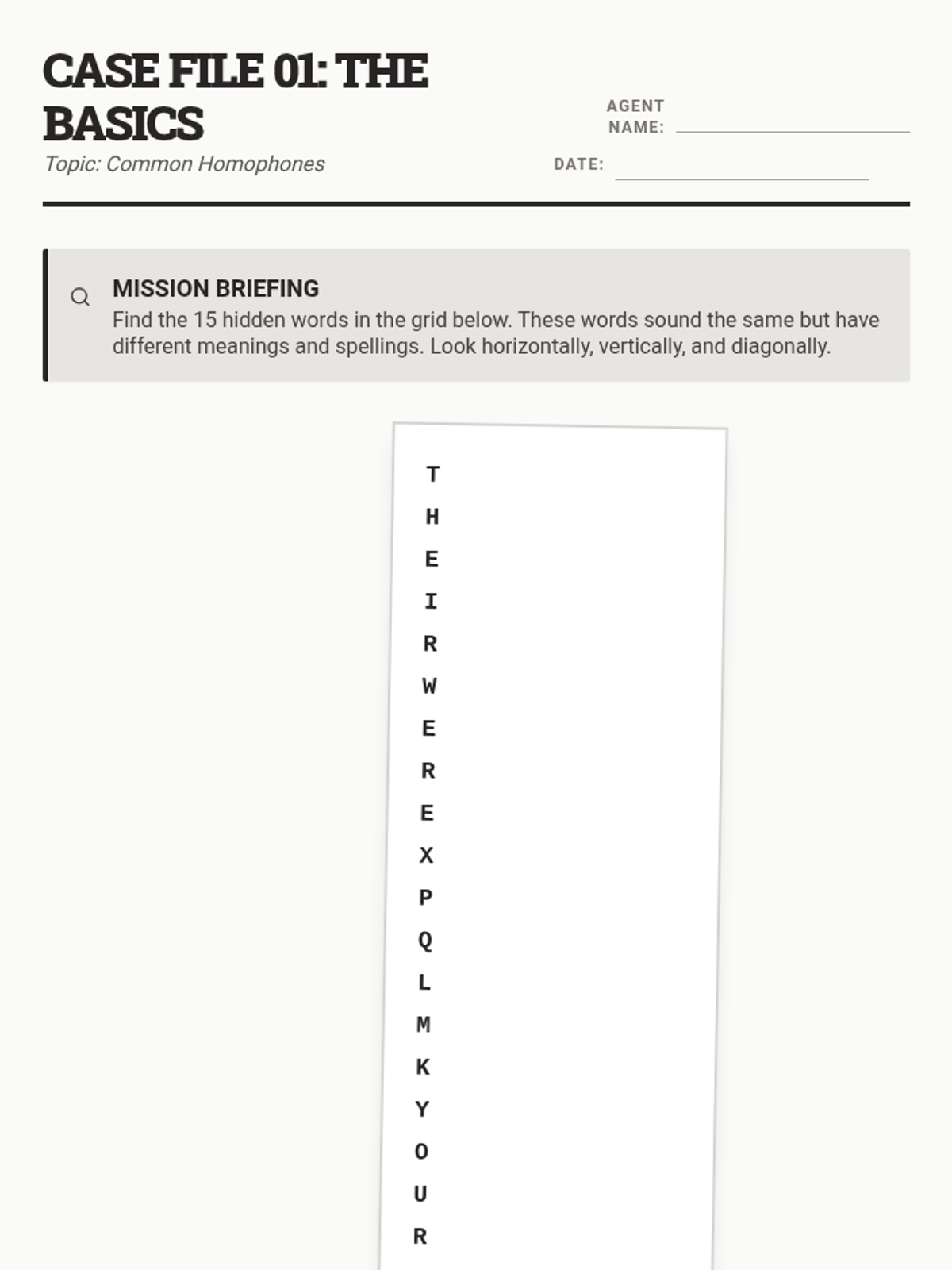
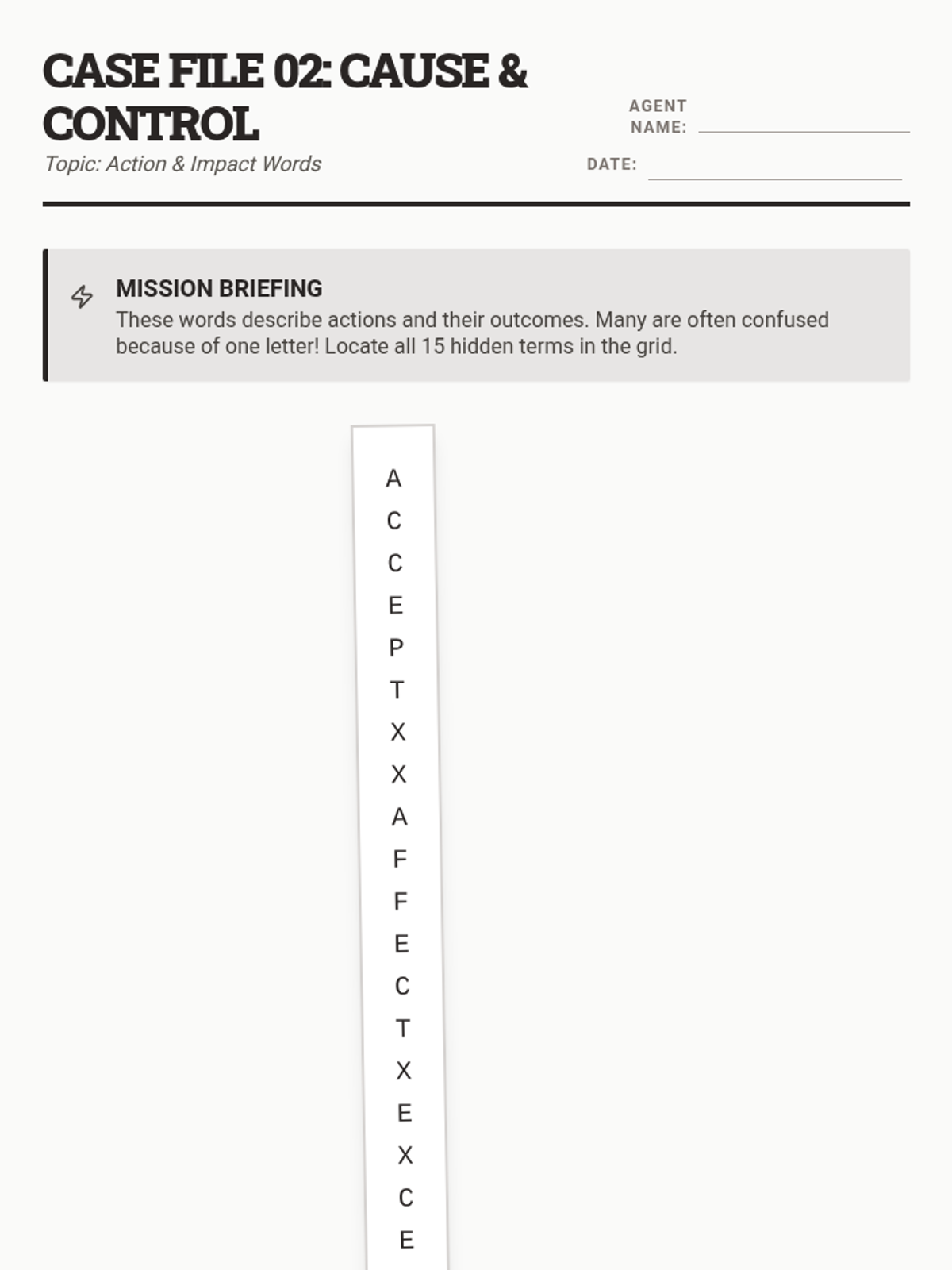
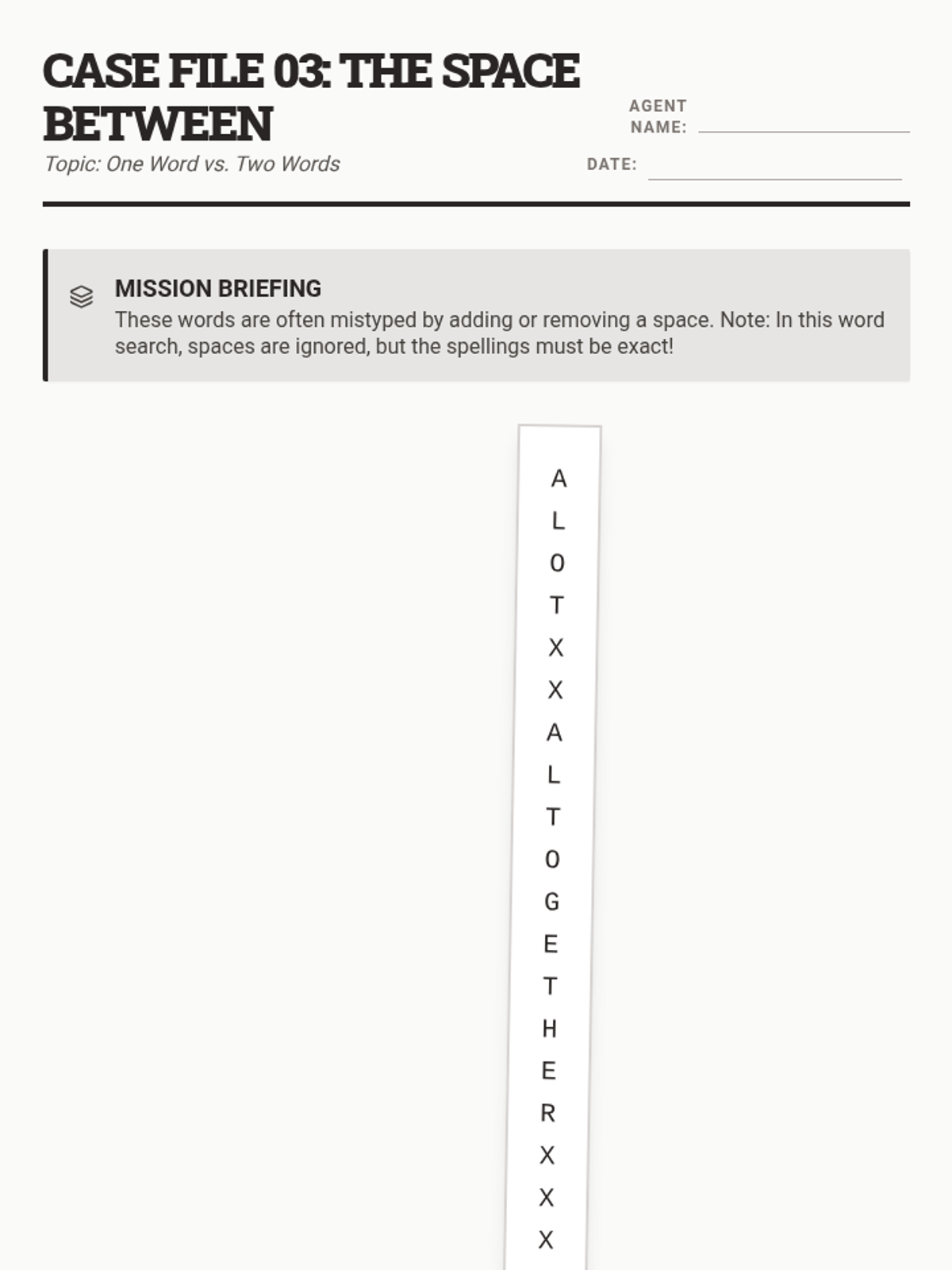
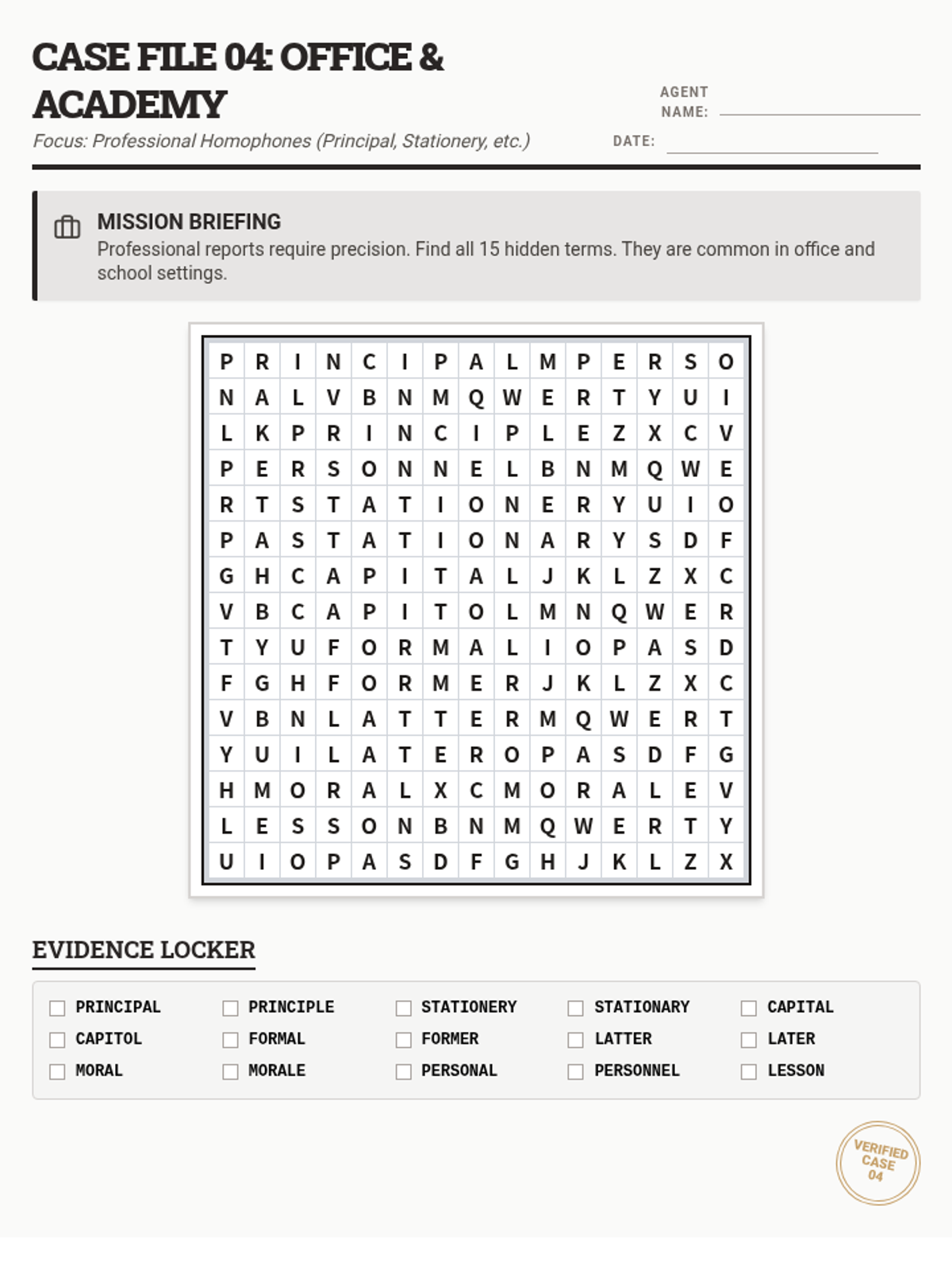
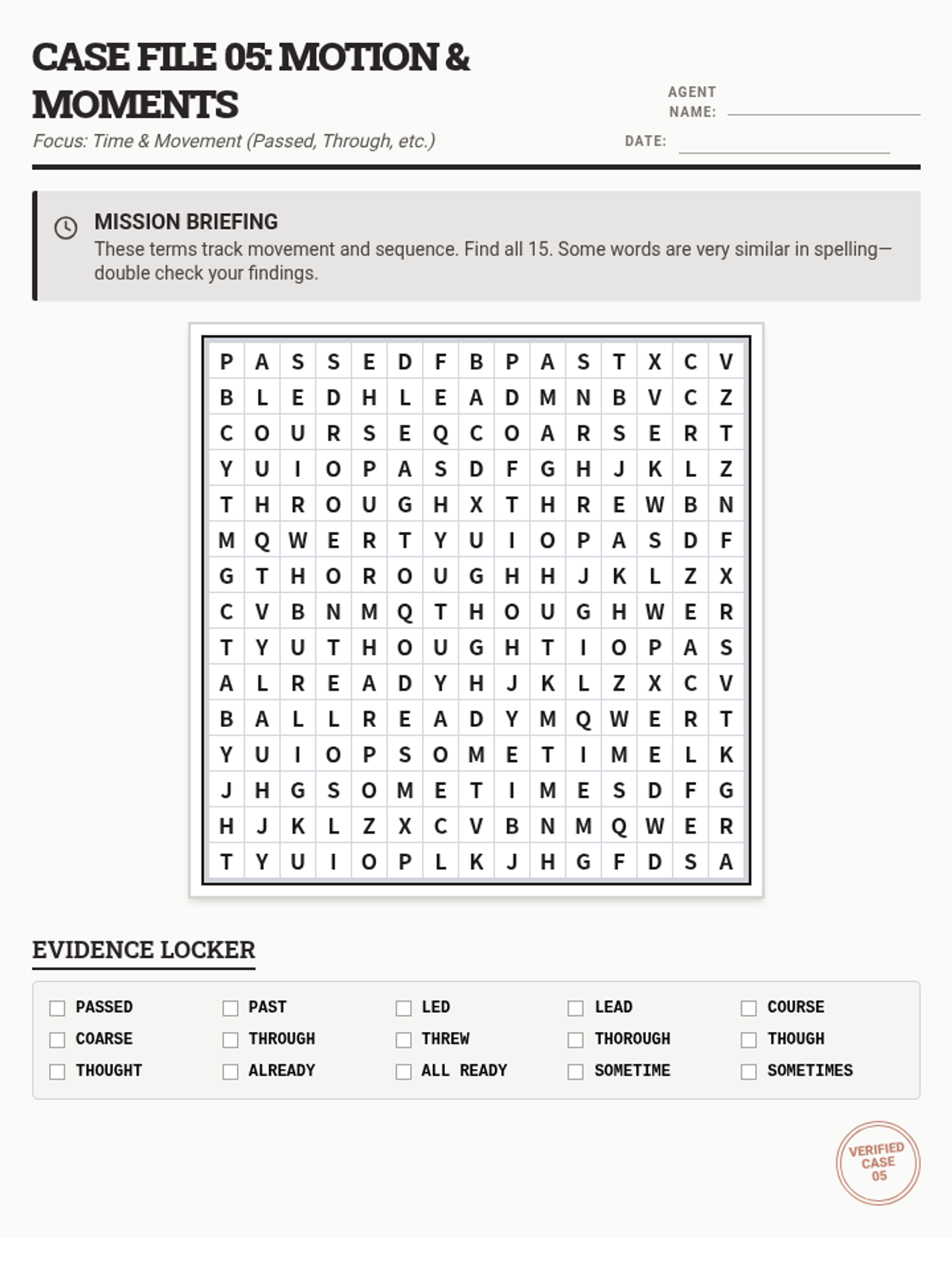
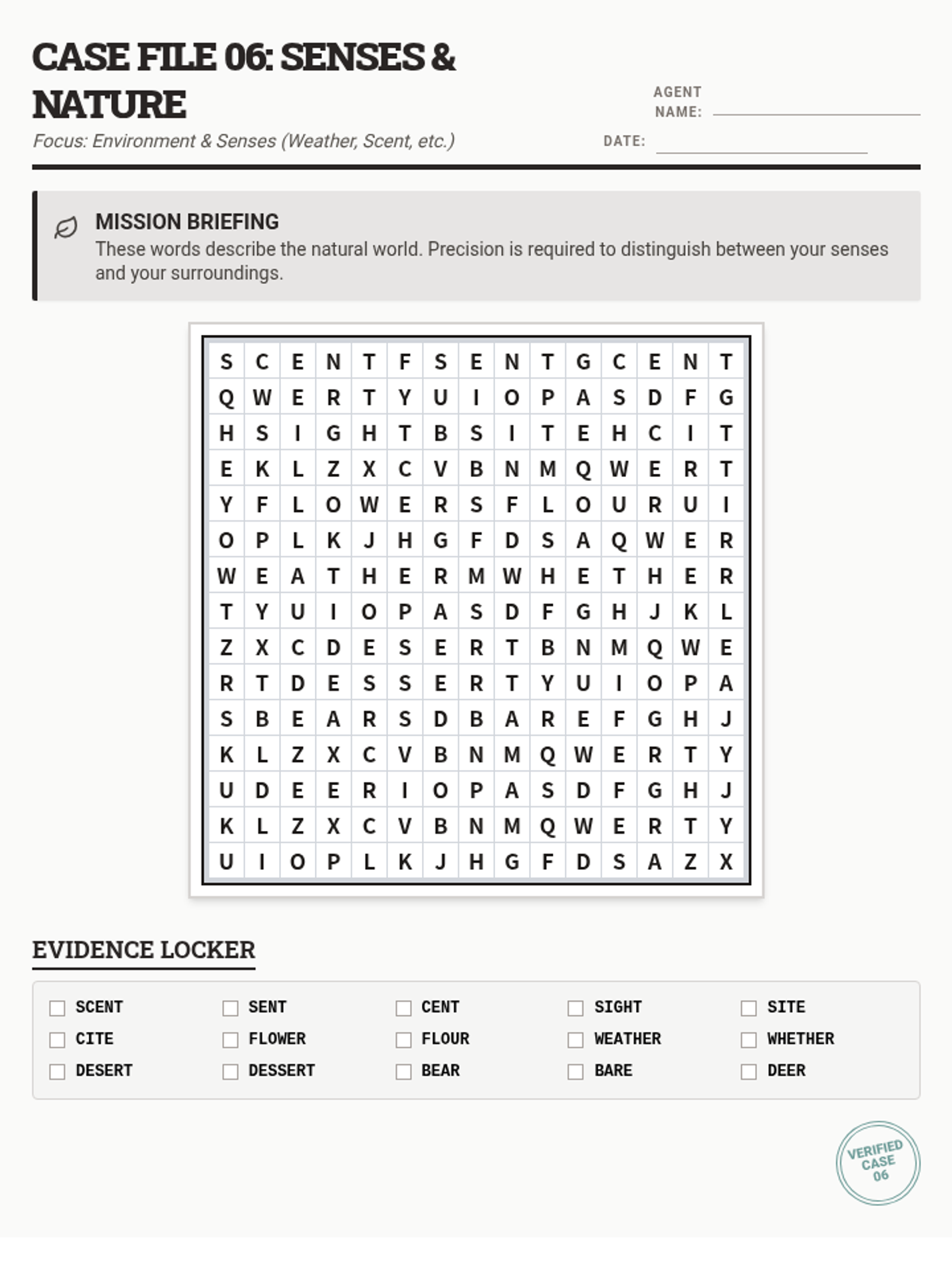
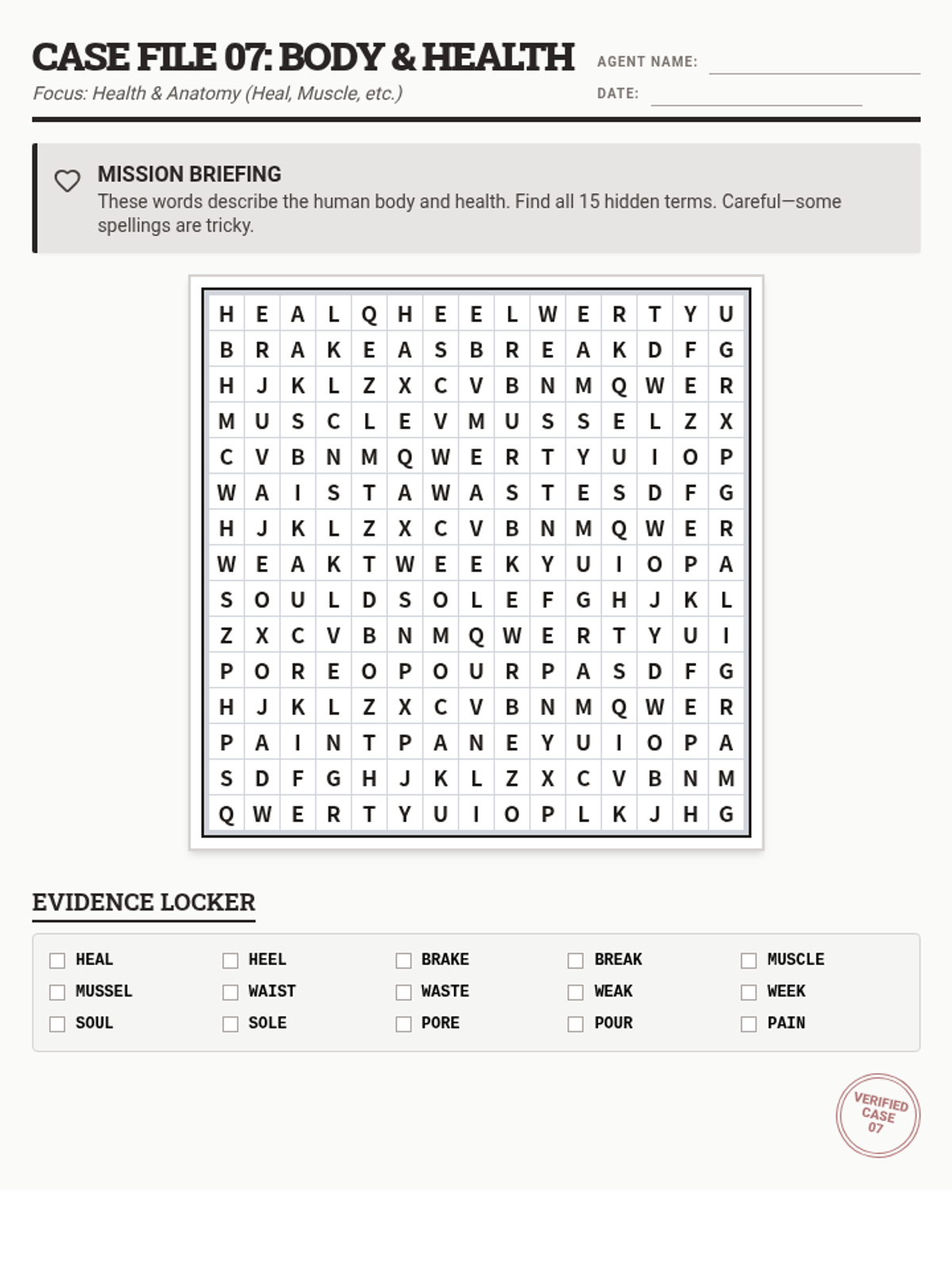
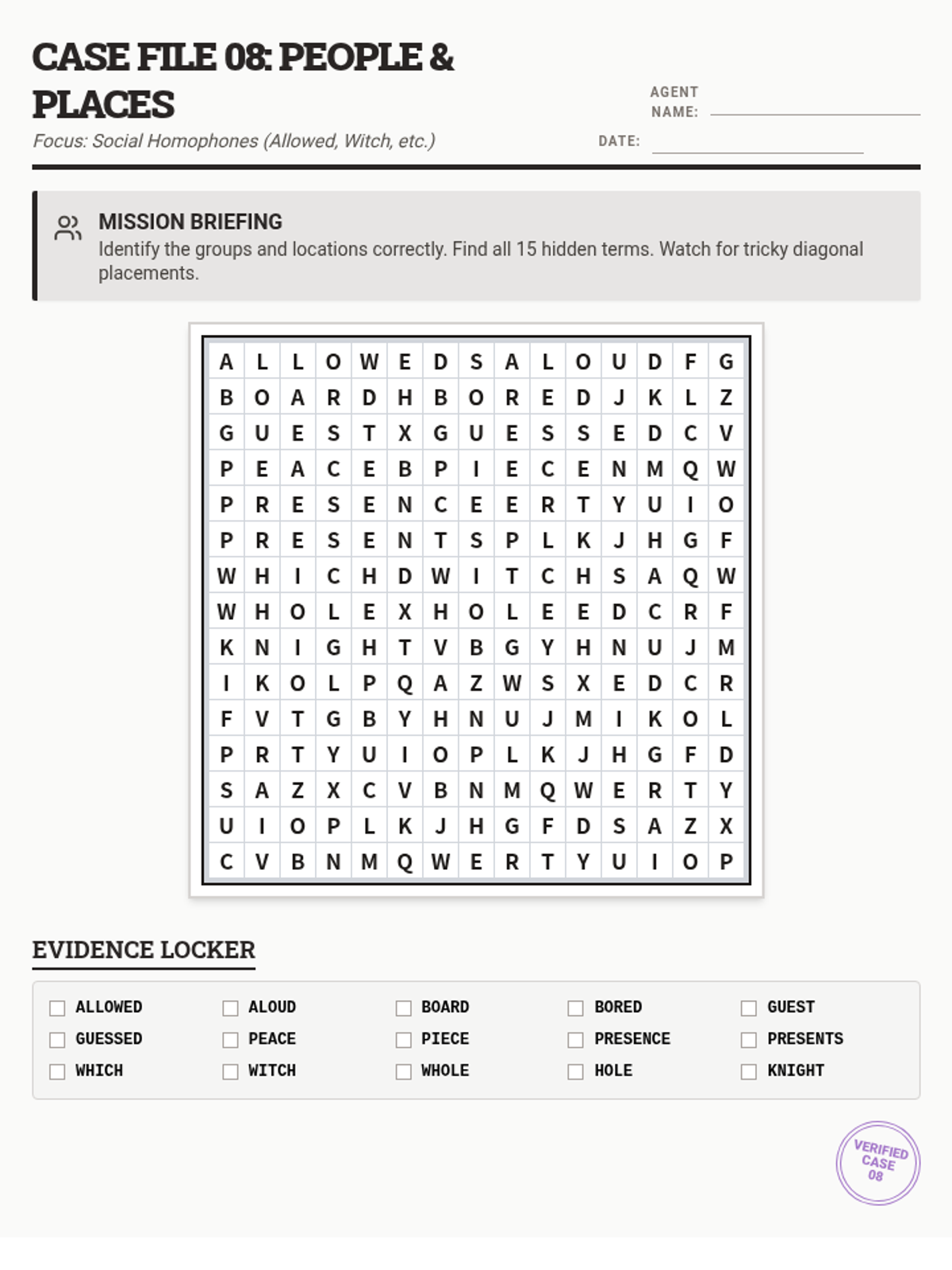
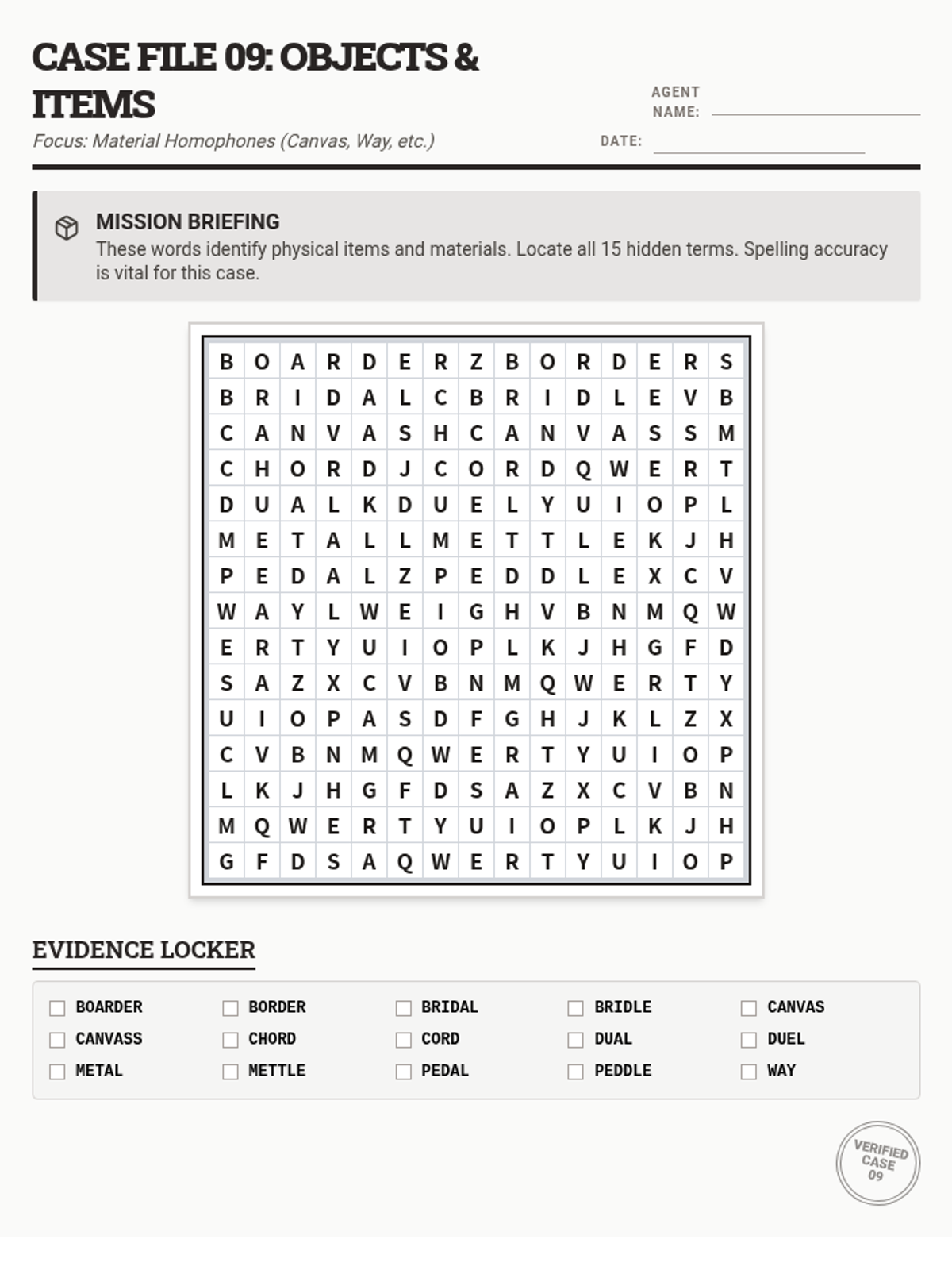
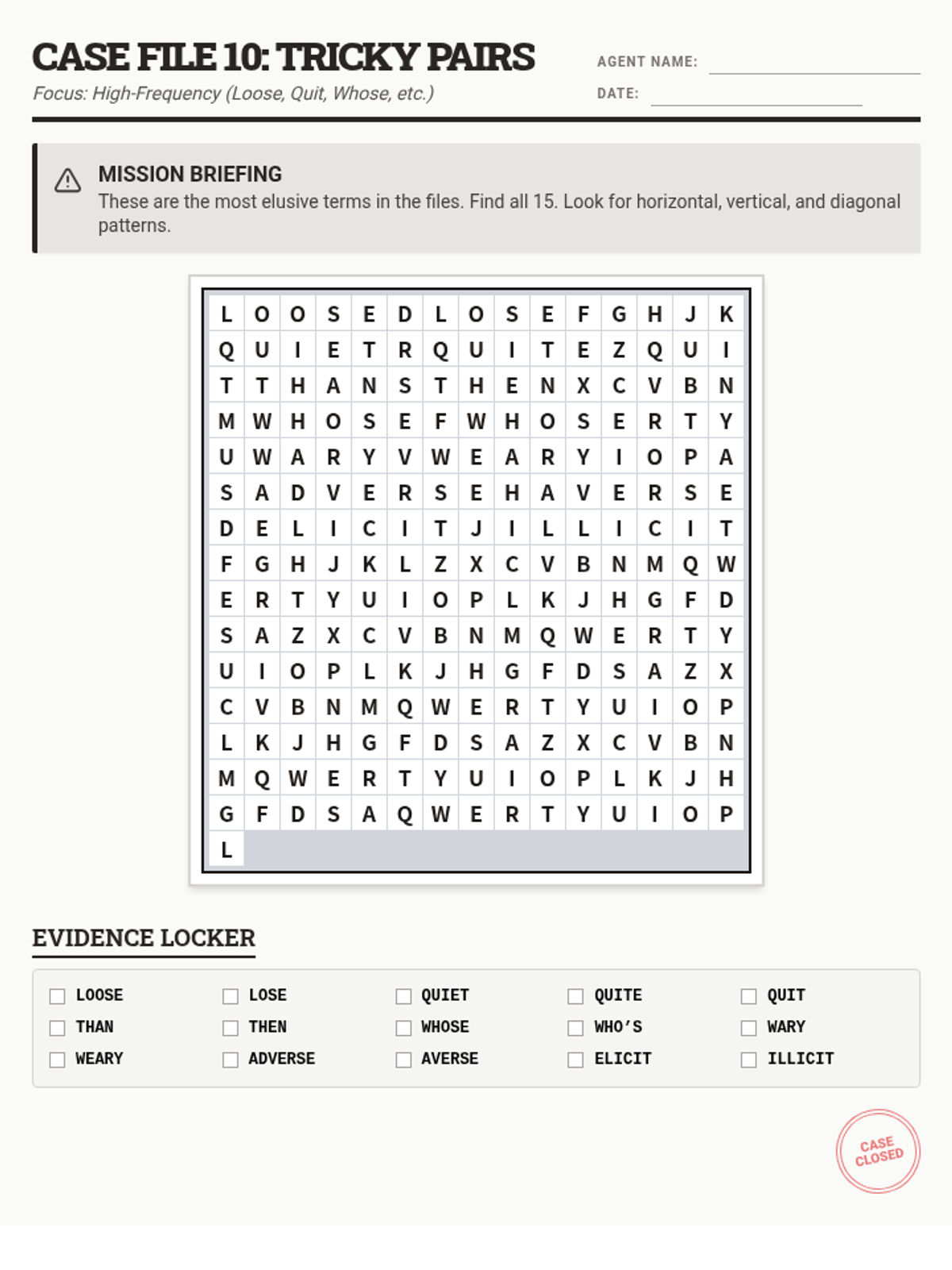
A comprehensive collection of 10 word search puzzles focusing on commonly confused words (homophones and near-homophones). Designed to improve vocabulary recognition and spelling through engaging "Case File" themed activities.
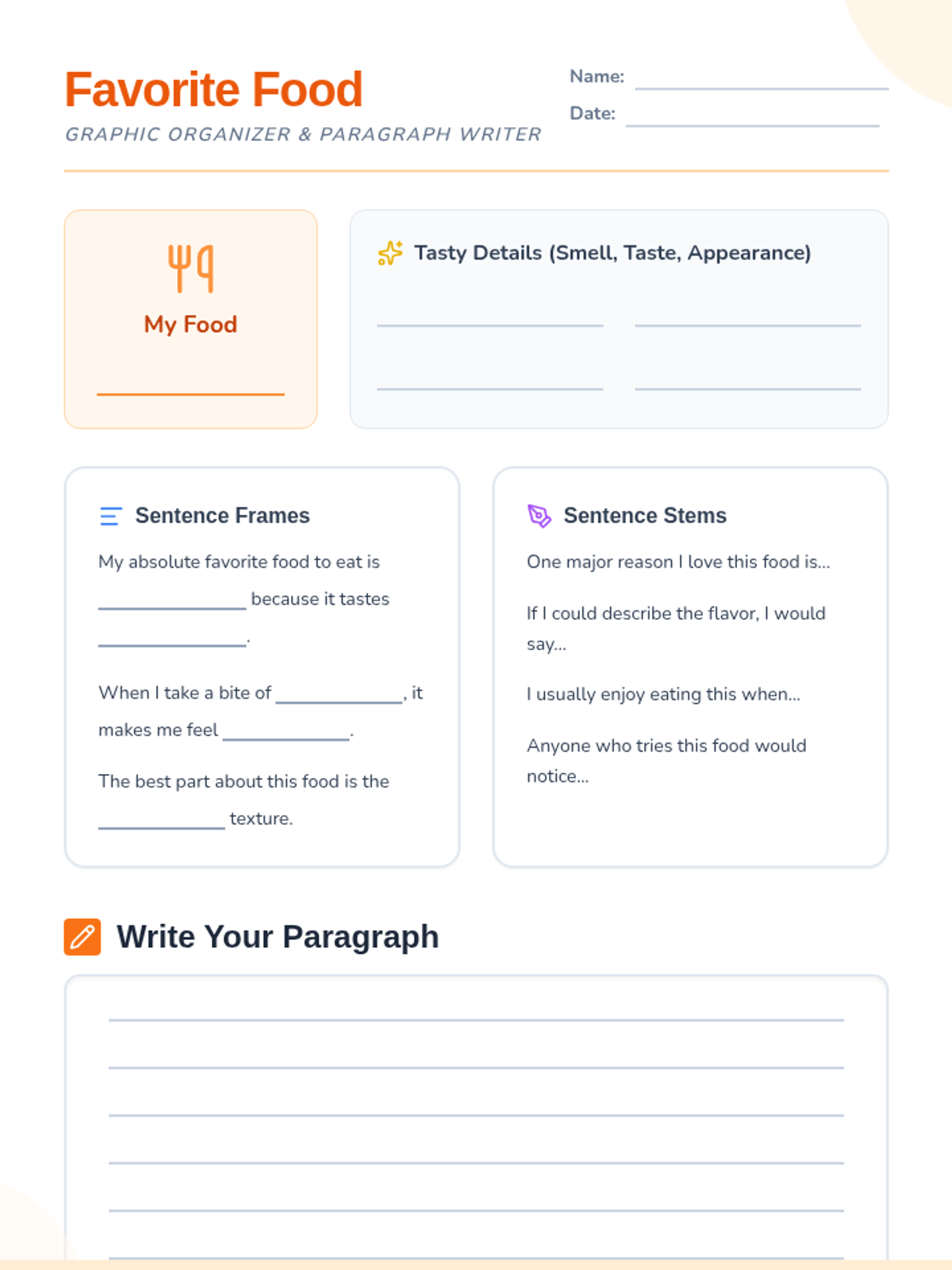
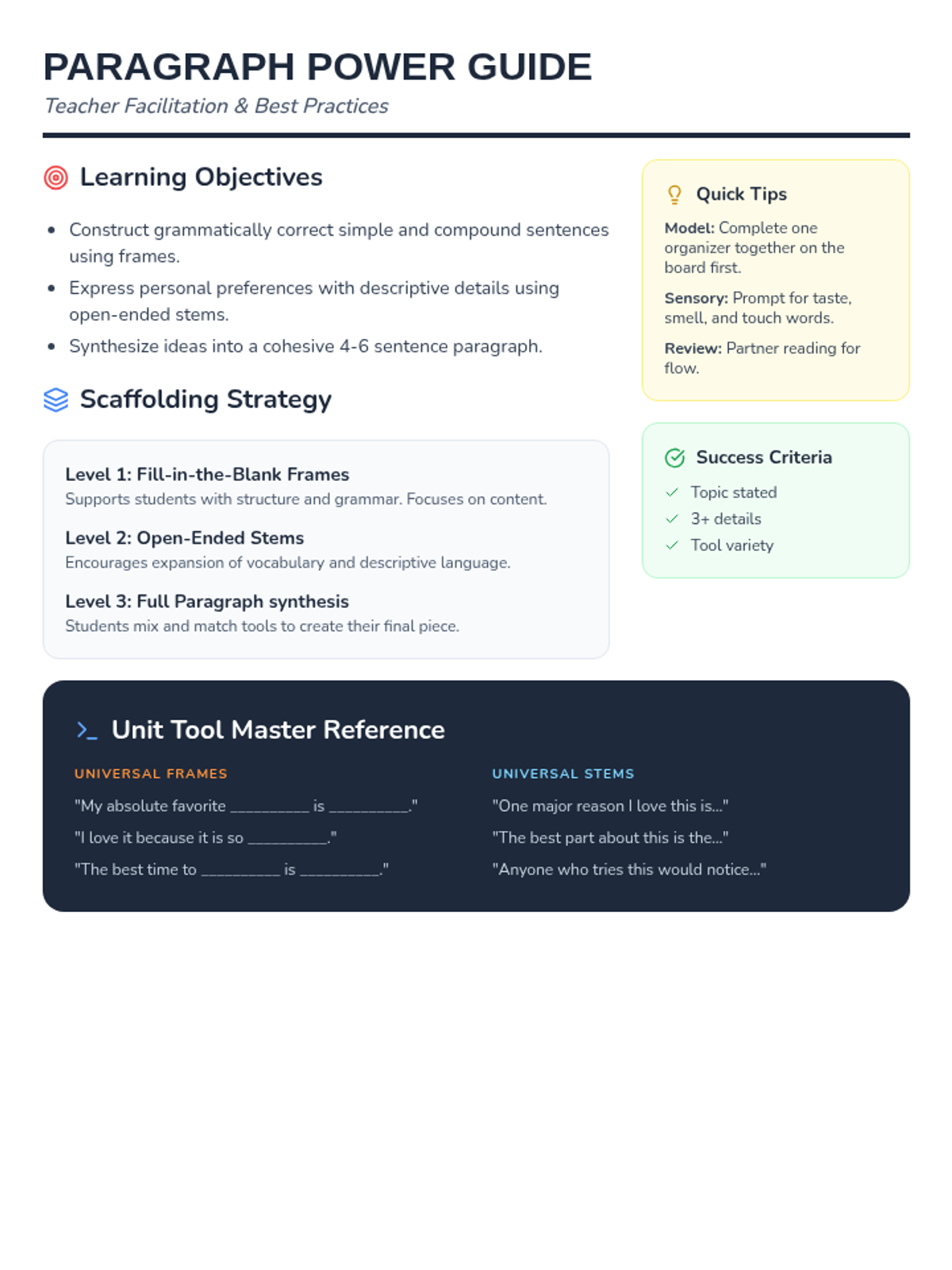
A collection of graphic organizers designed to help students write structured paragraphs about their favorite things using sentence stems and frames.
A collaborative "Pairs Compare" activity where students work in teams of four to share keywords, locate evidence, and synthesize final answers on index cards.
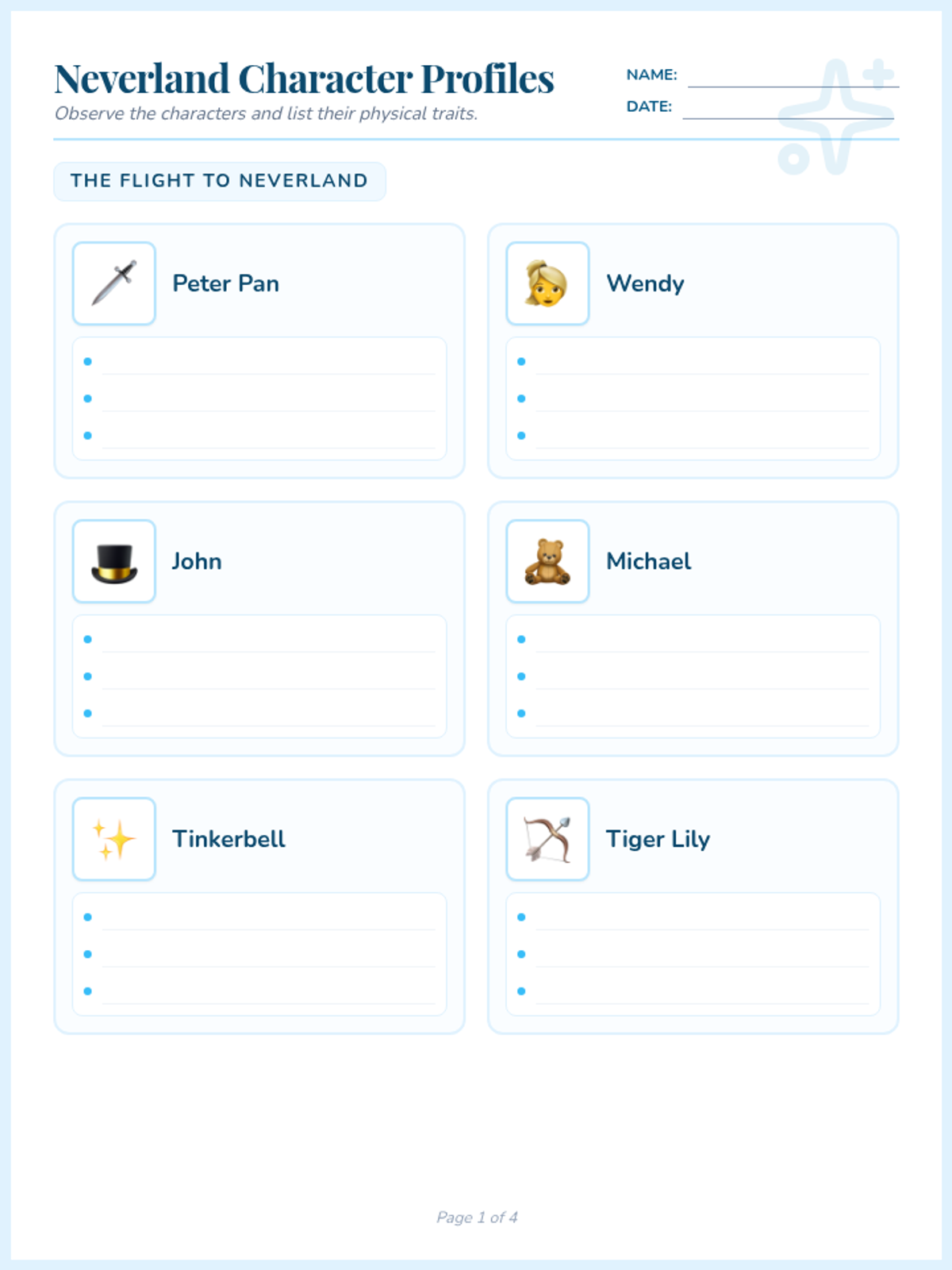
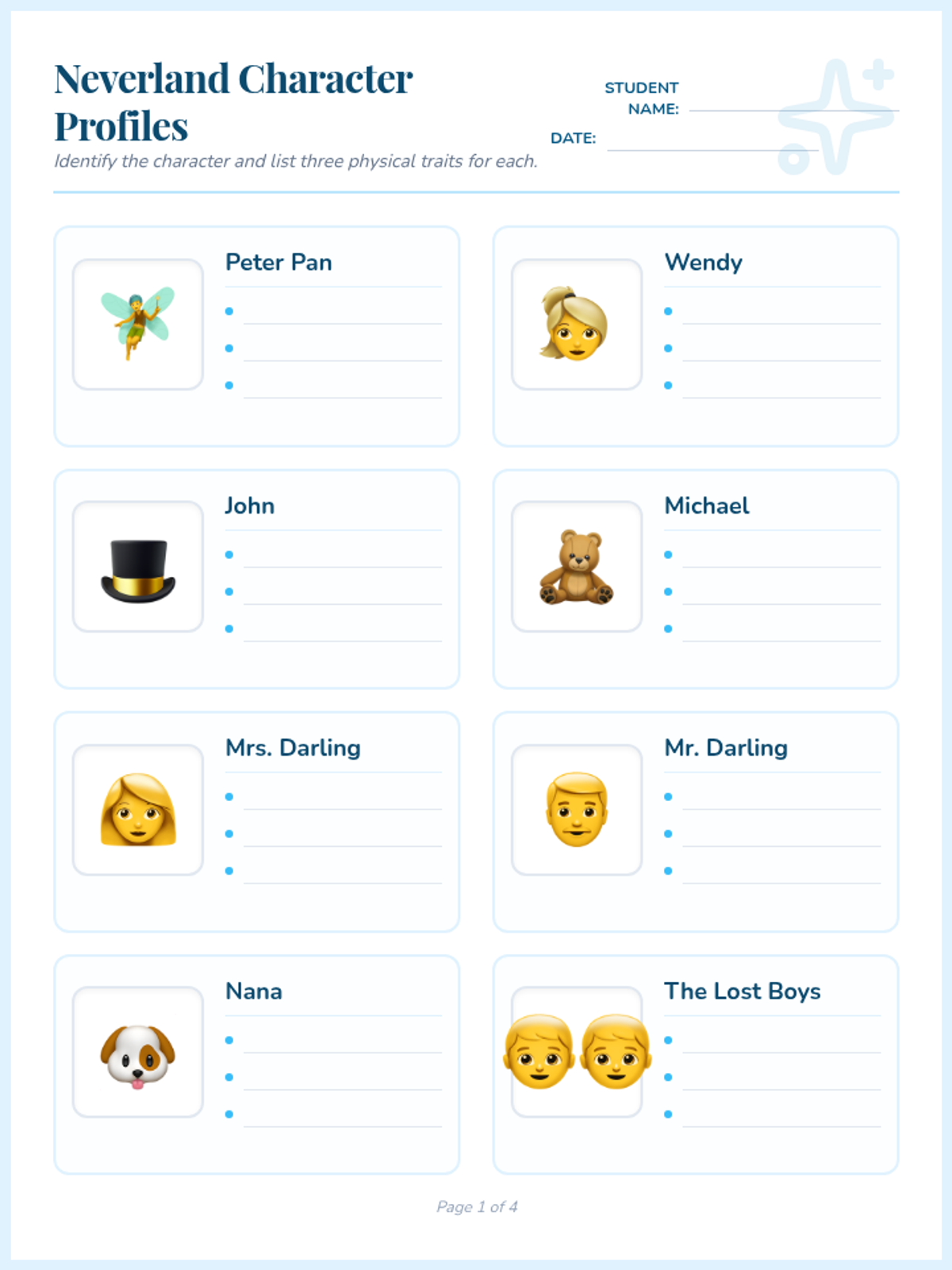
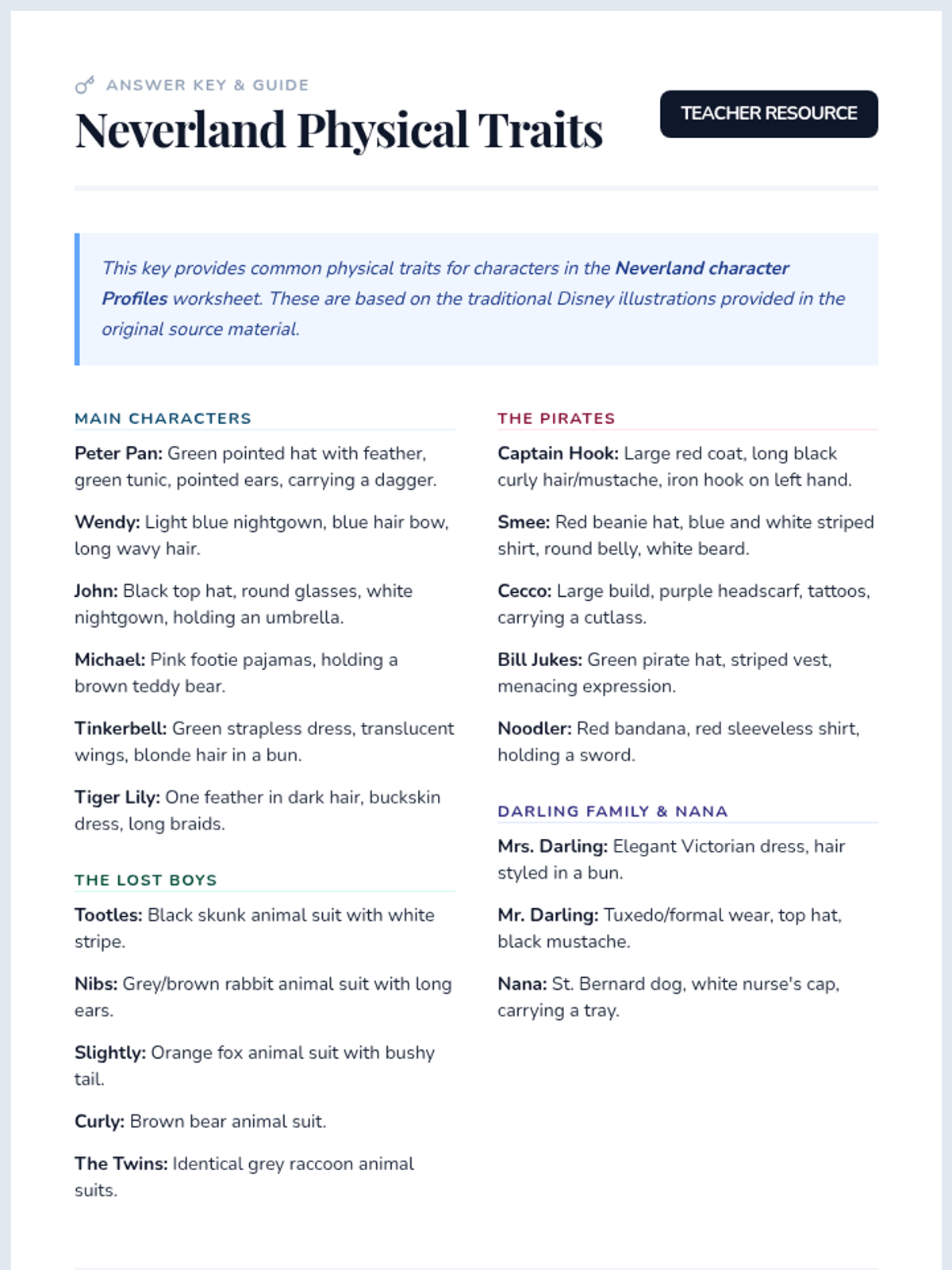
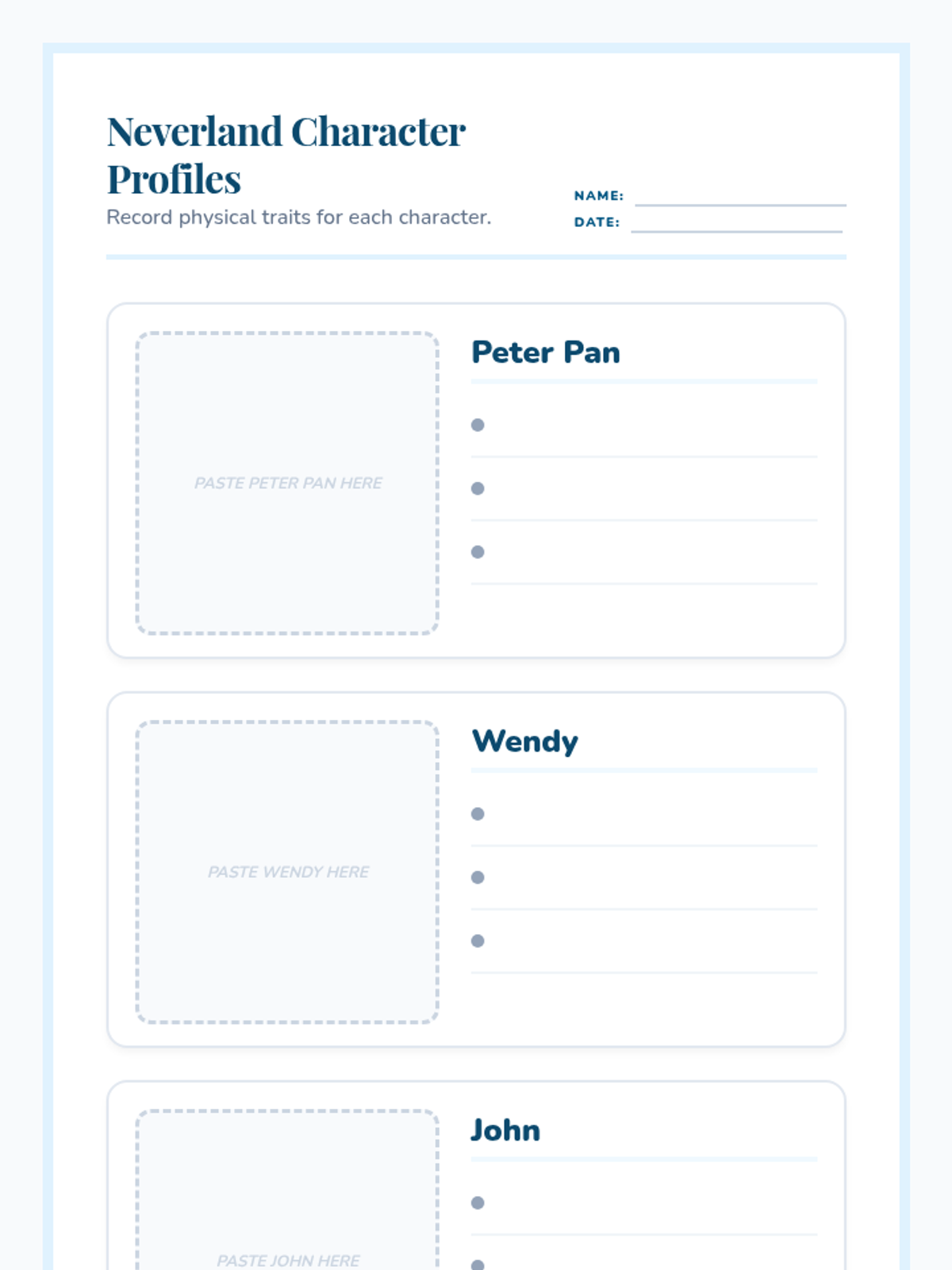
A character analysis lesson based on the classic story of Peter Pan, focusing on identifying physical traits and character descriptions.
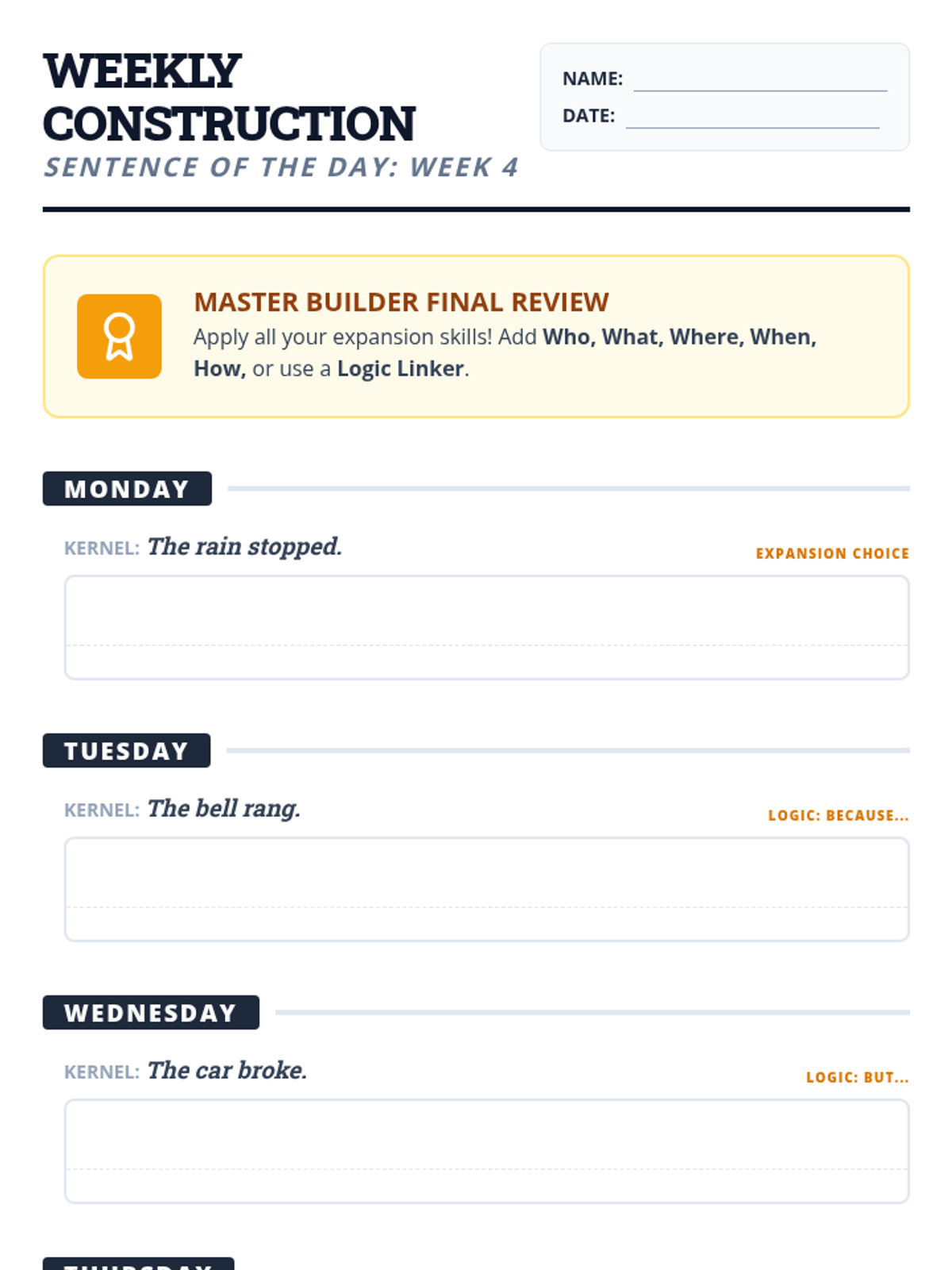
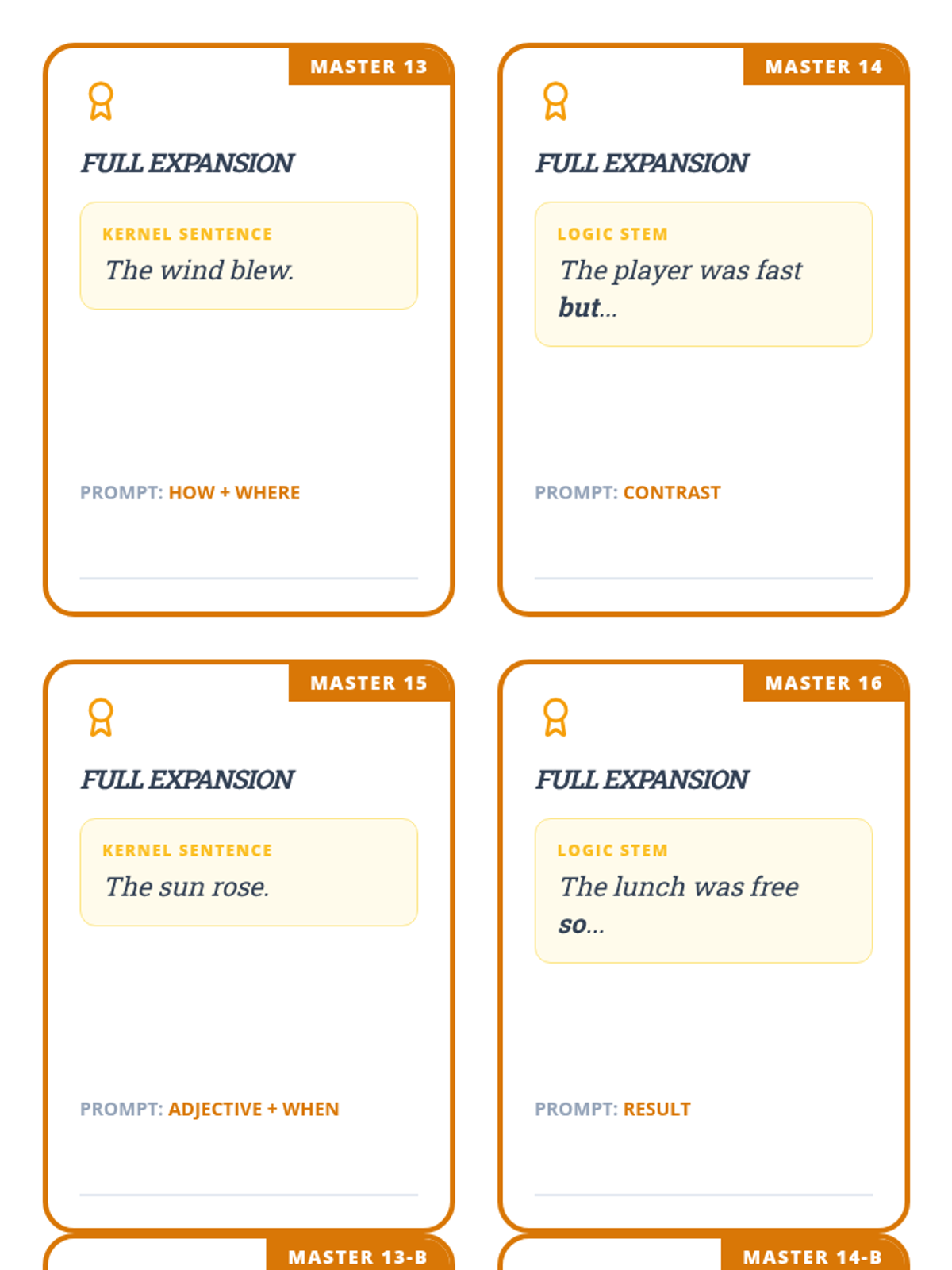
The final review lesson where students apply all previous strategies (adjectives, situational details, and logical conjunctions) to create complex and polished sentences.
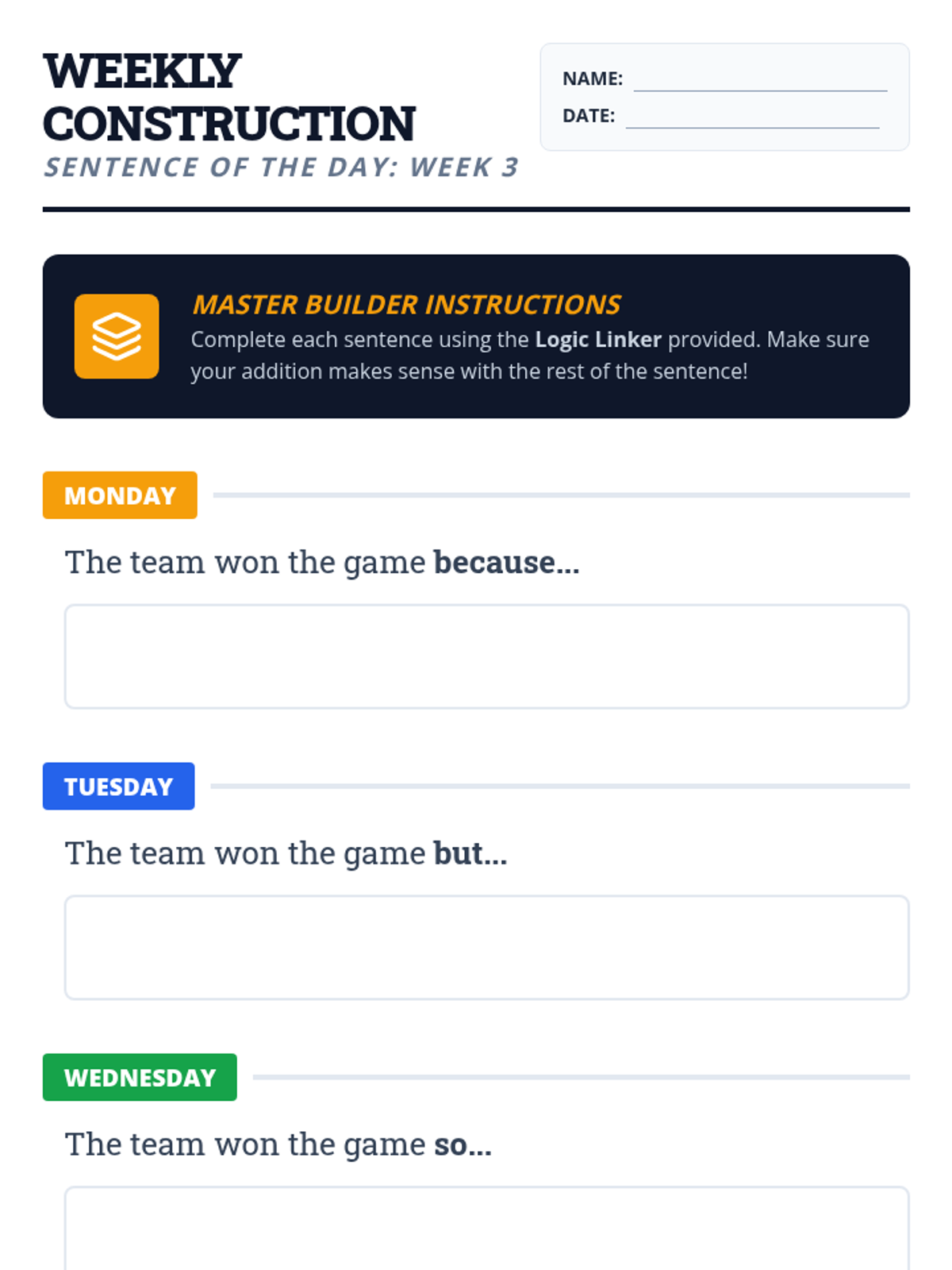
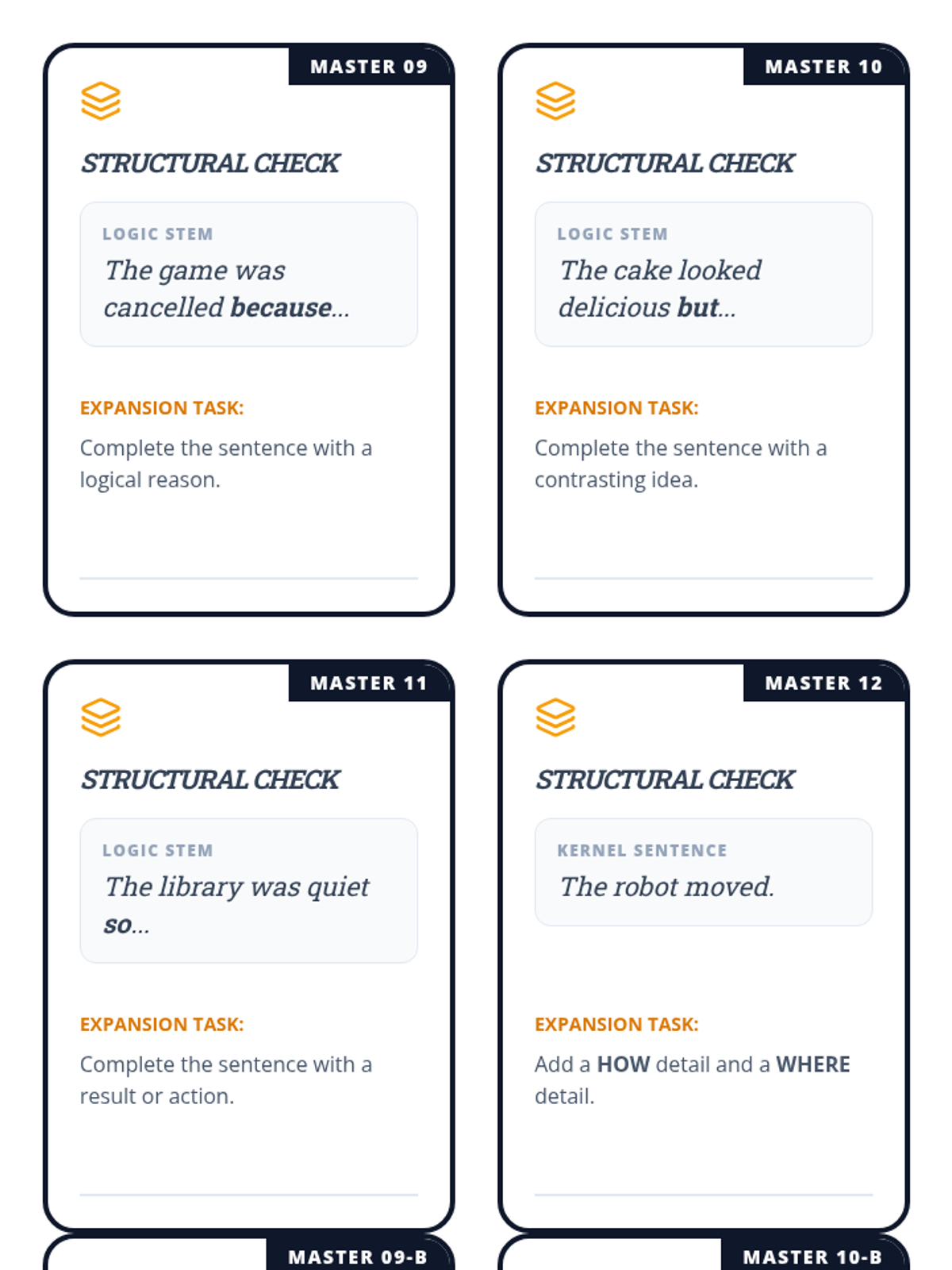
The final lesson focuses on using 'Because, But, So' to expand sentences logically and demonstrate deeper reasoning and detail.
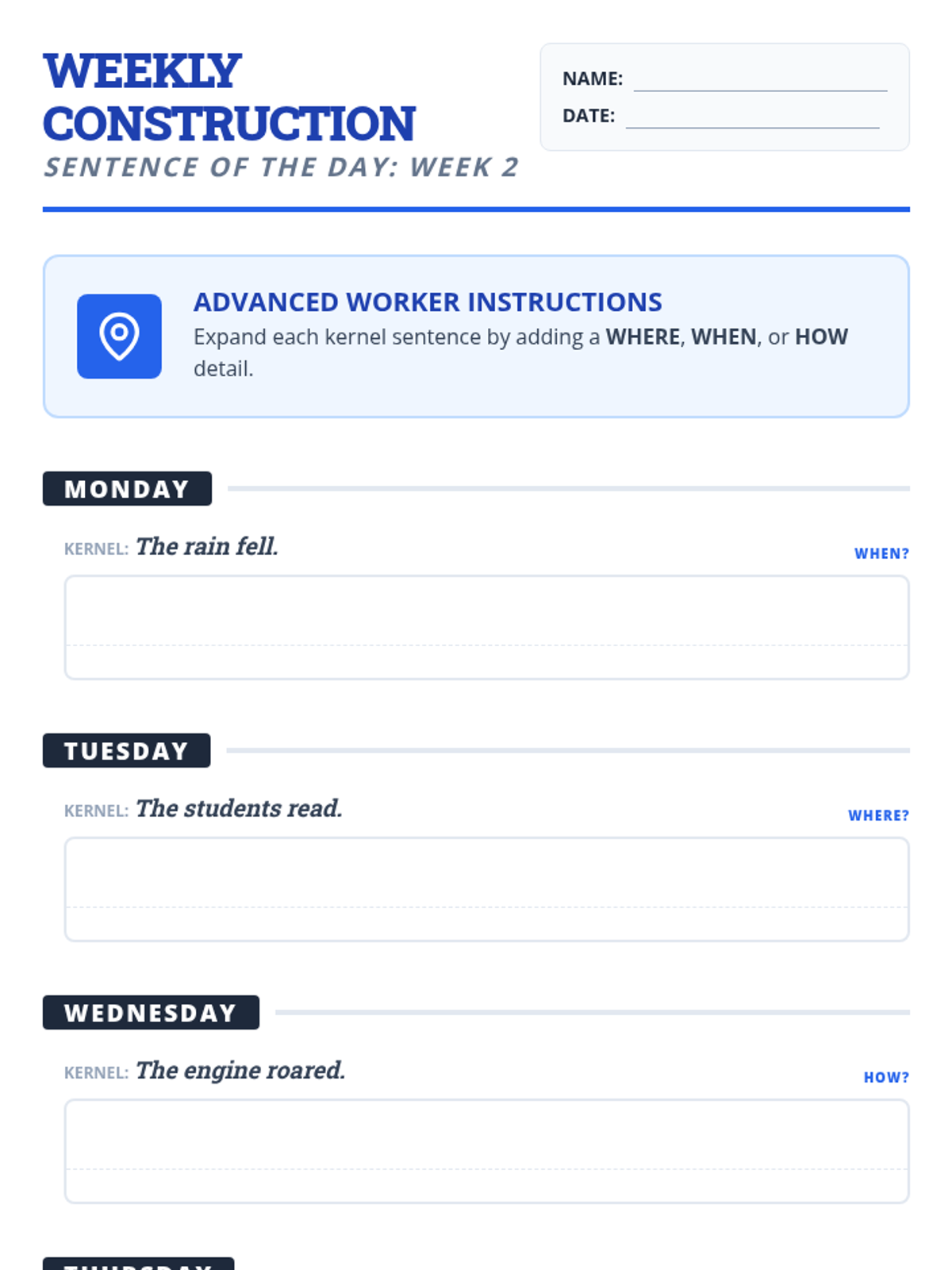
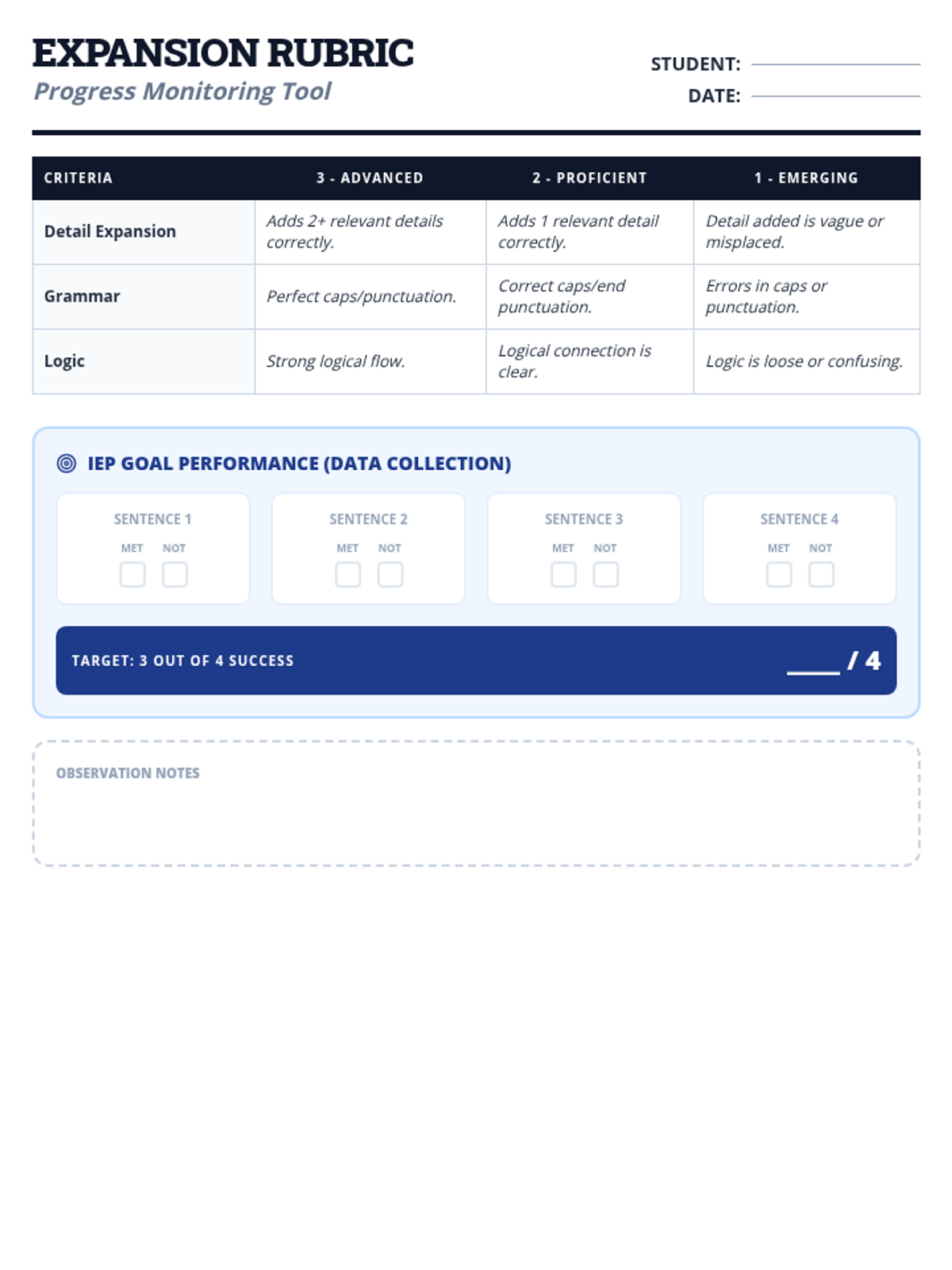
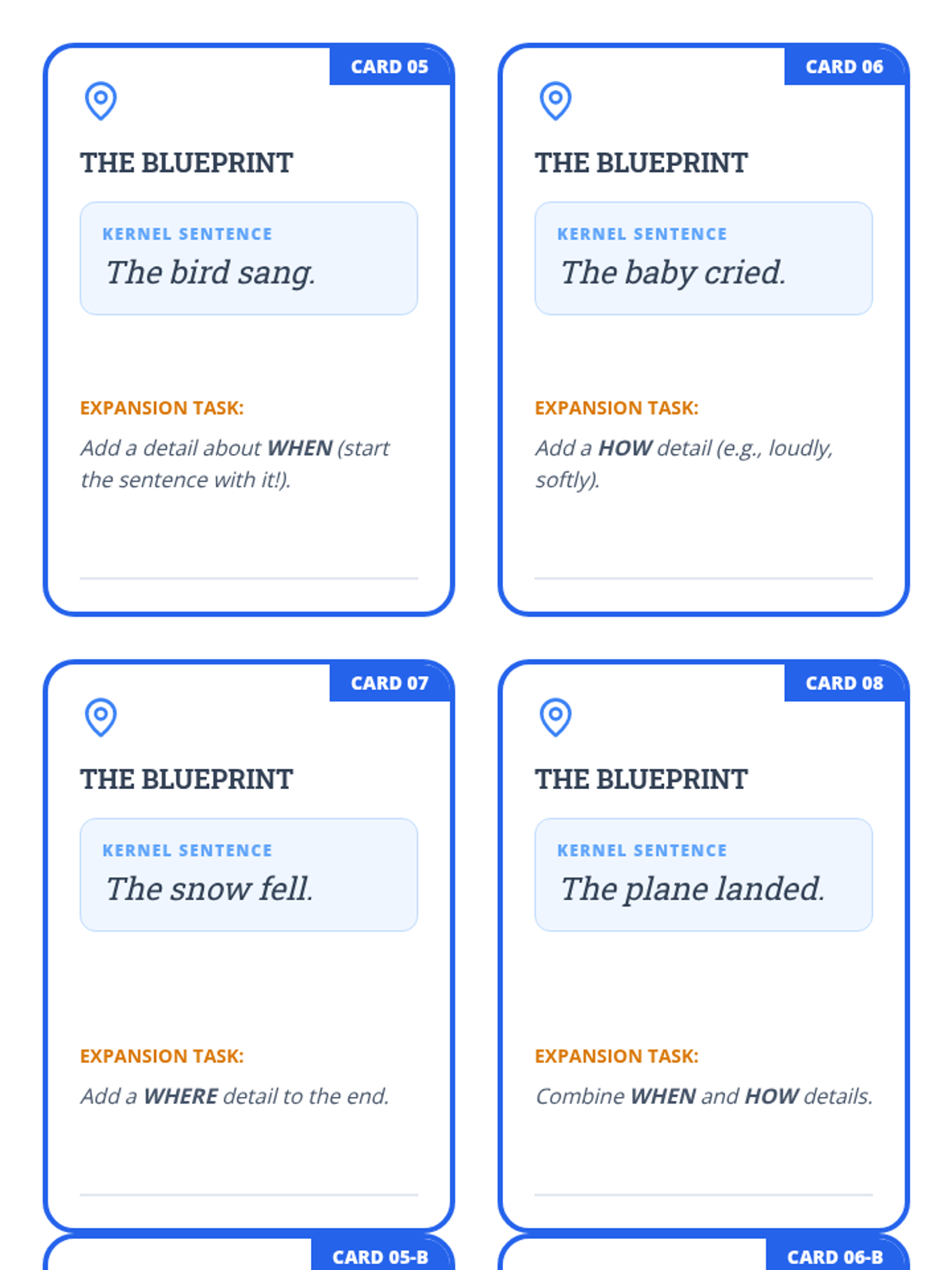
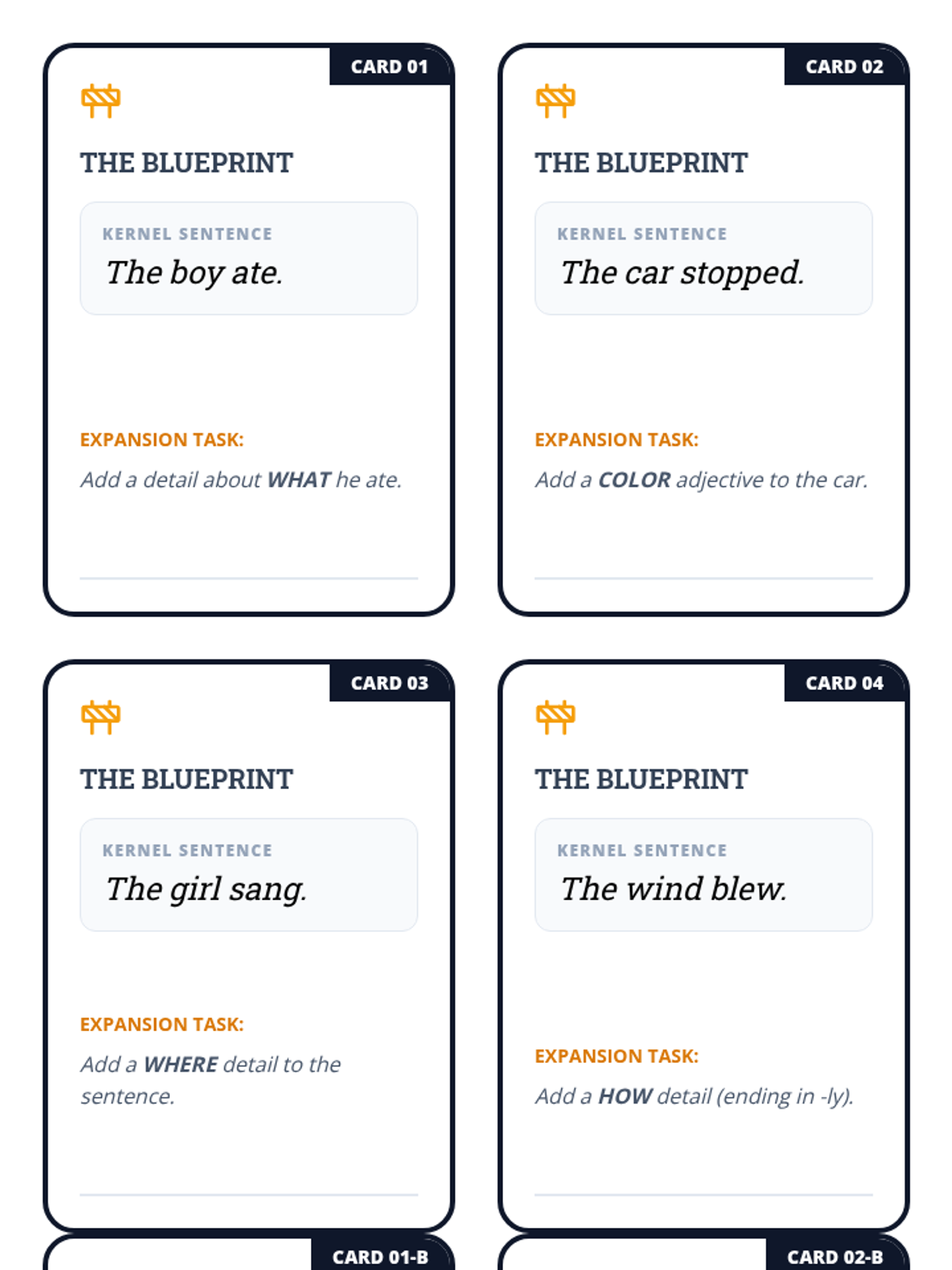
In this lesson, students learn to add situational details to their sentences using 'Where', 'When', and 'How' question words.
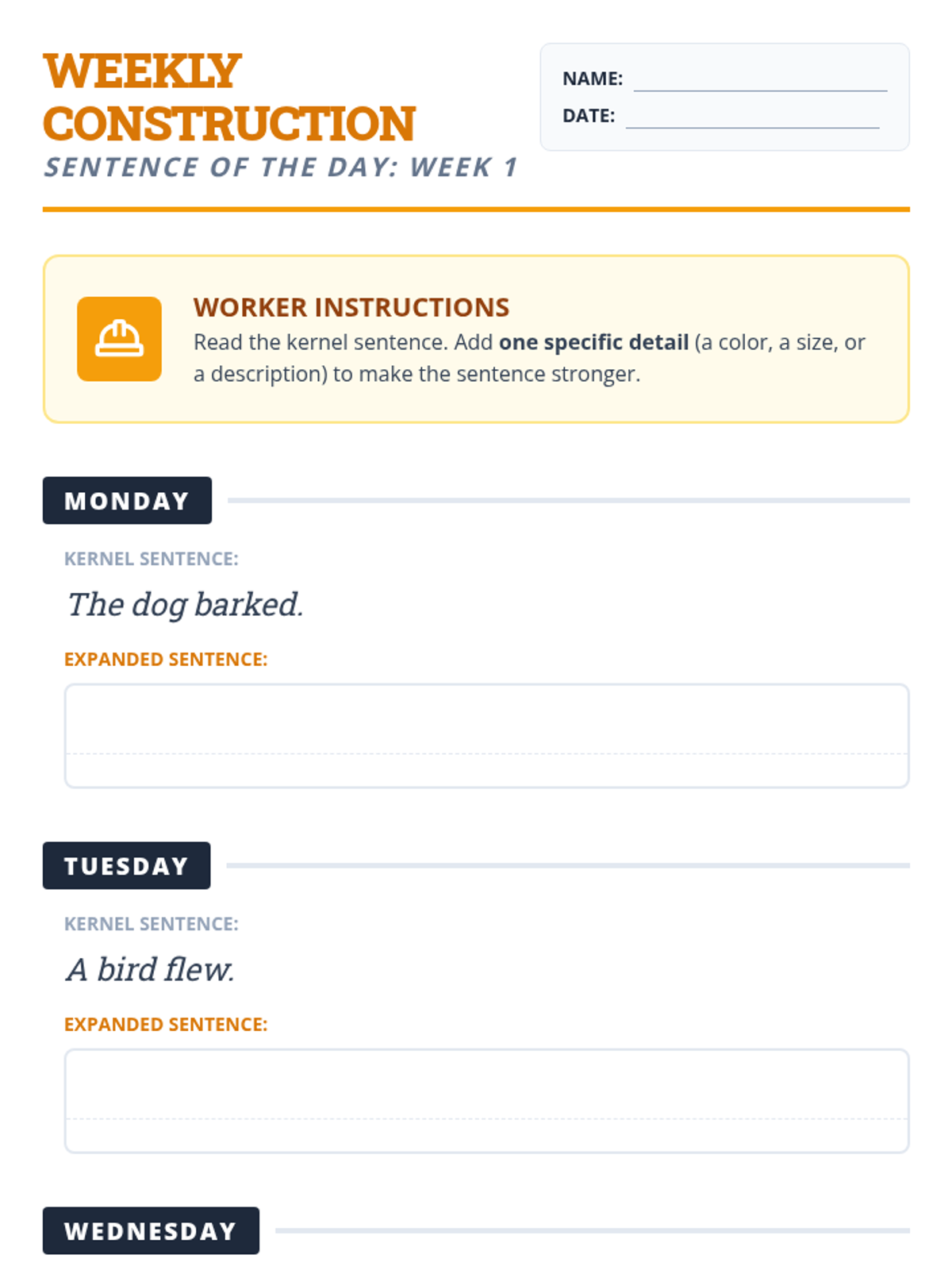
This lesson introduces the concept of a complete sentence versus a fragment and begins basic sentence expansion using 'Who' and 'What' details.
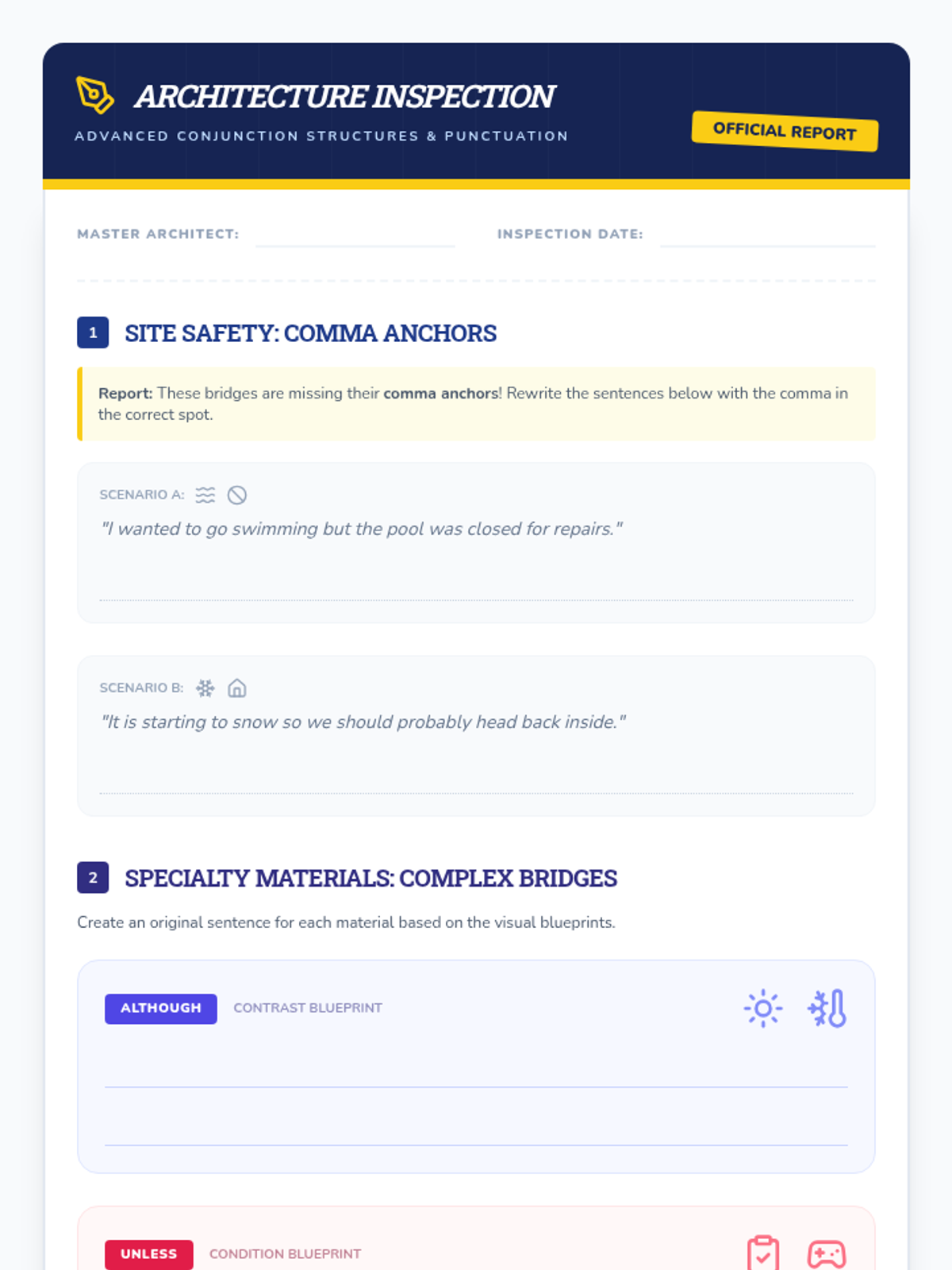
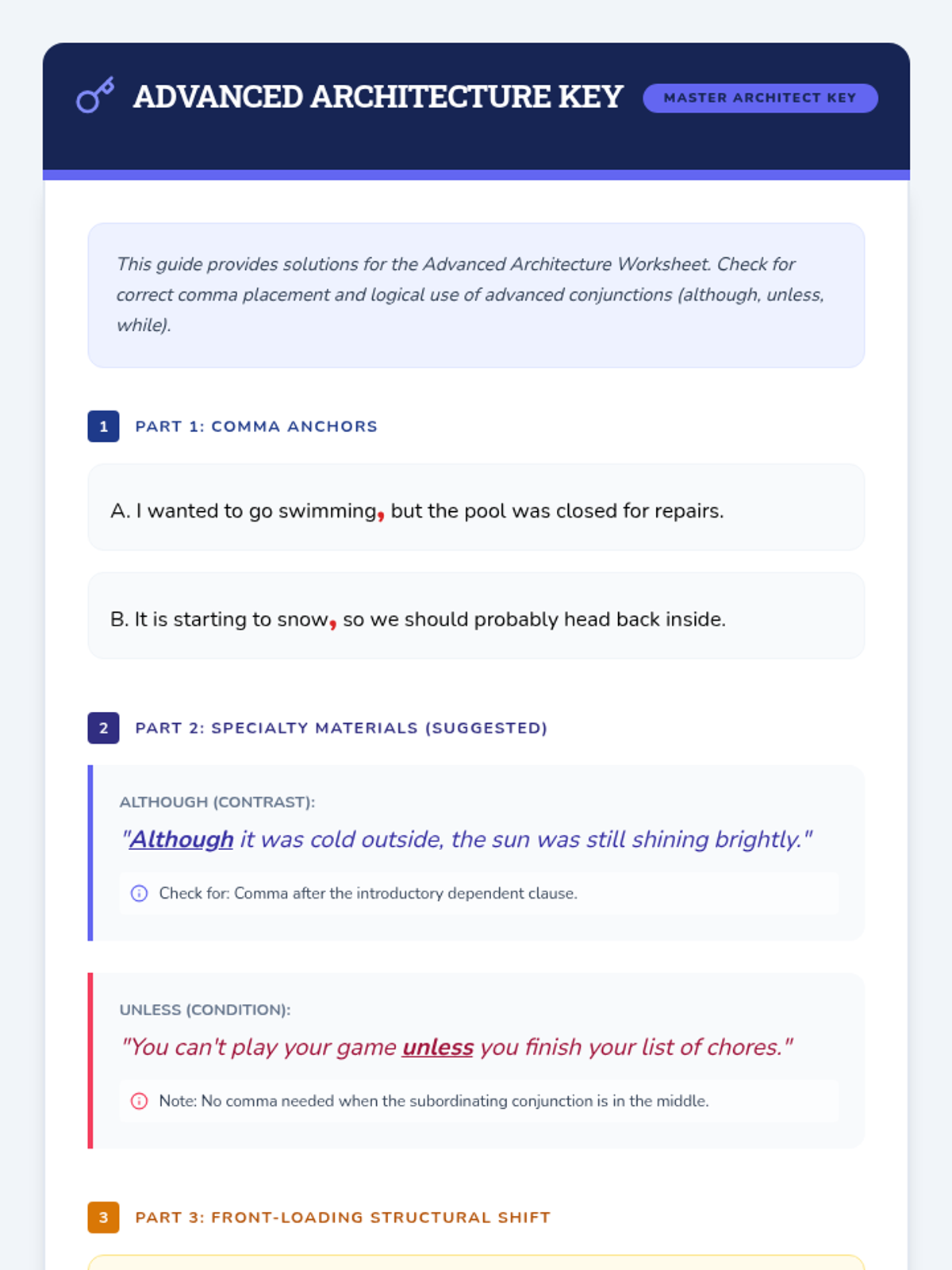
A follow-up lesson focusing on complex sentence structures, including comma placement in compound sentences and starting sentences with subordinating conjunctions. Introduces advanced conjunctions like 'although', 'while', and 'unless'.
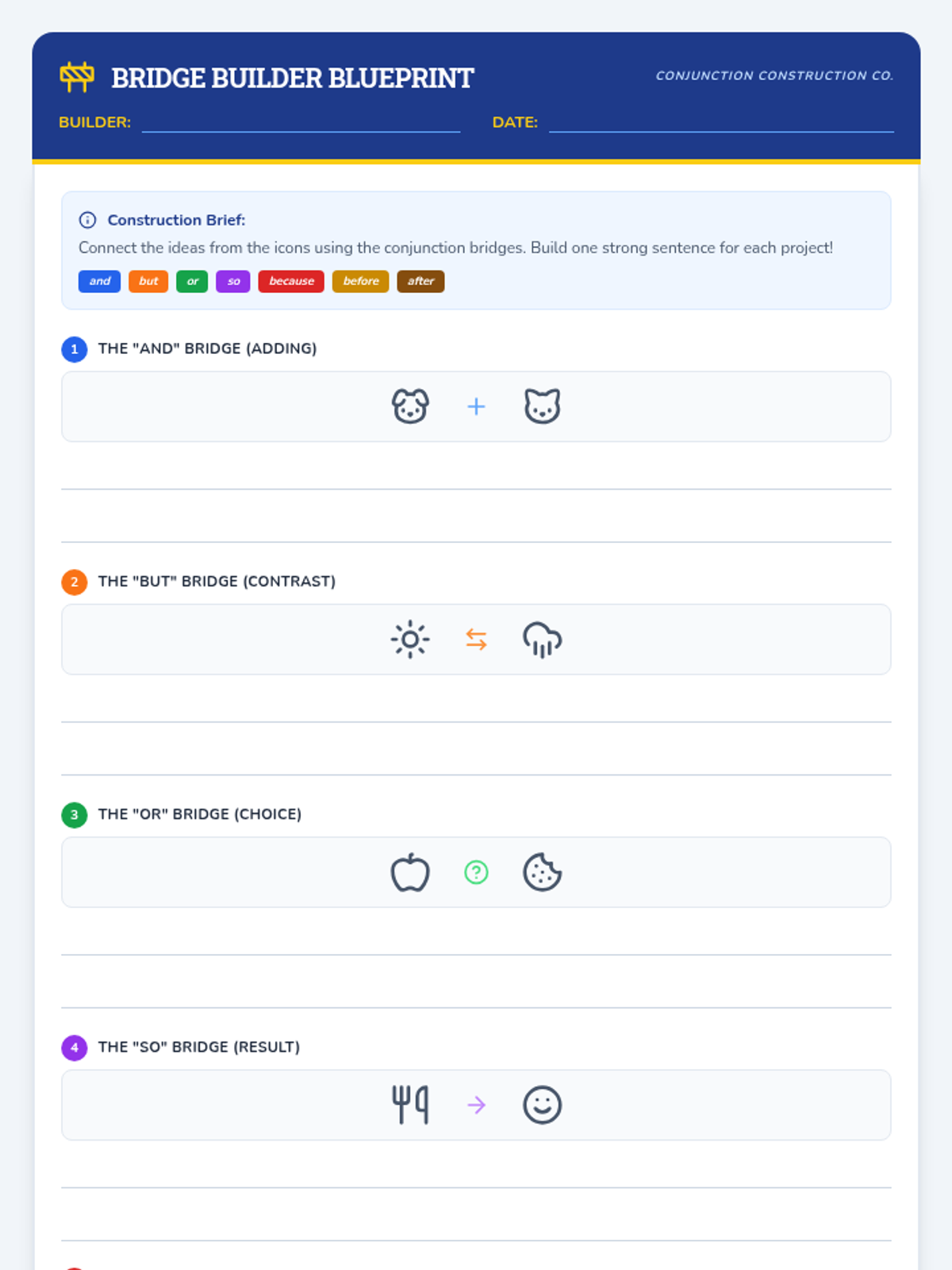
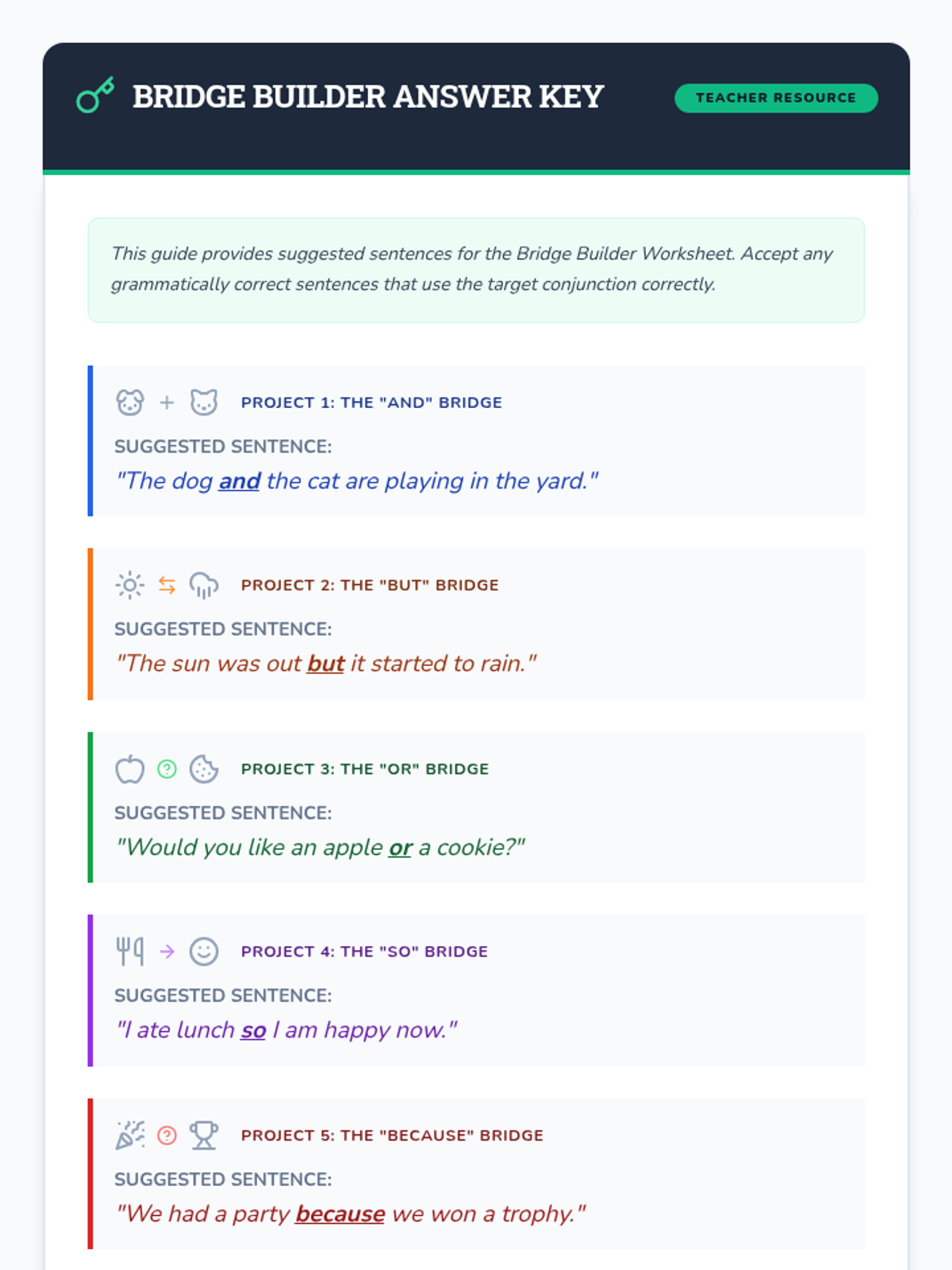
A lesson on using coordinating and subordinating conjunctions to build complex sentences. Students learn to use conjunctions as 'bridges' to connect their ideas together clearly.
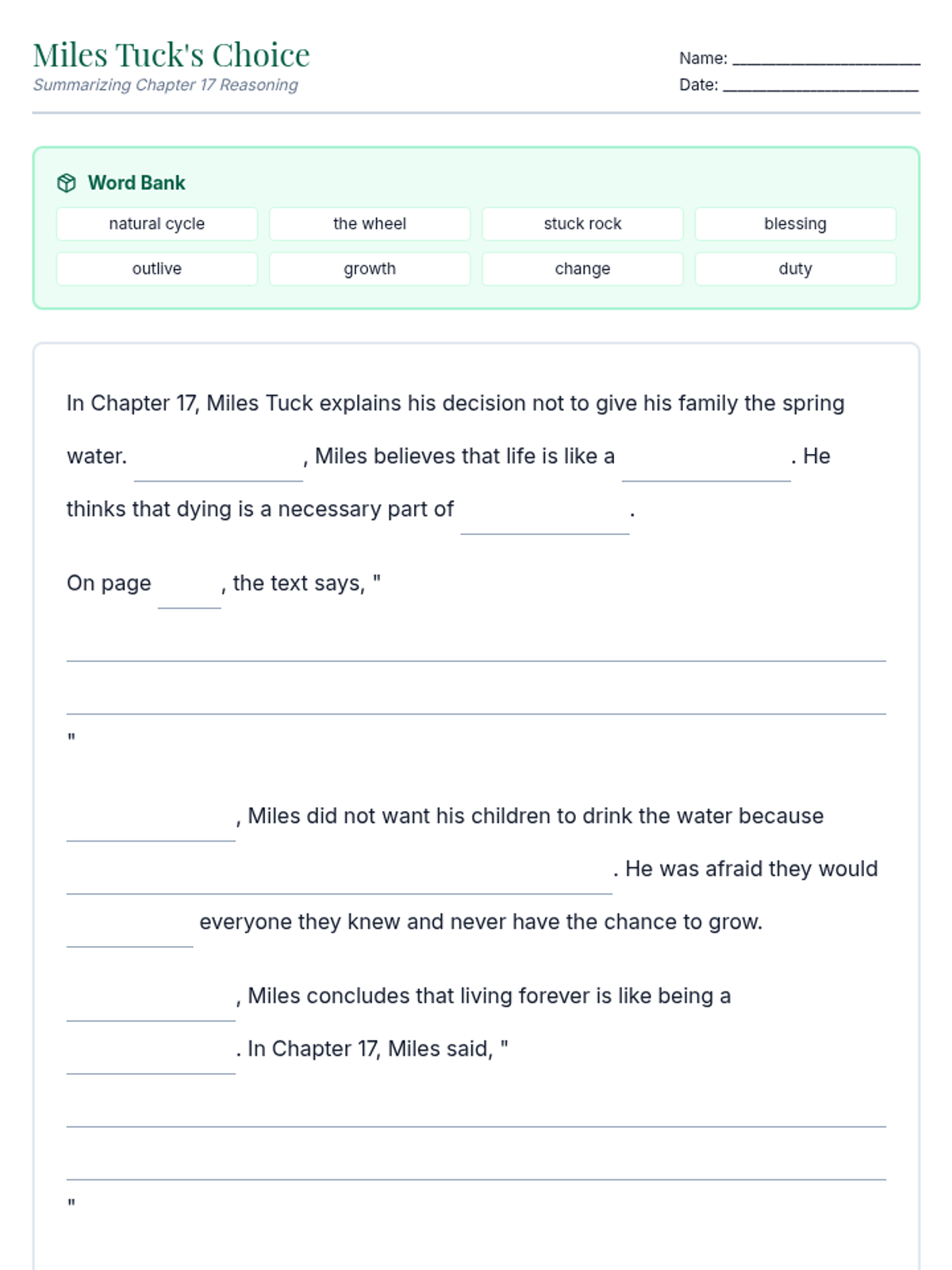
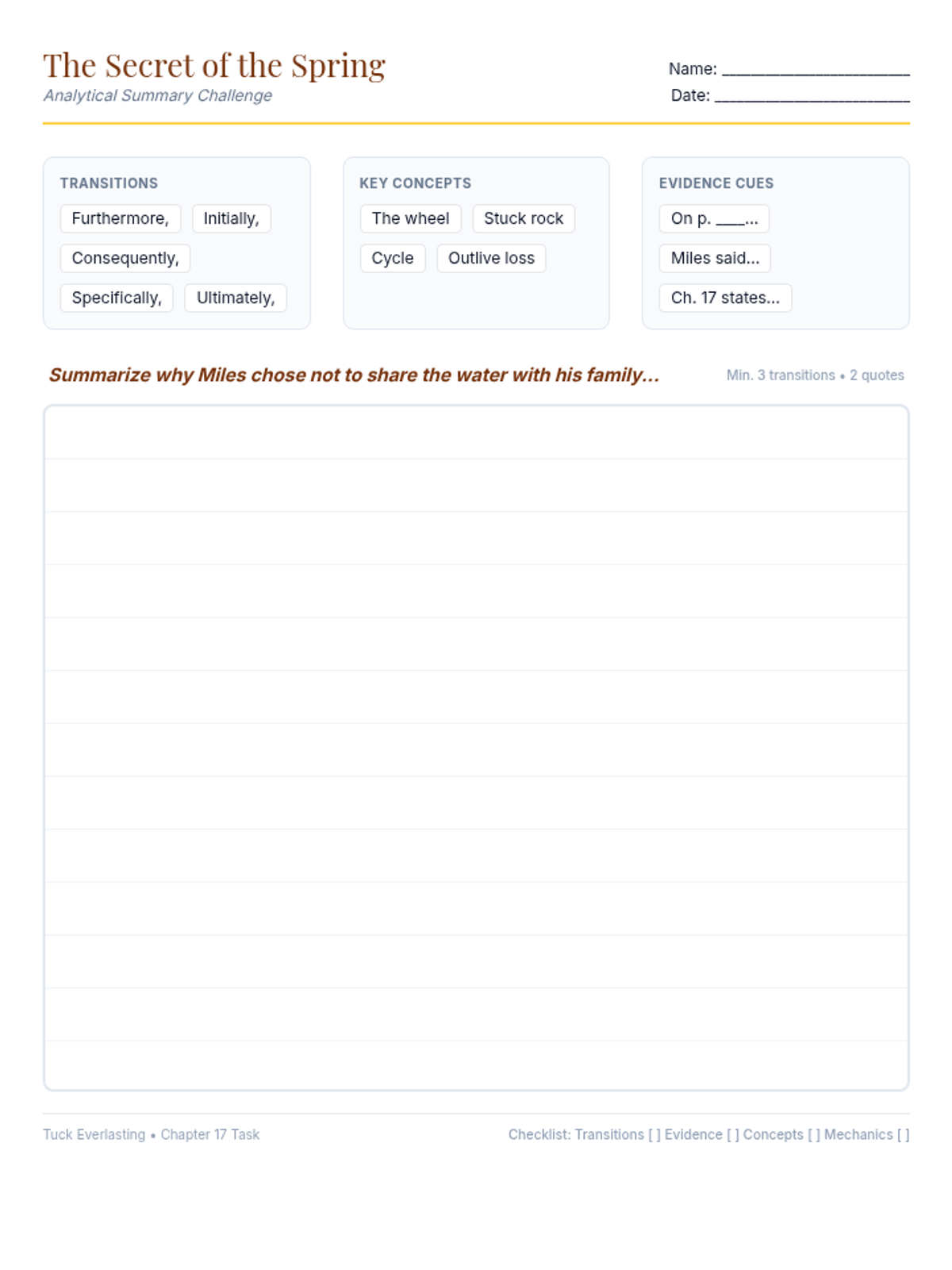
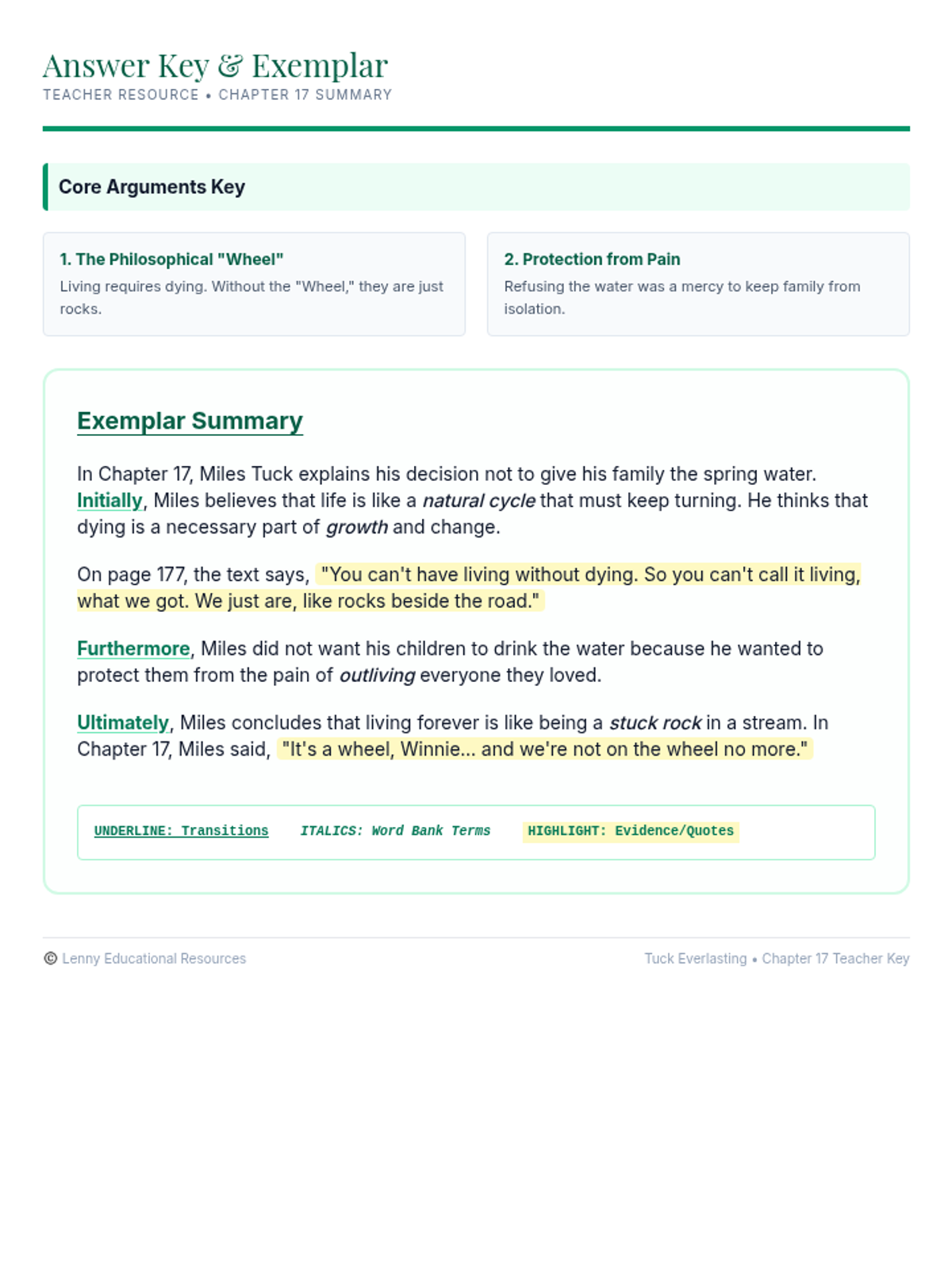
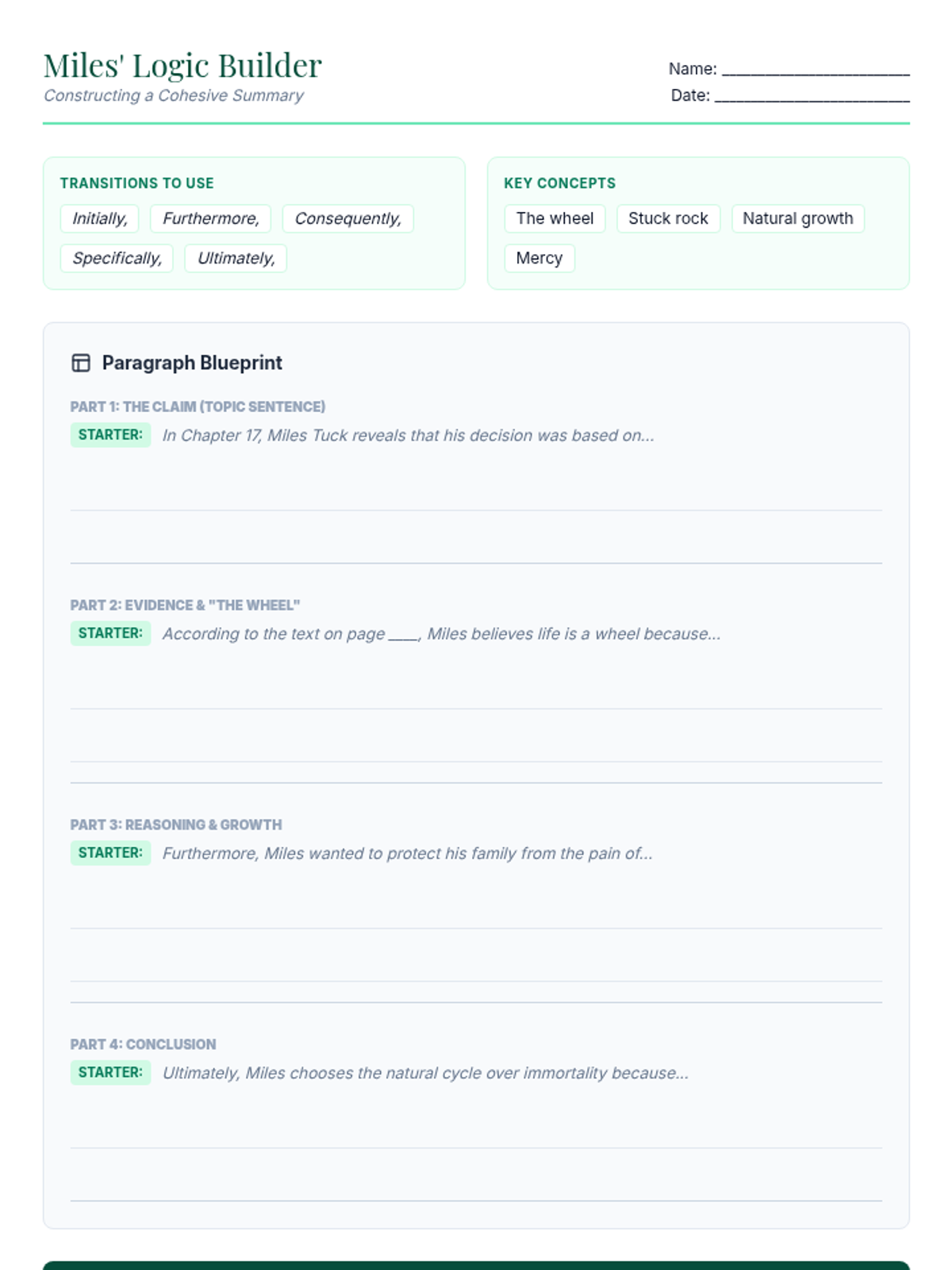
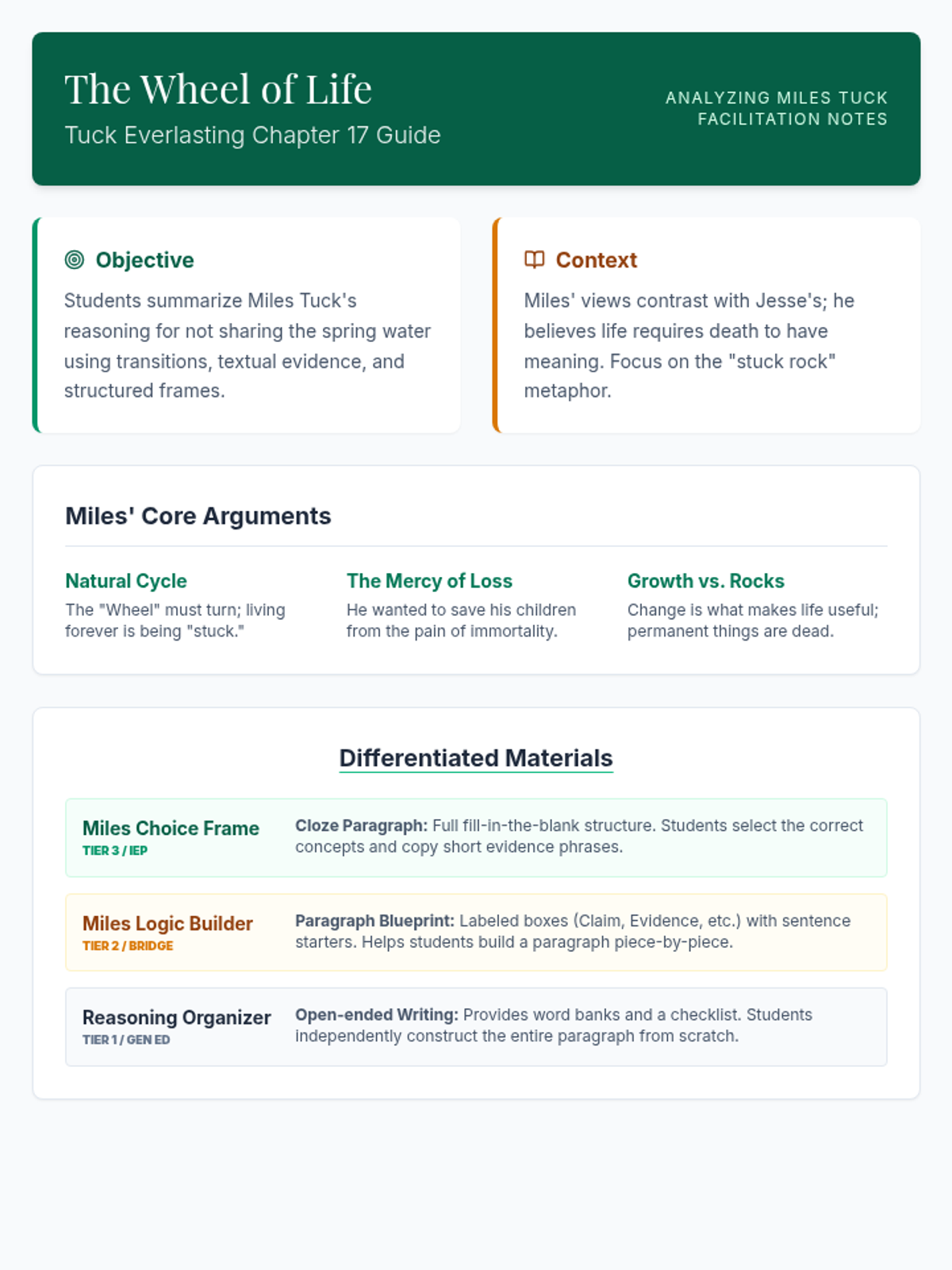
A lesson focused on Chapter 17 of Tuck Everlasting, where students analyze Miles Tuck's complex reasoning for not giving his family the spring water. Students will use transitions and textual evidence to construct a cohesive summary.
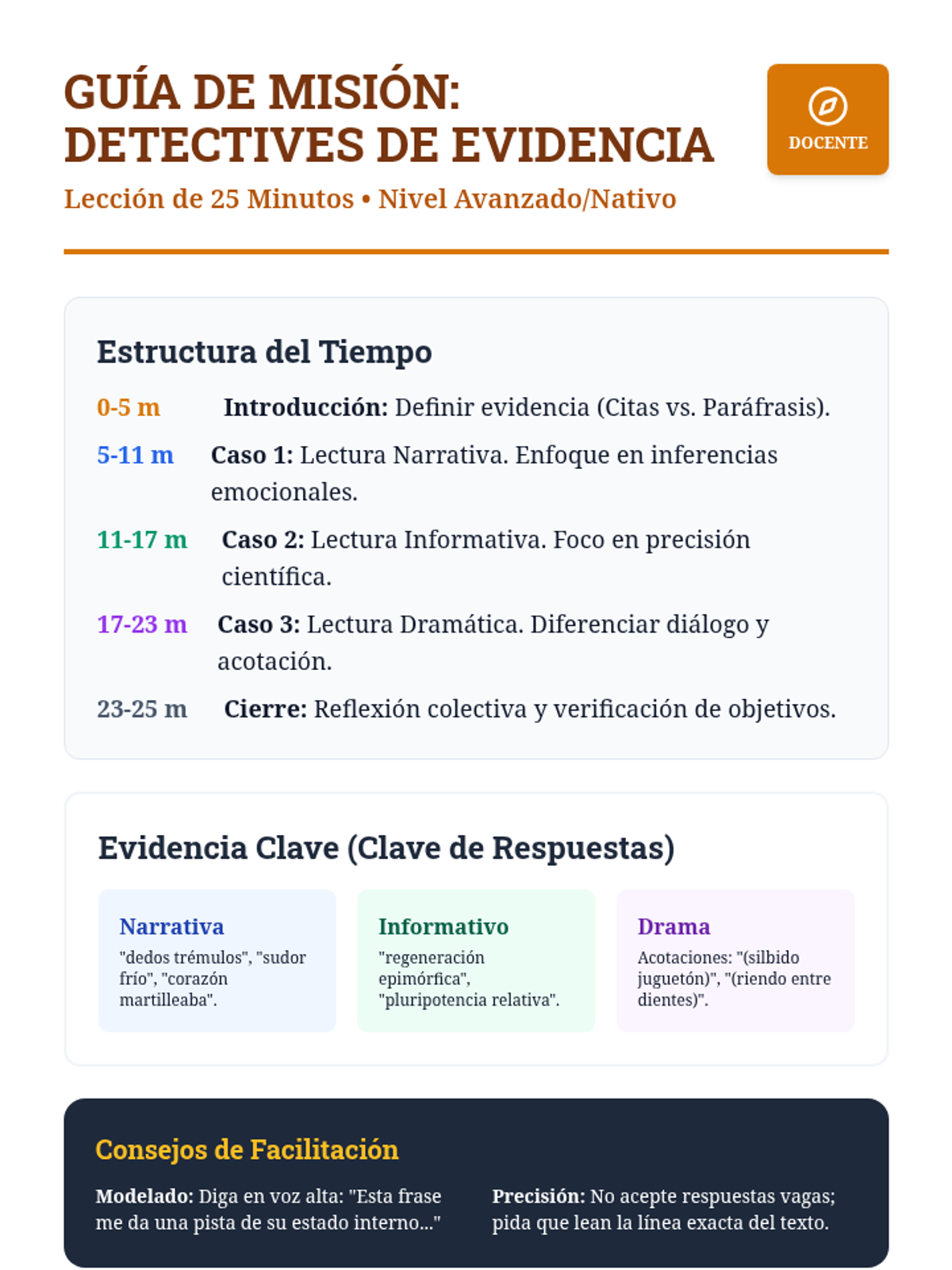
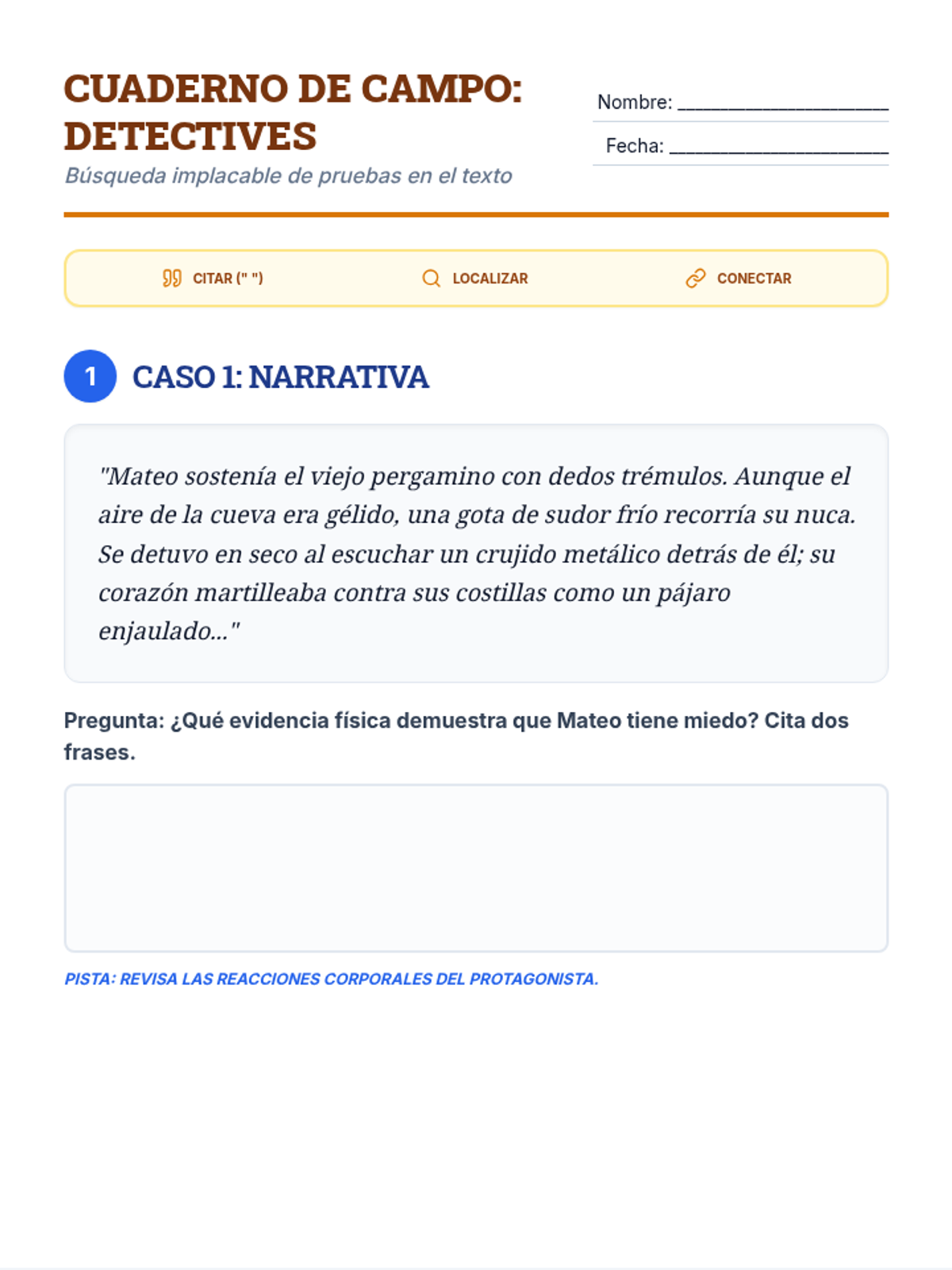
Una lección guiada de 25 minutos para estudiantes avanzados o nativos sobre cómo utilizar la evidencia del texto para respaldar respuestas, utilizando tres géneros distintos: narrativa, informativo y dramático.