A creative art-based lesson for 5-6 year olds to learn about Rosa Parks, bravery, and equality through storytelling and artistic expression.
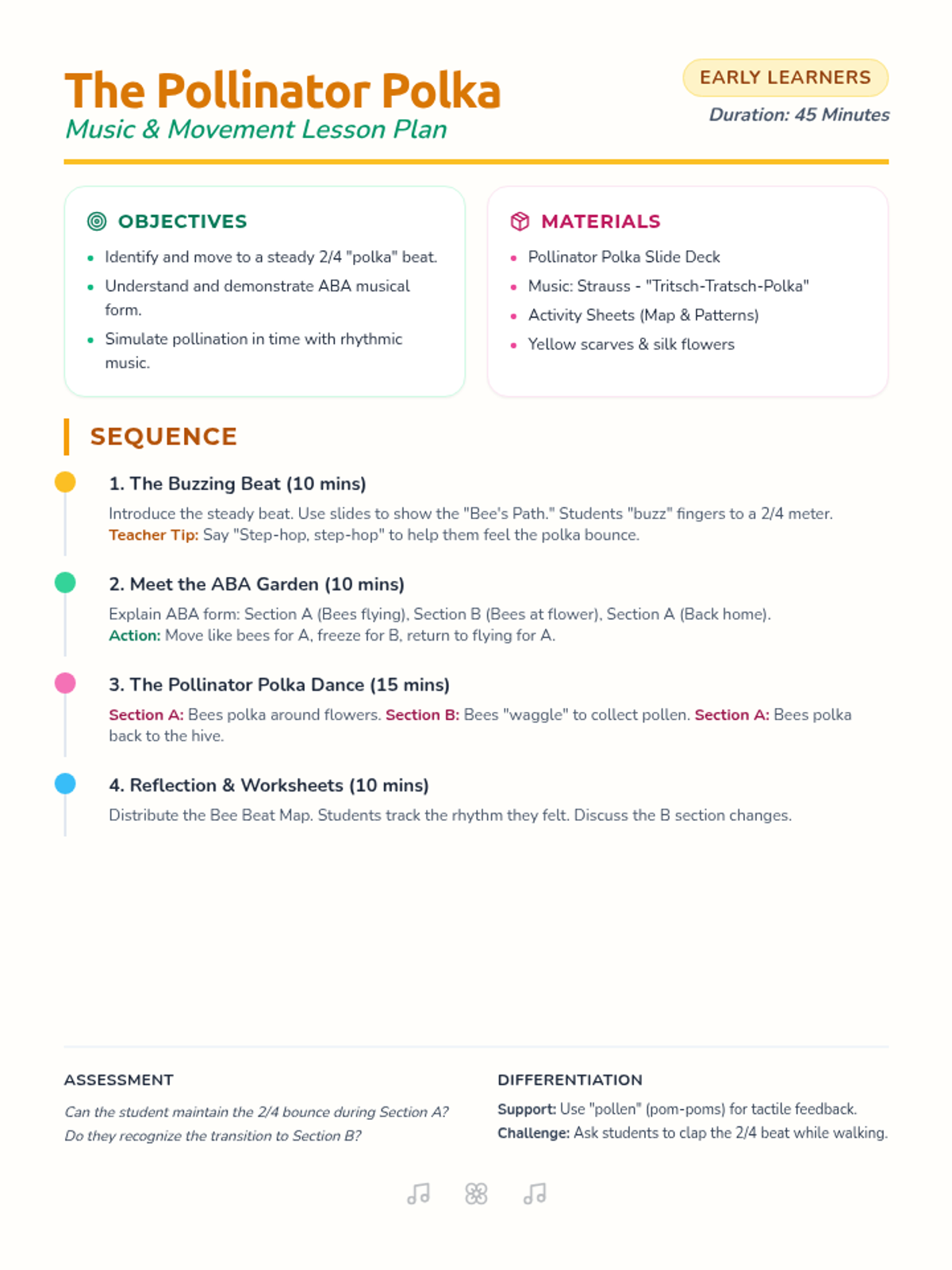
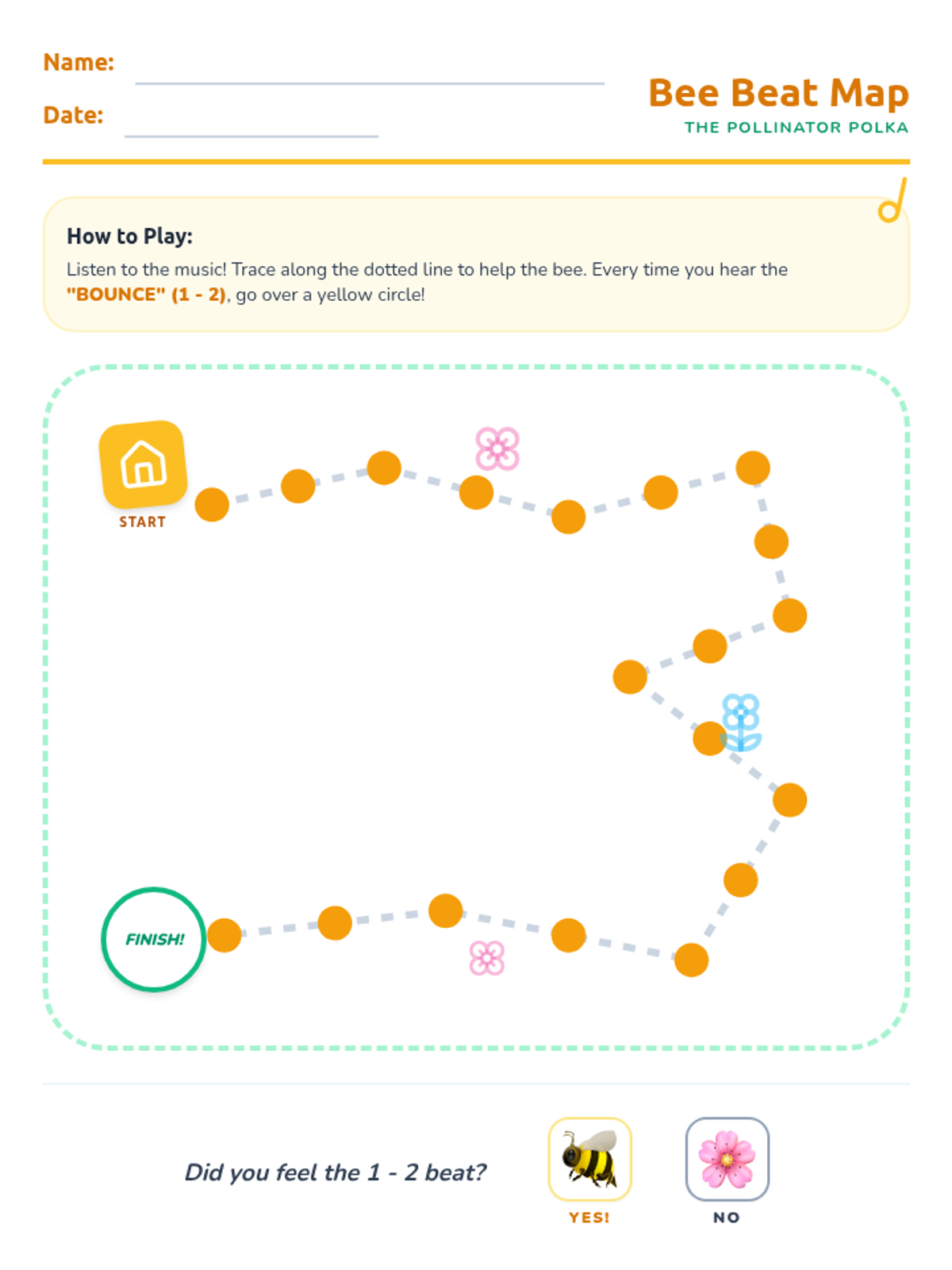
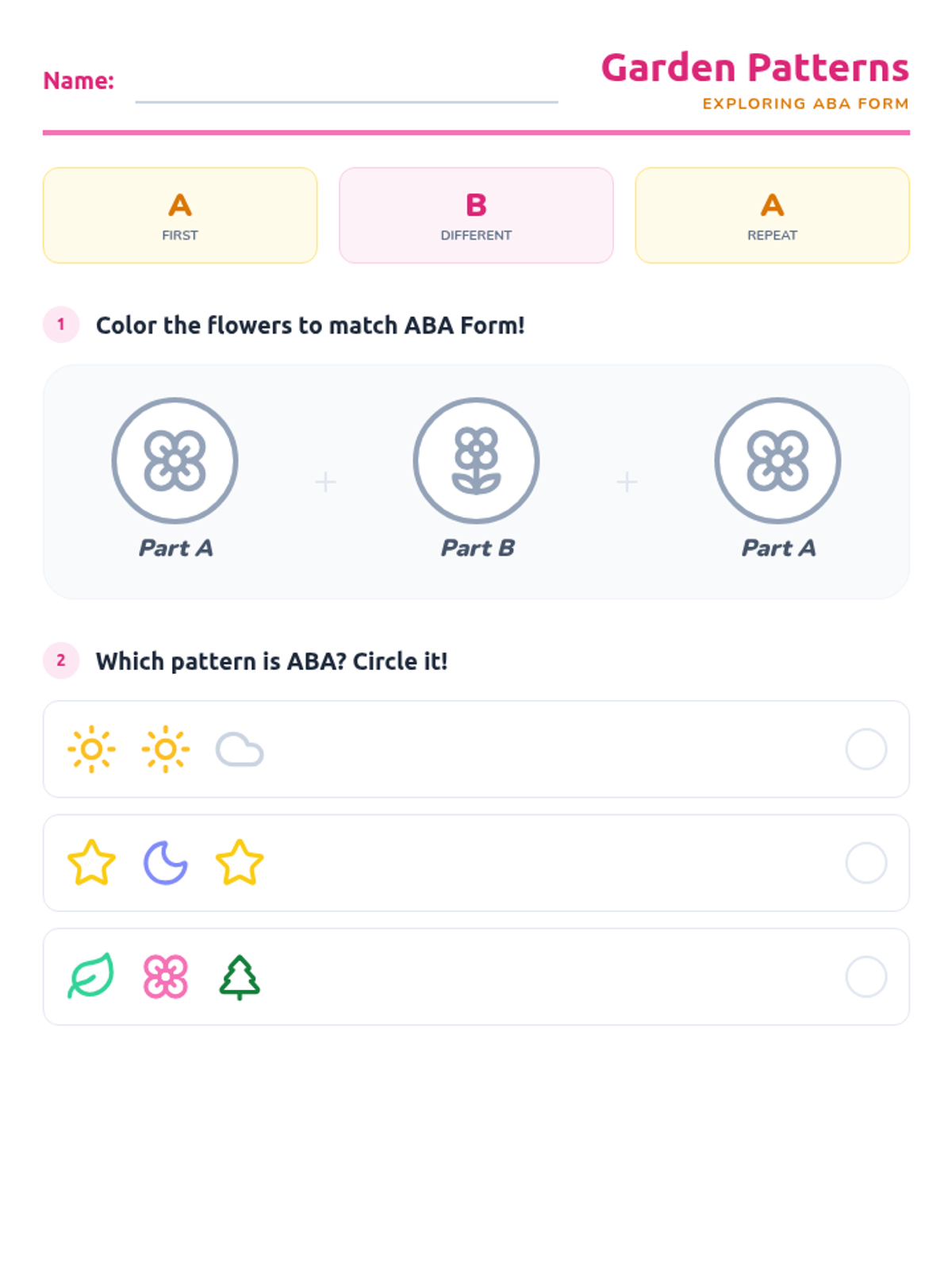
An early childhood music and science integration lesson exploring 2/4 meter and ABA form through the whimsical lens of bees and flowers. Students move, listen, and create while learning about the rhythmic "polka" beat and the structure of music.
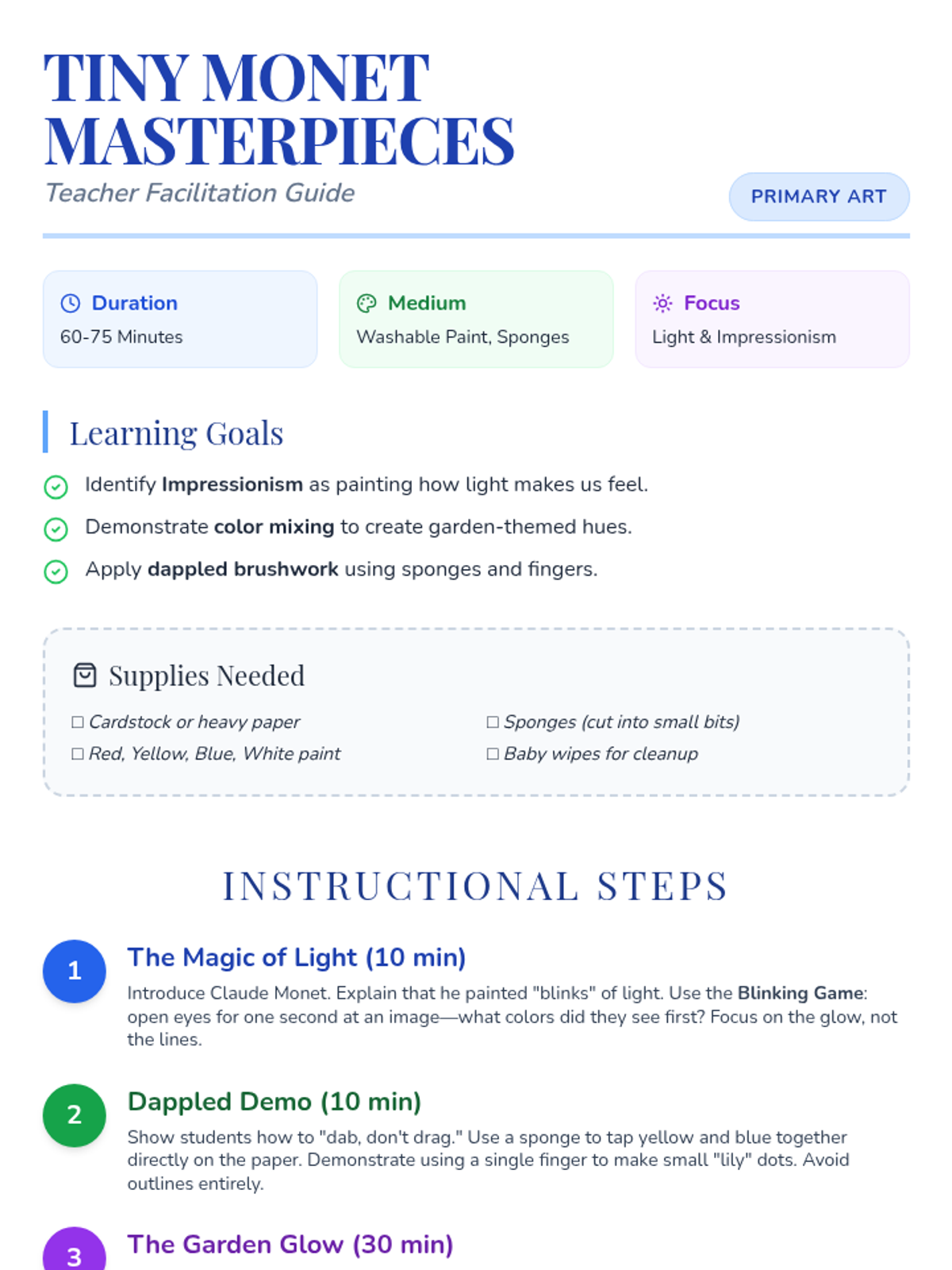
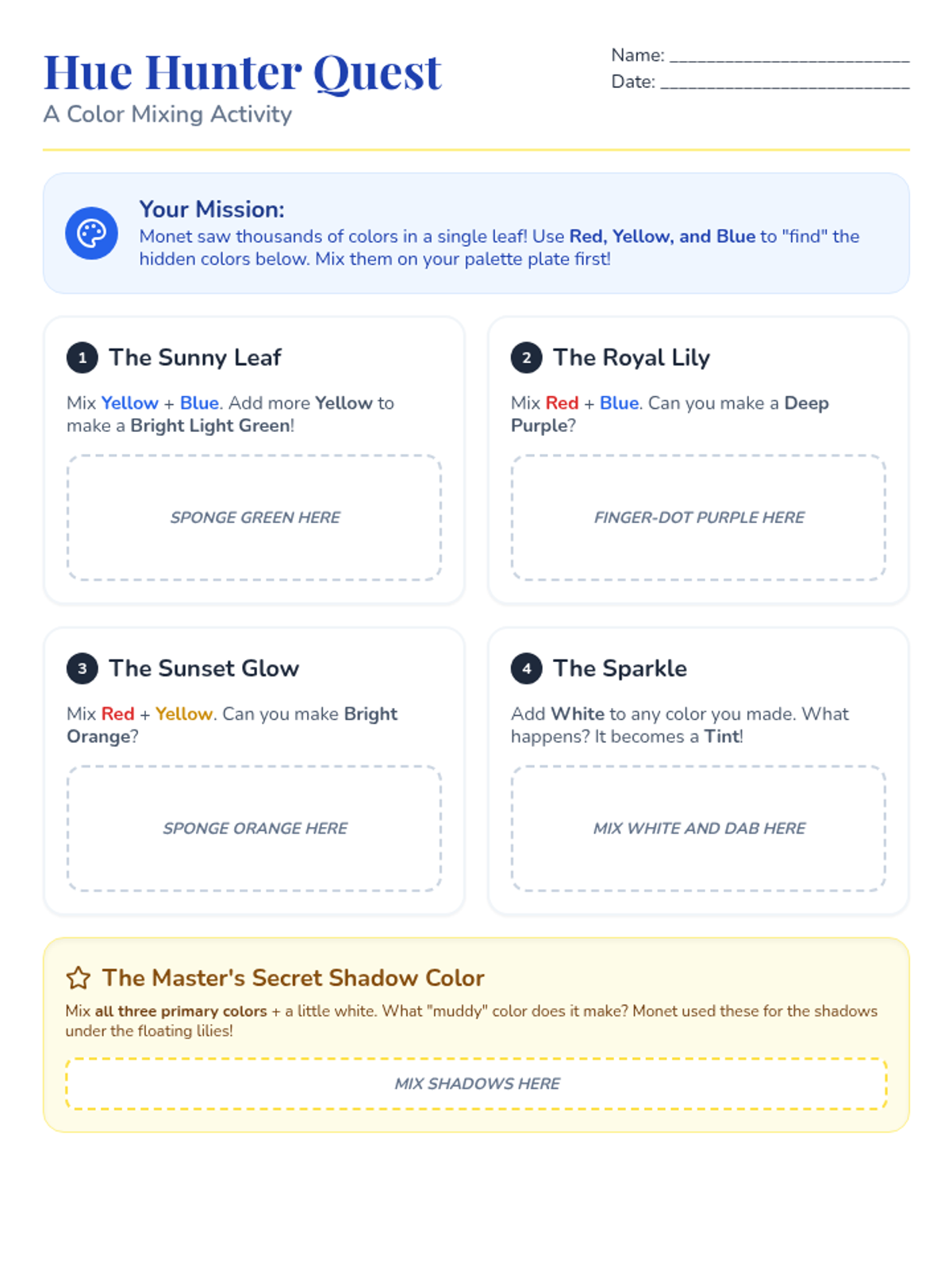
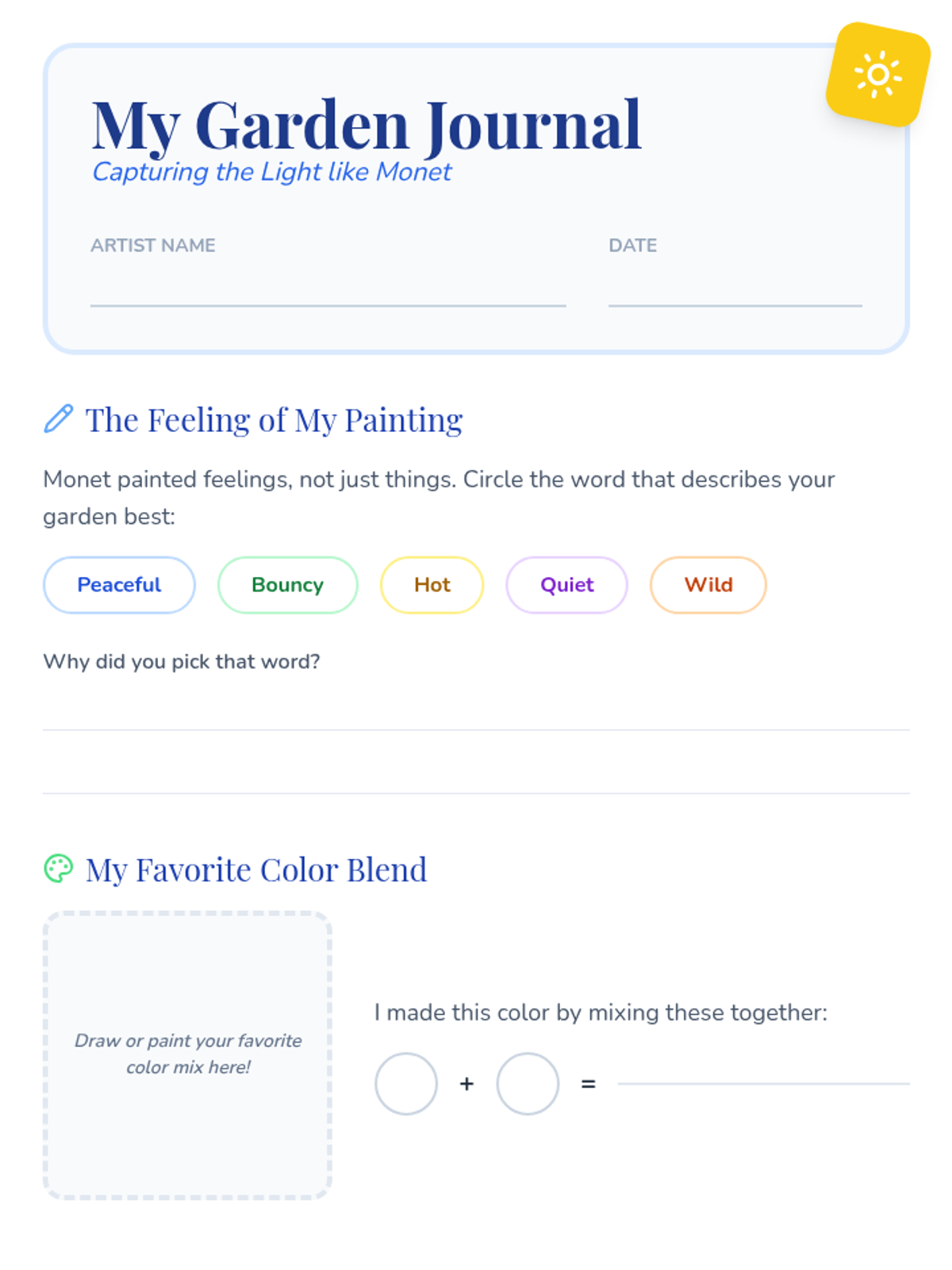
A primary art lesson introducing Impressionism through the works of Claude Monet. Students explore light, color mixing, and dappled textures using finger painting and sponge techniques to create their own garden masterpieces.
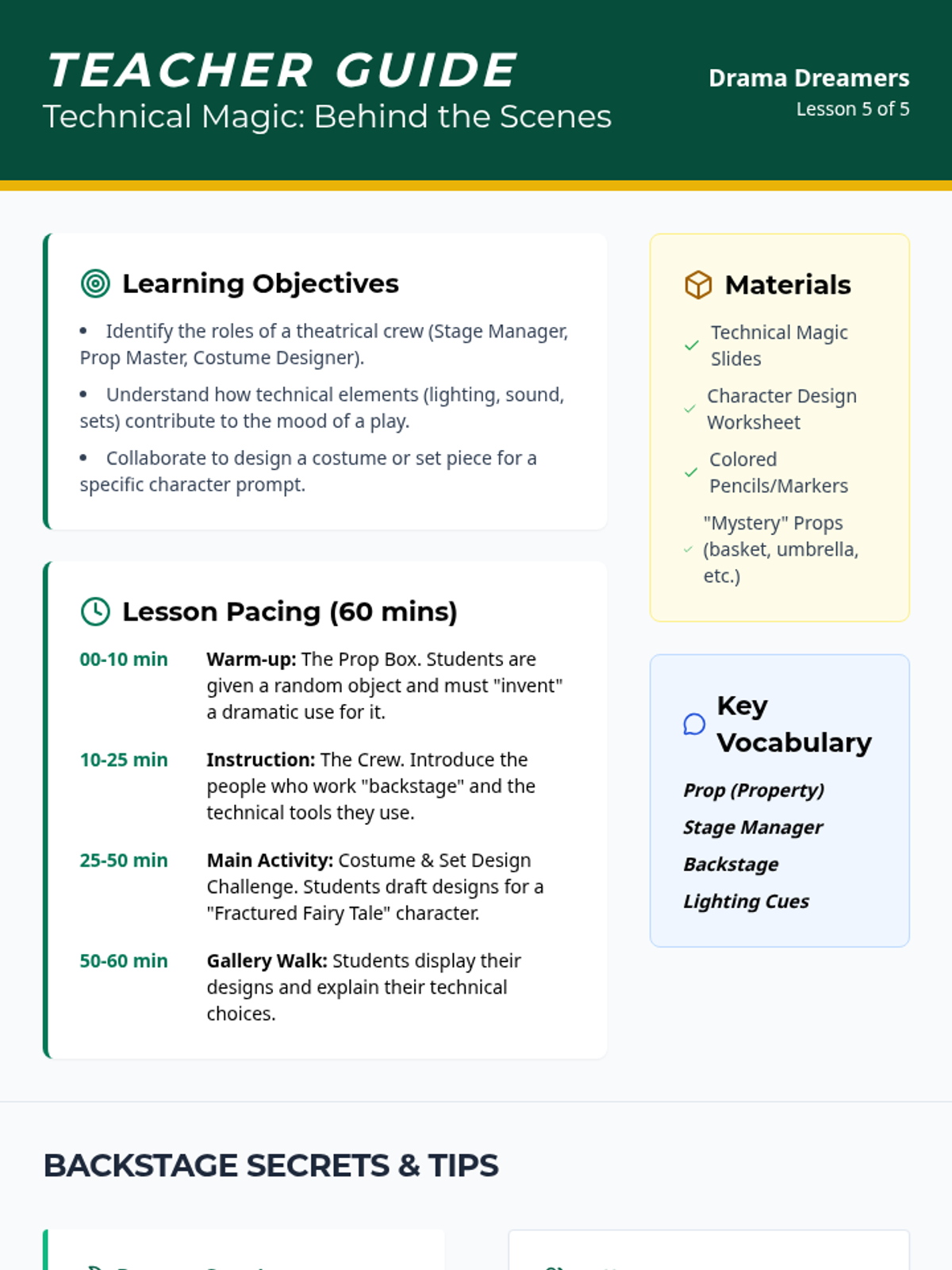
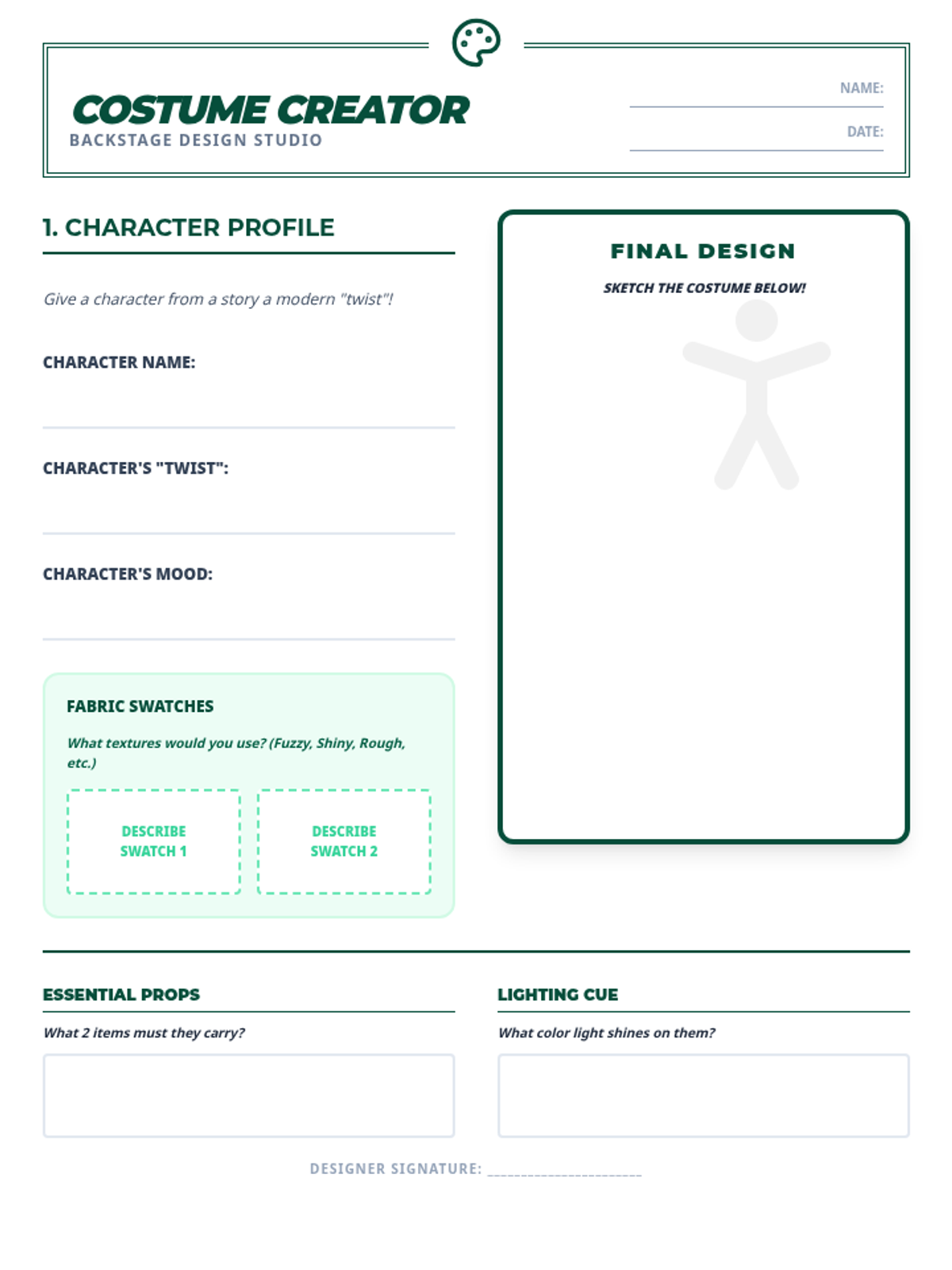
An exploration of the "Behind the Scenes" heroes, from costume designers to stage managers, and the technical magic that brings a play to life.
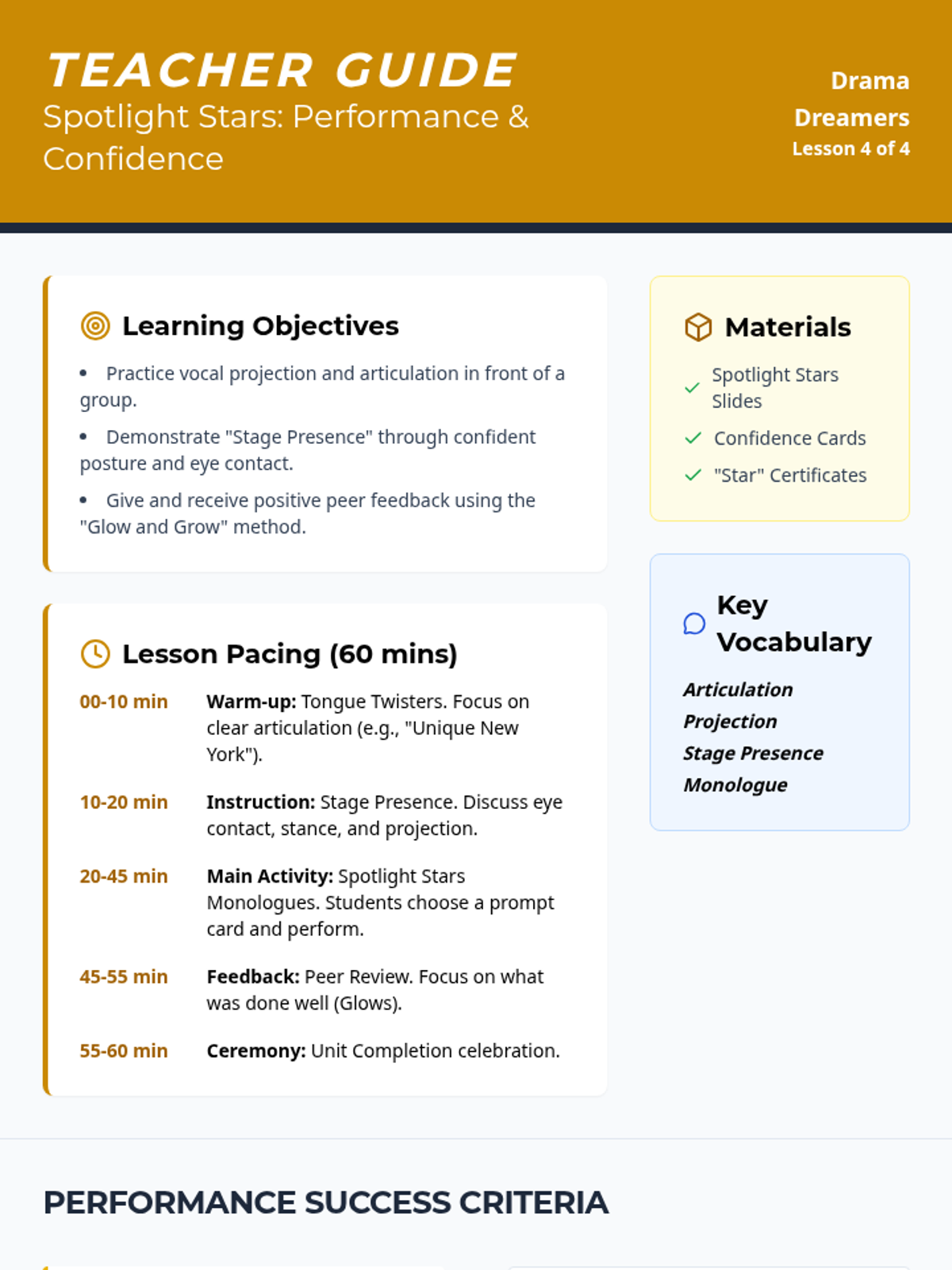
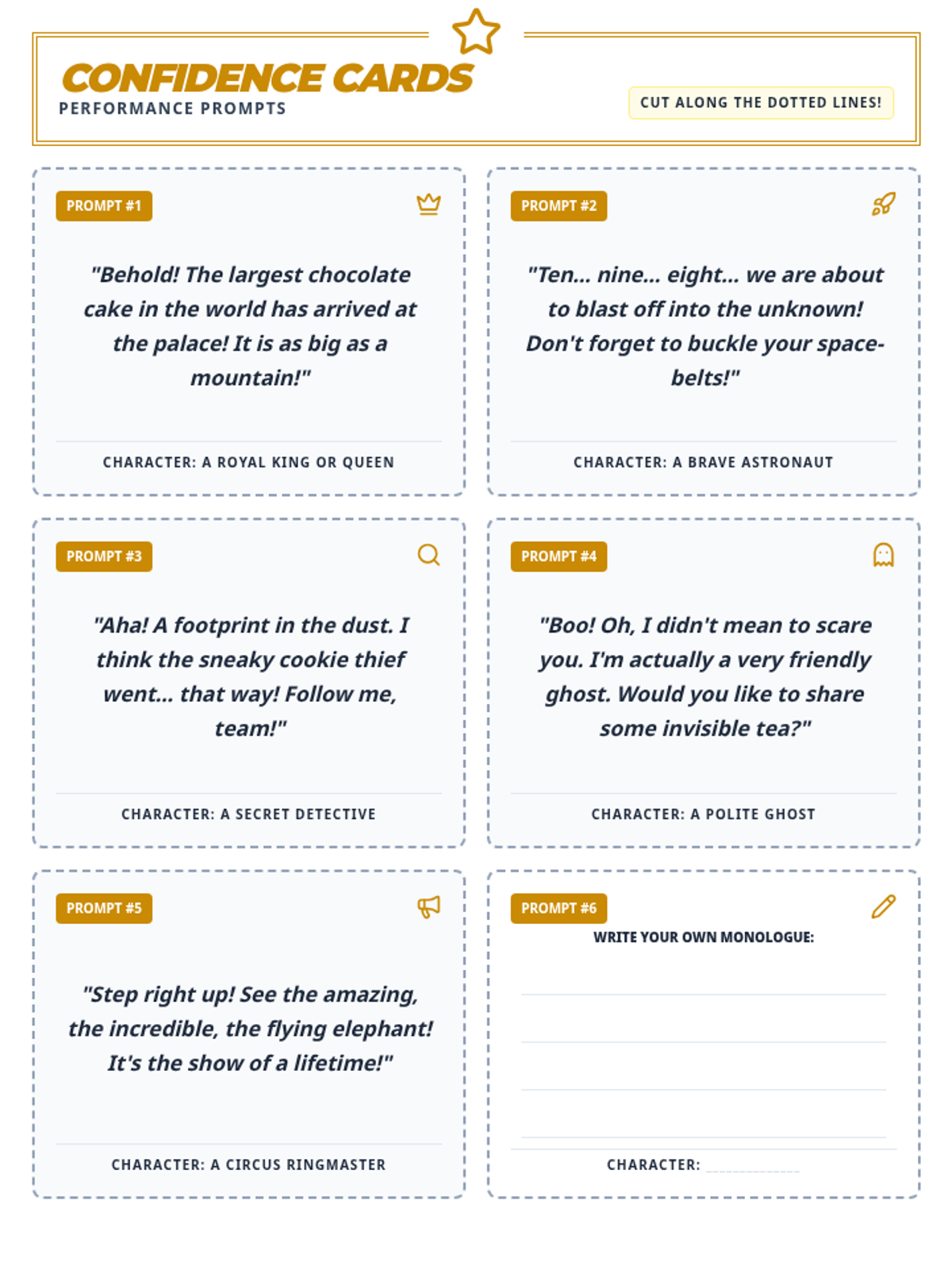
Focusing on presence and projection, students practice short speeches and monologues to build performance confidence.
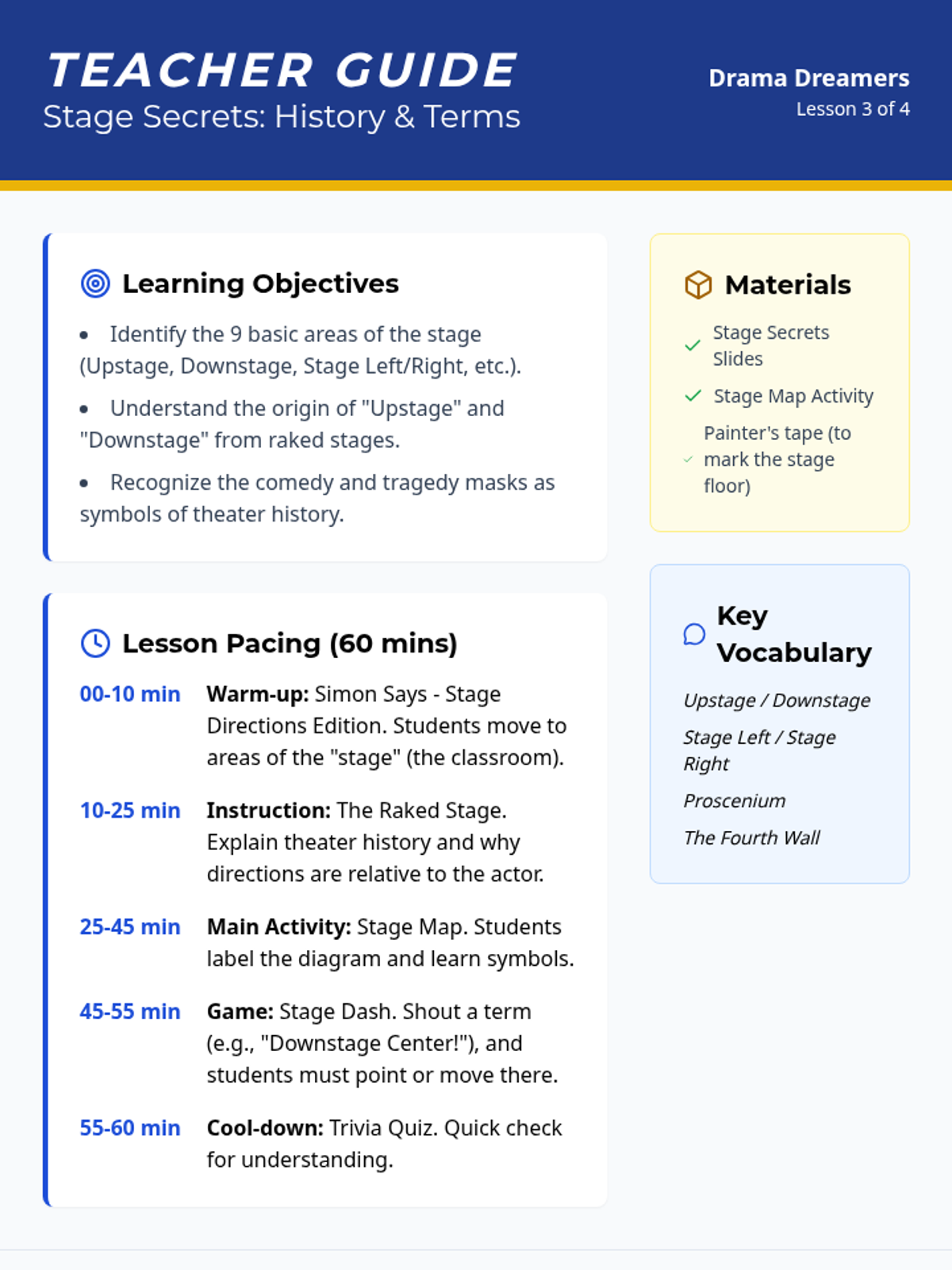
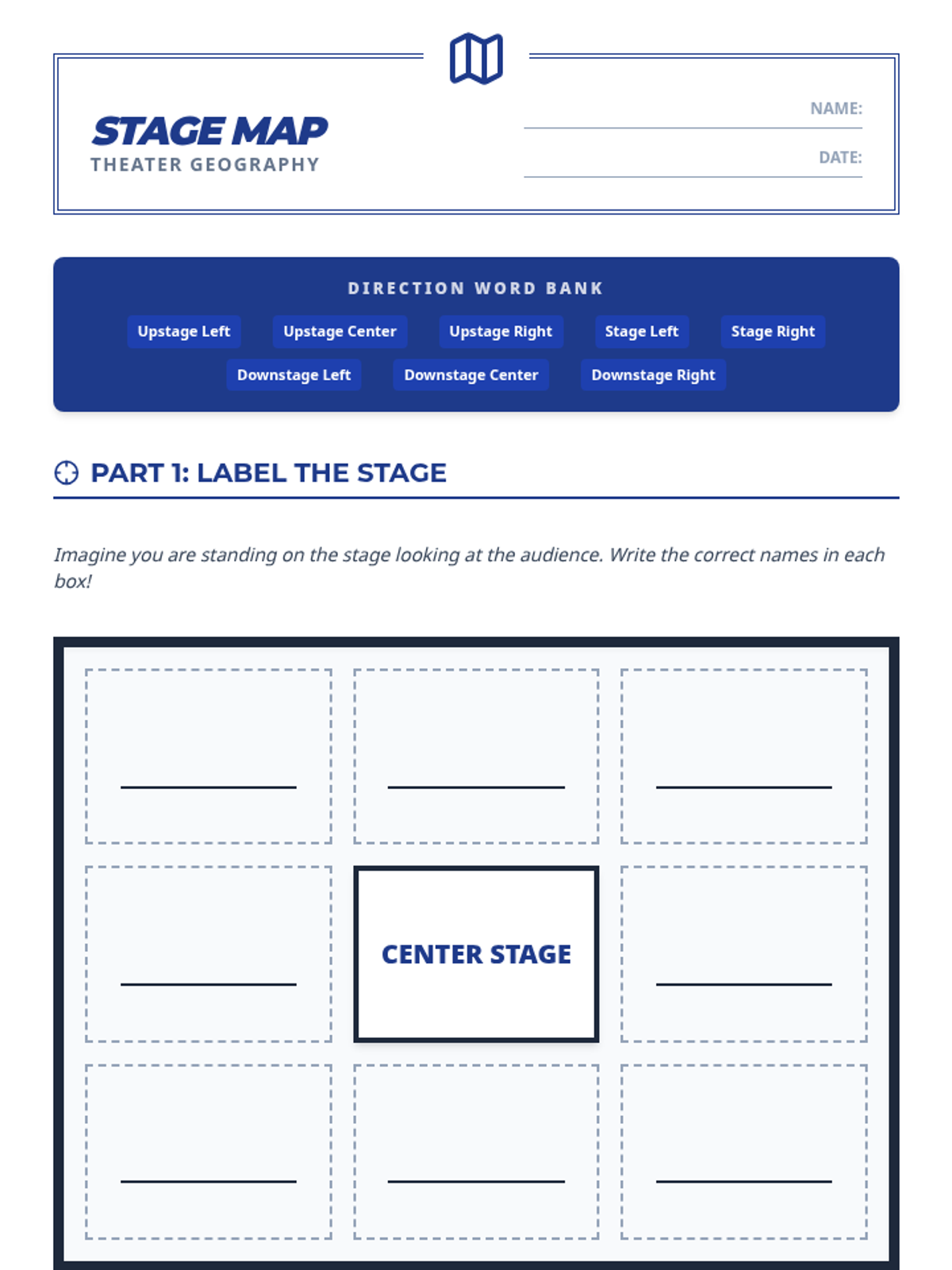
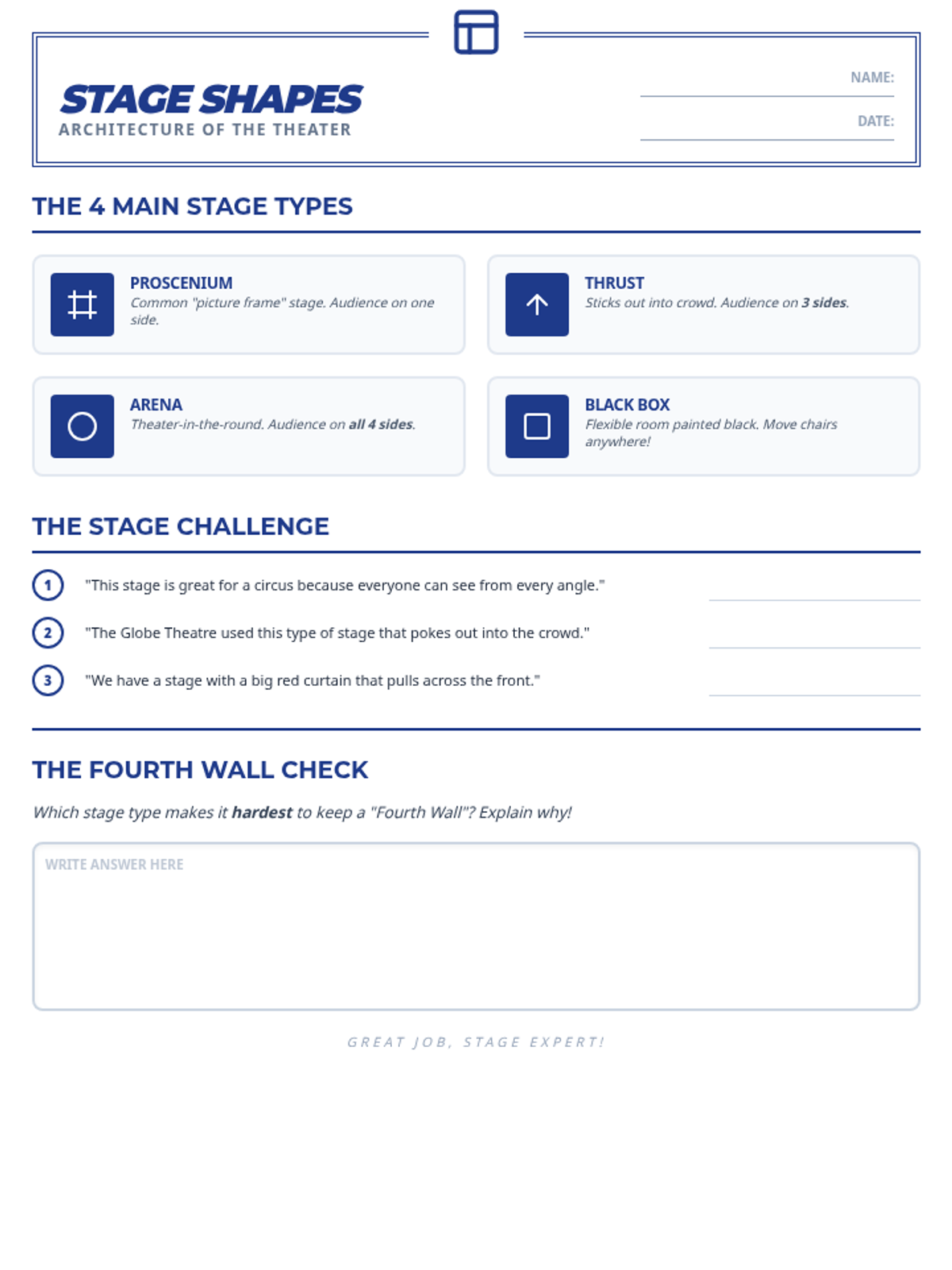
A journey through theater history and the technical language of the stage, from Ancient Greece to modern stage directions.
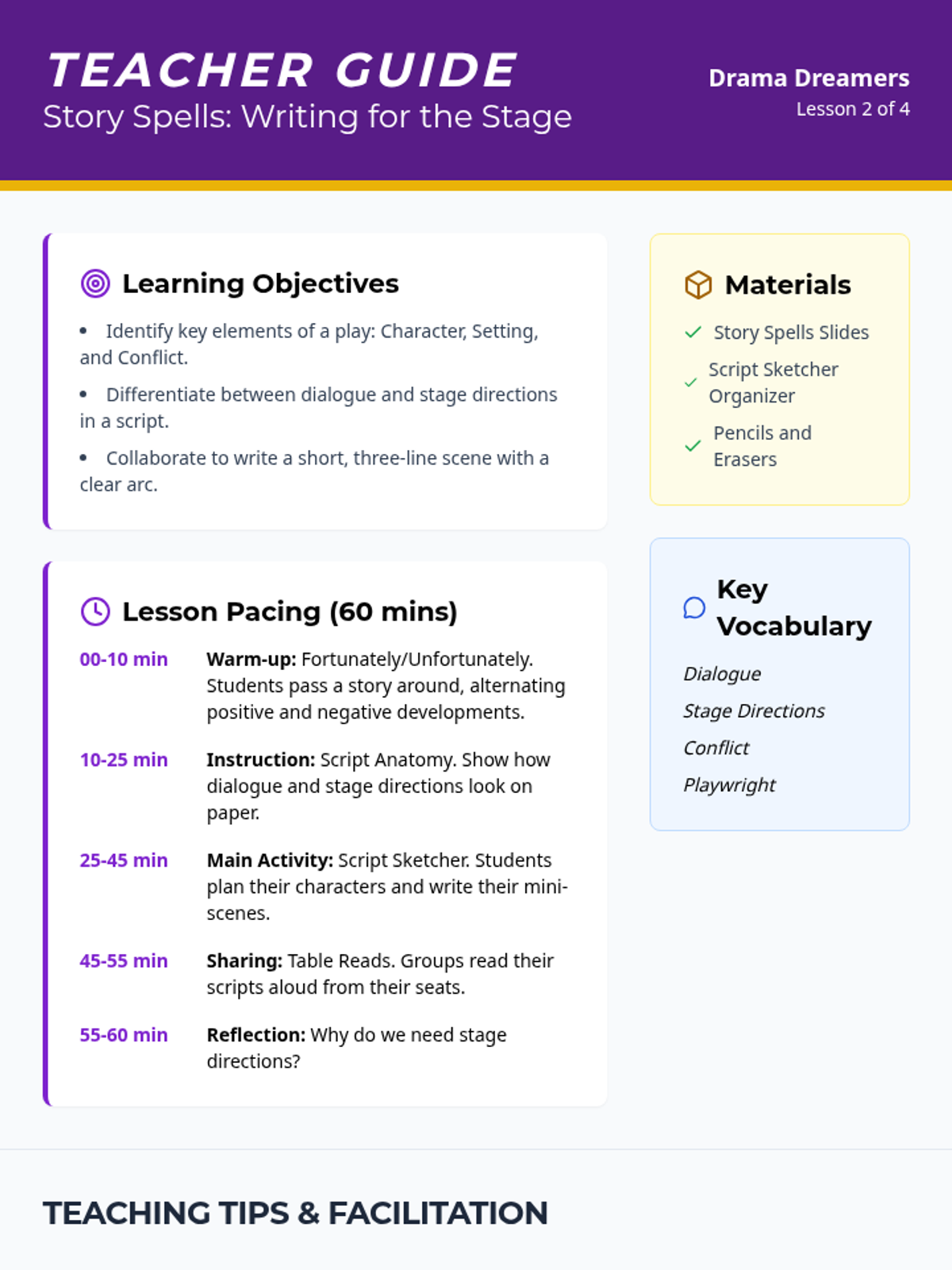
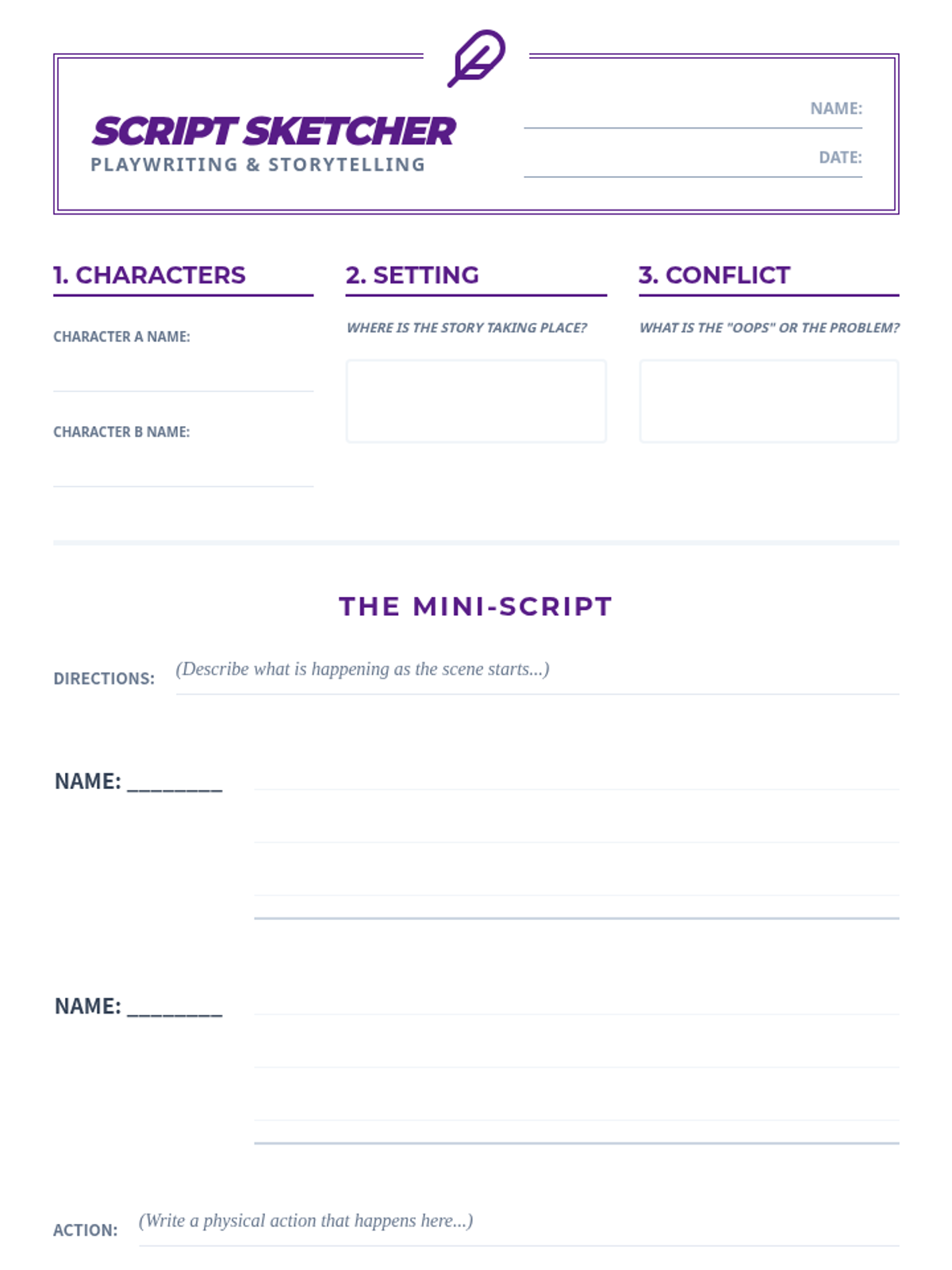
An introduction to the structure of plays, including characters, settings, and dialogue, where students draft their own short scenes.
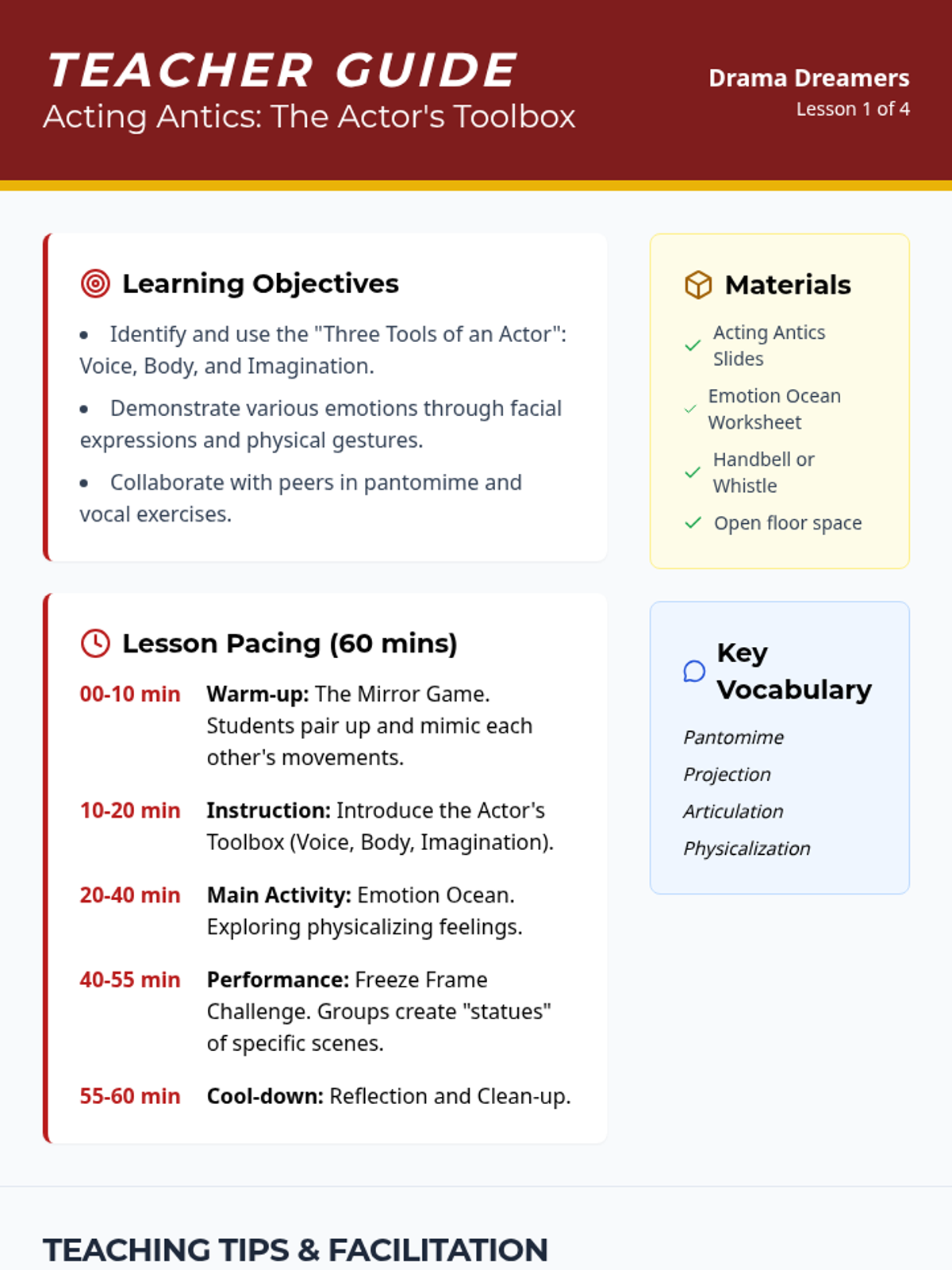
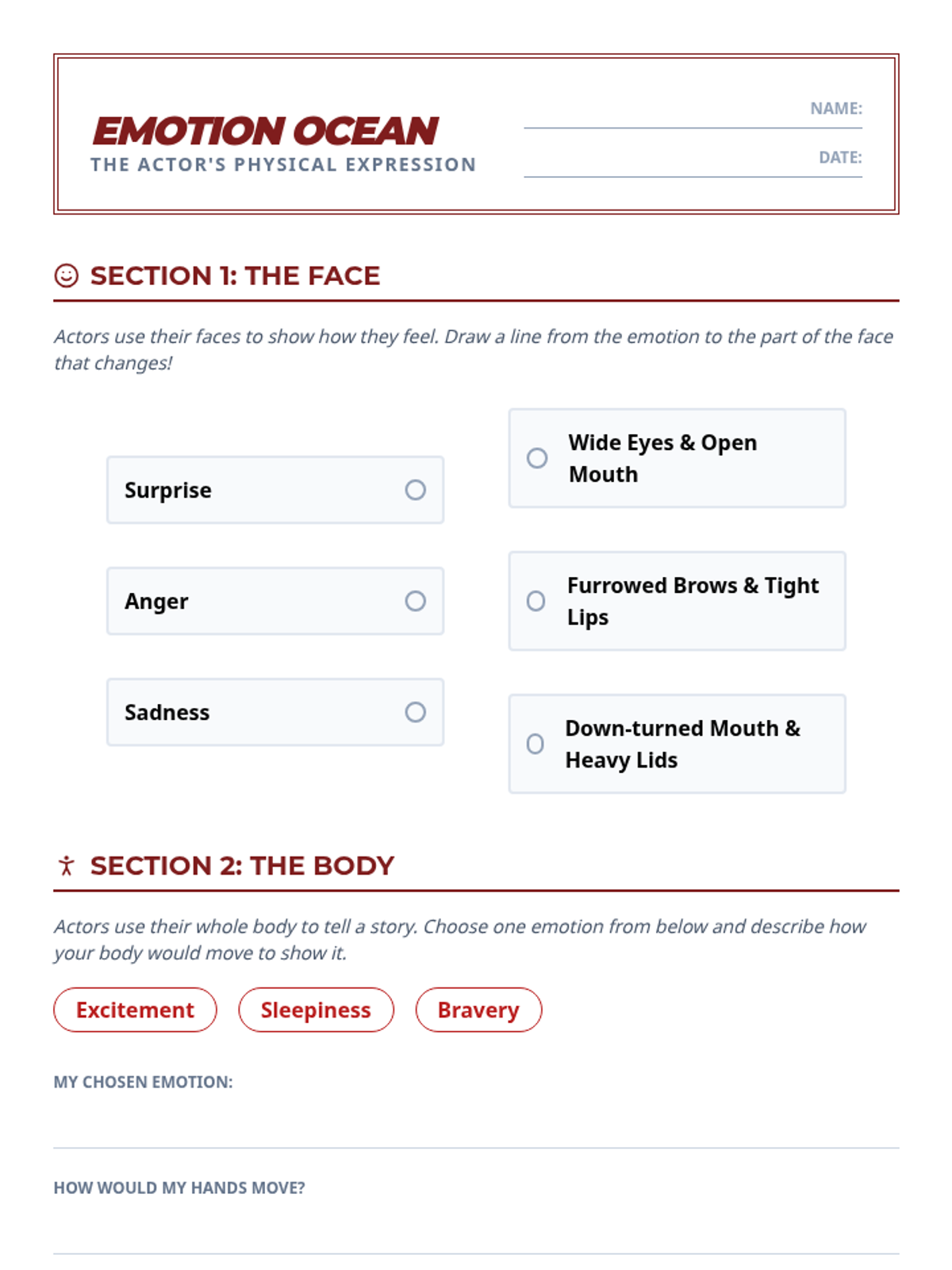
Students explore the core tools of an actor: voice, body, and imagination through games and expressive exercises.
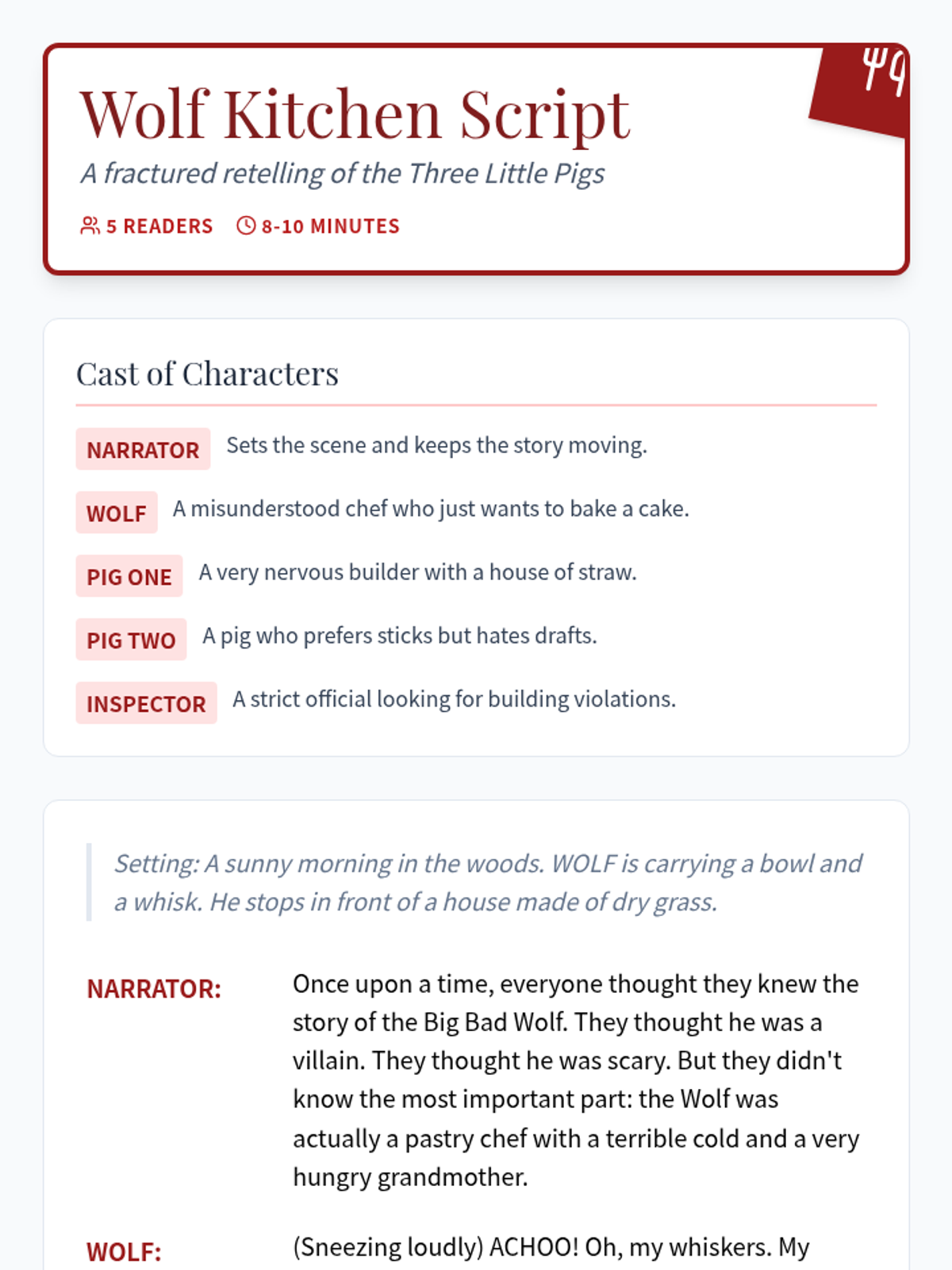
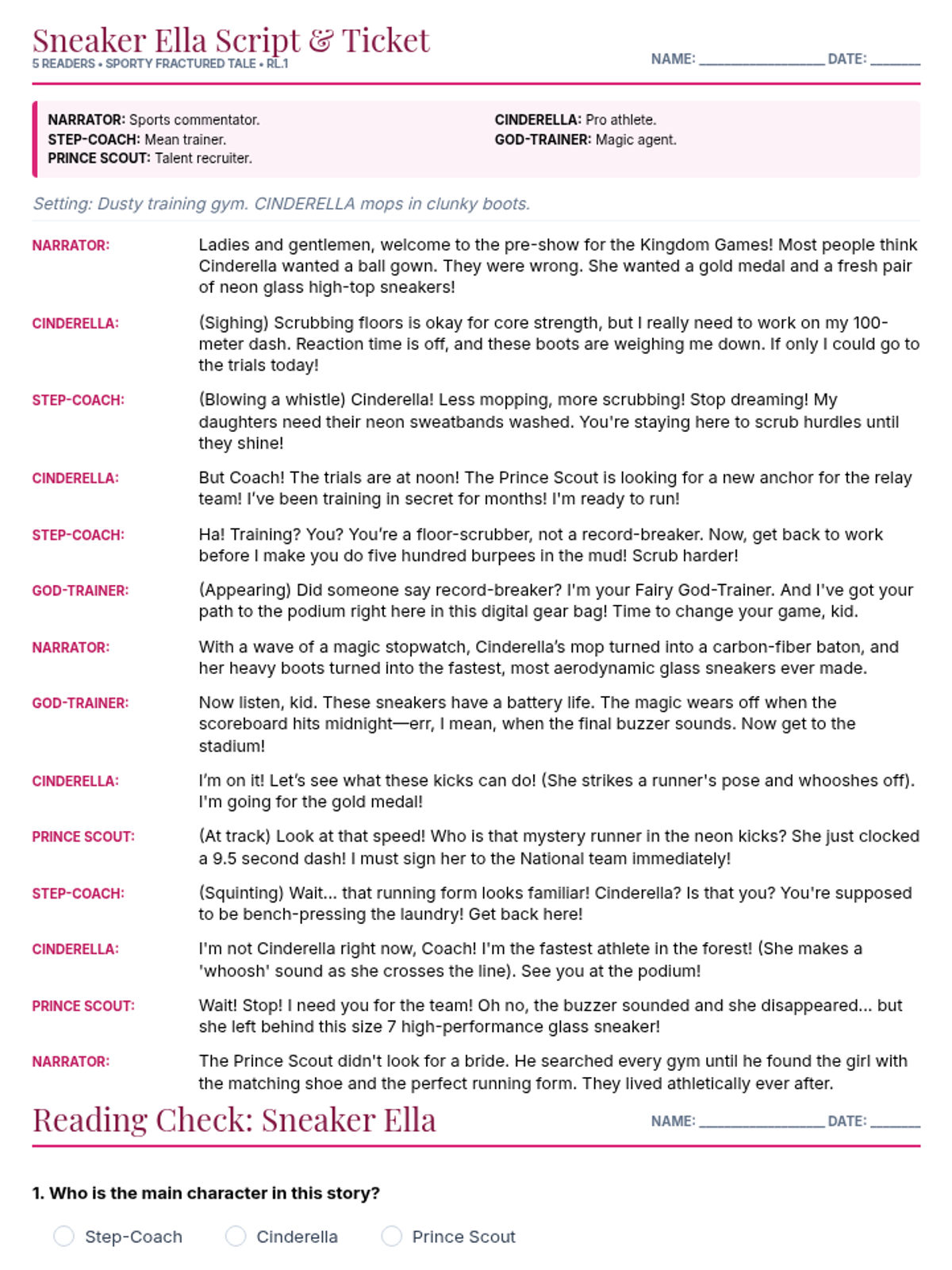
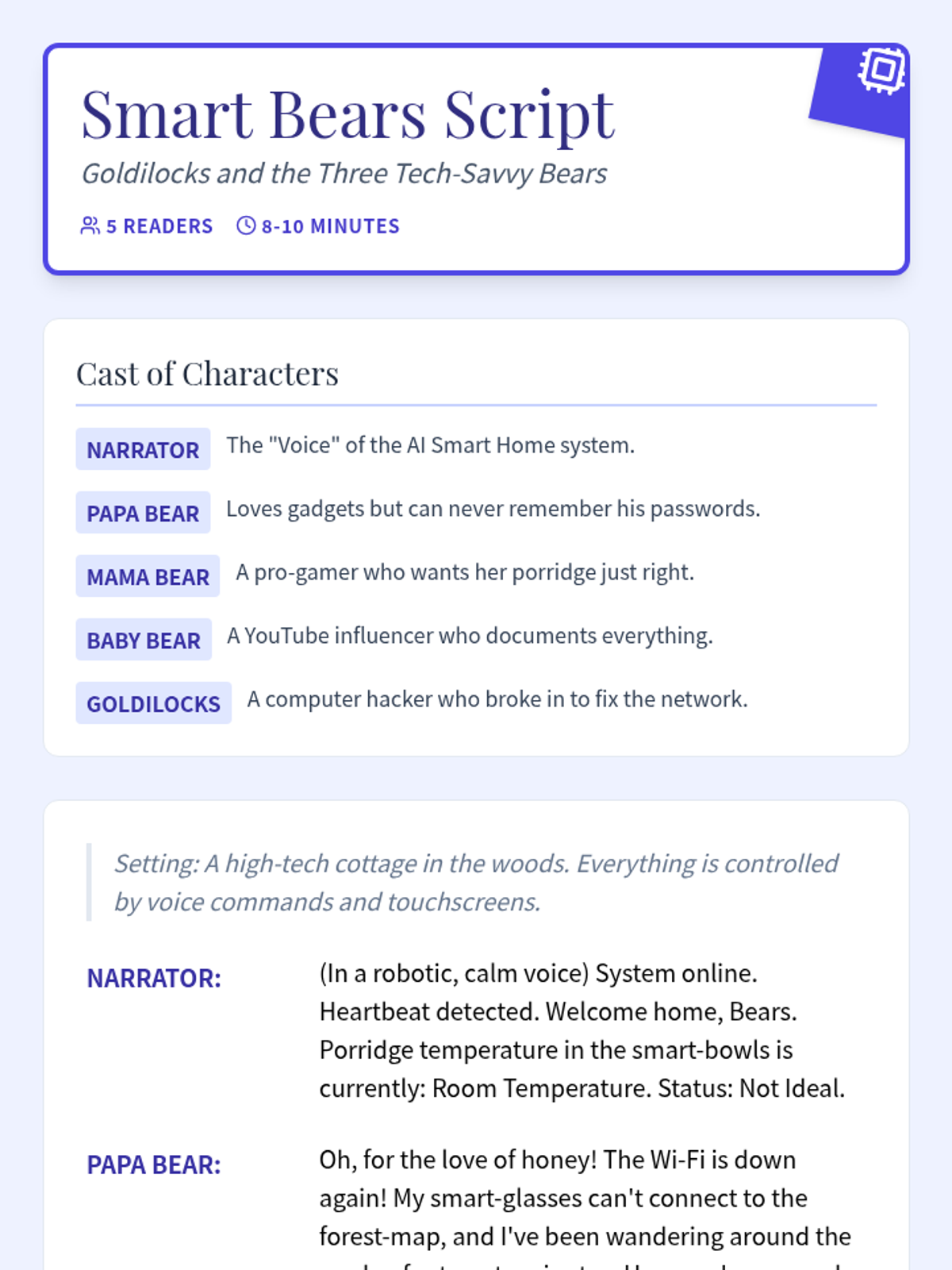
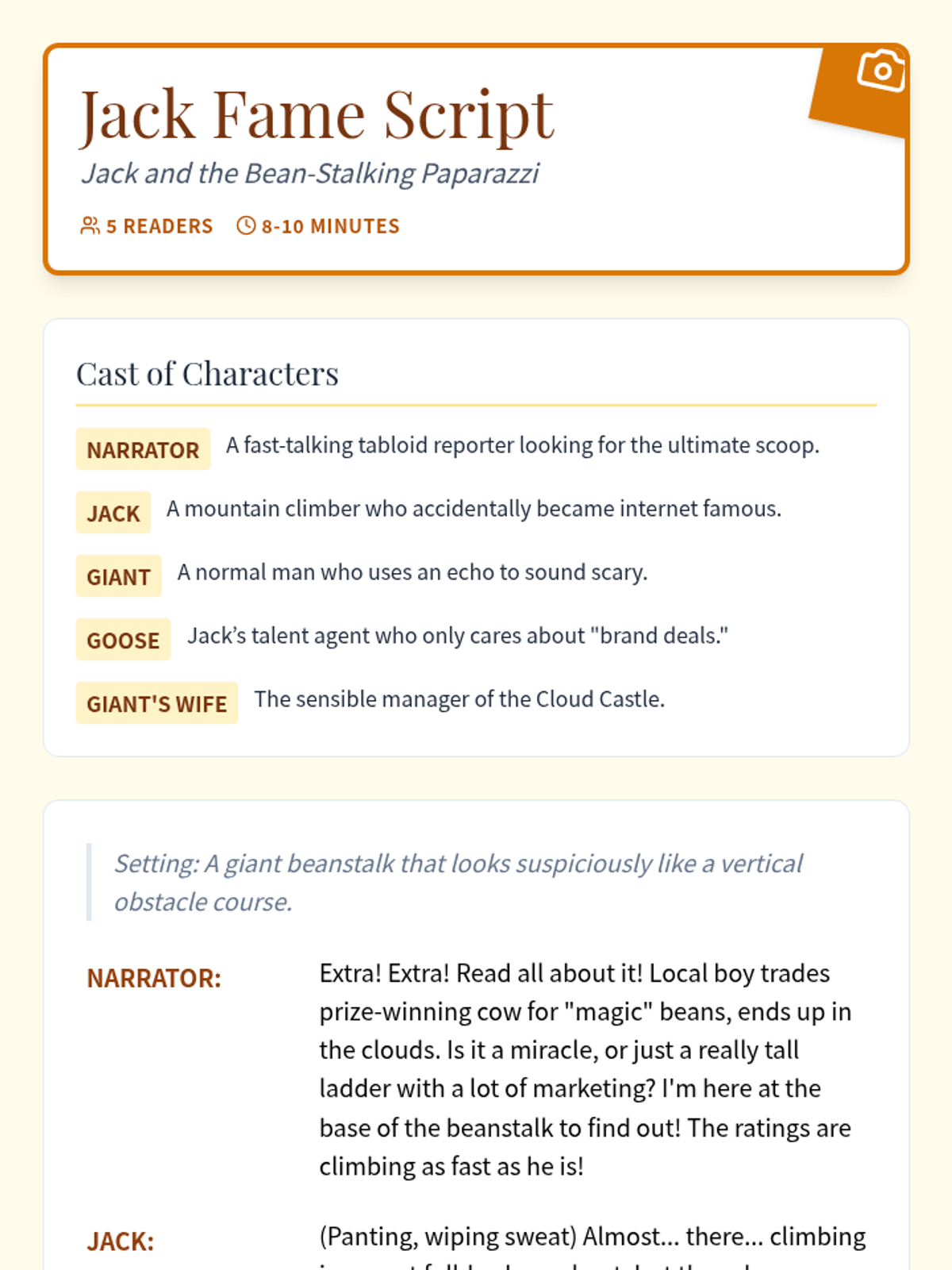
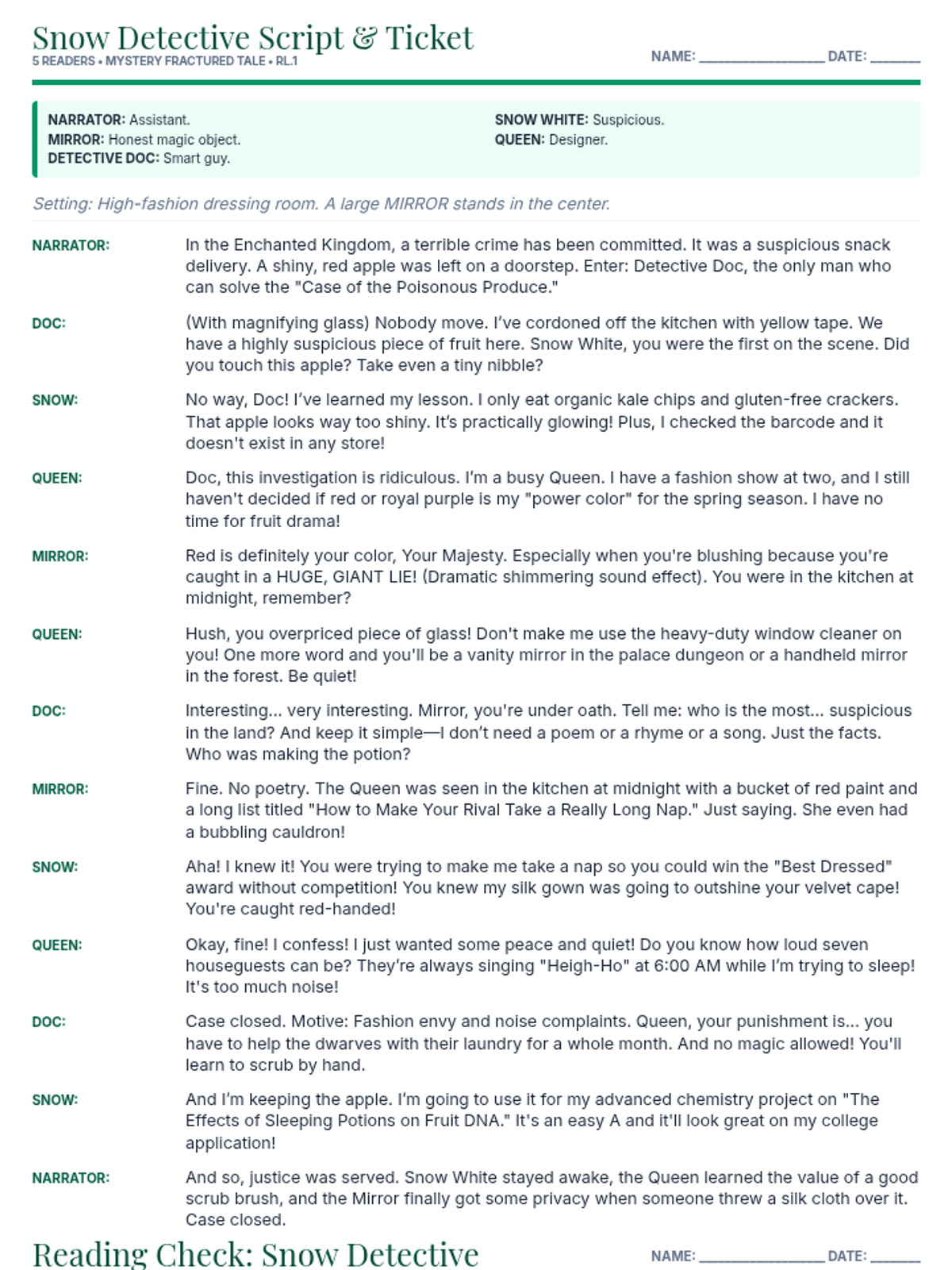
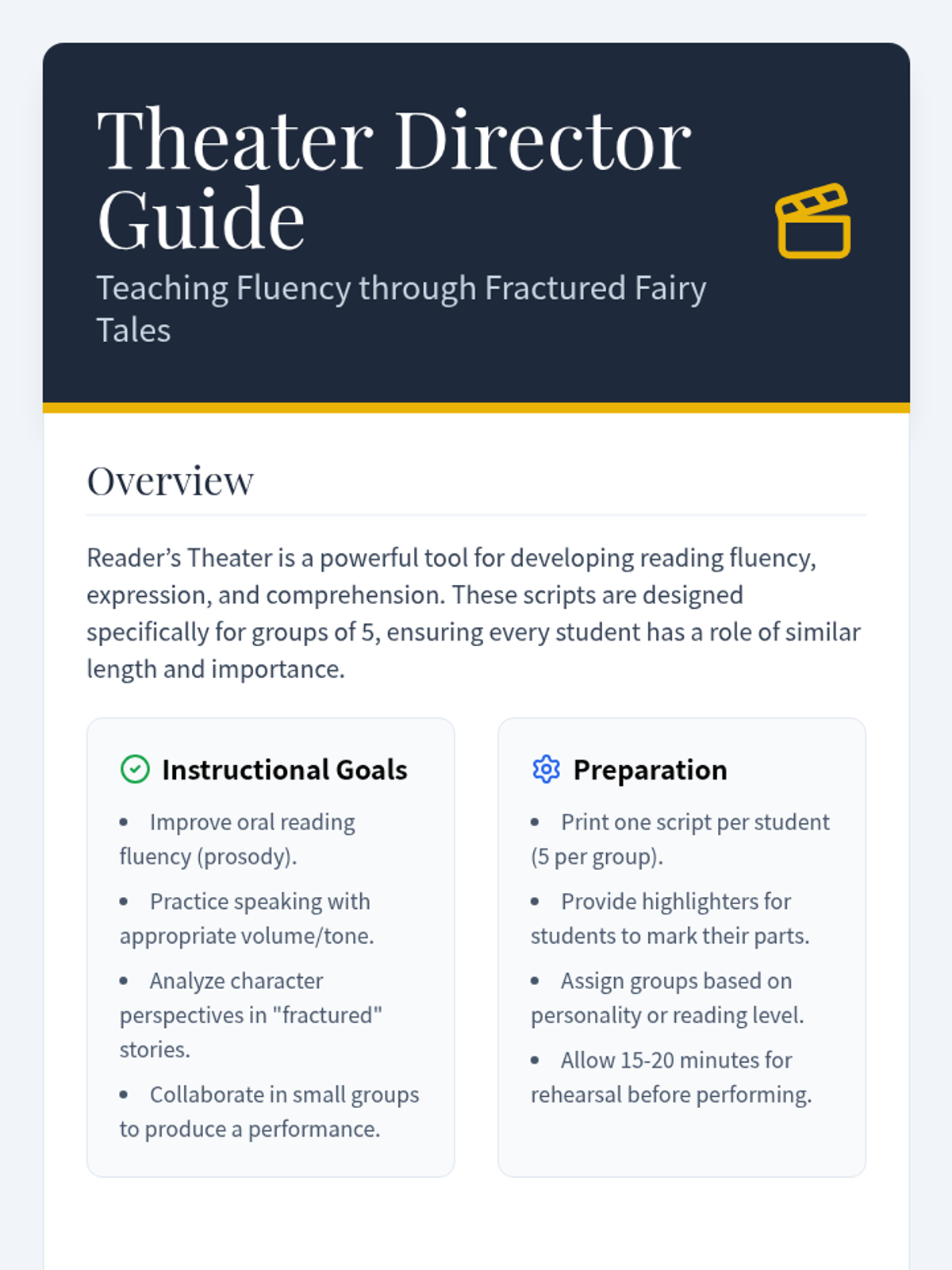
Students practice and perform five unique fractured fairy tale scripts, each featuring exactly five characters to support collaborative group work.
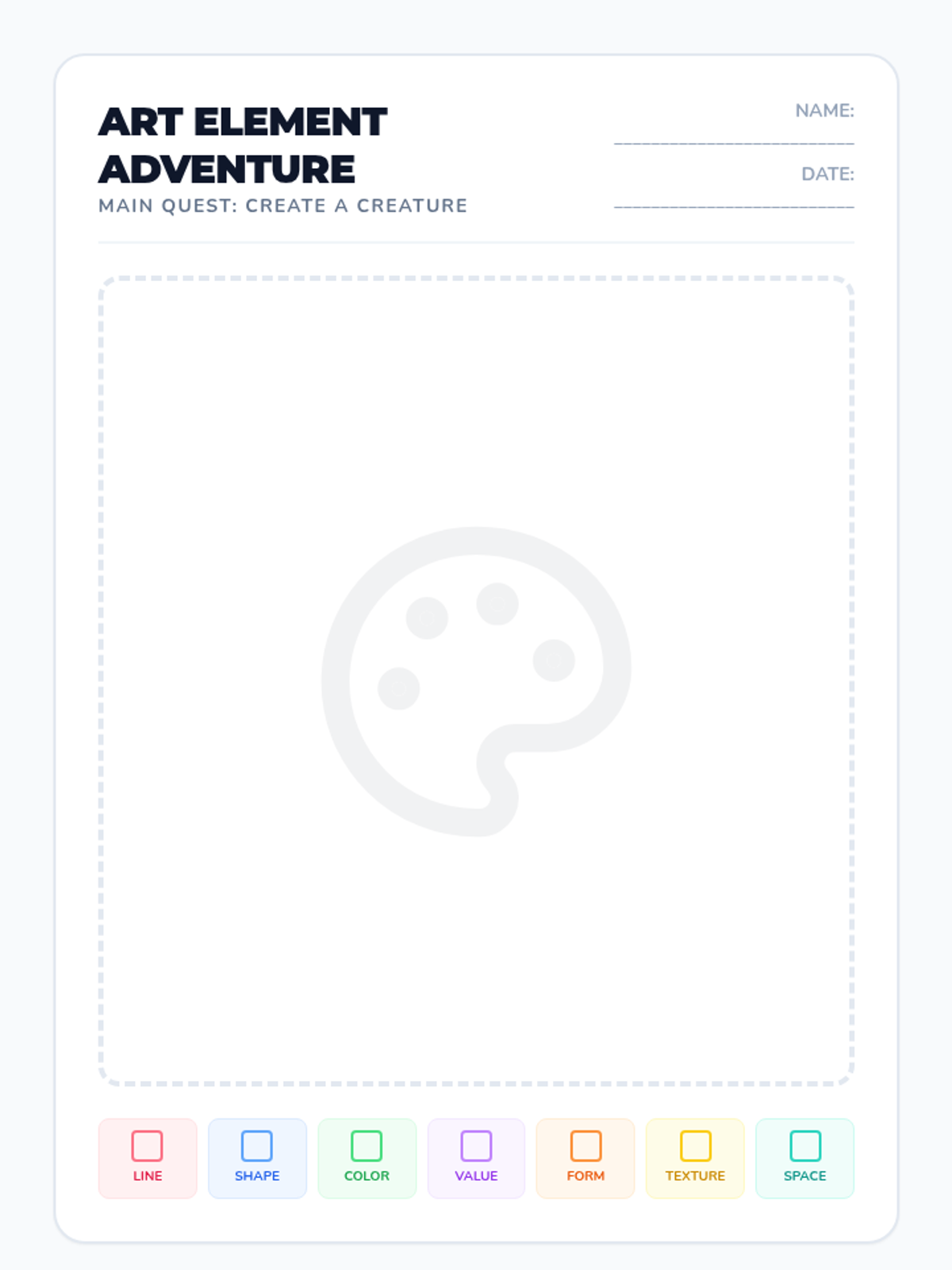
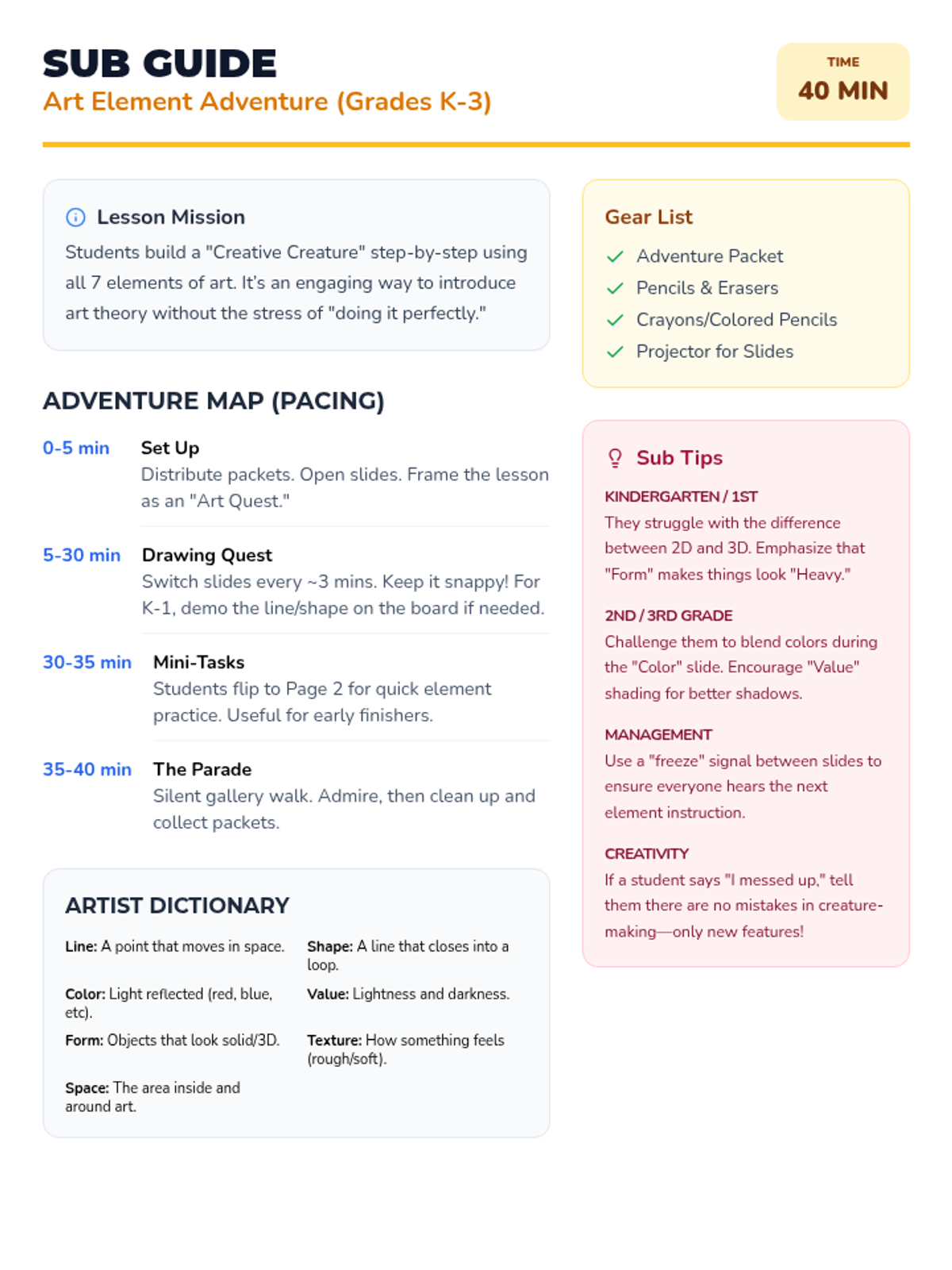
A 40-minute guided art lesson for grades K-3 that introduces the 7 elements of art through a single integrated drawing activity and supporting mini-tasks. Ideal for substitutes, this lesson builds a 'Creative Creature' step-by-step.
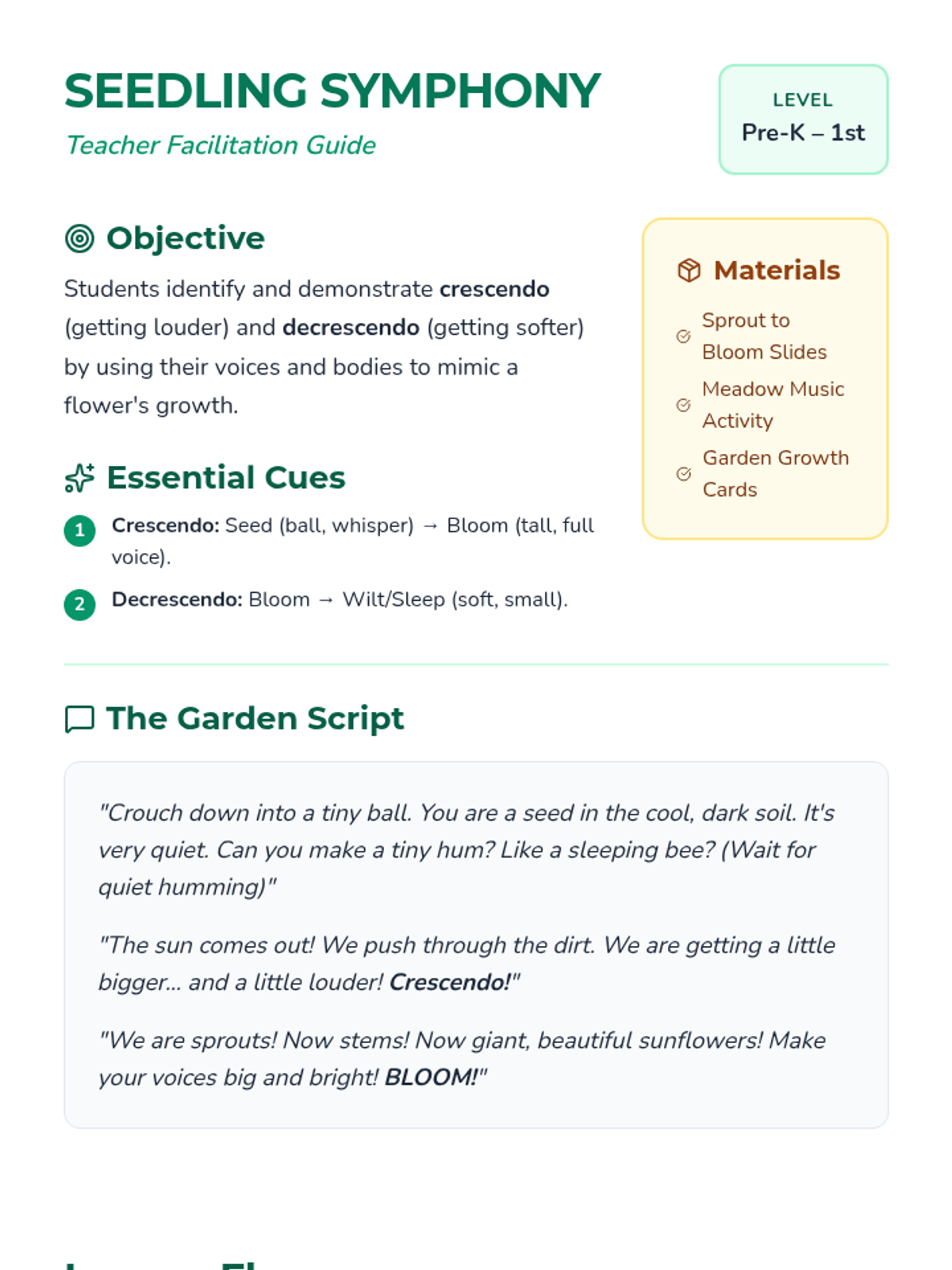
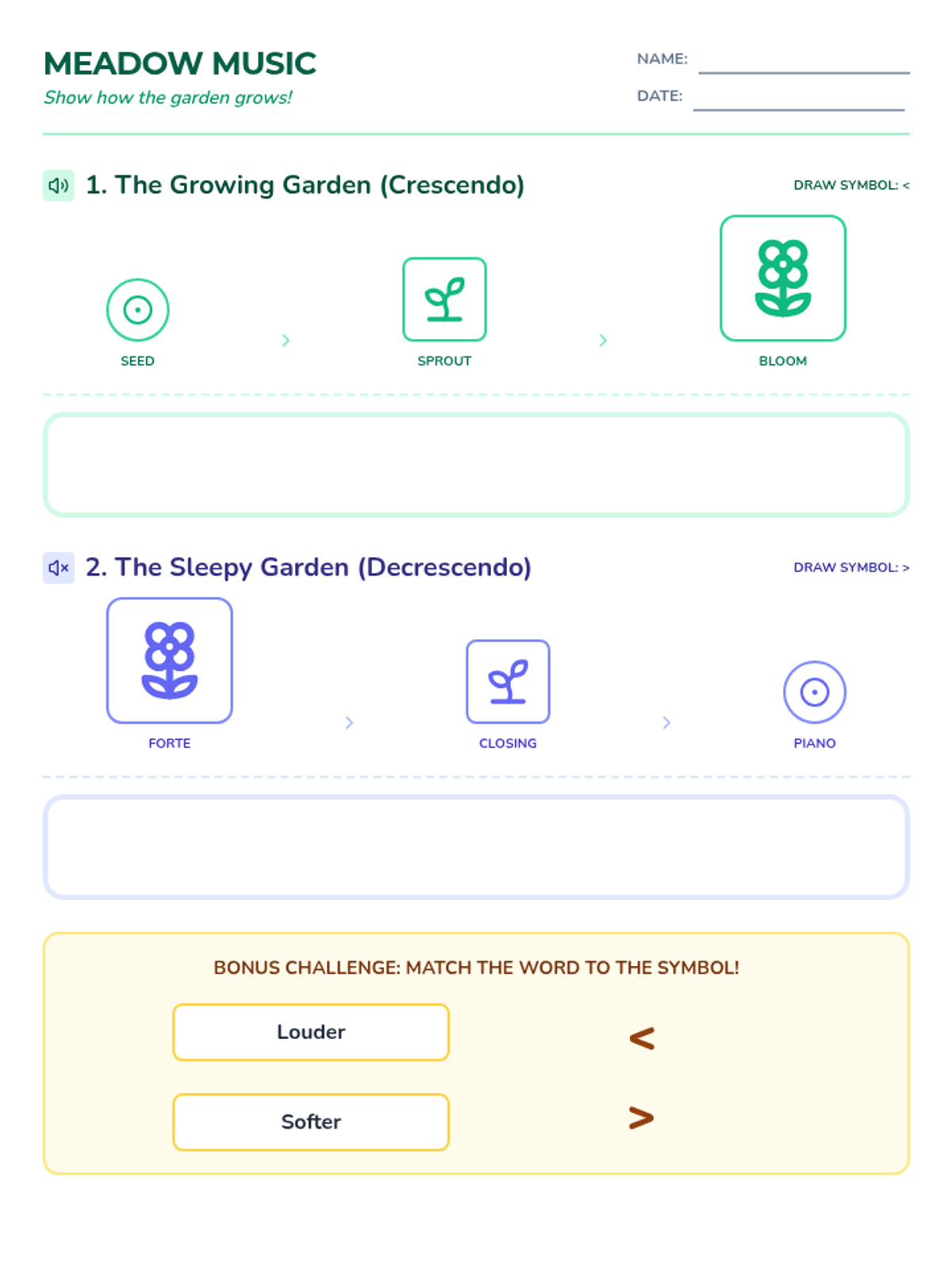
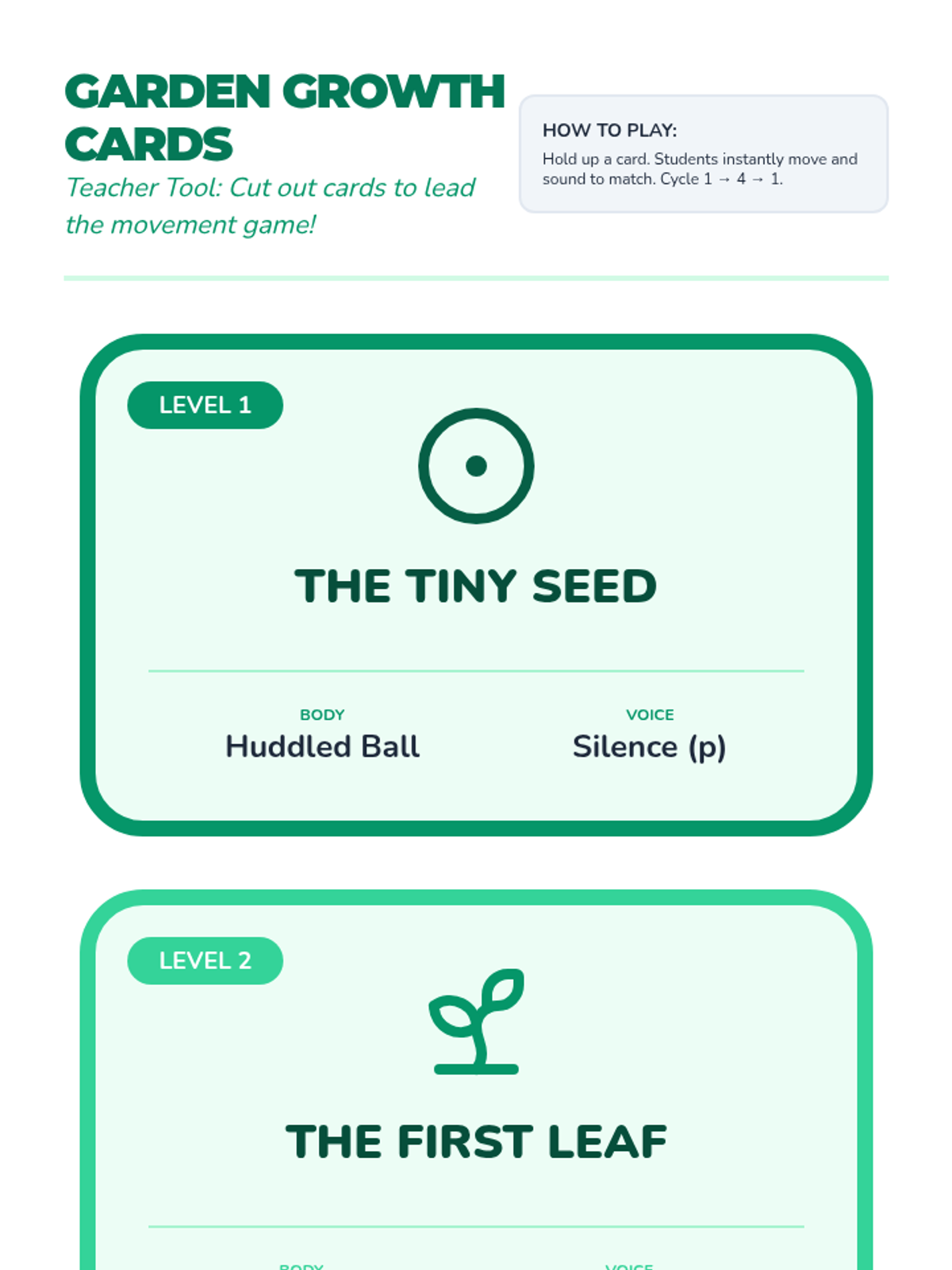
A musical exploration where students use the growth of a plant to understand crescendo and decrescendo through movement and voice.
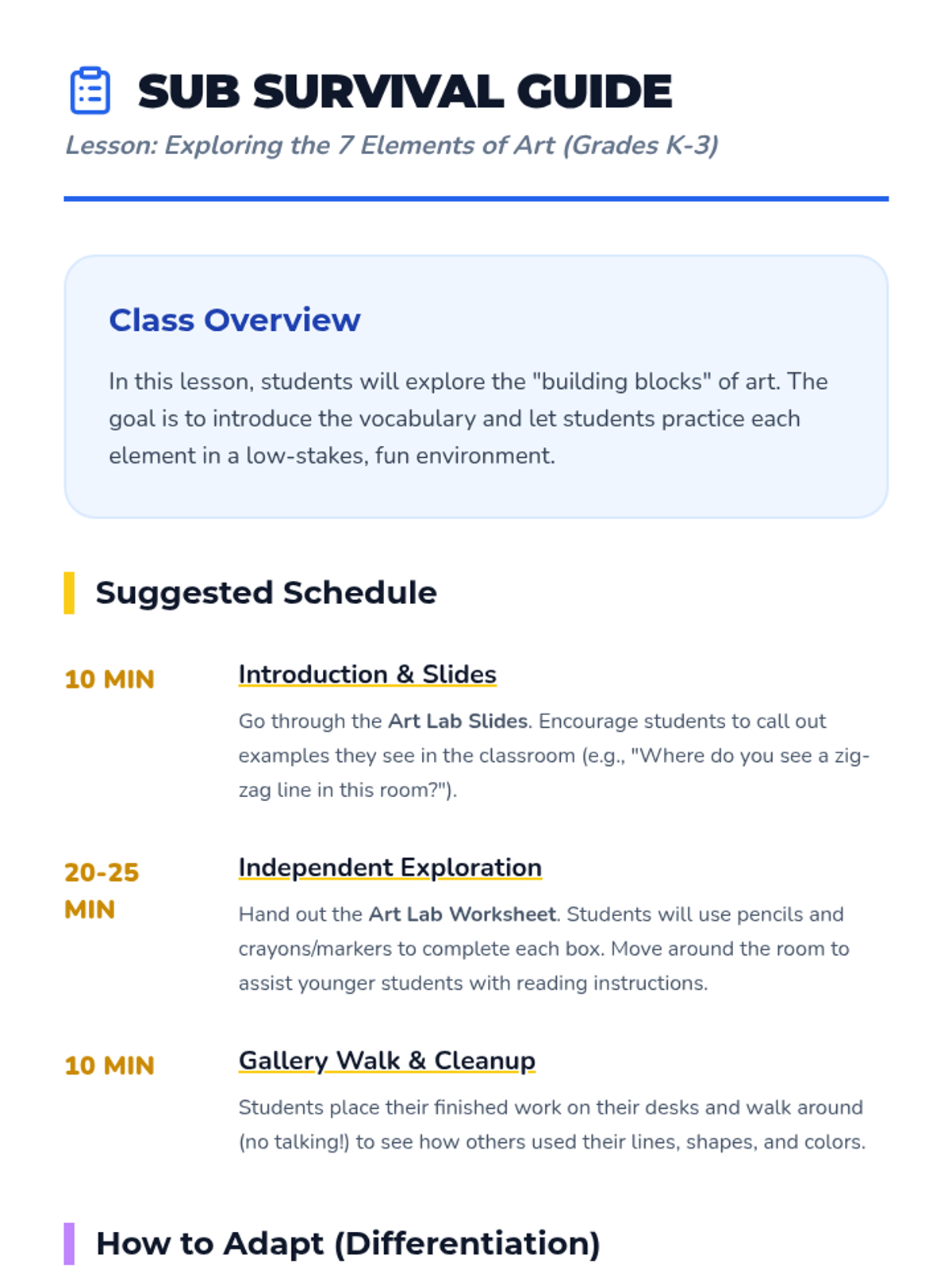
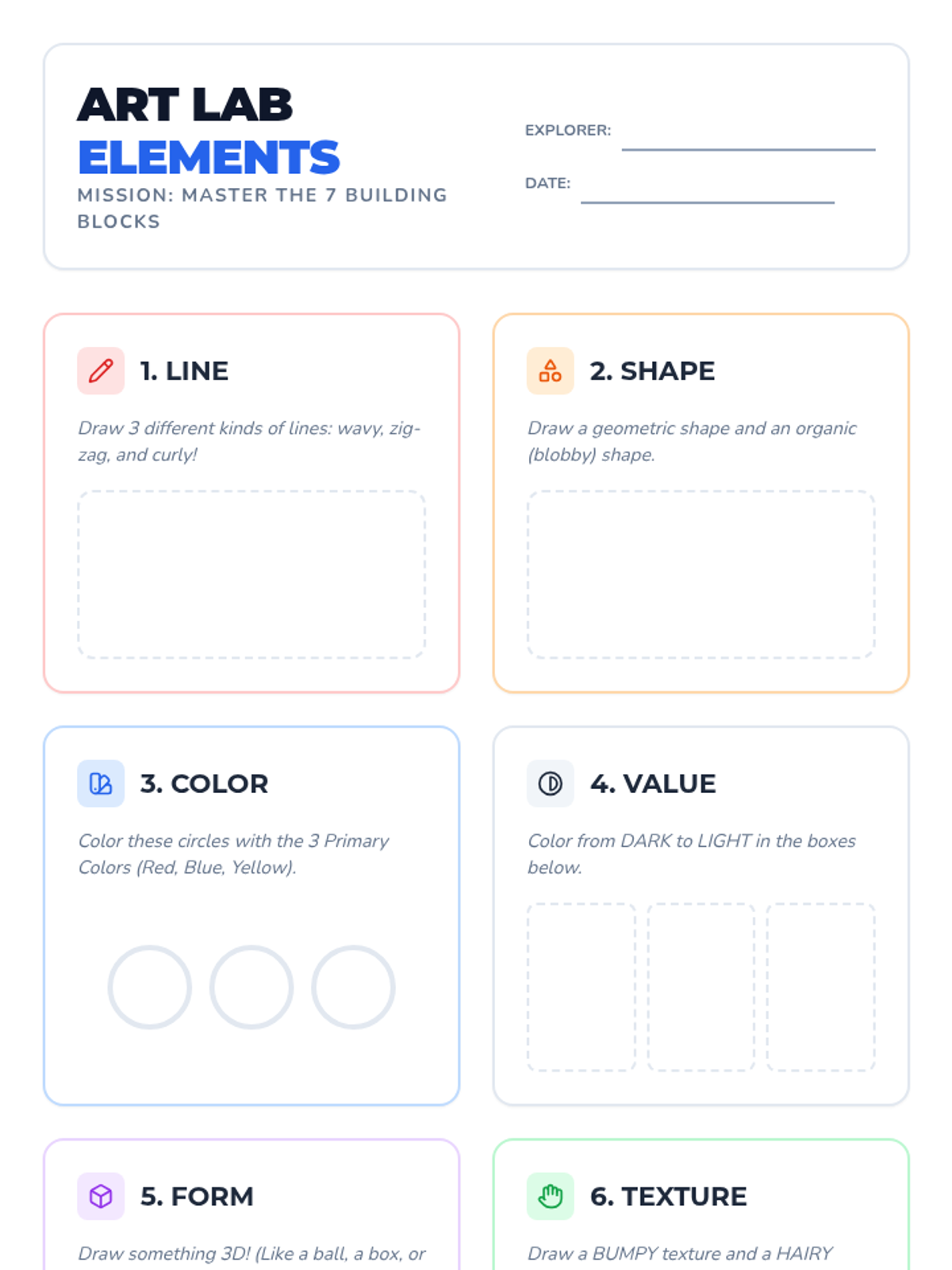
A comprehensive substitute-friendly lesson introducing the 7 Elements of Art to students in grades K-3 through visual exploration and hands-on practice.
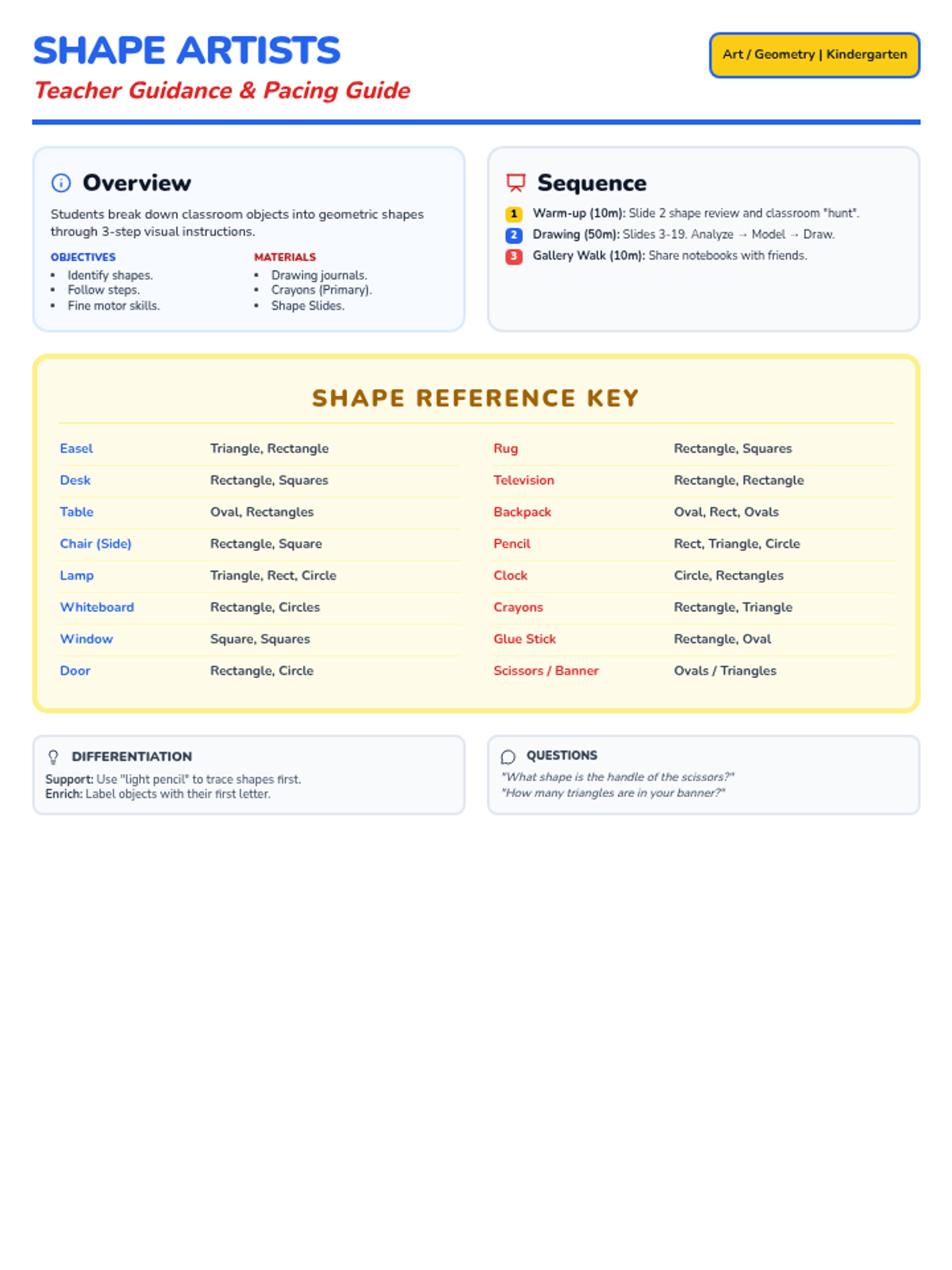
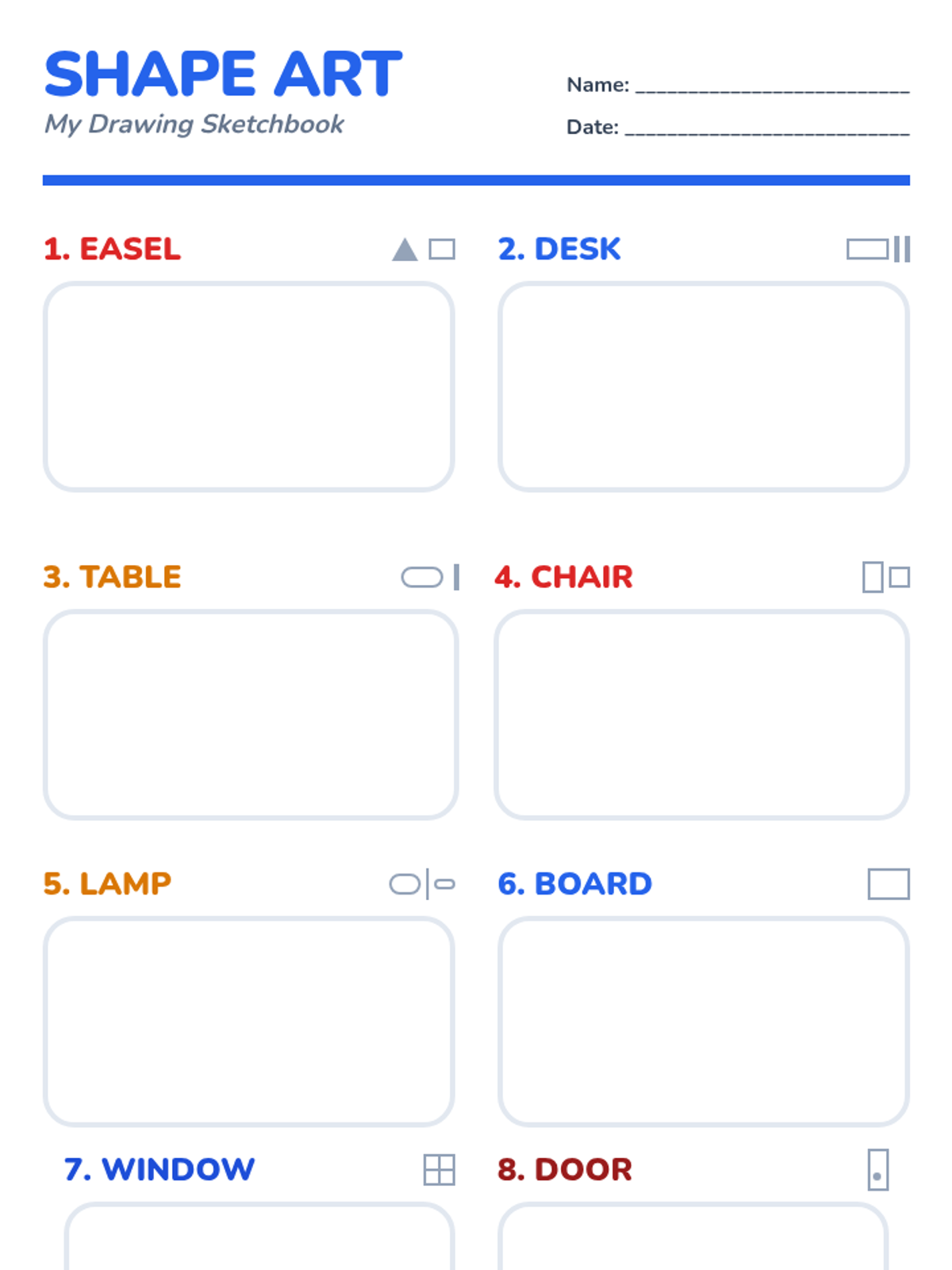
A beginner's guide to drawing classroom objects using basic geometric shapes. Students learn to identify and use circles, triangles, squares, rectangles, and ovals through simple step-by-step visual instructions.
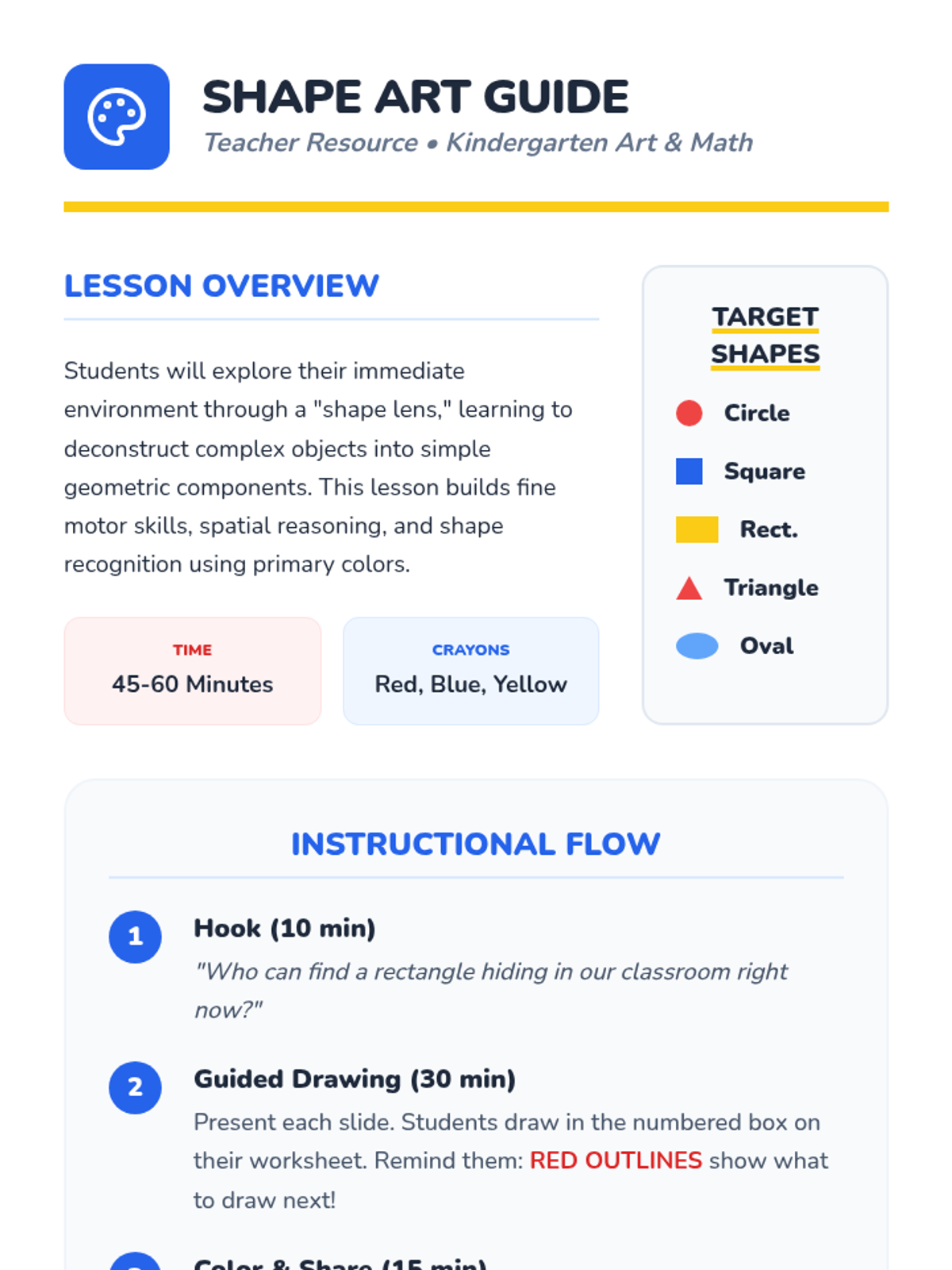
In this lesson, students will identify circles, squares, rectangles, triangles, and ovals in common classroom objects. They will then follow visual, step-by-step directions to draw these objects themselves using primary colors.
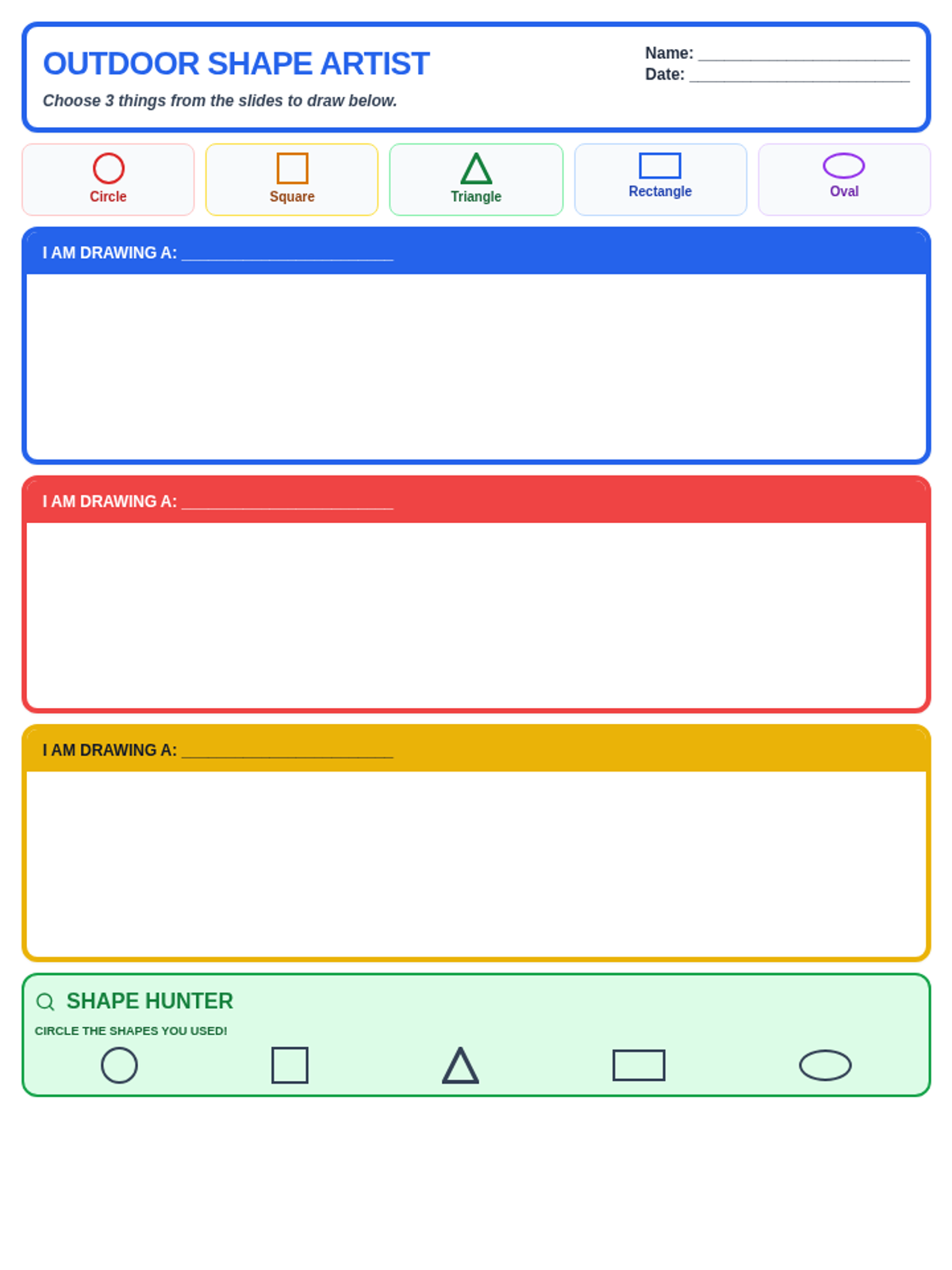
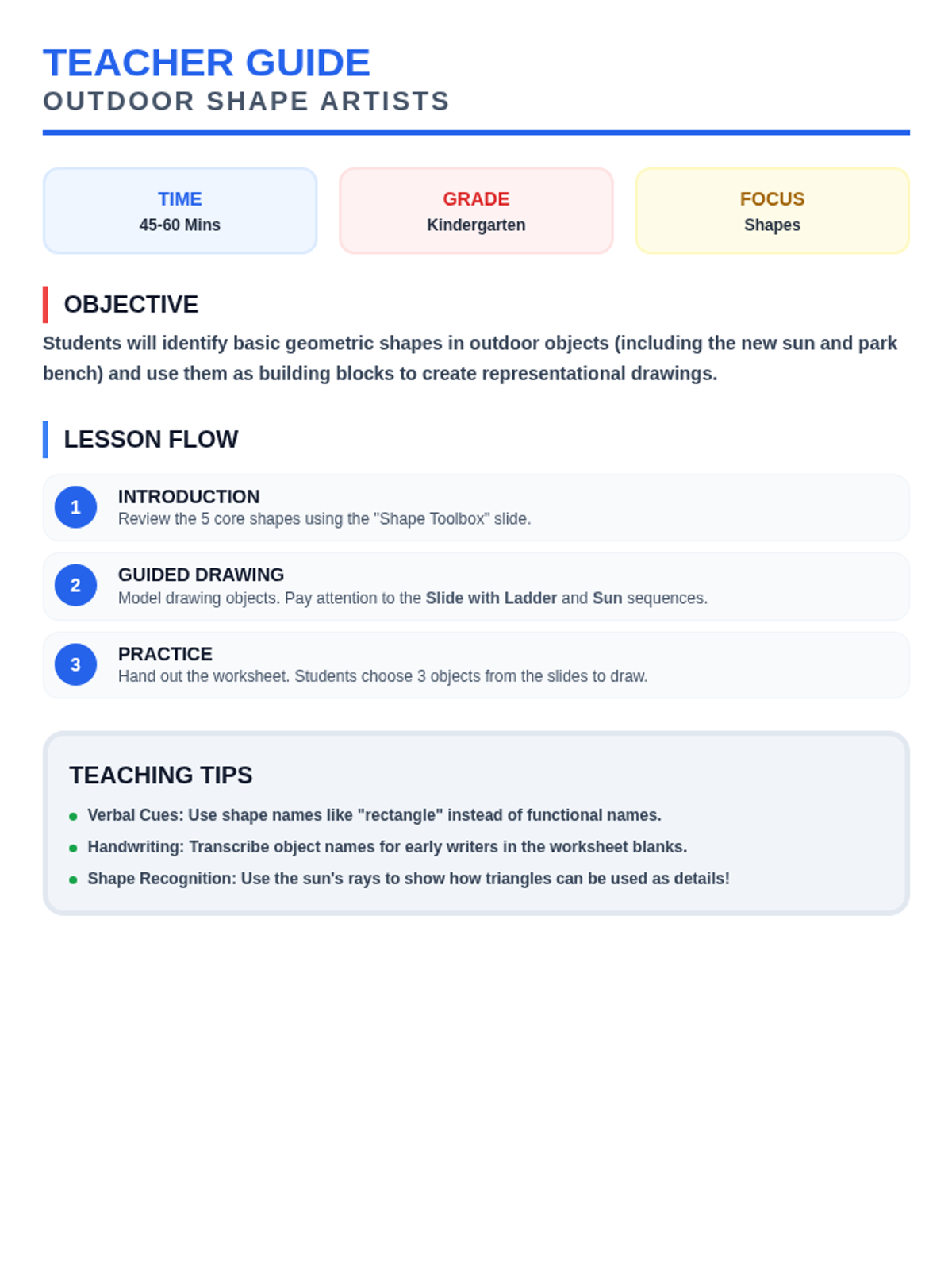
A kindergarten lesson focused on identifying and using basic geometric shapes (circle, square, triangle, rectangle, oval) to draw familiar outdoor objects. Students follow three-step visual guides to build their artistic confidence through shape recognition.