Students research ceremonies marking major life milestones, such as Bar/Bat Mitzvahs, Baptisms, Upanayana, and funeral rites, comparing how these rituals signal community membership and maturity.
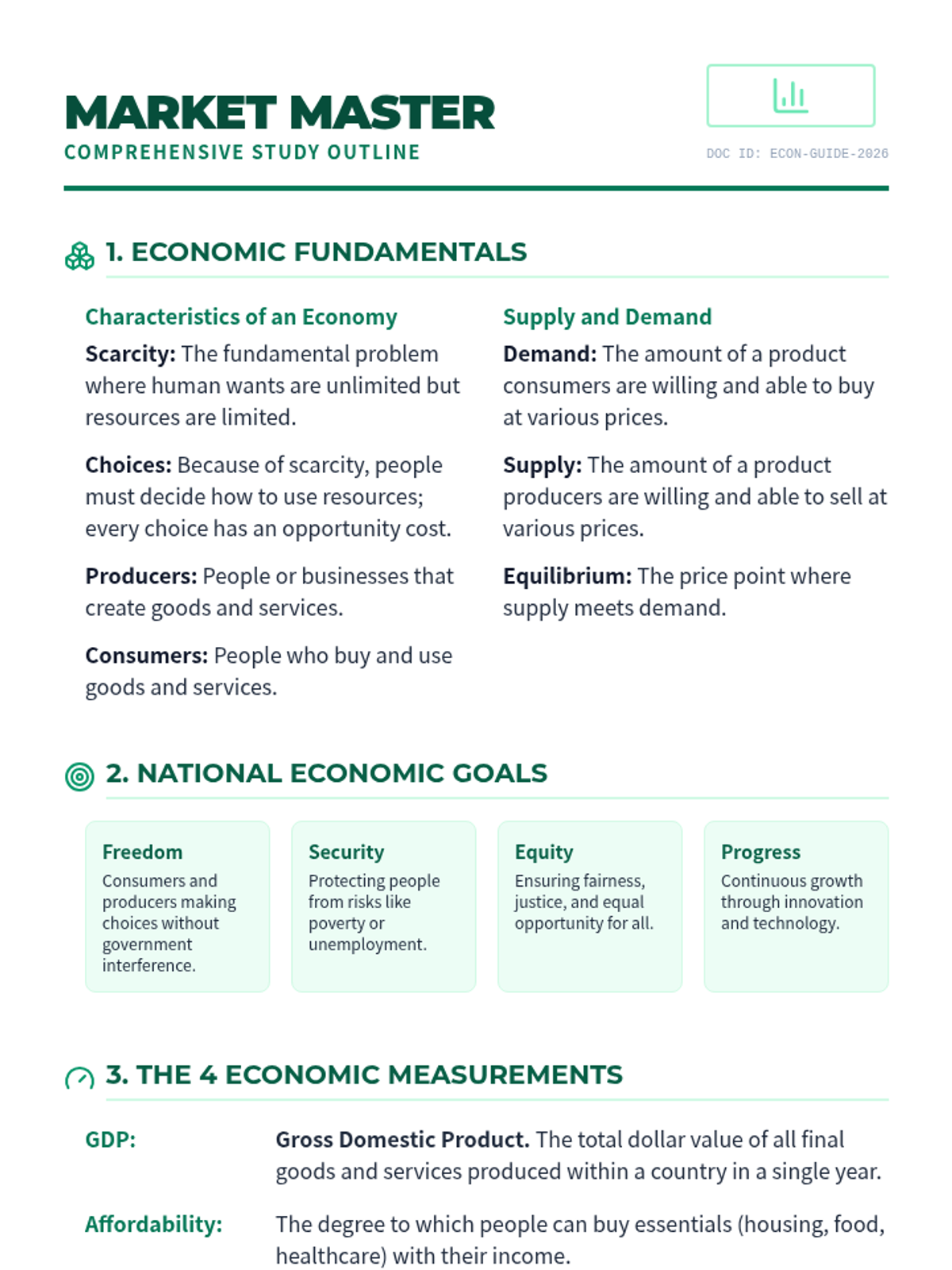
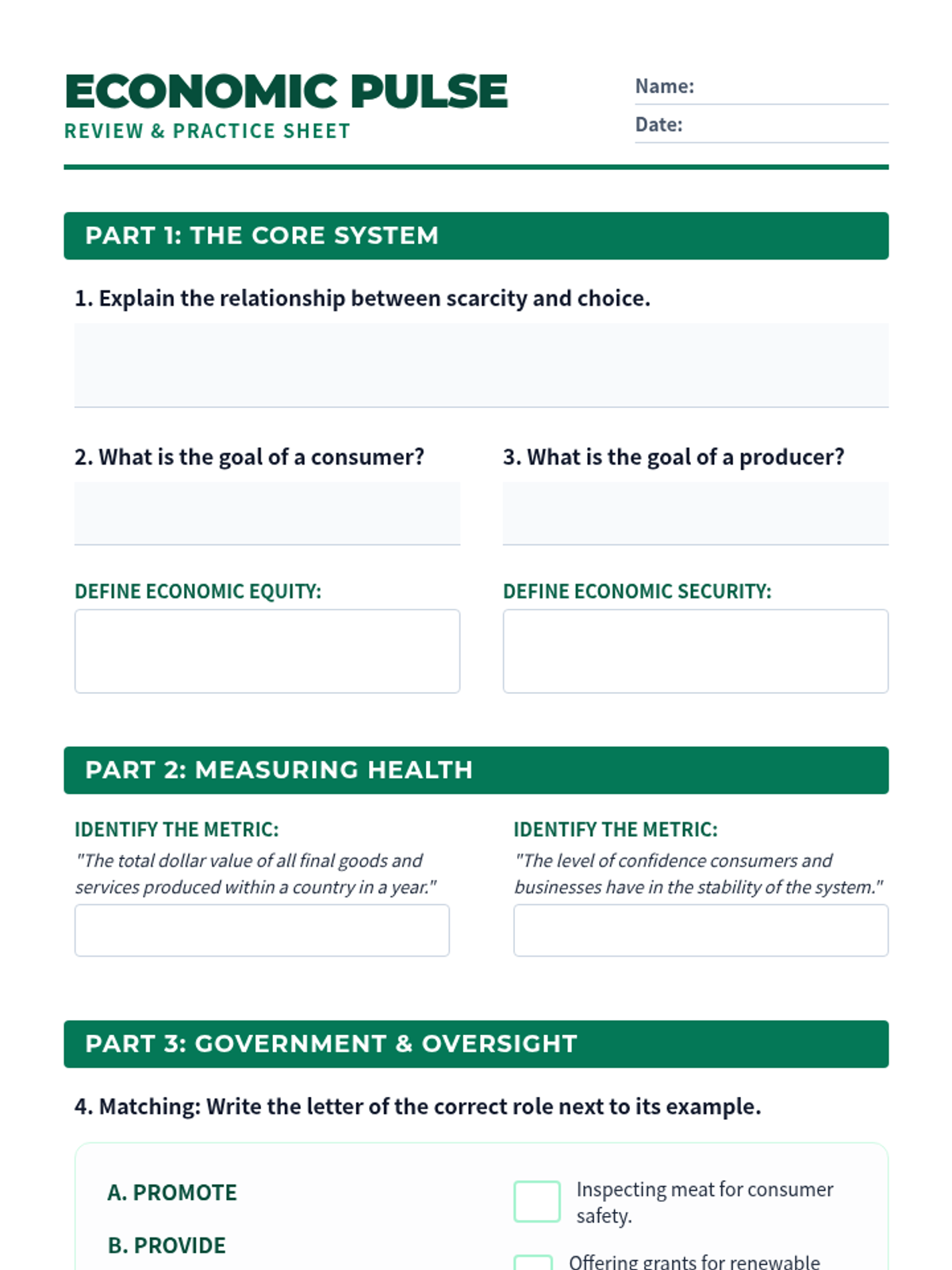
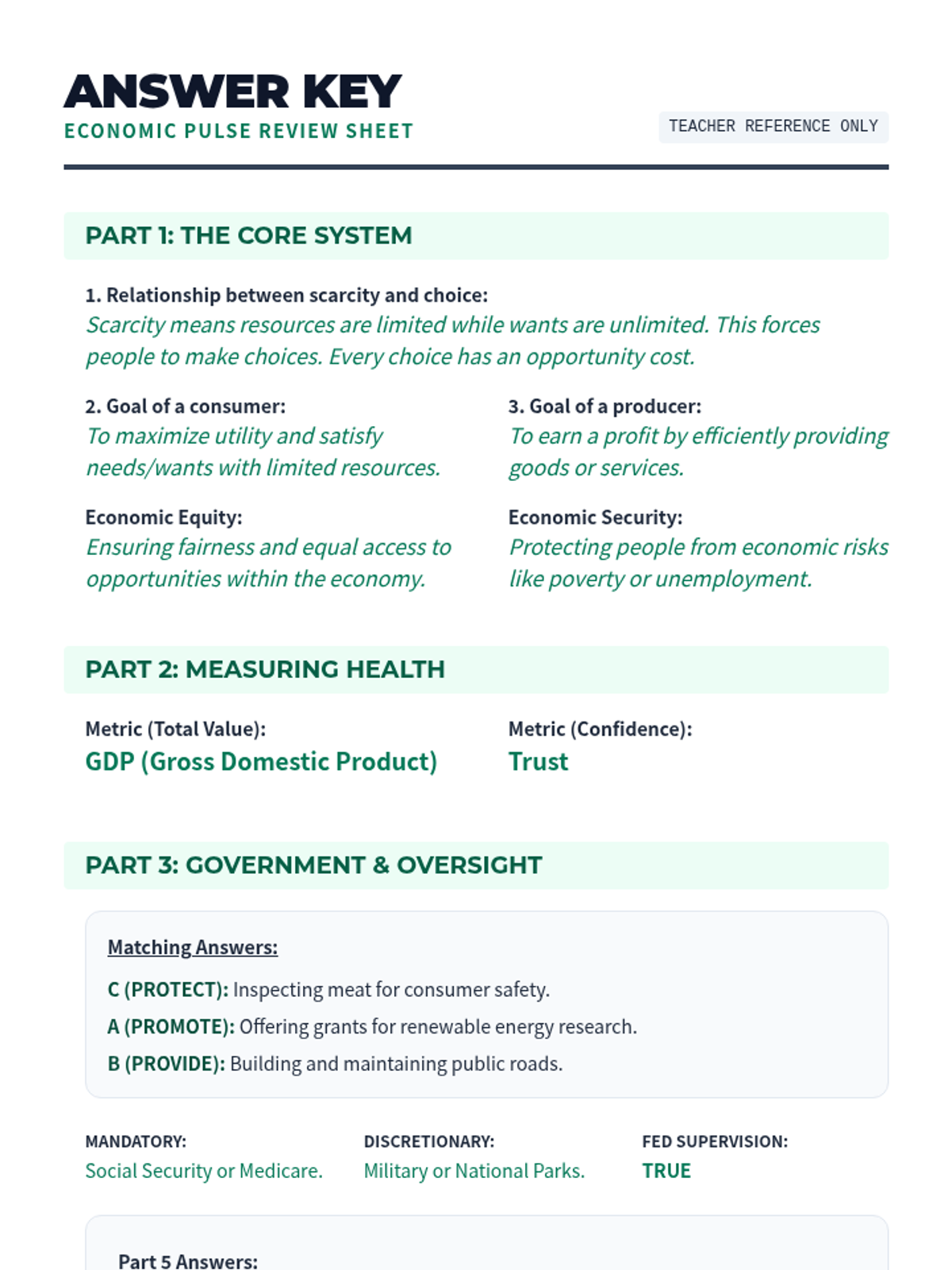
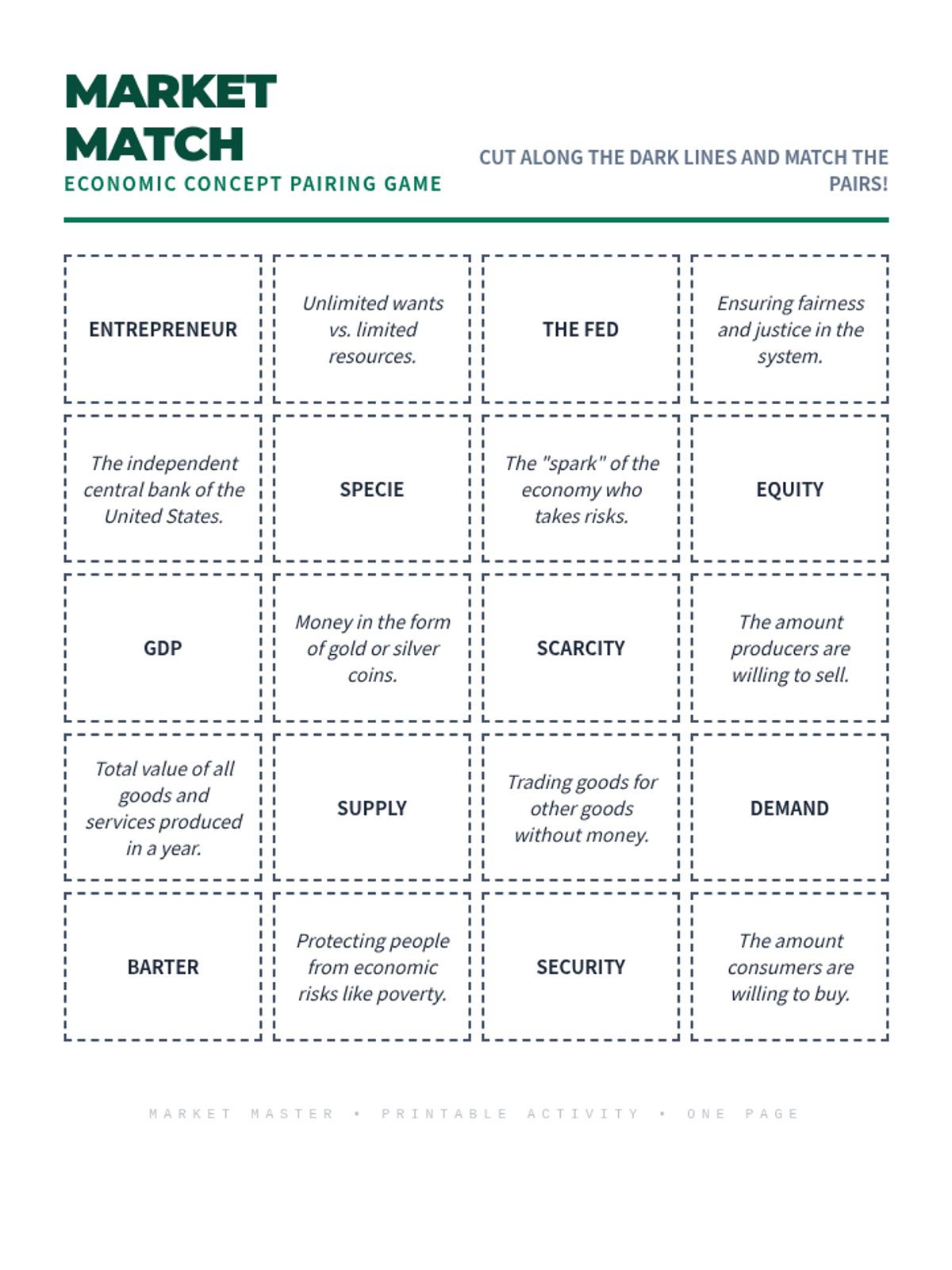
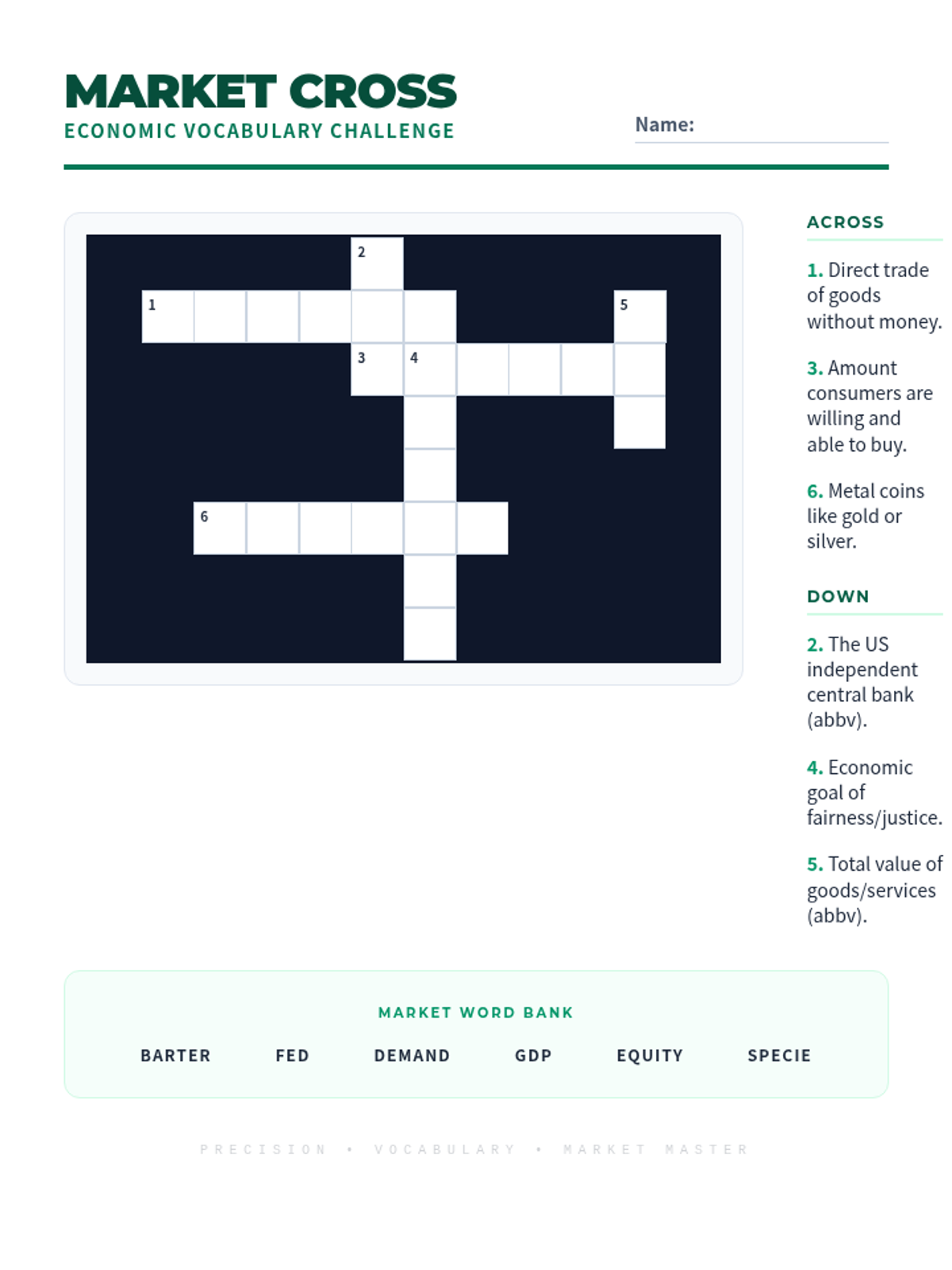
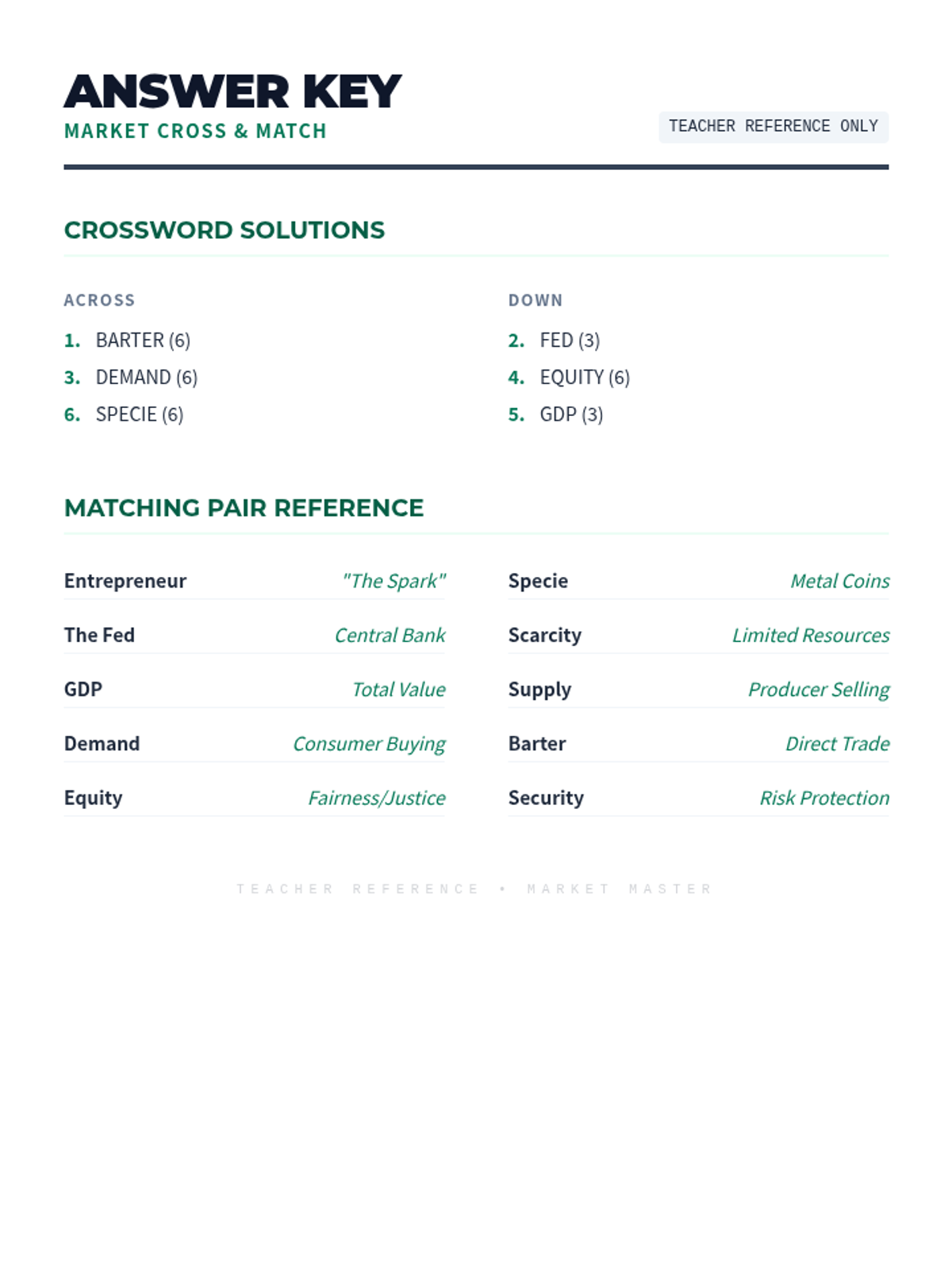
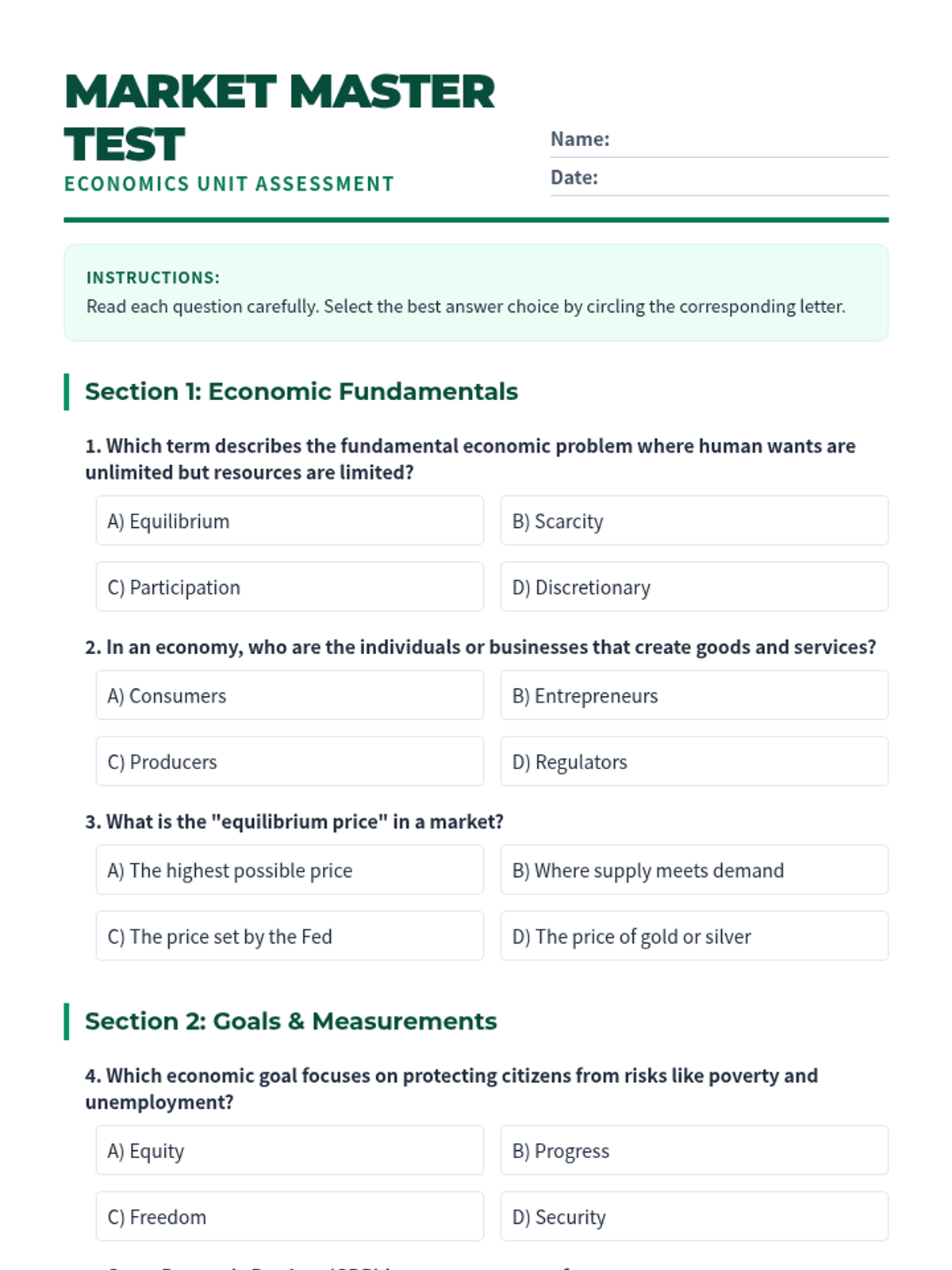
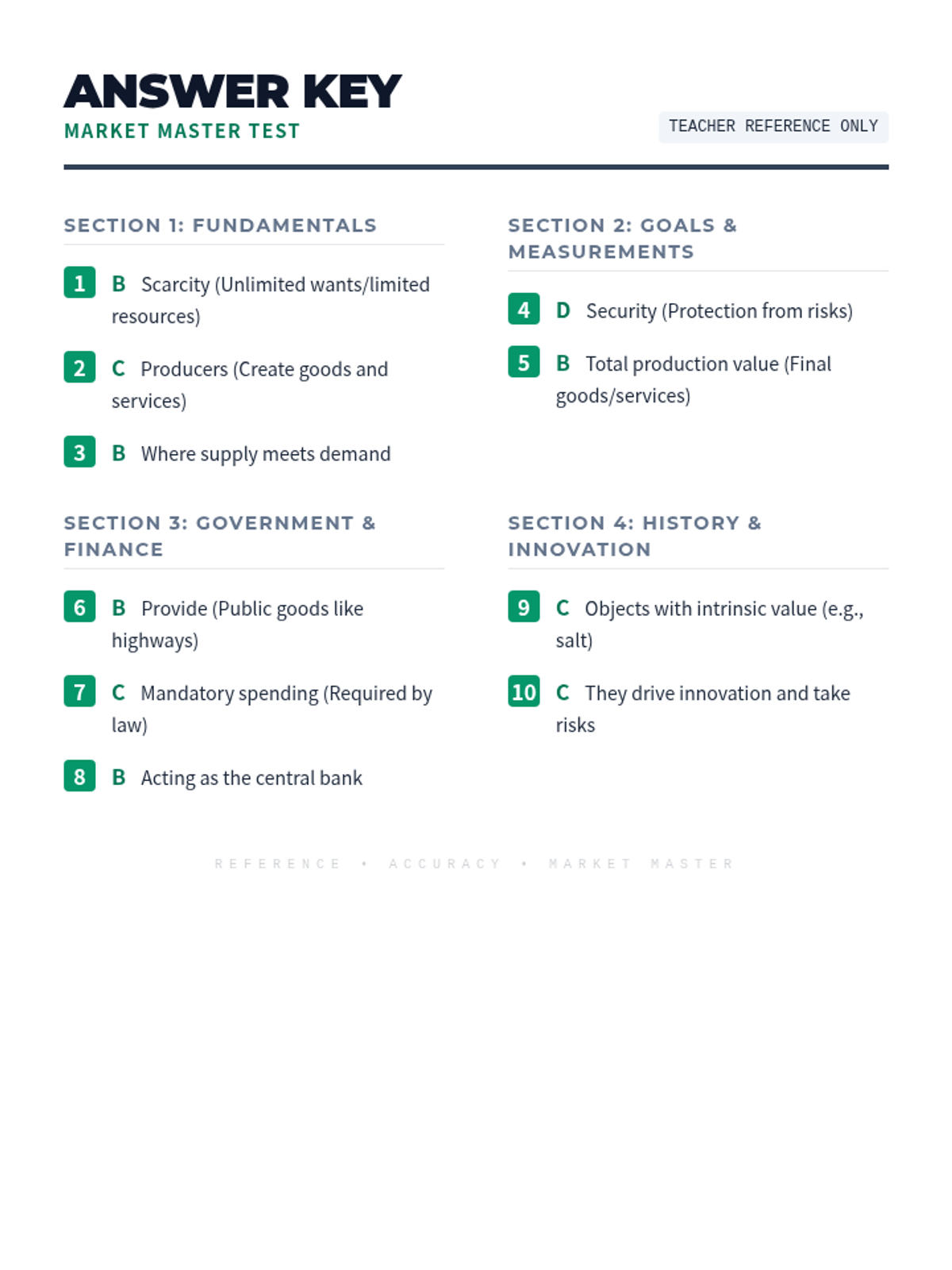
A comprehensive set of study materials covering fundamental economic concepts, government roles, the Federal Reserve, and the history of money.
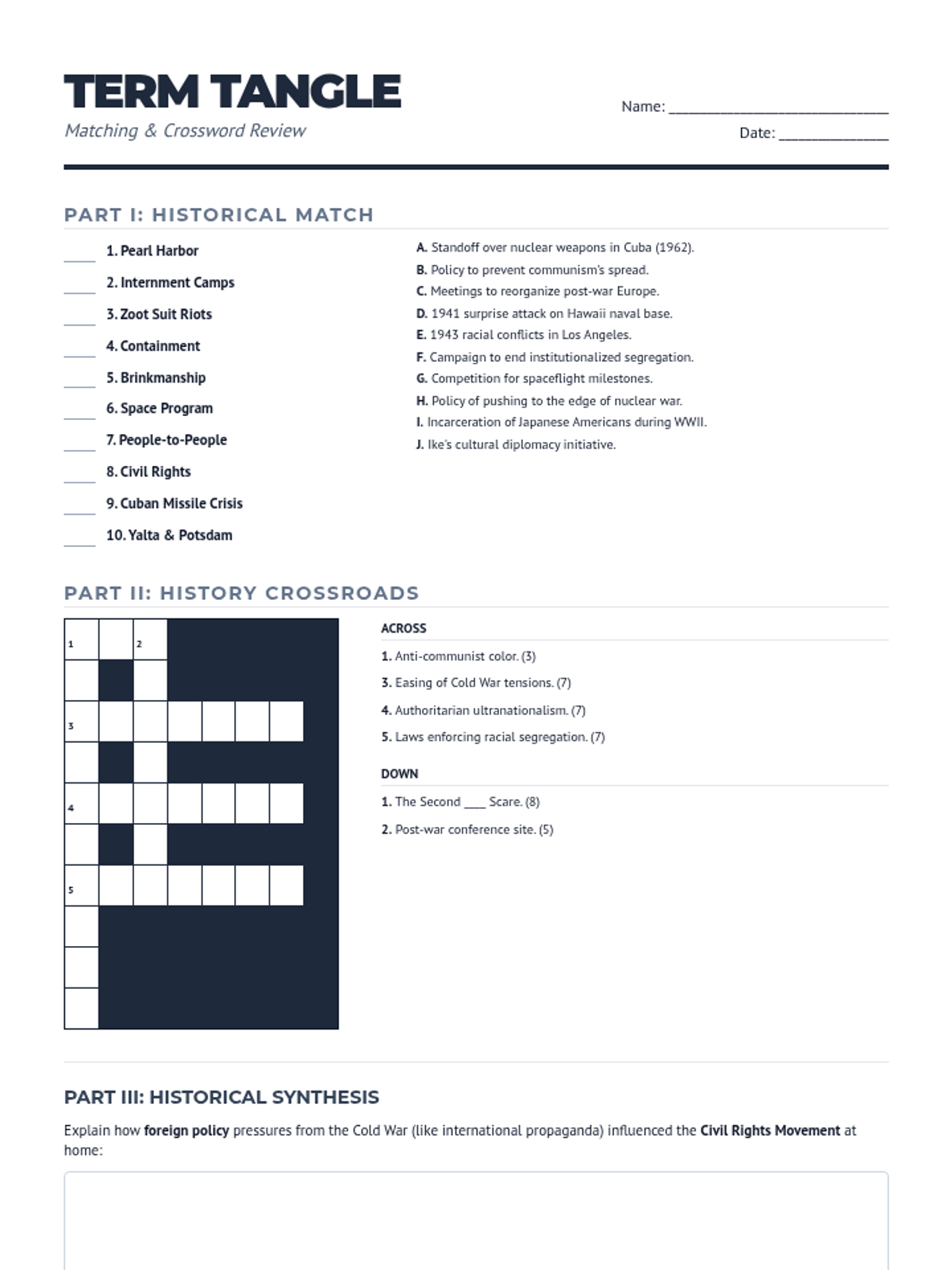
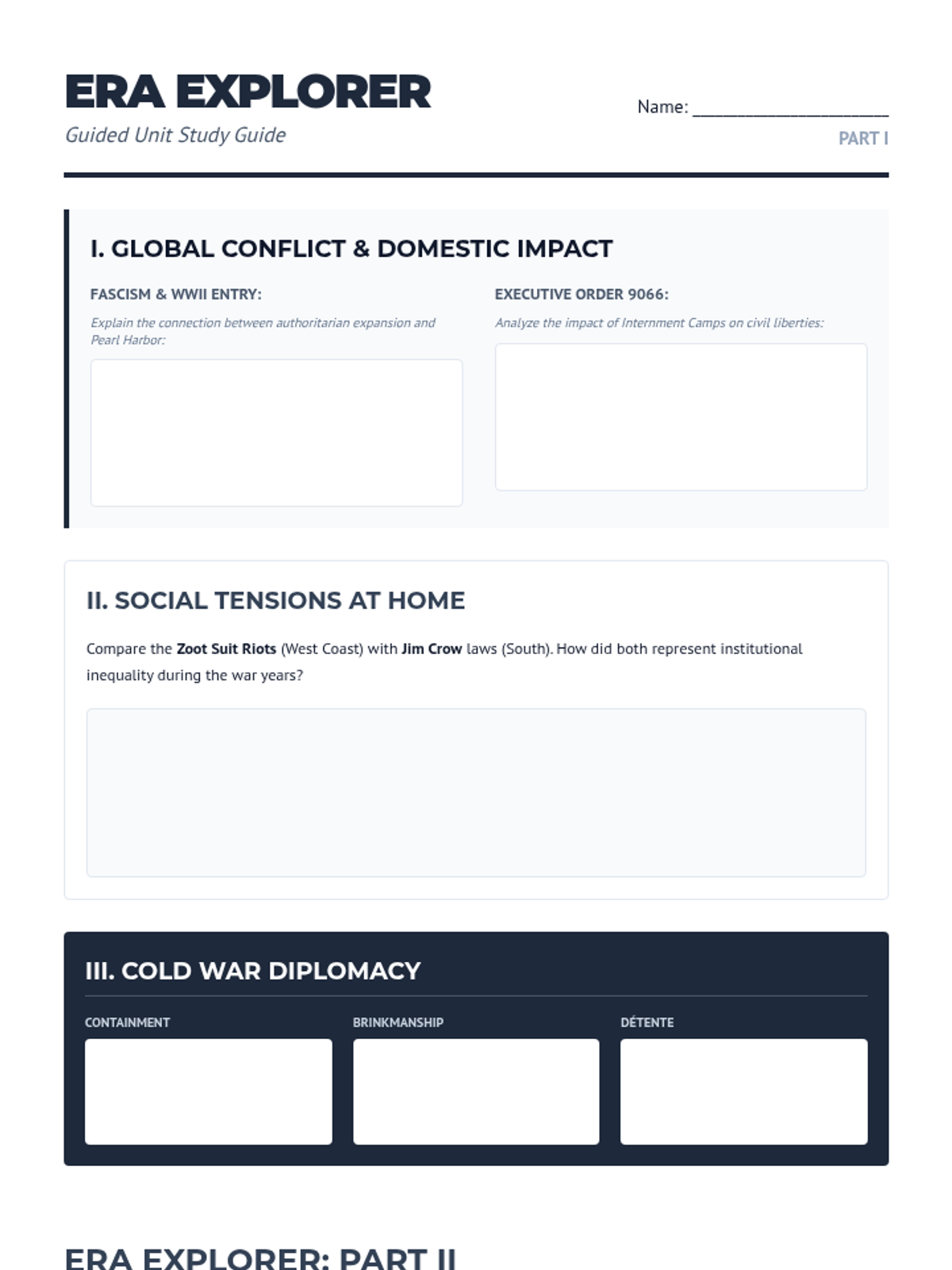
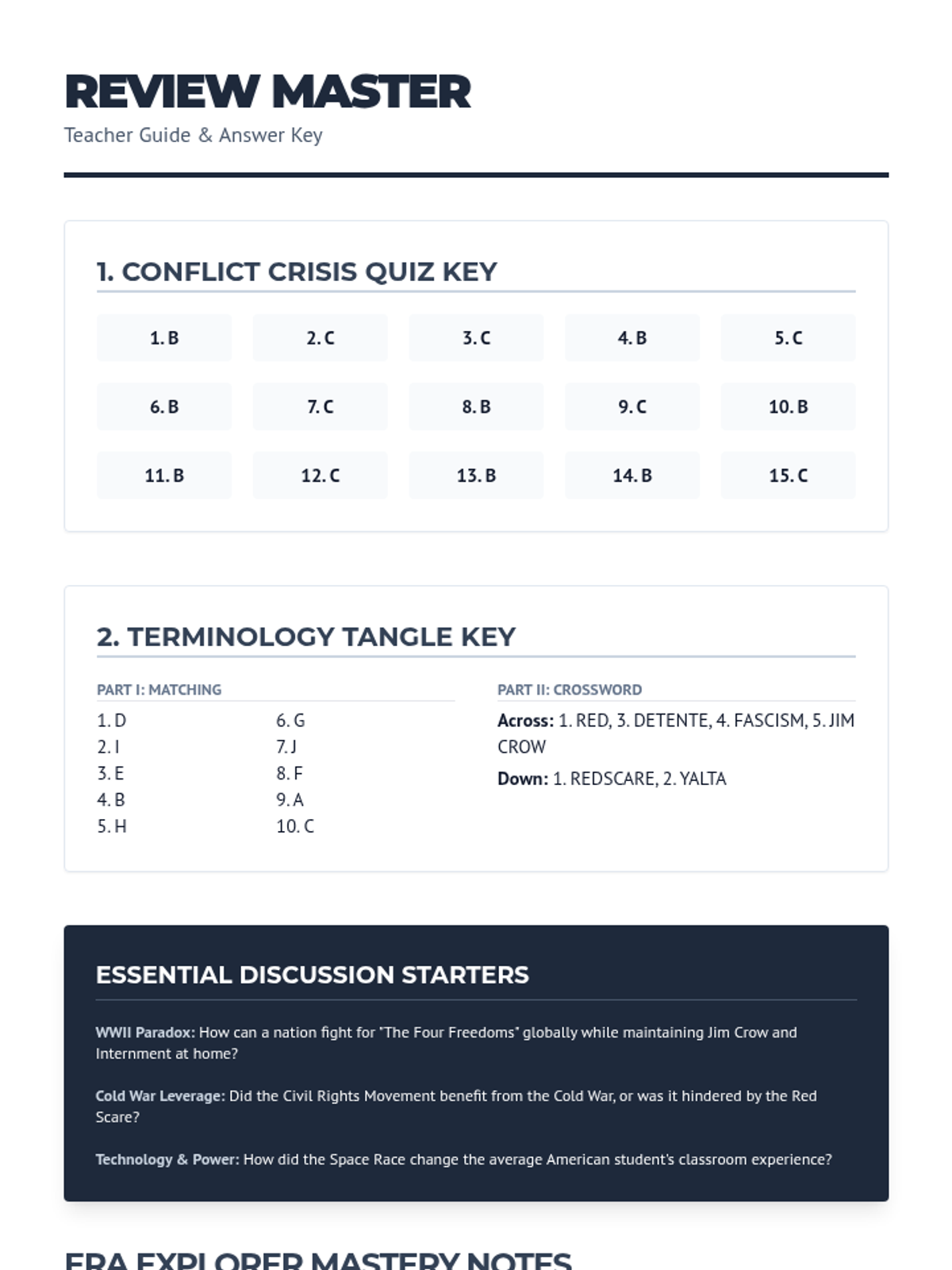
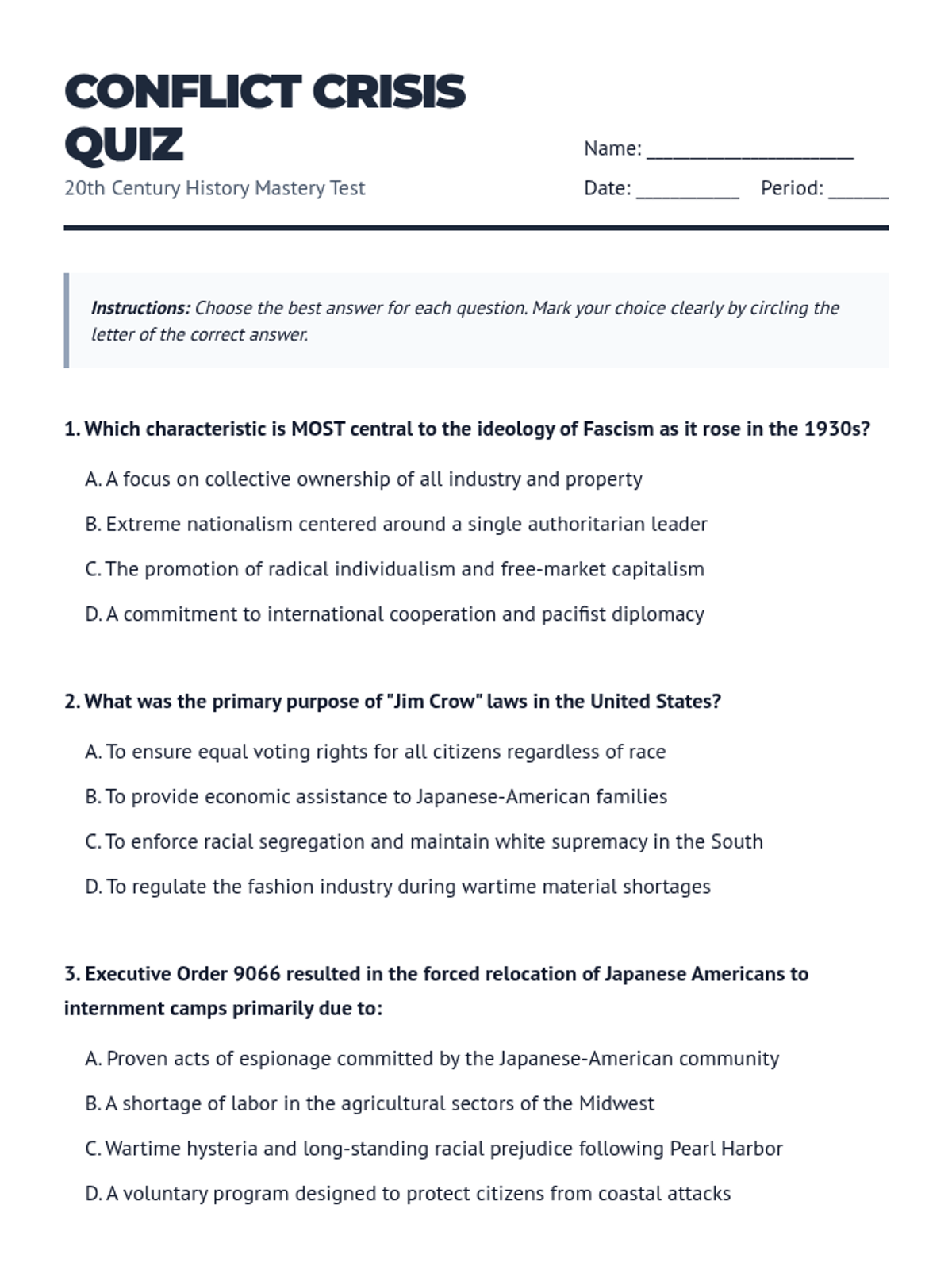
A comprehensive review lesson covering major 20th-century events from the rise of Fascism through the Civil Rights Movement and the Cold War. Students will engage with vocabulary, cause-and-effect relationships, and key historical facts through matching, crosswords, and guided study templates.
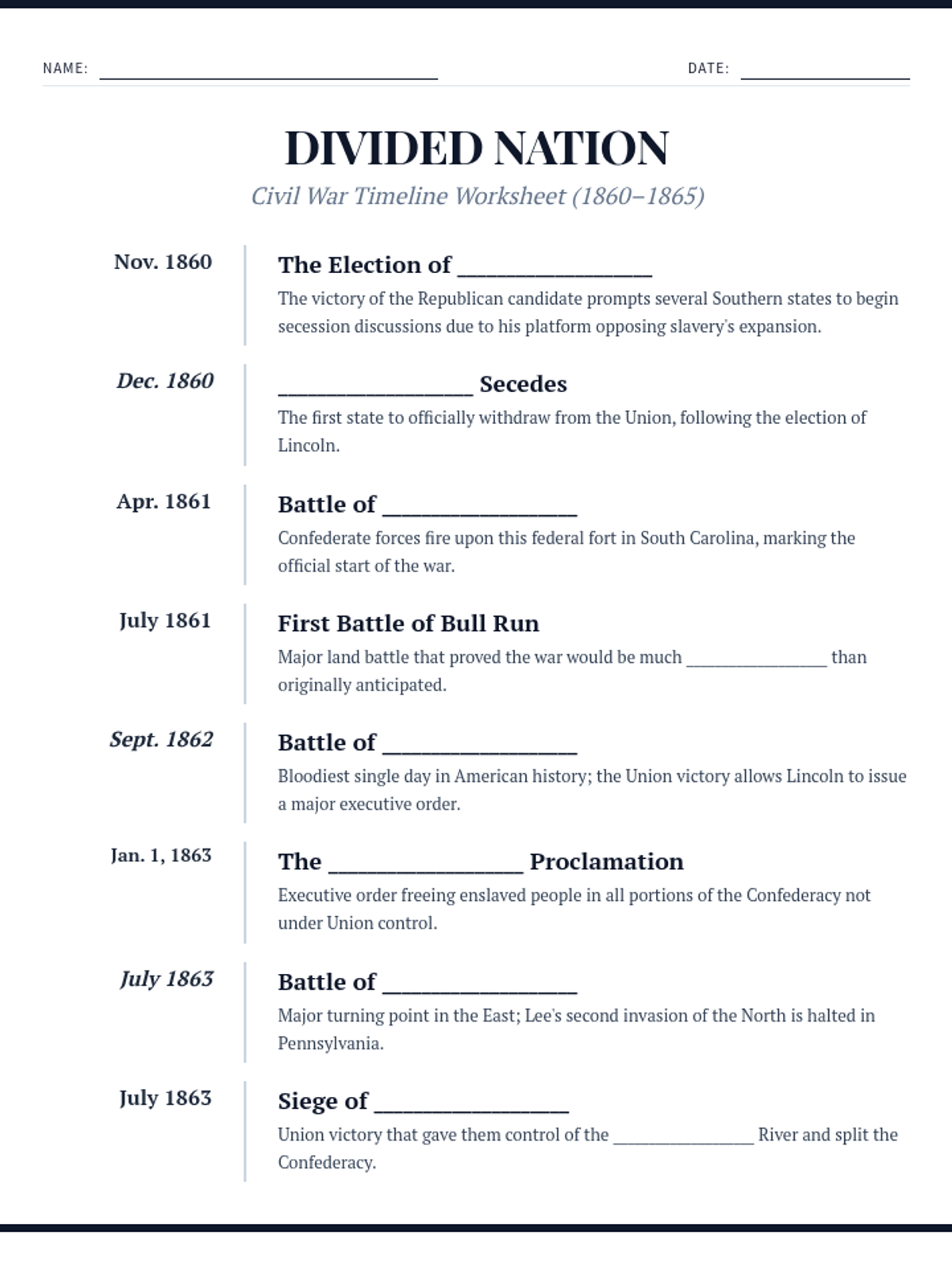
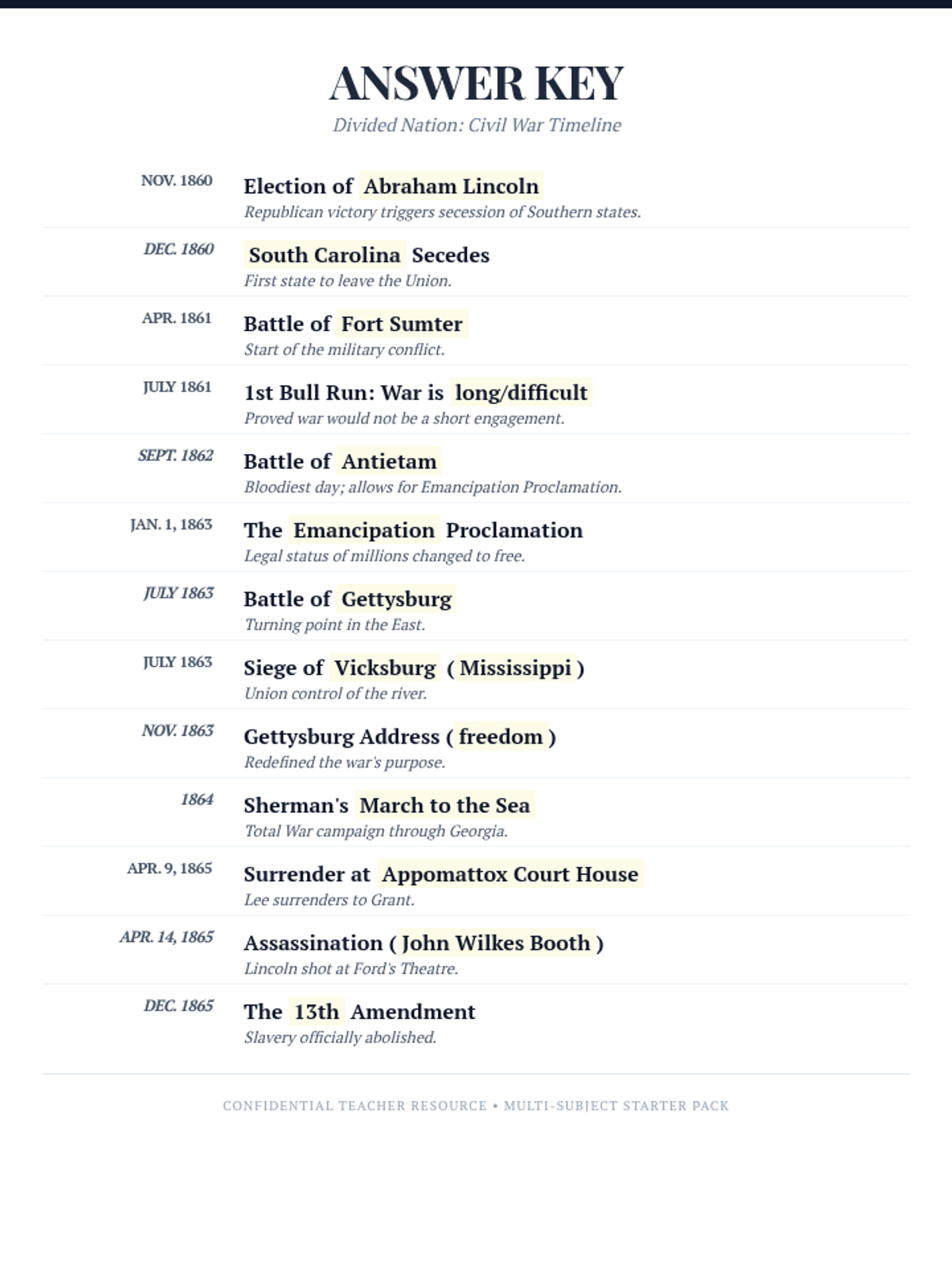
A comprehensive exploration of the American Civil War's key events through a detailed timeline activity for high school students.
An engaging visual guide to the process of photosynthesis, designed for 7th-grade life science students.
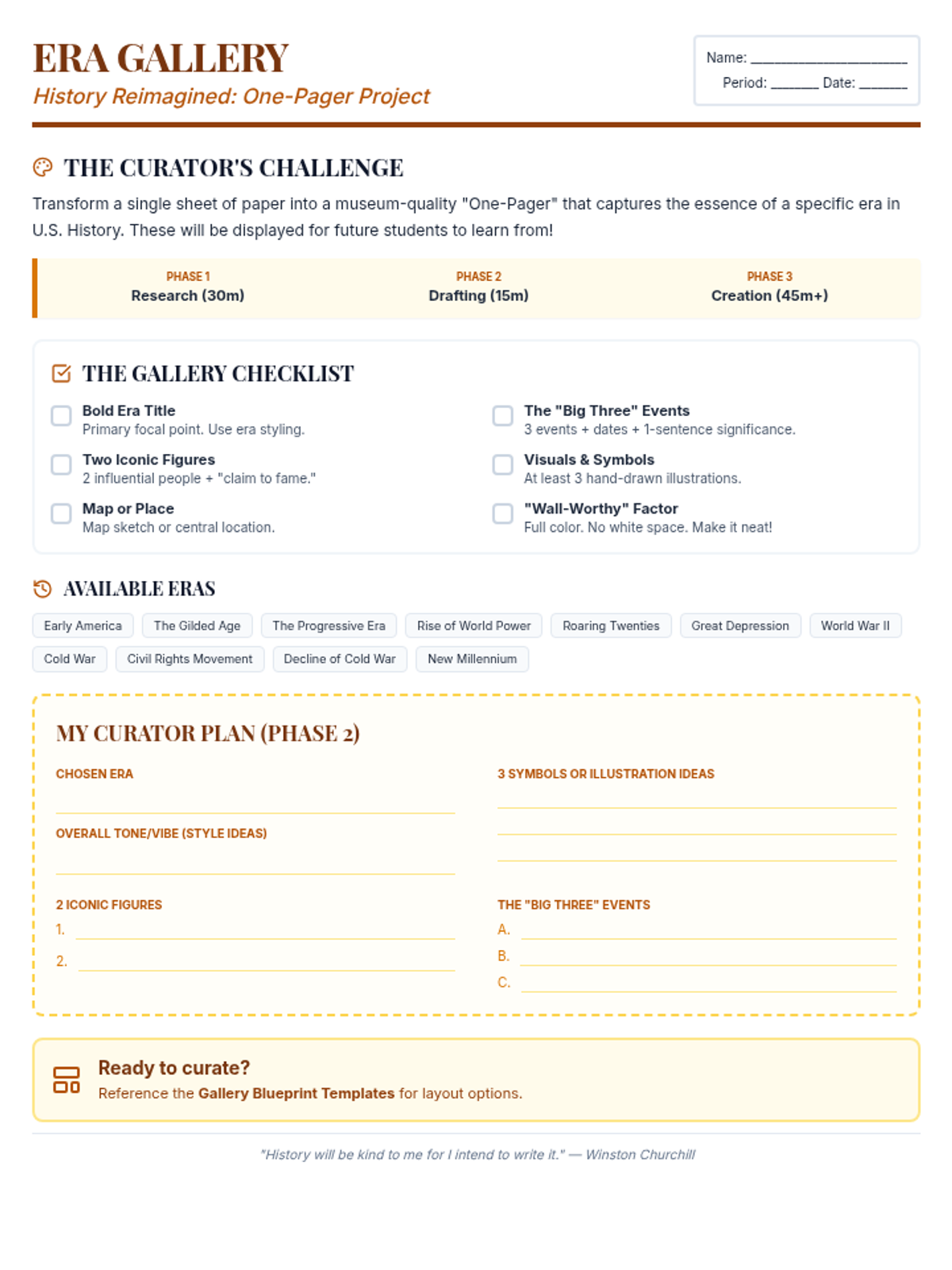
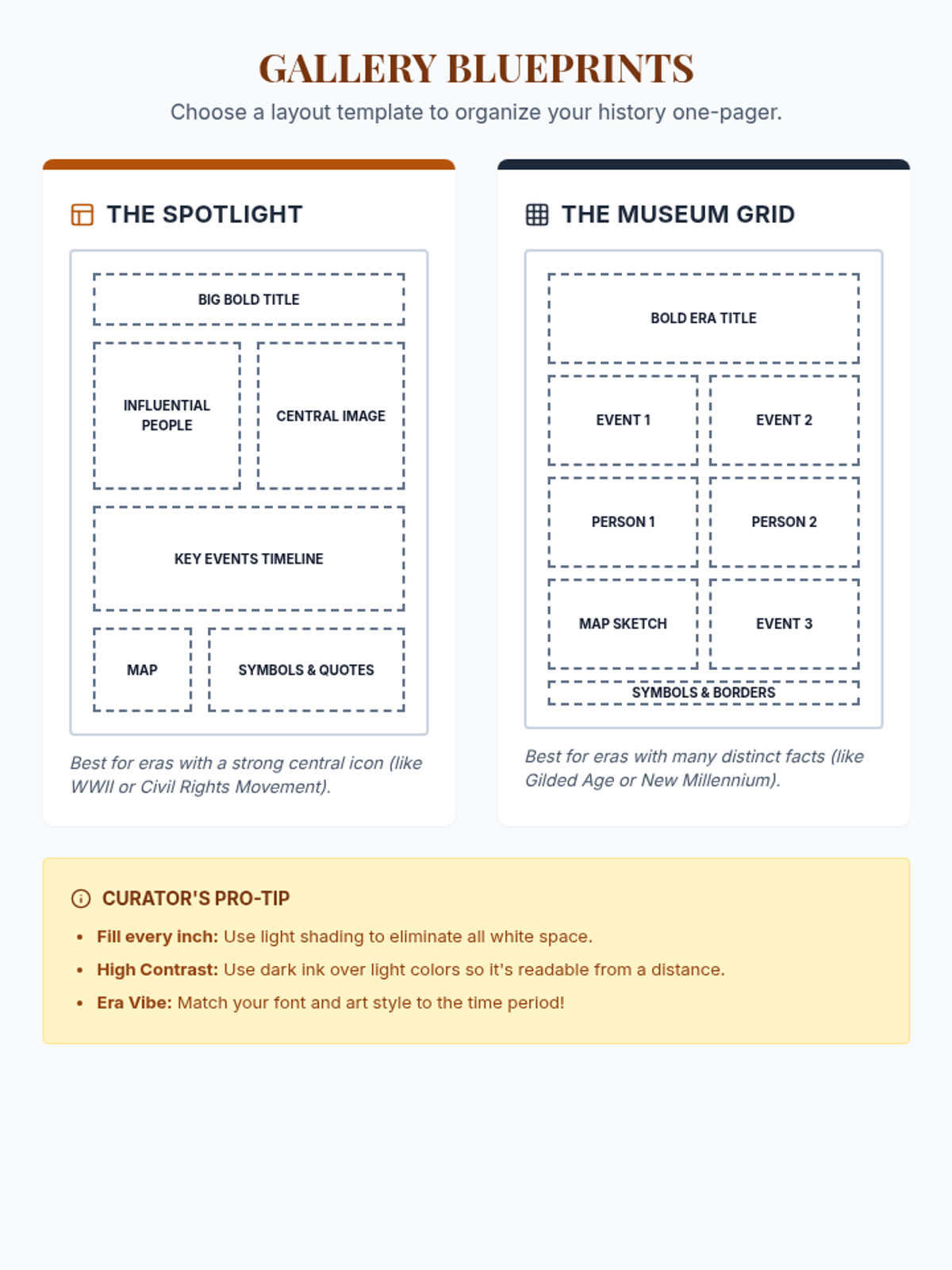
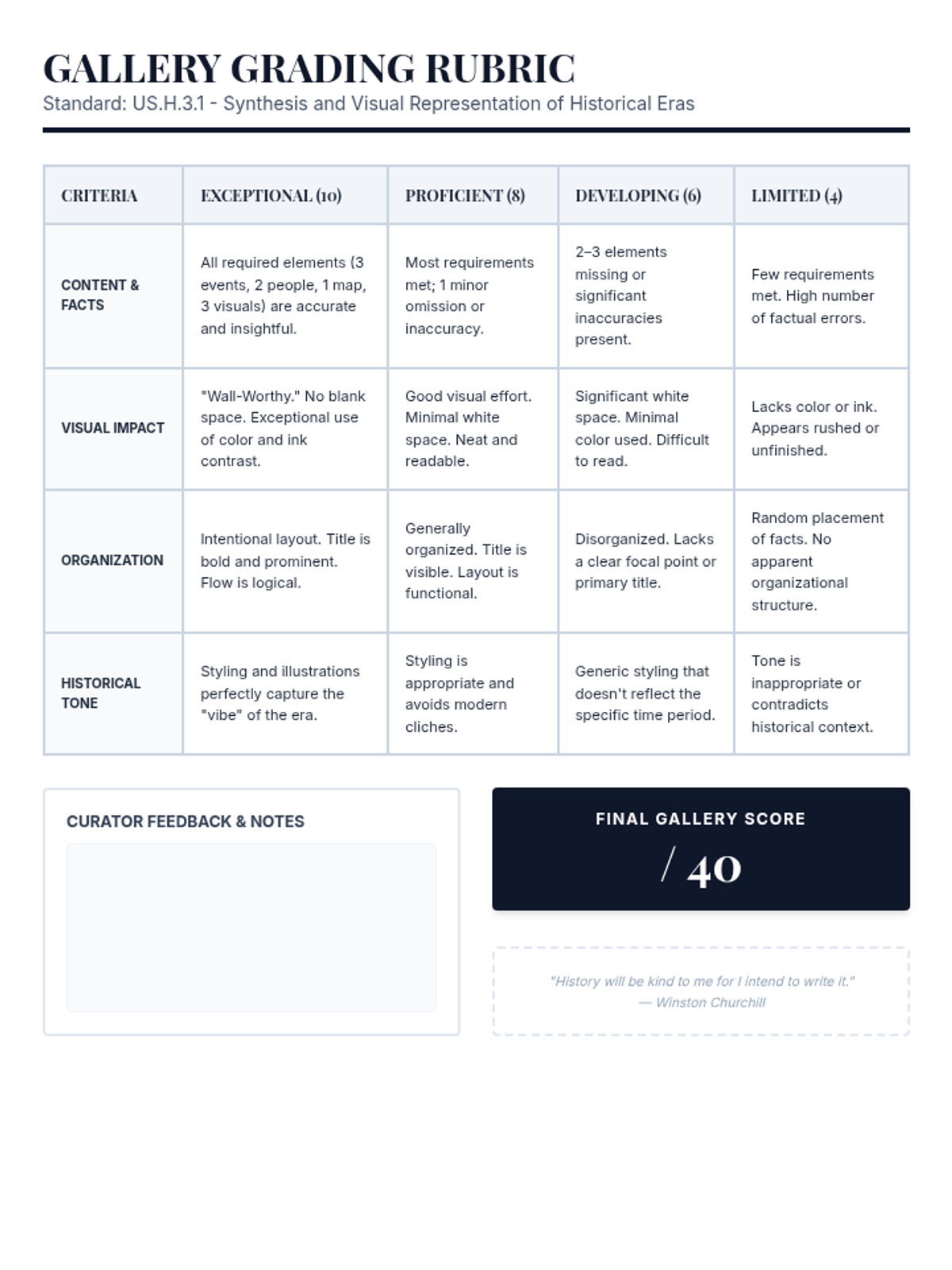
A fast-paced, creative project where students curate a visually stunning 'One-Pager' poster for a specific era of U.S. History, designed to be high-quality enough for classroom display.
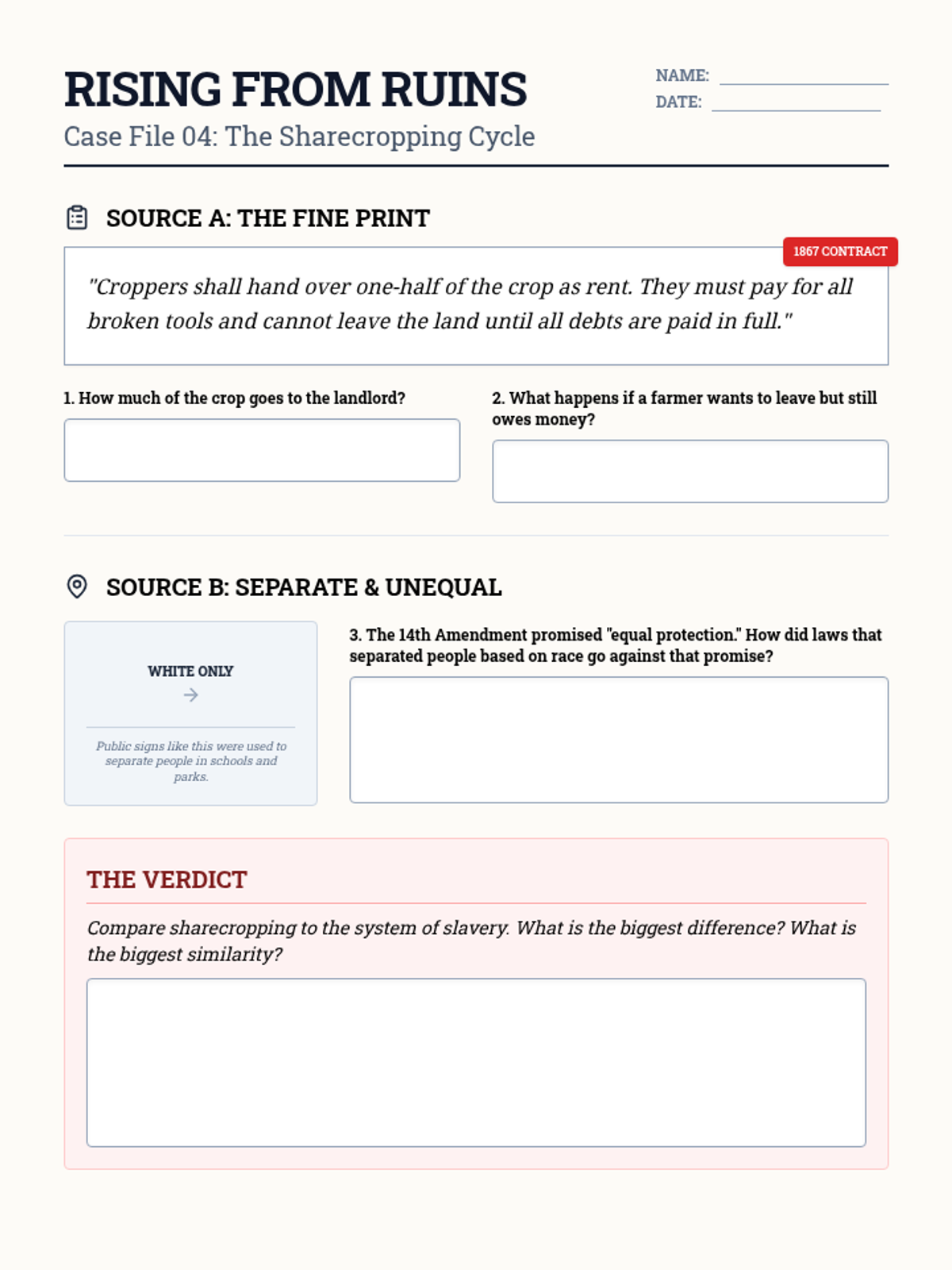
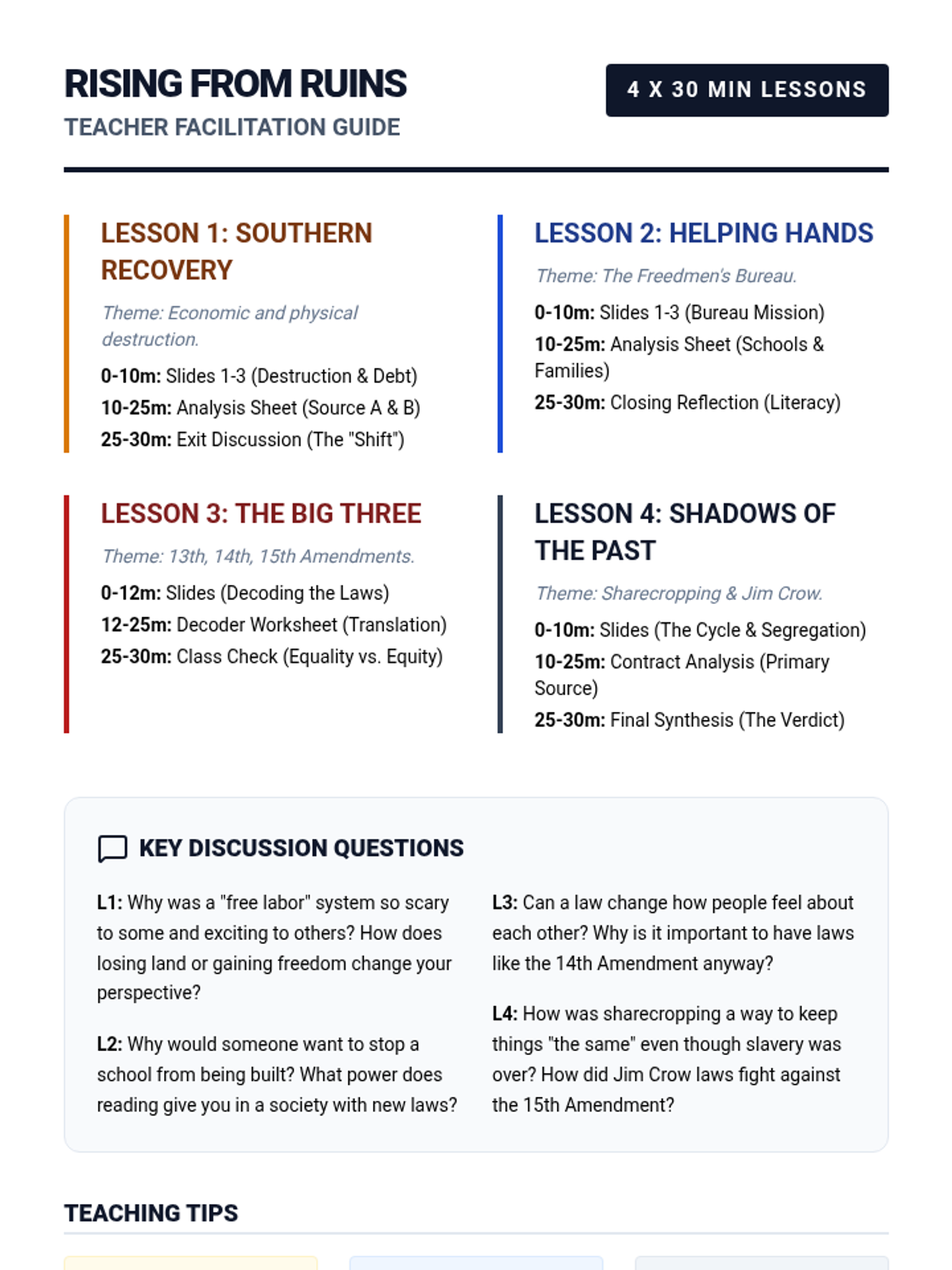
Students explore the limitations of Reconstruction through the lens of sharecropping and the emergence of Jim Crow laws.
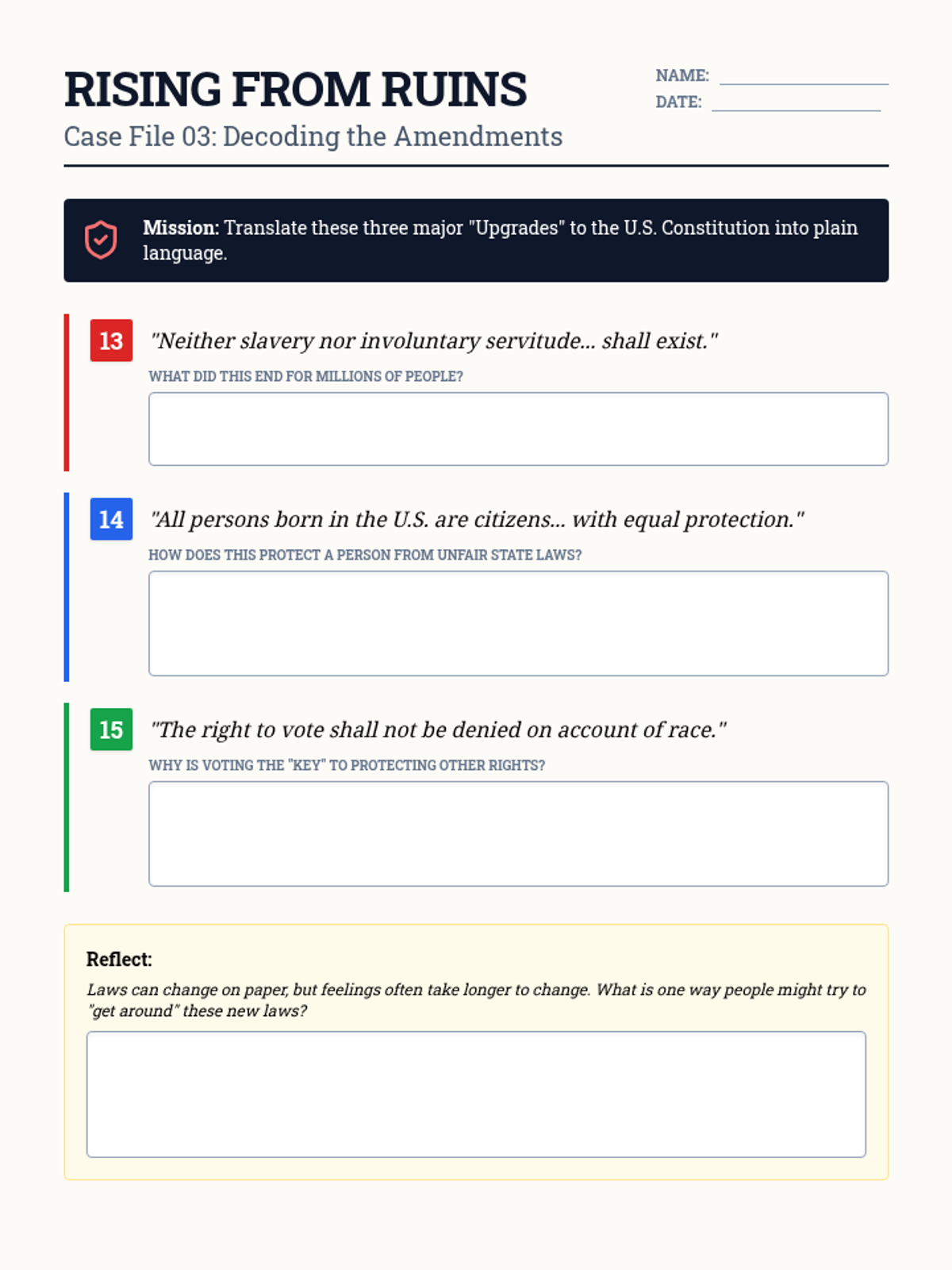
A deep dive into the 13th, 14th, and 15th Amendments and how they aimed to redefine American citizenship and rights.
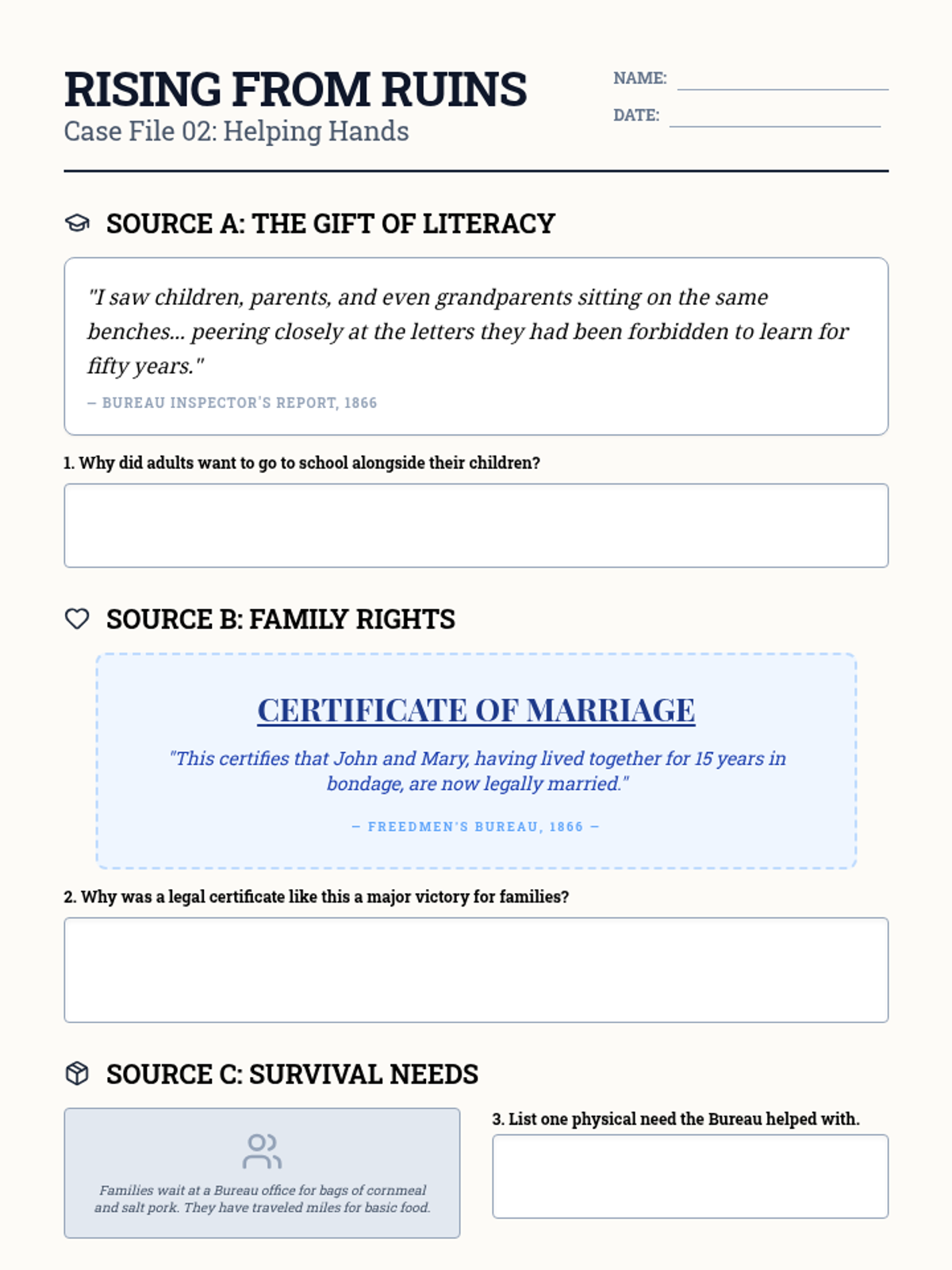
An investigation into the Freedmen's Bureau and its role in providing education, healthcare, and legal assistance to formerly enslaved people.
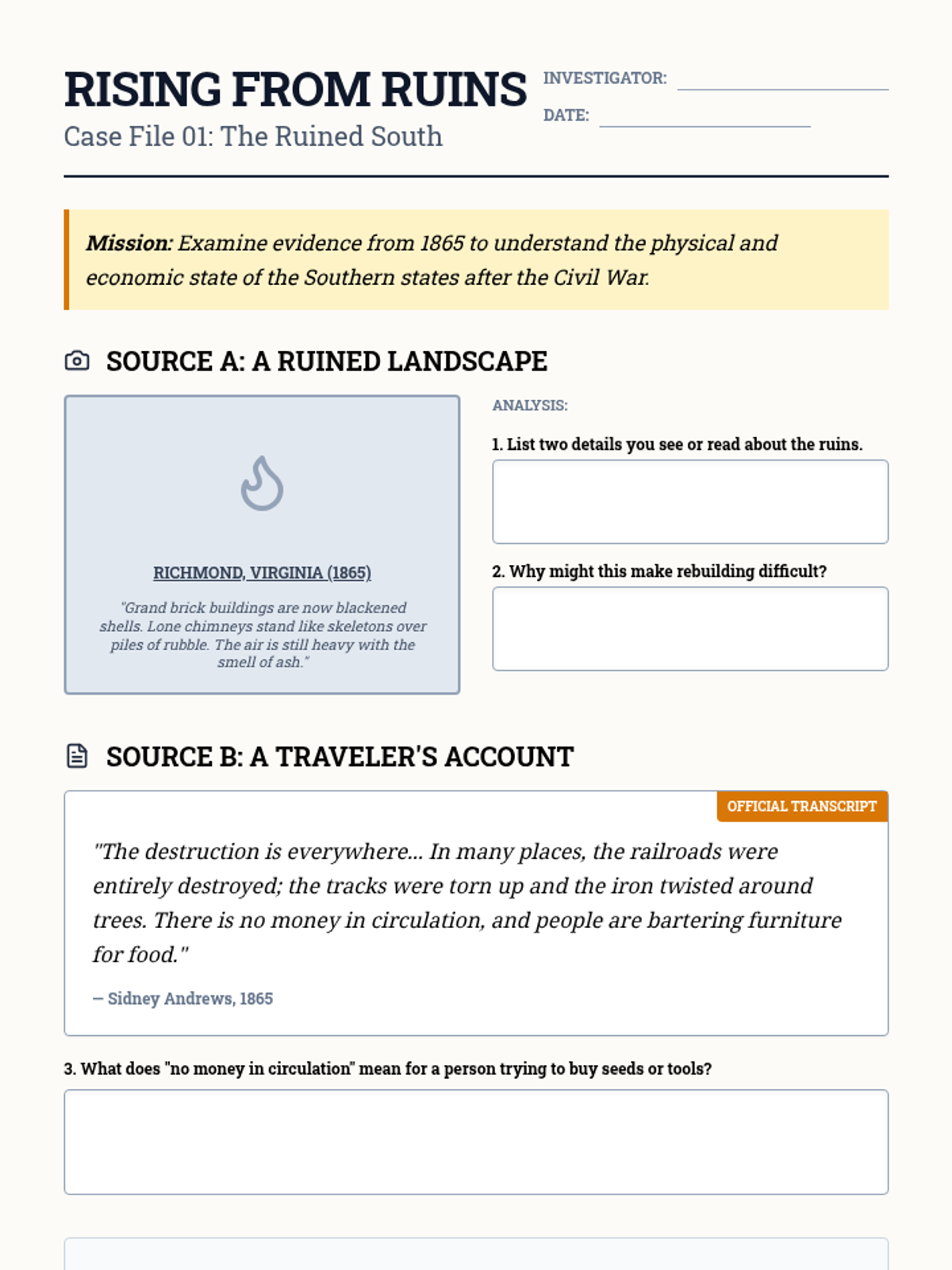
Students examine the physical and economic destruction of the South and the initial challenges of transitioning to a free labor system.
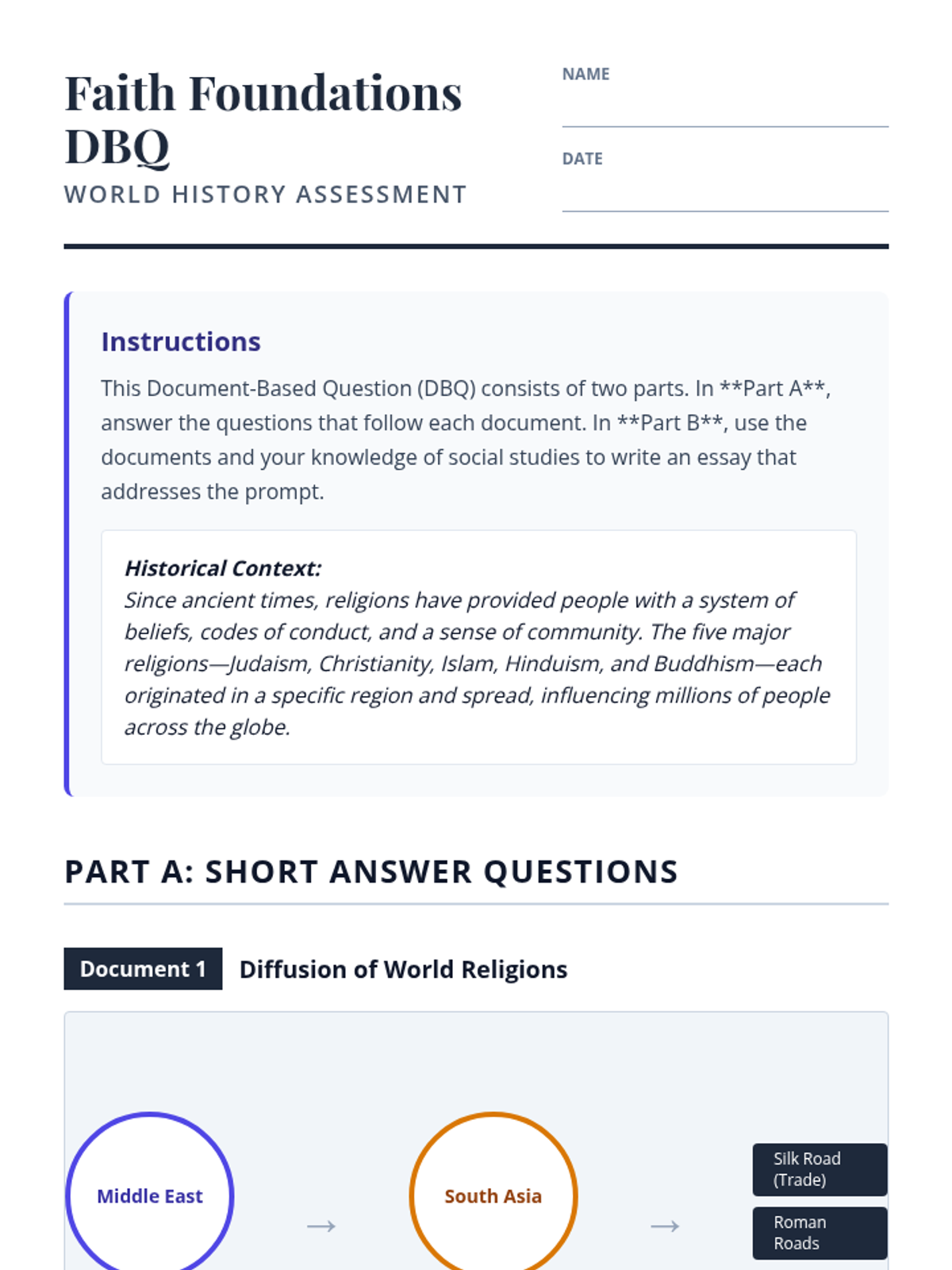
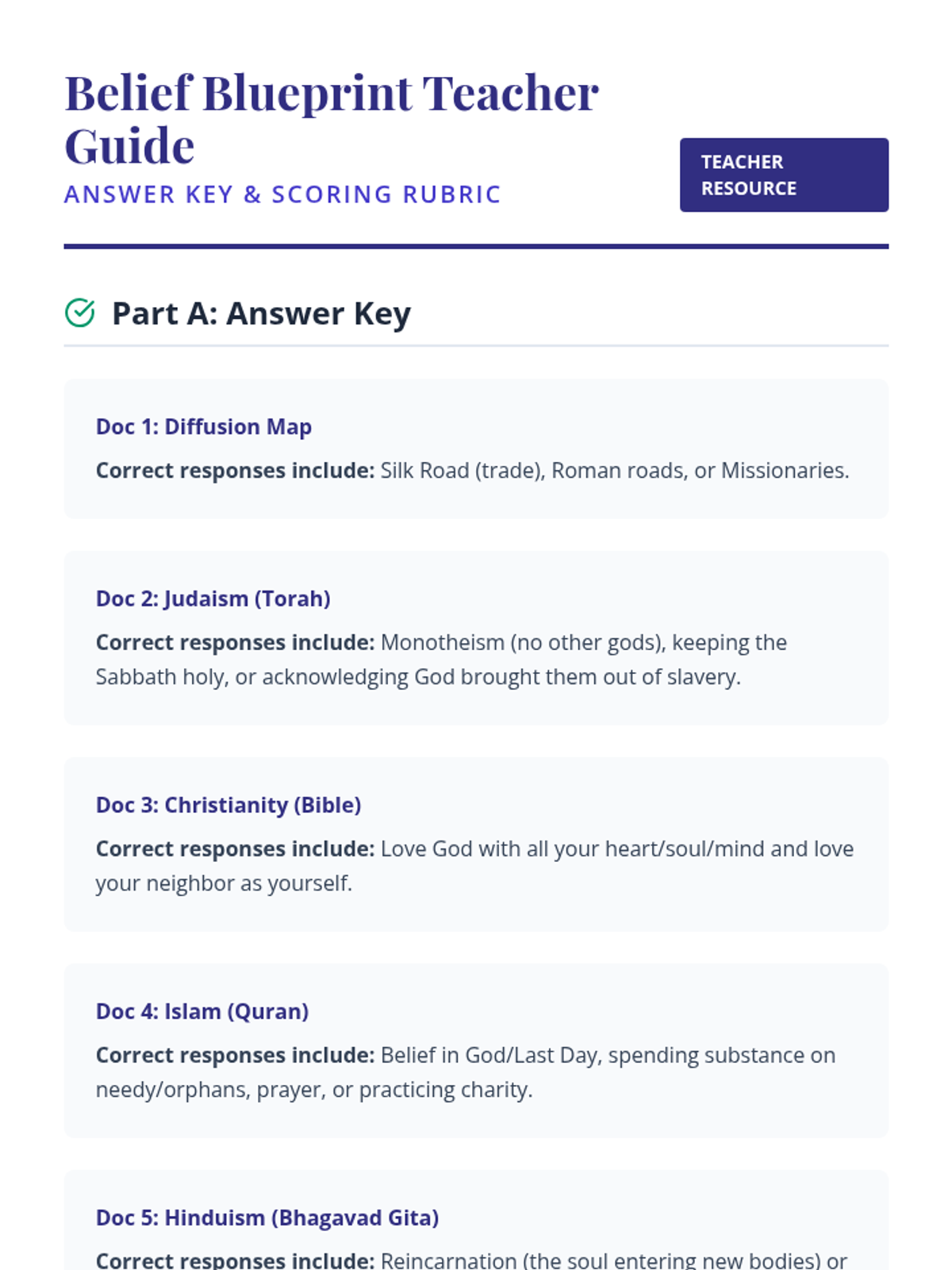
A comprehensive assessment package focused on the Five Major World Religions, utilizing a New York State Document-Based Question (DBQ) format with maps and sacred text analysis.
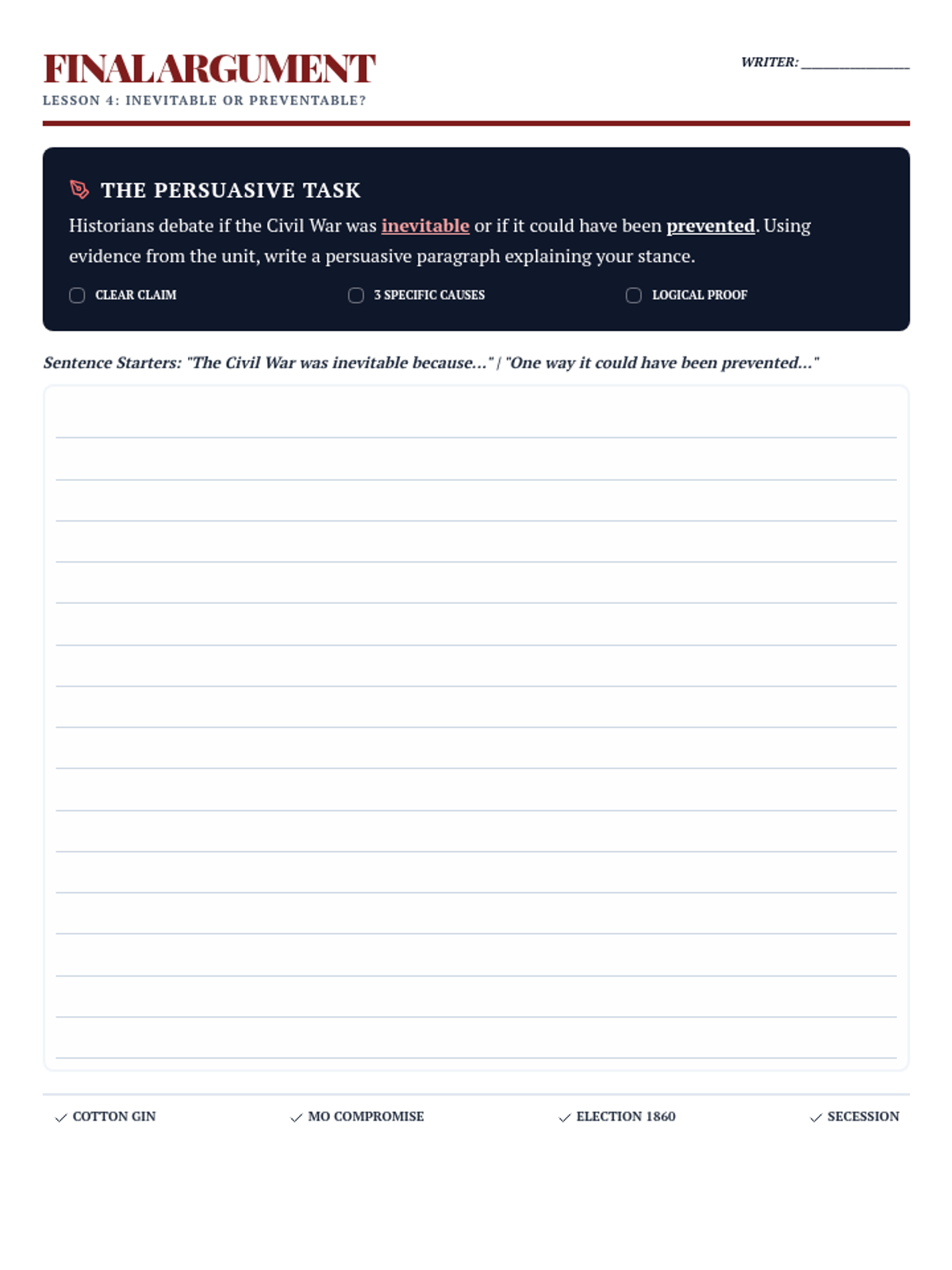
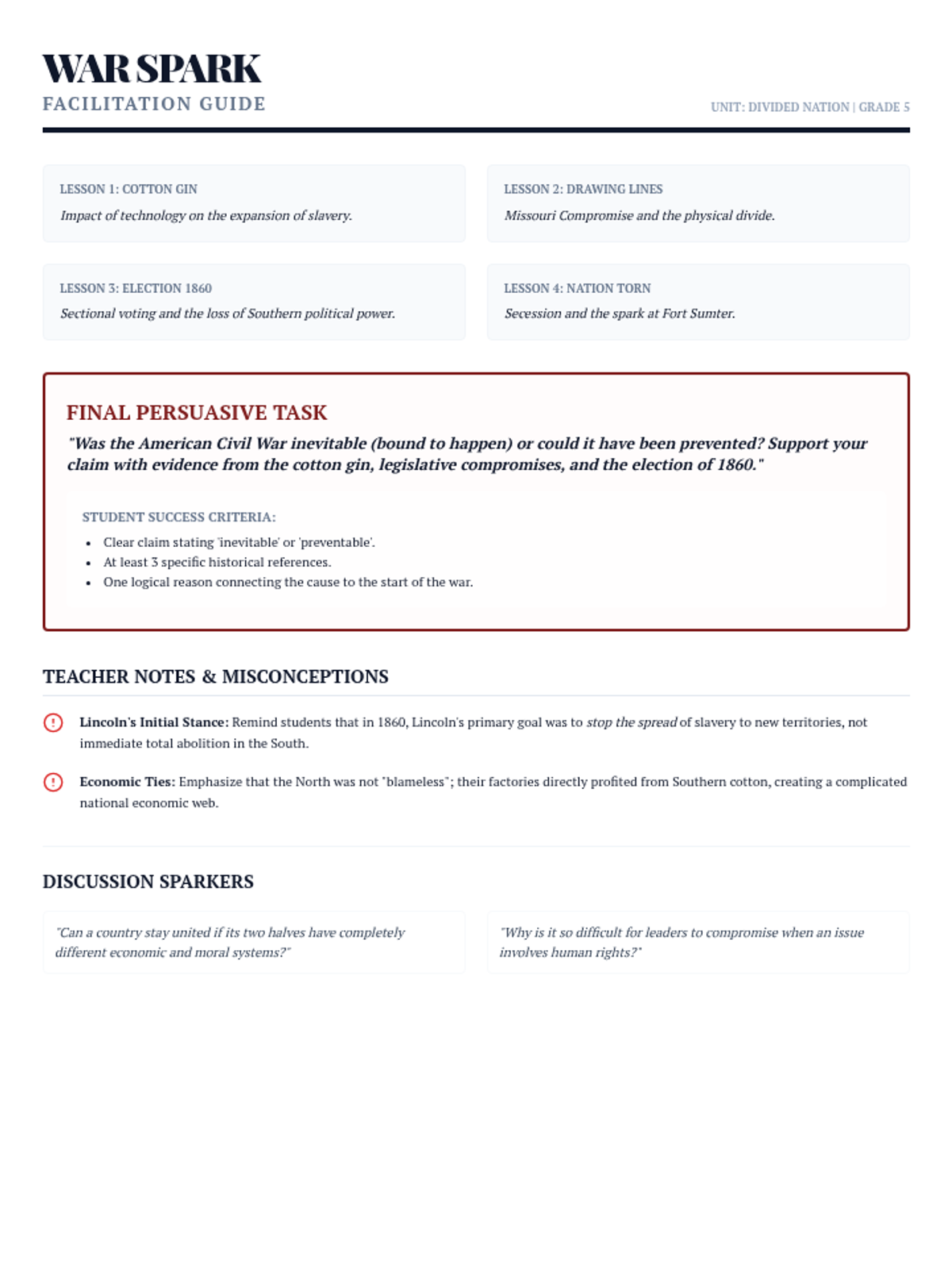
Analyzes the formal withdrawal of Southern states from the Union and culminates in a persuasive writing task about the inevitability of the conflict.
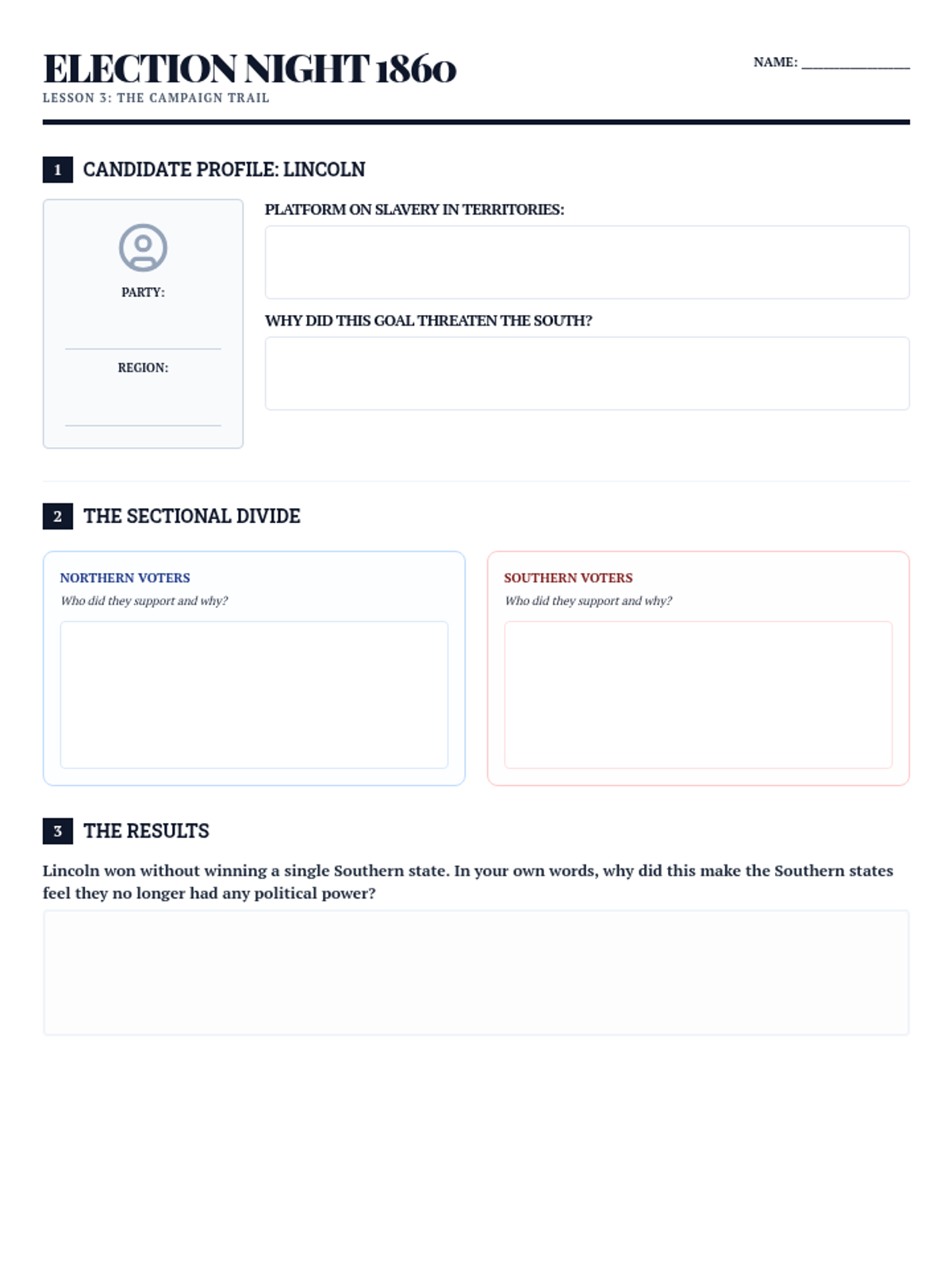
Explores the high-stakes election of Abraham Lincoln and how it served as the final straw for many Southern states.
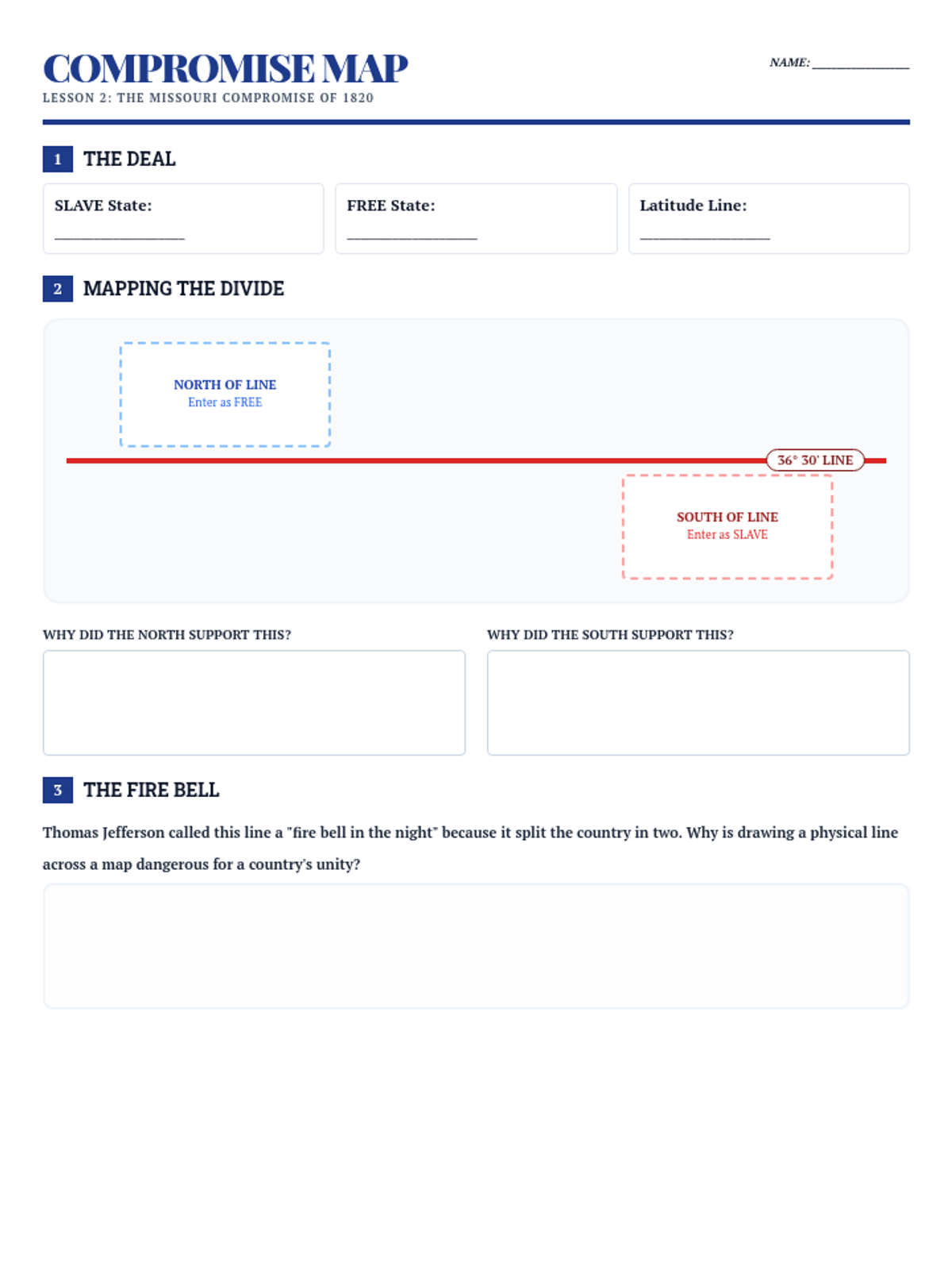
Investigates the legislative attempts to balance power between free and slave states, focusing on the 36°30′ line and its long-term consequences.
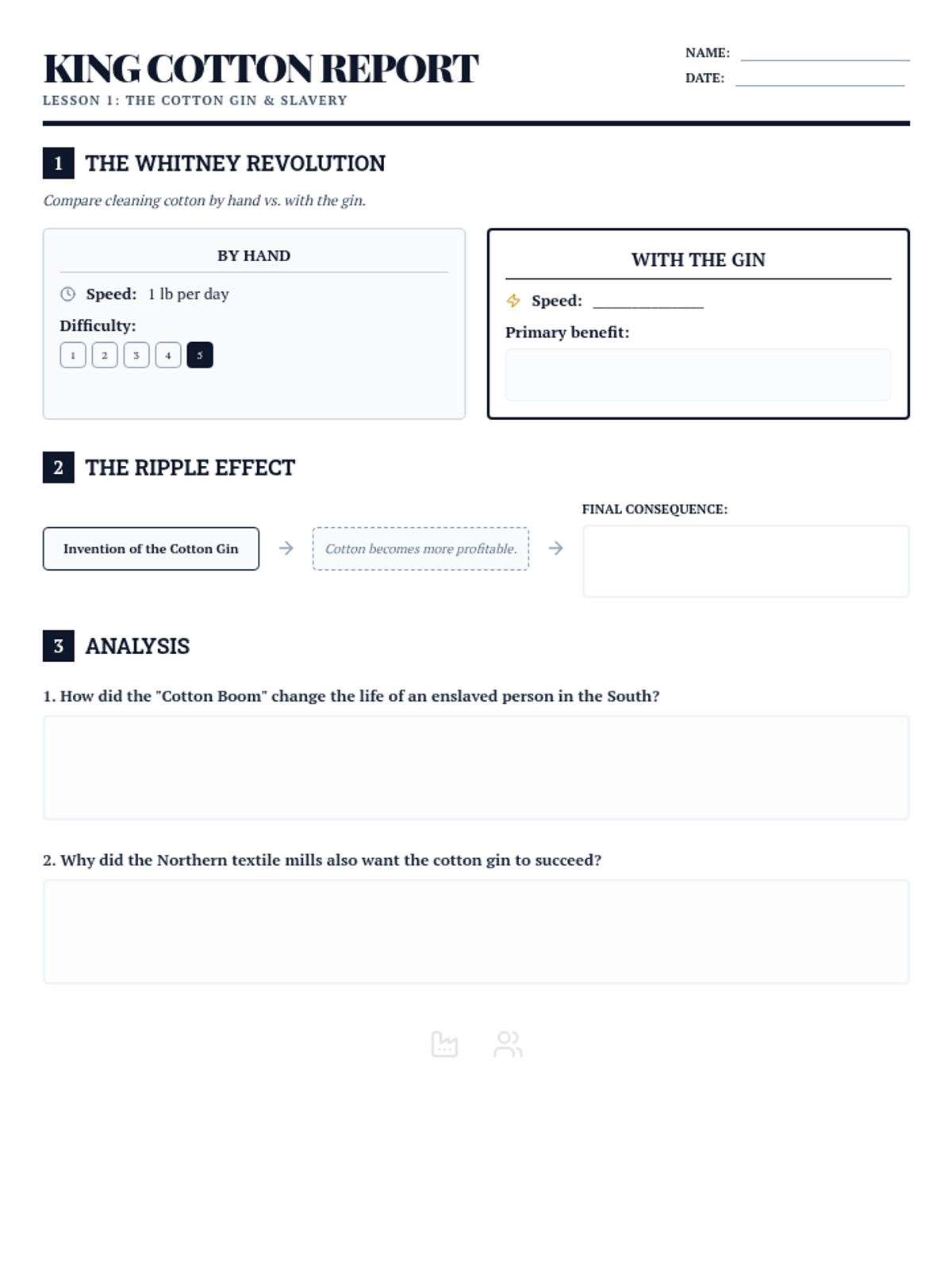
Examines how Eli Whitney's invention of the cotton gin revolutionized the Southern economy and deeply entrenched the institution of slavery.
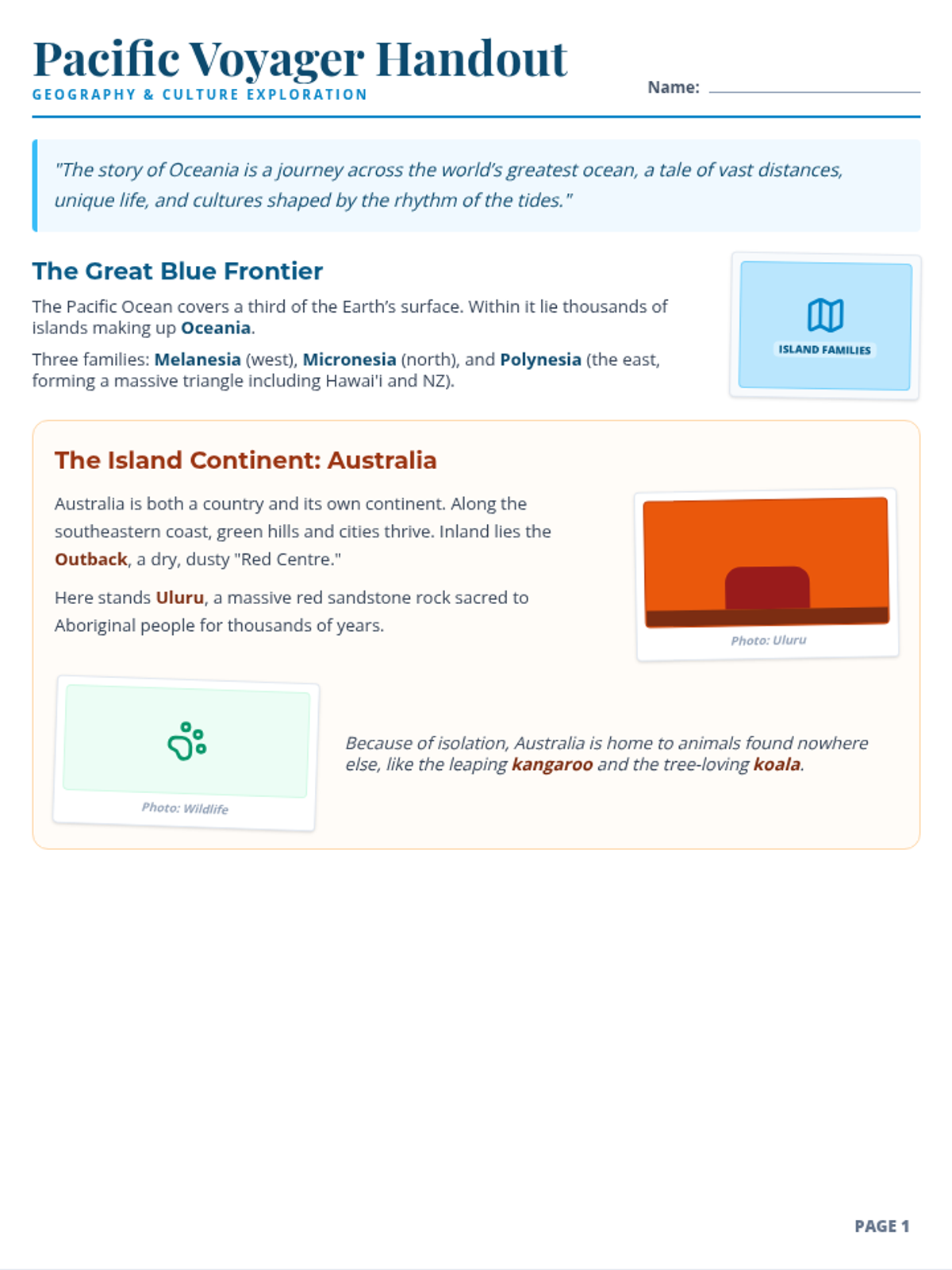
An introductory lesson on the geography, cultures, and unique wildlife of Oceania, covering Australia, New Zealand, and the Pacific island chains.
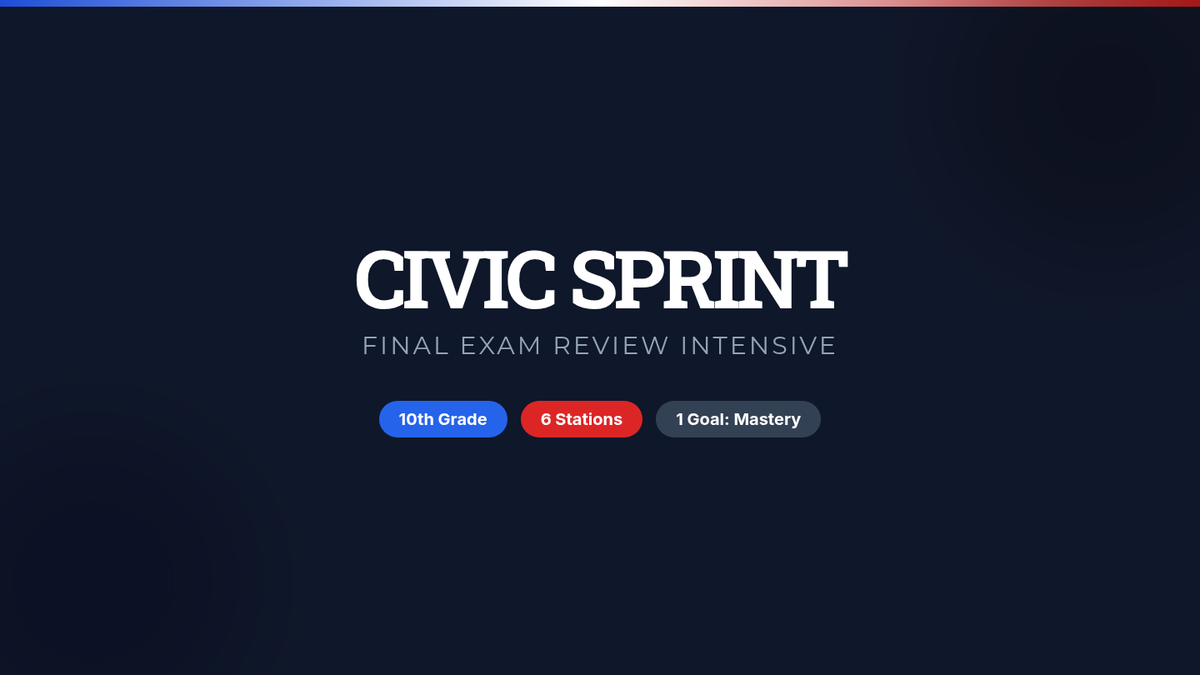
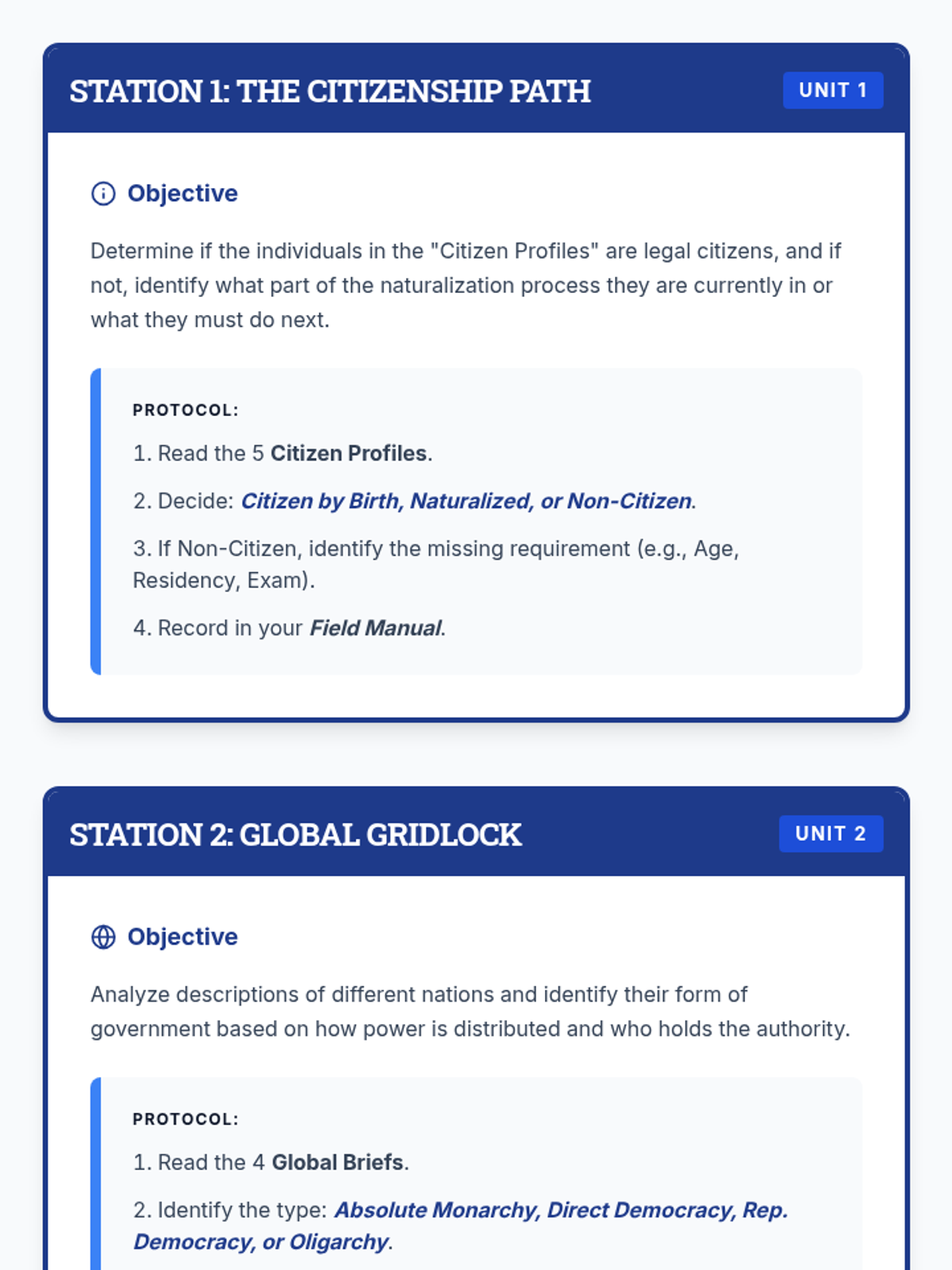
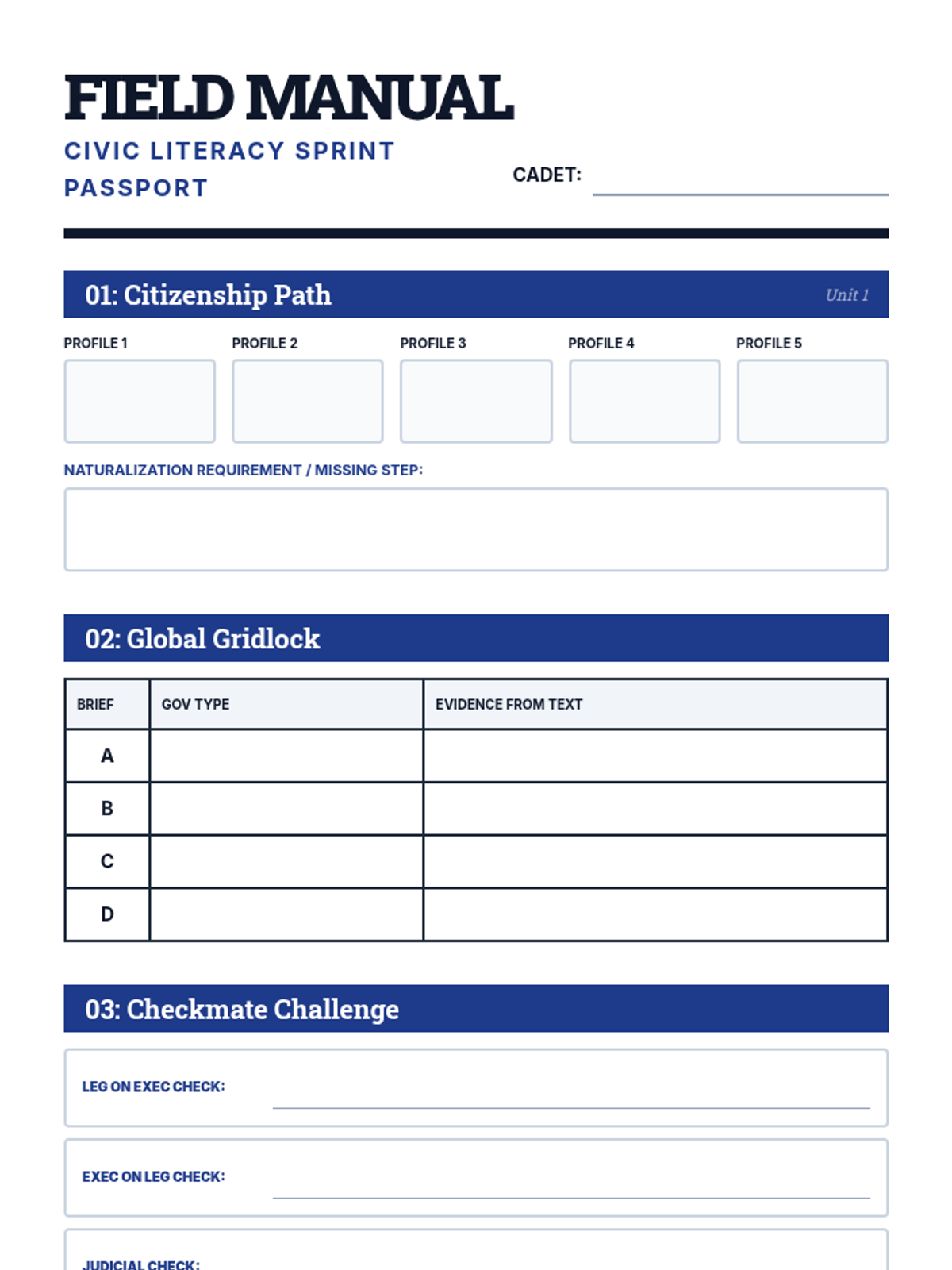
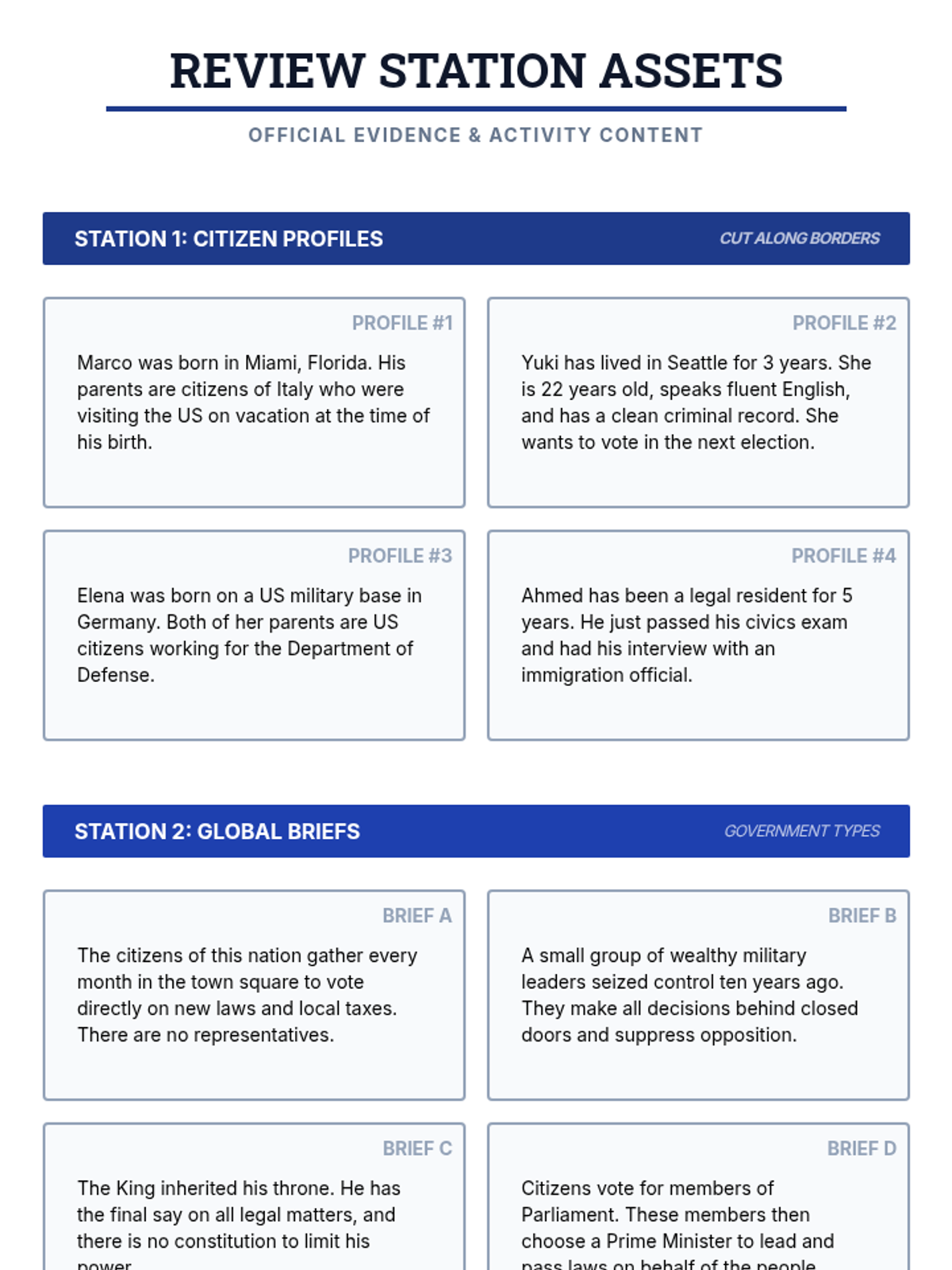
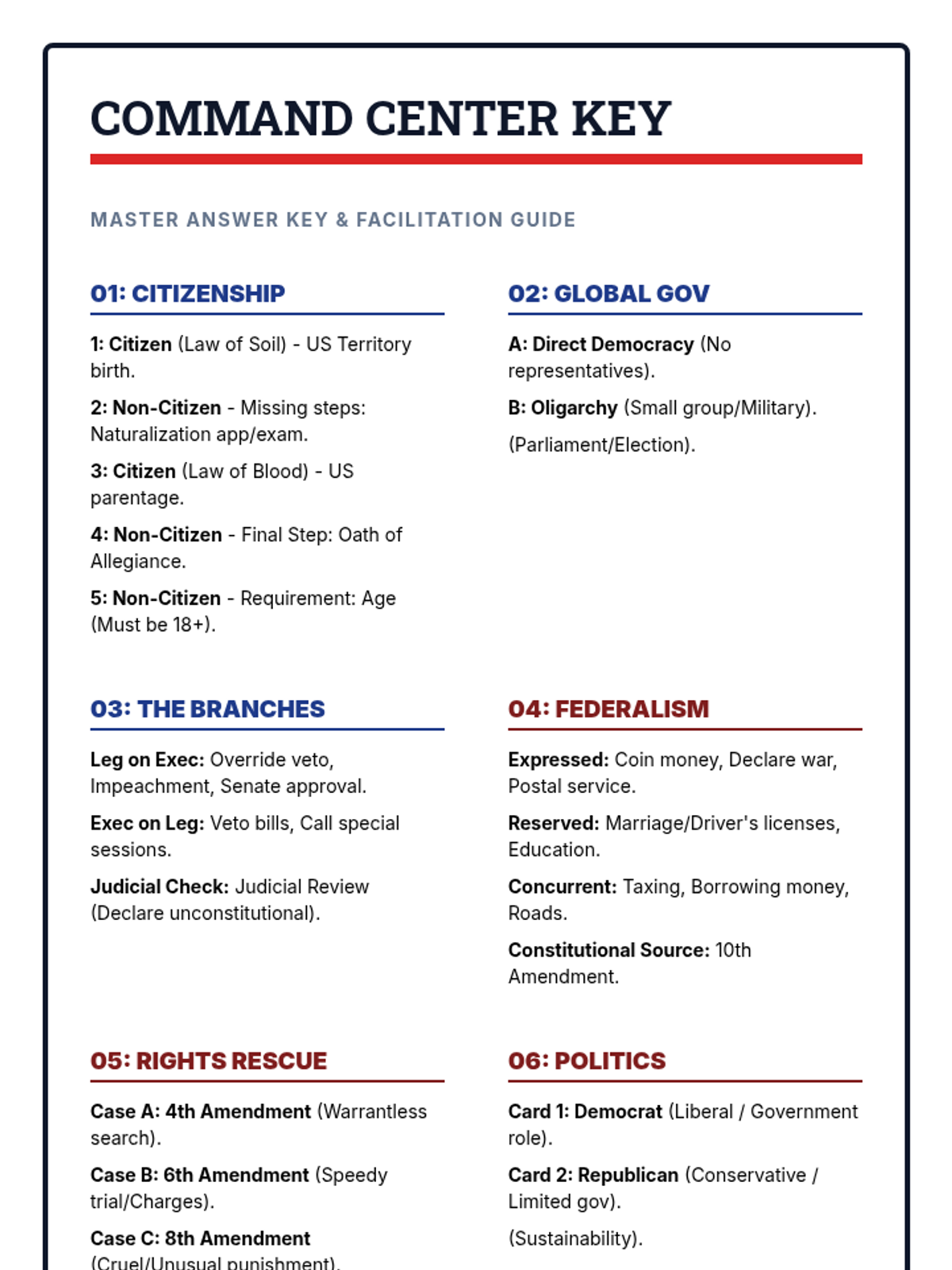
A high-energy, station-based review for the Civic Literacy Final Exam, covering key units from Citizenship to Political Parties. Students move through collaborative challenges to reinforce their understanding of government structure and civil rights.