A comprehensive lesson exploring the constitutional rights of individuals accused of crimes, focusing on the 4th, 5th, 6th, and 8th Amendments, due process, and landmark Supreme Court cases including Mapp, Gideon, and Miranda.
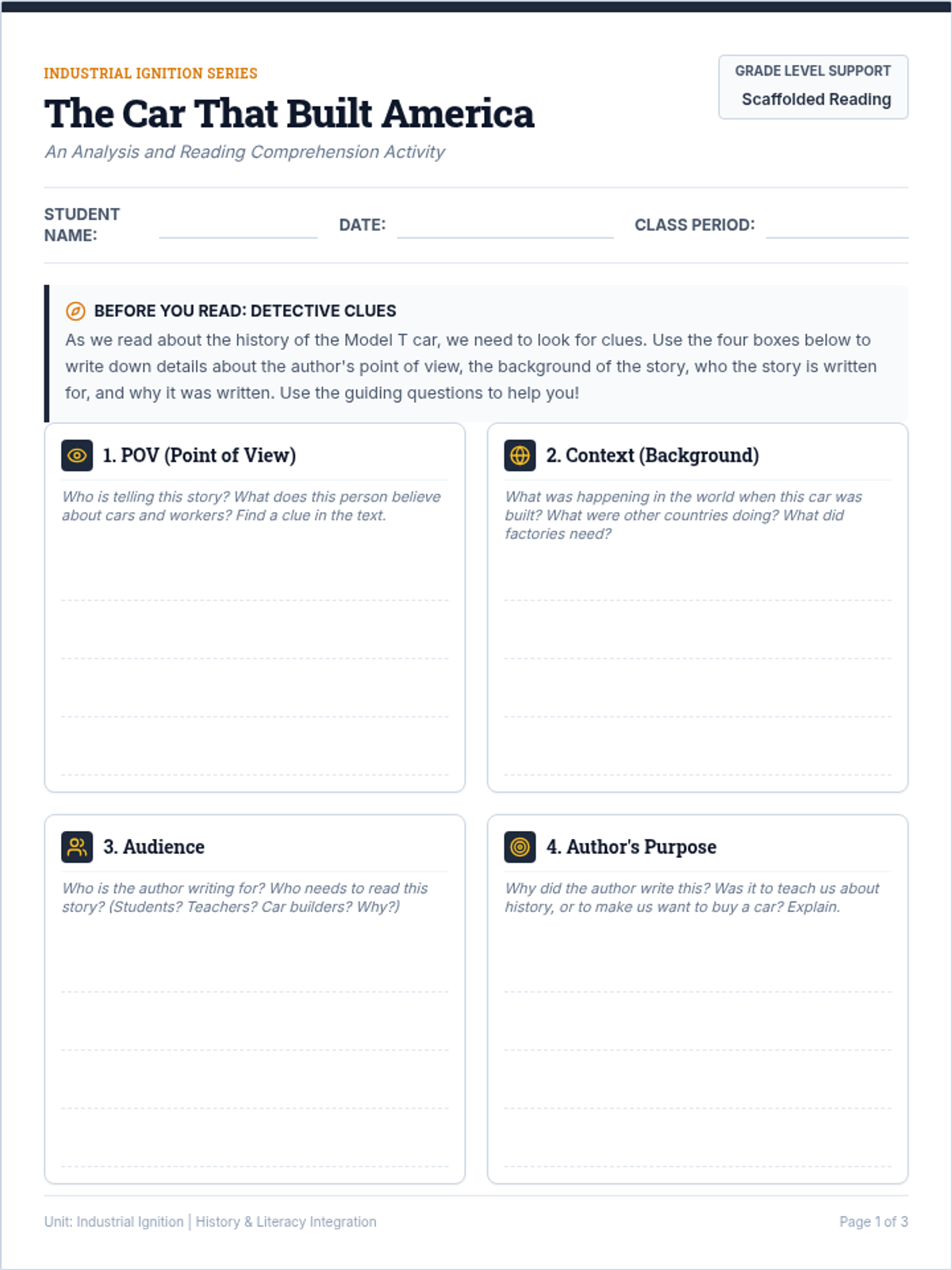
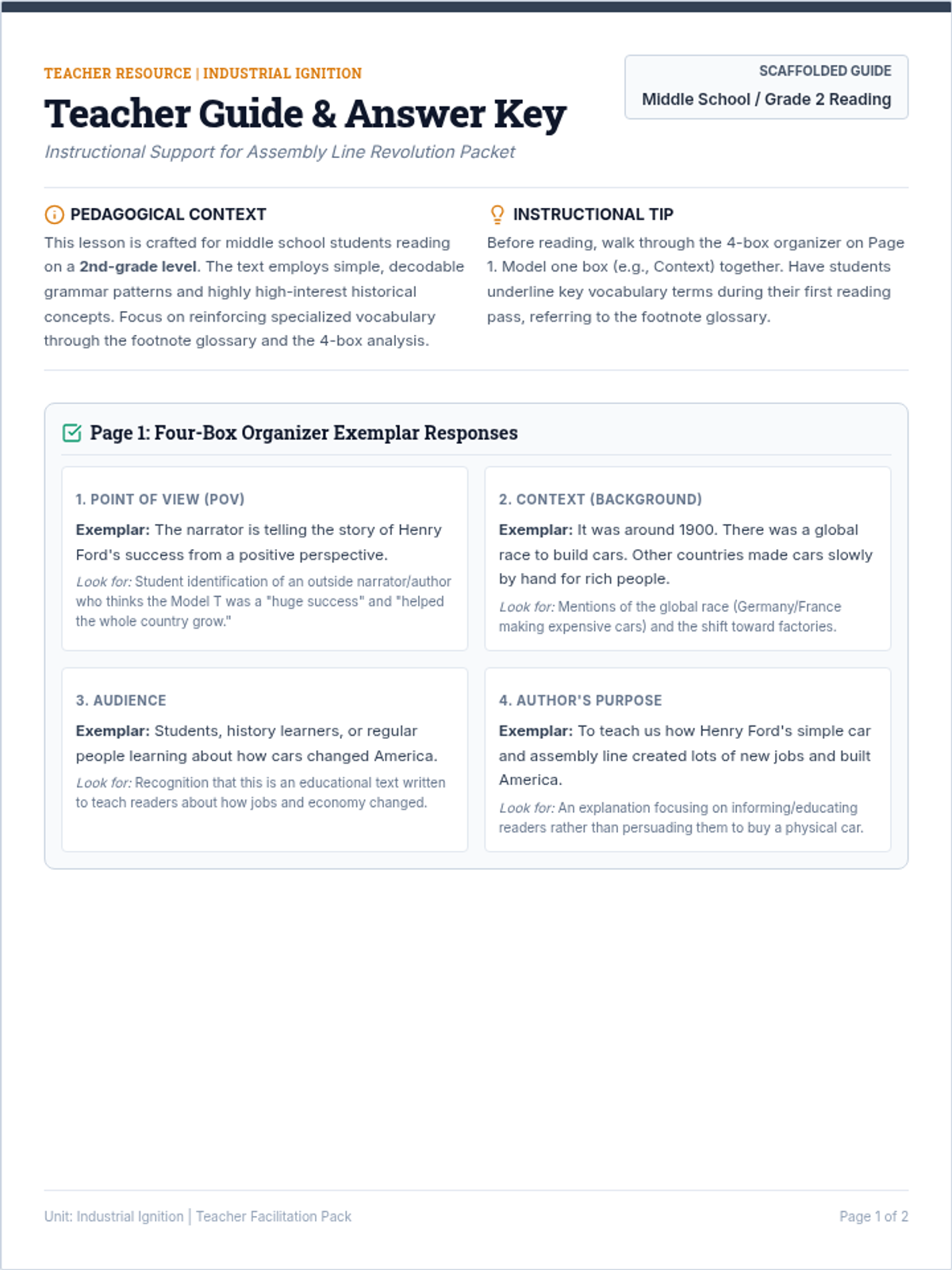
A history and reading comprehension lesson centered on how Henry Ford's Model T and industrial innovations transformed the American economy and labor market.
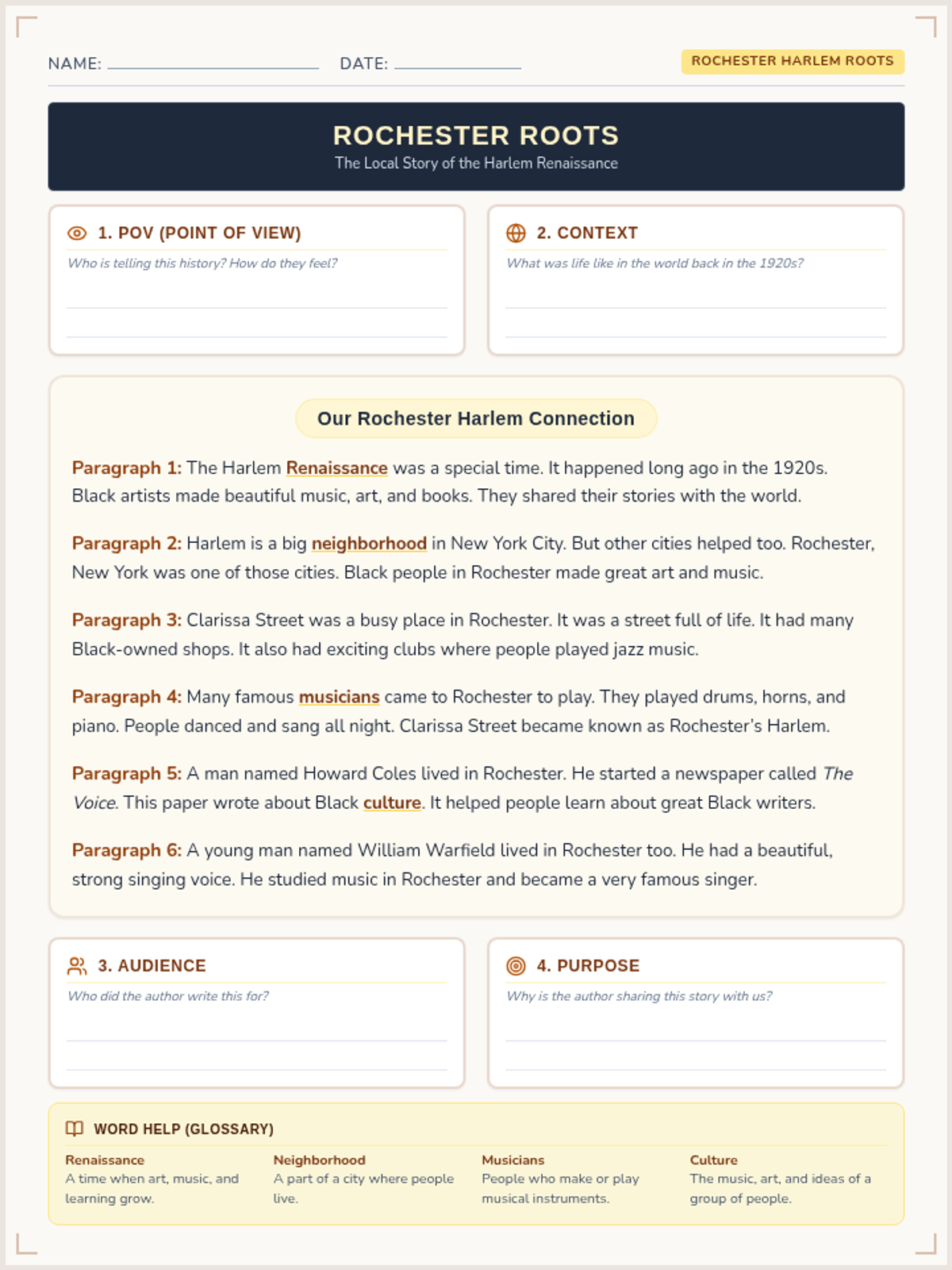
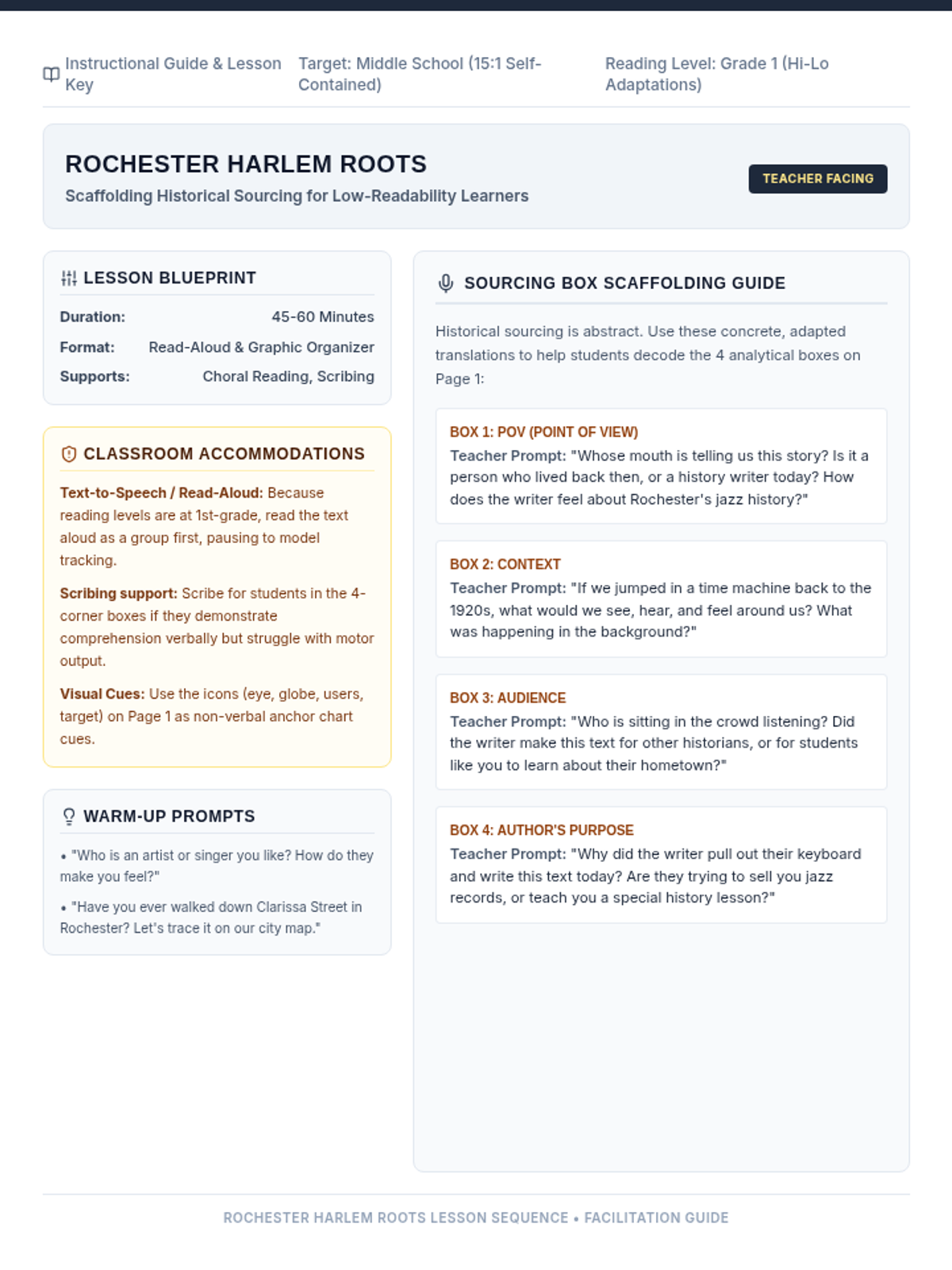
A specialized history and reading comprehension lesson focused on Rochester's local contributions to the Harlem Renaissance, designed with low-readability, high-interest content for middle schoolers reading at a first-grade level.
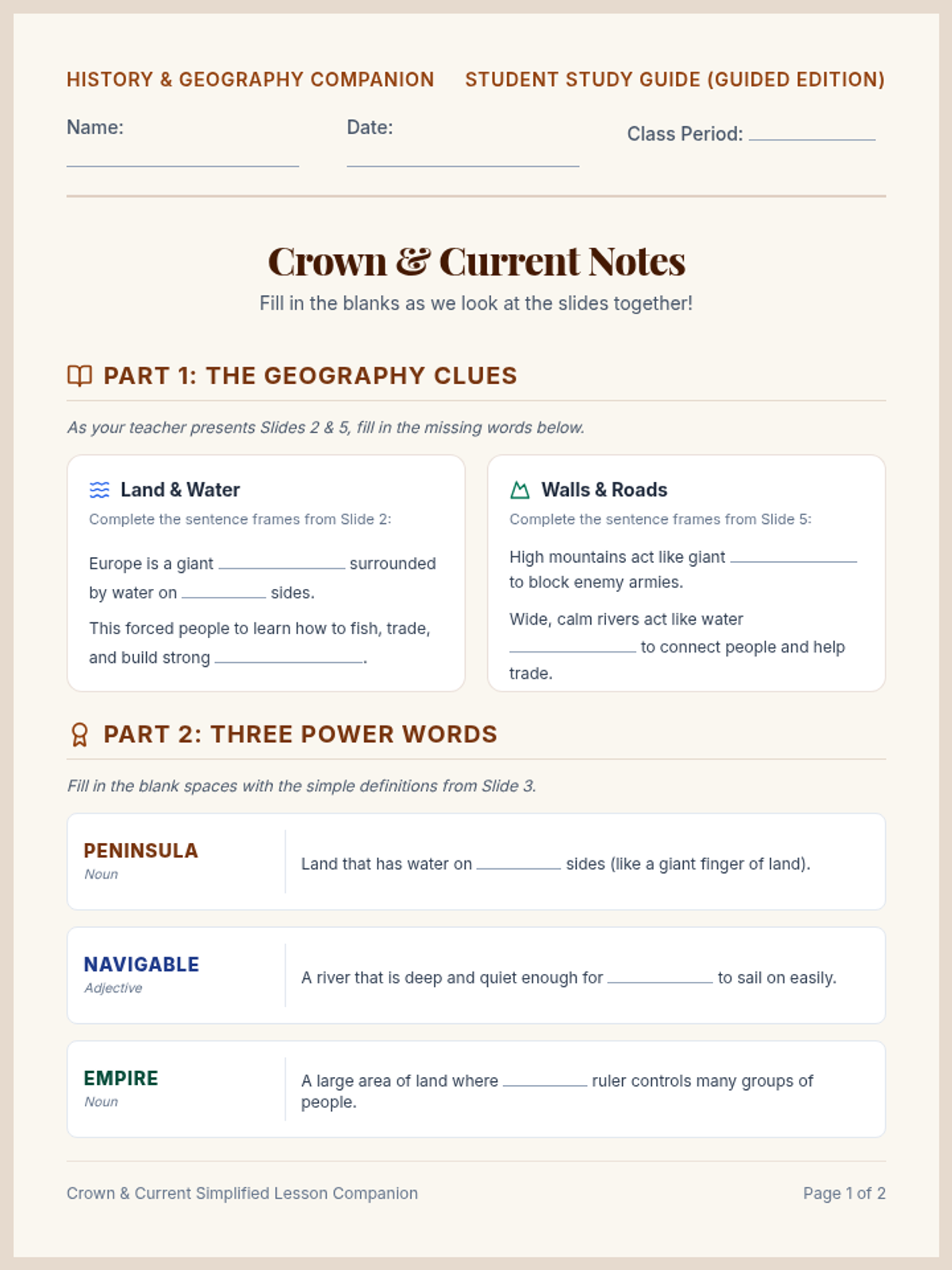
A lesson exploring the intersection of Europe's unique physical geography and its dramatic history, focusing on how barriers and natural highways shaped civilizations.
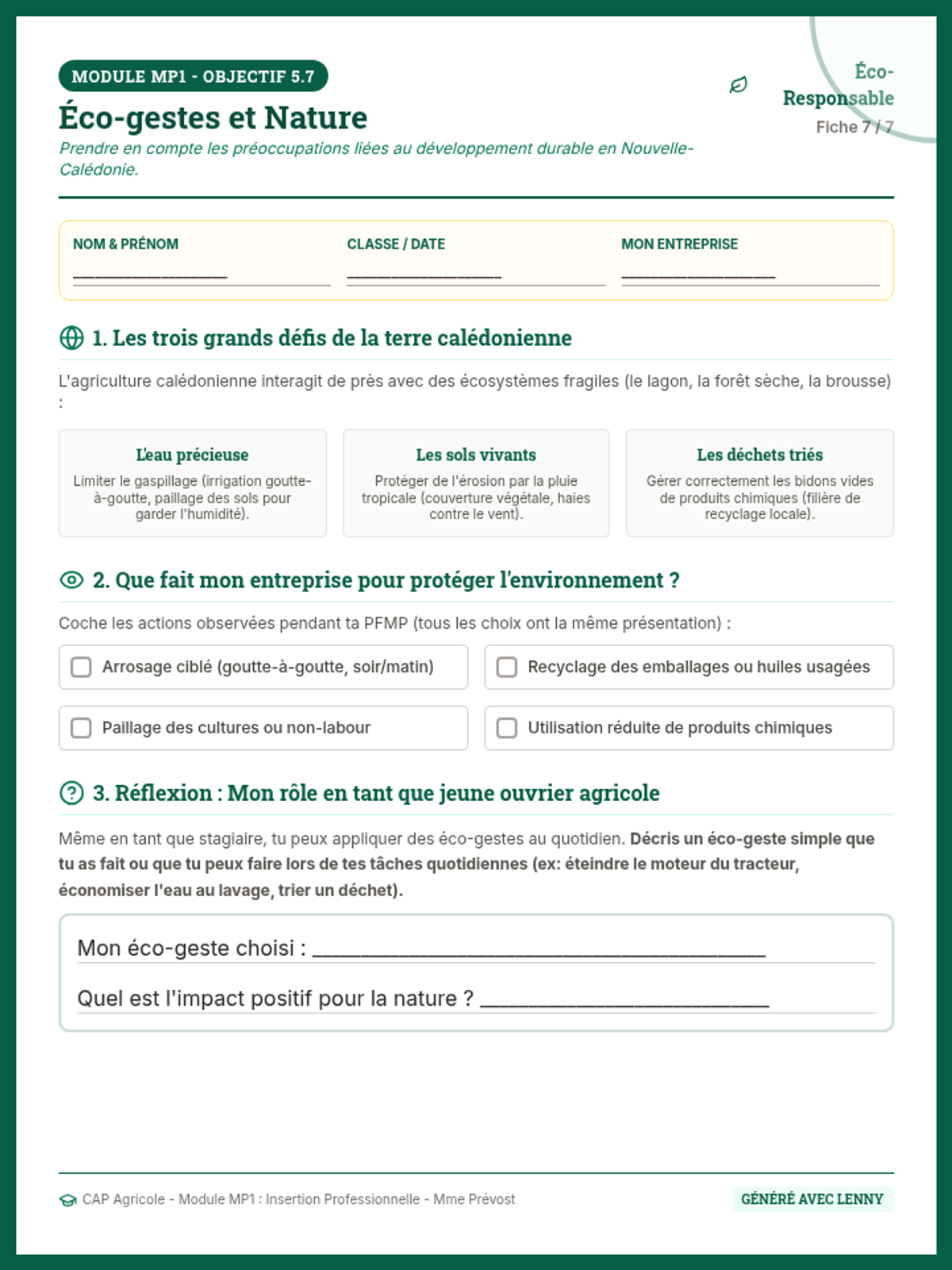
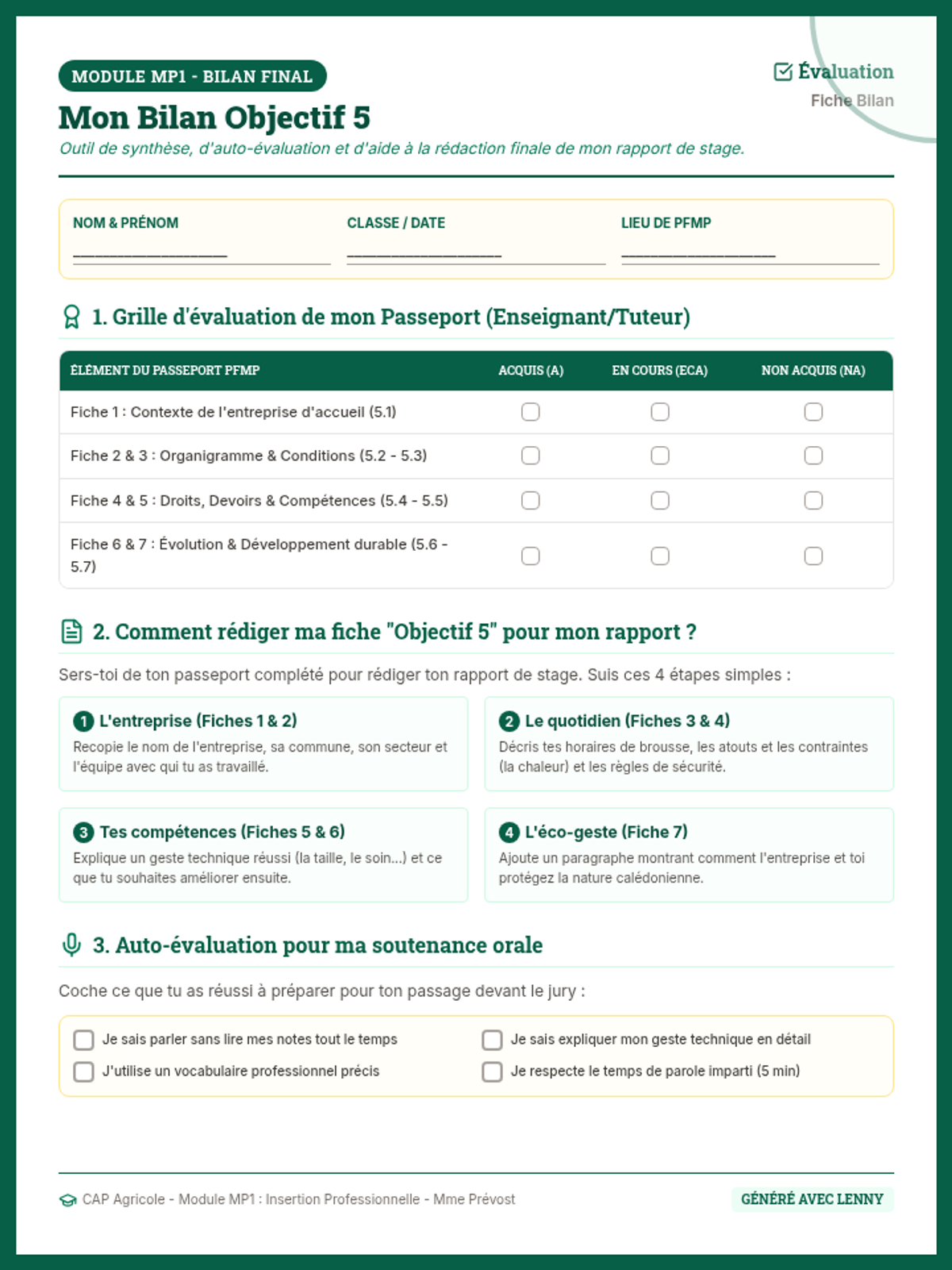
Session 7 du passeport PFMP. Les élèves découvrent comment l'agriculture calédonienne s'adapte aux préoccupations environnementales océaniennes (sol, eau, biodiversité, déchets).
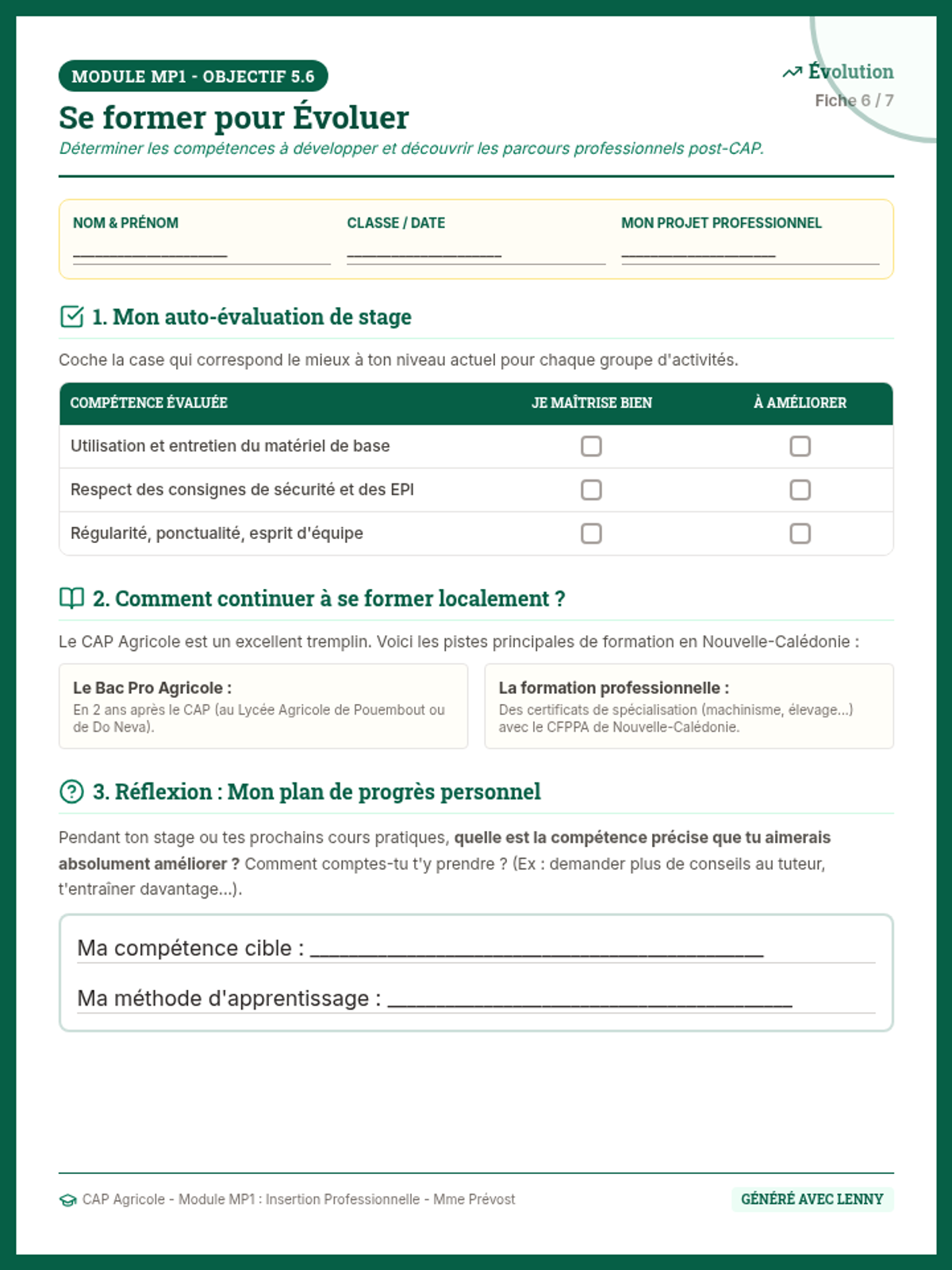
Session 6 du passeport PFMP. Les élèves réfléchissent aux compétences qu'ils aimeraient développer ou améliorer et découvrent les perspectives de formation et d'évolution de carrière.
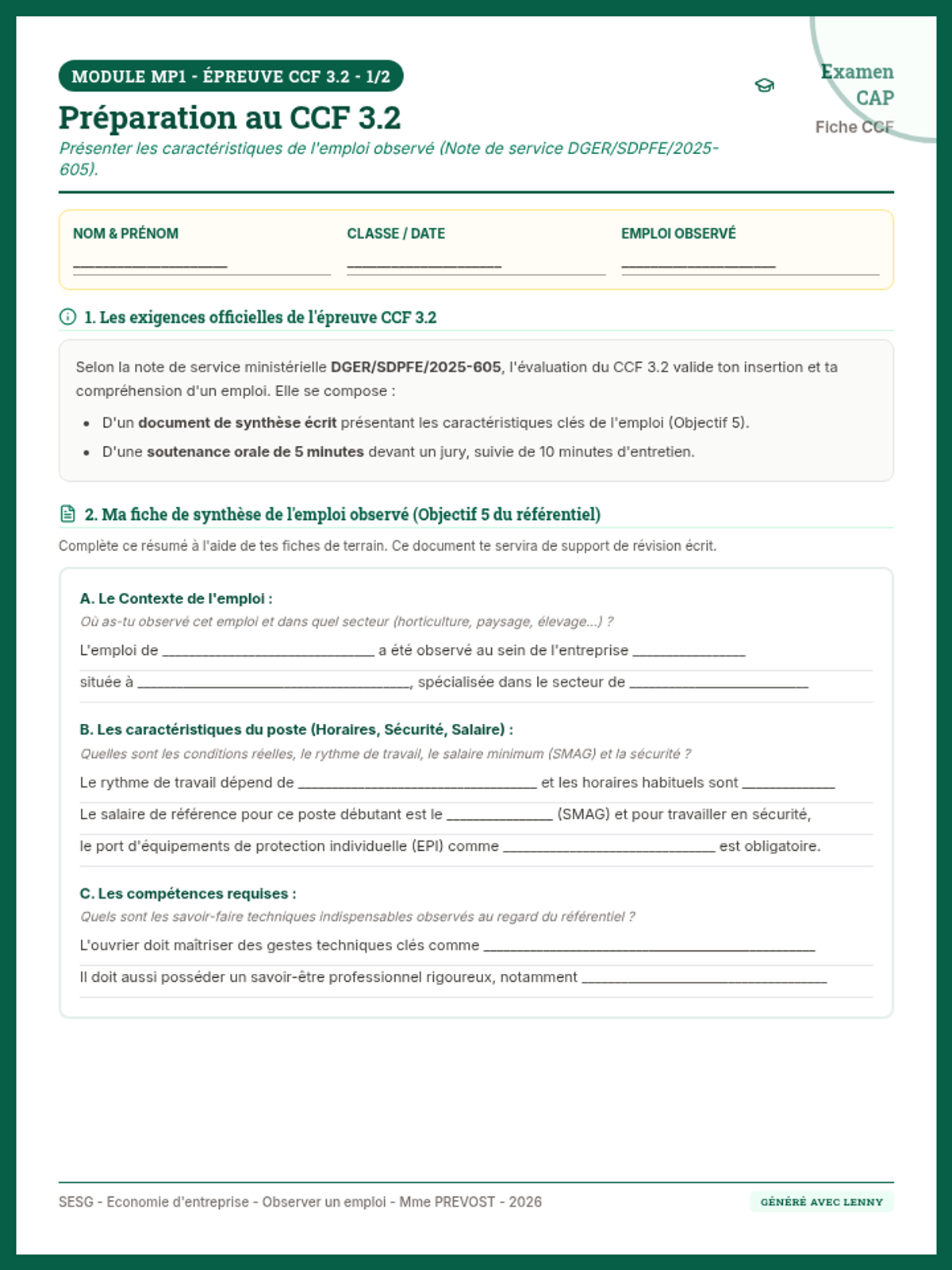
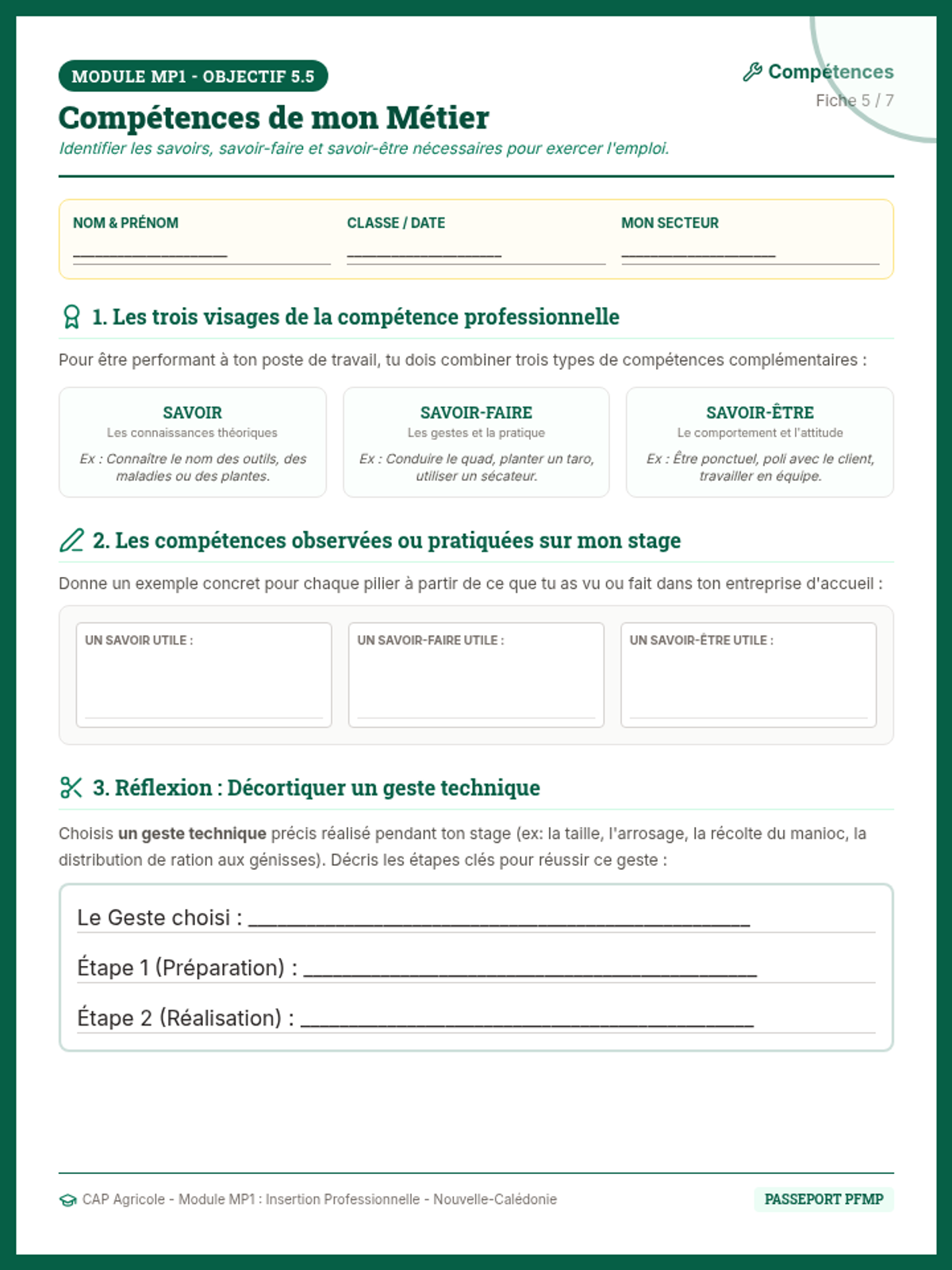
Session 5 du passeport PFMP. Les élèves découvrent et identifient les compétences requises (savoirs, savoir-faire techniques, savoir-être) pour exercer l'emploi observé.
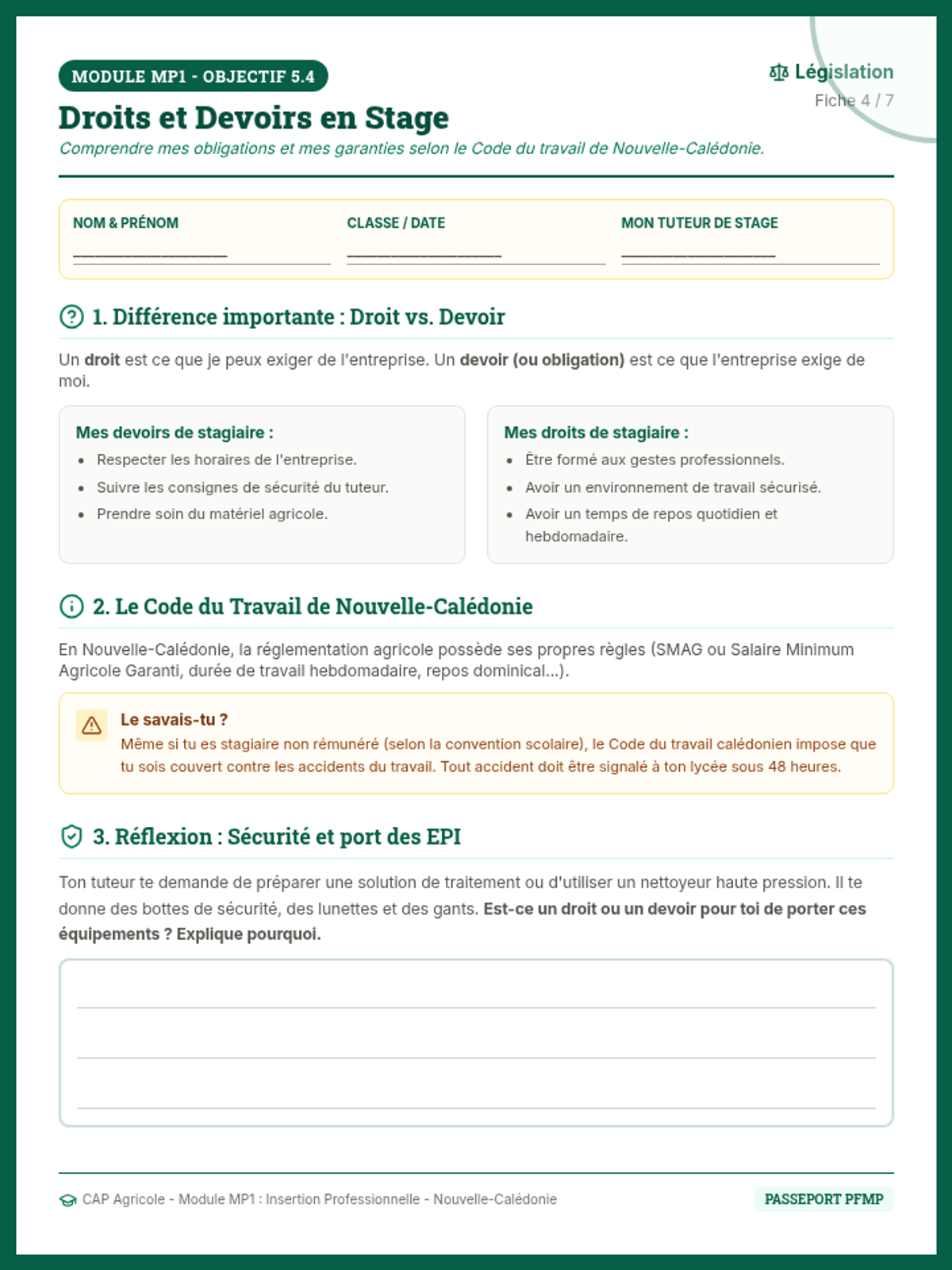
Session 4 du passeport PFMP. Les élèves découvrent les droits, les devoirs du salarié et du stagiaire, ainsi que les règles du Code du travail de Nouvelle-Calédonie et la sécurité.
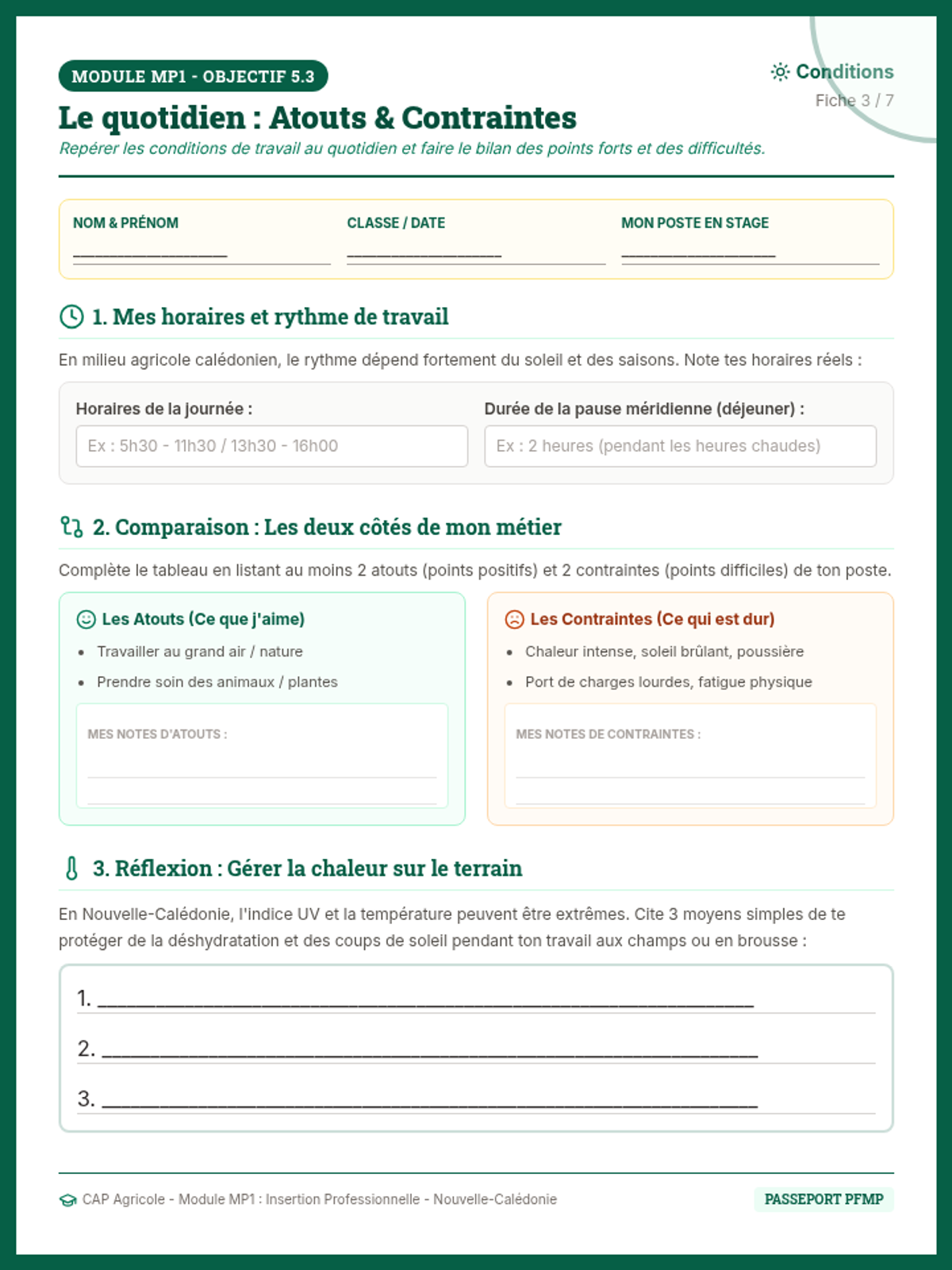
Session 3 du passeport PFMP. Les élèves apprennent à identifier les conditions réelles de travail, à analyser les contraintes d'un poste agricole et à apprécier ses atouts.
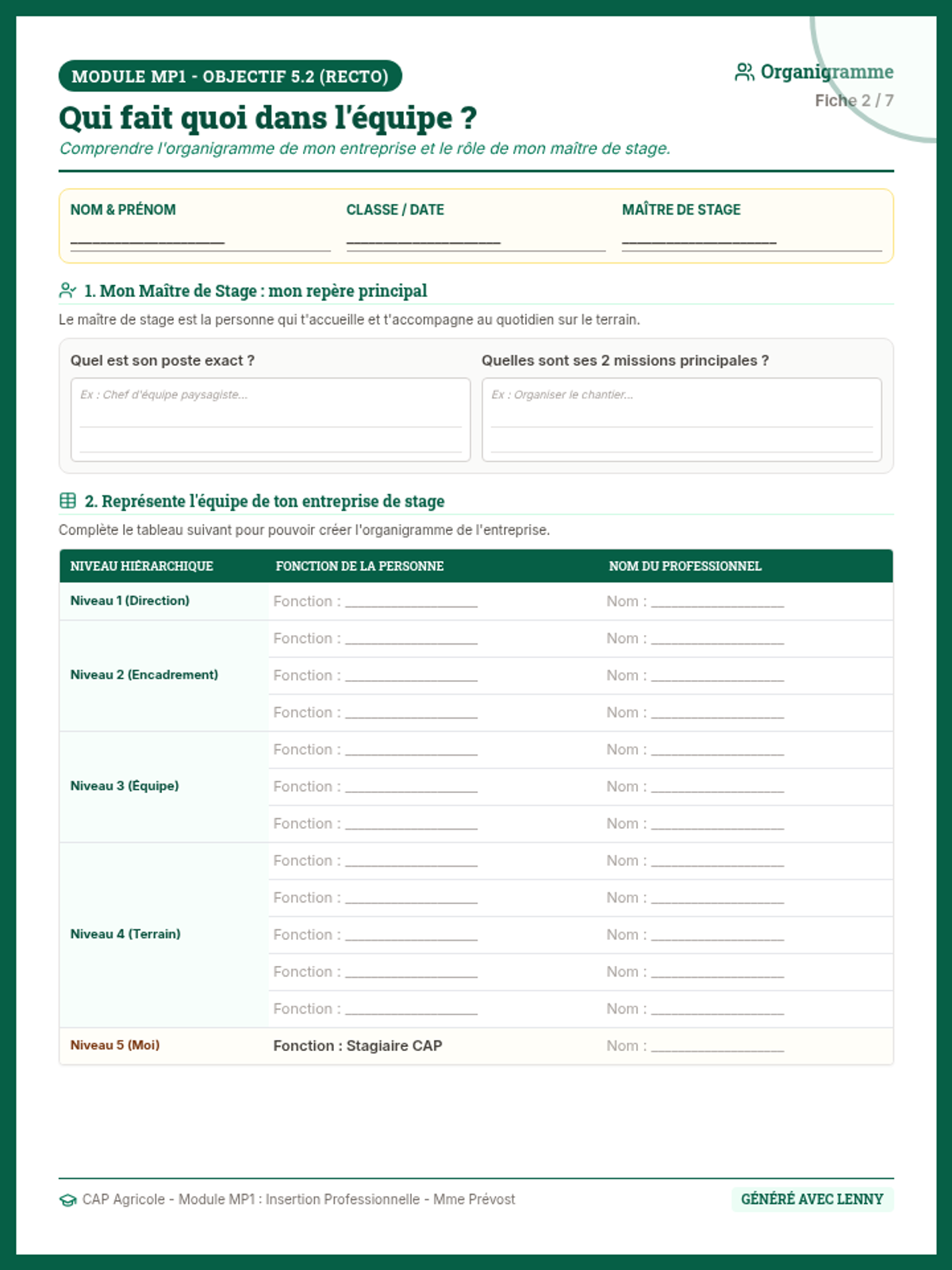
Session 2 du passeport PFMP. Les élèves apprennent à identifier l'organigramme de l'entreprise, à repérer leur maître de stage et à comprendre les fonctions et attributions de chaque salarié.
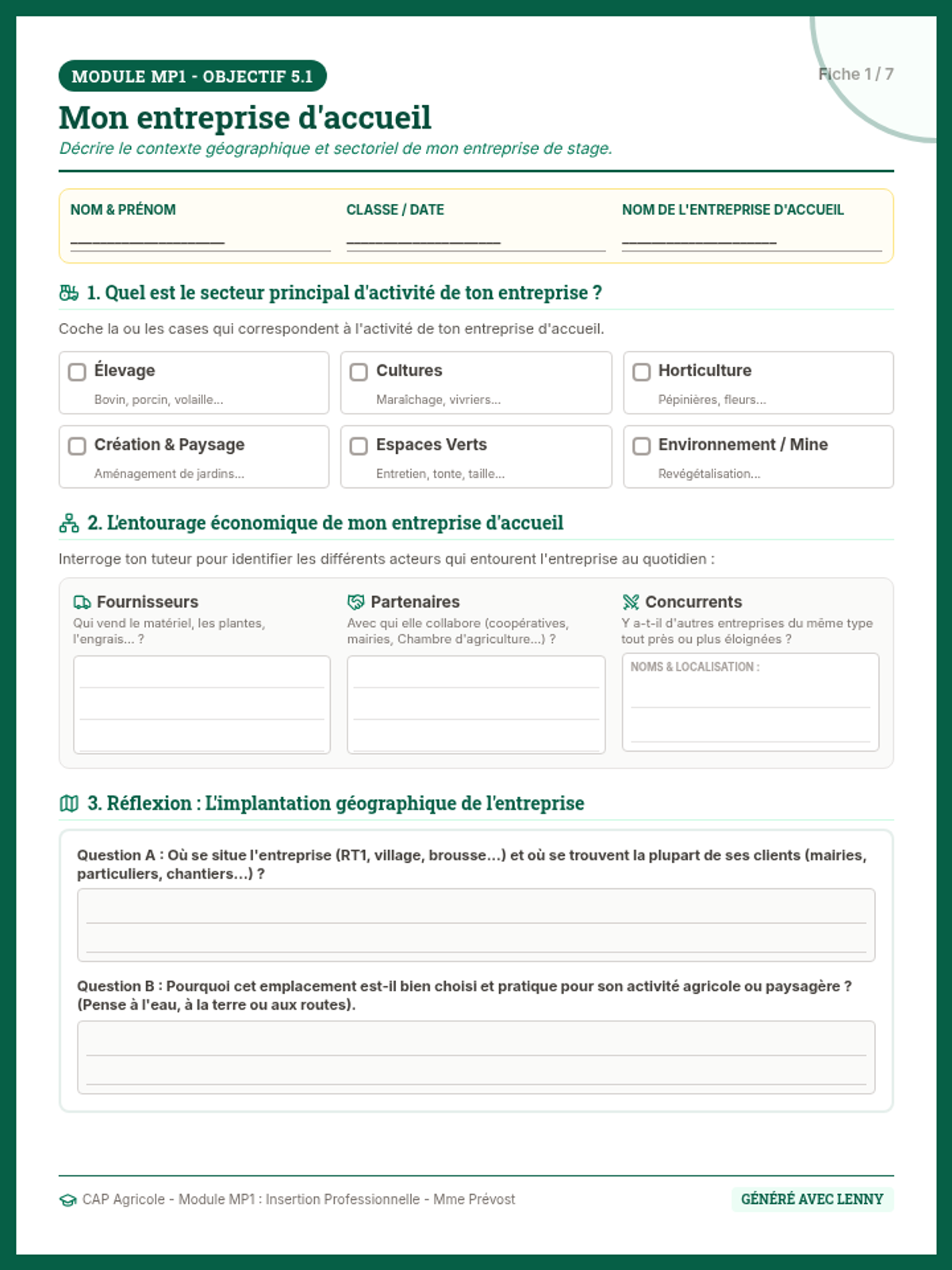
Session 1 du passeport PFMP. Les élèves apprennent à identifier et à décrire le contexte géographique, sectoriel et juridique de leur entreprise d'accueil en Nouvelle-Calédonie.
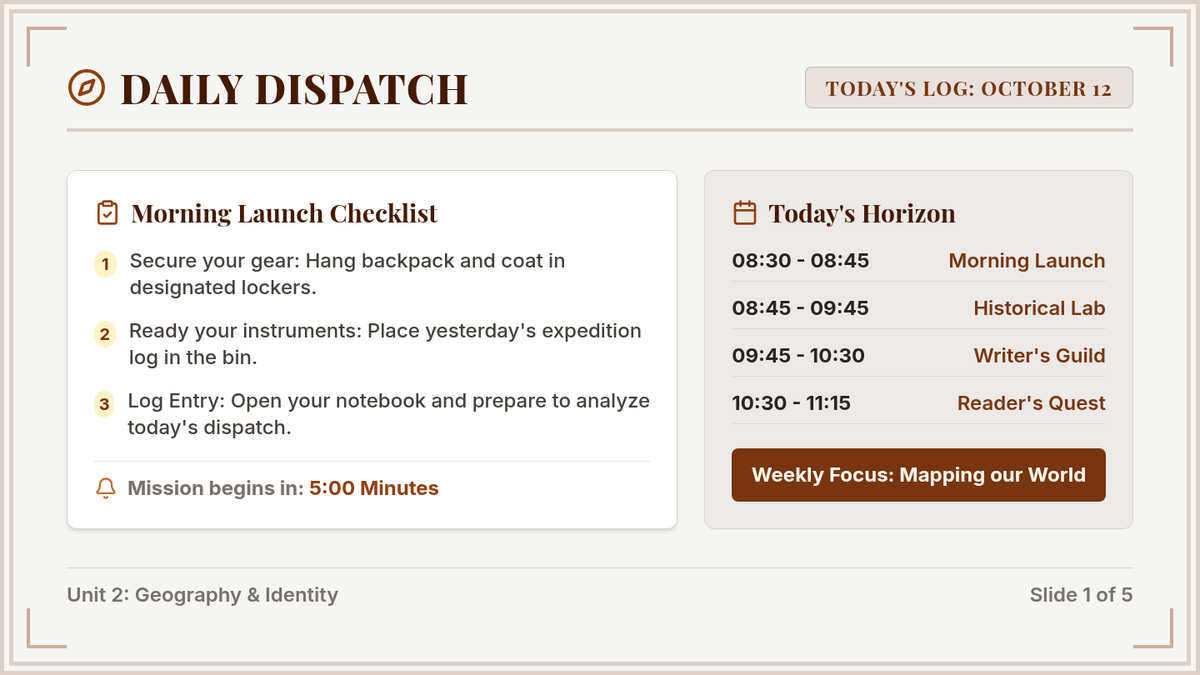
A cohesive morning routine framework designed to engage students immediately upon entering the classroom. This lesson integrates daily administrative templates with historical quote analysis, map literacy, and current events discussions to prime students' minds for social studies learning.
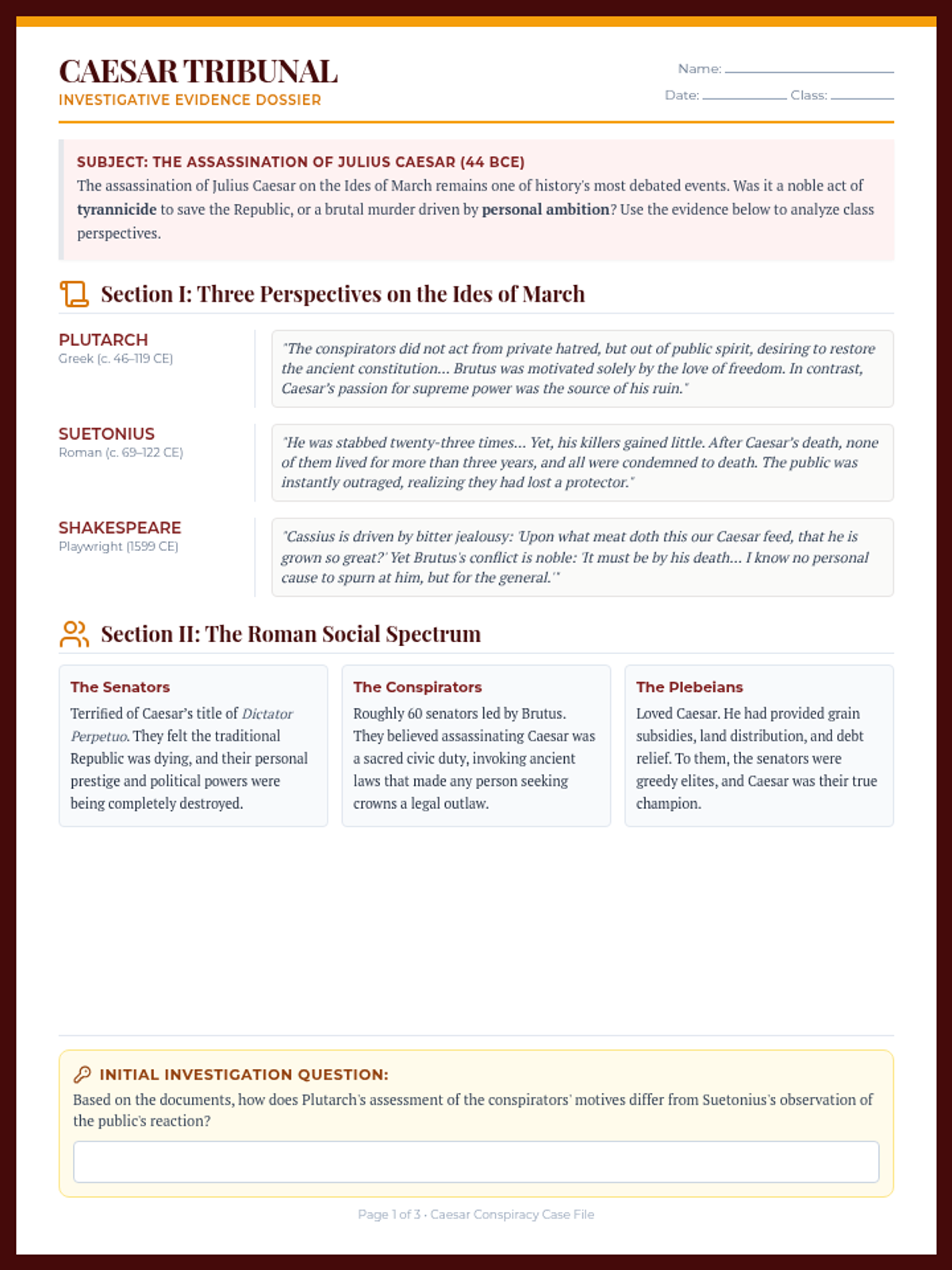
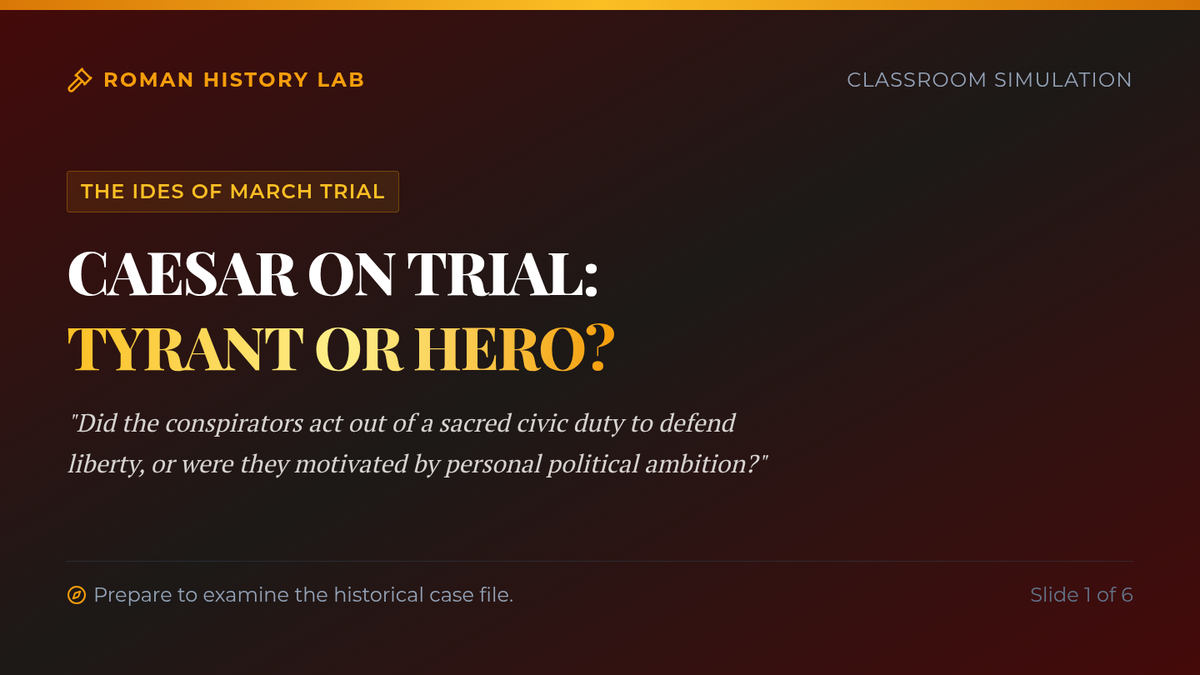
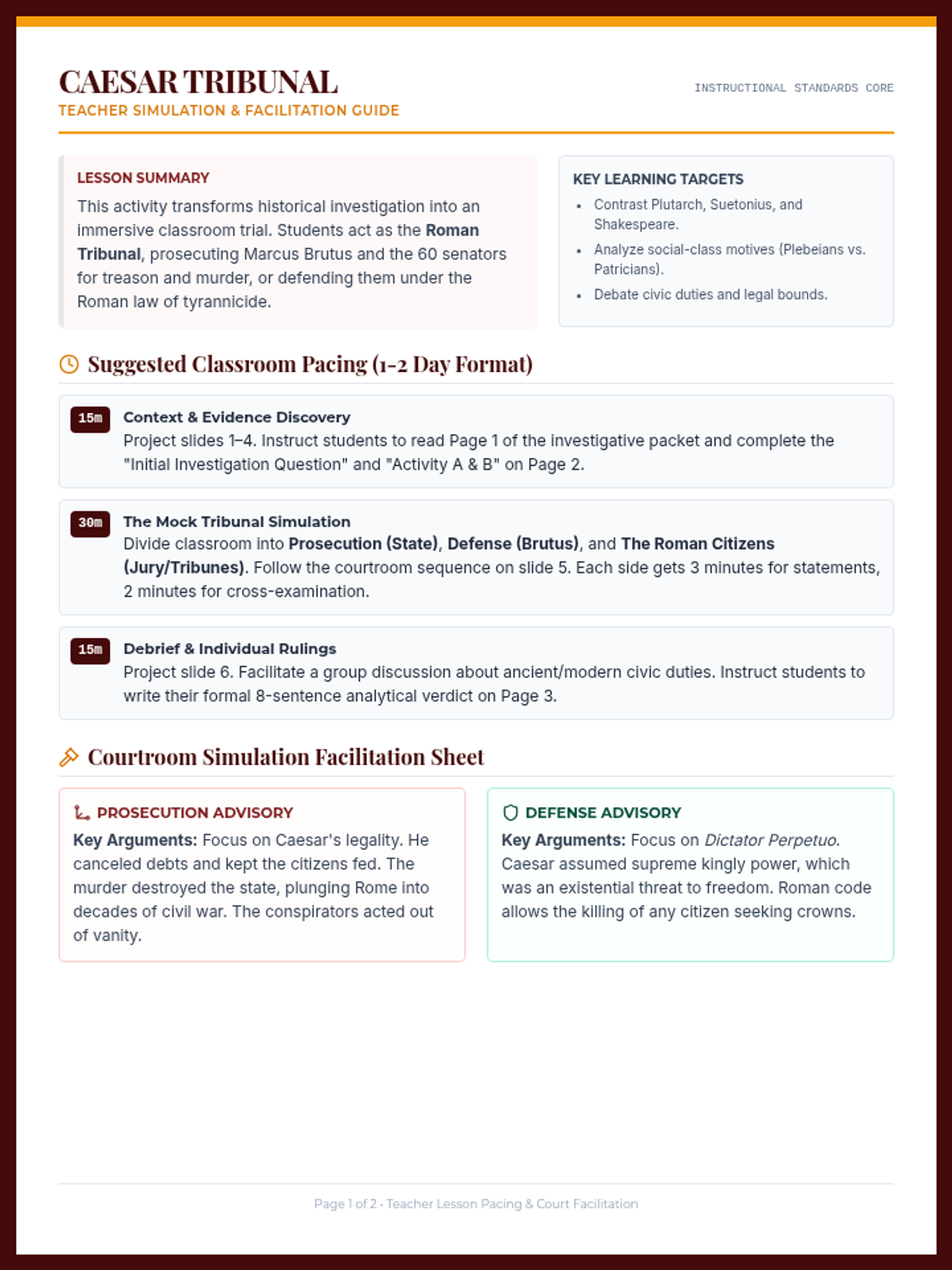
A comprehensive classroom simulation and analysis lesson about the assassination of Julius Caesar. Students examine historical perspectives, engage with primary sources, and debate civic duty through a mock trial and a three-page investigative document.
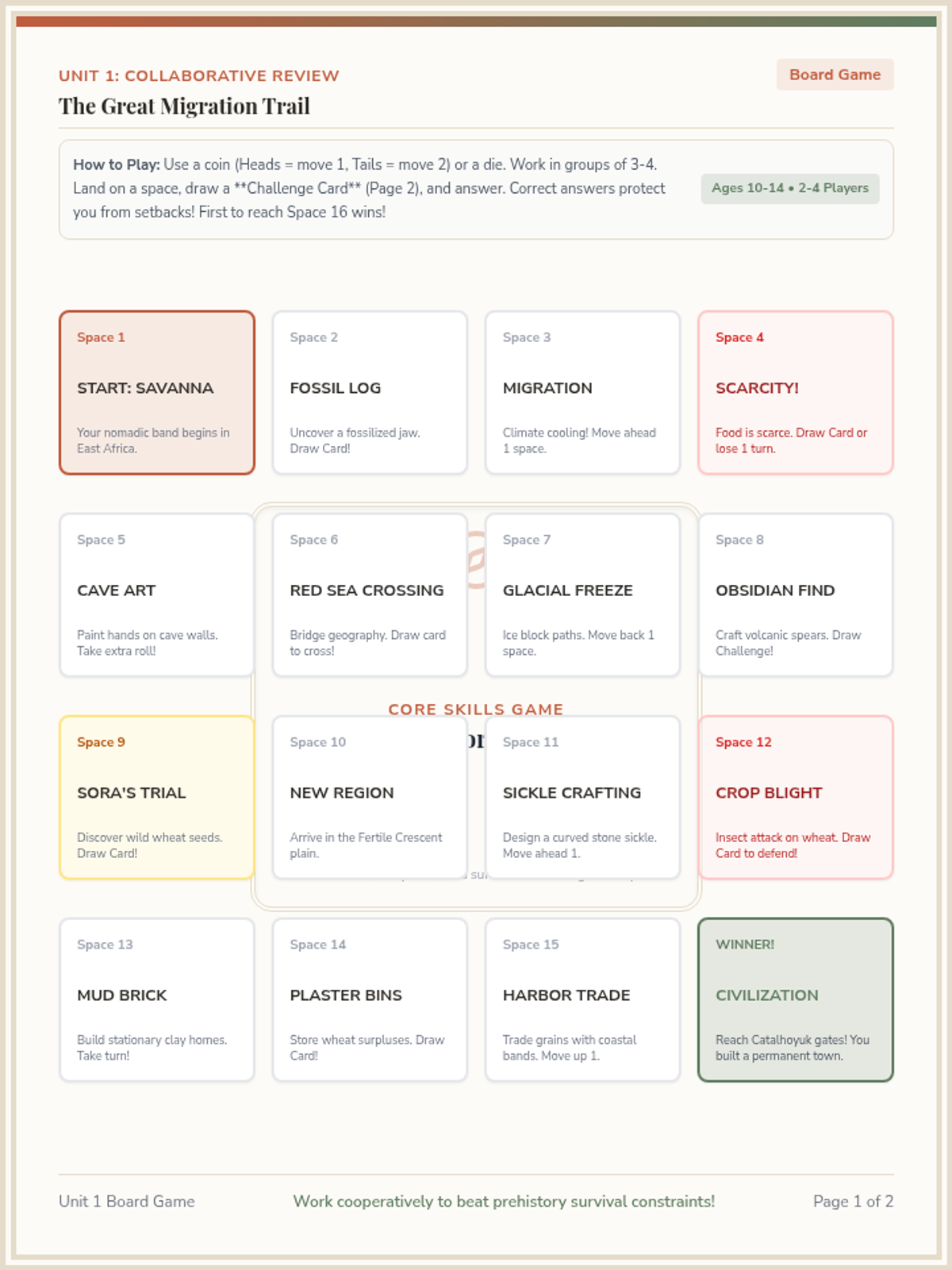
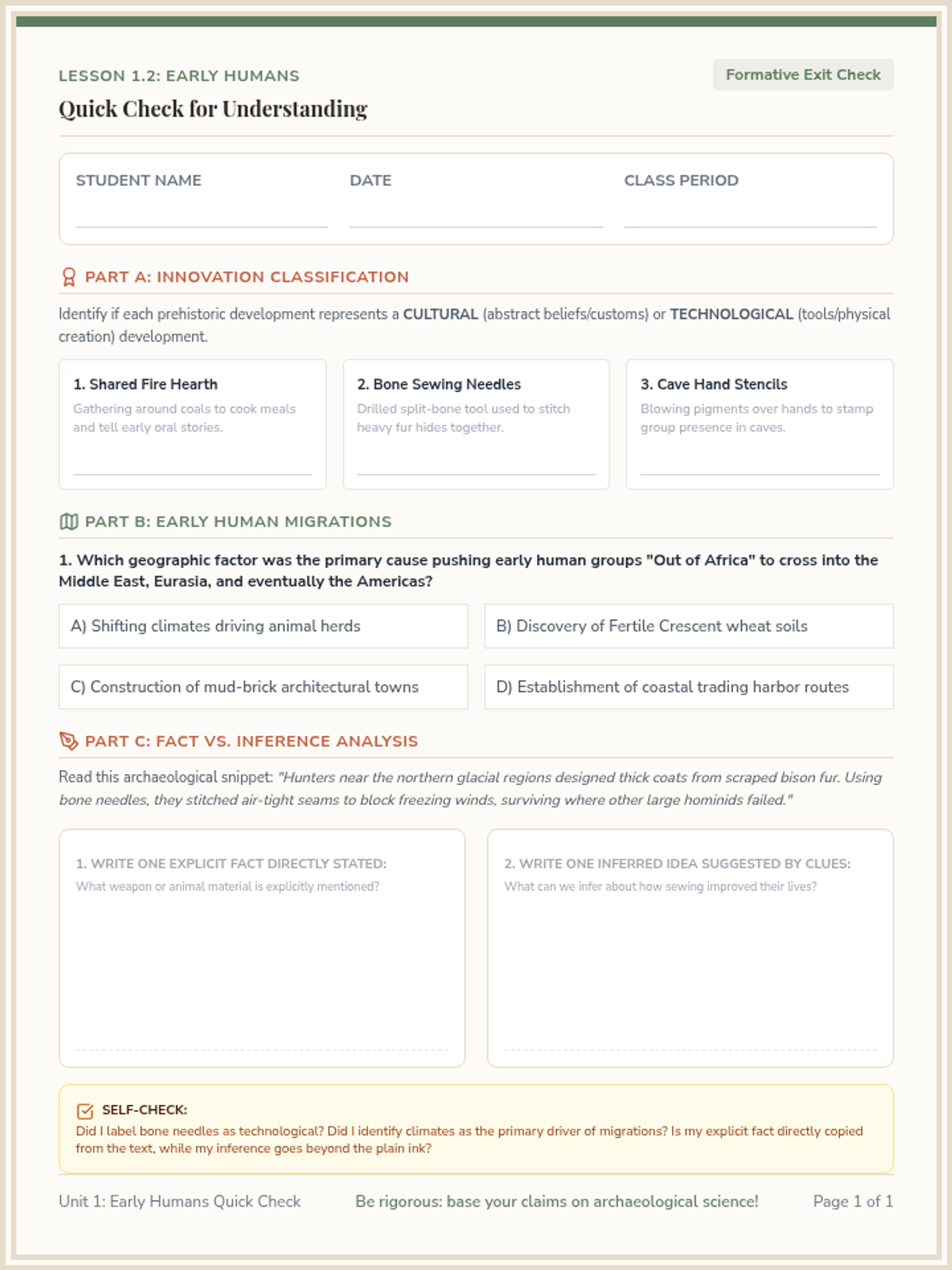
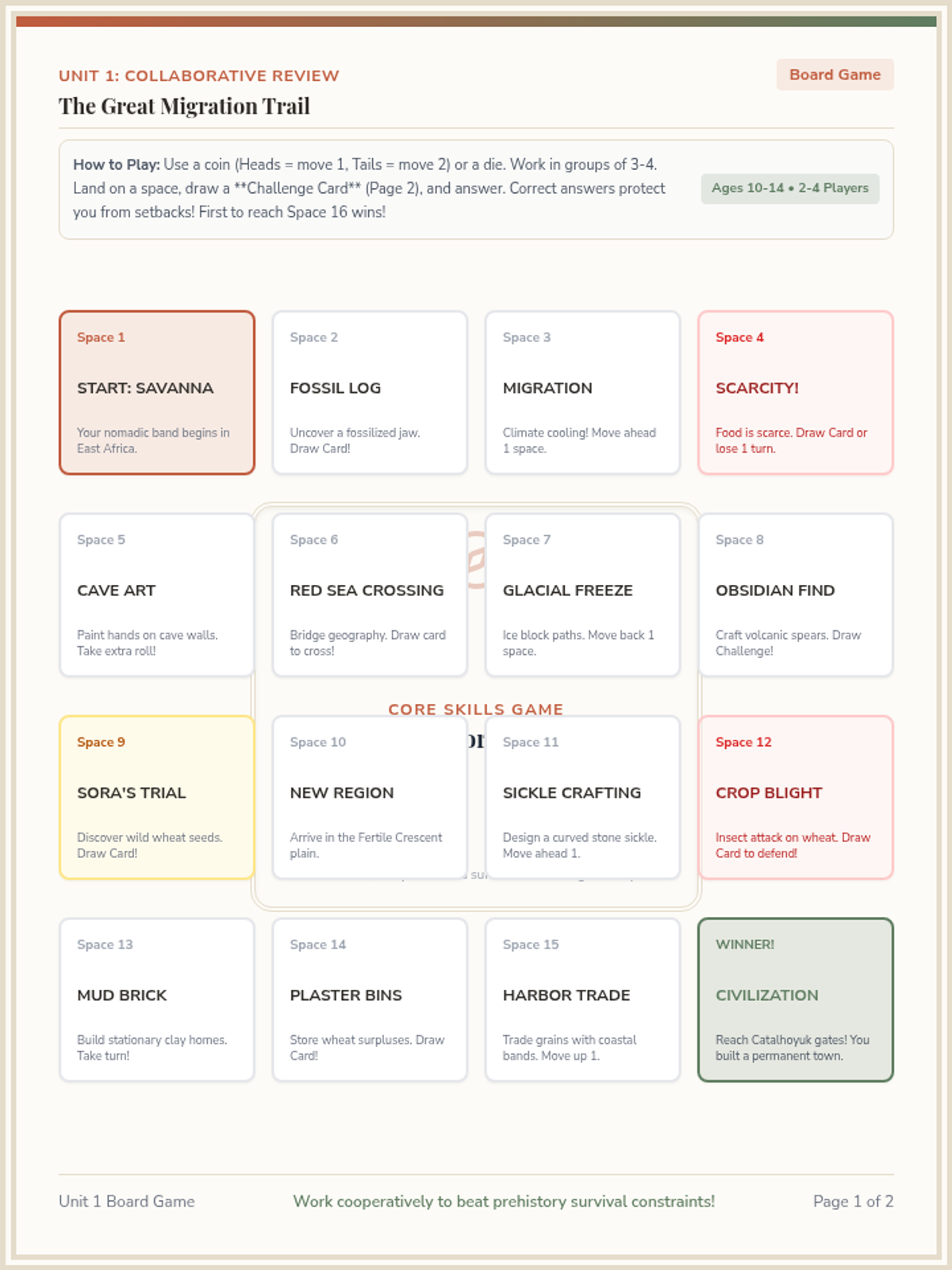
An intermediate lesson examining how early humans migrated out of Africa, adapted to different global climates, and used cultural and technological innovations to improve their lives.
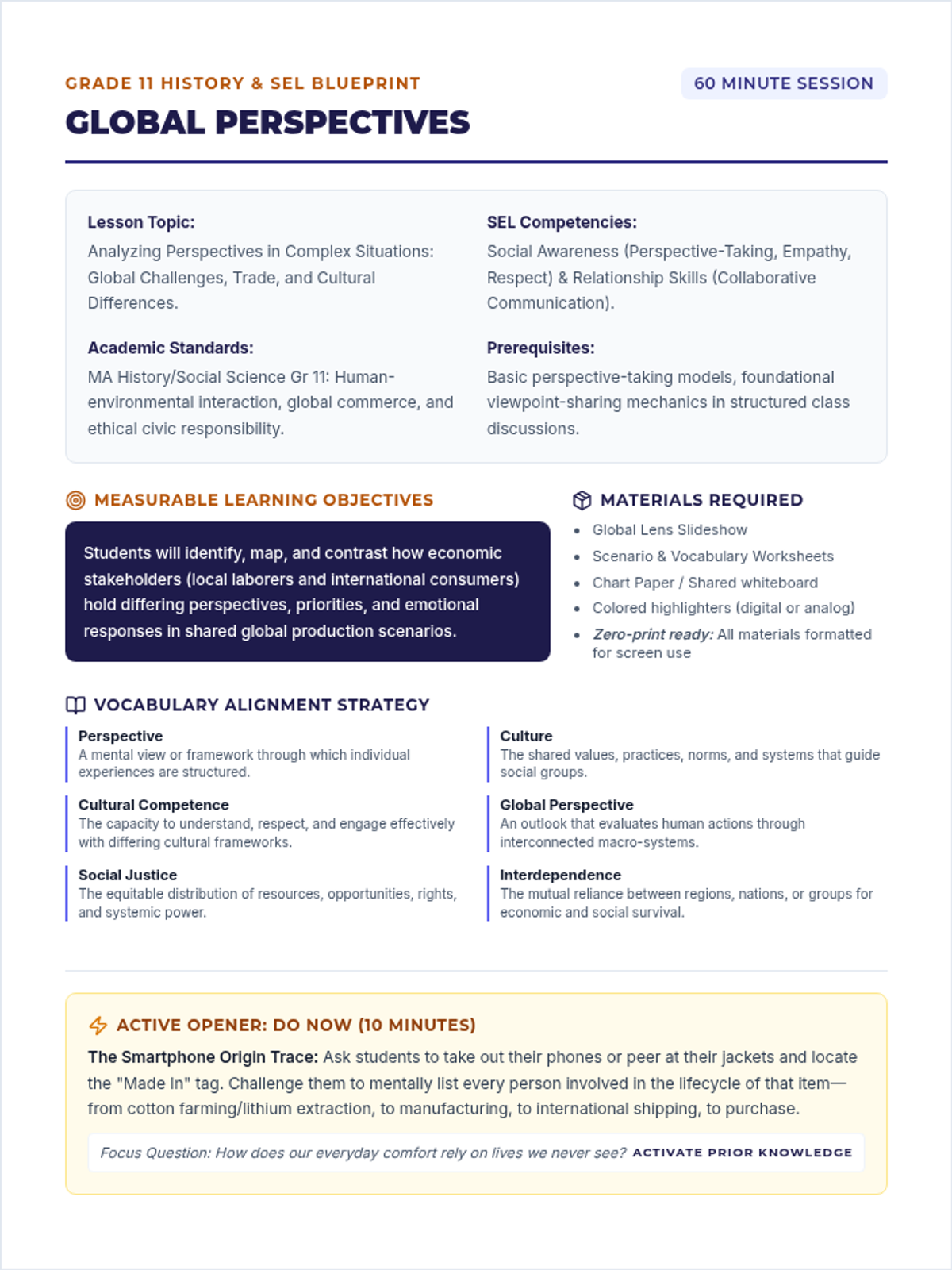
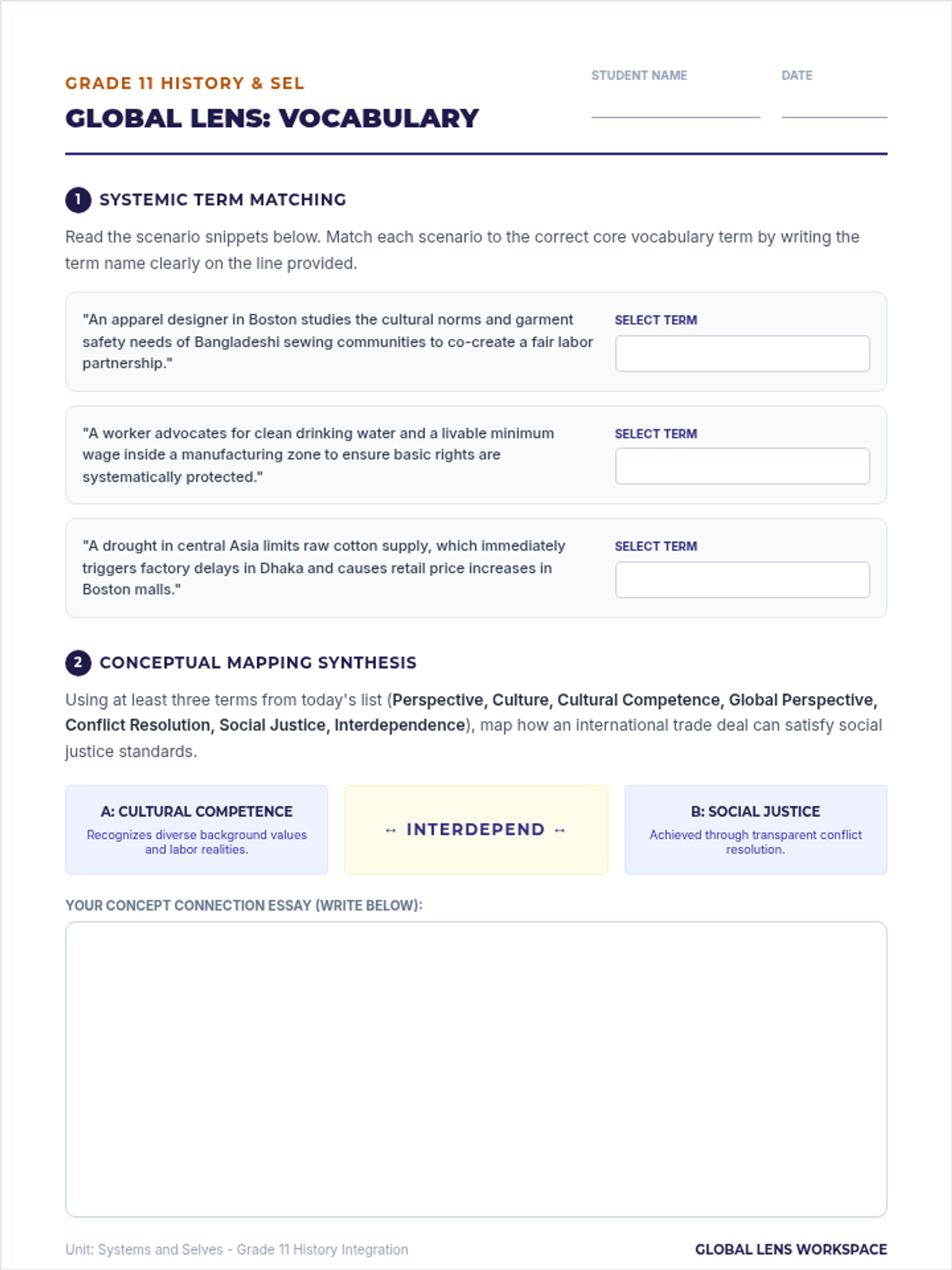
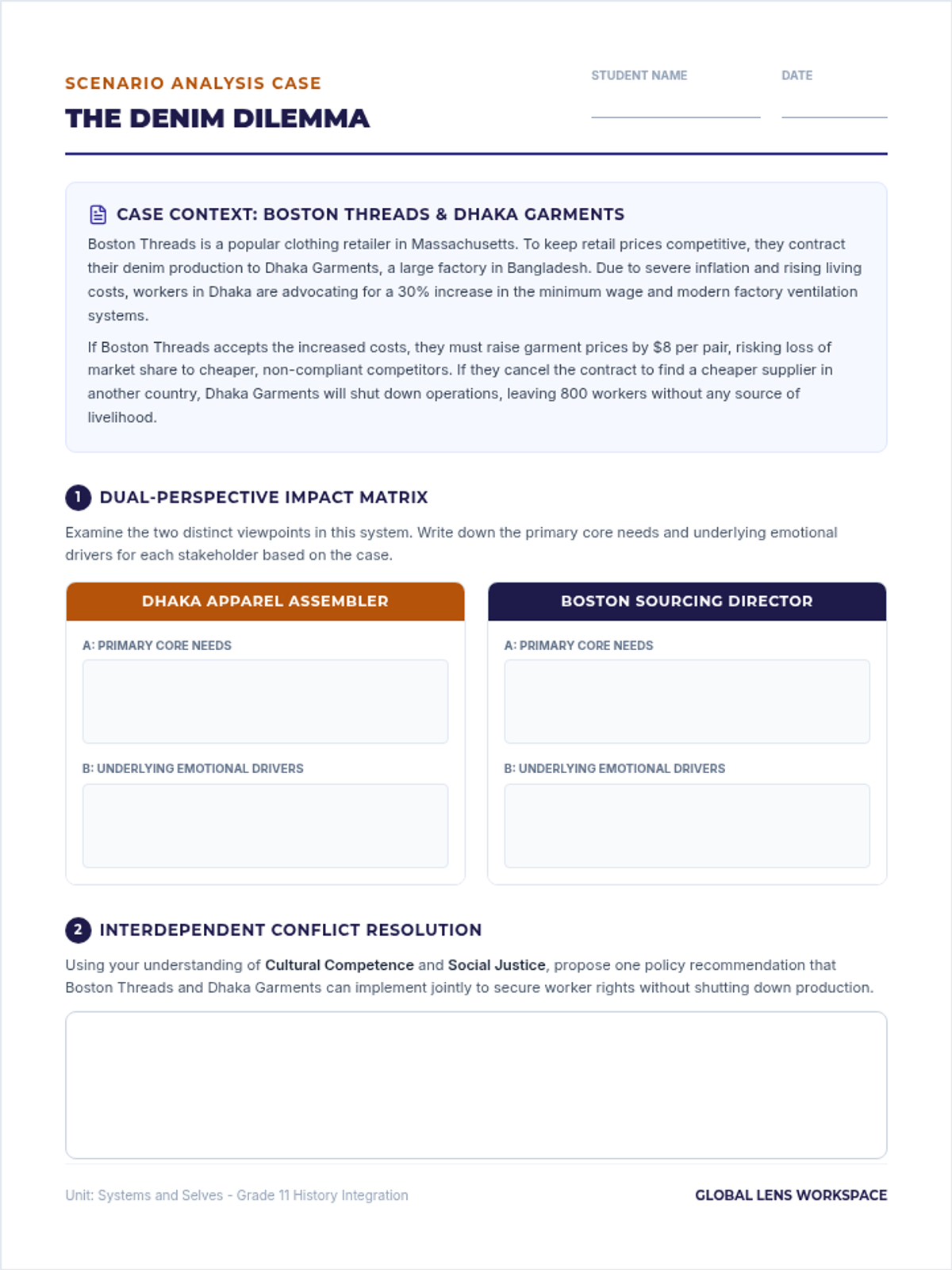
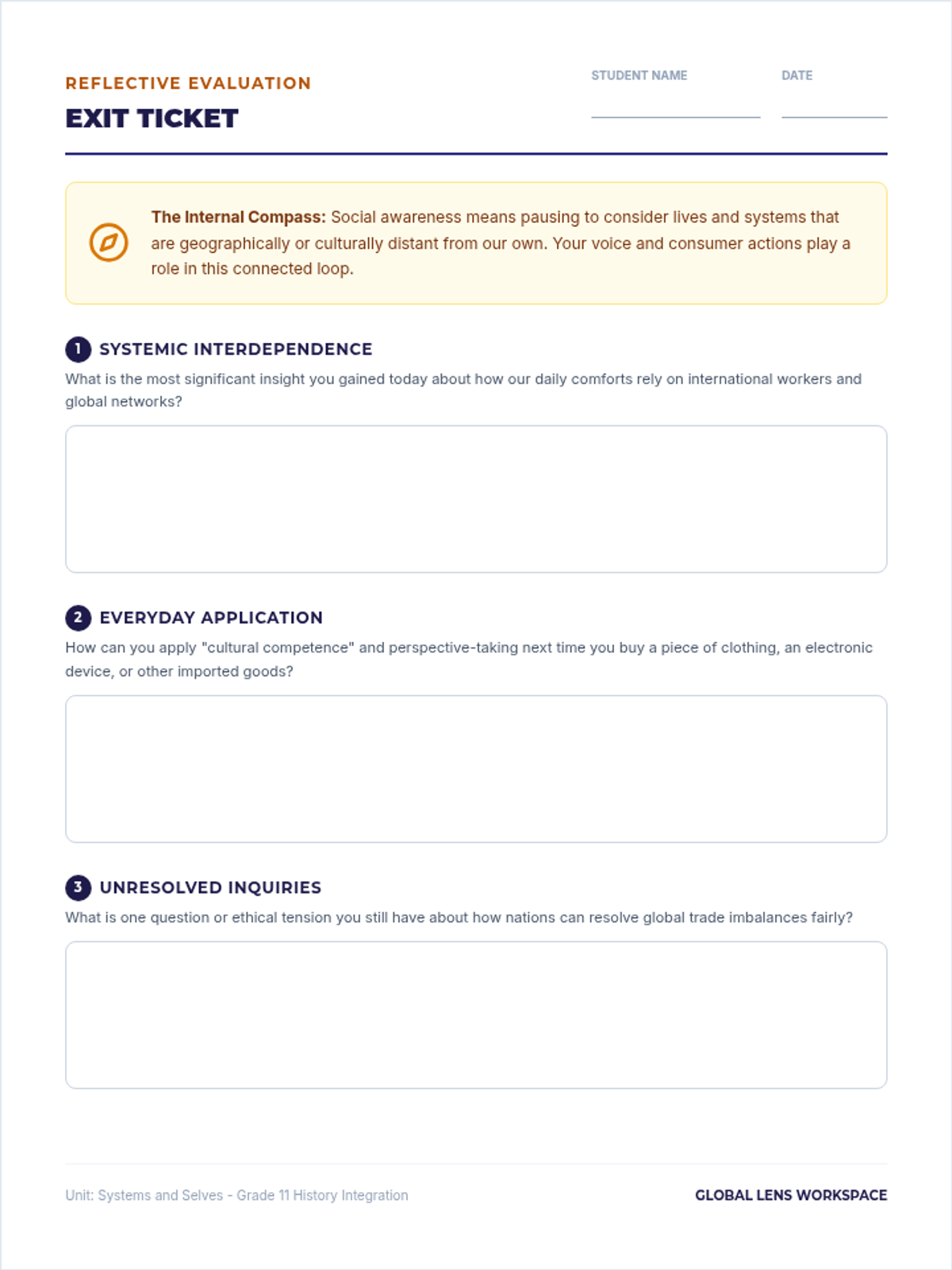
A grade 11 history and SEL lesson examining global trade, local labor, and economic interdependence. Students analyze complex global scenarios using multi-perspective lenses and cultural competence.
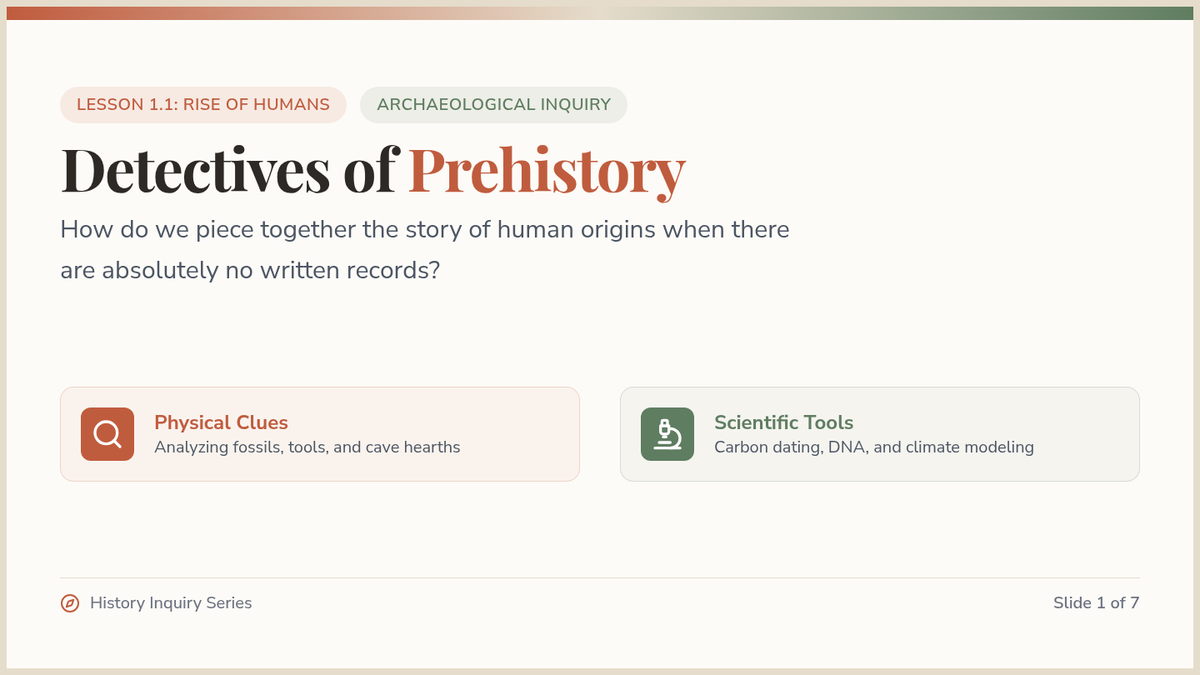
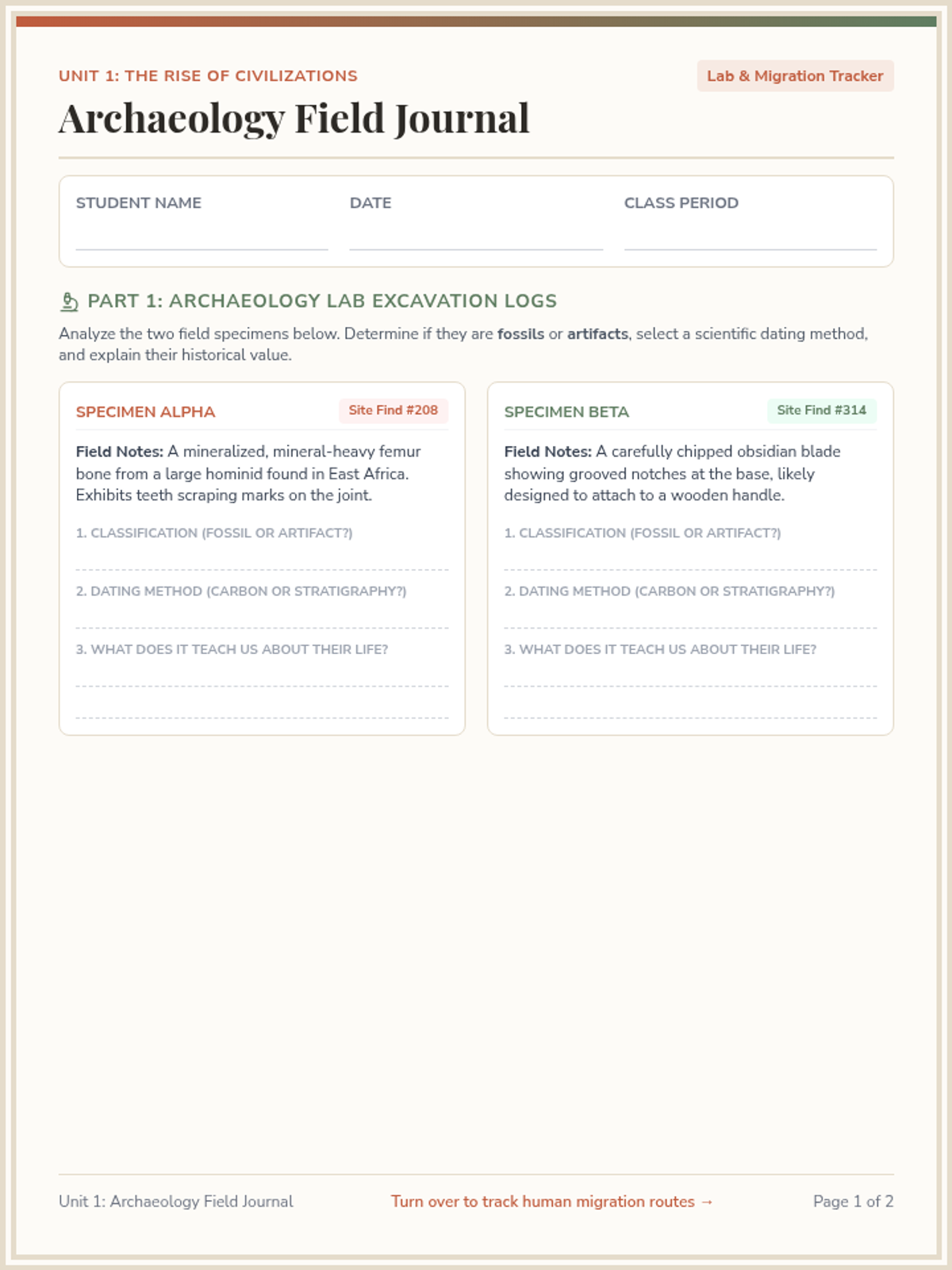
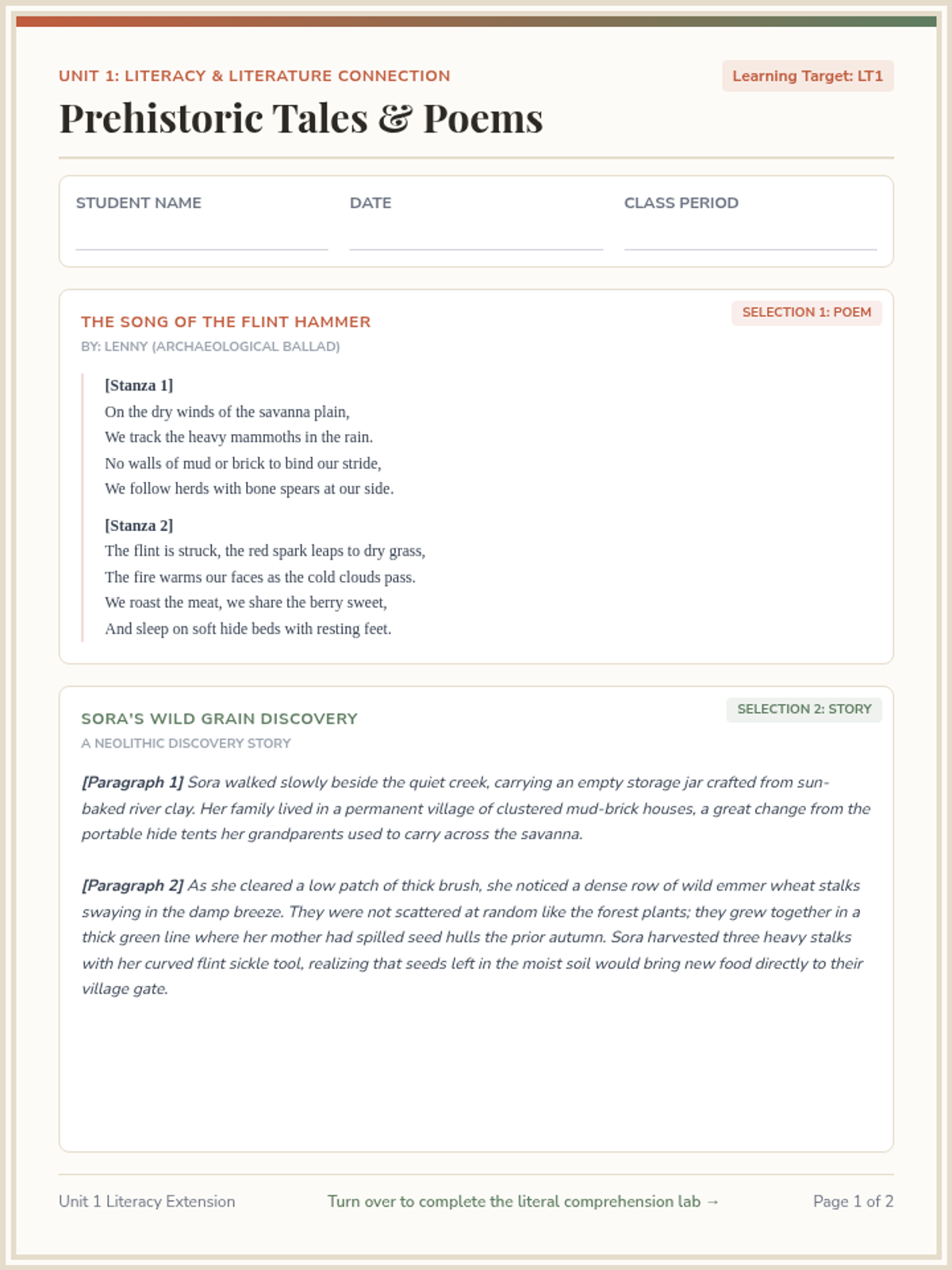
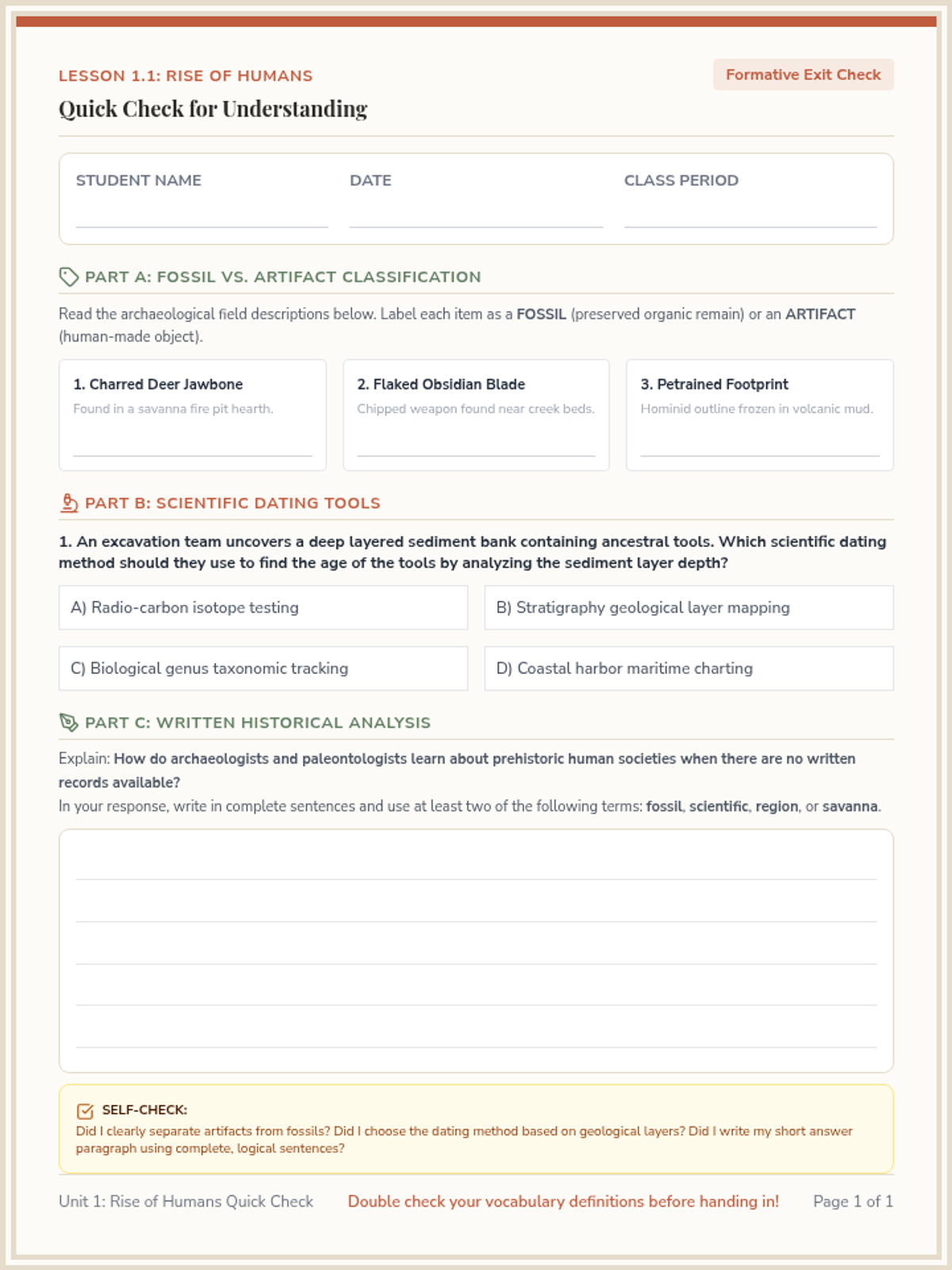
An introductory lesson exploring how archaeologists, paleontologists, and scientists reconstruct prehistoric human society using fossils, scientific testing, and geographical migration tracks.
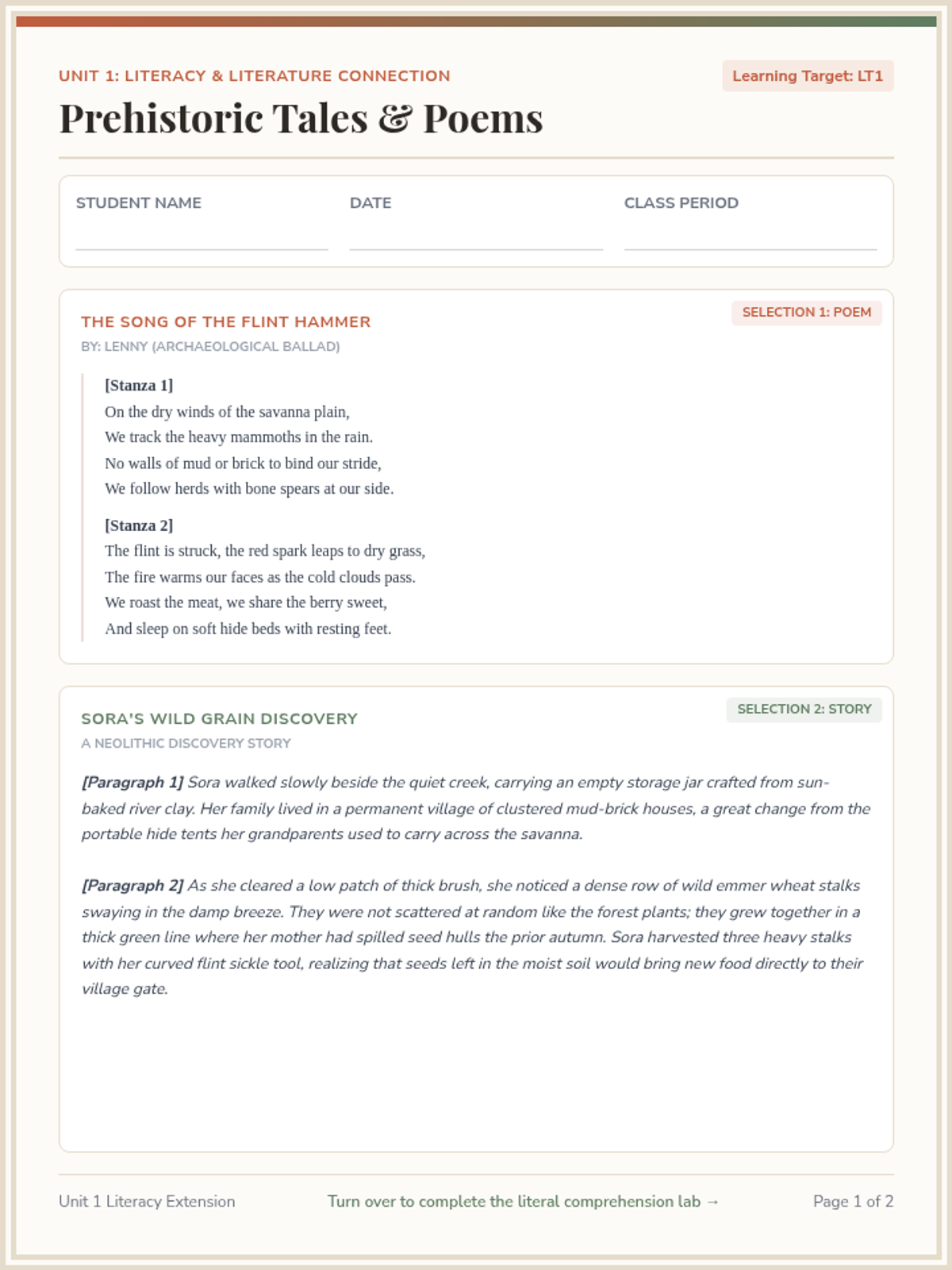
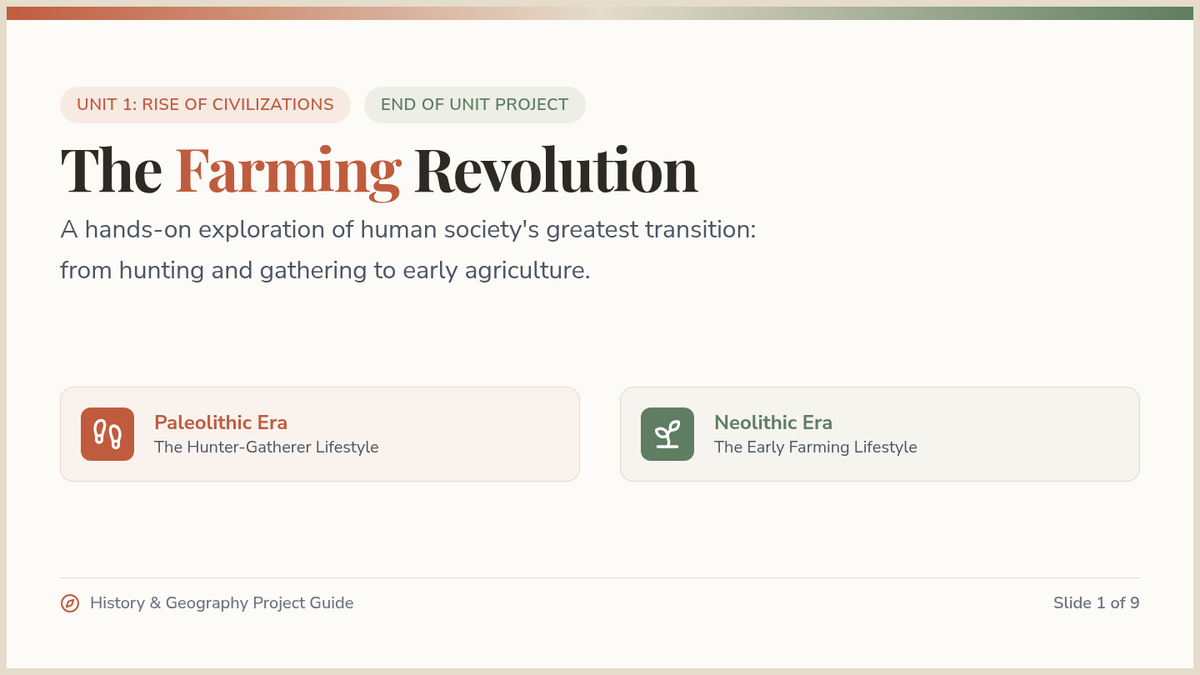
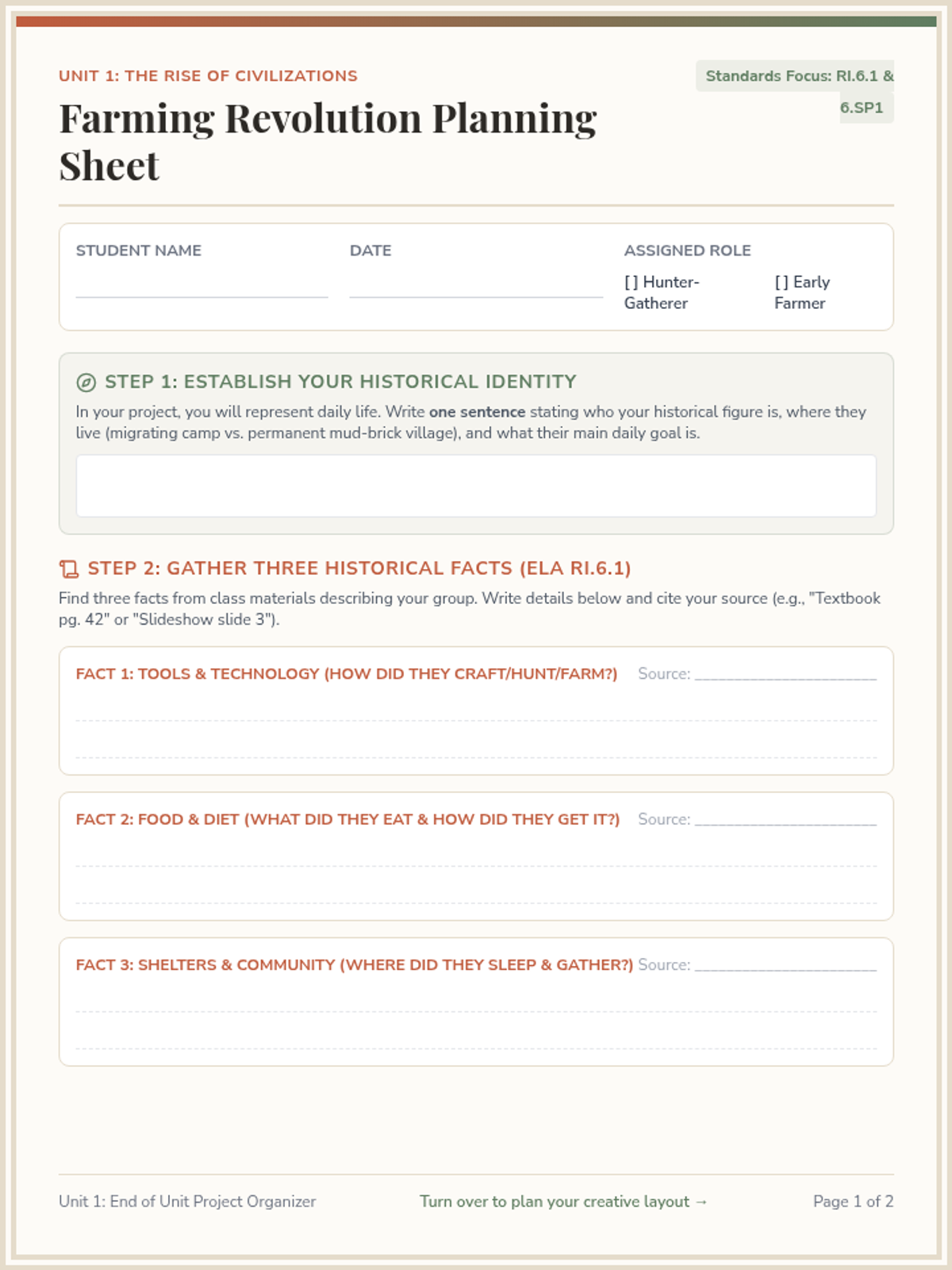
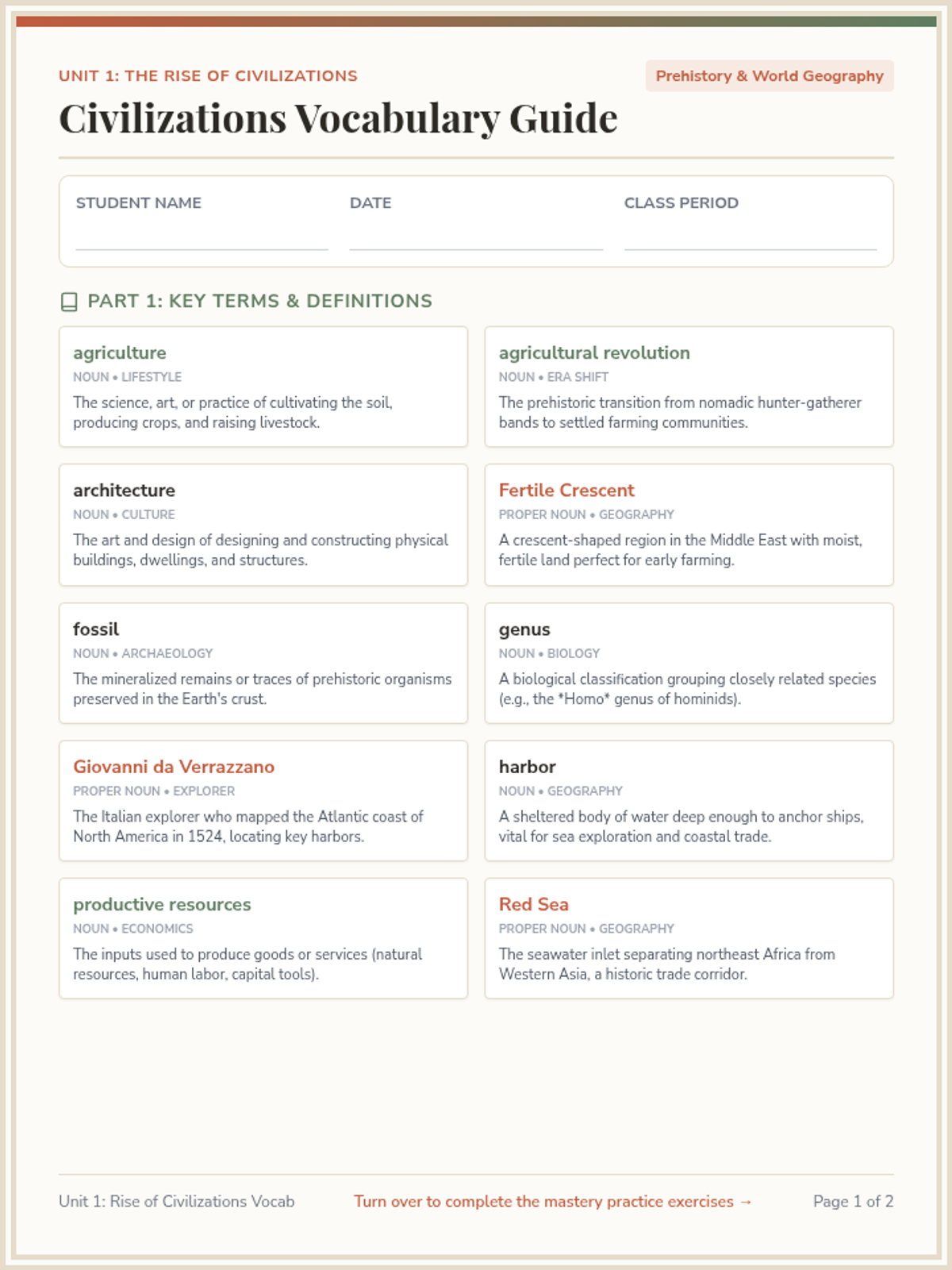
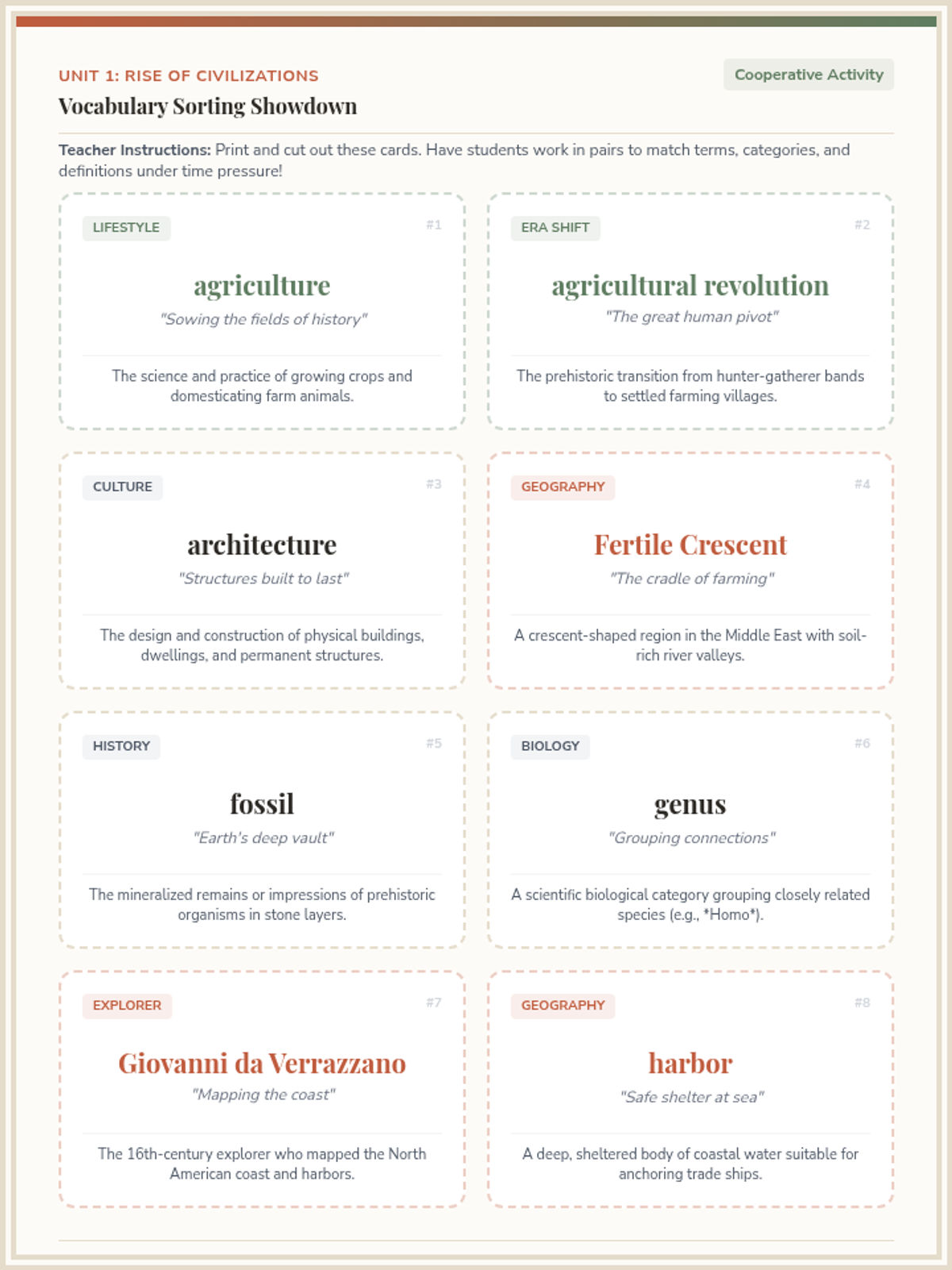
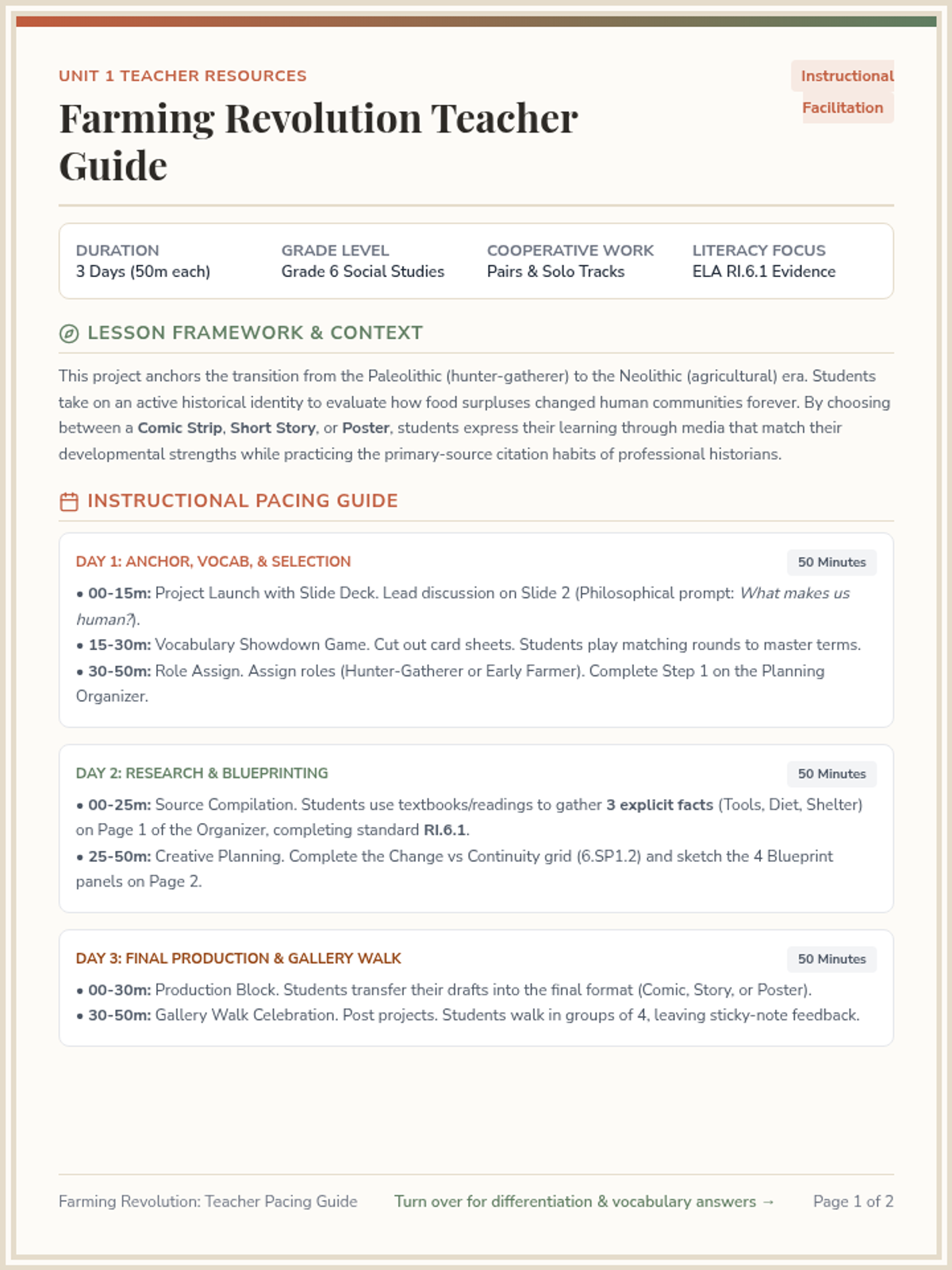
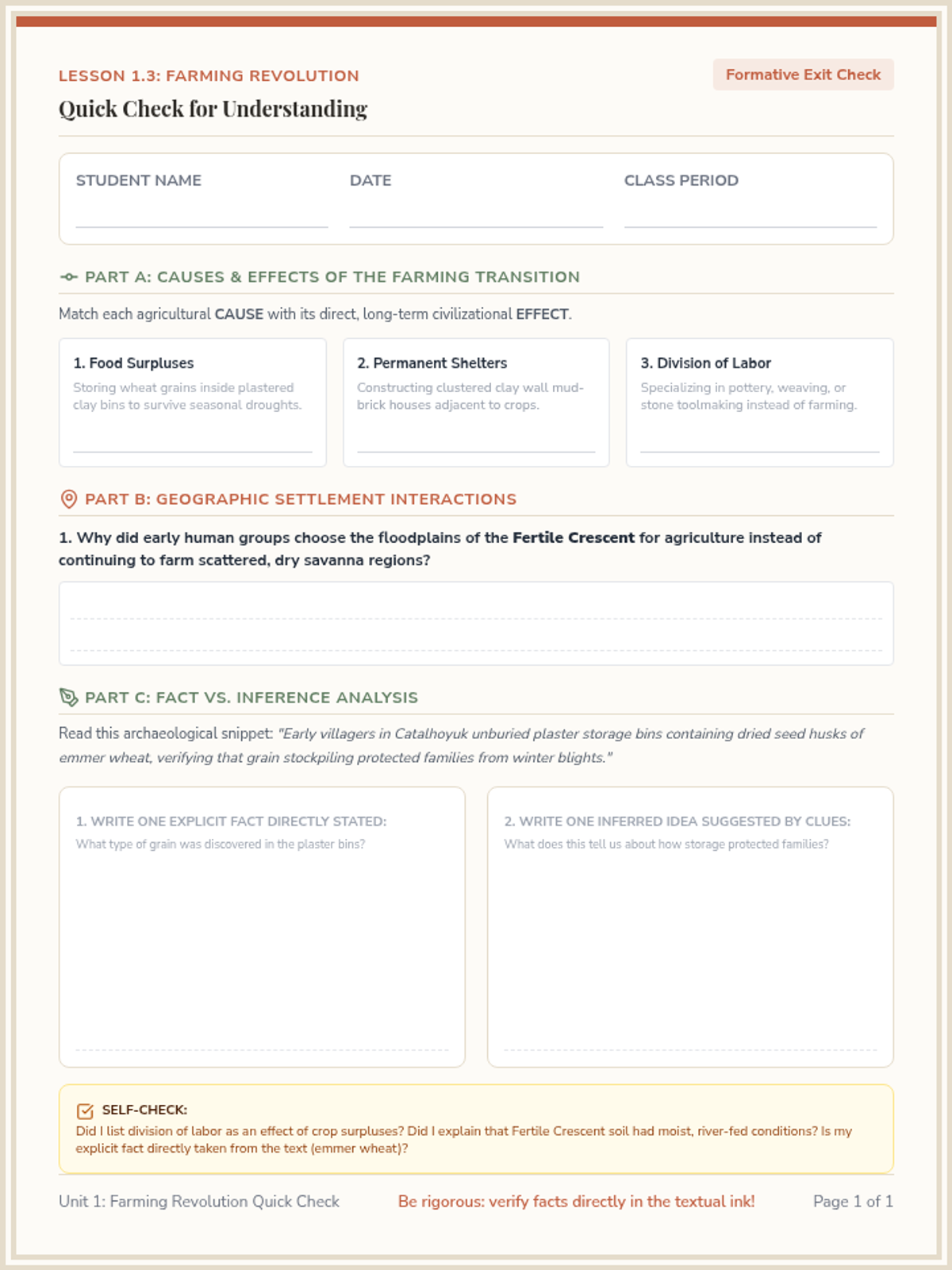
A project-based lesson where students explore the dramatic transition from hunter-gatherer societies to early agricultural communities. Students analyze historical evidence to create a comic, short story, or poster detailing daily life in their assigned era.
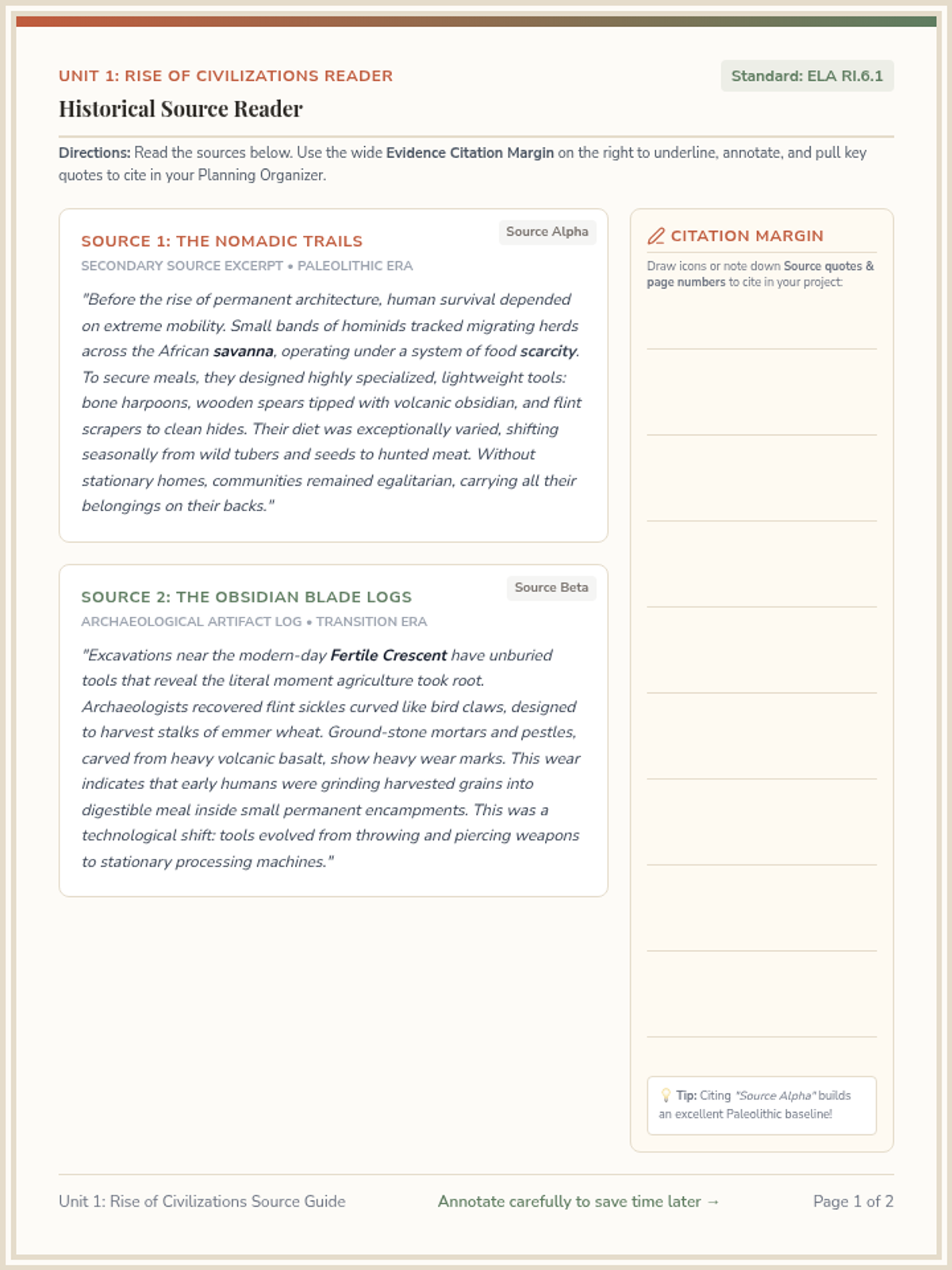
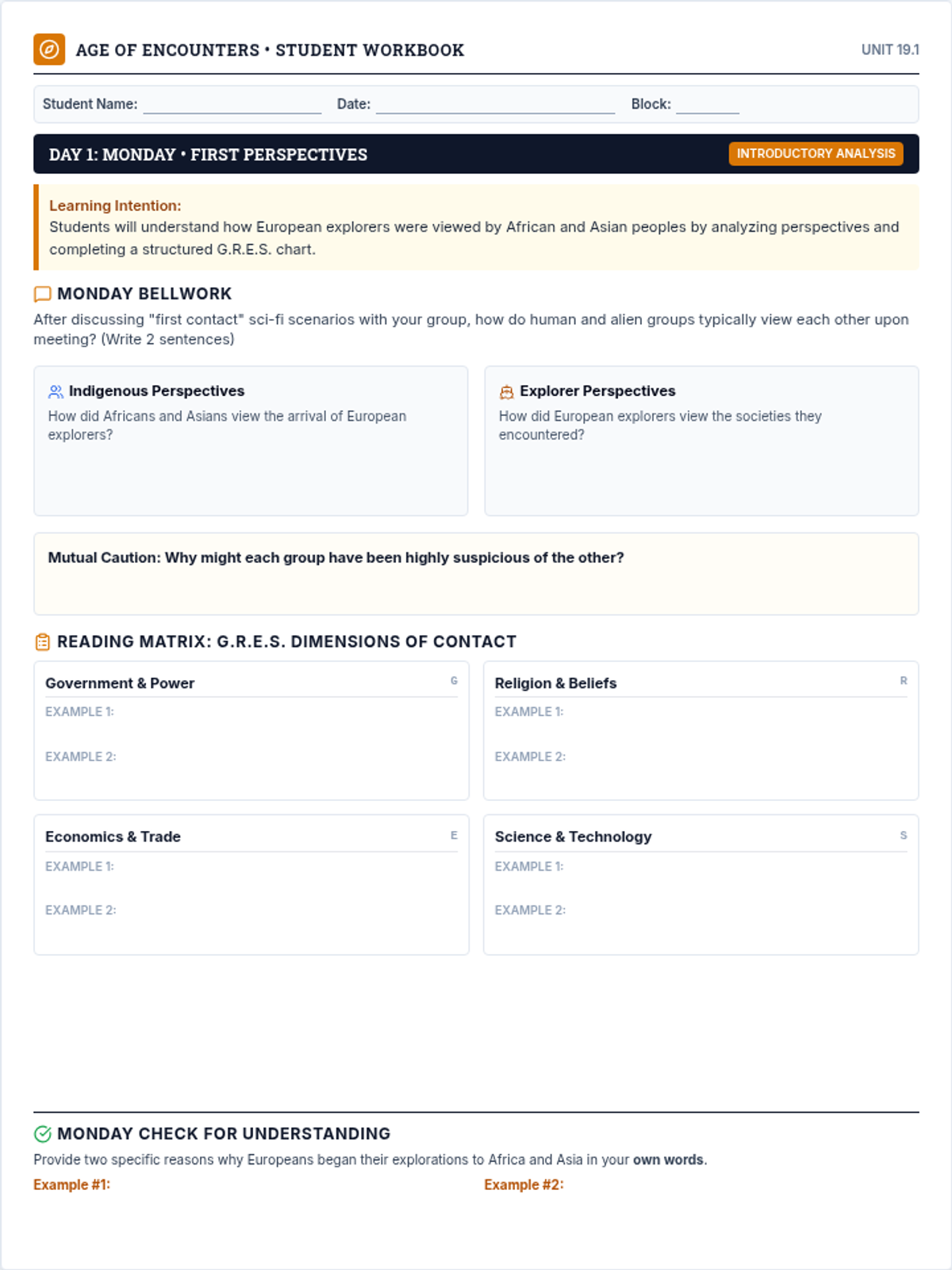
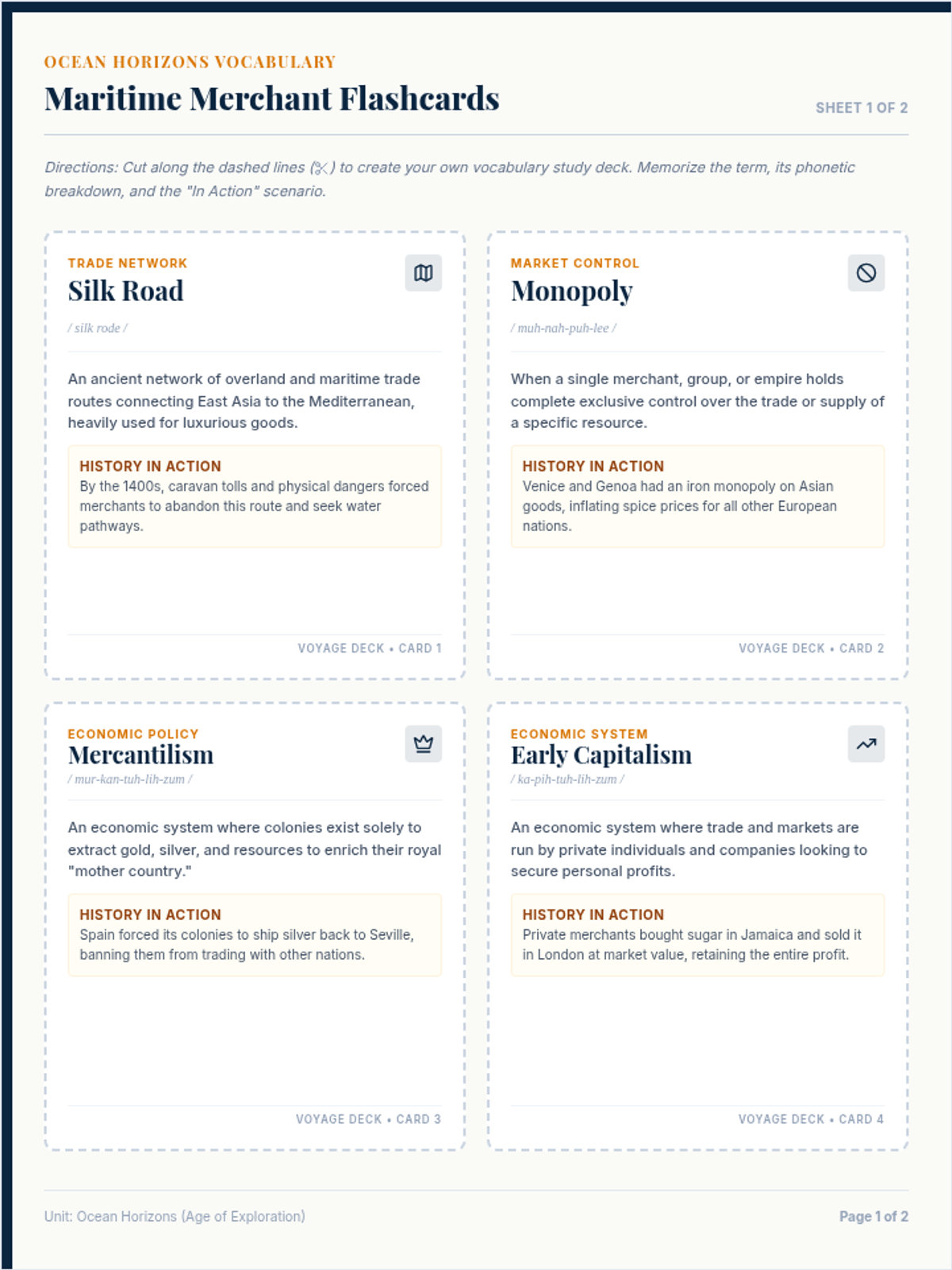
A comprehensive 5-day history unit exploring the Age of Exploration, cultural exchanges, technological innovations in navigation, the Transatlantic Slave Trade, and encounters with East Asian empires.
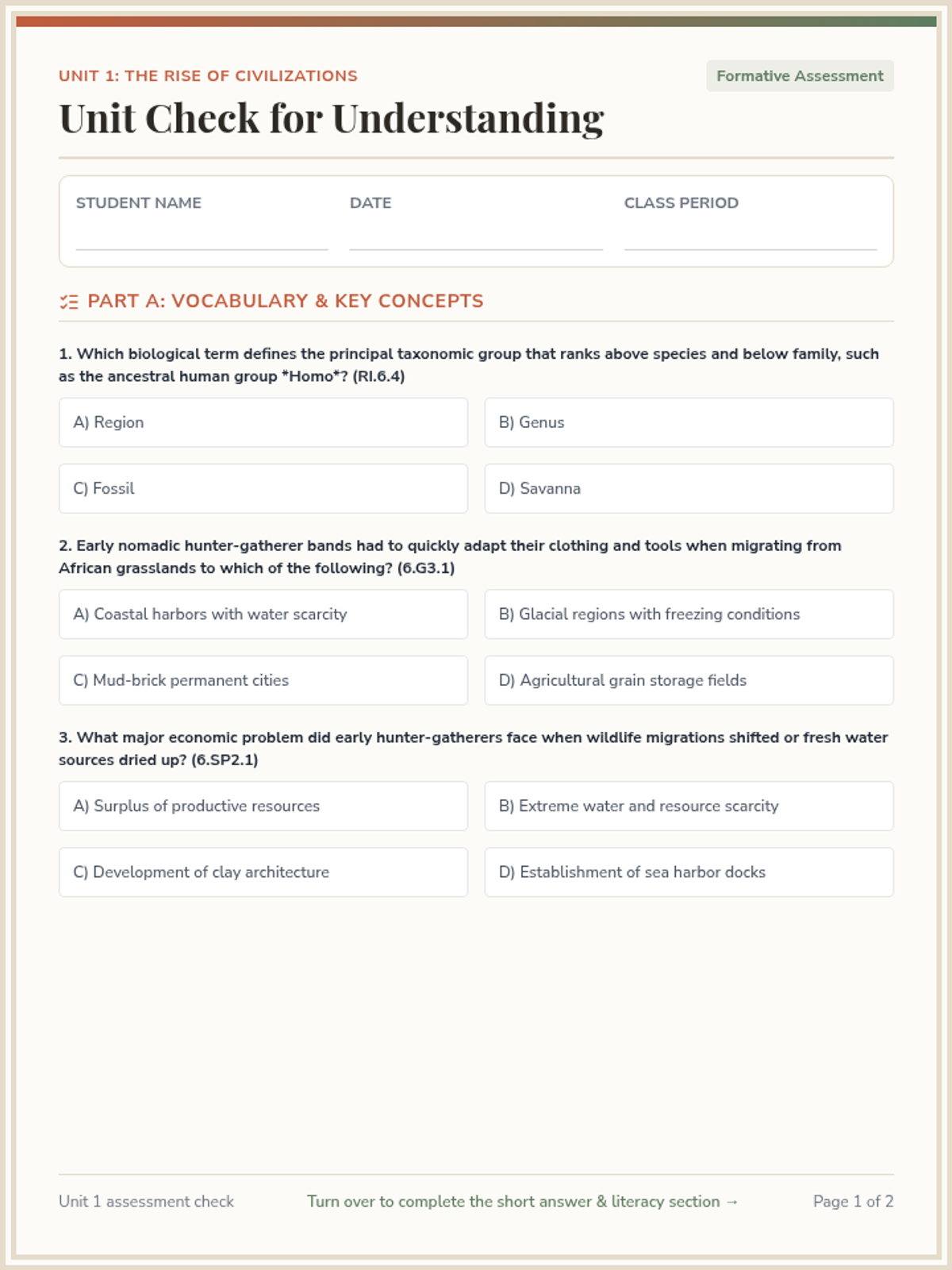
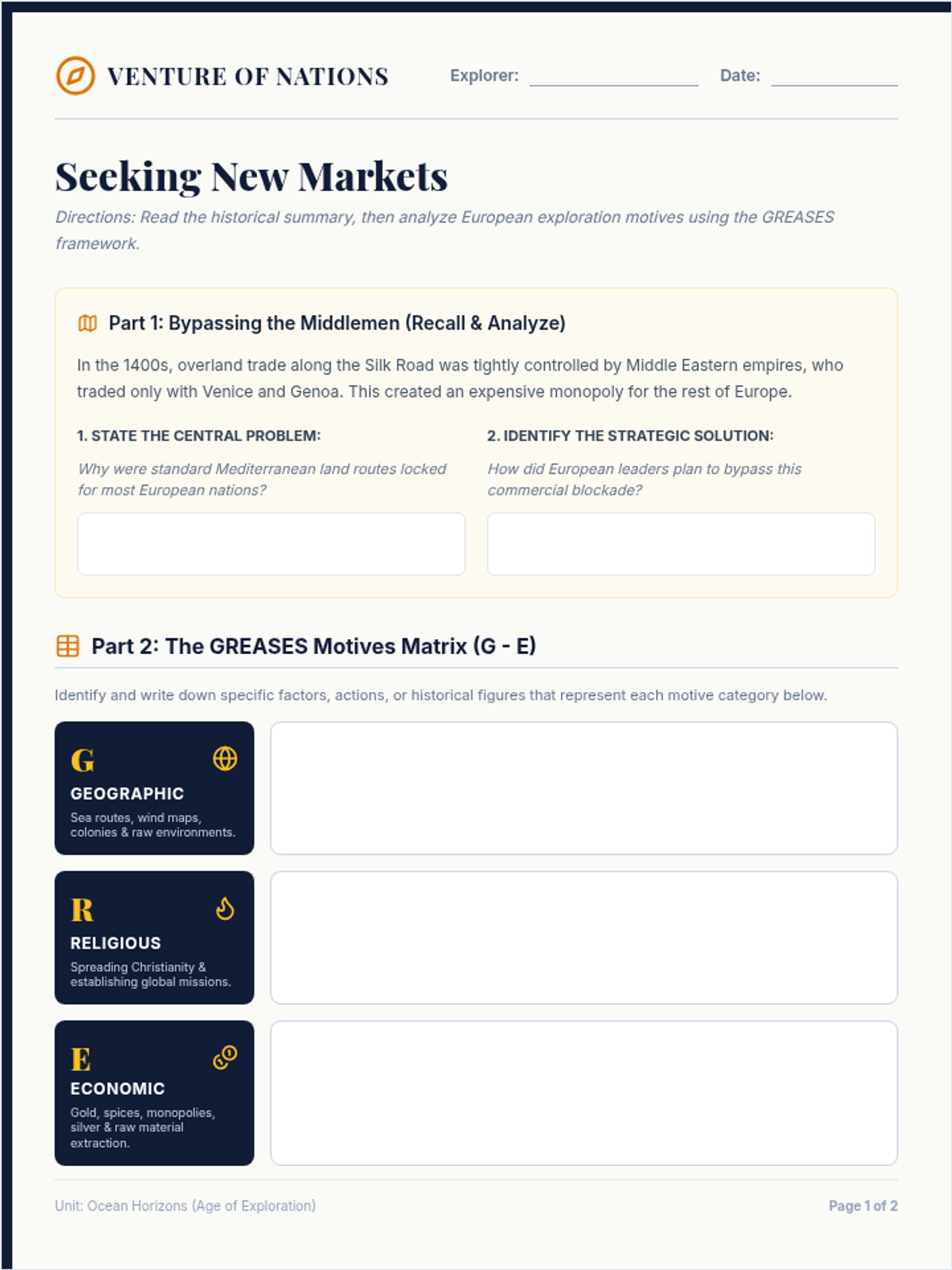
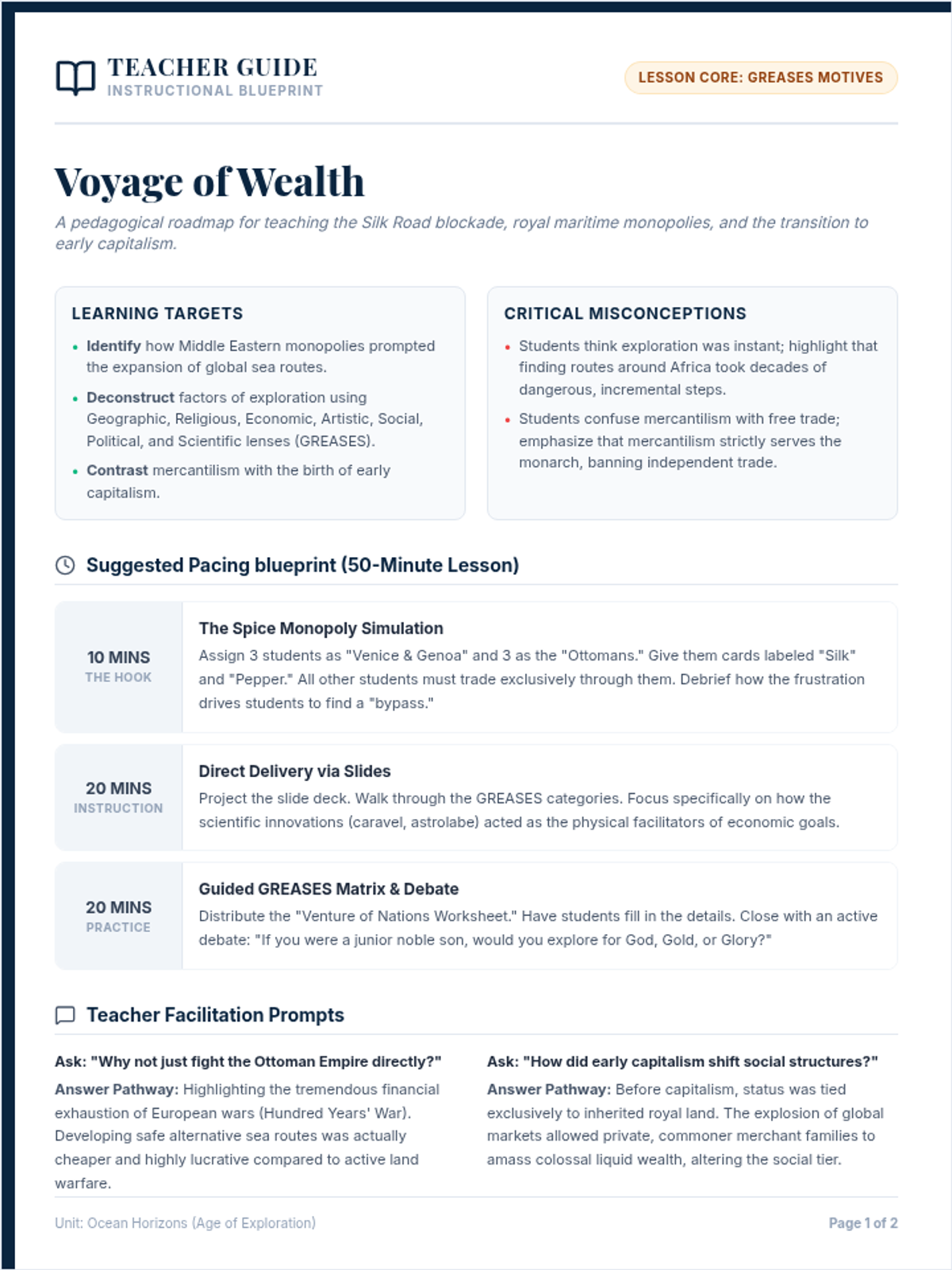
An in-depth exploration of the factors that drove European powers to seek new trade routes, introducing the GREASES framework for historical analysis of global expansion.
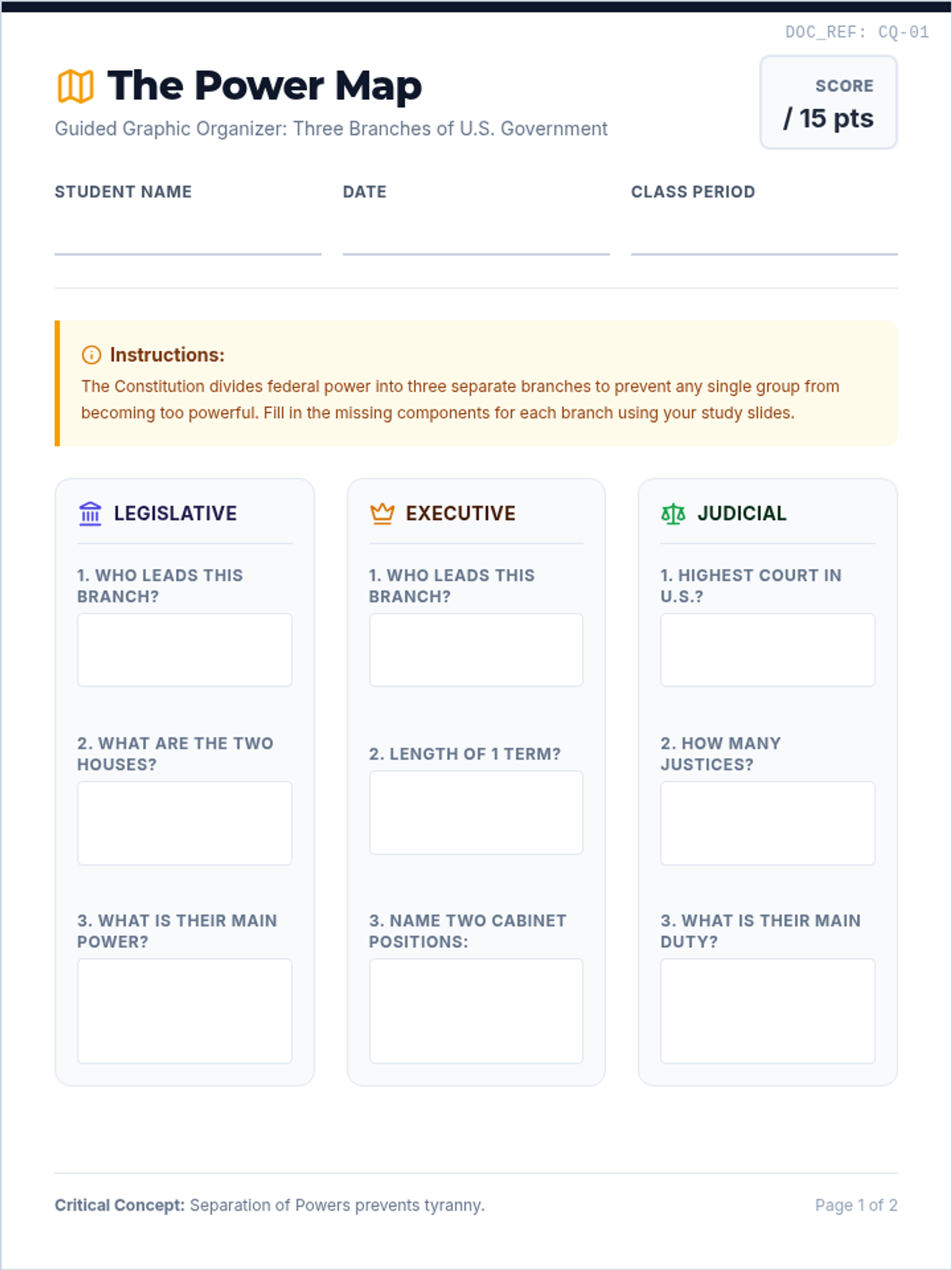
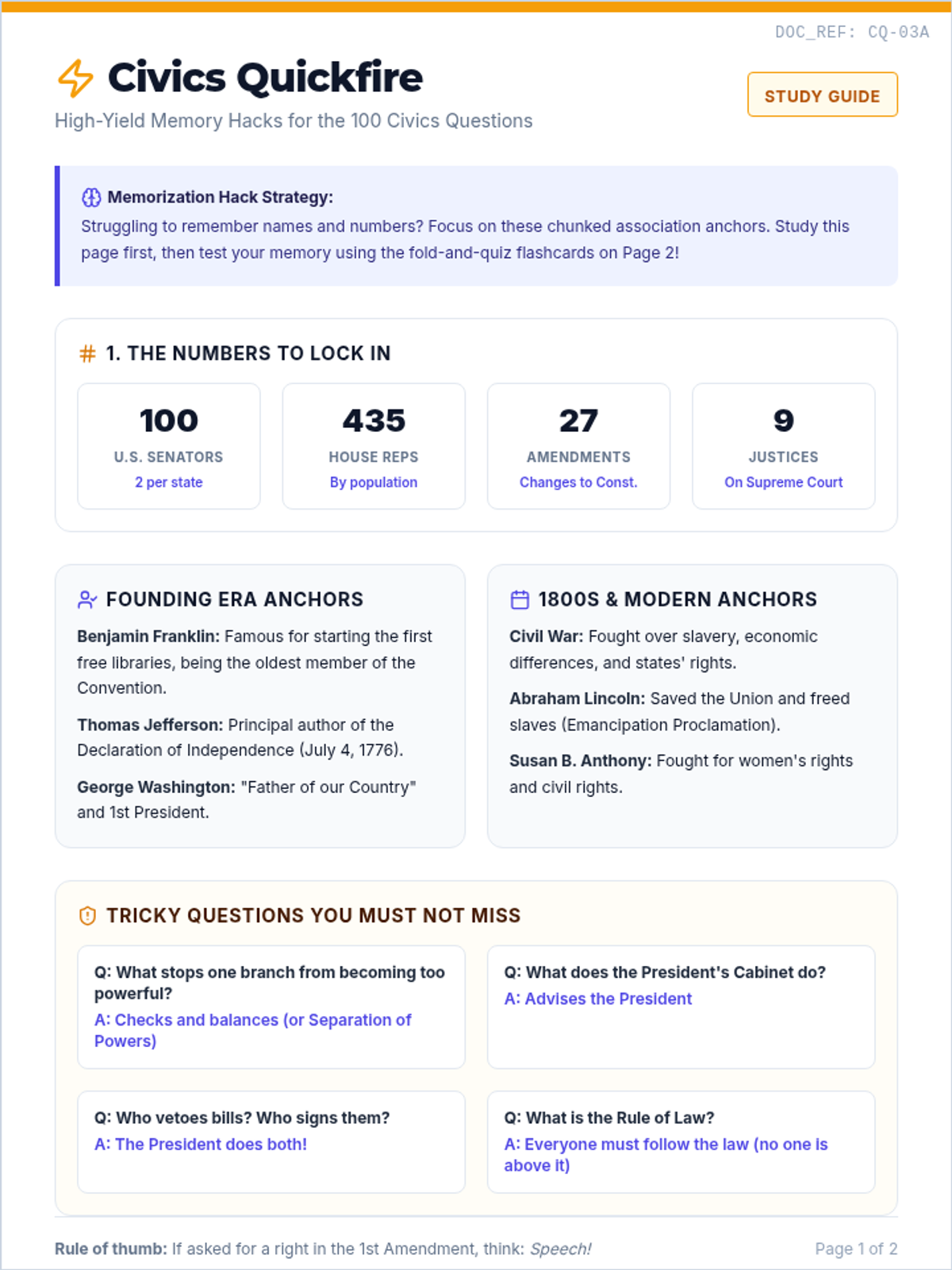
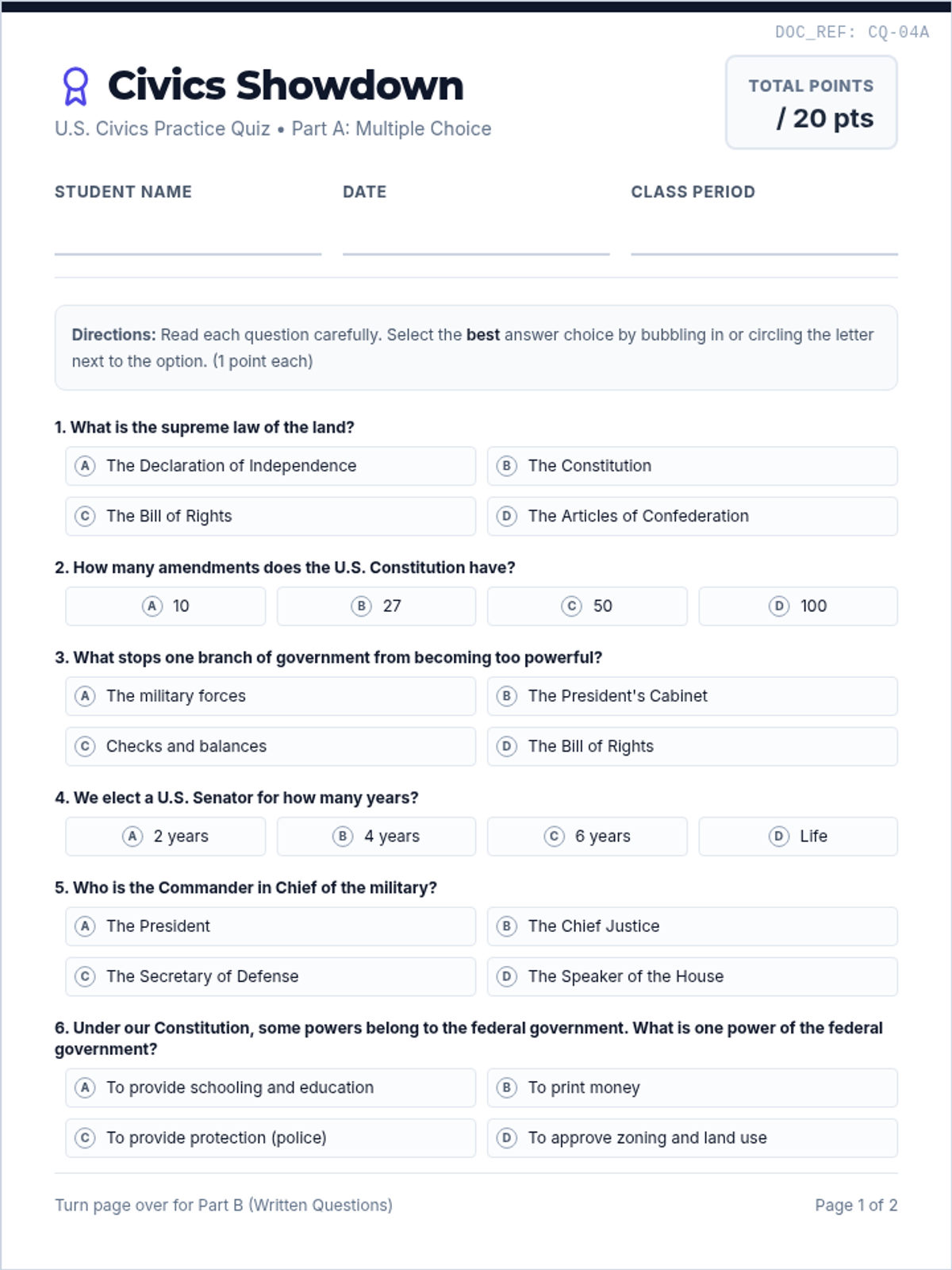
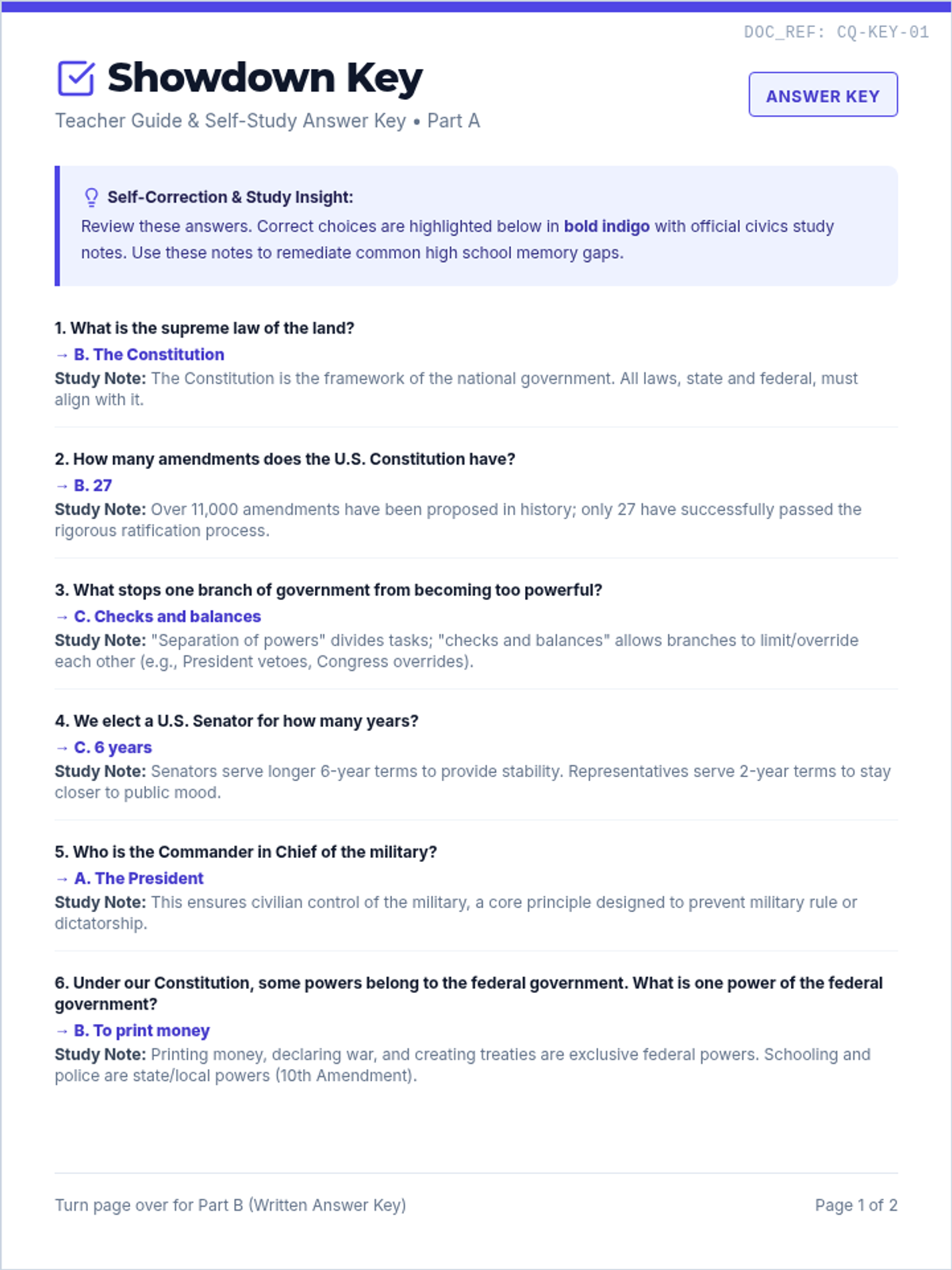
A comprehensive study bundle designed for high school students preparing for the Iowa-required civics exam. The materials use chunked information, visual aids, and scaffolded structures to support rote memorization, quick recall, and structured independent study of the official 100 citizenship questions.
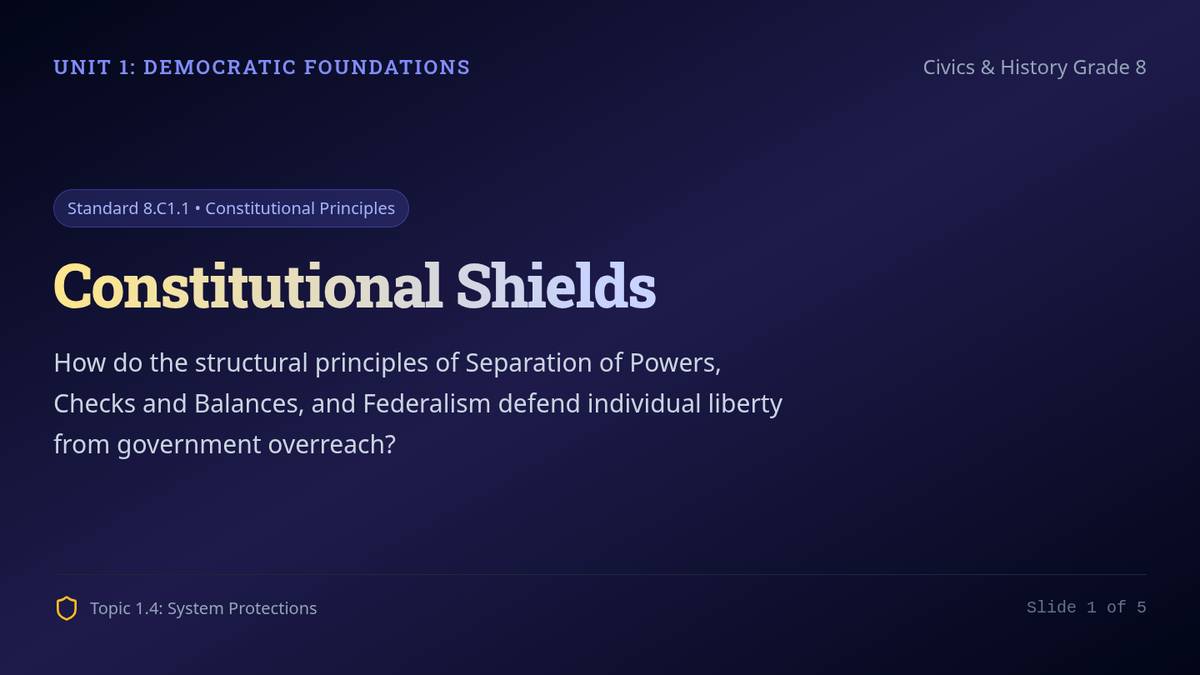
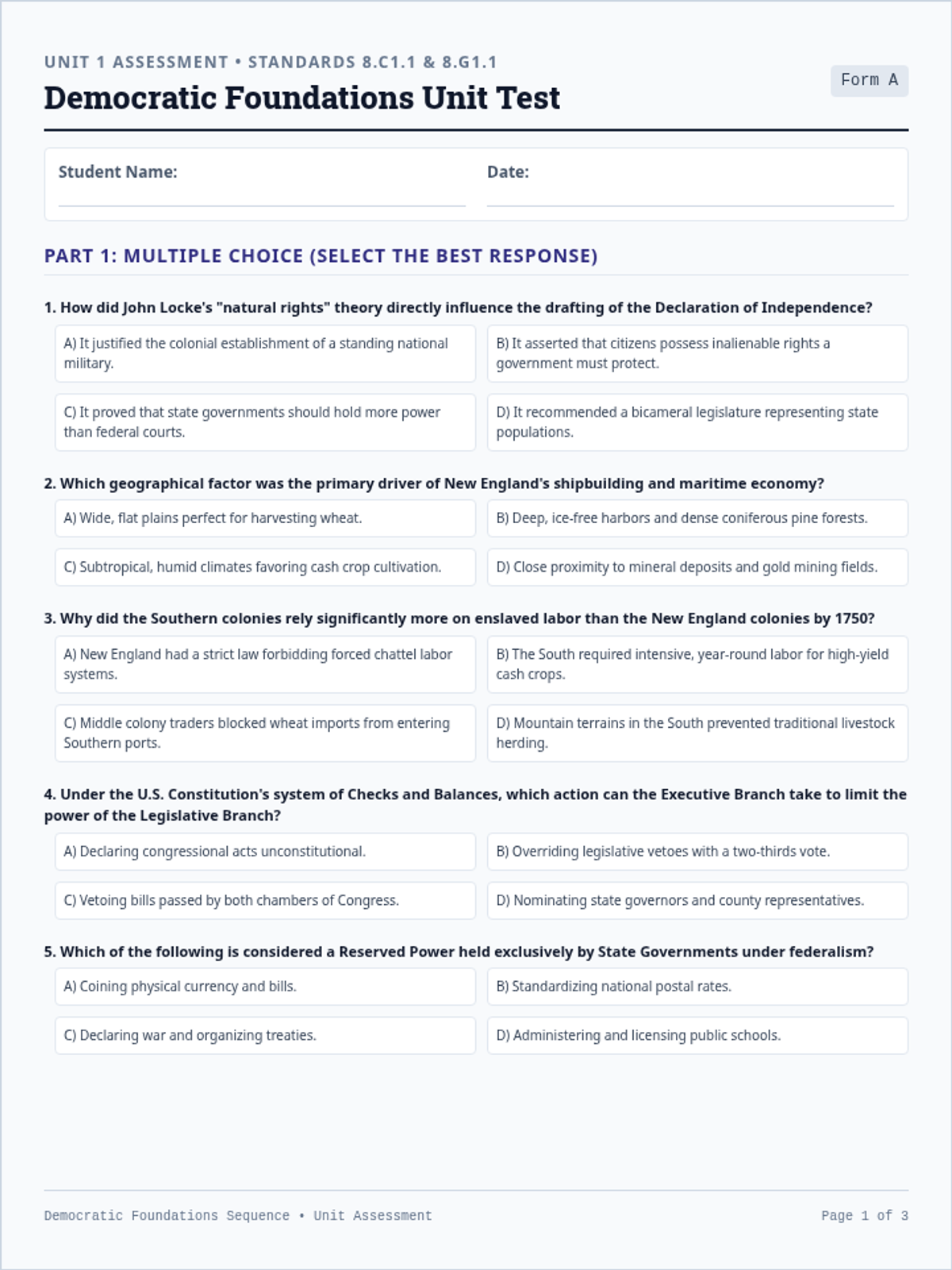
A deep dive into the structural principles of the U.S. Constitution, focusing on separation of powers, checks and balances, and federalism, culminating in a standards-aligned unit assessment.