A lesson teaching students how to manage and conserve Earth's vital resources (air, water, soil, energy) and the difference between point and nonpoint source pollution.
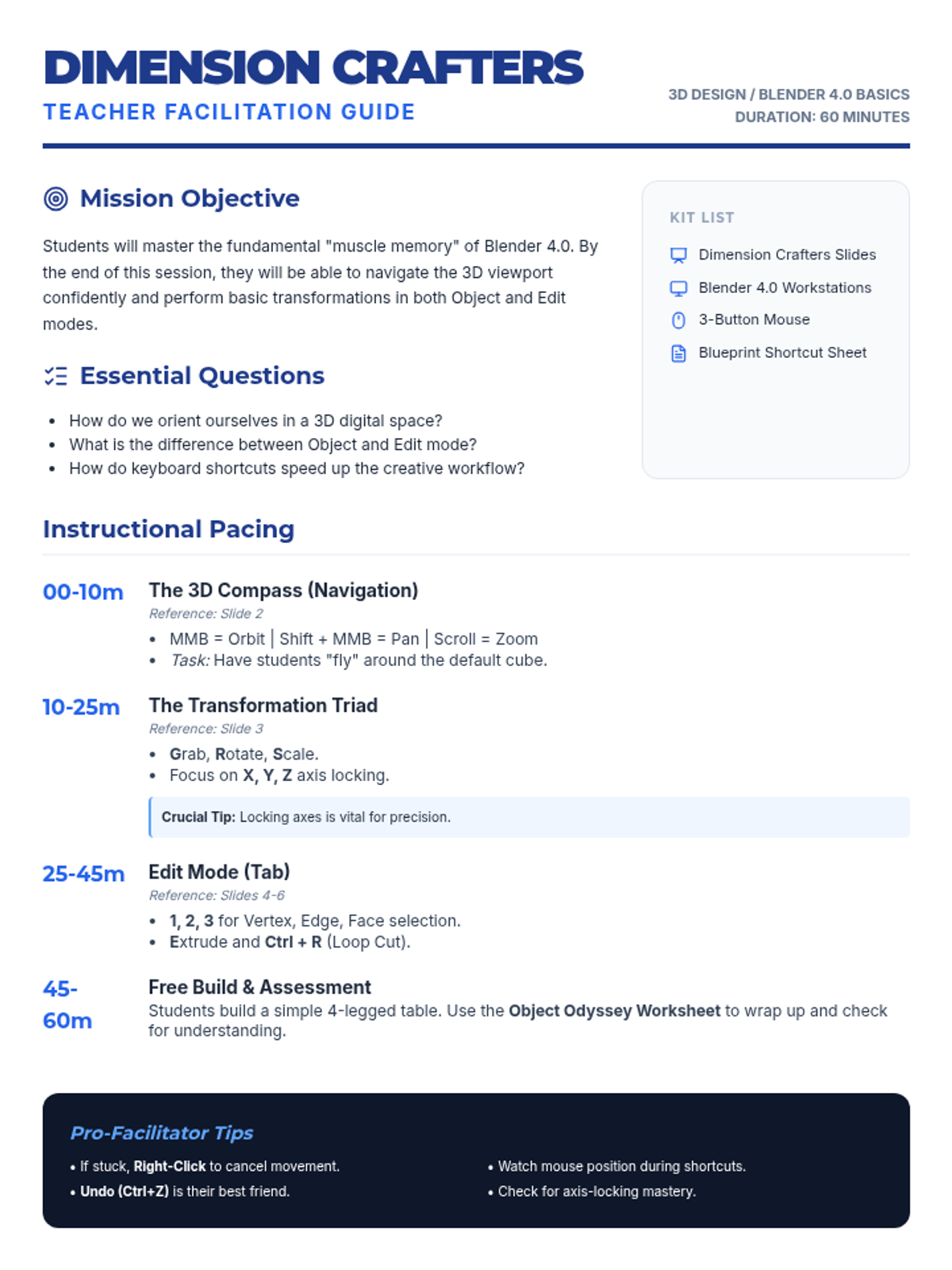
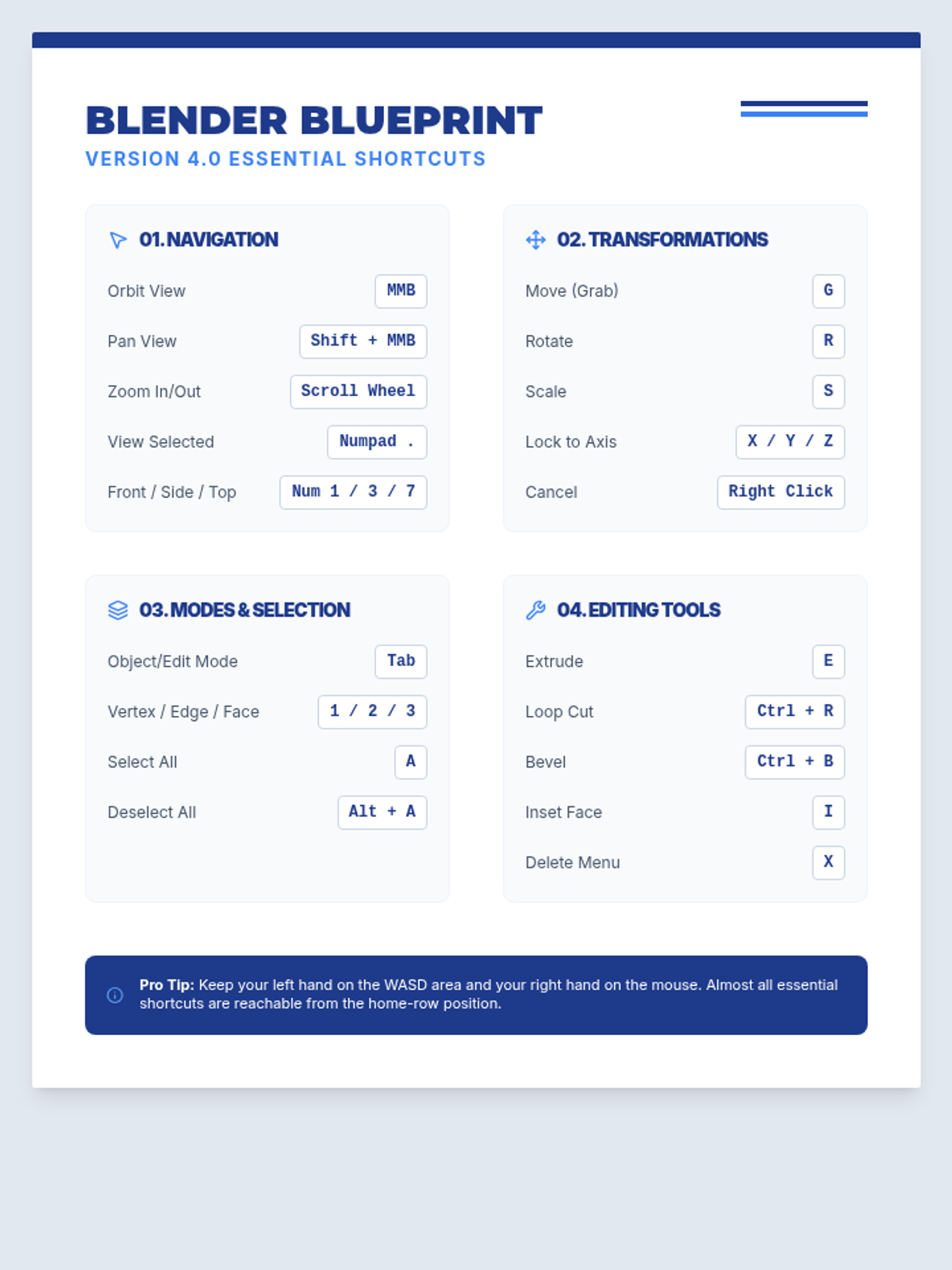
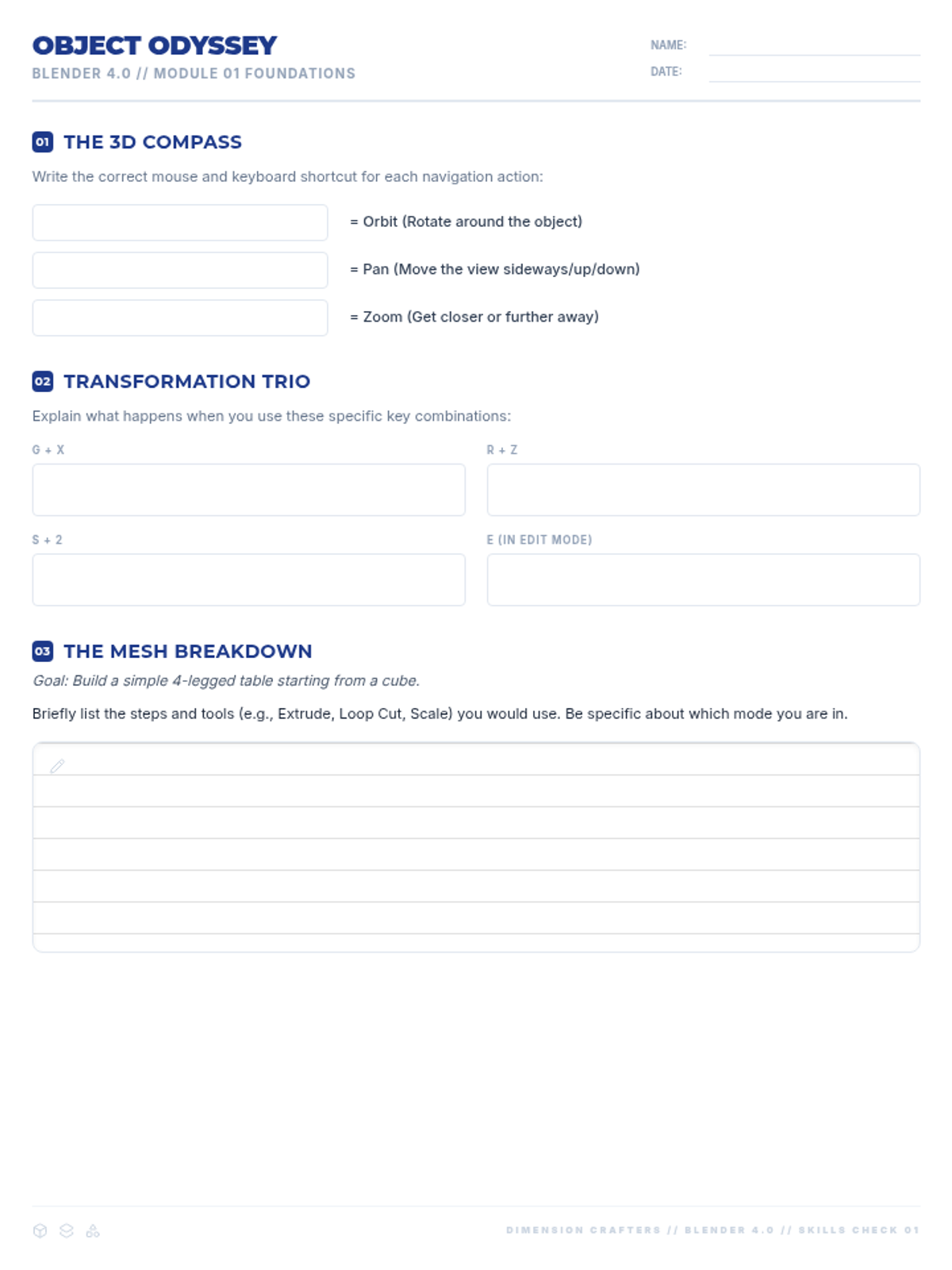
A beginner-friendly introduction to Blender 4.0, focusing on navigation, object transformations, and essential edit mode tools for 3D modeling.
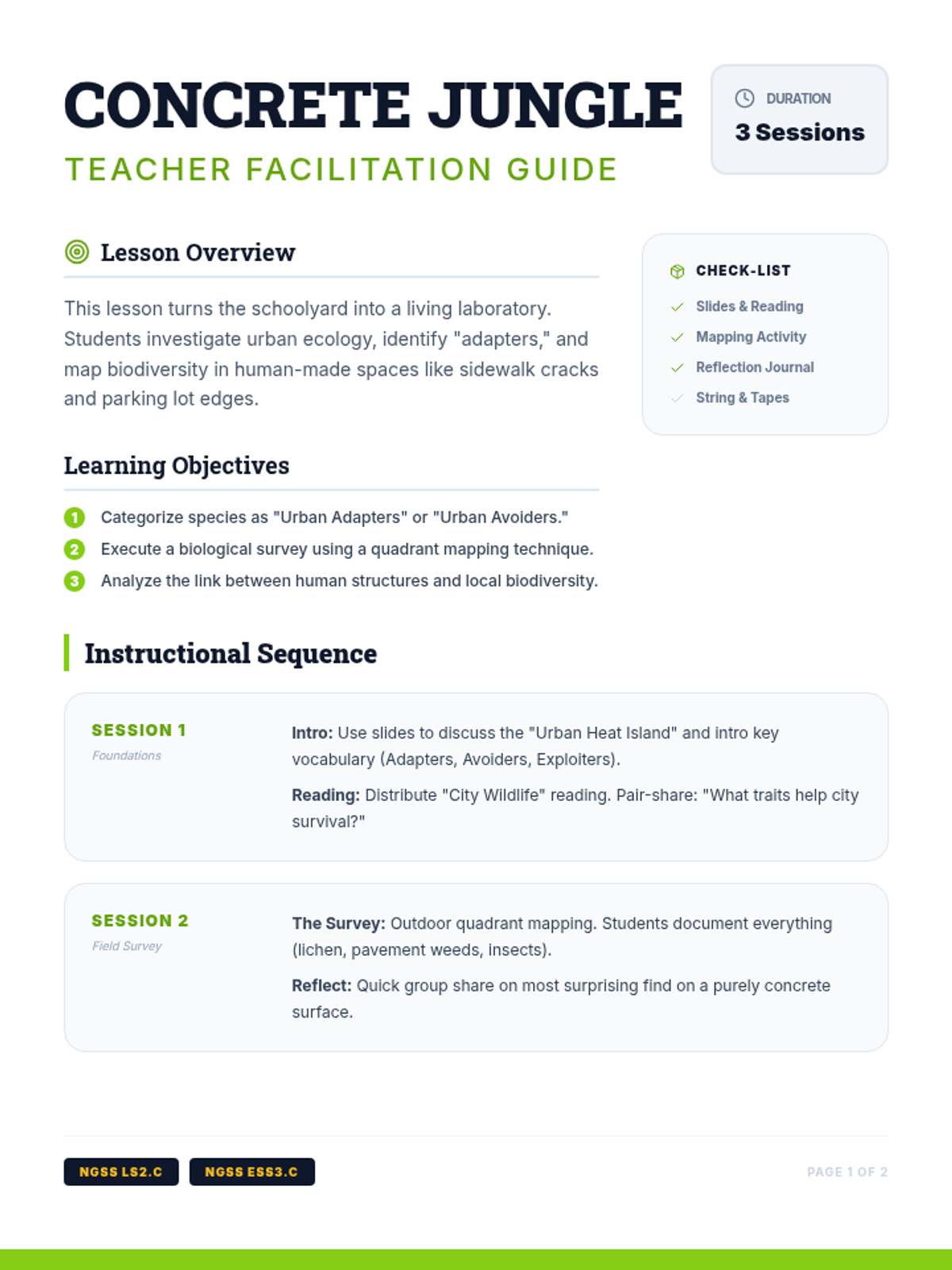
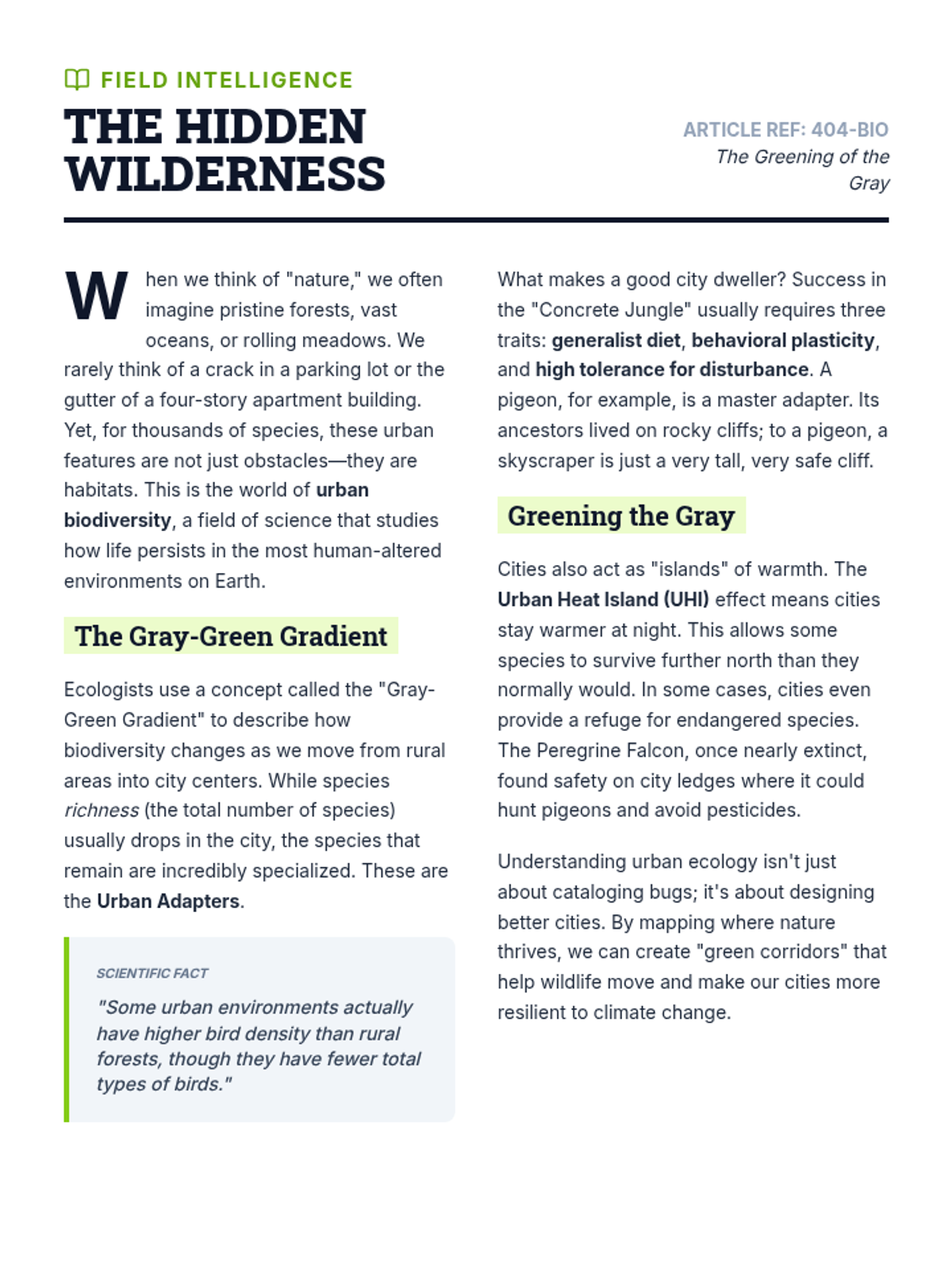
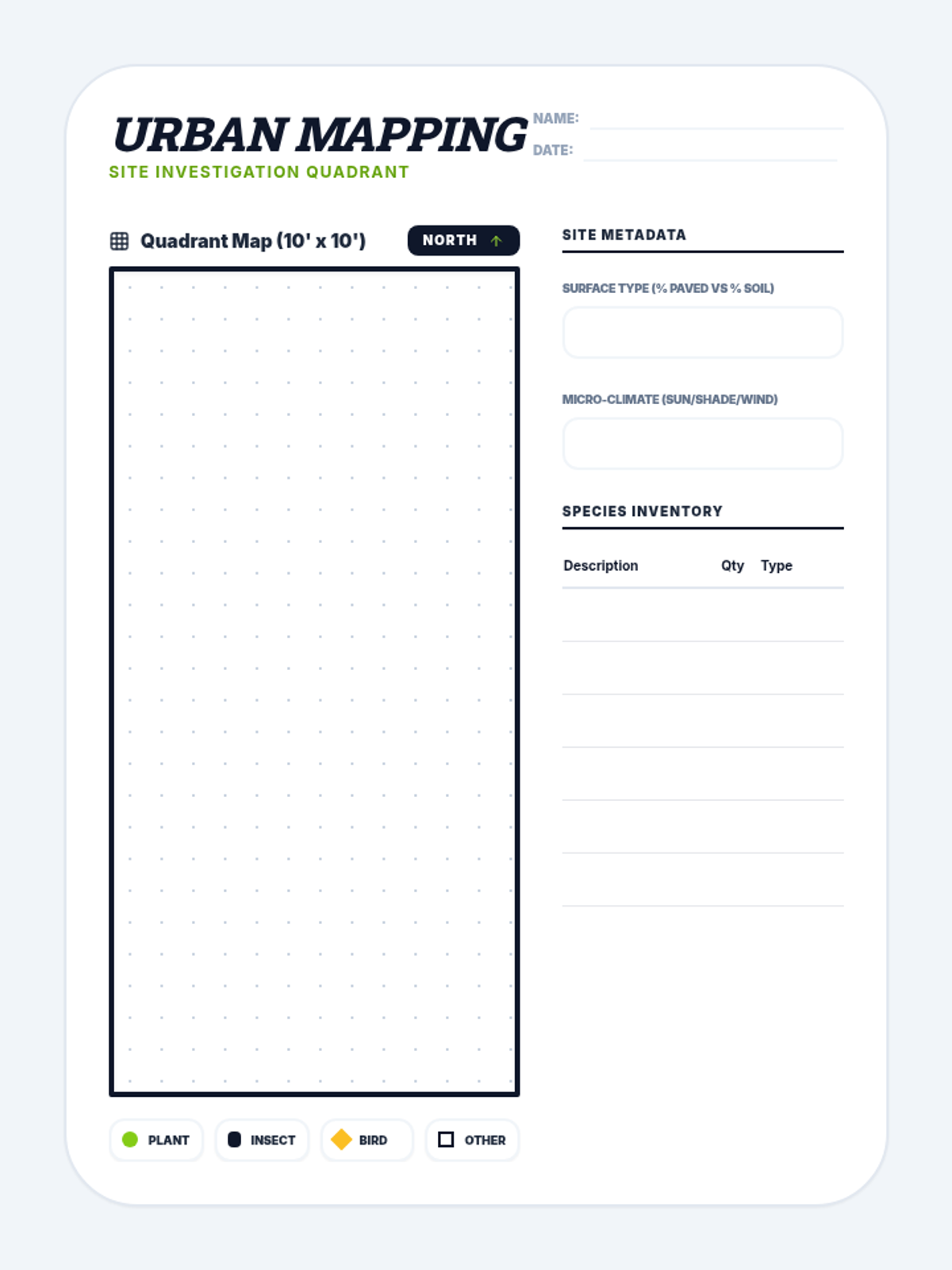
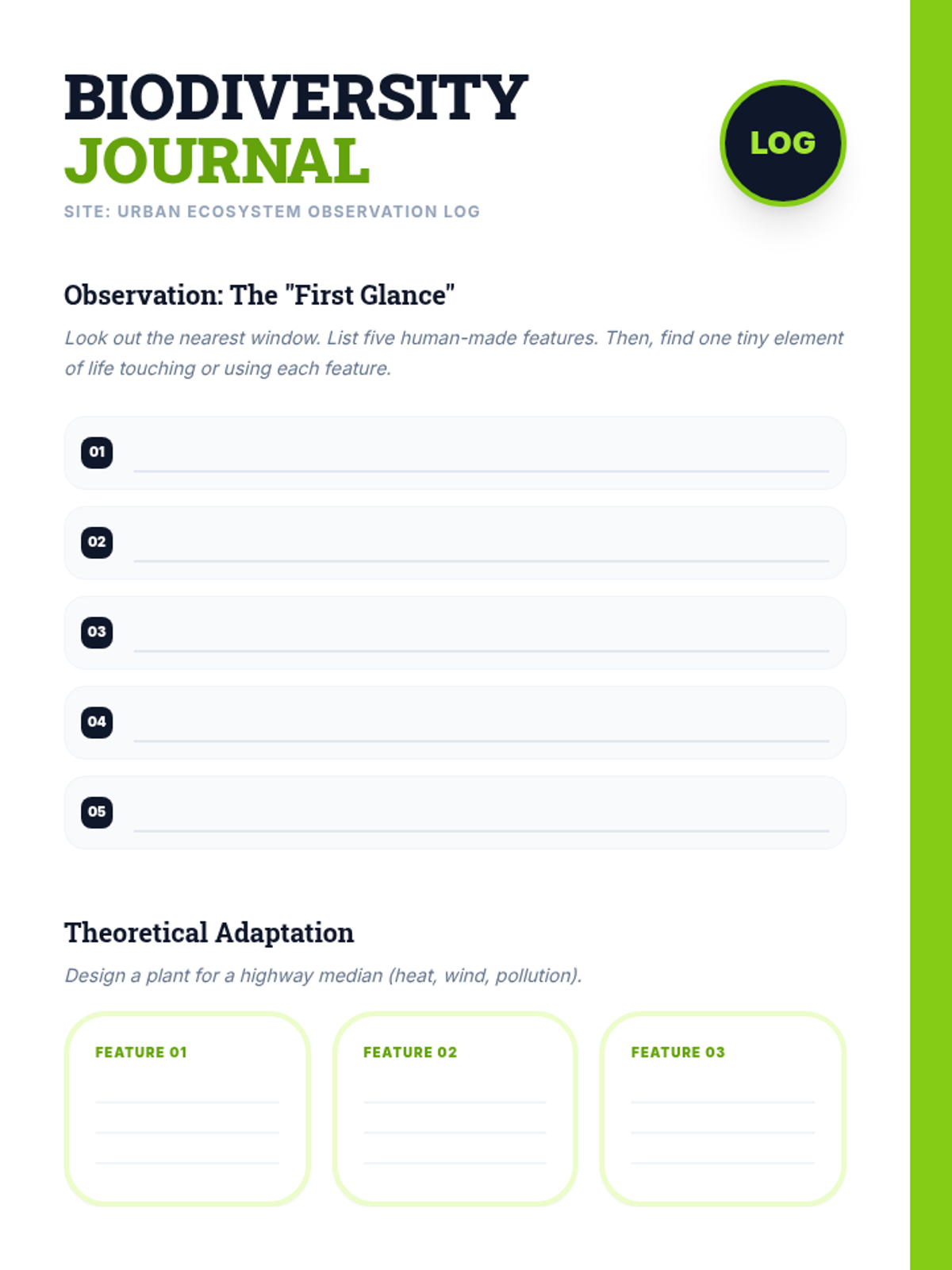
A field-based science lesson where students investigate urban ecosystems, identifying and documenting plant and animal life in developed environments to understand biodiversity and environmental stewardship.
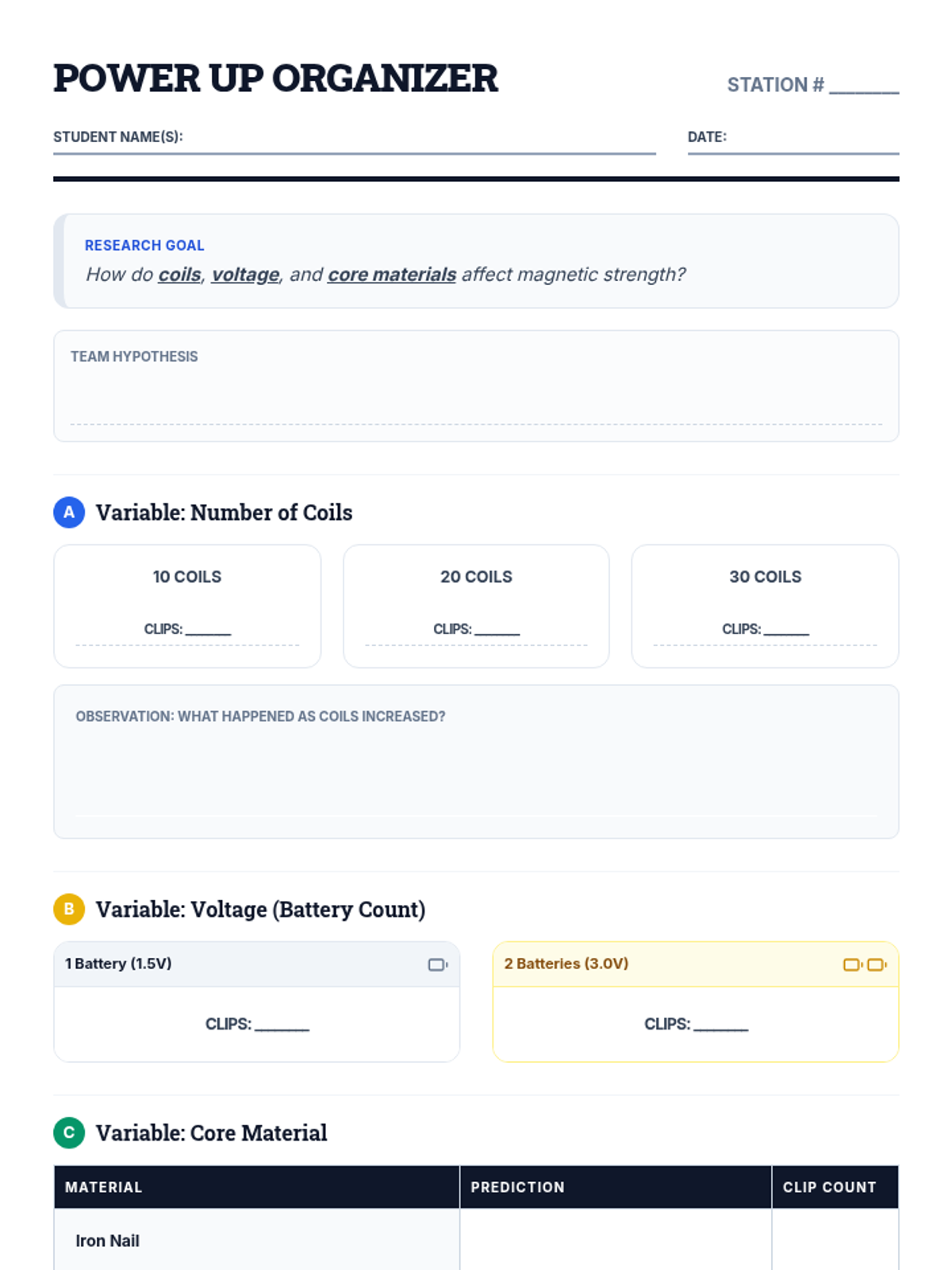
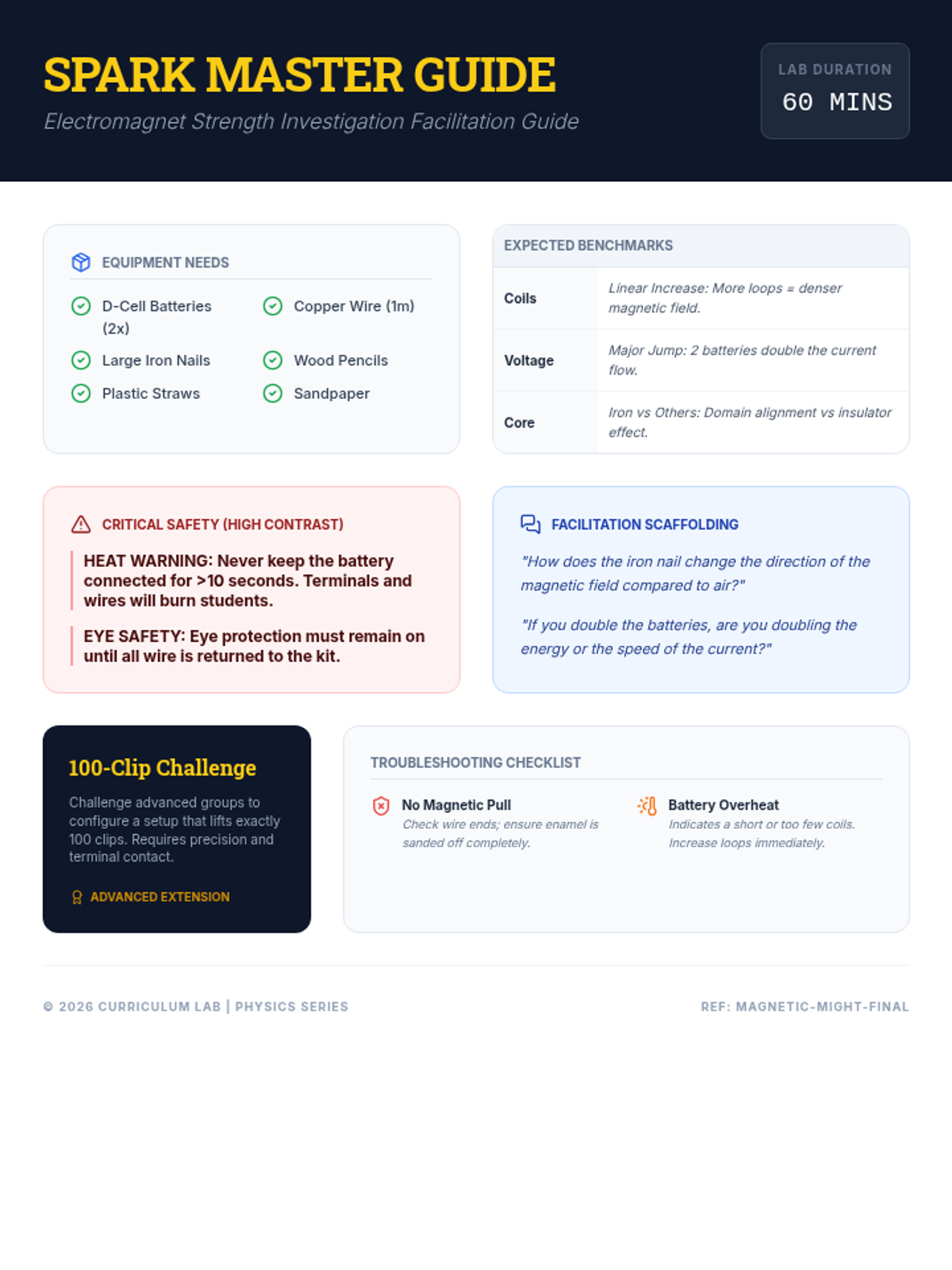
A hands-on laboratory investigation where students explore how varying wire coils, voltage, and core materials affect the strength of an electromagnet.
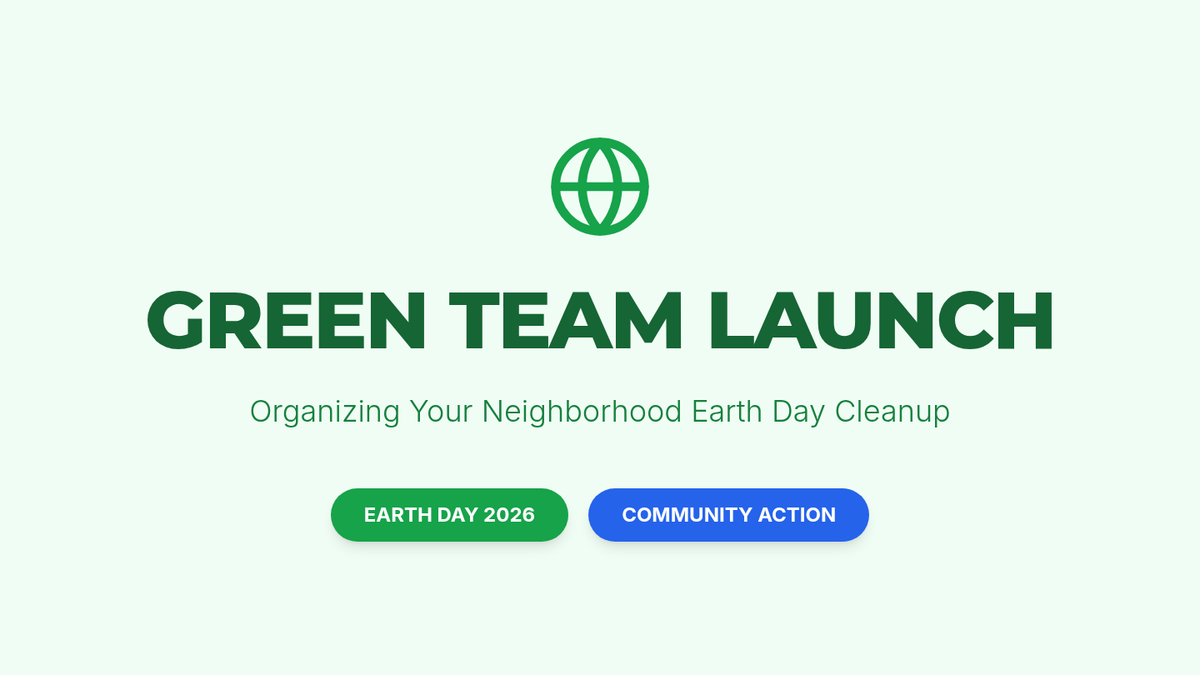
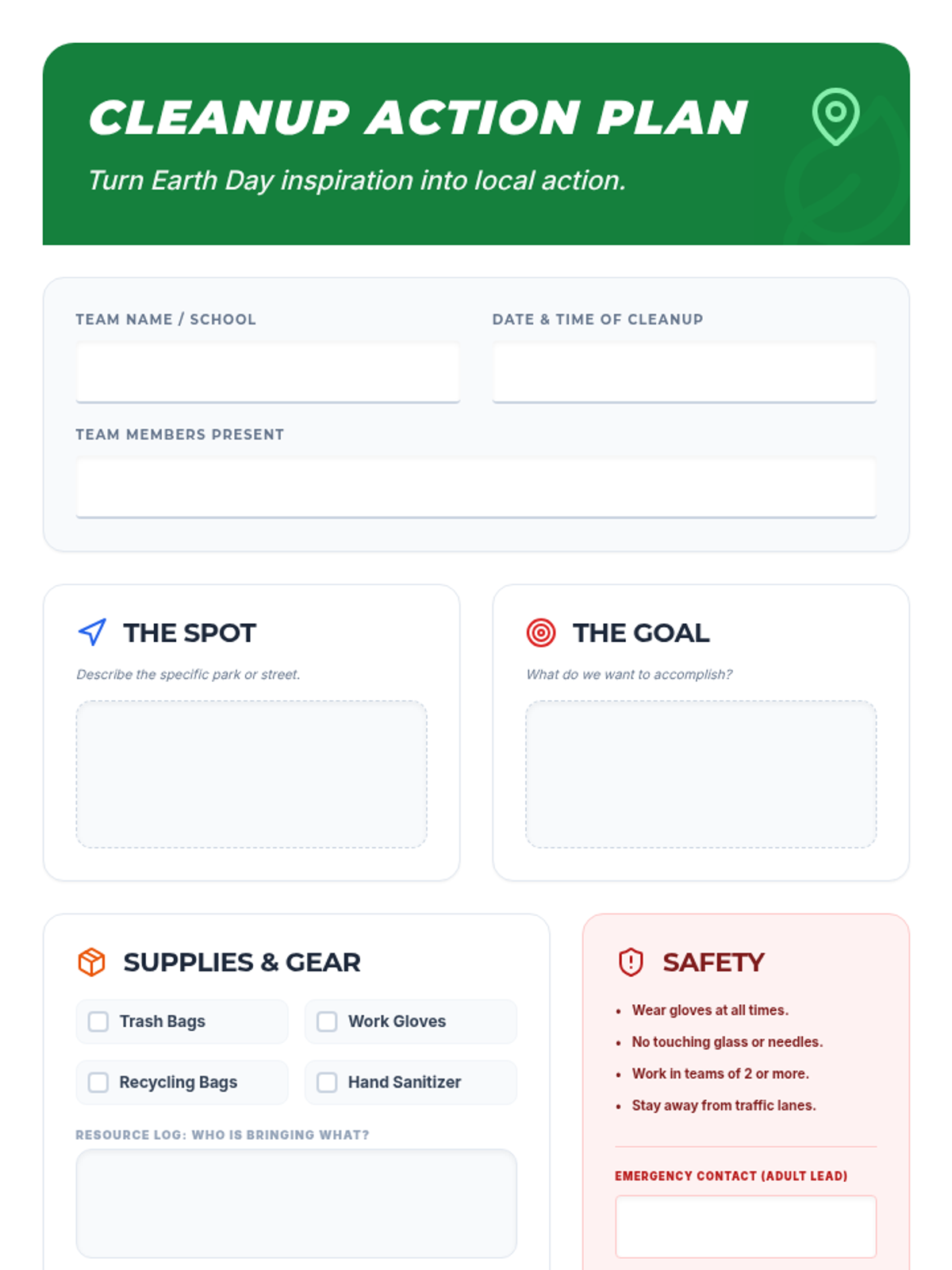
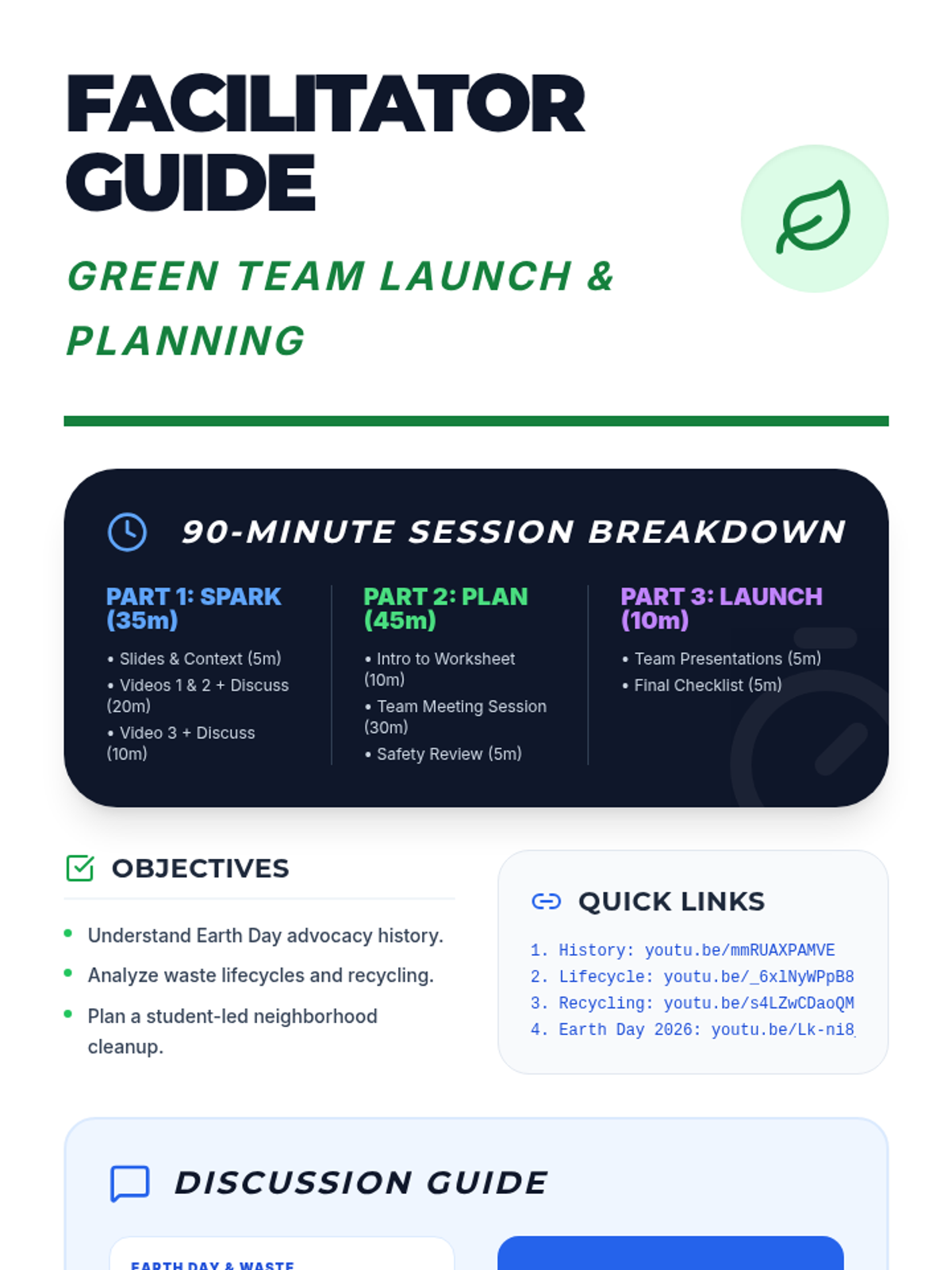
A comprehensive lesson to inspire and equip students to organize their own neighborhood or park cleanup for Earth Day. Includes background on Earth Day, the impact of waste, and a practical planning framework for student-led action.
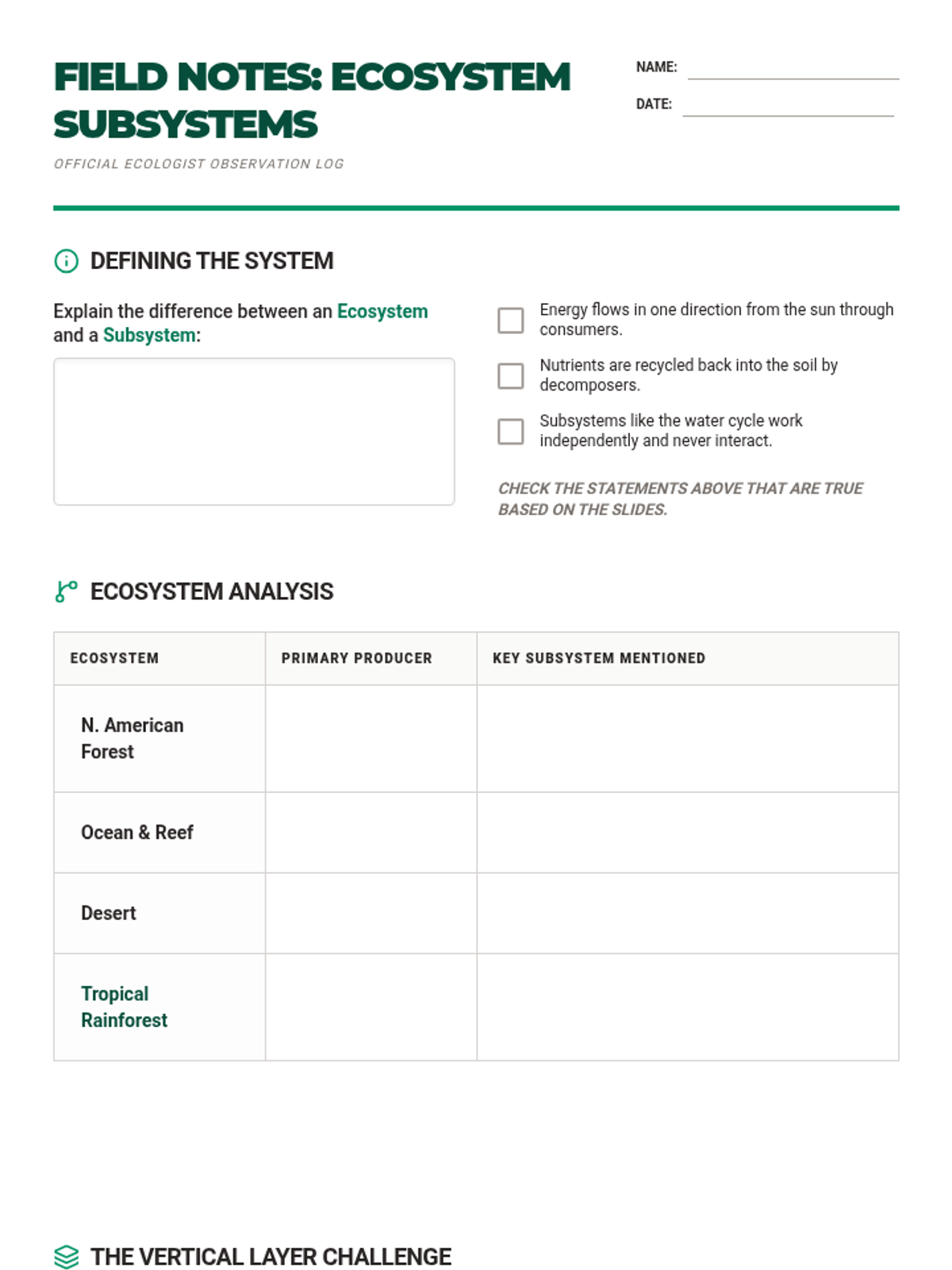
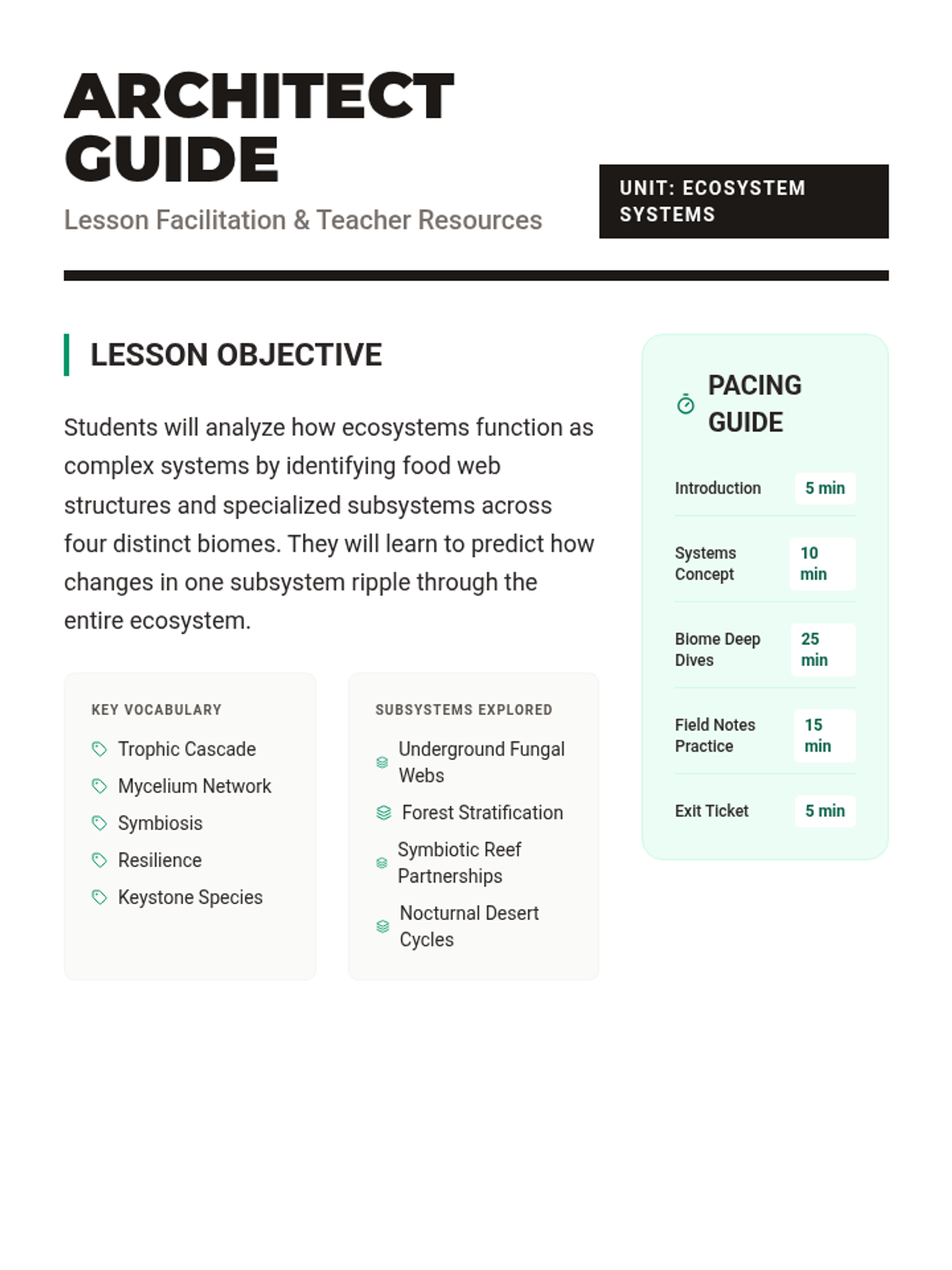
A comprehensive lesson exploring ecosystems as complex systems, focusing on food webs and subsystems across four major biomes: North American Forests, Oceans/Coral Reefs, Deserts, and Tropical Rainforests.
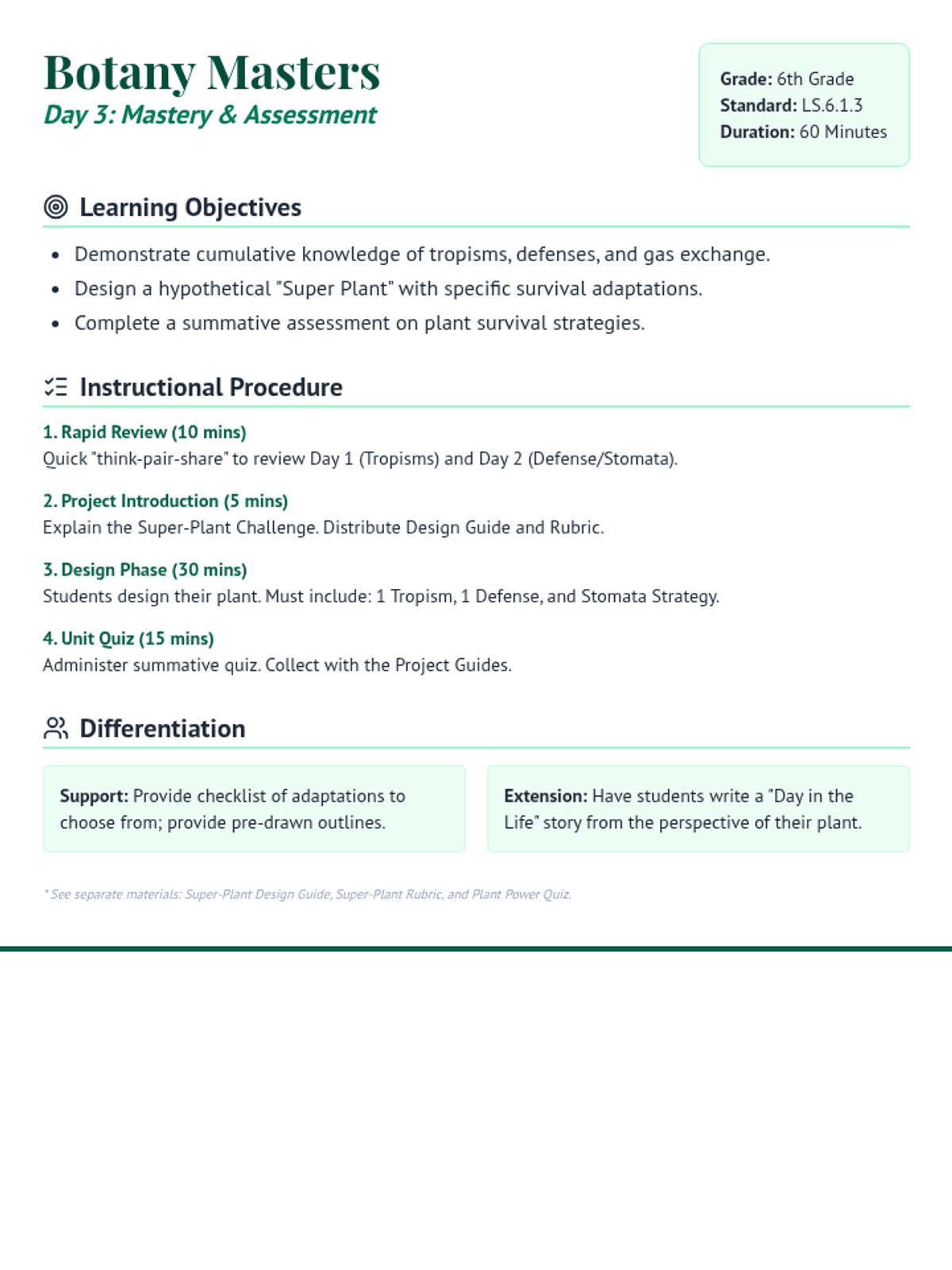
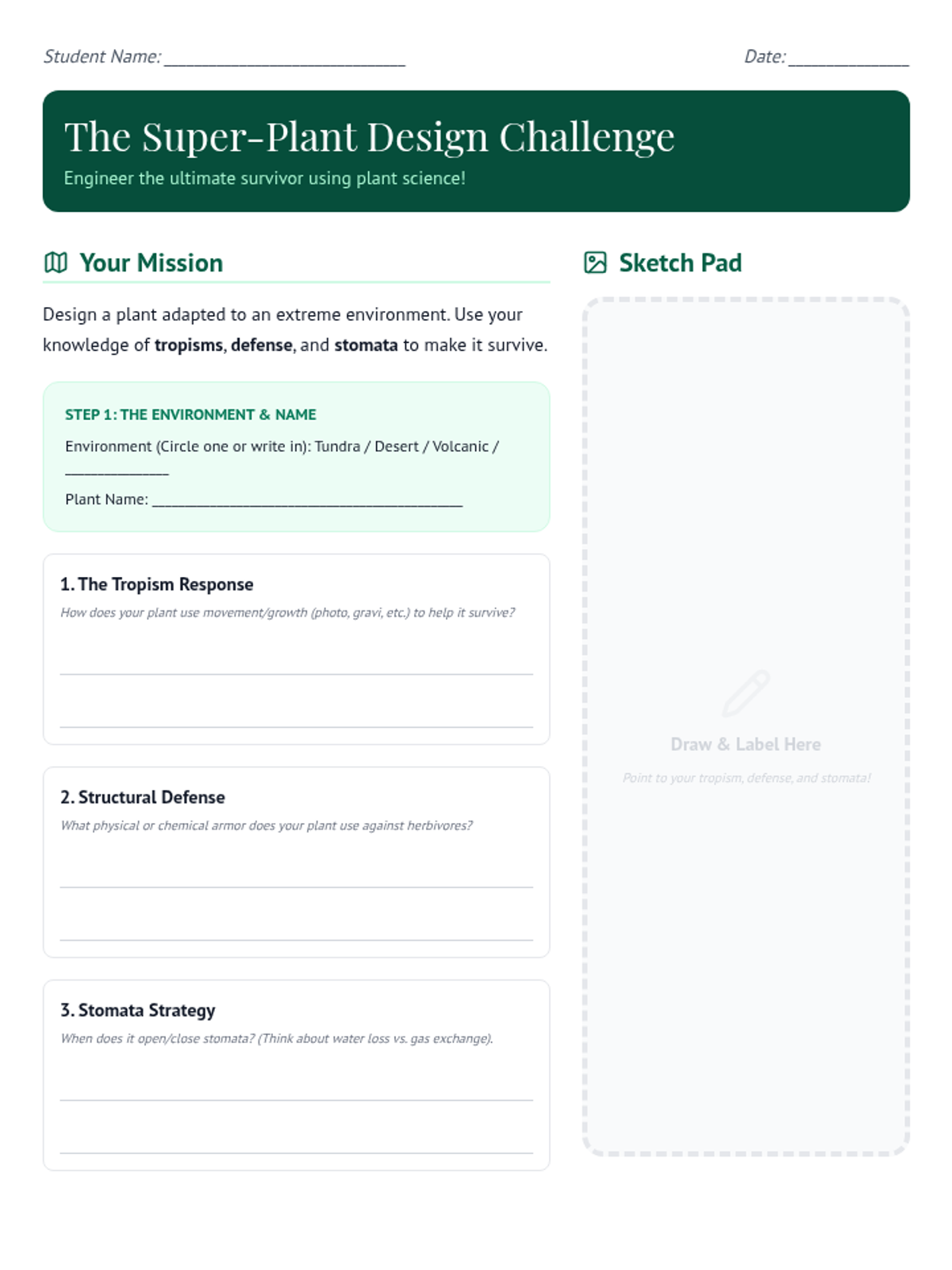
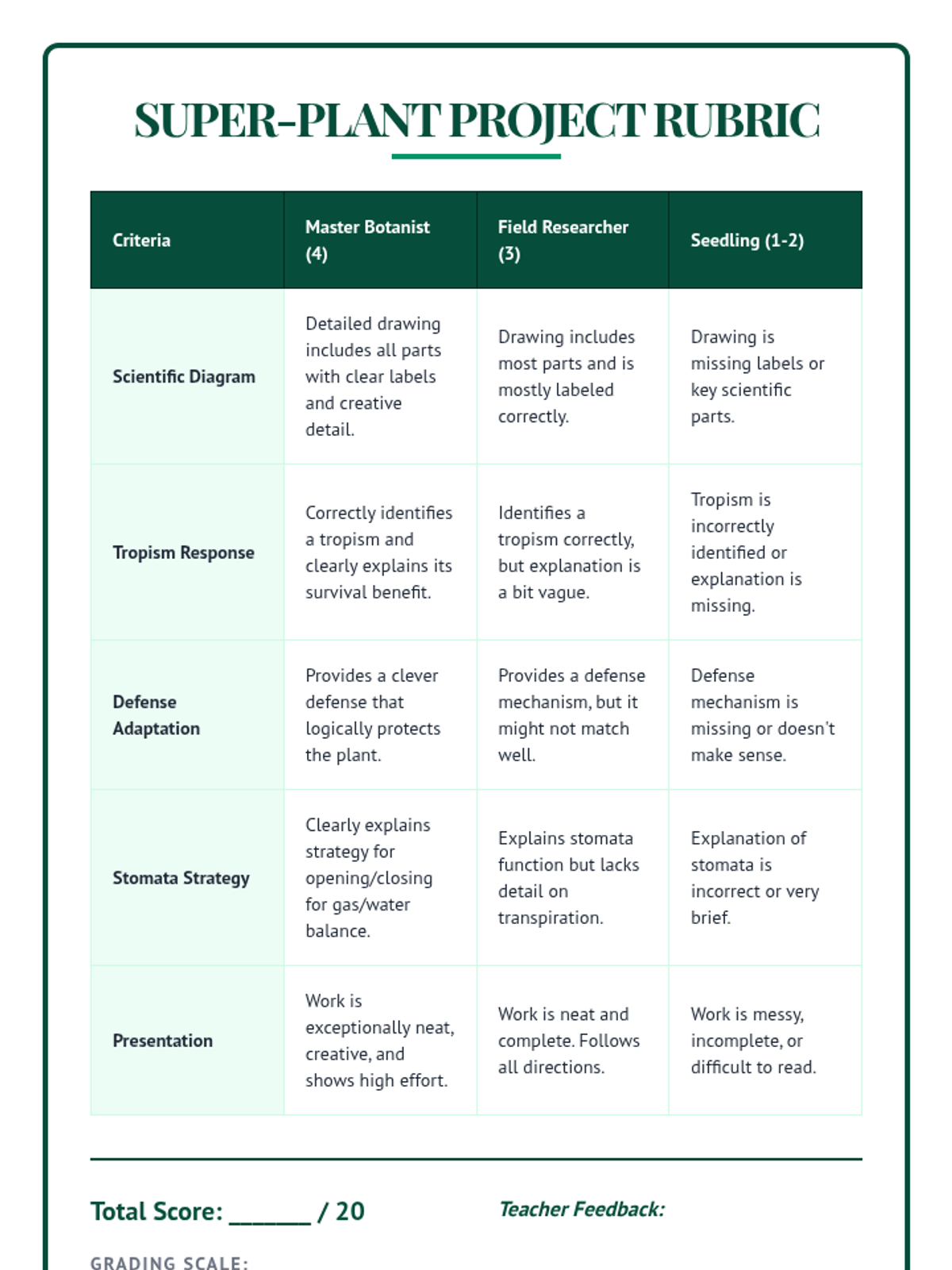
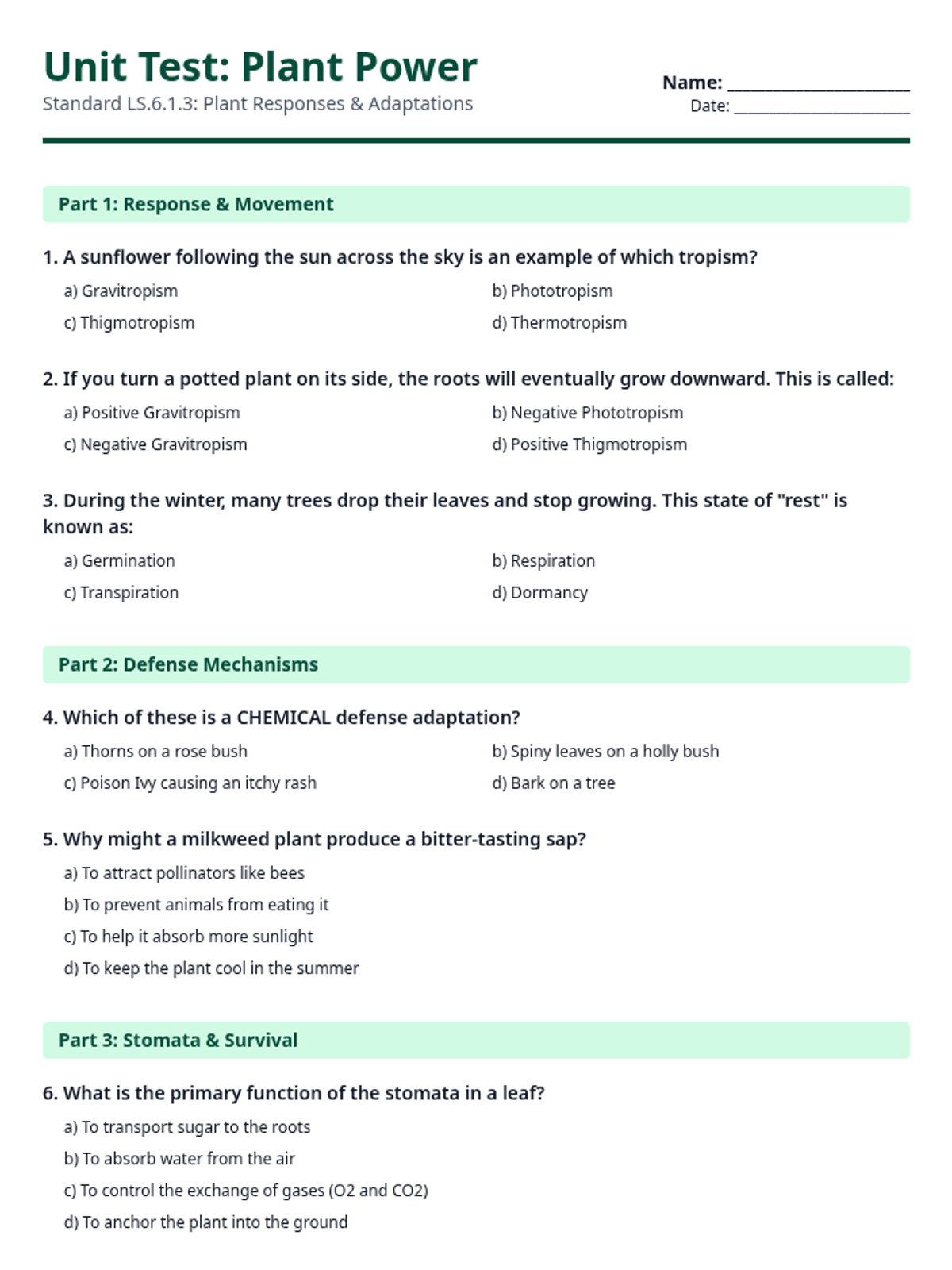
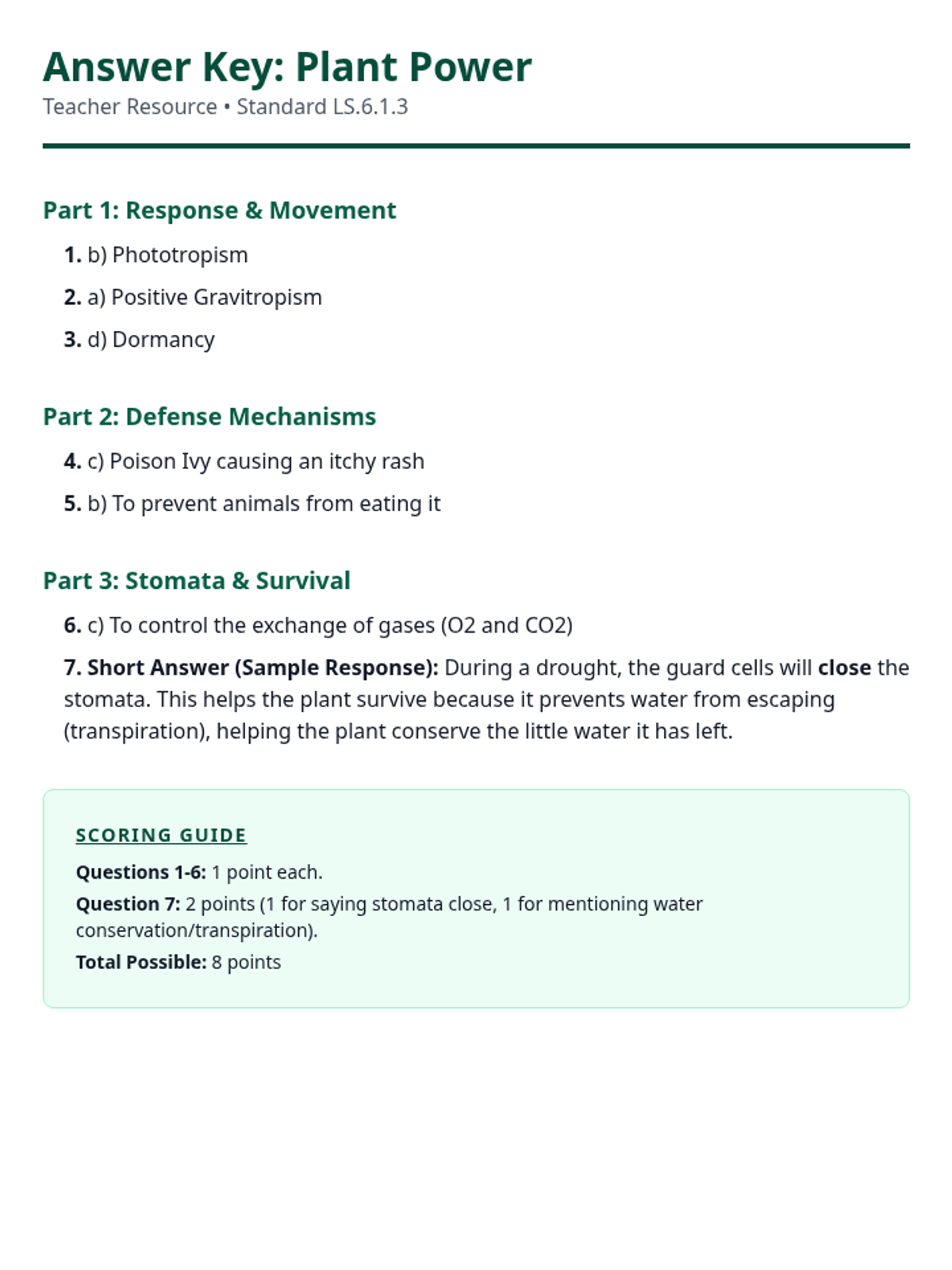
Students demonstrate their mastery of plant adaptations through a creative project and a summative assessment.
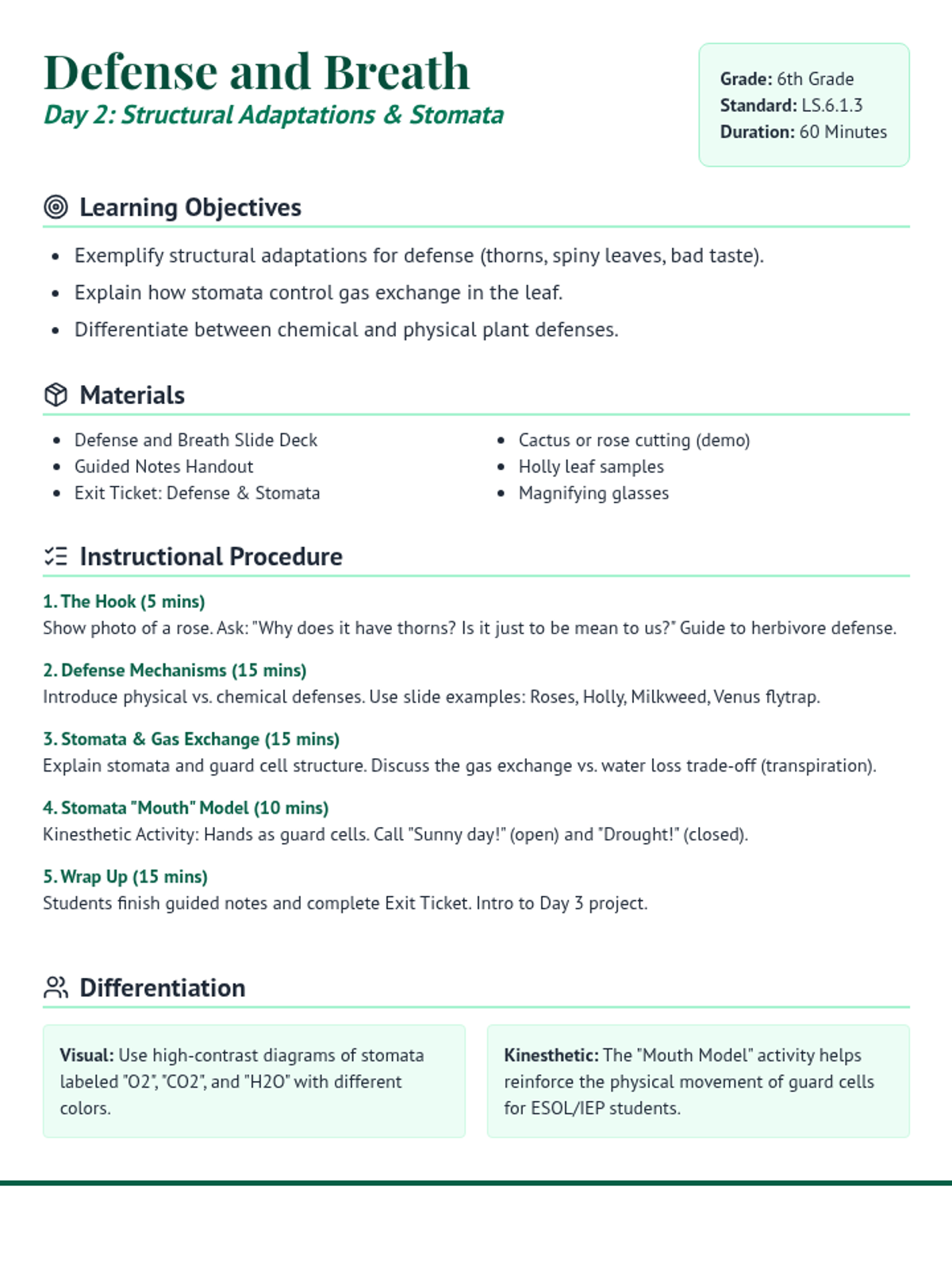
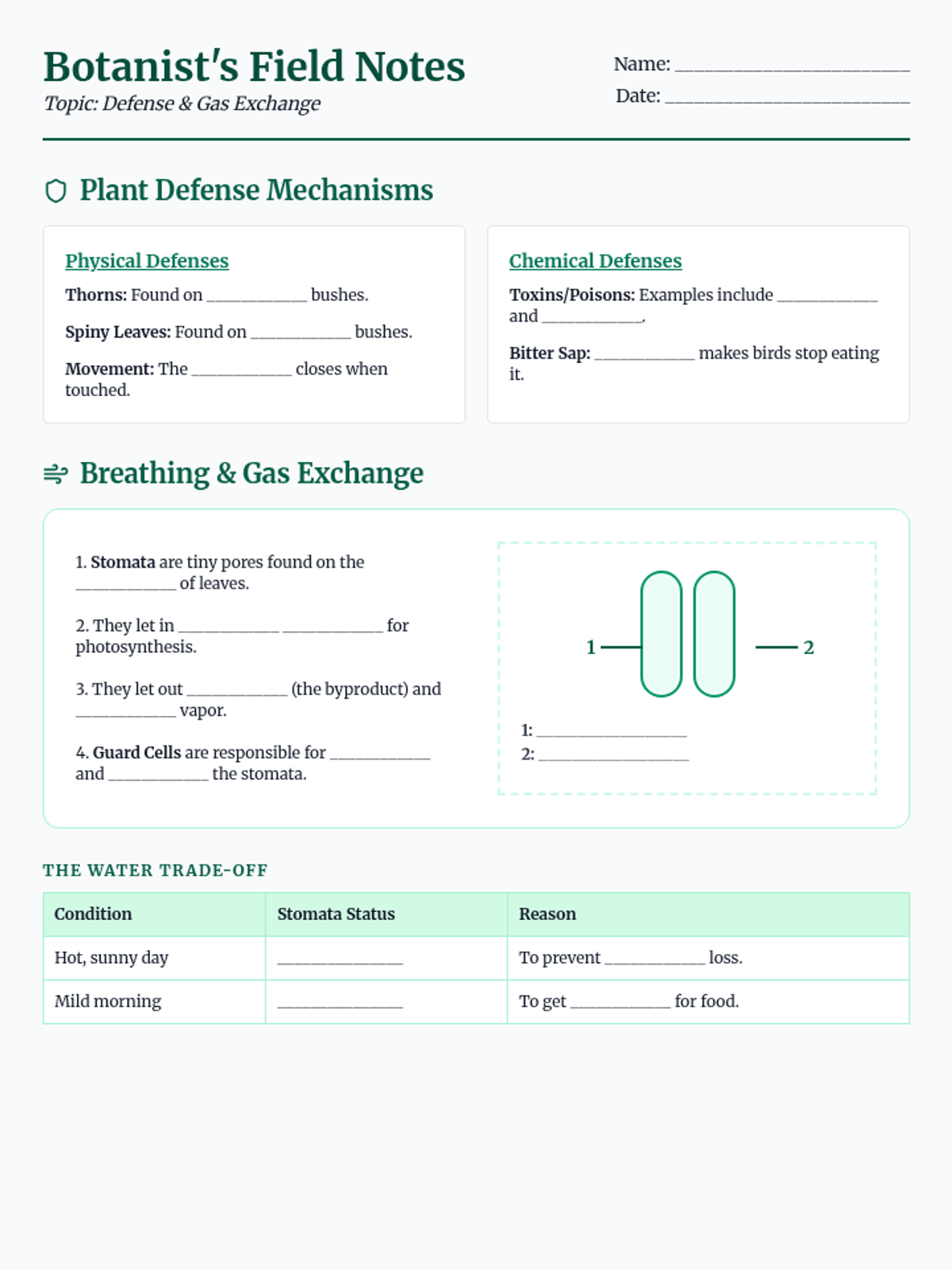
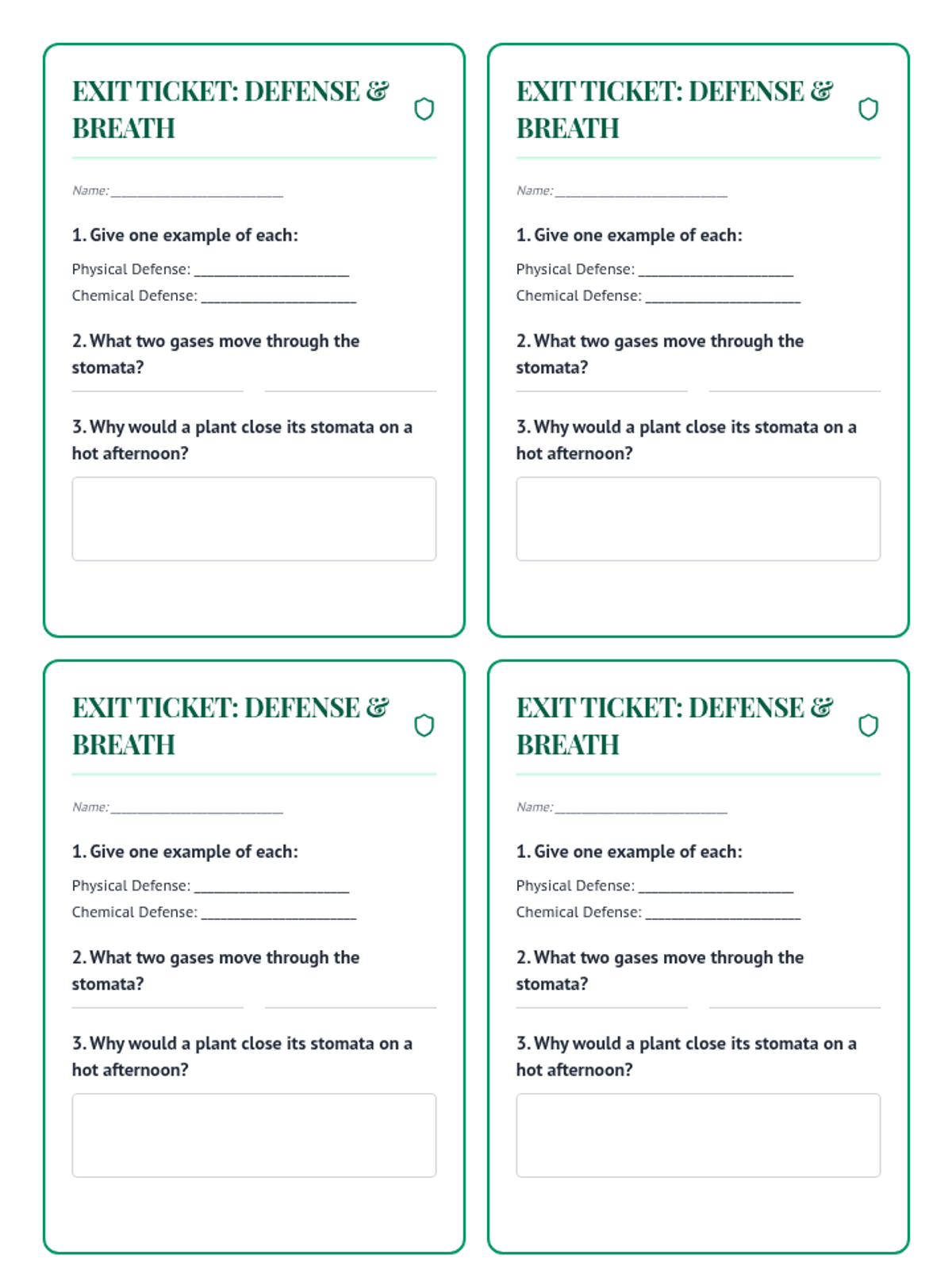
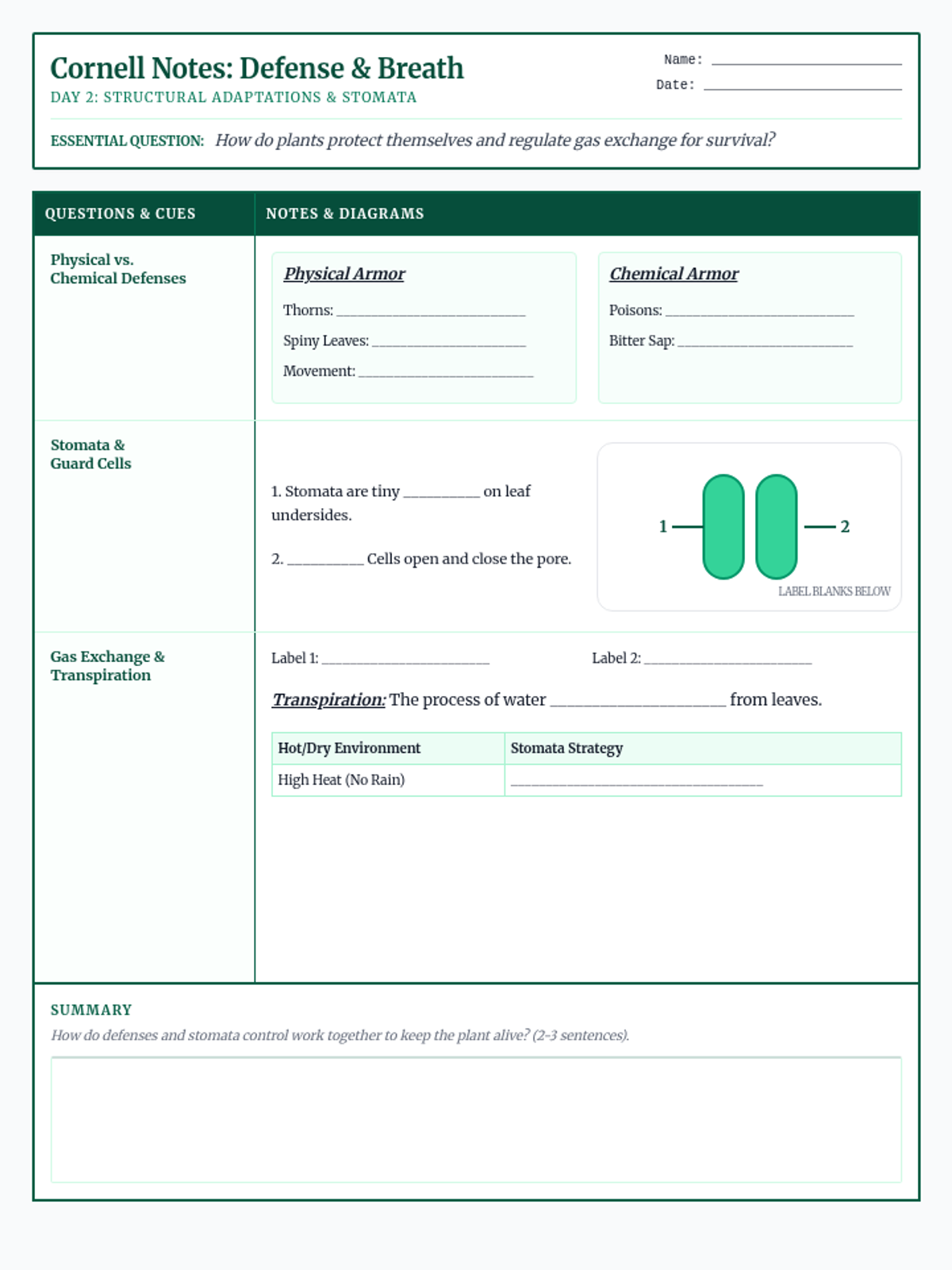
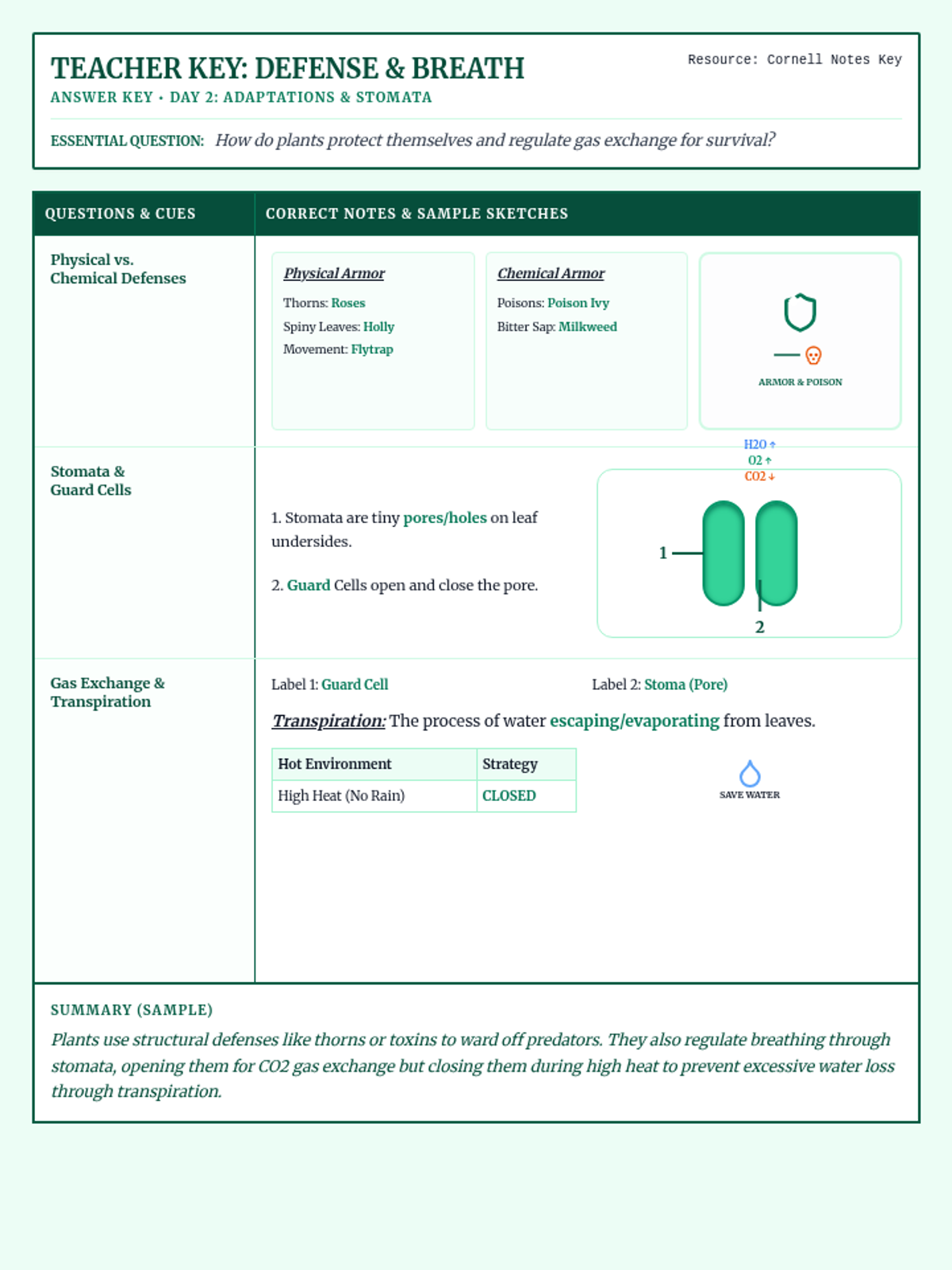
Students examine structural adaptations for defense and the role of stomata in gas exchange, understanding how plants protect themselves and breathe.
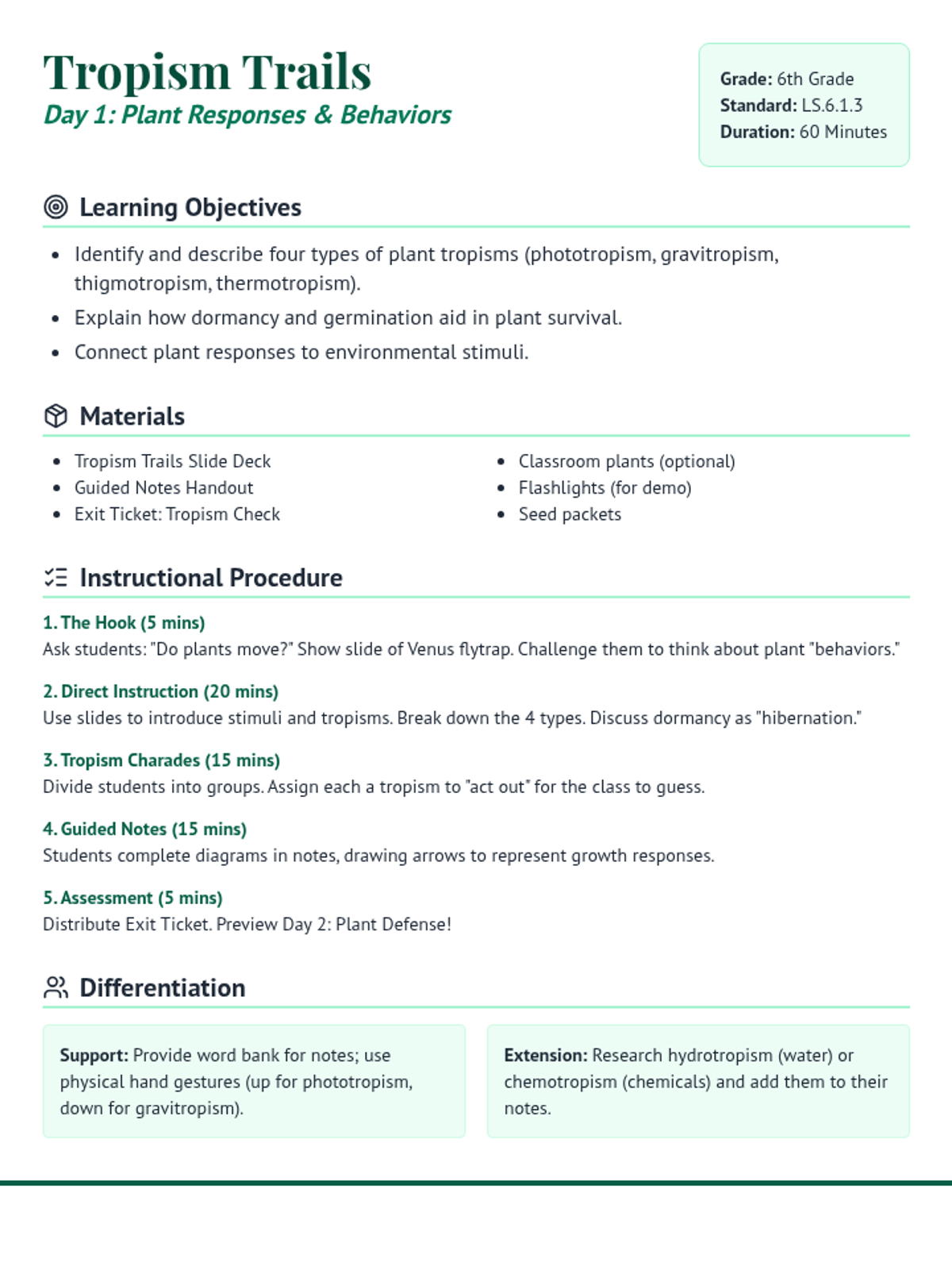
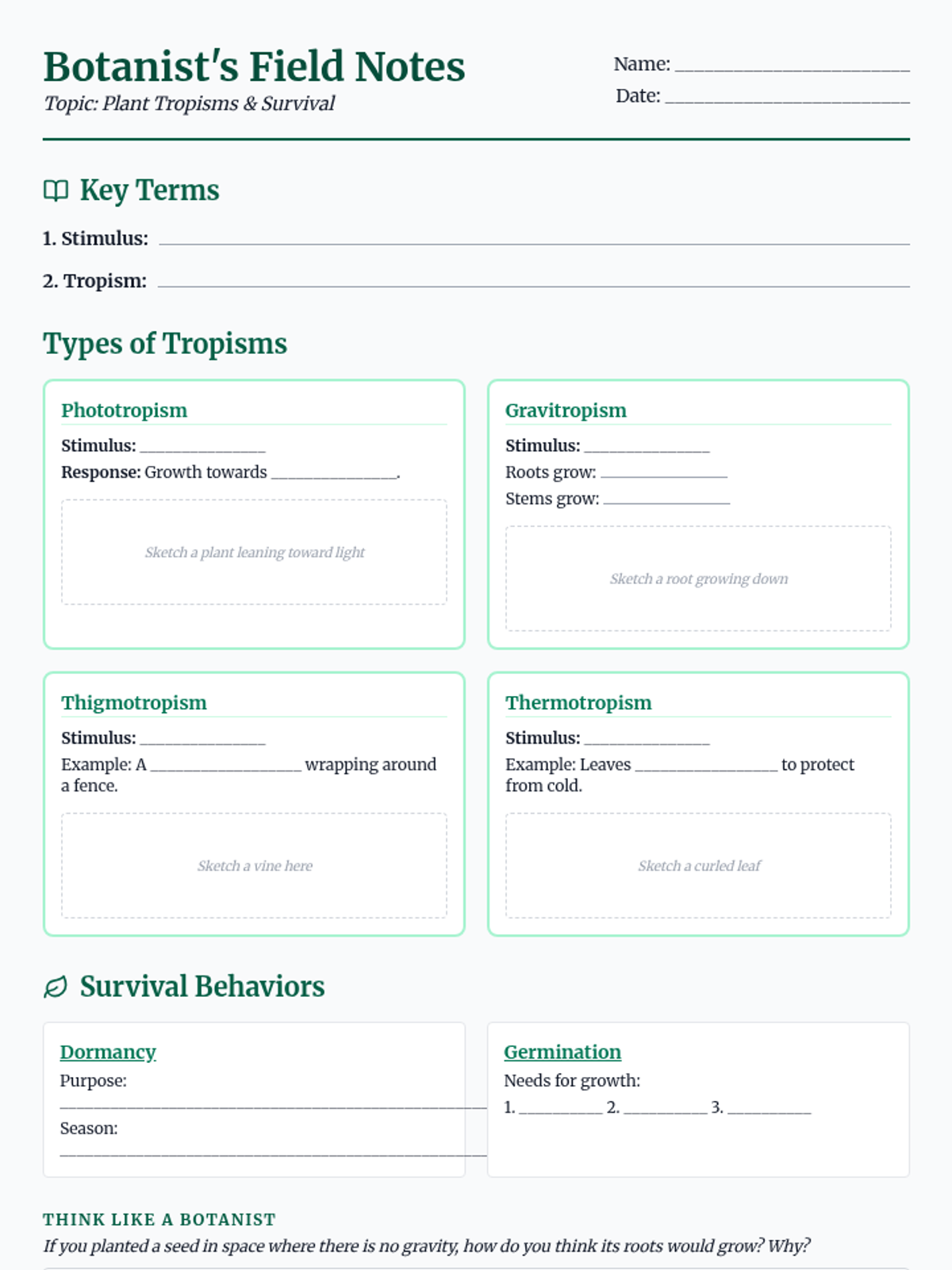
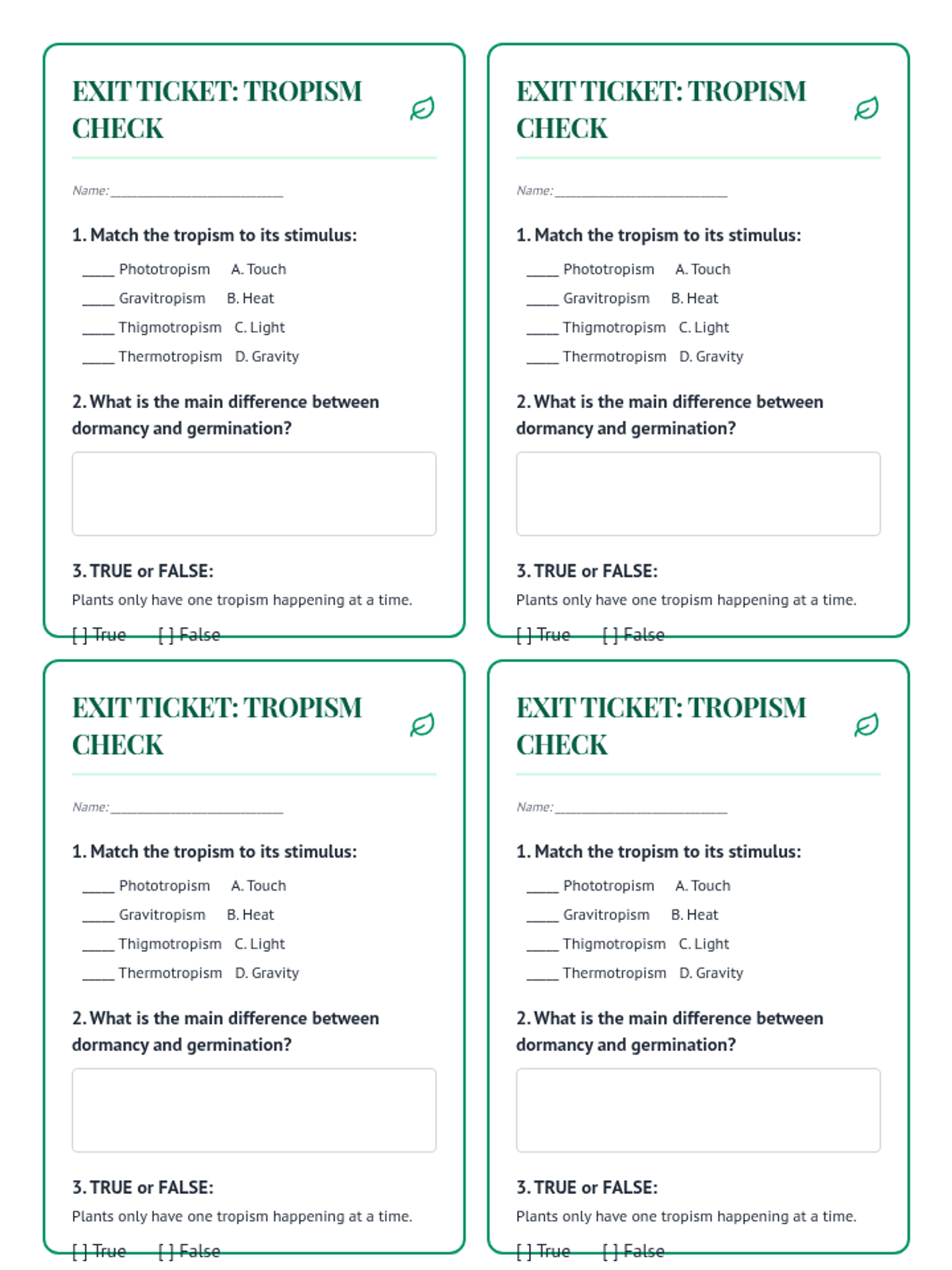
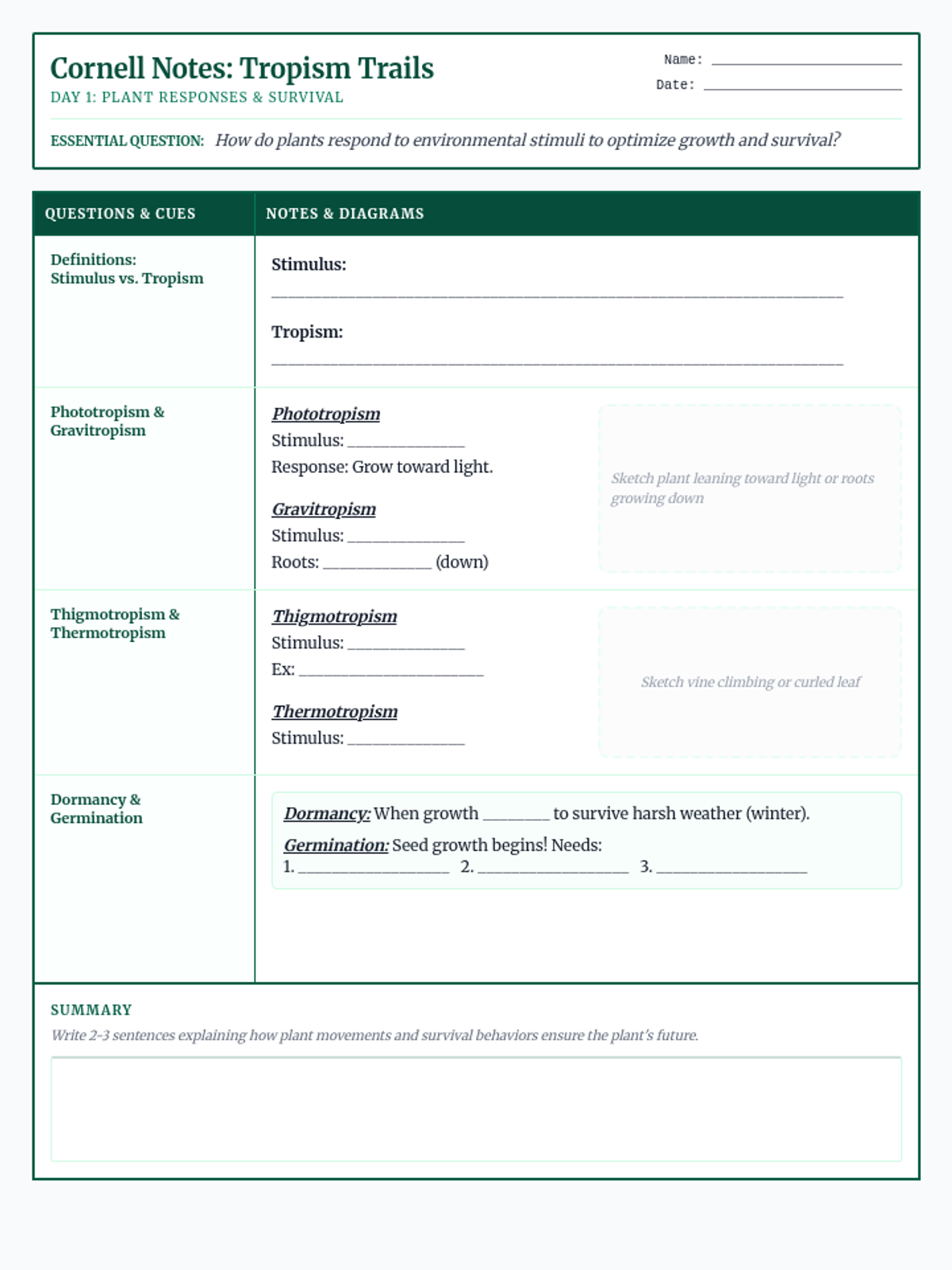
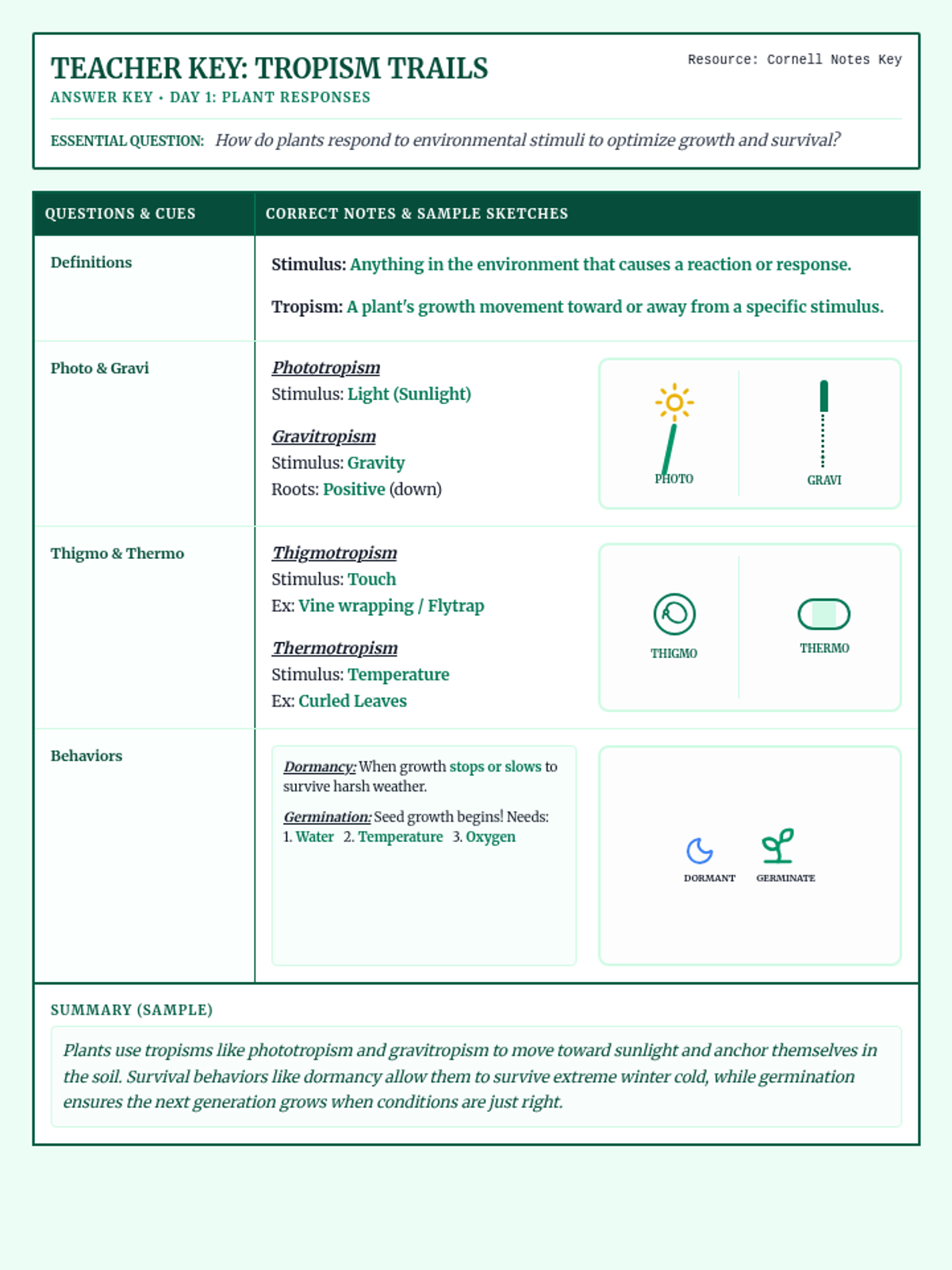
Students investigate plant behaviors and tropisms, exploring how plants respond to light, gravity, touch, and temperature to optimize growth and survival.