This lesson introduces students to the primary regional divisions of the world, providing high-quality reference materials and practice activities to master regional identification.
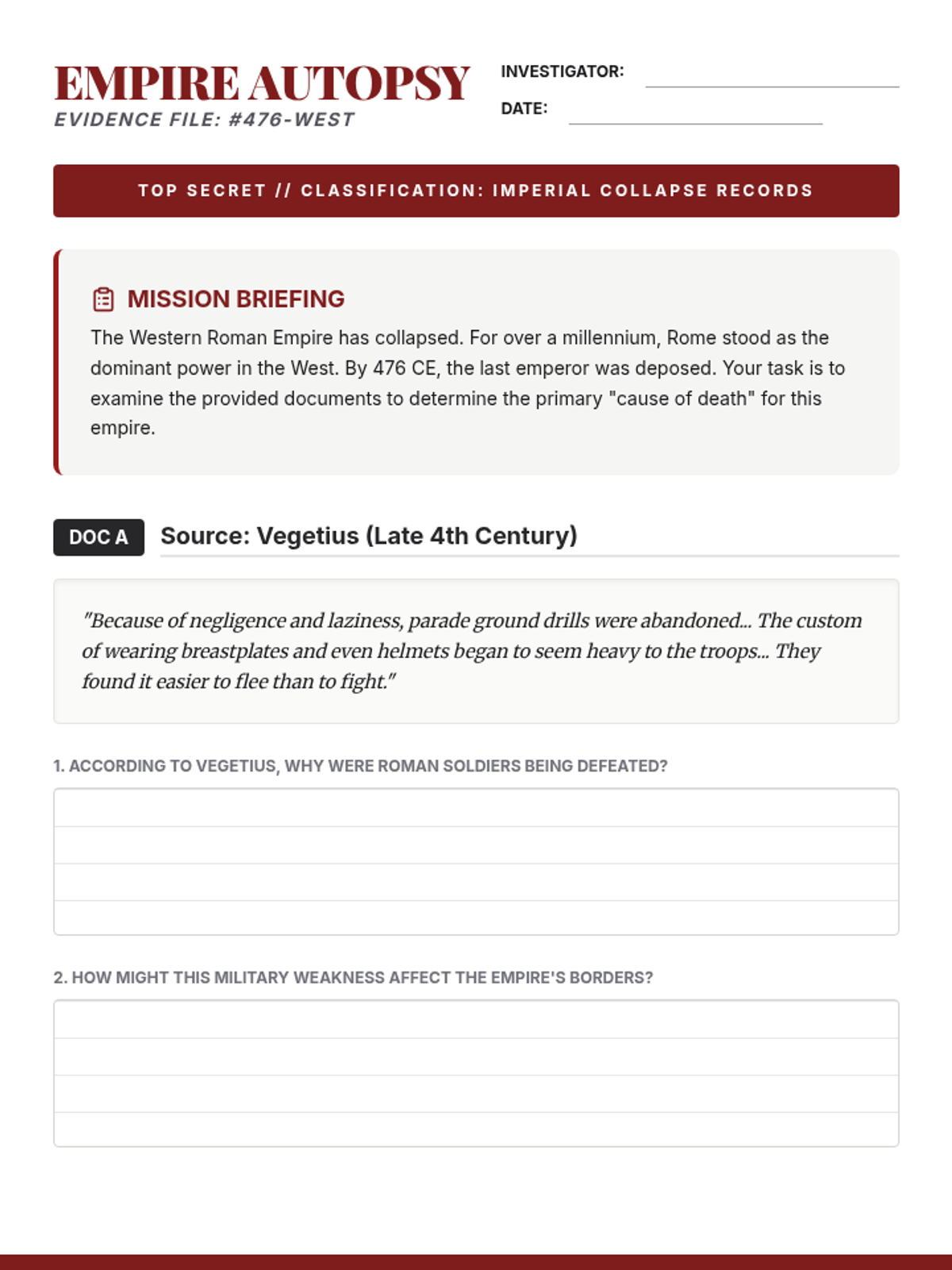
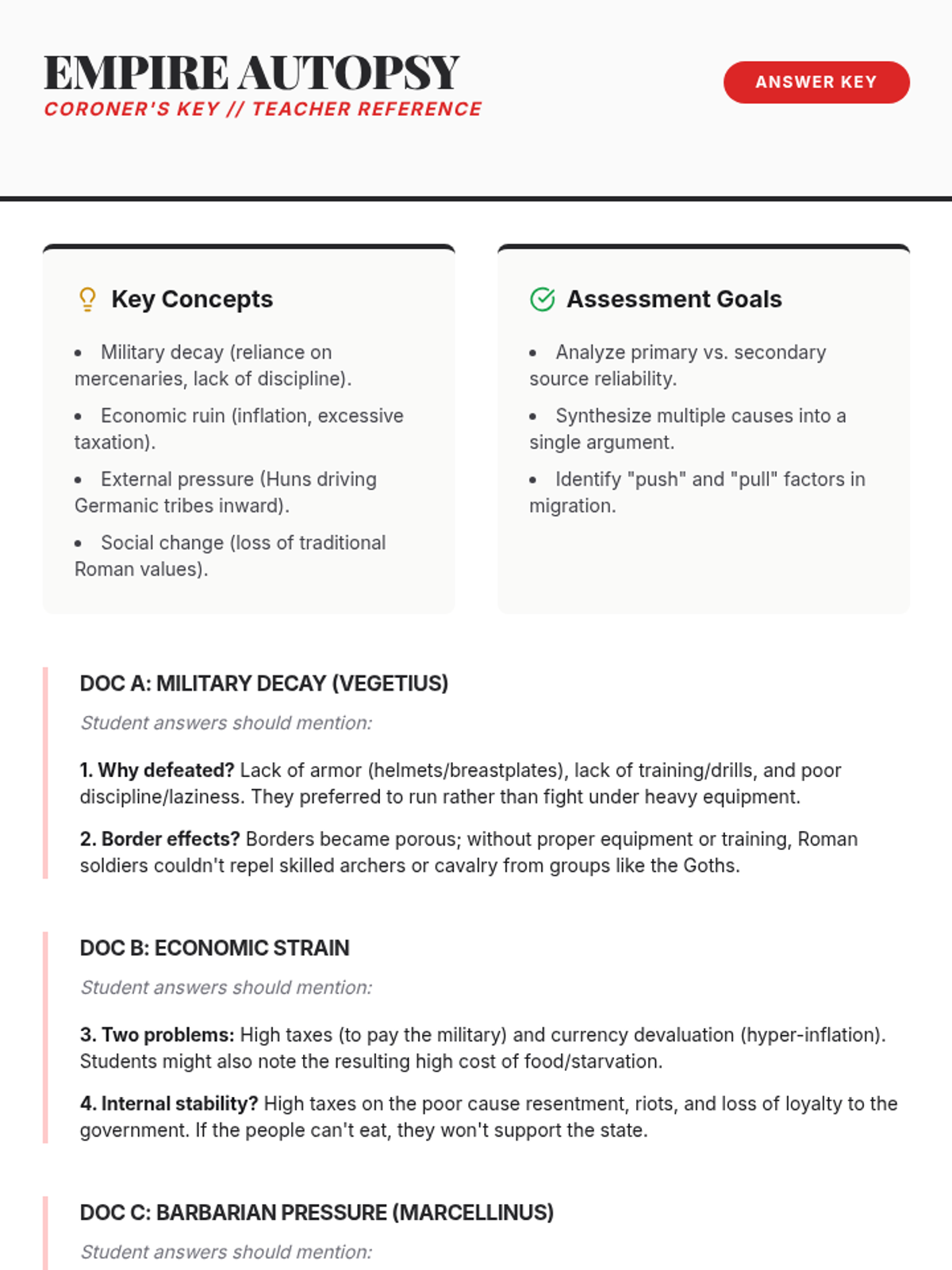
Students analyze primary and secondary sources to determine the primary causes of the Western Roman Empire's collapse in 476 CE.
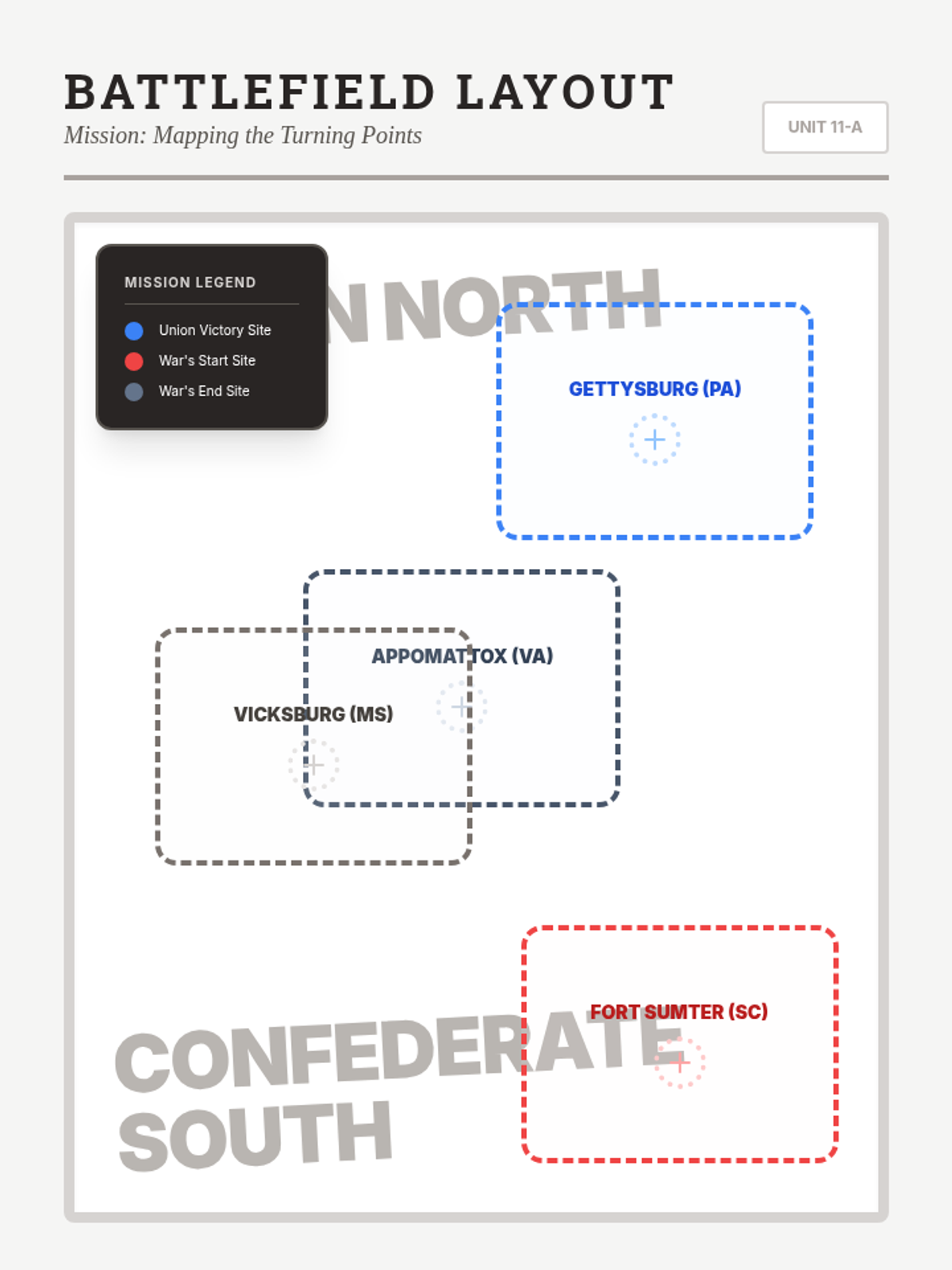
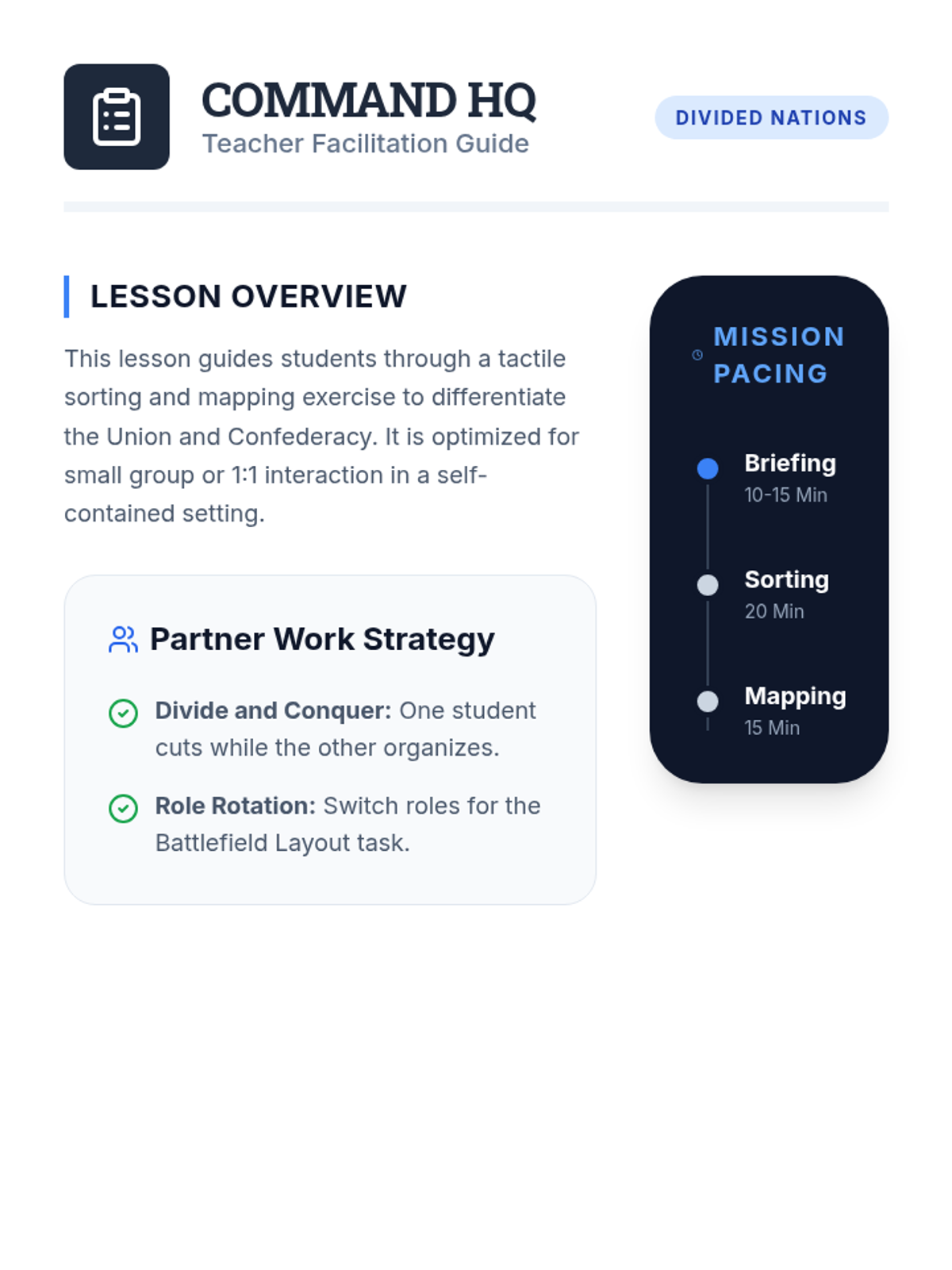
A hands-on exploration of the American Civil War, focusing on the differences between the Union and the Confederacy through sorting and map assembly tasks designed for a self-contained classroom.
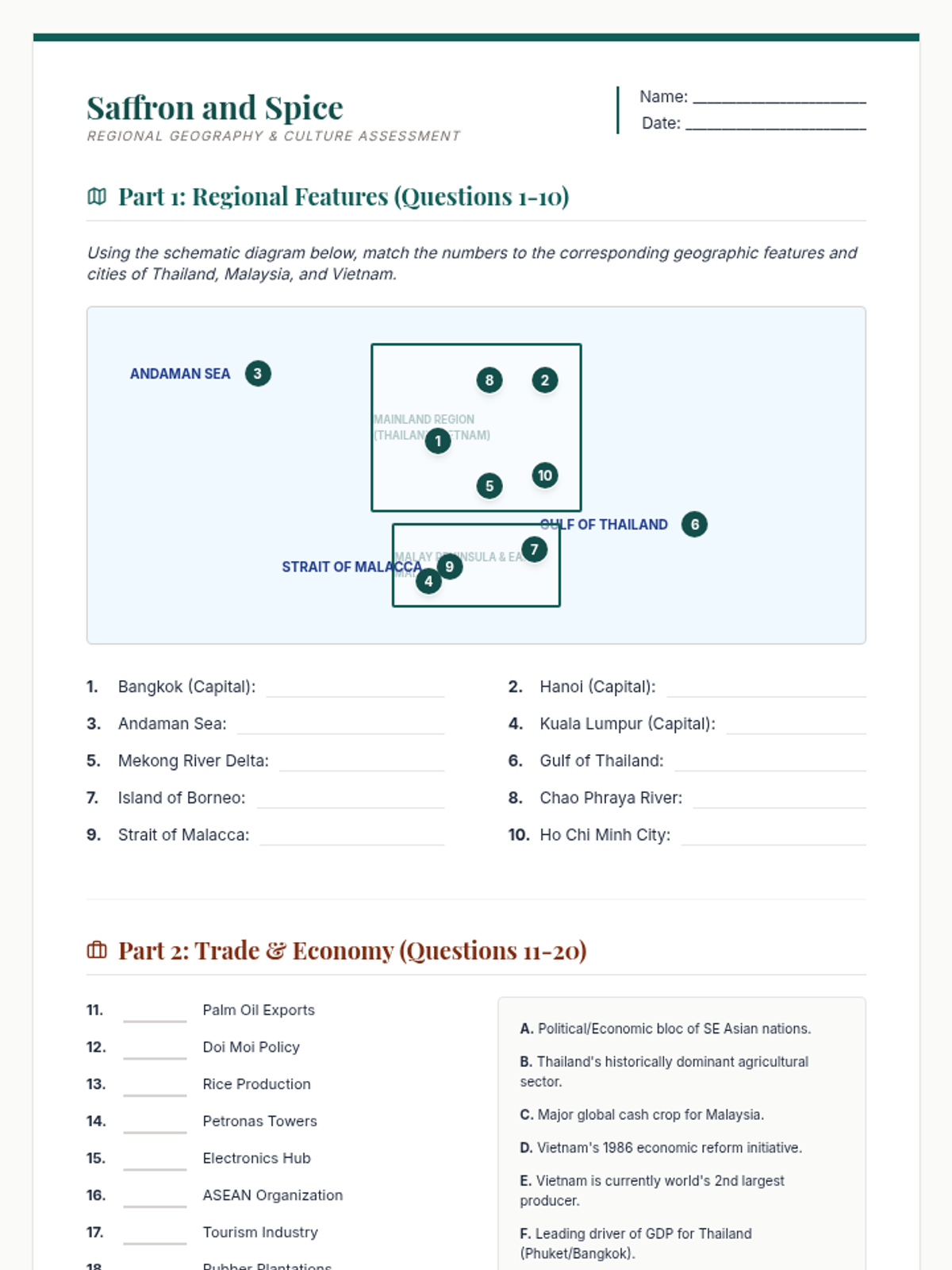
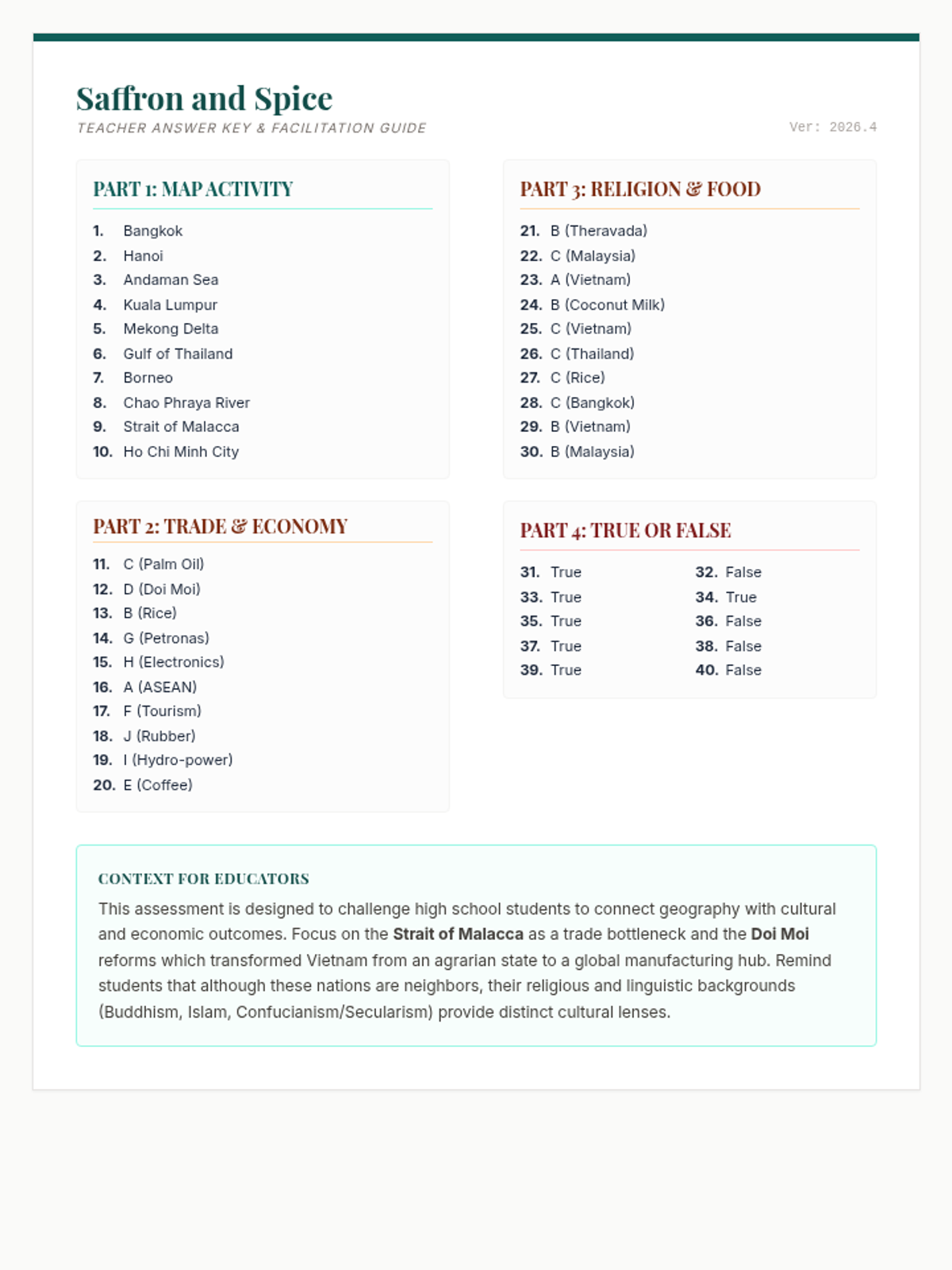
A comprehensive exploration of the geography, culture, and economy of Thailand, Malaysia, and Vietnam, focusing on their unique religious landscapes, culinary traditions, and roles in global trade.
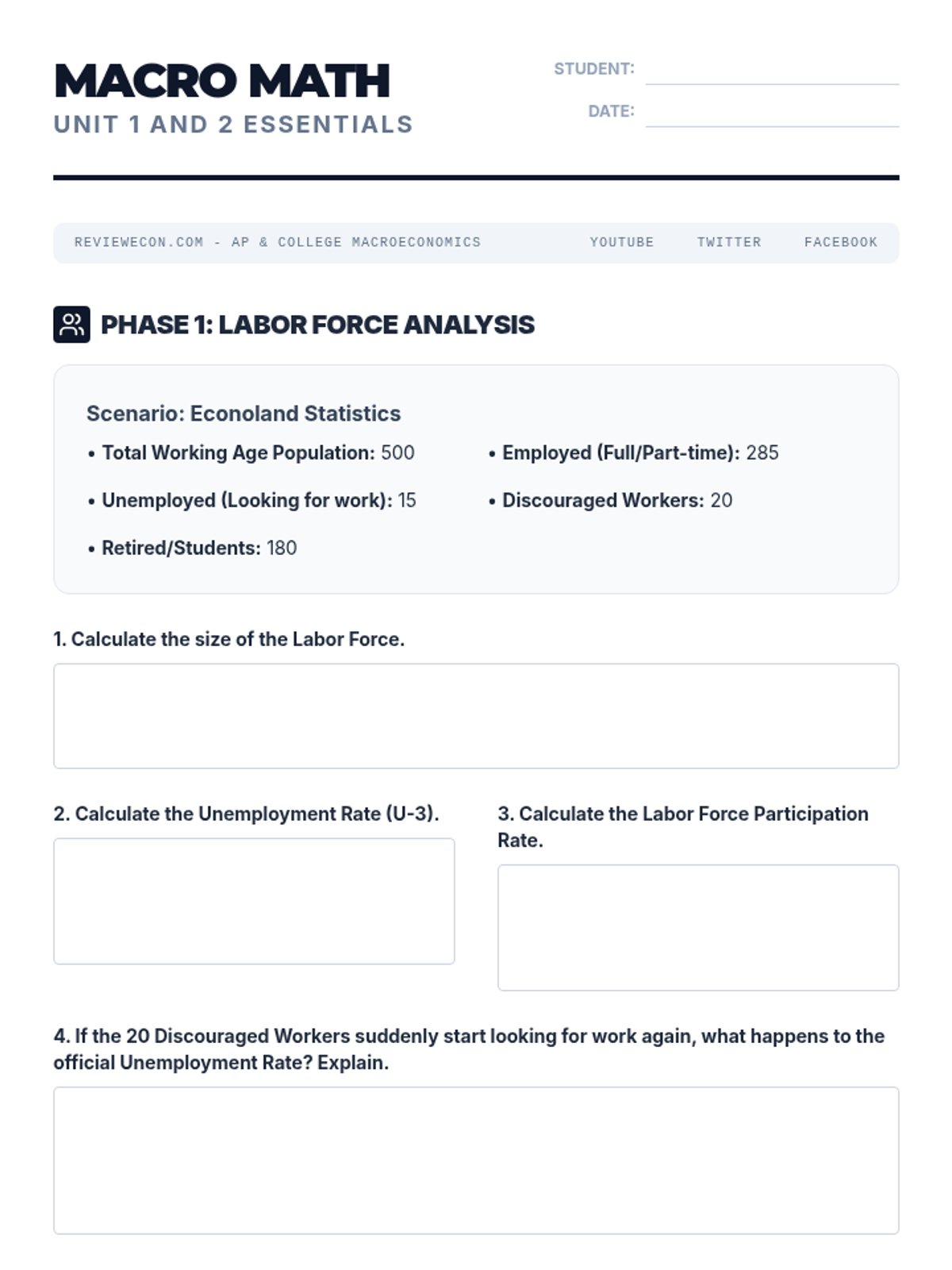
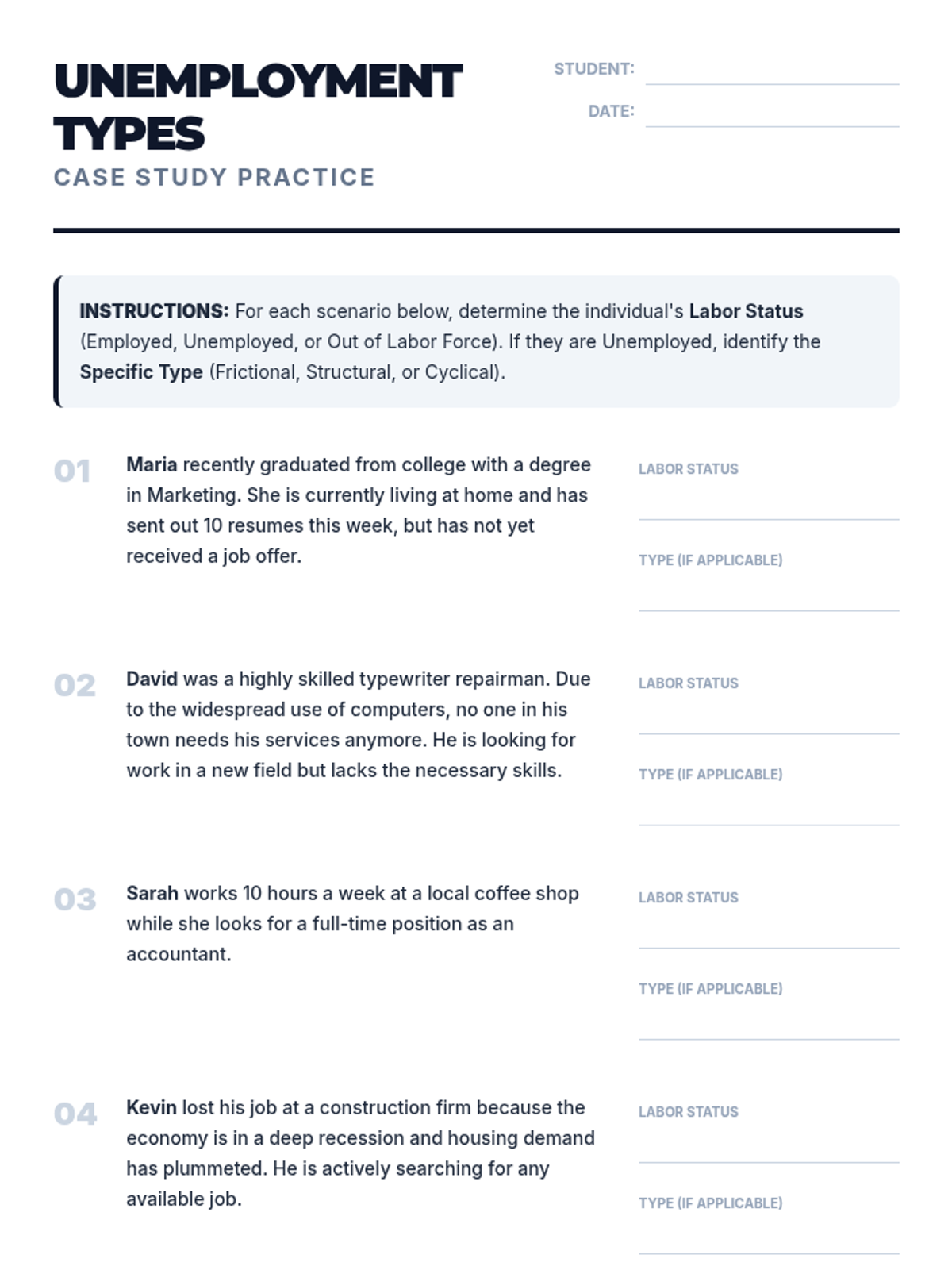
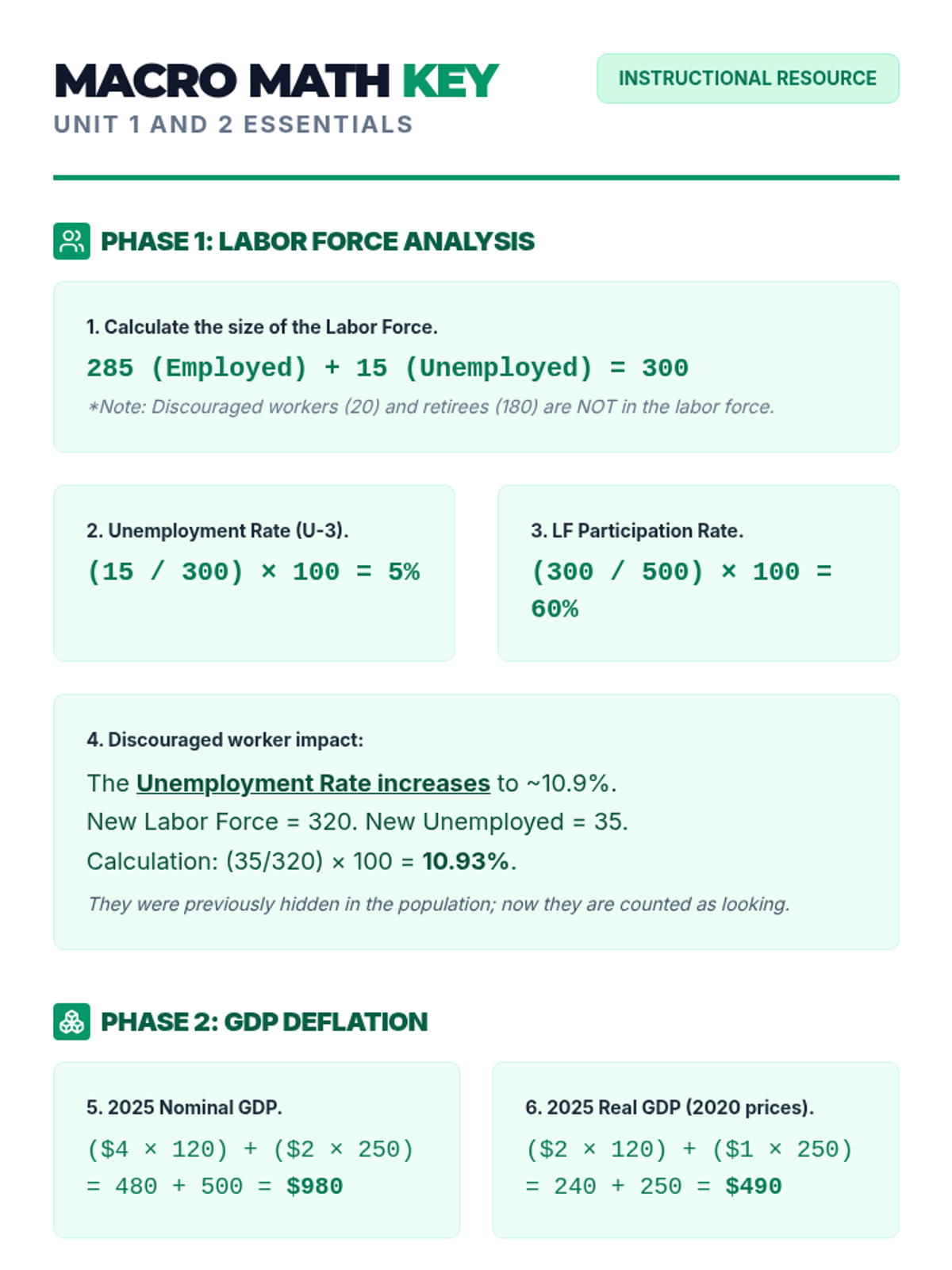
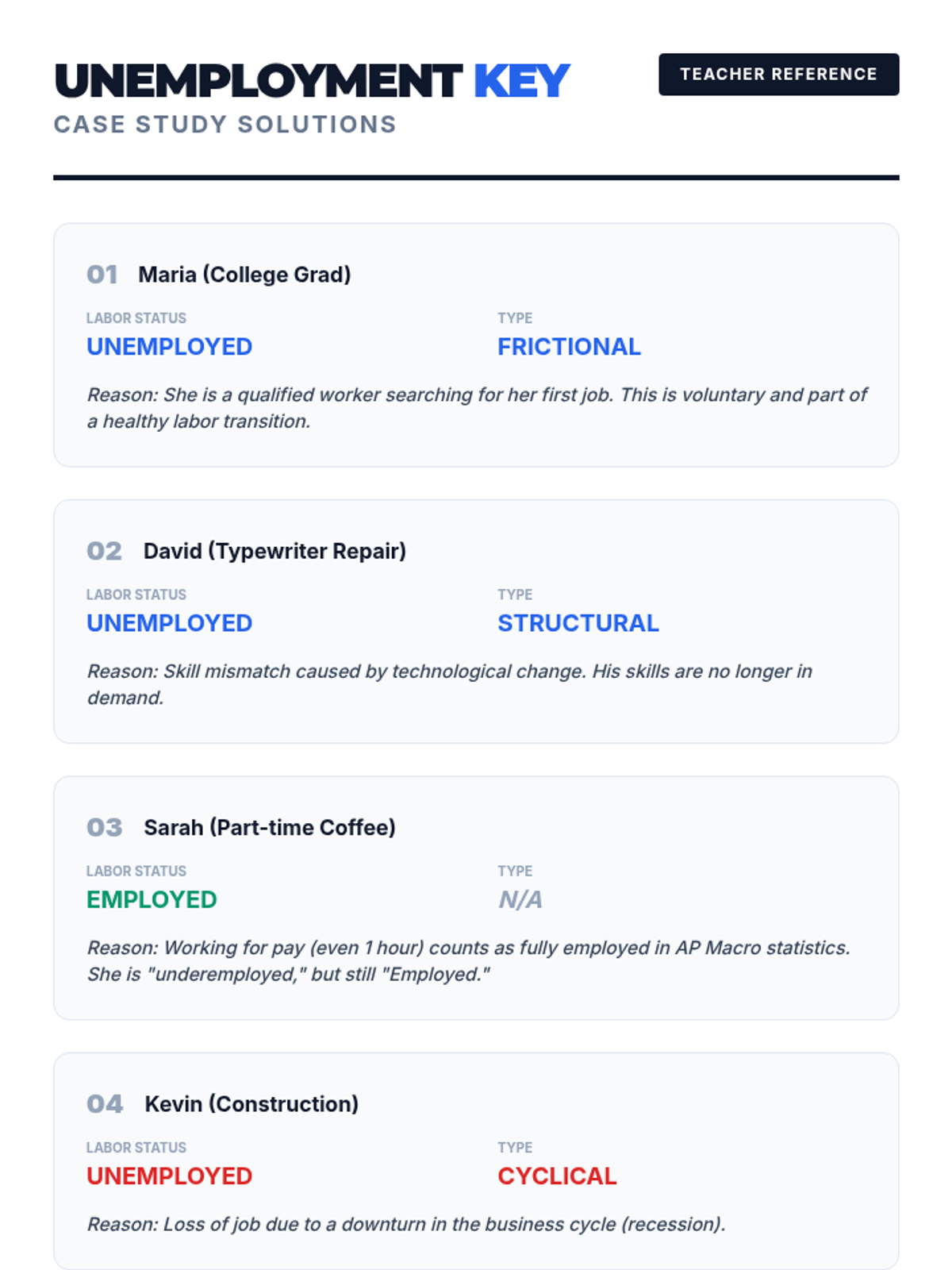
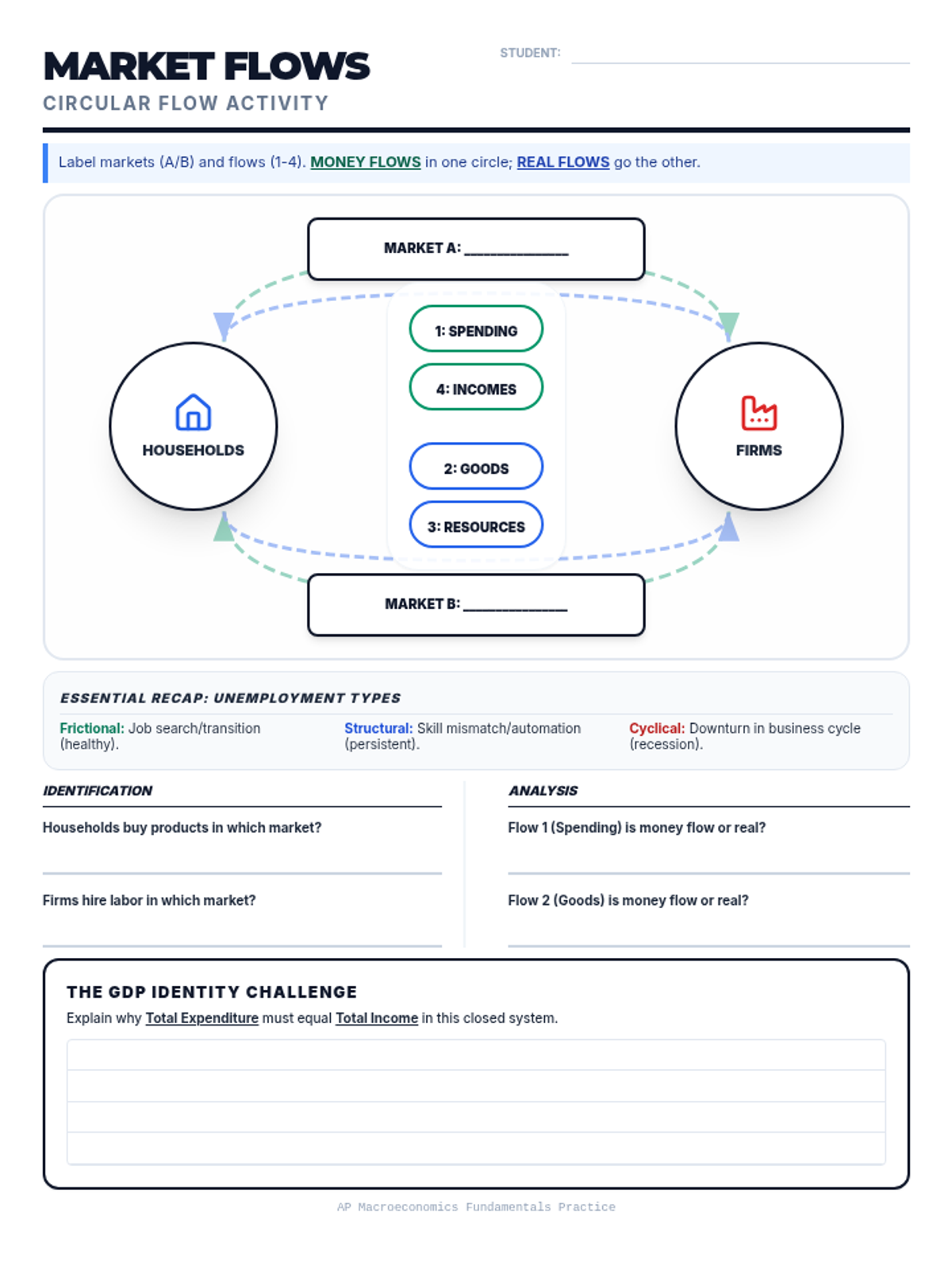
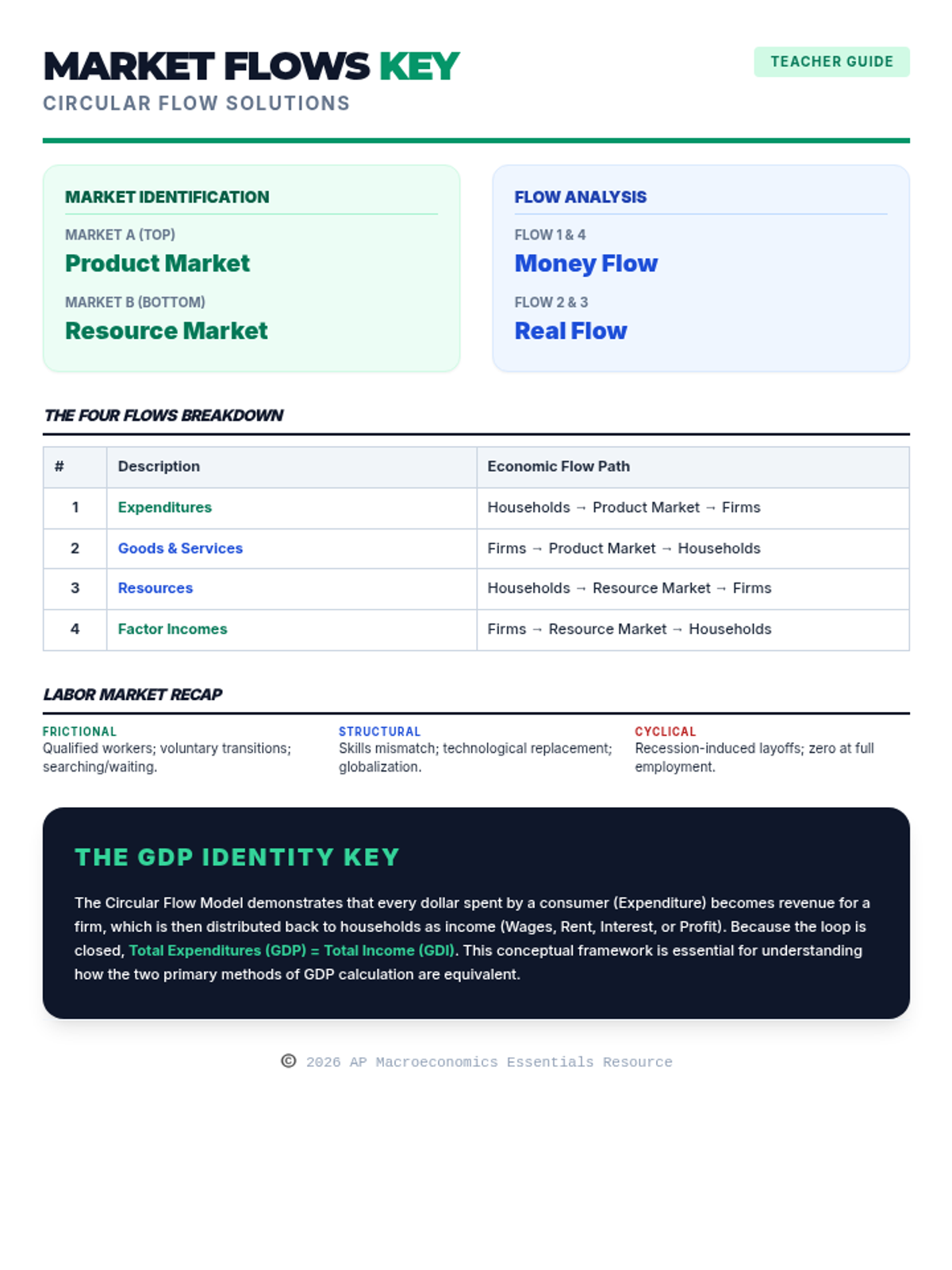
This lesson covers the fundamental building blocks of Units 1 and 2 for AP Economics, including the Production Possibilities Curve, Comparative Advantage, Supply and Demand, and basic macroeconomic indicators like CPI and GDP.
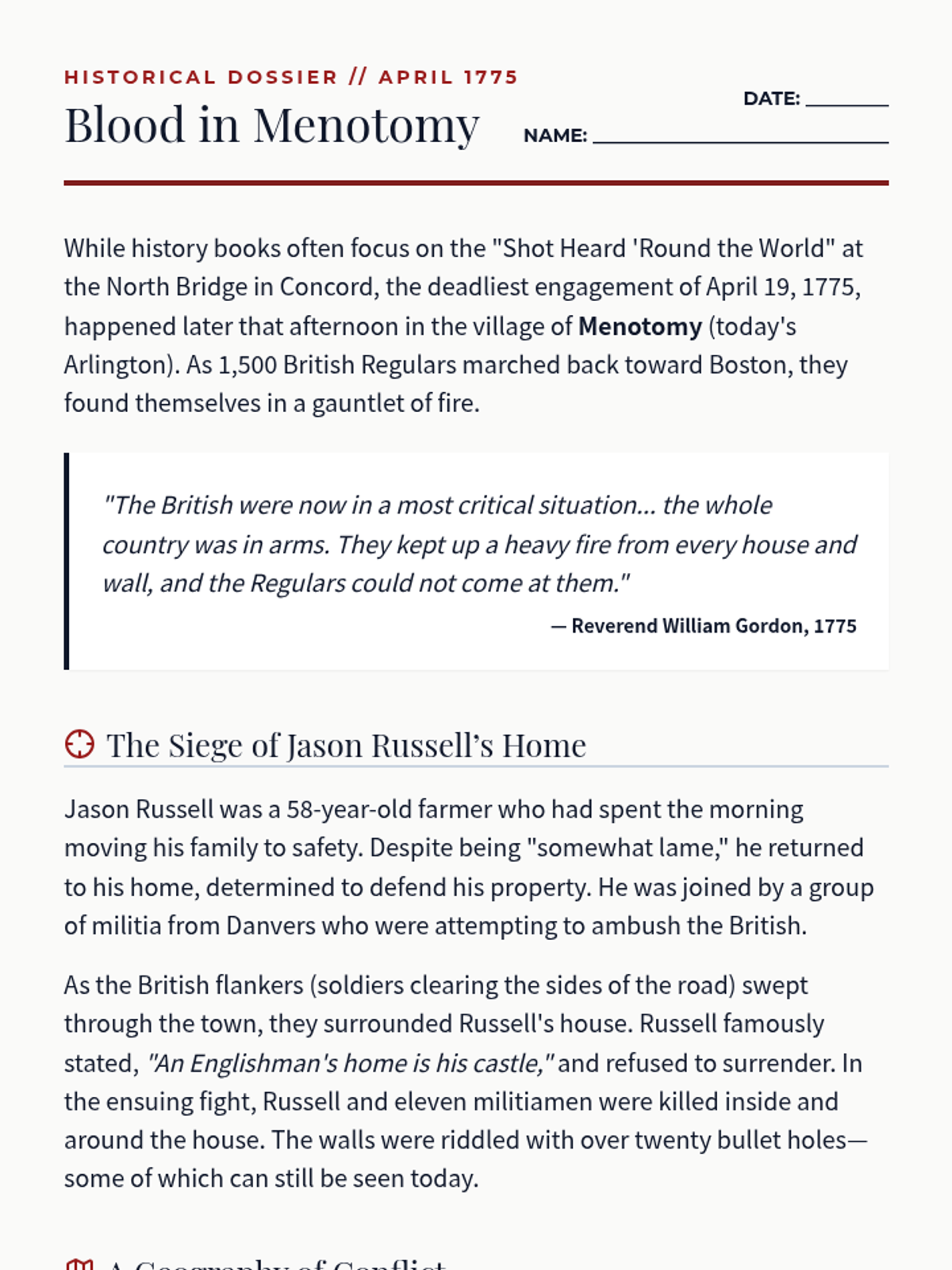
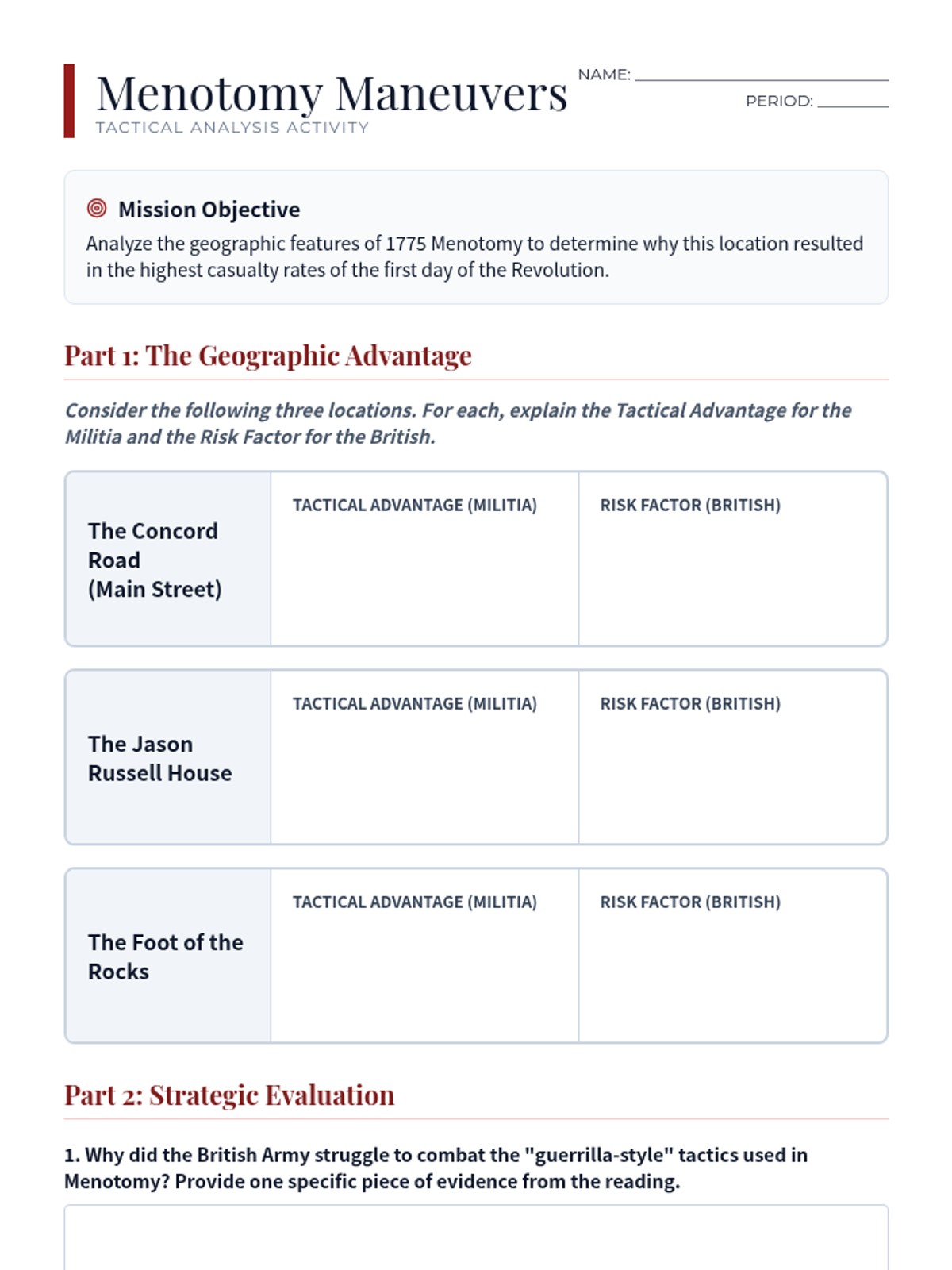
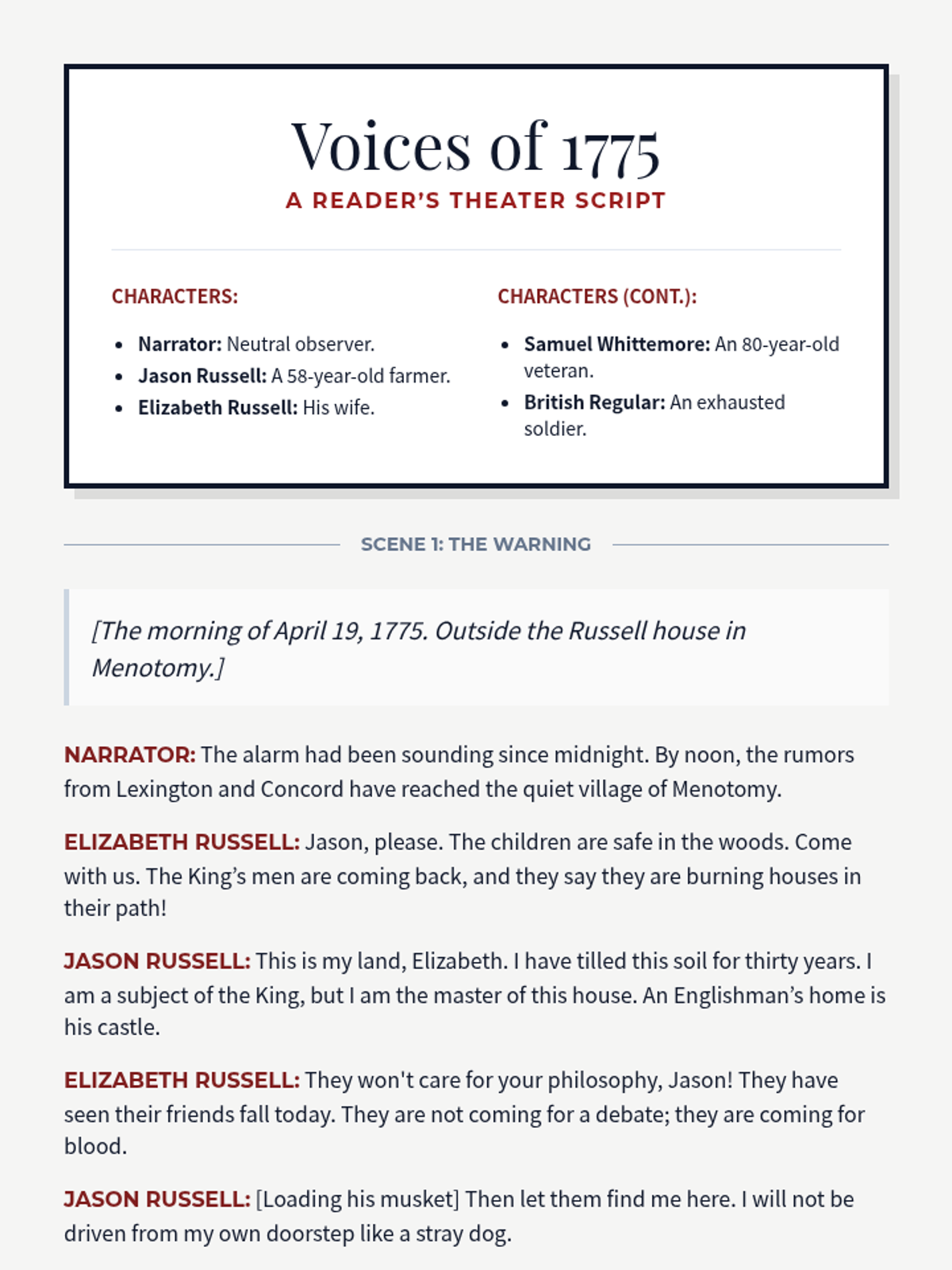
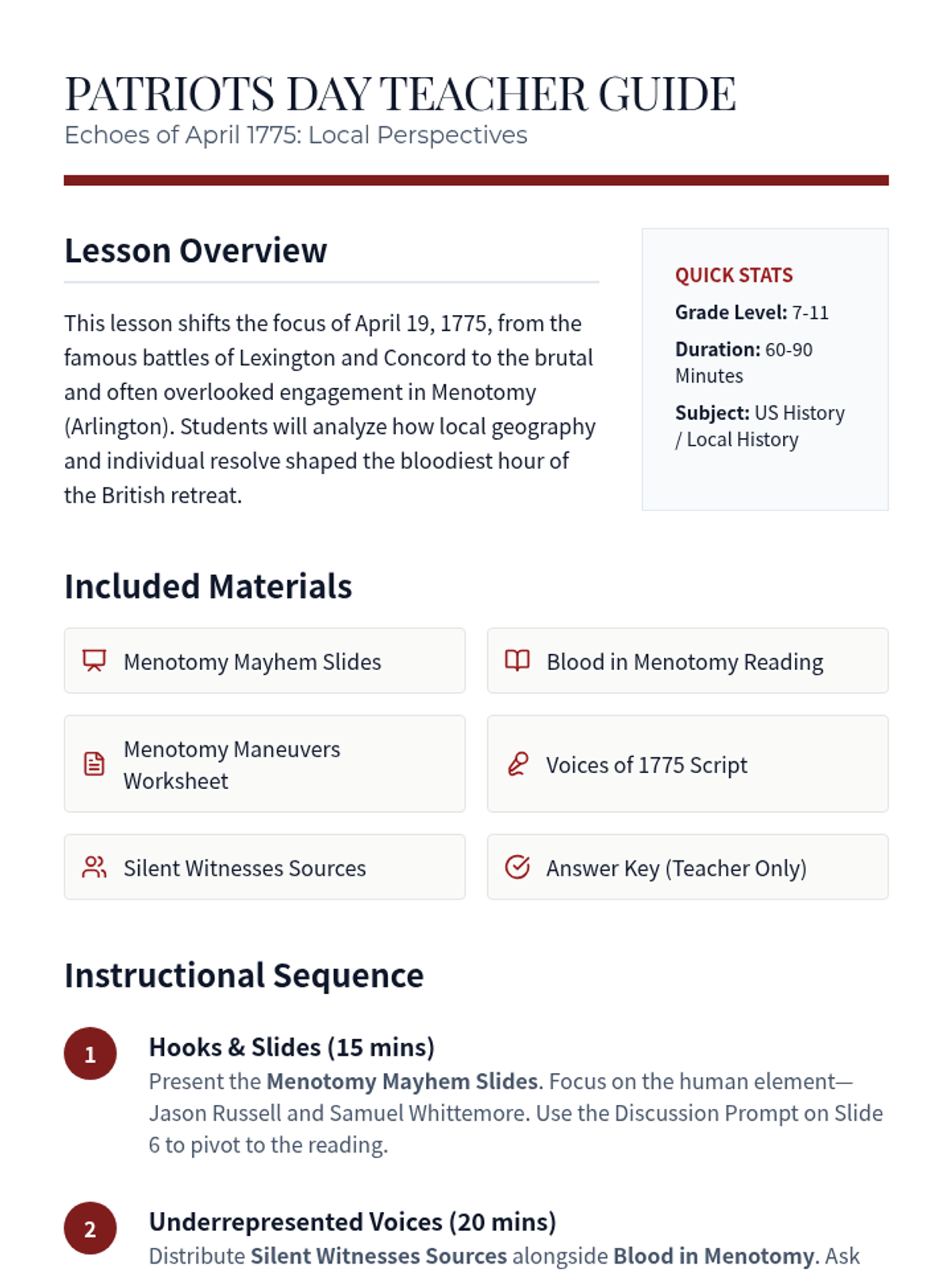
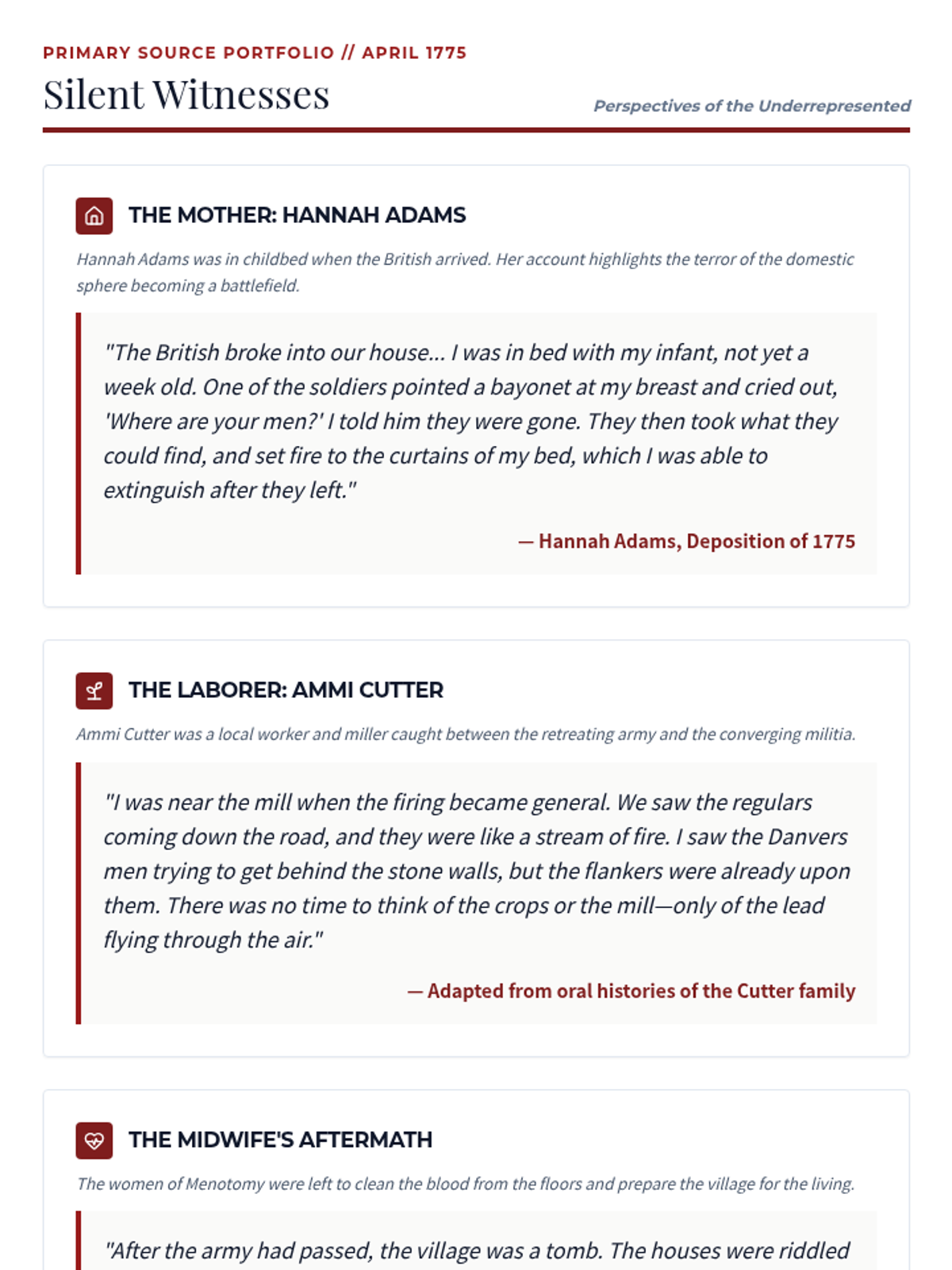
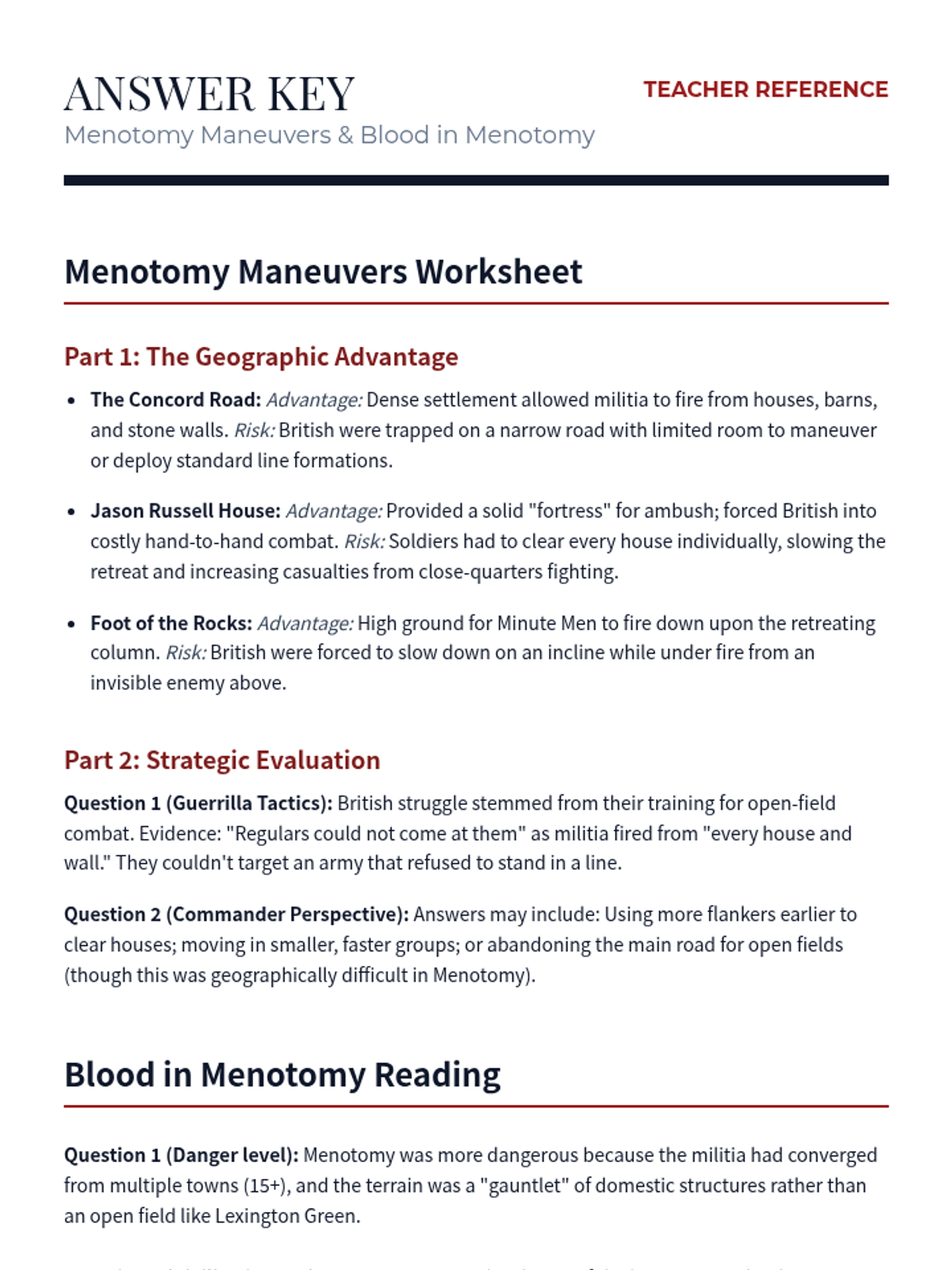
A middle and high school history lesson exploring the pivotal events of April 19, 1775, through the specific lens of Menotomy (modern-day Arlington). Students analyze local maps and primary source accounts to understand the geographic and human impact of the British retreat.
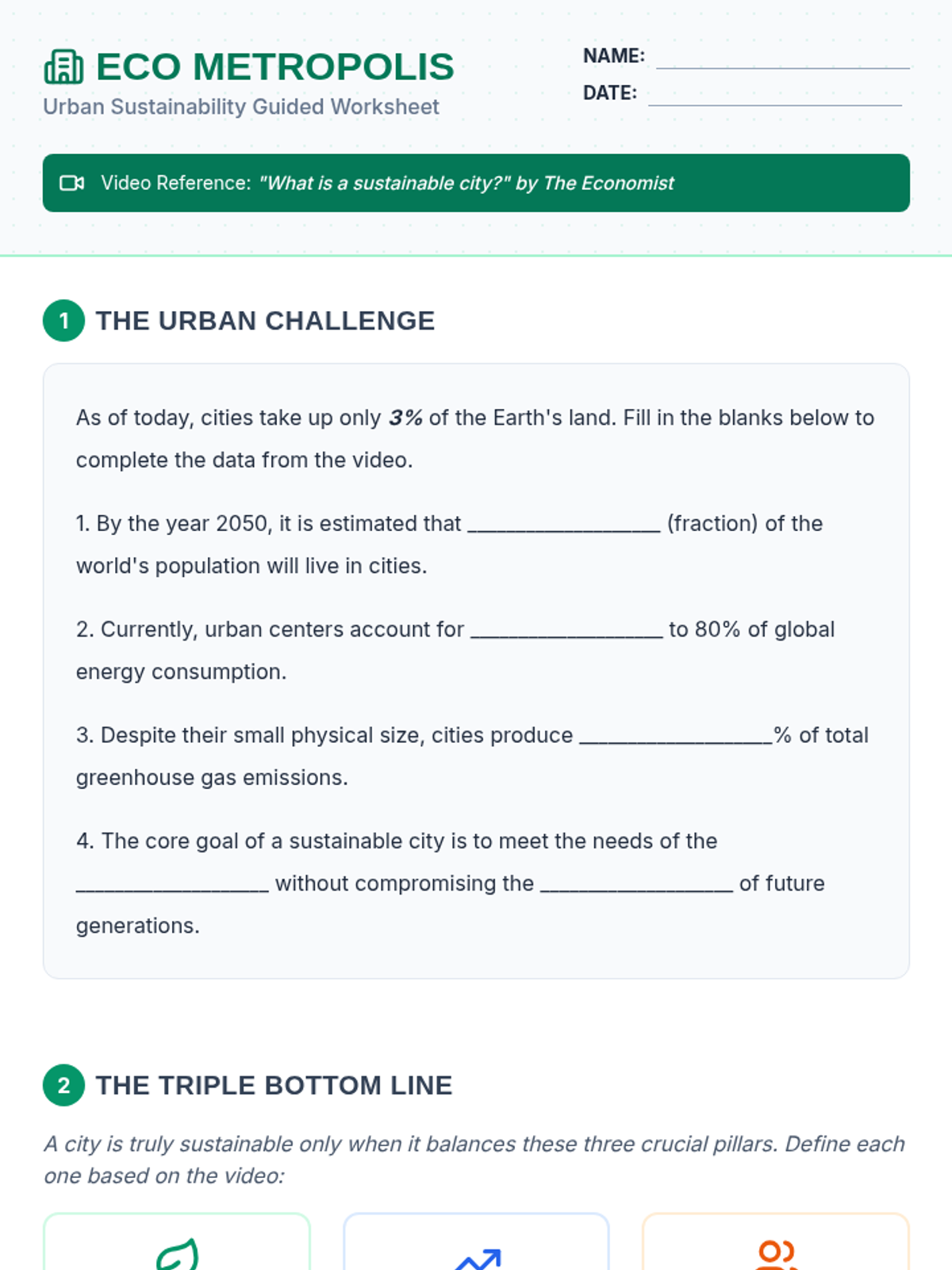
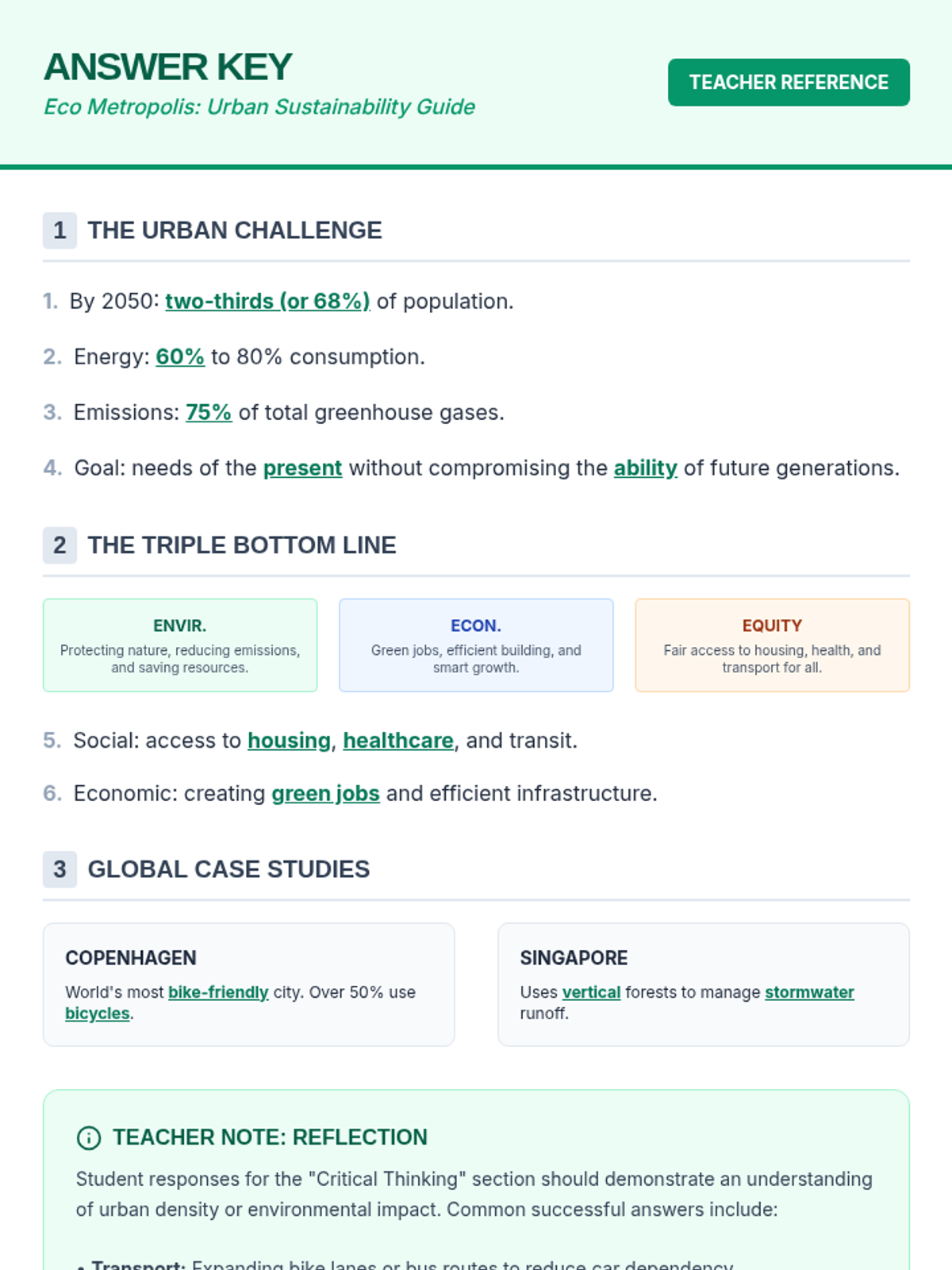
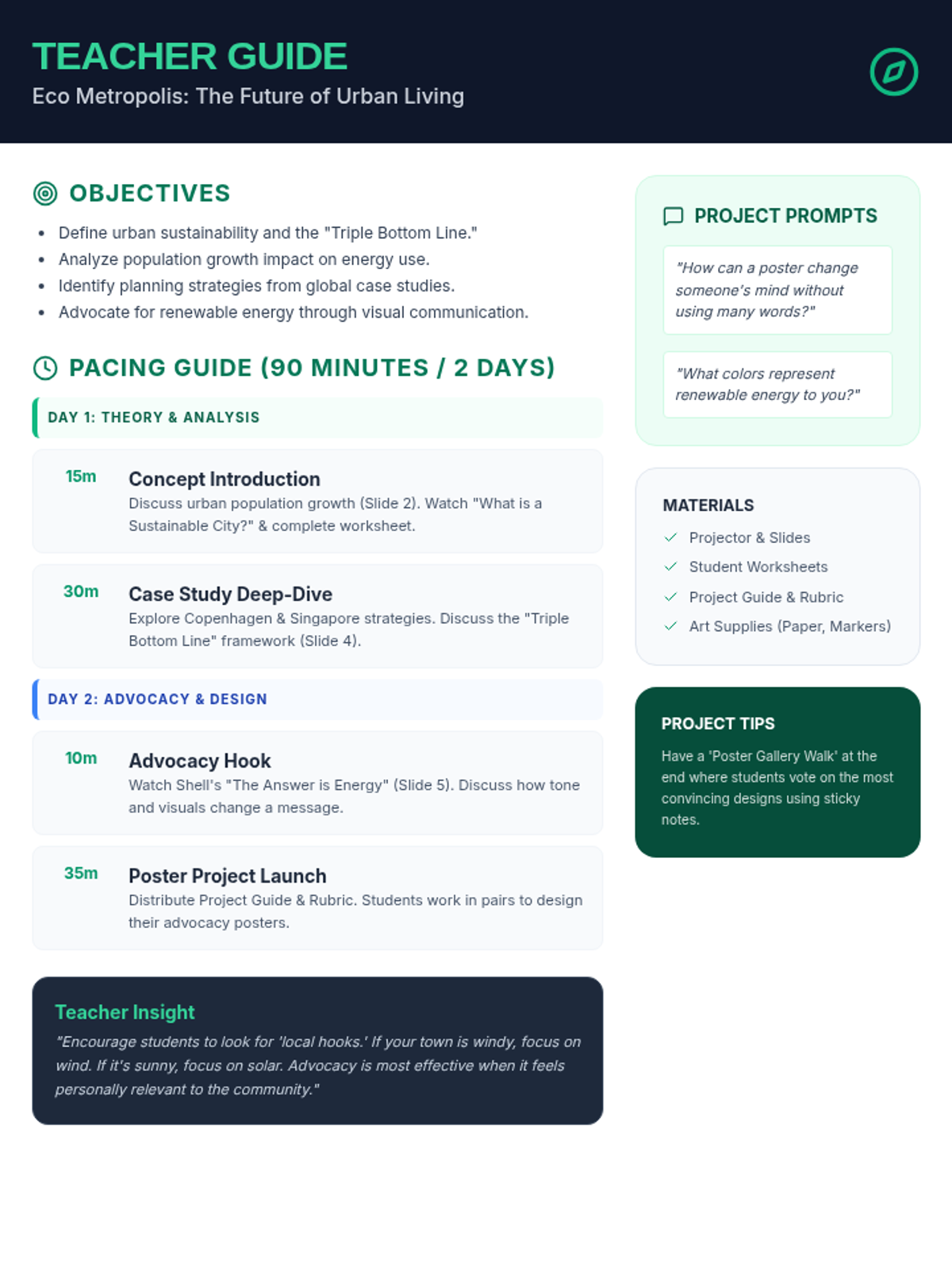
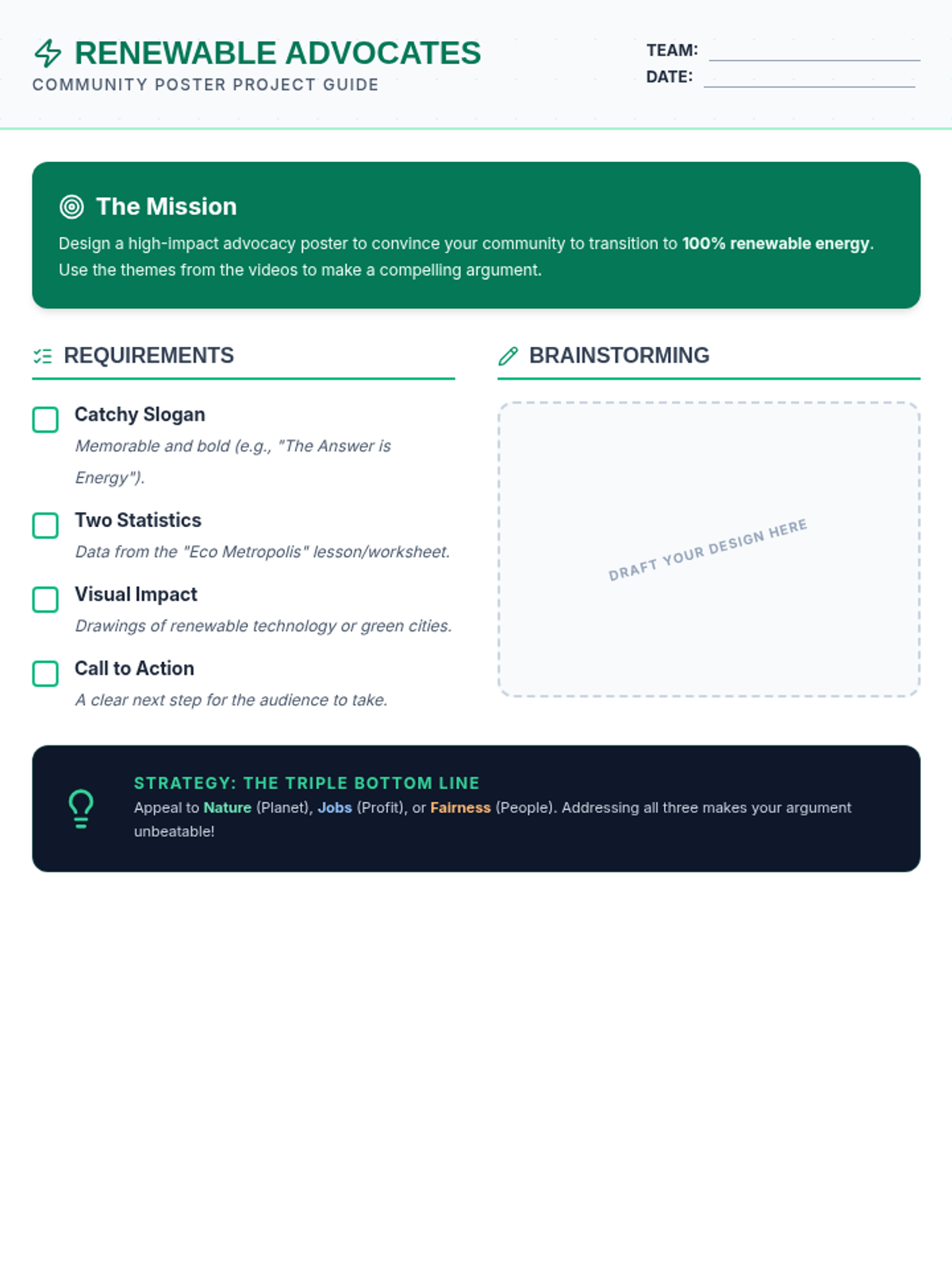
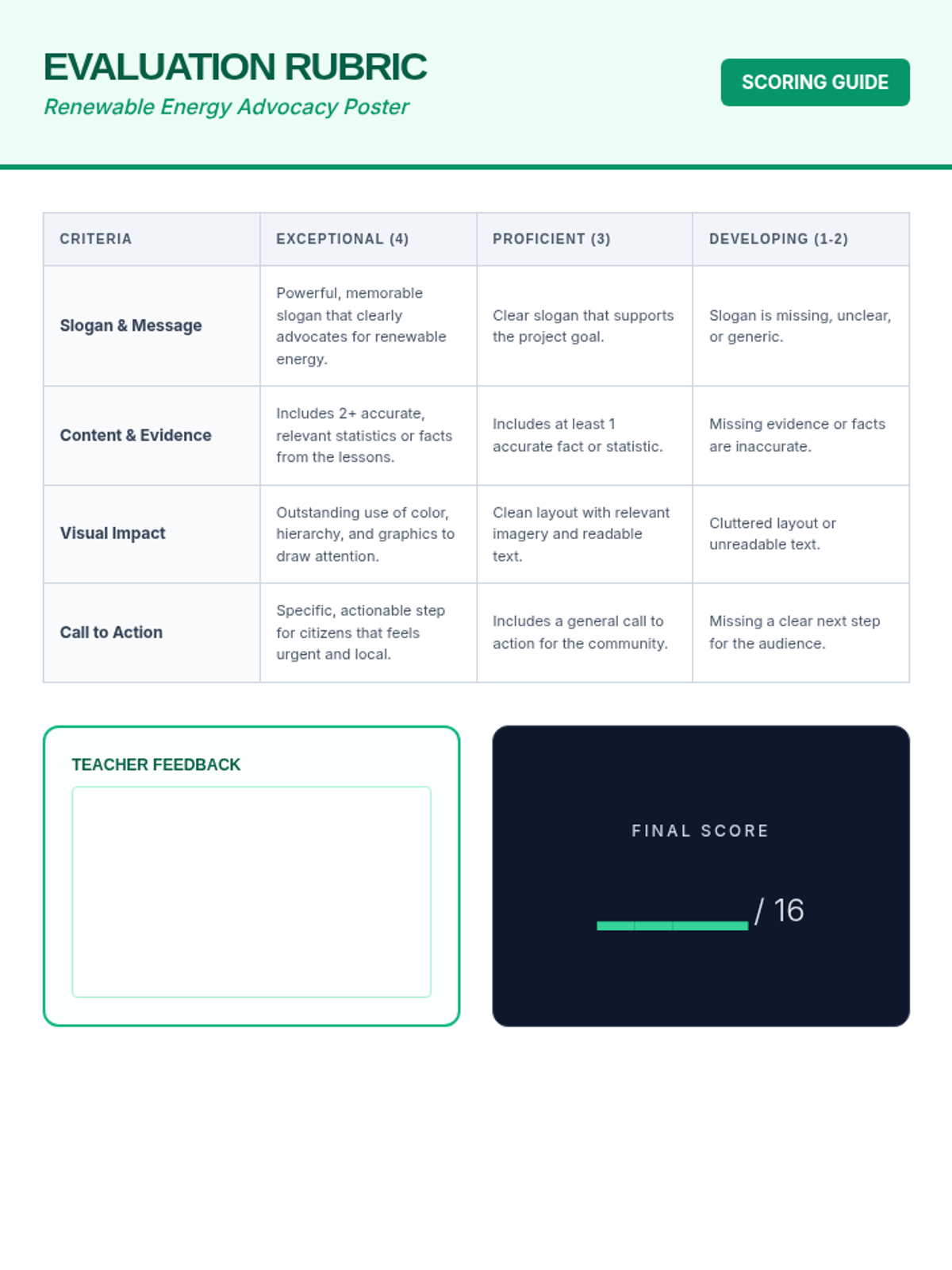
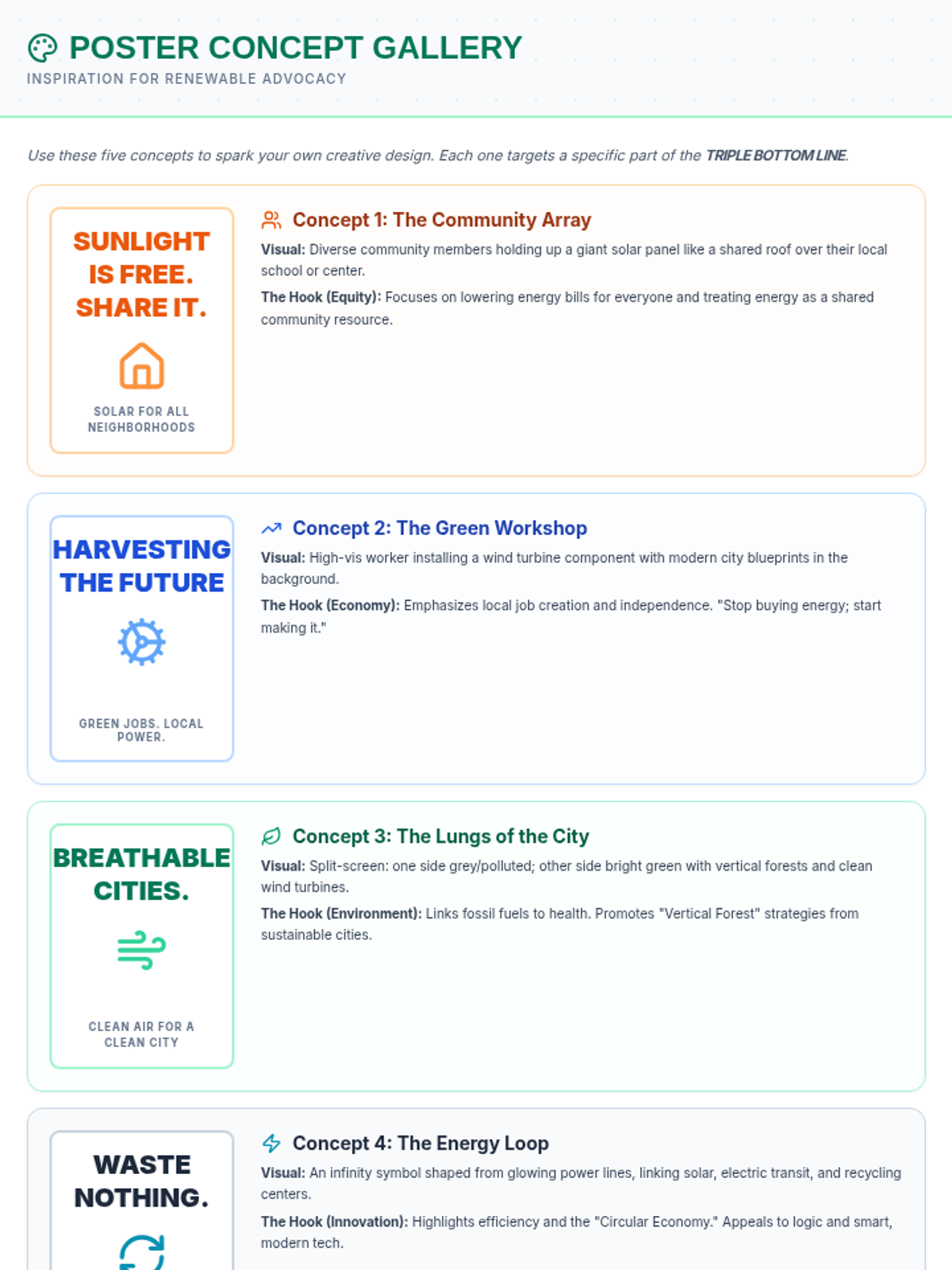
A comprehensive lesson exploring the concept of sustainable cities, focusing on urban planning strategies, resource management, and global case studies based on The Economist's sustainability analysis.
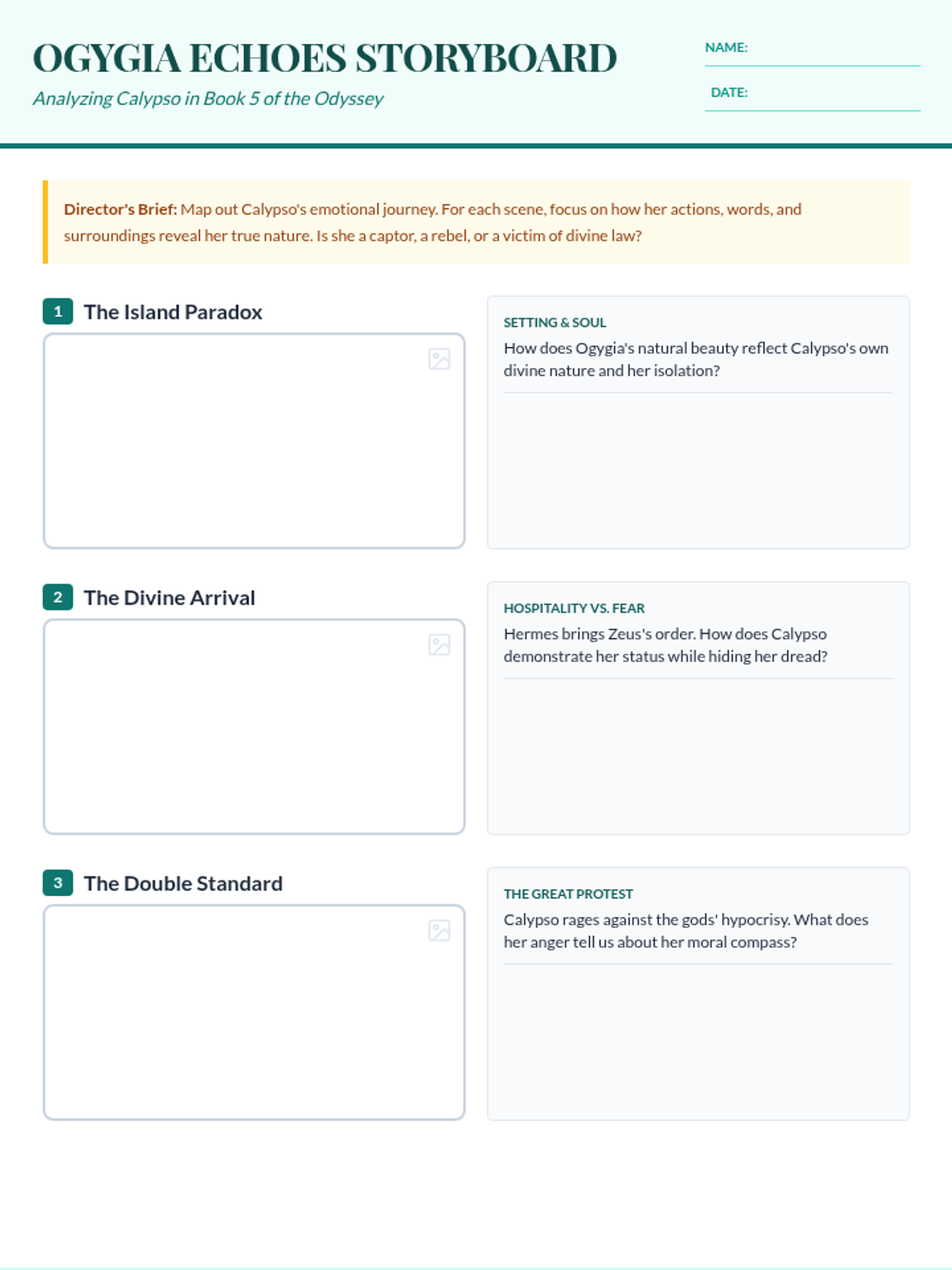
An exploration of Book 5 of the Odyssey, focusing on the complex character of Calypso, her divine isolation, and the conflict between mortal desire and immortal will.
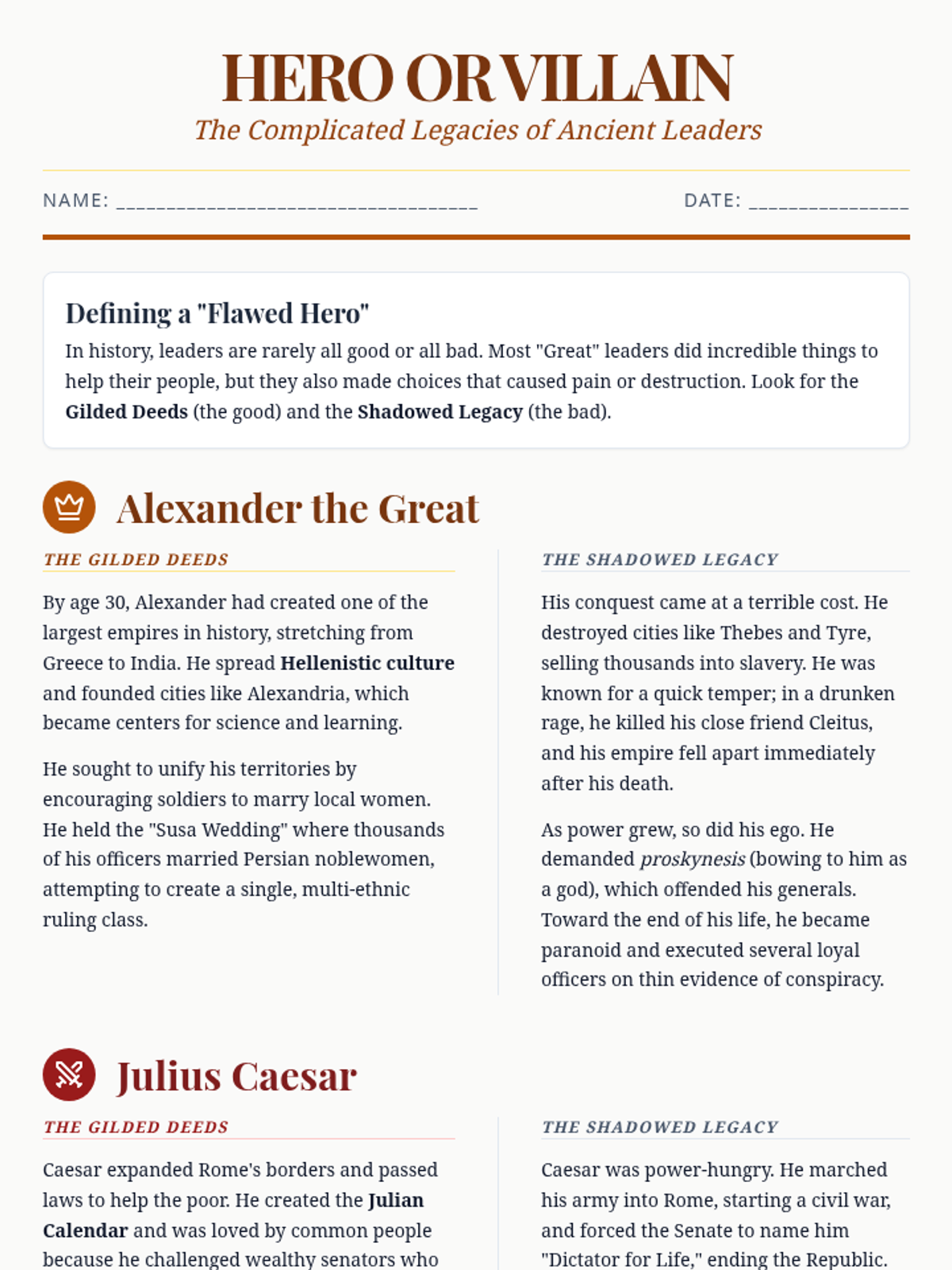
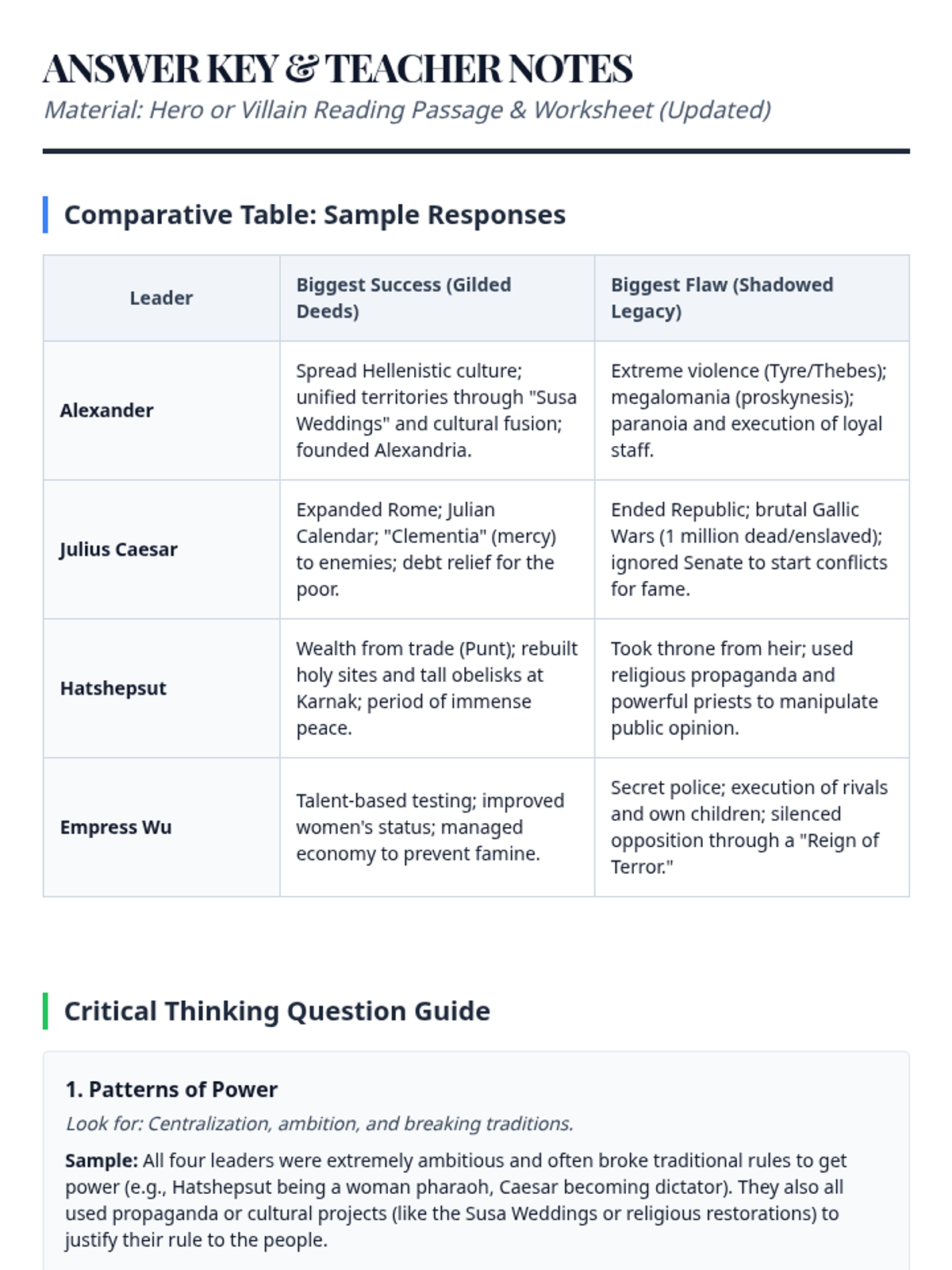
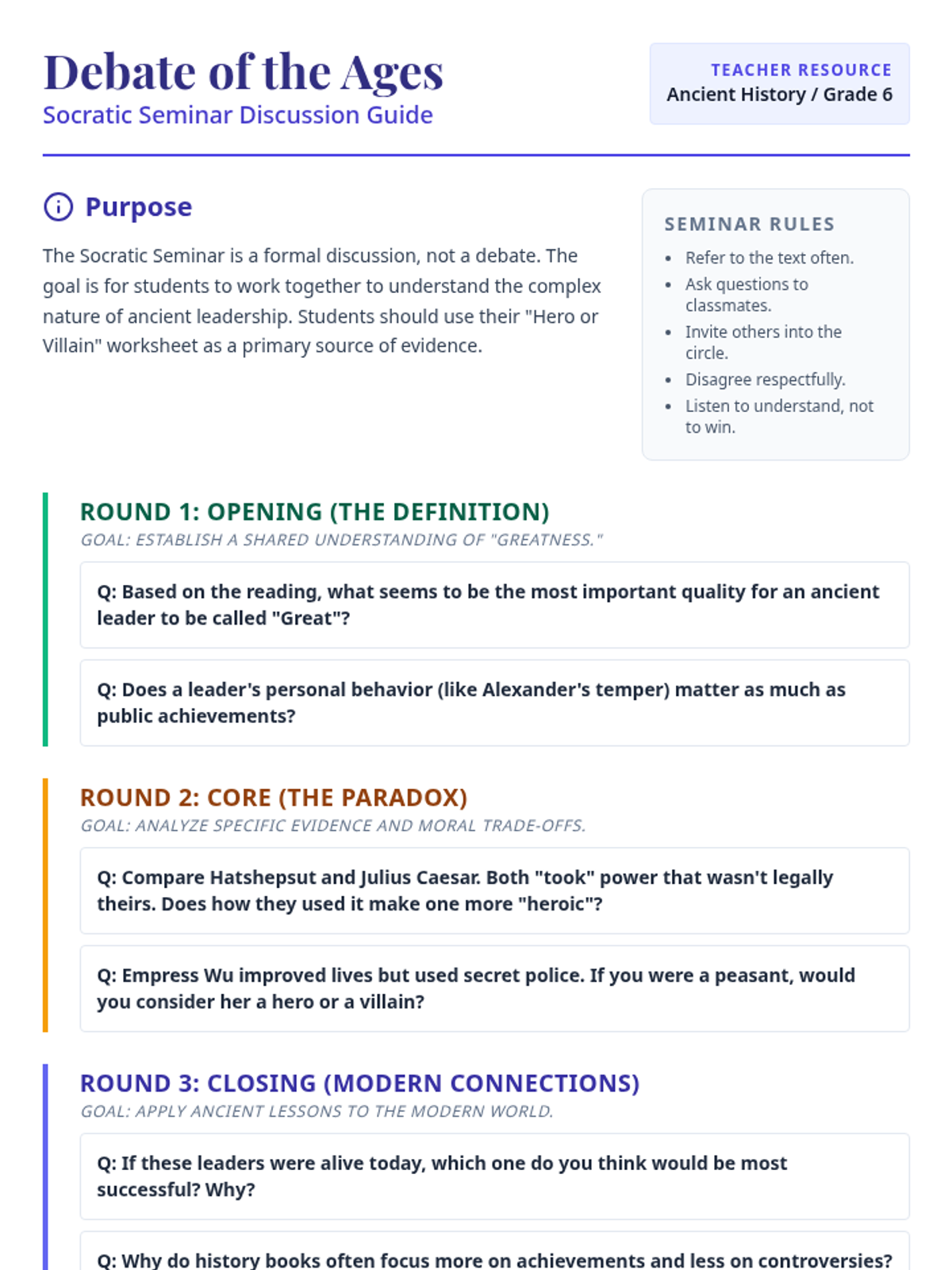
Students analyze the lives and legacies of four ancient leaders to determine if their contributions outweigh their controversial actions.
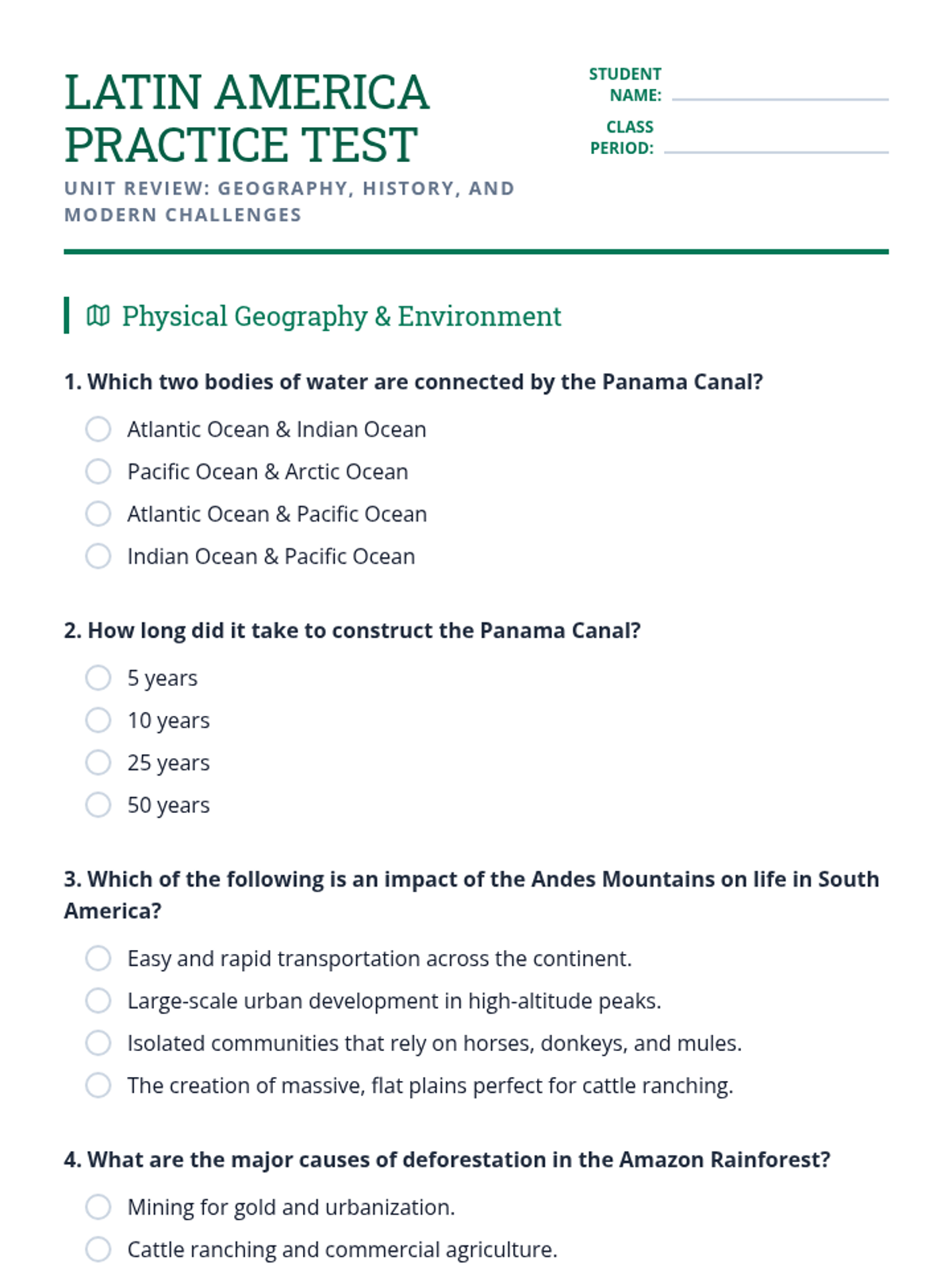
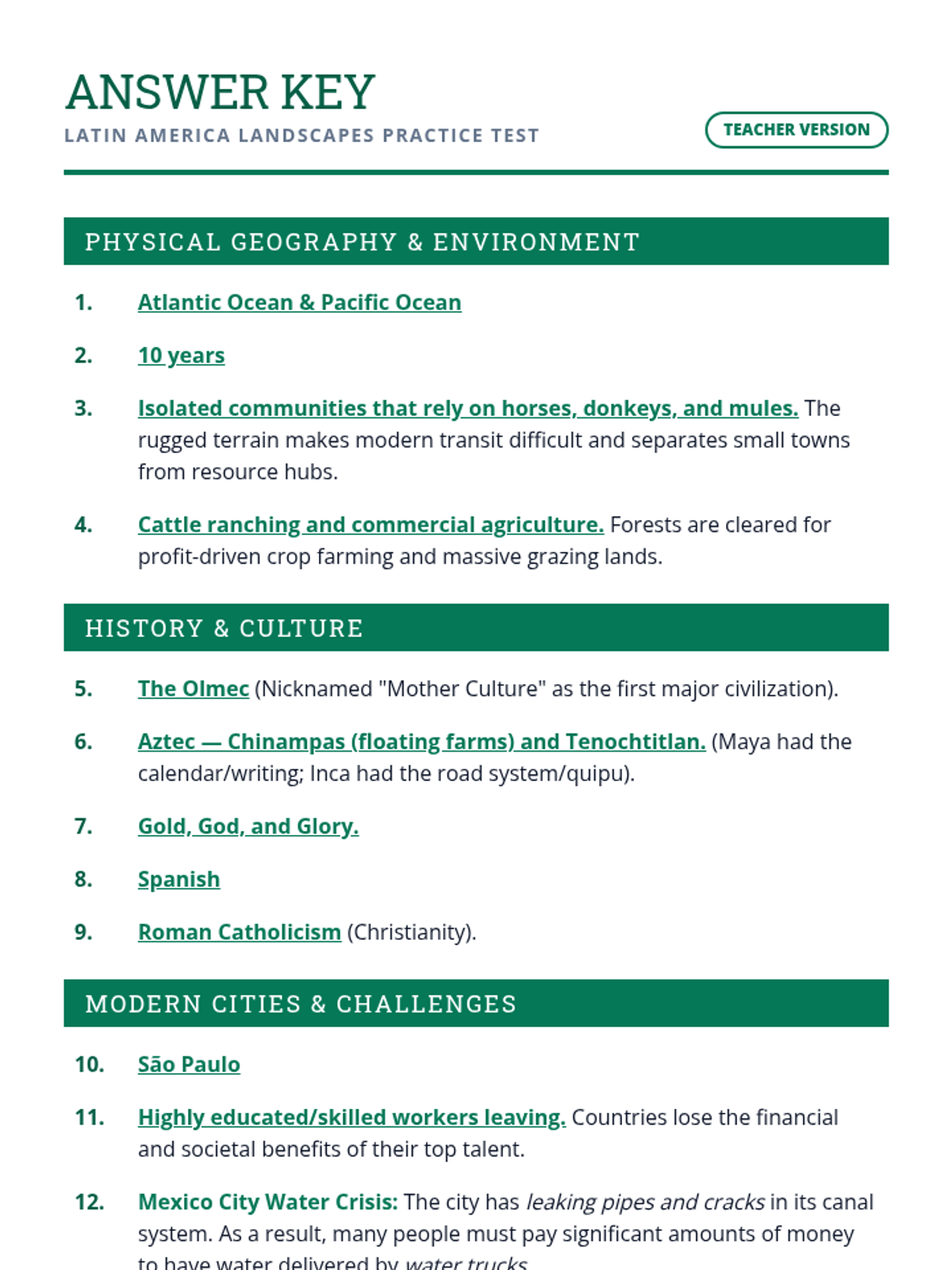
A comprehensive review unit covering the physical geography, ancient civilizations, and modern challenges of Latin America to prepare students for summative assessment.
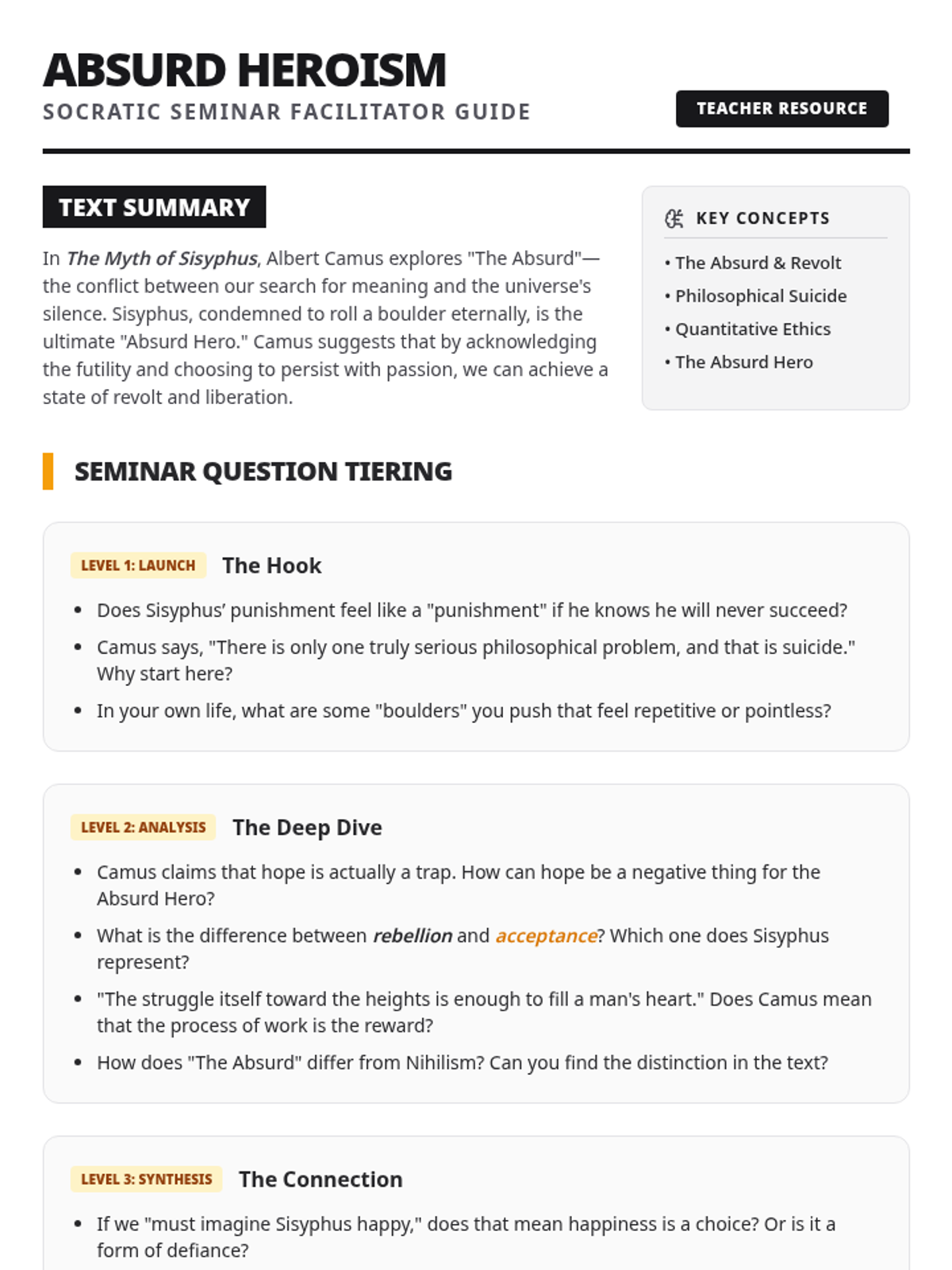
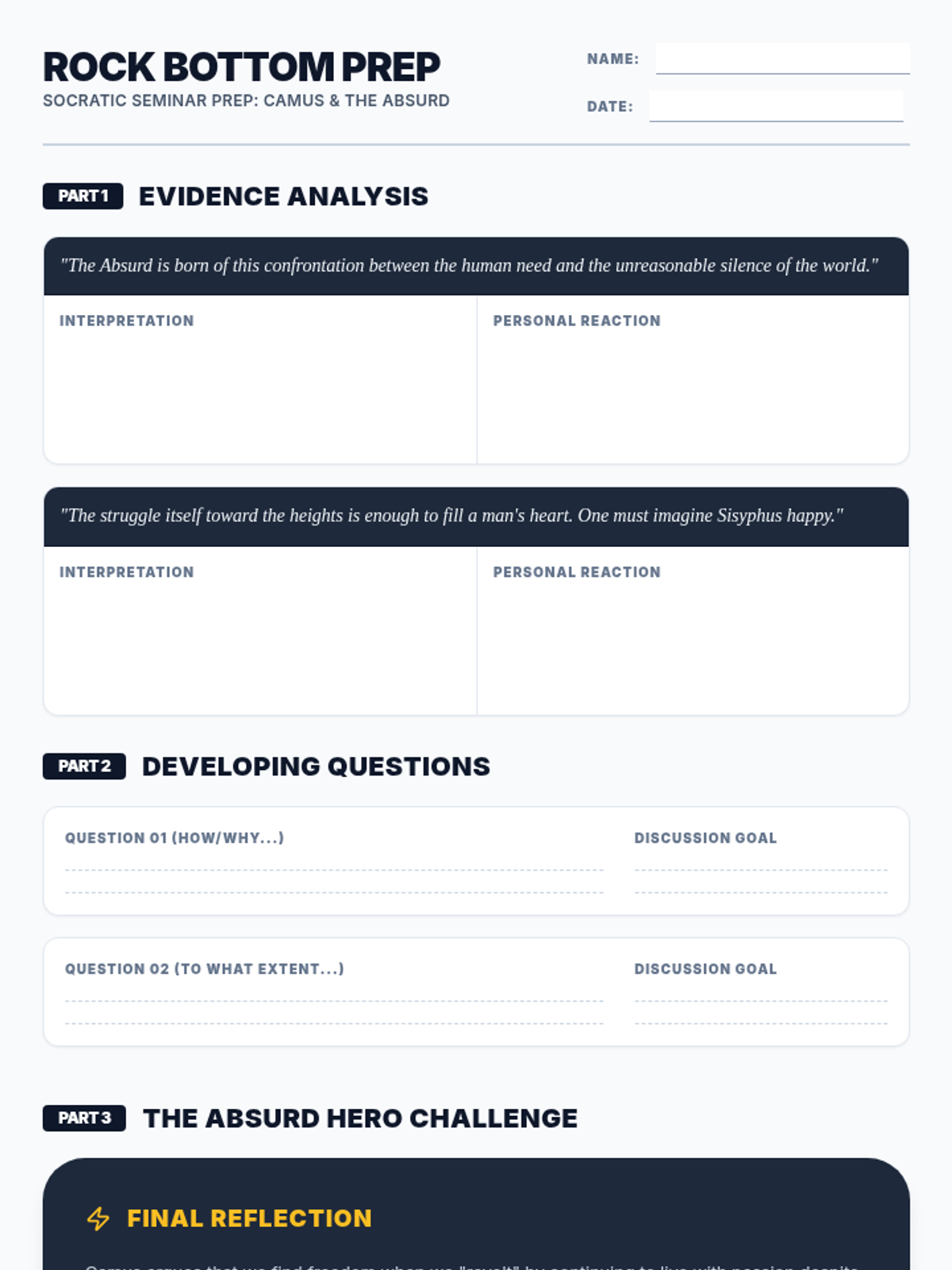
A deep dive into Albert Camus' 'The Myth of Sisyphus', exploring the philosophical concepts of the Absurd, revolt, and the search for meaning in a silent universe through a structured Socratic Seminar.
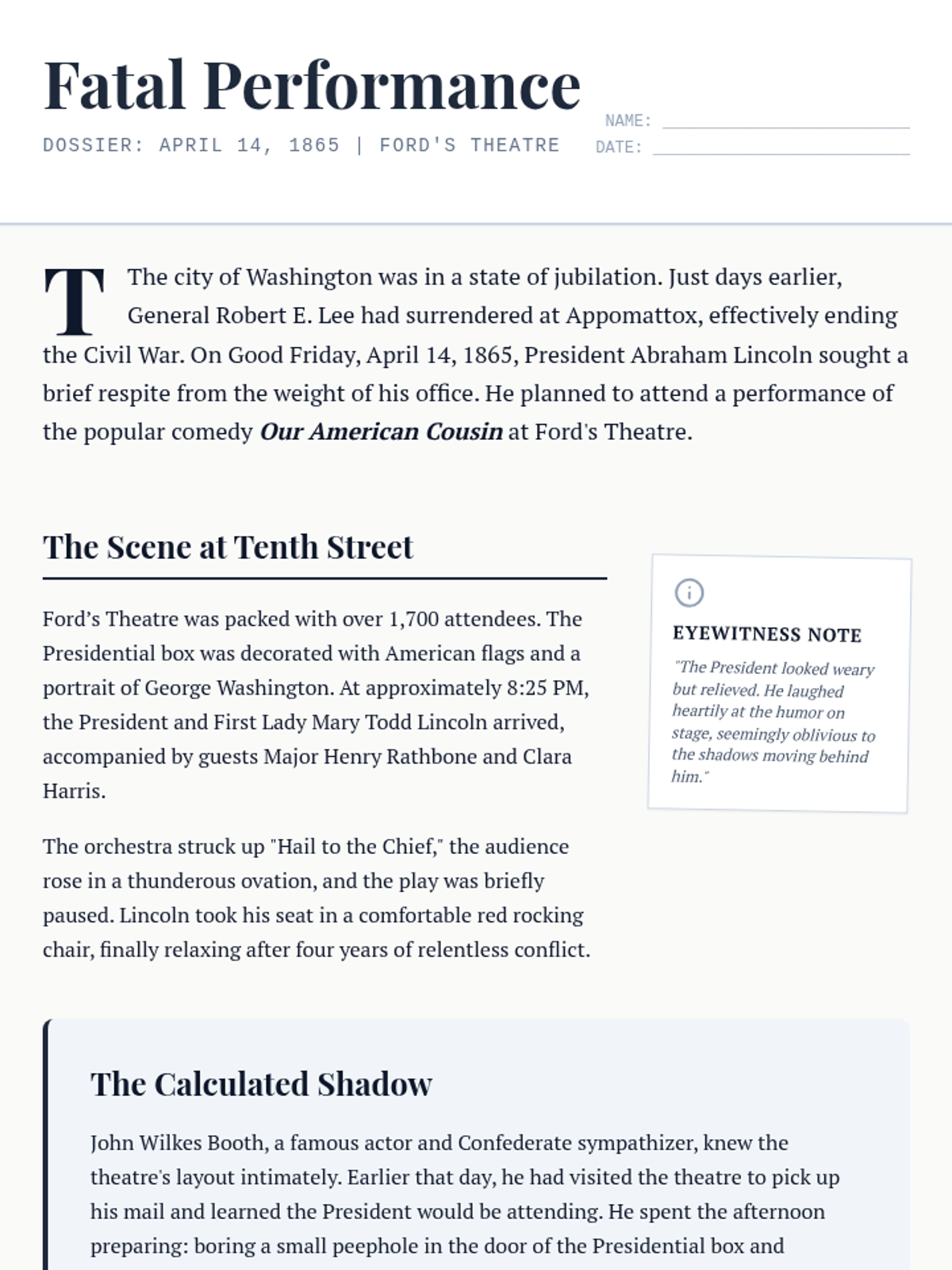
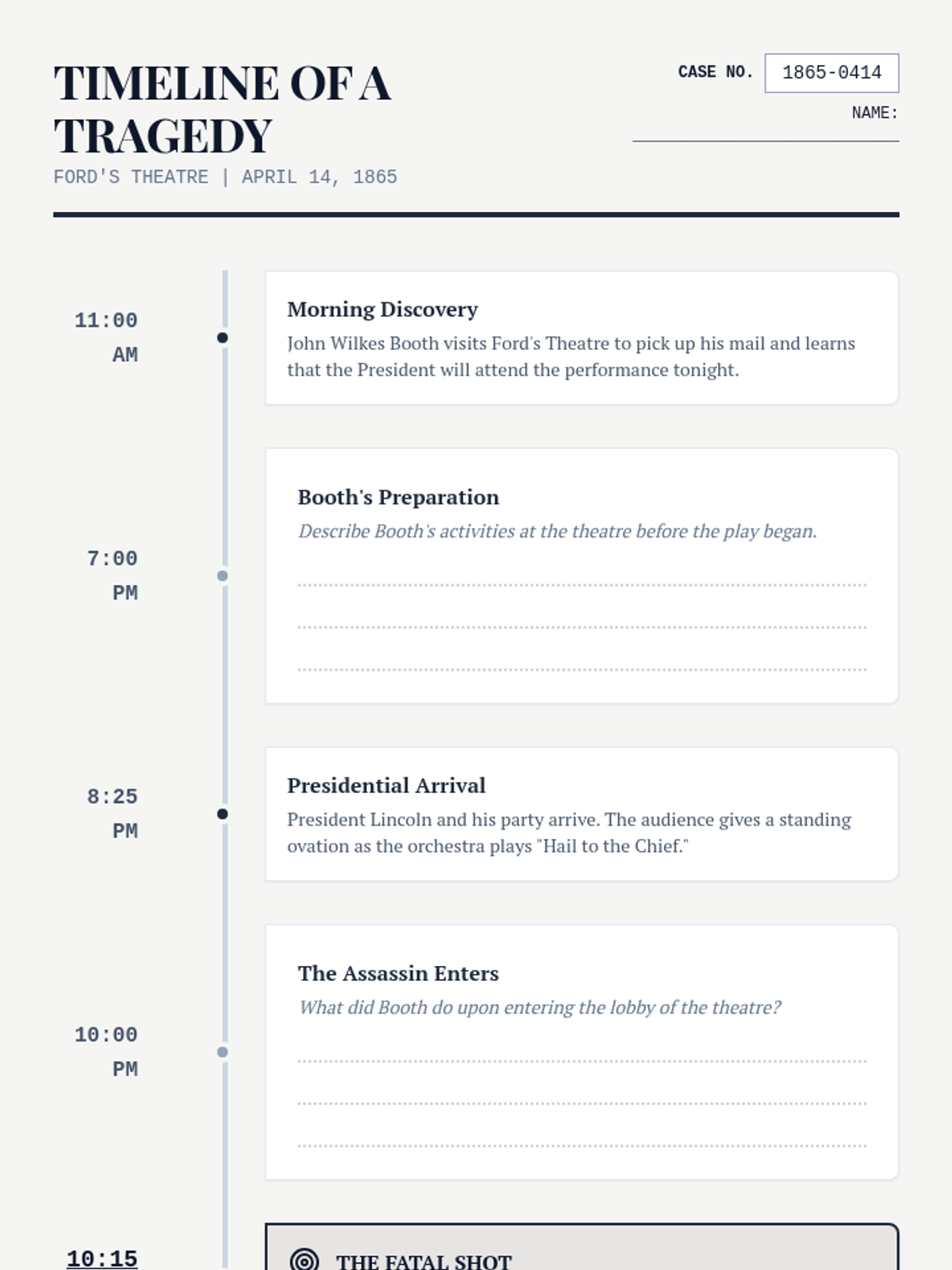
This lesson explores the minute-by-minute events of April 14, 1865, focusing on the atmosphere at Ford's Theatre and the calculated movements of John Wilkes Booth. Students will analyze a primary-source-inspired reading passage and reconstruct the timeline of the assassination.
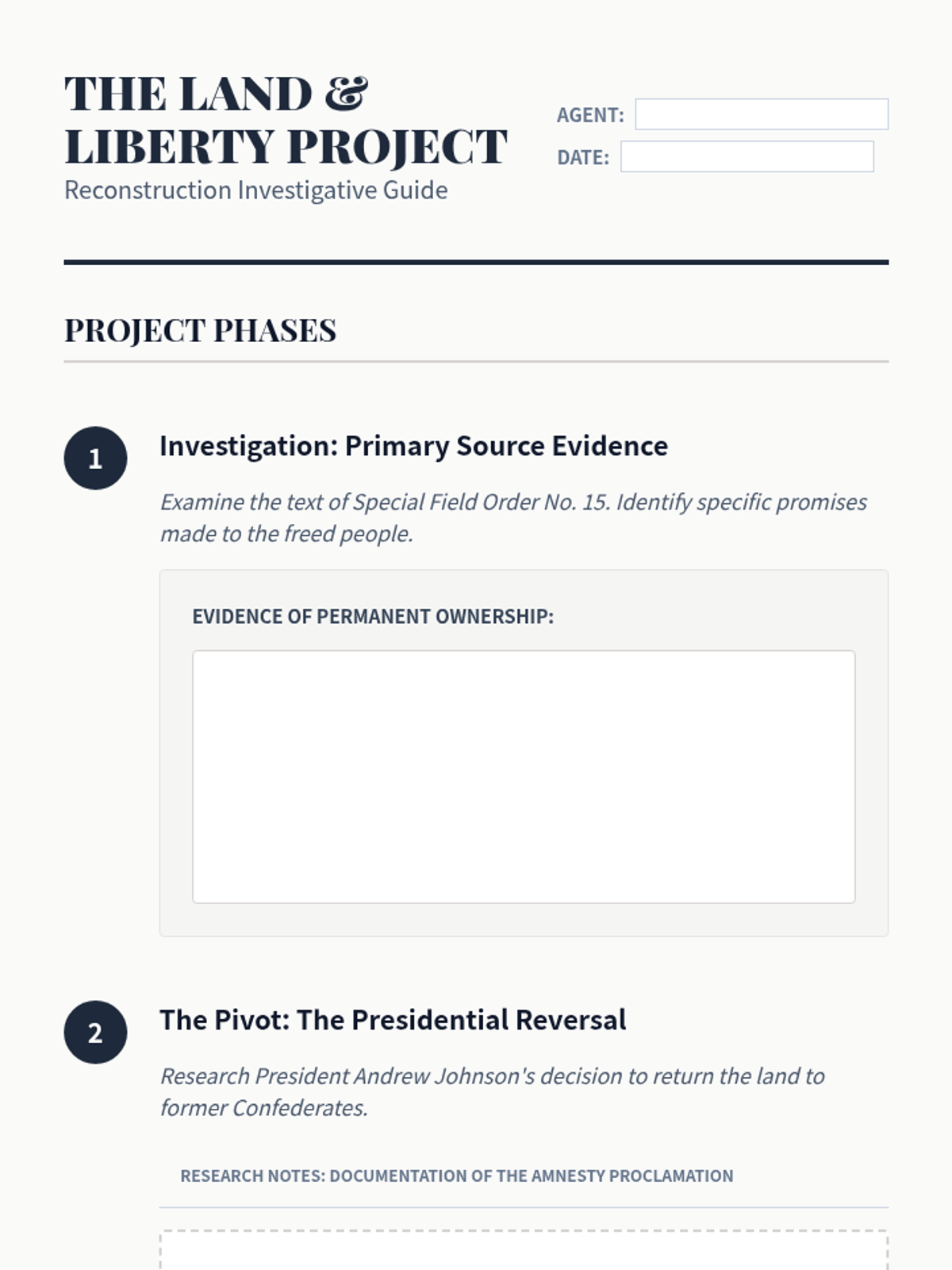
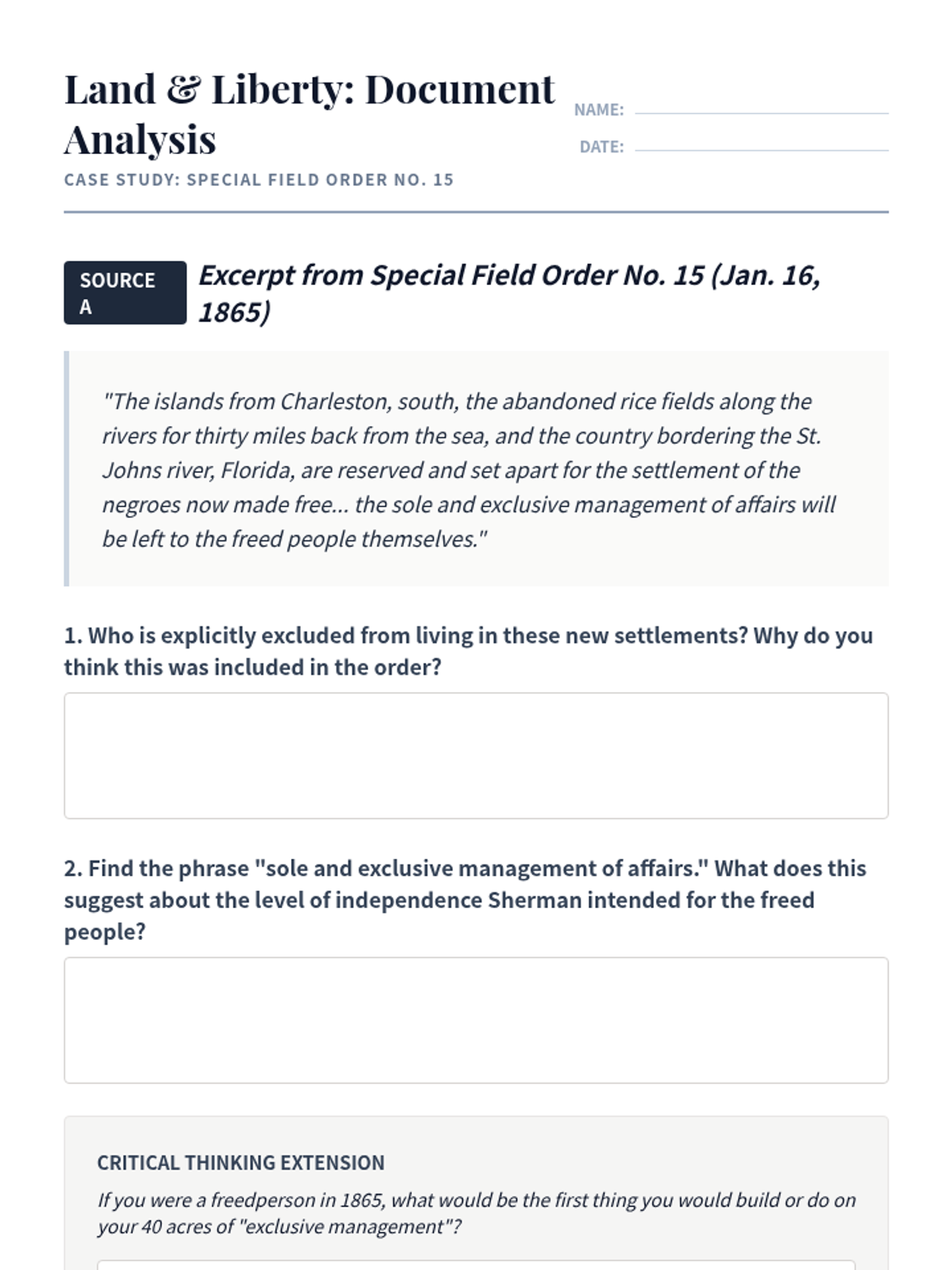
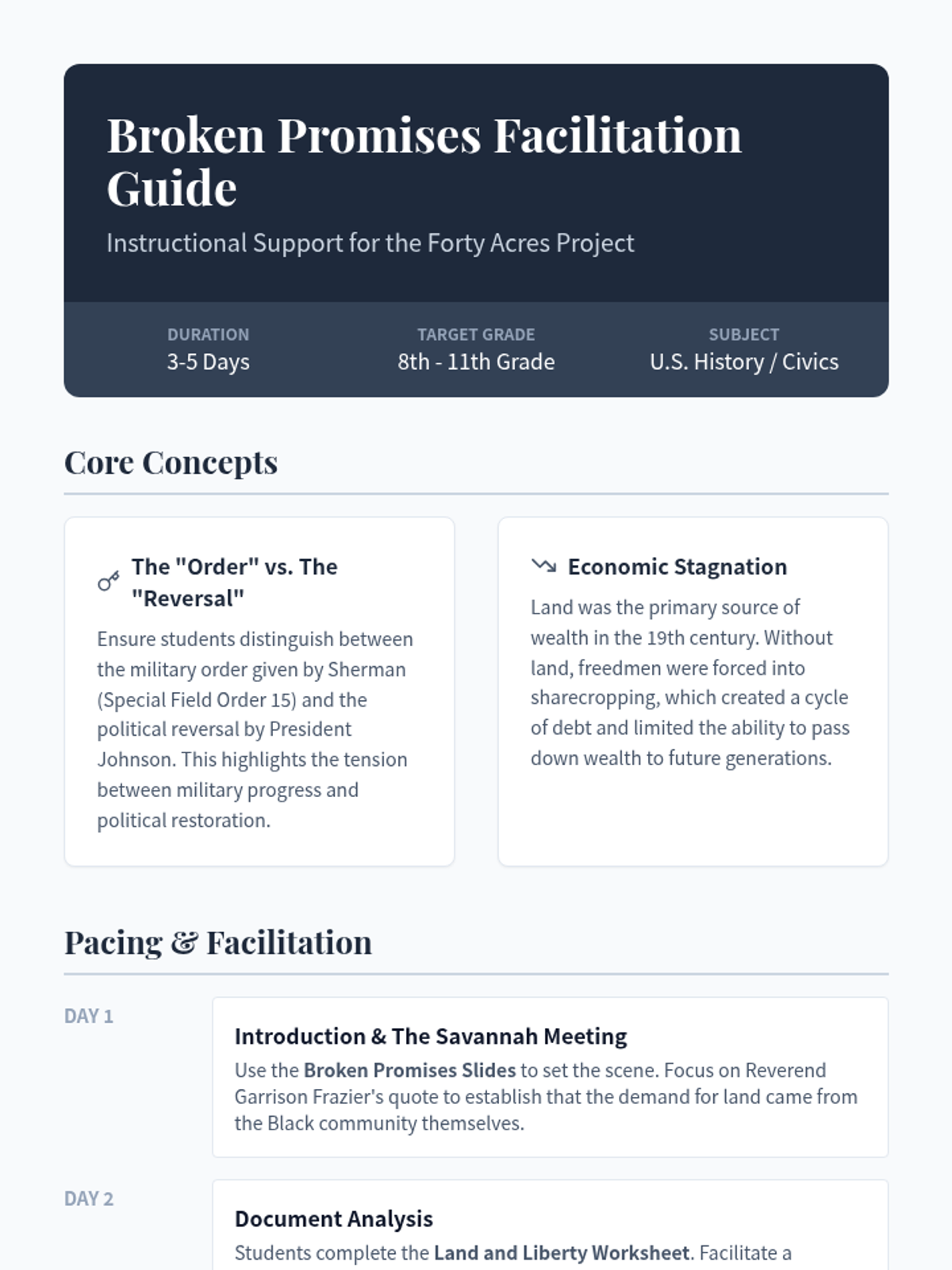
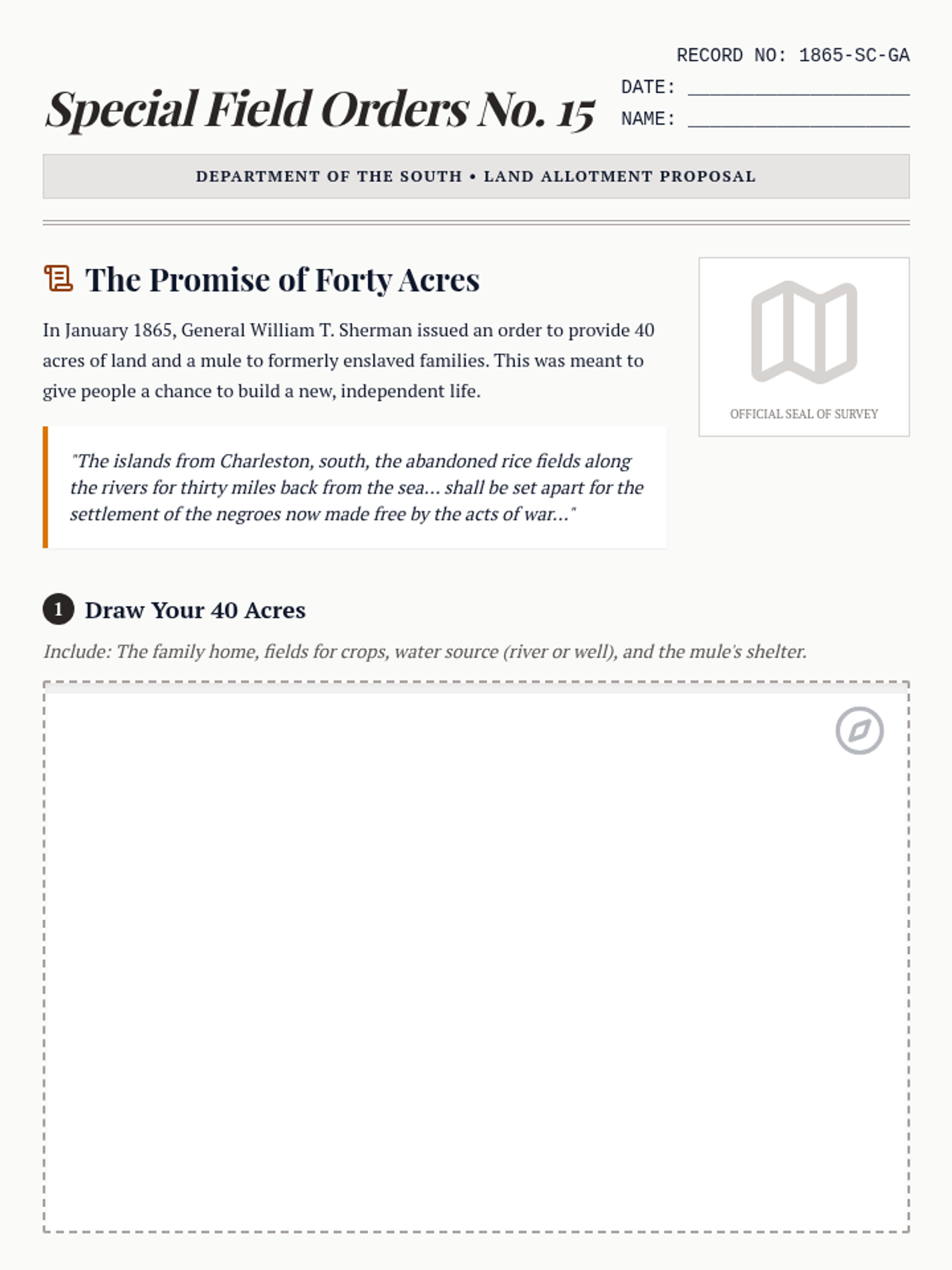
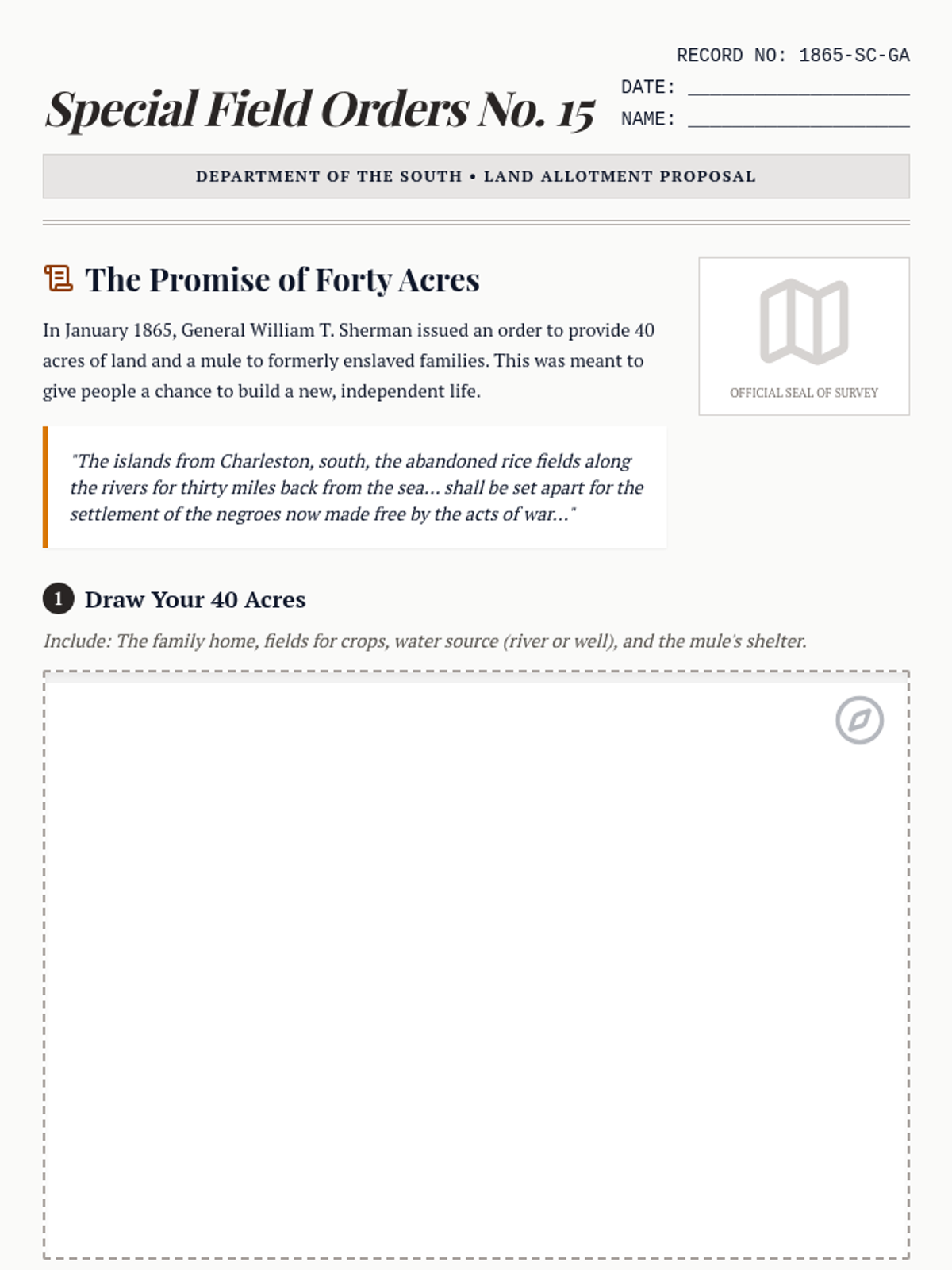
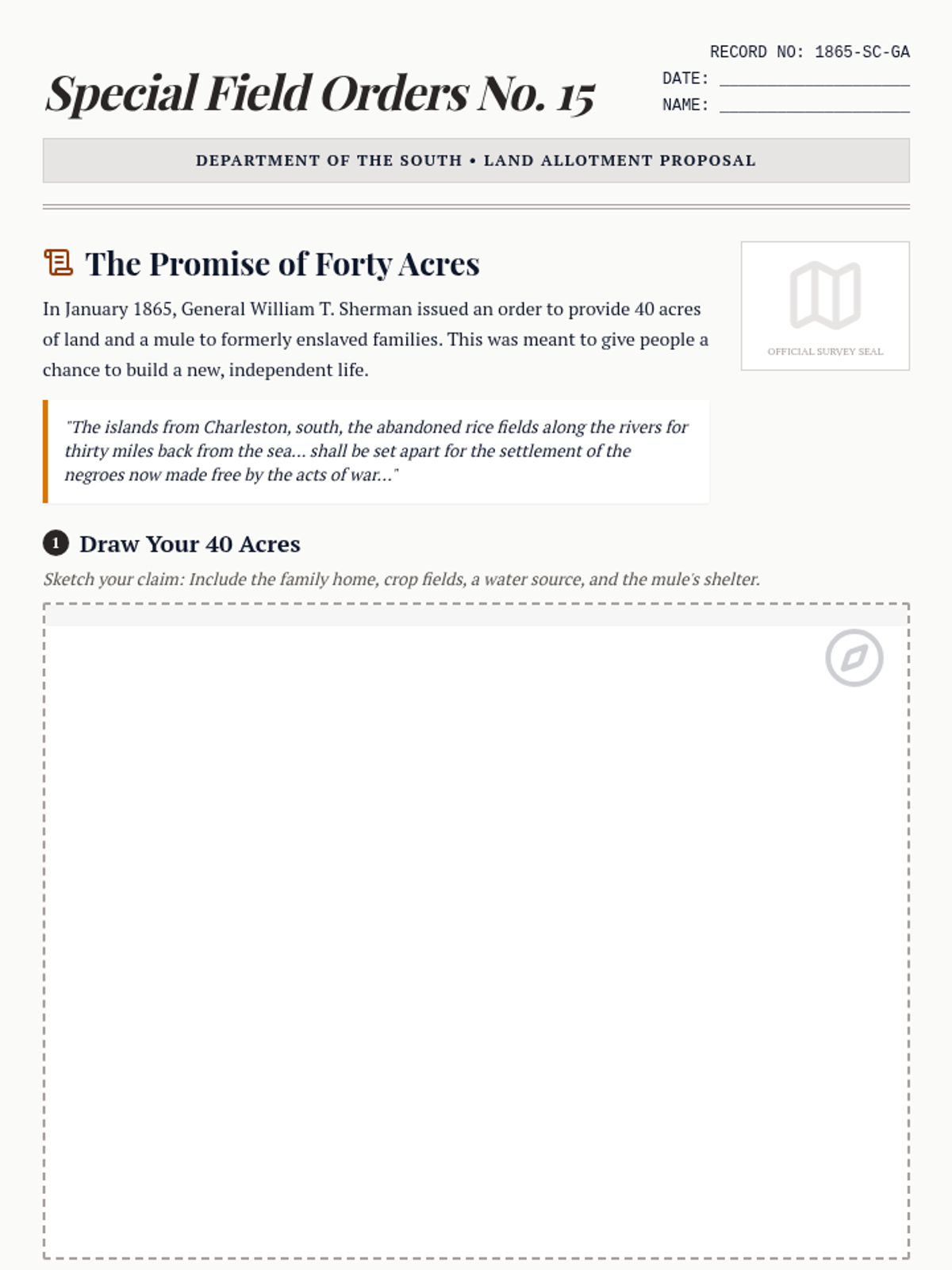
This lesson focuses on General Sherman's Special Field Order No. 15, the promise of land to freedmen, and the reversal of that policy under President Andrew Johnson. Students will begin a multi-step project exploring the long-term impacts of these broken promises.
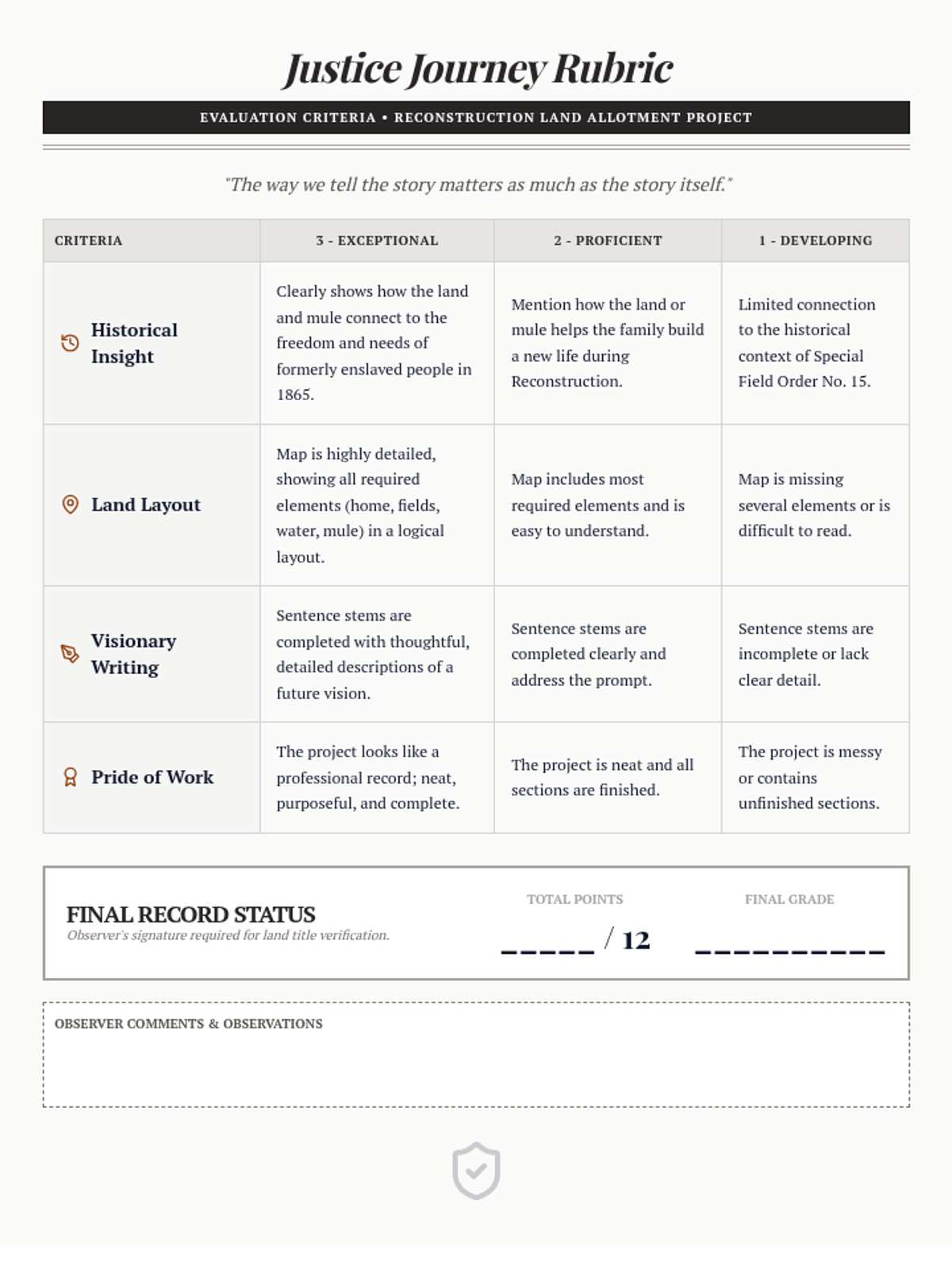
An investigation into the history of Special Field Orders No. 15 and the broken promise of 'Forty Acres and a Mule' through a creative reconstruction project.
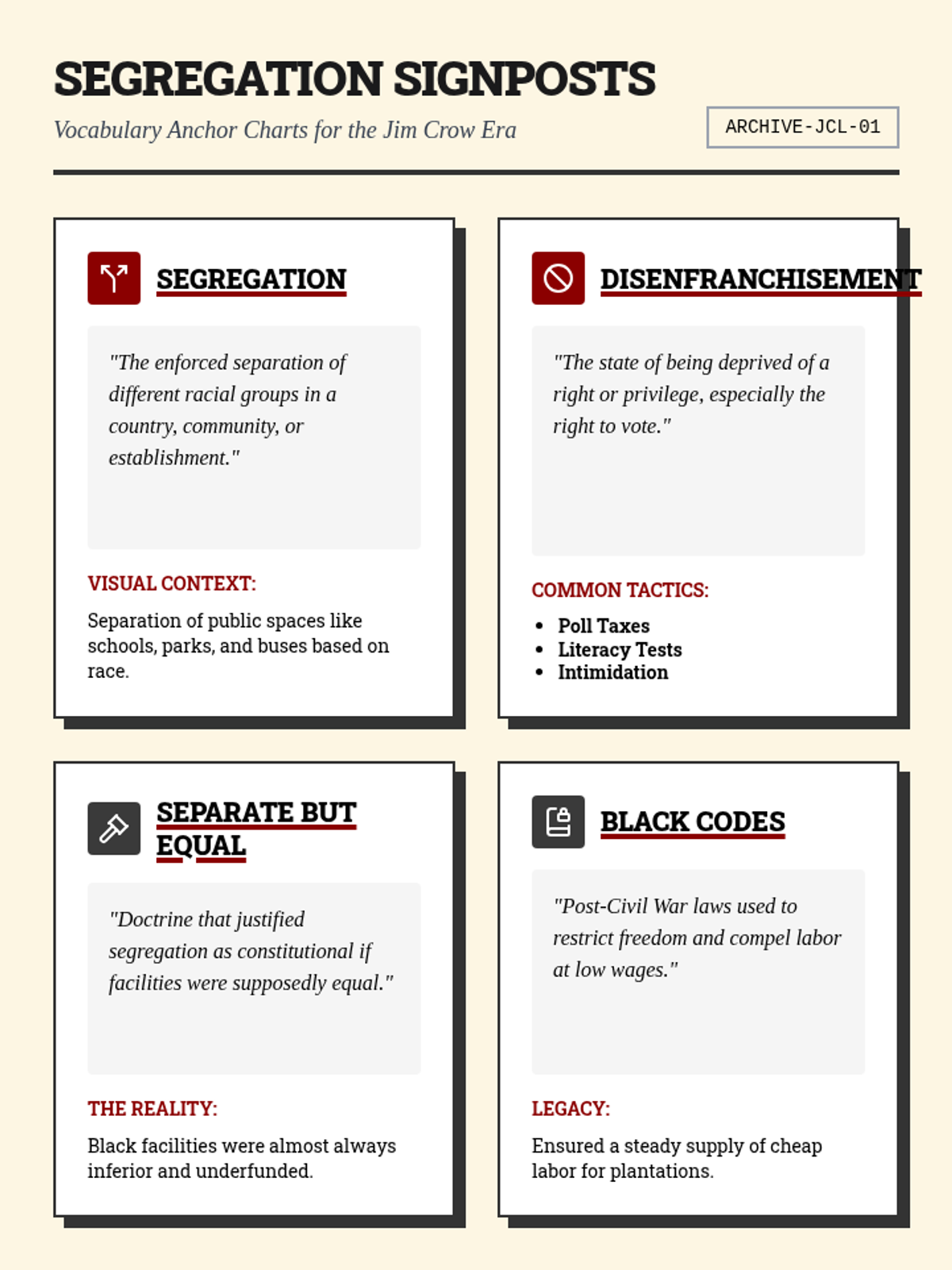
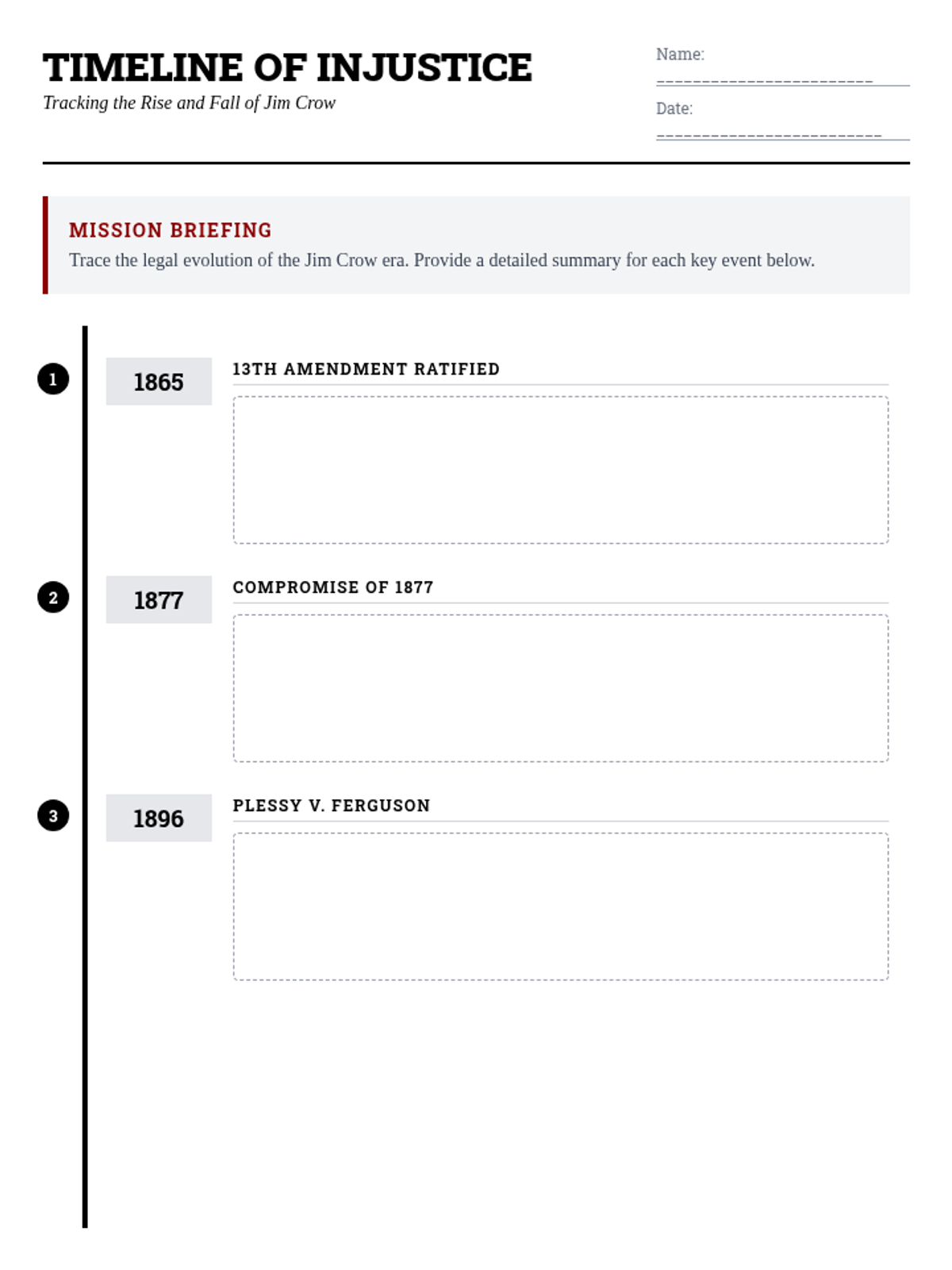
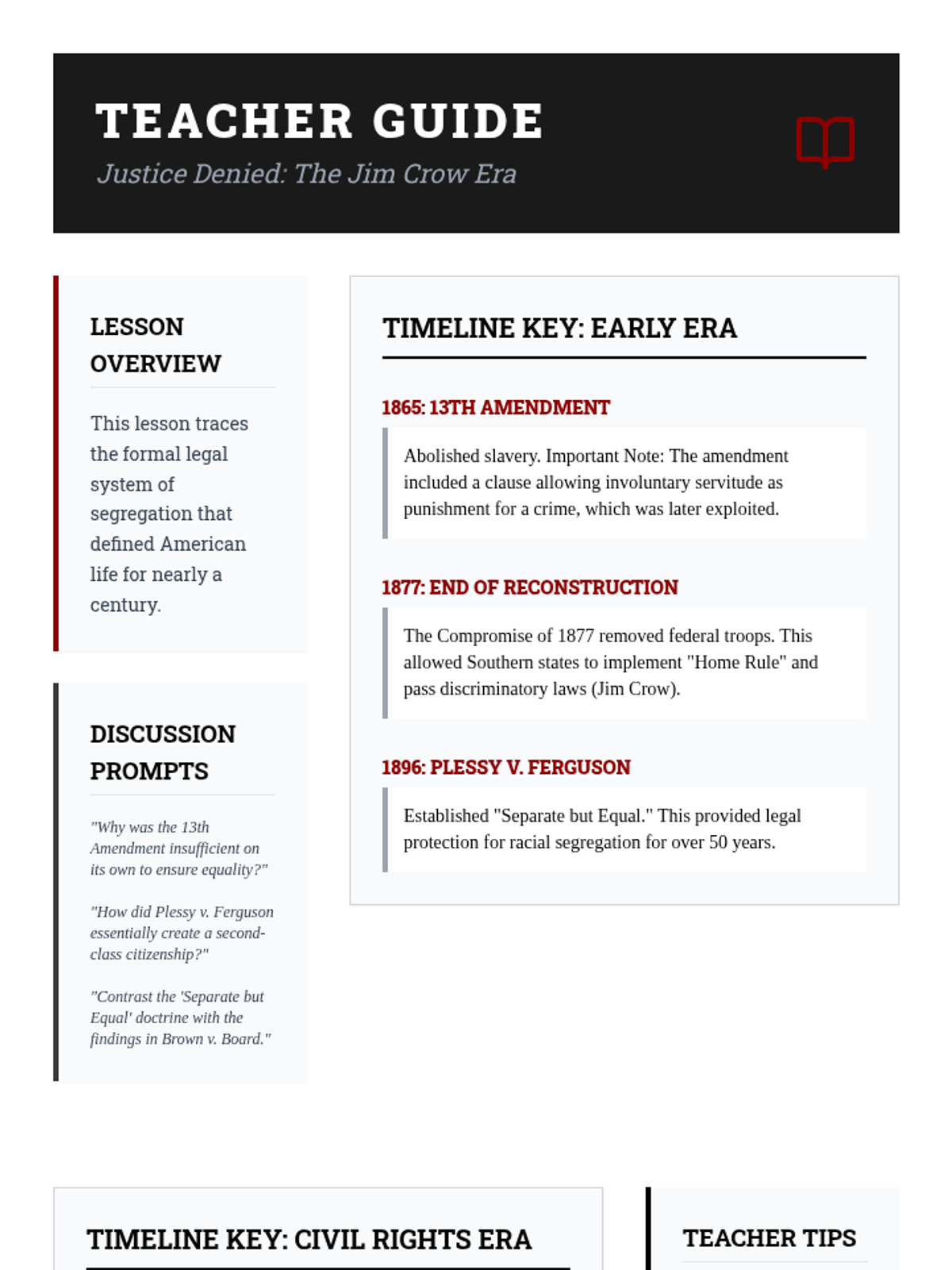
An in-depth exploration of the Jim Crow era, focusing on the legal landscape of segregation and the timeline of events leading from Reconstruction to the Civil Rights Movement.
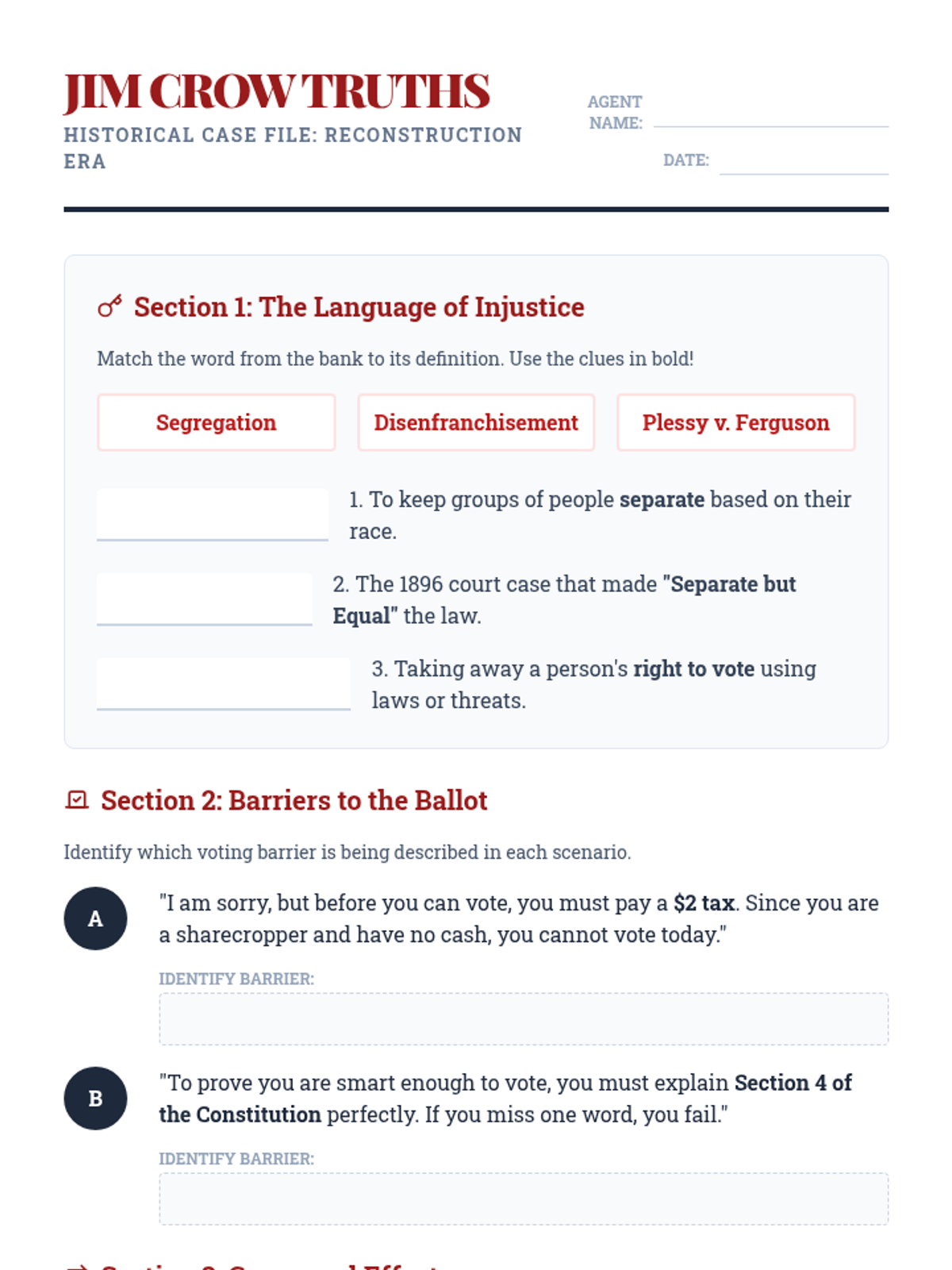
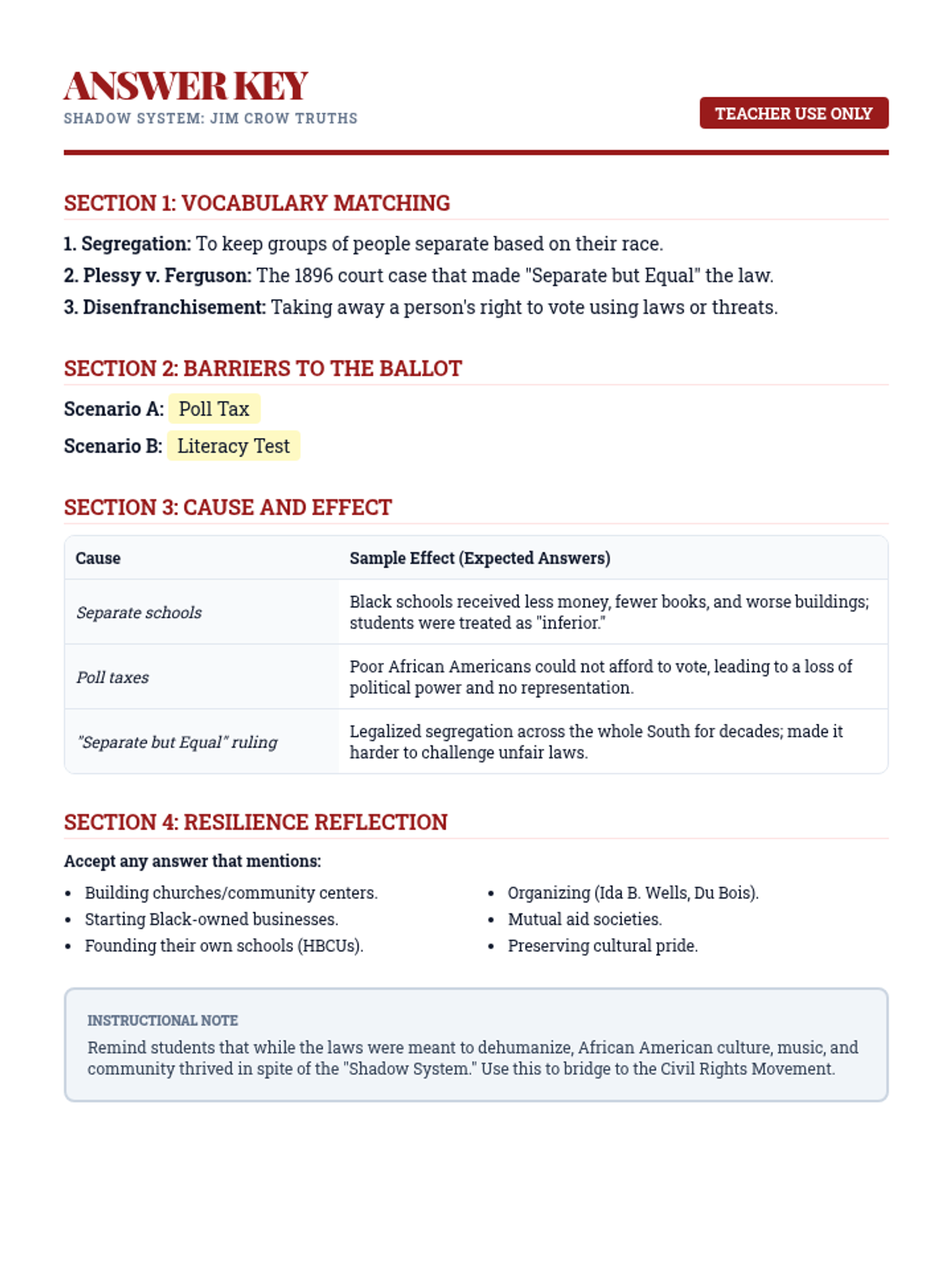
This lesson examines the systemic implementation of Jim Crow laws following the Reconstruction era. Students explore the legal and social mechanisms used to enforce segregation and disenfranchisement in the American South.
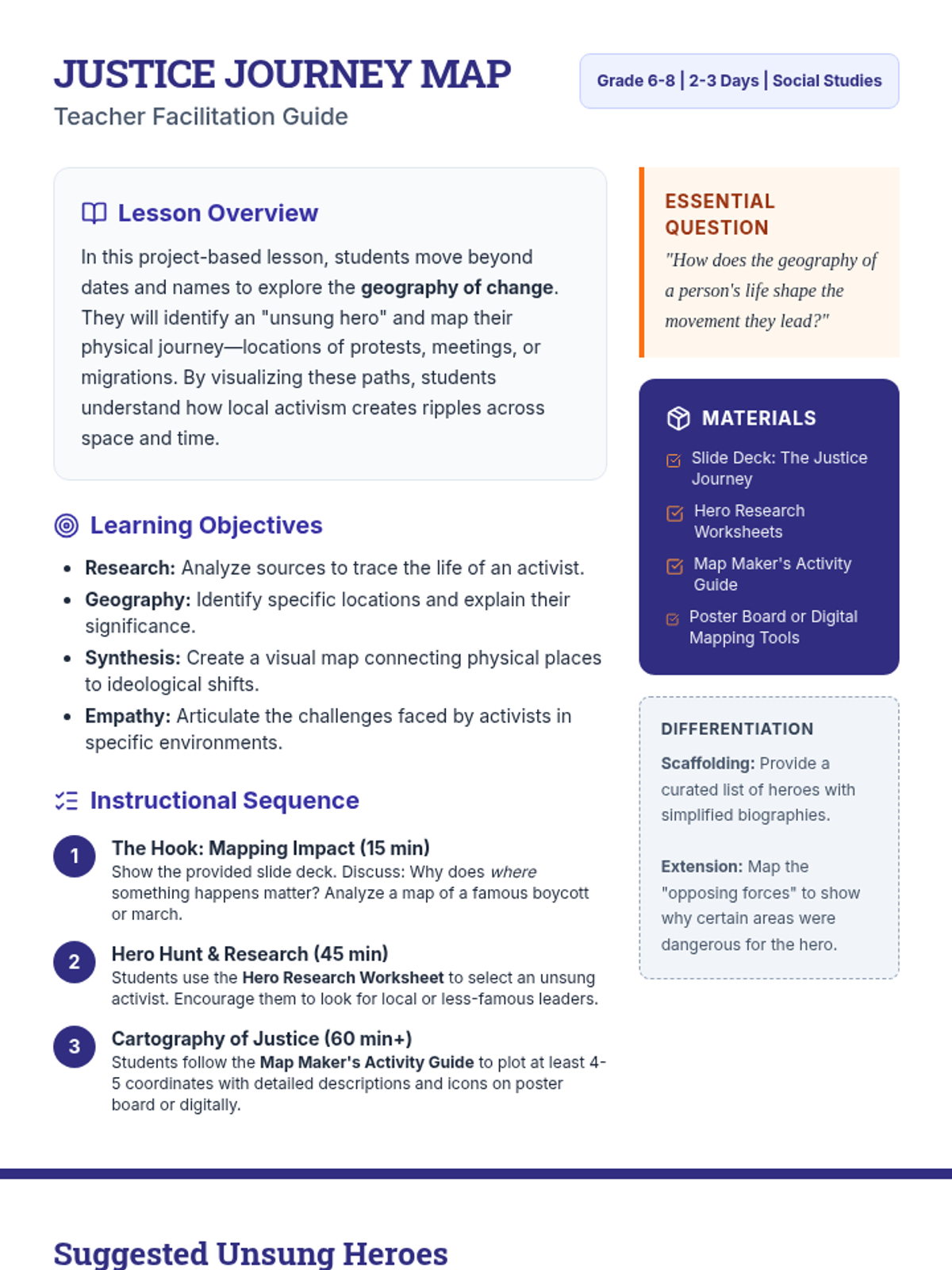
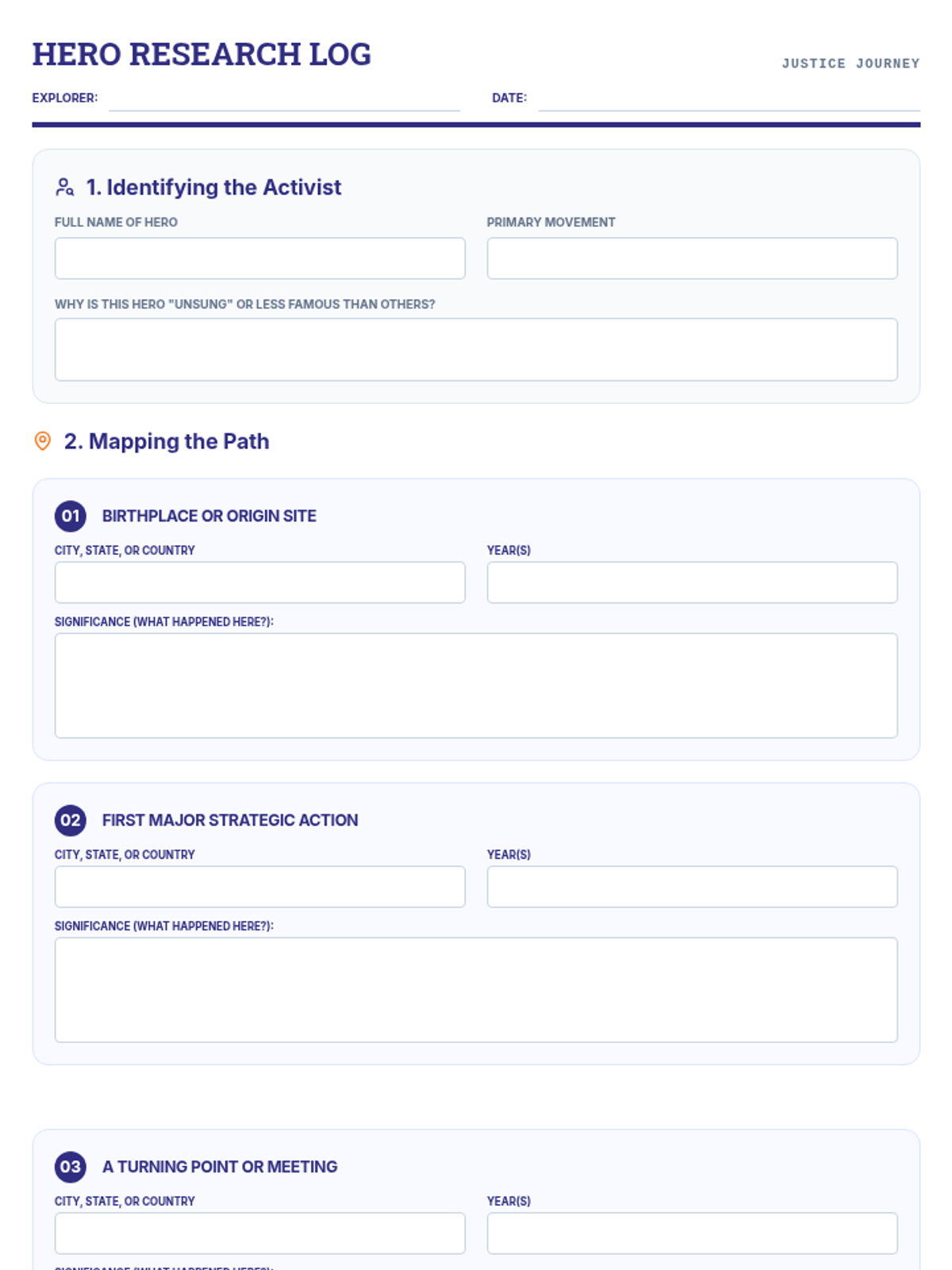
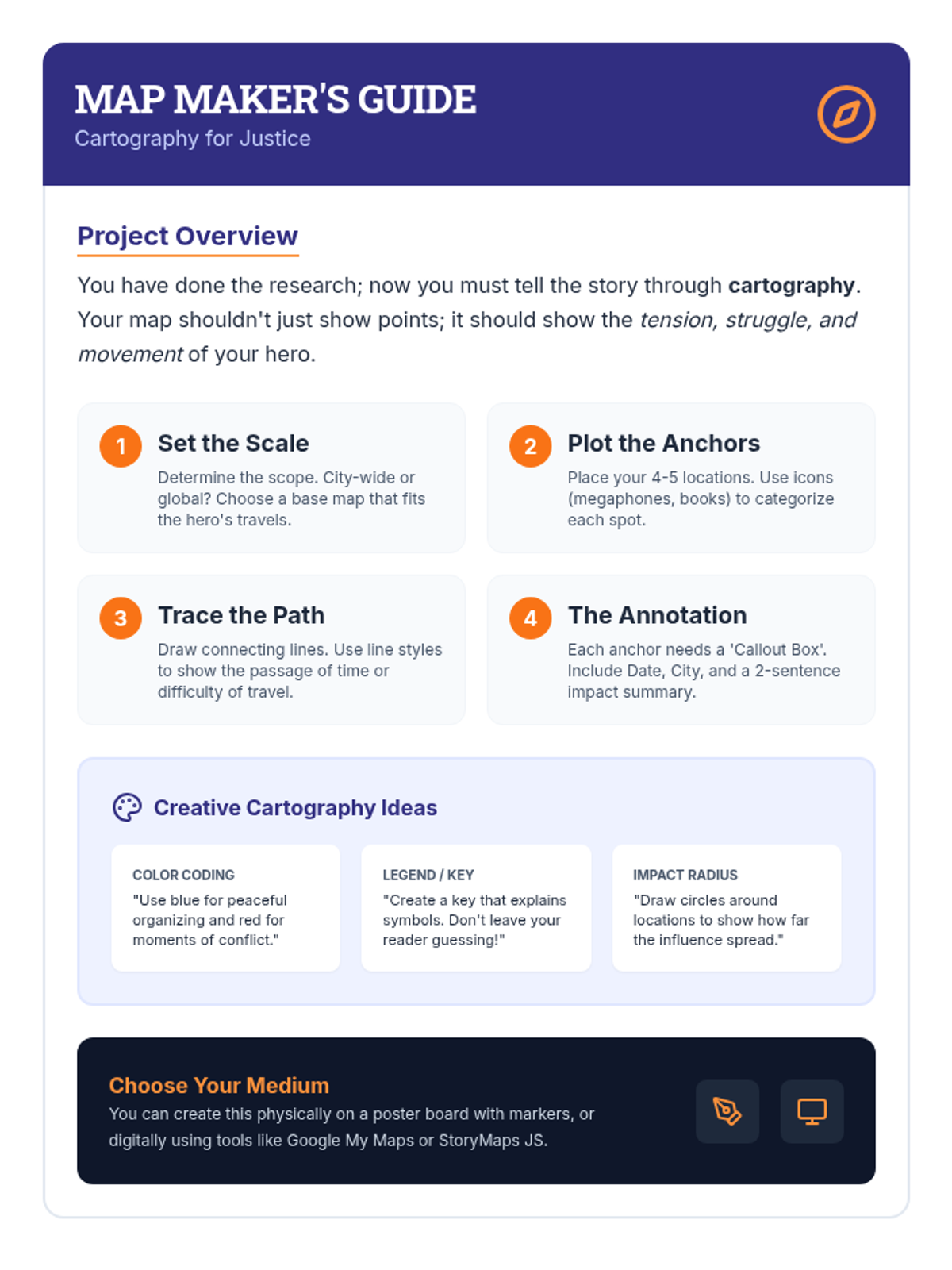
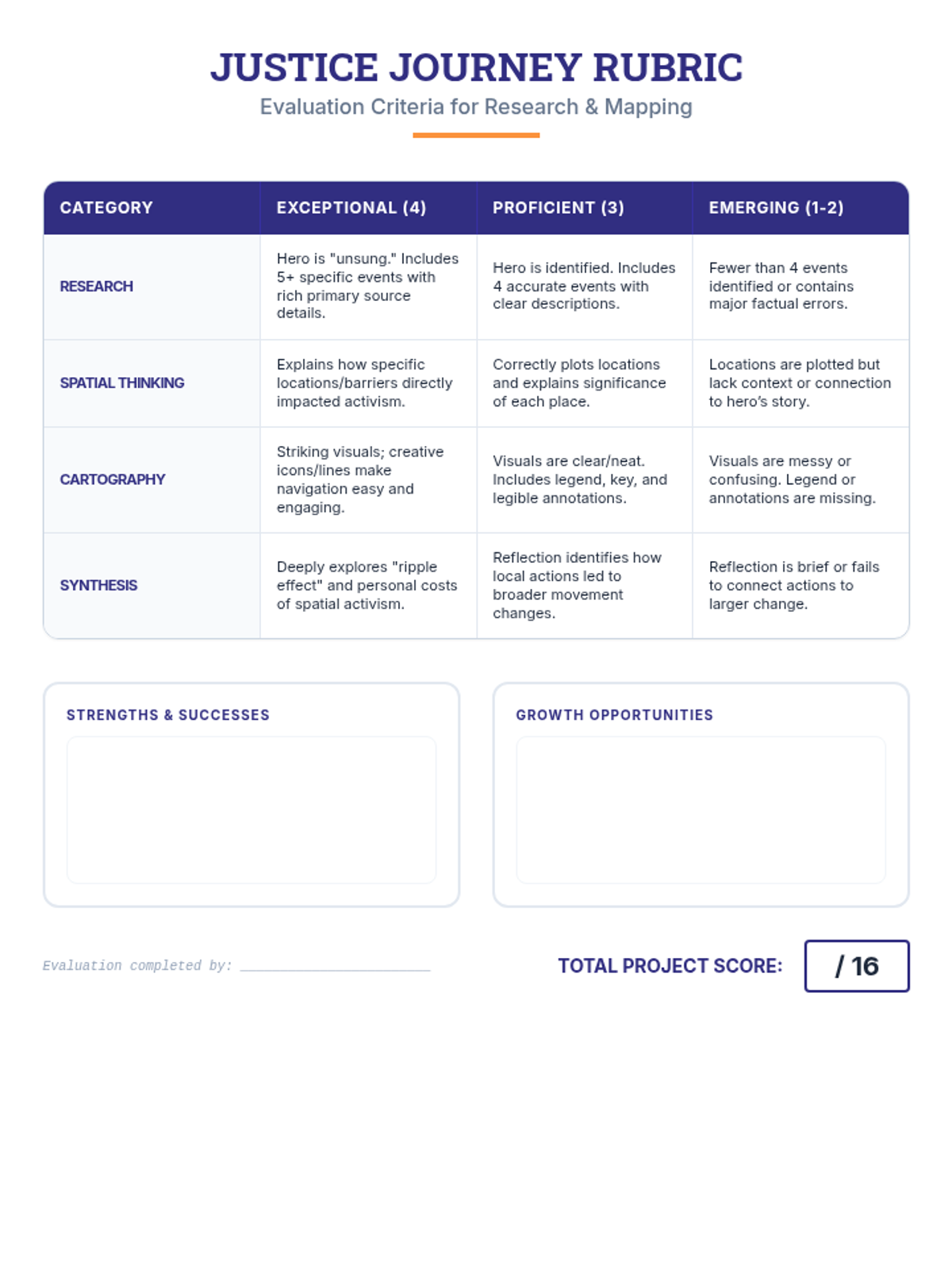
Students research unsung social justice heroes and create a geographic 'journey map' to visualize how local actions lead to global change. This lesson combines historical research, geography, and visual storytelling for middle schoolers.
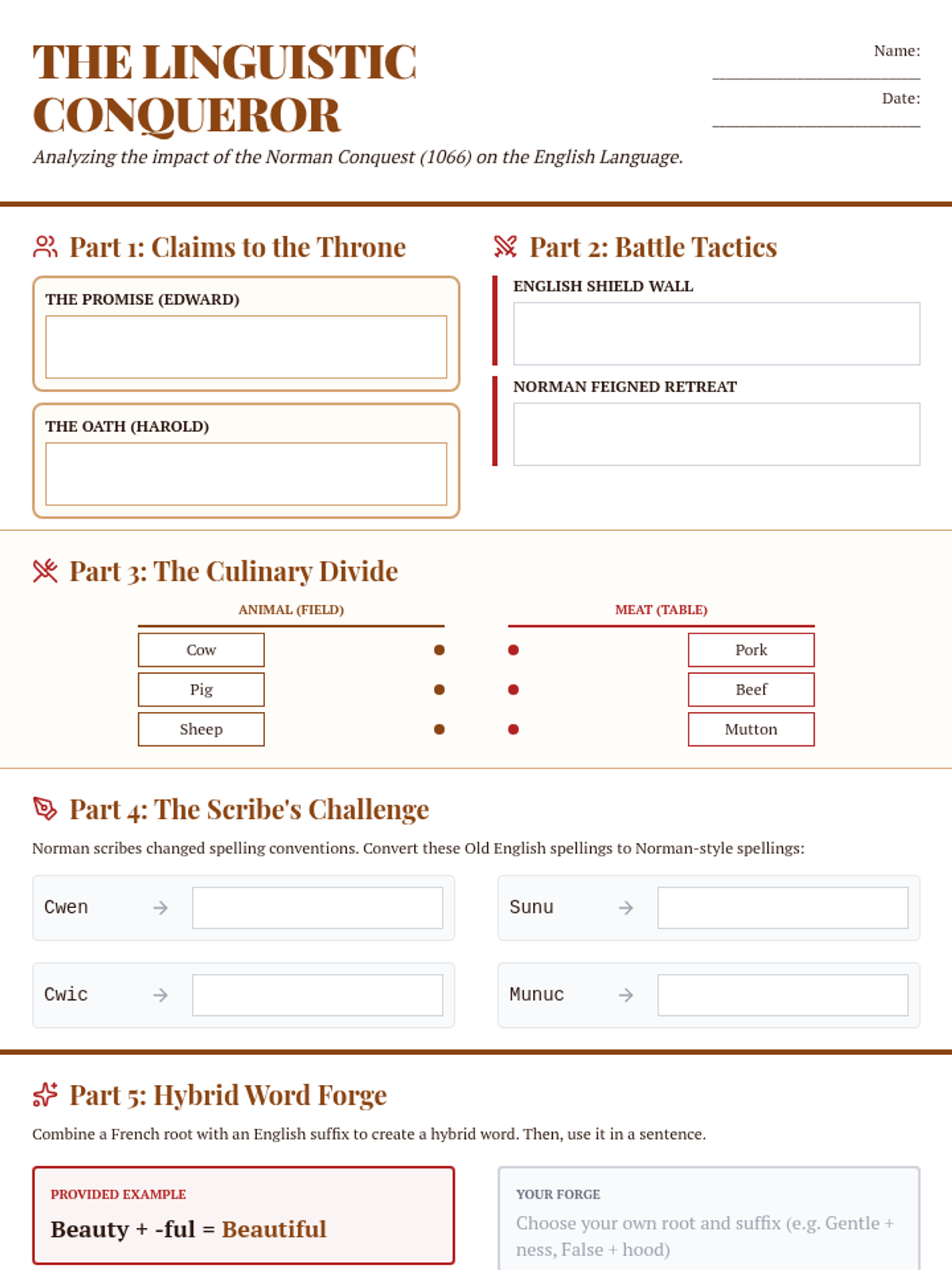
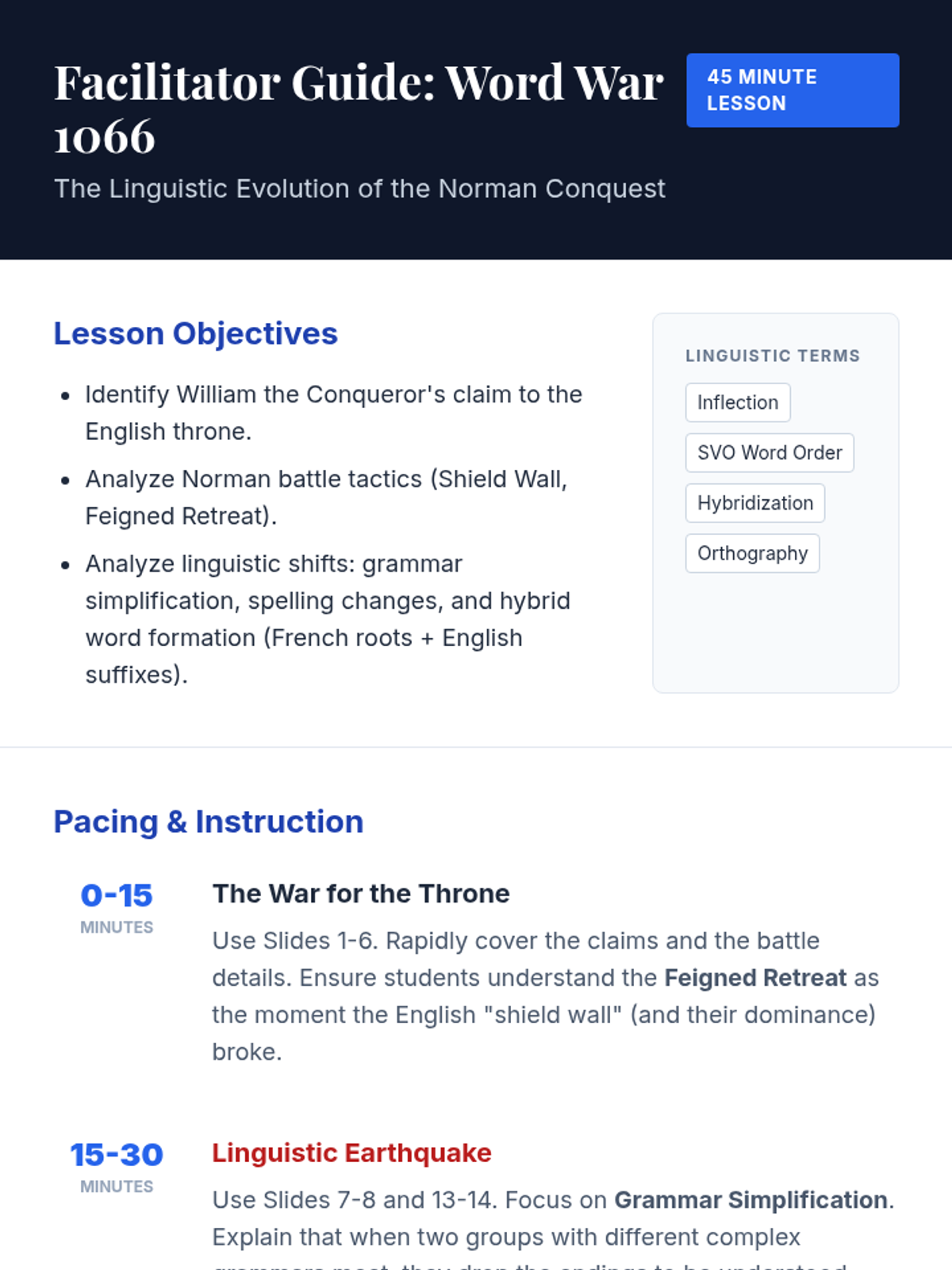
A lesson exploring the Battle of Hastings and its profound impact on the English language, tracing how the Norman Conquest introduced French vocabulary and transformed Old English into the ancestor of modern English.
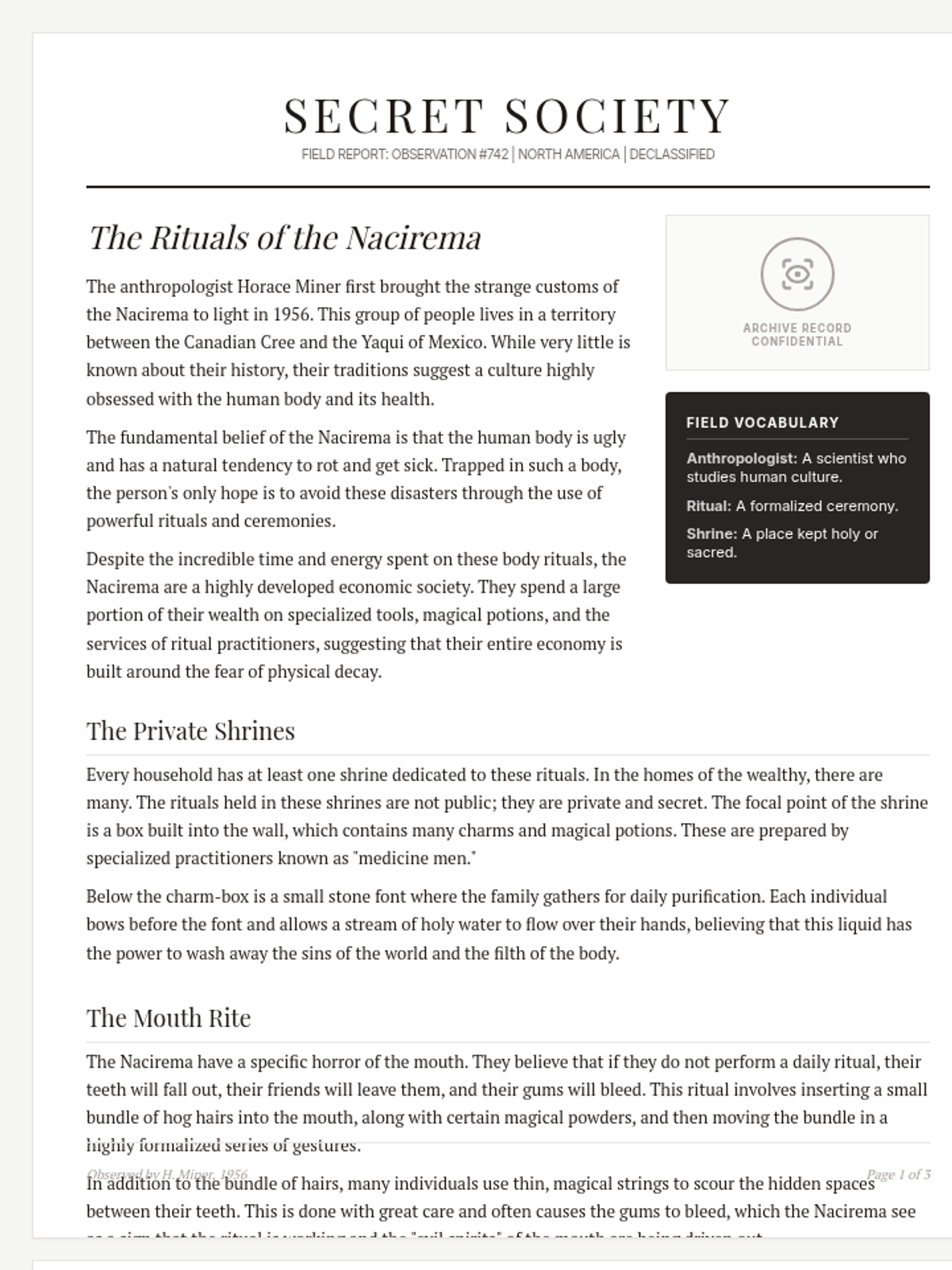
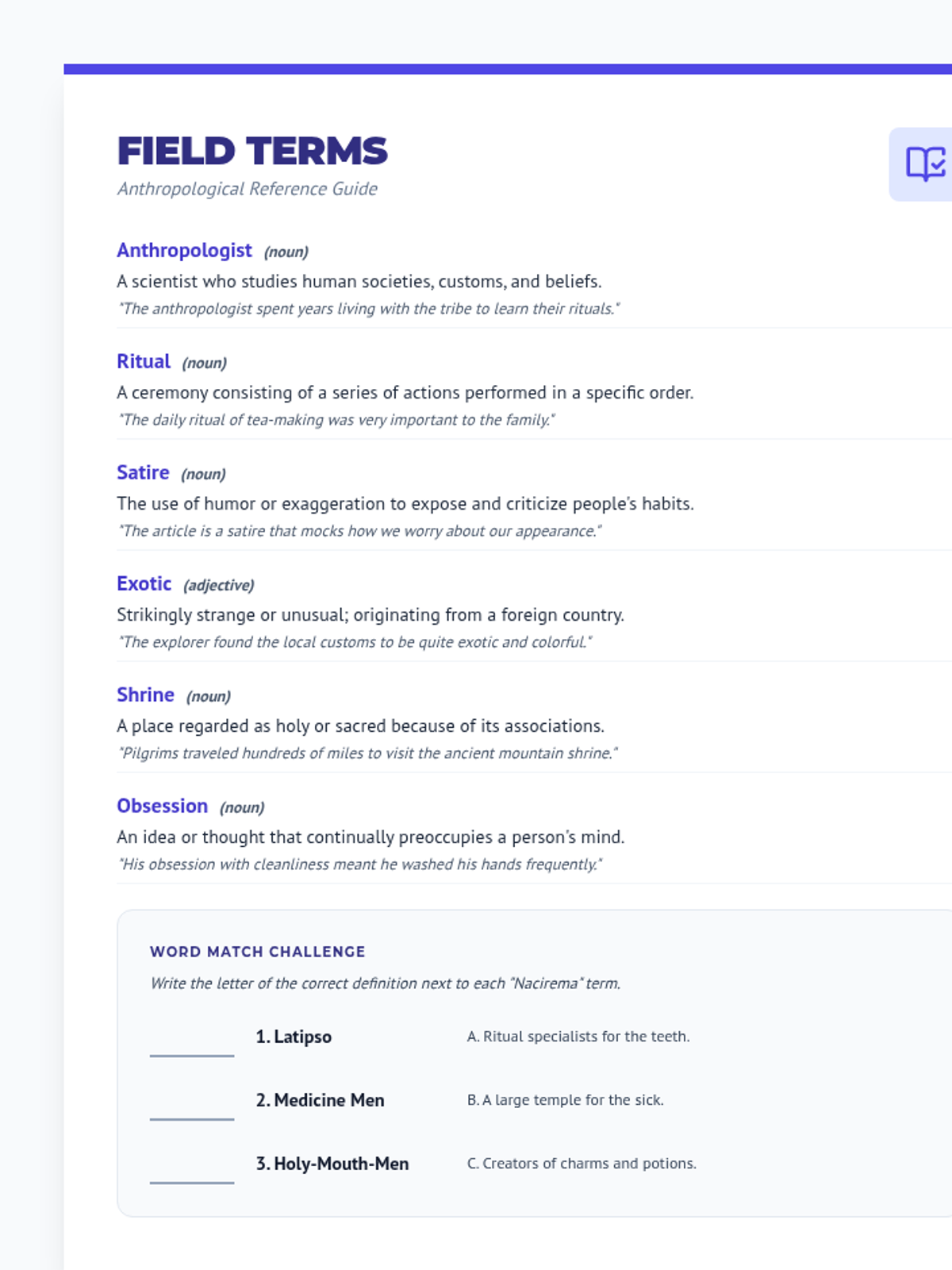
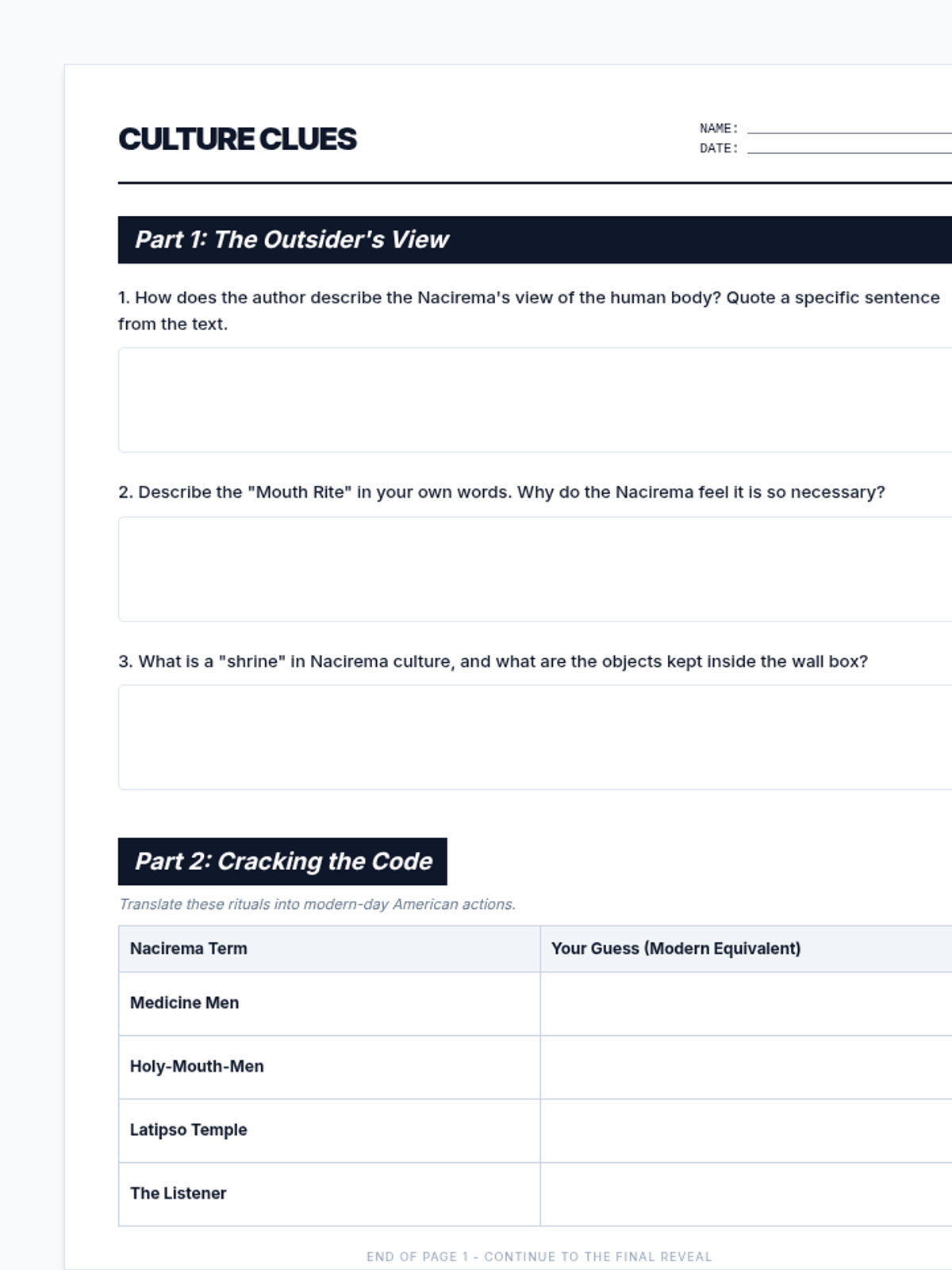
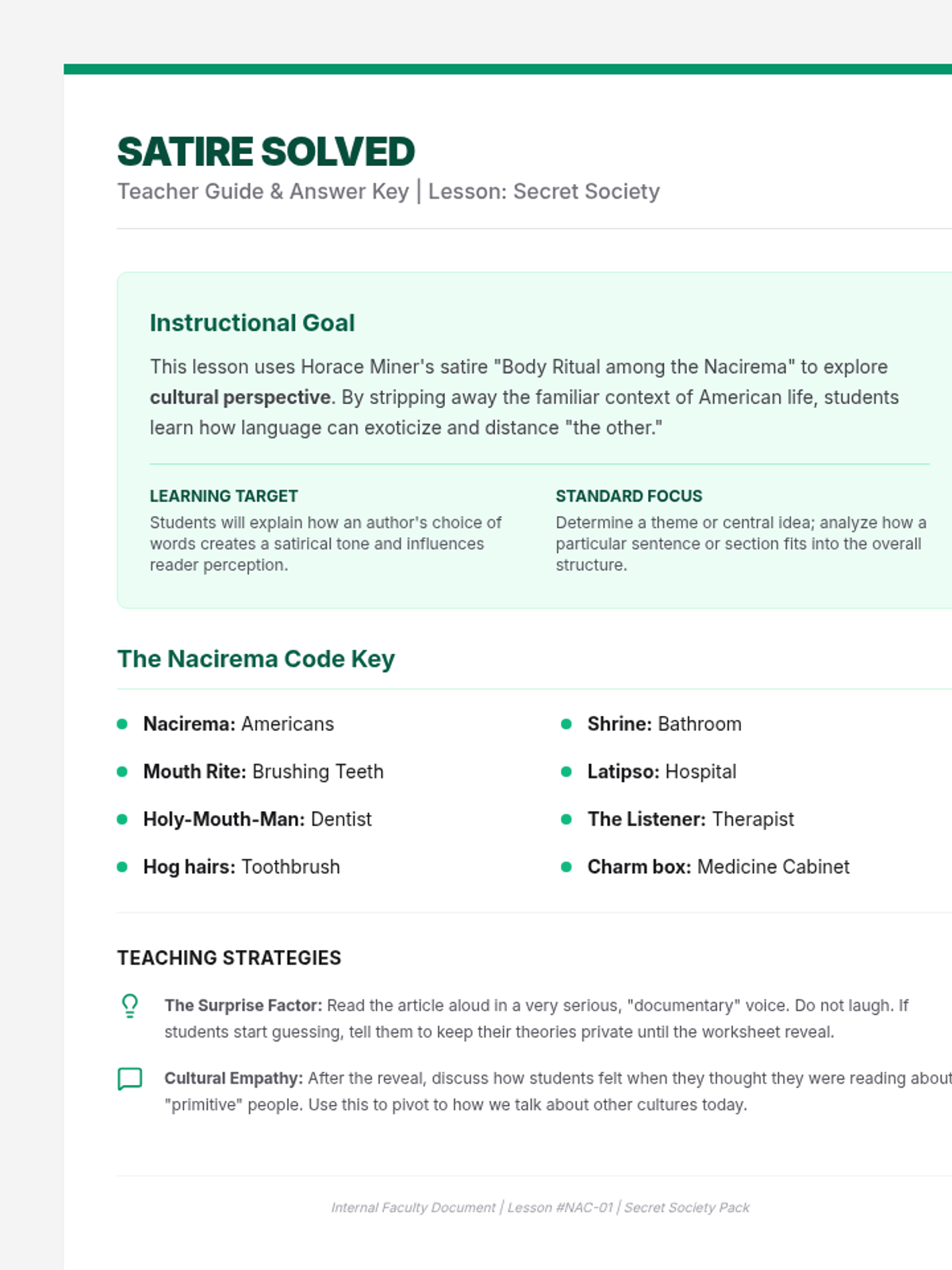
A lesson introducing students to the concept of cultural perspective and satire through the study of the Nacirema people, designed for middle schoolers.
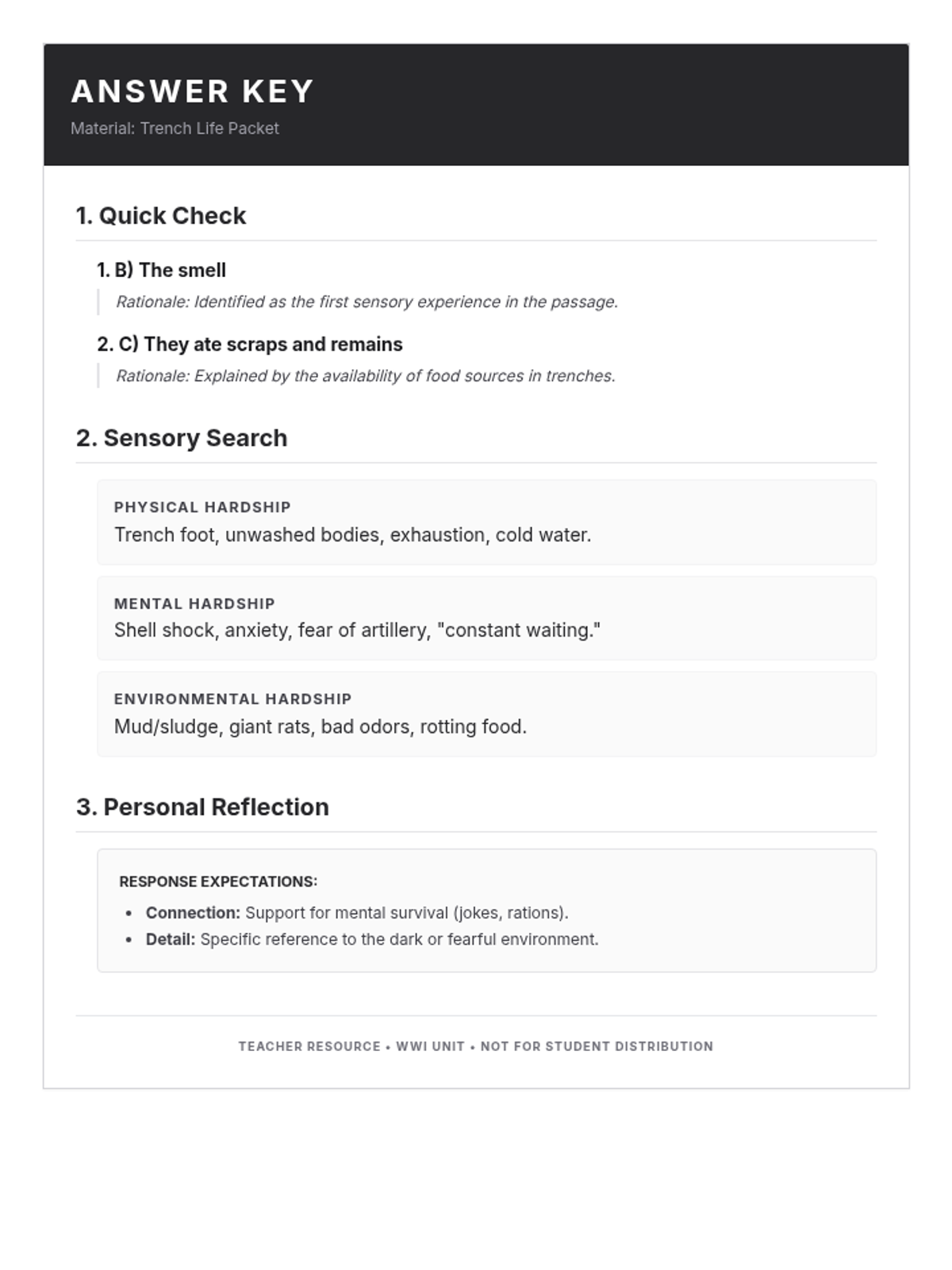
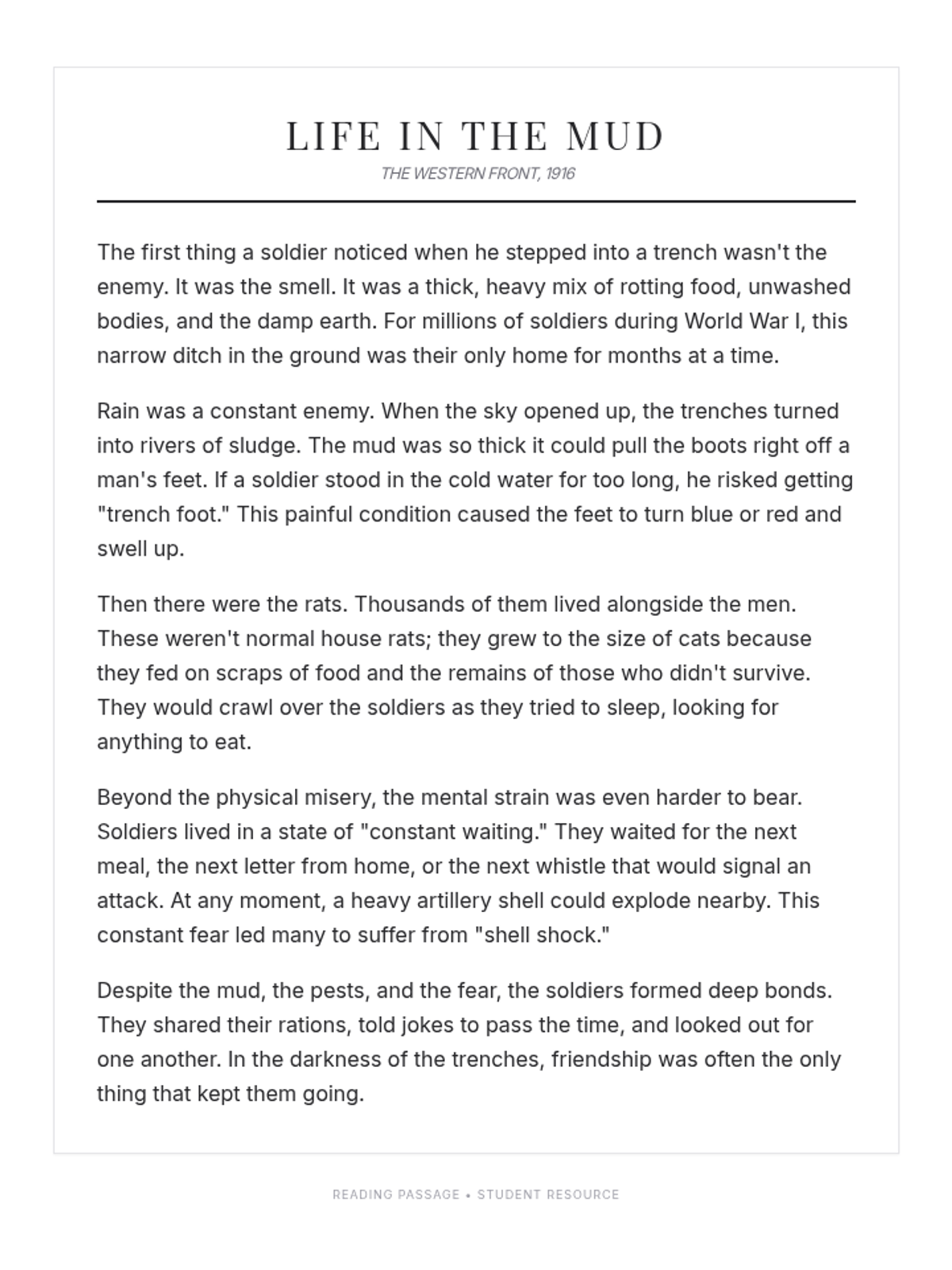
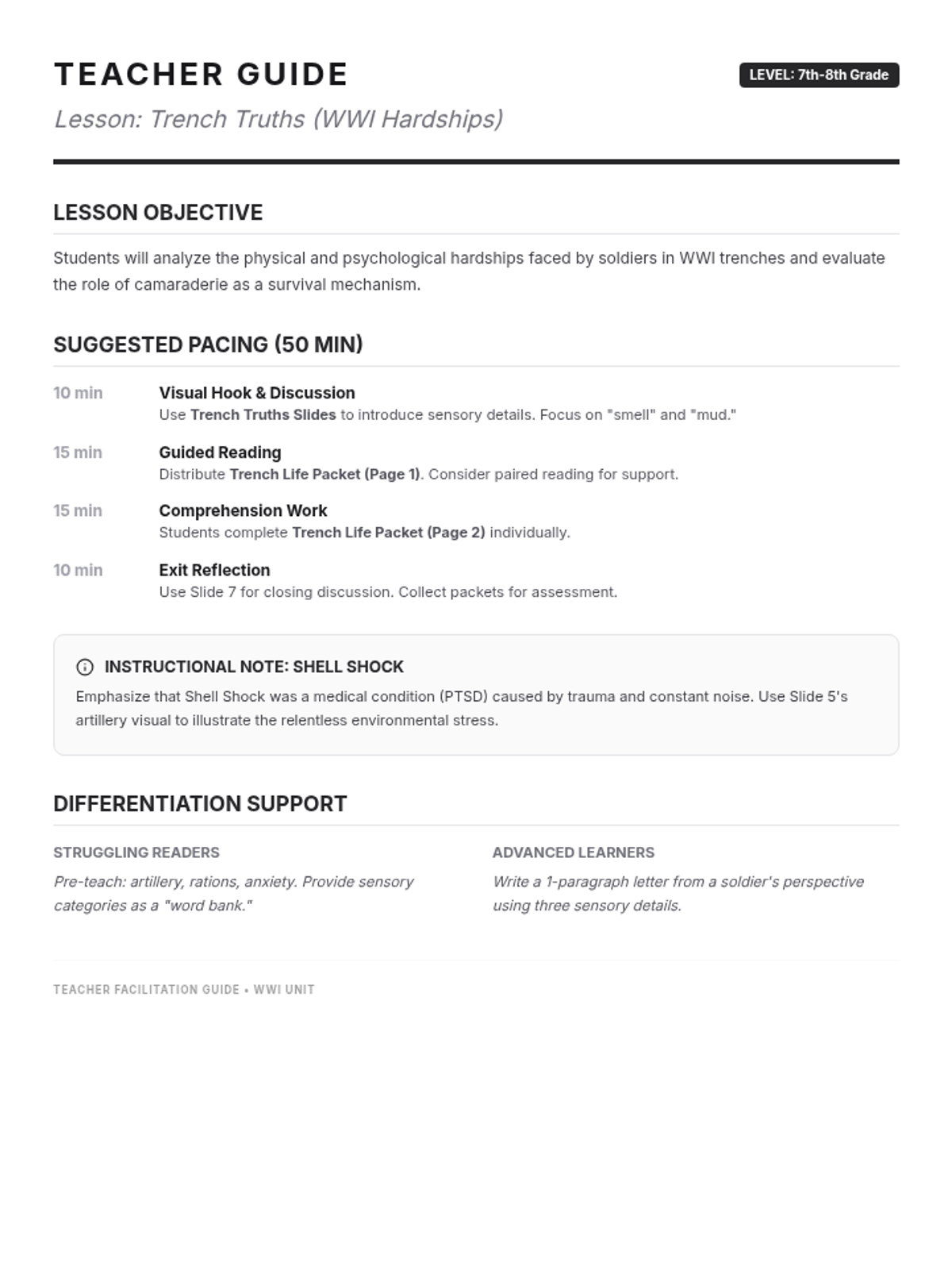
A lesson focusing on the daily hardships and psychological toll of trench warfare during World War I, designed for students reading at a middle school level.
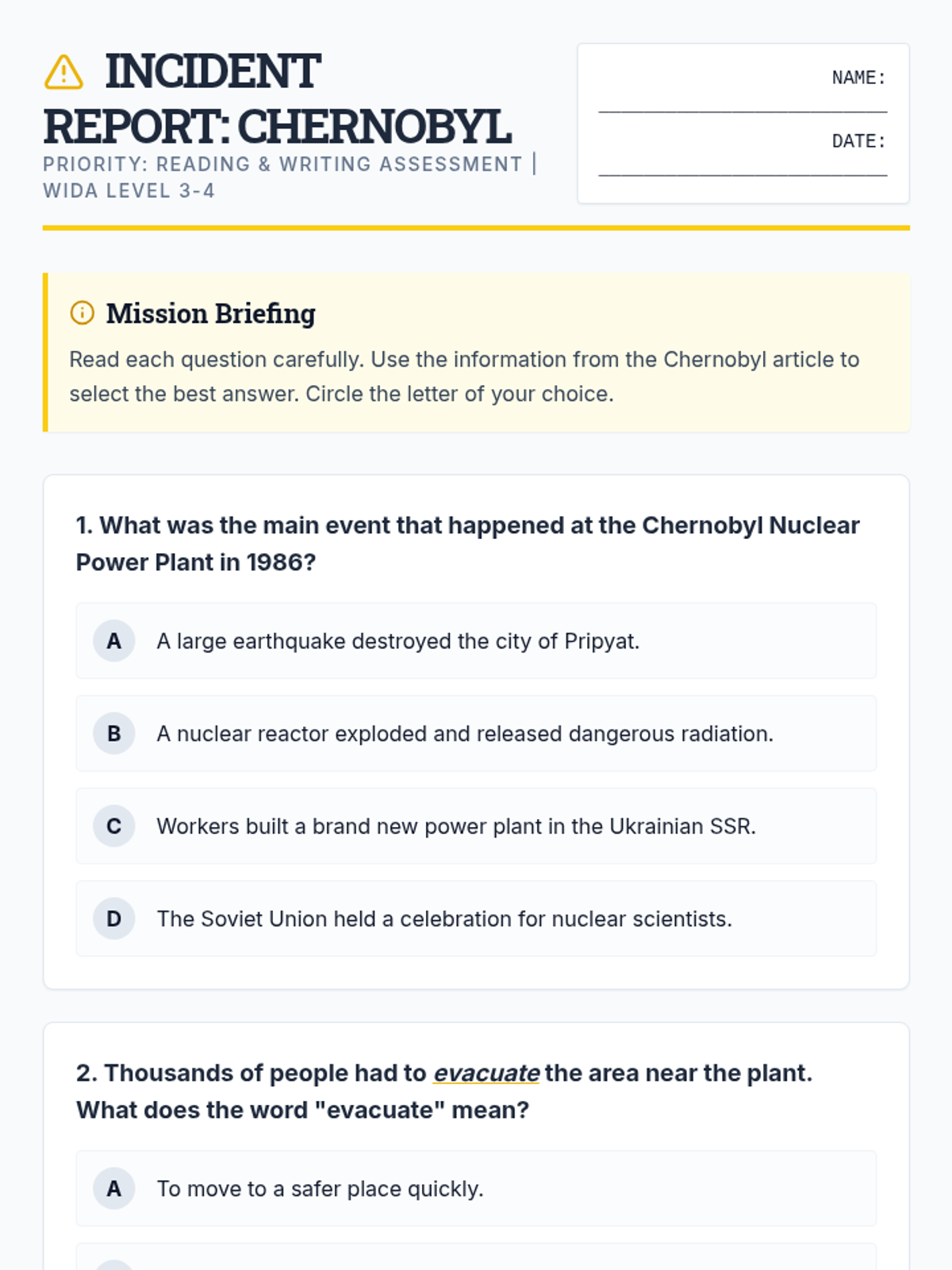
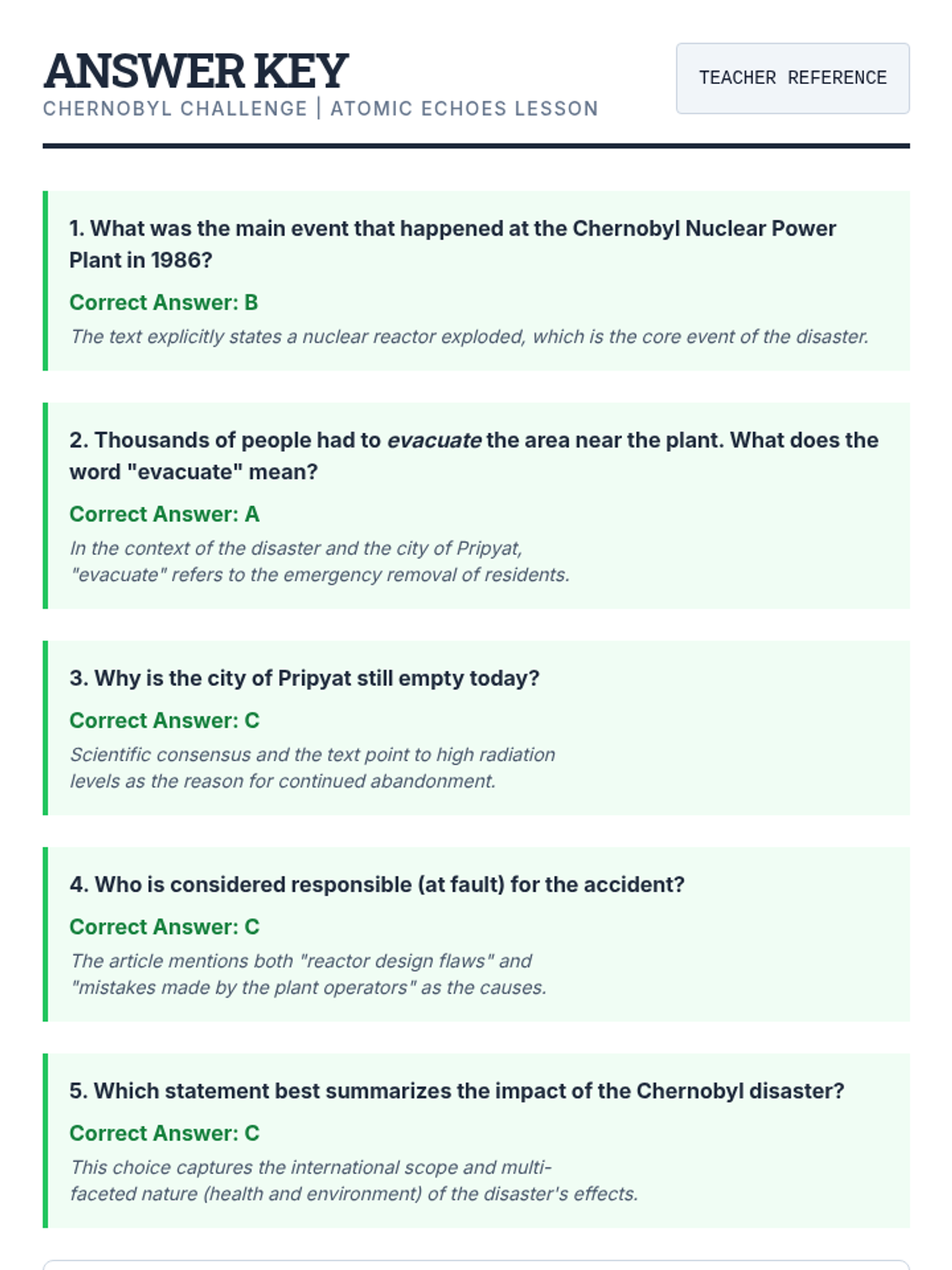
A focused lesson on the Chernobyl disaster using informational text to build reading comprehension and academic vocabulary for English Language Learners at WIDA levels 3-4.