A lesson exploring the causes of the Latin American Revolutions, specifically focusing on the motivations of the Creole class.
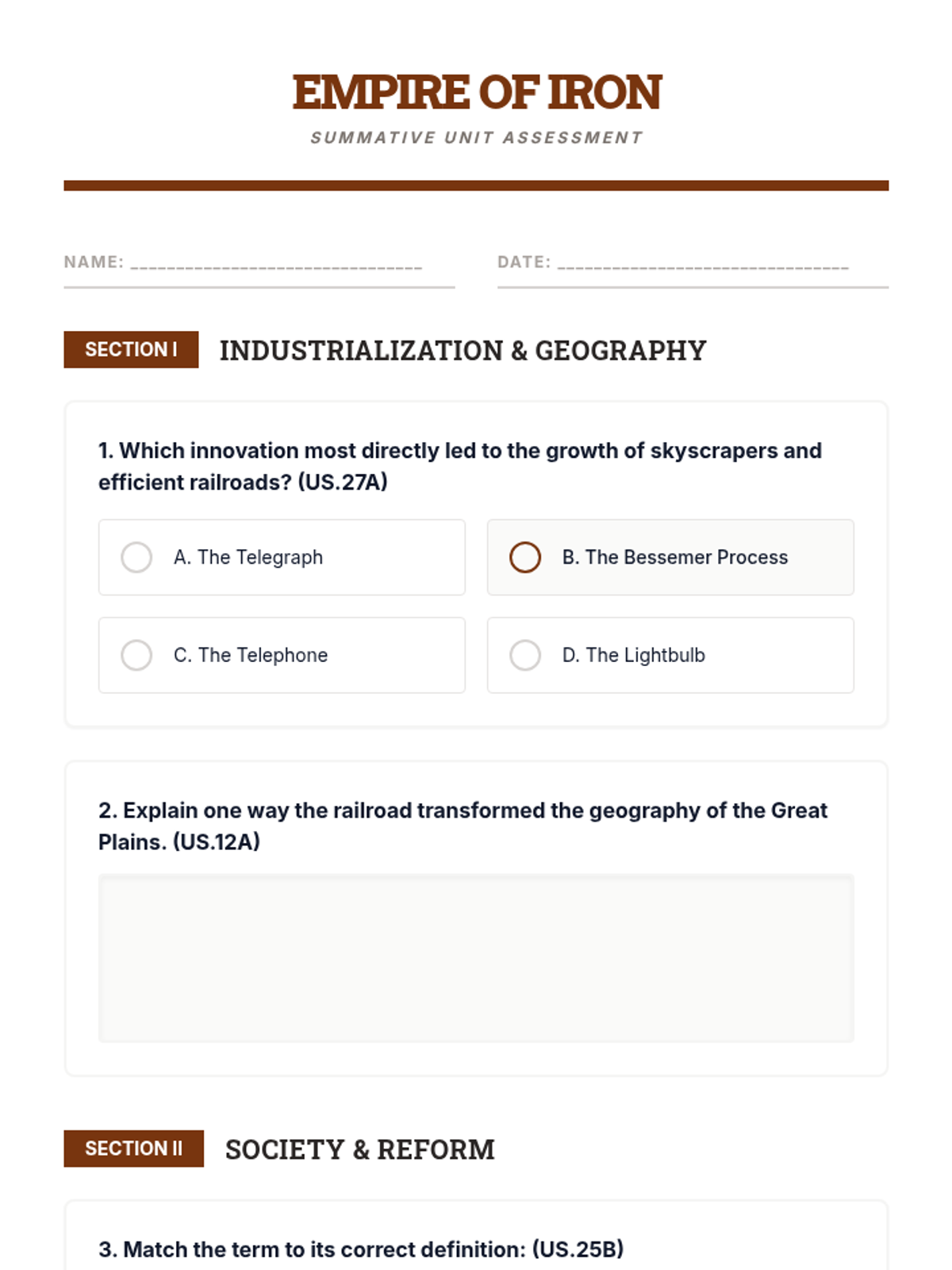
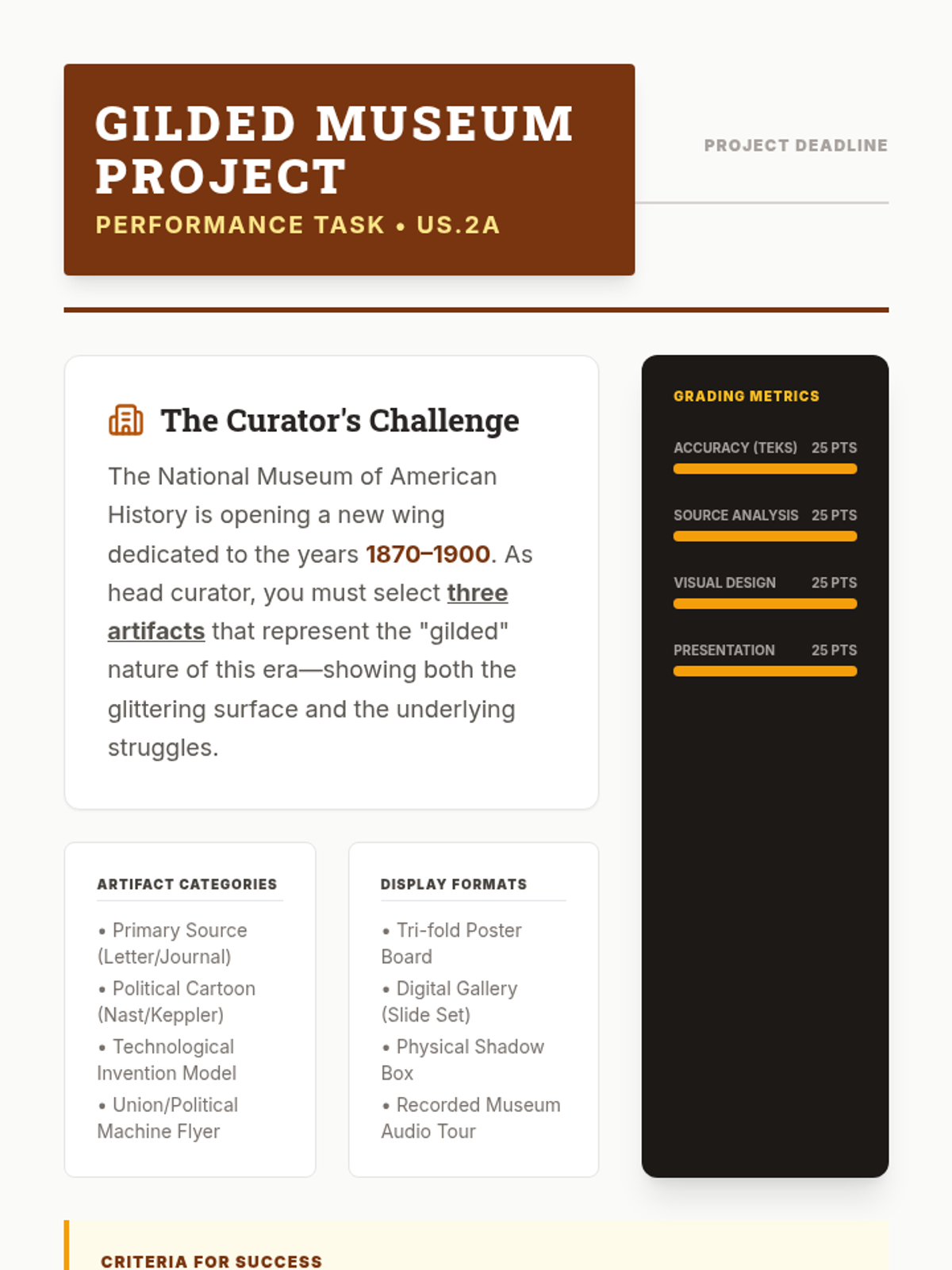
Synthesize learning through a museum curation project and a comprehensive summative exam.
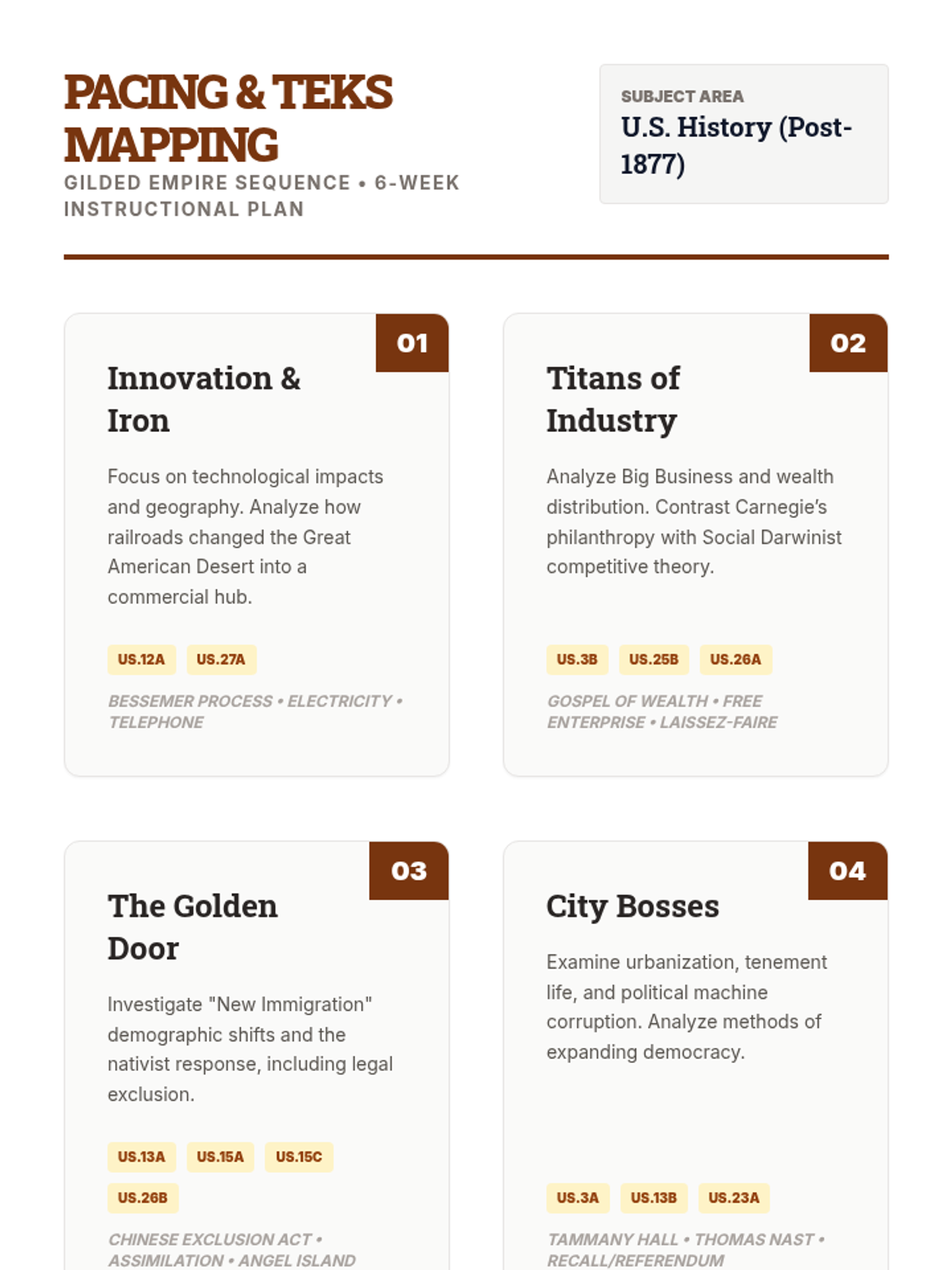
Understand the challenges faced by laborers, the rise of unions, and the Social Gospel movement's response to urban poverty.
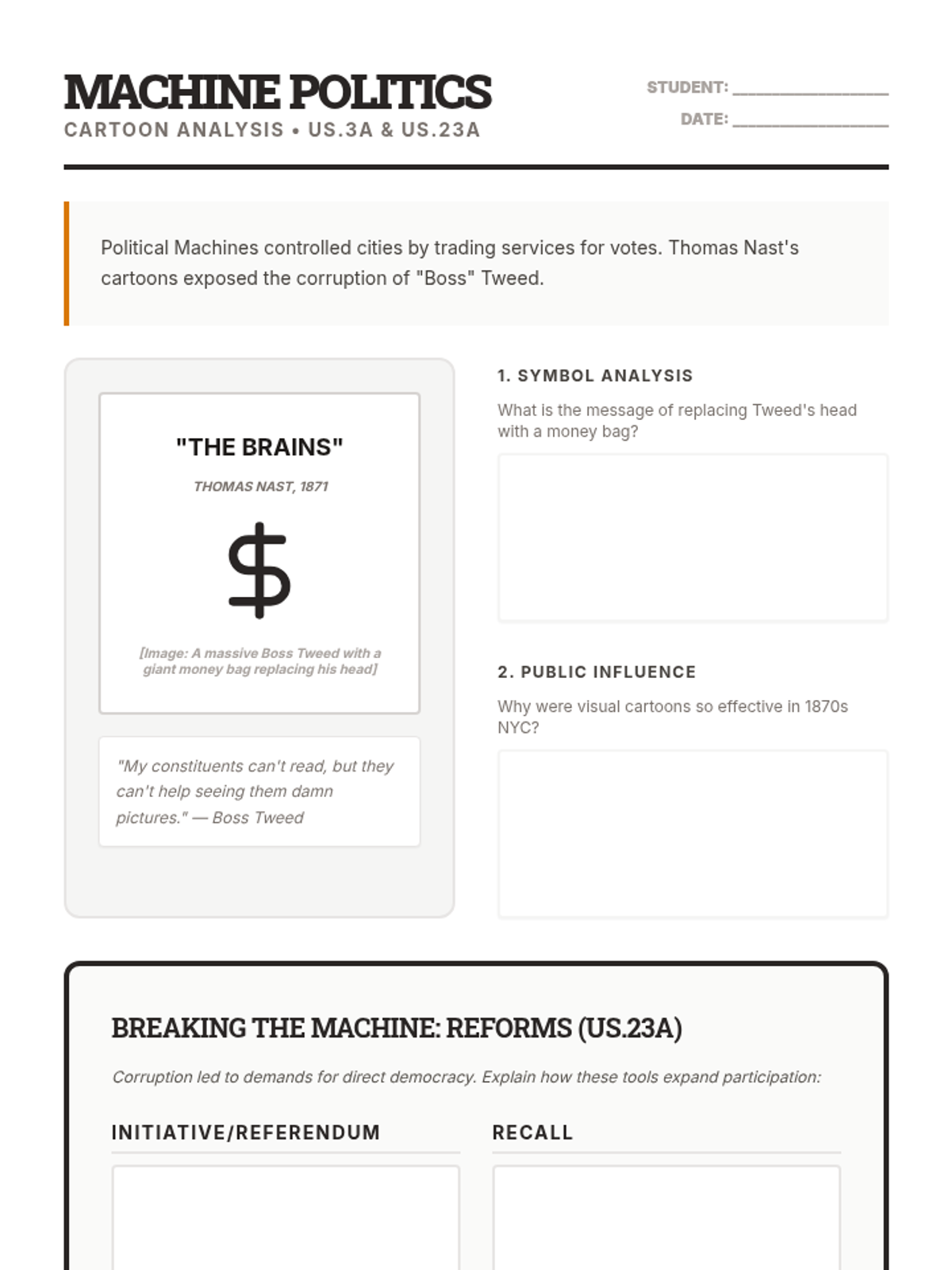
Examine the growth of cities, tenement life, and the role of political machines like Tammany Hall.
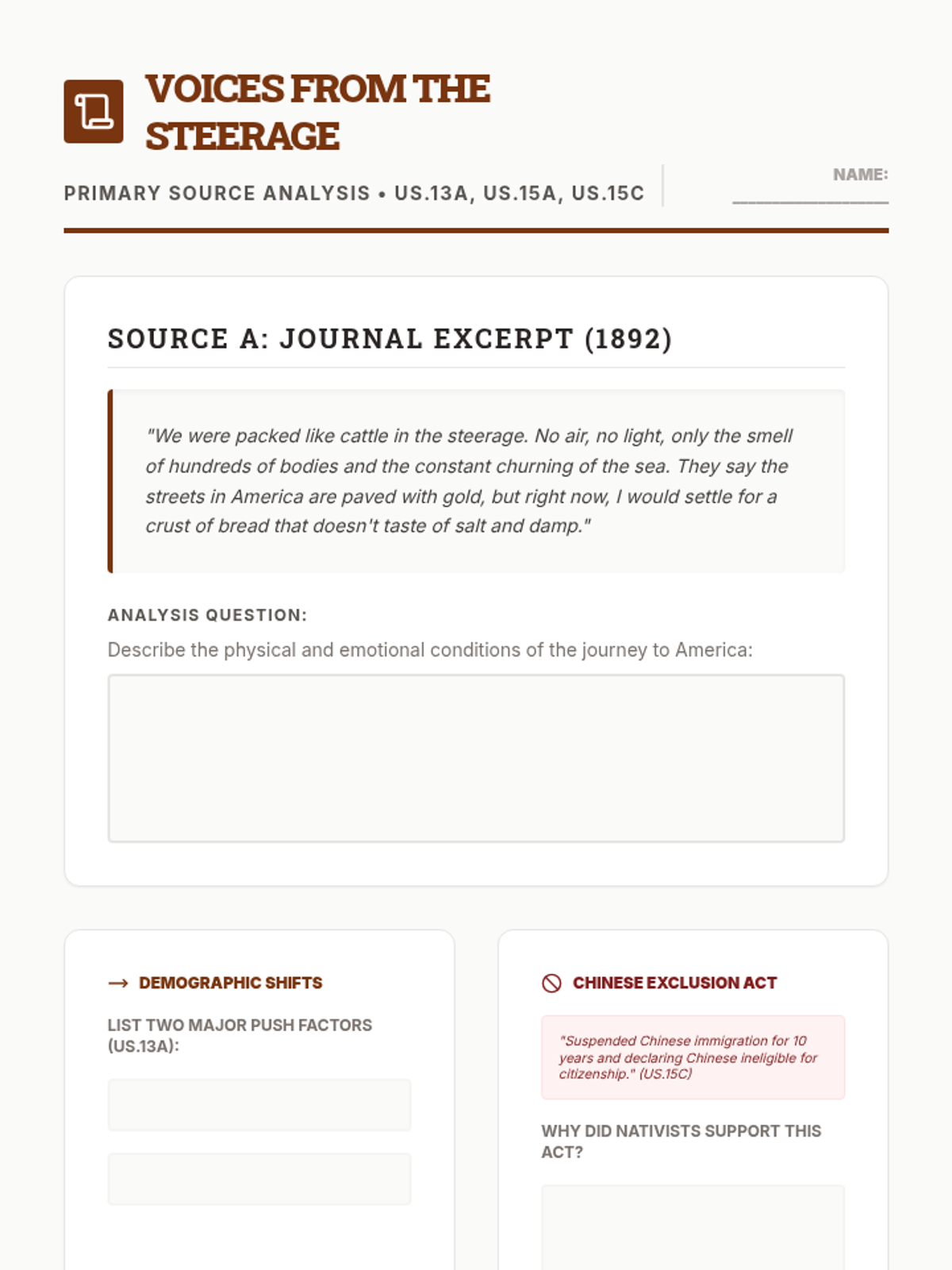
Investigate the immigrant experience through journals and primary accounts, focusing on assimilation, nativism, and demographic shifts.
Analyze the rise of big business and the conflicting philosophies of Social Darwinism and the Gospel of Wealth.
Explore the technological innovations and geographic factors that fueled industrialization, including railroads, steel production, and the settlement of the West.
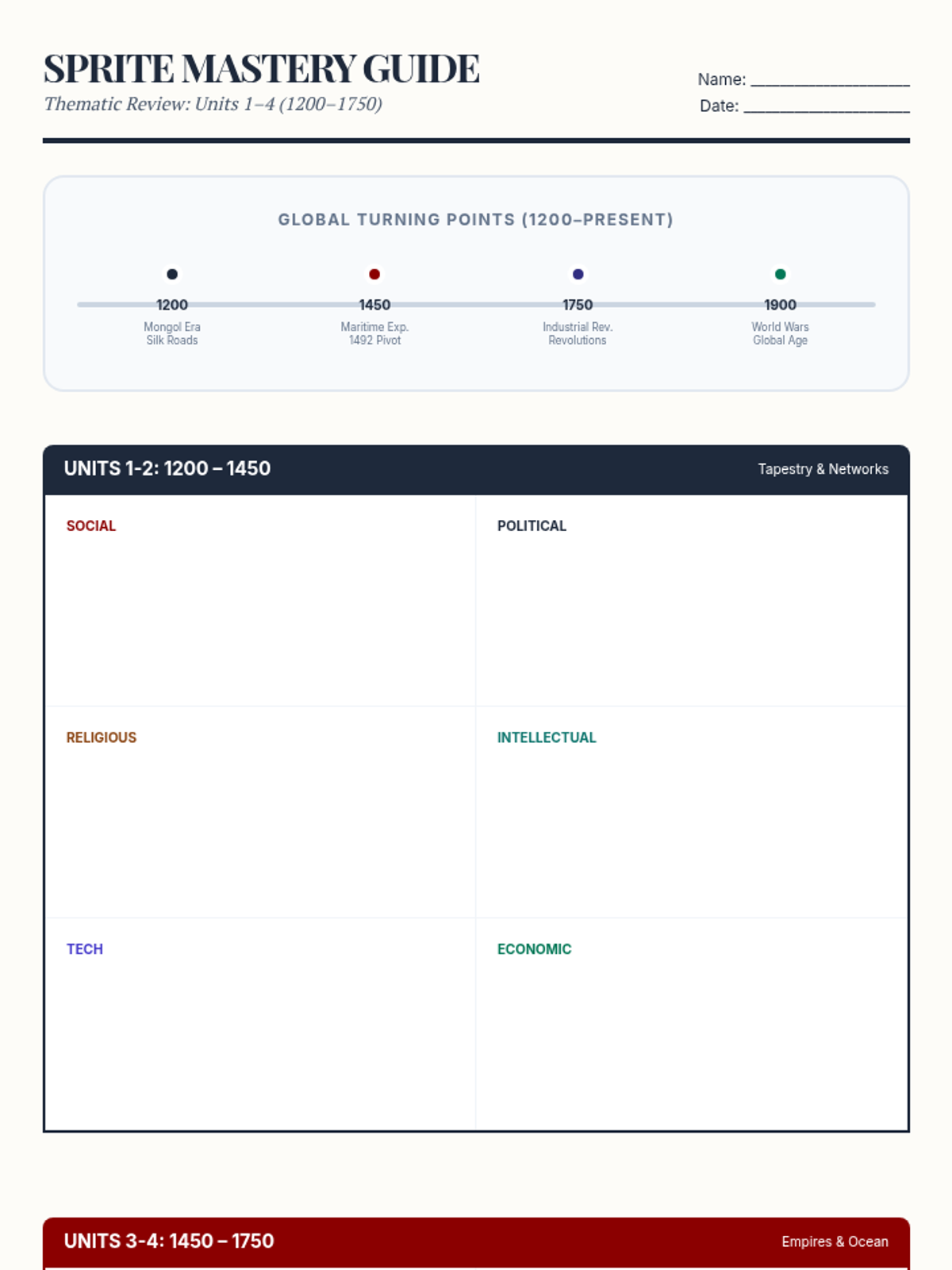
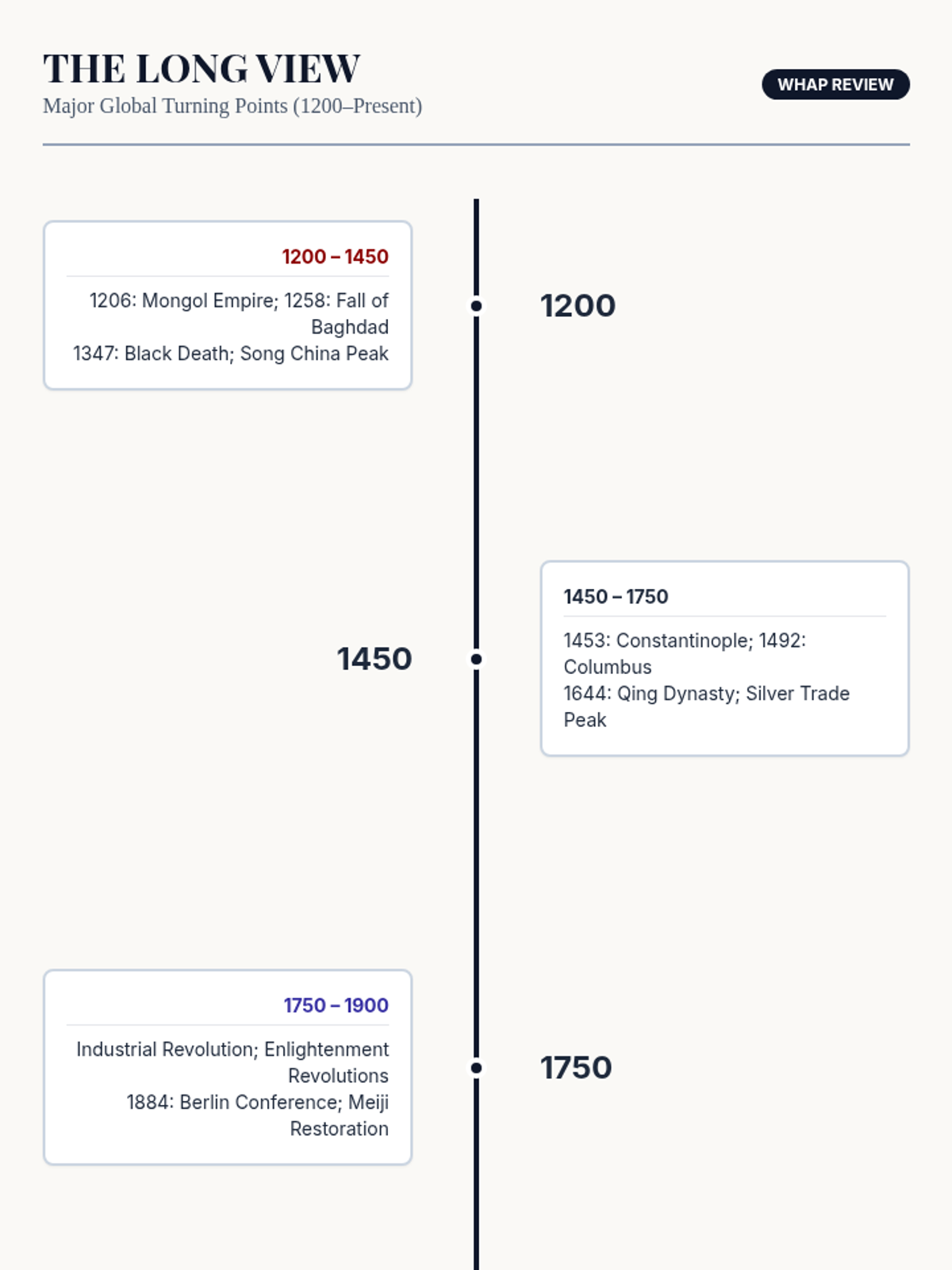
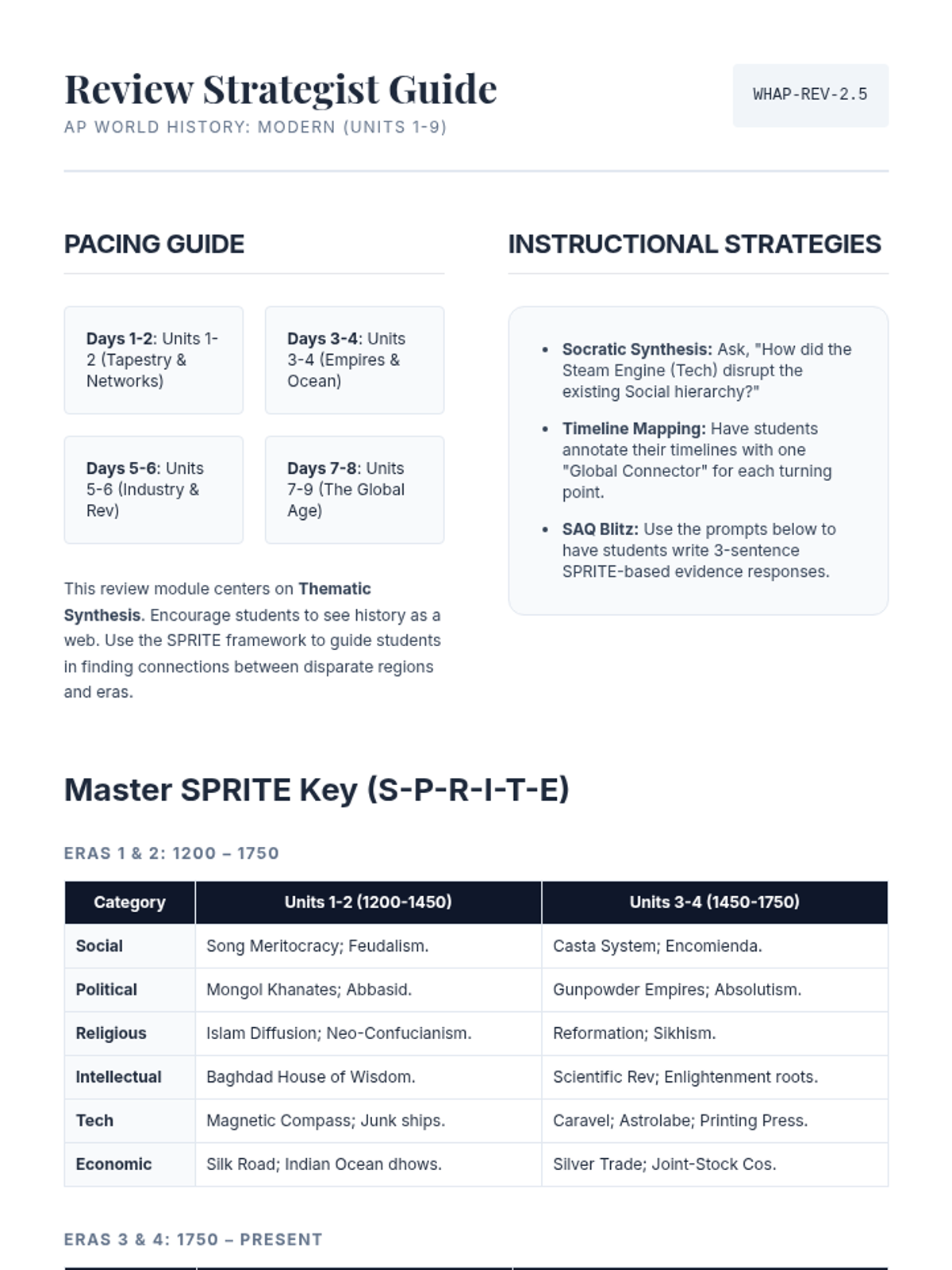
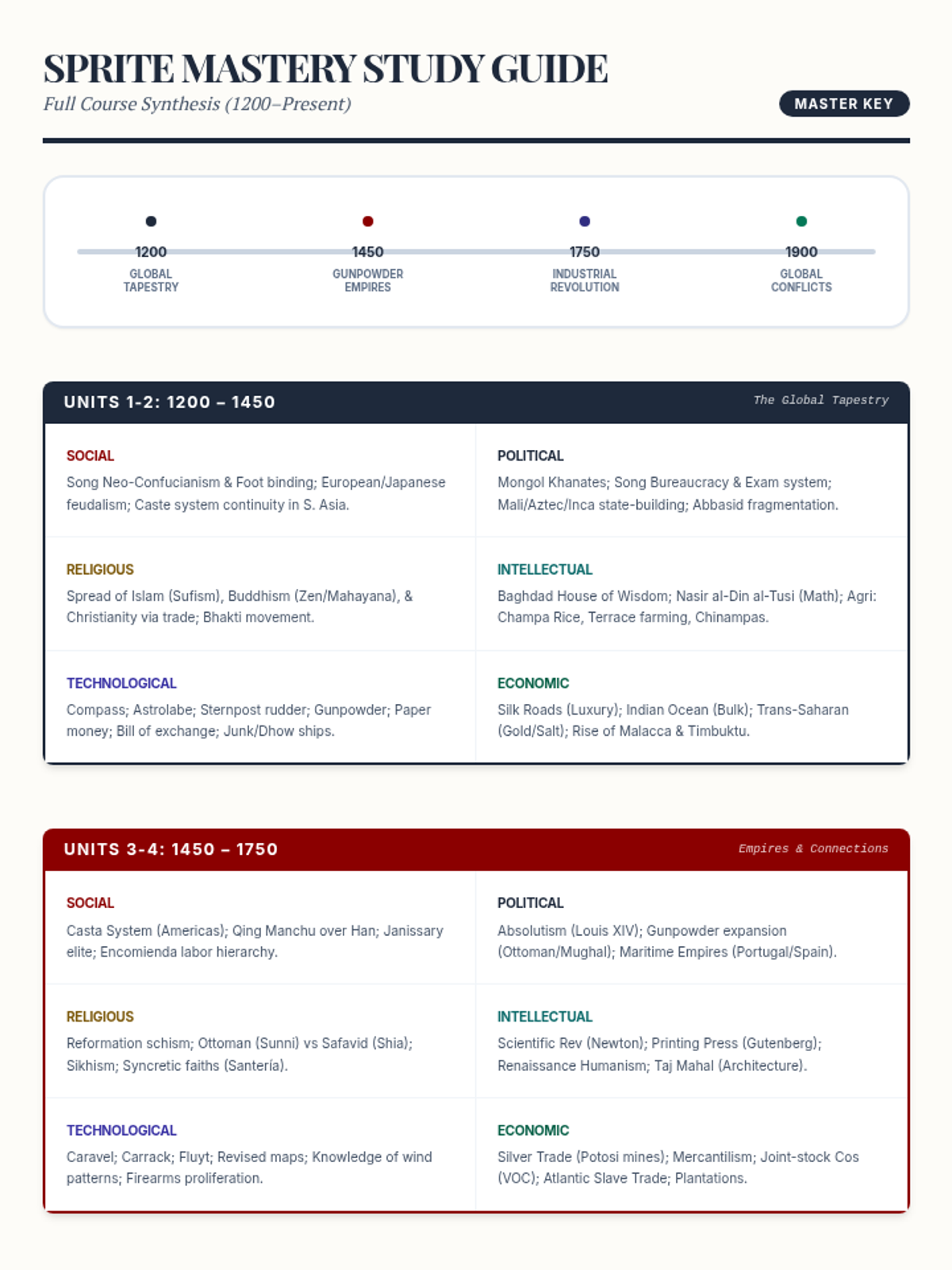
A comprehensive AP Modern World History review covering Units 1-9 (1200-Present), featuring SPRITE thematic analysis and a detailed visual timeline for exam preparation.
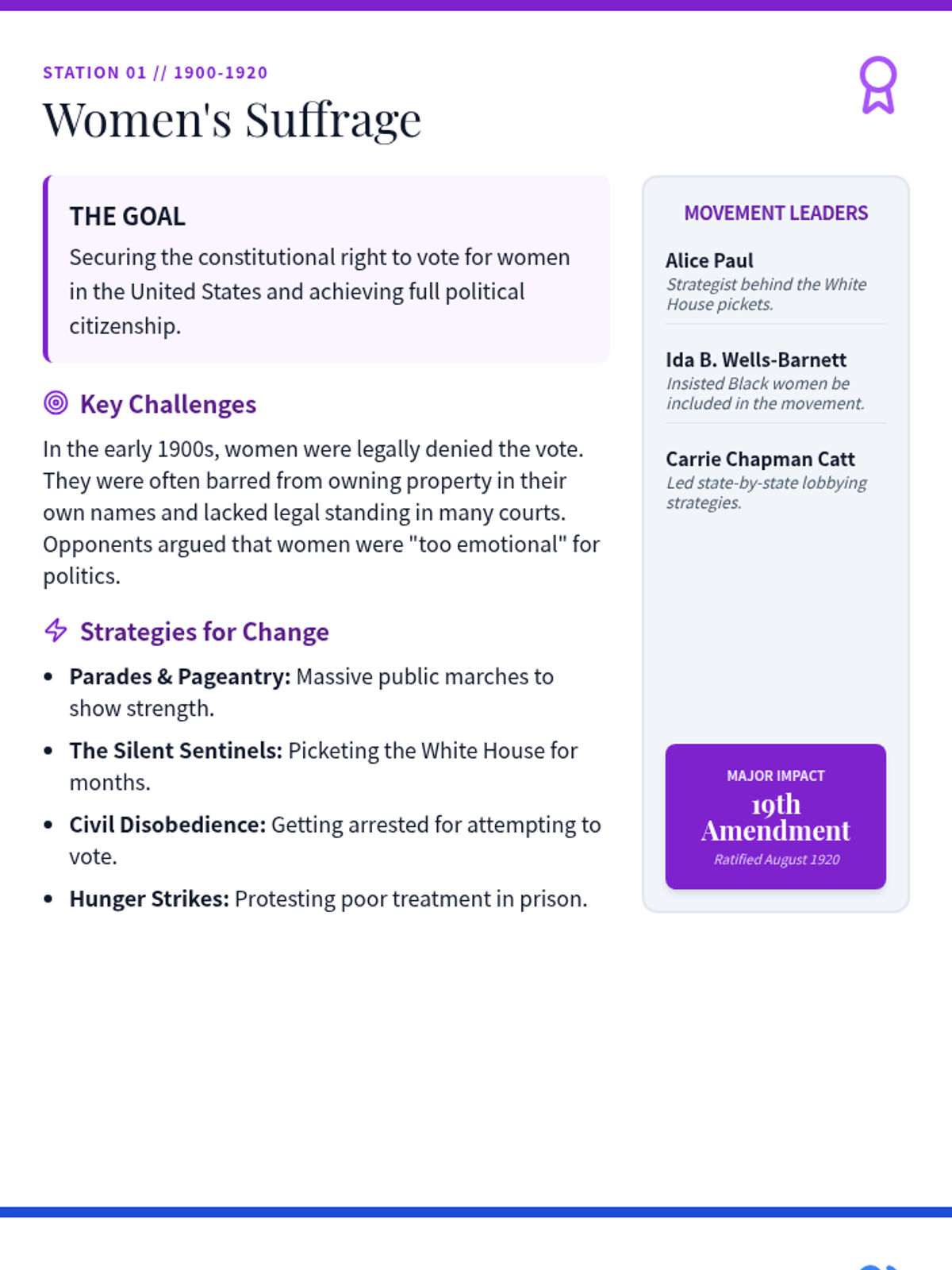
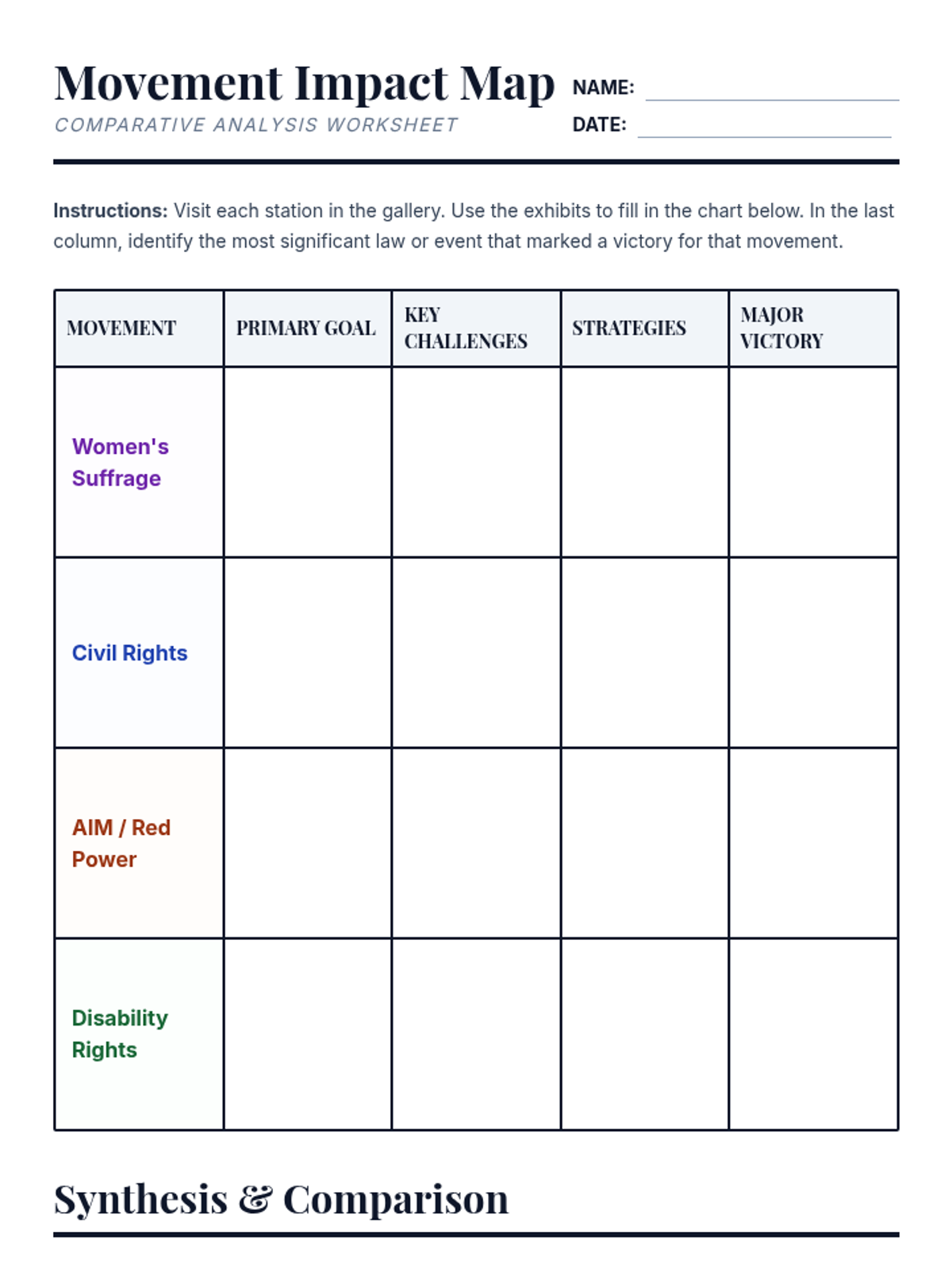
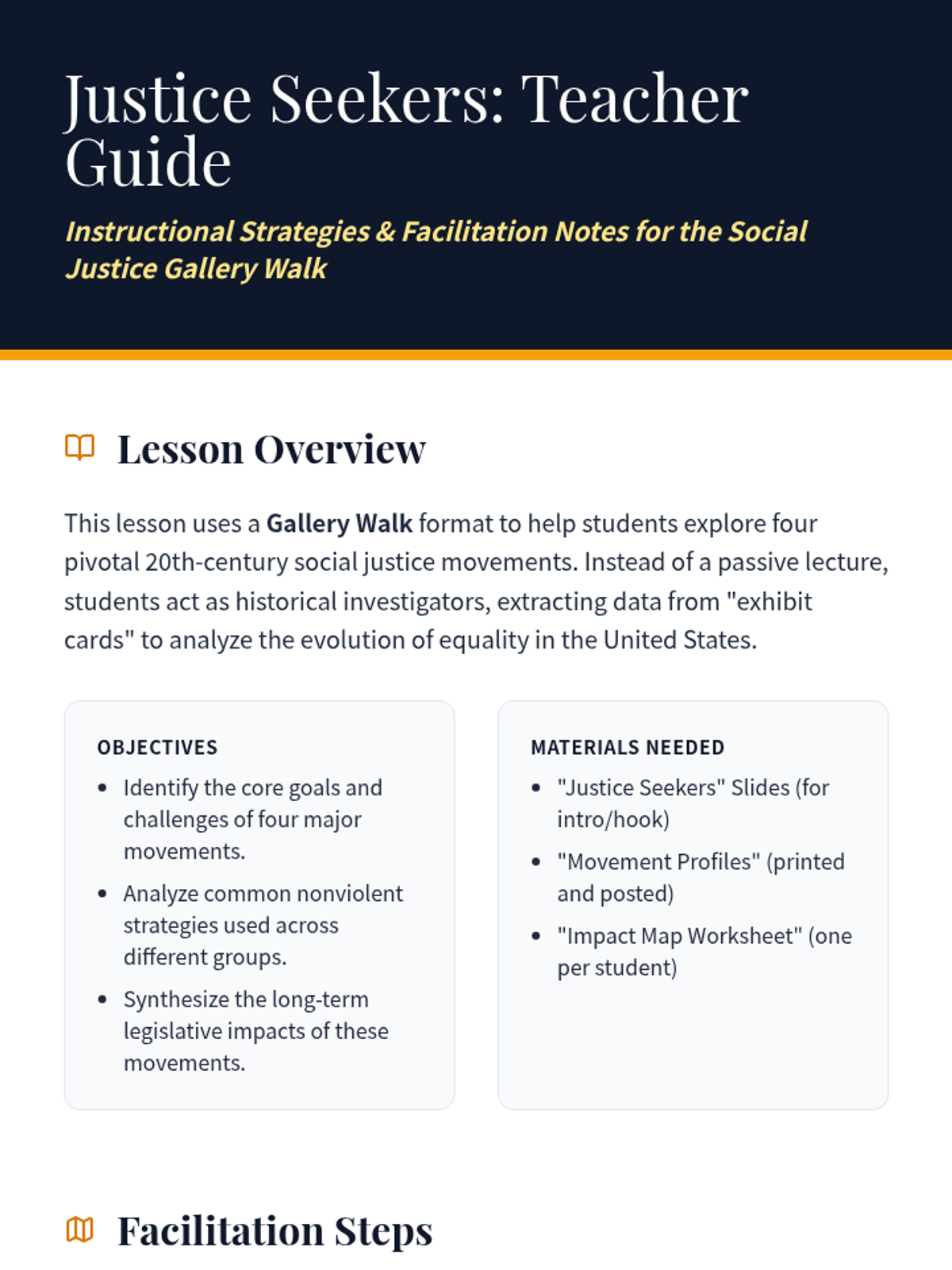
A comprehensive exploration of four major 20th-century social justice movements in the United States, utilizing a gallery walk format to compare goals, strategies, and impacts.
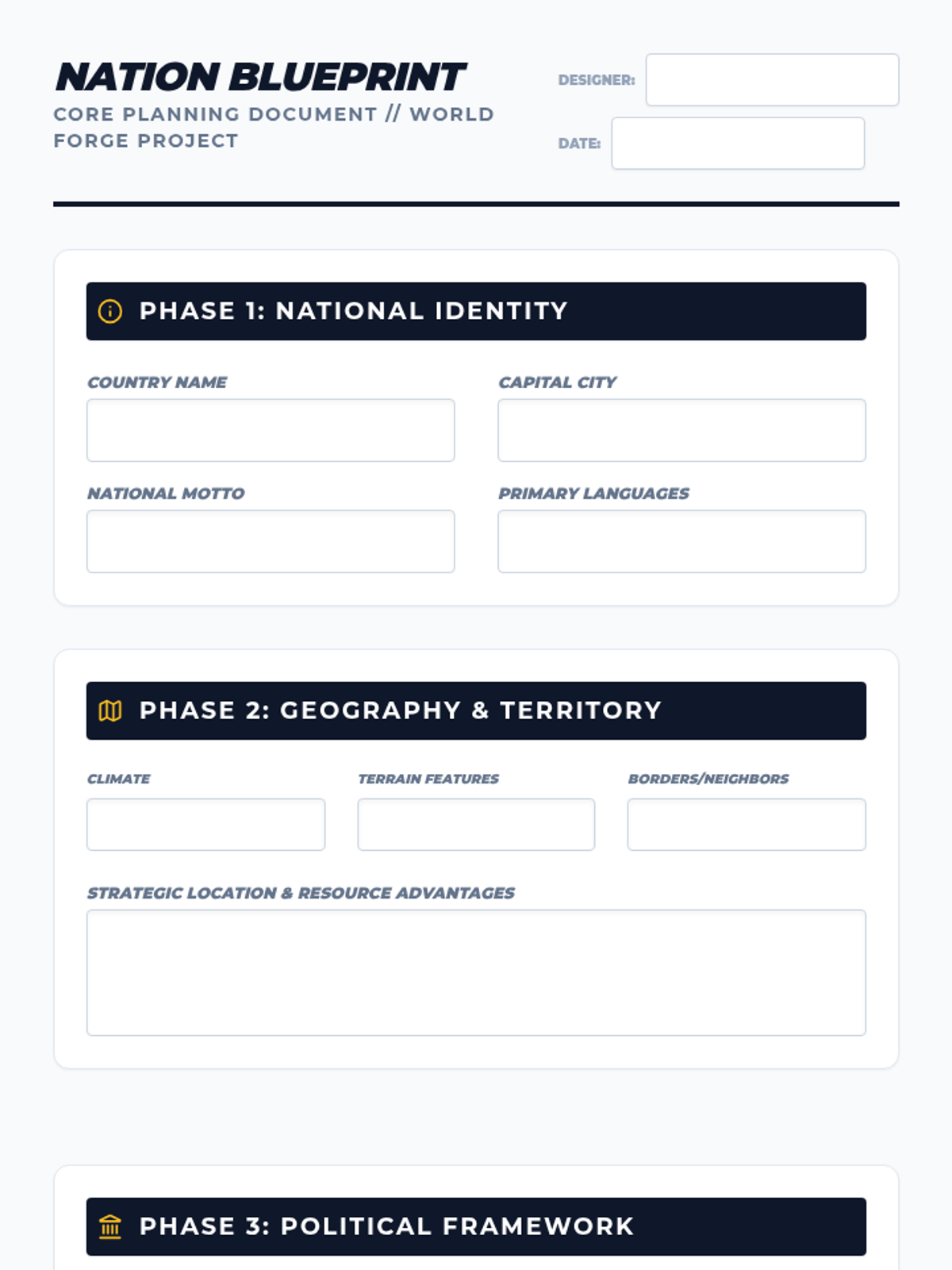
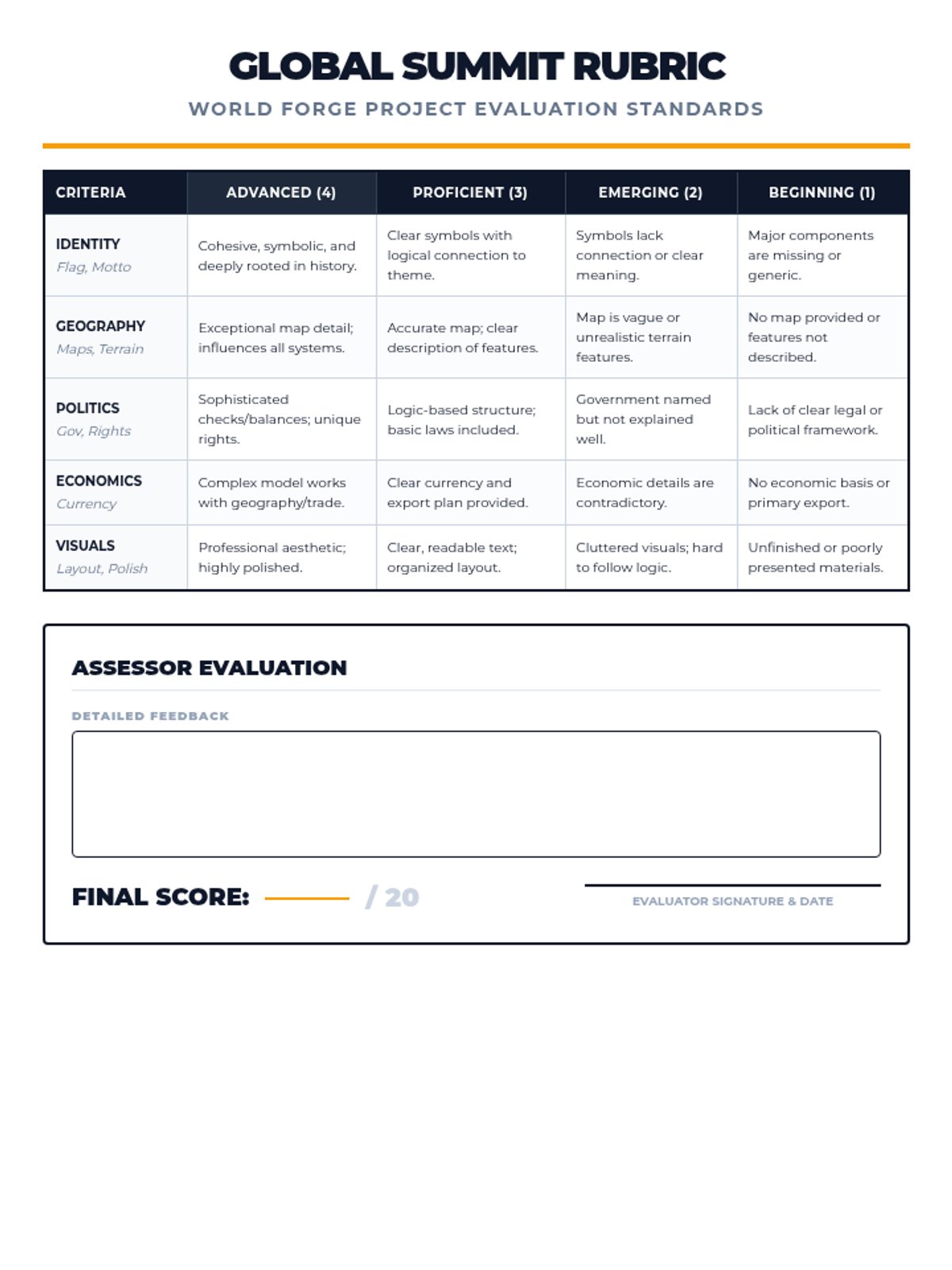
A comprehensive project where students design every aspect of a new nation, from its geography and government to its economy and culture. This lesson provides the instructional framework and examples needed for students to build a logical and cohesive country model.
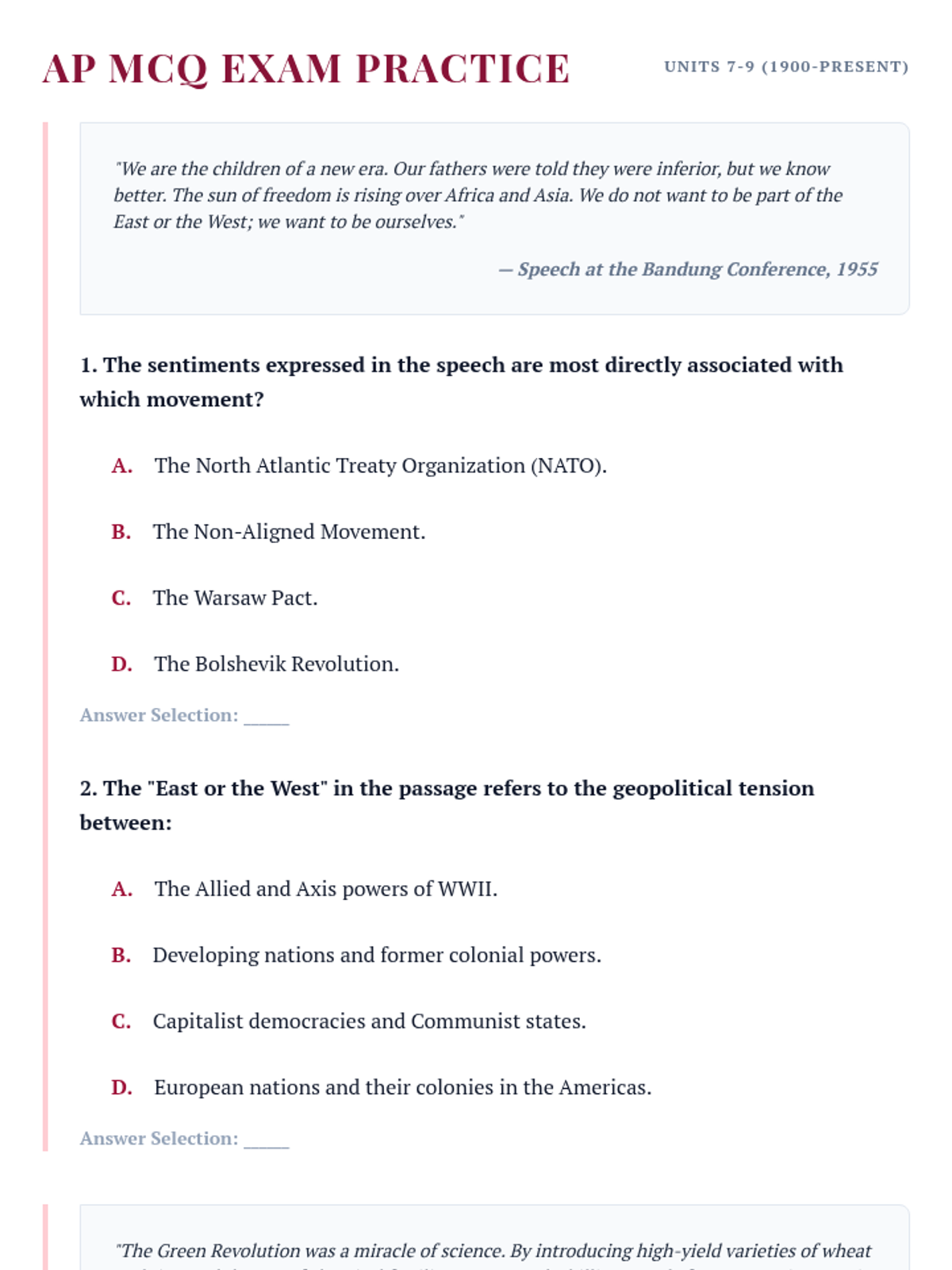
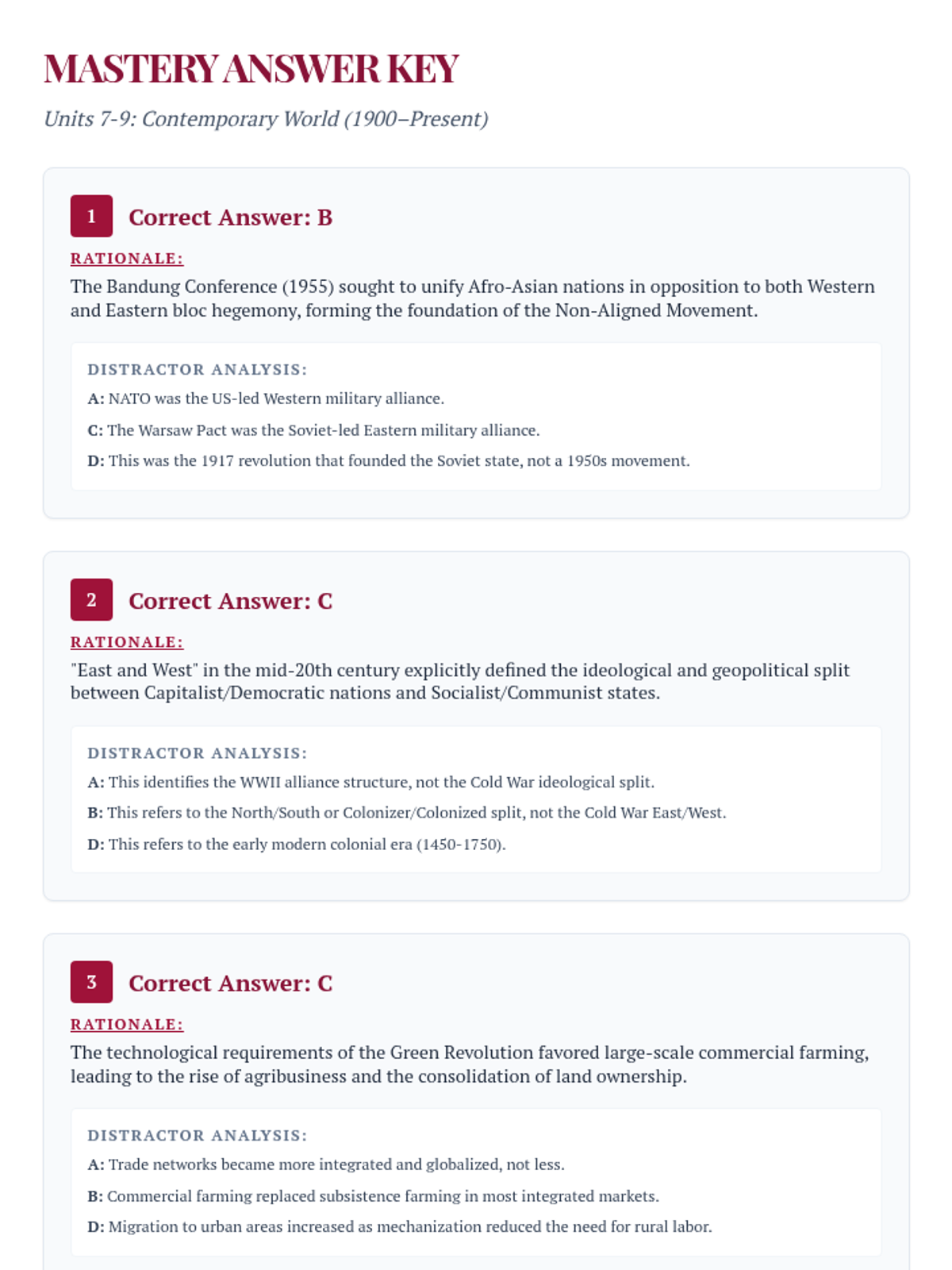
Stimulus-based multiple choice practice for the 20th century to the present.
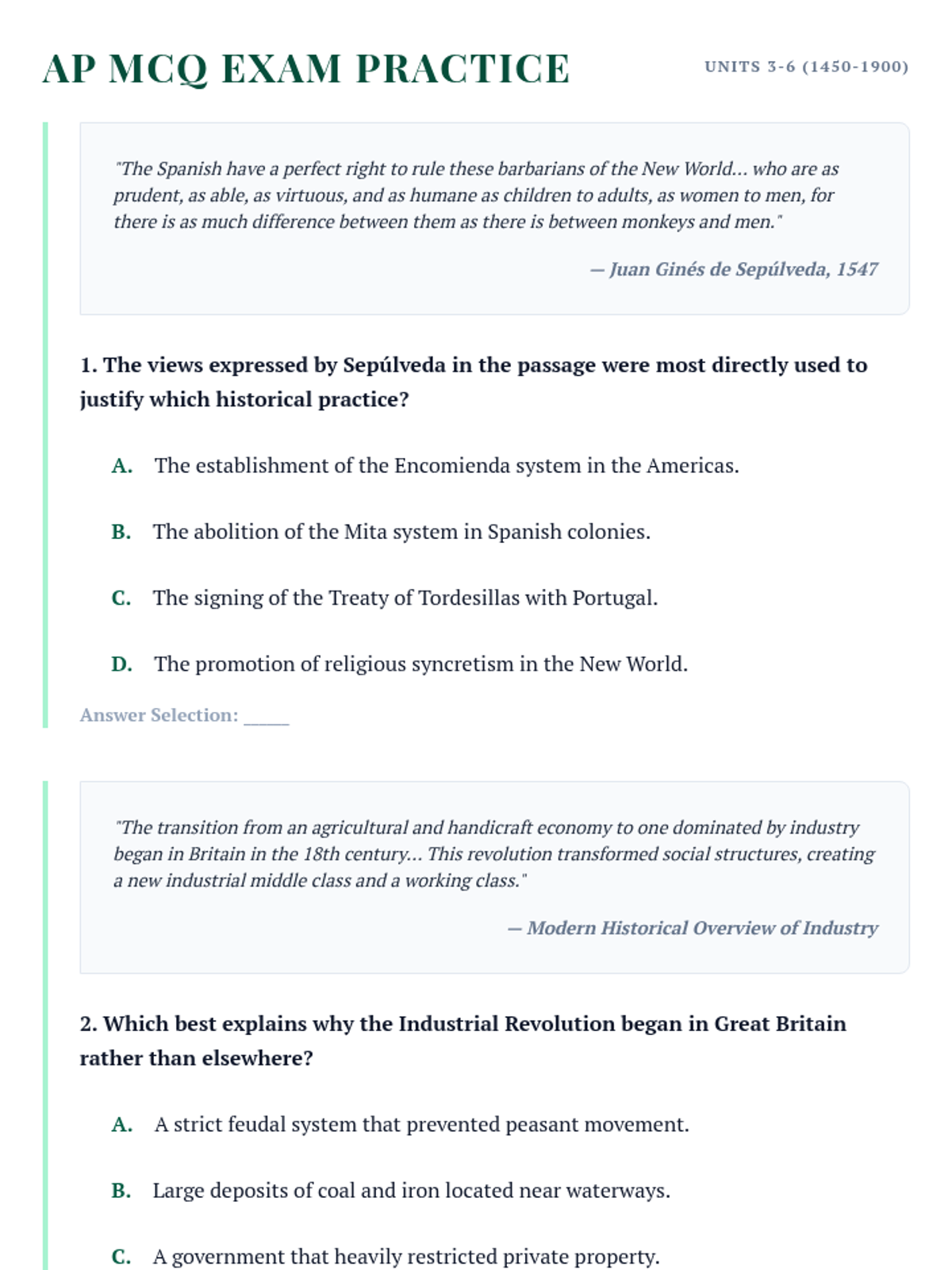
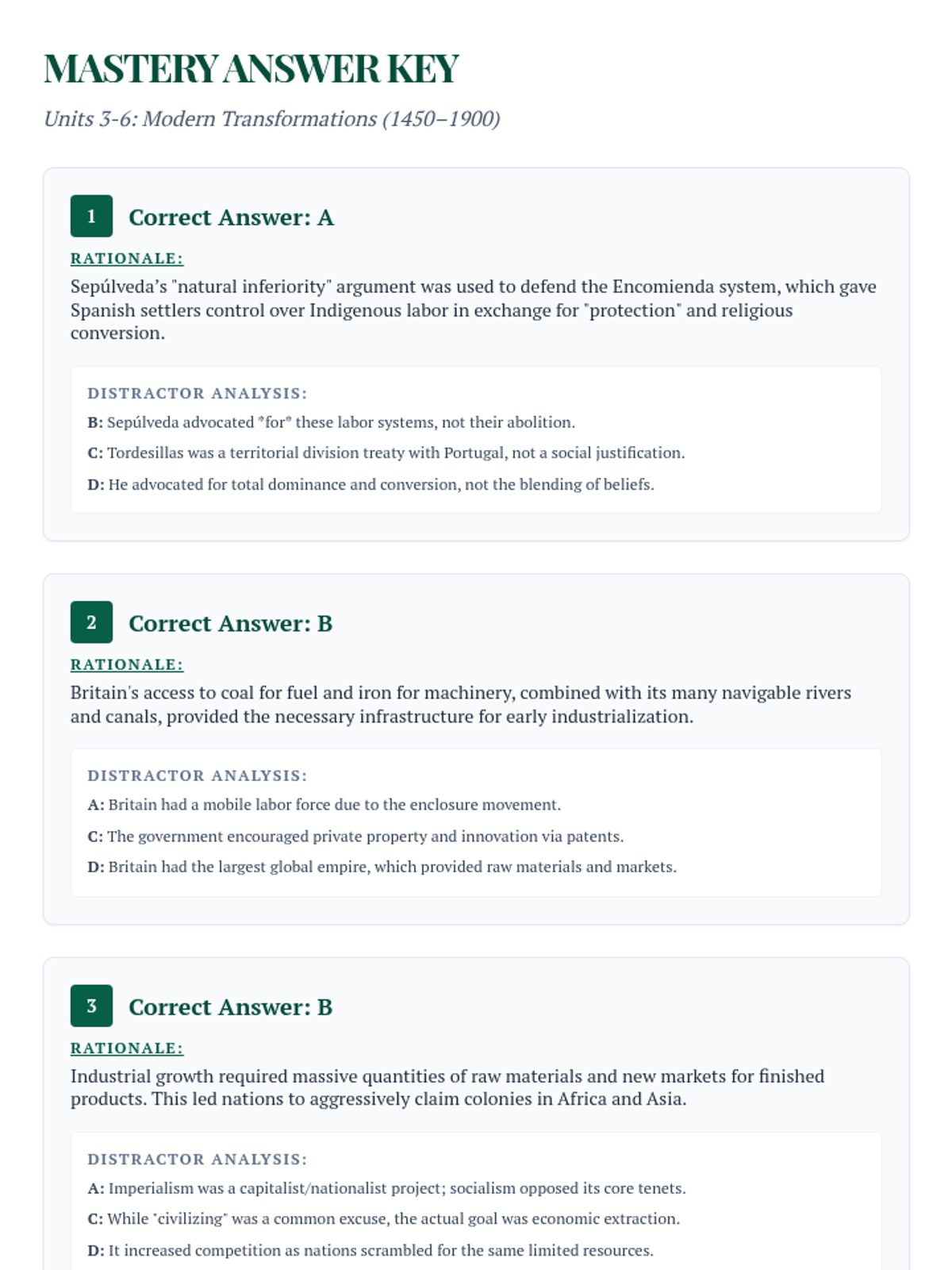
Stimulus-based multiple choice practice for the Early Modern and Modern eras (1450-1900).
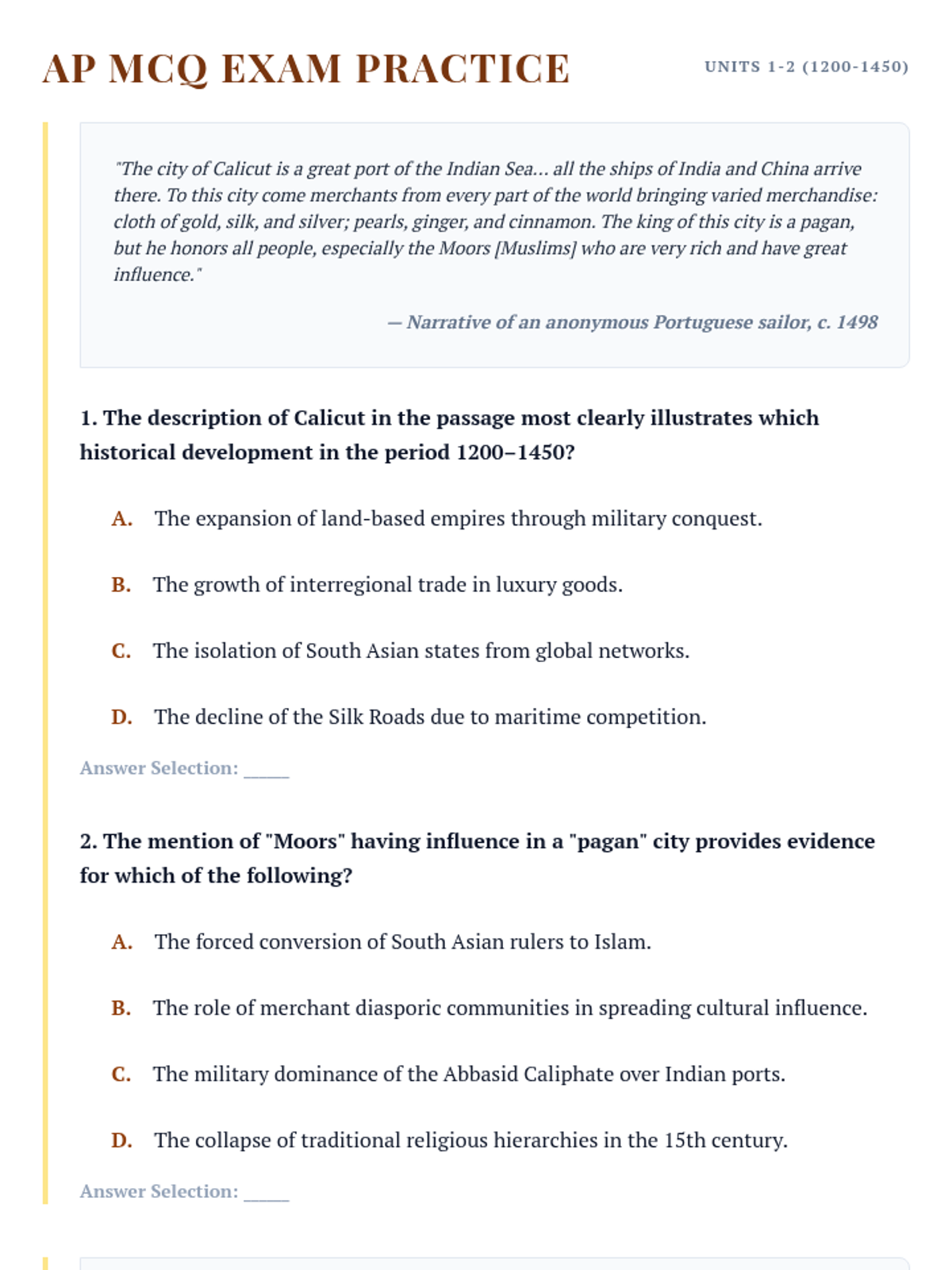
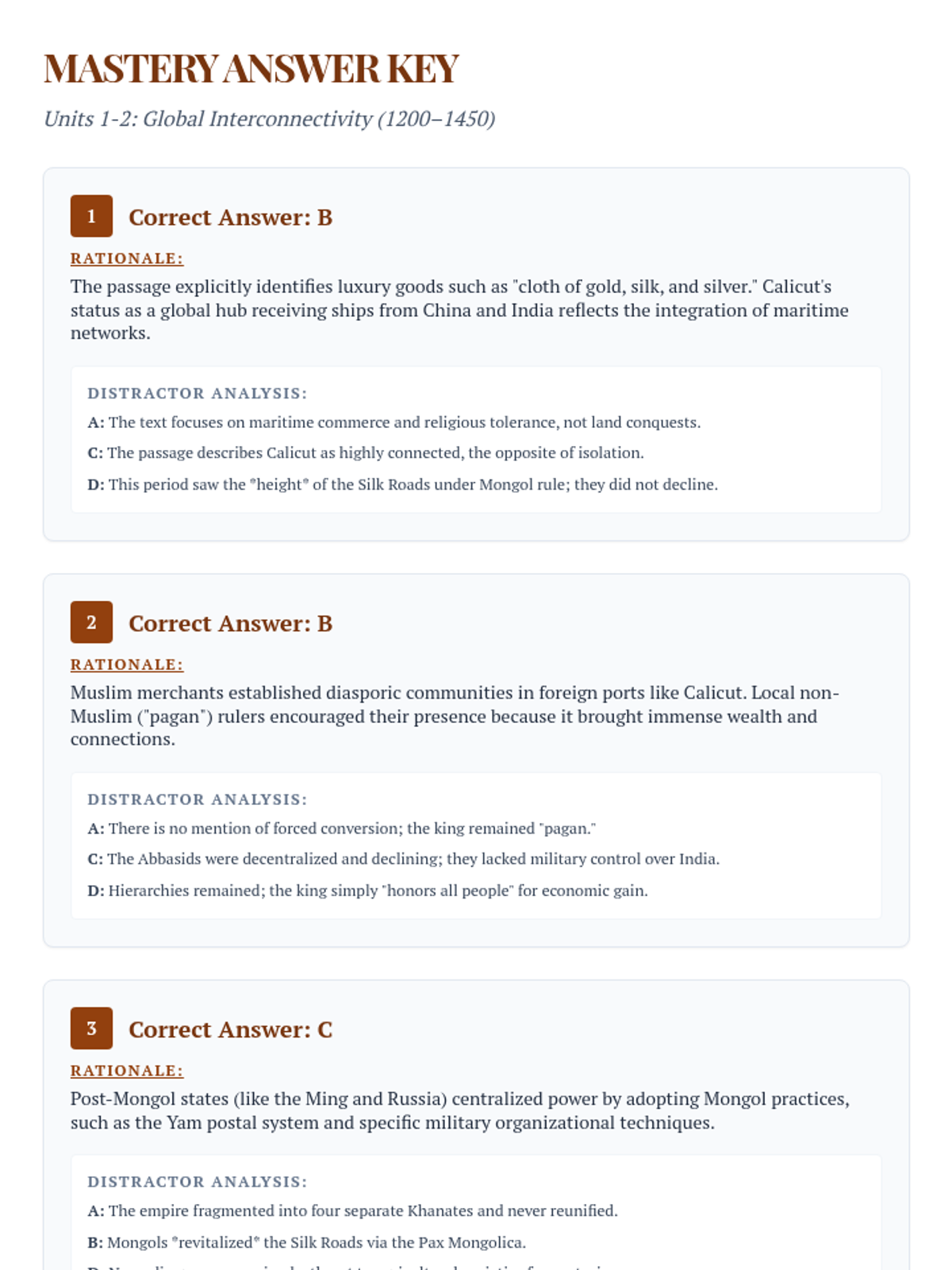
Stimulus-based multiple choice practice for the Post-Classical era (1200-1450).
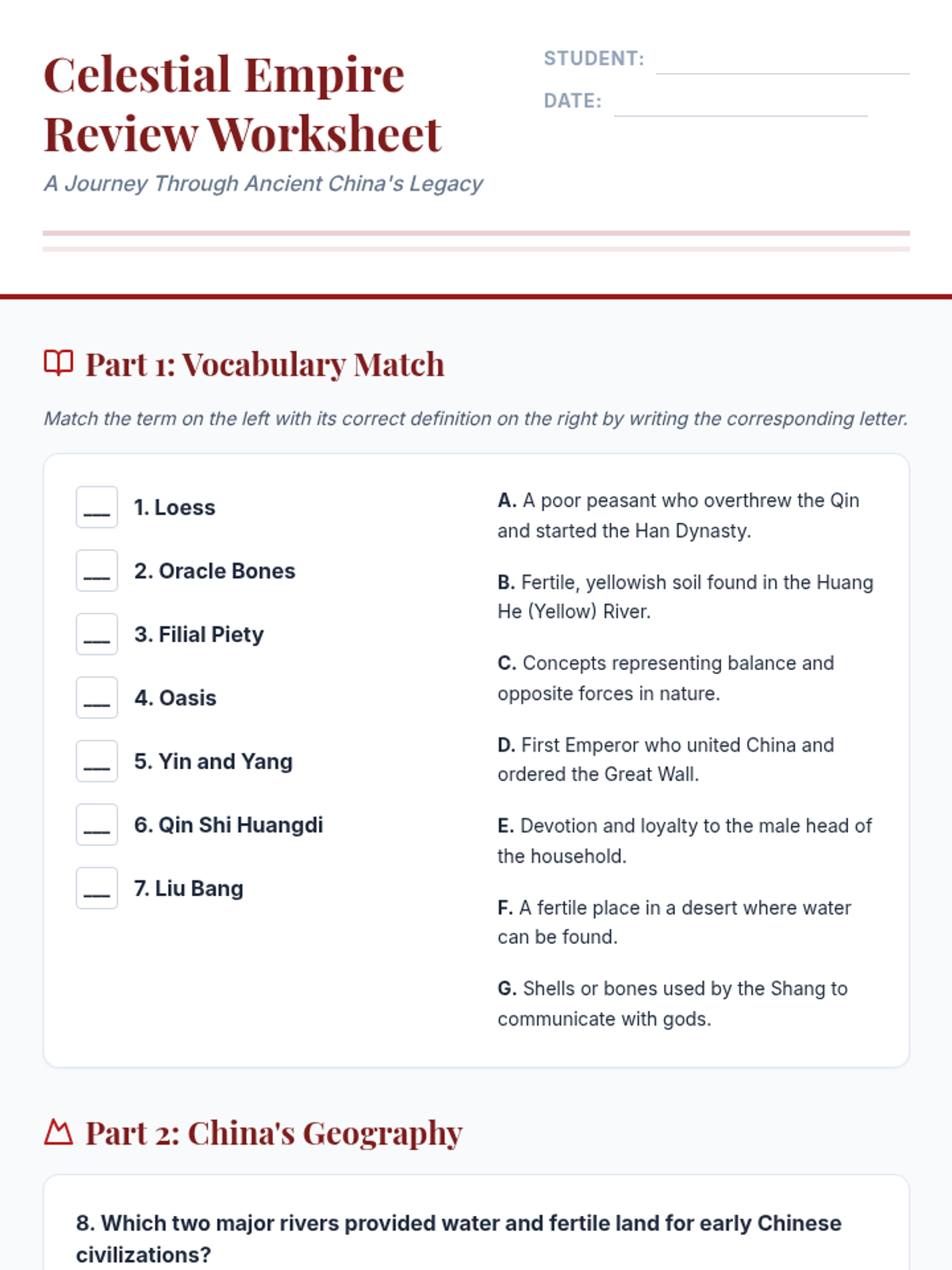
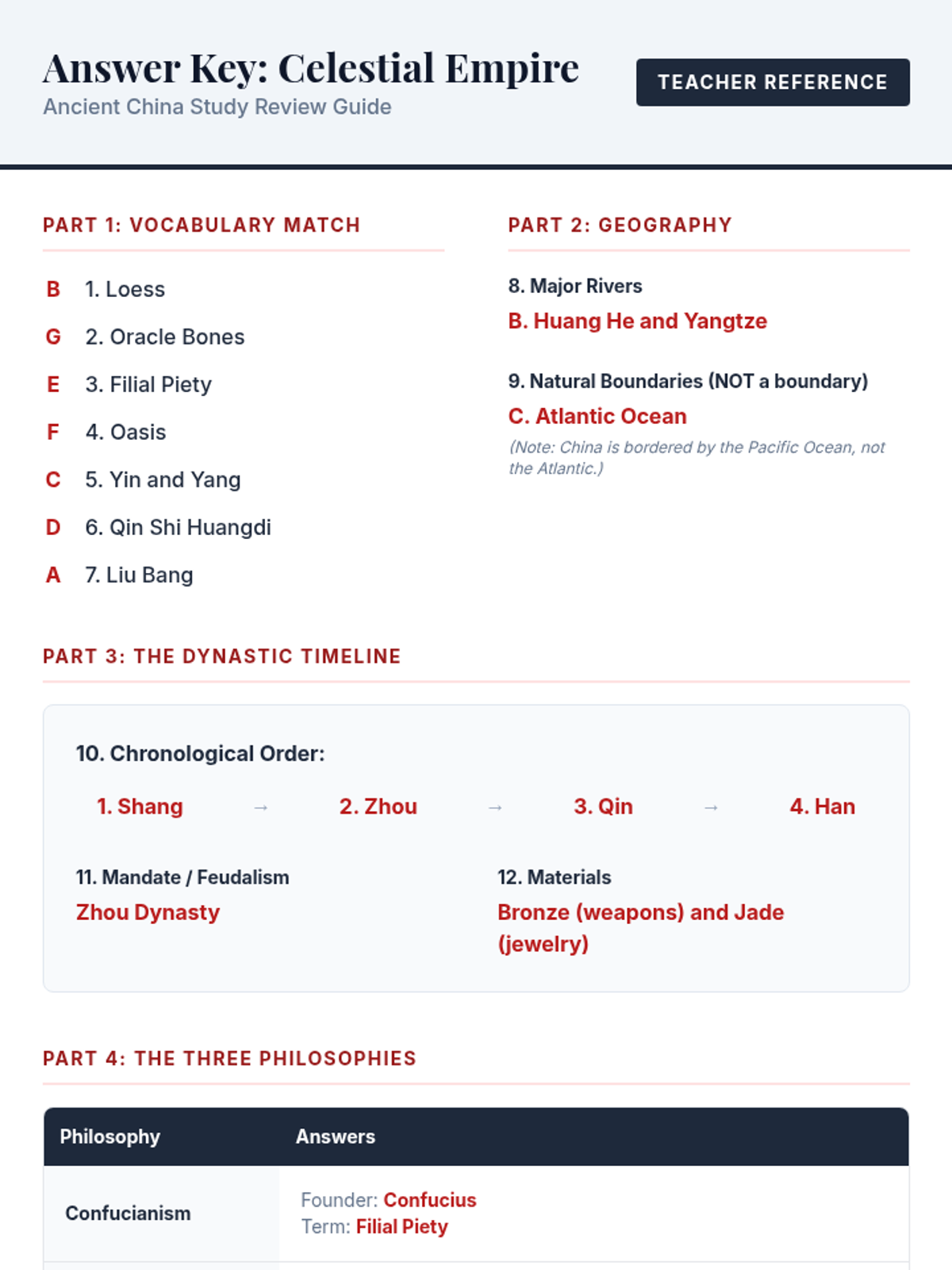
A comprehensive study guide and answer key covering the geography, dynasties, and philosophies of Ancient China, from the Shang to the Han Dynasty.
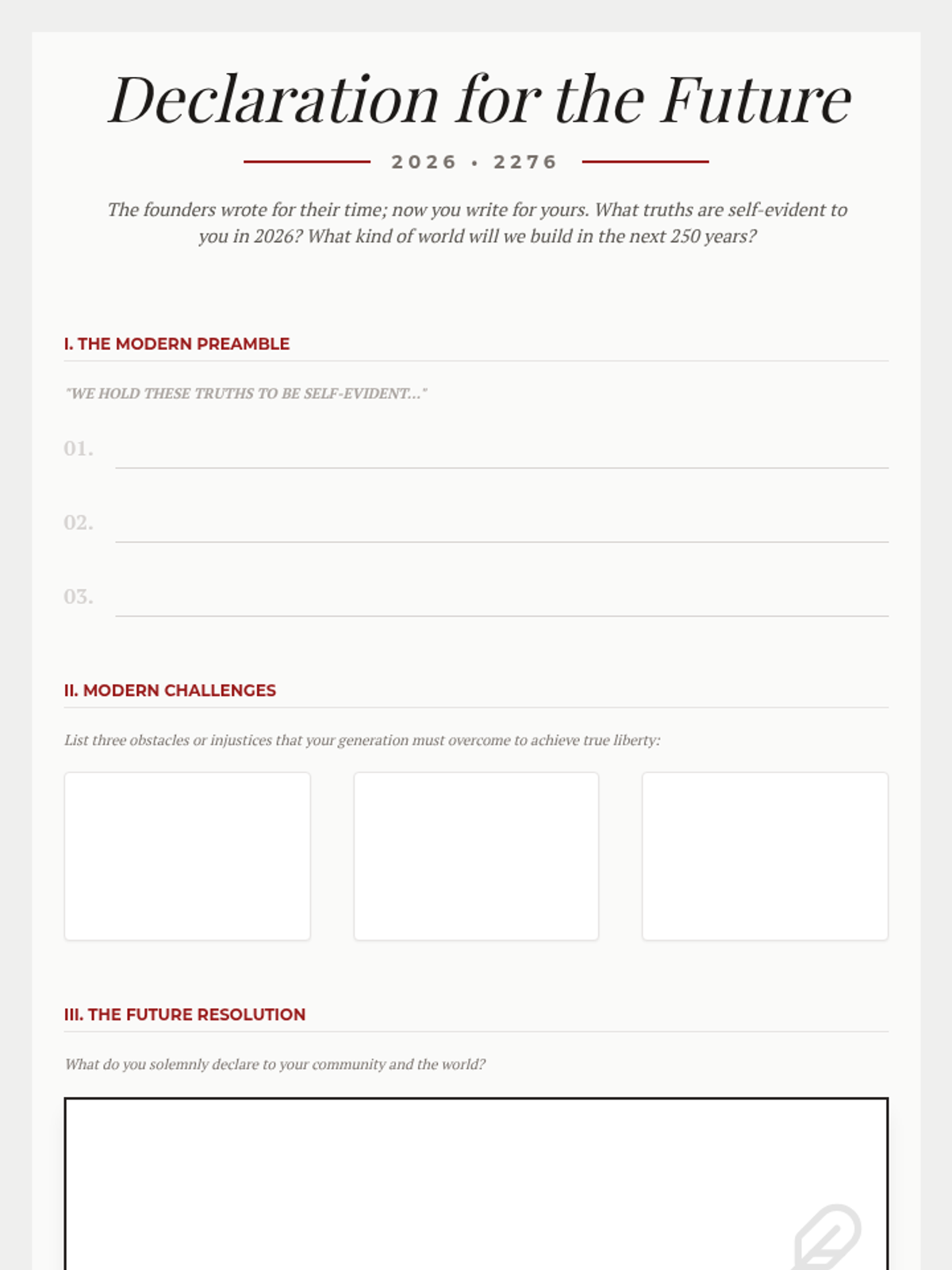
Students reflect on the 250-year legacy of the Declaration and draft their own 'Declaration for the Future.'
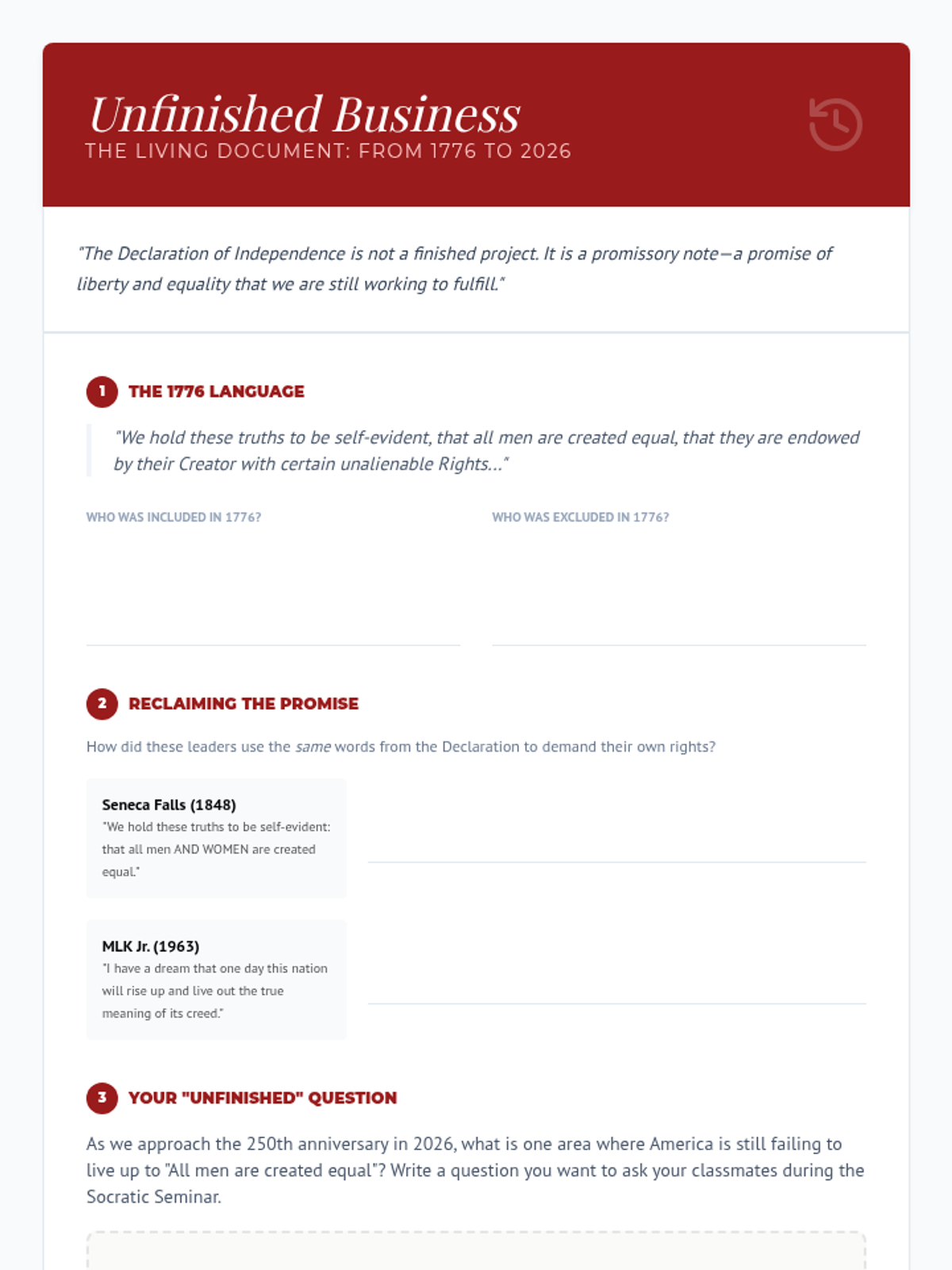
Examining the 'unfinished business' of the Declaration by connecting its ideals to the Civil Rights Movement and modern interpretations of equality.
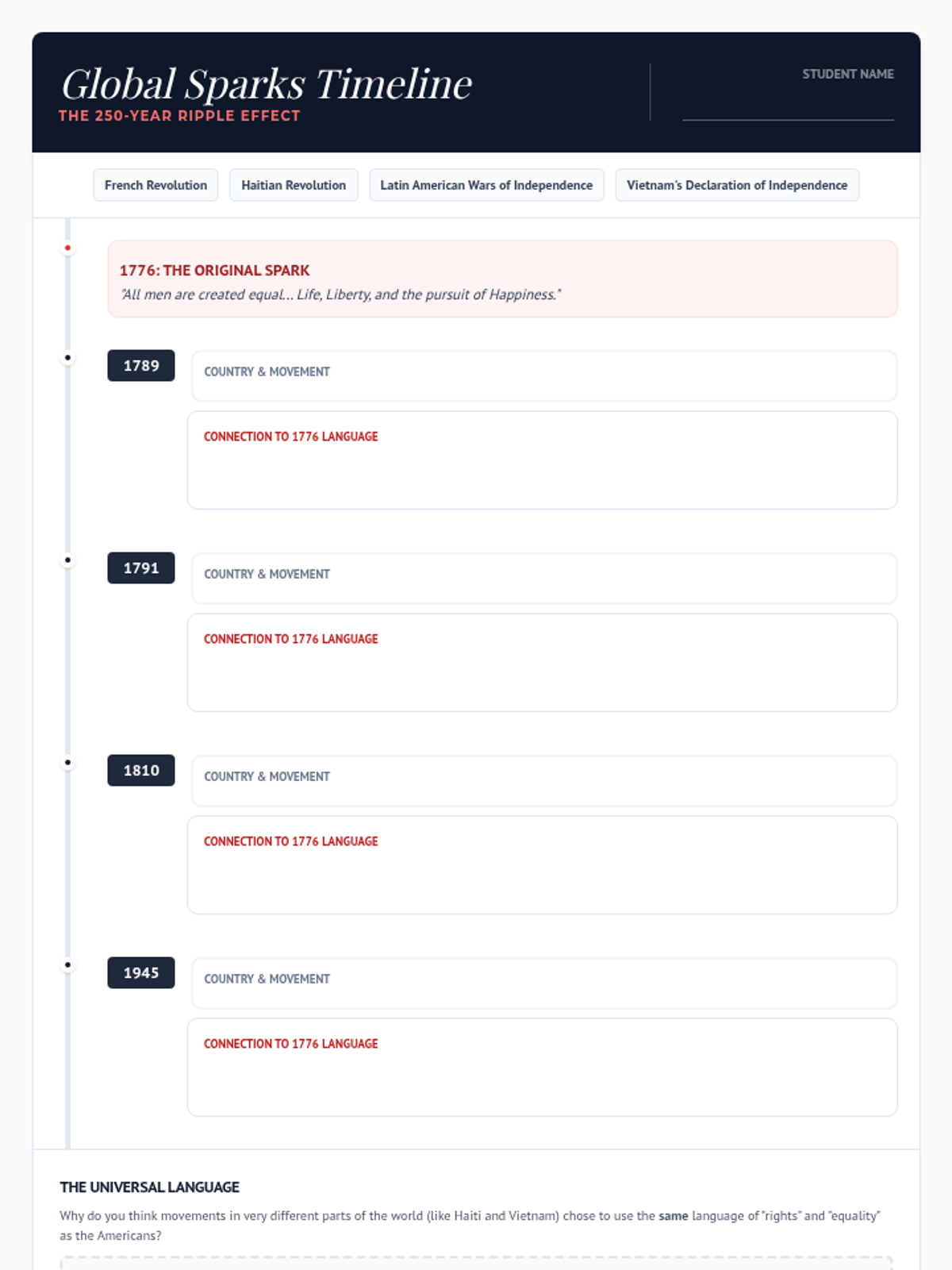
Analyzing how the Declaration of Independence sparked global revolutions and comparing the American timeline with movements in France, Haiti, and Latin America.
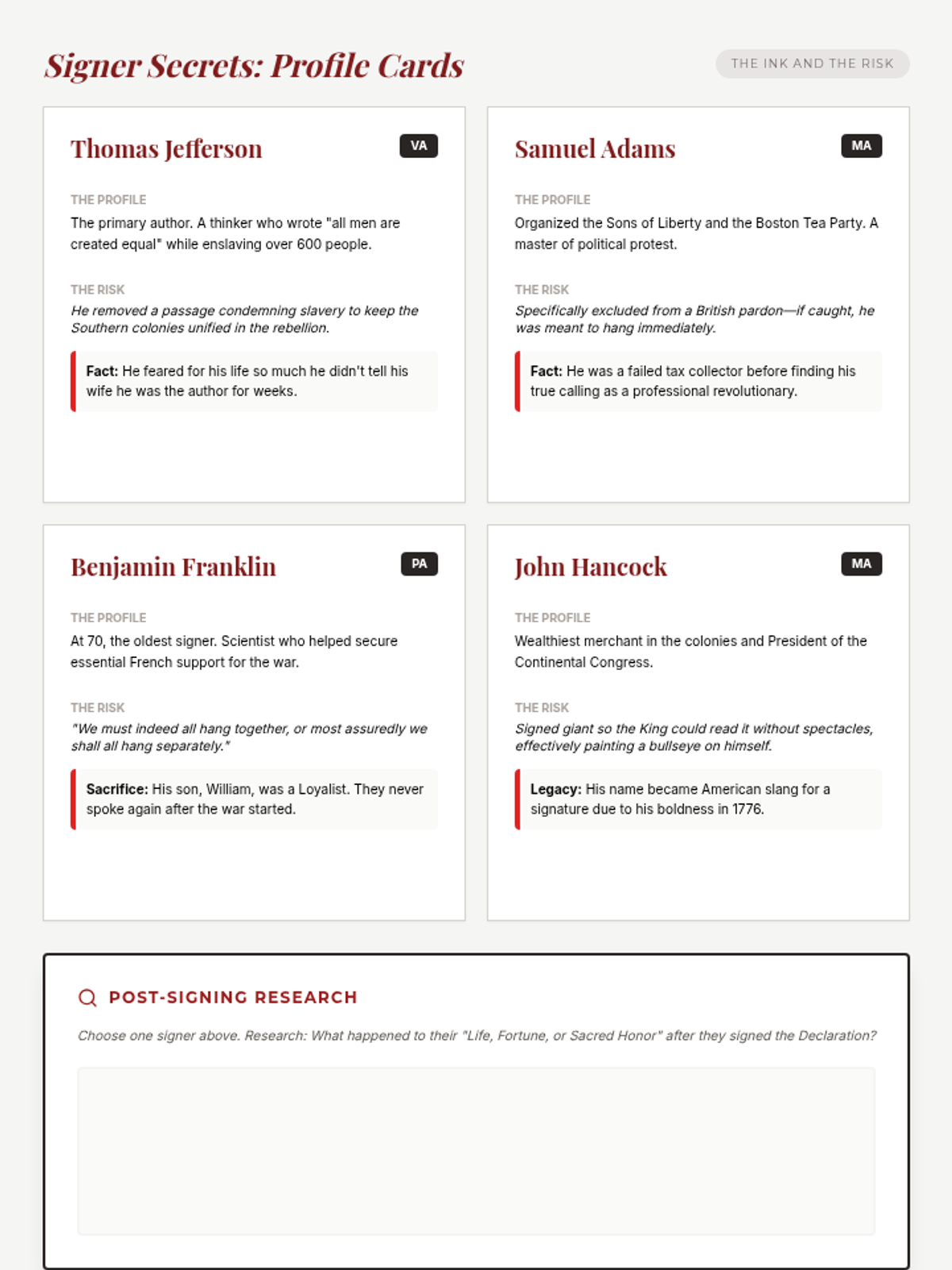
An exploration of the diverse backgrounds, risks, and personal lives of the 56 men who signed the Declaration of Independence.
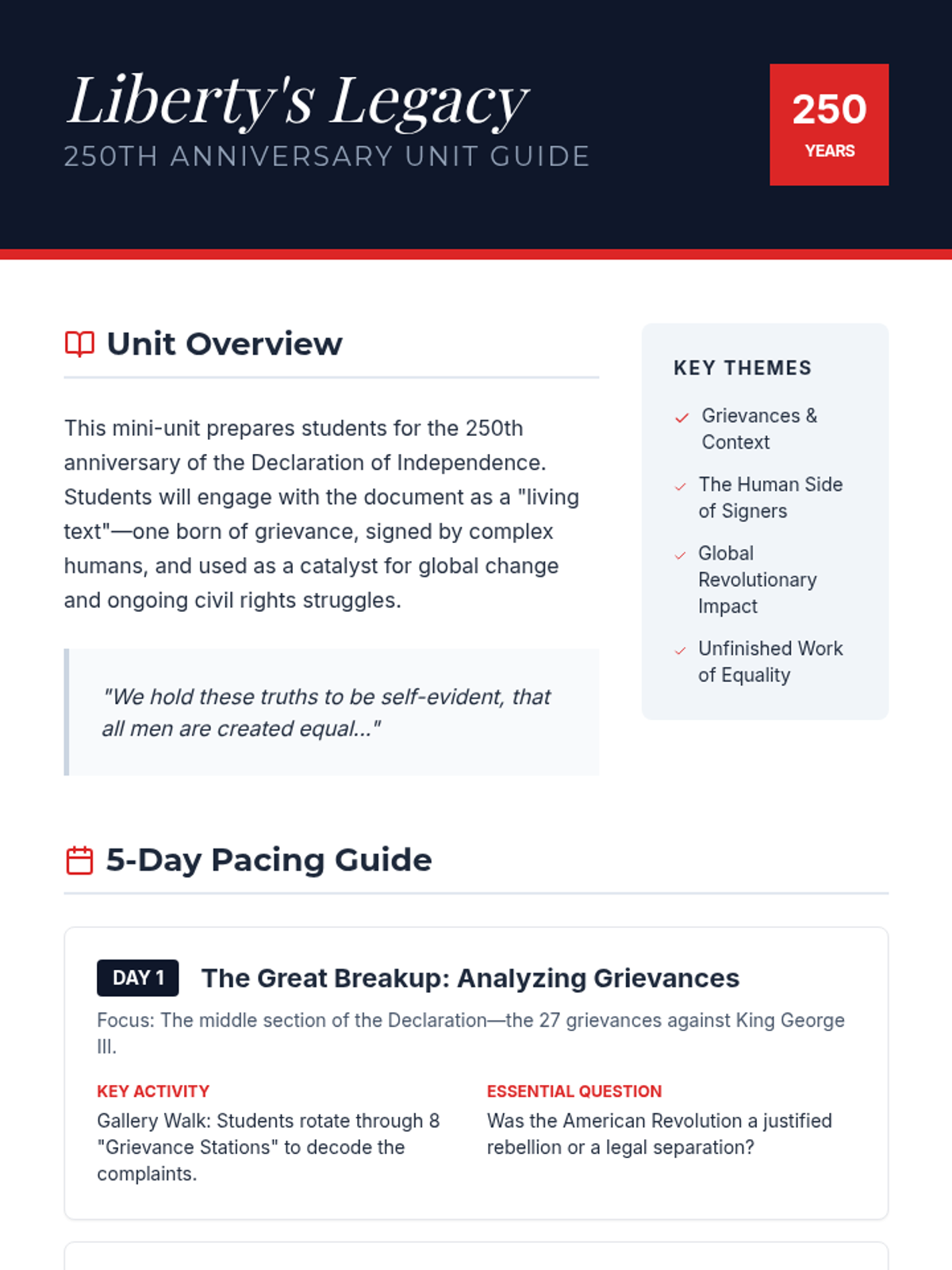
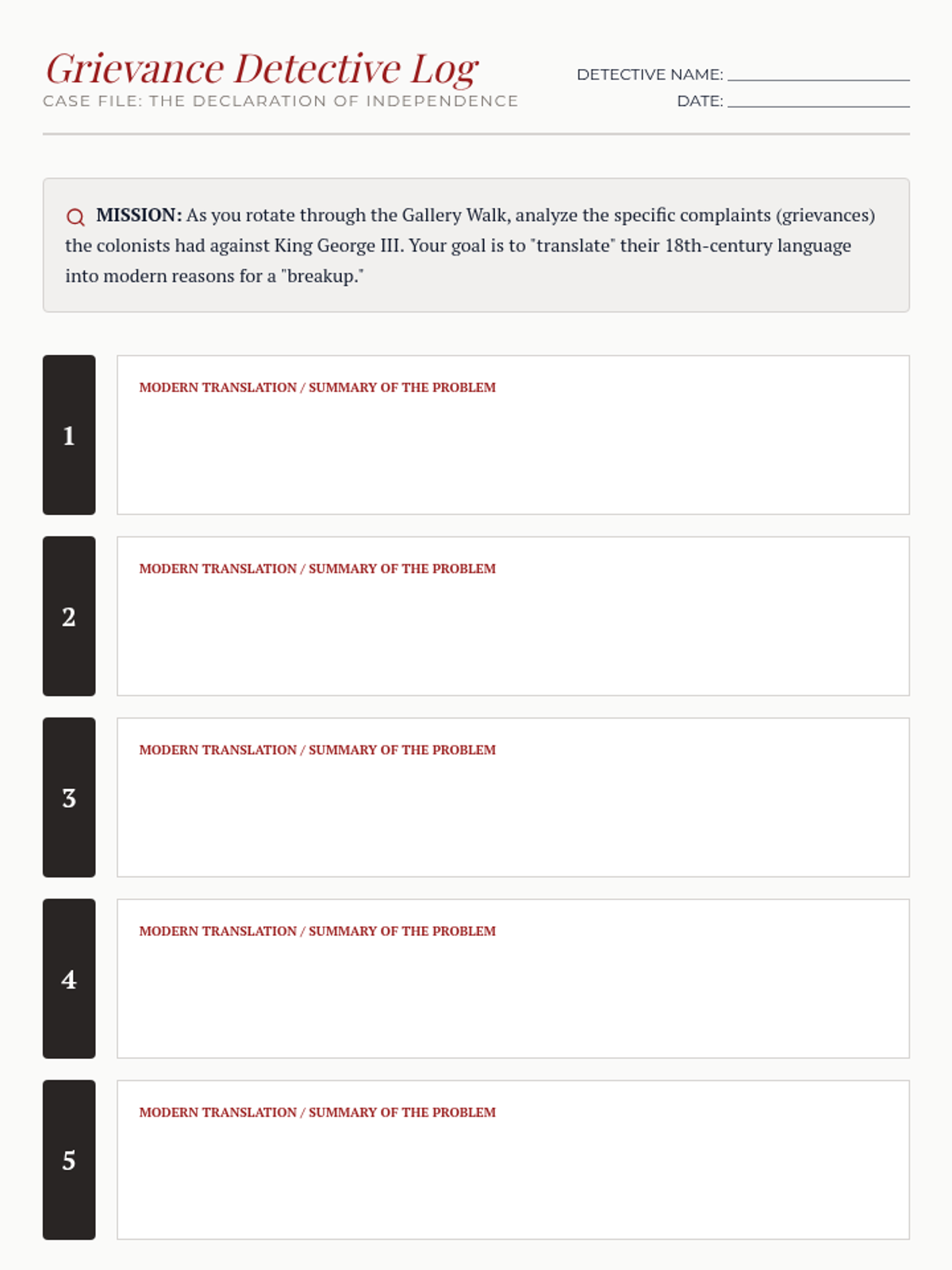
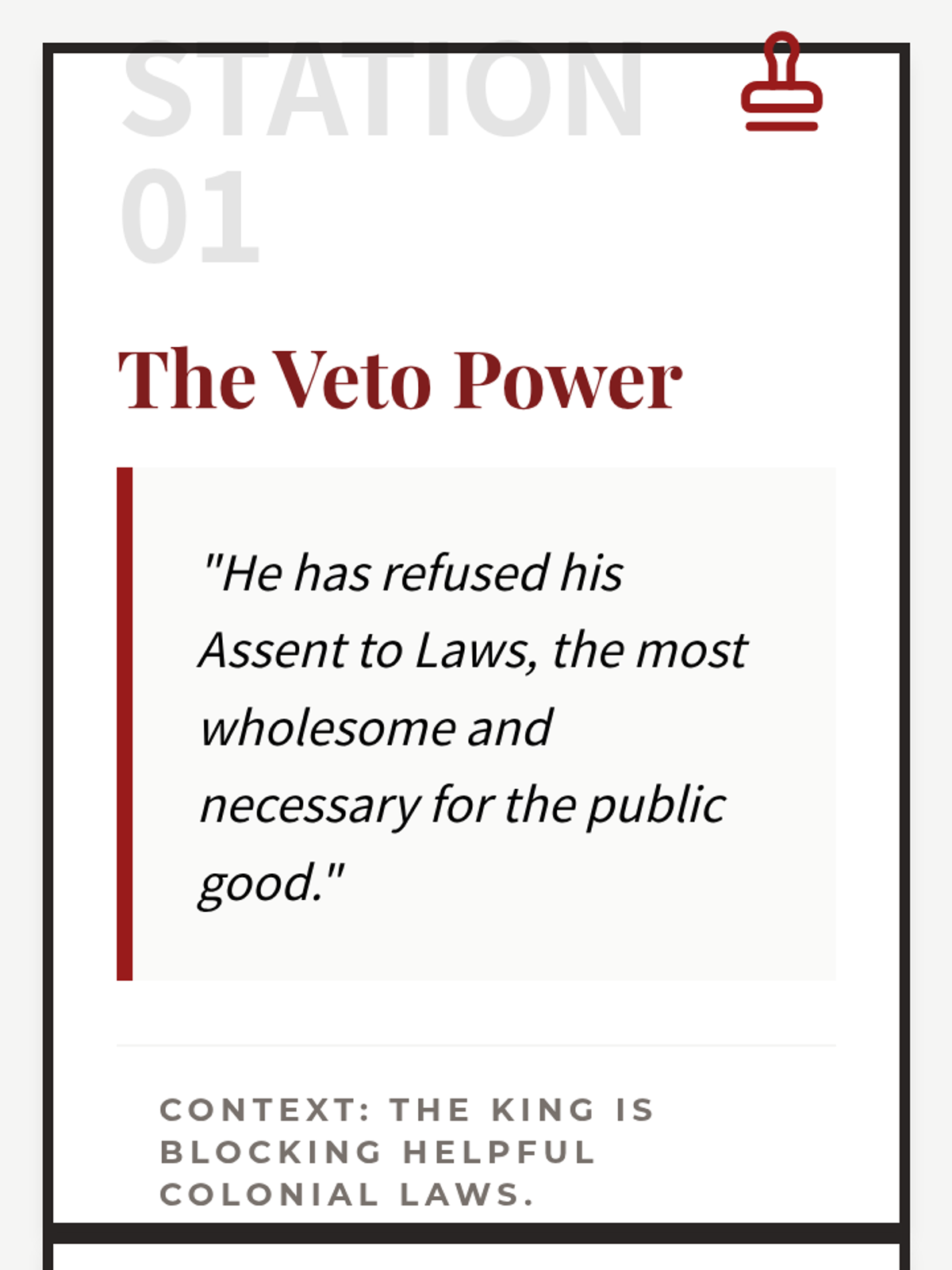
Students investigate the specific grievances listed in the Declaration of Independence through a gallery walk to understand the context of the American Revolution.
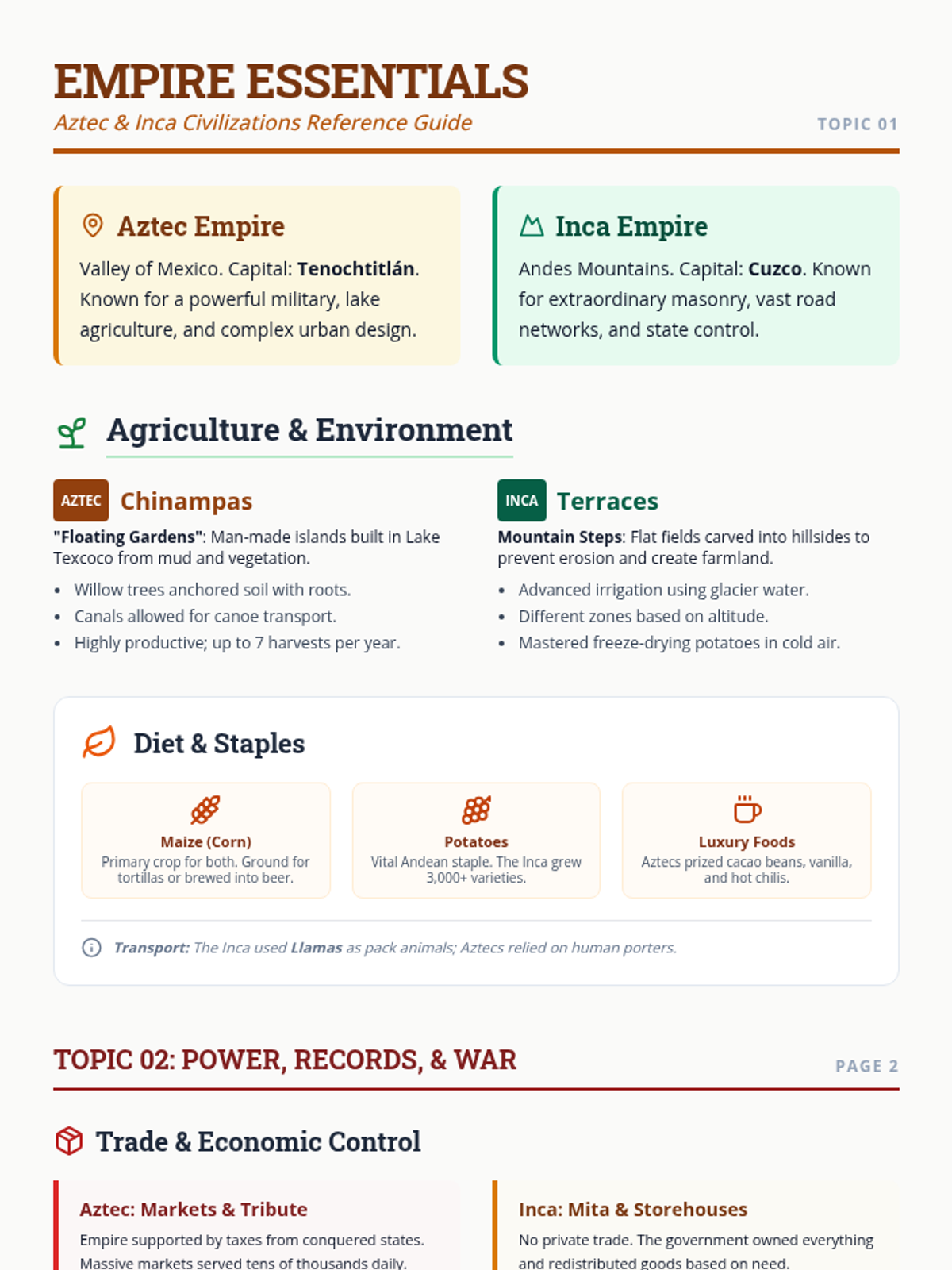
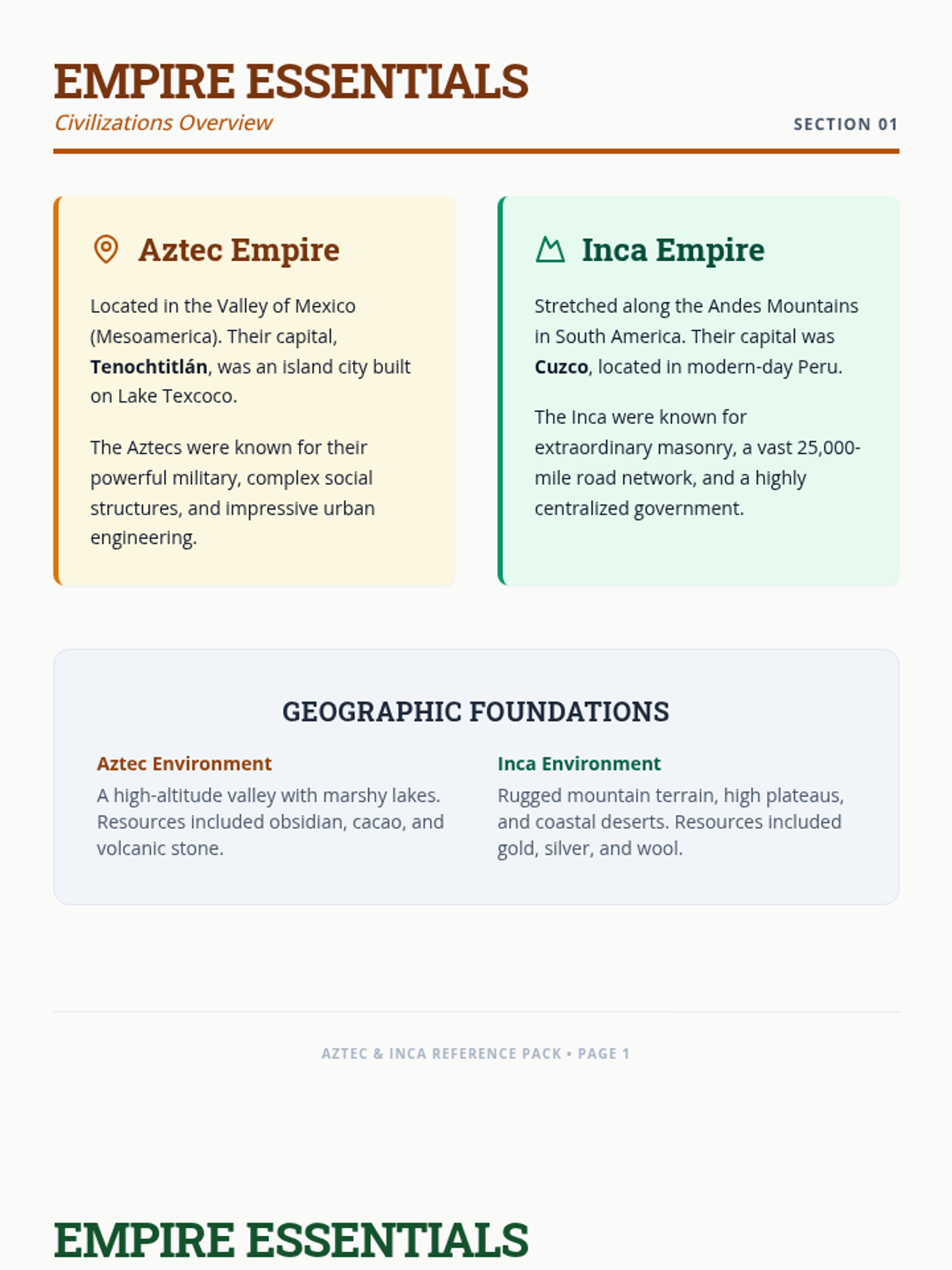
A comprehensive lesson exploring the Aztec and Inca civilizations through their agriculture, governance, and spiritual lives, leading up to the Spanish conquest.