Introduction to urban archaeology methodologies where students learn to identify zoning, elite vs. commoner districts, and public vs. restricted spaces using maps of Uruk and Memphis.
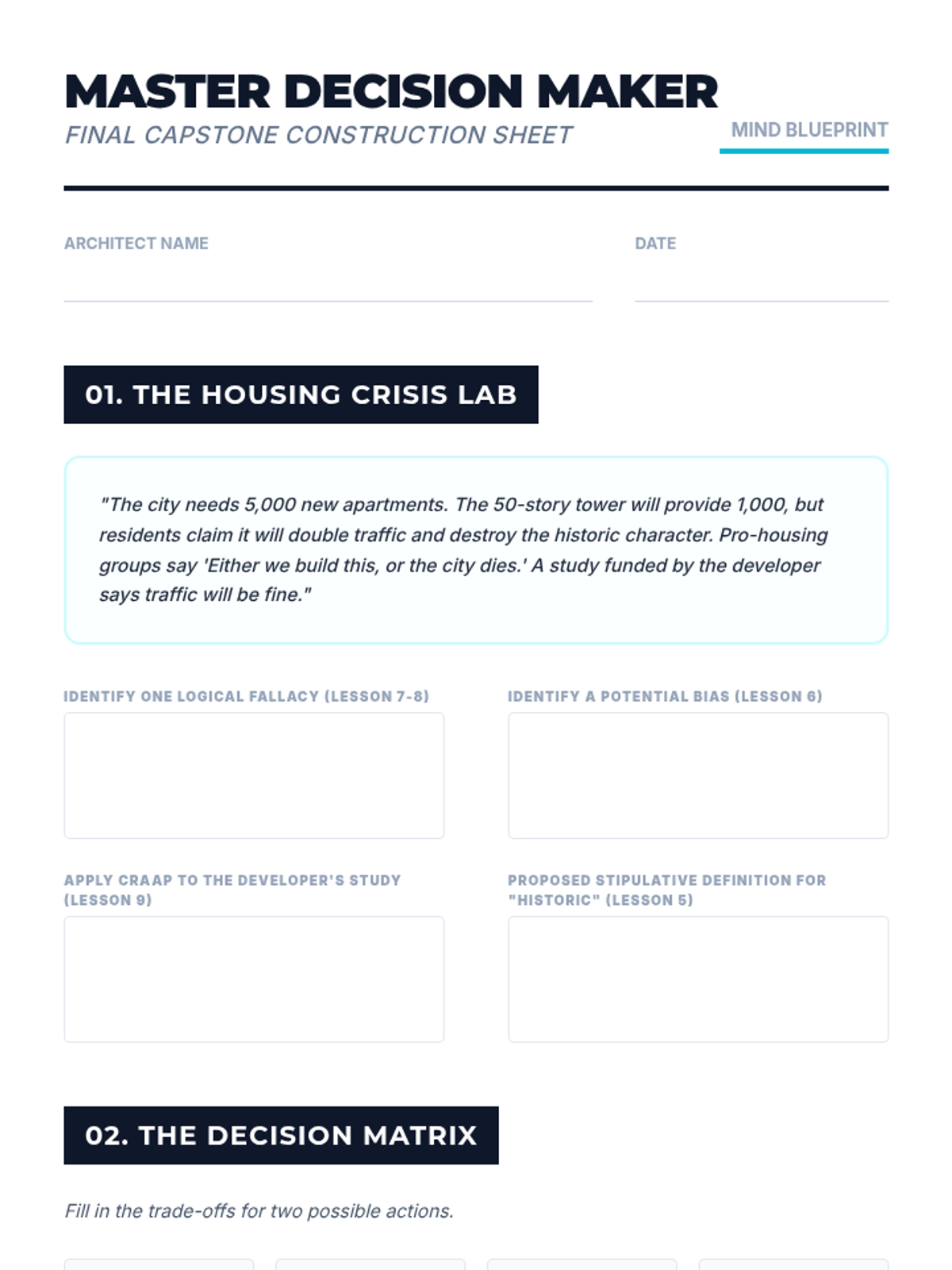
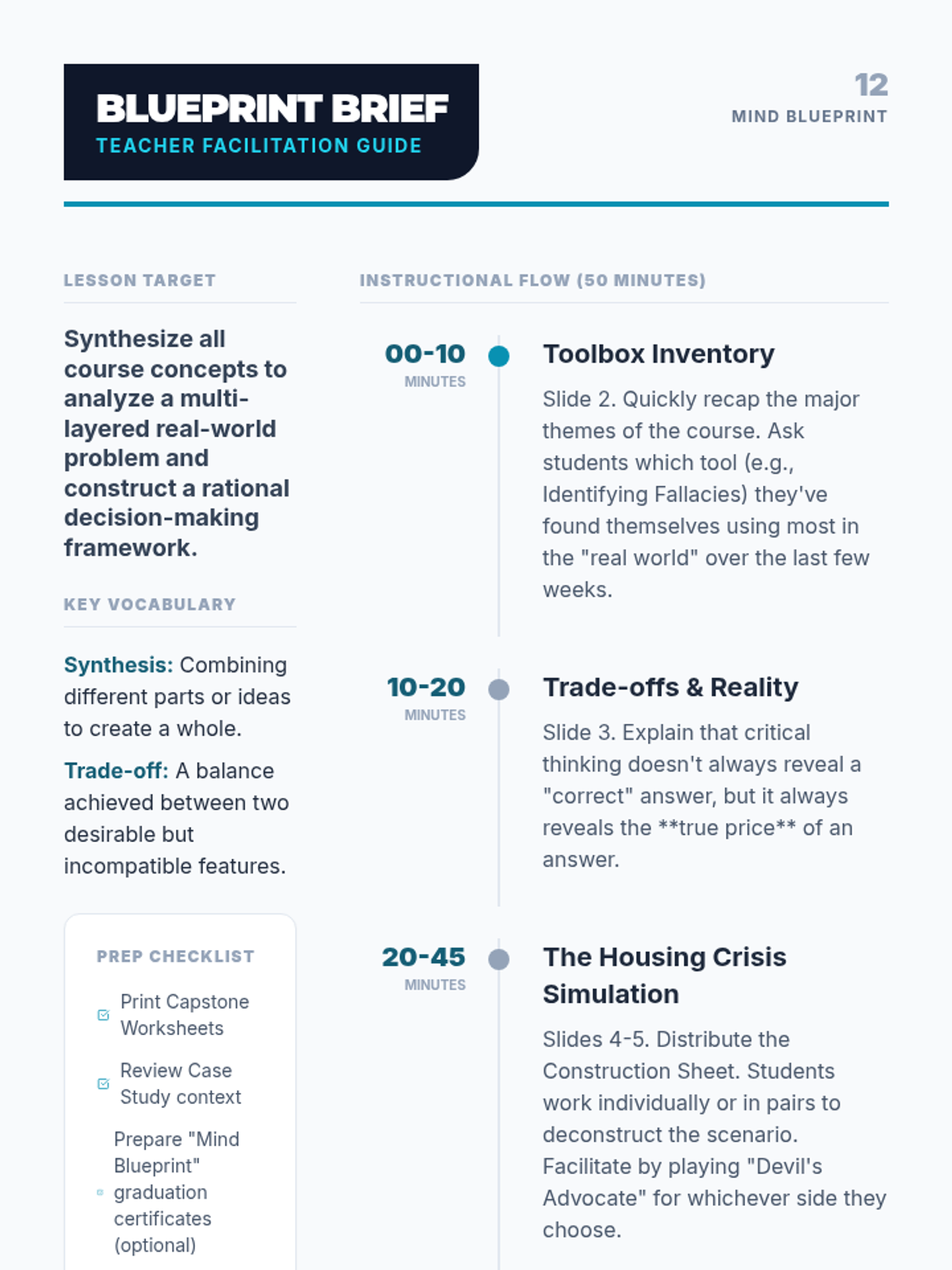
A comprehensive review of the course concepts applied to complex logic problems. Includes the course Posttest.
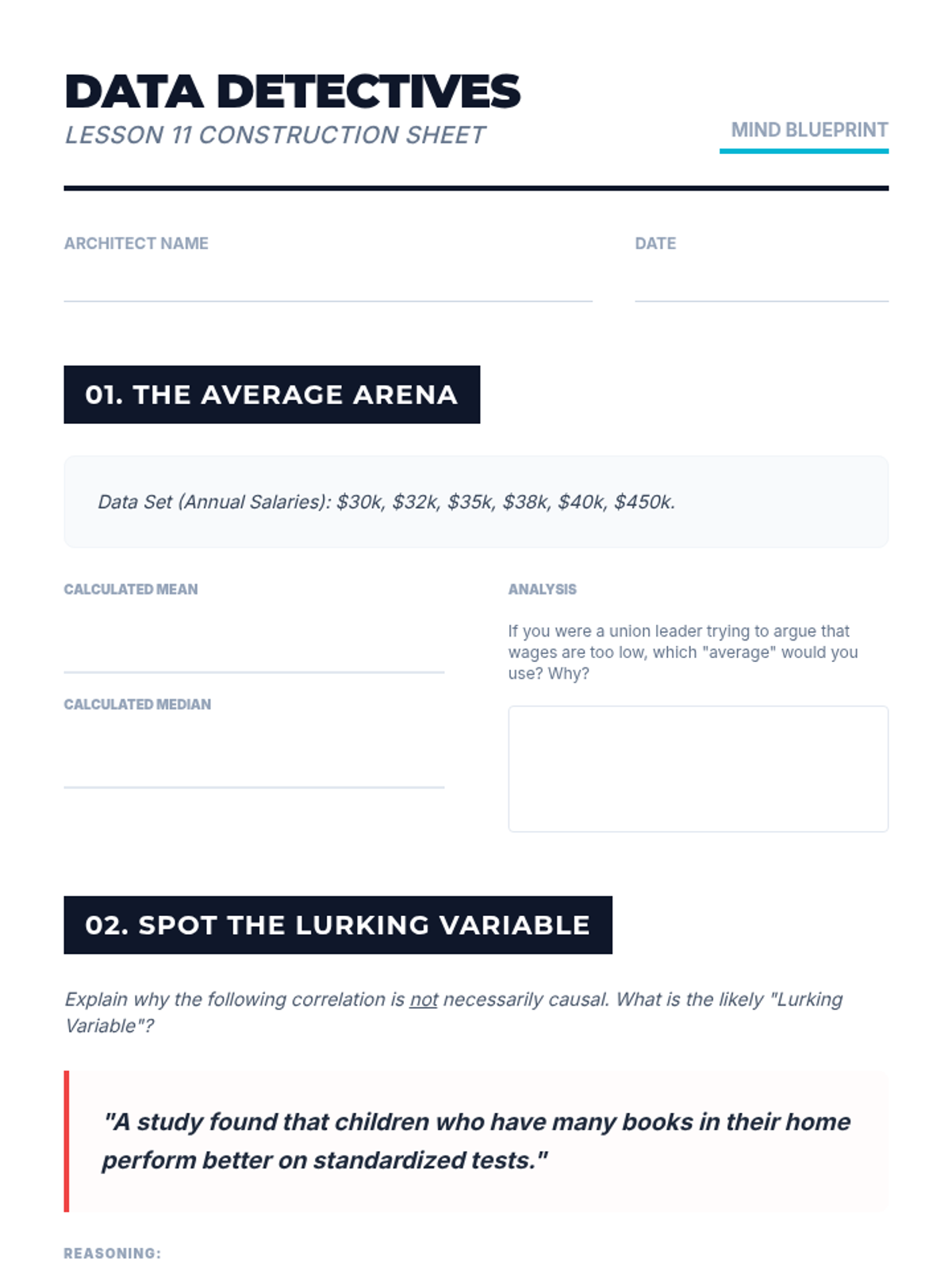
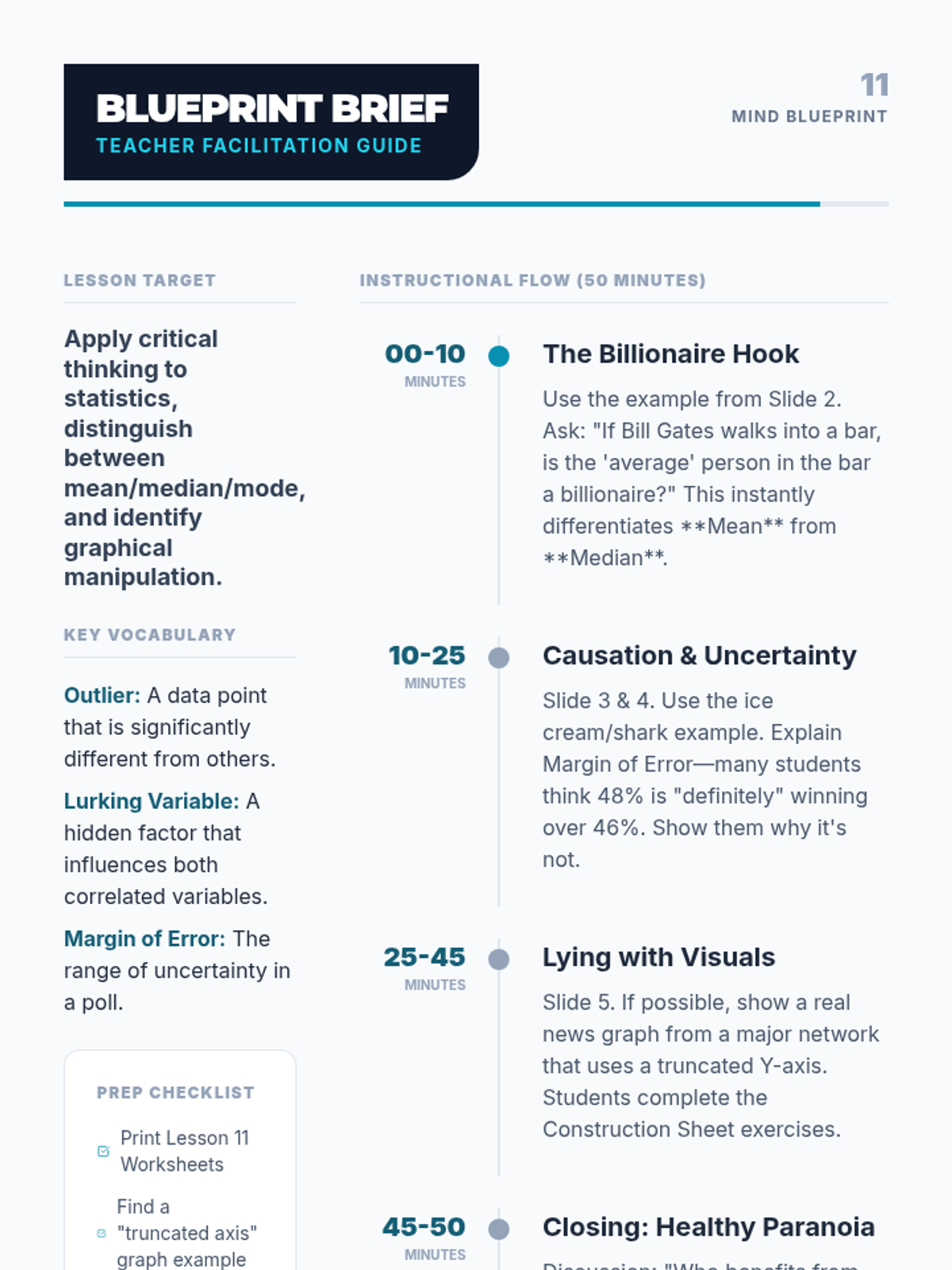
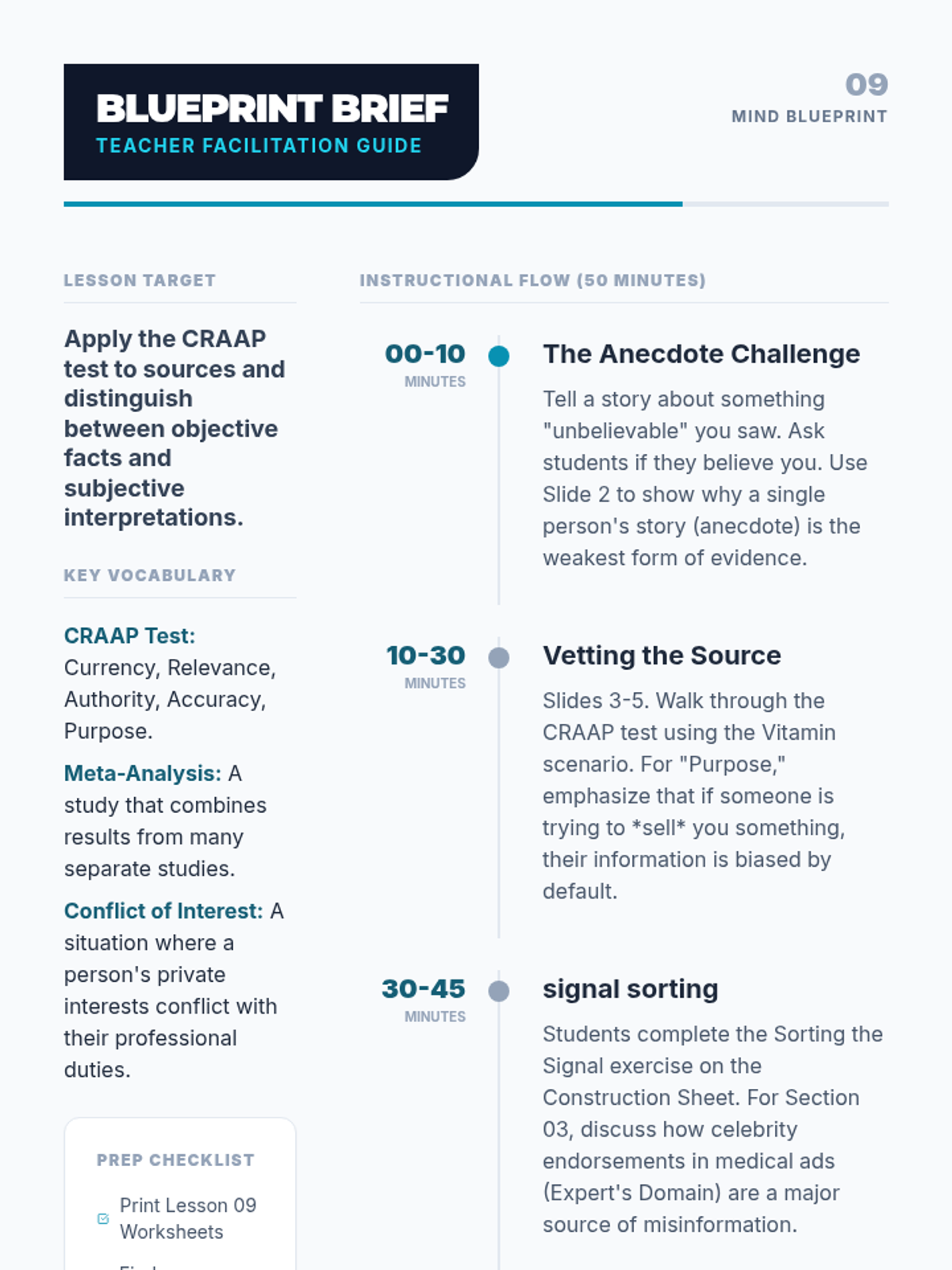
Analyzing statistics for reliability, sample size, and representative quality, while identifying the misuse of averages and partial claims.
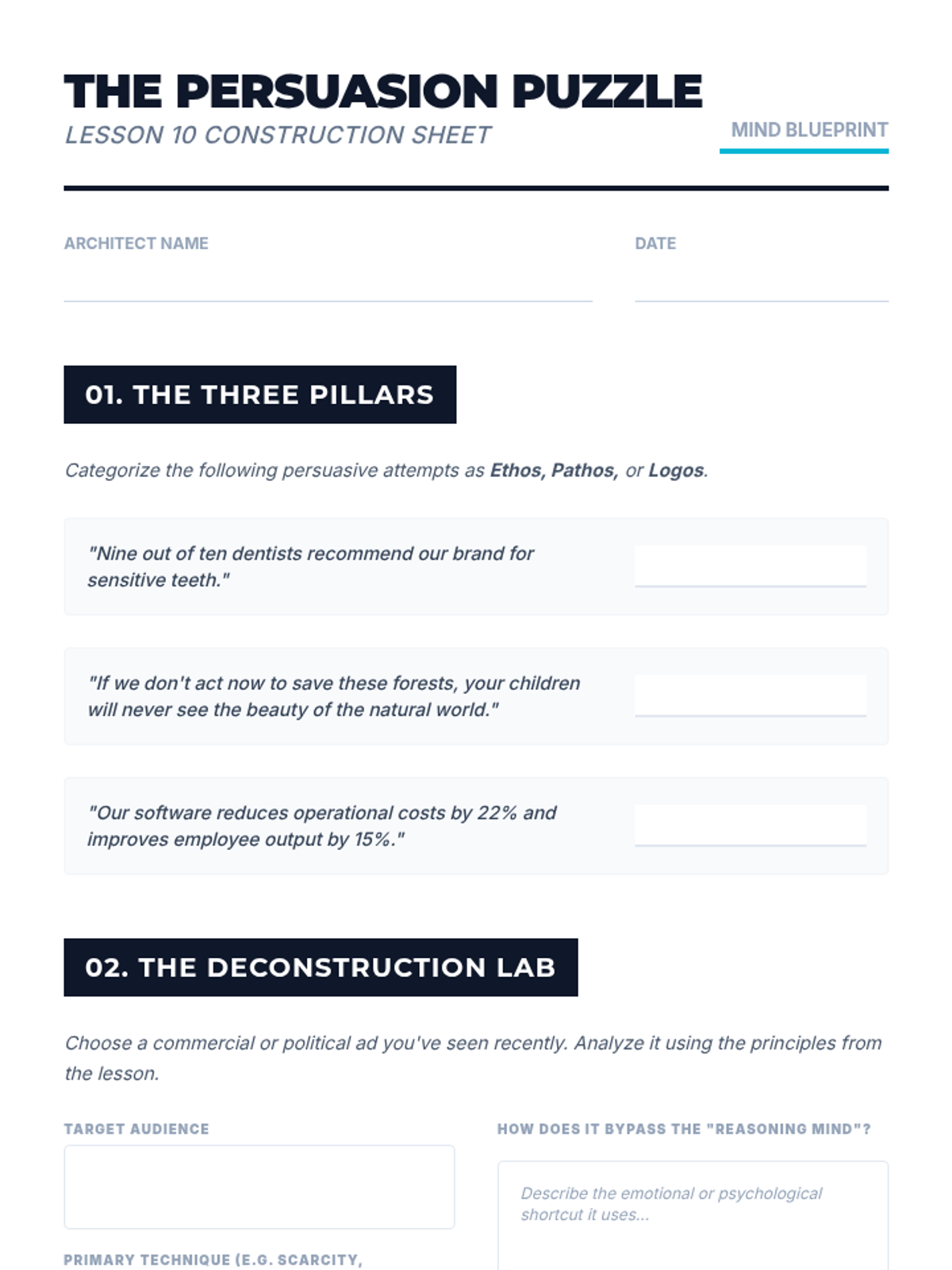
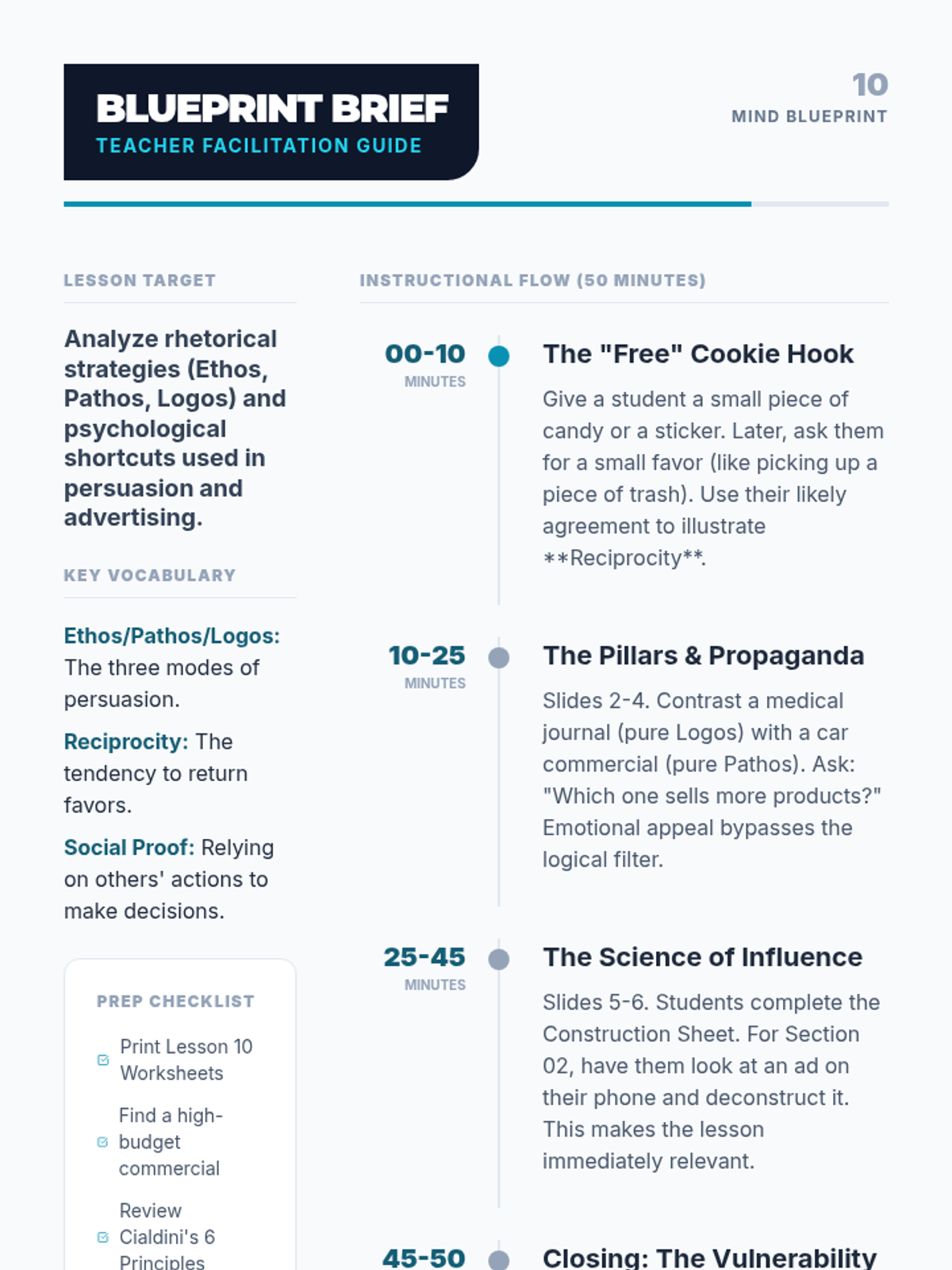
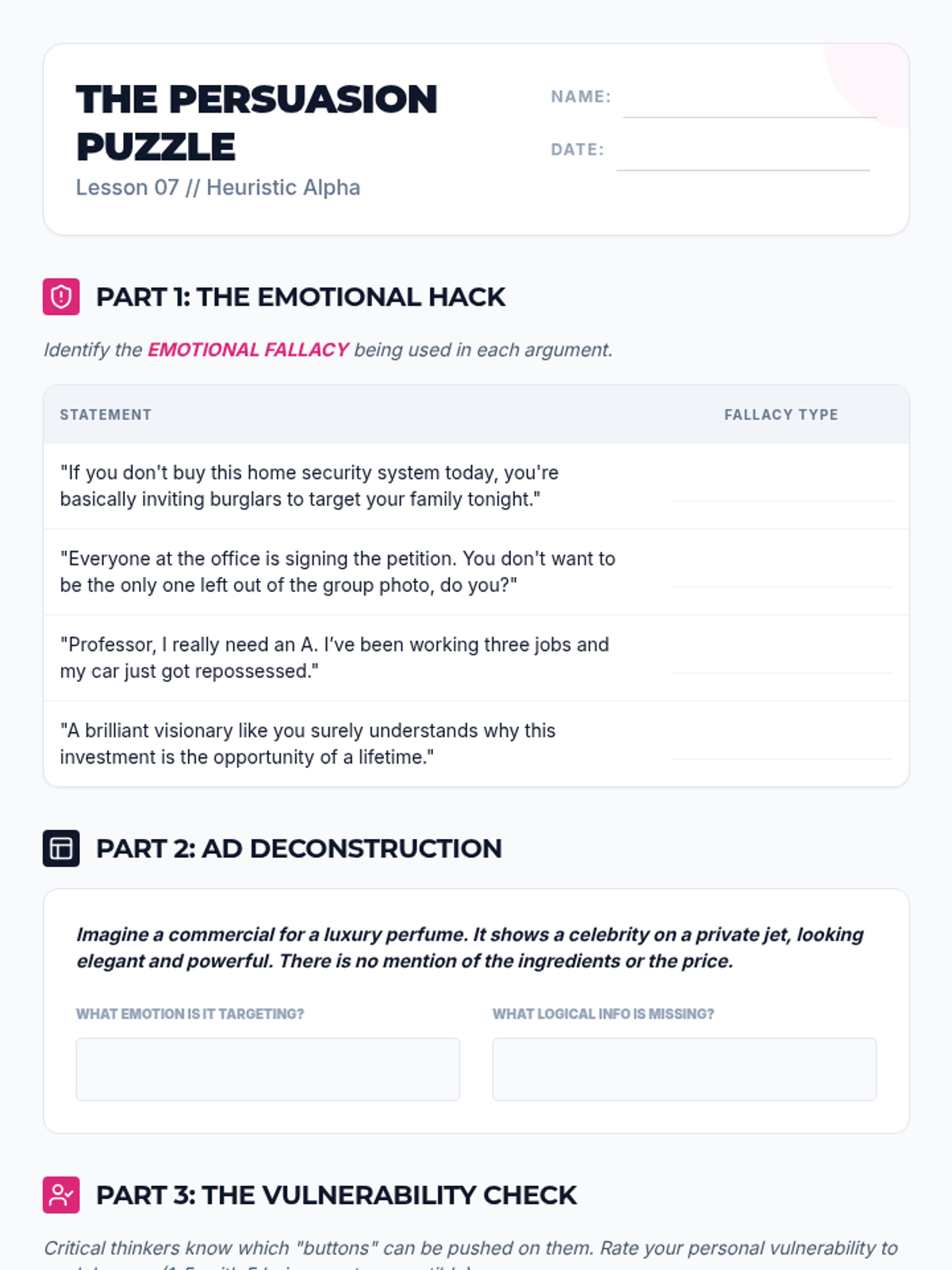
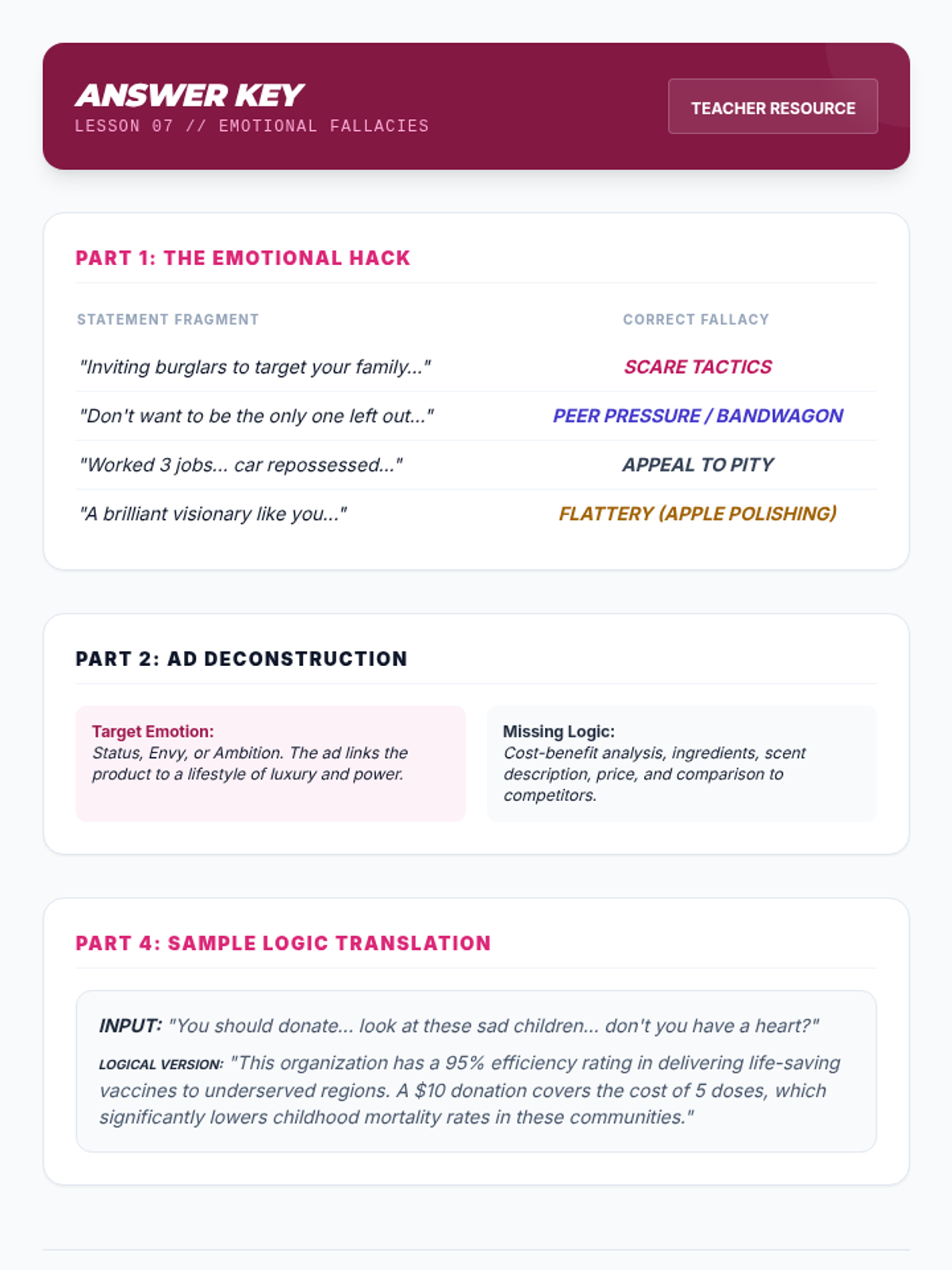
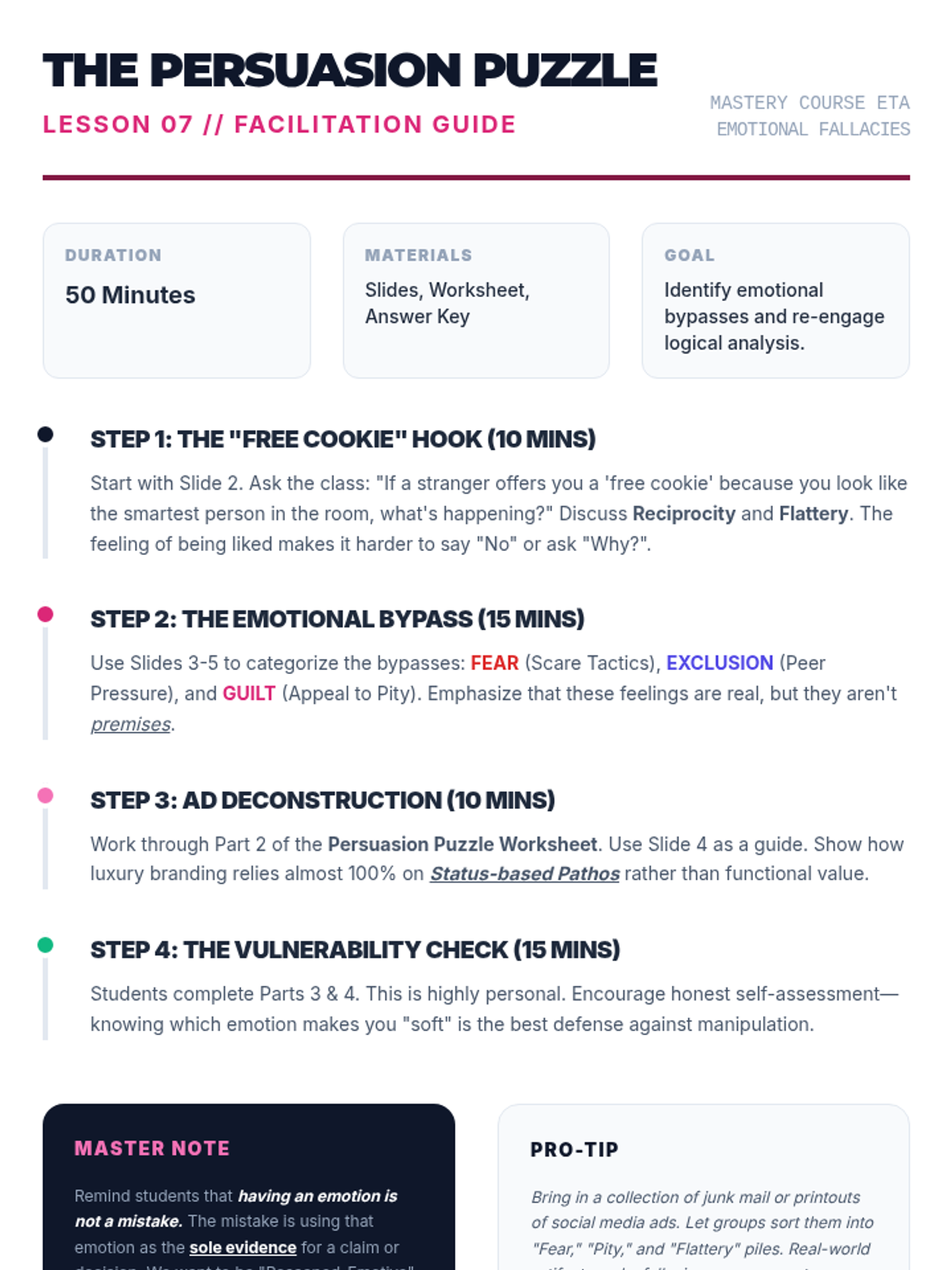
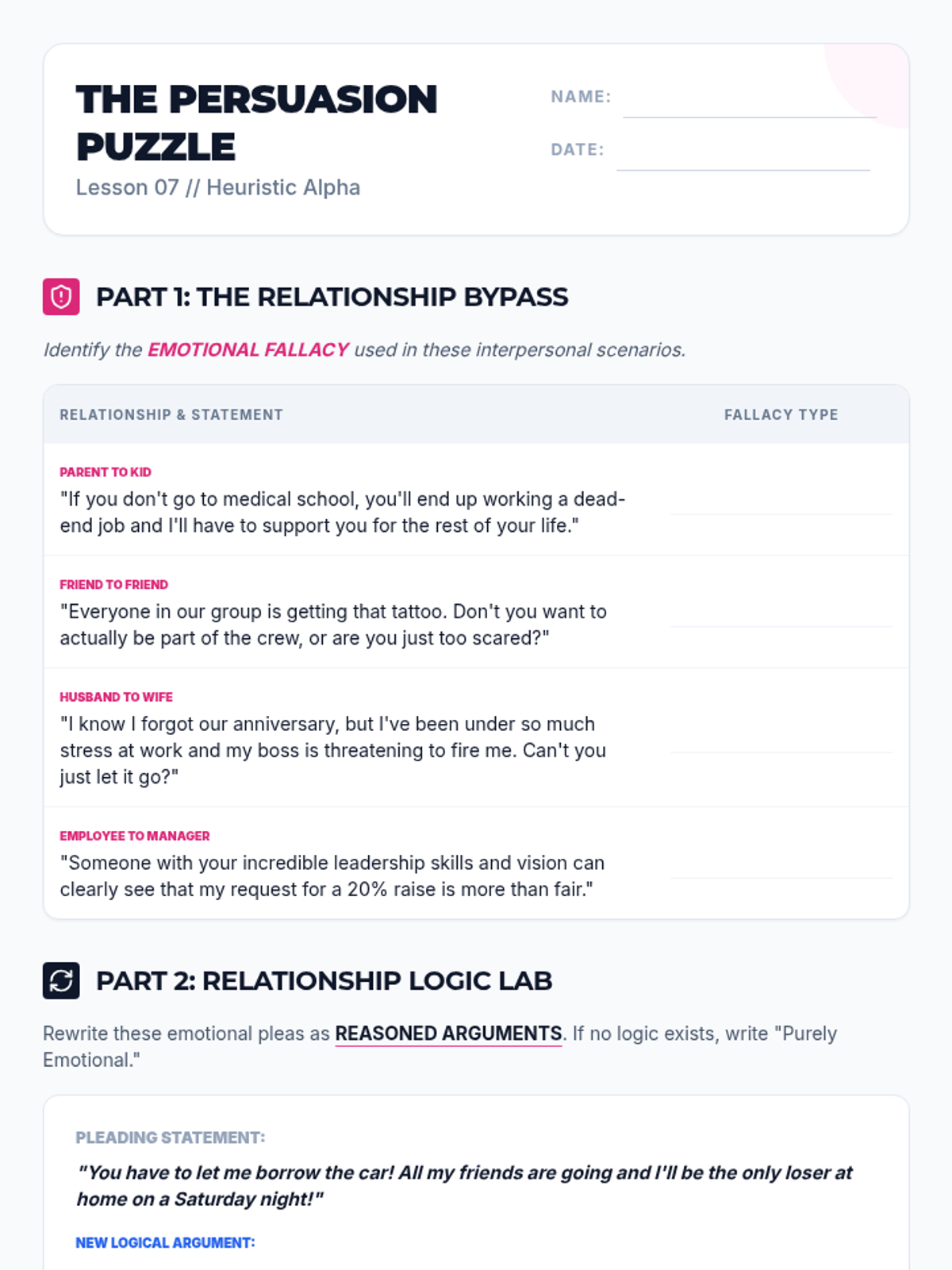
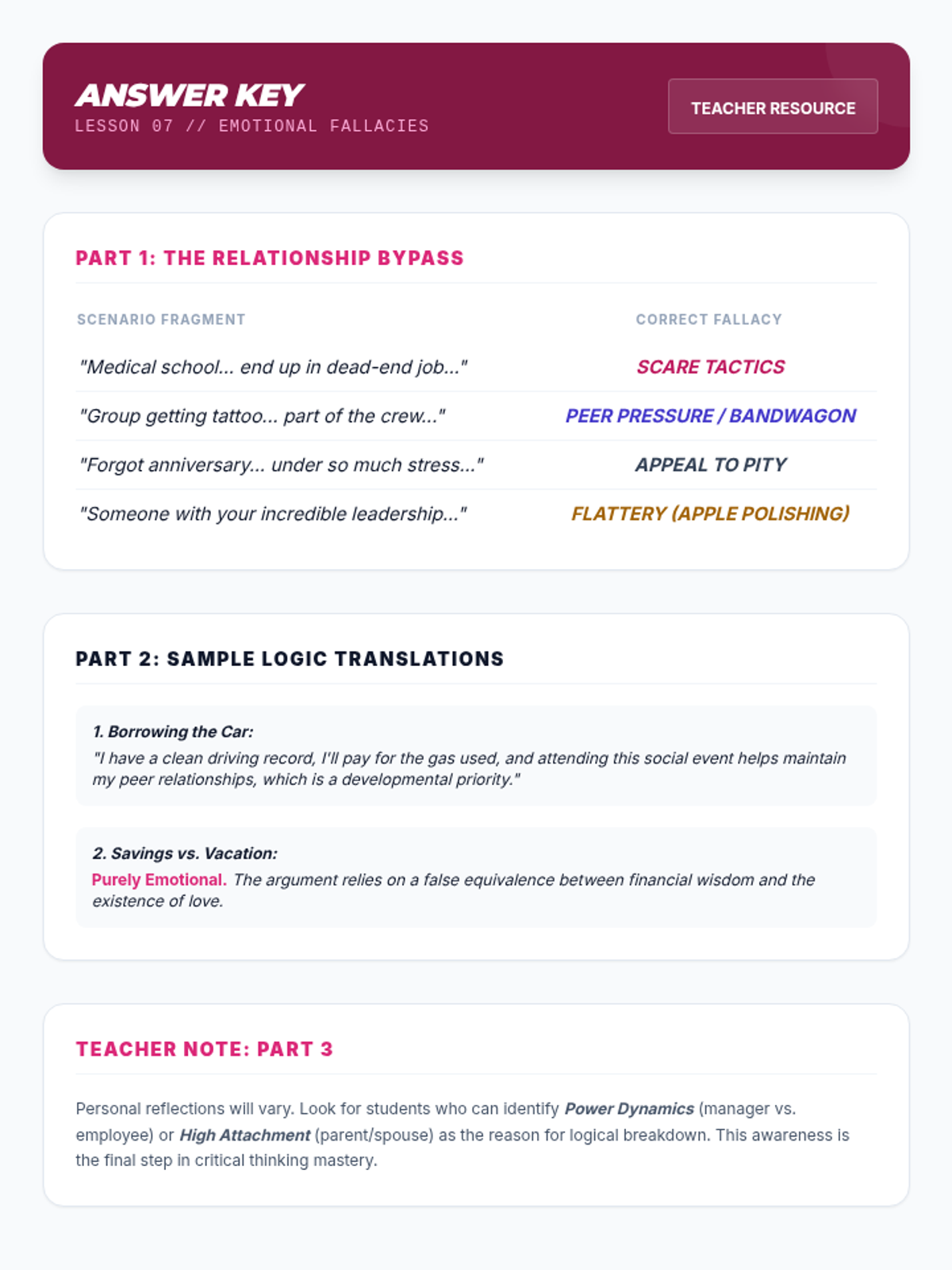
Identifying fallacies that bypass logic to target emotions: scare tactics, flattery, peer pressure, and appeals to pity.
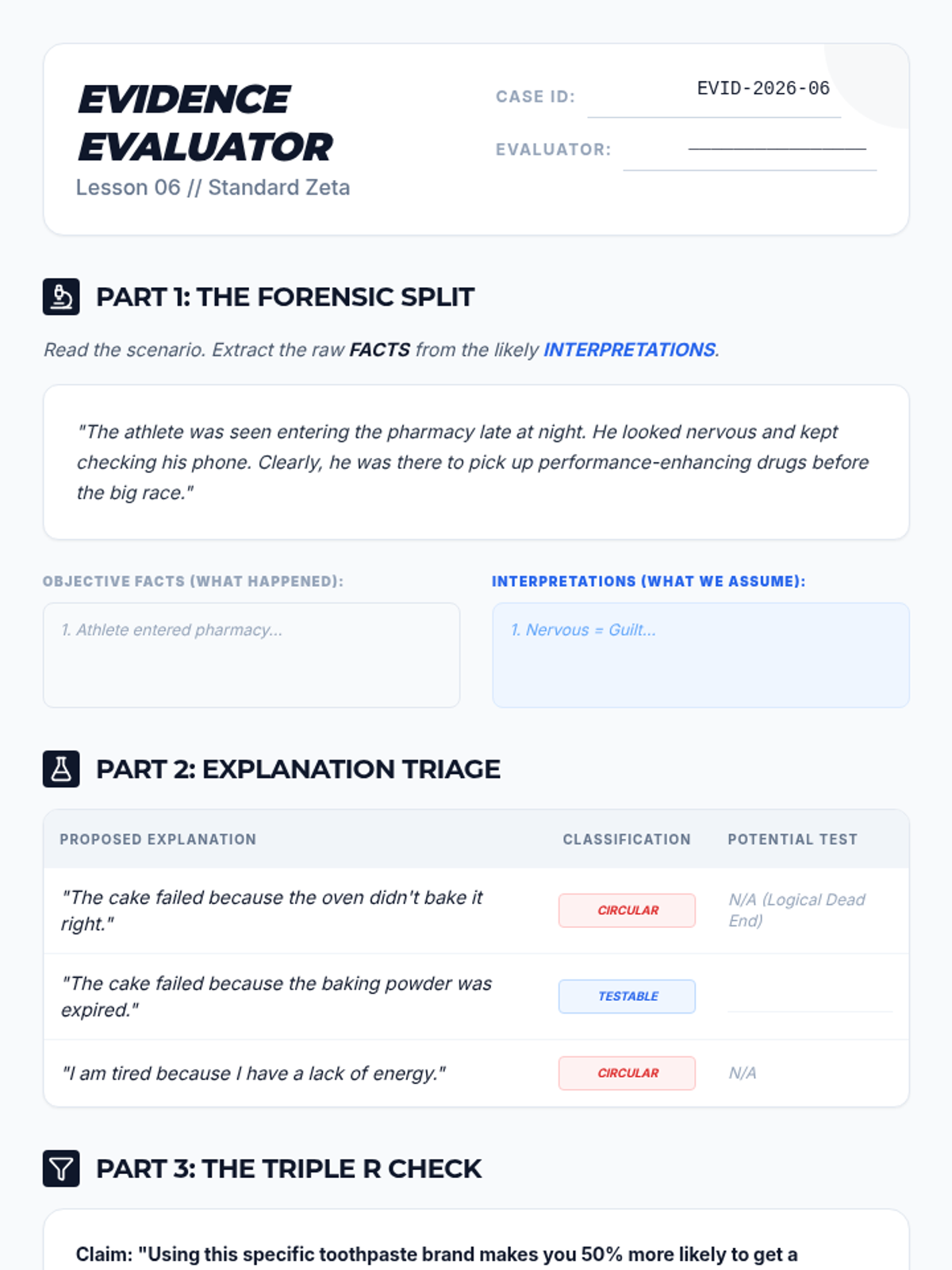
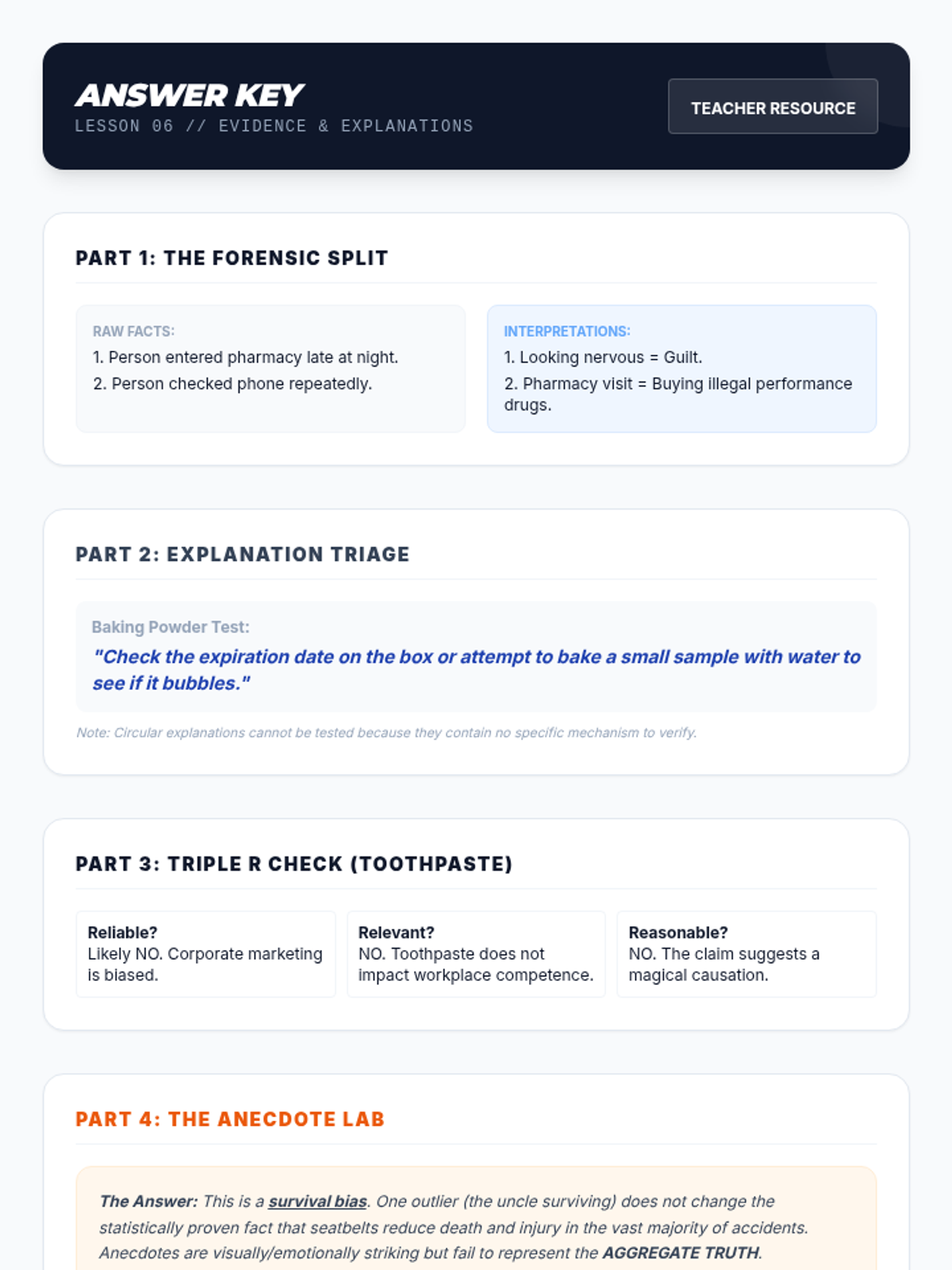
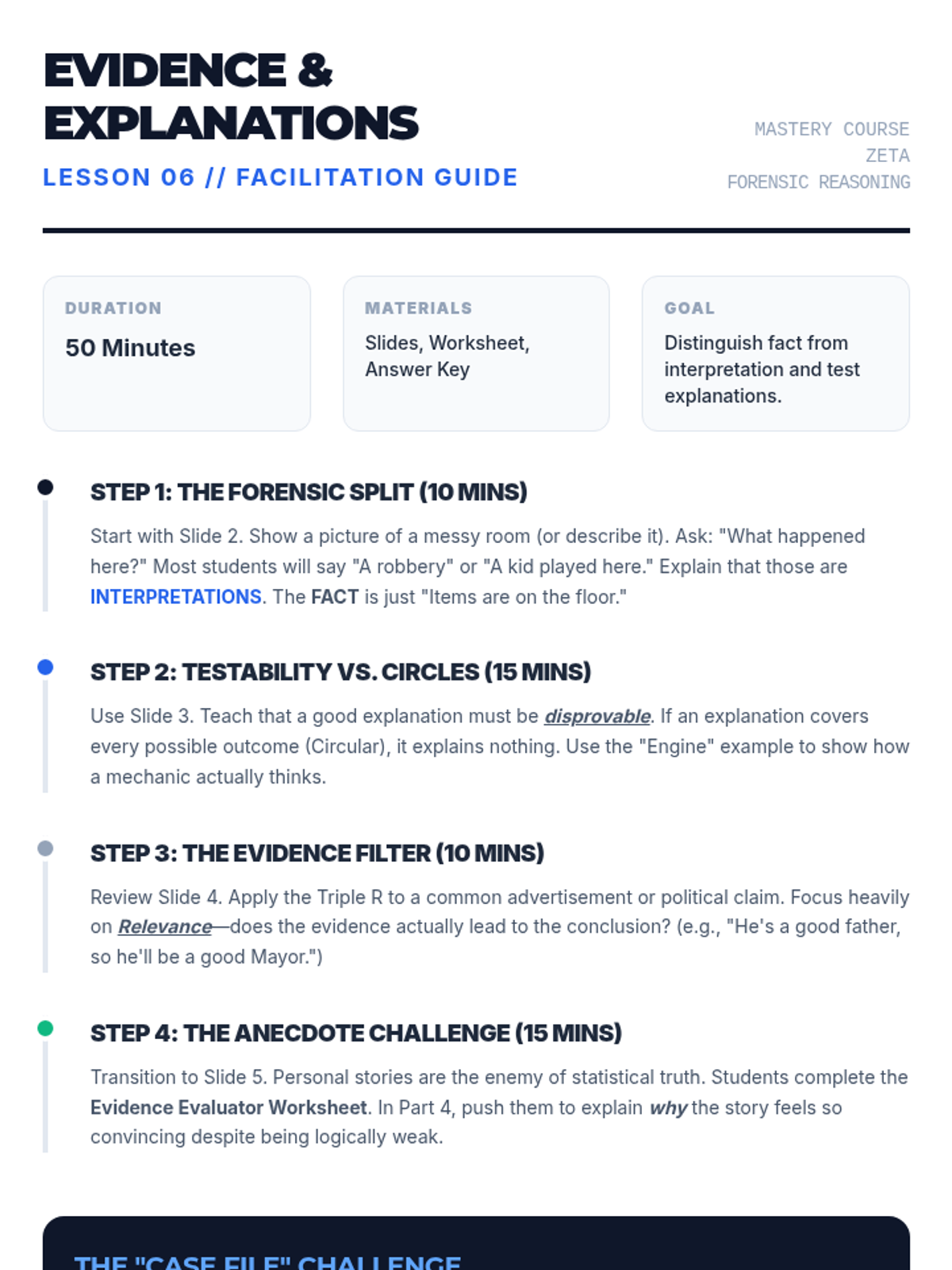
Developing the skills to assess the validity and reasonableness of evidence, and ensuring explanations are relevant and testable.
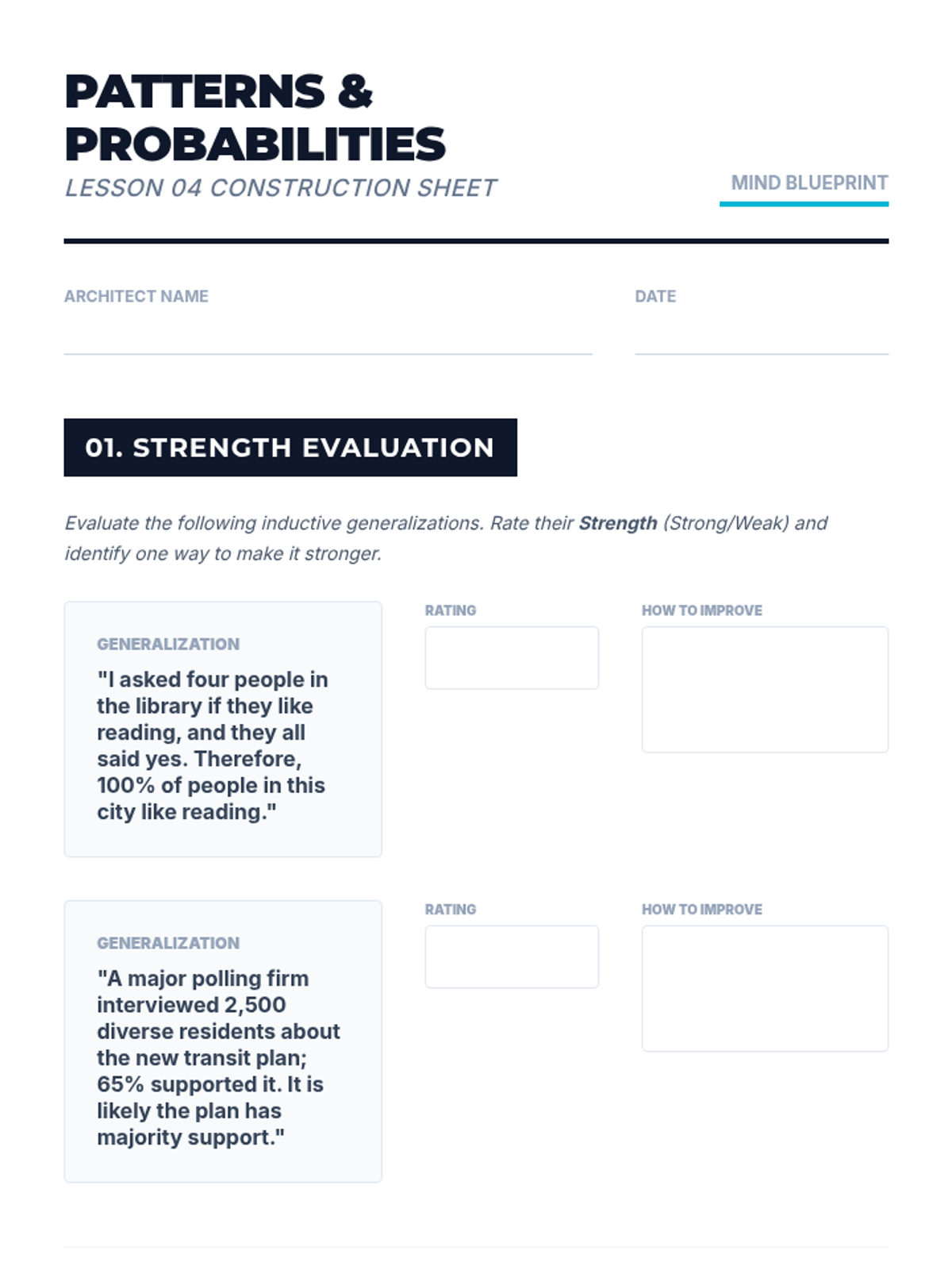
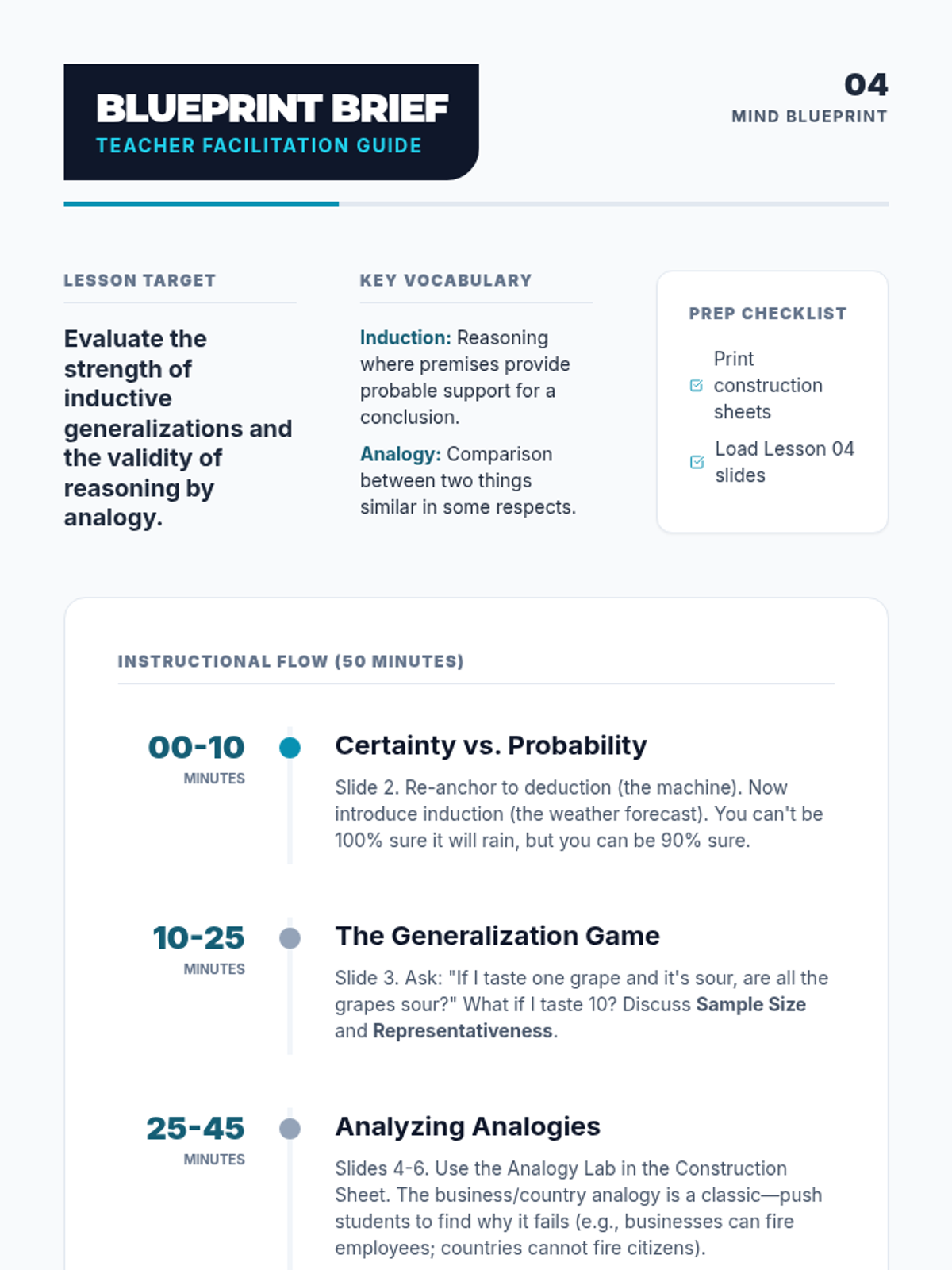
Recognizing errors in inductive logic: hasty generalizations, biased generalizations, and non sequiturs.
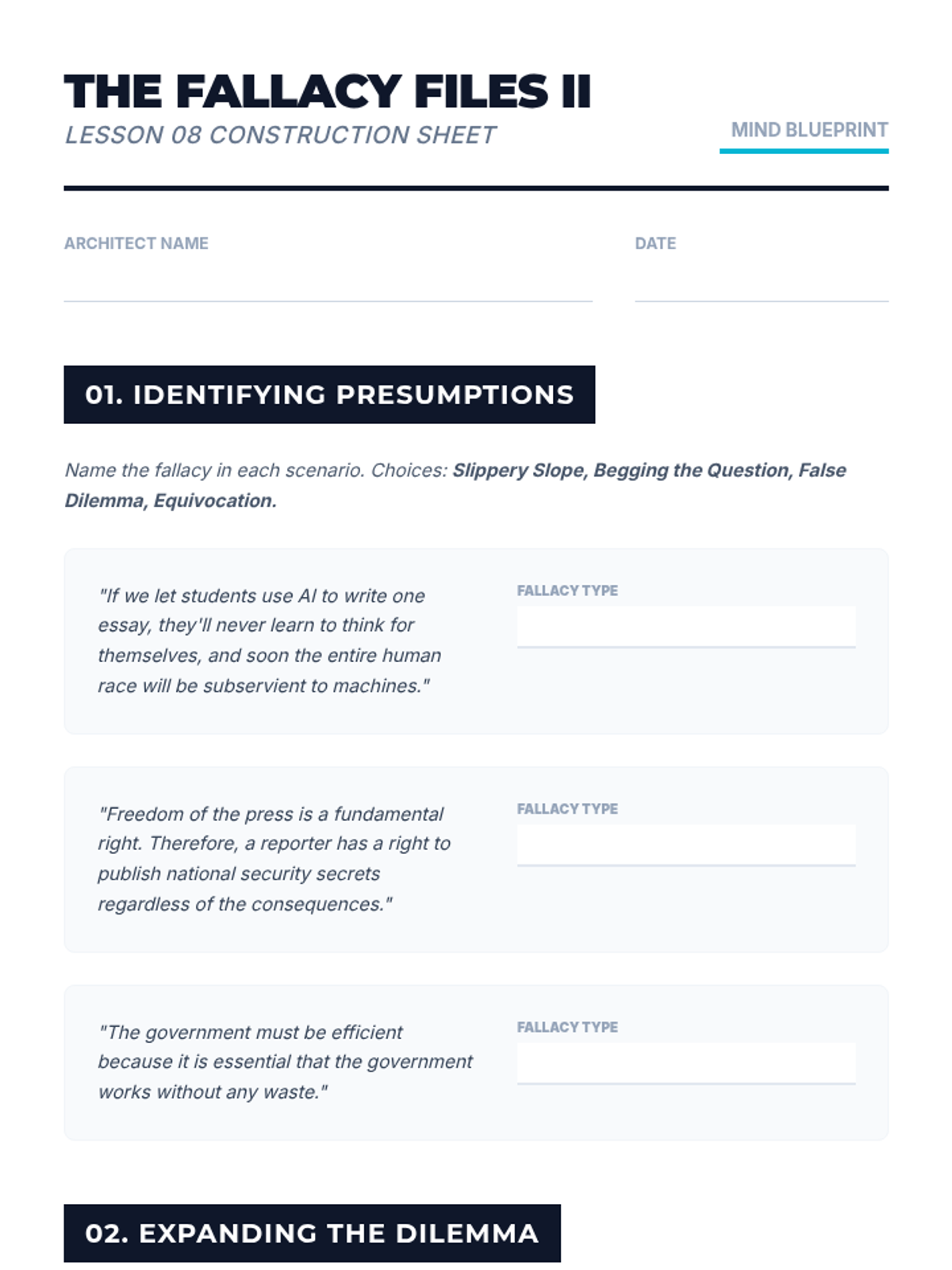
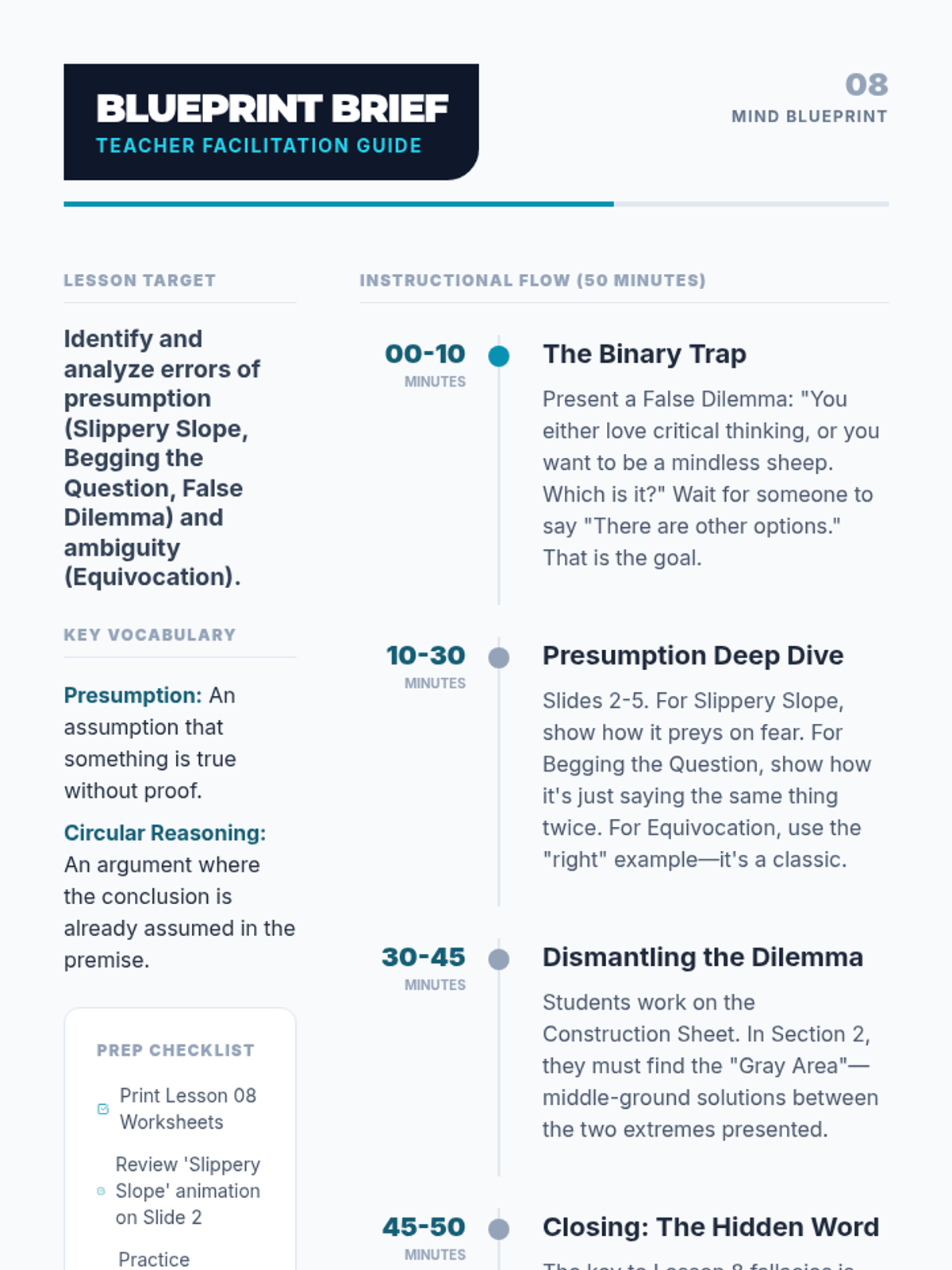
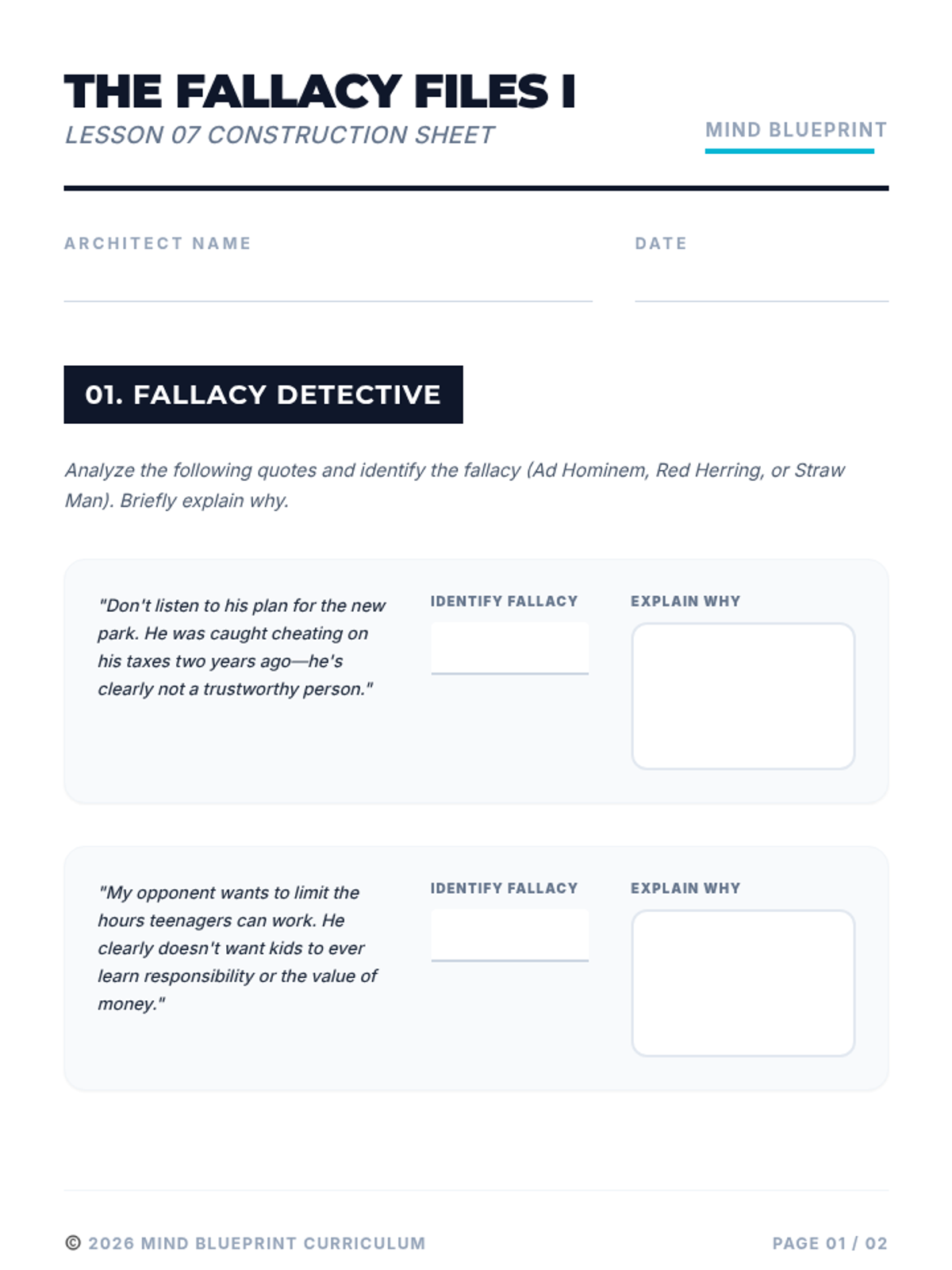
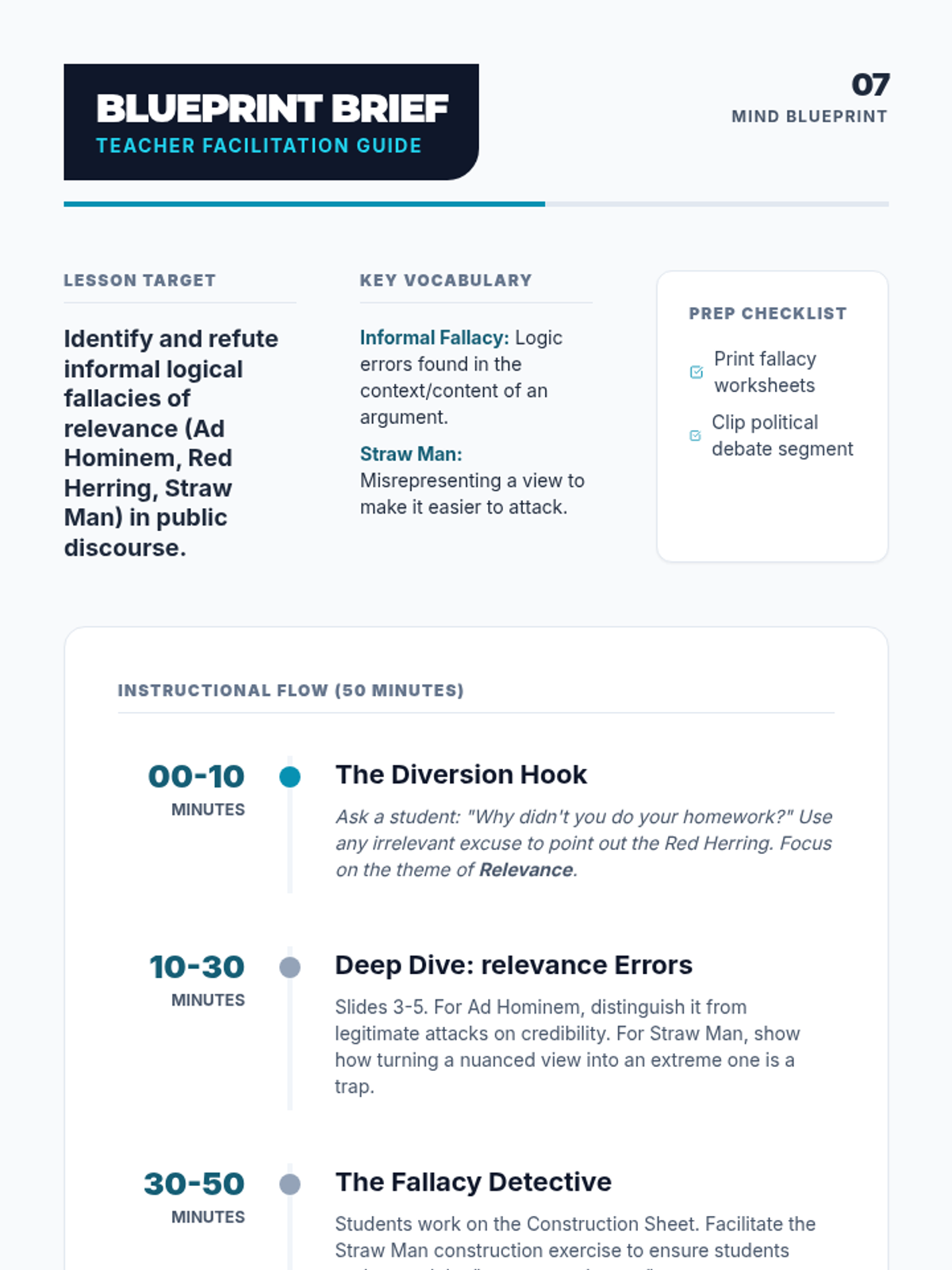
A deep dive into common logical errors: Slippery Slope, Circular Reasoning, Ad Hominem, Red Herring, and the Straw Man.
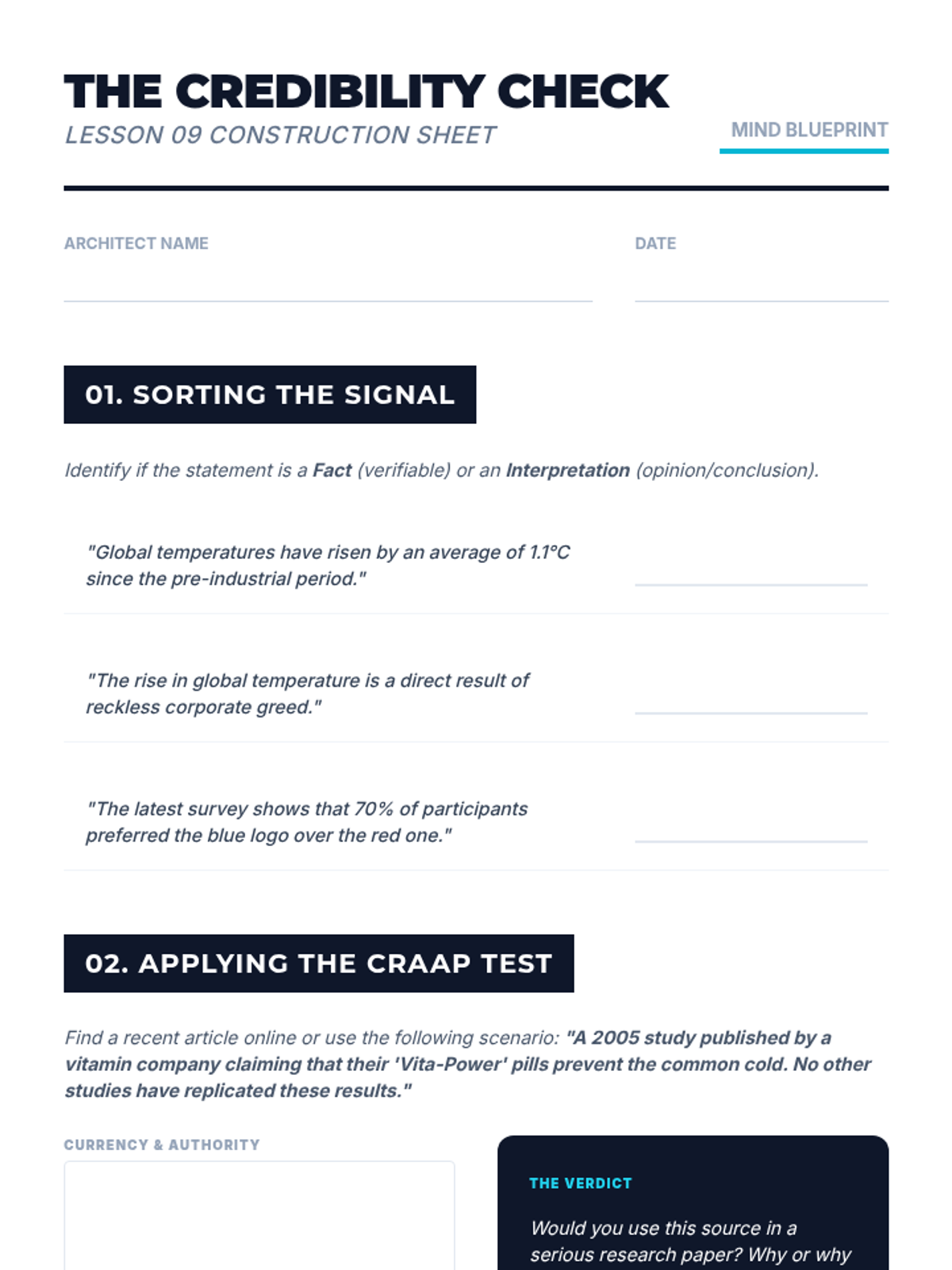
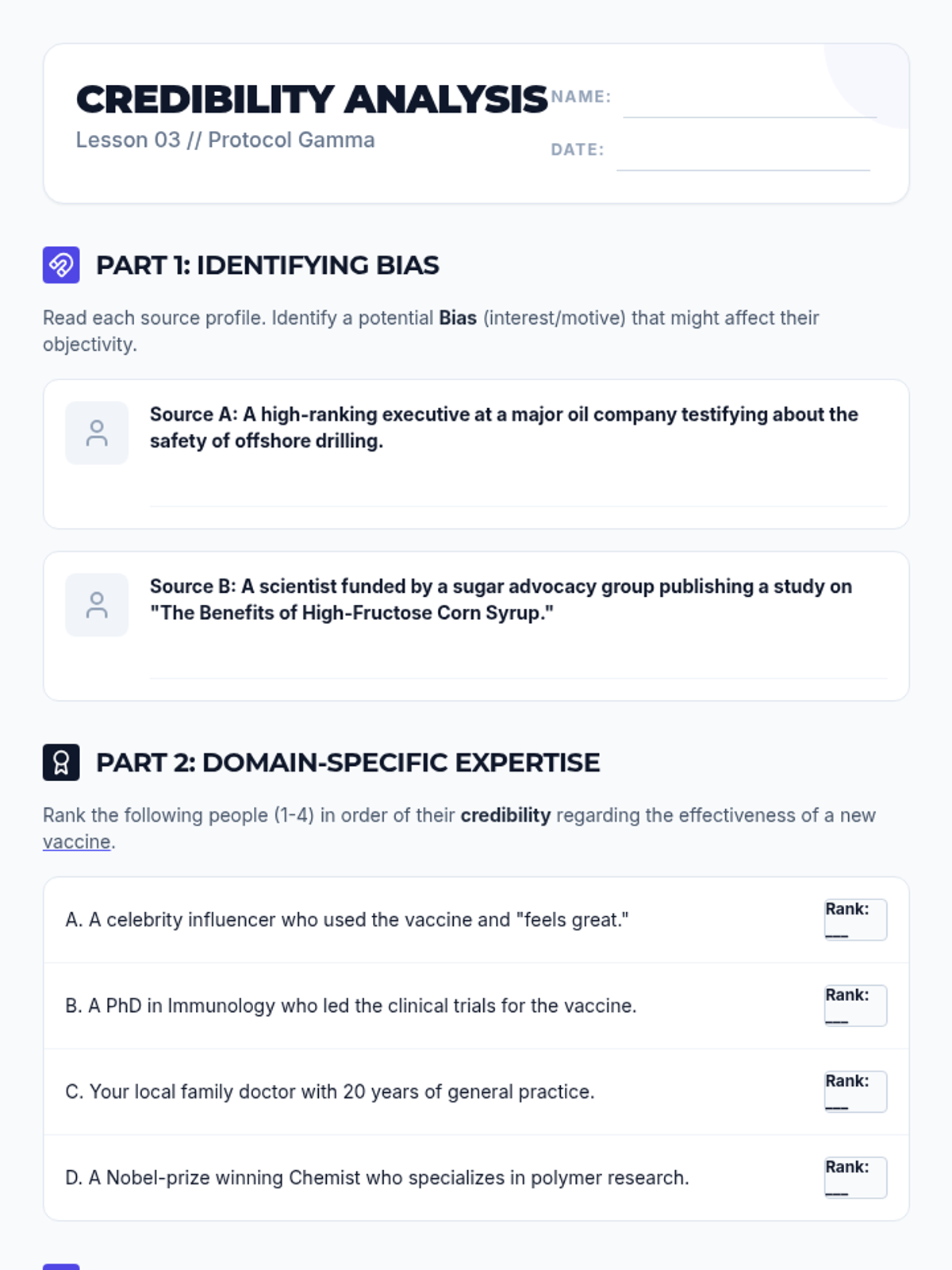
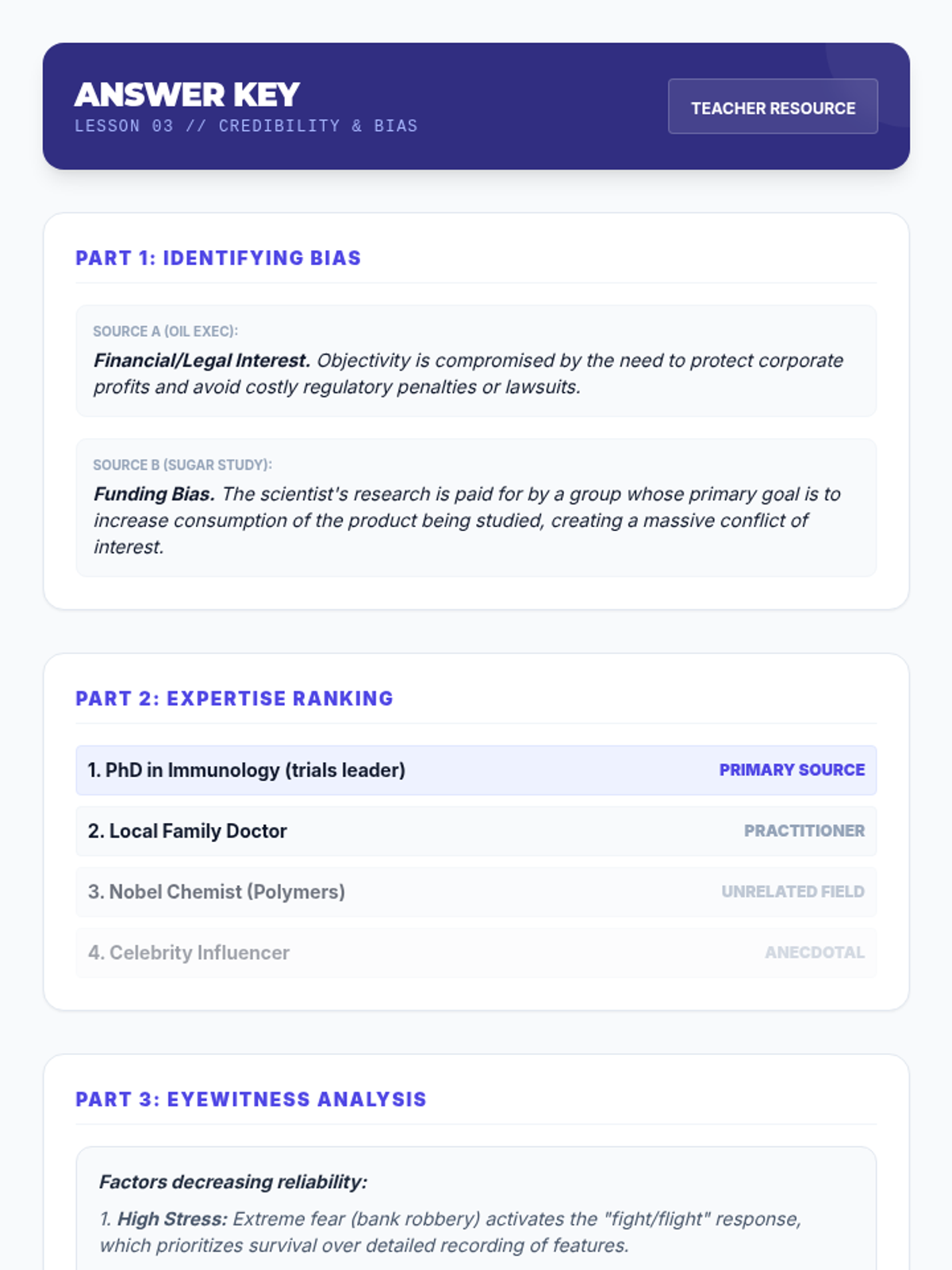
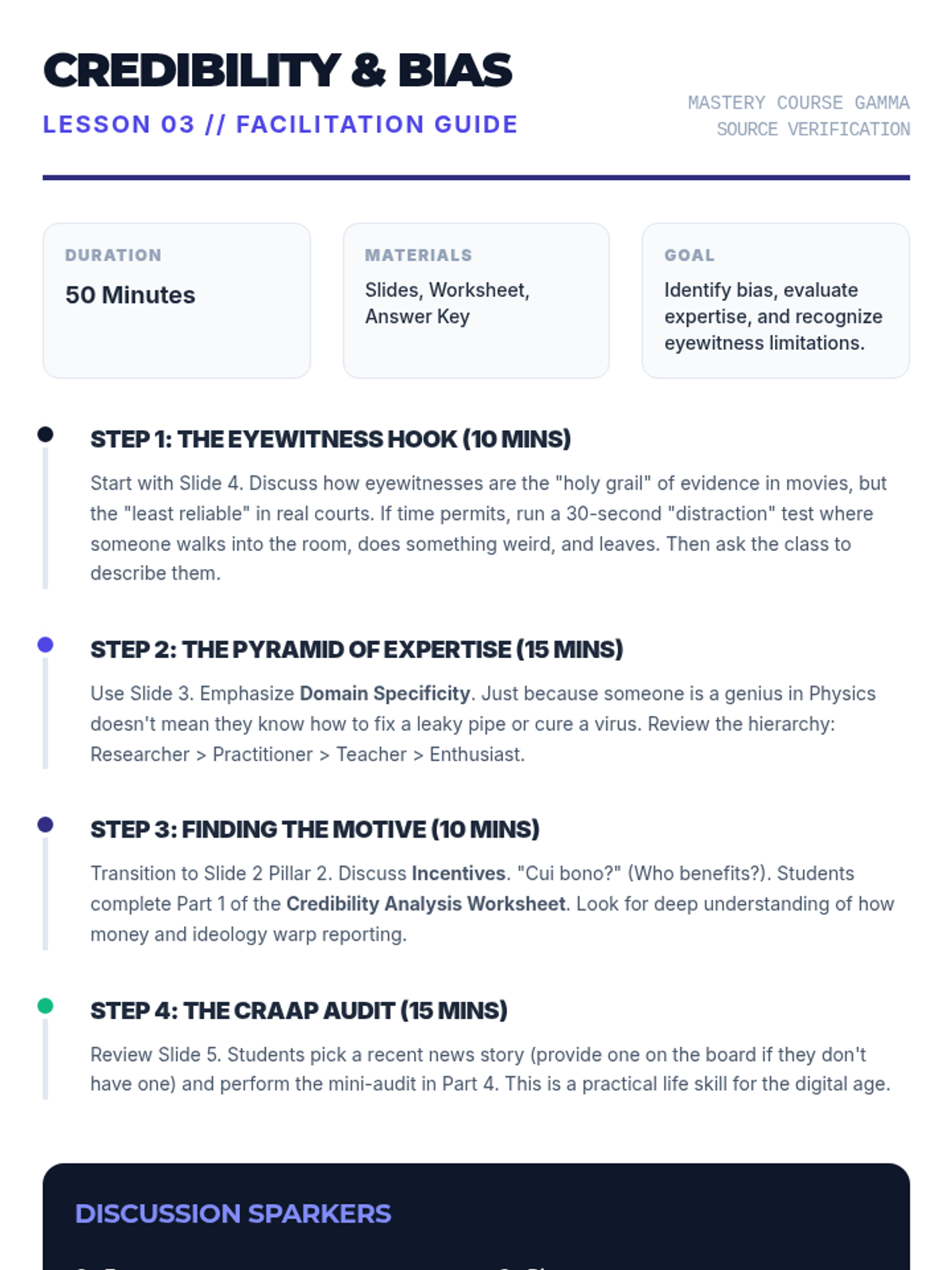
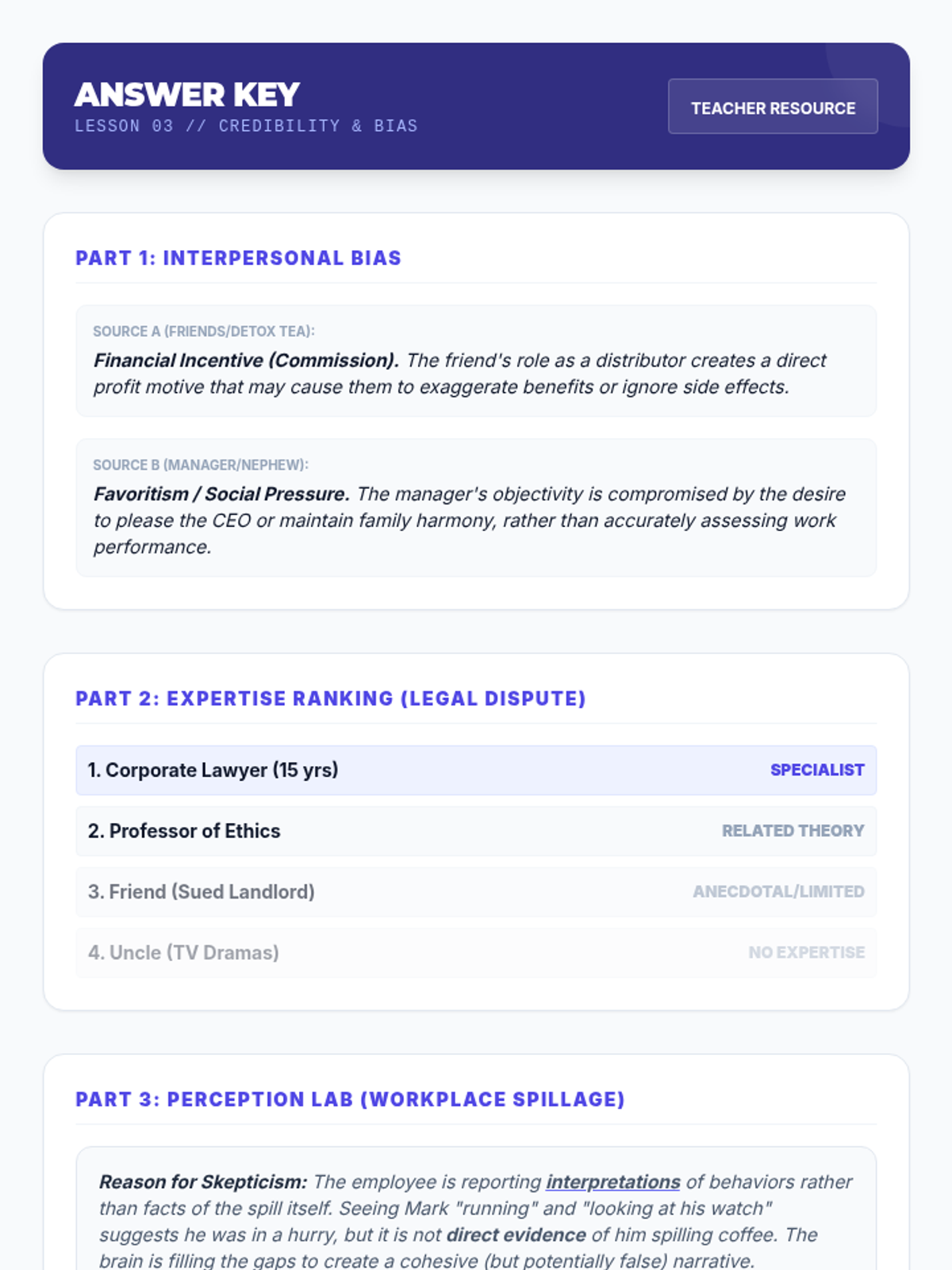
Evaluating source reliability by recognizing bias, determining levels of expertise, and understanding the specific challenges of eyewitness testimony.
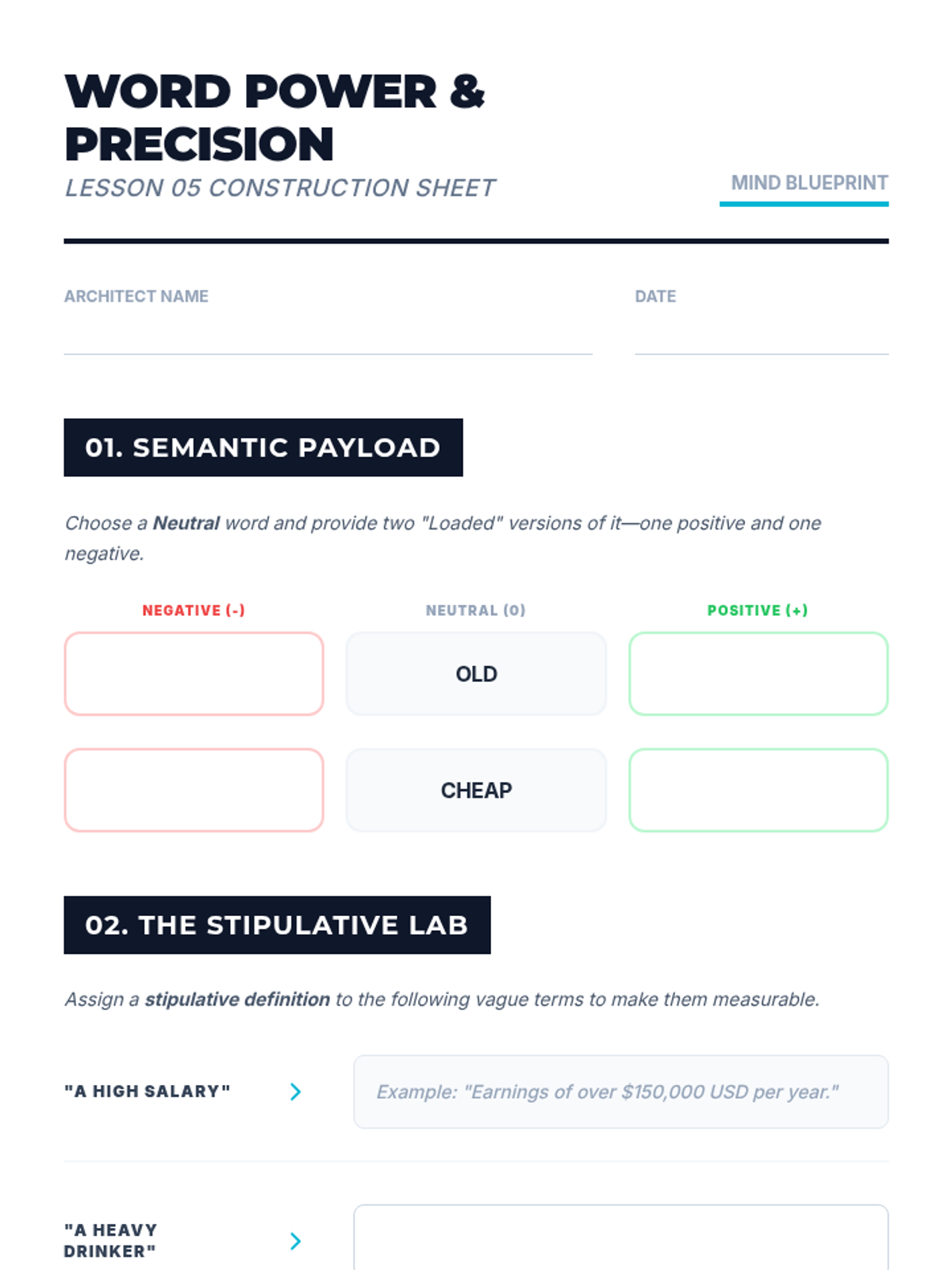
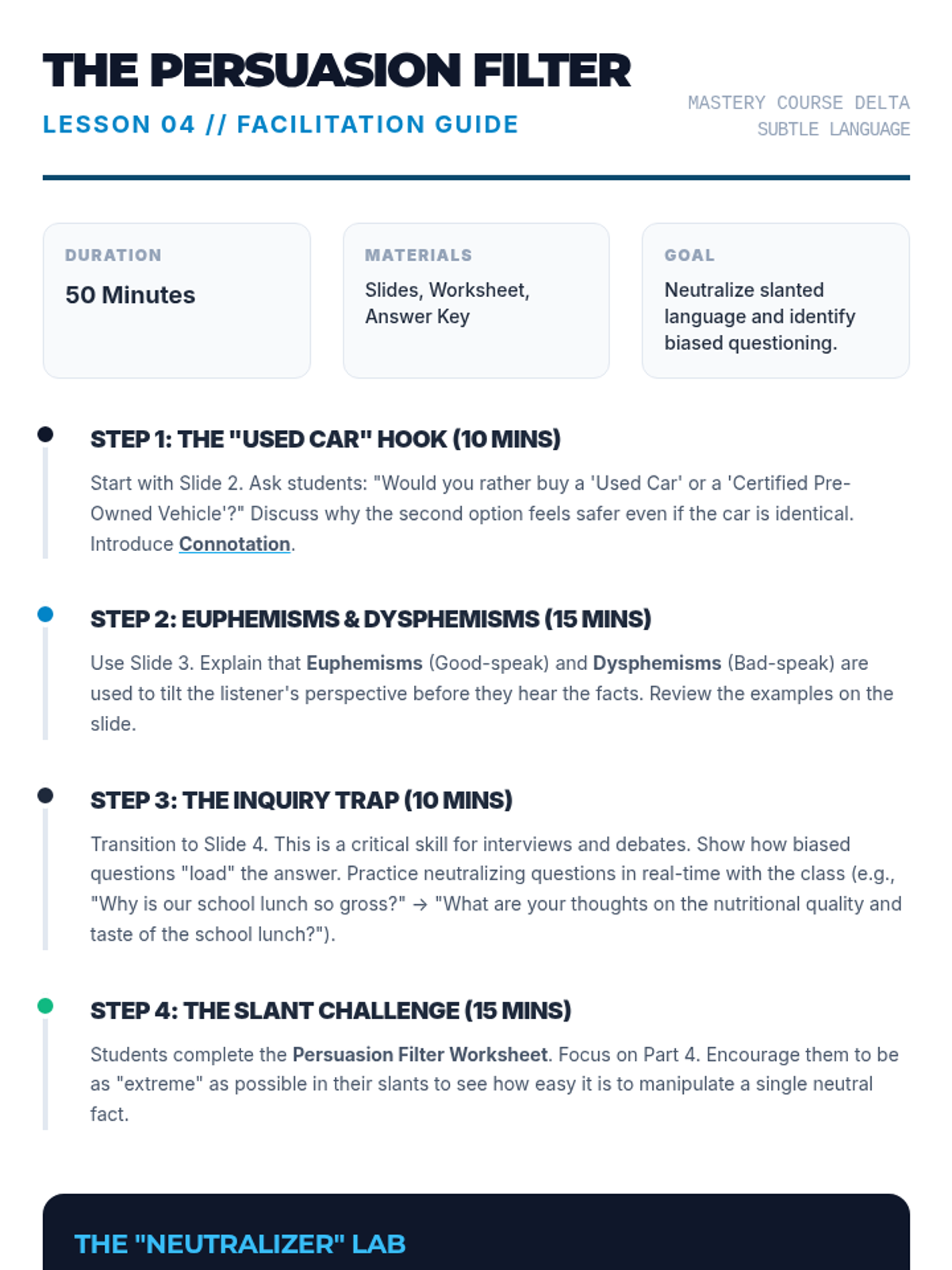
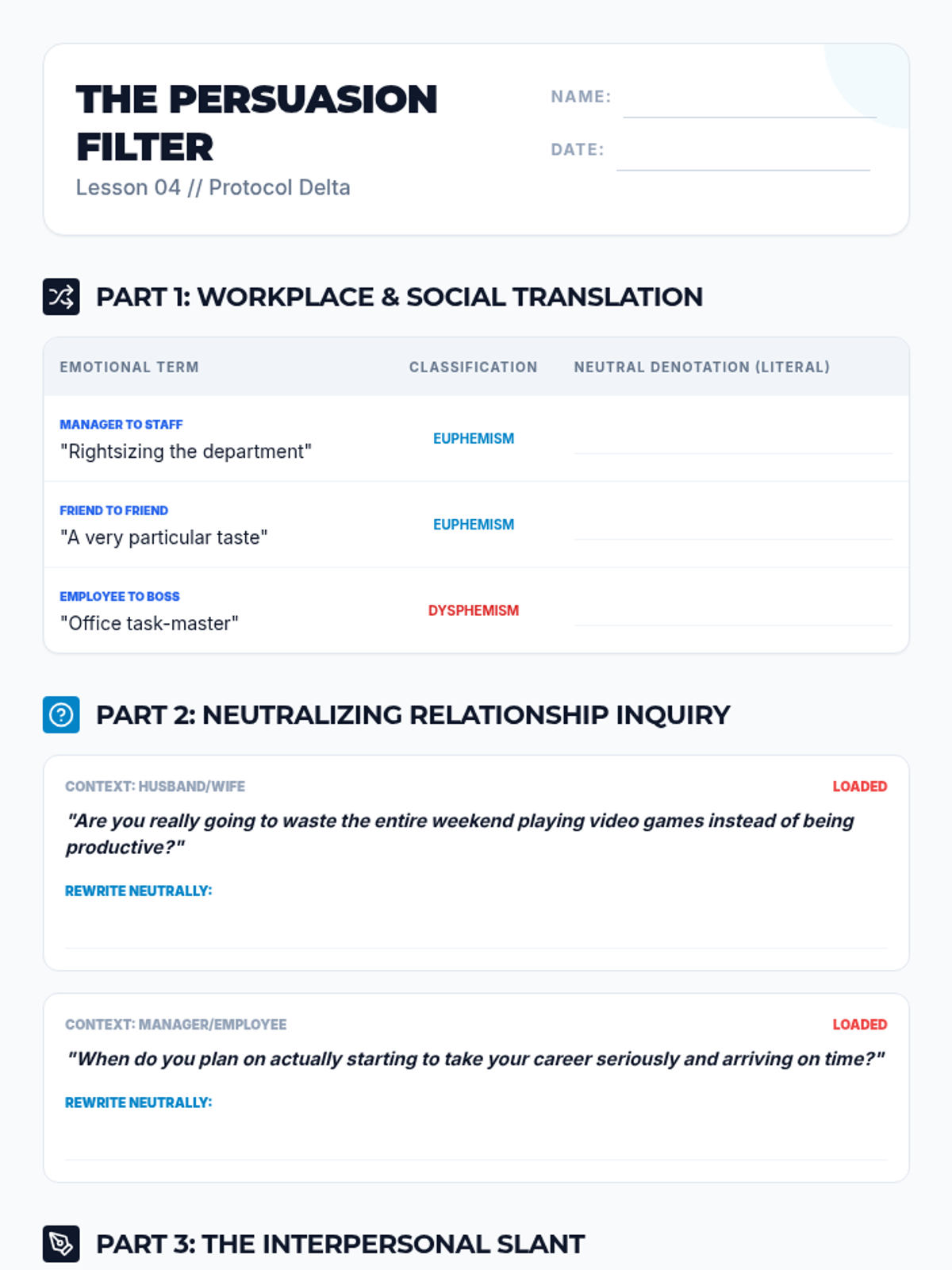
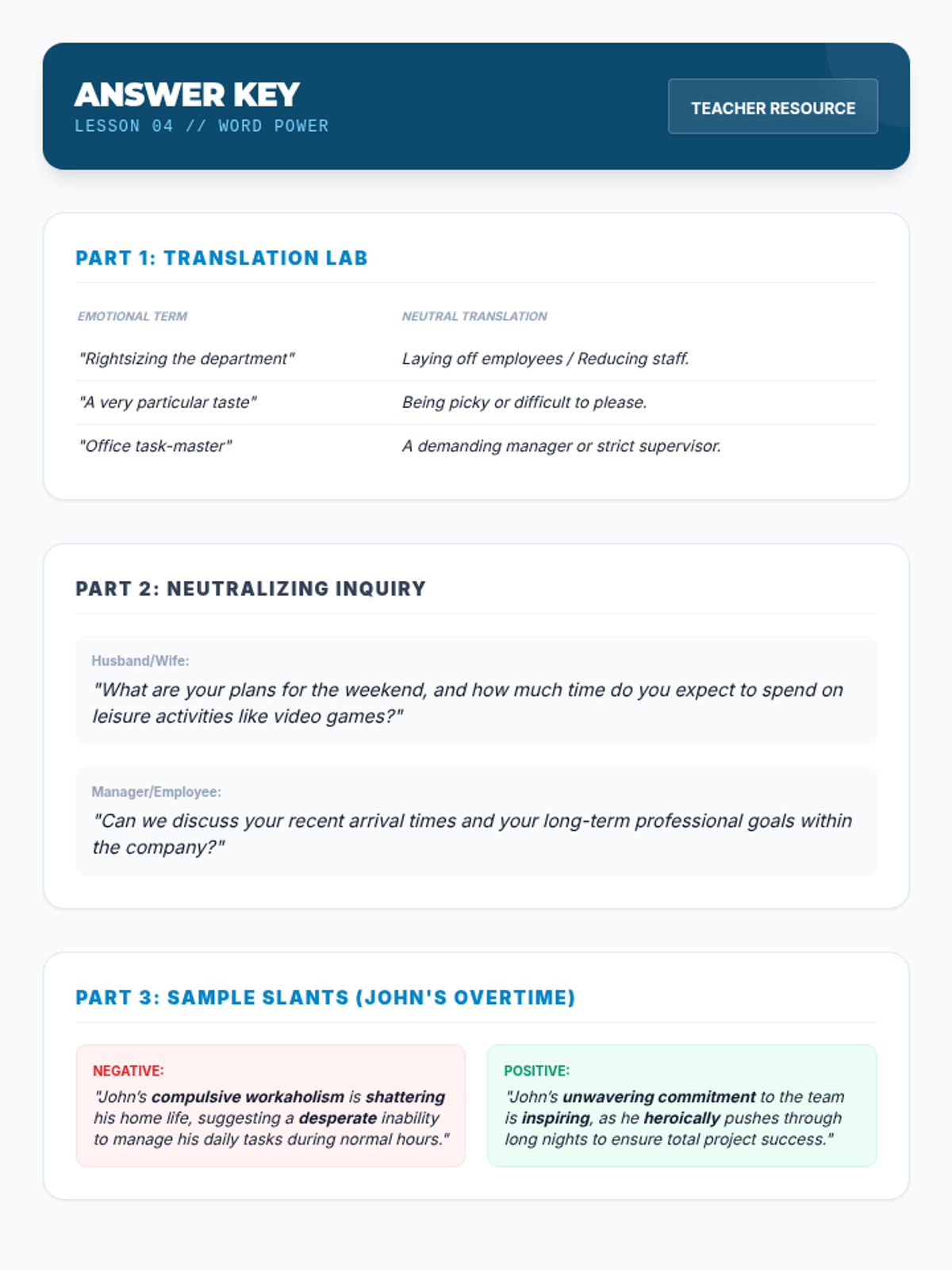
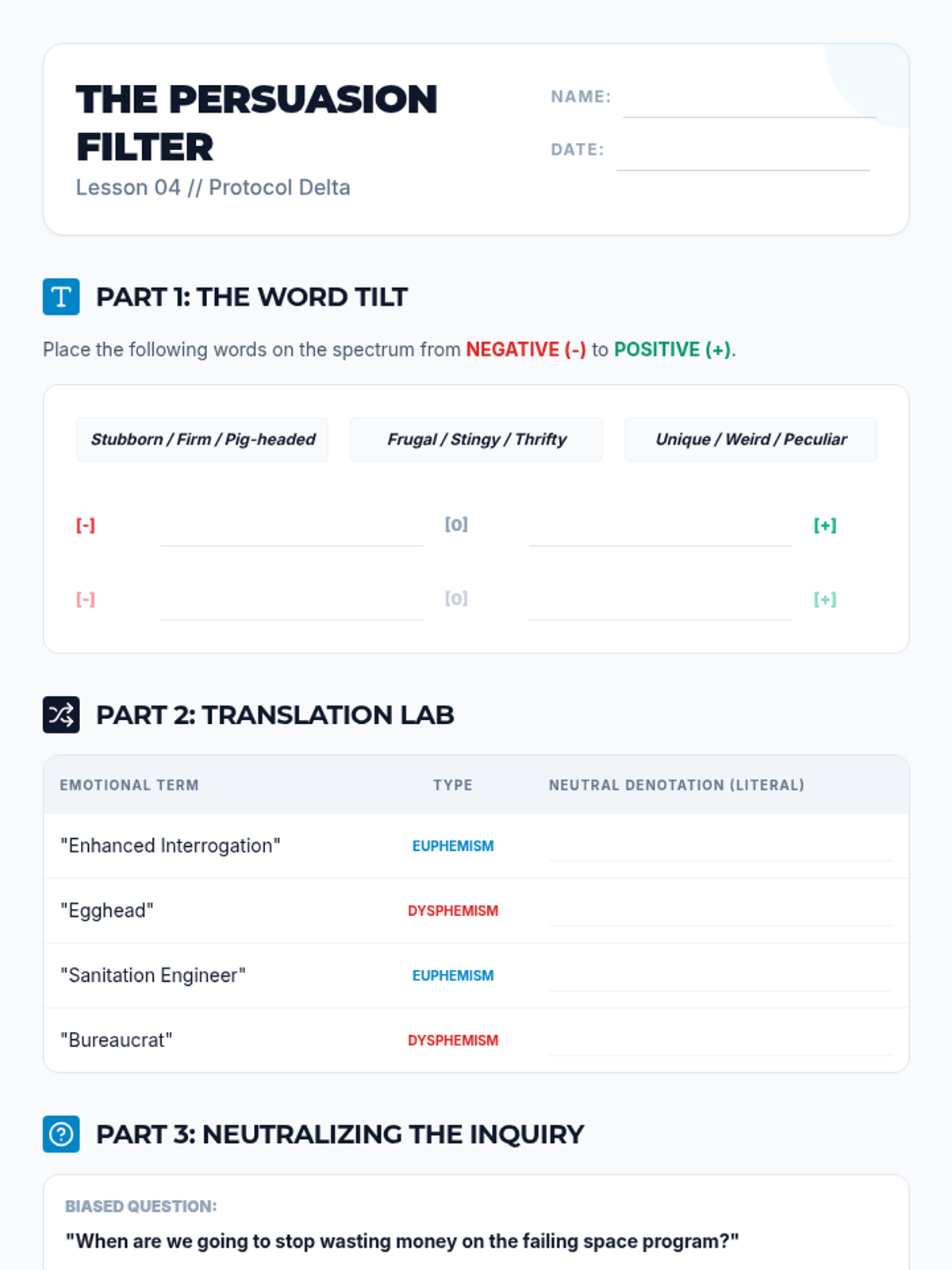
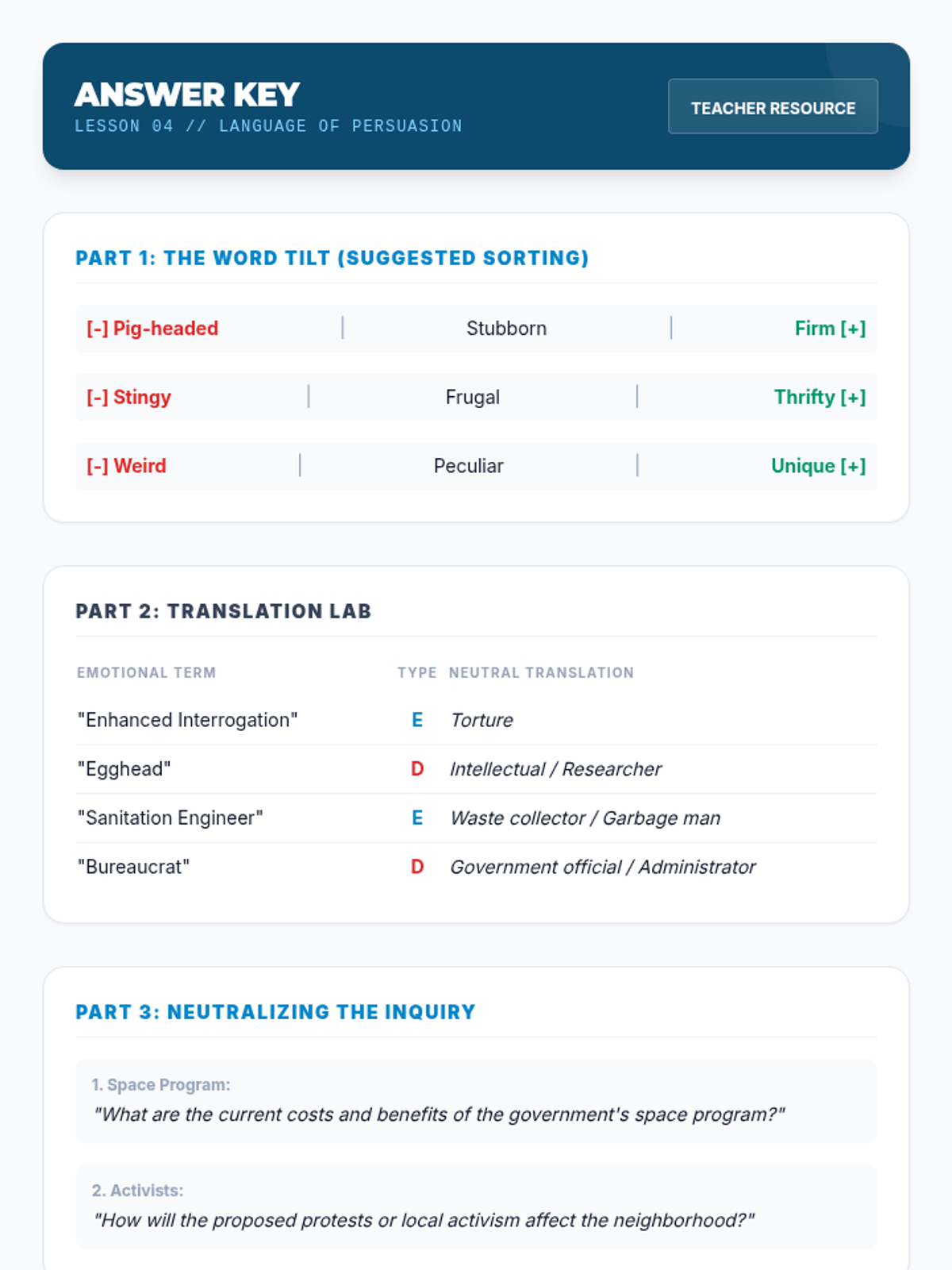
Analyzing how language is used to influence: euphemisms, dysphemisms, and the subtle power of biased questioning.
Building logical conclusions from evidence and identifying causal relationships, including 'post hoc' and 'chicken or the egg' errors.
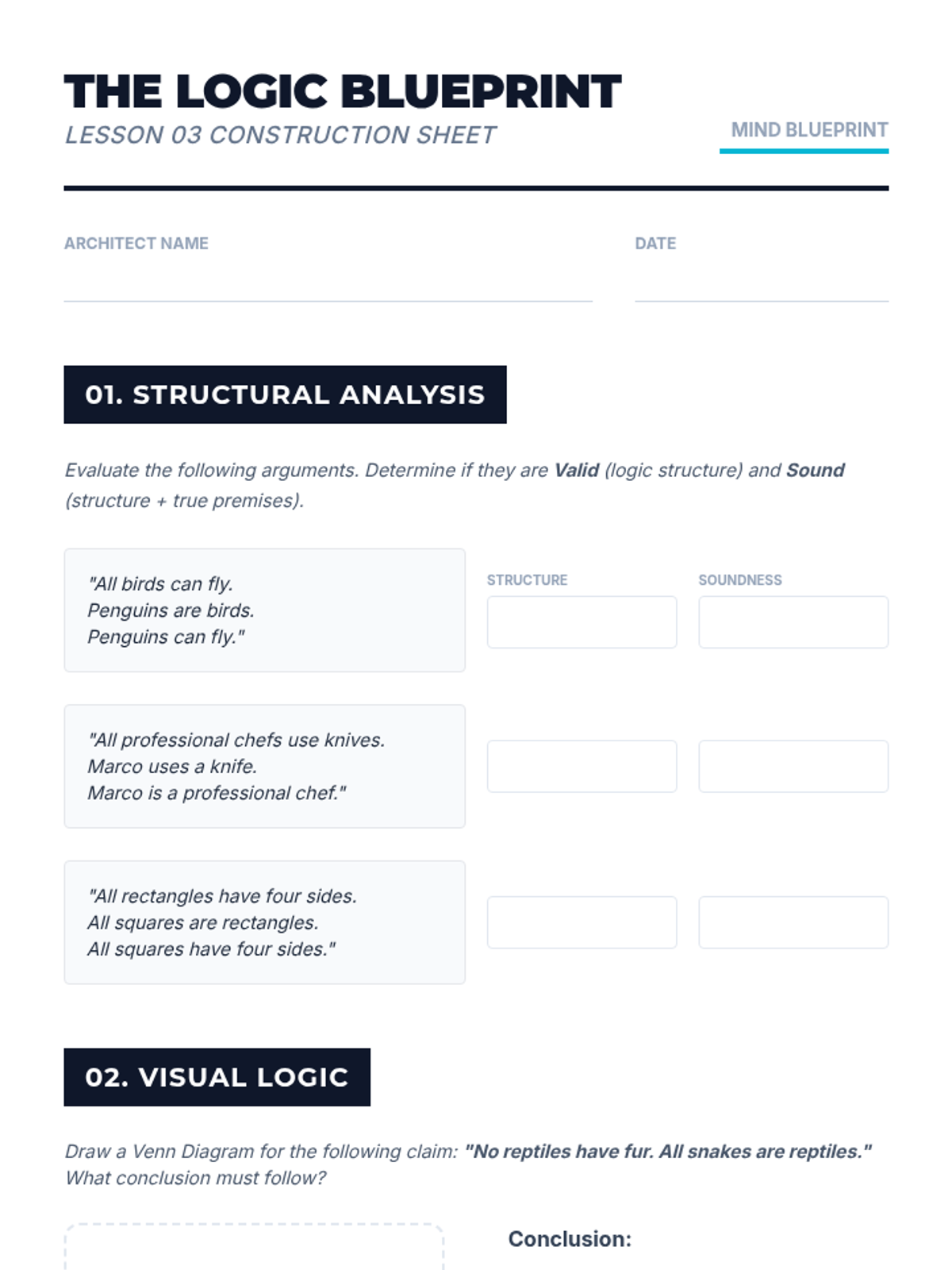
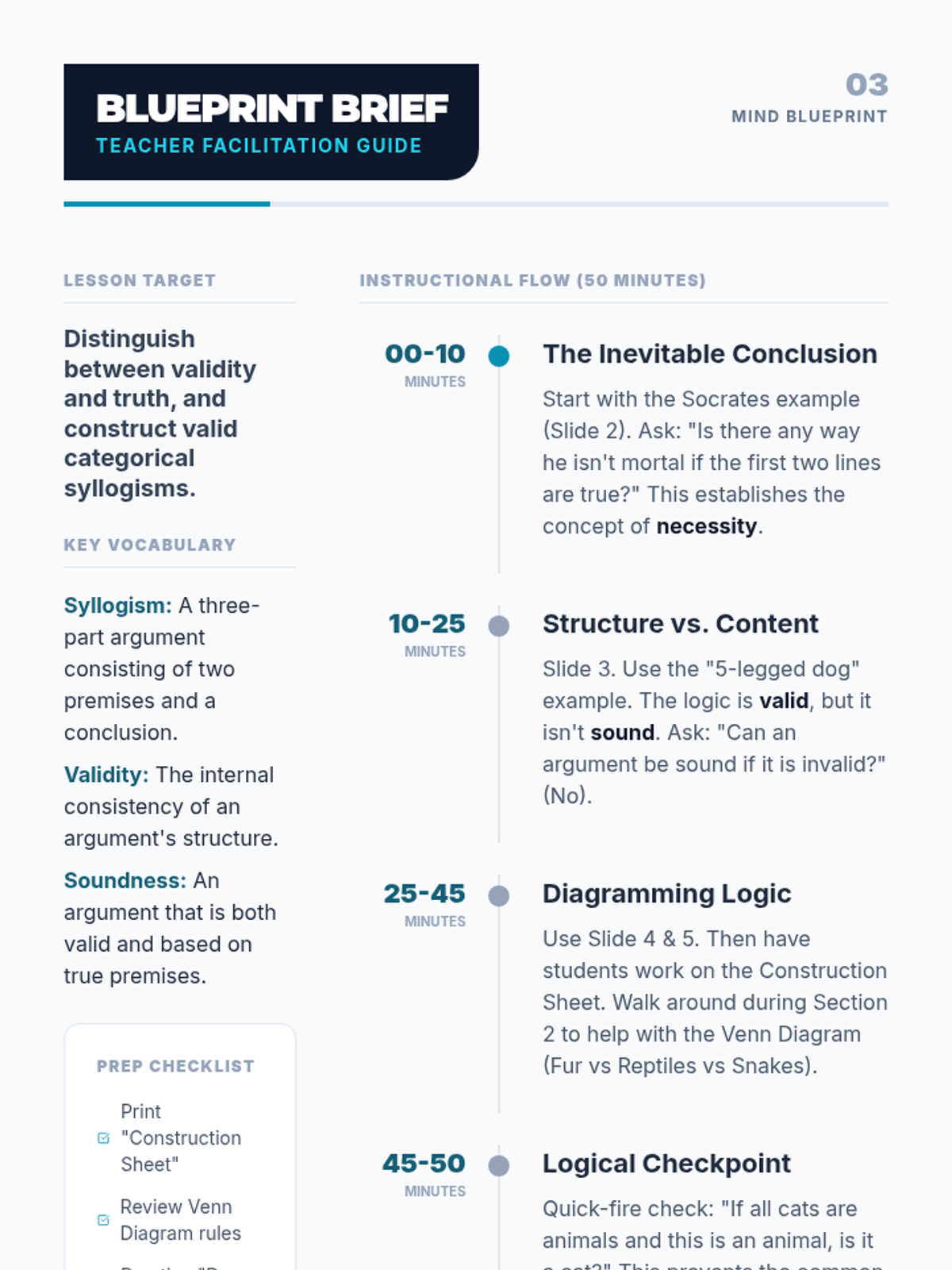
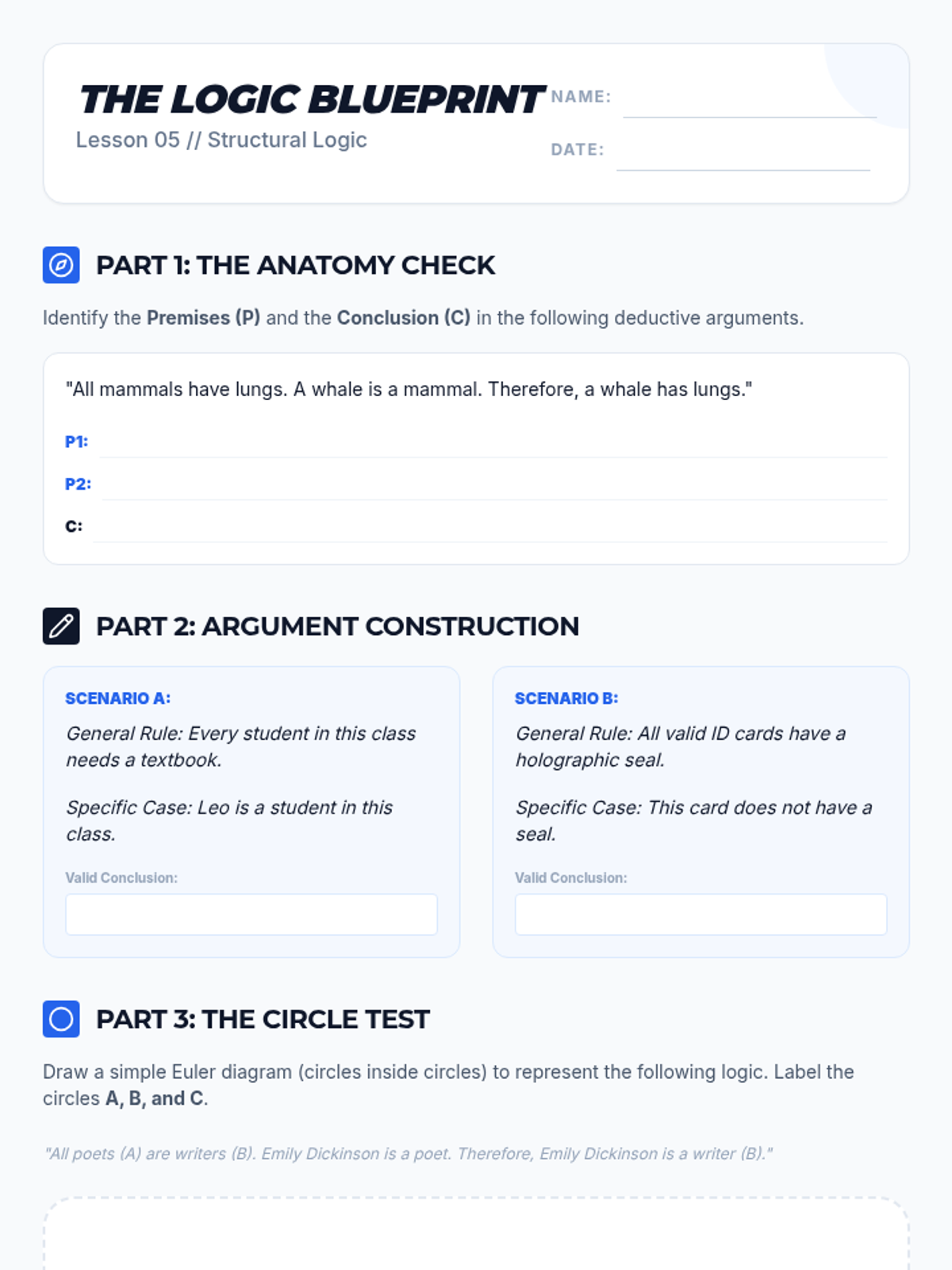
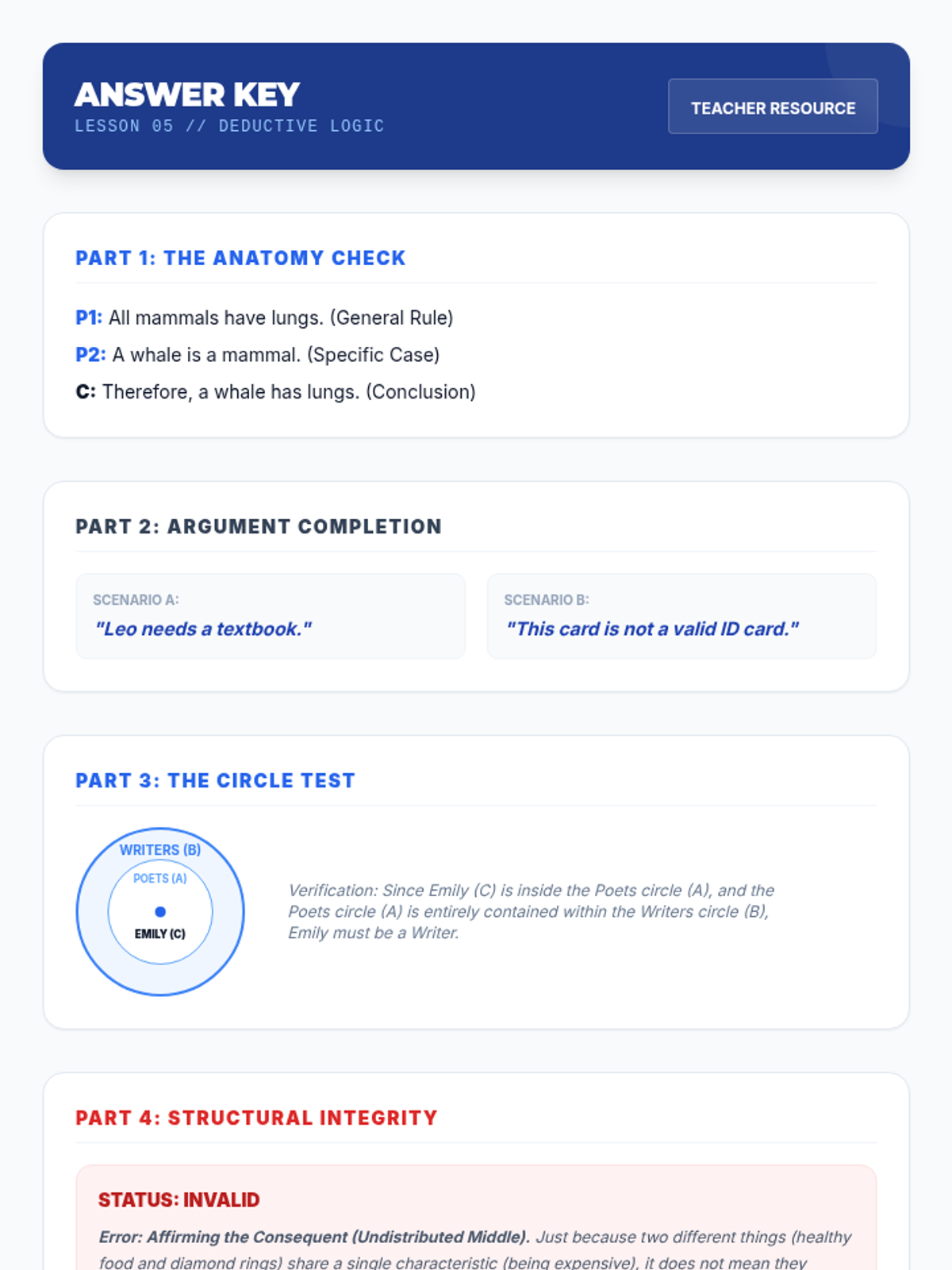
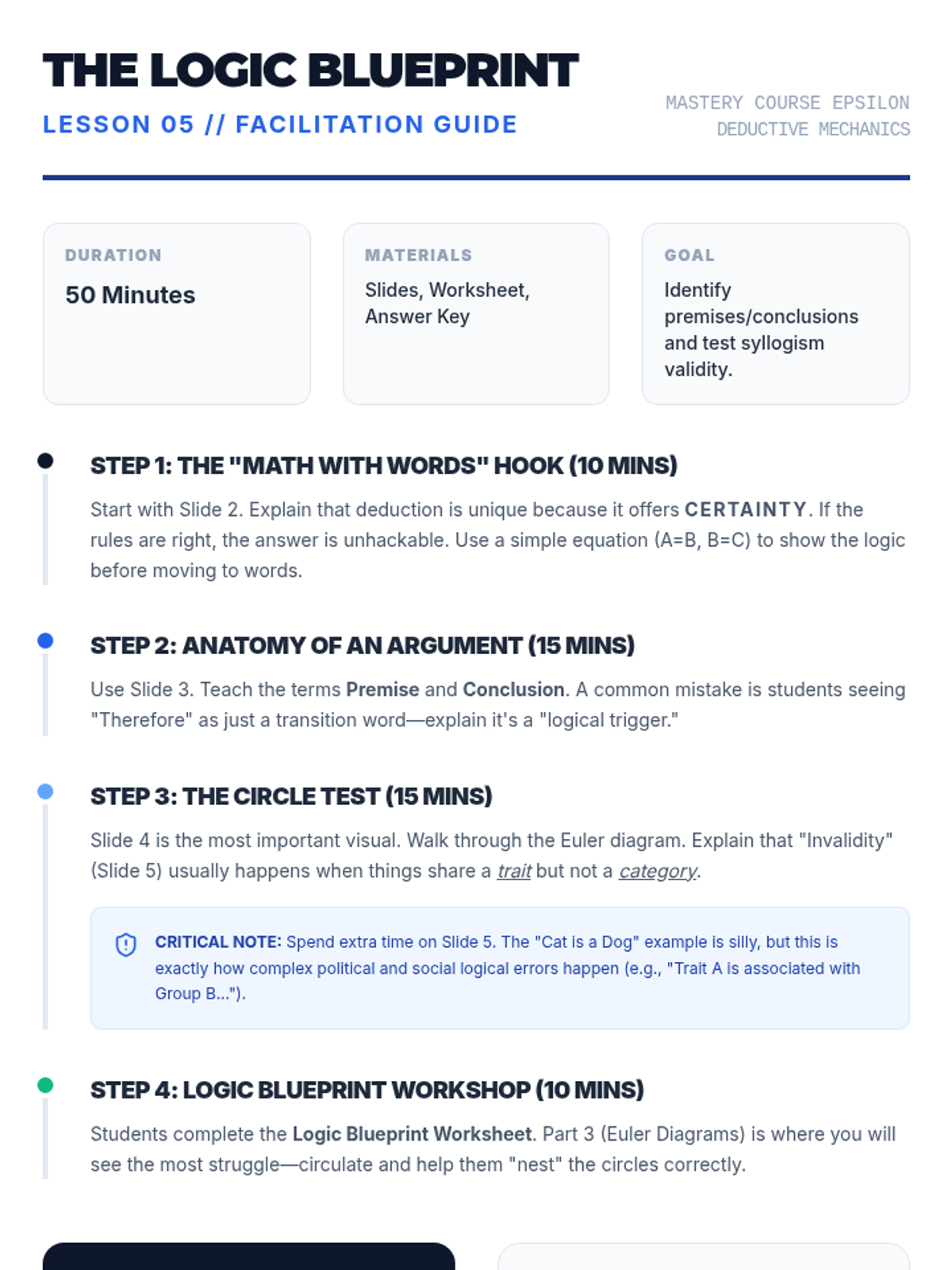
The mechanics of deductive reasoning: identifying premises and conclusions, and assessing the overall structure of a formal argument.
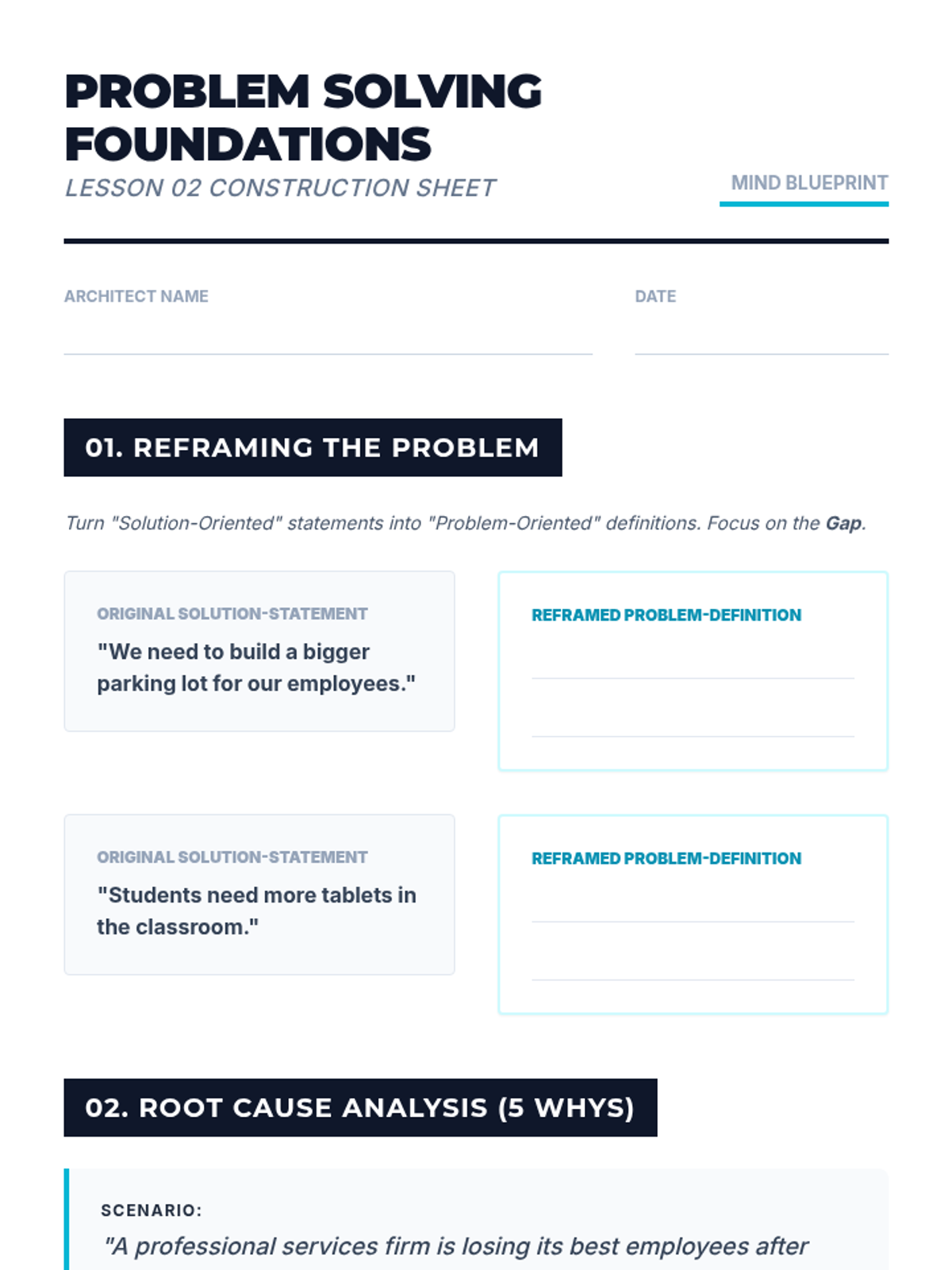
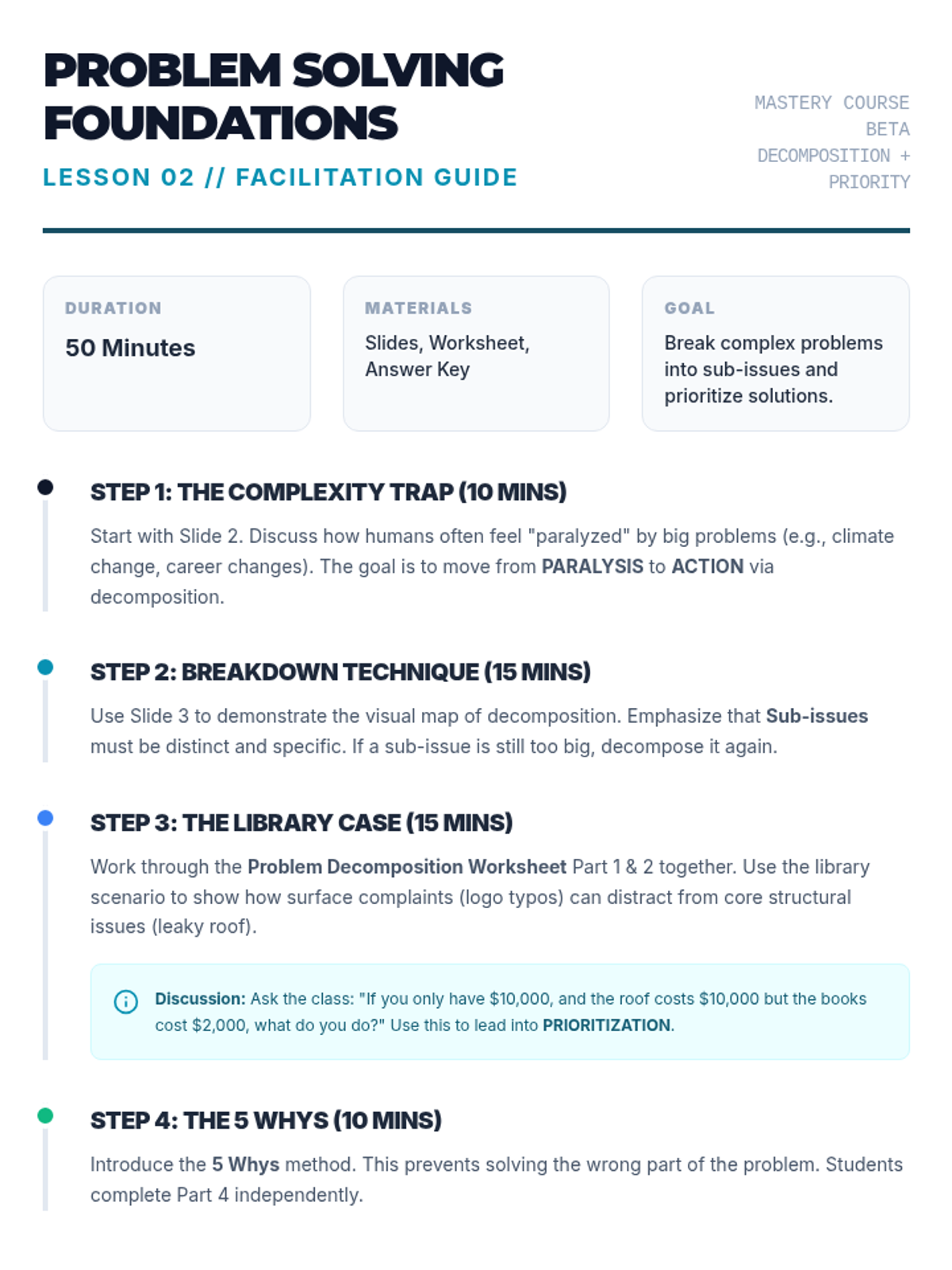
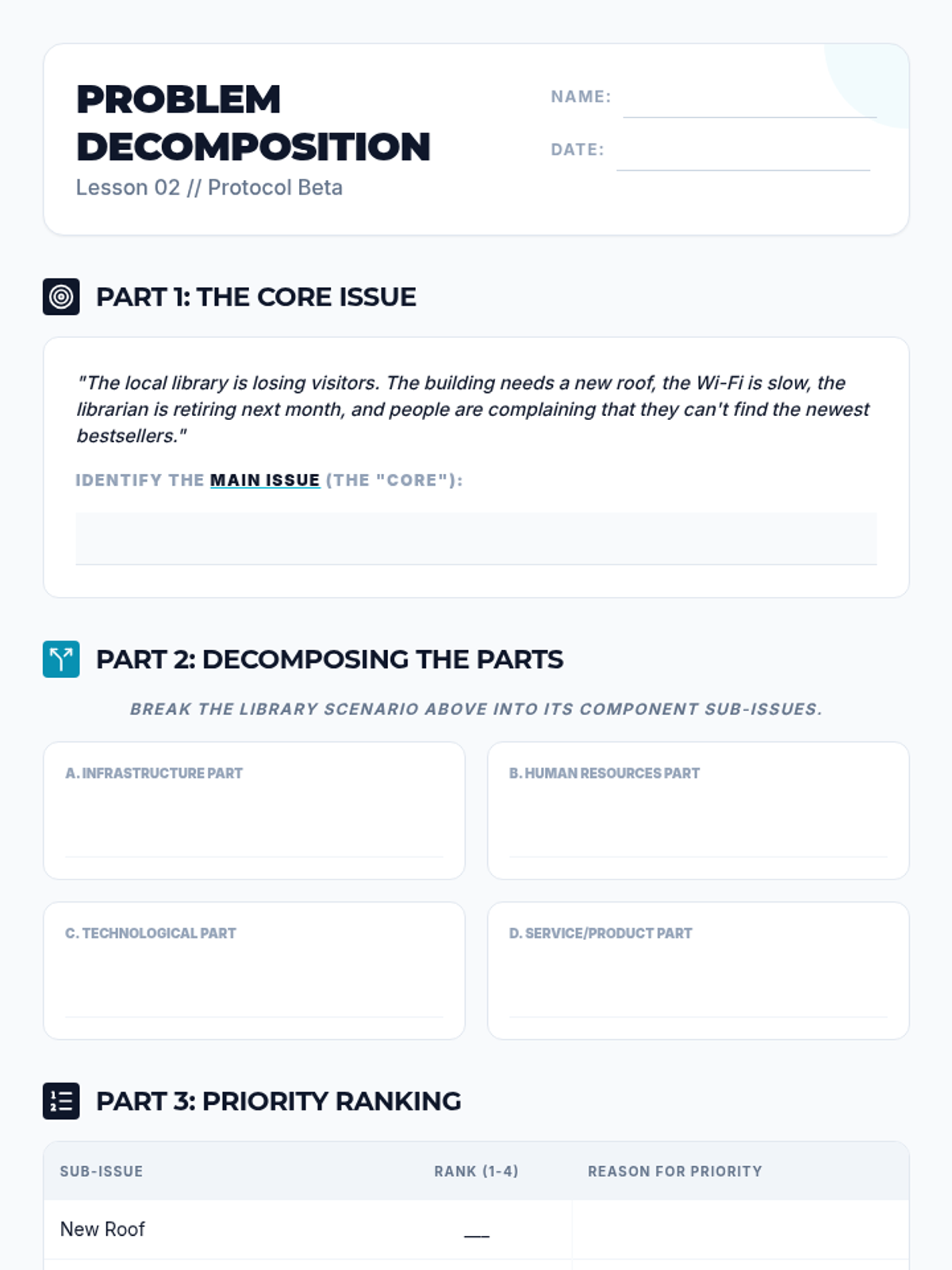
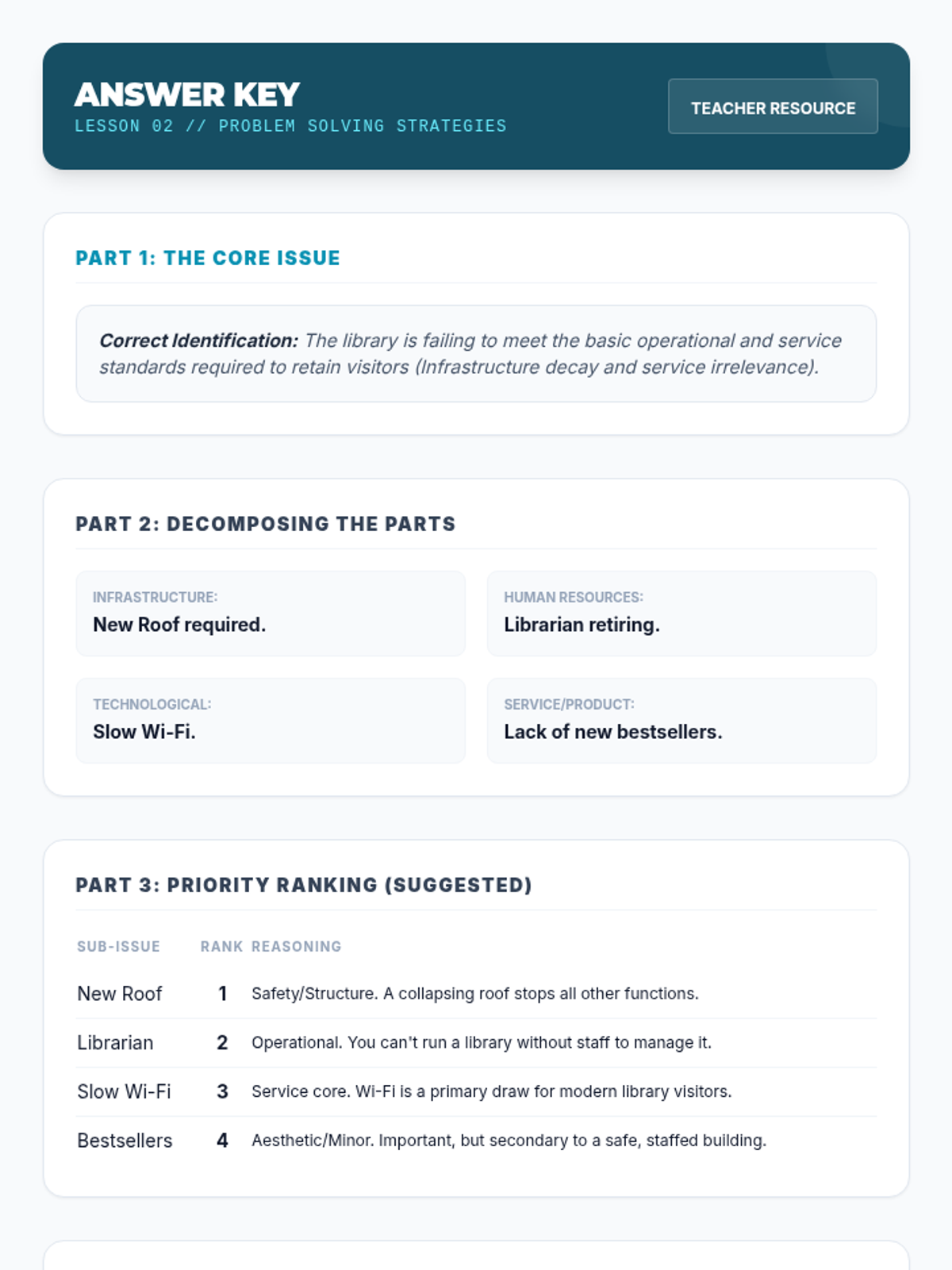
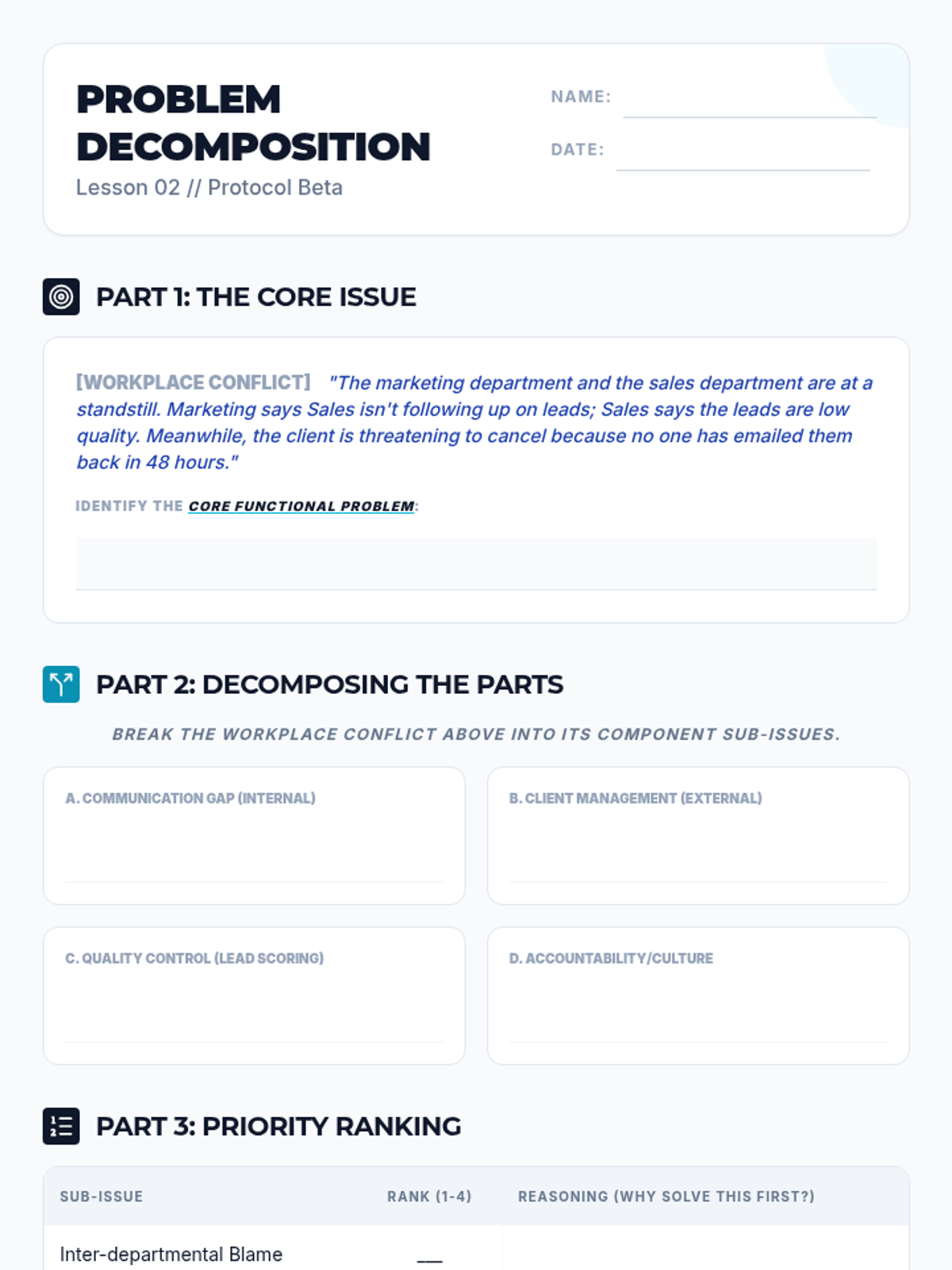
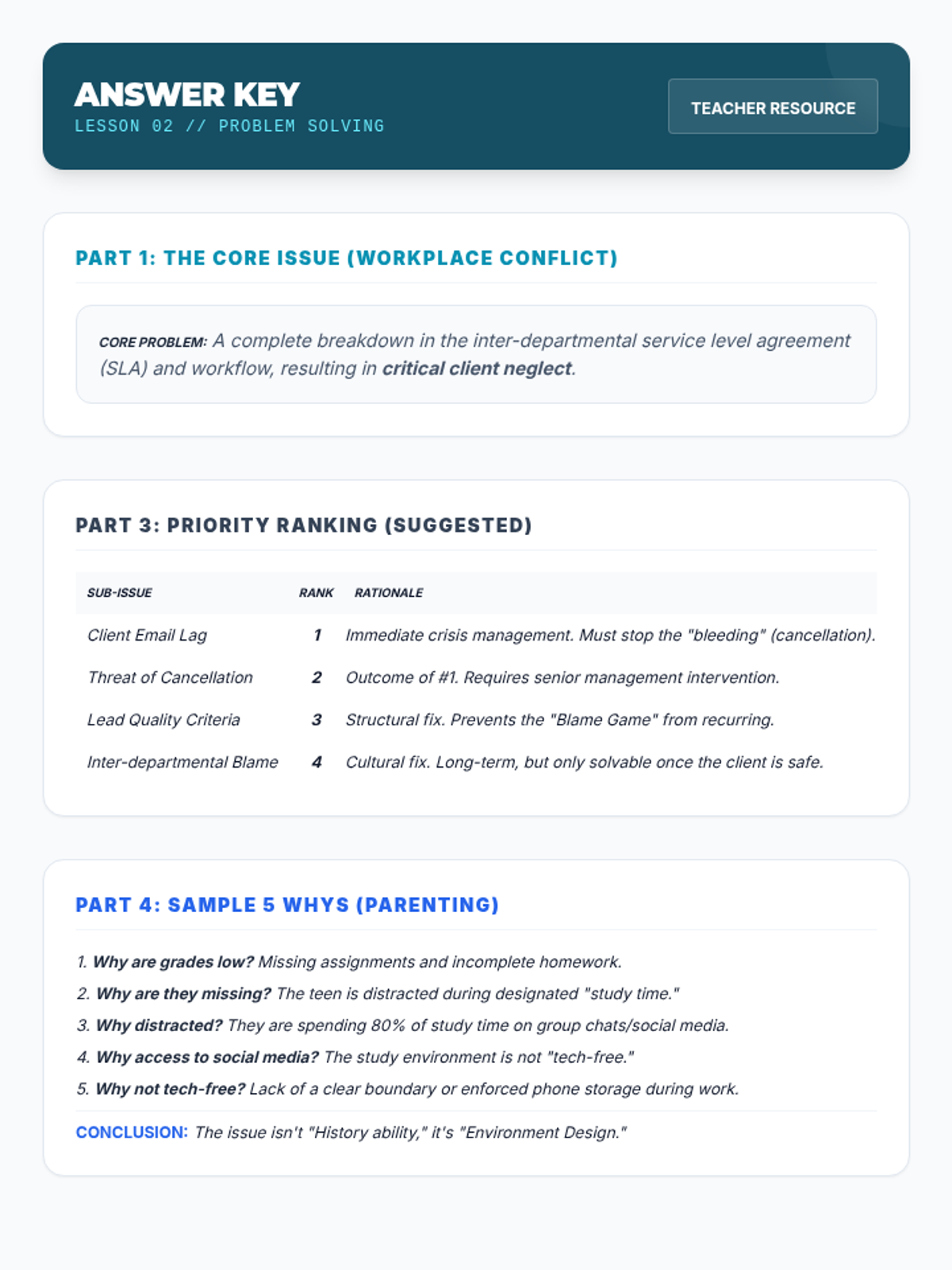
Focuses on identifying the core issues of complex problems, breaking them into manageable parts, and prioritizing components for effective resolution.
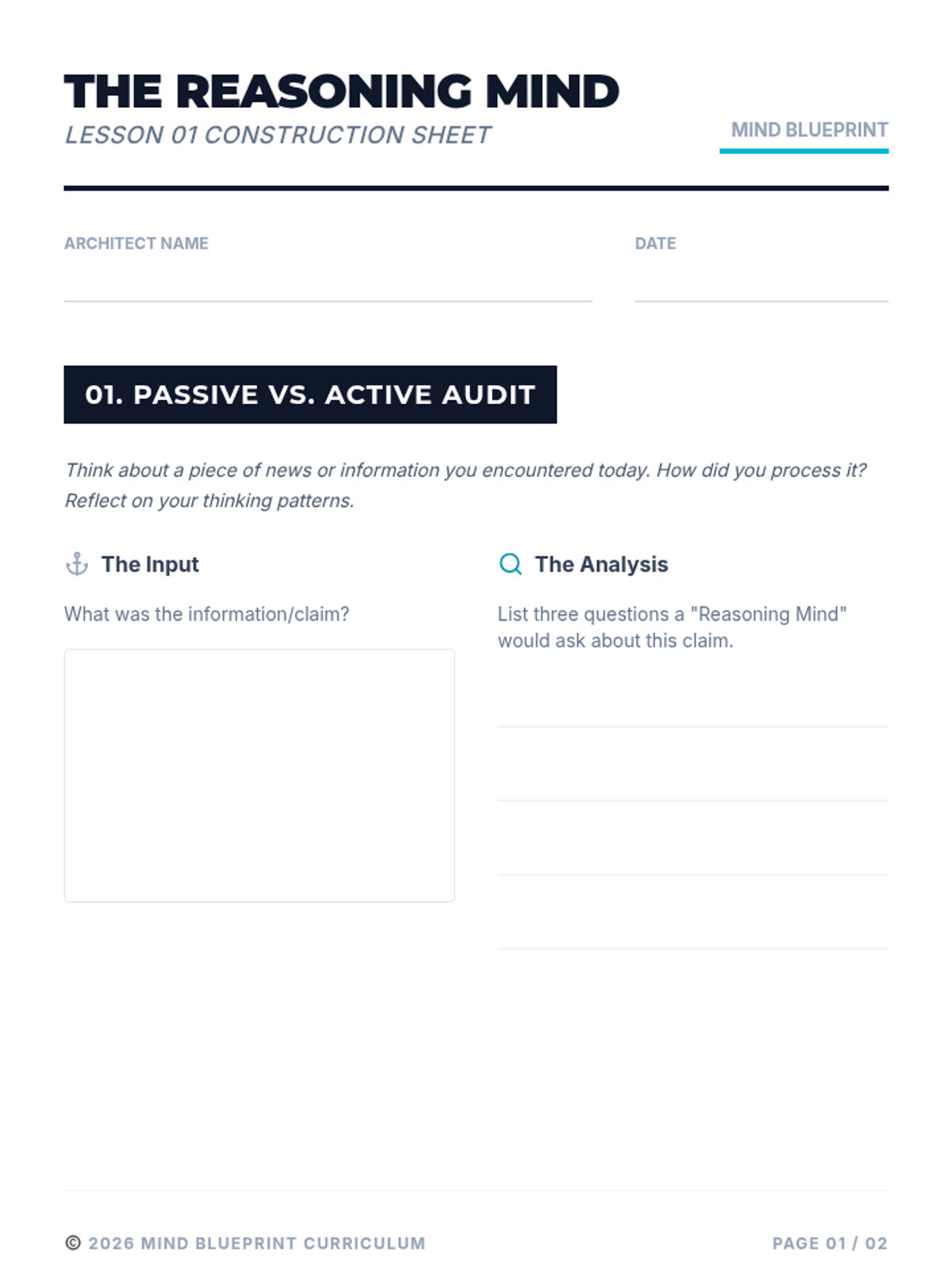
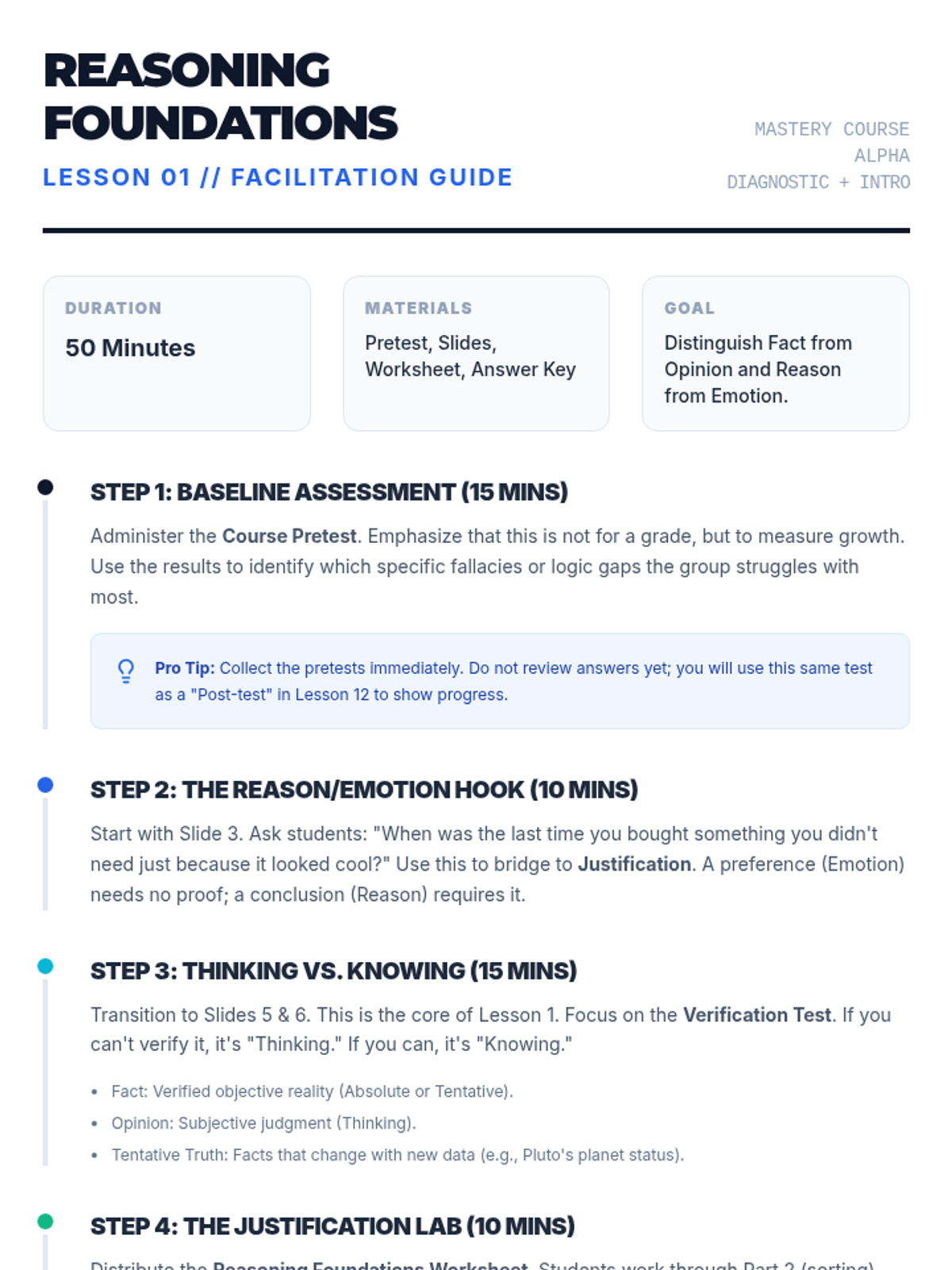
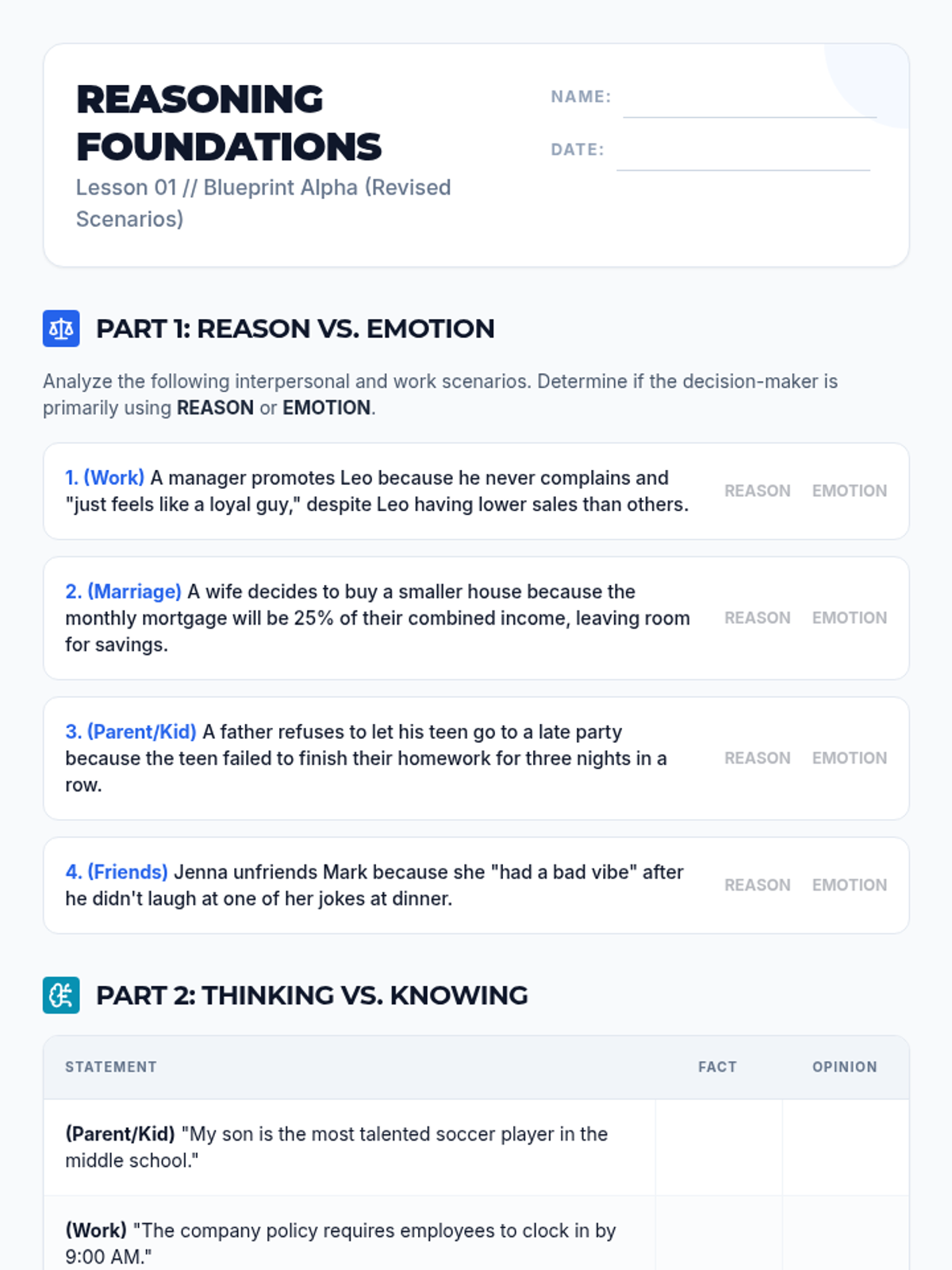
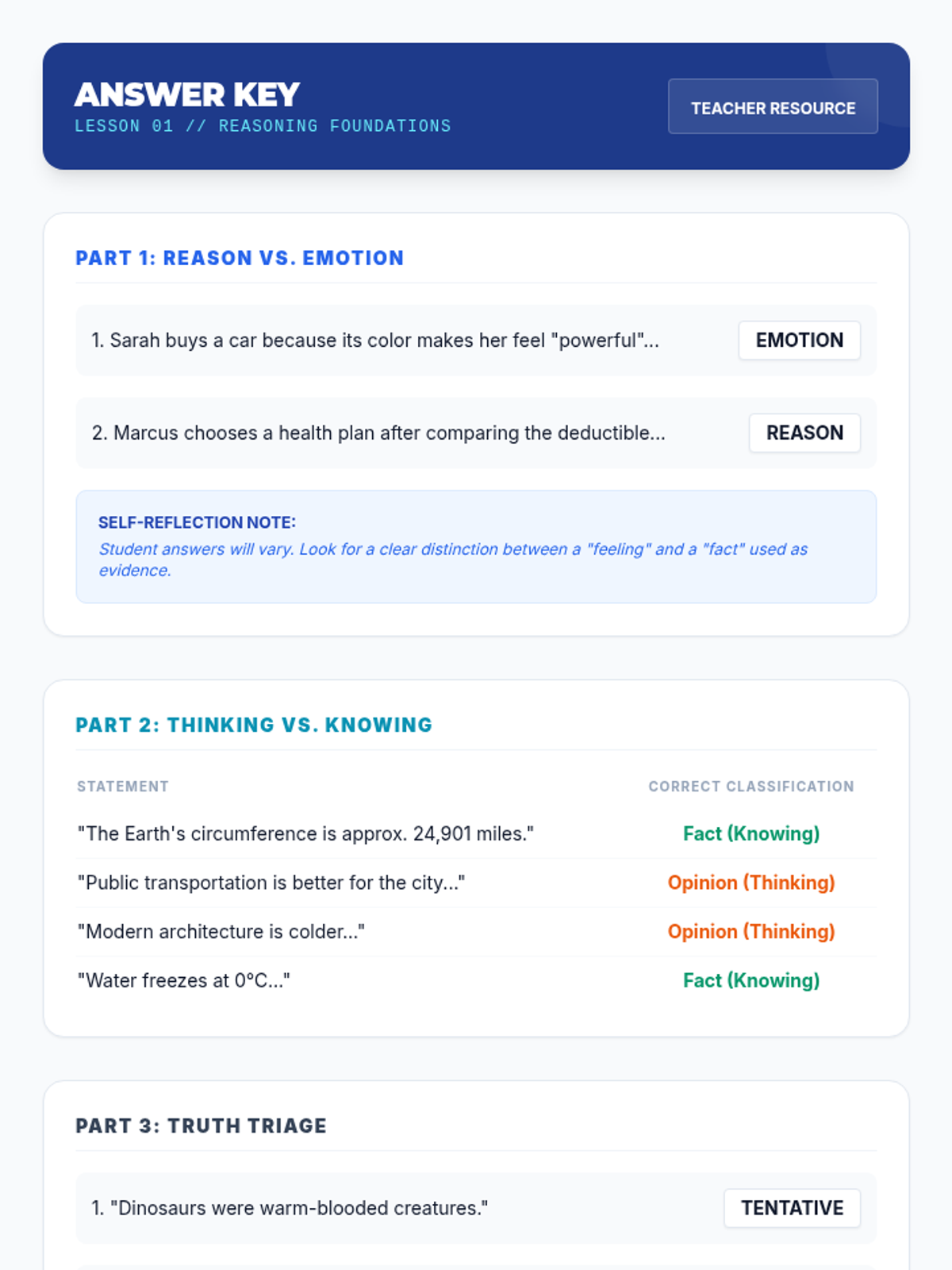
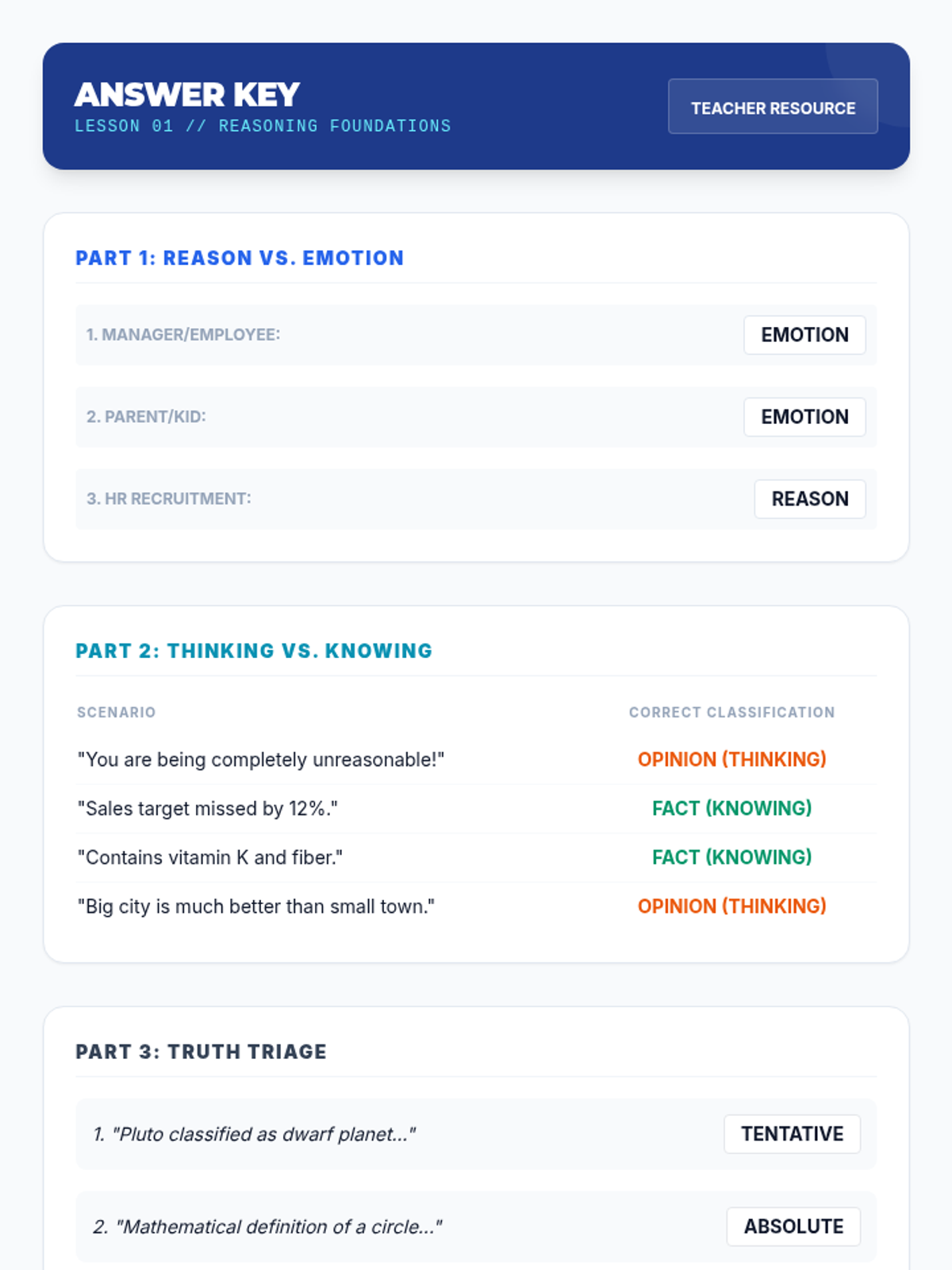
Establishes the foundation of critical thinking by distinguishing between reason and emotion, and fact versus opinion (thinking vs. knowing). Includes the course Pretest.
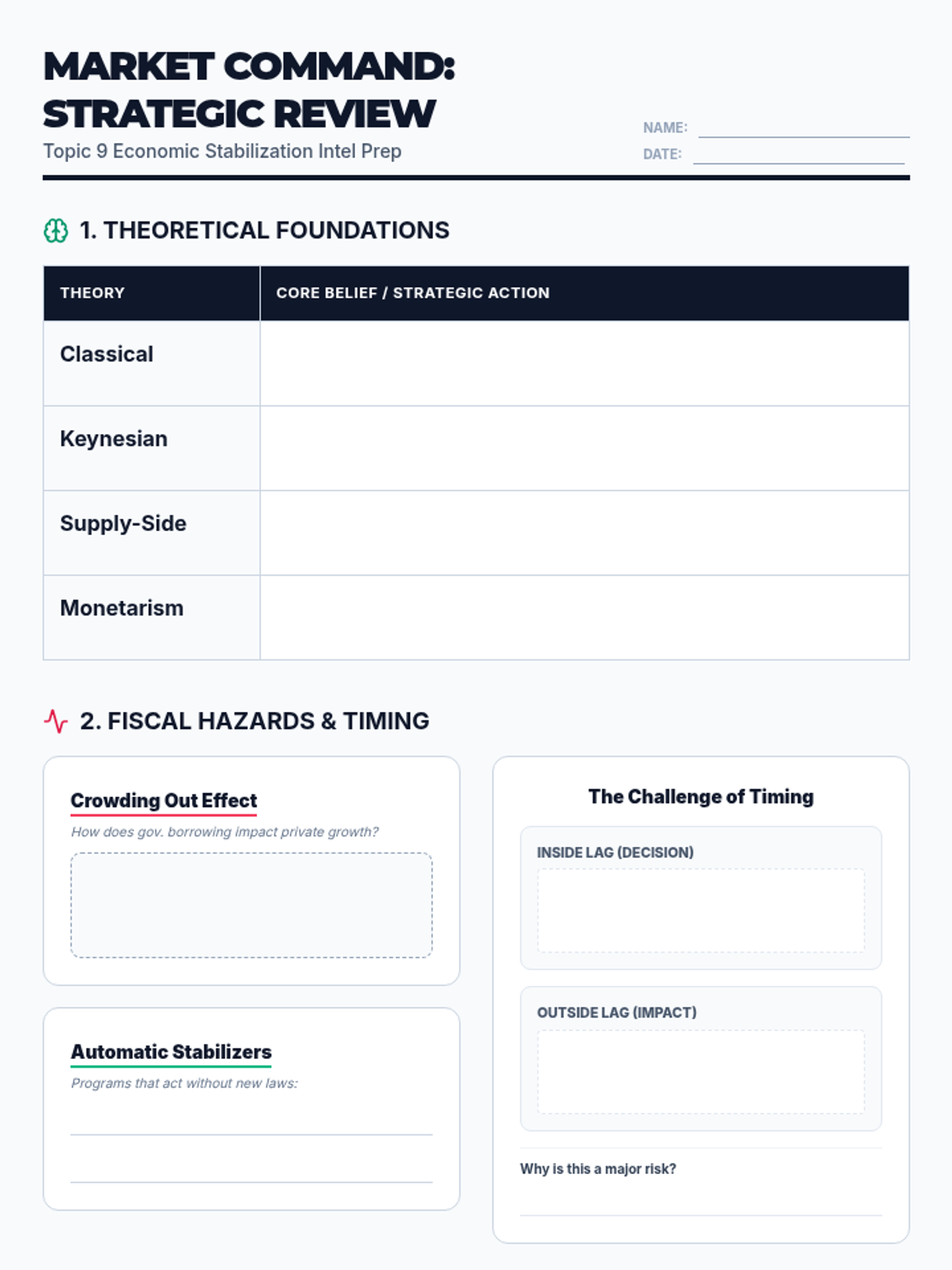
A comprehensive 35-minute review session for Topic 9, covering economic theories, fiscal policy nuances like crowding out and lags, and a deep dive into the Federal Reserve's monetary tools to prepare students for their exam.
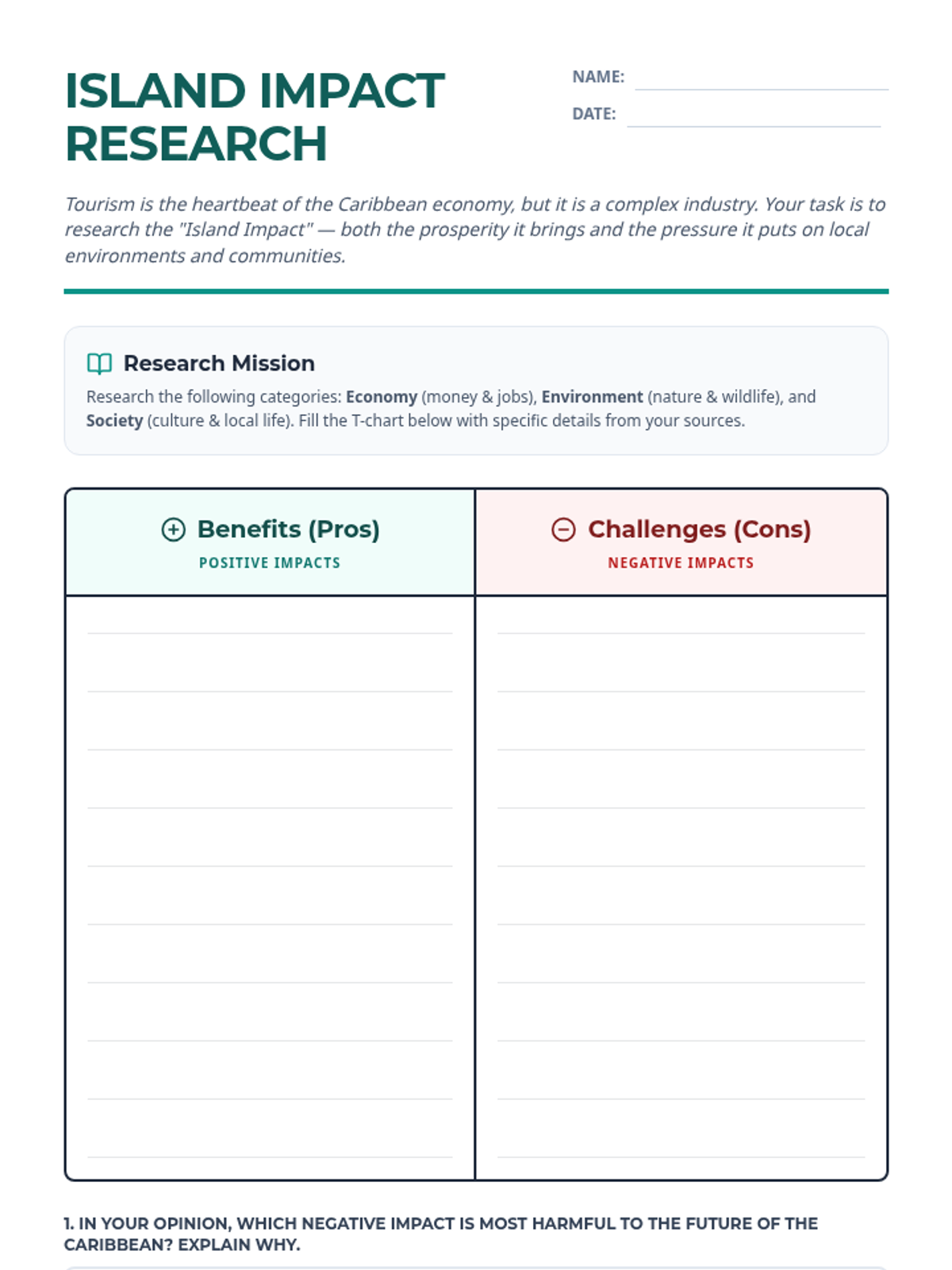
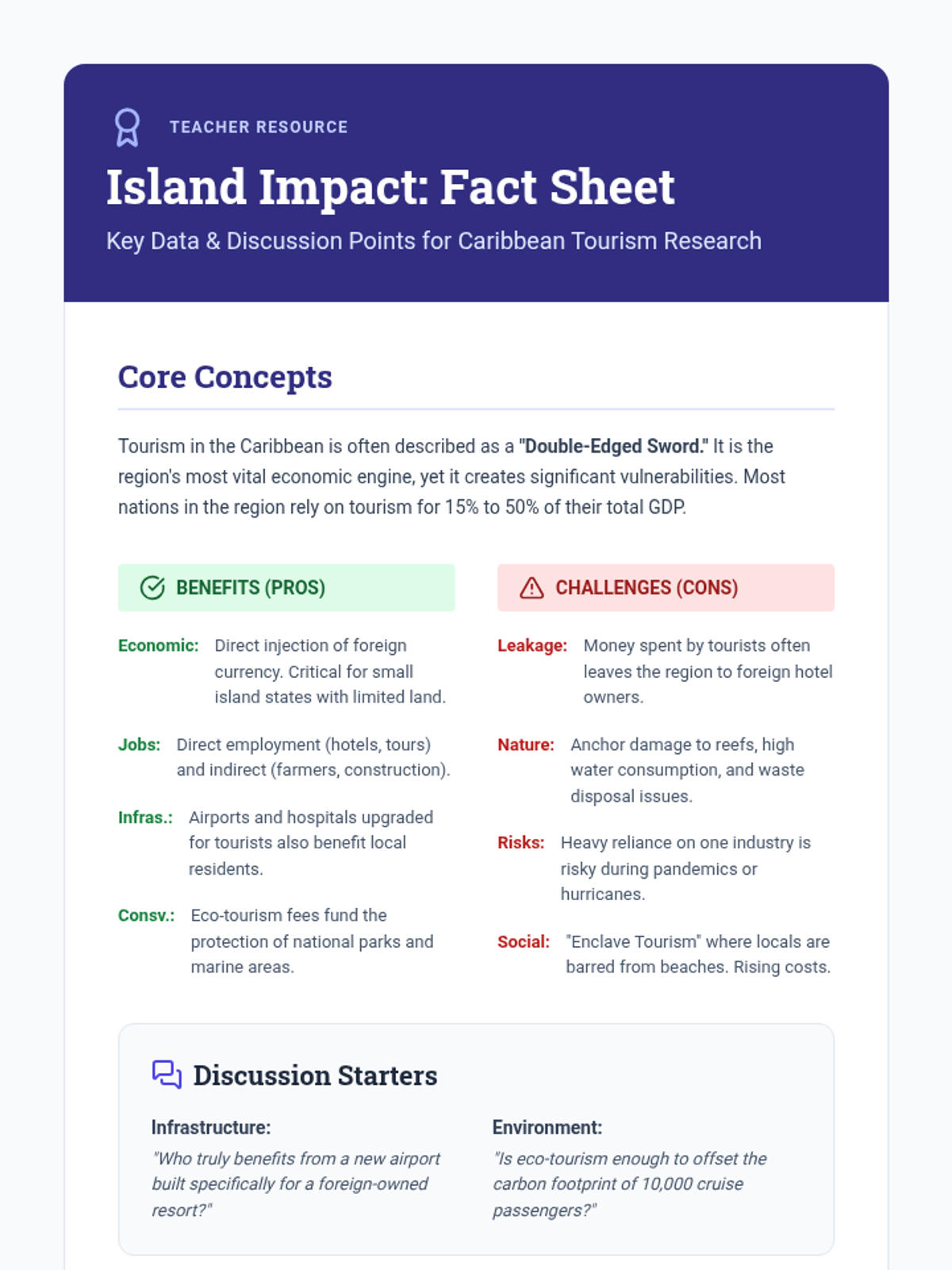
A research-based lesson exploring the complex economic, environmental, and social impacts of tourism in the Caribbean region. Students will investigate both the vital benefits and the significant challenges posed by the tourism industry.
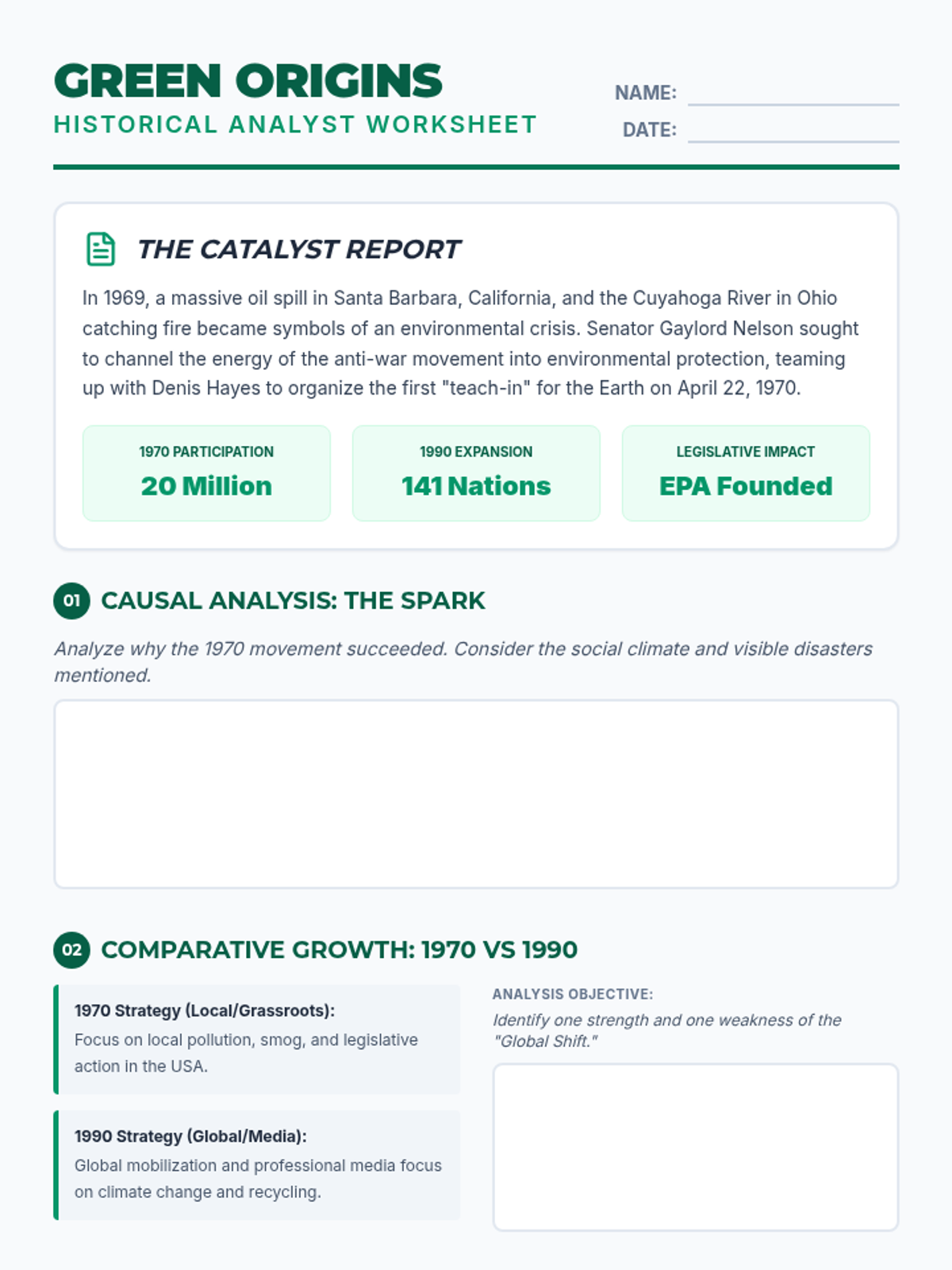
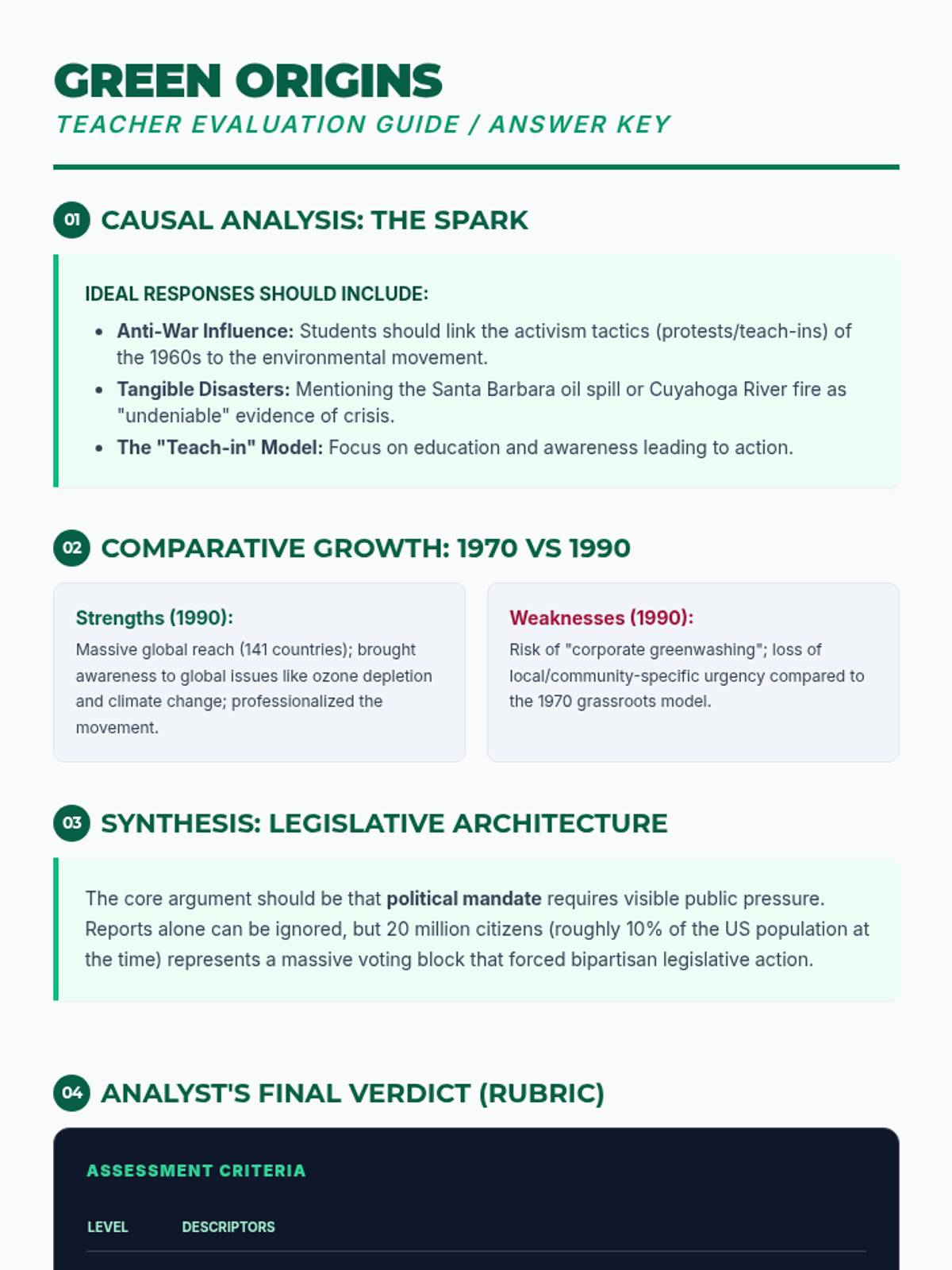
A lesson exploring the socio-political origins of Earth Day, focusing on the 1970 movement and its evolution into a global phenomenon. Students analyze historical catalysts and the impact of environmental advocacy.
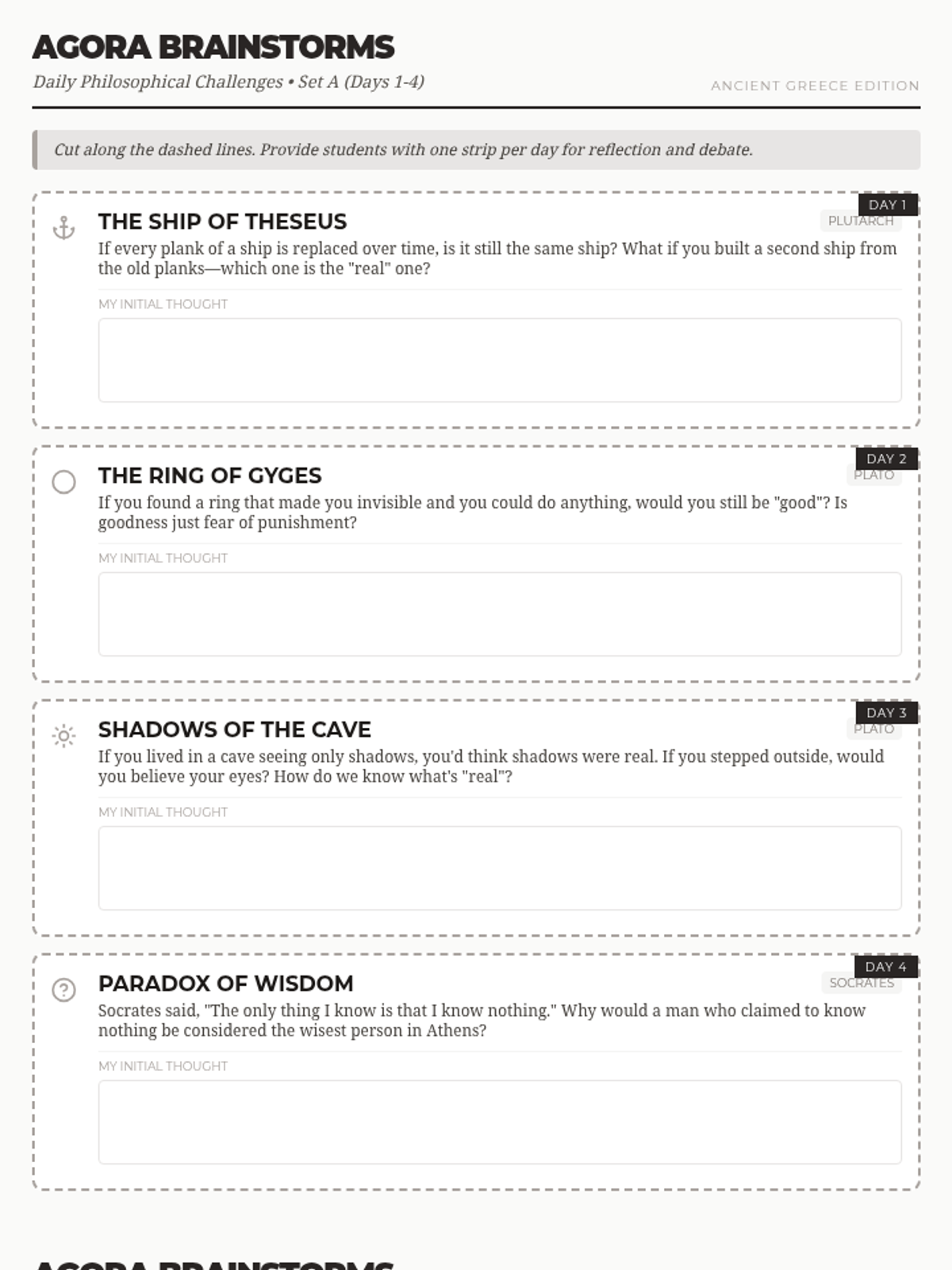
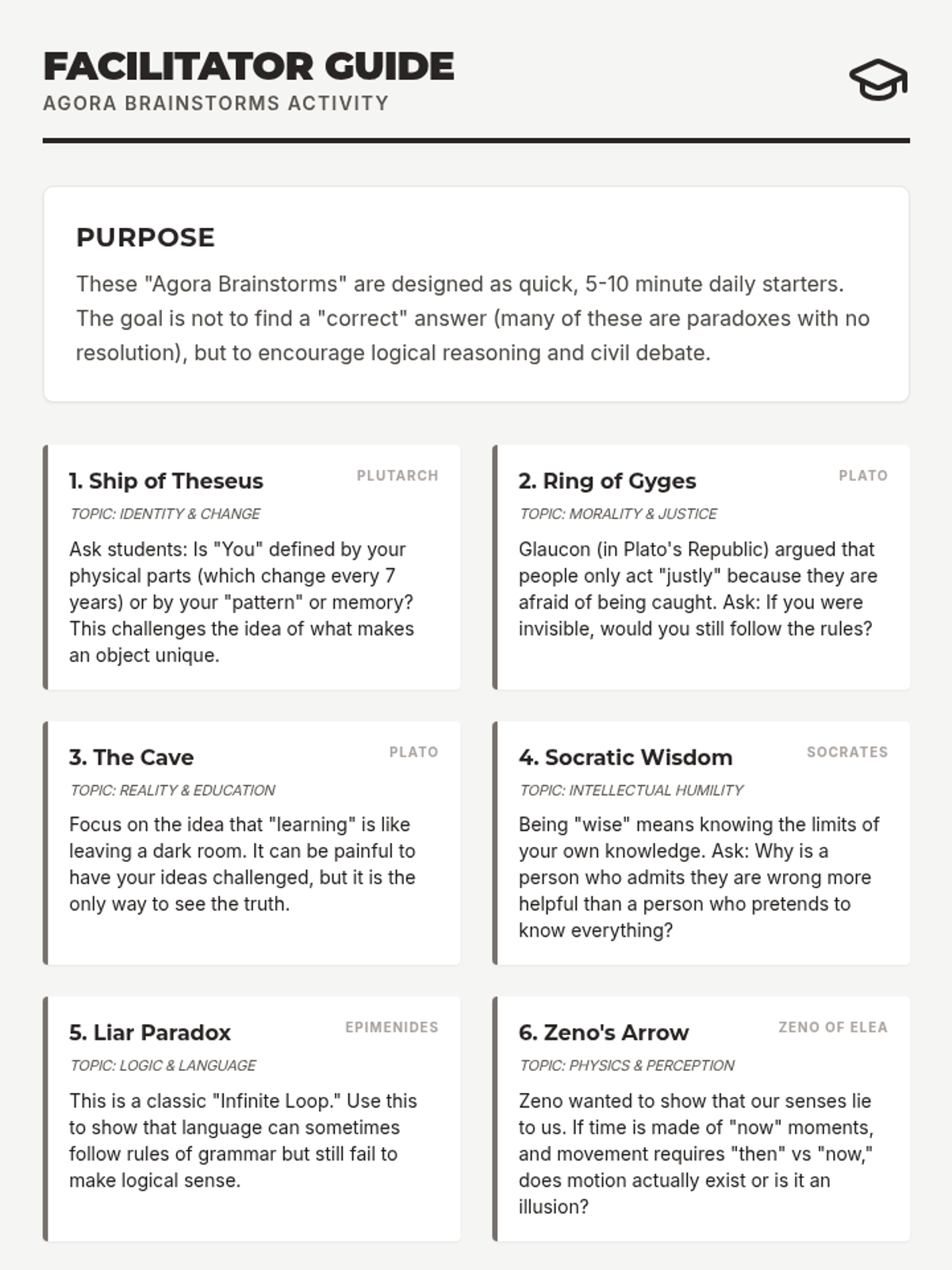
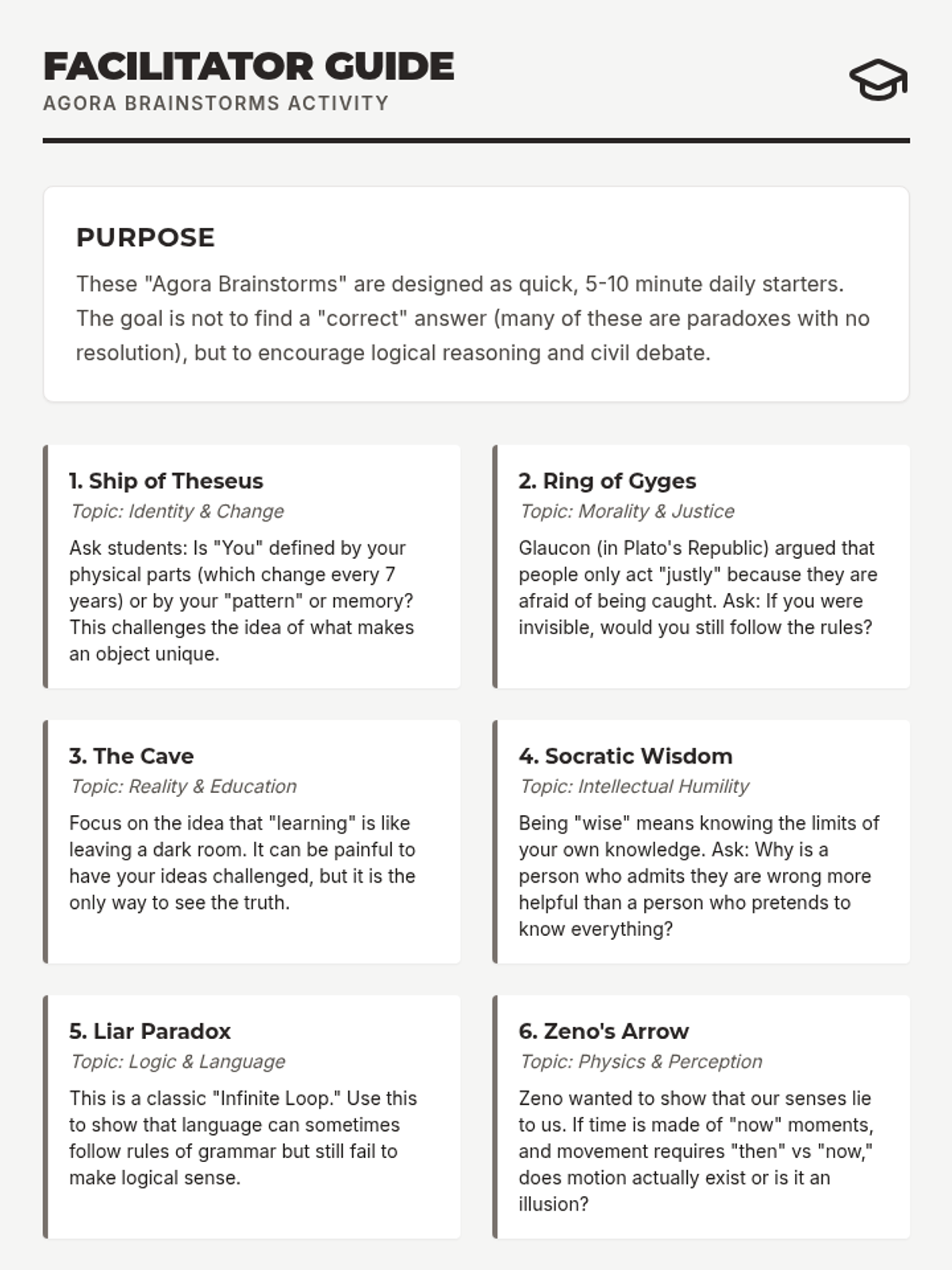
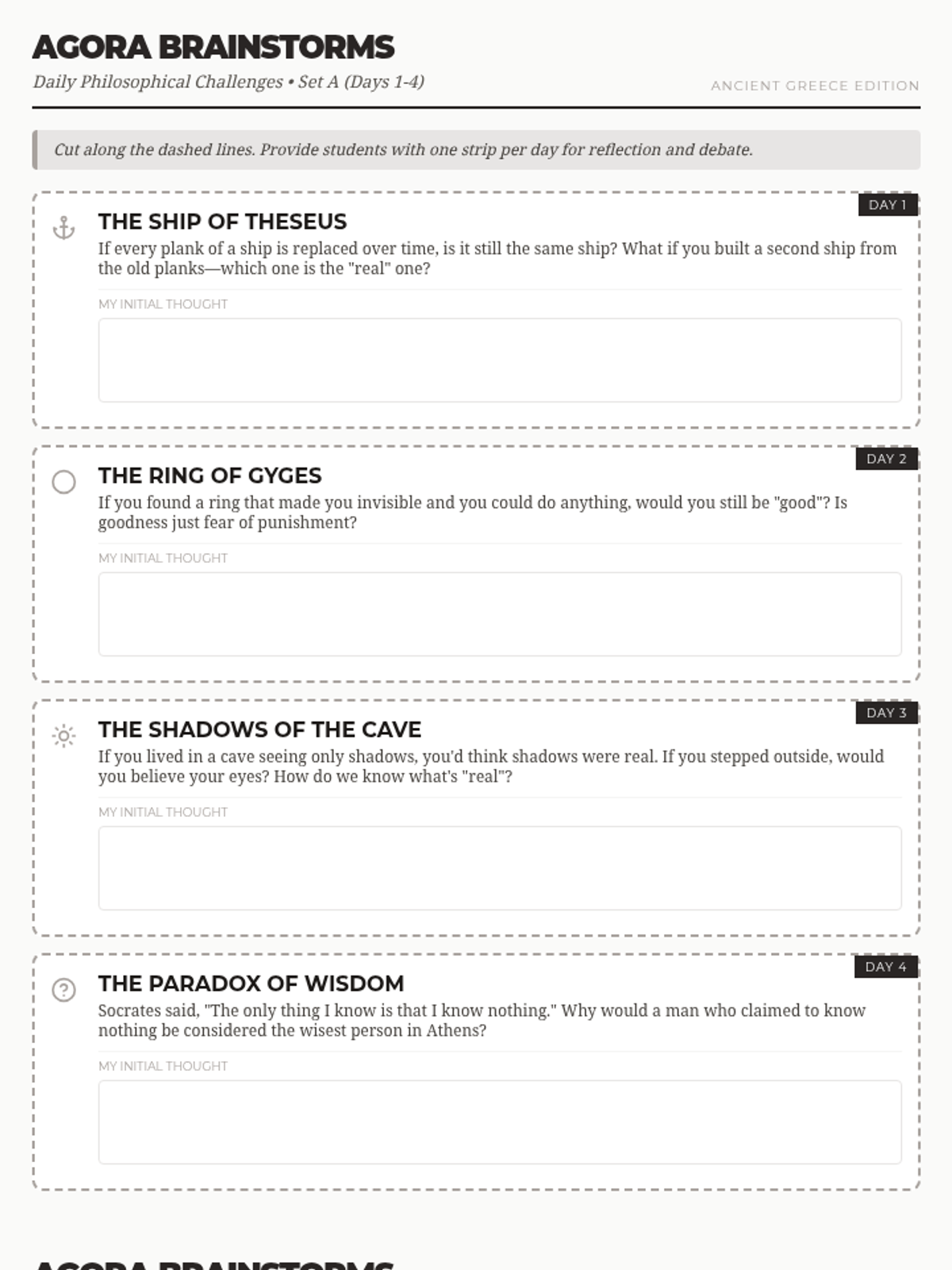
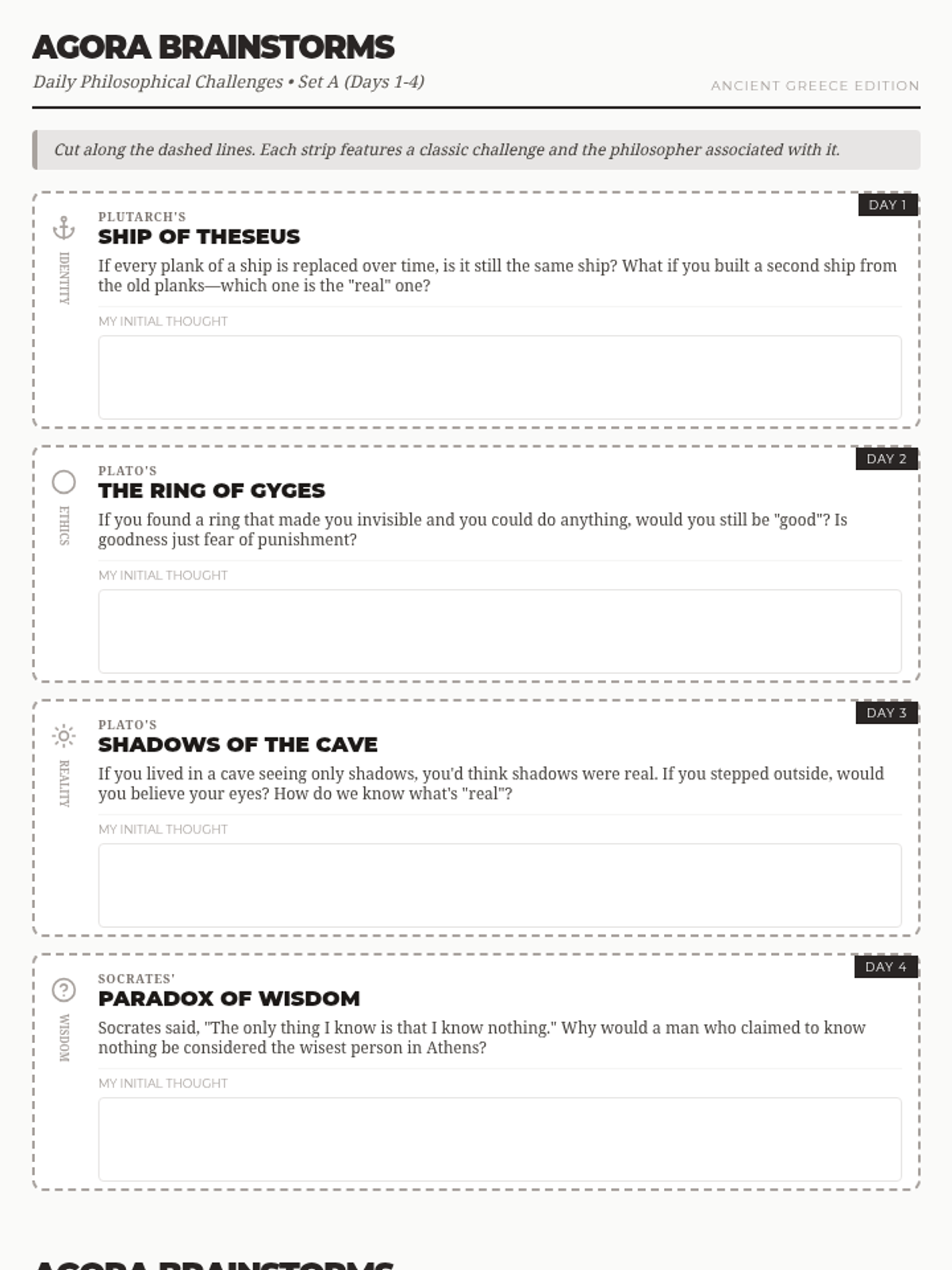
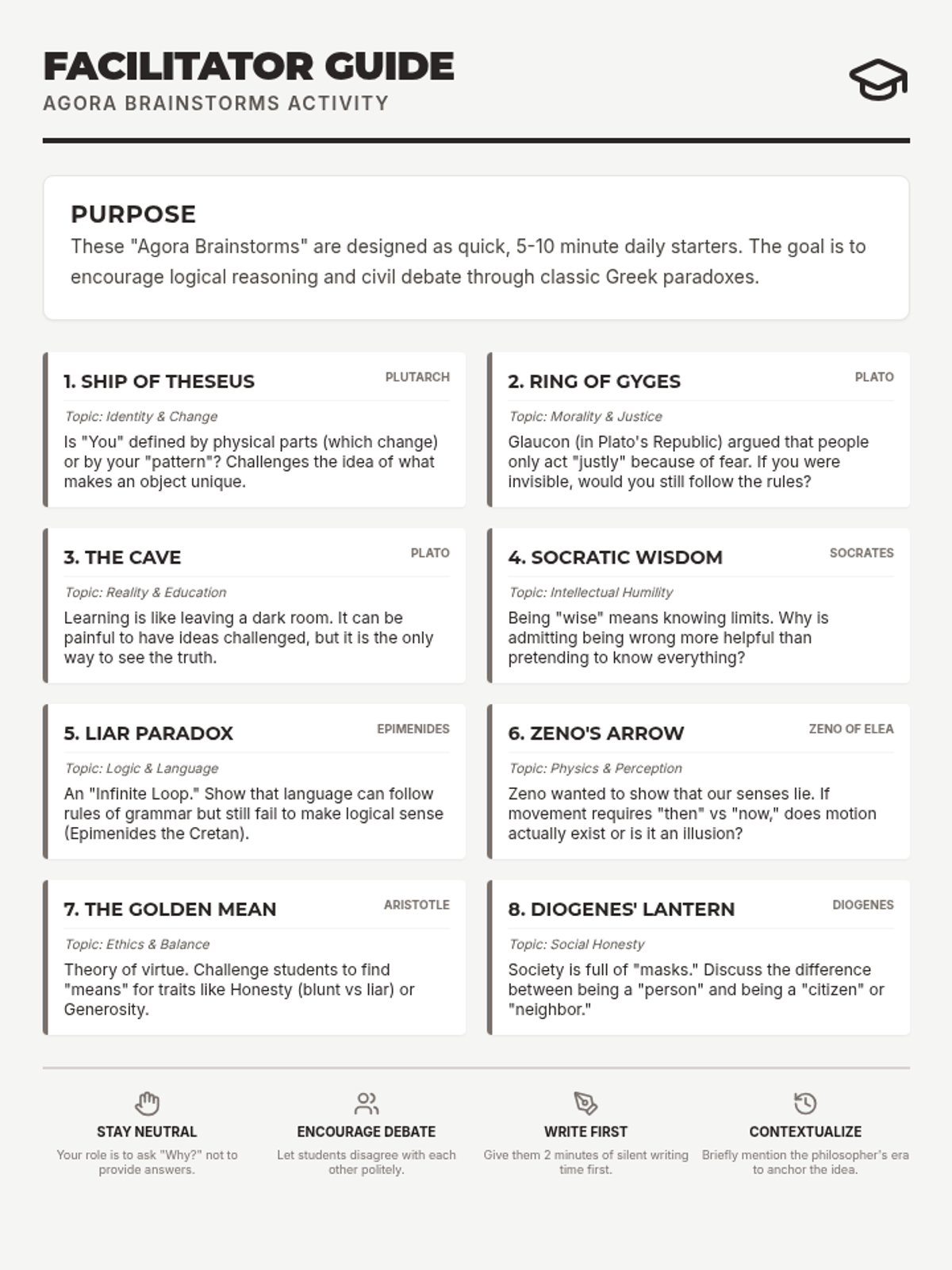
A series of daily philosophical challenges inspired by Ancient Greek paradoxes and thought experiments, designed to spark critical thinking and classroom debate.
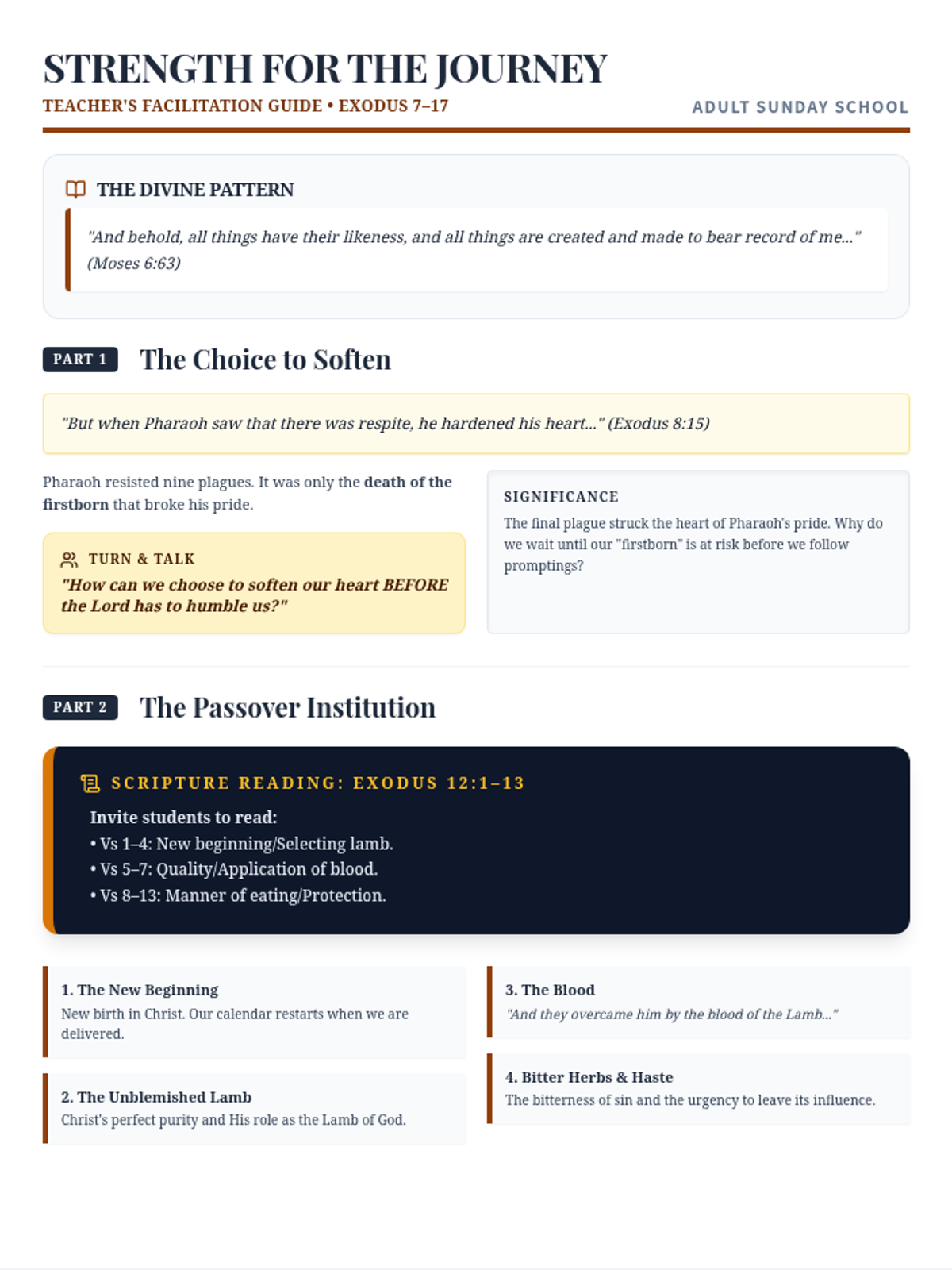
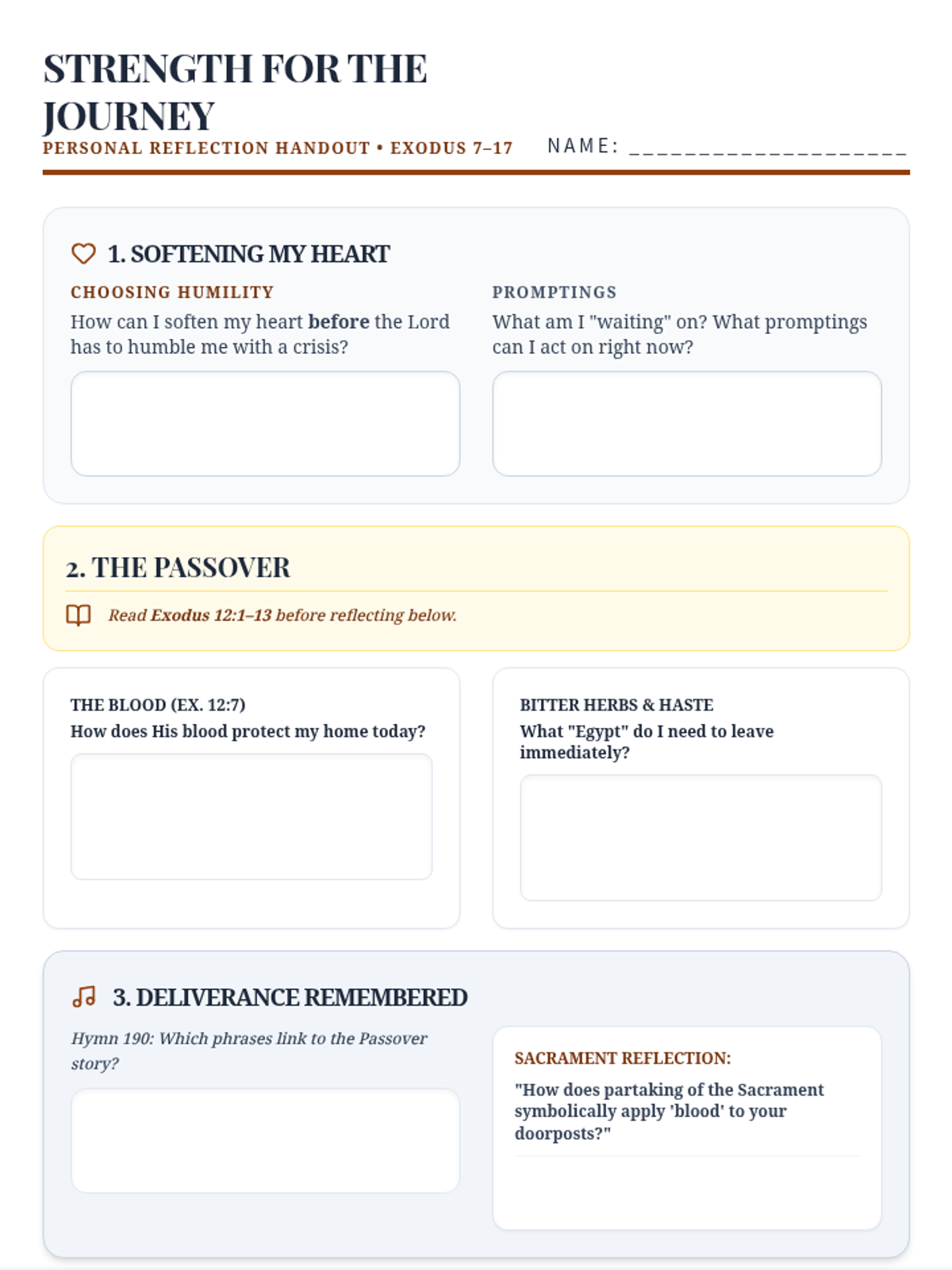
A 45-minute lesson for adult Sunday School focusing on Exodus 7-17. It explores Pharaoh's pride, the Passover as a type of Christ, and the concept of daily spiritual bread through the miracle of manna.
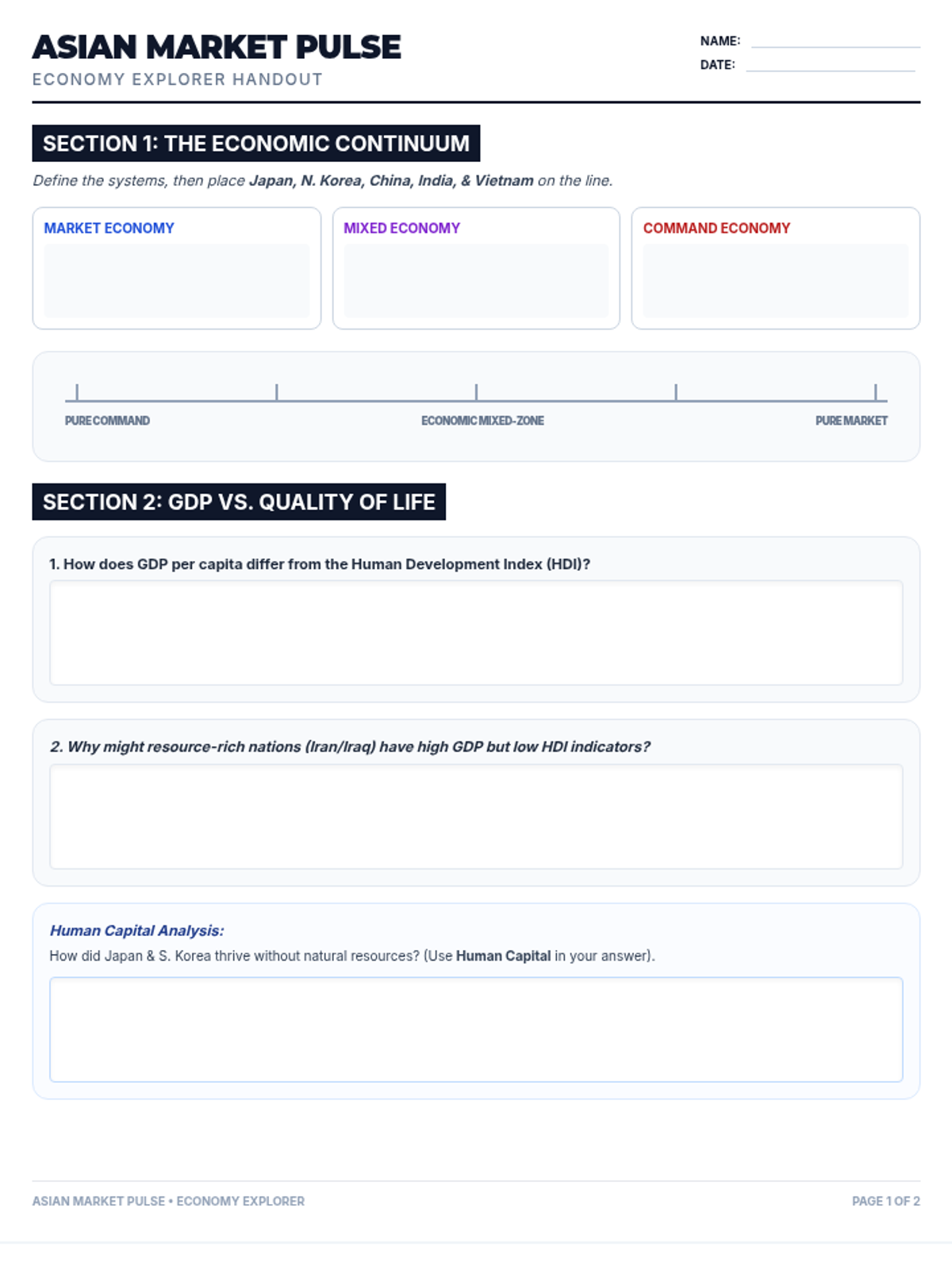
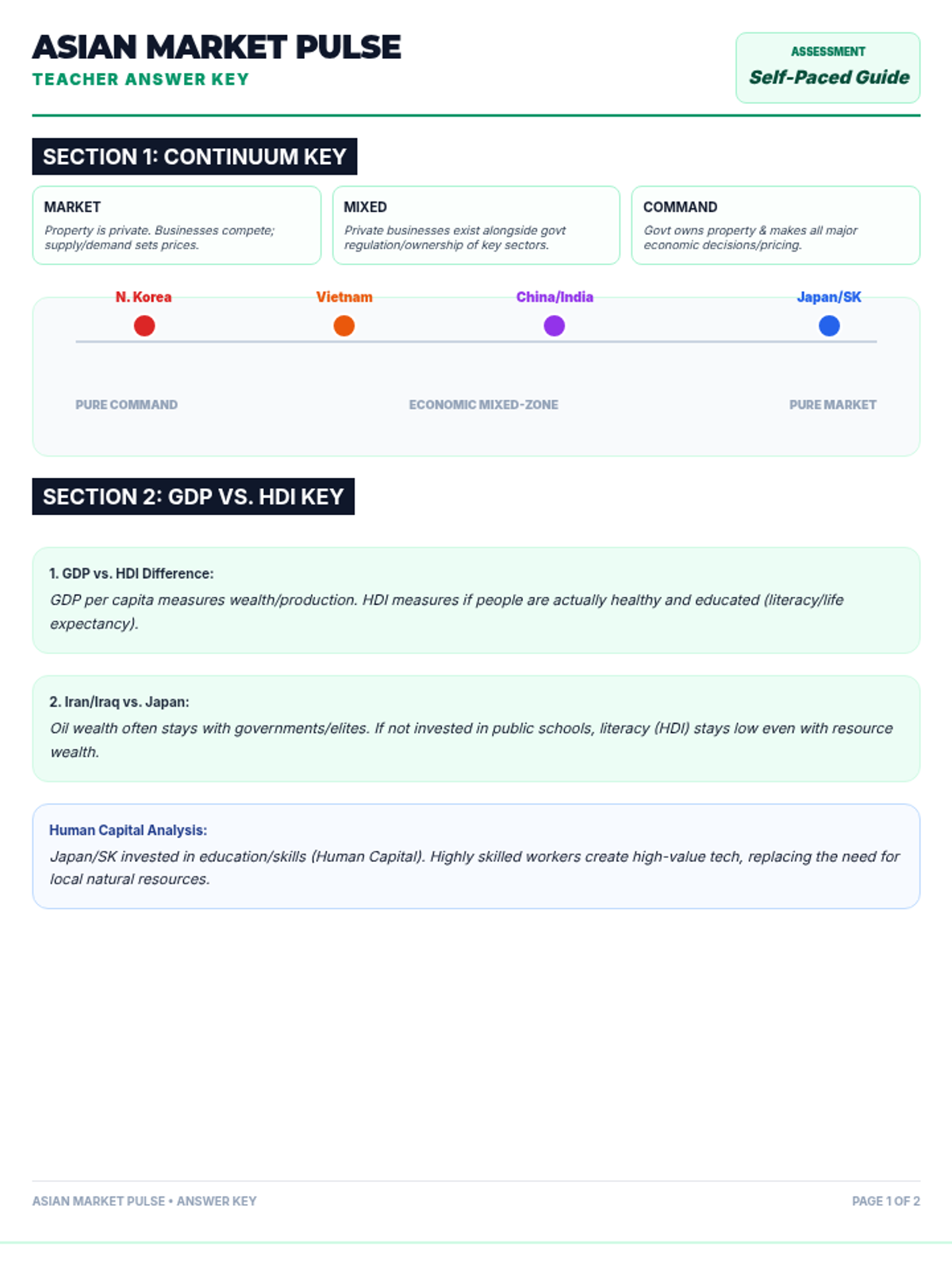
A self-paced study guide exploring the diverse economic landscapes of Asia, focusing on the relationship between economic systems, GDP, and quality of life across major nations.