Students compare a narrative account of a historical event with a quantitative account of the same event, debating which captures the causal mechanism more accurately.

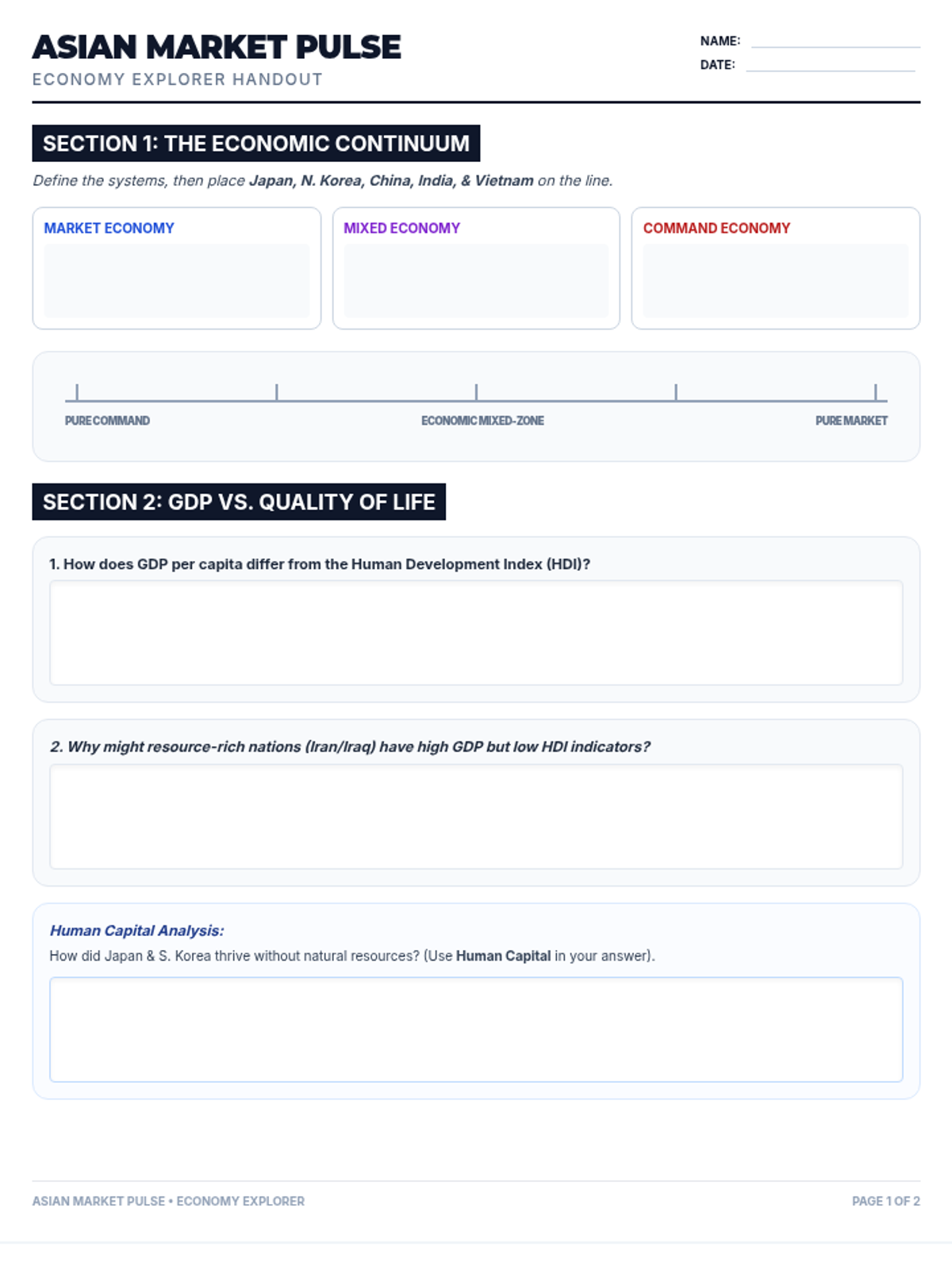
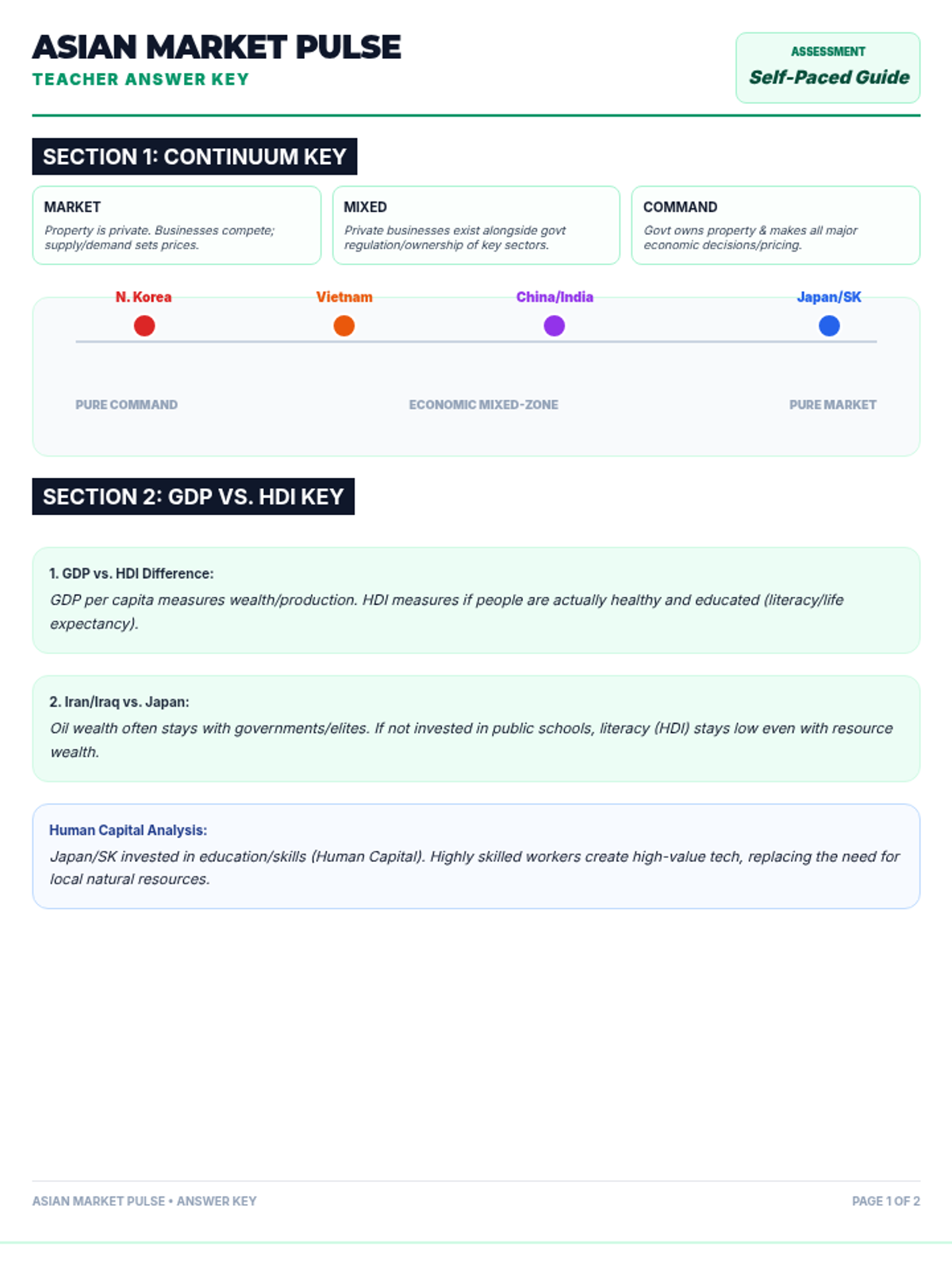
A self-paced study guide exploring the diverse economic landscapes of Asia, focusing on the relationship between economic systems, GDP, and quality of life across major nations.
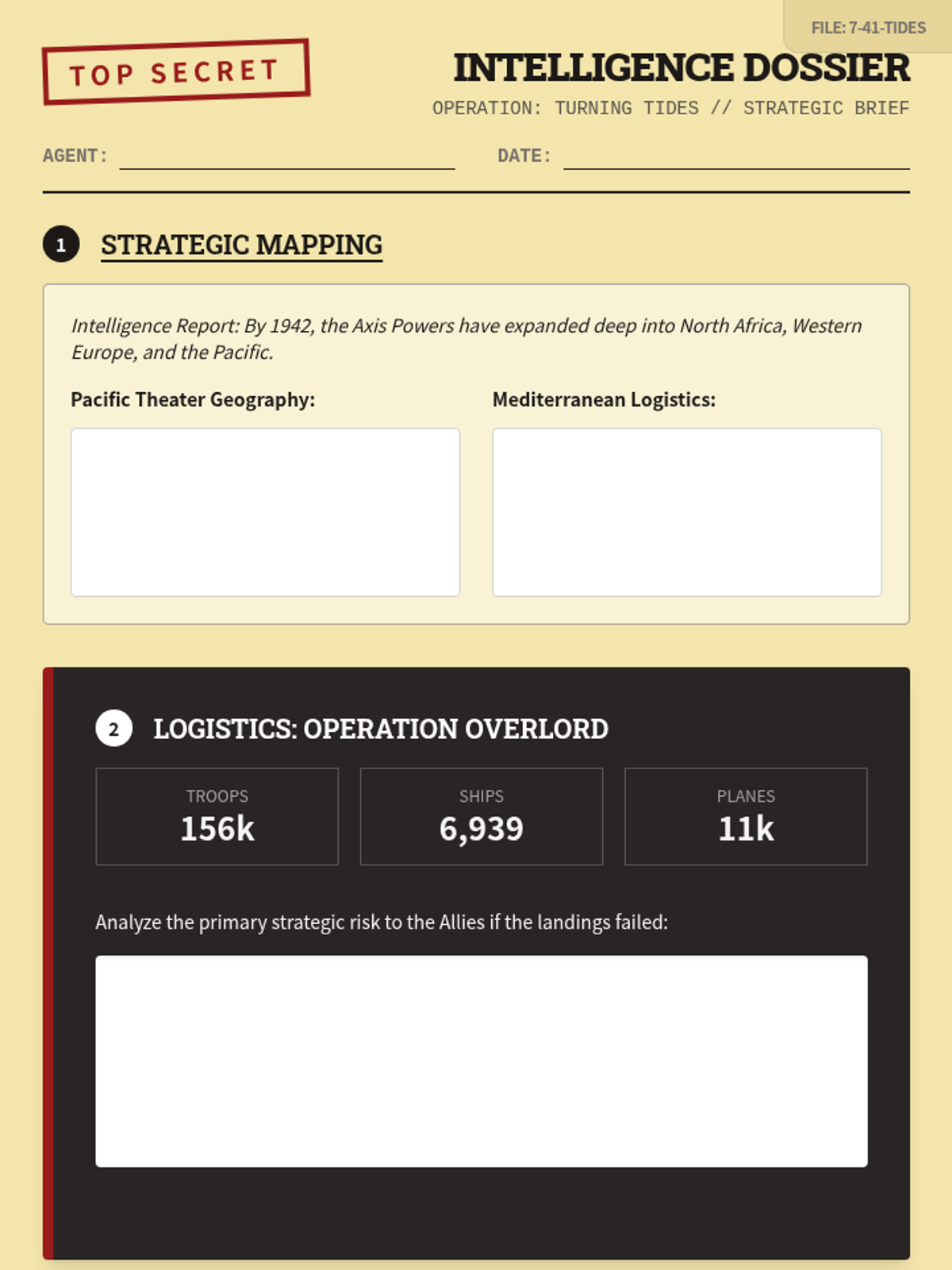
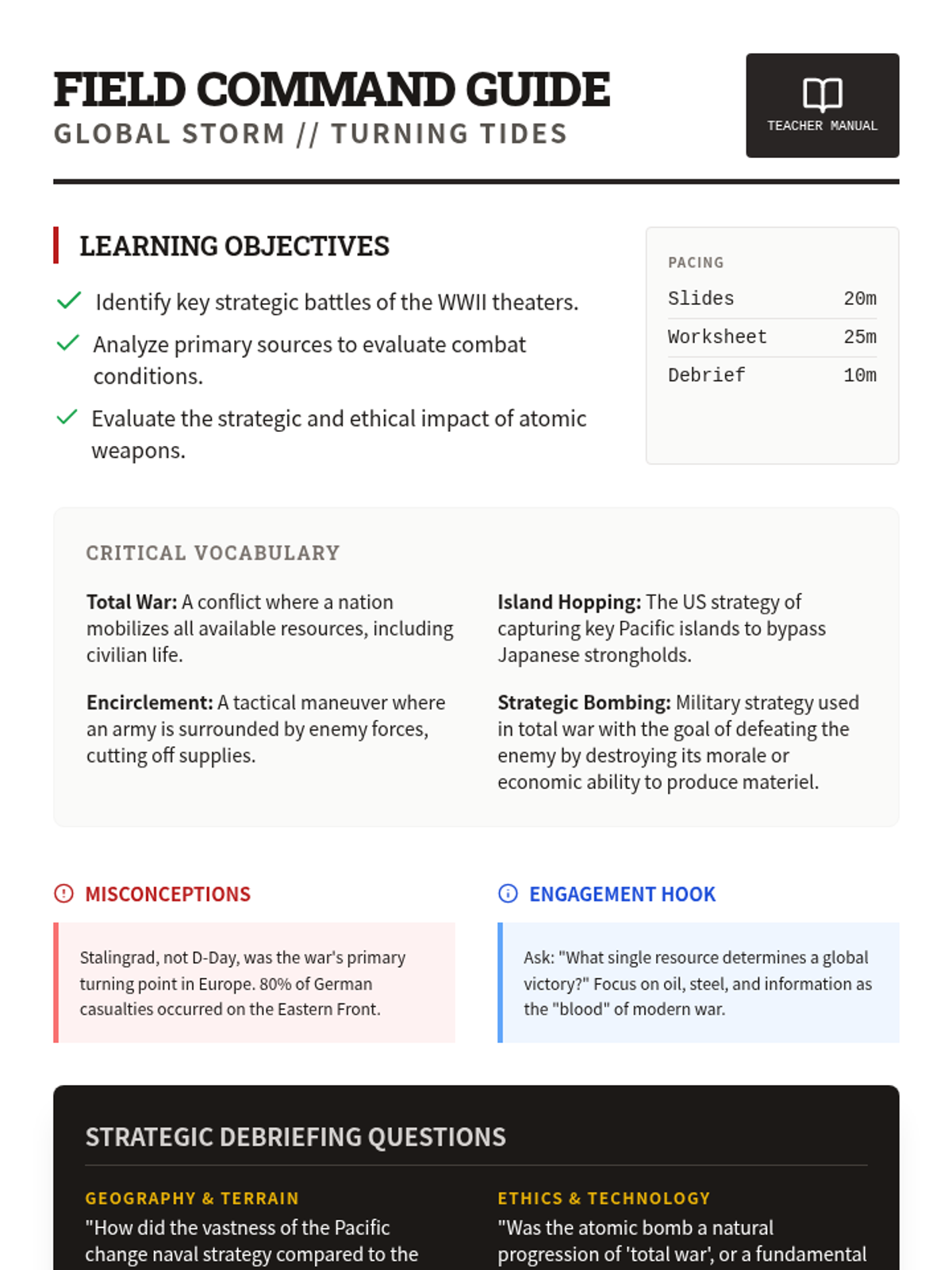
Focuses on the critical turning points of World War II, exploring the strategic shifts and human stories that defined the conflict's outcome.
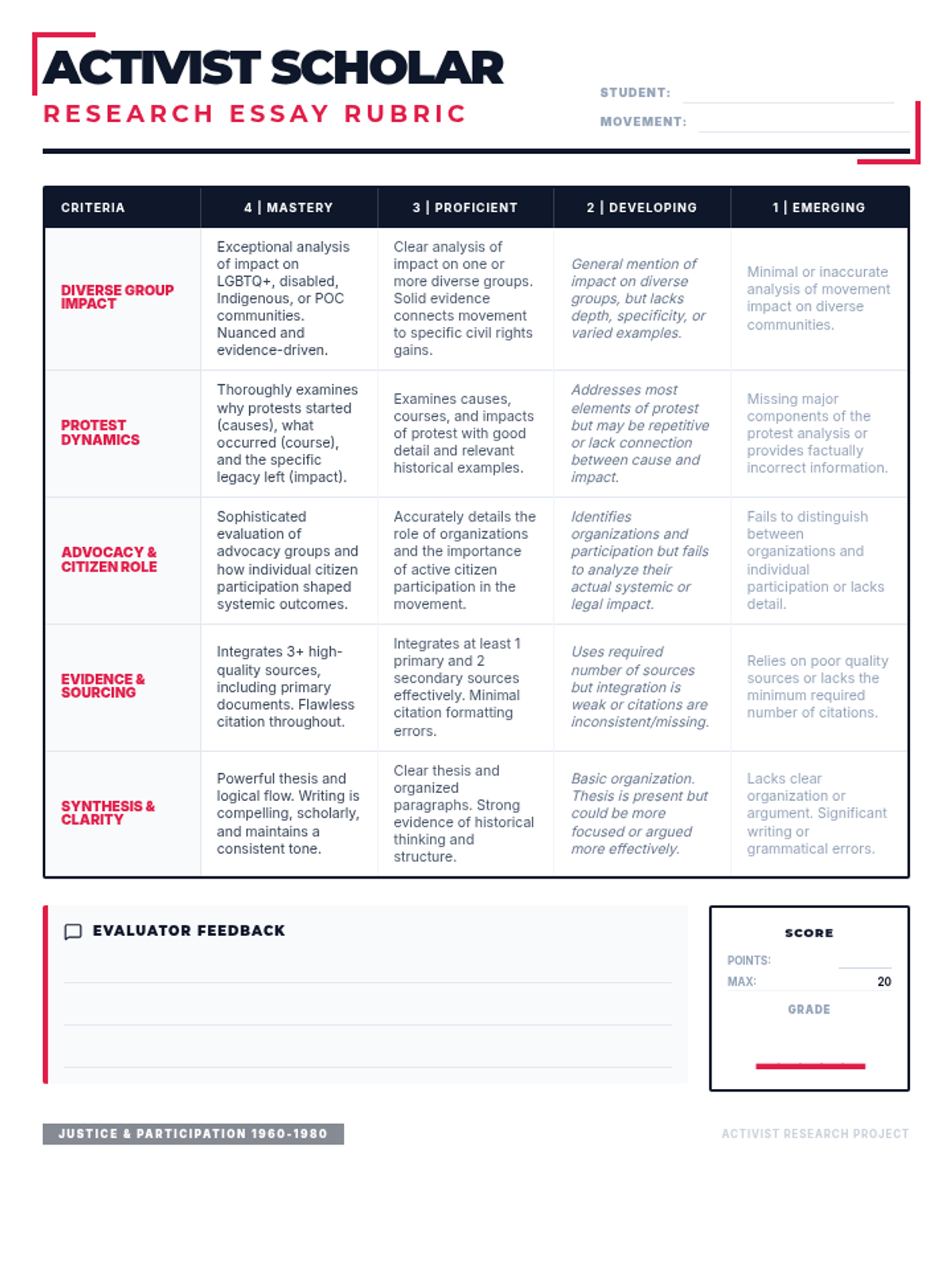
A comprehensive research project exploring the 1960s-80s social movements, focusing on the roles of protest, advocacy, and citizen participation in shaping civil rights for diverse communities.
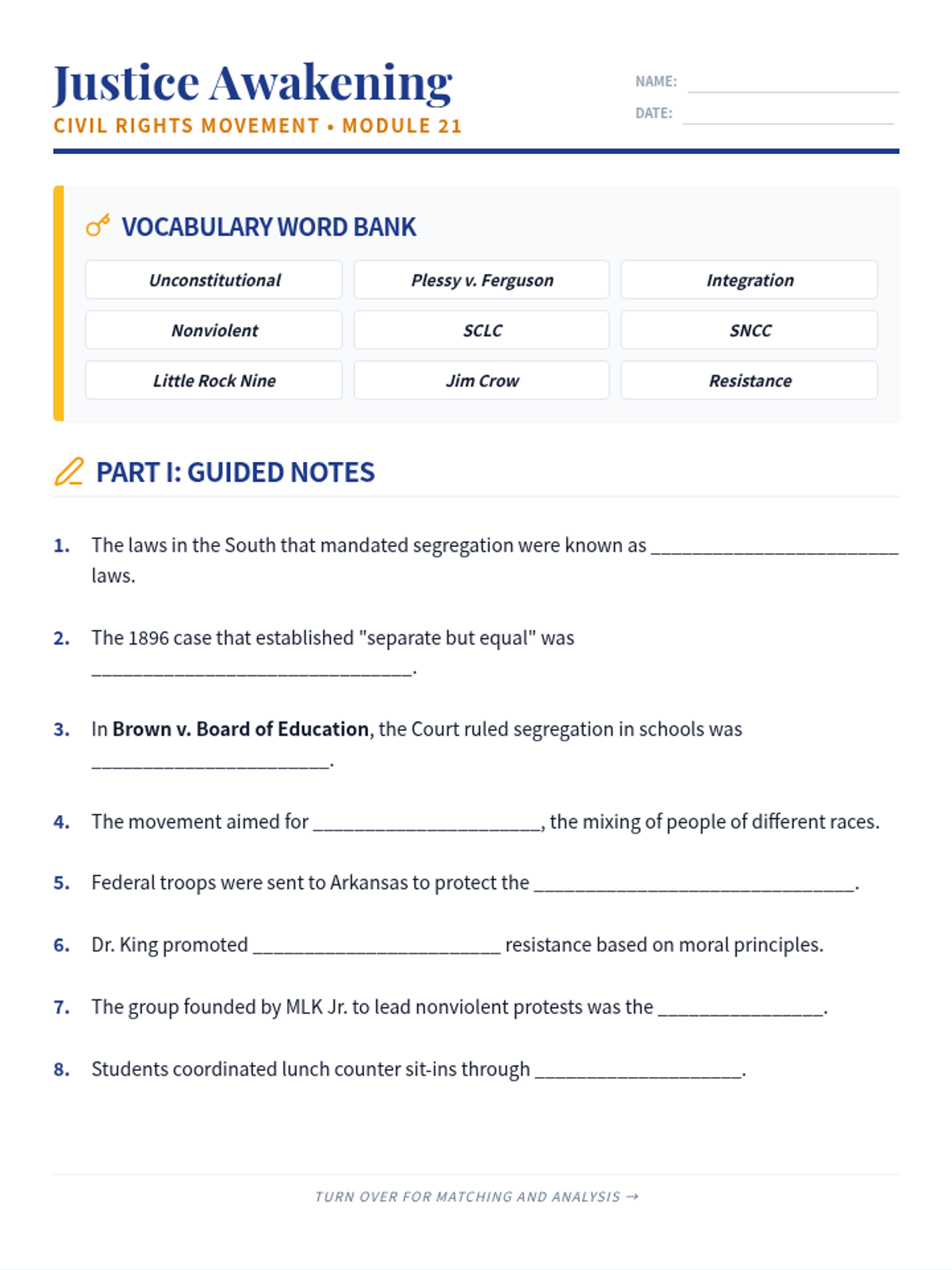
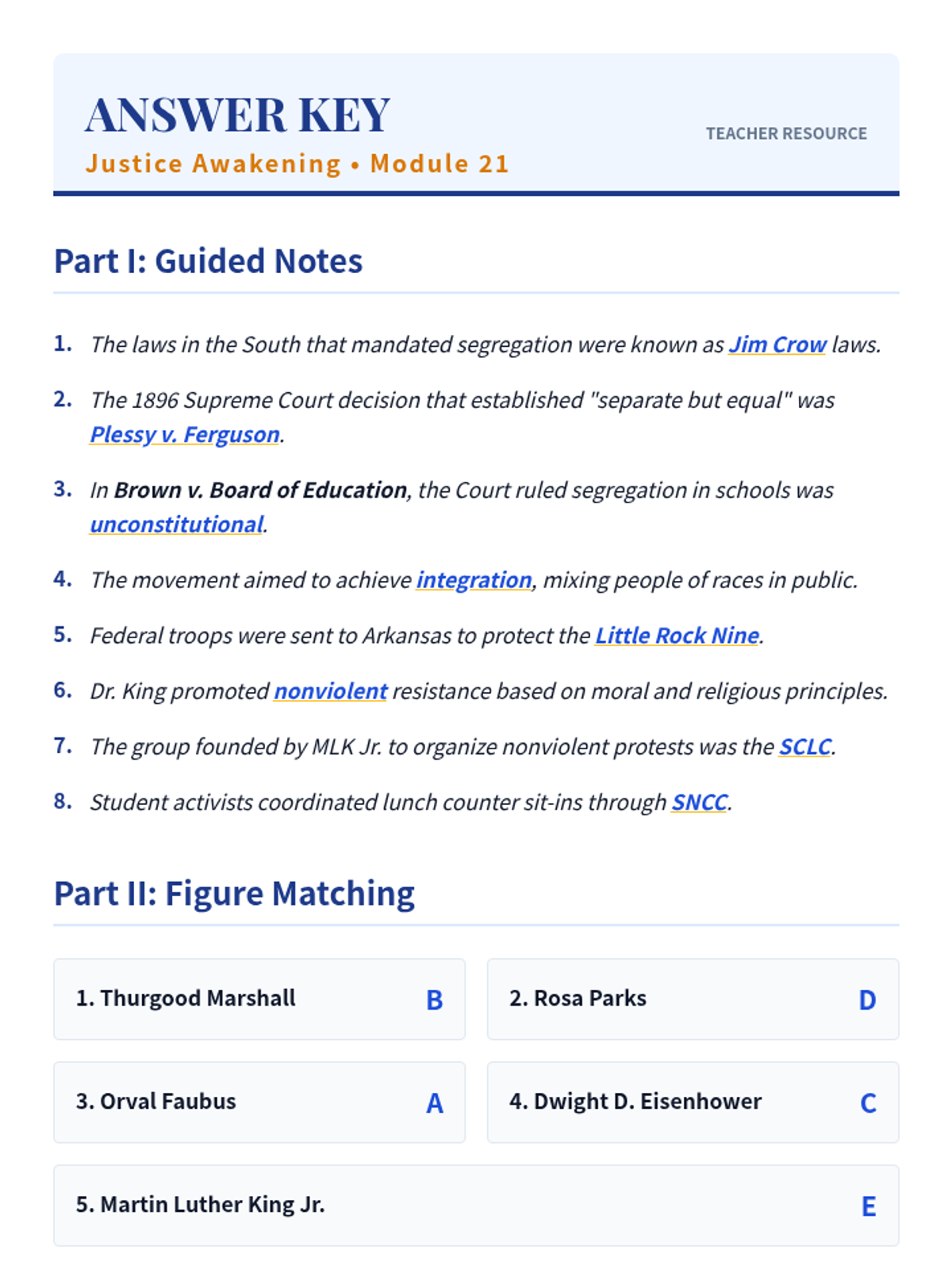
This lesson explores the pivotal events and figures of the early Civil Rights Movement during the 1950s, aligned with HMH Module 21. Students will analyze the legal battles against segregation and the rise of grassroots activism.
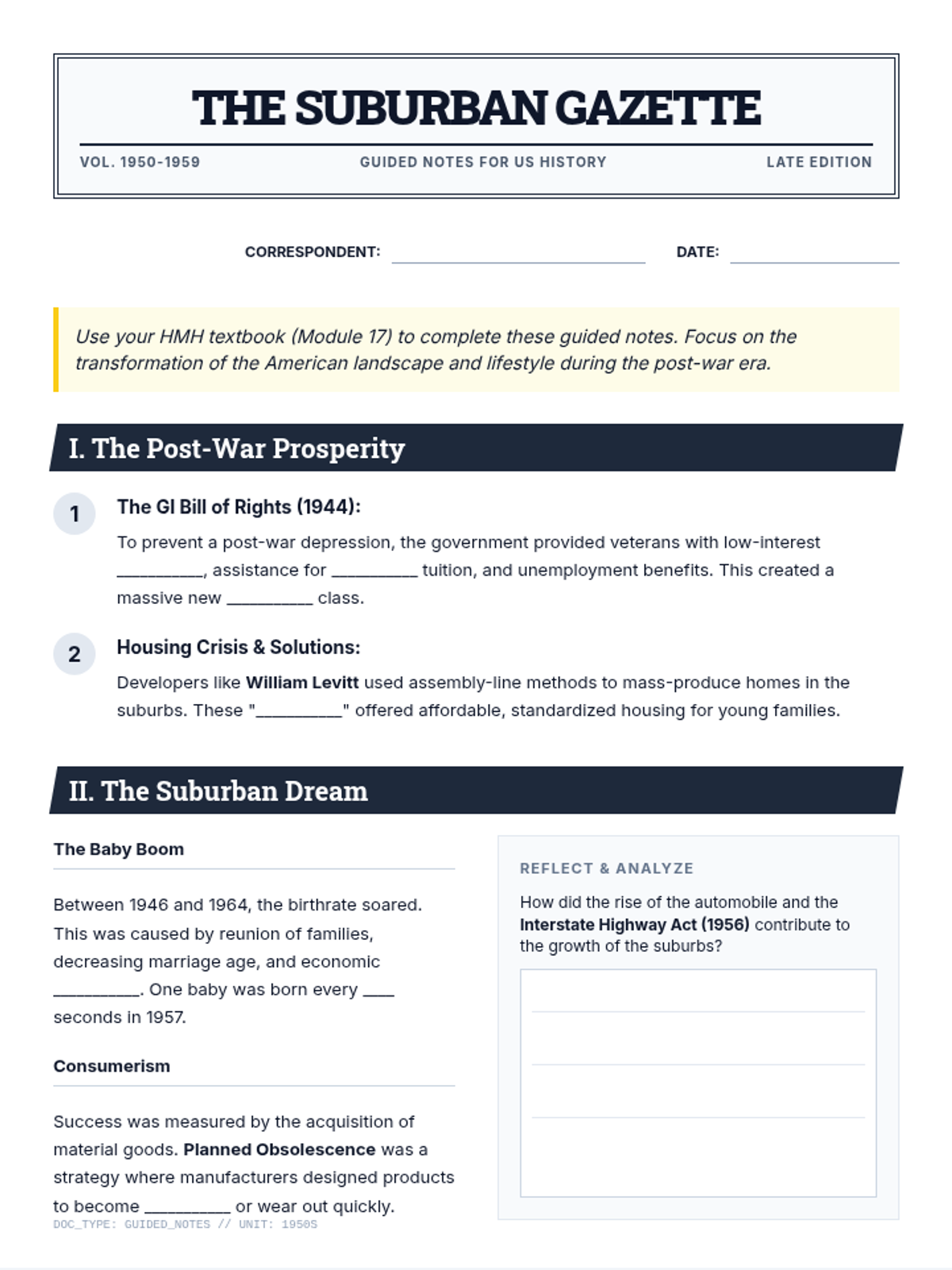
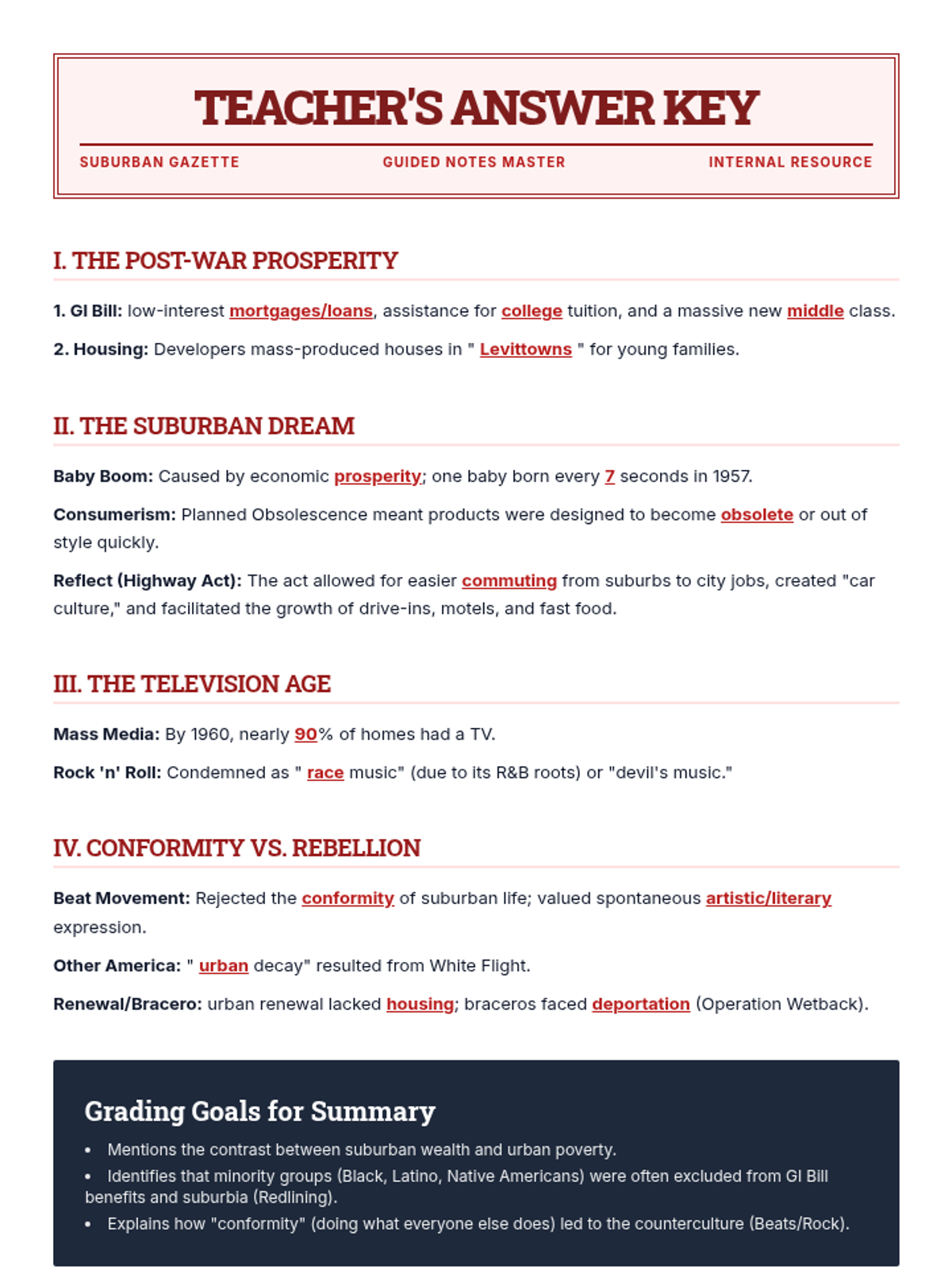
An overview of the domestic life, economic prosperity, and cultural shifts of the 1950s. This lesson covers the GI Bill, the rise of suburbia, the baby boom, and the tension between conformity and the emerging counterculture.
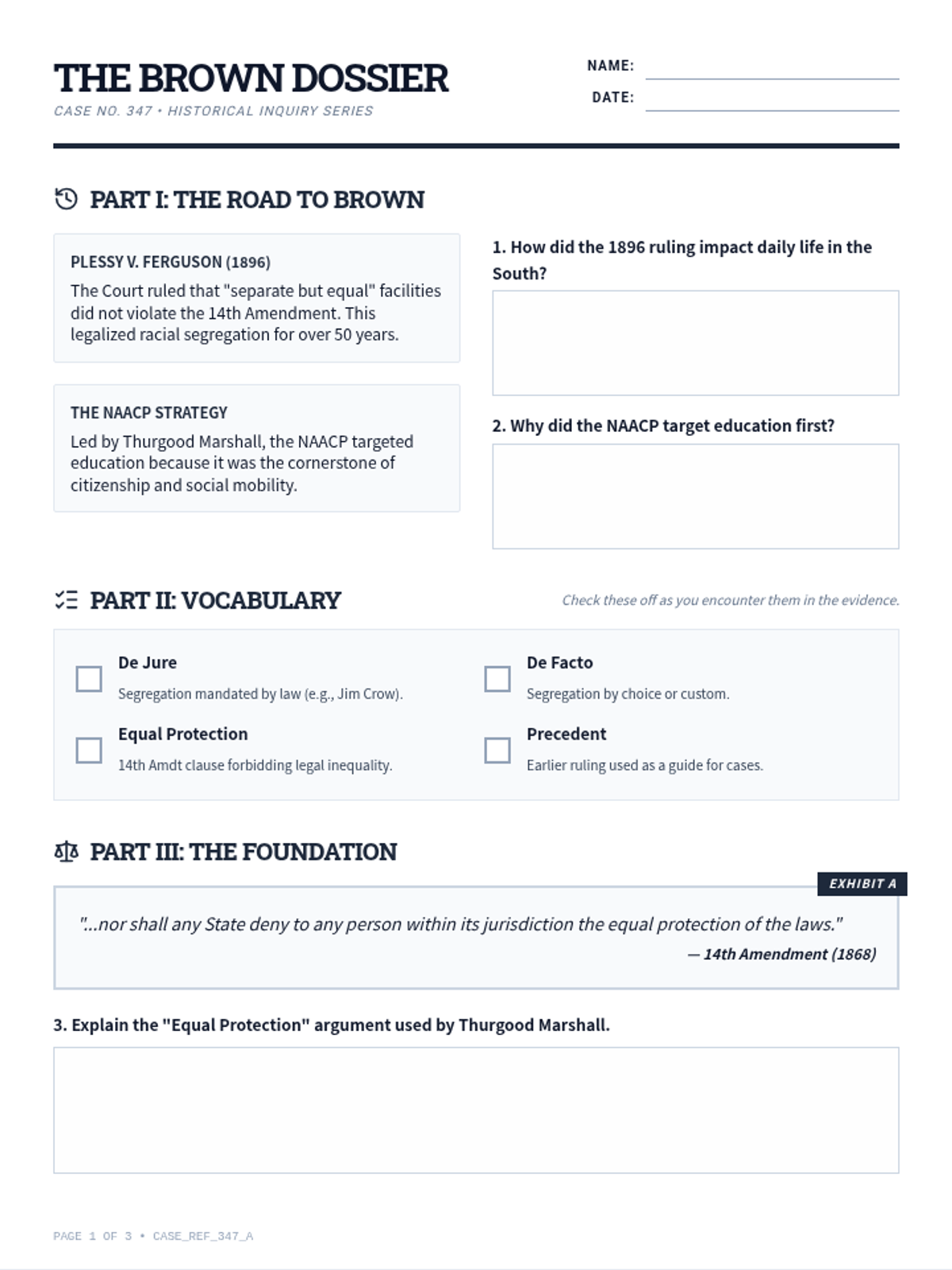
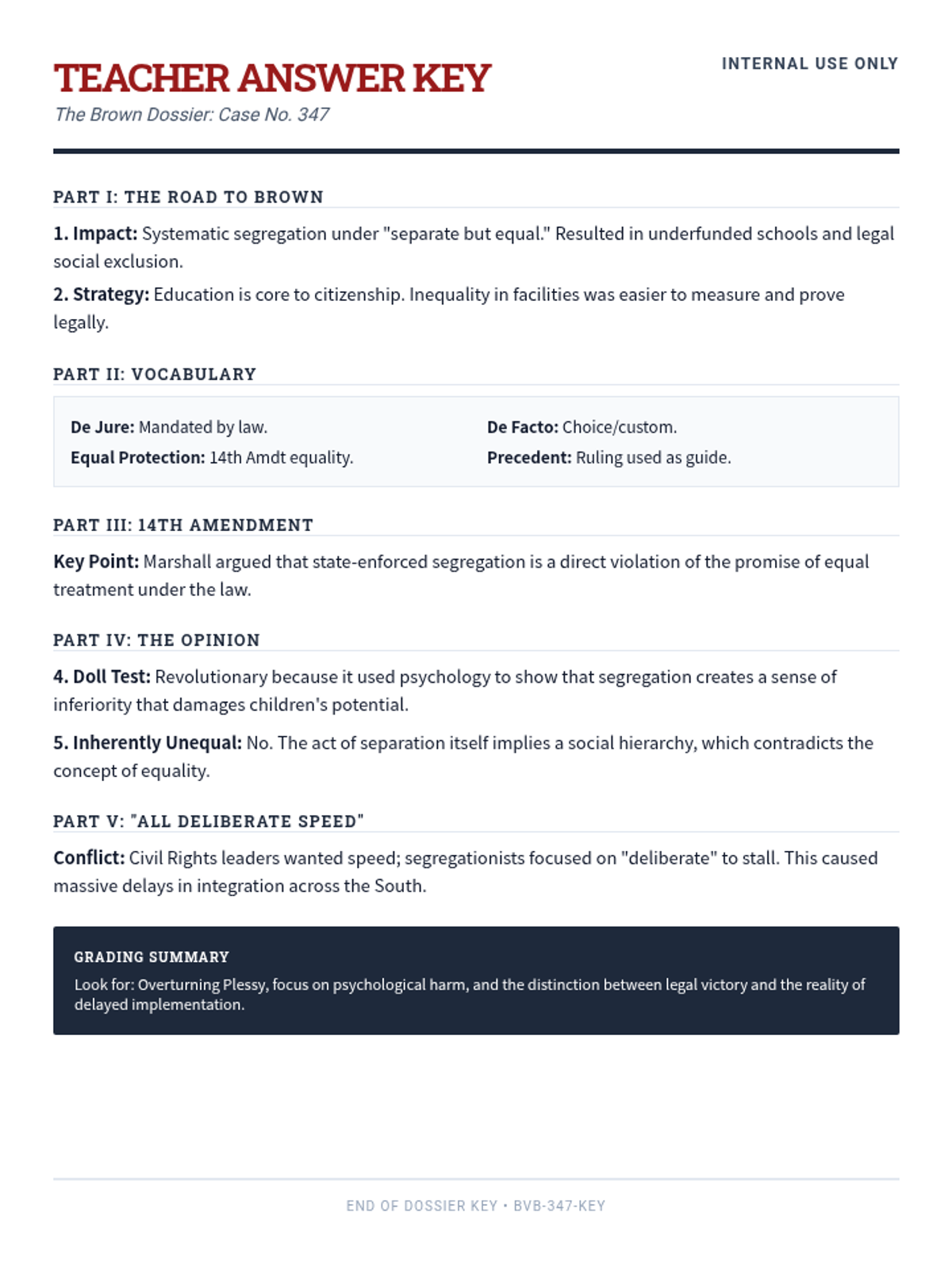
A comprehensive lesson exploring the historical context, legal arguments, and social impact of the Brown v. Board of Education Supreme Court decision. Students analyze the transition from Plessy v. Ferguson to the civil rights era through primary source excerpts and critical thinking questions.
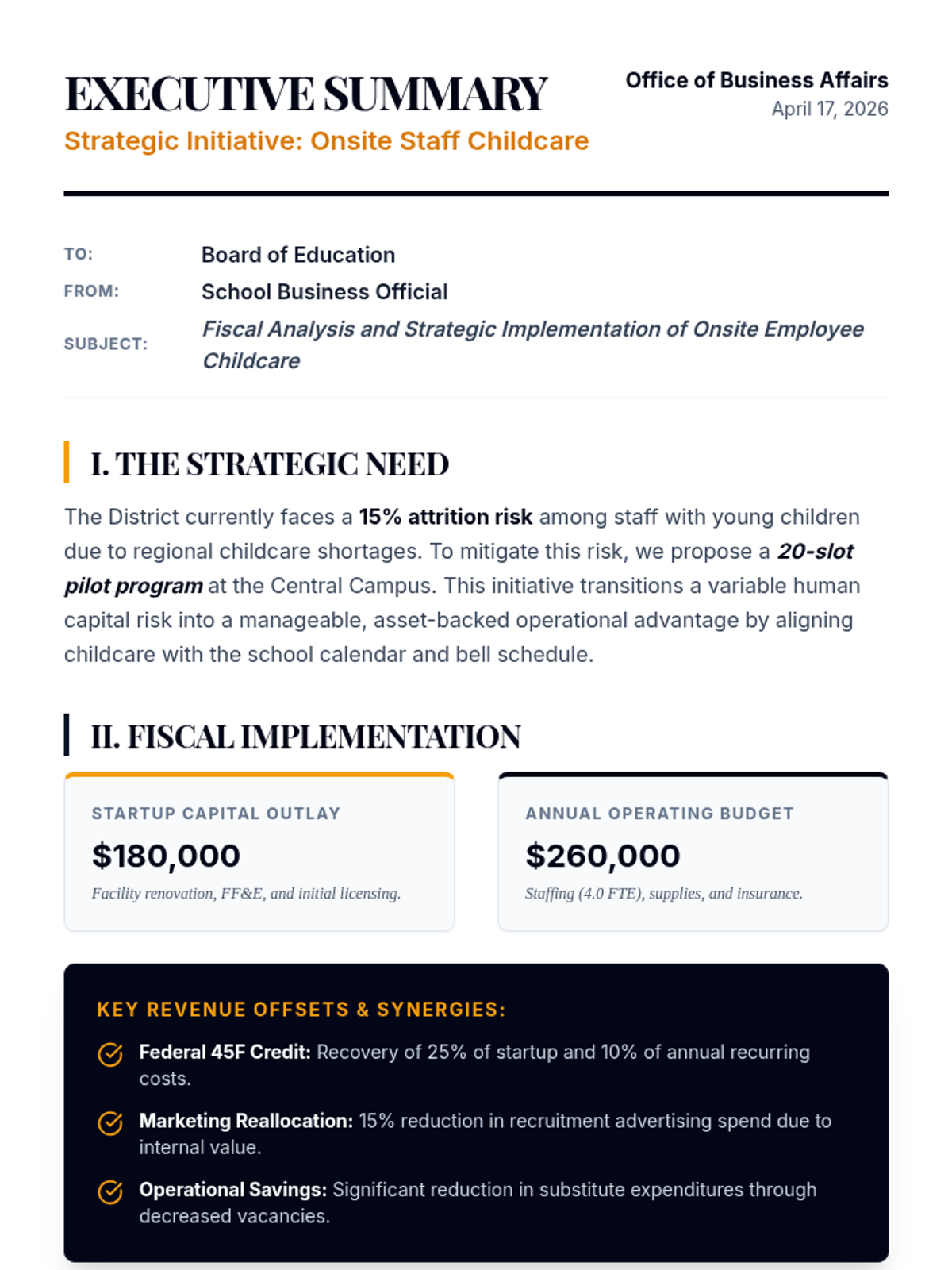
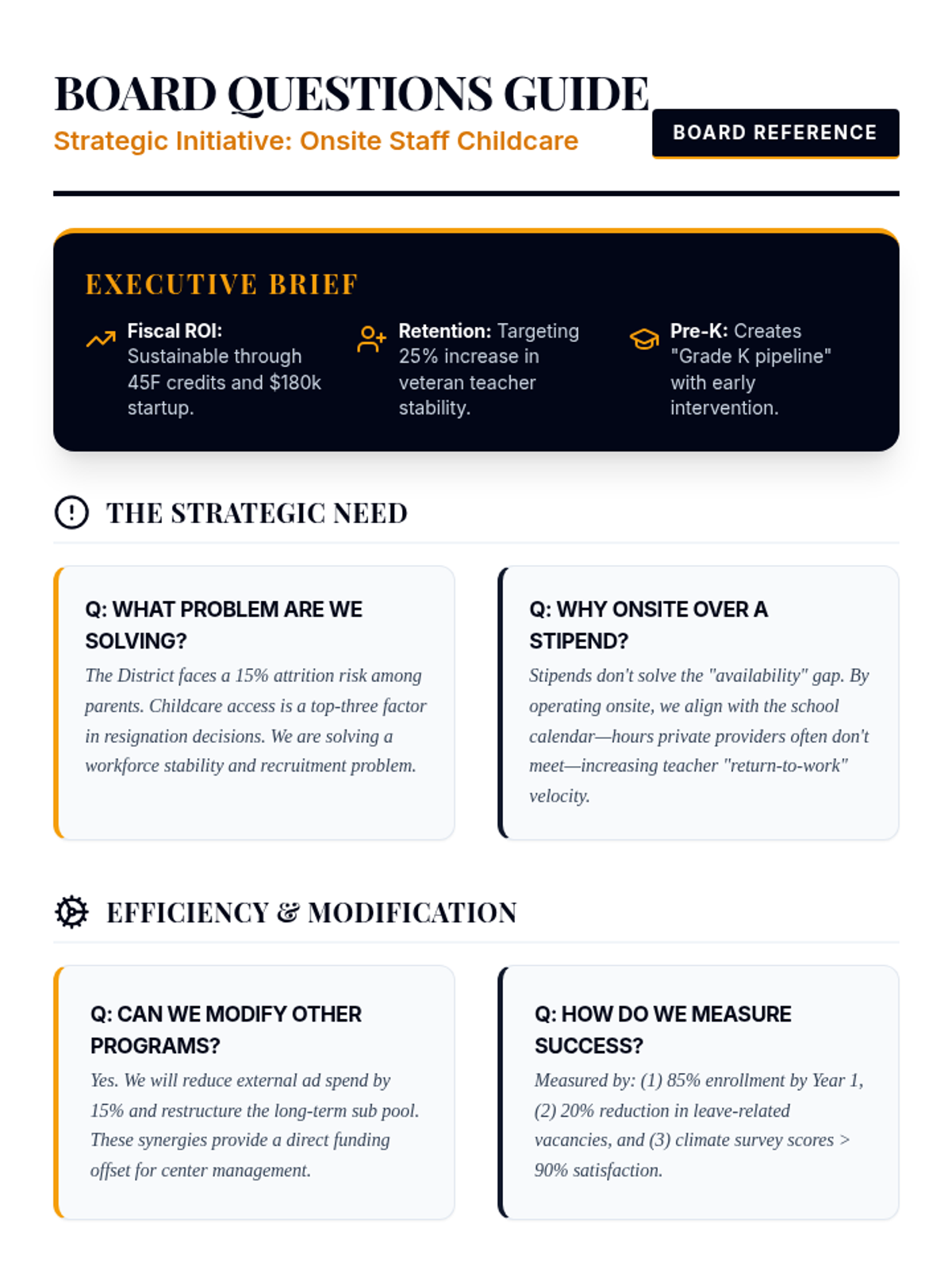
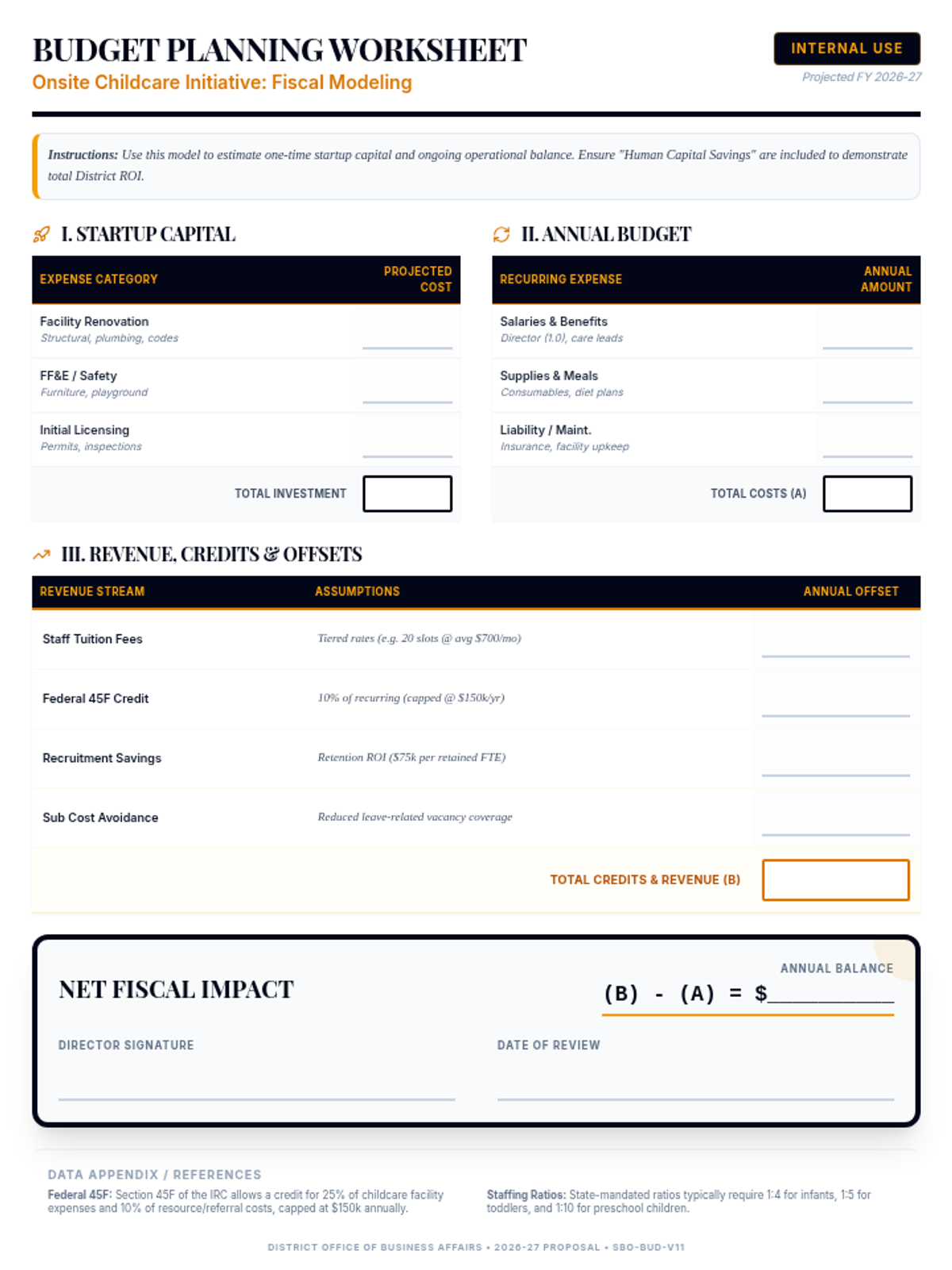
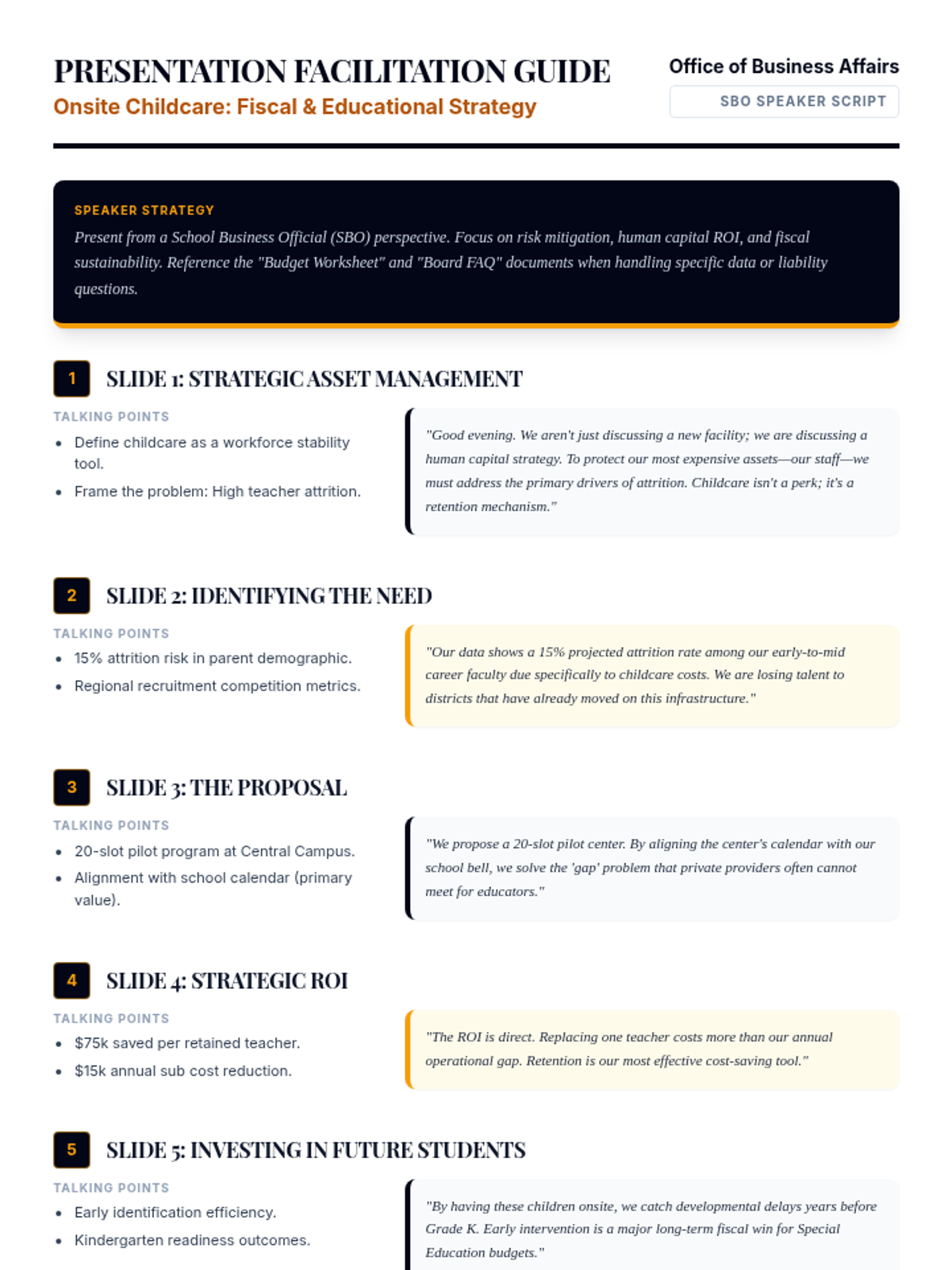
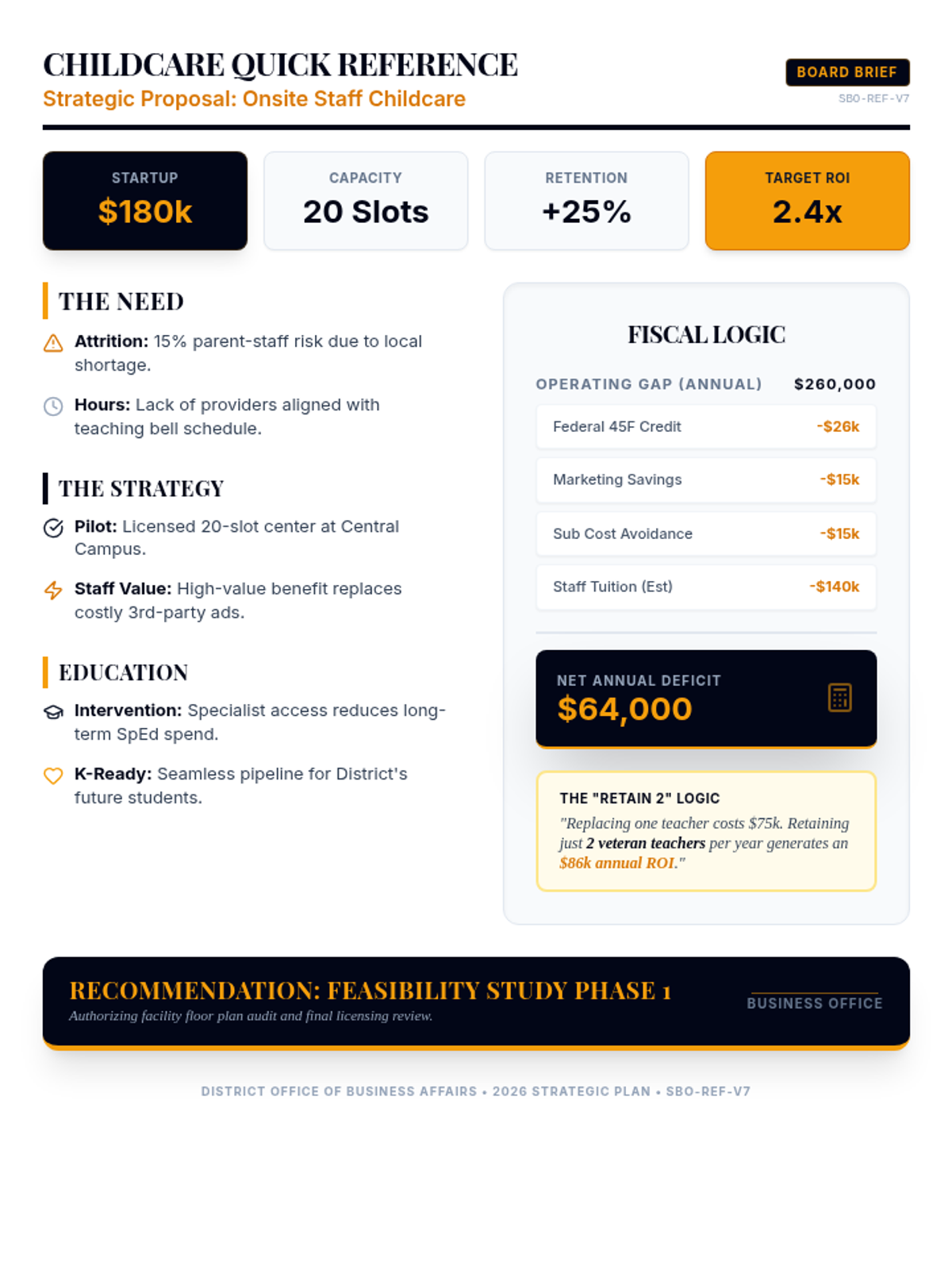
A comprehensive proposal for the Board of Education evaluating the fiscal and educational impact of implementing onsite childcare for district staff.
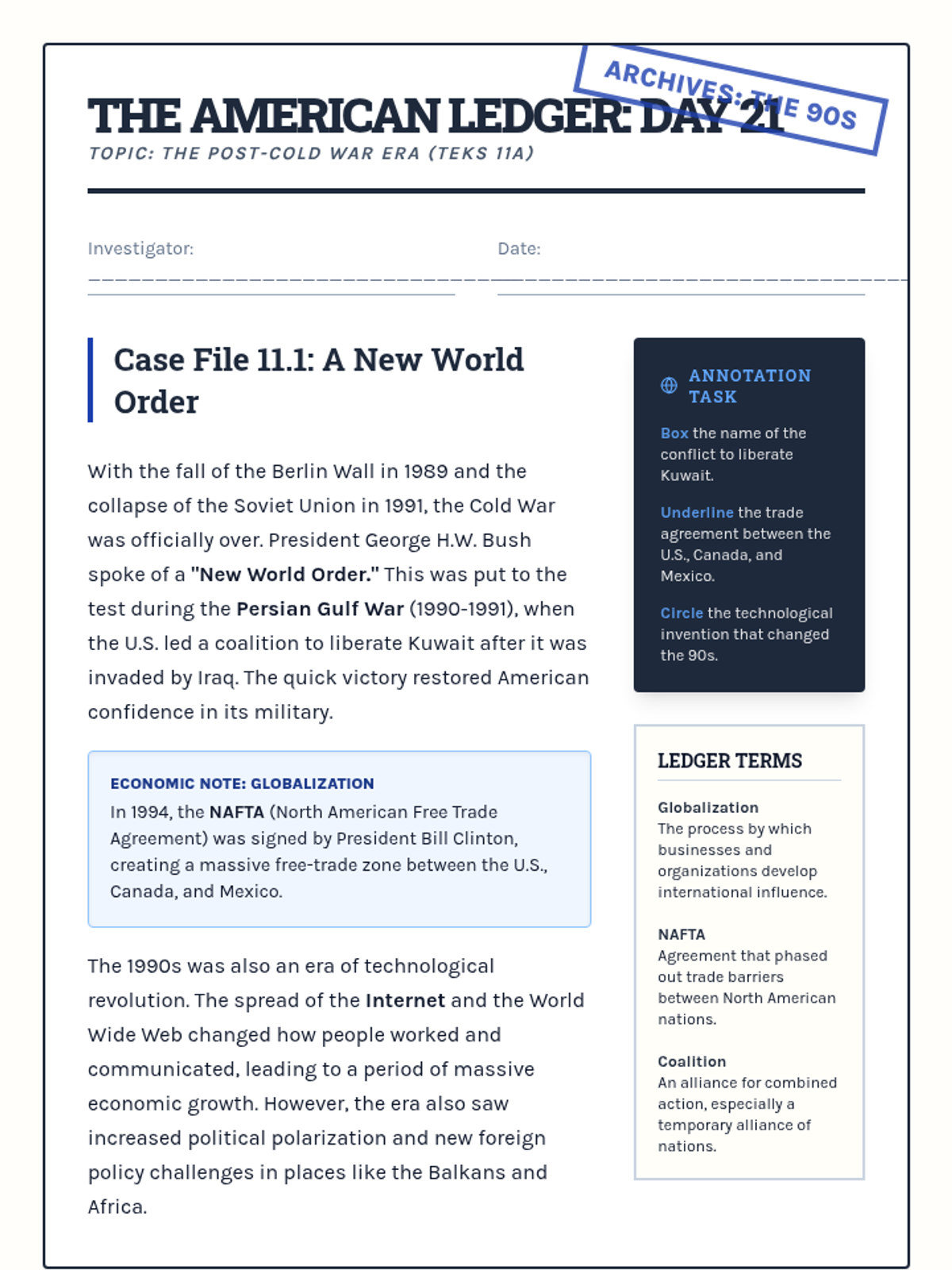
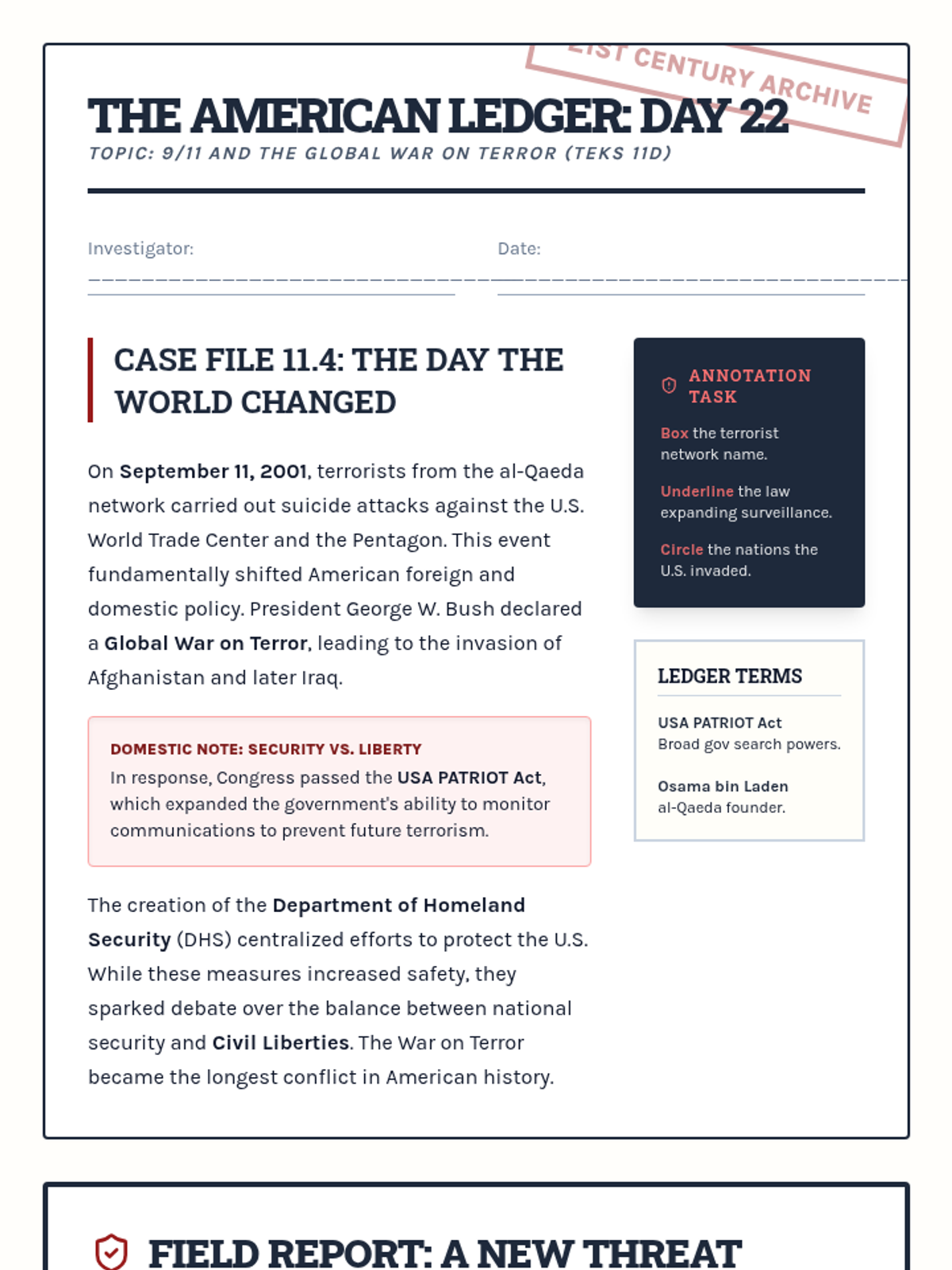
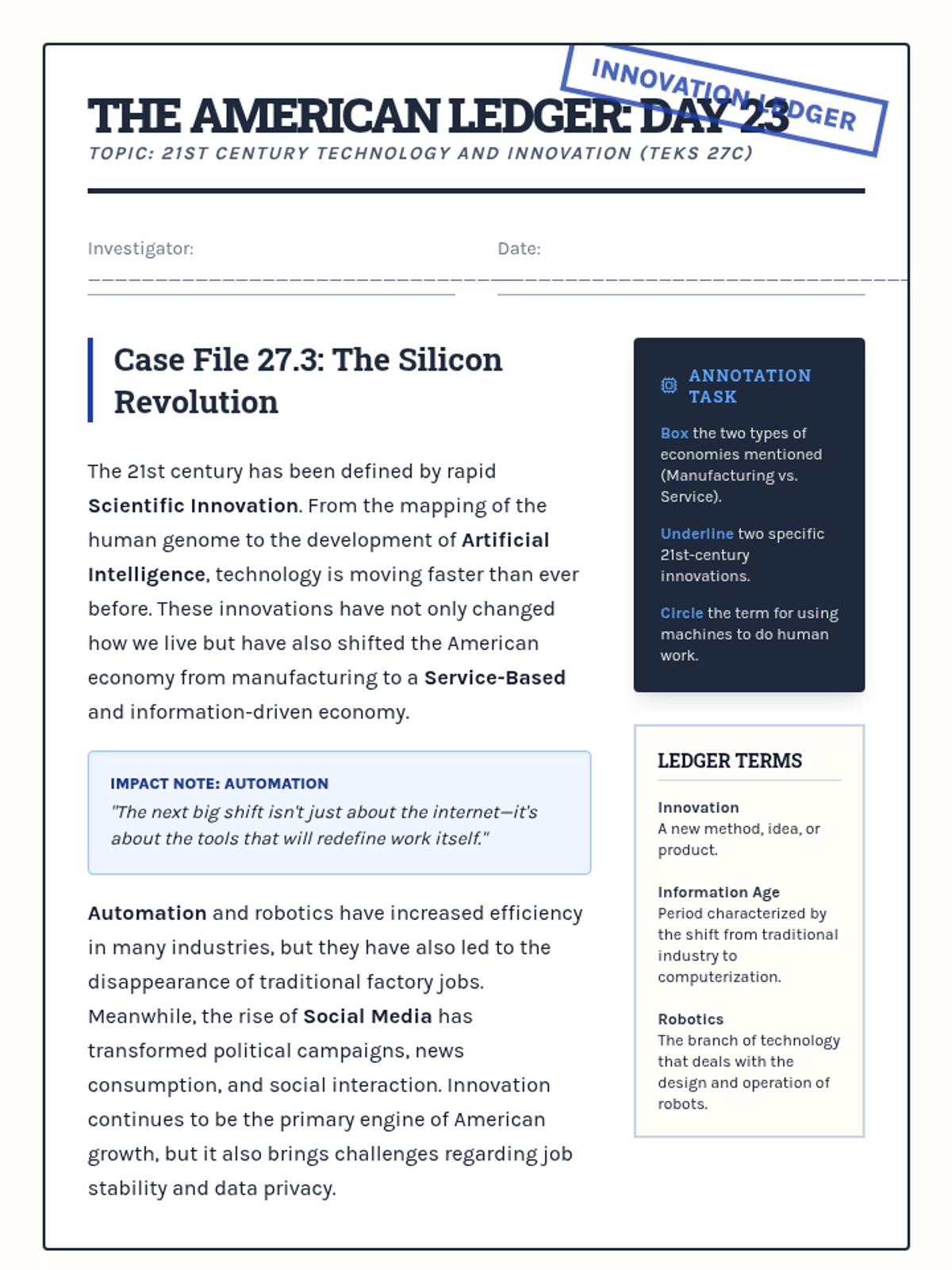
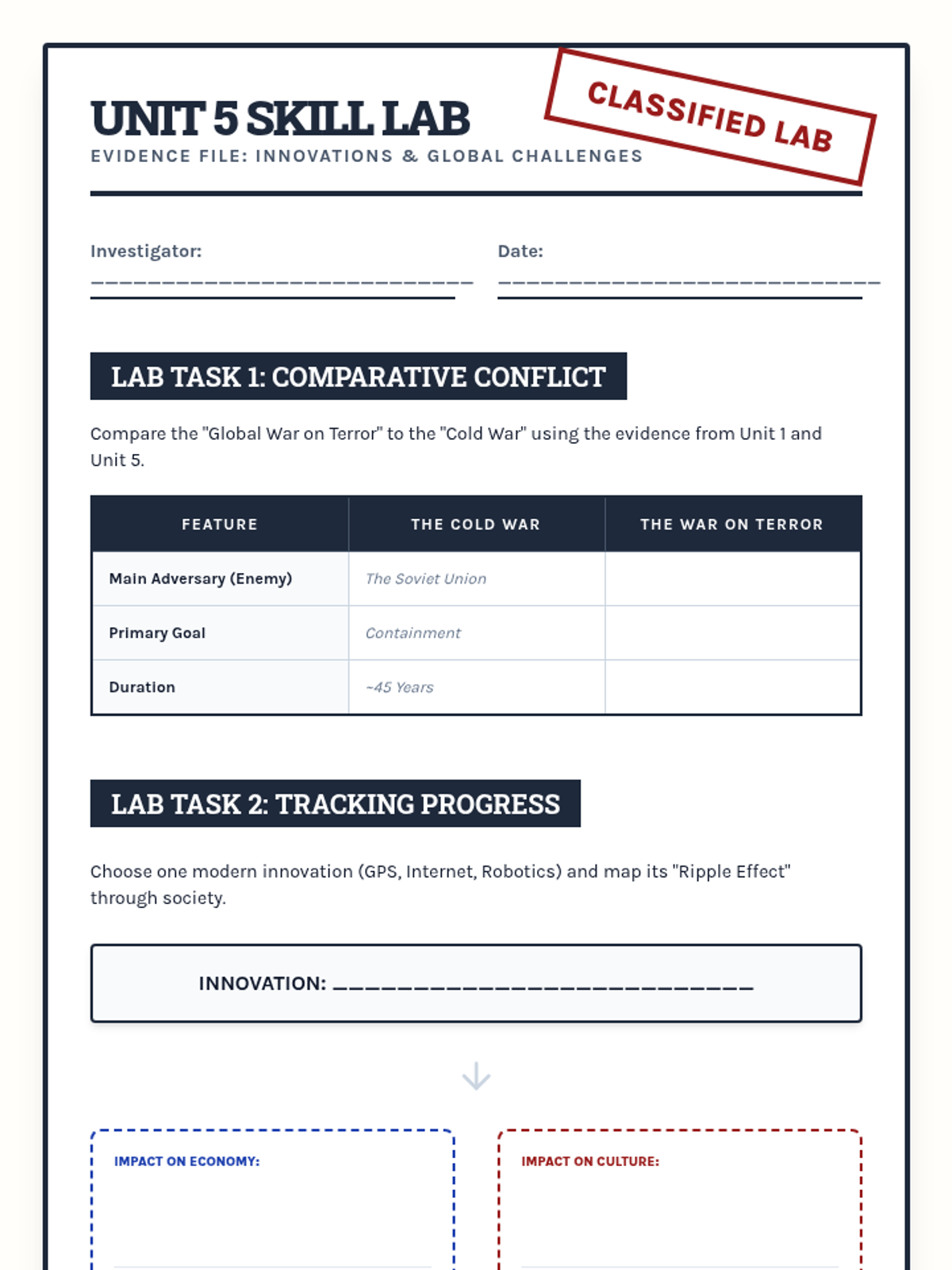
Examines the post-Cold War era, 9/11, the War on Terror, and the impact of technology in the 21st century. Includes TEKS 11A, 11D, and 27C.
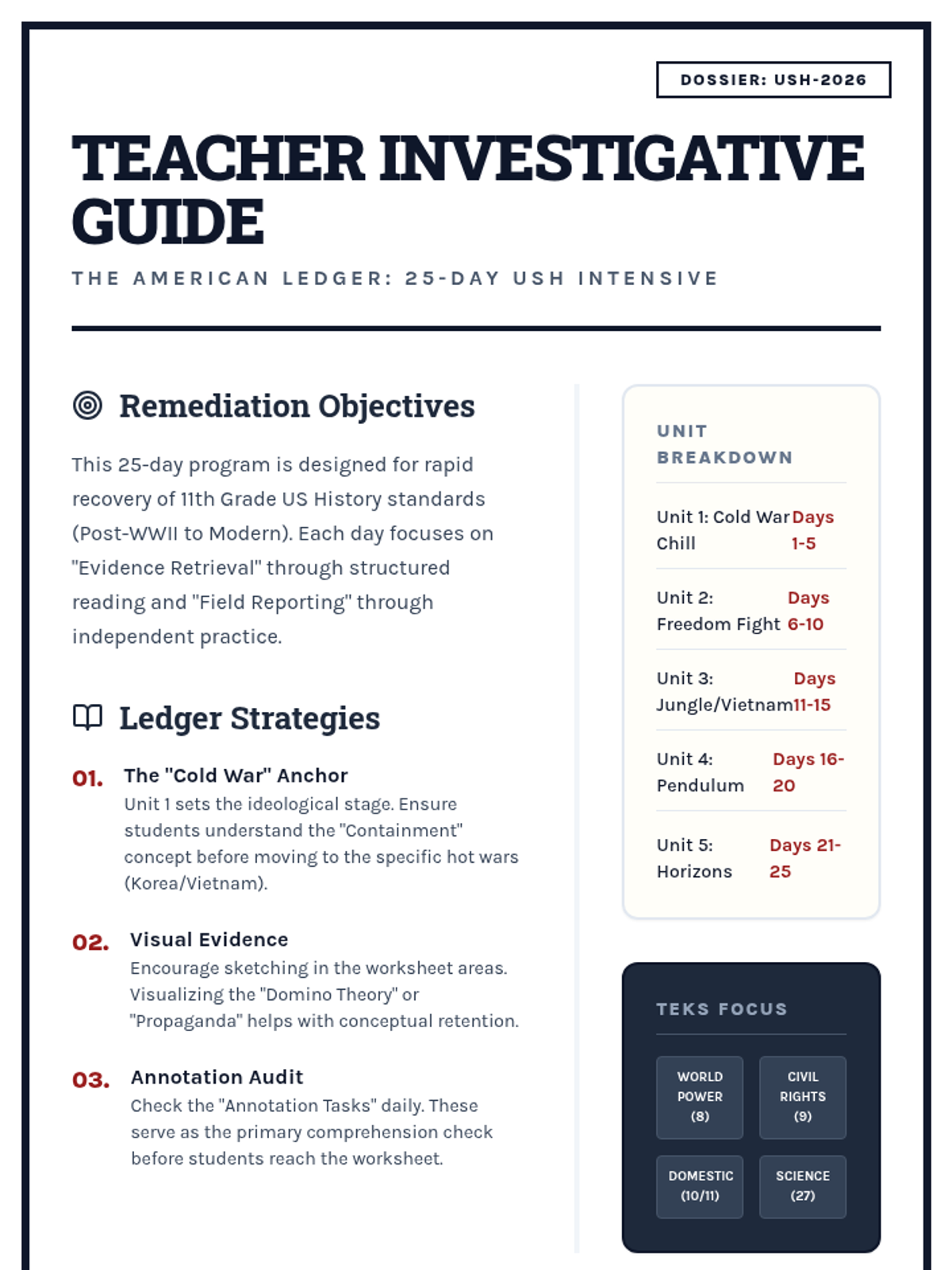
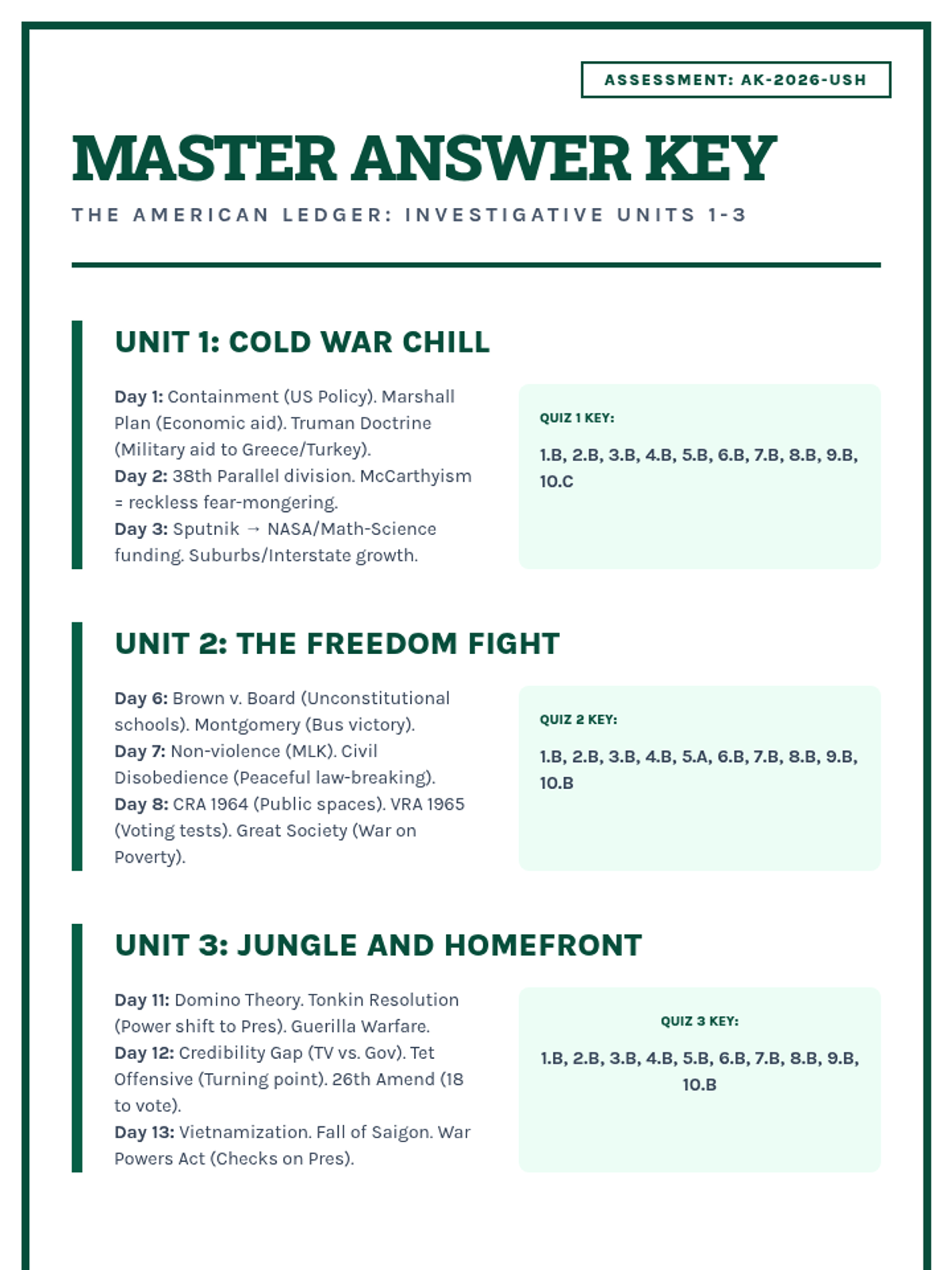
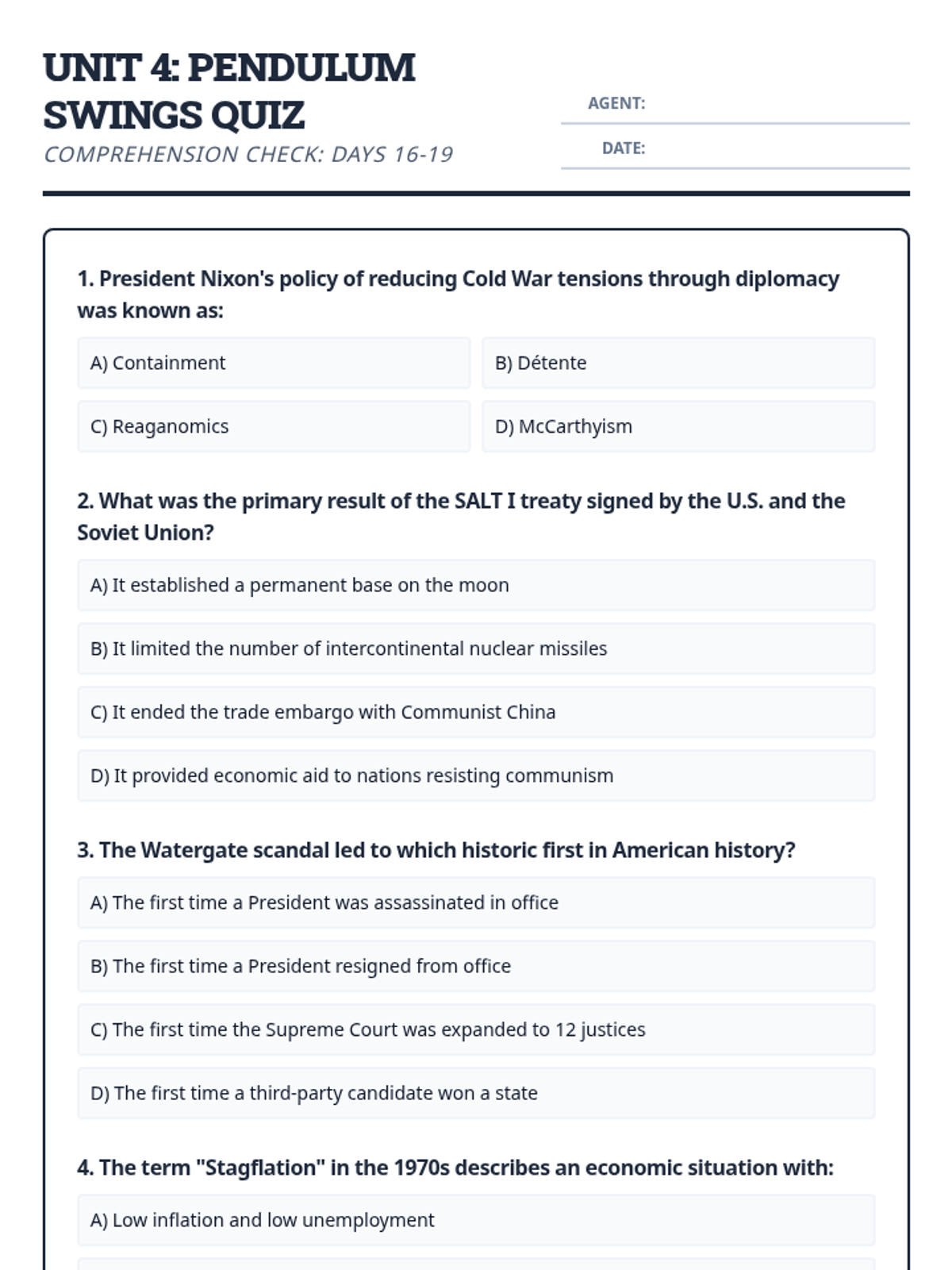
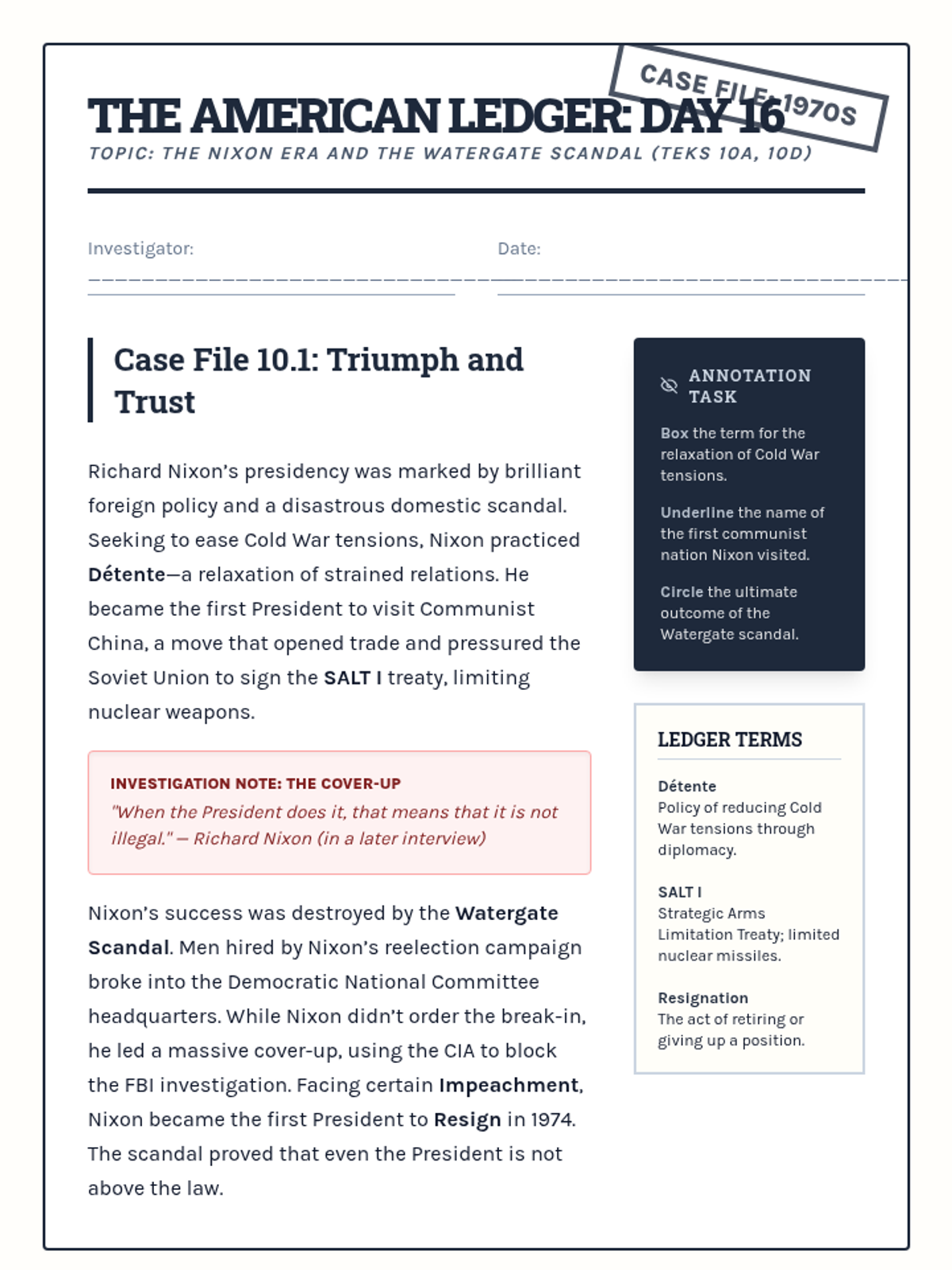
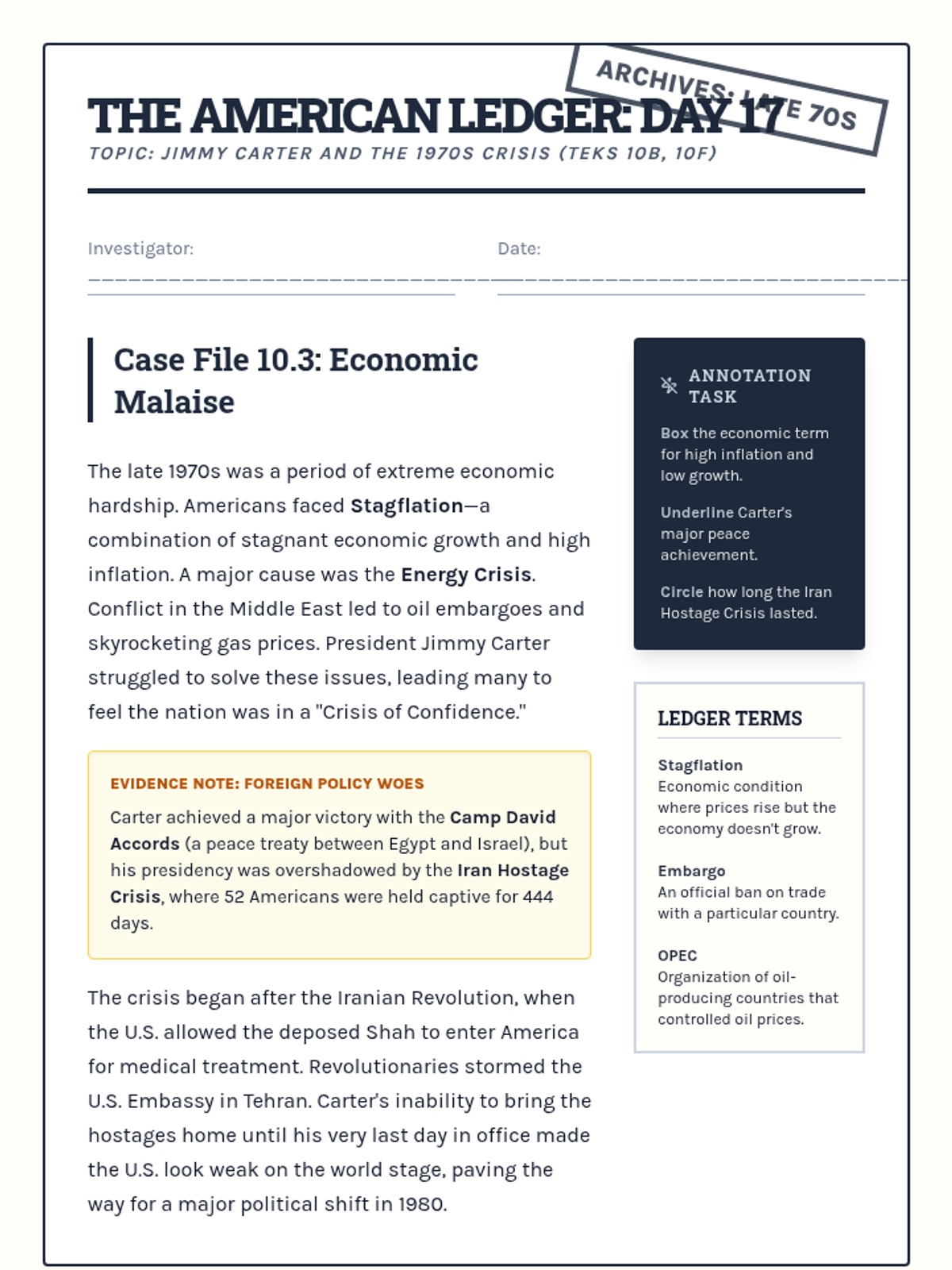
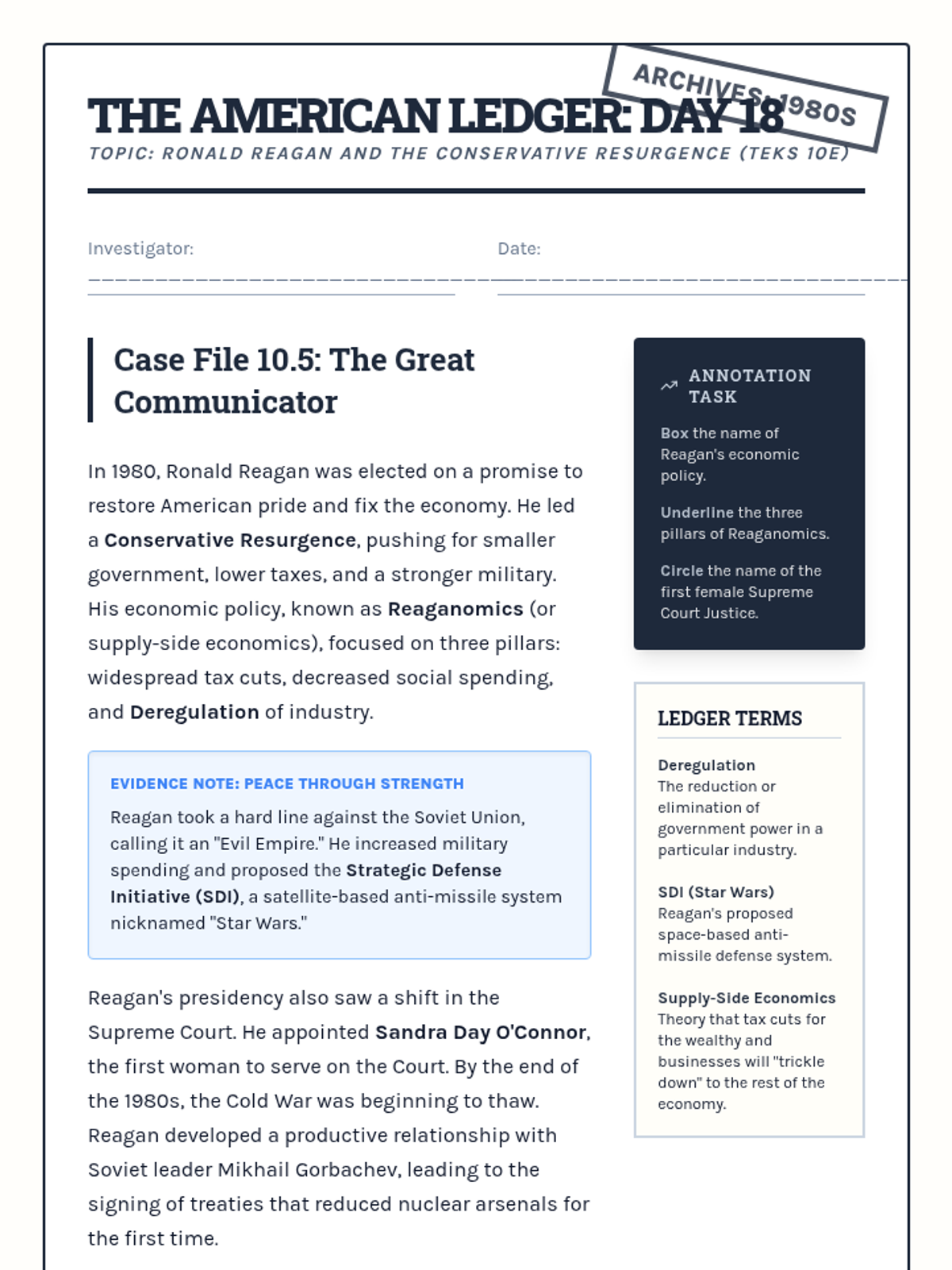
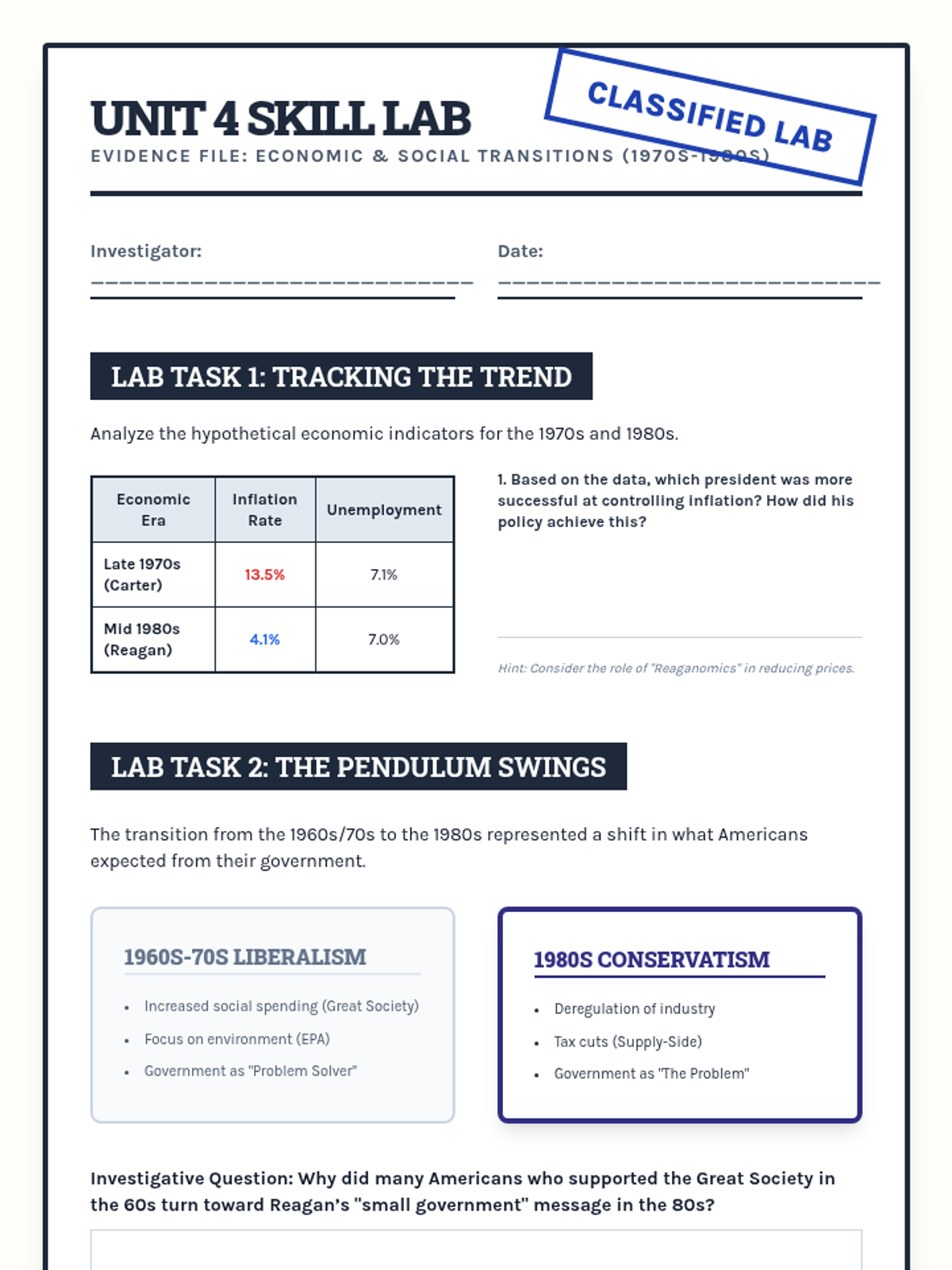
Covers the transition from the Nixon era through the Reagan revolution, focusing on economic shifts and the end of the Cold War. Includes TEKS 10A, 10B, and 10E.