In a simulated print shop environment, students work in teams to print a run of posters or t-shirts. They manage the drying rack workflow and clean up, emphasizing the industrial nature of the medium.
An intermediate jazzy pom dance routine set to 'Under the Sea', focusing on sharp motions, jazz technique, and high-energy performance.
A high school Media Studies lesson exploring how cinema portrays mental illness, specifically dissociative disorders, and the real-world impact of these portrayals on social stigma. Students analyze horror tropes and rewrite scenes for clinical accuracy.
A 30-minute introduction to sight reading in 6/8 time and the key of E-flat major, focusing on the feeling of compound meter and navigating three flats.
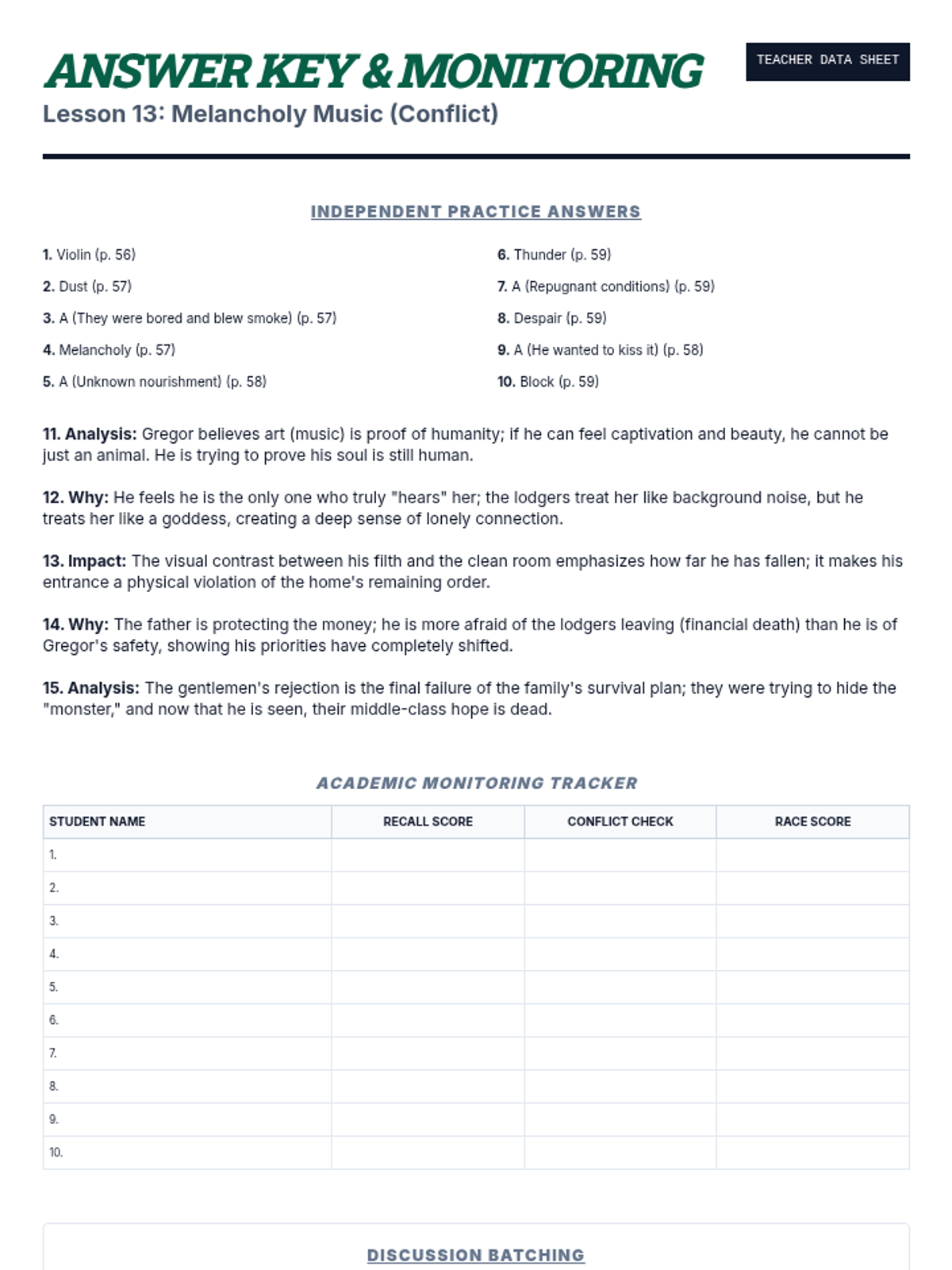
This lesson shifts focus to the collective representation of apes as they form a community in the sanctuary and eventually rebel. Students analyze the portrayal of ape communication, social hierarchy, and the final shift toward agency.
Students explore Caesar's origin story, analyzing how the film represents growing ape intelligence and emotional complexity within a laboratory setting. The lesson focuses on the intersection of science and ethics through the lens of primate representation.
Concevoir des dispositifs de médiation et des espaces d'accueil qui favorisent l'autonomie, le plaisir de lire et le développement de l'esprit critique.
Explorer la psychologie de l'adolescent lecteur et l'évolution de l'édition jeunesse pour mieux accompagner les parcours de lecture personnels et scolaires.
A project-based lesson for middle school students to learn fundamental composition techniques, including melody writing, harmonic support, and arranging for classroom instruments. Students will apply these skills to create and perform an original short piece.
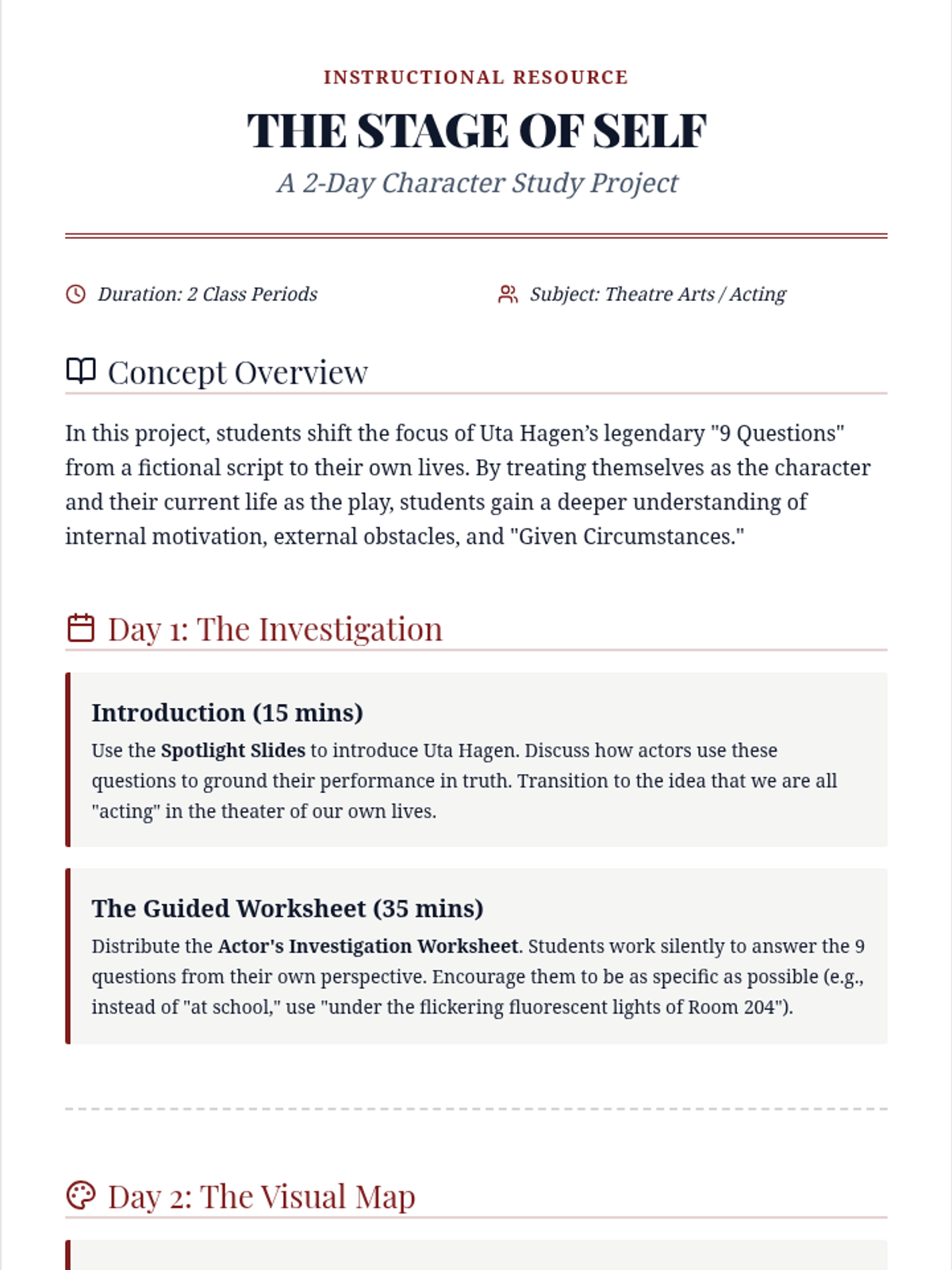
Students explore the historical significance and emotional weight of the Greensboro Sit-ins through drama-based activities and historical analysis, focusing on the theme of courage.
A 45-minute exploration of how Valentine's Day art has evolved from medieval manuscripts to modern pop art, followed by a creative design activity.
A comprehensive look at the 1937 Degenerate Art exhibition in Nazi Germany, exploring how art was used as a tool for propaganda and the suppression of modern expression.
A lesson designed to help students distinguish between effective and ineffective slide design for their invention presentations. It uses a side-by-side comparison of a 'good' and 'bad' presentation to teach visual design and organization principles.
A design-focused workshop that provides middle schoolers with rigorous step-by-step guidance on creating a purposeful, visually balanced, and deeply personal vision board.
This lesson explores how artists blend and draw inspiration from various cultures, focusing on cultural fusion, symbolism, and identity in global art. Students will analyze contemporary artists and create their own fusion-inspired designs.
This lesson introduces students to the world of Macbeth through Act 1, focusing on the witches' prophecies and the initial characterization of the "brave" Macbeth. It includes slides for instruction, a graphic organizer for active listening, scene-by-scene summaries for reading support, and high-DOK guided questions.
A lesson designed to help students analyze and discuss visual art using specific vocabulary and sentence stems focused on color, perspective, design, lines, and detail.
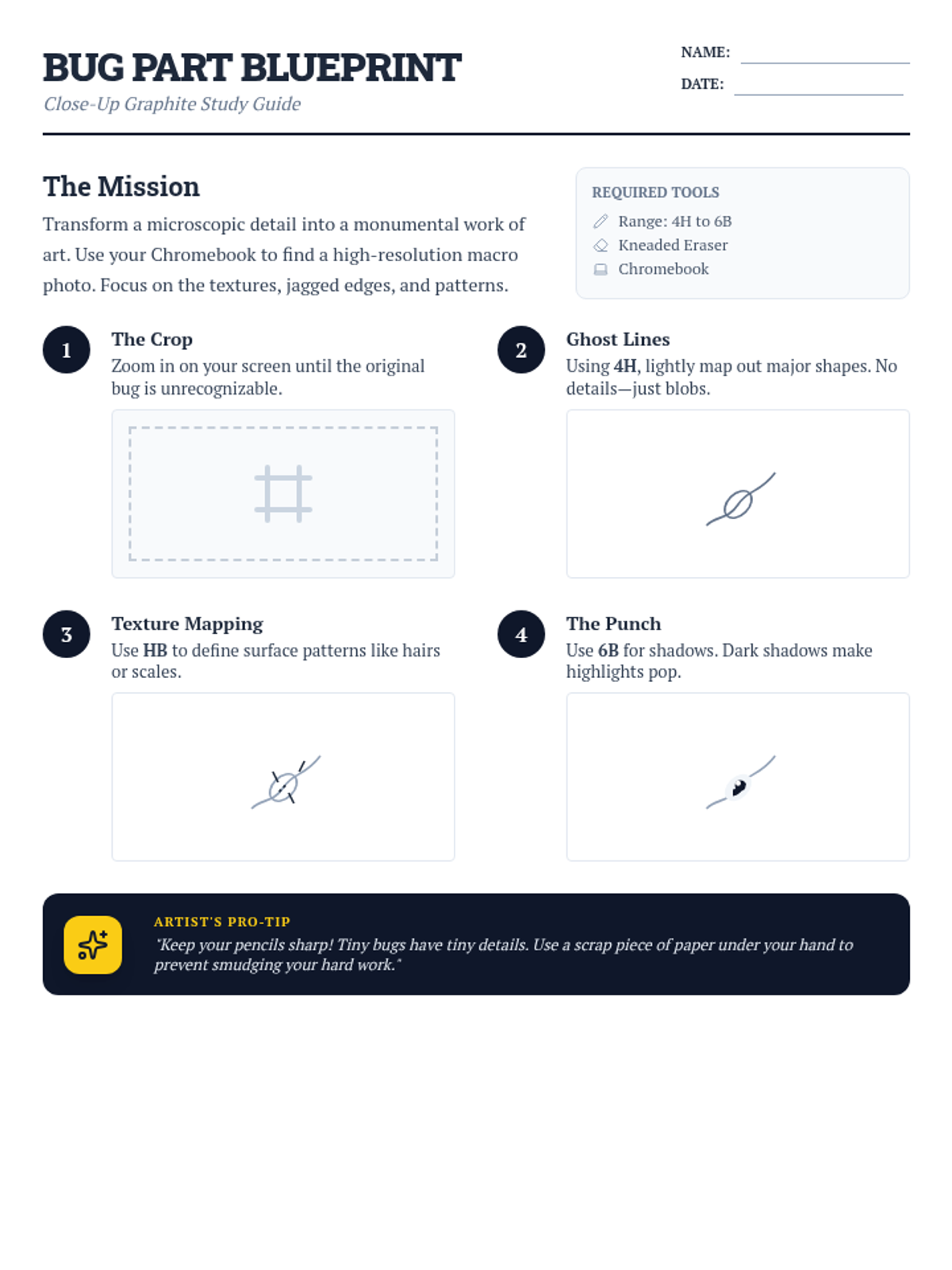
A comprehensive lesson on the art of storyboarding for short videos, teaching students how to translate their creative visions into structured visual plans. Students will learn the key elements of a storyboard and practice planning their own video production.
A step-by-step guide for high school ESL students to record an animated Valentine's greeting using Adobe Character Animator. The lesson focuses on technical proficiency and creative expression through digital storytelling.
Students will investigate the contrasting aesthetics of Protestant and Catholic art during the Baroque period, focusing on how the Catholic Church used emotional and dramatic art as a tool of the Counter-Reformation to persuade and inspire the faithful.
Students explore the shift from Realism to Modernism in art, analyzing how cultural and scientific upheavals at the turn of the 20th century transformed the definition of 'reality.' through sketching and analysis.
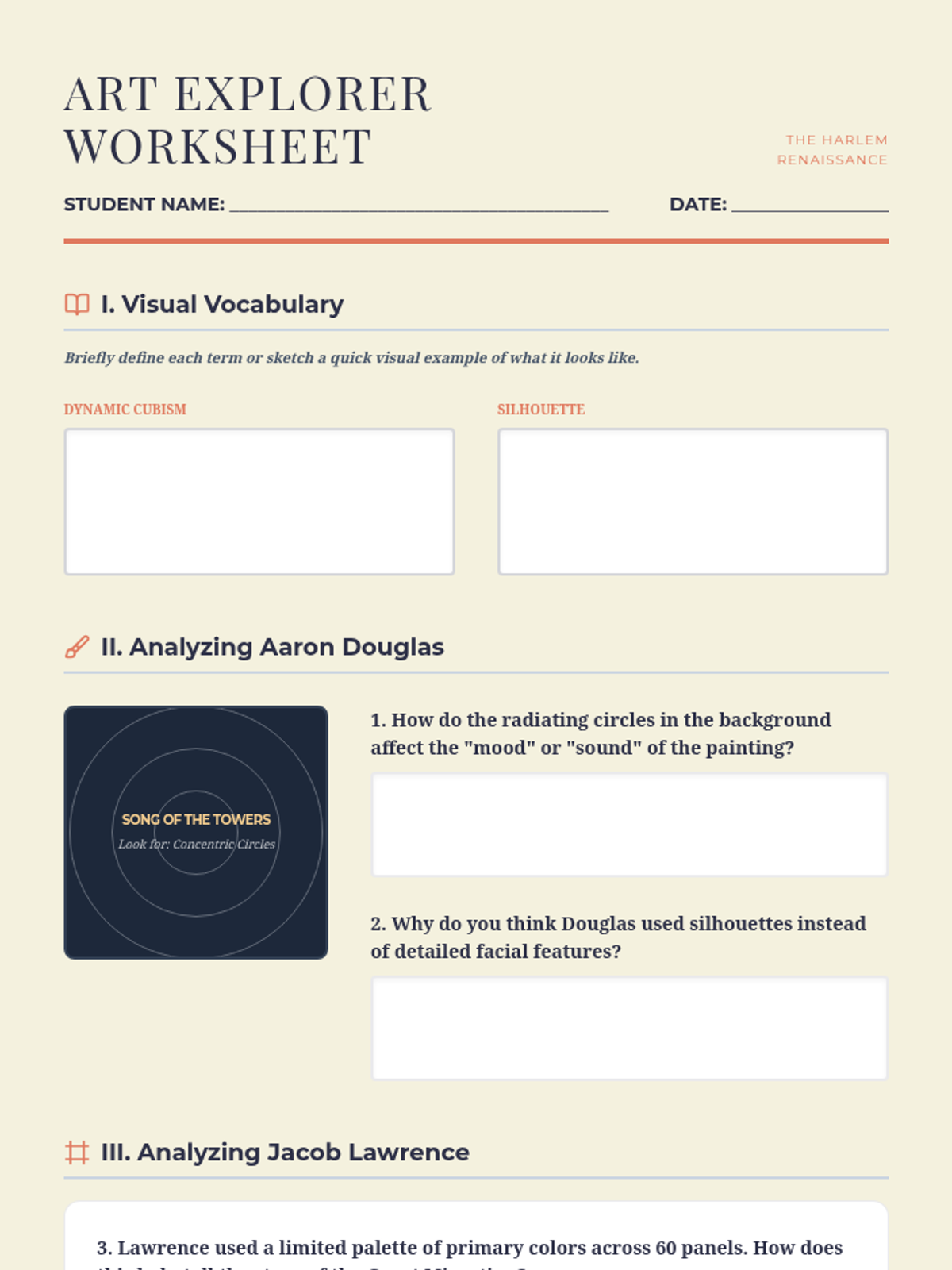
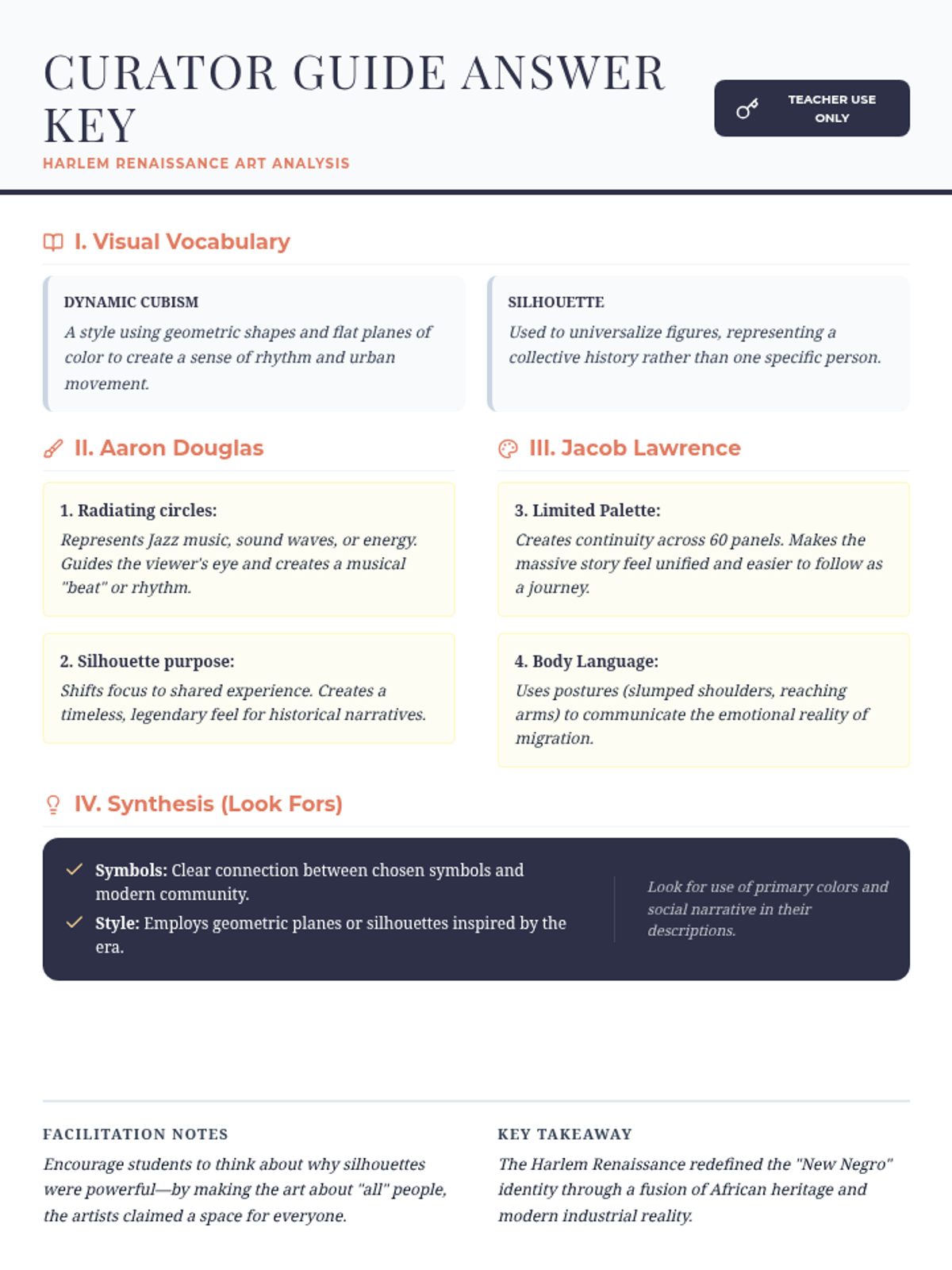
A high school art history lesson exploring the visual language of the Harlem Renaissance, focusing on how artists like Aaron Douglas and Richmond Barthé integrated African and Egyptian motifs to express Black identity and political reality.
Students explore the history and technique of Roman and Byzantine mosaics, culminating in the creation of a modern icon using paper tesserae. The lesson connects ancient preservation methods to modern visual communication.
Students will explore the shift from Medieval to Renaissance art by analyzing Botticelli and Michelangelo. The lesson focuses on identifying Humanism, Naturalism, and the 'White Statue' misconception using a Crash Course video and hands-on annotation.