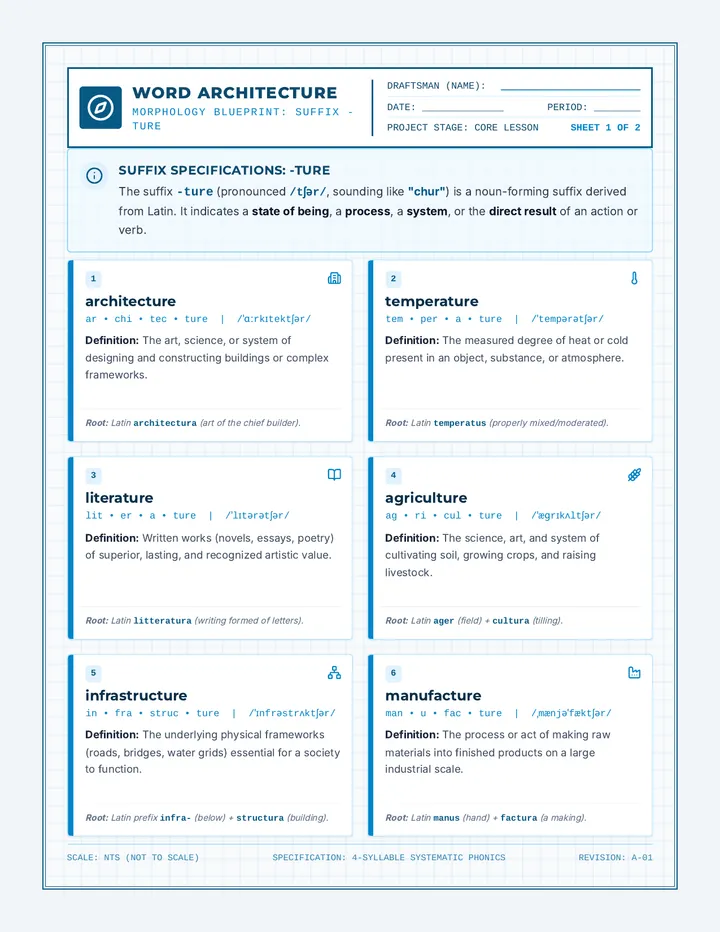
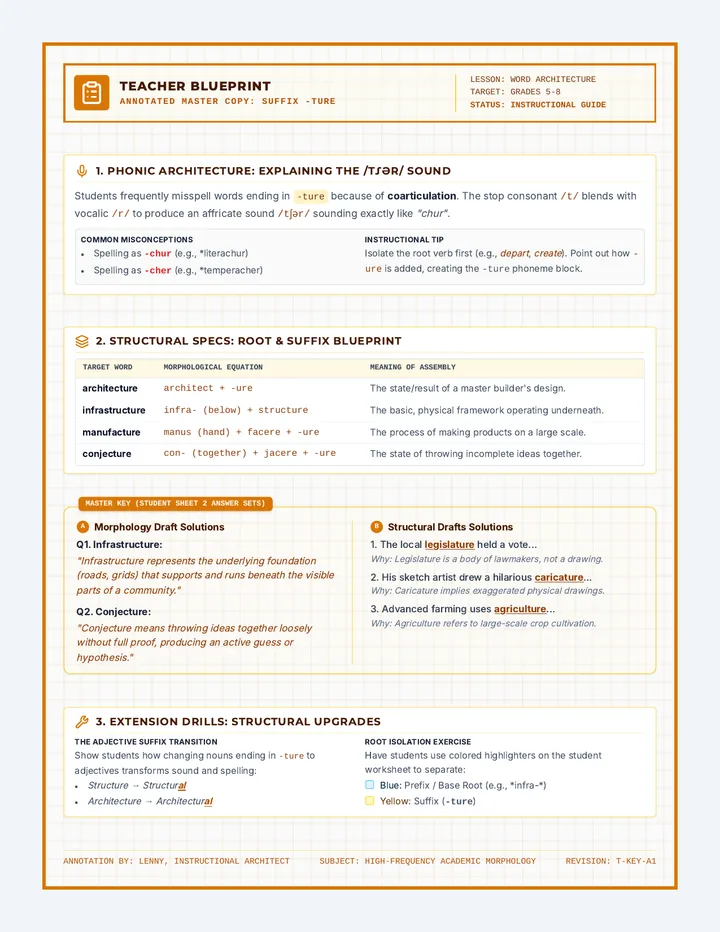
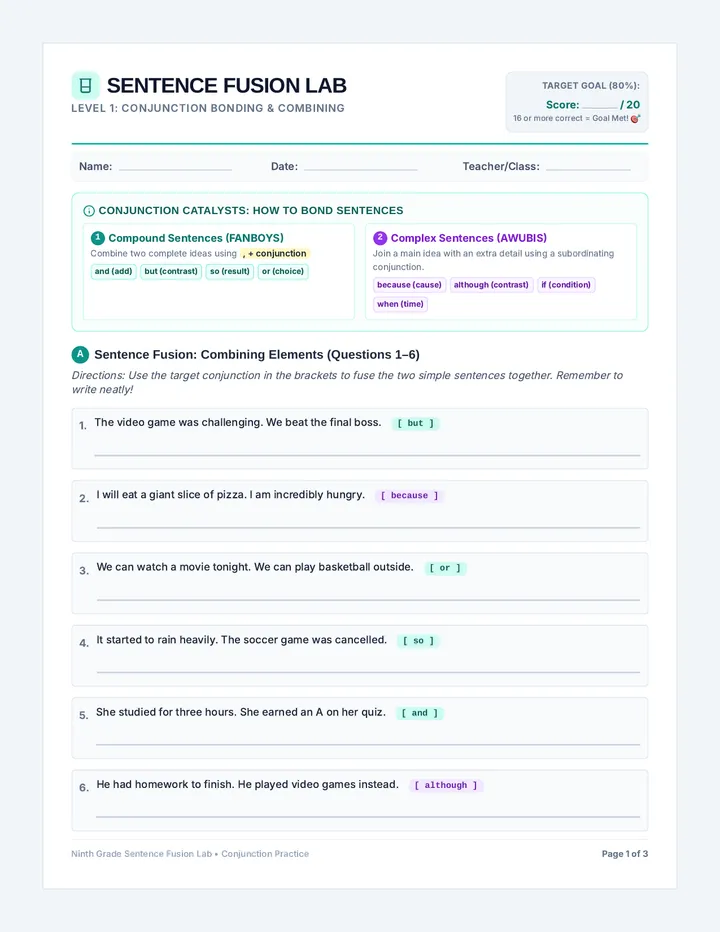
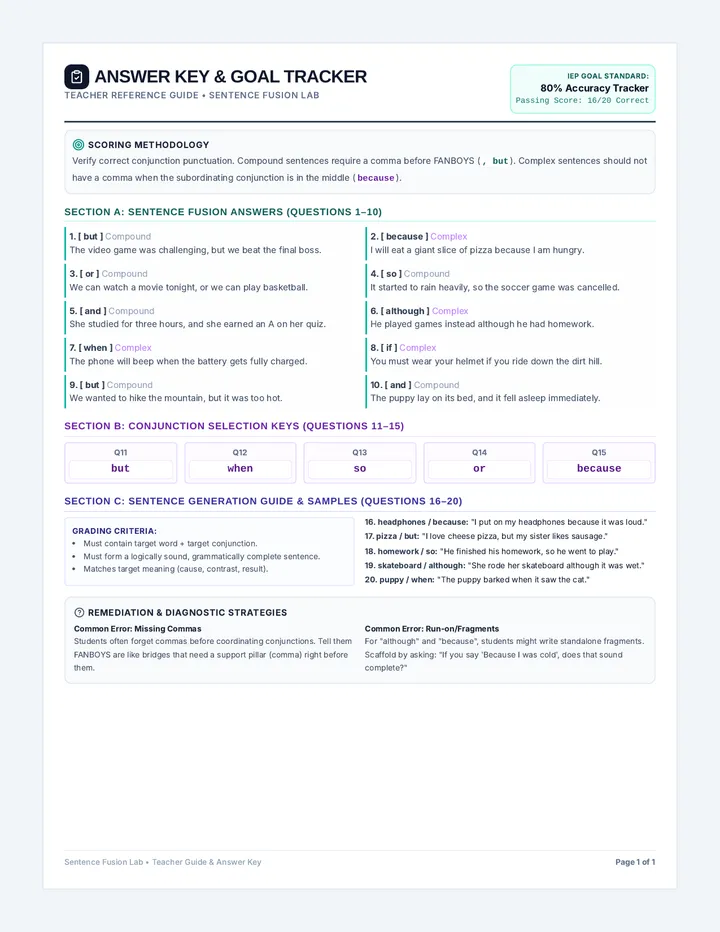
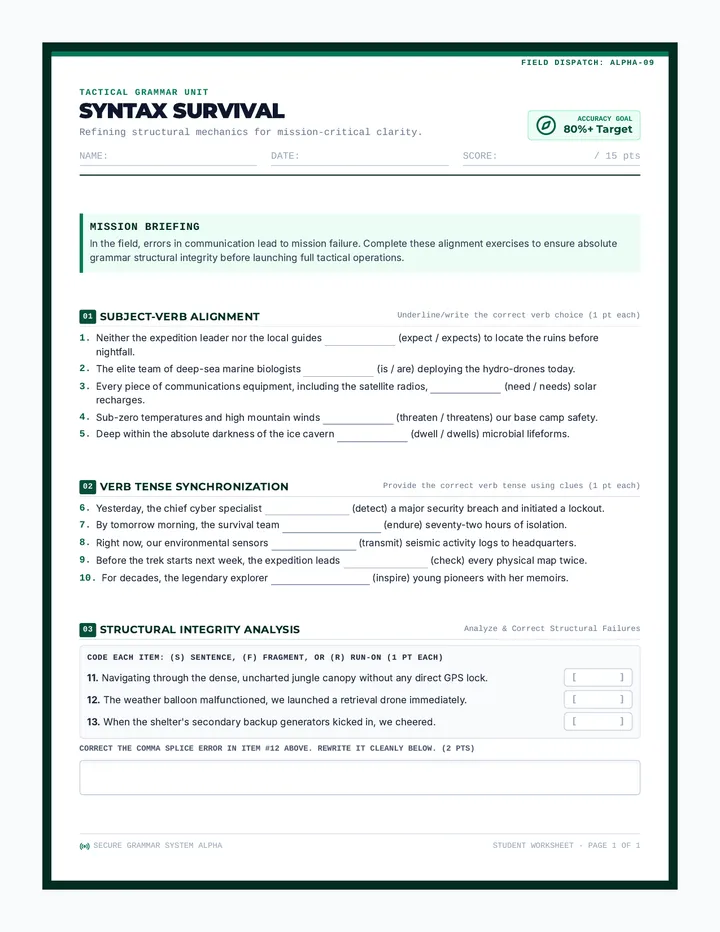
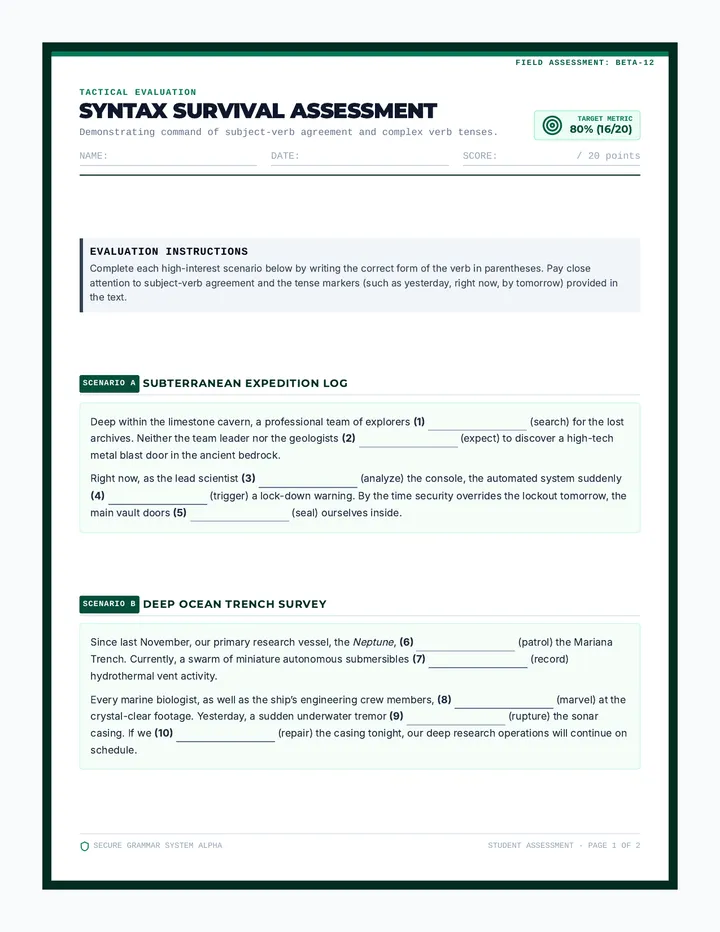
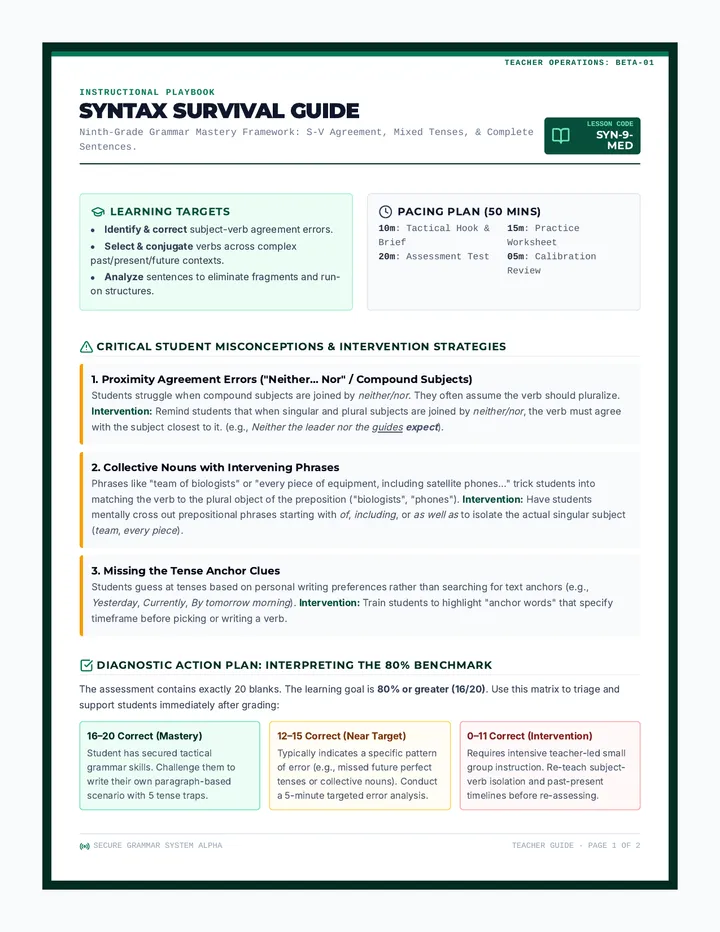
Explore the plural indefinite pronouns like both, few, many, and several and their agreement patterns.
No materials in this lesson yet.
Capstone simulation. Students apply all 11 strategies to solve a complex text-based 'Maze' and earn their Thought Tracker Mastery.
Metacognitive choice. Students practice deciding which 'Mind Tool' (Inference, Visualization, Questioning) is best for specific text challenges.
Masters the 'Click or Clunk' monitoring technique. Students learn to identify when meaning breaks down and which tool to use for a 'fix-up'.
Identifies text structures (Cause/Effect, Sequence) as 'Brain Blueprints' that help organize incoming data.
Uses Arthur Evans' deductive reasoning techniques. Students solve logic puzzles by eliminating impossibilities within a text.
Directly inspired by the Reading Detective series. Students learn to cite page, line, and word clues to prove their reasoning.
Focuses on Synthesis. Students track how their 'Thought Map' changes from the first page to the final sentence.
Introduces the 'Curiosity Compass' to generate Thick and Thin questions, moving from literal facts to deep inquiry.
Teaches visualization as a sensory experience. Students learn to 'film' the story in their heads using five-sense descriptions.
Masters the 'Clue + Vault = Discovery' equation. Students learn to justify their inferences using specific text evidence and background knowledge.
Focuses on Schema as the 'Knowledge Vault.' Students learn to retrieve and organize prior knowledge before entering a text.
Introduction to the 'Inner Voice'. Students learn to identify when their brain is actively thinking versus just reading words, using the 'Reading Robot' vs. 'Thought Tracker' comparison.
A capstone challenge where students apply all their Mind Detective skills to solve a complex literacy mystery, demonstrating mastery of metacognition and reasoning.
Teaches students how to select the right 'Mind Tool' for different types of texts and challenges, reinforcing the metacognitive choice of strategies.
Focuses on monitoring comprehension. Students learn the 'Click or Clunk' strategy to identify when they've lost track of meaning and how to use 'fix-up' strategies.
Students learn to identify text patterns (cause/effect, sequence, compare/contrast) as 'blueprints' that help the brain organize information more efficiently.
Uses Arthur Evans' deductive reasoning approach. Students solve logic puzzles and text mysteries by eliminating impossibilities and following logical sequences.
Introduces the 'Reading Detective' approach to finding explicit evidence. Students learn to cite page numbers, lines, or specific phrases to prove their answers.
After Reading Strategy: Consolidating skills into a final performance and assessment about students’ actions around the world.
After Reading Strategy: Comparing cultures, traditions, and navigation (directions) using role-play to evaluate perspectives across texts.
After Reading Strategy: Synthesizing information into 'Summary Sculptures' focused on food items and healthy lifestyles.
After Reading Strategy: Writing from the perspective of characters visiting cultural and educational places in Kuwait to synthesize meaning.
Before Reading Strategy: Practicing fluency and previewing text through weather forecast 'Radio Dramas' and climate reports.
During Reading Strategy: Using reenactment to boost recall of the history of technology and modern hobbies.
During Reading Strategy: Exploring multiple viewpoints within global celebrations and cultural events.
During Reading Strategy: Diving deep into traveler perspectives through the 'Hot Seat' technique while discovering countries.
During Reading Strategy: Using physical poses to represent informational text structures like cause/effect focused on environmental danger.
During Reading Strategy: Creating frozen tableaus to represent narrative story arcs centered on the joy of hobbies.
During Reading Strategy: Using 'Talking Statues' to make inferences about healthy habits and scientific facts about health.
Before Reading Strategy: Introduction to enactment as a tool for prediction and frontloading, focused on Kuwaiti heritage and life in the past.
Consolidating skills into a final performance about students’ actions around the world.
Comparing cultures, traditions, and navigation (directions) using role-play.
Synthesizing information into 'Summary Sculptures' focused on food items and healthy lifestyles.
Writing from the perspective of characters visiting cultural and educational places in Kuwait.
Practicing fluency through weather forecast 'Radio Dramas' and climate reports.
Using reenactment to boost recall of the history of technology and modern hobbies.
Exploring multiple viewpoints within global celebrations and cultural events.
Diving deep into traveler perspectives through the 'Hot Seat' technique while discovering countries.
Using physical poses to represent informational text structures like cause/effect focused on environmental danger.
Creating frozen tableaus to represent narrative story arcs centered on the joy of hobbies.
Using 'Talking Statues' to make inferences about healthy habits and scientific facts about health.
Introduction to enactment as a tool for prediction, focused on Kuwaiti heritage and life in the past.
A quick bell-ringer activity focused on identifying central ideas and summarizing key concepts about Ancient Mesopotamia.
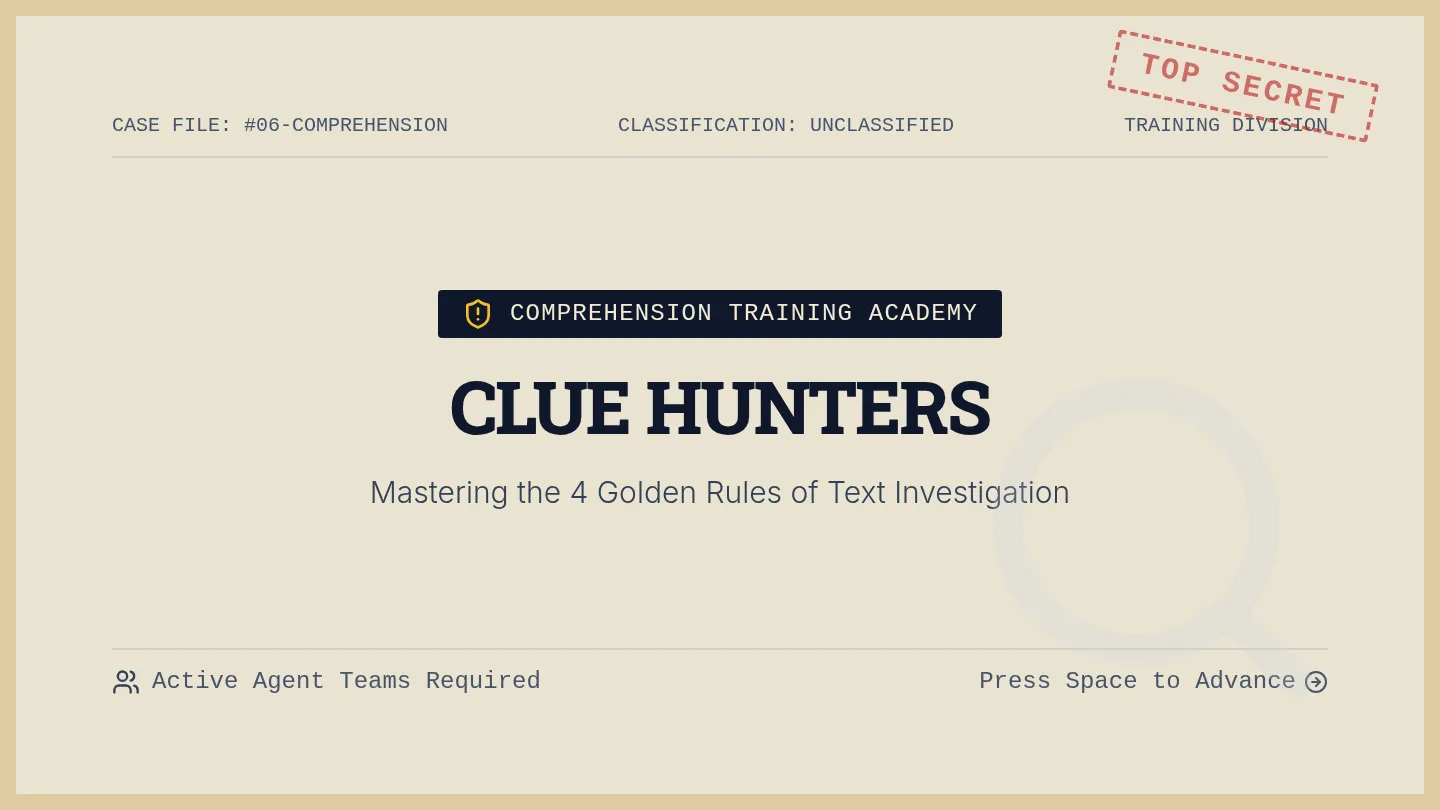
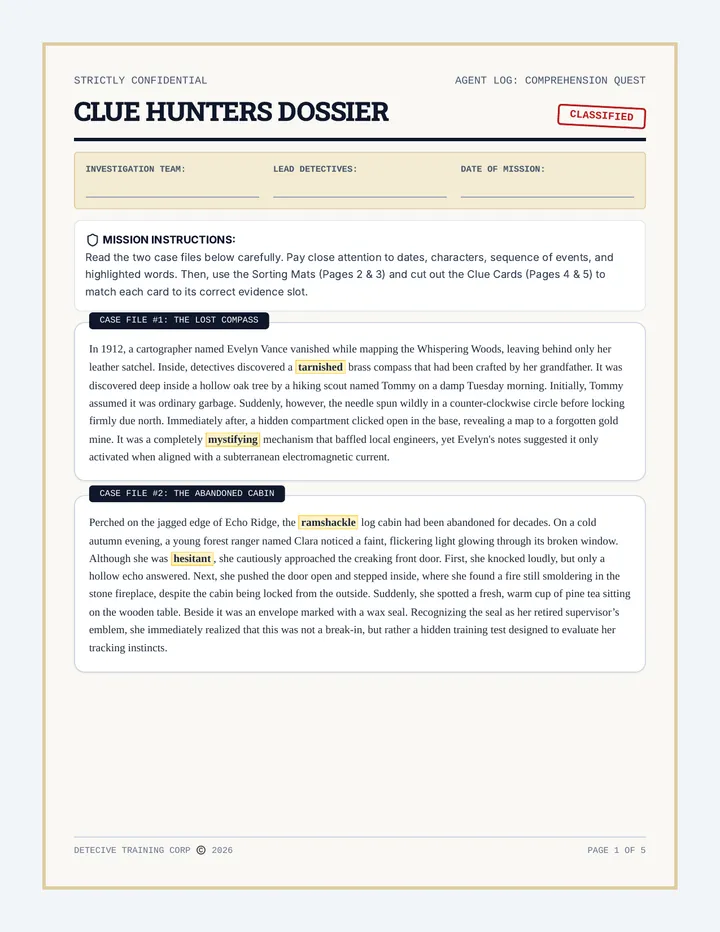
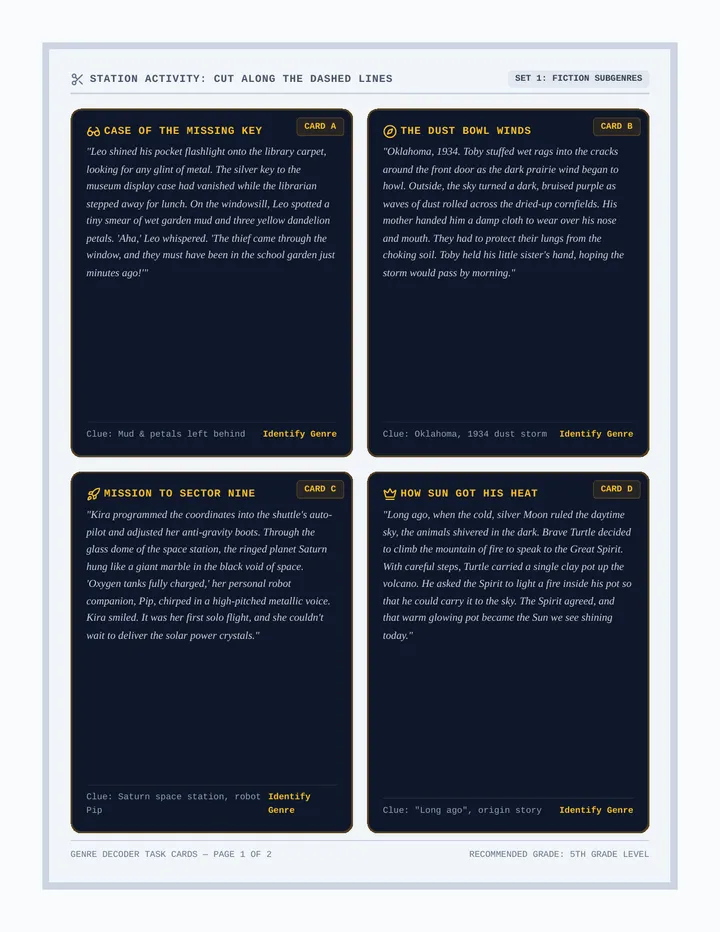
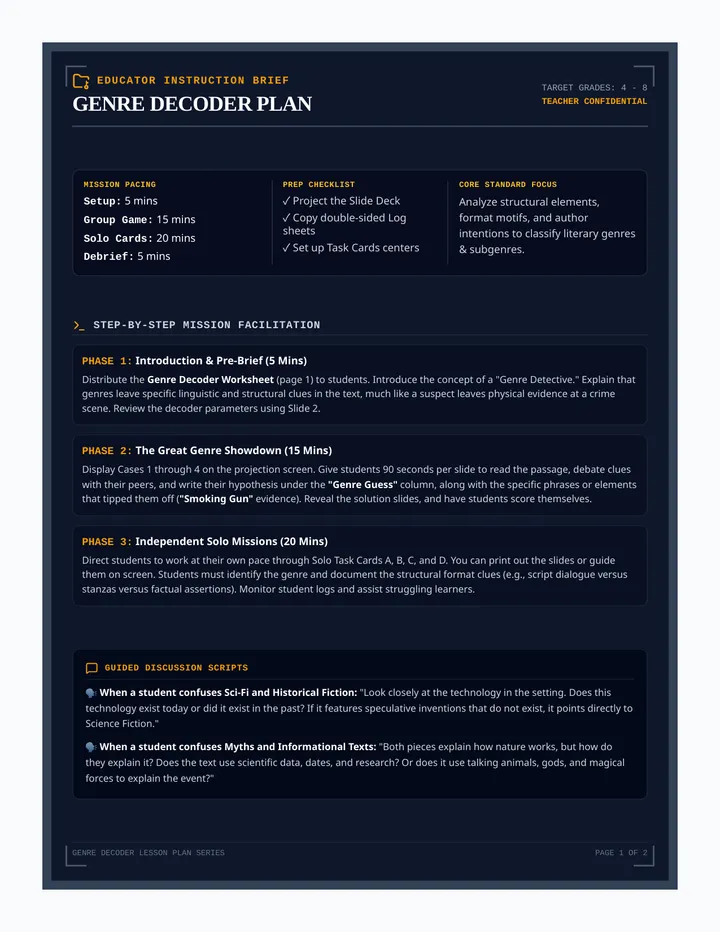
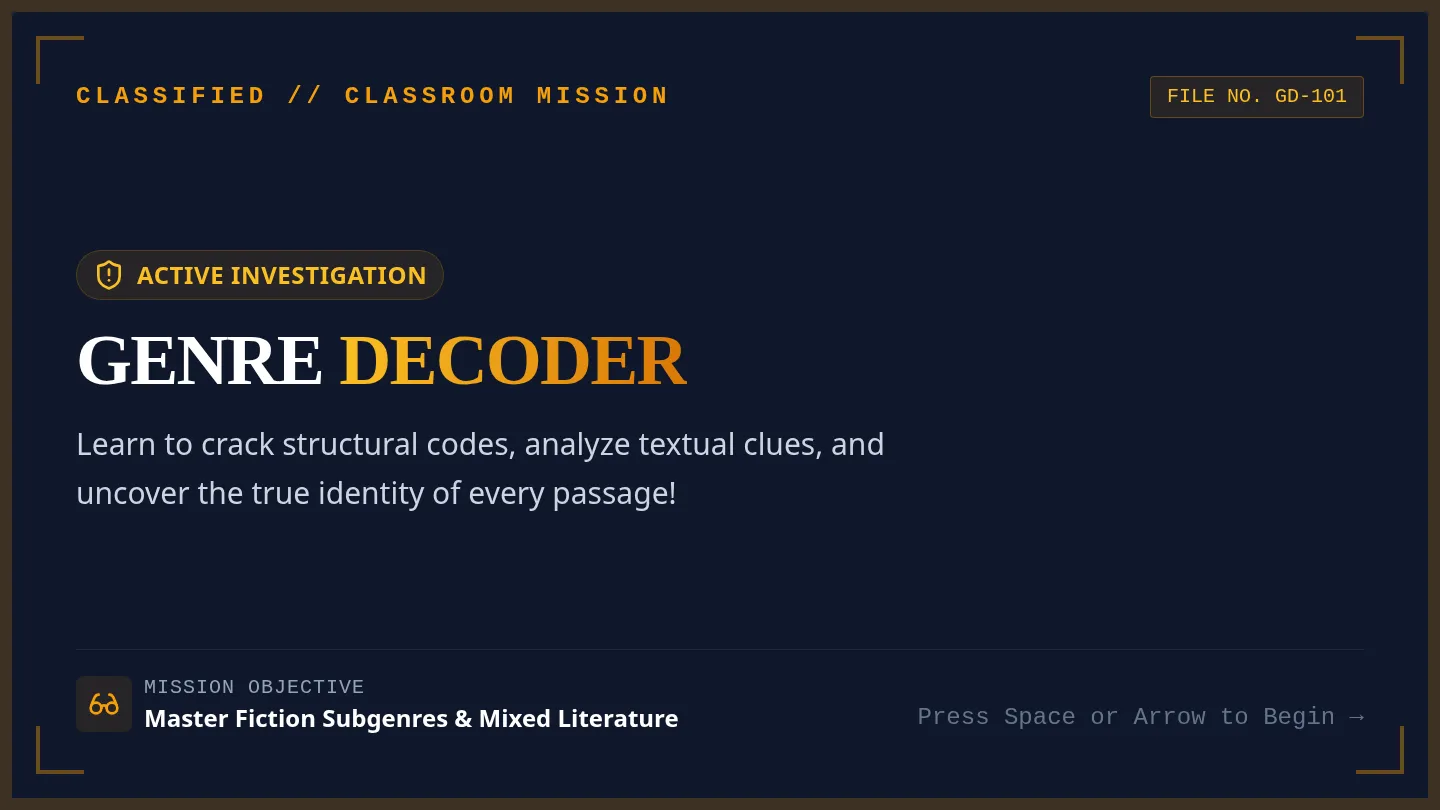
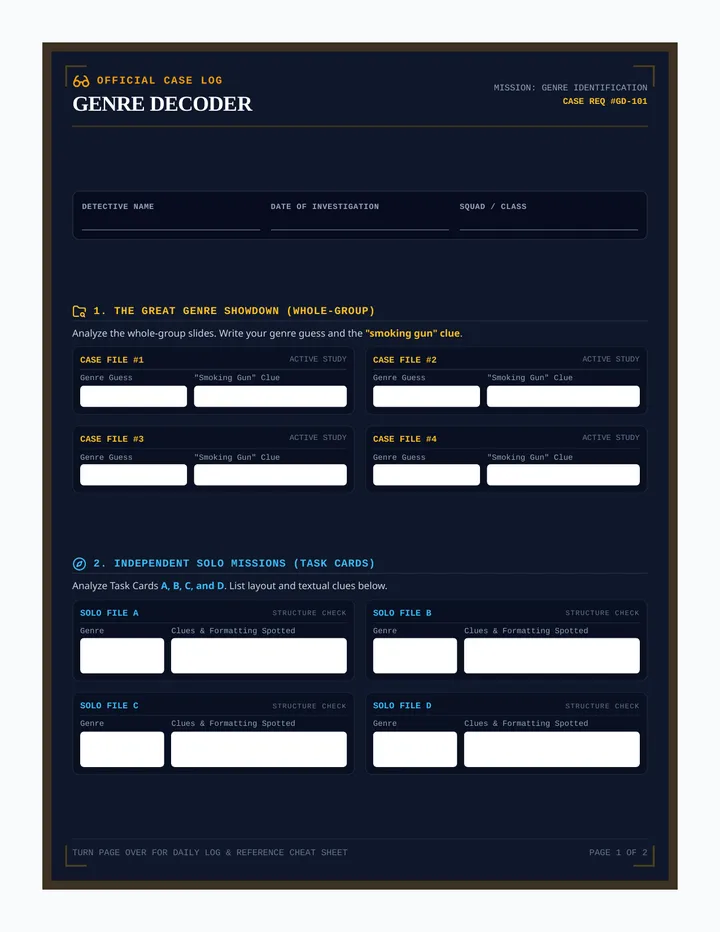
A comprehensive Grade 8 ELA lesson focused on mastering logical inferences across mixed genres, utilizing a 'detective' theme to engage students in close reading and evidence-based reasoning.