A series of engaging daily opinion writing prompts for 3rd graders, focused on forming strong opinions with supporting reasons and examples using the OREO method.
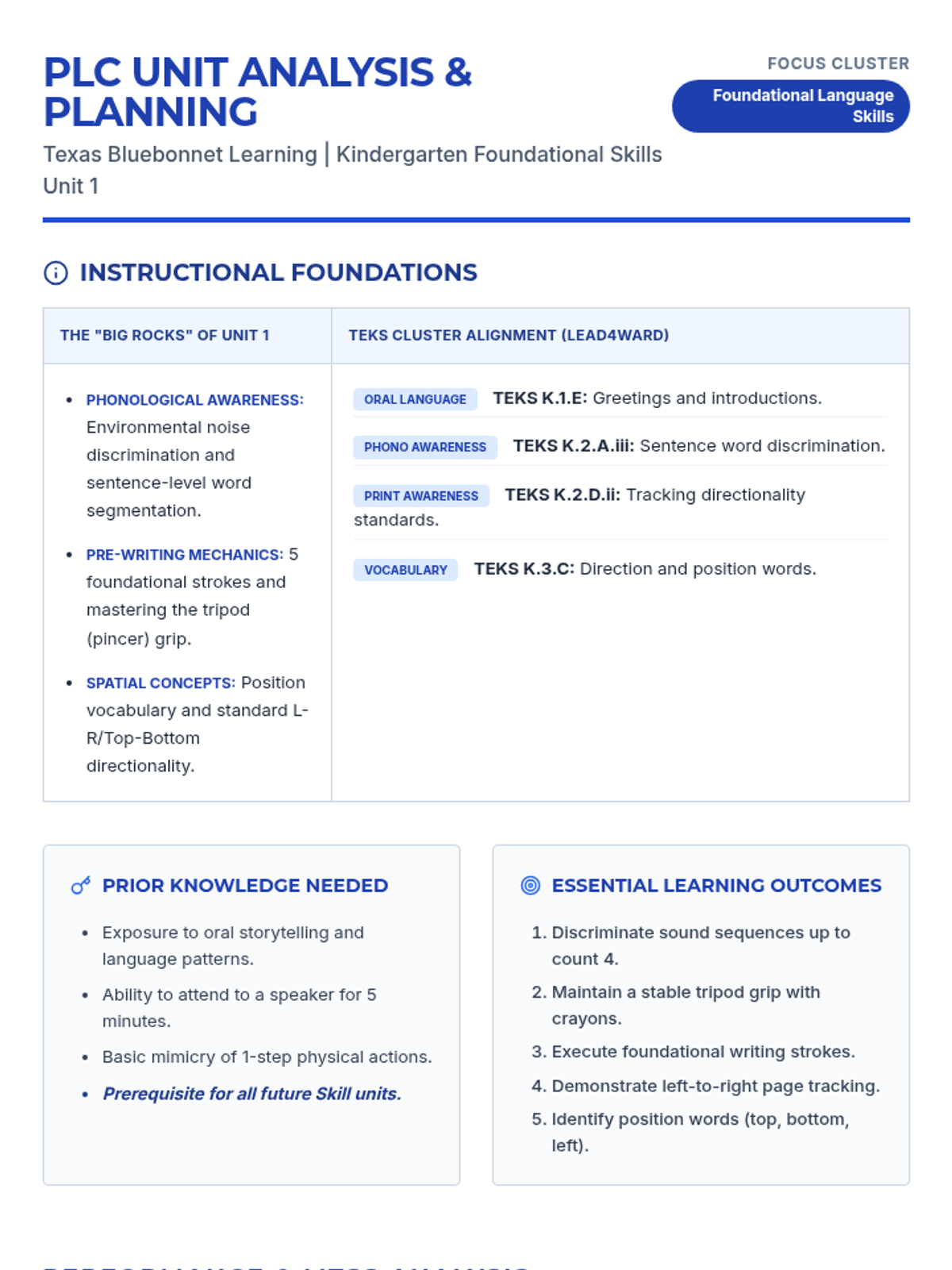
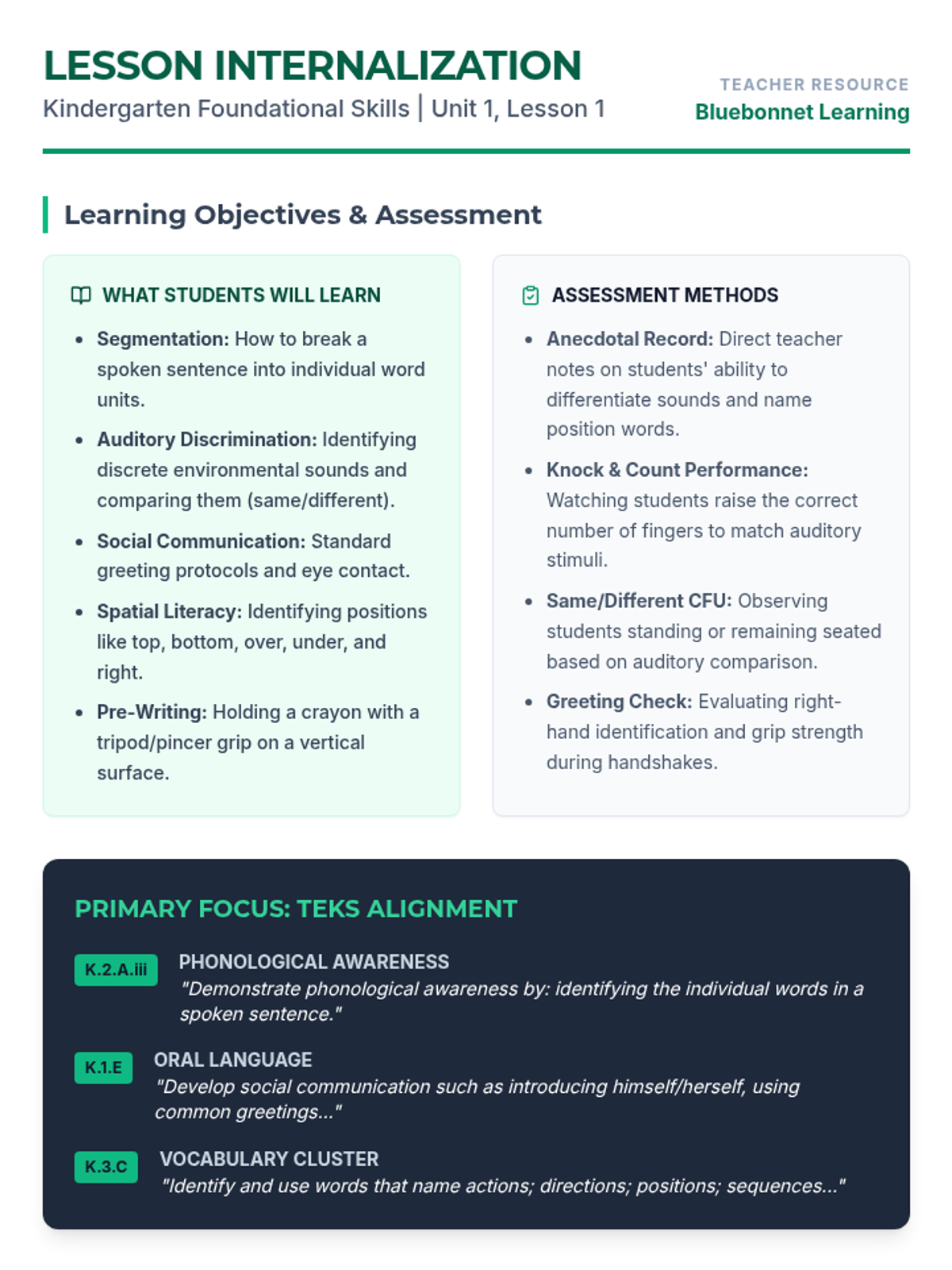
A collection of professional planning resources and student assessments for Kindergarten Foundational Skills Unit 1, focusing on phonological awareness, pre-writing strokes, and spatial directionality.
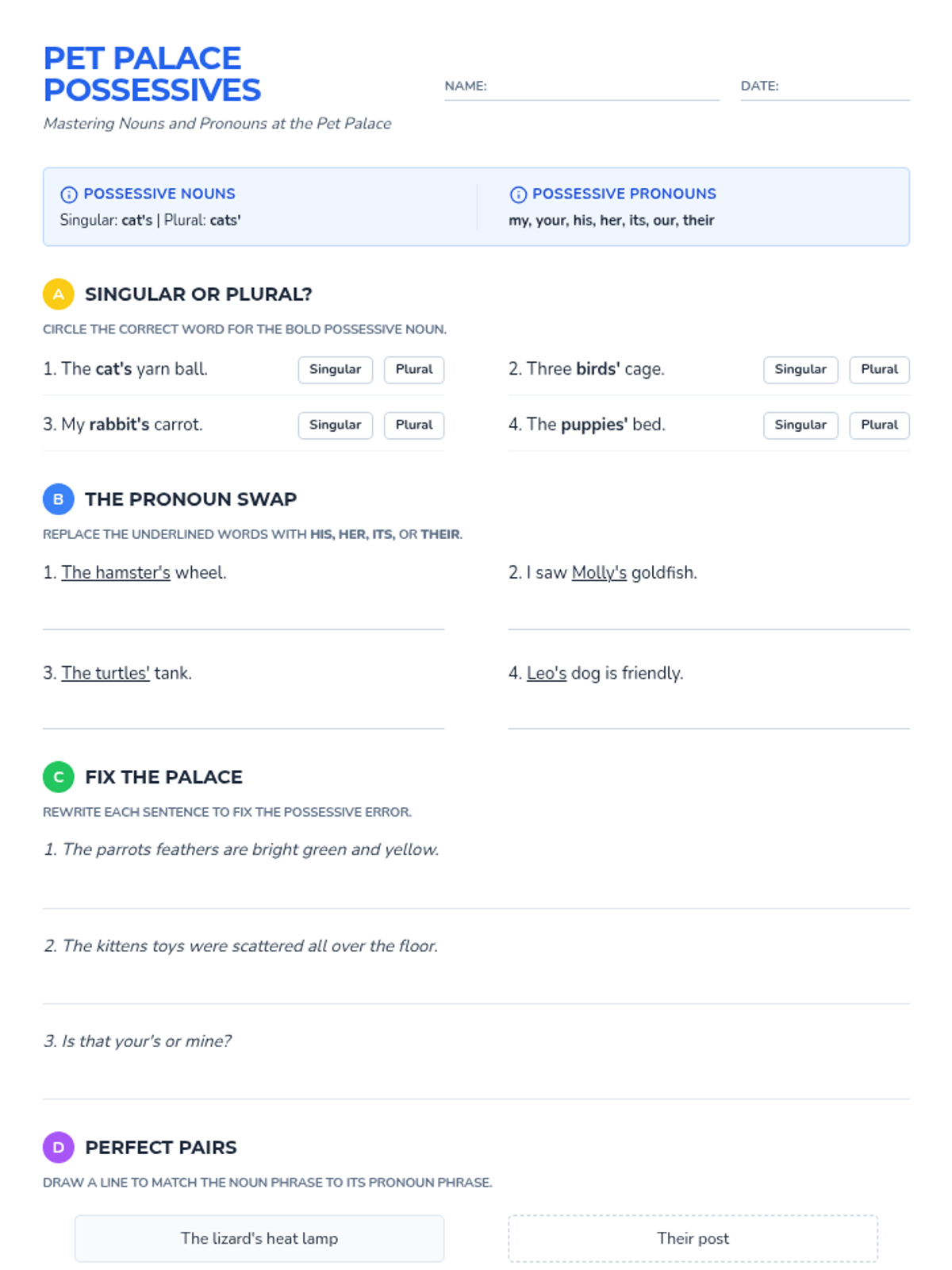
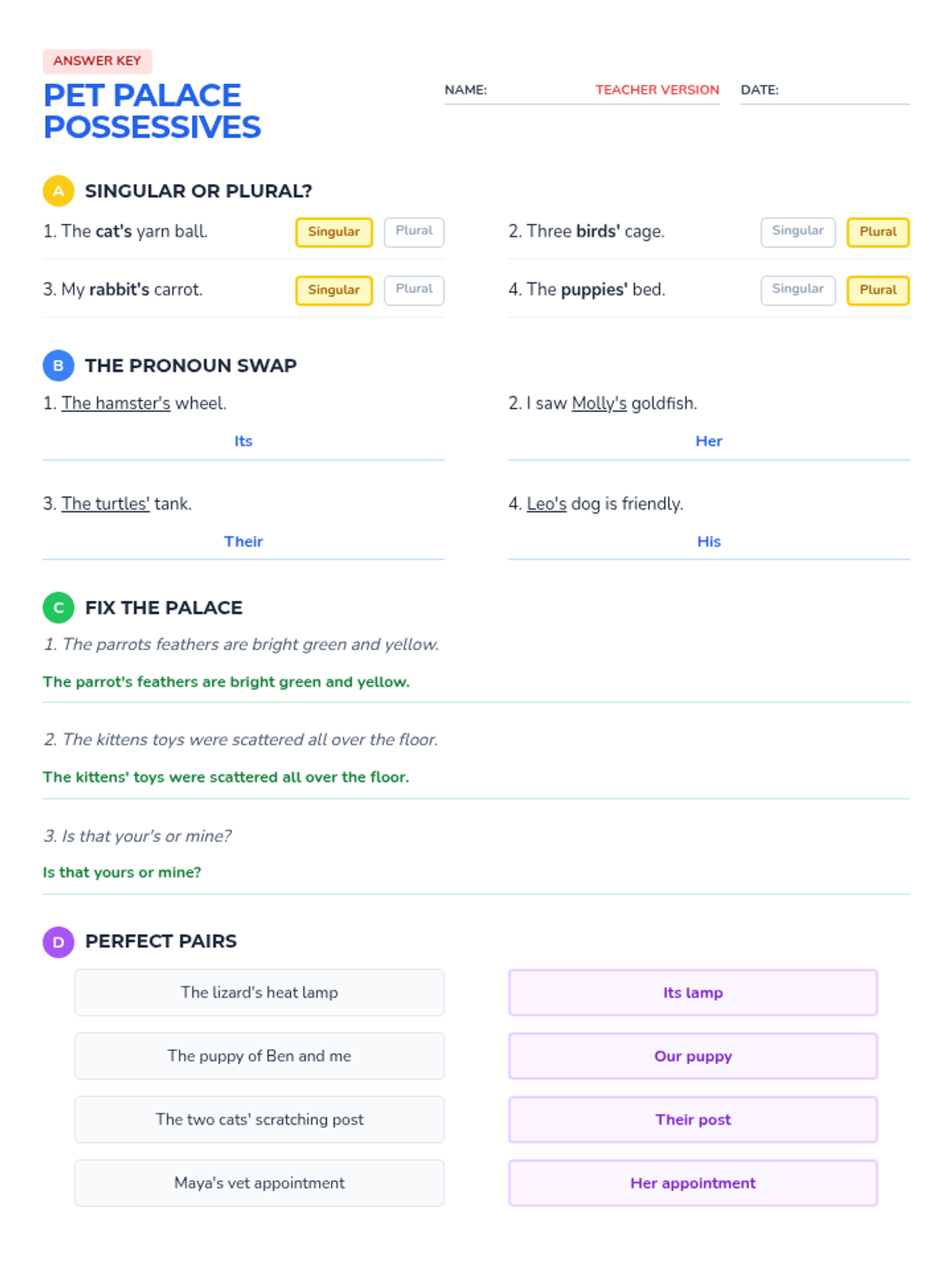
A comprehensive lesson for third graders to master singular and plural possessive nouns, as well as the transition from possessive nouns to pronouns through a fun pet-themed worksheet.
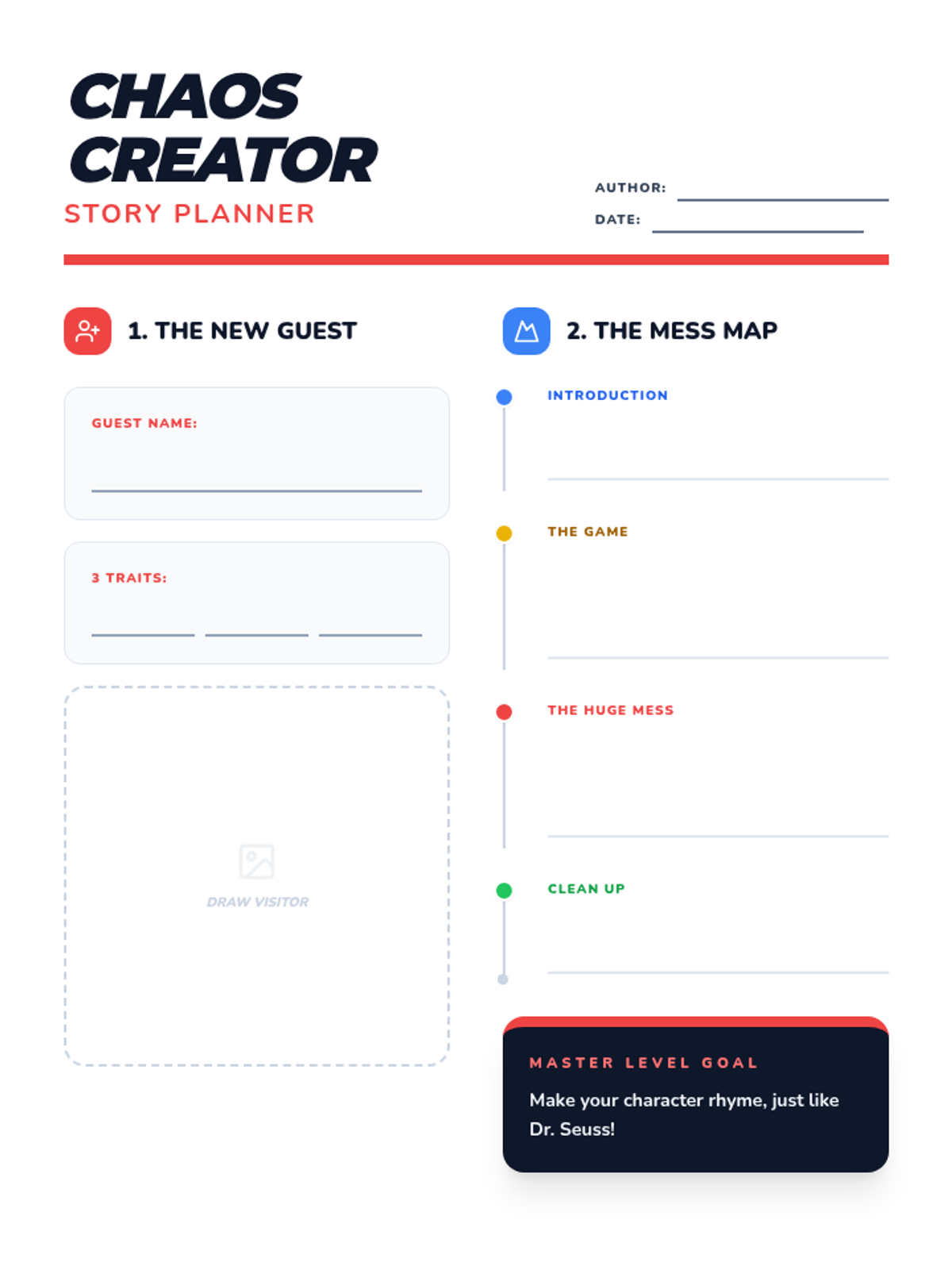
Students become the authors by creating their own 'Chaos Creator' characters and outlining a new adventure that mirrors Seuss's narrative structure.
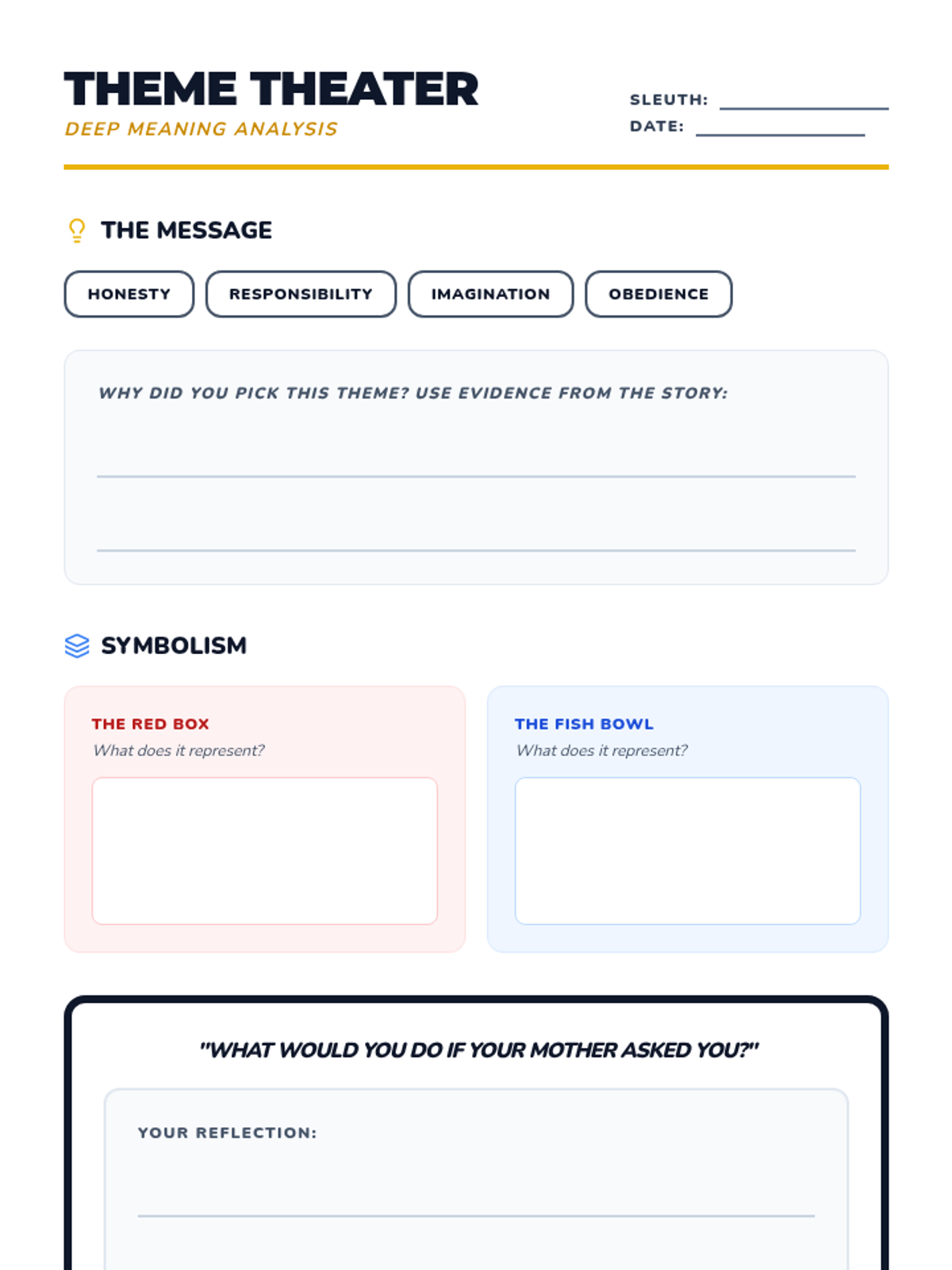
Investigate the deeper meanings of the story. Students debate the moral of the story, analyze the symbolism of the "Mess," and evaluate the lesson on responsibility.
Explore the conflicting perspectives of the Cat and the Fish. Students analyze how different characters perceive the same events and practice writing from a specific point of view.
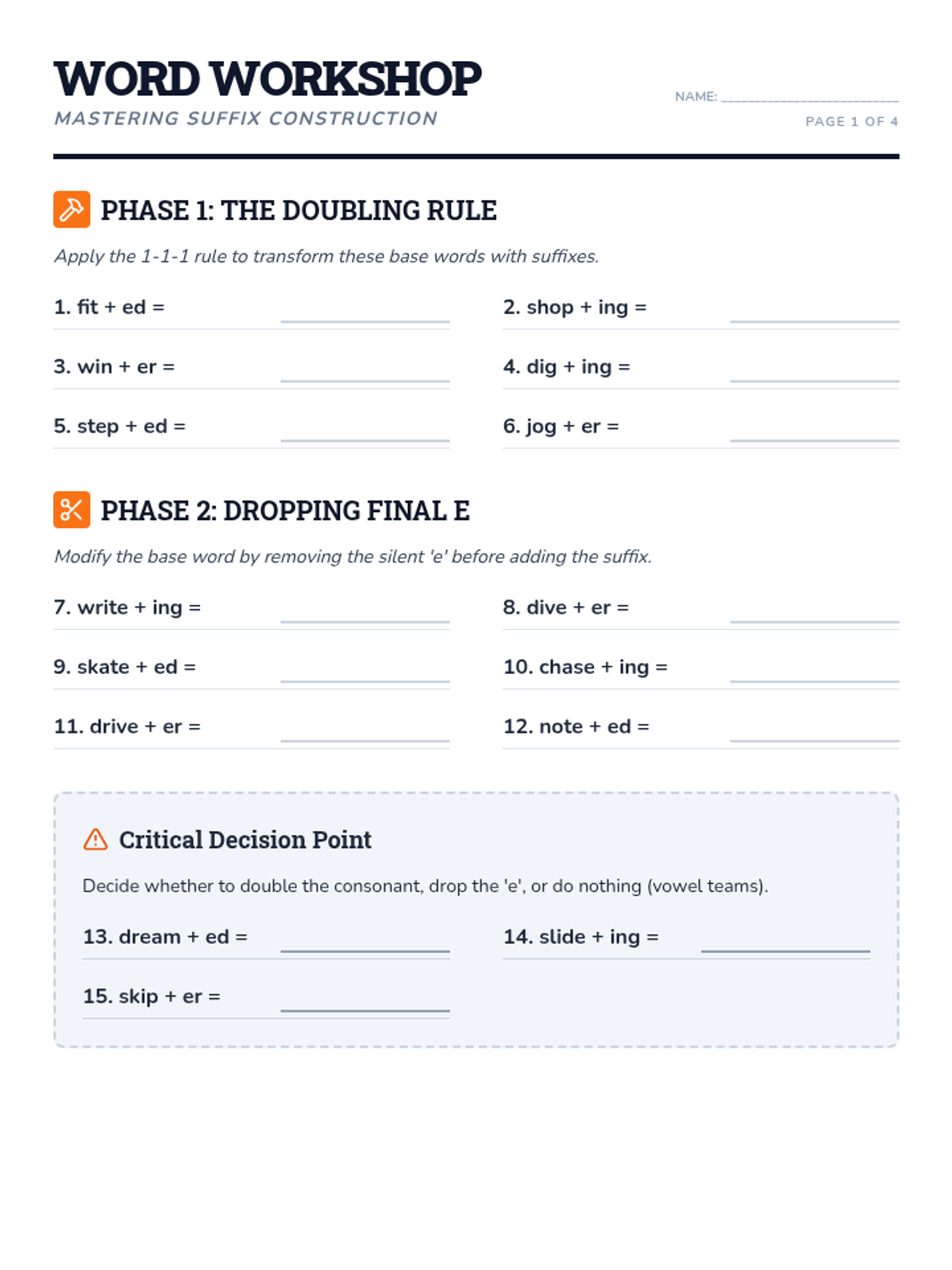
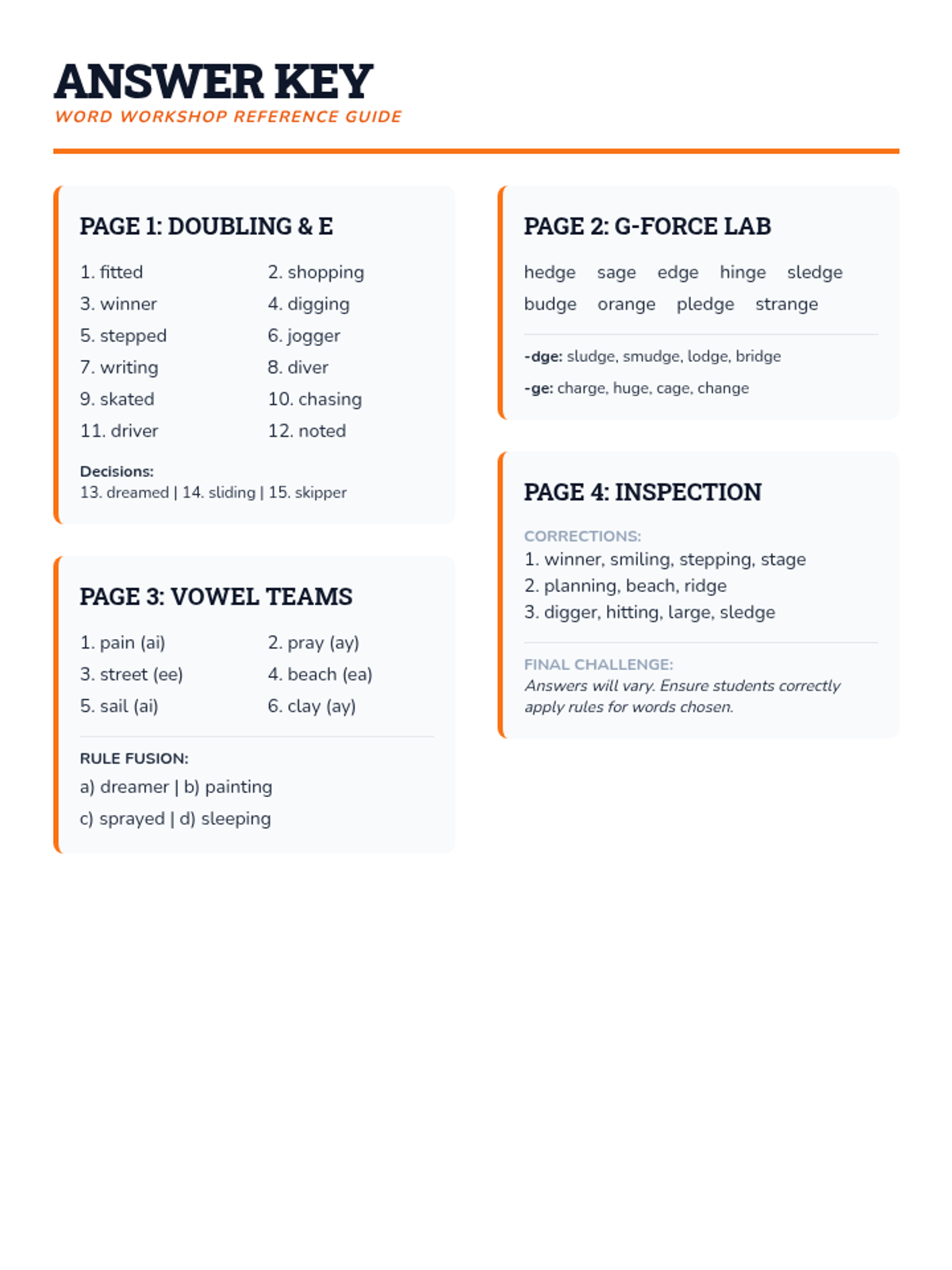
A comprehensive practice packet focusing on core spelling rules: doubling consonants, dropping final 'e', and the dge/ge distinction, integrated with vowel team mastery.
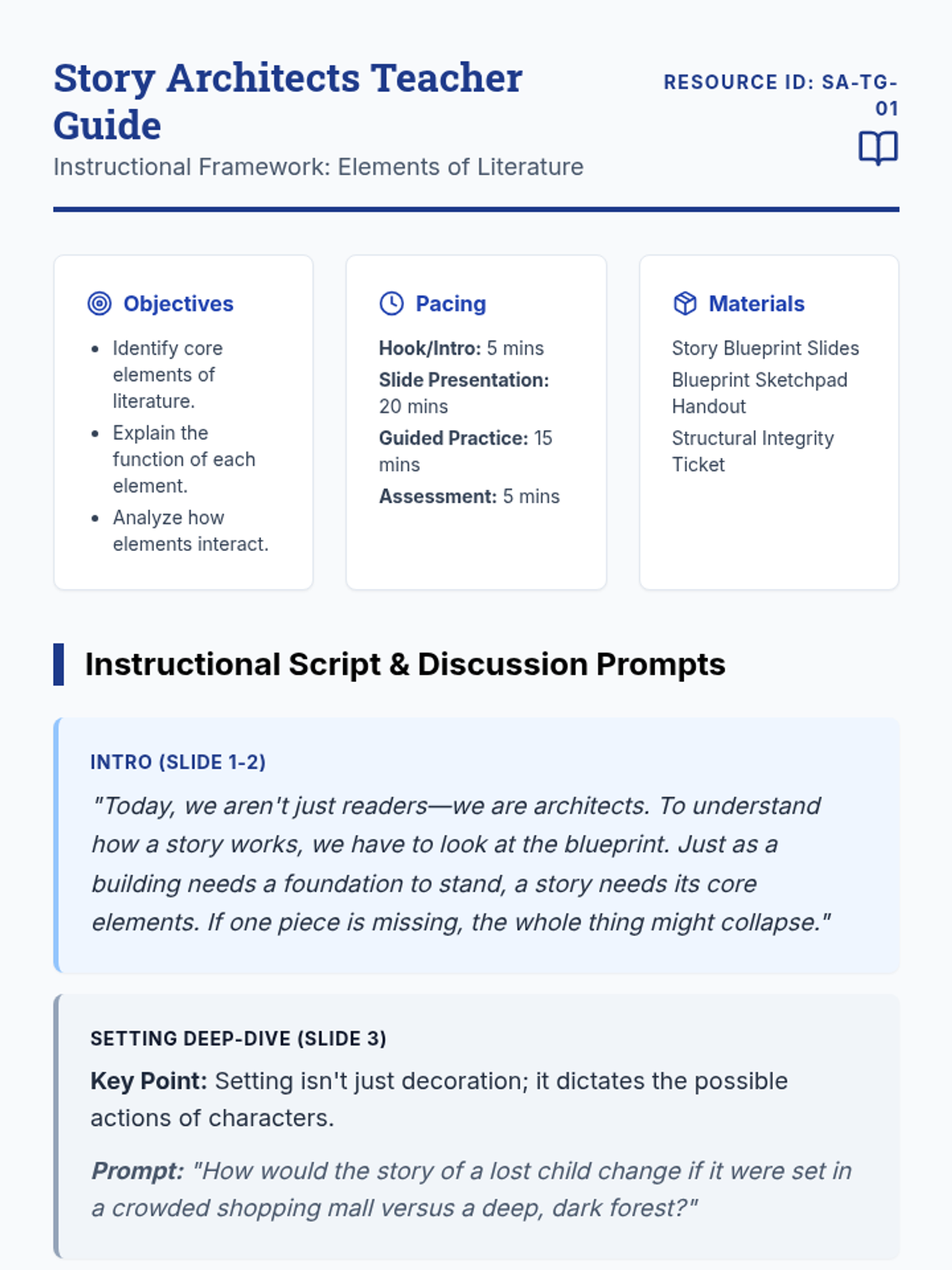
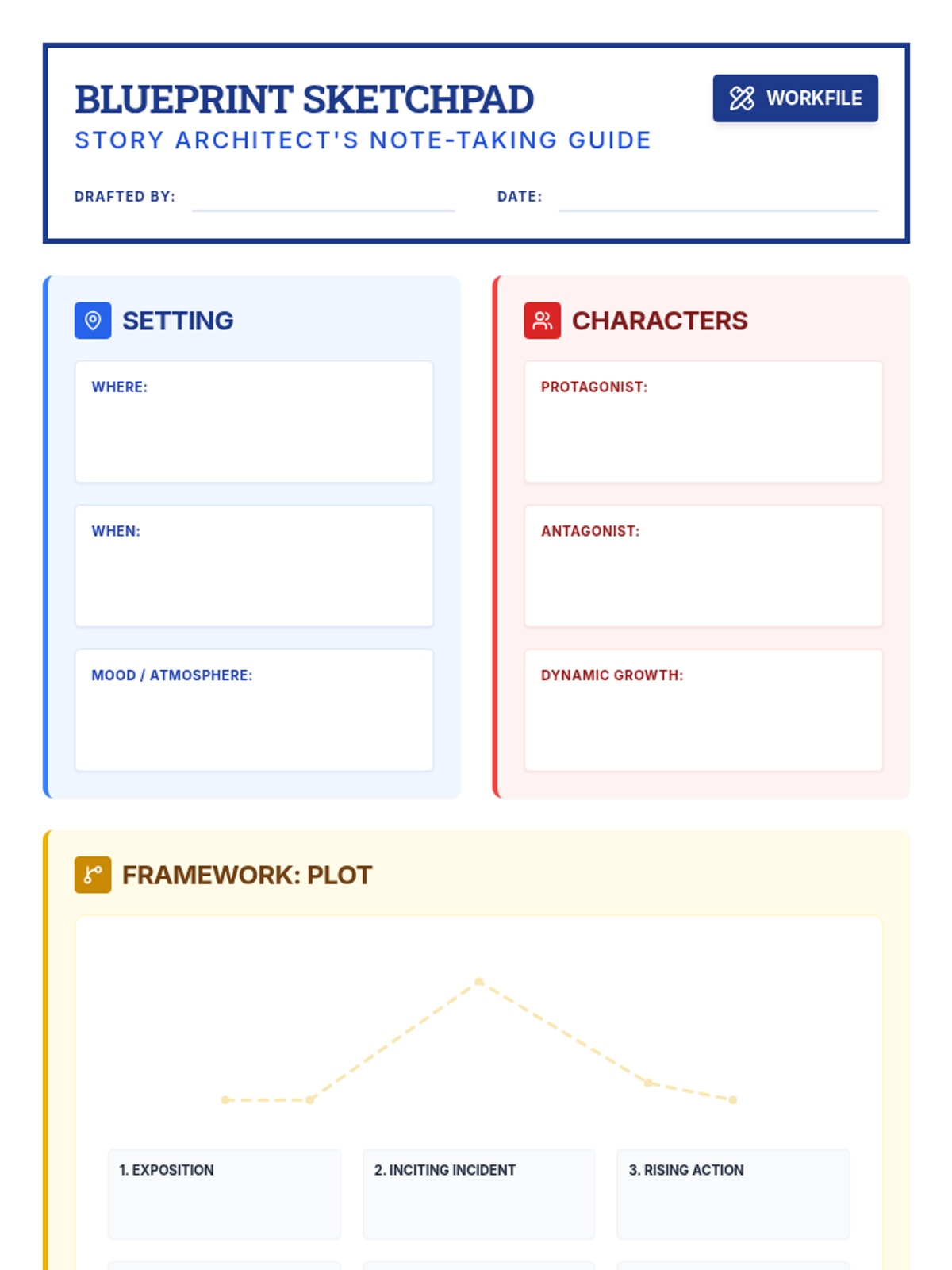
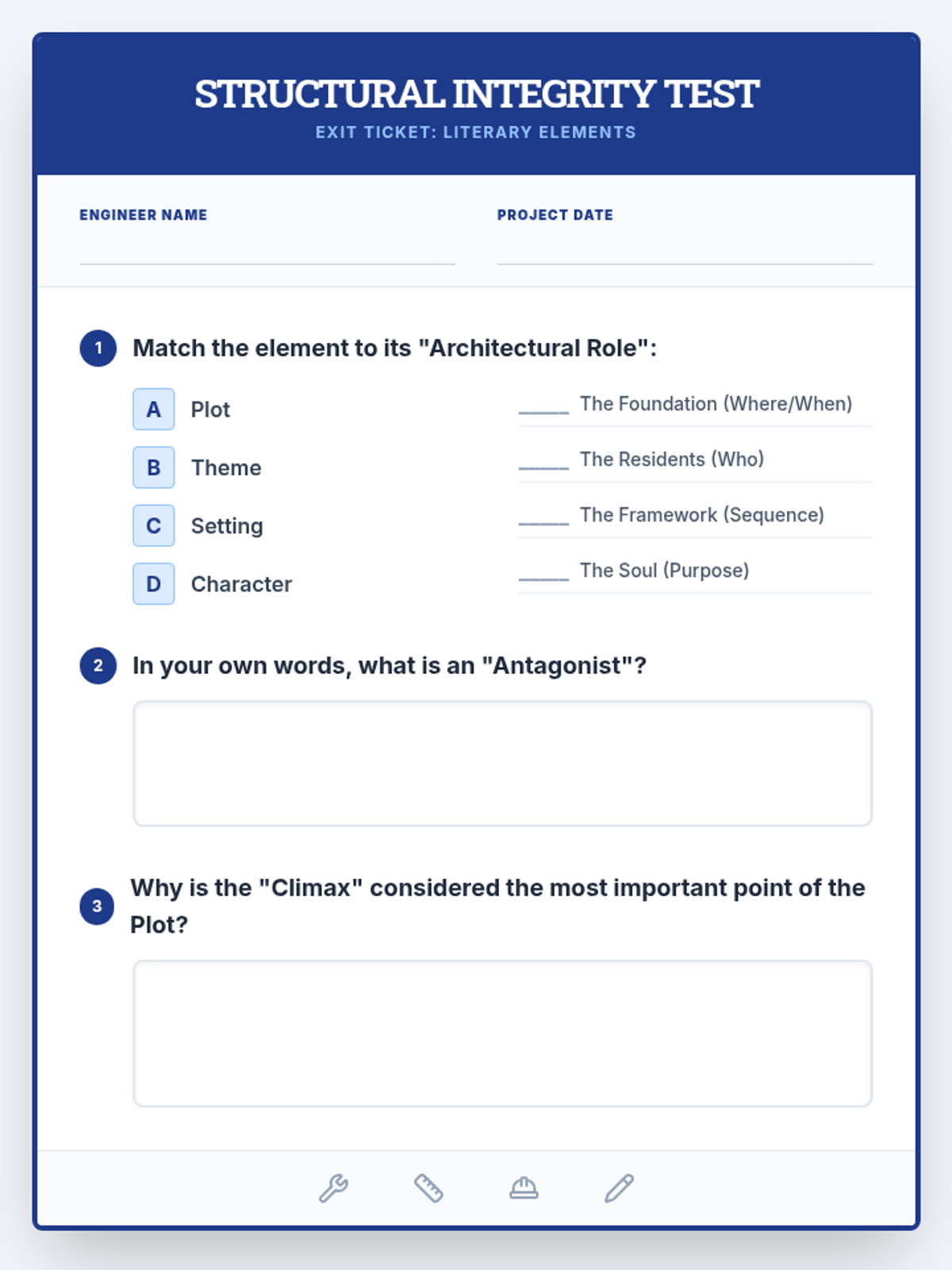
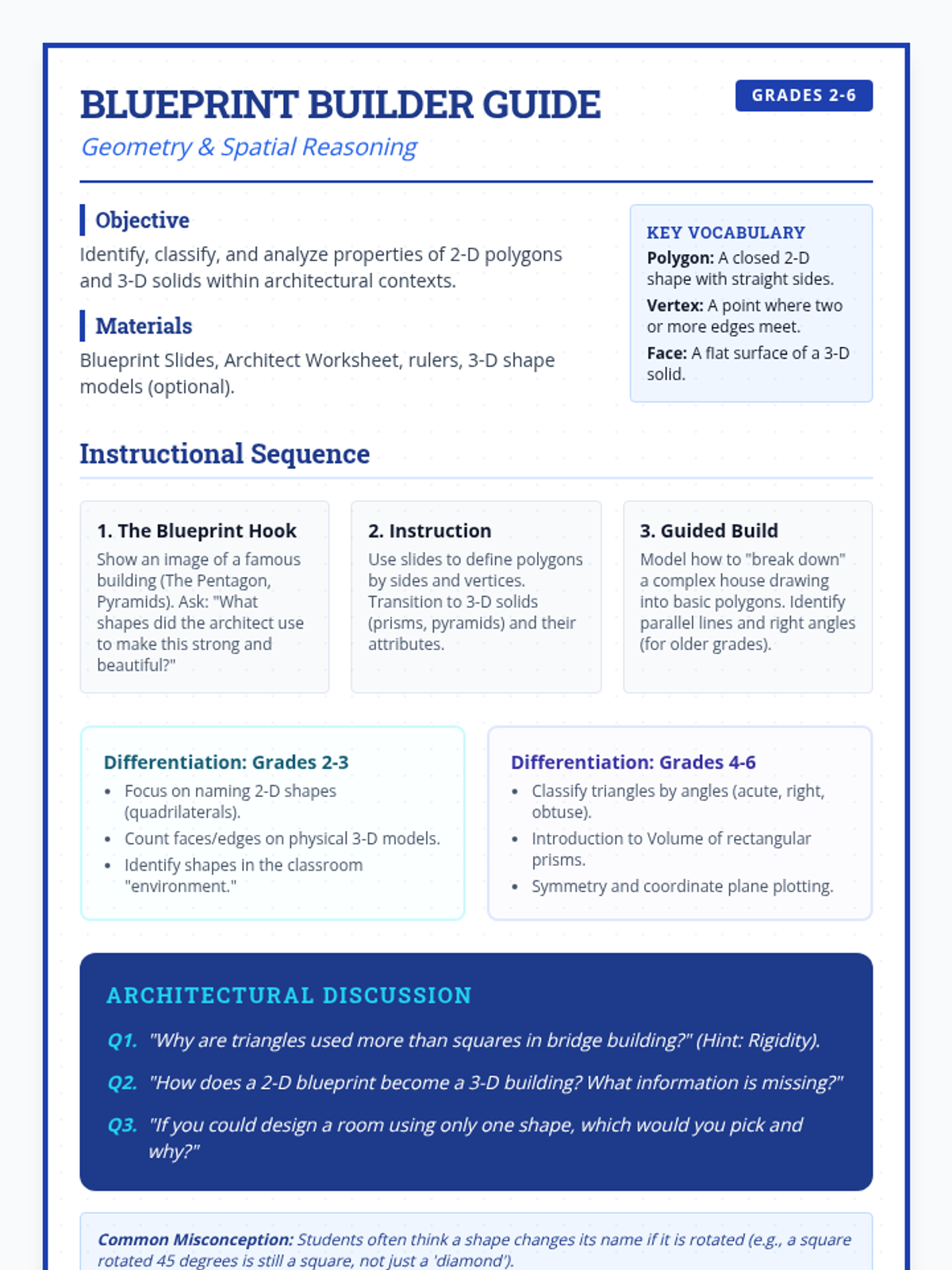
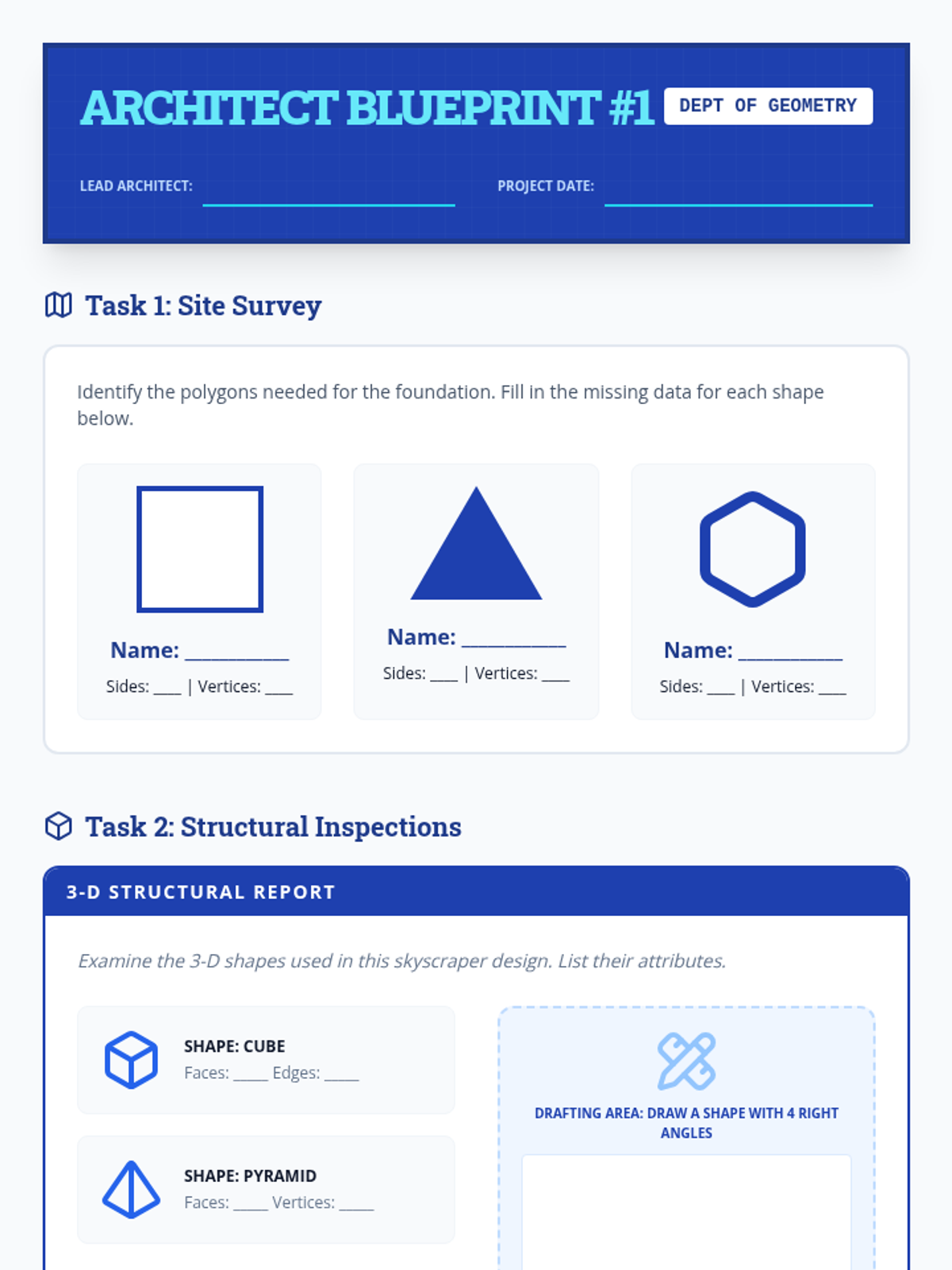
A comprehensive introduction to the core elements of literature—plot, character, setting, and theme—using an architectural blueprint metaphor to help students visualize story structure.
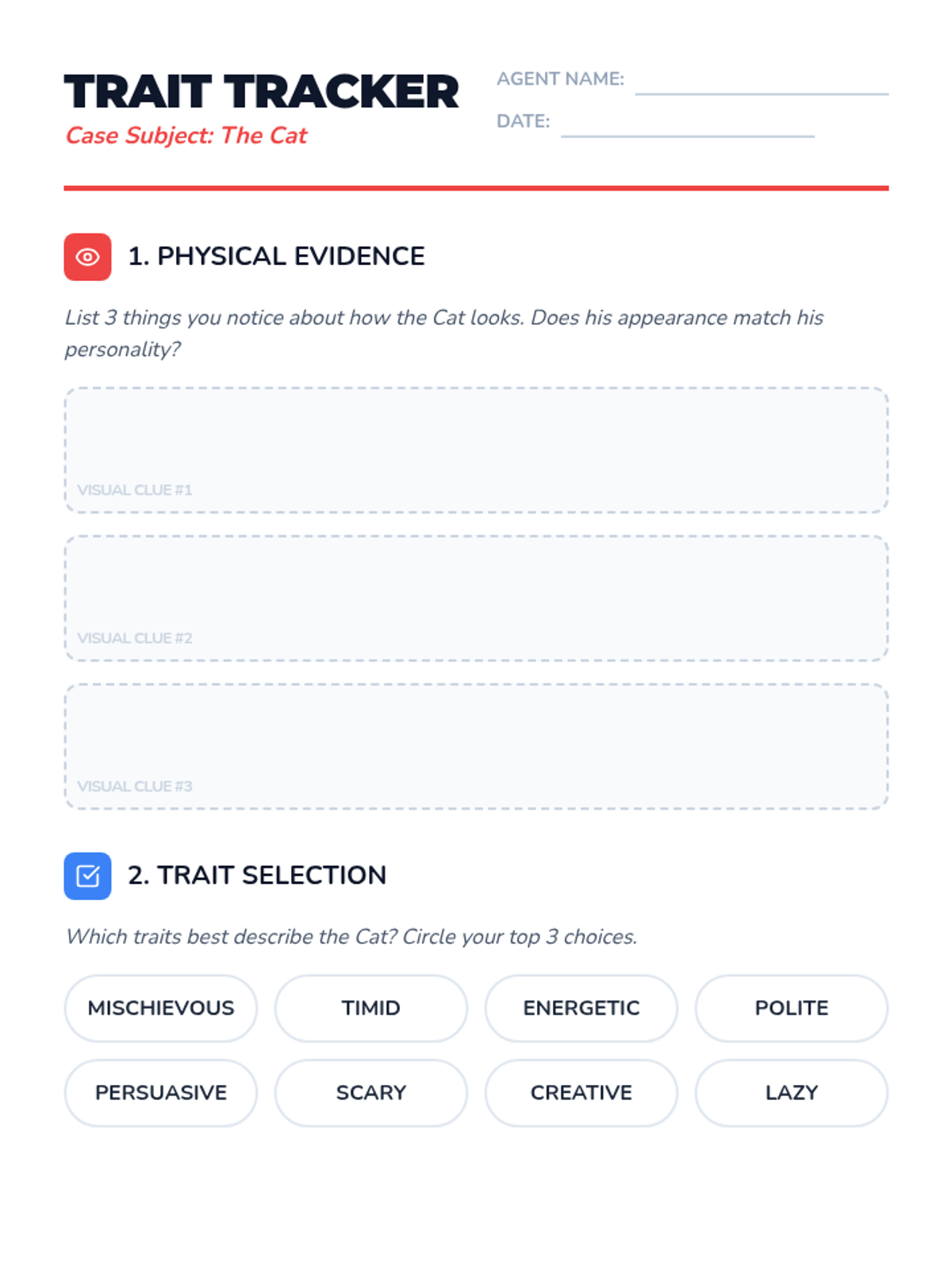
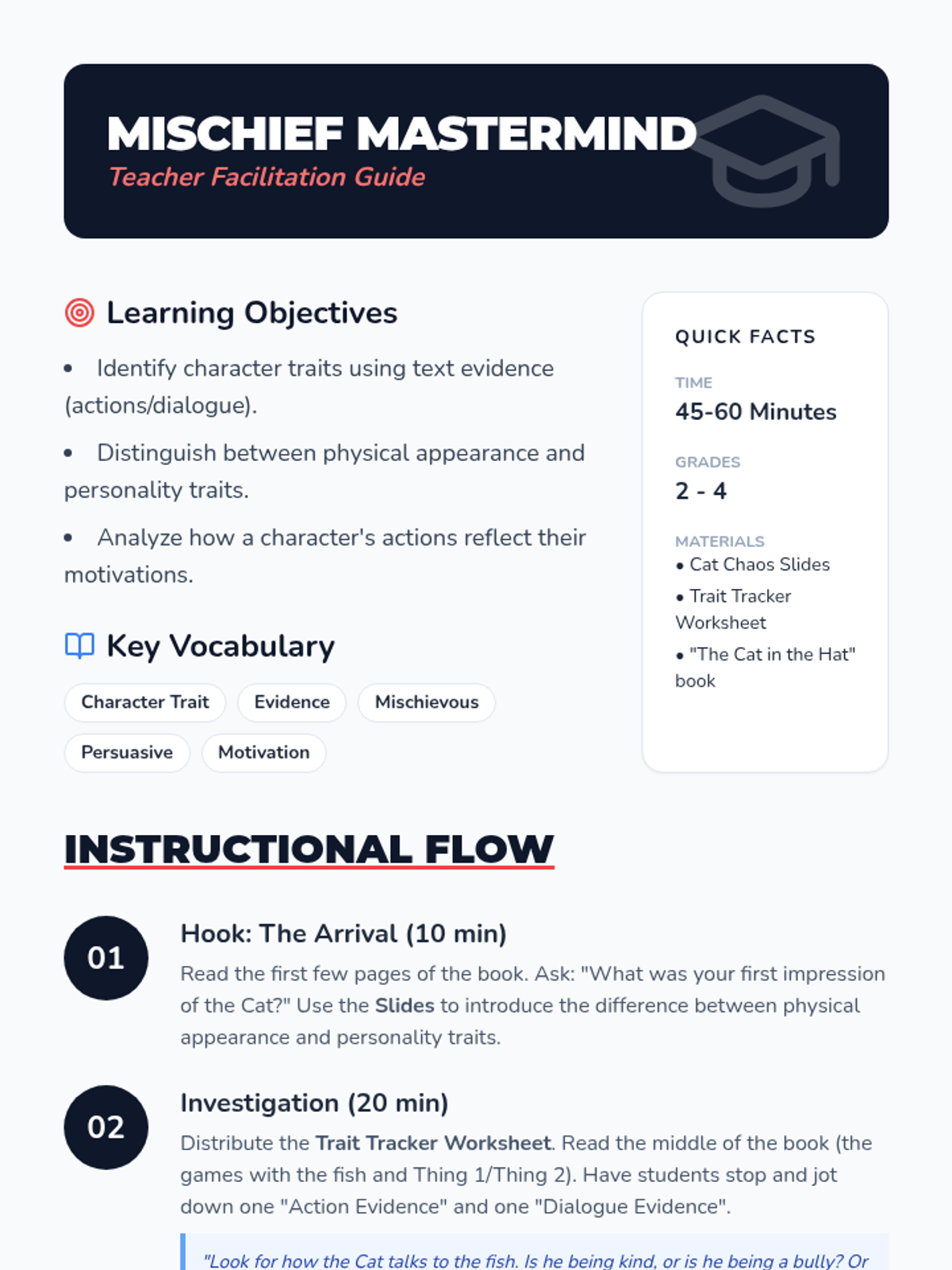
A whimsical exploration of character traits using the iconic Cat from 'The Cat in the Hat'. Students analyze evidence from the text to determine the Cat's personality and motivations.
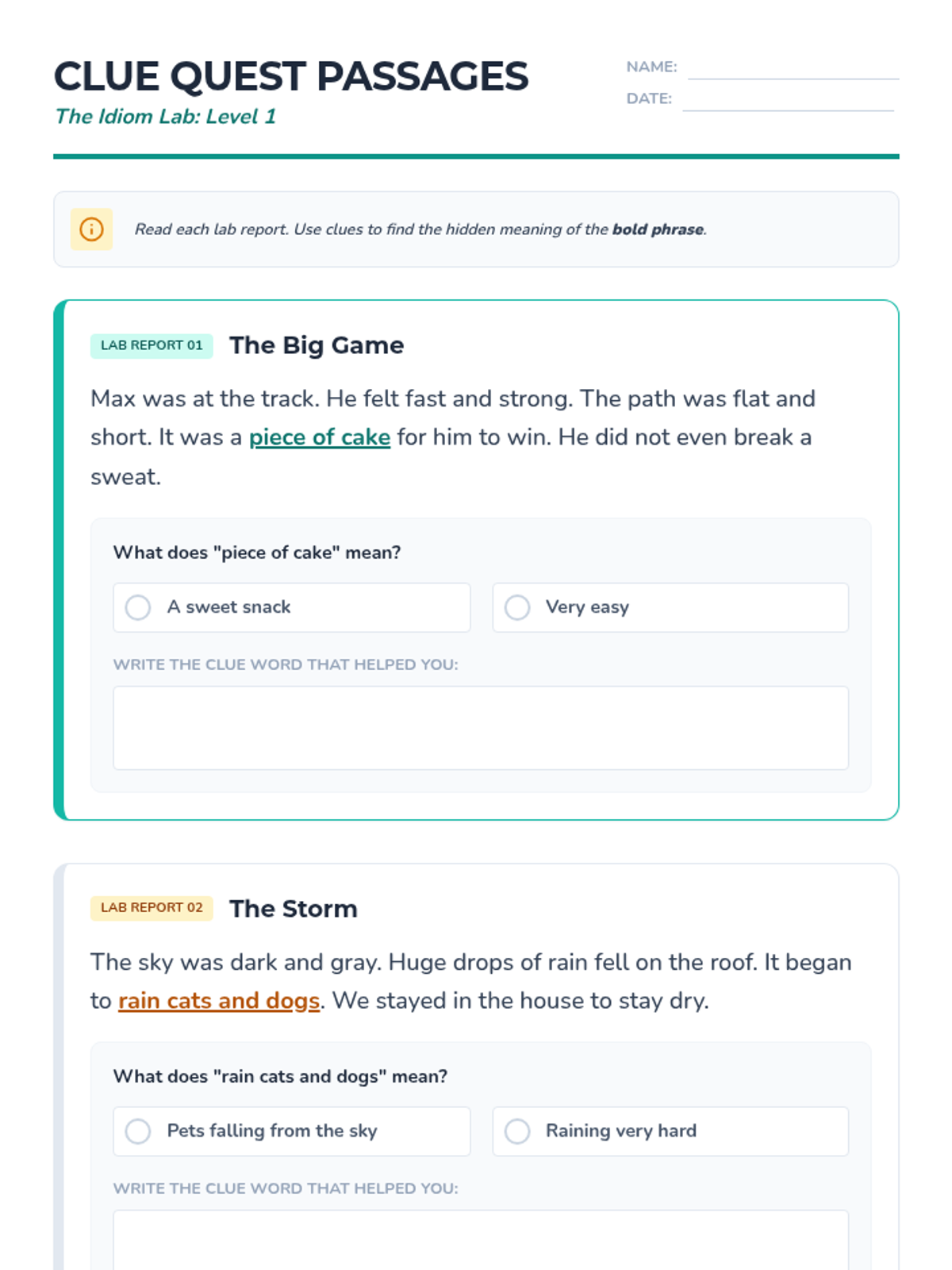
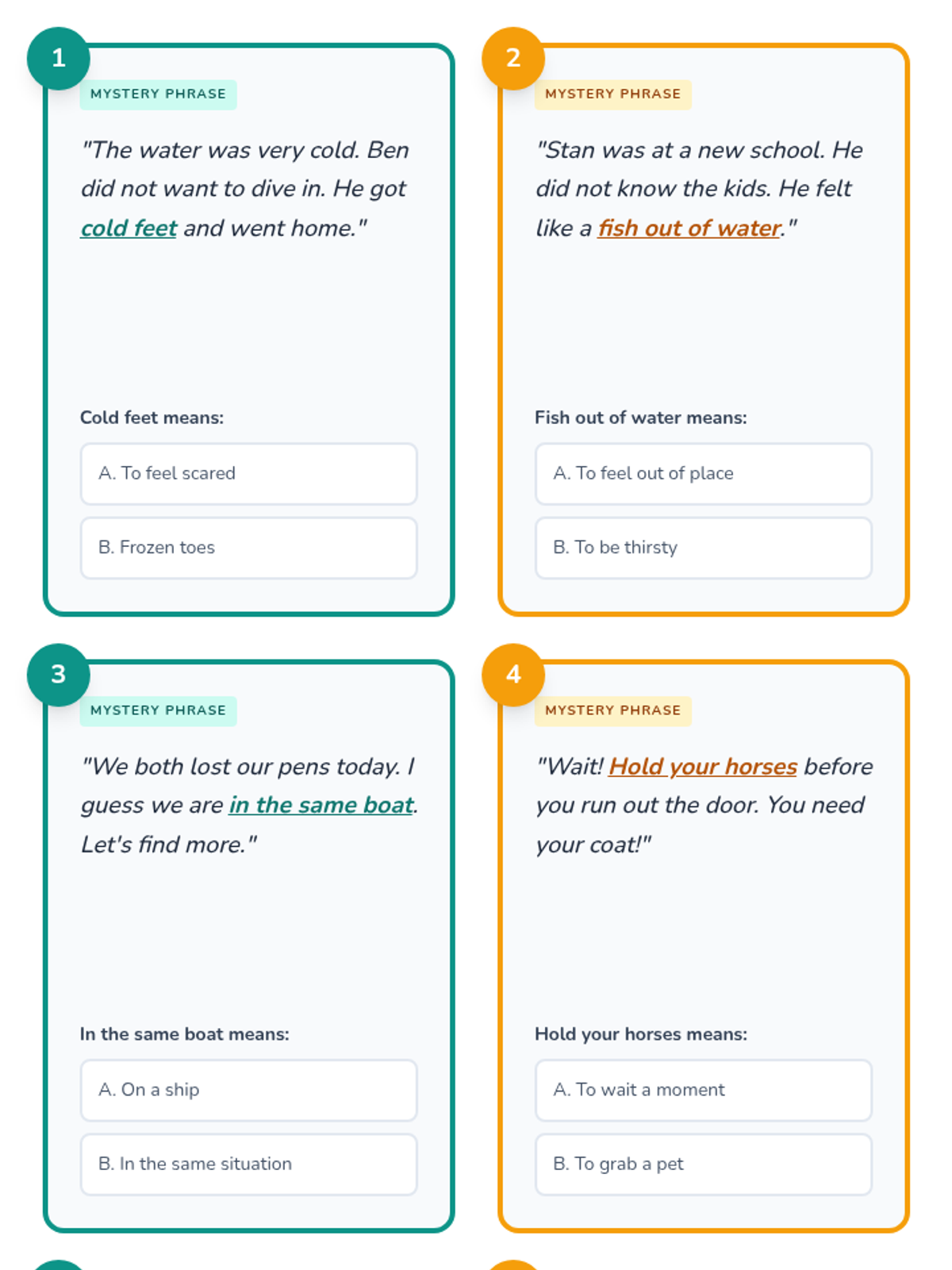
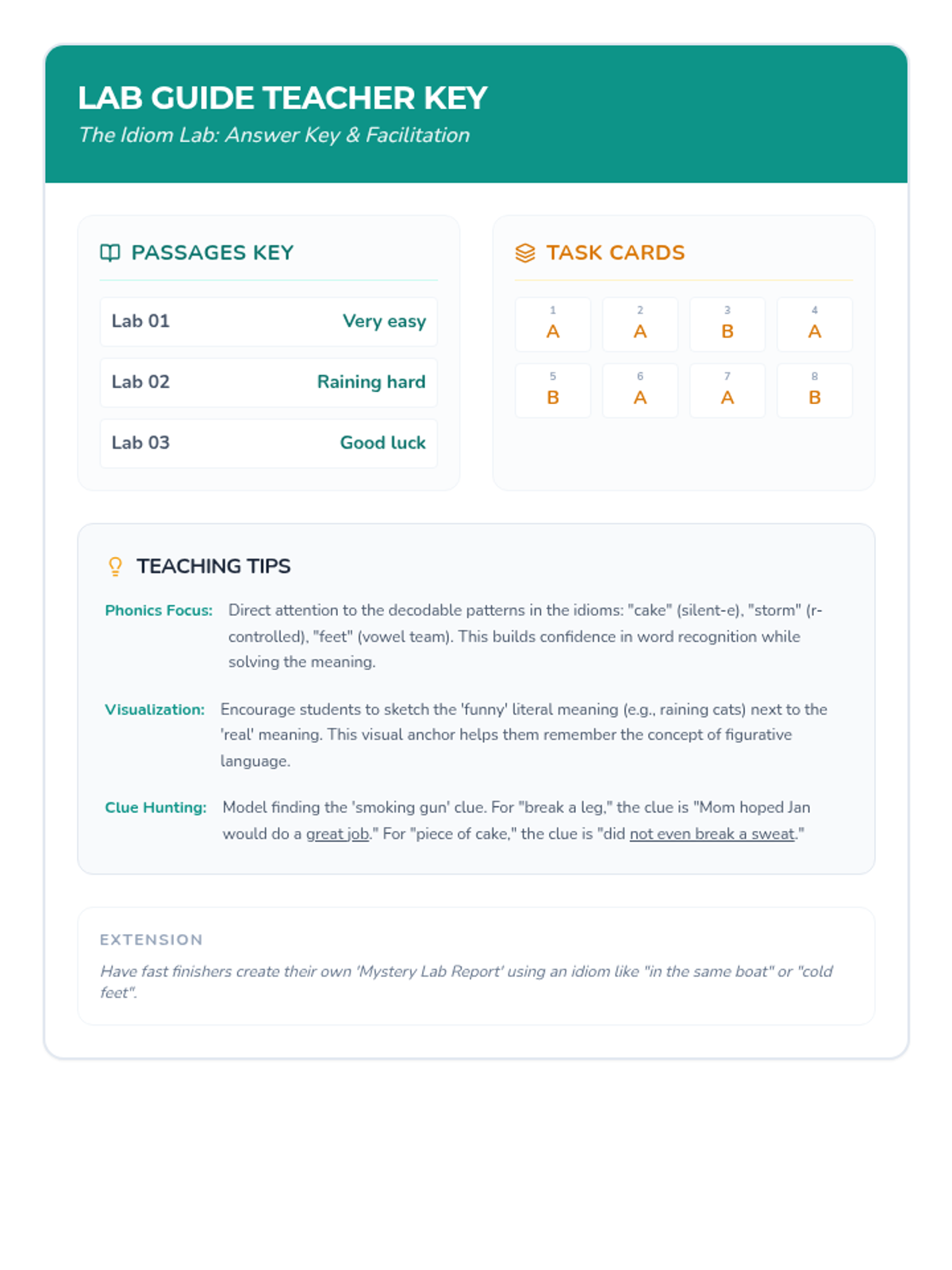
A foundational lesson on identifying and interpreting common idioms using context clues, specifically designed with decodable text for struggling readers.
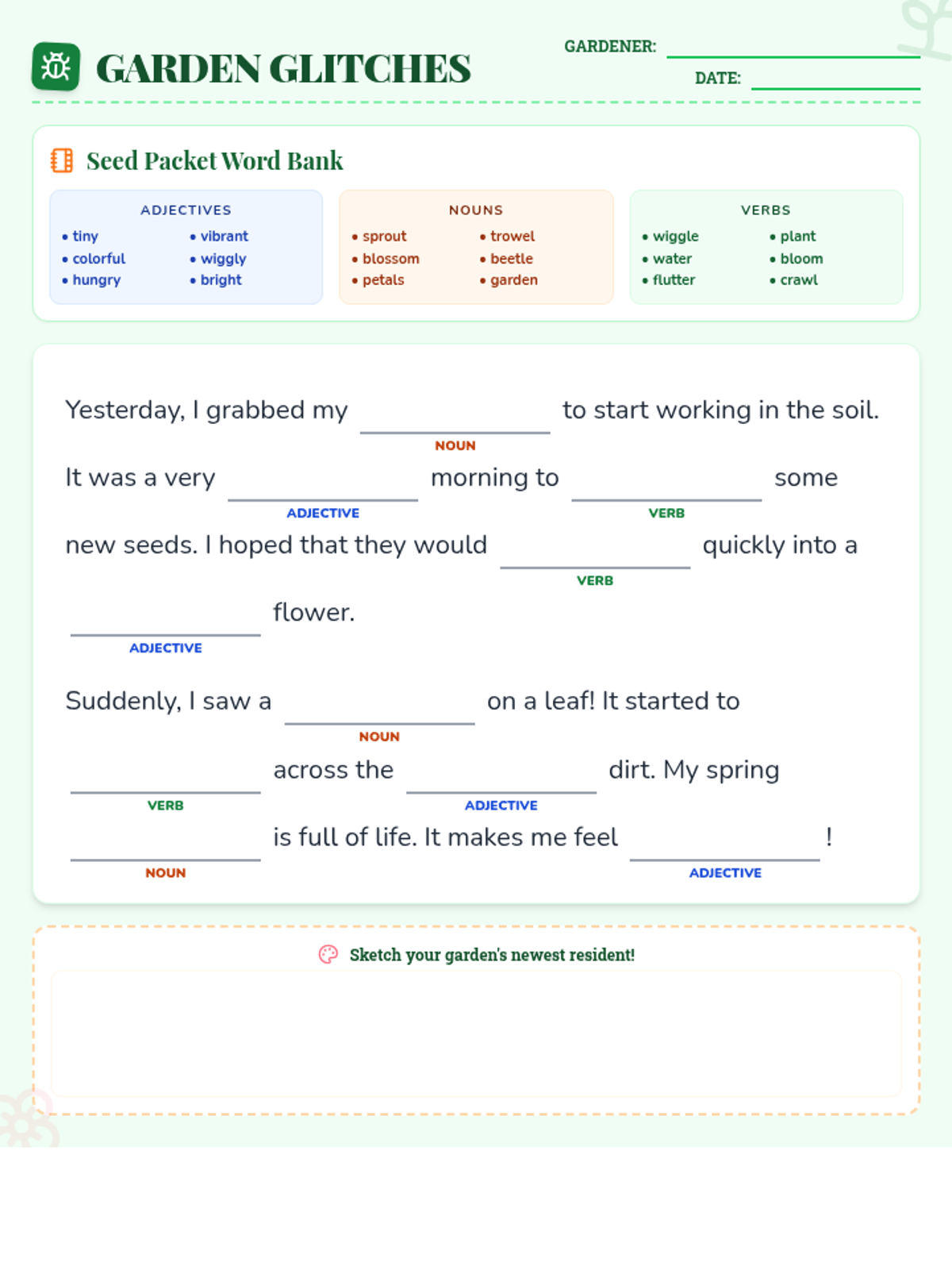
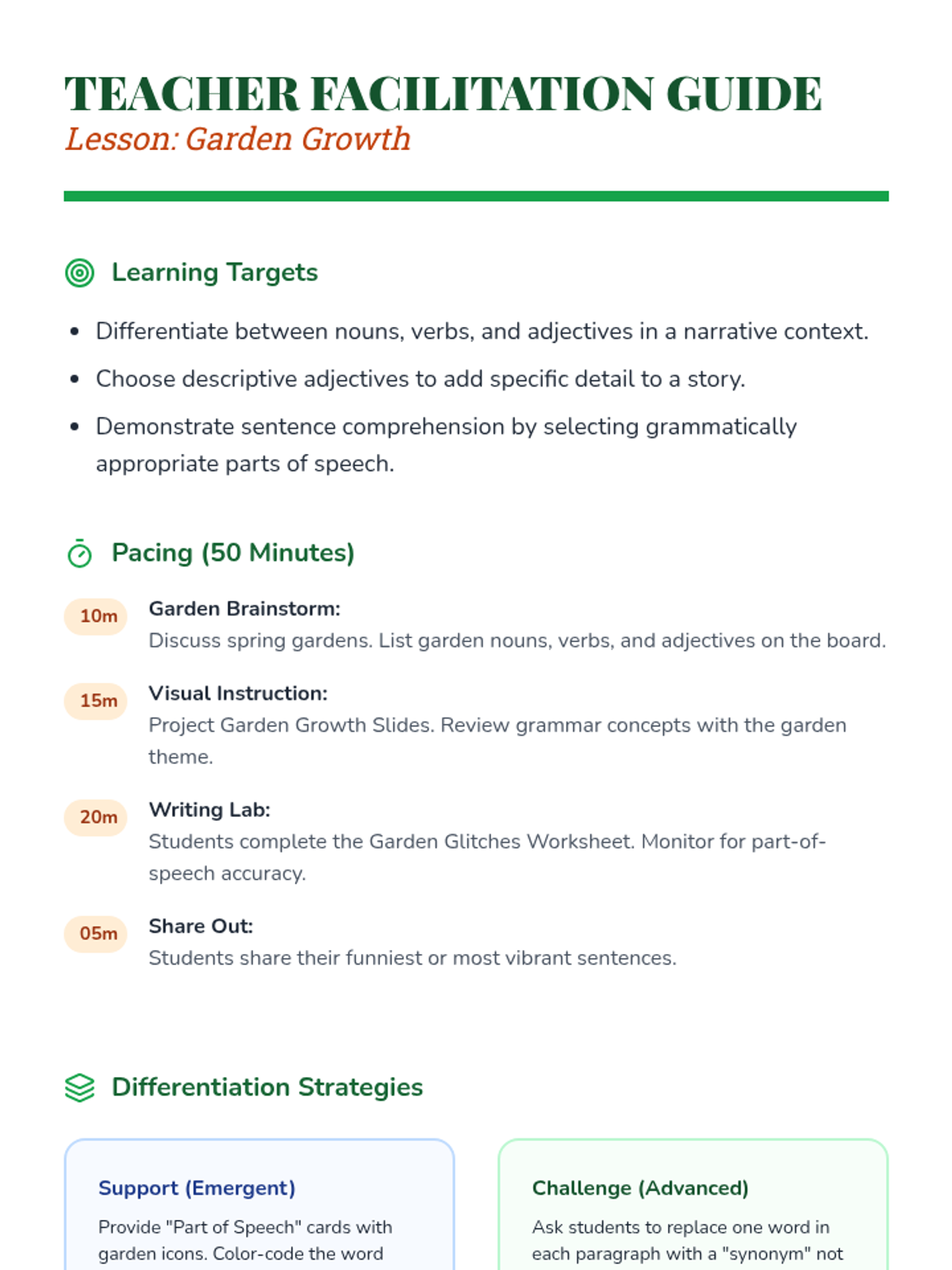
A second-grade focused lesson on nouns, verbs, and adjectives set in a vibrant spring garden. Students will explore descriptive language while filling in a garden-themed story.
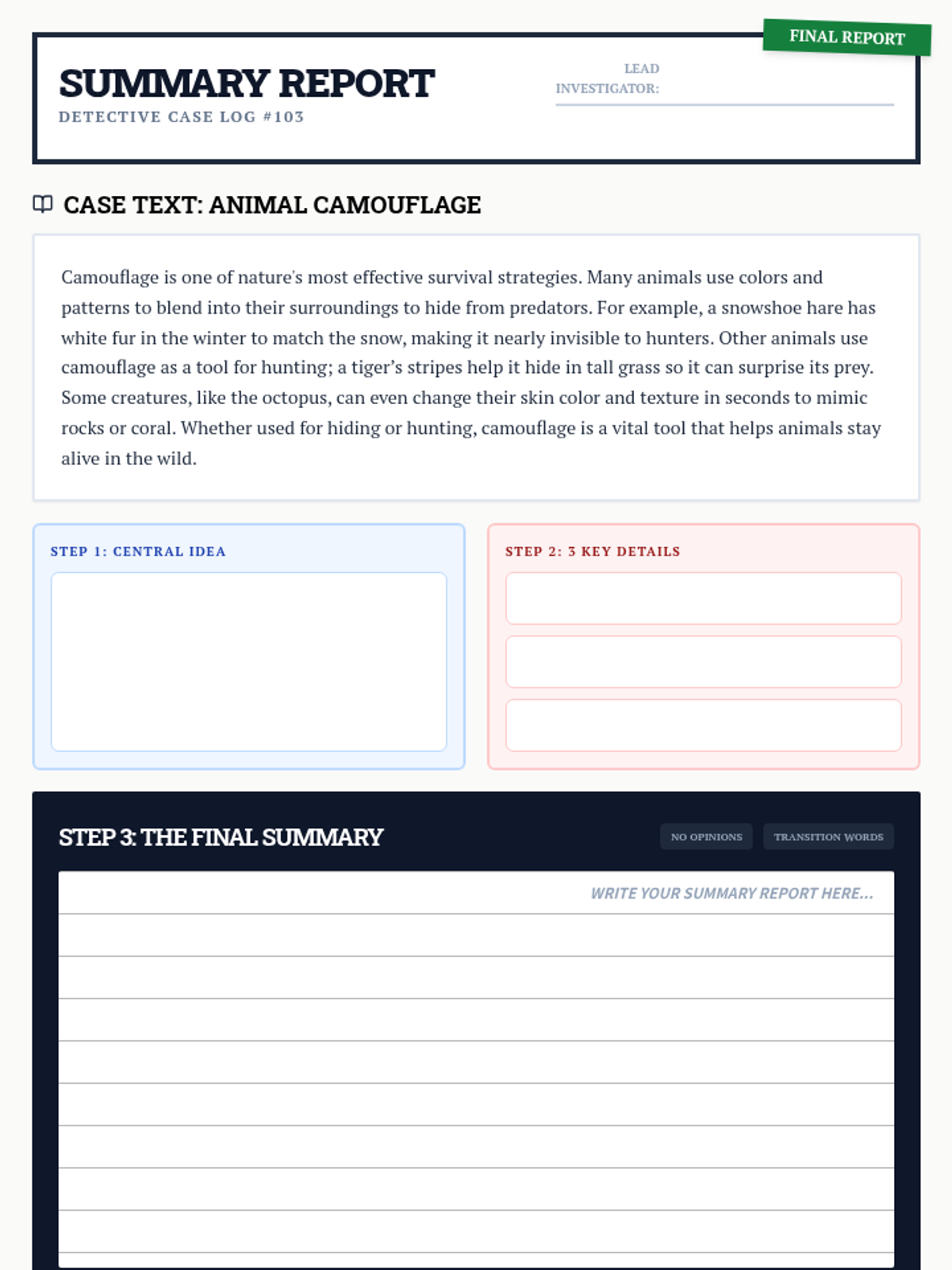
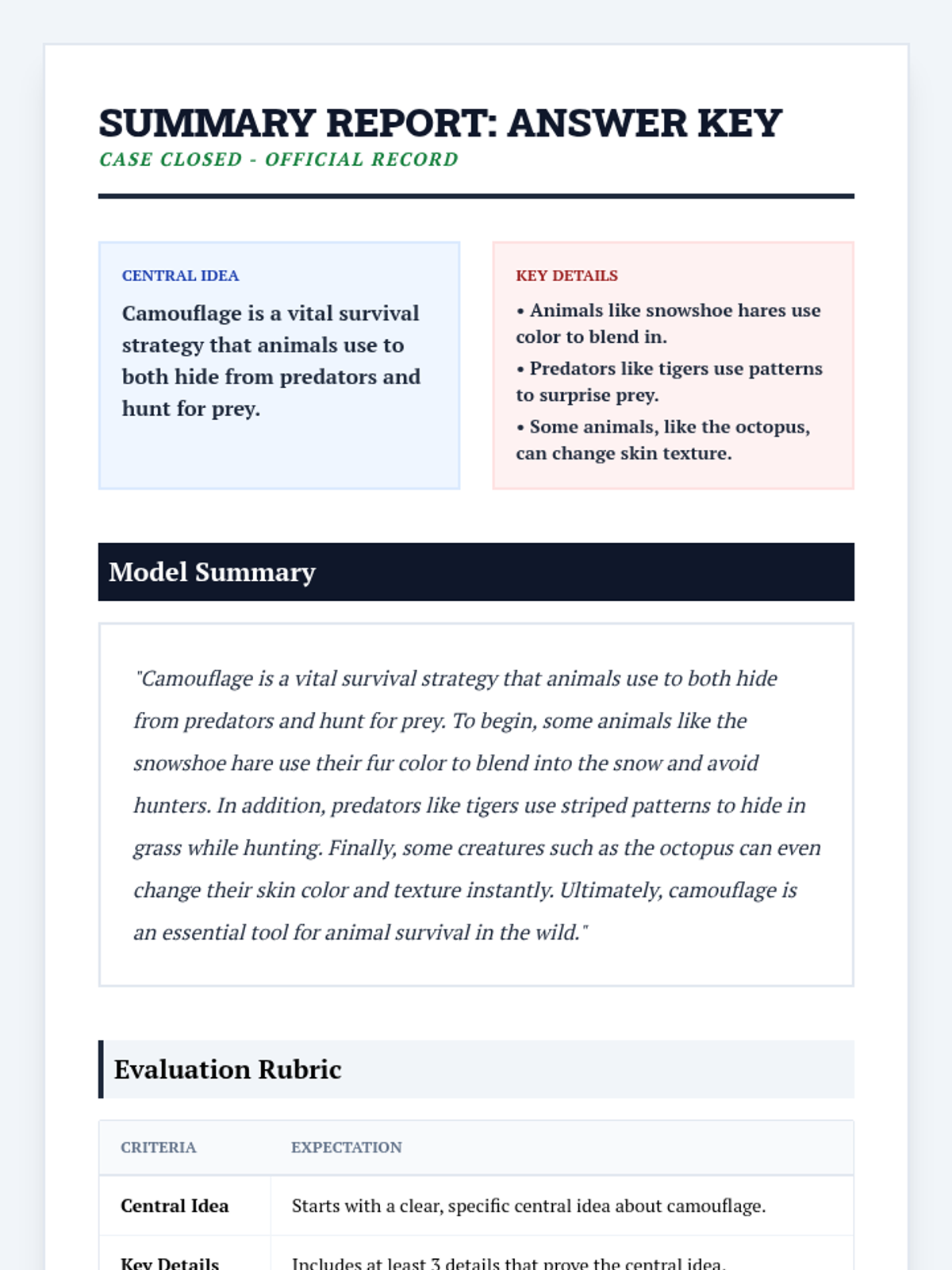
Provides a scaffolded approach to combining the central idea and key details into a cohesive, objective non-fiction summary.
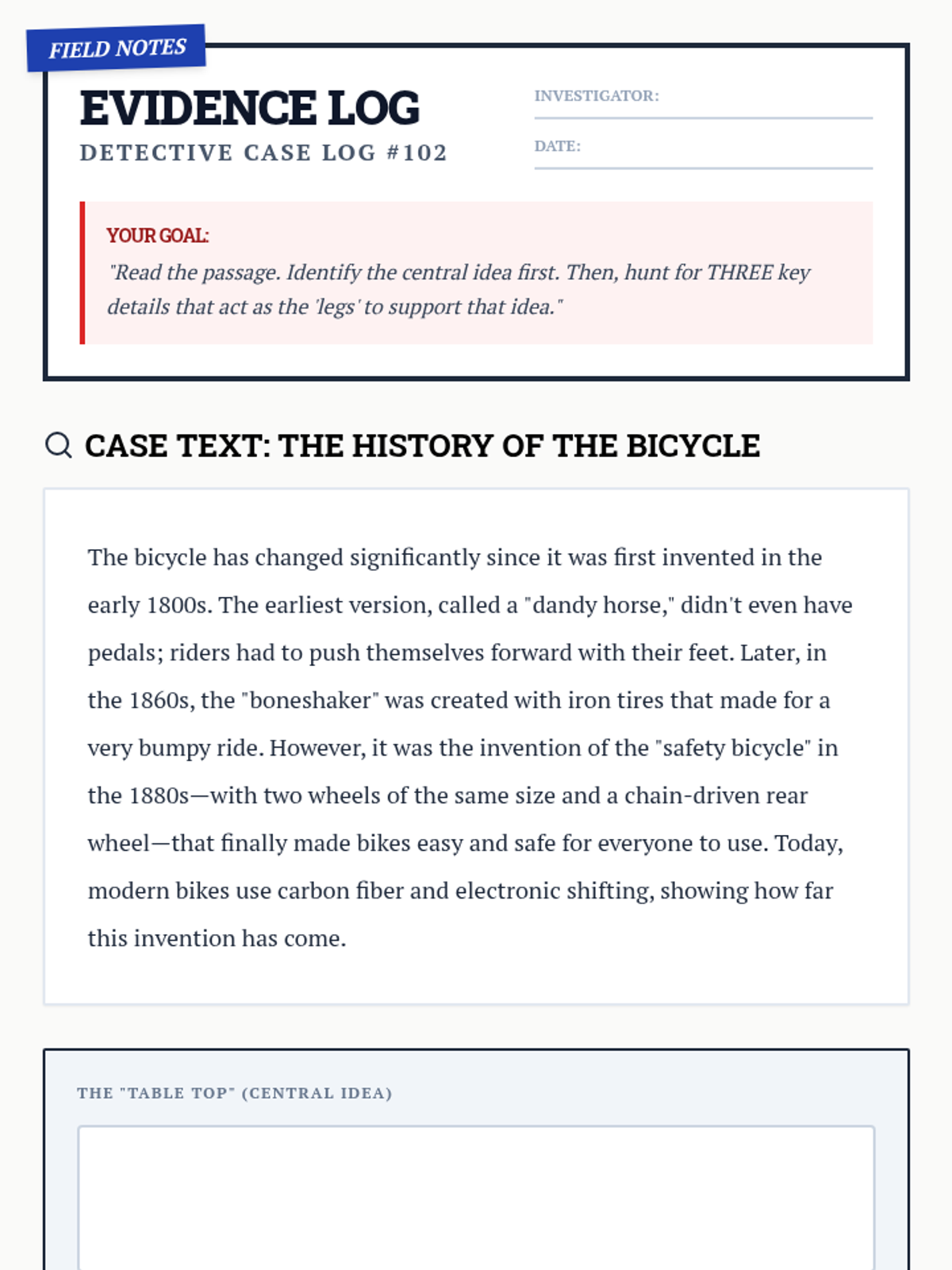
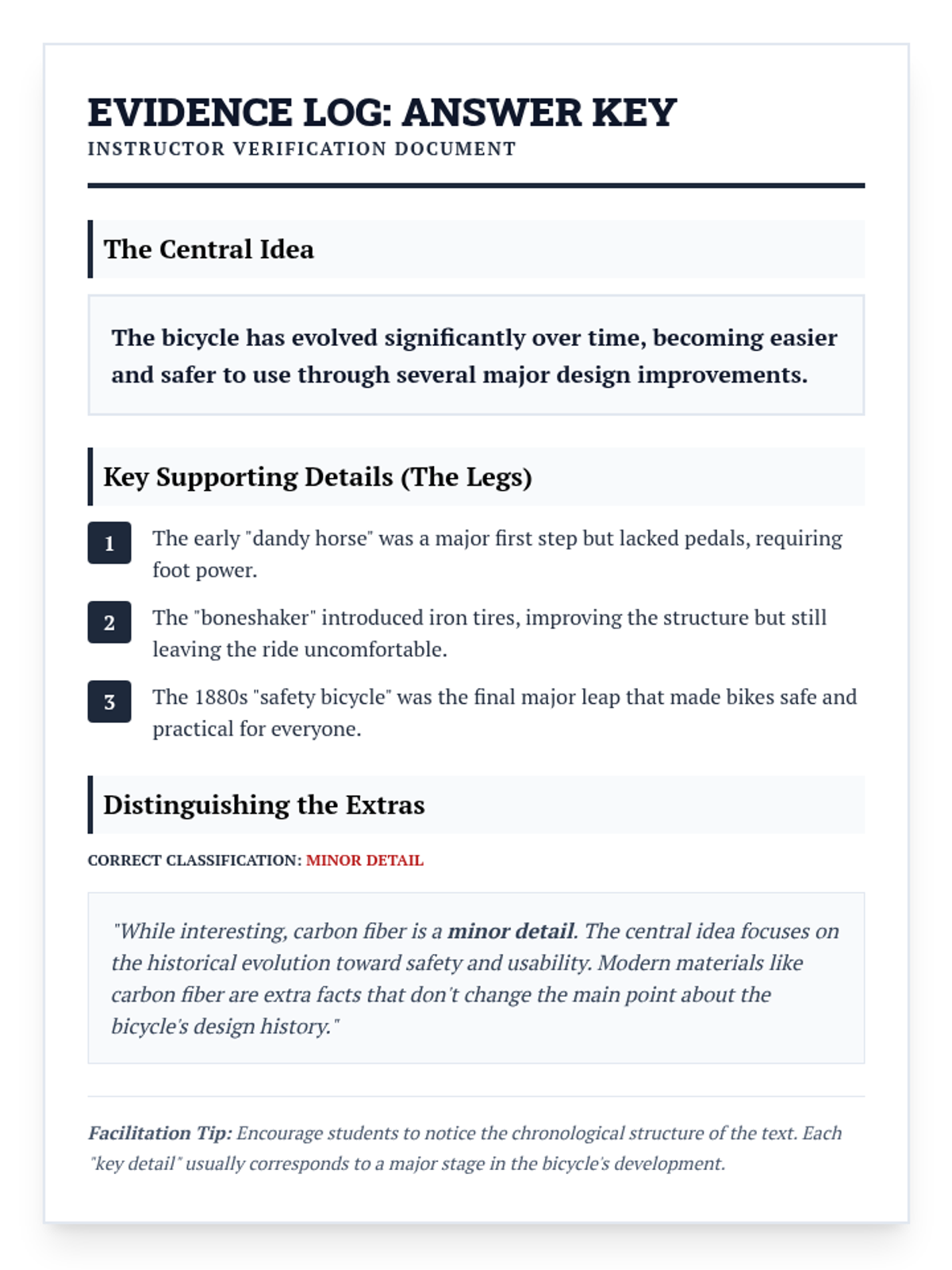
Focuses on identifying key details that directly support the central idea while filtering out interesting but non-essential information.
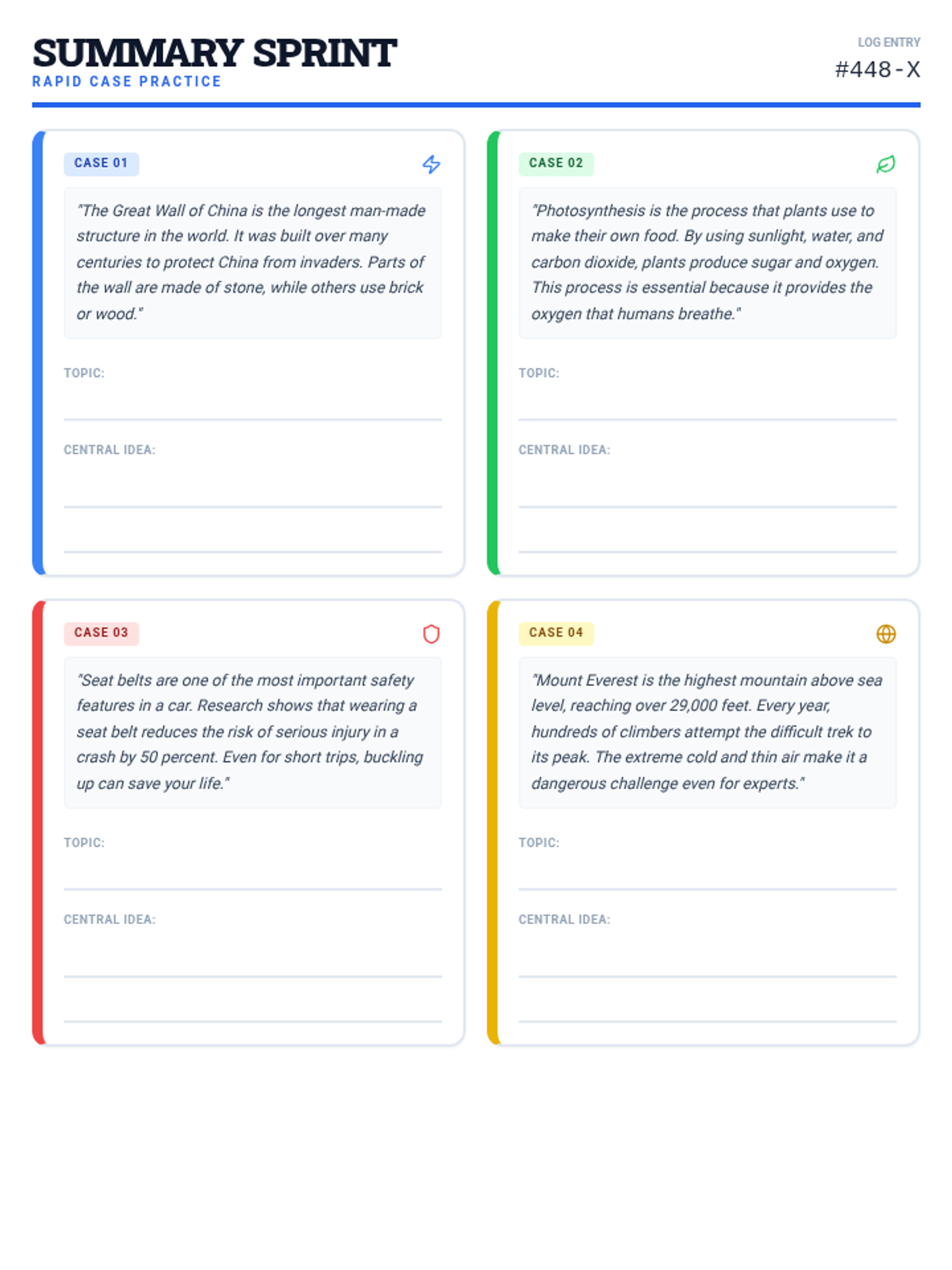
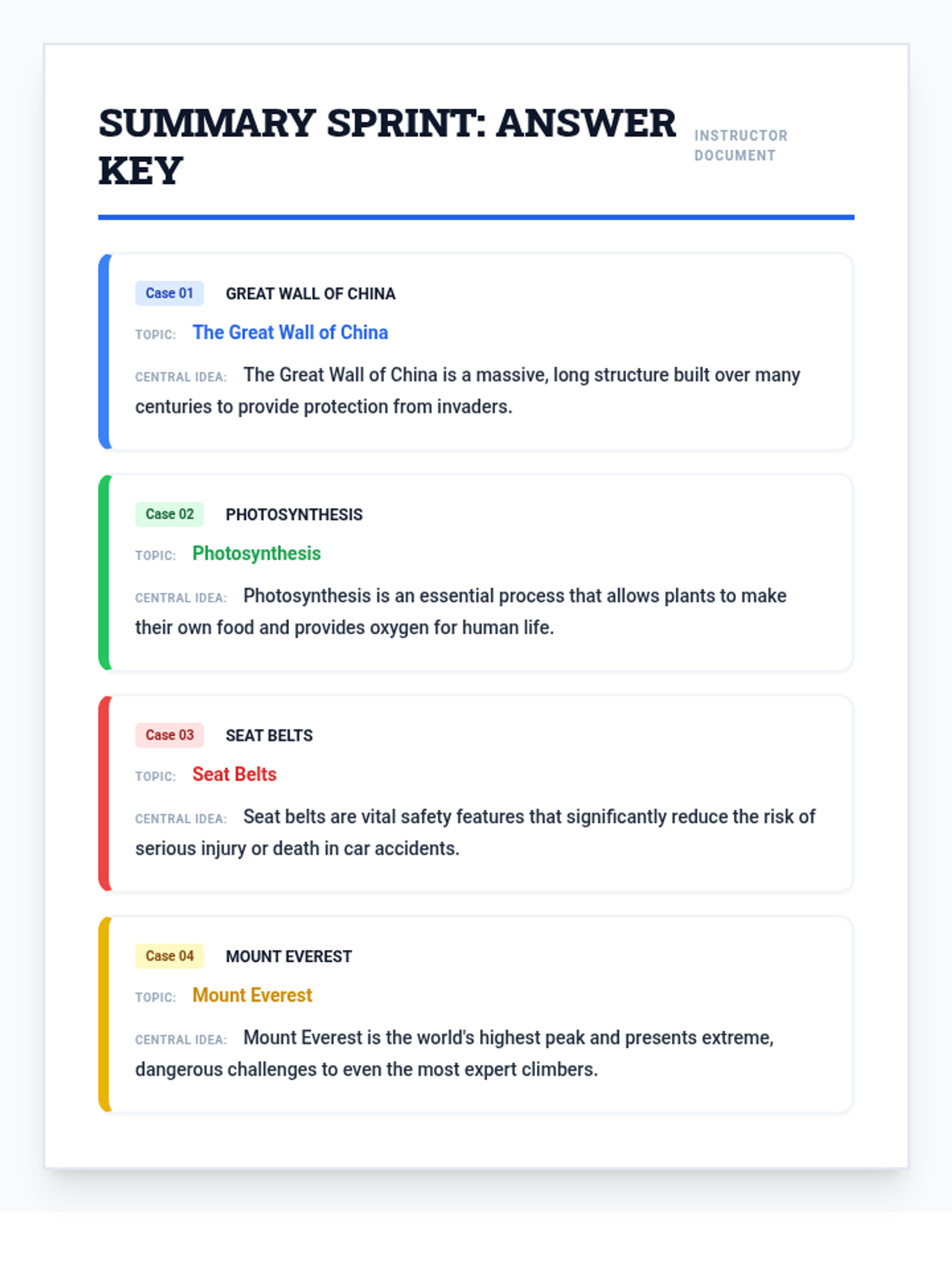
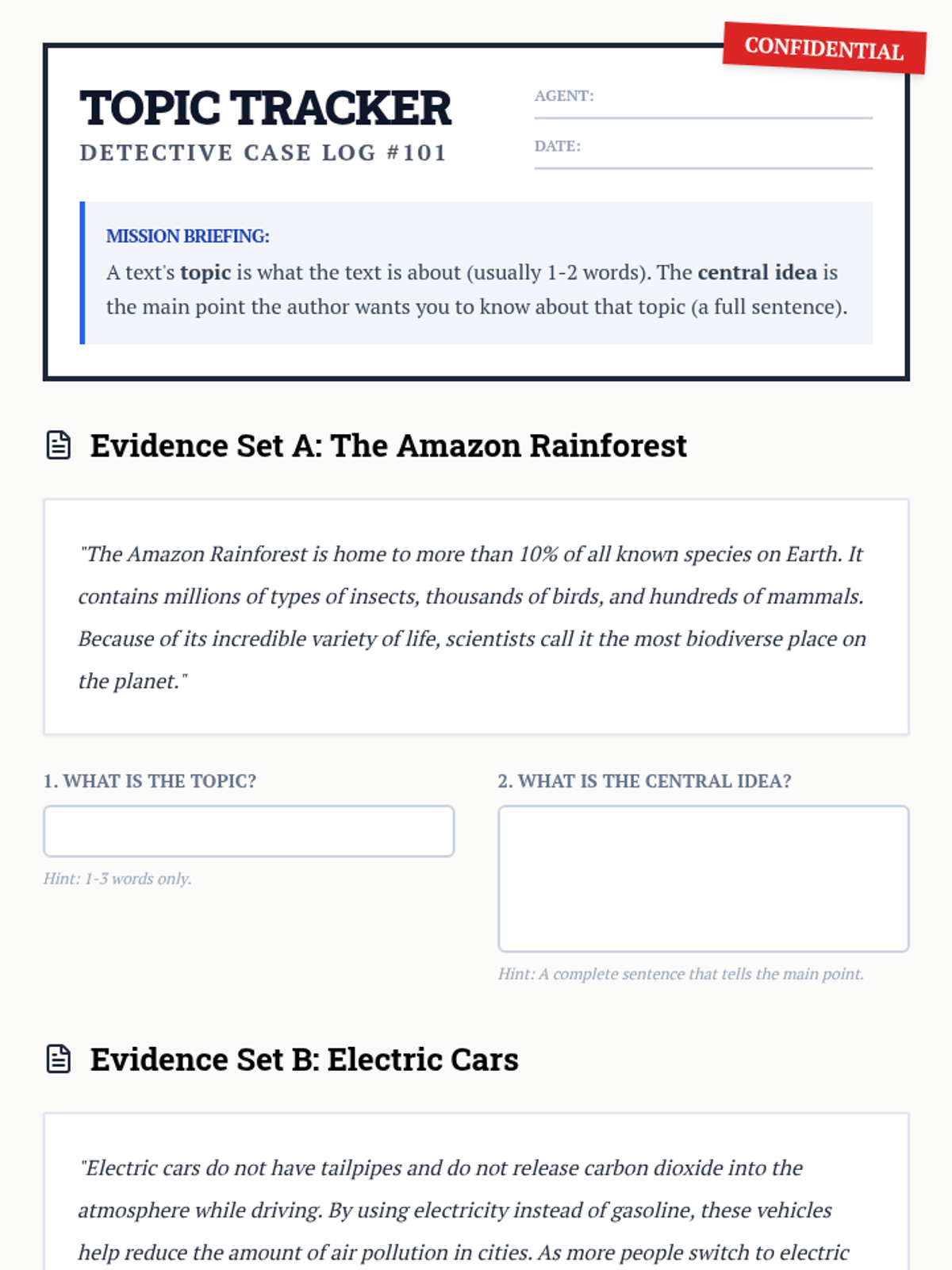
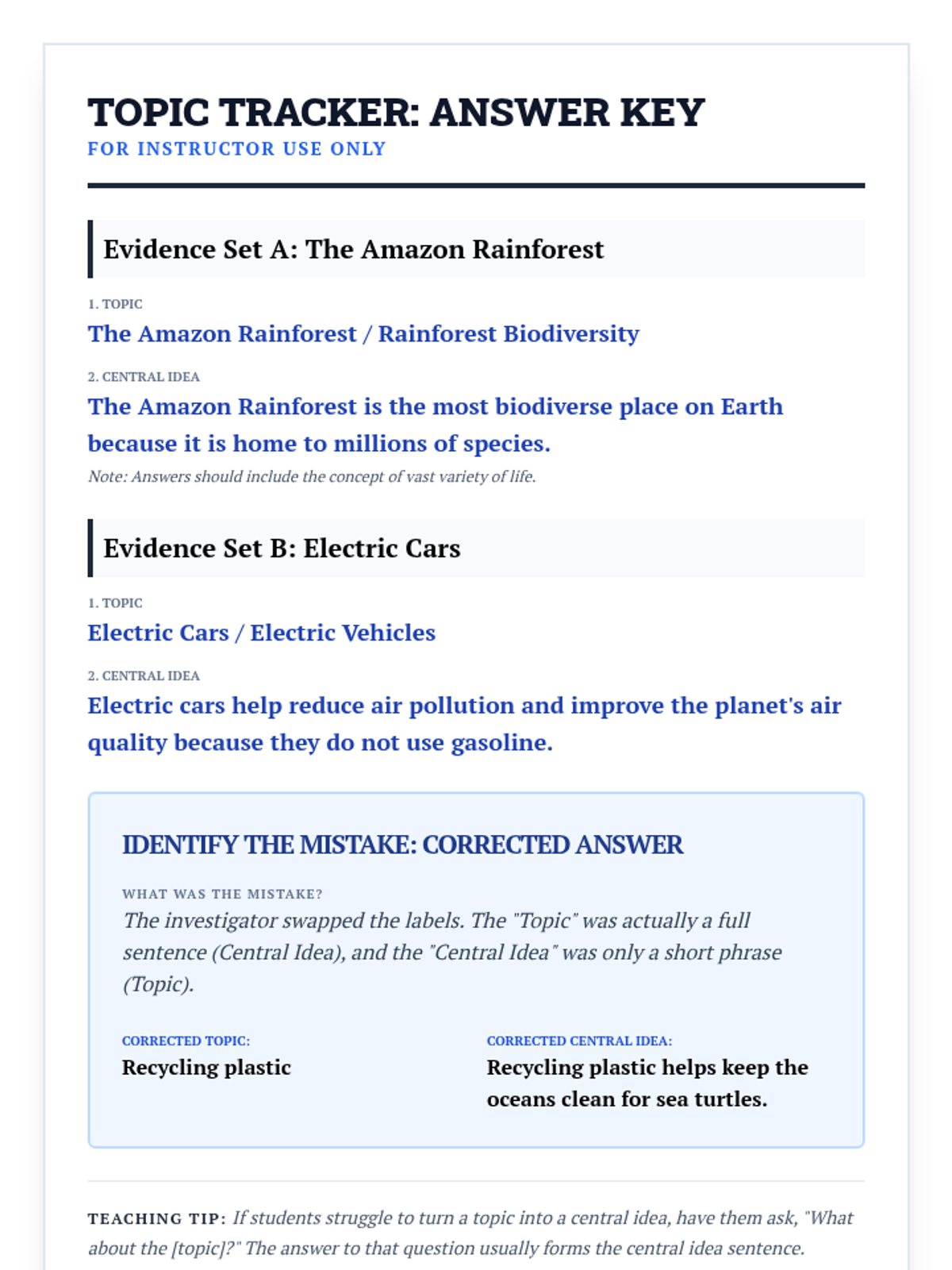
Teaches students to distinguish between the general topic (what the text is about) and the central idea (the specific point the author is making about that topic).
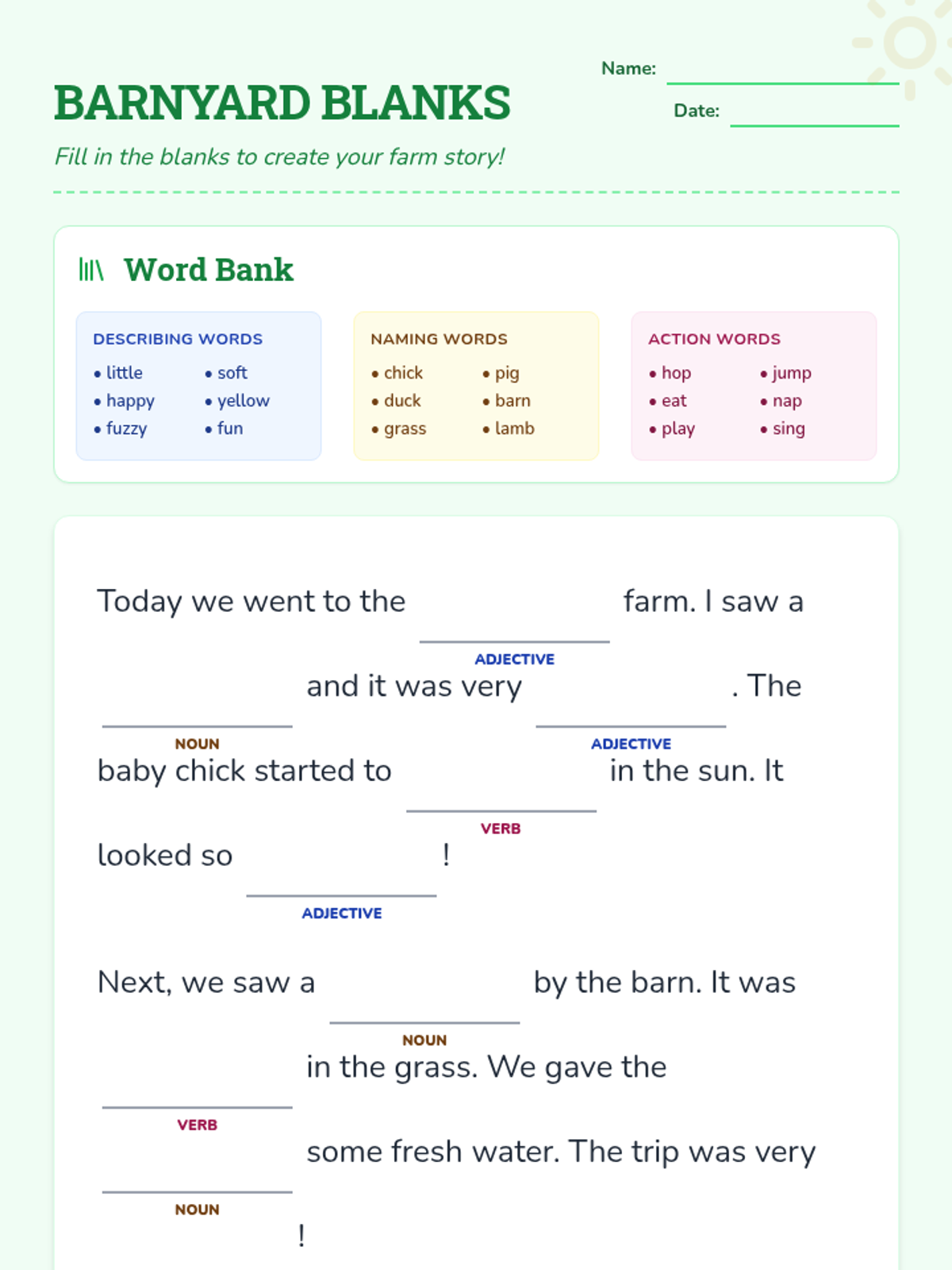
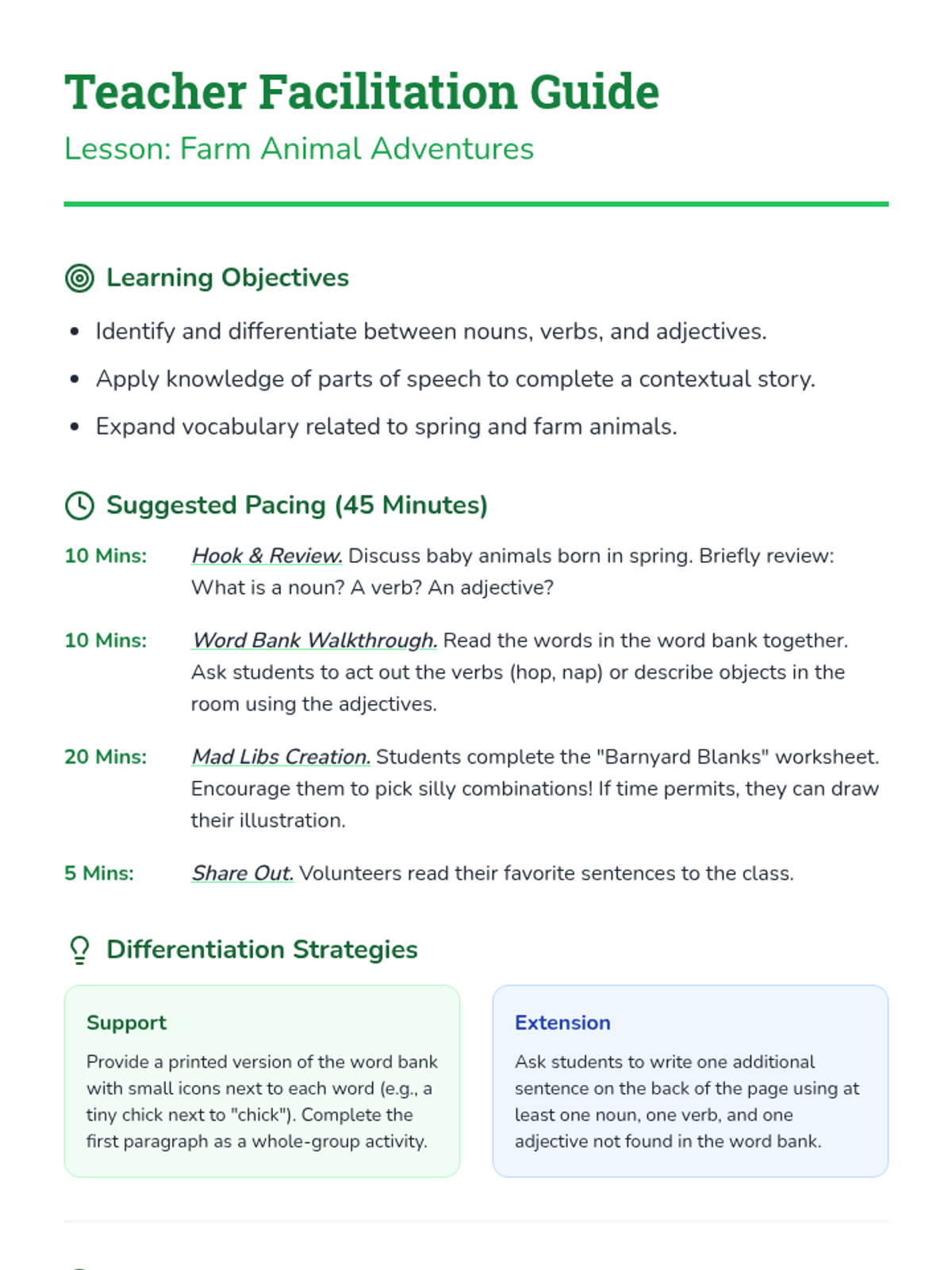
A fun, spring-themed lesson focused on identifying and using nouns, verbs, and adjectives through a baby animal farm story. Students will practice parts of speech while creating their own silly farm adventure.
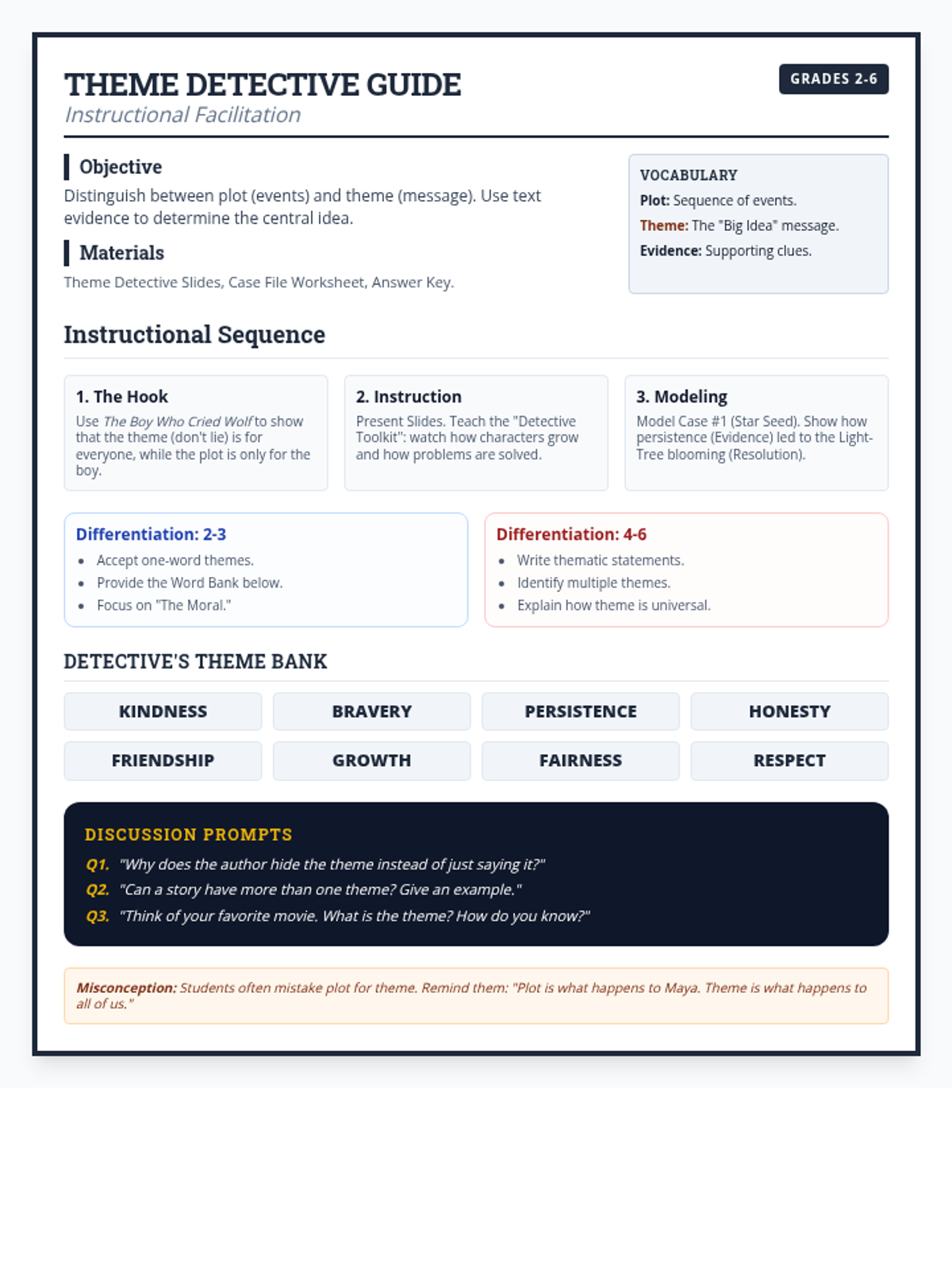
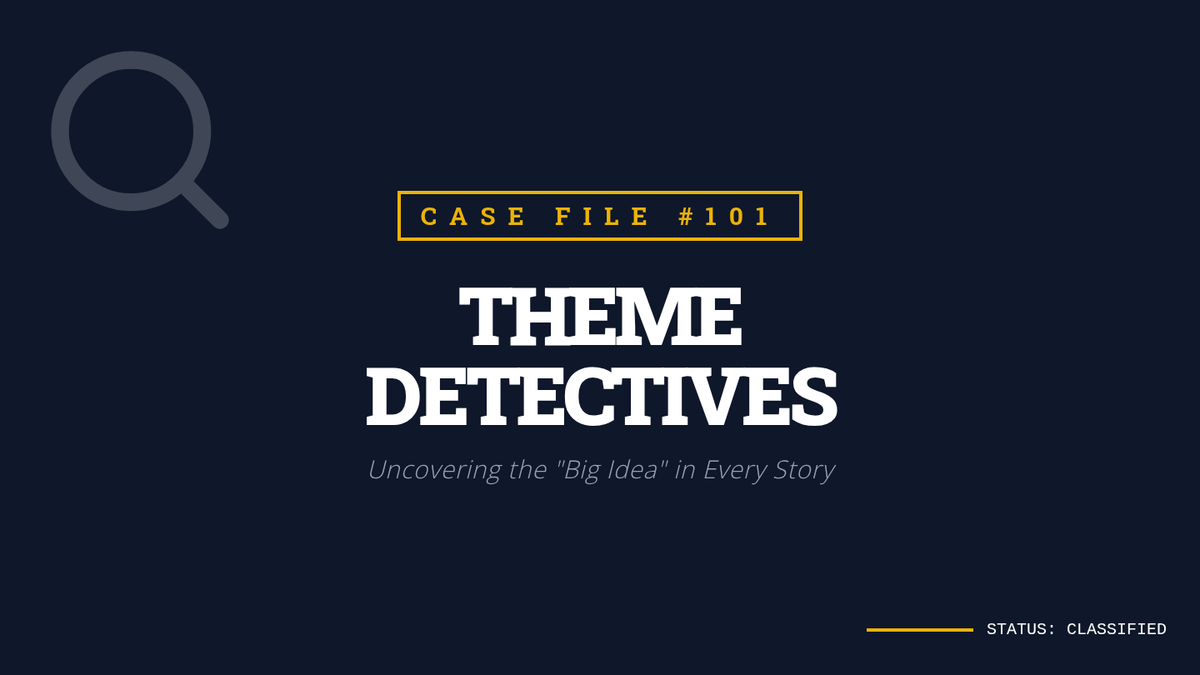
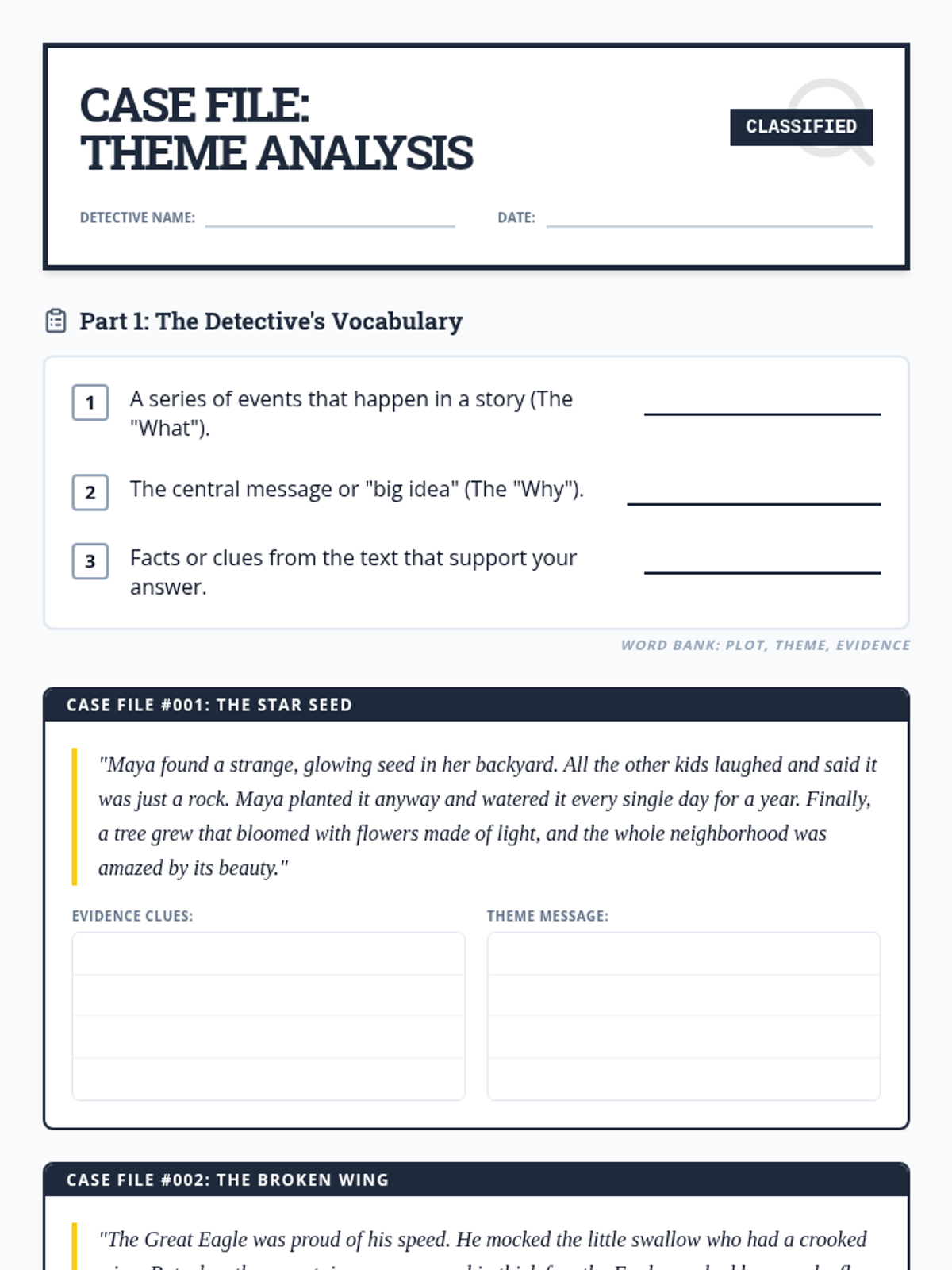
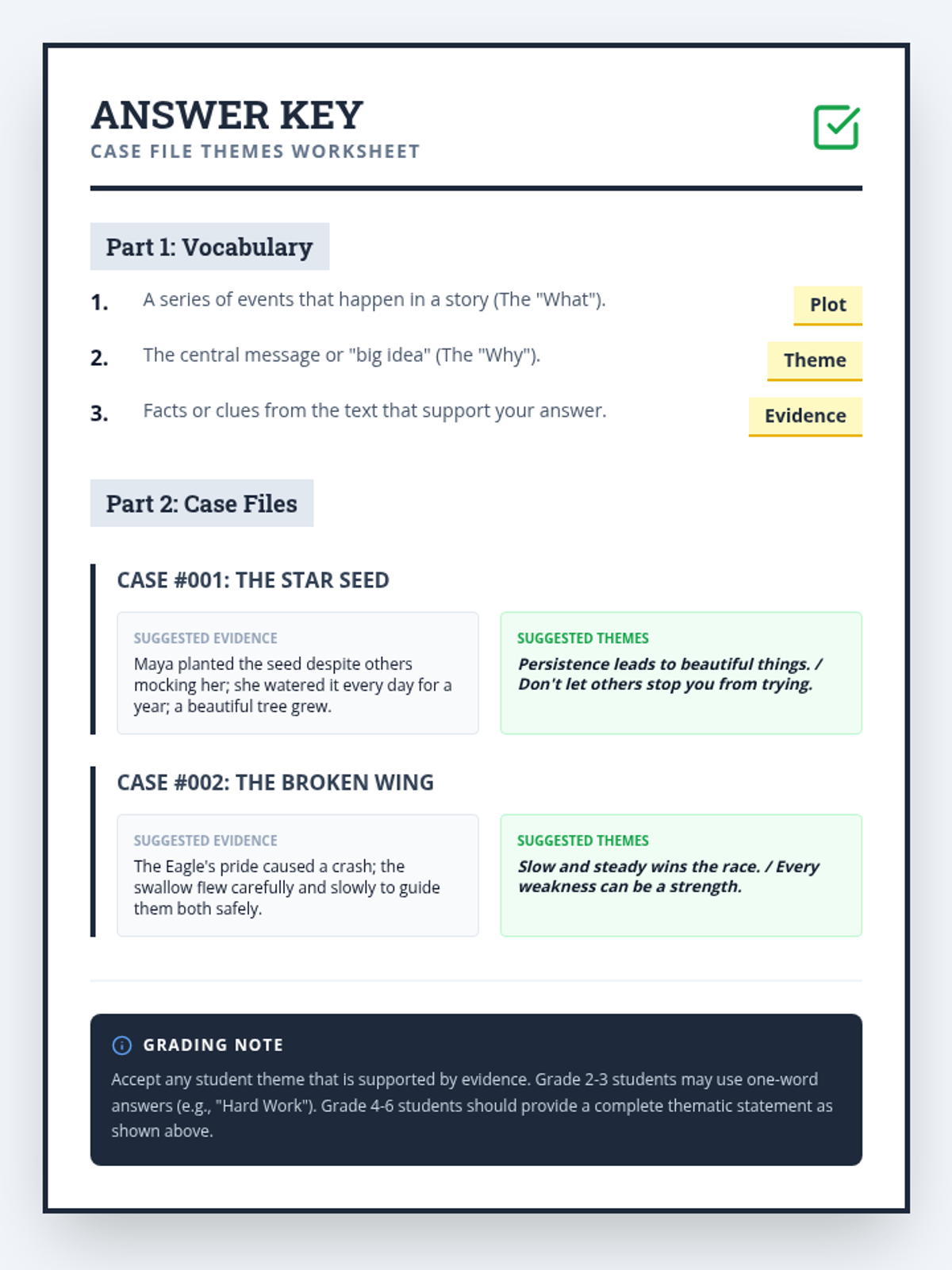
A comprehensive lesson on identifying and analyzing themes in literature, using a 'detective' metaphor to help students find the 'big idea' within stories. Includes differentiated strategies for grades 2-6.
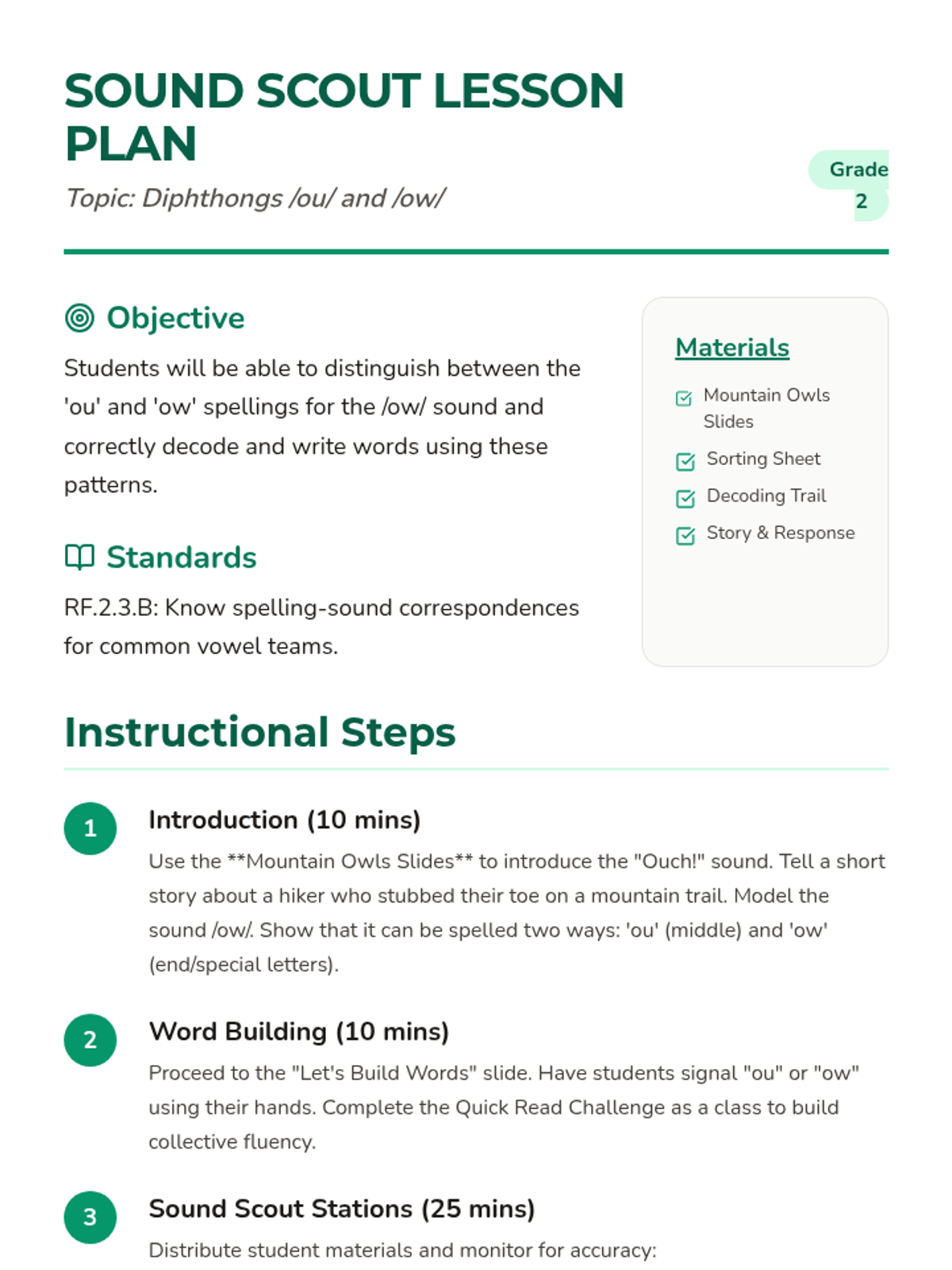
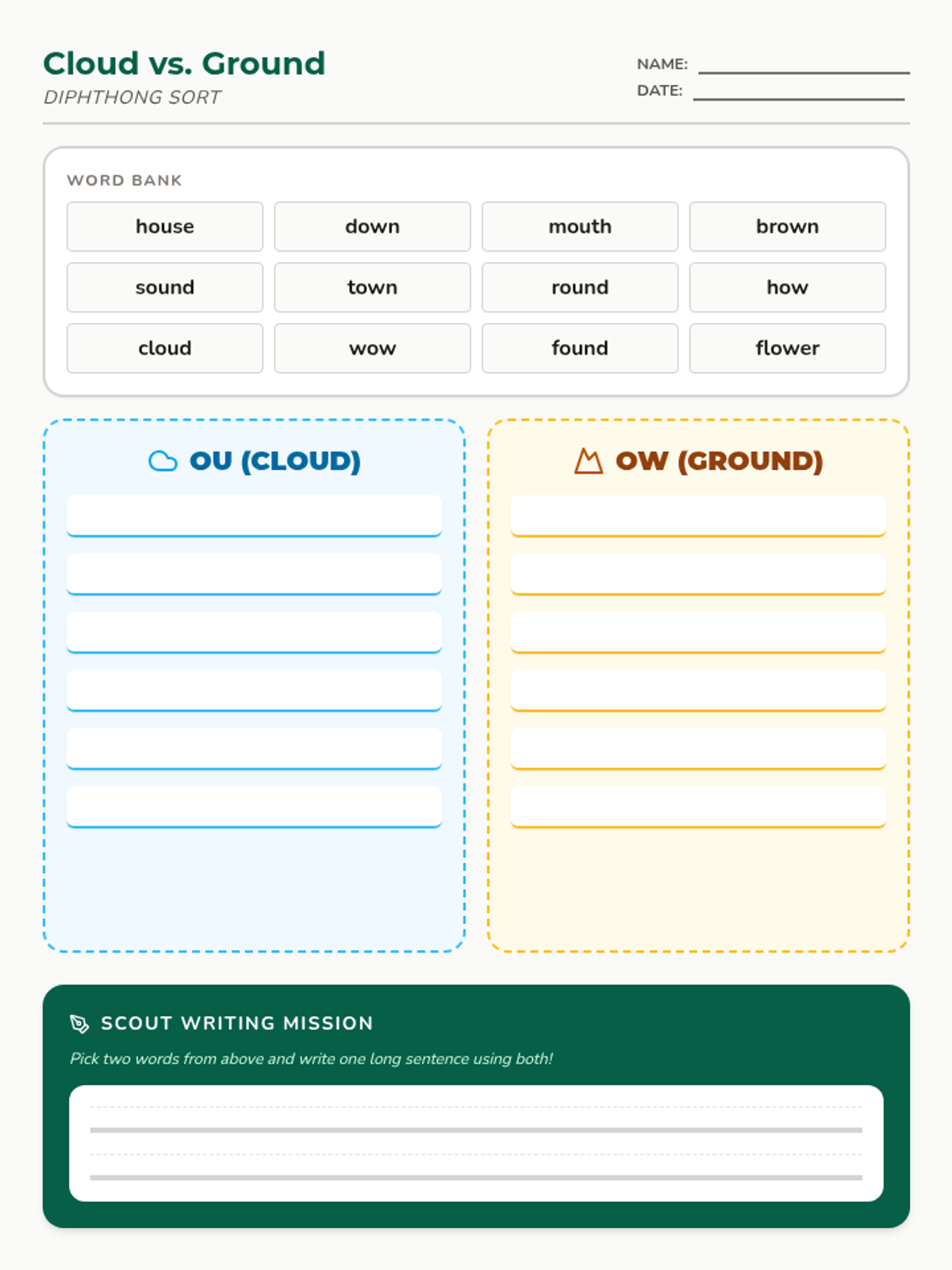
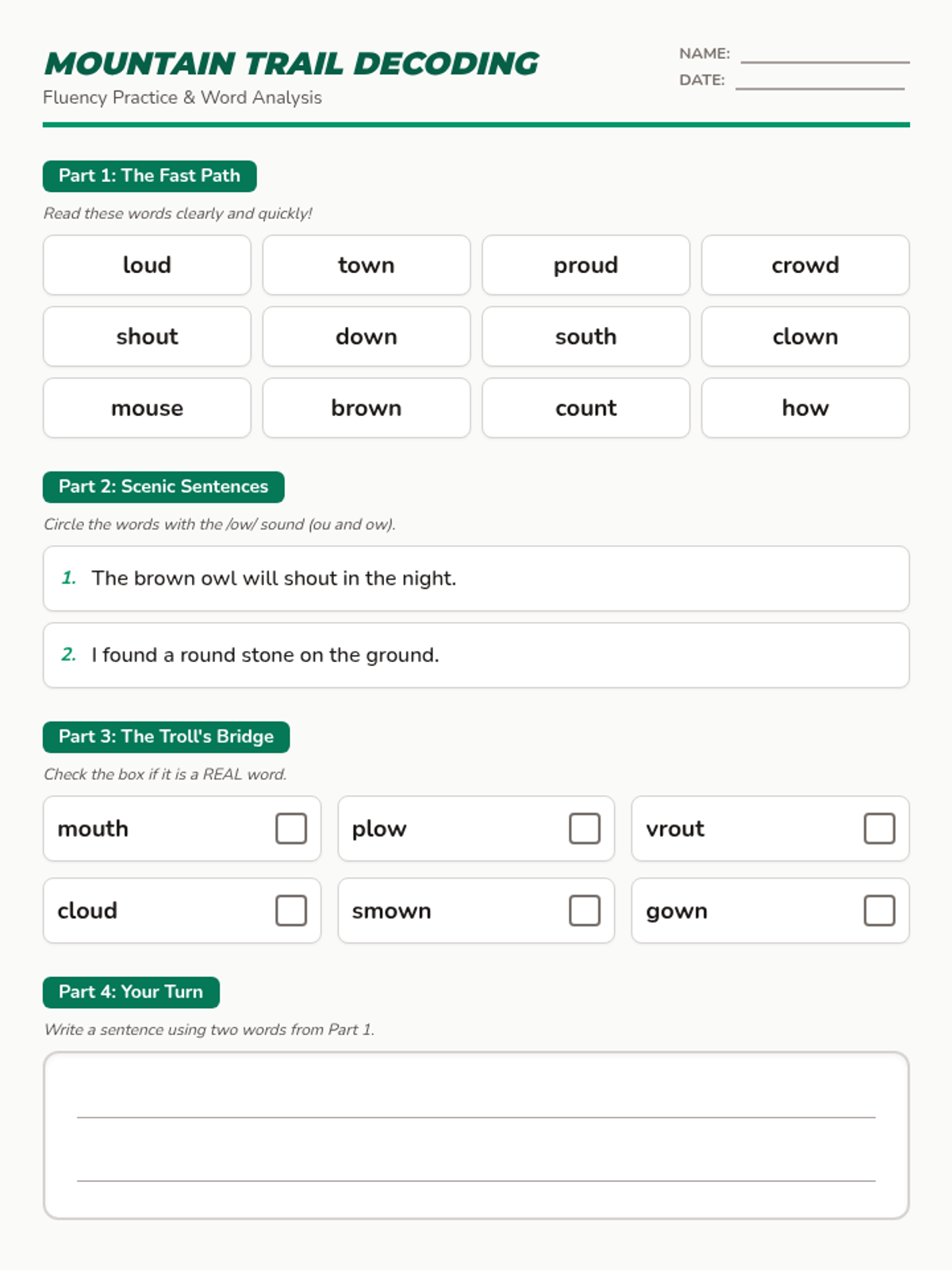
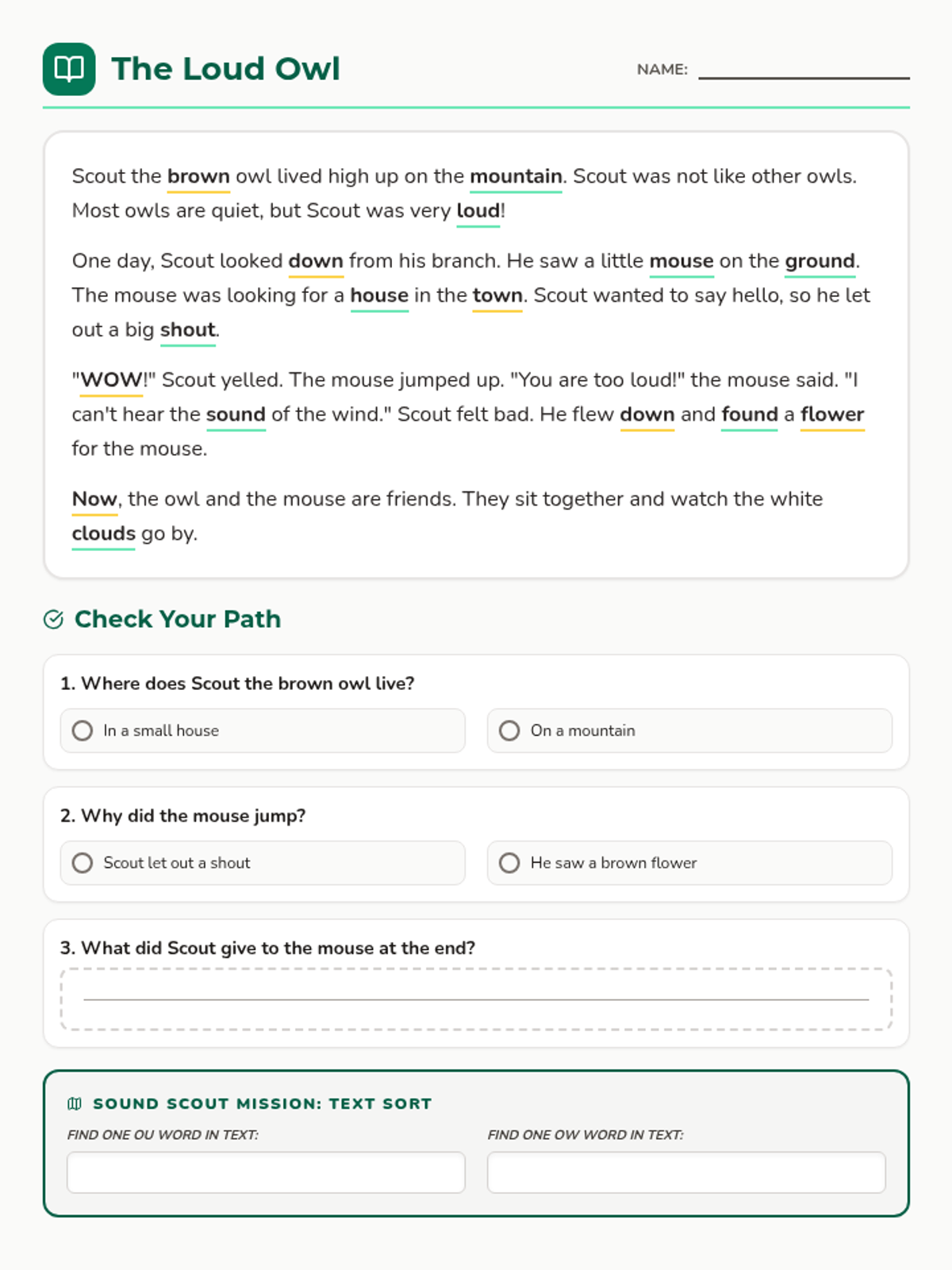
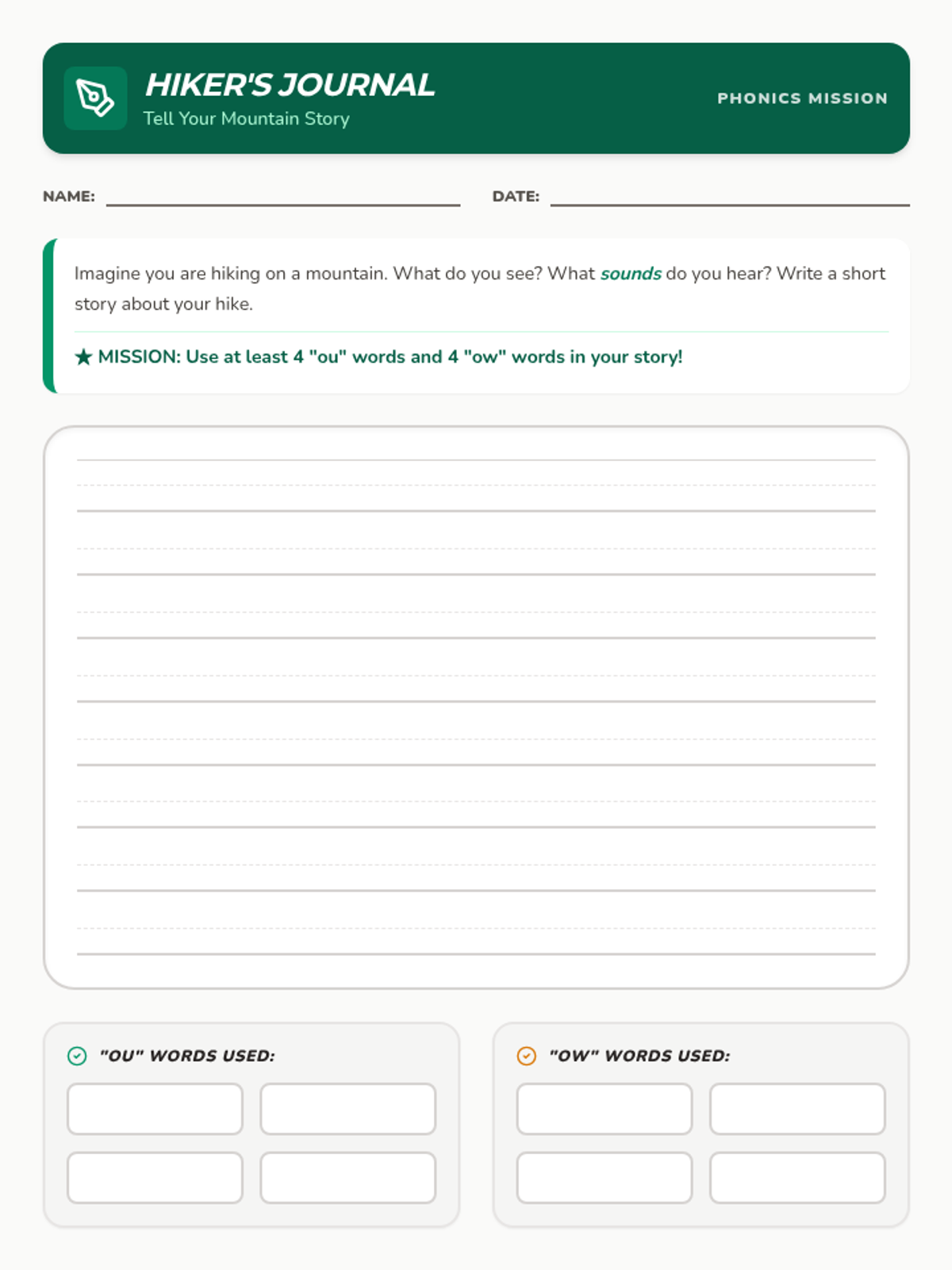
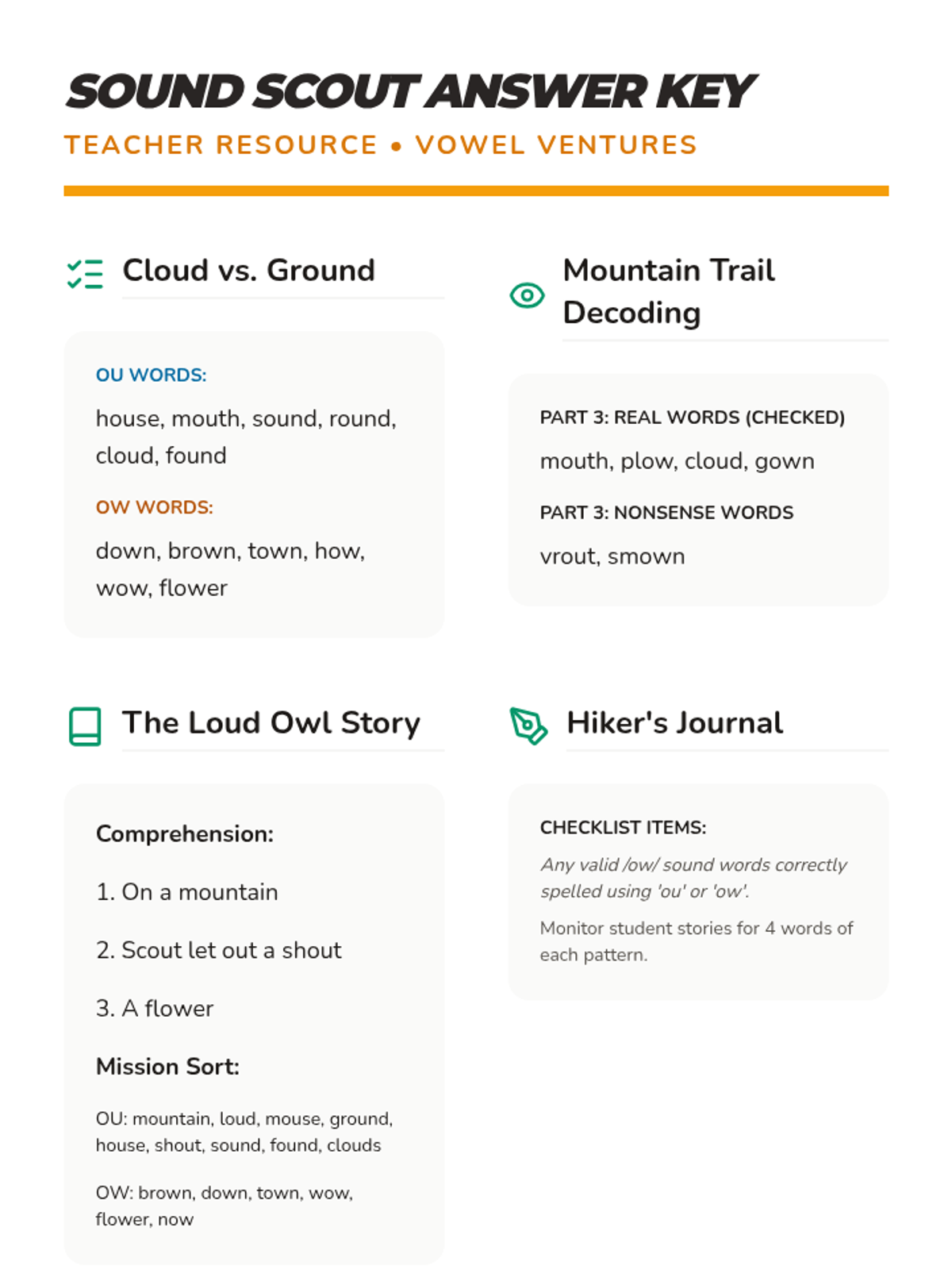
A comprehensive lesson on the diphthongs 'ou' and 'ow', using a 'Mountain Owls and Ground Hounds' theme to engage students in sorting, decoding, and reading comprehension.
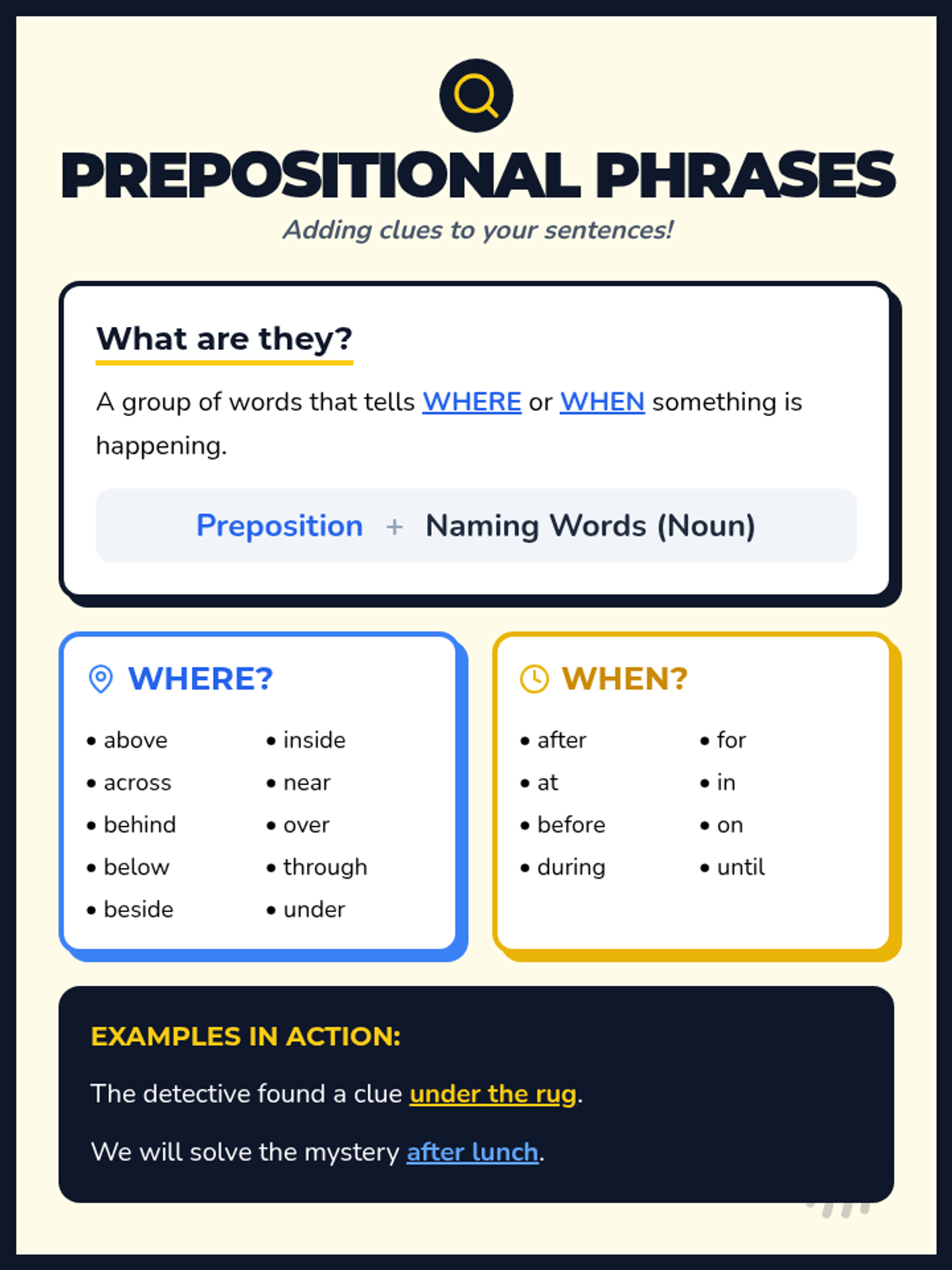
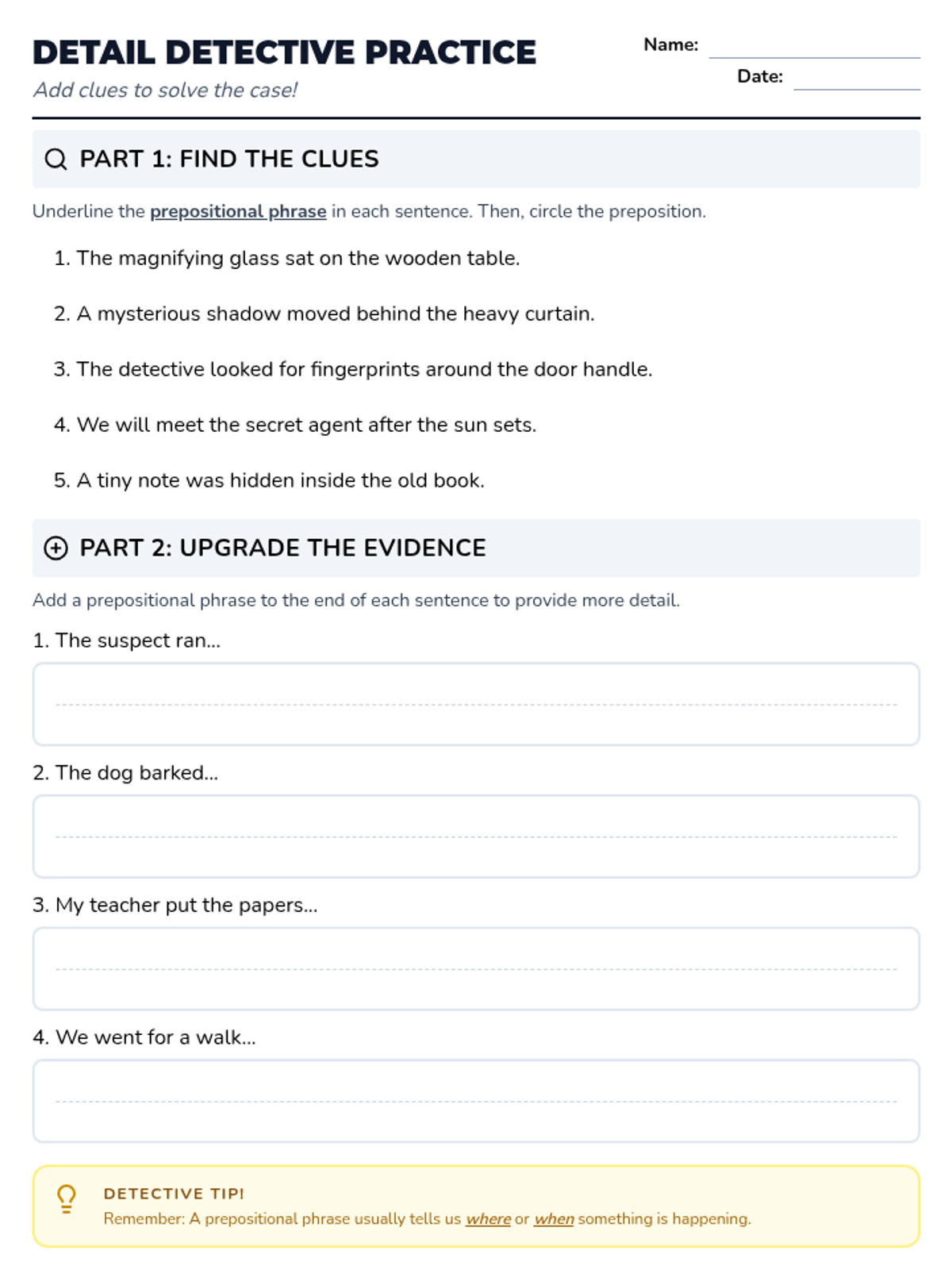
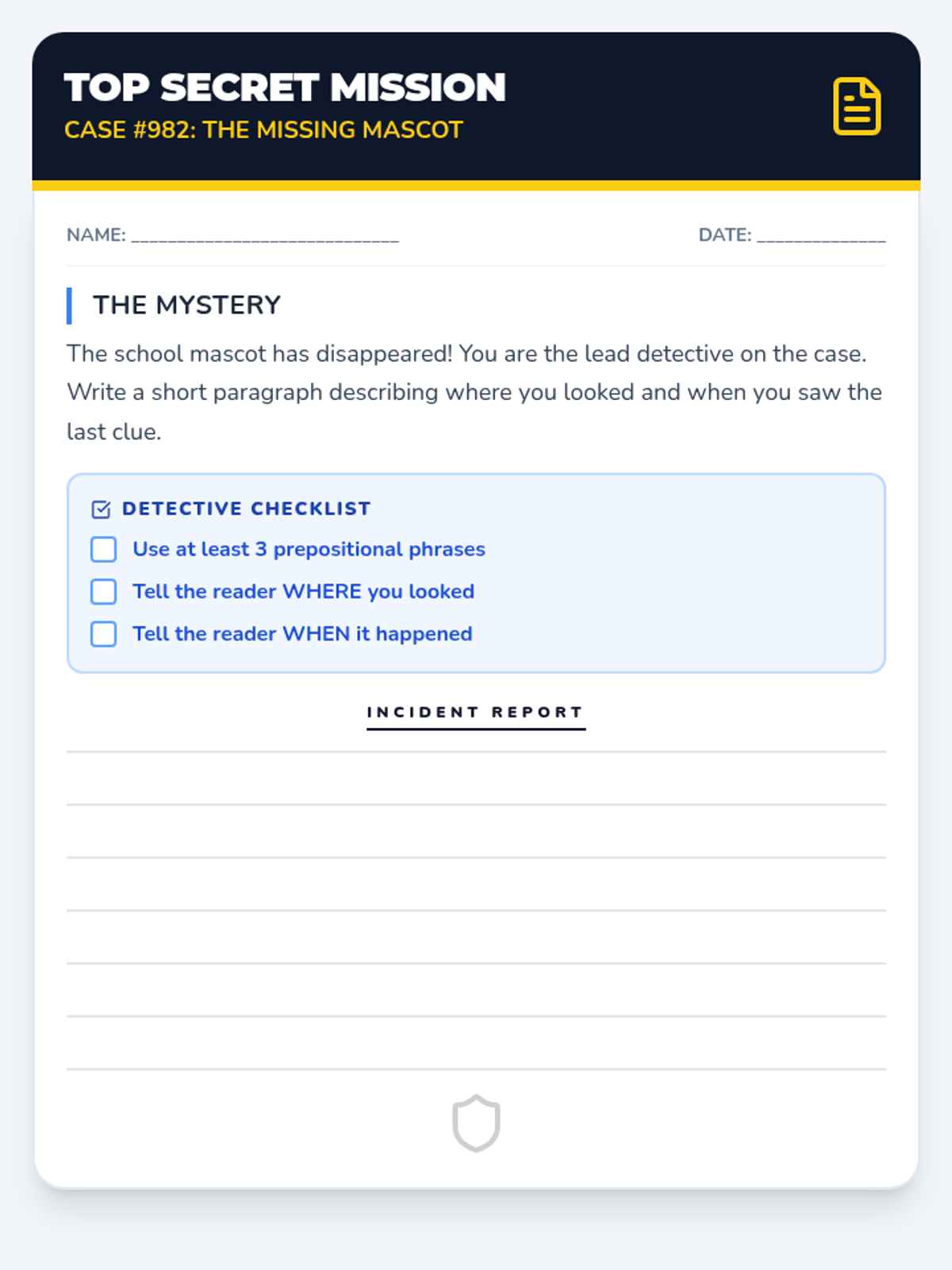
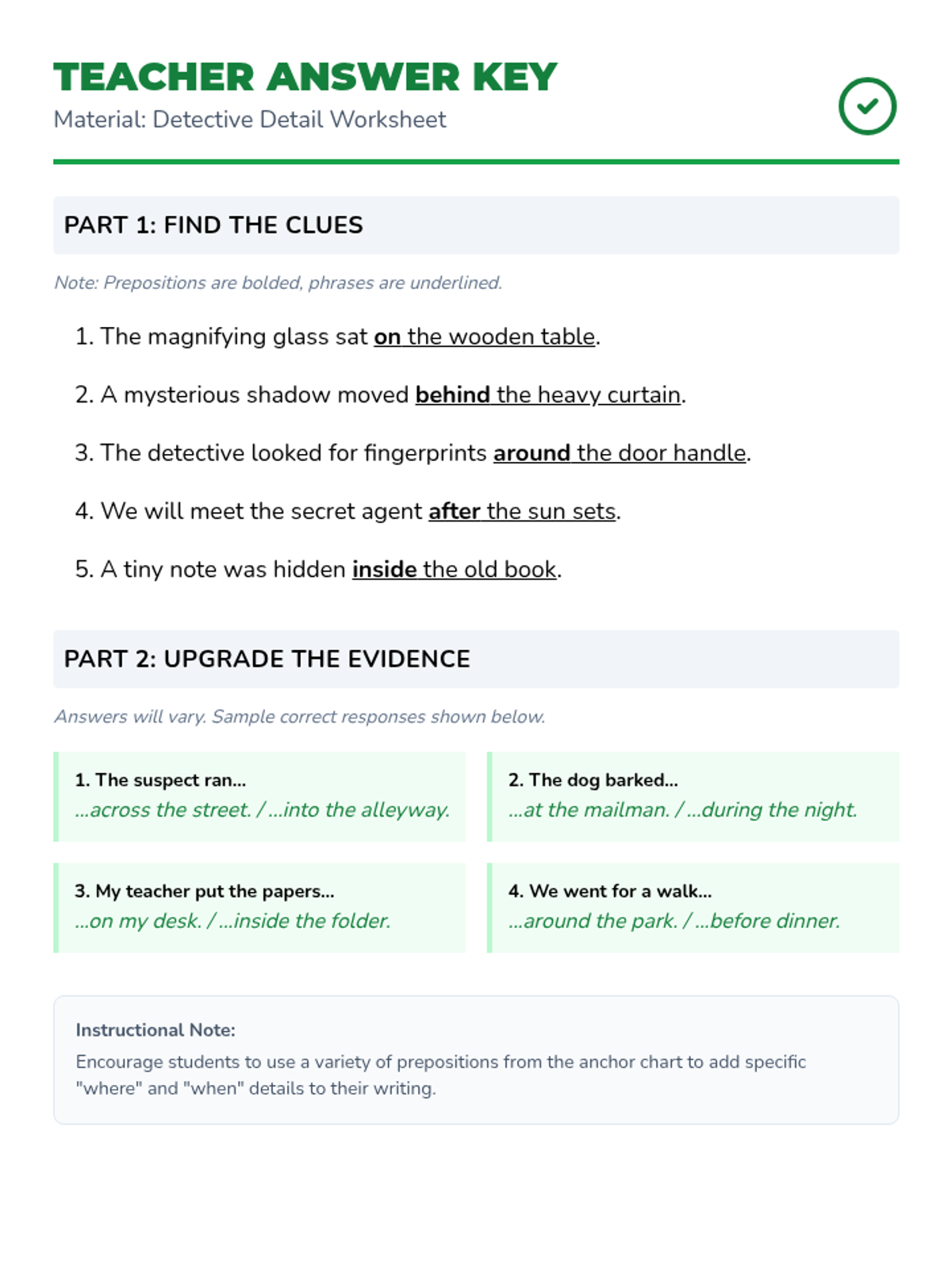
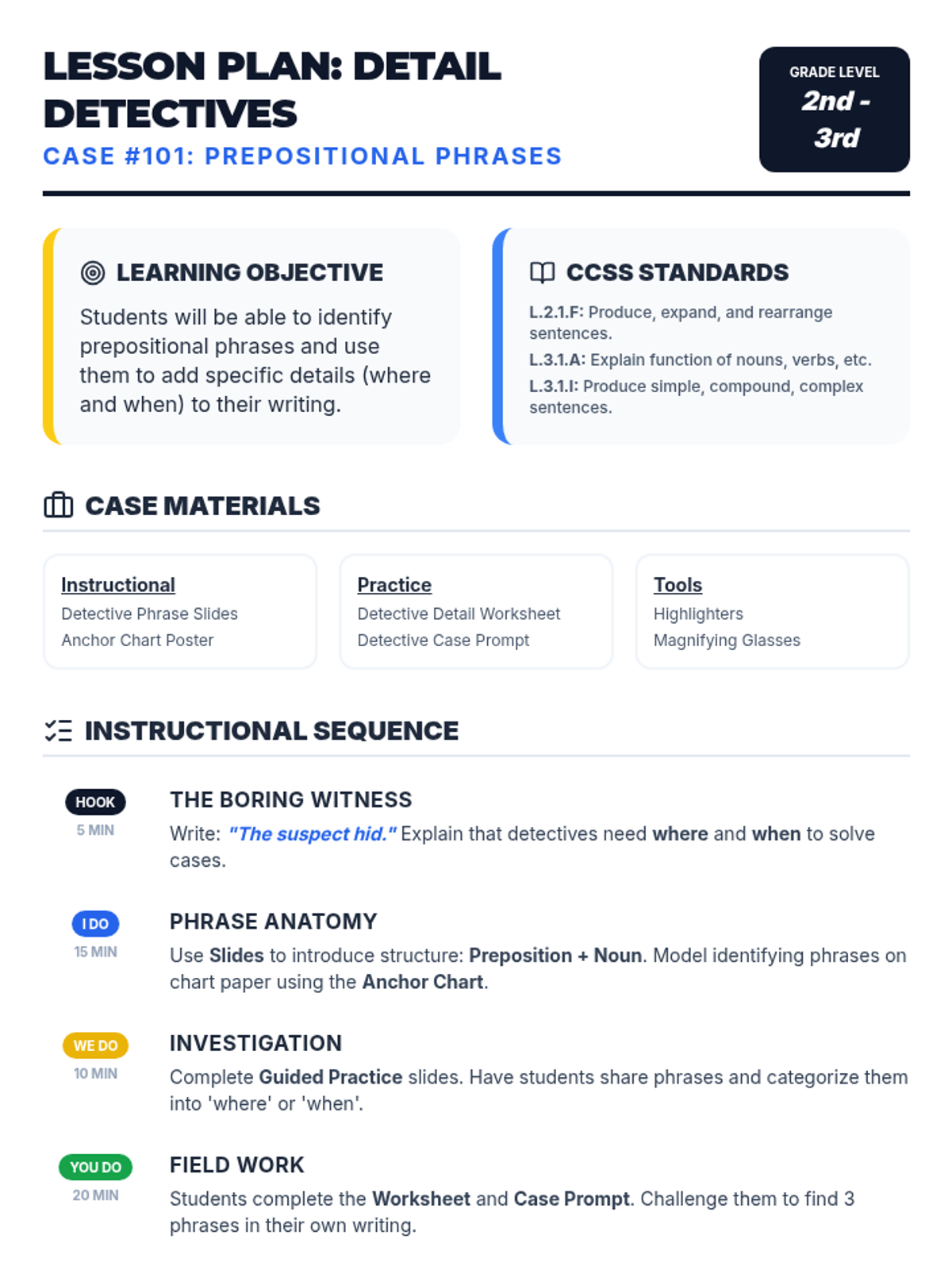
A lesson for 2nd and 3rd graders on using prepositional phrases to add specific details to their sentences, helping them describe where, when, and how things happen.