A culminating Socratic Seminar where students synthesize the sequence's themes to discuss the limits of a citizen's obligation to the law.
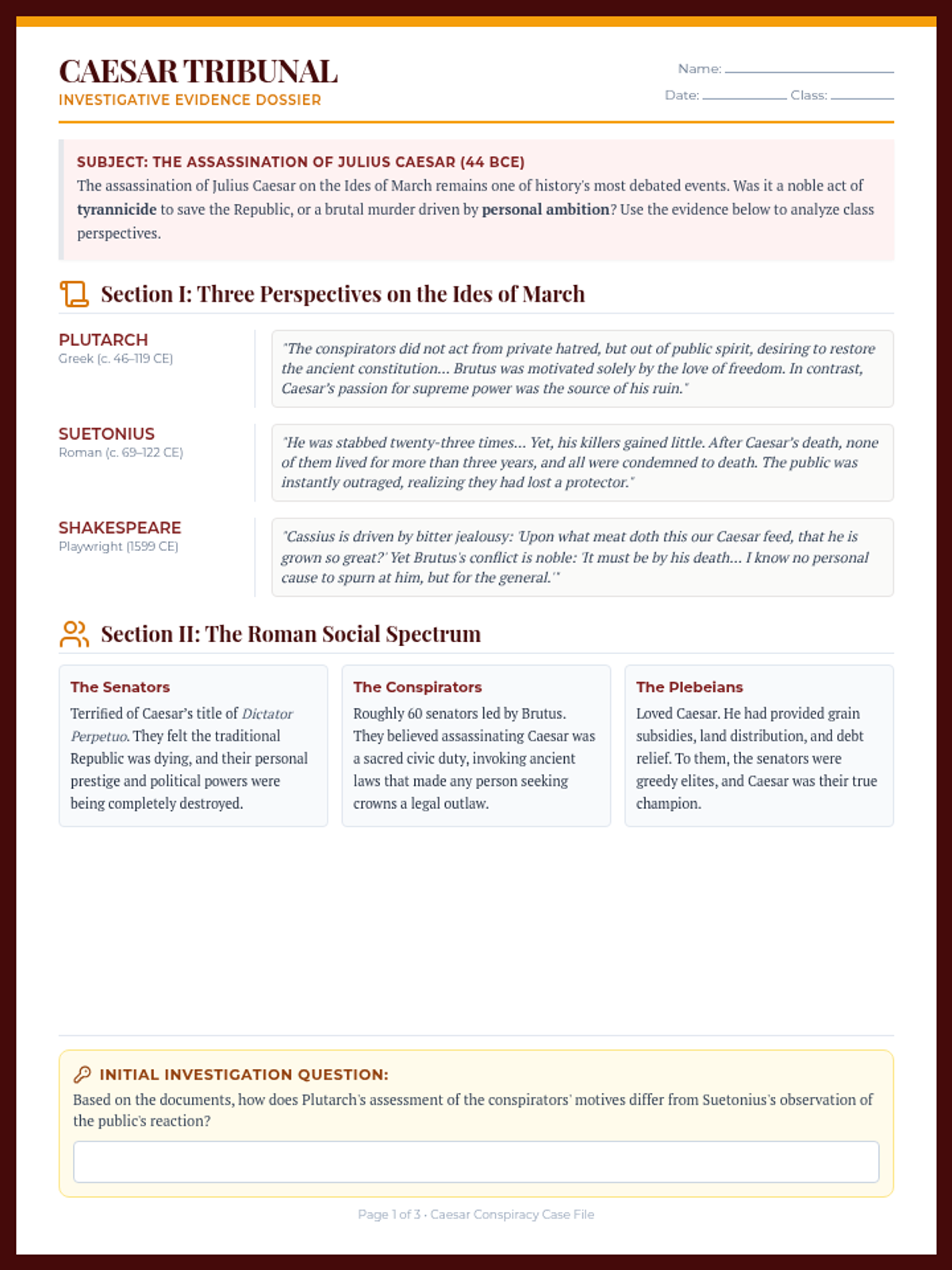
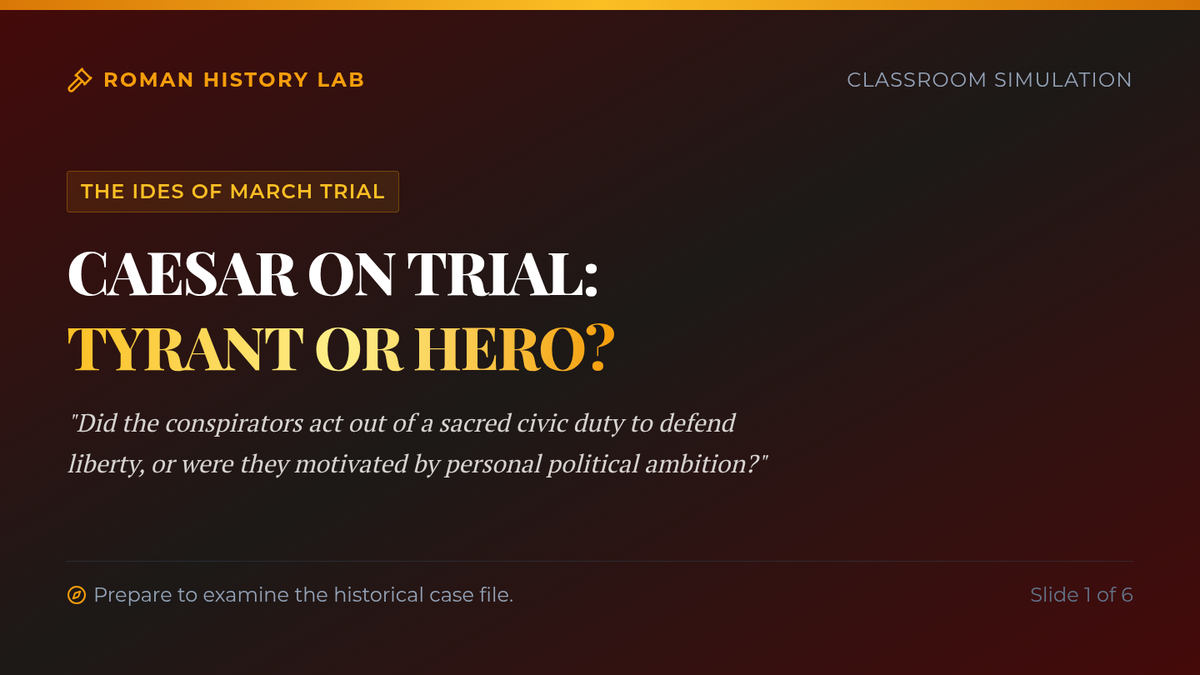
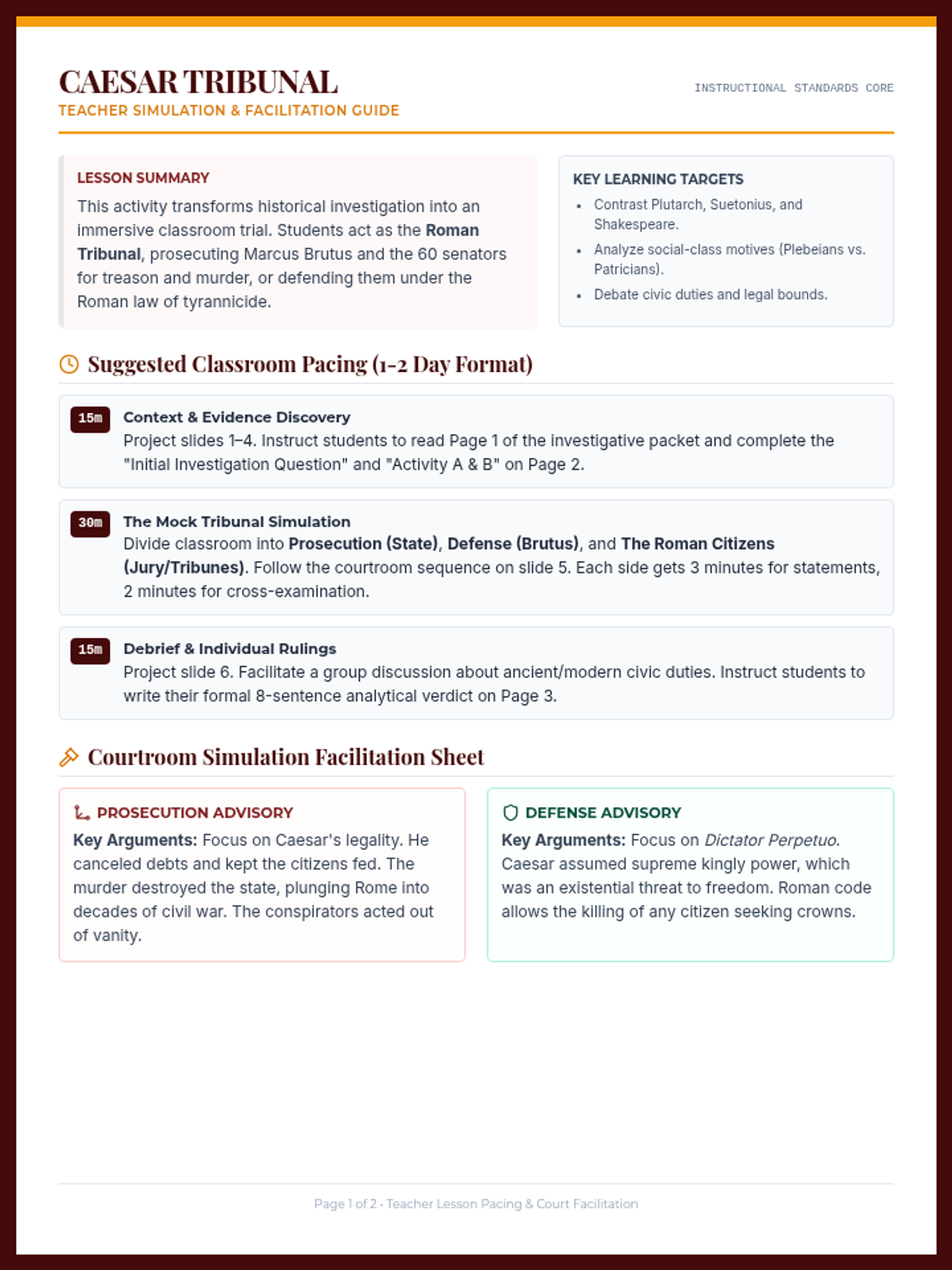
A comprehensive classroom simulation and analysis lesson about the assassination of Julius Caesar. Students examine historical perspectives, engage with primary sources, and debate civic duty through a mock trial and a three-page investigative document.
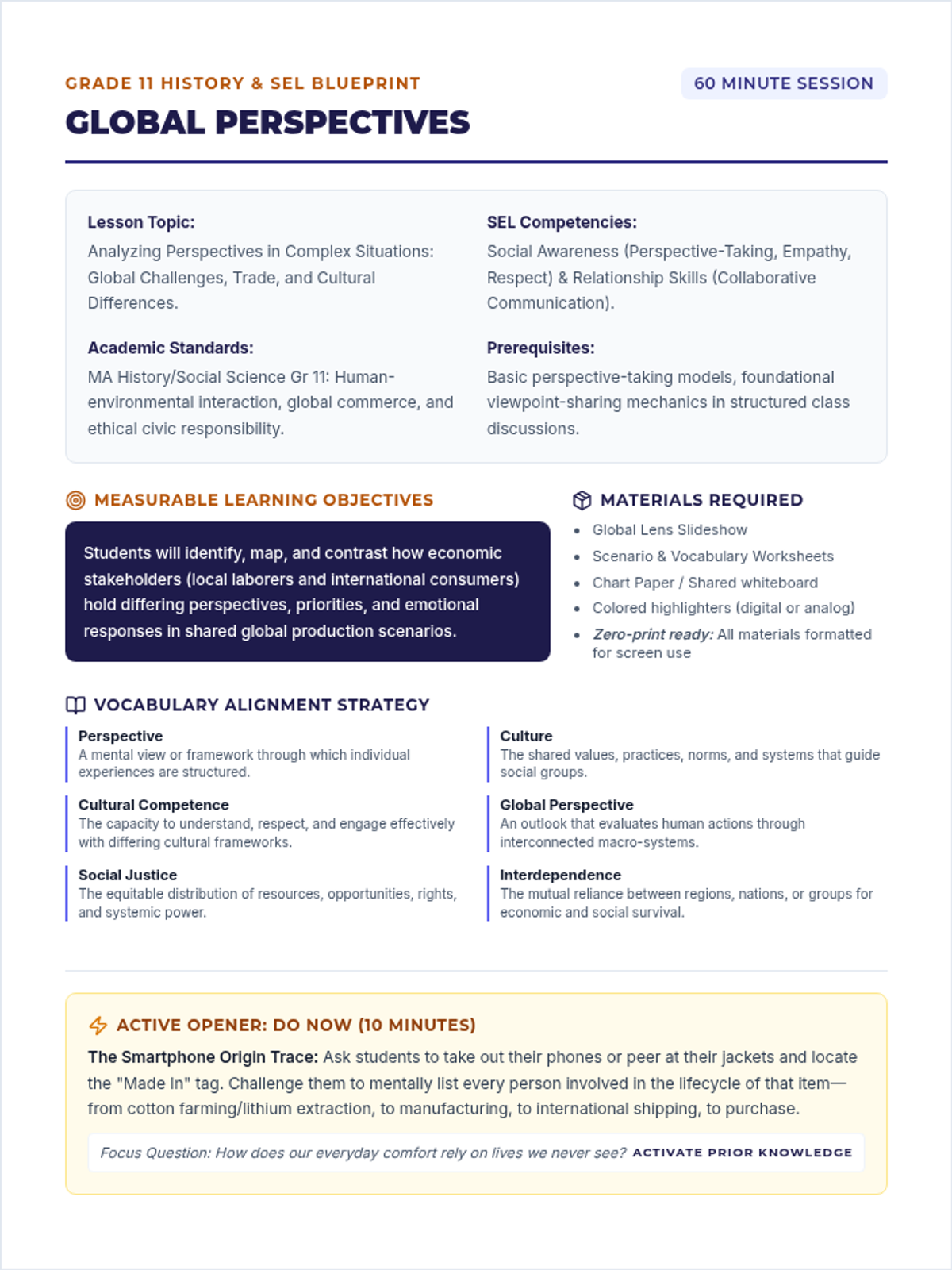
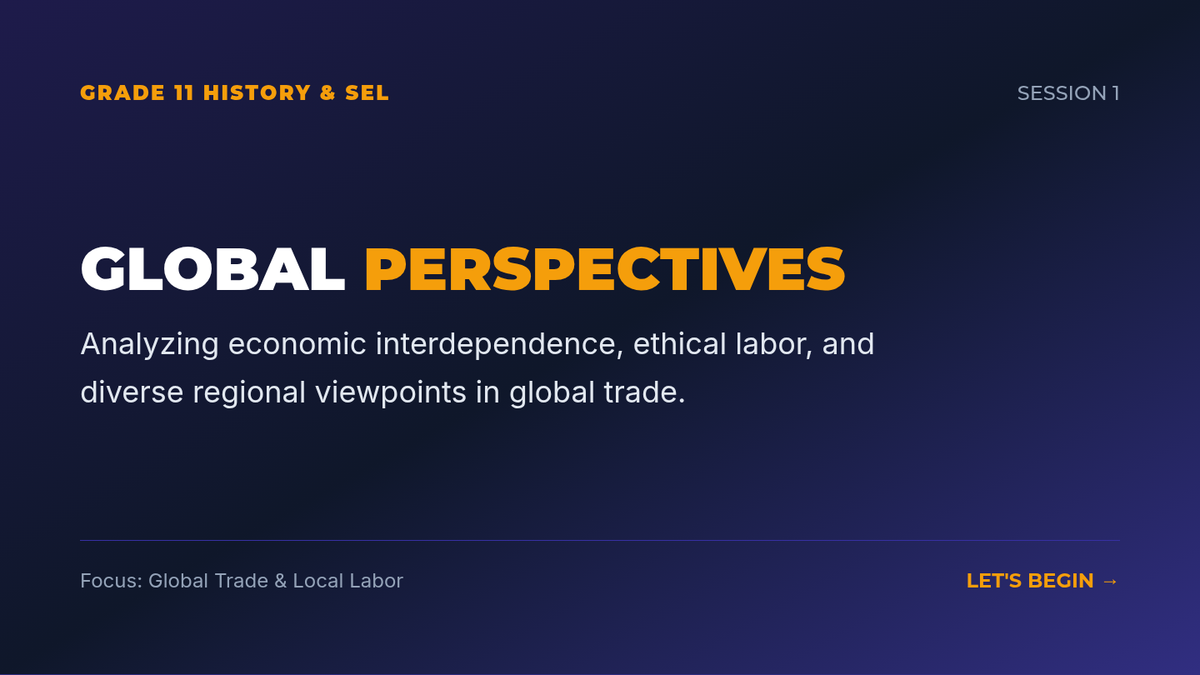
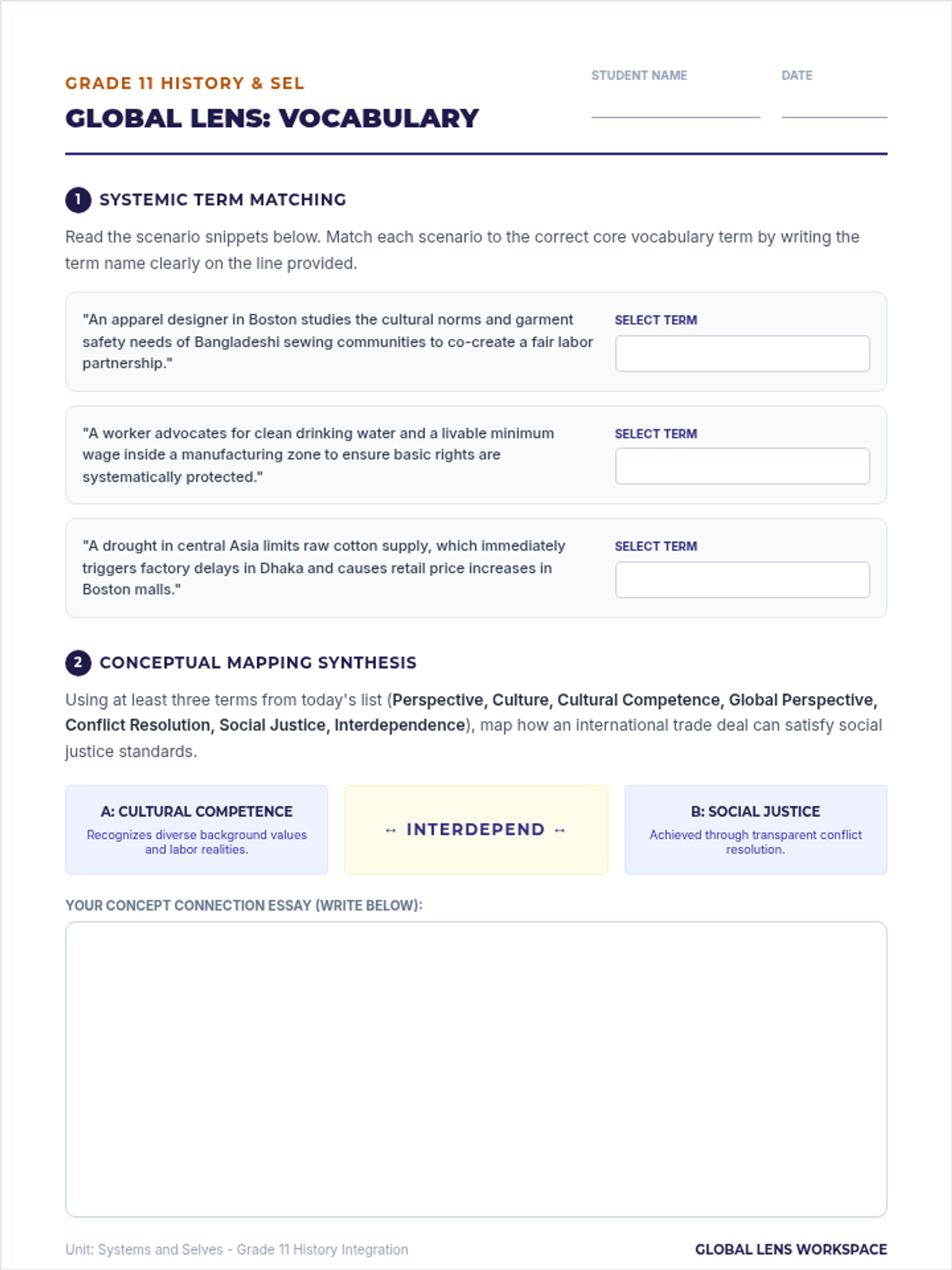
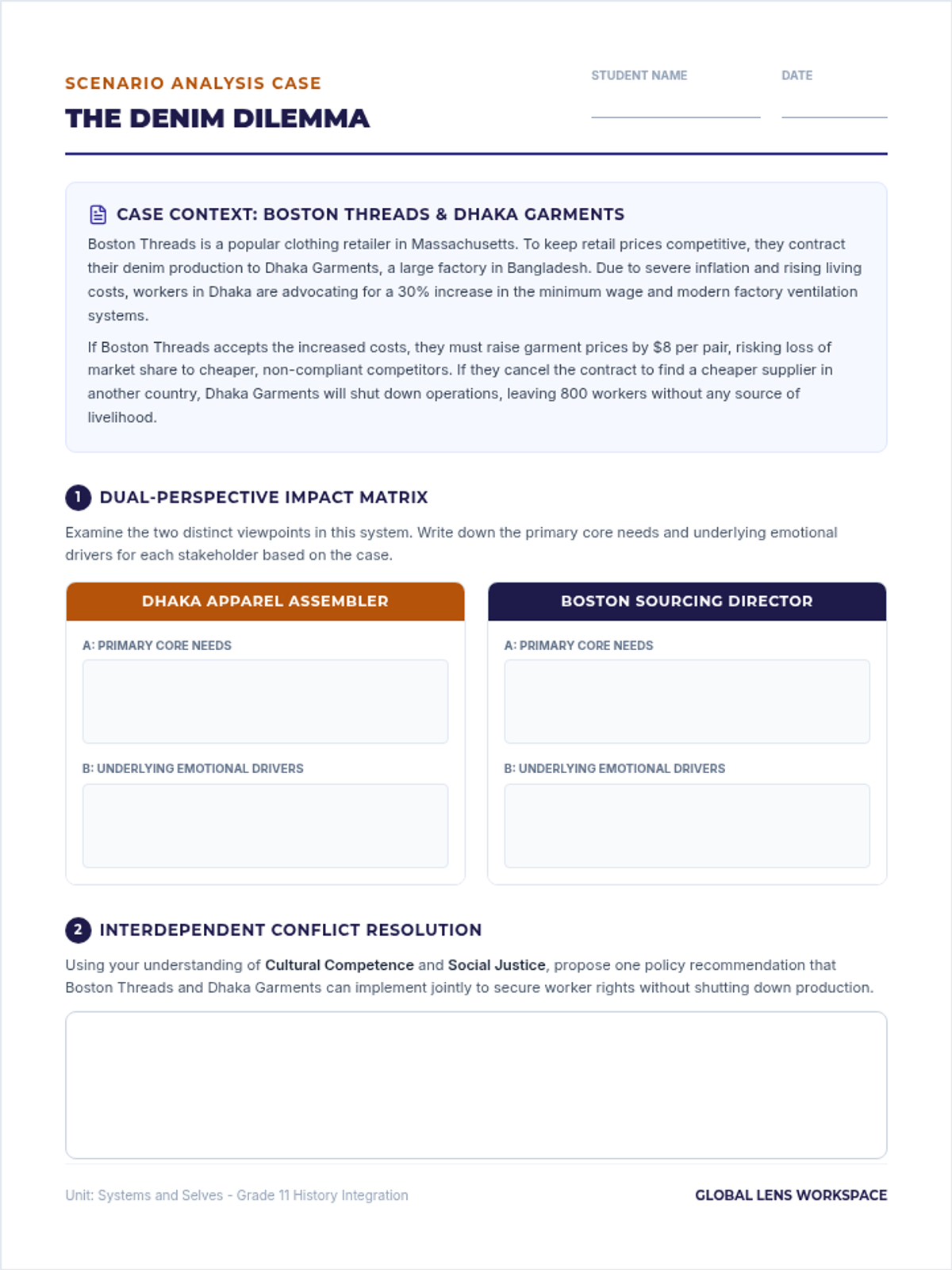
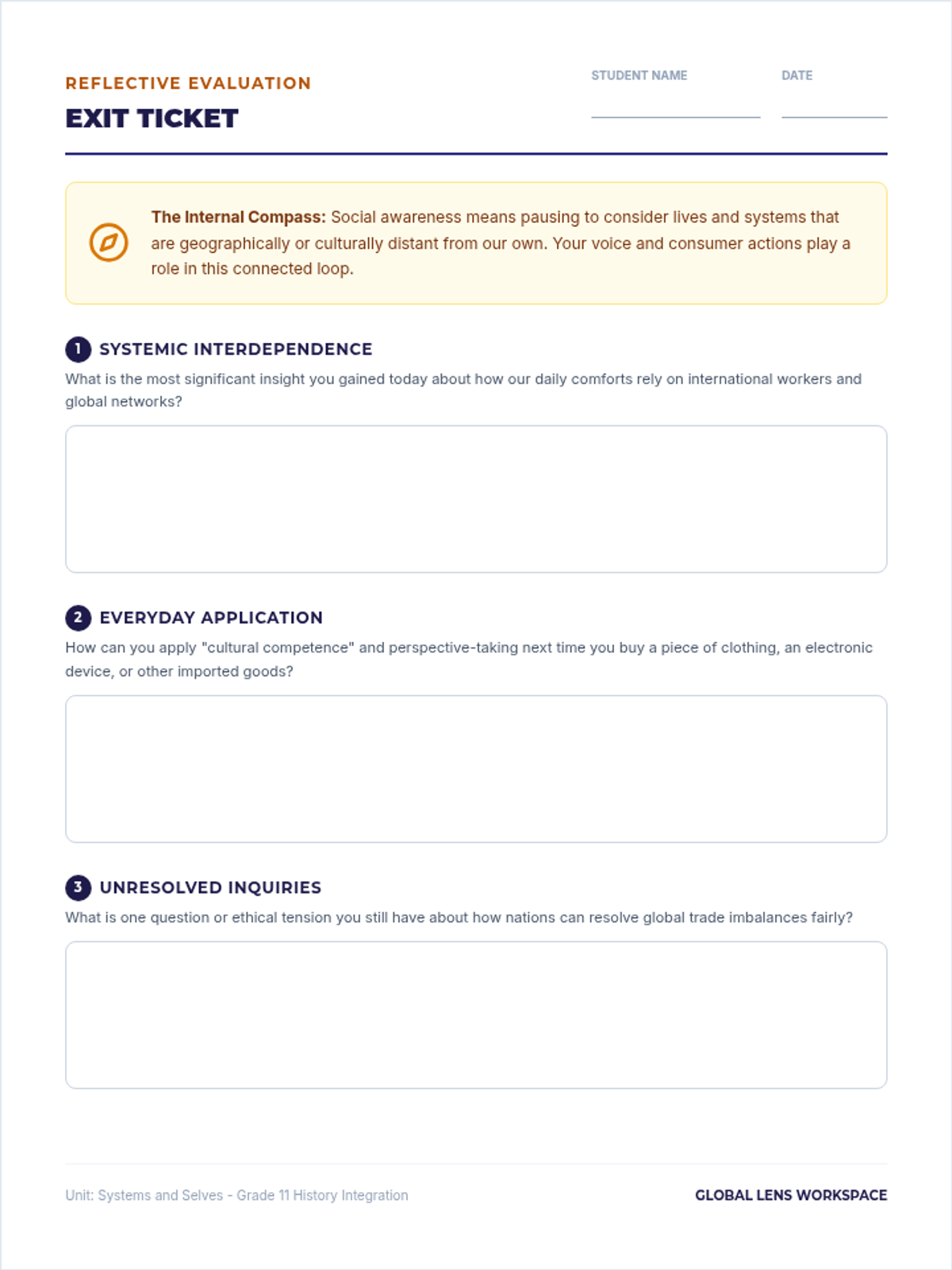
A grade 11 history and SEL lesson examining global trade, local labor, and economic interdependence. Students analyze complex global scenarios using multi-perspective lenses and cultural competence.
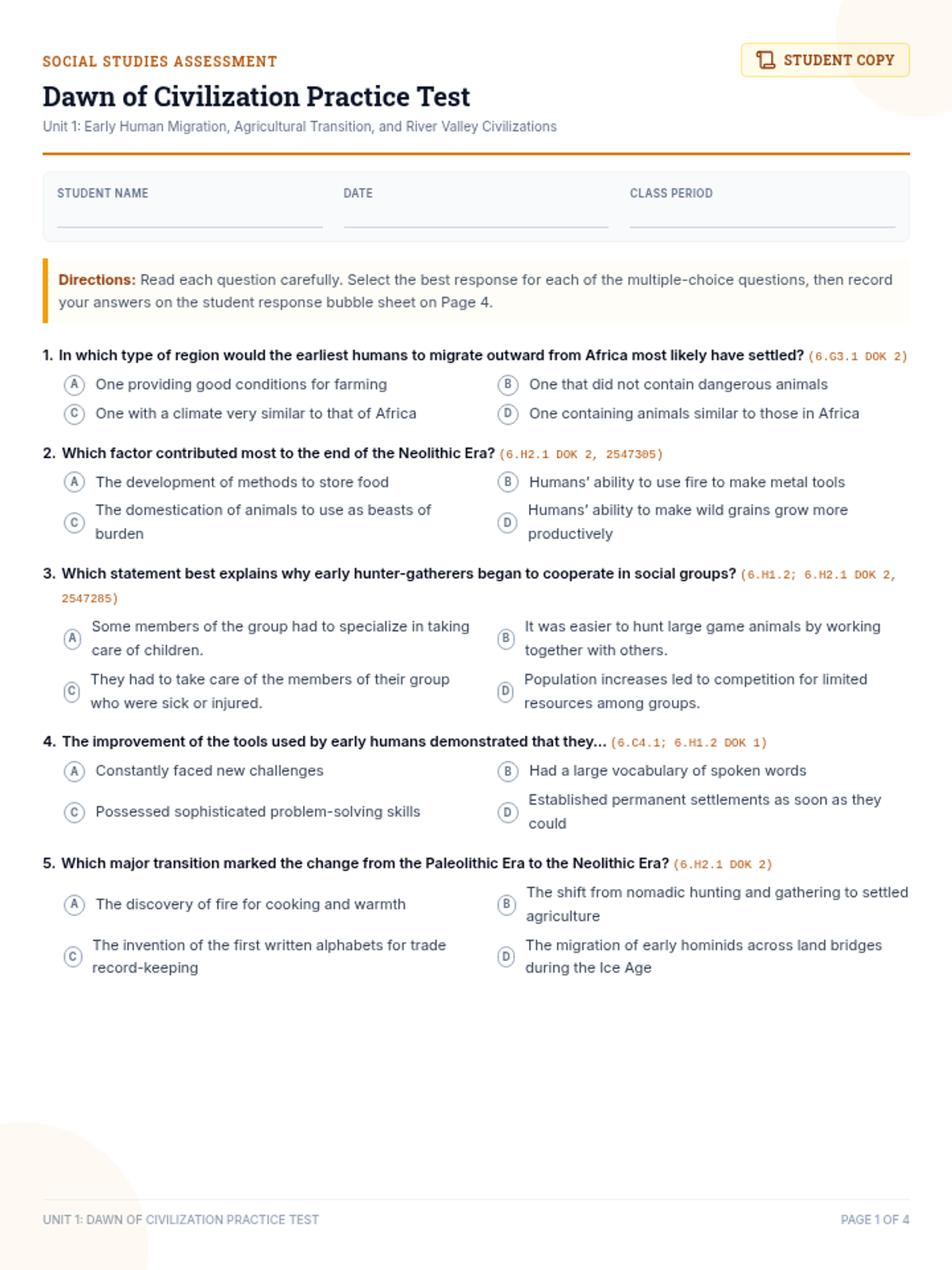
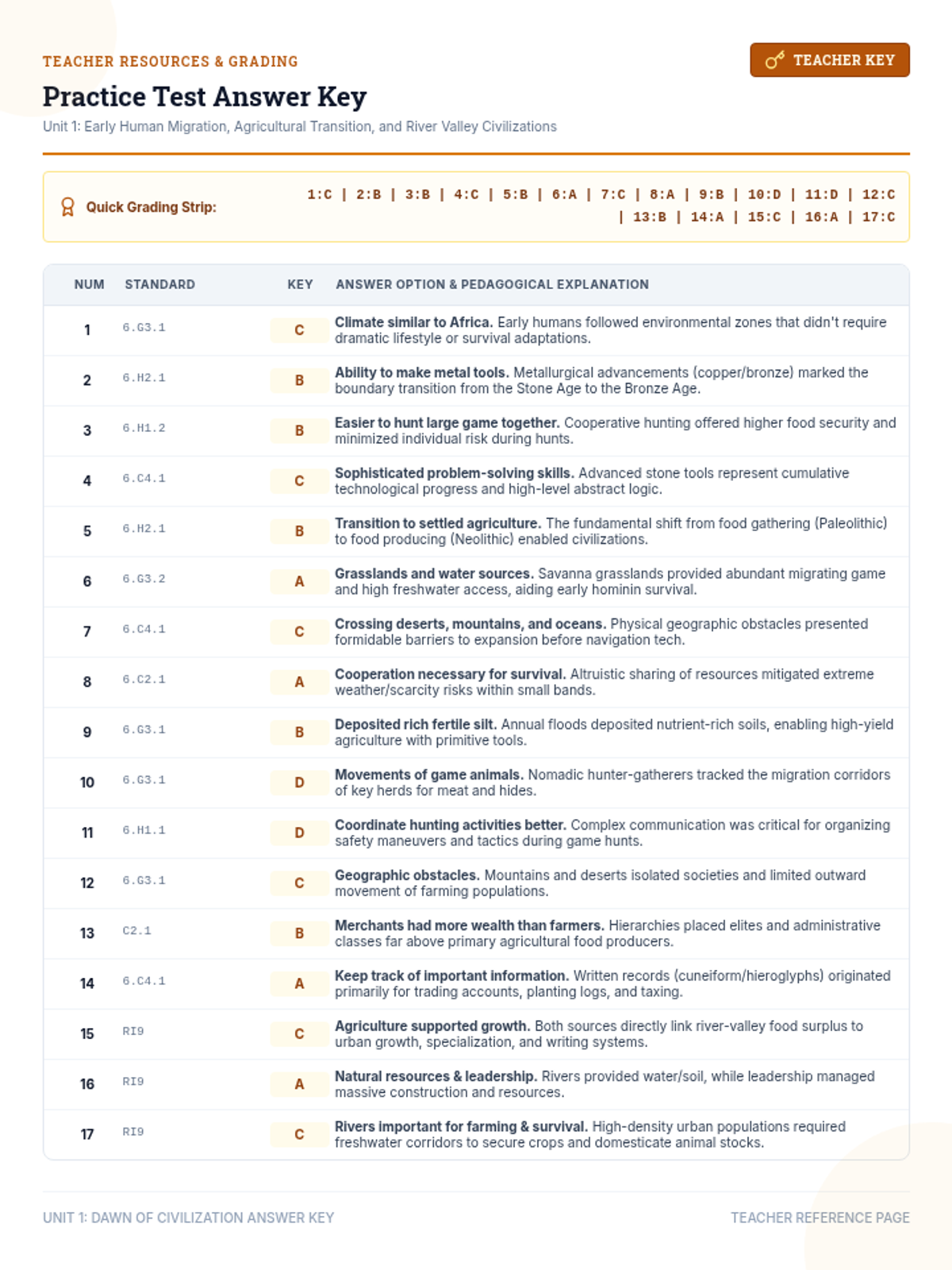
An exploration of early human migration, the transition from hunter-gatherers to agrarian societies, and the rise of the first river valley civilizations in Mesopotamia and ancient Egypt.
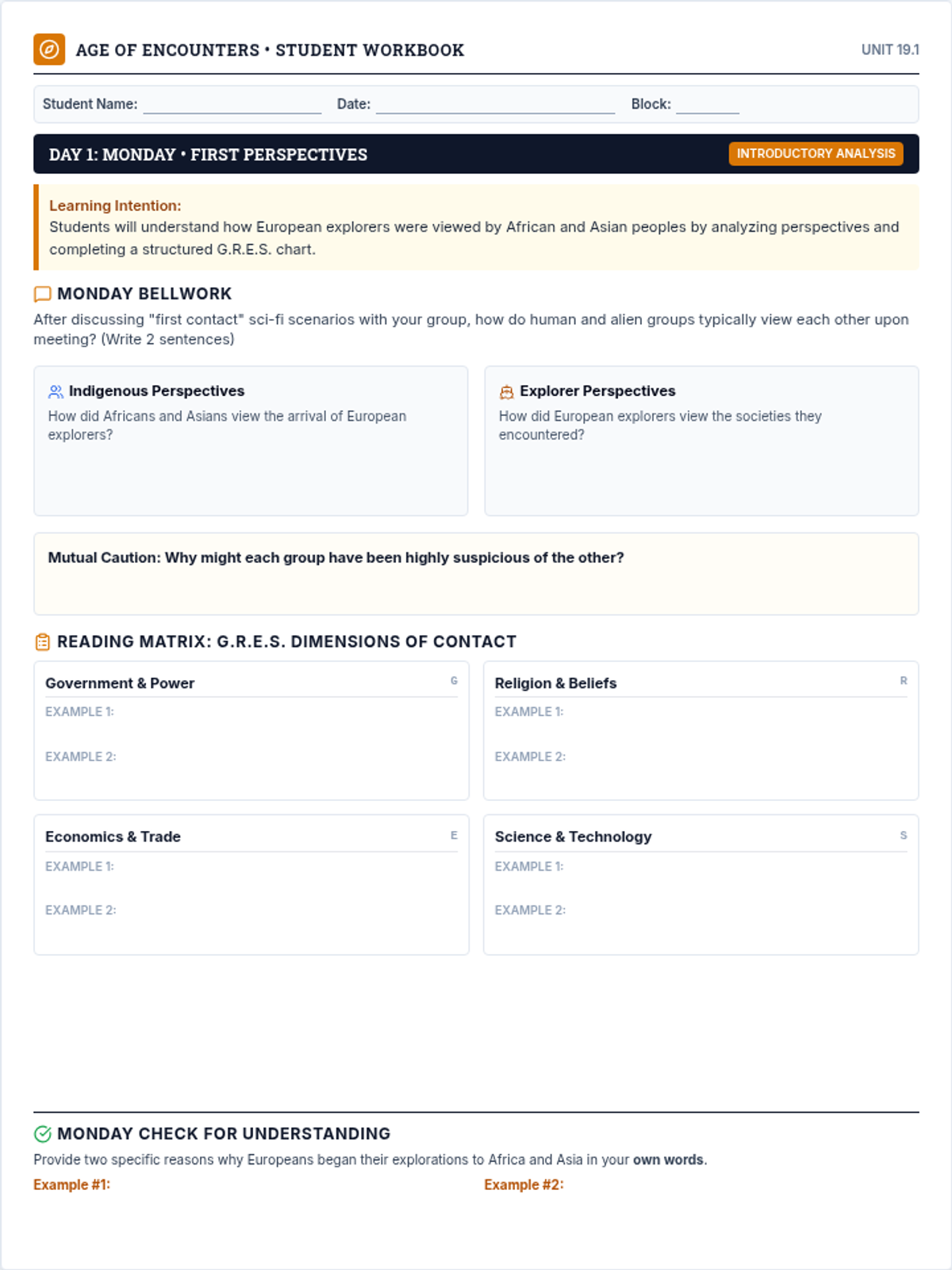
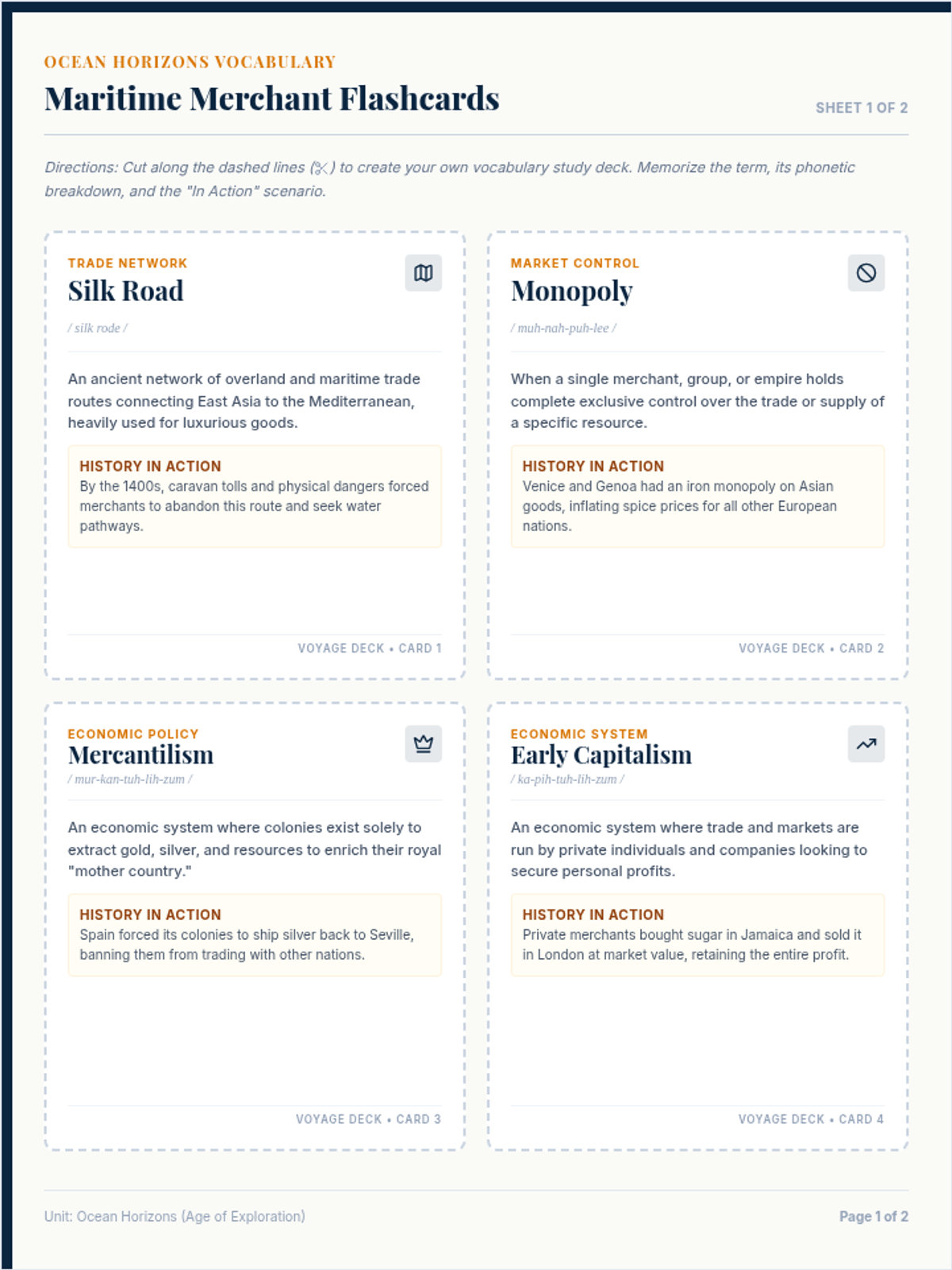
A comprehensive 5-day history unit exploring the Age of Exploration, cultural exchanges, technological innovations in navigation, the Transatlantic Slave Trade, and encounters with East Asian empires.
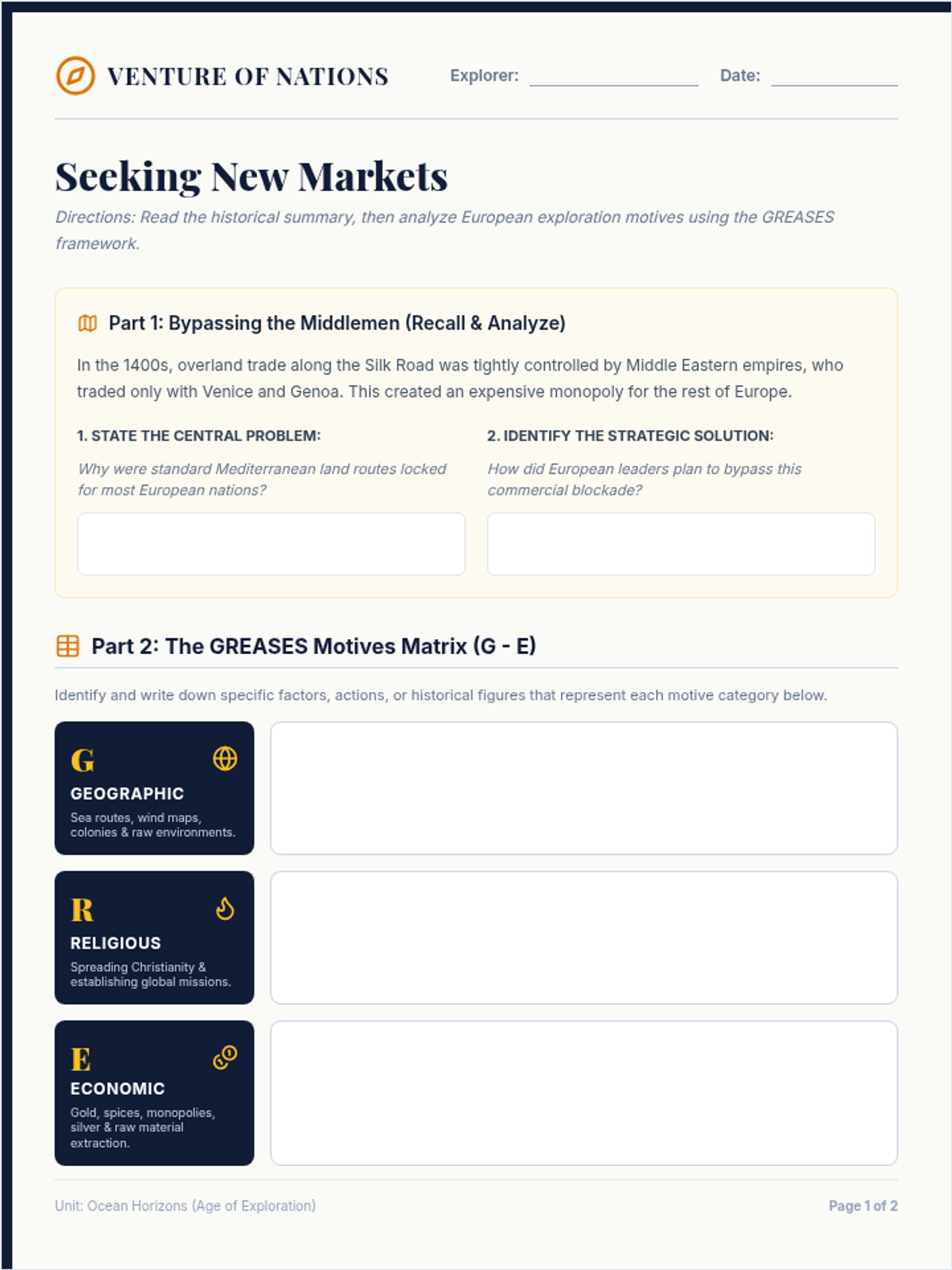
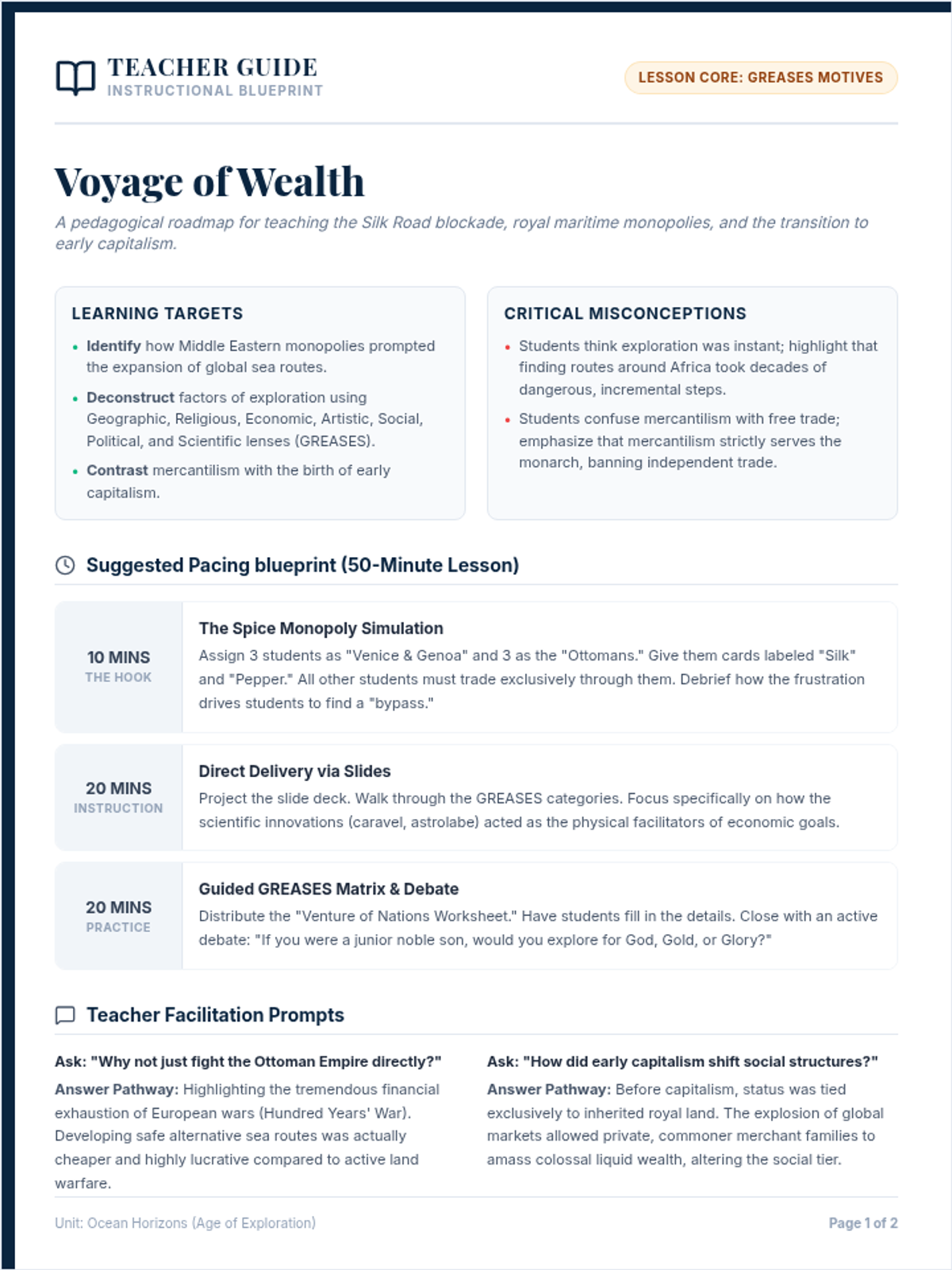
An in-depth exploration of the factors that drove European powers to seek new trade routes, introducing the GREASES framework for historical analysis of global expansion.
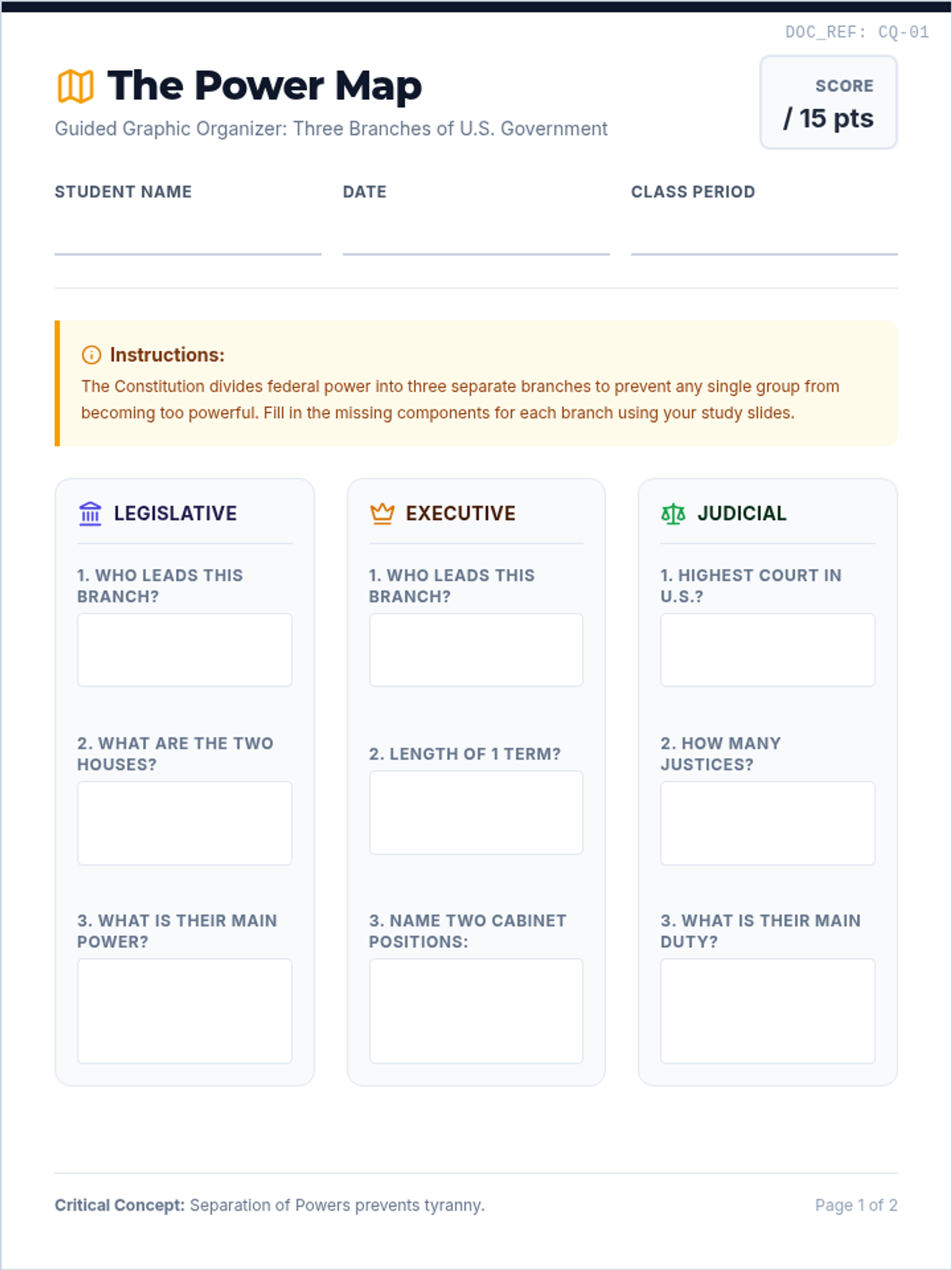
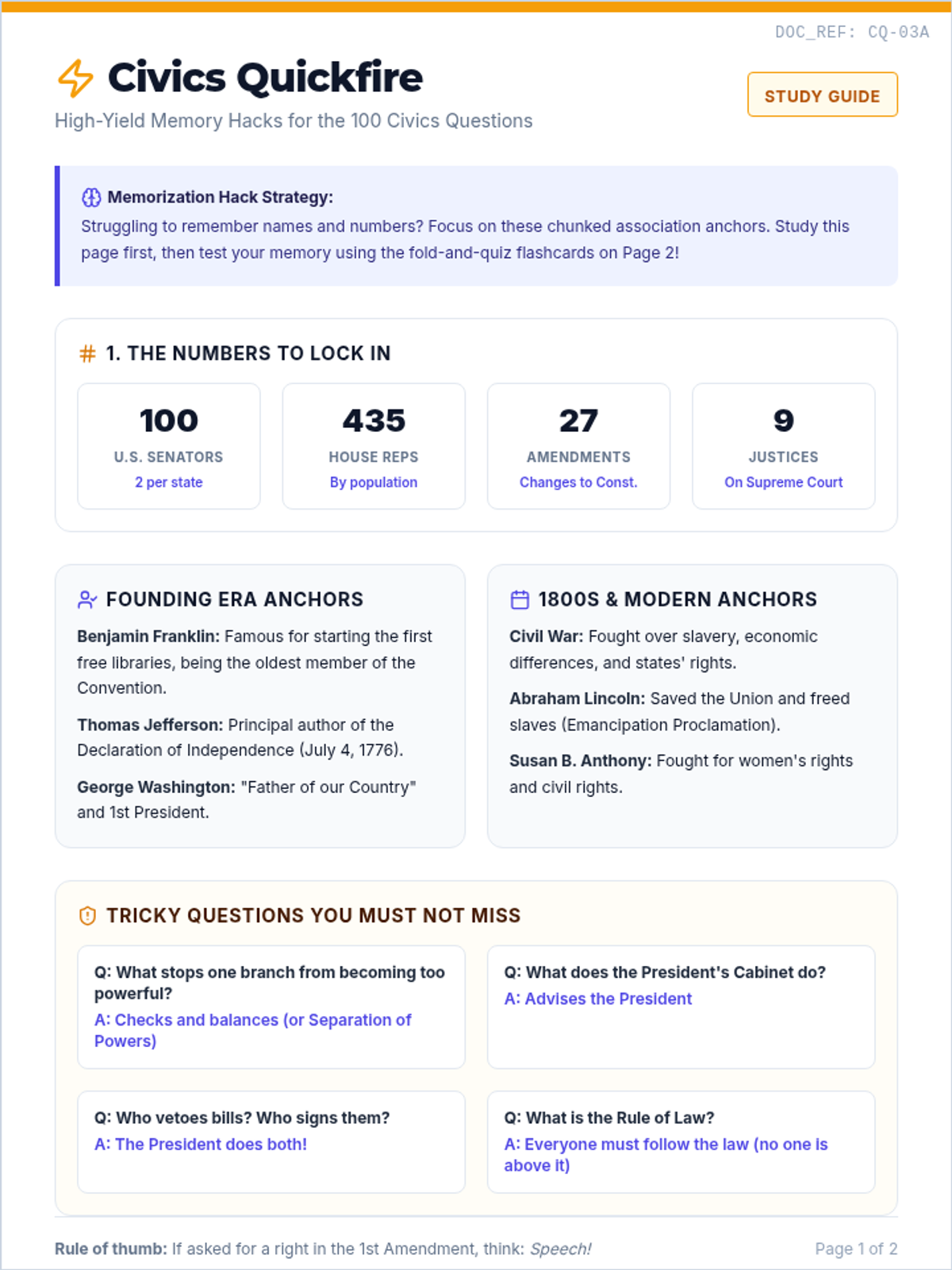
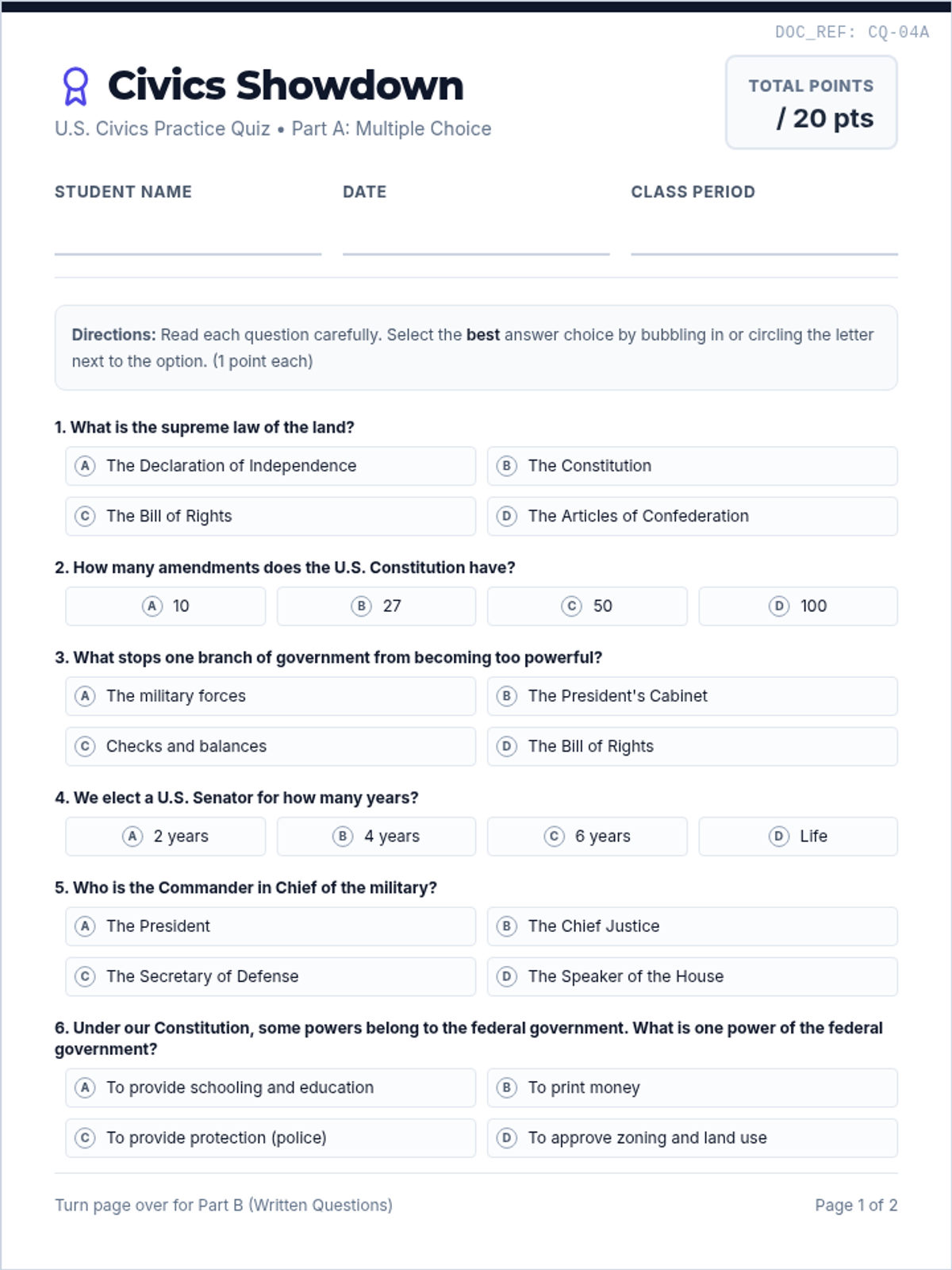
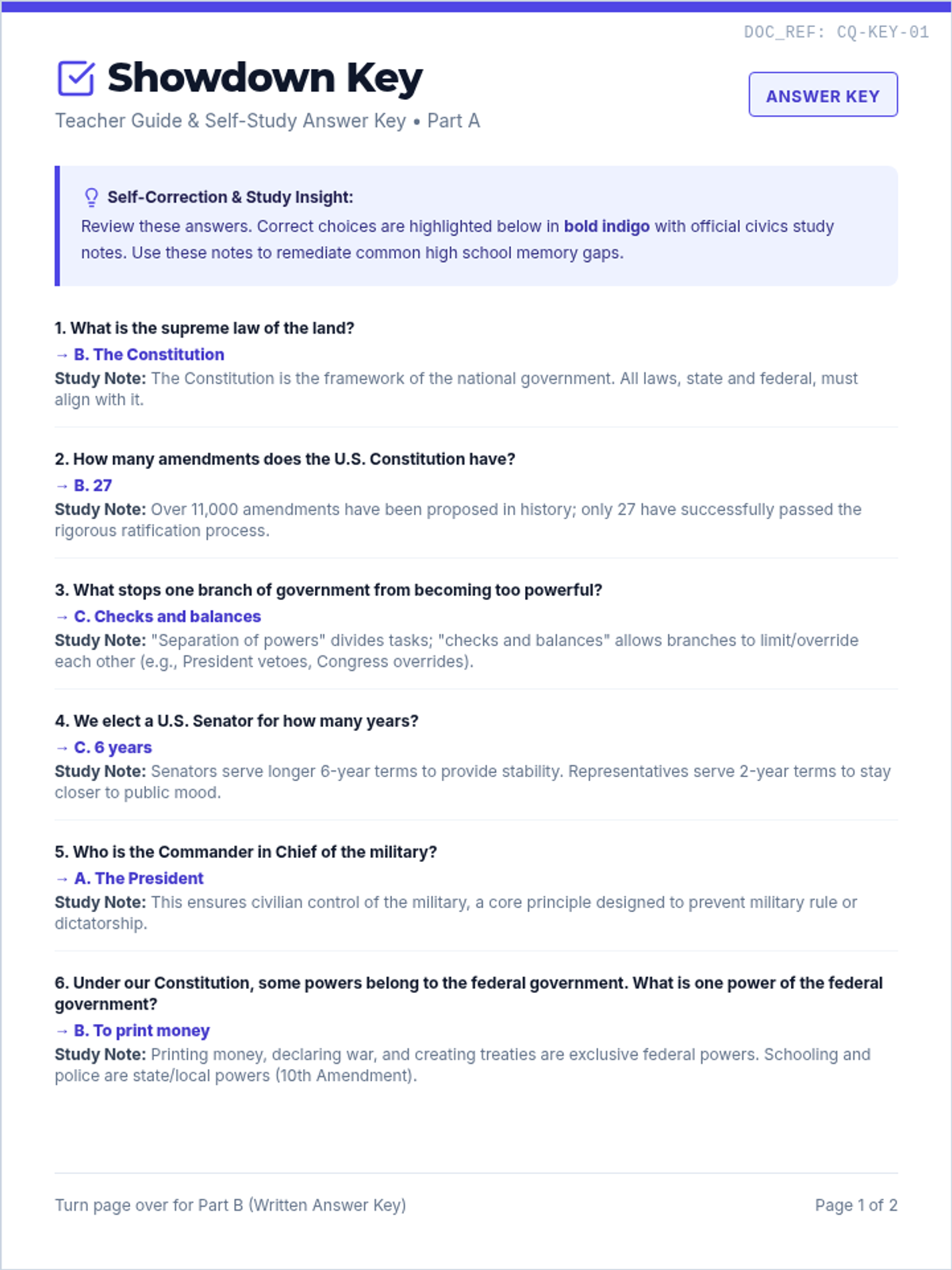
A comprehensive study bundle designed for high school students preparing for the Iowa-required civics exam. The materials use chunked information, visual aids, and scaffolded structures to support rote memorization, quick recall, and structured independent study of the official 100 citizenship questions.
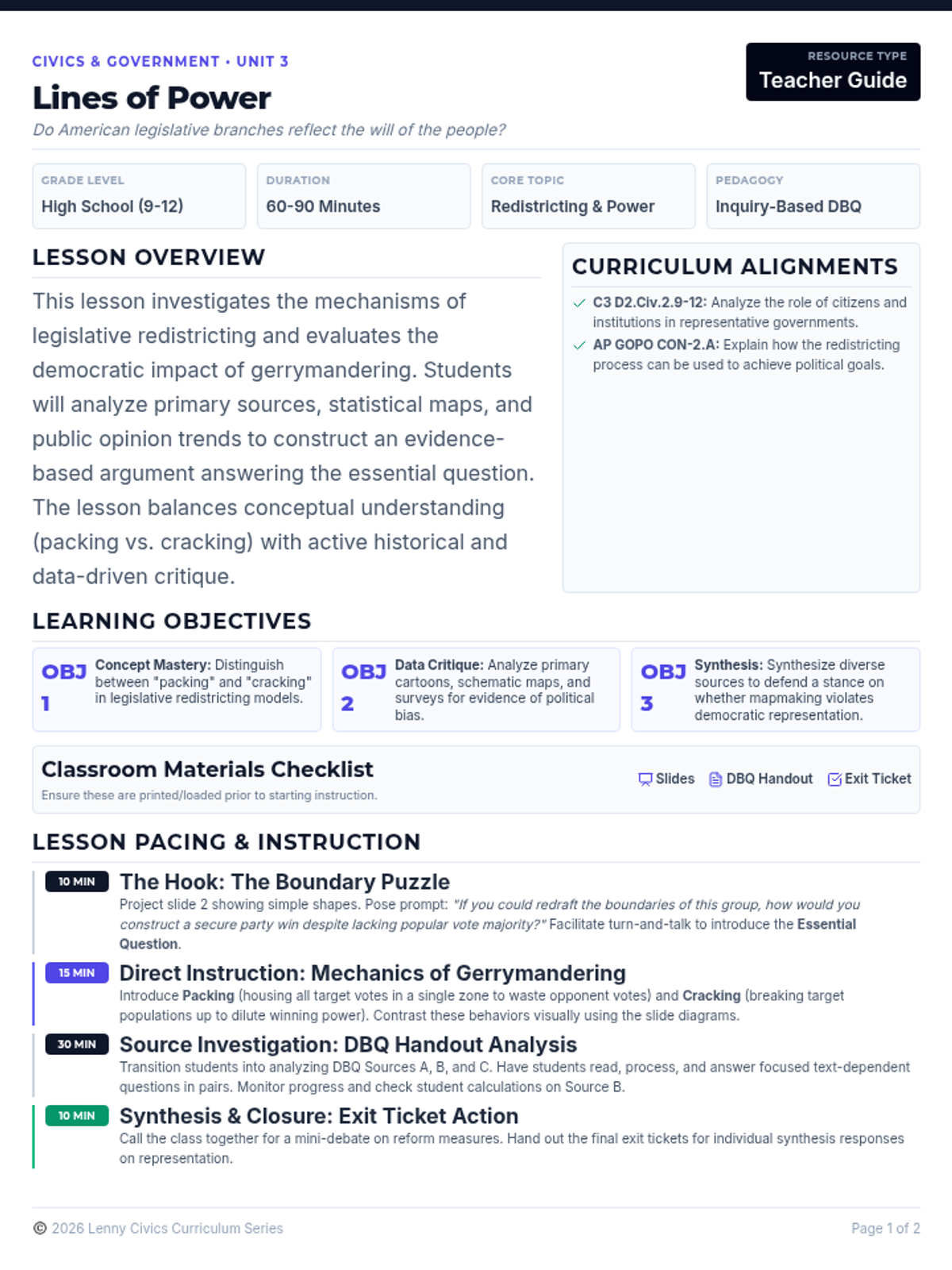
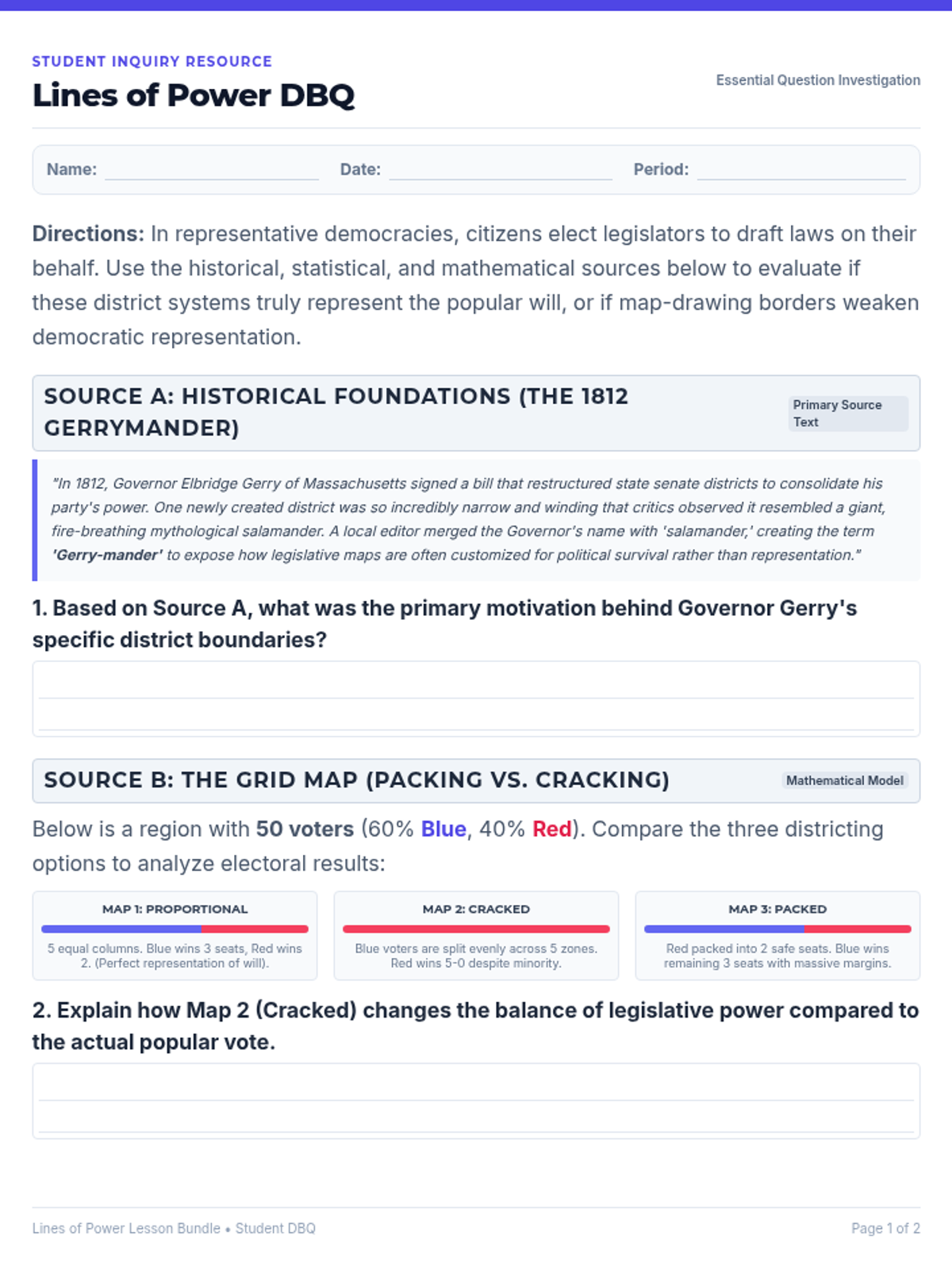
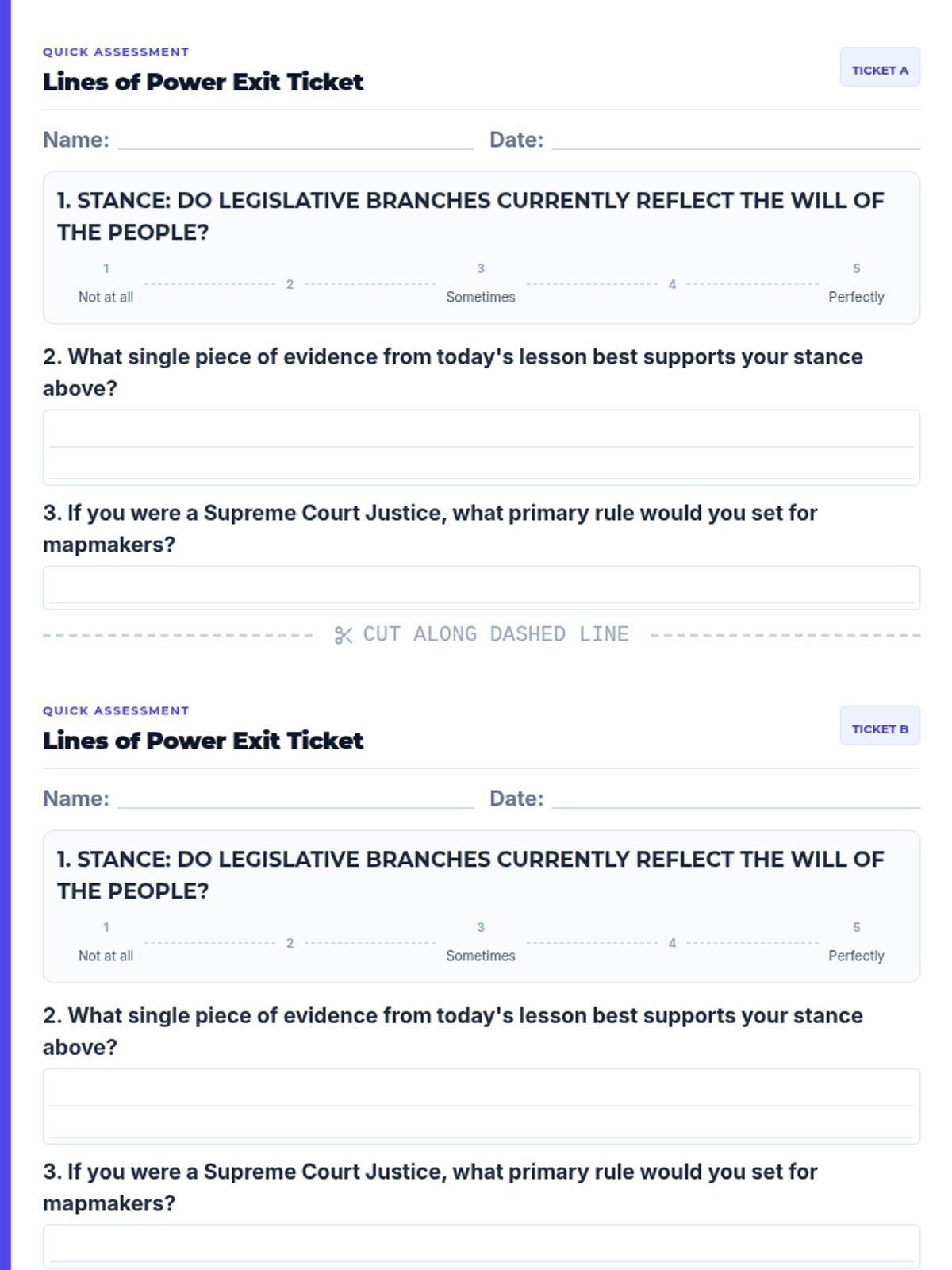
A comprehensive lesson investigating redistricting, packing, and cracking to evaluate if legislative branches truly represent the will of the people. Includes a slide deck, a structured DBQ worksheet, a professional teacher guide, and an interactive exit ticket.
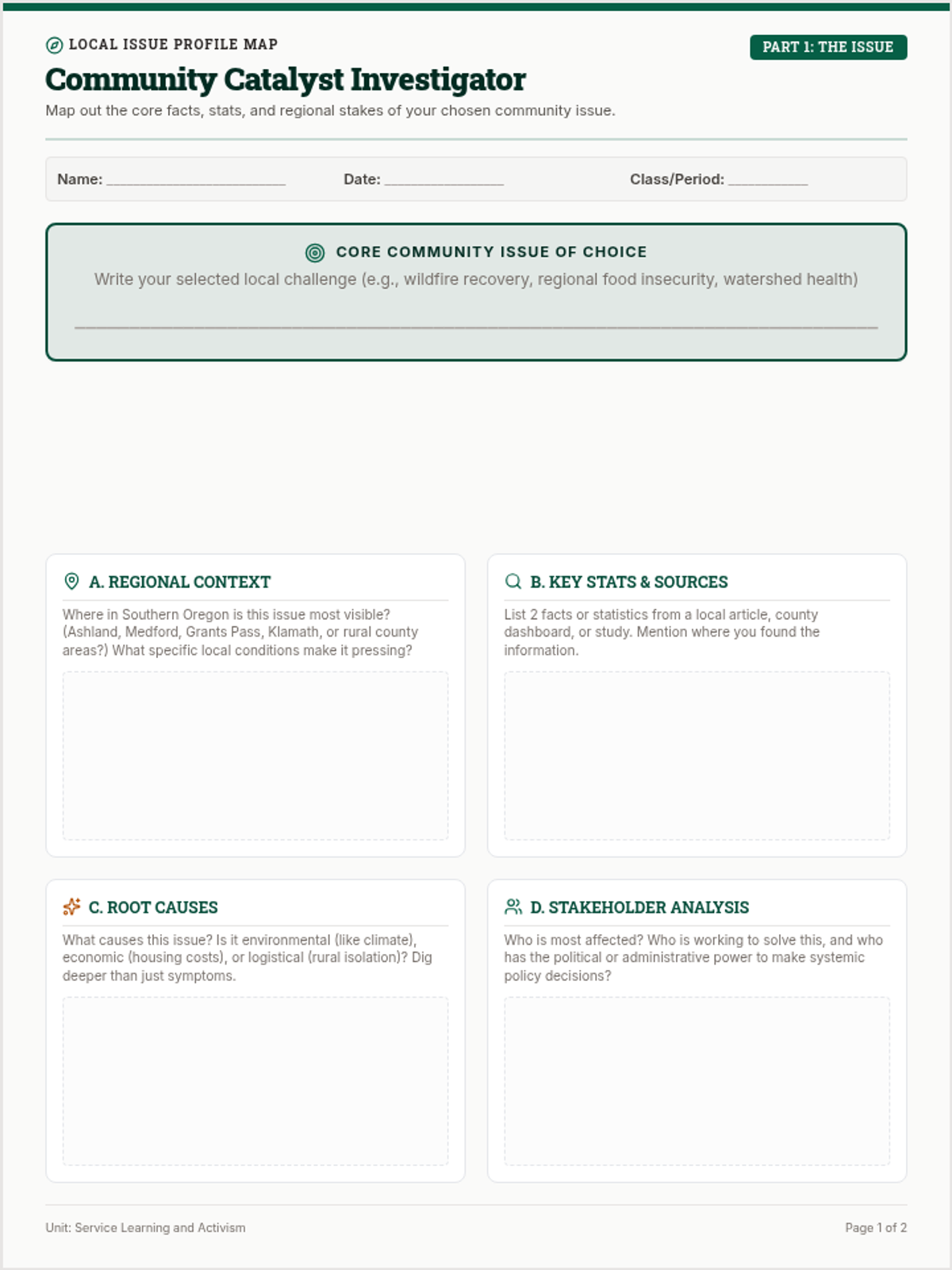
A service-learning and community activism lesson localized for Southern Oregon. Students explore the spectrum of community impact, brainstorm local issues, and research a self-selected cause using guided organizers.
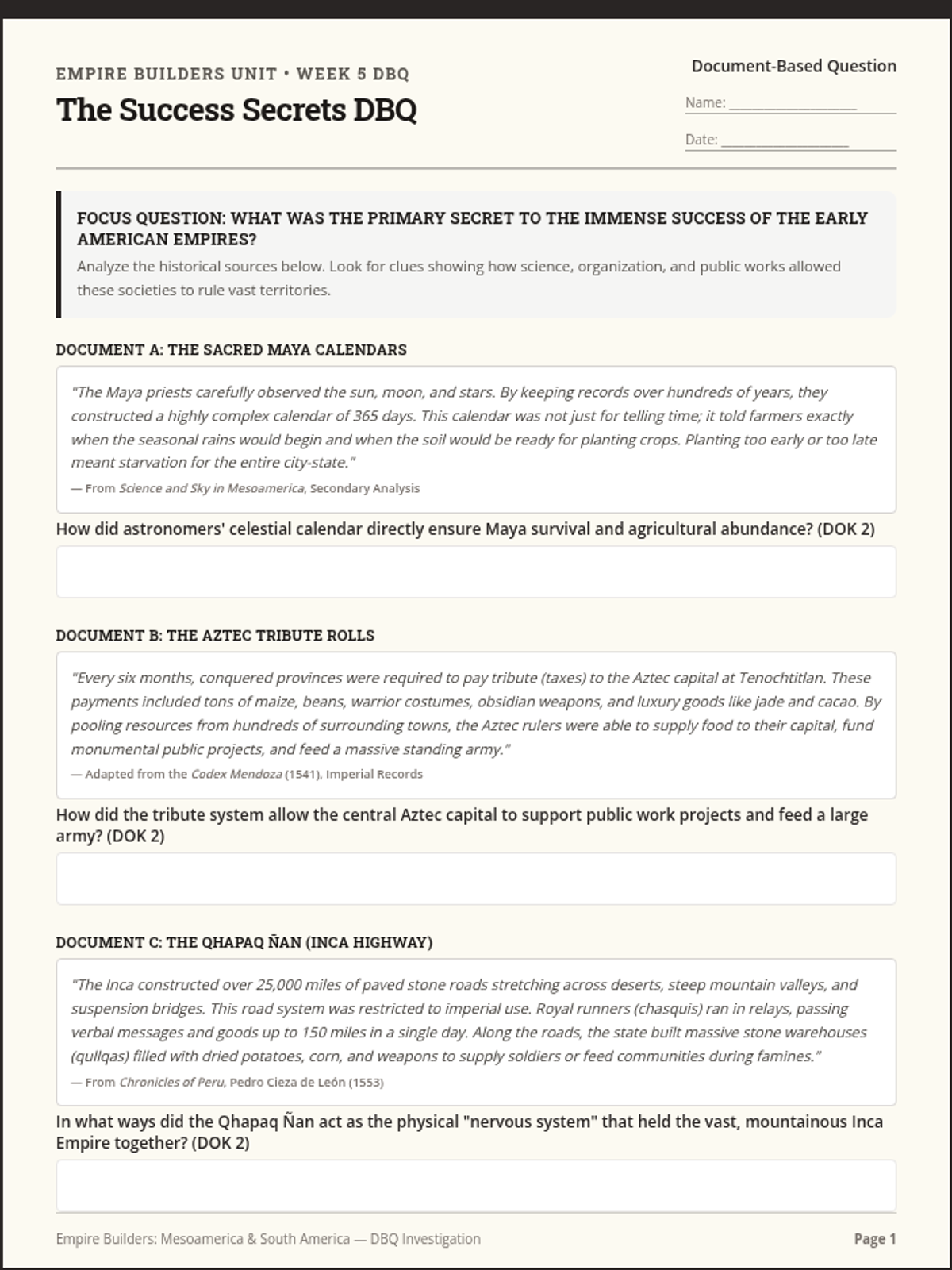
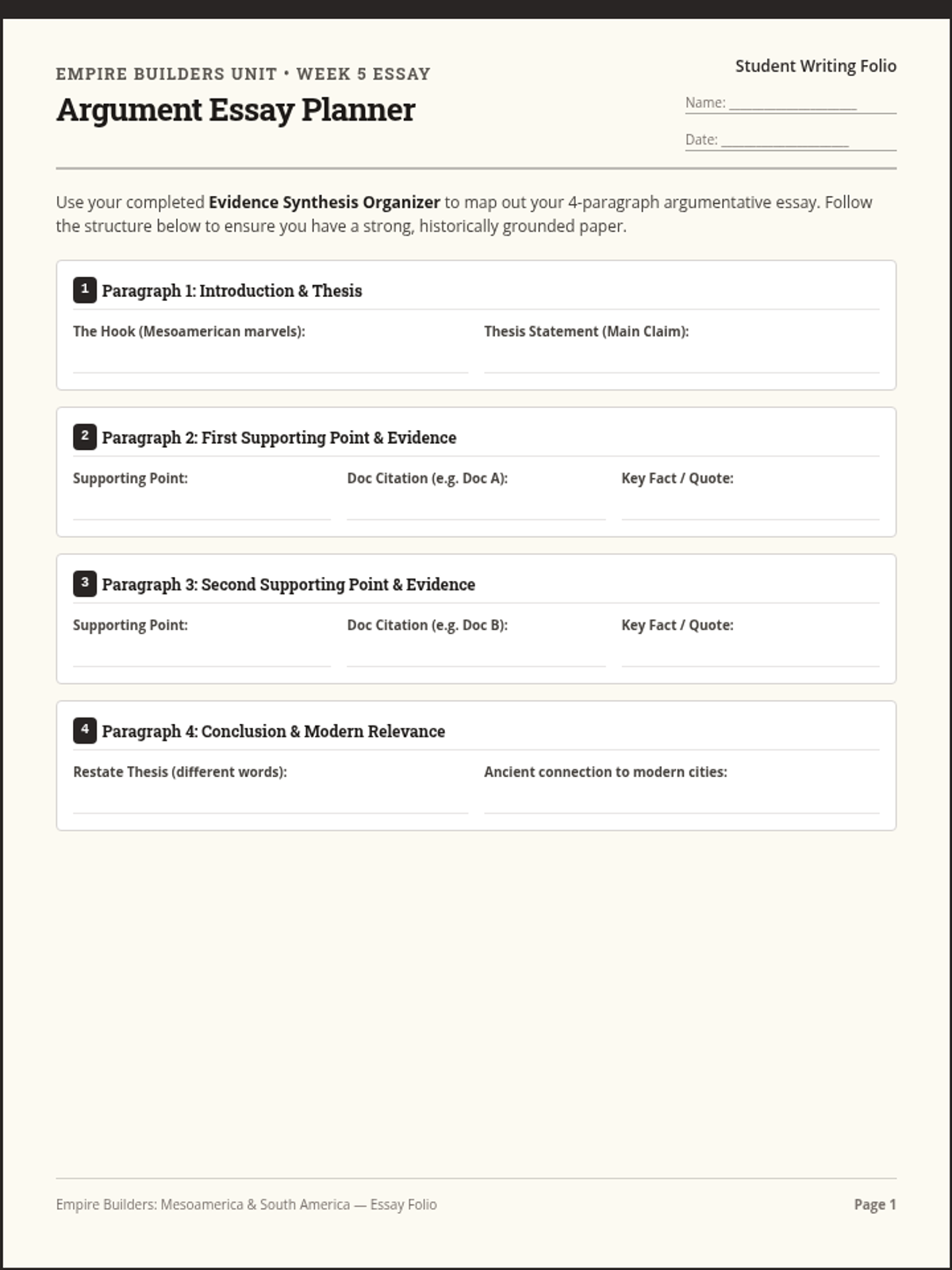
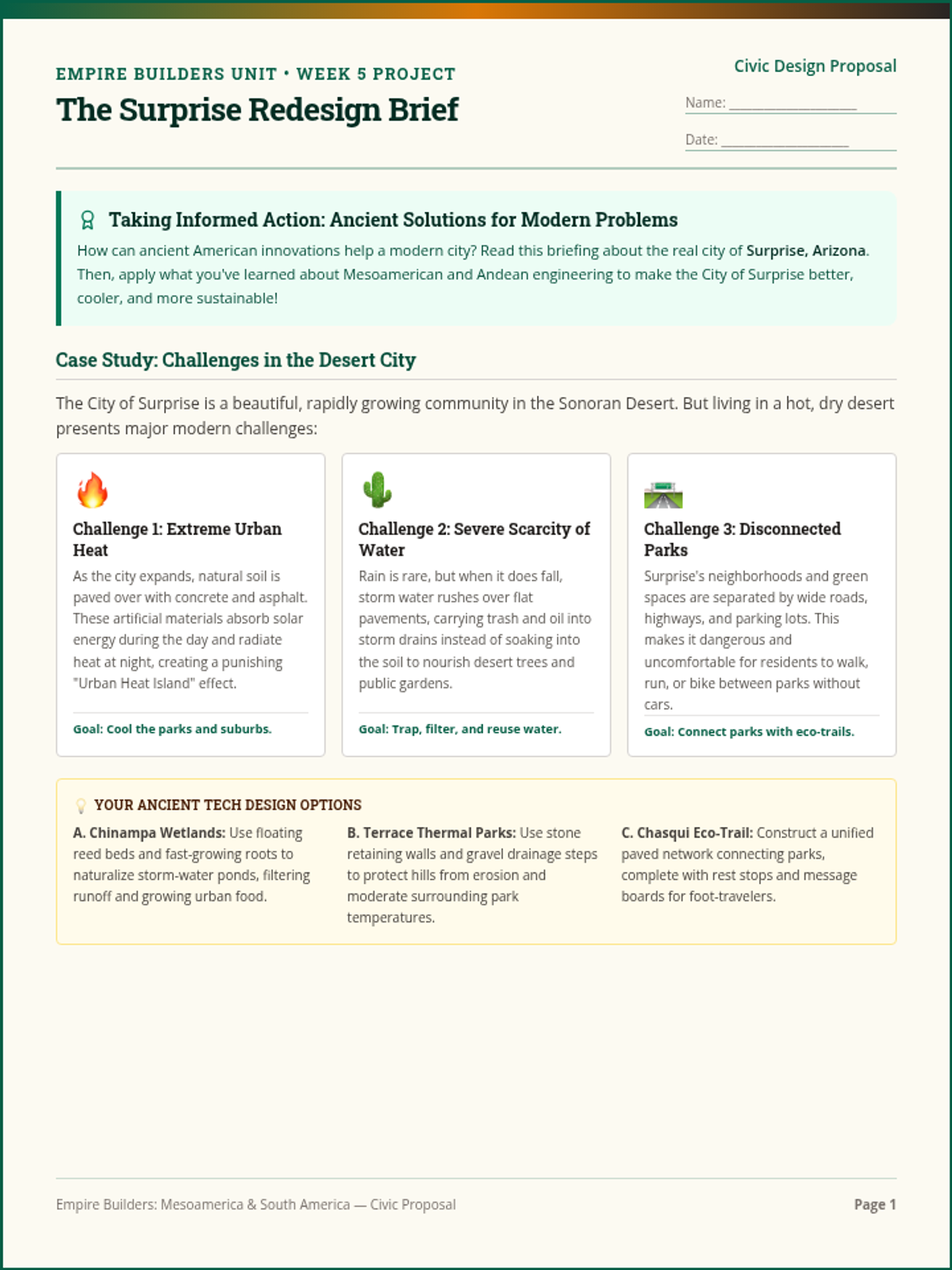
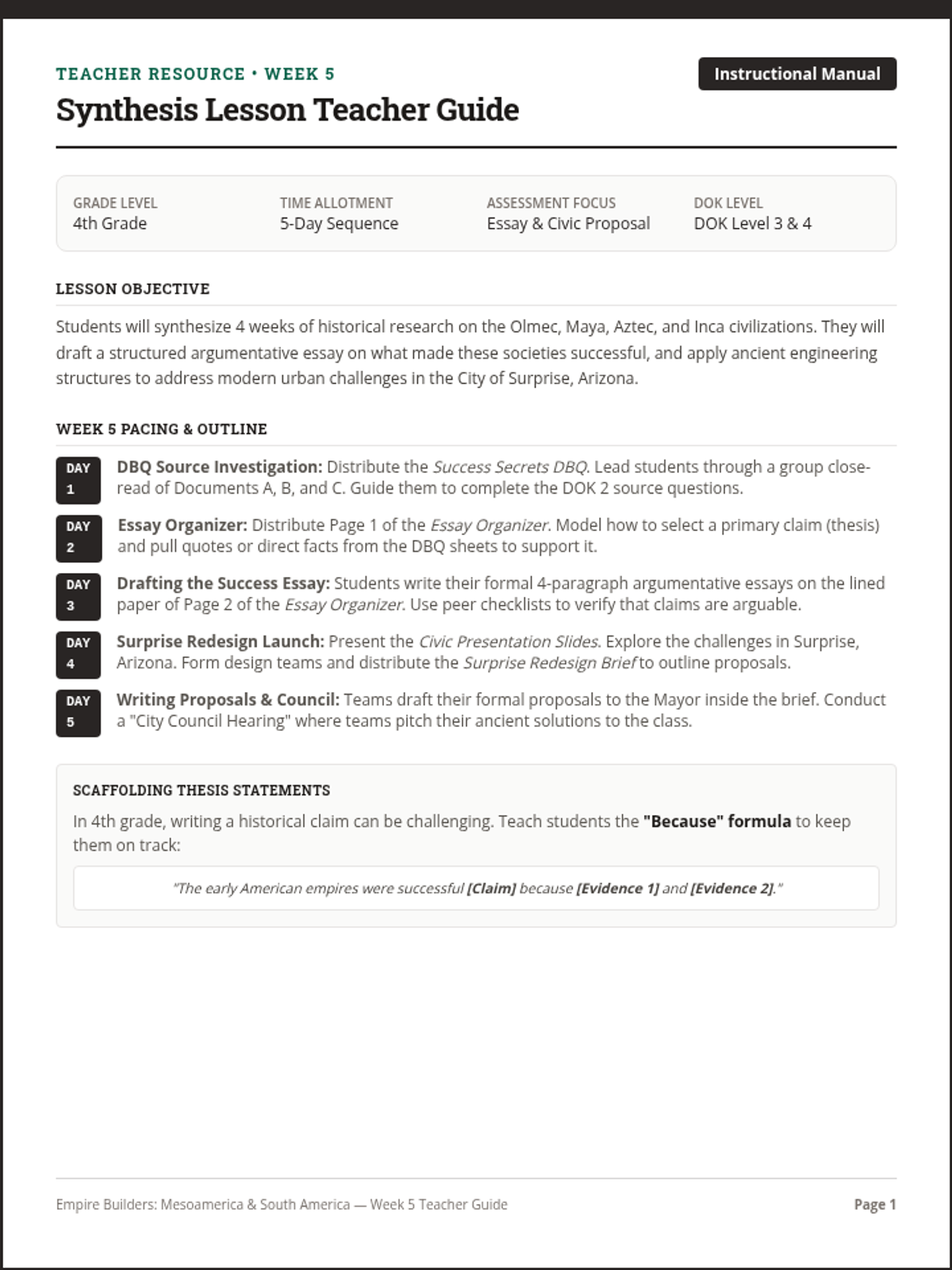
Students synthesize their knowledge across all four civilizations, completing a DBQ, writing an argumentative essay on success, and formulating a civic project for Surprise, AZ.
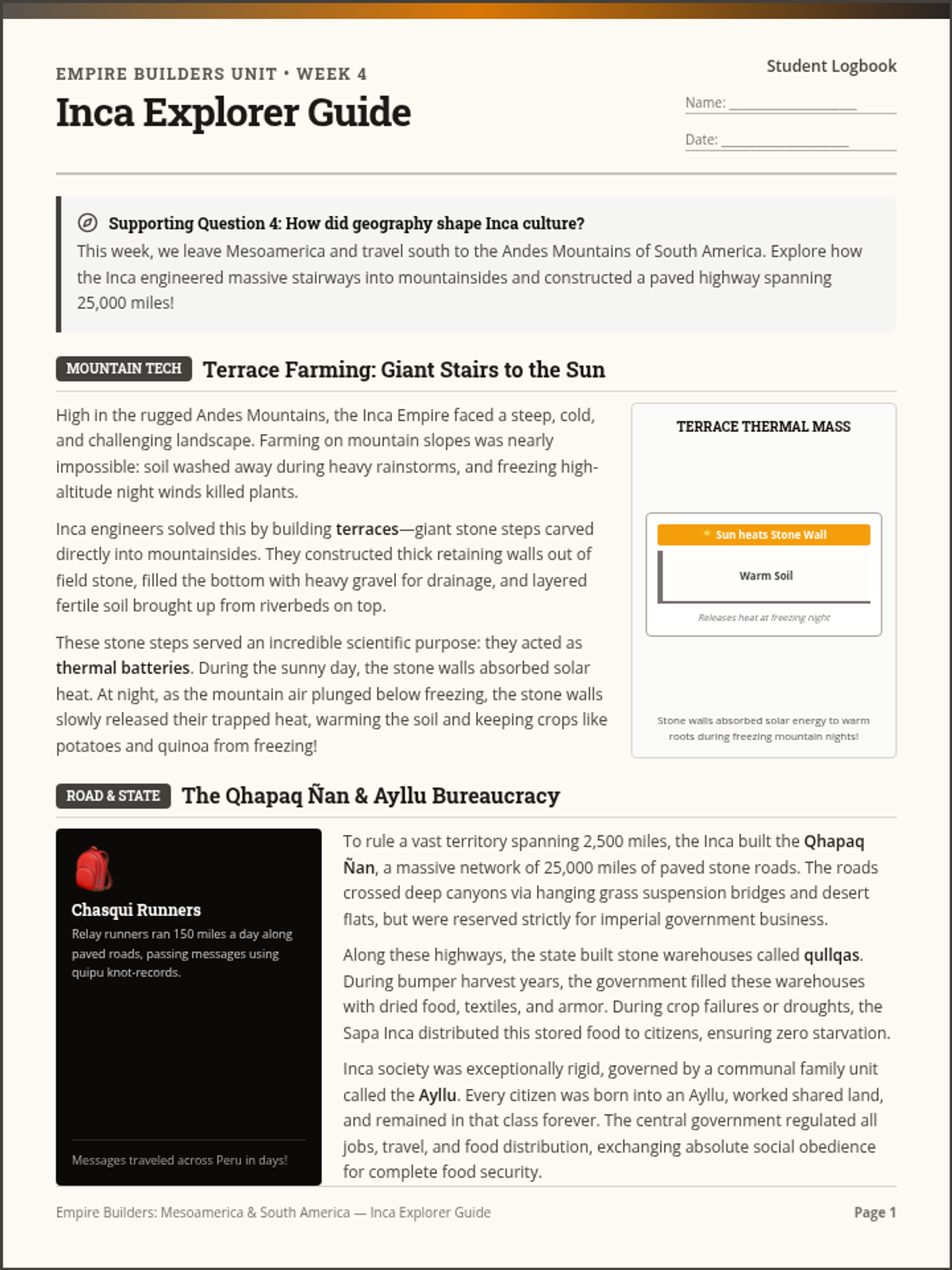
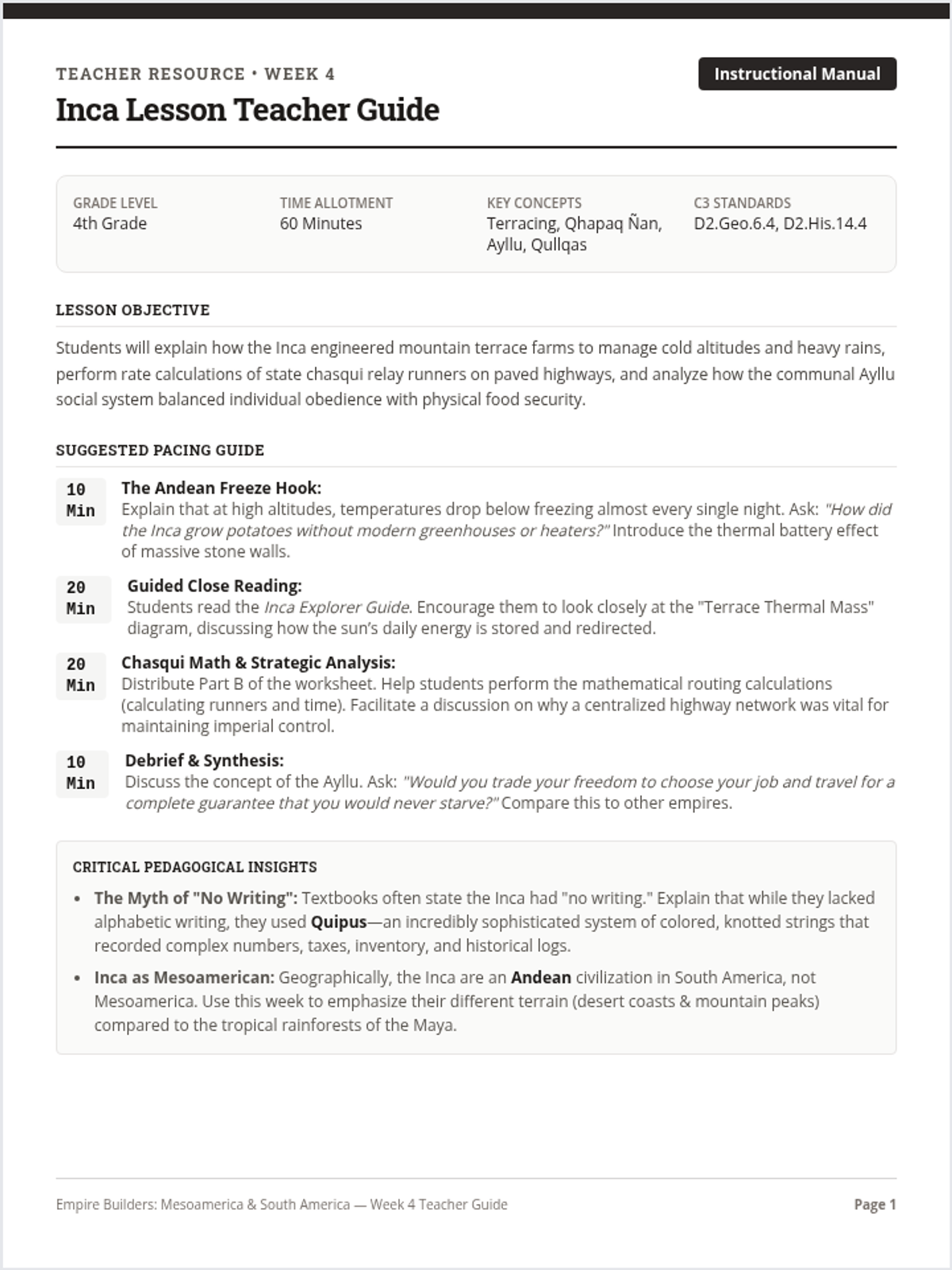
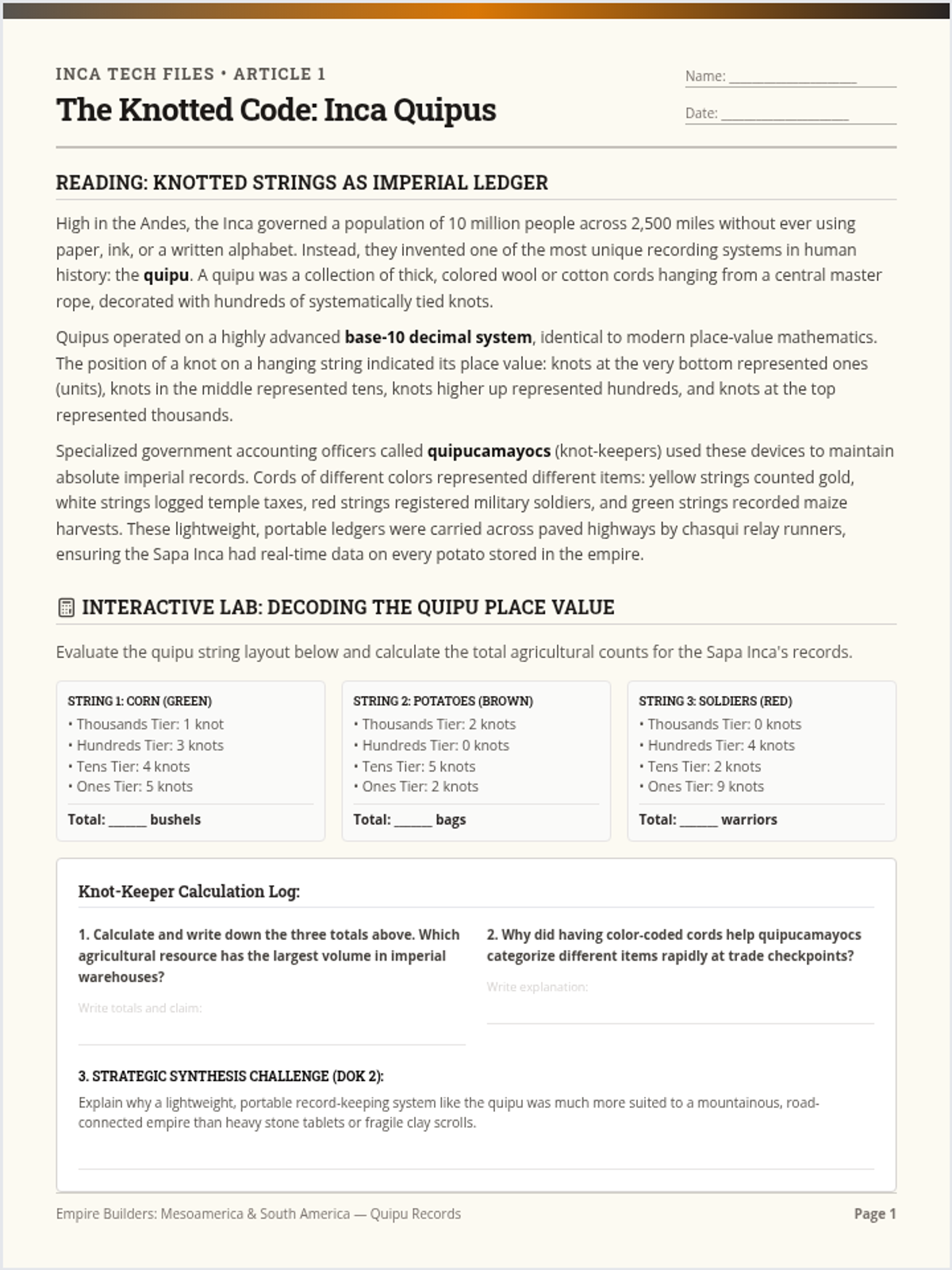
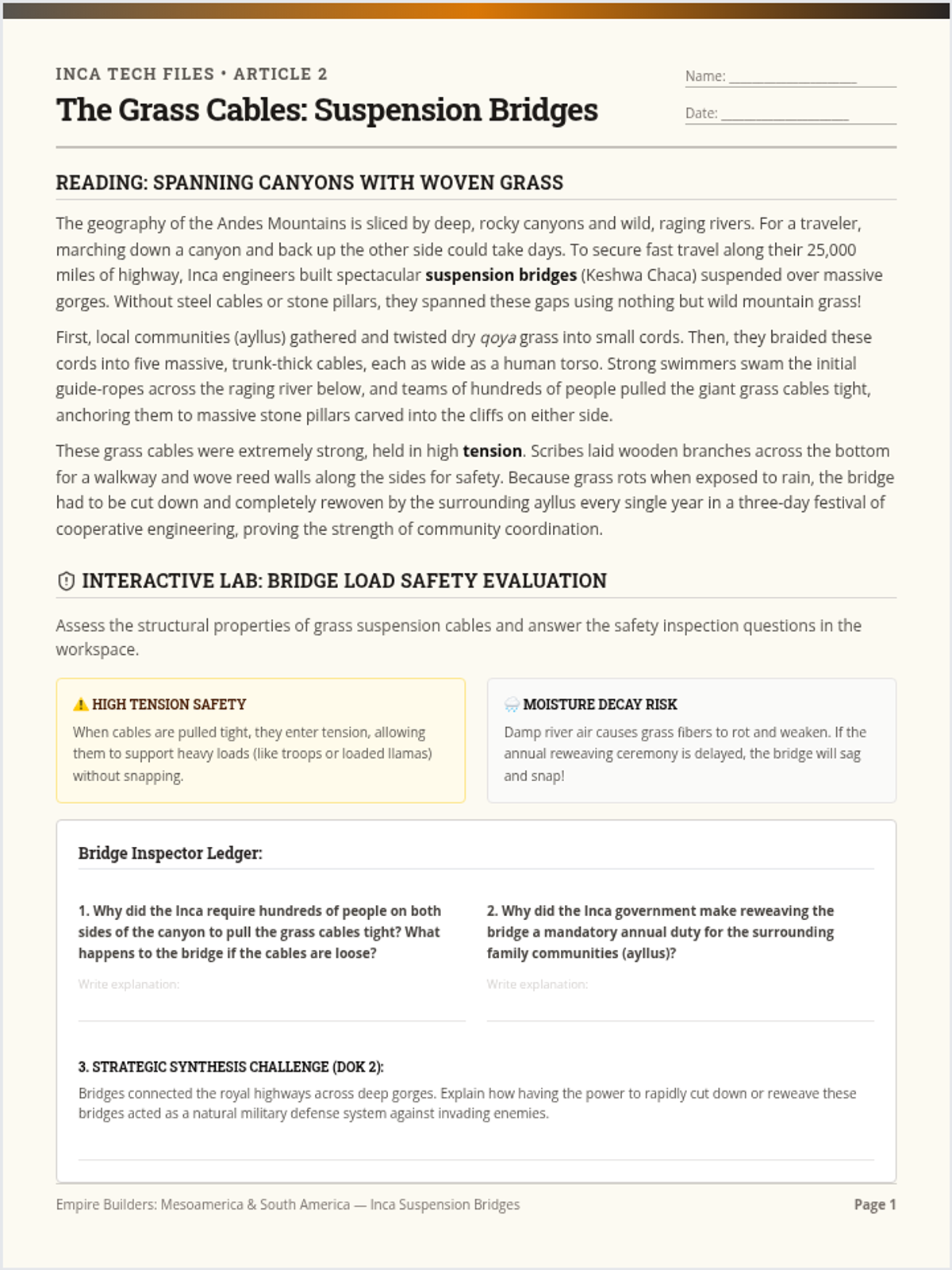
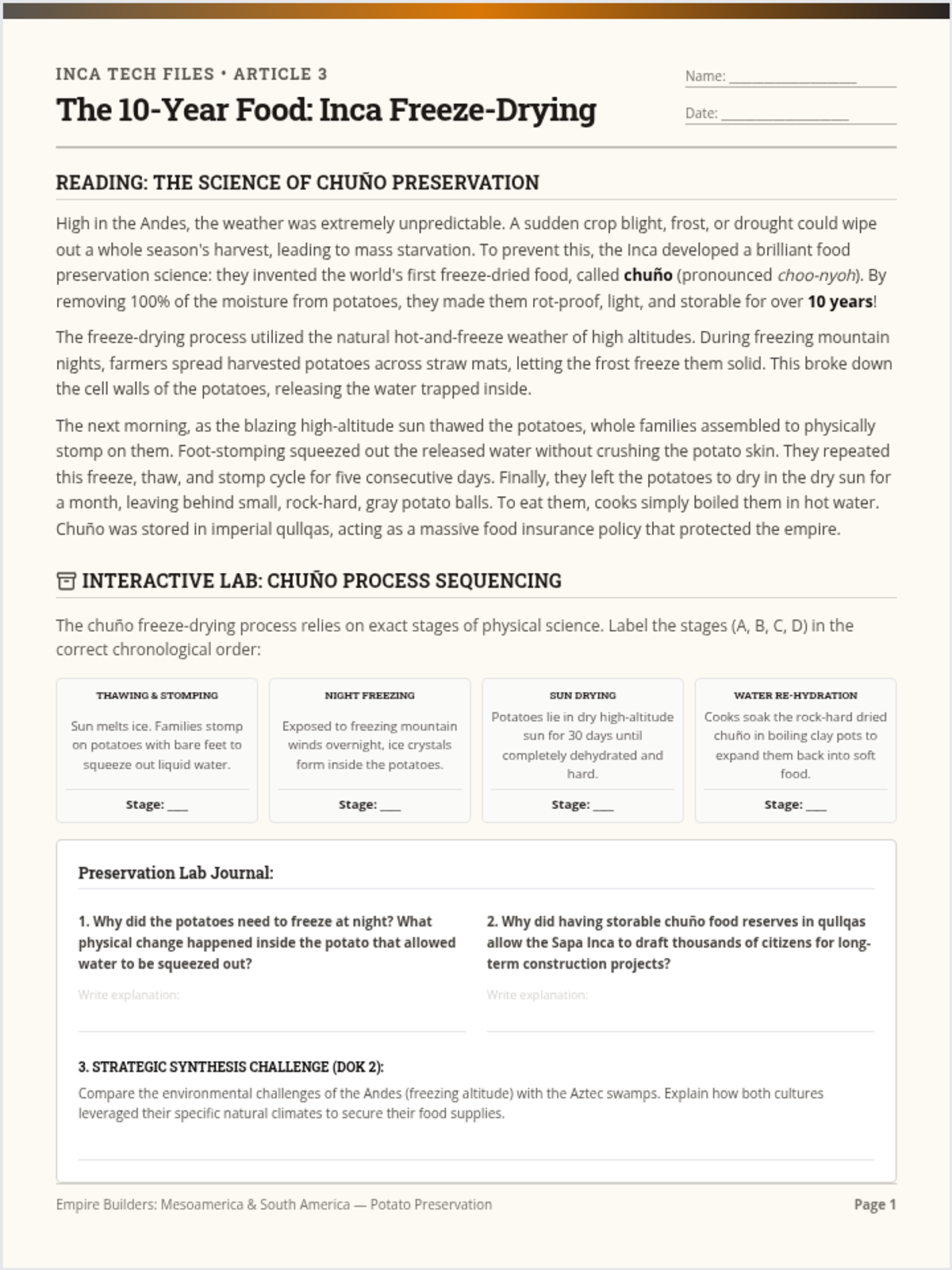
Students explore the Inca civilization, studying their steep mountain terracing, Qhapaq Ñan roads, and rigid Ayllu community hierarchy.
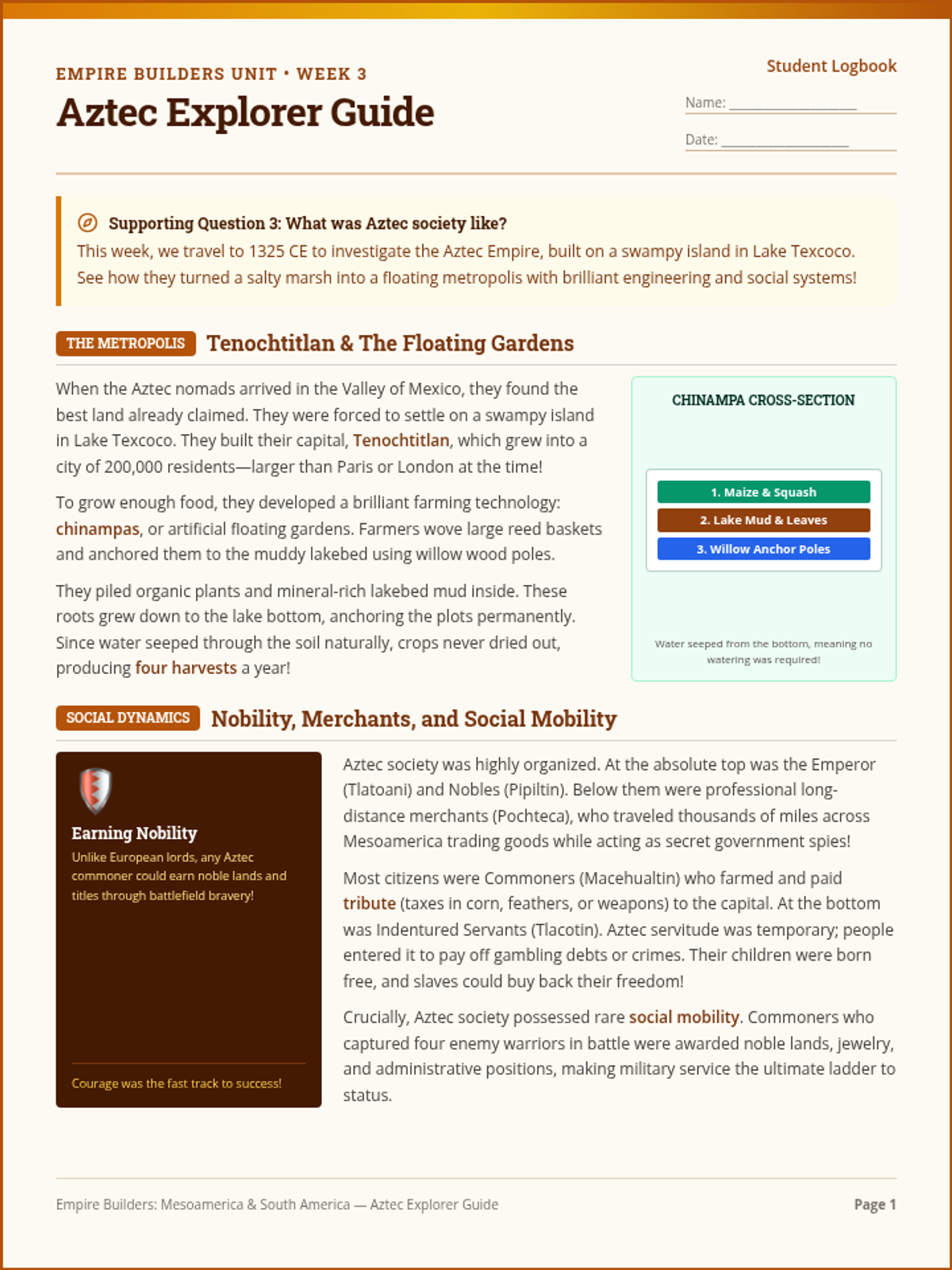
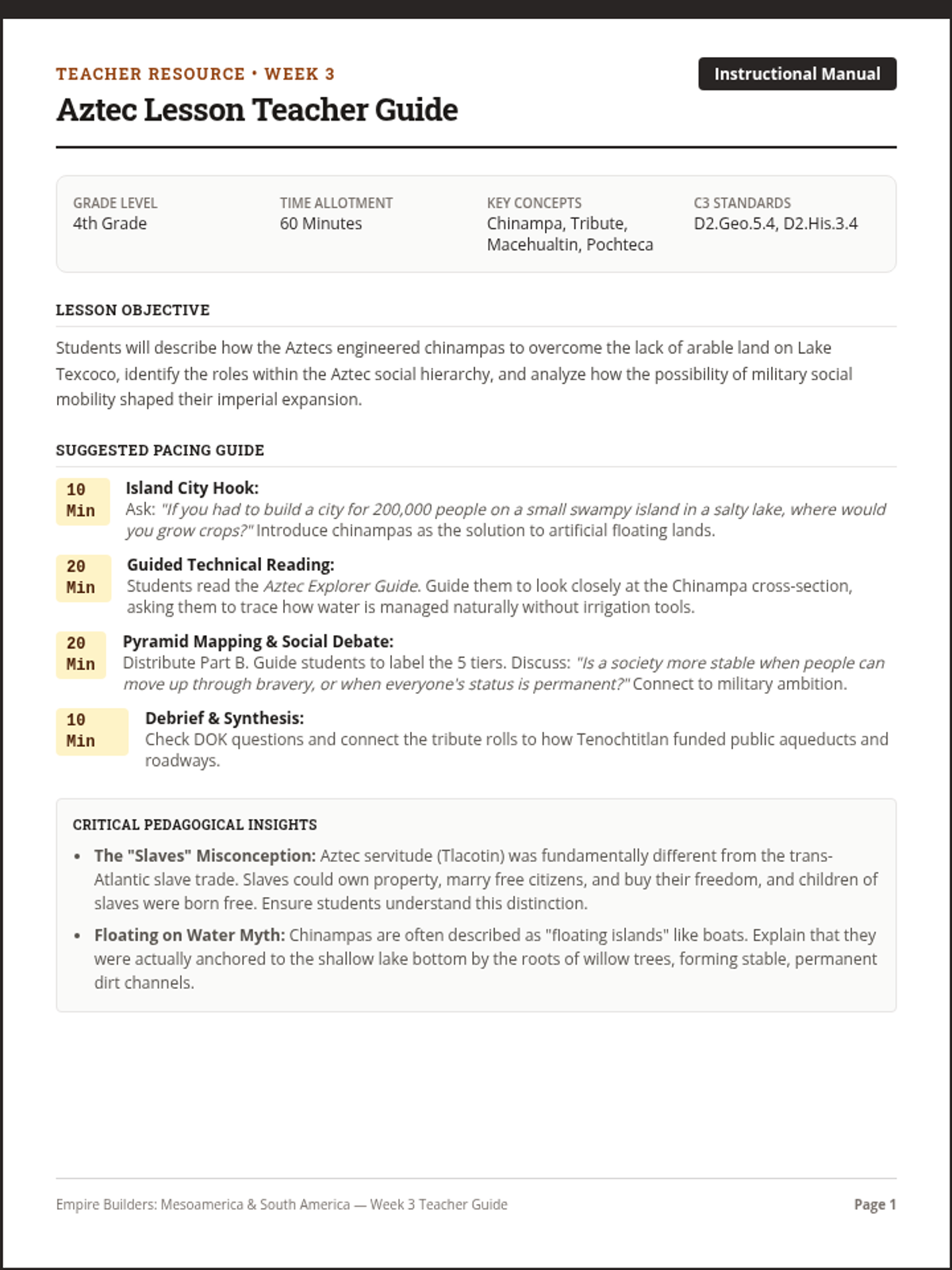
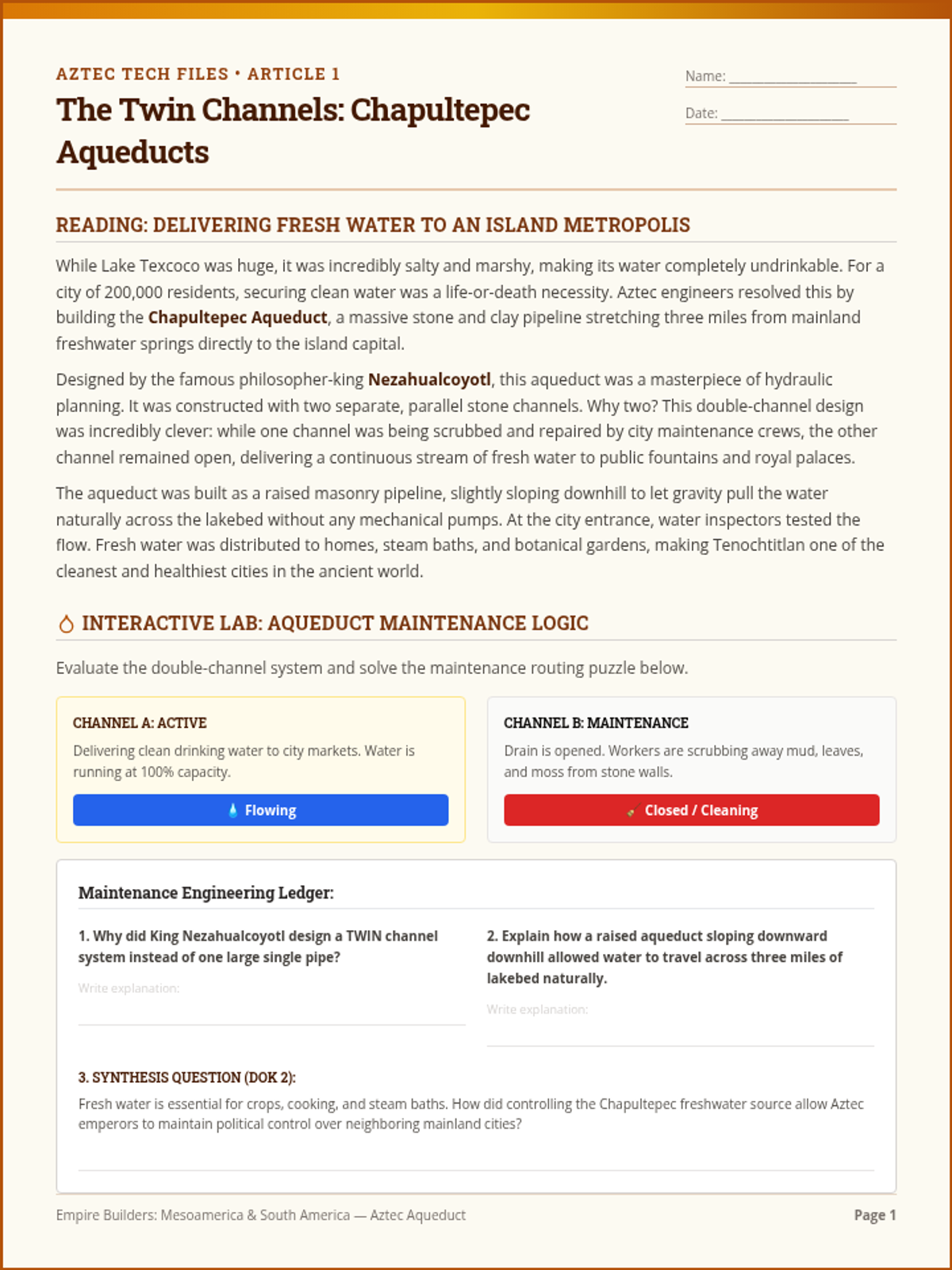
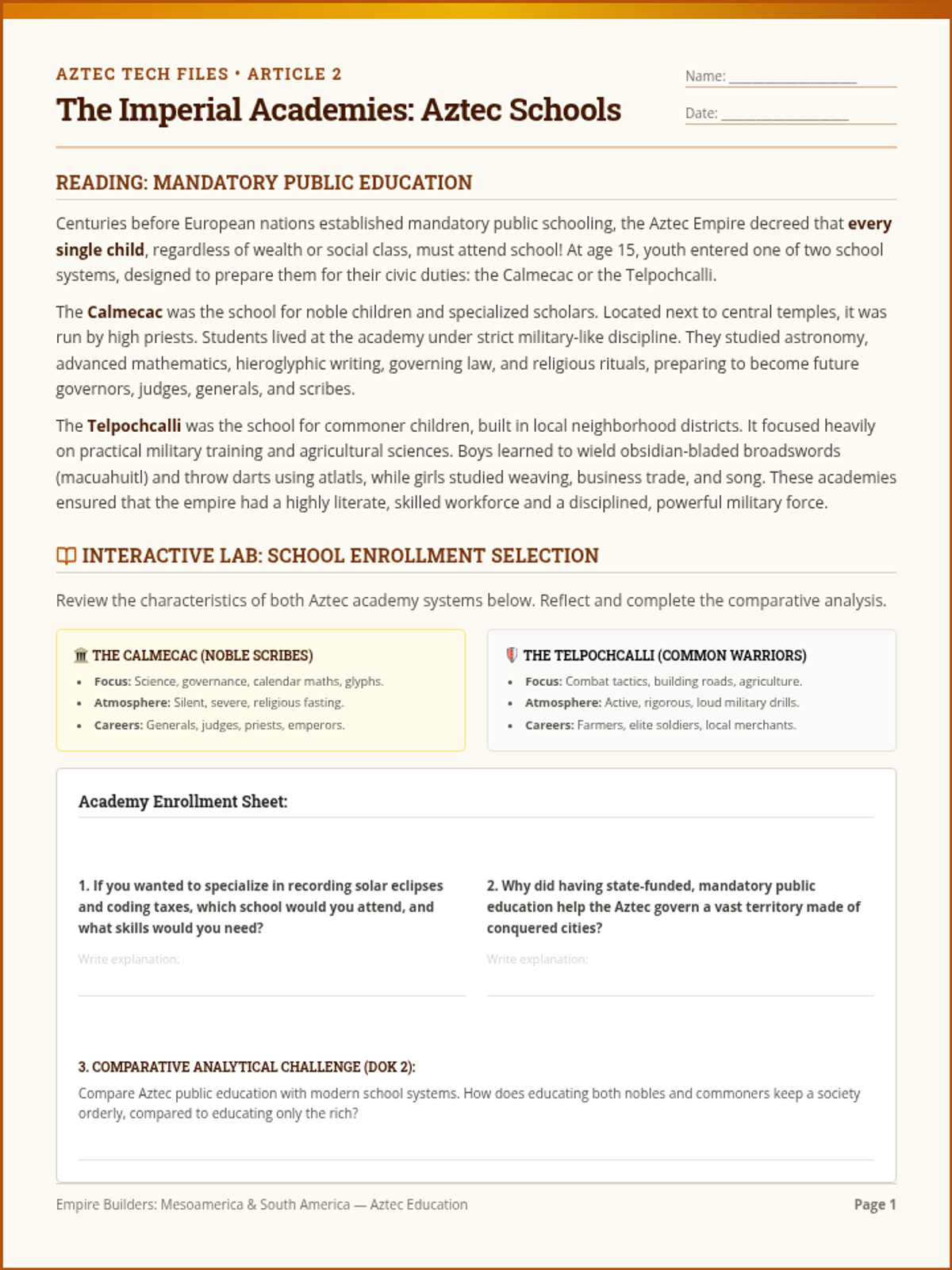
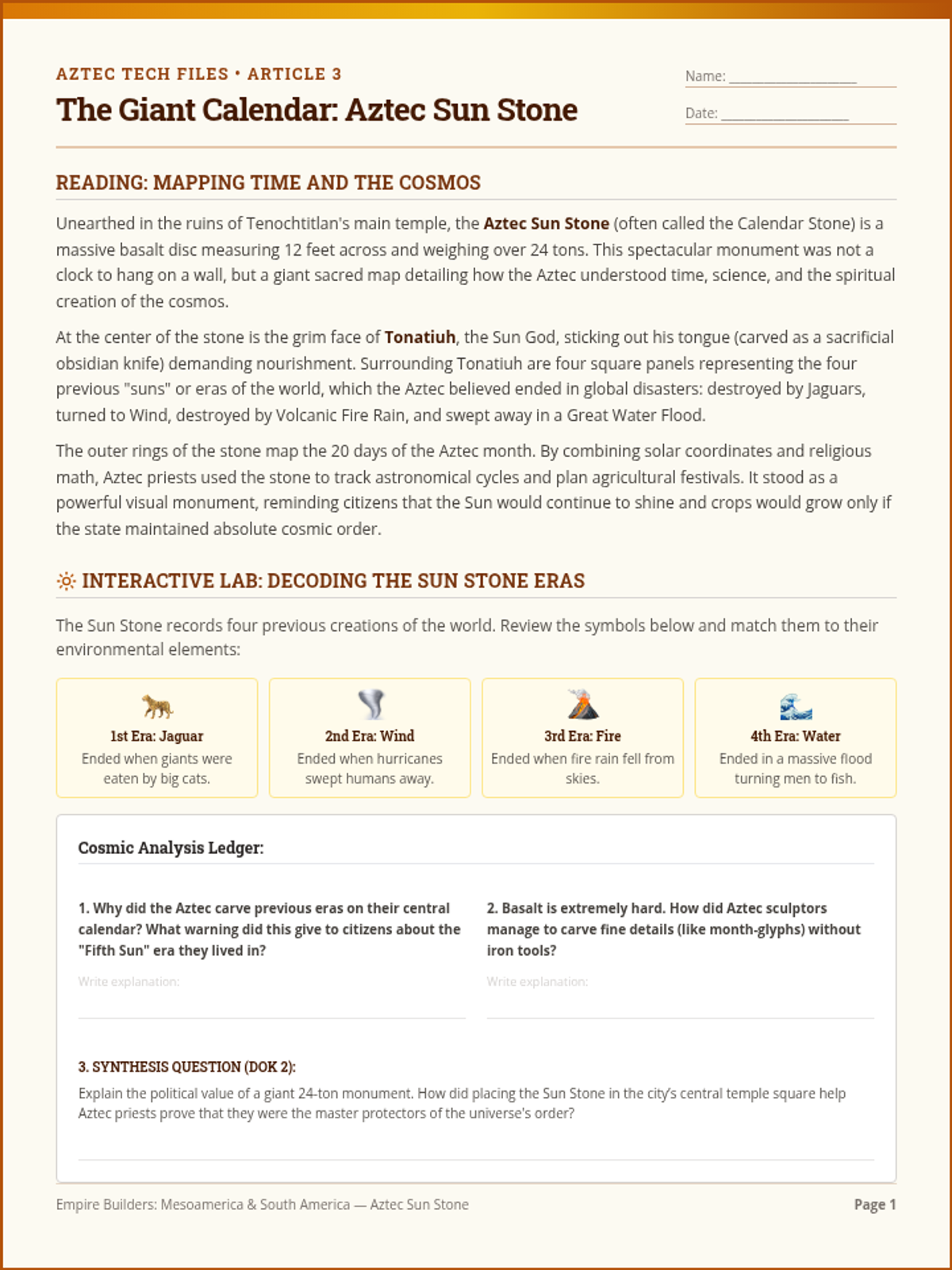
Students explore the Aztec civilization, studying their lake-basin city of Tenochtitlan, chinampa agriculture, and military social mobility.
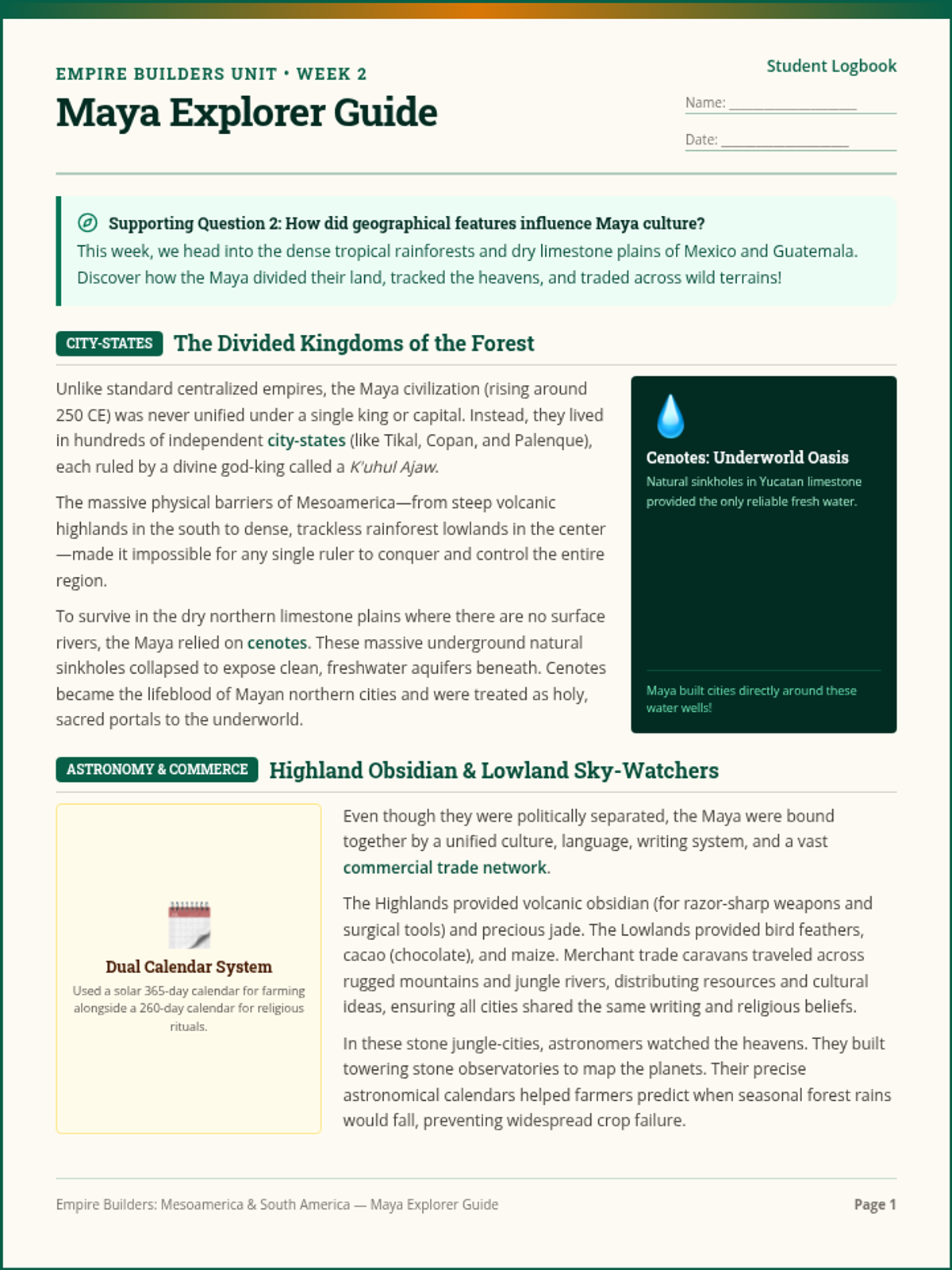
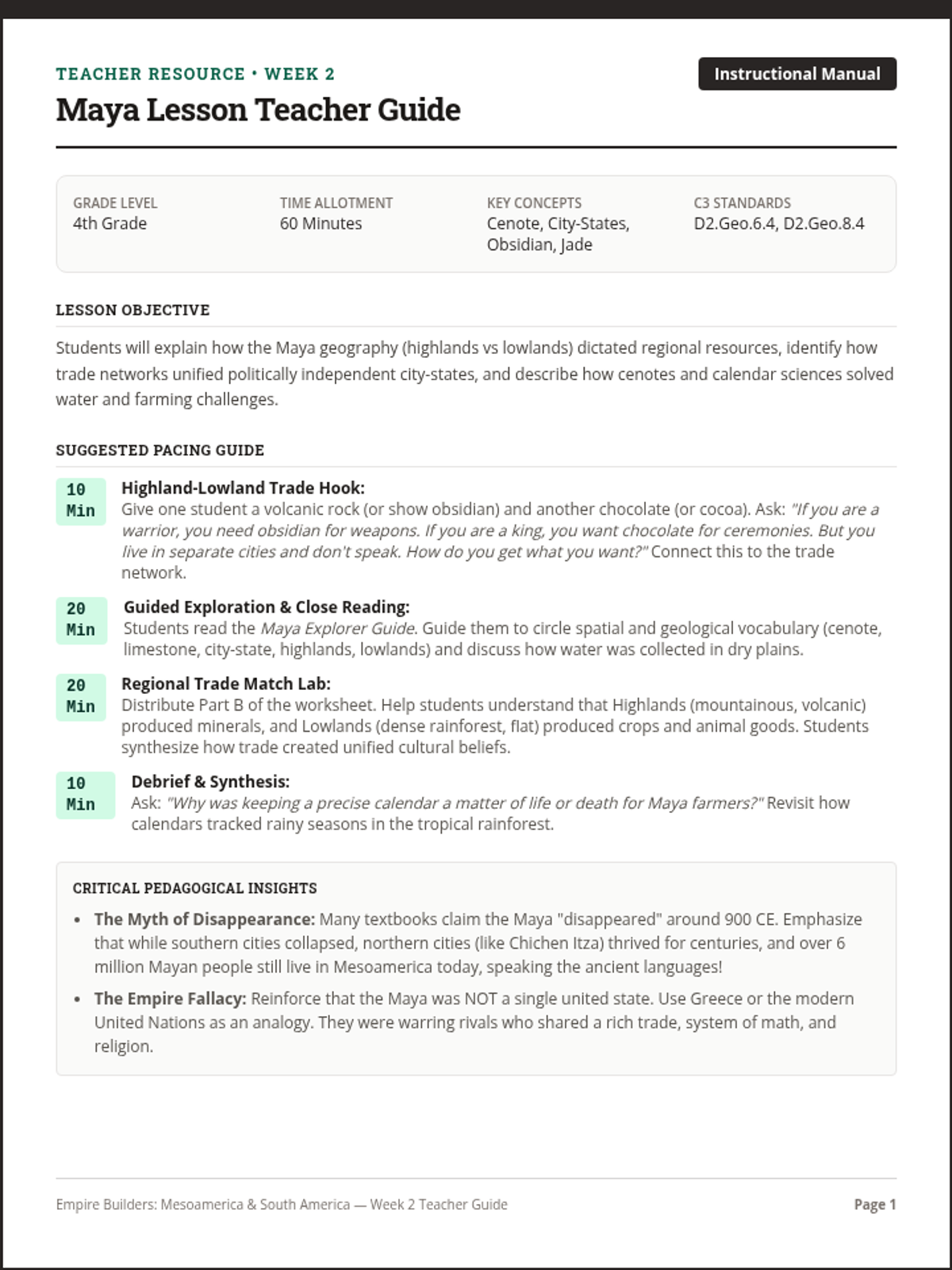
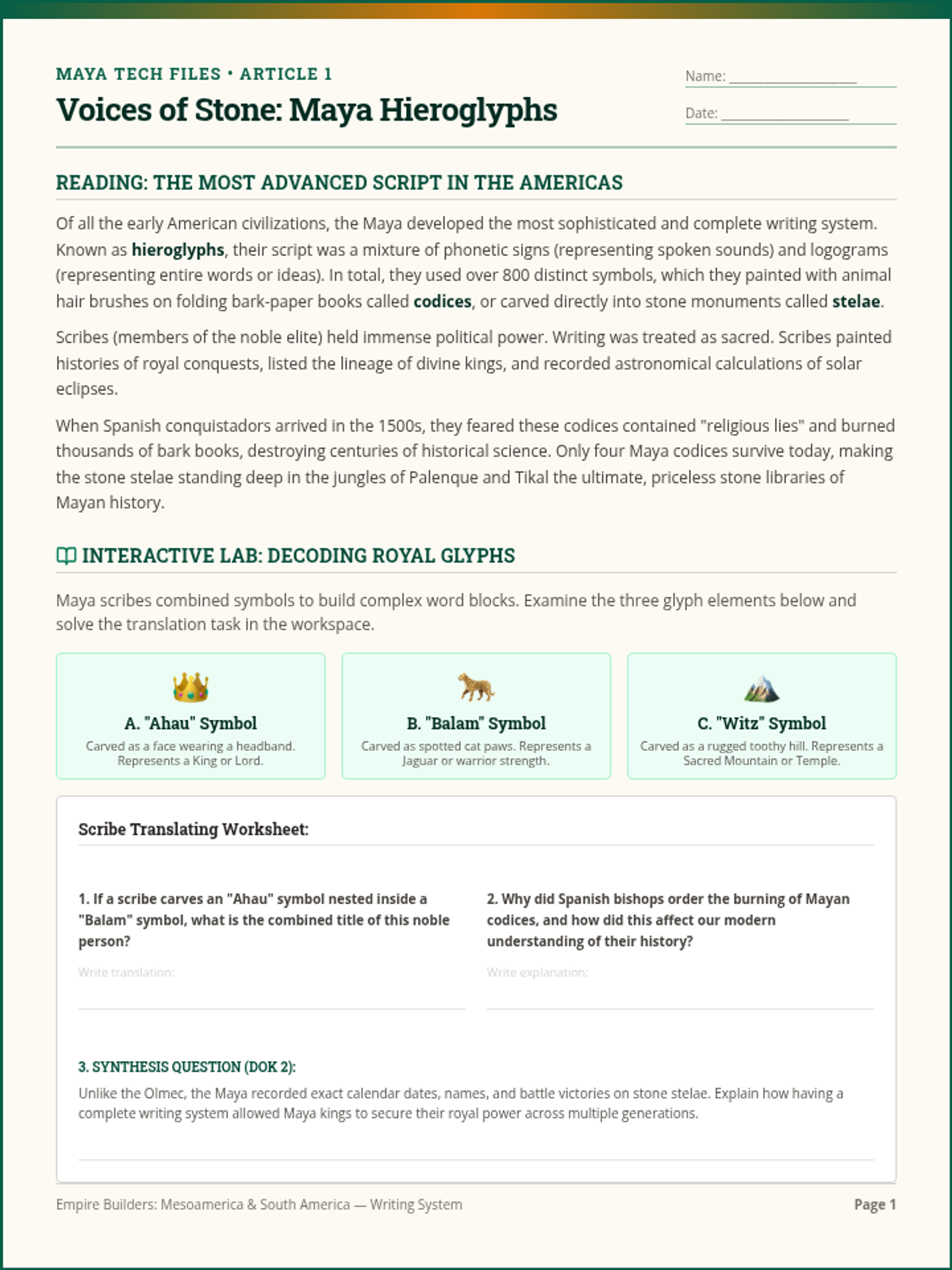
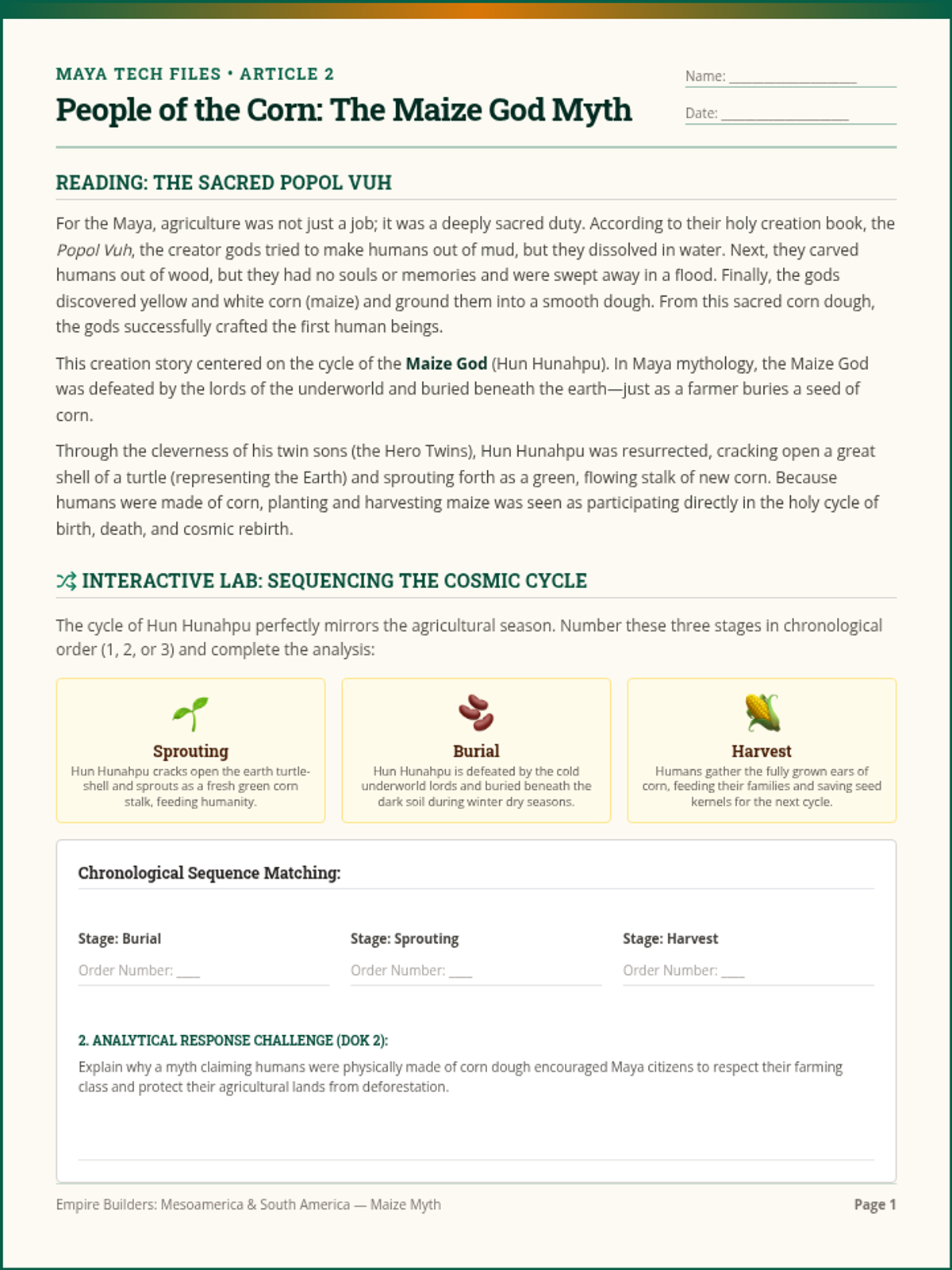
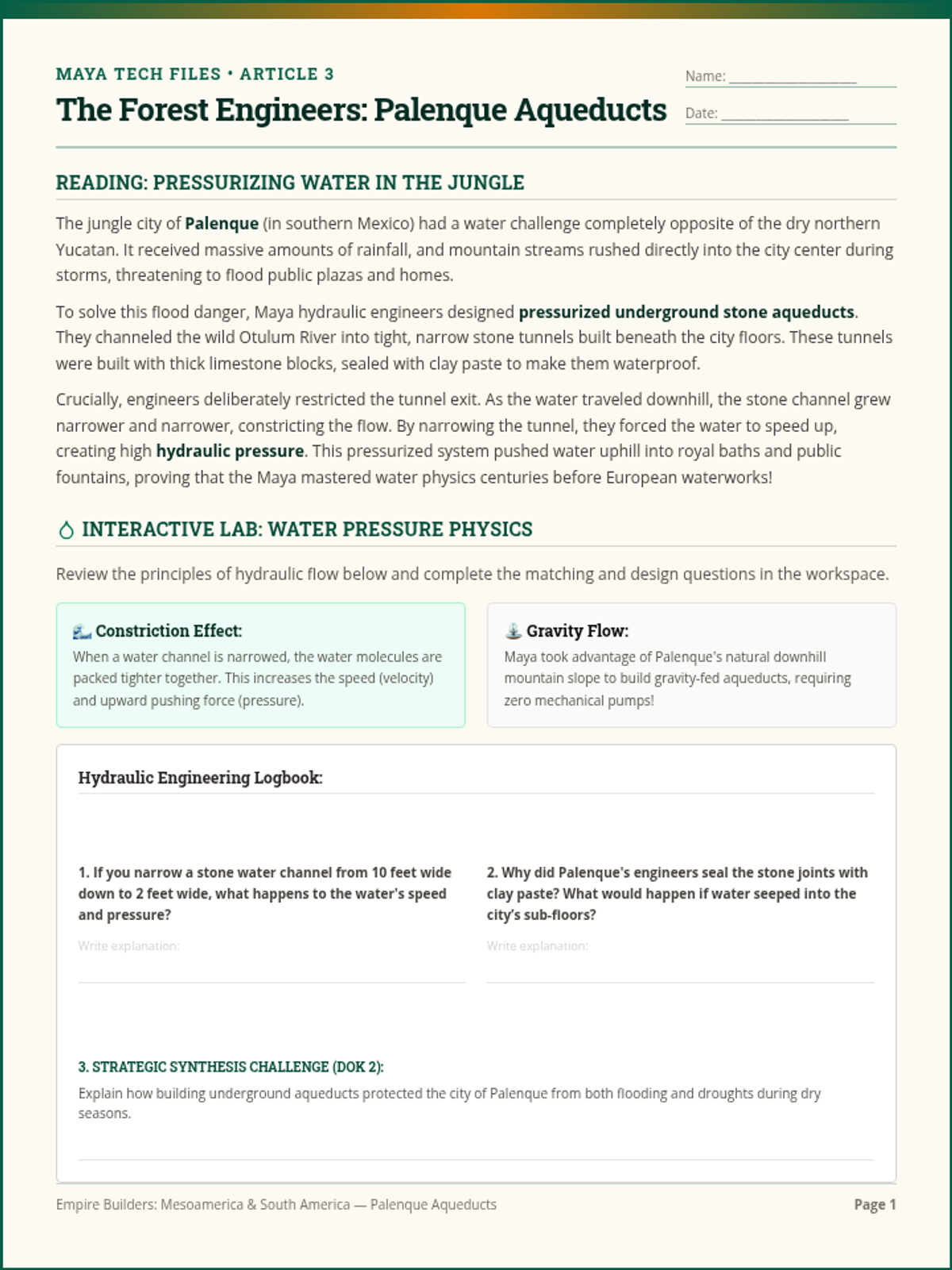
Students explore the Maya civilization, studying their rainforest terrain, calendar systems, and independent city-state hierarchy.
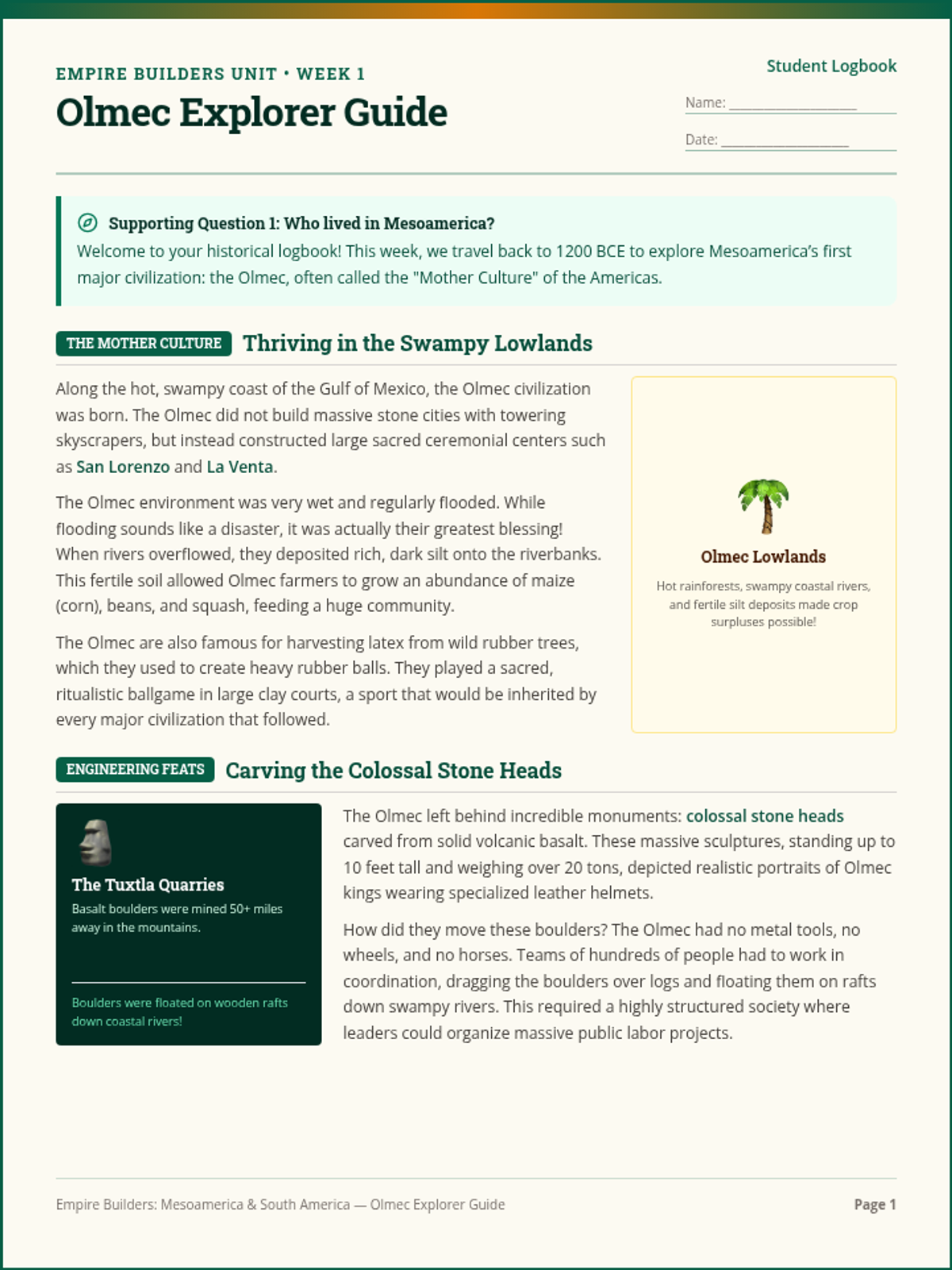
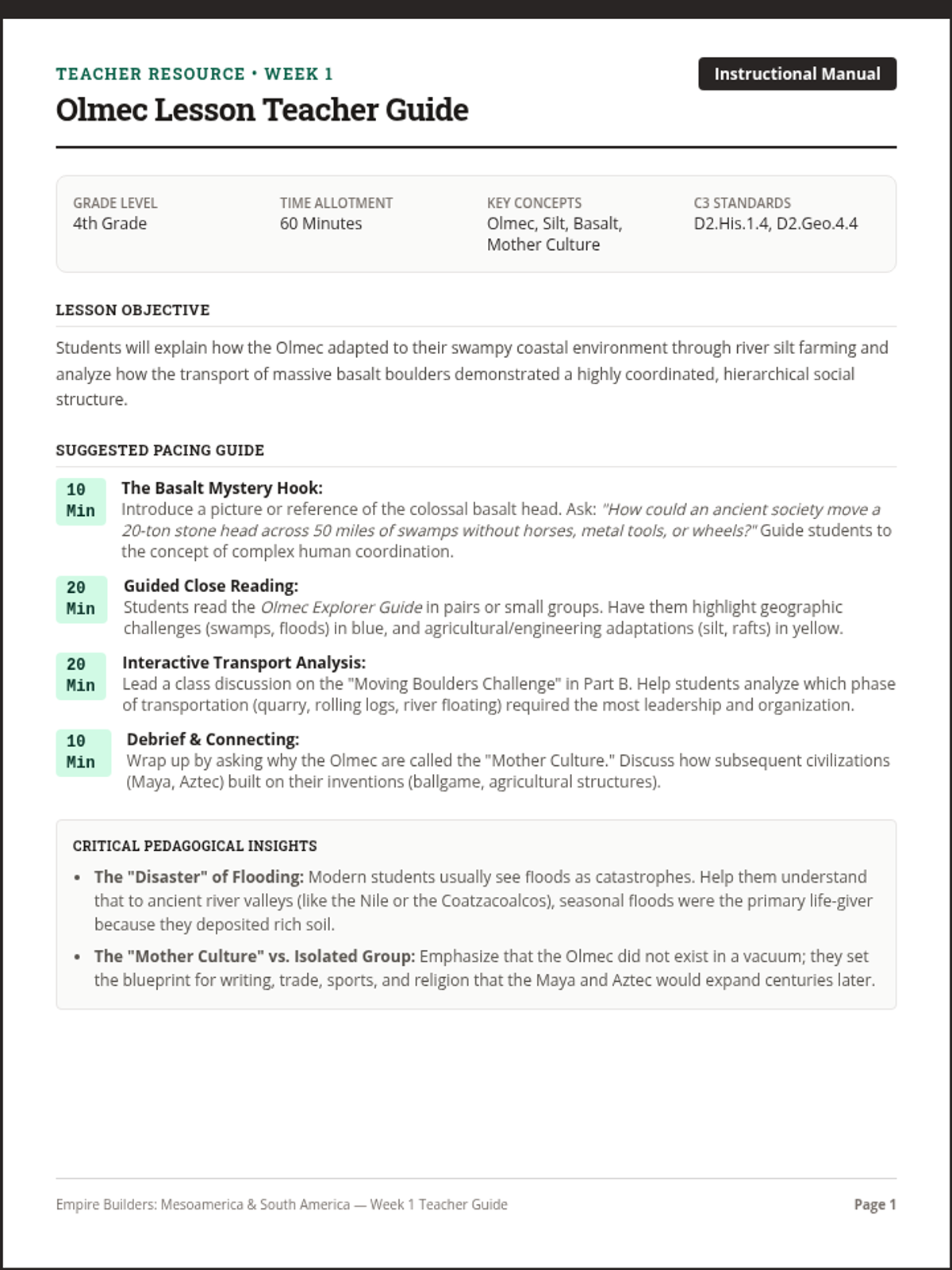
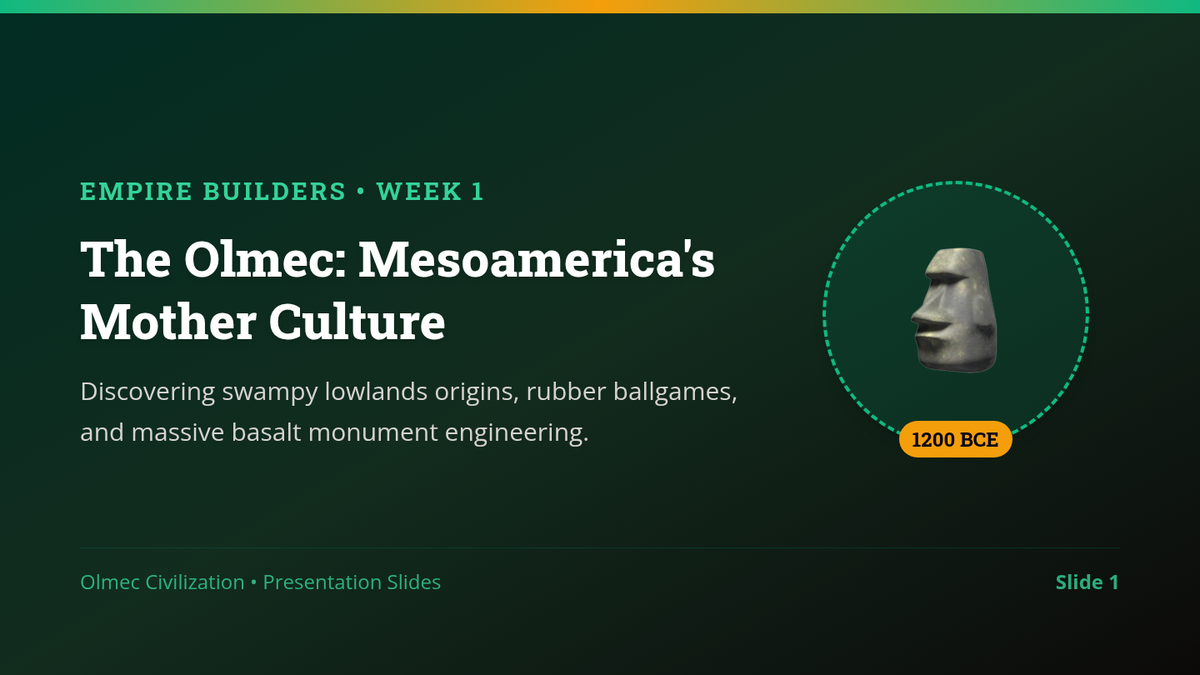
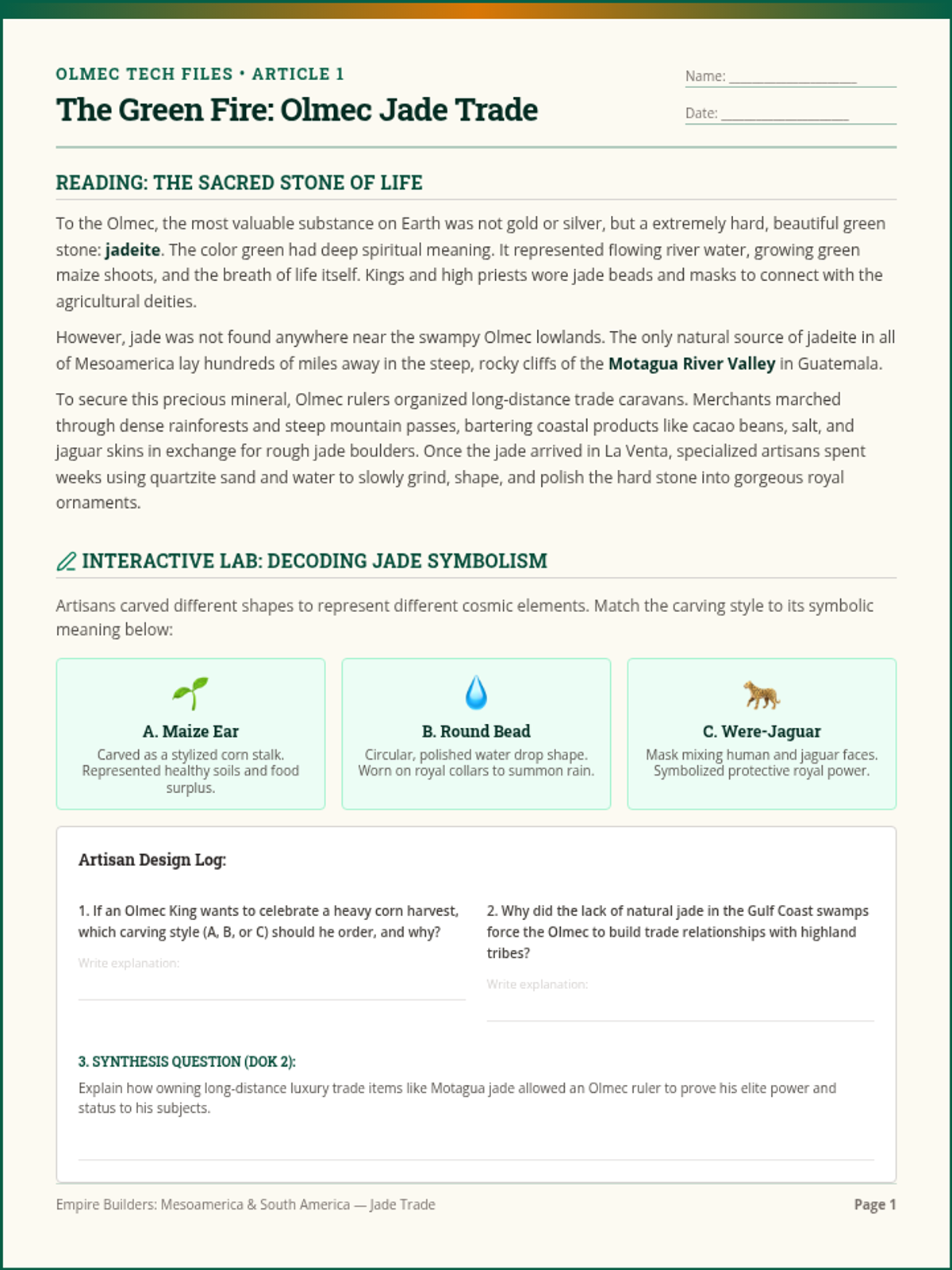
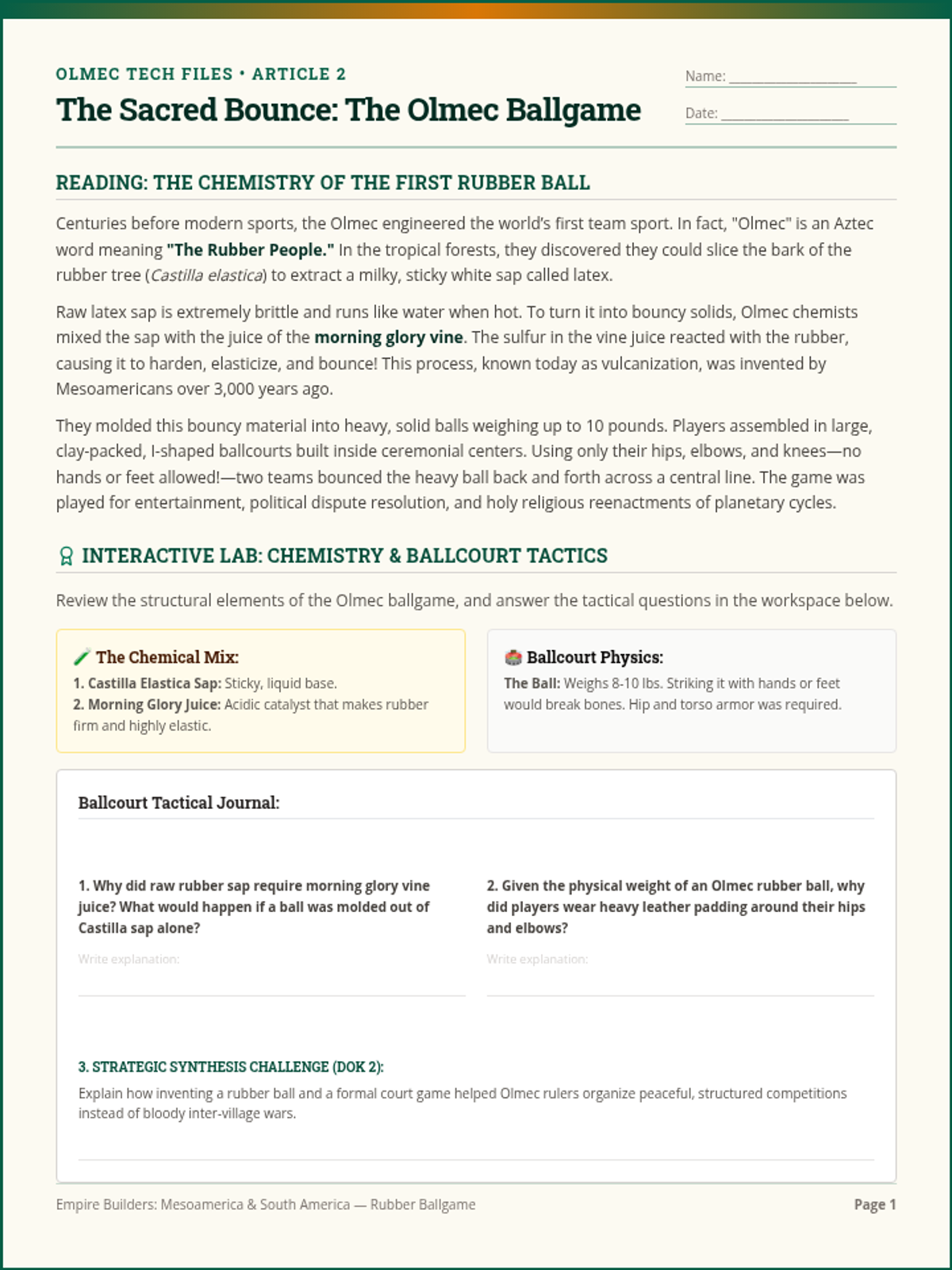
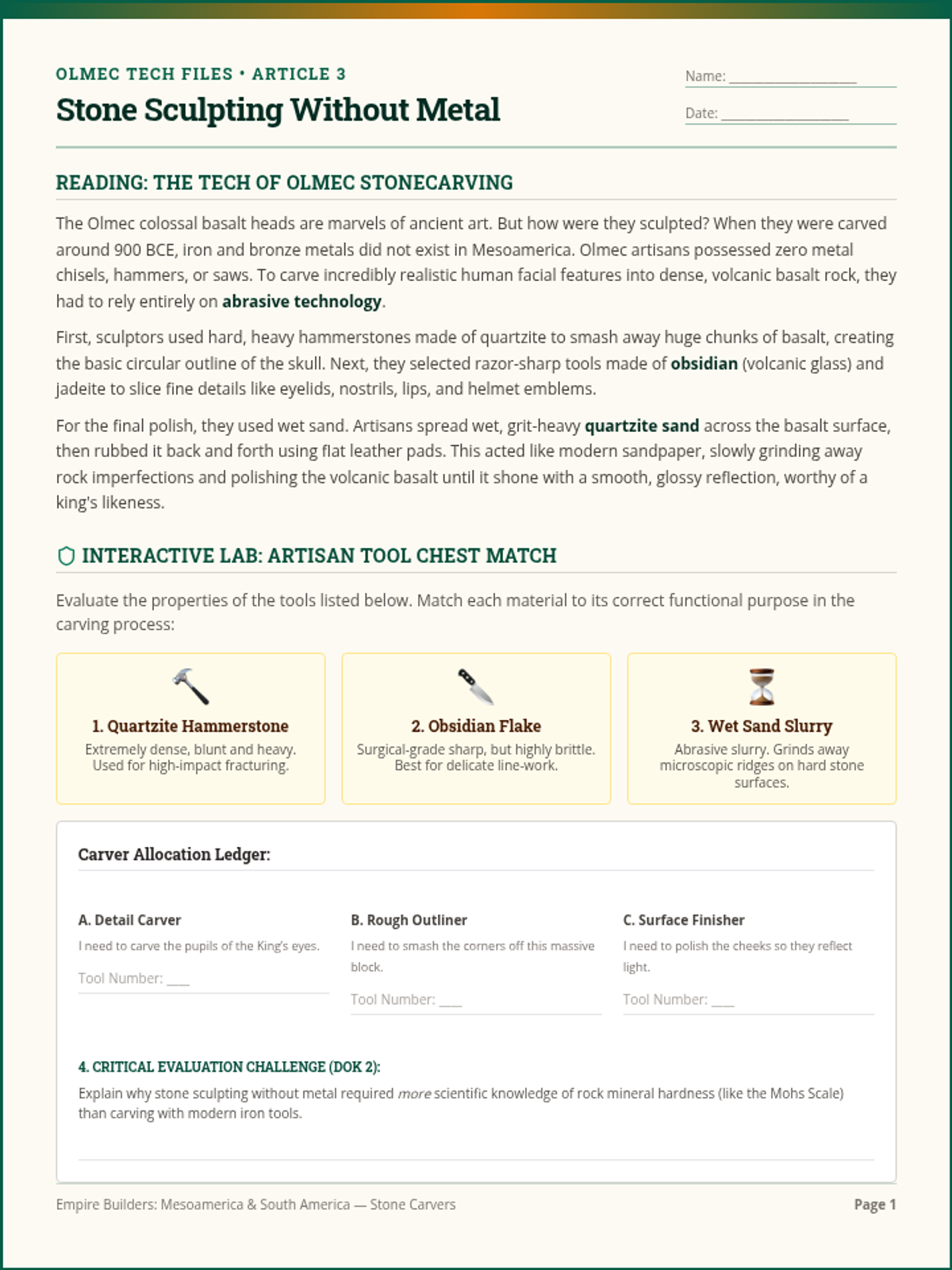
Students explore the Olmec civilization, investigating their swampy geography, monumental stone heads, and social structure.
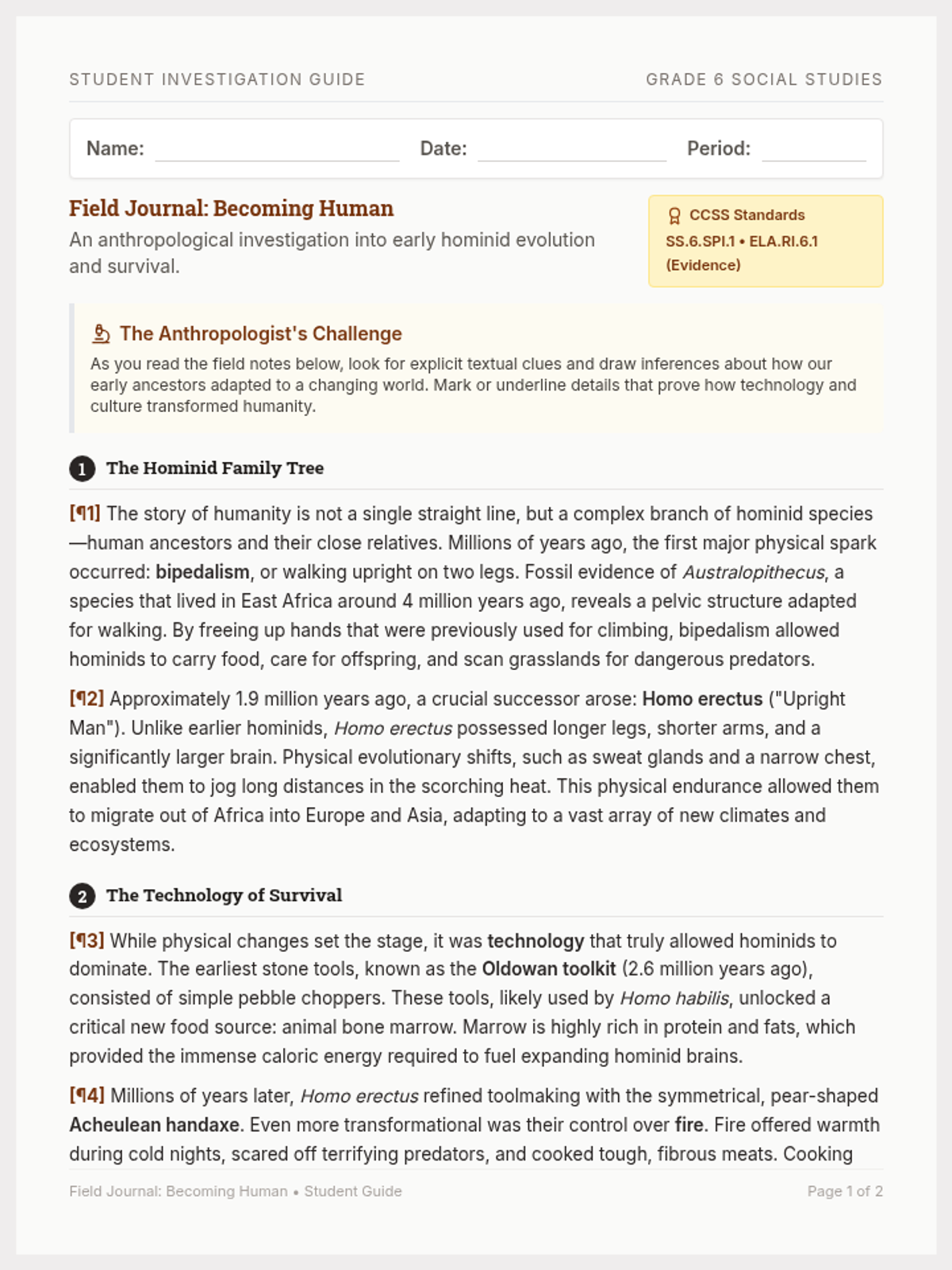
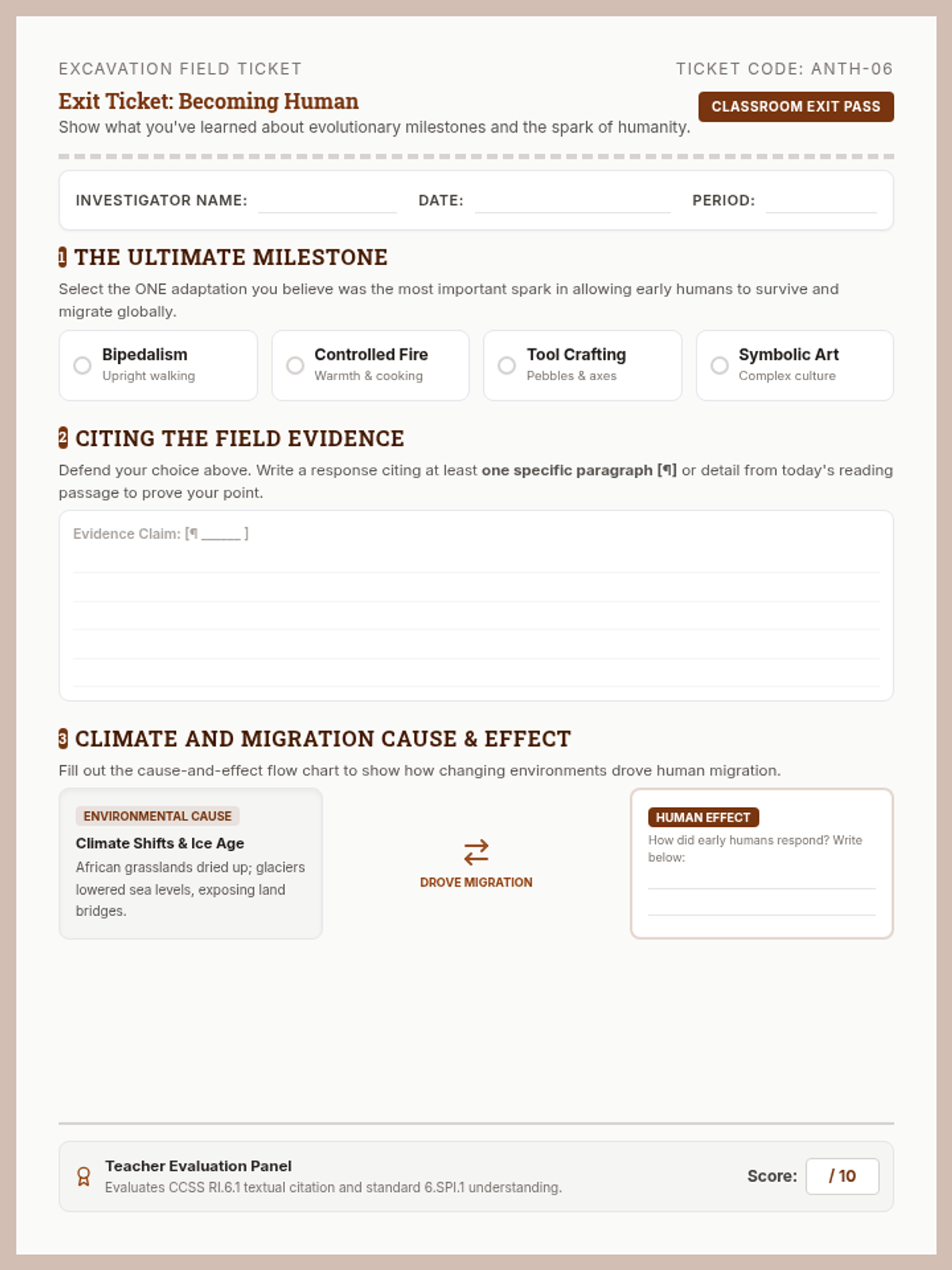
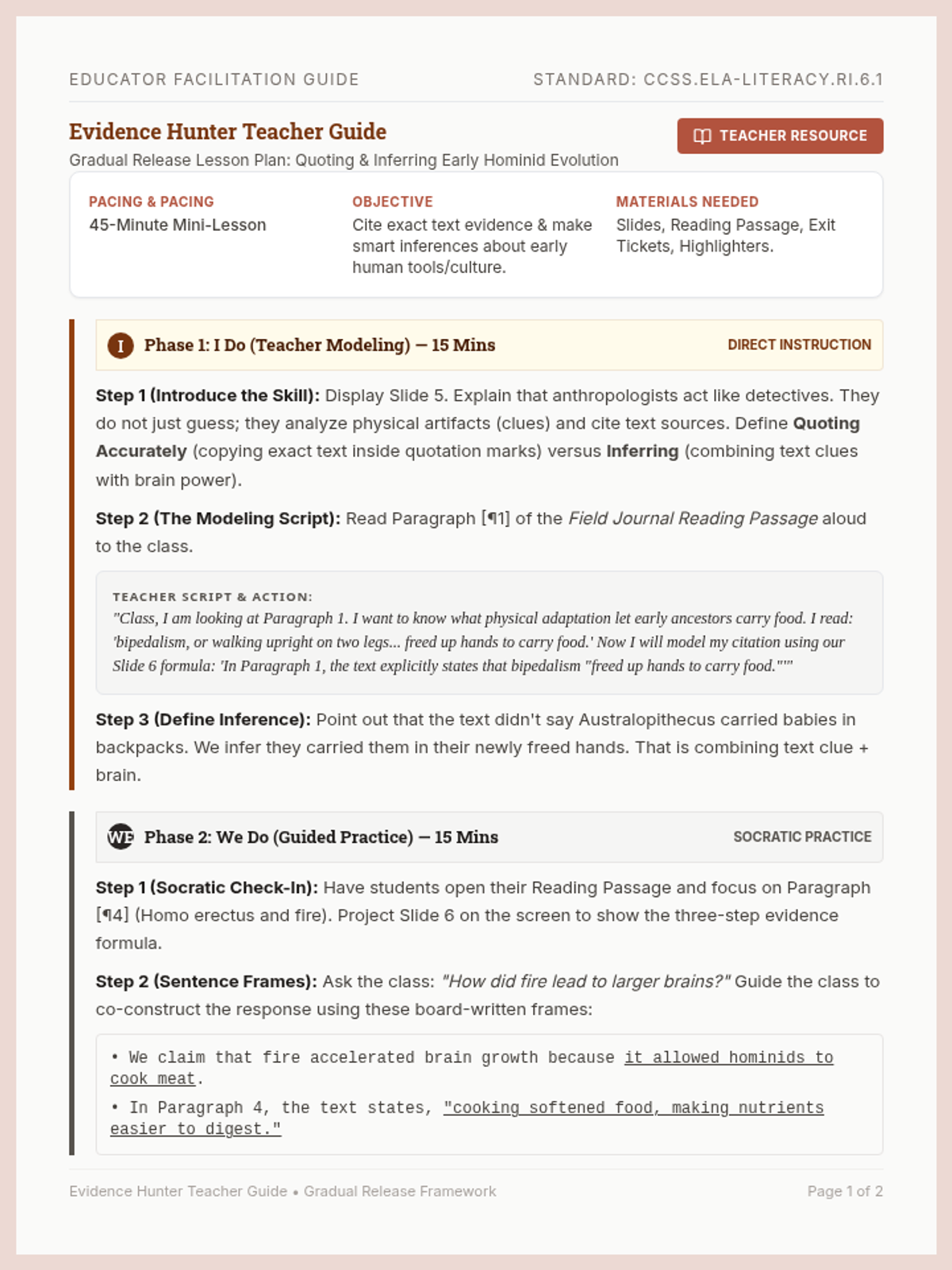
A 6th-grade social studies lesson investigating early human evolution, tool adaptations, cultural practices, and migration patterns, integrated with CCSS ELA-Literacy RI.6.1.
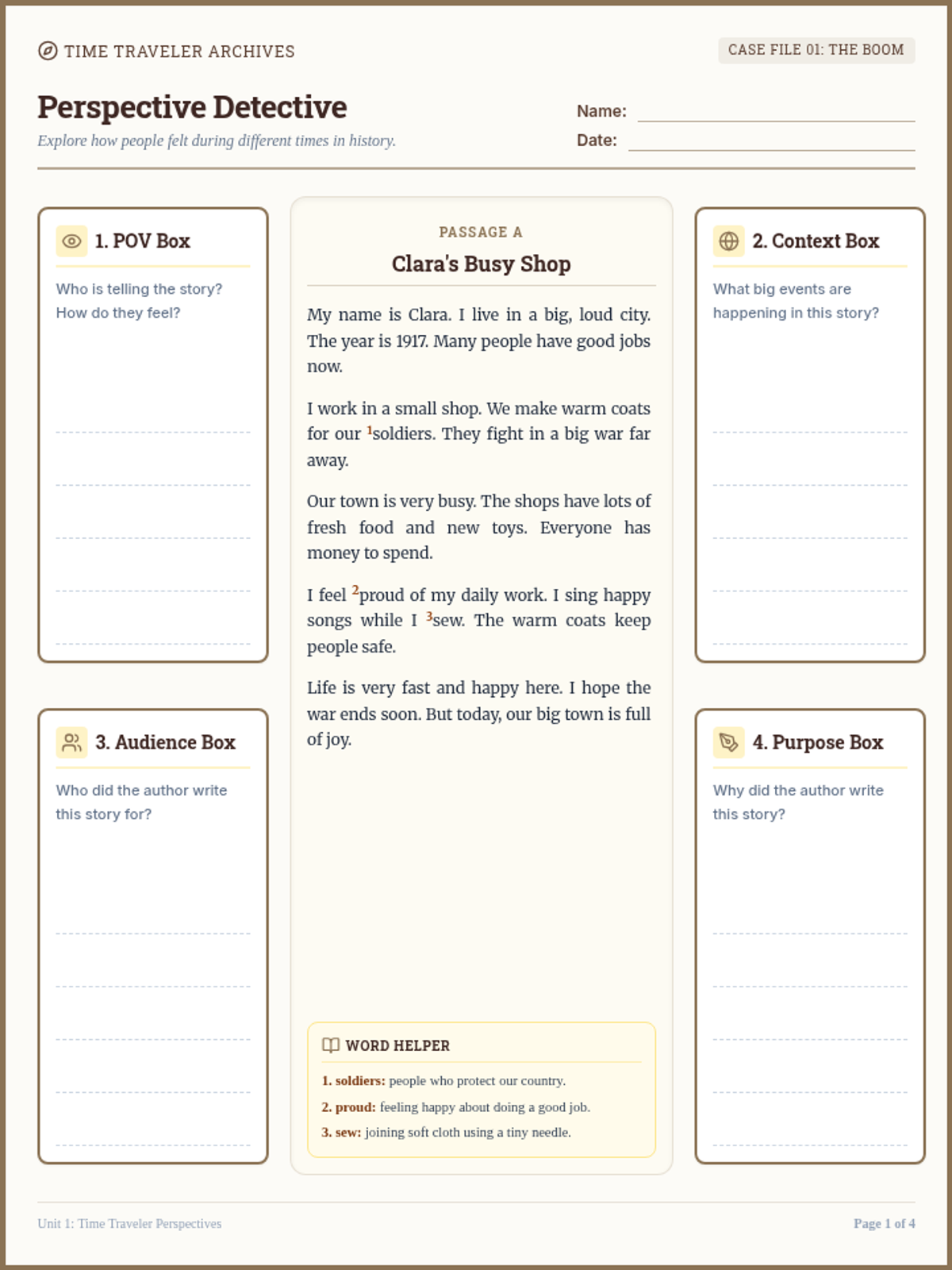
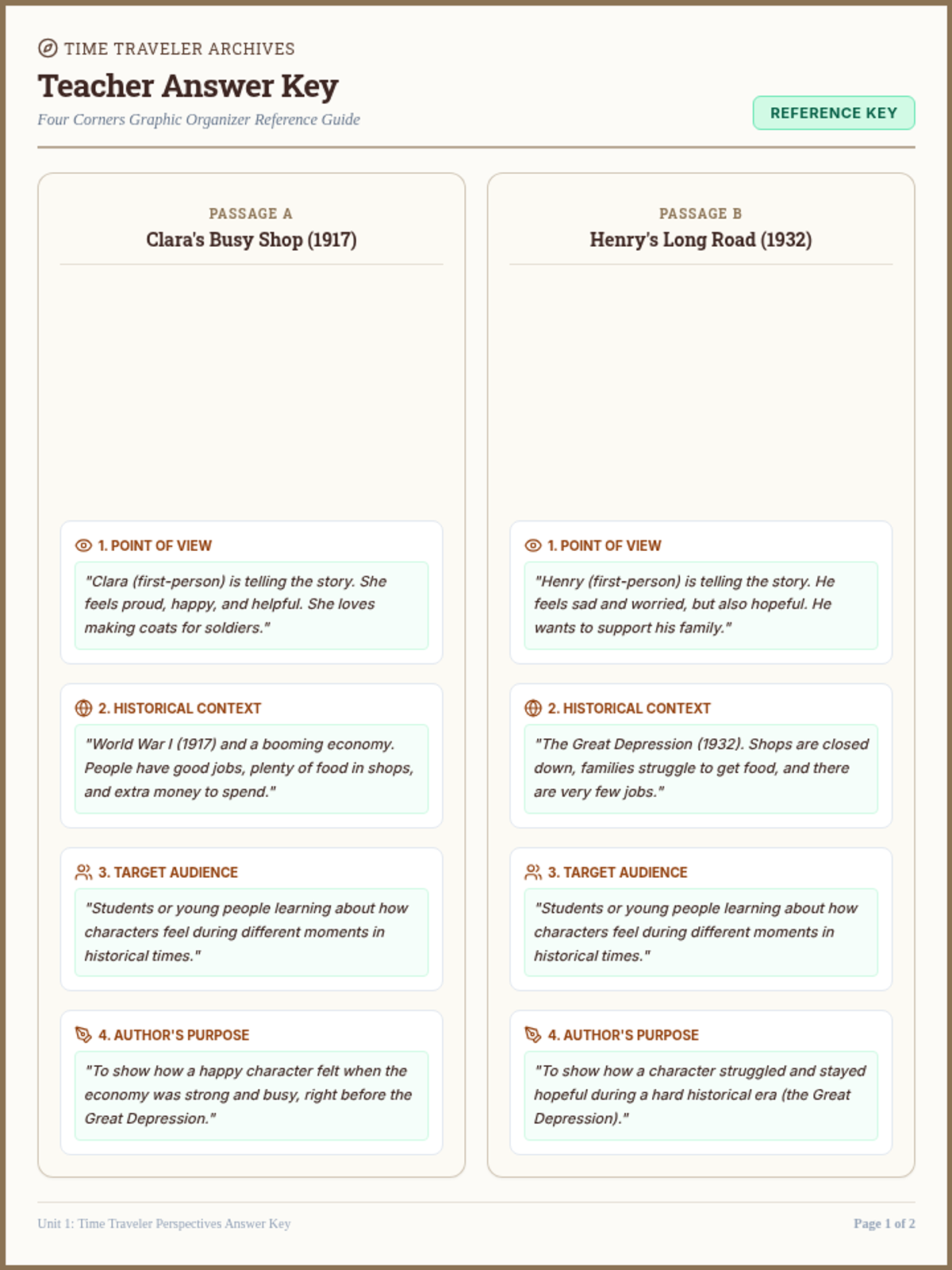
An independent reading unit focusing on perspective and point of view during two contrasting historical eras: World War I and the Great Depression. Students analyze character emotions and historical contexts using a 'four corners' layout.
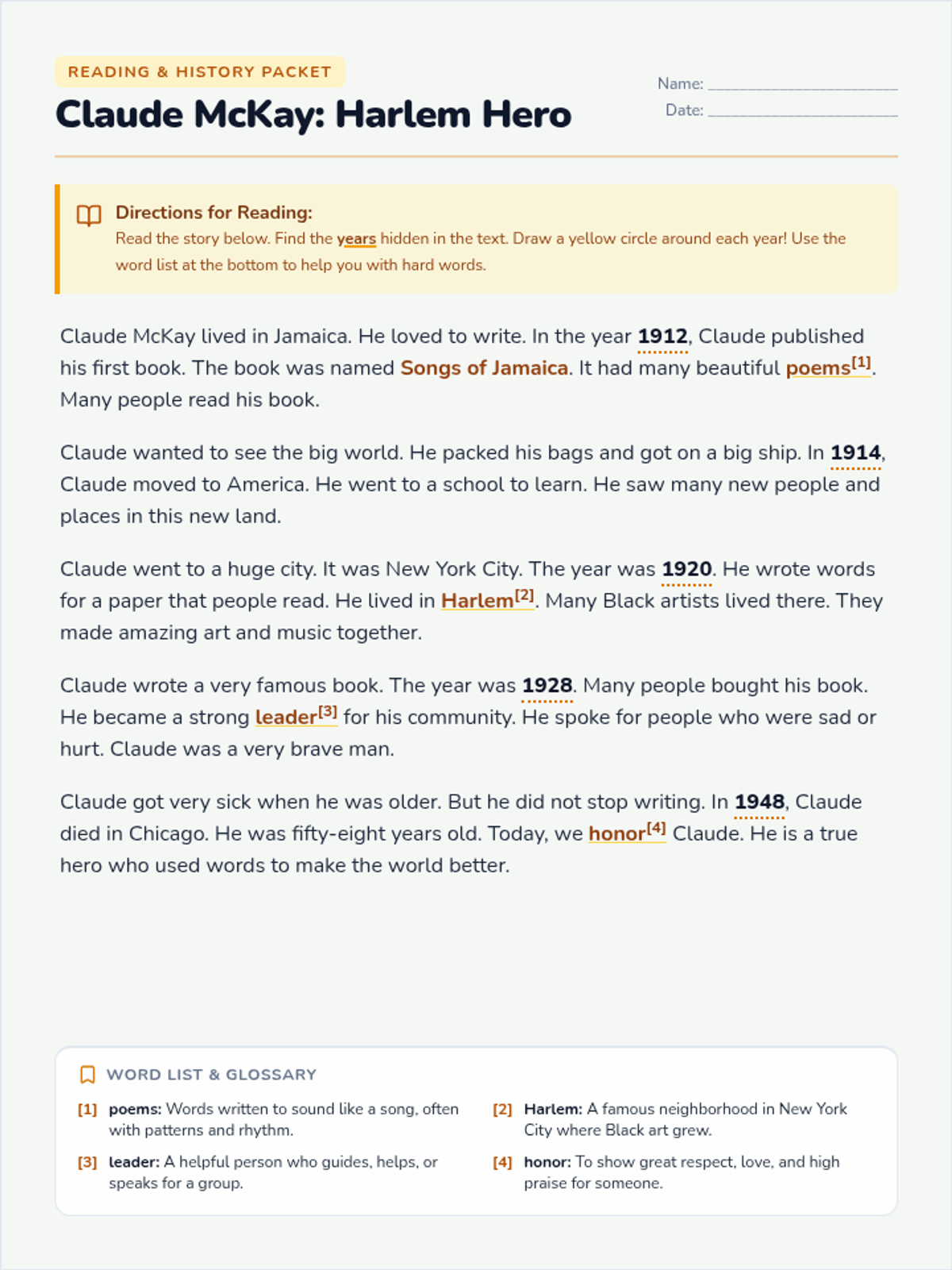
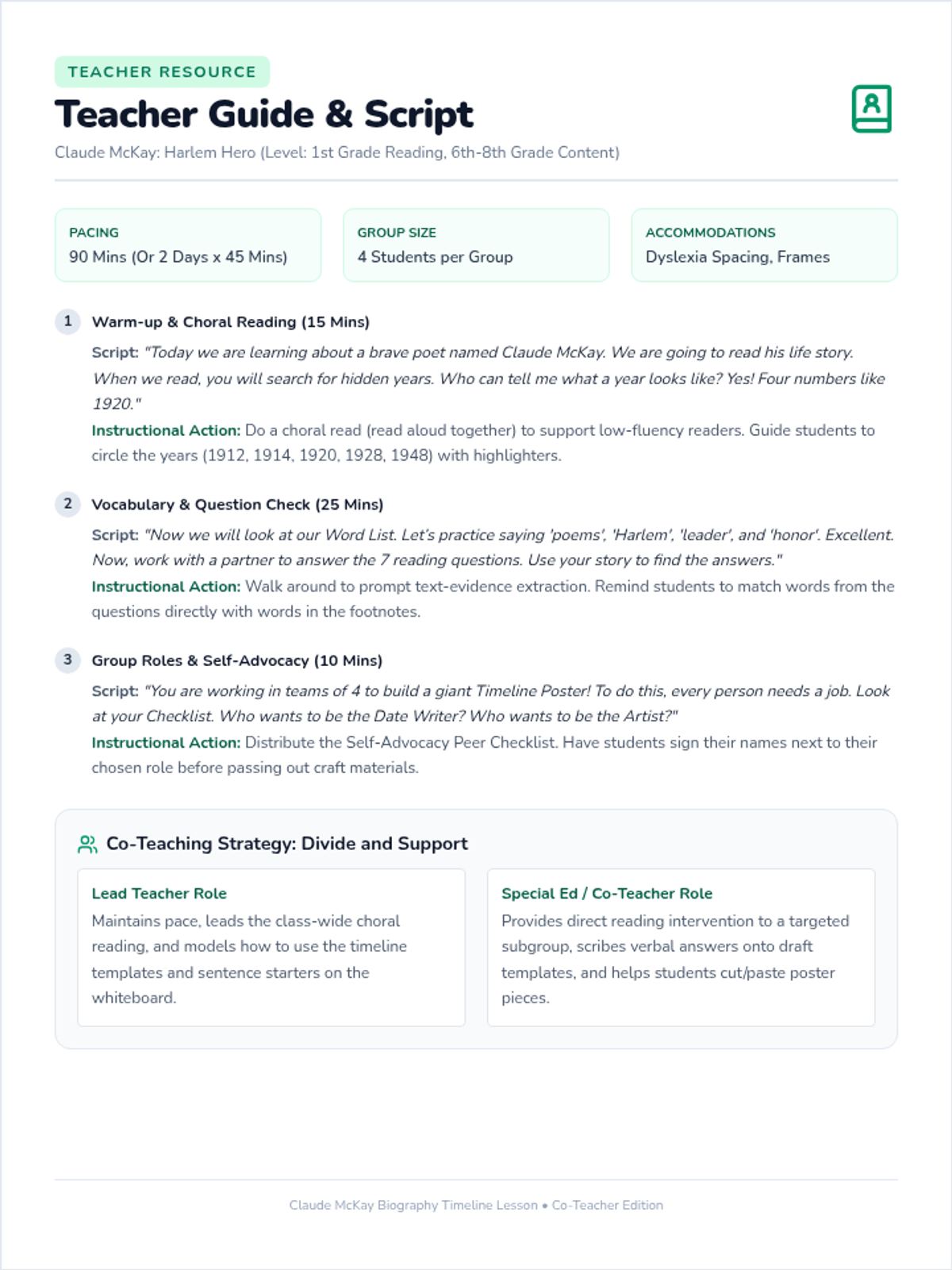
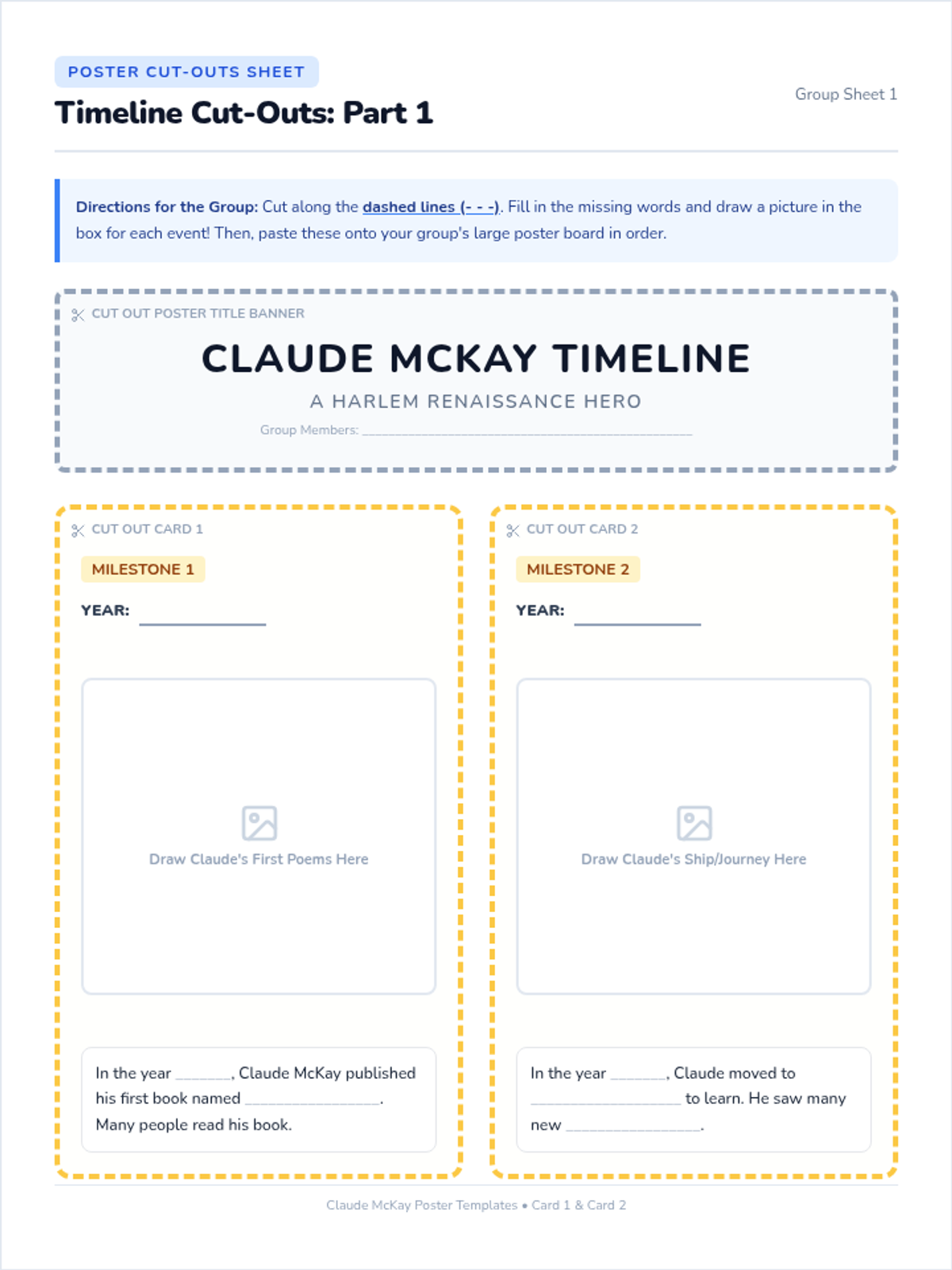
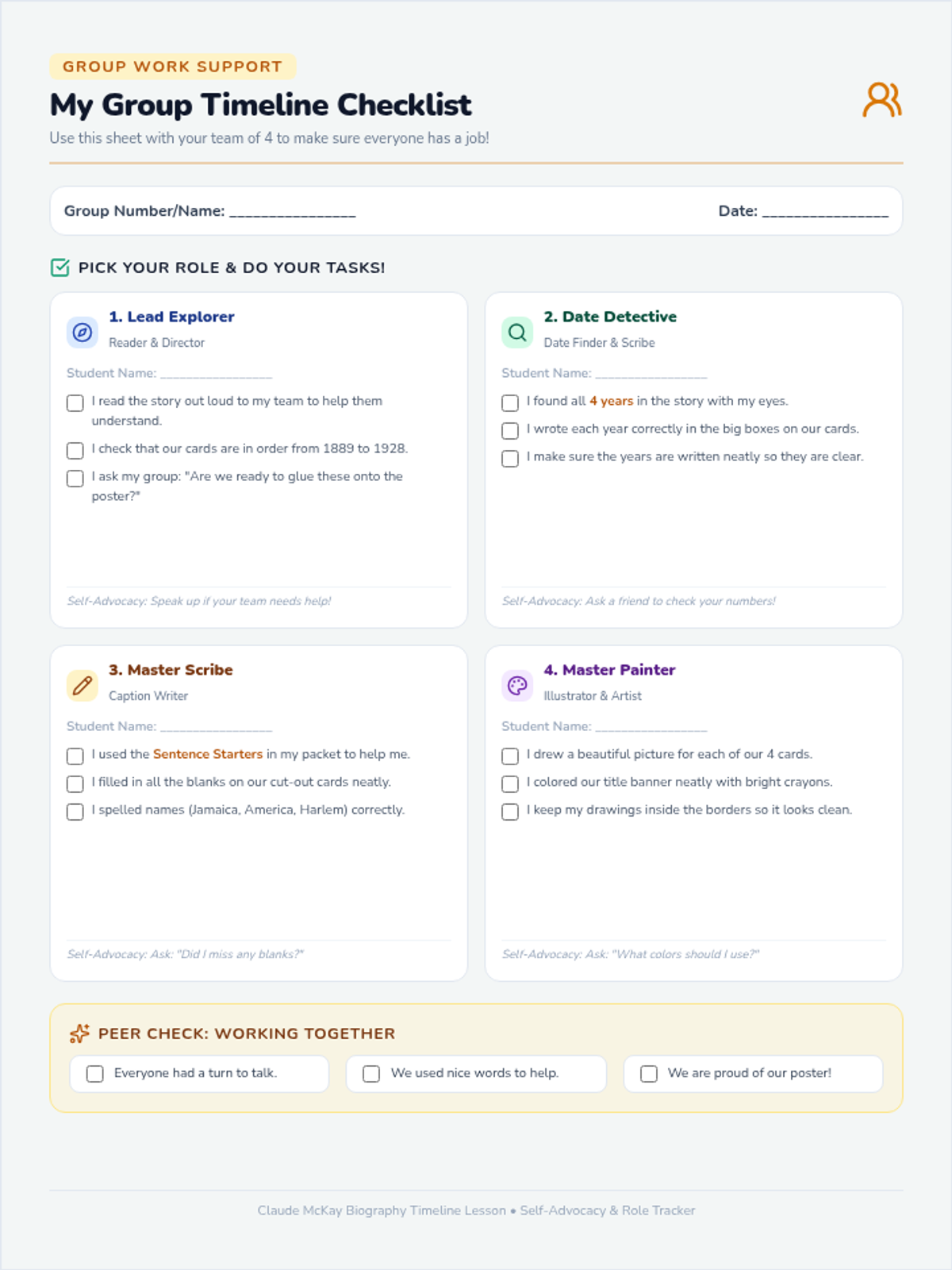
A highly scaffolded middle school lesson on Harlem Renaissance poet Claude McKay, adapted for a first-grade reading level. Includes a text analysis, footnote glossary, comprehension questions, a group timeline poster project, and support tools for co-teachers.
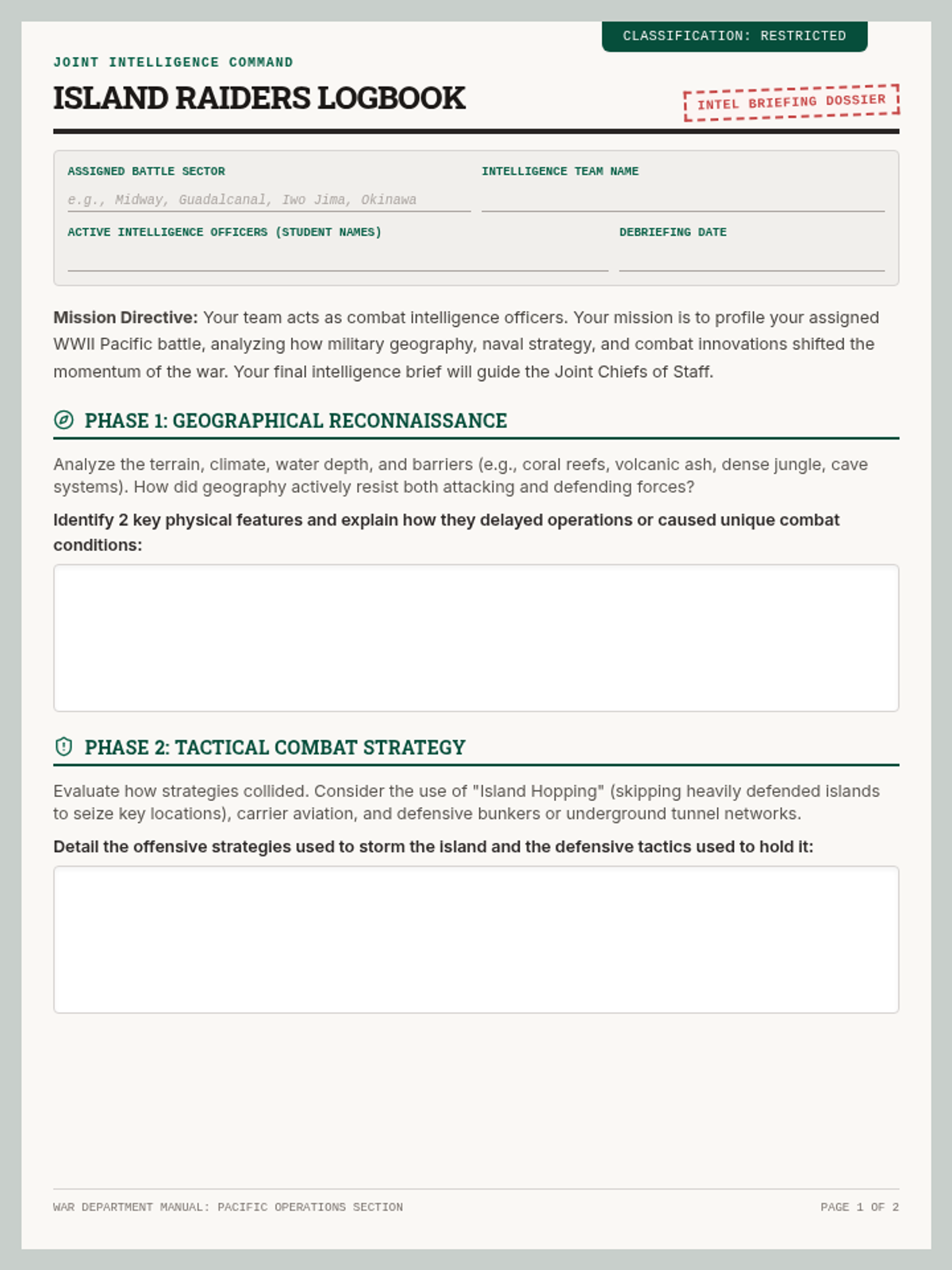
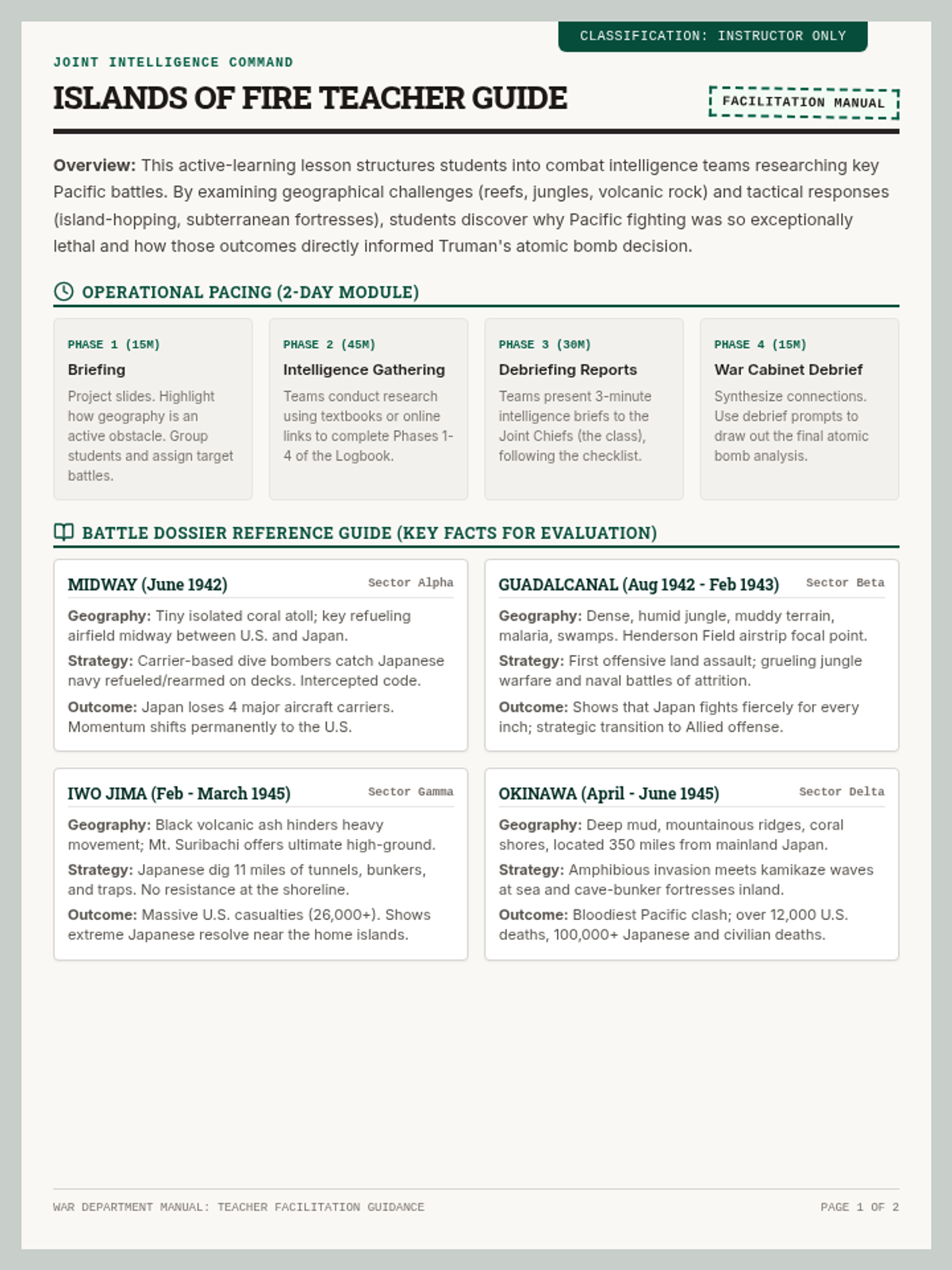
A collaborative research lesson on WWII Pacific battles. Students work in intelligence teams to analyze military strategy, island-hopping, and geographical barriers, exploring how these battles shifted momentum and led to the atomic bomb decision.
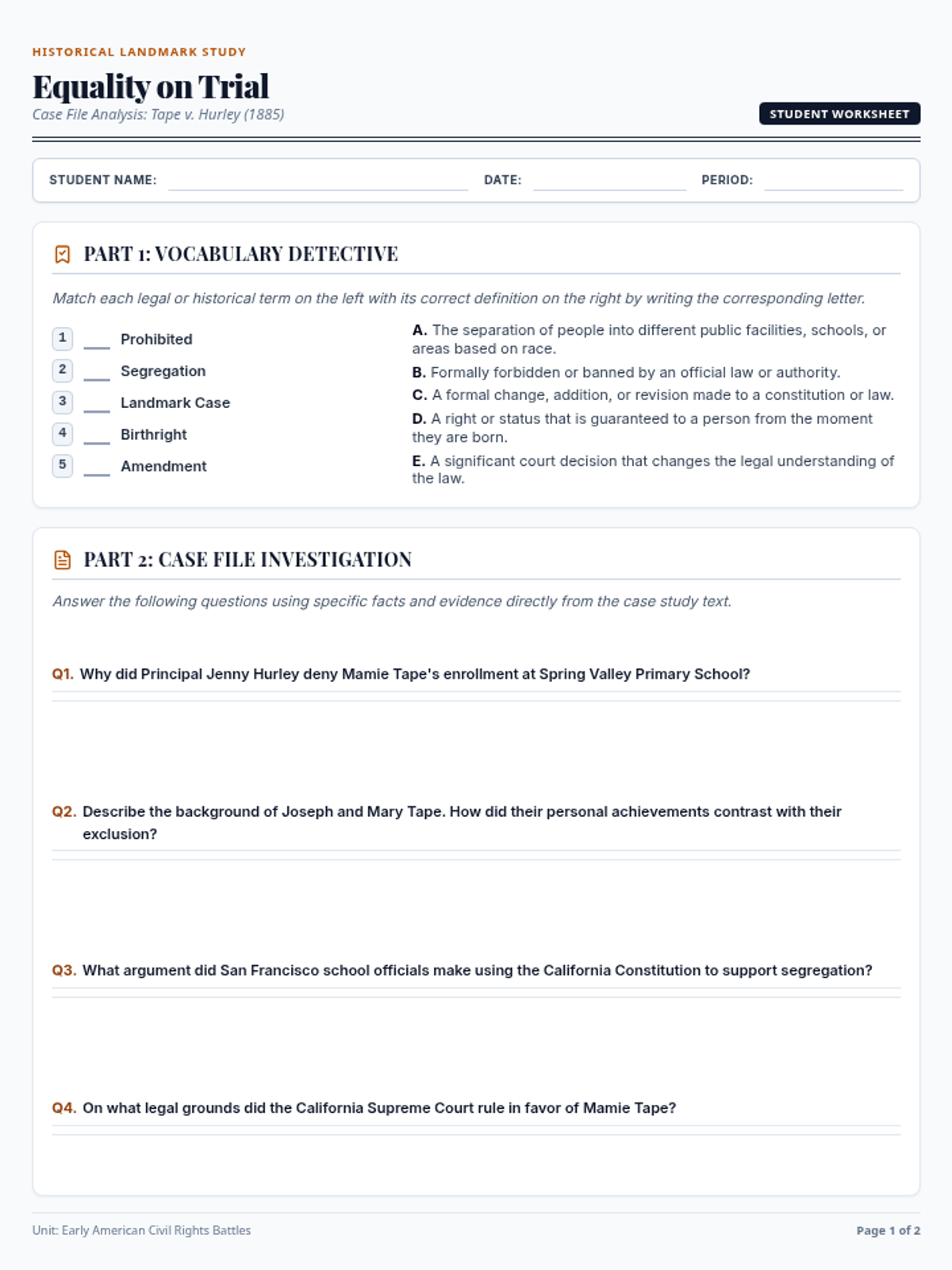
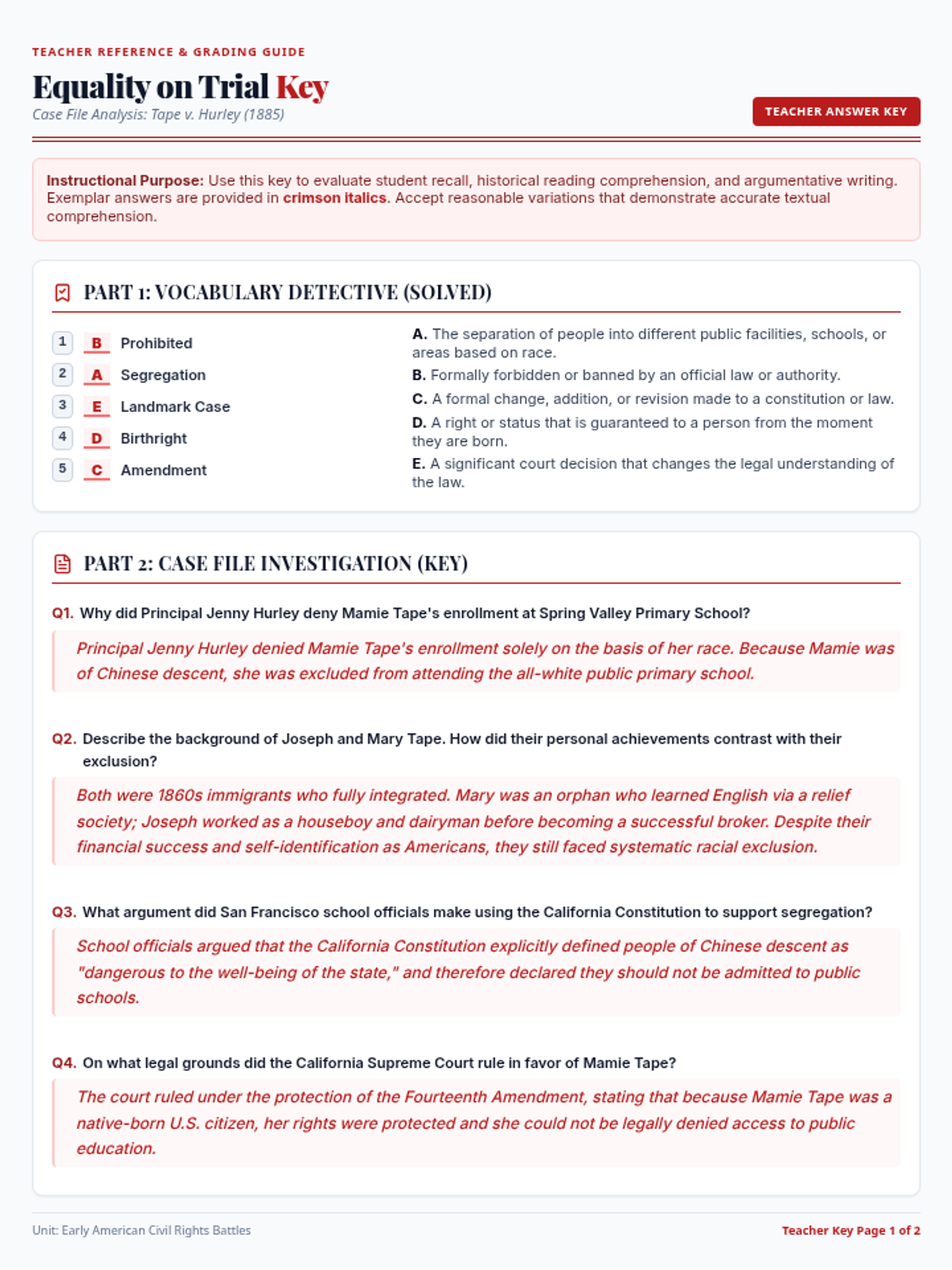
A lesson centered on the landmark civil rights case Tape v. Hurley (1885), examining the Tape family's fight for public education in San Francisco and its historical links to Mendez v. Westminster and Brown v. Board of Education.