Students practice solving simple counting problems using concrete manipulatives (bears or cubes) and then immediately tracing these objects on paper. This lesson establishes the physical connection between a 3D object and a 2D space representation.
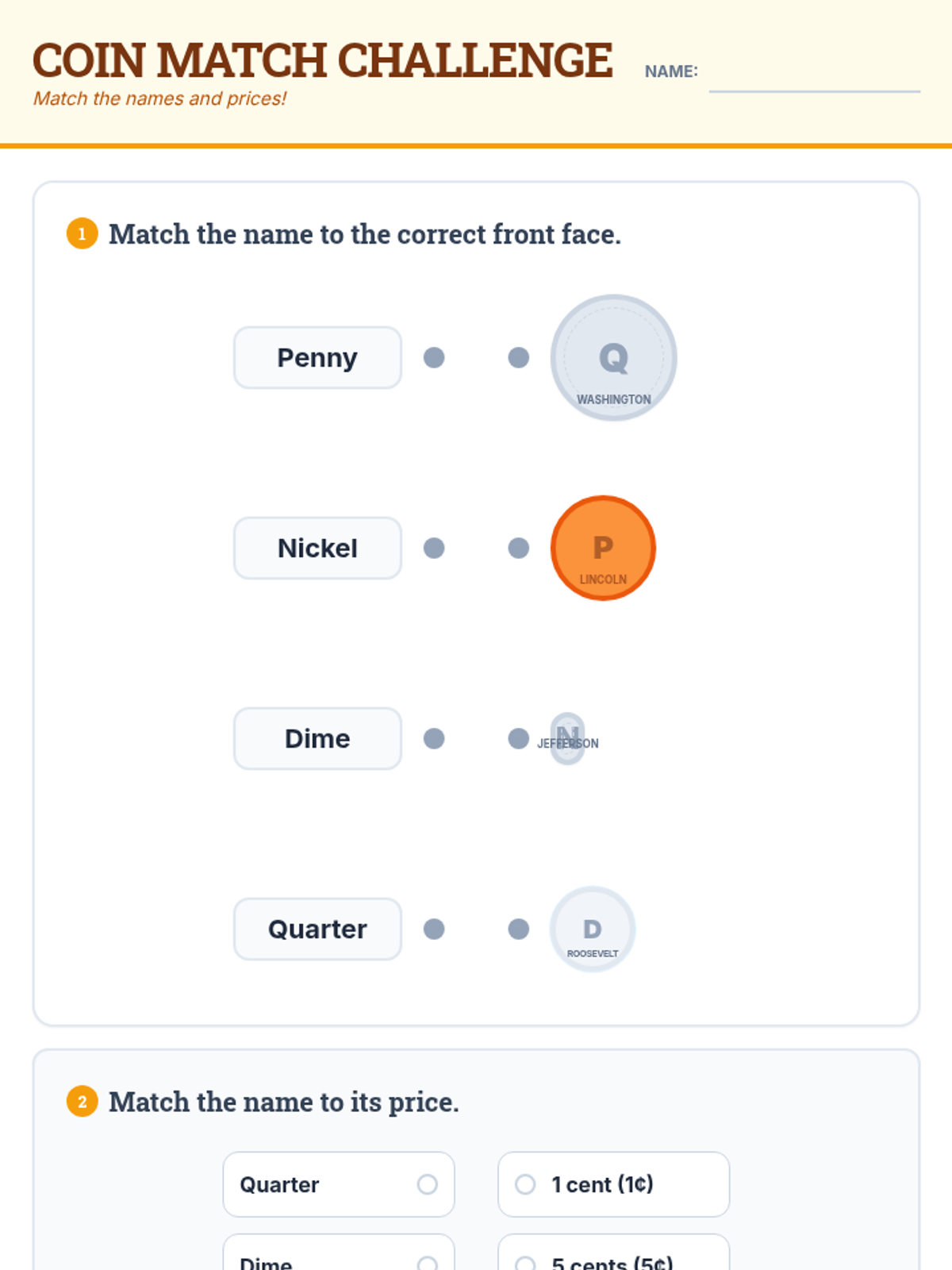
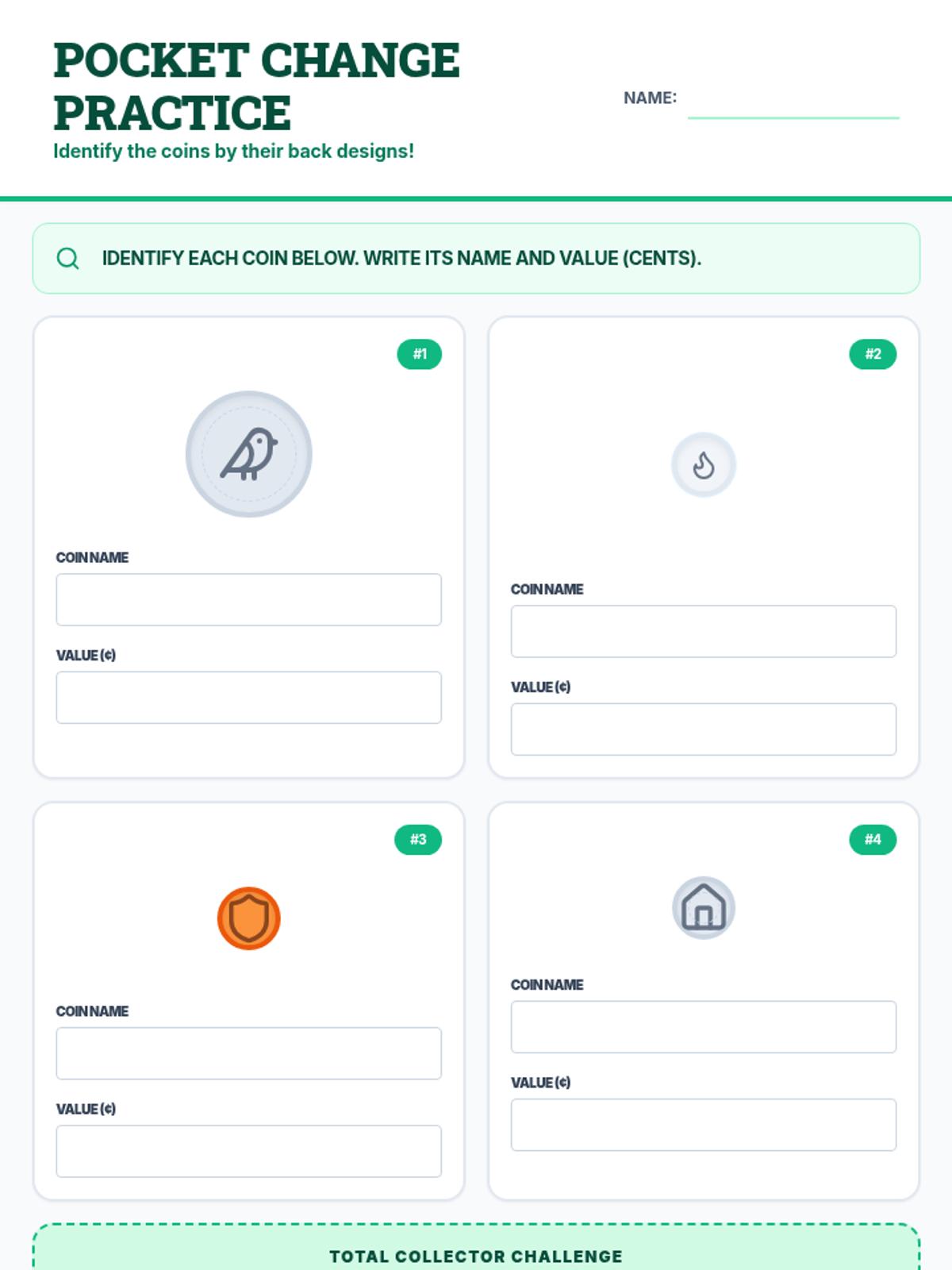
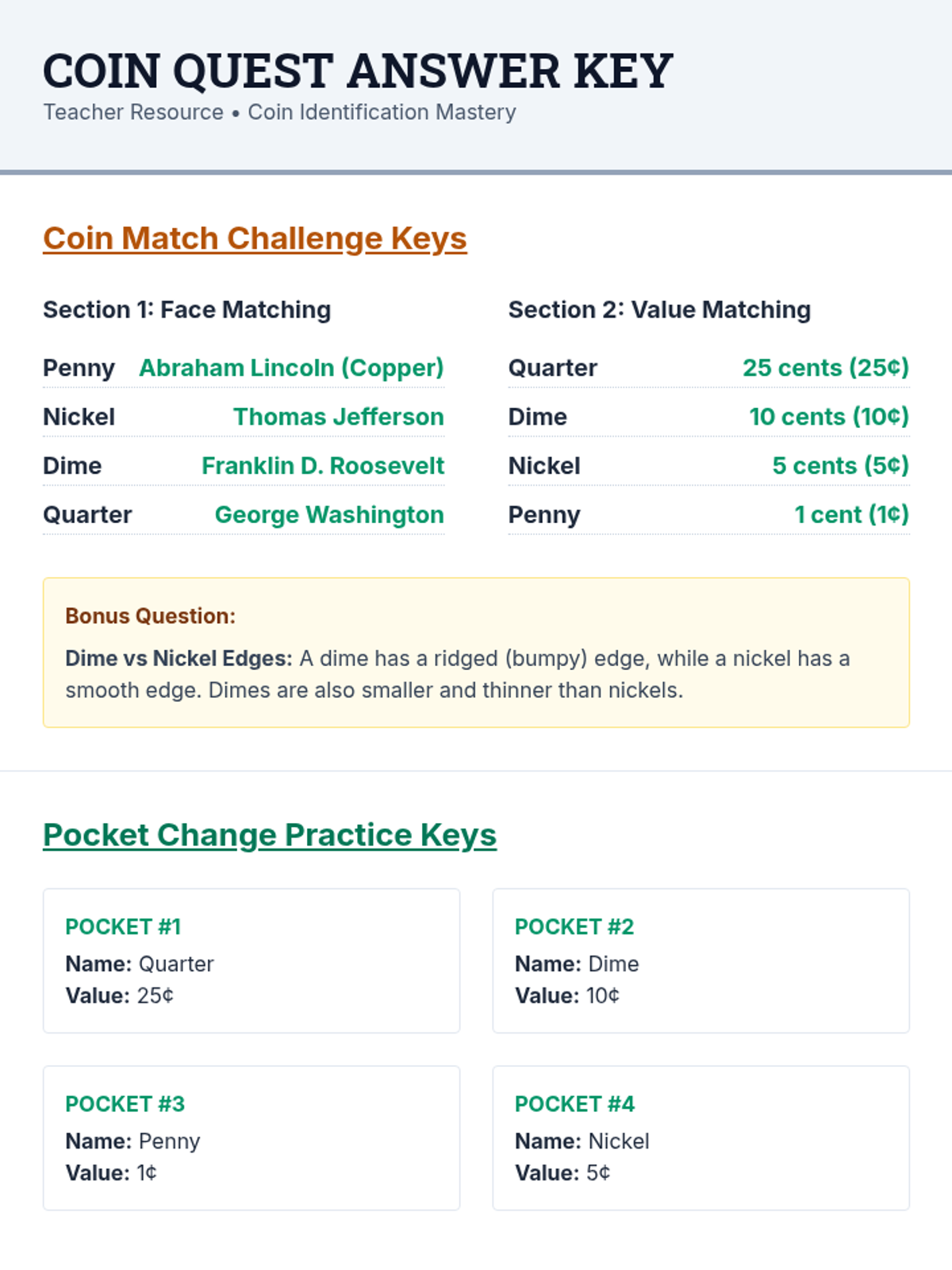
A hands-on lesson designed to help students master the identification of pennies, nickels, dimes, and quarters by their physical features and monetary values.
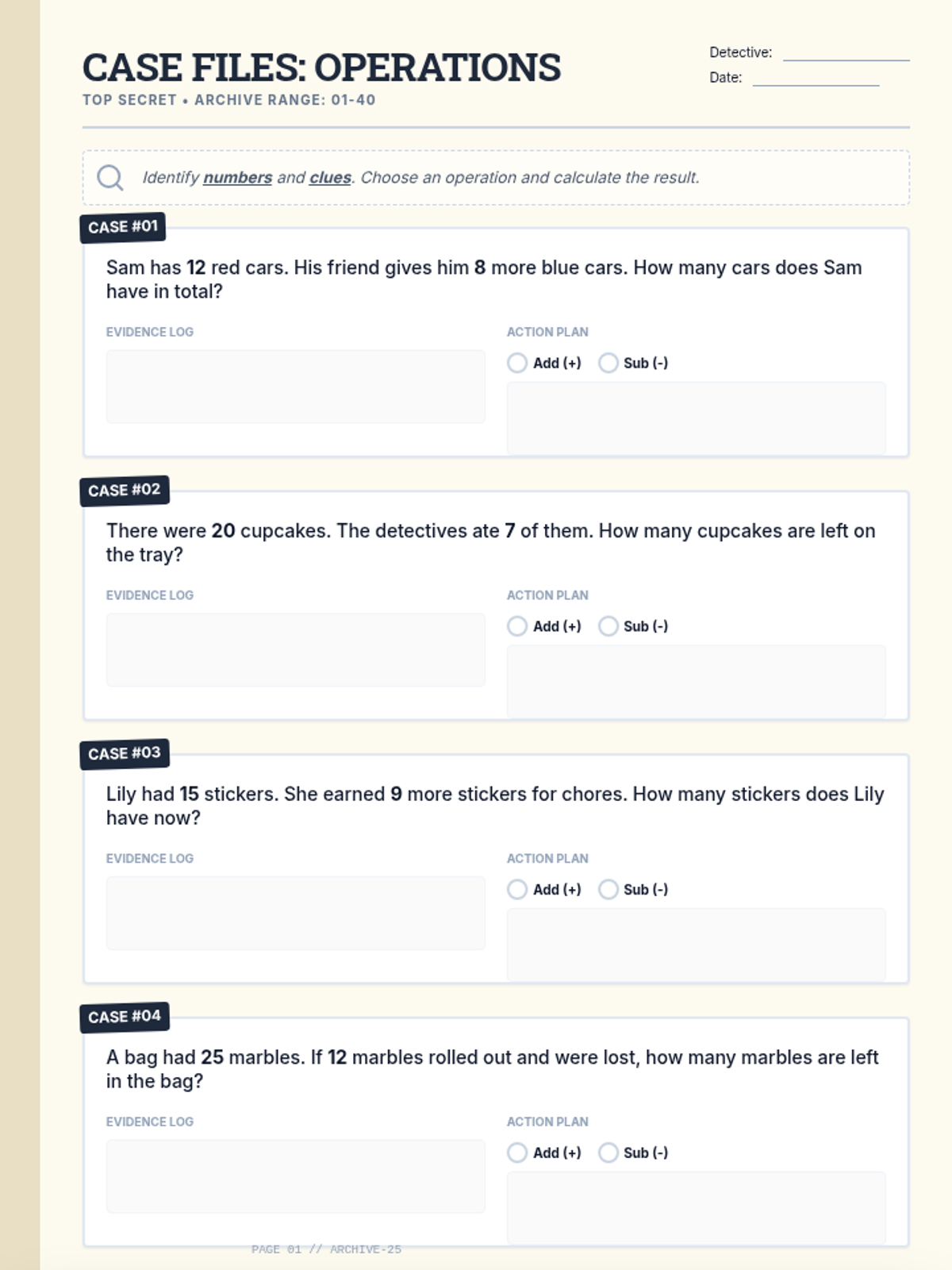
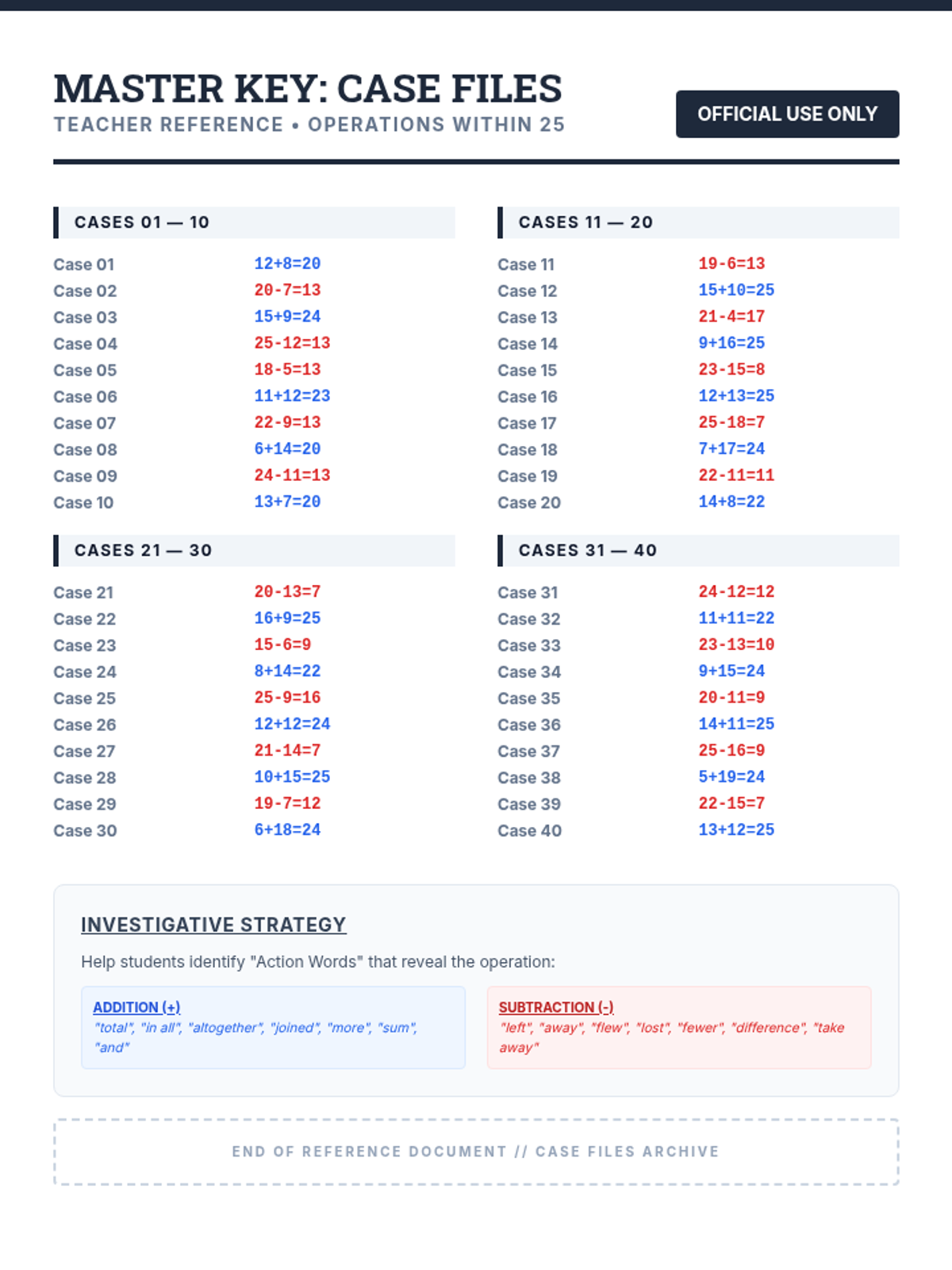
A comprehensive practice set where students act as math detectives to solve single-step addition and subtraction word problems within 25, focusing on identifying key details and operations.
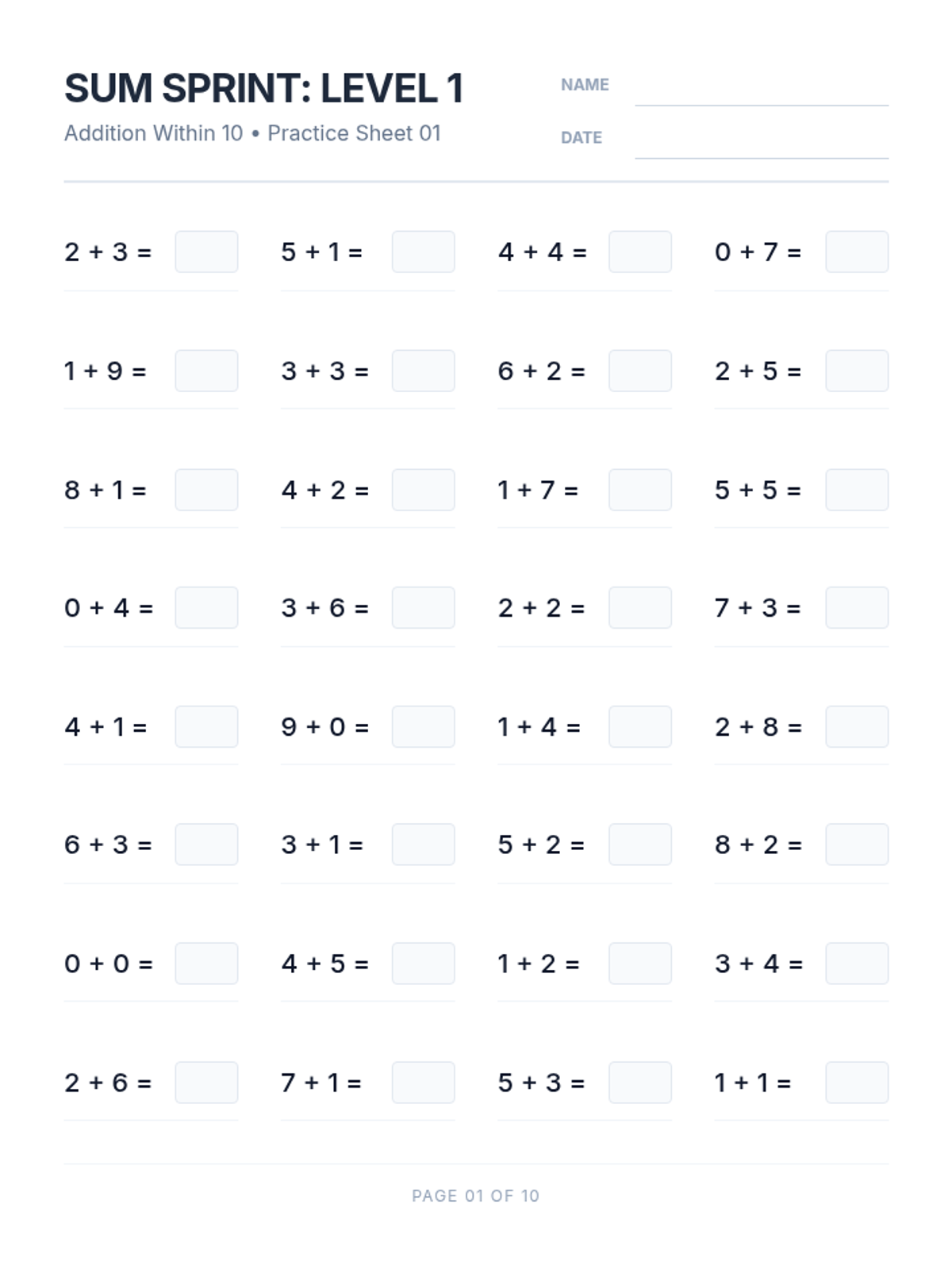
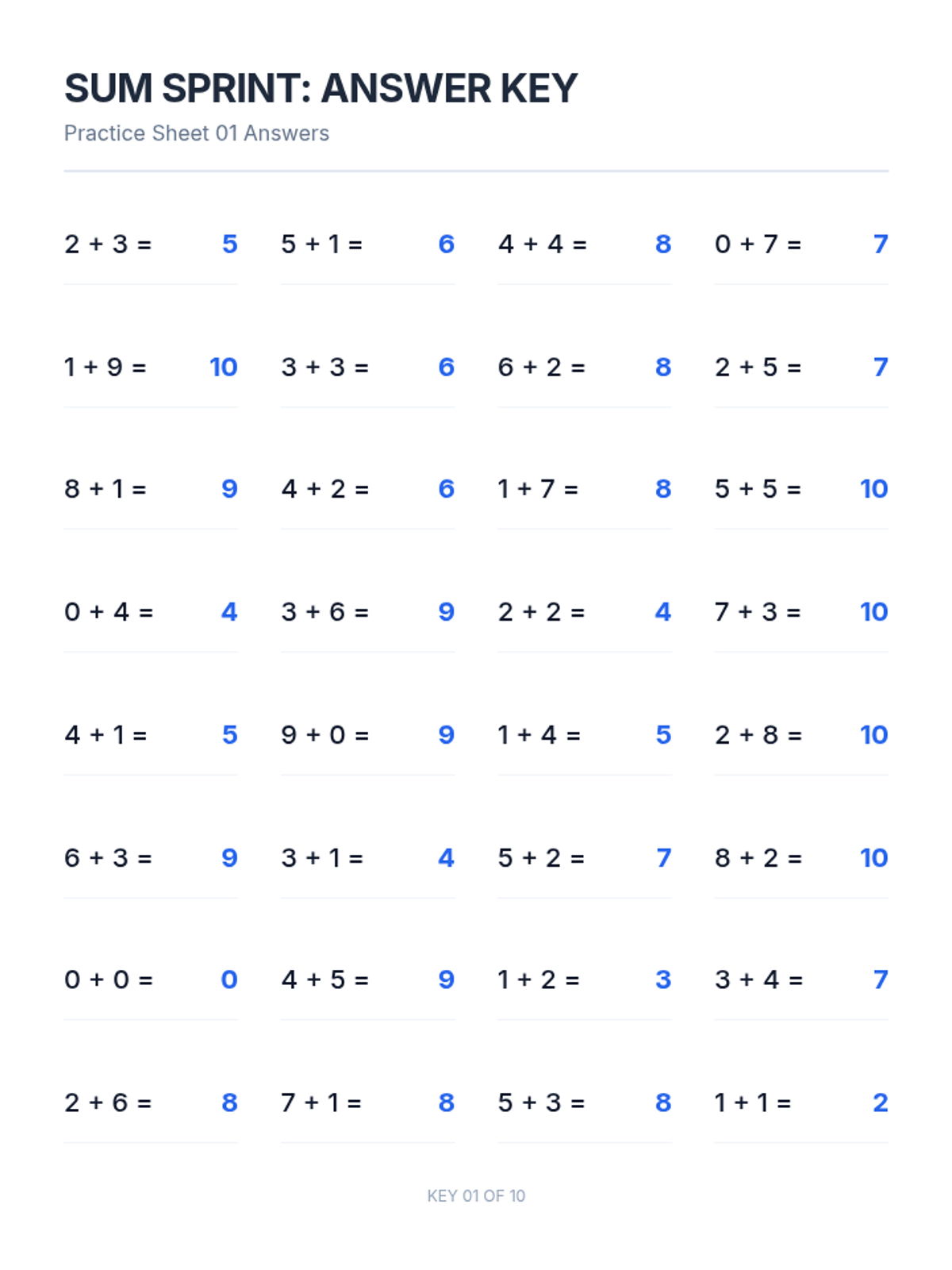
A comprehensive collection of 10 addition worksheets focused on fluency within 10. These materials are designed for repetitive practice and mastery without visual distractions.
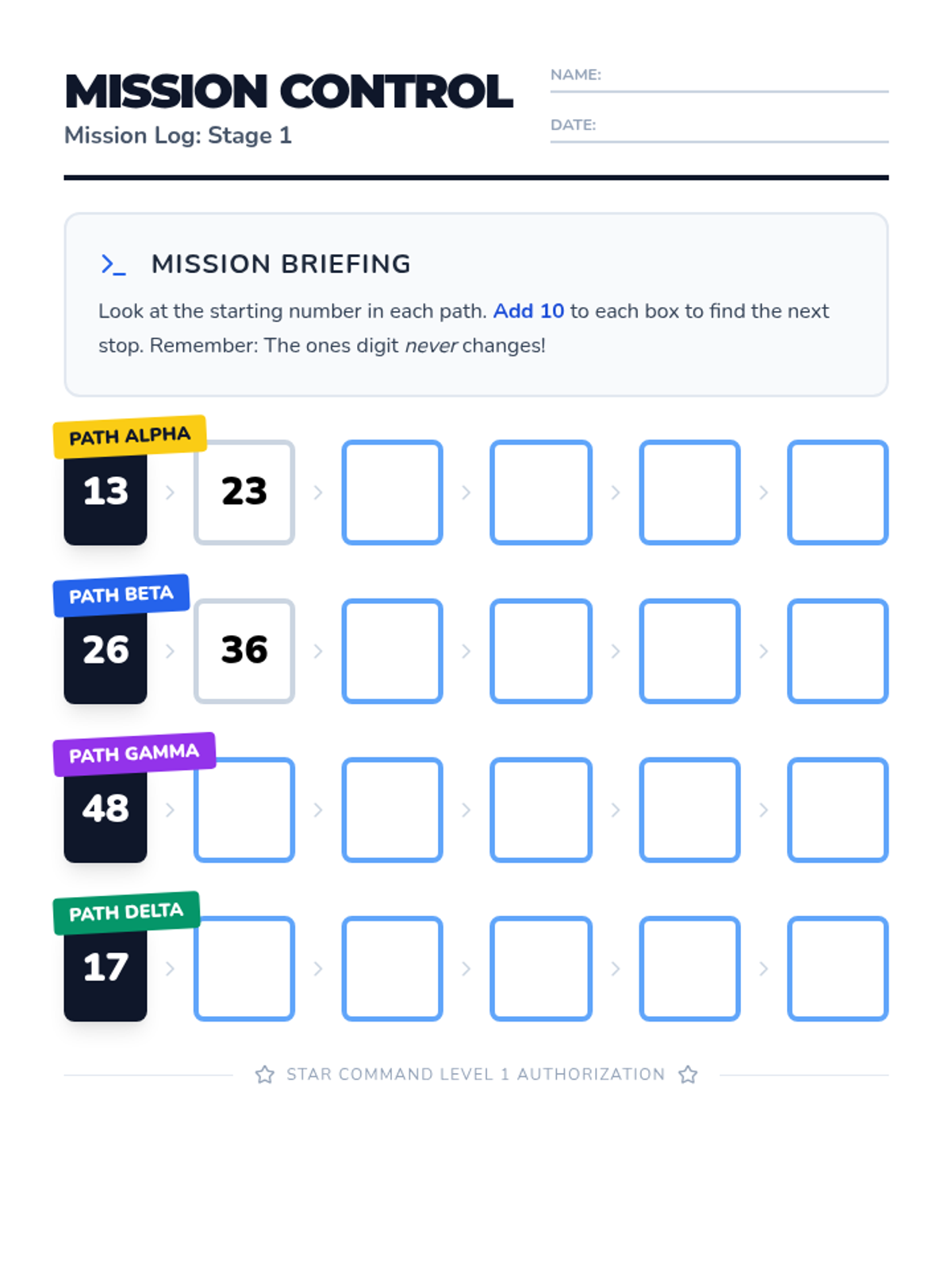
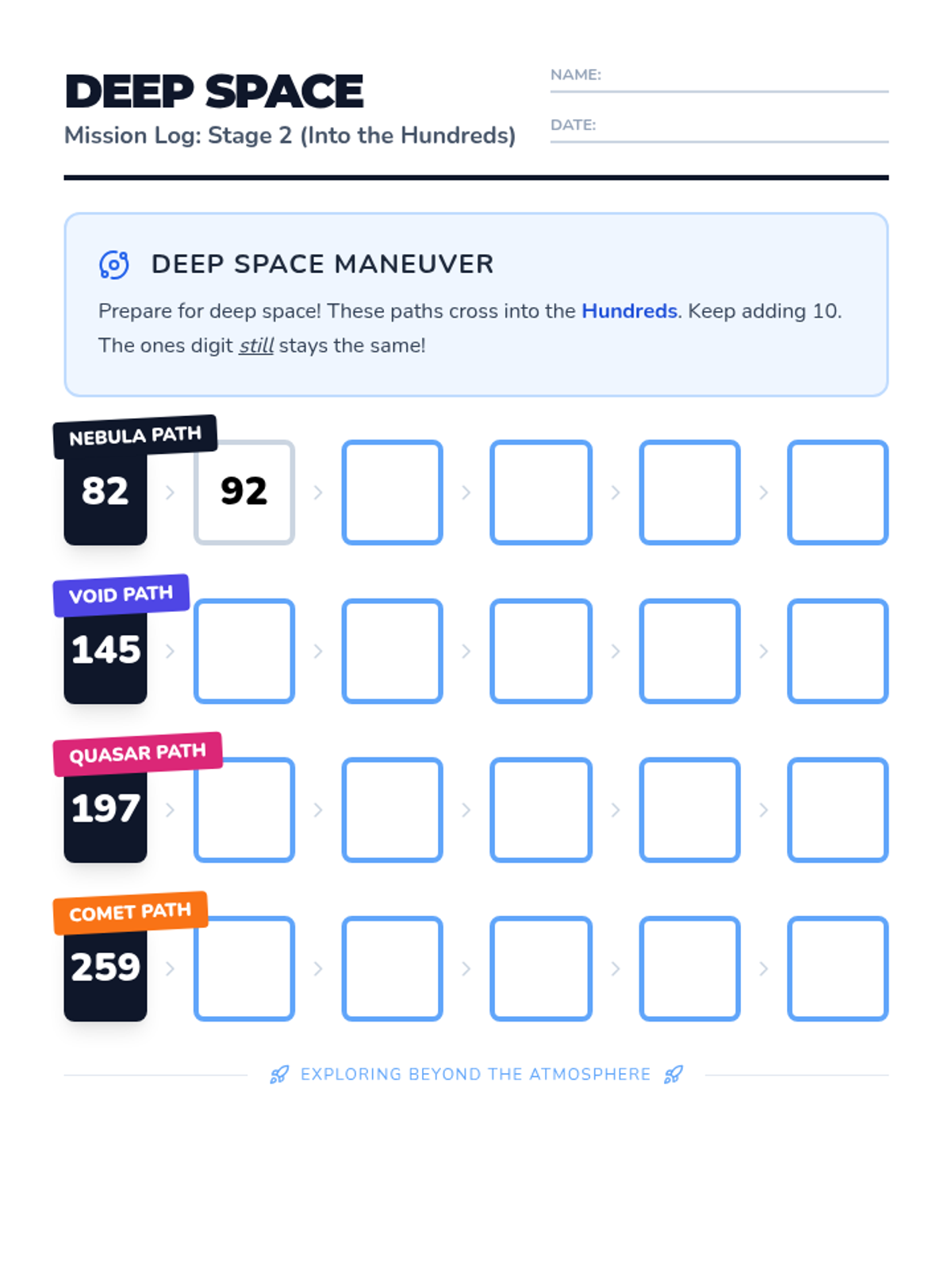
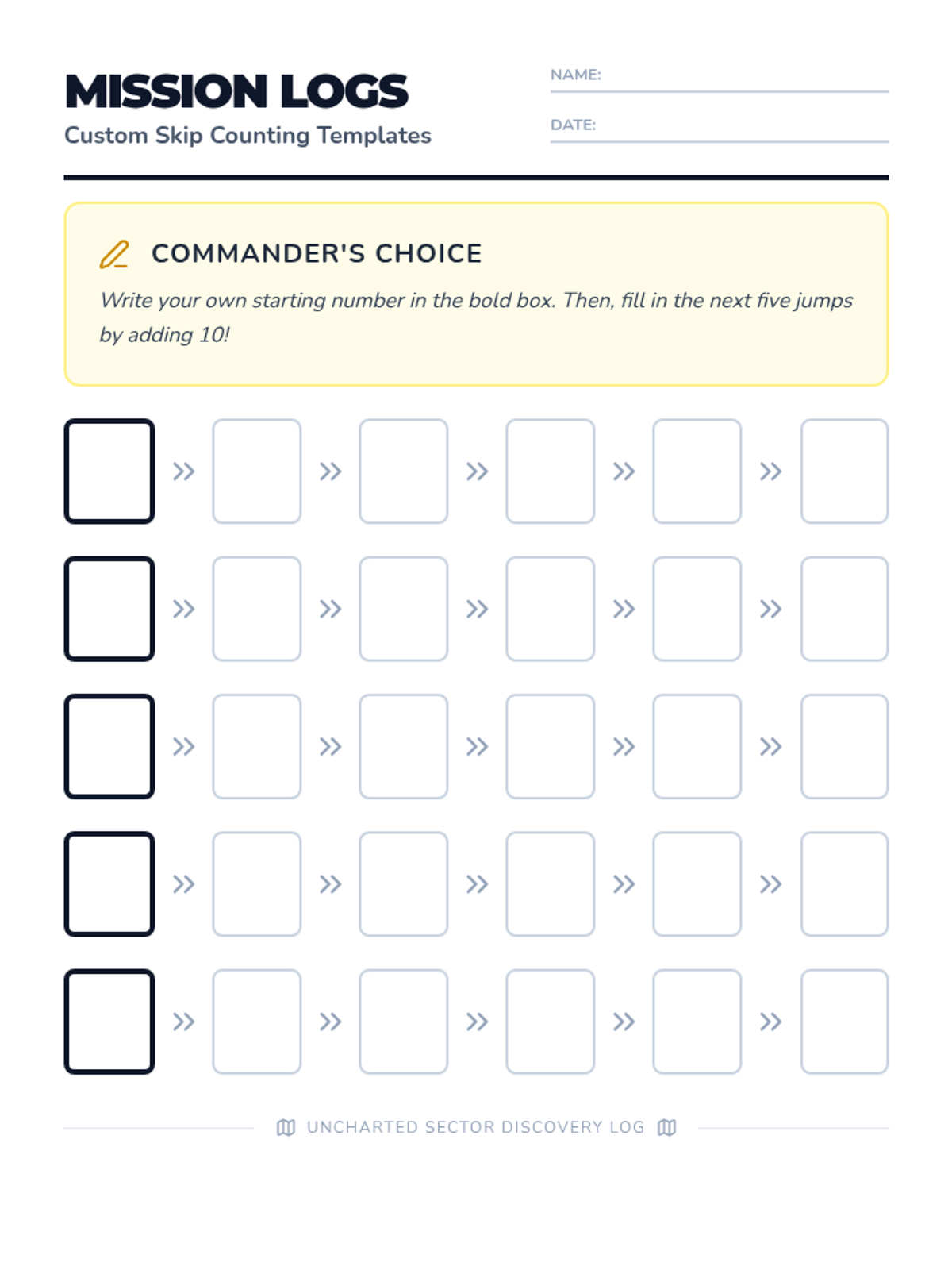
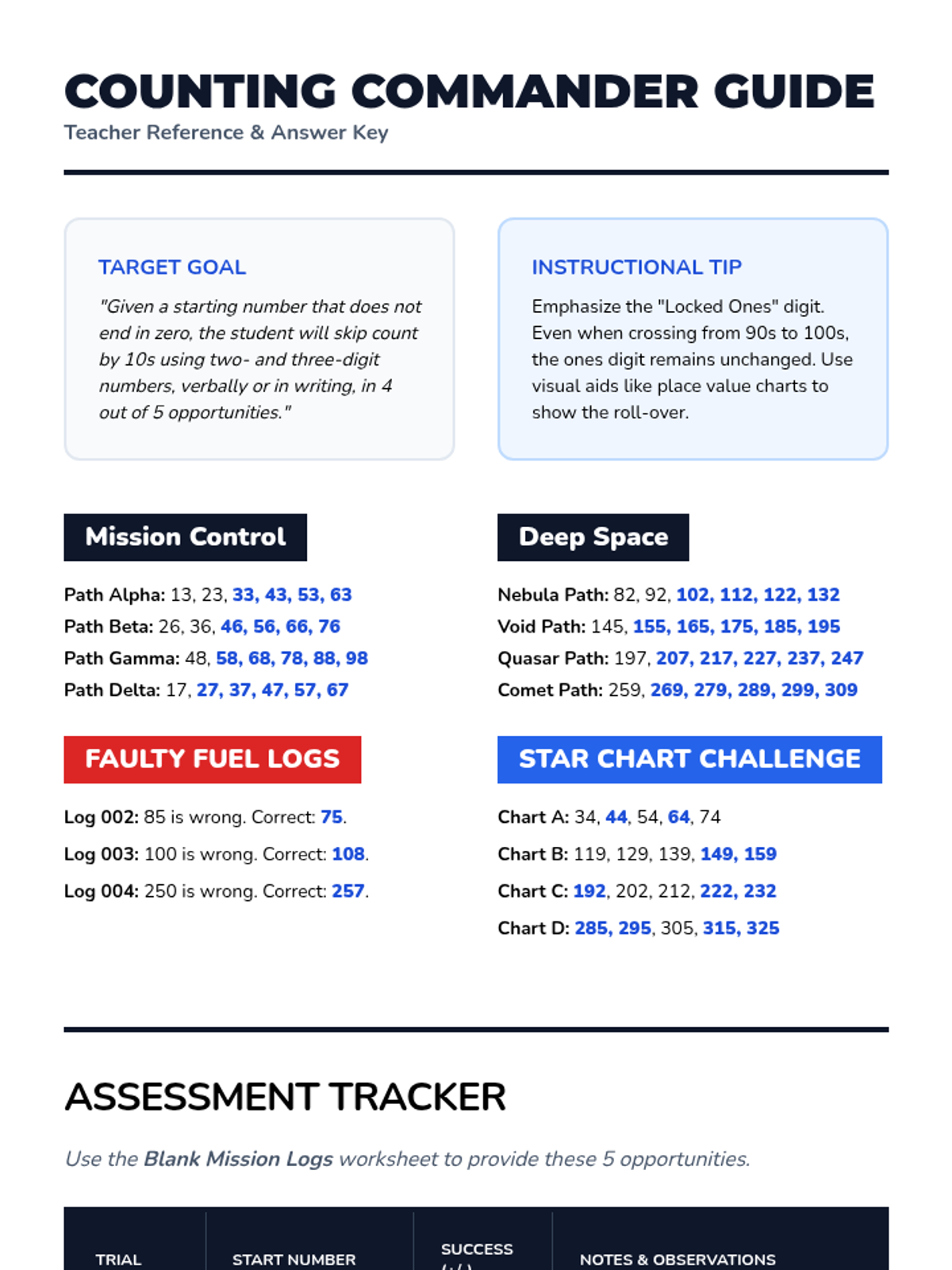
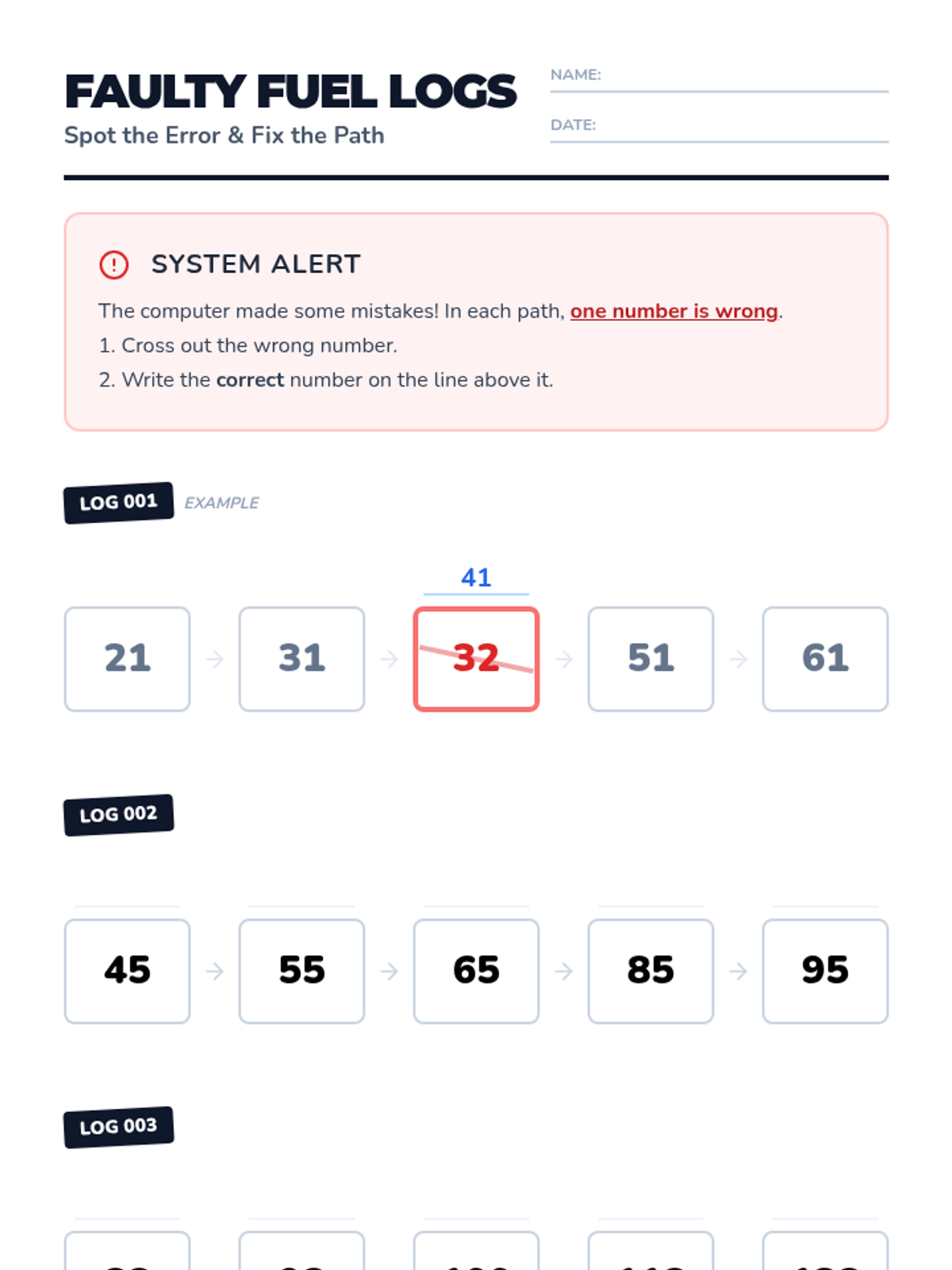
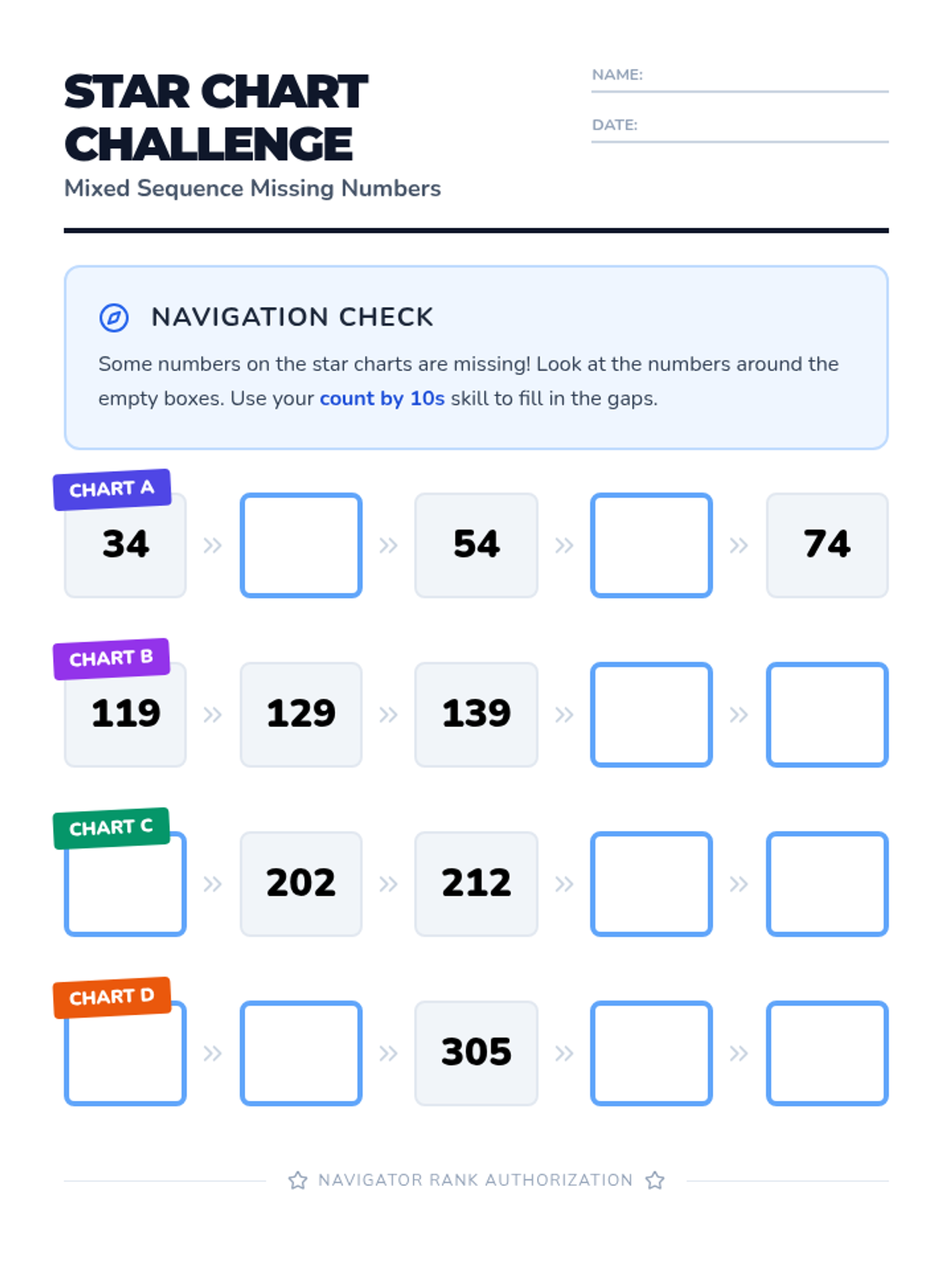
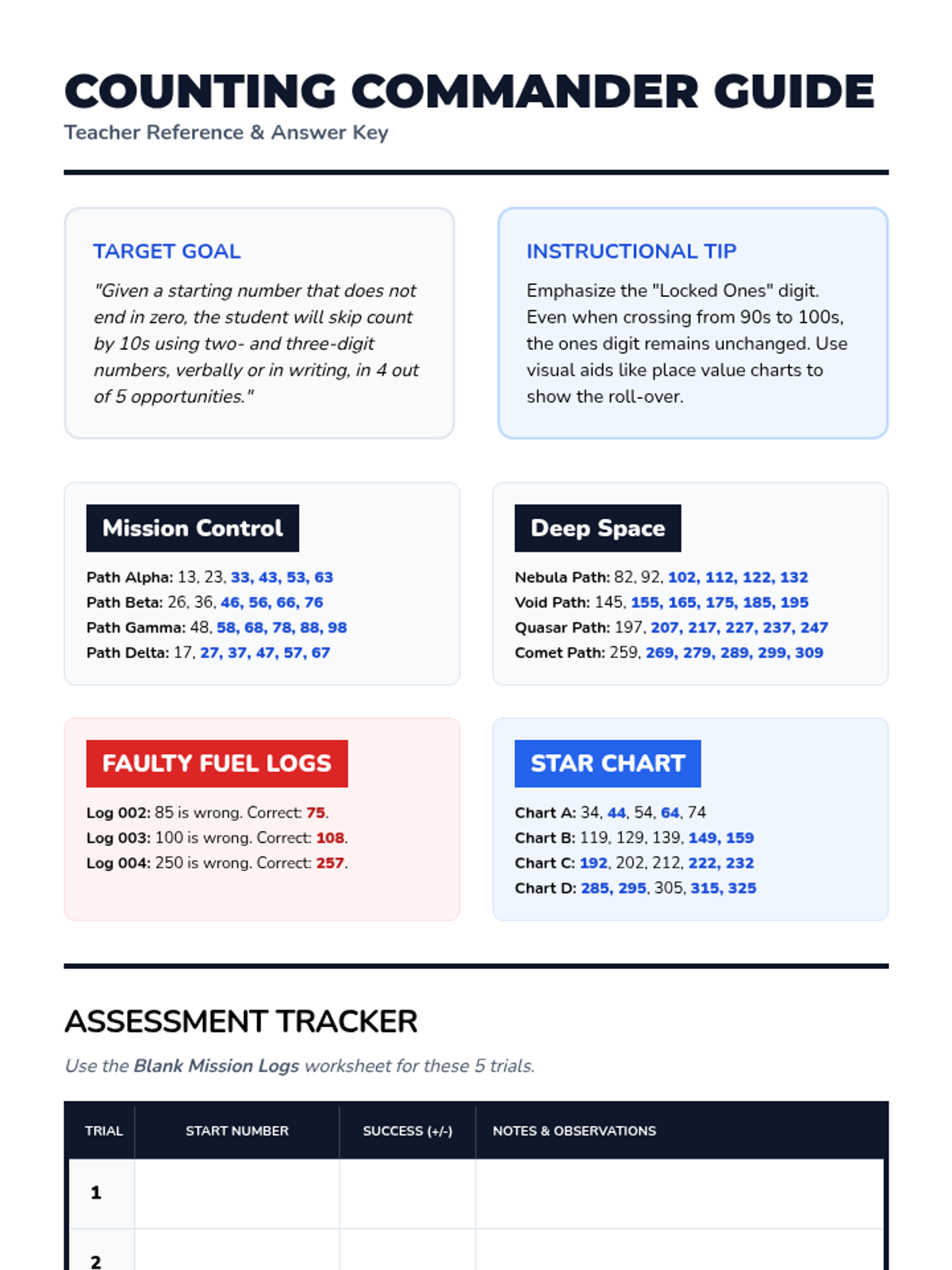
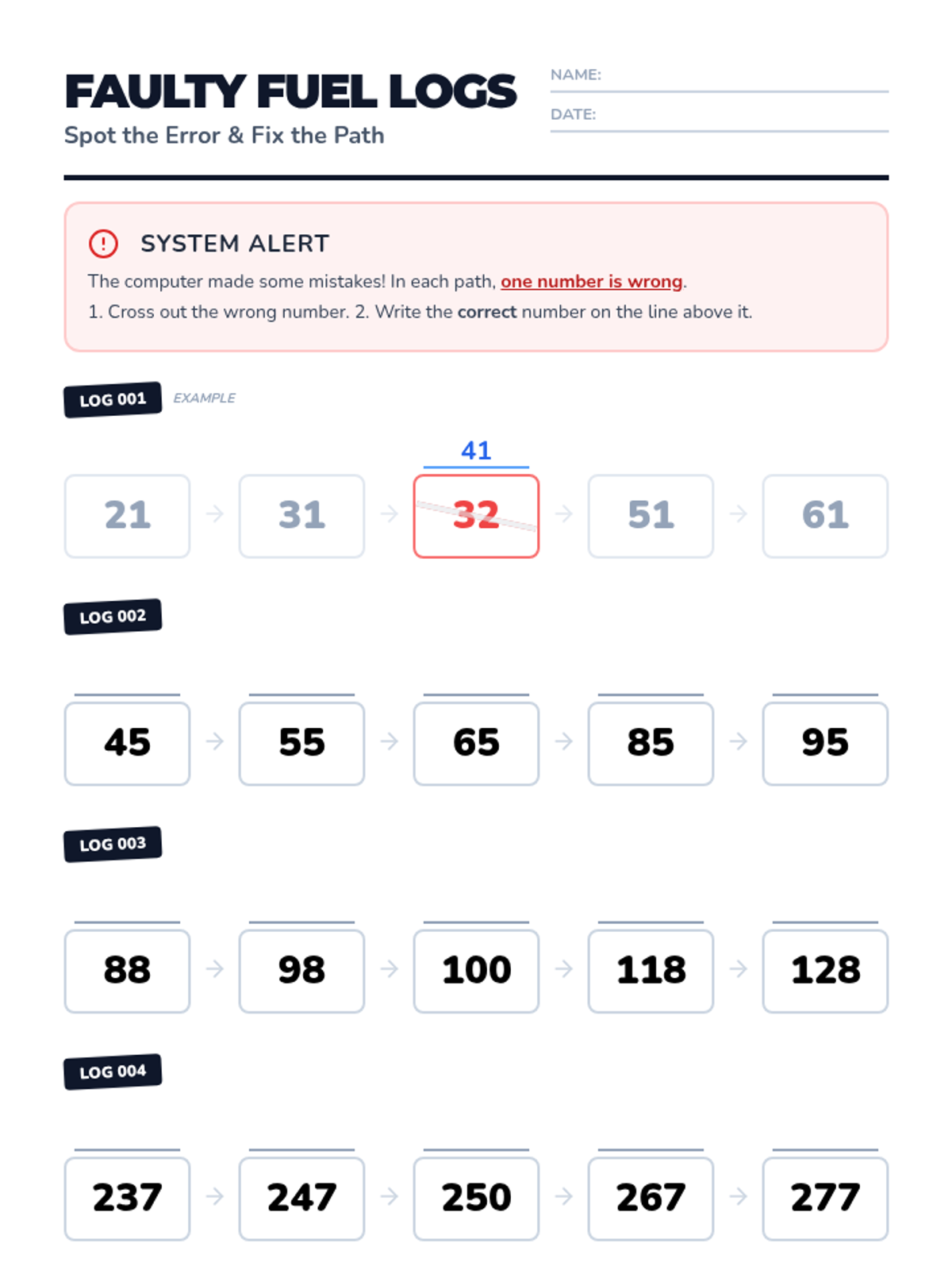
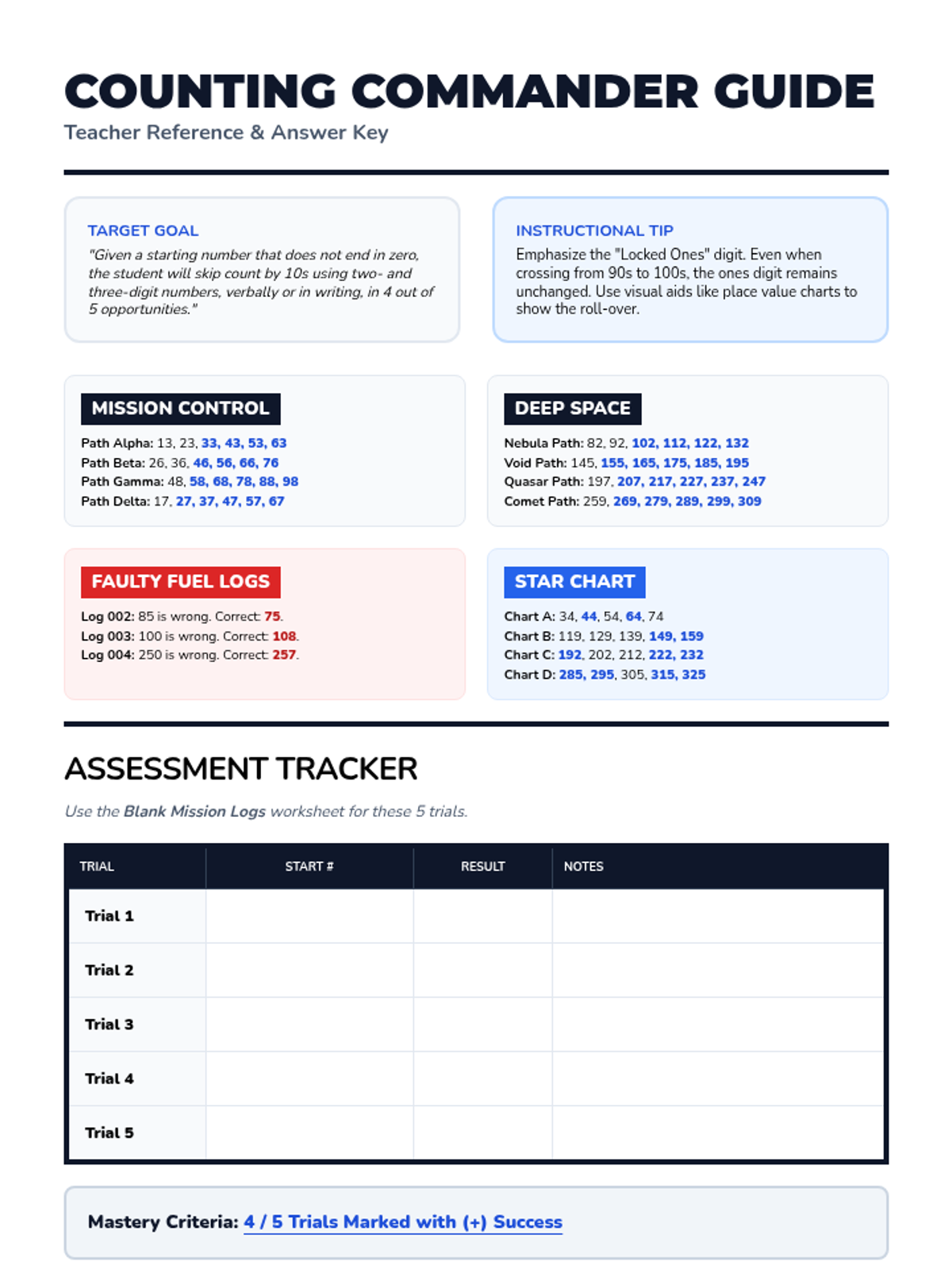
A cosmic-themed lesson focusing on skip counting by 10s starting from non-zero digits. Students explore patterns in the tens place and learn to navigate the transition from two-digit to three-digit numbers.
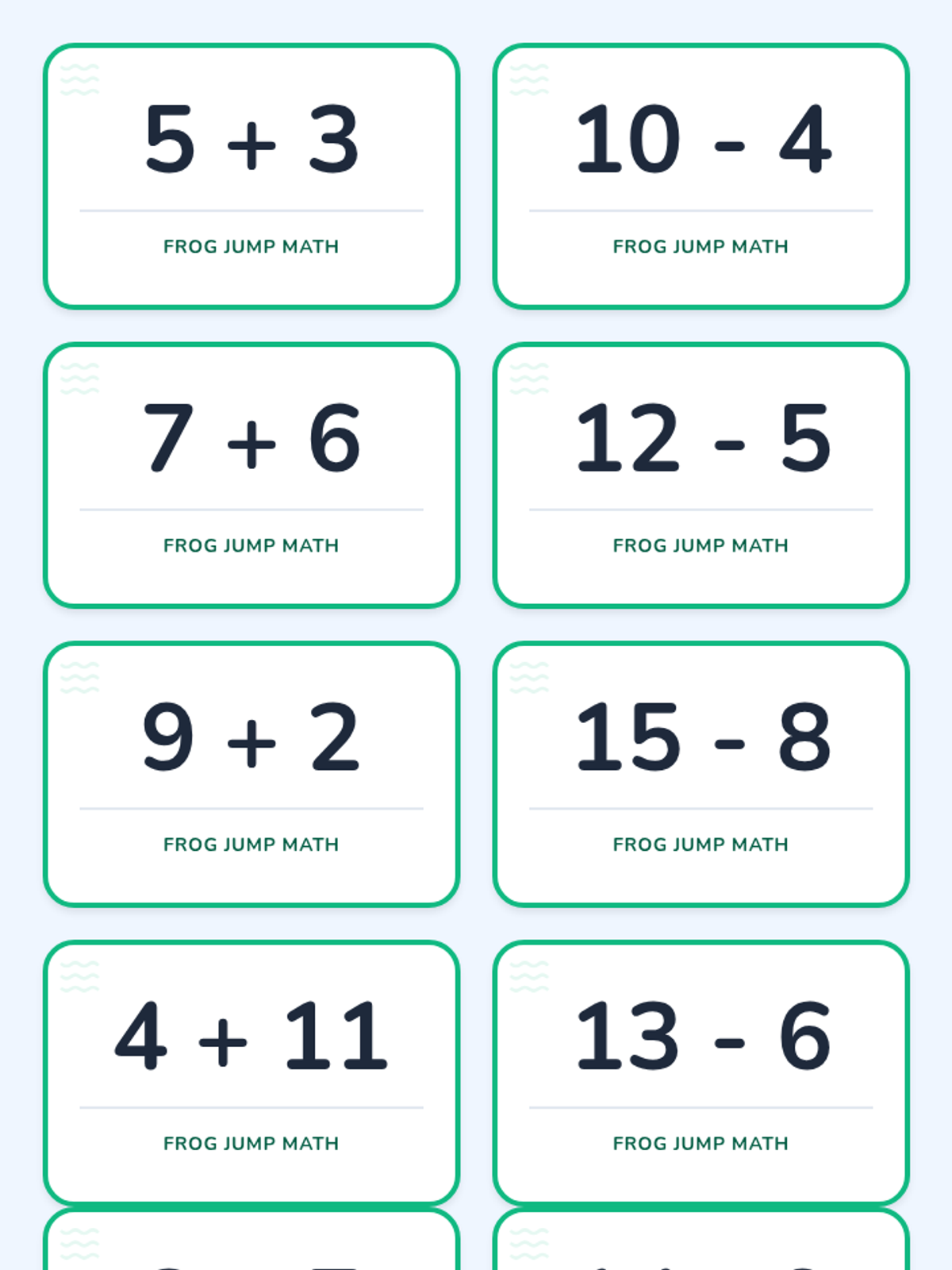
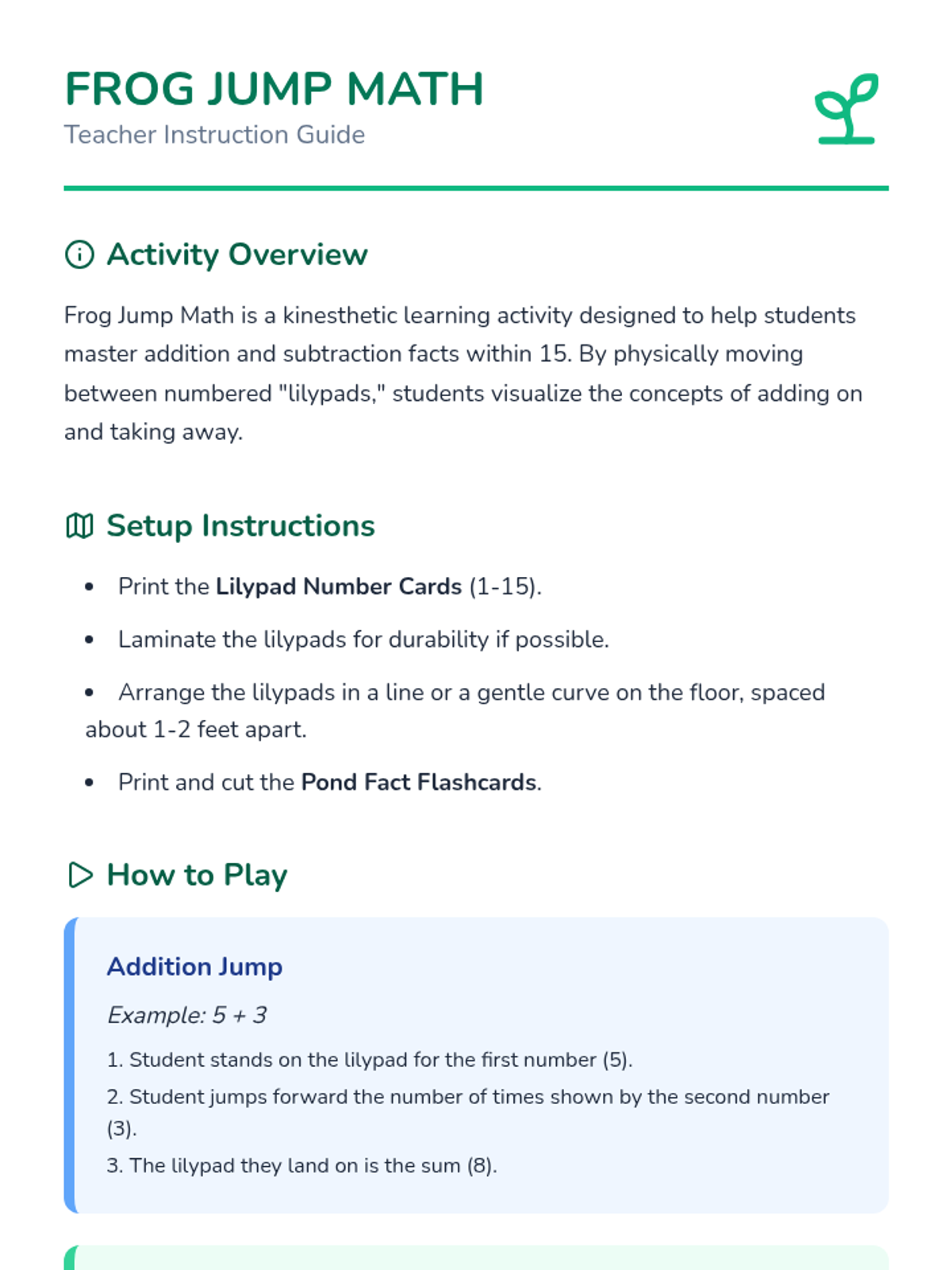
A set of hands-on materials for practicing addition and subtraction within 15, featuring large lilypad floor markers and matching math fact flashcards.
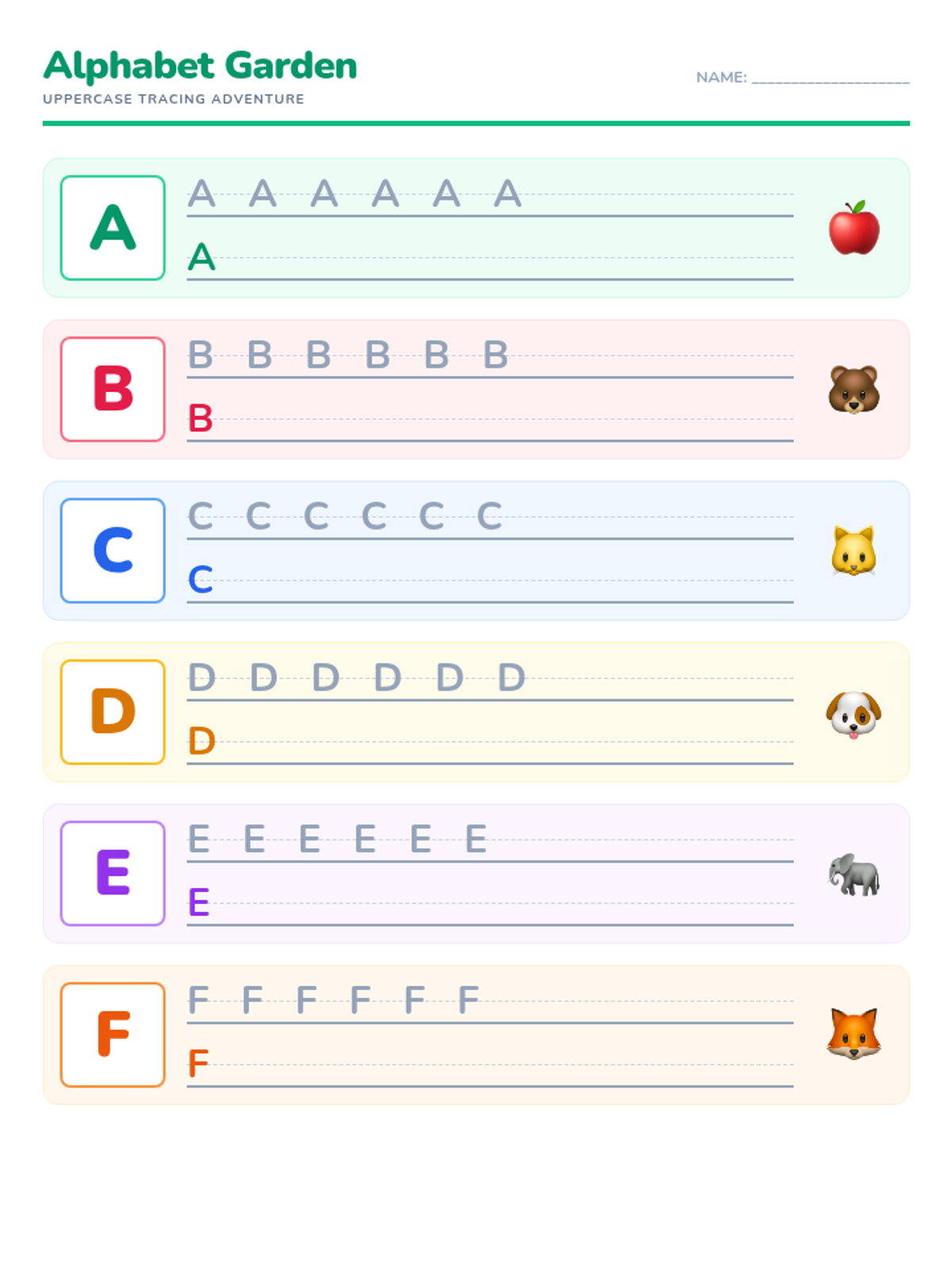
A foundational journey through the uppercase alphabet, focusing on stroke order, pen control, and letter recognition for early learners.
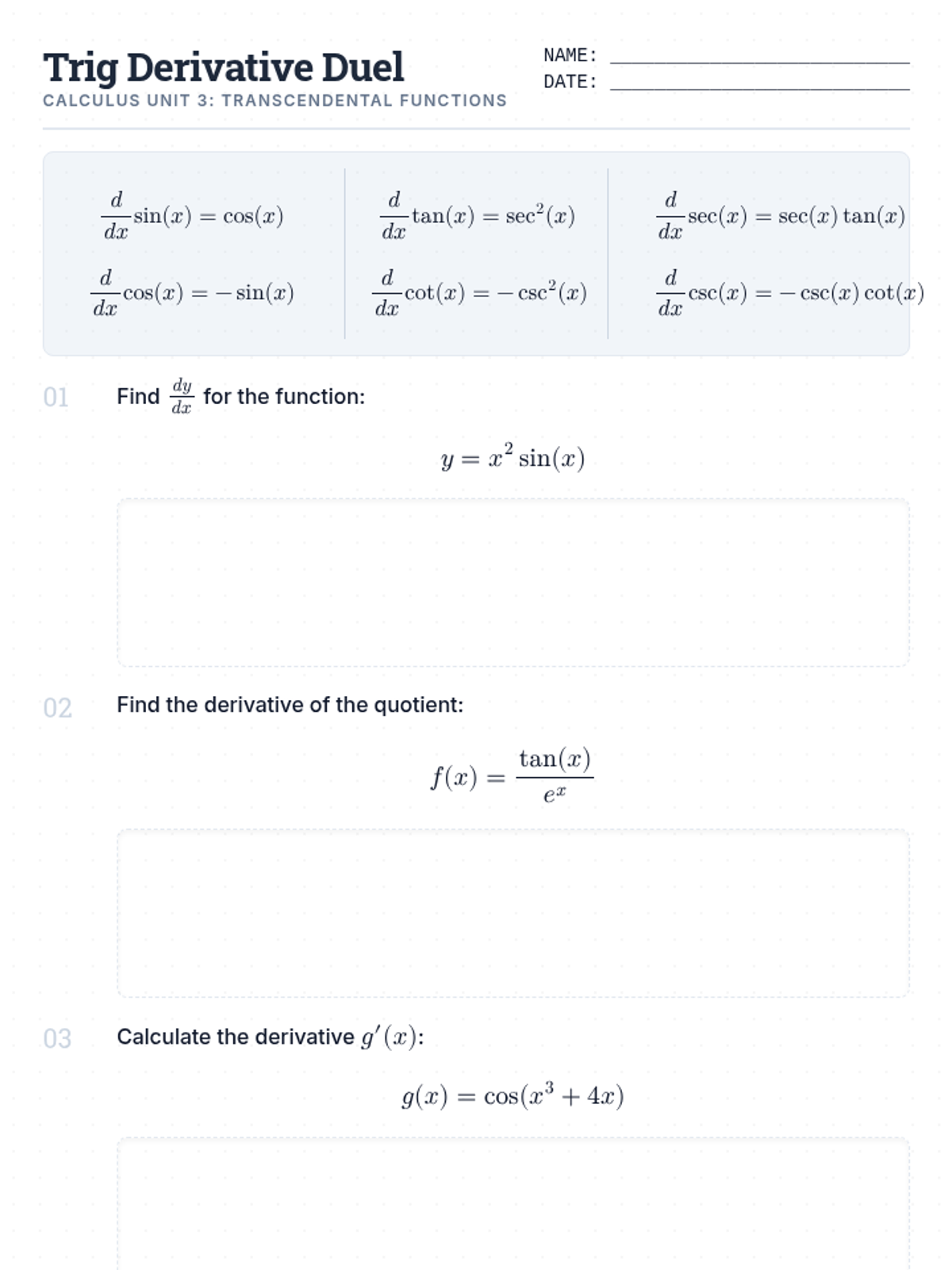
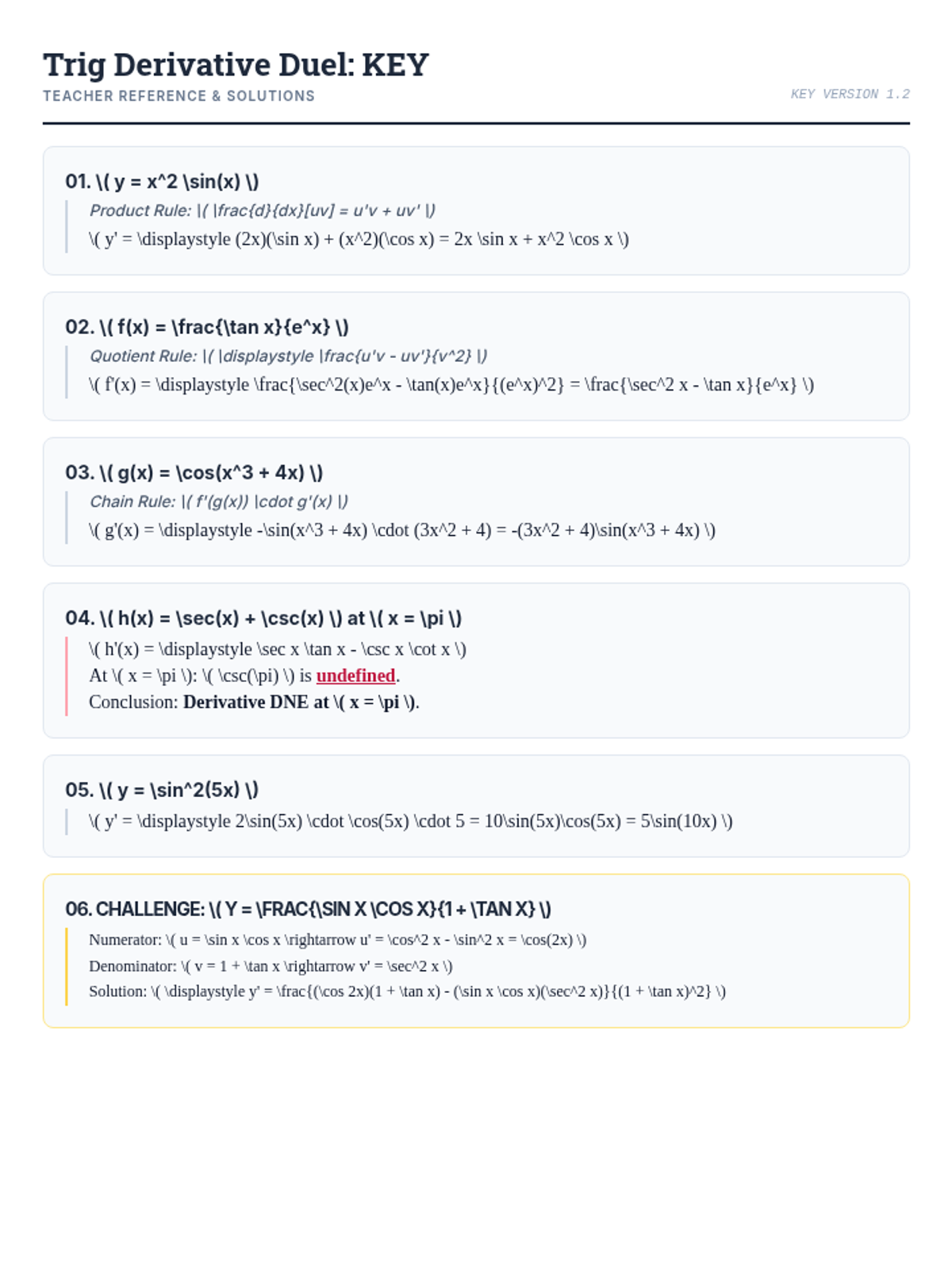
Master the derivatives of the six trigonometric functions through visual explanation and structured practice, including chain rule and product rule applications.
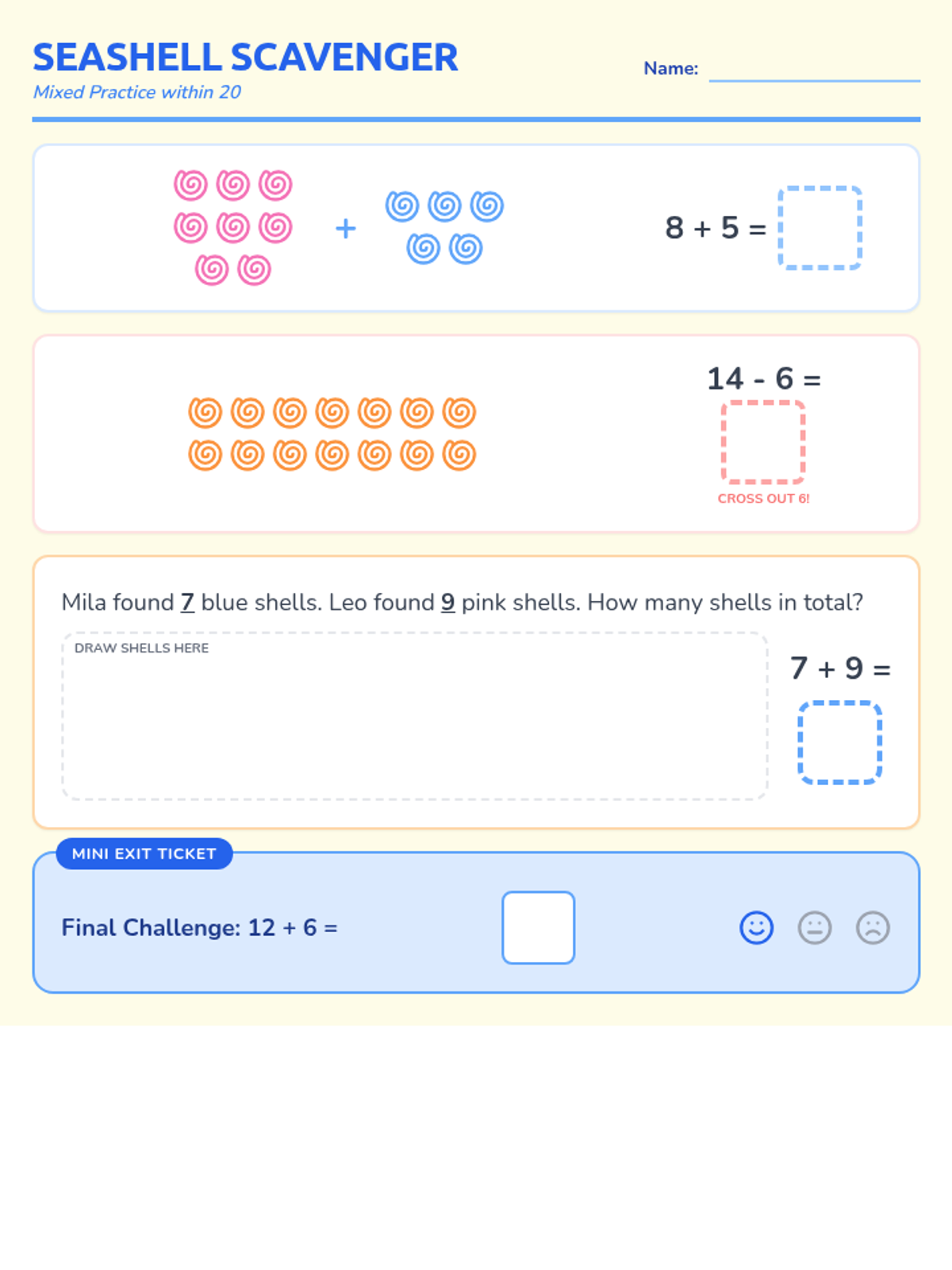
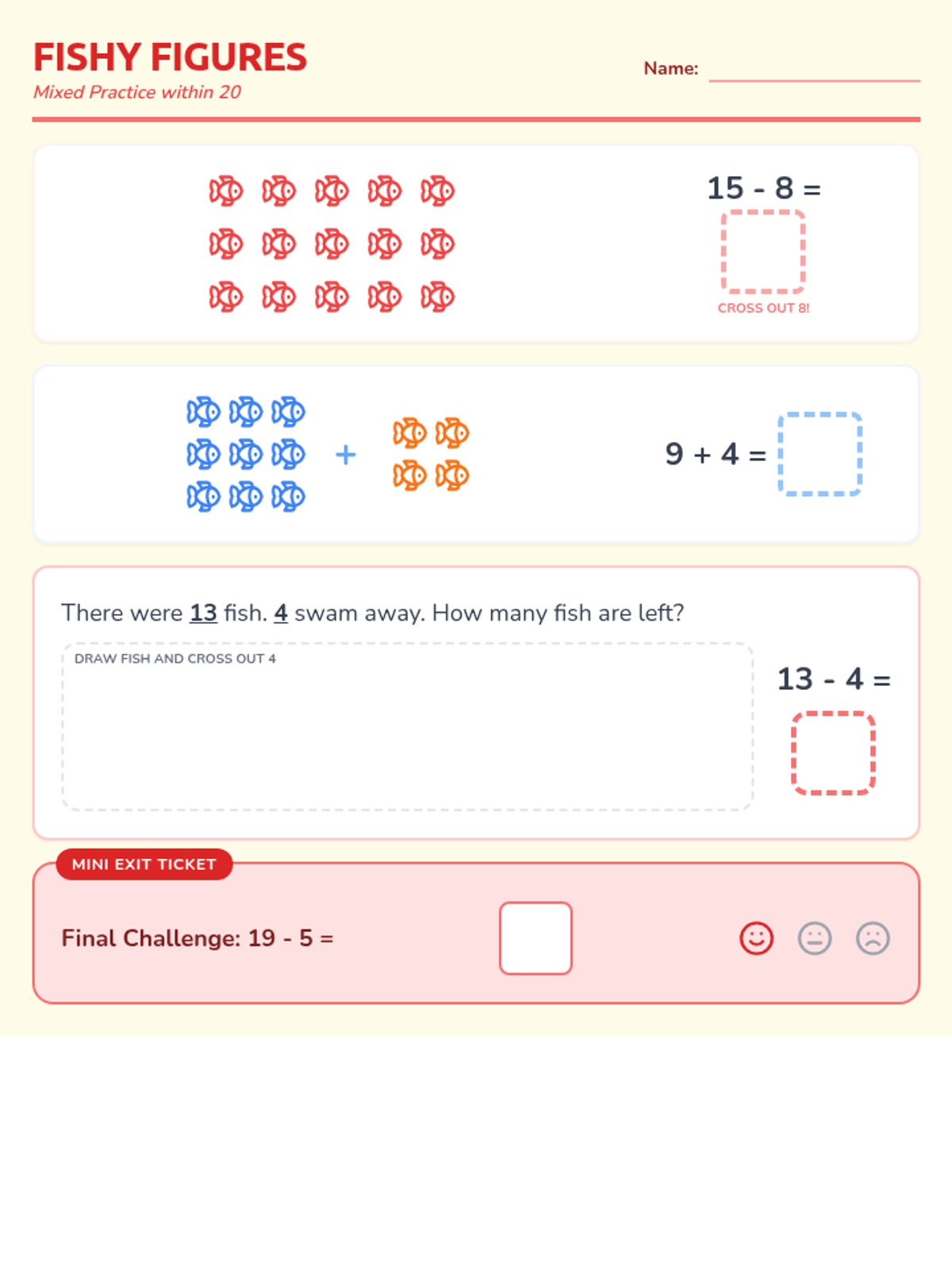
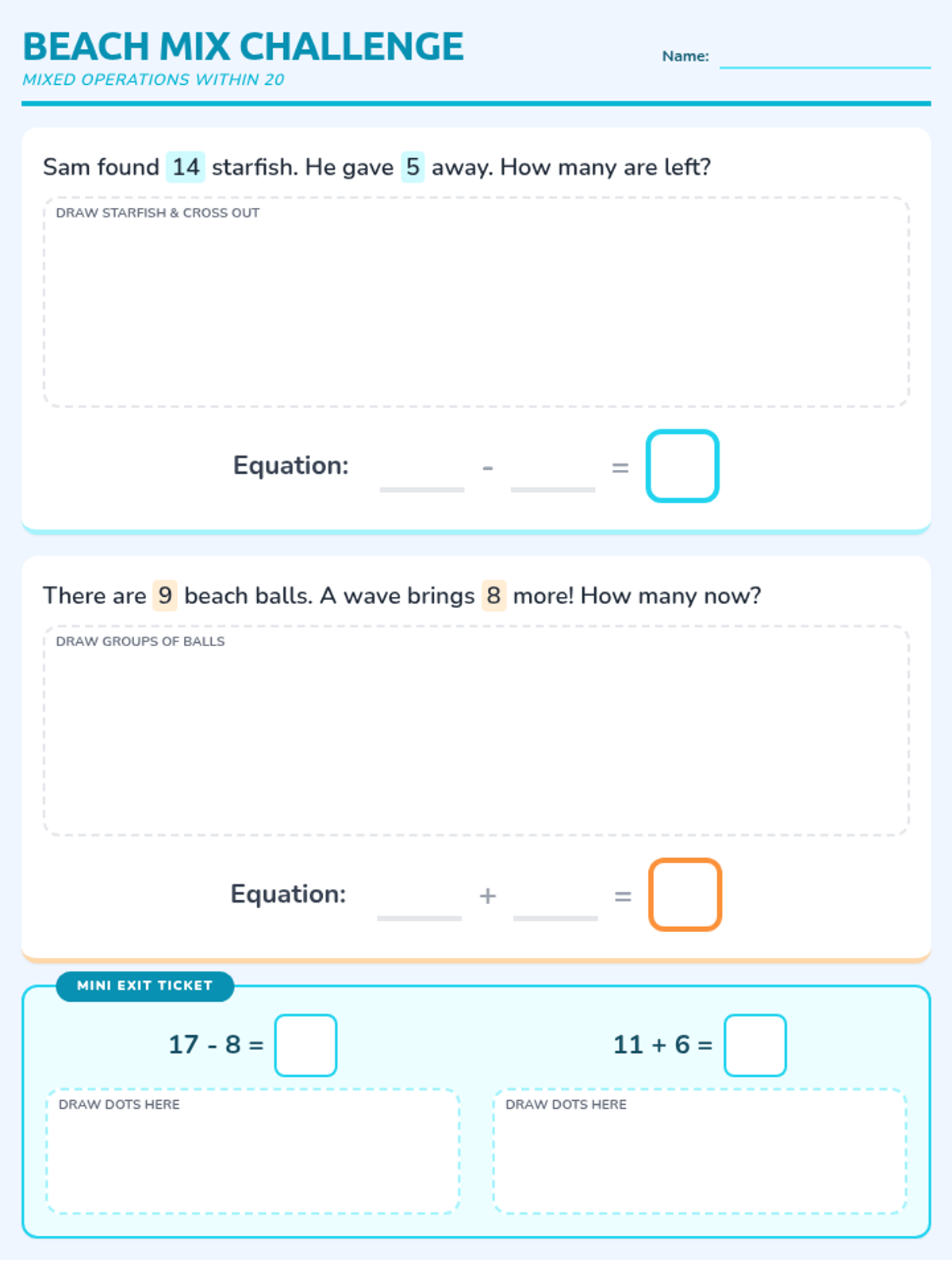
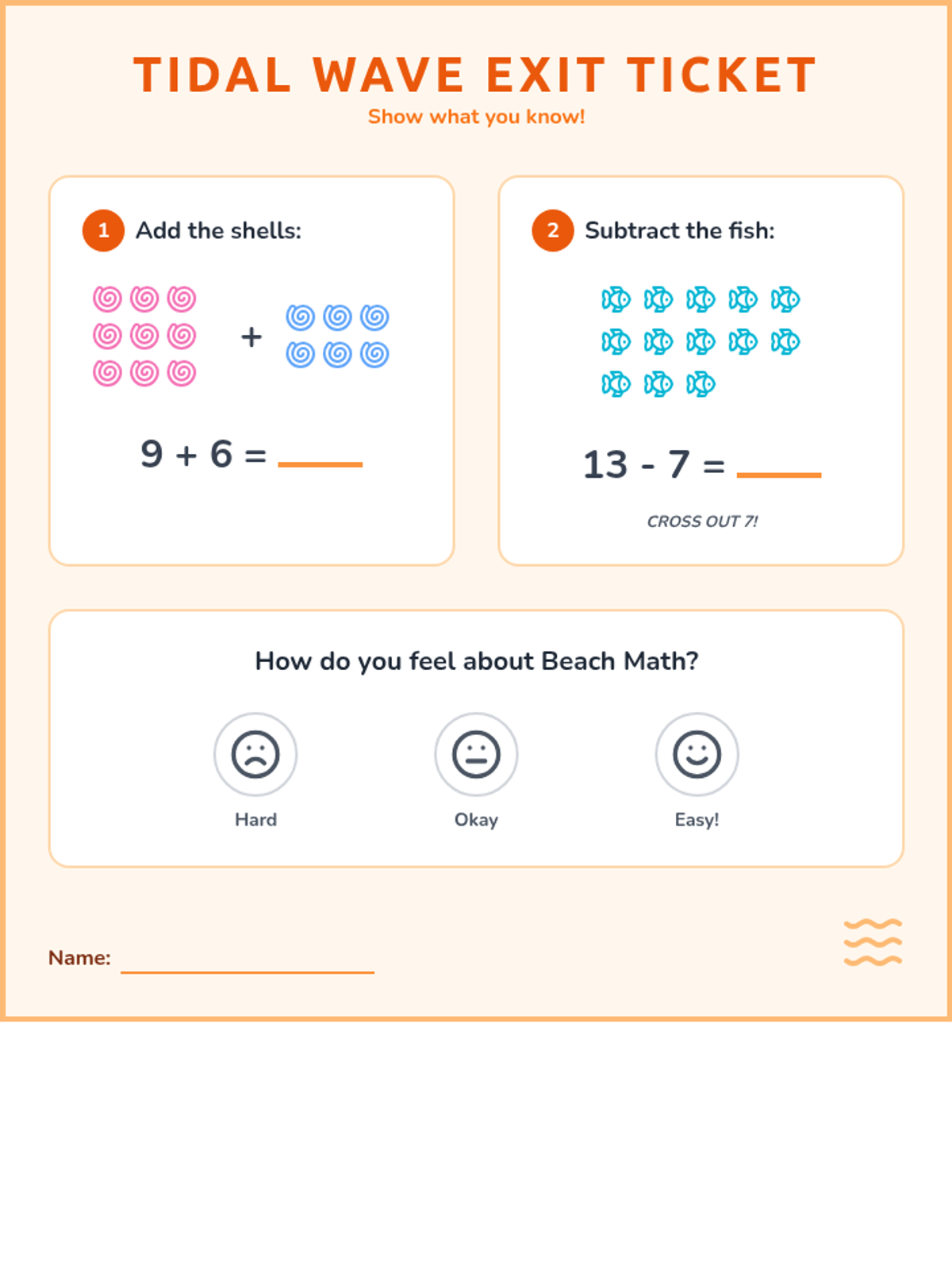
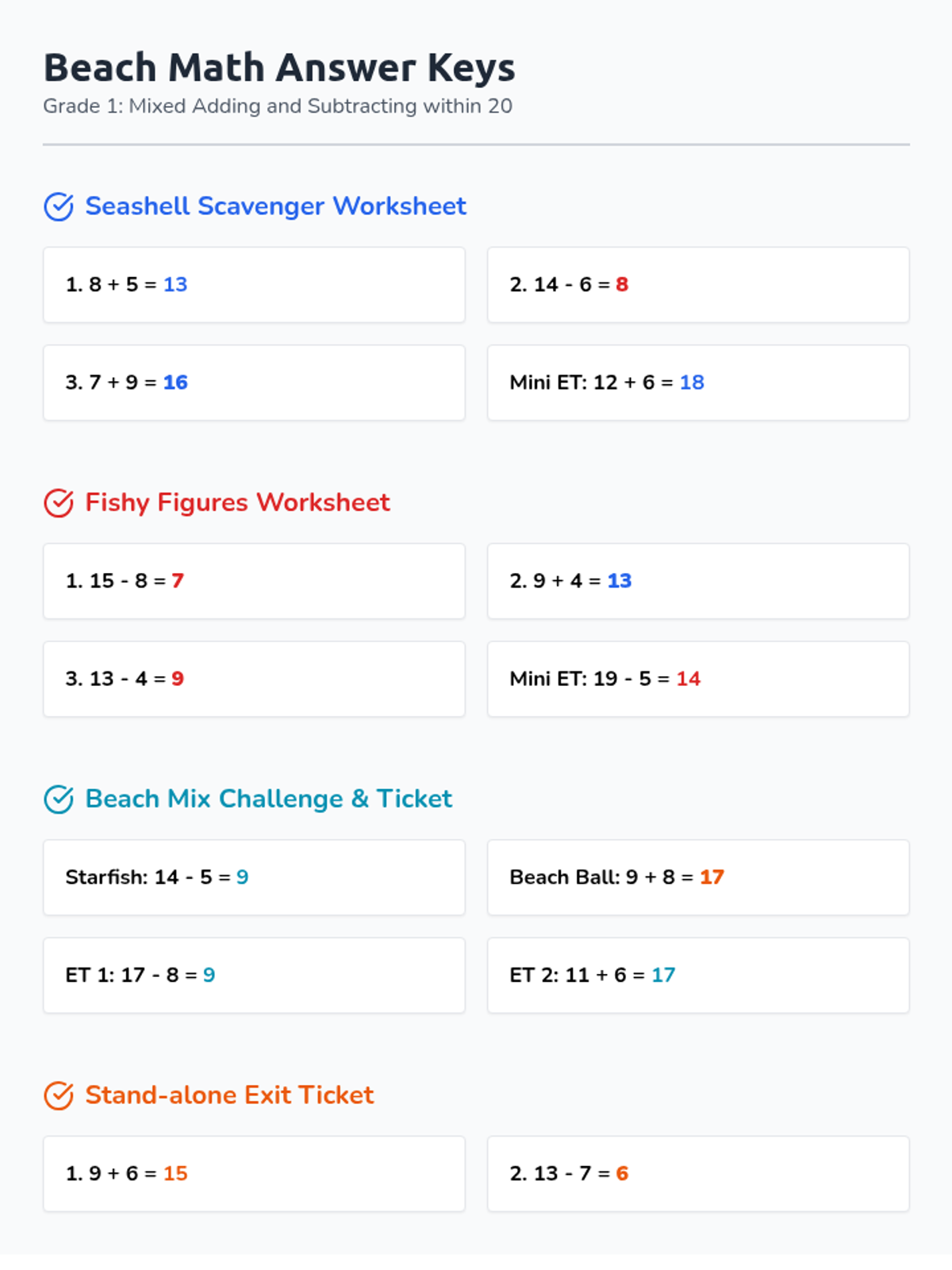
A first-grade math lesson focused on adding and subtracting within 20 using beach-themed drawings and objects. Students will practice counting shells, crabs, and starfish to solve equations.
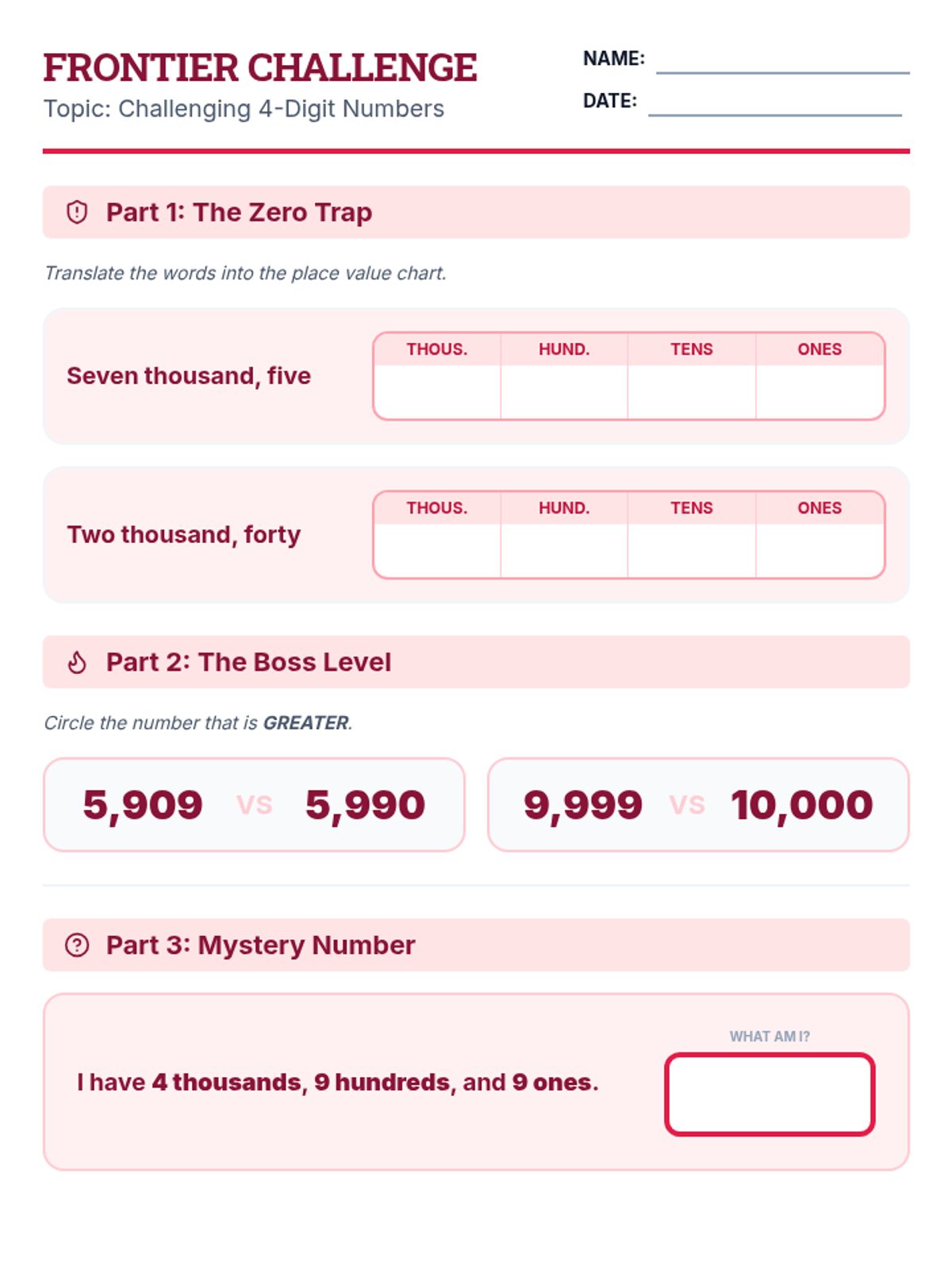
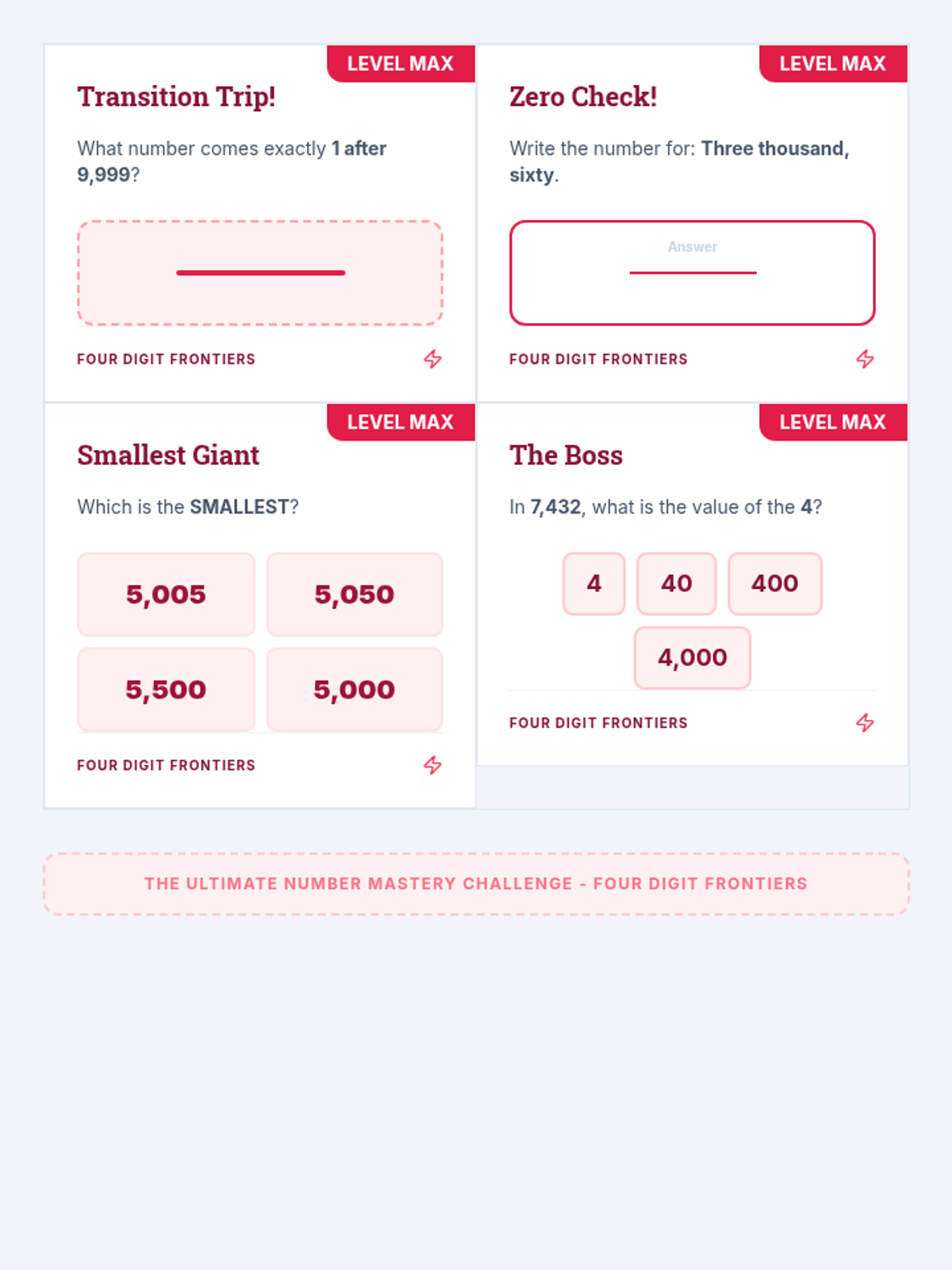
Explores numbers beyond 1,000, focusing on the thousands place value and comparing large numbers that look similar to test place value mastery.
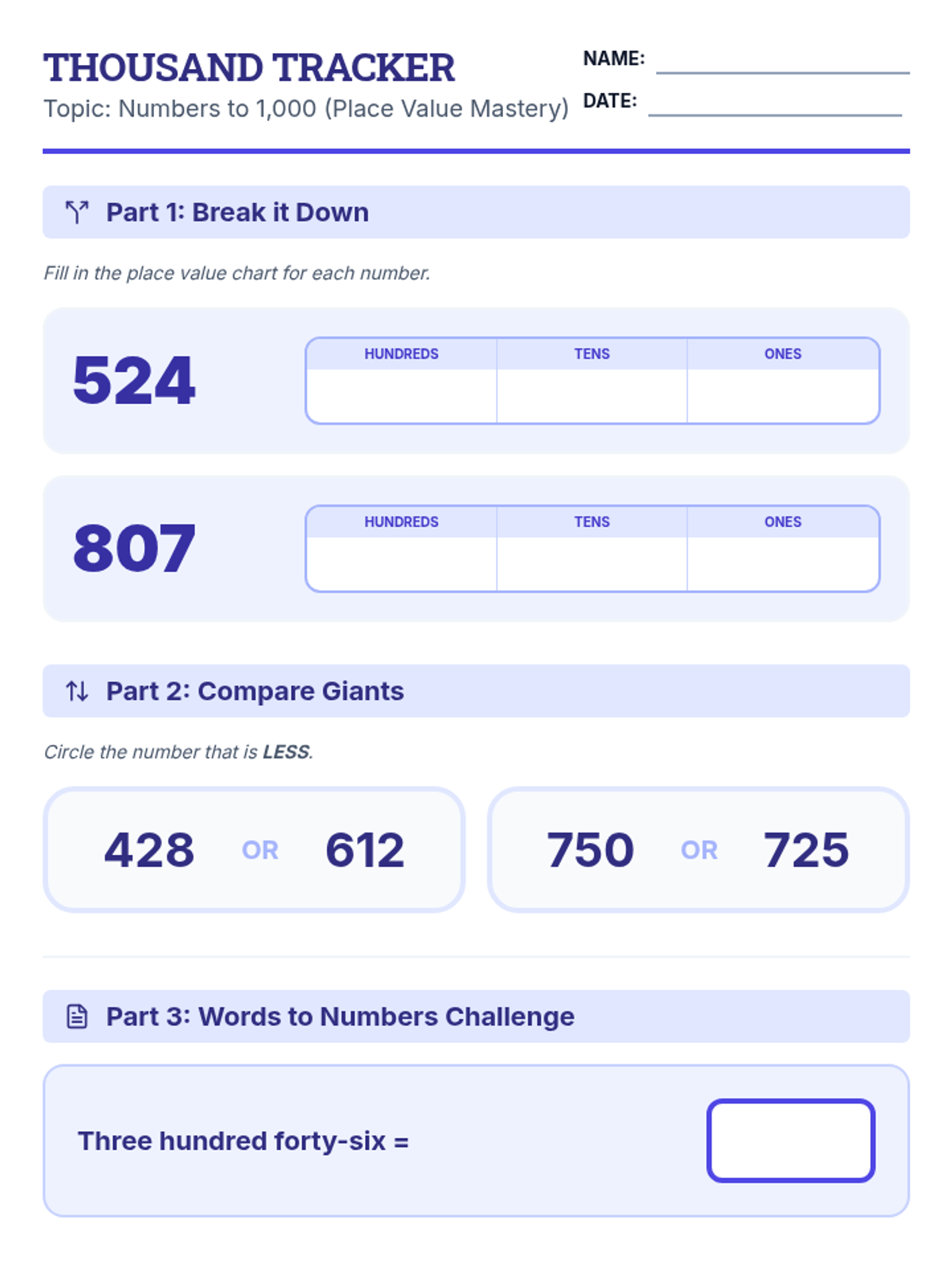
Expands number sense to 1,000, focusing on hundreds, tens, and ones with visual place value models and comparison strategies.
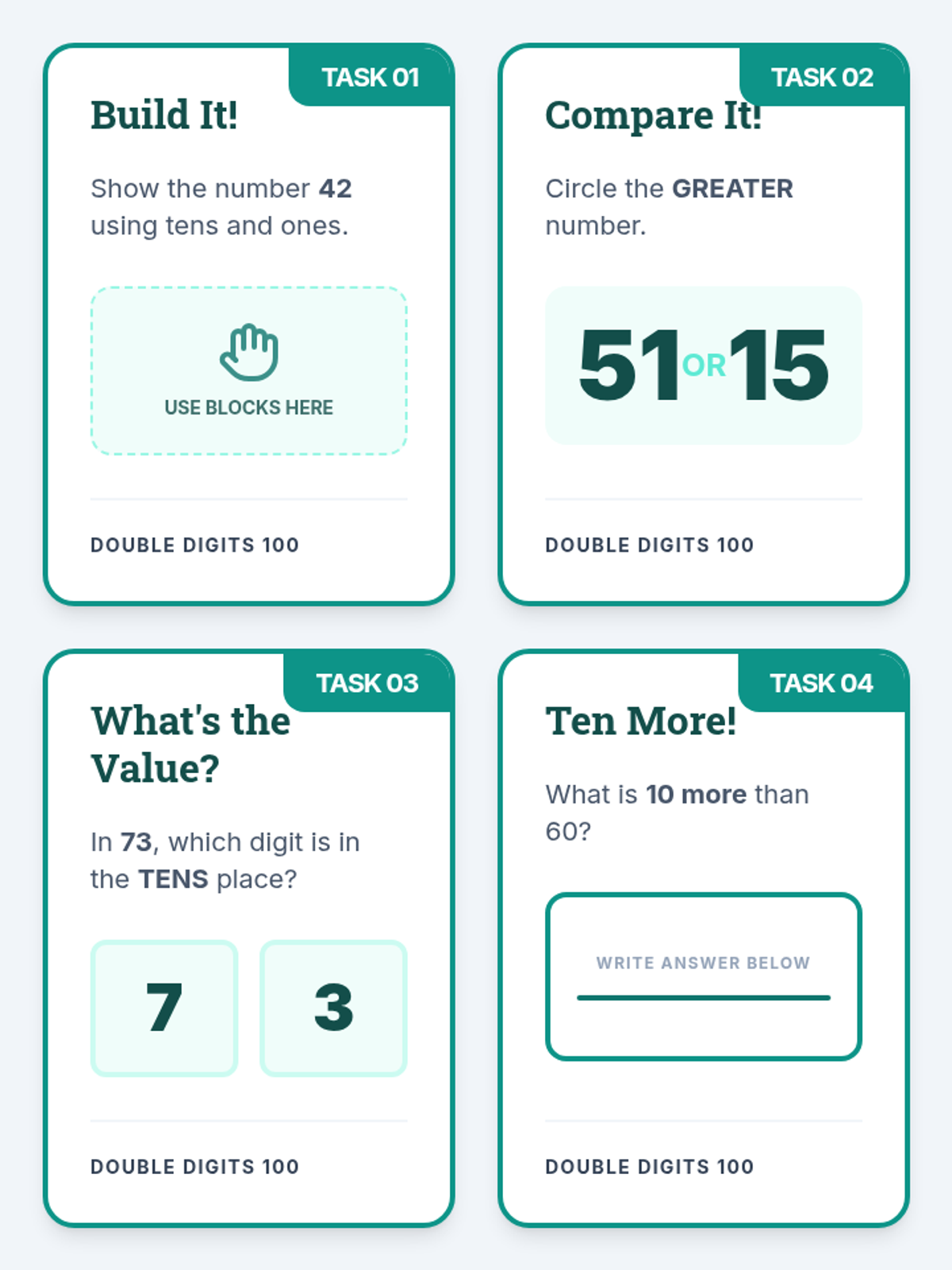
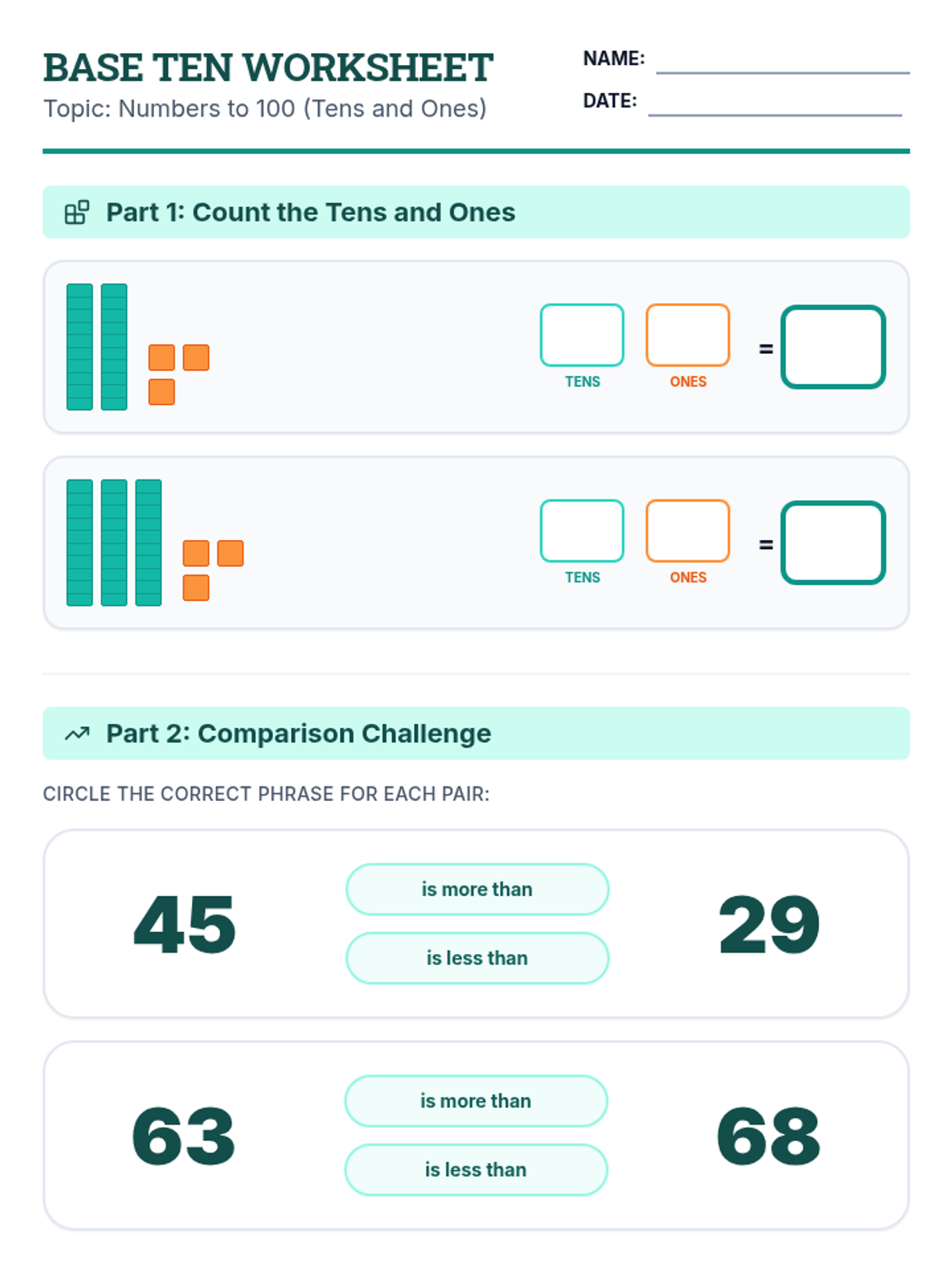
Introduces place value for numbers up to 100, using base-ten blocks (tens and ones) to help students visualize and compare larger values.
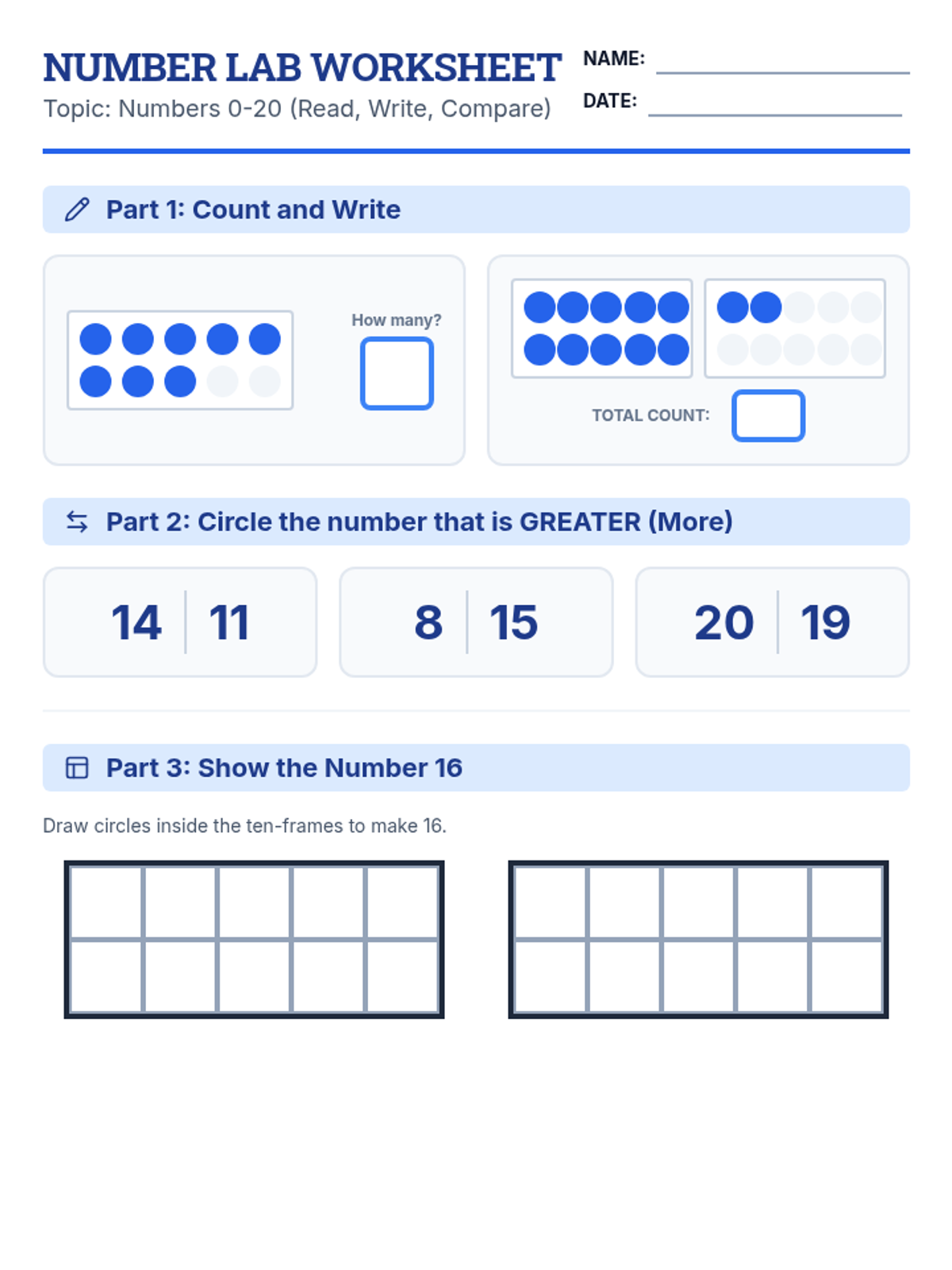
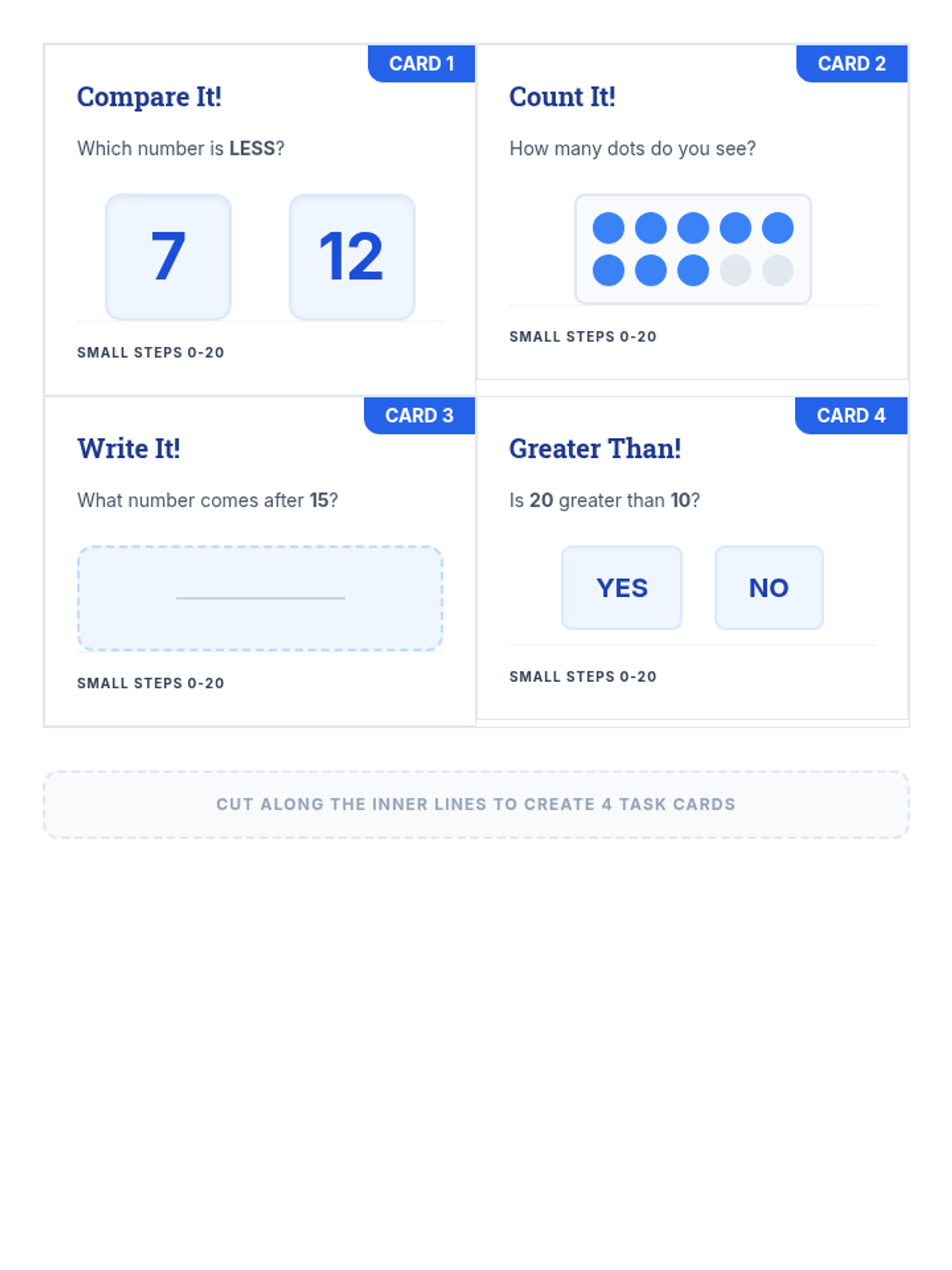
Focuses on reading, writing, and comparing numbers from 0 to 20 using ten-frames and counters to provide concrete visual support.
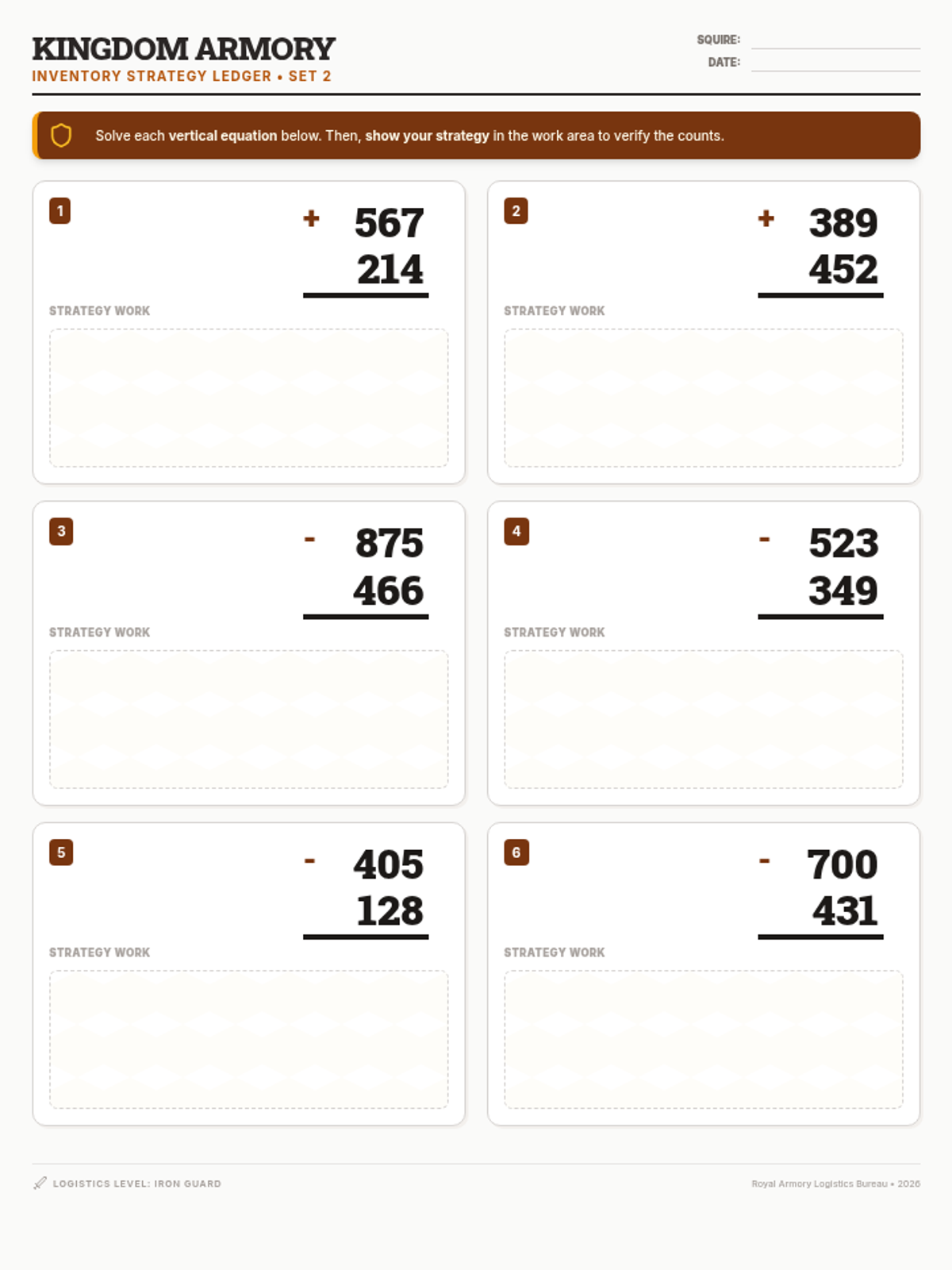
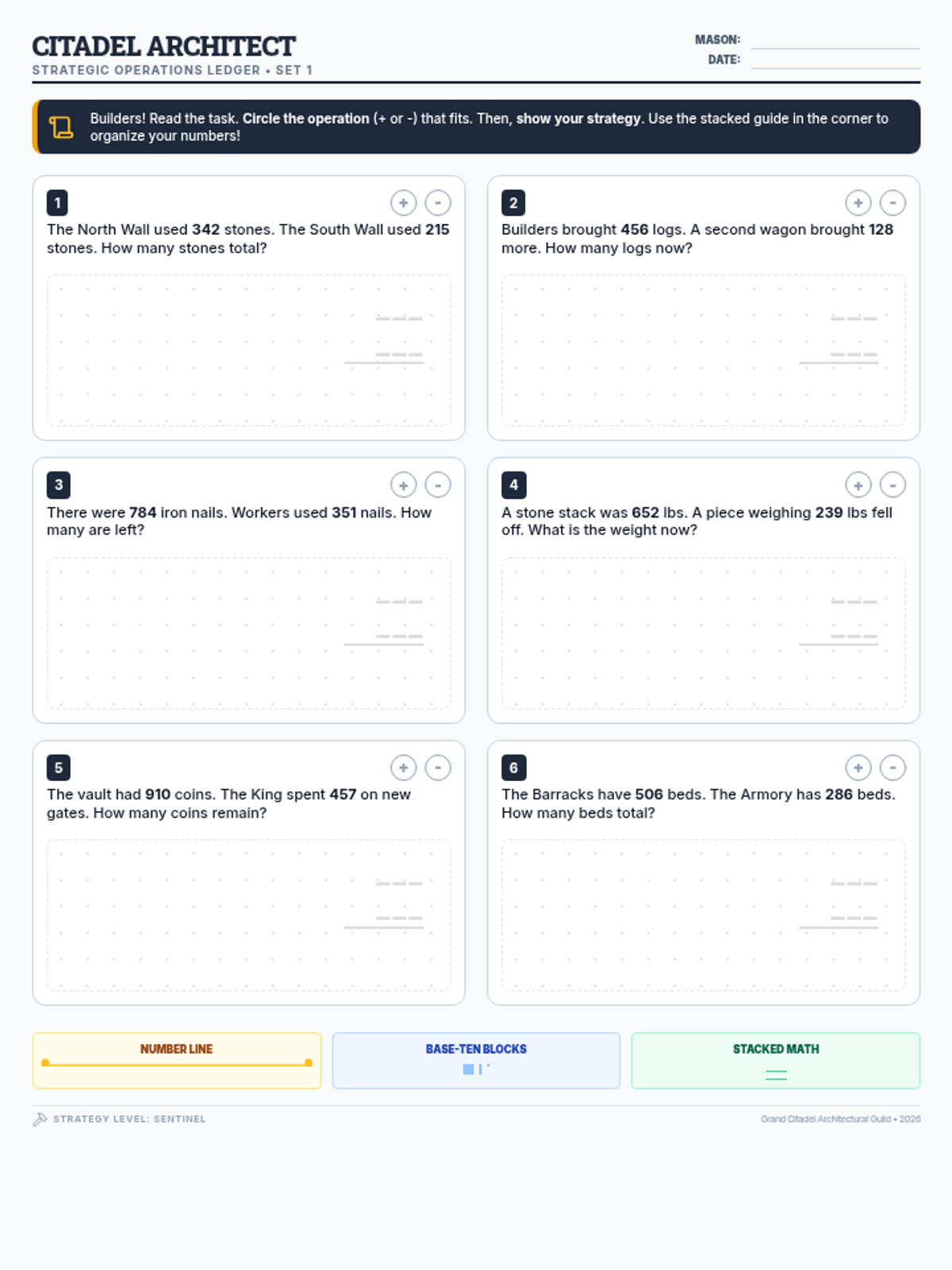
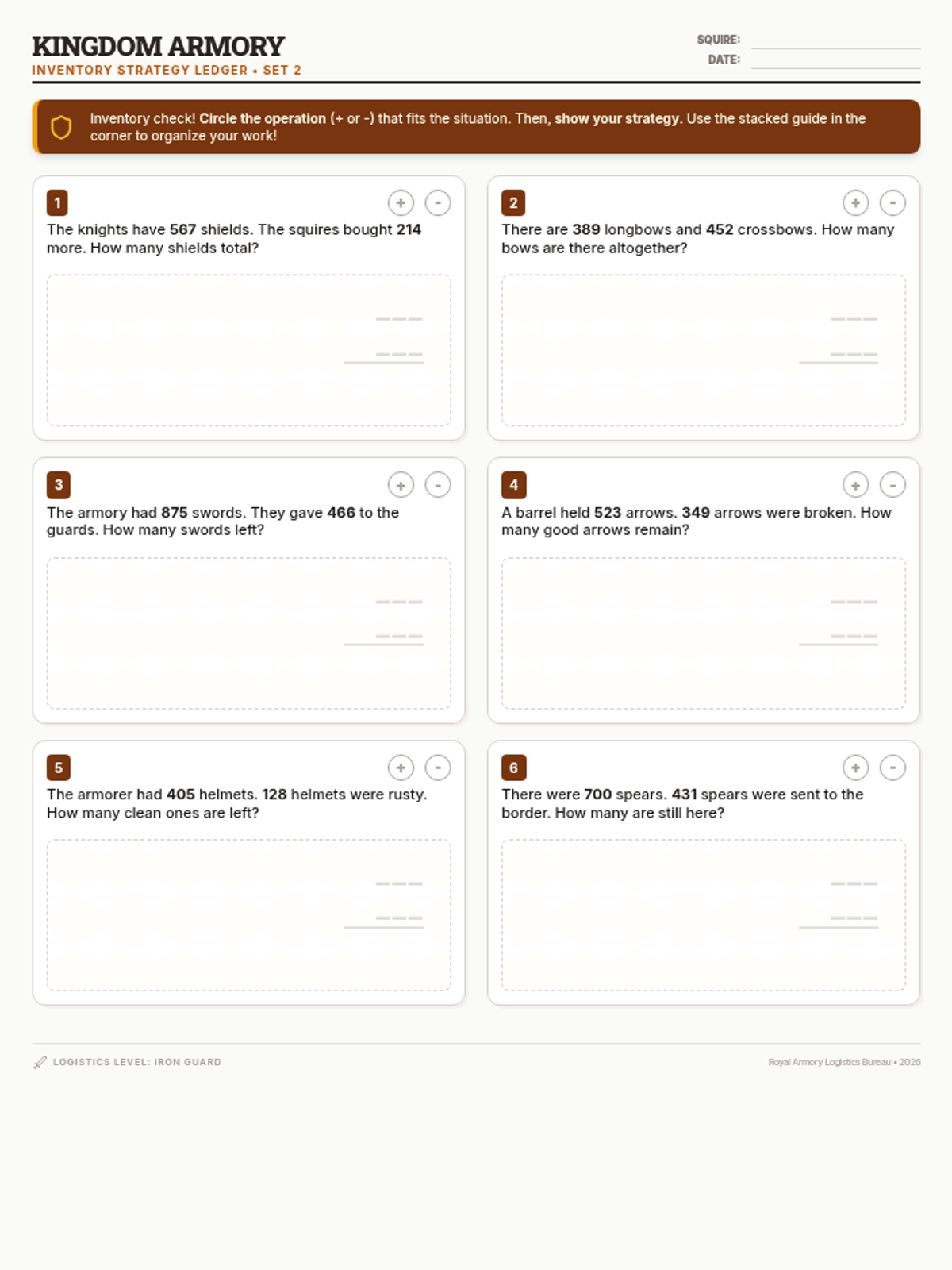
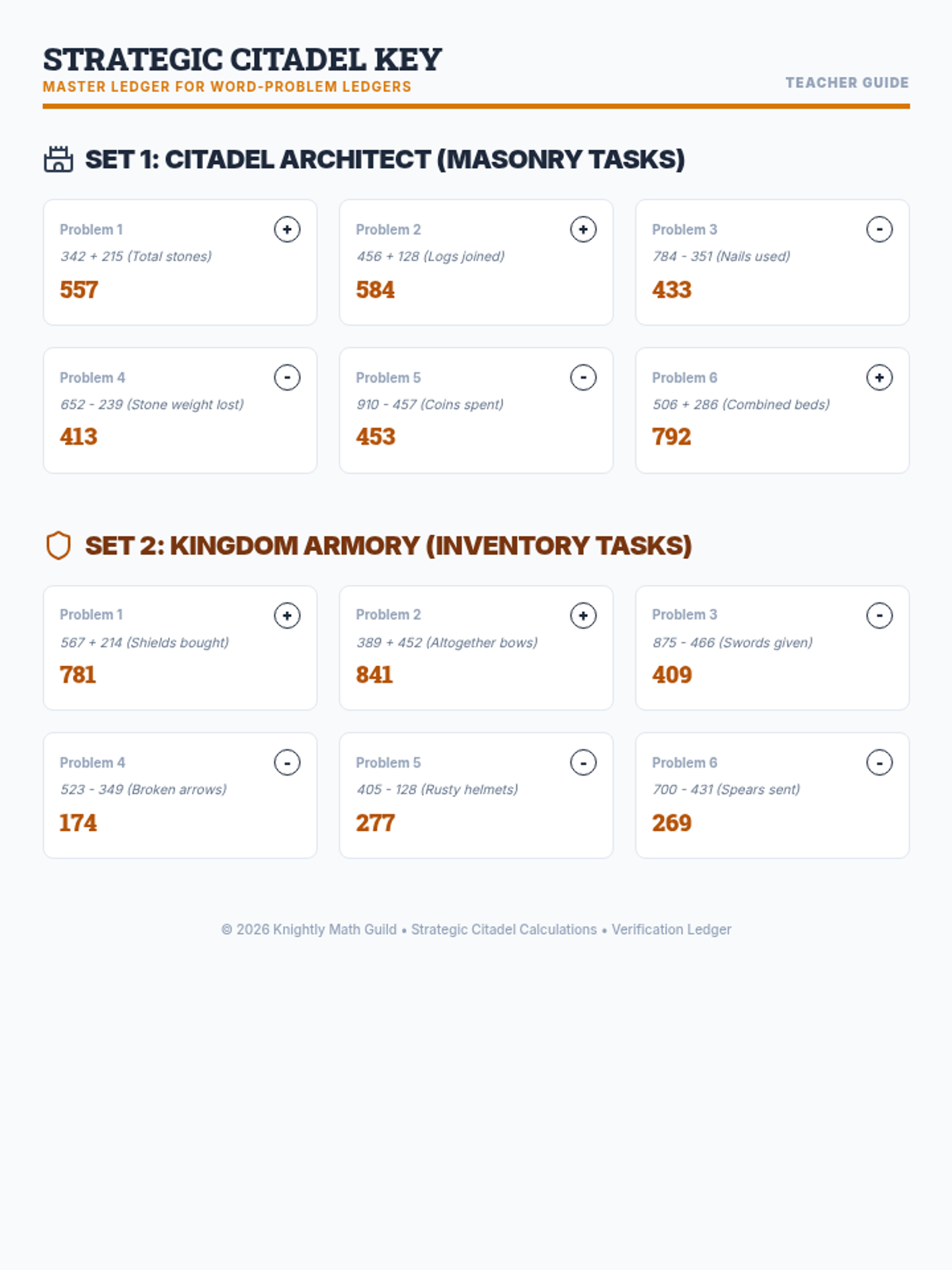
Students will master 3-digit addition and subtraction by identifying the correct operation and selecting appropriate mathematical strategies such as number lines, place value models, or partial sums. This lesson emphasizes strategic thinking and procedural fluency within a medieval architectural and inventory context.