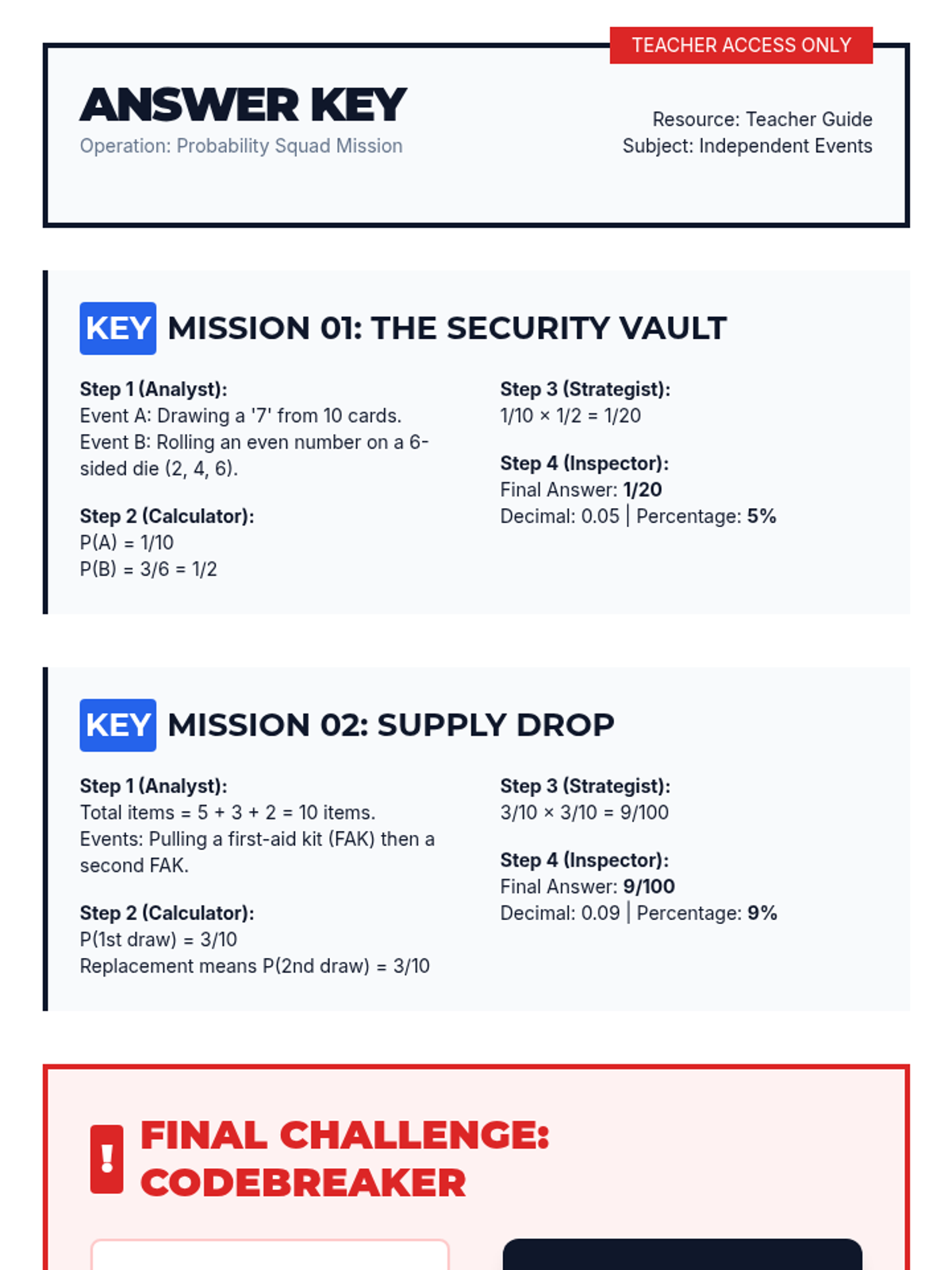
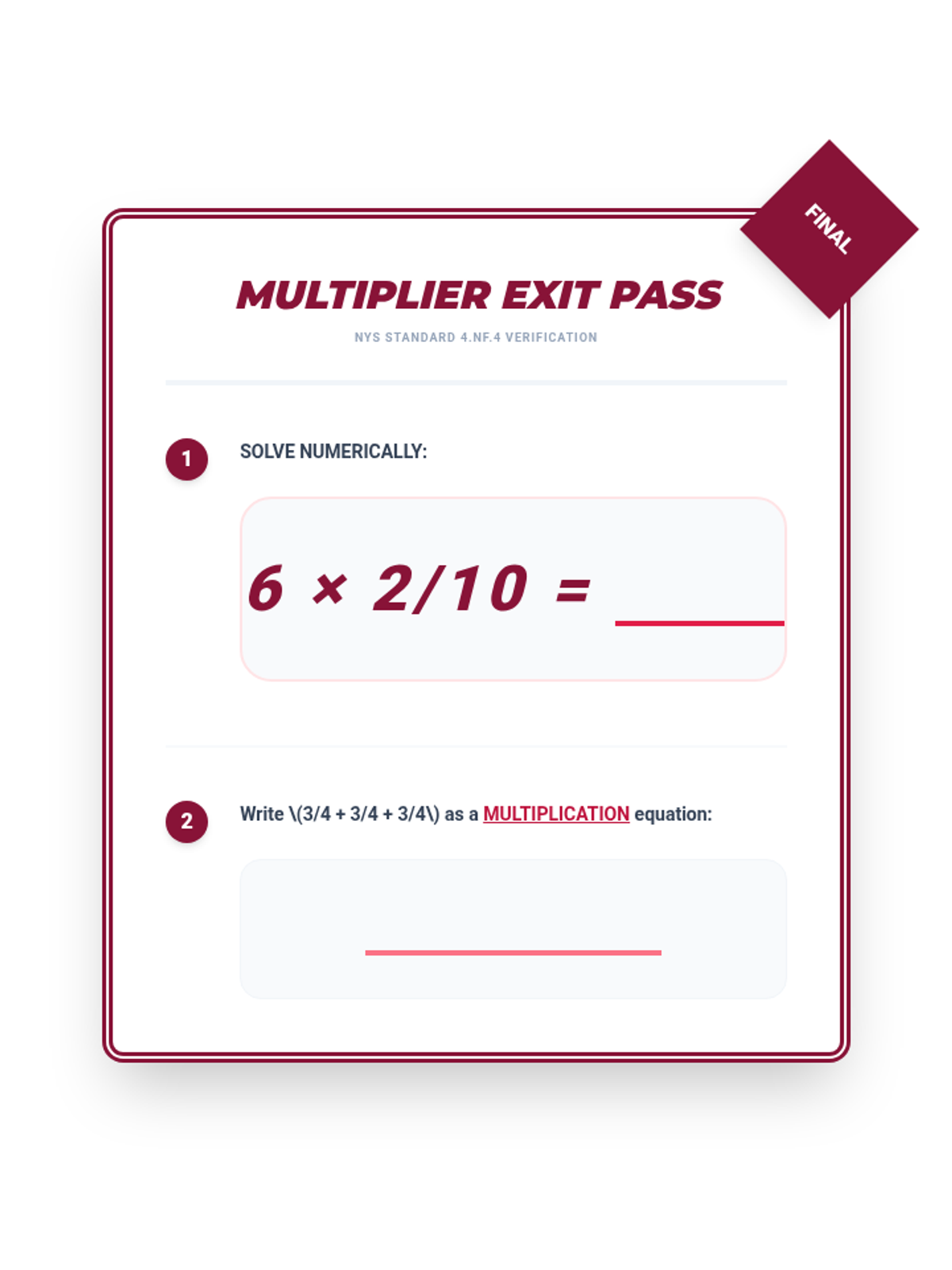
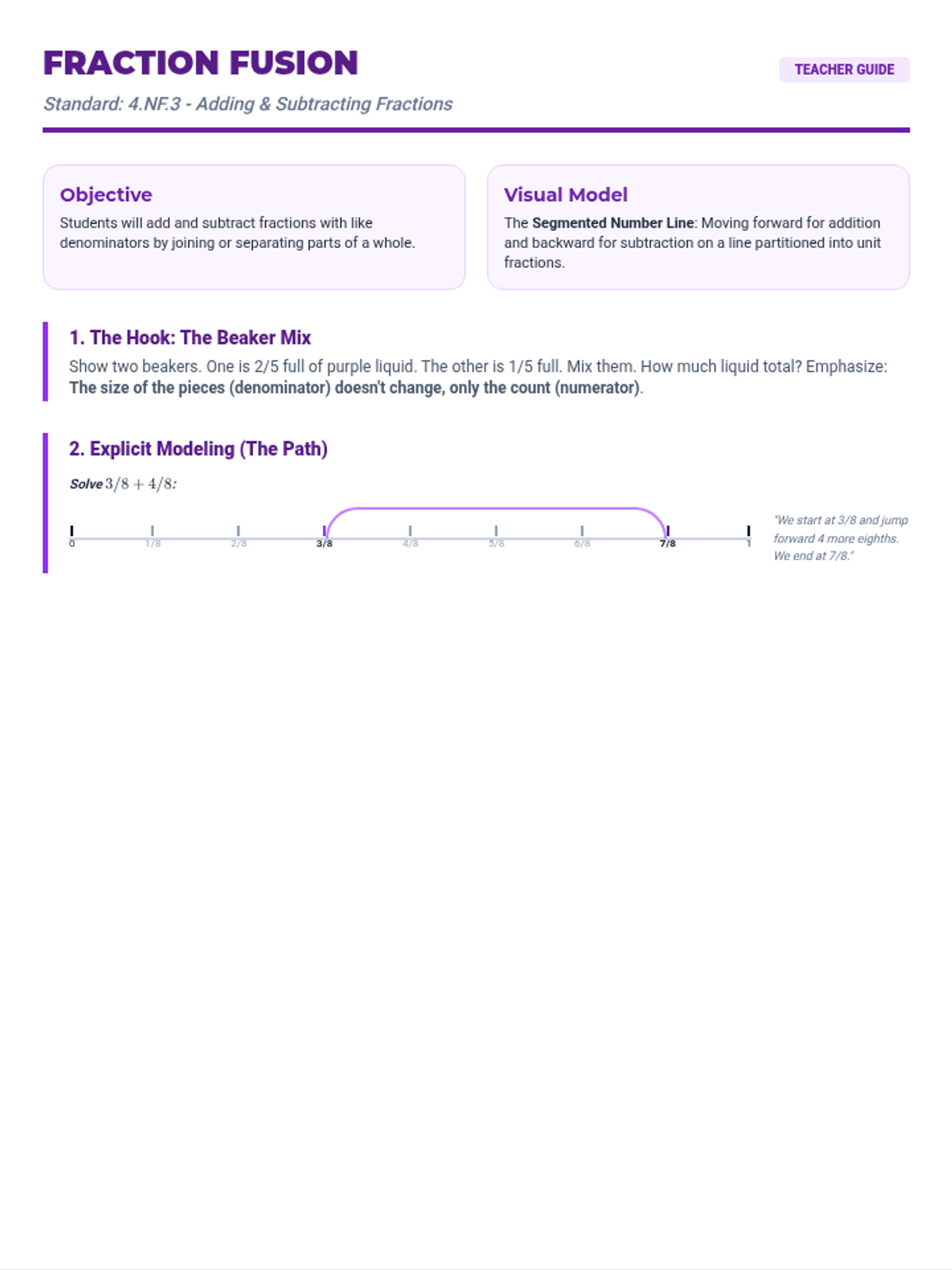
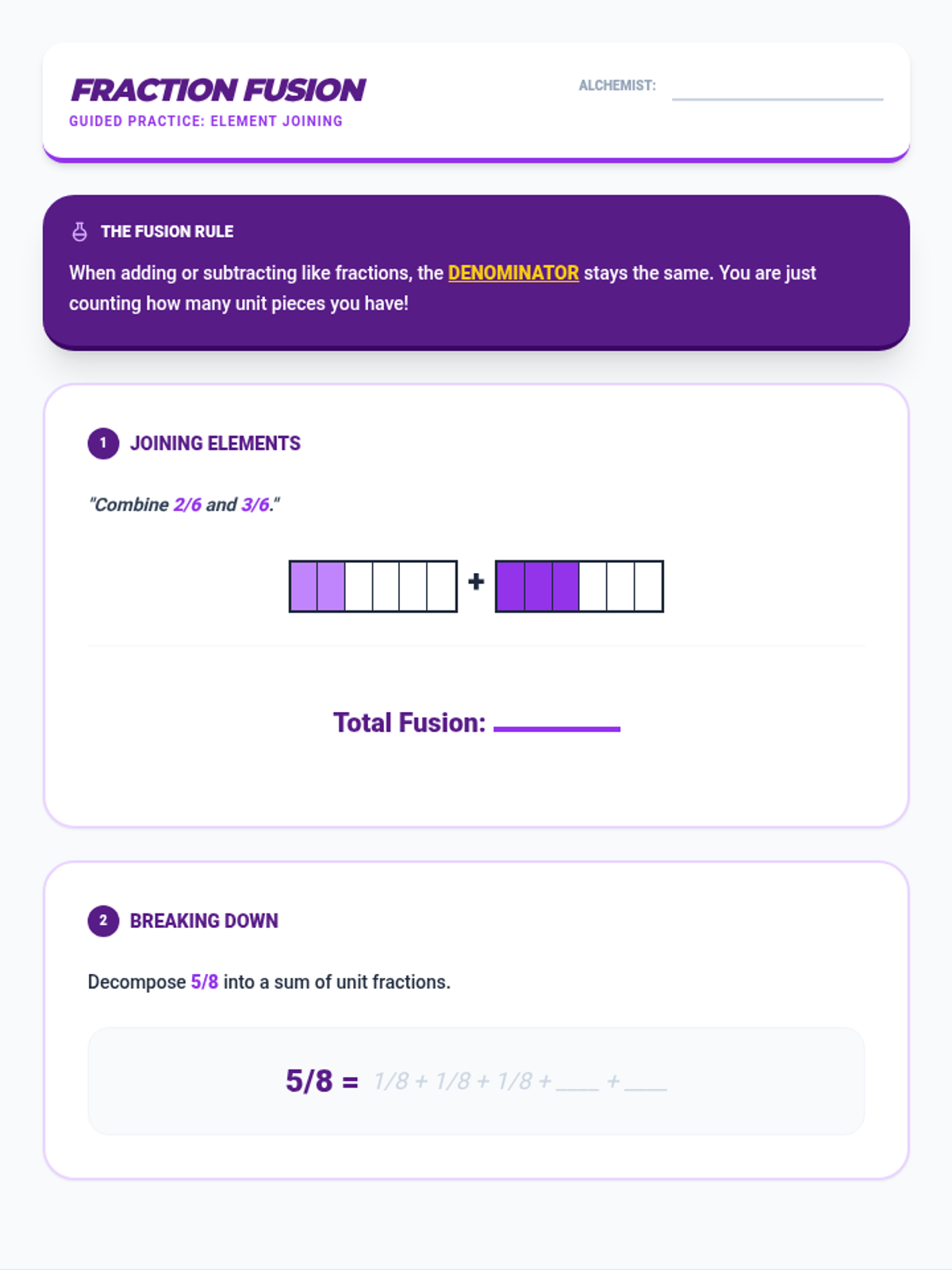
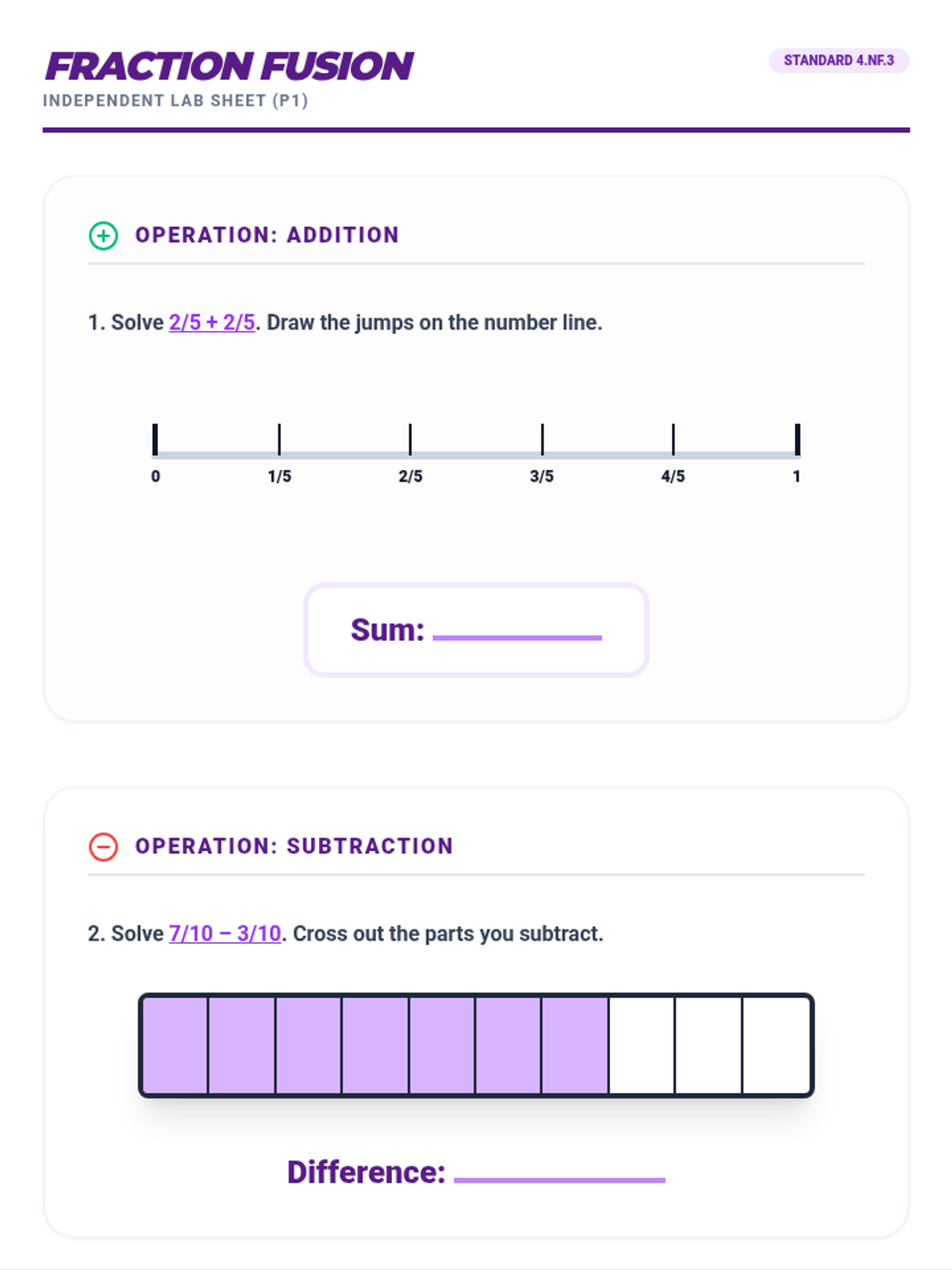
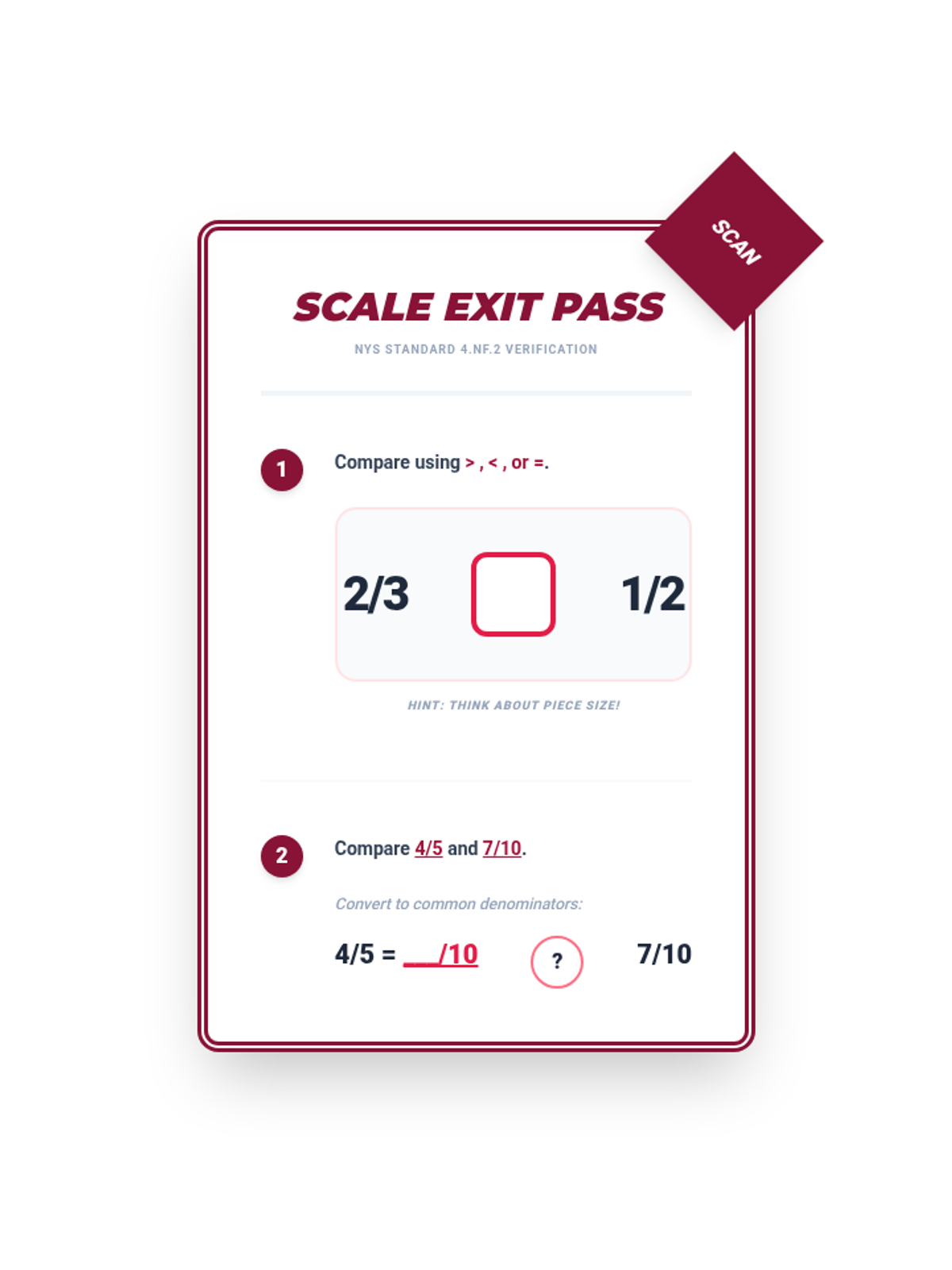
A comprehensive suite of informal math assessments focusing on number sense, fractions, prime numbers, integers, and percentages, themed around a high-stakes code-breaking mission.
A comprehensive geometry lesson covering the calculation of area and perimeter alongside the execution of geometric transformations (translations, reflections, and rotations). Students will apply these concepts through mixed practice, targeted exercises, and a final assessment.
A comprehensive lesson on solving exponential equations with the same base, covering the Property of Equality and step-by-step problem-solving techniques.
A comprehensive introduction to the fundamental concepts of statistics, including data classification, sampling methods, and experimental design.
A comprehensive assessment covering exponential growth and decay, solving exponential equations, and arithmetic/geometric sequences based on Chapter 6 Algebra 1 concepts.
A comprehensive review of systems of linear equations including graphing, substitution, elimination, and real-world application problems involving cost and quantity.
A comprehensive assessment covering logarithms, exponential transformations, and equation solving based on Chapter 6 materials. Includes a 30-question multiple-choice quiz and a detailed answer key.
A comprehensive assessment covering nth roots, rational exponents, and radical equations based on Chapter 5 Algebra 2 concepts.
A comprehensive assessment and answer key covering similar polygons, triangle similarity theorems (AA, SSS, SAS), and proportionality theorems.
A comprehensive assessment covering graphing linear equations, writing equations in slope-intercept form, and solving systems of linear equations by graphing, based on the Chapter 4 and 5 review materials.
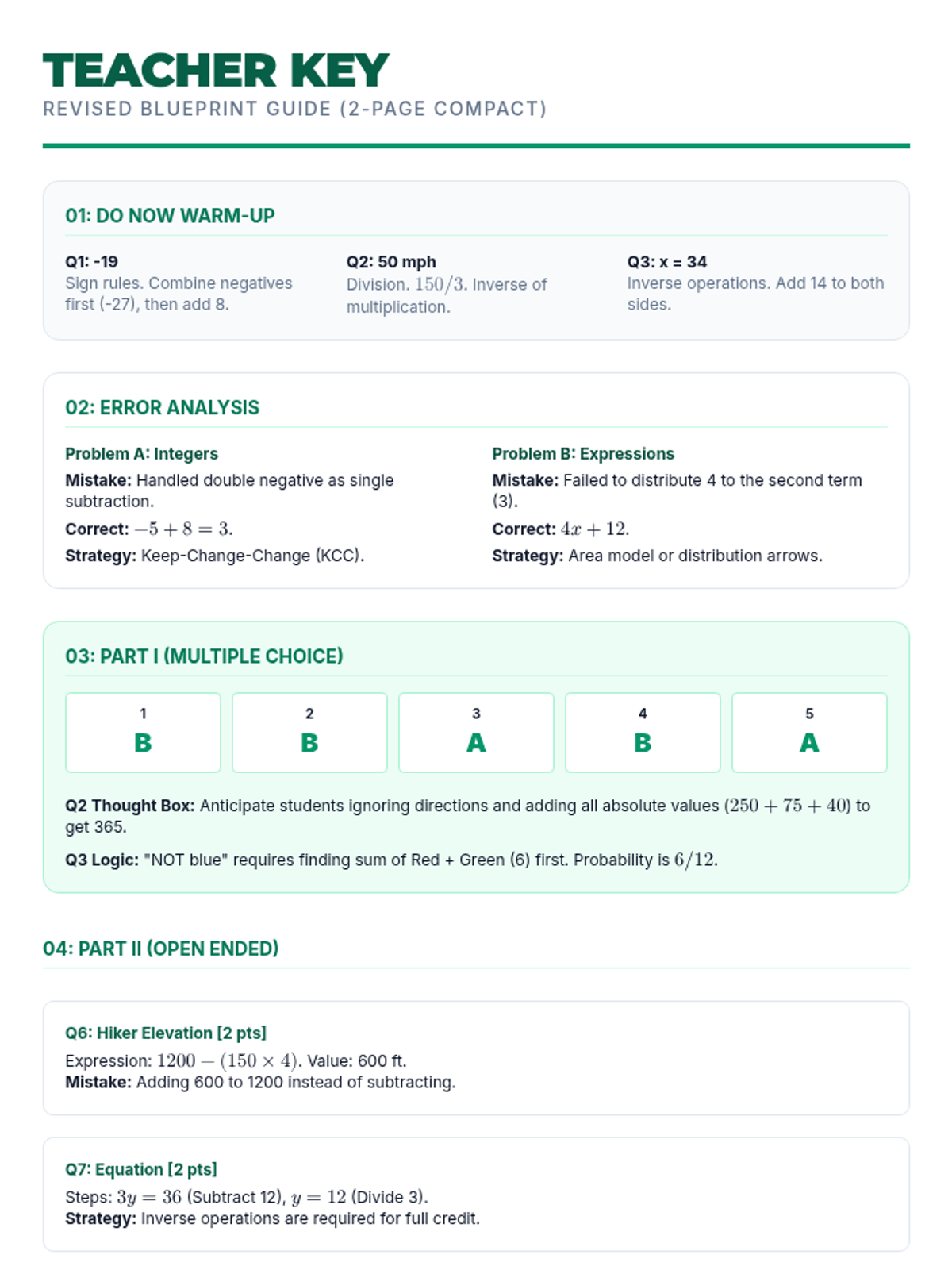
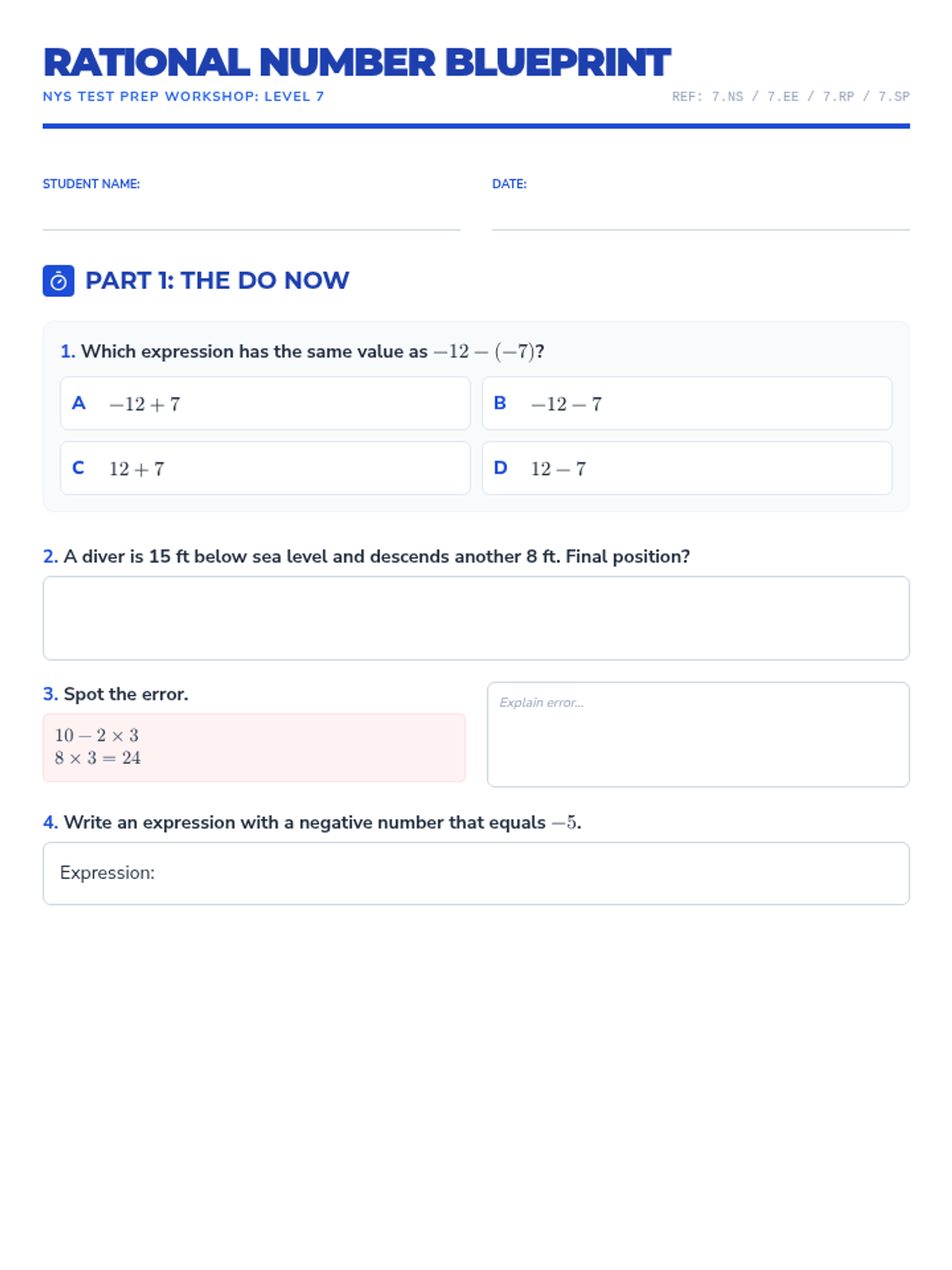
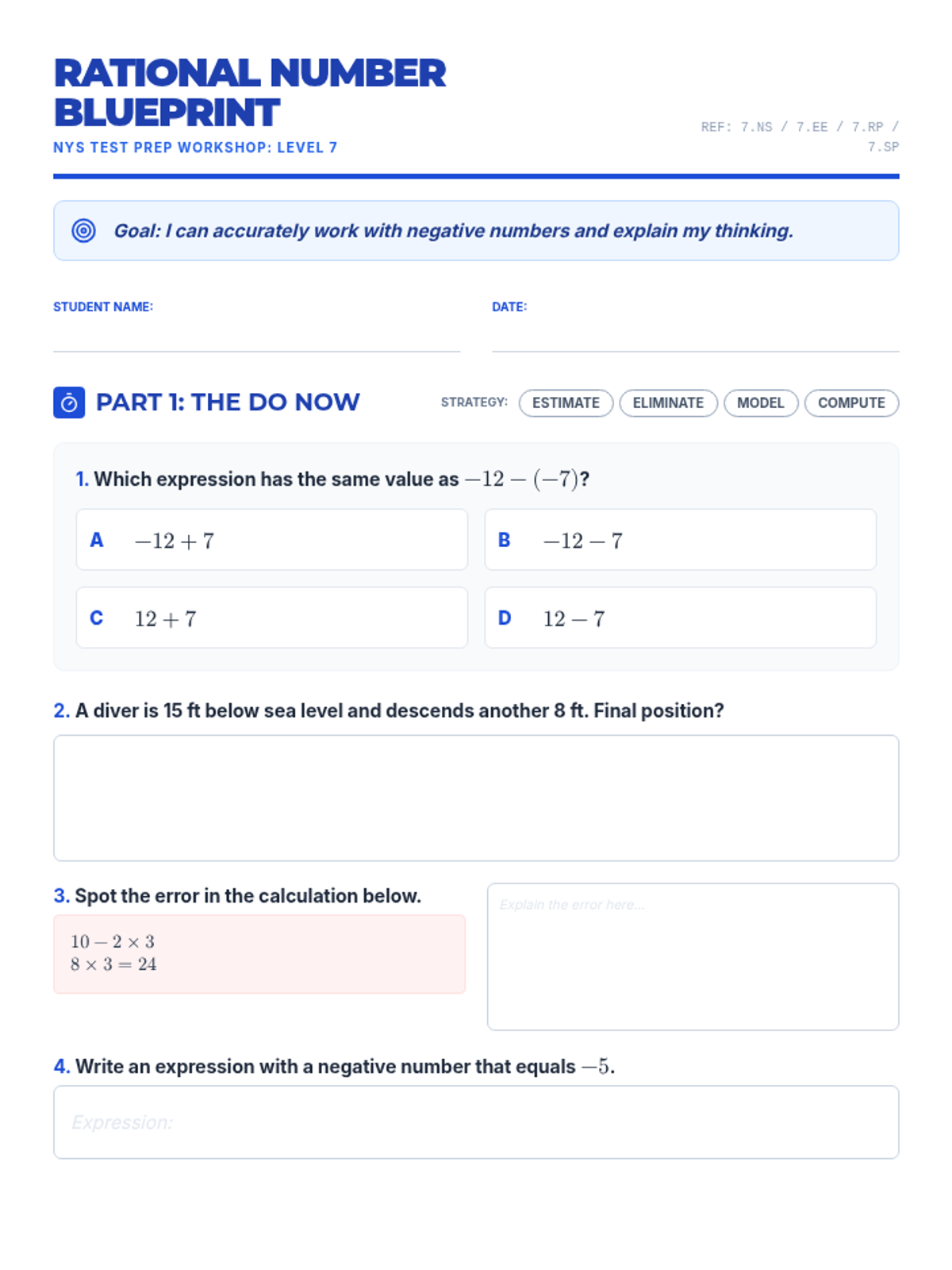
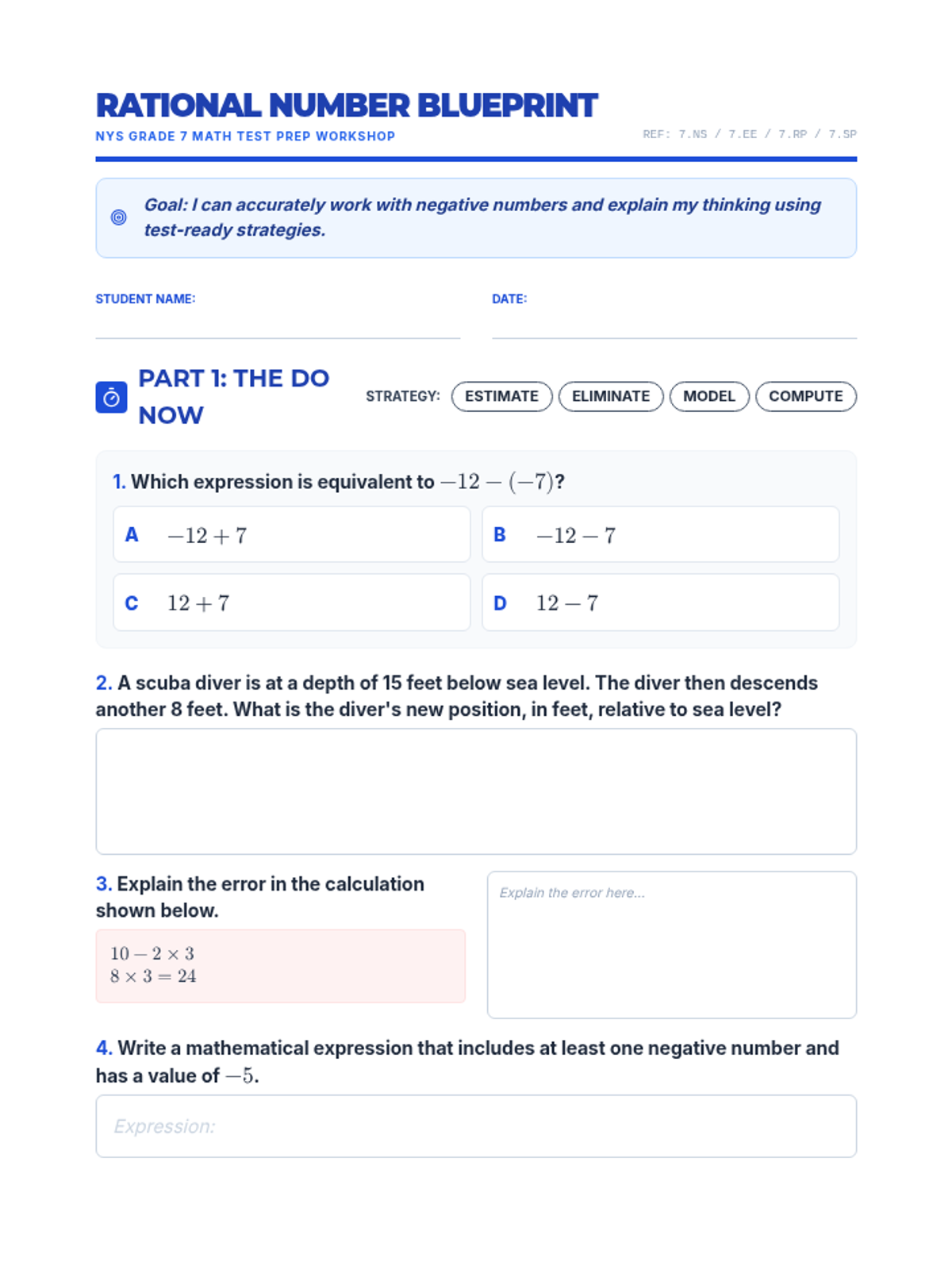
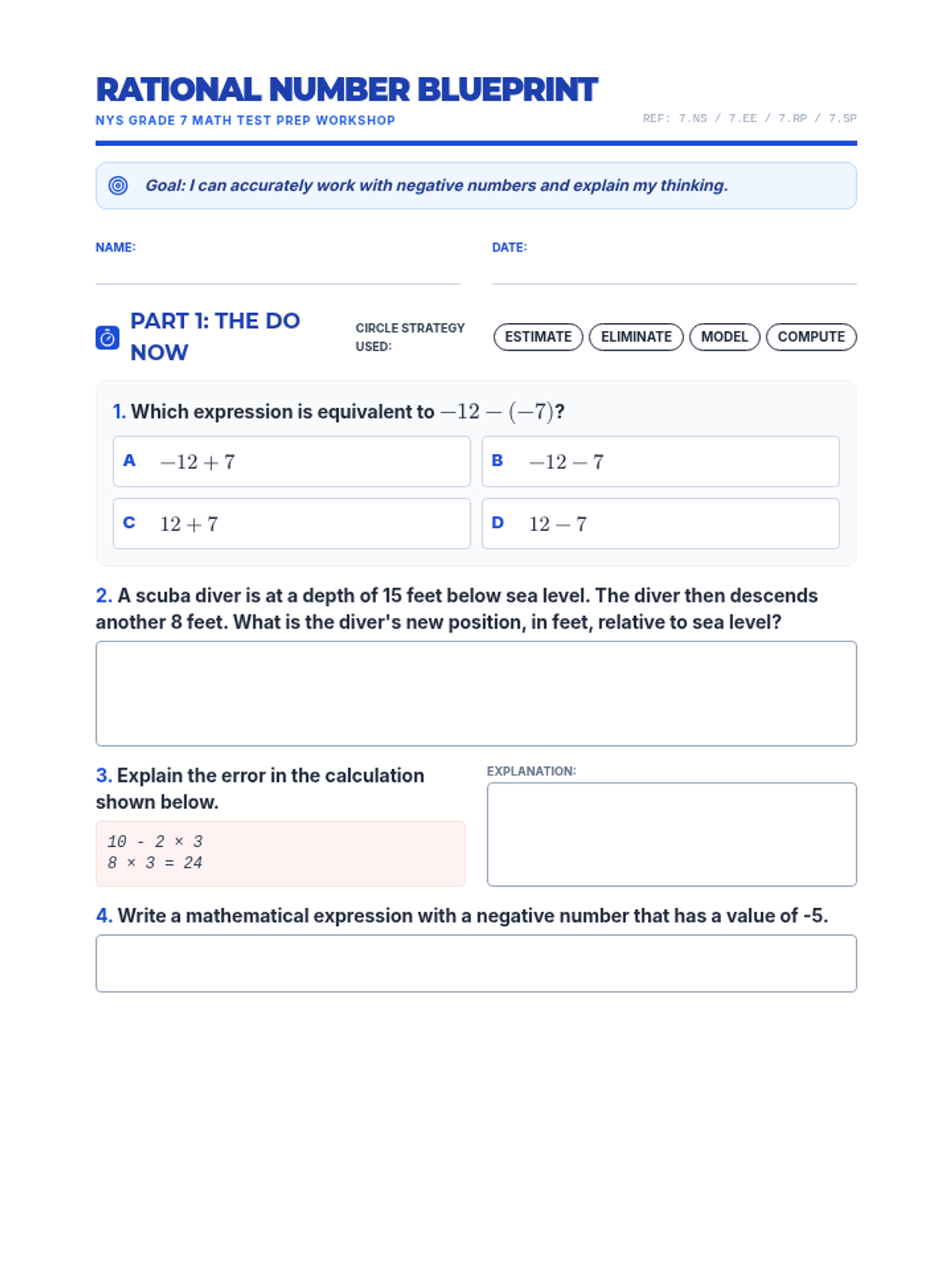
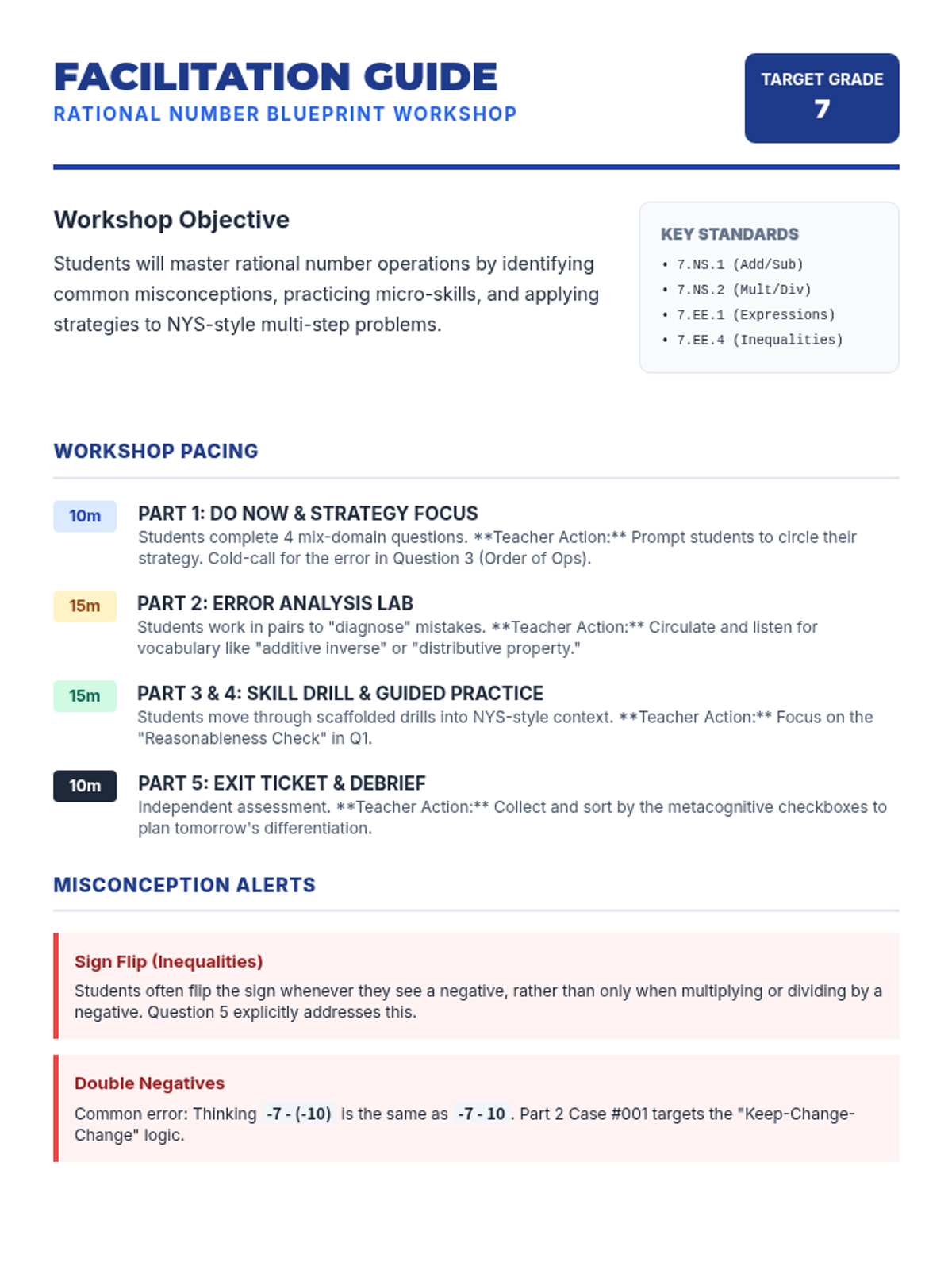
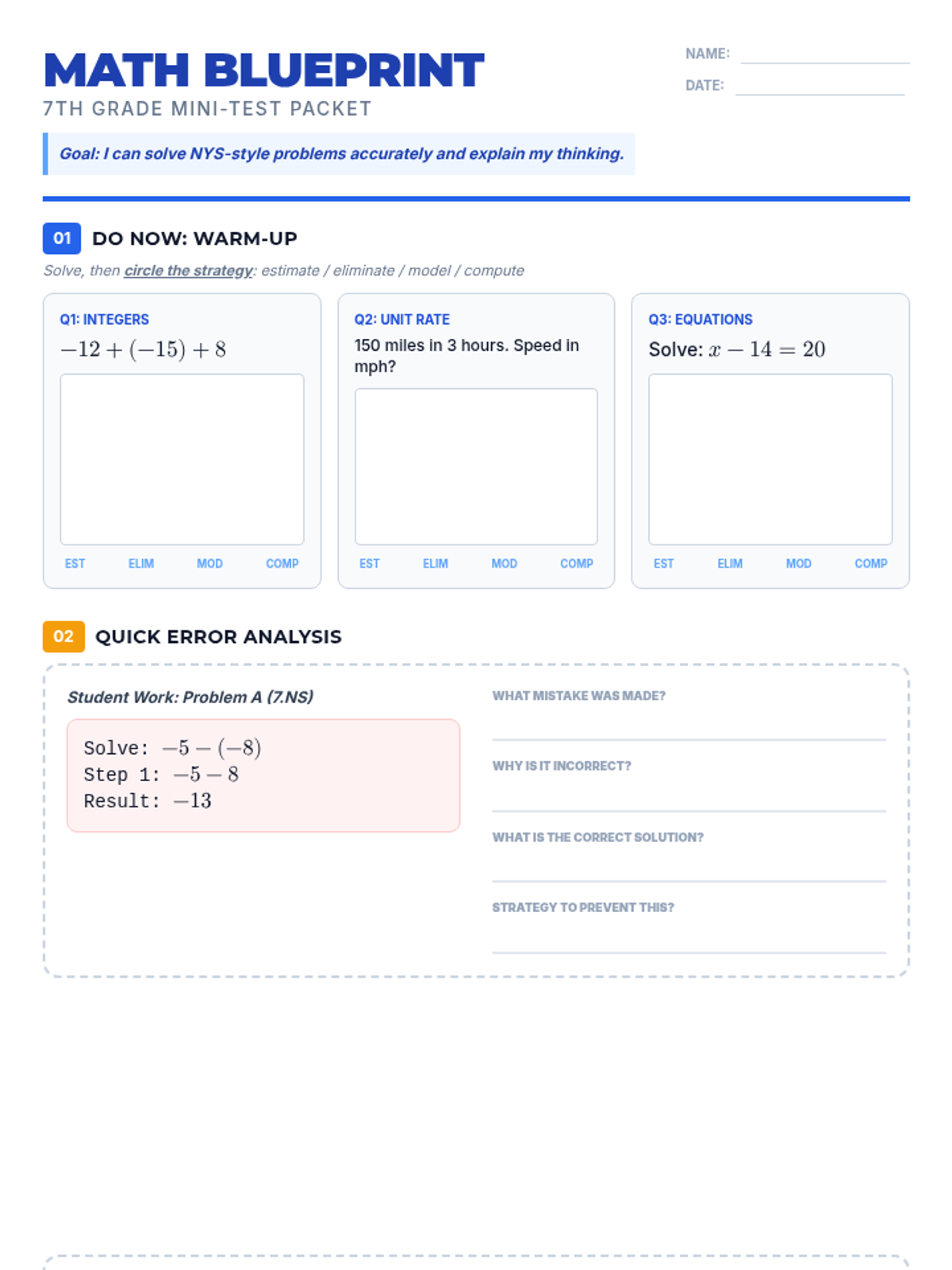
A comprehensive set of practice problems focused on applying 7th-grade math standards to real-world scenarios, including scale drawings, expressions, equations, and rational numbers.
A comprehensive assessment and answer key covering graphing linear equations, writing equations in slope-intercept form, and solving systems by graphing.
A comprehensive guide to mastering the TI-84 graphing calculator for Algebra 1, focusing on graphing functions and using the CALC menu to find critical points of quadratics.
A comprehensive 50-question multiple-choice assessment covering inequalities (writing, graphing, and solving) and angle relationships (vertical, adjacent, complementary, and supplementary) based on Chapter 4 and Chapter 7 review materials.
Final mastery check of AZ 3.G.A.2 skills: partitioning shapes, identifying unit fractions, and explaining the relationship between parts and the whole area.
Students explore how the same shape can be partitioned into equal areas in multiple ways, reinforcing that fractional parts must have equal area but not necessarily identical shapes.
Students partition circles, rectangles, and squares into 2, 3, 4, 6, and 8 equal parts with precision, meeting the partitioning requirements of the AZ standards.
Students express the area of one part as a unit fraction (1/b) of the whole, connecting partitioning to numerical notation as required by AZ 3.G.A.2.
Students define equal shares and identify them in circles and quadrilaterals, establishing the foundation for AZ 3.G.A.2 by distinguishing area from shape.
A final review and assessment of all skills learned throughout the Fraction Factory unit.
Exploring different ways to partition the same shape into equal areas, reinforcing that shapes can look different but have the same fractional area.
Practicing partitioning circles, rectangles, and squares into specific numbers of equal parts (2, 3, 4, 6, 8).
Focuses on naming the partitioned parts as unit fractions (1/b) and understanding that the size of the part depends on the total number of parts.