Students master the conventions of historical time, focusing on BCE (Before Common Era) and CE (Common Era). They learn to calculate time intervals across different eras using mathematical operations.

A lesson introducing the concept of family, its definition, and its importance as a social unit.
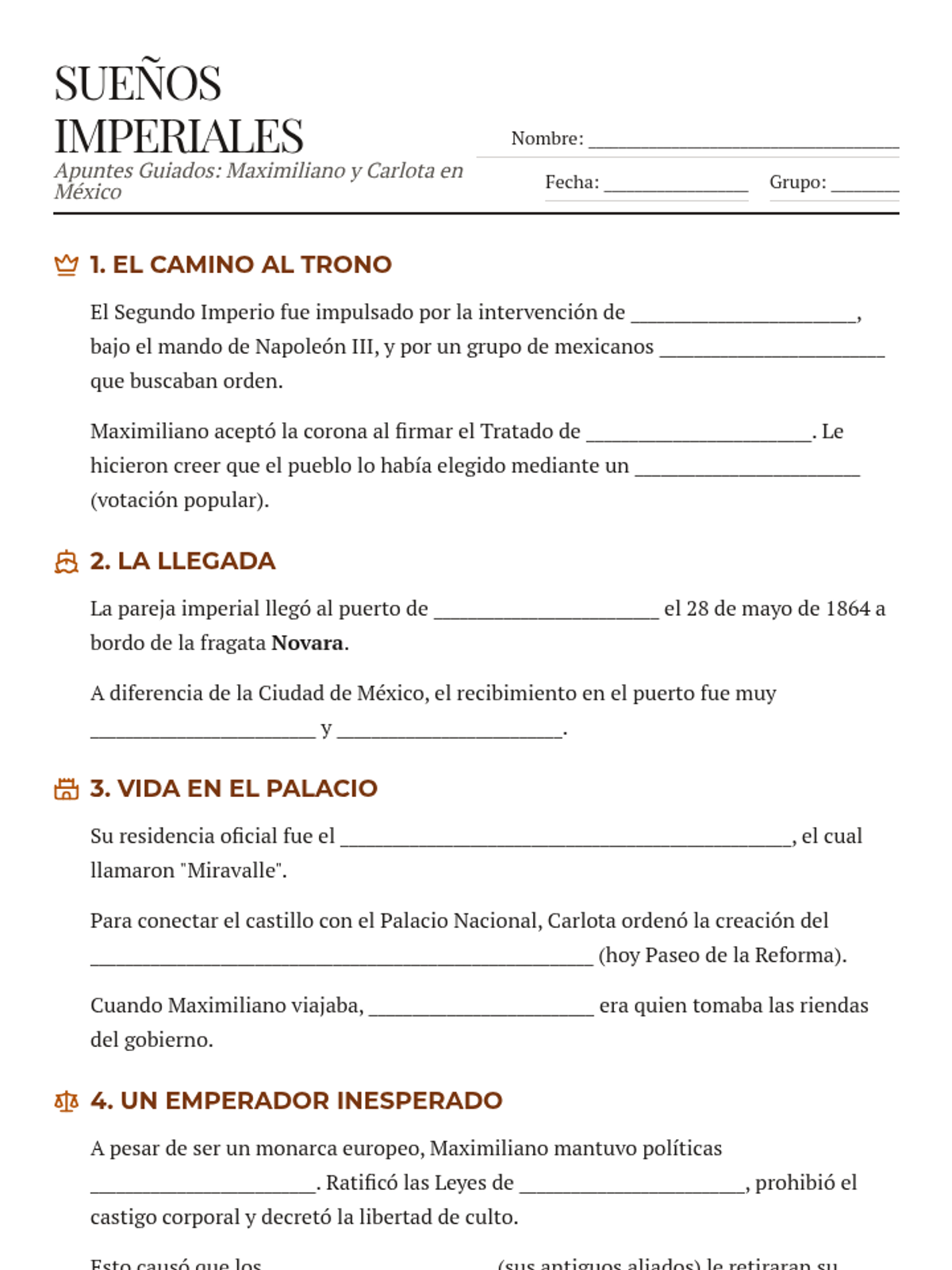
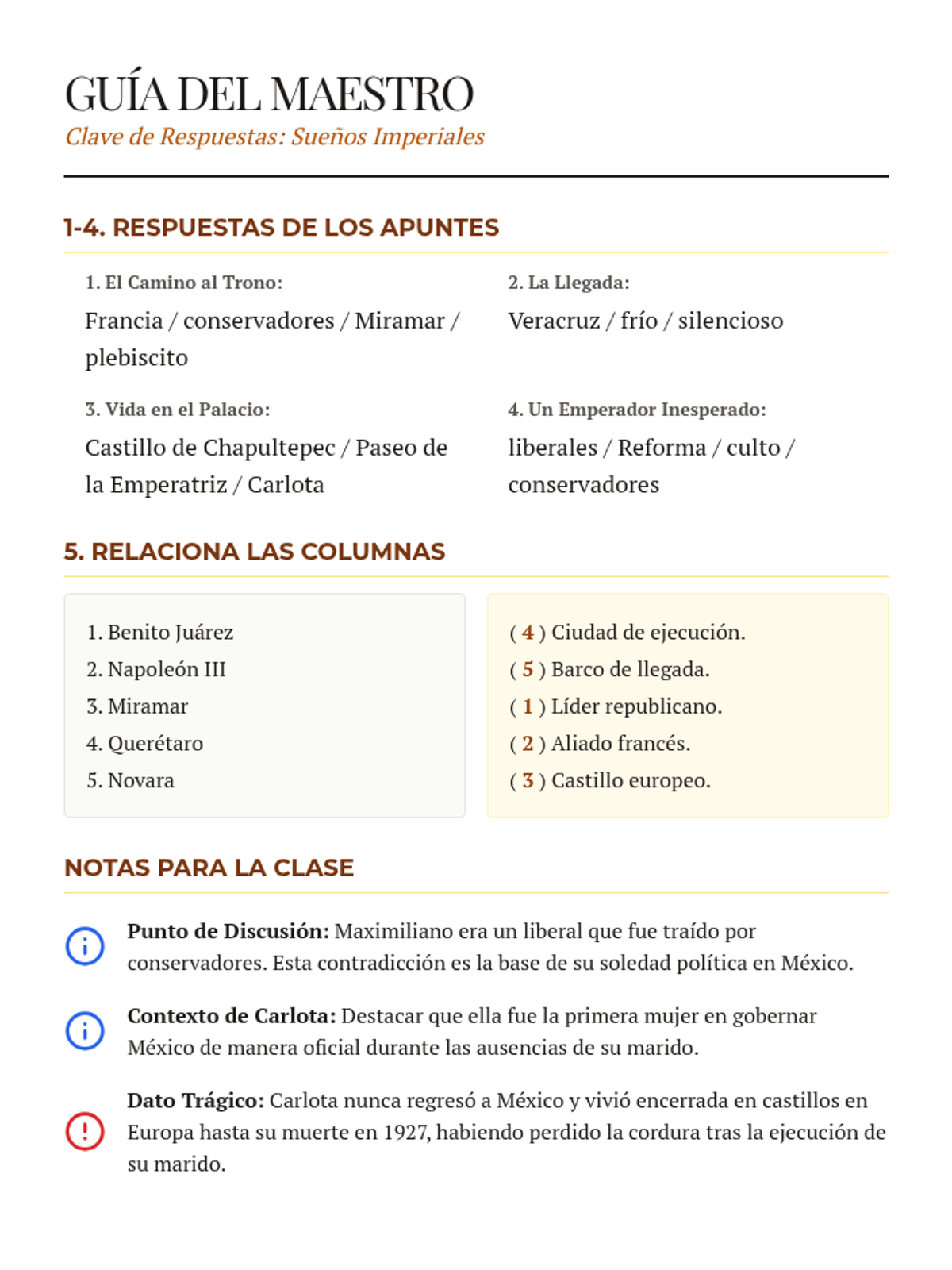
A lesson exploring the lives, reign, and eventual downfall of Maximilian I and Empress Carlota during the Second Mexican Empire, focusing on their time in Mexico.
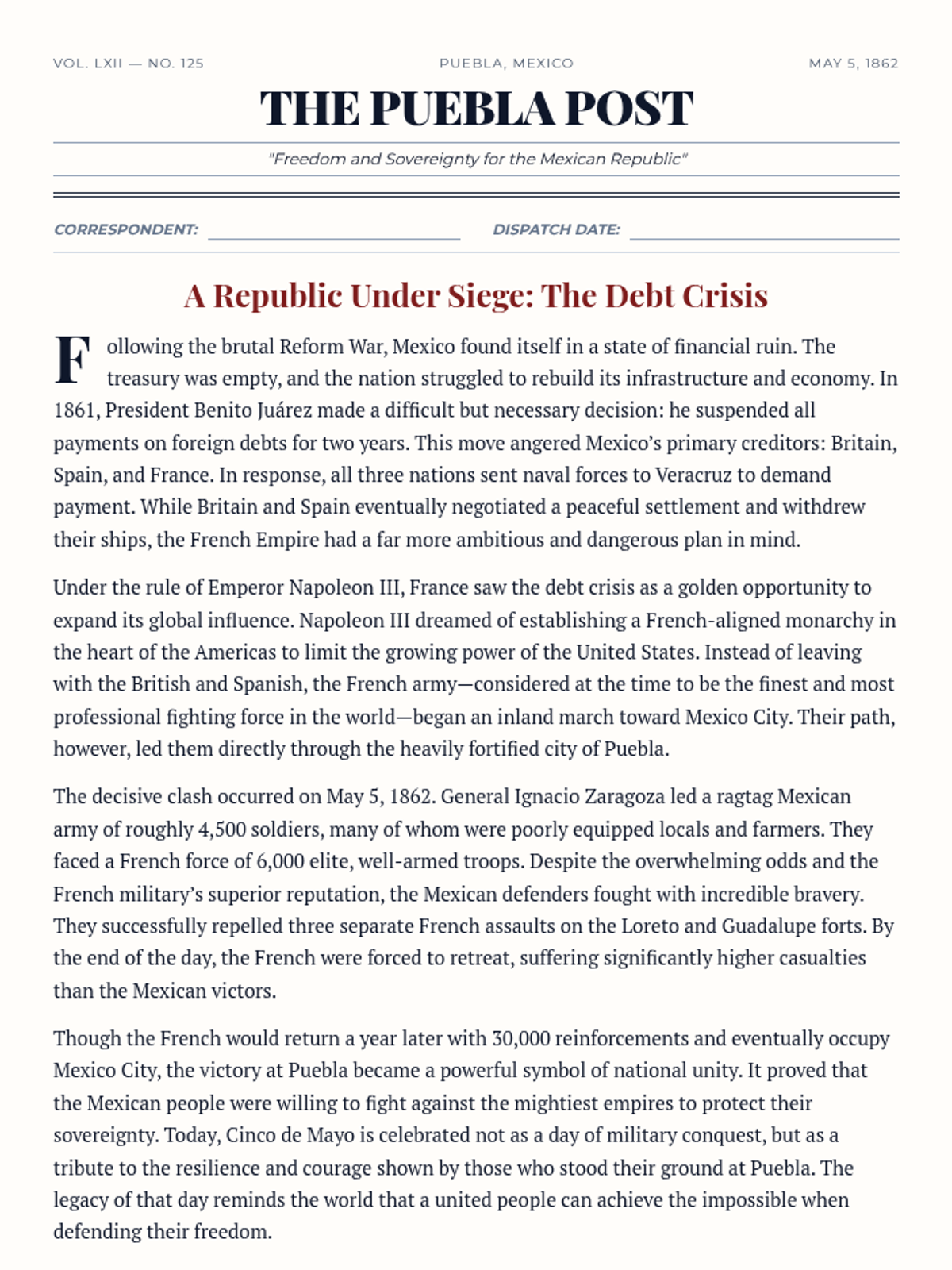
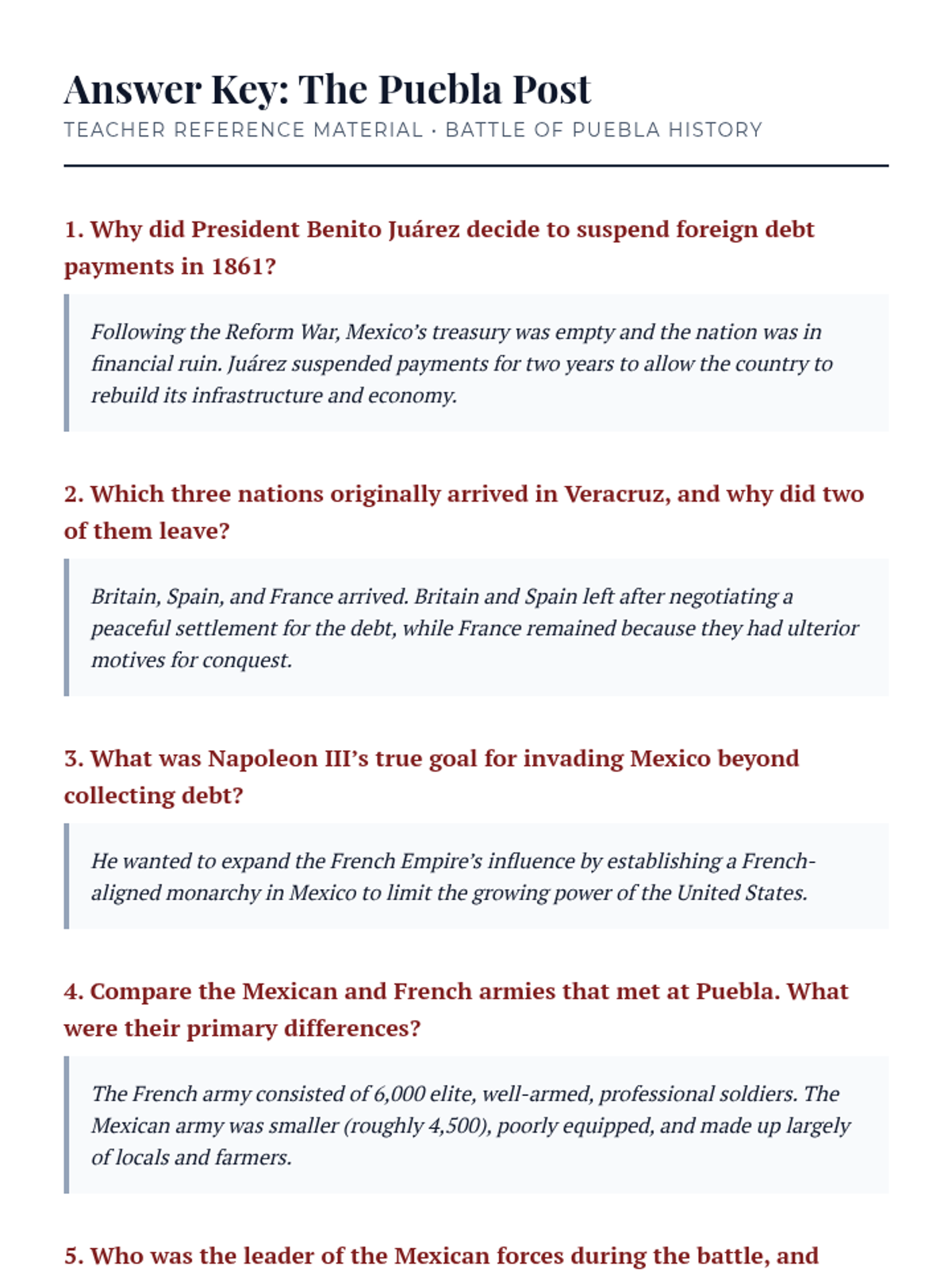
A lesson exploring the historical roots of Cinco de Mayo, focusing on the debt crisis and the Battle of Puebla.
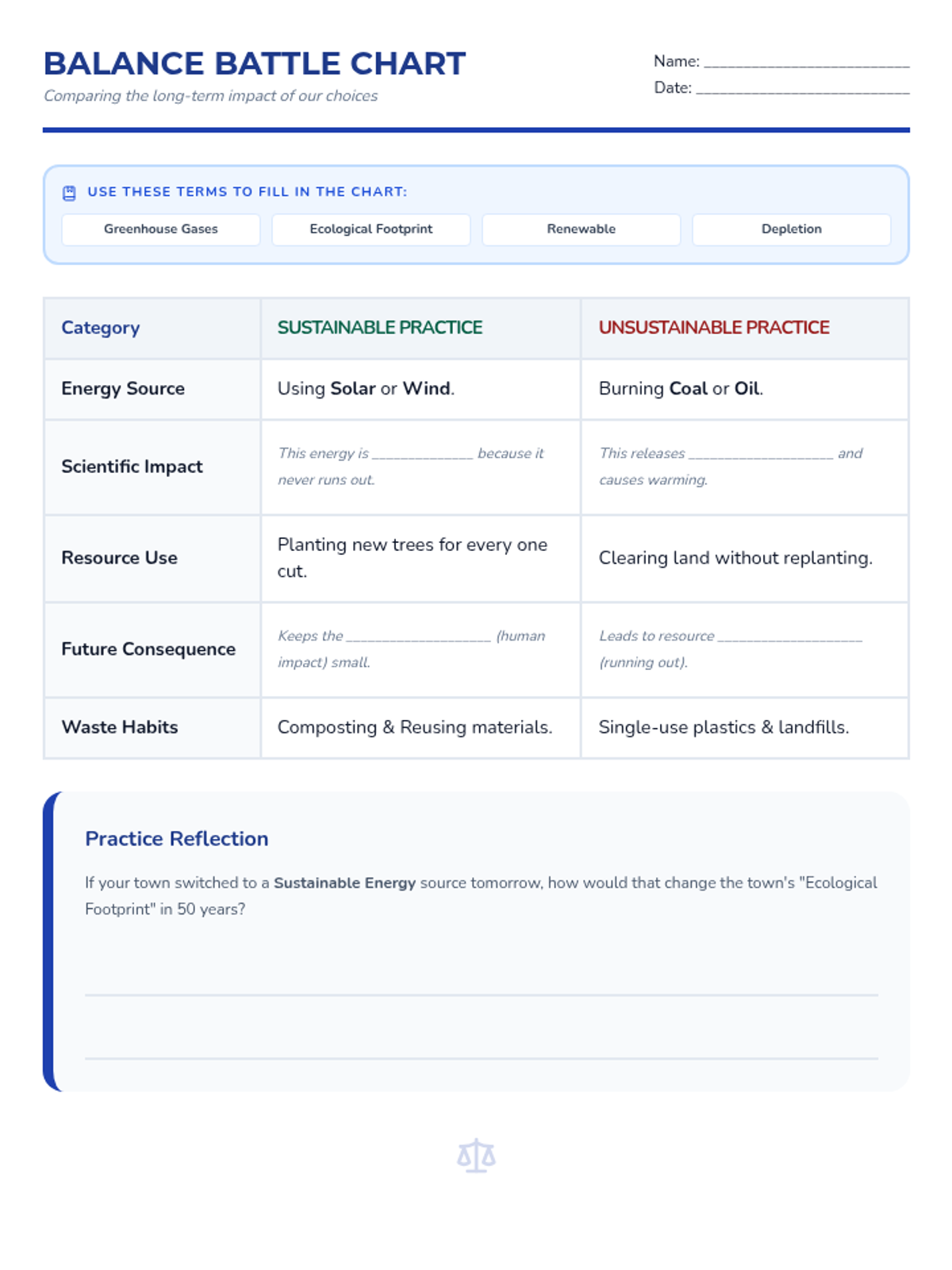
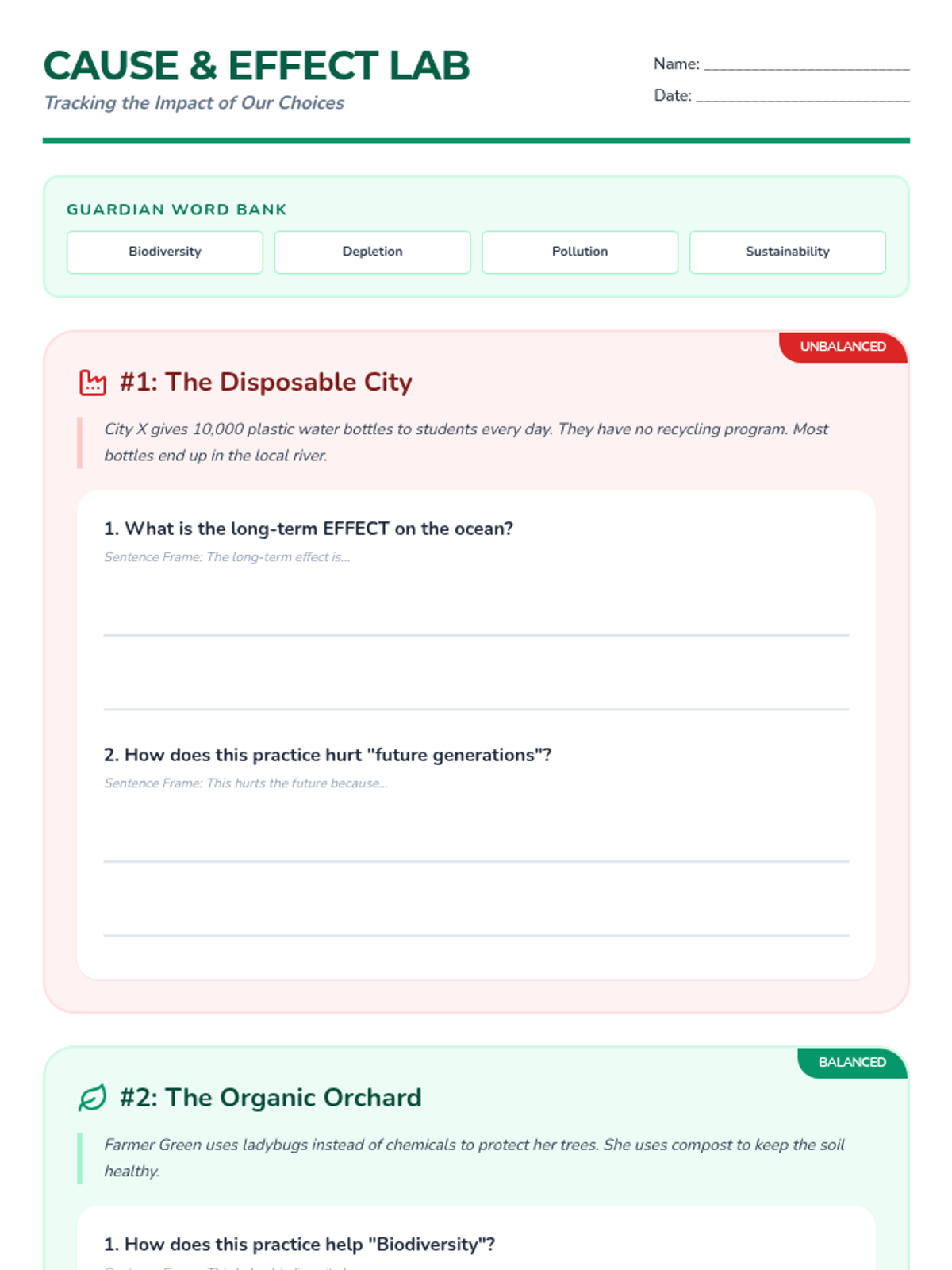
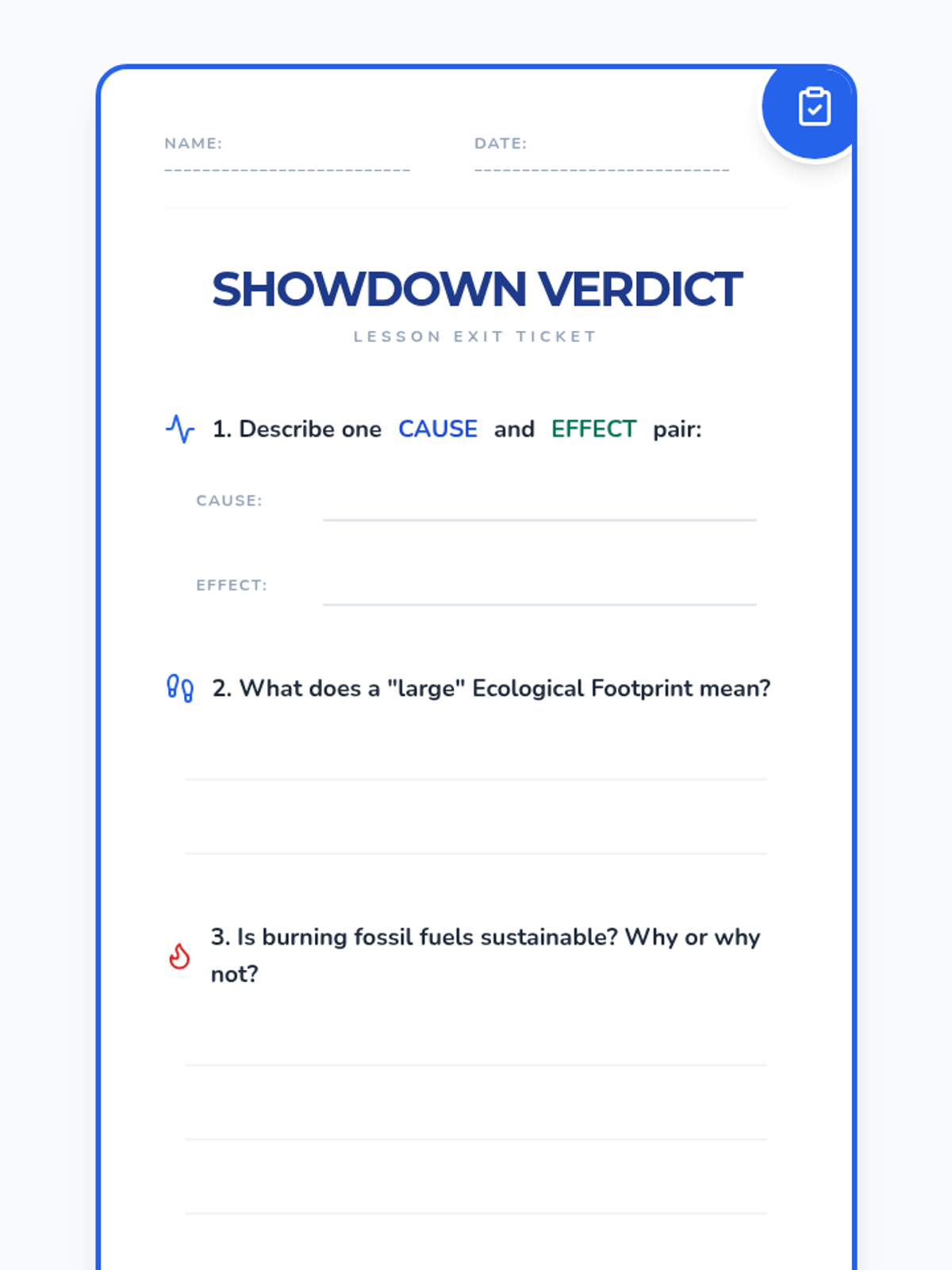
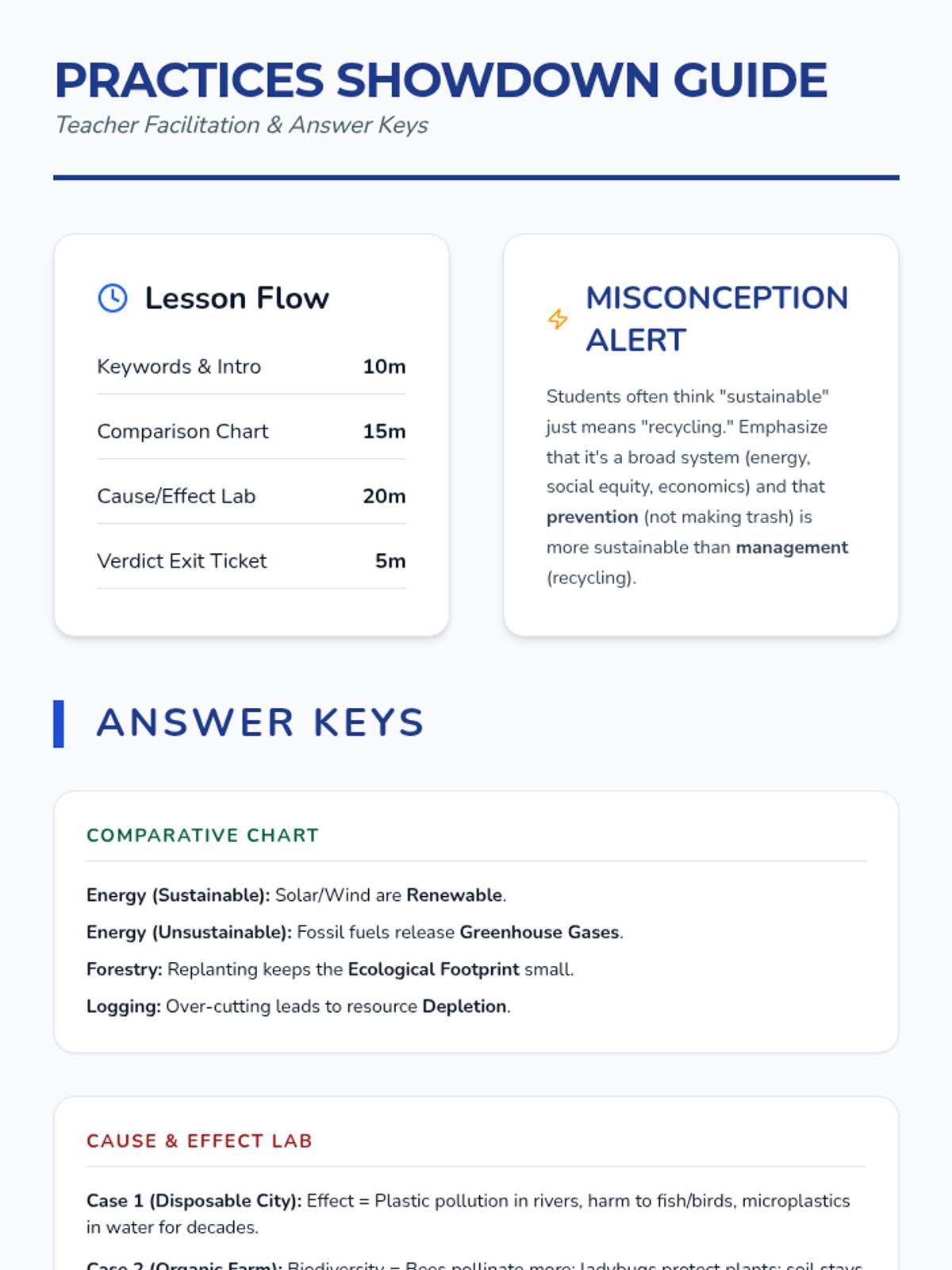
An exploration of sustainable vs. unsustainable practices through comparative analysis, cause-and-effect case studies, and real-world trade-offs. Includes a comparative chart, accommodated case studies, and an exit ticket.
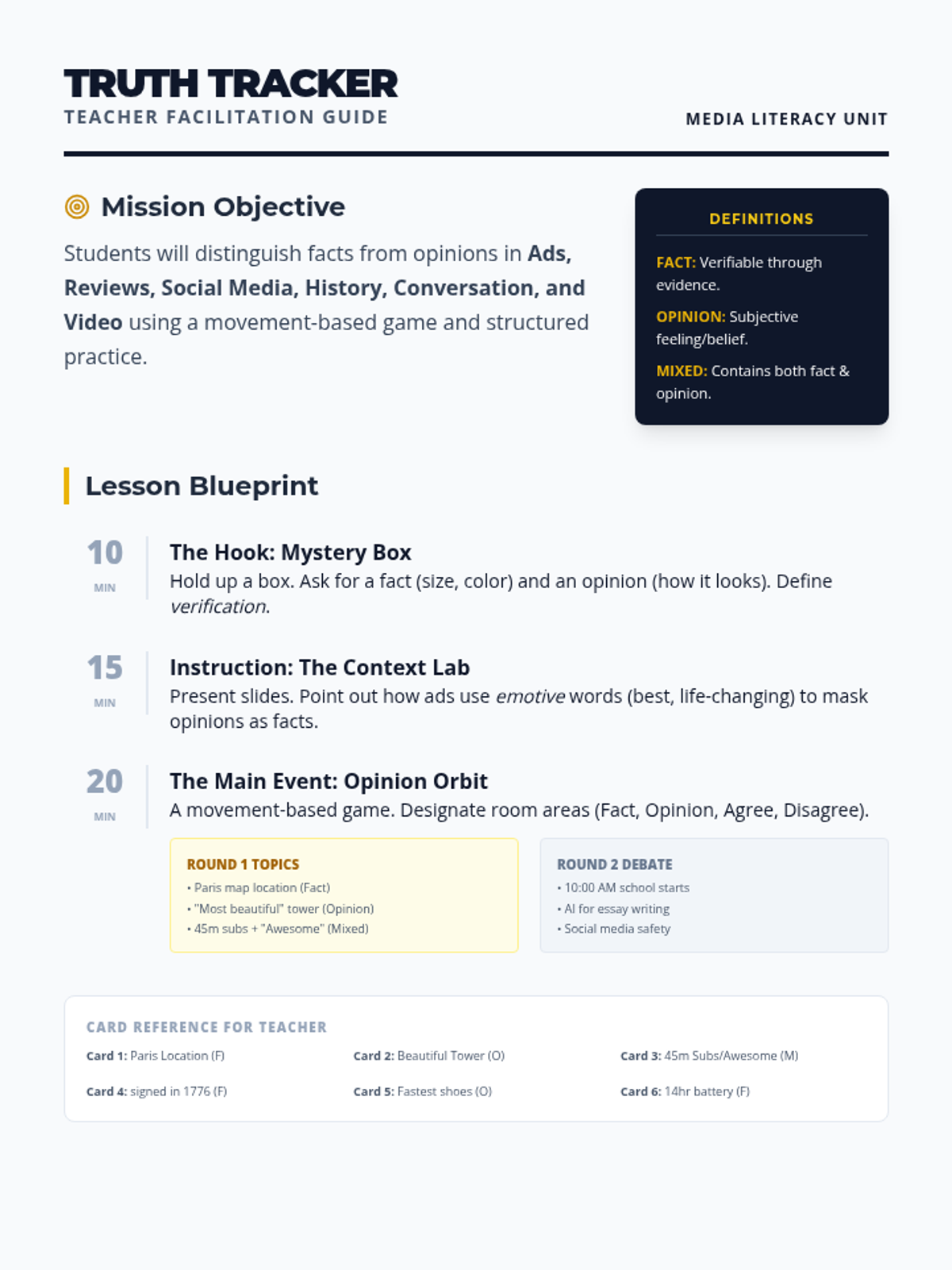
A middle school lesson focused on distinguishing between objective facts and subjective opinions across modern media contexts, featuring a movement-based 'Opinion Orbit' activity.
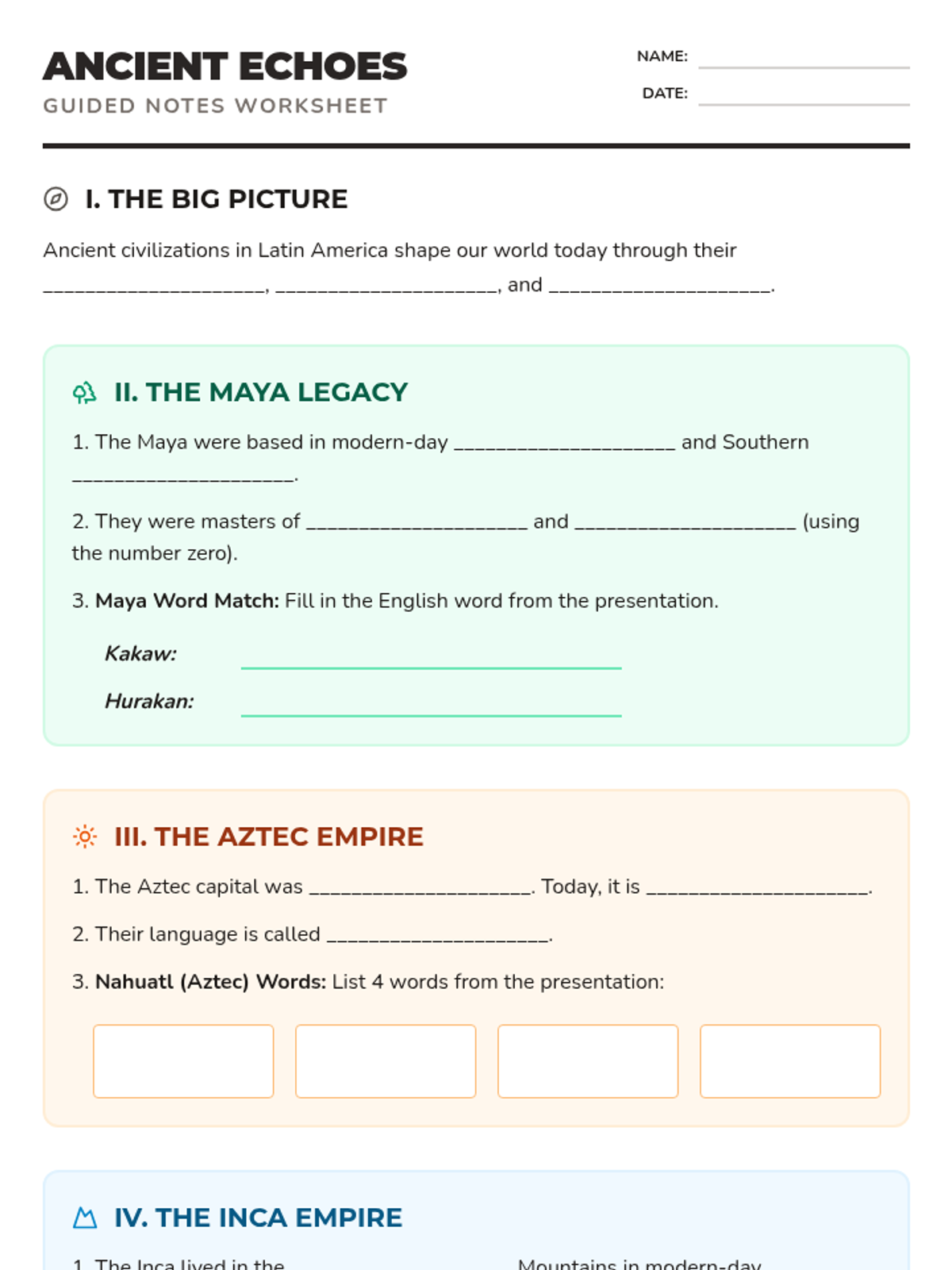
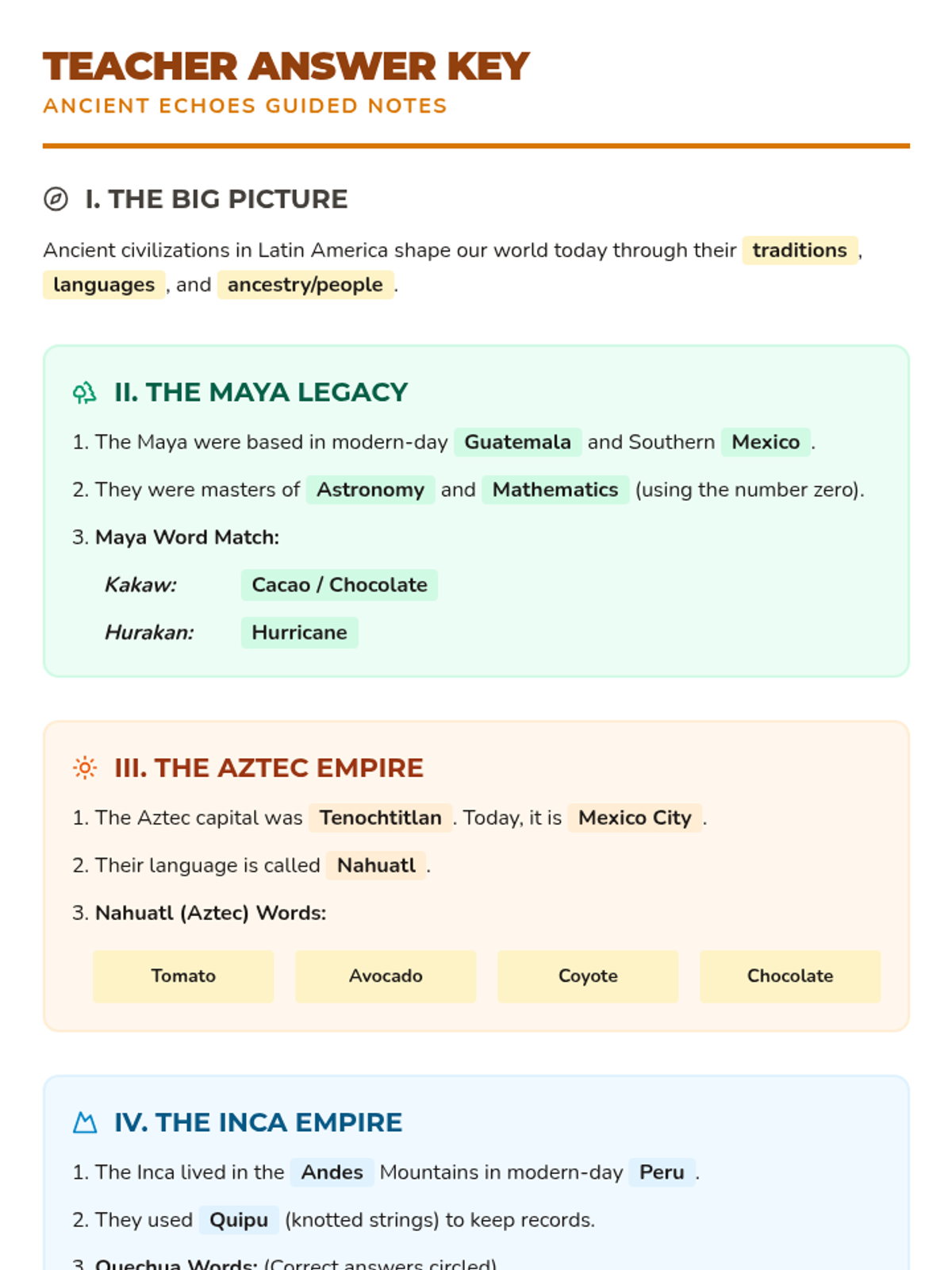
A lesson exploring the linguistic and cultural threads connecting the Maya, Aztec, and Inca civilizations to modern-day Mexico, Peru, and Guatemala. Students learn about indigenous words used in everyday language and enduring traditions.
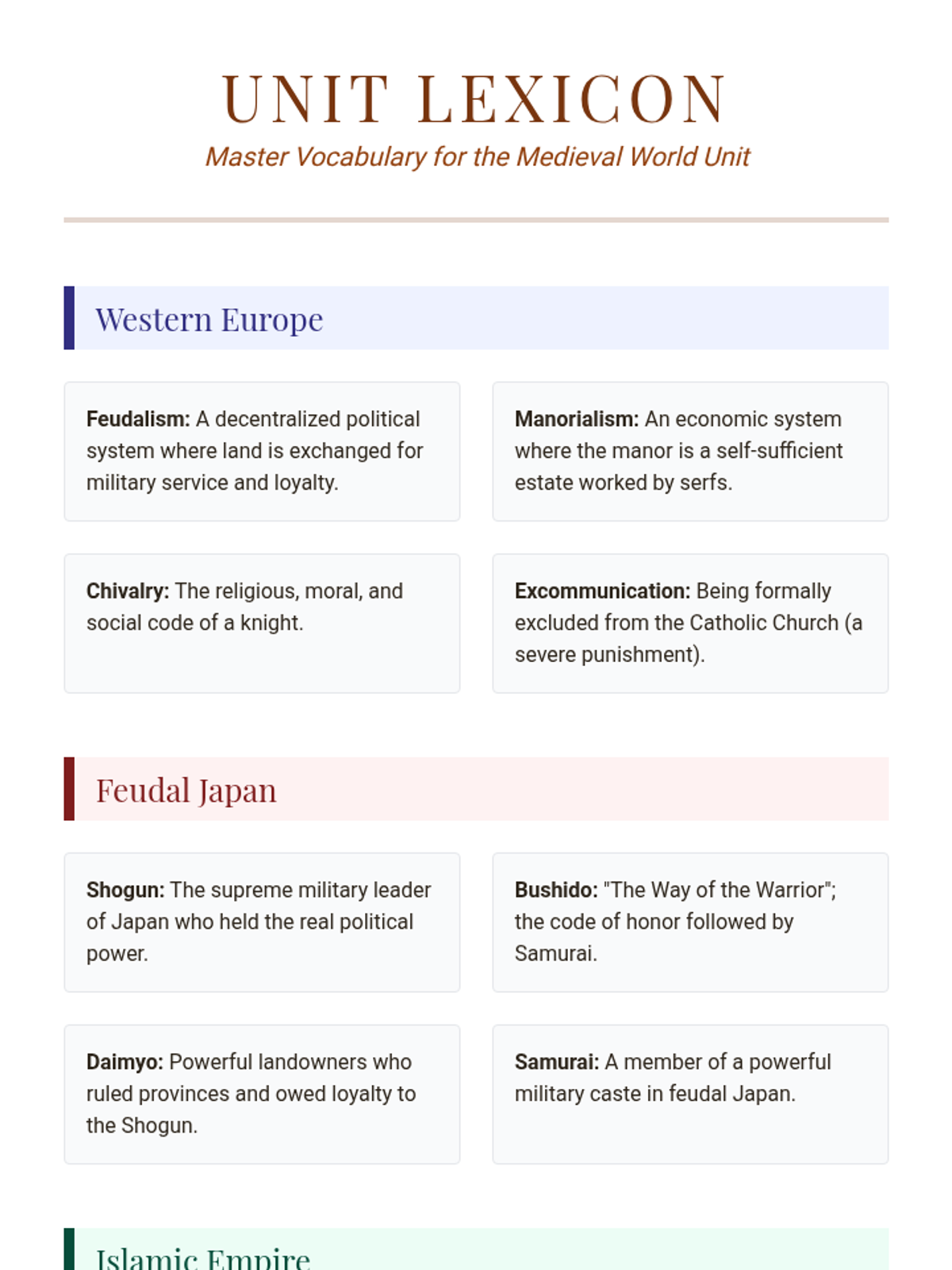
A review of the unit's key concepts and a final assessment on the shared characteristics and unique contributions of medieval civilizations.
Investigating the architecture, arts, and daily routines of people living in medieval castles, monasteries, and Japanese shrines.
A cross-cultural examination of medieval technology, from agricultural tools to navigational instruments and architectural marvels.
A look at the thriving economy of the Islamic Empire through trade networks, the Silk Road, and the impact of the Crusades.
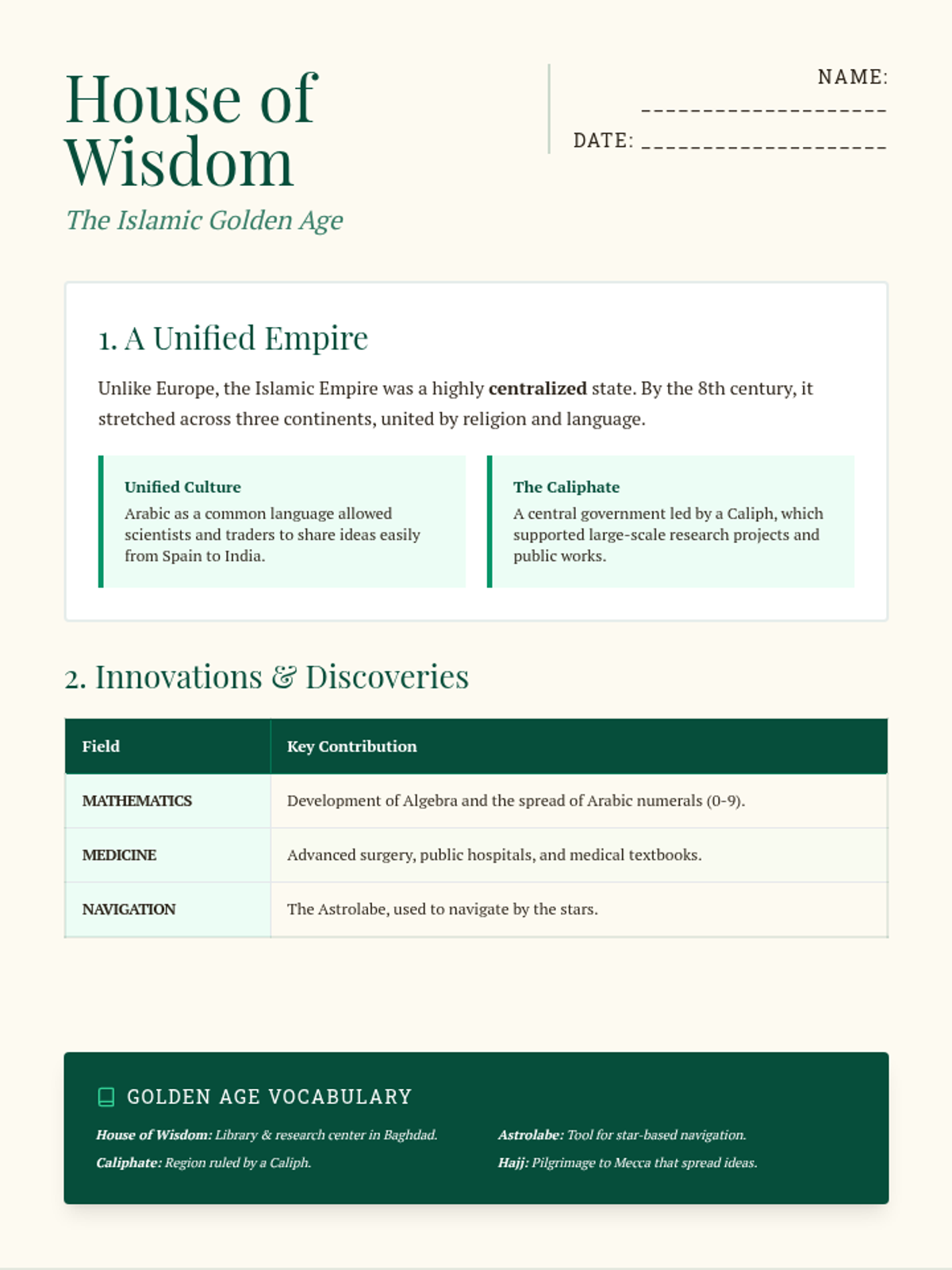
Exploring the Golden Age of the Islamic Empire, focusing on advancements in science, math, and the role of Islam in unifying a diverse caliphate.
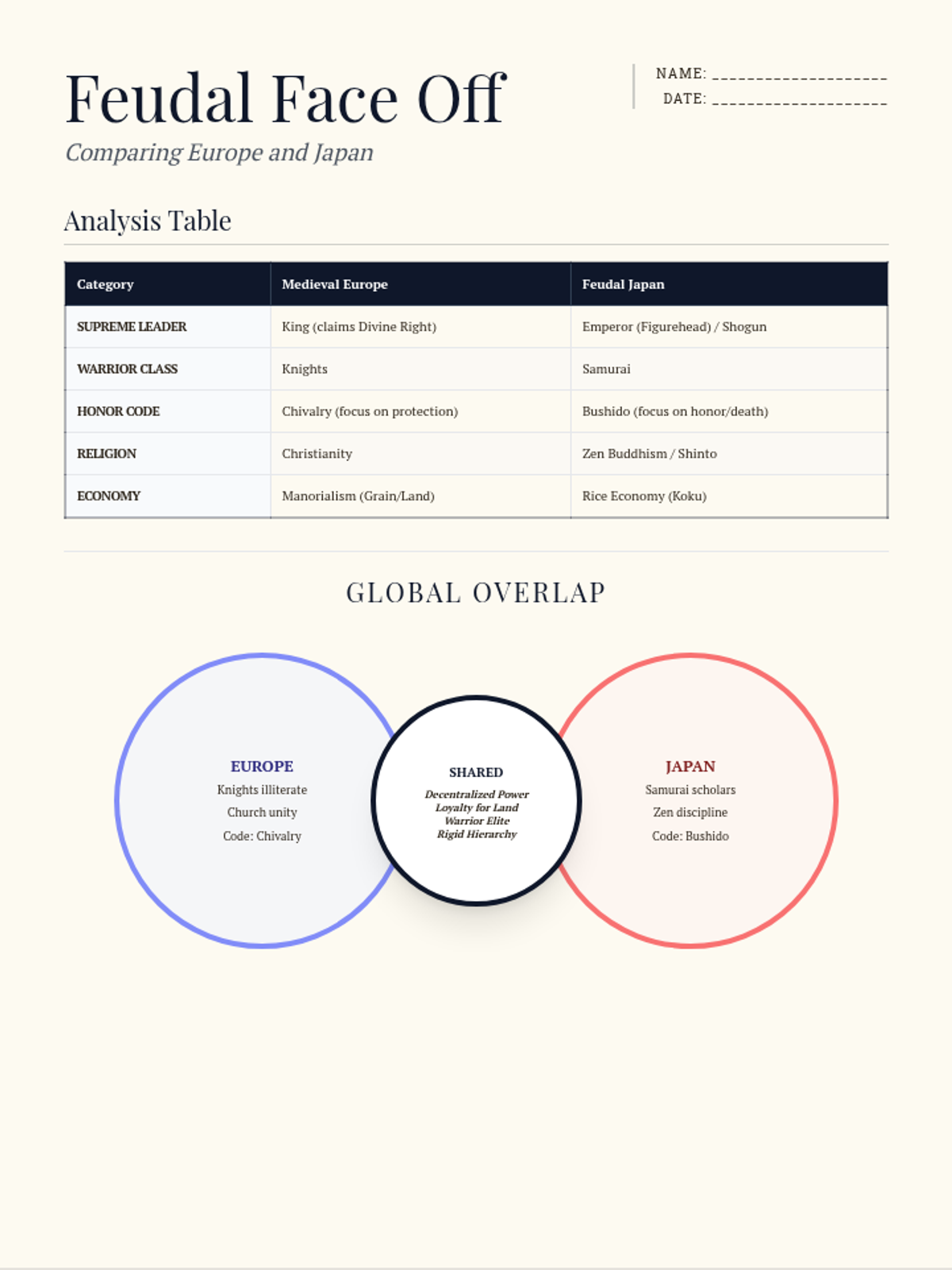
A comparative study of European and Japanese feudalism, highlighting similarities in social structures and differences in culture and technology.
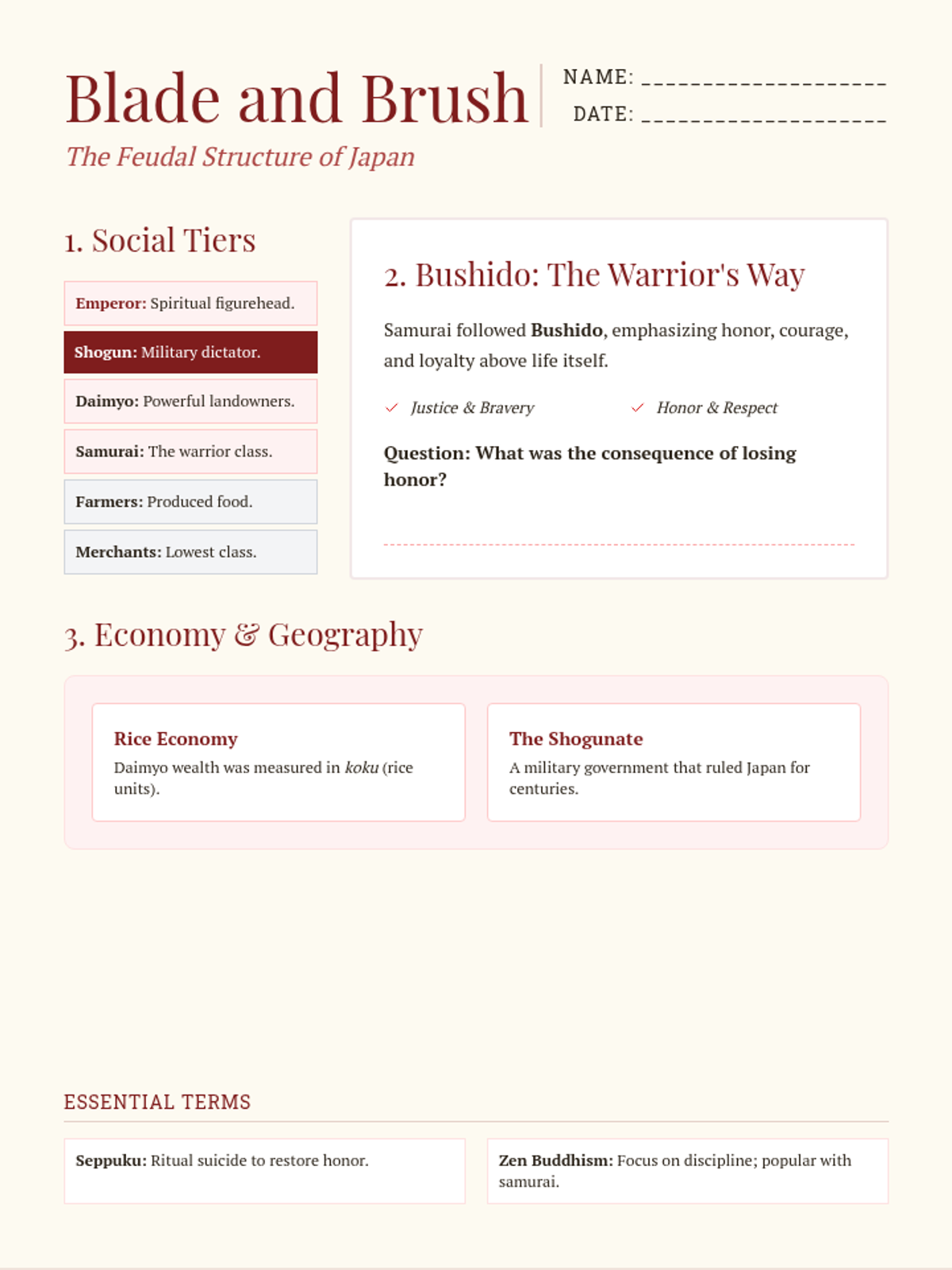
An analysis of Japan's feudal government, the role of the Shogun, and the code of the Samurai.
A deep dive into the influence of the Roman Catholic Church on medieval European society, politics, and daily life.
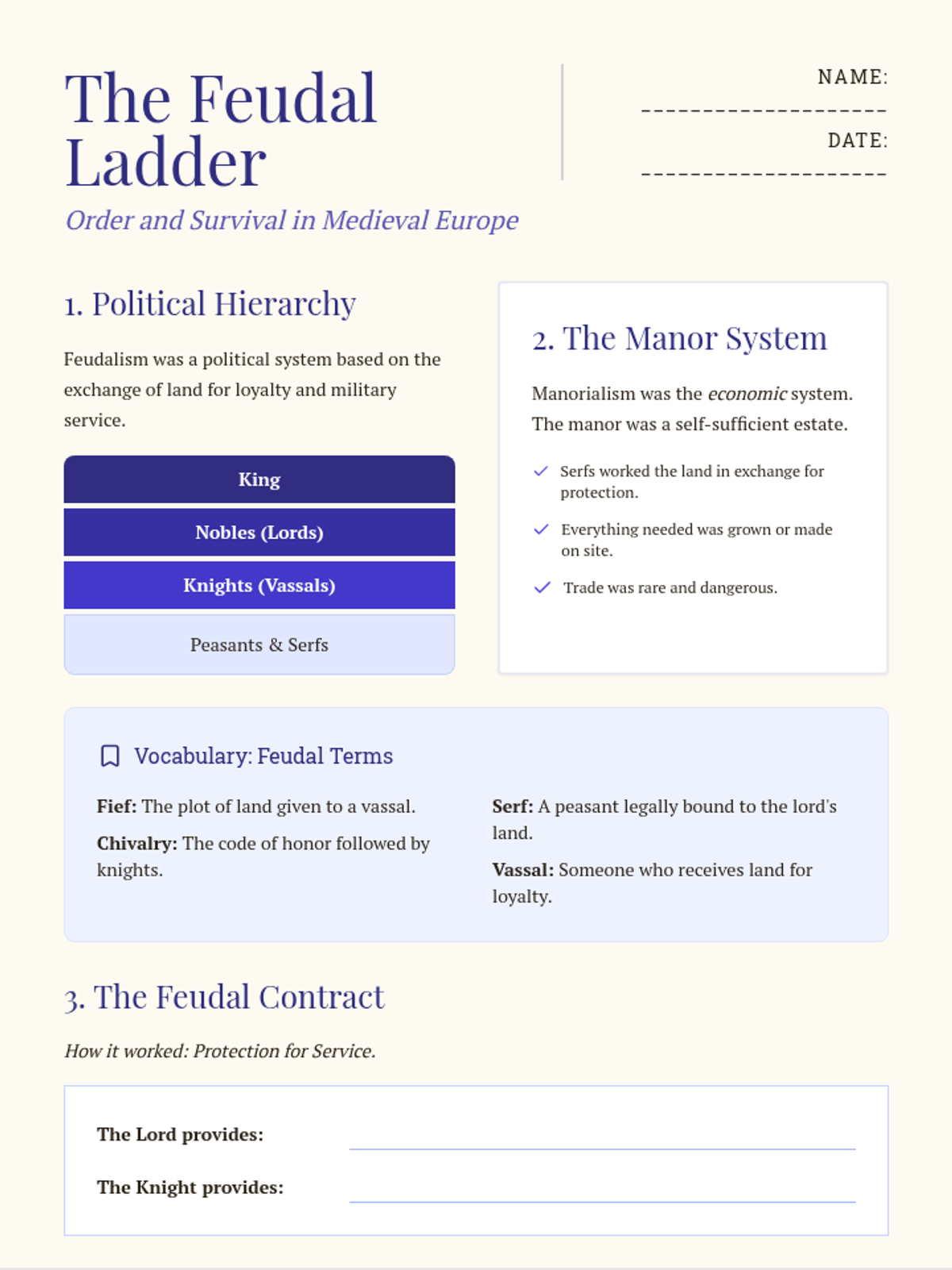
An exploration of the feudal system and manorialism in Western Europe, focusing on the social hierarchy and agrarian economy.
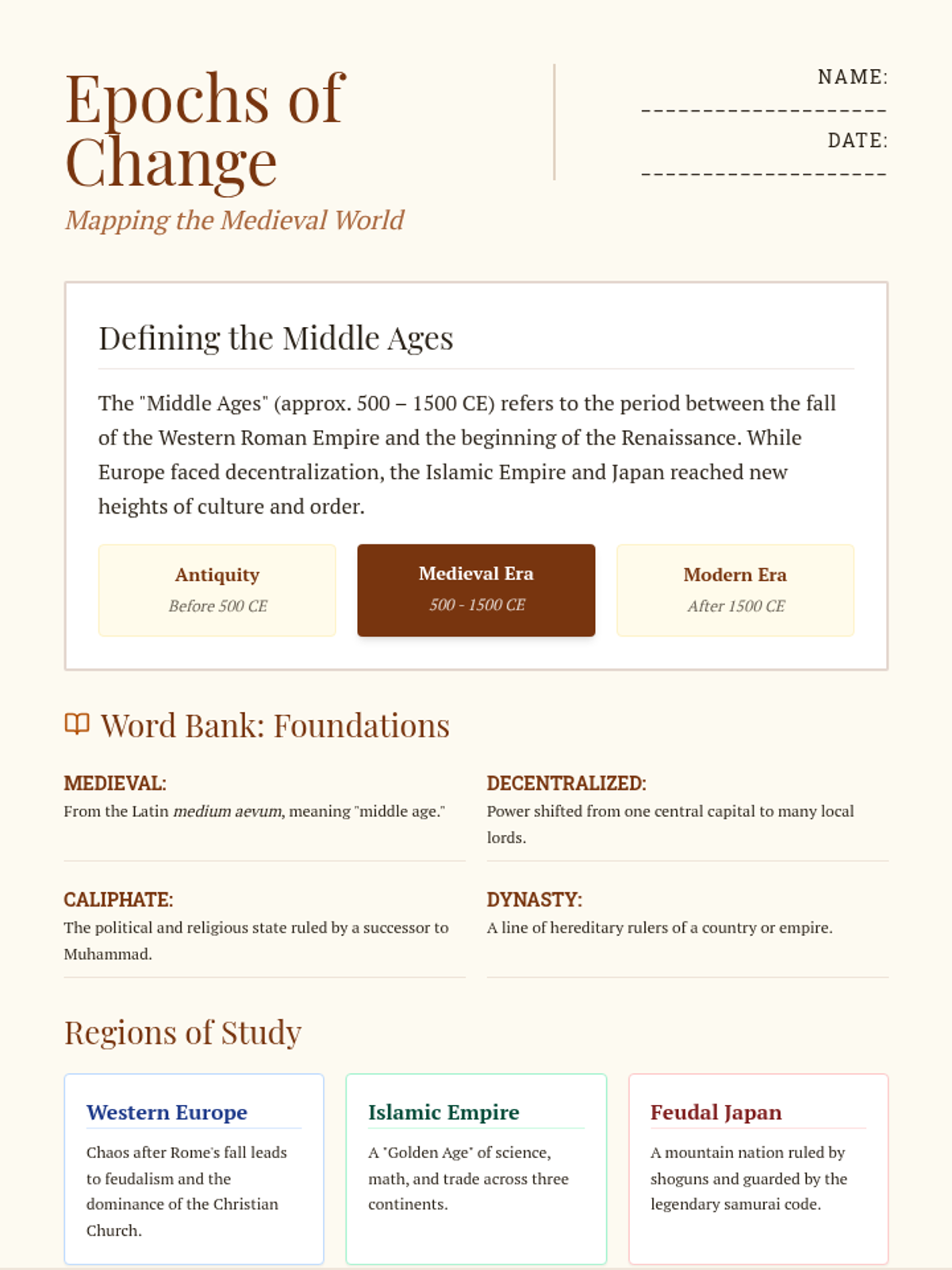
An introduction to the global Middle Ages, defining the time period and setting the stage for the rise of regional powers in Europe, Japan, and the Islamic world.