Focuses on narrative writing techniques and using similes, metaphors, and personification to bring a personal story to life in a diary format.
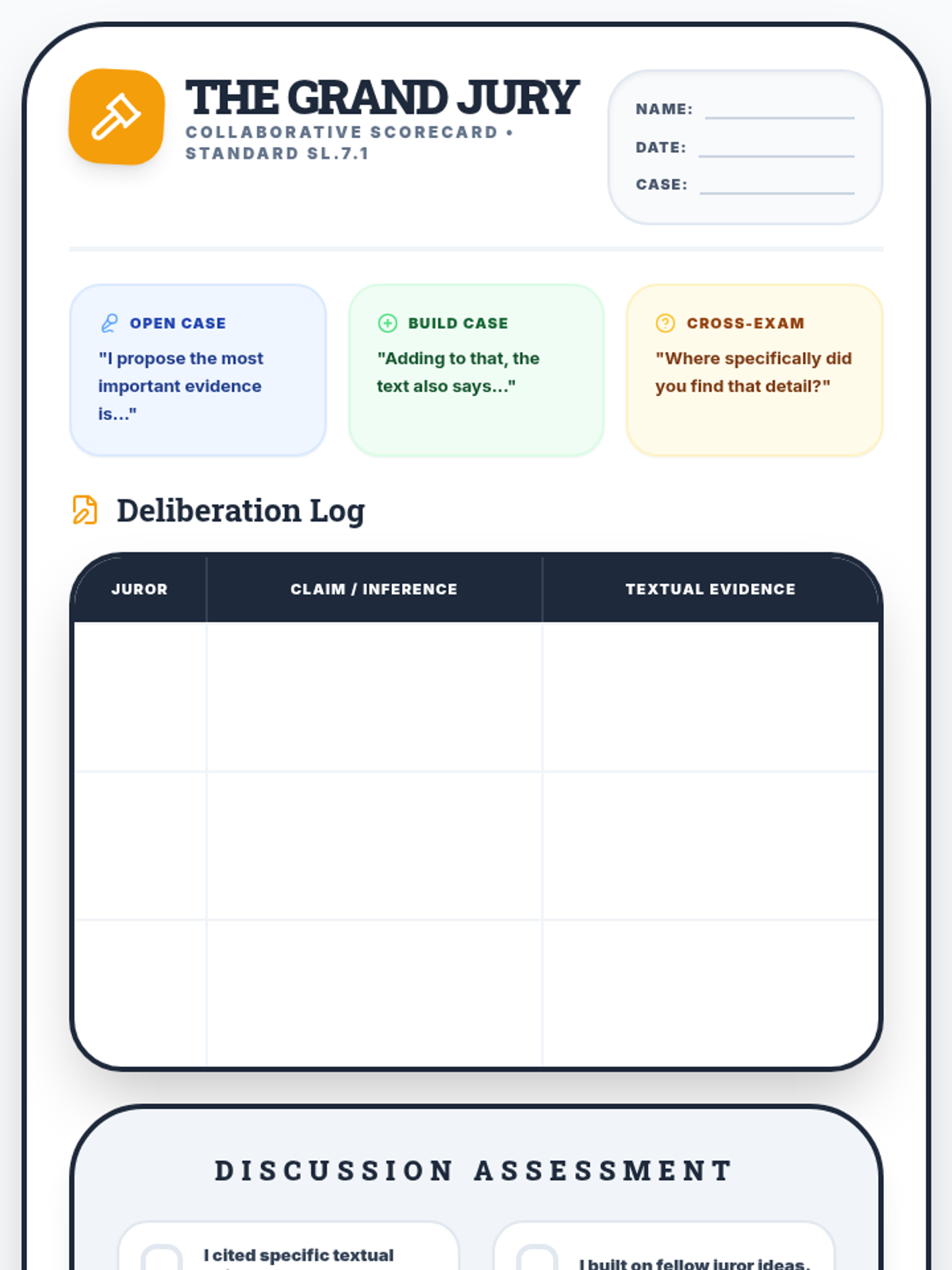
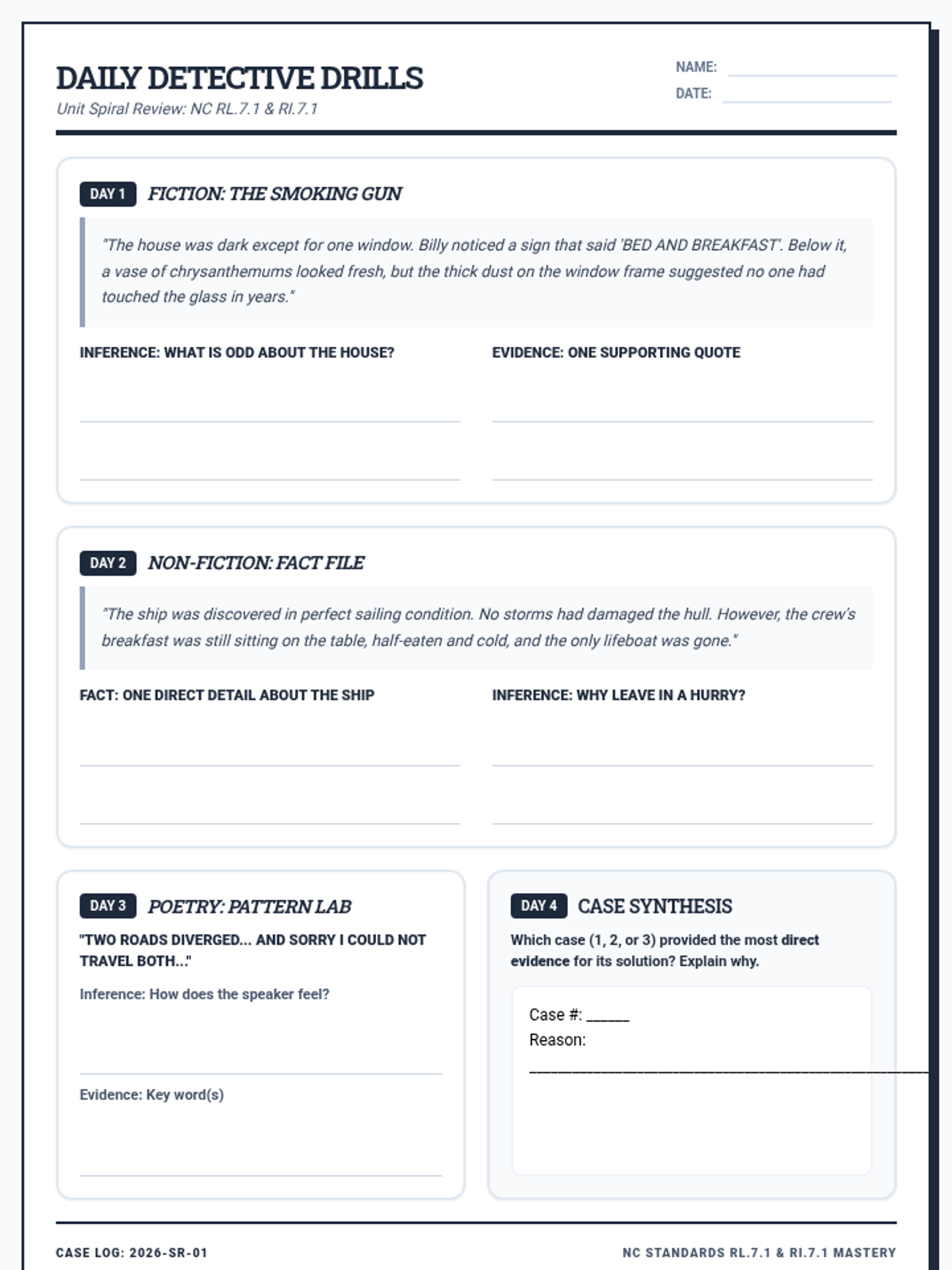
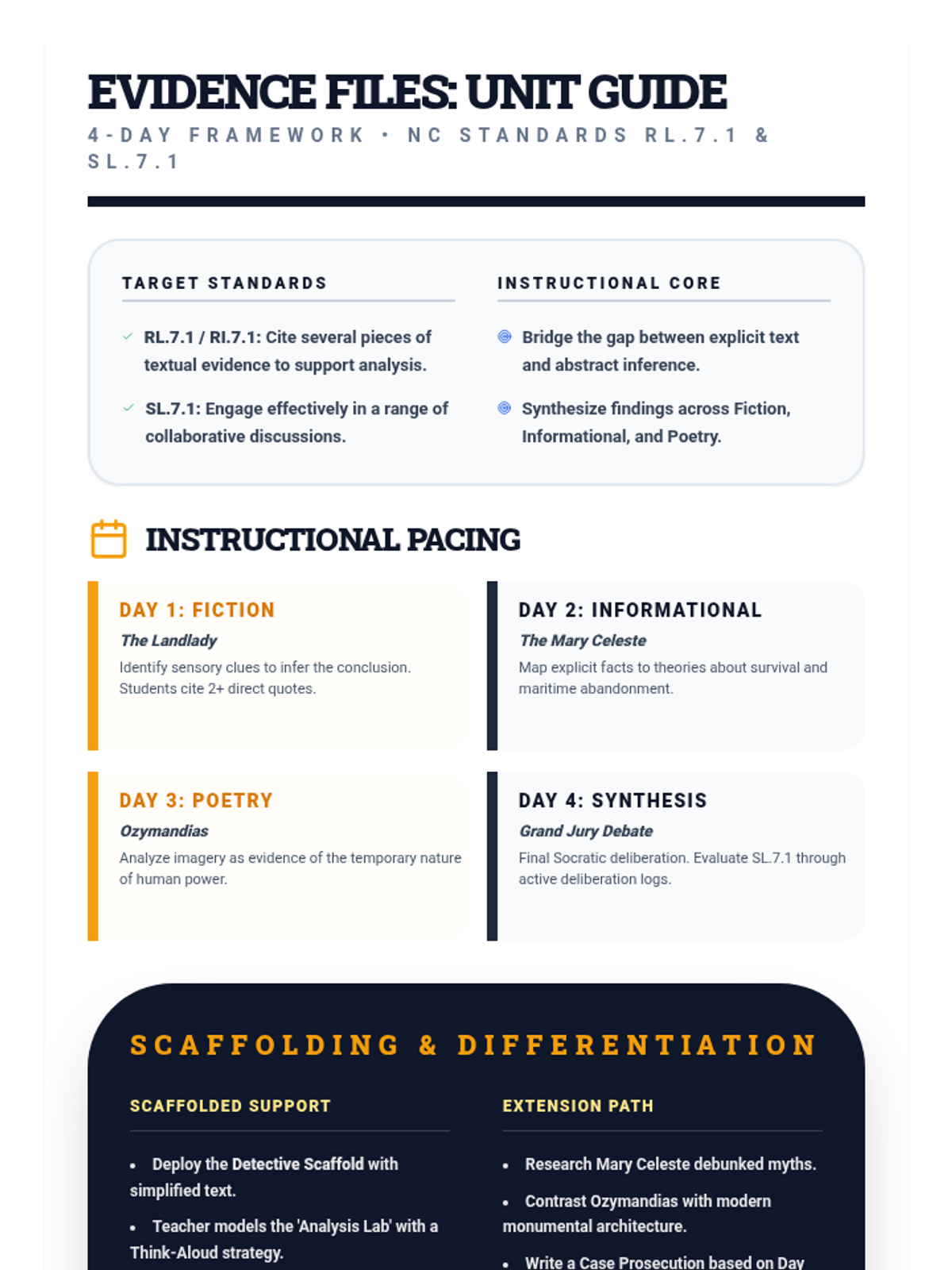
Day 4: Students participate in a 'Grand Jury' collaborative discussion to synthesize their evidence from the week and reach a final verdict on the unit's key texts.
Day 3: Students dive into 'Ozymandias' by Percy Bysshe Shelley, using textual evidence to infer the poem's deeper meanings about power and time.
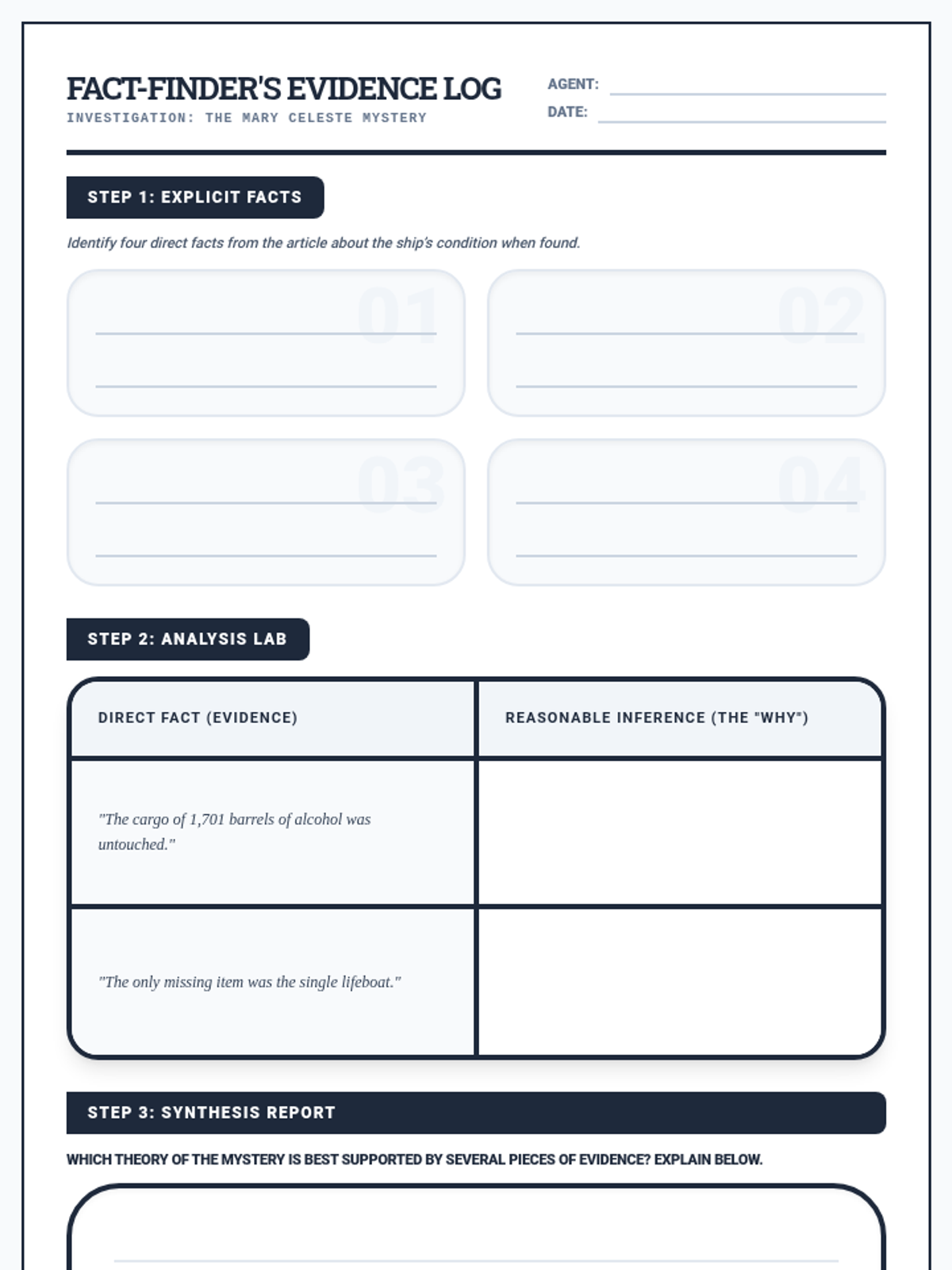
Day 2: Students examine a non-fiction article about the Mary Celeste to distinguish between explicit facts and inferences while citing several pieces of evidence.
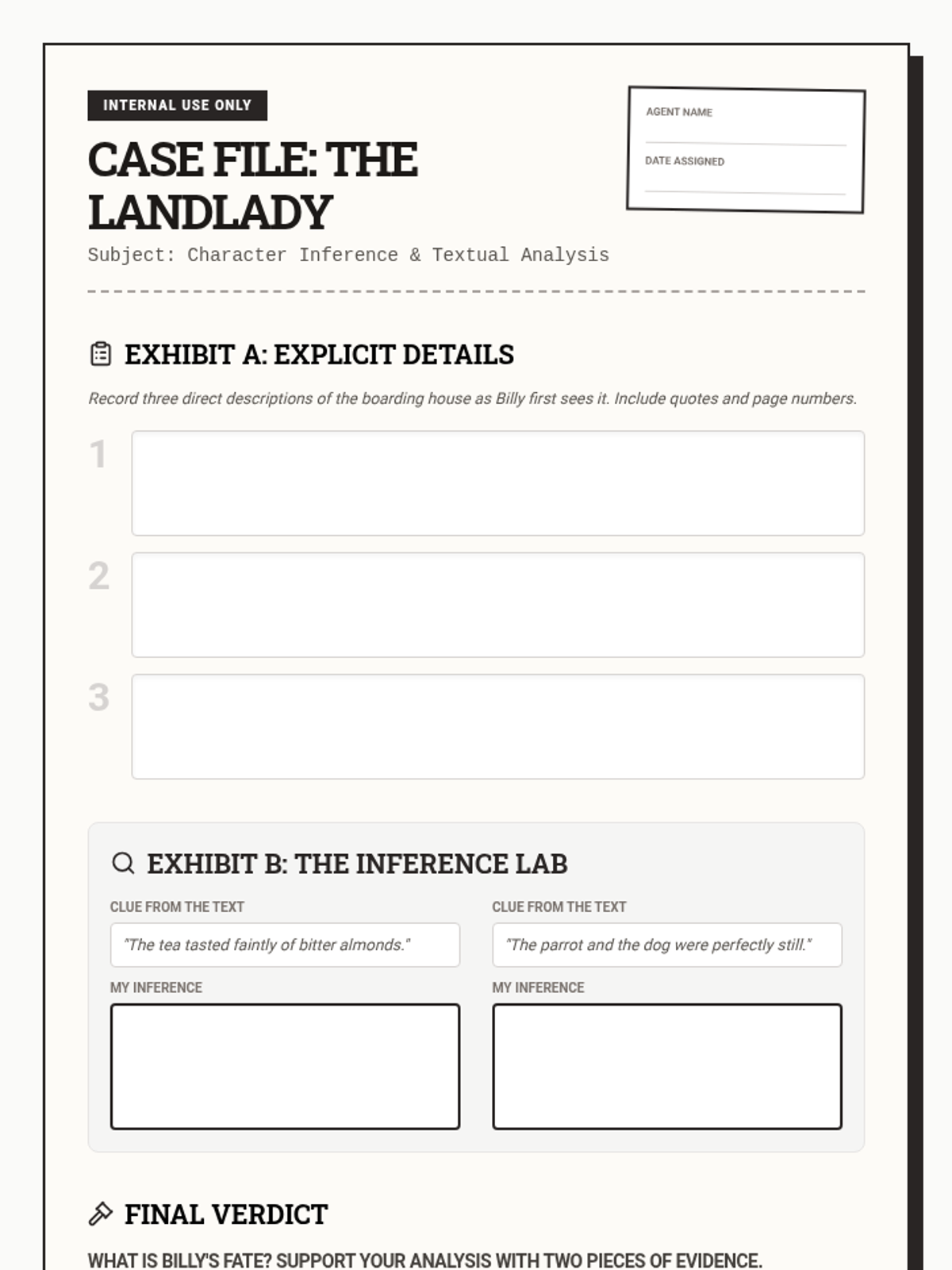
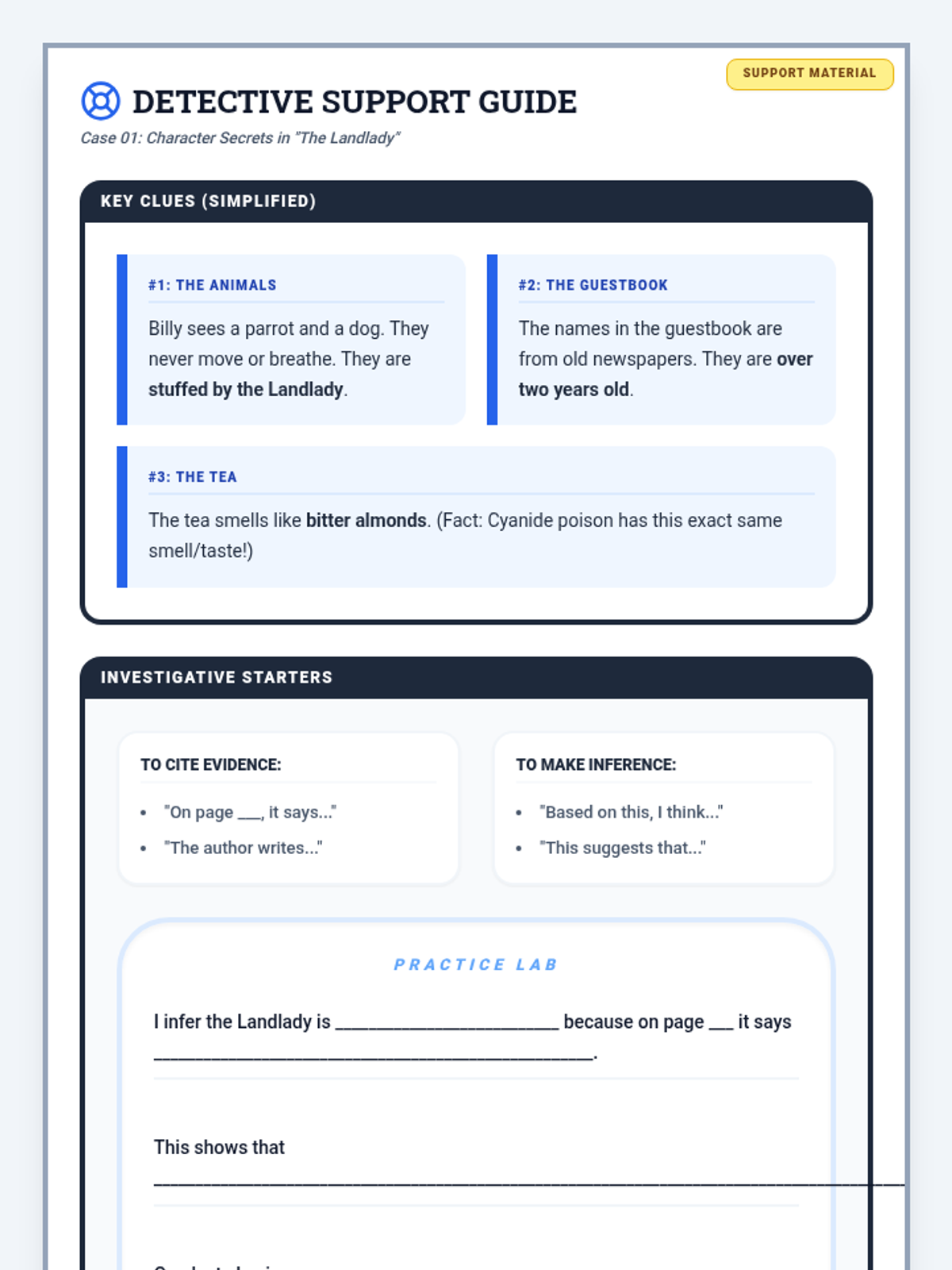
Day 1: Students analyze Roald Dahl's 'The Landlady' to practice making inferences and citing evidence to support their claims about the story's eerie outcome.
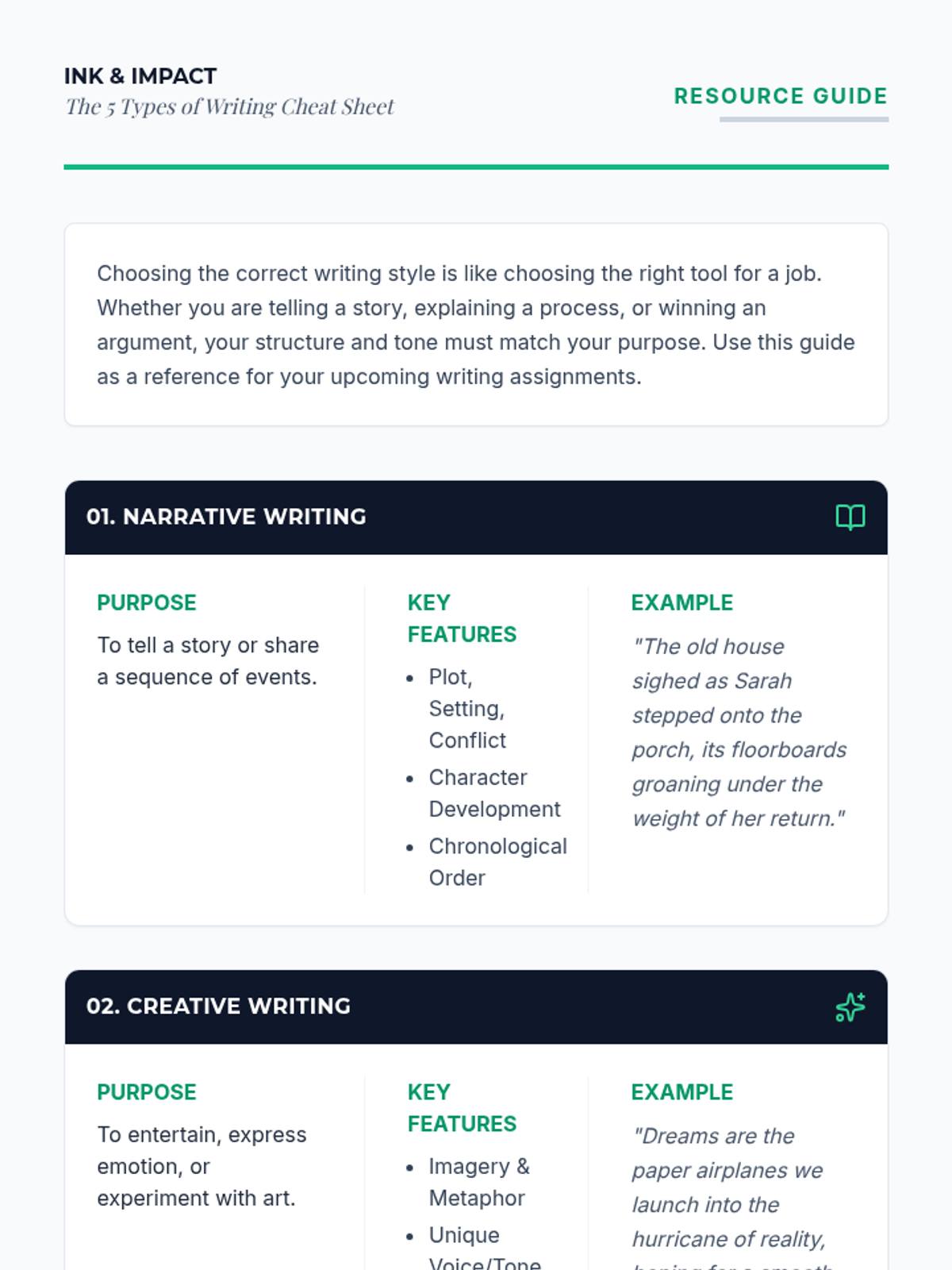
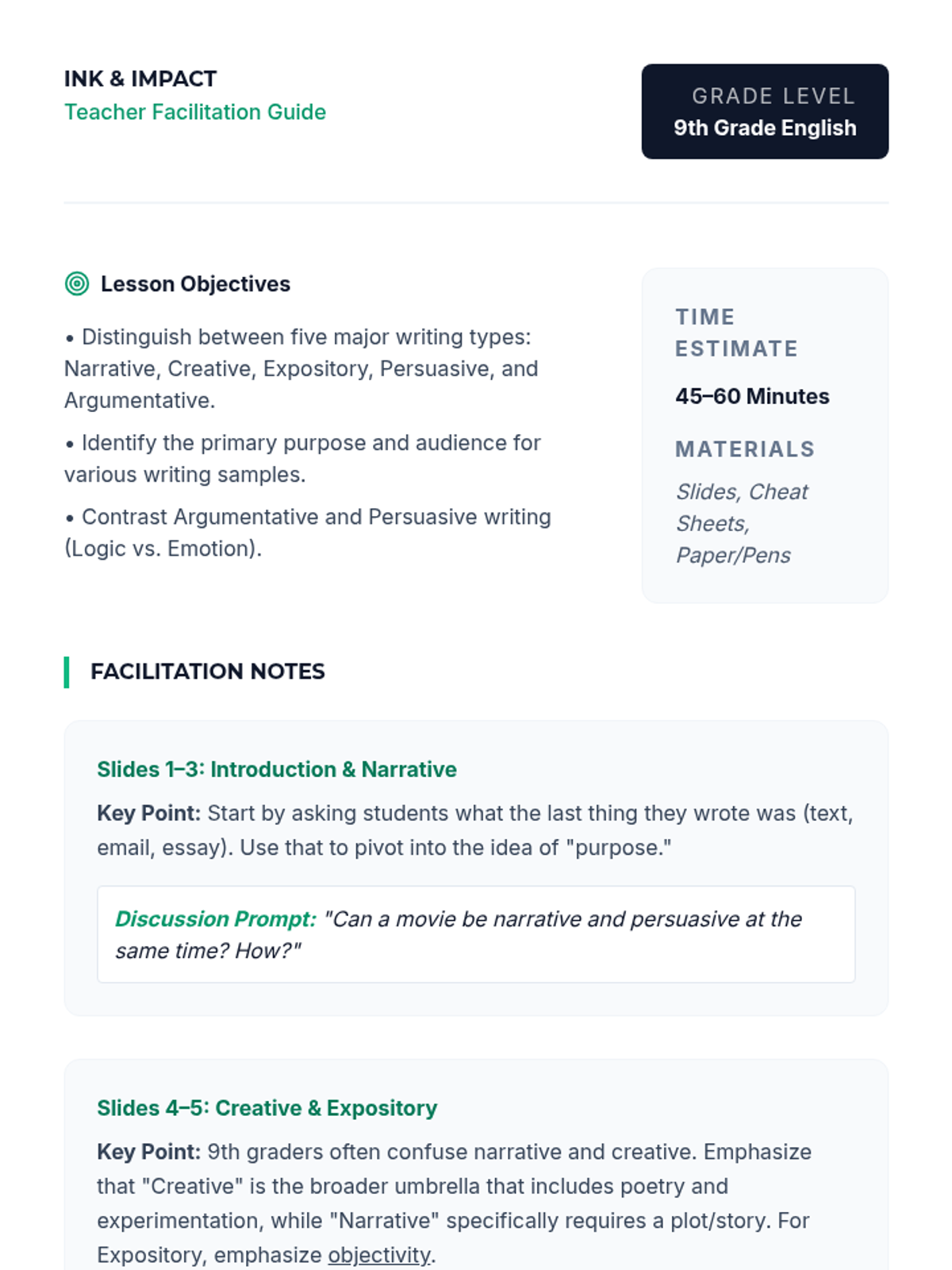
An introductory exploration of five major writing types: Narrative, Creative, Expository, Persuasive, and Argumentative. Students learn to distinguish between these forms based on purpose, structure, and audience impact.
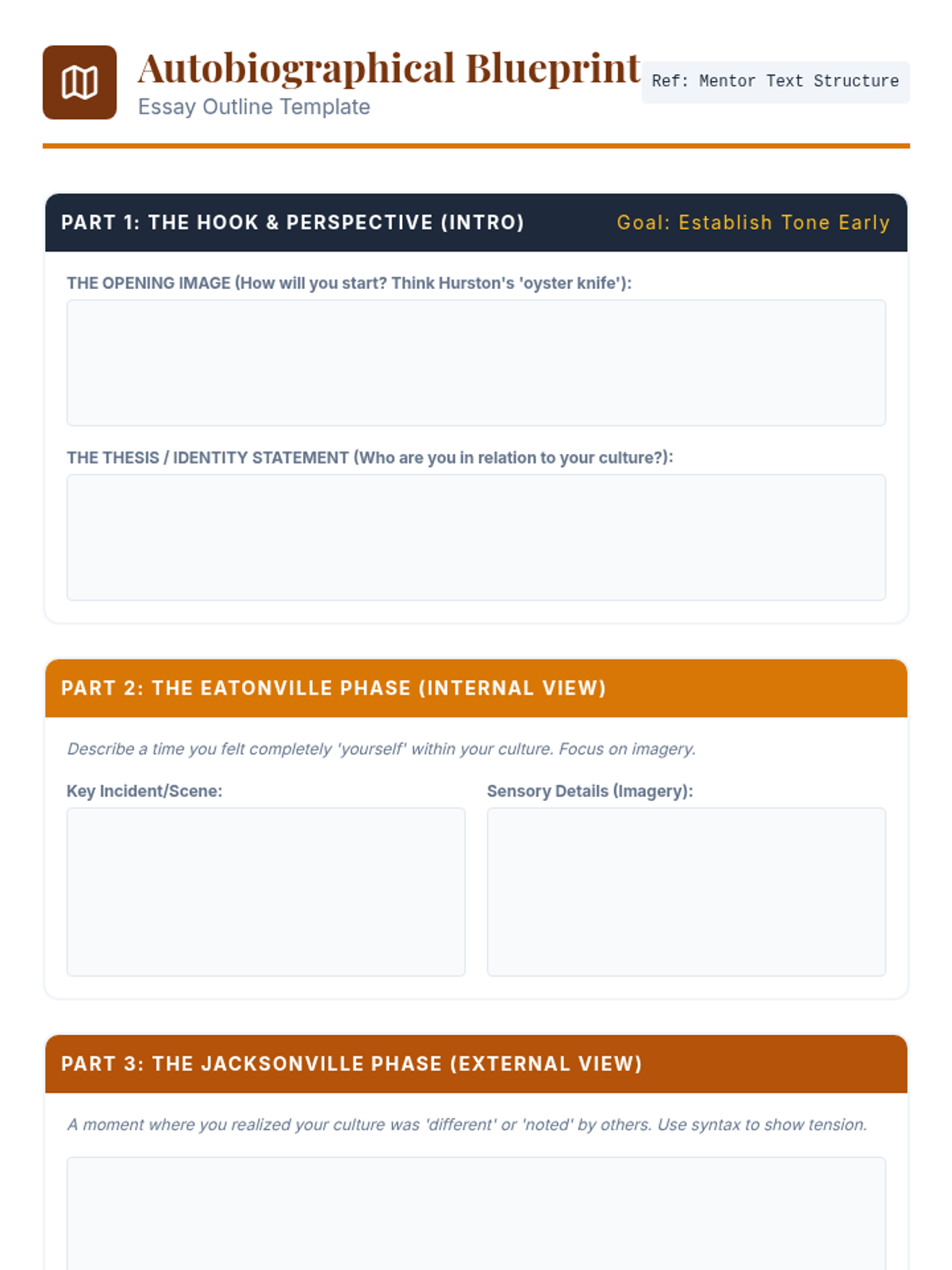
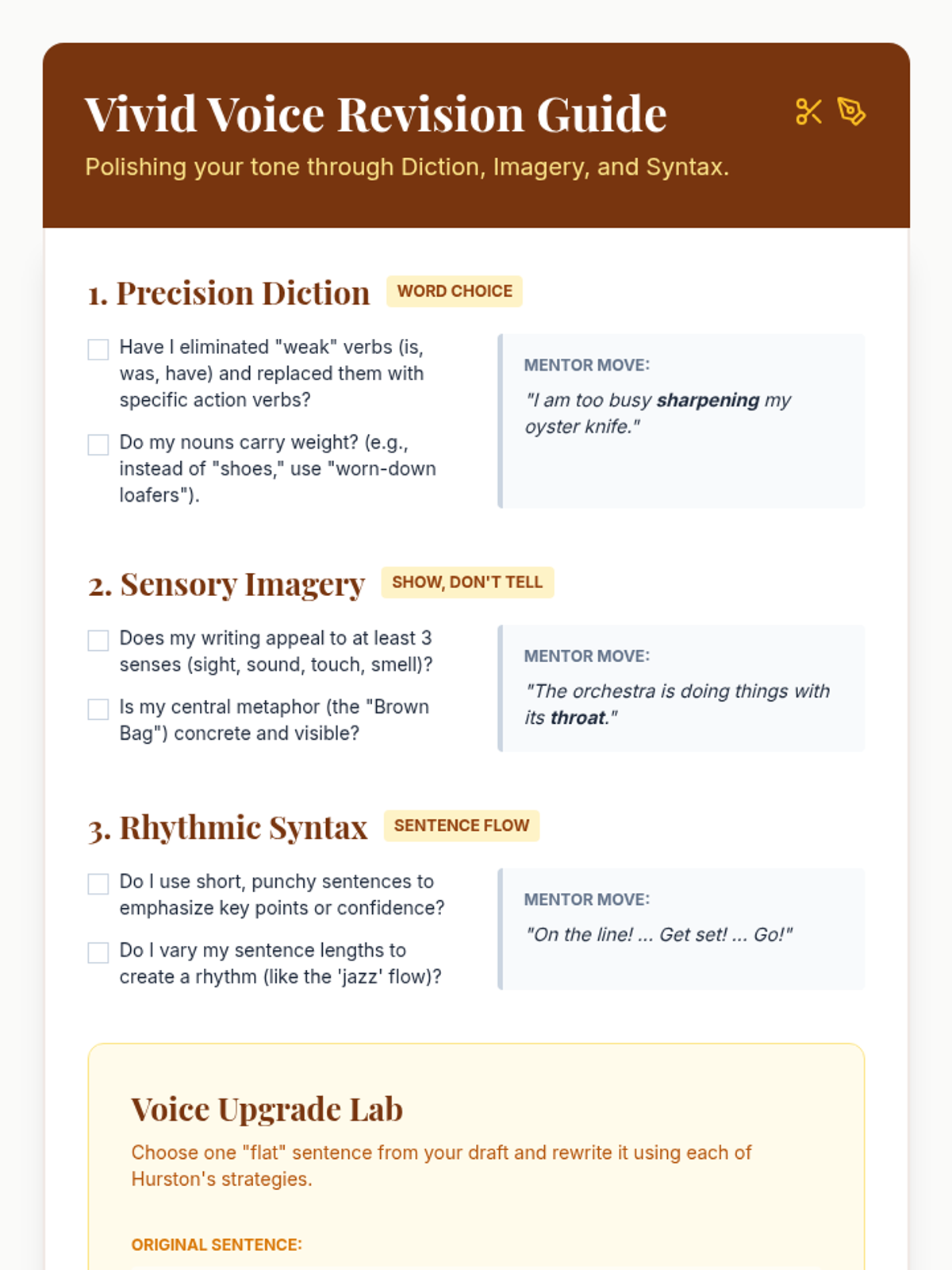
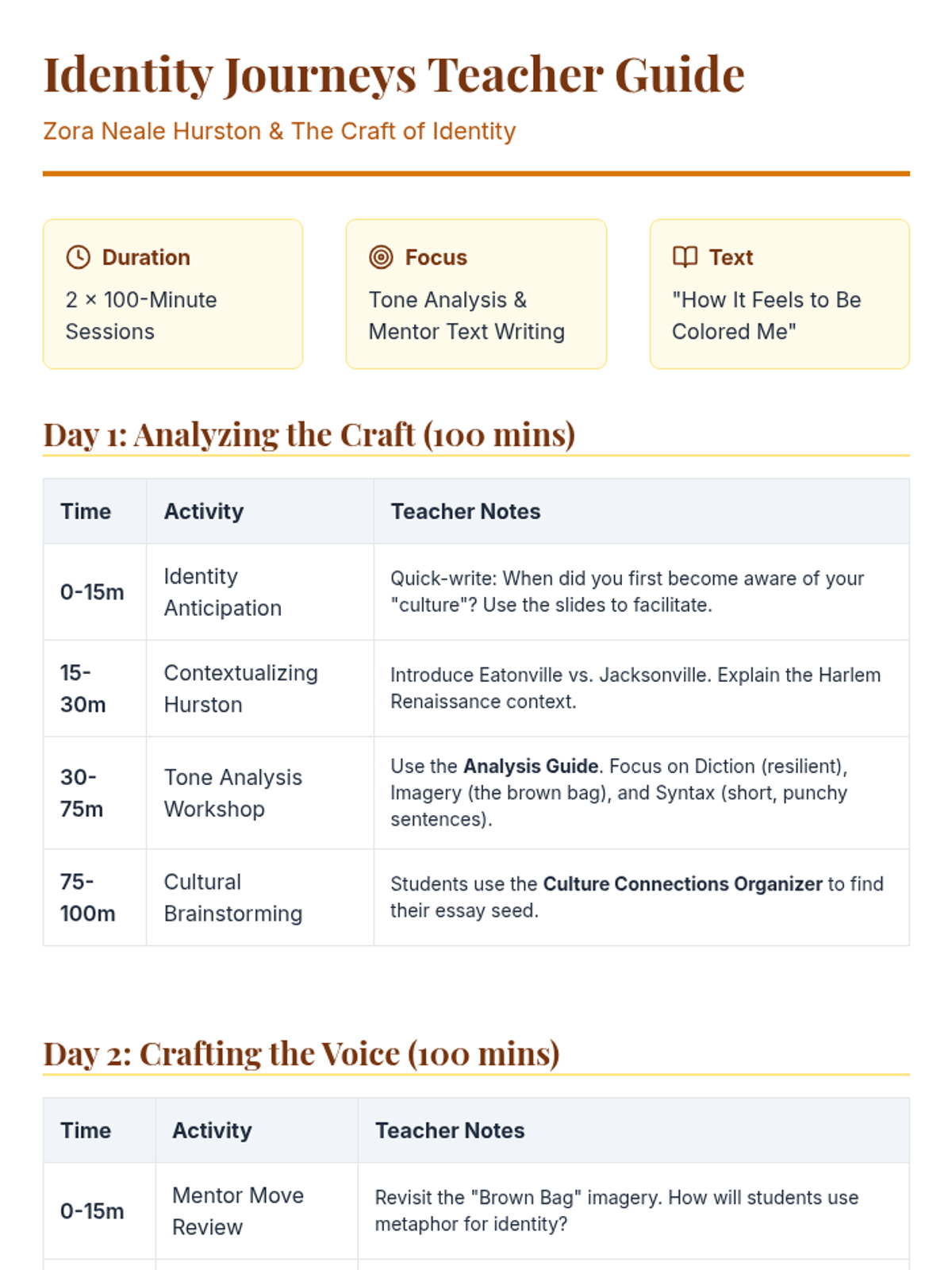
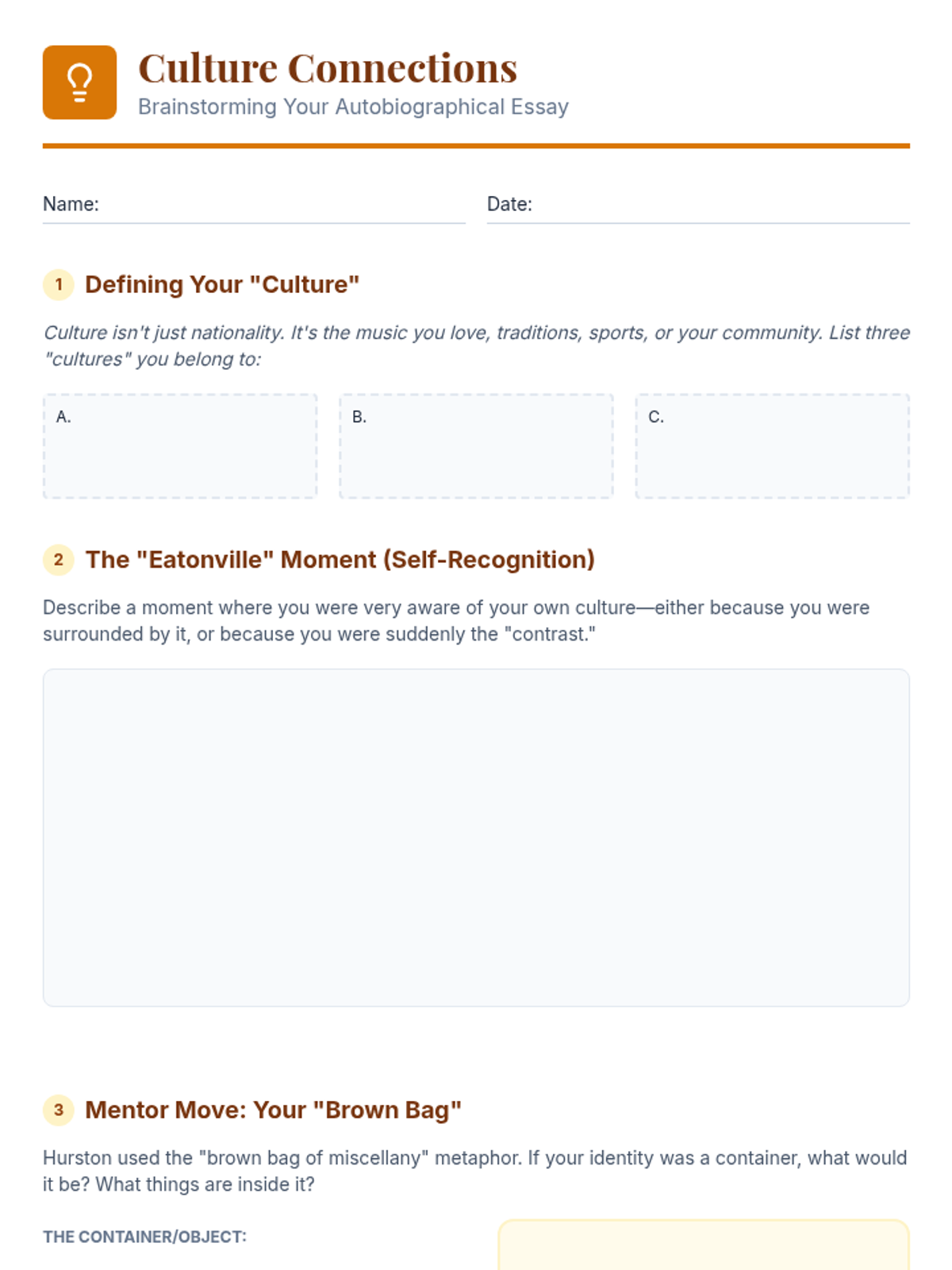
A 100-minute session where students use Hurston's essay as a mentor text to outline, draft, and revise their own autobiographical essays. The lesson focuses on applying specific tone-shaping techniques—diction, imagery, and syntax—to their own writing about cultural perspectives.
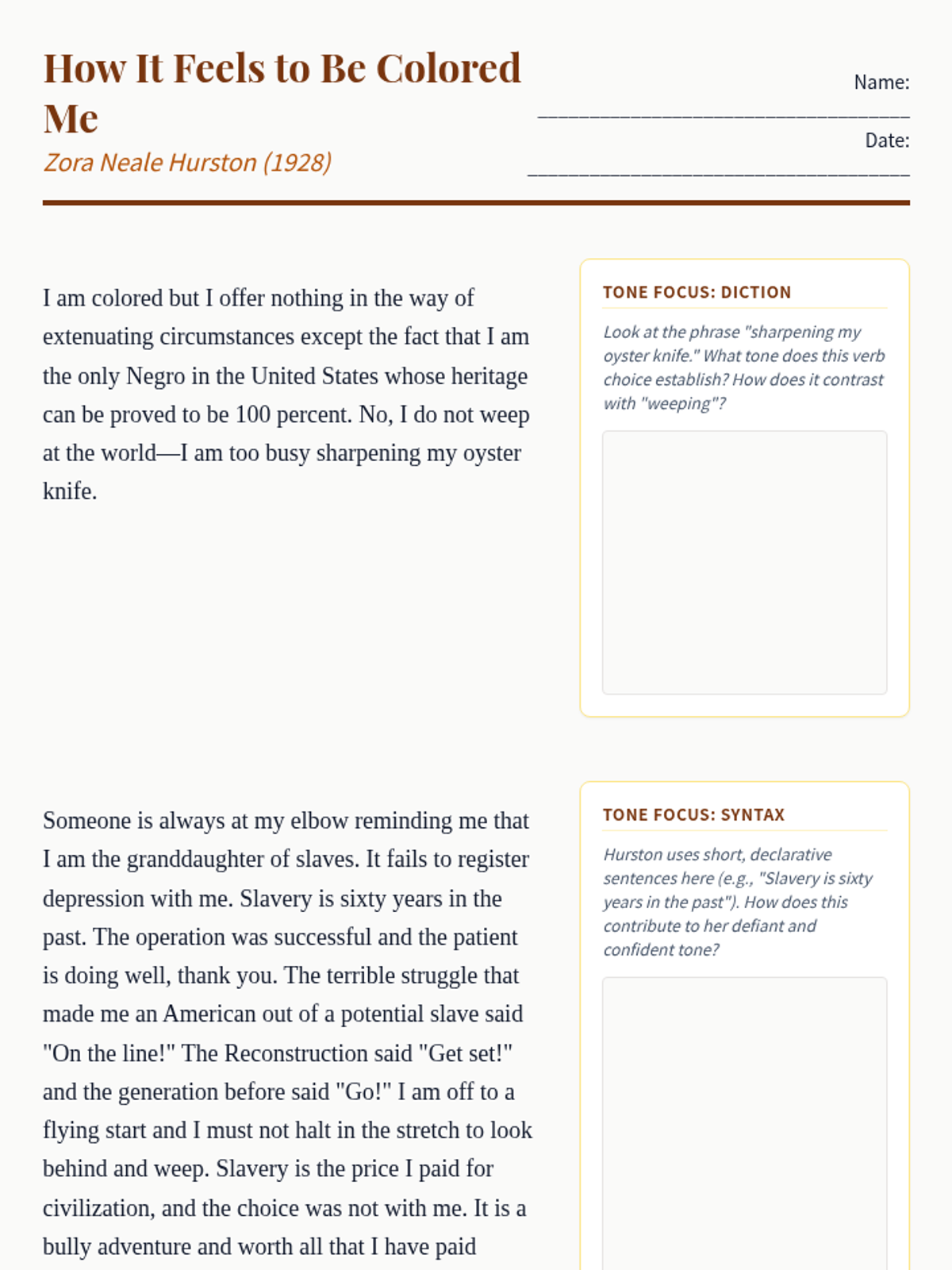
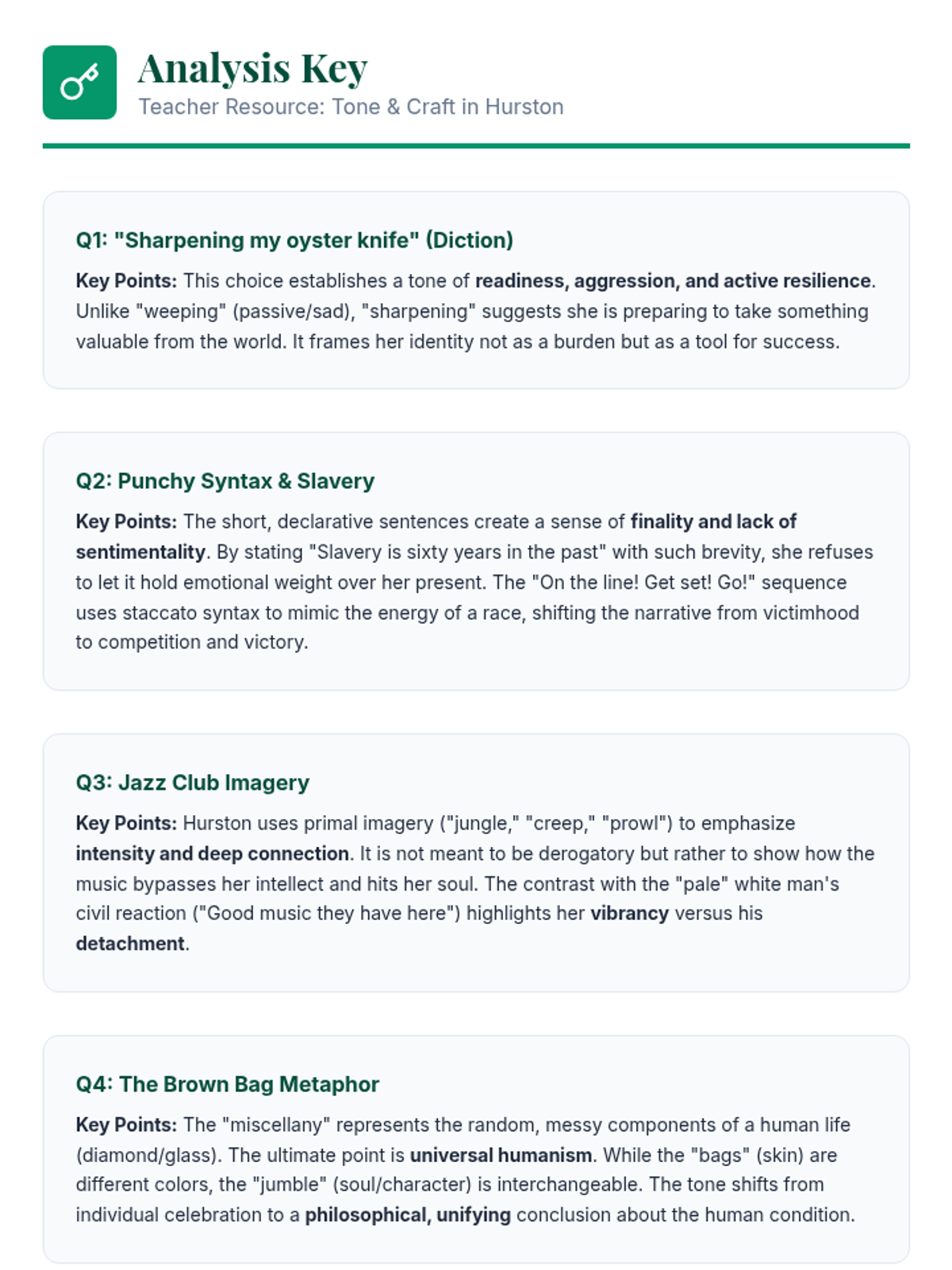
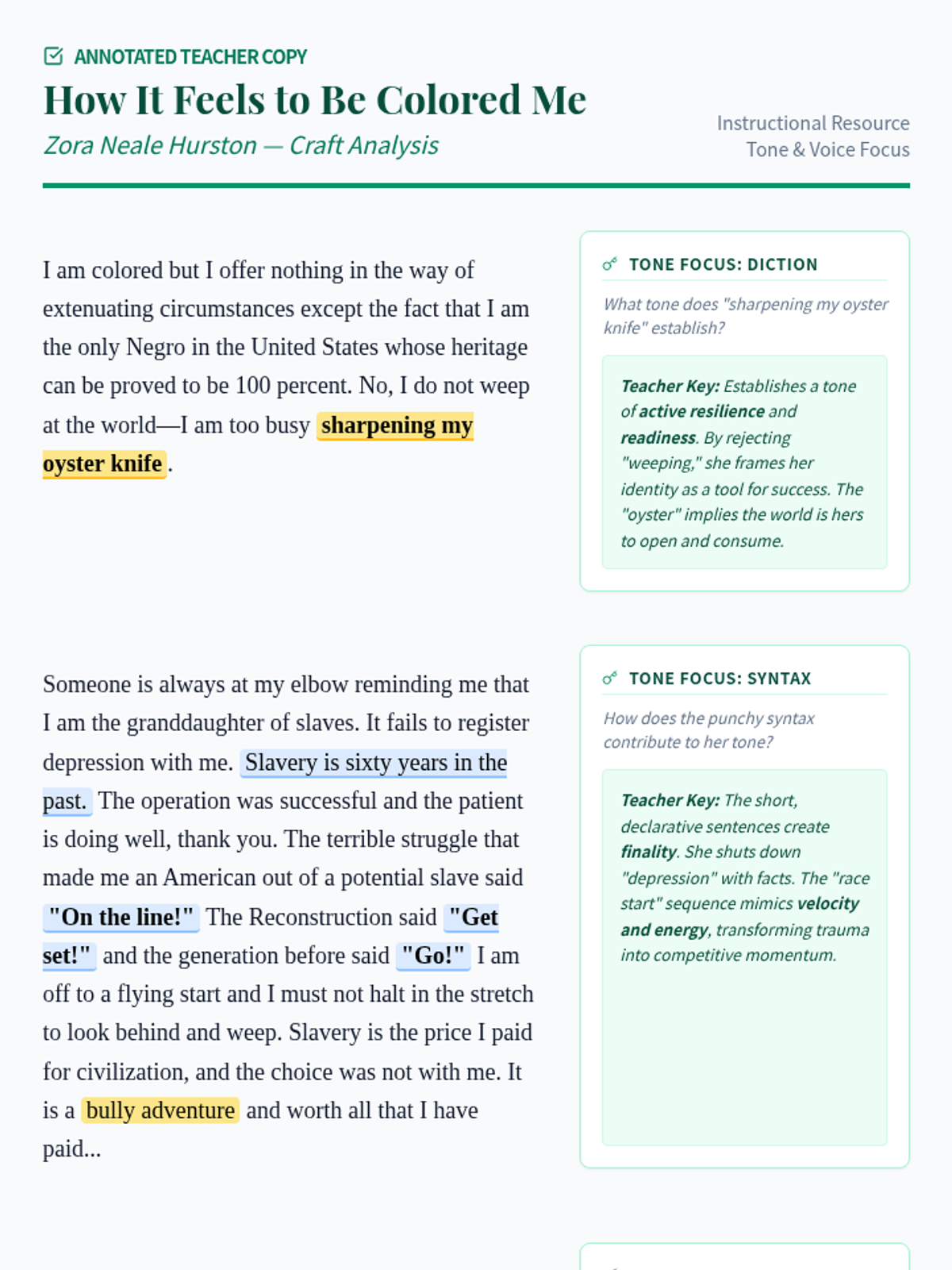
A 100-minute session focused on reading Zora Neale Hurston's essay and analyzing how she uses diction, imagery, and syntax to establish her resilient and celebratory tone. Students engage with the text through embedded annotation and begin brainstorming their own cultural identity essays.
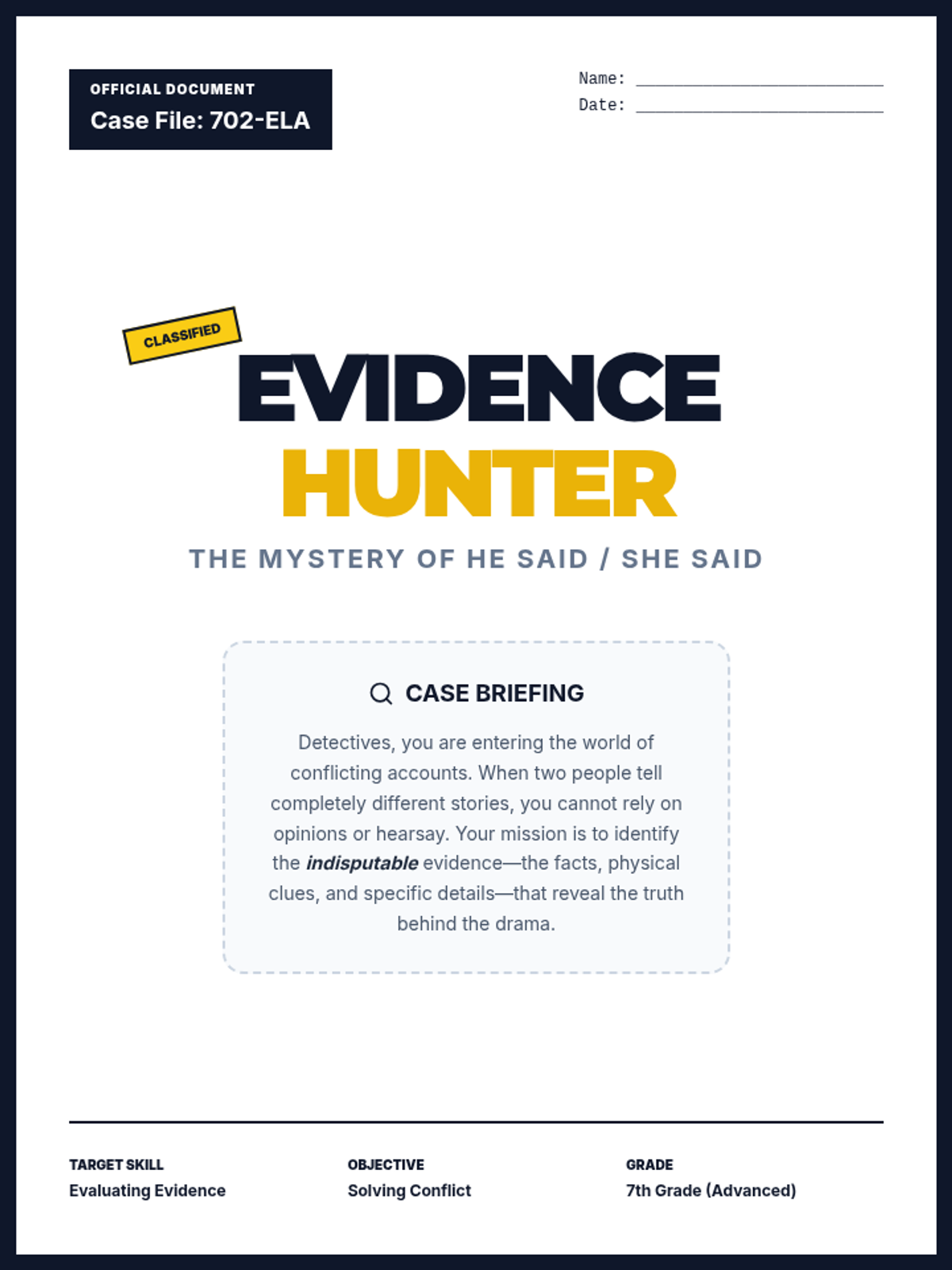
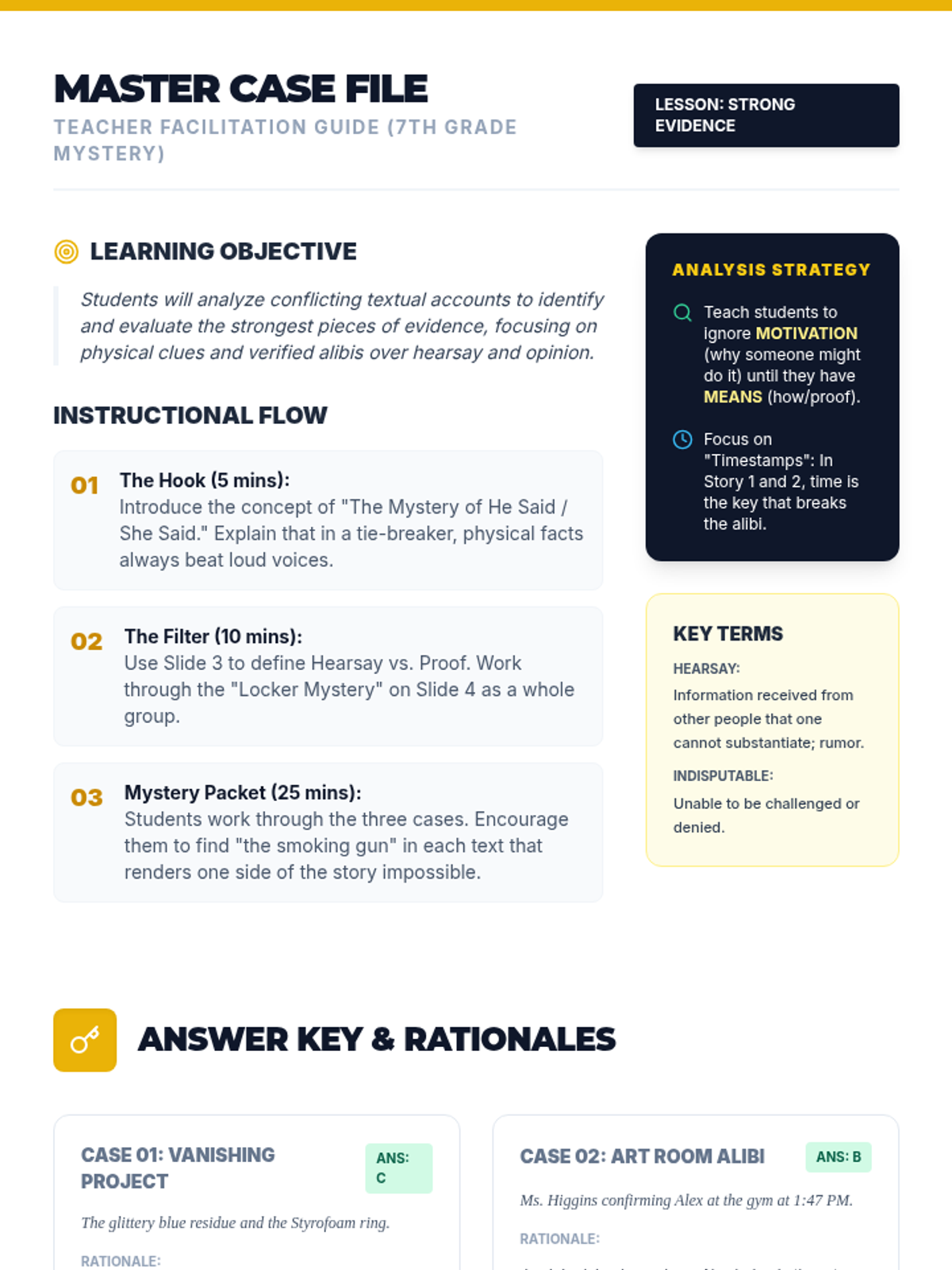
Students learn to distinguish between 'weak' and 'strong' evidence using a detective-themed approach. They will analyze high-interest short stories to select the evidence that best supports a given claim, focusing on relevance and specificity.