In this lesson, students explore the physical and chemical properties of matter through two detailed informational passages. They will practice identifying main ideas, citing evidence, and mastering scientific vocabulary.
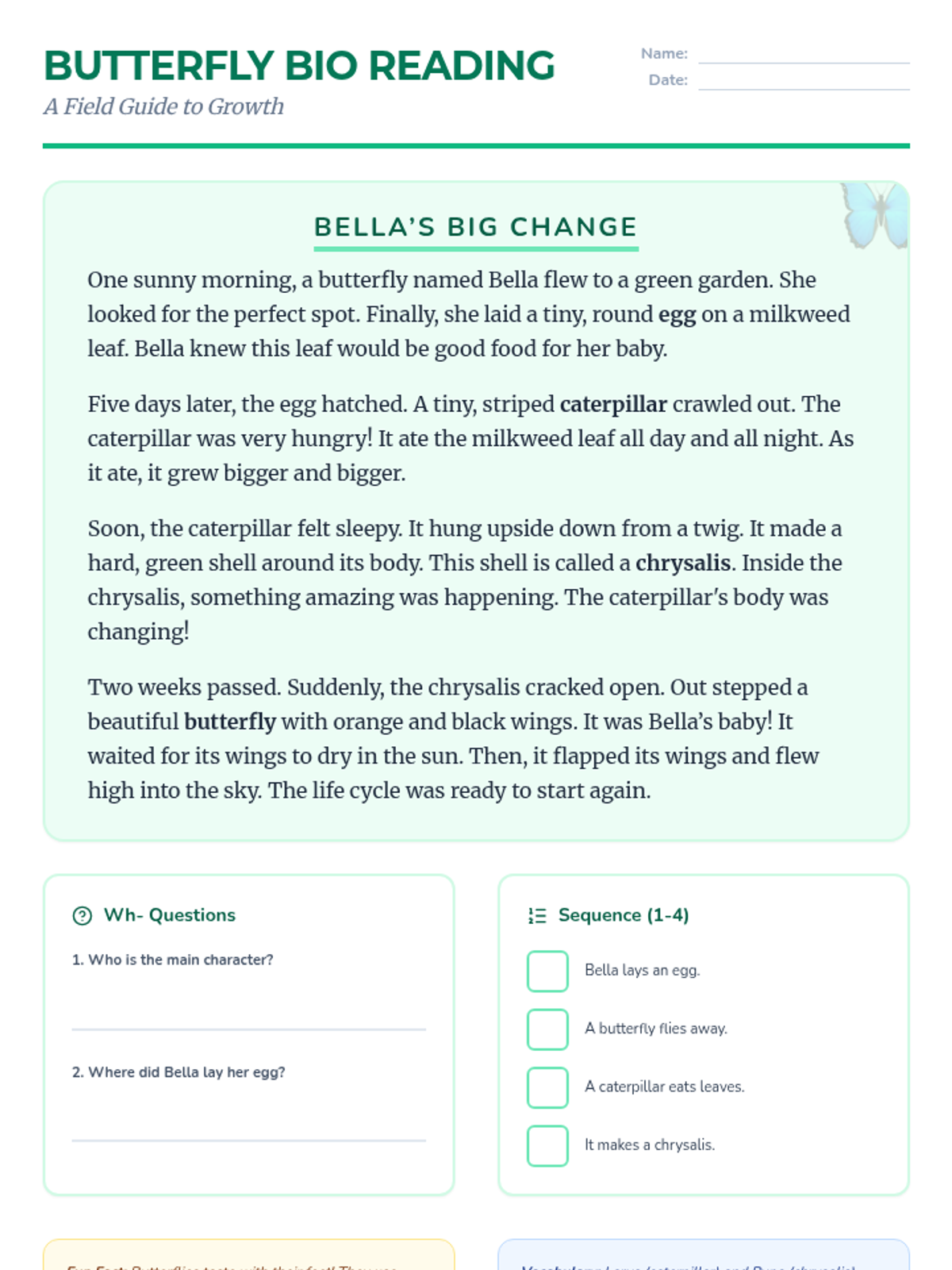
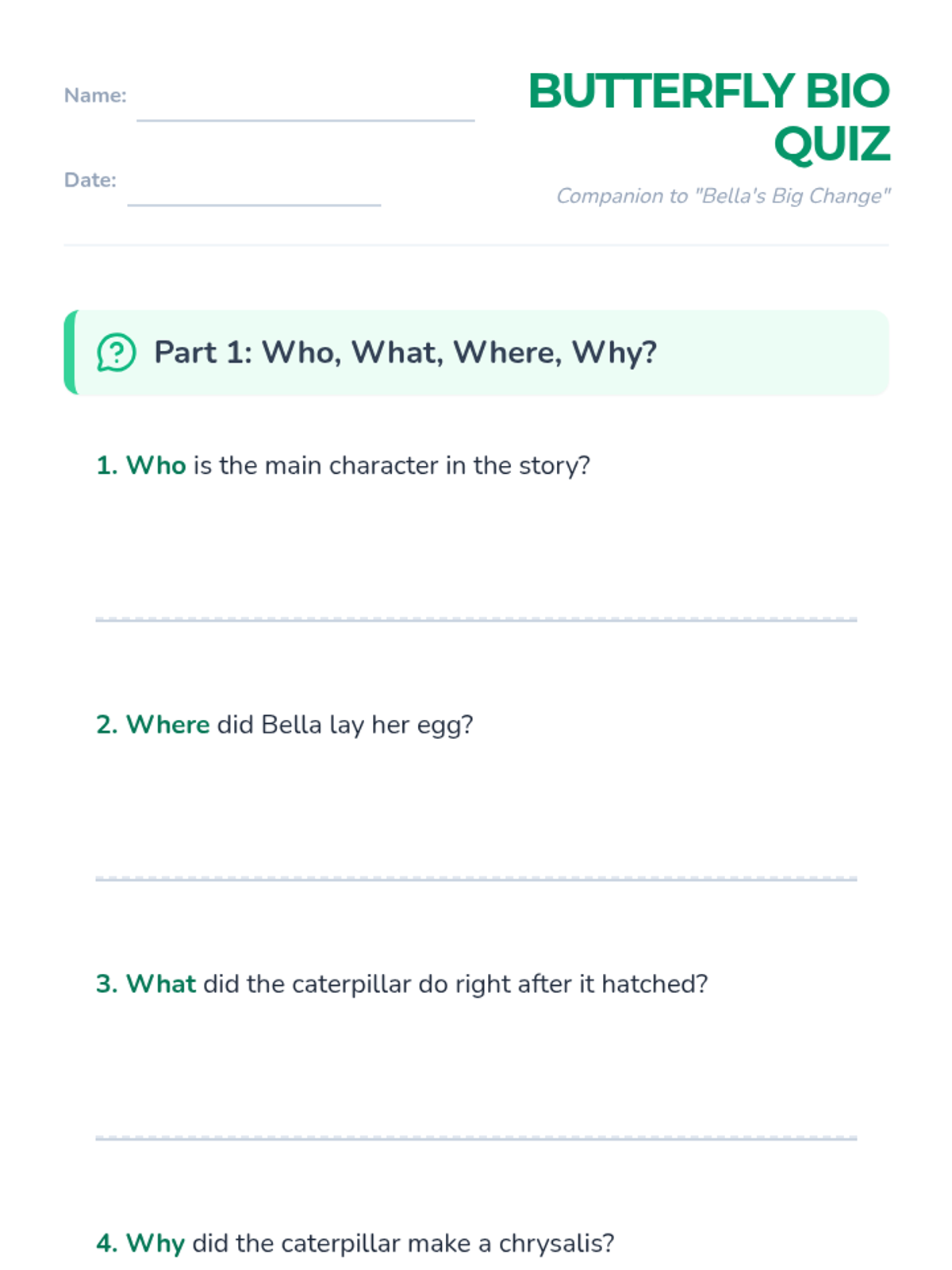
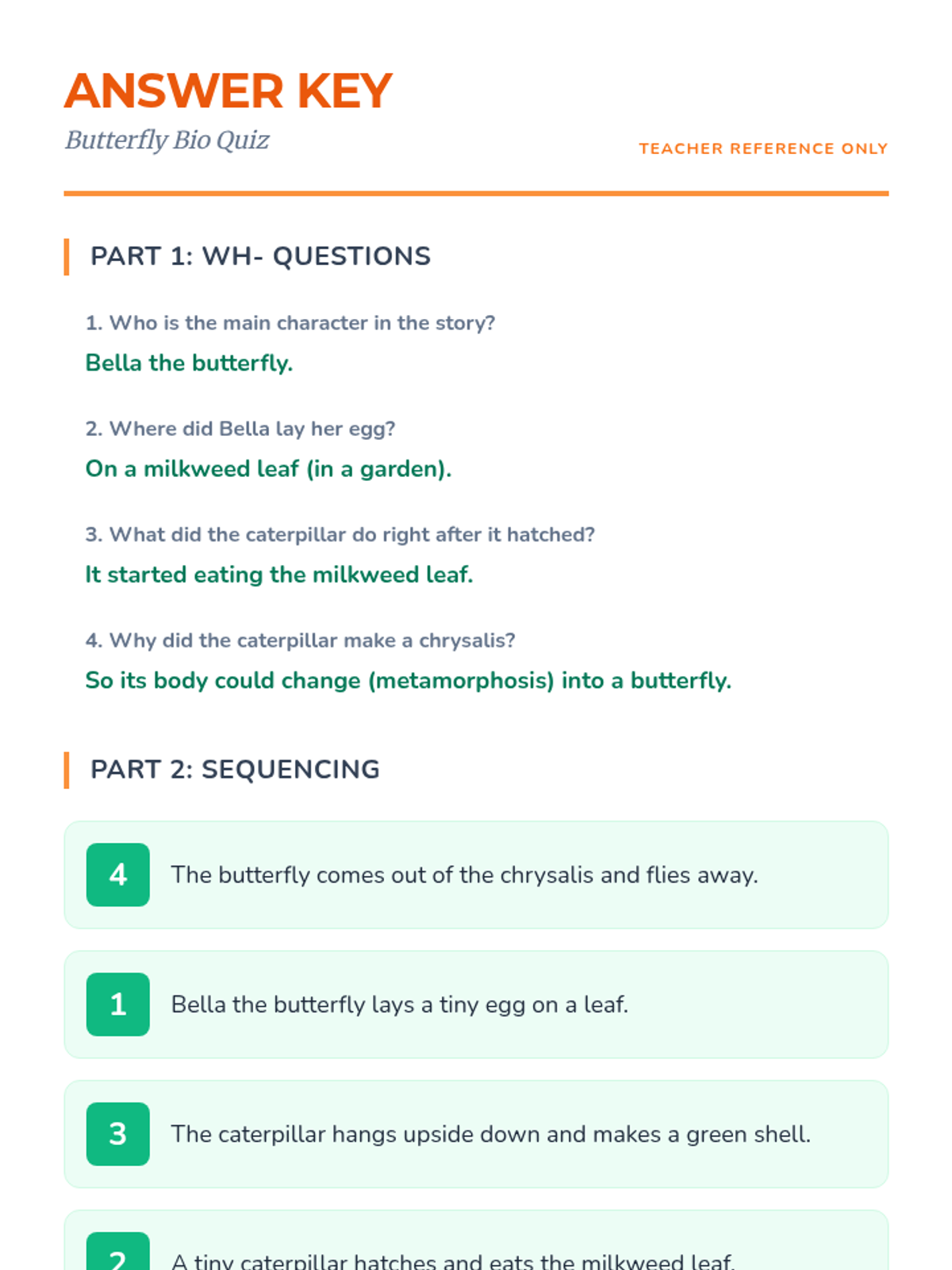
A beginner-friendly exploration of the four stages of a butterfly's life cycle, featuring a reading passage and comprehension activities focused on sequencing and Wh- questions.
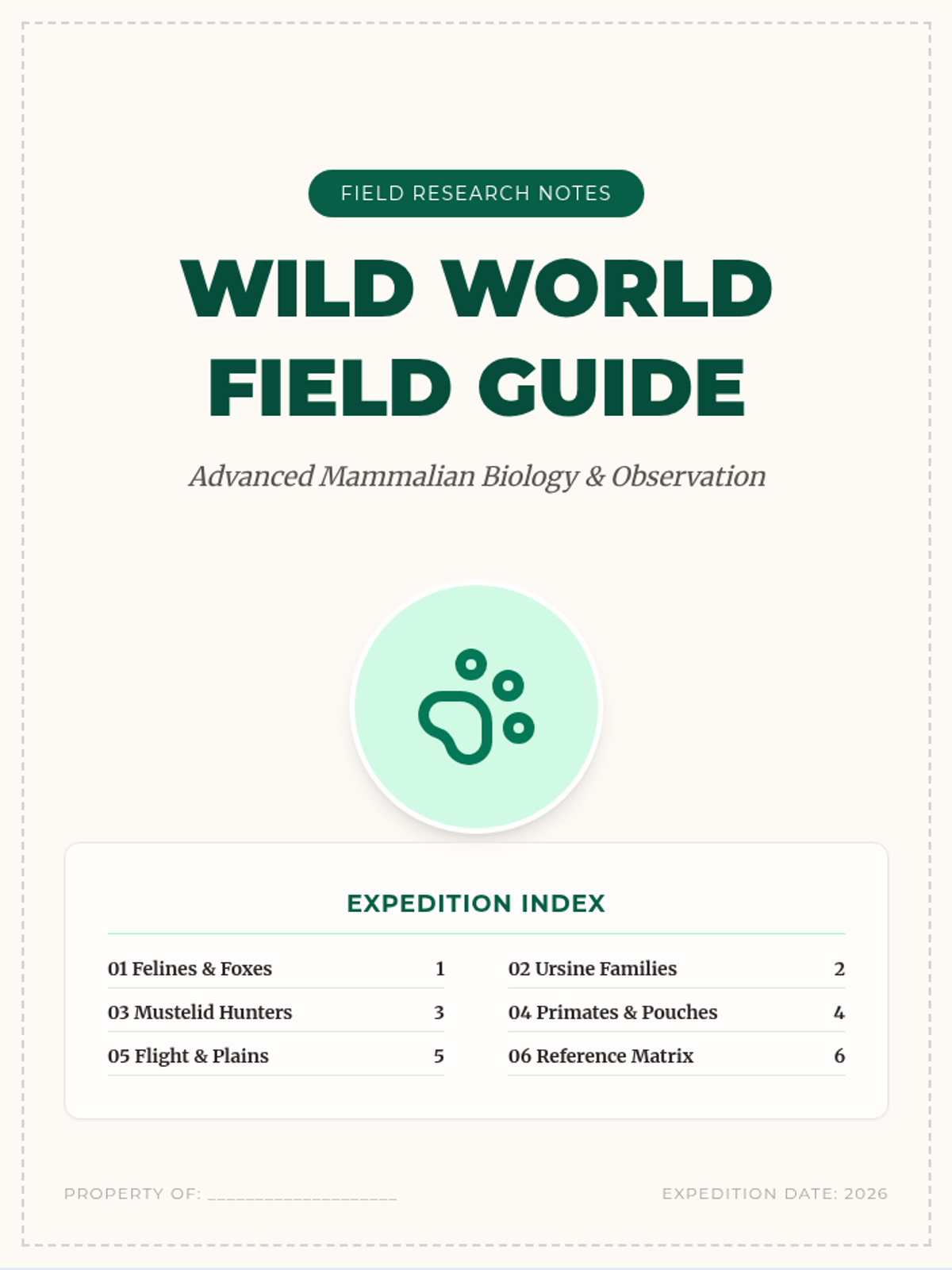
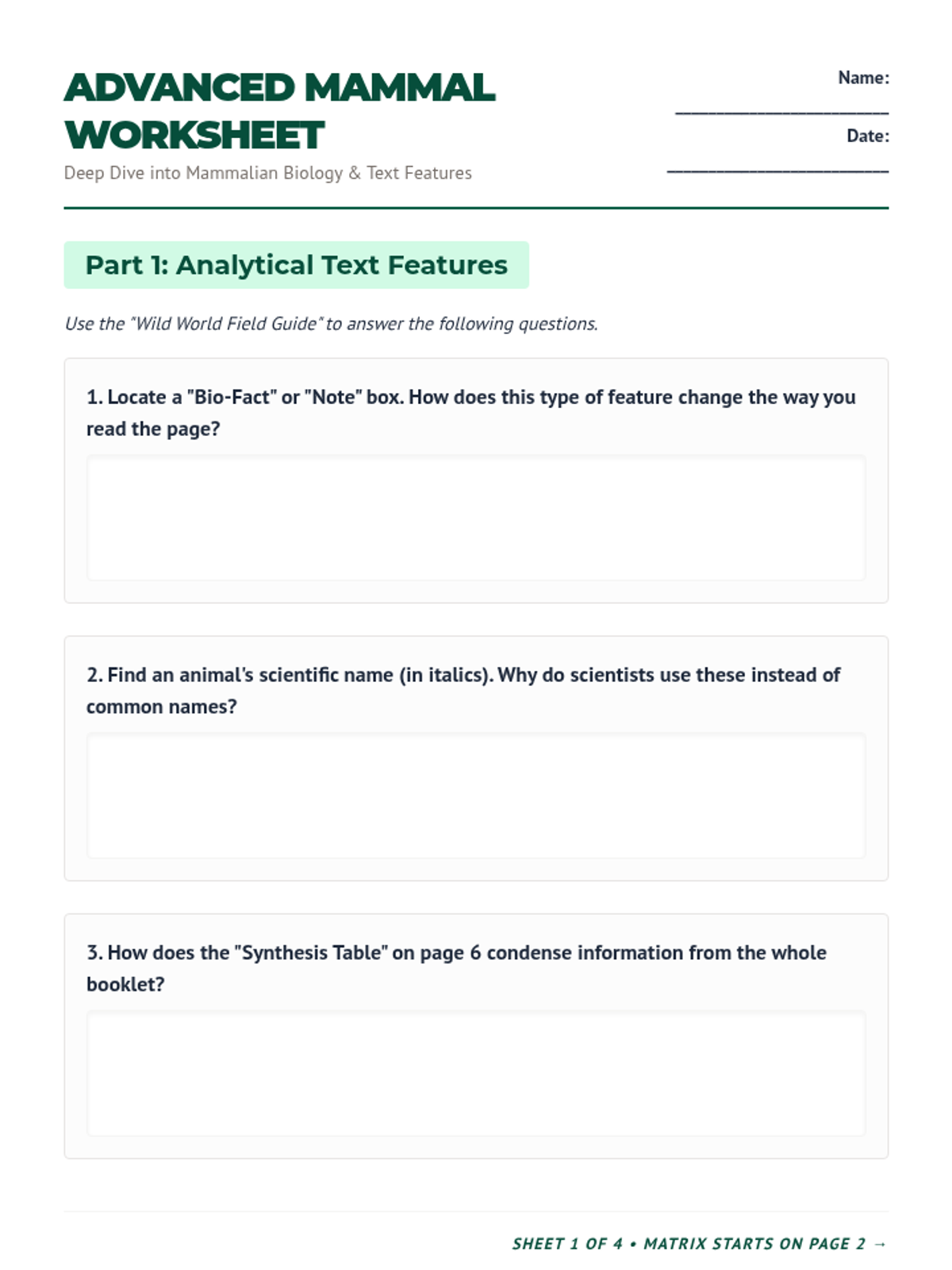
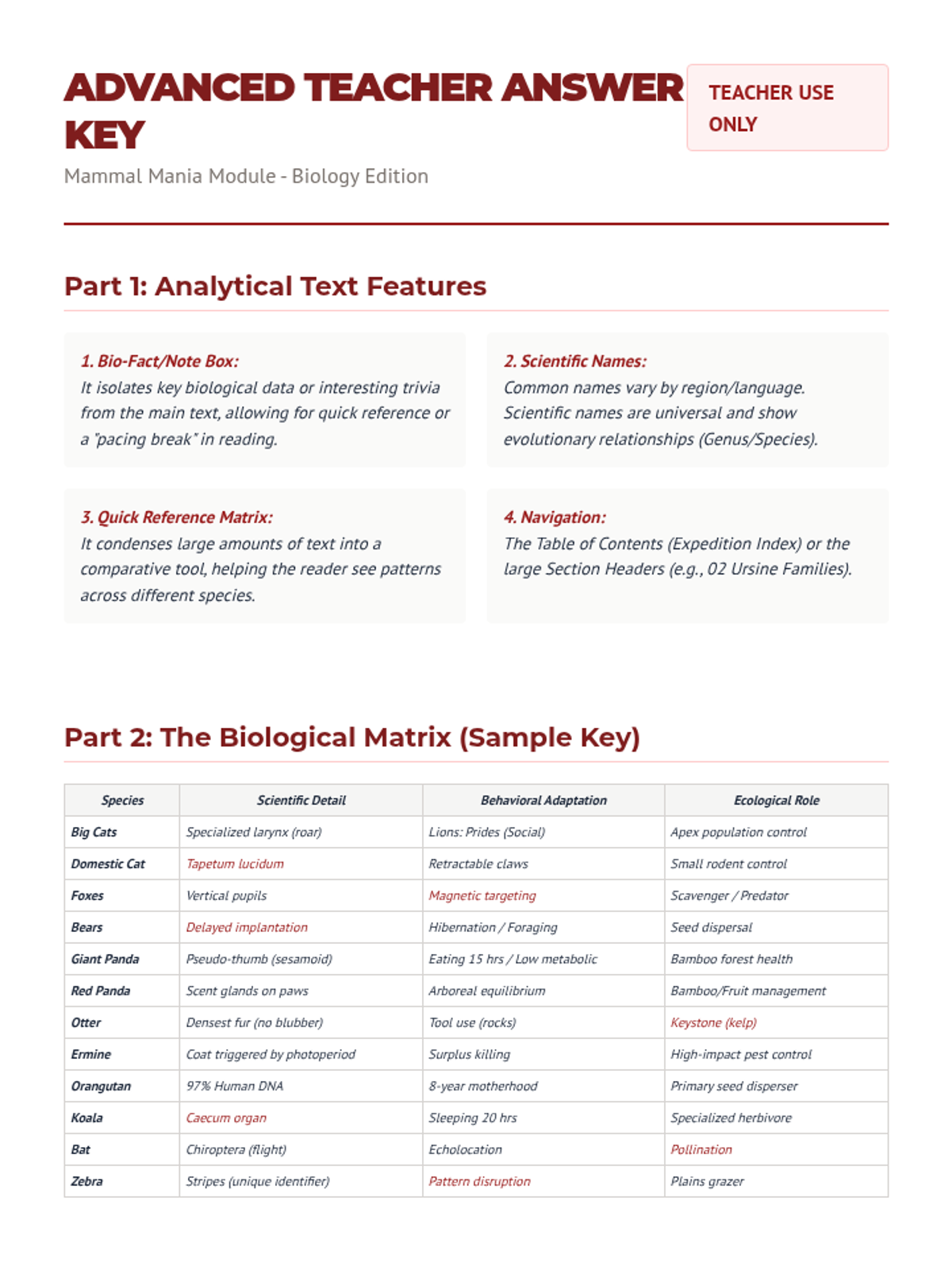
An in-depth exploration of diverse mammals, focusing on informational text features, main ideas, and vocabulary acquisition through a comprehensive field guide and activity set.
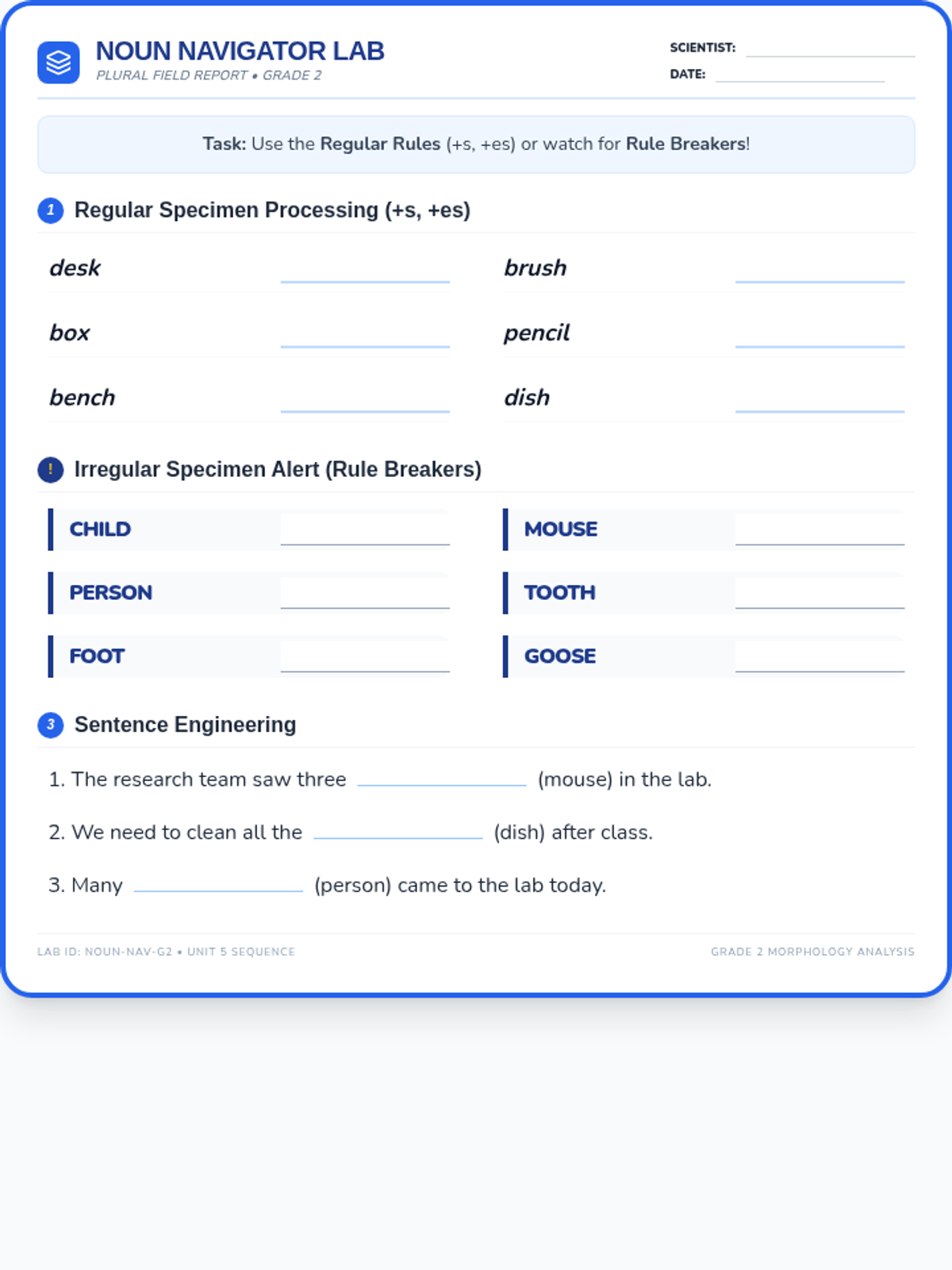
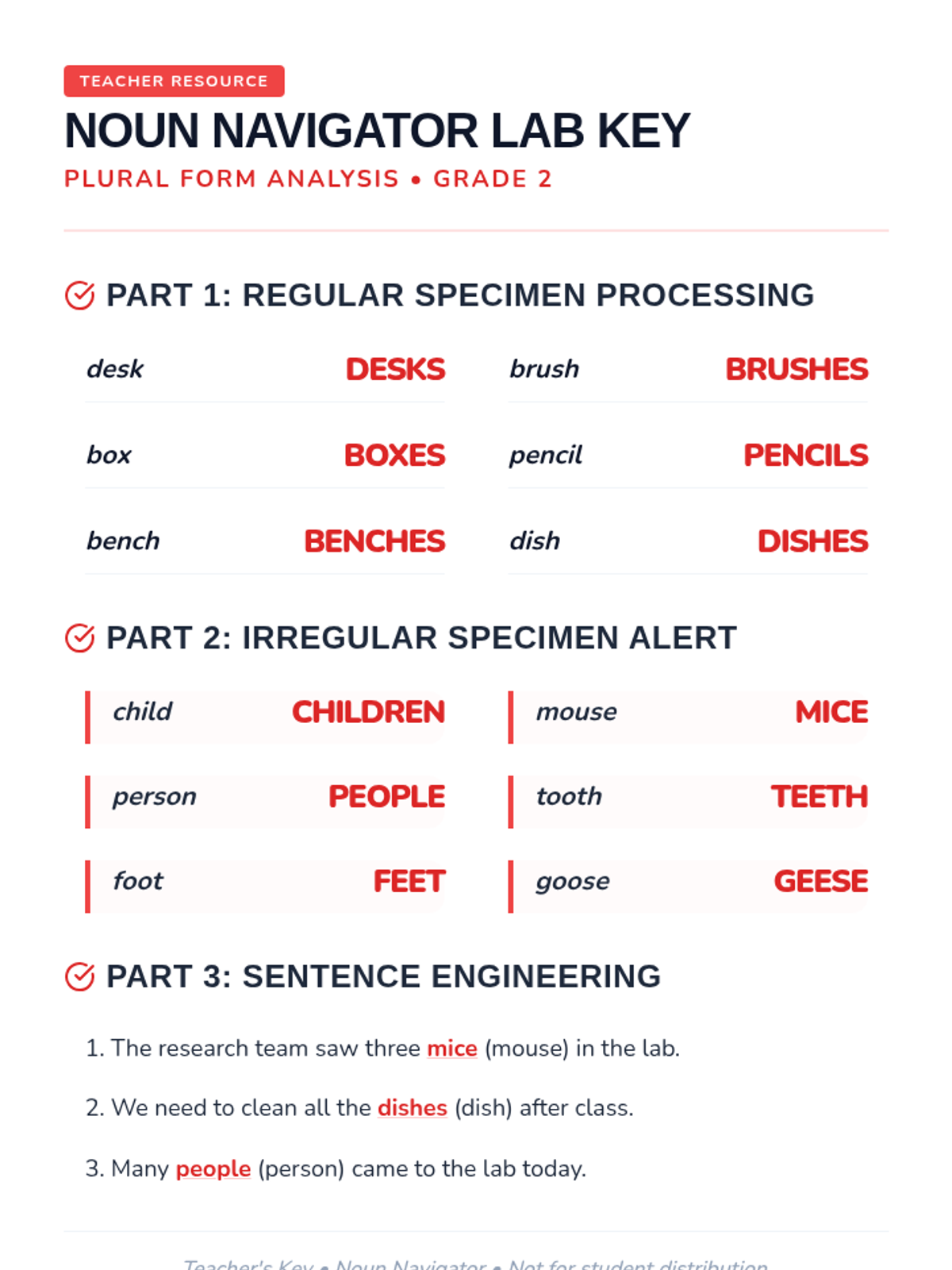
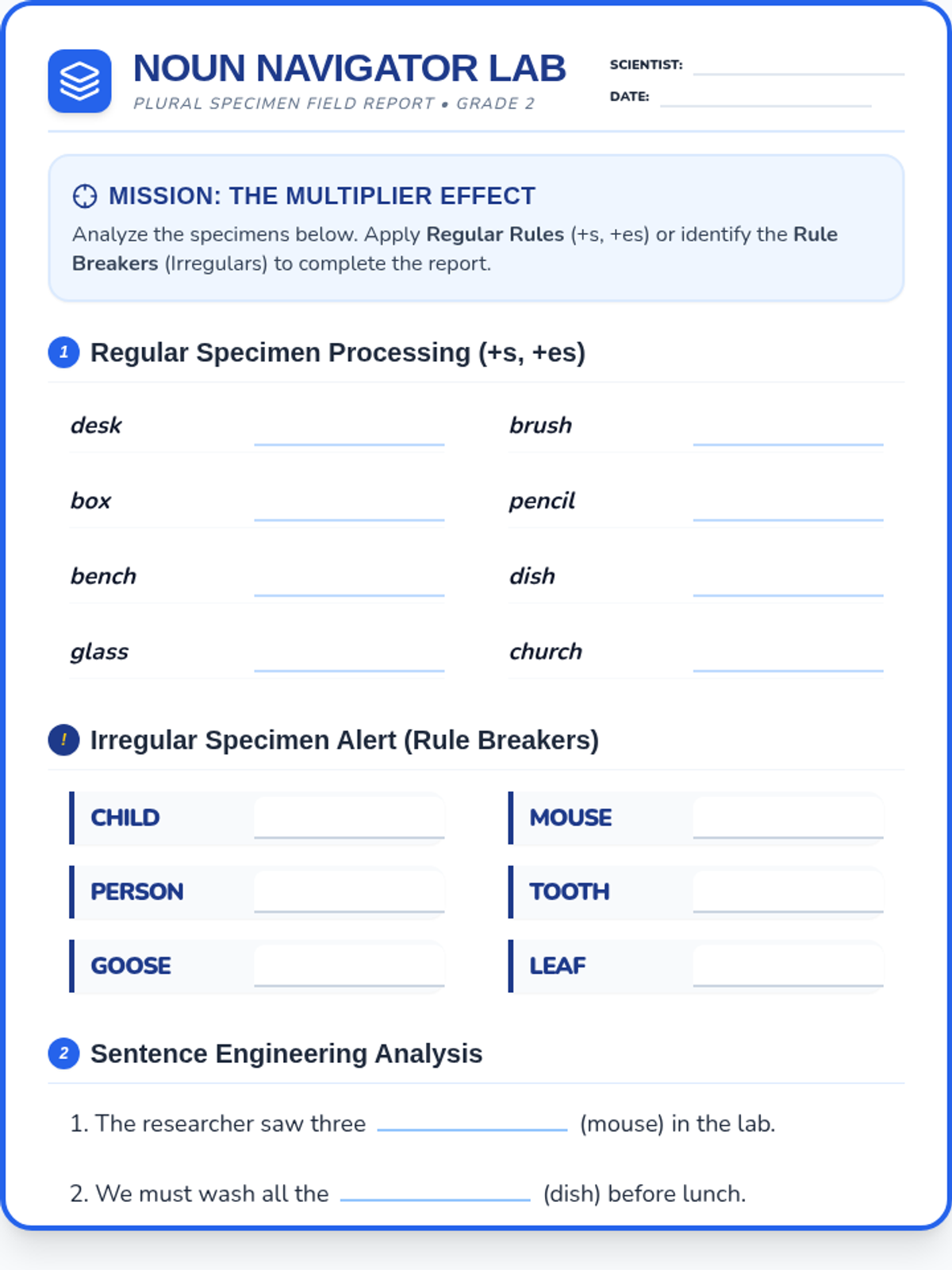
A lesson on identifying and forming plural nouns. Students learn the standard rules for regular plurals (-s, -es, -ies, -ves) and investigate 'rule-breaking' irregular nouns like mice, children, and people.
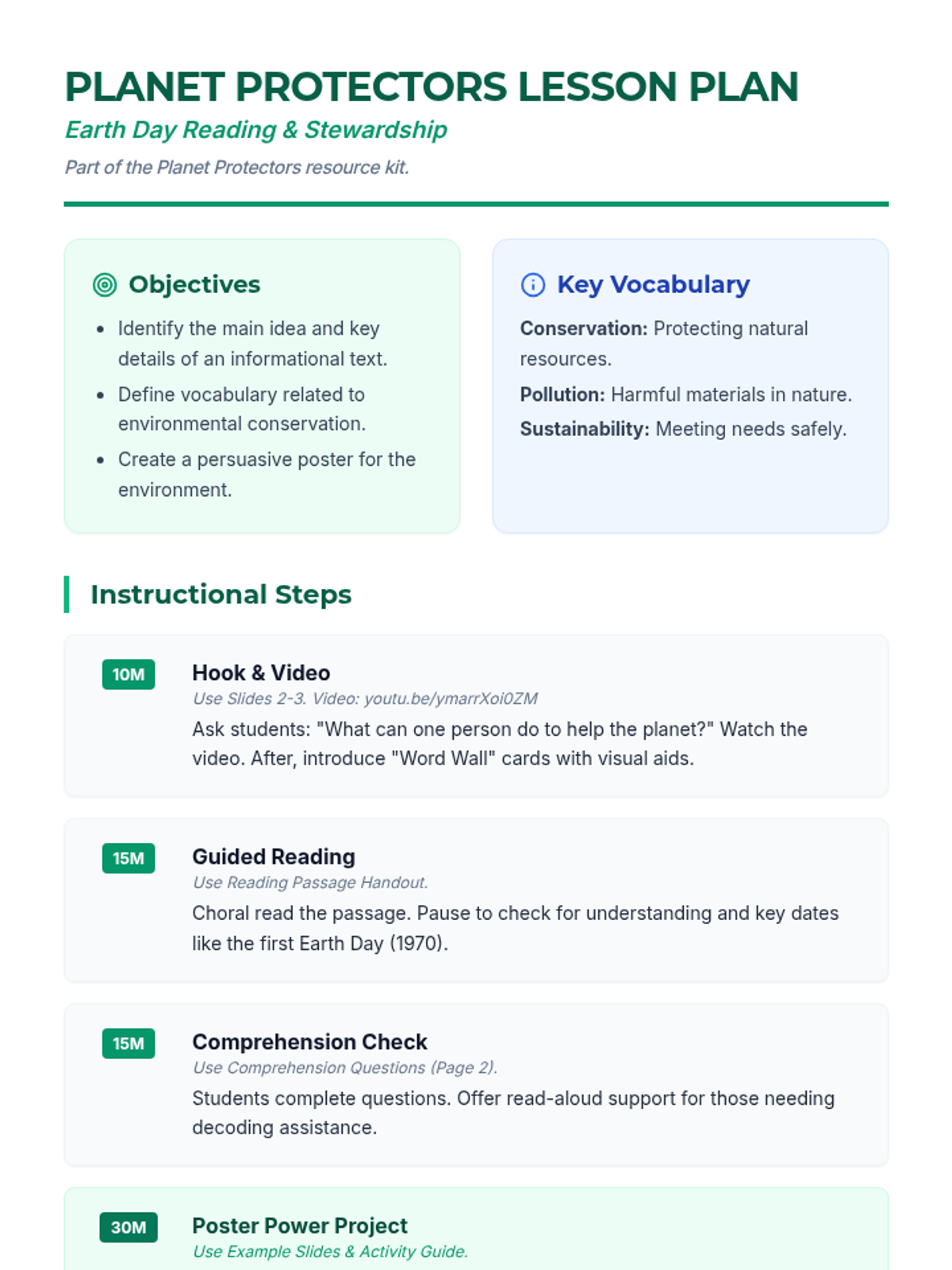
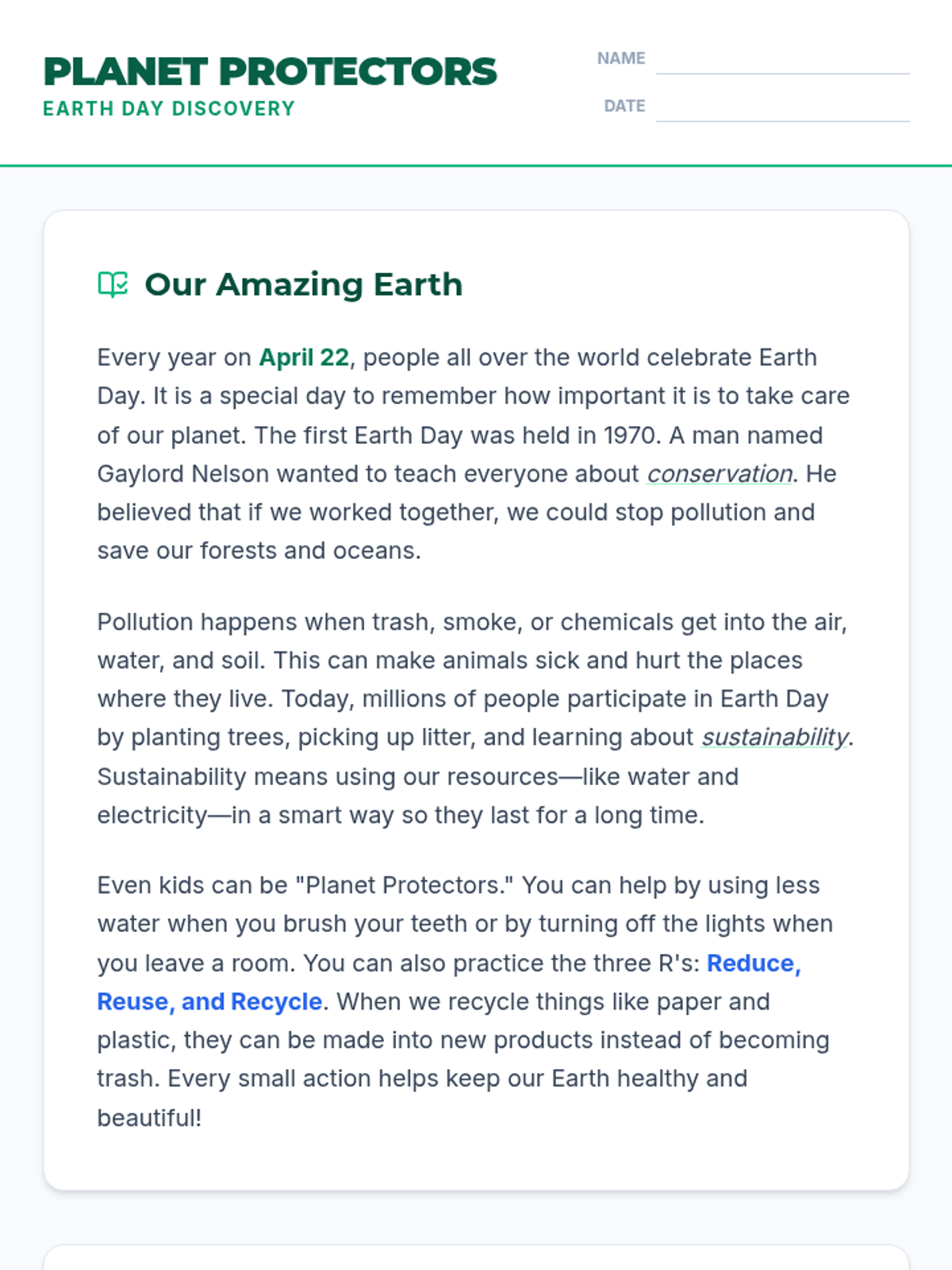
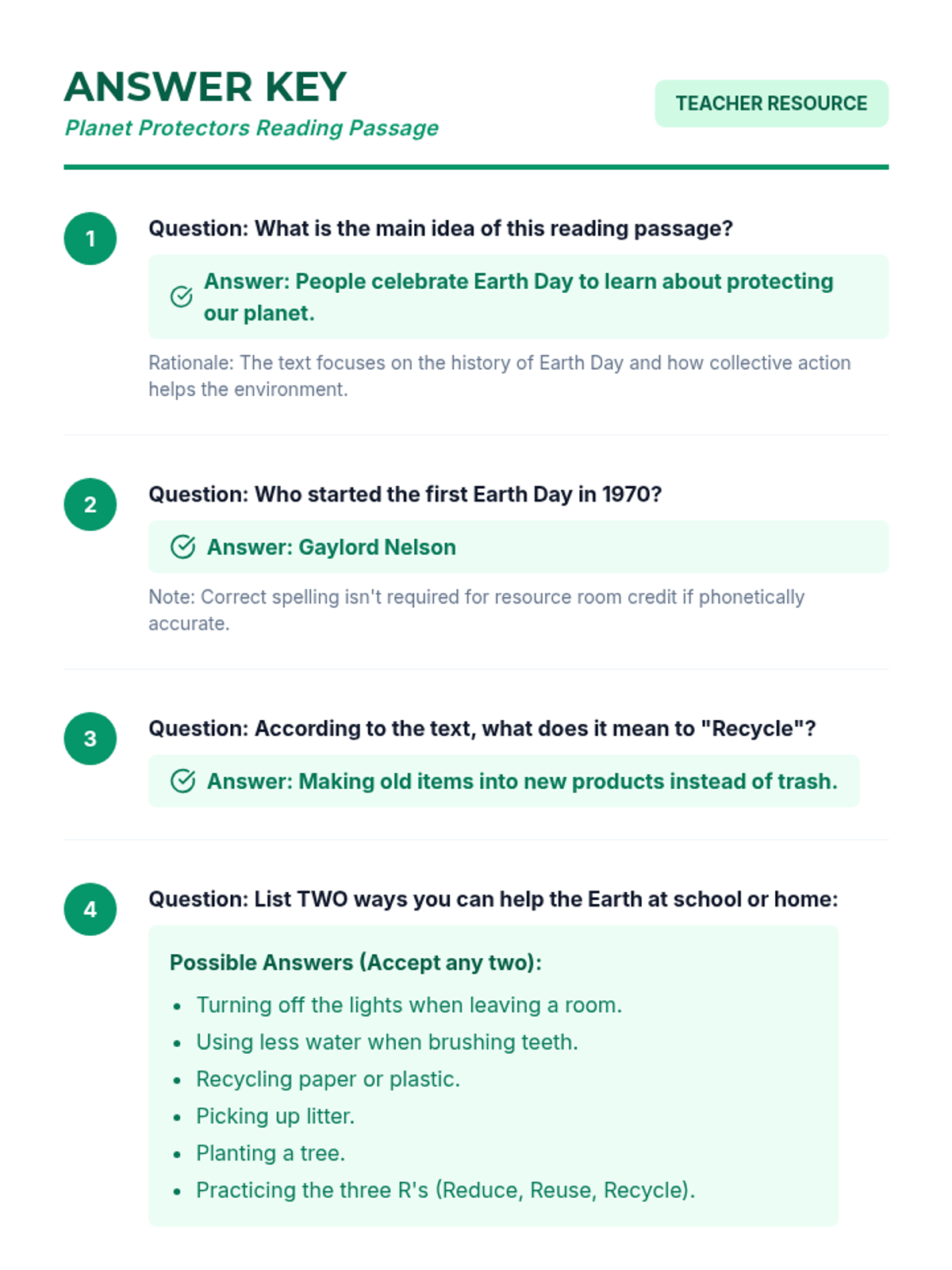
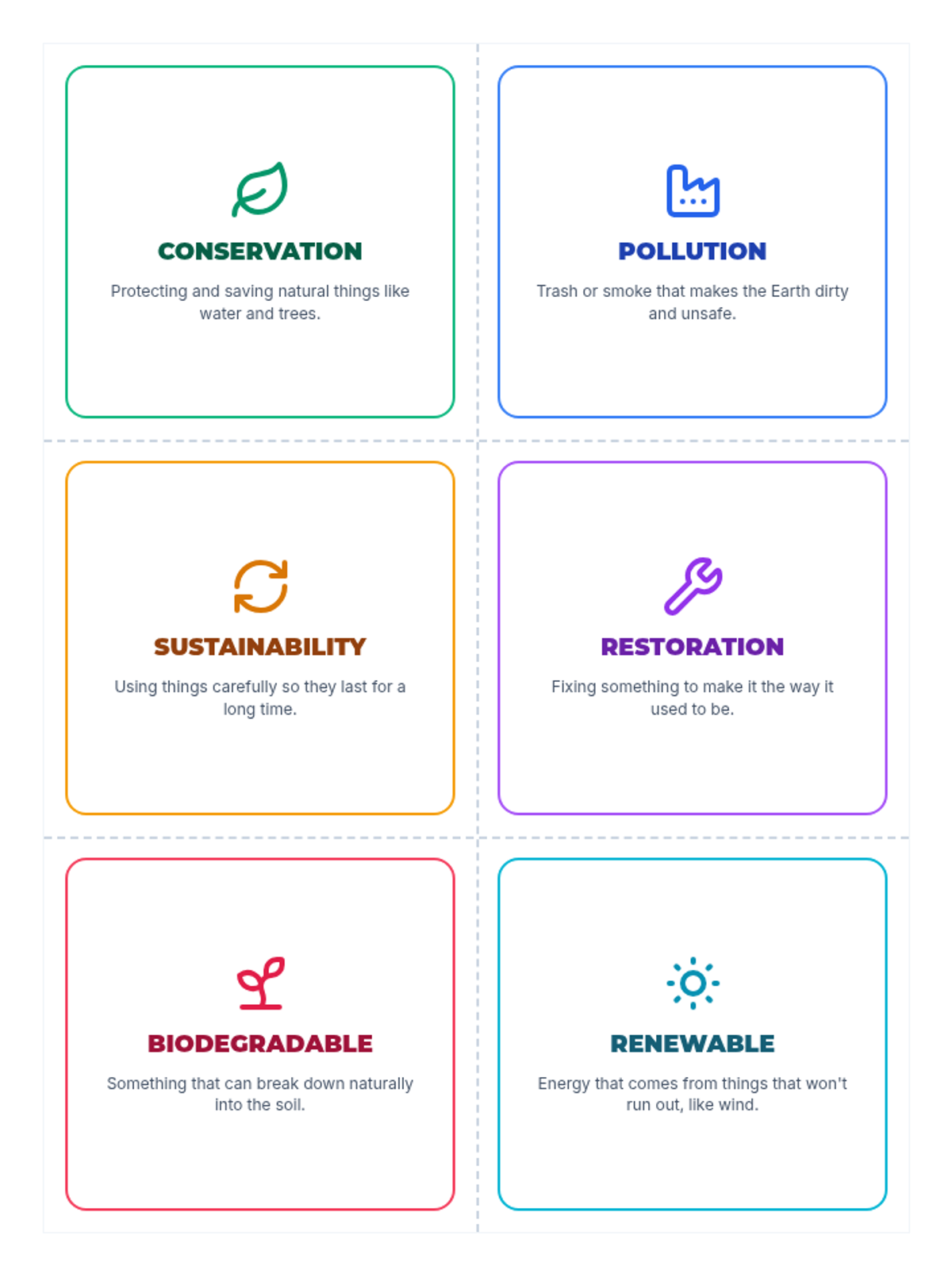
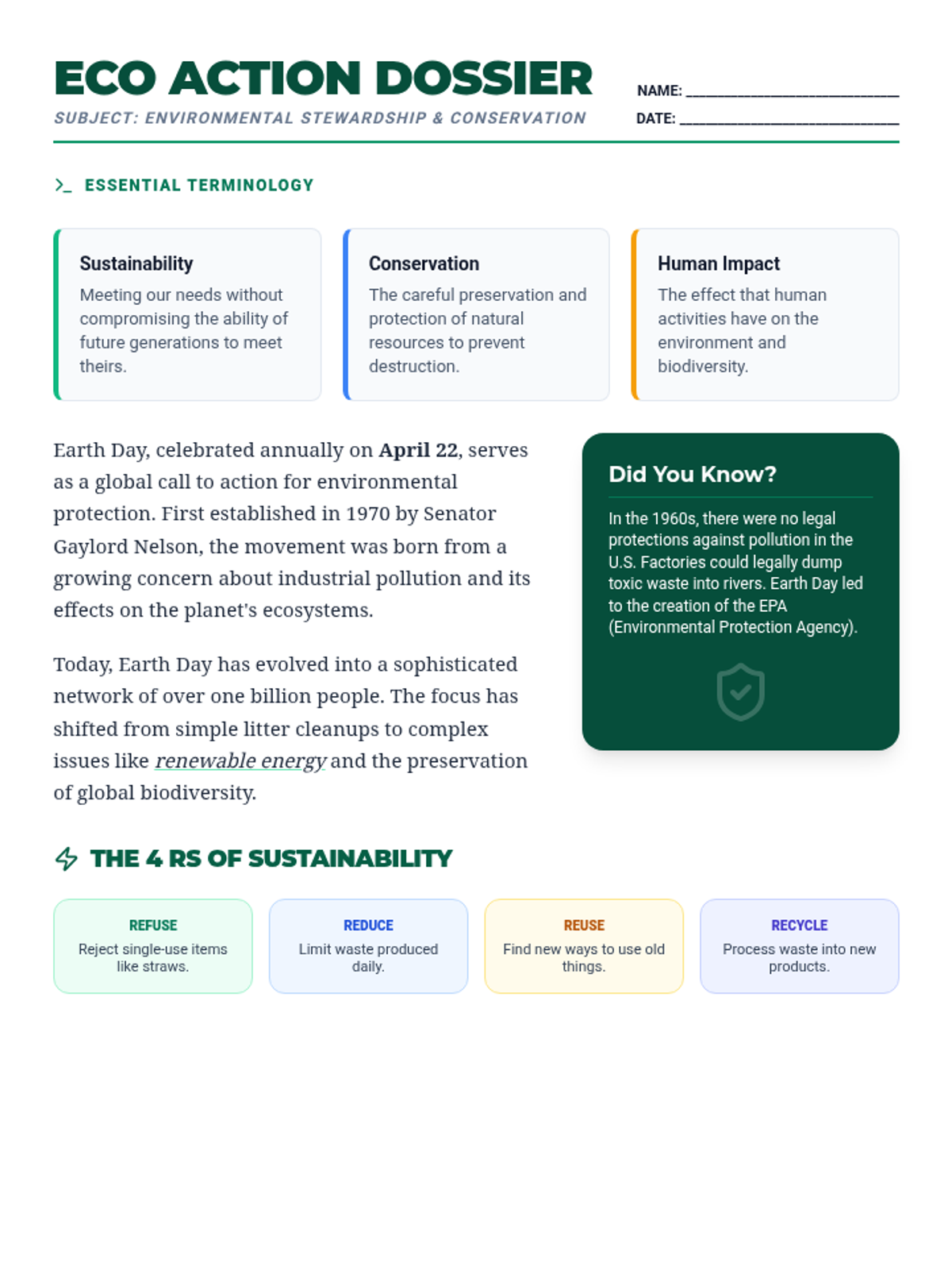
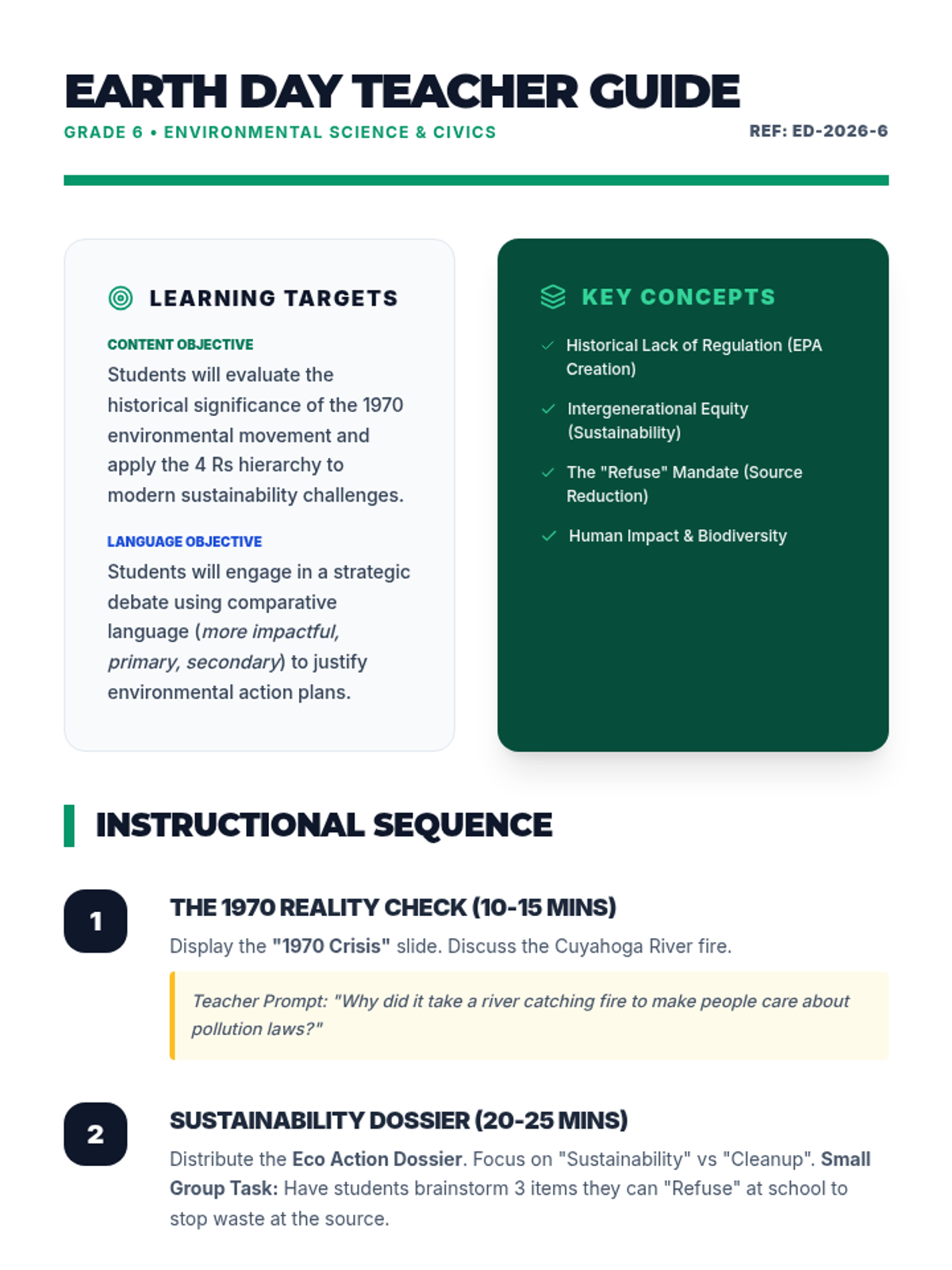
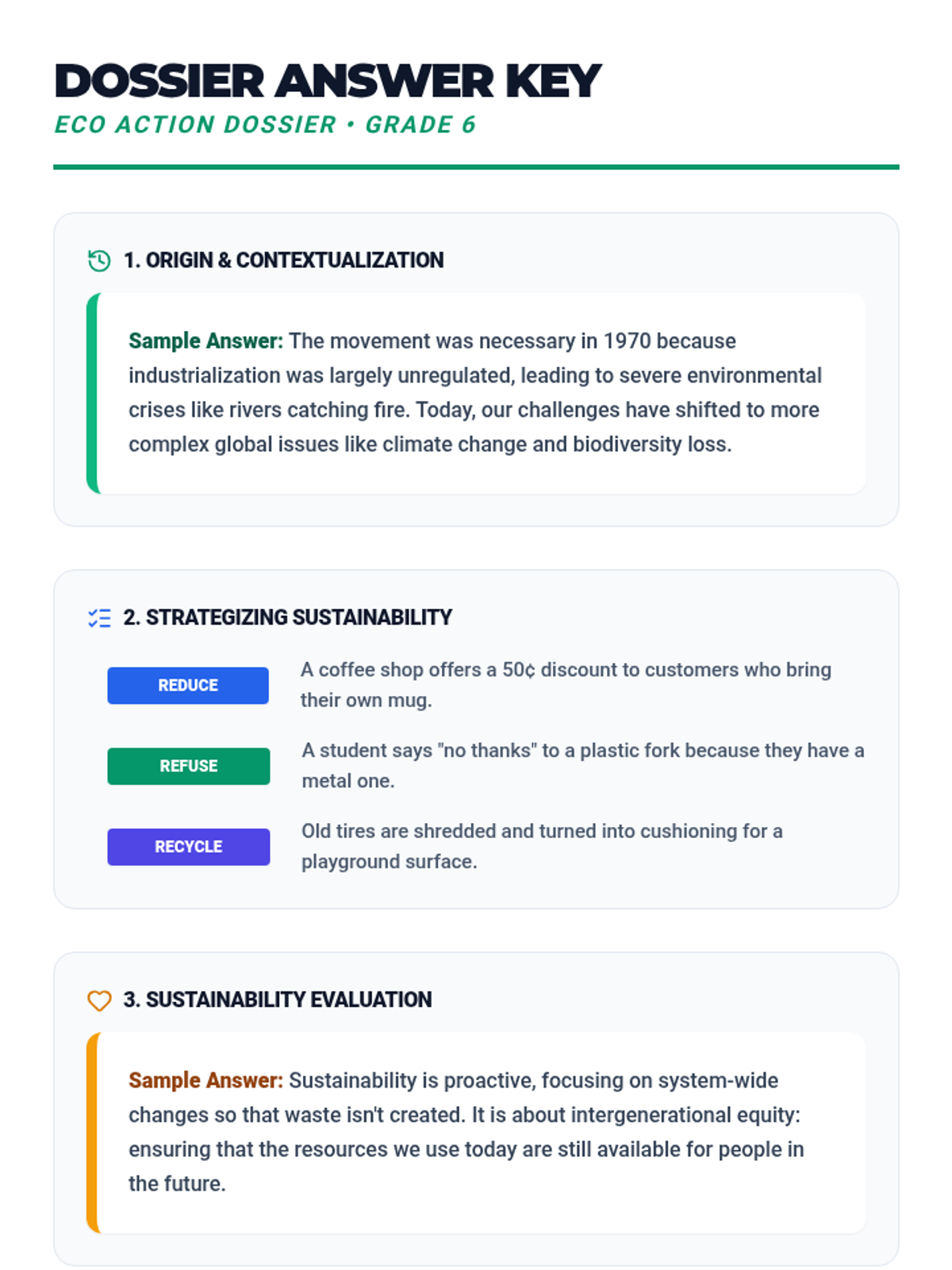
A reading comprehension-focused lesson for Earth Day, designed for upper elementary students in a resource classroom. Students will explore the history of Earth Day and identify ways they can contribute to environmental conservation through an informational passage and guided discussion.
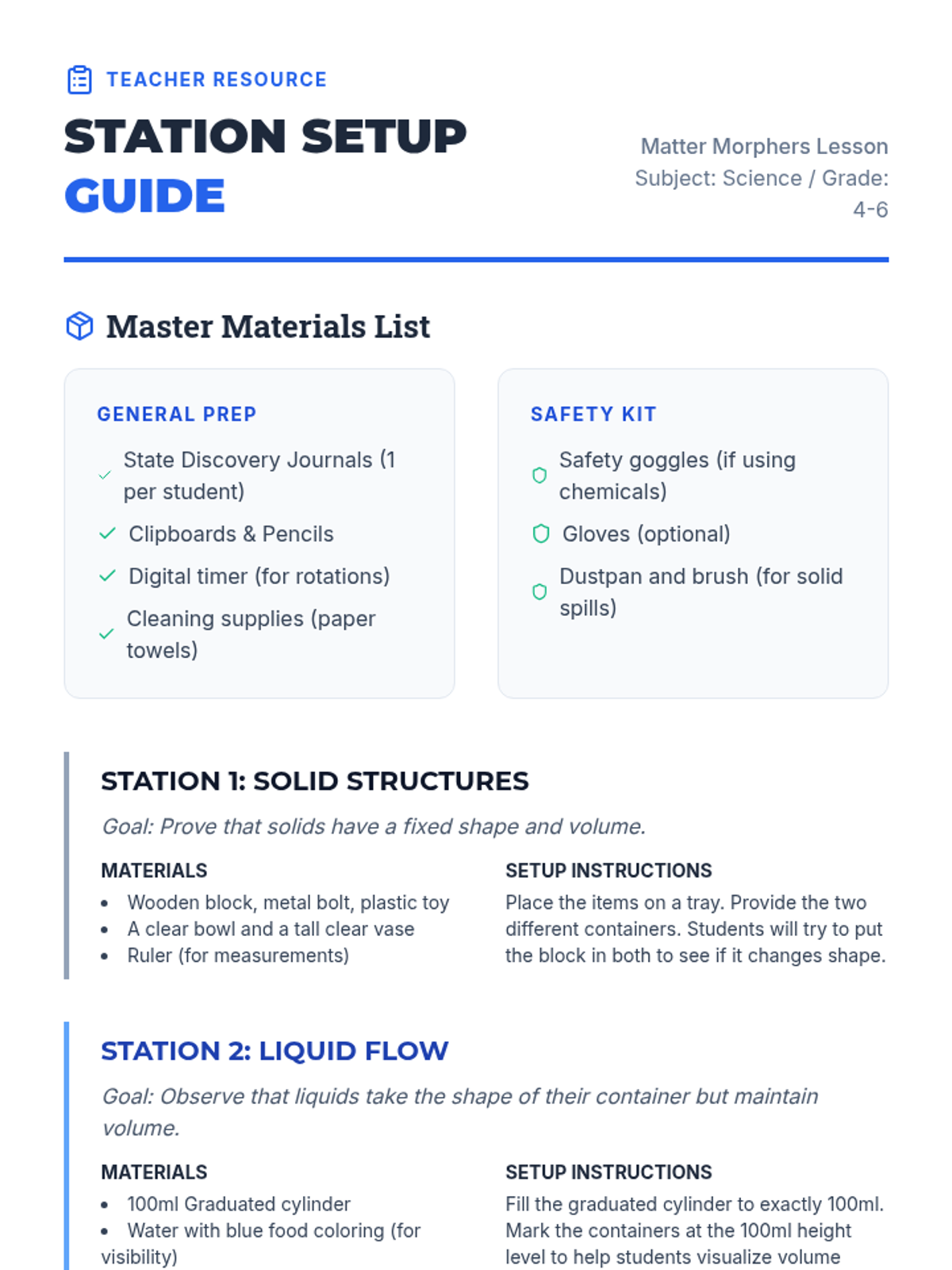
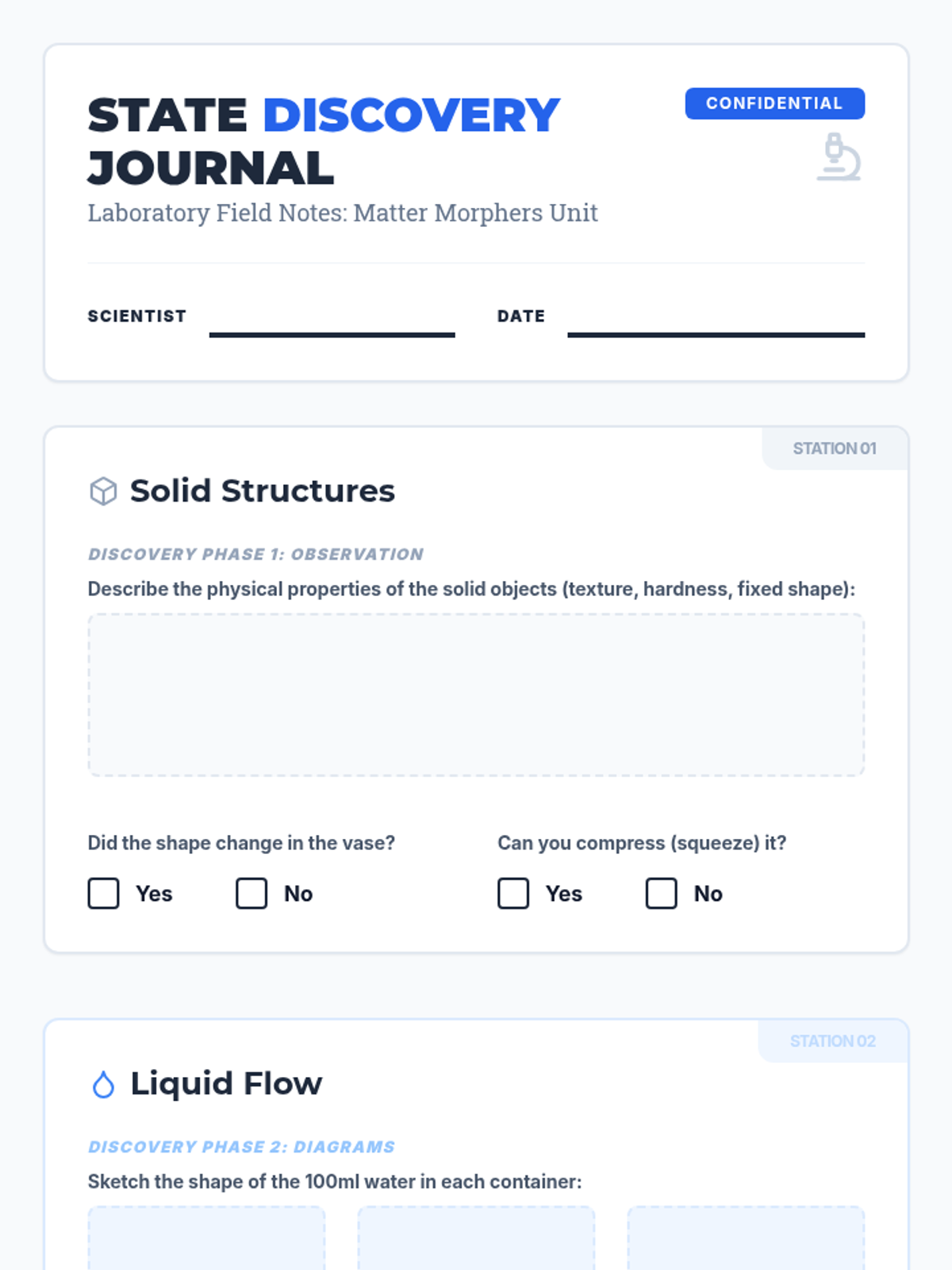
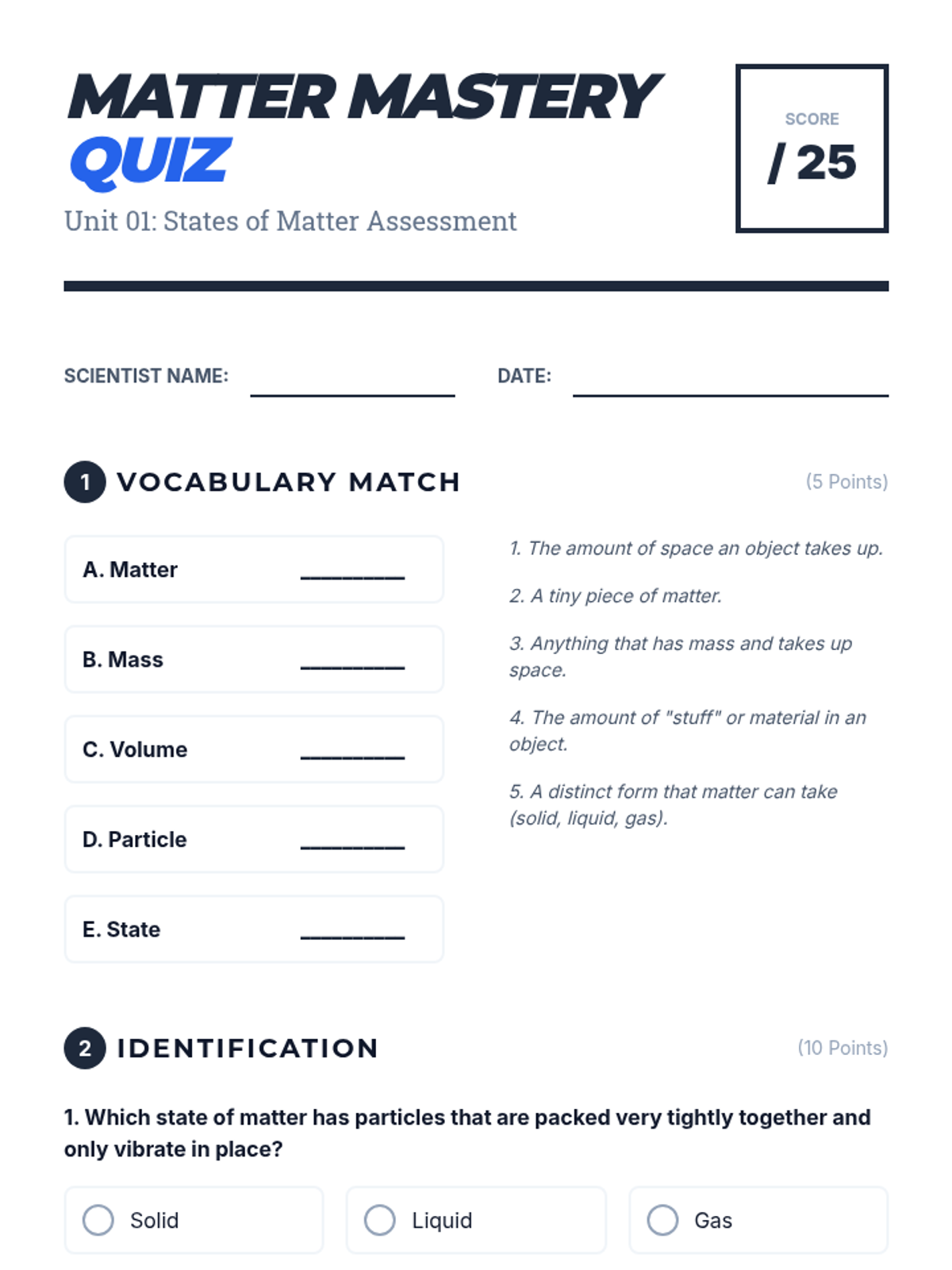
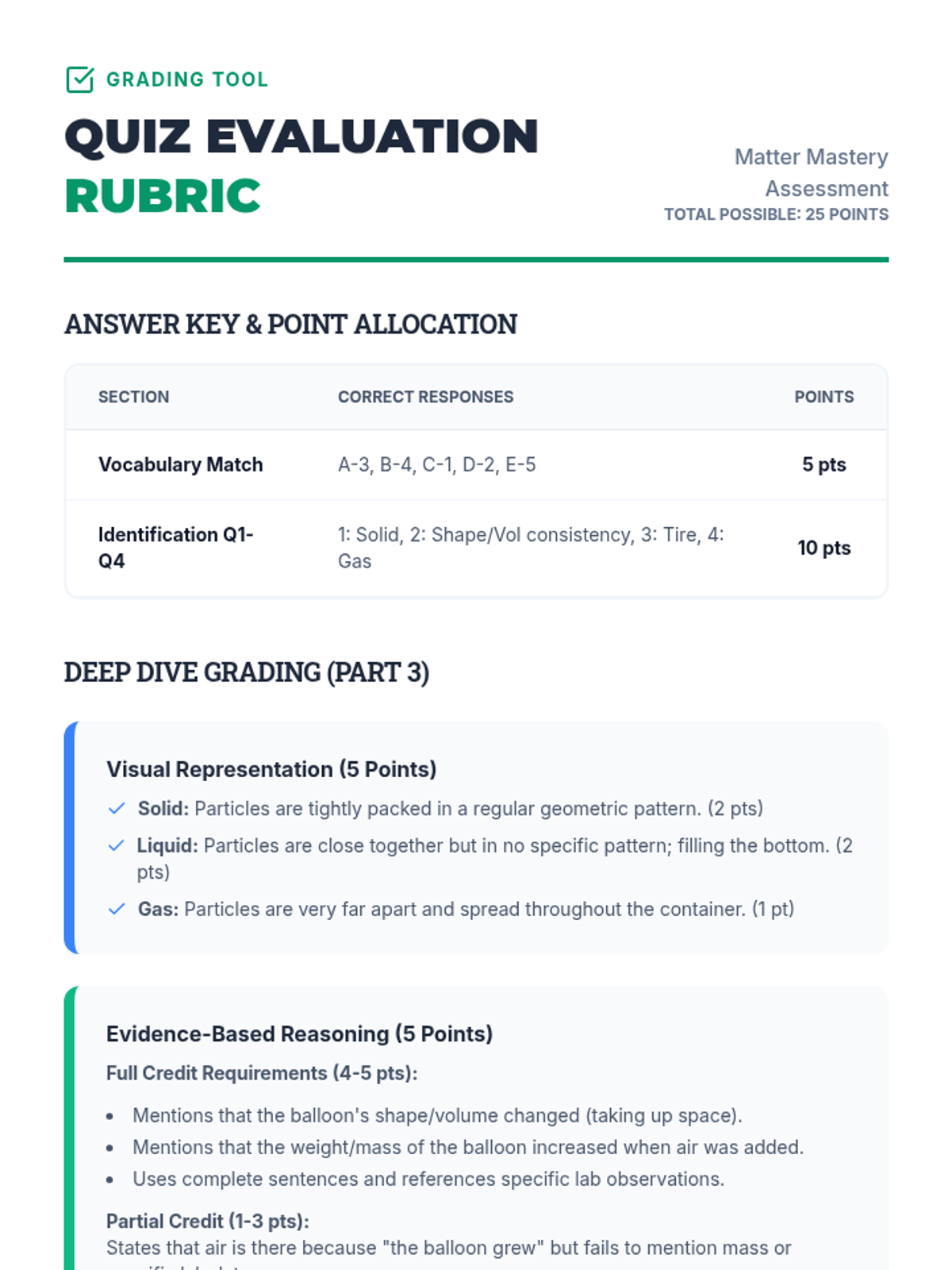
A hands-on exploration of the three primary states of matter through interactive lab stations, concluding with a comprehensive assessment.
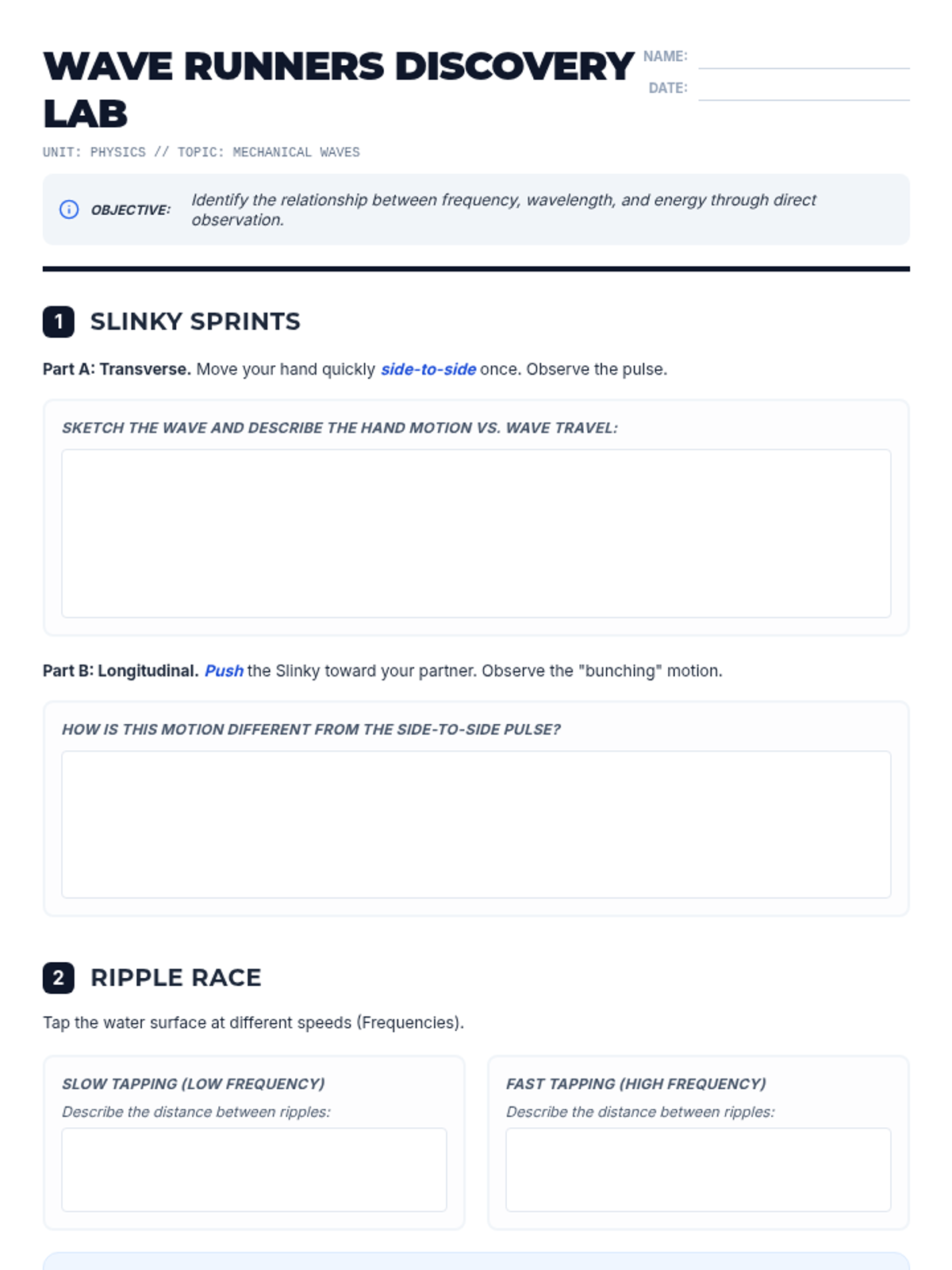
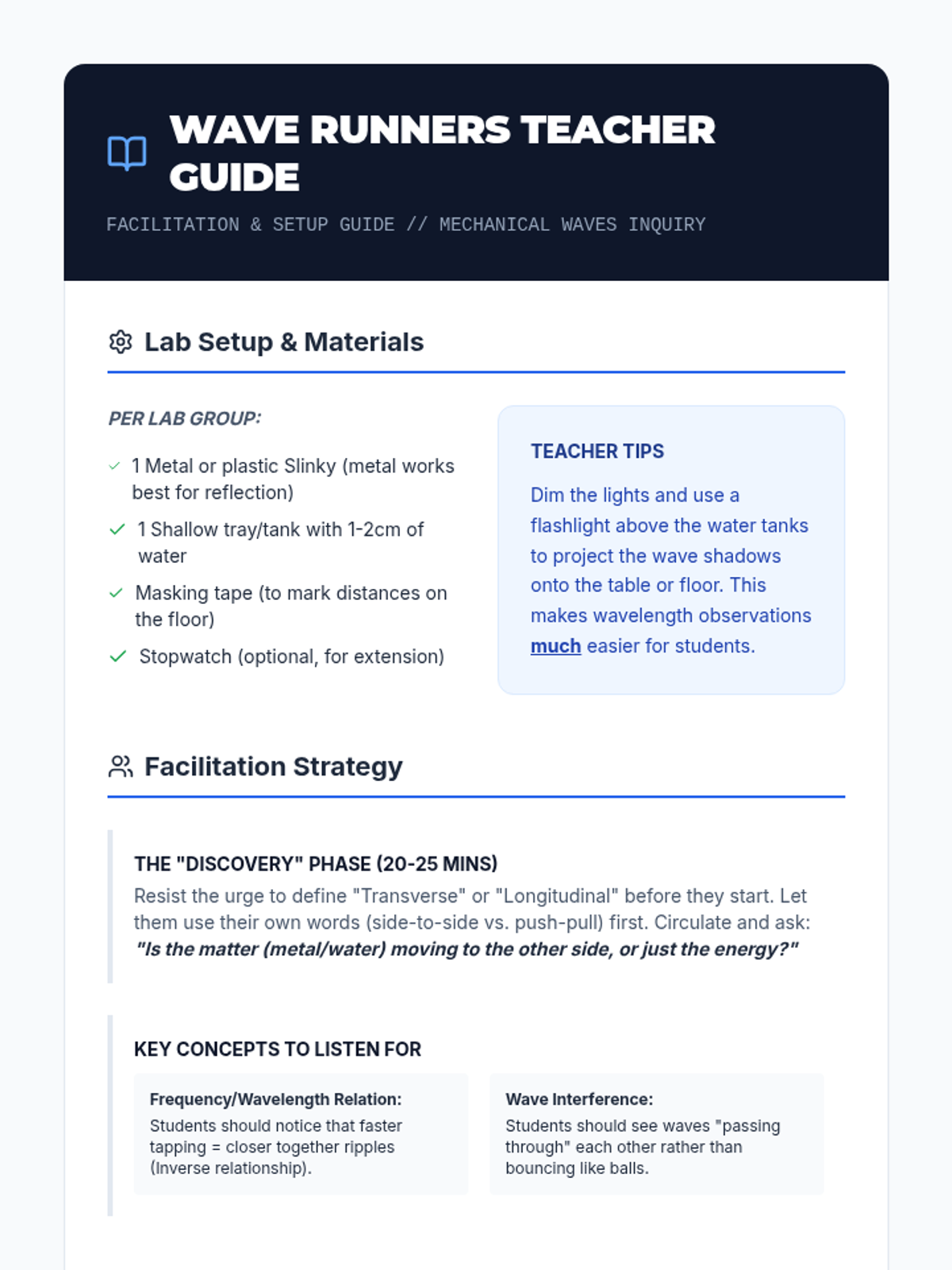
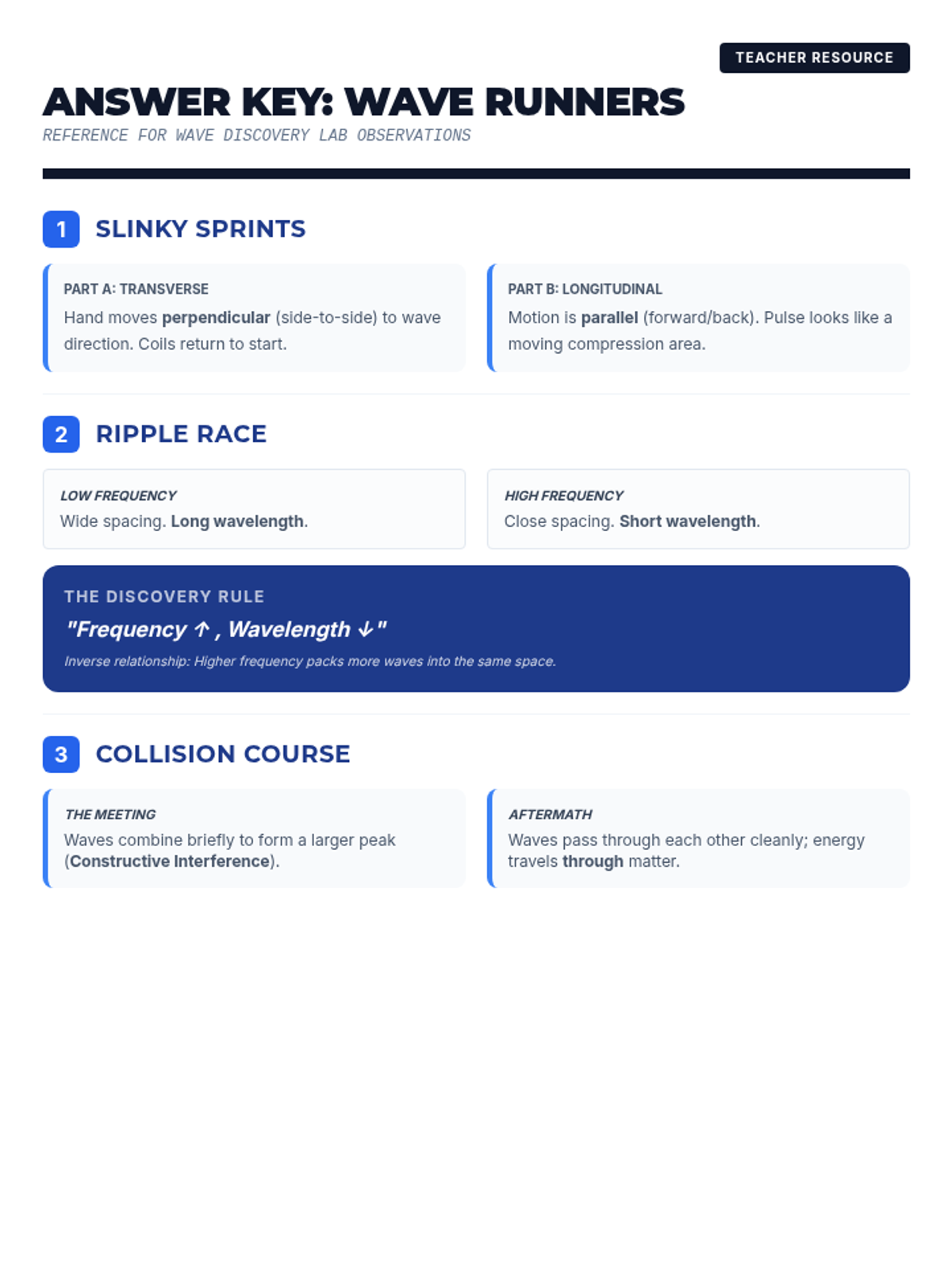
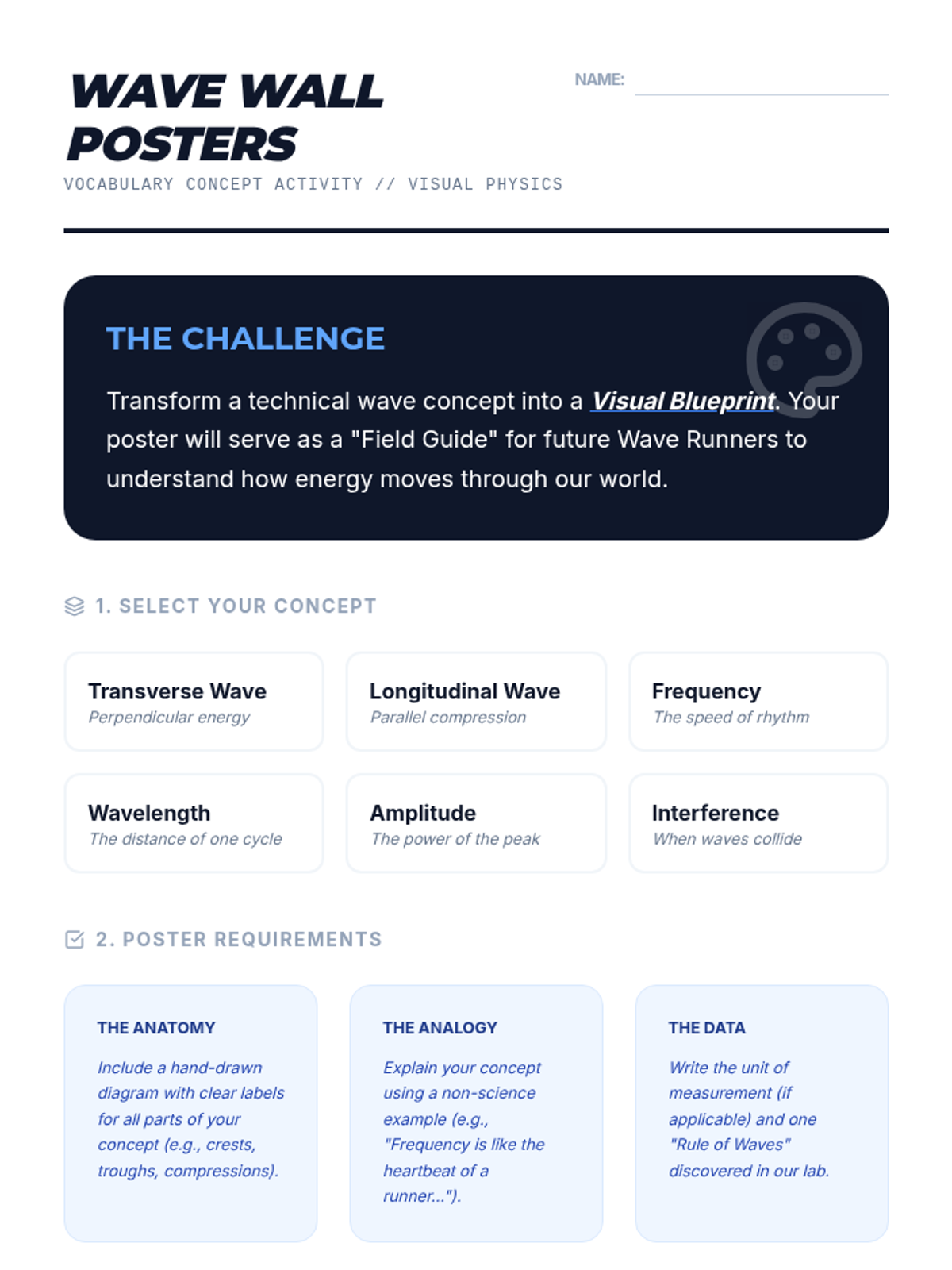
An inquiry-based exploration of mechanical waves using Slinkys and water to discover the relationships between frequency, wavelength, and wave behavior.
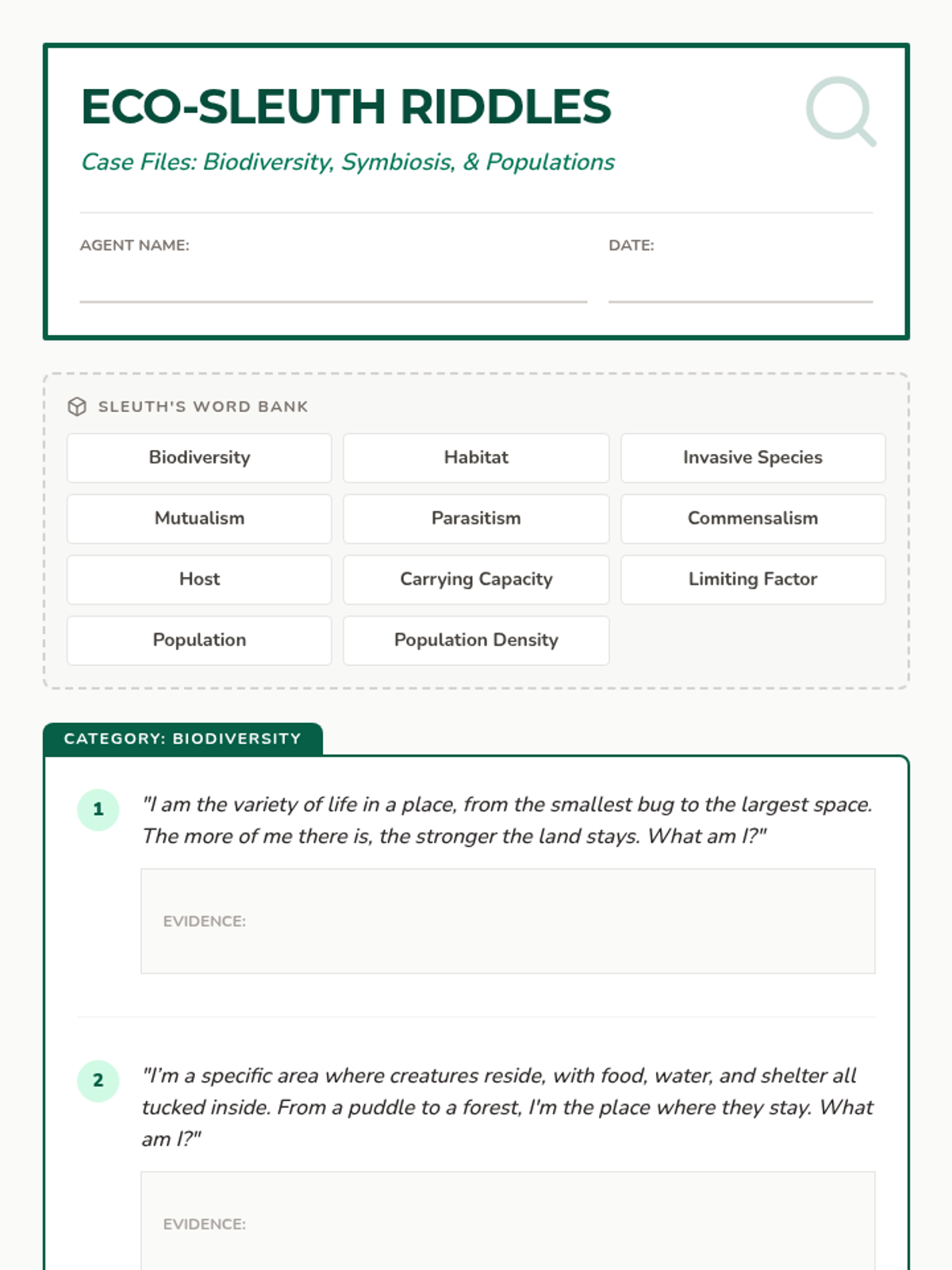
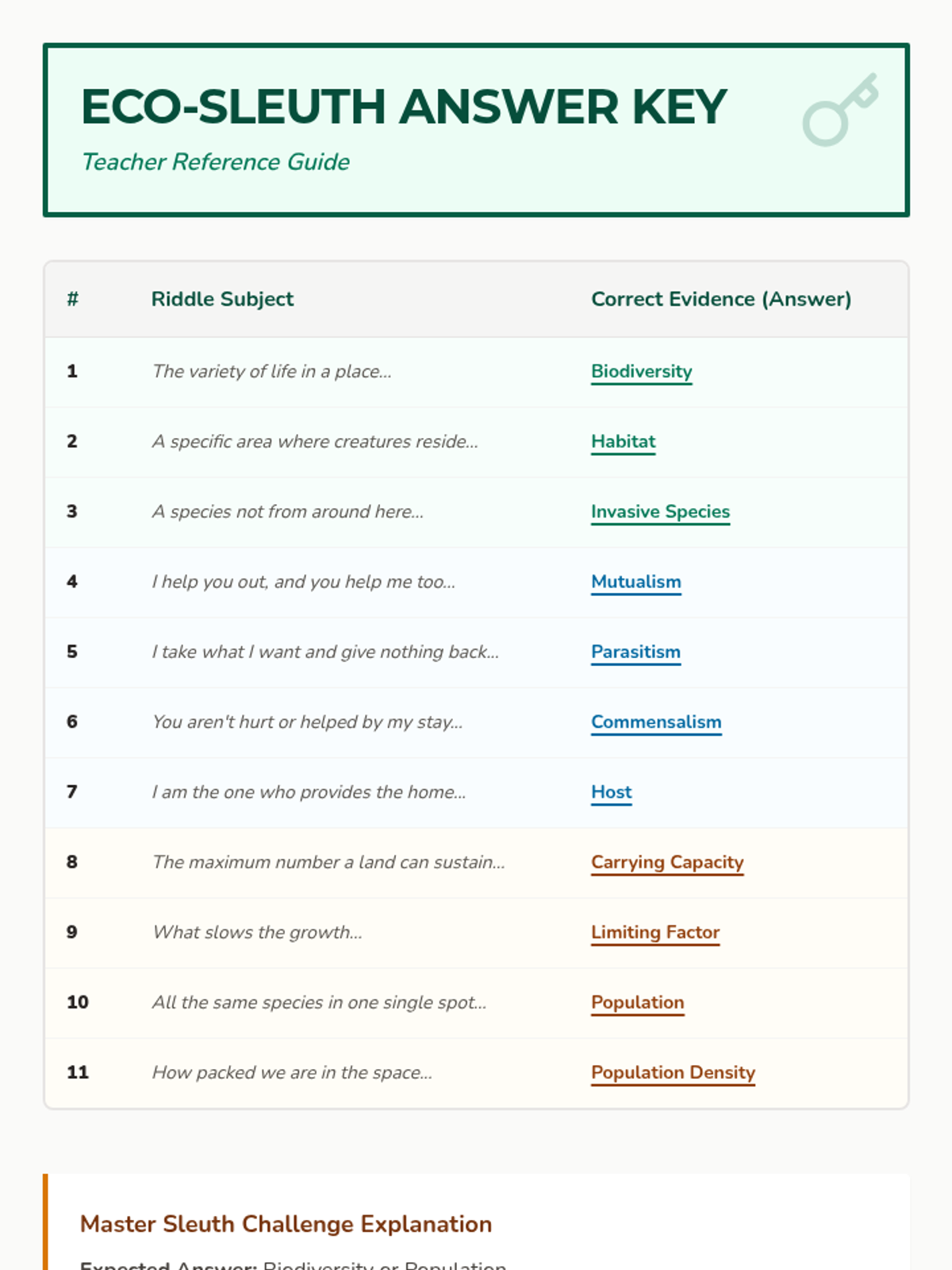
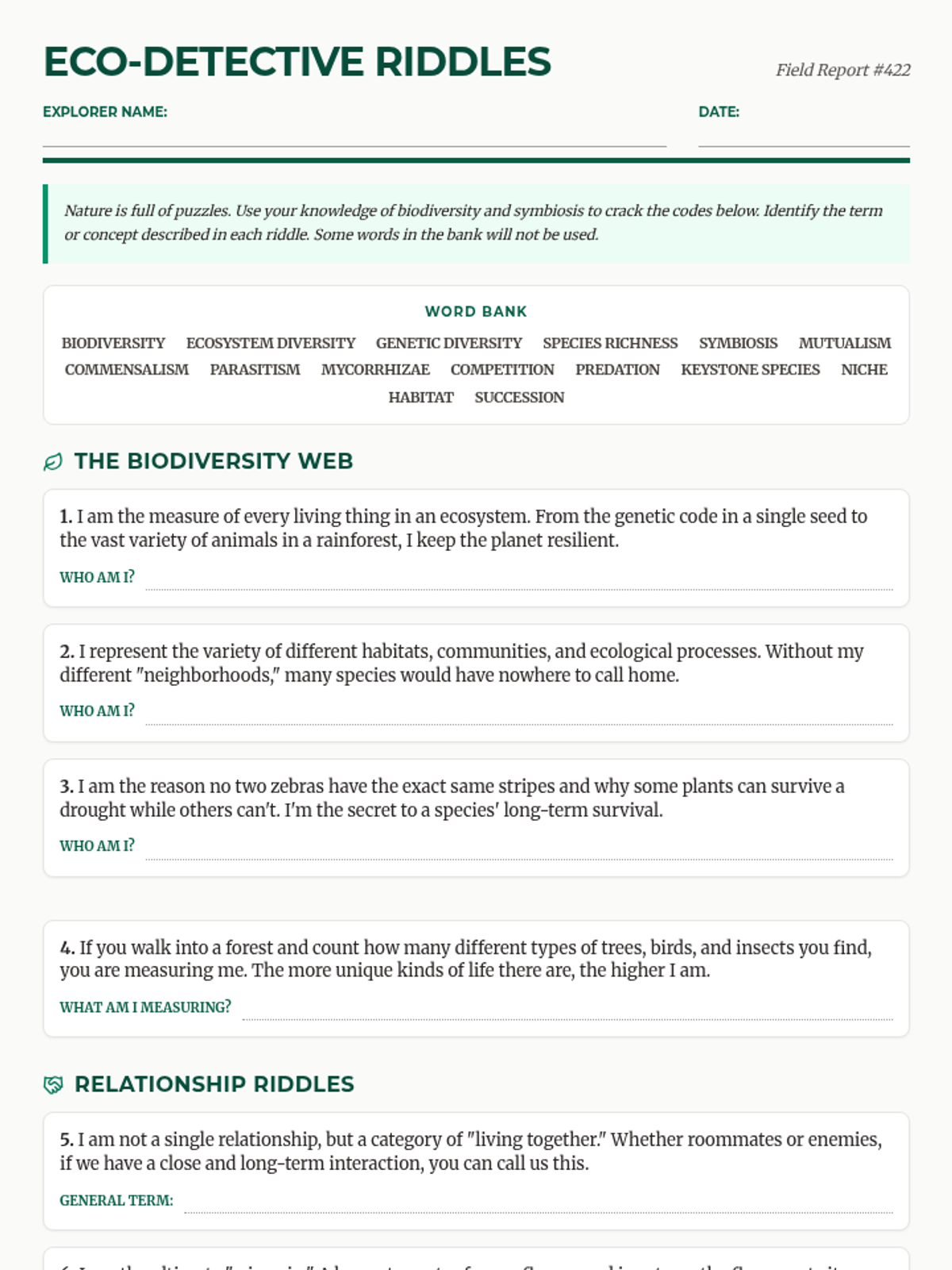
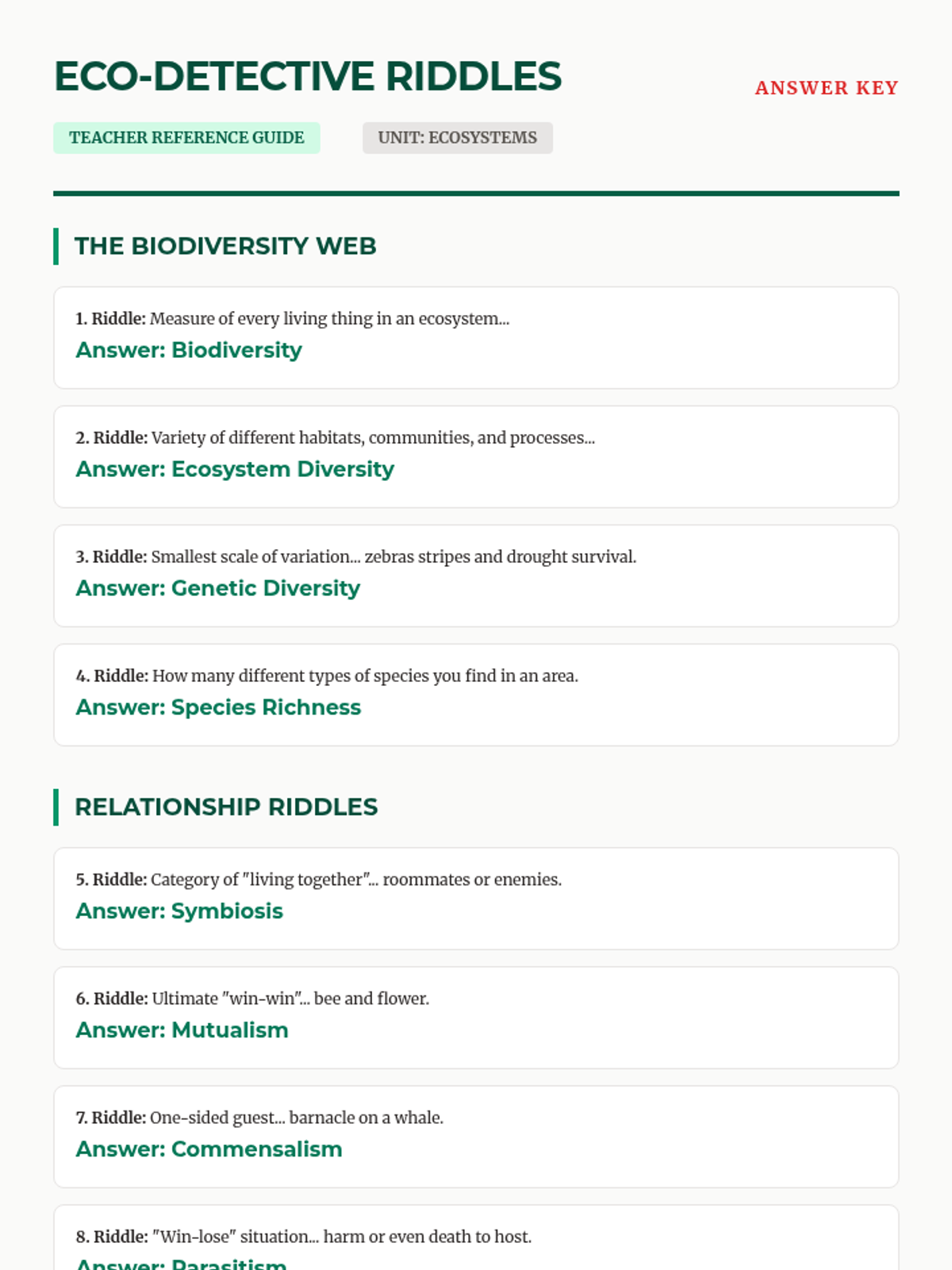
A collection of engaging riddles covering biodiversity, symbiotic relationships, and population dynamics, designed to challenge middle school students' understanding of ecological concepts.
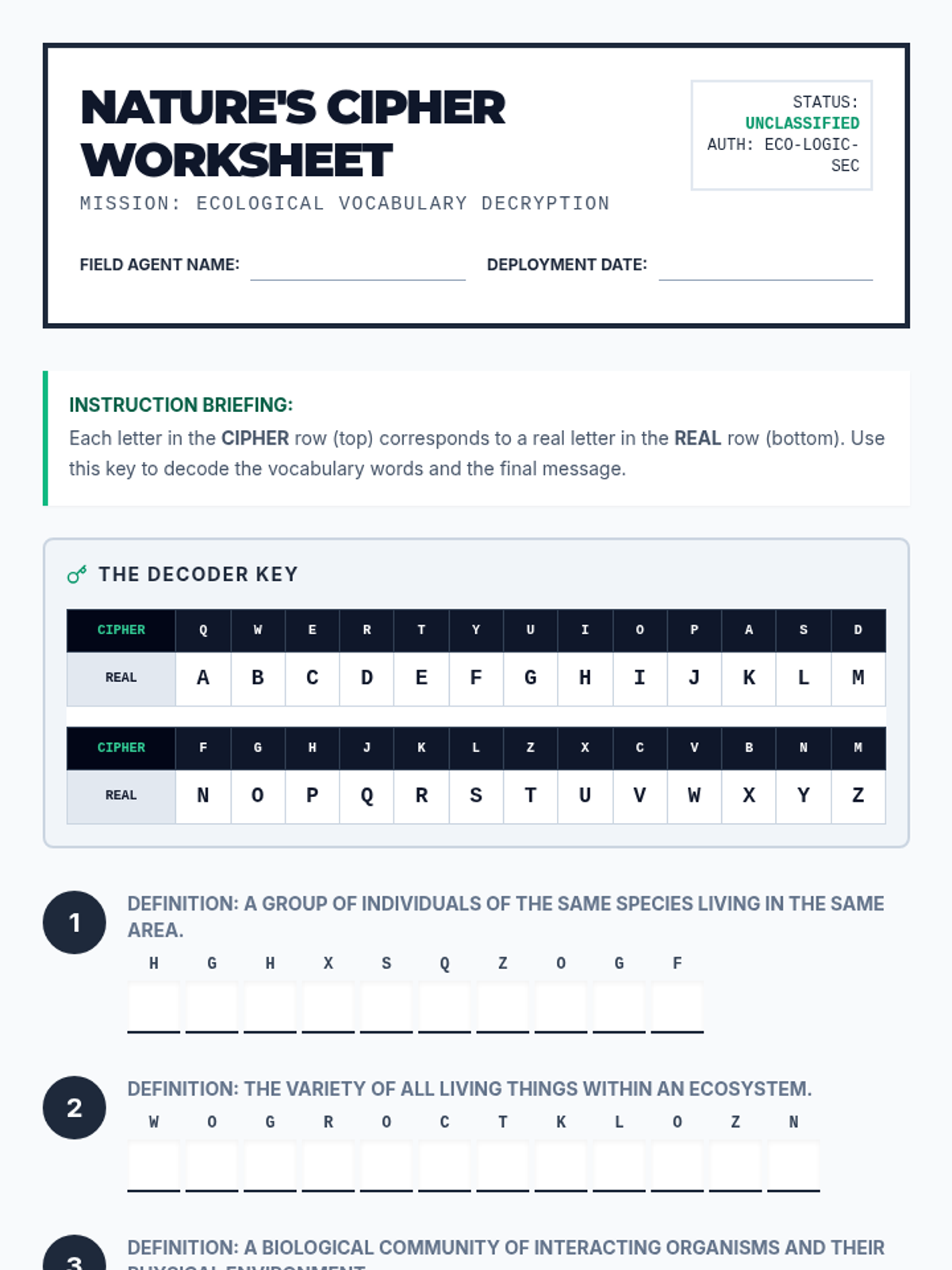
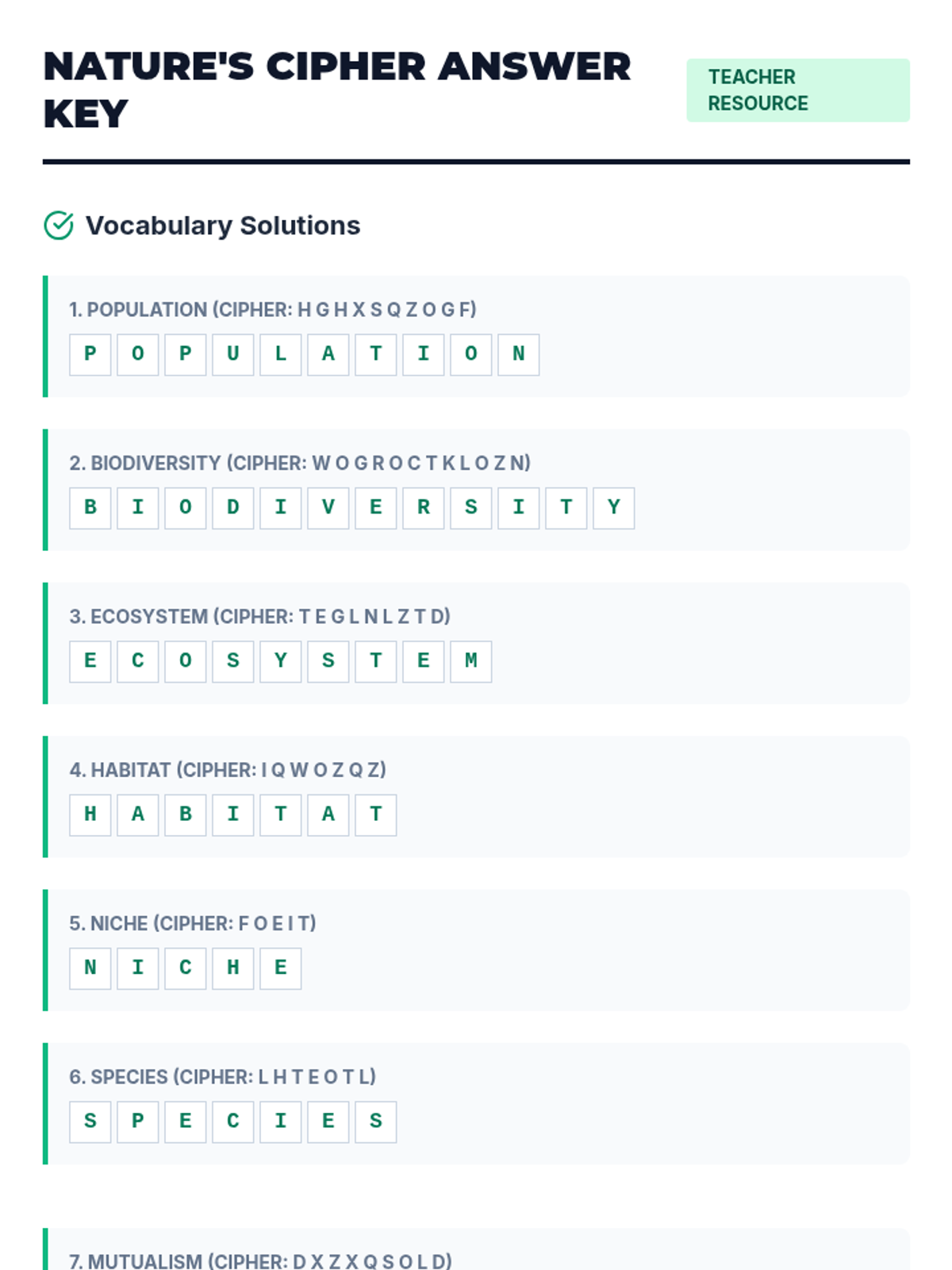
Students explore the intricate relationships in ecosystems by decoding key scientific terms related to biodiversity, symbiosis, and population dynamics through a cryptographic challenge.
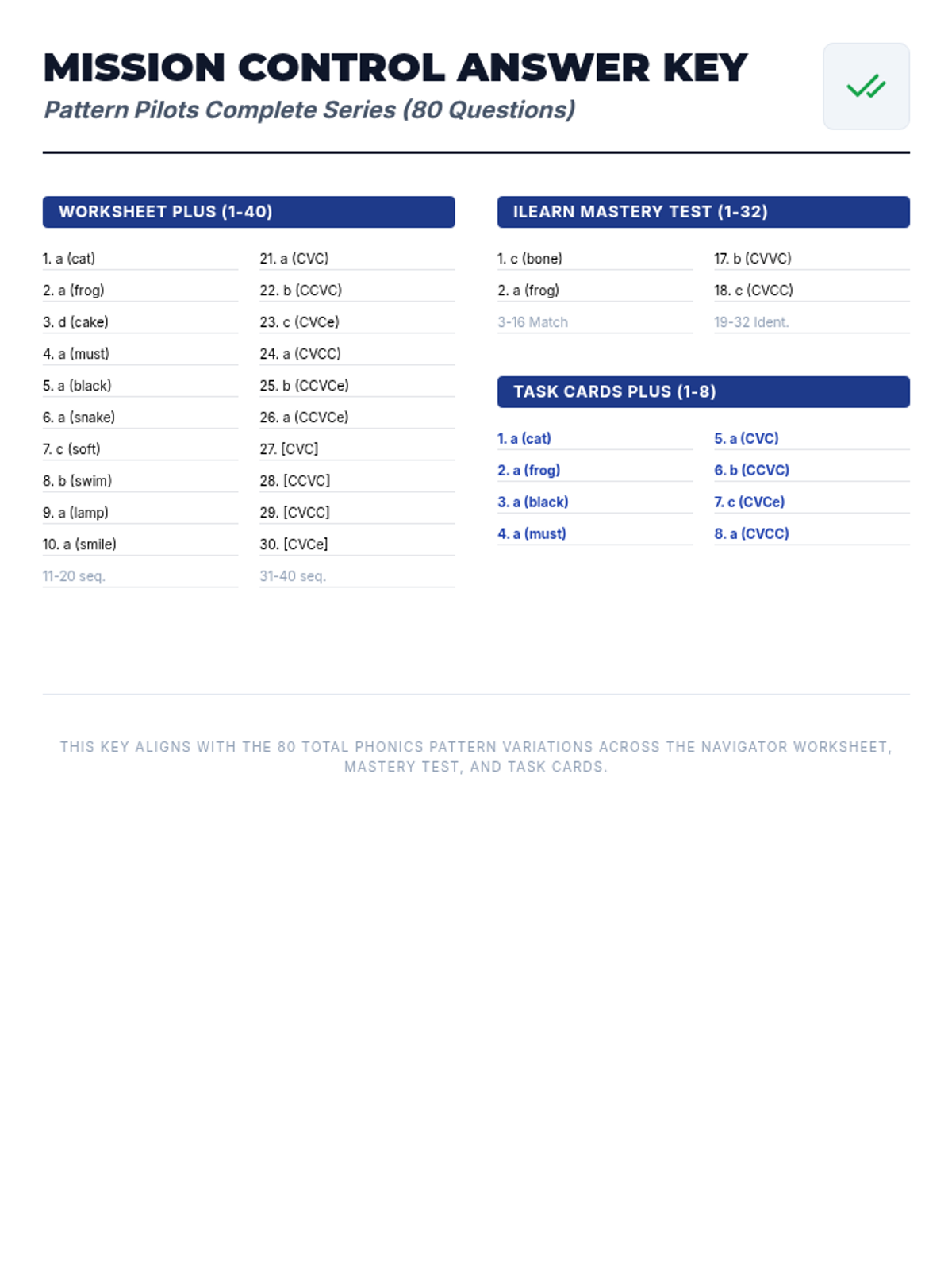
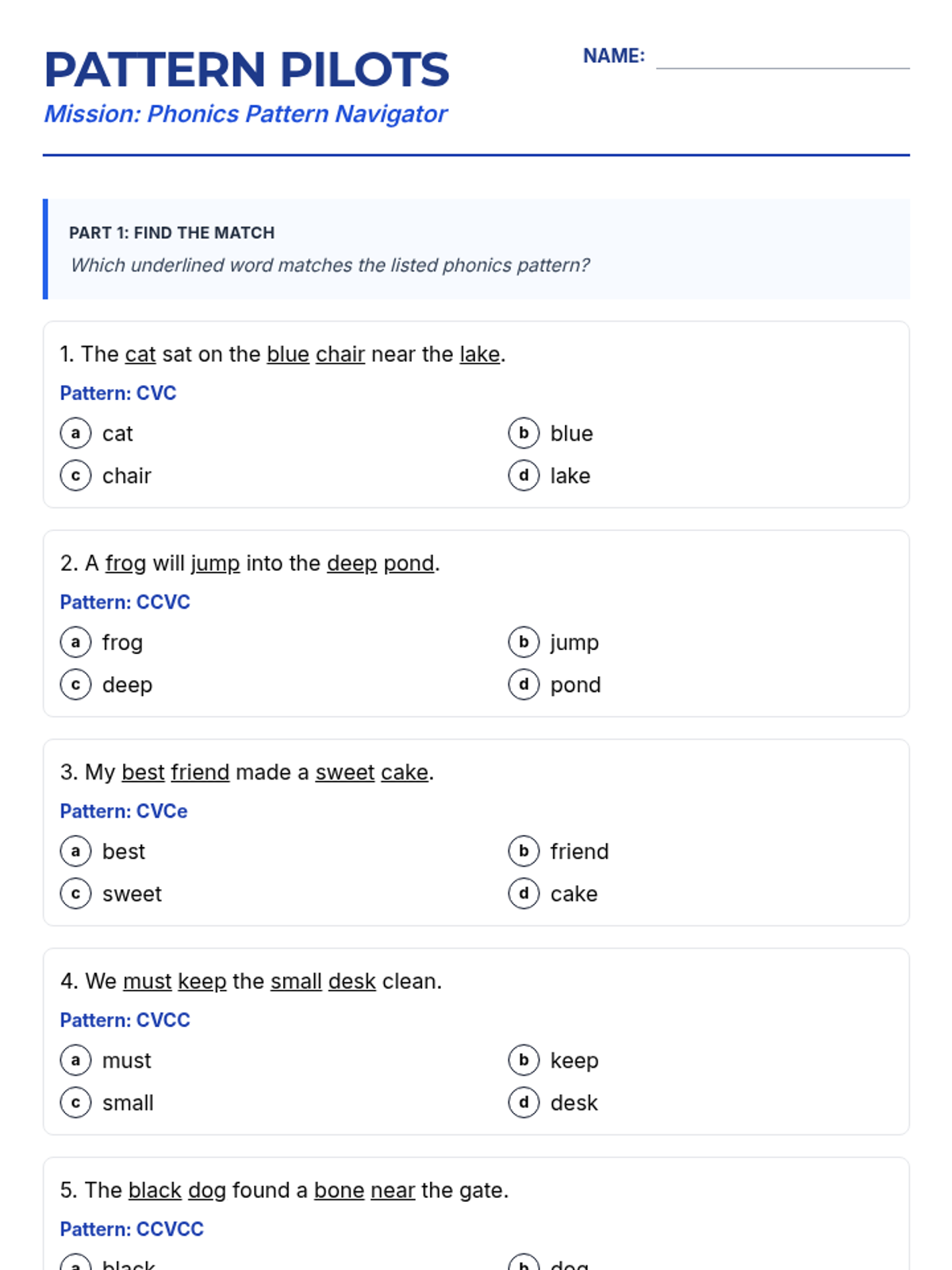
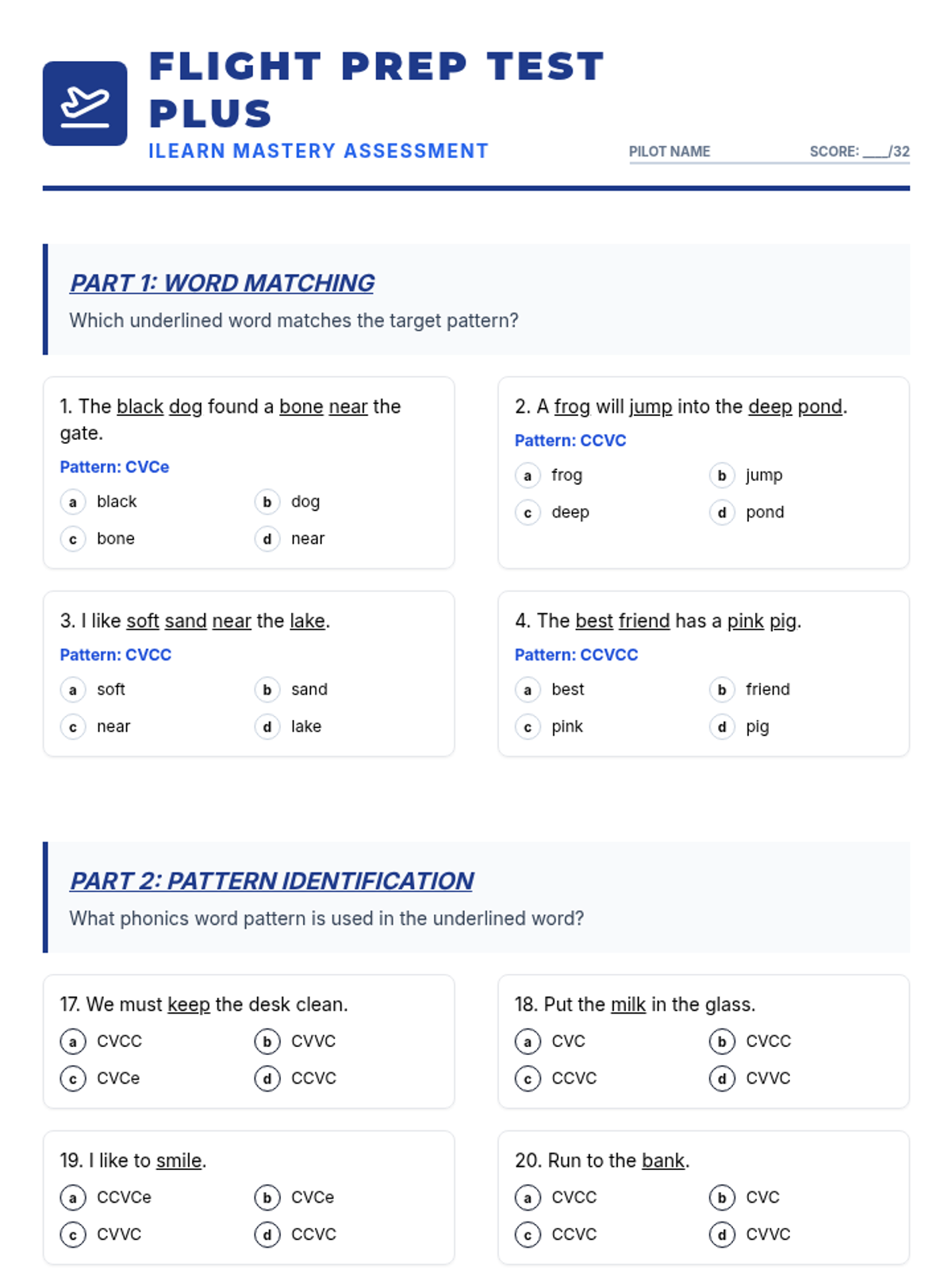
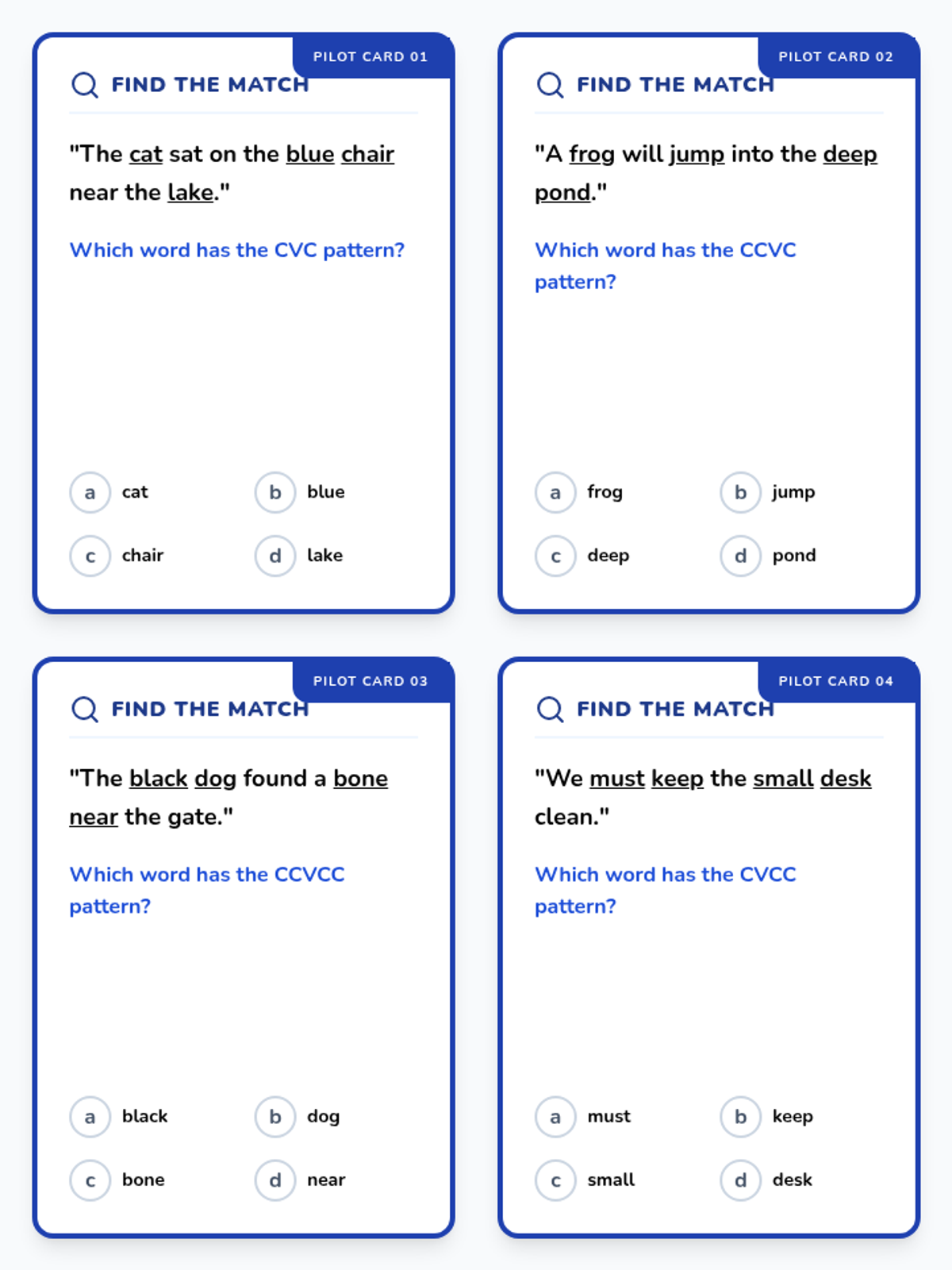
A comprehensive set of practice materials for the ILEARN assessment focusing on vowel and consonant patterns (CVC, CCVC, CVCe, etc.). Includes grouped practice, a mixed test, task cards, and an answer key.
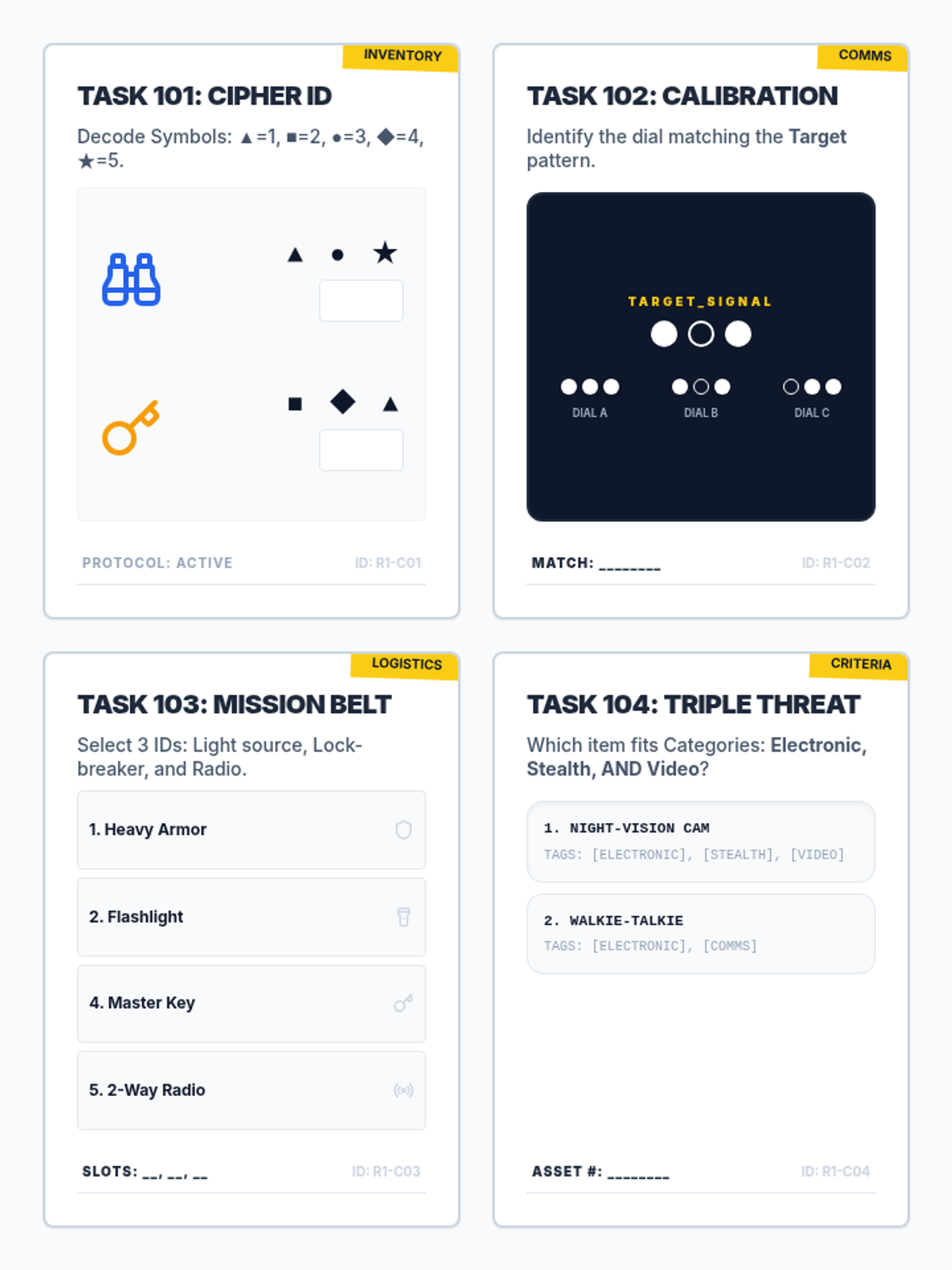
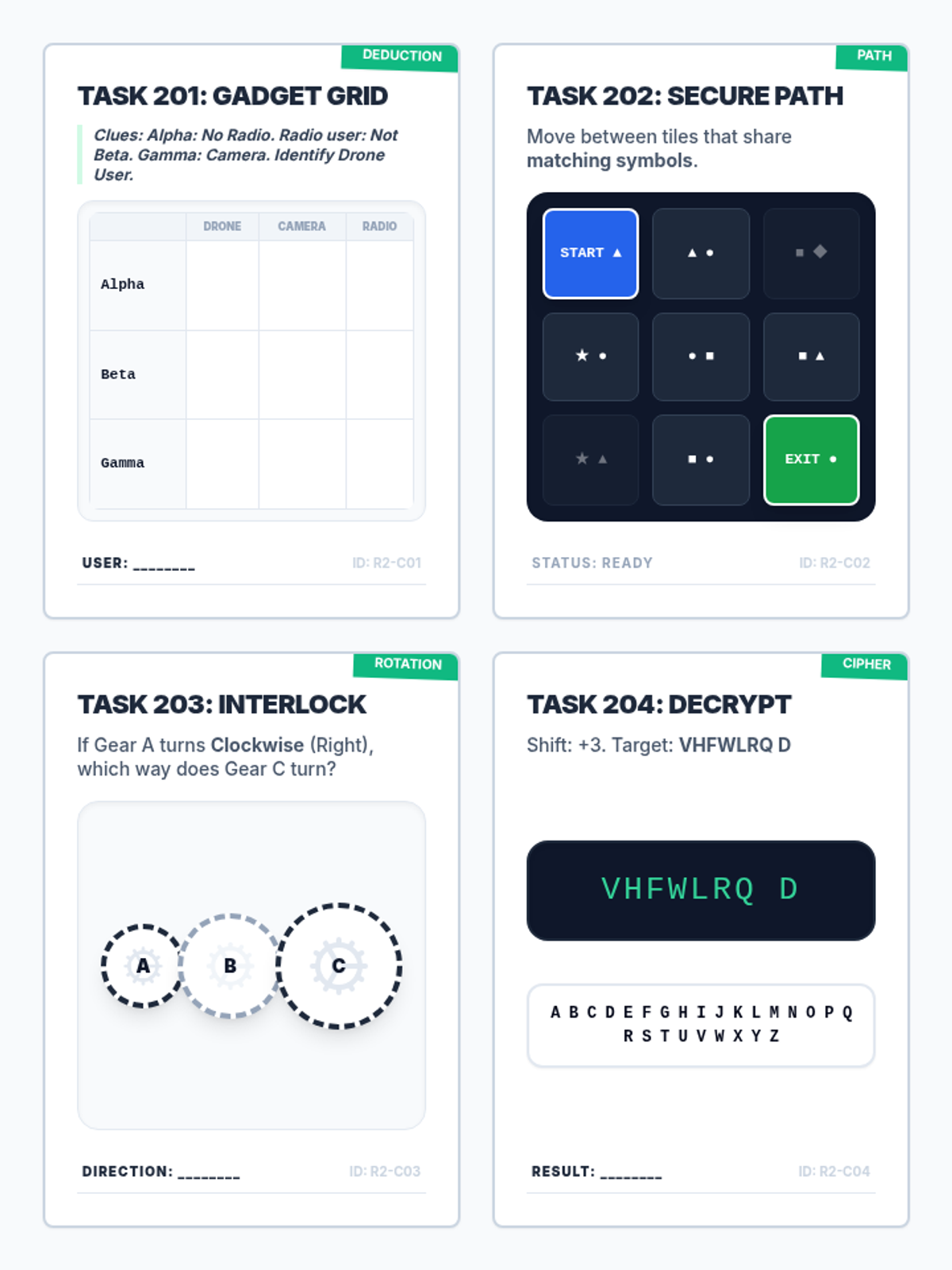
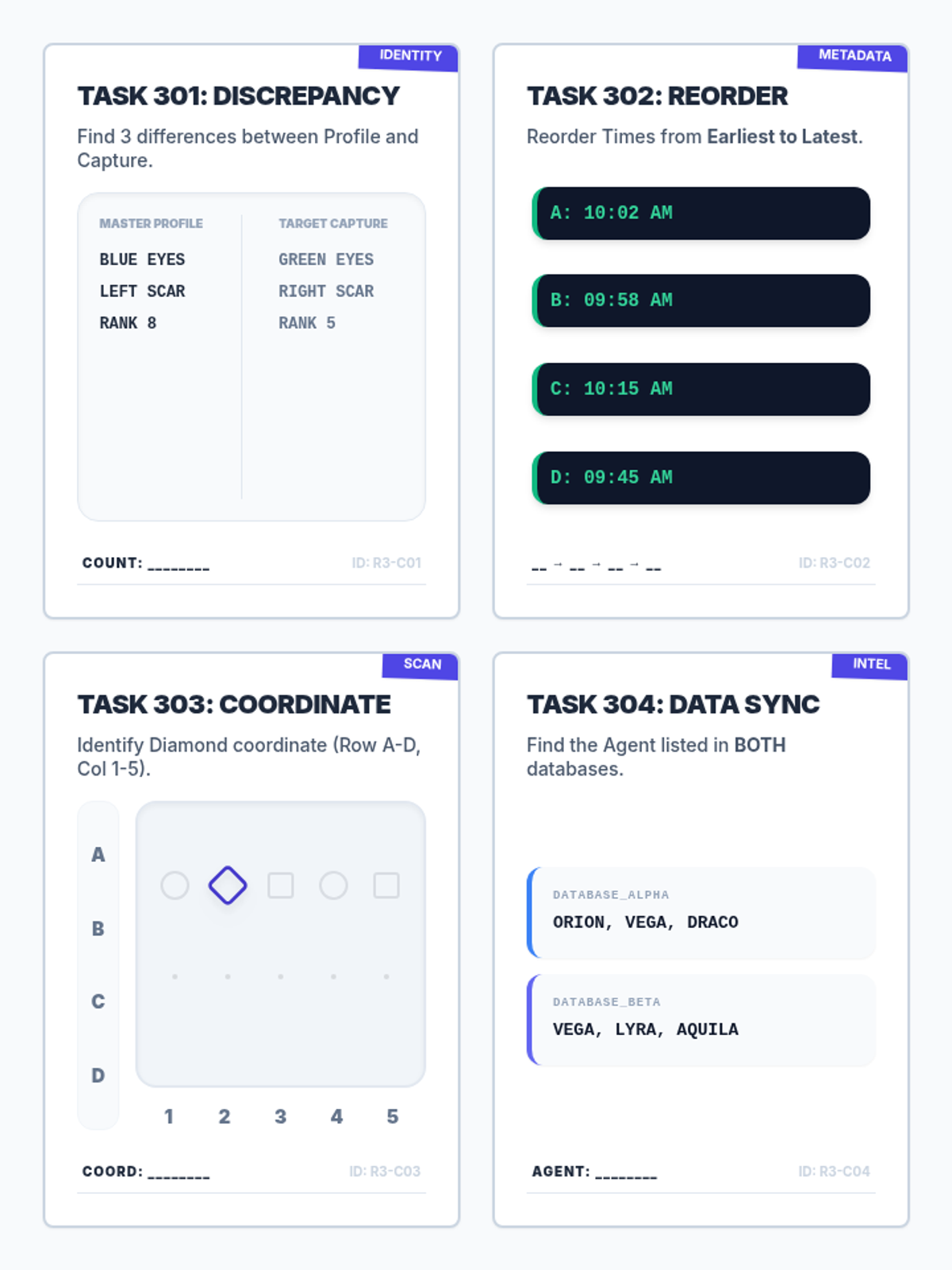
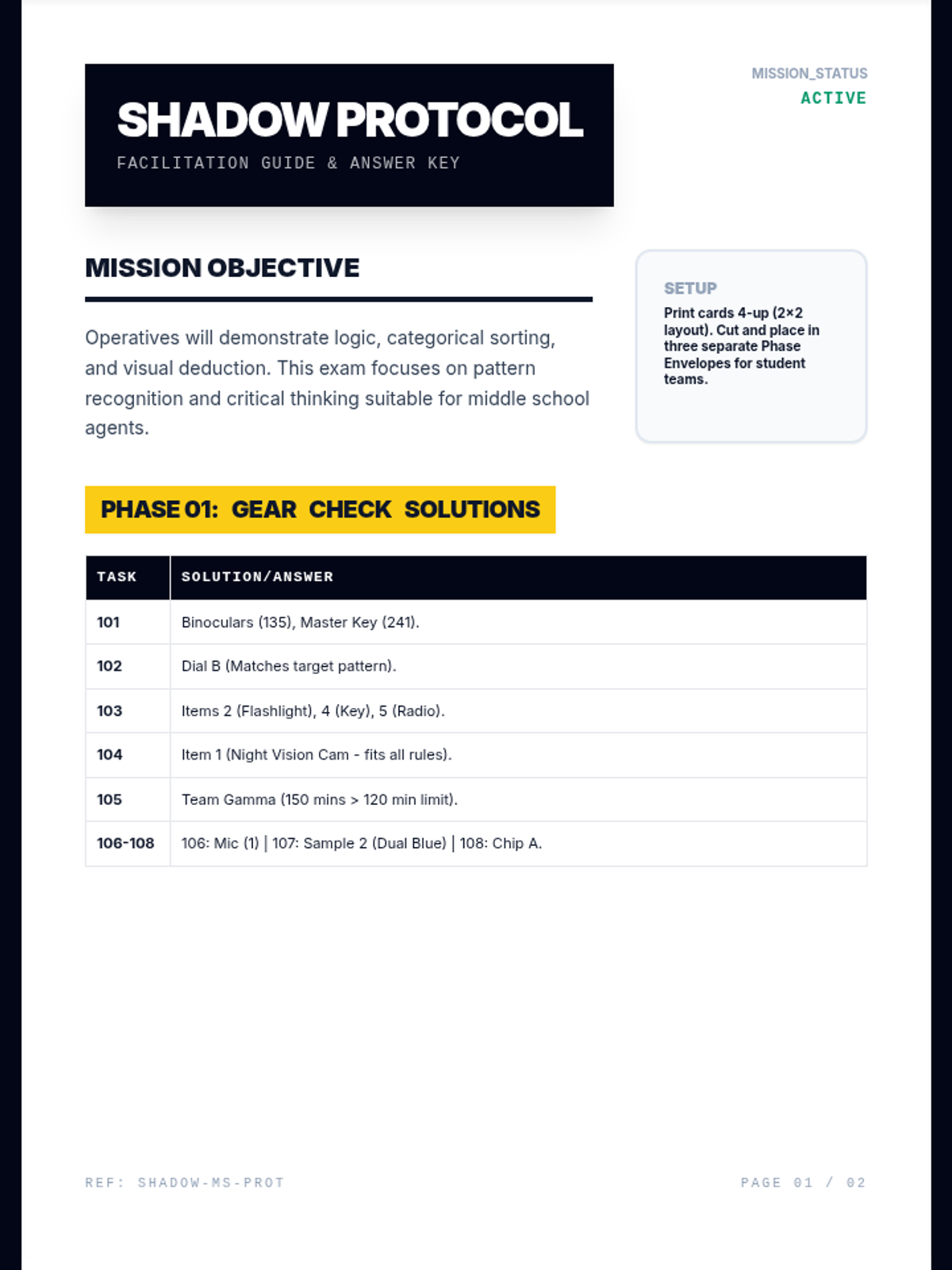
A high-stakes secret agent escape room designed for middle school students, featuring complex logic grids, binary decryption, spatial reasoning, and data analysis. Operatives must work through three rigorous phases of testing to earn their field status.
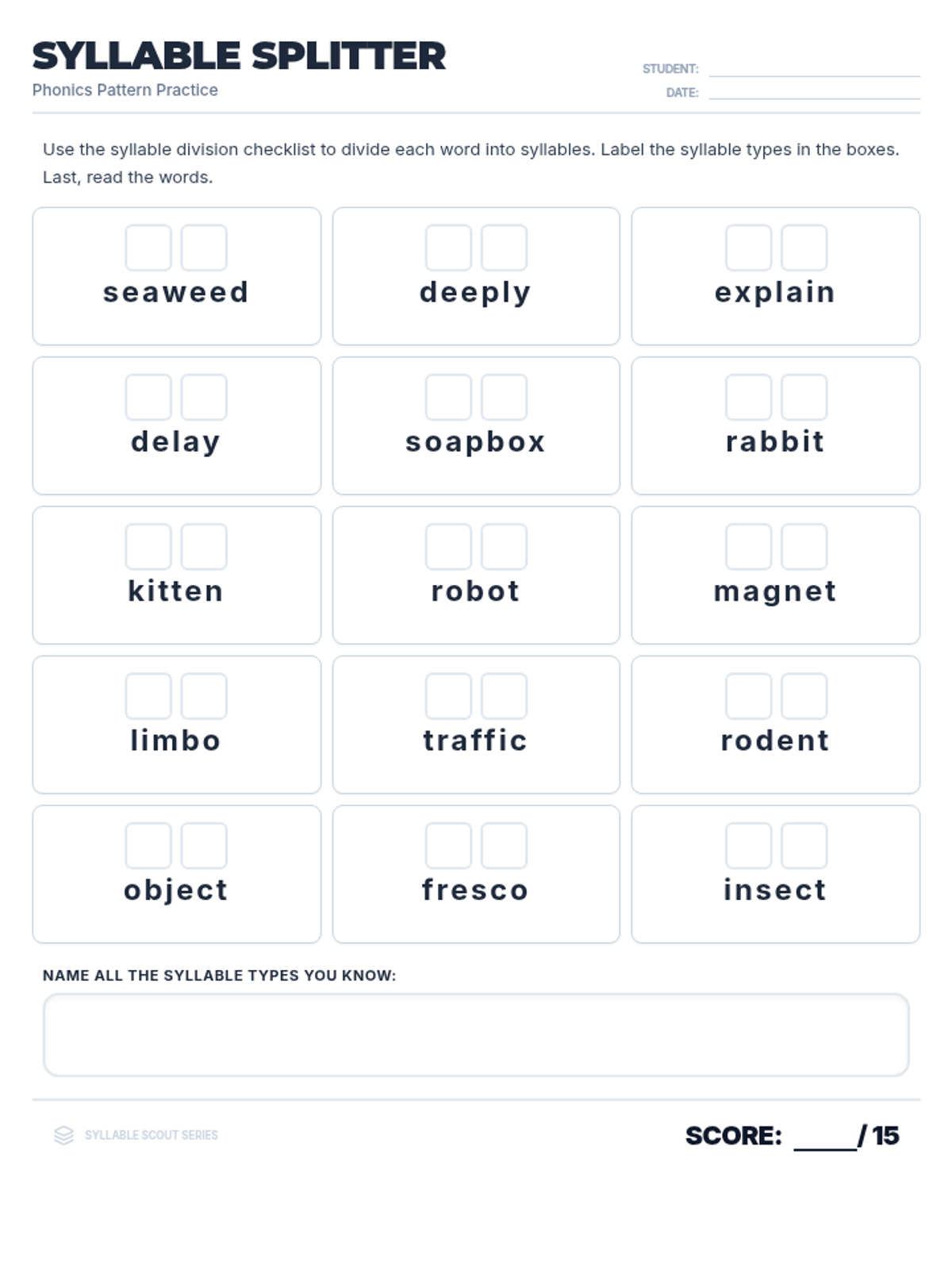
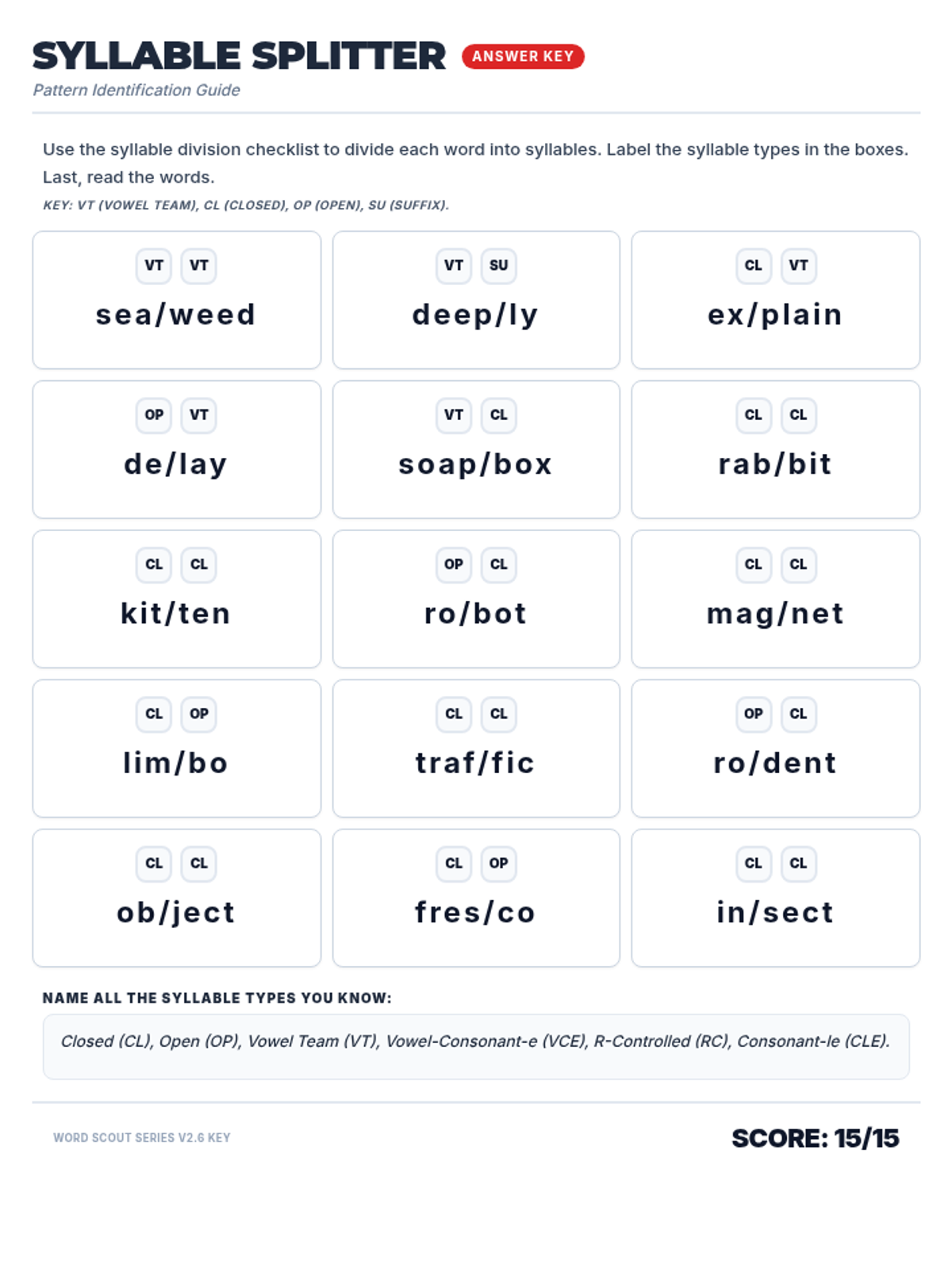
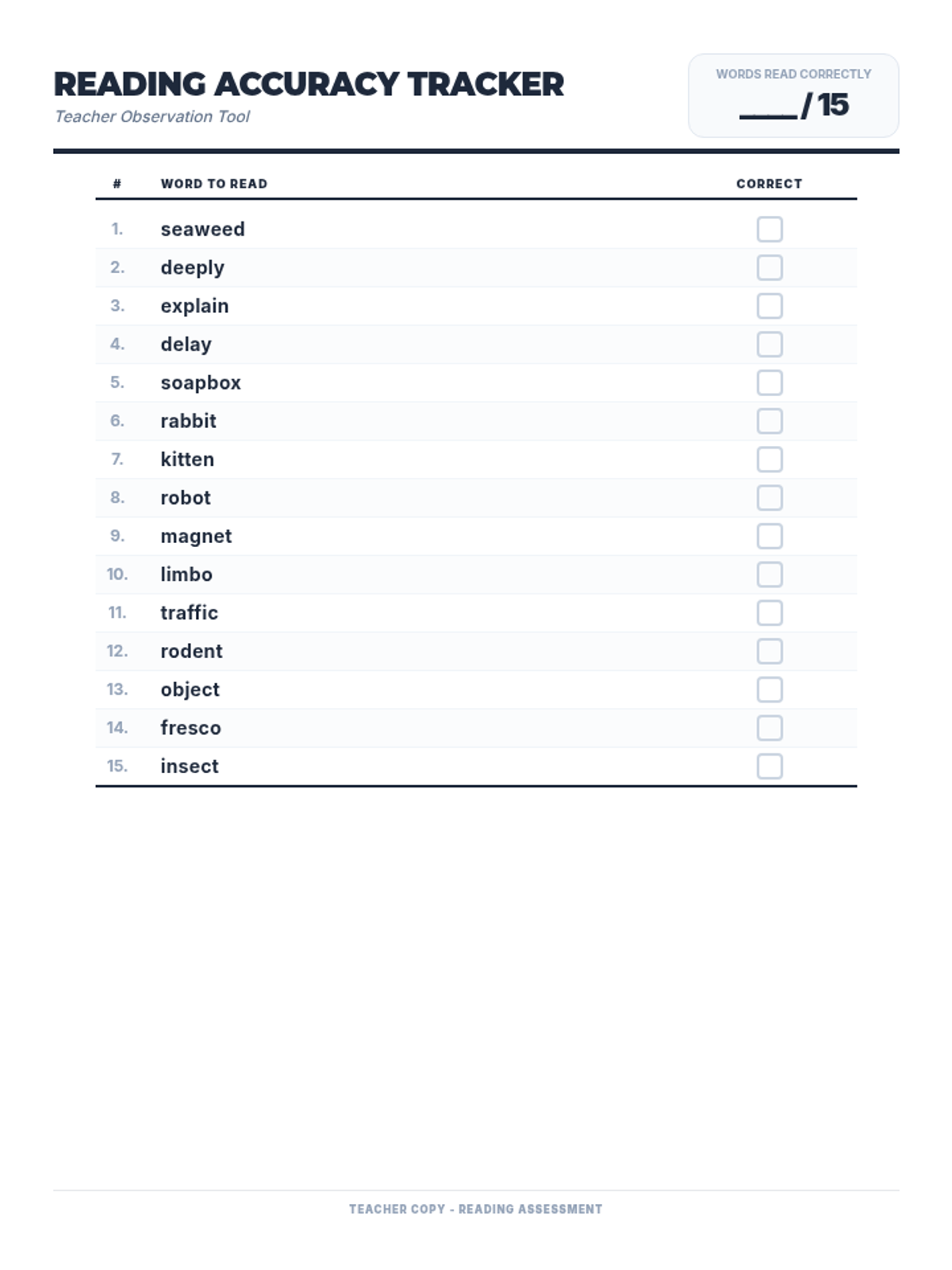
A lesson focused on mastering syllable division patterns through interactive tracking and assessment.
A SIOP-based lesson on Earth Day for Level 4 ELs, focusing on the 3 Rs and environmental protection through visual scaffolds, academic language support, and interactive discussion.
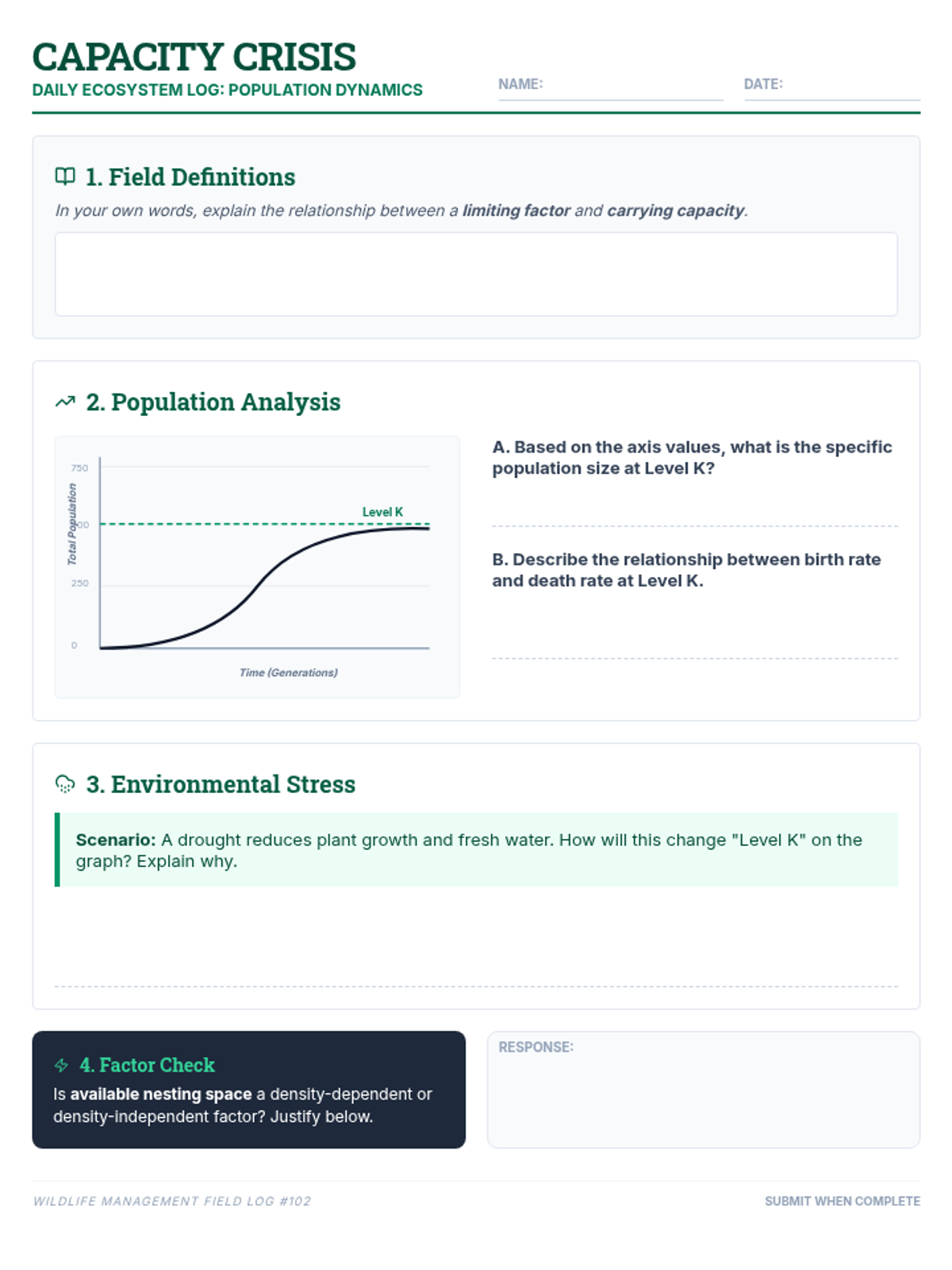
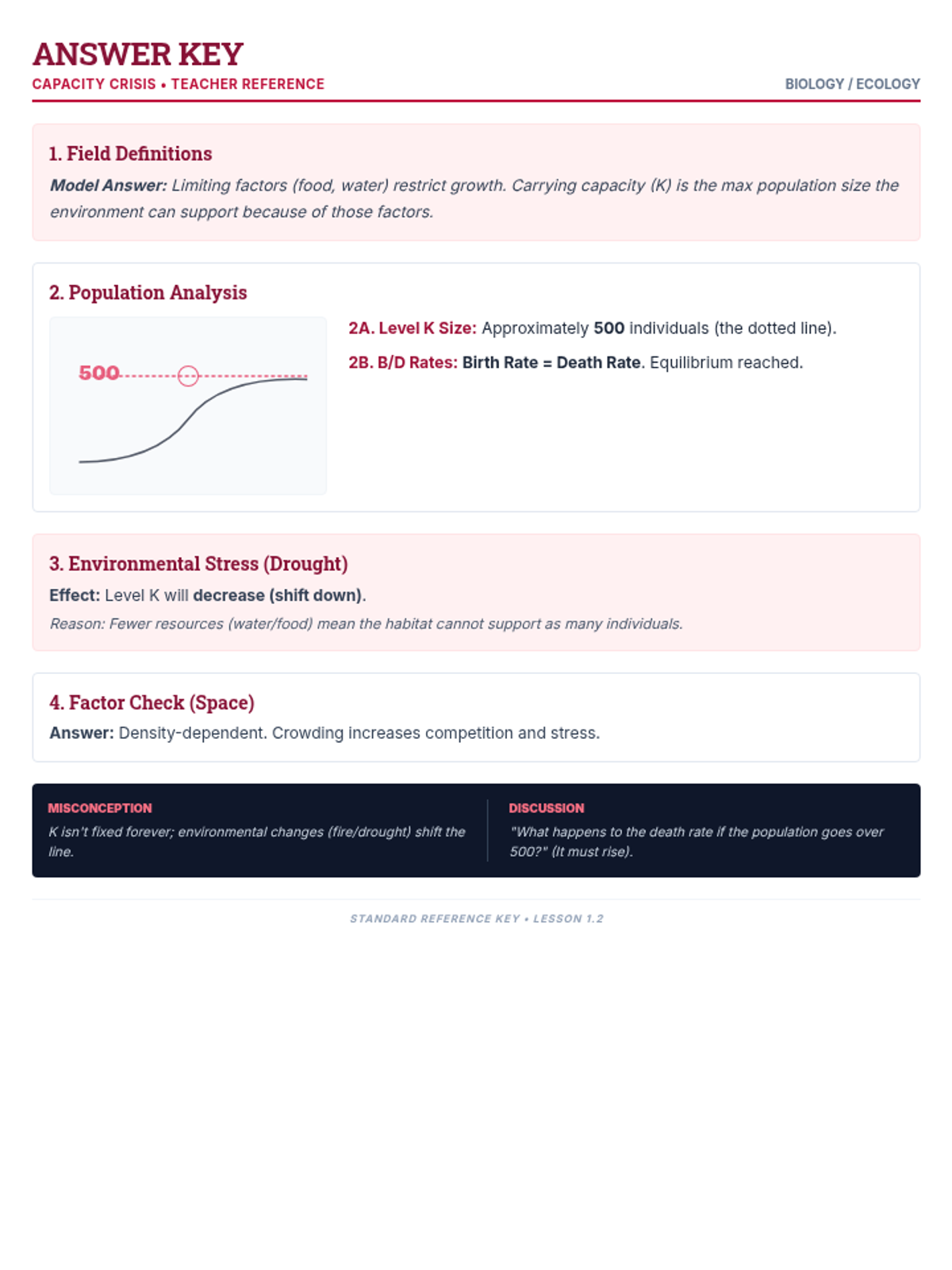
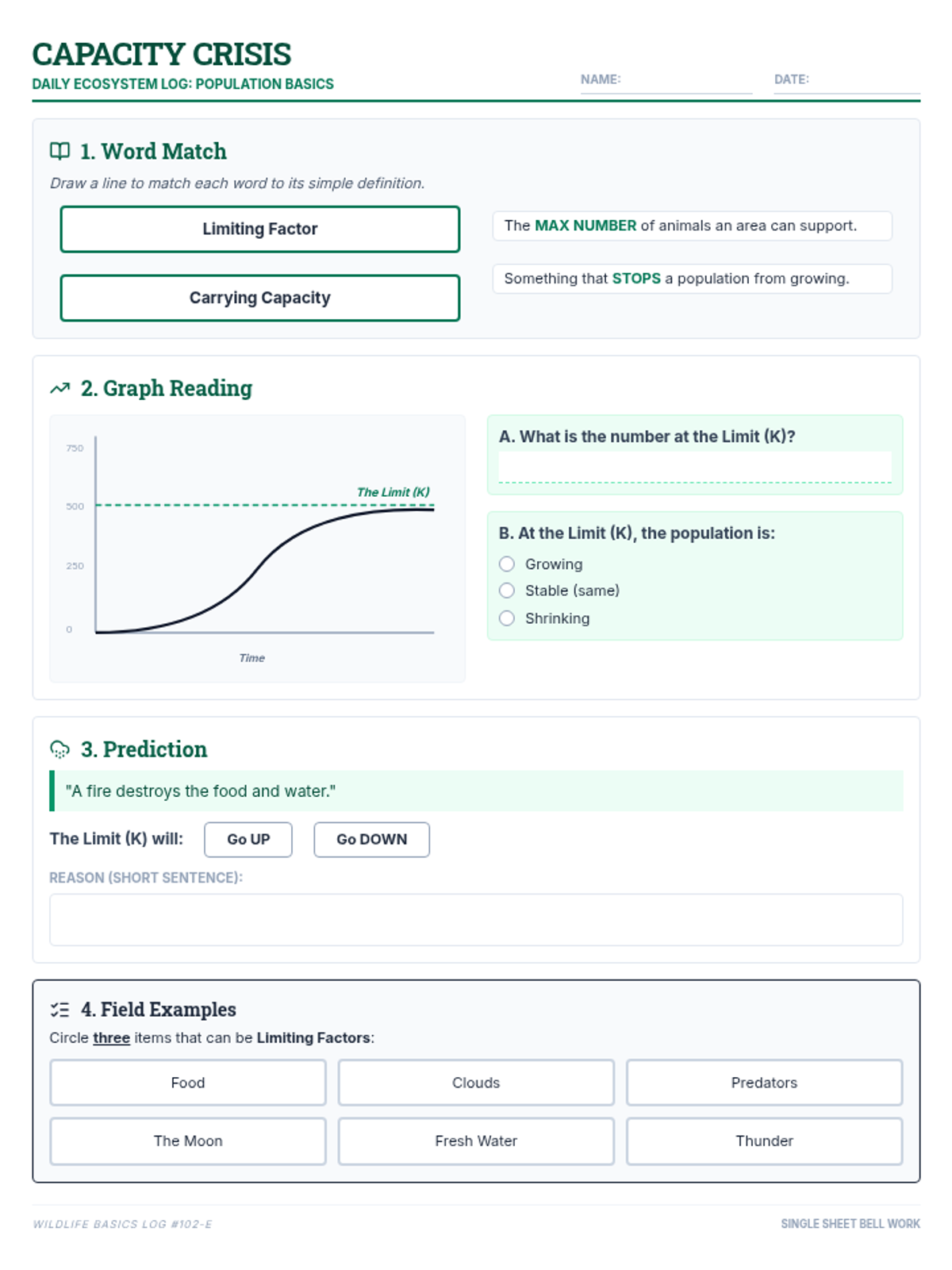
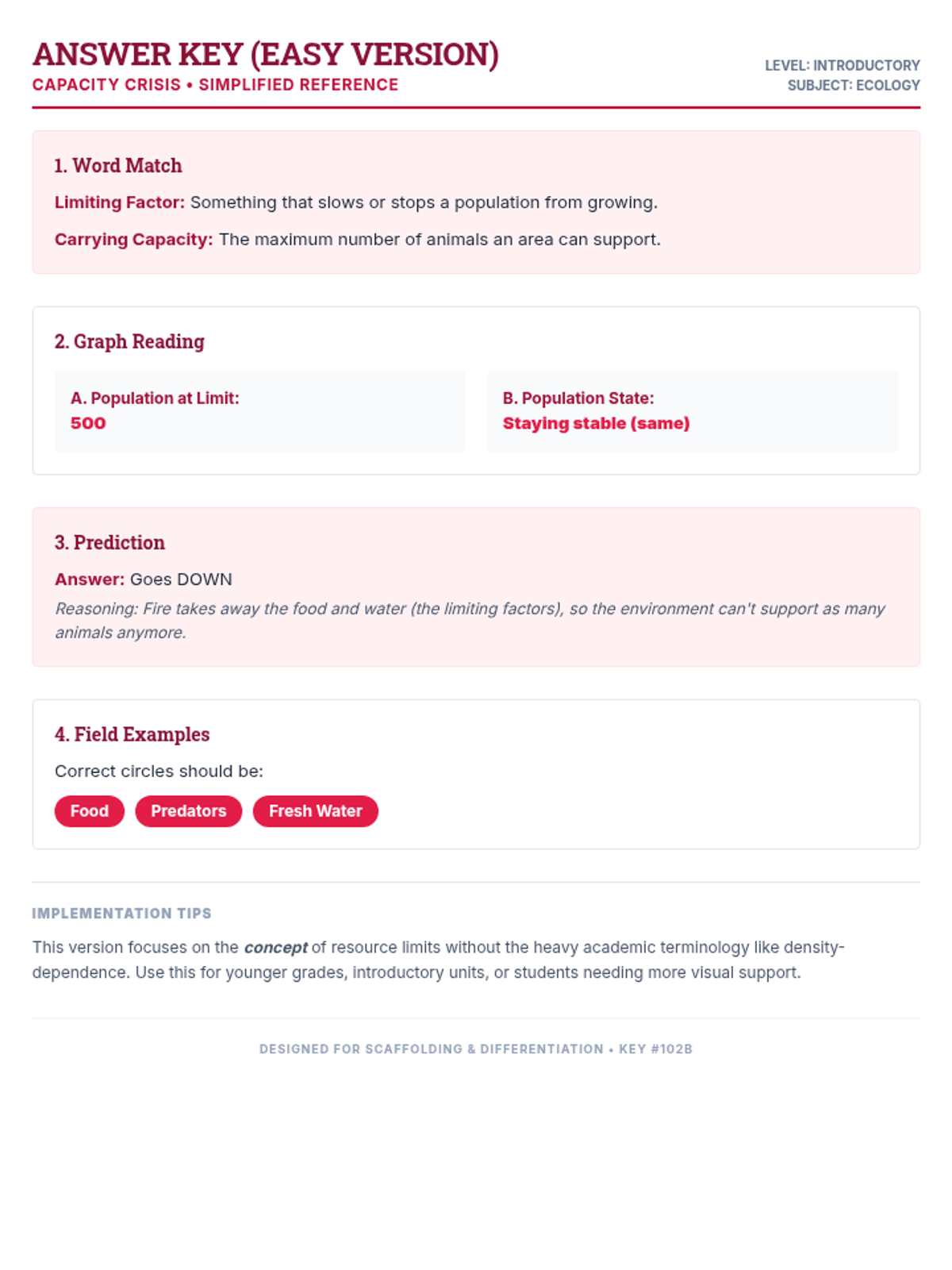
A quick, engaging bell-work activity focused on how limiting factors determine an ecosystem's carrying capacity. Students will analyze graphs and predict population changes based on environmental constraints.
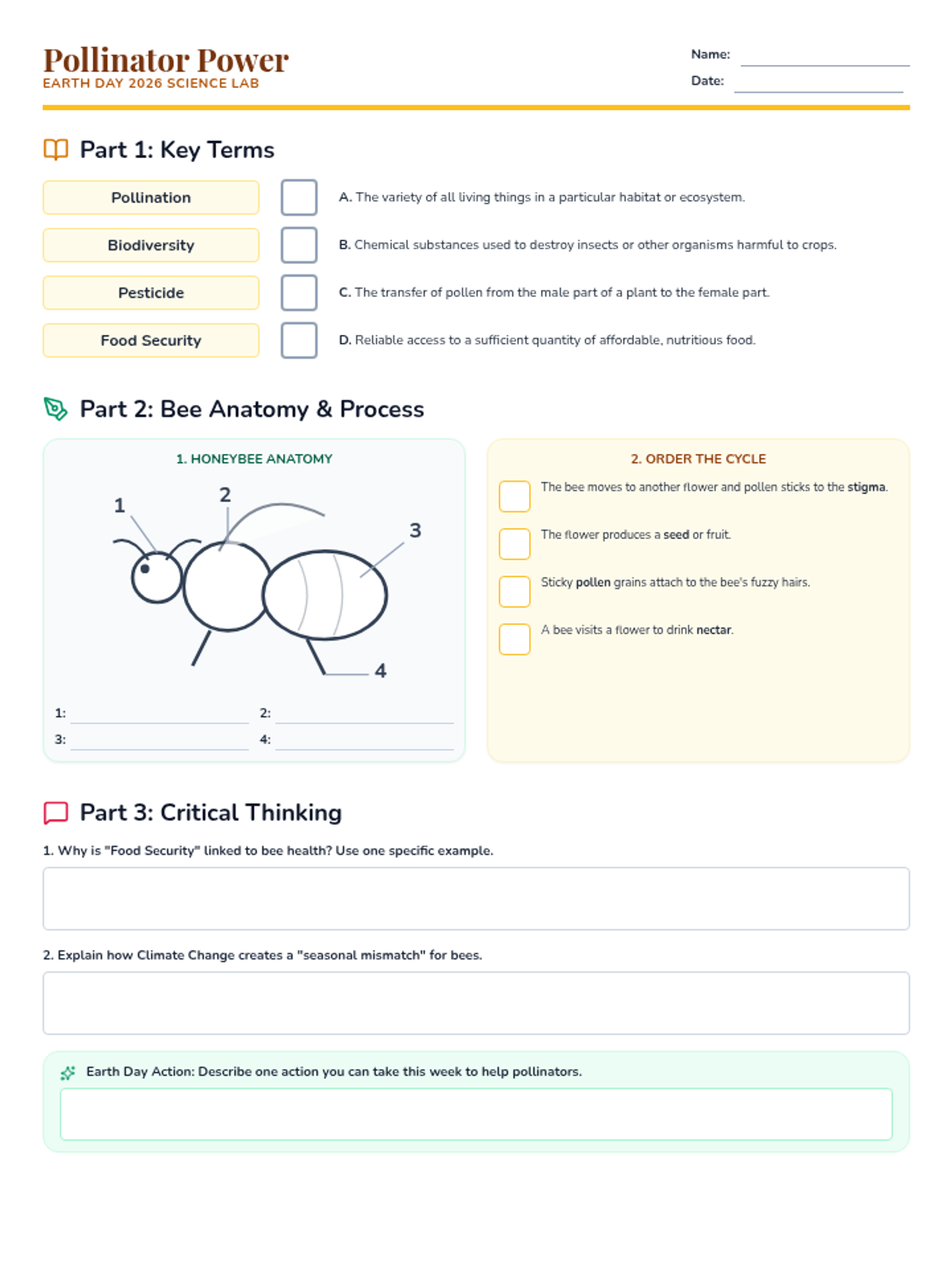
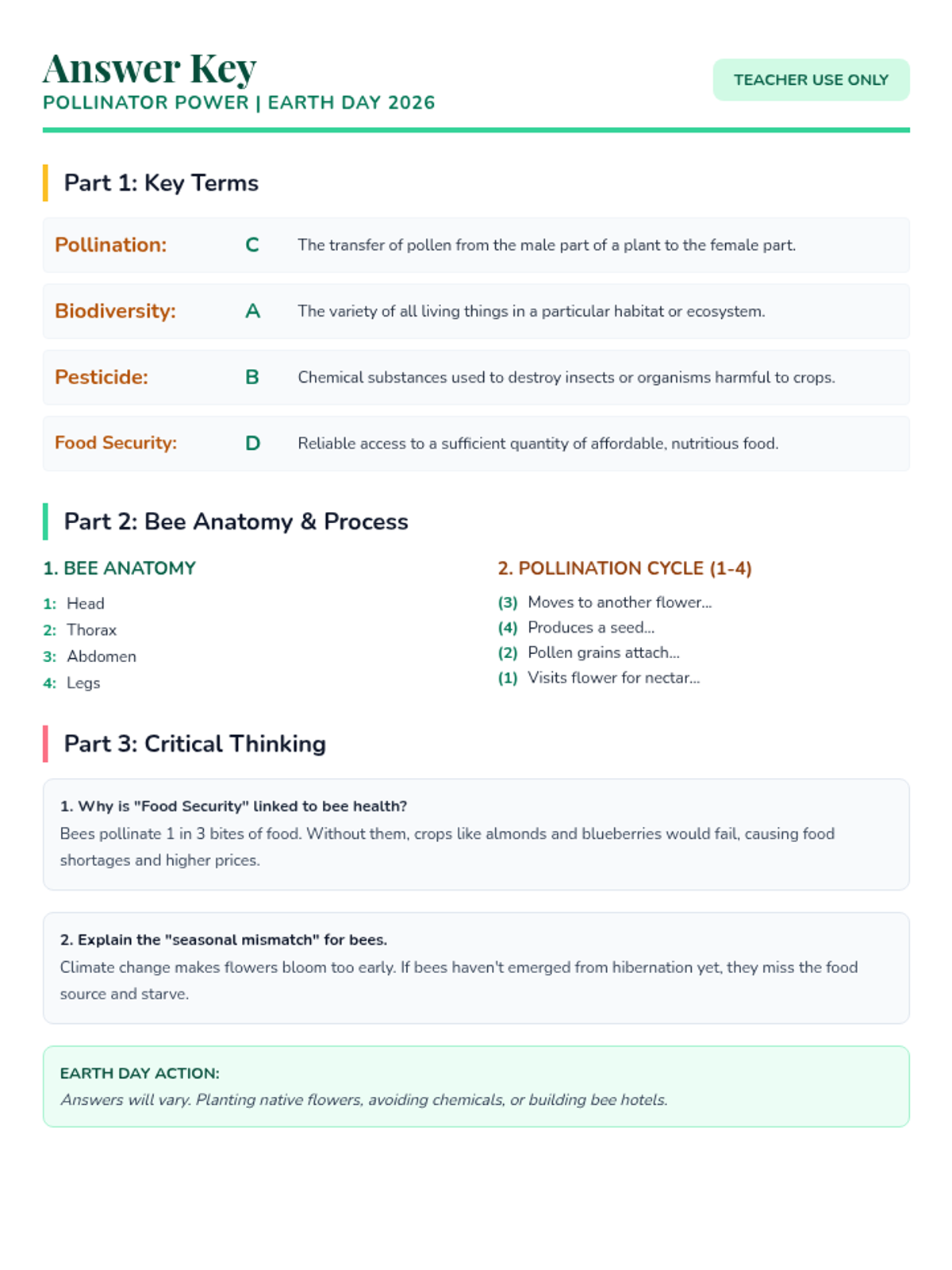
A comprehensive lesson exploring the critical role of bees in our ecosystem for Earth Day 2026, focusing on pollination, food security, and human impacts like pesticides and climate change.
A lesson exploring biodiversity, ecological relationships, and symbiotic partnerships through riddles and synthesis questions.
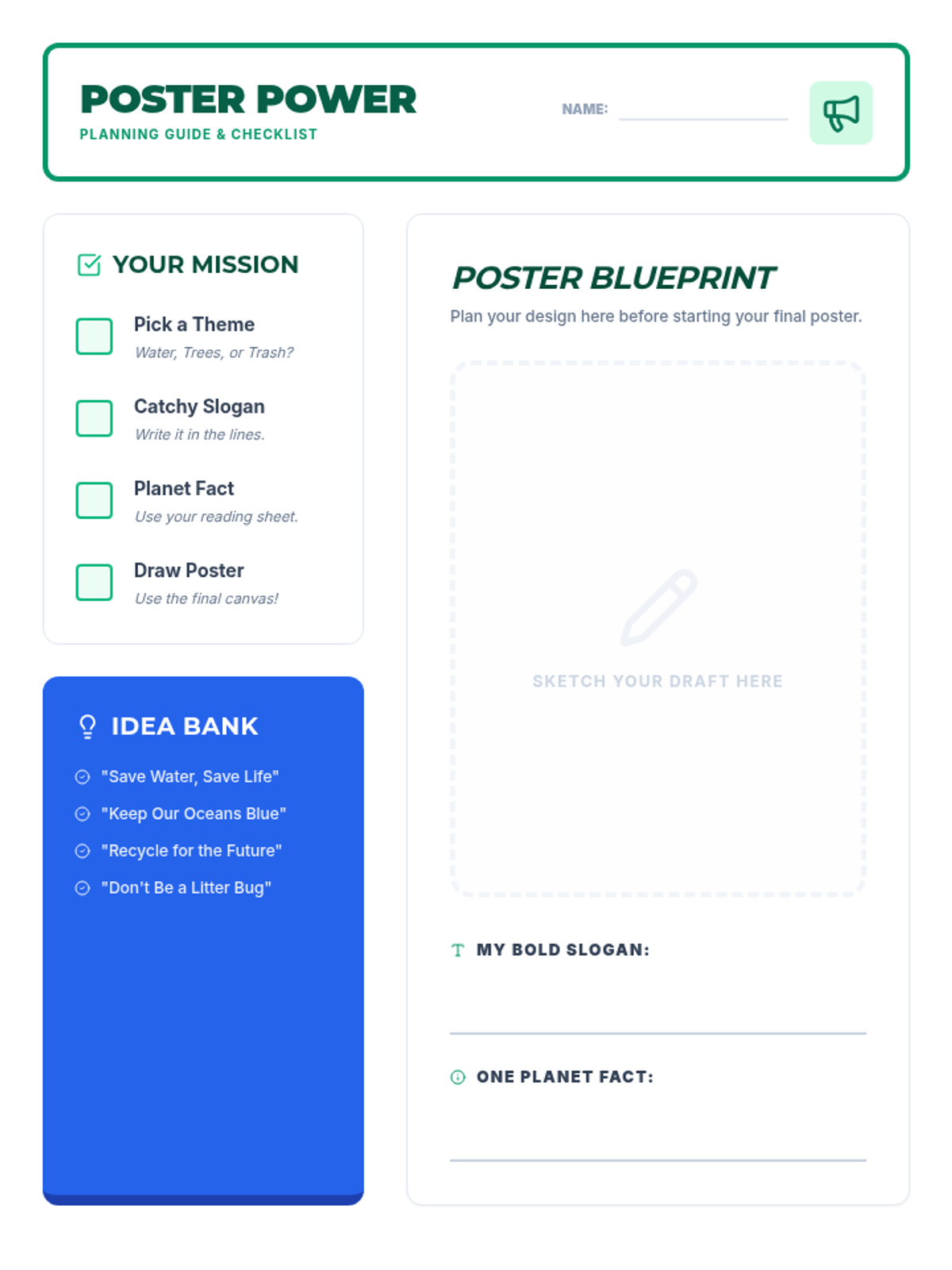
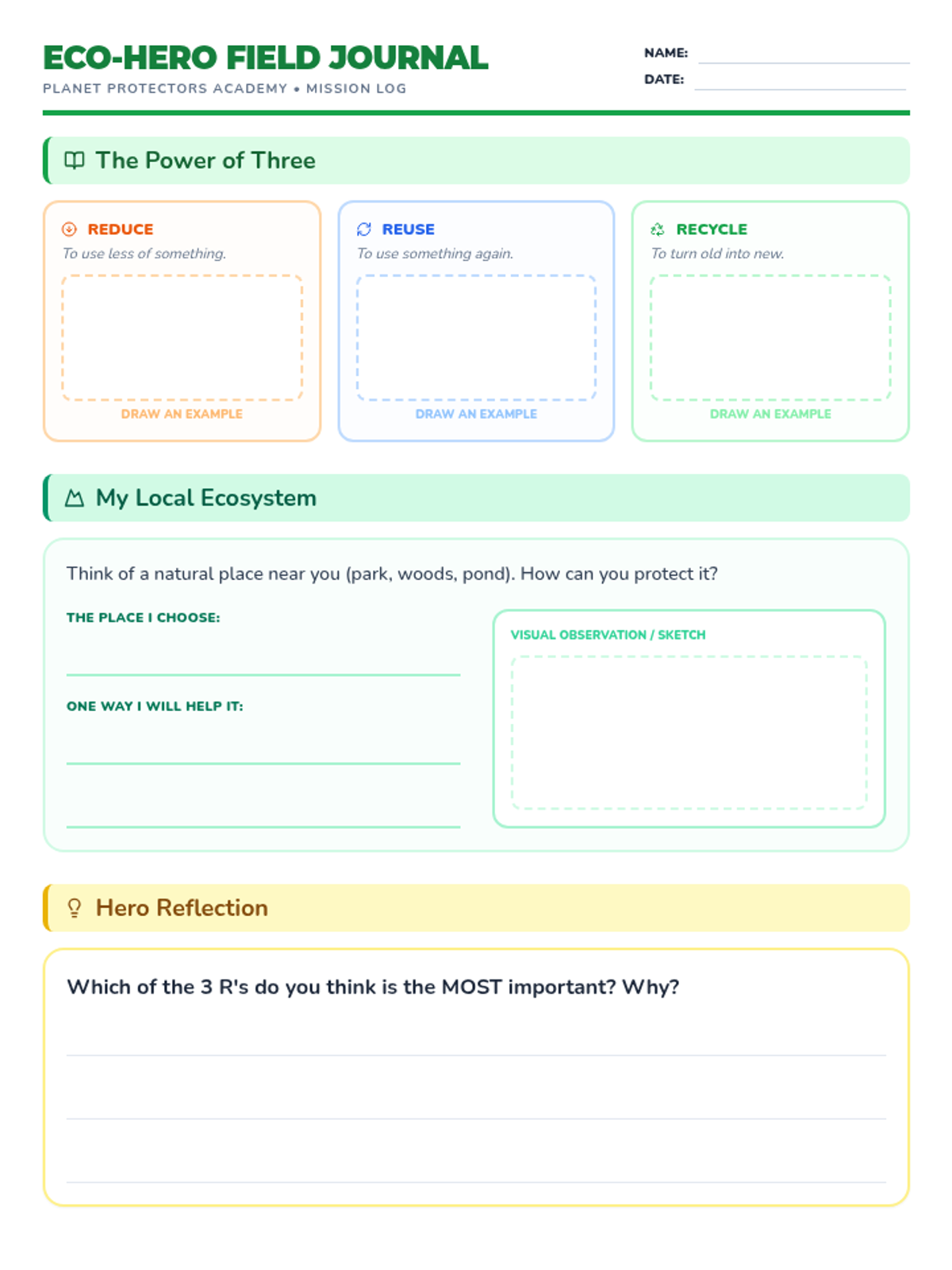
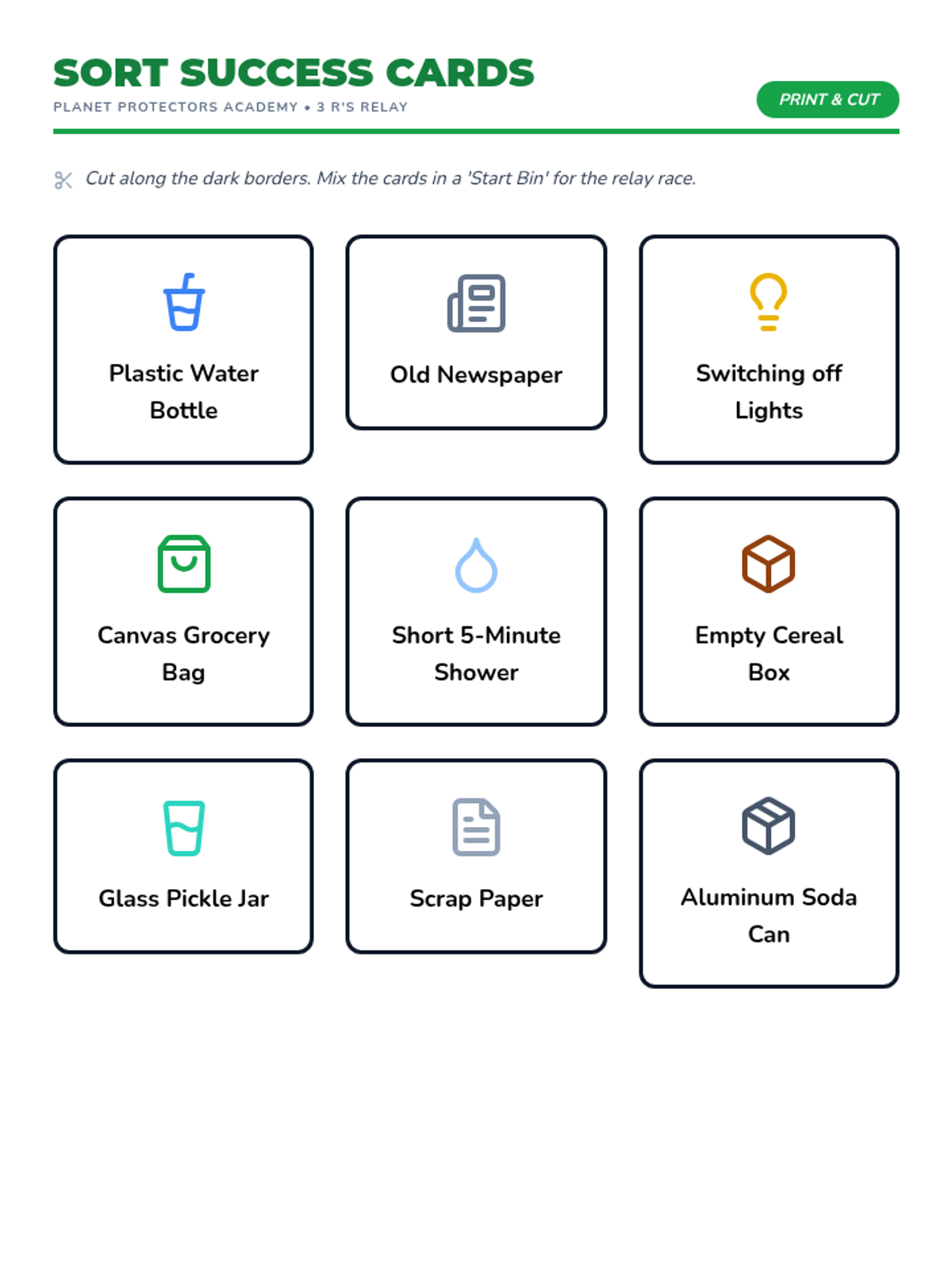
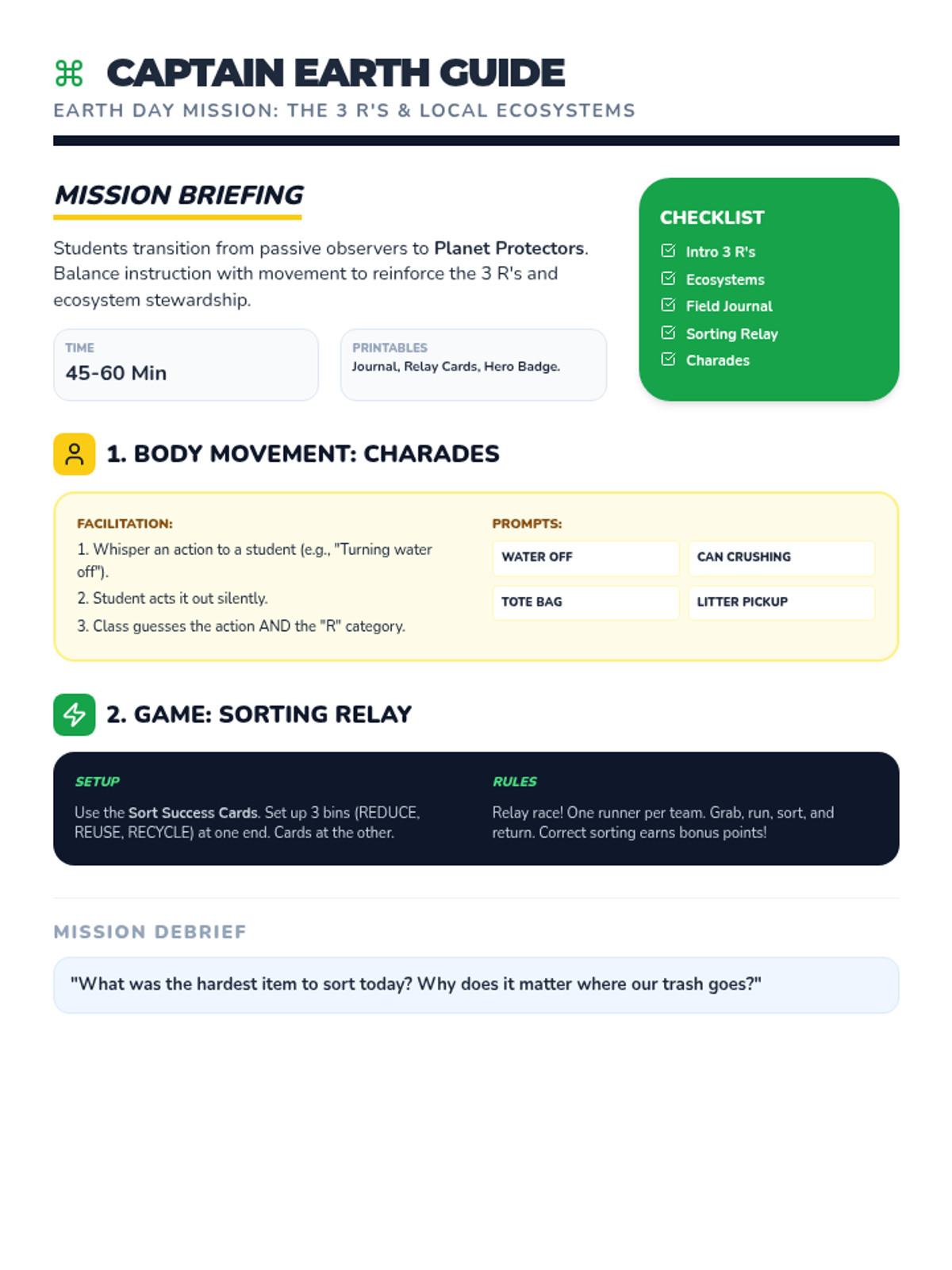
A high-energy 3rd-grade lesson where students become 'Planet Protectors' by mastering the 3 R's and learning how to safeguard their local ecosystems through movement and collaborative play.
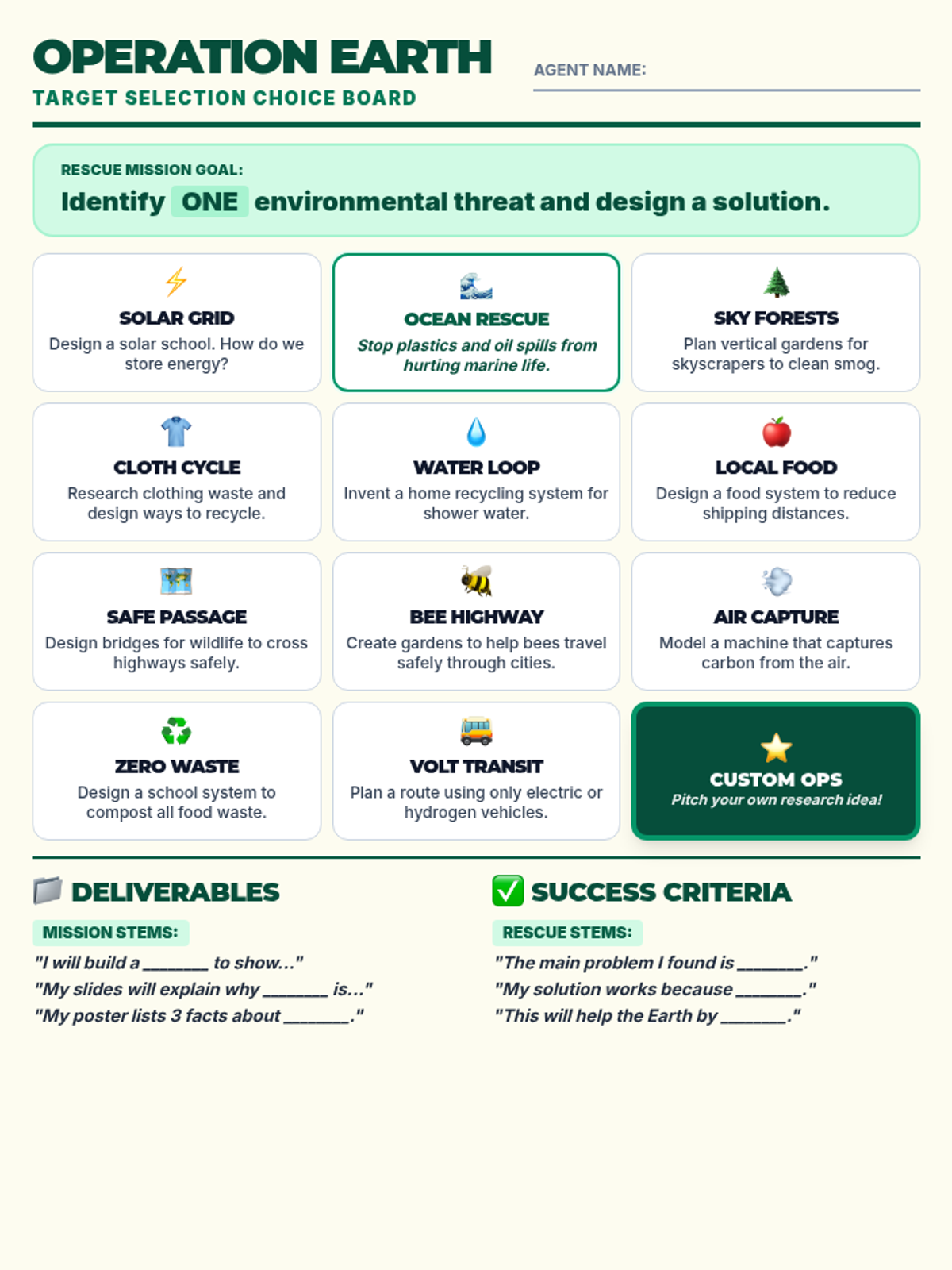
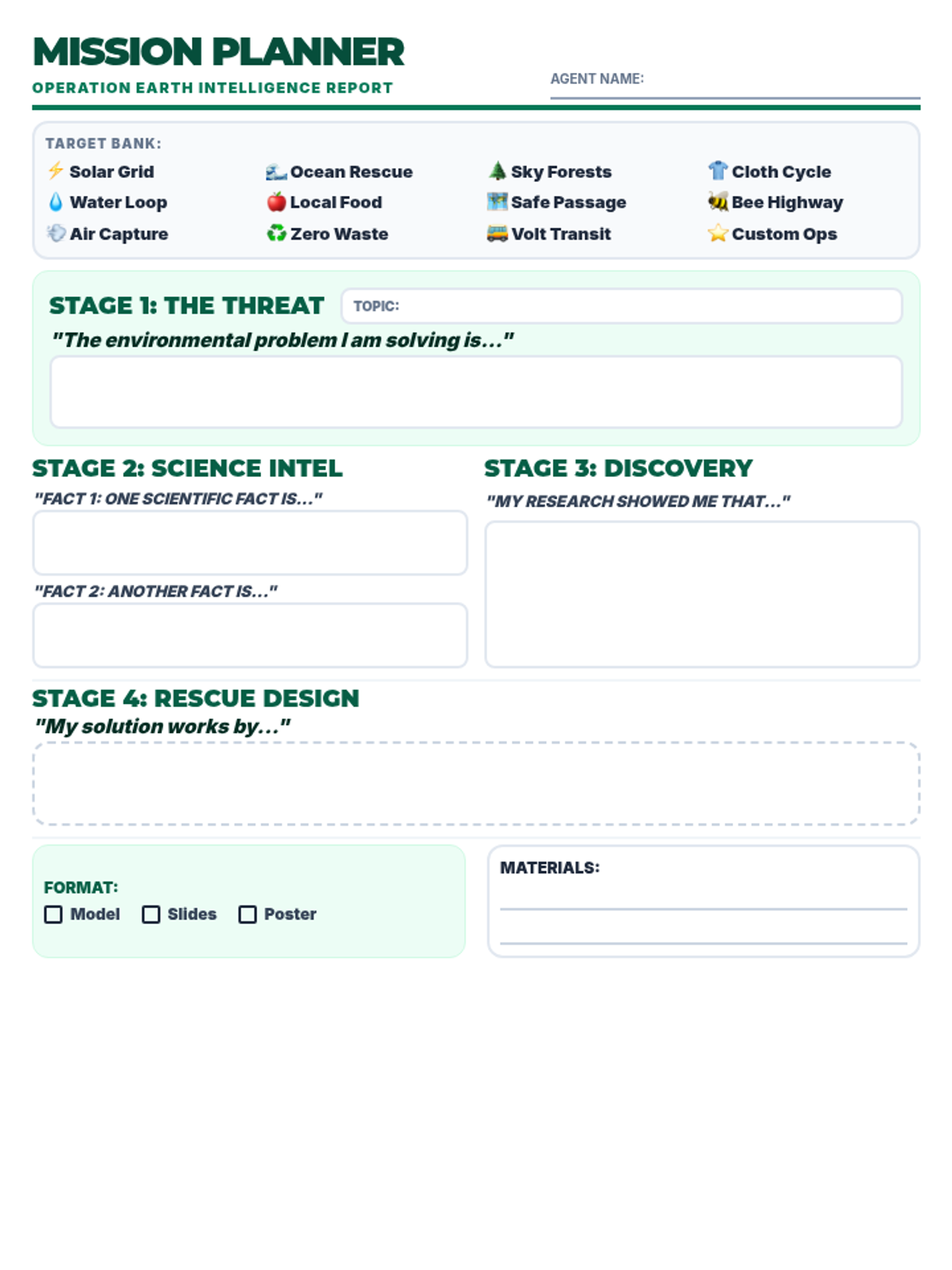
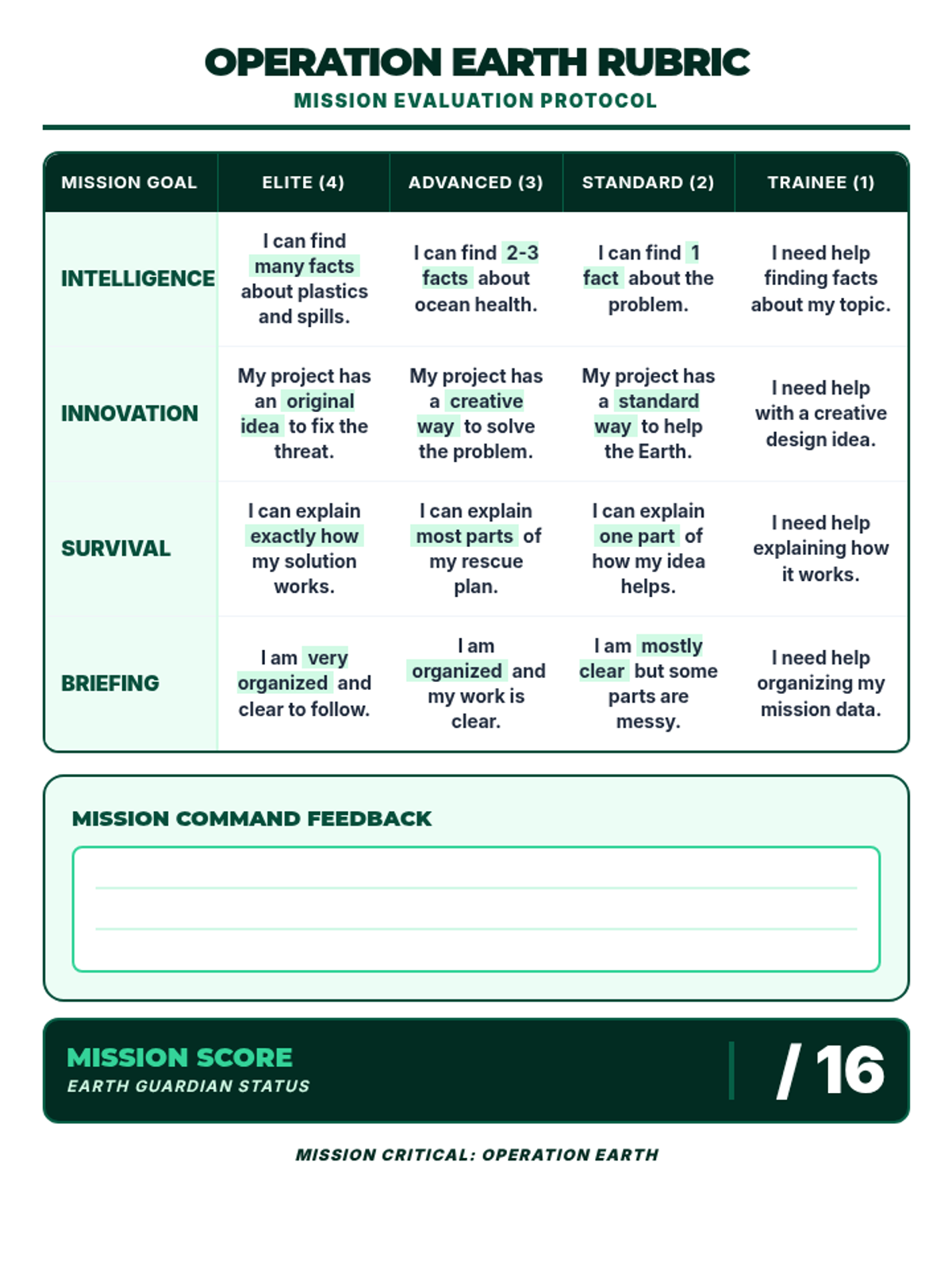
A high-stakes research project where students choose an environmental challenge to solve. Using the David Attenborough video as inspiration, students research, plan, and create a model or presentation to rescue our planet.
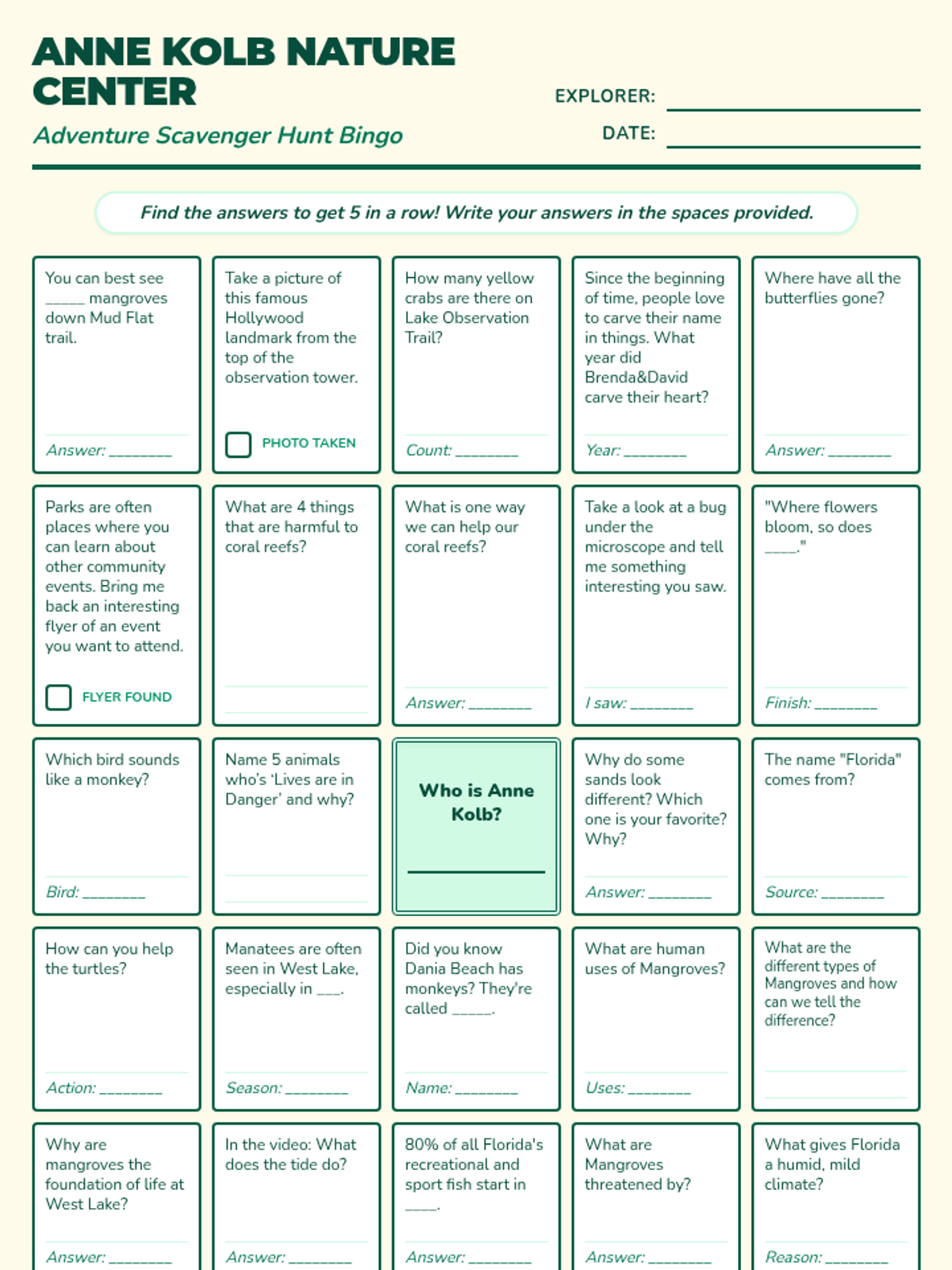
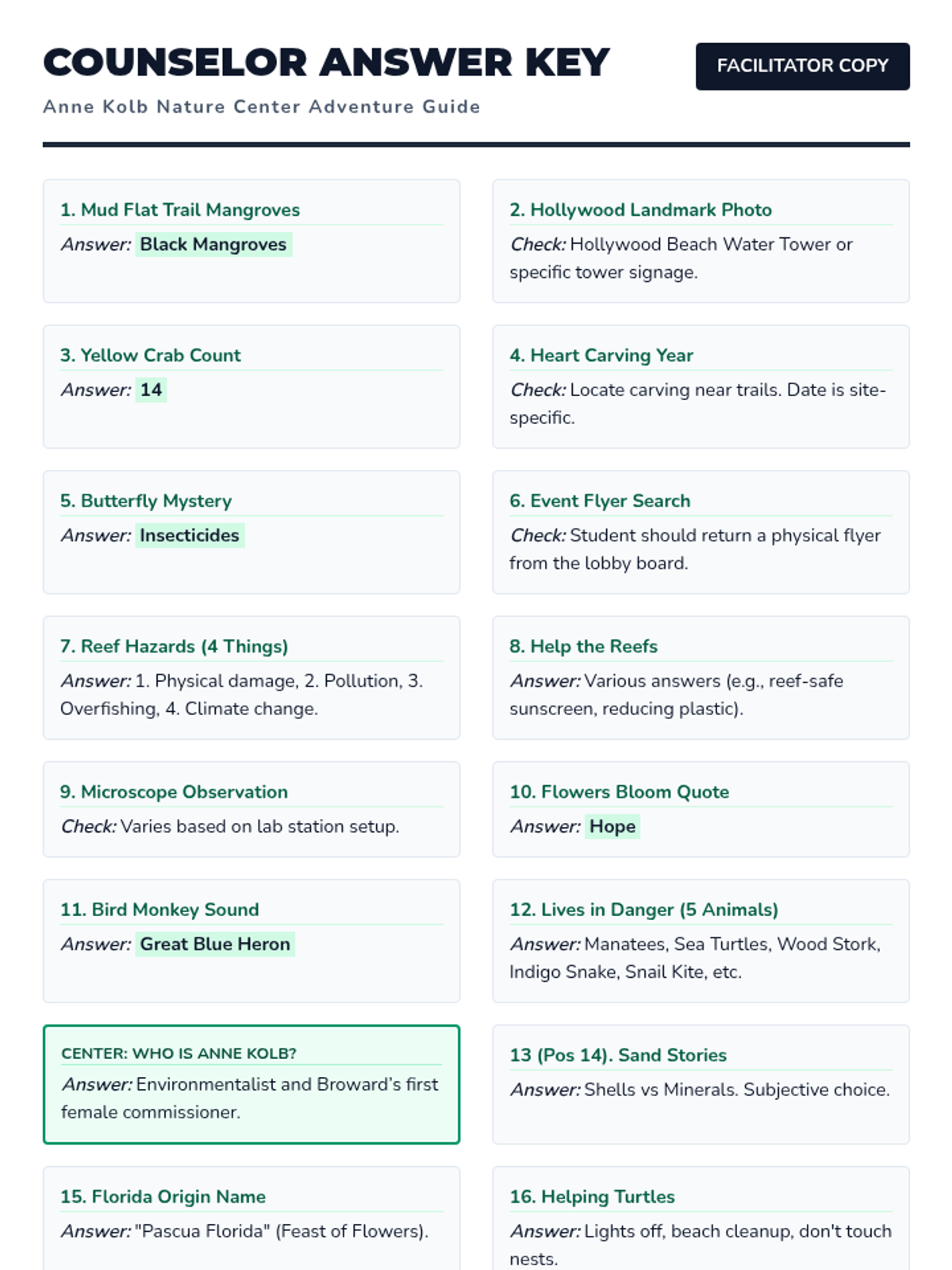
A field trip exploration guide for the Anne Kolb Nature Center, featuring a scavenger hunt BINGO activity and a counselor answer key.
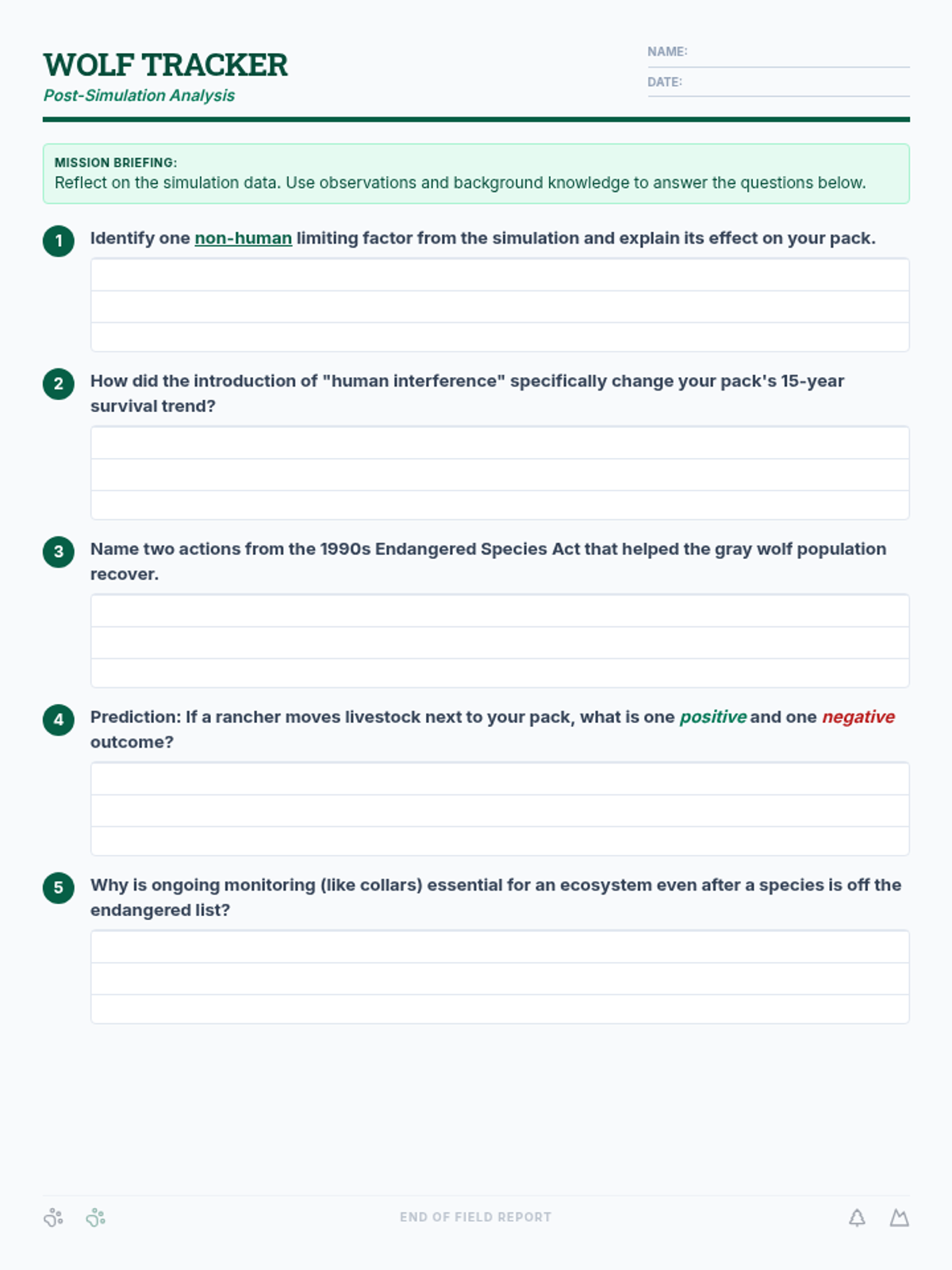
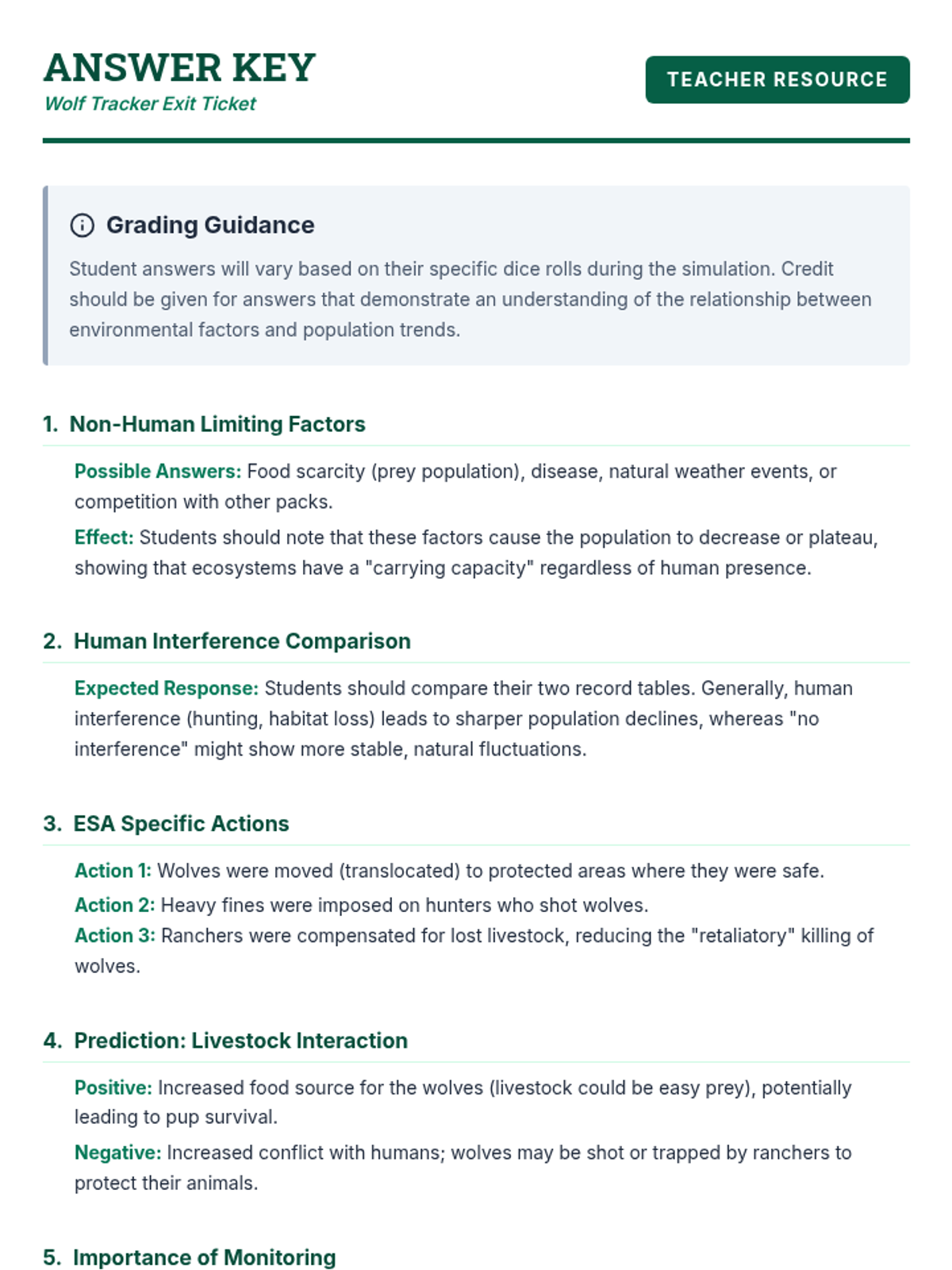
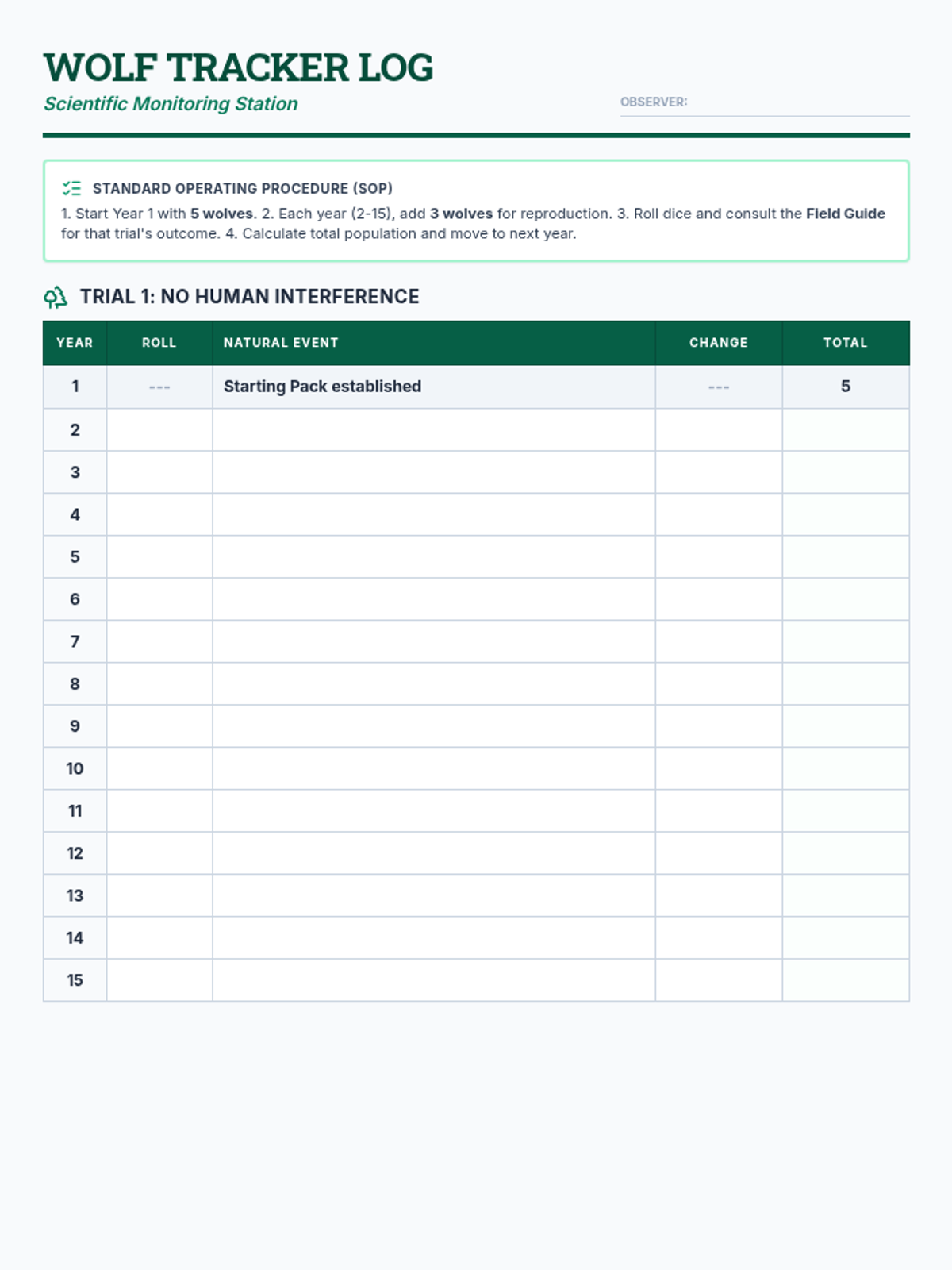
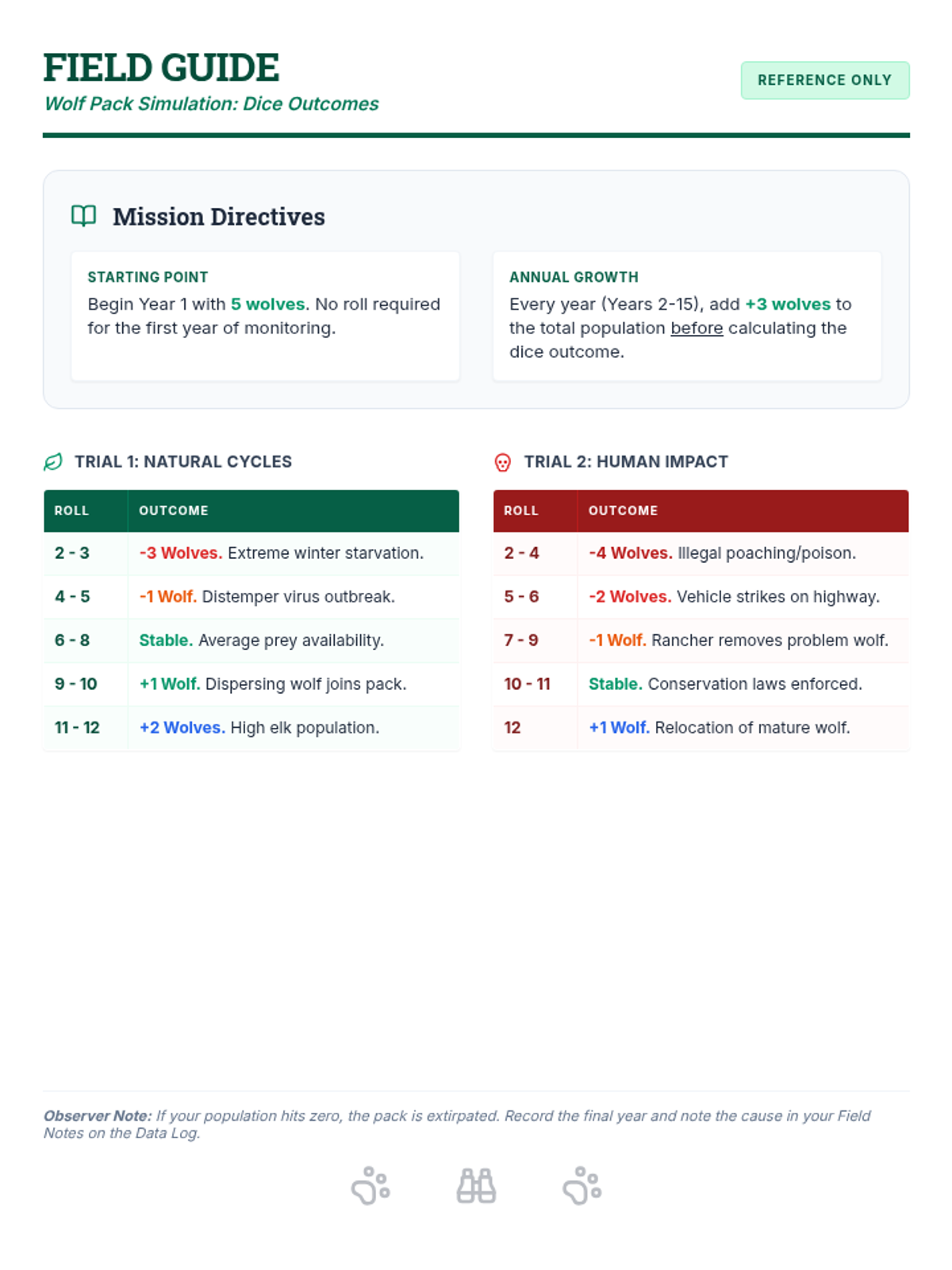
A simulation-based lesson where students model wolf population dynamics under varying levels of human interference to understand limiting factors and conservation.
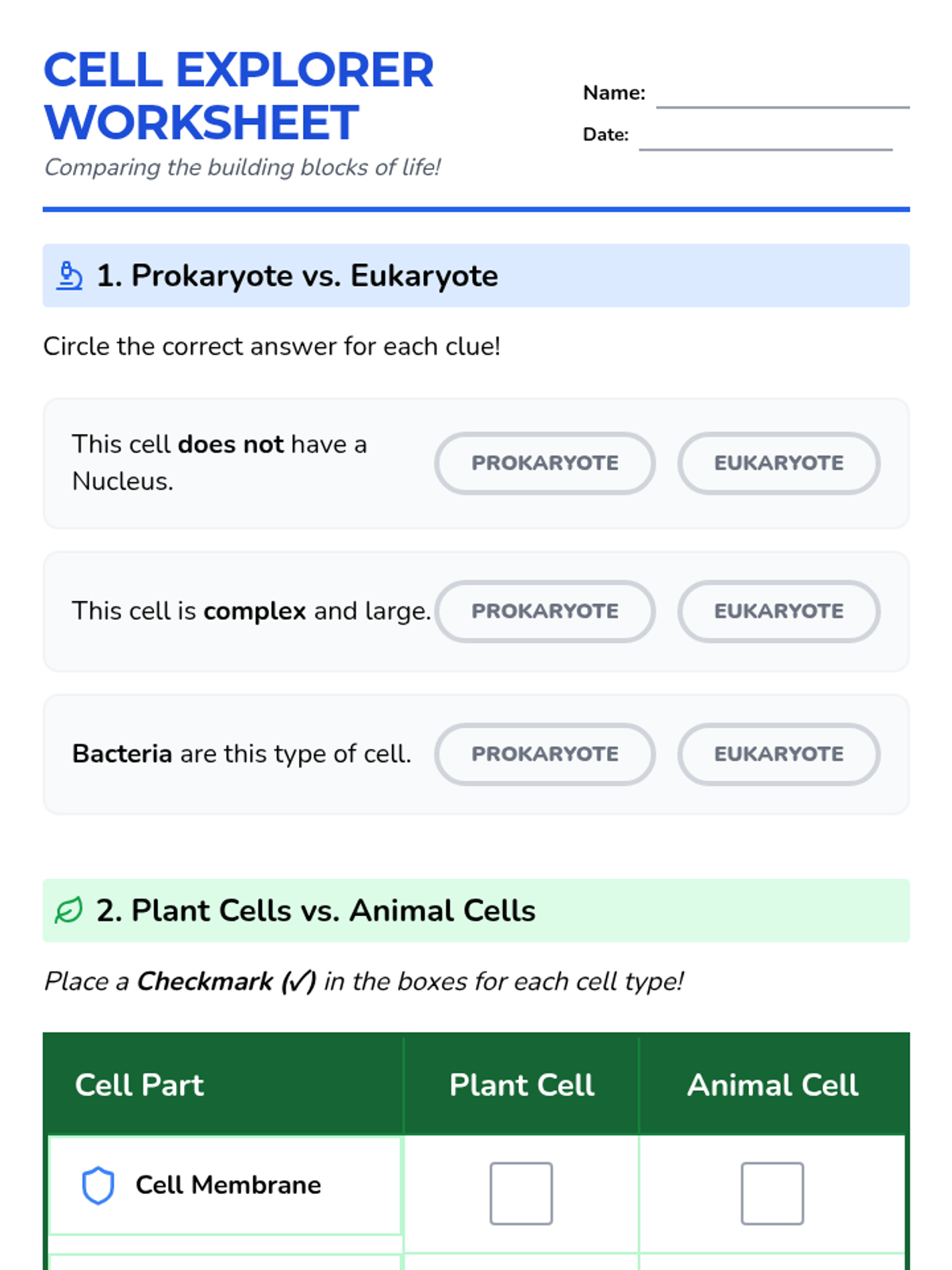
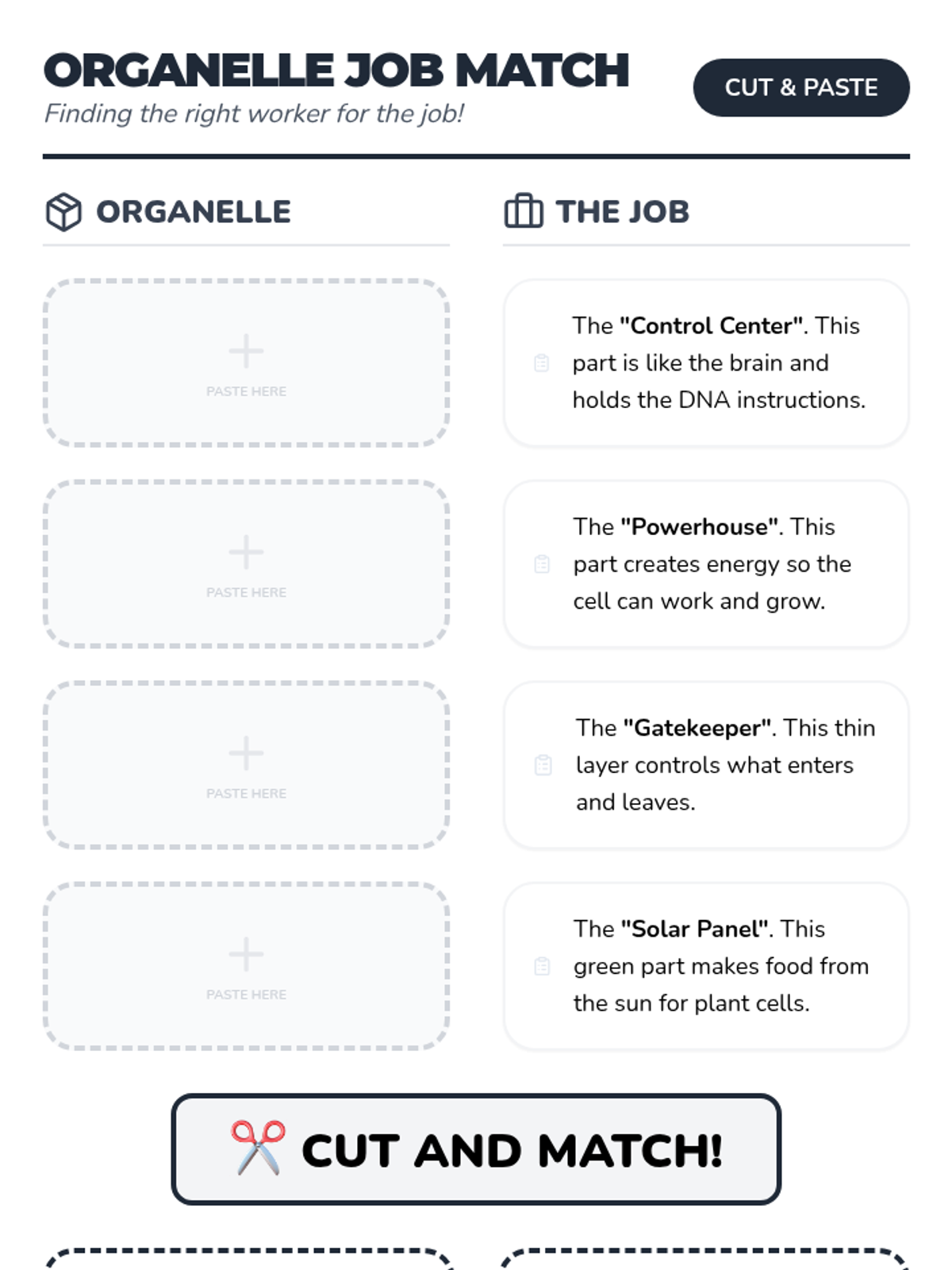
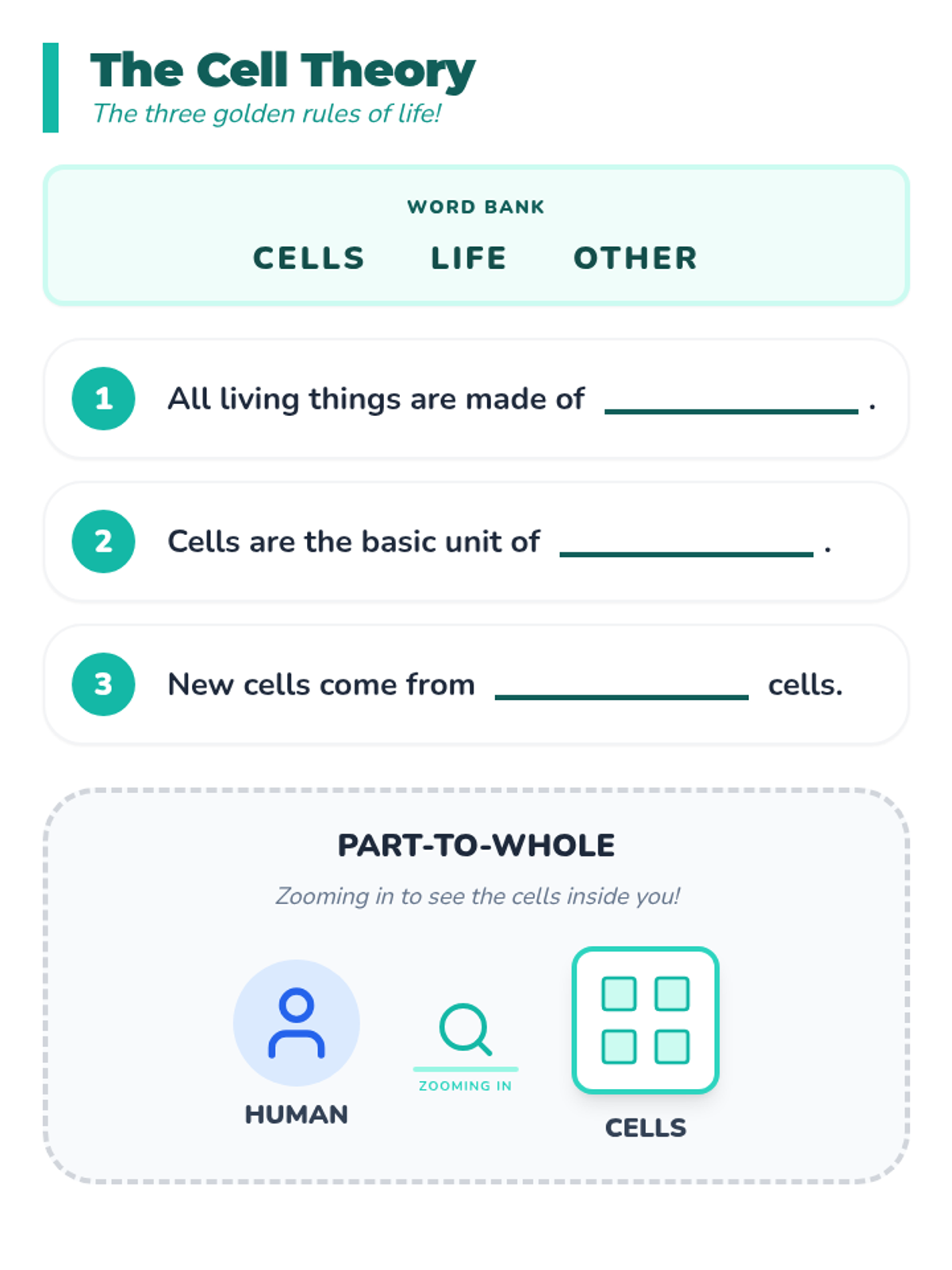
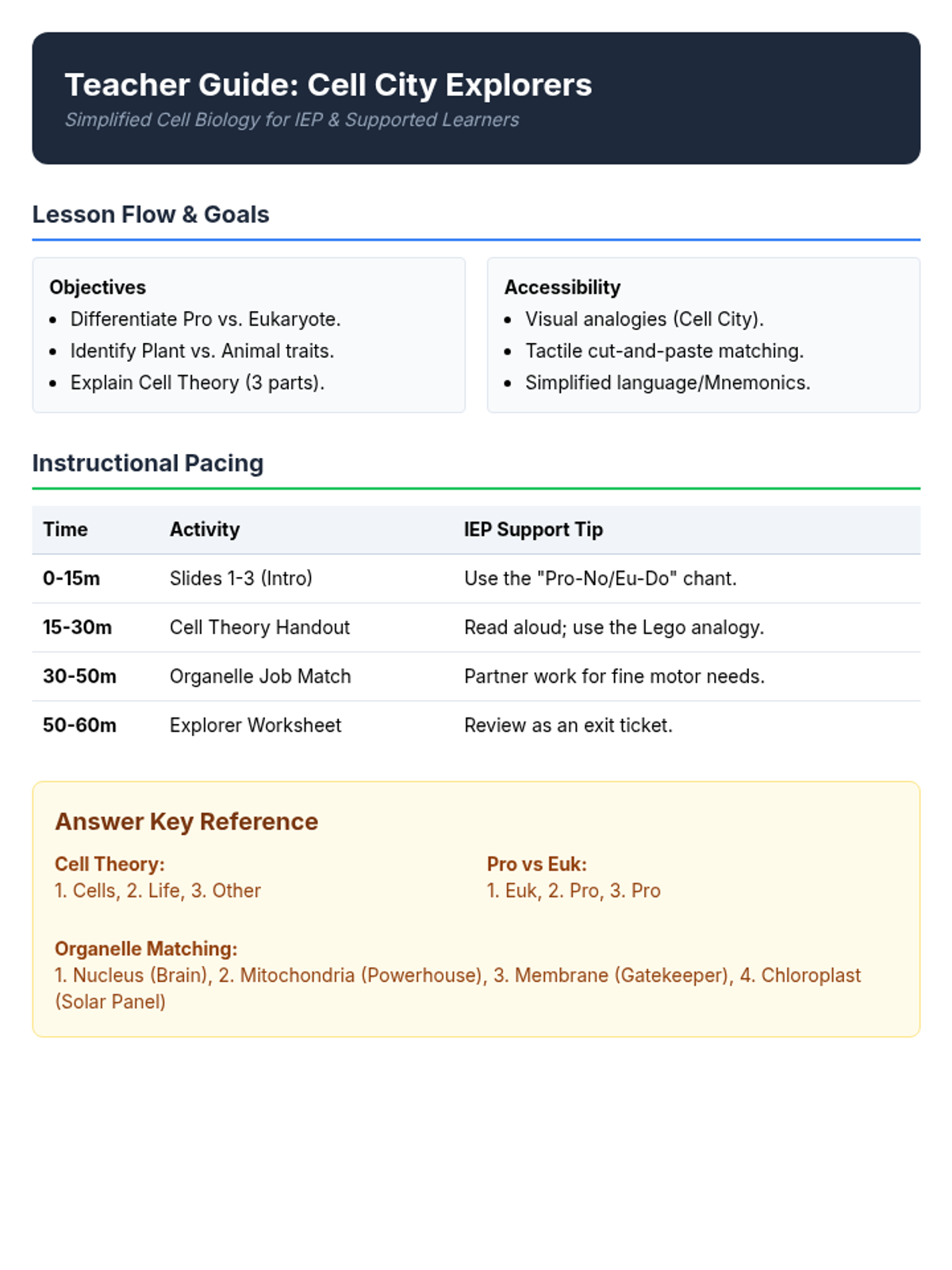
A simplified introduction to cell biology focusing on the differences between cell types and the functions of organelles using visual aids and hands-on activities.
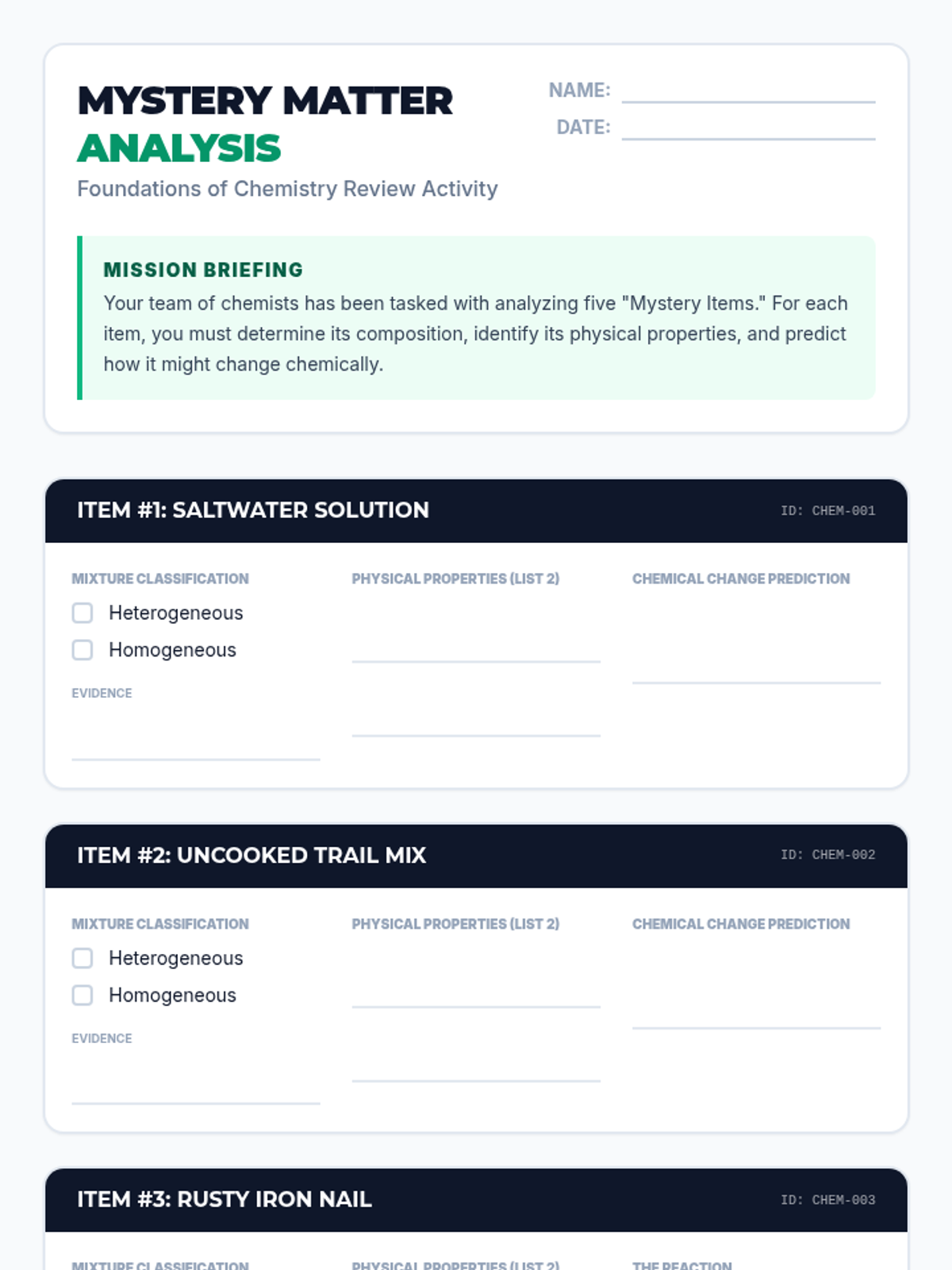
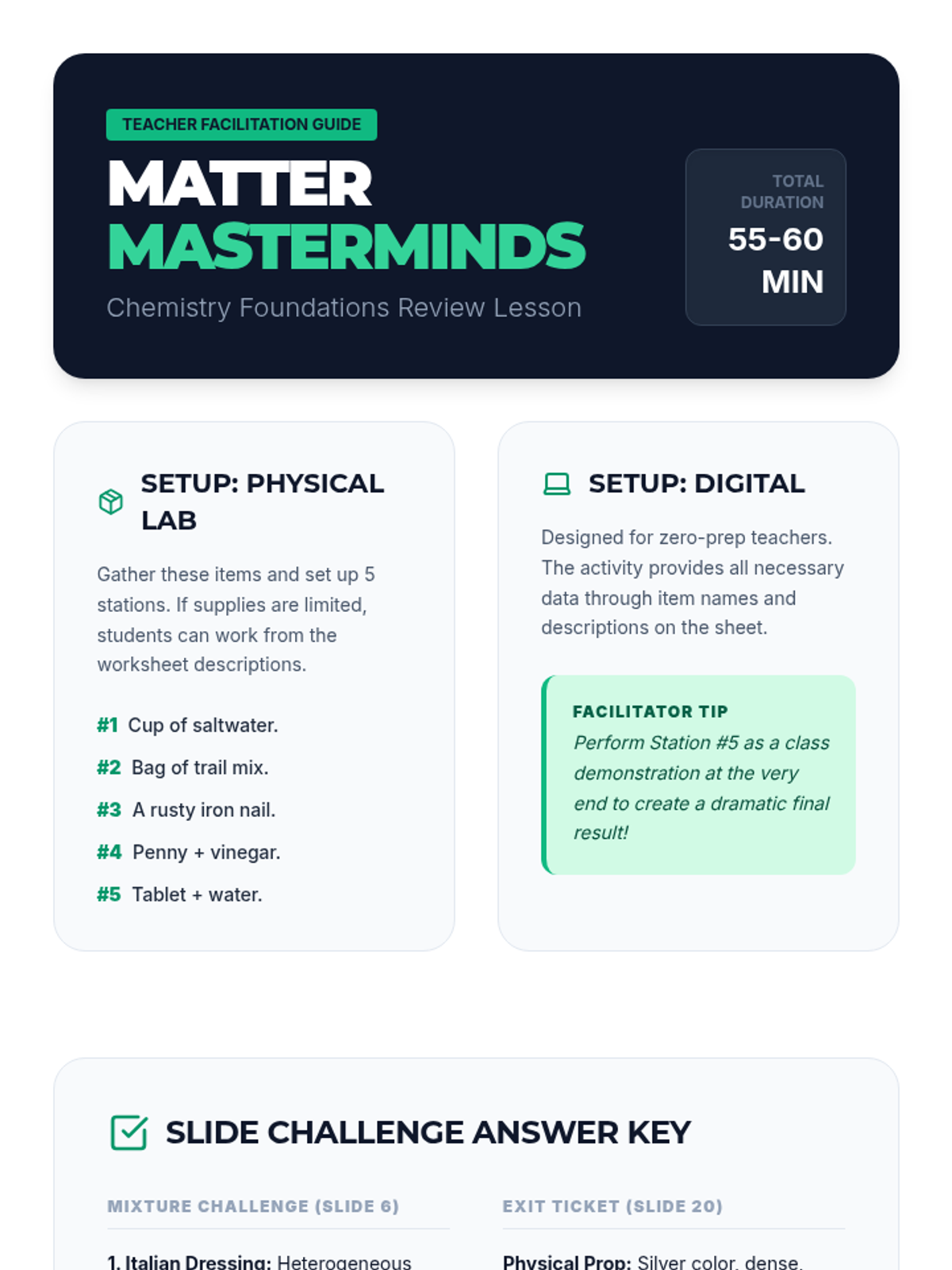
A comprehensive review lesson covering the core foundations of chemistry, including mixtures, properties, and changes through an interactive presentation and a hands-on group analysis activity.
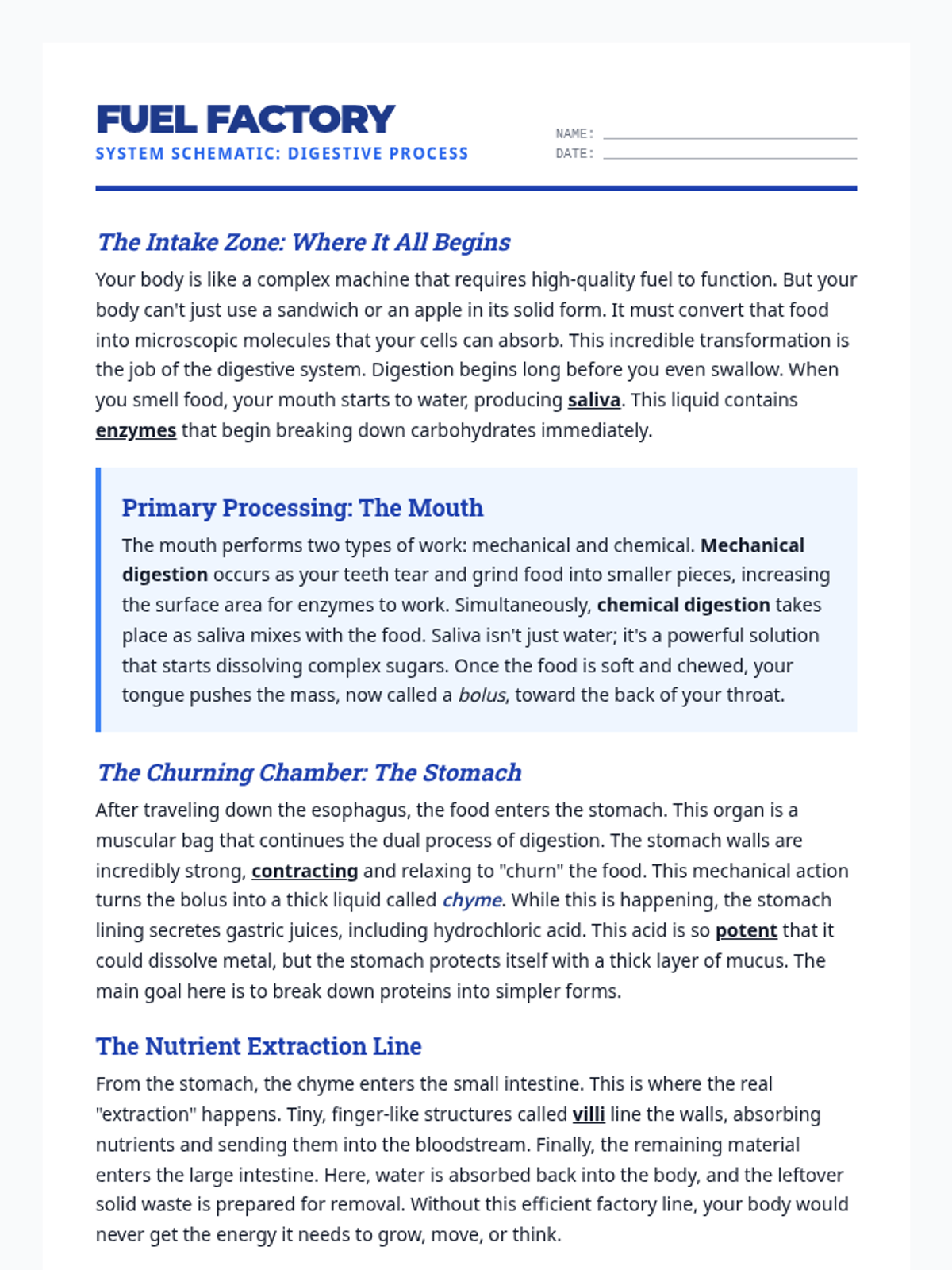
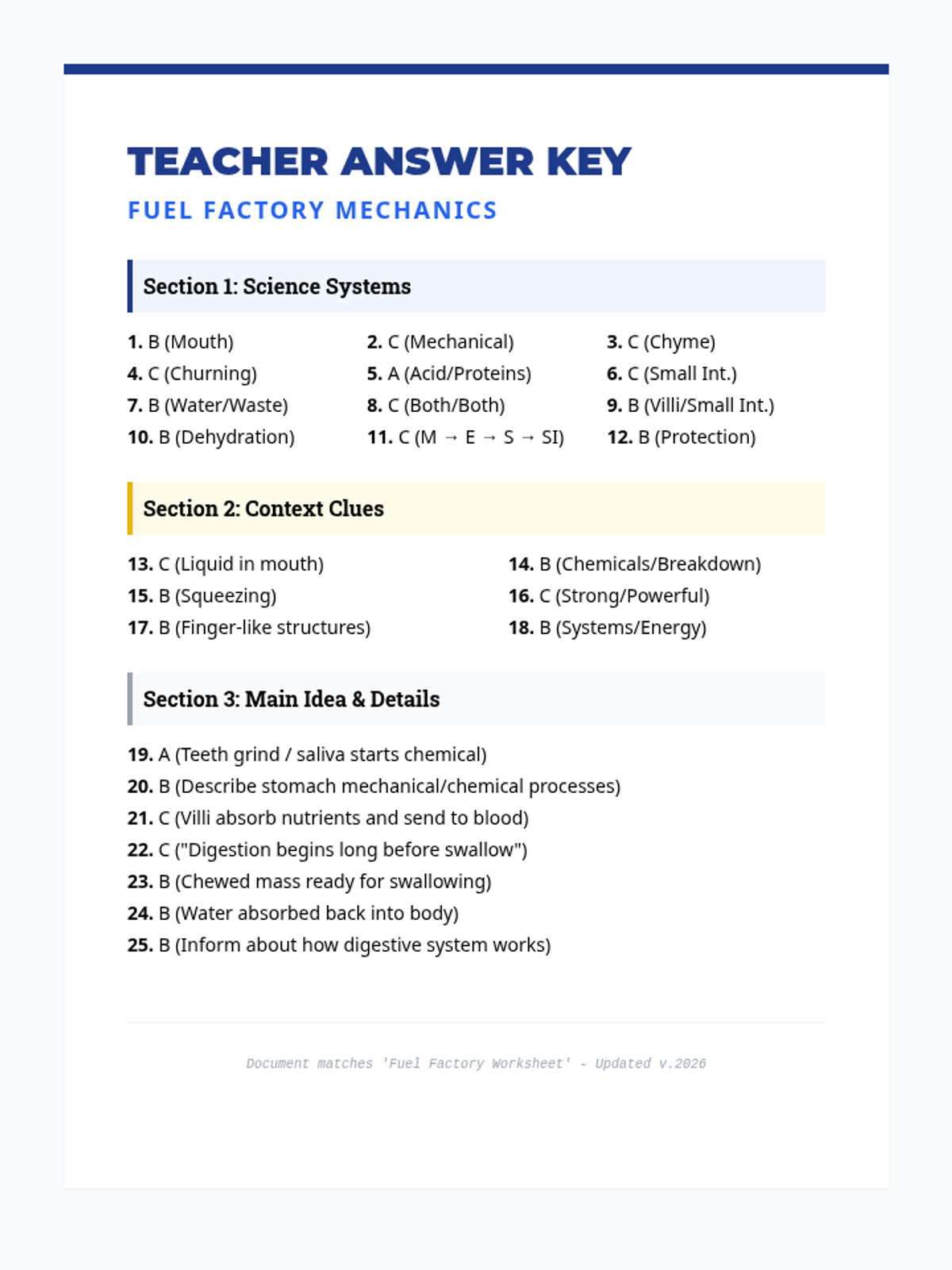
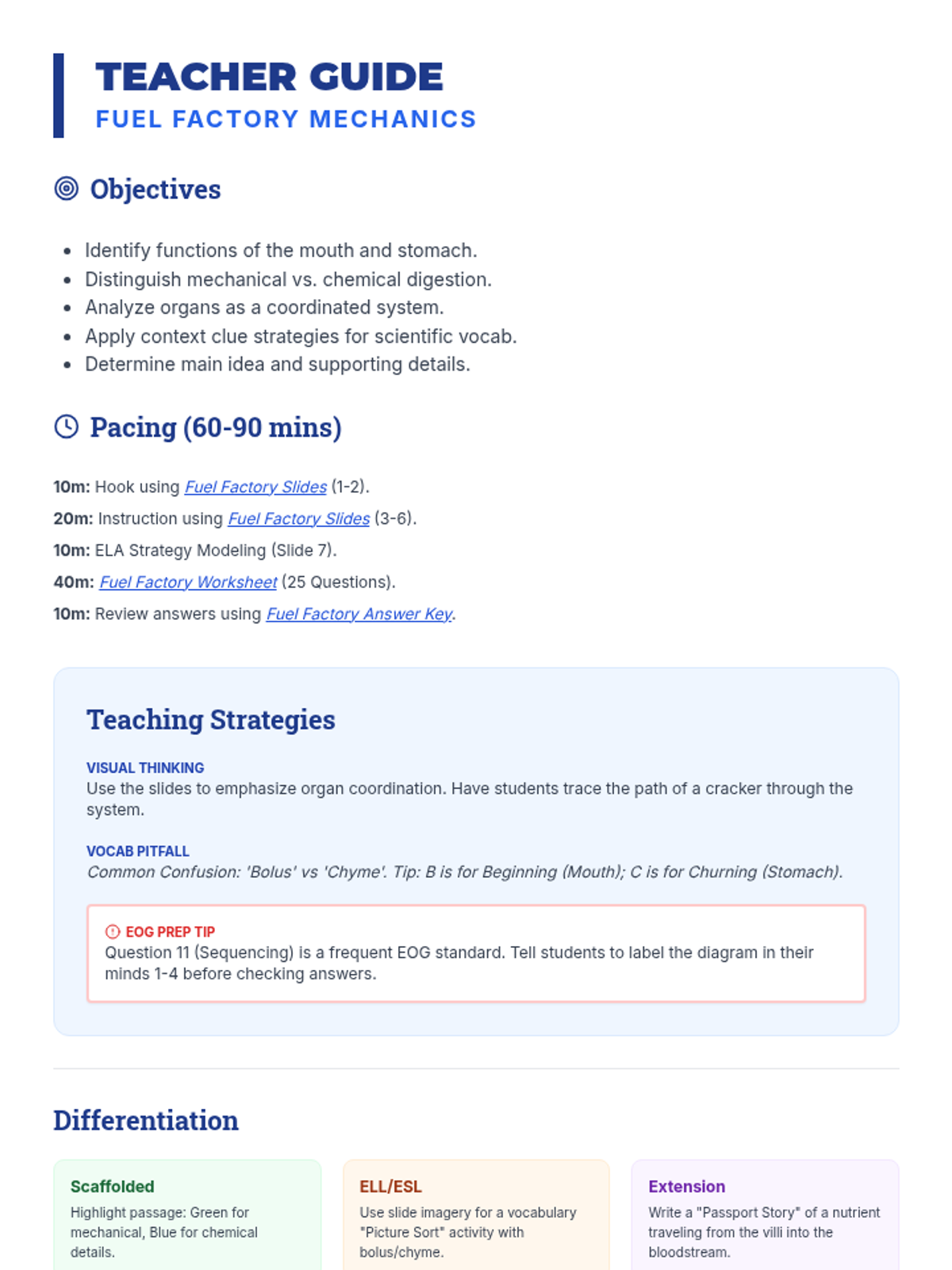
A comprehensive lesson on the human digestive system, focusing on the mechanical and chemical processes of the mouth and stomach while integrating ELA standards for context clues and main idea.
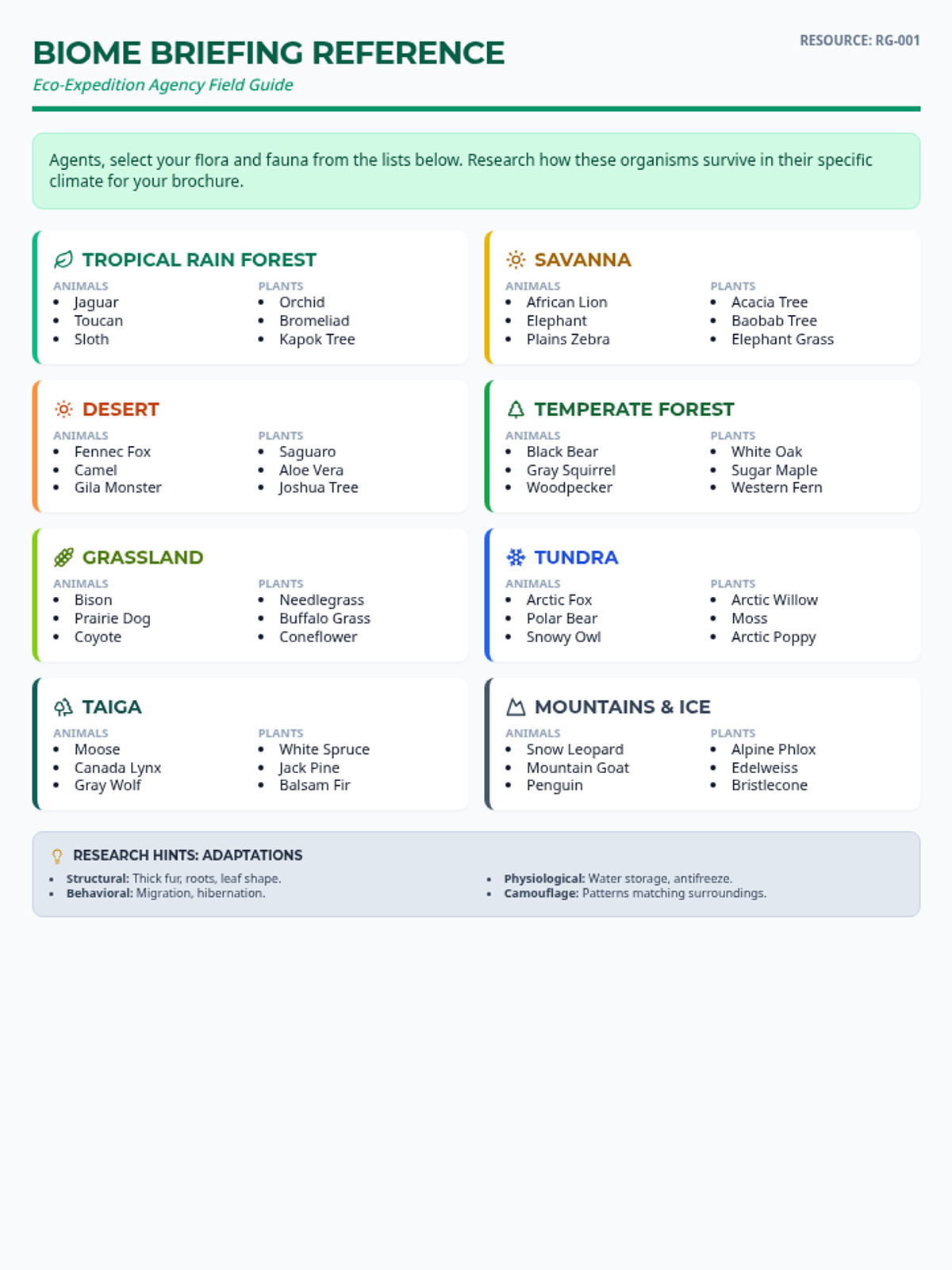
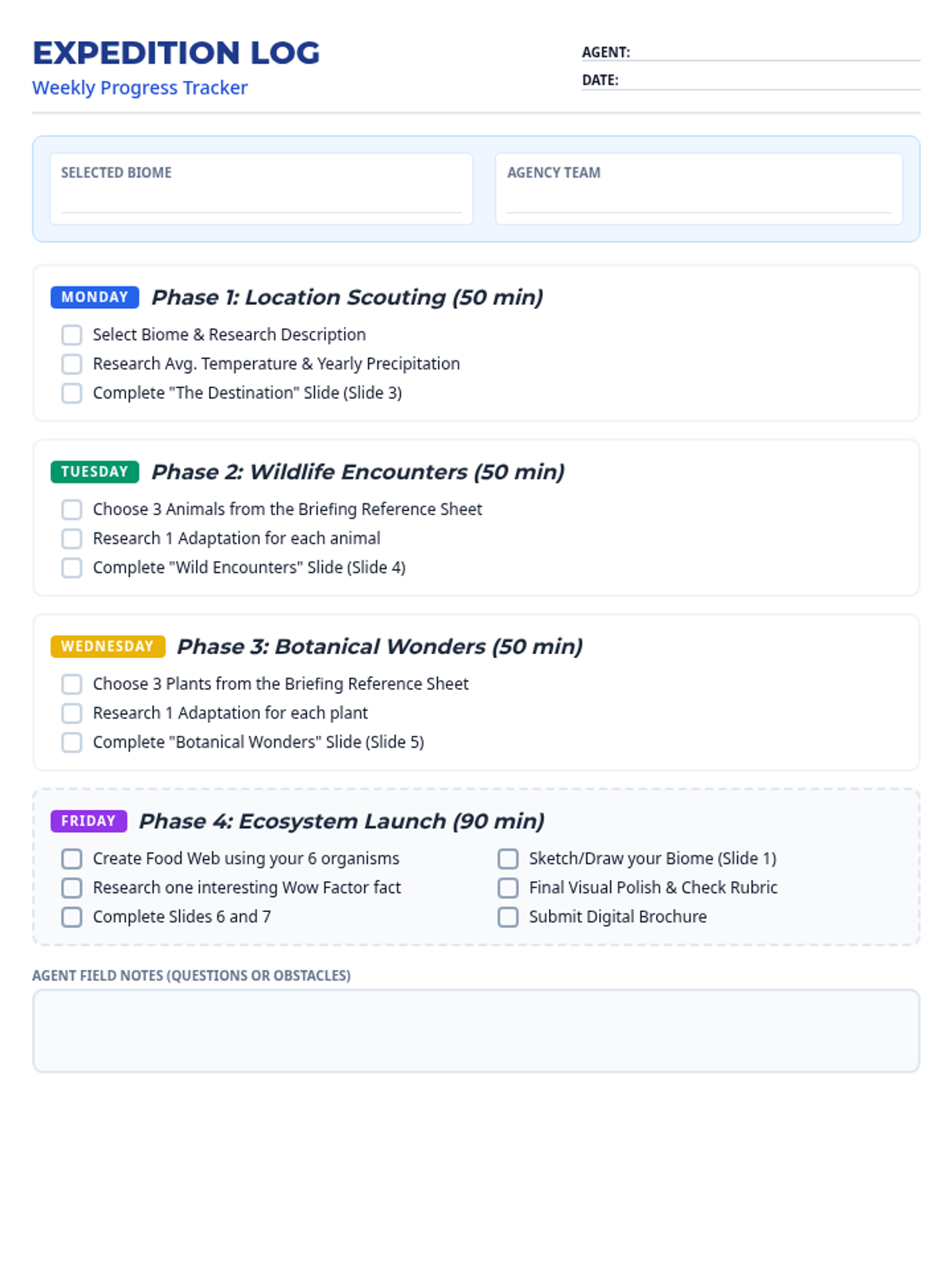
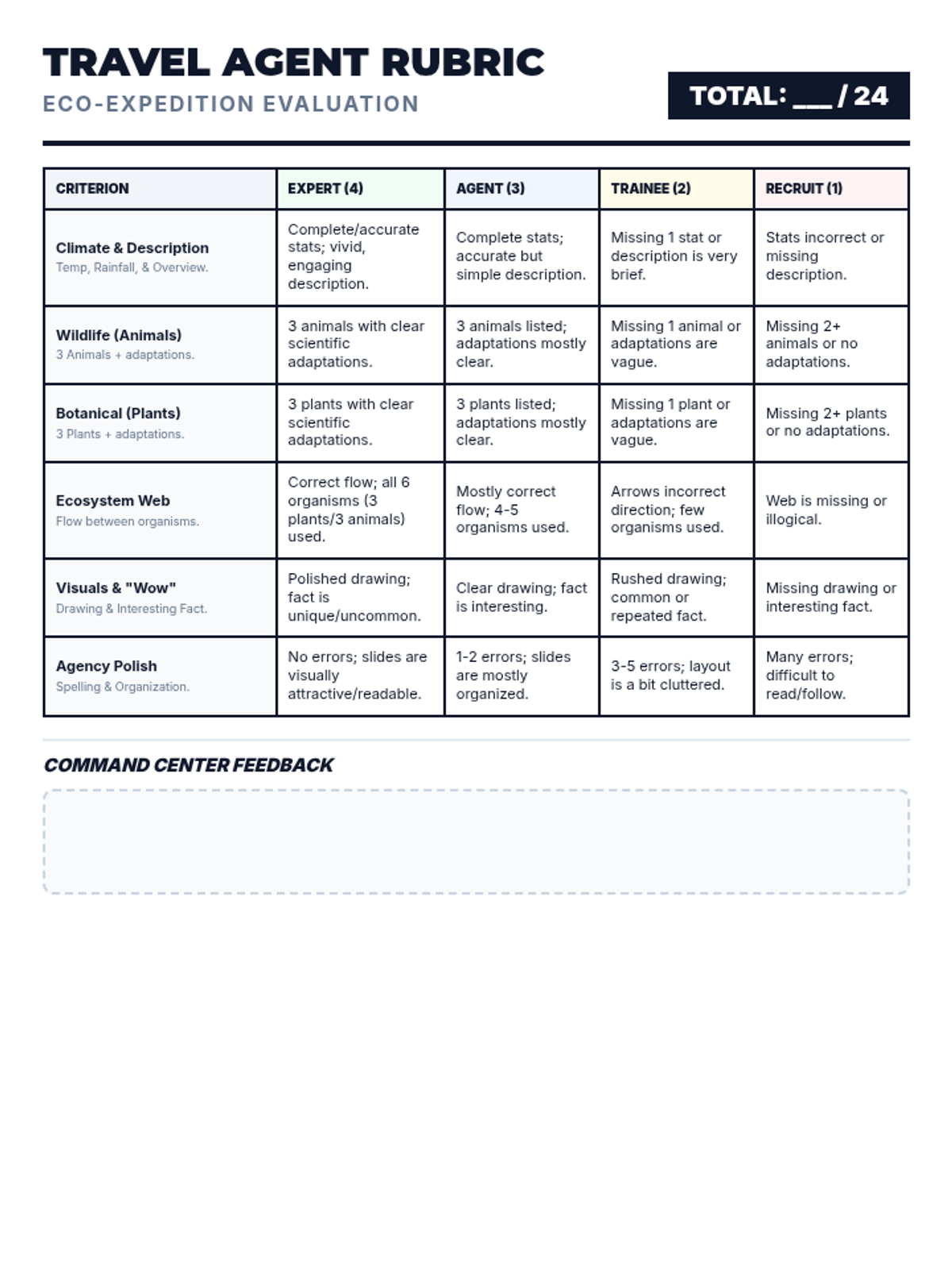
A week-long project where students act as travel agents for the Eco-Expedition Agency, creating digital brochures (slide presentations) for various global biomes. Students research climate, flora, fauna, and ecological connections to attract 'eco-tourists' to their assigned biome.
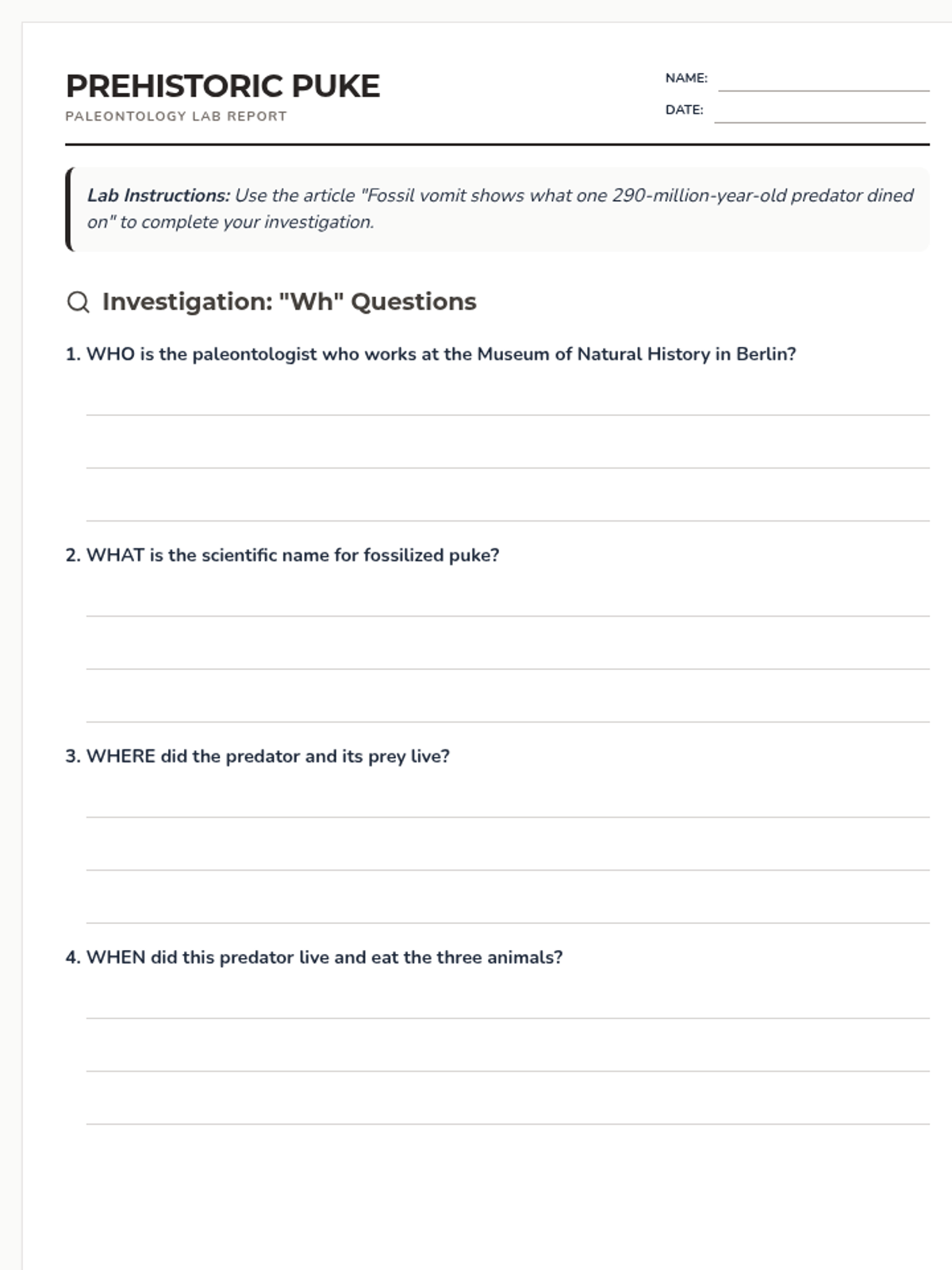
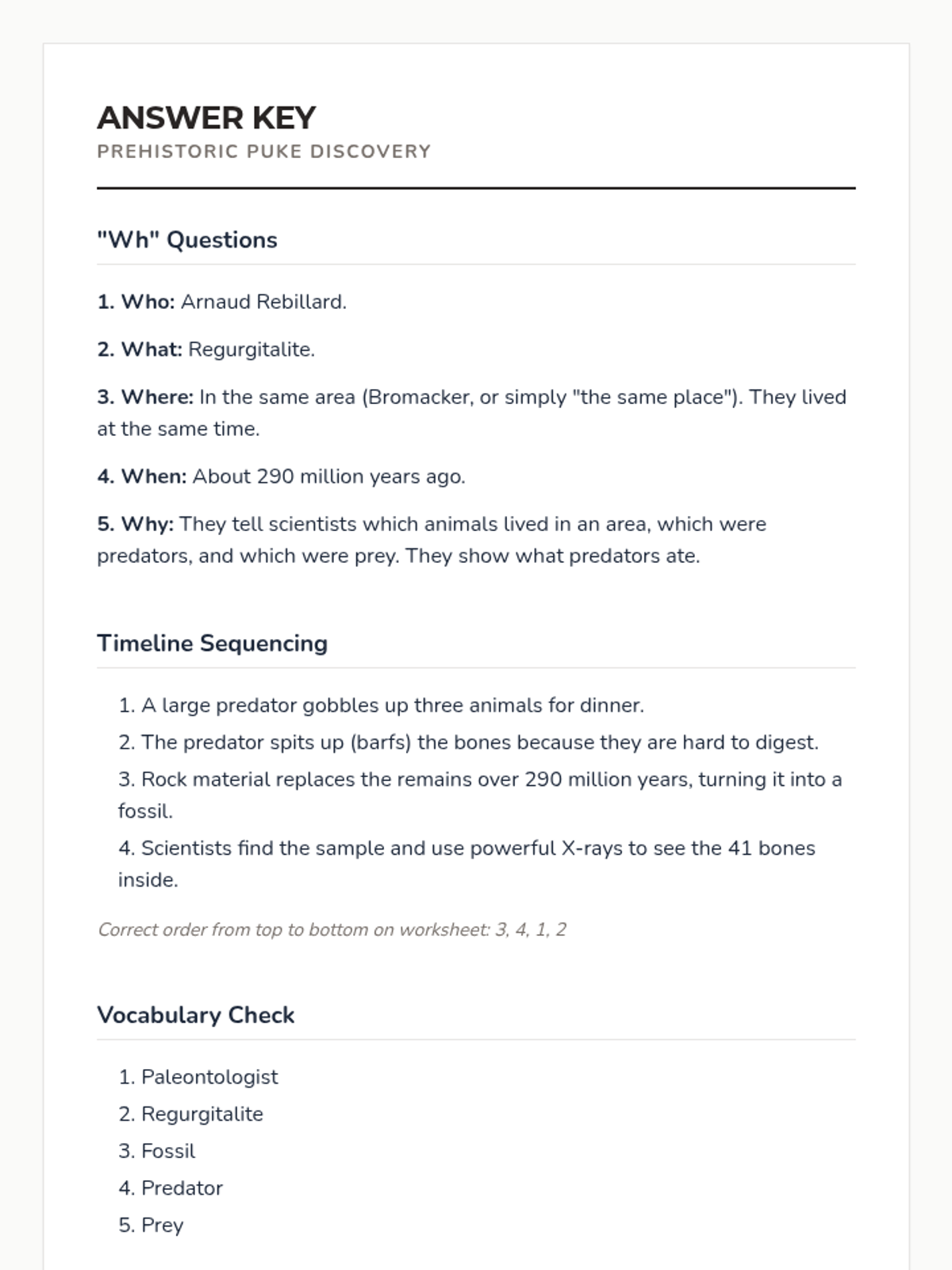
A set of activities based on a Newsela article about the discovery of 290-million-year-old fossilized vomit, designed for 3rd-grade students to practice comprehension, vocabulary, and writing.
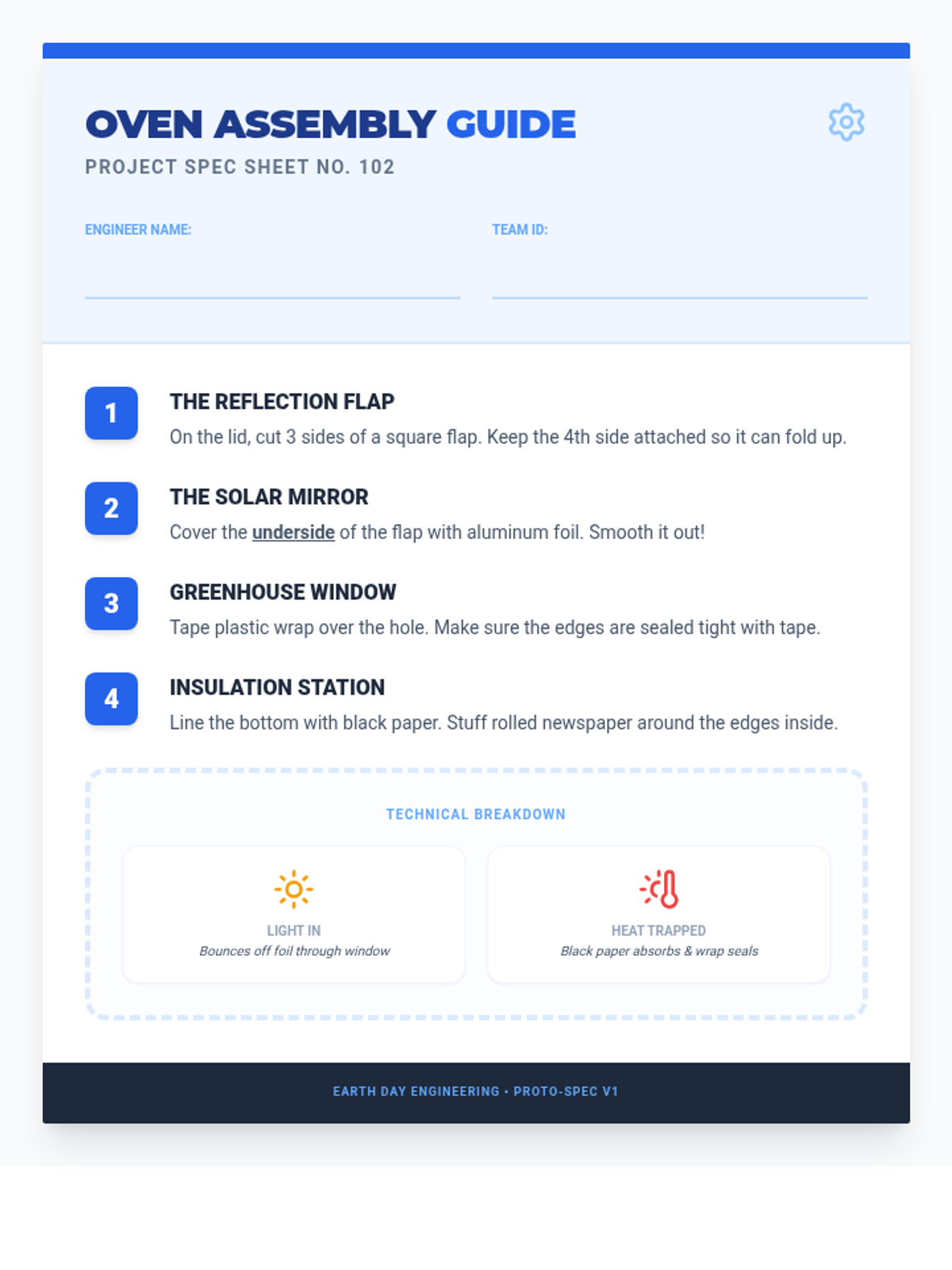
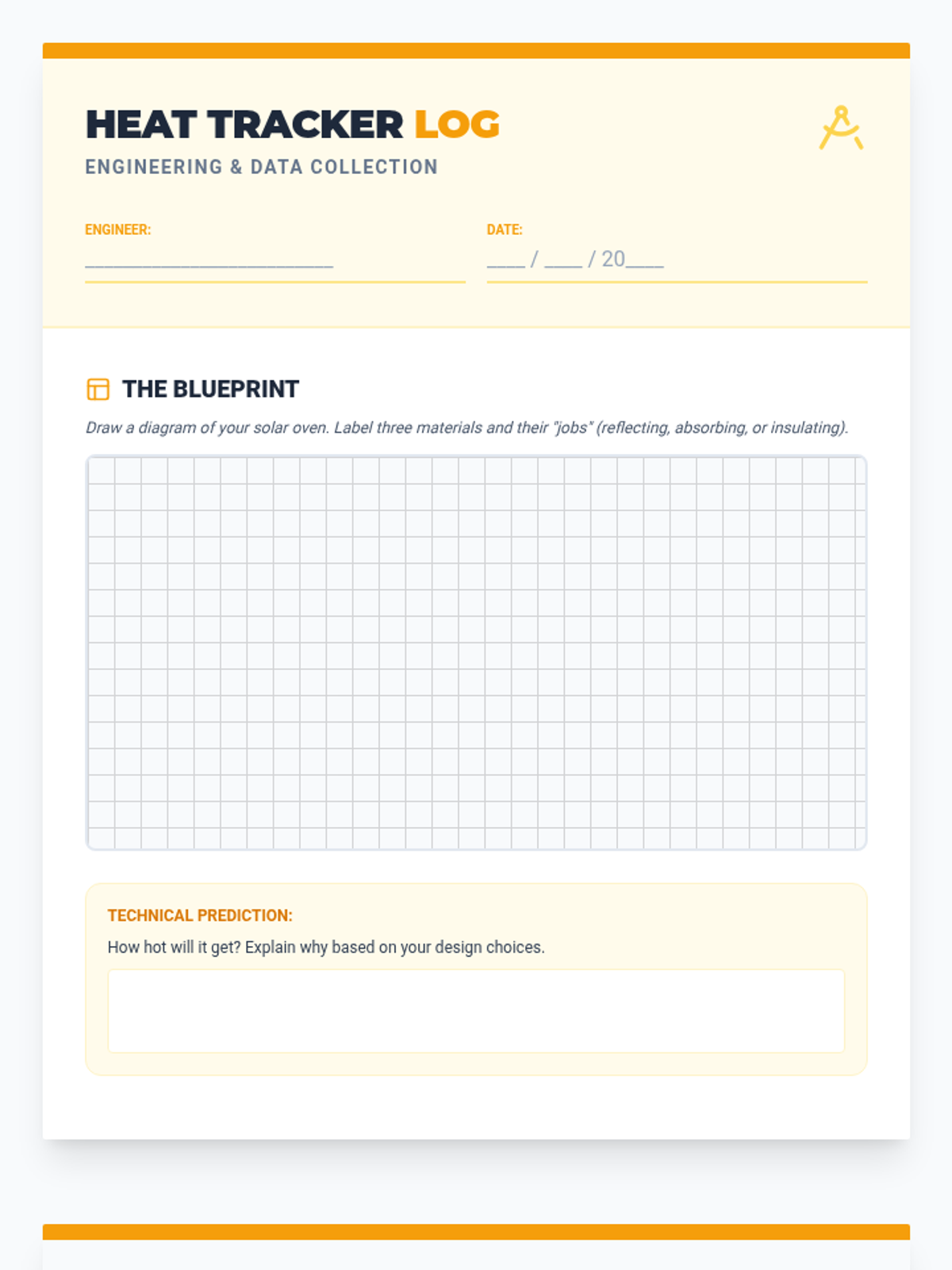
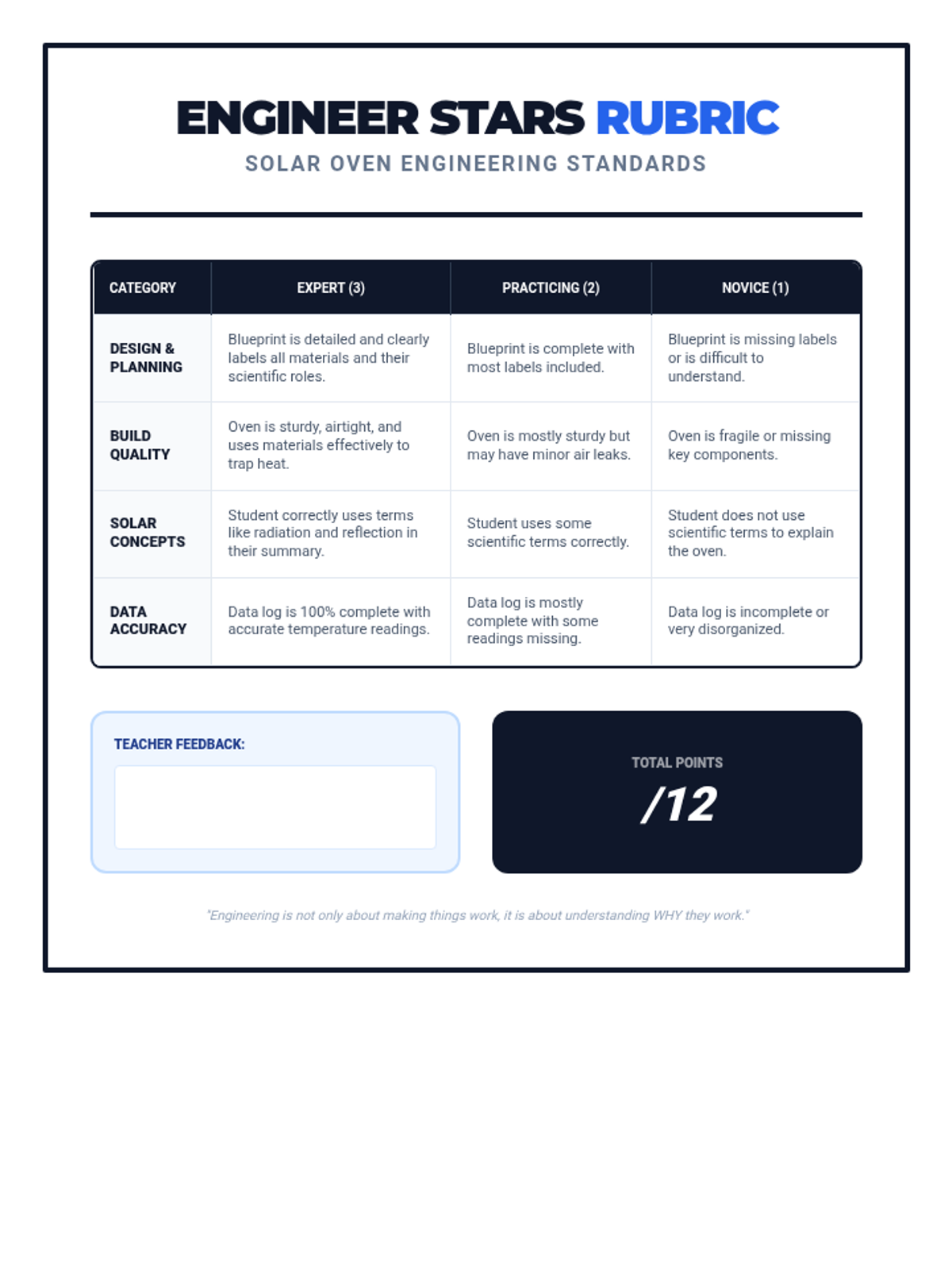
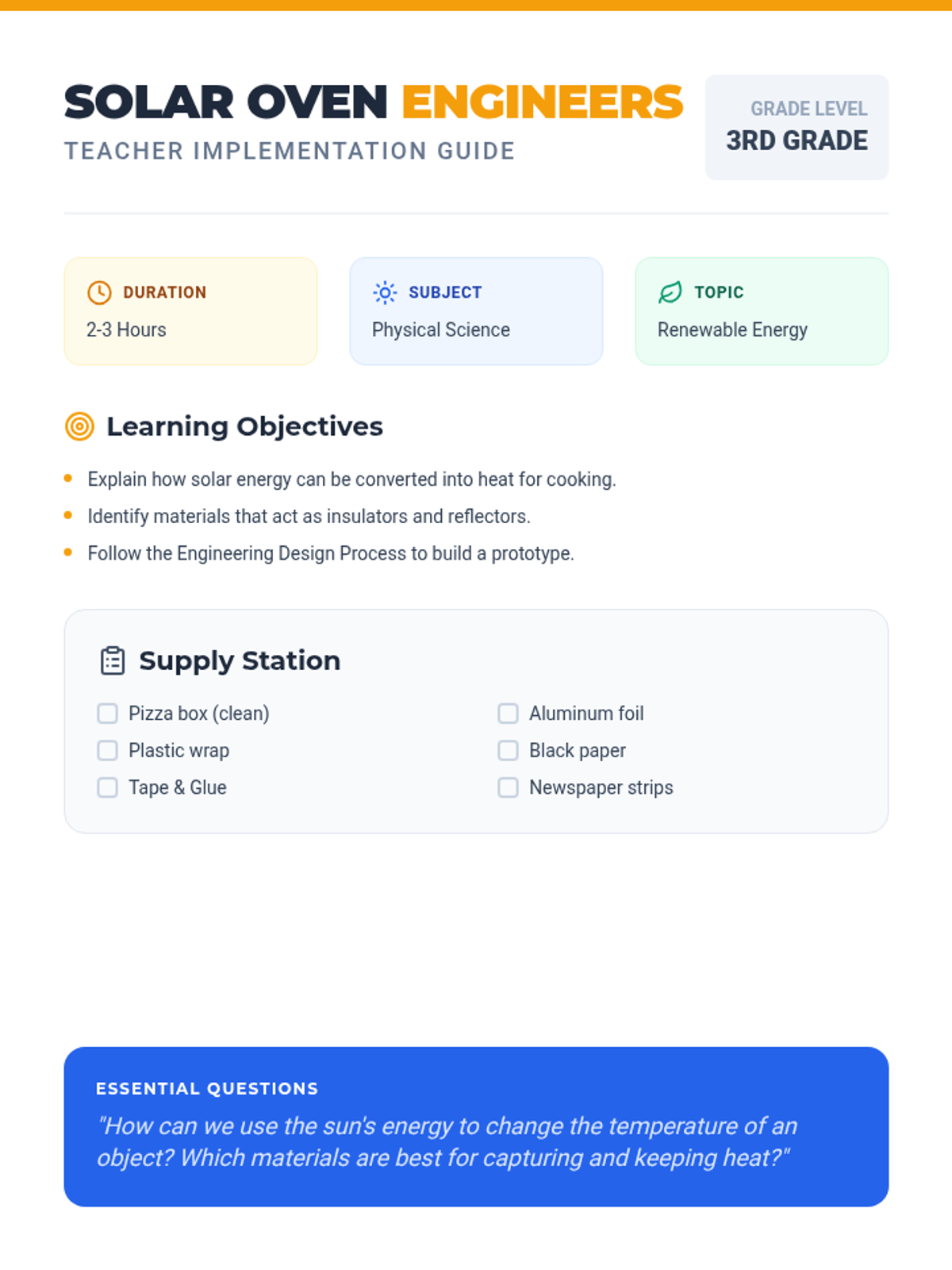
An Earth Day engineering challenge where 3rd graders design, build, and test solar ovens to explore renewable energy and heat transfer. Students apply the engineering design process to harness solar radiation for cooking simple snacks.
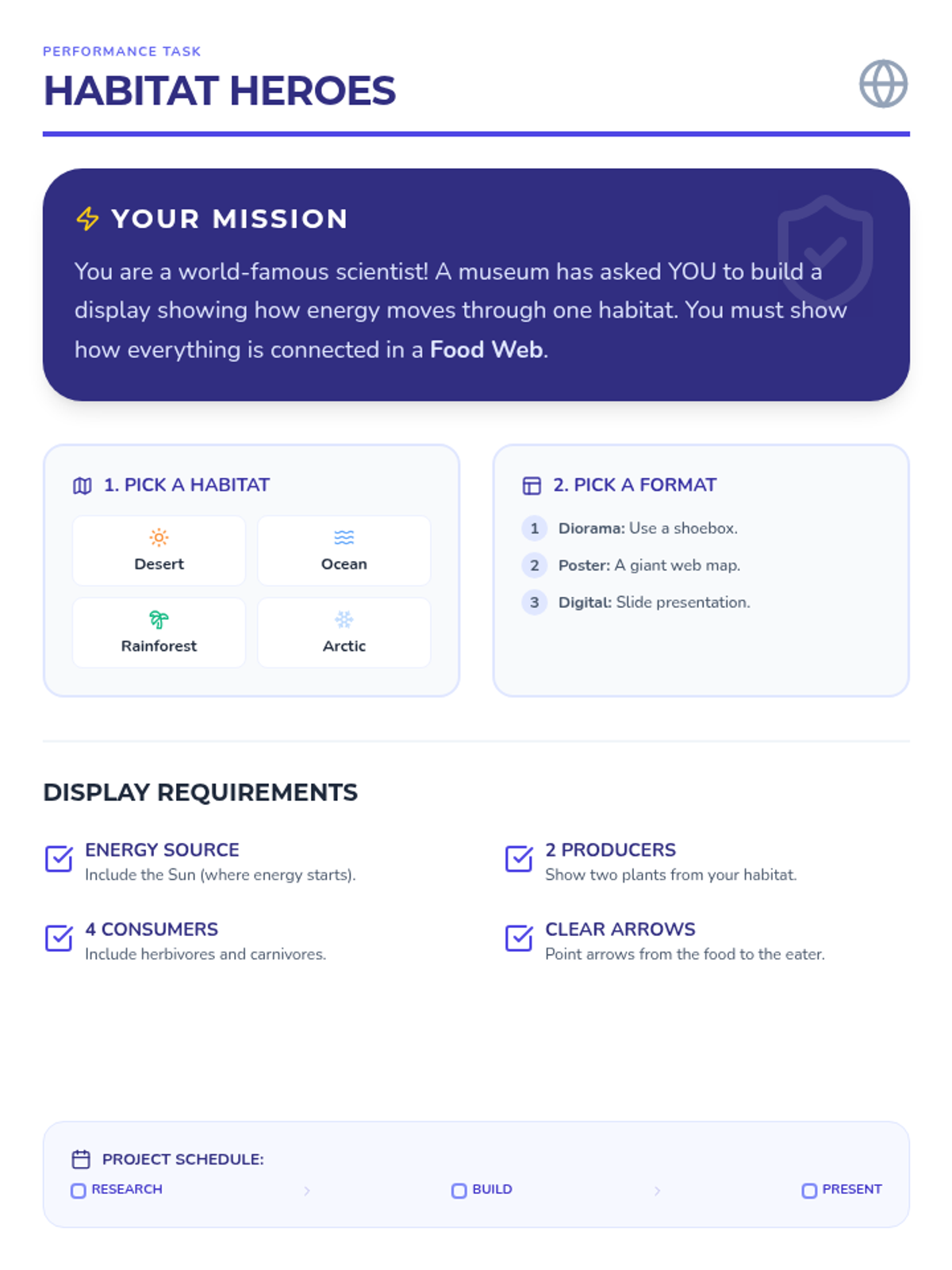
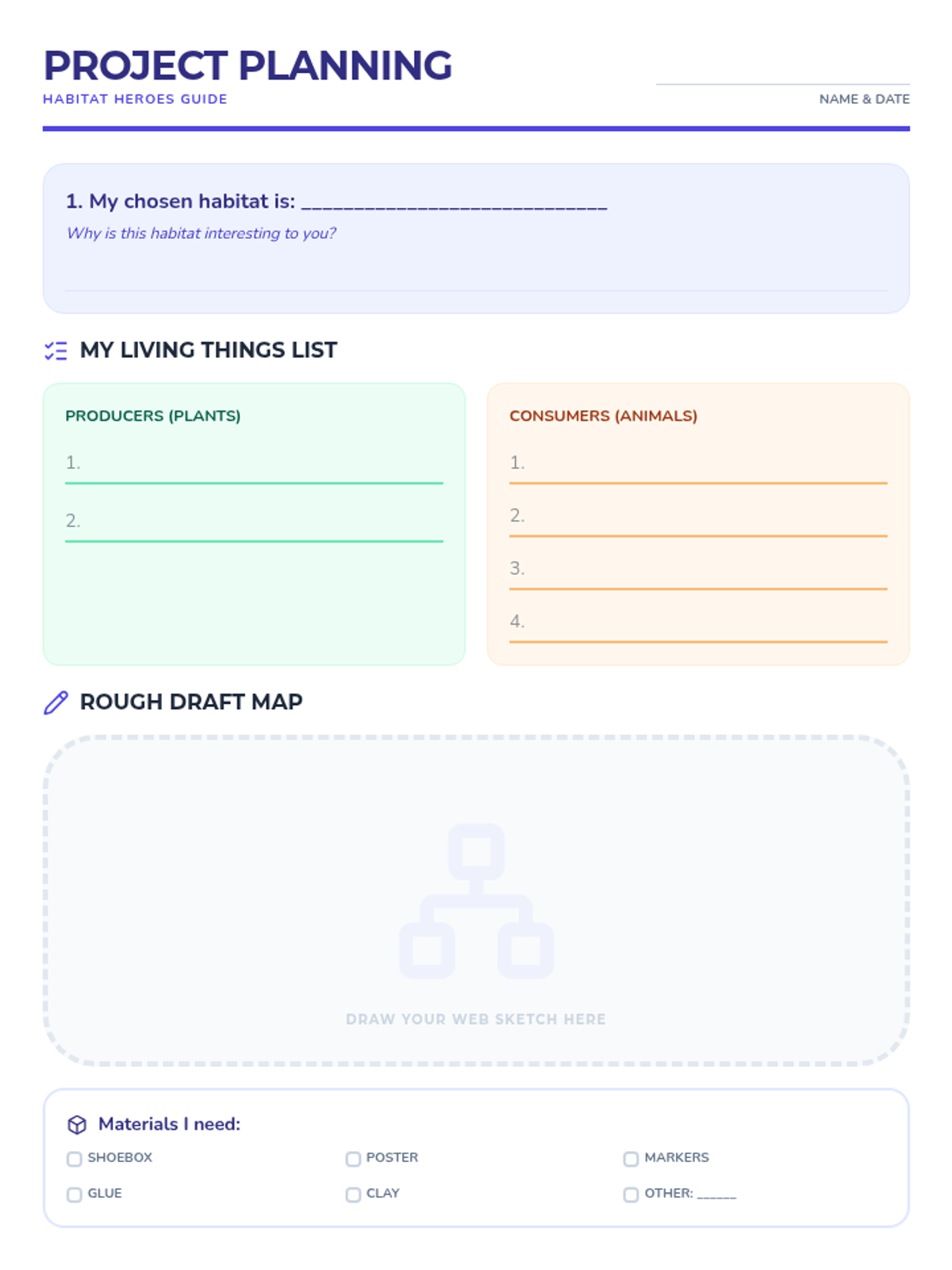
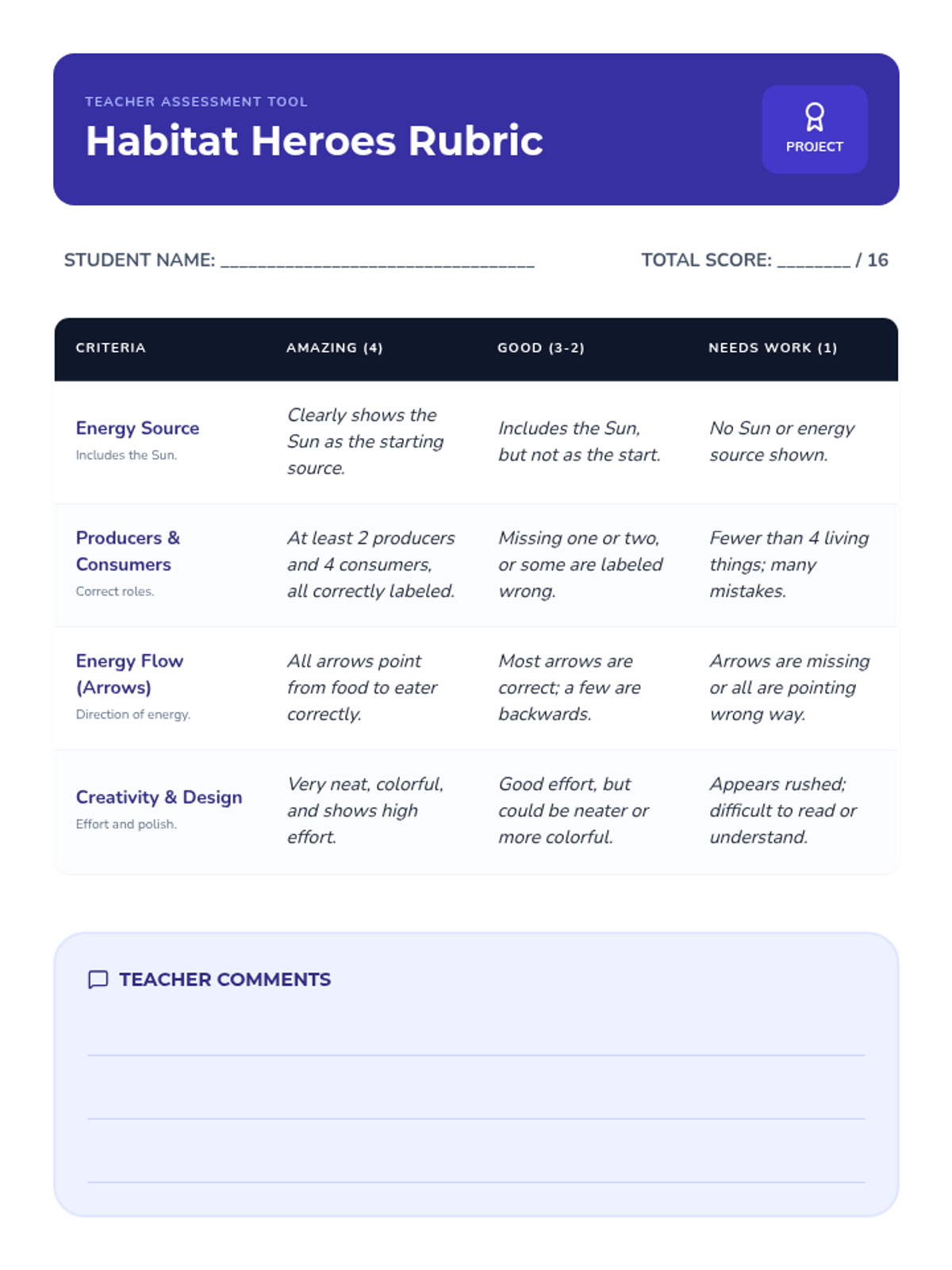
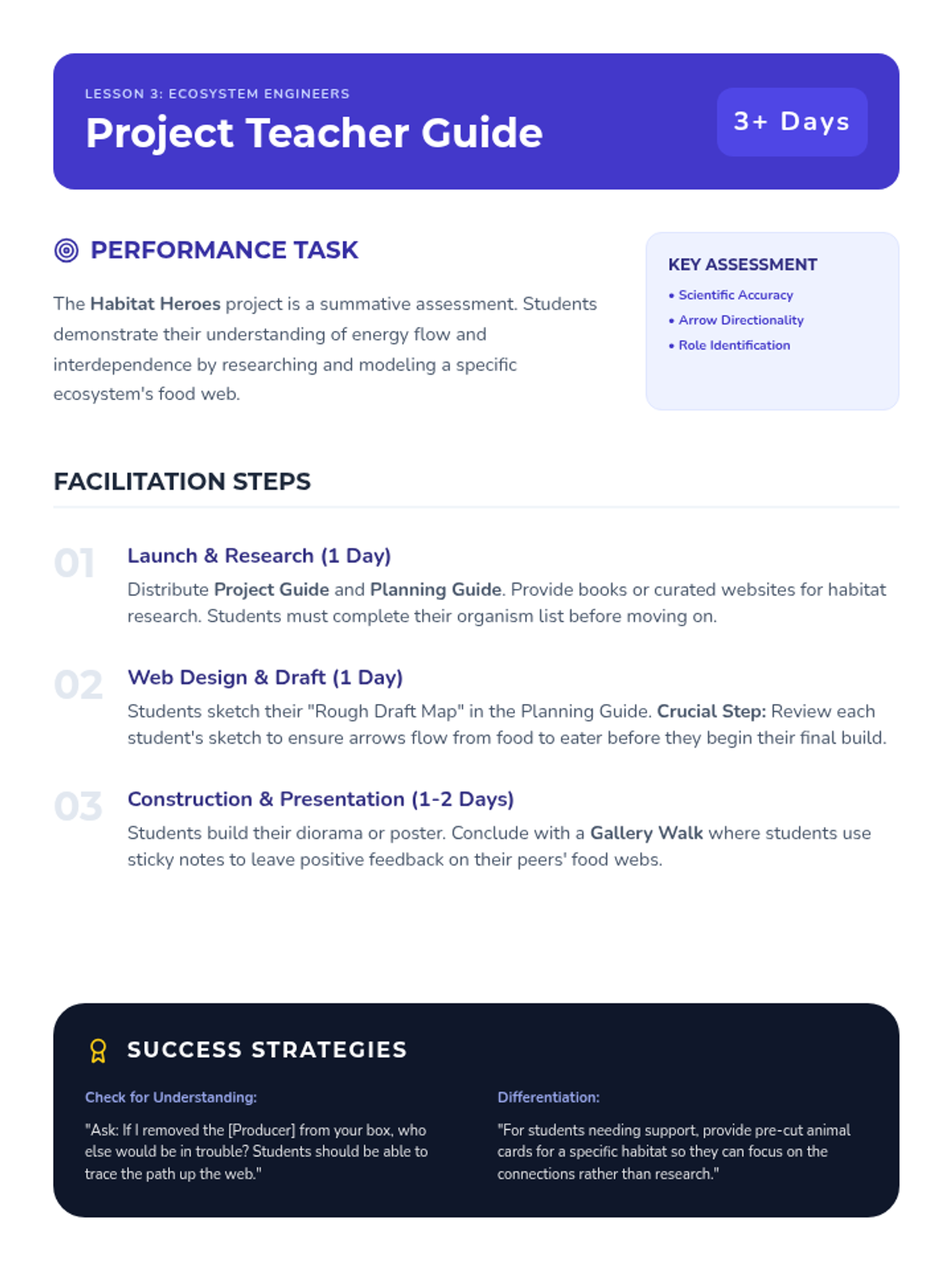
Students apply their knowledge of energy flow by researching a specific habitat and creating a comprehensive food web project.
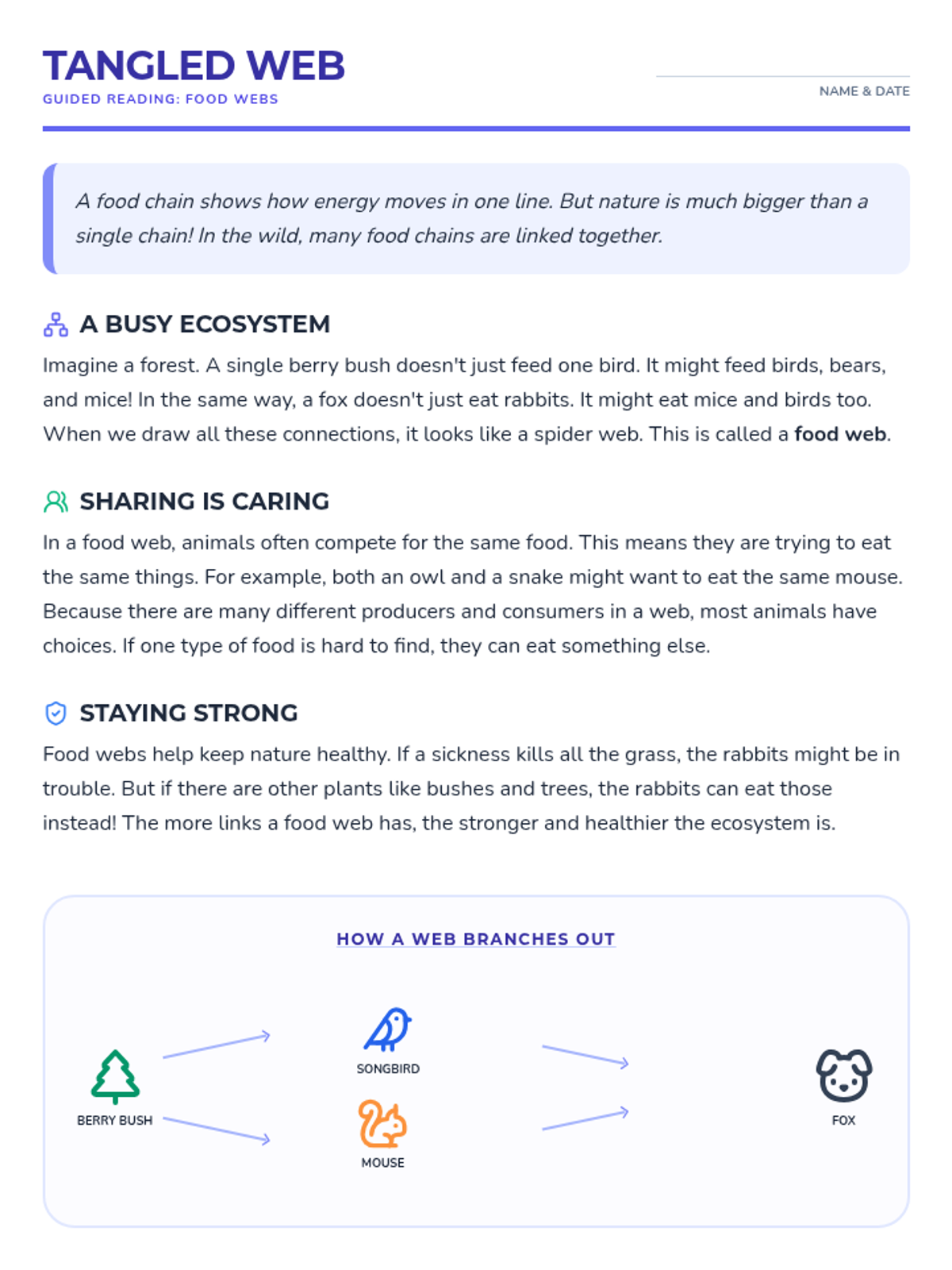
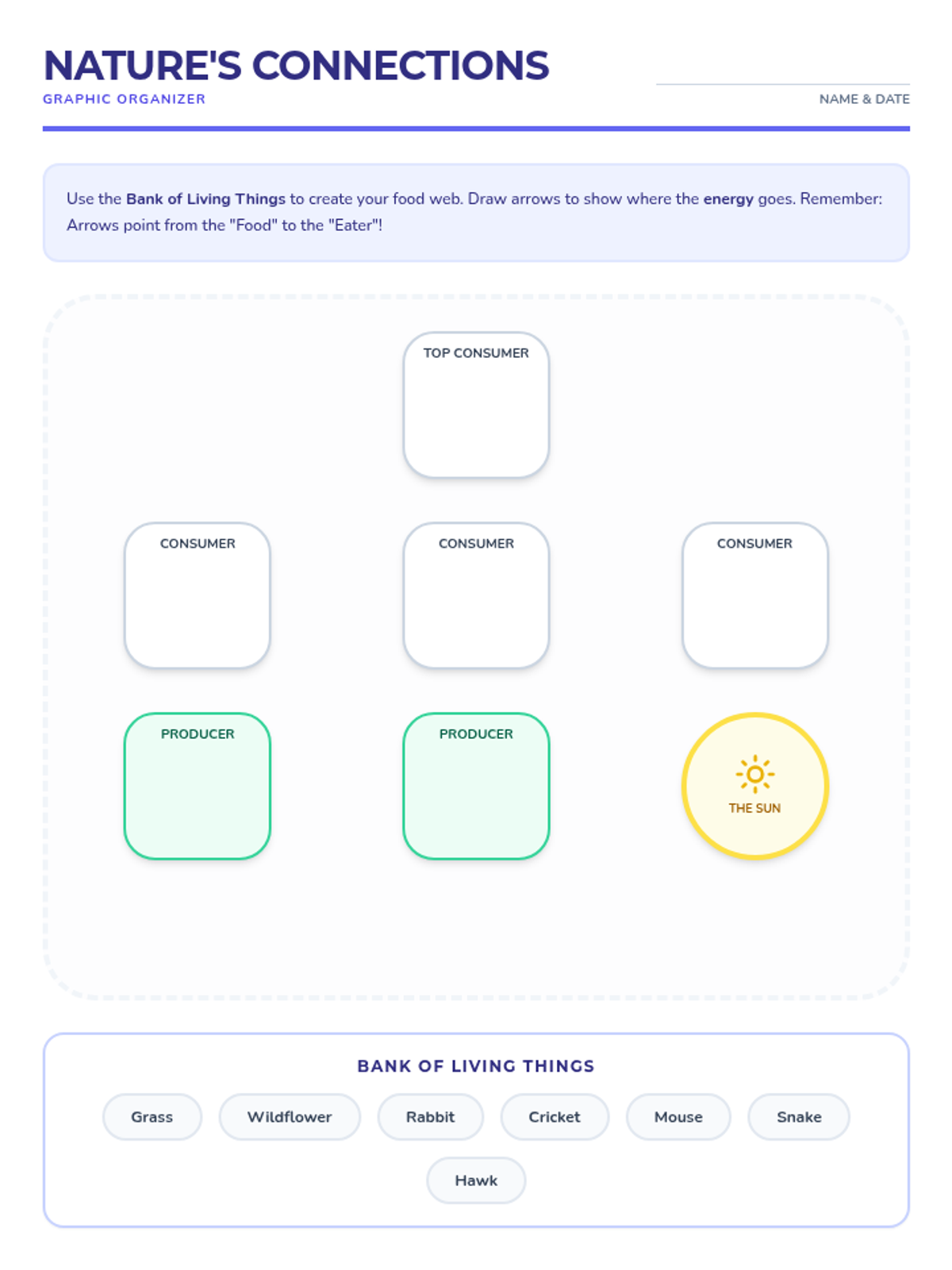
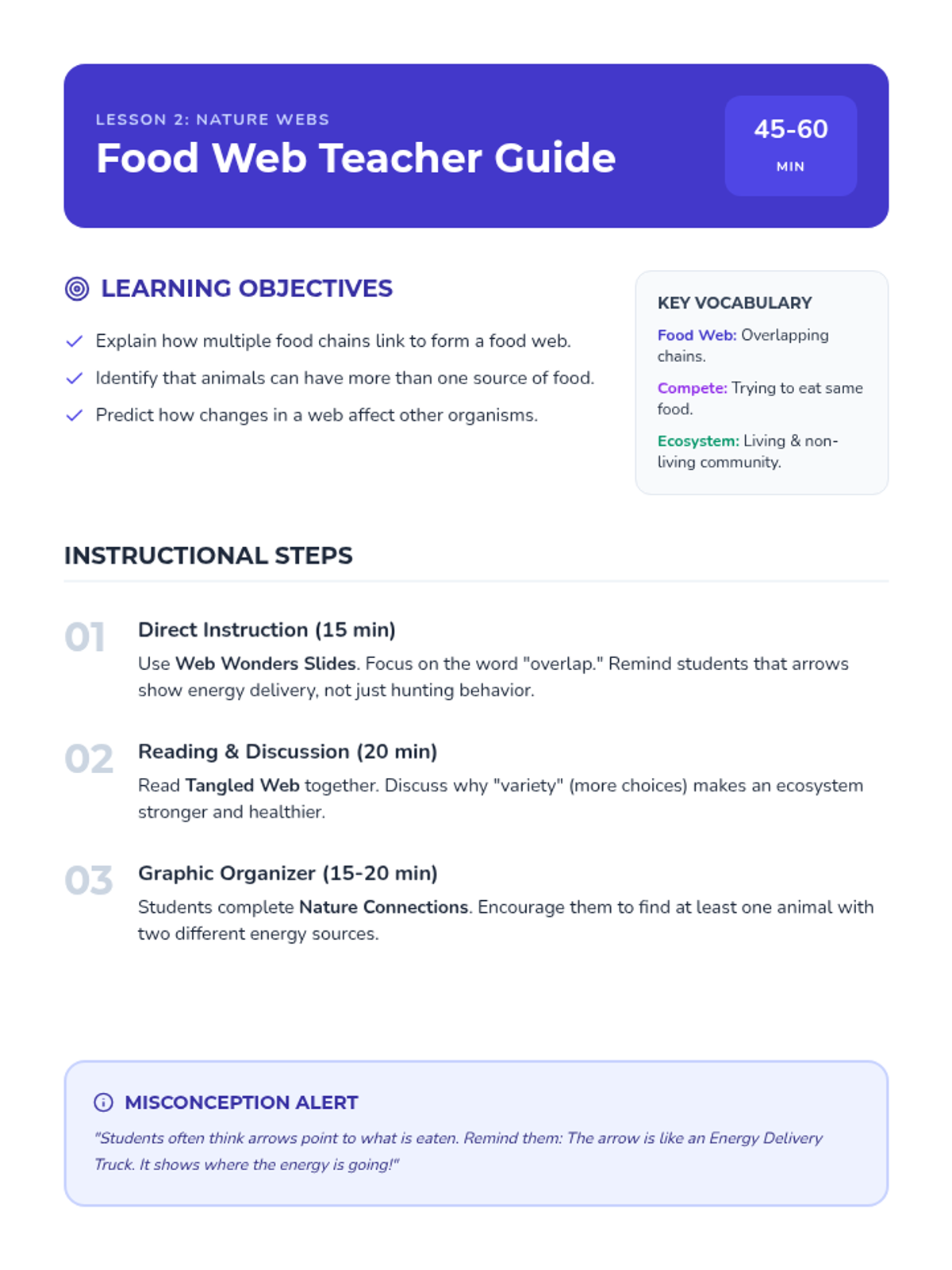
Students explore how multiple food chains connect to create complex food webs, illustrating the interdependence of living things in an ecosystem.
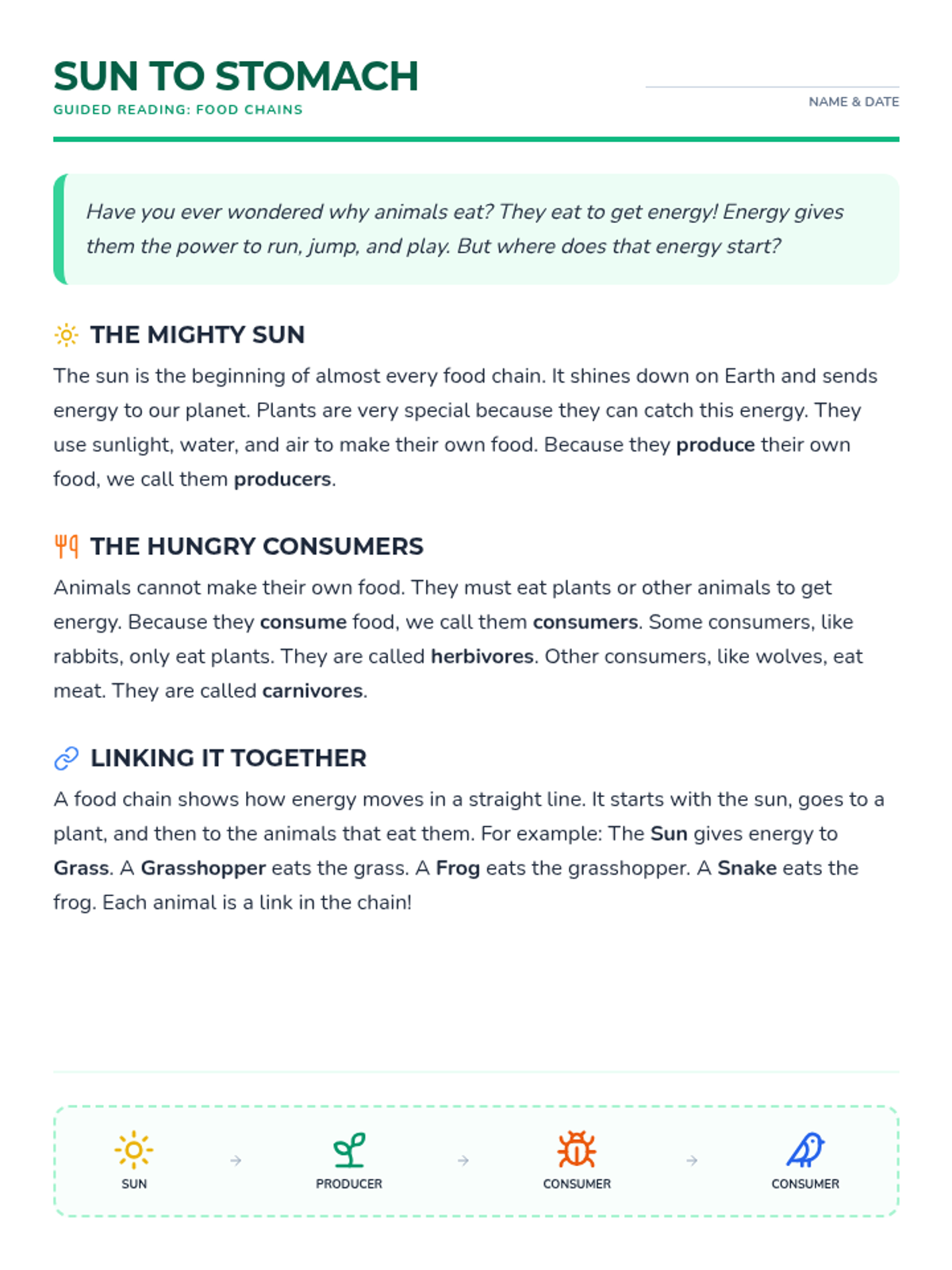
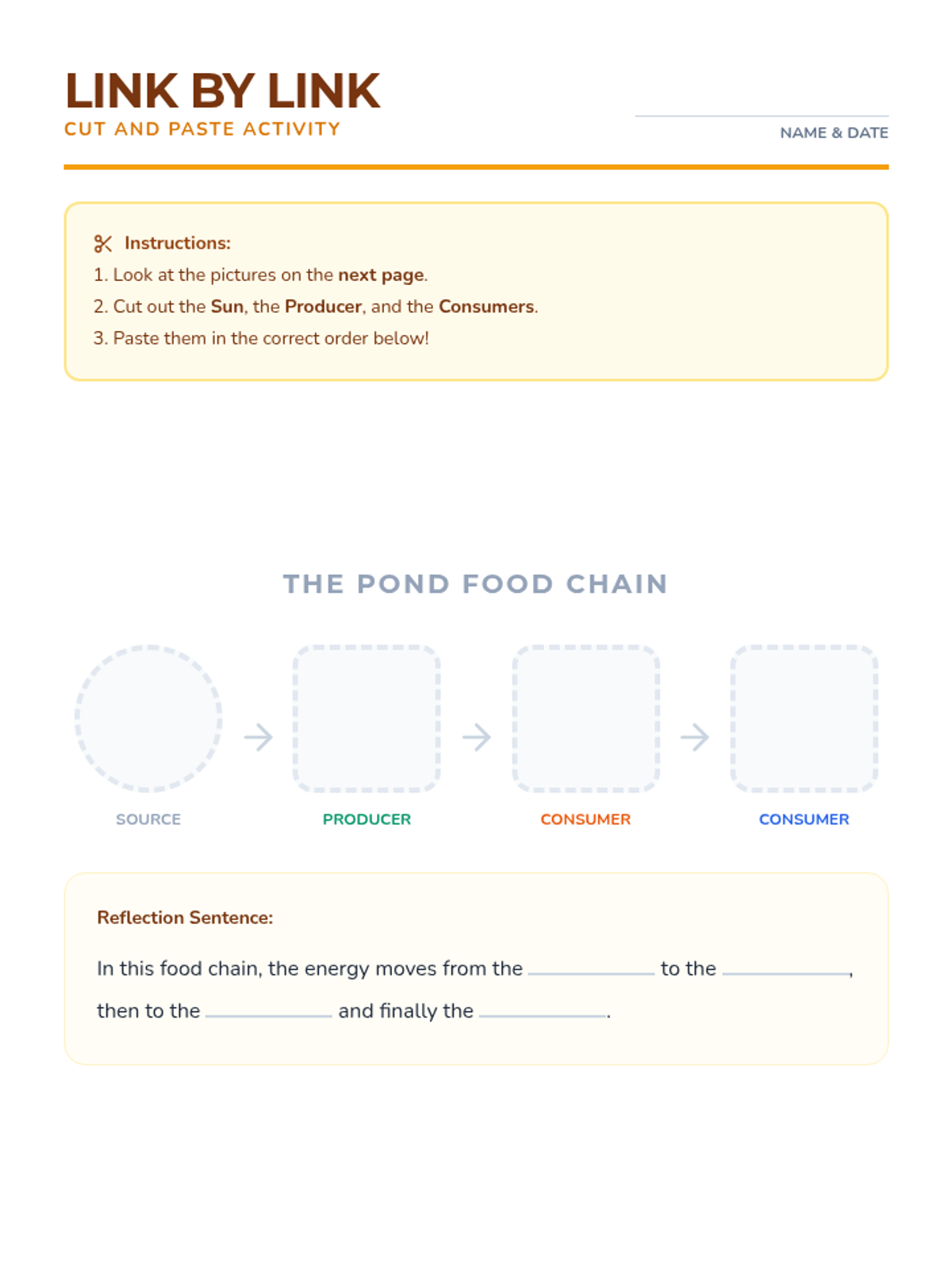
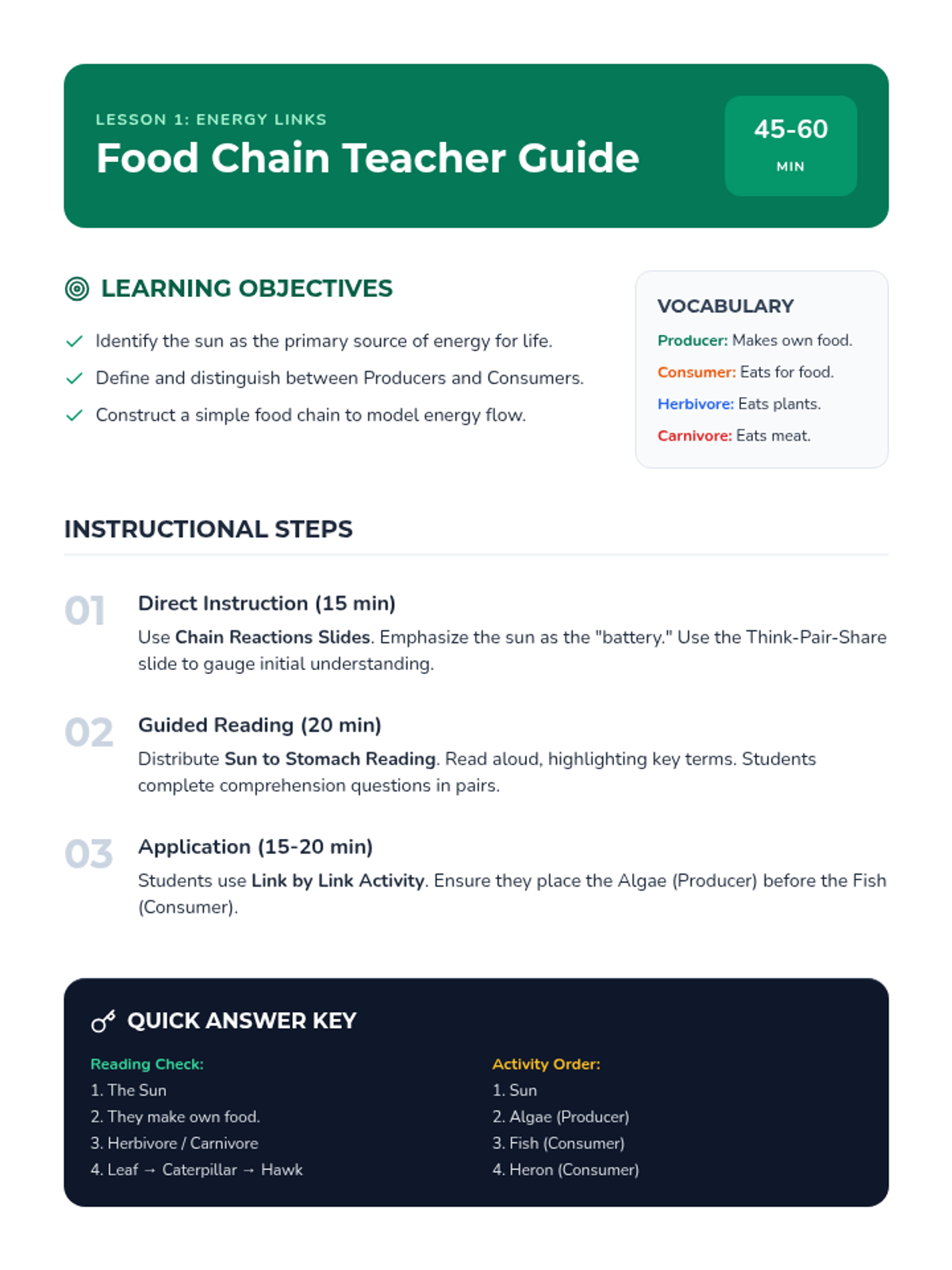
Students learn about producers and consumers, discovering how energy flows from the sun through a single path in a food chain.
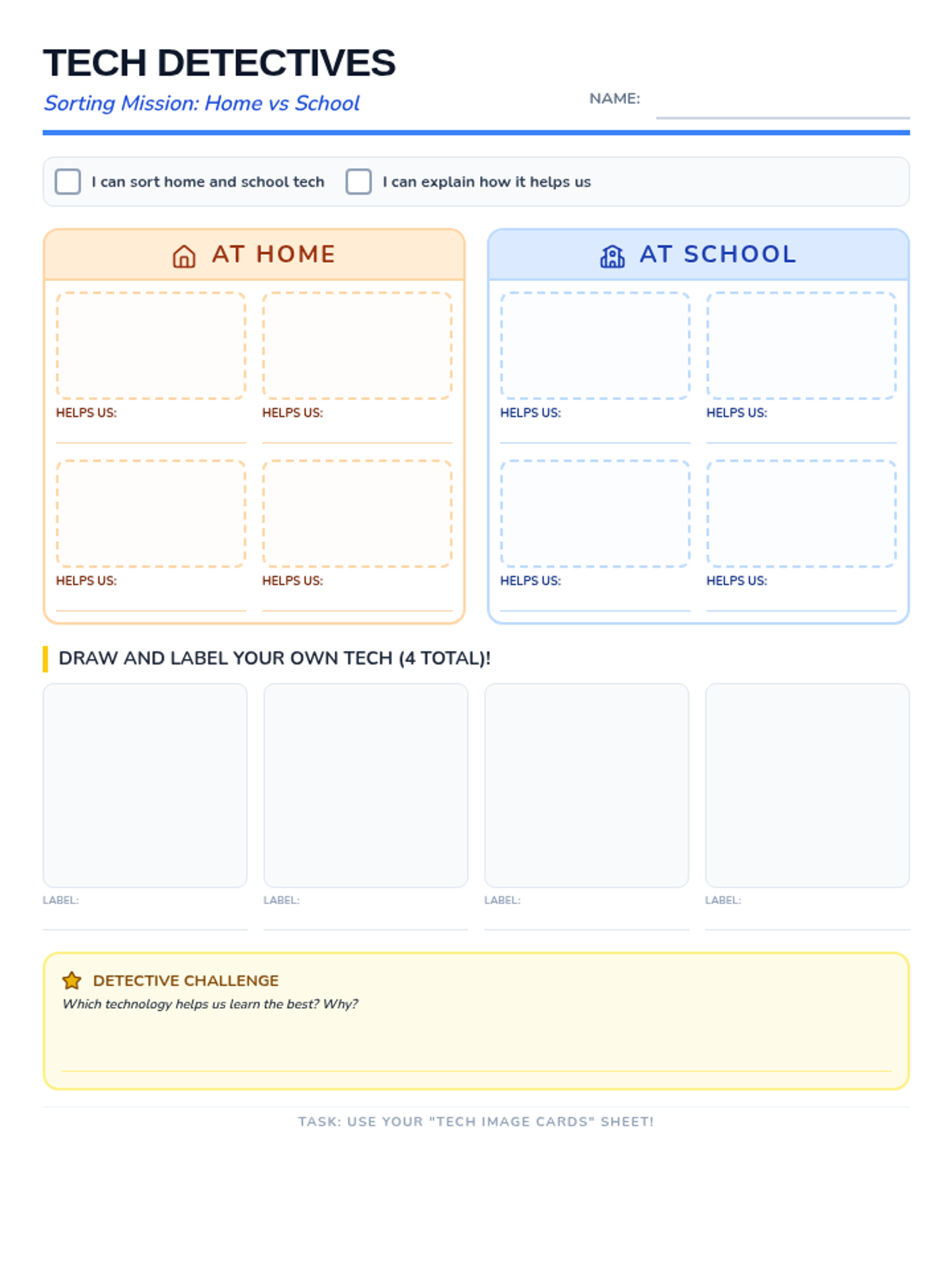
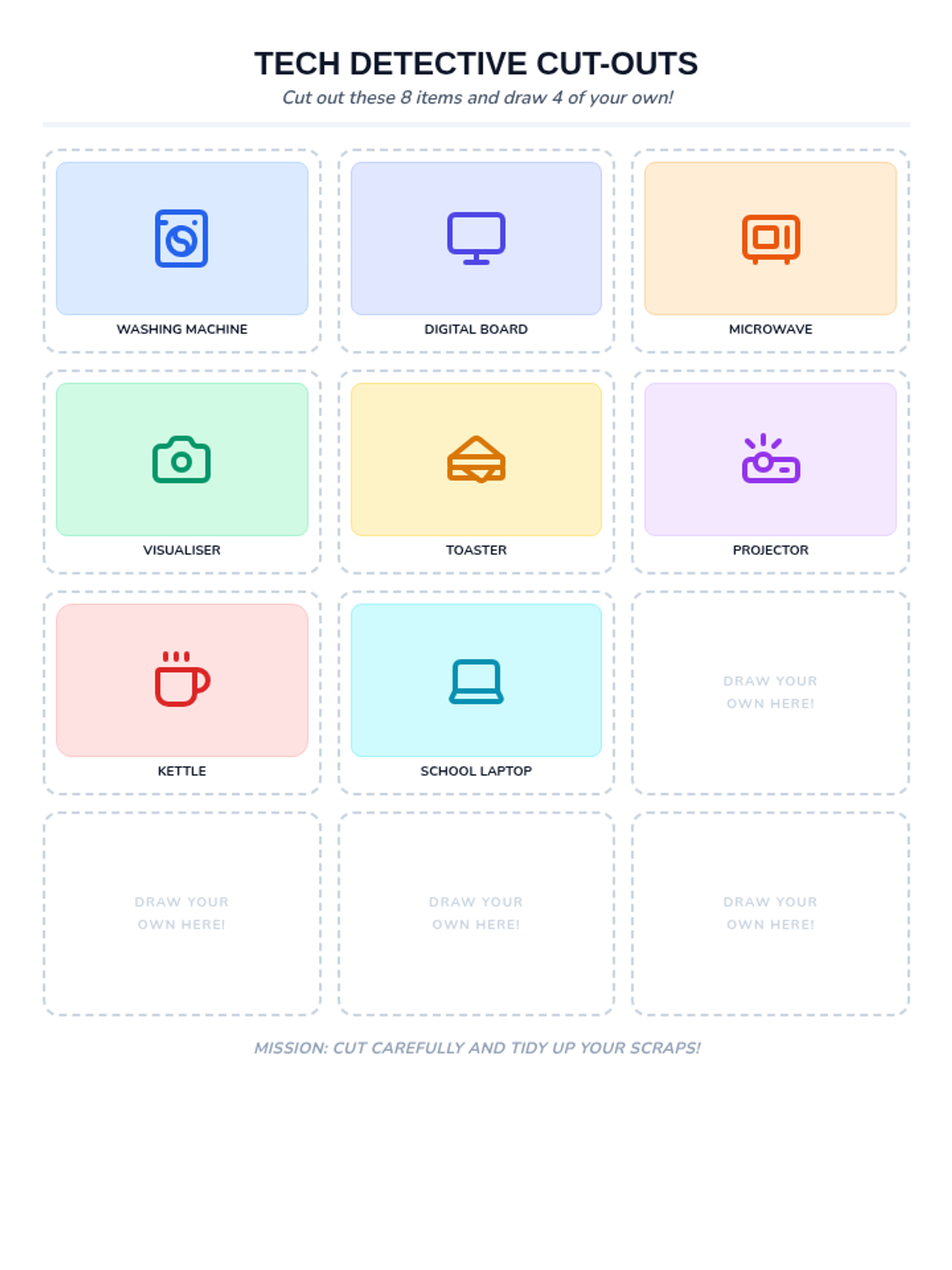
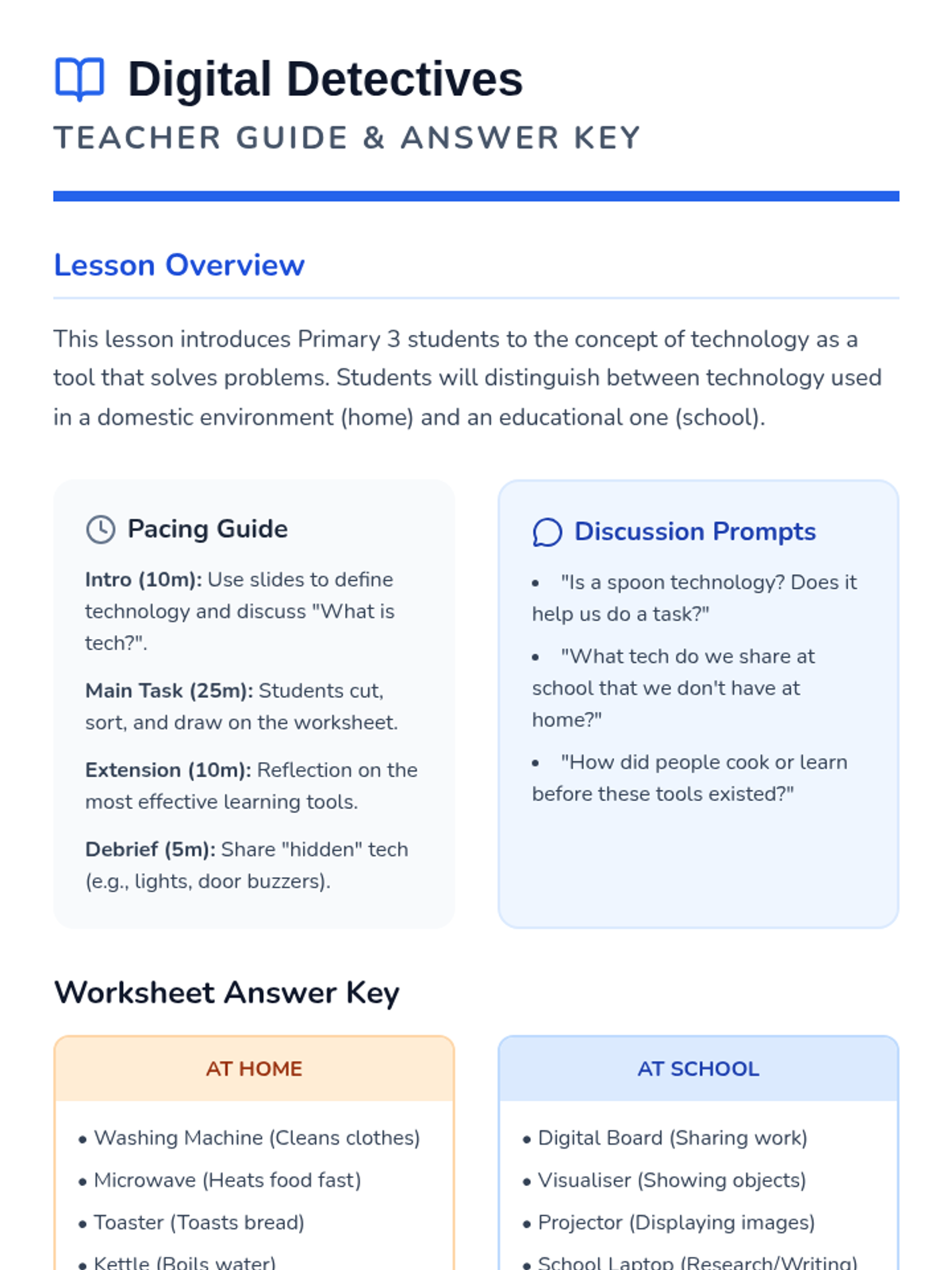
A lesson for Primary 3 students to explore and categorize technology used in domestic and educational settings, focusing on how these tools assist daily life.
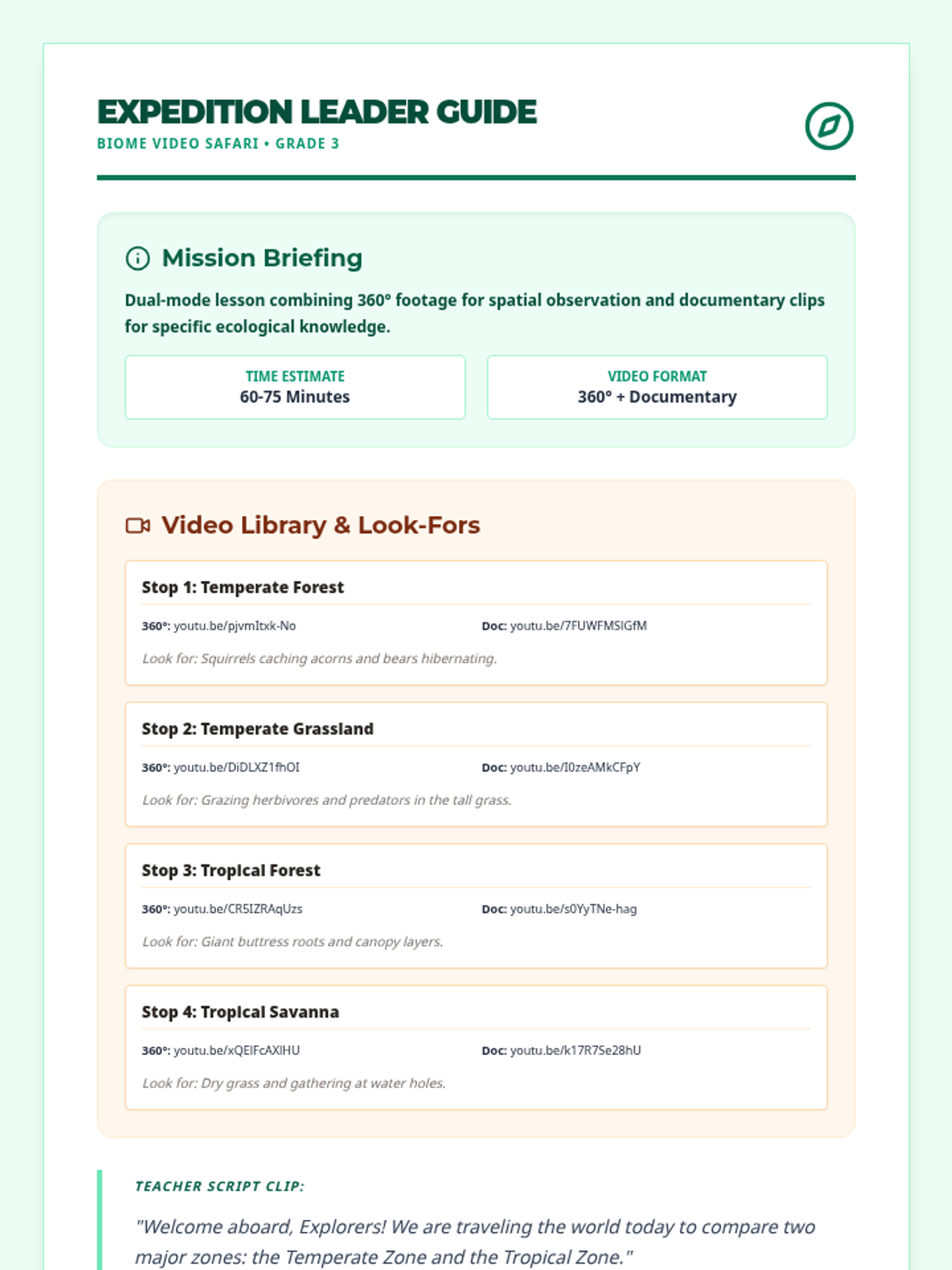
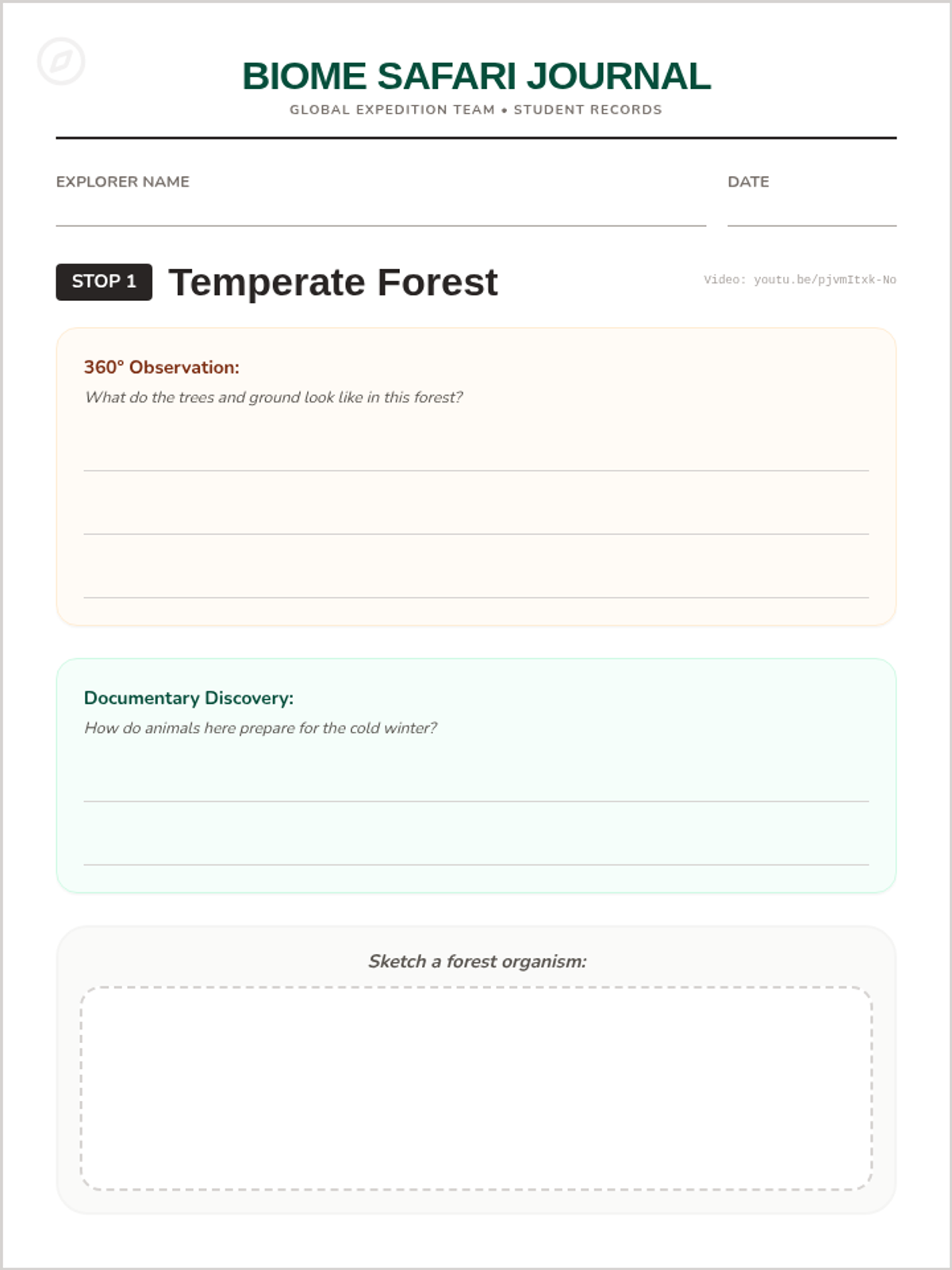
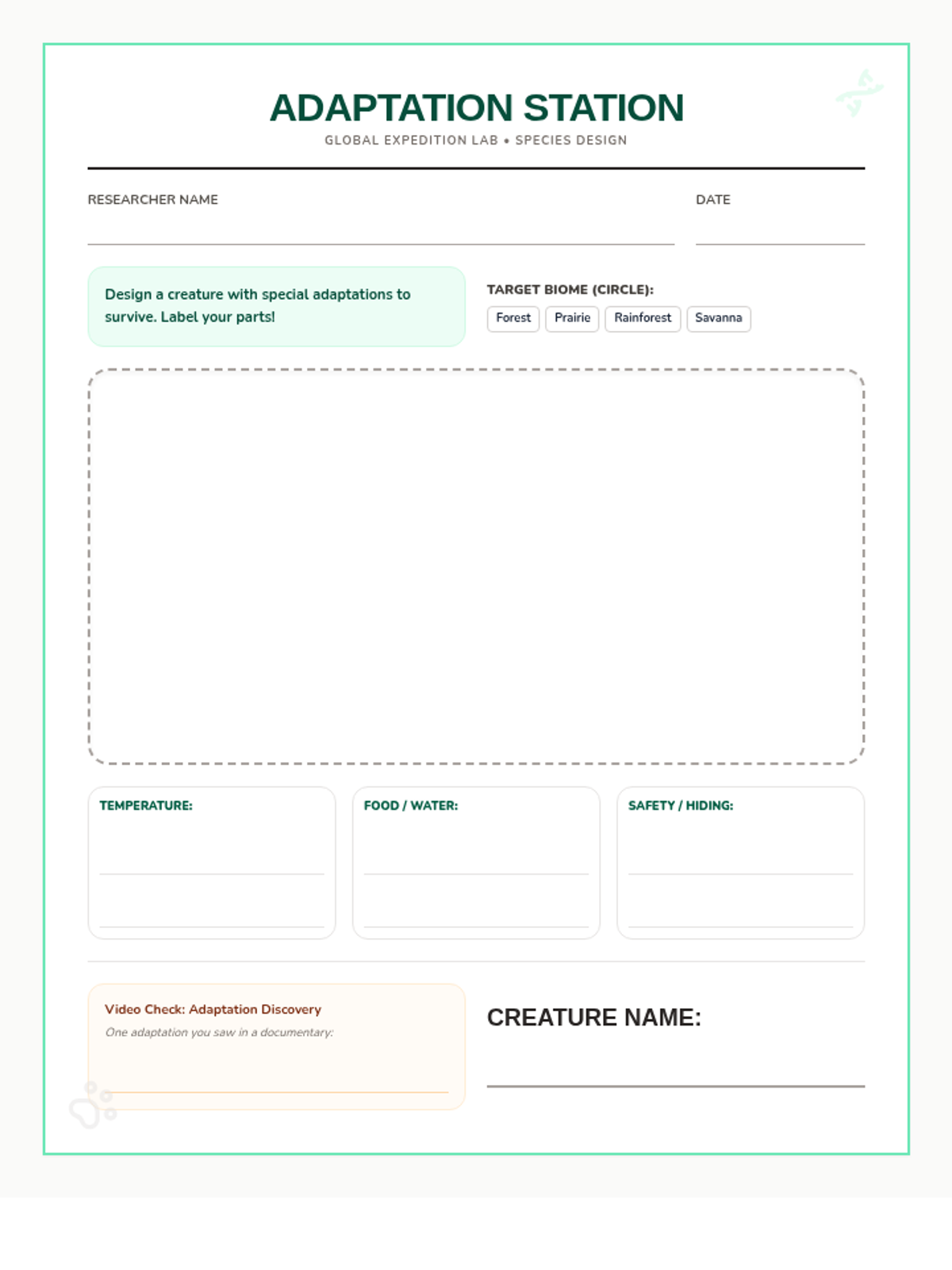
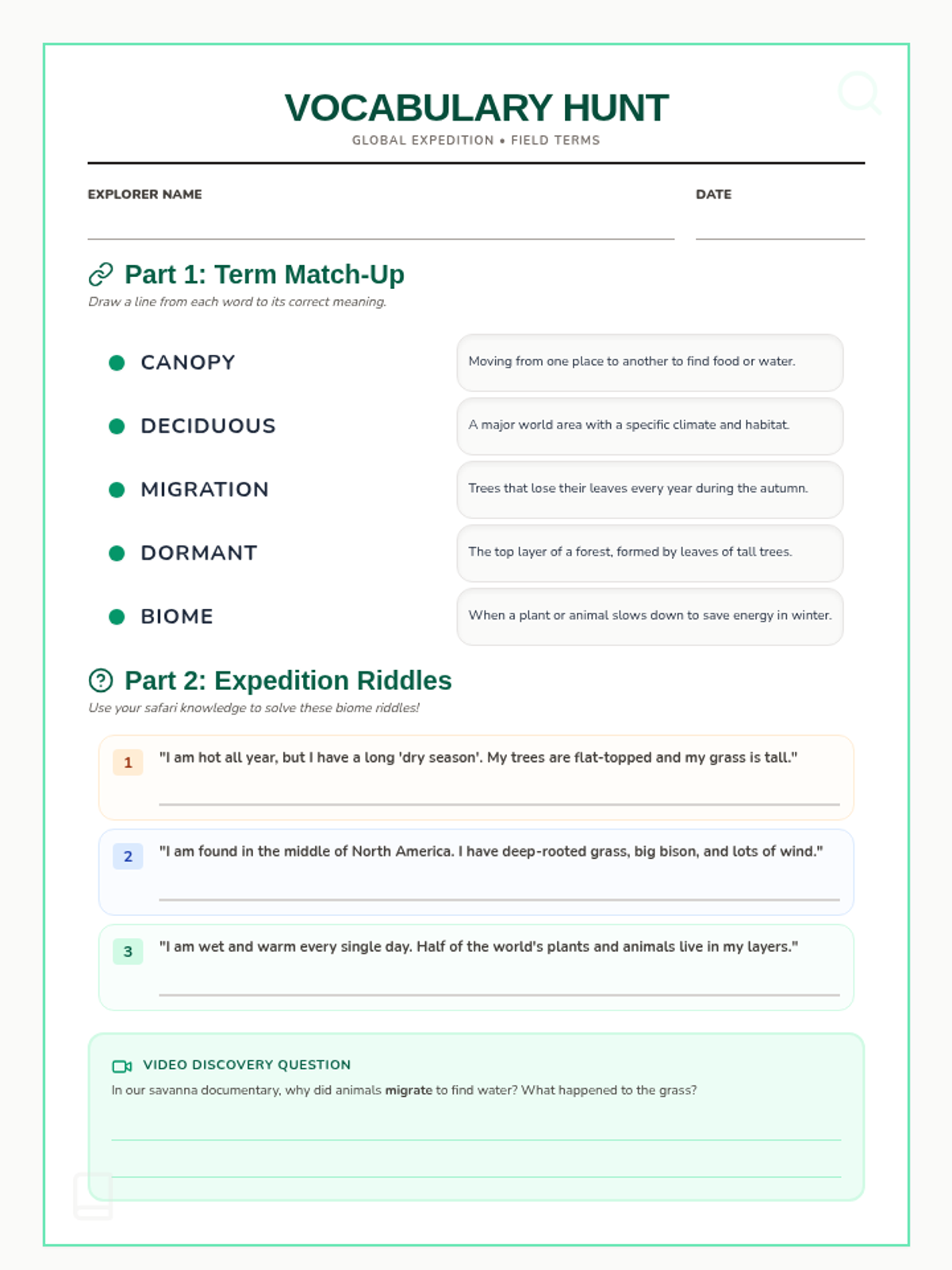
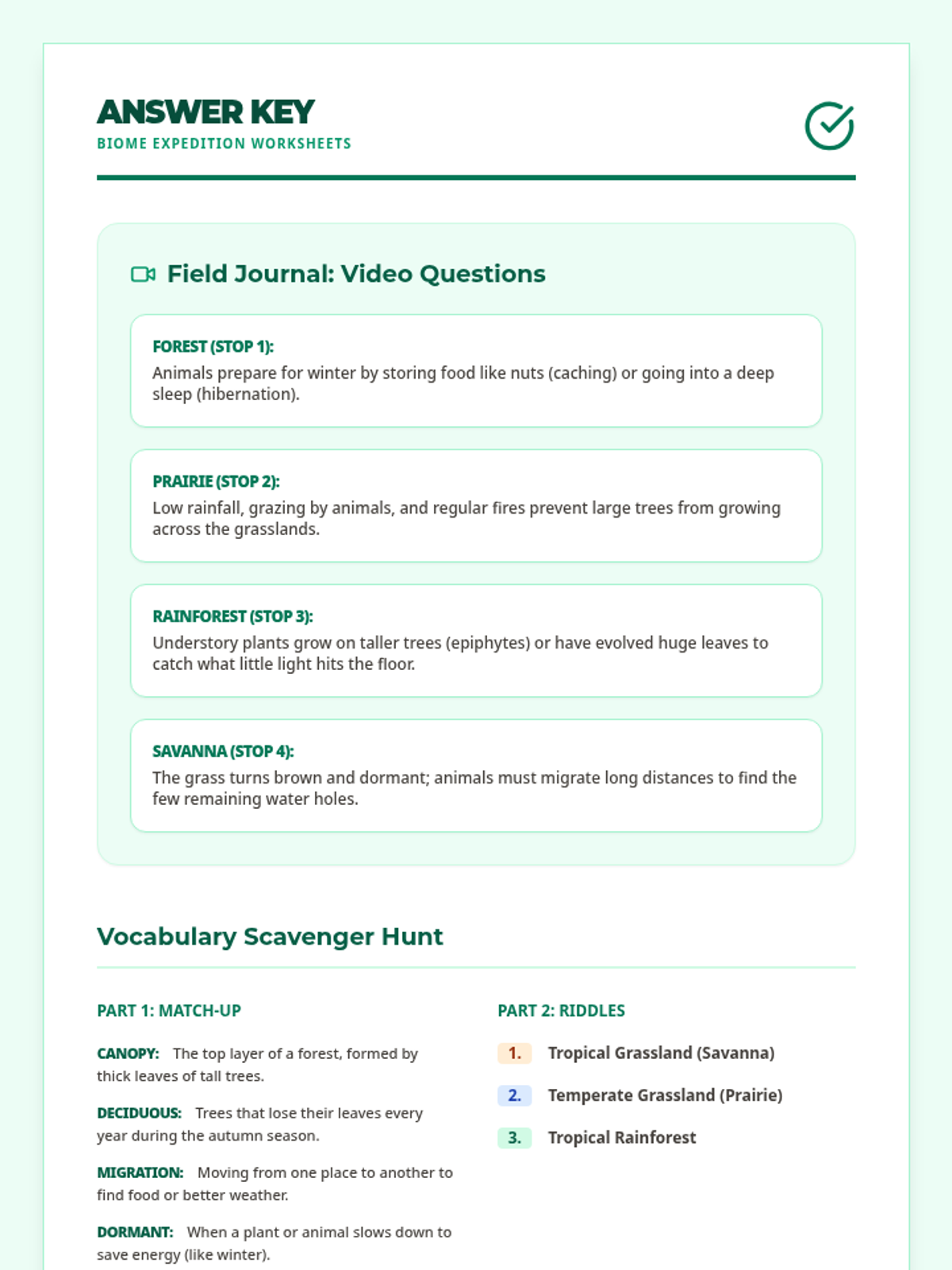
A high-energy, immersive lesson where students 'travel' to different biomes using 360-degree video footage. They record observations in a field journal to compare the characteristics of temperate and tropical forests and grasslands.
A comprehensive slide presentation to guide the class through the end-of-year science review mission.
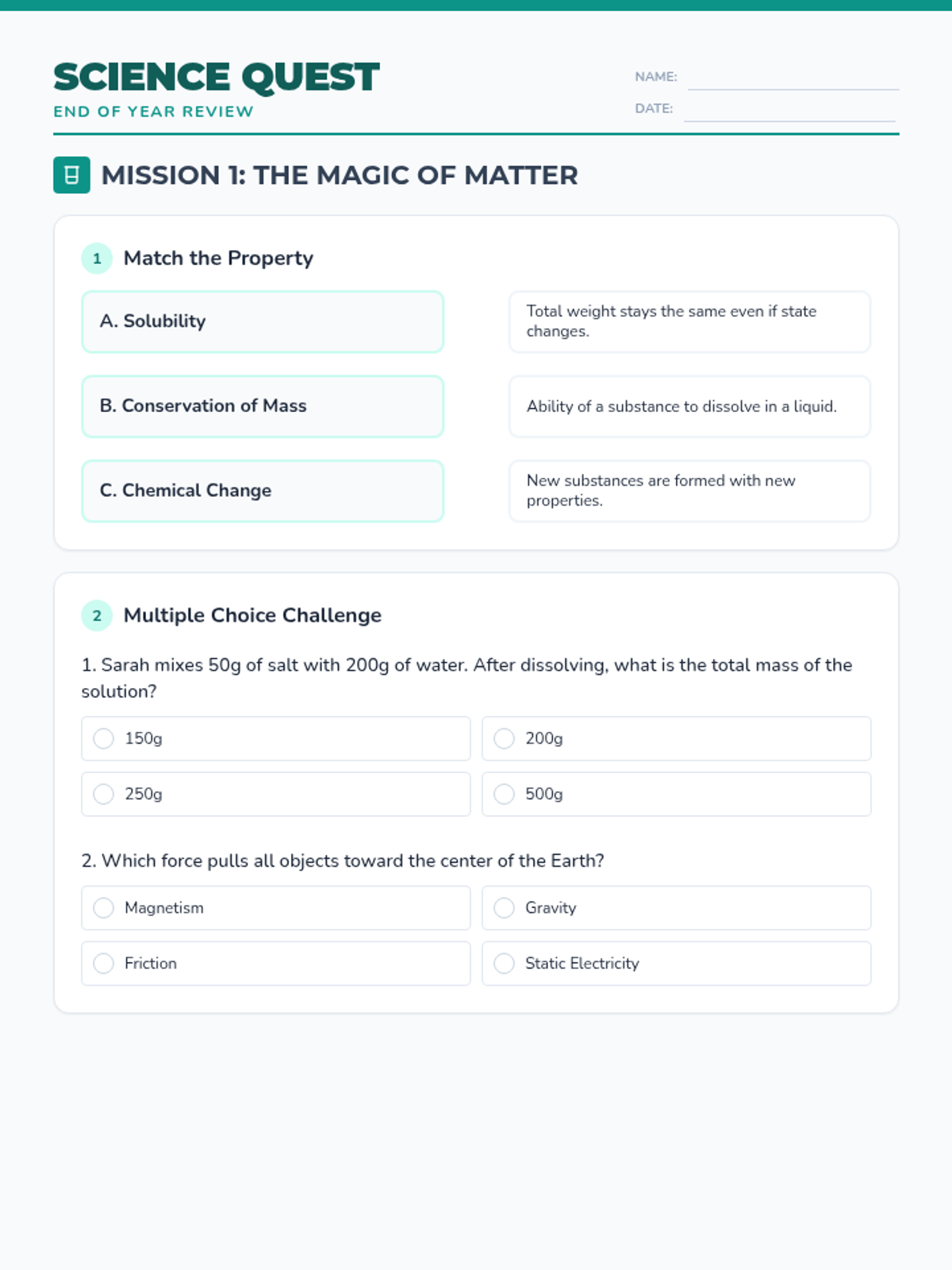
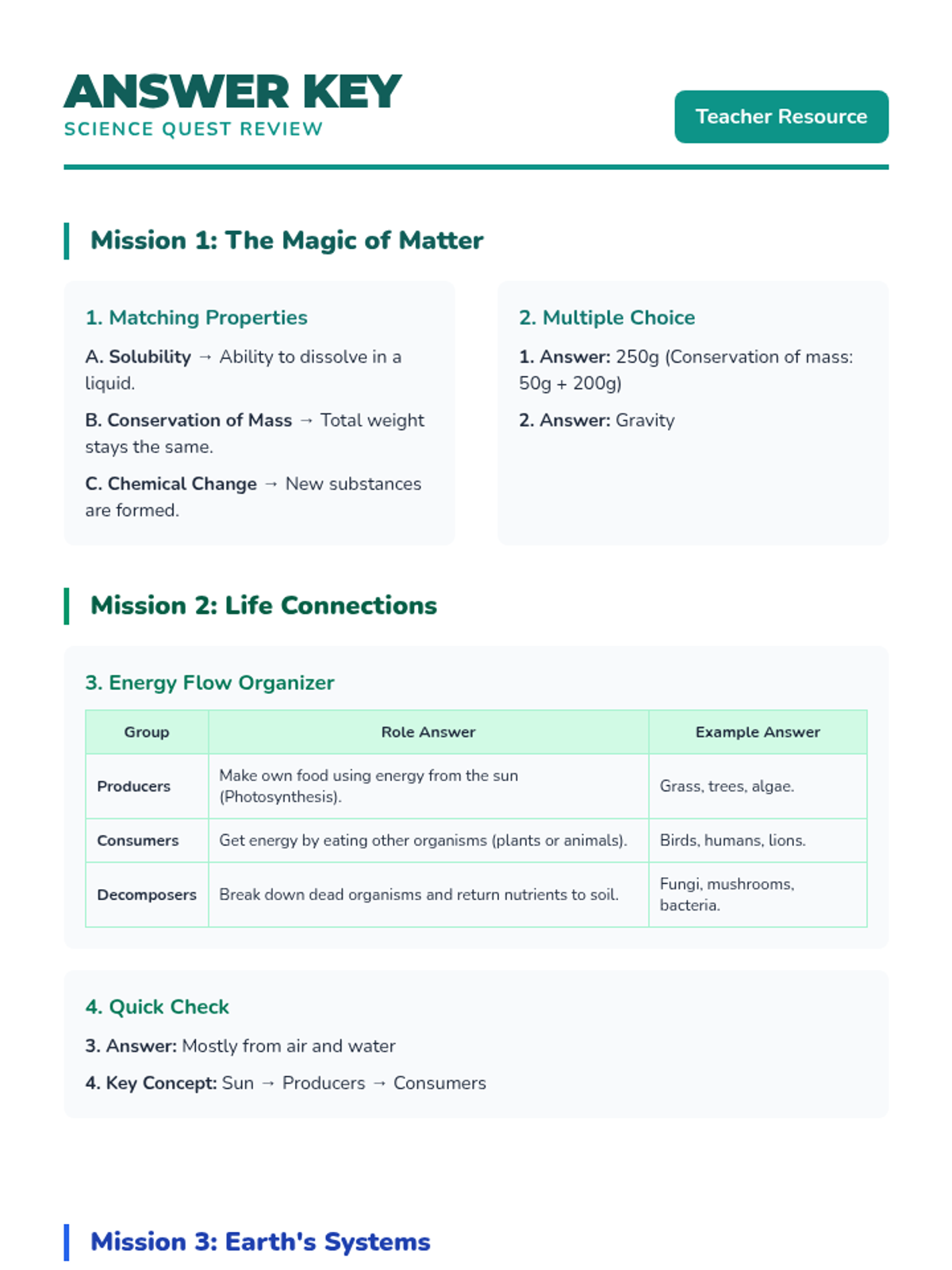
A comprehensive review of all 5th Grade NGSS science standards, featuring physical, life, and Earth/space science topics. This lesson prepares students for end-of-year assessments through a variety of question formats including graphic organizers and matching.