A fun, high-energy lesson where students practice addition and subtraction through a series of interactive games like Math Bingo and a Relay Race.
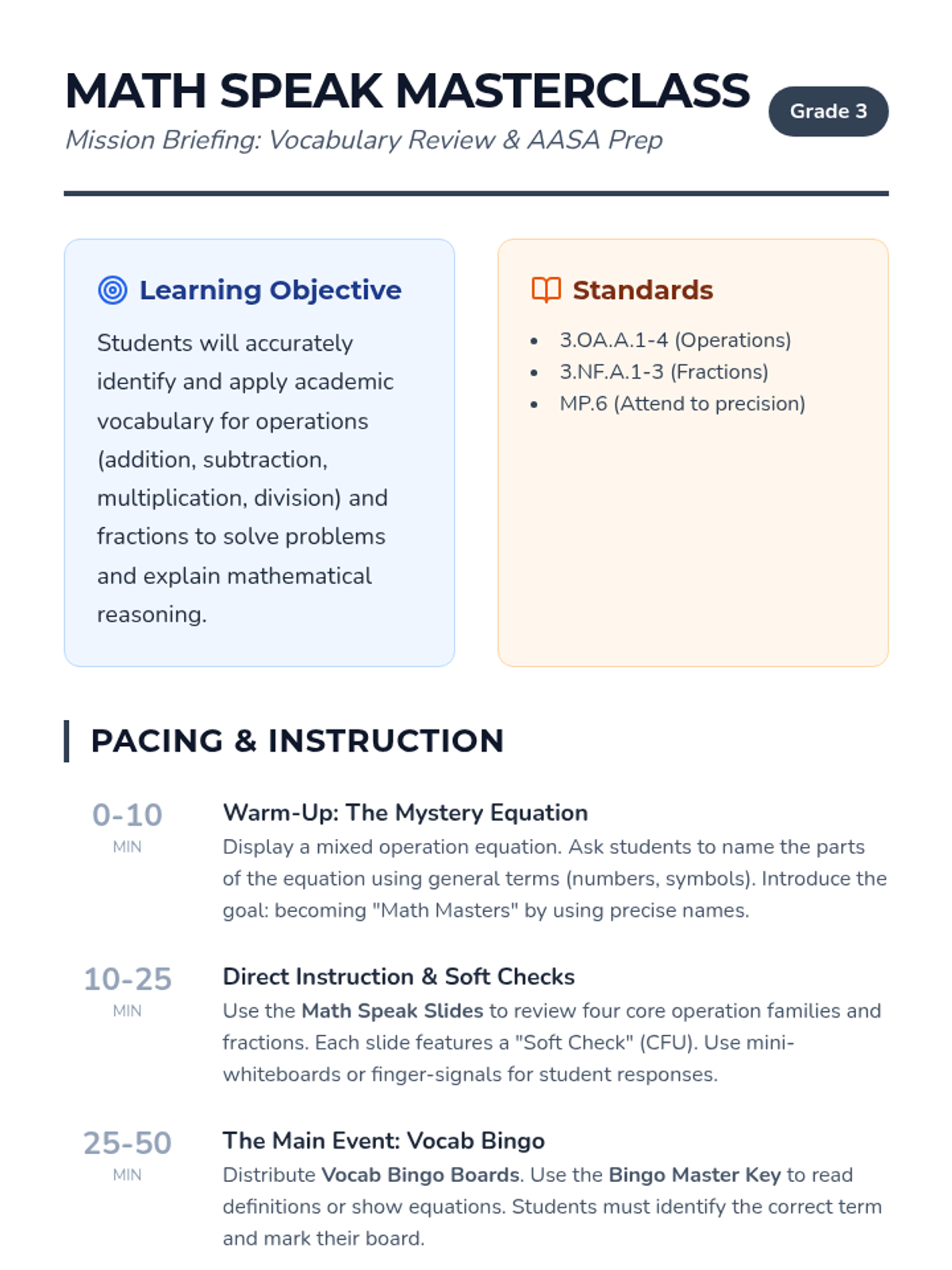
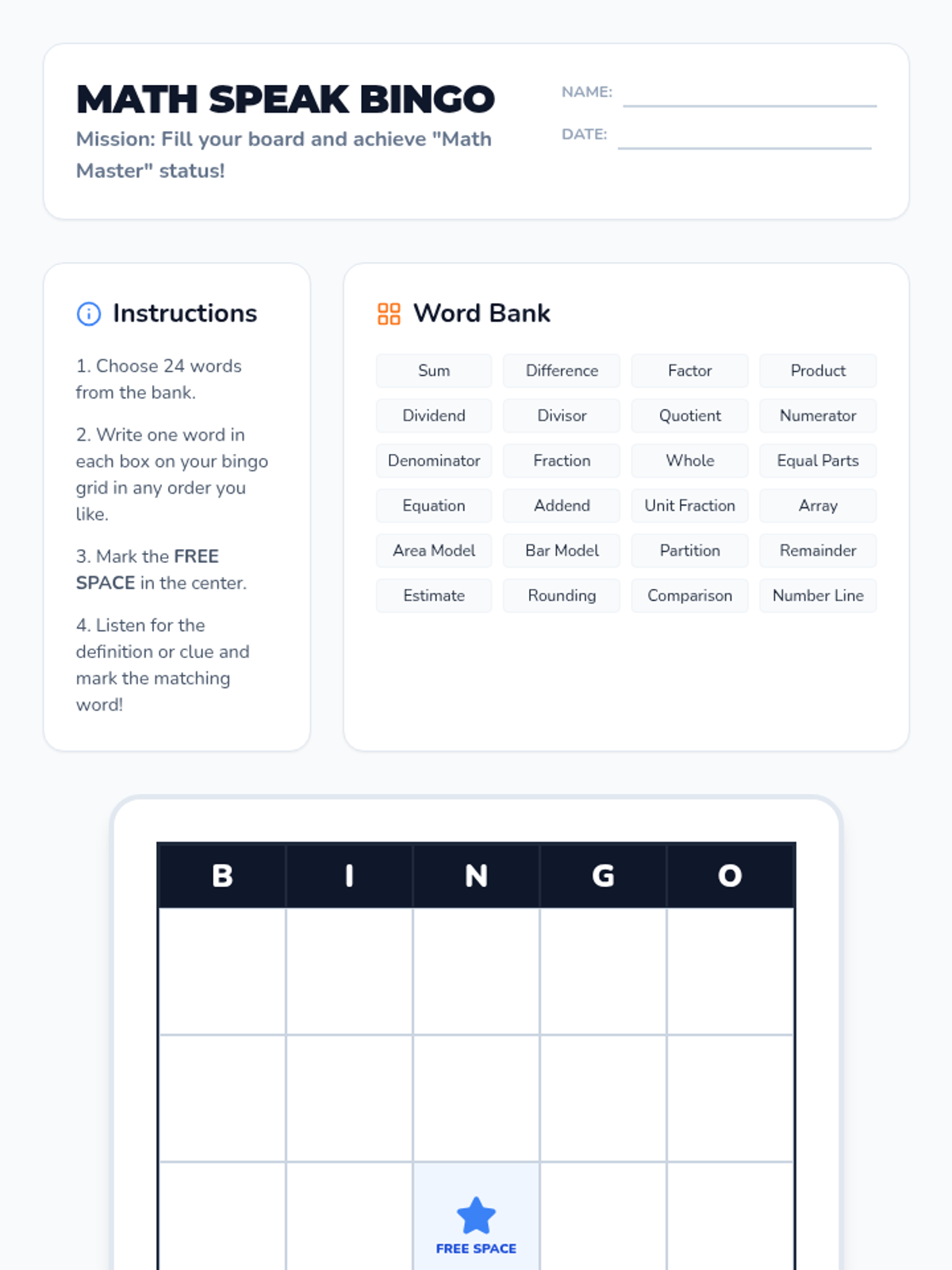
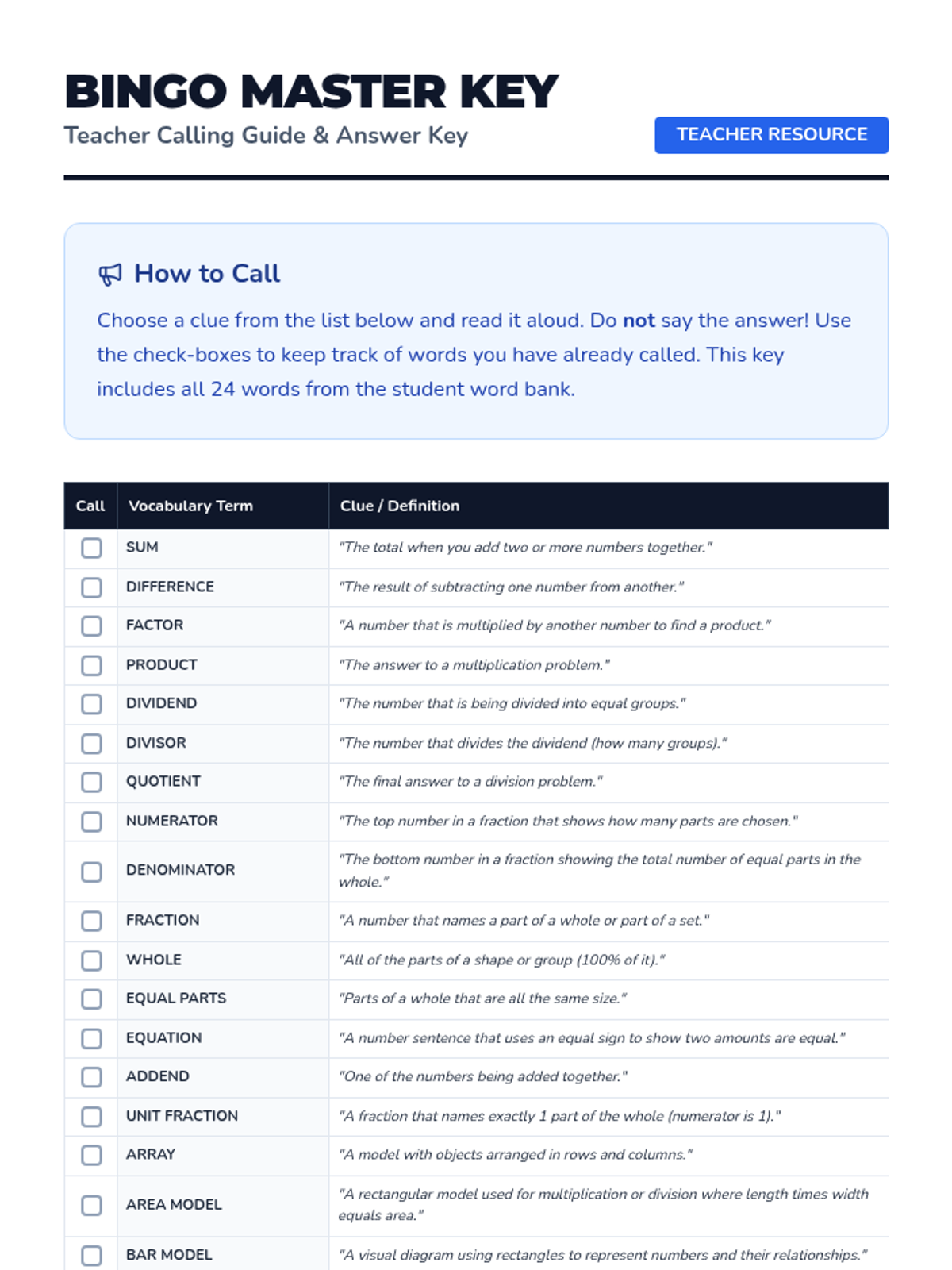
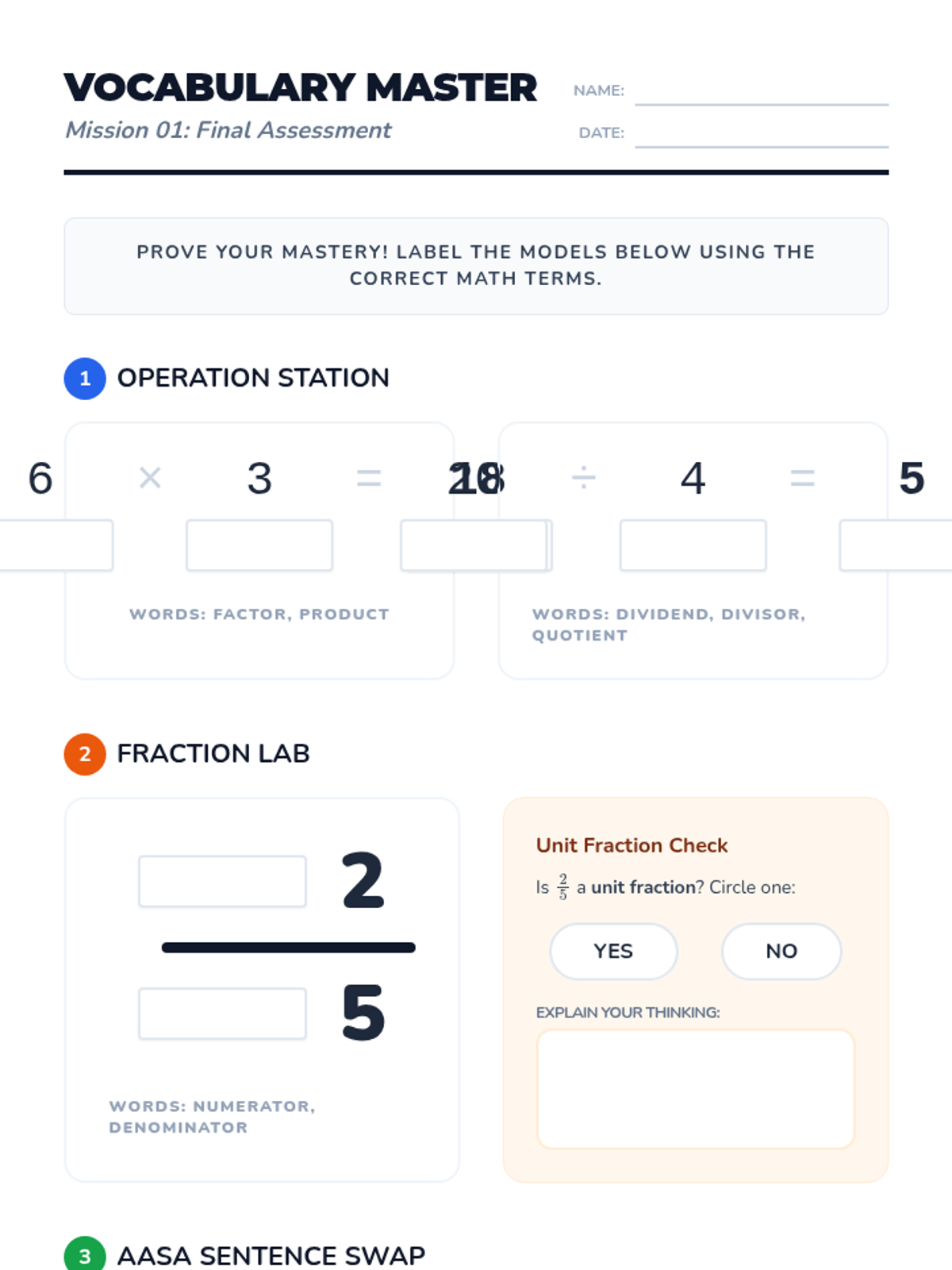
A comprehensive math vocabulary review lesson covering operations and fractions, designed for 3rd grade AASA test preparation. Includes visual instruction, formative checks, and a gamified Bingo exit ticket.
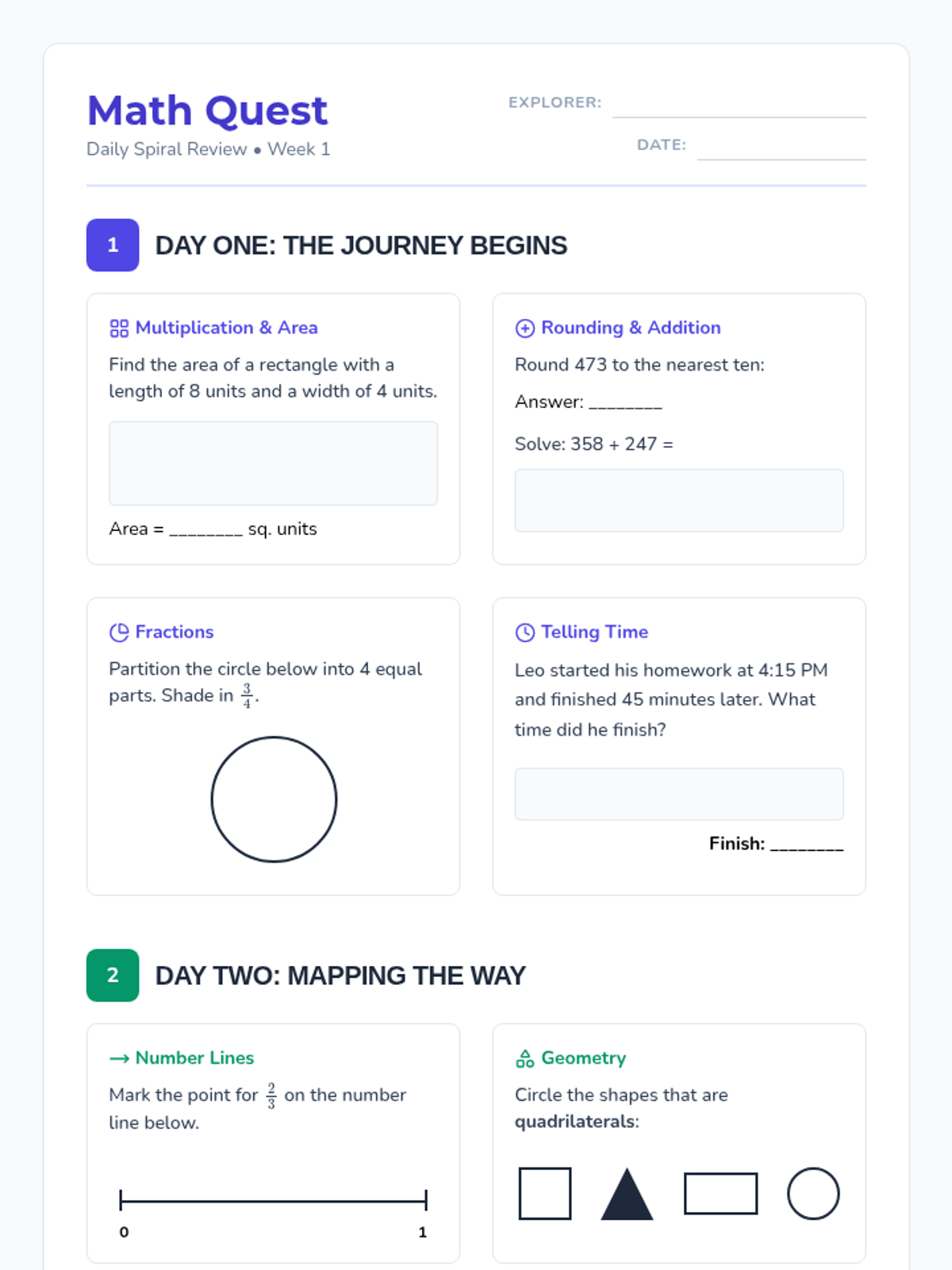
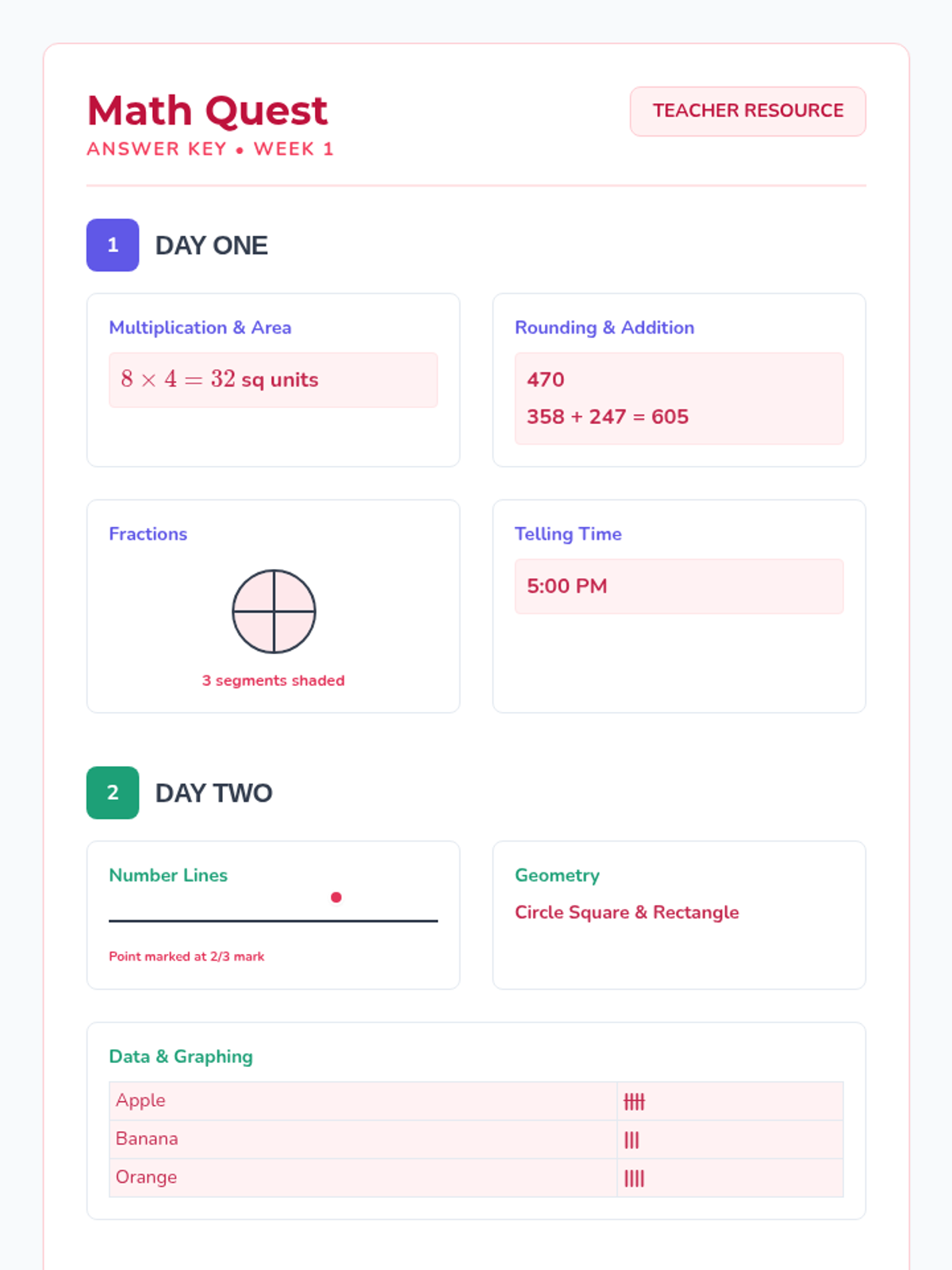
A 5-day spiral review covering key third-grade math concepts including multiplication, area, fractions, rounding, and data. This lesson provides daily practice to reinforce skills and build mathematical fluency.
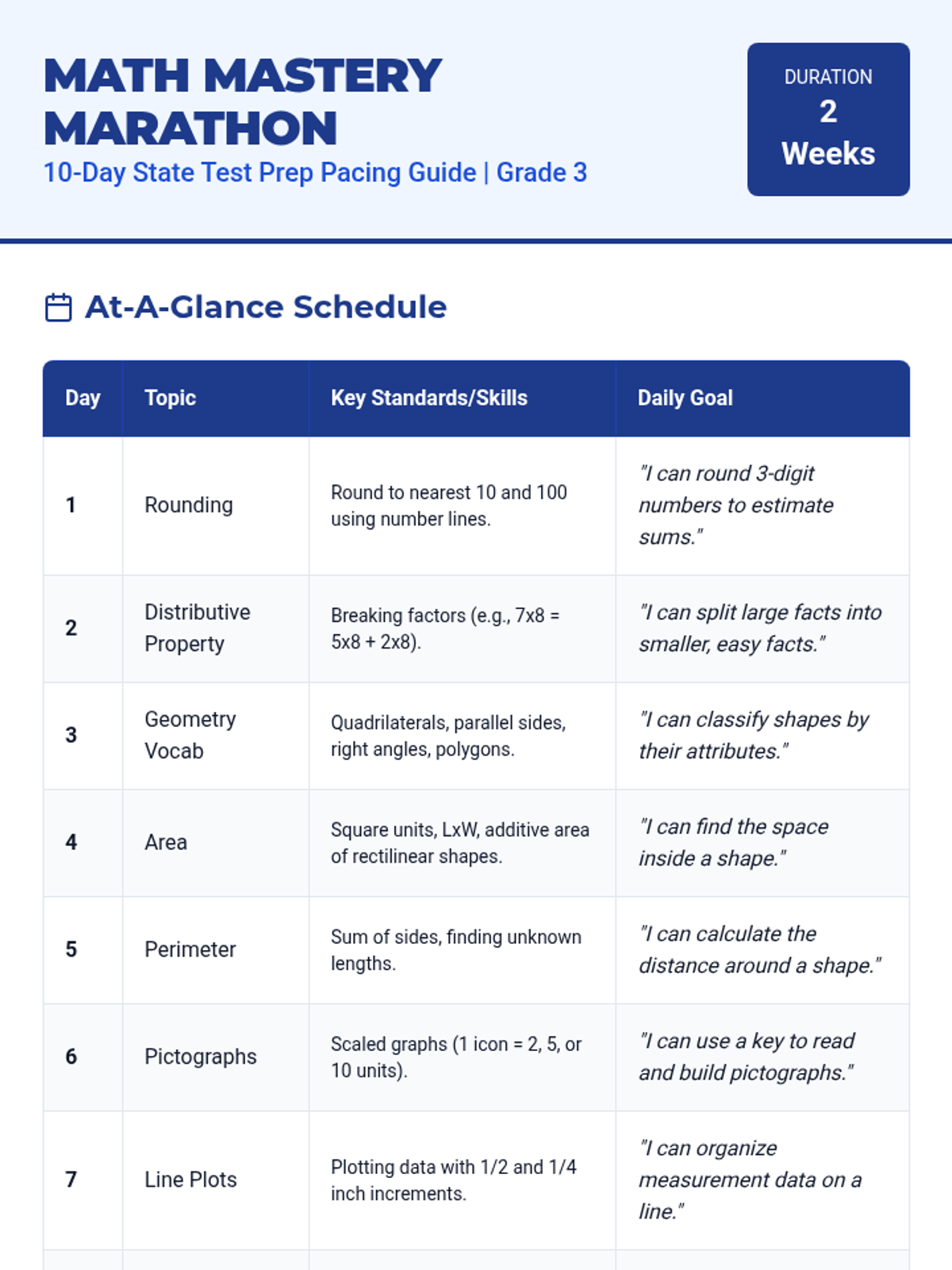
A comprehensive review of all marathon topics with a practice assessment format.
Solving word problems involving addition and subtraction of time intervals in minutes.
Telling and writing time to the nearest minute using analog and digital clocks.
Representing measurement data on line plots with halves and fourths of an inch.
Interpreting and creating scaled pictographs where one symbol represents multiple units.
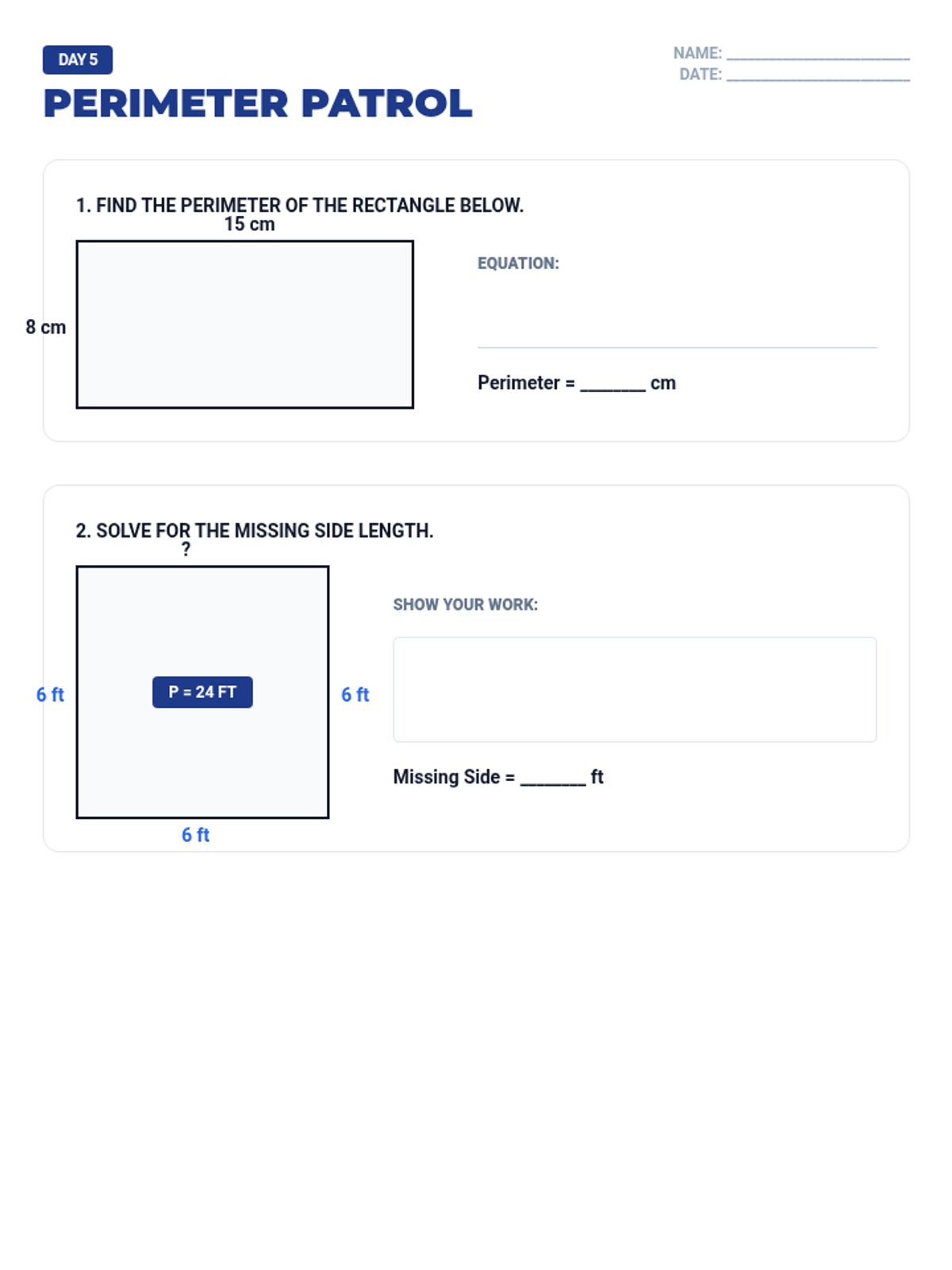
Finding the perimeter of polygons and solving for unknown side lengths.
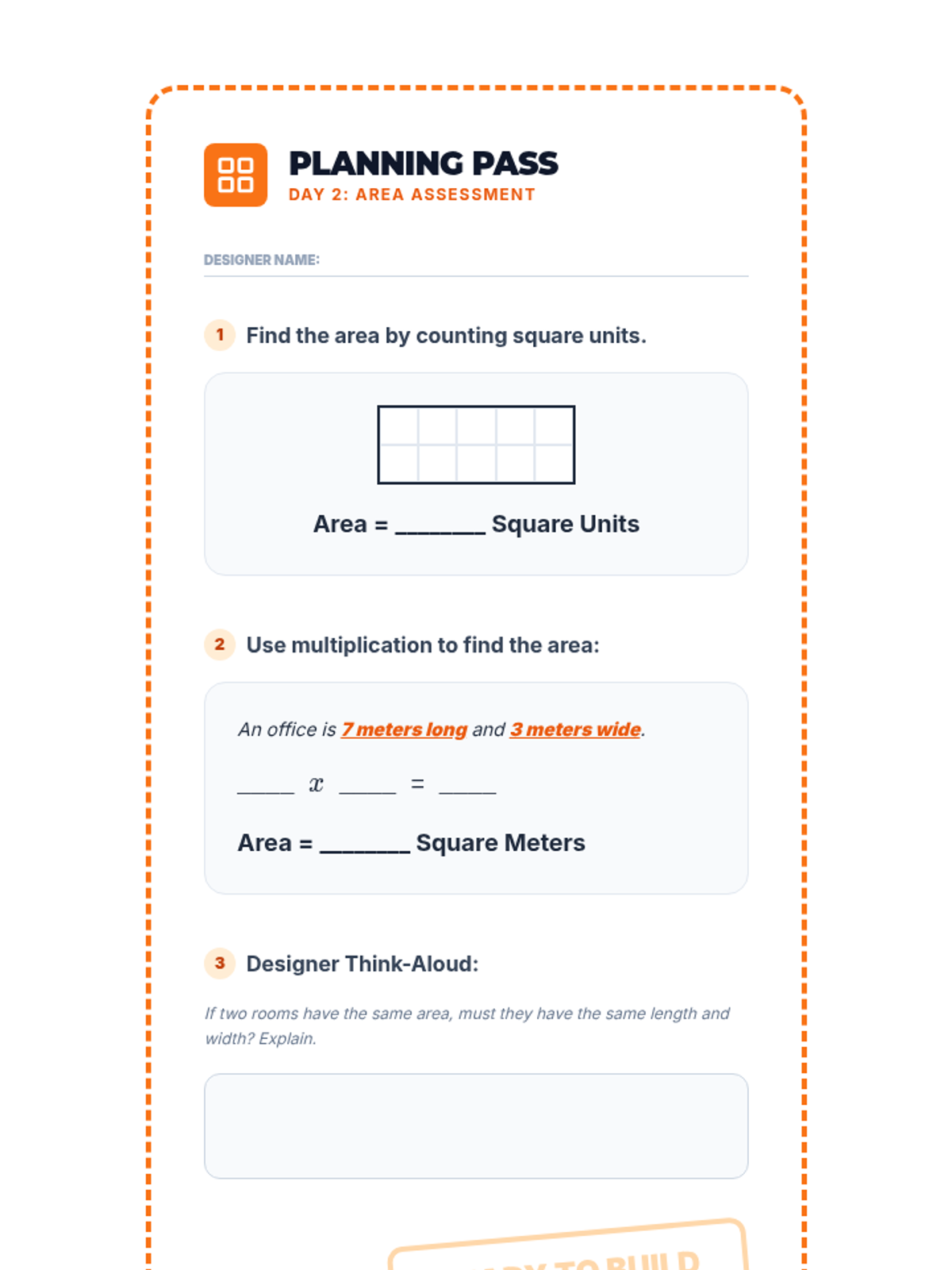
Calculating area using unit squares and multiplication, including rectilinear shapes.
Exploring quadrilaterals, polygons, and their attributes through technical vocabulary and classification.
A foundational review of rounding to the nearest 10 and 100 using number lines and place value strategies.
Mastering the distributive property by breaking apart large factors into smaller, friendlier numbers to solve multiplication problems.
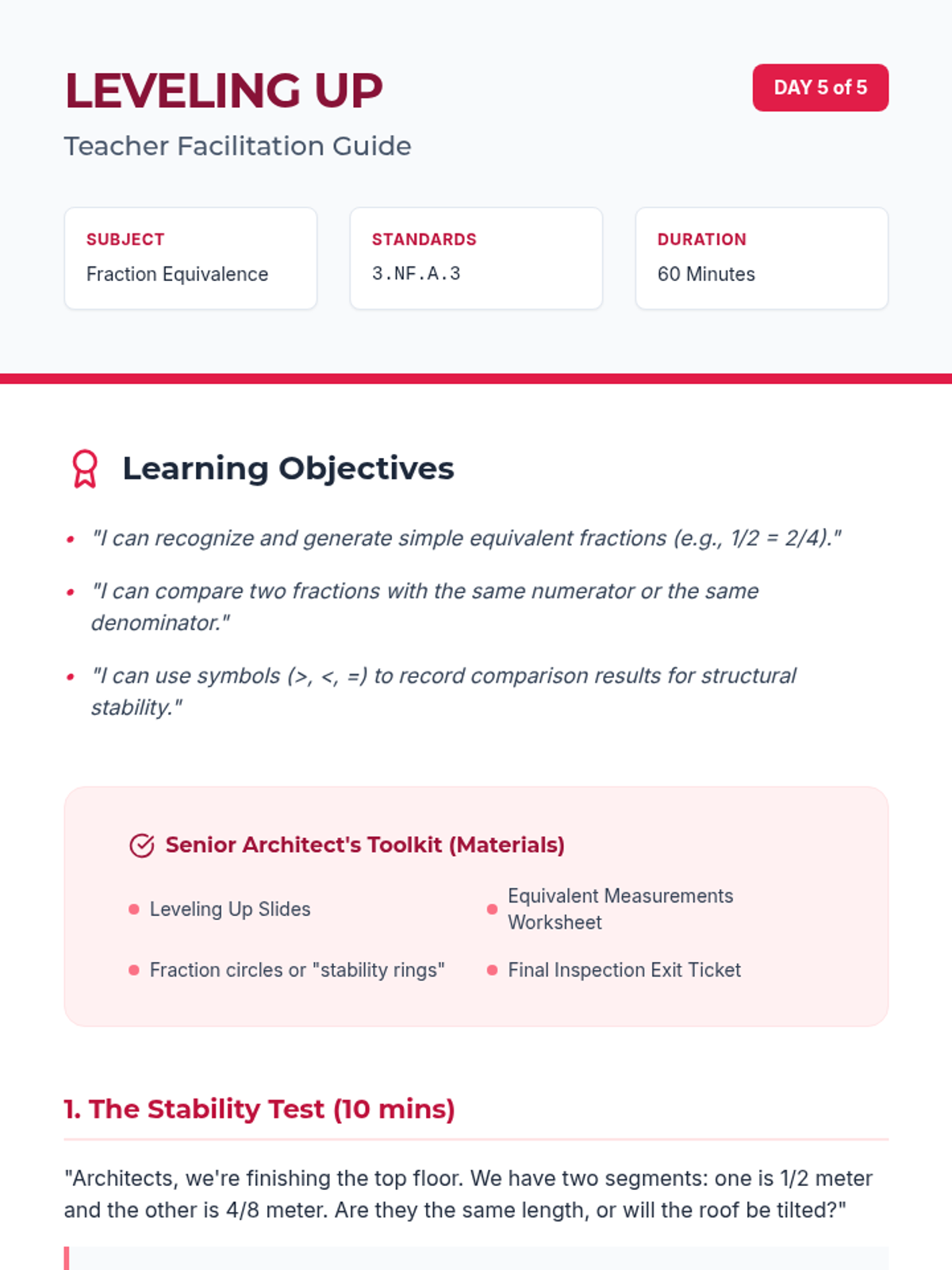
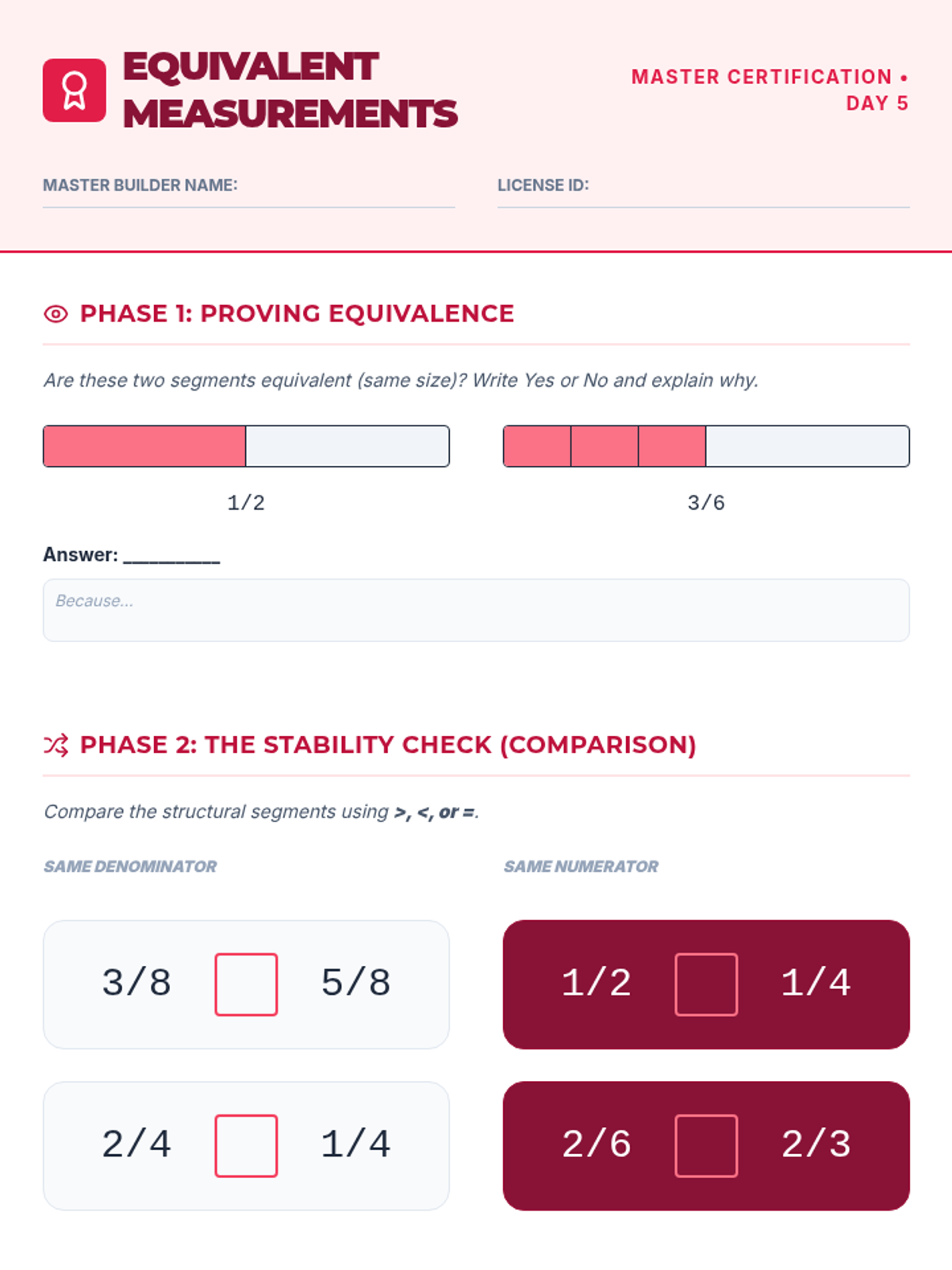
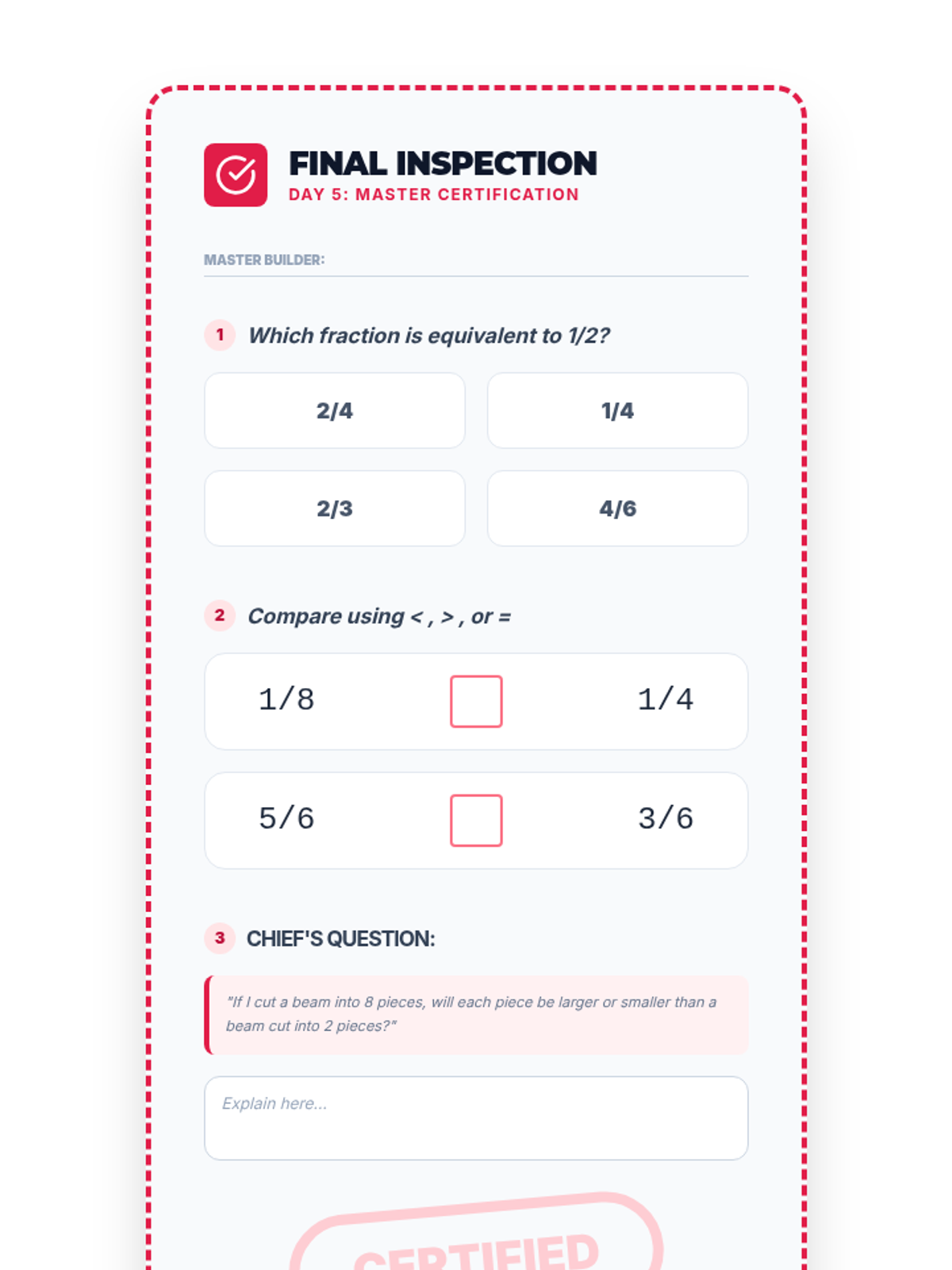
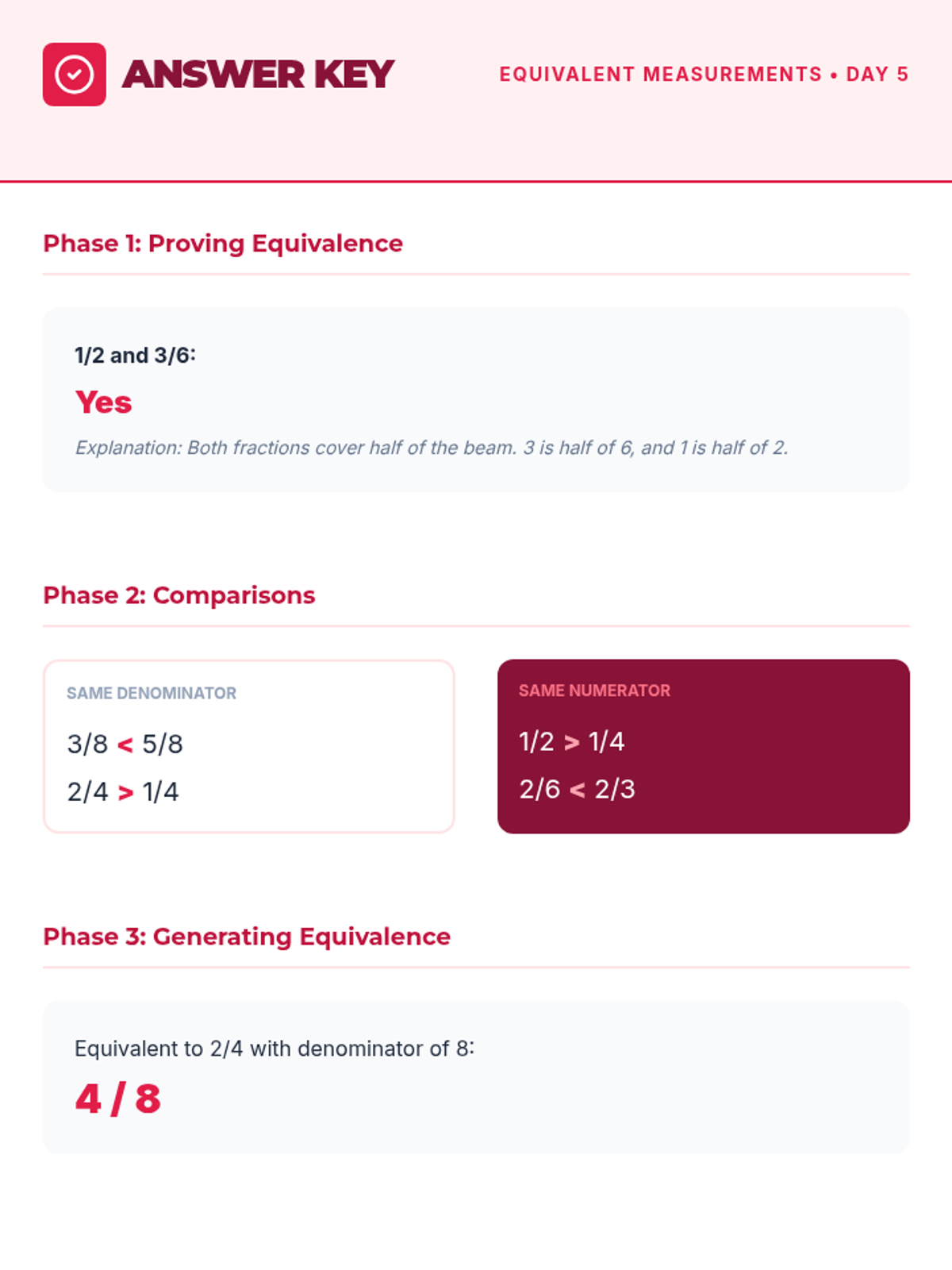
Explores fraction equivalence and comparison using blueprint segments to ensure building stability and precision.
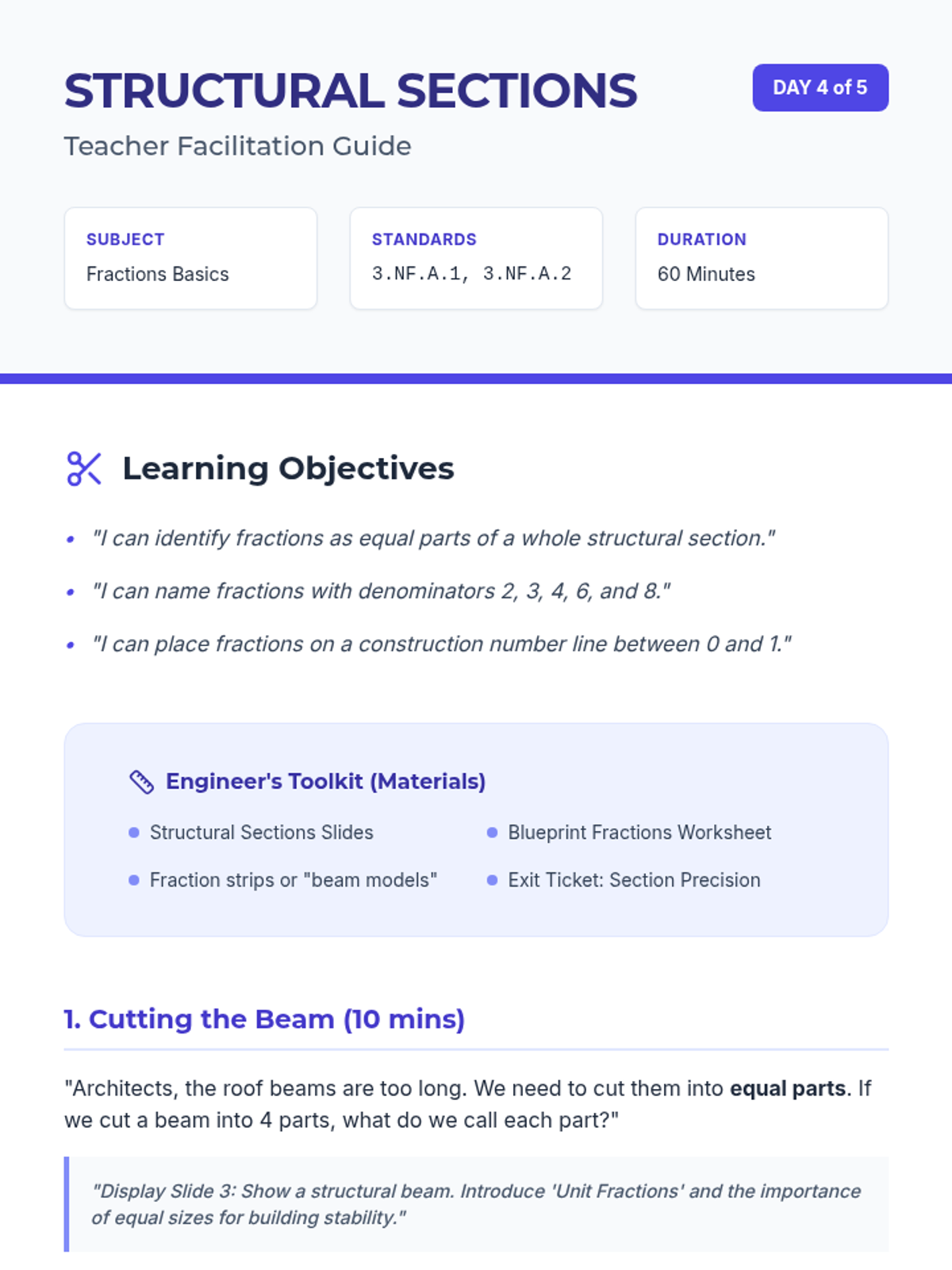
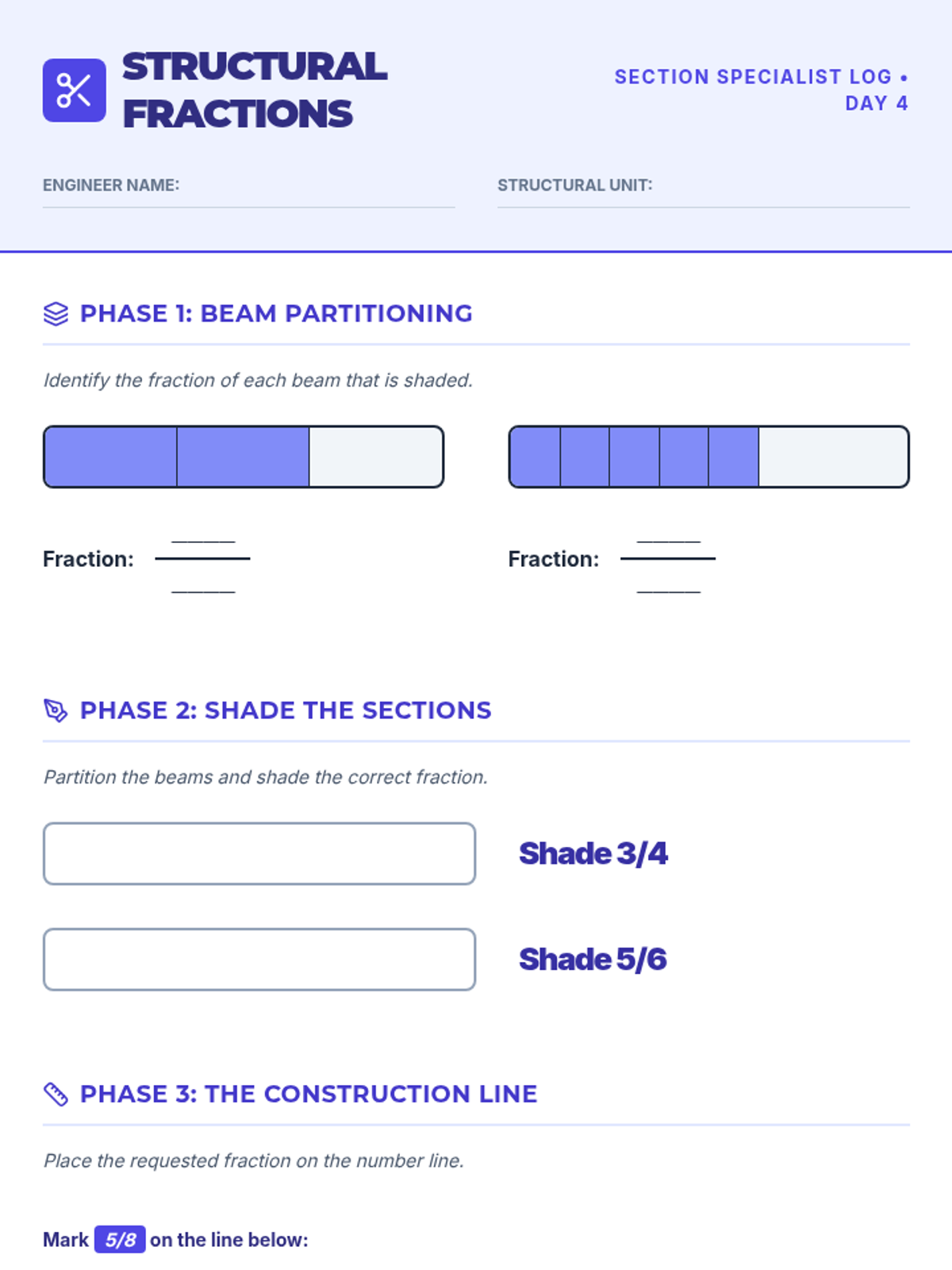
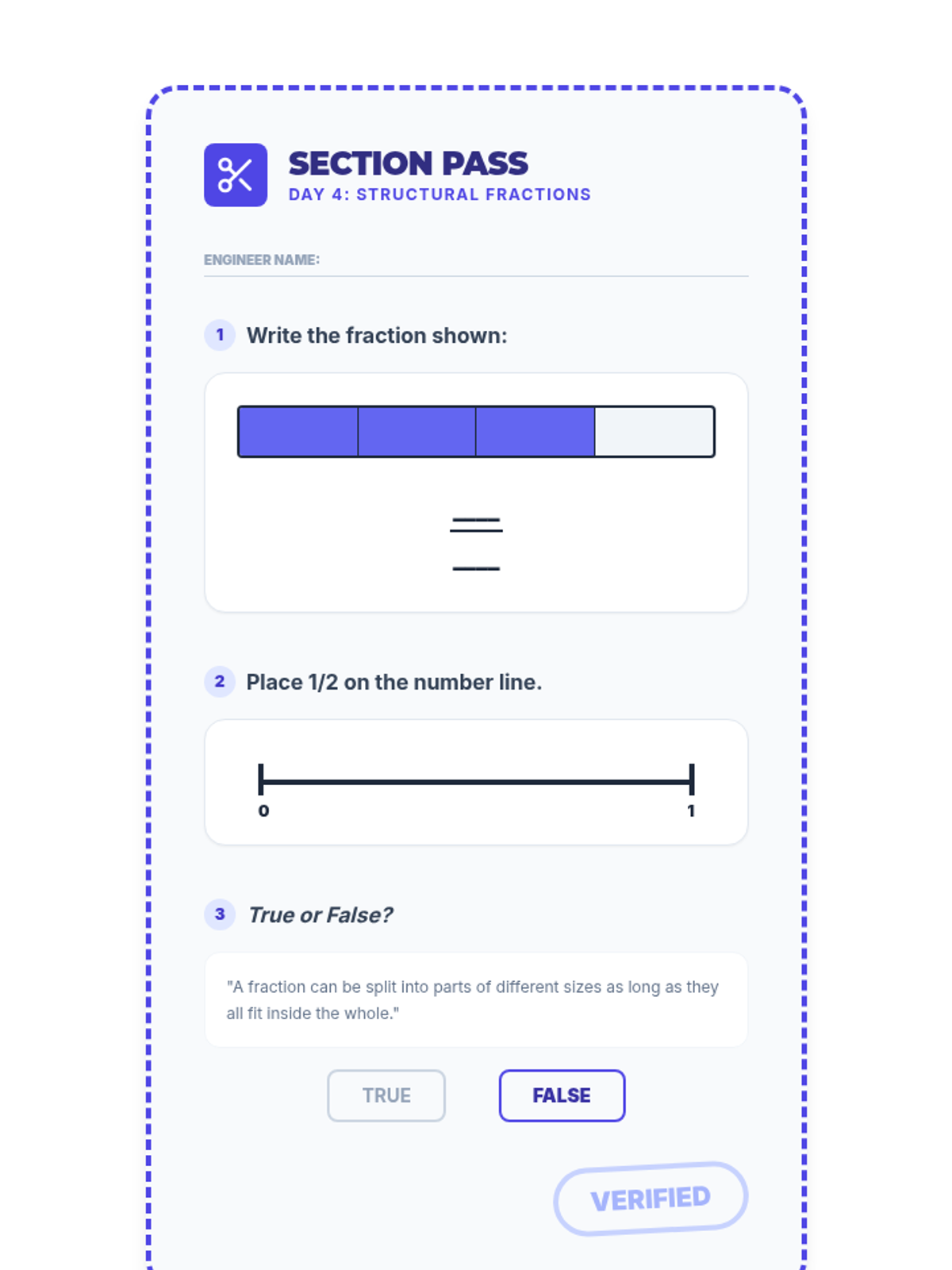
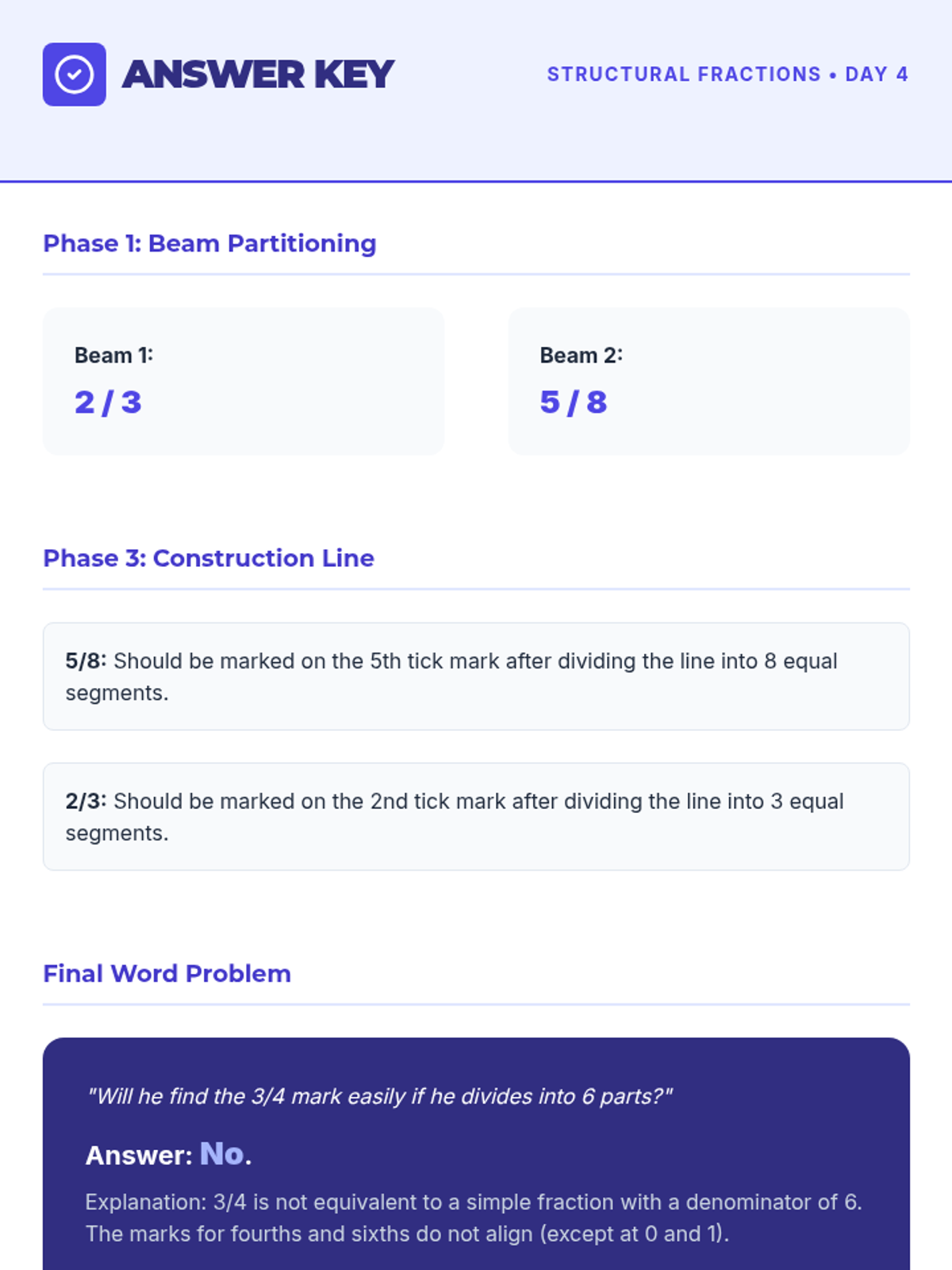
Introduces fractions as equal parts of structural sections and placing fractional values on a construction number line.
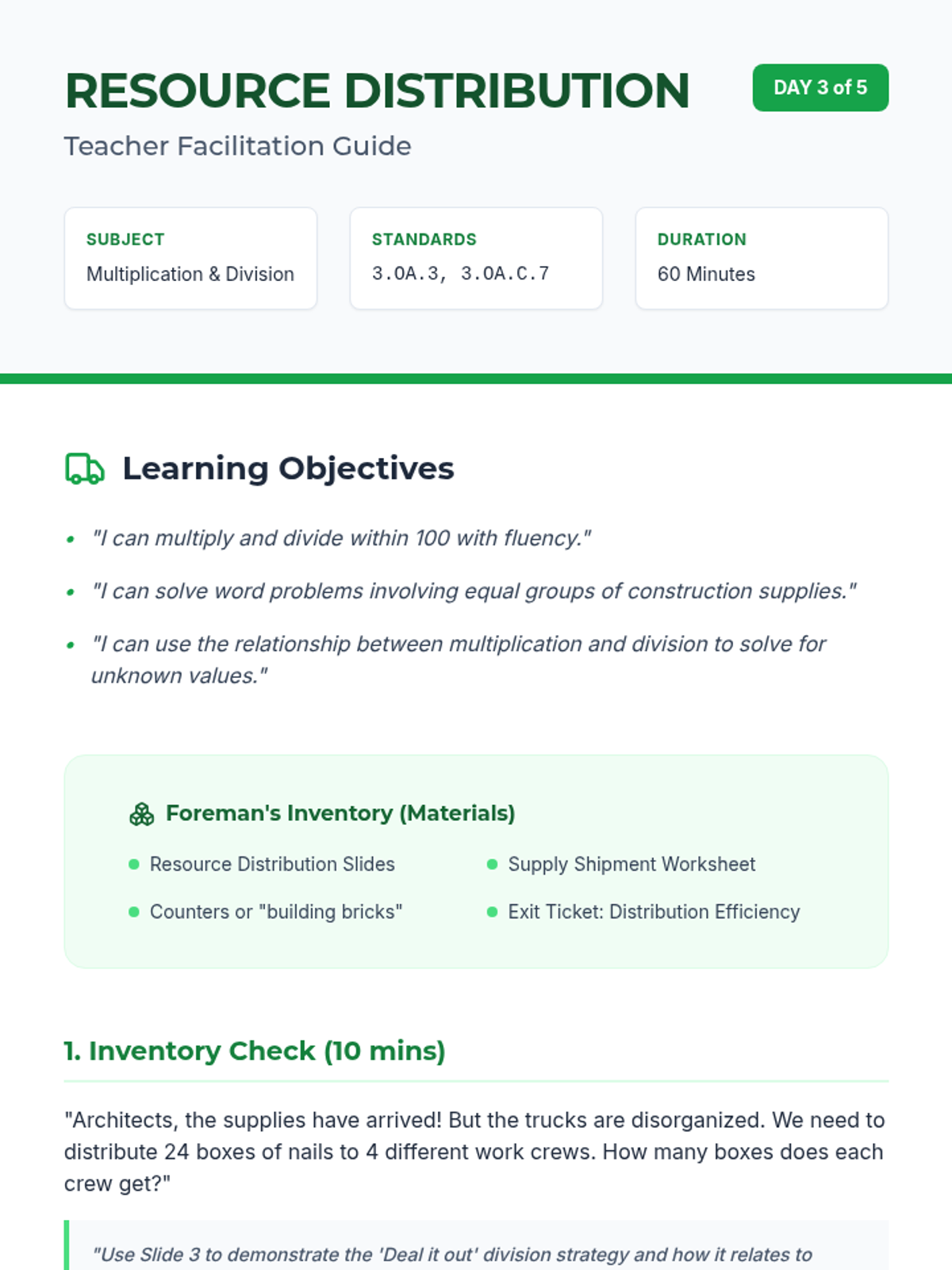
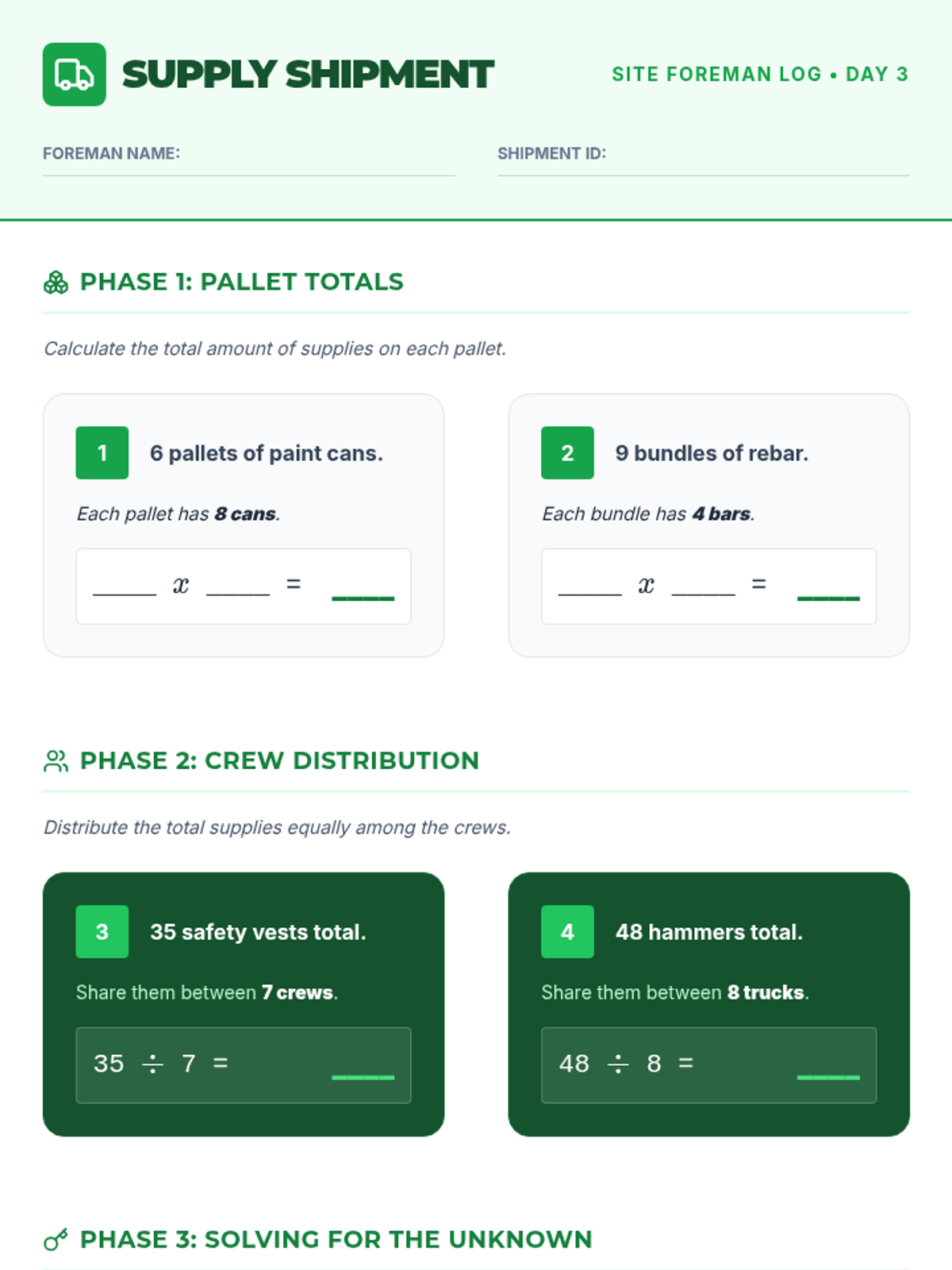
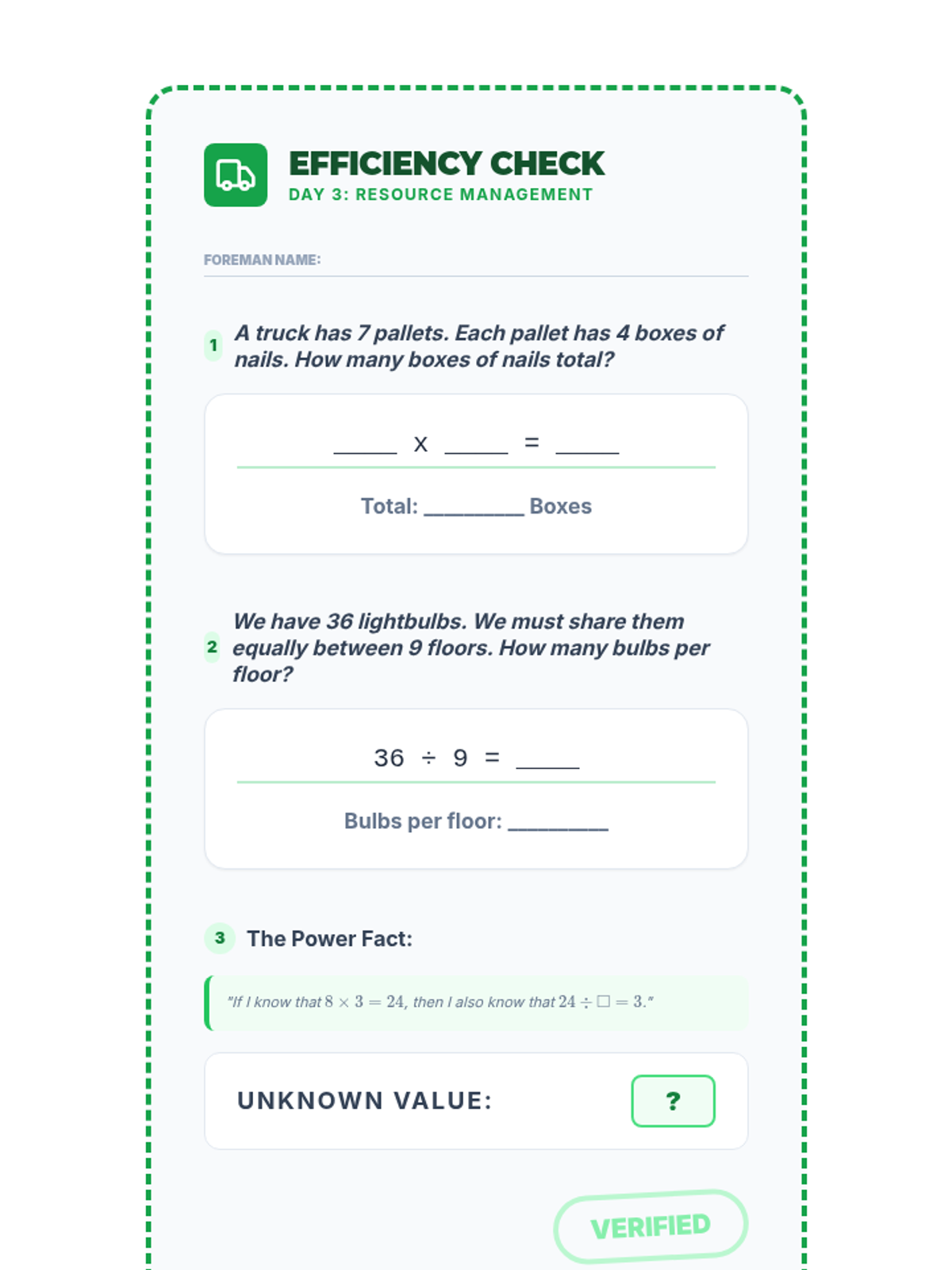
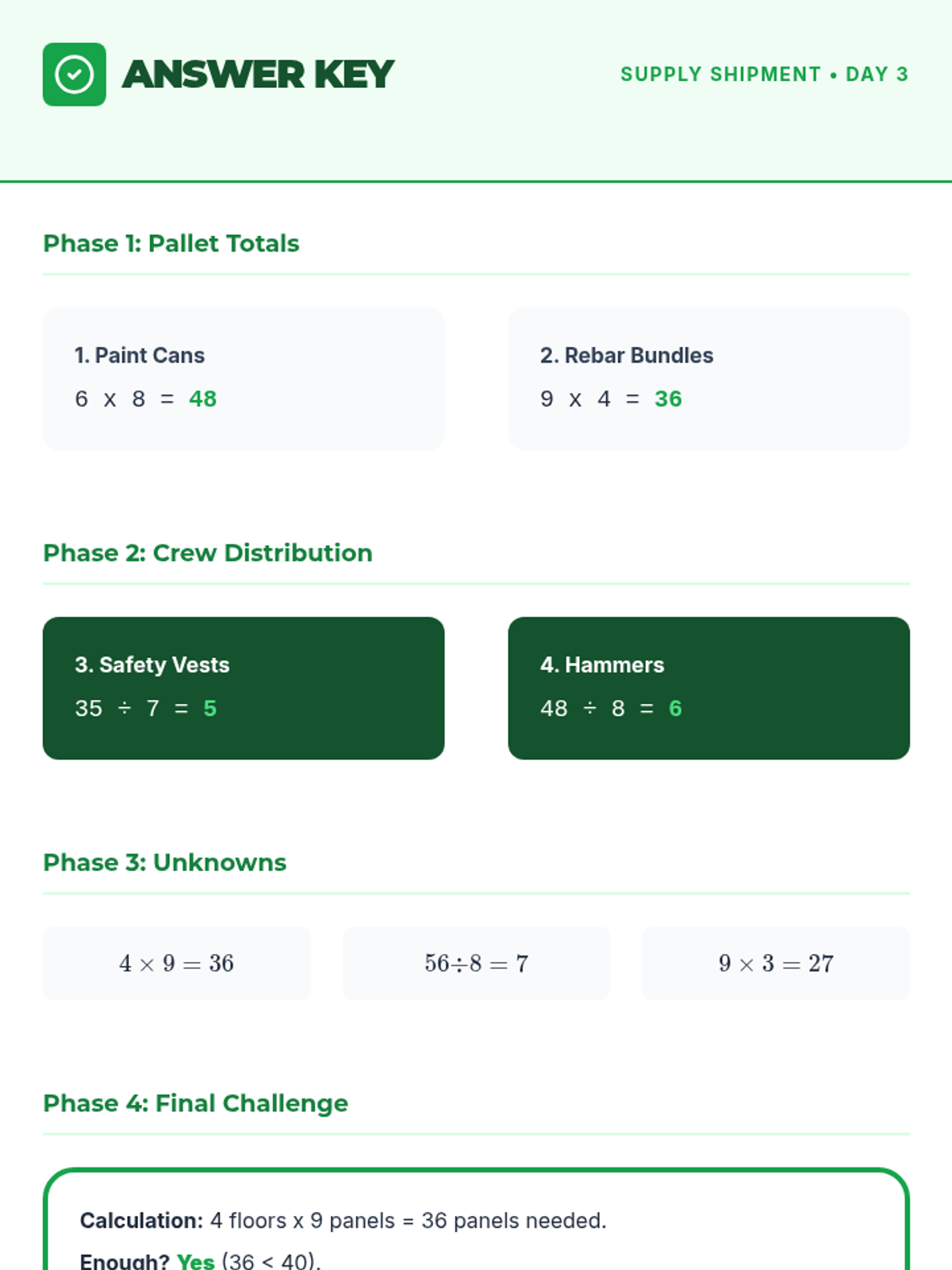
Builds fluency in multiplication and division through resource distribution challenges and word problems.
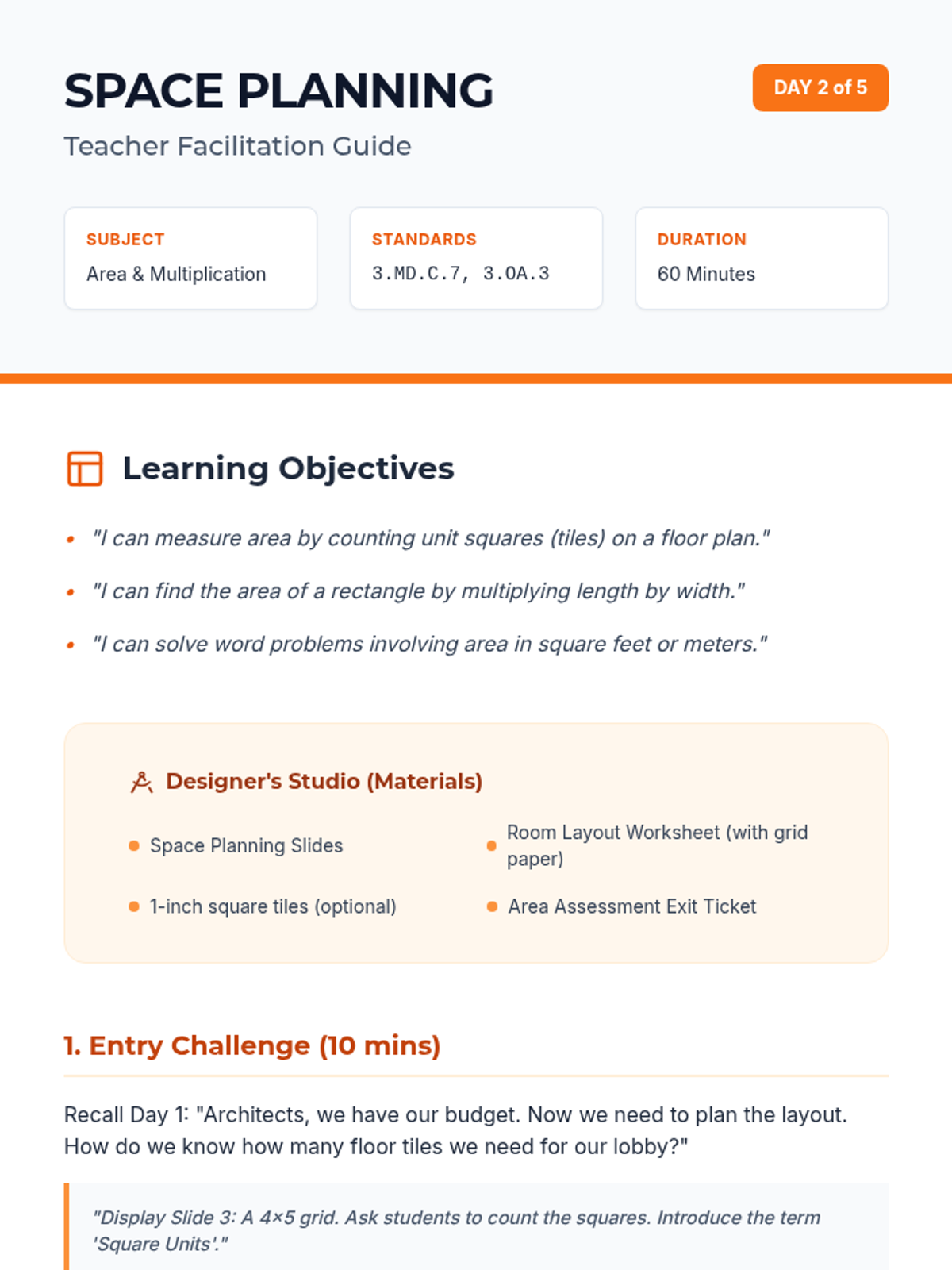
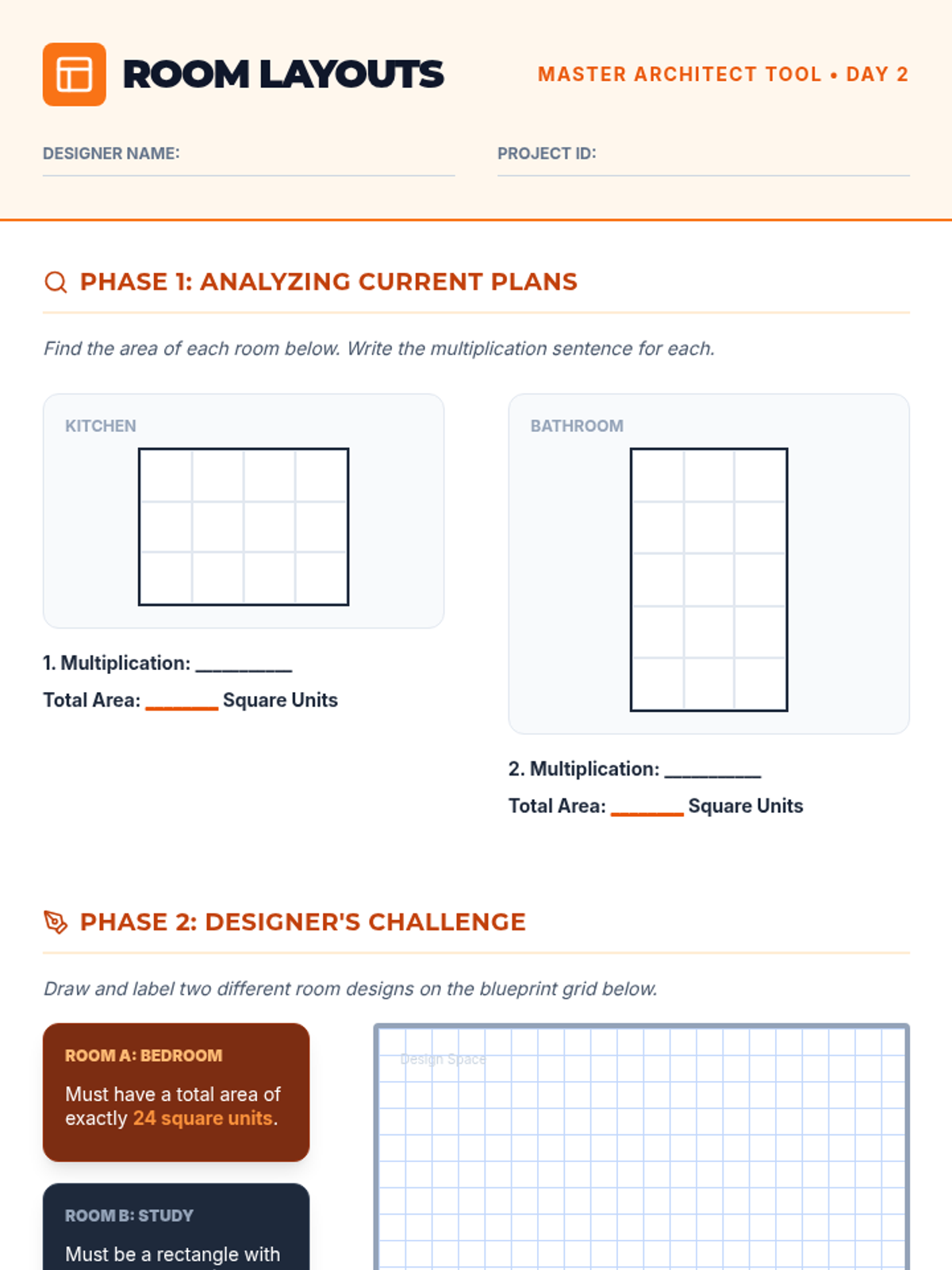
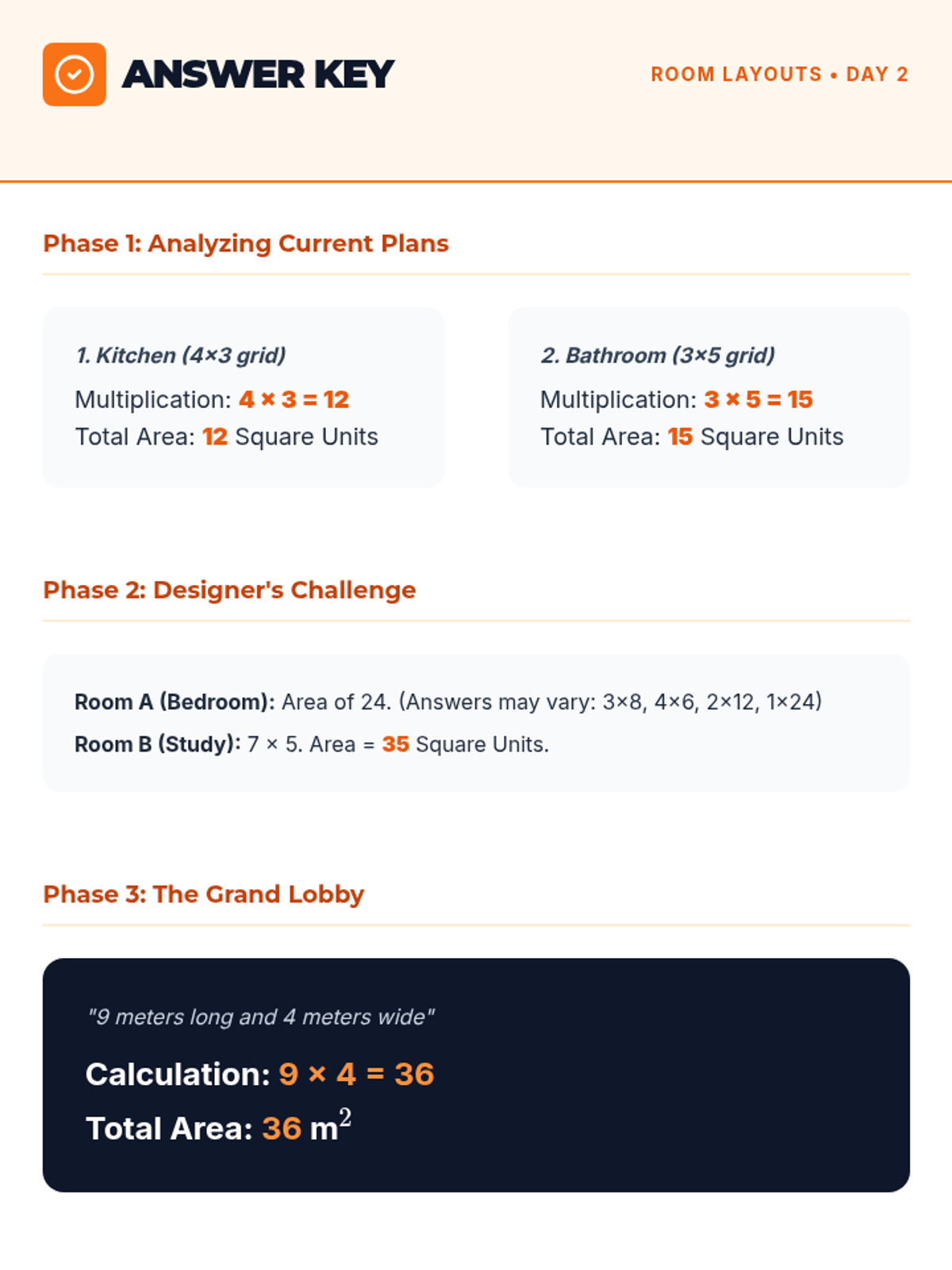
Connects multiplication concepts to area measurement, using tiling and rectangular models to plan room layouts.
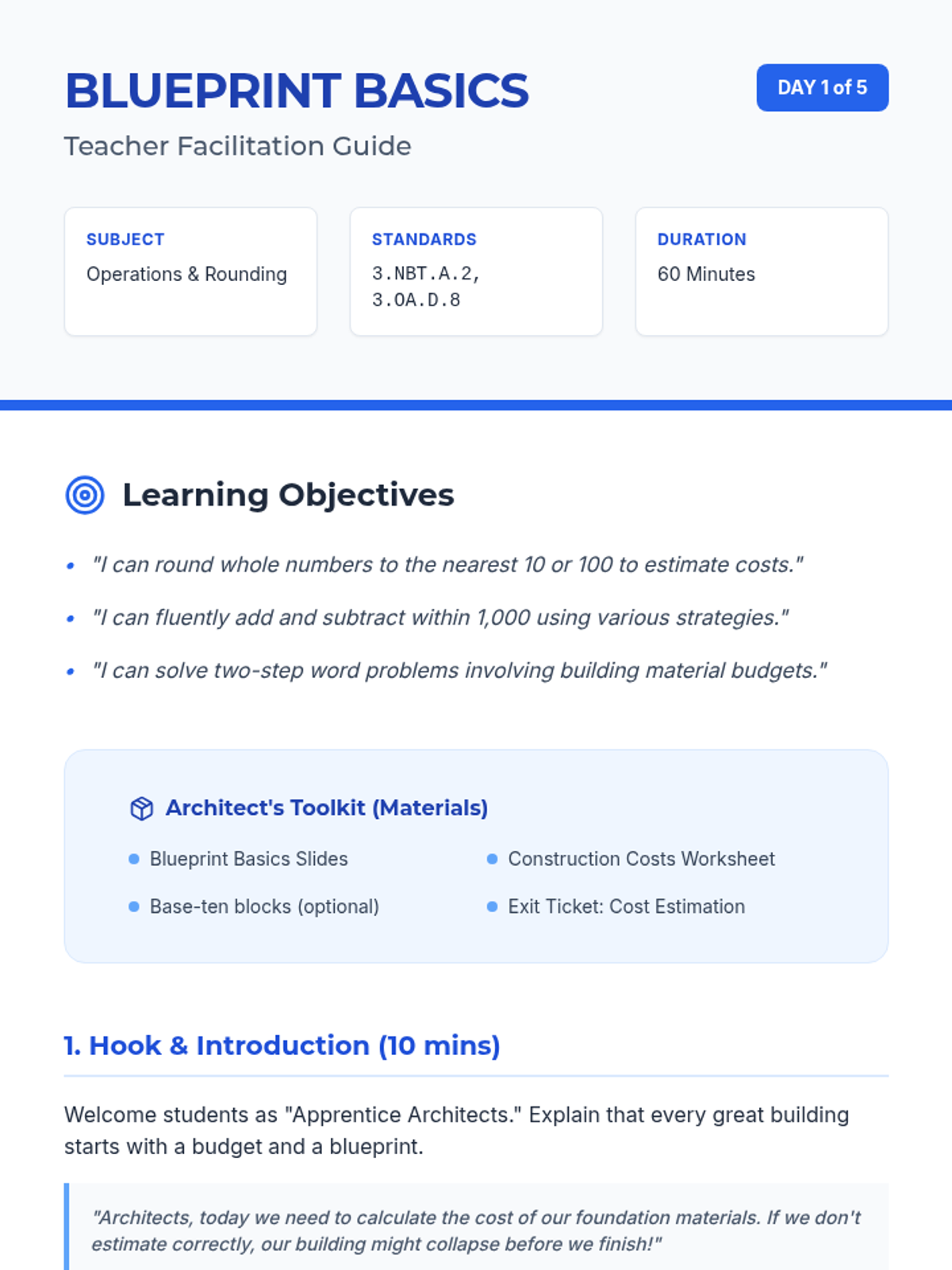
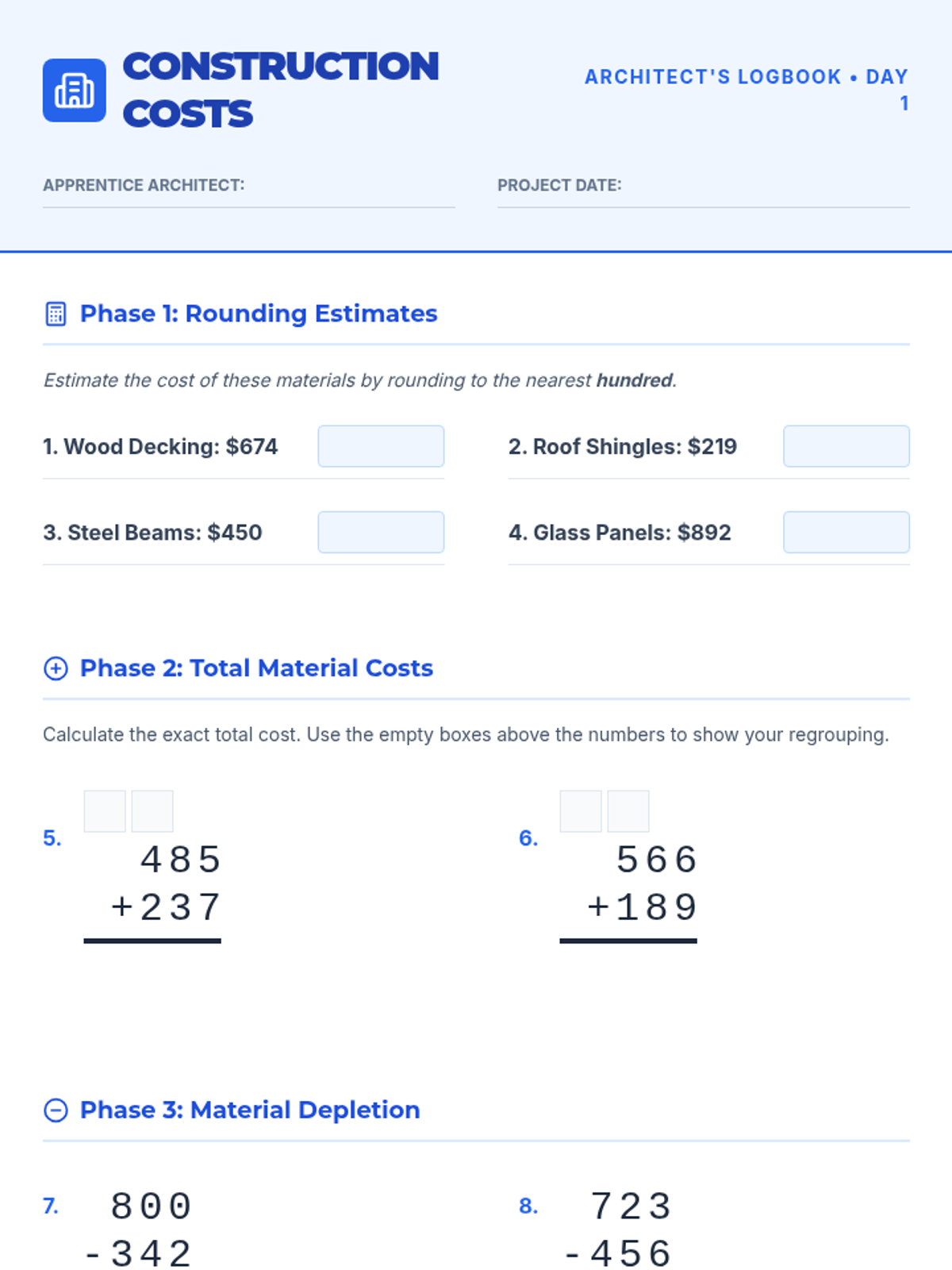
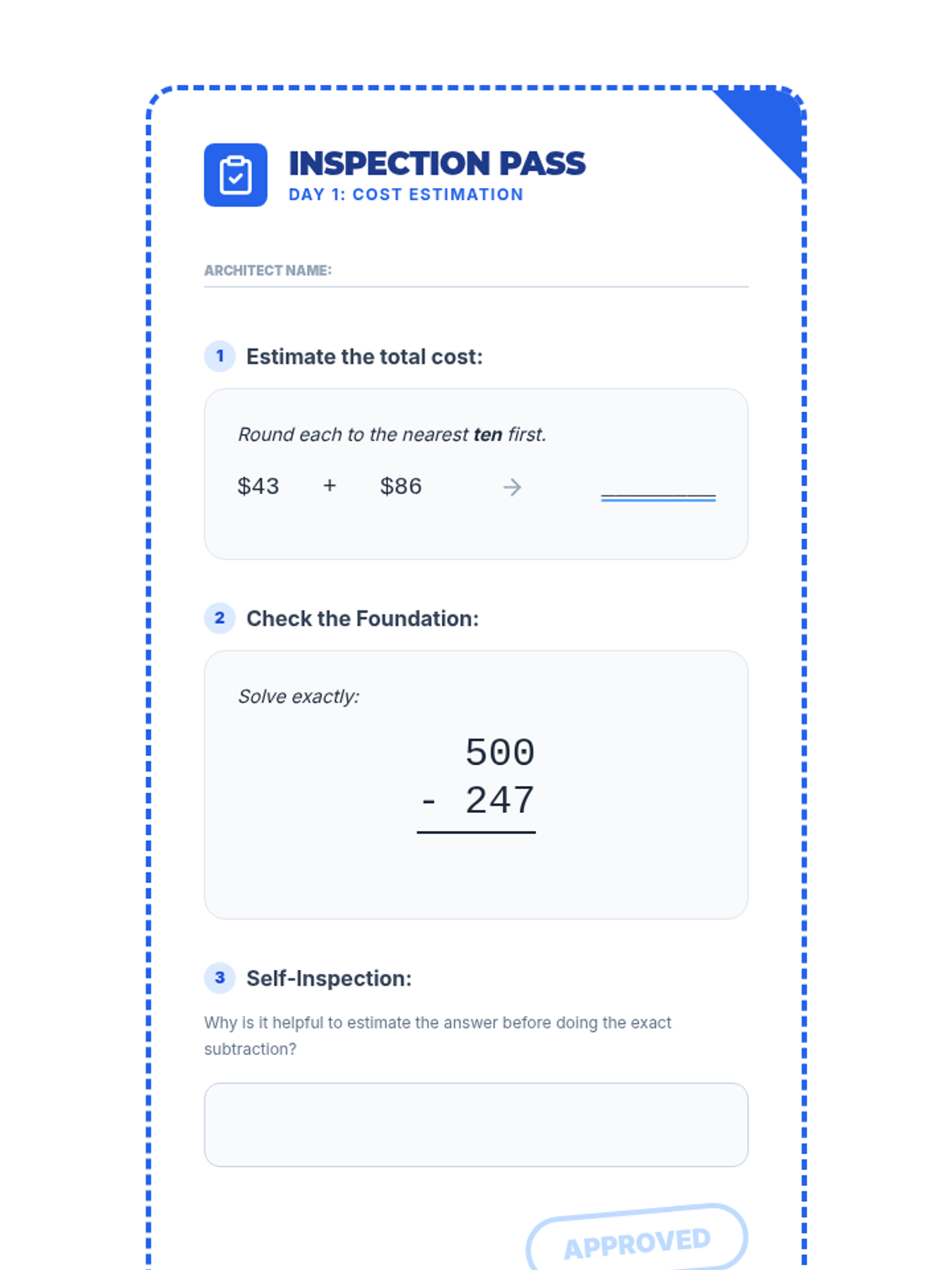
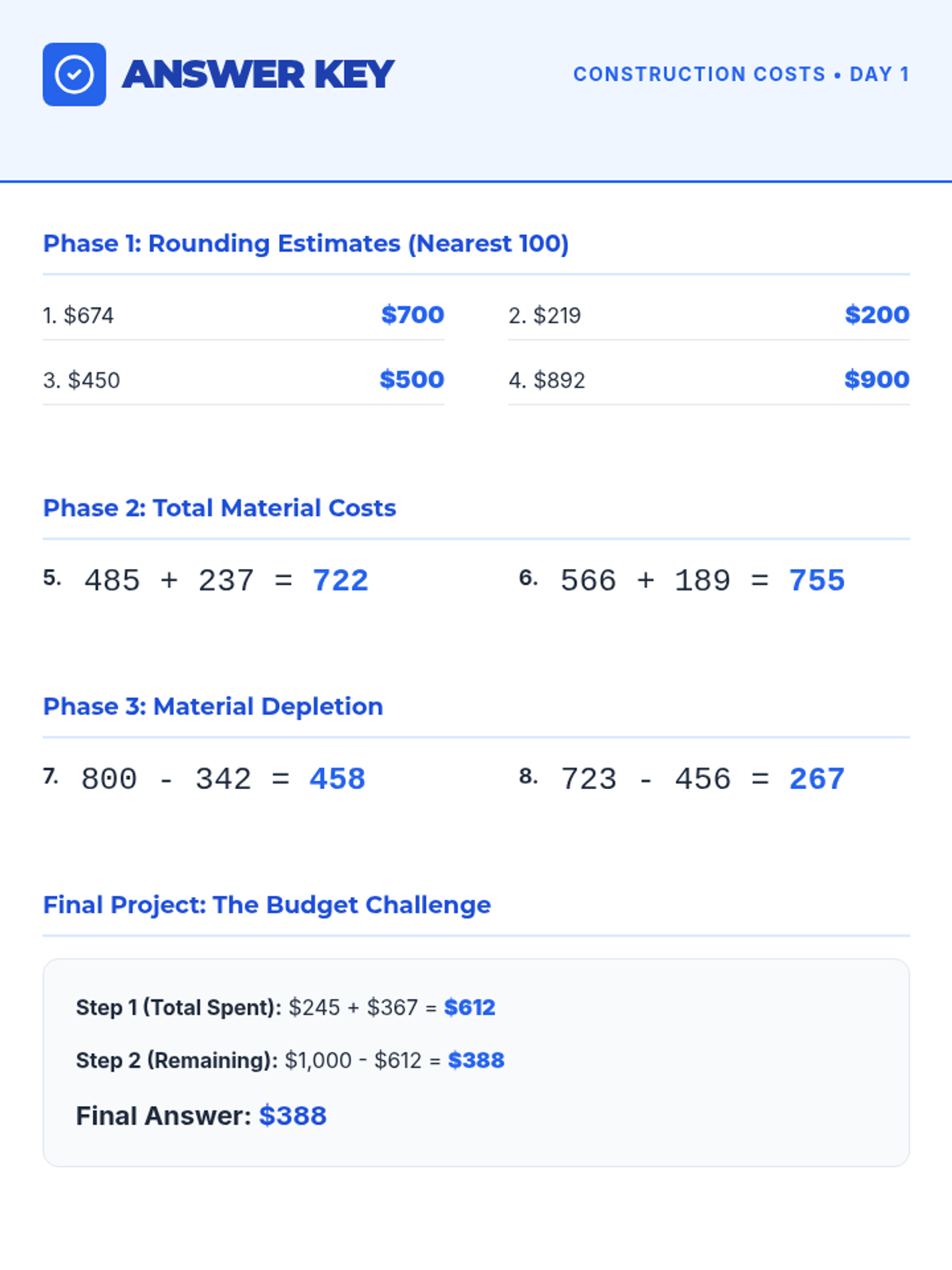
Focuses on multi-digit addition and subtraction within 1,000, rounding to estimate, and solving two-step word problems in the context of material costs.
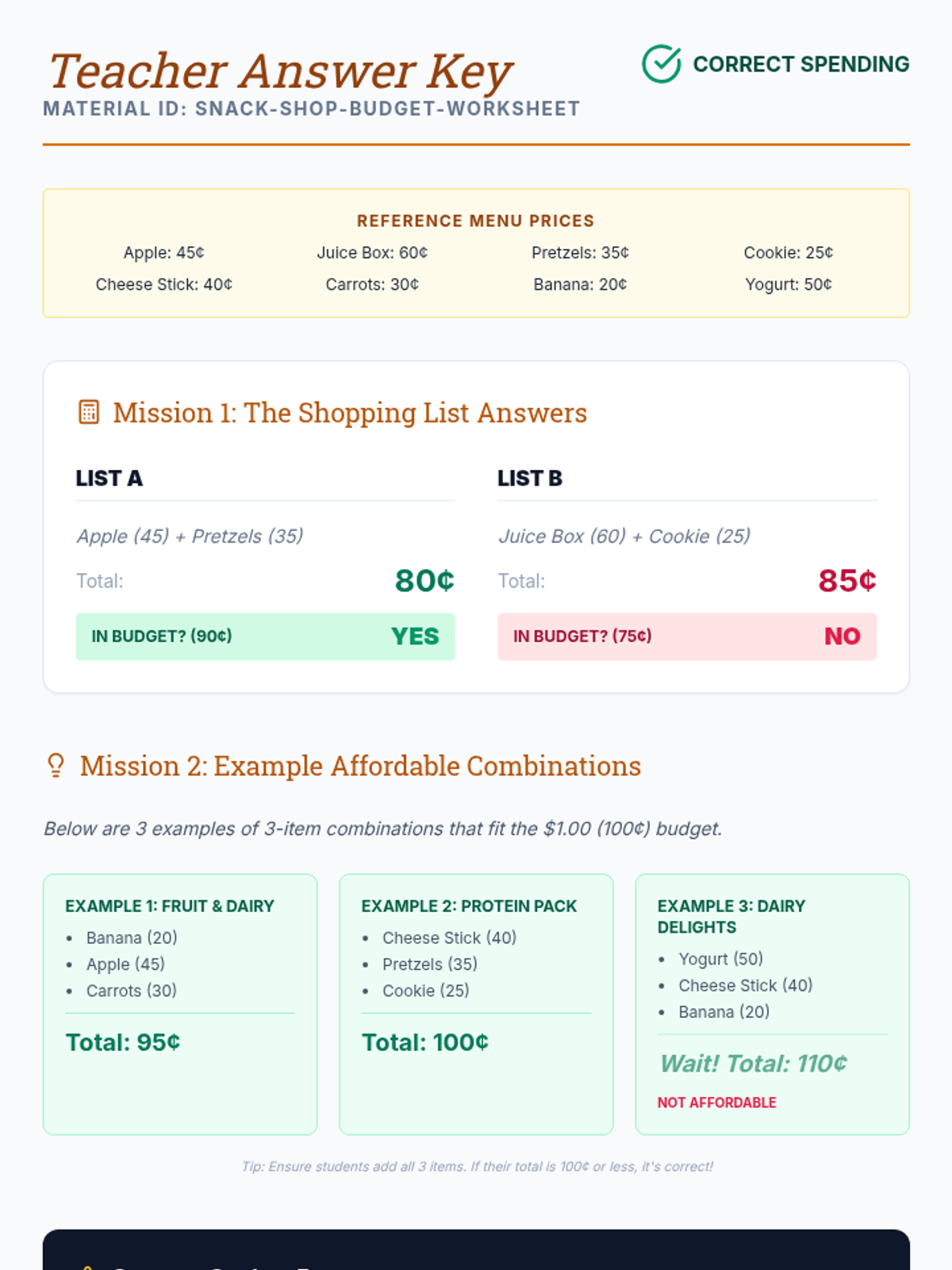
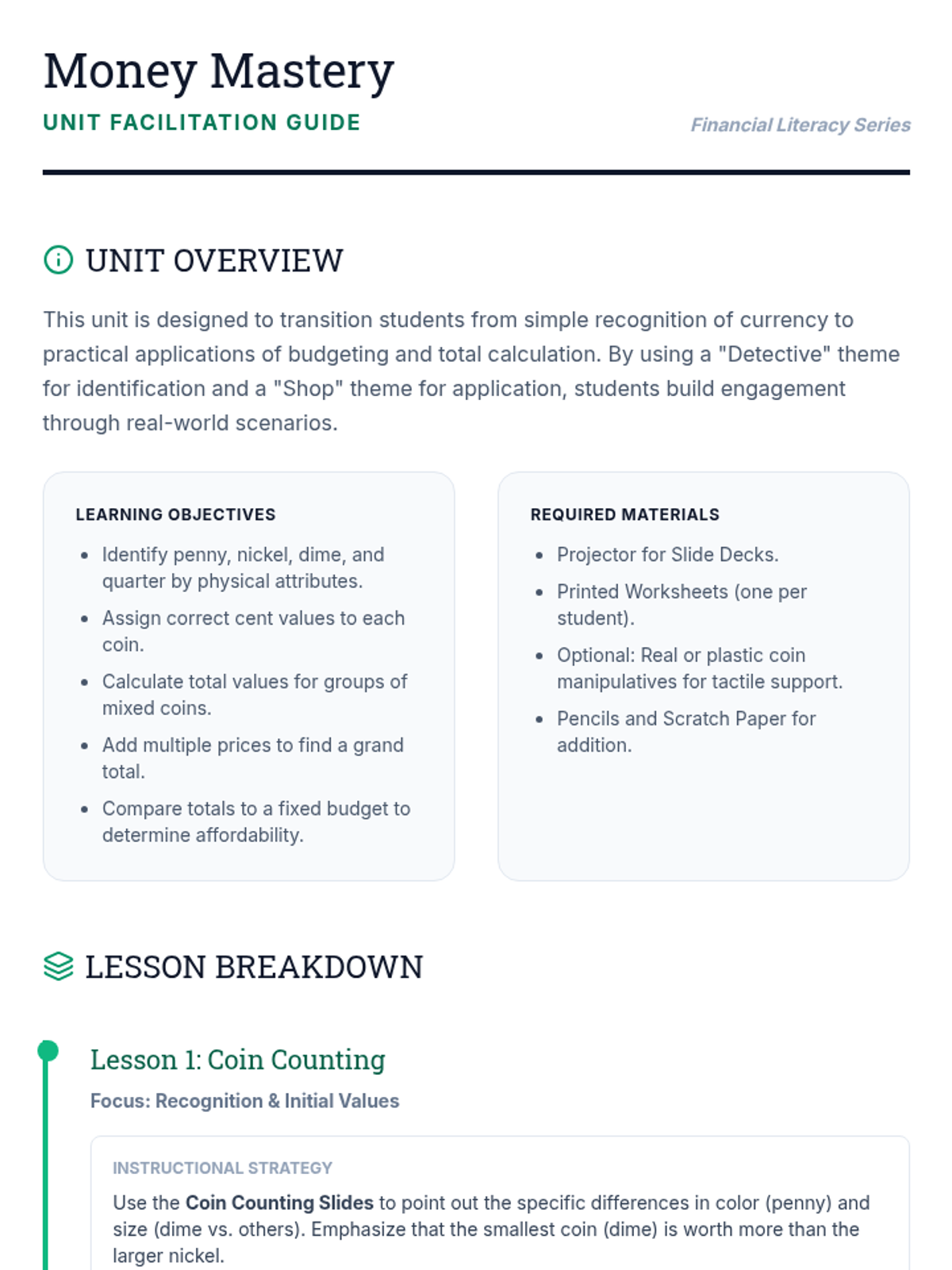
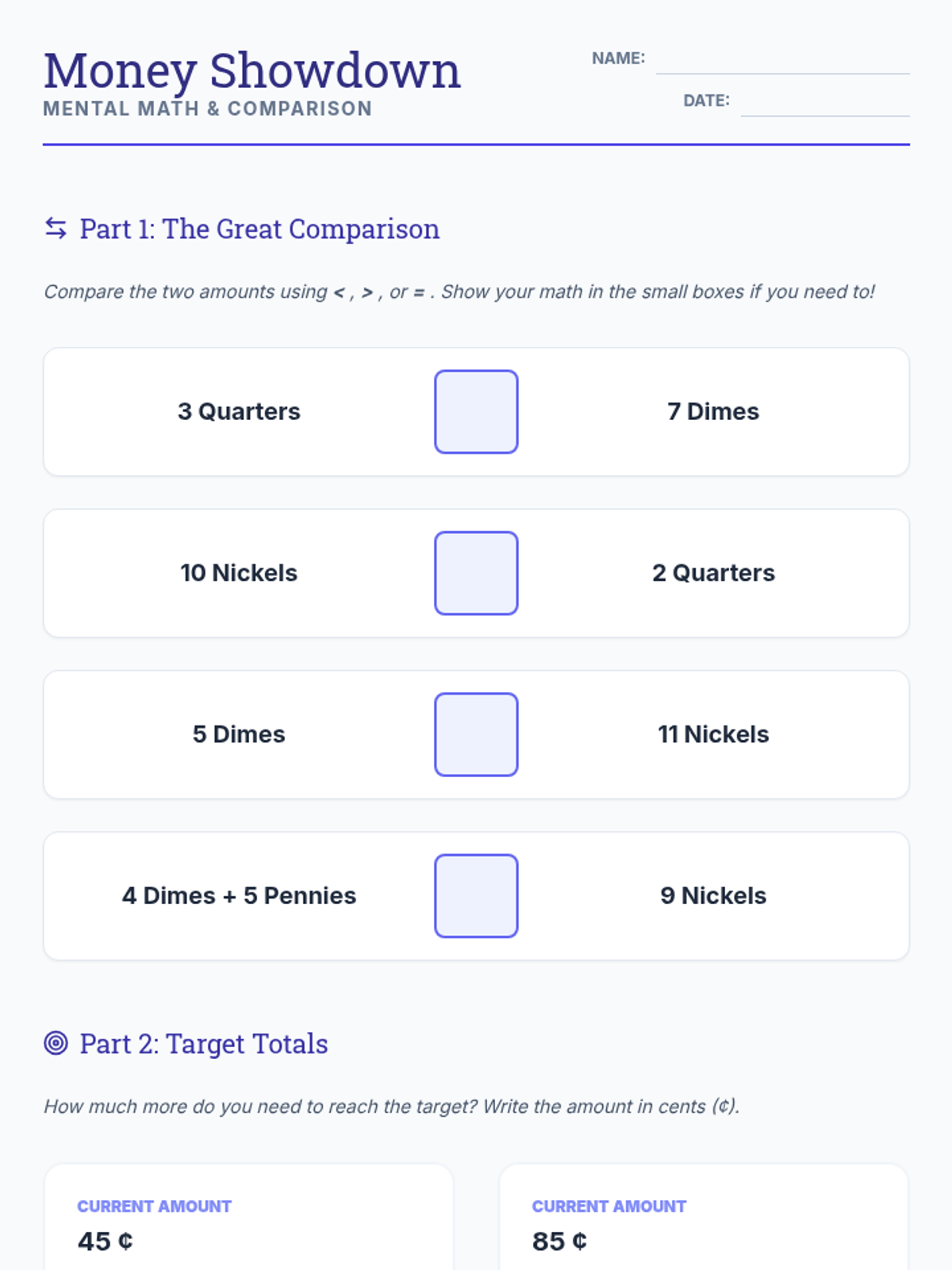
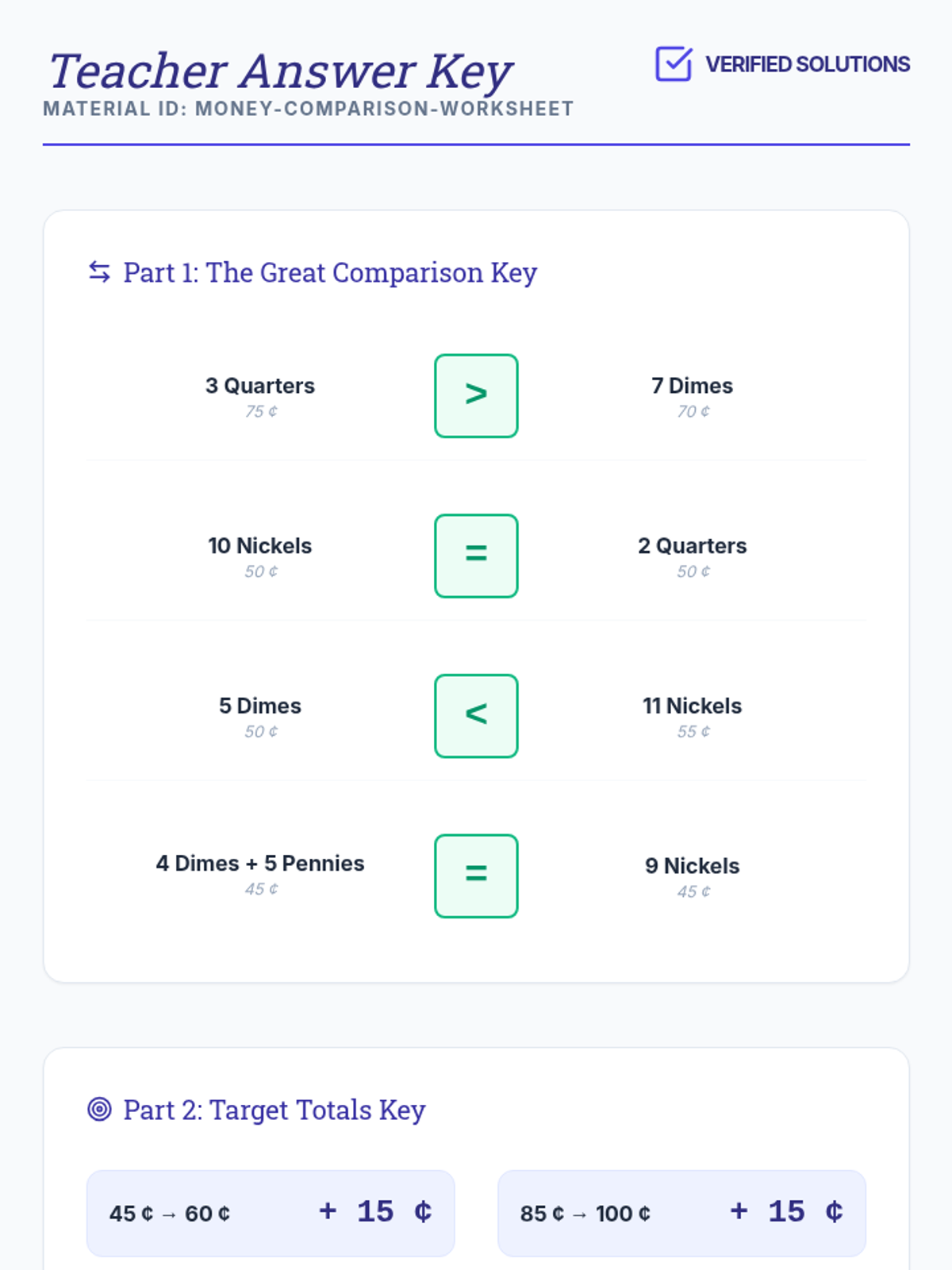
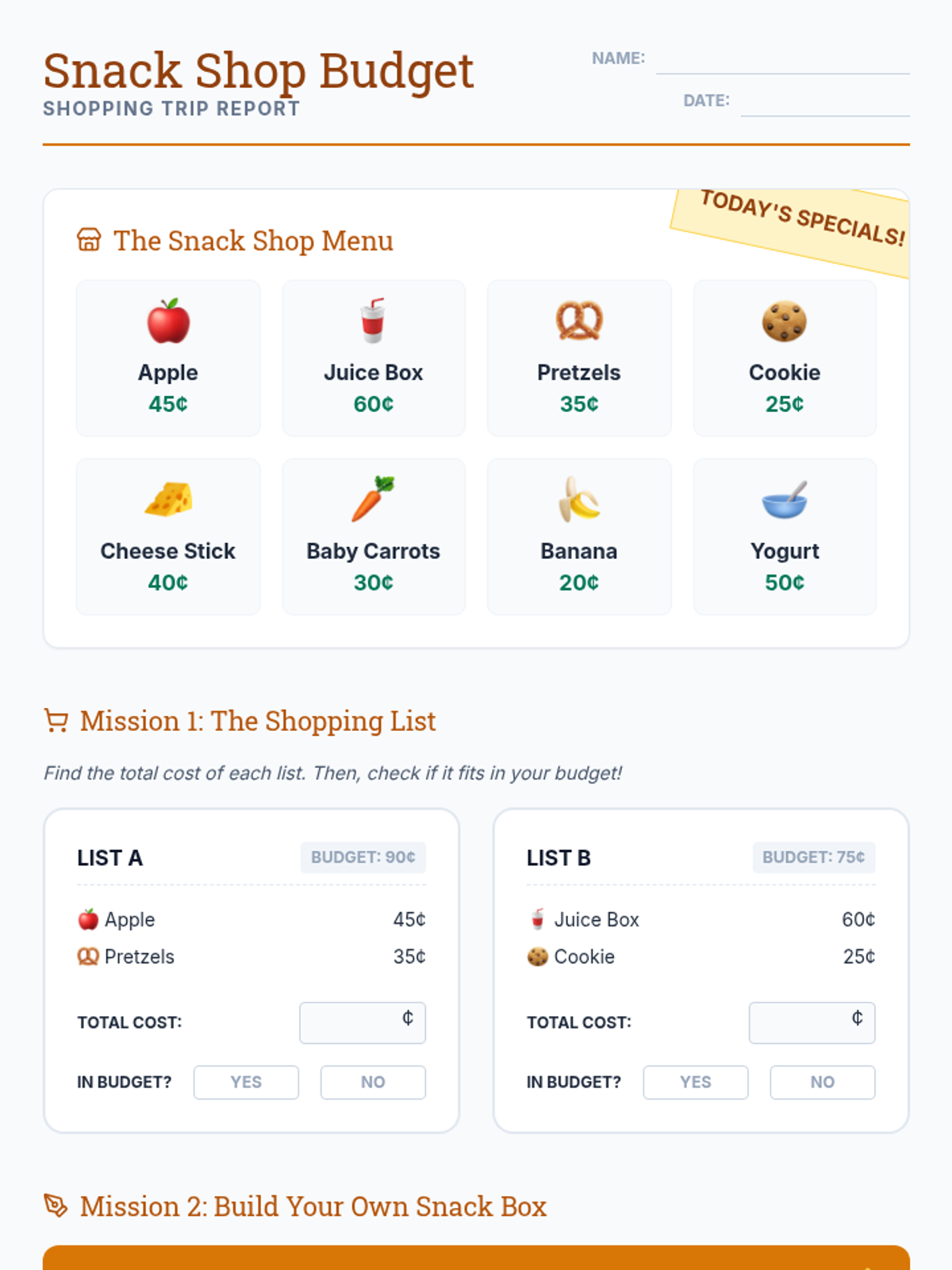
This lesson teaches students how to calculate total costs of multiple items and make spending decisions based on a fixed budget.
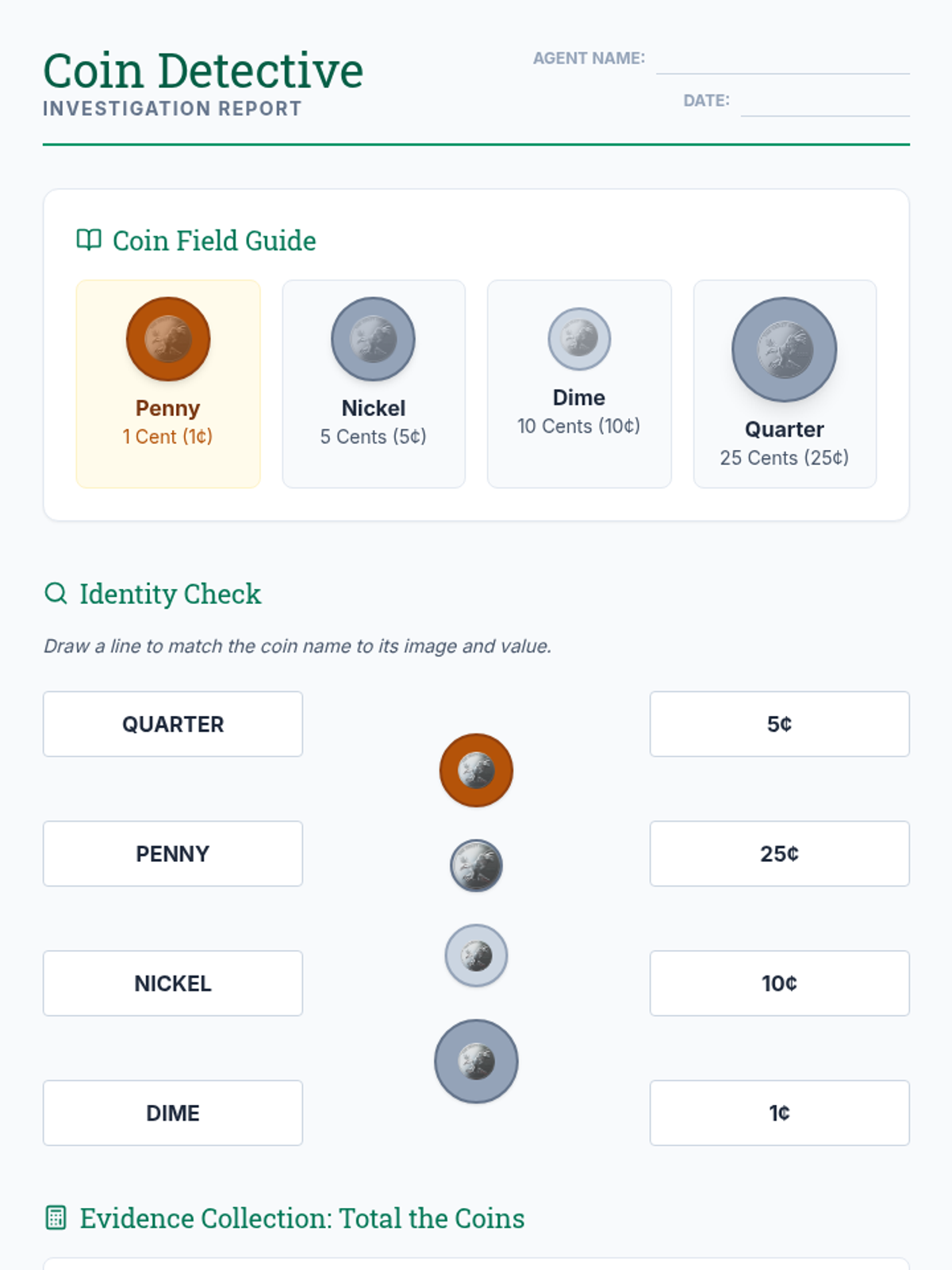
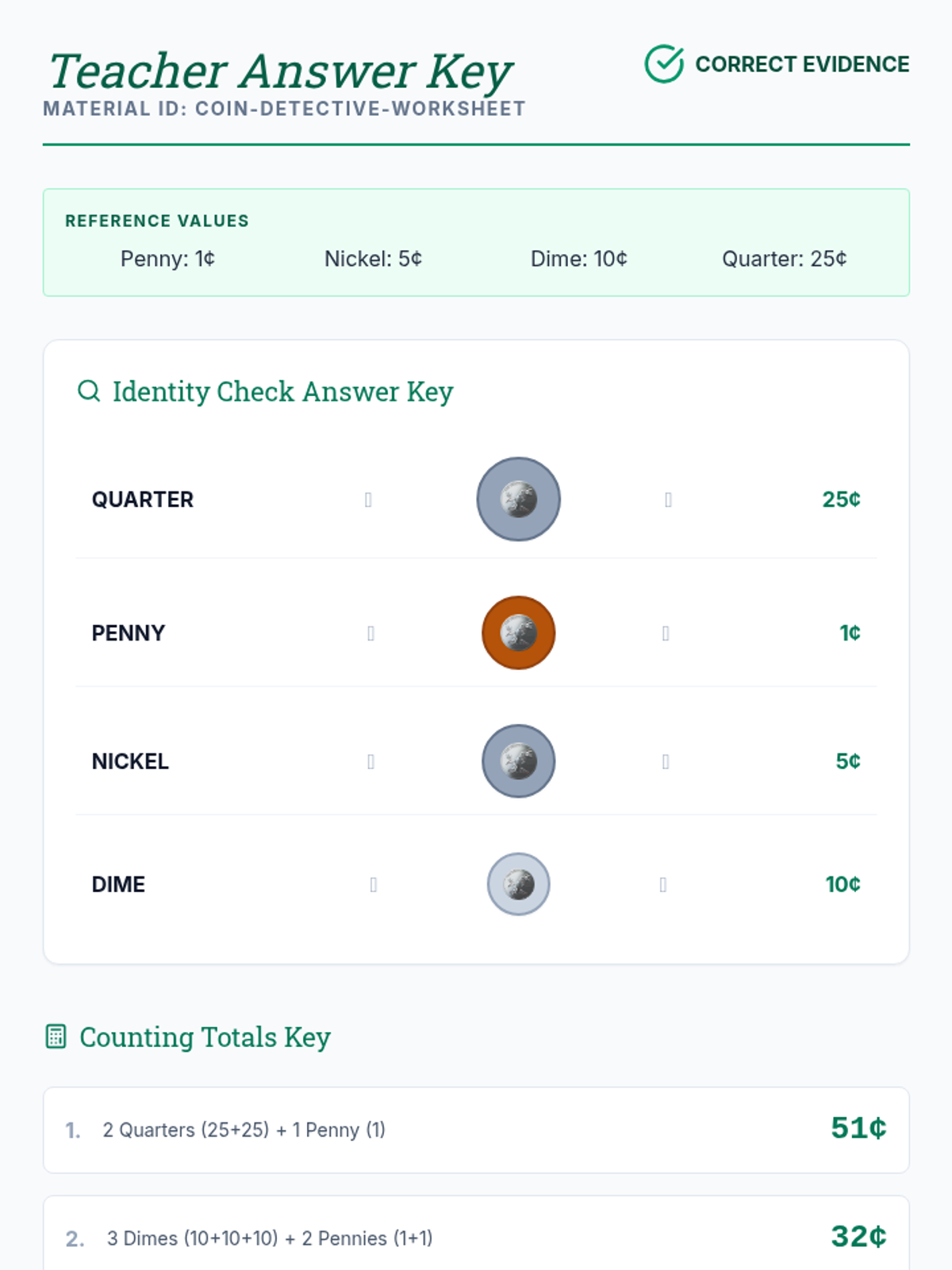
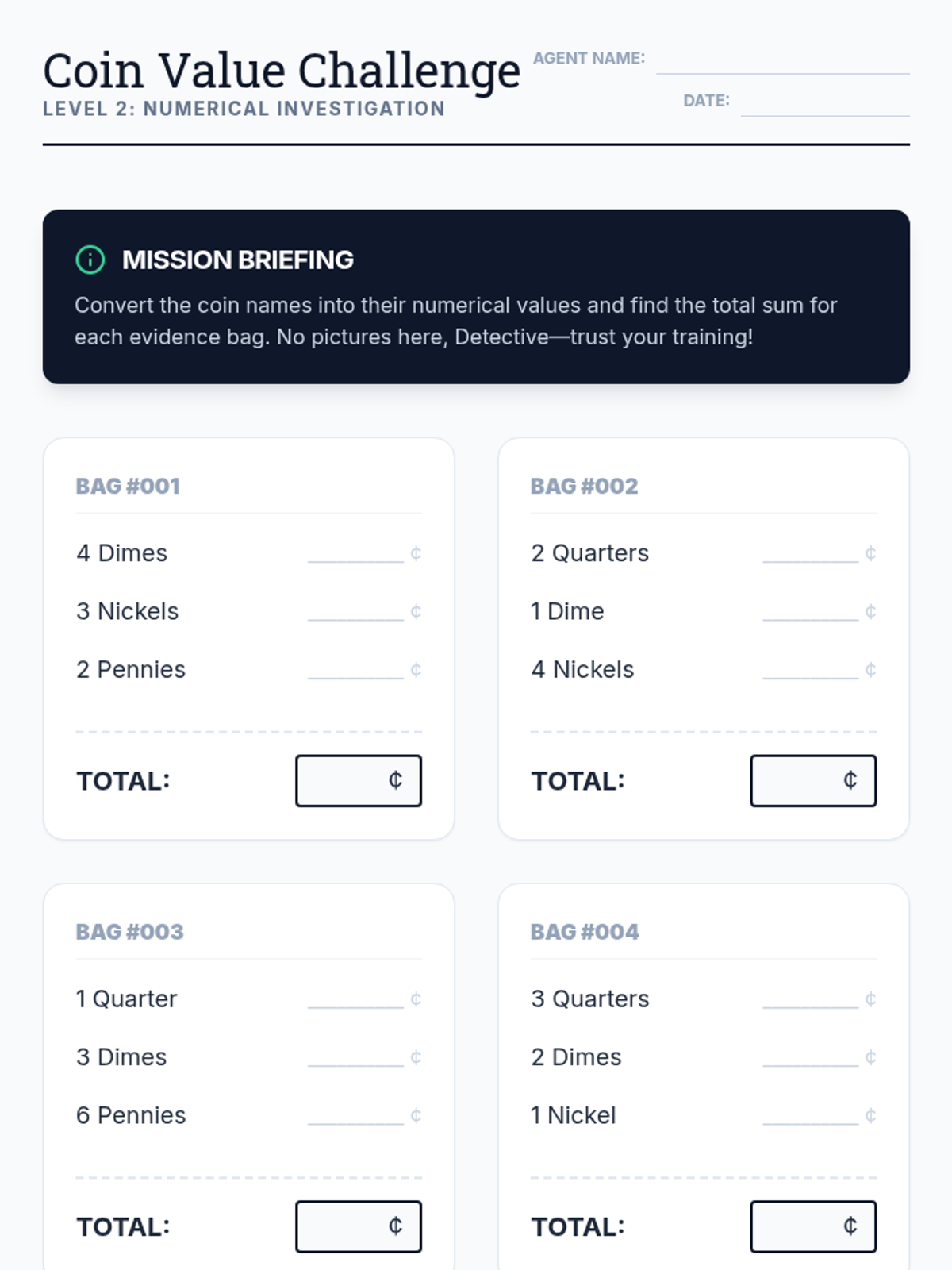
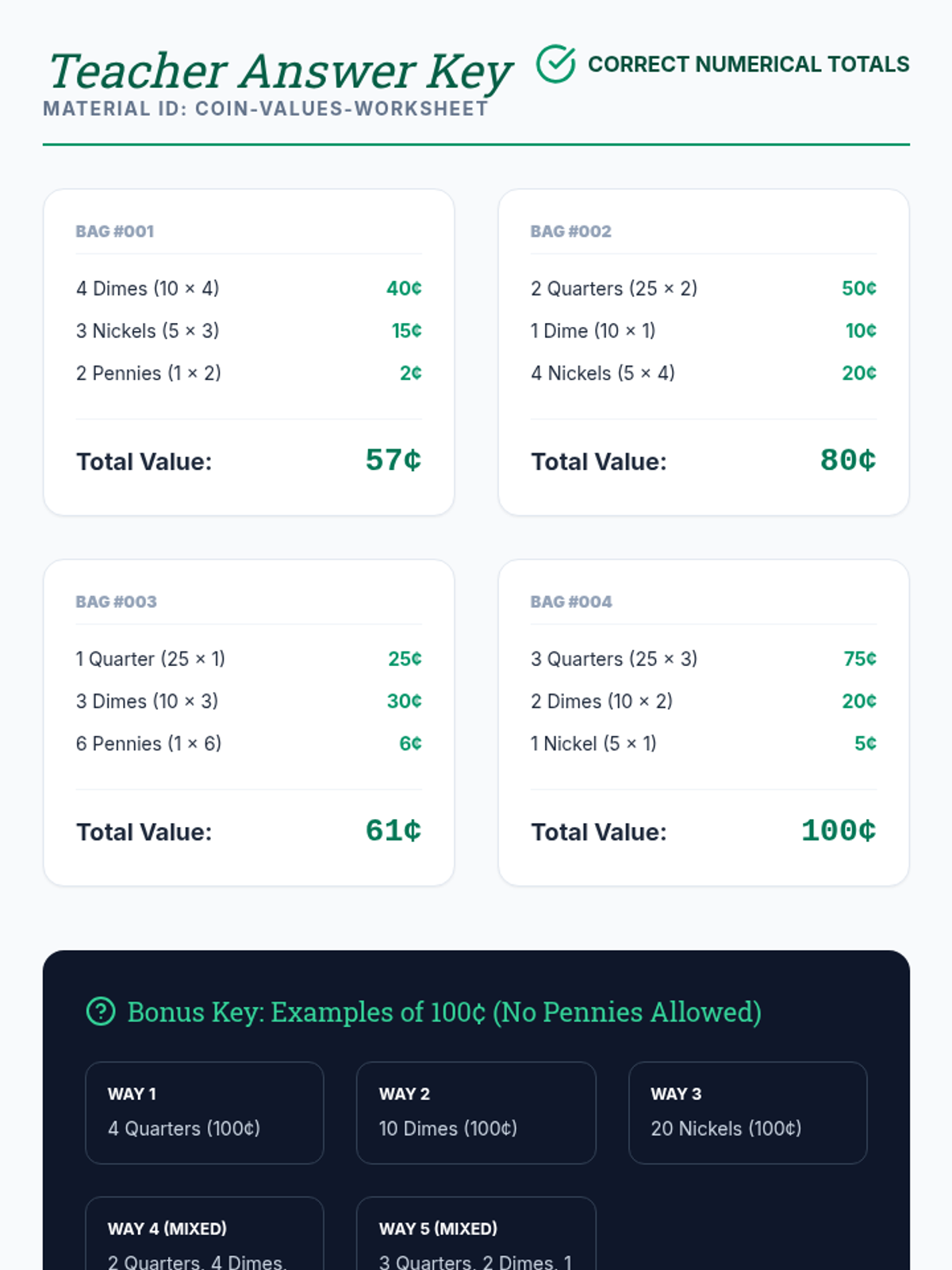
This lesson focuses on identifying US coins (penny, nickel, dime, quarter) and their respective values through visual recognition and matching.
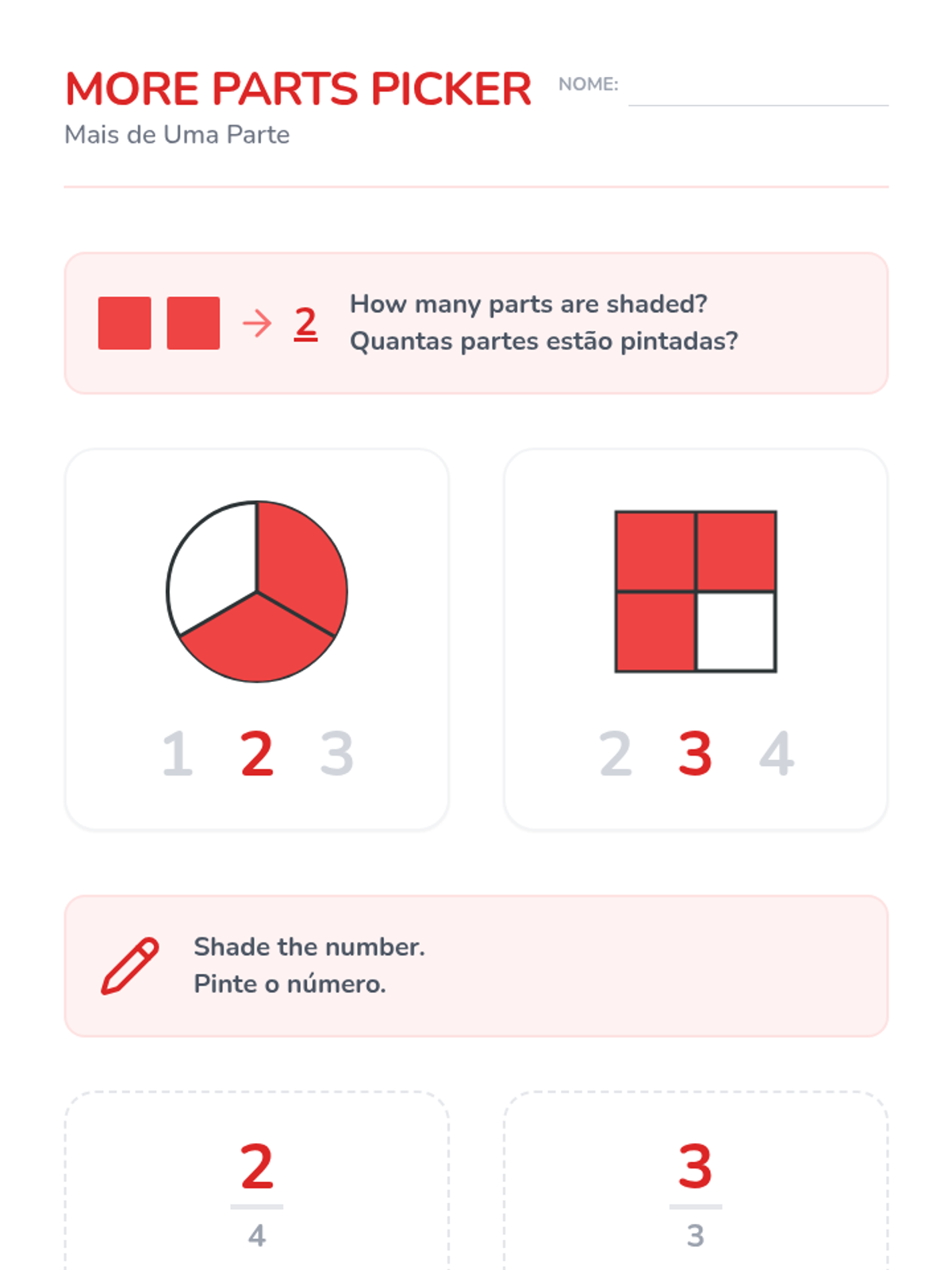
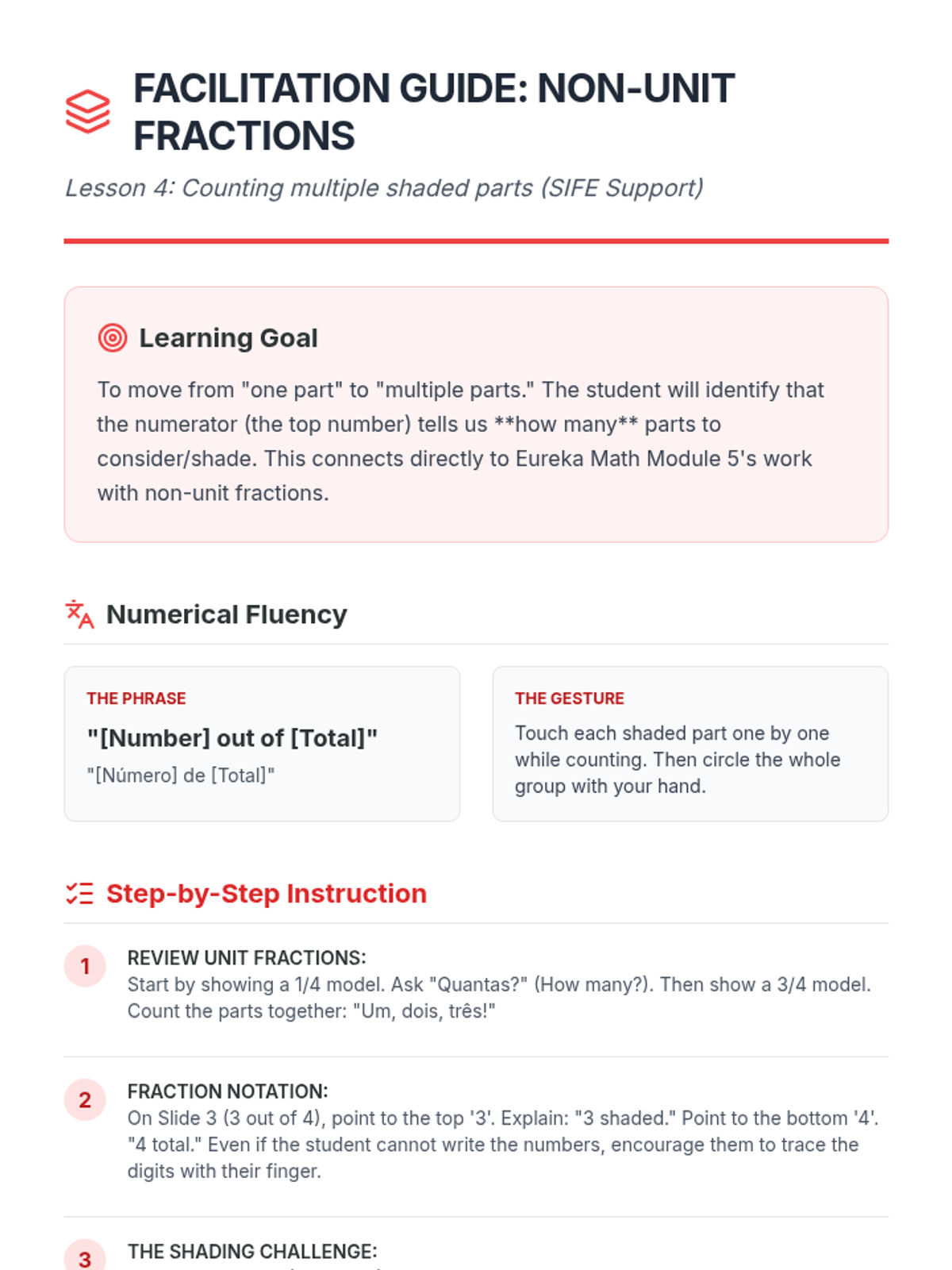
Introduces non-unit fractions by counting multiple shaded parts (e.g., 2 out of 3, 3 out of 4). Focuses on the verbal transition from "one part" to "many parts" while maintaining visual consistency.