A sophisticated phonics lesson designed for high schoolers, focusing on multisyllabic decoding, advanced vowel teams, and academic morphology using a 'Linguistic Lab' theme.
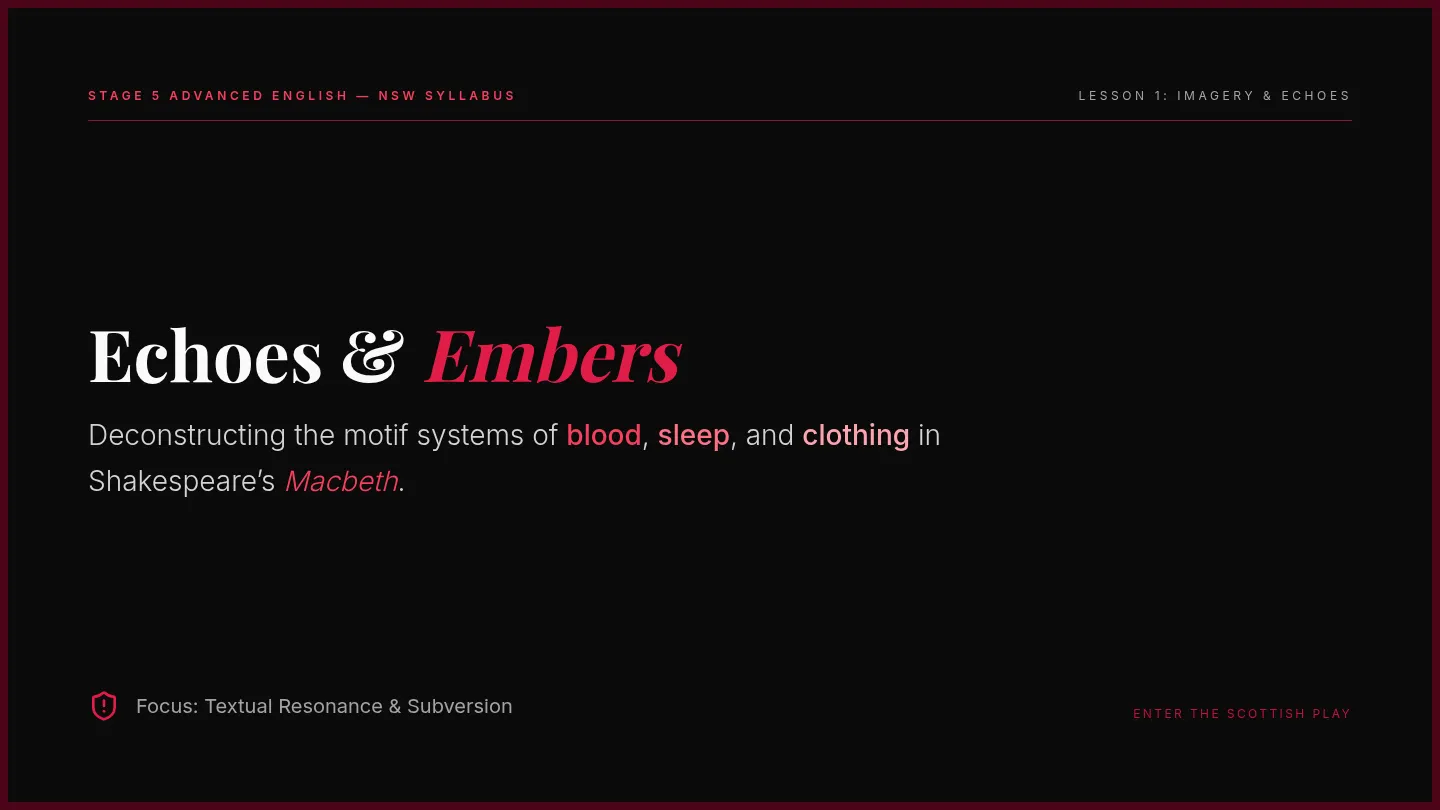
A high-rigour Stage 5 English unit for advanced Year 9 students in NSW. It explores Shakespeare's Macbeth through complex motif systems, psychological disintegration, and tragic subversion, culminating in creative writing and a formal Socratic seminar.
An intensive intervention lesson for the TSIA2 Writing section, featuring guided modeling of 15 key questions and a 15-question independent practice test. Organized by sub-skills with quick-reference strategy sheets for tutoring binders.
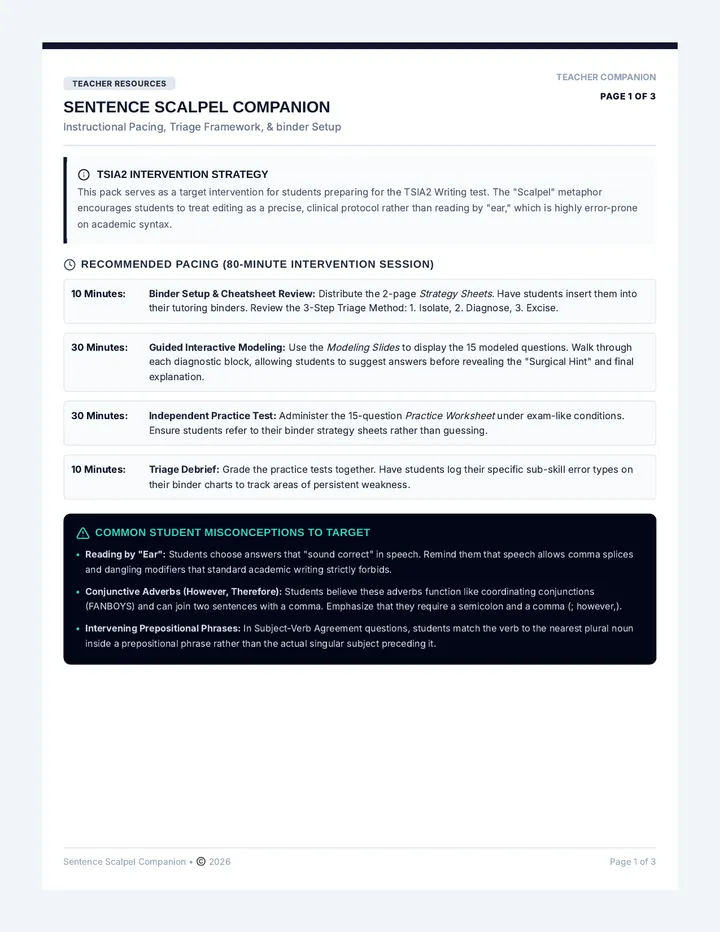
A comprehensive 3-page teacher resource containing facilitation guides, lesson delivery tips, common student misconceptions, and complete answer keys with step-by-step explanations for both the modeled slides and the independent practice test.
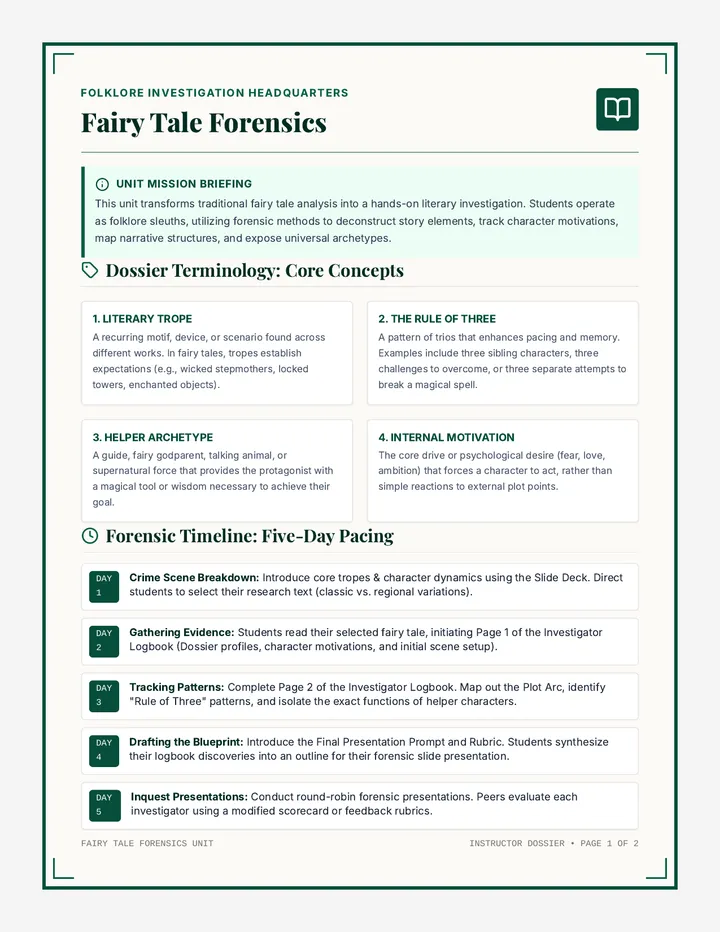
A comprehensive literary research unit designed to guide students through a structural and character analysis of classic and regional fairy tales. Students assume the role of folklore investigators, tracking standard tropes, character motivations, helper archetypes, and plot designs, culminating in an analytical presentation.
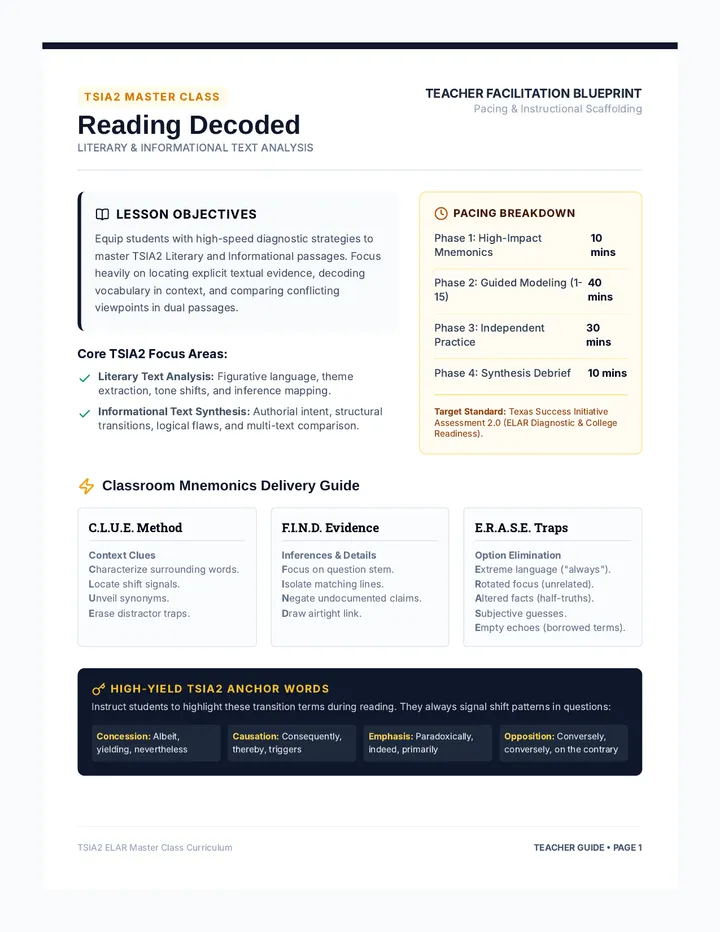
A high-impact TSIA2 Reading preparation lesson designed to master Literary and Informational Text Analysis. Includes a master teacher guide, an in-depth student strategies and guided practice workbook (15 questions), an independent practice set (15 questions), and an exhaustive answer key with step-by-step explanations.
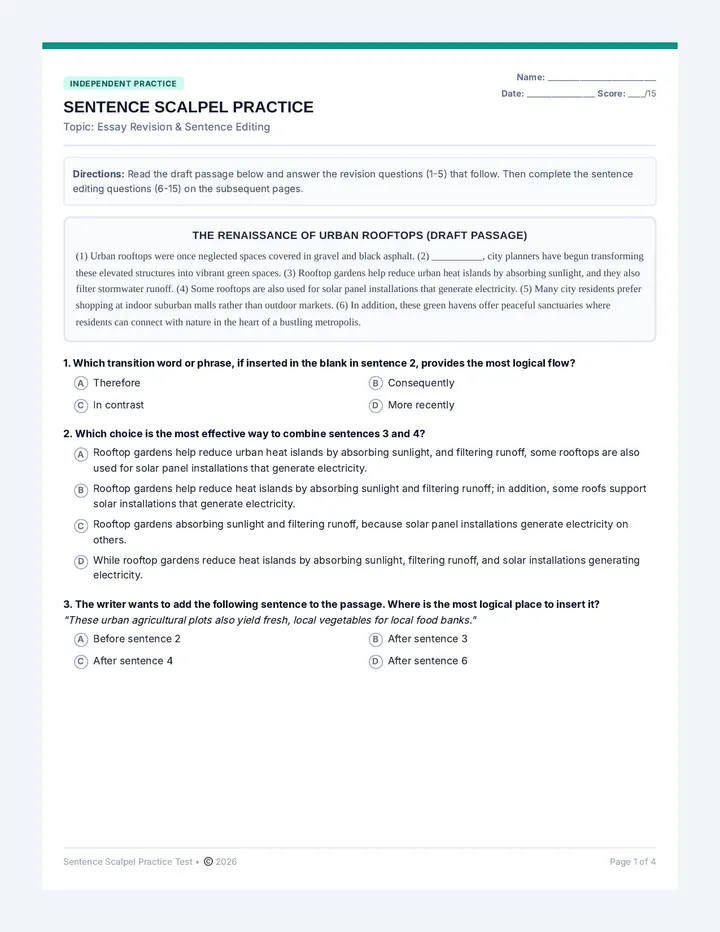
A printable, student-facing 15-question TSIA2 independent practice test containing 5 passage-based essay revision questions and 10 standalone sentence revision questions, designed for tutoring binders.
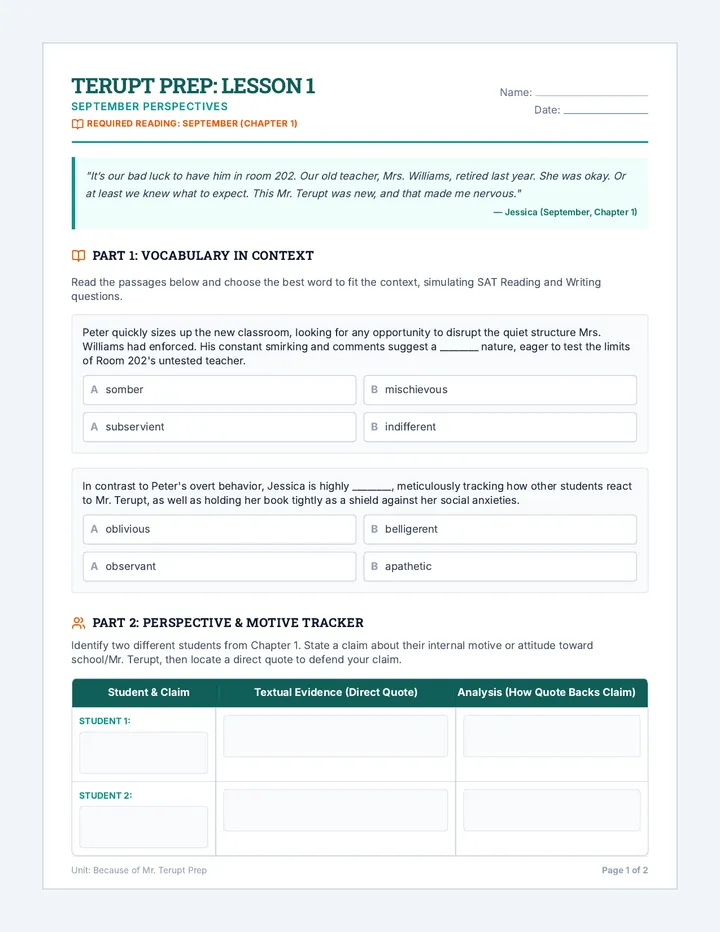
A five-lesson literary analysis and SAT prep sequence based on Rob Buyea's 'Because of Mr. Terupt'. Students practice textual evidence analysis and vocabulary-in-context skills through character-driven writing prompts.
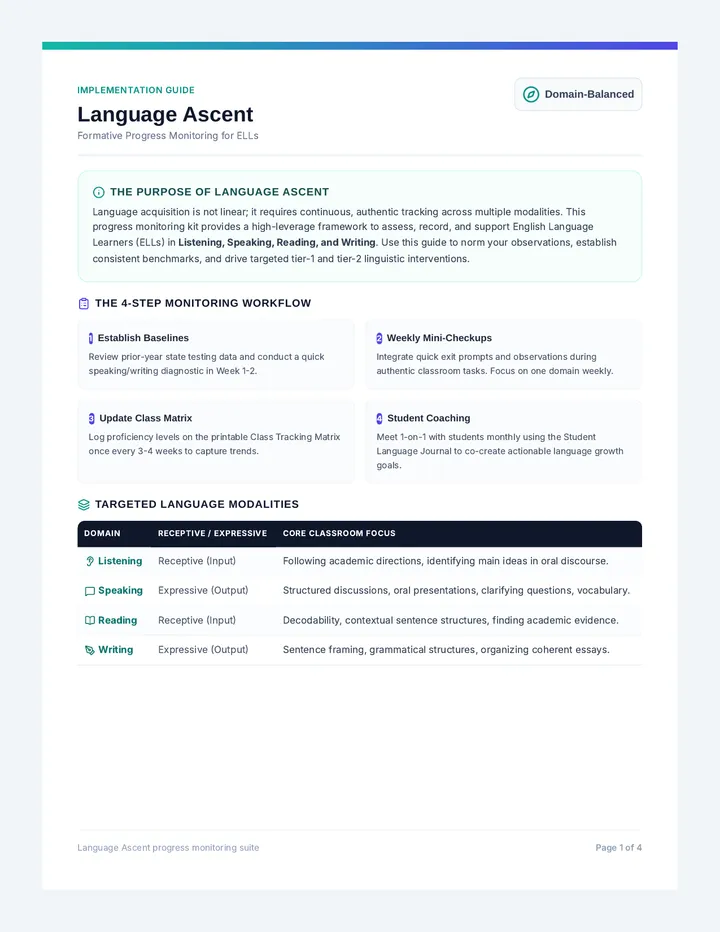
A comprehensive progress monitoring kit for English Language Learners (ELLs) across all four core language domains. Includes step-by-step teacher instructions, a printable class tracking matrix, a student self-monitoring journal, and quick formative assessment rubrics.
Interactive slide deck containing 15 modeled TSIA2 writing questions, structured by sub-skills with clear diagnostic focuses, professional annotations, and step-by-step surgical strategies.
A comprehensive three-part unit on Shakespeare's Othello, exploring Iago's psychological manipulation, the green-eyed monster of jealousy, and the tragic collapse of Othello. This unit integrates slide presentations, printable close-reading worksheets, graphic organizers, and a rigorous final assessment and rubric pack.
An in-depth writing lesson exploring Caitlin Alifirenka and Martin Ganda's memoir, 'I Will Always Write Back', focusing on their lives, structural barriers, and deepening friendship up to 2002. Students analyze dual perspectives and write a structured, empathetic reflection.
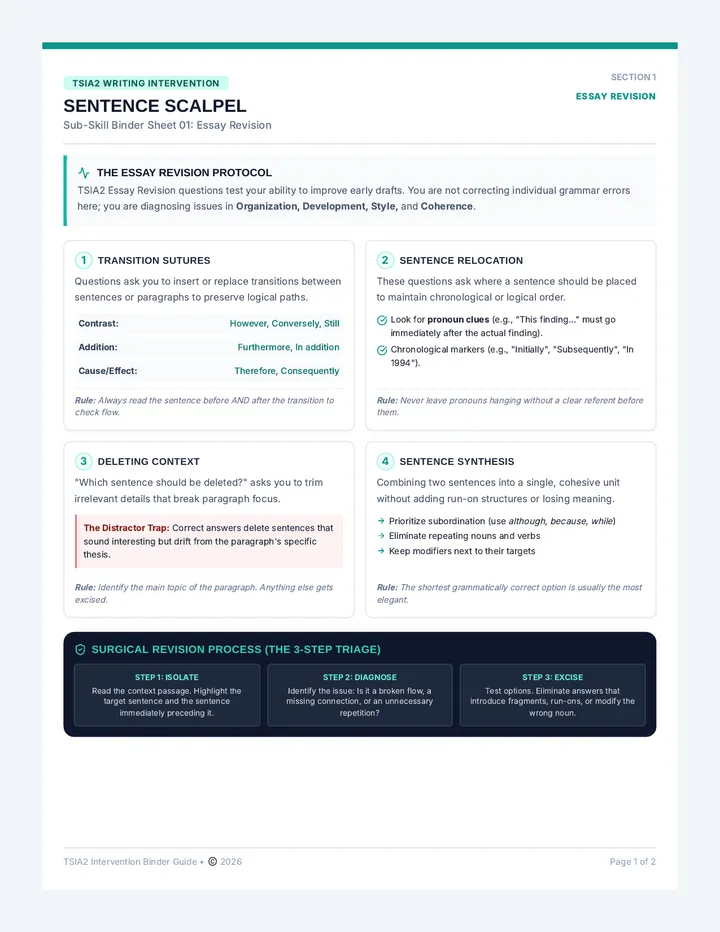
Quick-reference strategy sheets for tutoring binders, covering the major TSIA2 Writing sub-skills (Essay Revision and Sentence Revision/Editing) with clear, actionable rules, diagrams, and diagnostic triage steps.