Students explore the power of empathy through creative writing, learning to weave acts of kindness into character development and plot structure to create meaningful narratives.
A mini-lesson for a 6th-grade resource room ELA class focusing on Auggie's character traits and his development throughout the first month of school in the novel 'Wonder'. This lesson uses a space-exploration theme and provides high levels of scaffolding.
A mini-lesson for 6th grade resource room students focusing on the theme of kindness and character perspective in the novel Wonder, specifically centered around Mr. Browne's first precept and the transition into middle school.
This lesson introduces students to Manor Farm through the first chapter of Animal Farm, focusing on Old Major's rhetorical speech. Students will master high-level vocabulary, practice oral reading fluency through dramatic speech excerpts, and begin their reading of the first 10 pages.
An 8th-grade analysis lesson where students evaluate the benefits and drawbacks of mandatory homework versus extra credit using visual prompts and structured evidence.
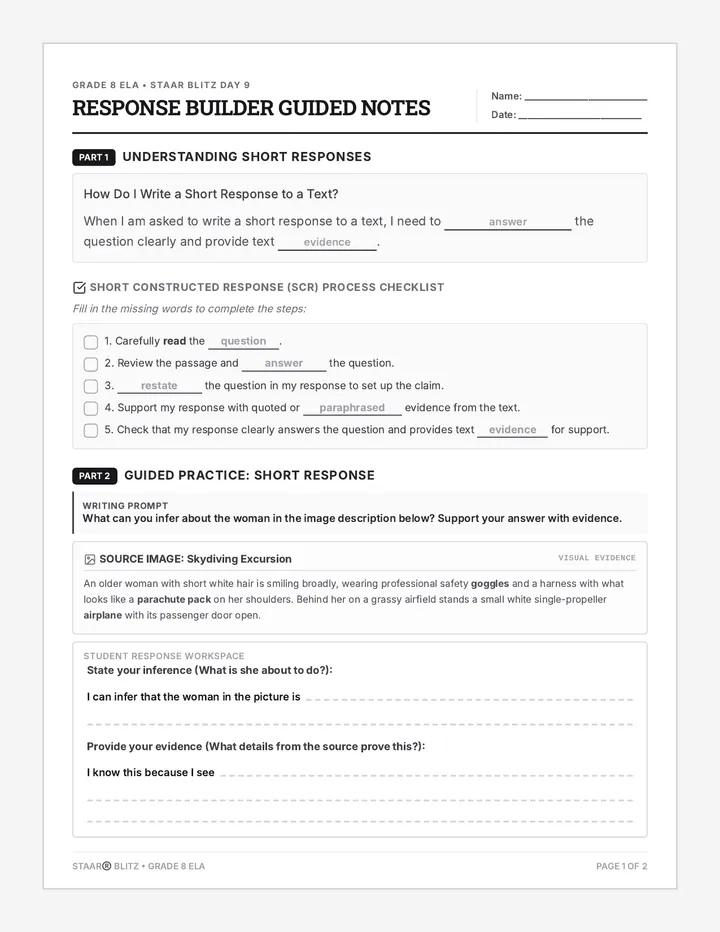
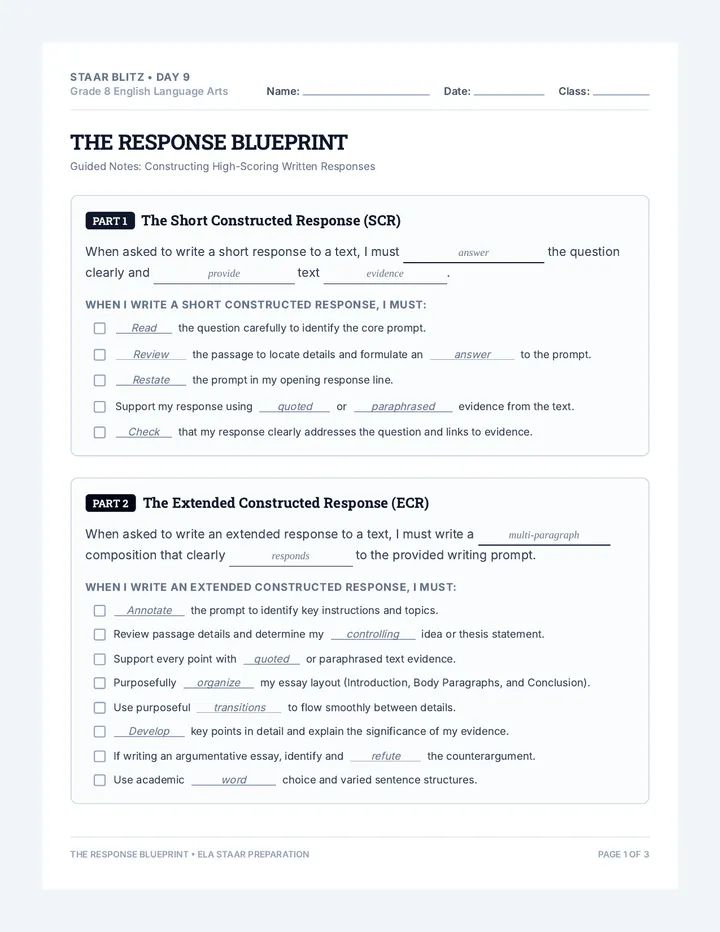
This lesson introduces 8th-grade students to the Claim-Evidence-Analysis (CEA) writing framework, focusing on how to construct objective arguments and effectively connect evidence to claims.
A collection of reflective and creative activities for Memorial Day, including a poppy craft writing activity, a gratitude letter template, and acrostic poems to honor fallen heroes.
A comprehensive lesson on analyzing poetry using the TPCASTT method, featuring a deep dive into Robert Frost's 'The Road Not Taken' and a gallery walk of diverse poems.
A comprehensive lesson on demonstrative pronouns and adjectives (this, that, these, those) themed around a museum gallery. Students learn to distinguish between near and far, singular and plural, and the difference between demonstrative pronouns and adjectives.
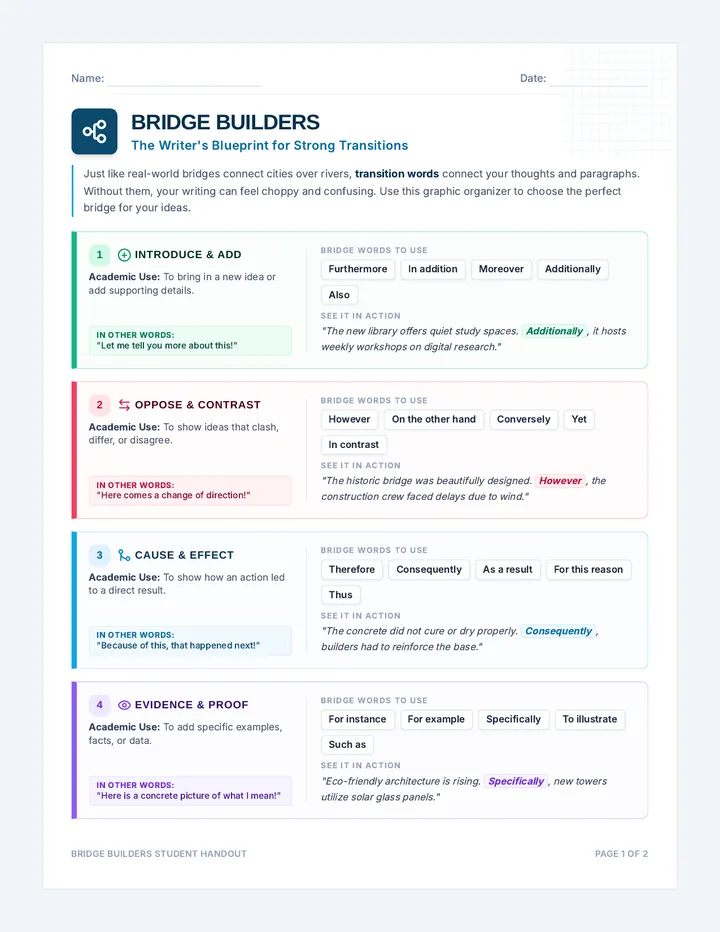
A lesson on identifying and using common transition words to create cohesion in writing. Students will categorize transitions by purpose (Addition, Contrast, Cause/Effect, Time) and use them to link ideas.
A comprehensive lesson on identifying and using main verbs and primary auxiliary verbs (be, do, have) in sentences. Includes a structured lesson plan, a practice handout, and a detailed answer key with monitoring tools.
A lesson exploring the encounter between Odysseus and Polyphemus, focusing on character traits and cleverness through differentiated readings and assessments.
A lesson focusing on identifying and analyzing the five stages of plot structure using the novel Al Capone Does My Shirts as a primary example. Students explore the arc of Moose Flanagan's journey on Alcatraz.
A collection of versatile graphic organizers designed to help students analyze fiction and nonfiction picture books. Each organizer focuses on a specific reading skill, providing a structured framework for student response.
A focused practice session for 6th-grade students to sharpen their listening comprehension skills using SBAC-aligned question stems and an engaging mystery about underwater sounds.