Students learn the fundamentals of coordinate grids through a guided drawing activity and creative map-making. They will use rows and columns to design a 'Dream Island' and practice locating landmarks using alphanumeric coordinates.
Final application of fluency through collaborative games and problem-solving scenarios.
Synthesizing strategies to solve mixed multiplication and division problems within 100.
Exploring square numbers (e.g., 5x5, 6x6) through visual patterns and area models.
Discovering the 'ten minus one' pattern and other visual tricks for mastering the 9s.
Applying the distributive property to break apart larger facts into smaller, known chunks (focusing on 3s and 6s).
Using the clock and finger patterns to master 5s and 10s facts through rhythmic counting and visual cues.
Extending doubling strategies to master the 8s facts and building connections to smaller factors.
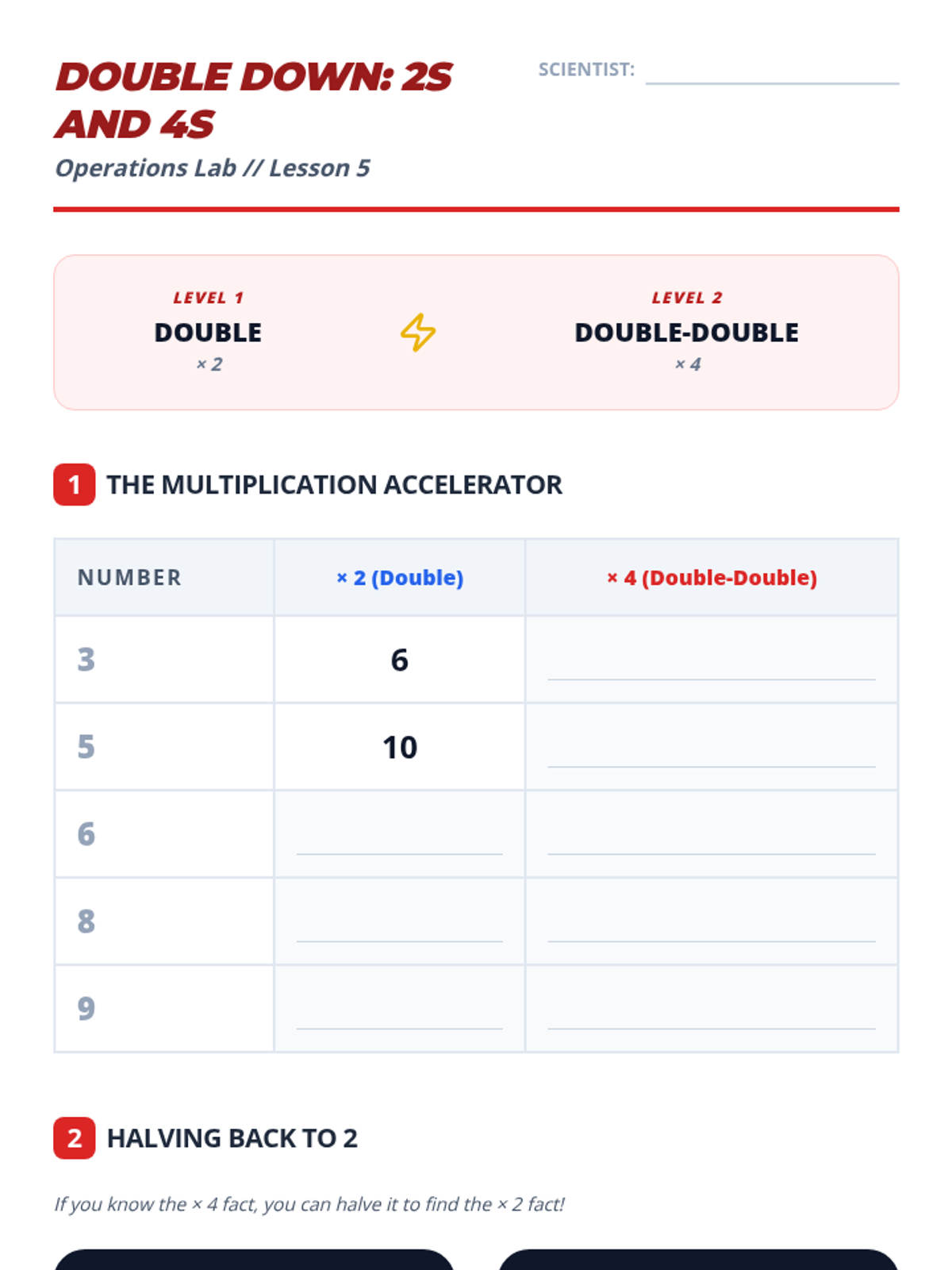
Building fluency with 2s and 4s by using the 'double' and 'double-double' strategy.
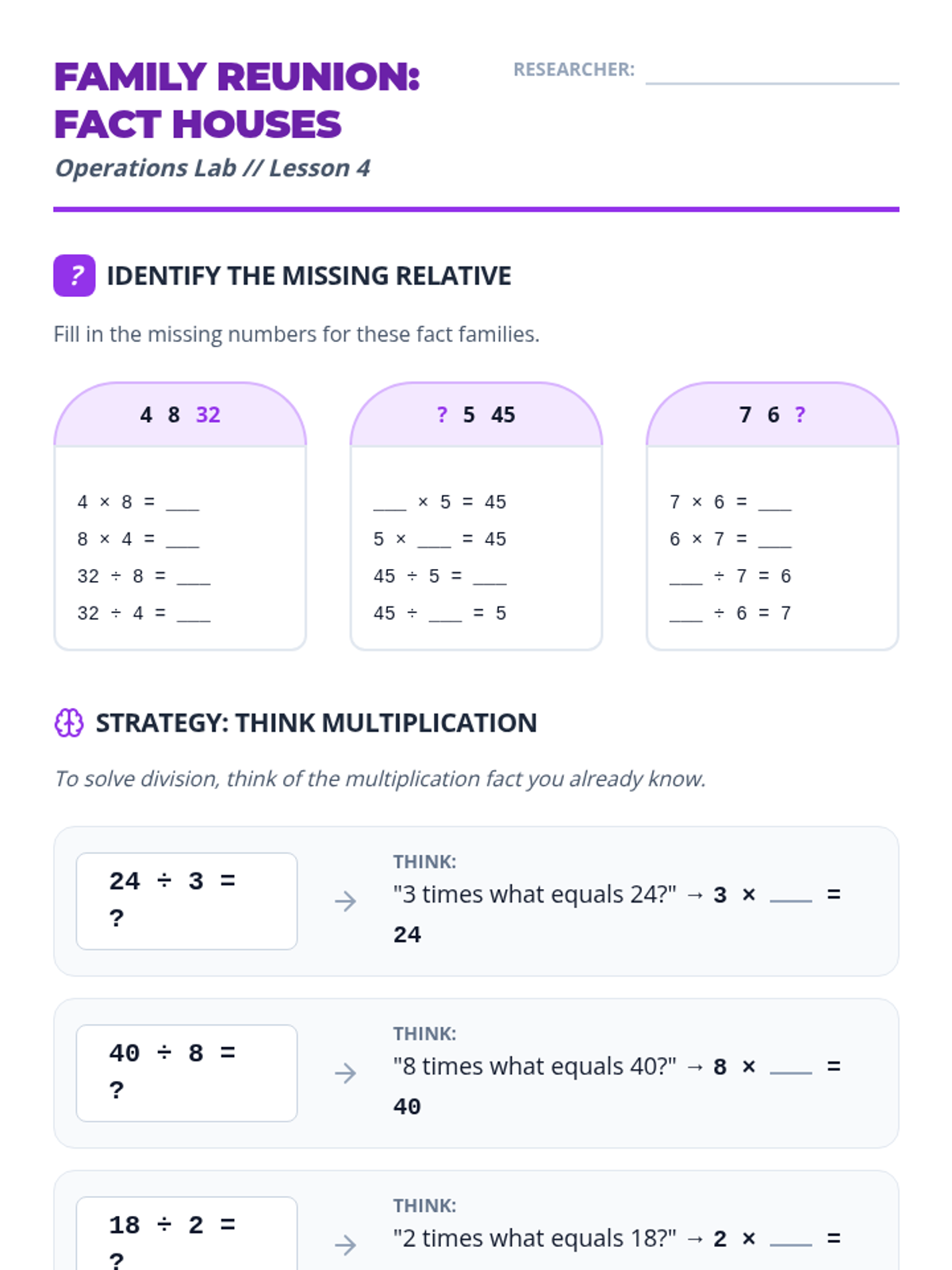
Exploring the relationship between multiplication and division using fact families and missing factor problems.
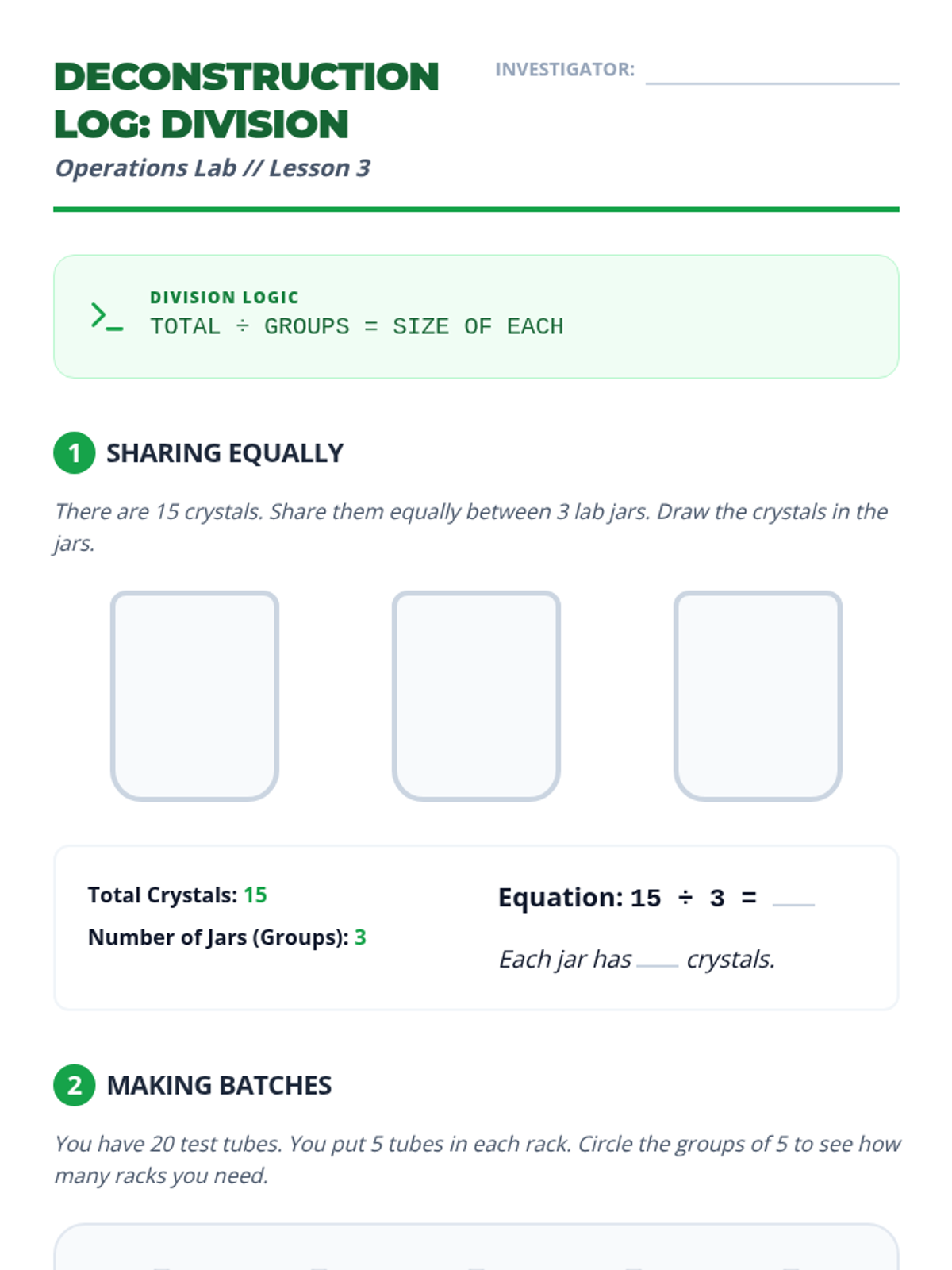
Introducing division as the inverse of multiplication, focusing on 'how many in each group' and 'how many groups'.
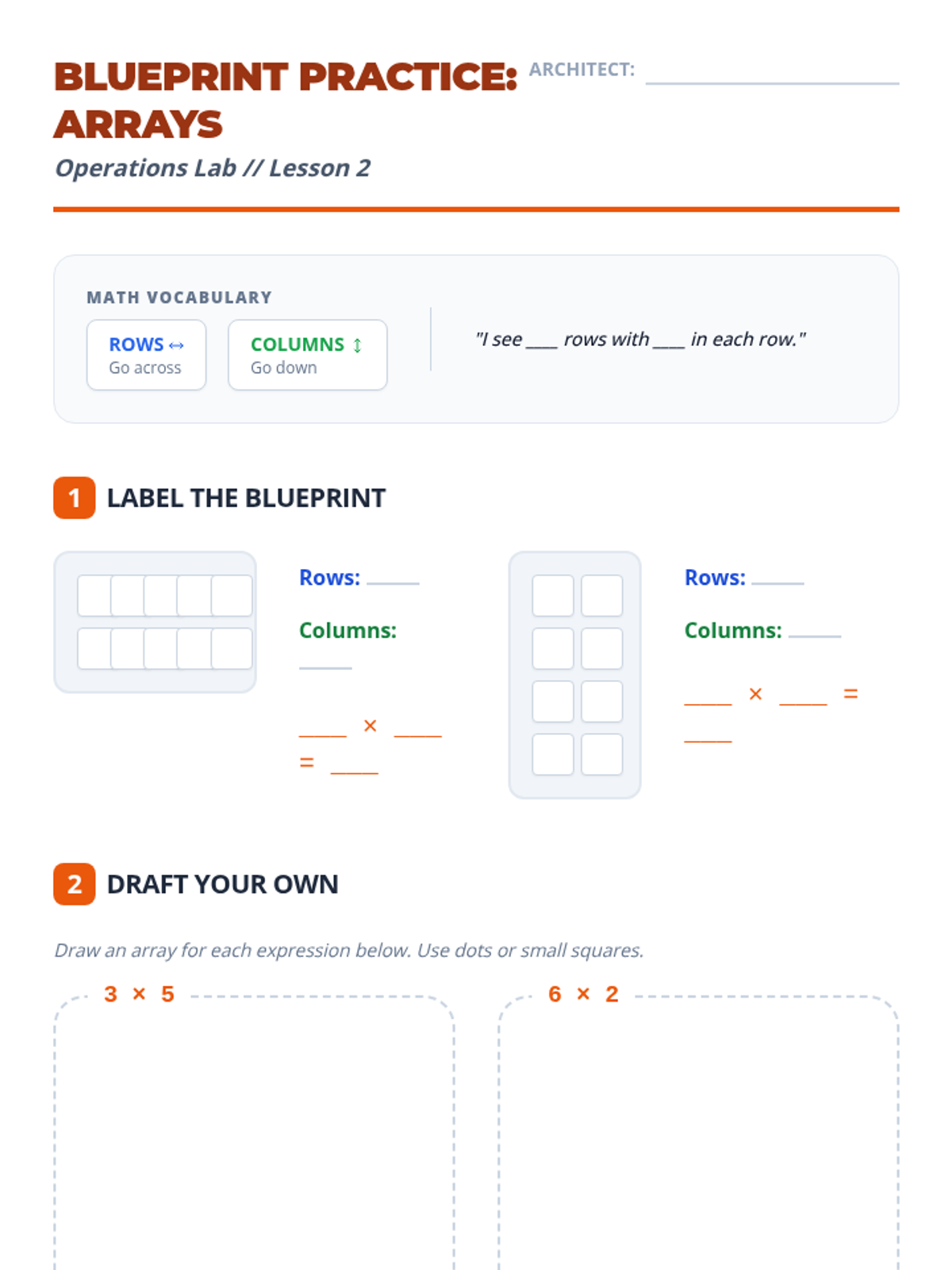
Connecting equal groups to the rows and columns of an array to build a spatial understanding of multiplication.
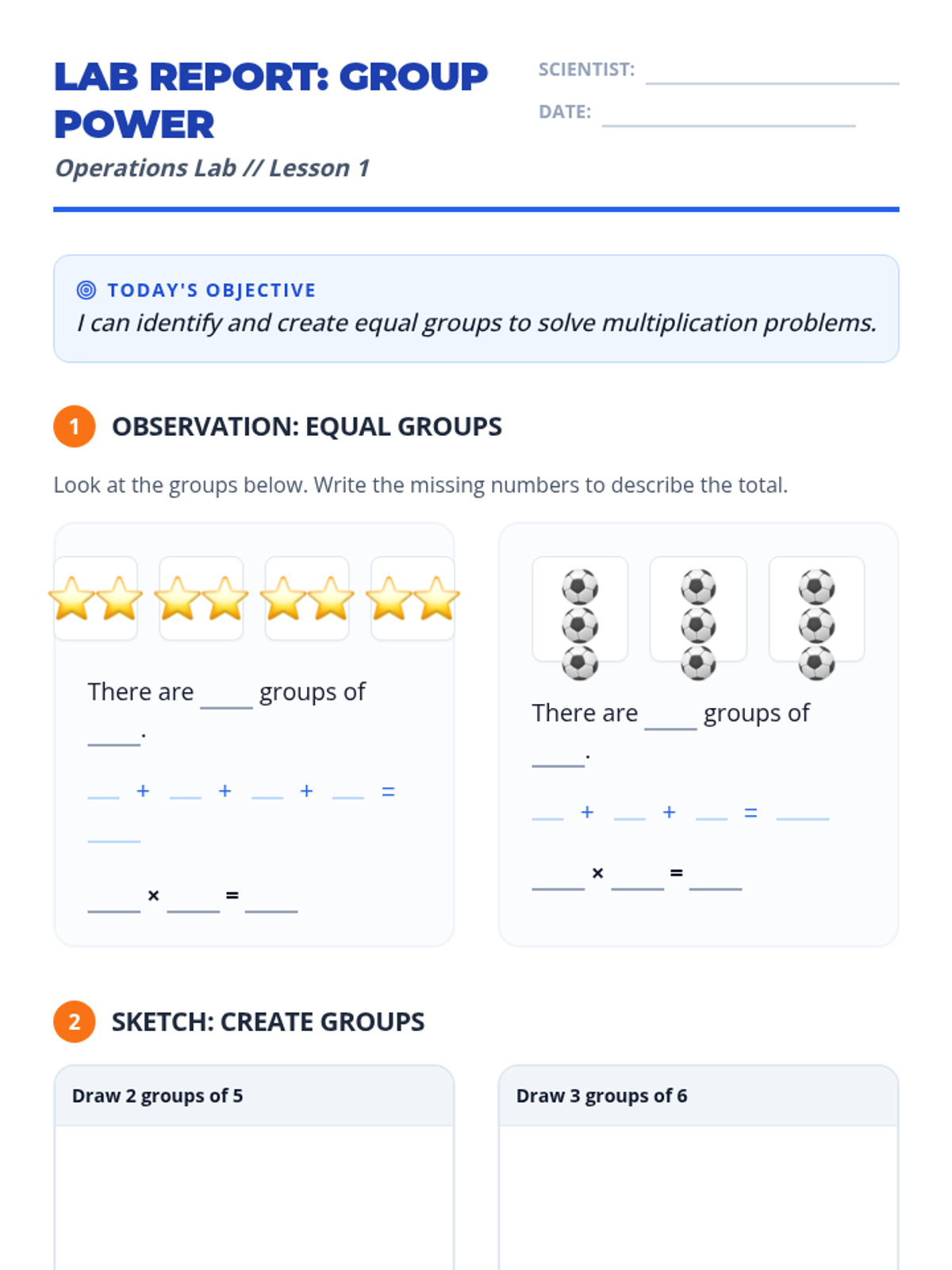
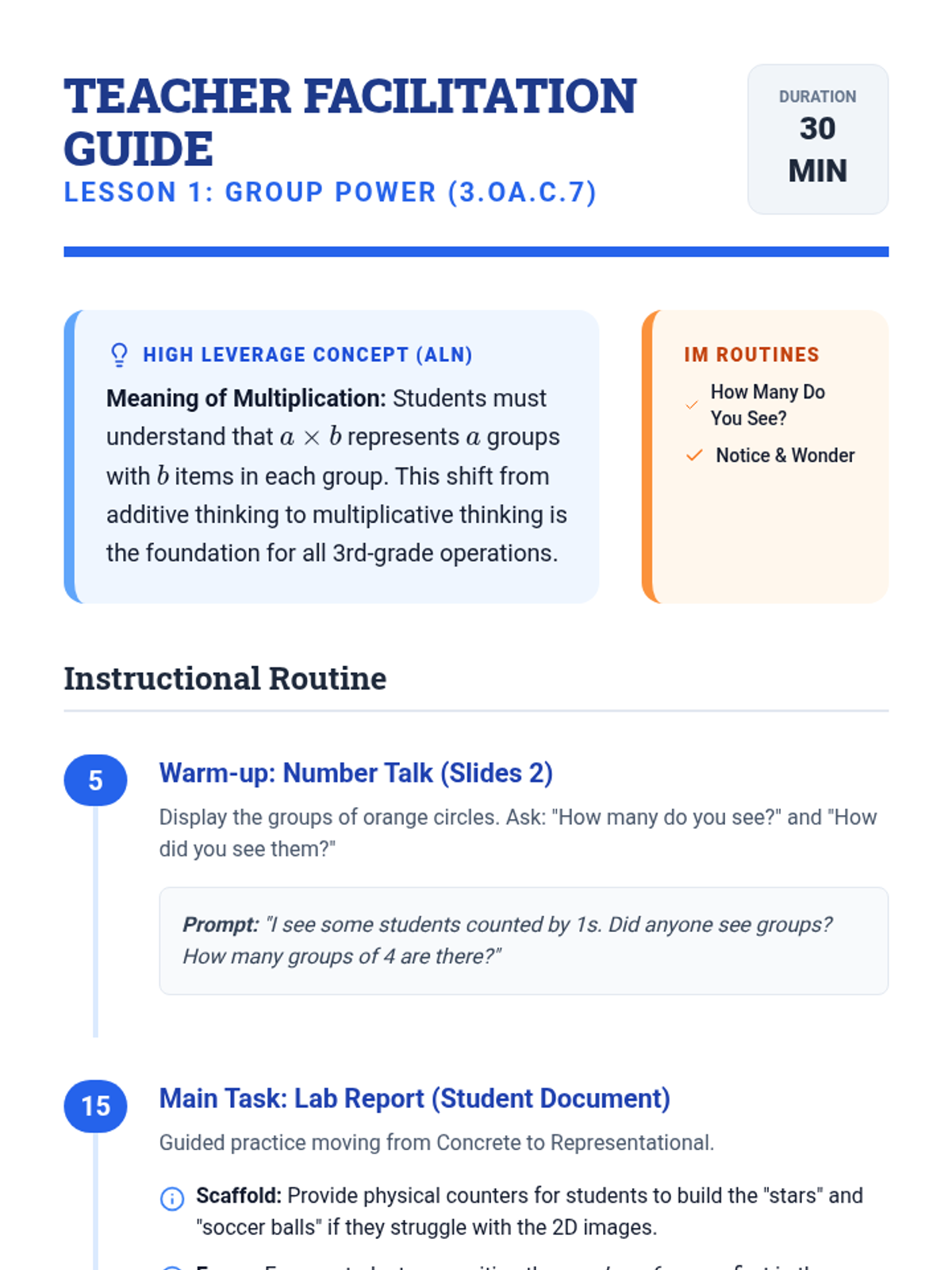
Focus on the meaning of multiplication as equal groups through visual representations and 'How Many Do You See?' routines.
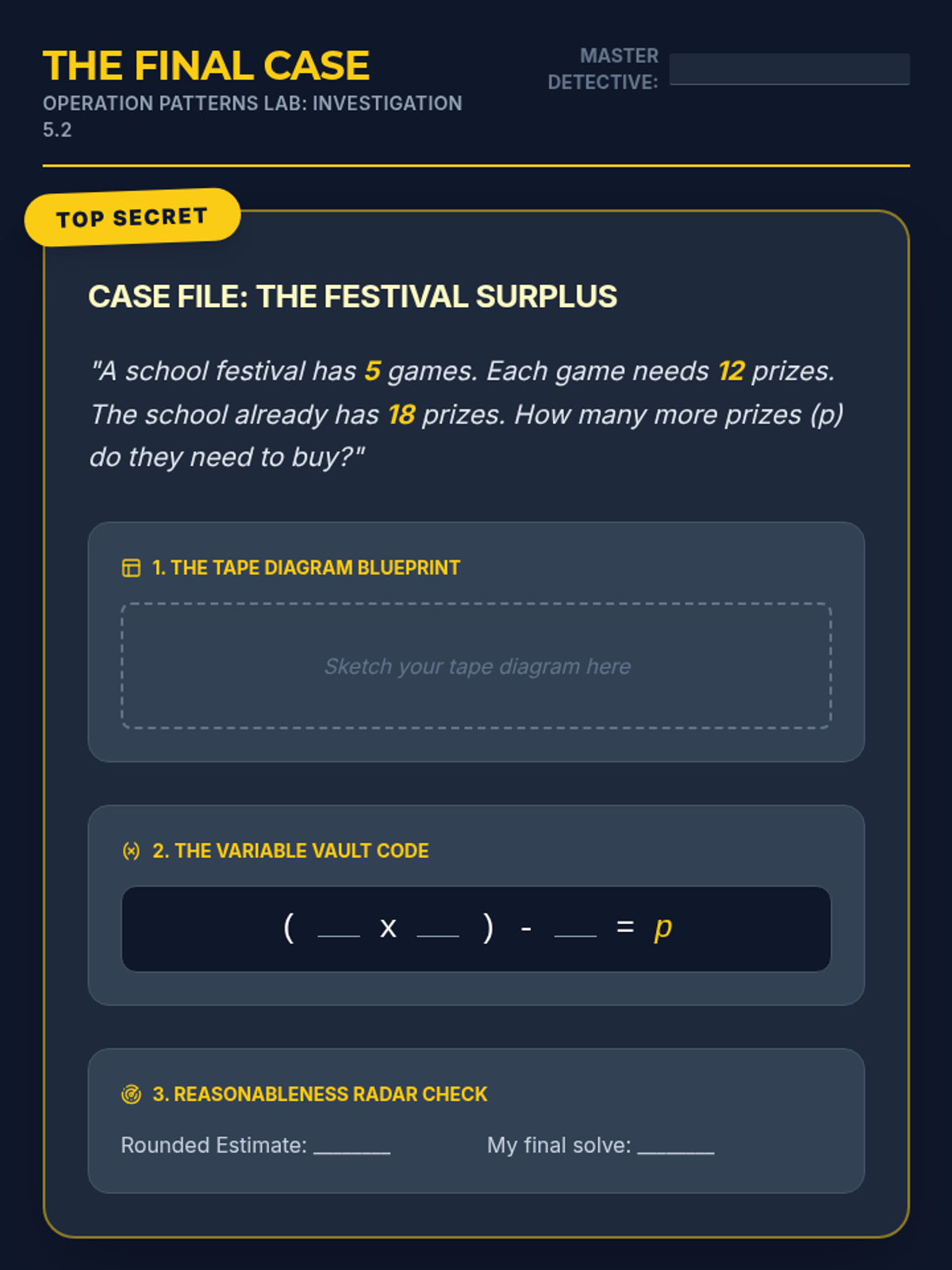
A culminating activity where students apply all their skills to solve a "final case" involving multi-step problems and patterns.
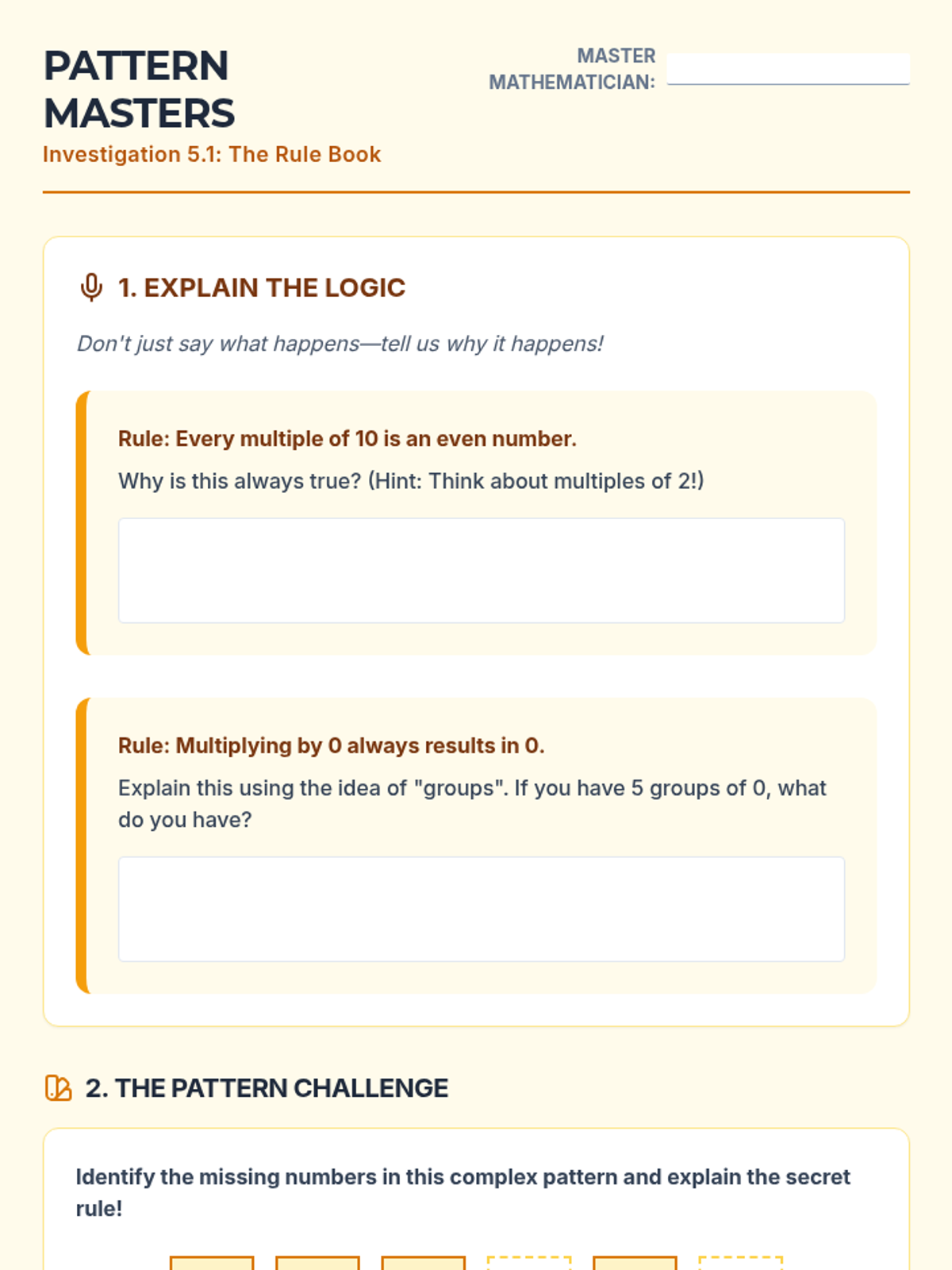
Students summarize their learning by identifying and explaining various arithmetic rules and properties they have discovered.
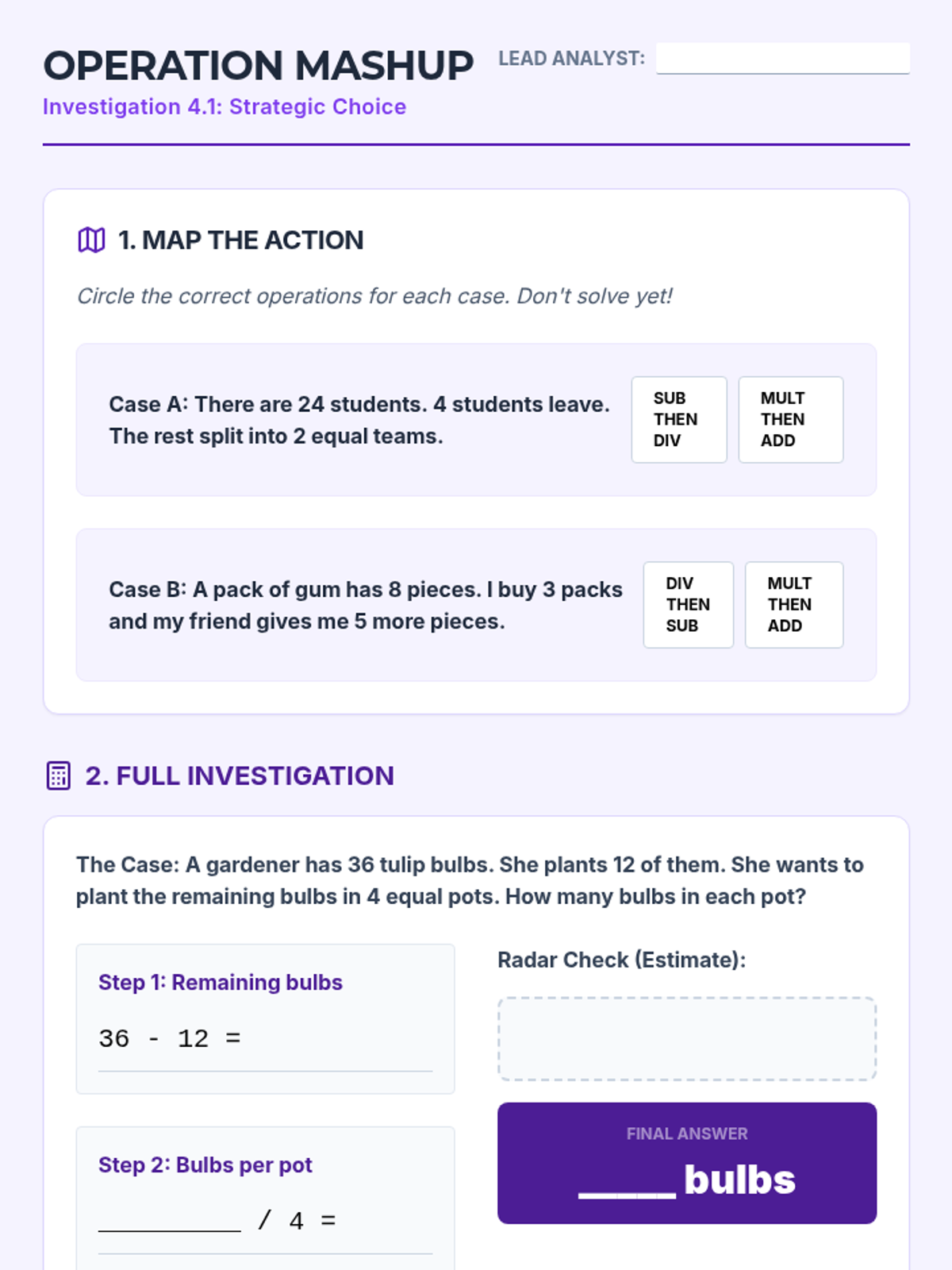
Students solve complex word problems requiring multiple operations, choosing the correct order of steps.
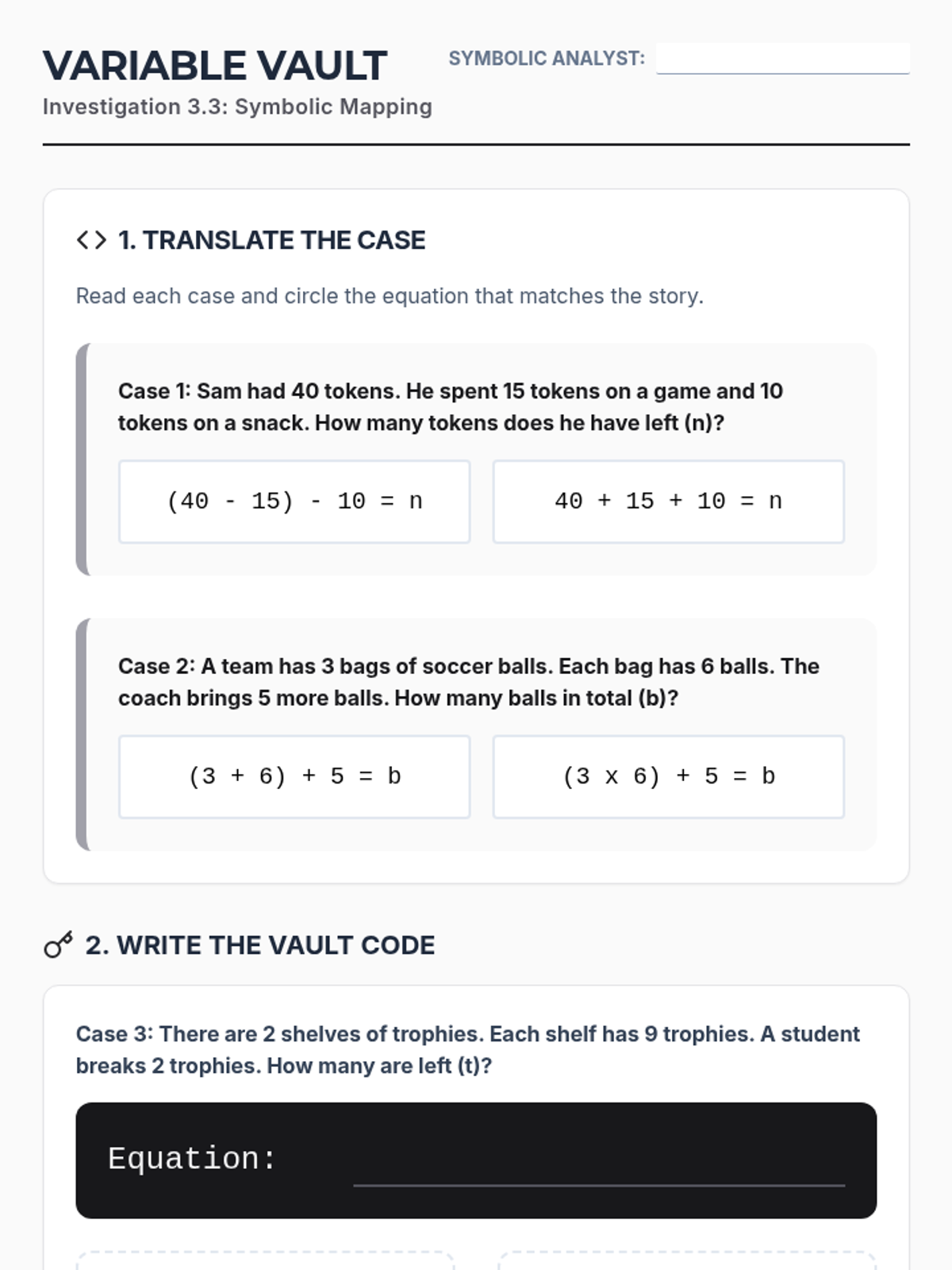
Students represent two-step word problems using equations with a letter standing for the unknown quantity.
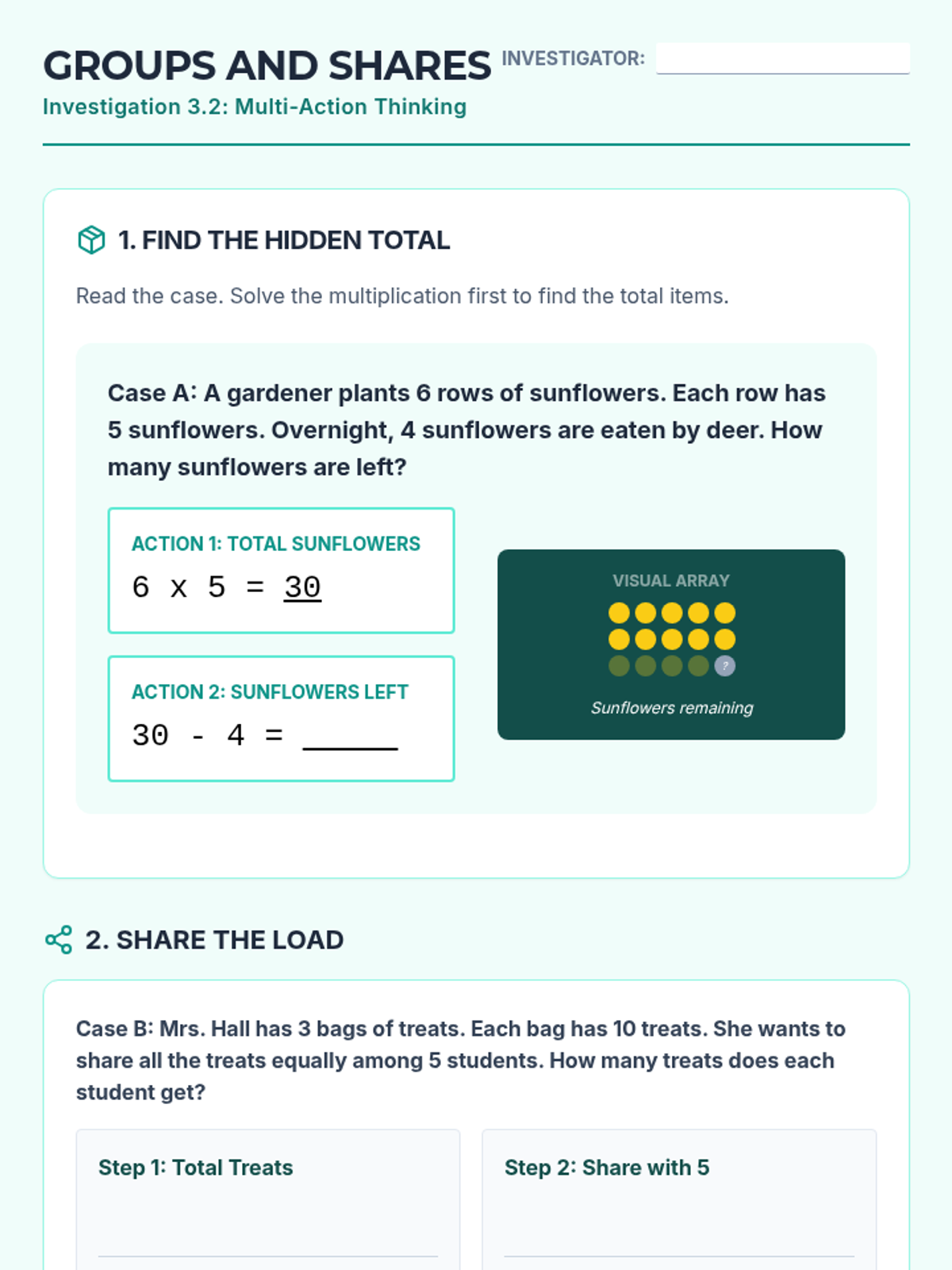
Students tackle two-step word problems involving multiplication and division, focusing on equal groups and fair shares.
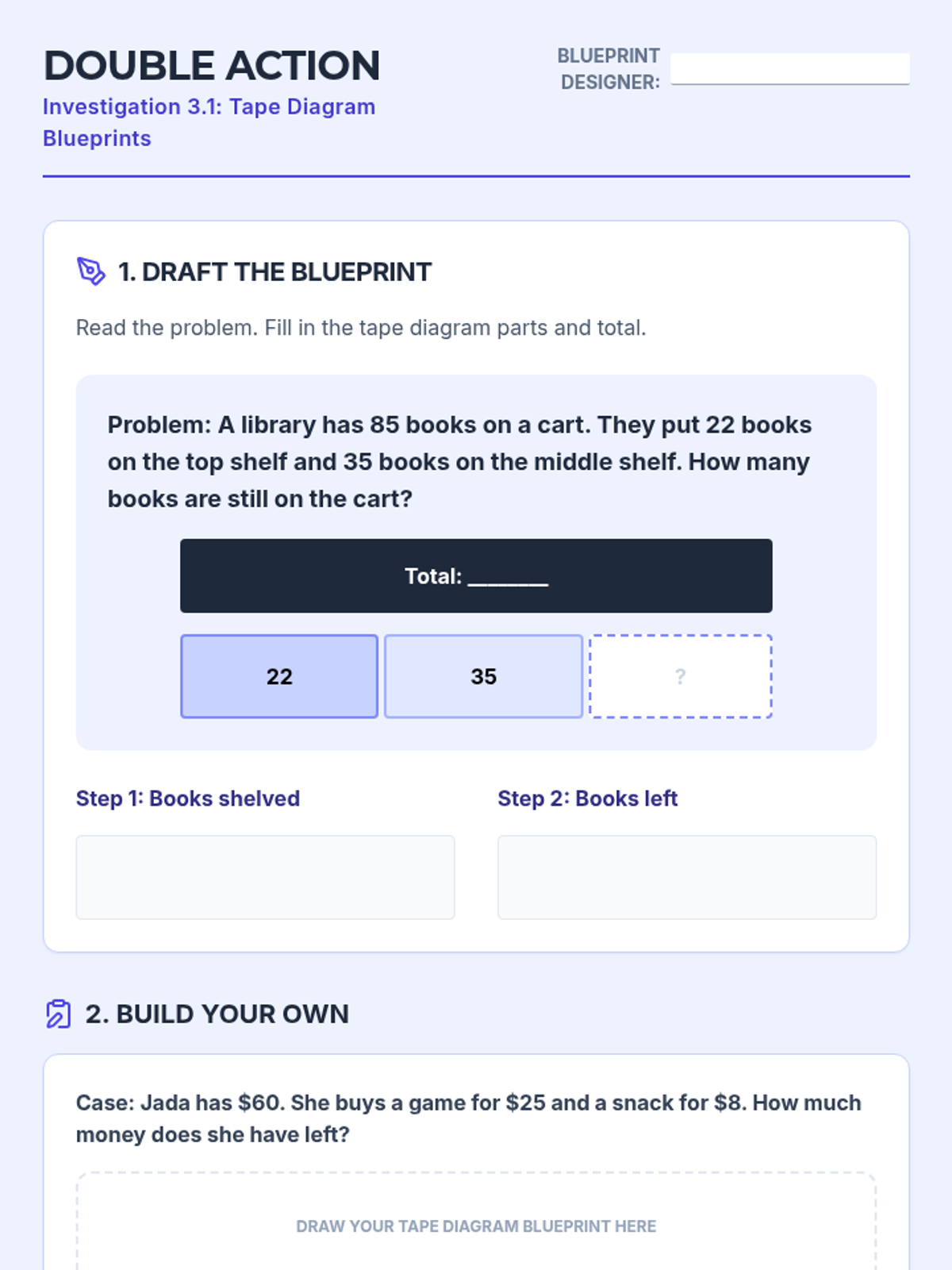
Students solve two-step word problems involving addition and subtraction, using tape diagrams to represent the situation.
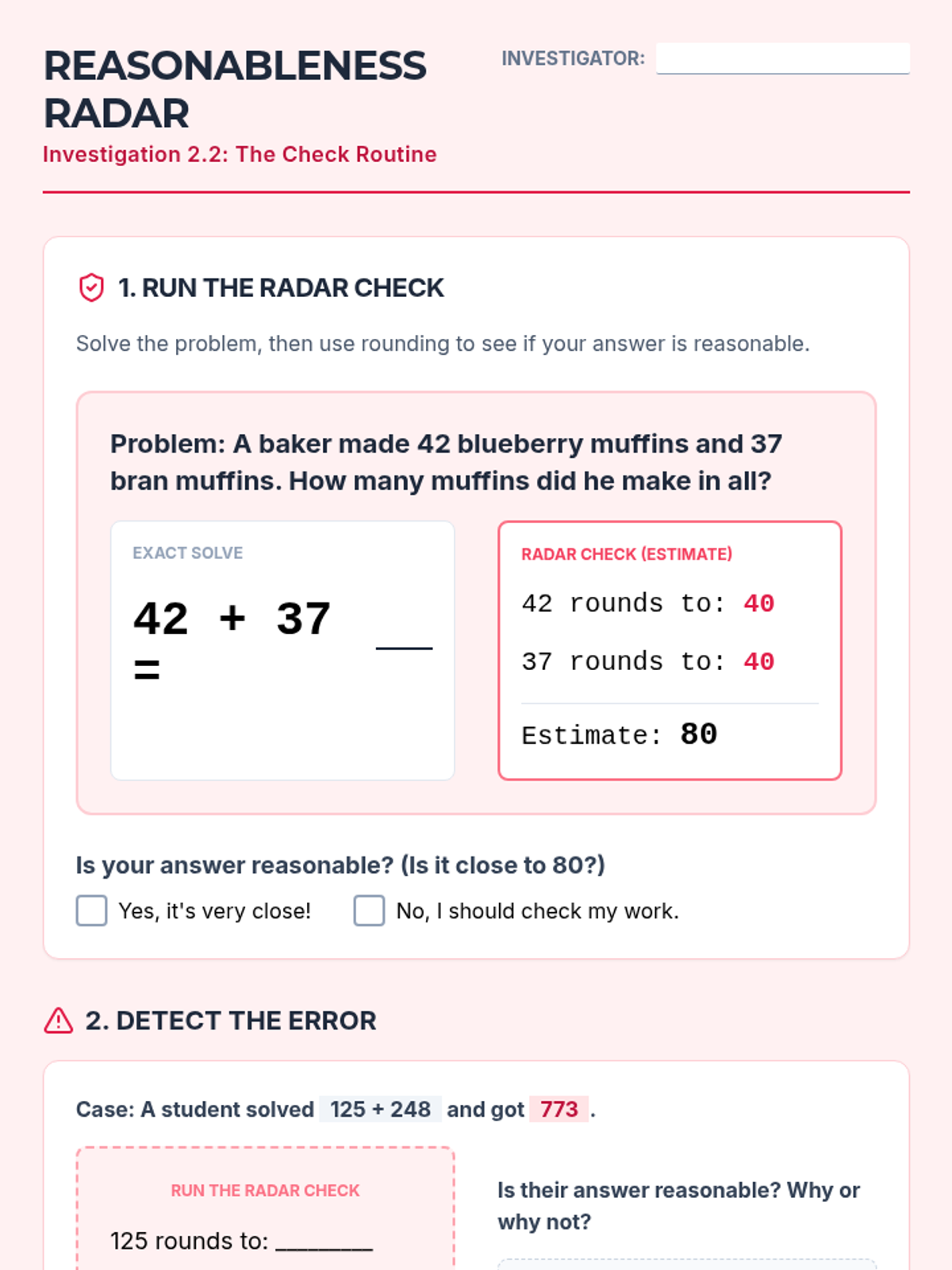
Students practice checking the reasonableness of their answers by comparing their exact results to their rounded estimates.
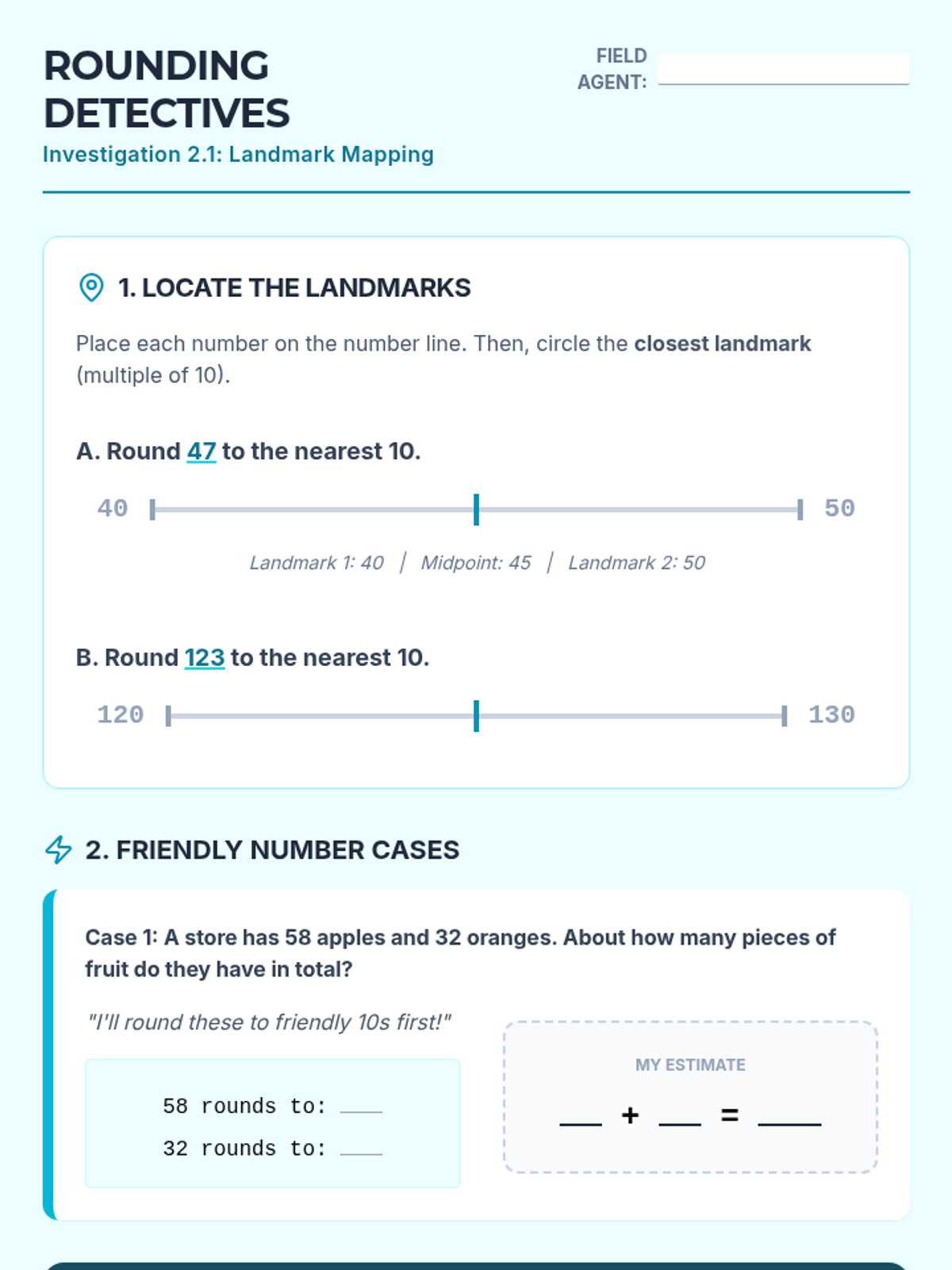
Students learn to round numbers to the nearest 10 and 100 as a tool for quick estimation in problem-solving.
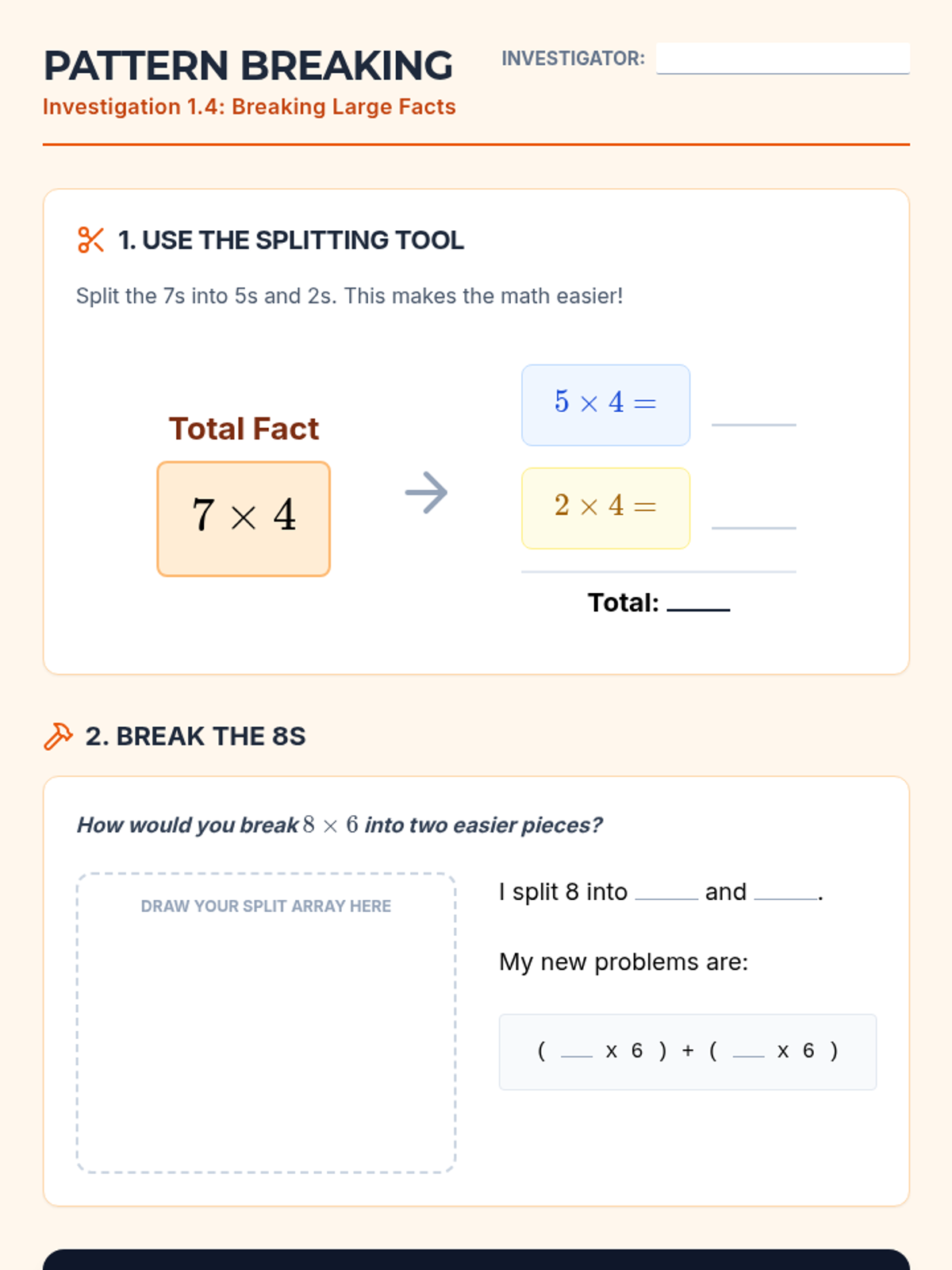
Students use known multiplication patterns and the distributive property to solve for unknown facts, such as using 5s and 2s to find 7s.
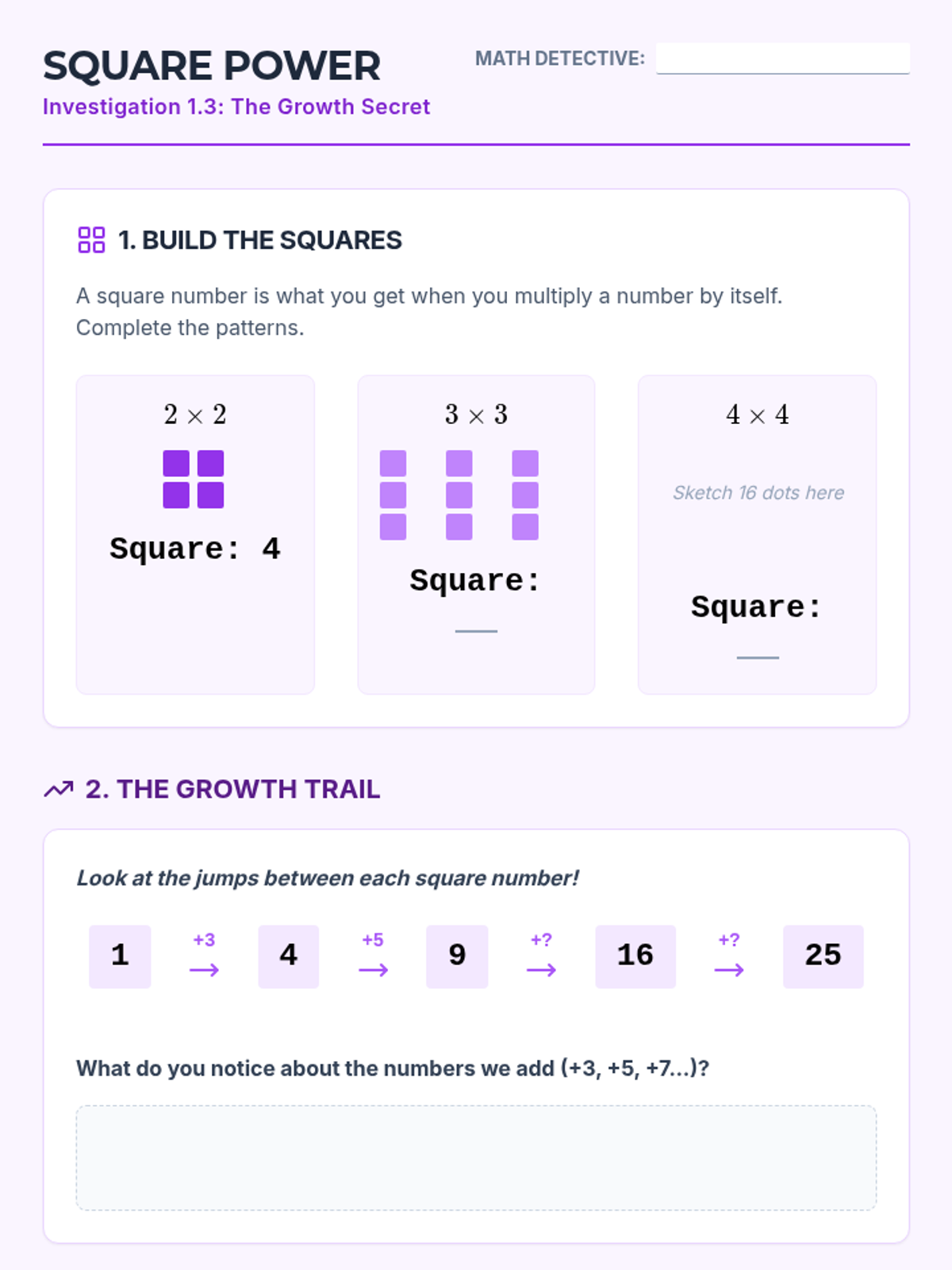
Students explore the diagonal of the multiplication table to identify square numbers and investigate the patterns within them.
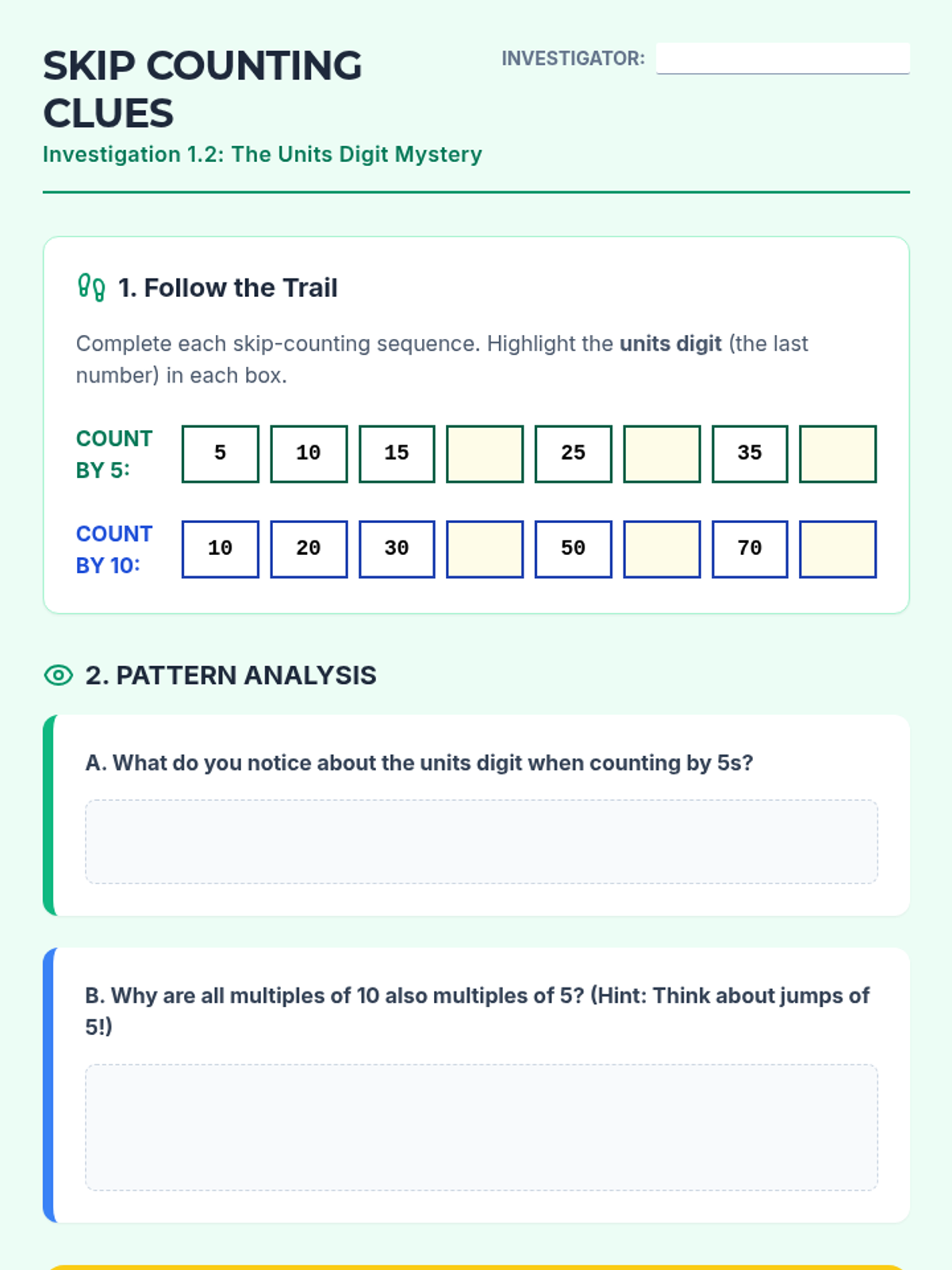
Students investigate patterns in the multiplication table, specifically looking at multiples of 2, 5, and 10 to understand how multiplication grows.
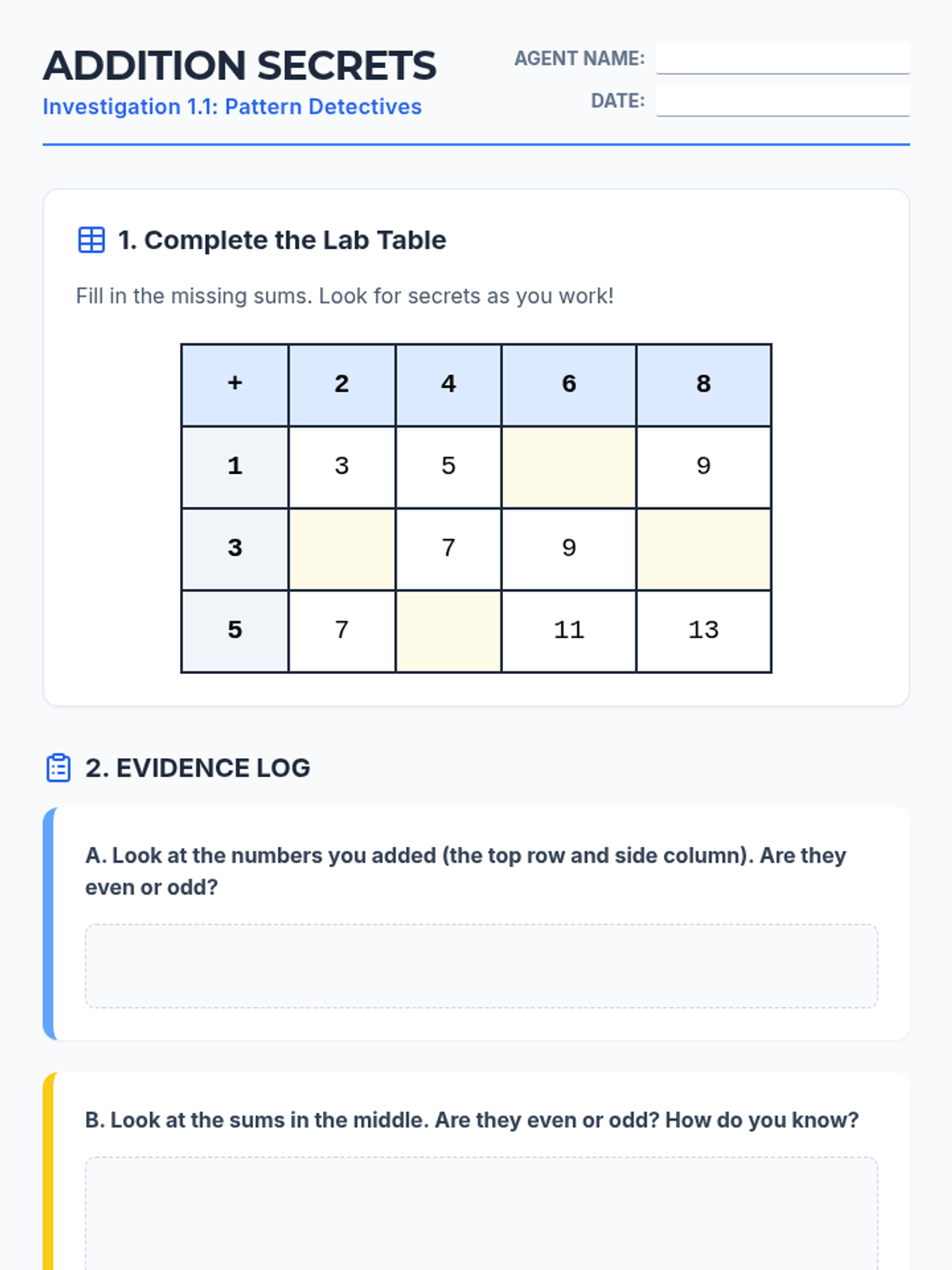
Students identify and explain patterns in the addition table, focusing on the properties of even and odd numbers and the commutative property.
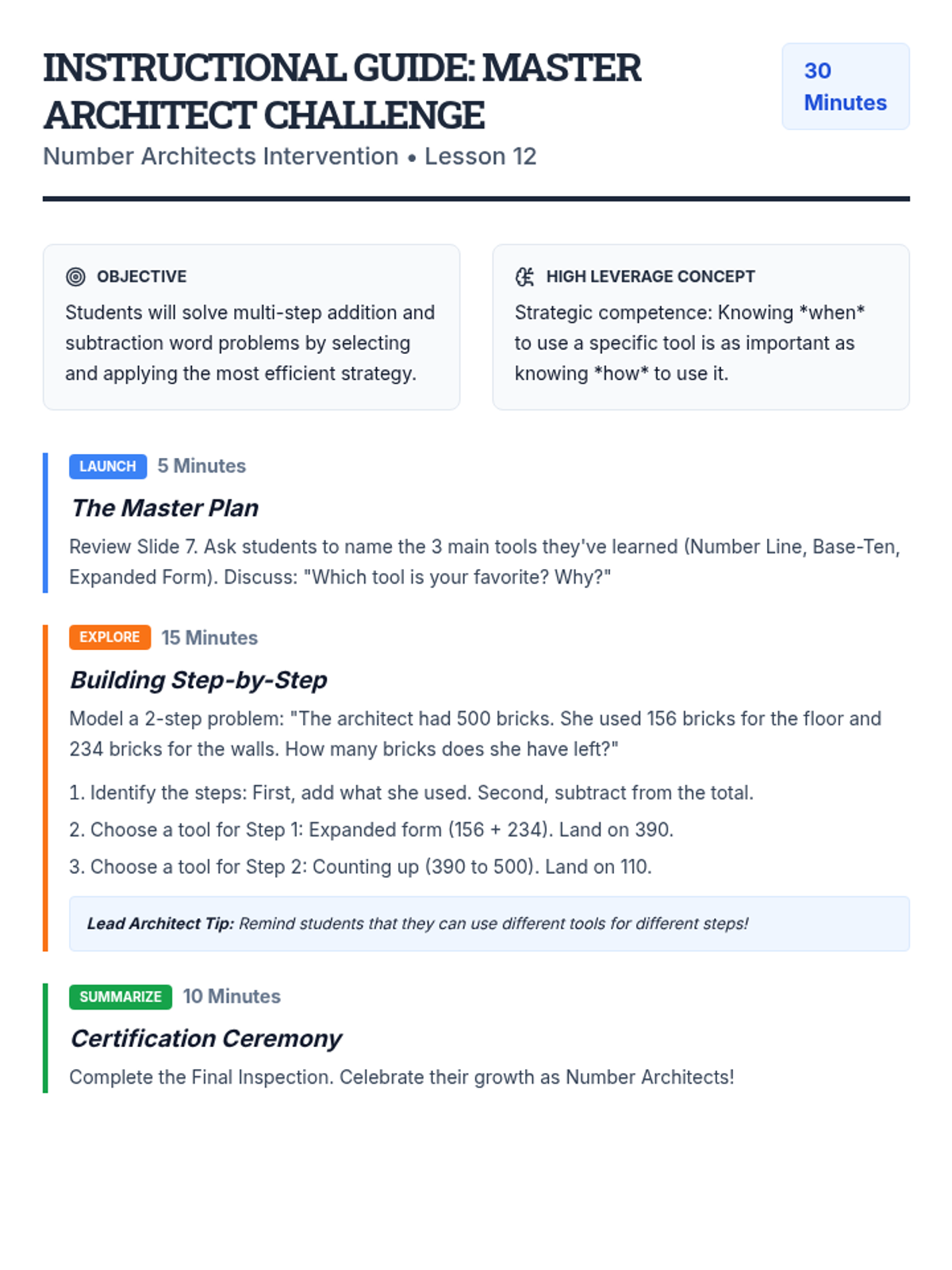
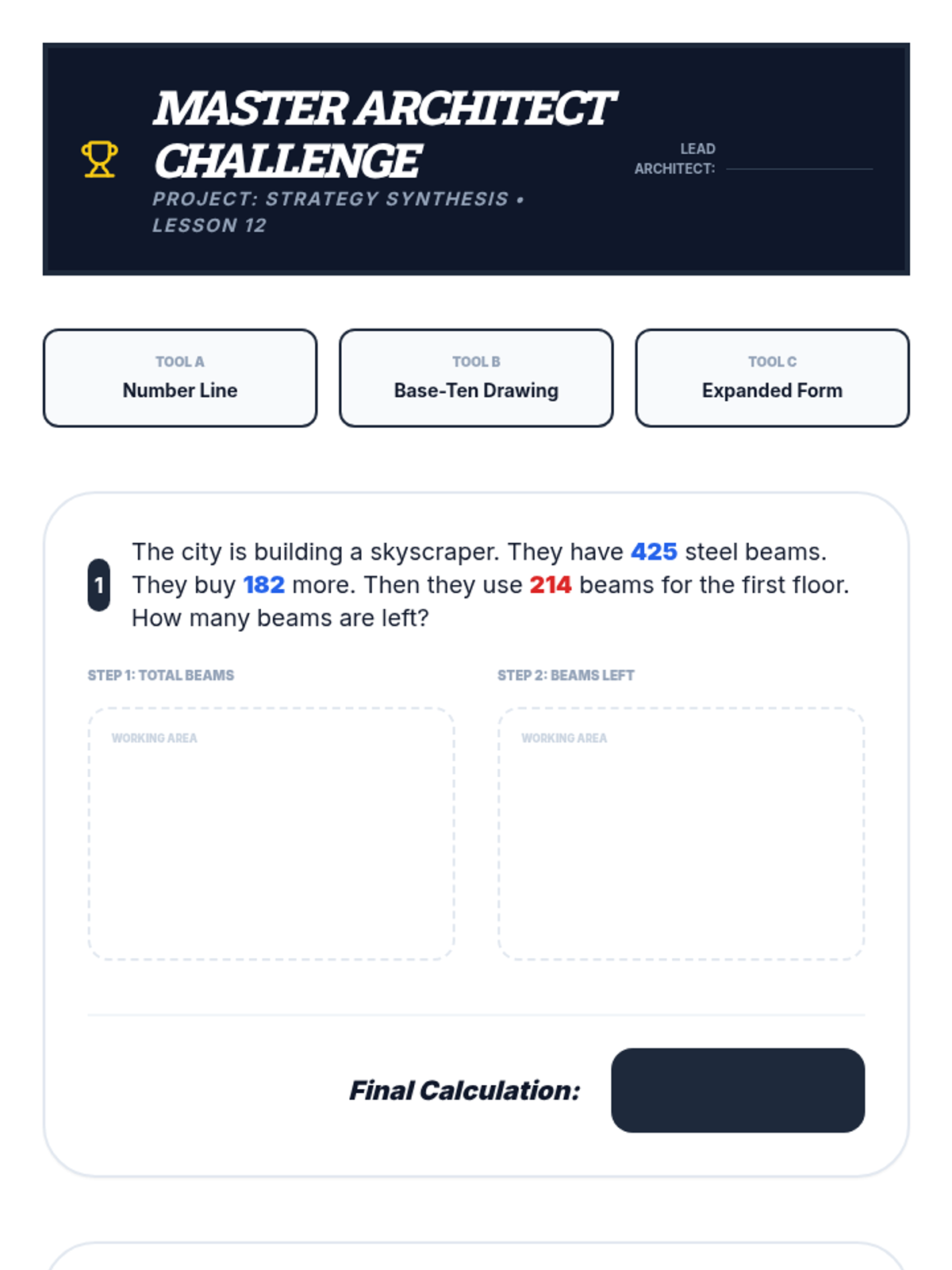
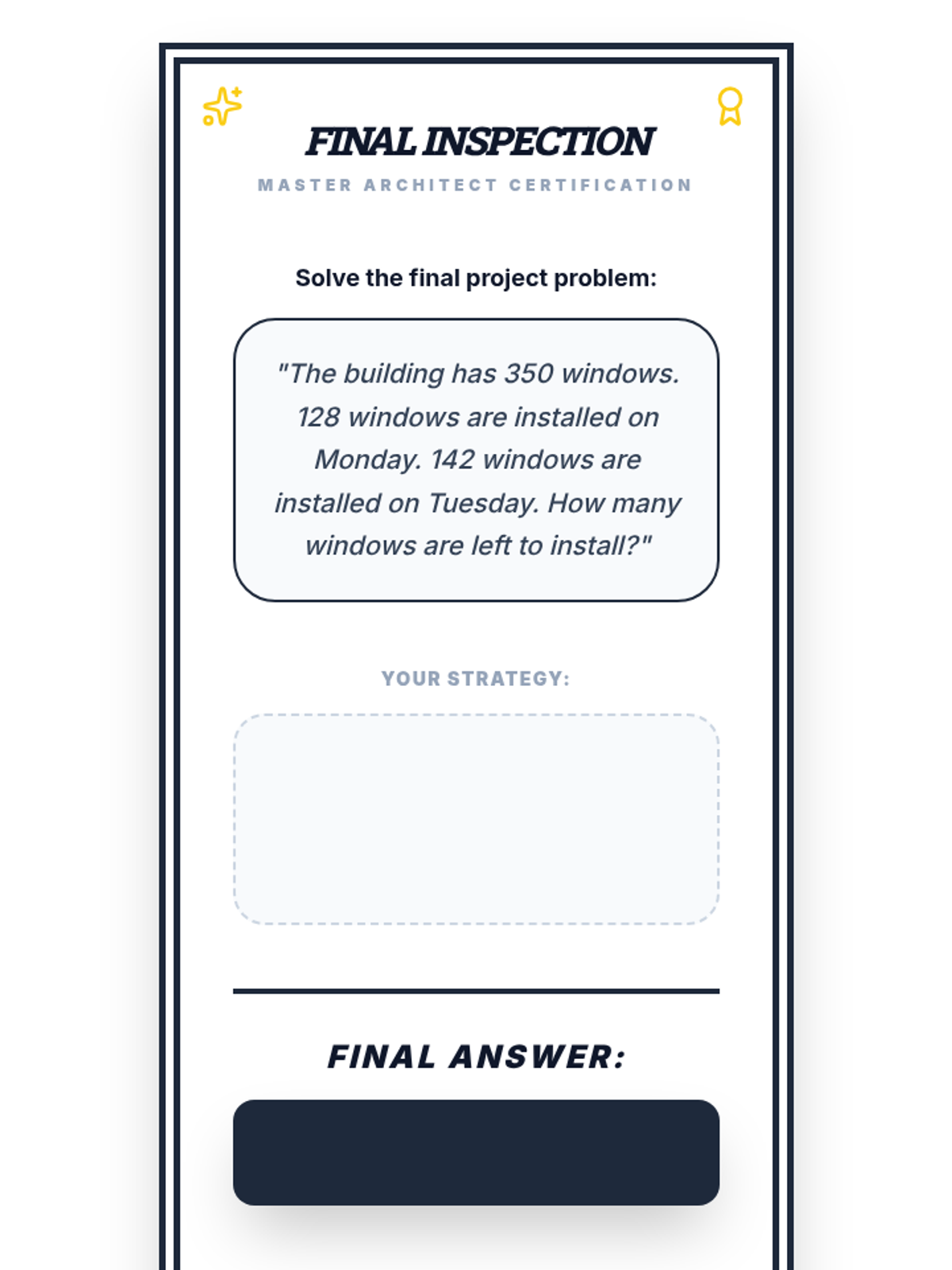
Synthesizing addition and subtraction strategies to solve multi-step word problems.
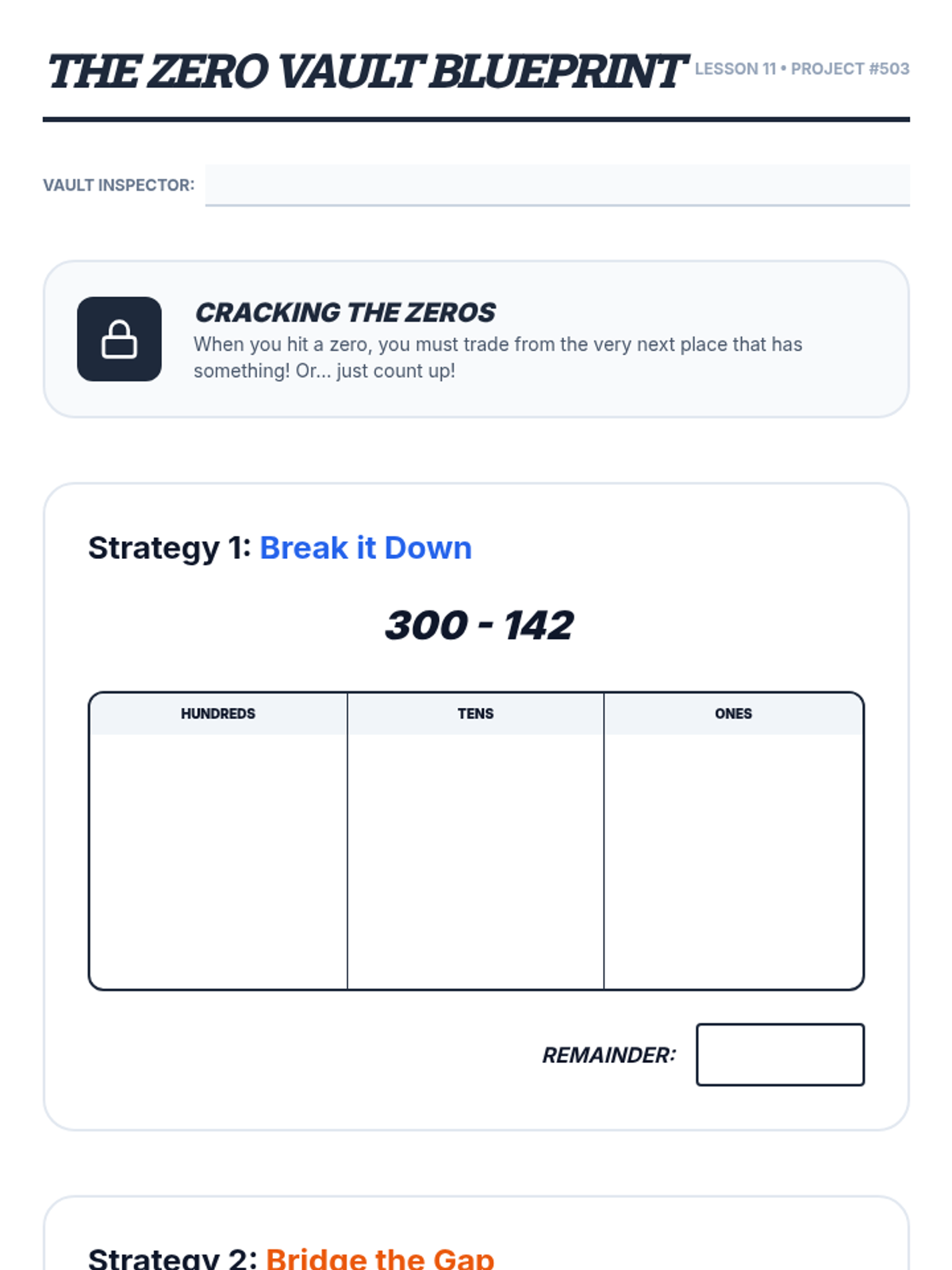
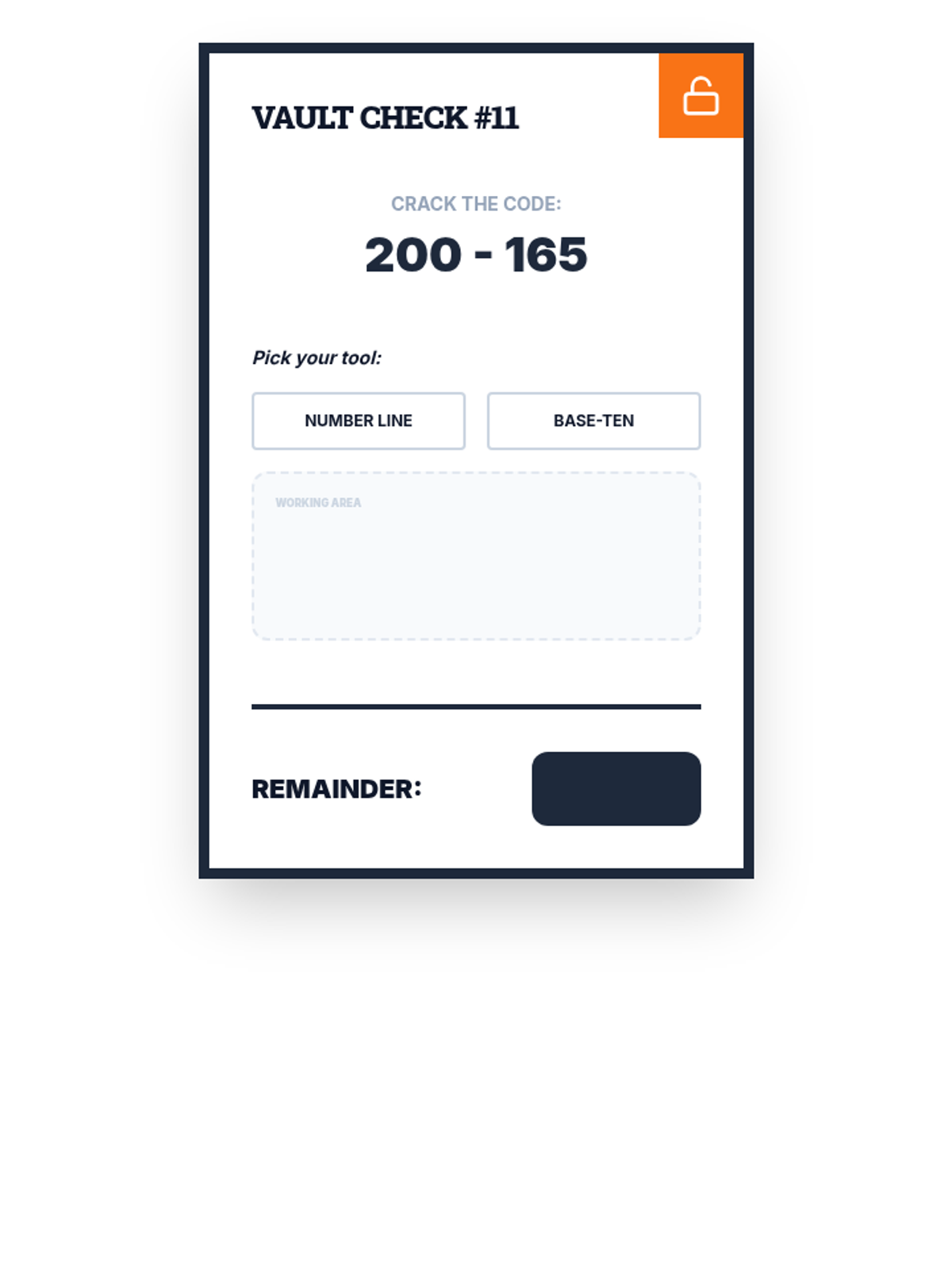
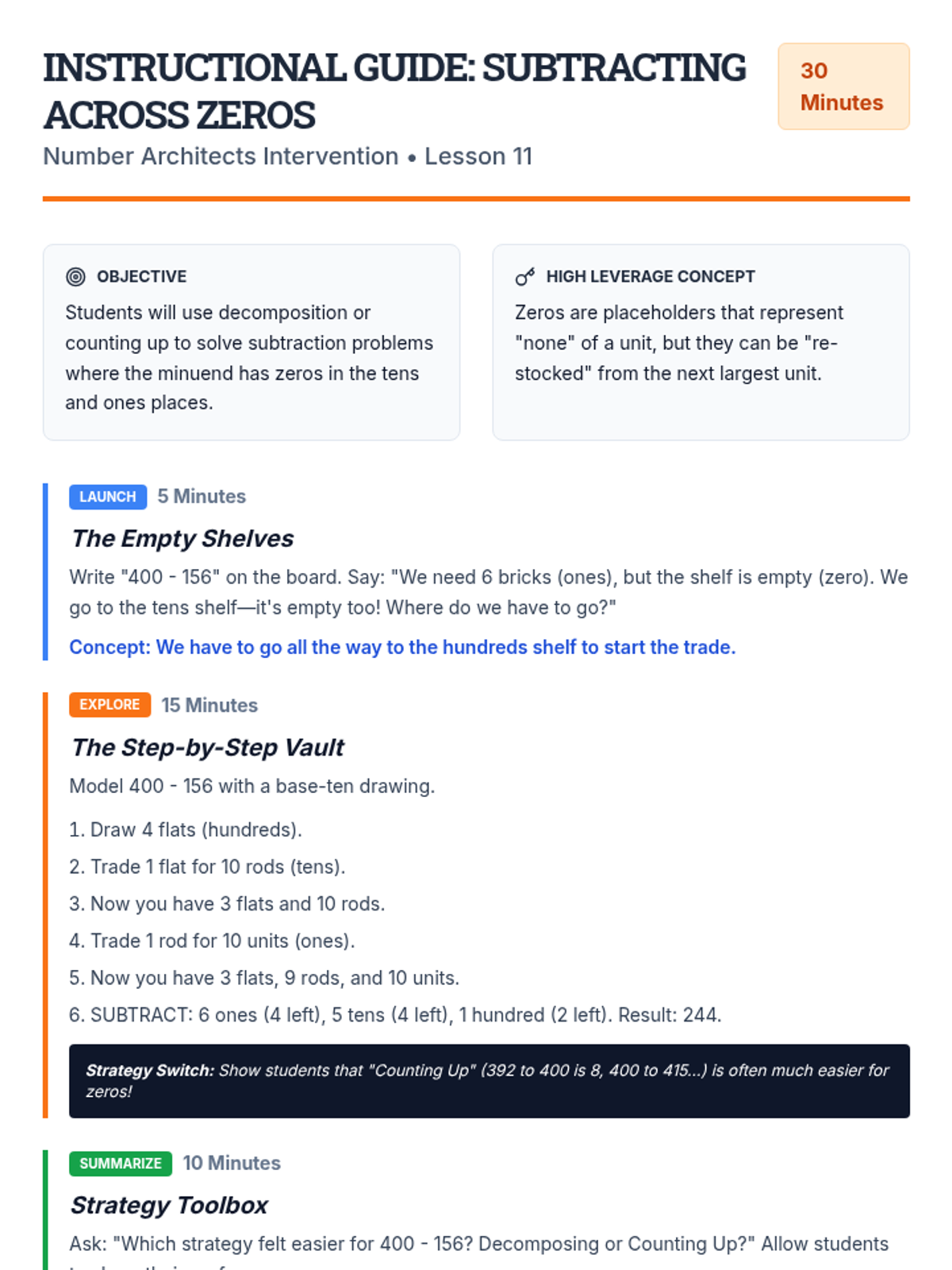
Developing strategies to subtract from numbers with zeros in the tens or ones place.
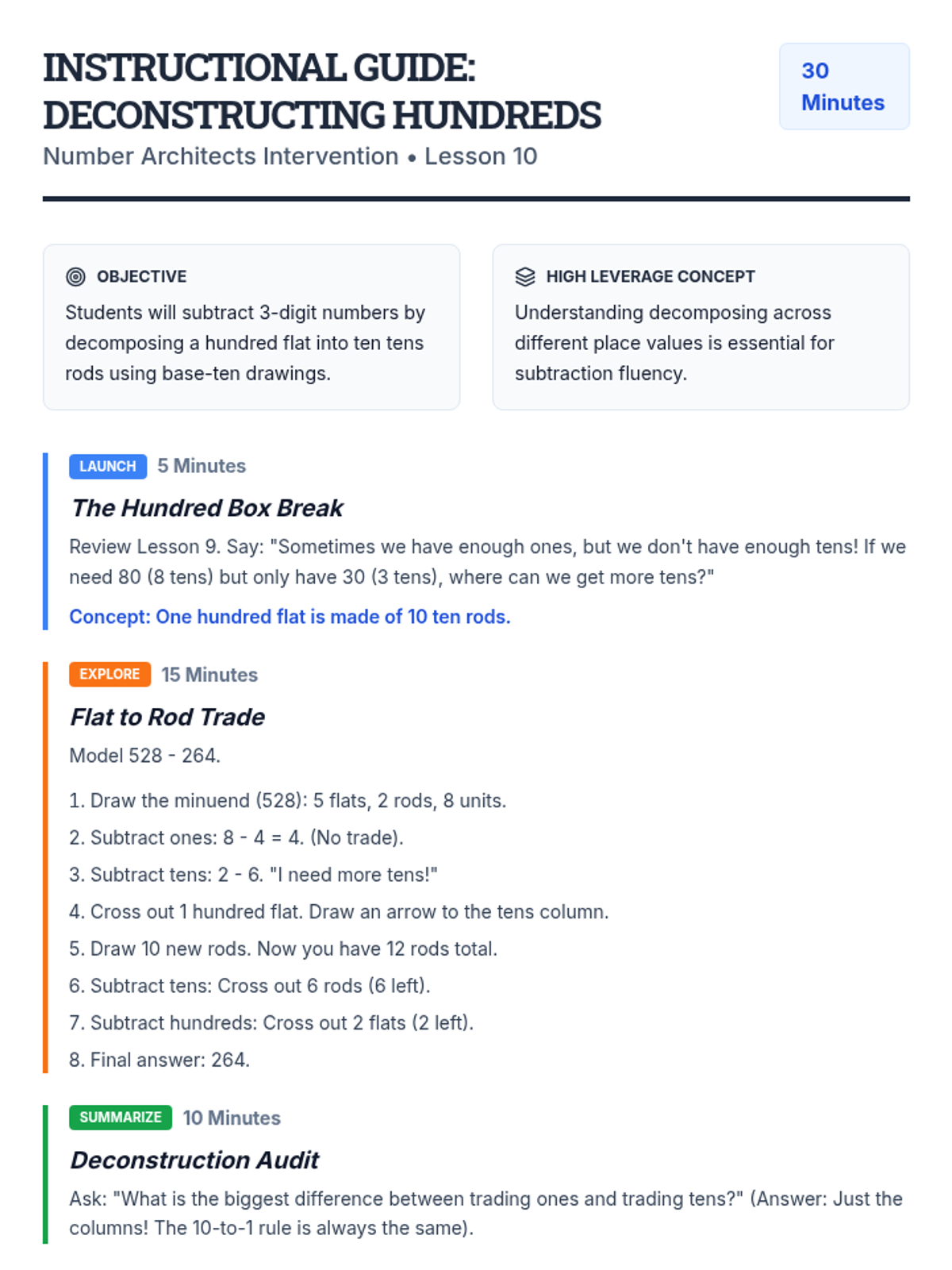
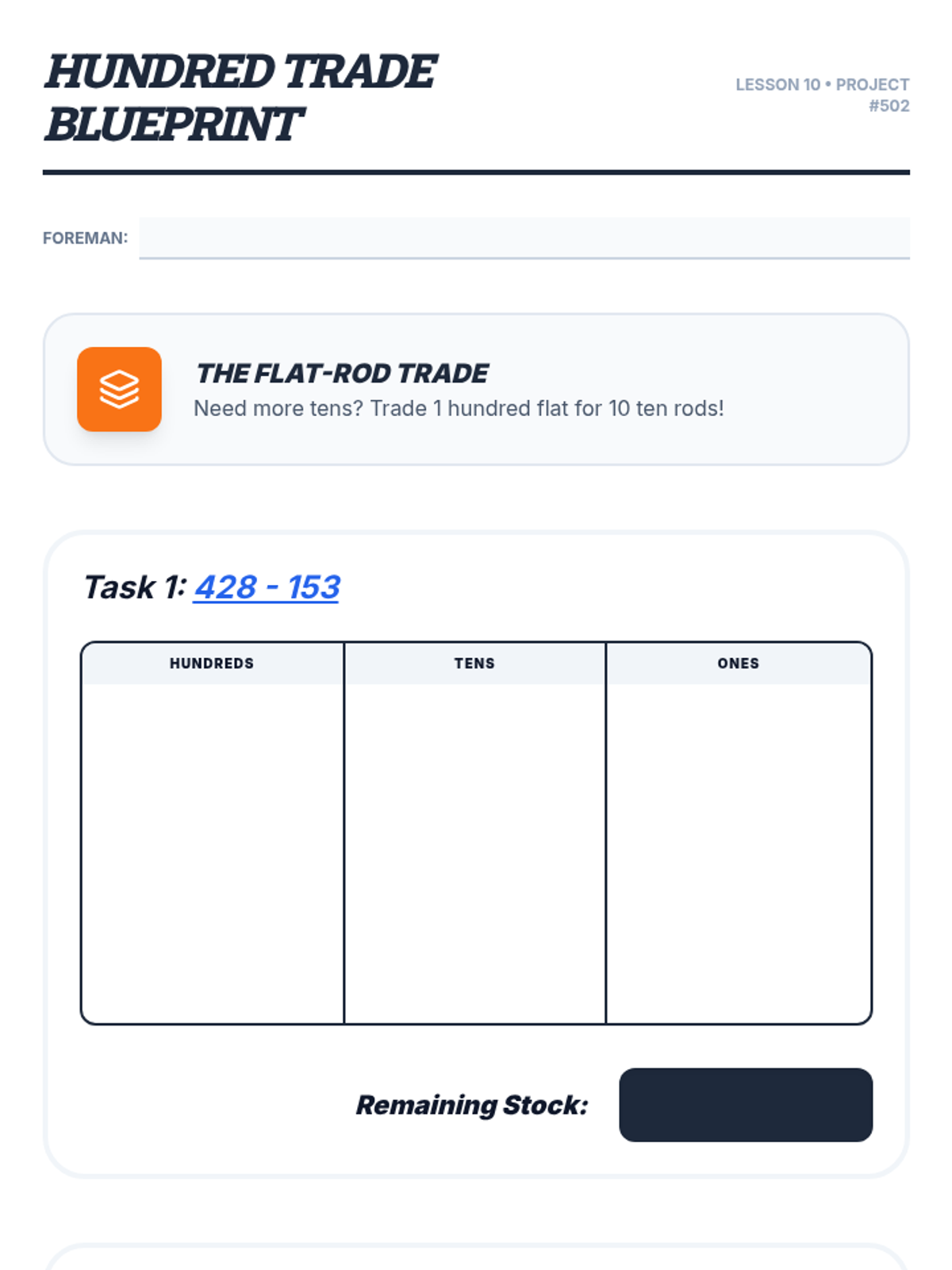
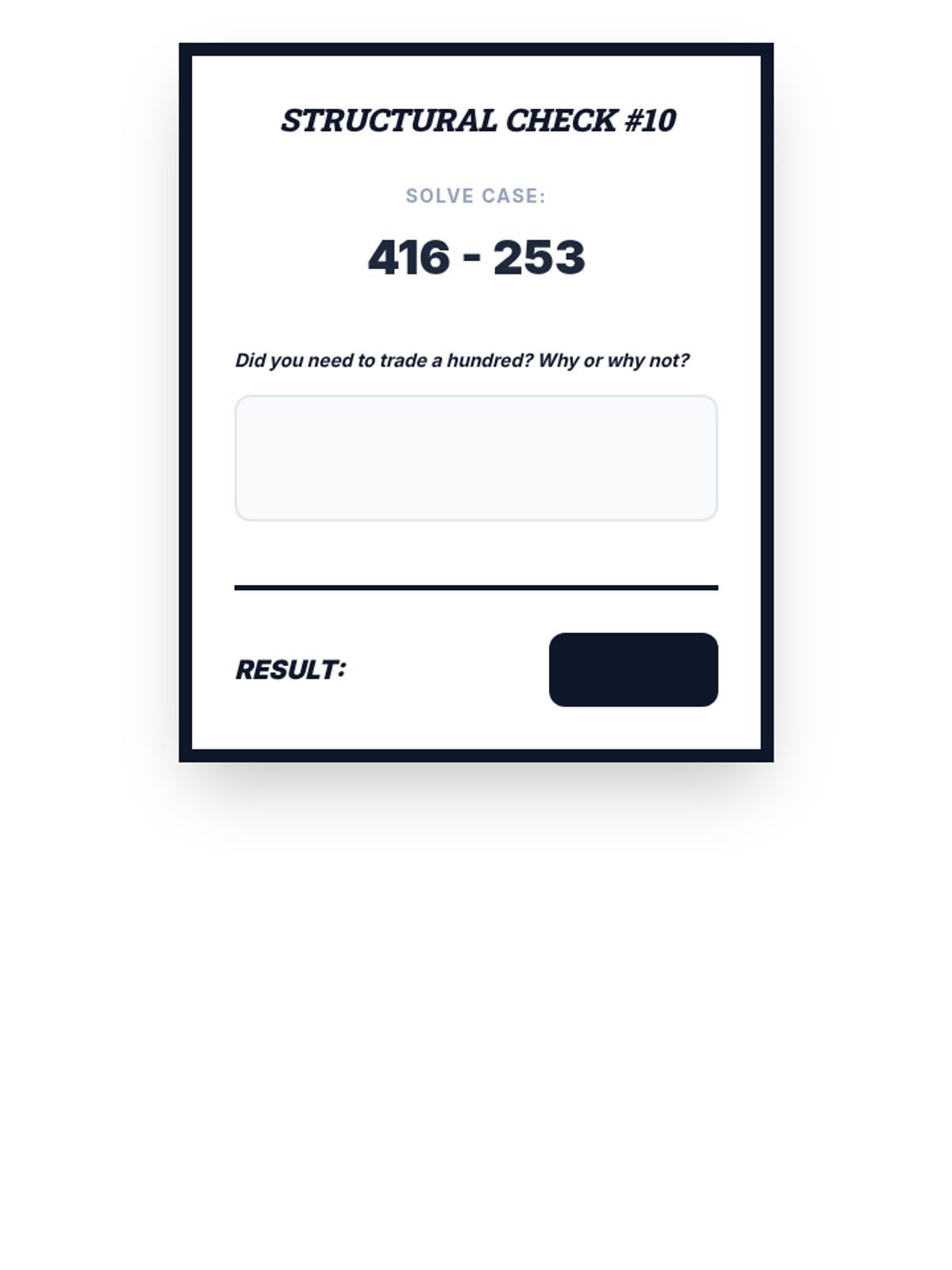
Applying place value understanding to subtract when a hundred must be decomposed into tens.
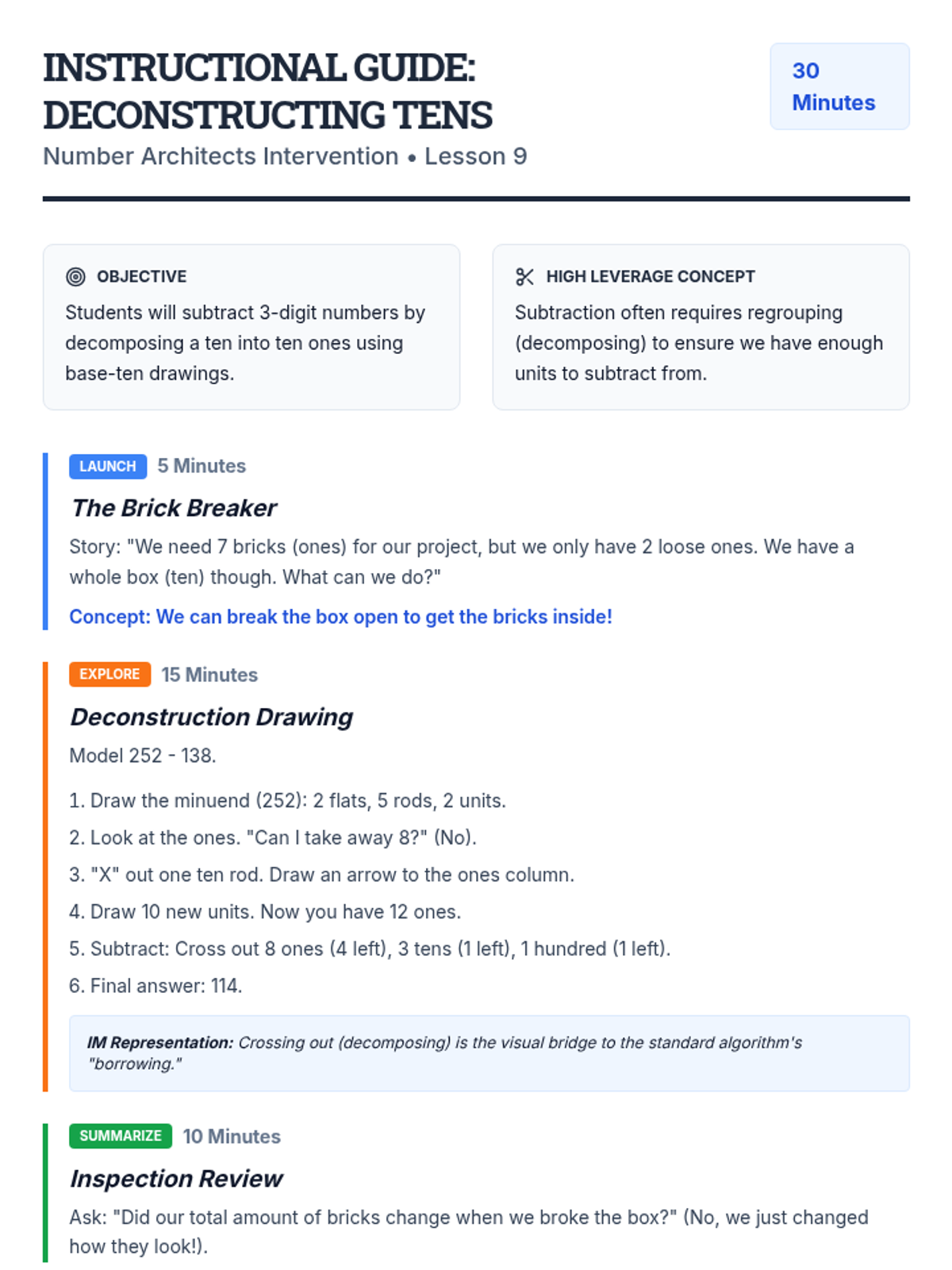
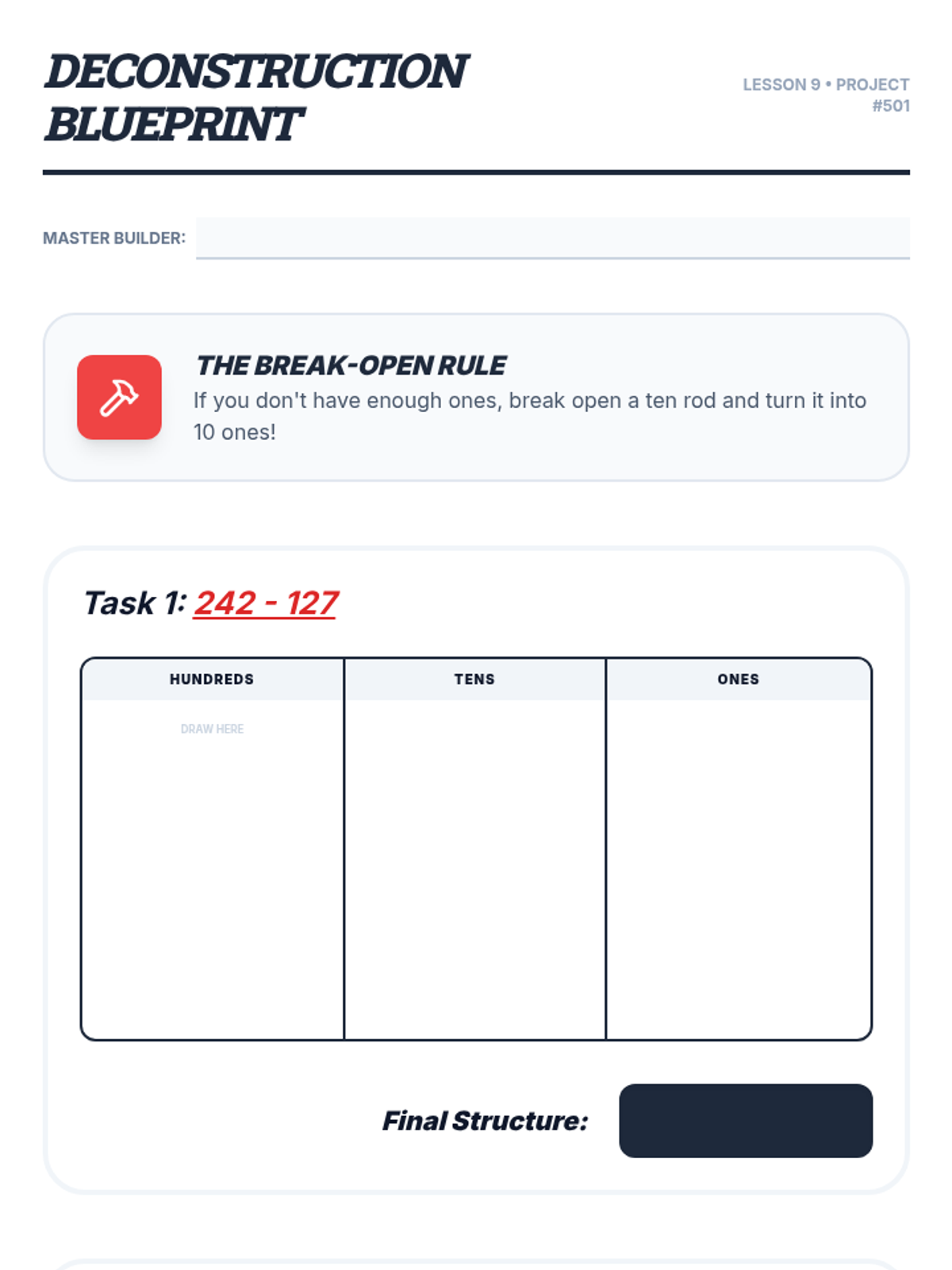
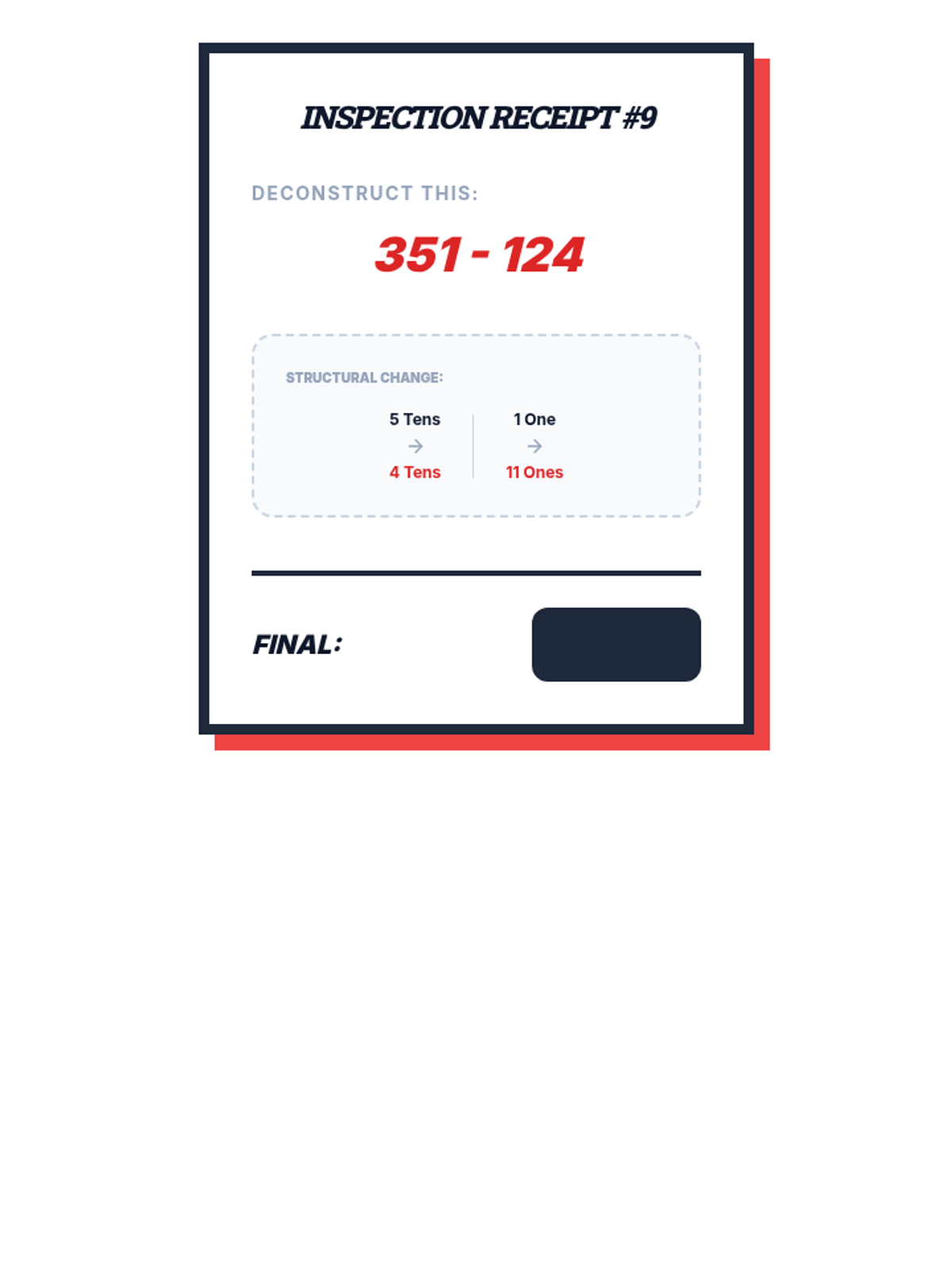
Visualizing the decomposition of a ten into ten ones during subtraction using base-ten drawings.
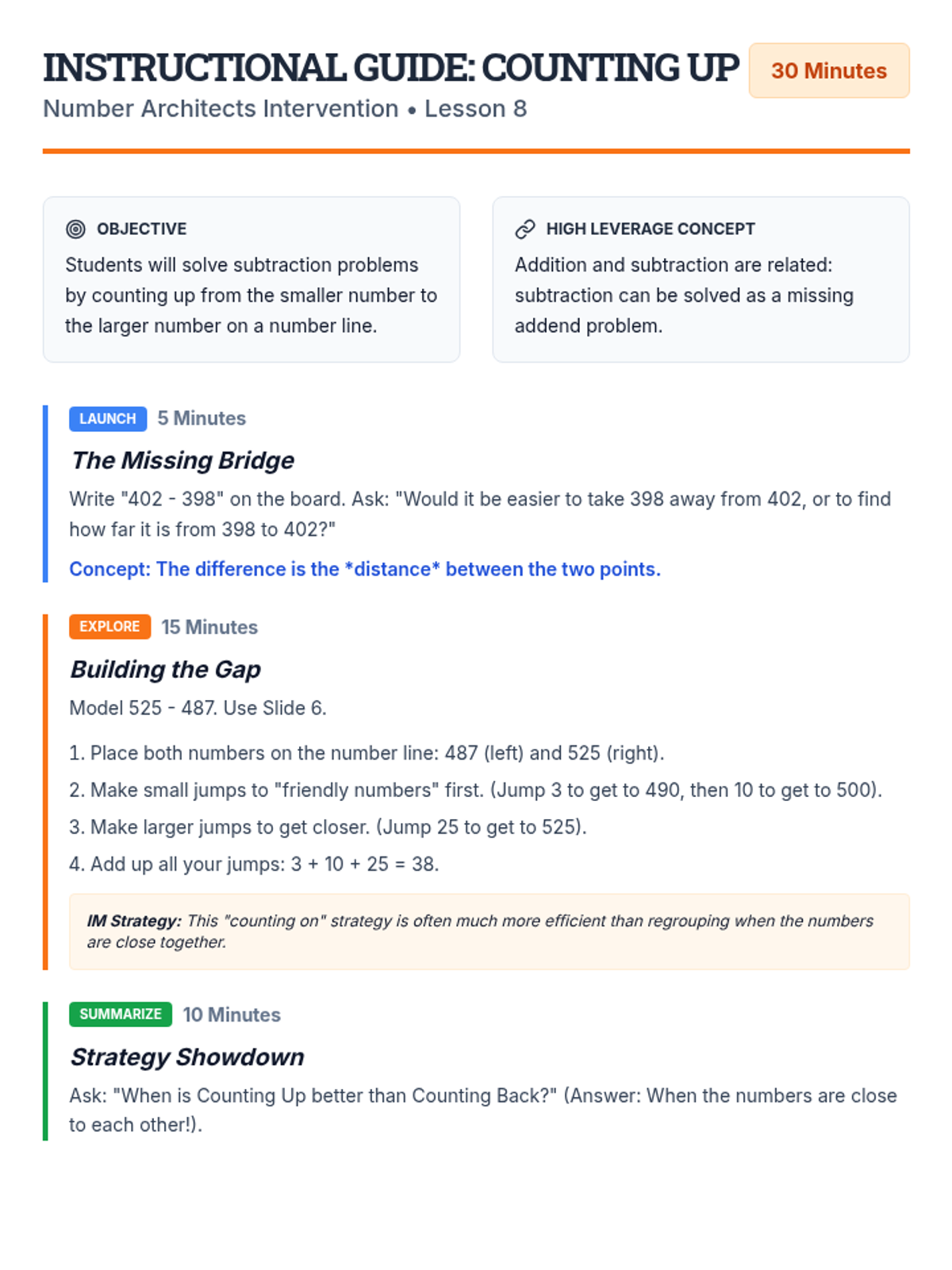
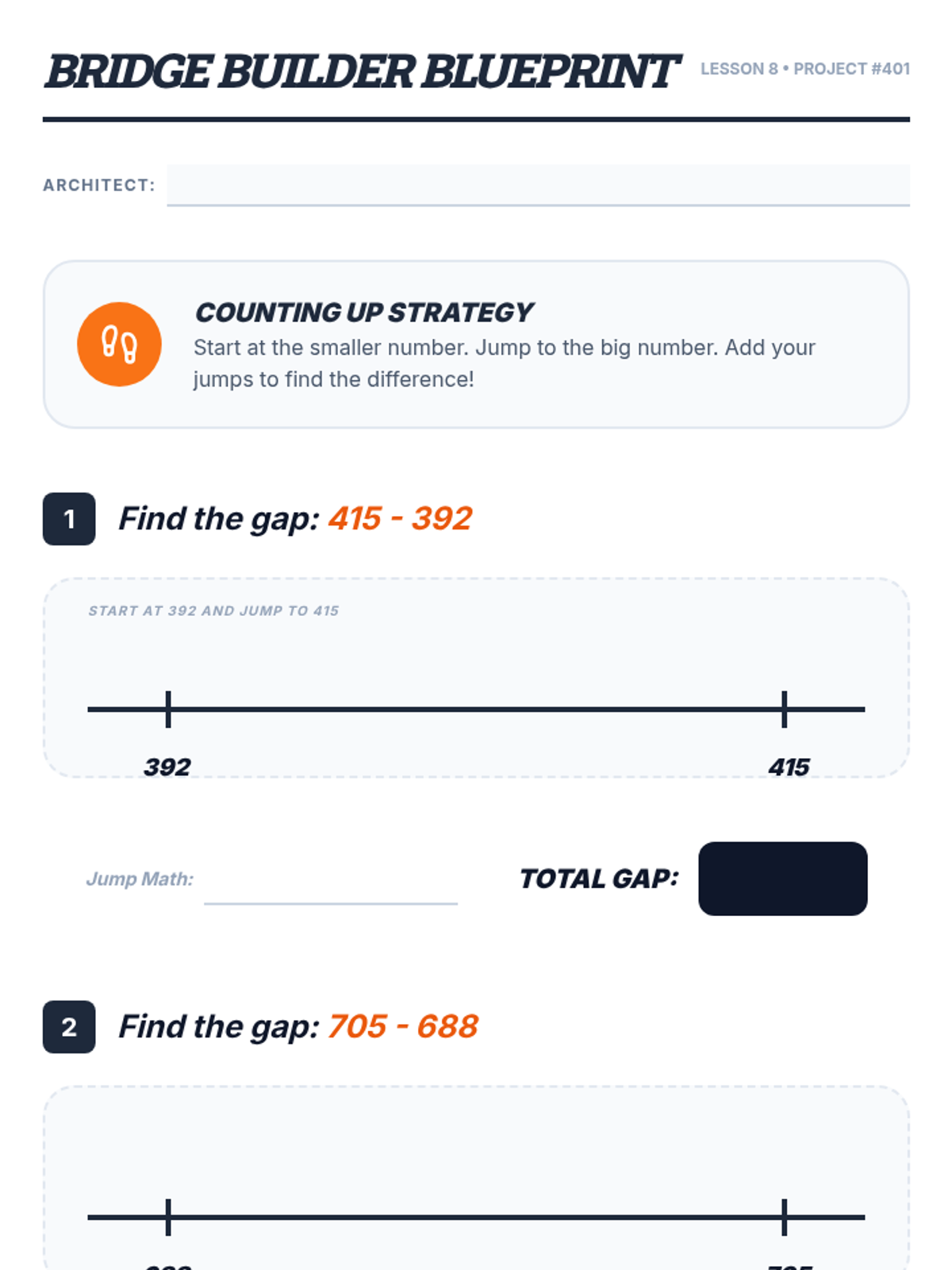
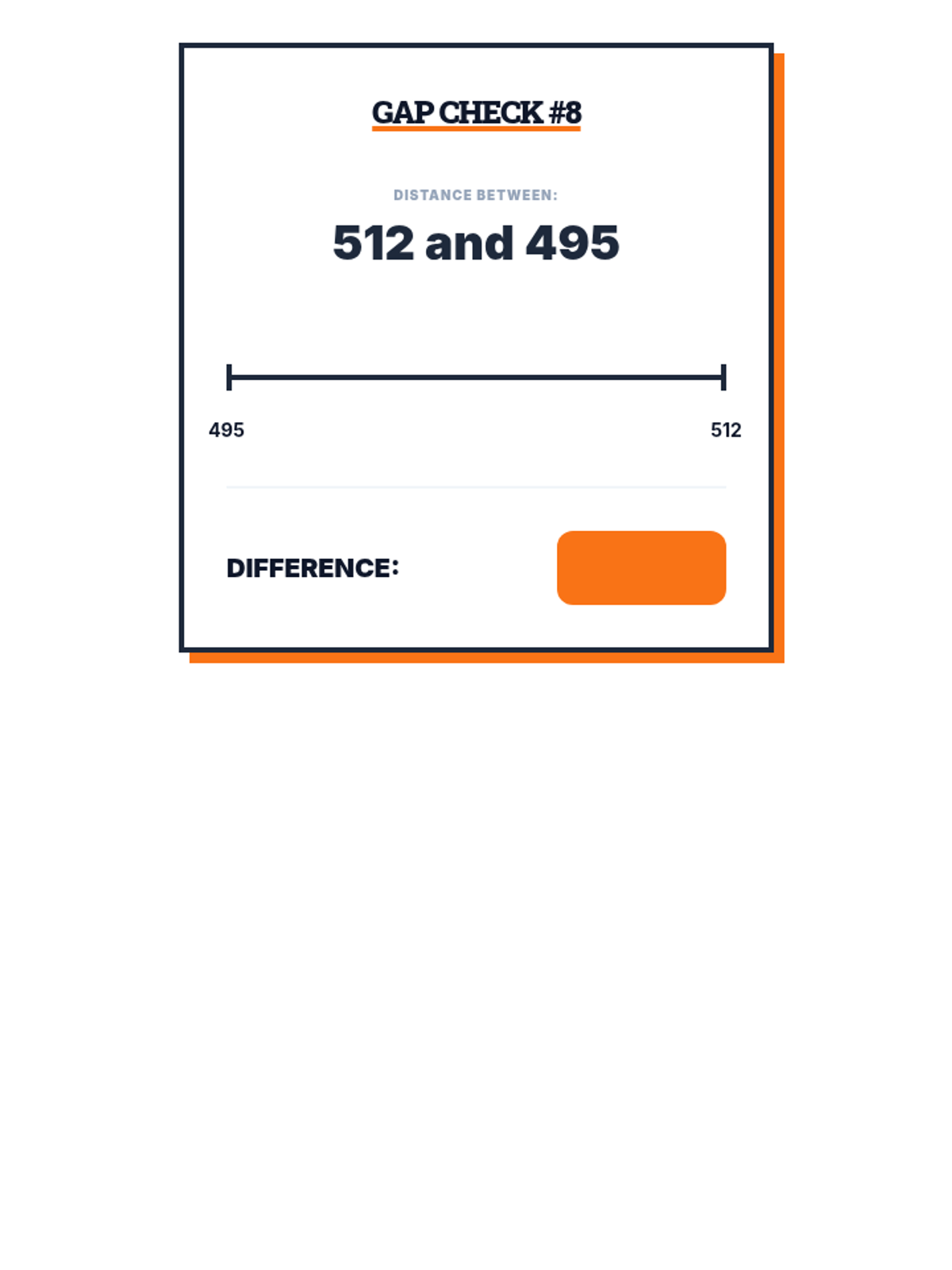
Using addition to solve subtraction by finding the difference between two numbers on a number line.
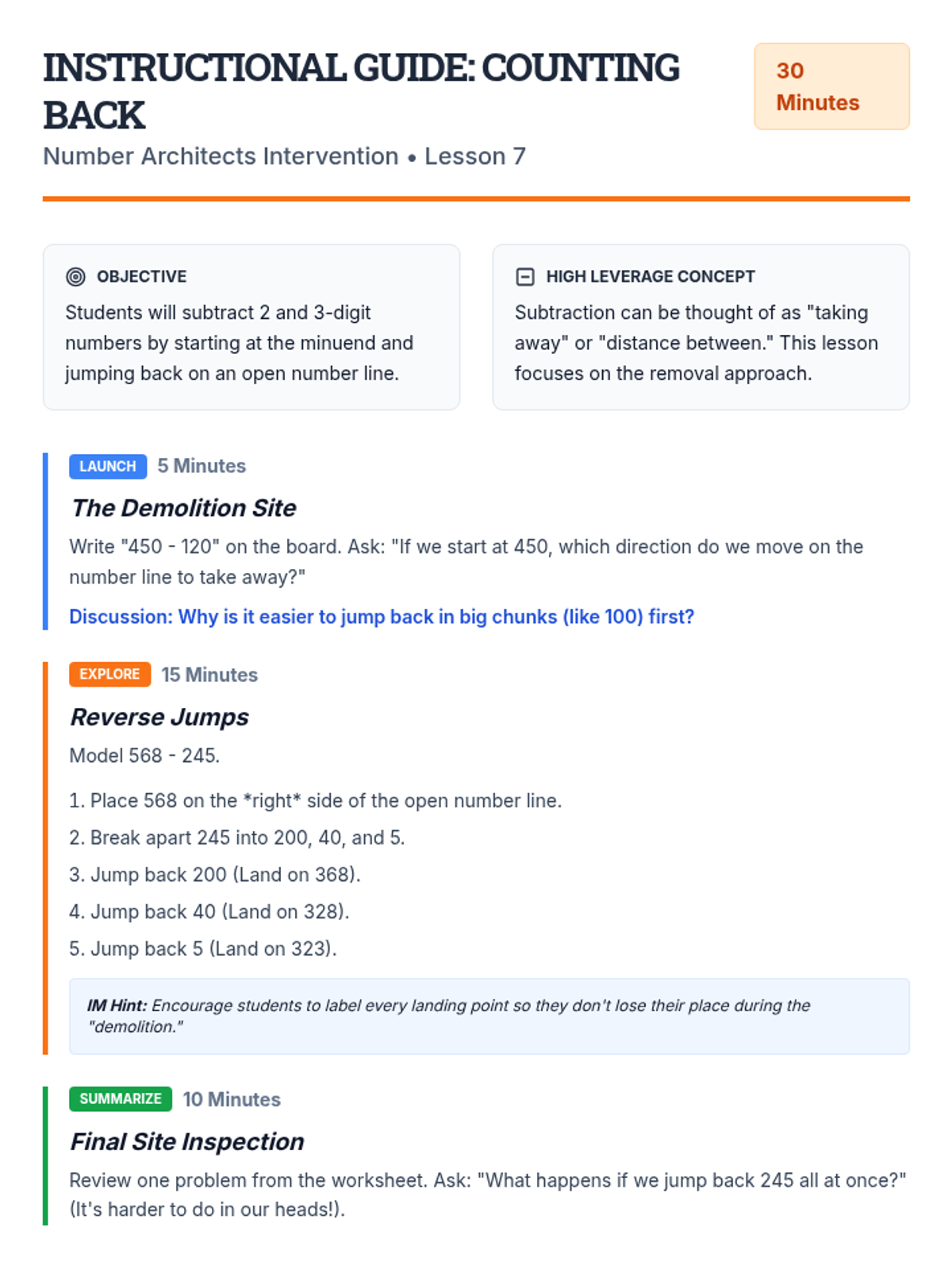
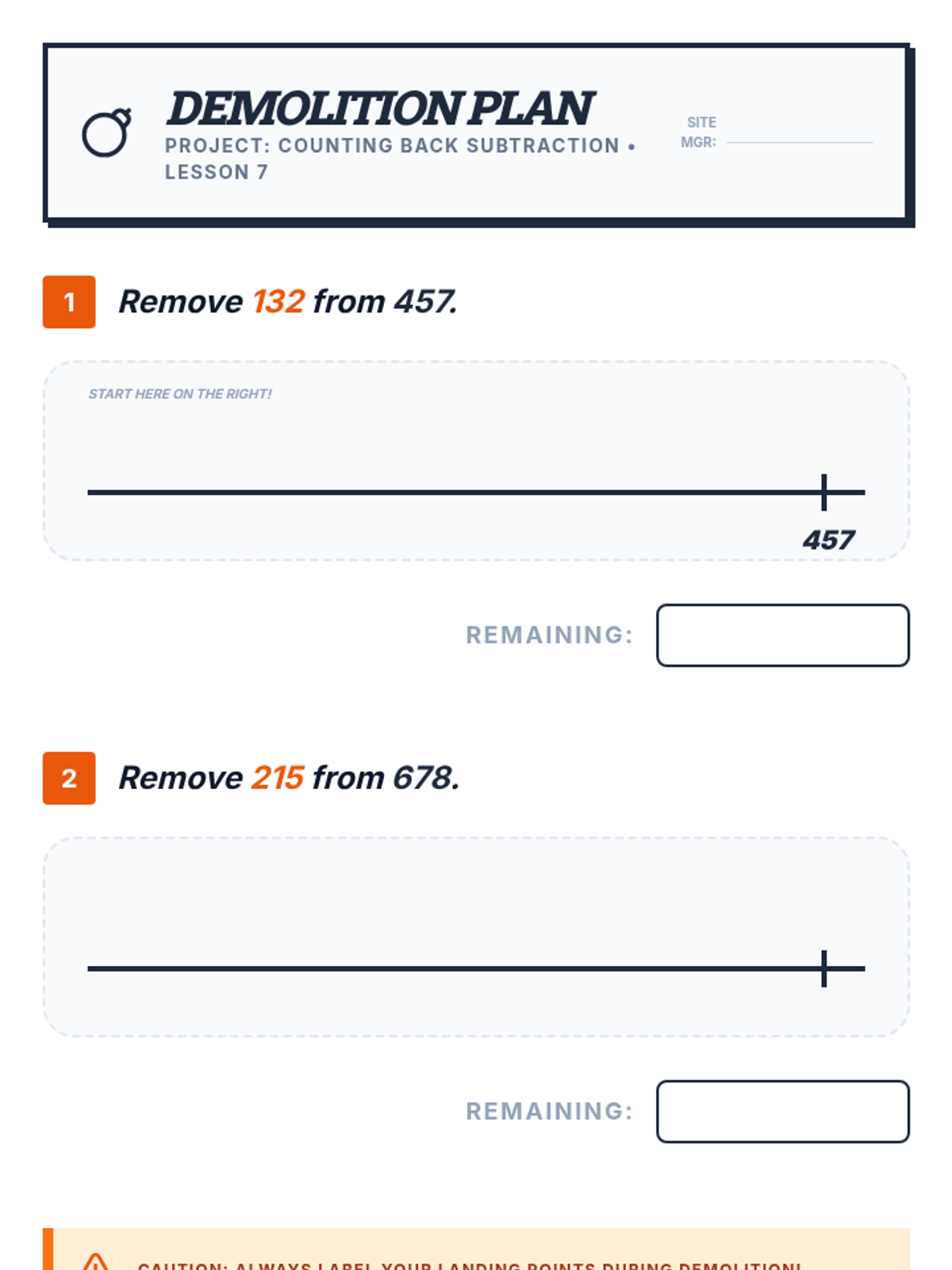
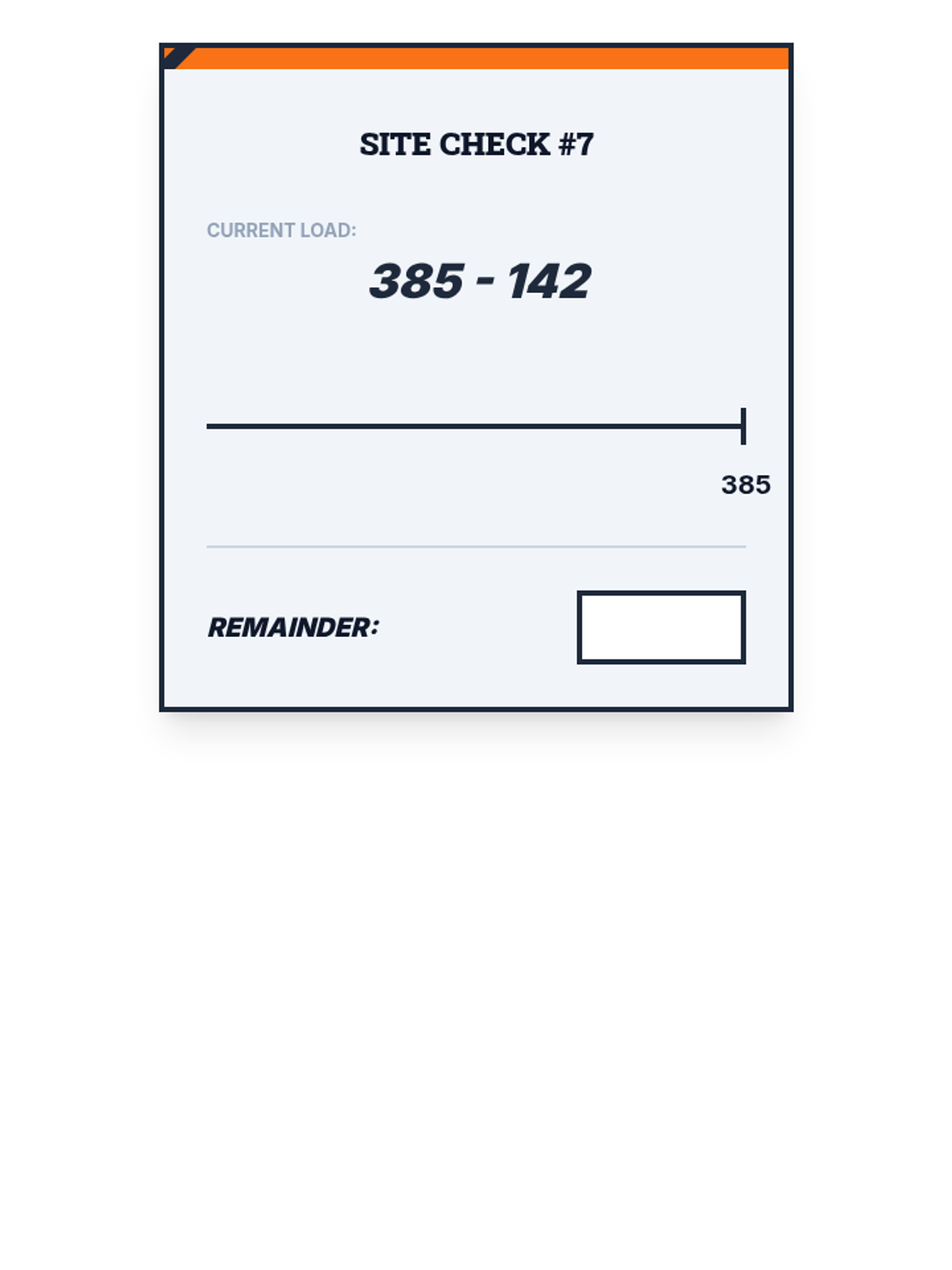
Subtracting 2-digit and 3-digit numbers by jumping back on an open number line.
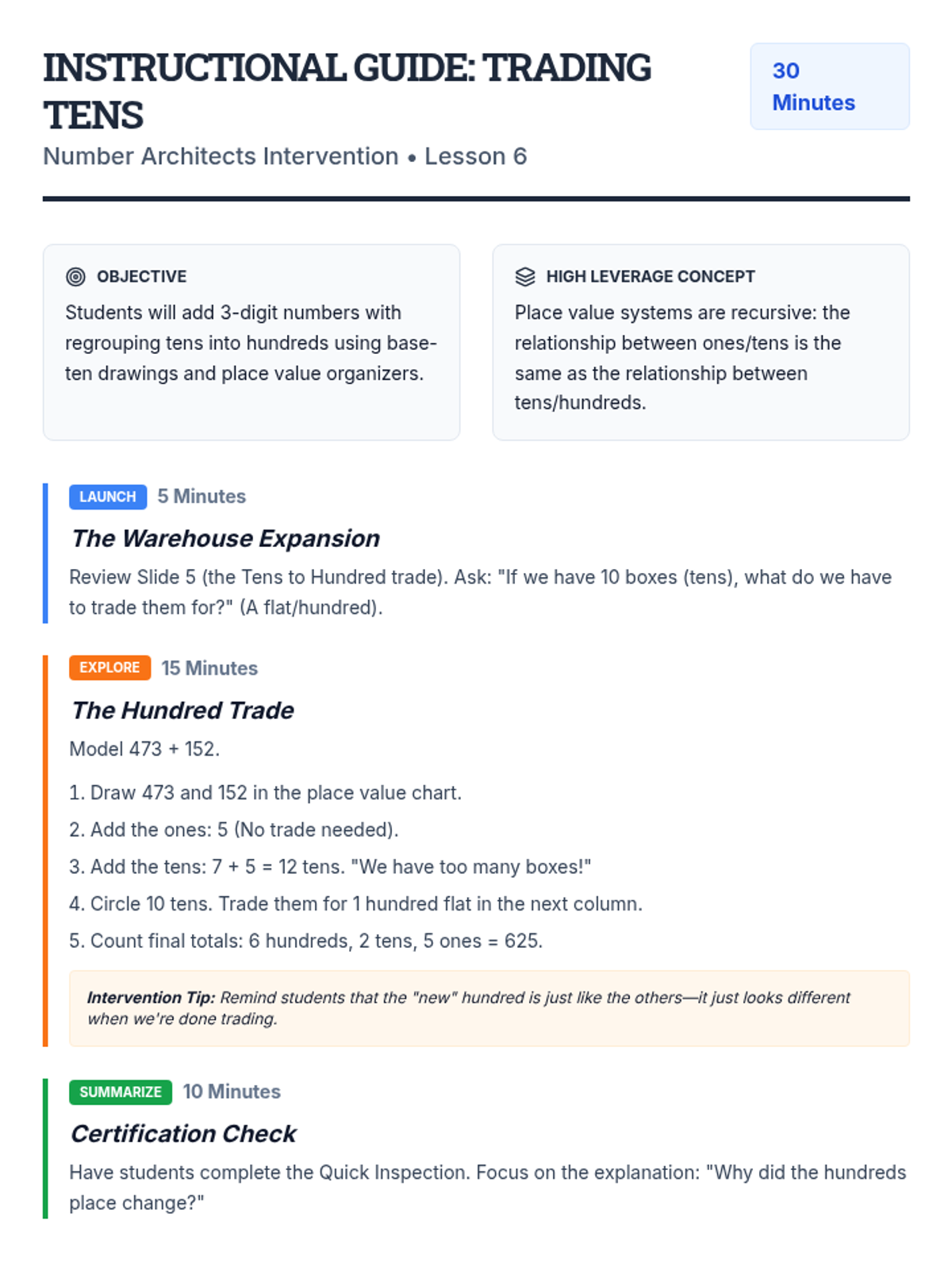
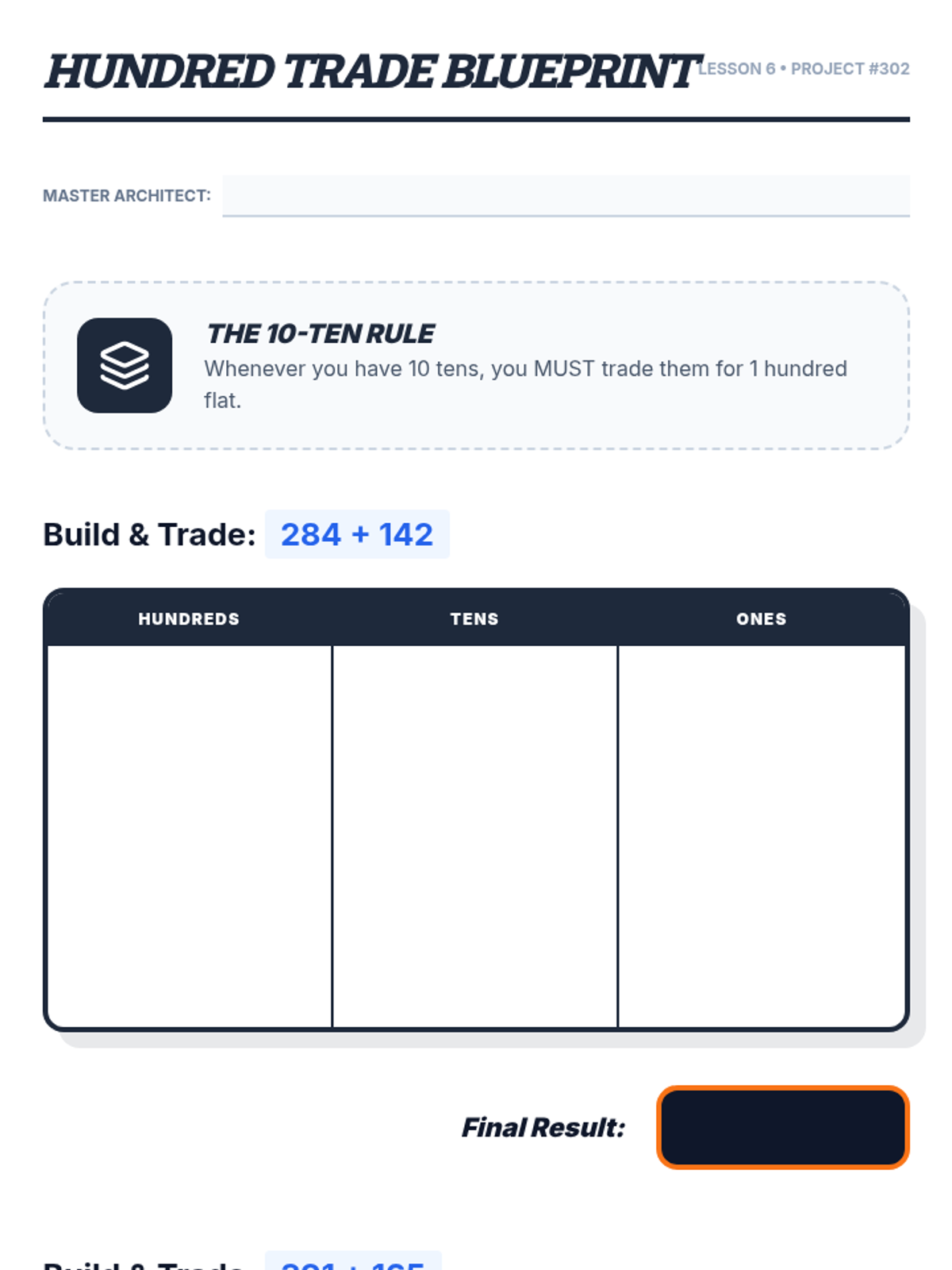
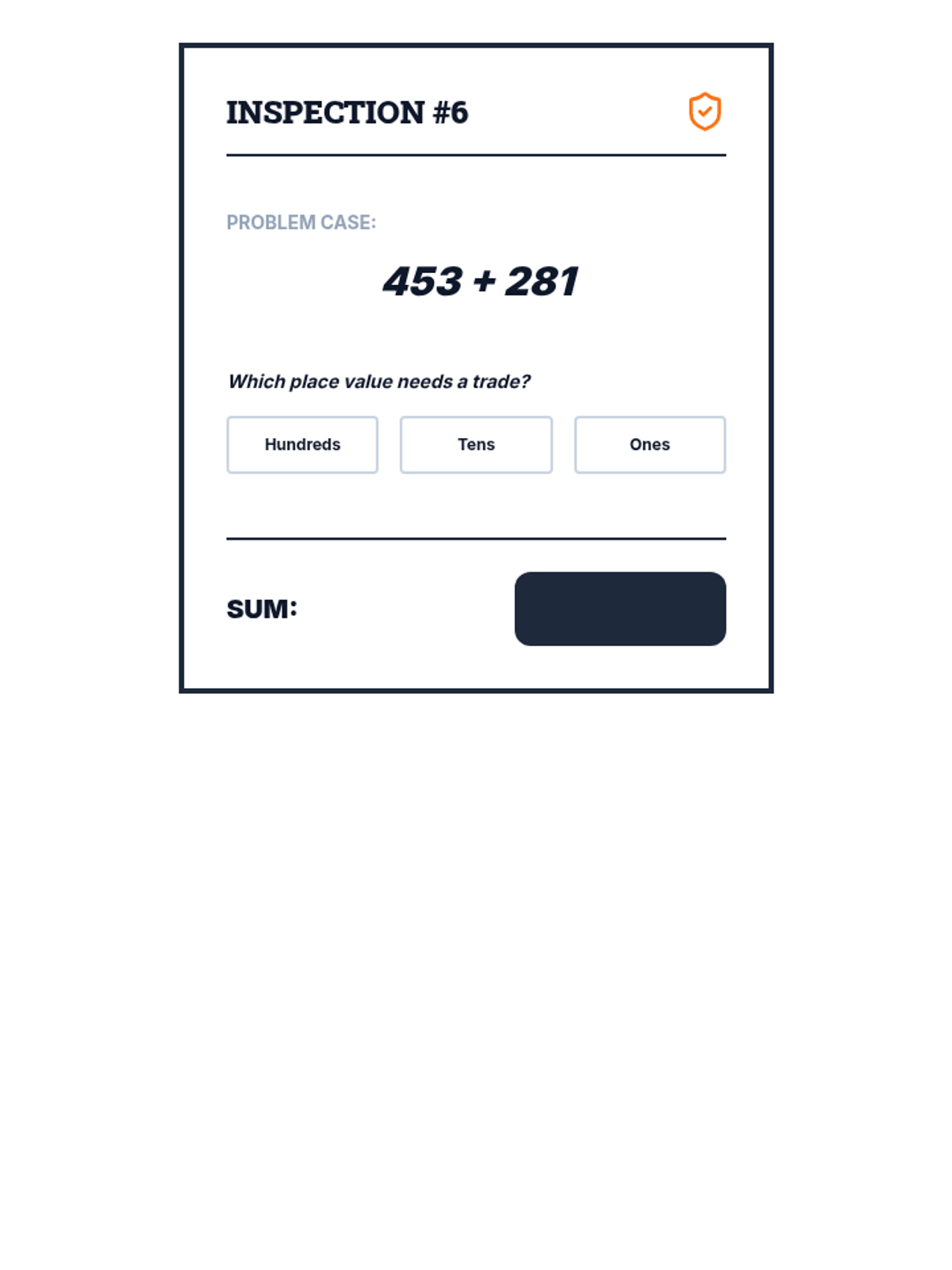
Practicing addition with regrouping tens into a hundred using base-ten diagrams and place value charts.
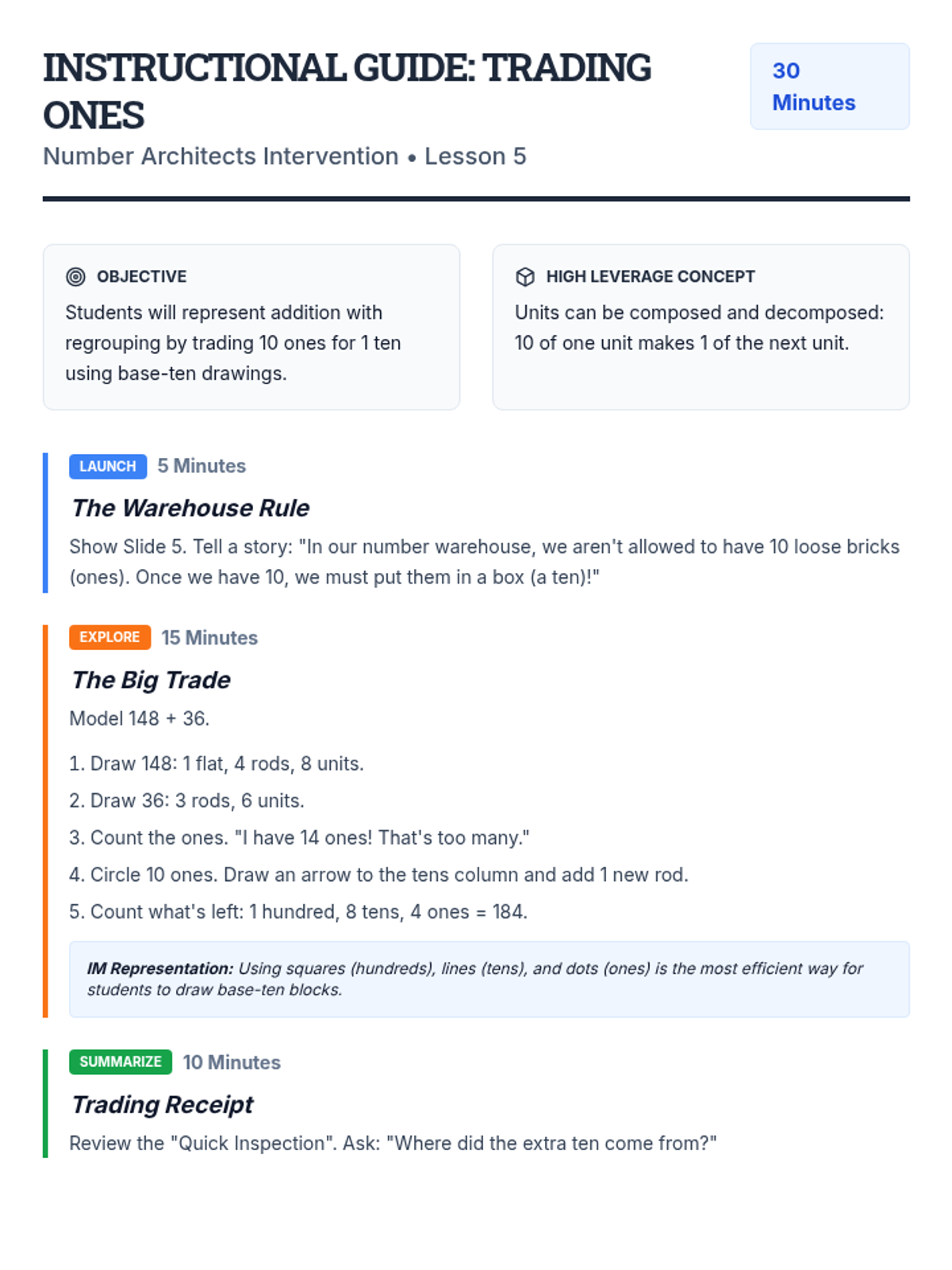
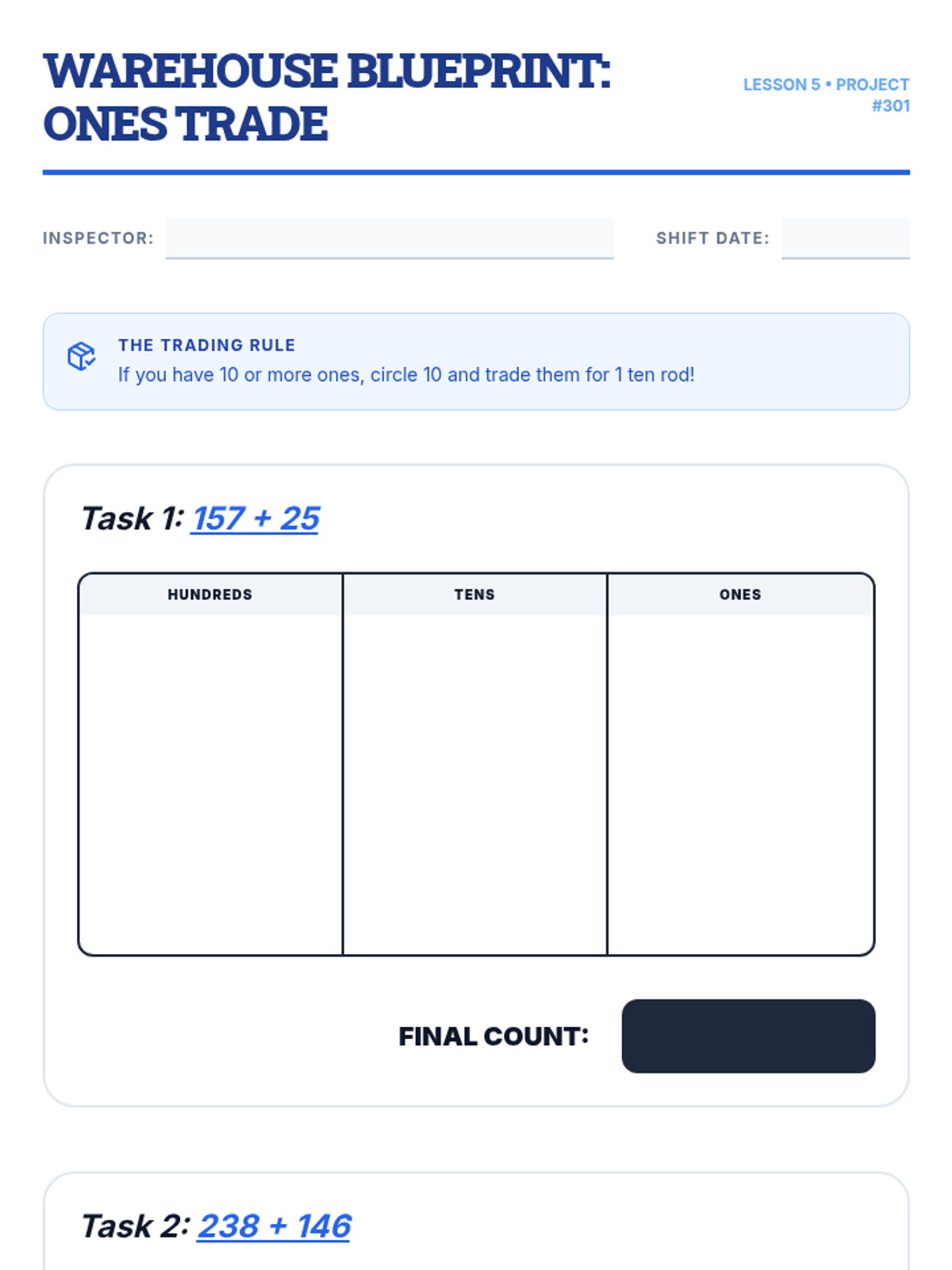
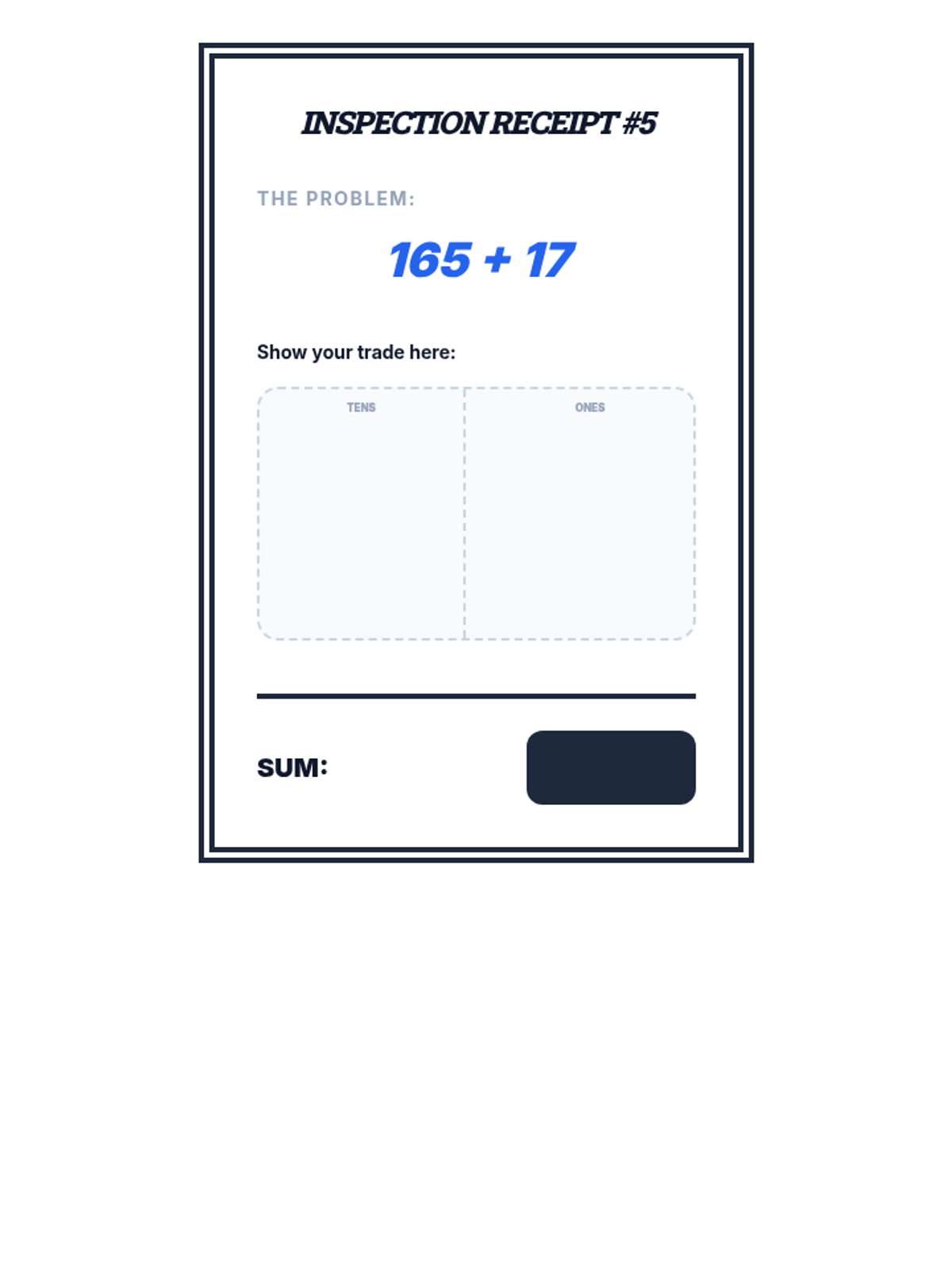
Using base-ten representations to visualize regrouping ones into a ten during addition.
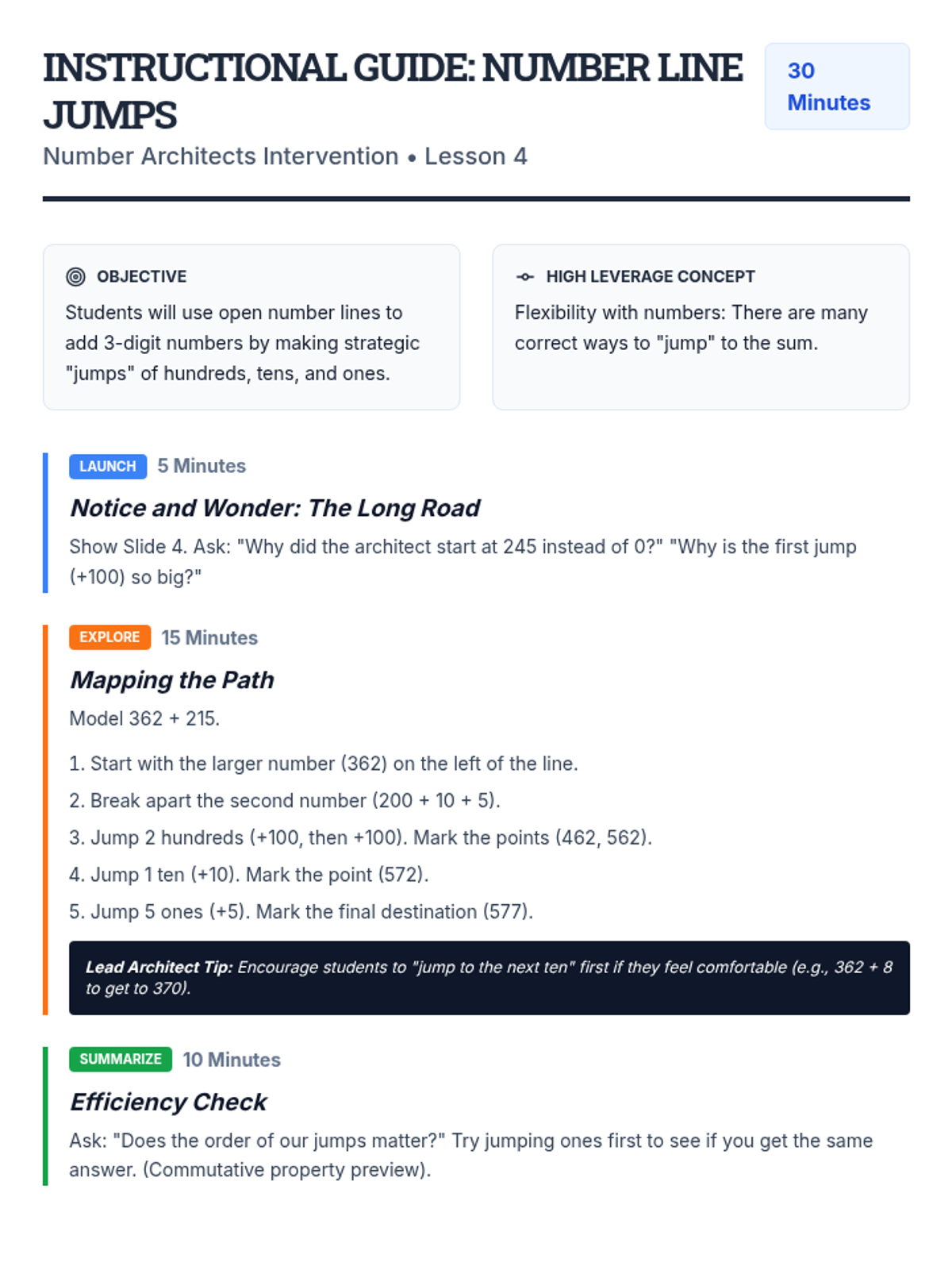
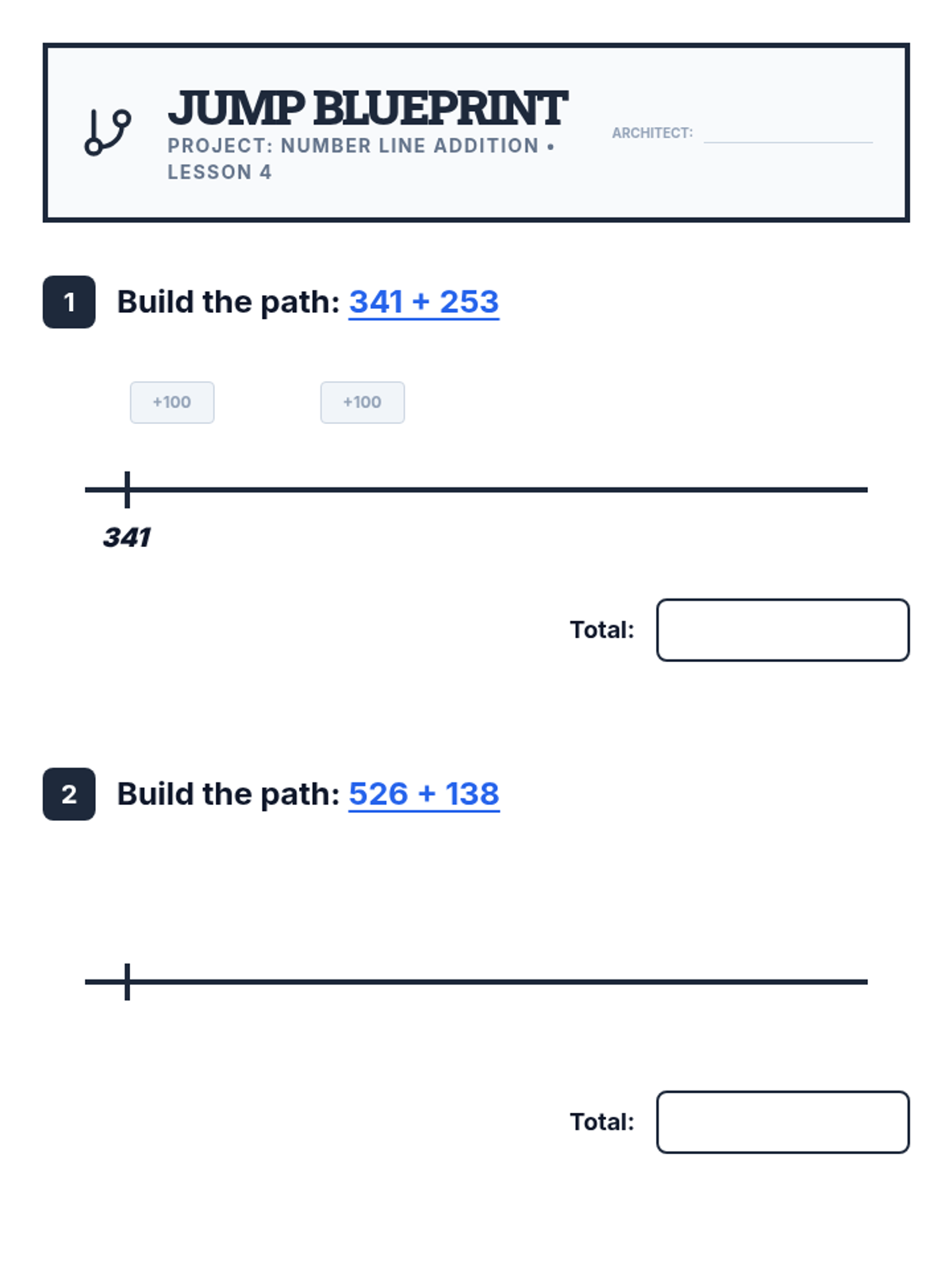
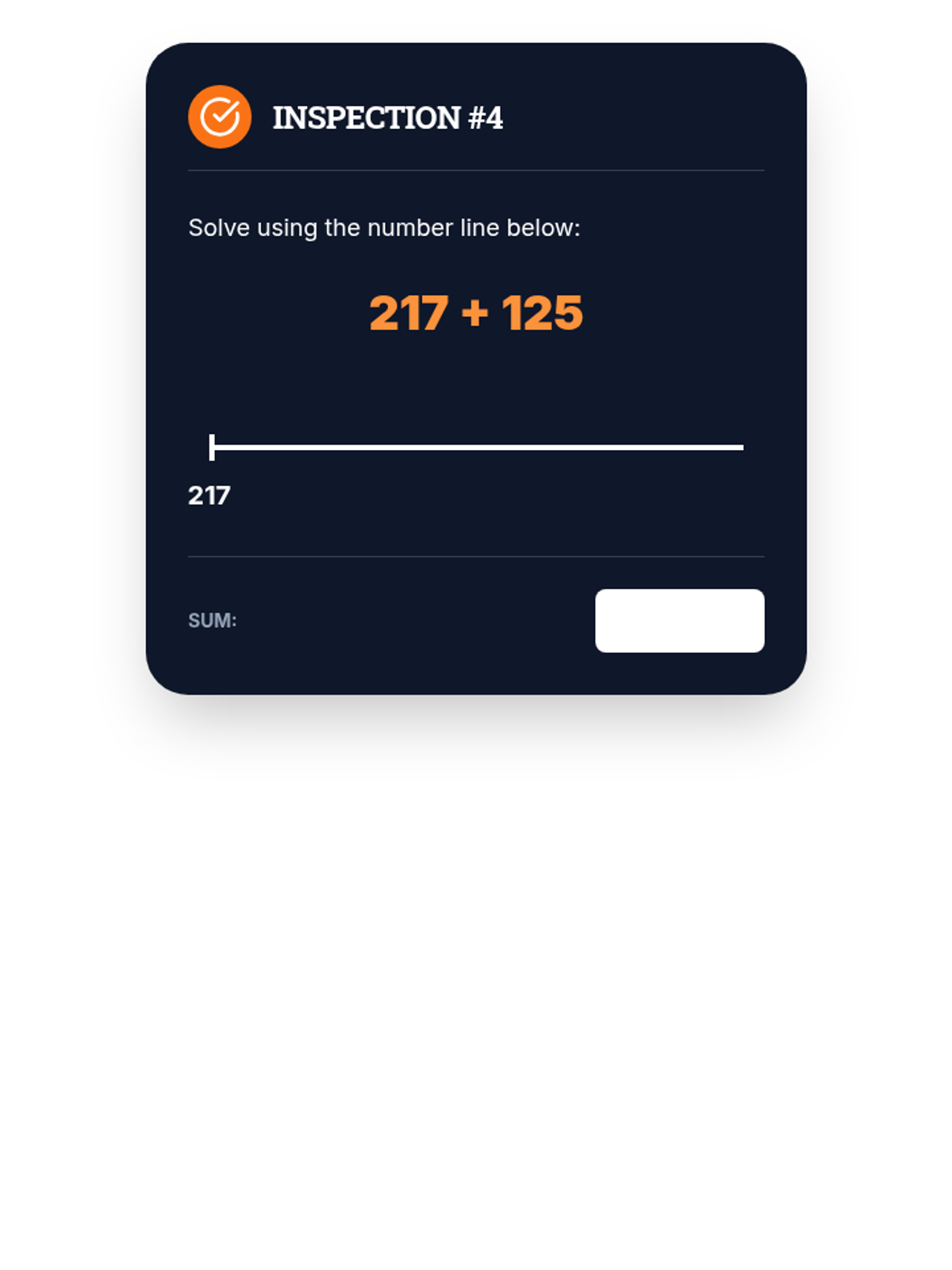
Using open number lines to add 3-digit numbers by making jumps of hundreds, tens, and ones.
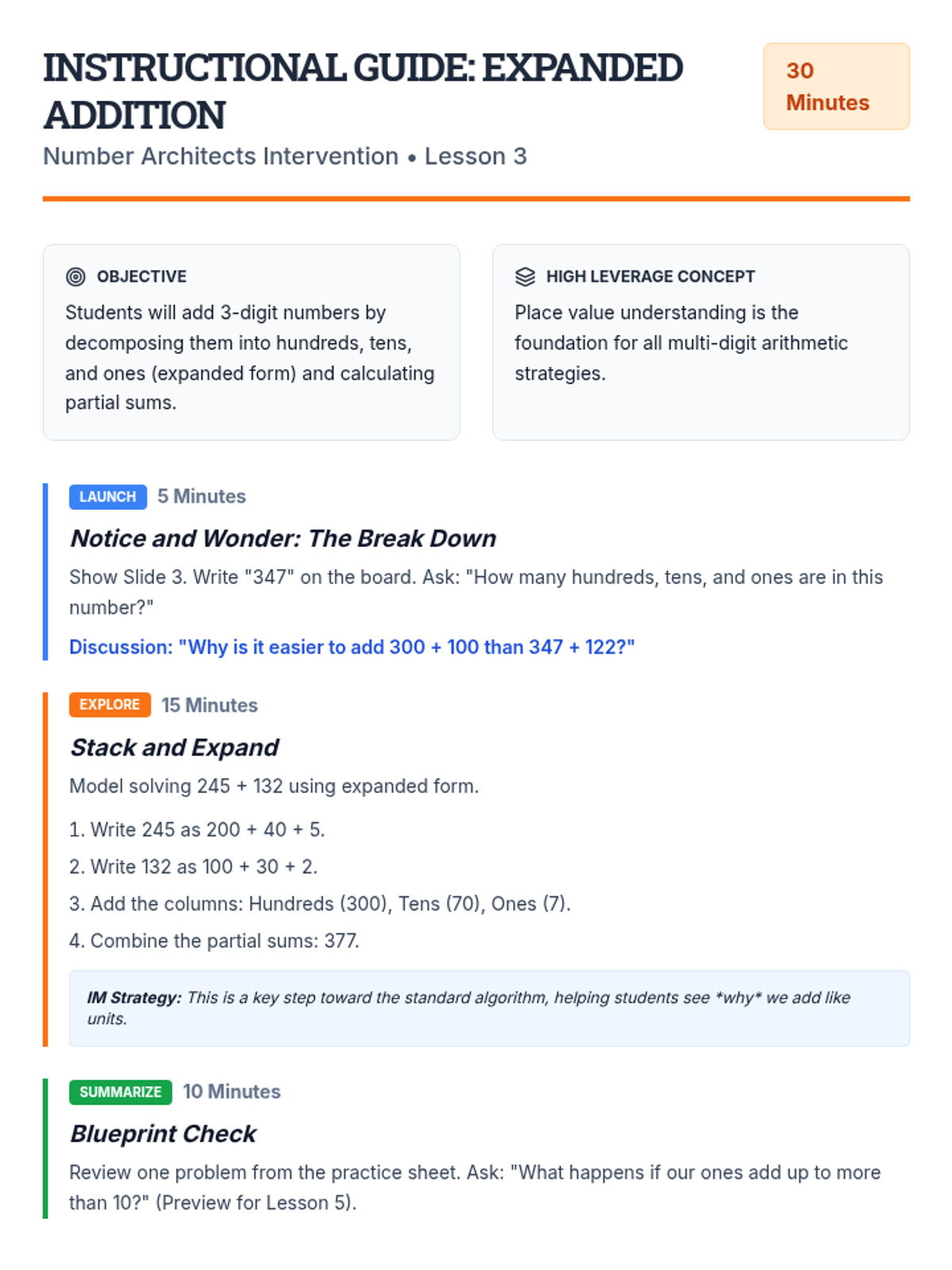
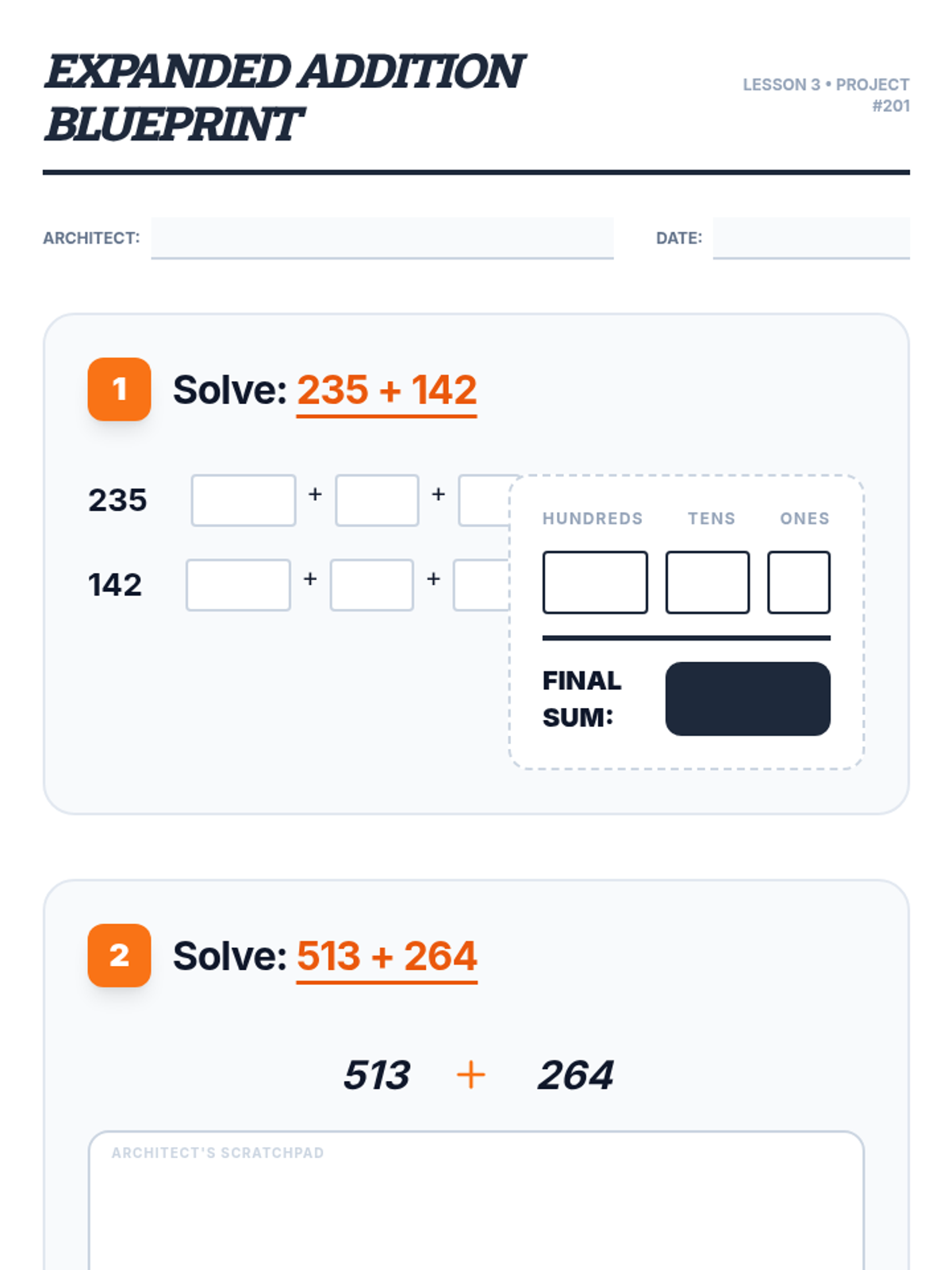
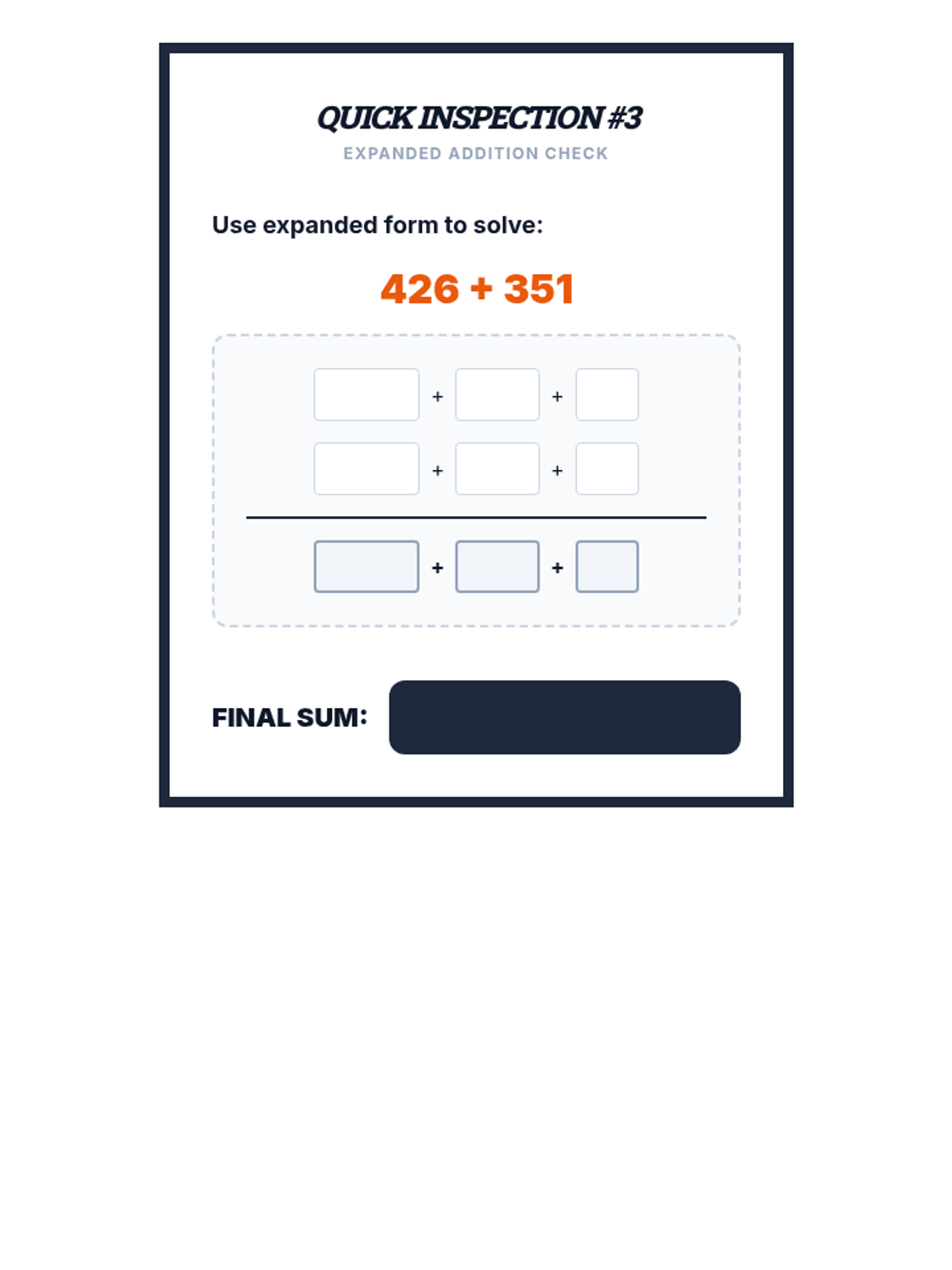
Introduction to addition within 1000 using expanded form to emphasize the value of each digit.
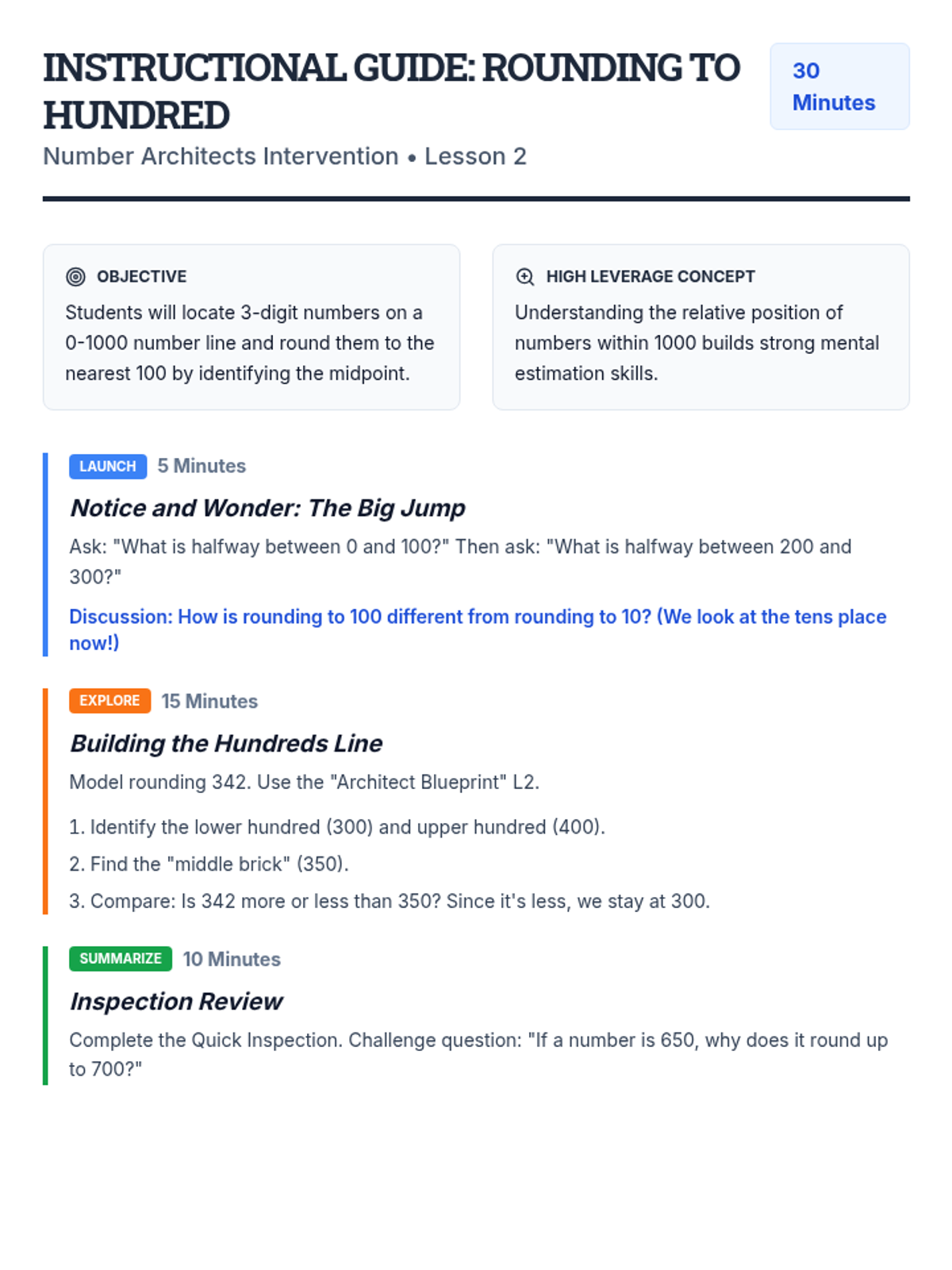
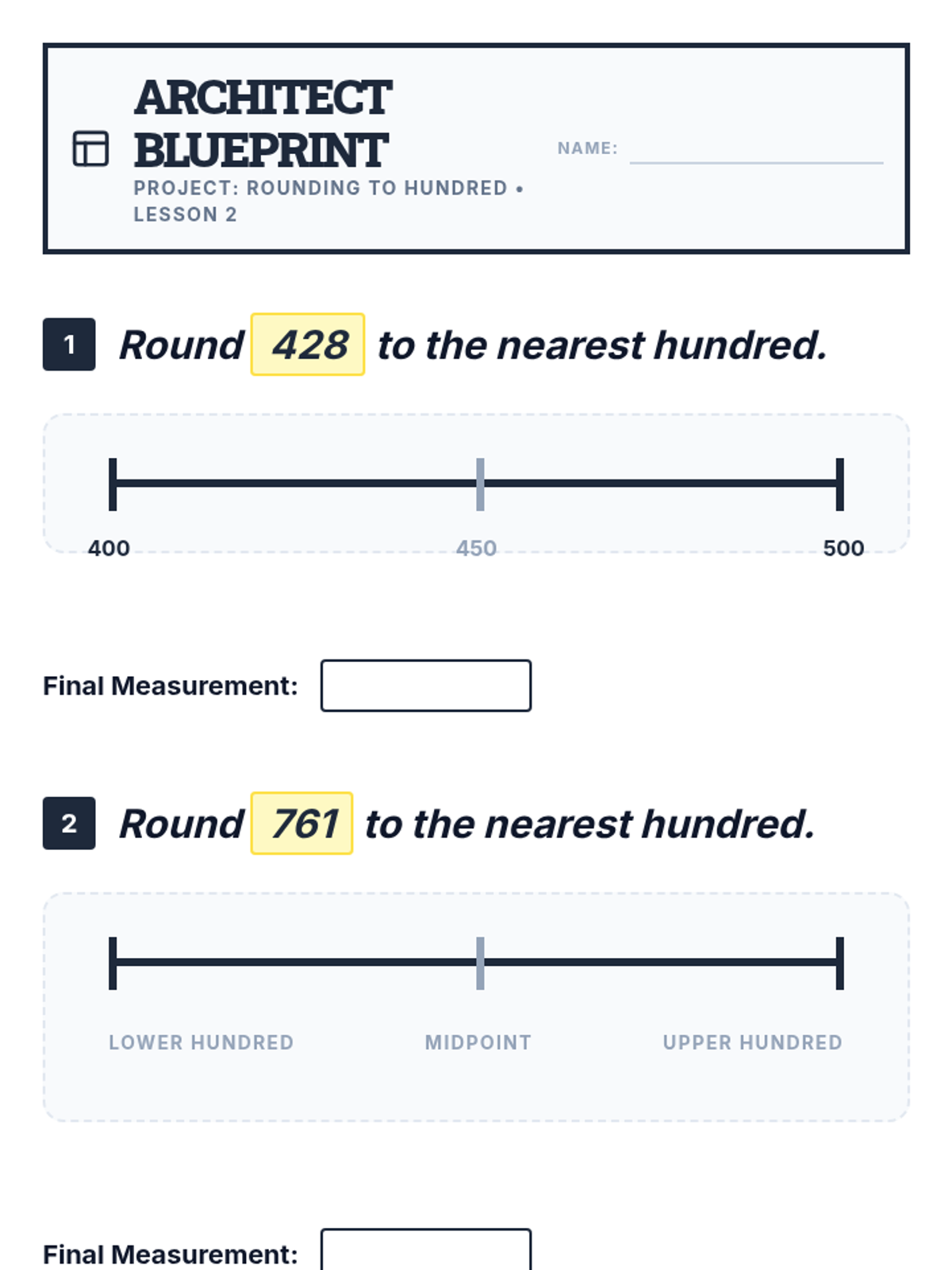
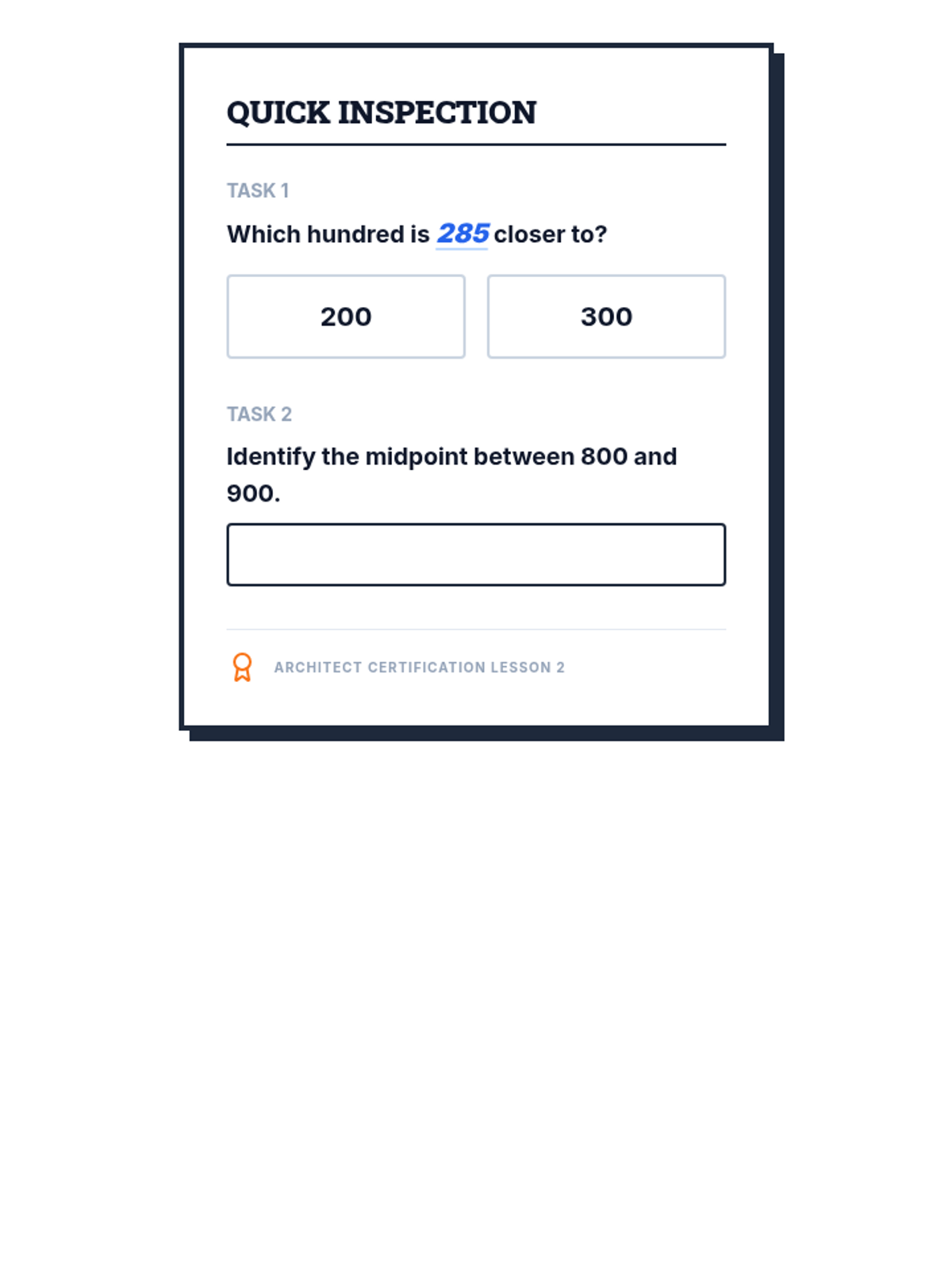
Extending rounding concepts to the nearest 100 using place value positioning on a 0-1000 number line.
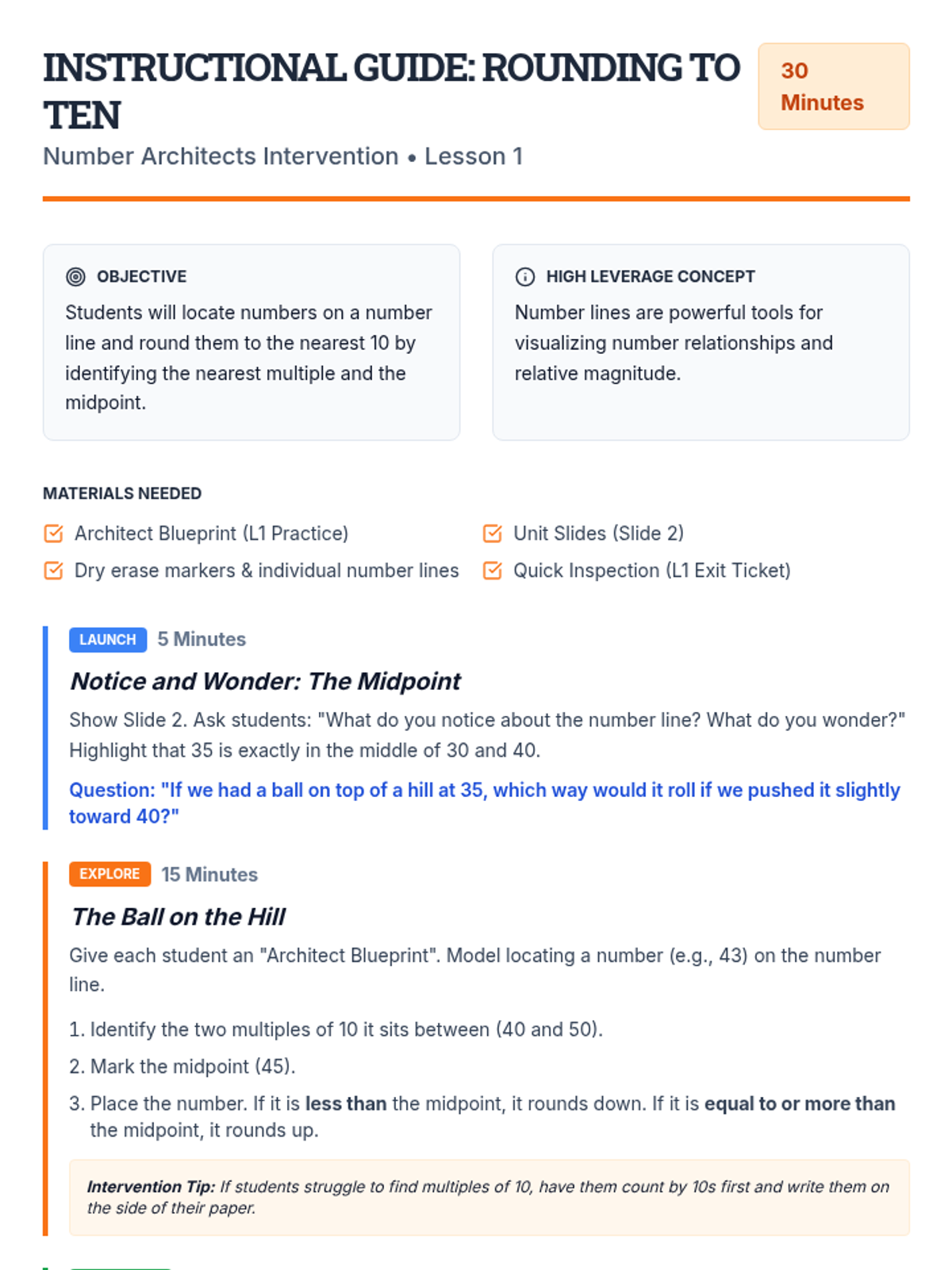
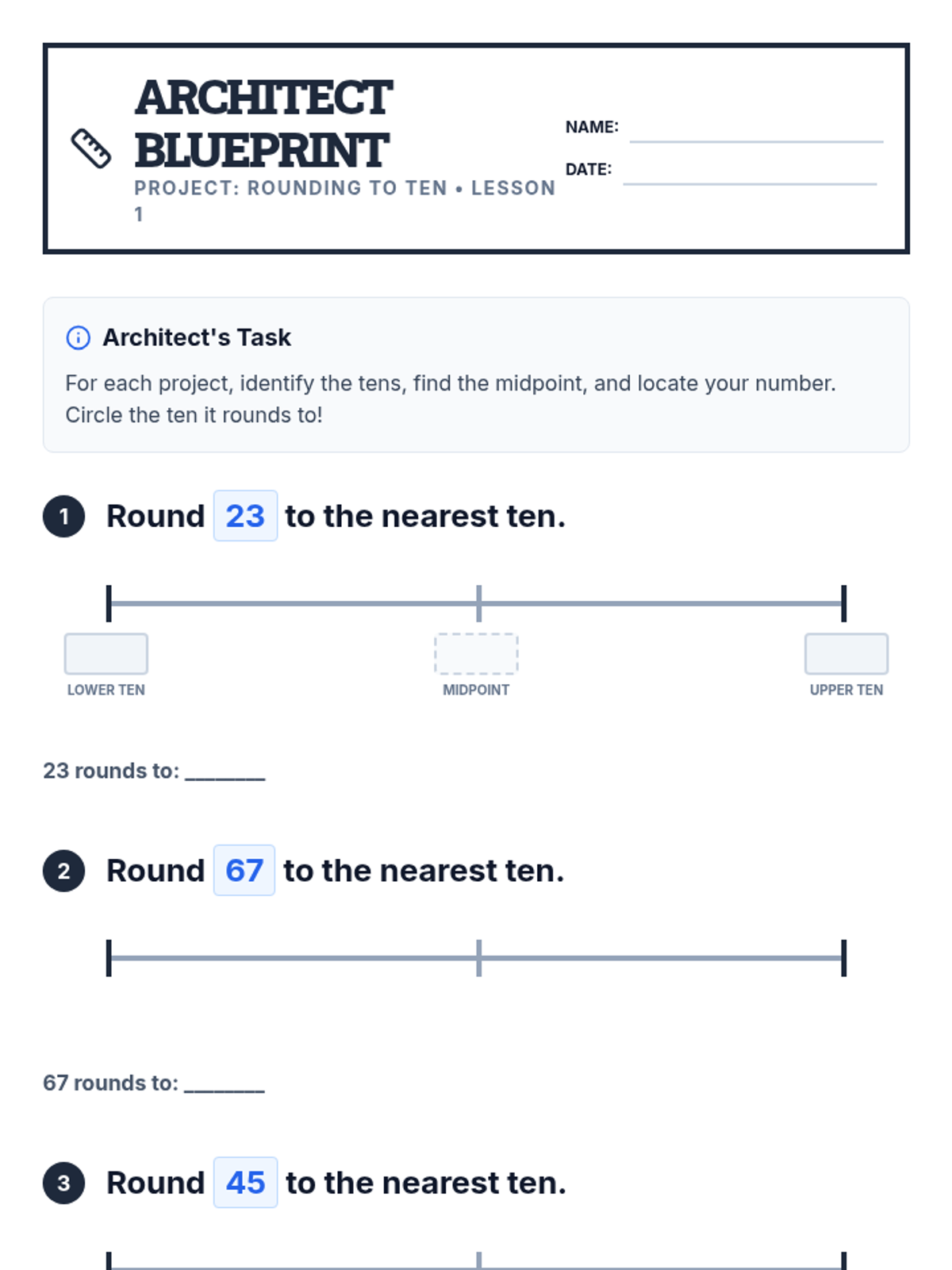
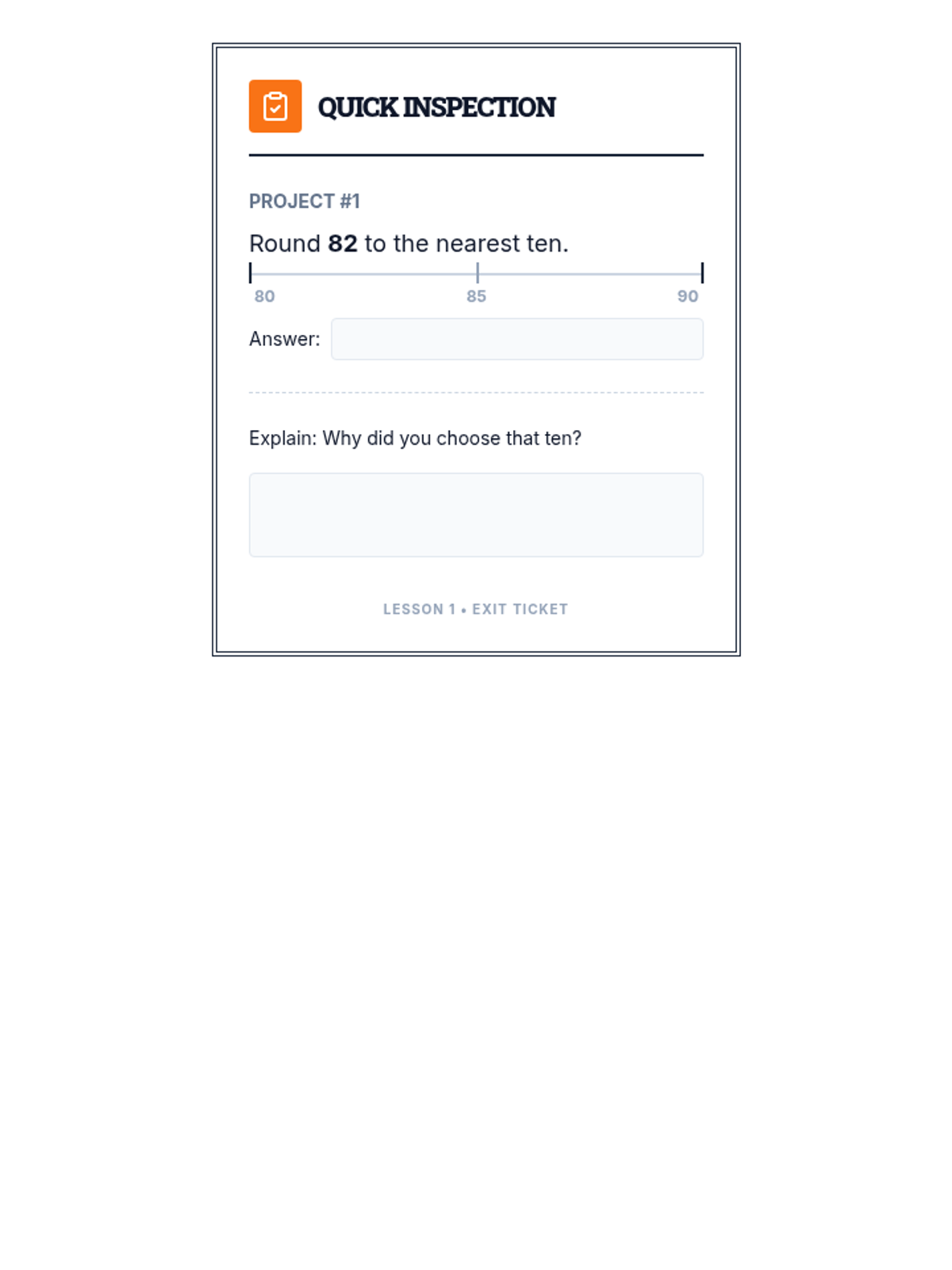
Students use number lines to round numbers within 100 to the nearest 10, focusing on the halfway point as a decision maker.
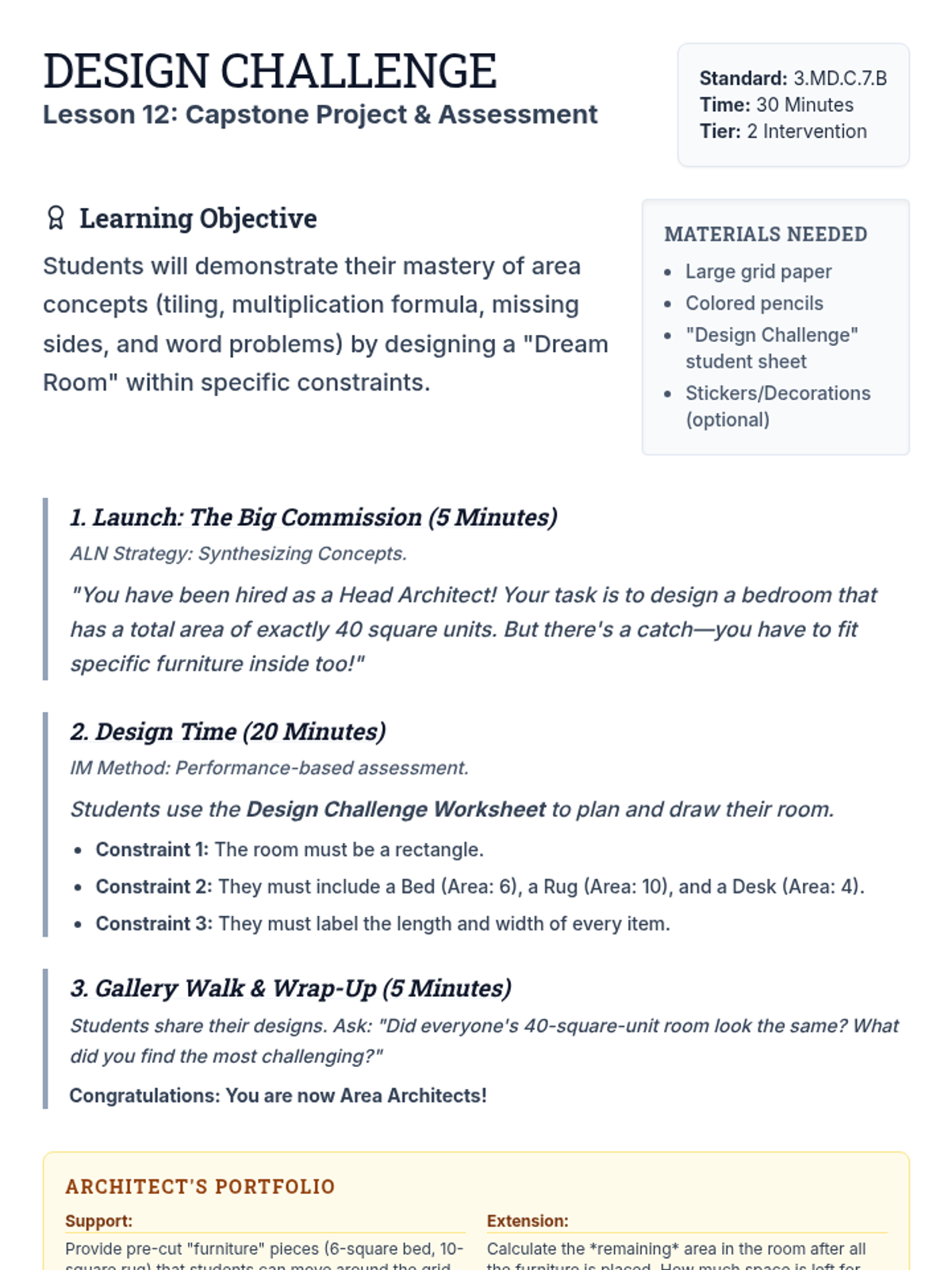
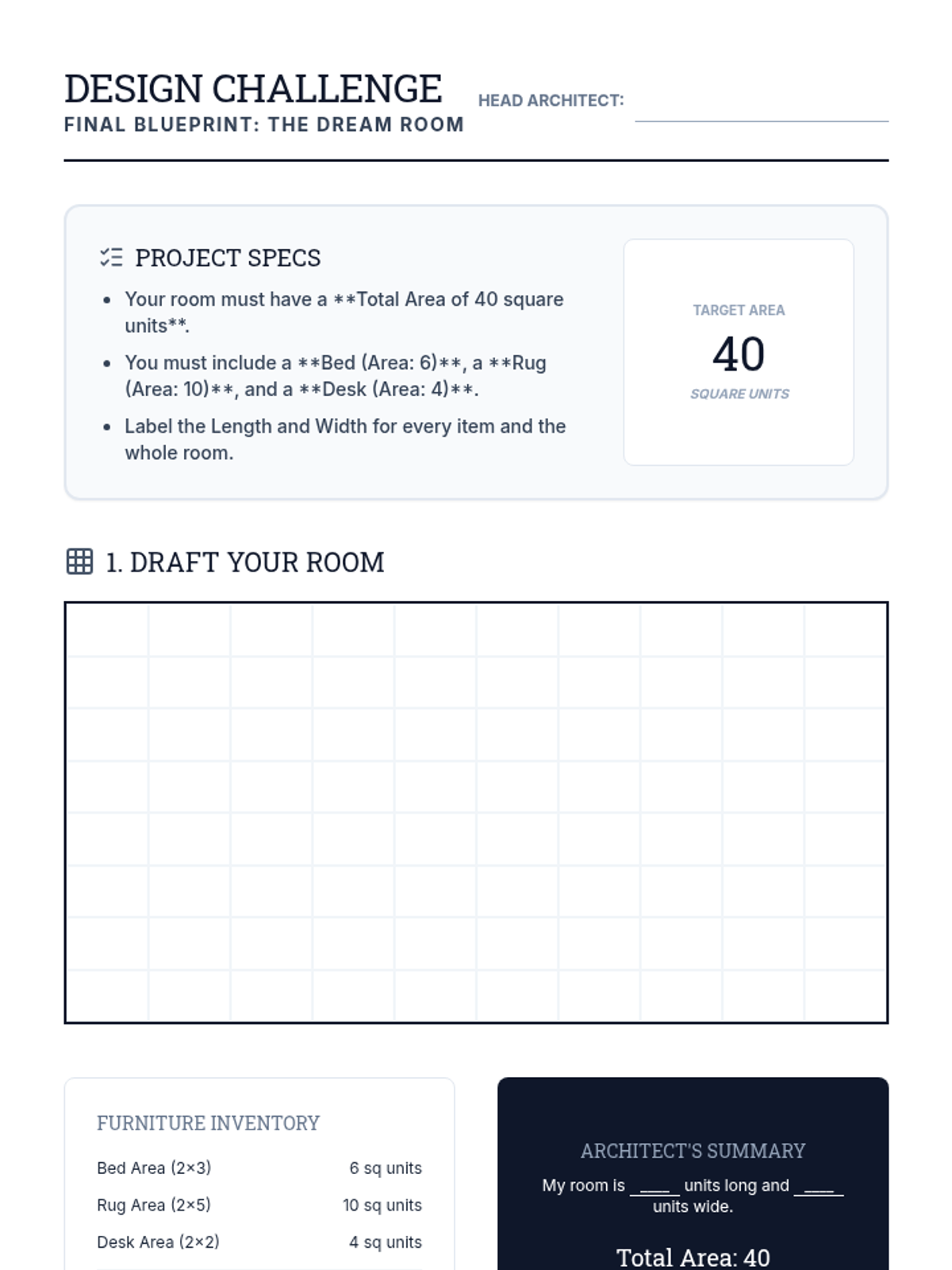
A cumulative review and hands-on design task where students apply all area skills learned in the sequence.
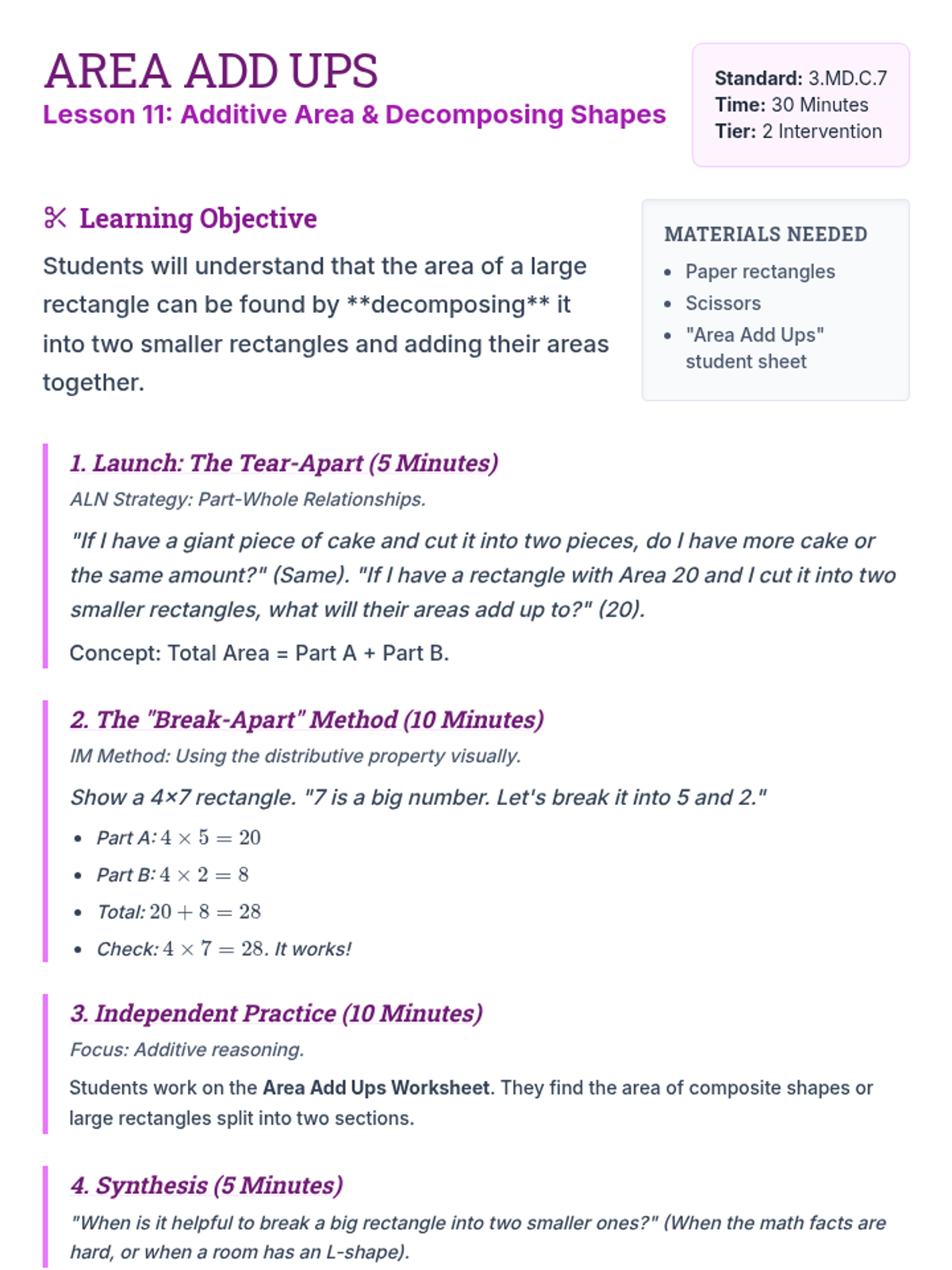
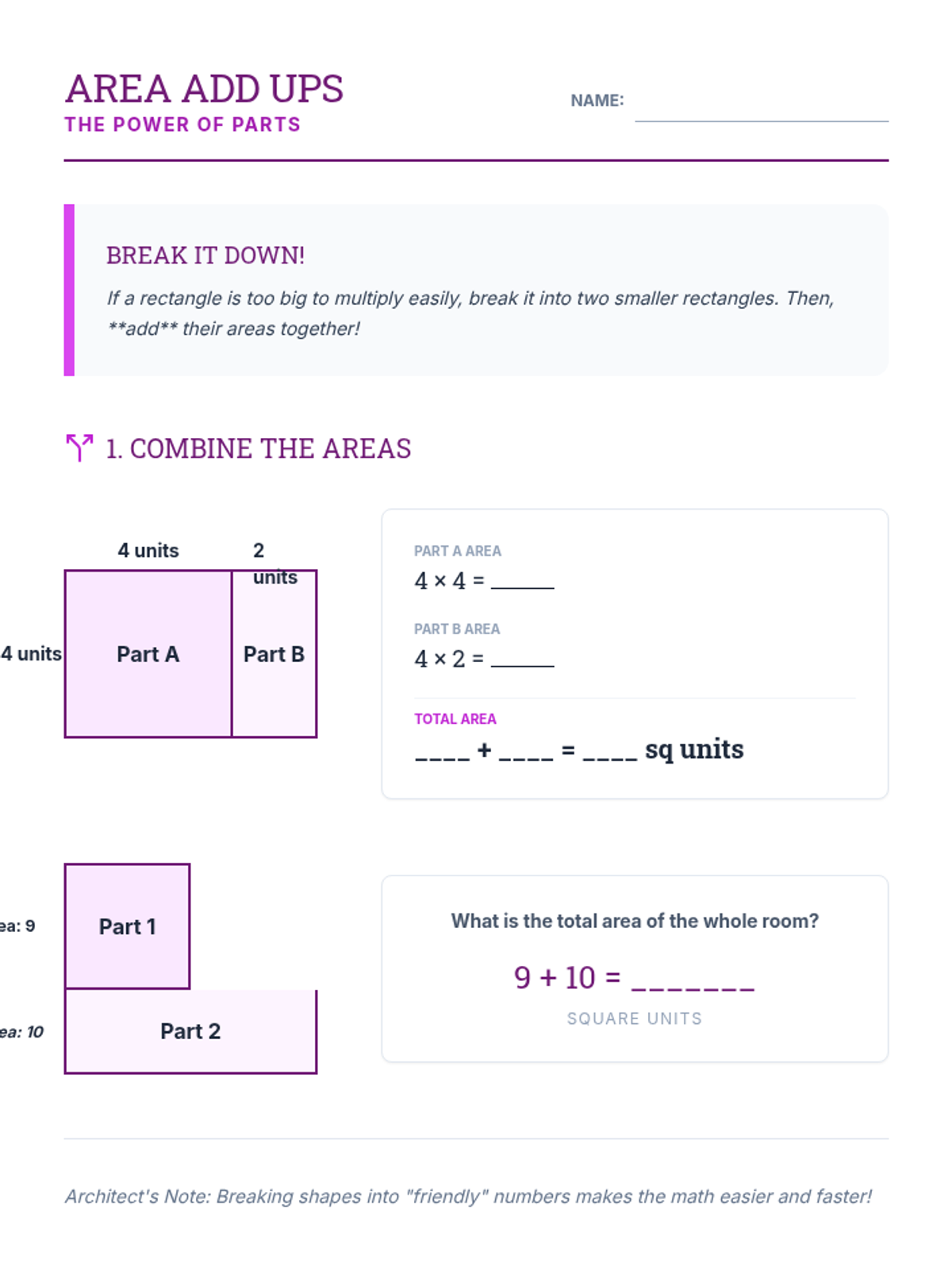
Learning that the total area of a large rectangle is the sum of its parts, introducing additive area concepts.
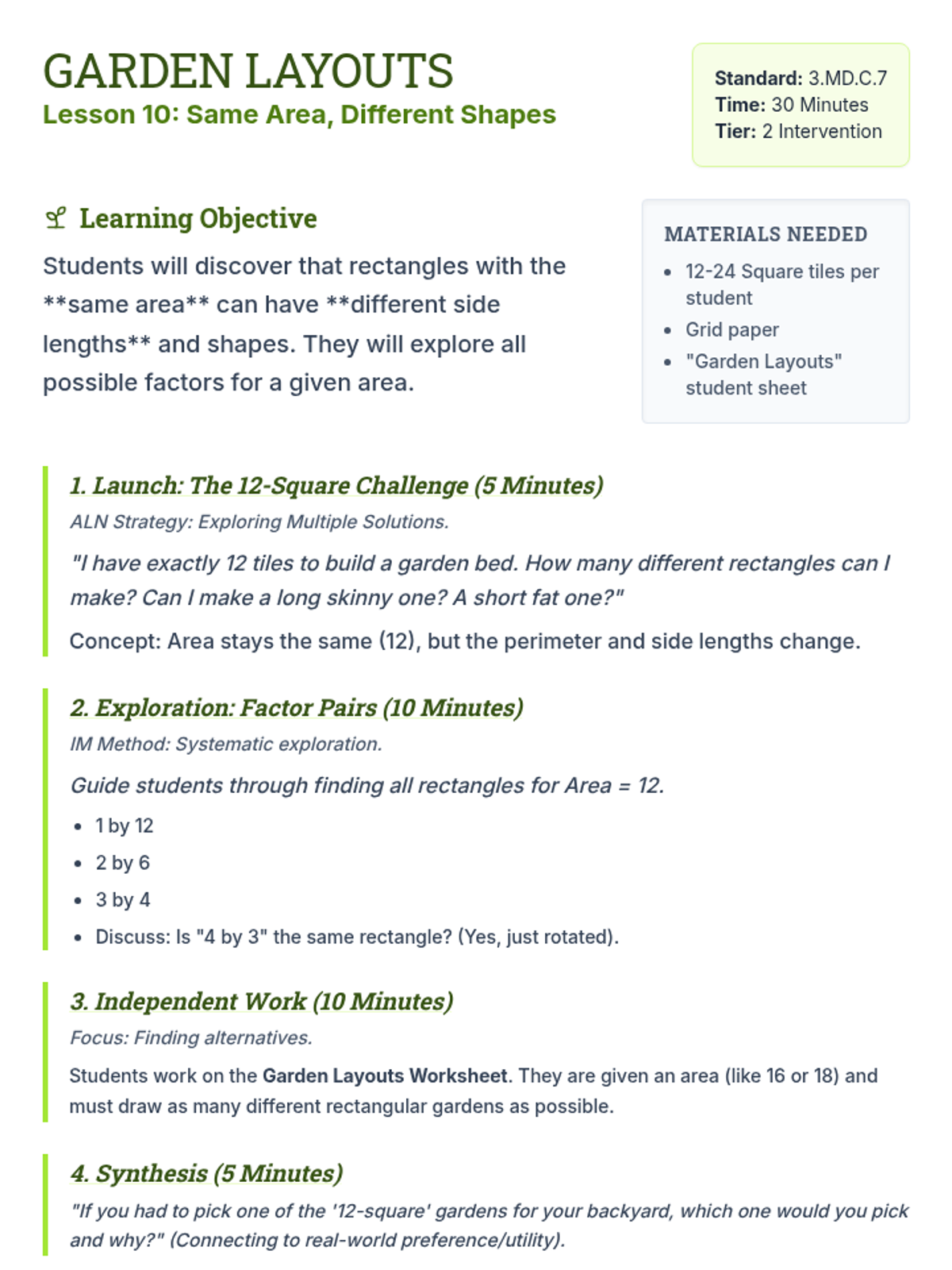
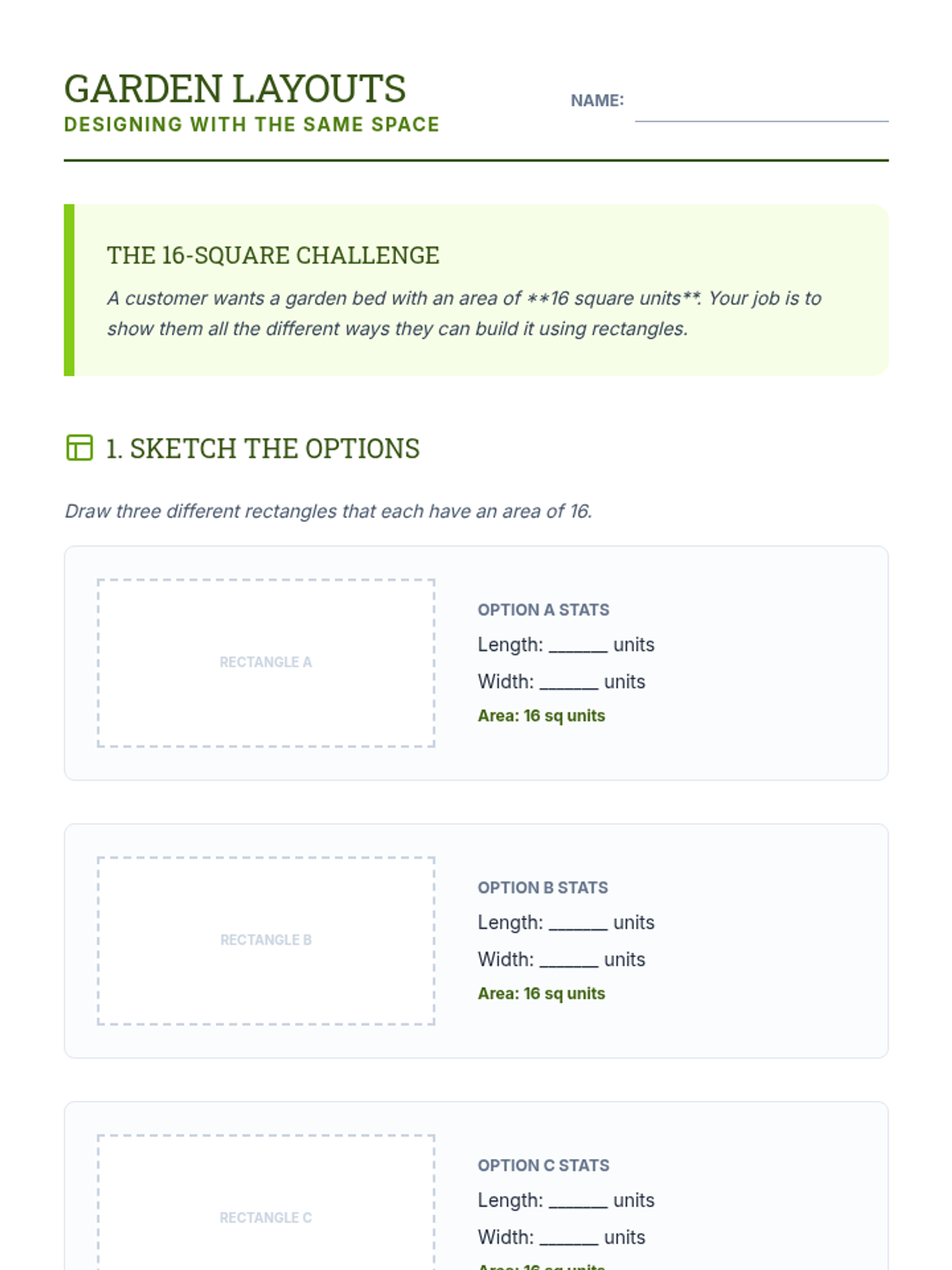
Comparing the areas of different garden plots and identifying that different shapes can have the same area.
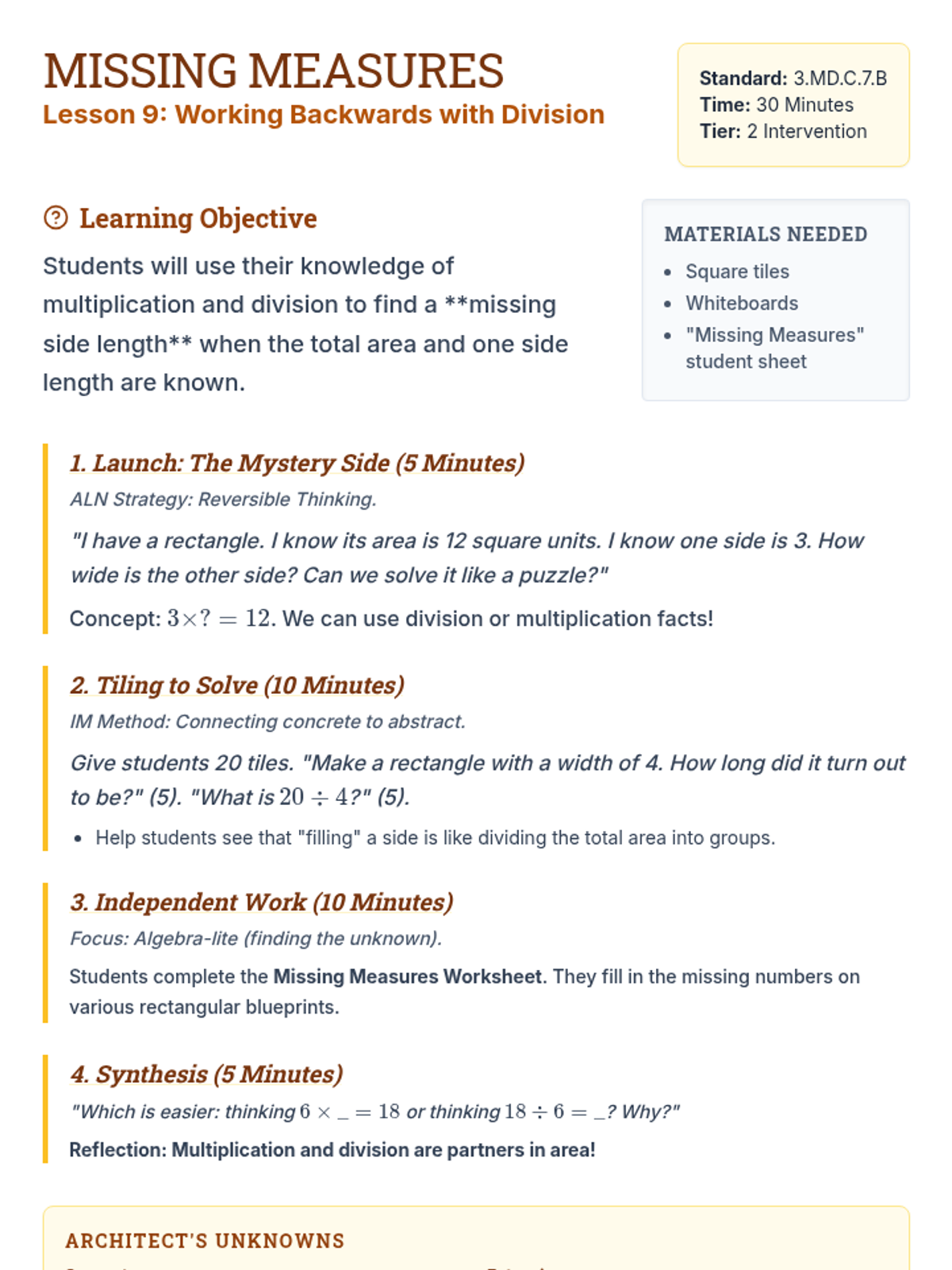
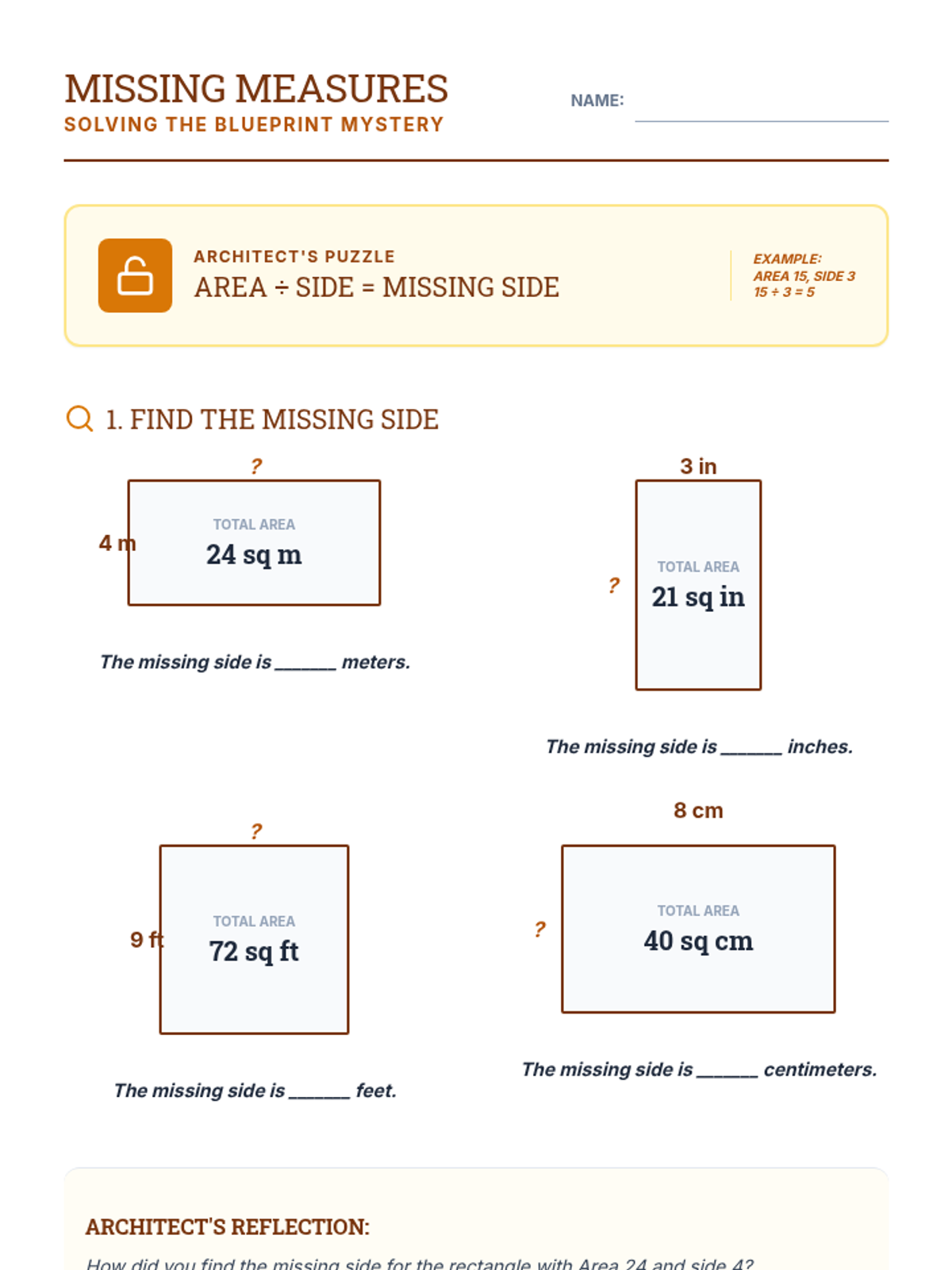
Given the total area and one side length, students use division or multiplication facts to find the missing side length.
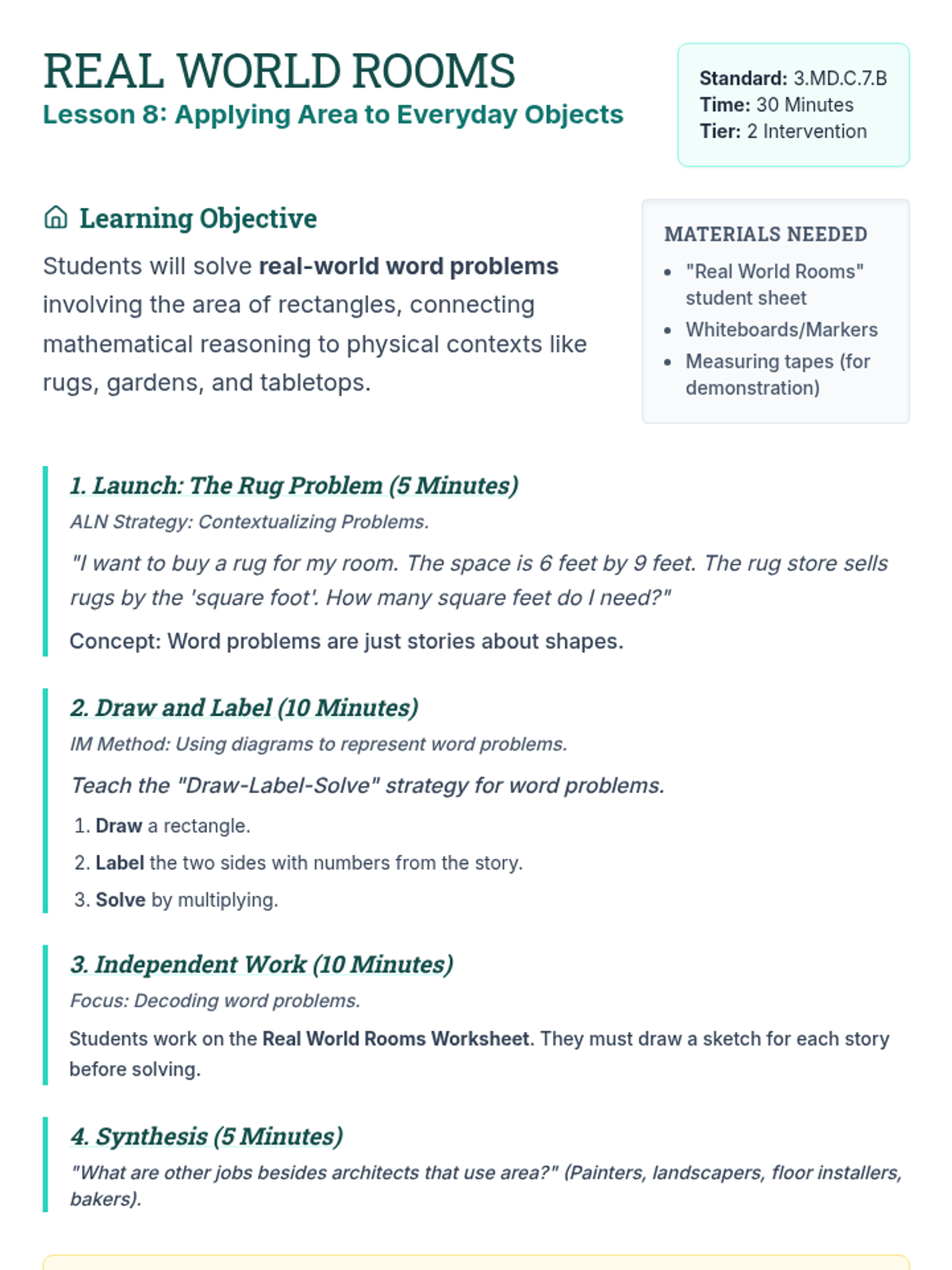
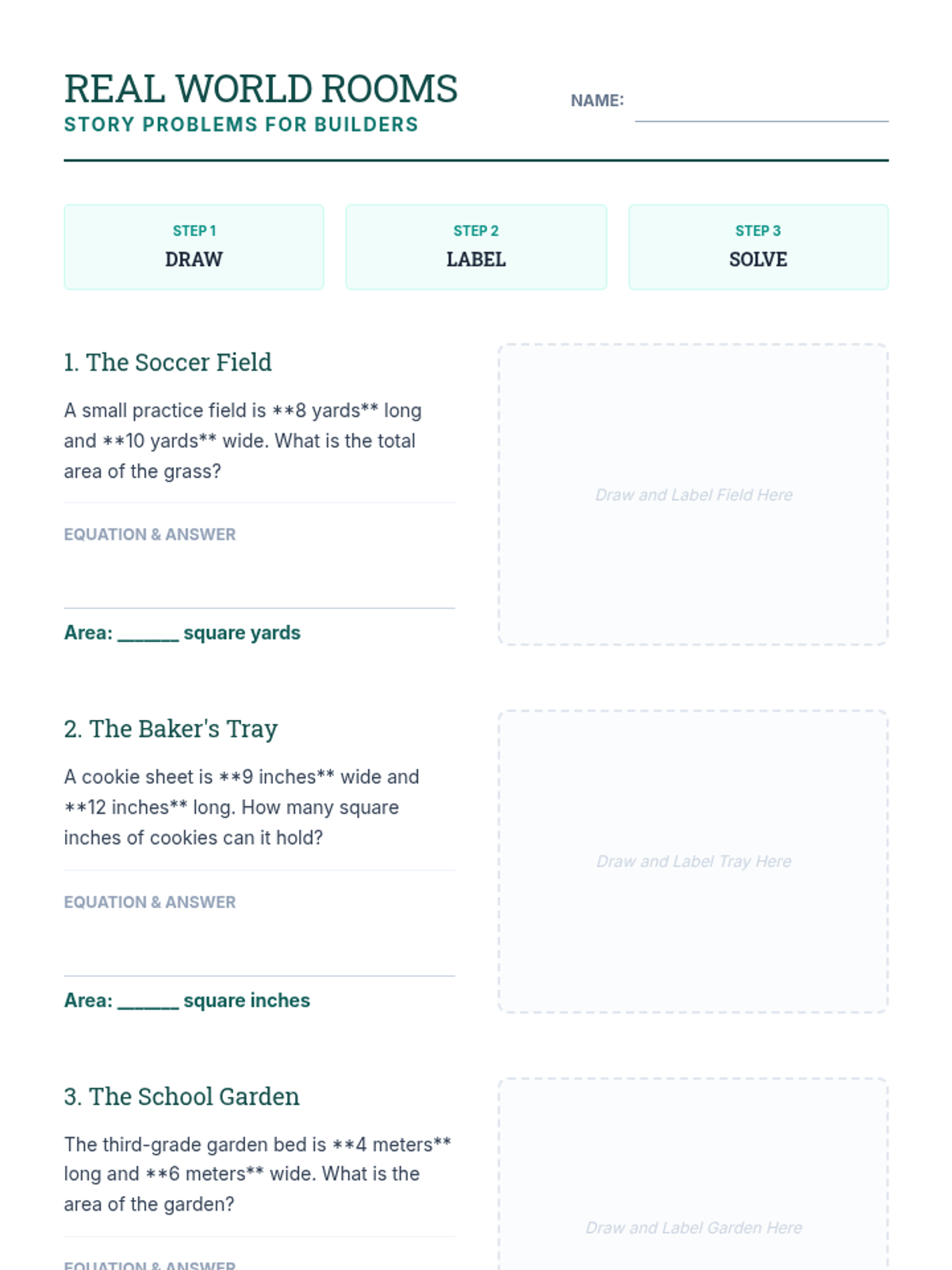
Applying area concepts to real-world scenarios like rugs, tabletops, and floors using word problems.