A social science lesson exploring the historical, biological, and social roots of gender stereotypes, challenging students to distinguish between biological sex and social gender roles.
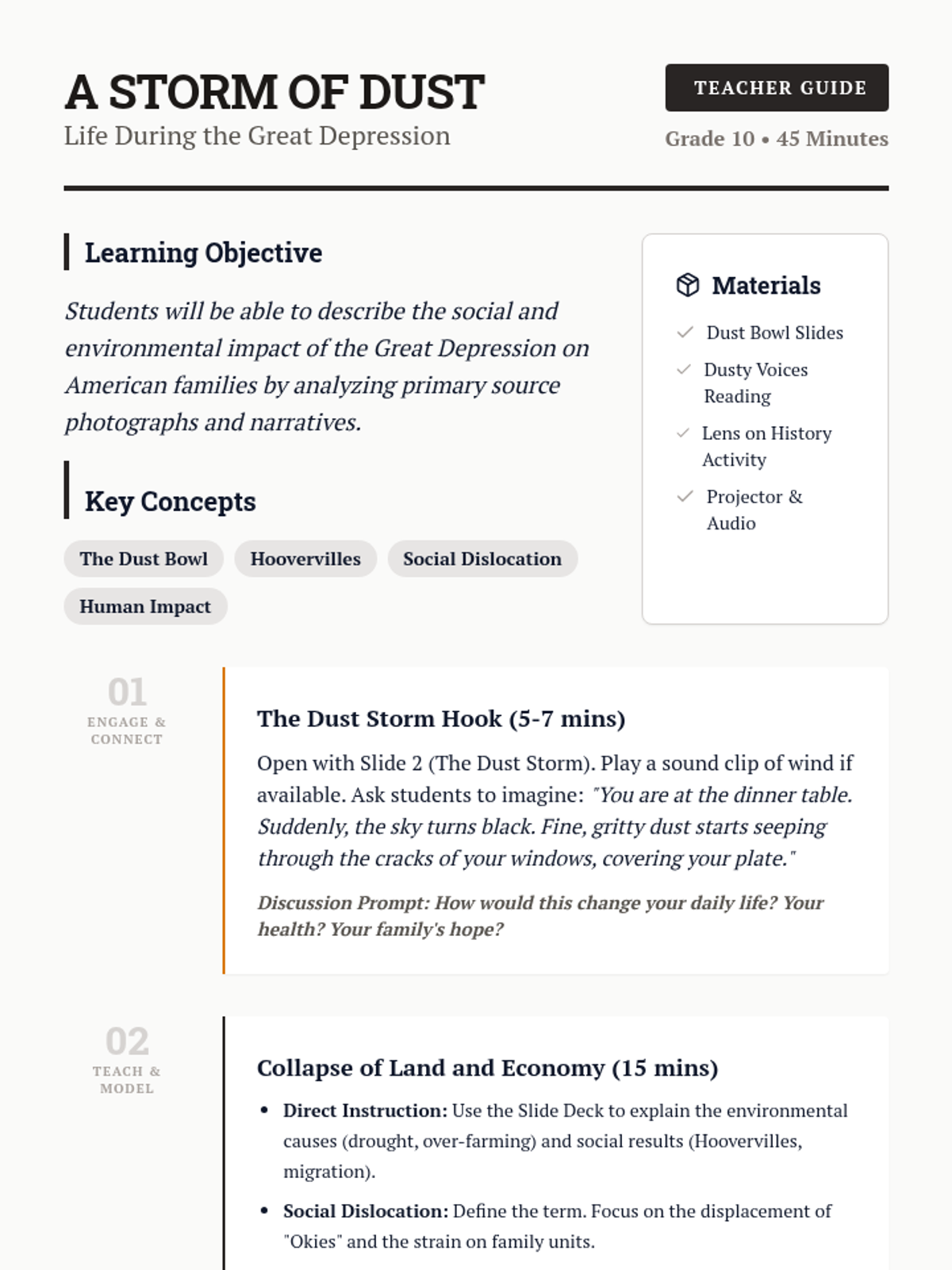
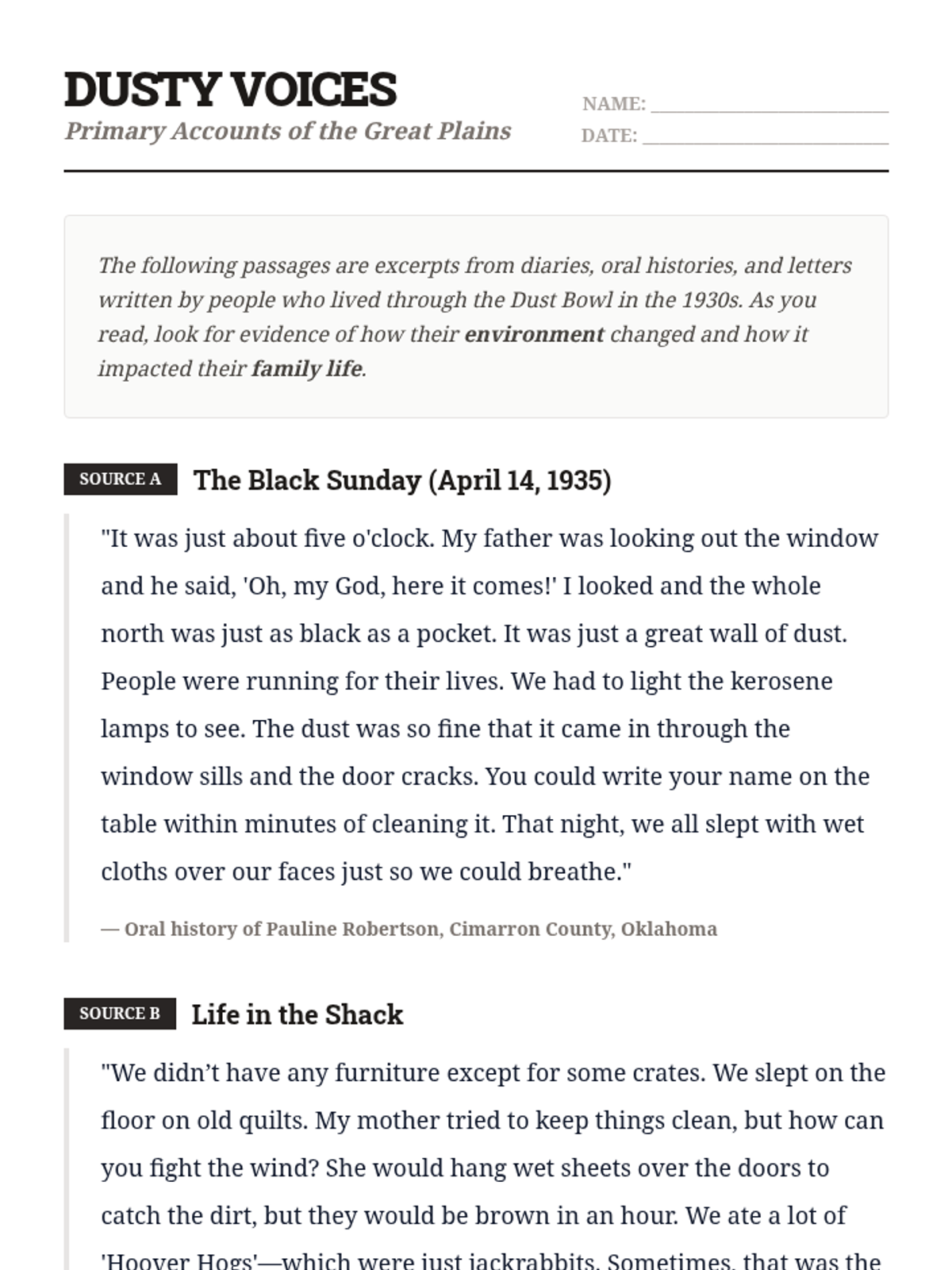
A 45-minute exploration of the social and environmental impacts of the Great Depression and the Dust Bowl on American families in the 1930s. Students analyze primary source photos and narratives to understand the human cost of economic and ecological collapse.
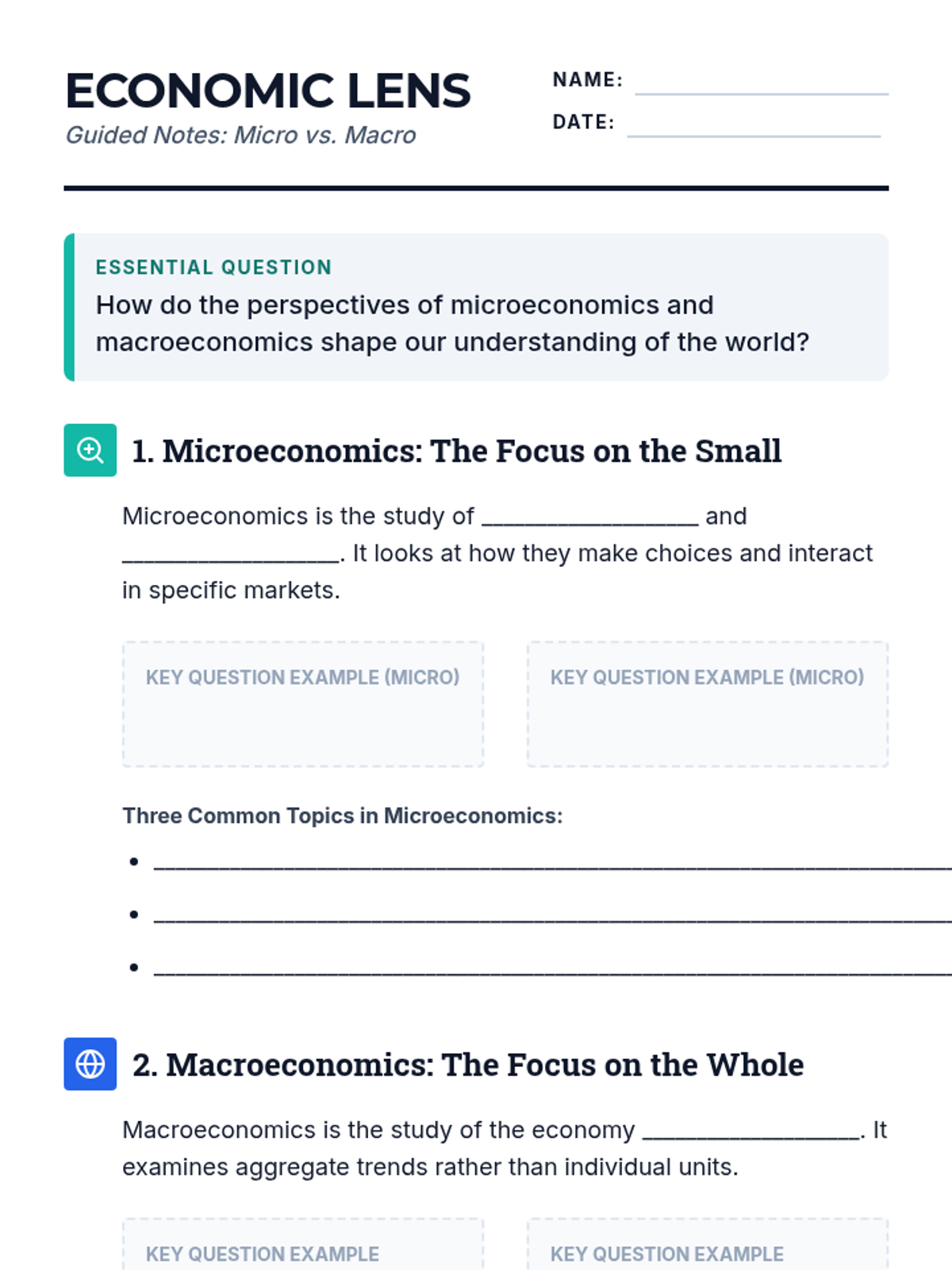
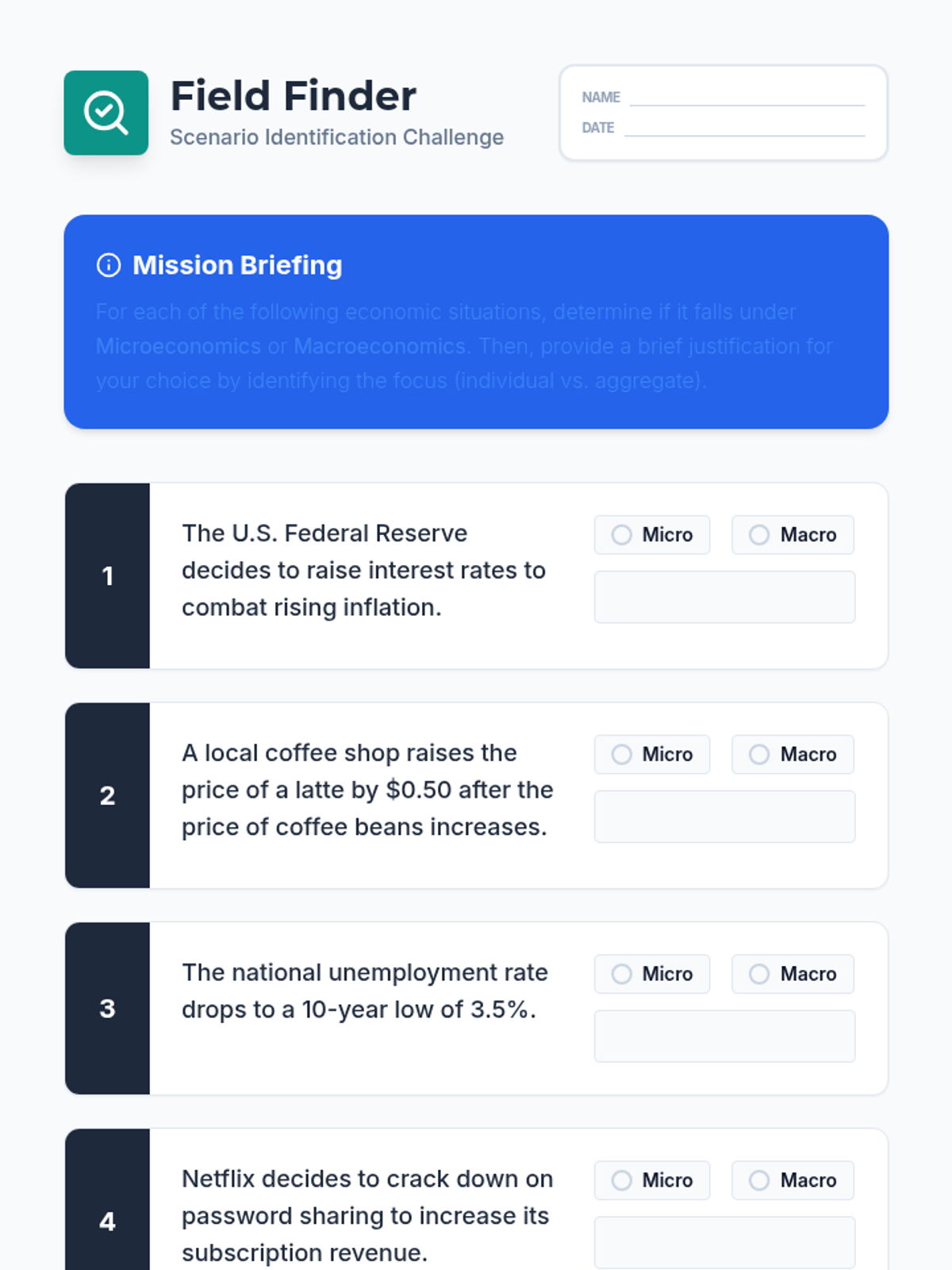
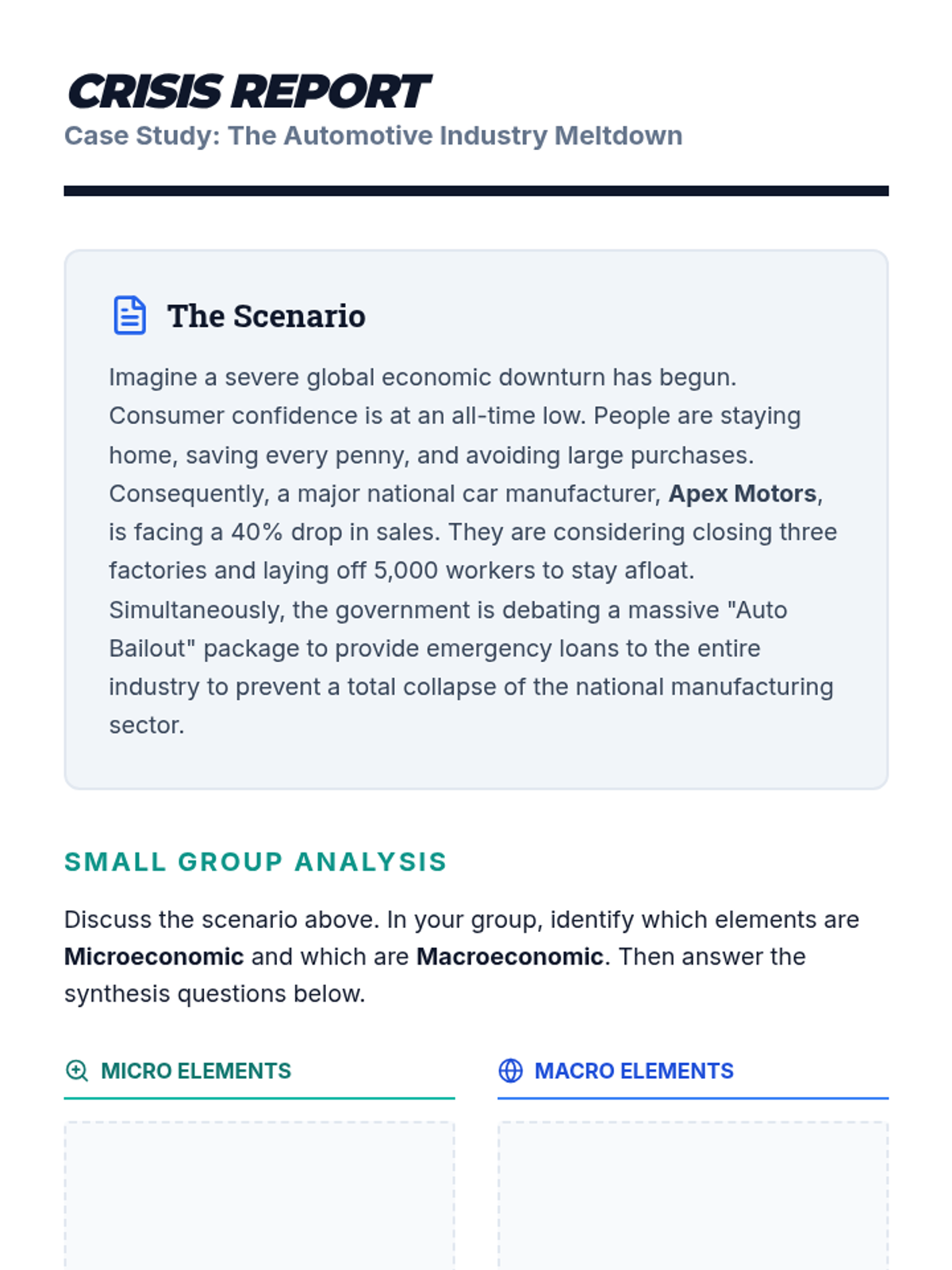
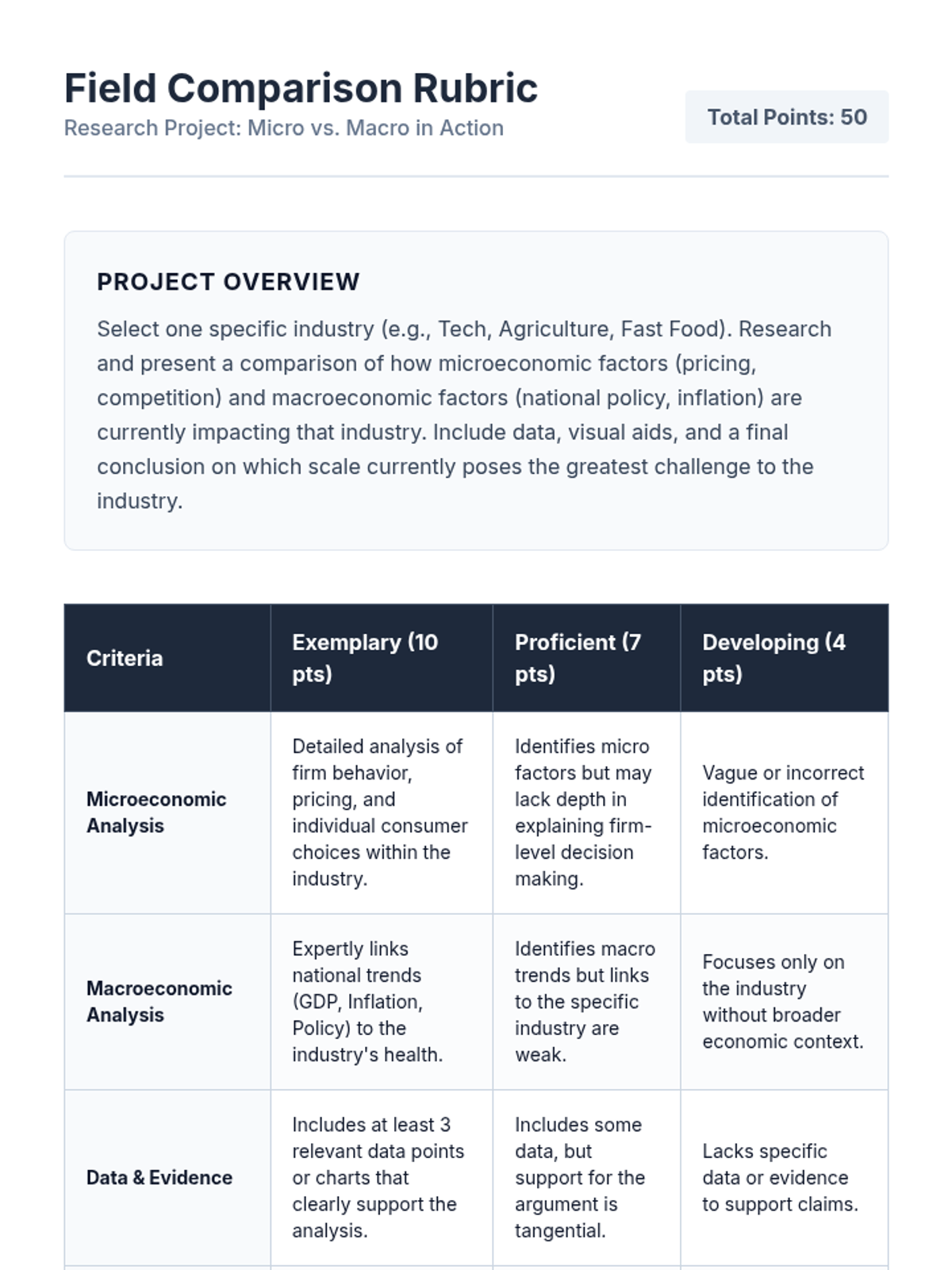
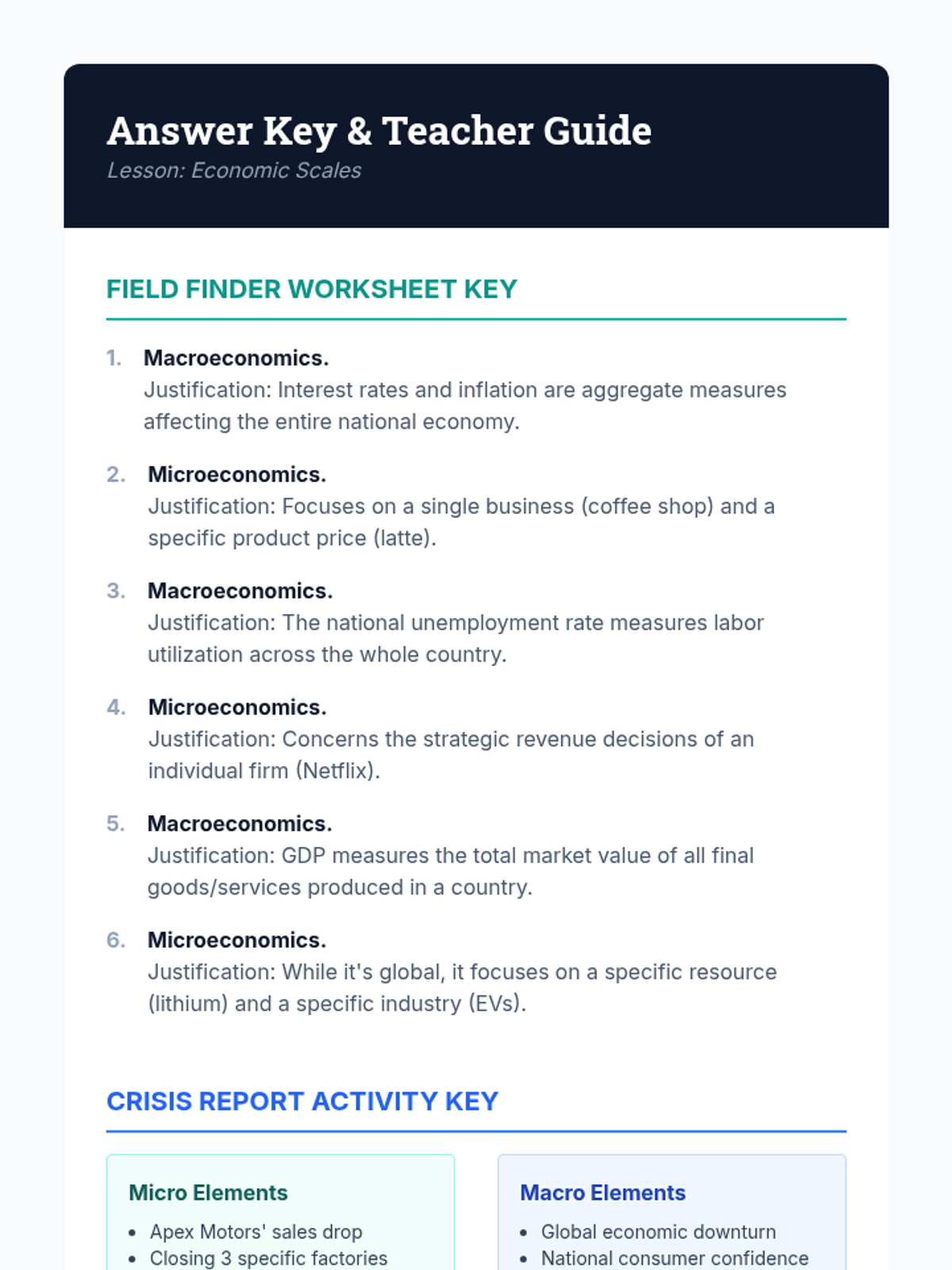
A comprehensive lesson exploring the foundational differences between microeconomics and macroeconomics through scale, perspective, and real-world application.
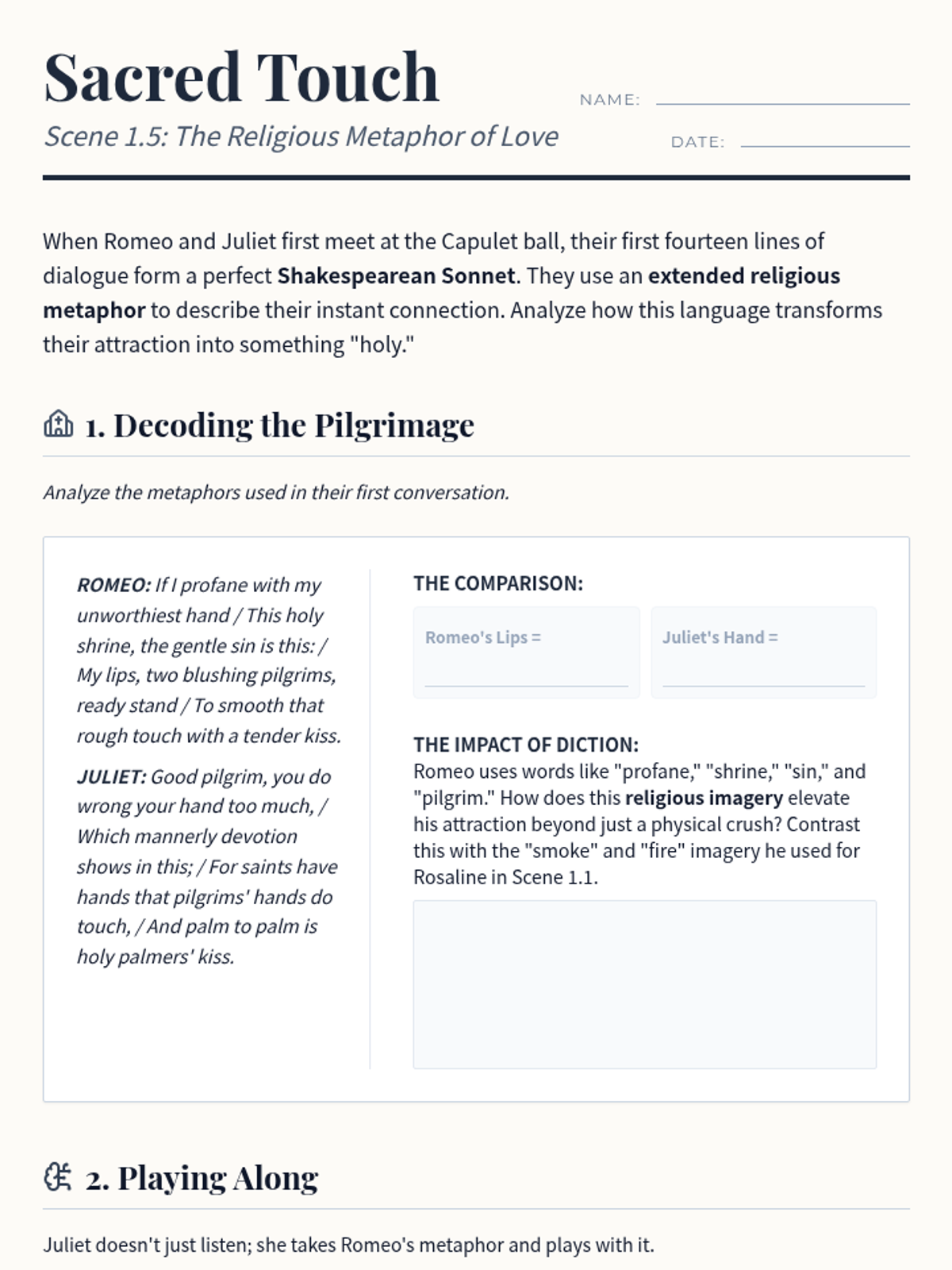
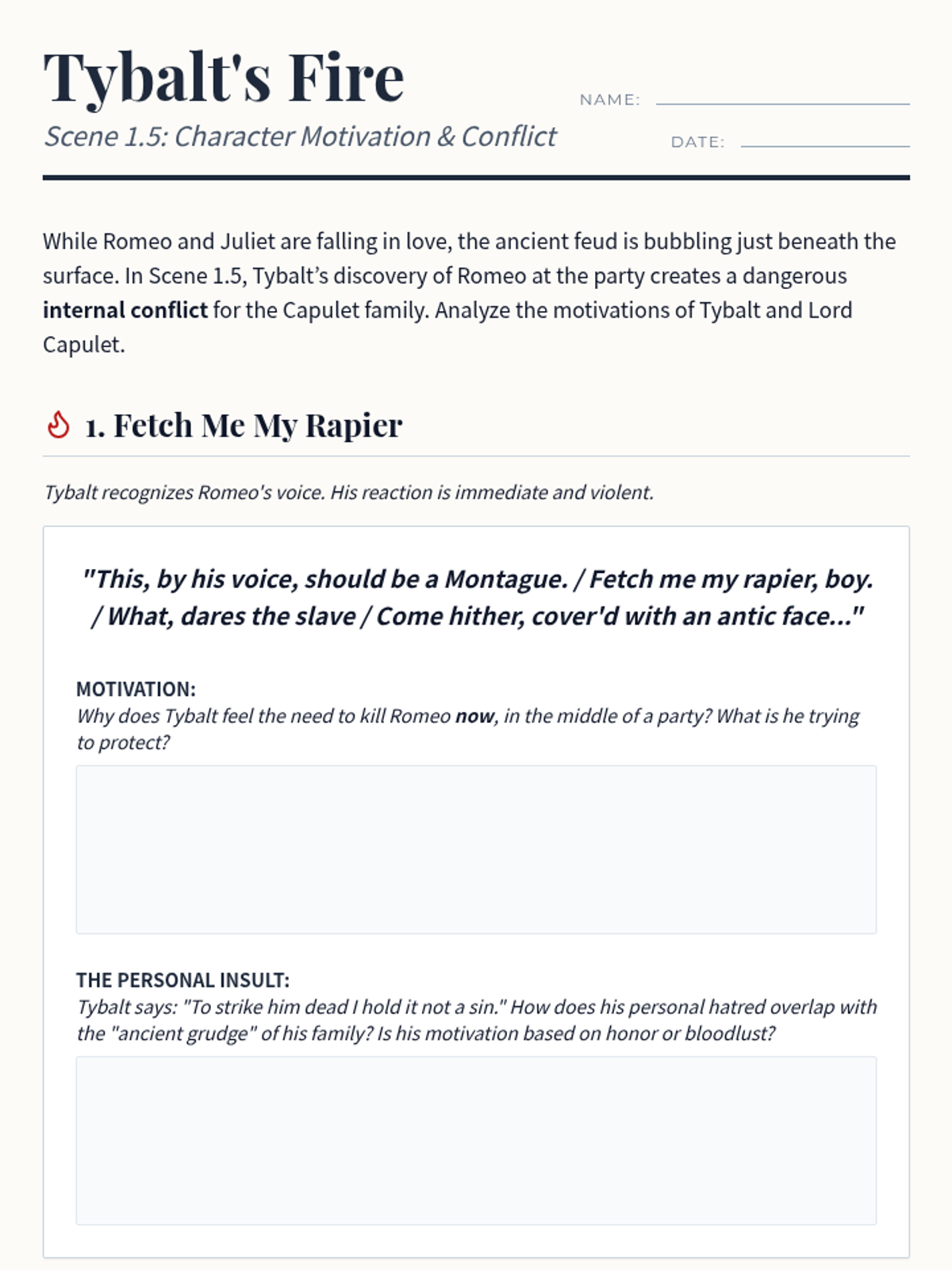
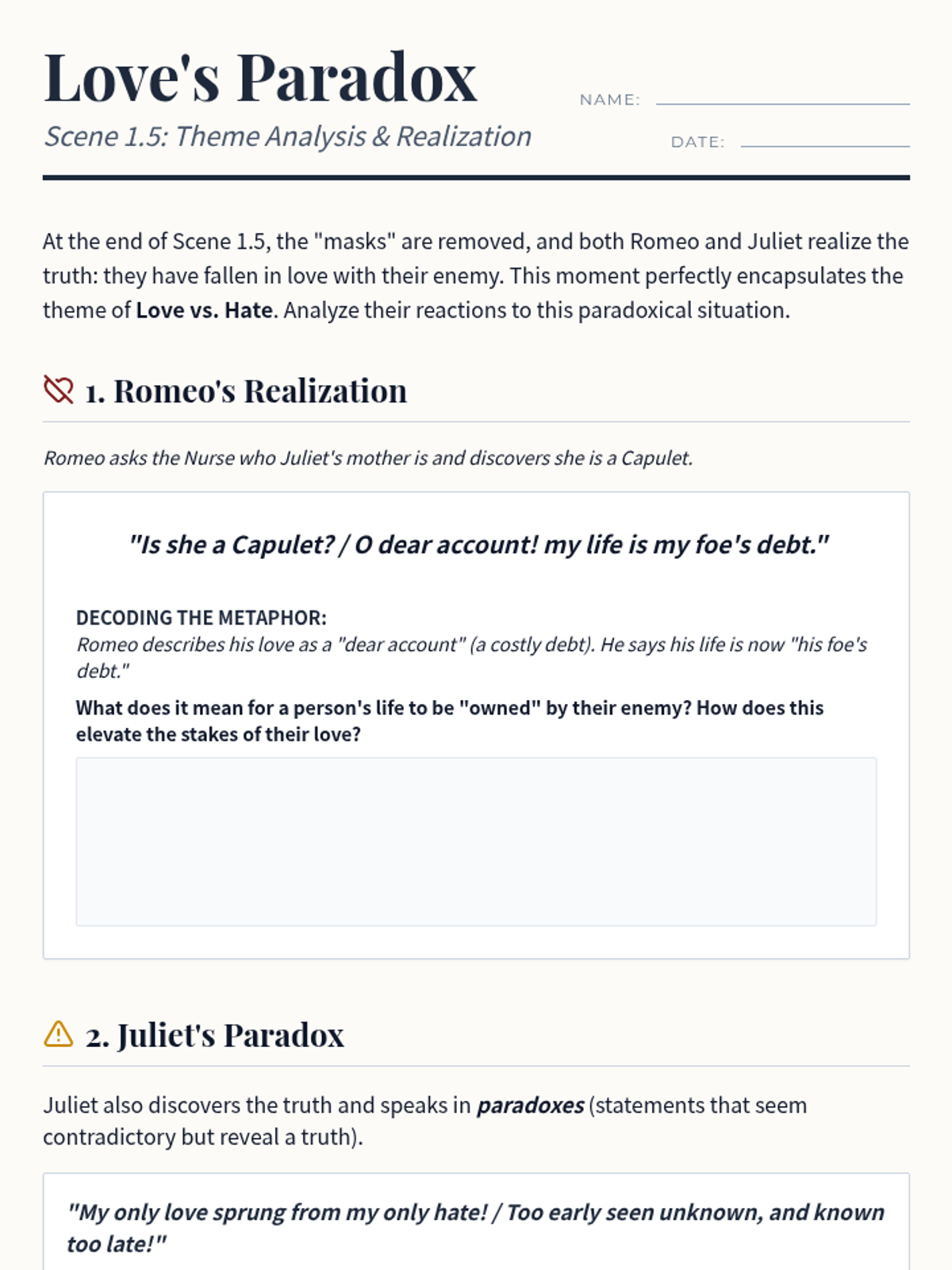
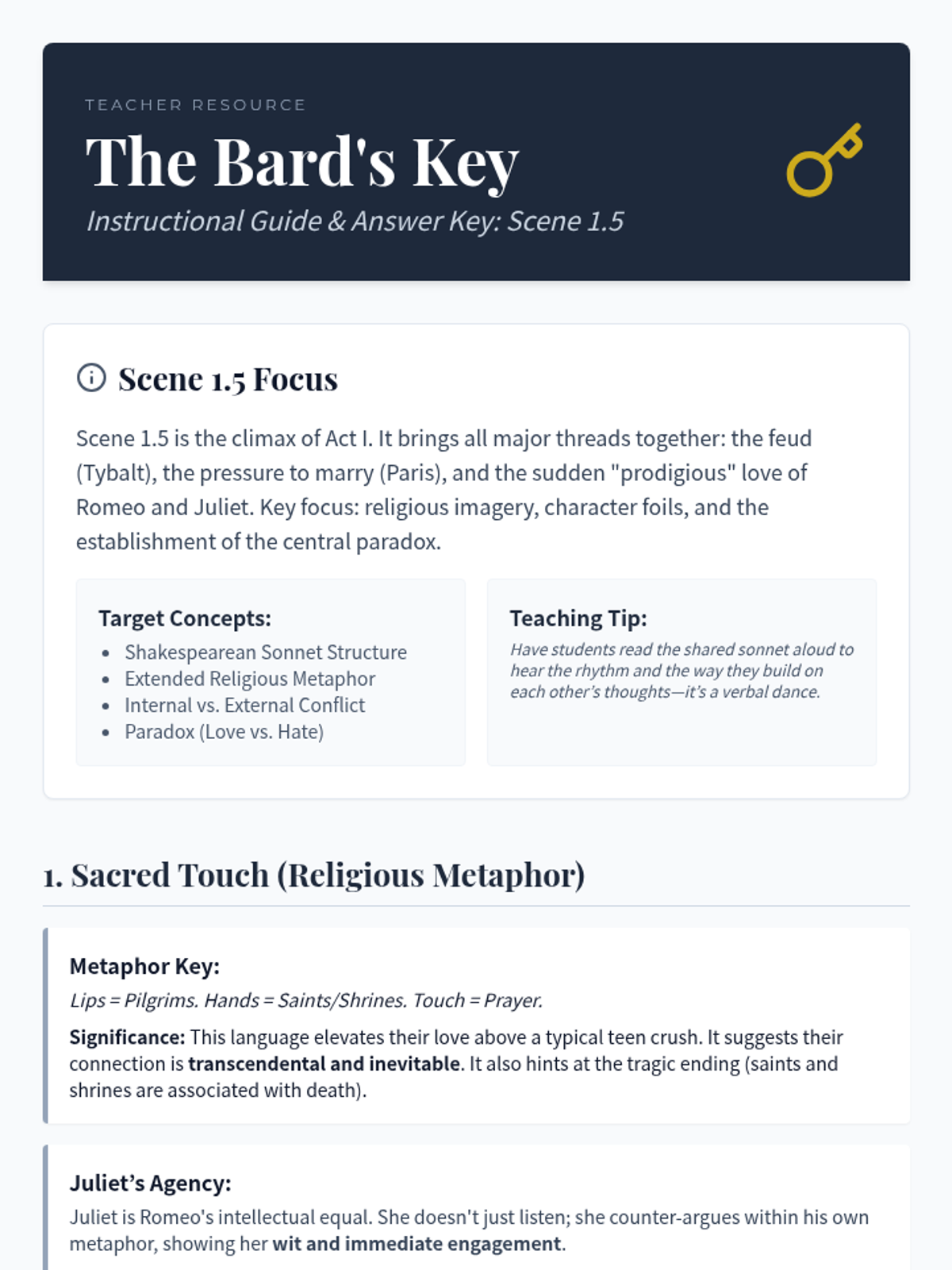
A study of Act 1, Scene 5, the pivotal moment where Romeo and Juliet meet at the Capulet ball. Students will analyze the shared sonnet and its religious metaphors, Tybalt's escalating rage as a driver of conflict, and the realization of the "prodigious birth of love" amidst "loathed enemy."
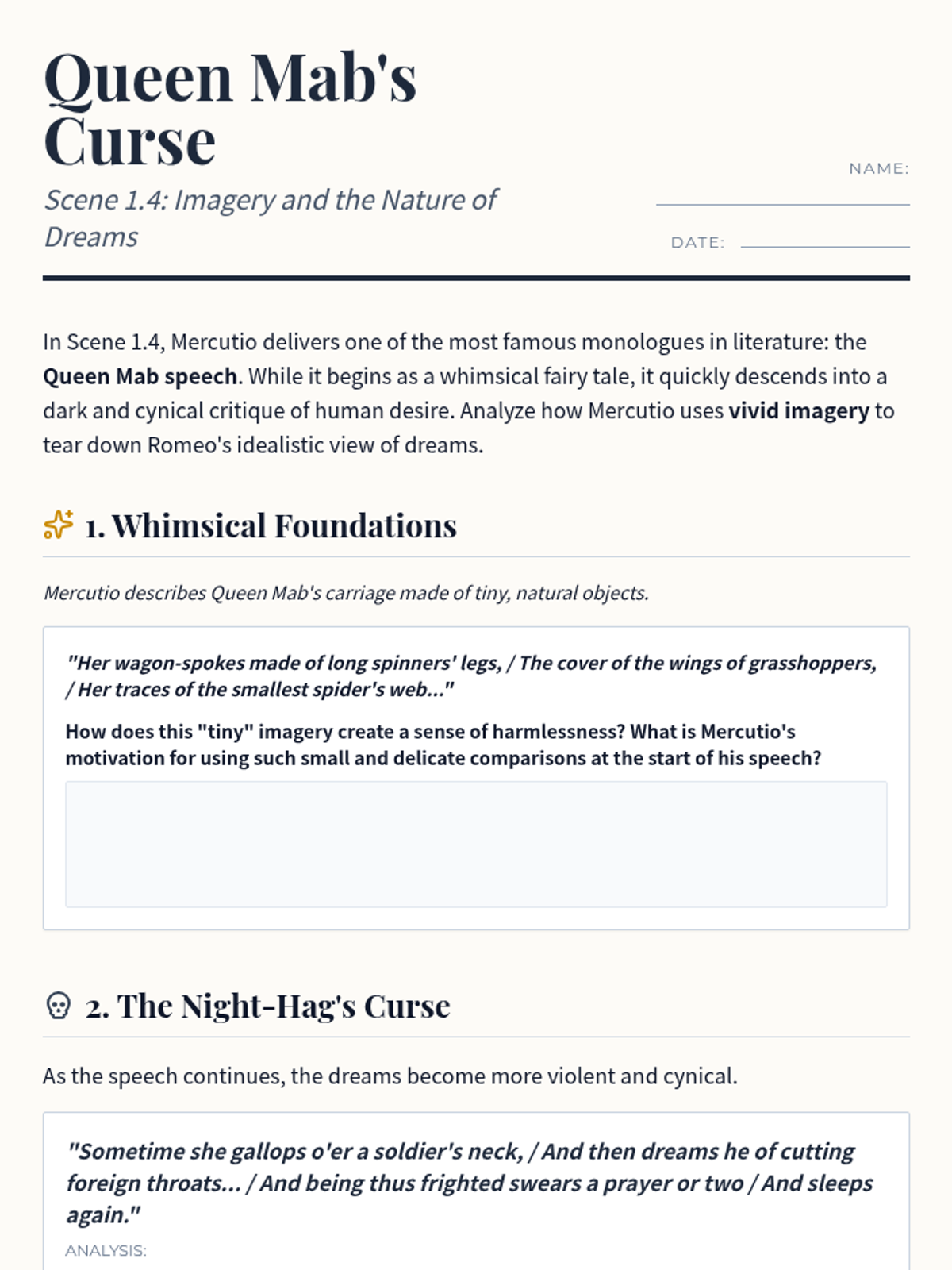
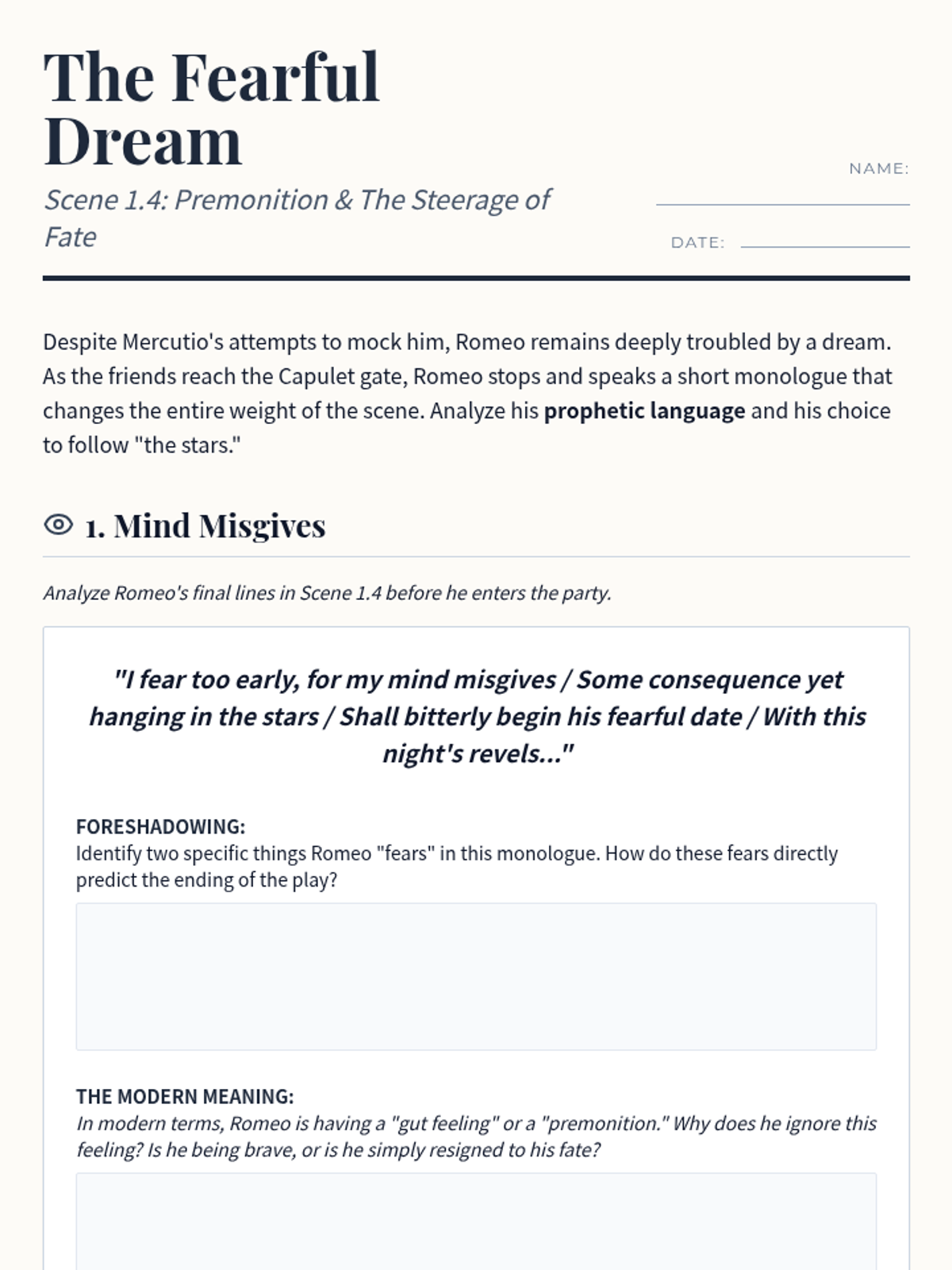
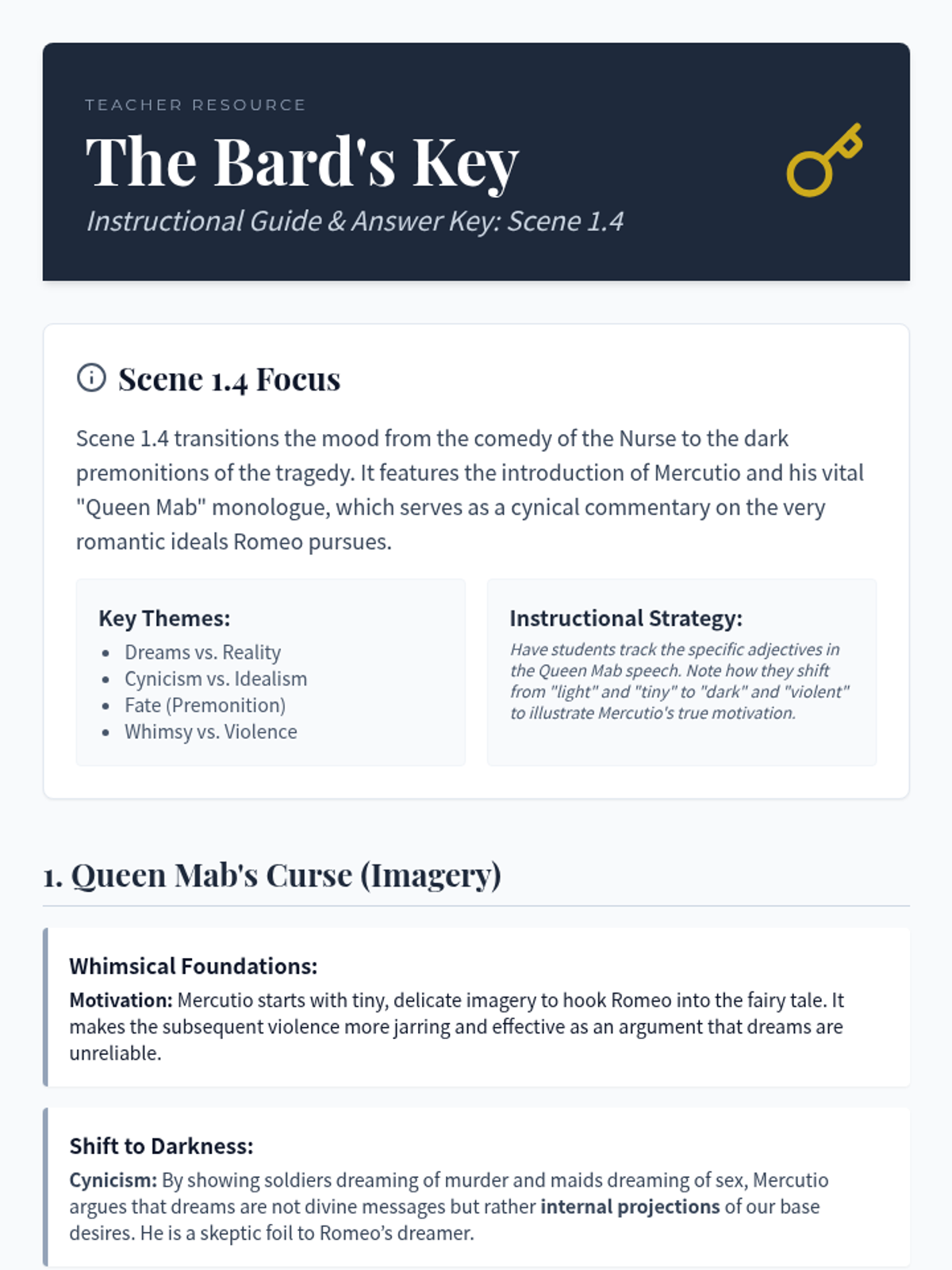
A study of Act 1, Scene 4, where Romeo, Mercutio, and Benvolio prepare to crash the Capulet ball. Students will analyze Mercutio's vivid Queen Mab speech, Romeo's persistent melancholy and prophetic dreams, and the tension between whimsical fantasy and dark reality.
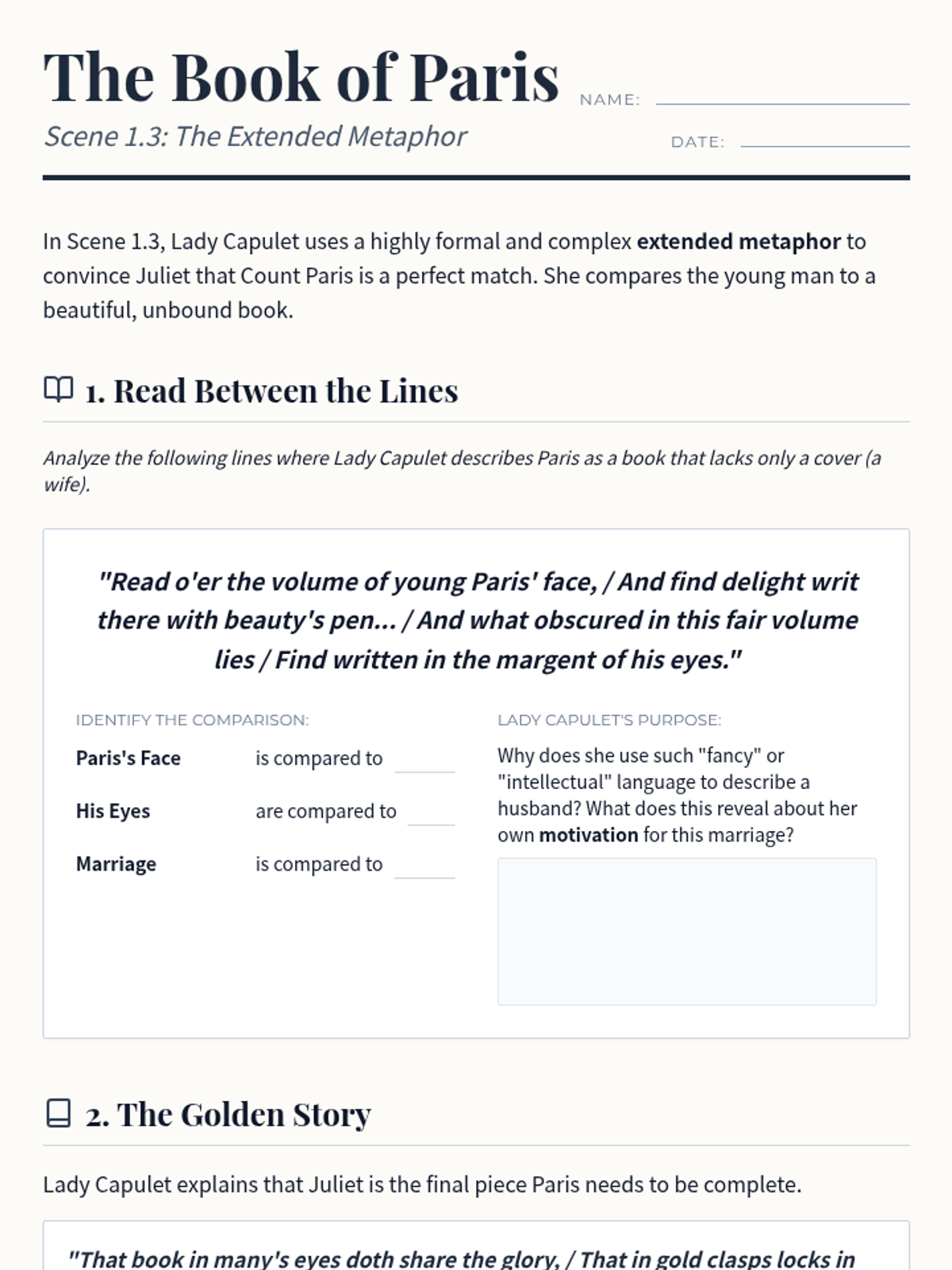
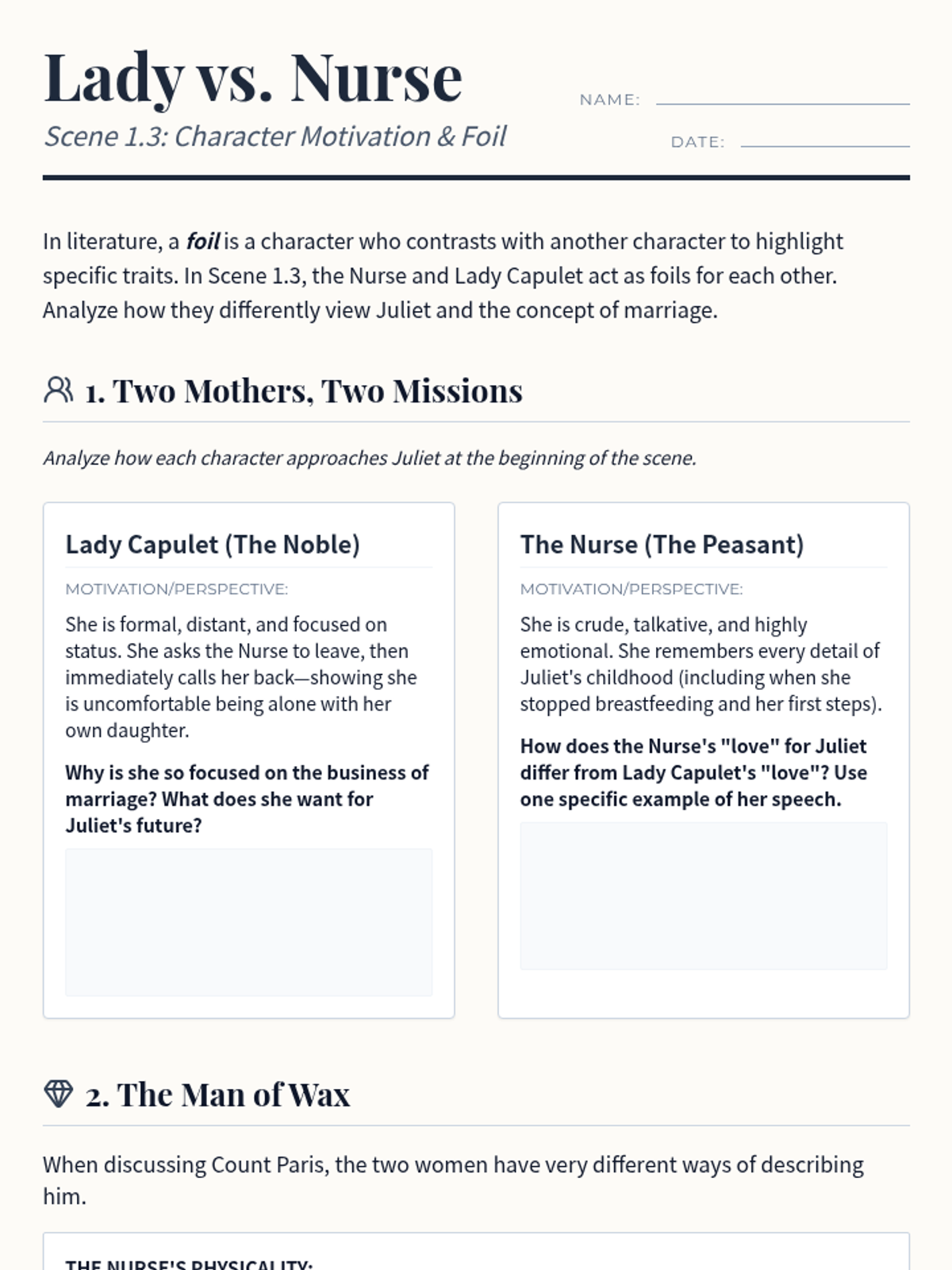
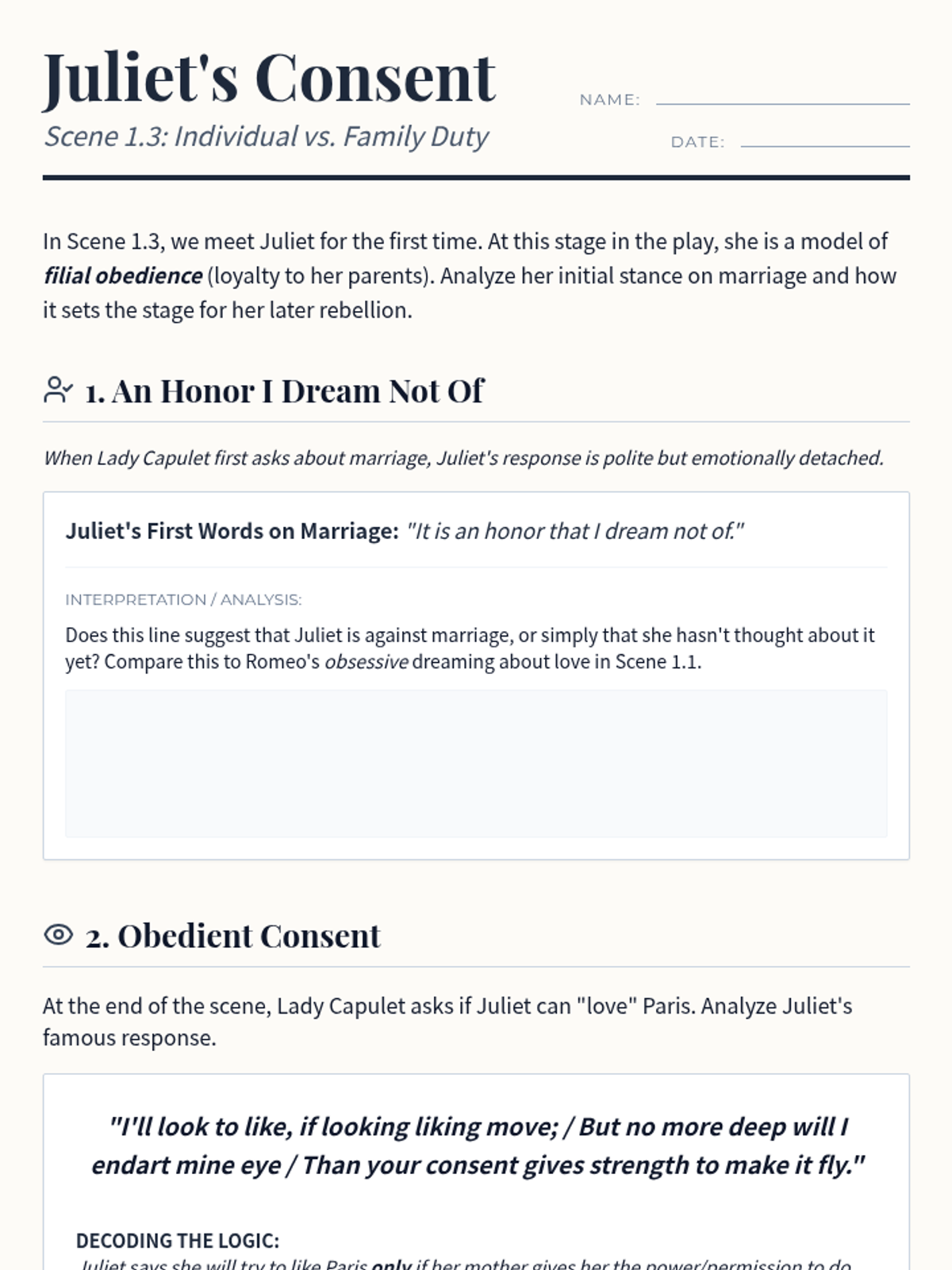
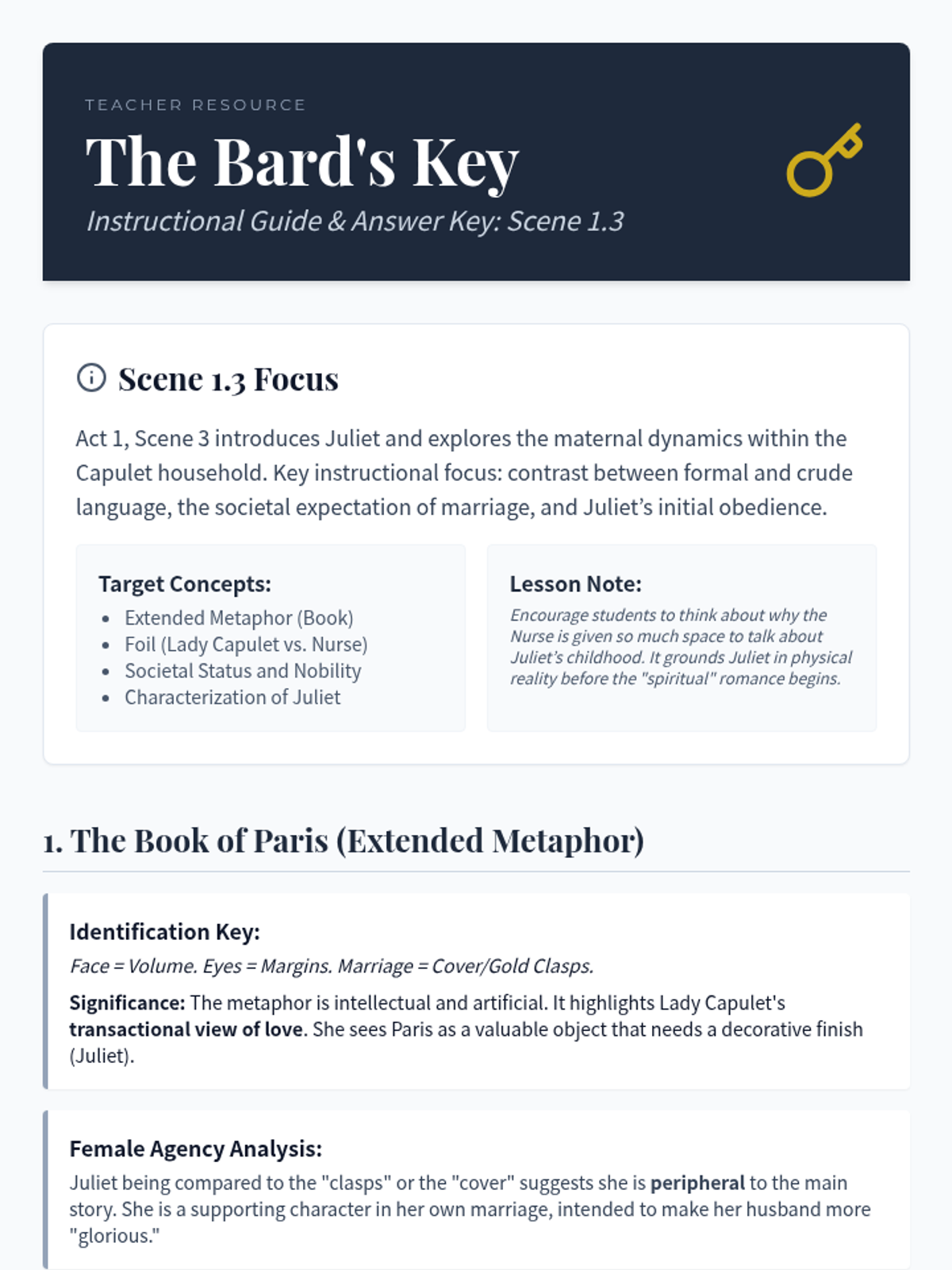
A study of Act 1, Scene 3, introducing the Nurse and Lady Capulet's proposal of marriage to Paris. Students will analyze the Nurse's coarse humor, Lady Capulet's extended metaphor of Paris as a book, and Juliet's initial stance on marriage and obedience.
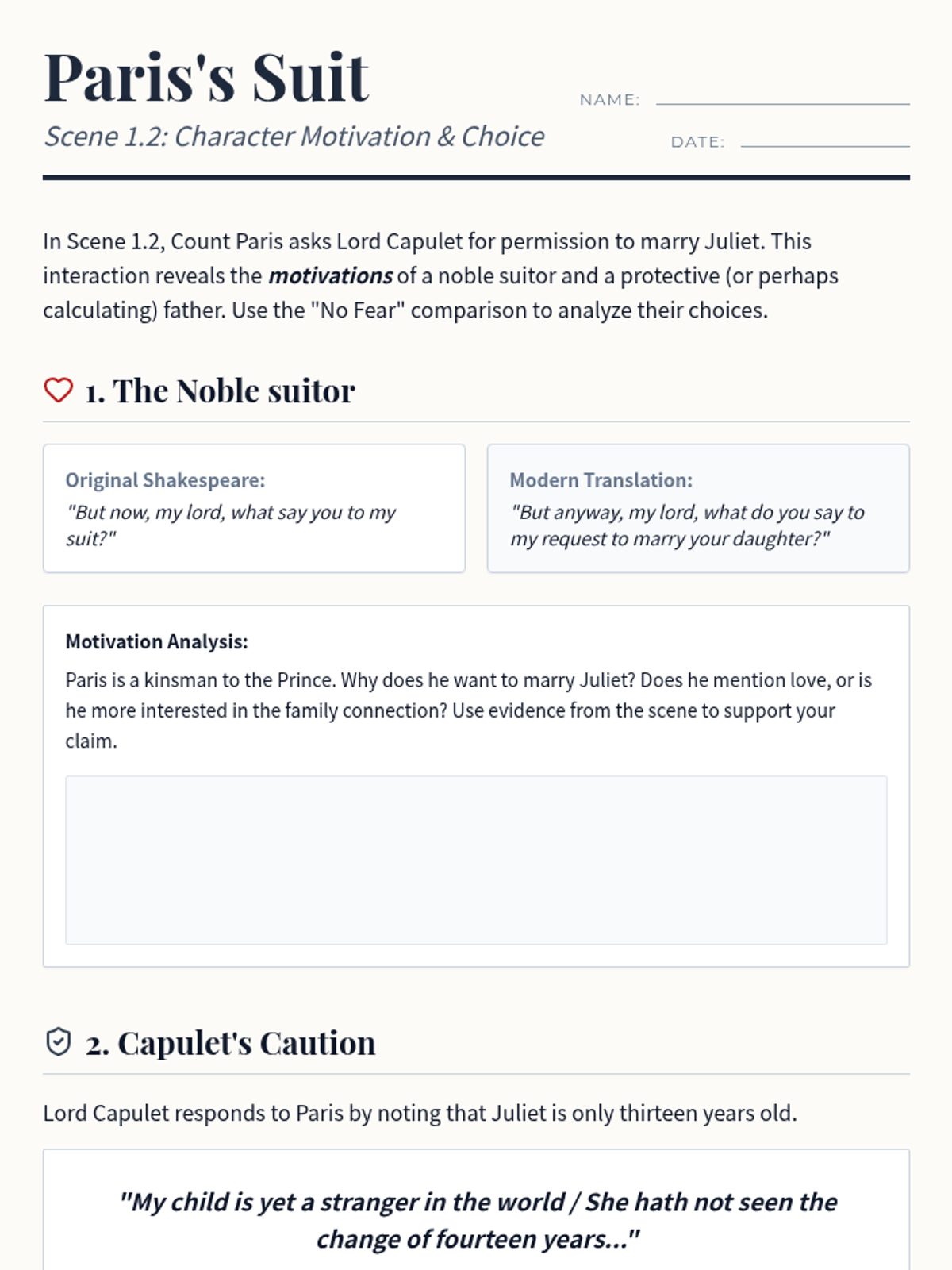
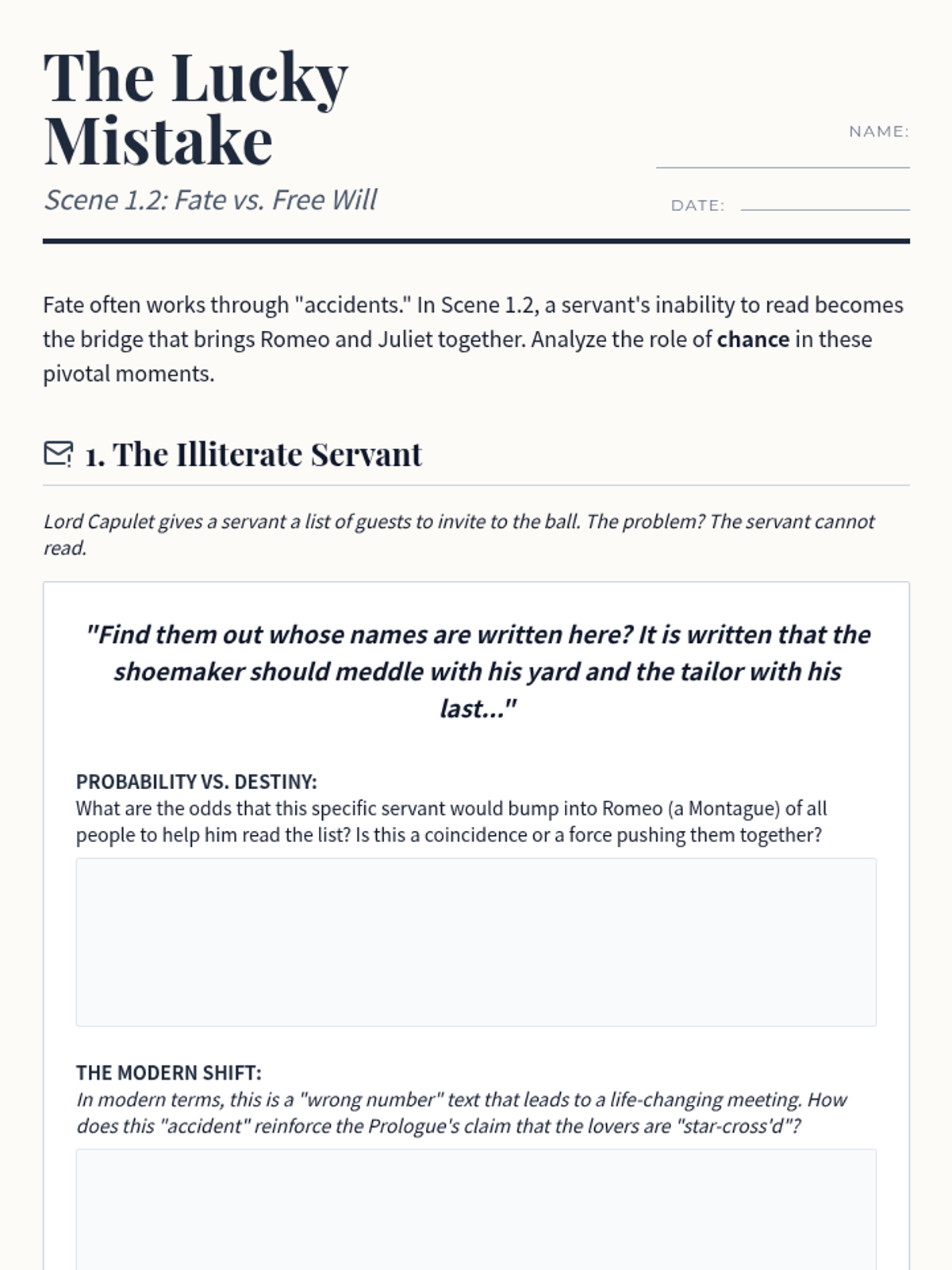
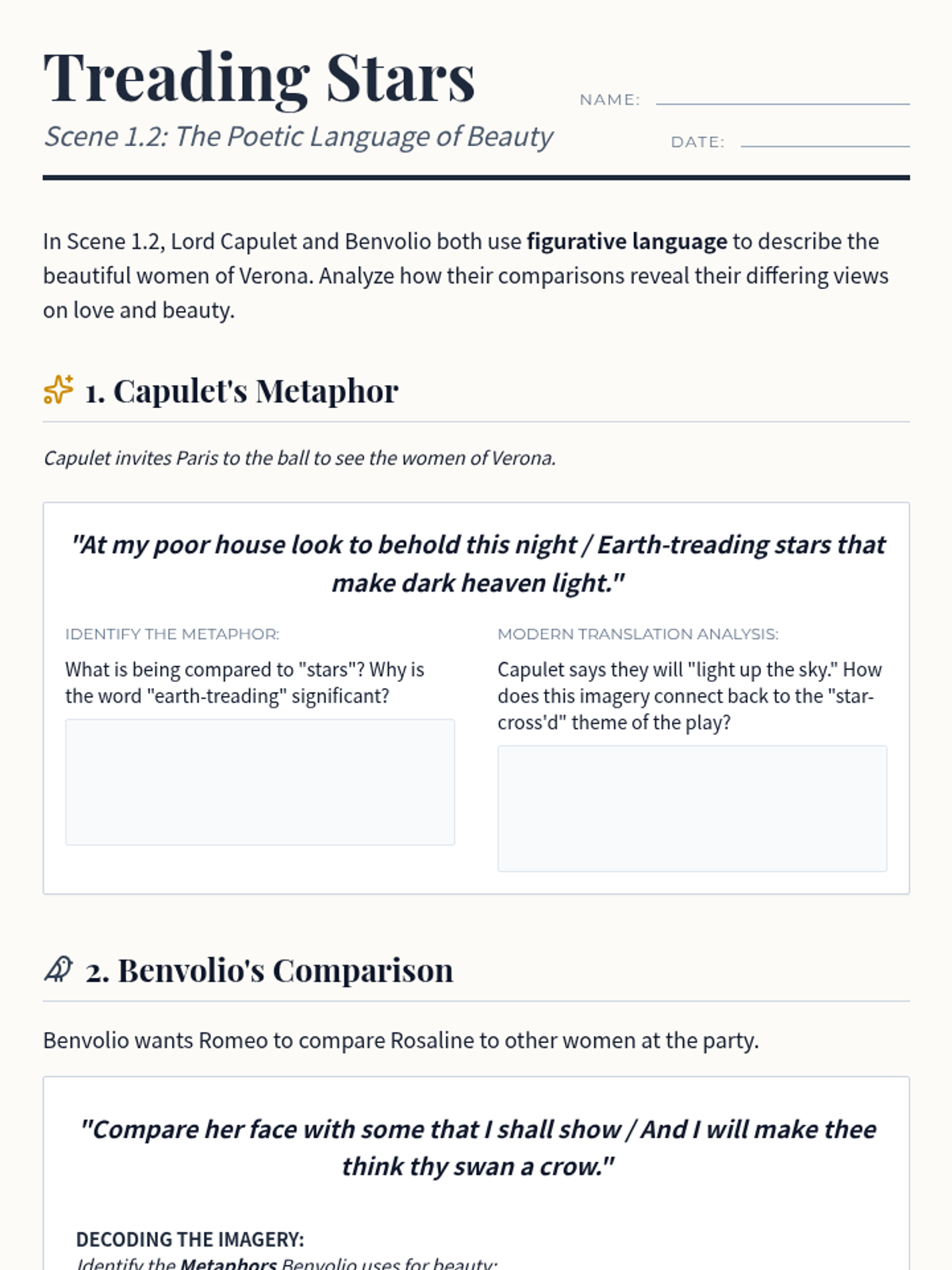
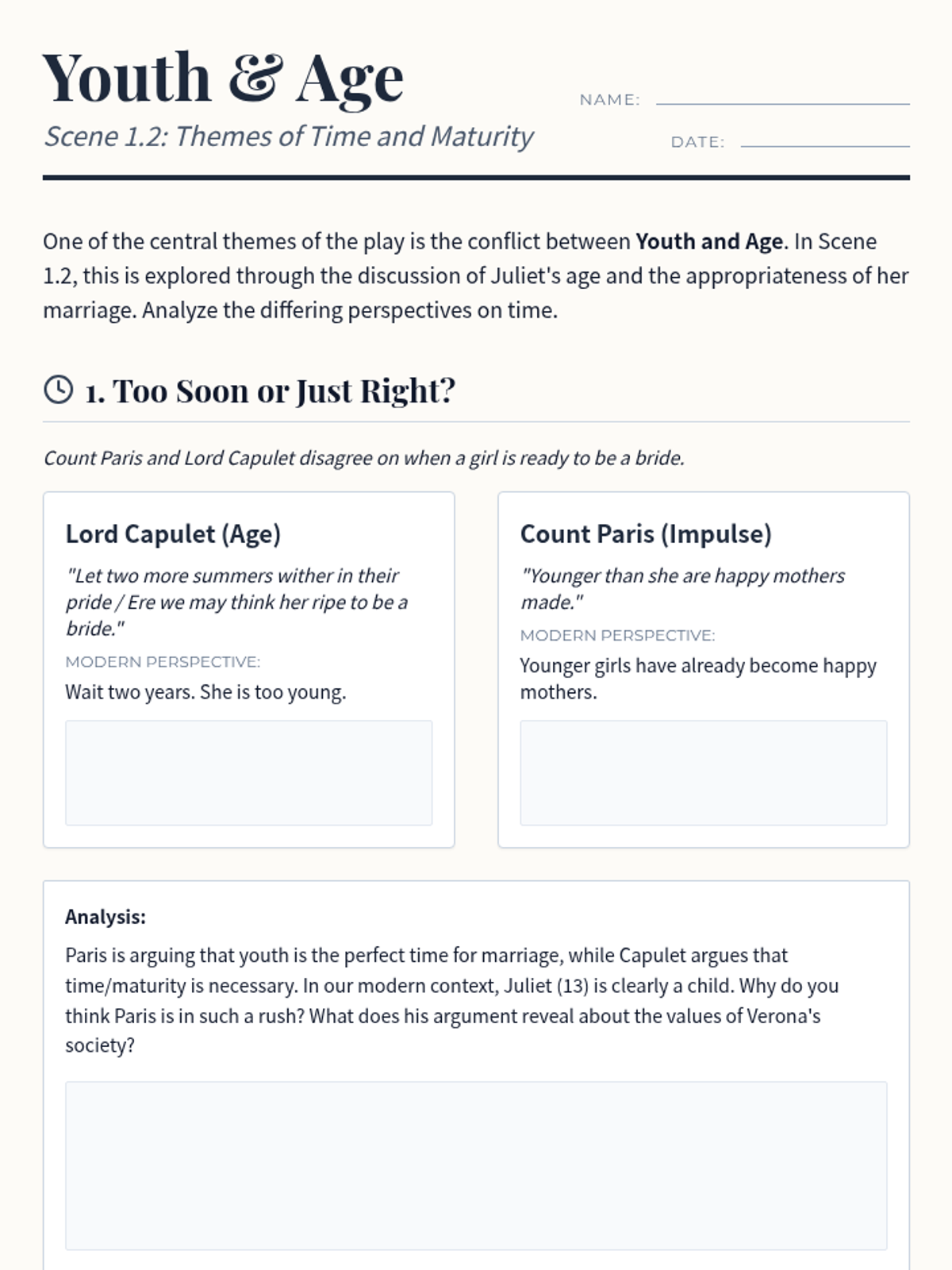
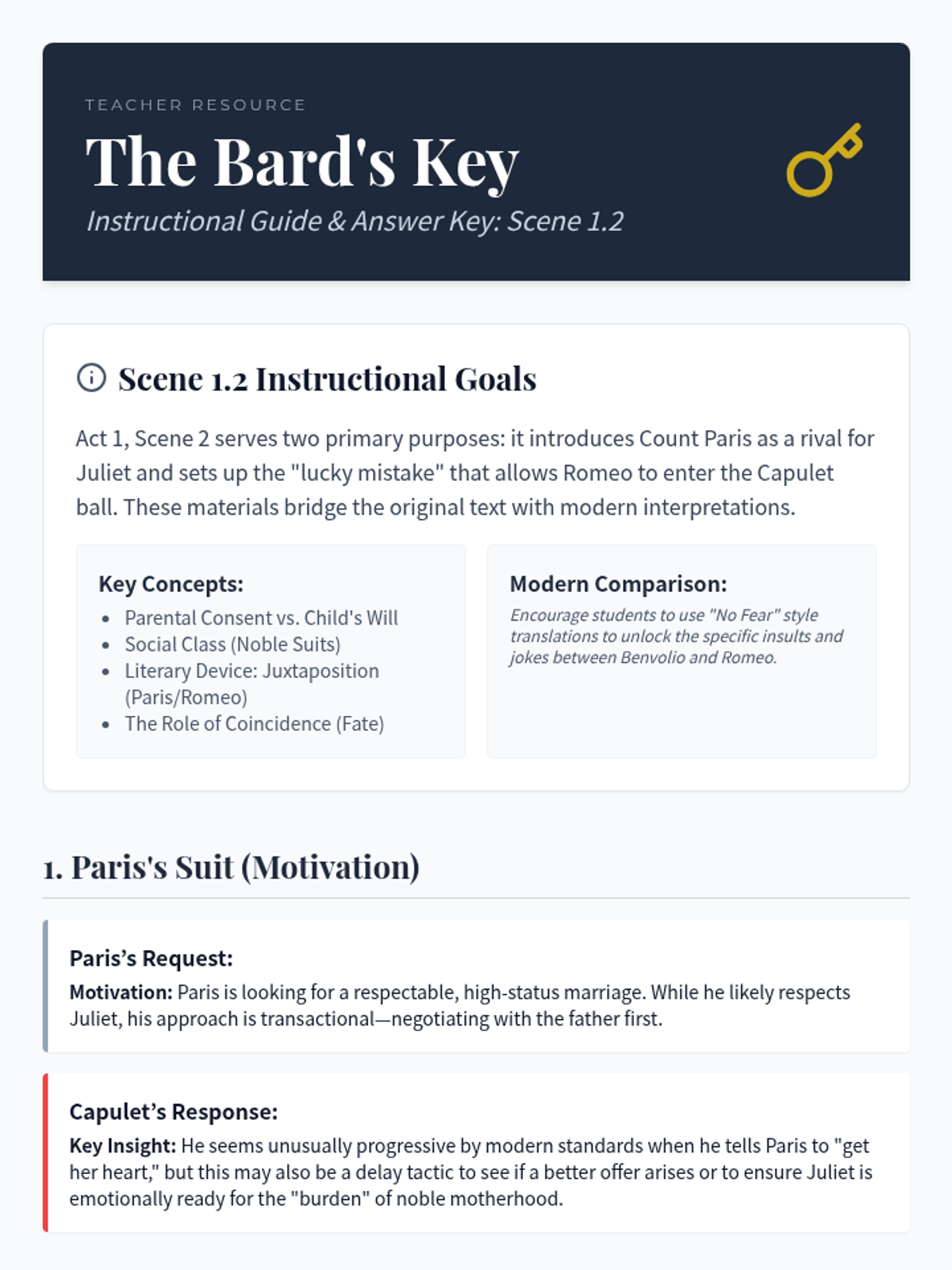
A study of Act 1, Scene 2, where Count Paris asks for Juliet's hand and Romeo and Benvolio discover the Capulet party through a chance encounter. Students will analyze the dynamics of parental choice, the role of chance, and the poetic language used to describe the ladies of Verona.