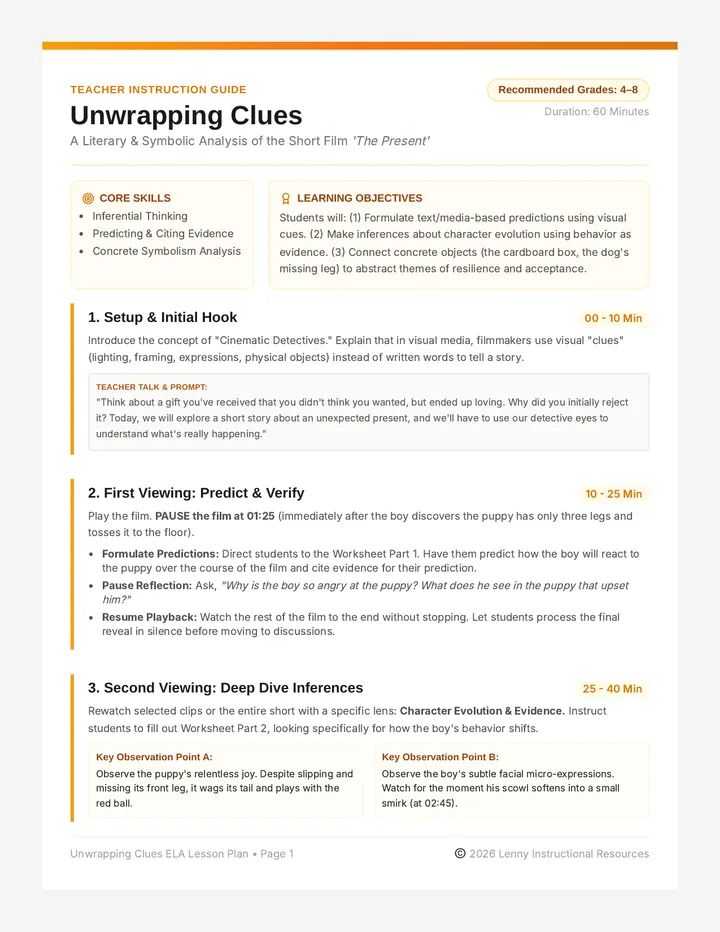
Lesson Plan 1 Introduction
A foundational teacher lesson plan introducing the concept of figurative language through the lens of literal vs. figurative meanings. Formatted for 8.5x11 printing.
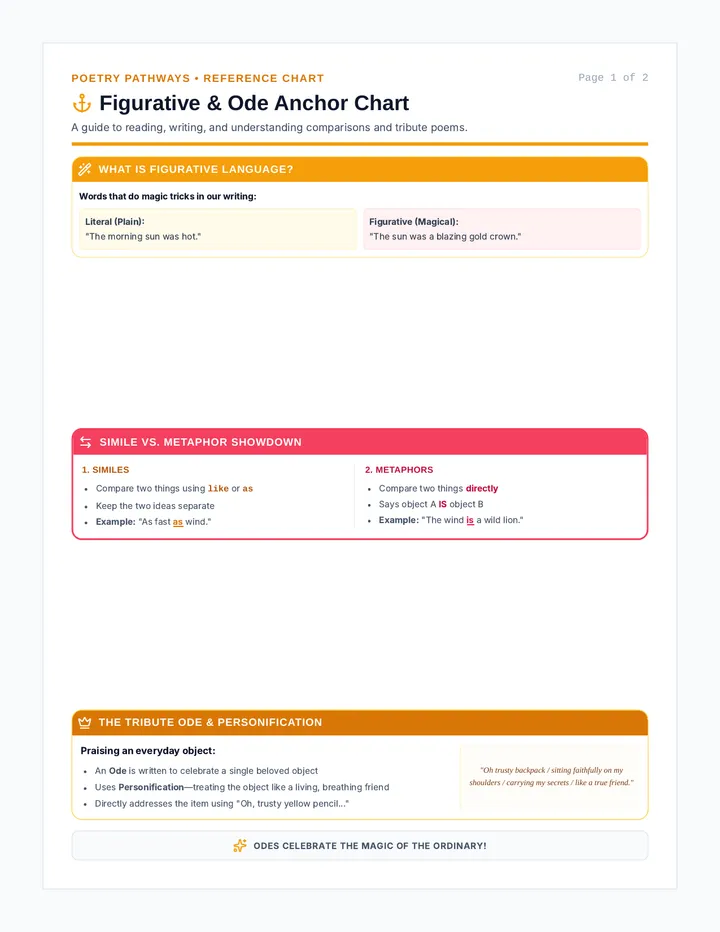
Magic Lens Notes Reference
A reference sheet for interactive notebooks defining figurative language and the literal vs. figurative distinction. Includes a preview of the unit's key devices. Optimized for 8.5x11 printing.
Real or Imagine Worksheet
A discrimination task worksheet where students identify literal vs. figurative sentences and illustrate the literal meaning of a figurative phrase. Optimized for 8.5x11 printing.
The Mystery Painter Story Activity
A reading comprehension story that uses all 5 types of figurative language. Students identify the phrases and analyze their descriptive power. Optimized for 8.5x11 printing.