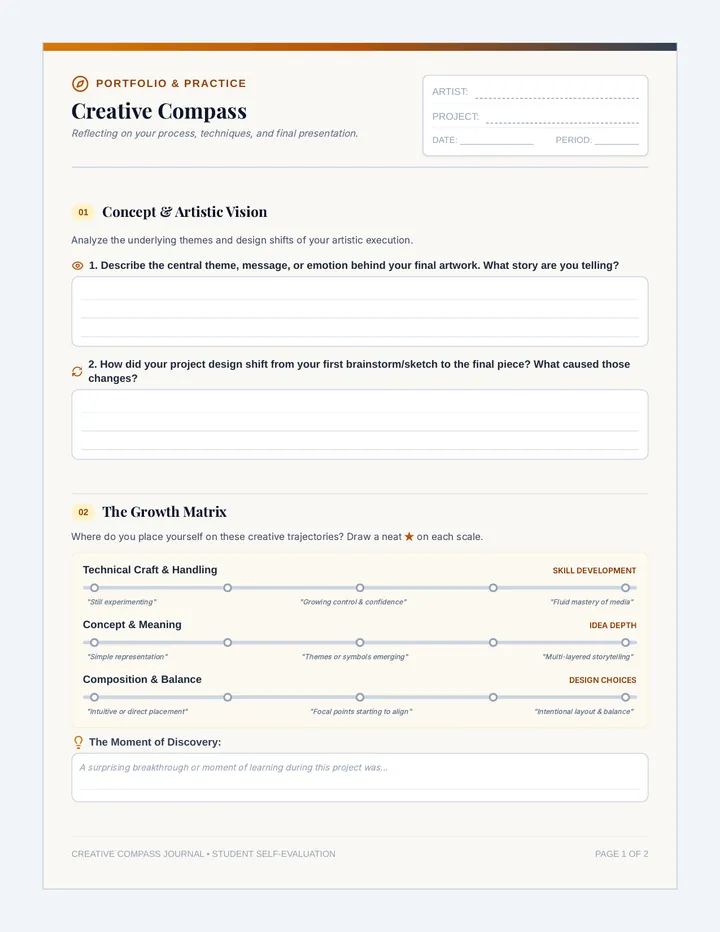
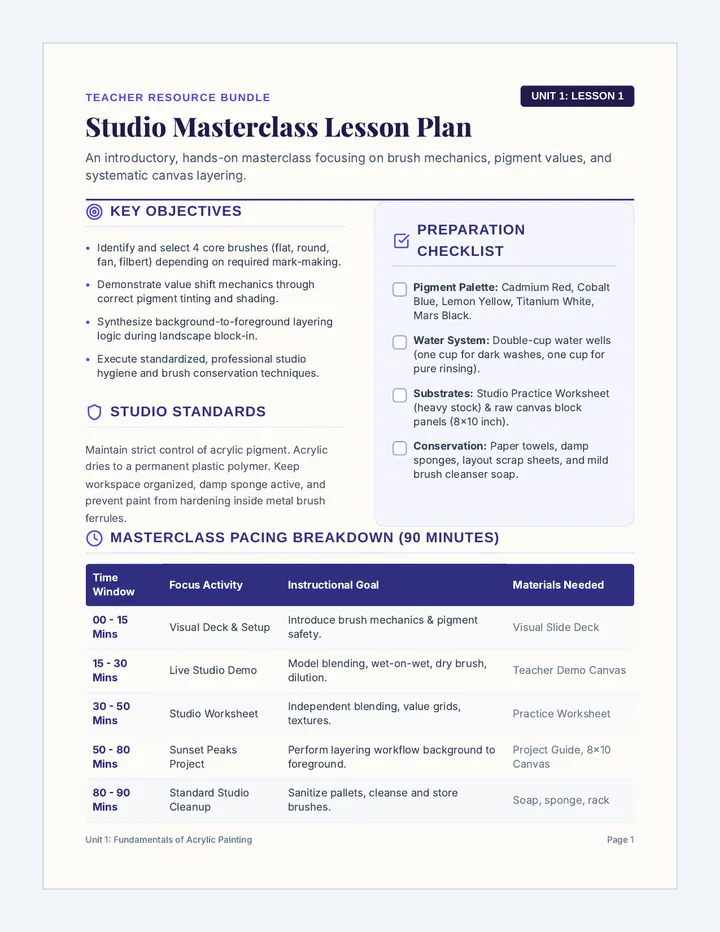
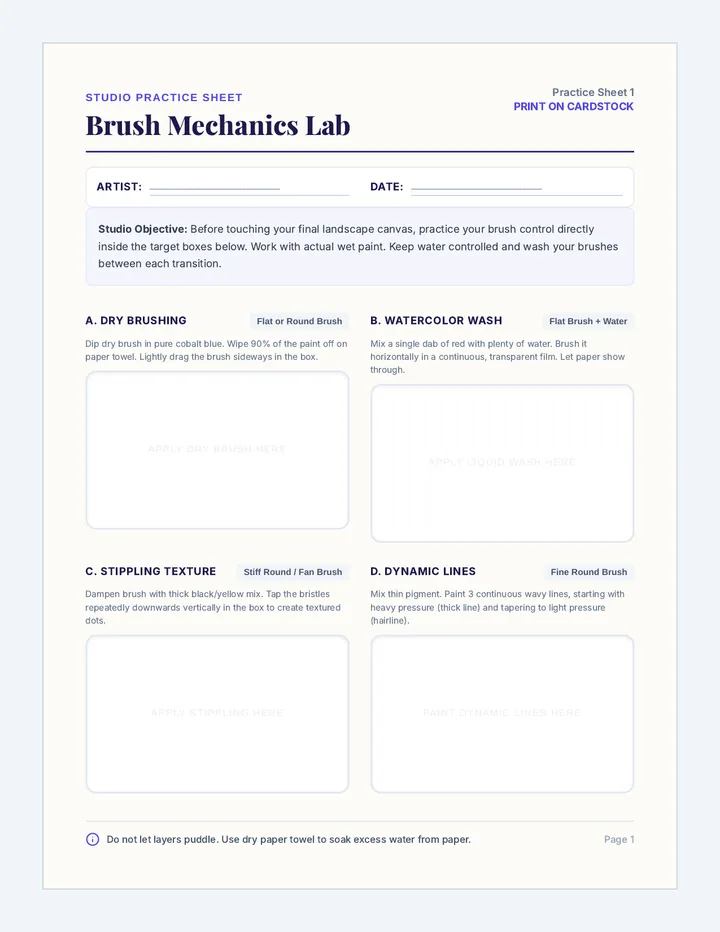
A 7th-grade small-group lesson where students explore ink pens and brushes to master contrast, texture, and bold design through hands-on experimentation and peer feedback.
A series of rhythm reading flashcards and a teacher's guide covering basic to advanced rhythmic patterns. Activities progress from quarter notes and rests to complex sixteenth notes and triplets across multiple time signatures.
A high-energy culinary challenge where students use mystery Easter-themed ingredients to create unique dishes, focusing on creativity, flavor, and presentation.
A creative project where students research and present the magic of Broadway. Students can choose a specific musical, a legendary composer, or a famous performer to showcase on an informational poster.
A comprehensive introduction to the physiological and technical aspects of singing, covering vocal anatomy, breath support, vocal registers, and resonance.
A foundational exploration of color theory for middle schoolers, covering the color wheel, color relationships, and practical application through a creative design project.
The final mission: applying all previous skills to brand-new musical scores. Students learn the "STARS" sight-reading method to analyze and play a piece perfectly on the first try.
Tackling tied notes, dotted rhythms, and basic syncopation. Students learn how to maintain a steady beat while reading complex rhythmic variations.
Learning to read music by the distance between notes (steps vs. leaps) rather than just note names. This lesson builds speed and accuracy for fluent reading.
Navigating the score with repeats, 1st and 2nd endings, and navigation markings like D.C. al Fine and D.S. al Coda. Students build a "roadmap" of the music before playing.
Focusing on the symbols that change the "how" of playing, including dynamics (p, f, mf) and articulations (staccato, accent, tenuto). Students learn to read the character of the music, not just the notes.
Exploring the difference between 4/4, 3/4, and 2/4 time signatures. Students will practice feeling the strong beats and identifying how measures are divided in different meters.
Mastering the "code" of sharps and flats at the beginning of the staff. Students learn to apply key signatures to every note in a phrase and recognize common band keys like Bb and Eb.
Students will learn to identify and play notes that extend above and below the standard five-line staff using ledger lines. The session focuses on the logical extension of the musical alphabet into "The Great Beyond."
A counselor-led artistic expression session where teenagers create faux stained glass using simple materials. The activity focuses on mindfulness, color theory, and personal expression through light and color.
A performance-based task where students adapt and perform scenes from Macbeth. It includes specific scaffolds and assessment tools designed for WIDA Level 2-3 ELLs to demonstrate growth in speaking and listening.
A lesson exploring the intersection of global music and emotional expression through descriptive writing and active listening. Students will journey through various musical landscapes, analyzing how different cultures use sound to convey mood.
A cross-curricular art and social studies lesson where students explore the history and symbolism of Japanese Sashiko and Indigenous Australian Dreamtime art to create their own meaningful patterns.
A foundational lesson on understanding the Circle of Fifths and identifying major key signatures for 7th-grade music students.
A cross-curricular project where students research a significant historical figure from the fields of science, civil rights, or WWII and transform their findings into a compelling 1-2 minute theatrical monologue. Students develop both historical inquiry skills and dramatic performance techniques.
This lesson explores the psychological impact of colors and how they influence human emotion and perception in art and design.
A comprehensive lesson on music tempo covering Italian terminology, metronome markings, and practical application to musical scores. Students will learn to identify and apply various speeds to music.
A lesson exploring the speed of music through Italian tempo markings, the use of metronomes, and understanding Beats Per Minute (BPM).
A comprehensive guide to understanding and applying musical tempo, covering Italian terminology, BPM, and metronome markings.
A comprehensive set of technical drawing templates and reference guides for theatrical set design. This lesson focuses on the proscenium stage and fly system, providing students with the professional tools needed to create ground plans and elevations.
A lesson focused on using the dramatic technique of tableau to explore pivotal moments and emotional themes in Alan Gratz's 'Refugee'. Students will learn the five elements of tableau and work in groups to create living pictures of the three main characters' journeys.