A 6th-grade ELA lesson focused on analyzing interactions in informational texts. Students learn to identify people, events, and ideas and map the 'chain reaction' of how they influence one another.
Cumulative review of all consonant-le patterns through mixed word lists, sentence reading, and a final fluency passage.
Practice decoding and encoding consonant-le words that include r-controlled or magic e syllables, such as 'purple' and 'beetle'.
Explore how the first syllable (open or closed) determines the vowel sound in consonant-le words, contrasting pairs like 'apple' and 'maple'.
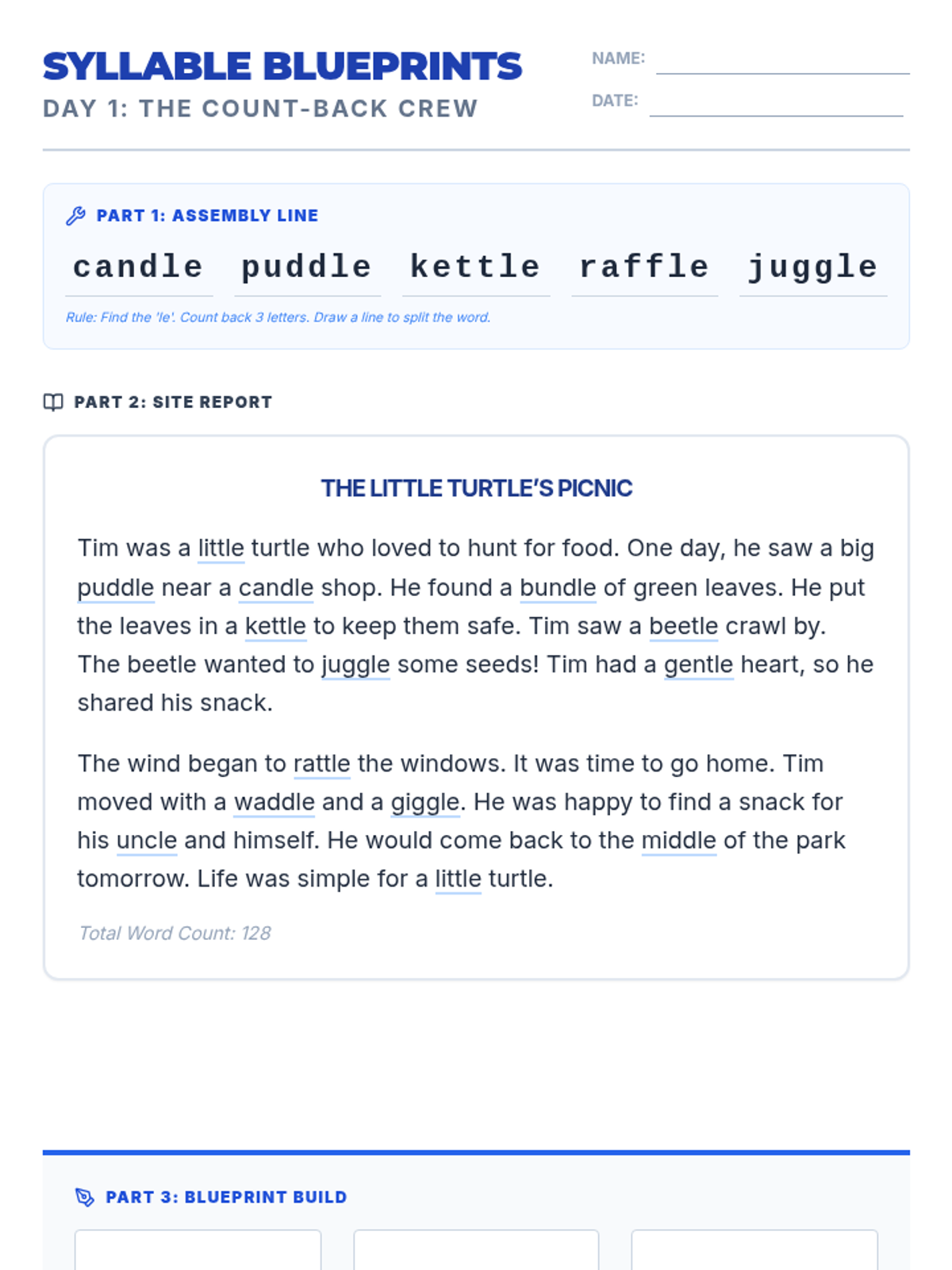
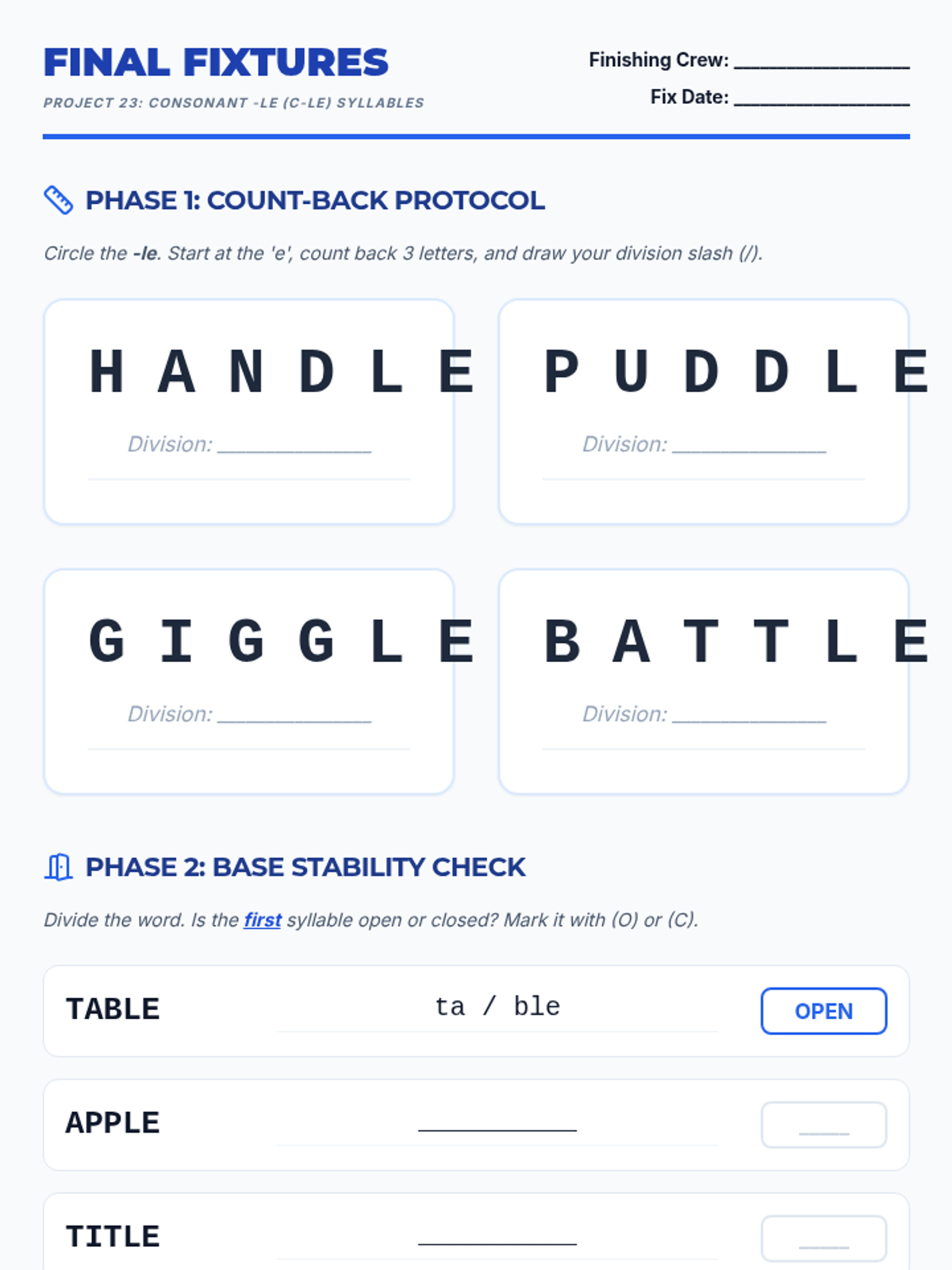
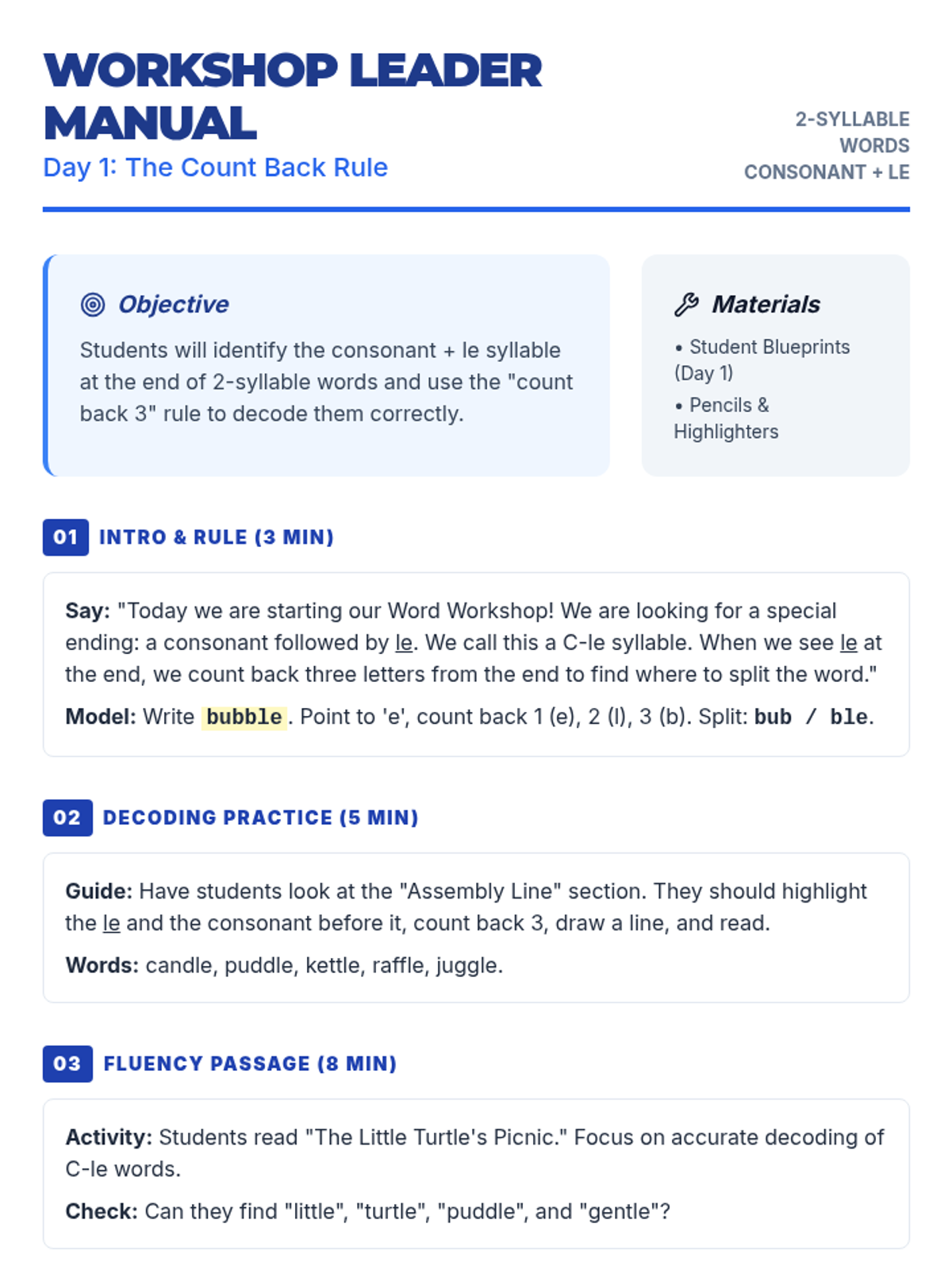
Introduce the consonant-le syllable type and the 'count back 3' rule for dividing words. Focus on words with closed first syllables like 'bubble' and 'candle'.
An introductory lesson exploring various types of figurative language through clear examples and integrated practice questions.
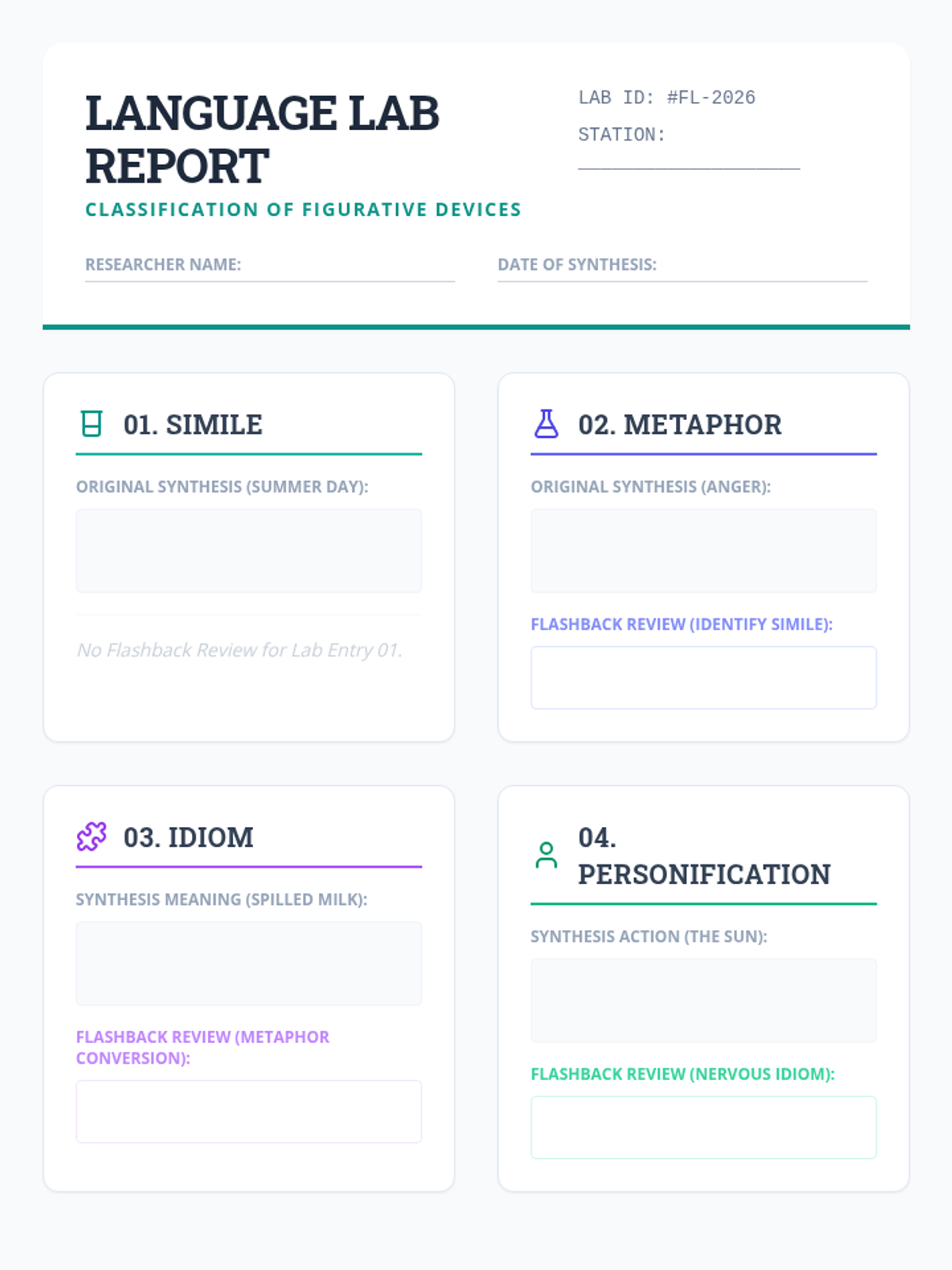
This lesson introduces nine key figurative language devices through interactive slides and practice. Students identify definitions, analyze examples, and create their own original phrases while reviewing previous concepts.
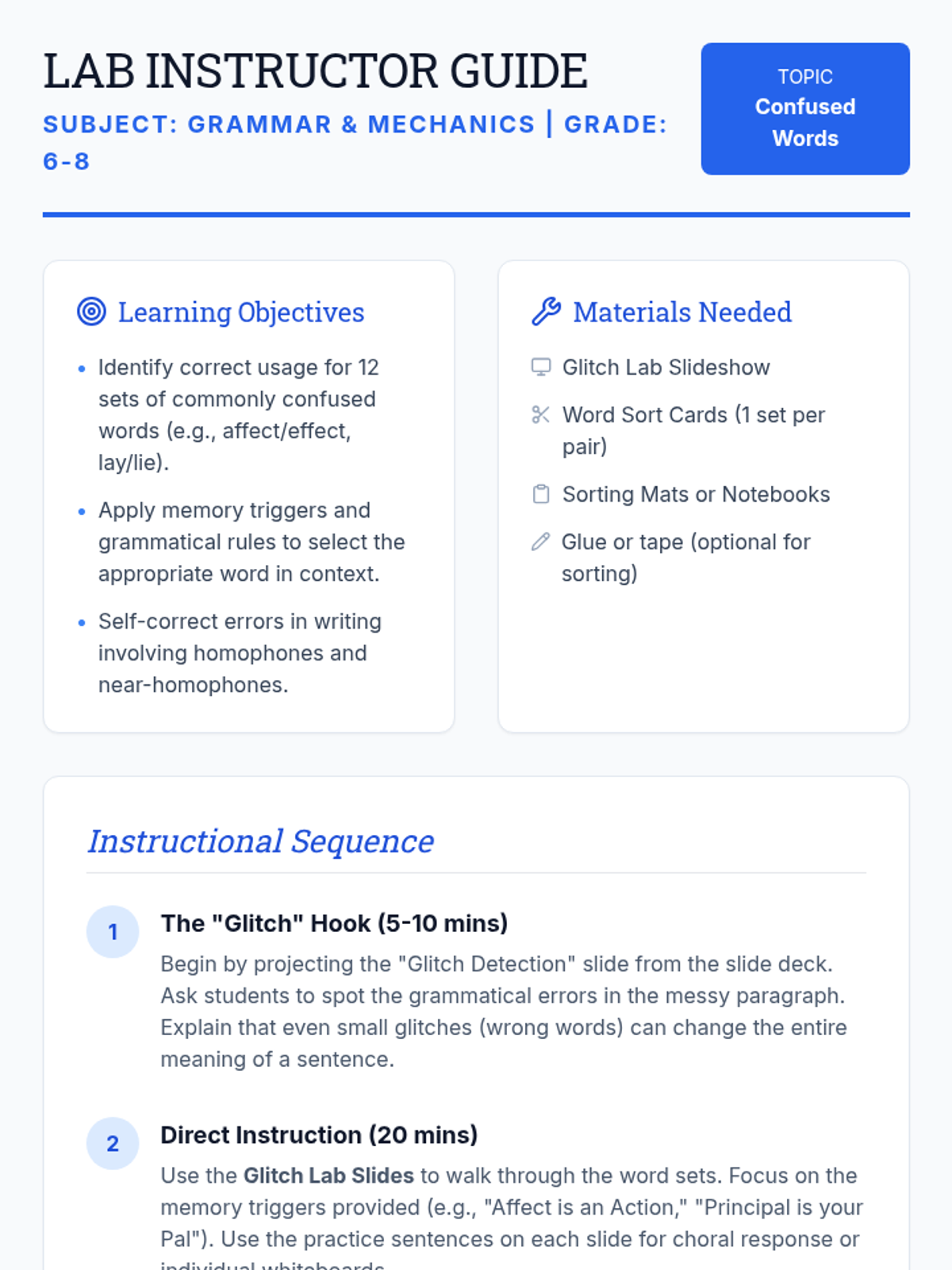
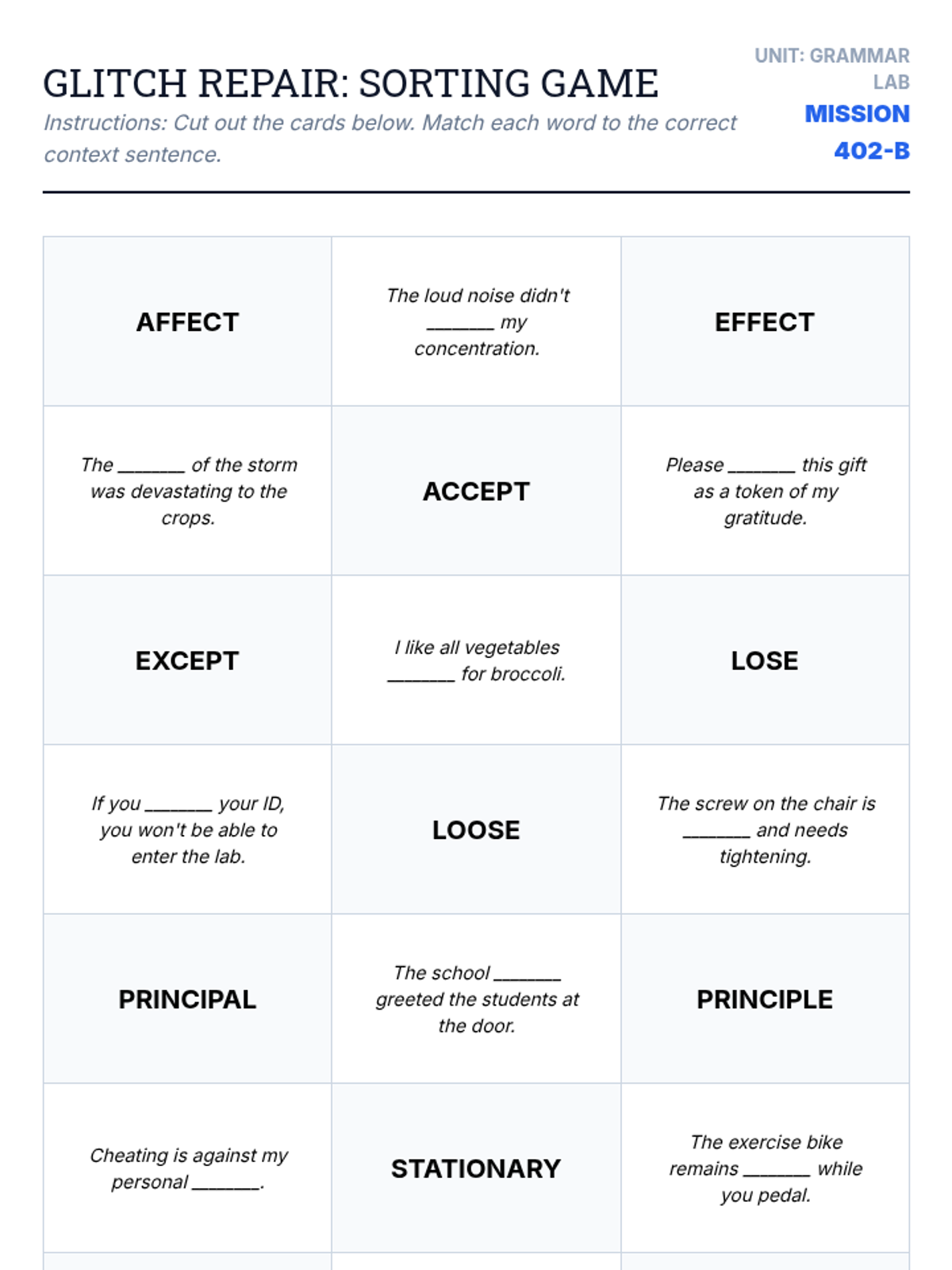
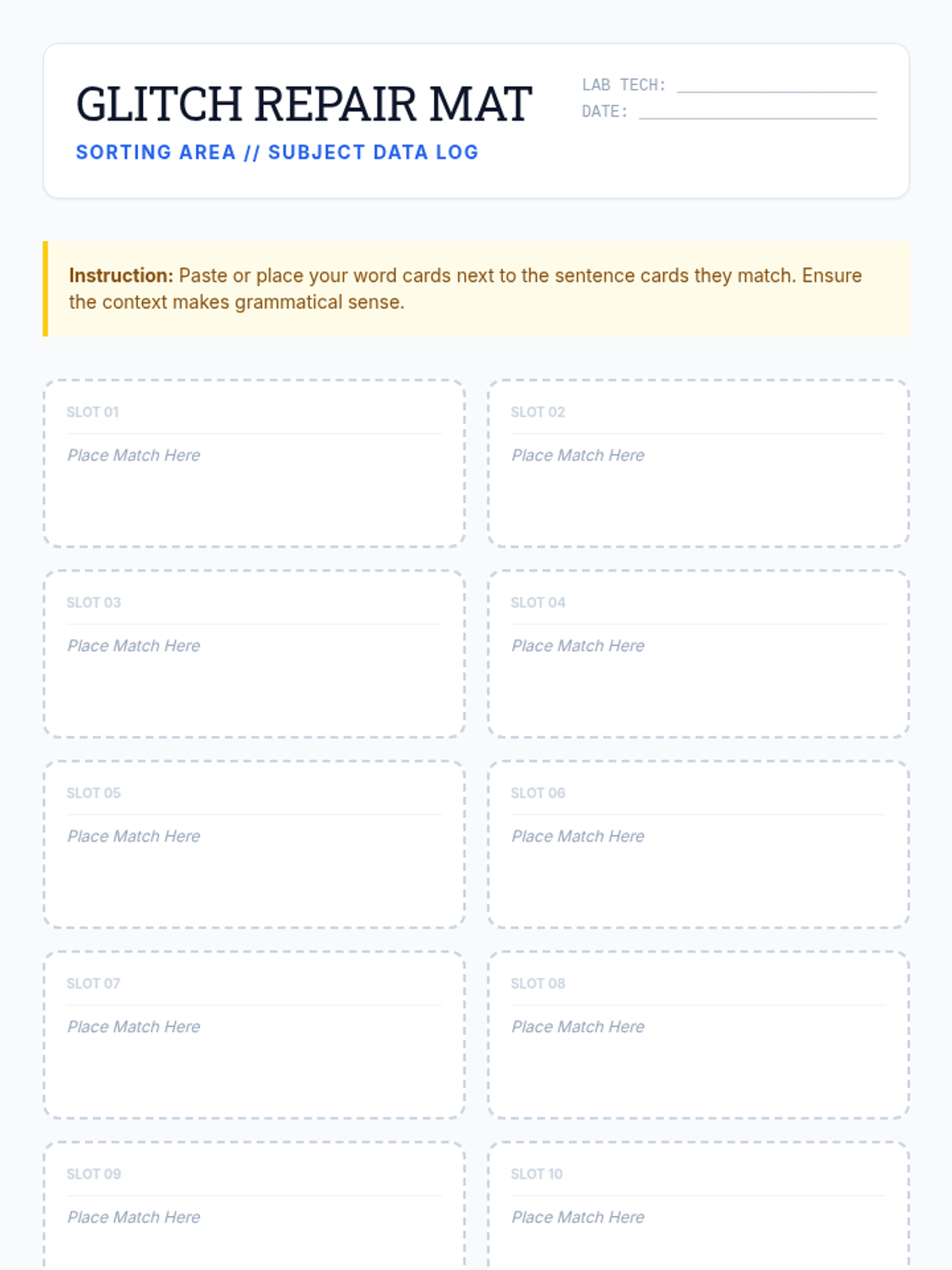
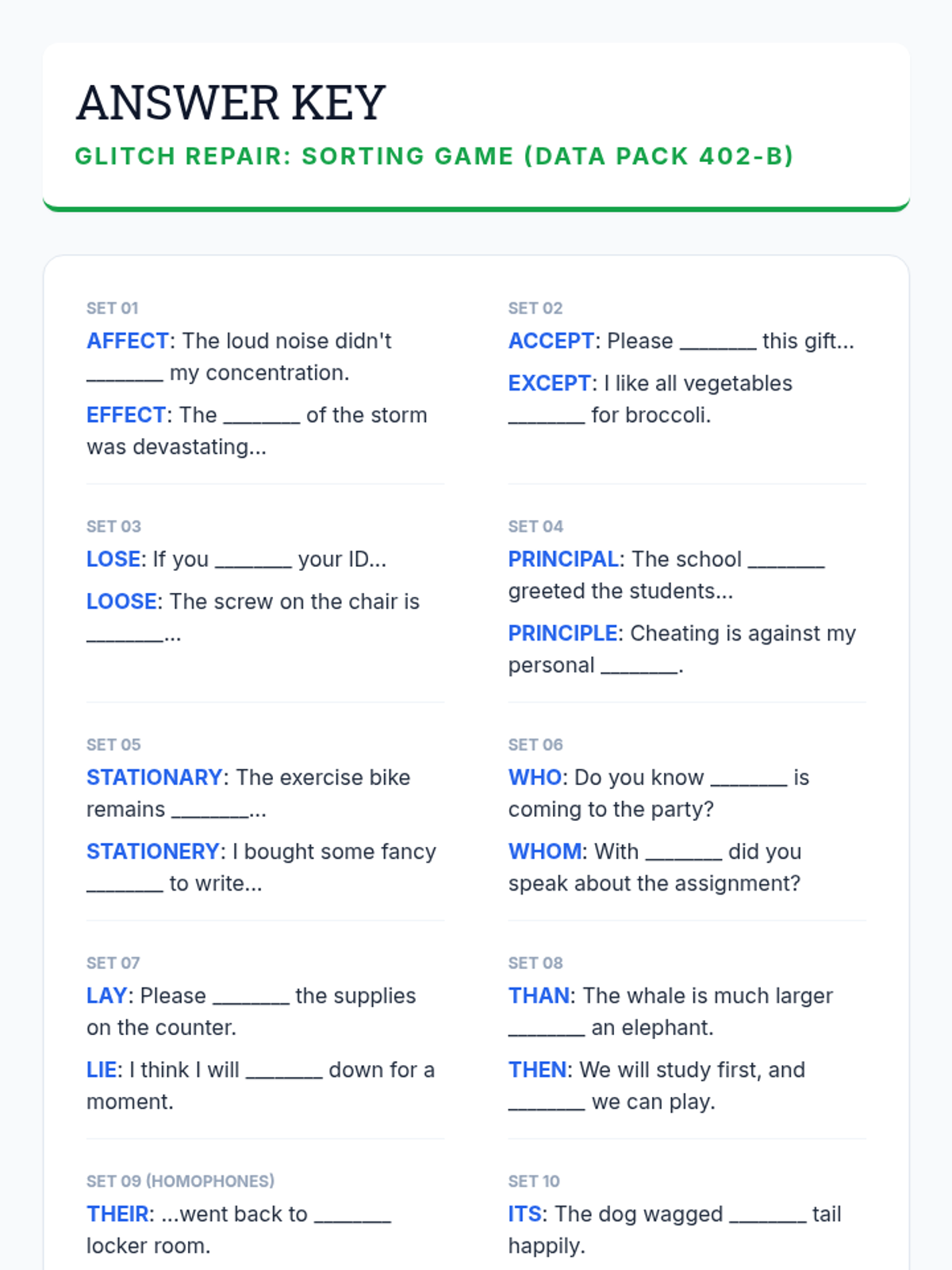
A comprehensive lesson targeting 12 pairs/trios of commonly confused words through a "Grammar Lab" theme. Students will identify, define, and correctly apply homophones and tricky word pairs through direct instruction and a hands-on sorting game.
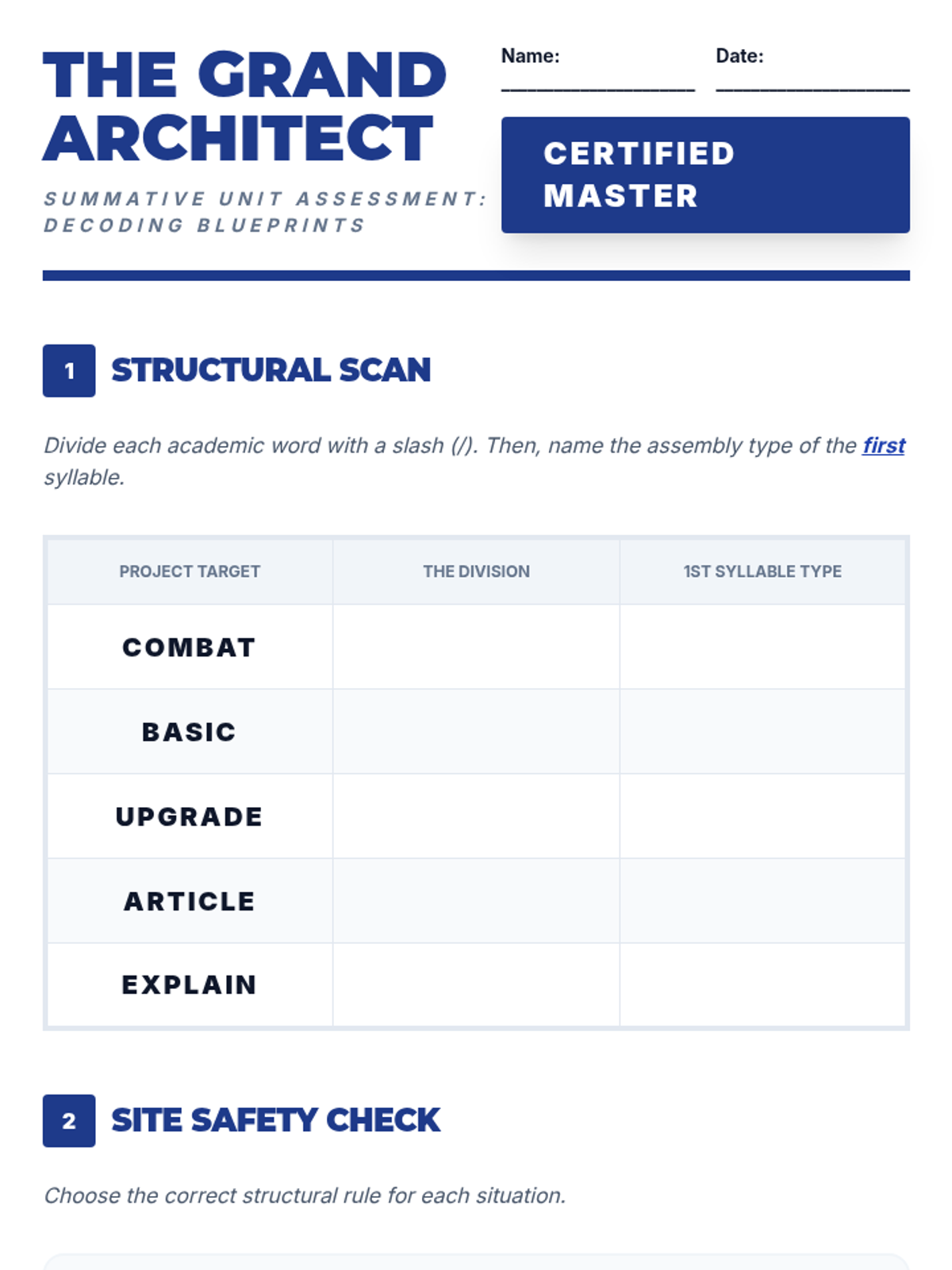
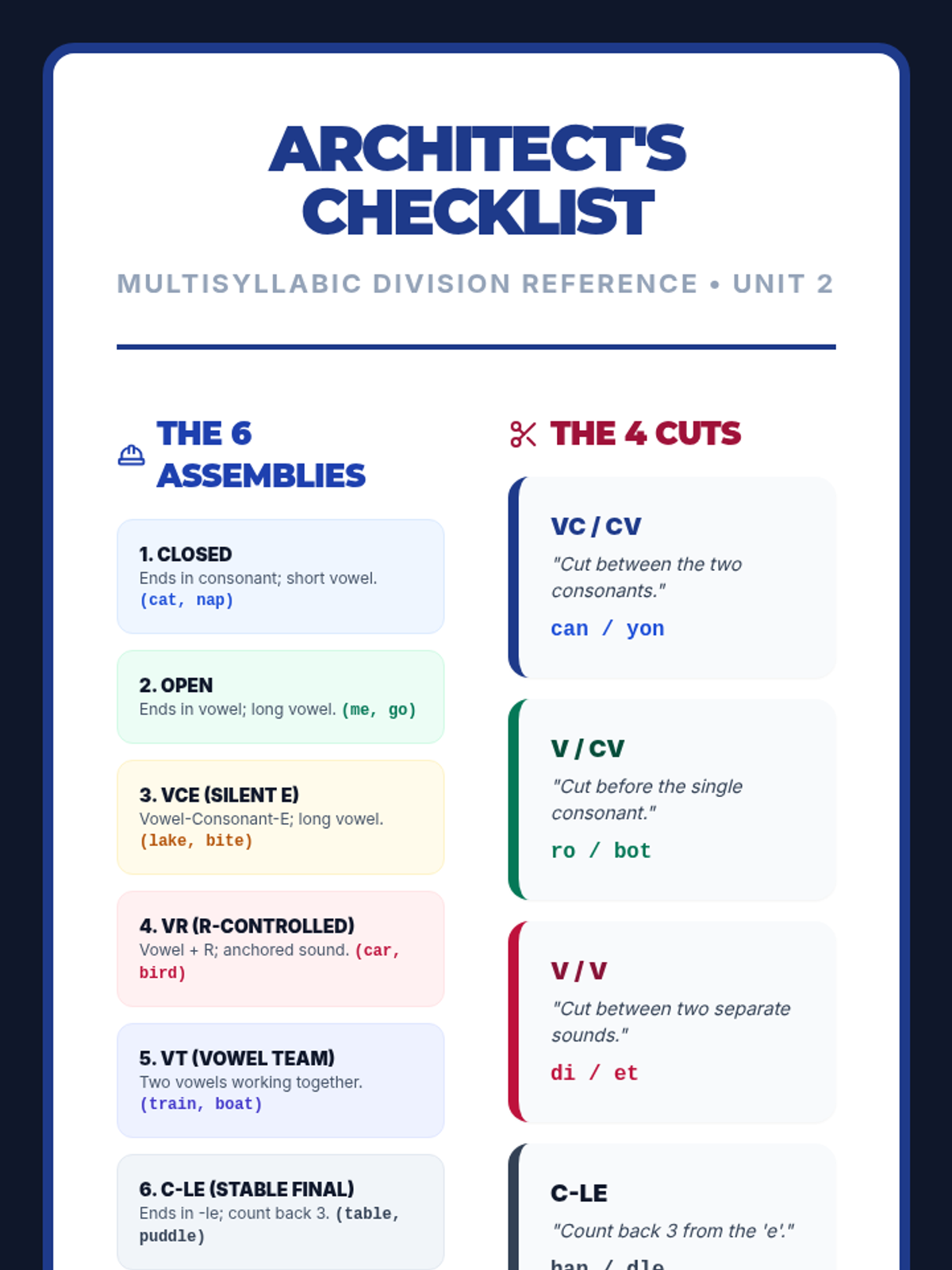
The final summative assessment for the Decoding Blueprints unit, covering all 6 syllable types and 4 division patterns.
Final review and team building activity before the summative project.
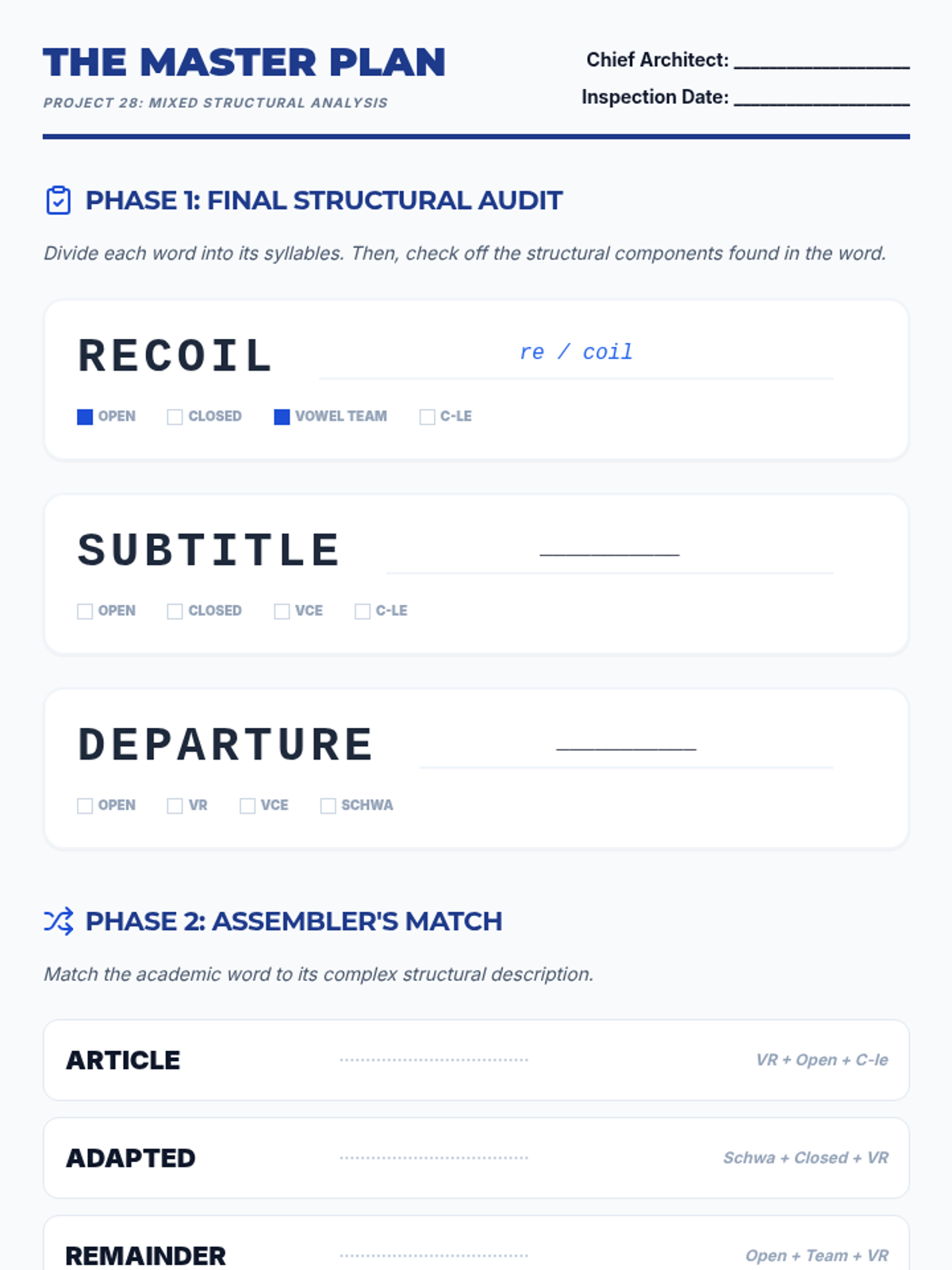
Combines all syllable types and division patterns into complex mixed-practice word challenges.
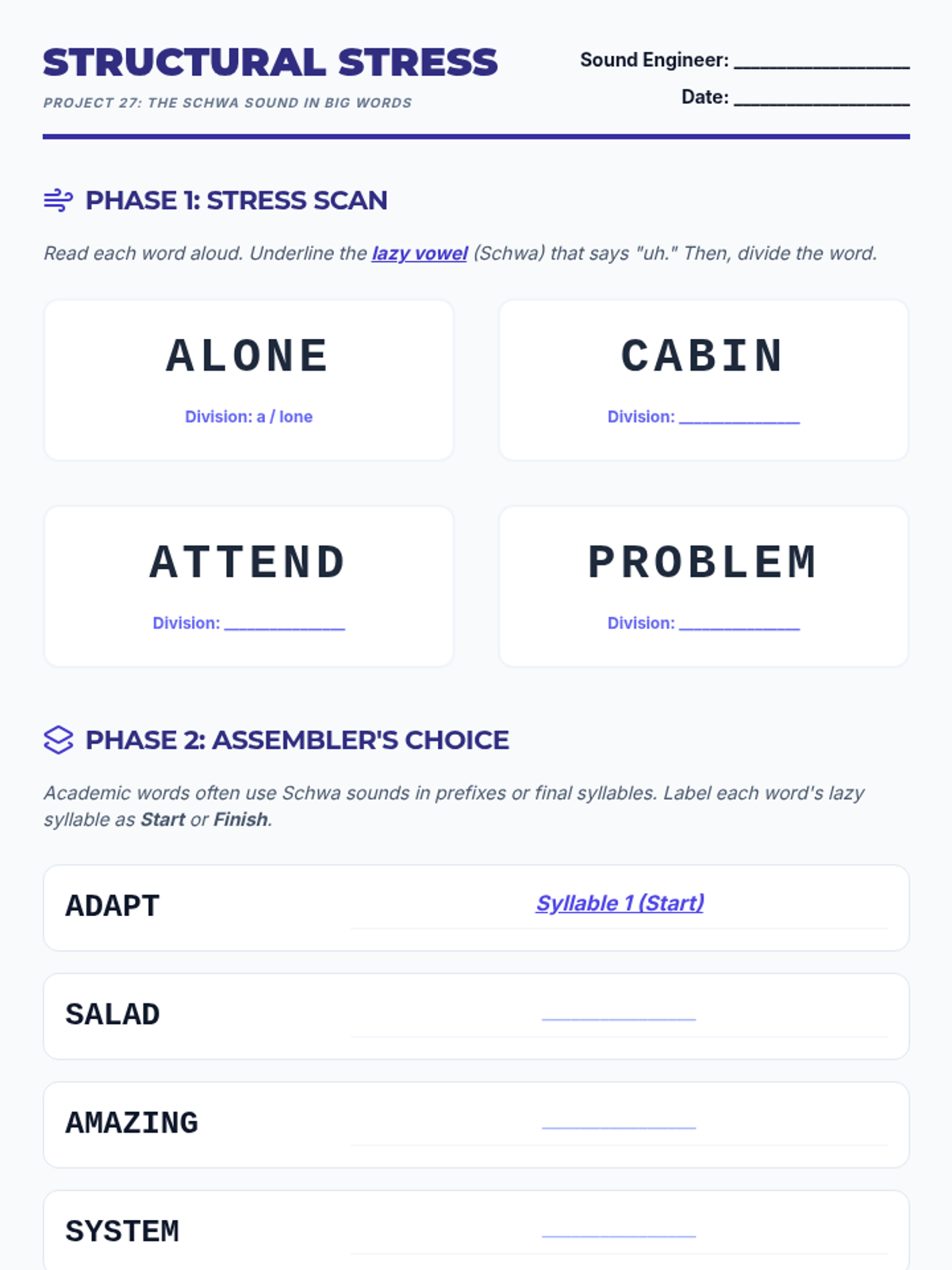
Introduces the 'Schwa' sound in unstressed syllables and how to identify it during structural inspections.
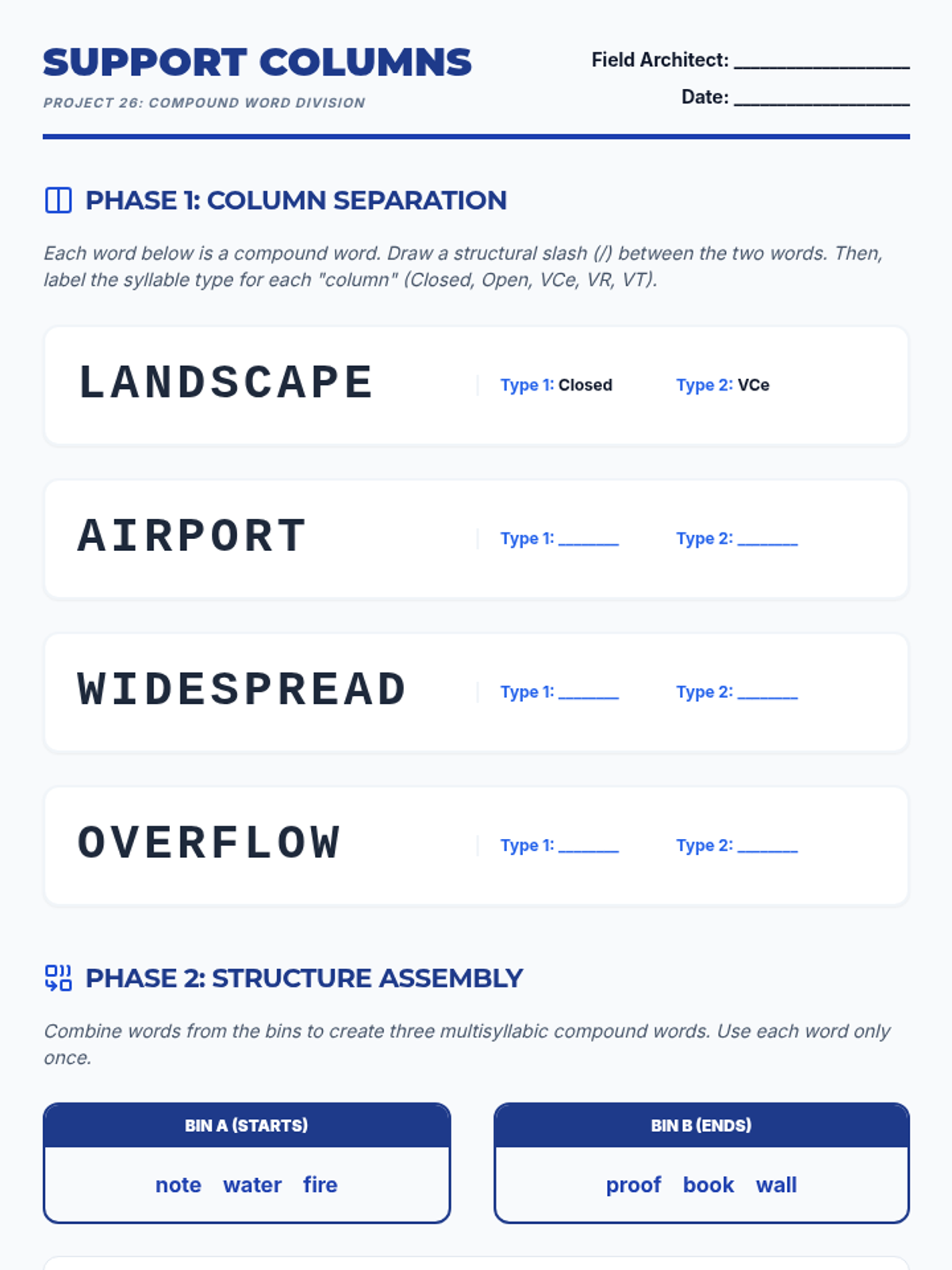
Focuses on compound words and how to divide them as the simplest multisyllabic structure.
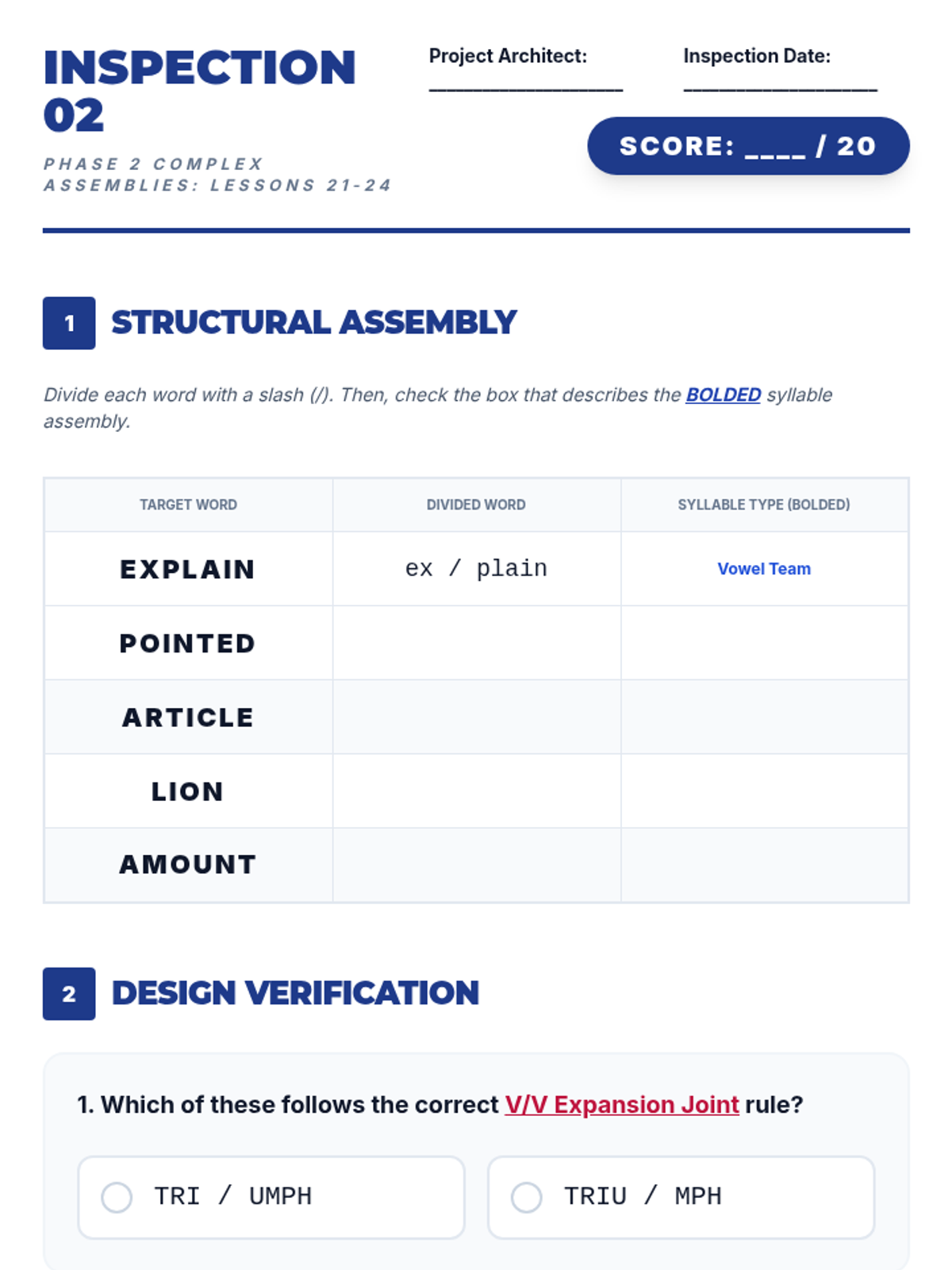
A review of lessons 21-24 with a formal progress monitoring assessment on vowel teams, diphthongs, C-le, and V/V patterns.
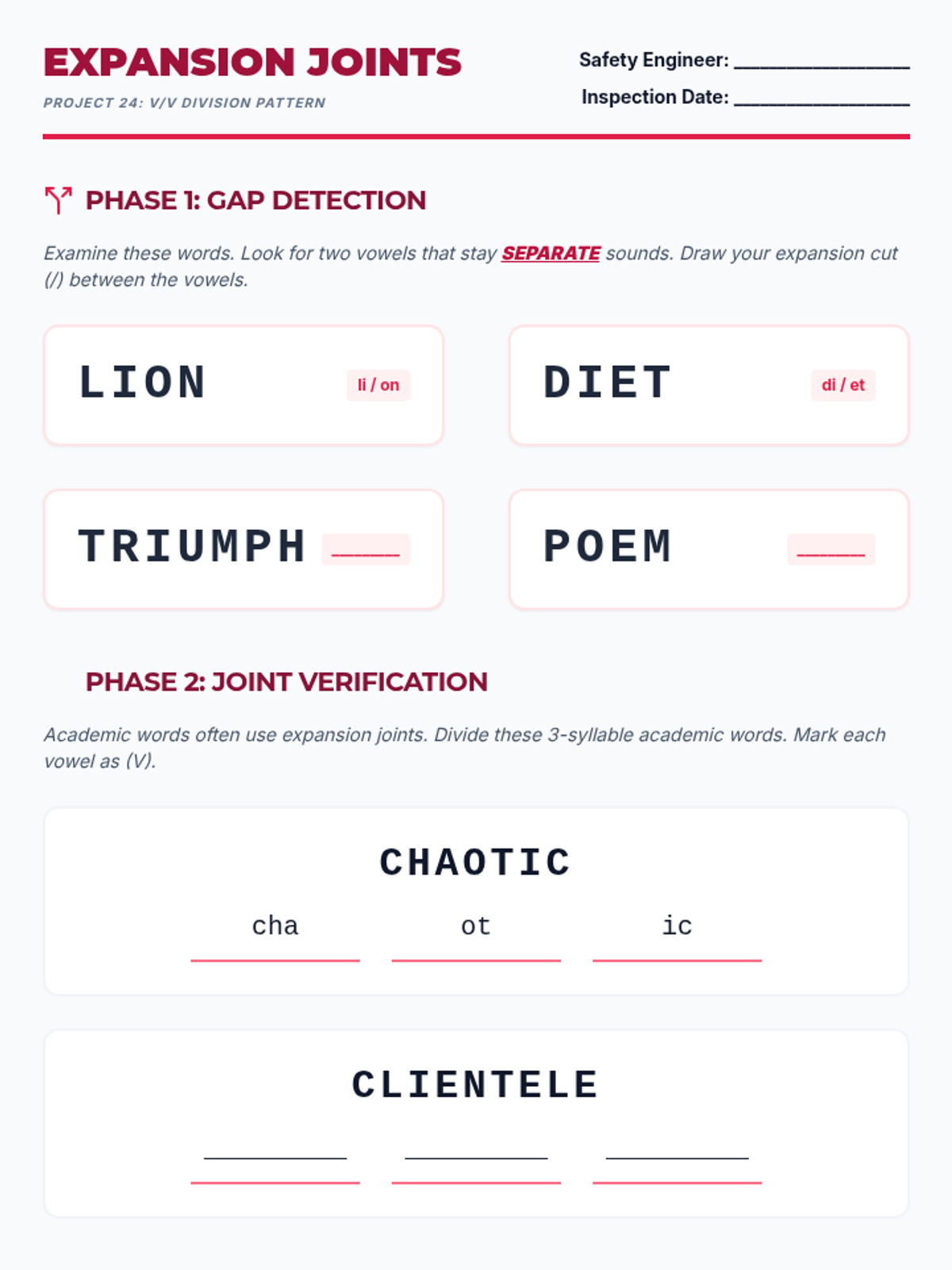
Covers the rare V/V division pattern where two vowels that do not form a team must be split.
Introduces the Final Stable Syllable (Consonant -le) and the rule for dividing before the consonant.
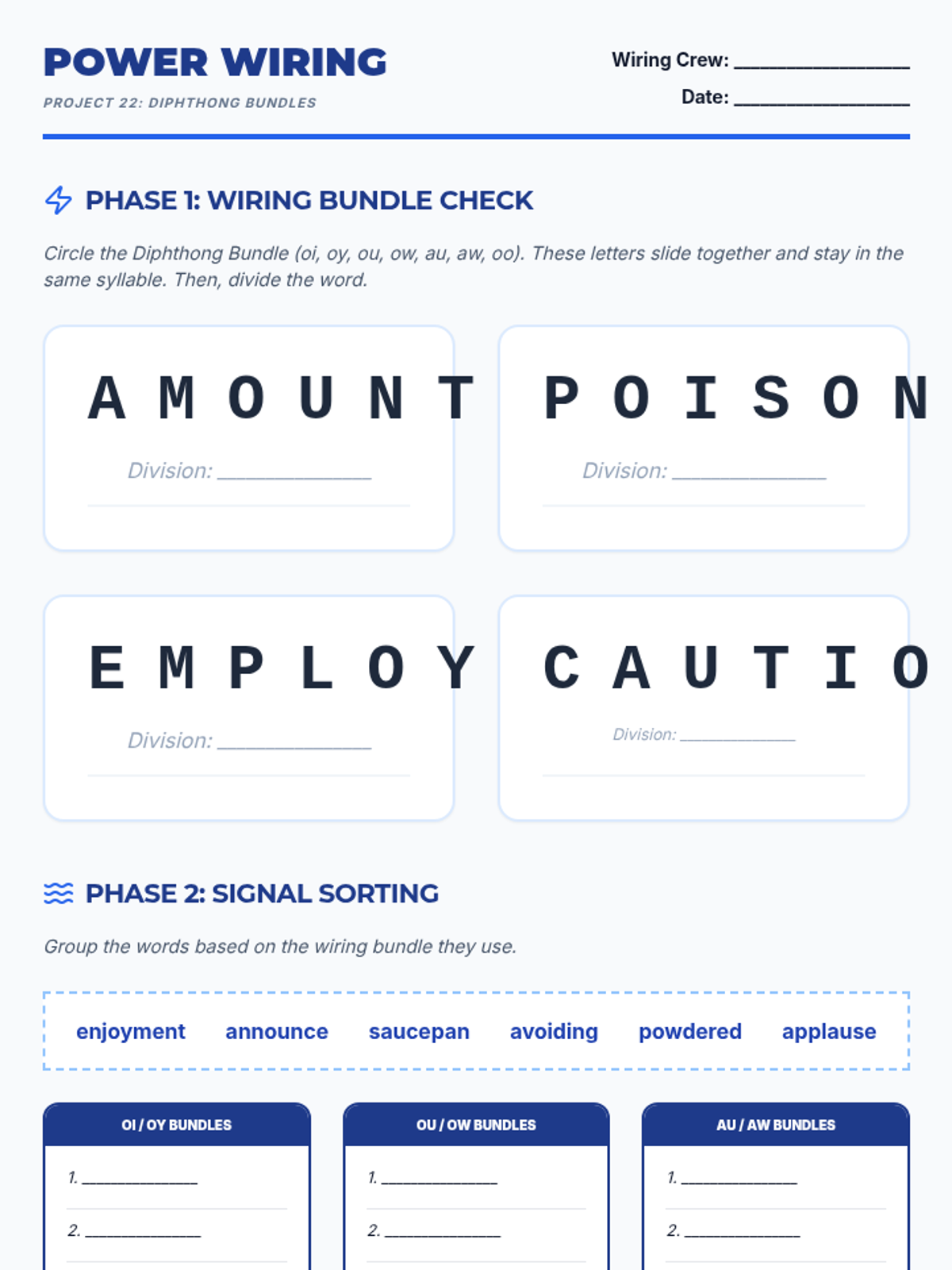
Focuses on diphthongs (OI, OY, OU, OW, AU, AW) in multisyllabic words and their unique sounds.
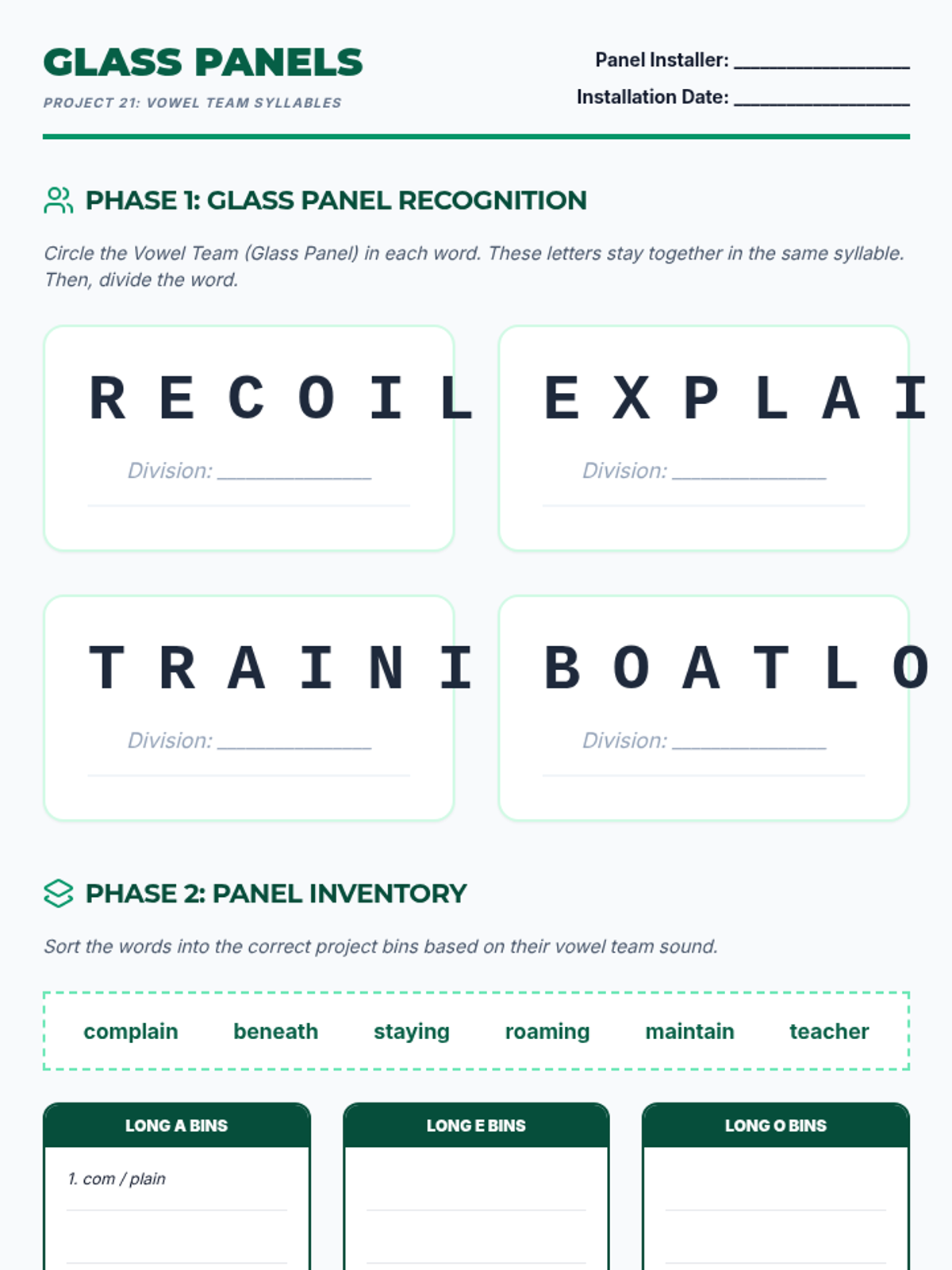
Explores vowel team syllables in multisyllabic words, focusing on how they function as single structural units.
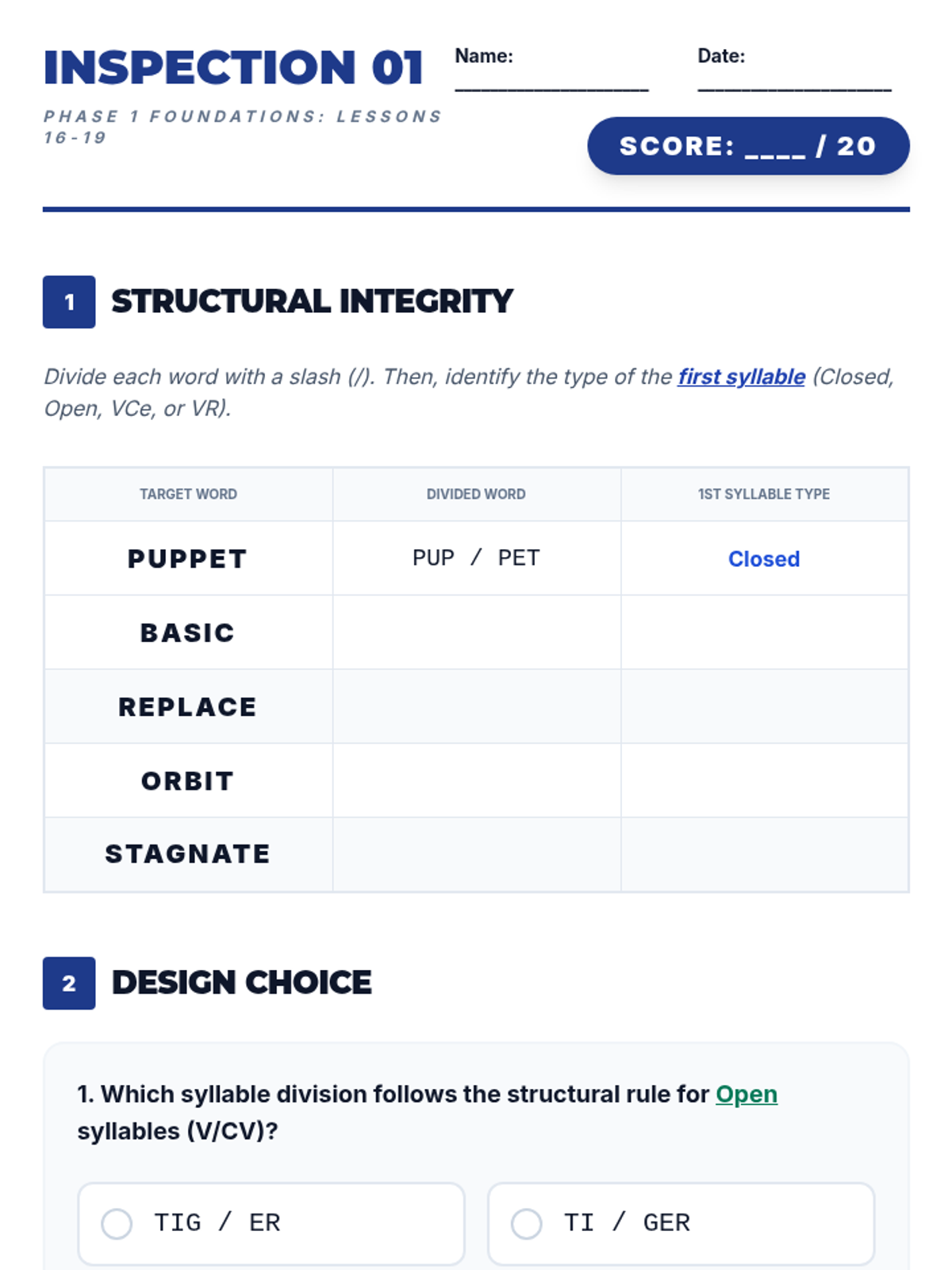
A review of lessons 1-4 with a formal progress monitoring assessment on closed, open, VCe, and R-controlled patterns.
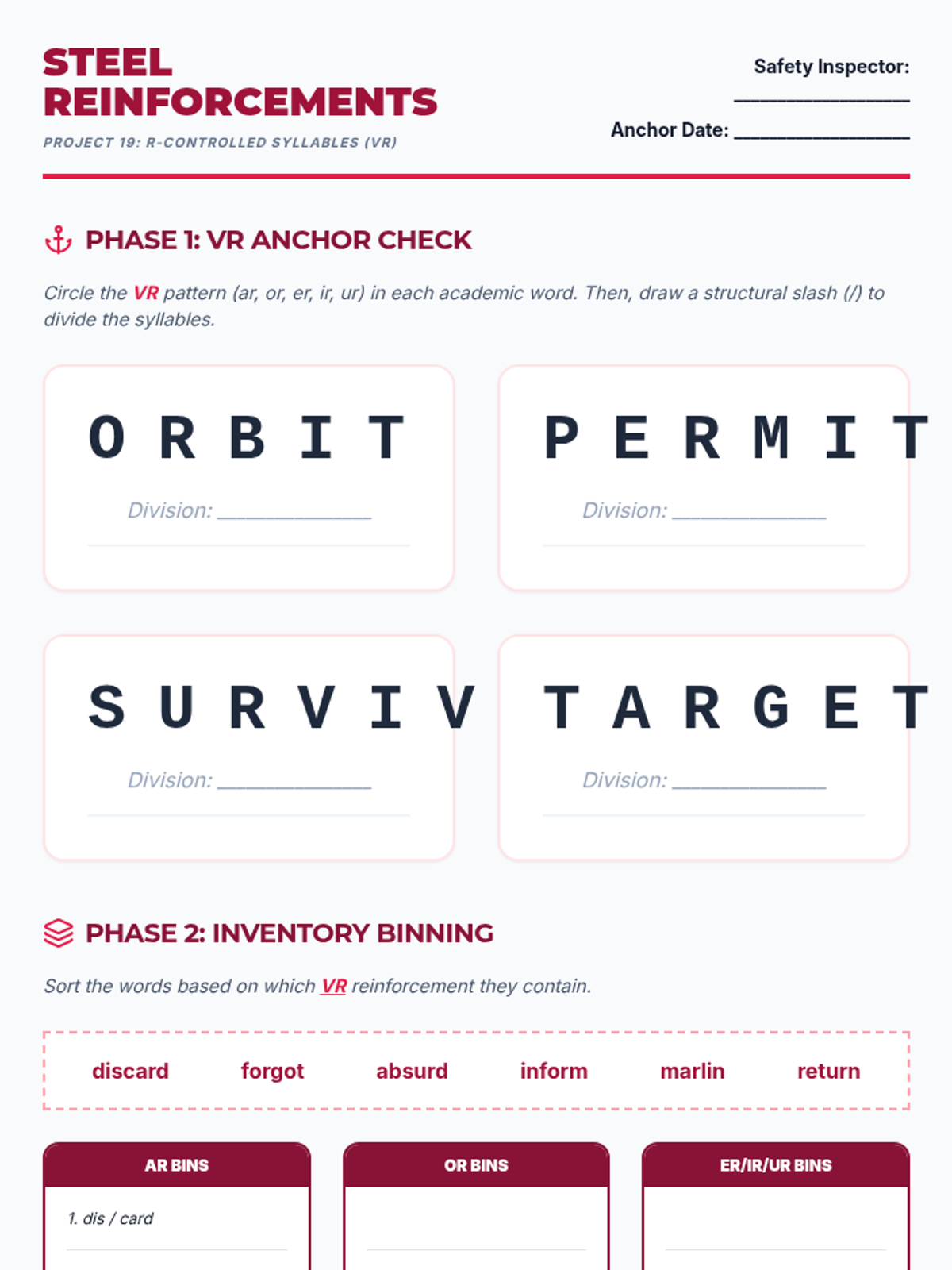
Focuses on R-controlled syllables (AR, ER, IR, OR, UR) and how to divide words containing them.
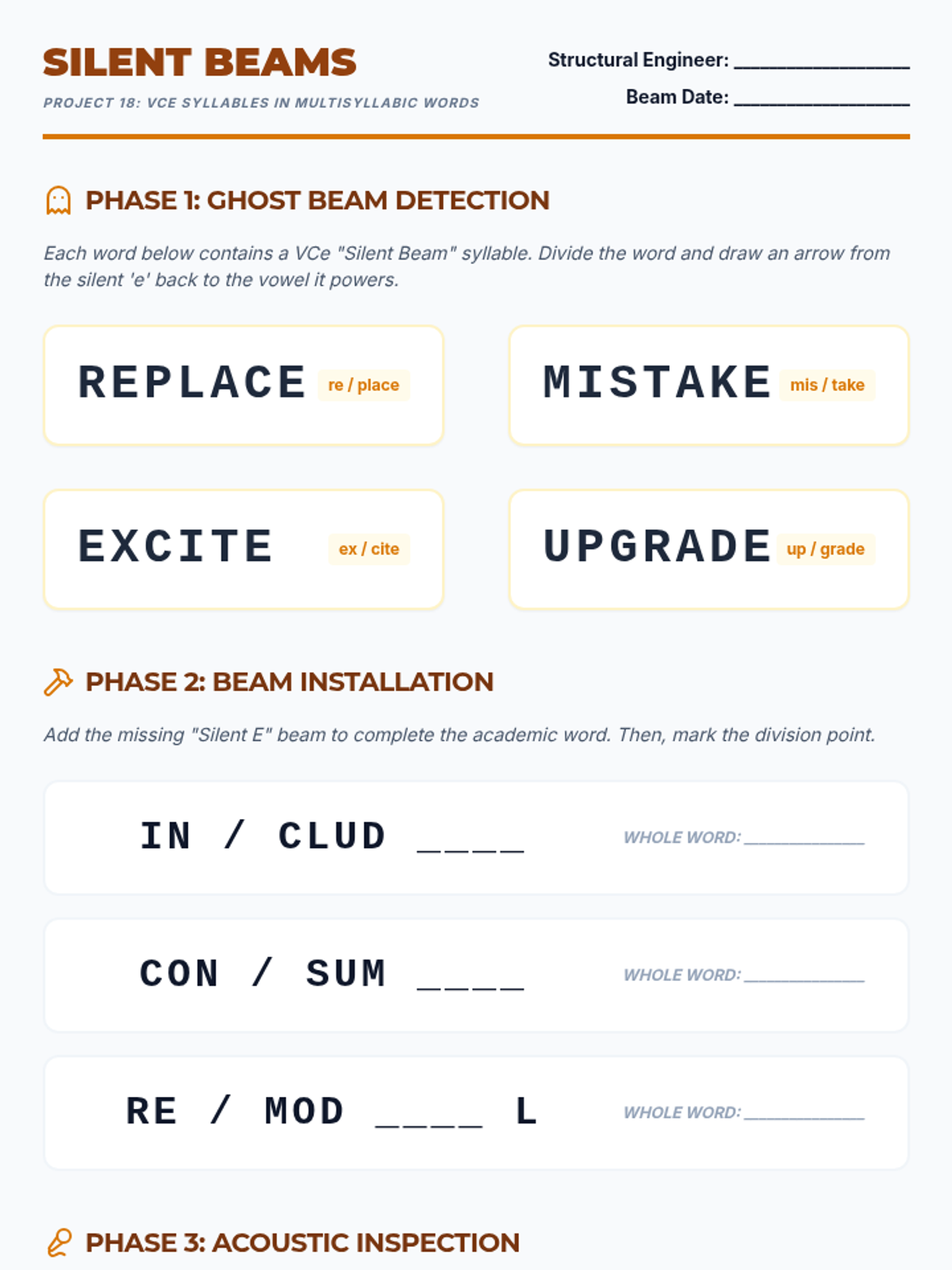
Introduces the VCe (Silent E) syllable type in multisyllabic words and how it affects vowel sound duration.
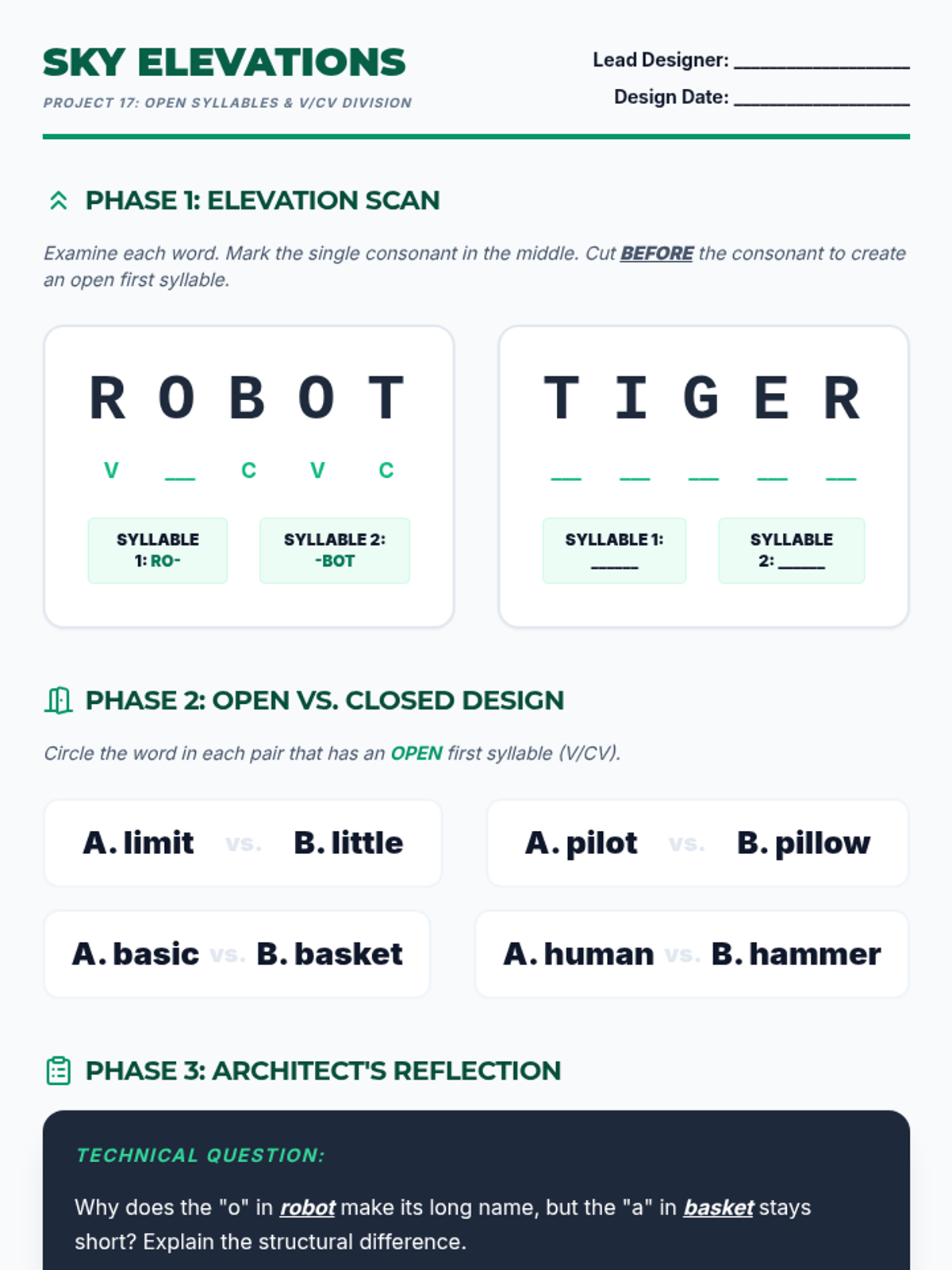
Explores open syllables and the V/CV division pattern in two-syllable academic words.
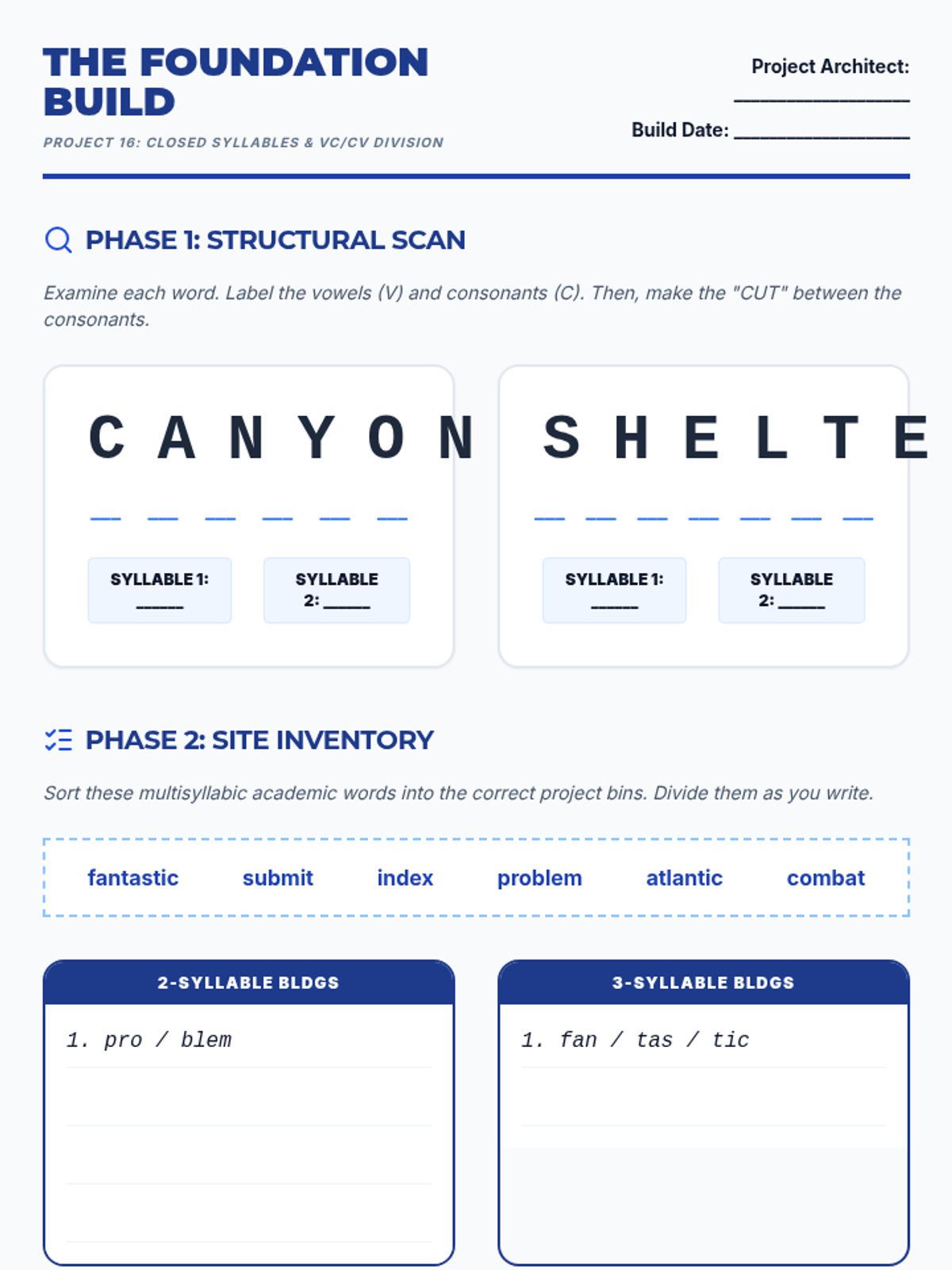
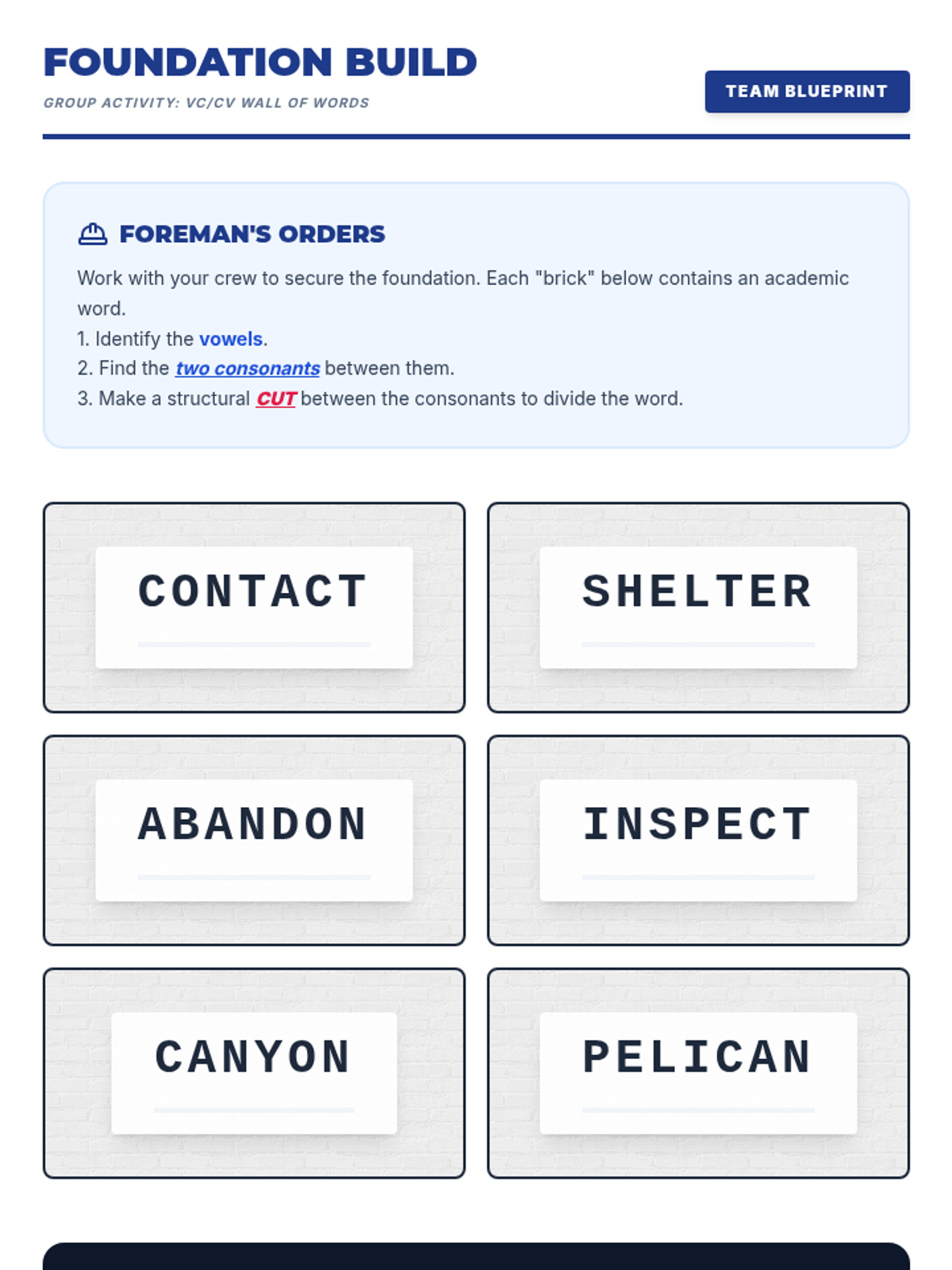
Focuses on closed syllables in multisyllabic words, using the VC/CV division pattern.
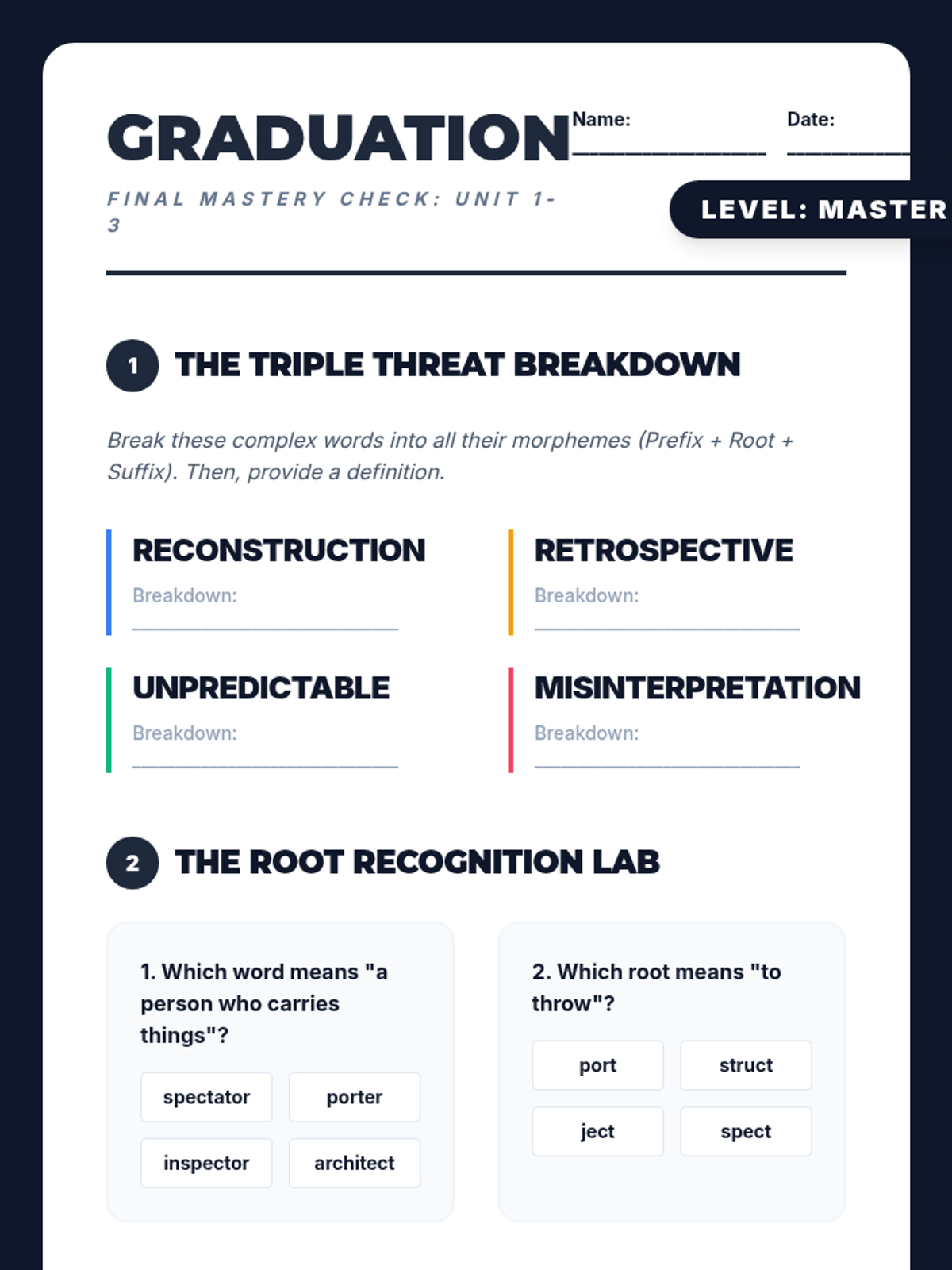
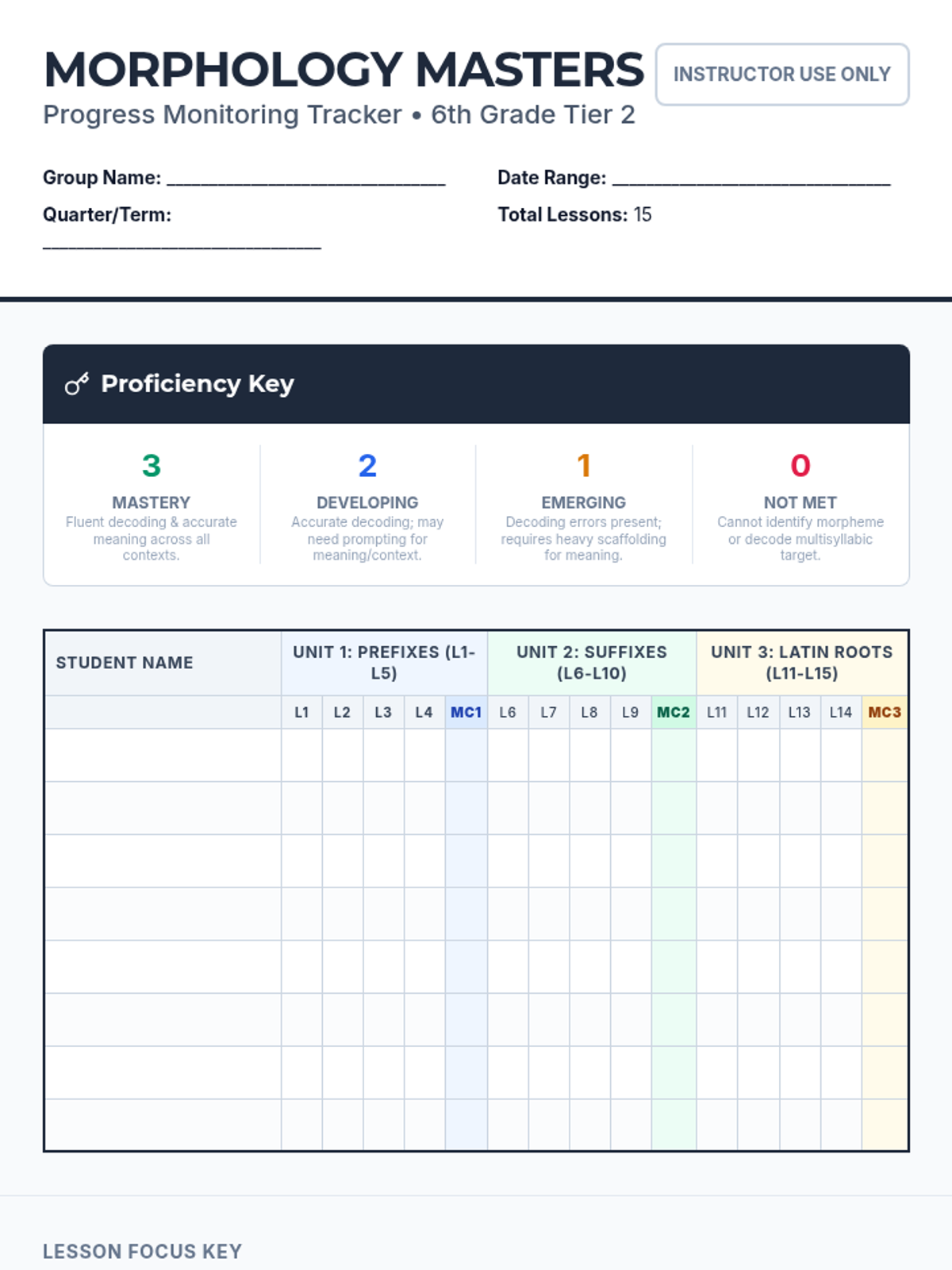
The ultimate cumulative review and graduation for the entire 20-lesson morphology sequence.
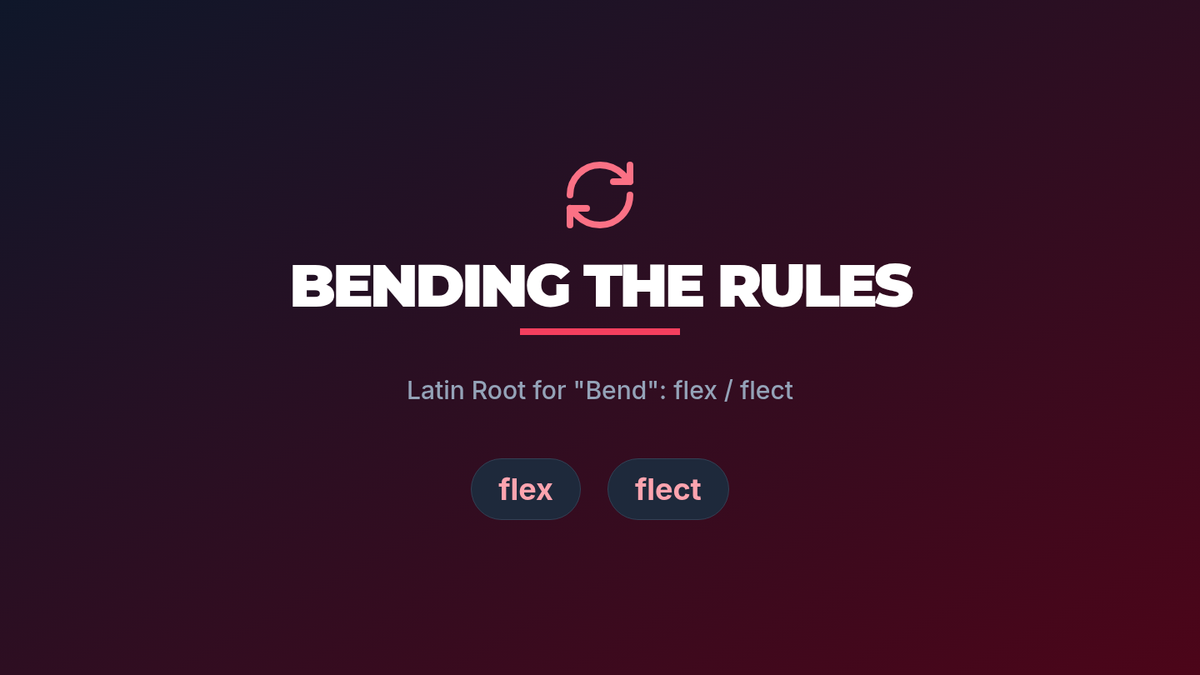
Covers the Latin root 'flex' or 'flect' (to bend), focusing on words like reflect, flexible, and deflection.
Introduces the Latin root 'tract' (to pull or drag), connecting it to words like subtract, attract, and extract.
Explores the Latin root 'script' or 'scrib' (to write), identifying it in words like describe, manuscript, and prescription.
Focuses on the Latin root 'dict' (to speak or say), exploring common words like dictate, predict, and verdict.
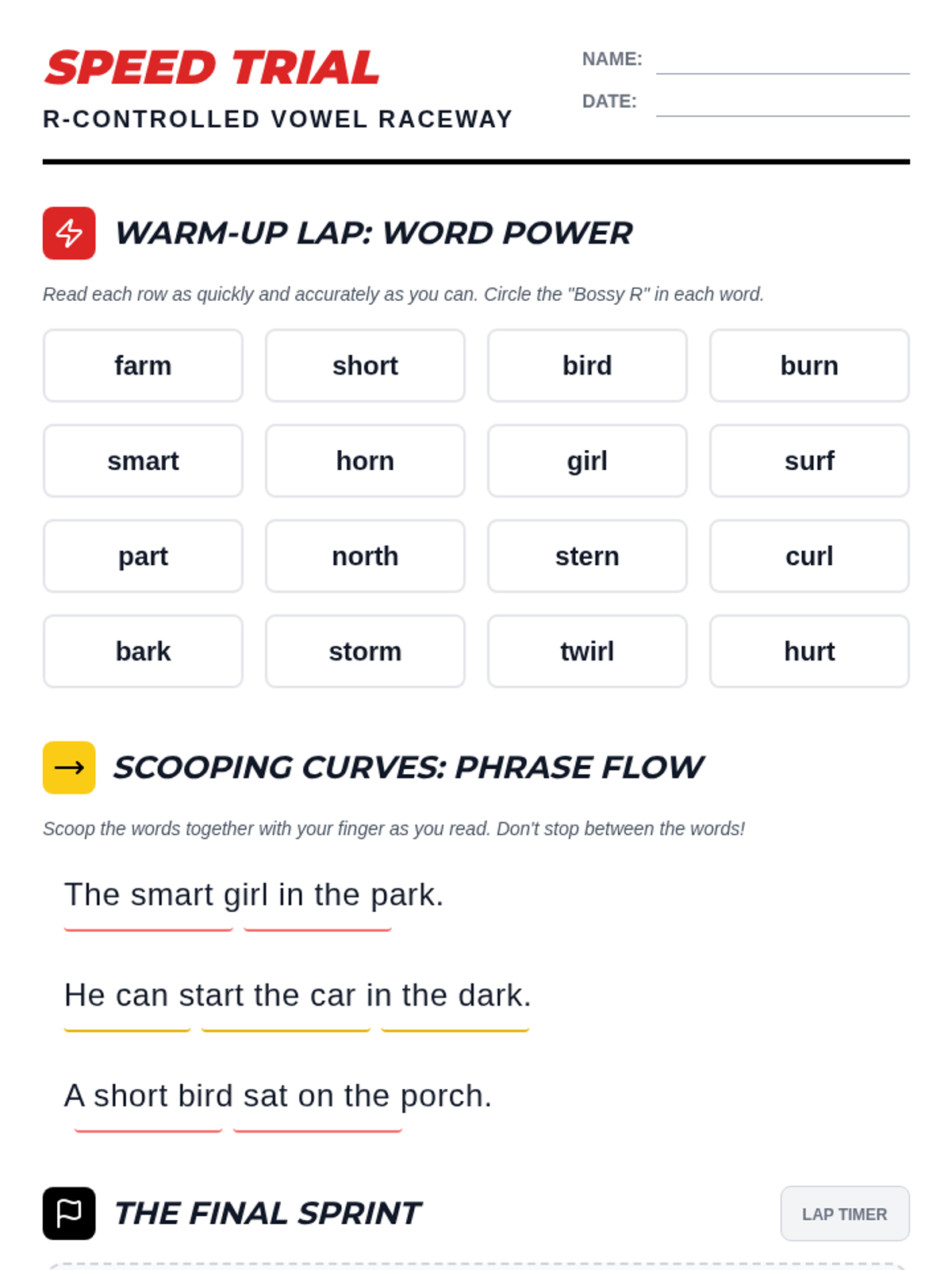
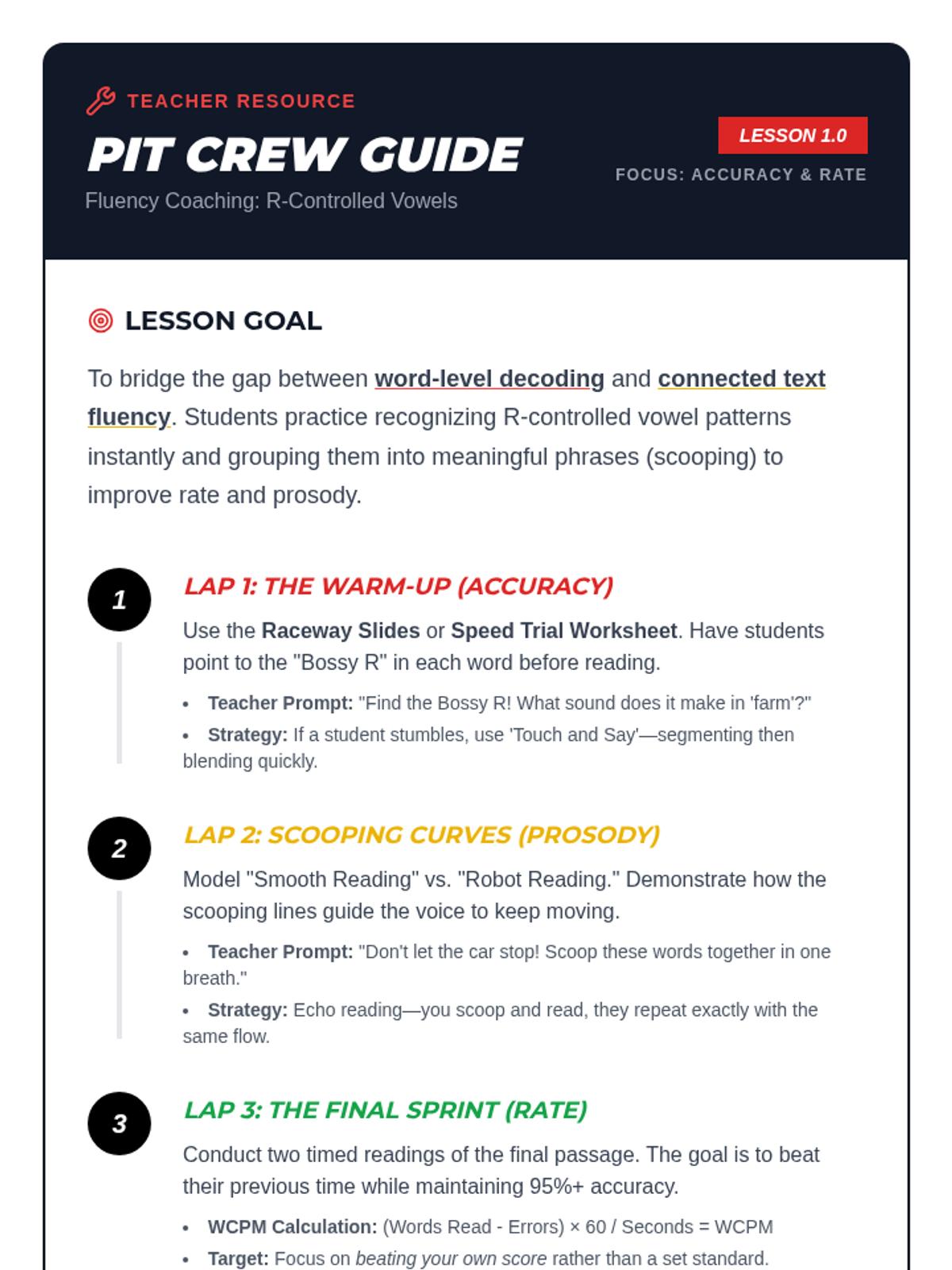
A bridge between decoding and fluent reading, this lesson focuses on mastering R-controlled vowels through speed drills, phrase scooping, and repeated reading of short, engaging passages. Students will shift from individual sound isolation to smooth, connected reading.
The final lesson of the sequence, reviewing all prefixes, suffixes, and roots with a cumulative assessment.
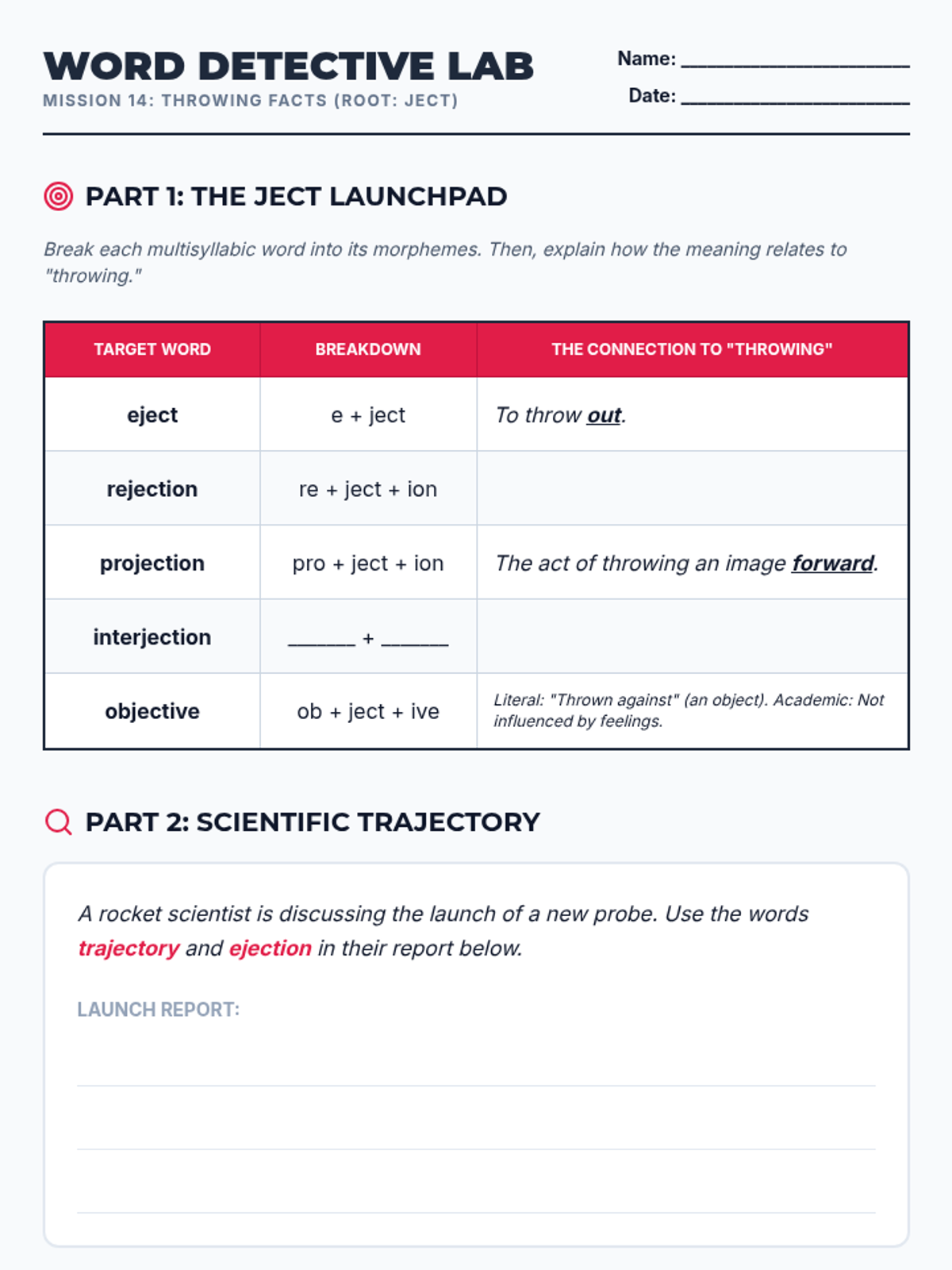
Covers the Latin root 'ject' (throw), emphasizing the physical meanings behind abstract academic terms.
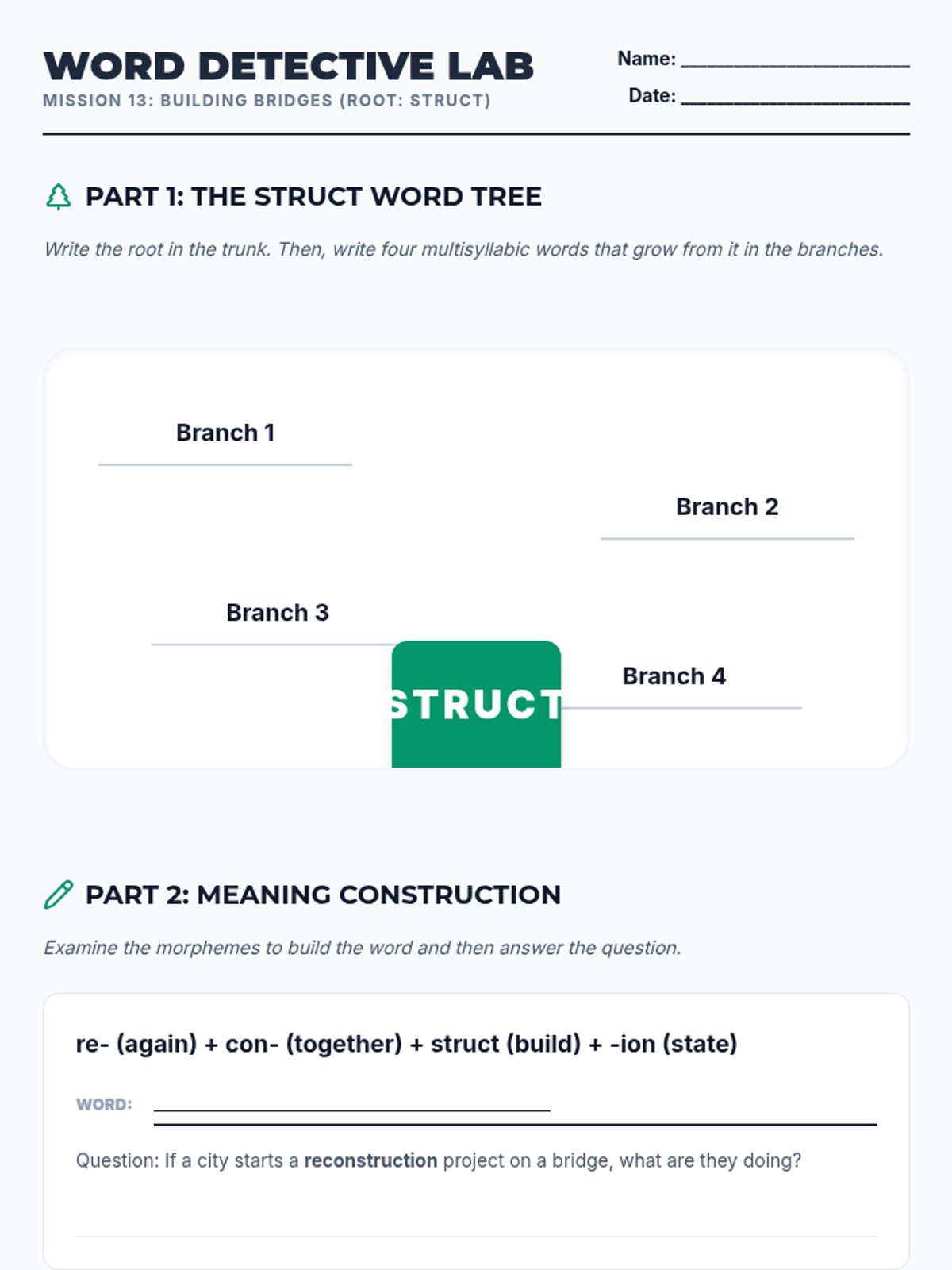
Explores the Latin root 'struct' (build), using word trees to visualize how multiple morphemes combine.
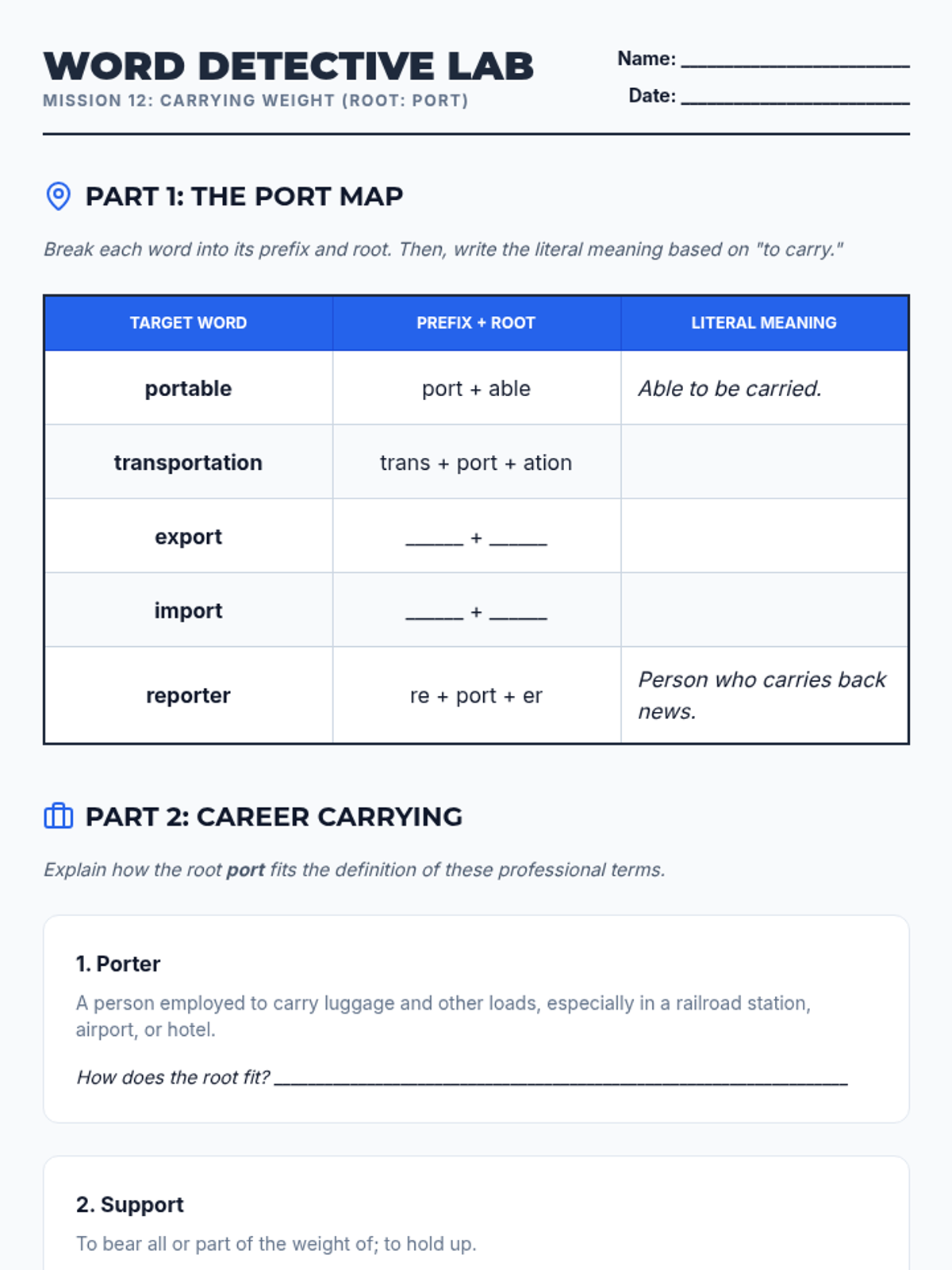
Focuses on the Latin root 'port' (carry), connecting it to familiar words like 'transport' and 'portable'.
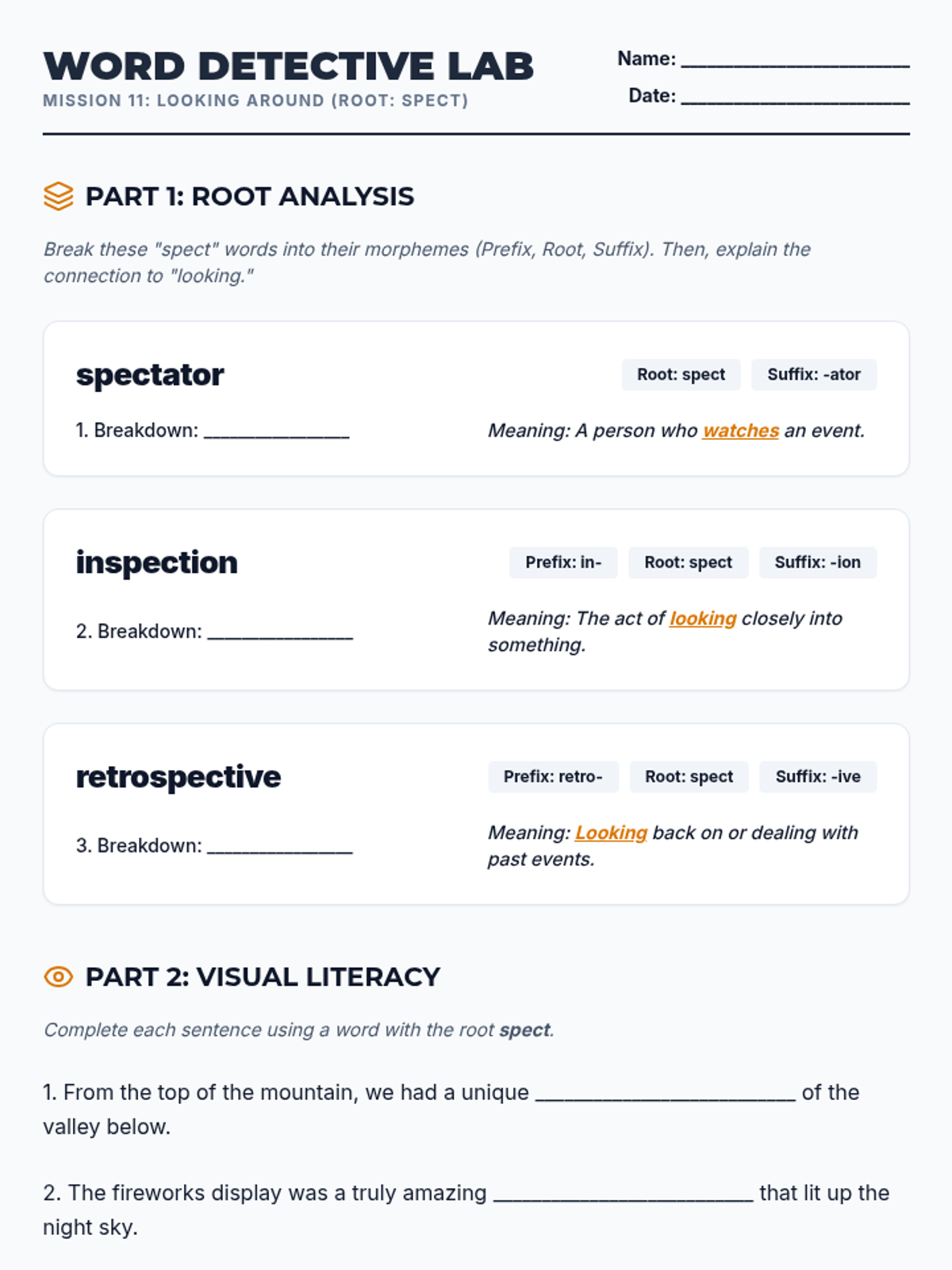
Introduces the Latin root 'spect' (look), identifying it in common multisyllabic academic words.
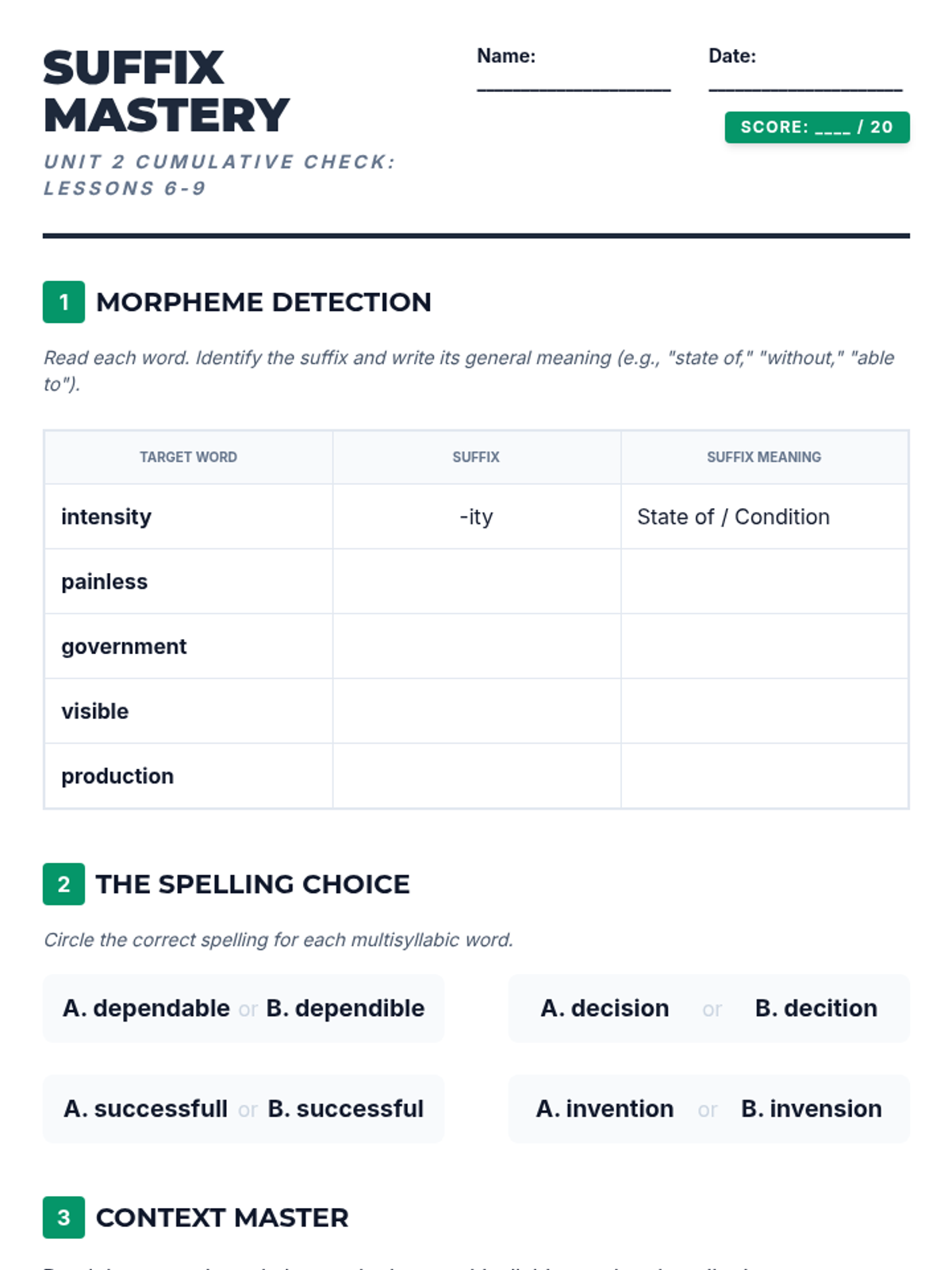
A review of all suffixes covered, featuring a 'Suffix Showdown' game and a progress monitoring check.
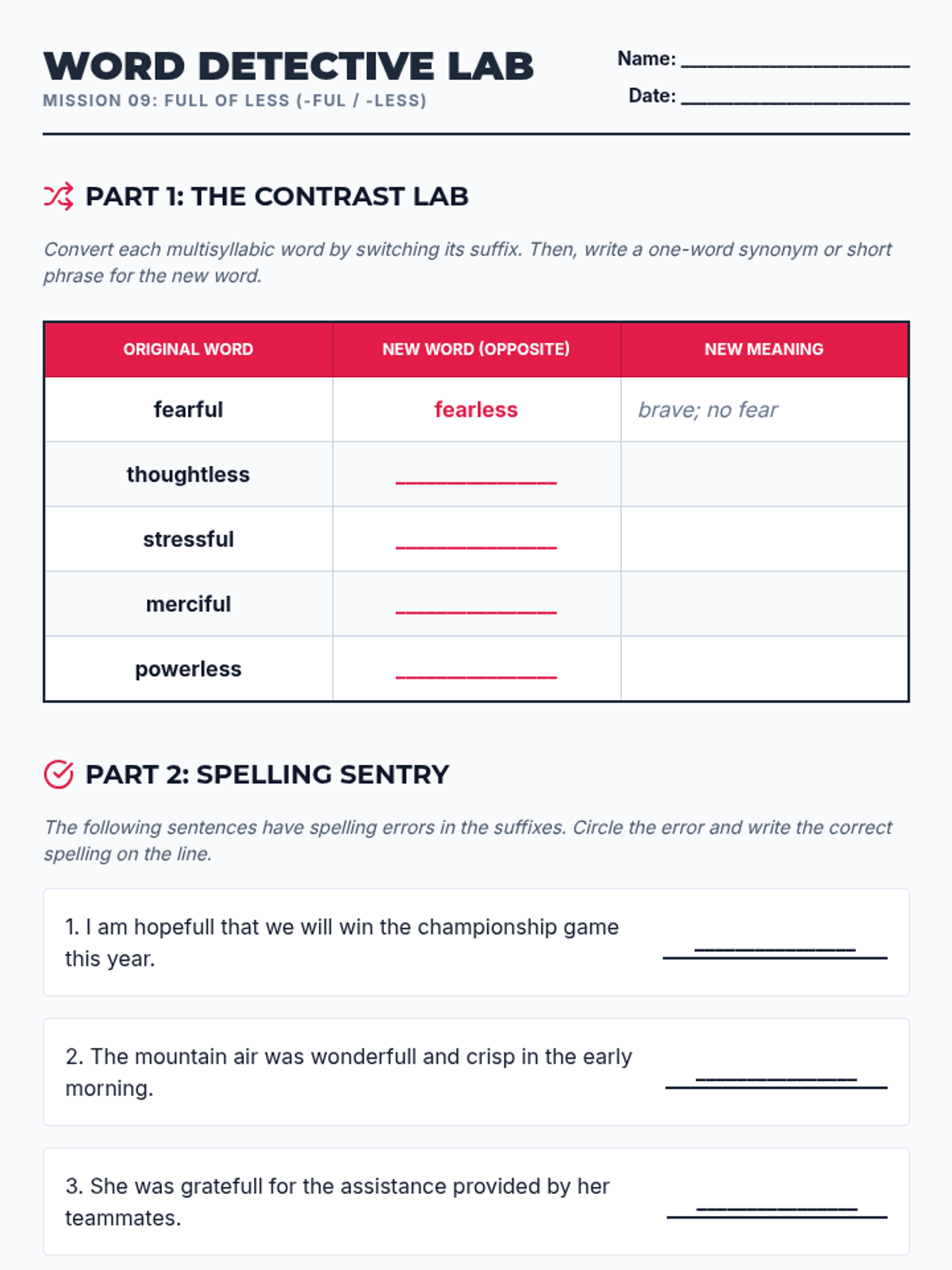
Focuses on the quantity-based suffixes -ful and -less, using contrasting word pairs to build understanding.
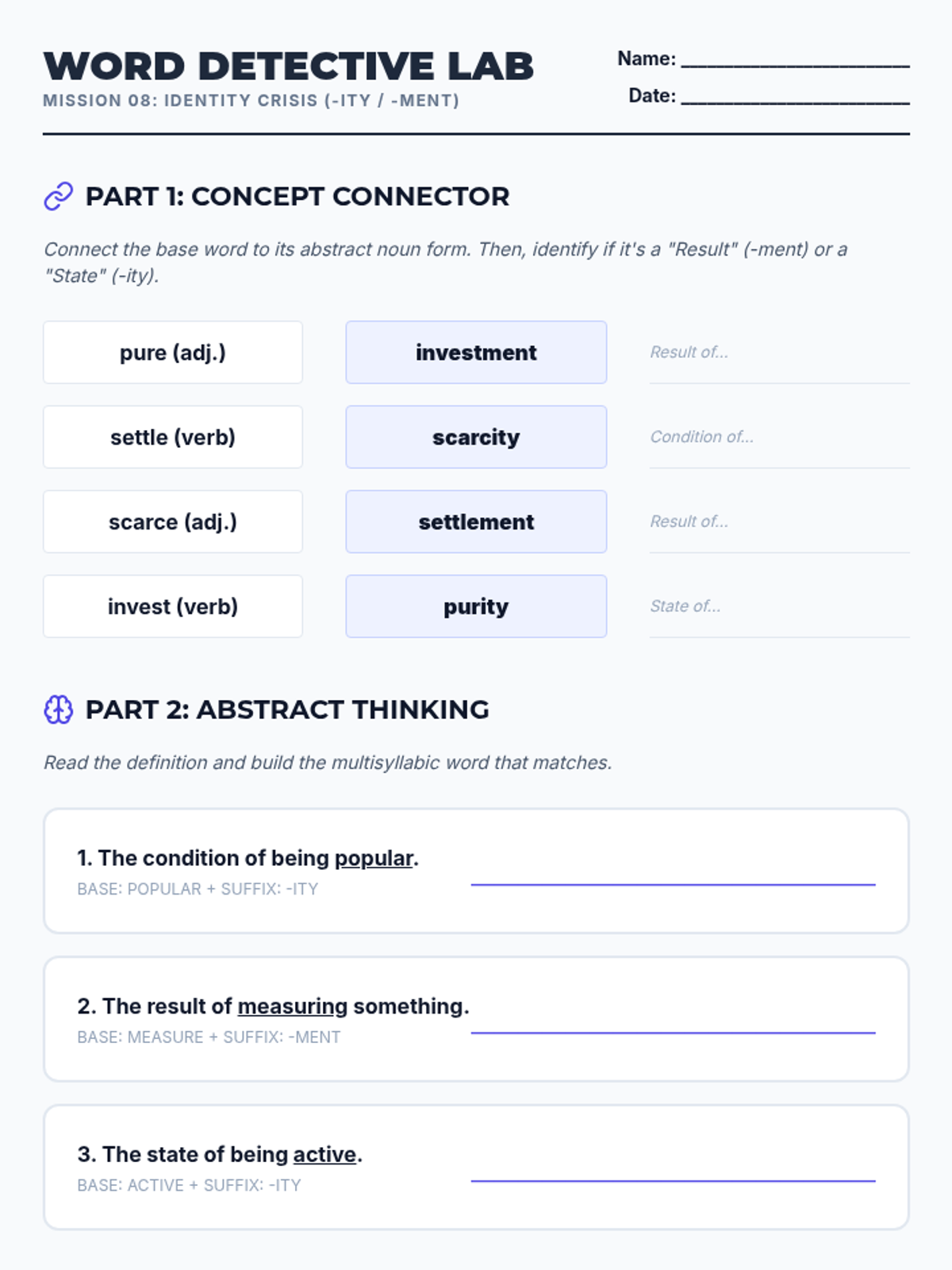
Explores suffixes -ment and -ity, emphasizing how they transform verbs and adjectives into abstract nouns.
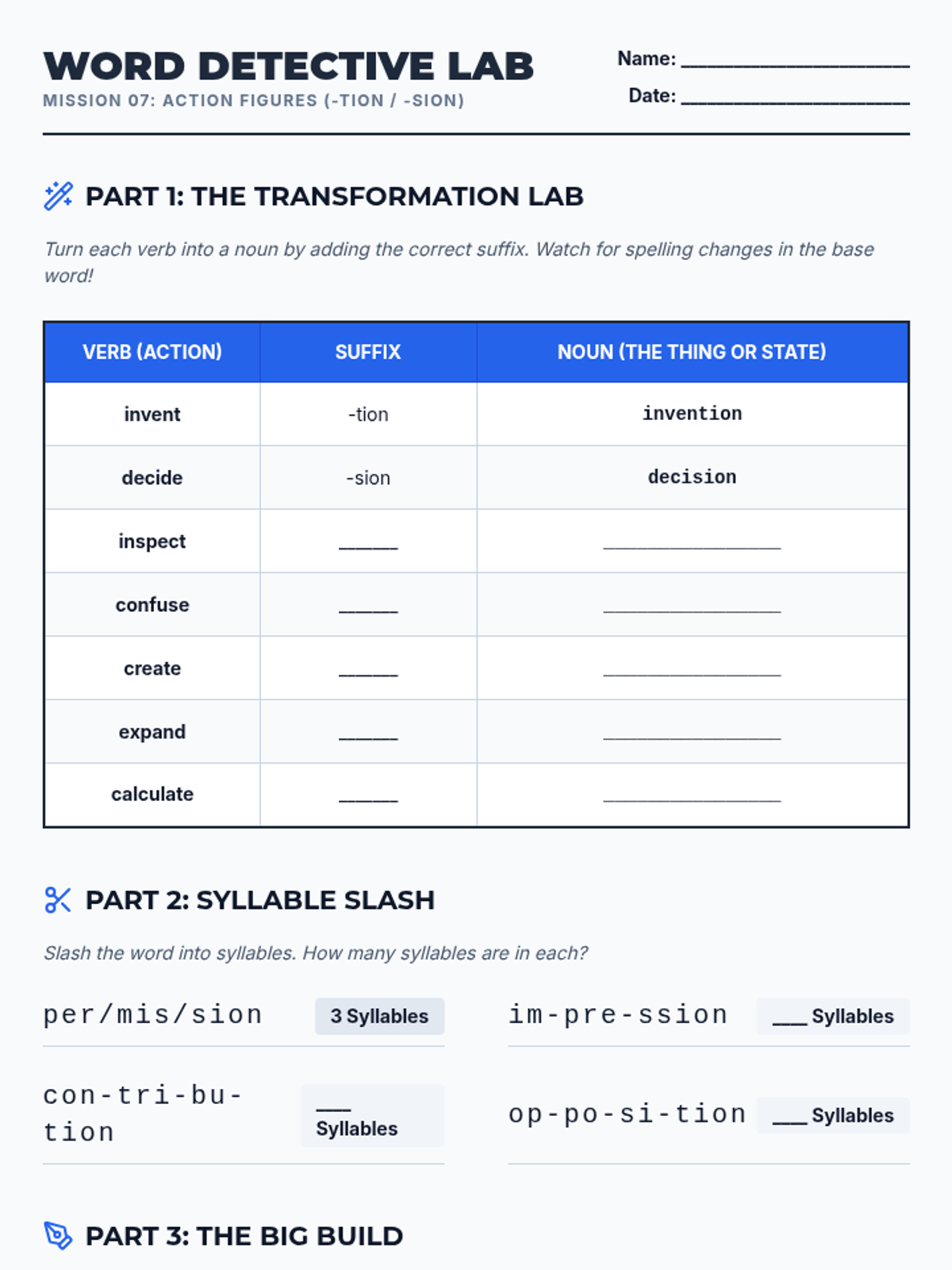
Examines noun-forming suffixes -tion and -sion, focusing on spelling patterns and syllable division.
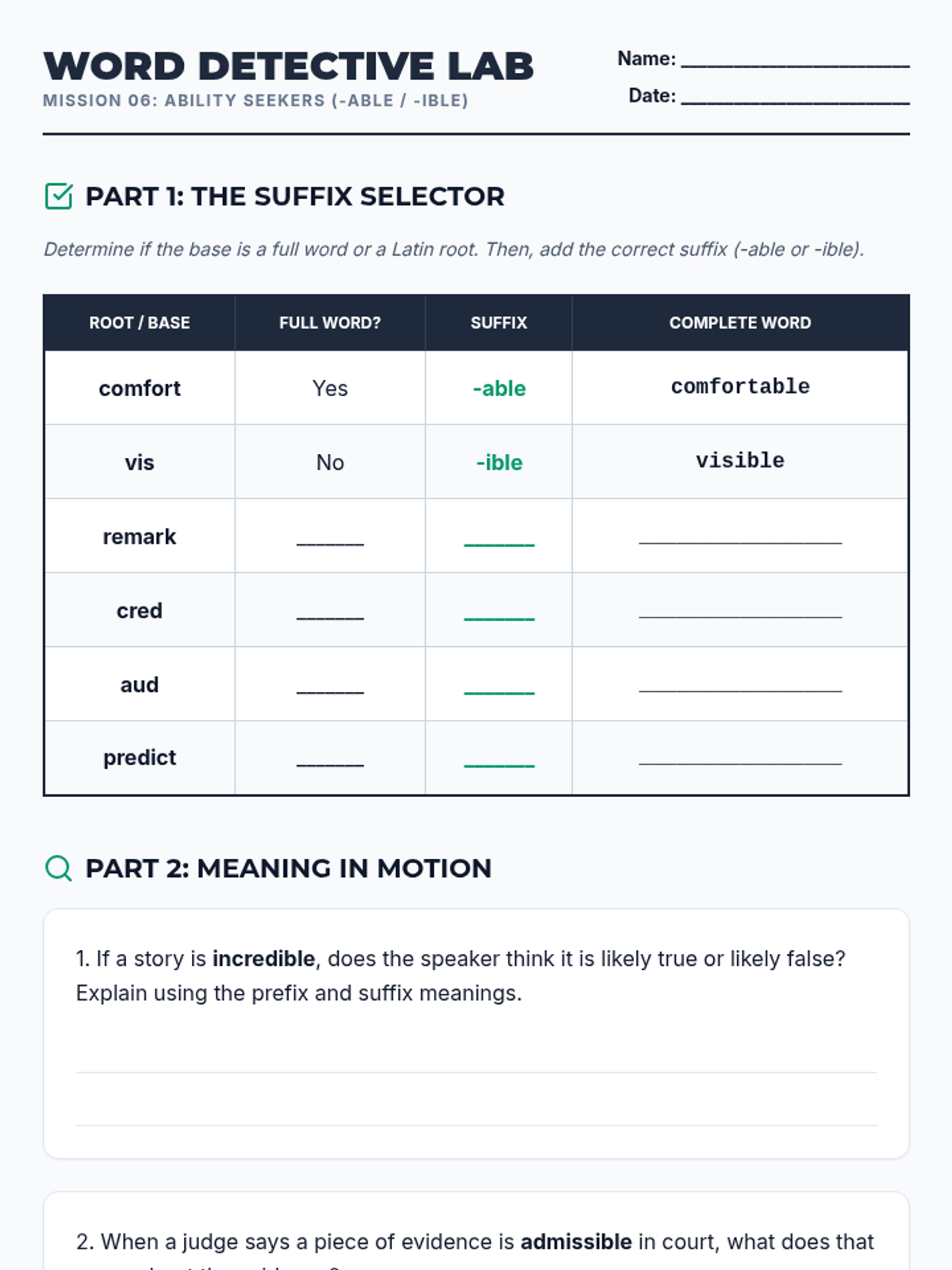
Shifts focus to suffixes -able and -ible, helping students determine when to use each based on the root word.
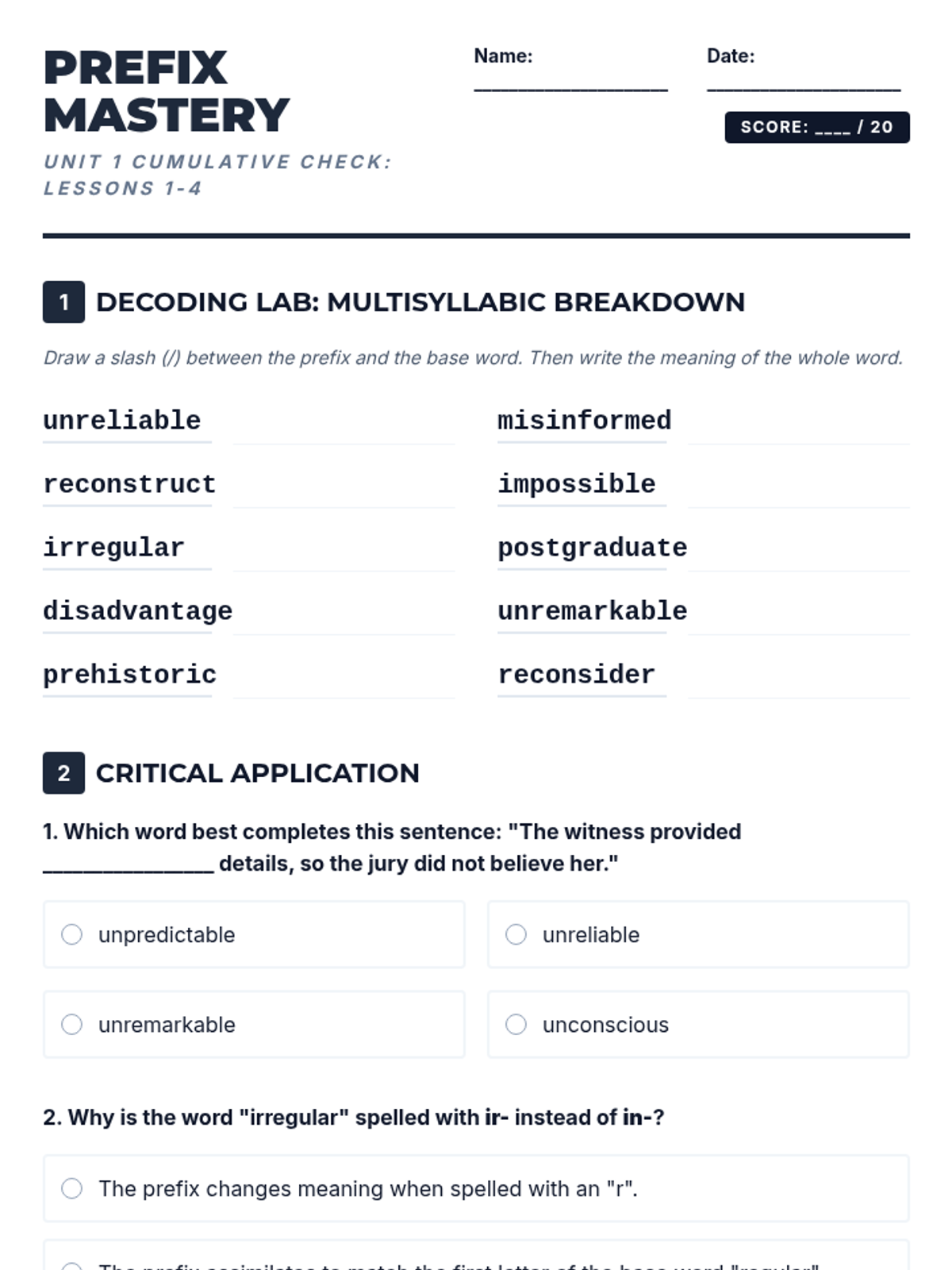
A review lesson of all prefixes covered in the first four lessons, including a quick progress monitoring assessment.
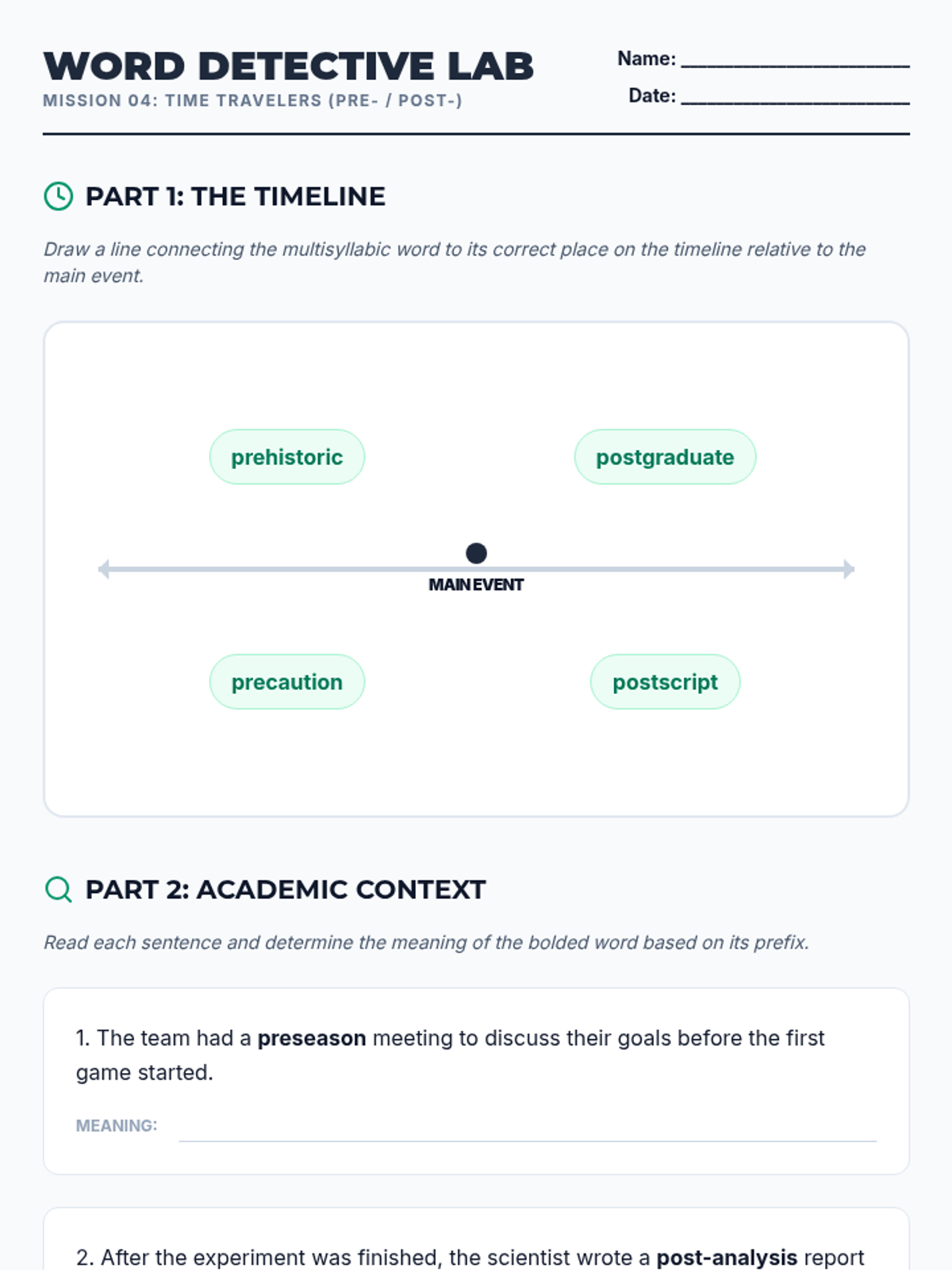
Introduces time-based prefixes pre- and post-, focusing on academic vocabulary used in history and science contexts.
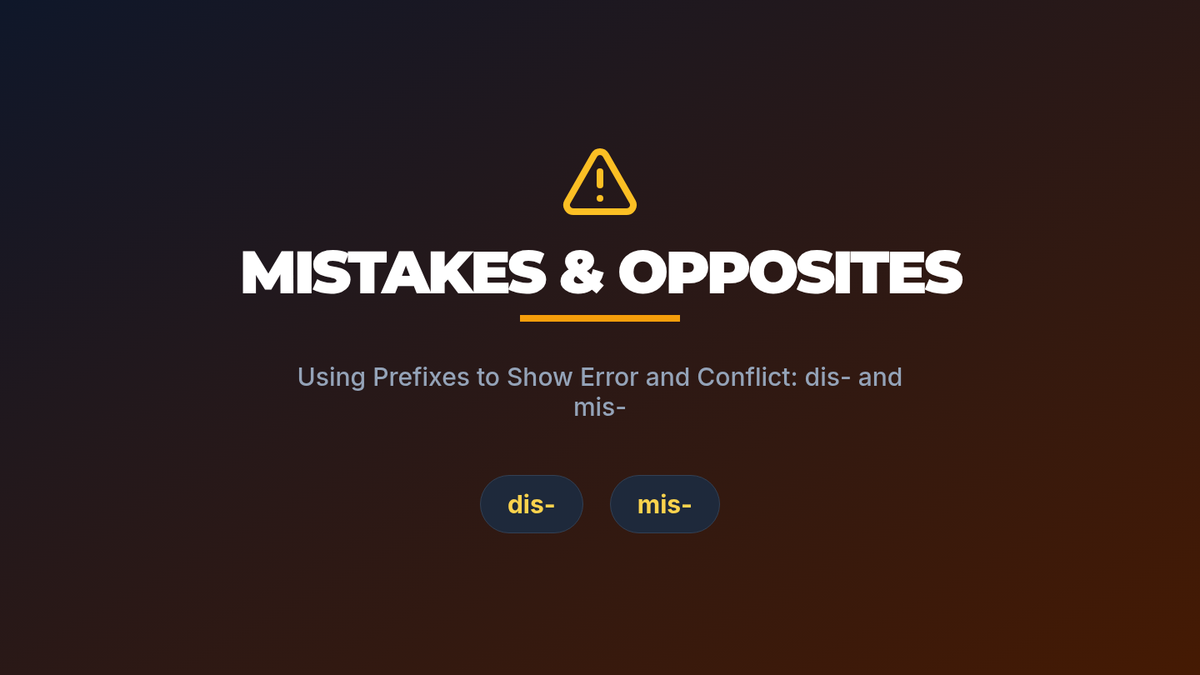
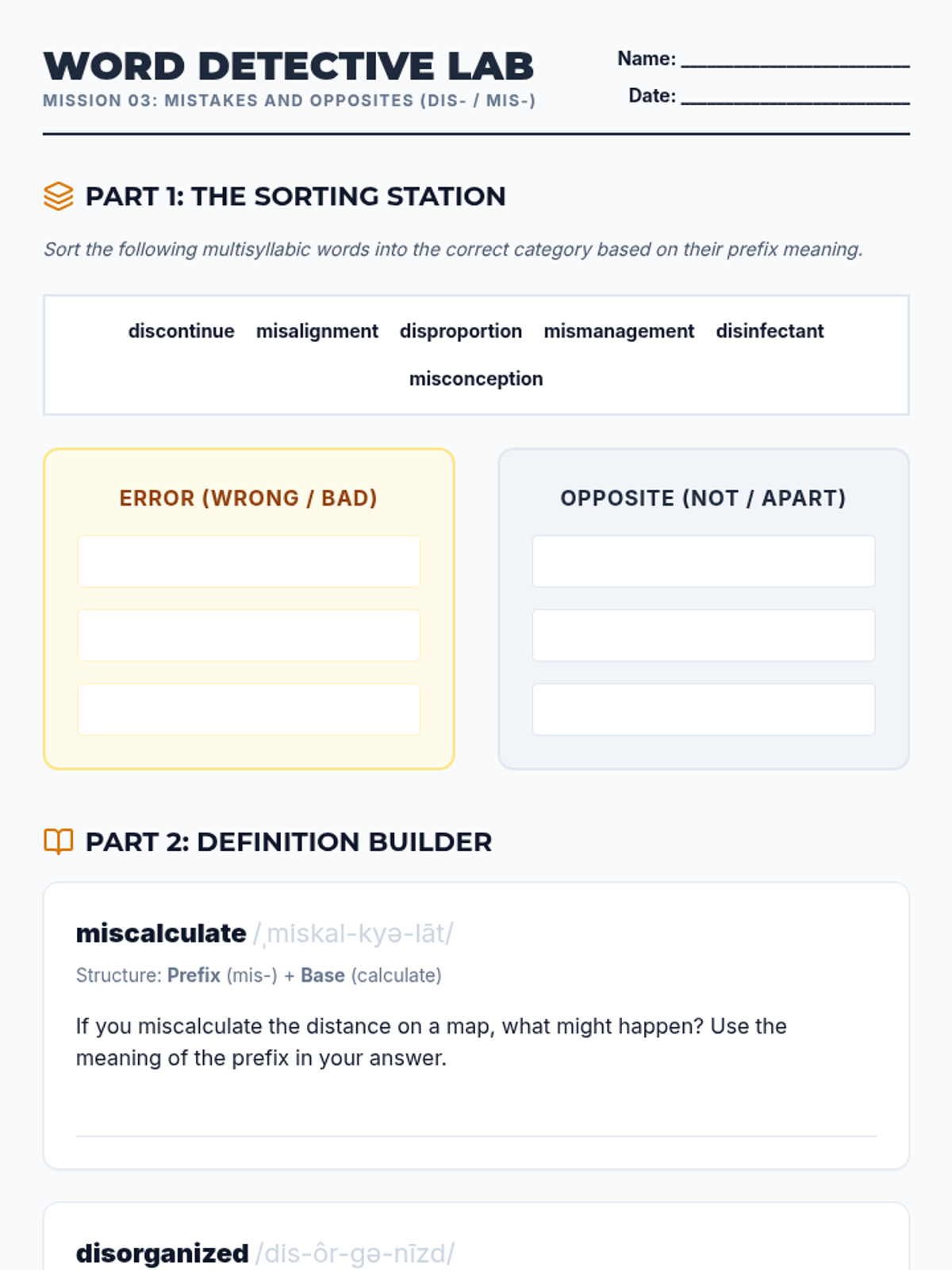
Investigates prefixes dis- and mis- to understand words related to opposites and errors, featuring word-sorting activities.
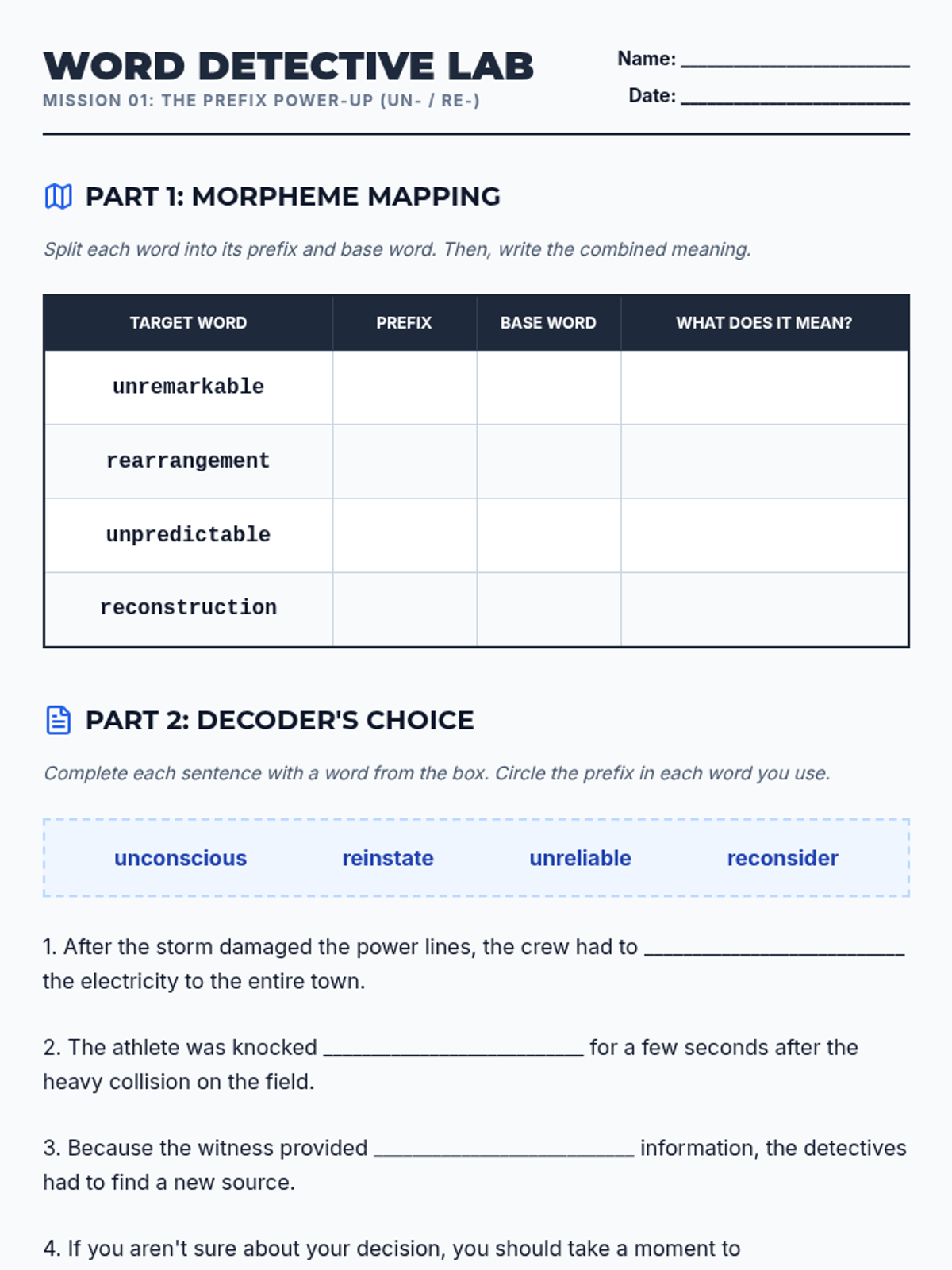
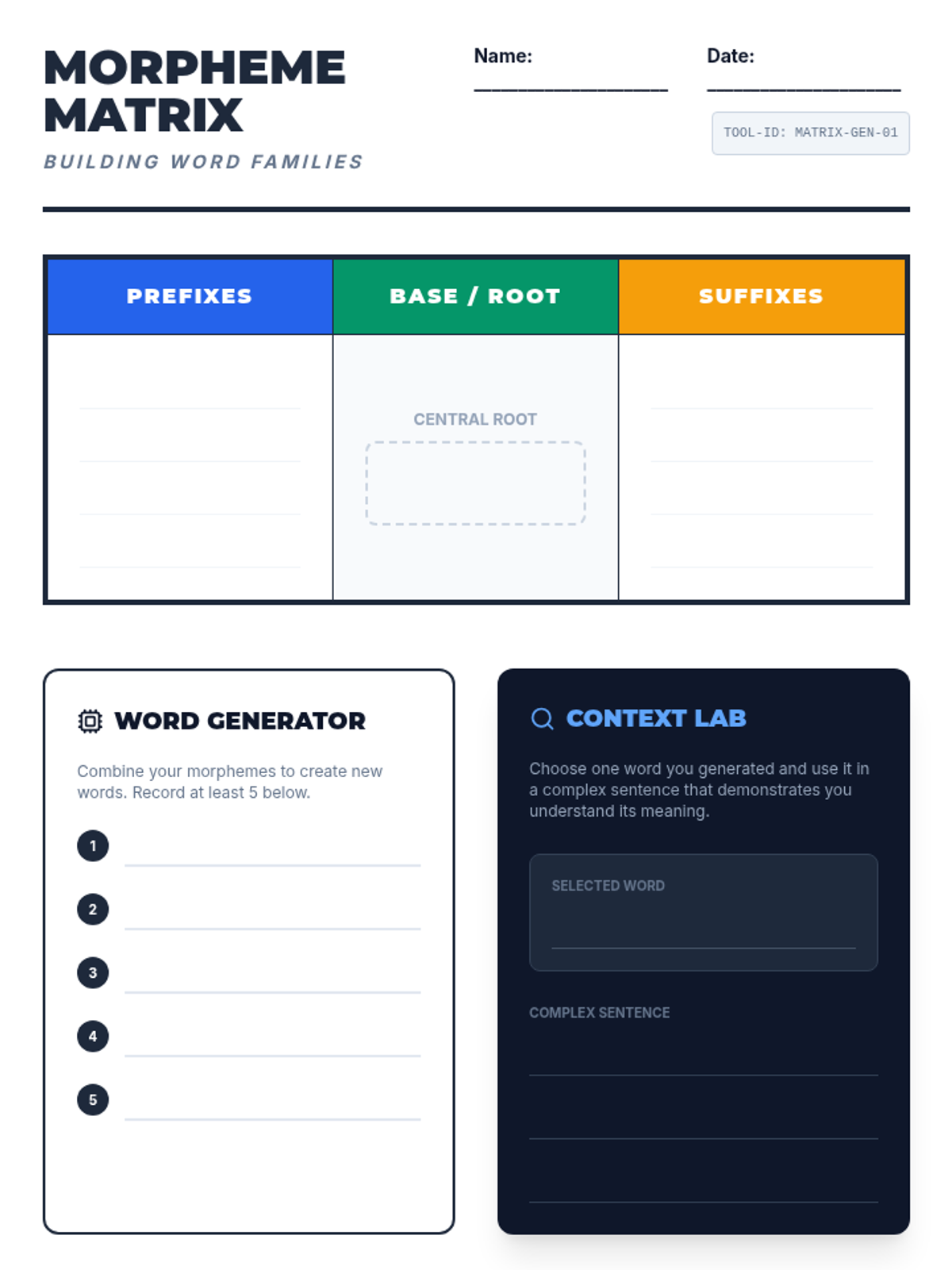
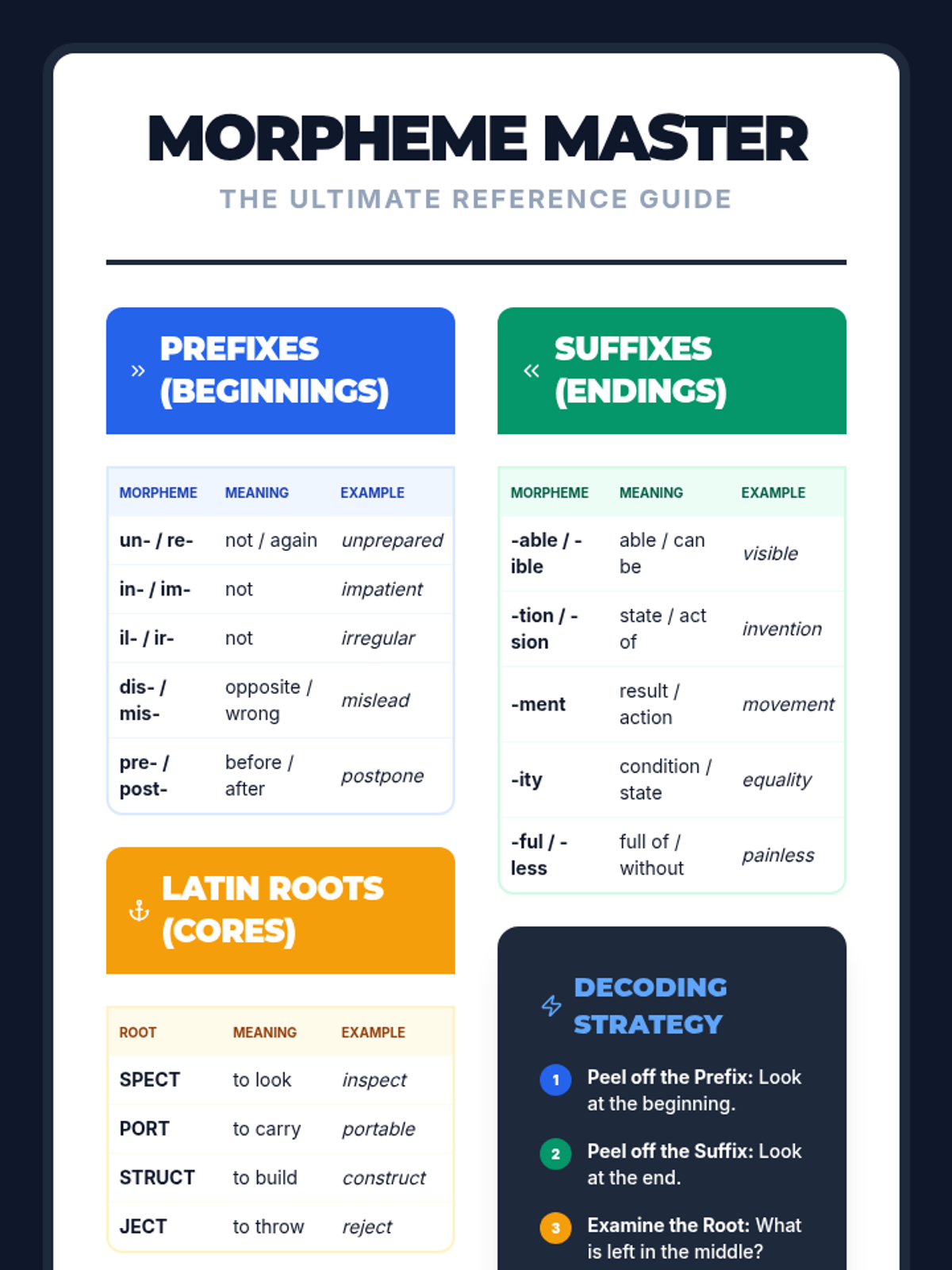
Focuses on identifying and using common prefixes like un- and re- to decode and understand multisyllabic words. Includes word building and sentence application.
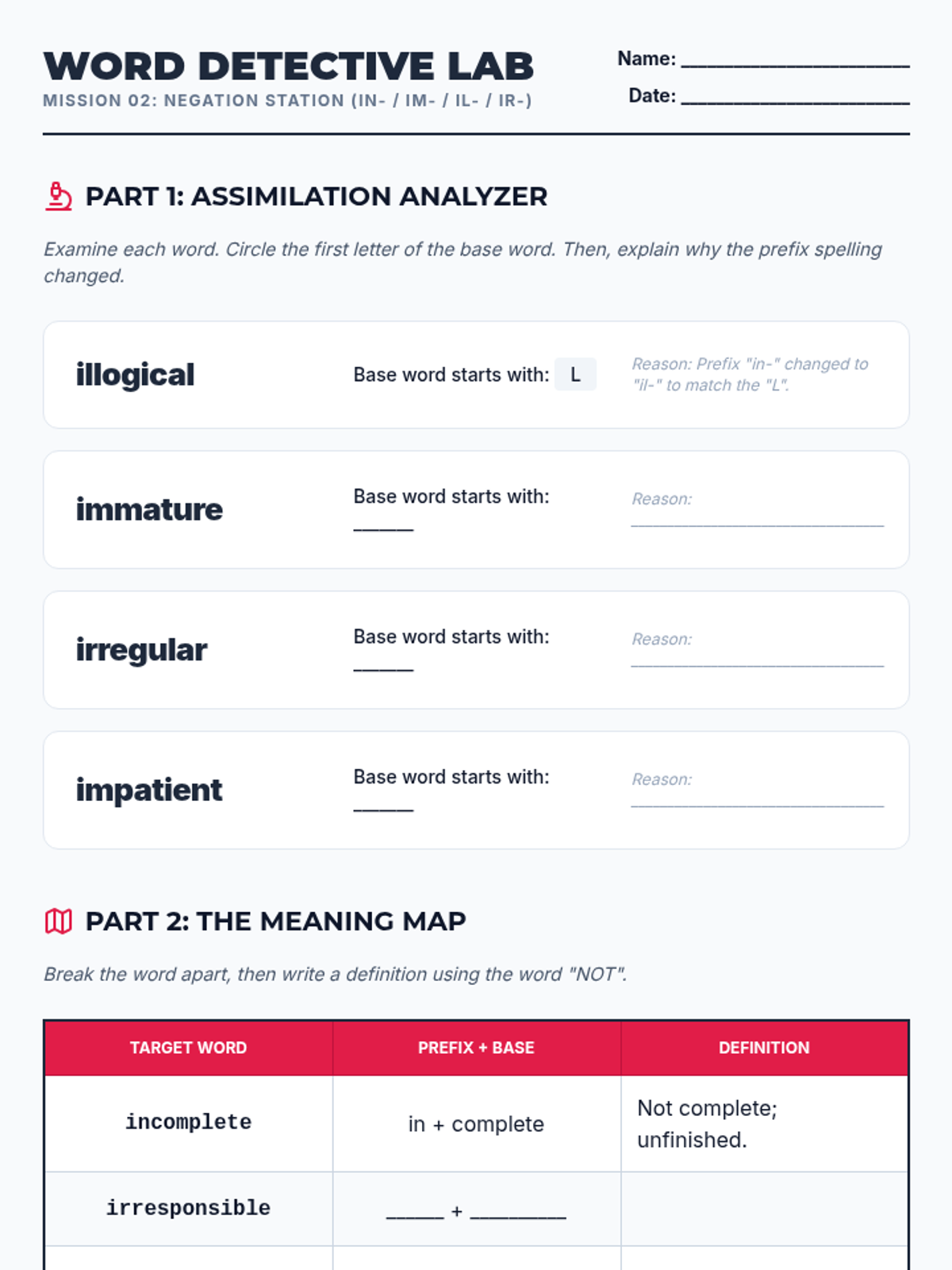
Covers the 'not' prefixes in-, im-, il-, and ir-, exploring how spelling changes based on the root word's initial letter.
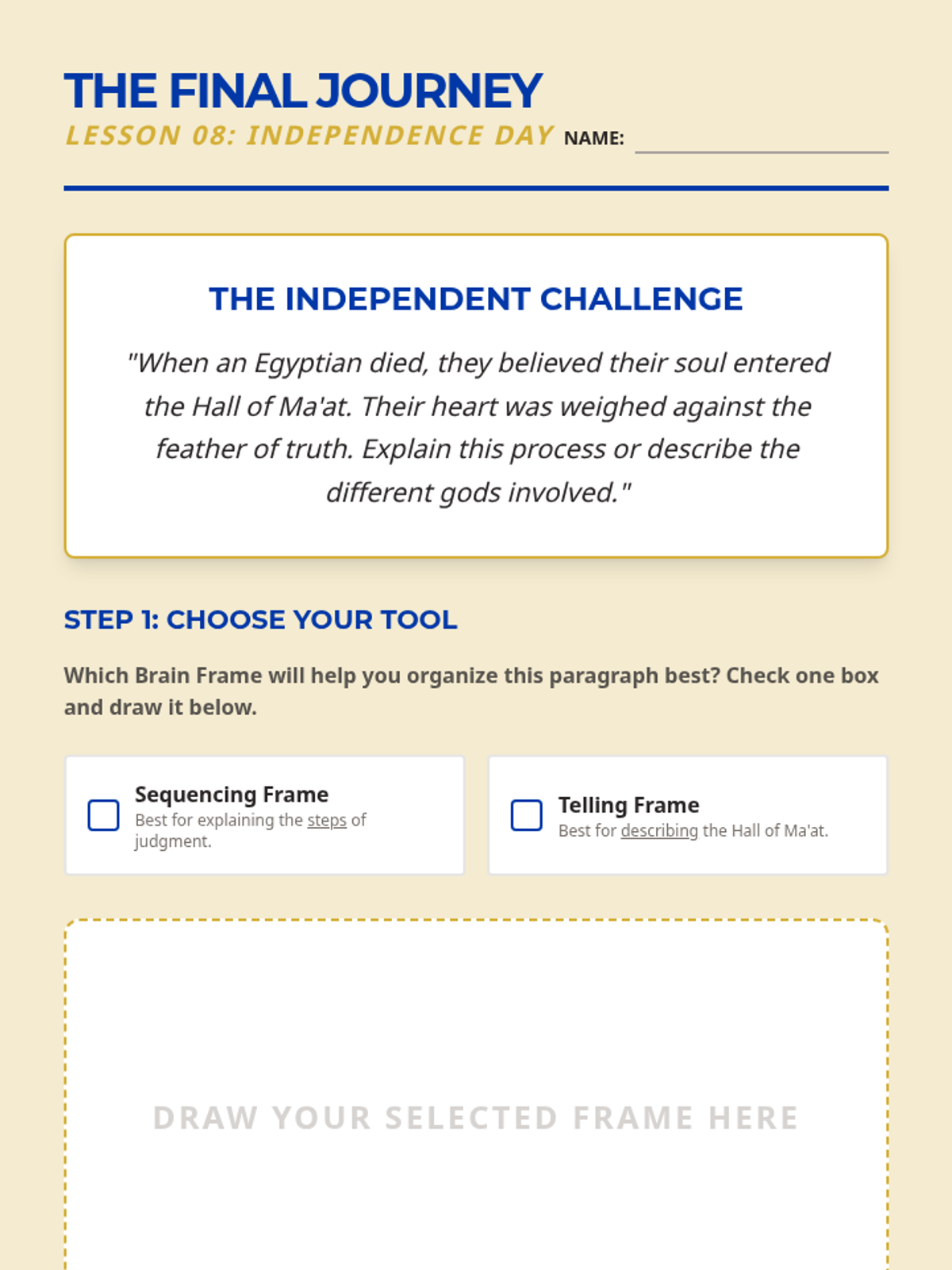
Final independent writing session where students apply their knowledge of Brain Frames to explain the Egyptian concept of the afterlife judgment in the Hall of Ma'at. Students choose the most appropriate frame (Sequencing or Telling) to organize their final paragraph.
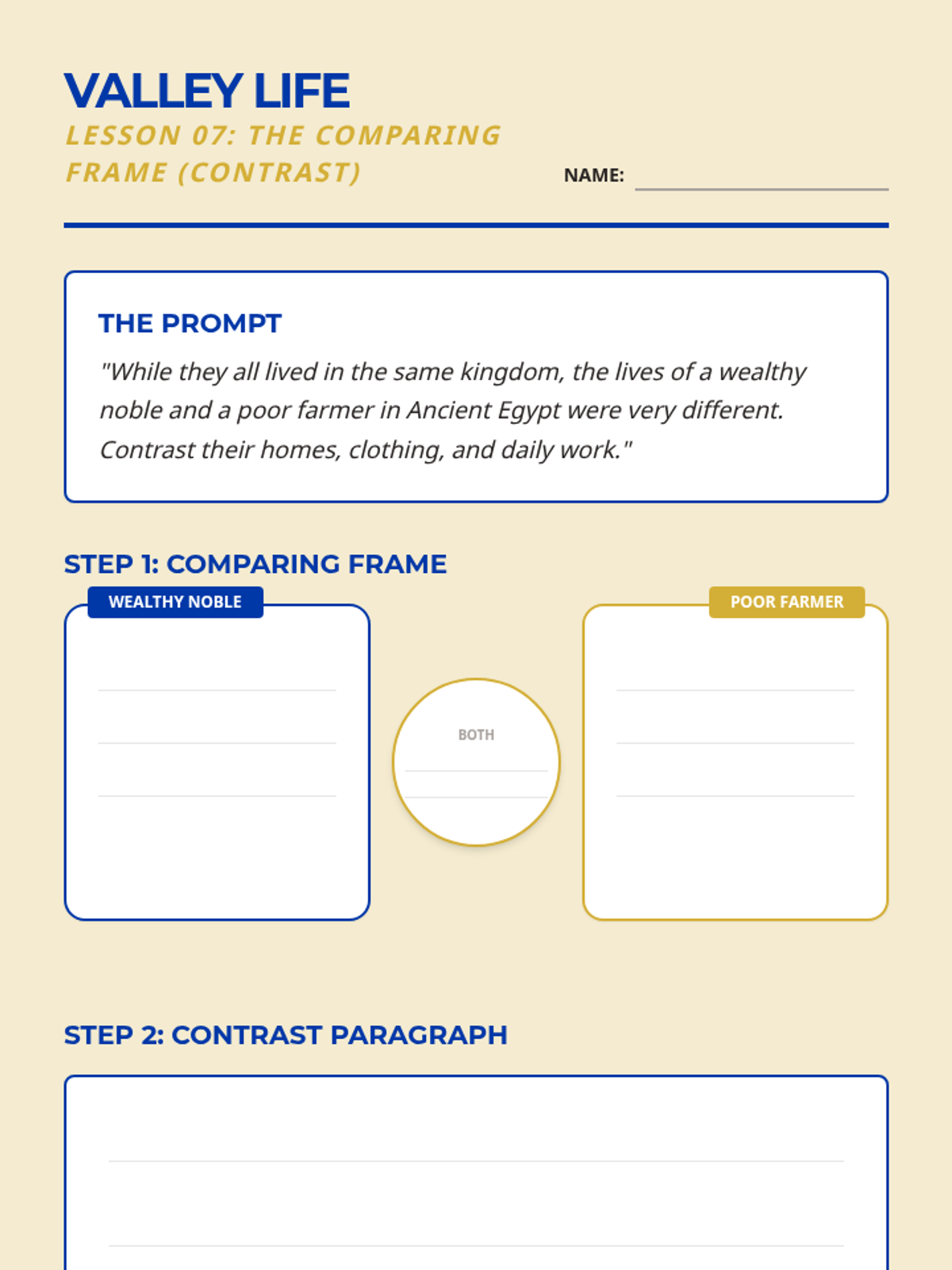
Comparison of the lives of wealthy Egyptian nobles and poor farmers using a Comparing Frame. Focuses on using contrasting transition words to write a comparative paragraph about daily life in the Nile Valley.
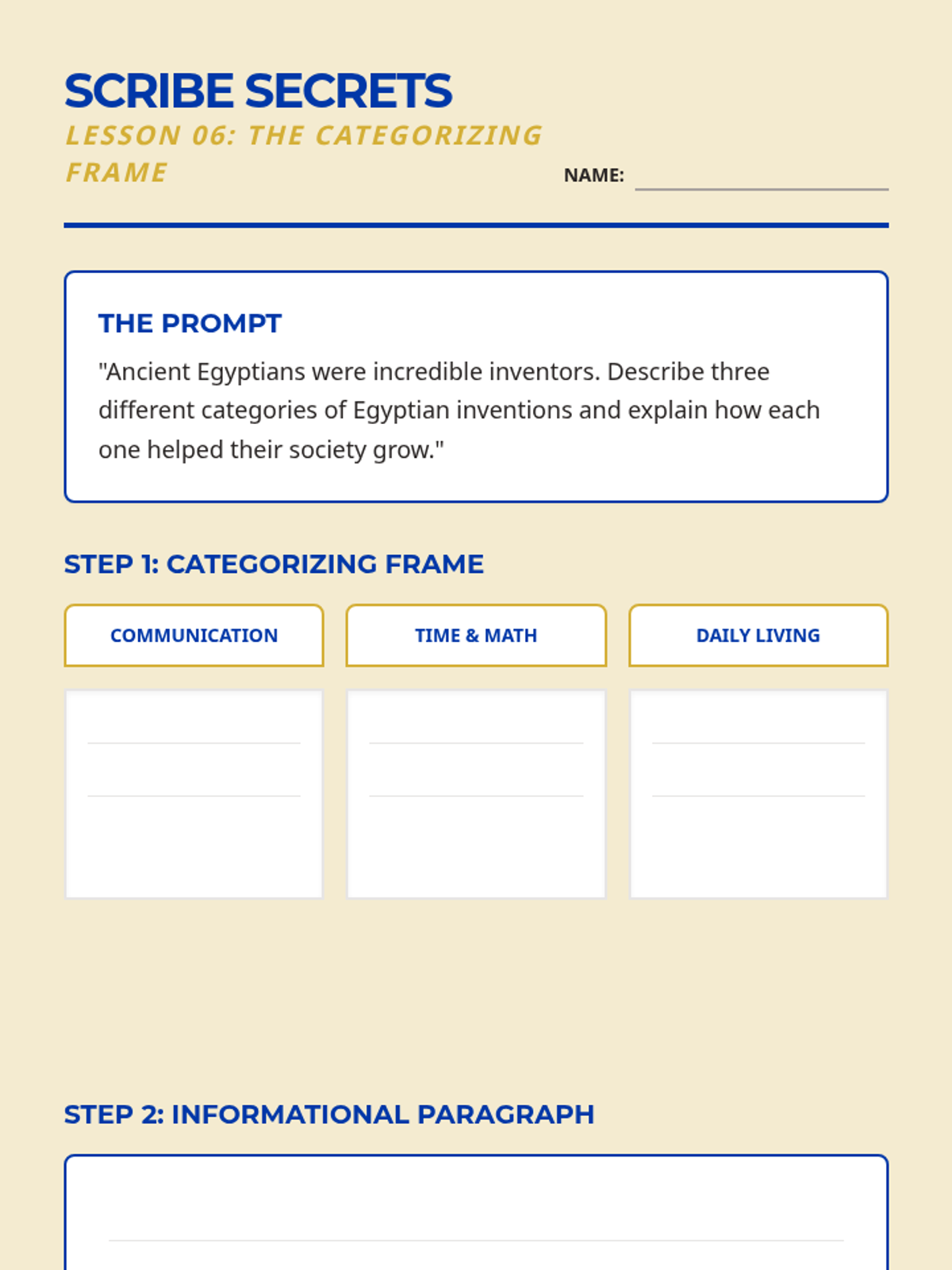
Introduction to the Categorizing Frame (a variation of the Telling Frame) to explore Egyptian inventions and social roles. Students focus on grouping related ideas (e.g., writing, math, medicine) to write an organized informational paragraph.
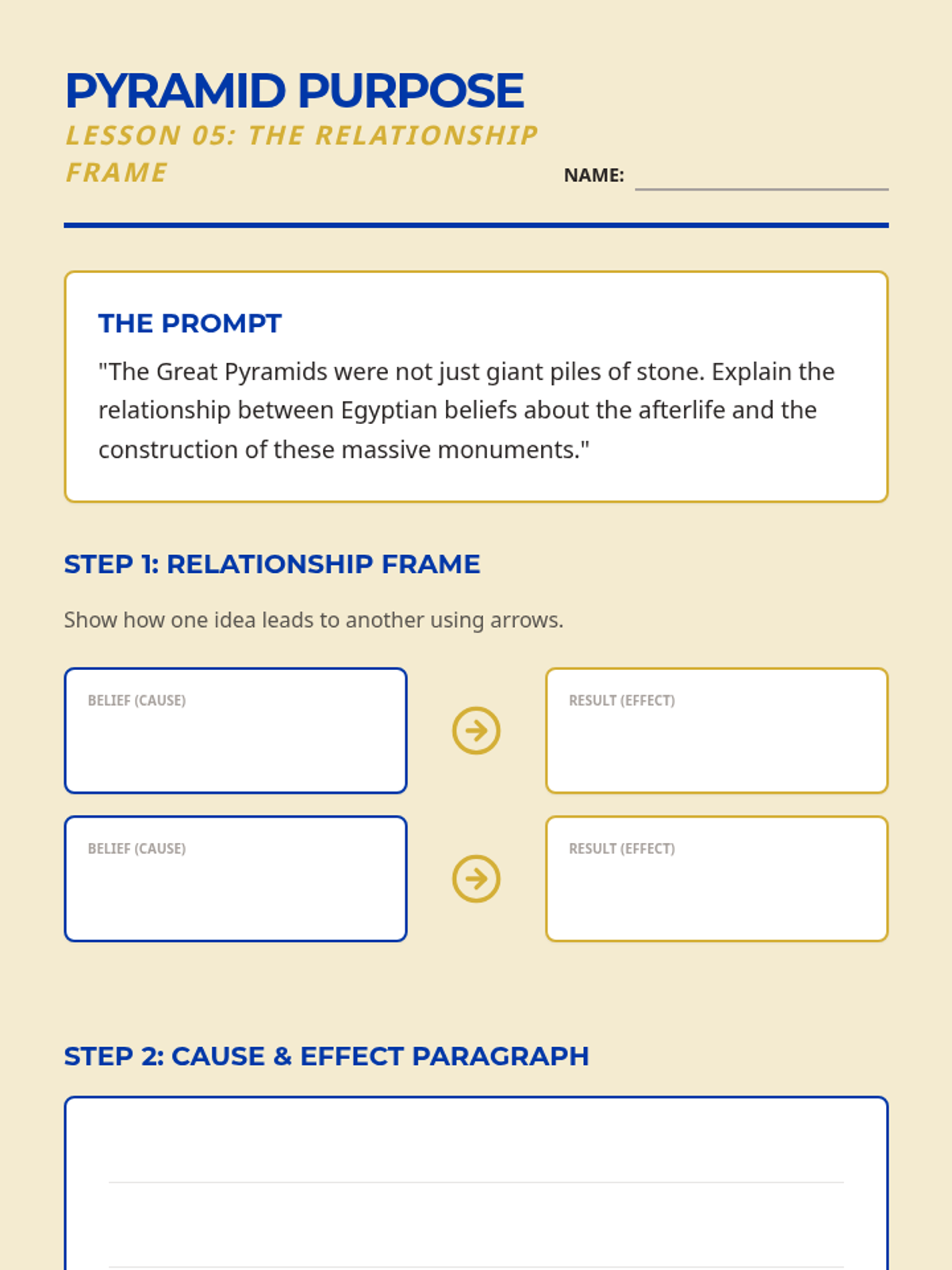
Investigation into the 'why' and 'how' of pyramid construction using a Relationship Frame (Cause and Effect). Students explore the religious beliefs that led to tomb building and the engineering outcomes of these massive projects.
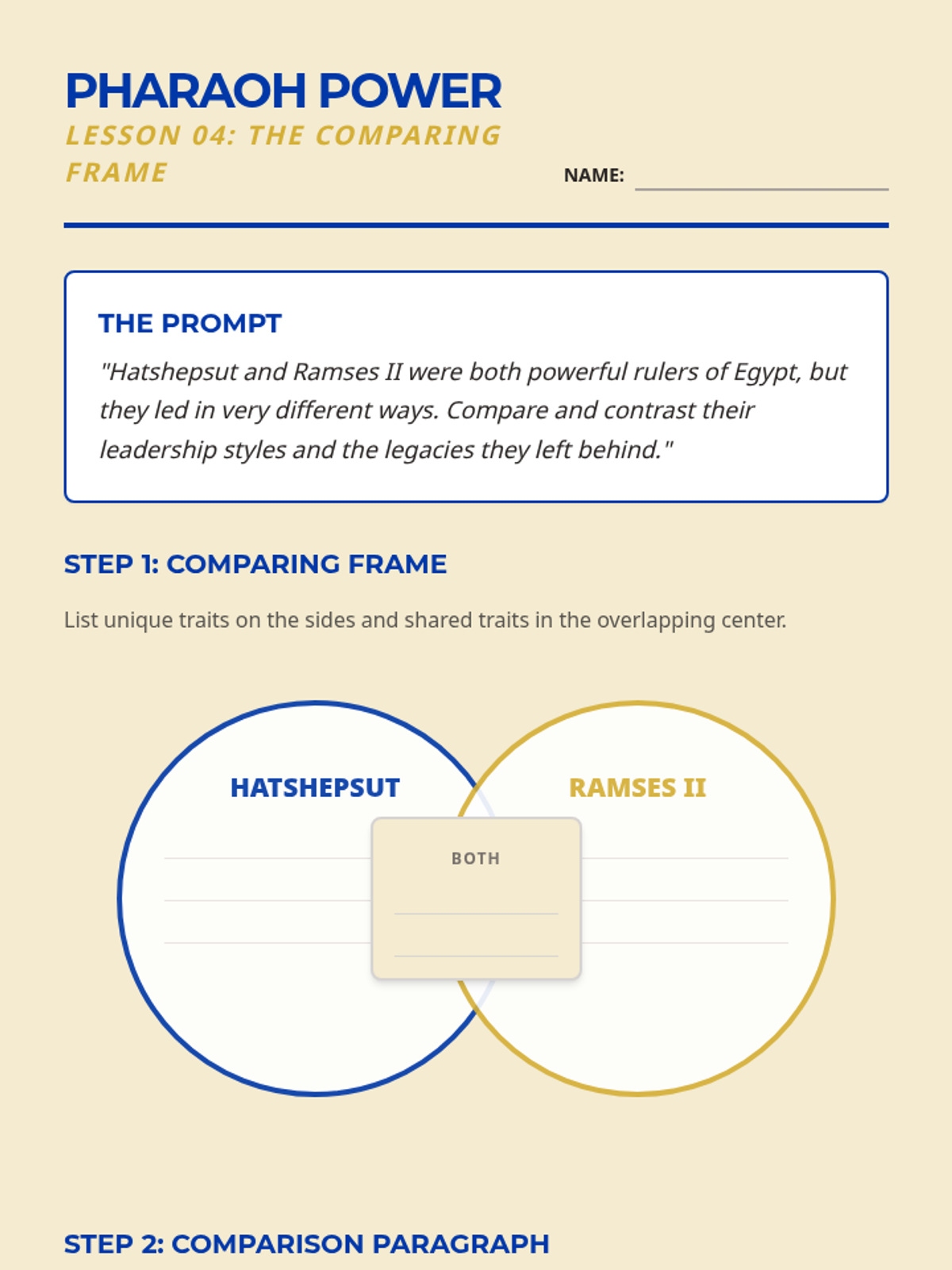
Comparison of two significant Egyptian pharaohs, Hatshepsut and Ramses II, using a Comparing Frame. Students focus on identifying similarities and differences in their leadership styles and achievements to write a comparative paragraph.