A comprehensive one-day survey of Renaissance Humanism, covering the rediscovery of classical texts, the 'Universal Man' ideal, and the movement's enduring impact on Western thought and education.
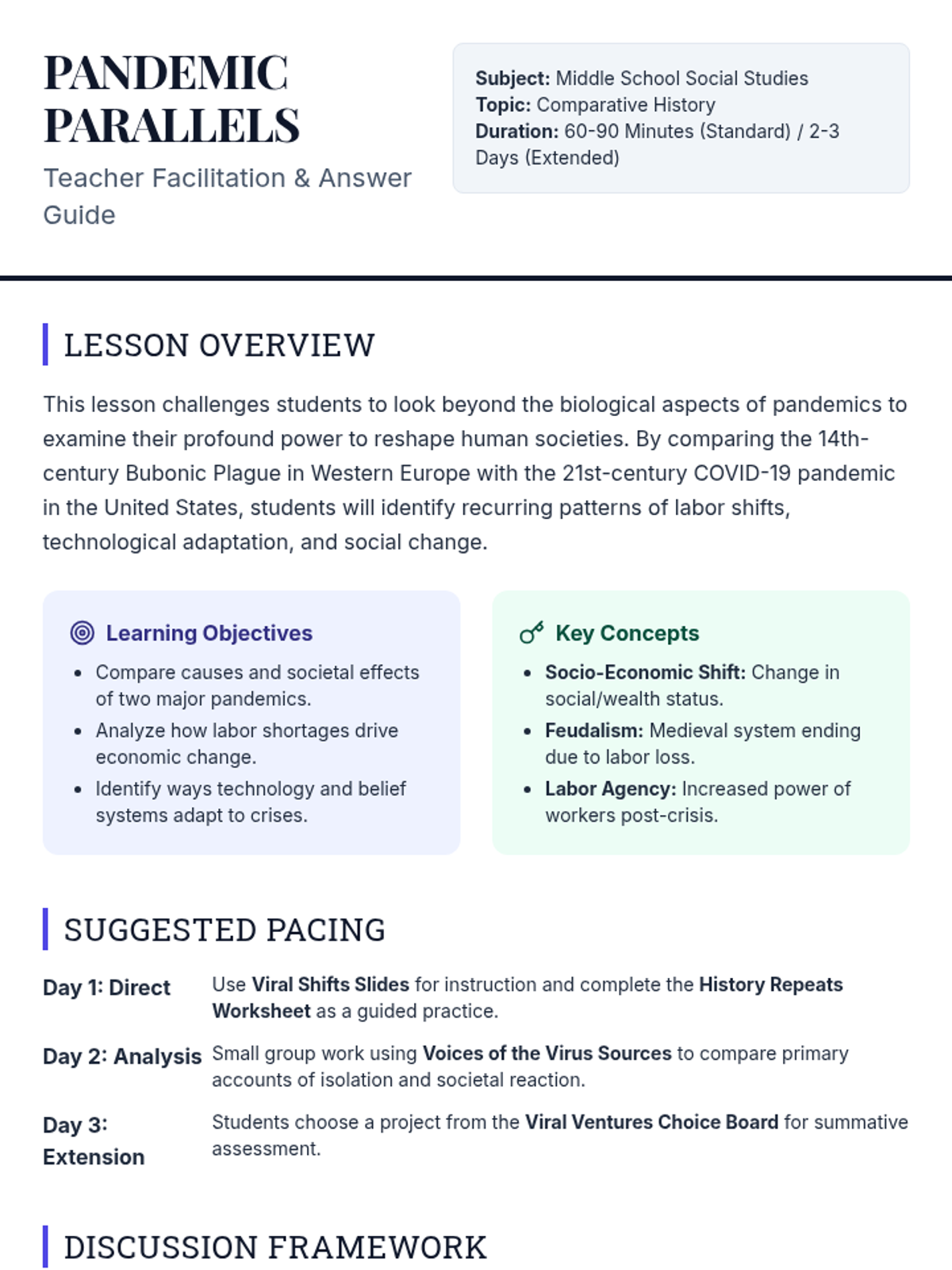
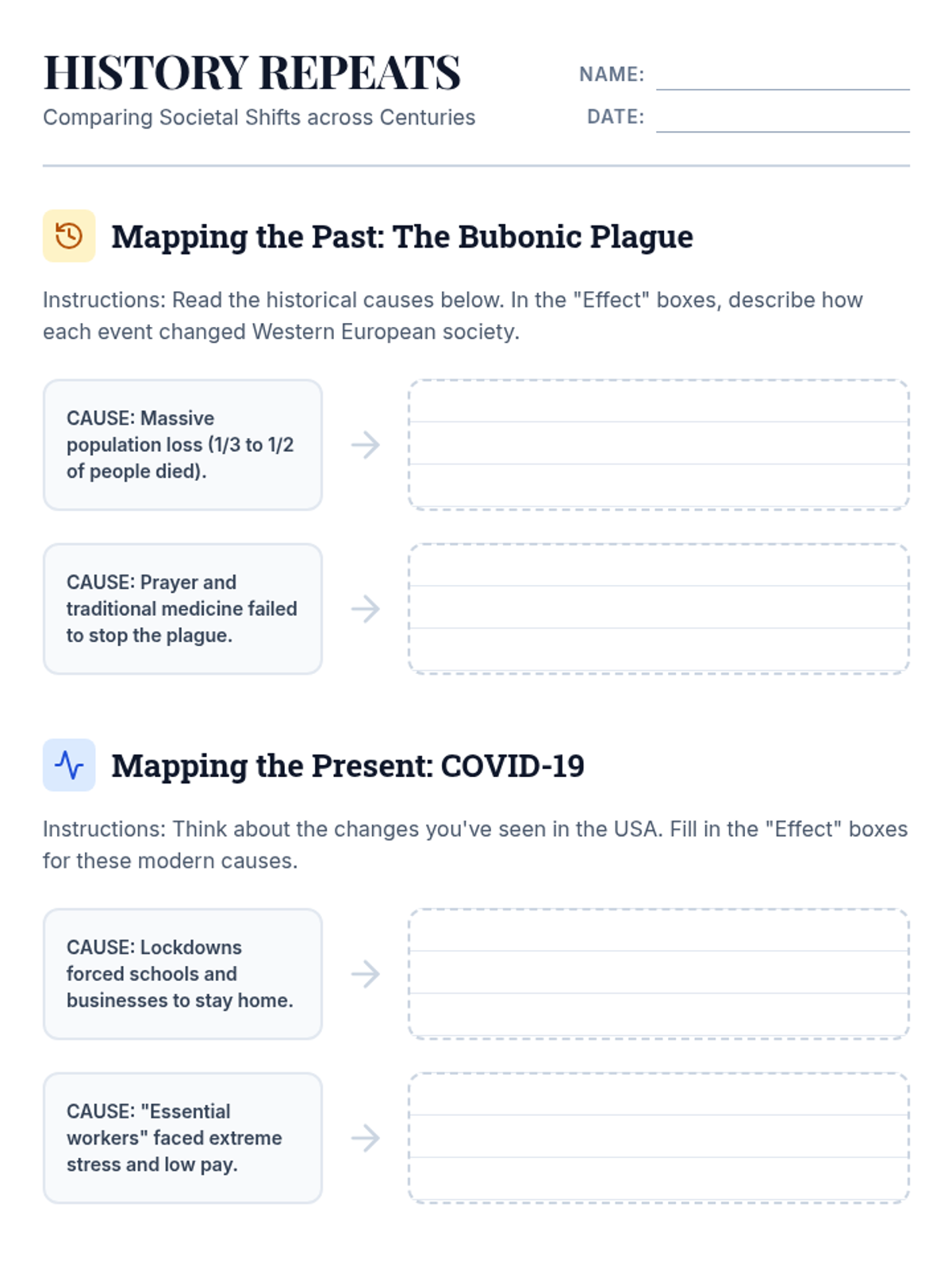
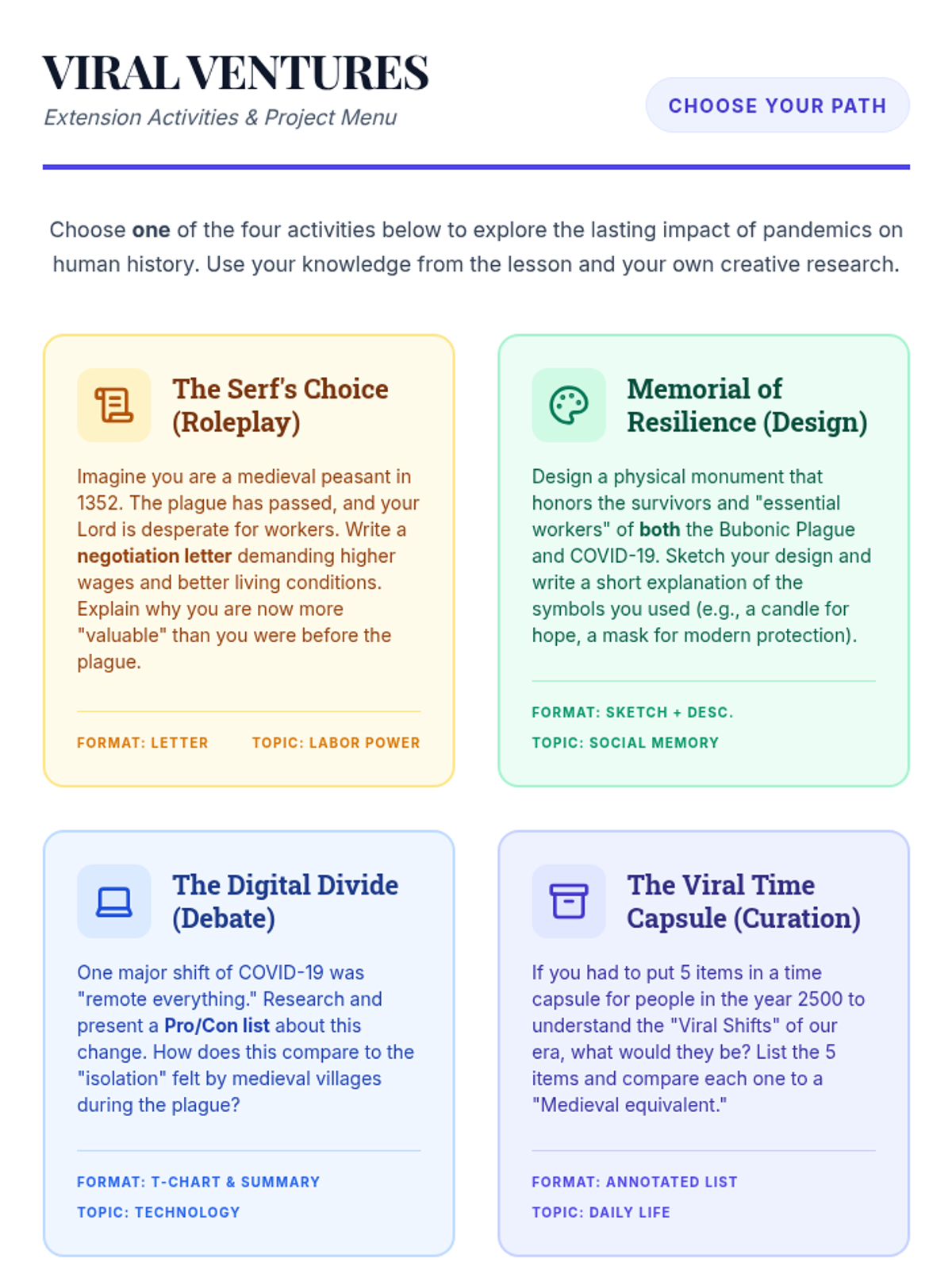
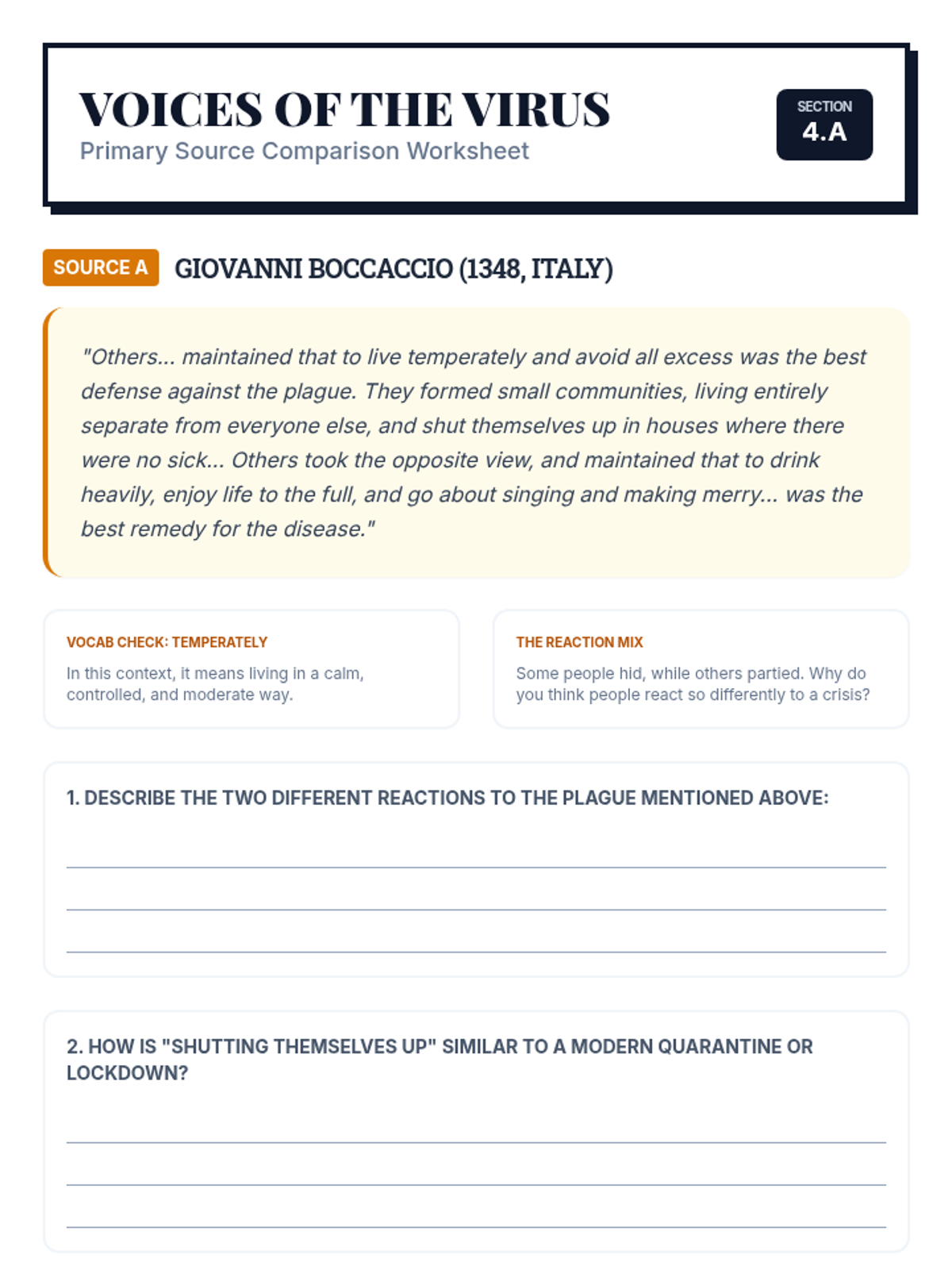
A comparative study of the societal impacts of the Bubonic Plague in Western Europe and the COVID-19 pandemic in the United States, focusing on cause-and-effect relationships in history.
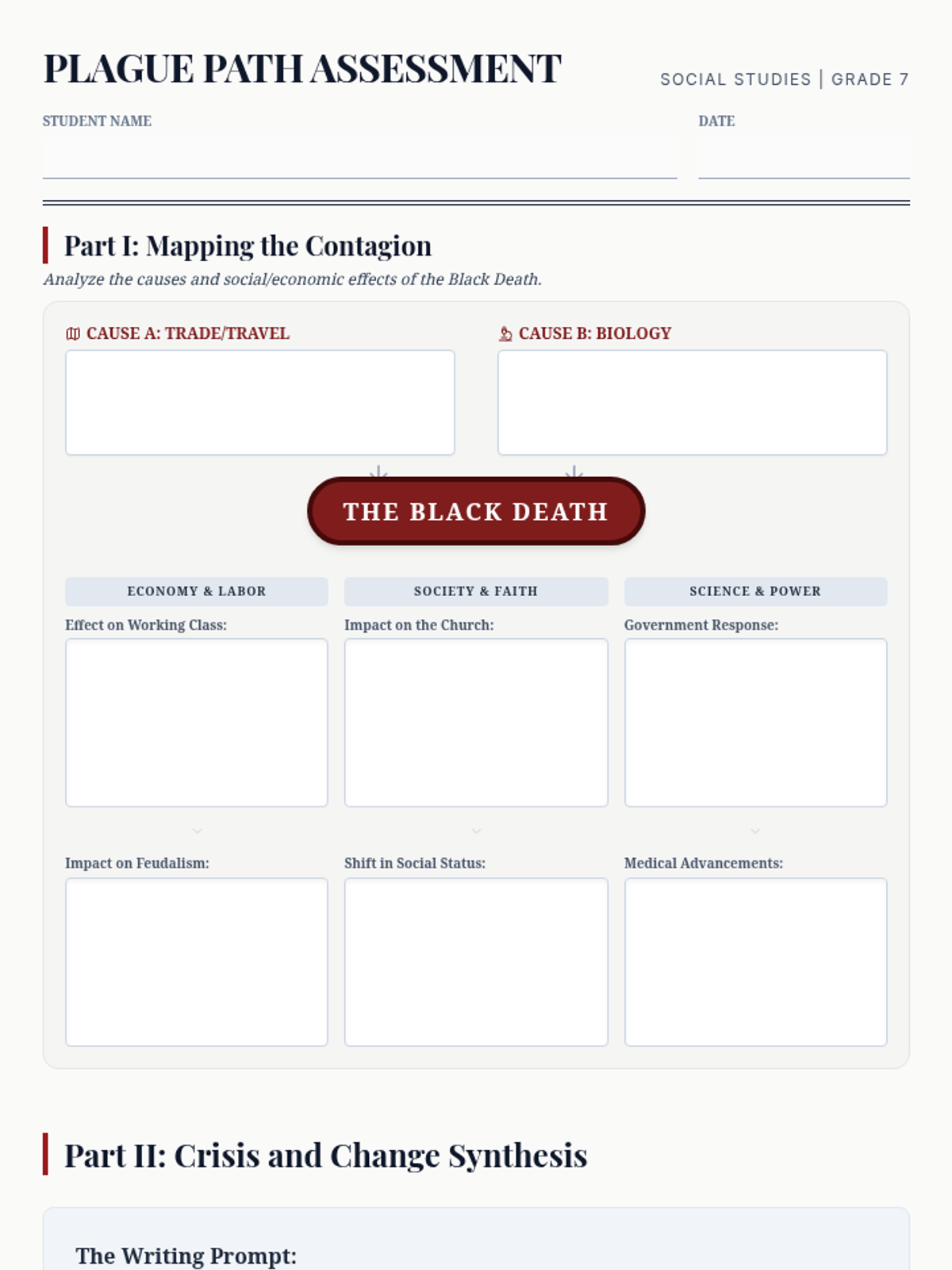
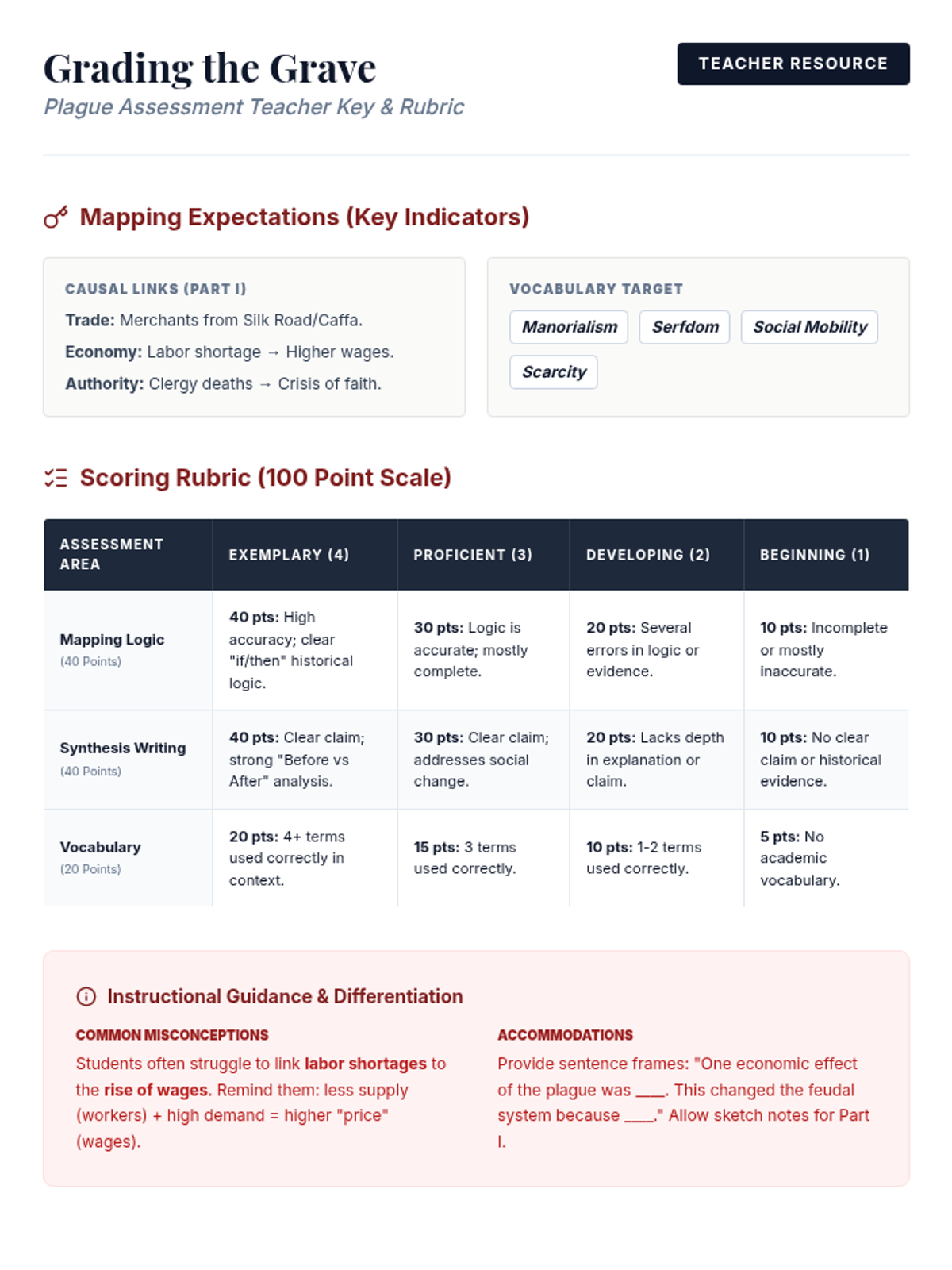
A summative assessment lesson focused on the causal relationships and long-term impacts of the Bubonic Plague on medieval society. Students map the spread and consequences of the pandemic before synthesizing their knowledge in a guided writing prompt.
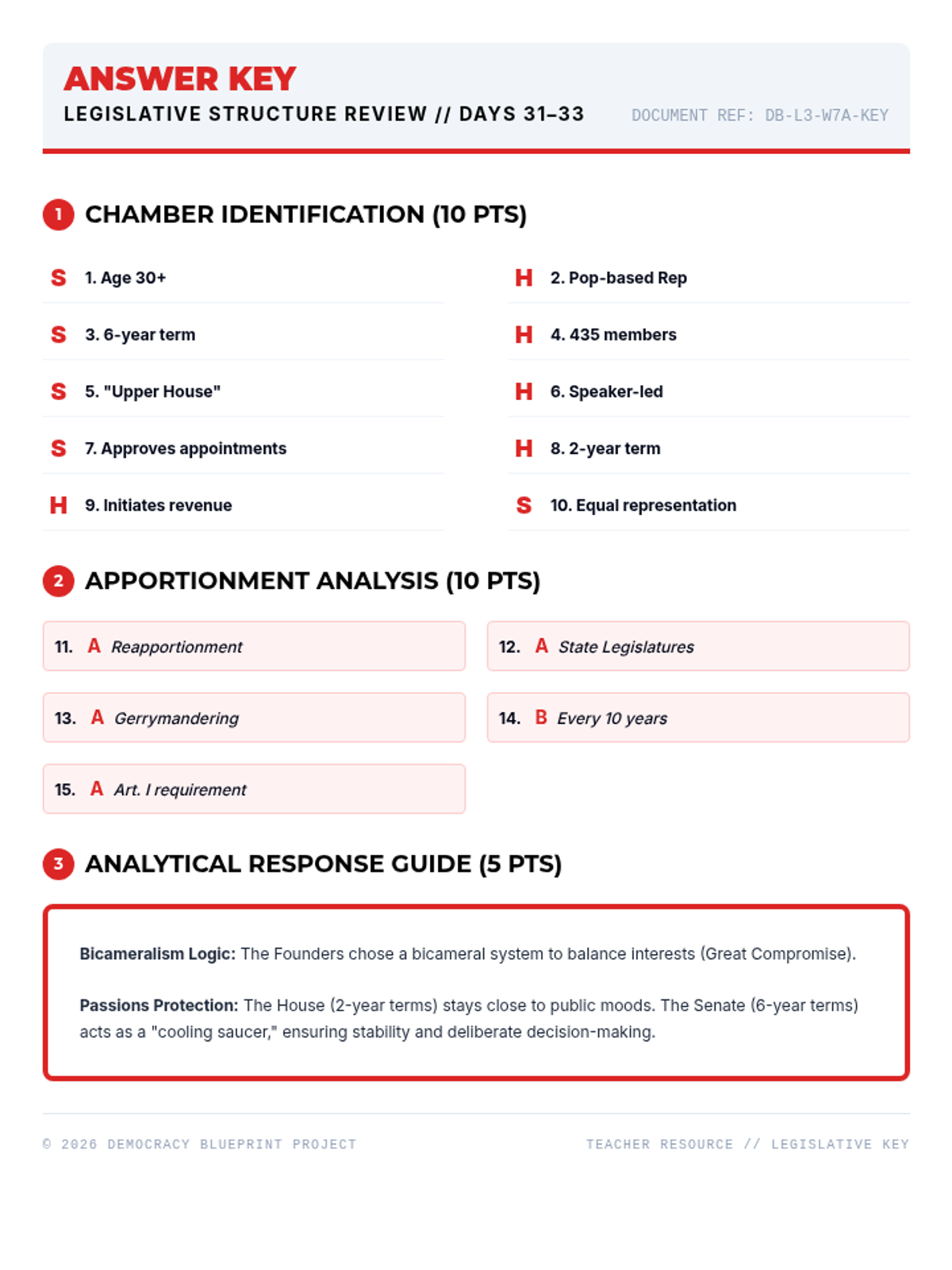
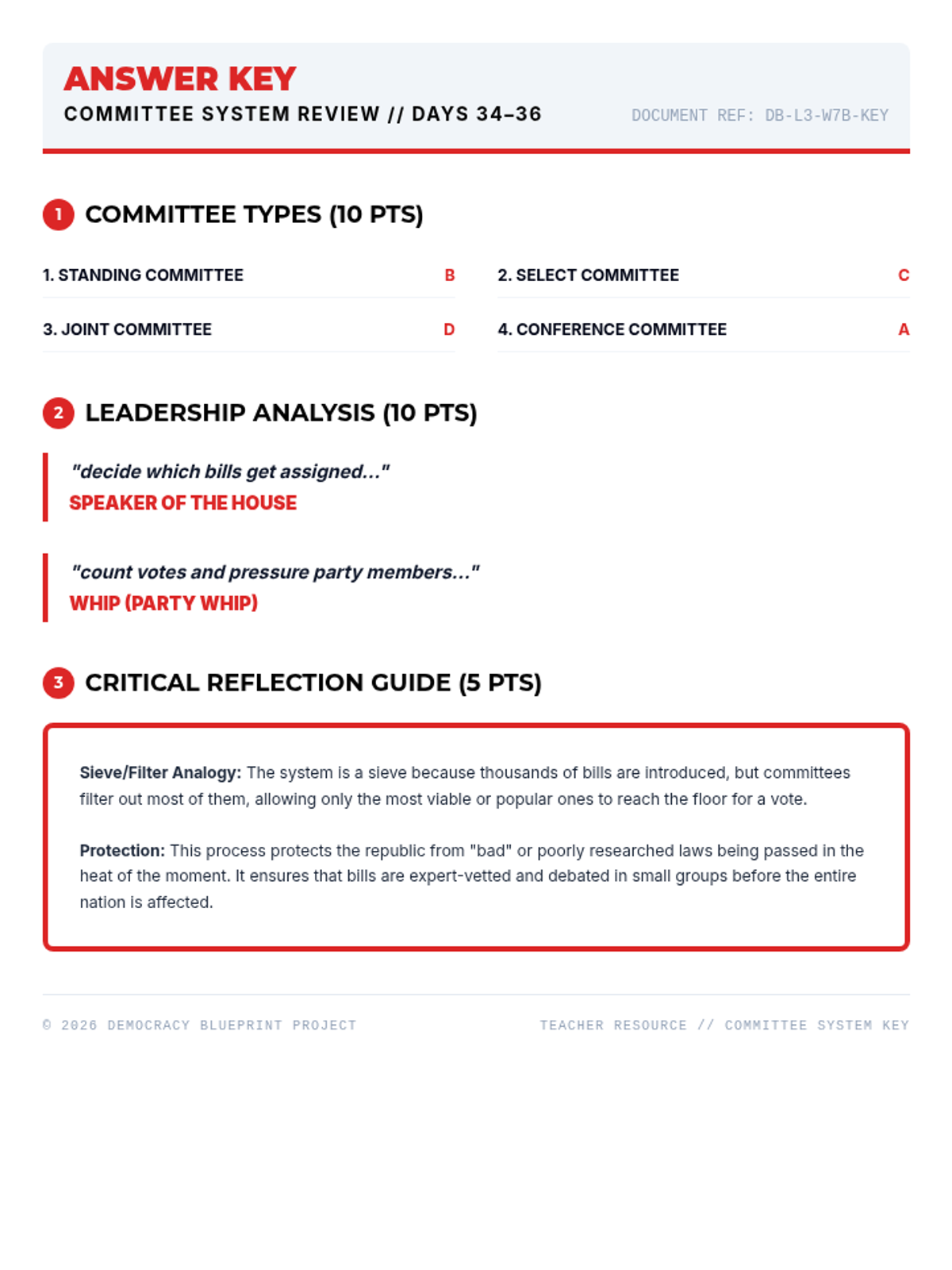
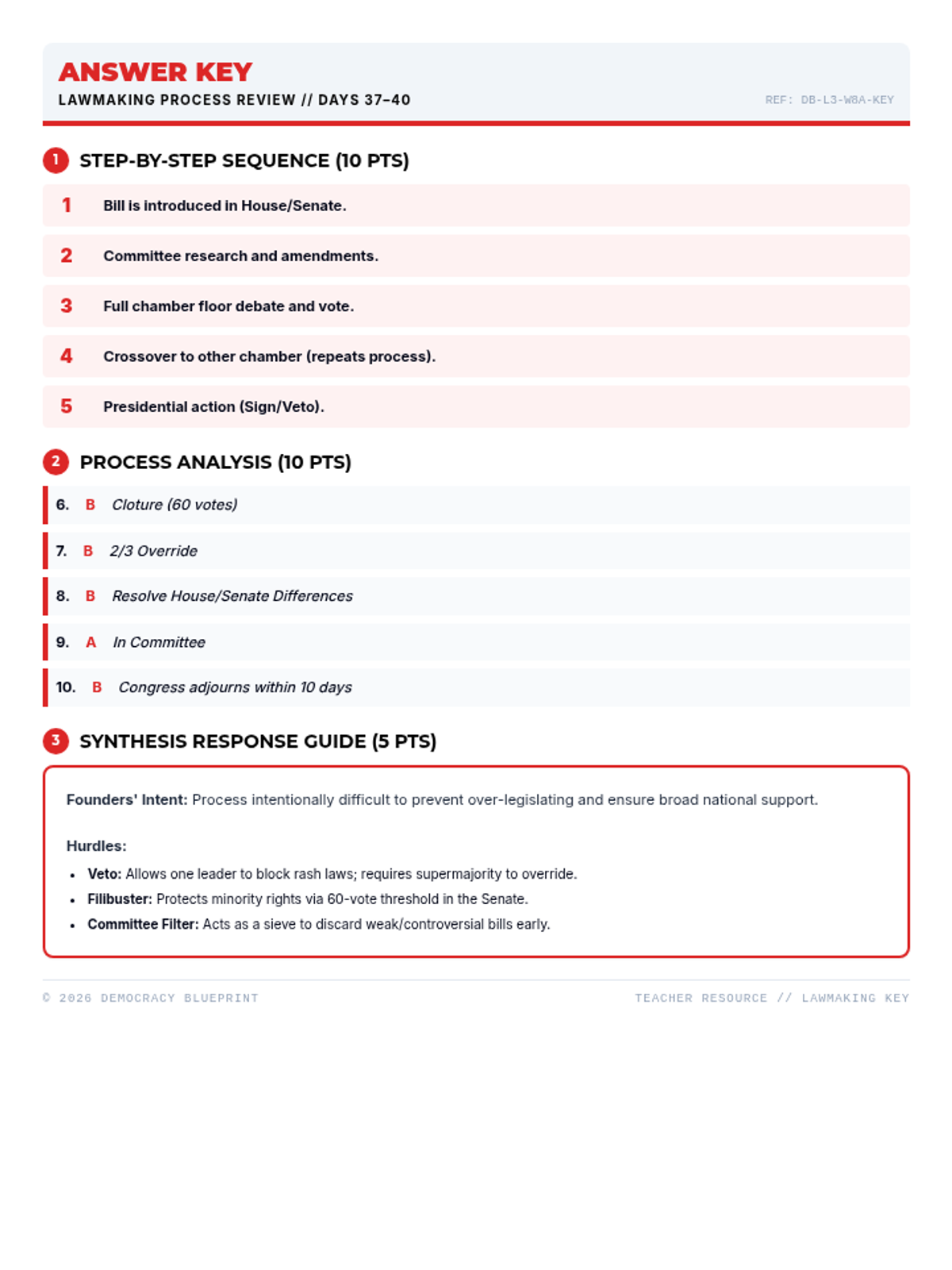
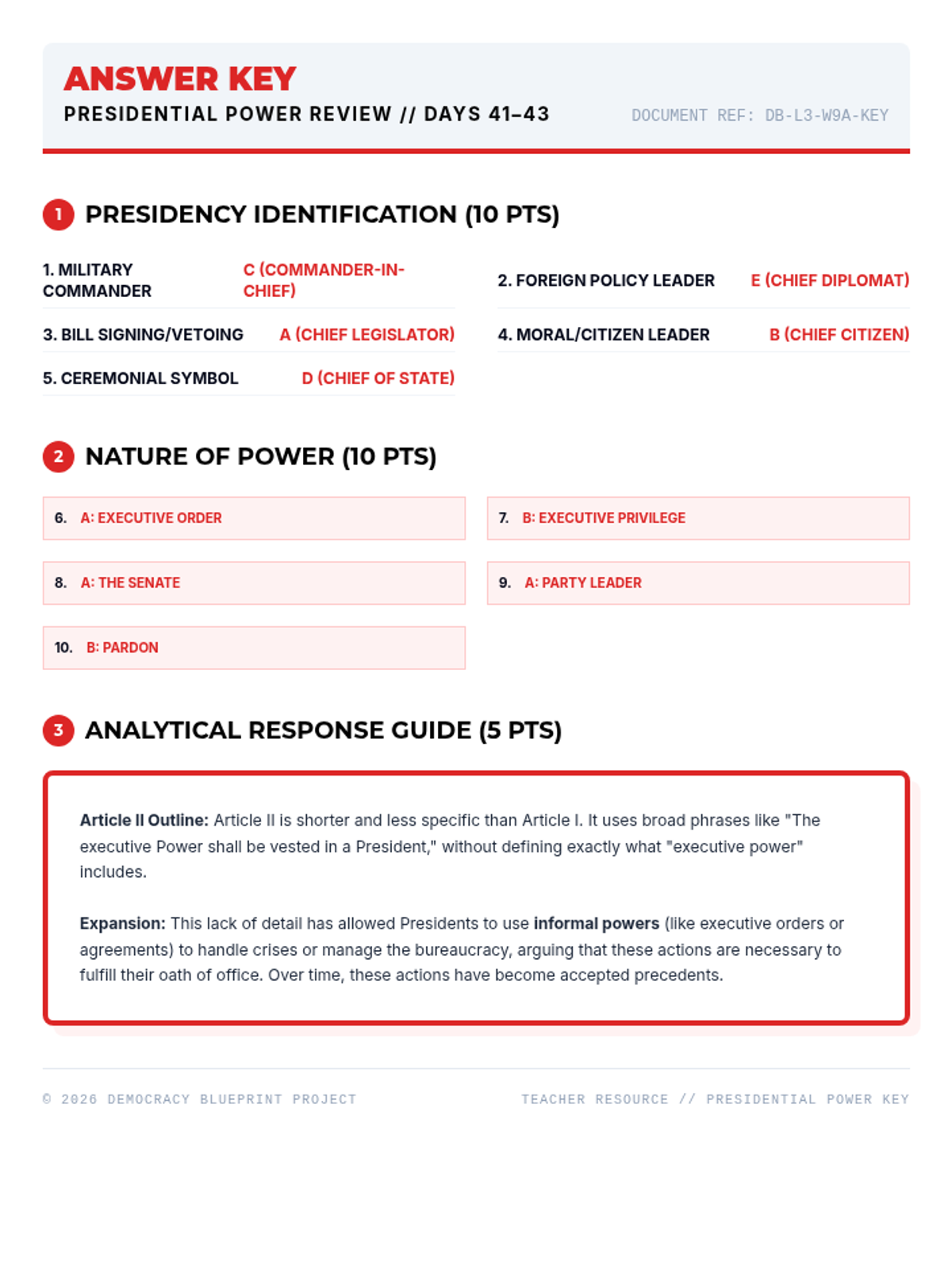
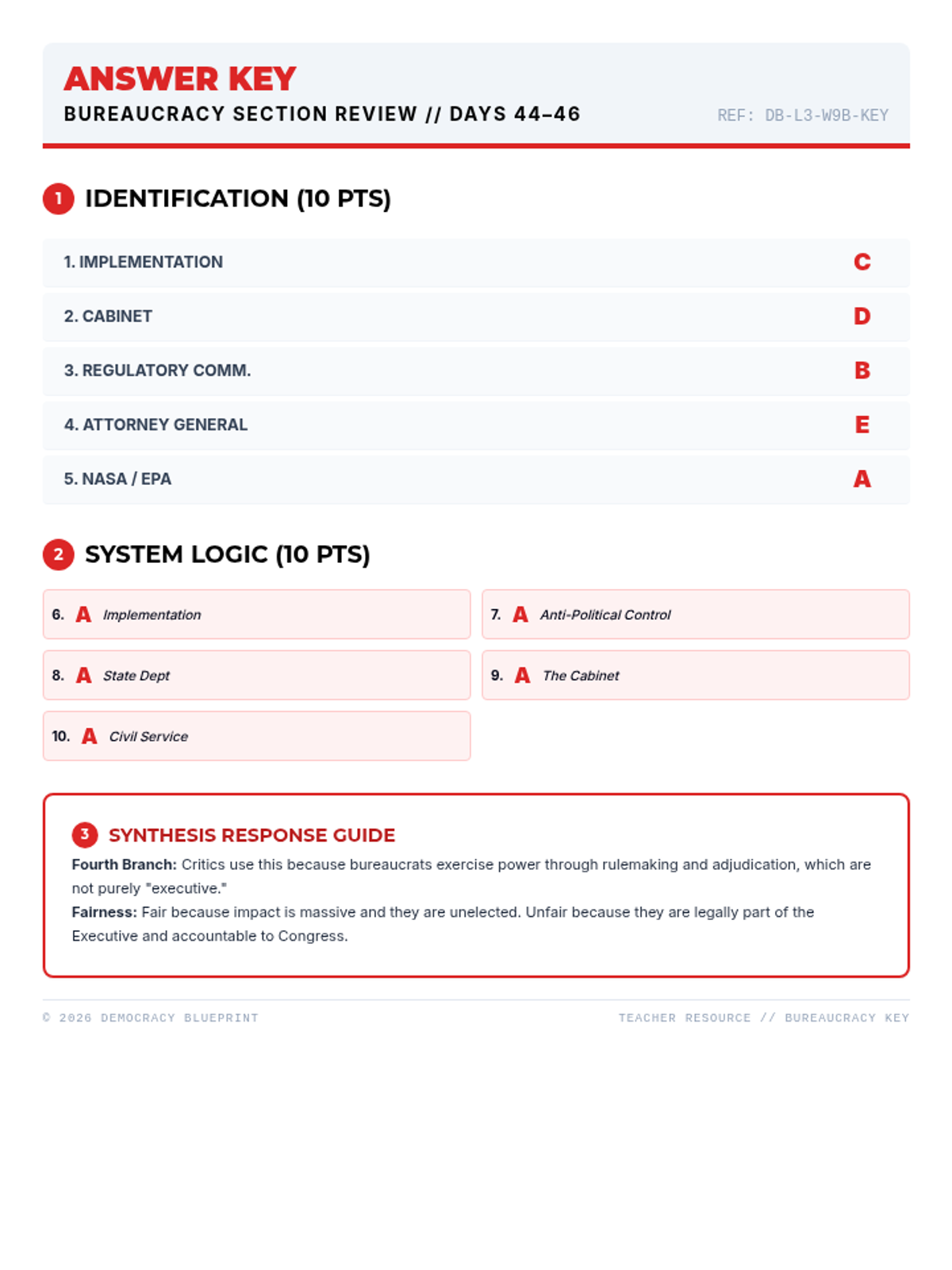
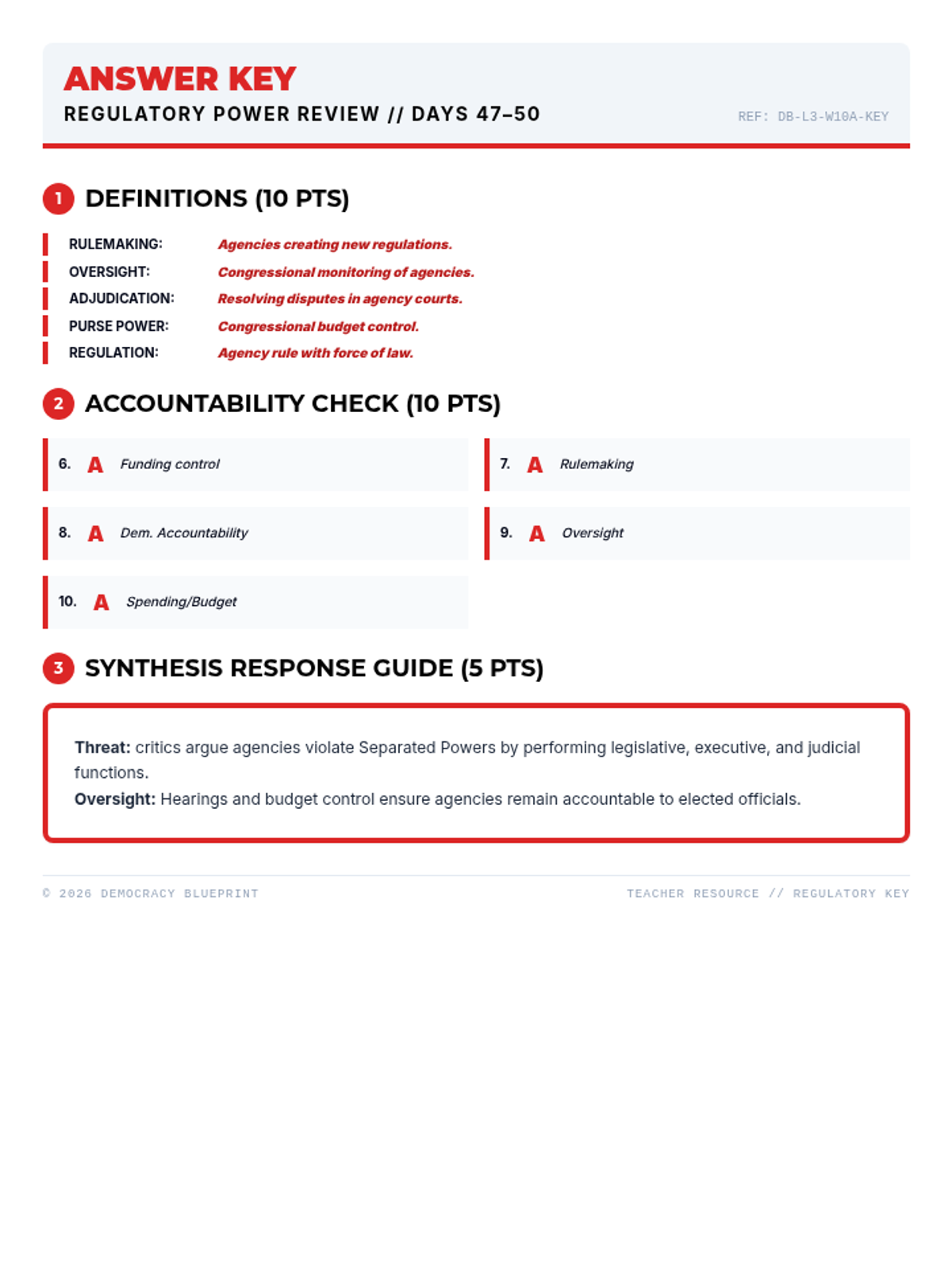
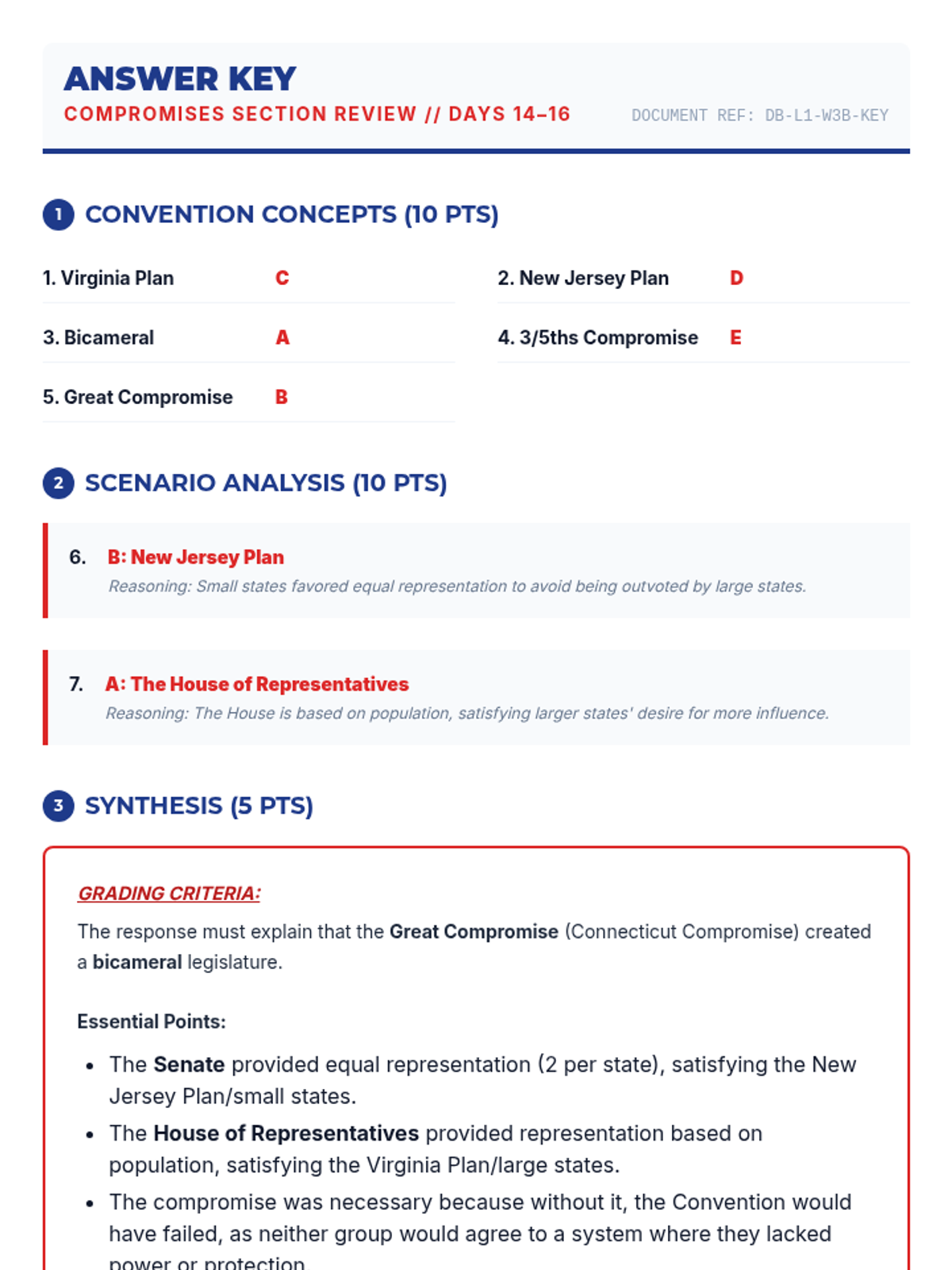
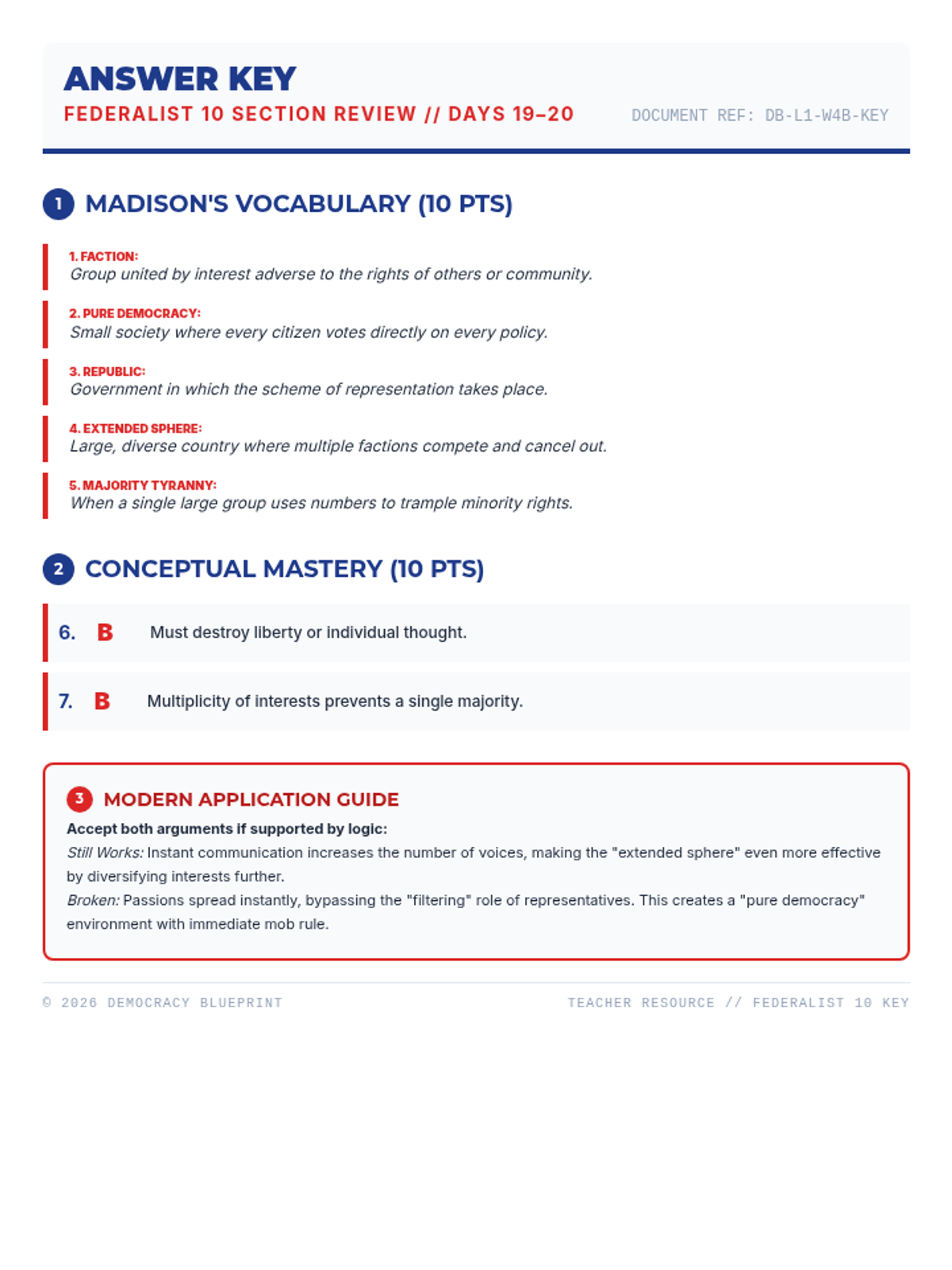
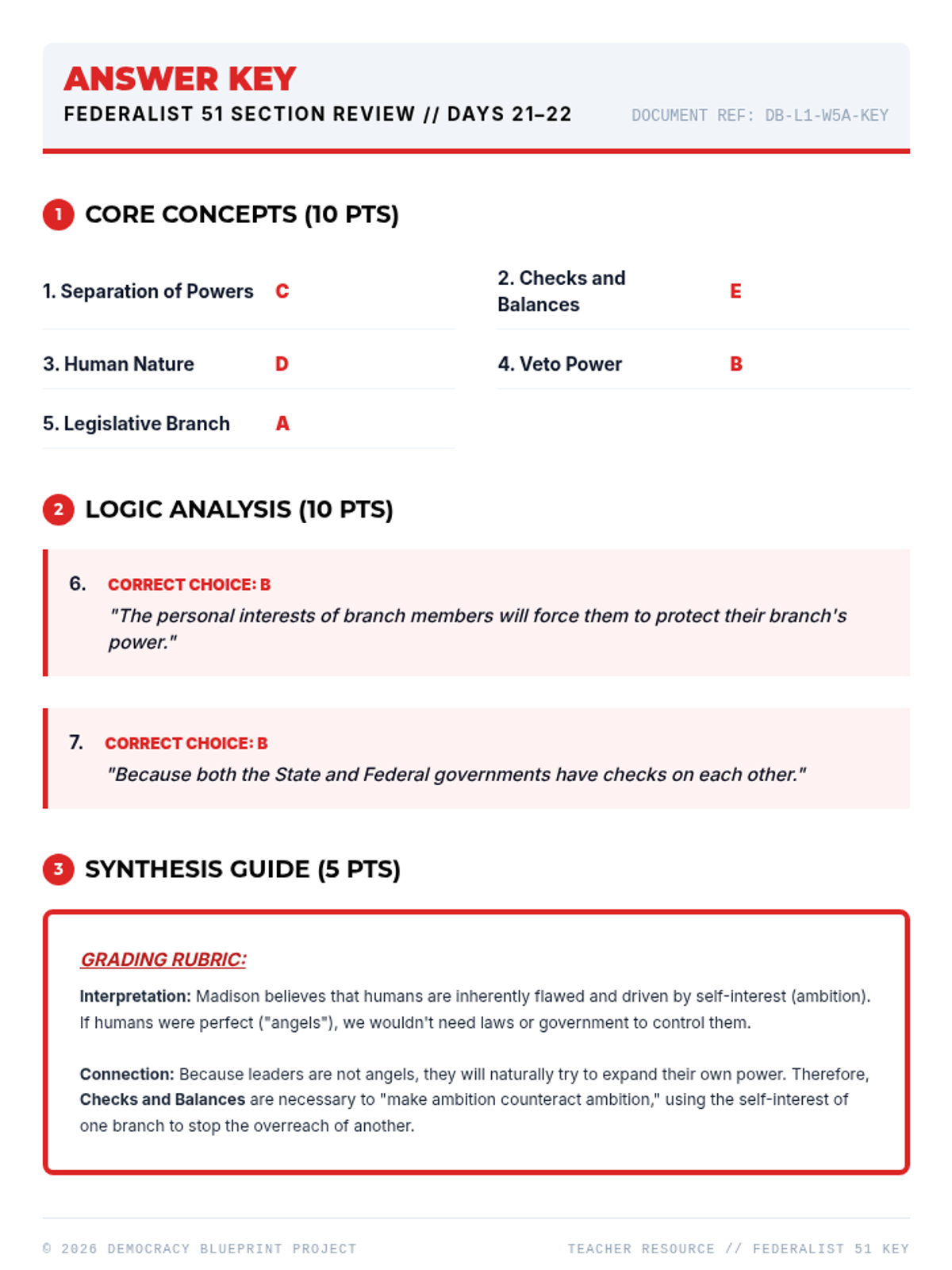
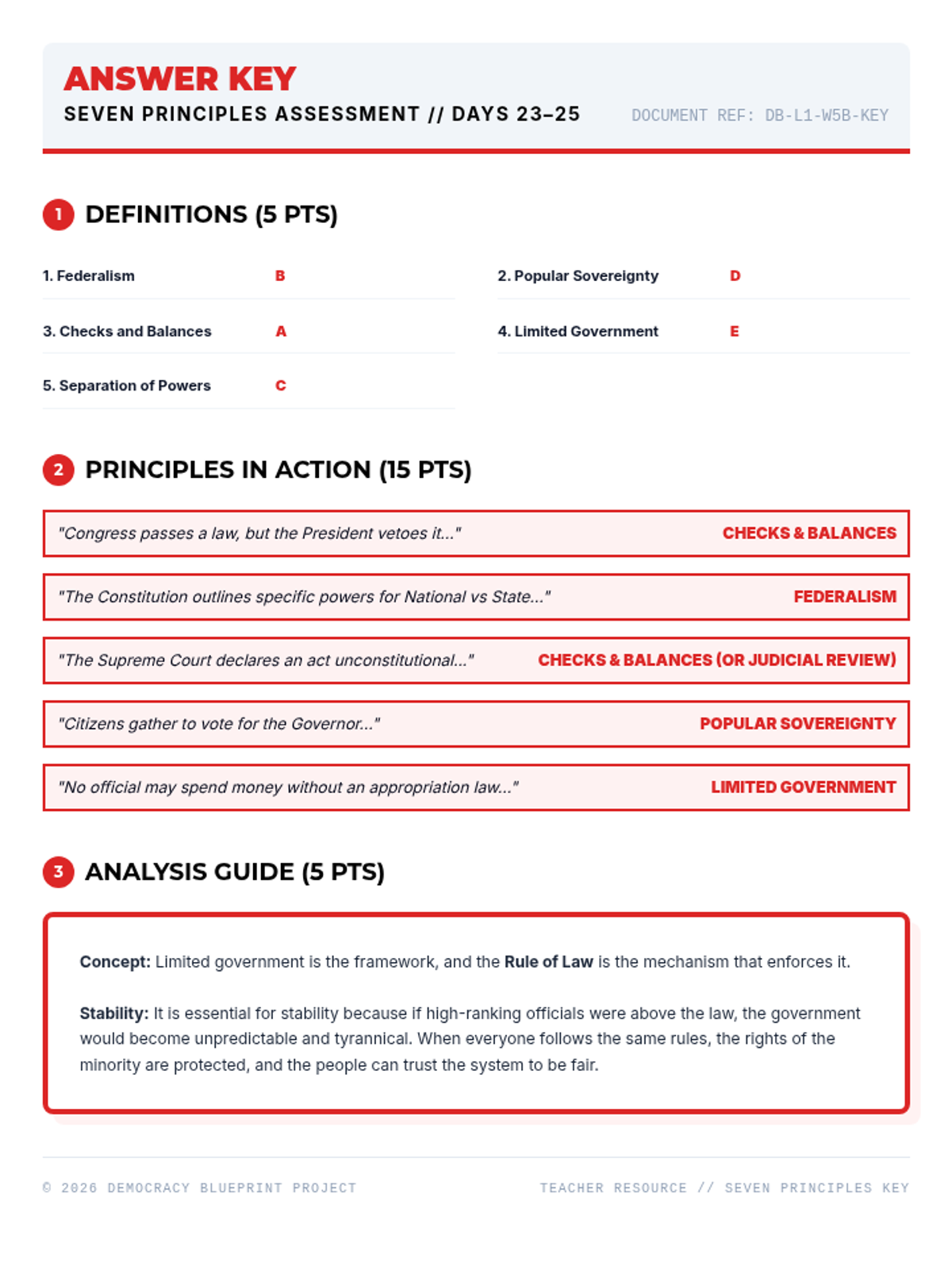
Detailed examination of the three branches of government, the bureaucracy, and the complex relationship between state and national power.
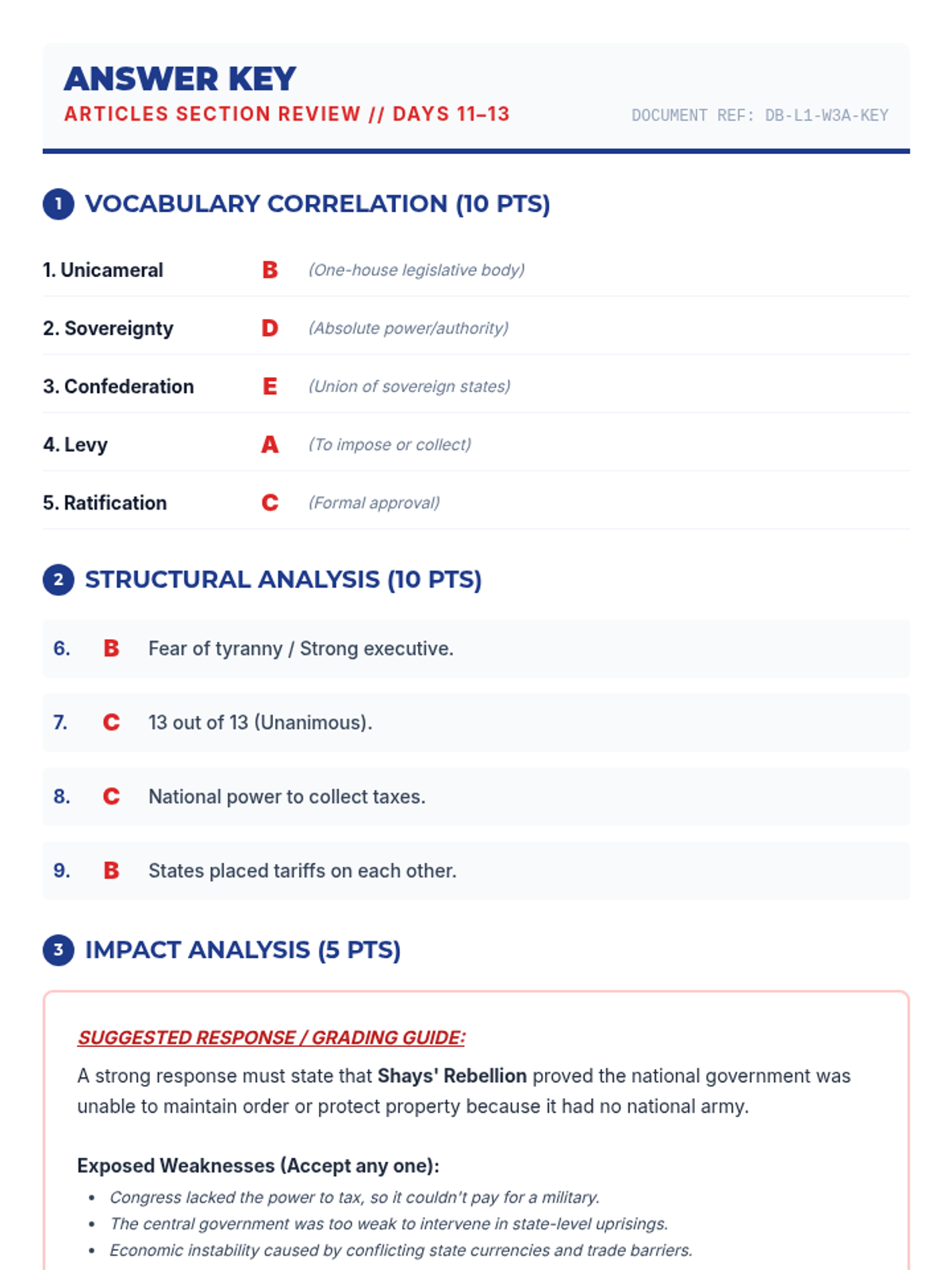
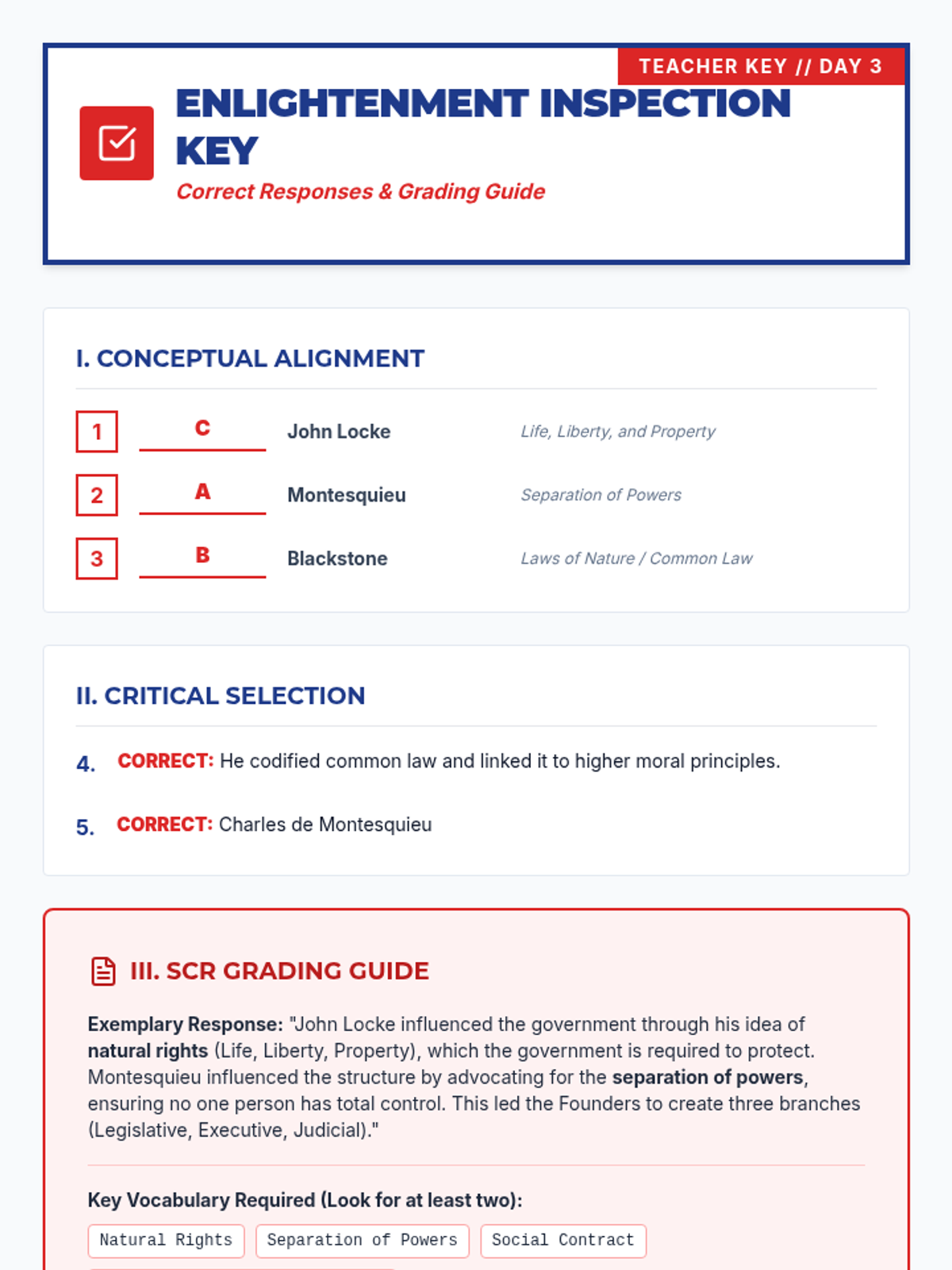
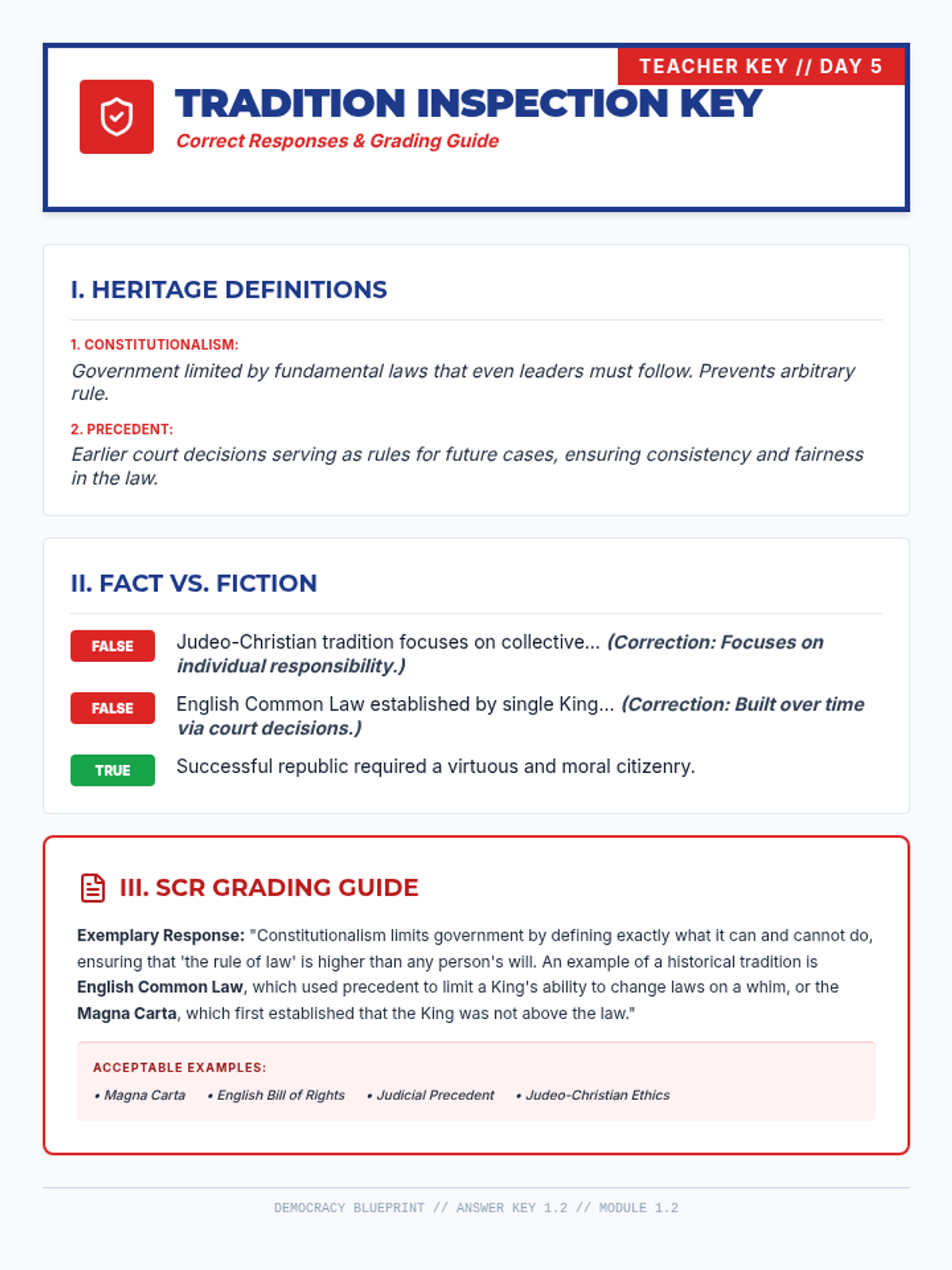
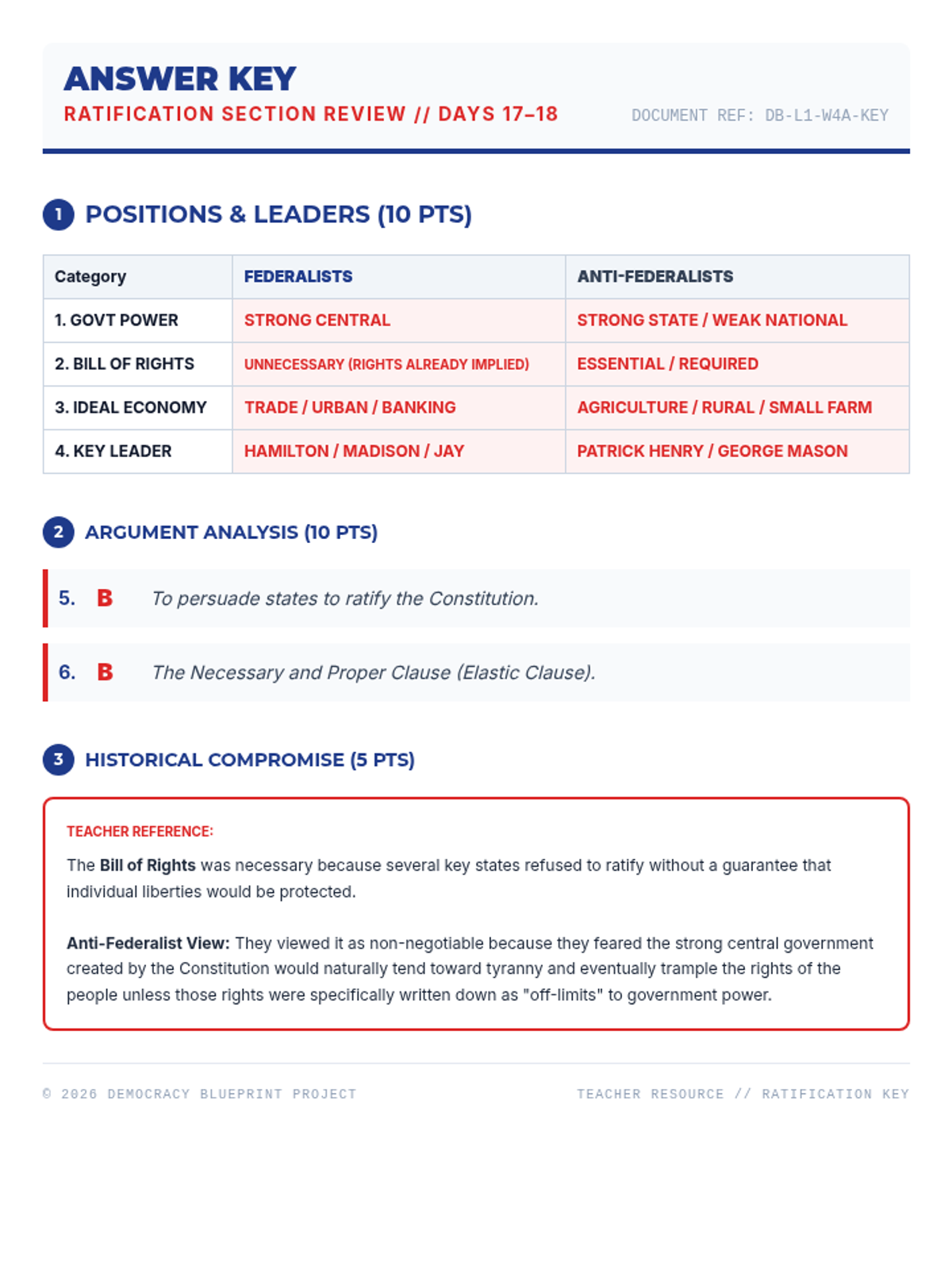
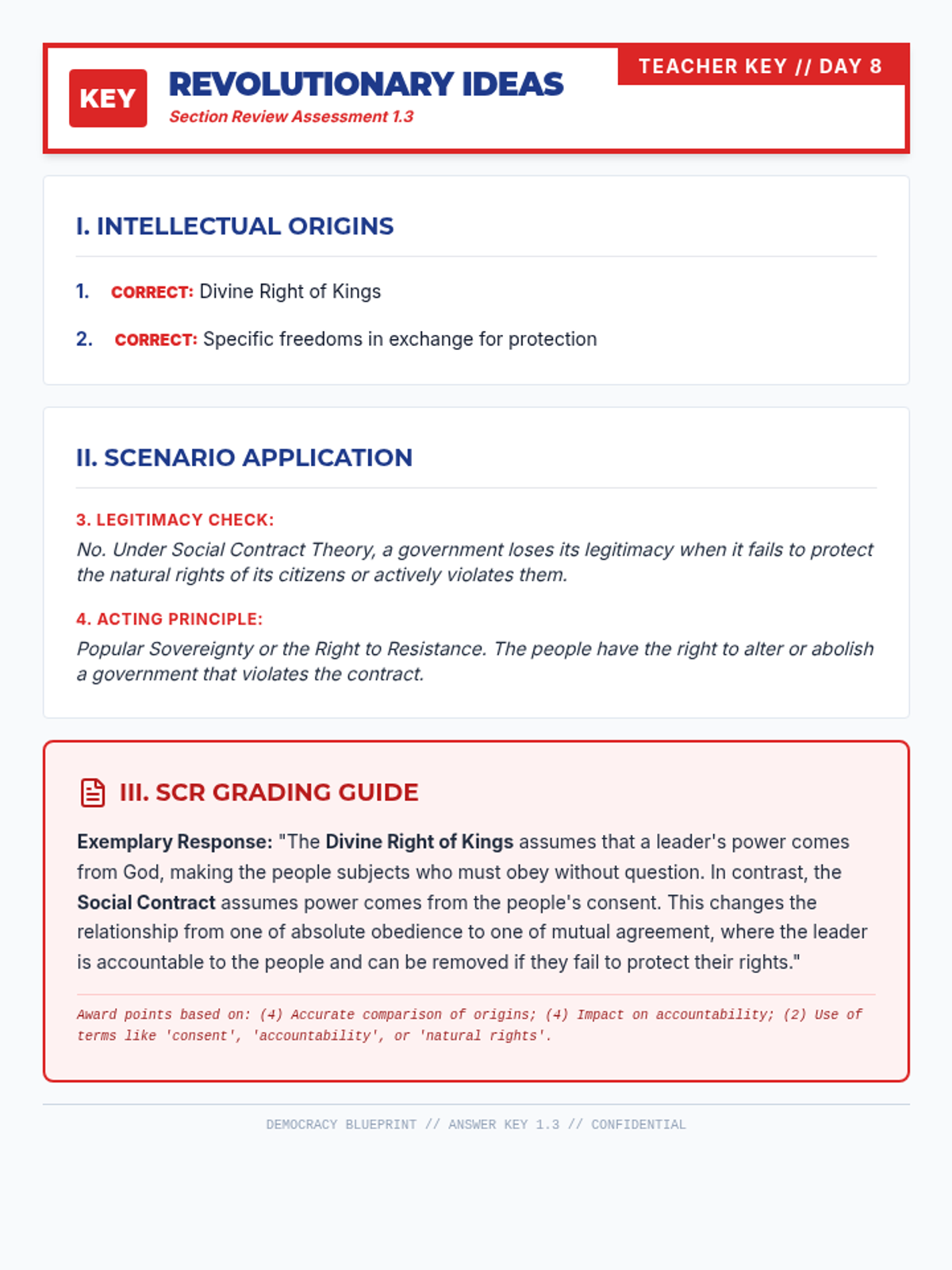
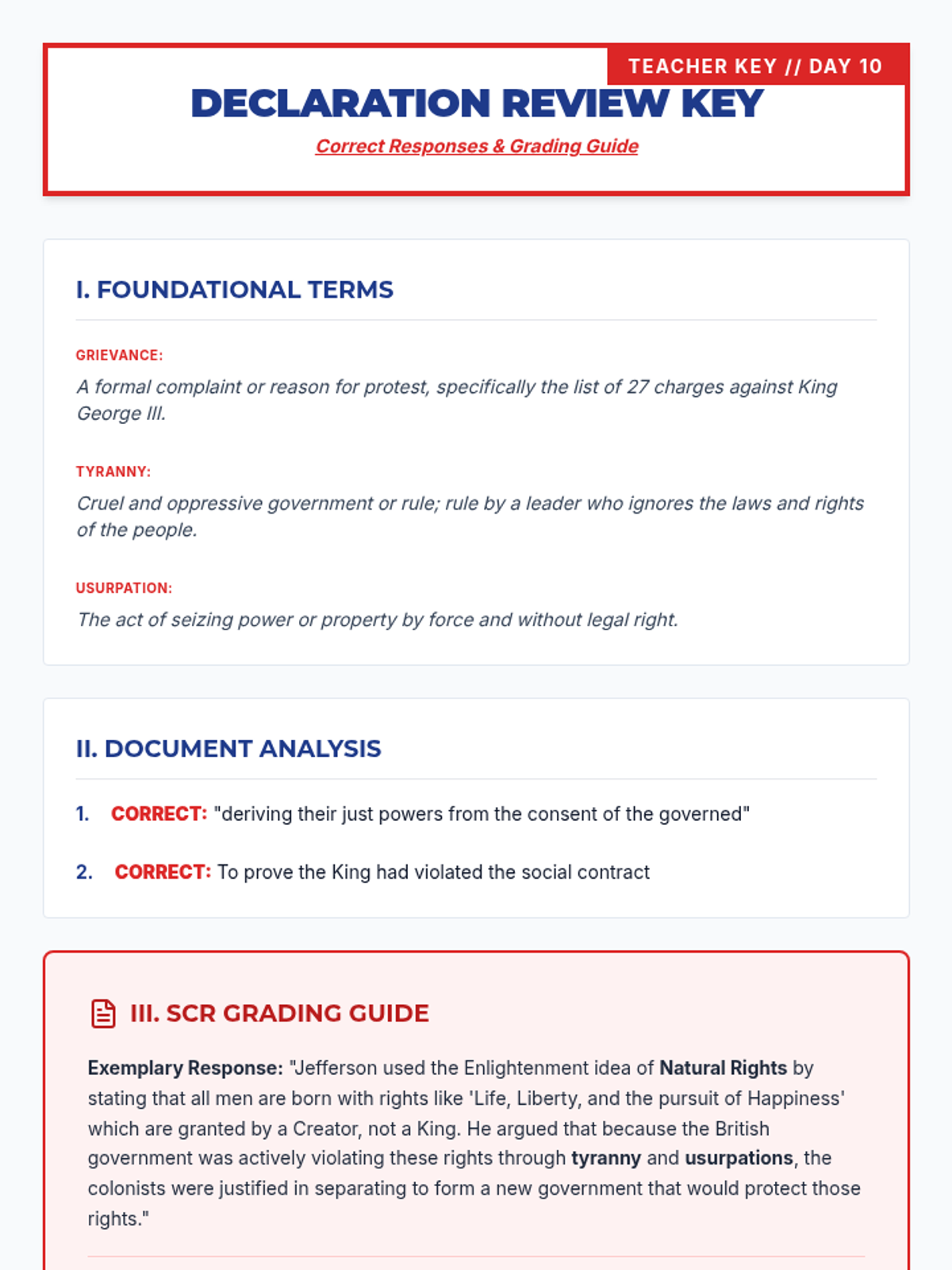
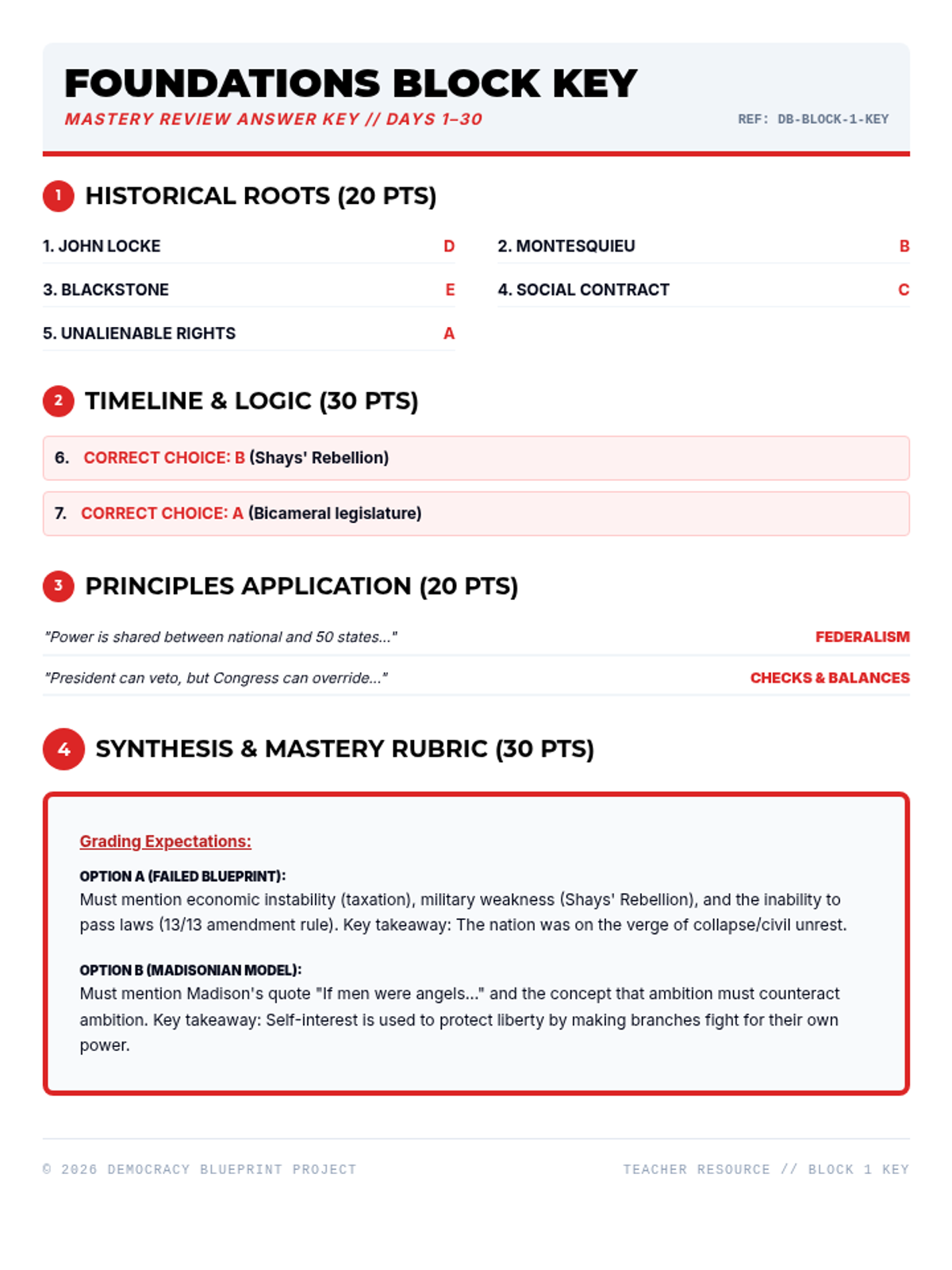
Explores the philosophical, historical, and intellectual origins of the American government and the principles established in the founding documents.
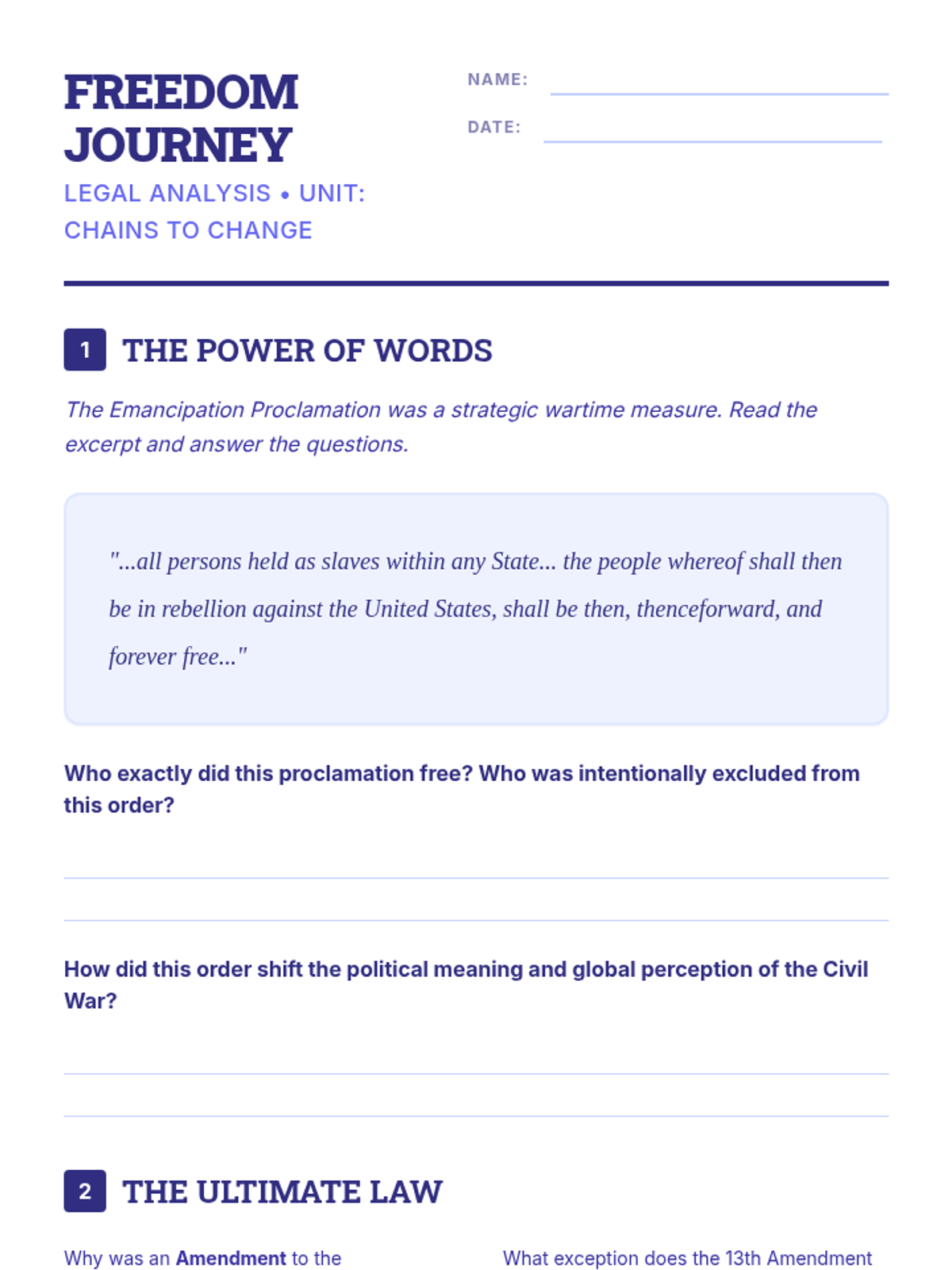
Examine the factors that led to the abolition of slavery and the legal process of emancipation in the Americas.
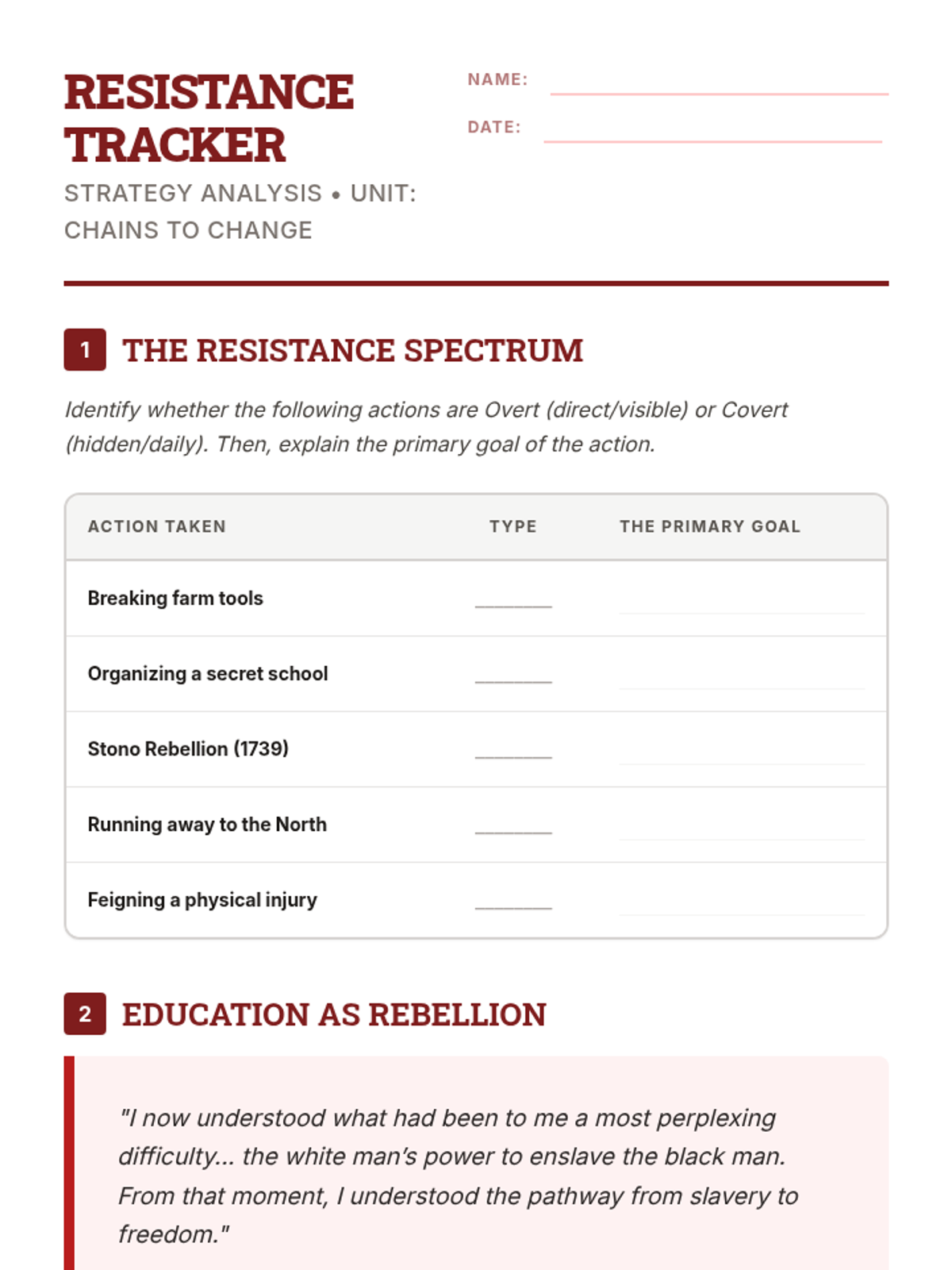
Investigate the various forms of resistance used by enslaved people, from daily acts of defiance to organized rebellions.
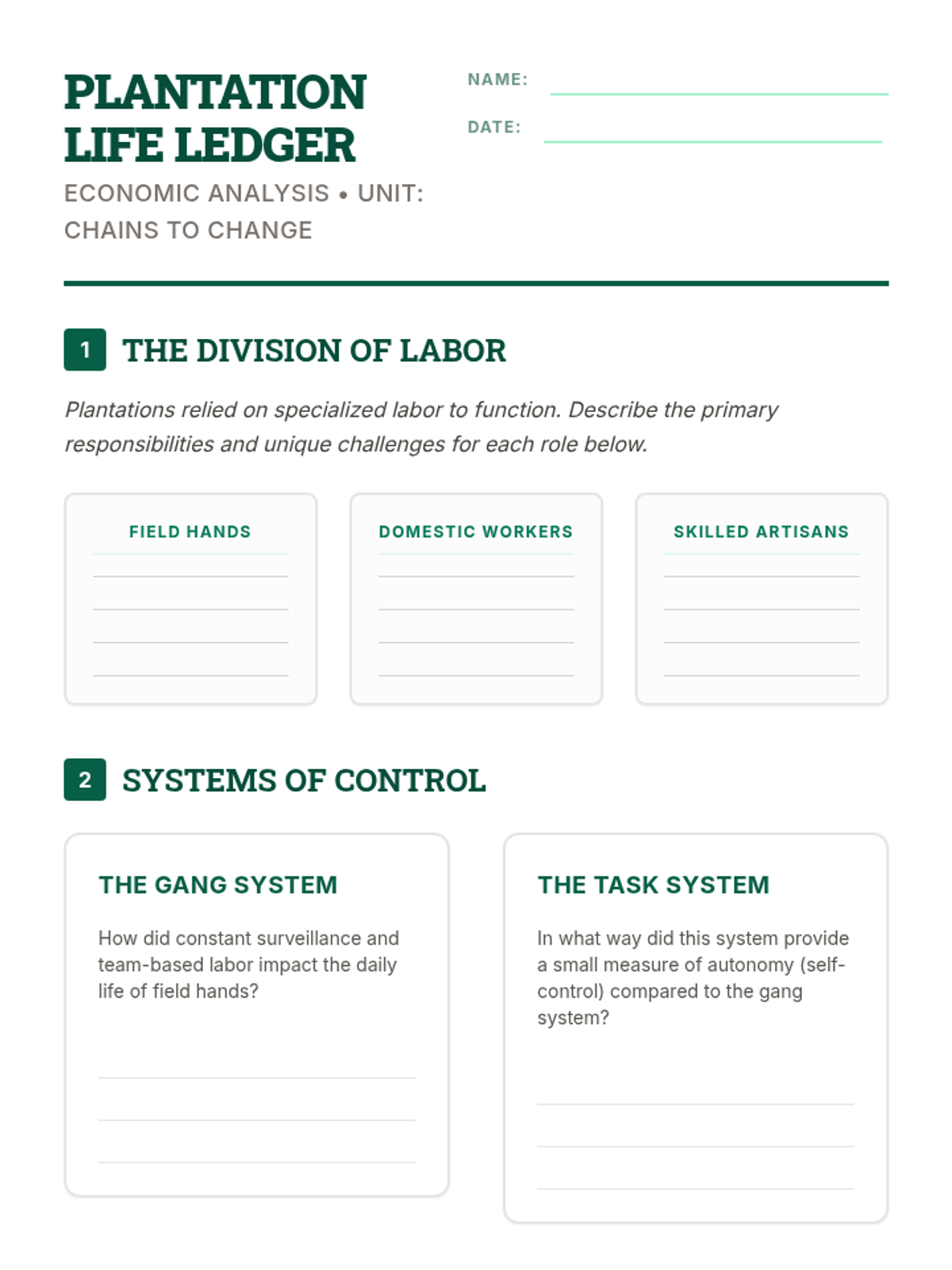
Analyze the economic structure of the plantation system and the daily lives of enslaved people across the Americas.
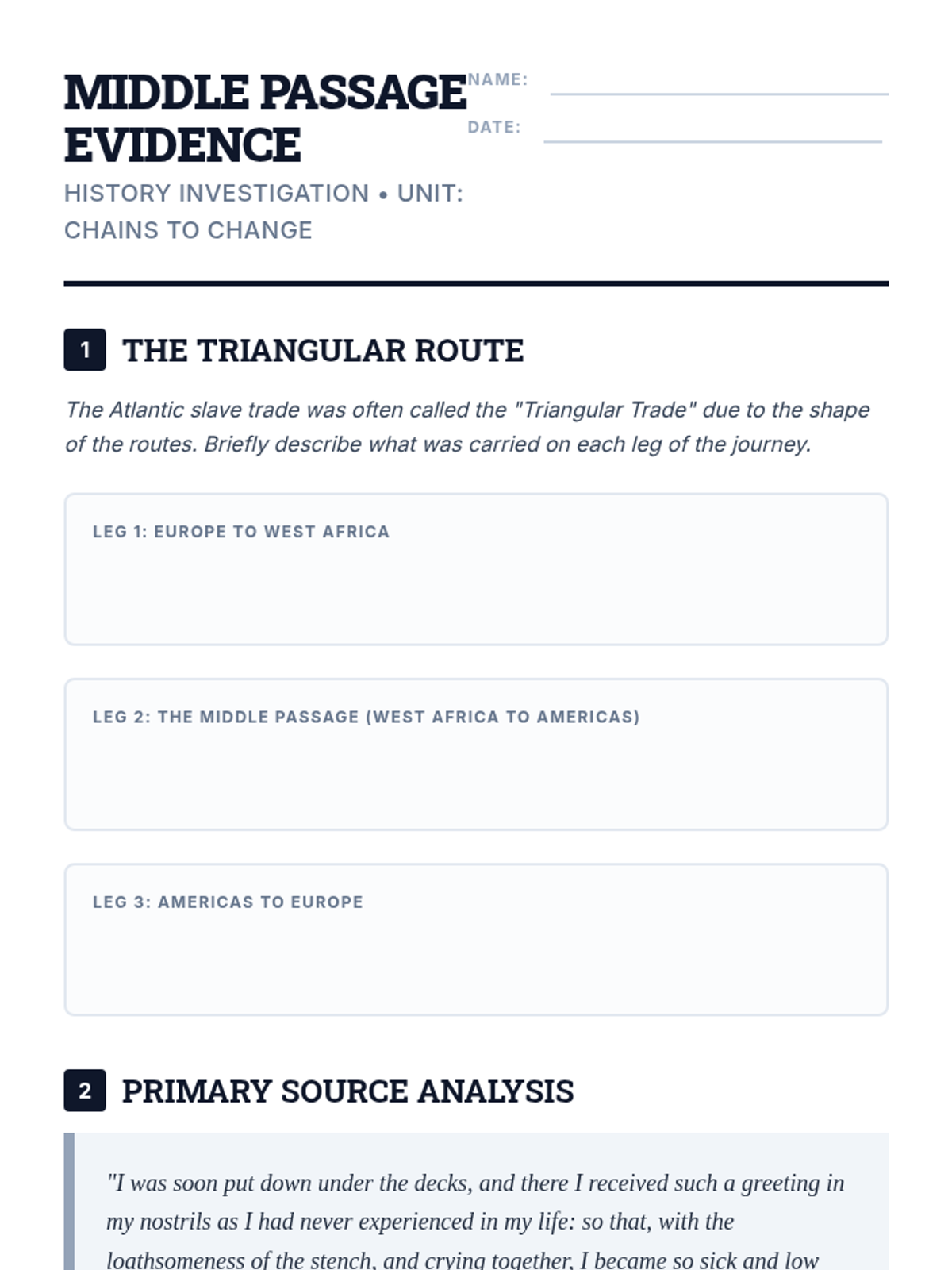
Explore the economic mechanics of the Atlantic slave trade and the harrowing reality of the Middle Passage through primary sources and mapping.
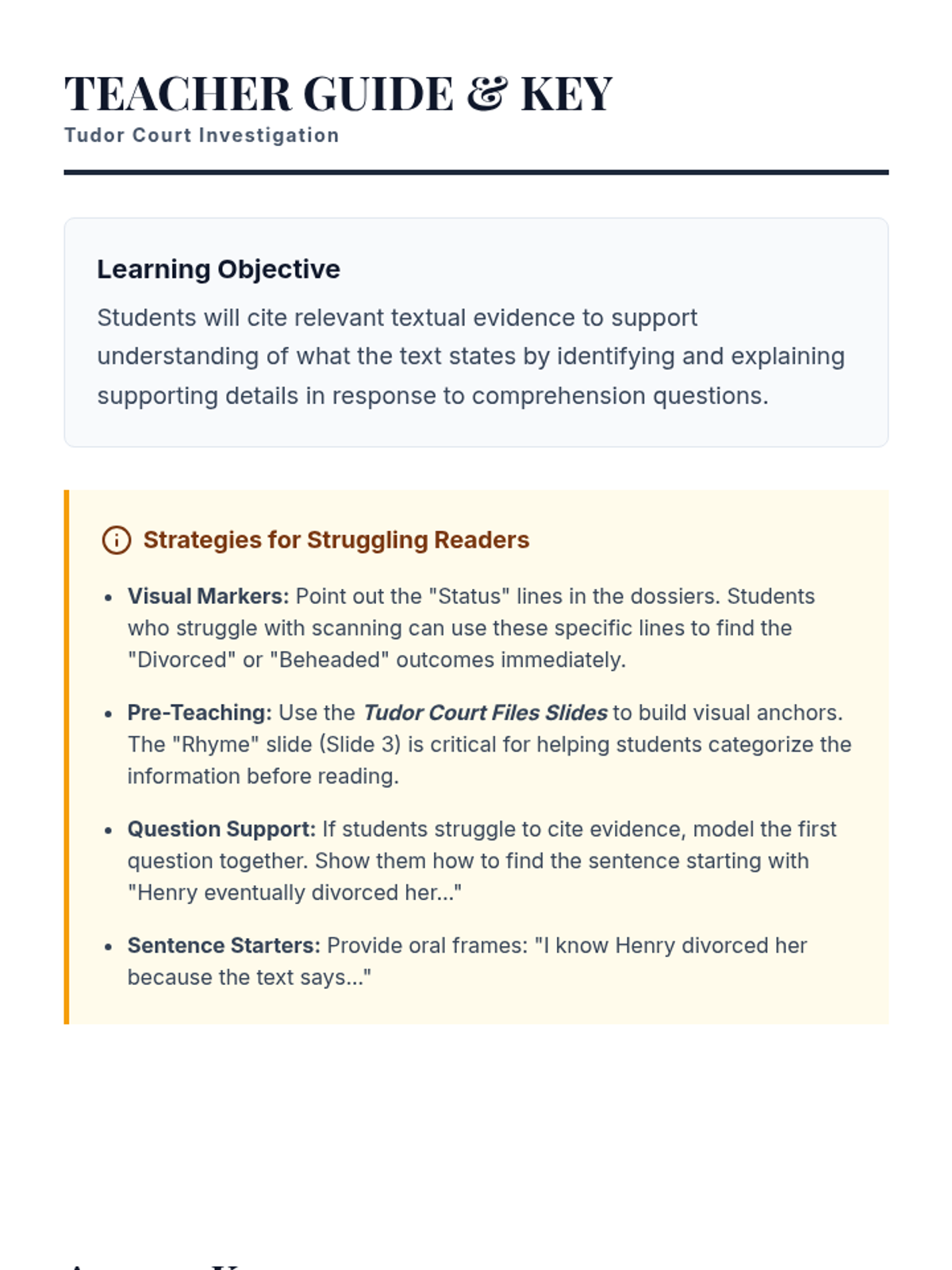
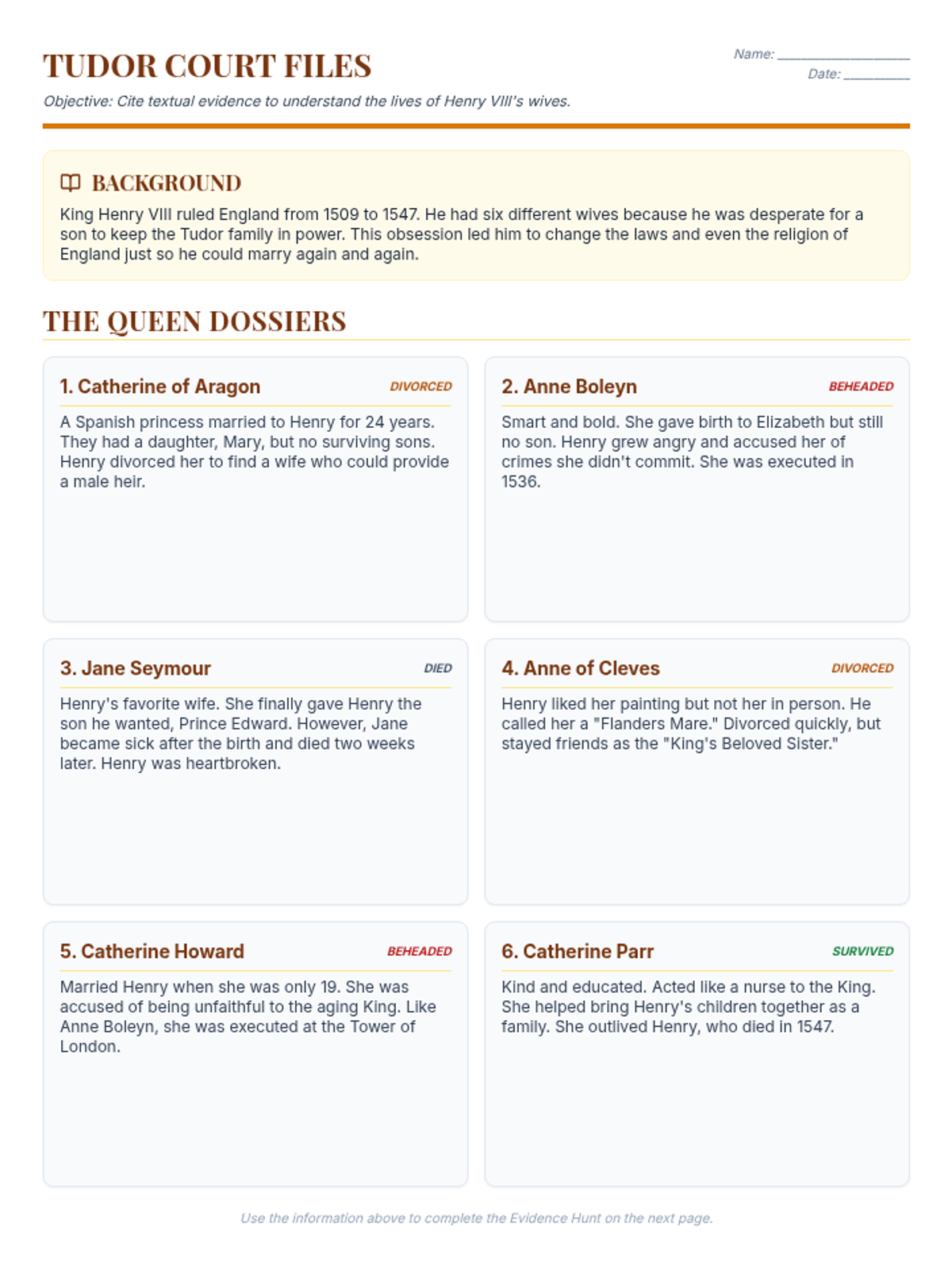
A guided reading lesson focused on Henry VIII's six wives, designed for middle school students who need support with reading comprehension and citing textual evidence. Students act as court investigators to gather facts and evidence about the fates of the Tudor queens.
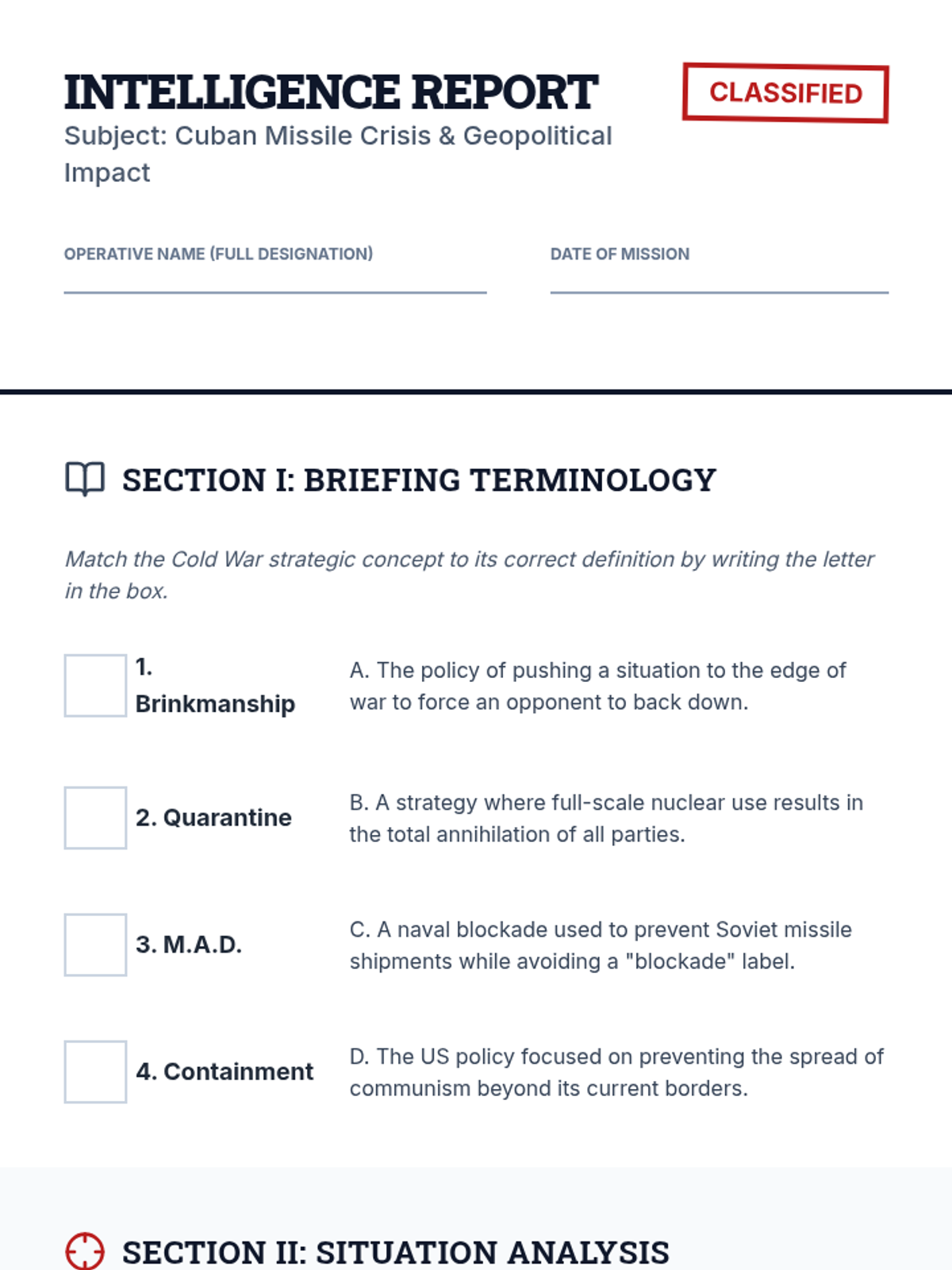
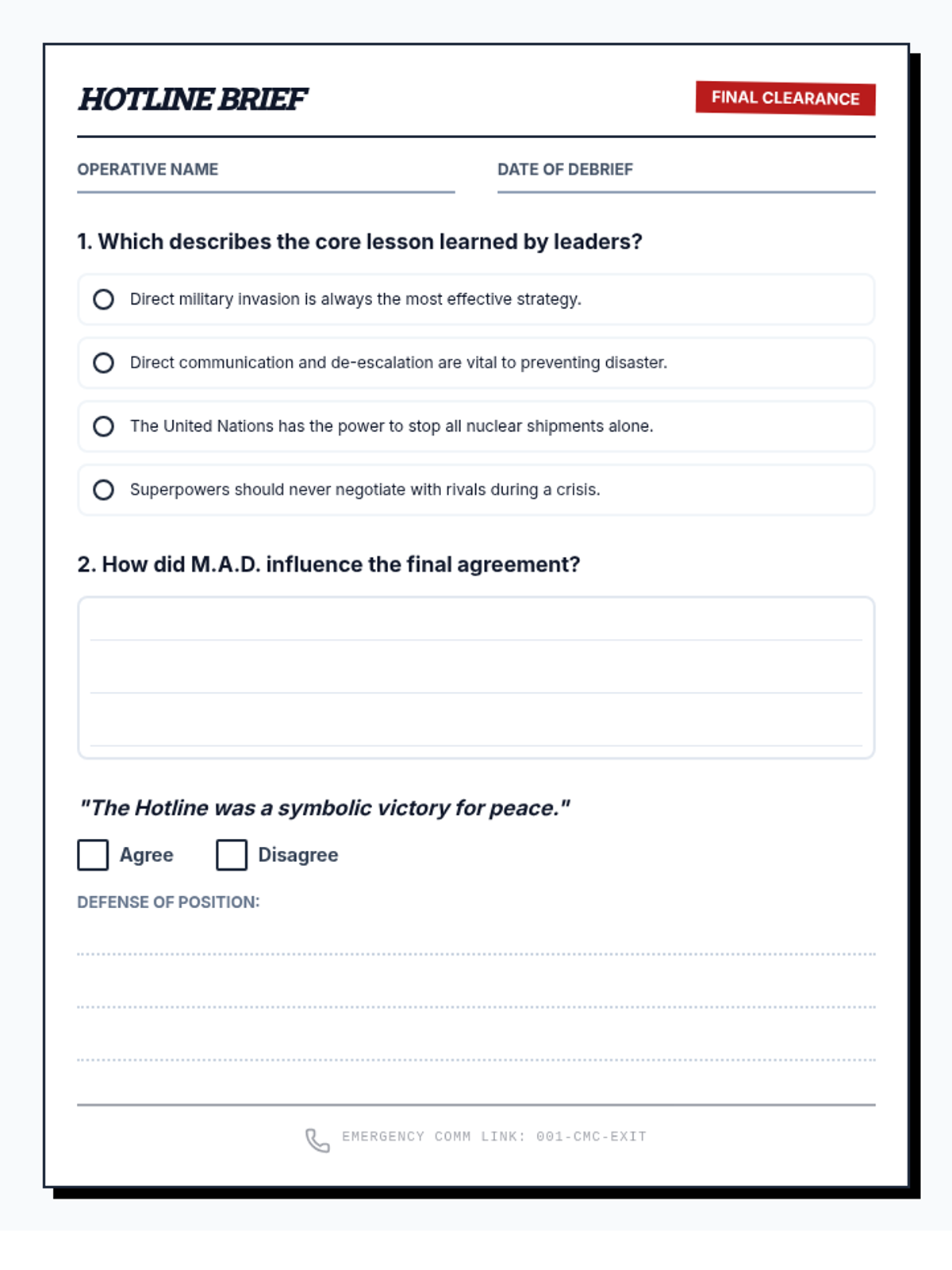
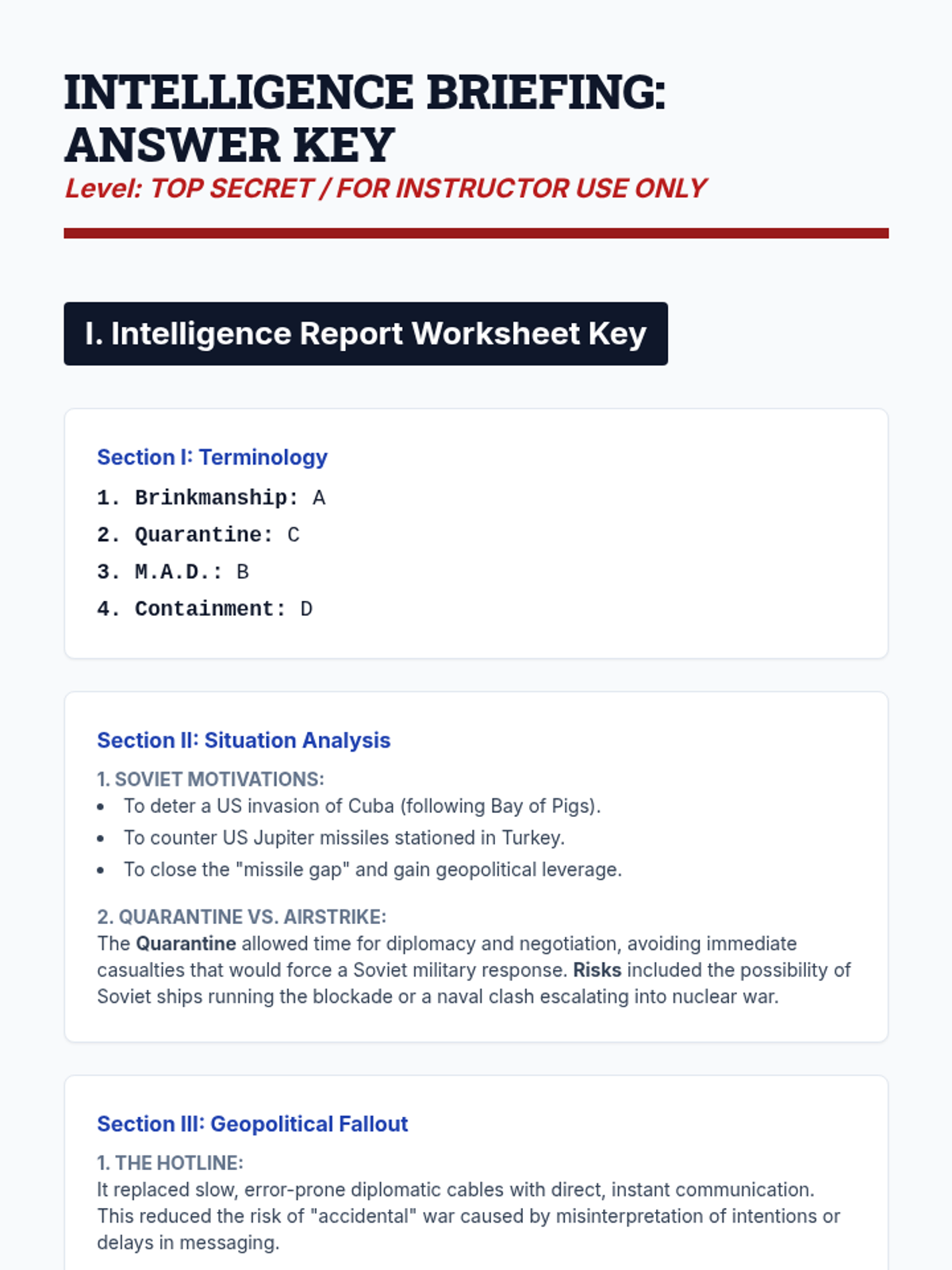
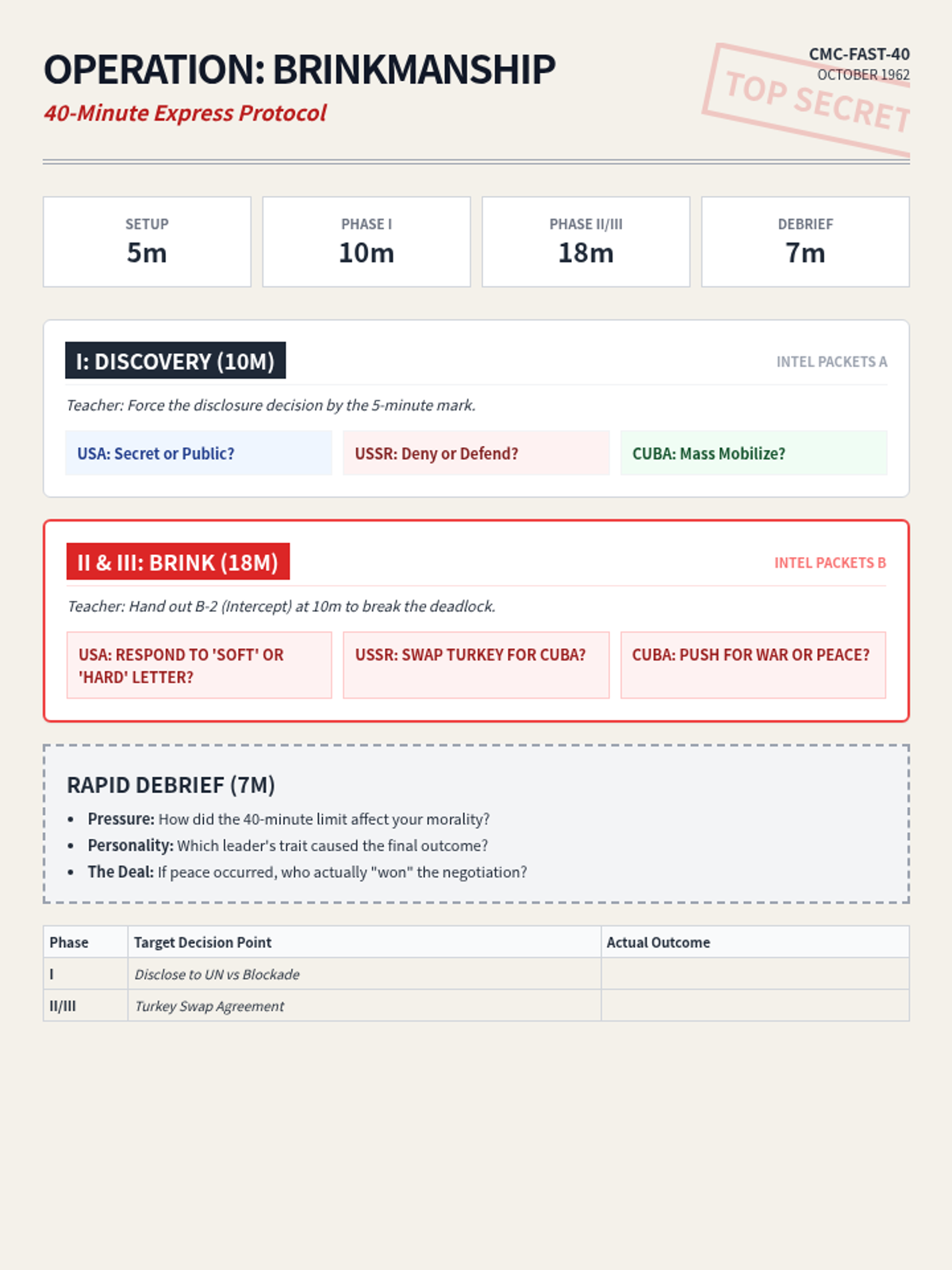
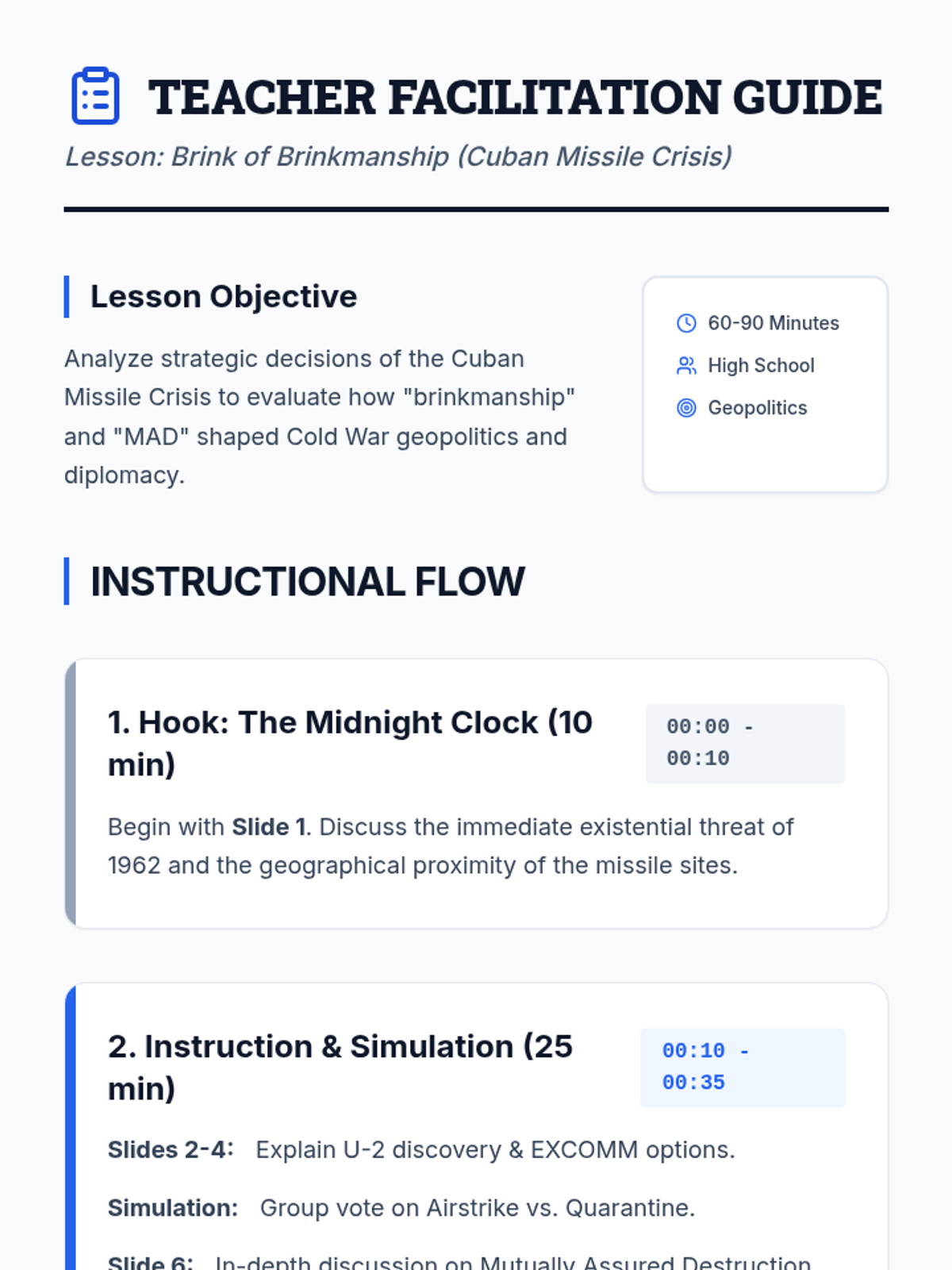
A comprehensive lesson on the Cuban Missile Crisis, focusing on the geopolitical tensions of the Cold War, the concept of brinkmanship, and the long-term impacts on international diplomacy.
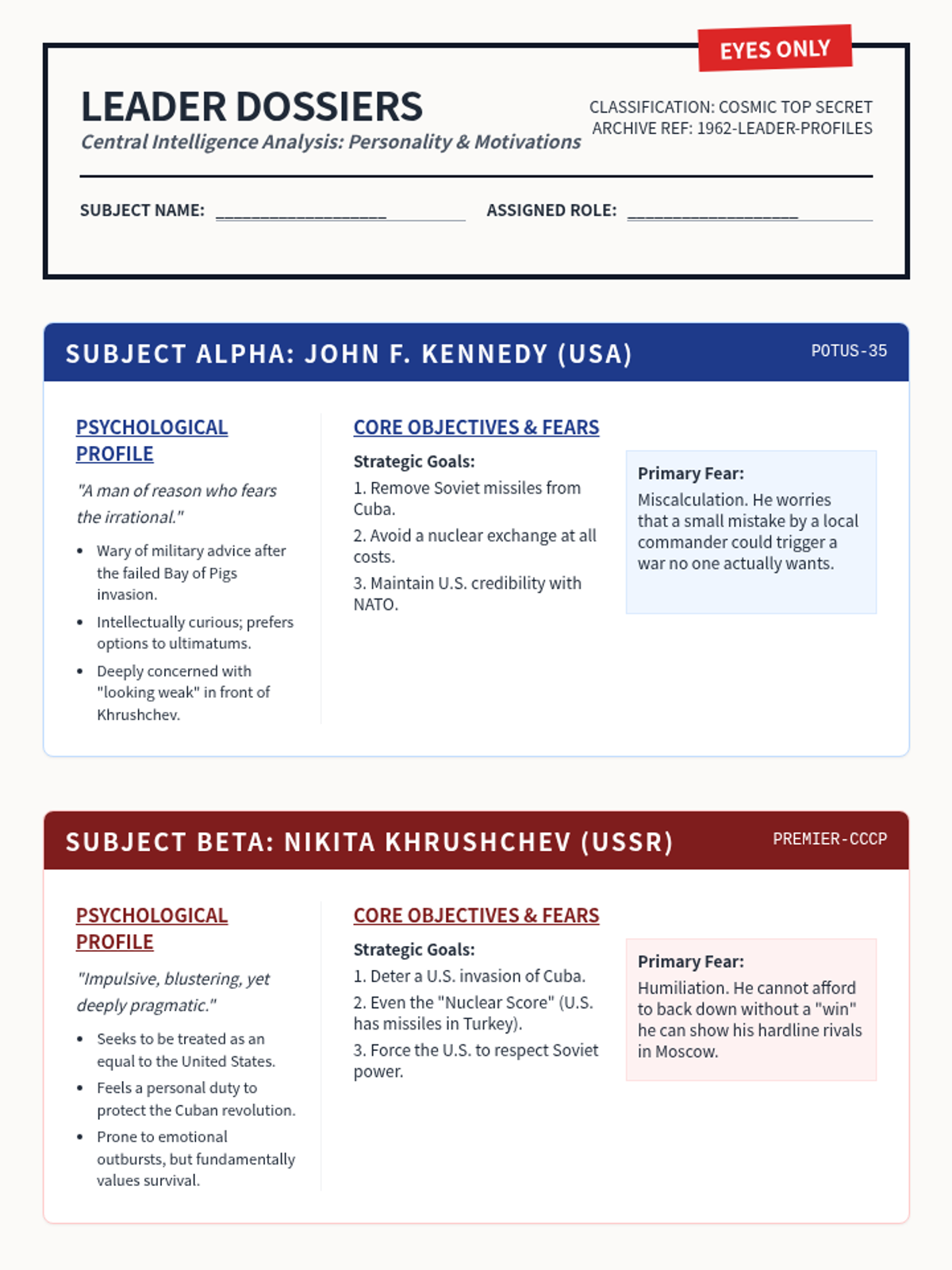
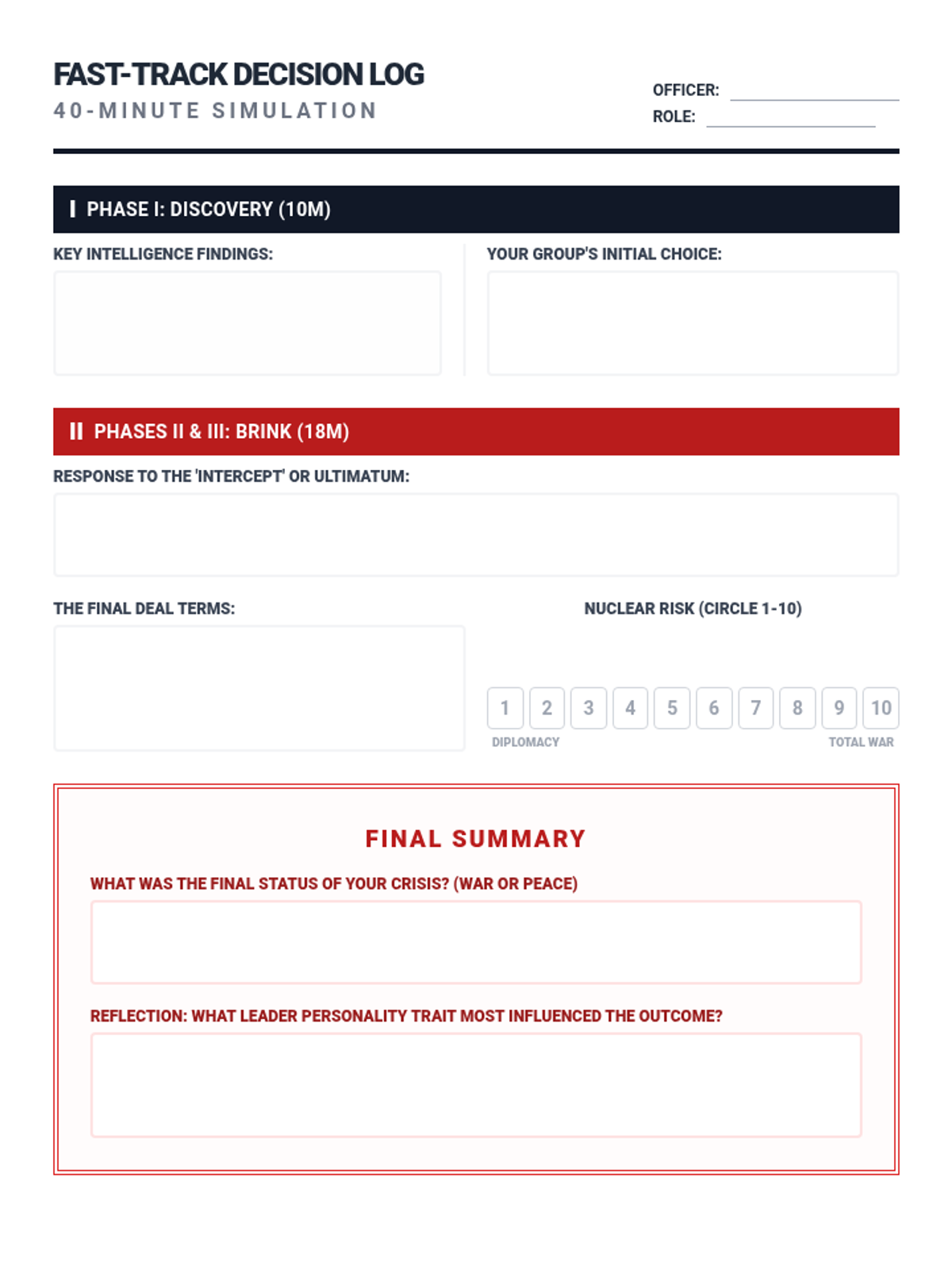
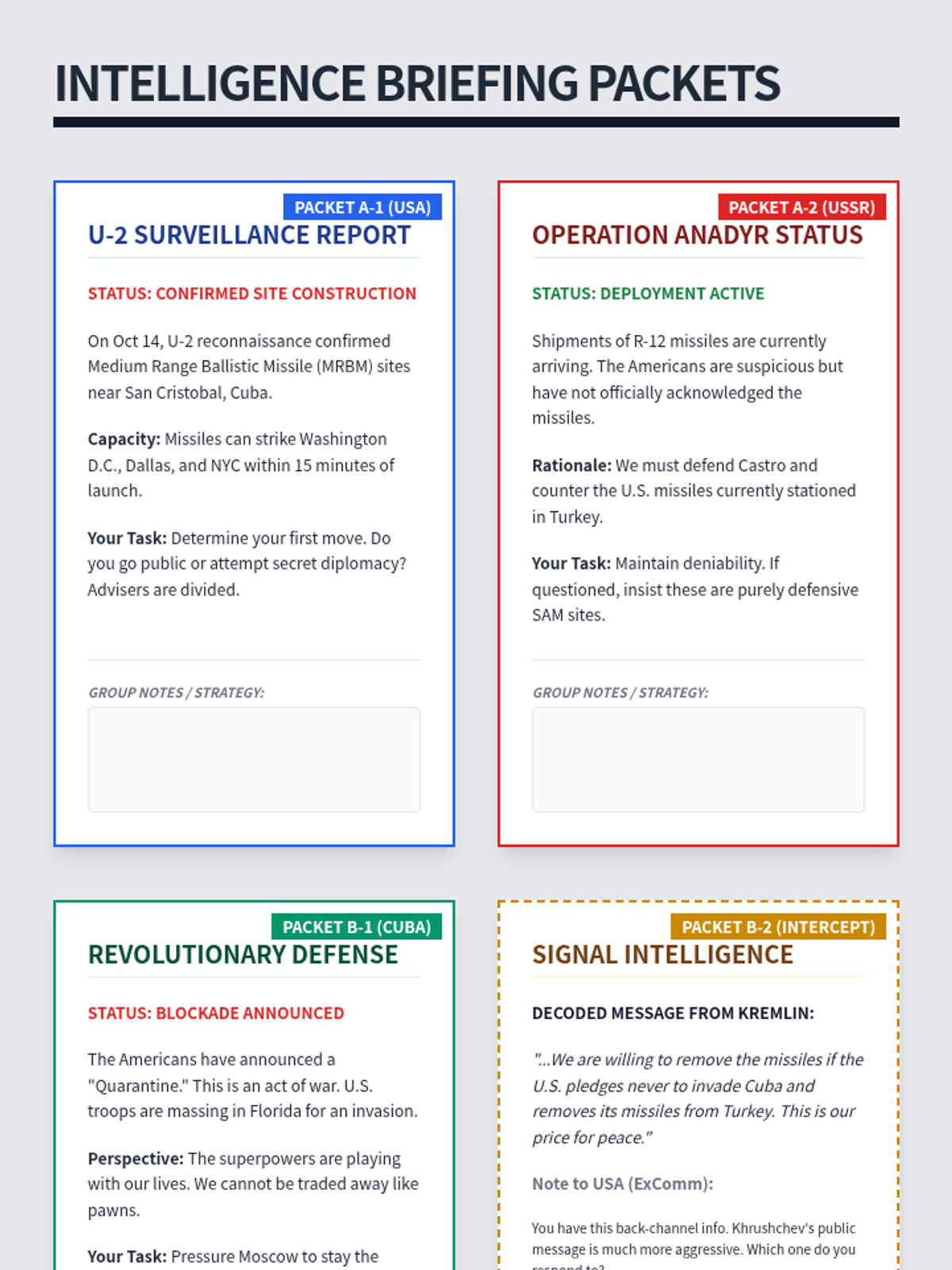
An immersive simulation where students step into the roles of world leaders during the thirteen days of the Cuban Missile Crisis. Students must balance national security, international pressure, and the personal weight of potential nuclear war.
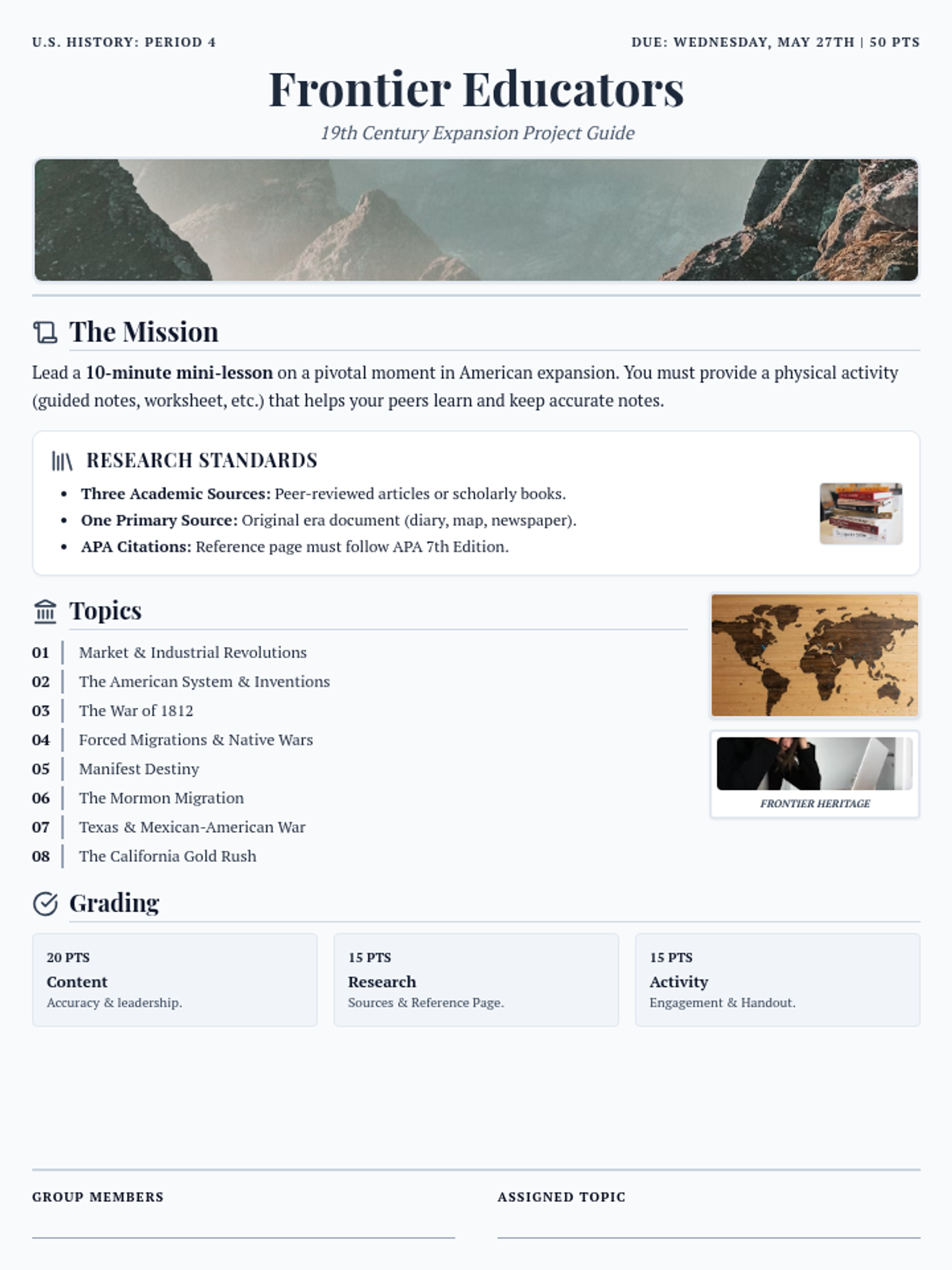
A project-based lesson where students research, design, and lead a mini-lesson on key topics of 19th-century American expansion. Students must integrate primary sources and academic research into an engaging classroom activity.
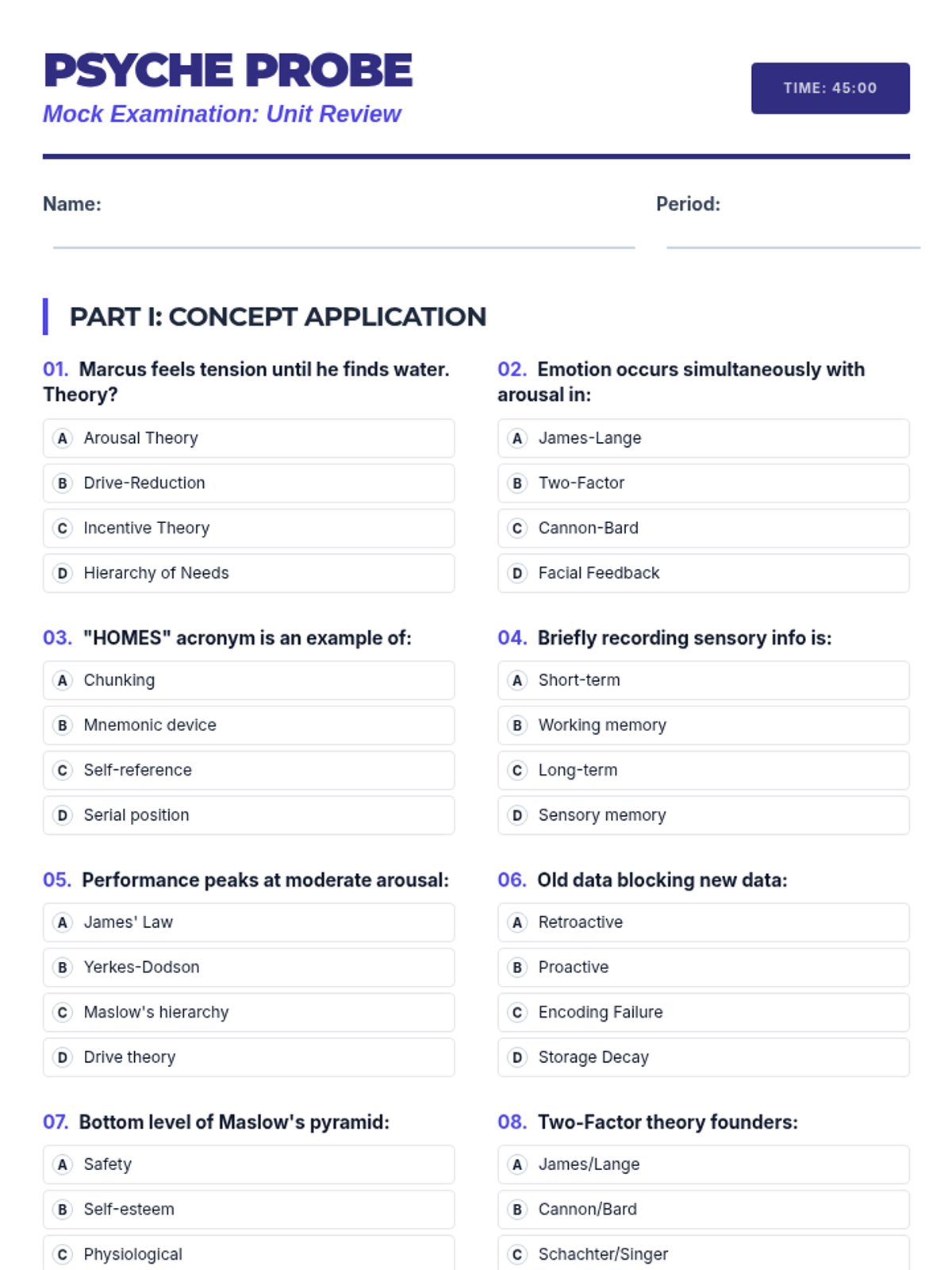
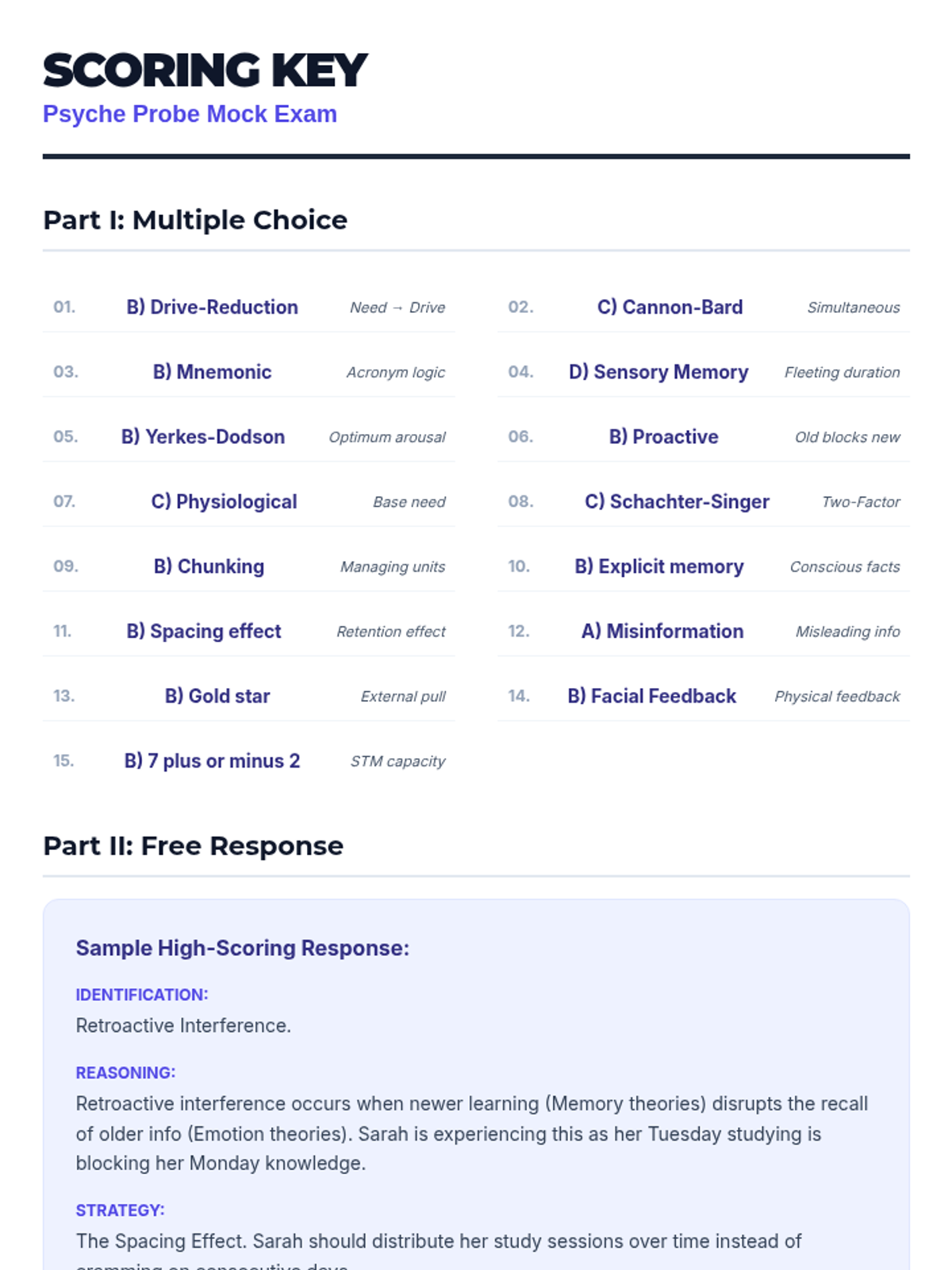
Evaluate mastery of the unit through a mock examination and detailed review of correct concepts.
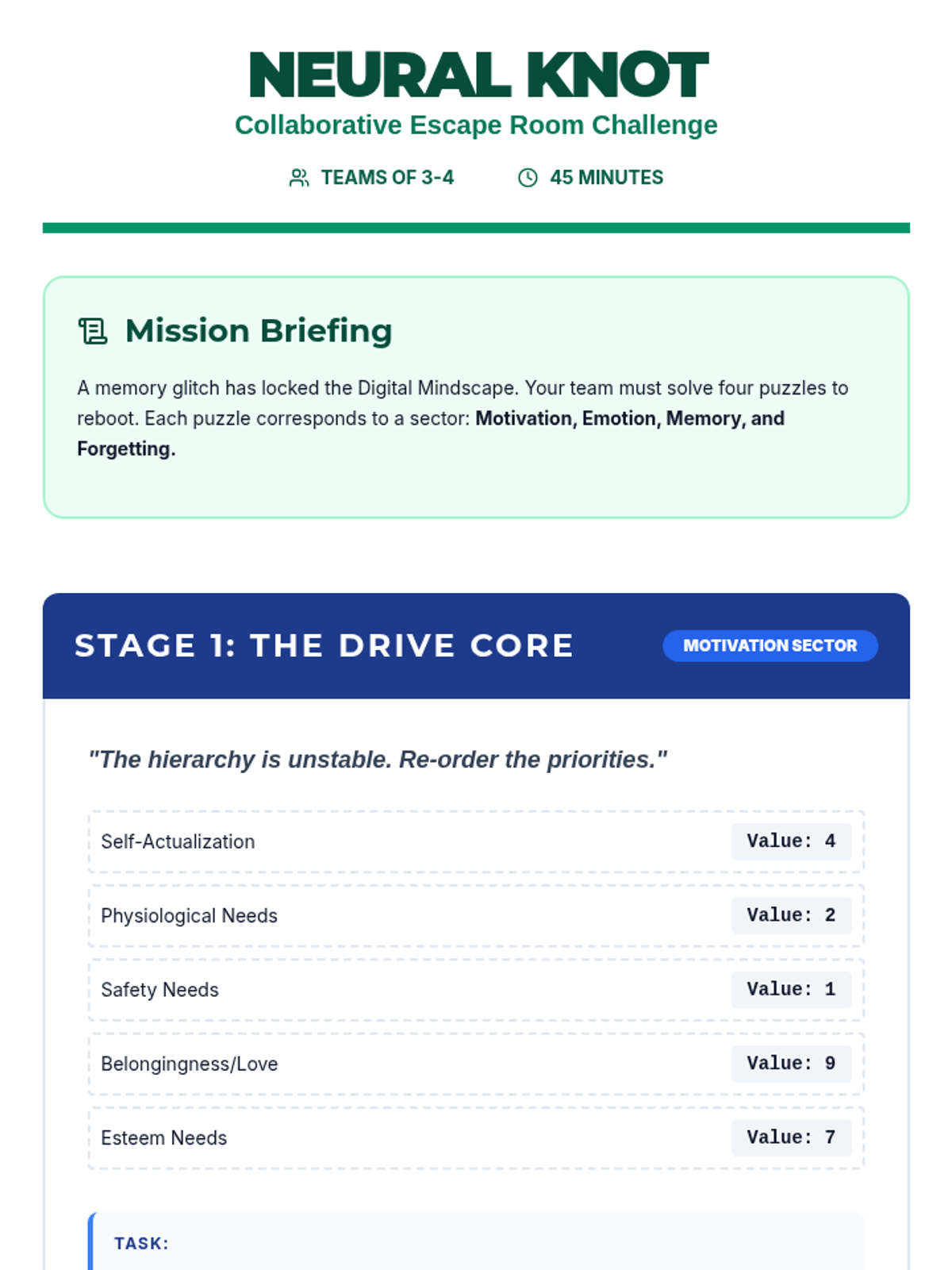
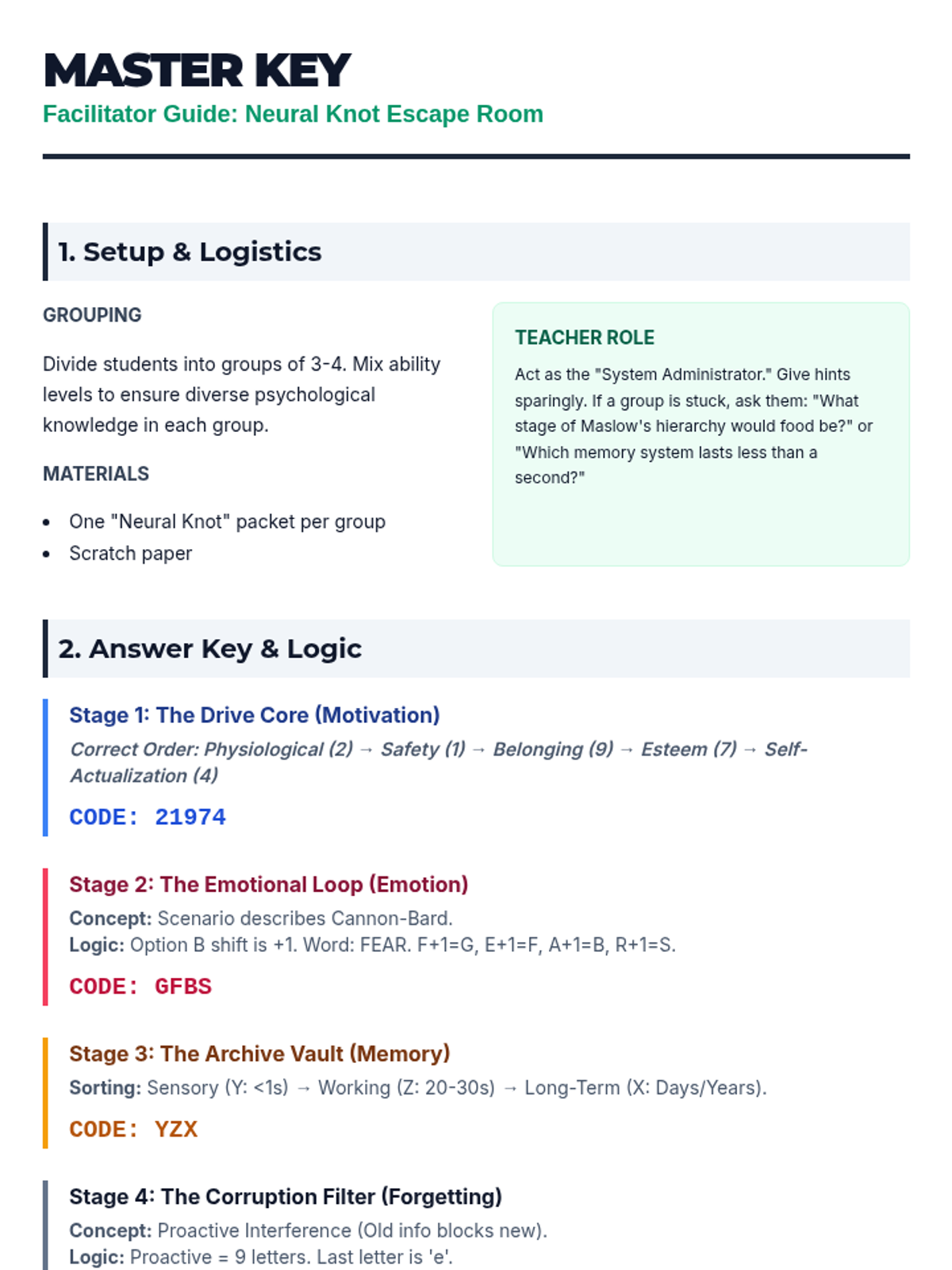
Apply psychological theories to solve complex puzzles in a collaborative, high-stakes escape room environment.
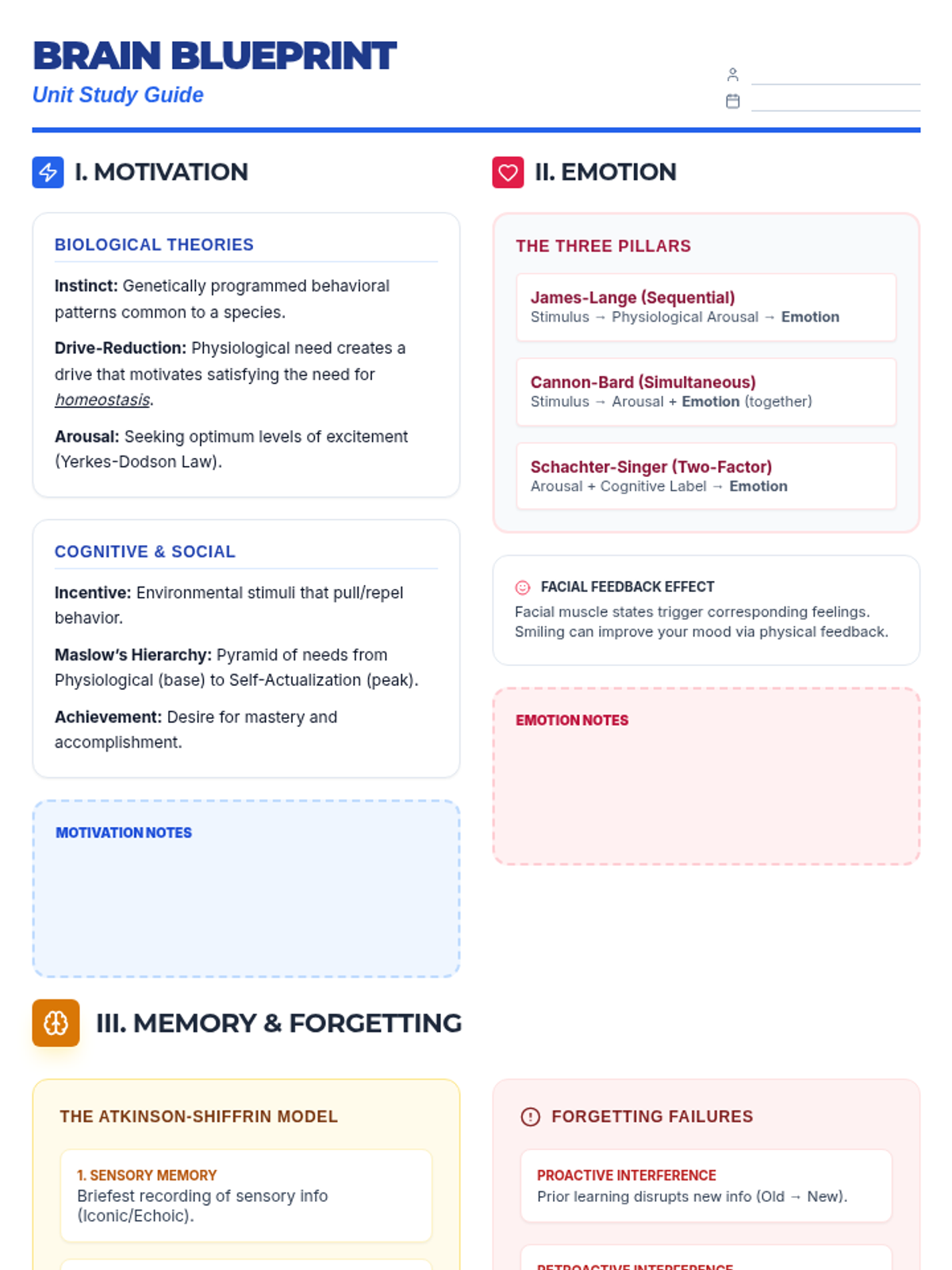
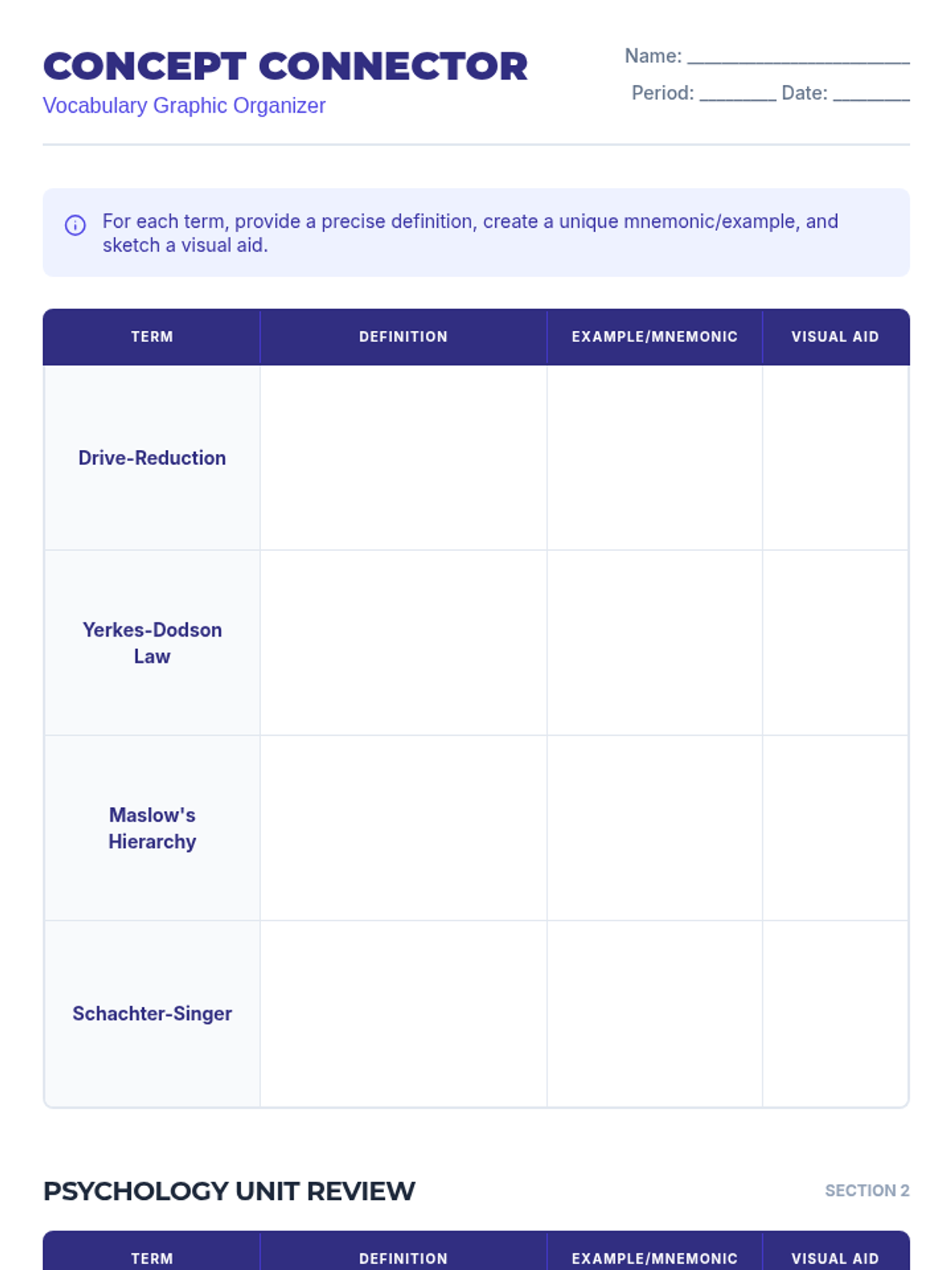
Build a solid foundation of psychological concepts through a comprehensive study guide and structured vocabulary organizers.
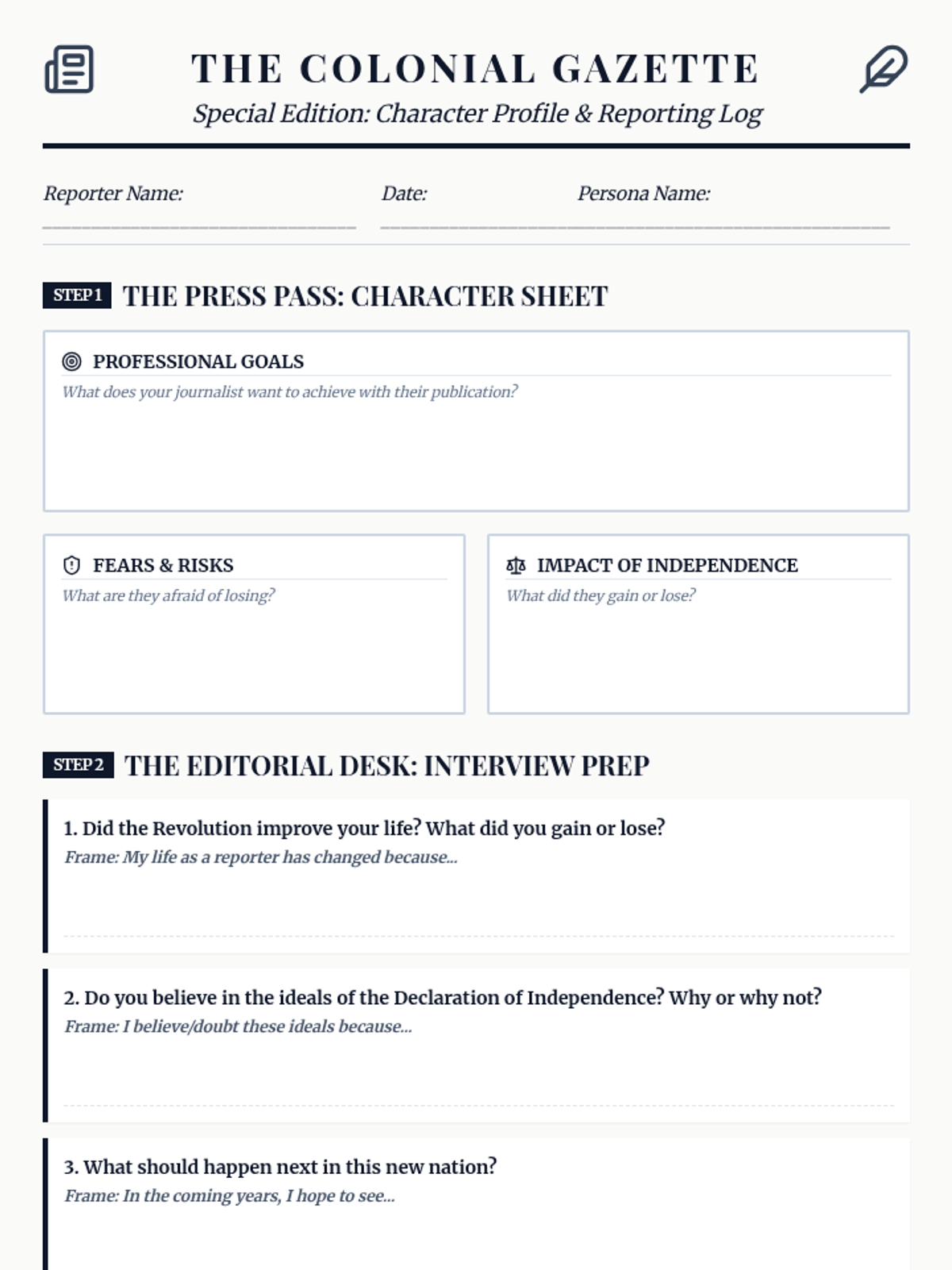
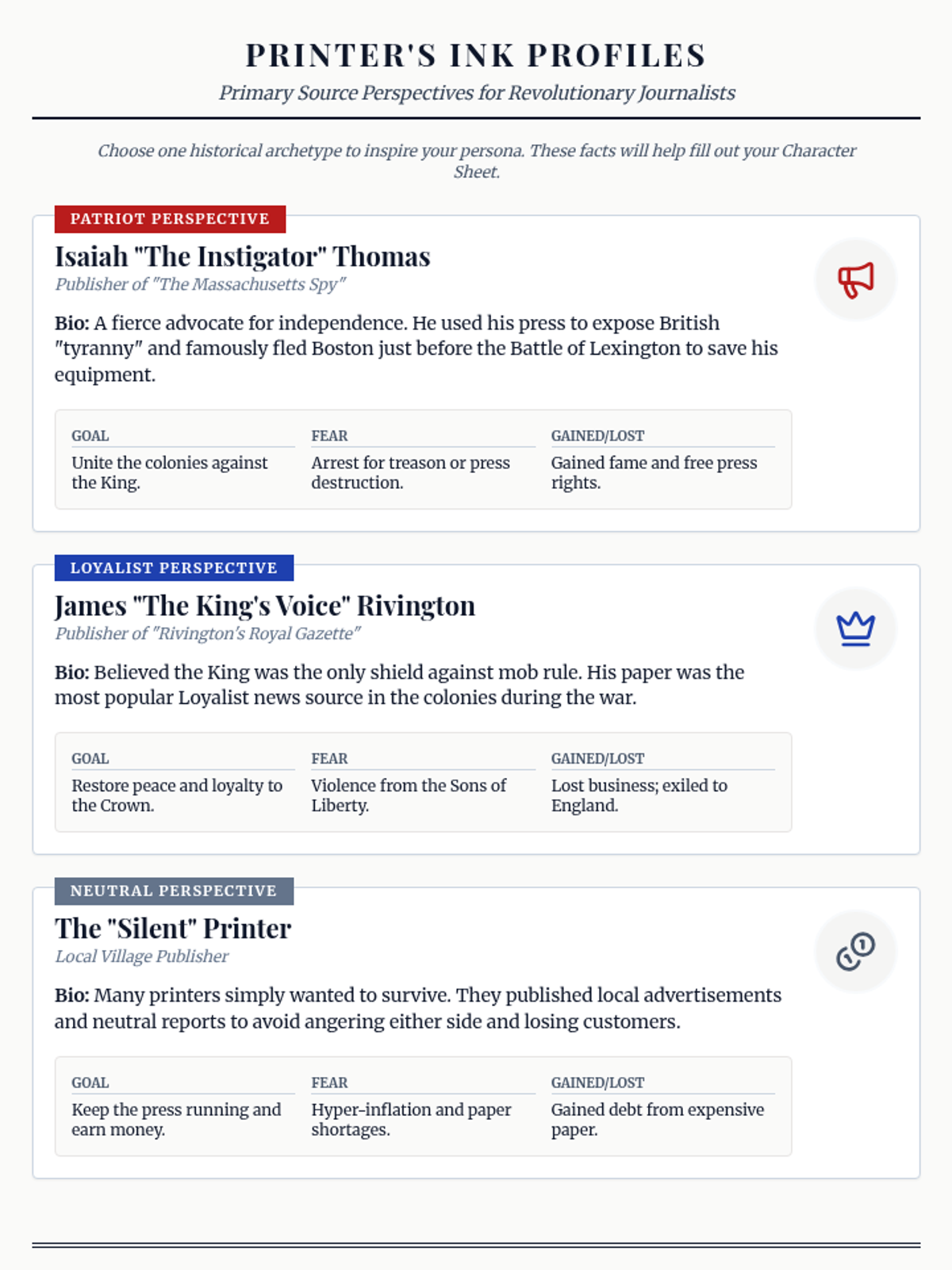
A role-playing activity where students take on the persona of a Revolutionary-era journalist to analyze the impacts and ideals of the American Revolution.
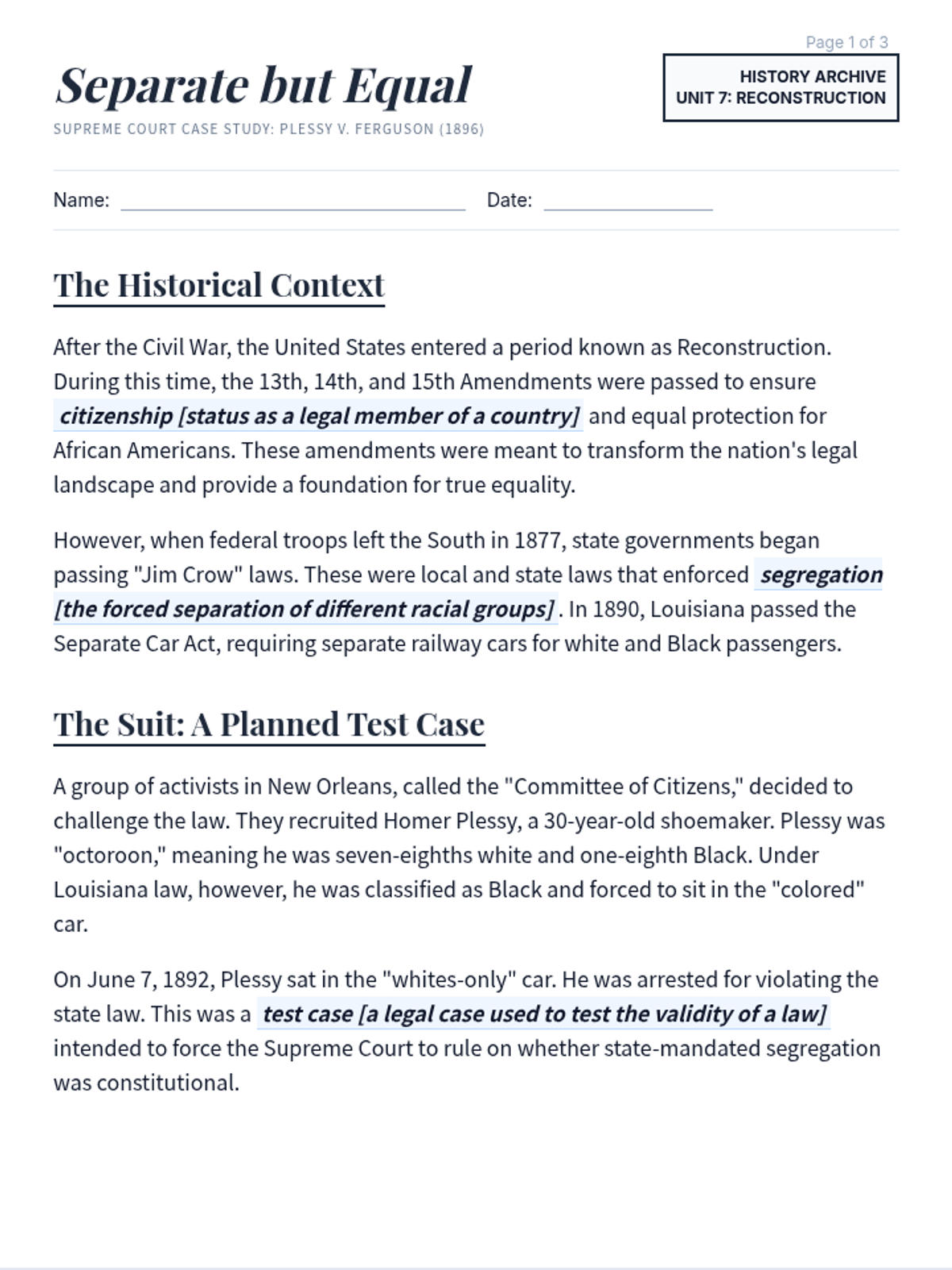
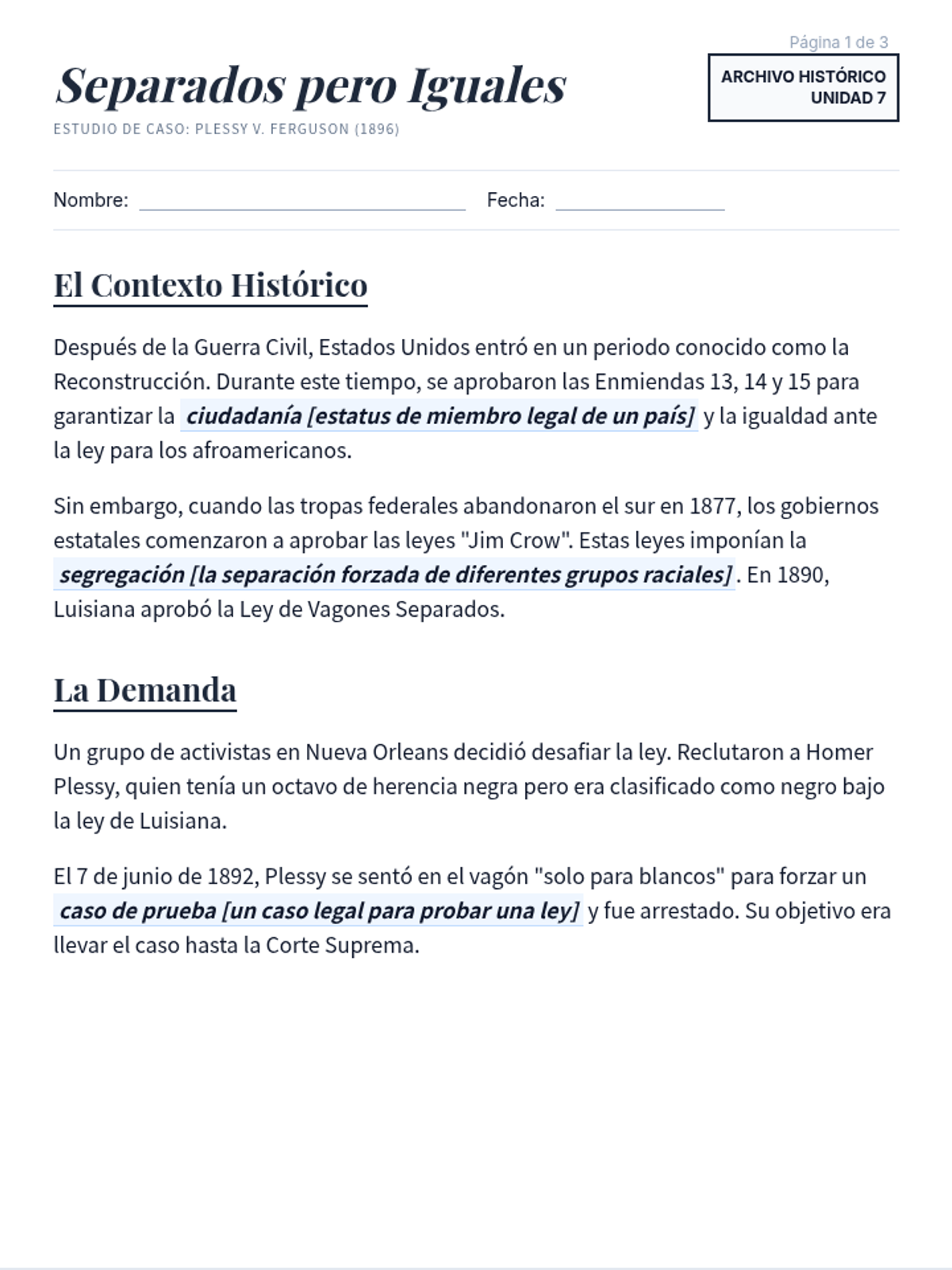
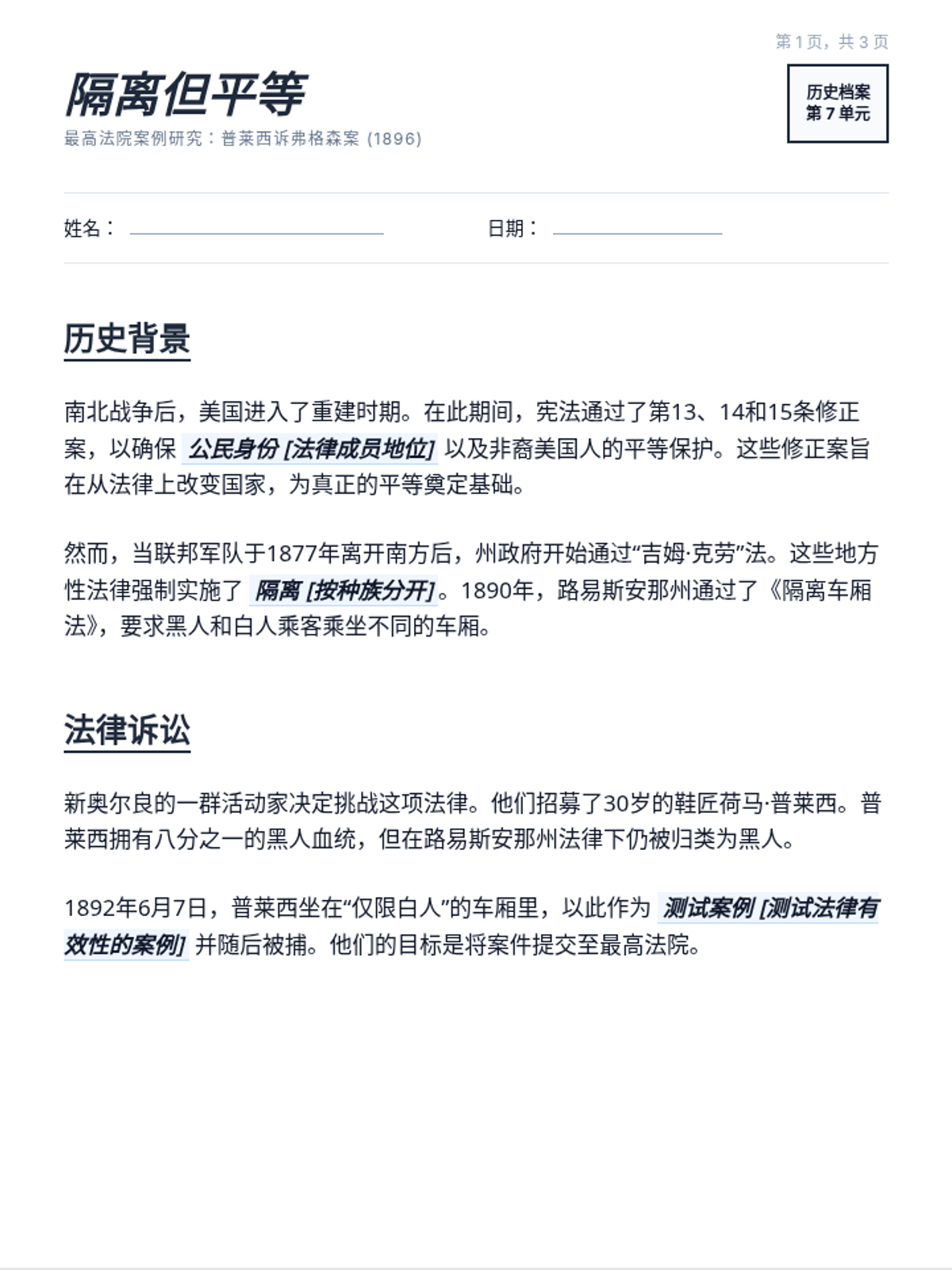
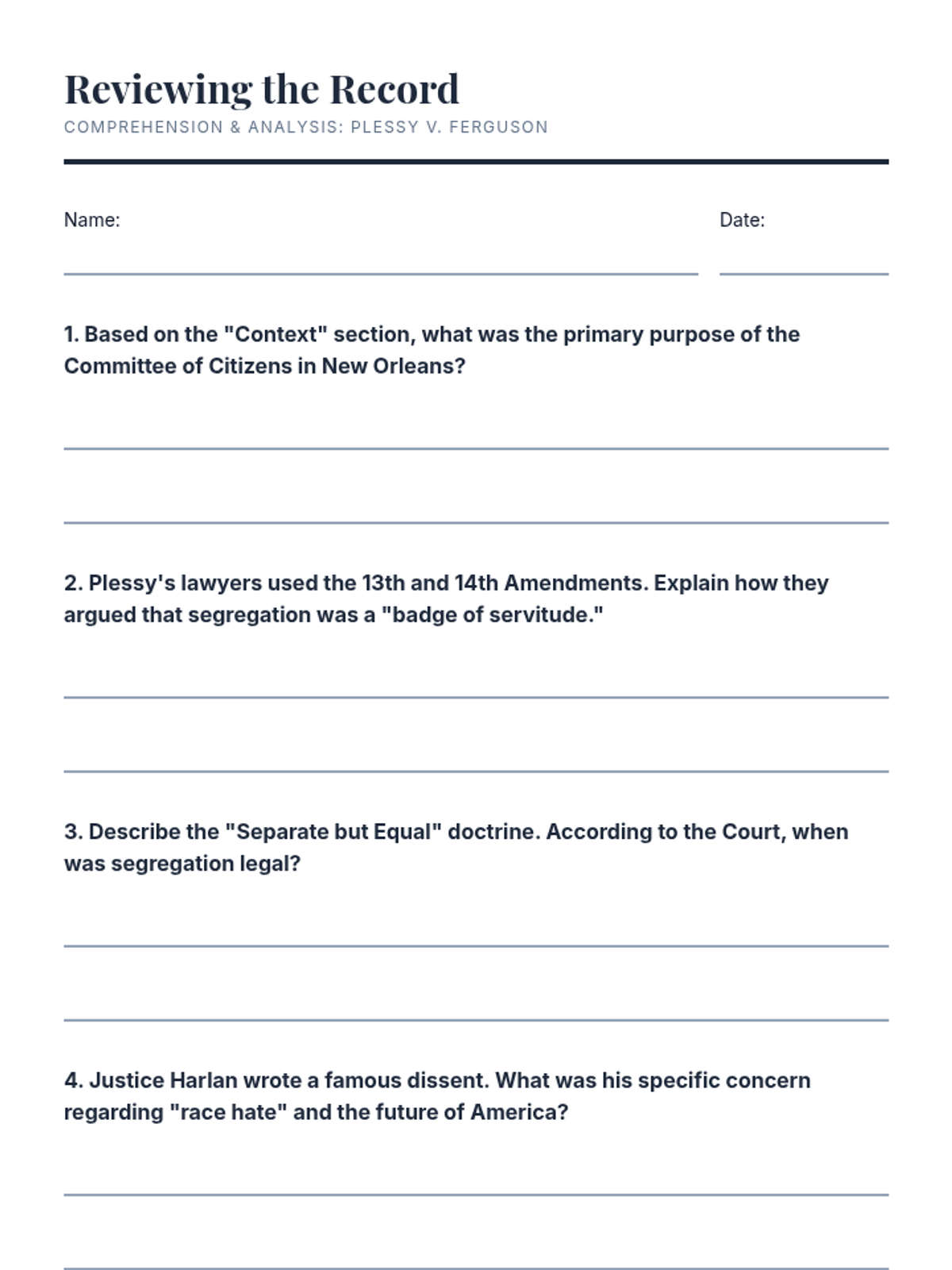
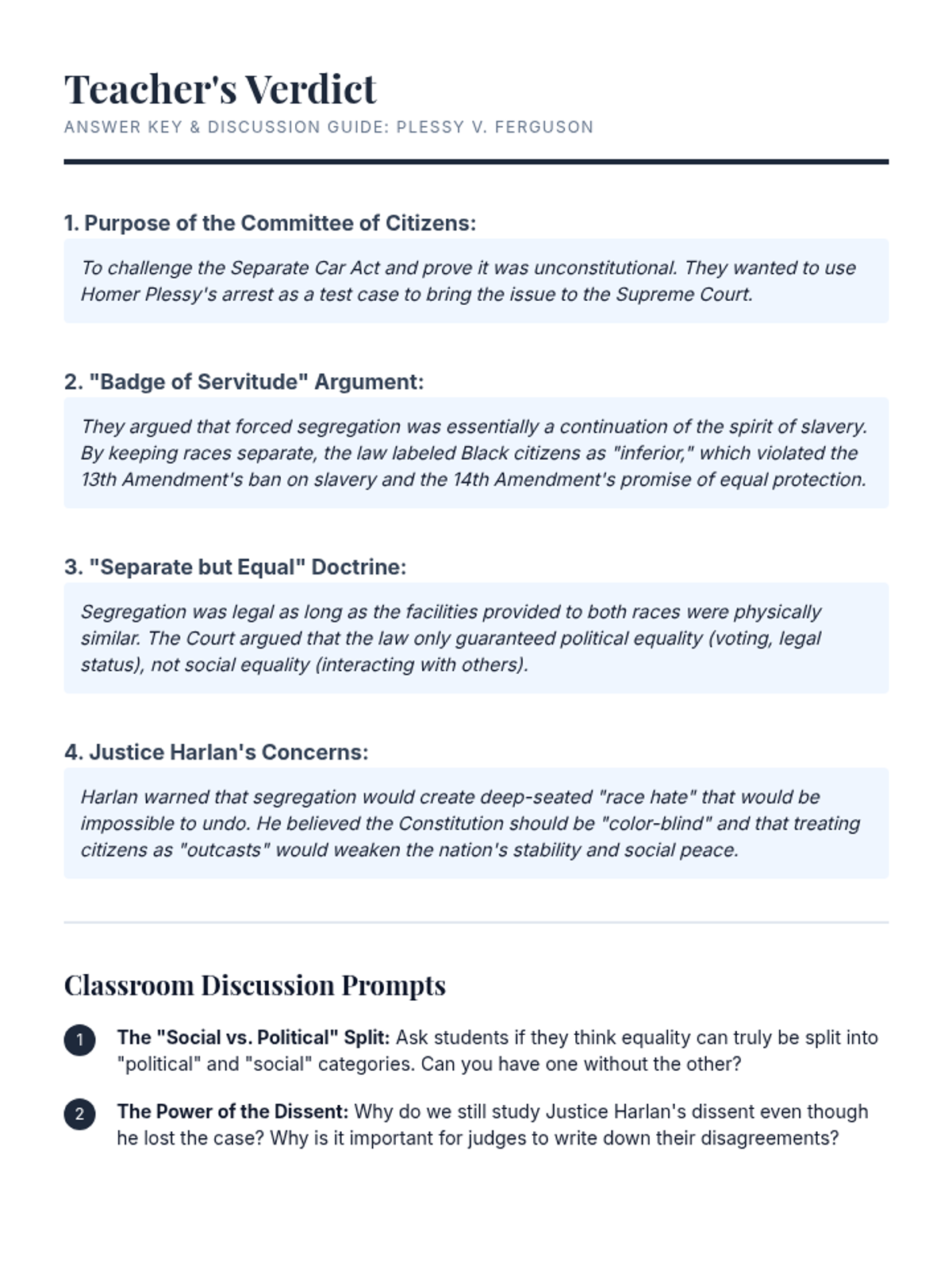
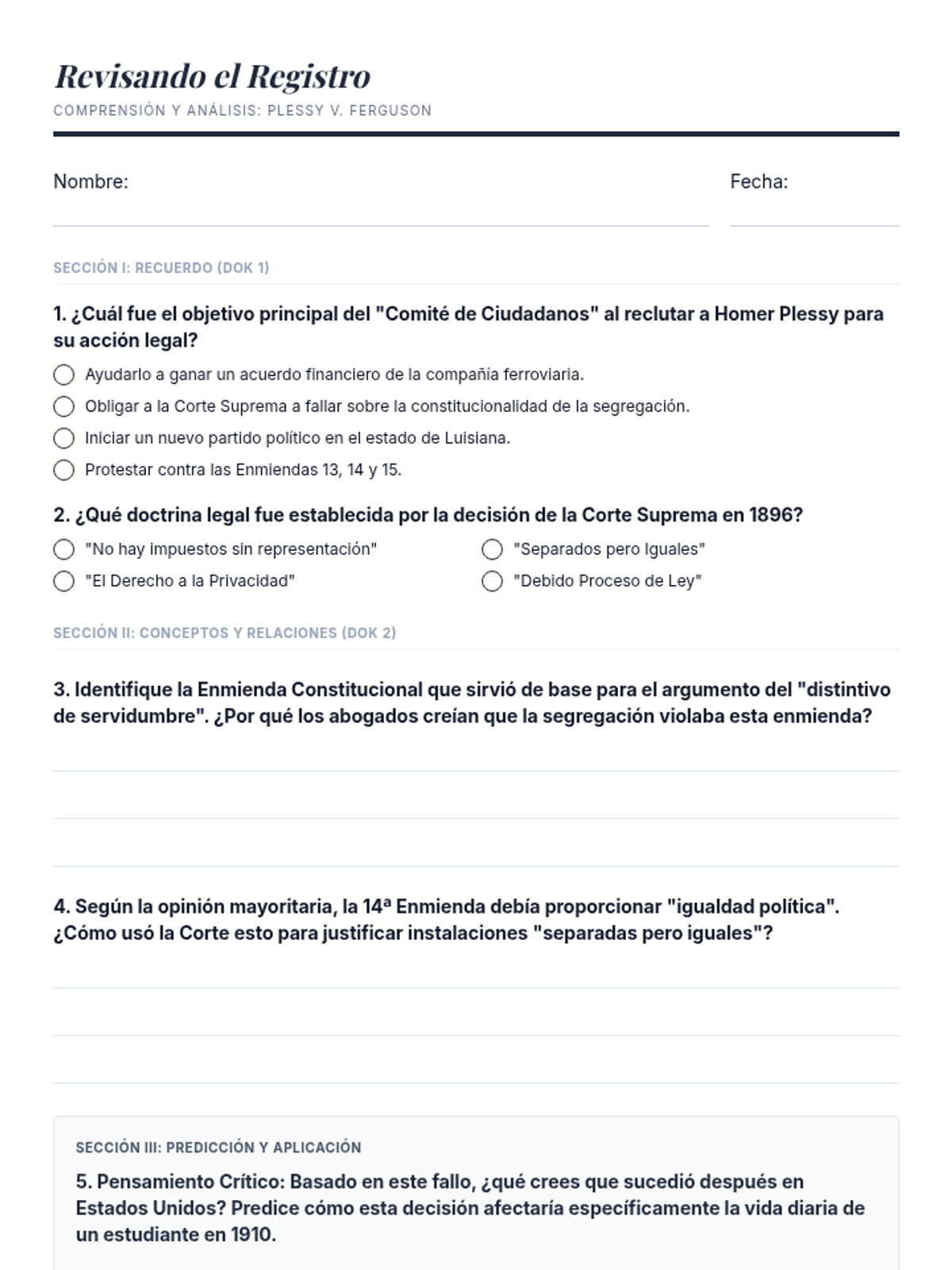
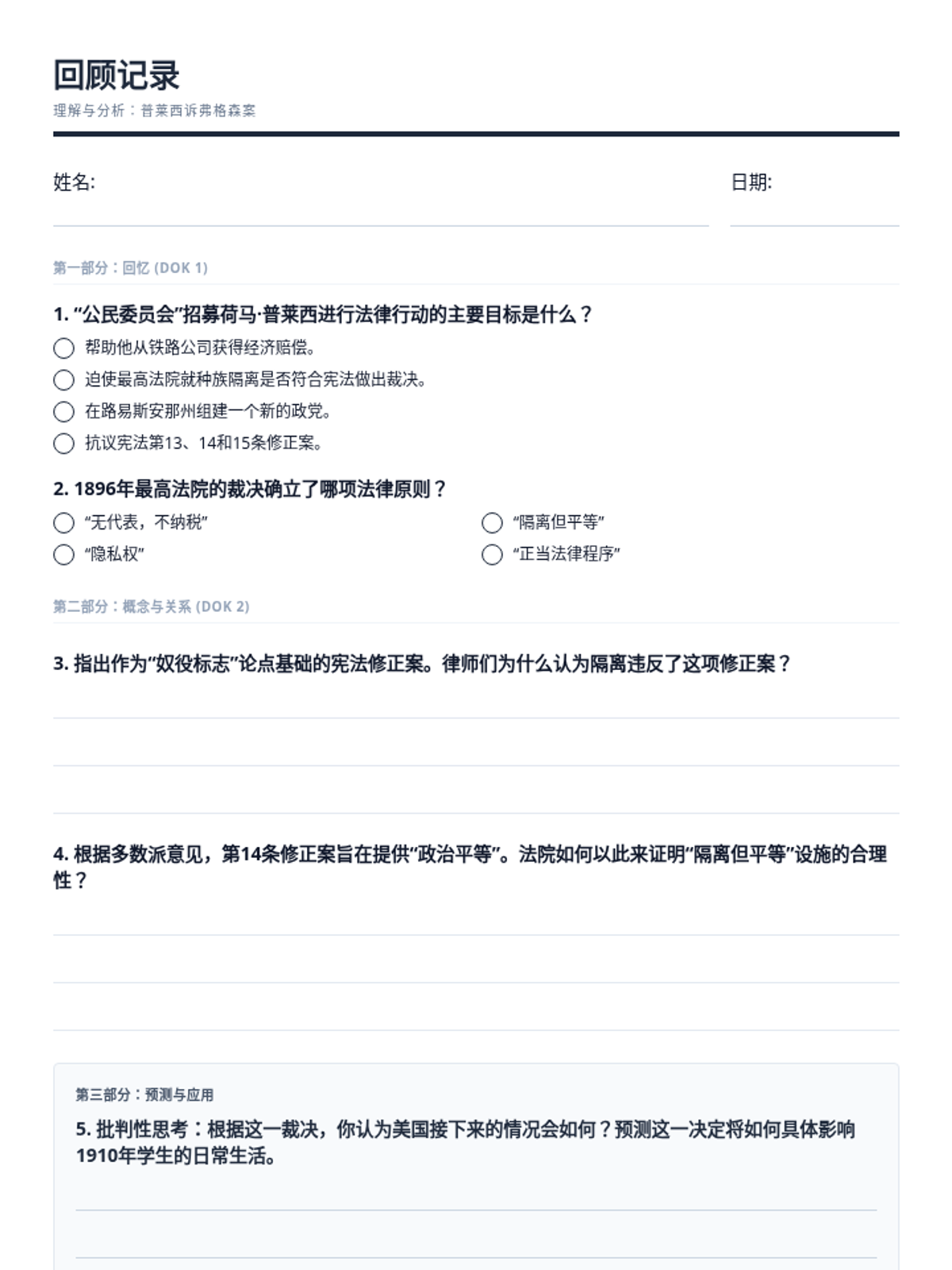
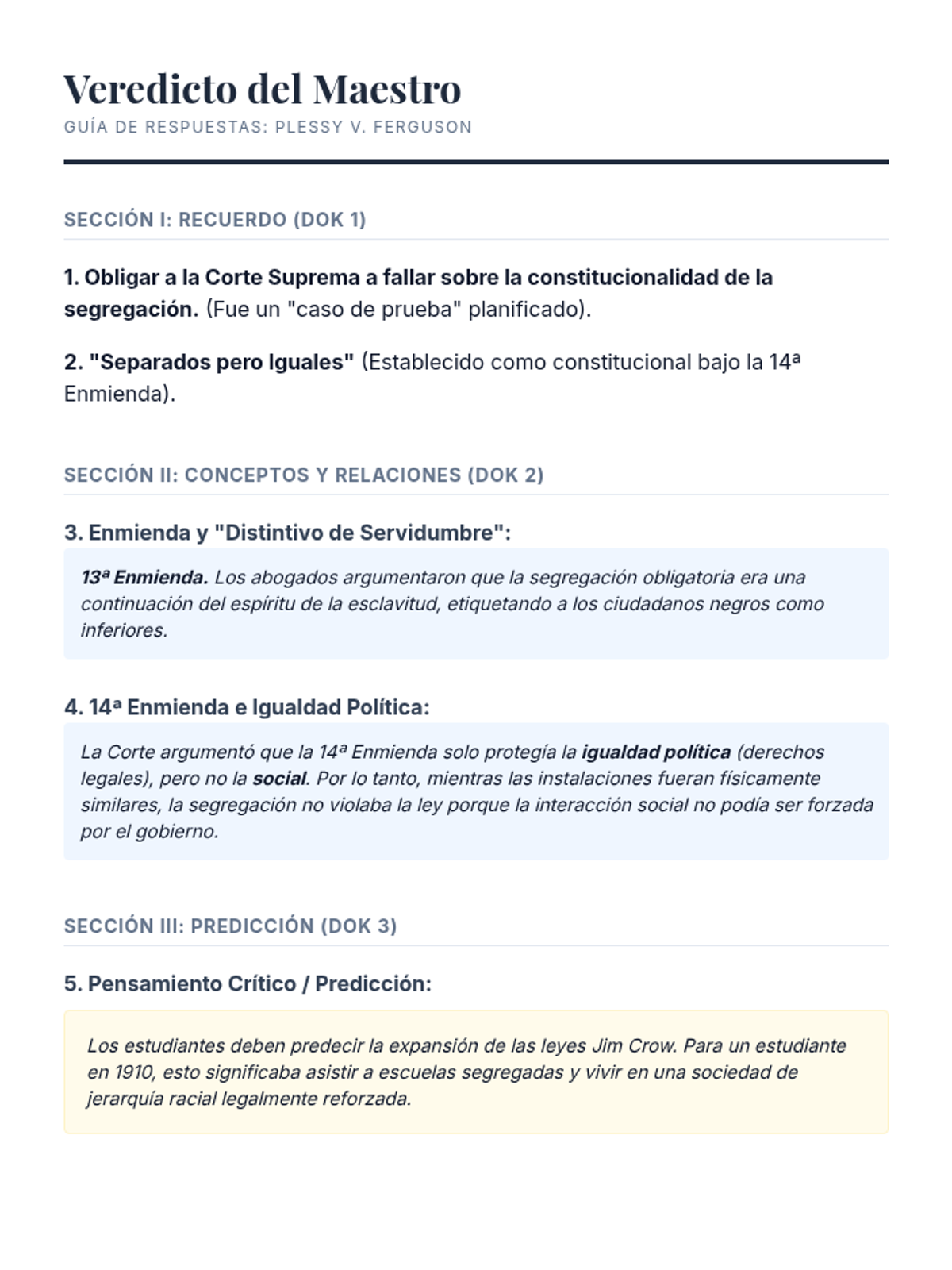
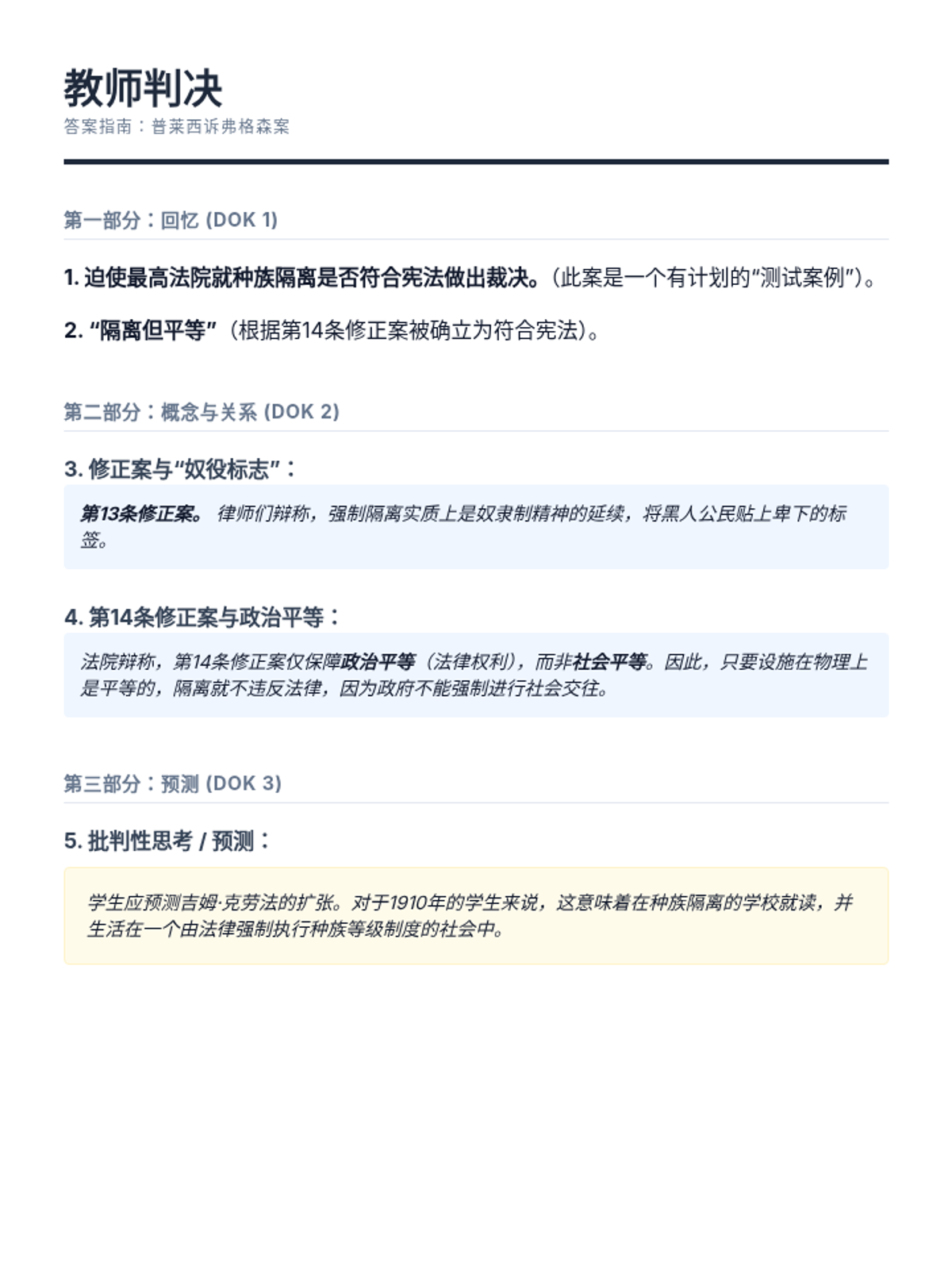
A deep dive into the landmark Plessy v. Ferguson case, exploring the legal arguments, the "separate but equal" doctrine, and Justice Harlan's famous dissent. Students will analyze the long-term impact of this ruling on American society.
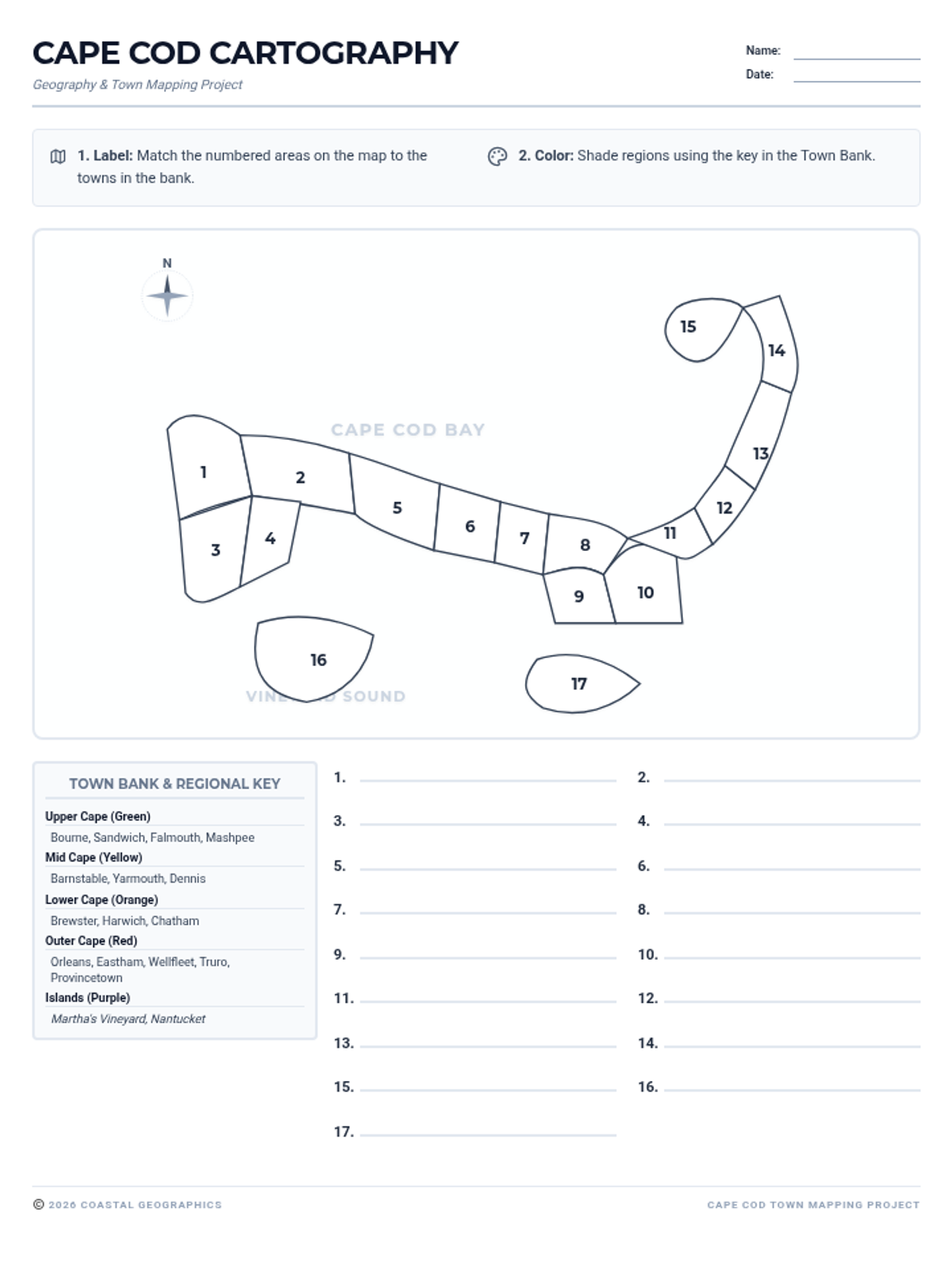
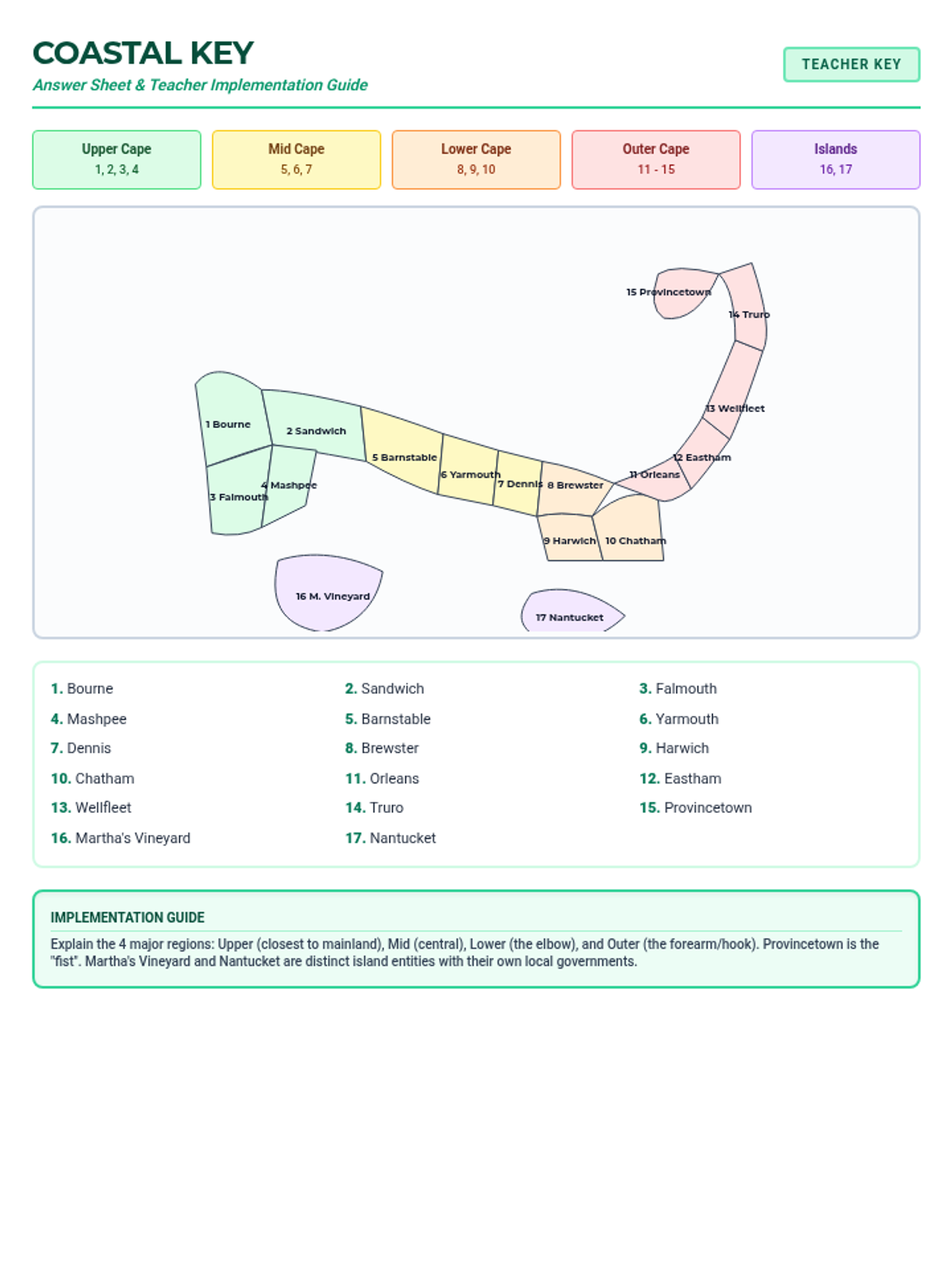
A lesson focused on the unique geography of Cape Cod and the Islands, including town identification and regional categorization.
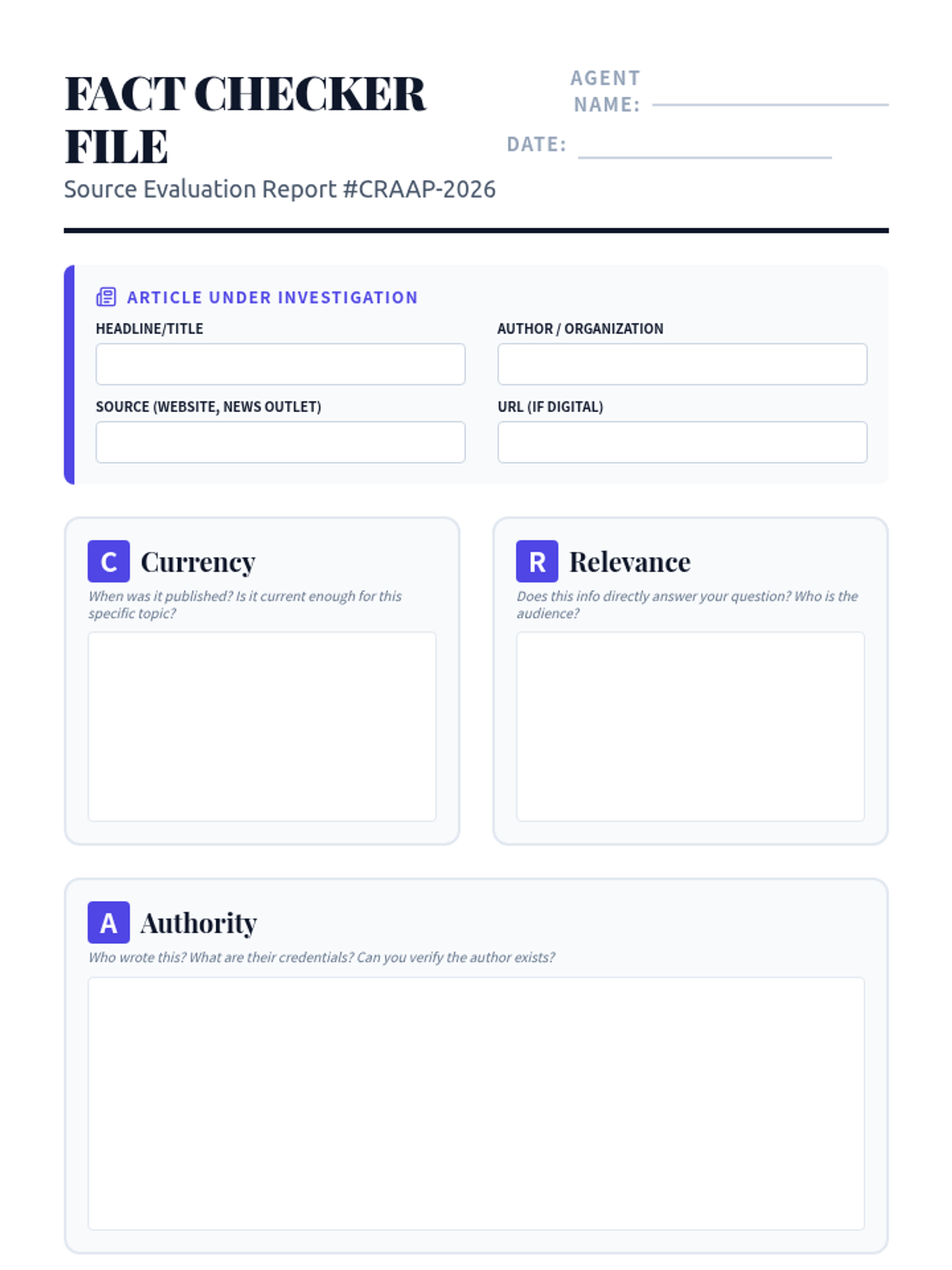
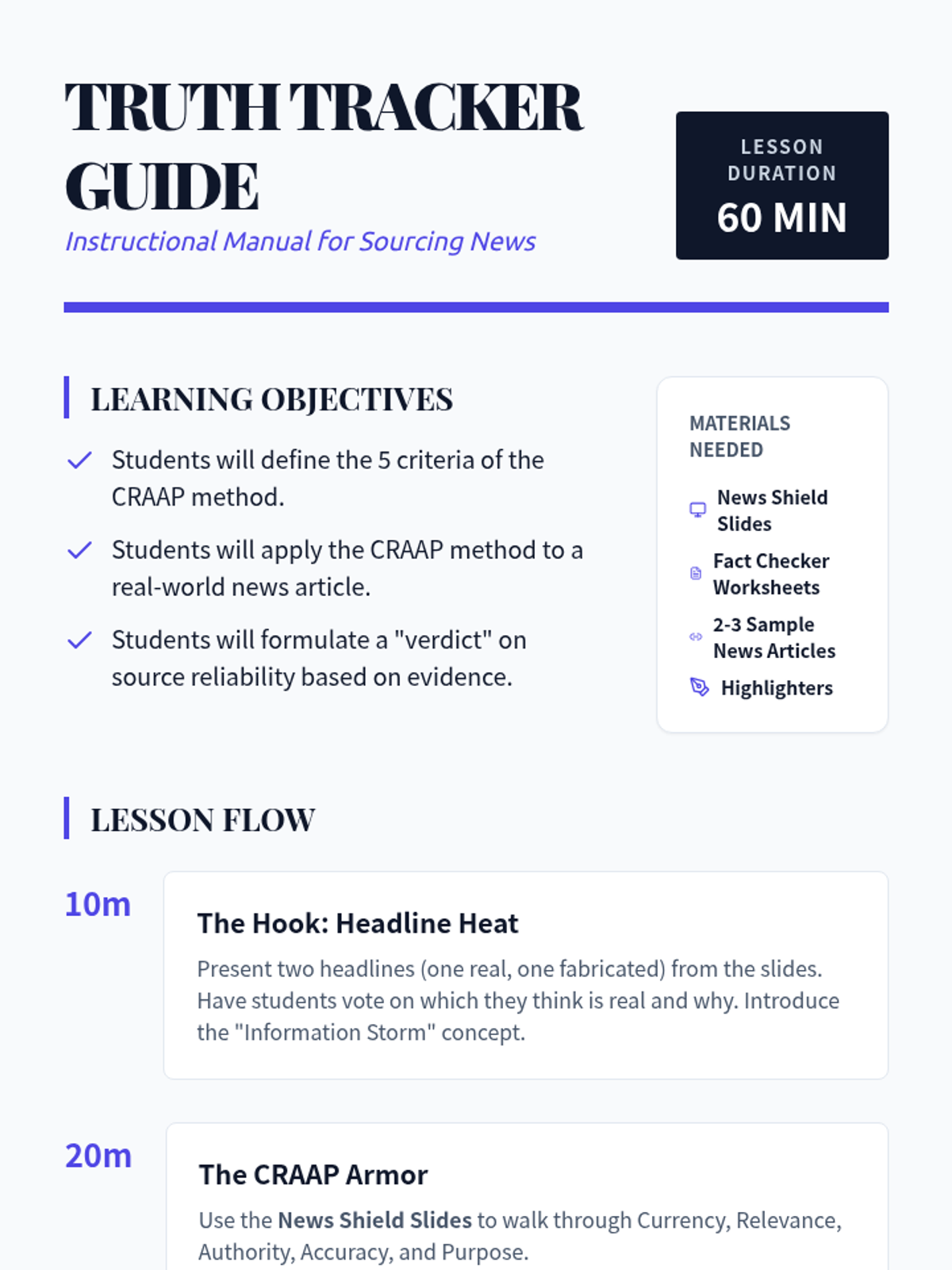
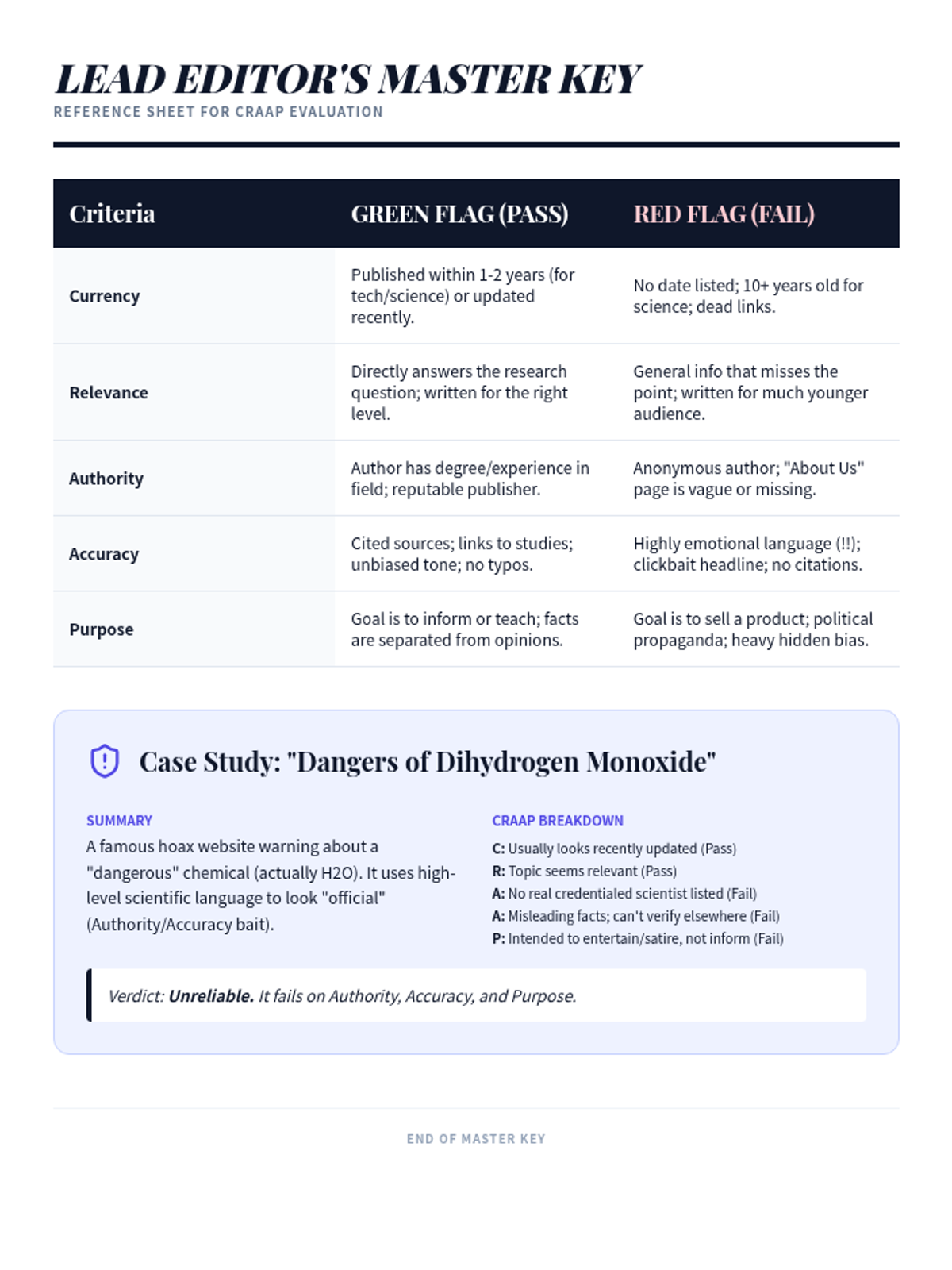
A comprehensive lesson on evaluating news sources using the CRAAP method, equipping students with the tools to distinguish between reliable information and misinformation.
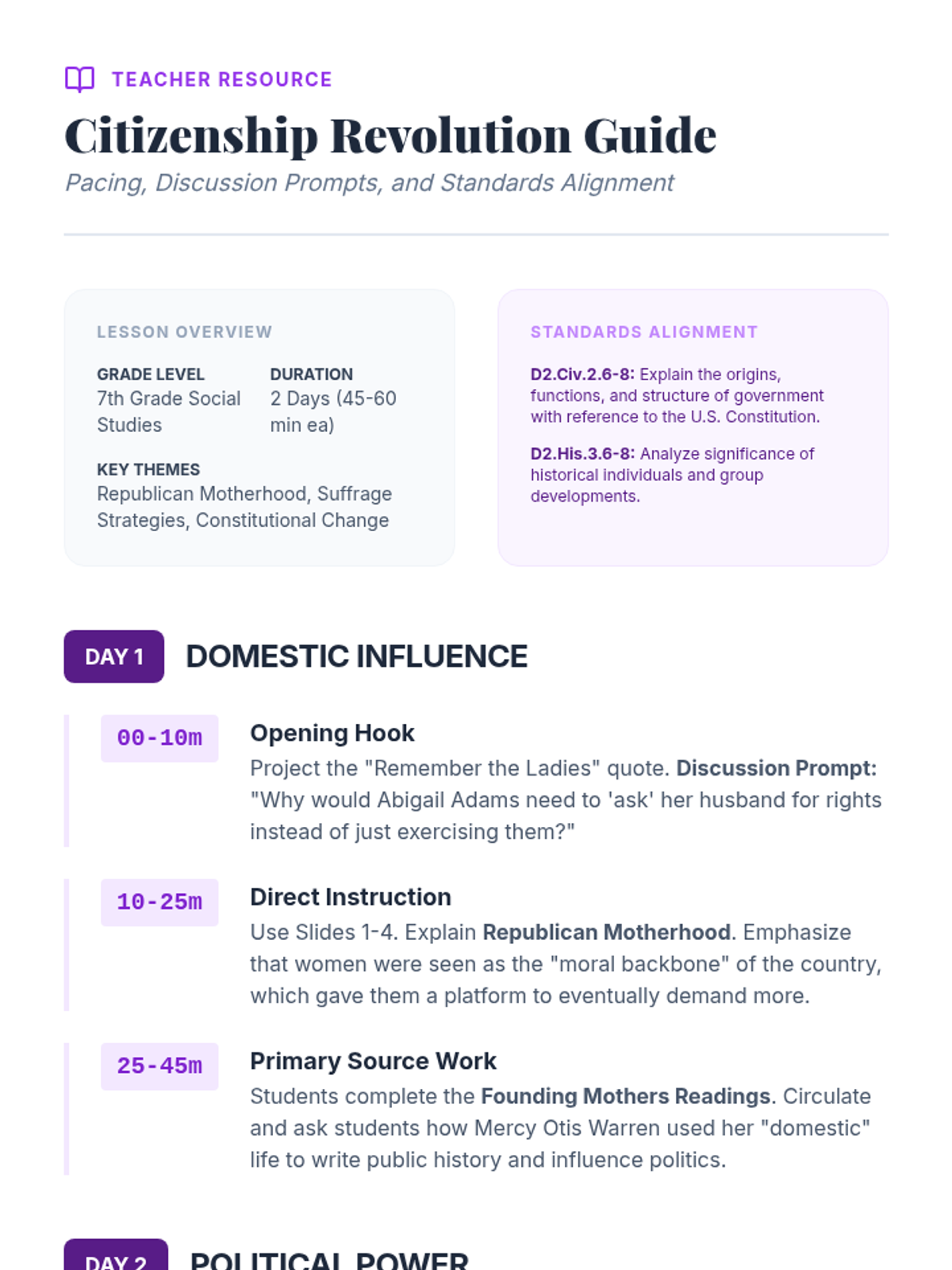
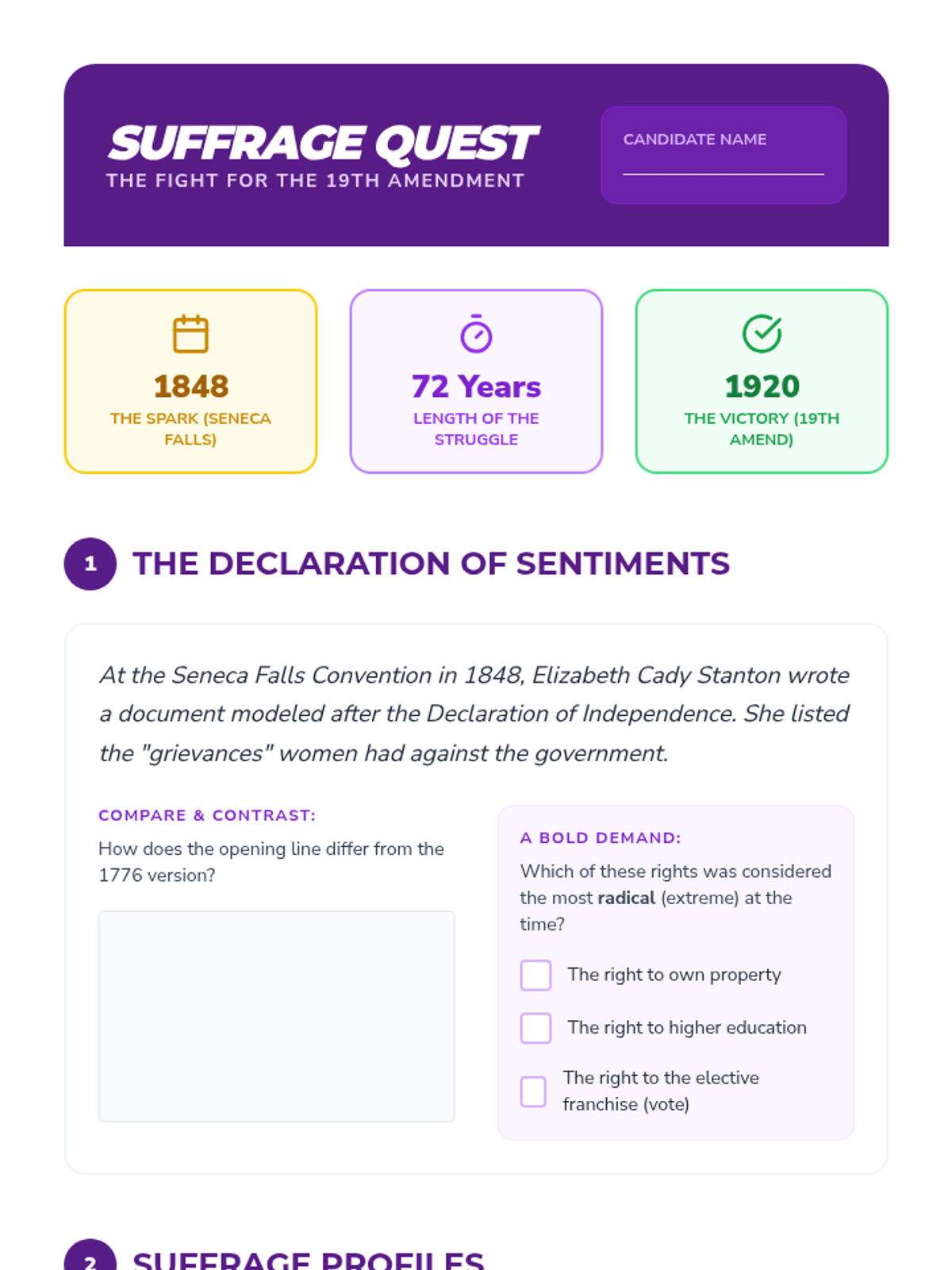
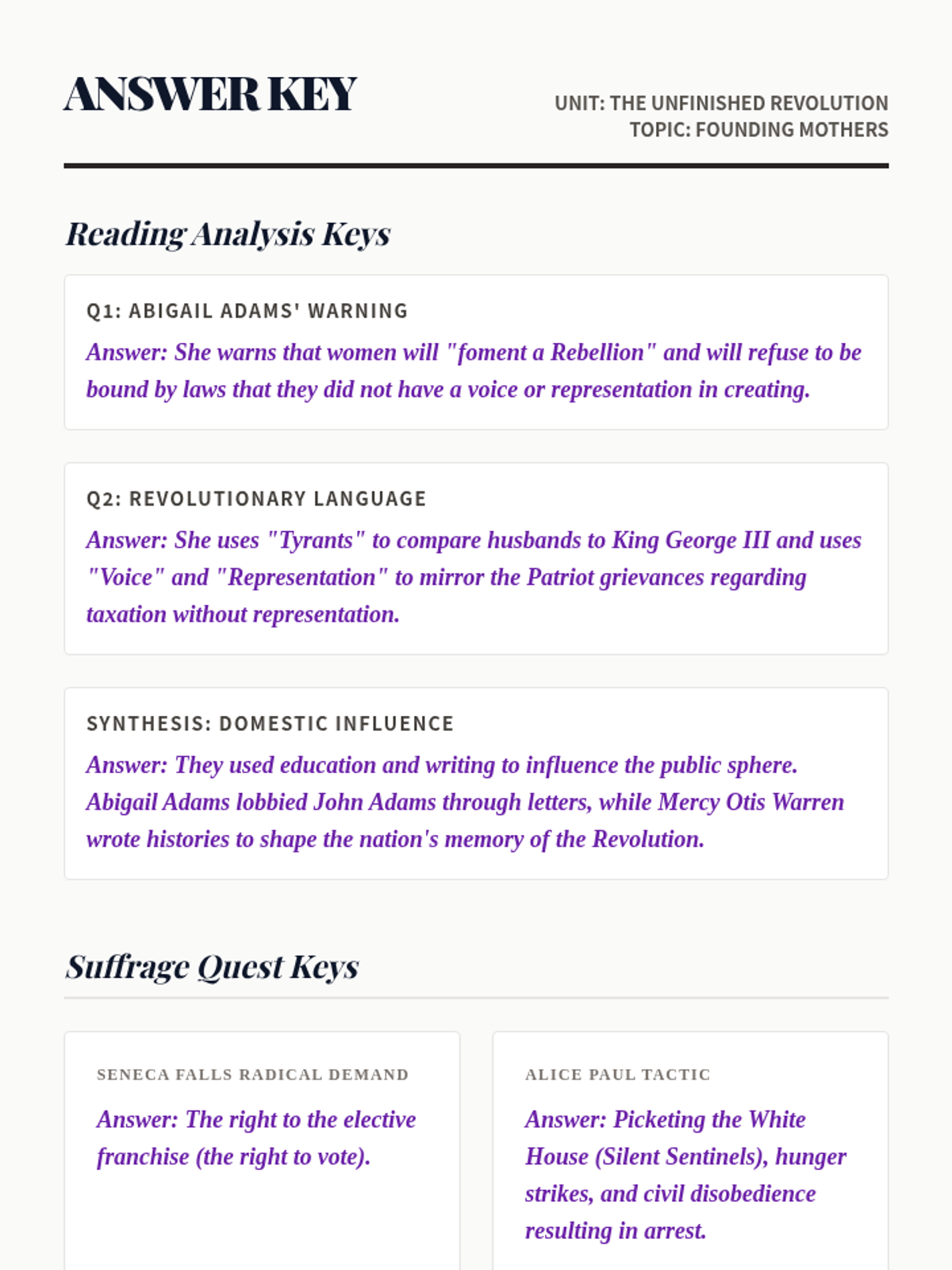
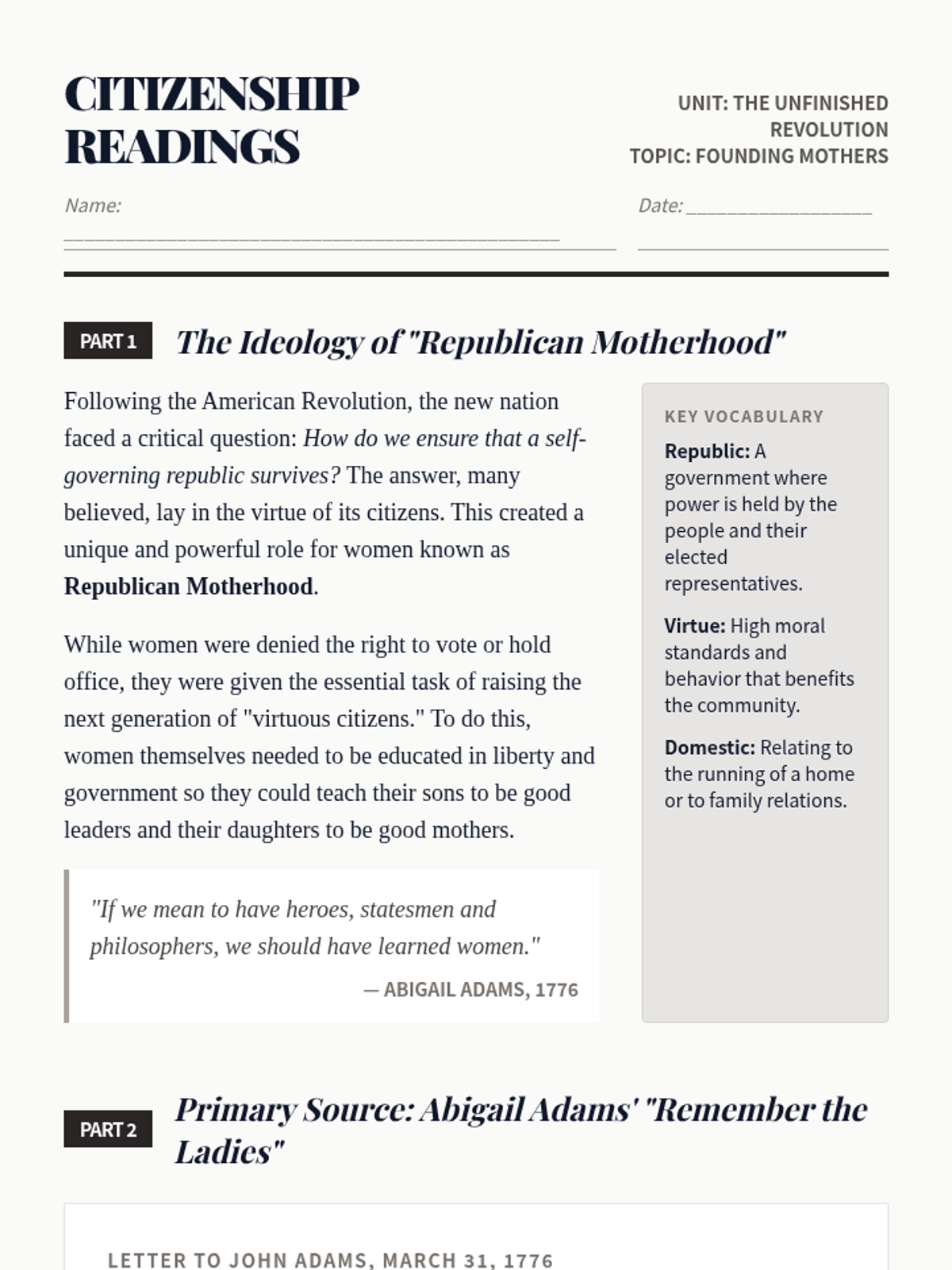
A two-day exploration of women's journey from the 'Founding Mothers' of the Early Republic to the hard-won victory of the 19th Amendment. Students analyze primary sources and the shift from domestic influence to political citizenship.
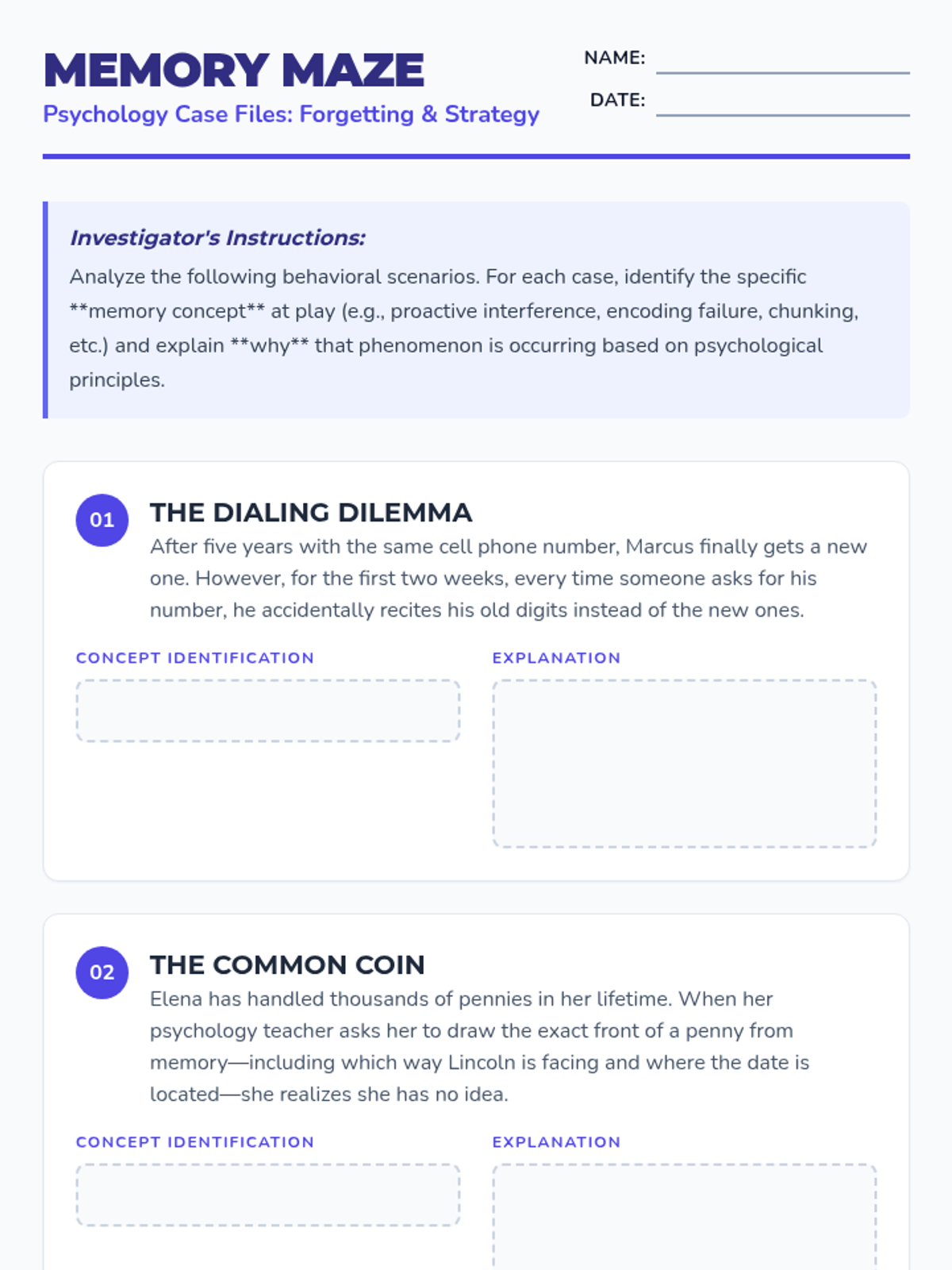
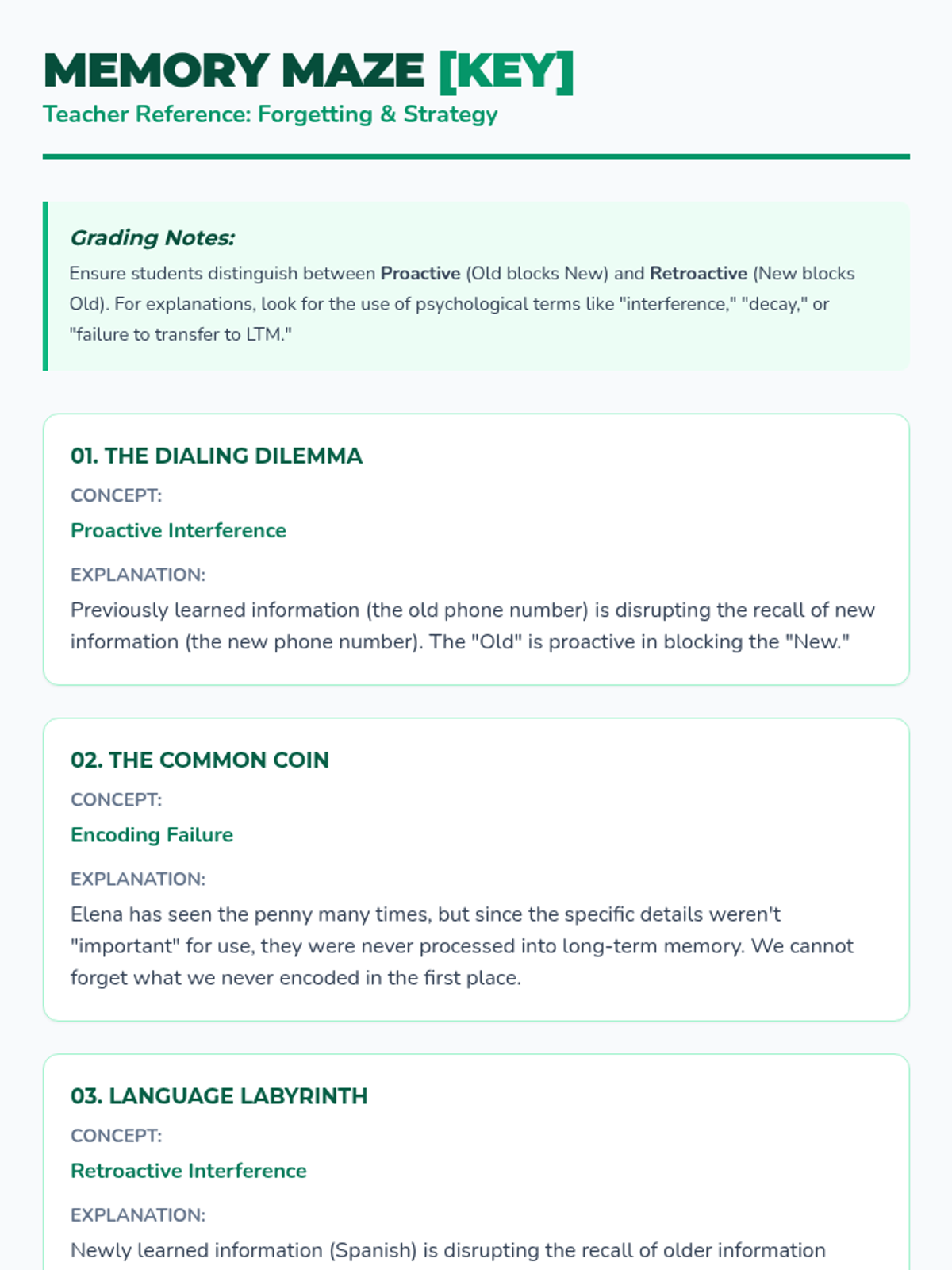
A comprehensive look at why we remember and why we forget, covering the stages of memory, types of interference, and strategies for improving recall.
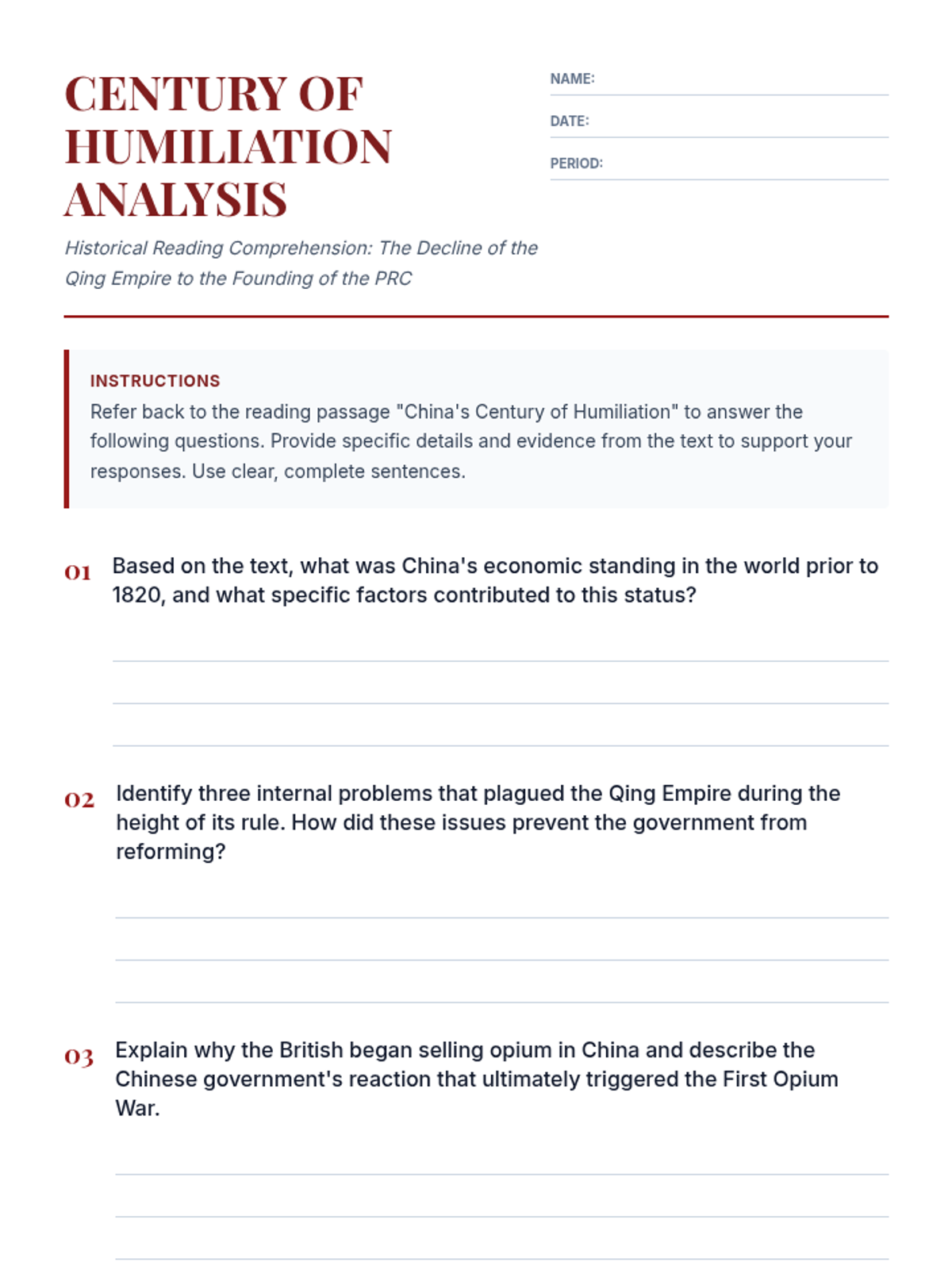
This lesson explores China's 'Century of Humiliation,' covering the decline of the Qing Dynasty, the Opium Wars, internal rebellions, and the eventual rise of the Communist Party. Students will analyze the factors that led to China's shift from a global economic powerhouse to a nation in turmoil.
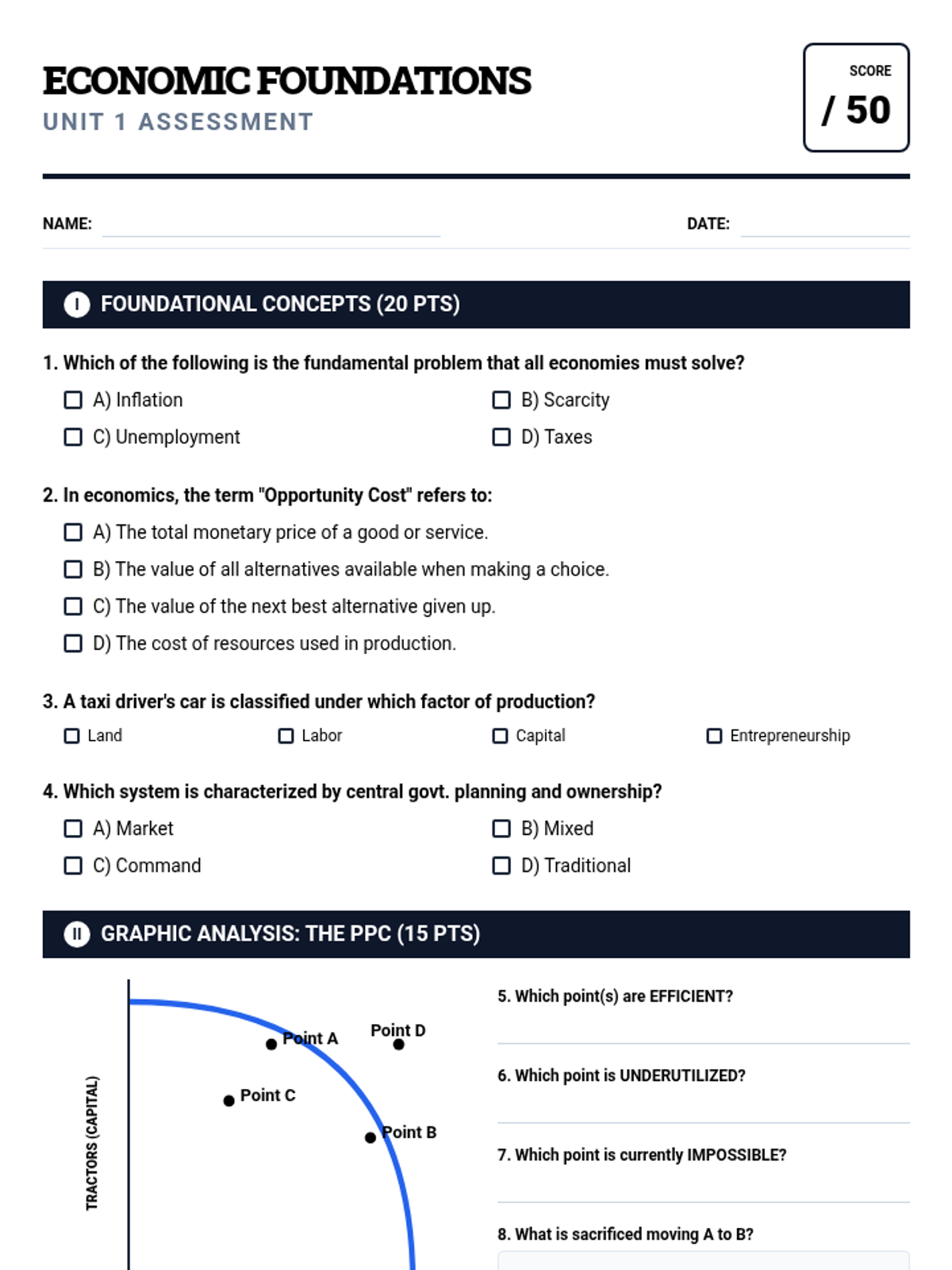
Summative assessment covering Scarcity, Factors of Production, and Economic Systems.
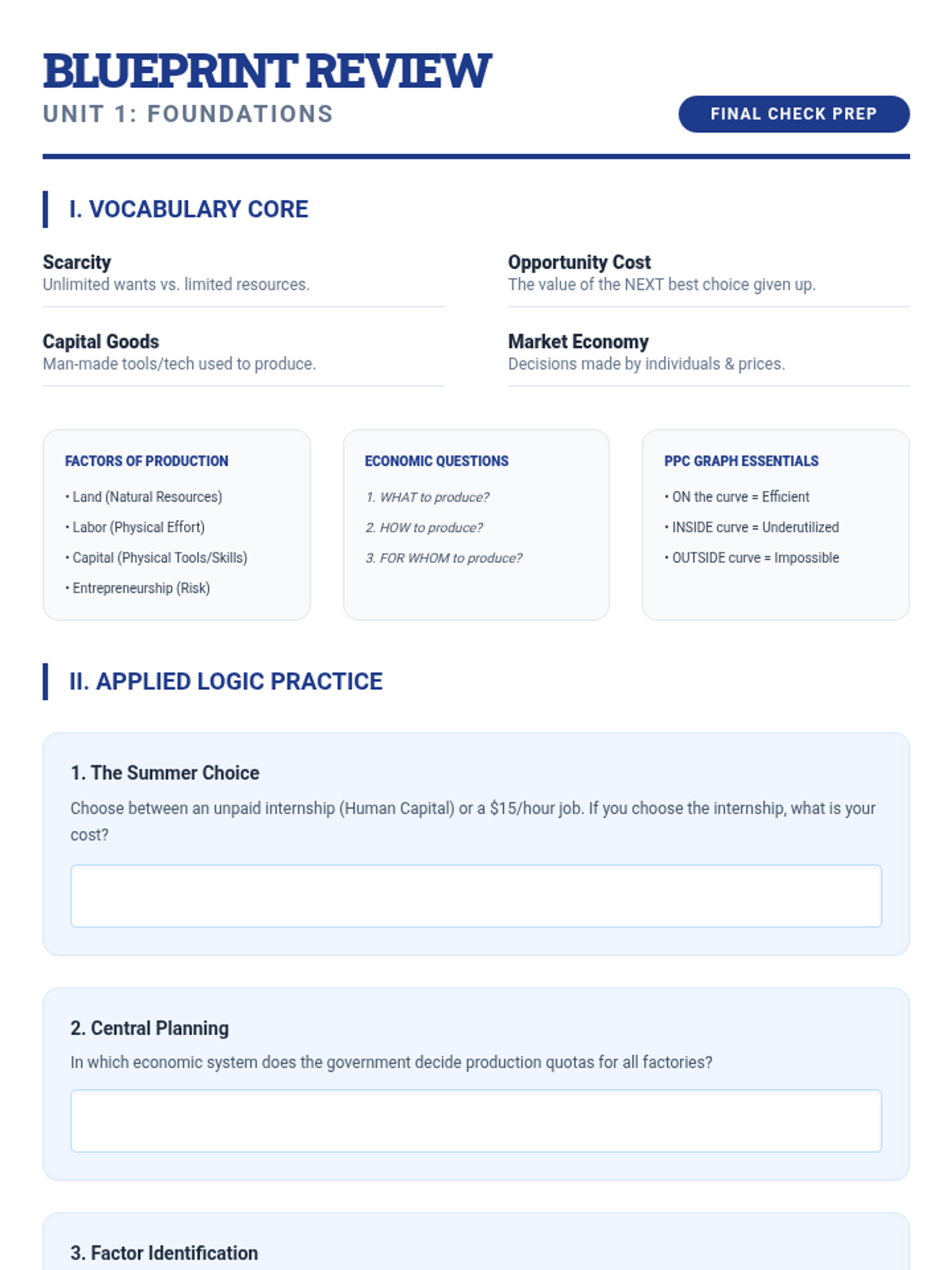
A comprehensive review of Unit 1 concepts to prepare students for summative assessment.
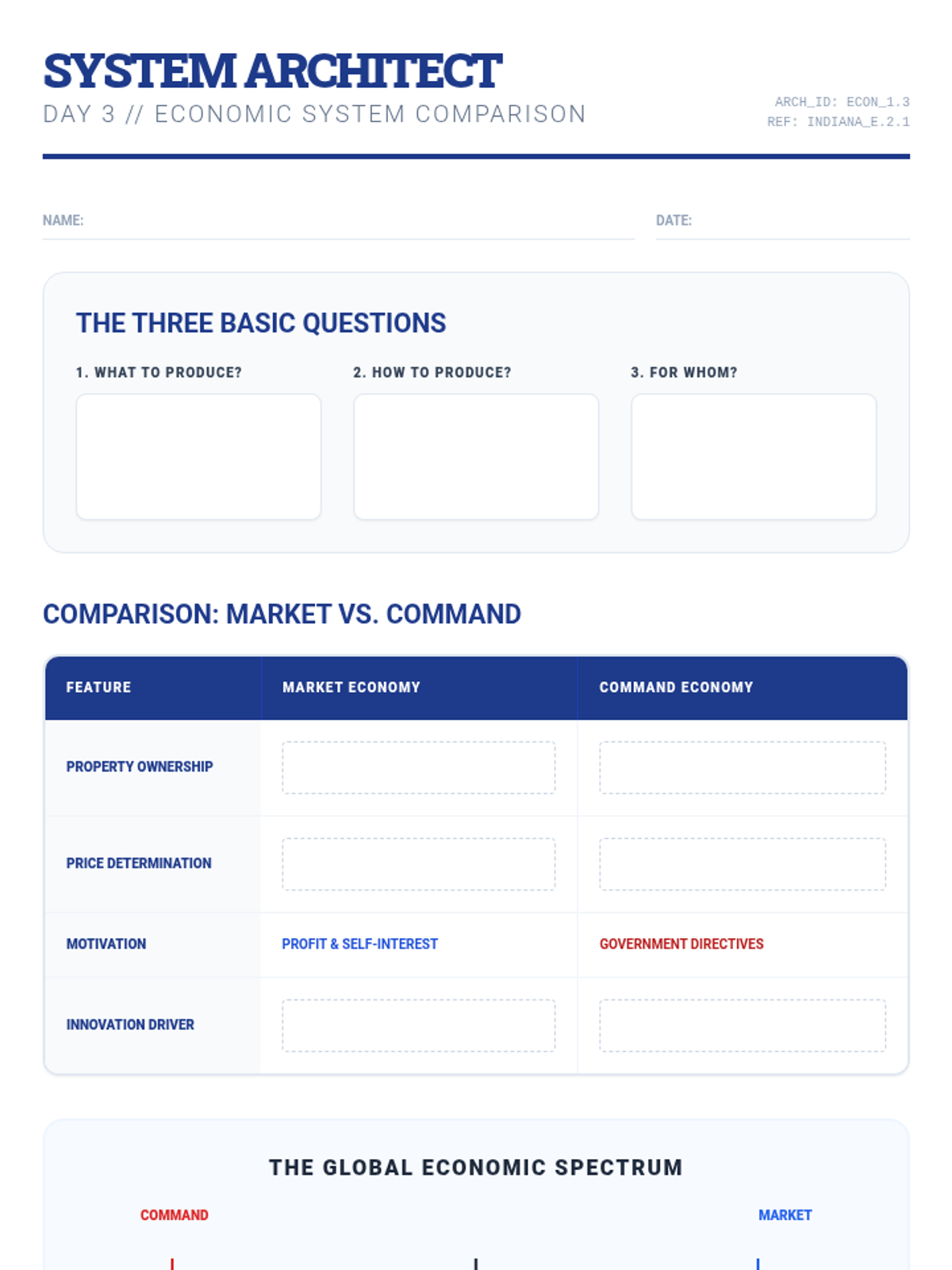
A comparative study of market, command, and mixed economic systems and how they answer the three basic economic questions.
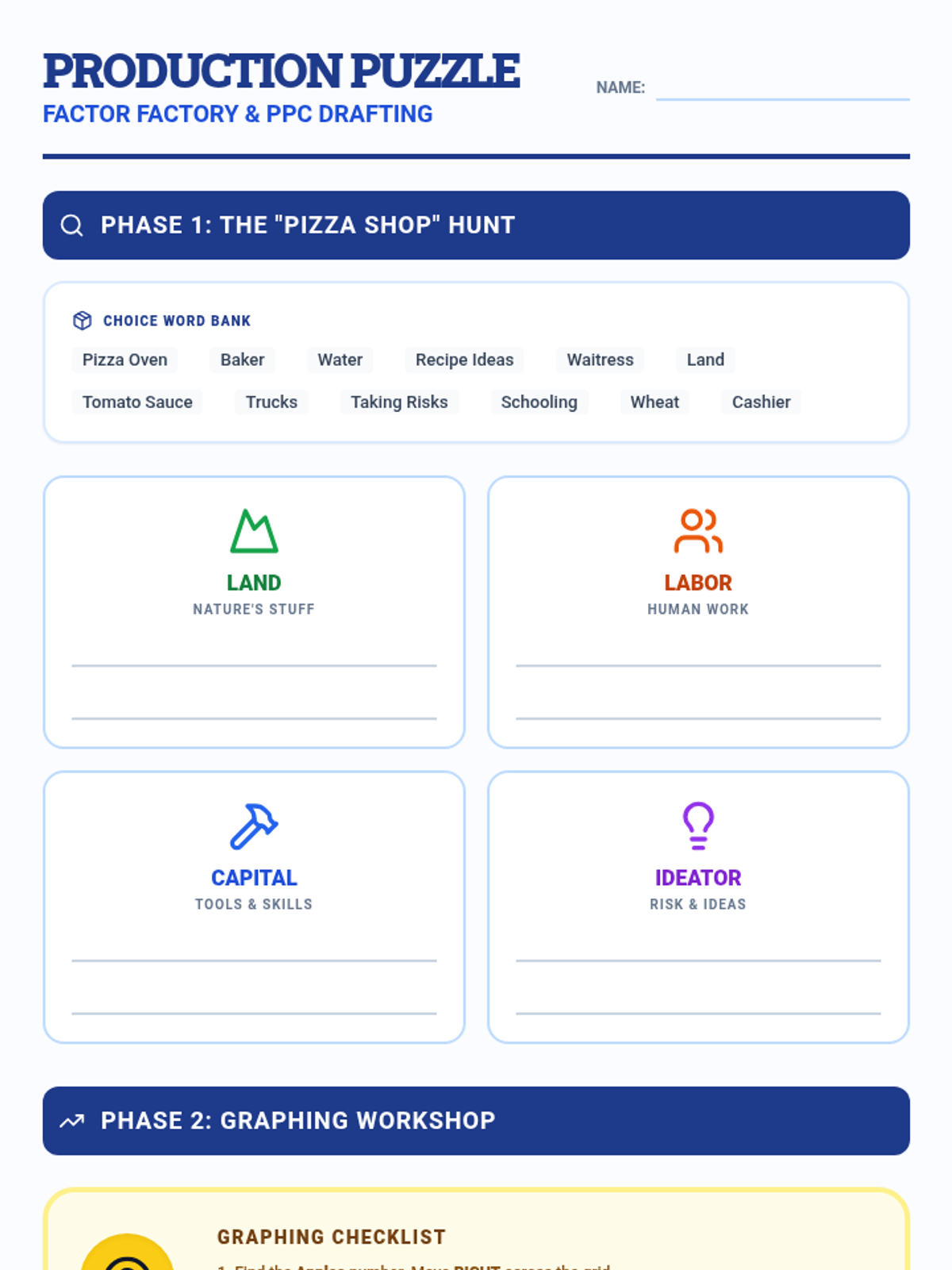
An investigation into the four factors of production (land, labor, capital, entrepreneurship) and how they are utilized to create wealth.
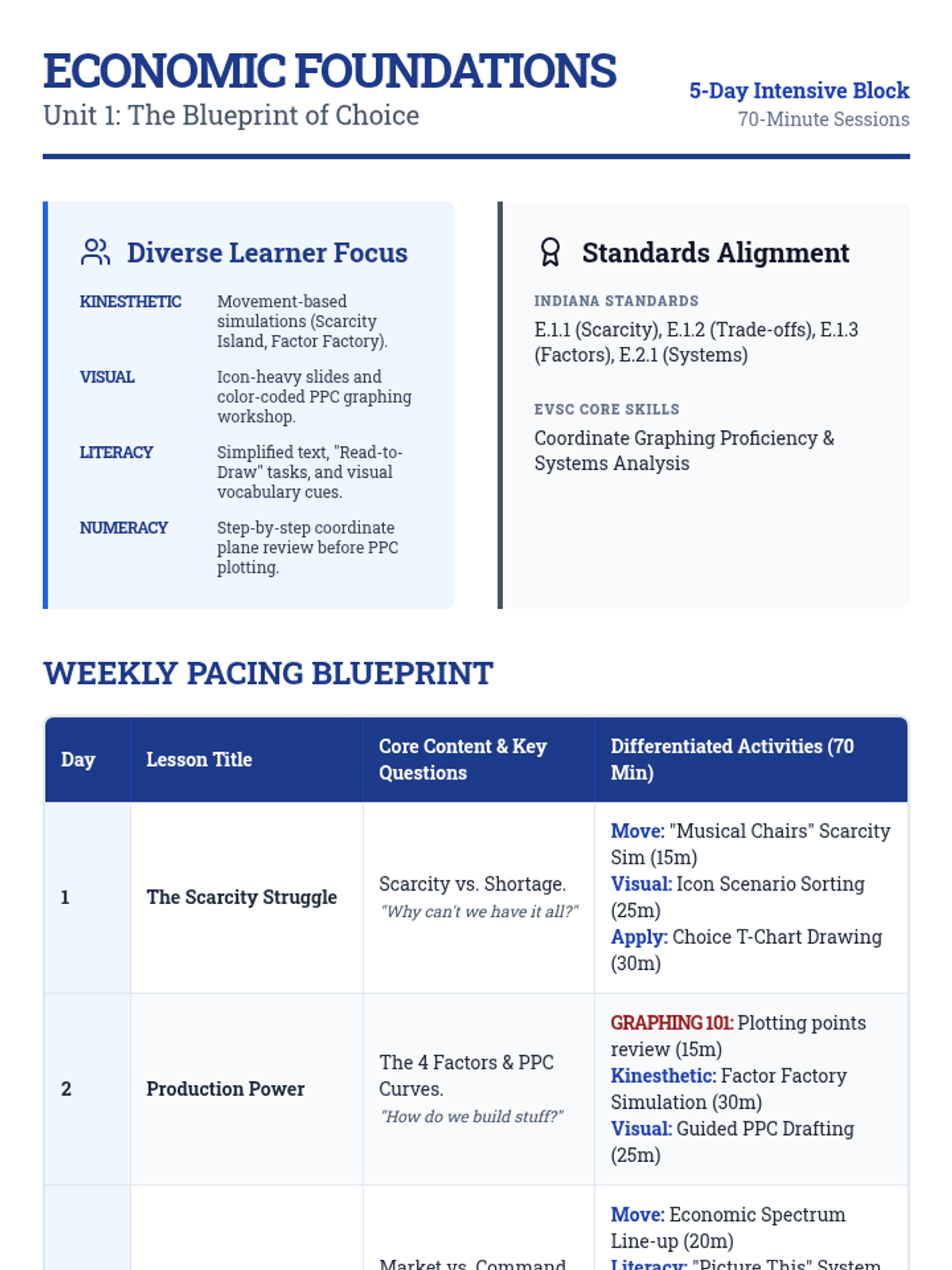
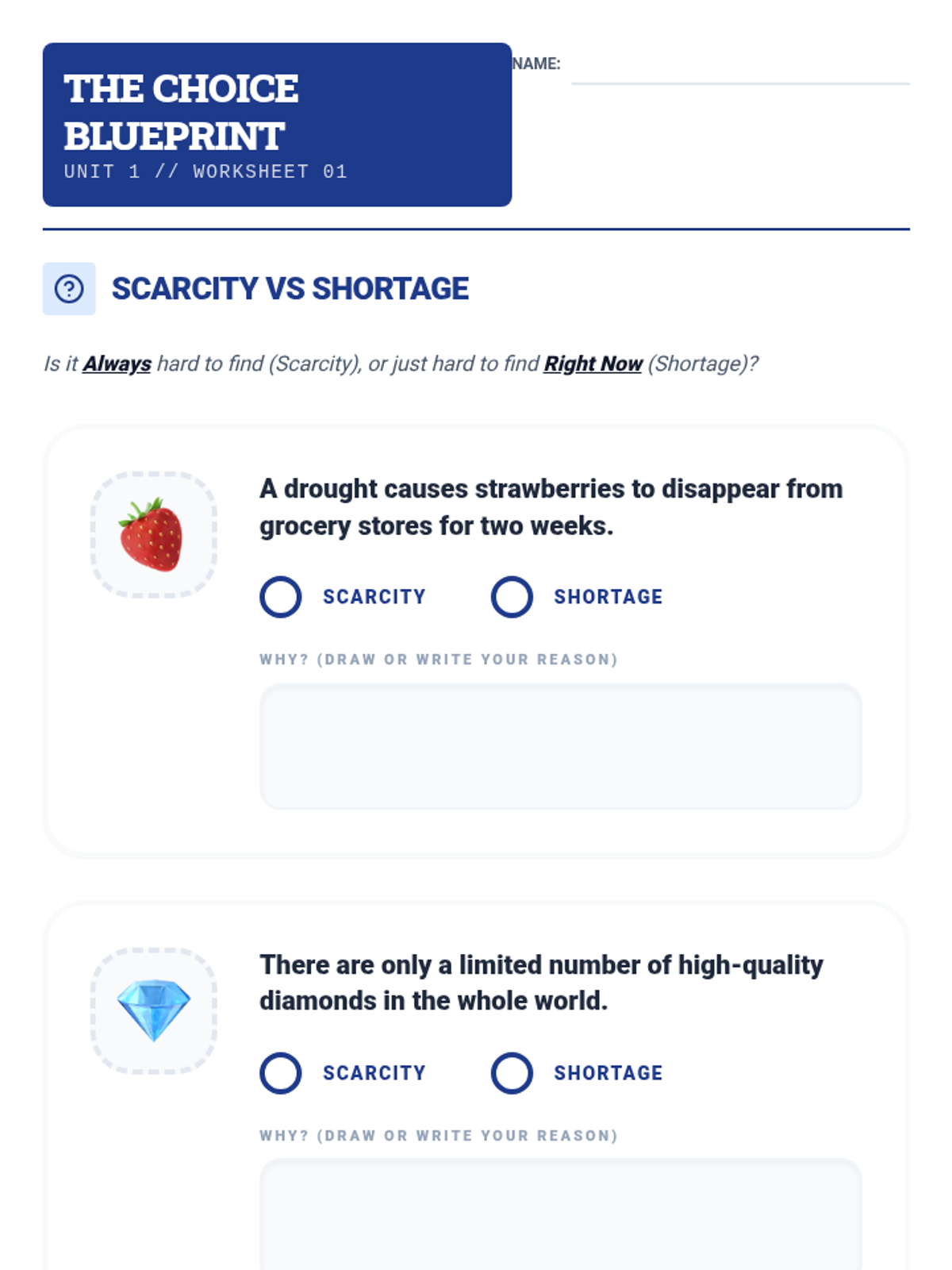
An exploration of the fundamental problem of economics: scarcity, and the subsequent need for trade-offs and opportunity cost analysis.