A project-based lesson where students design museum exhibit panels analyzing how the expansion of slavery in the 1850s led to the Civil War. Students focus on cause-and-effect relationships through historical research and visual design.
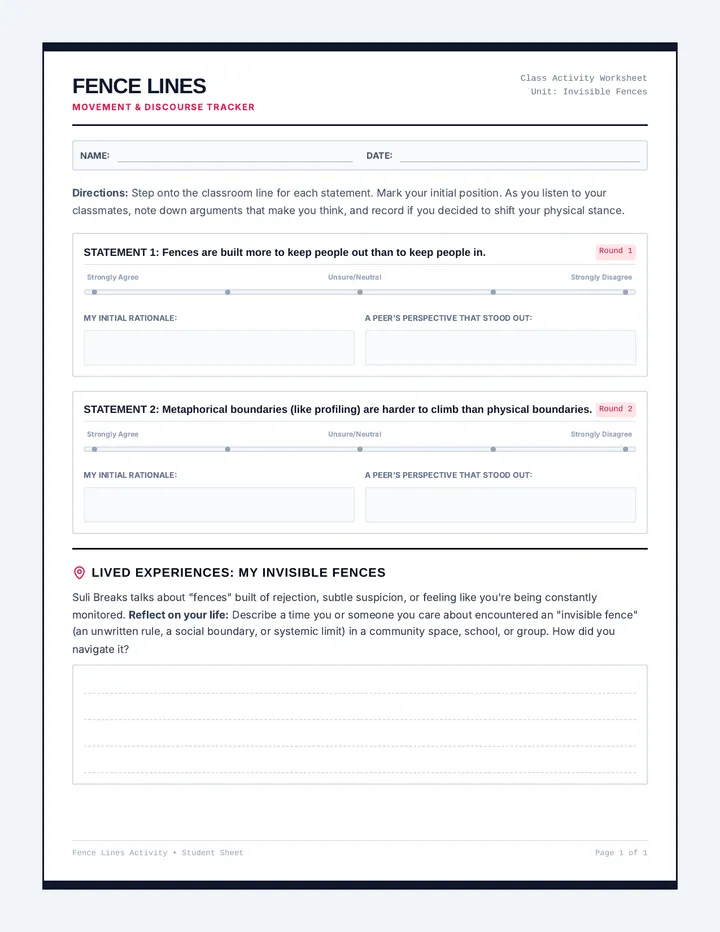
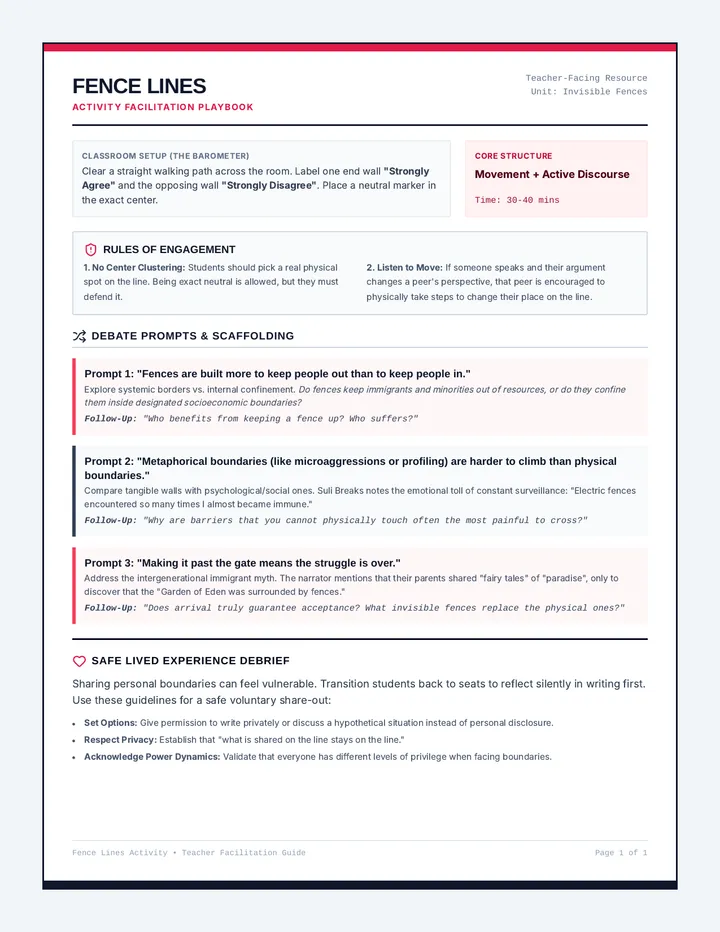
An introductory lesson exploring the immigrant experience and systemic barriers through Suli Breaks' spoken word poem 'Fences'. Students engage in a structured movement and discourse activity to analyze literal and metaphorical barriers, connecting themes to their own lived experiences.
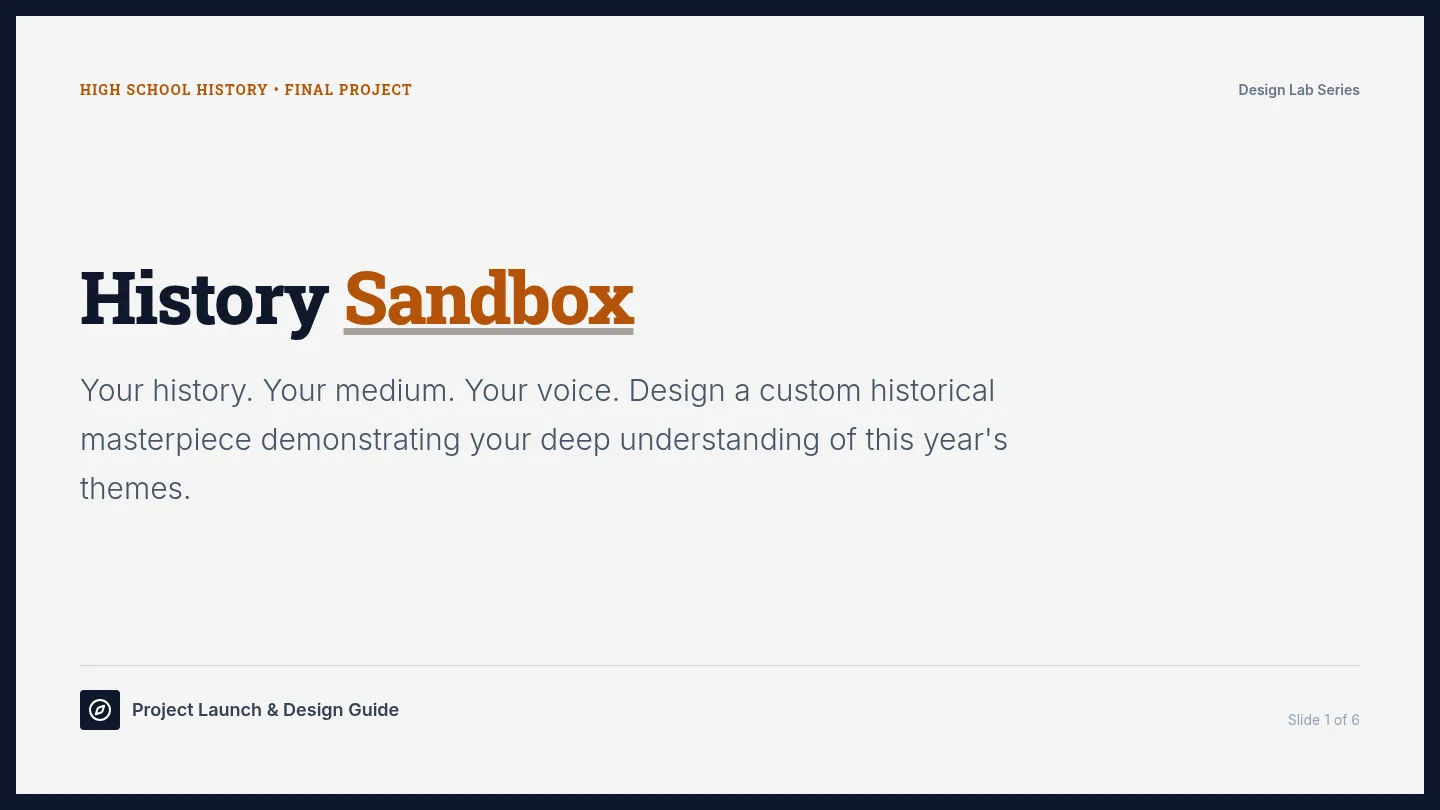
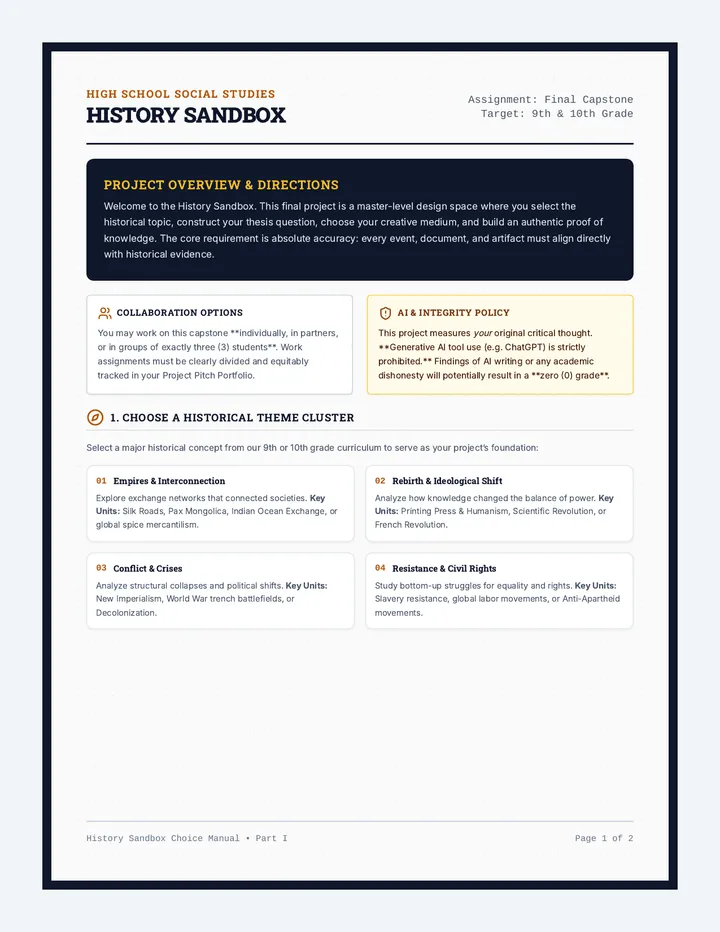
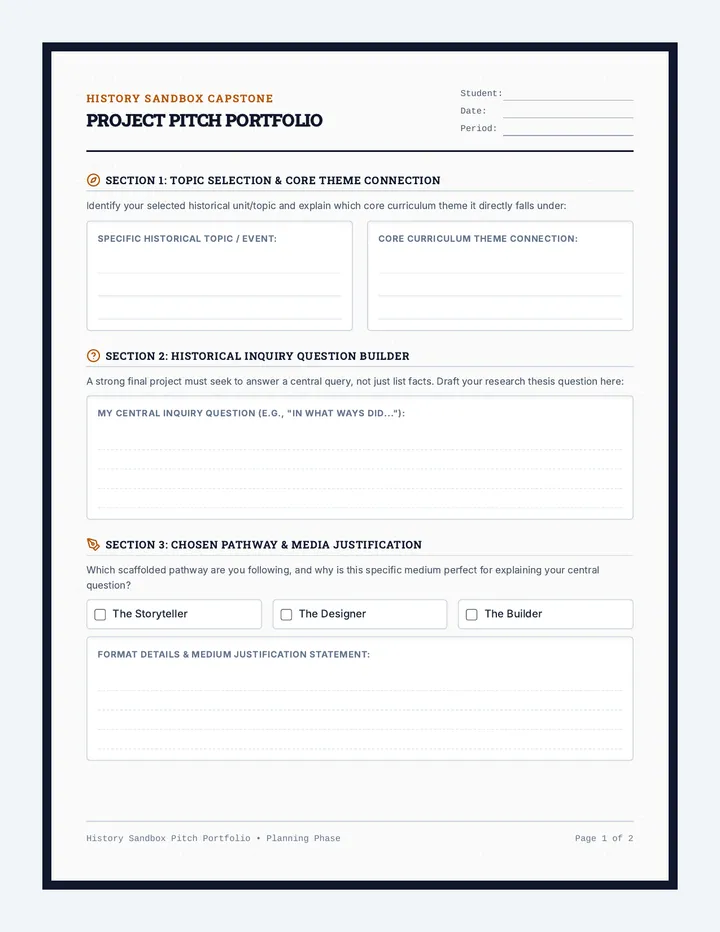
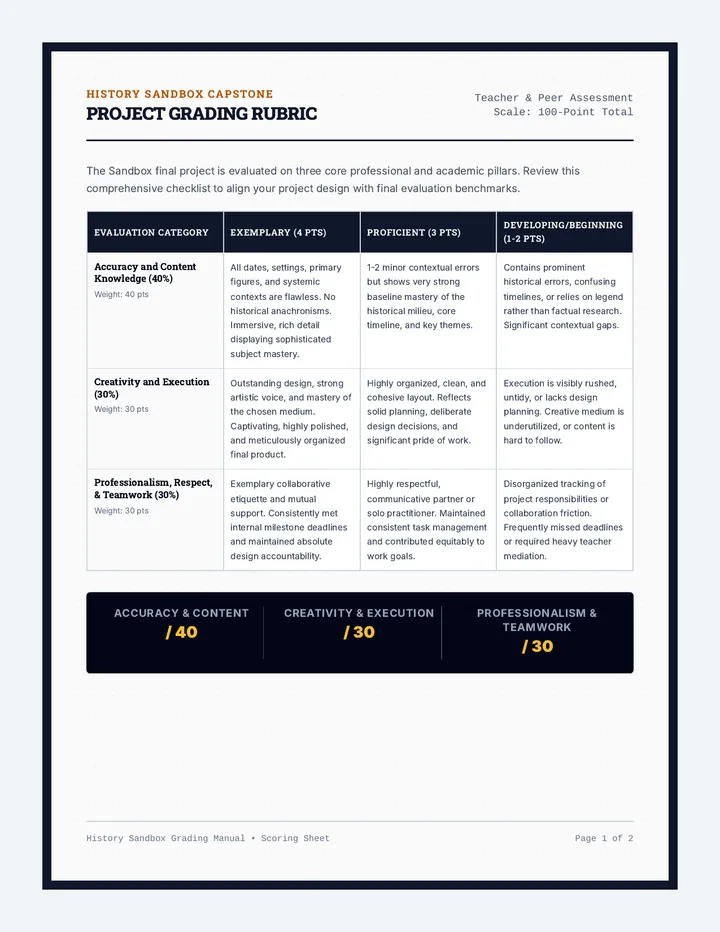
A highly flexible, scaffolded final project workspace for 9th and 10th-grade history classes, allowing students to demonstrate their historical knowledge through creative channels. It includes structured pathways, a comprehensive graphic organizer pitch sheet, a grading rubric, reflection prompts, and introductory slides.
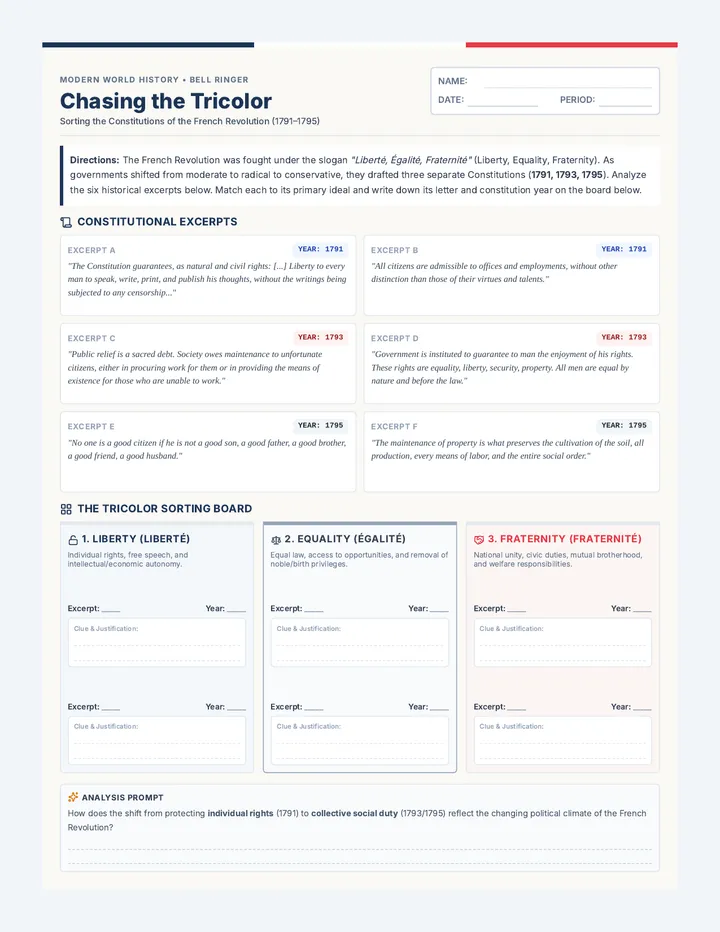
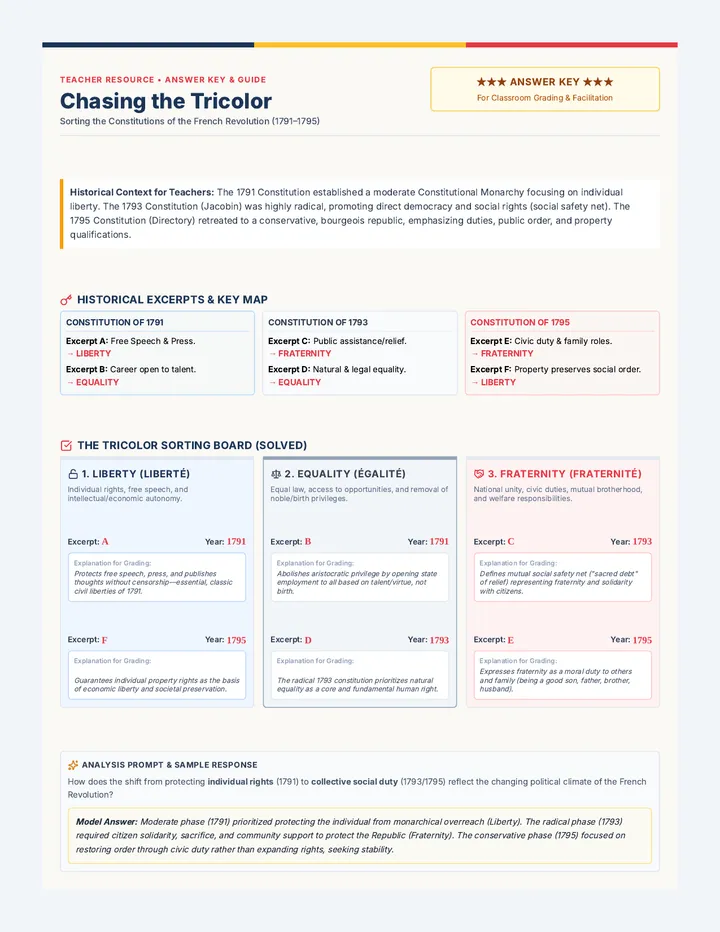
A high-impact bell ringer and analysis activity where 10th-grade history students analyze primary source excerpts from the French Constitutions of 1791, 1793, and 1795, sorting them into the core revolutionary ideals of Liberty, Equality, and Fraternity.
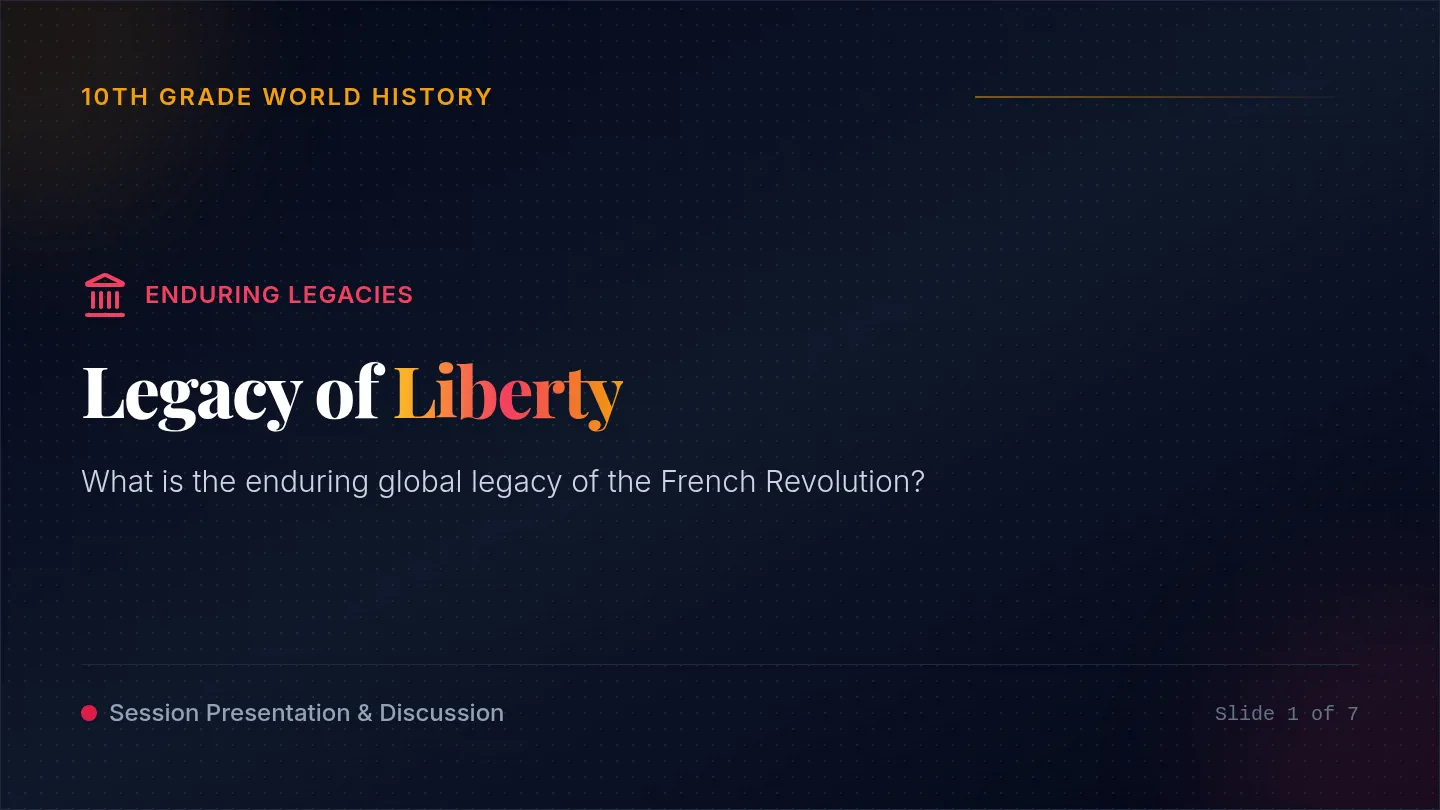
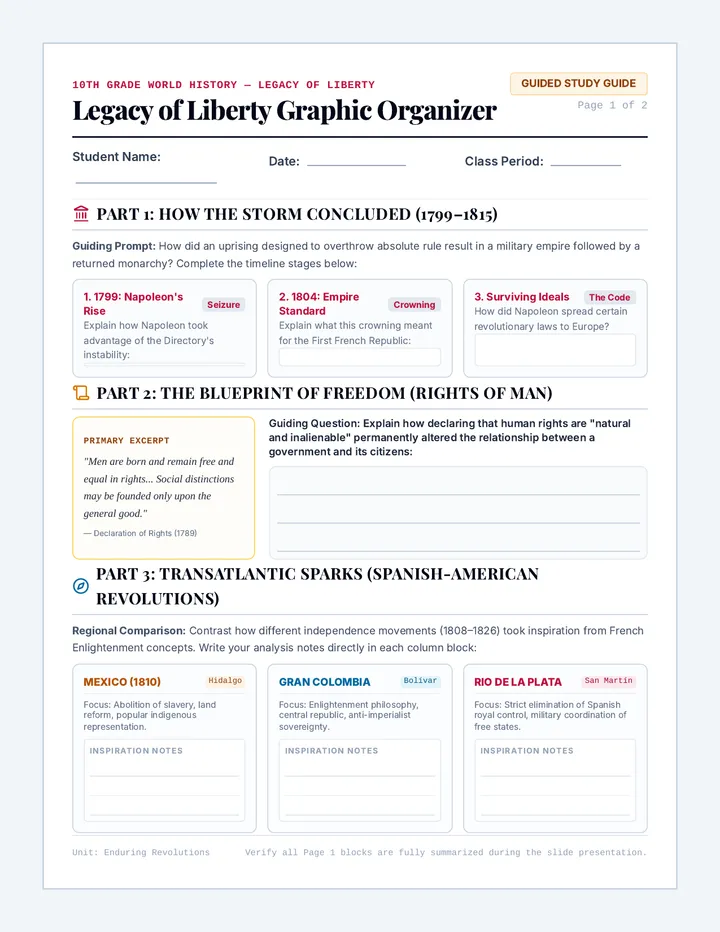
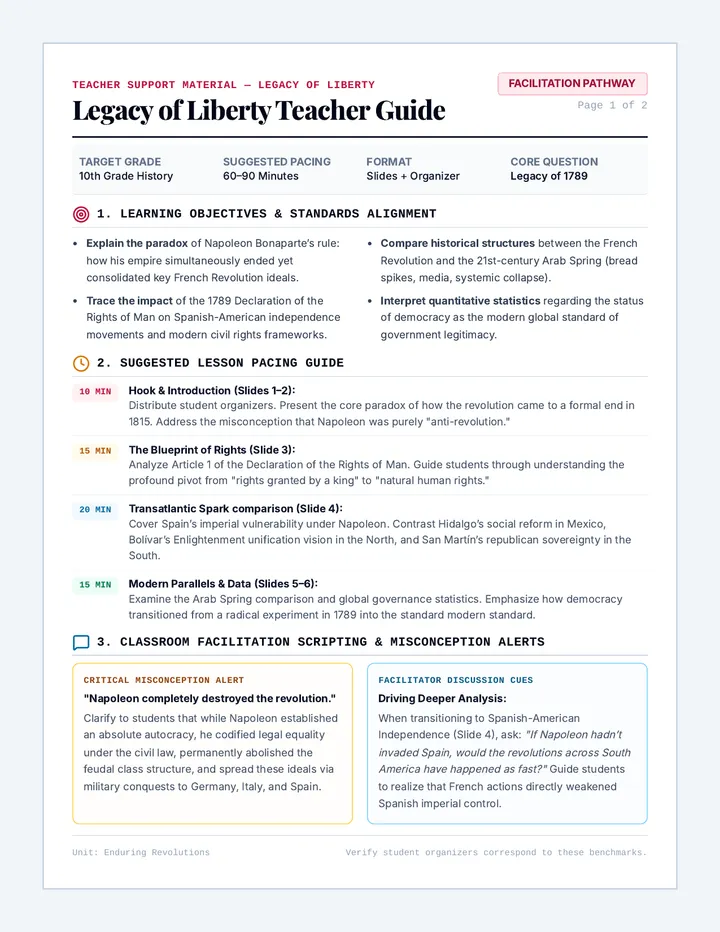
A comprehensive history lesson for 10th-grade students examining the global and modern legacies of the French Revolution. It features interactive slides and a highly organized graphic organizer that covers the end of the revolution, global democratic movements, and modern government statistics.
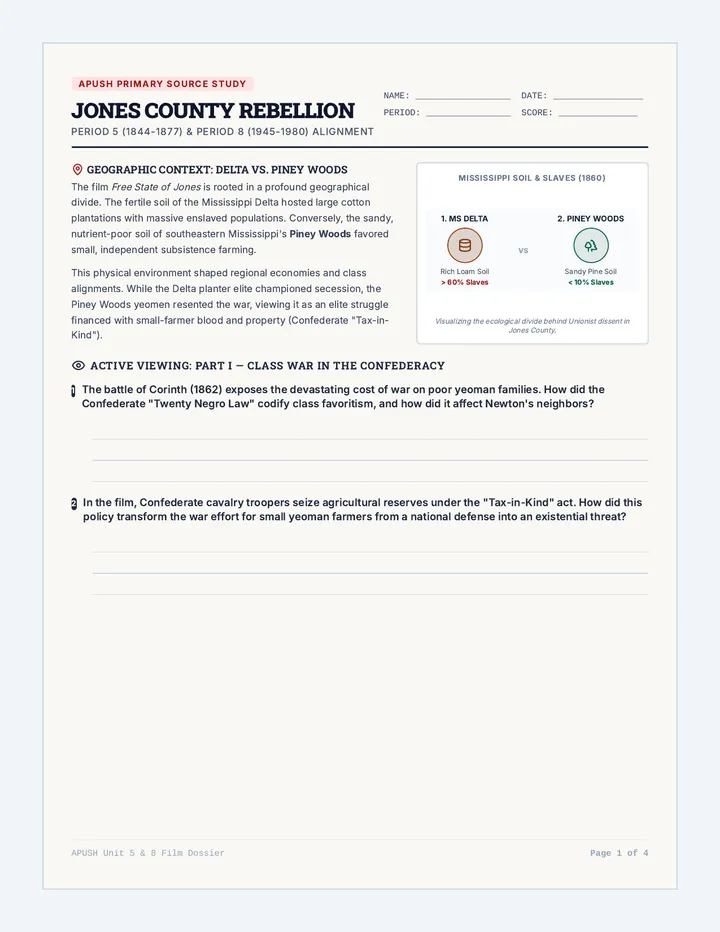
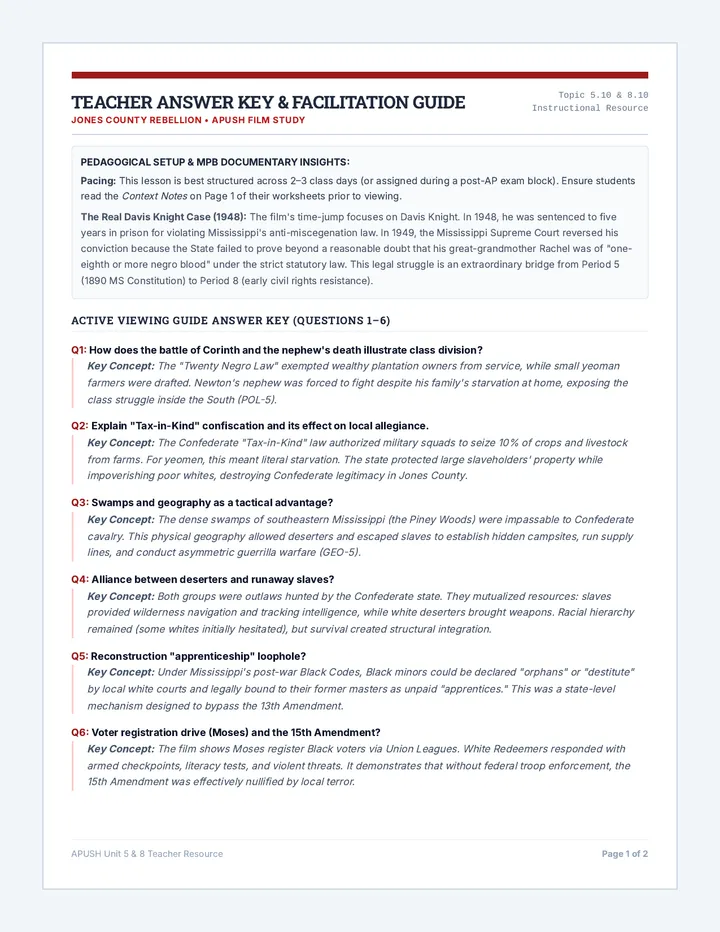
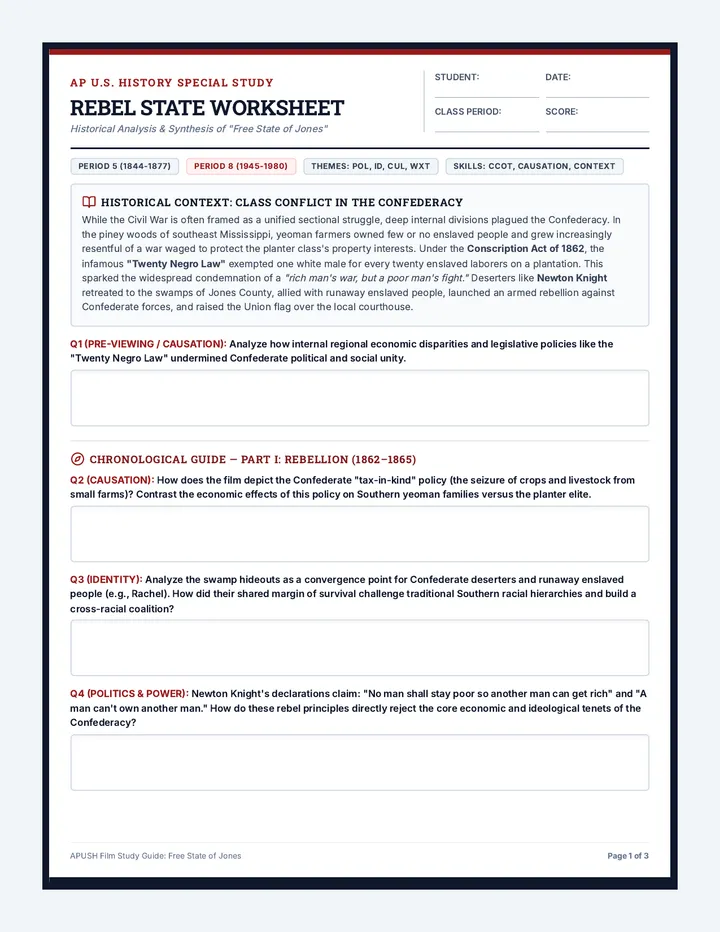
An AP U.S. History film study lesson on 'Free State of Jones' exploring Civil War dissent, Reconstruction failures (Period 5), and their long-term legacy in 20th-century Jim Crow courts (Period 8).
A comprehensive AP U.S. History study of the internal conflicts of the Confederacy, the legal boundaries of Reconstruction, and the long struggle for civil rights in Mississippi, structured around the historical events depicted in the film Free State of Jones.
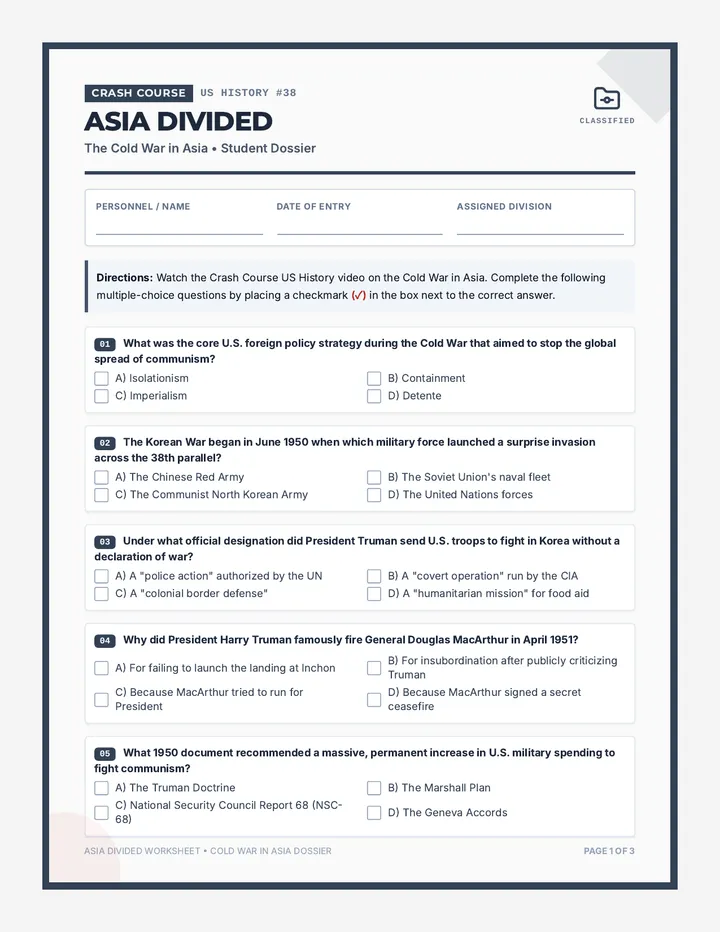
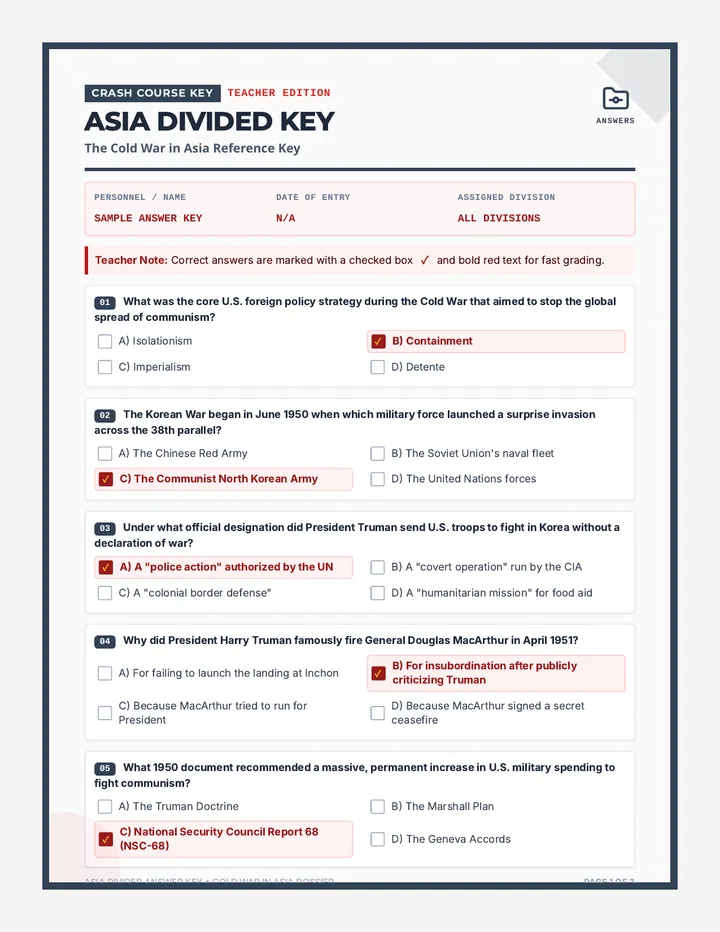
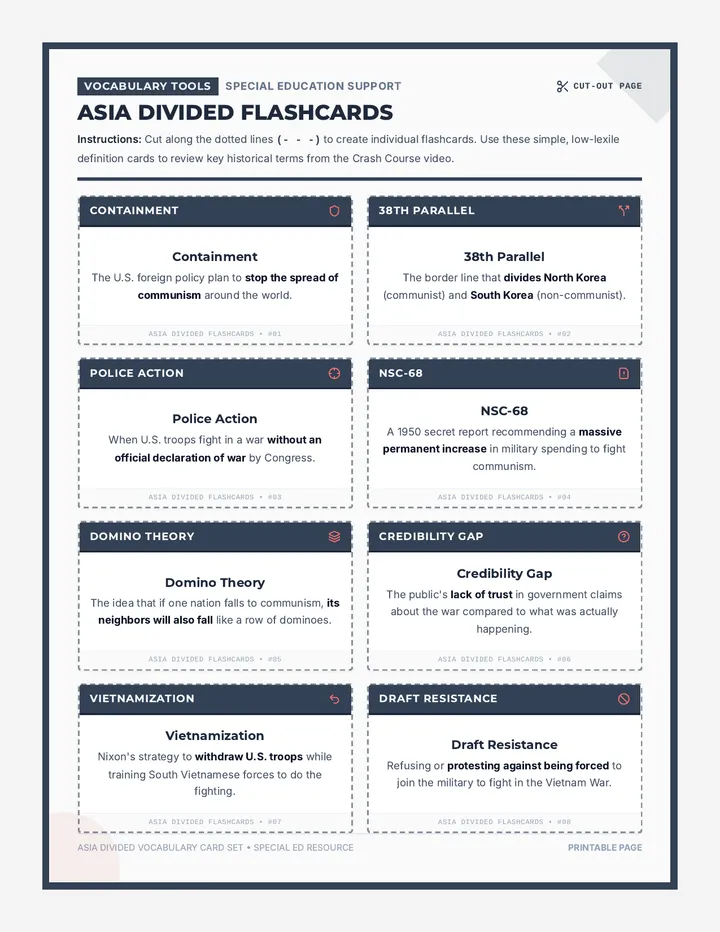
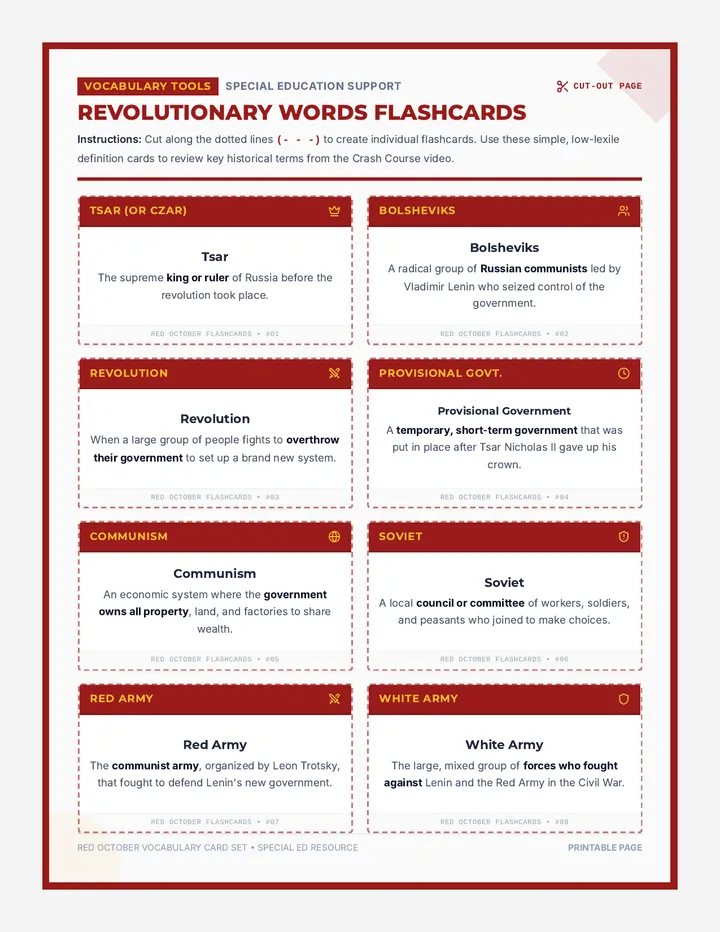
A deep-dive lesson exploring the Cold War in Asia (focusing on the Korean and Vietnam Wars) using Crash Course US History #38. This lesson includes a 15-question comprehension worksheet, a complete teacher answer key, and specialized low-lexile definition flashcards for special education.
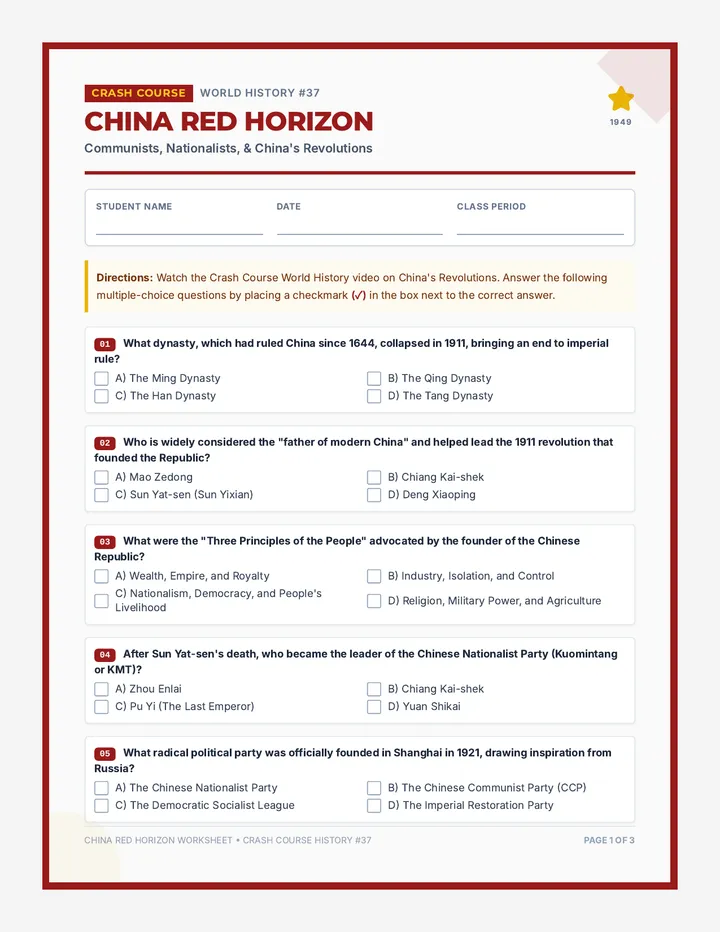
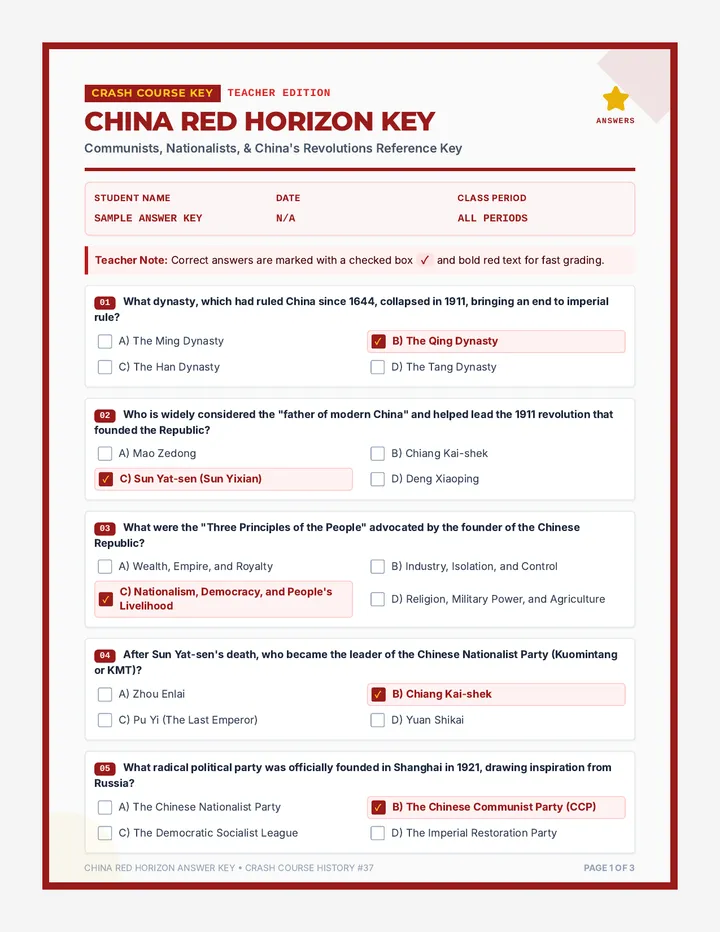
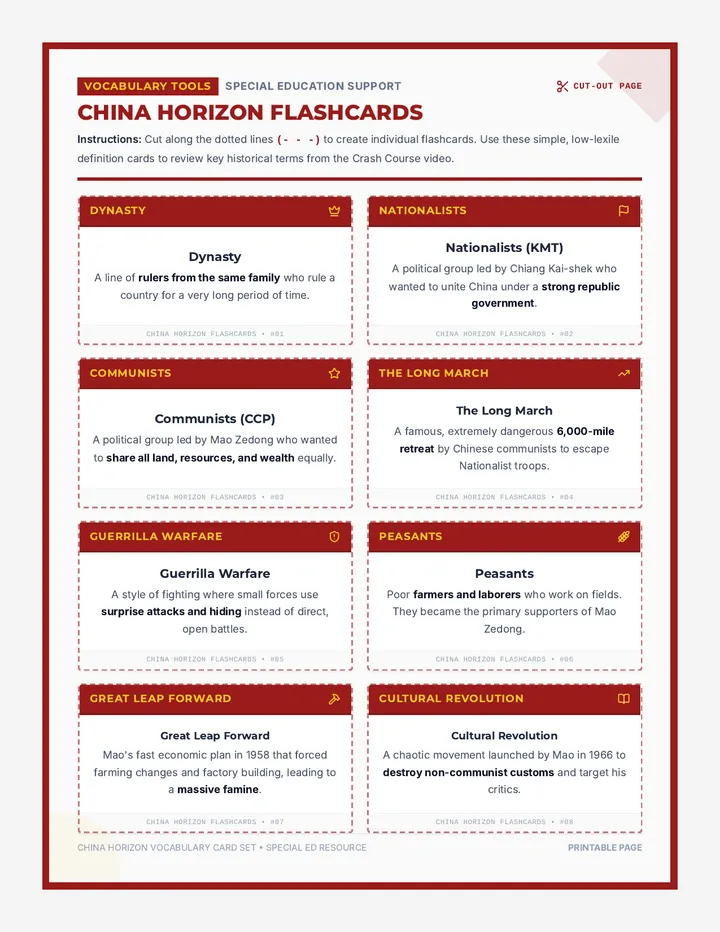
A deep-dive lesson exploring the Chinese revolutions of the 20th century using Crash Course World History #37. Includes a 15-question comprehension worksheet, a complete teacher answer key, and specialized low-lexile definition flashcards for special education.
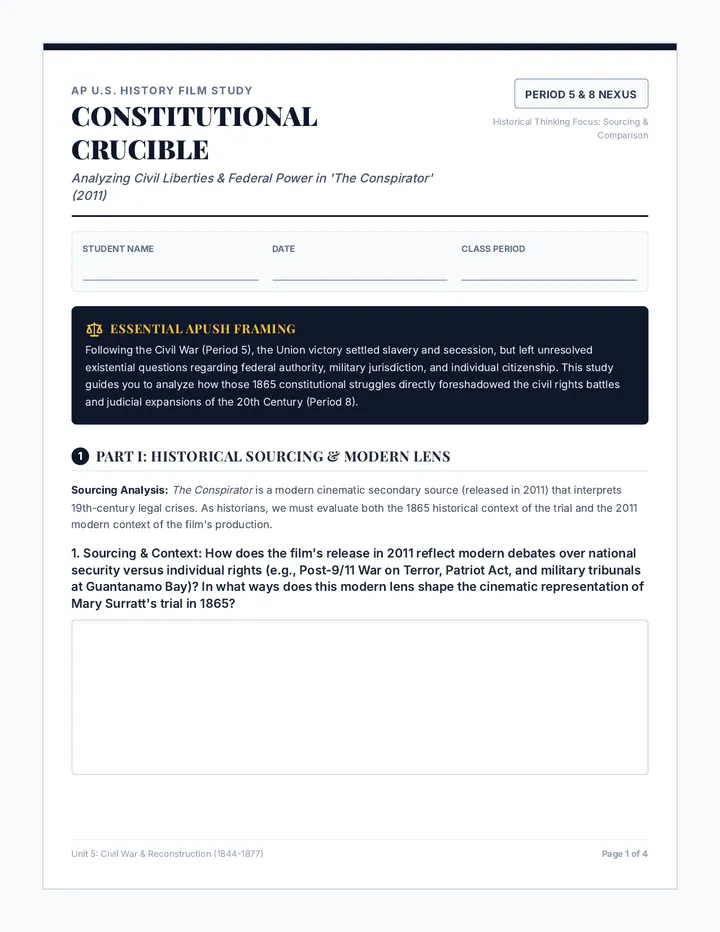
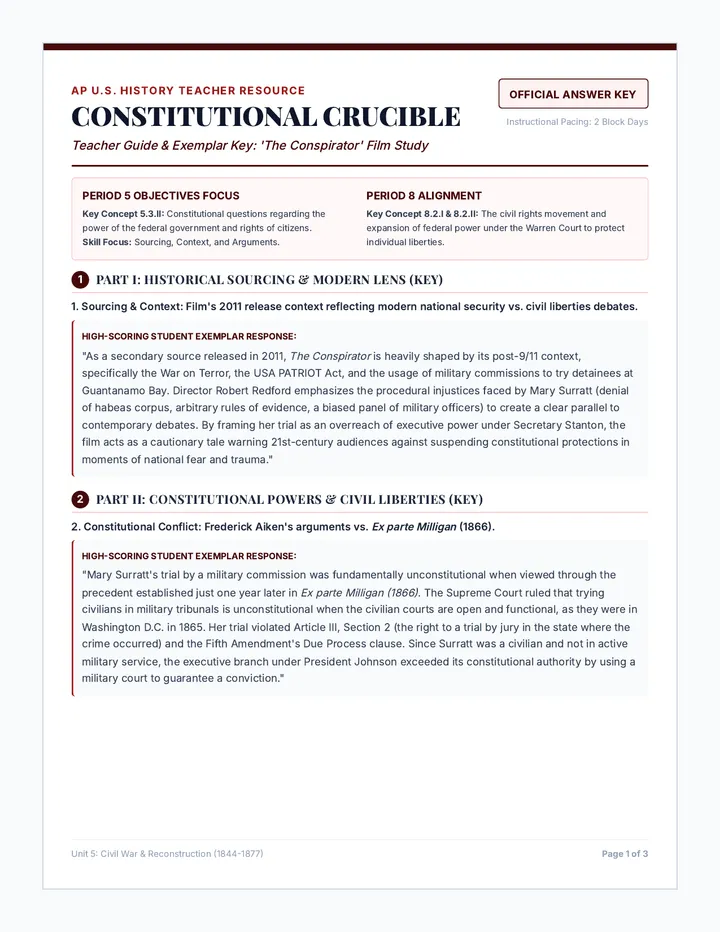
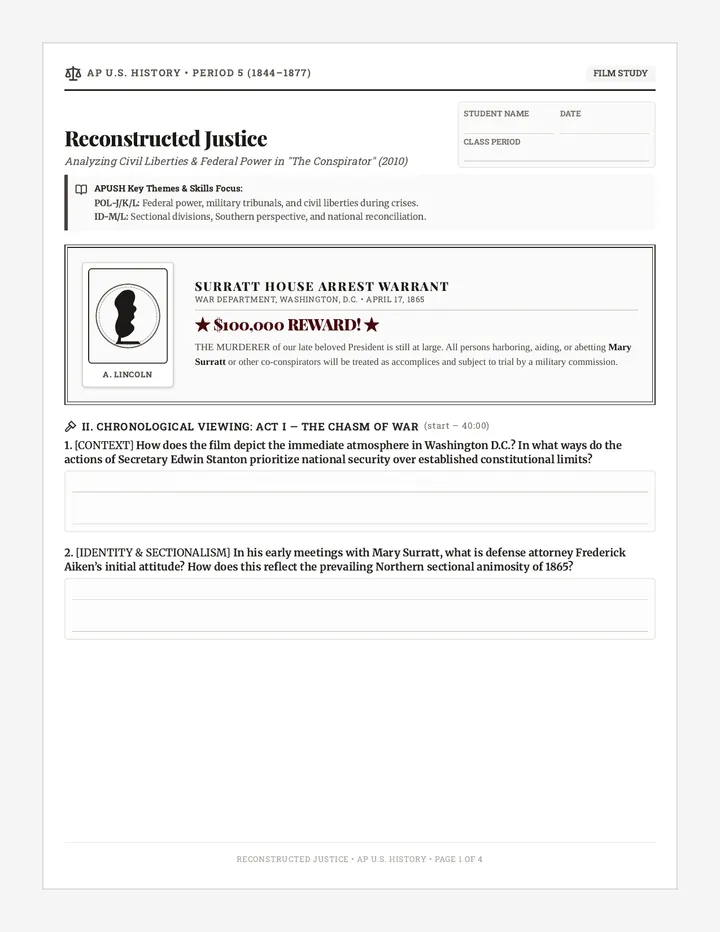
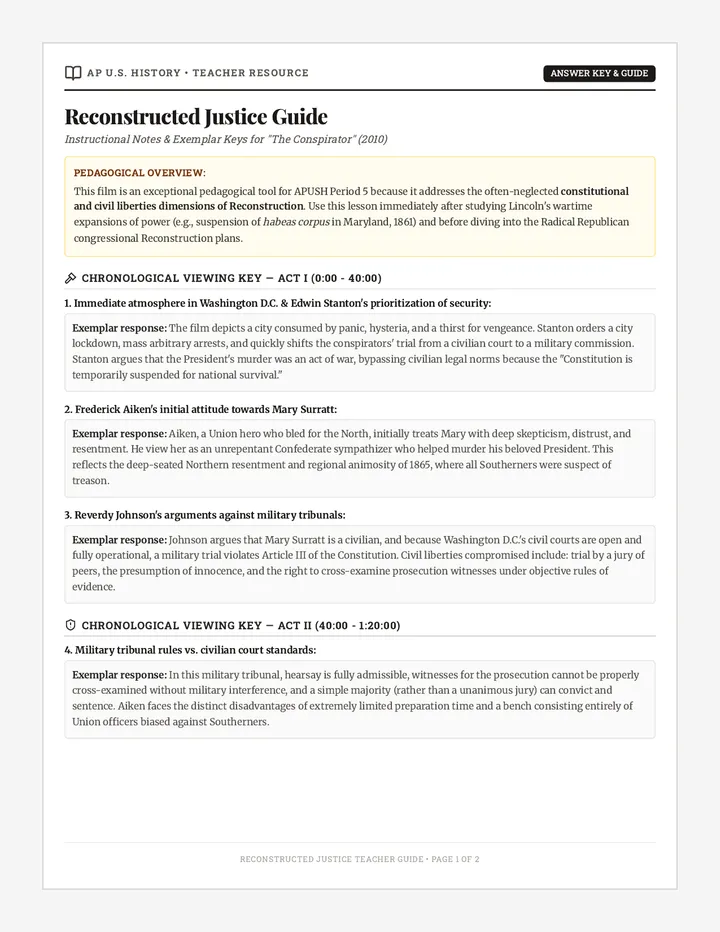
An AP U.S. History film study and constitutional analysis of 'The Conspirator'. Students explore Period 5 legal precedents, executive authority, and civil liberties, while tracing long-term continuities in civil rights into the 20th century.
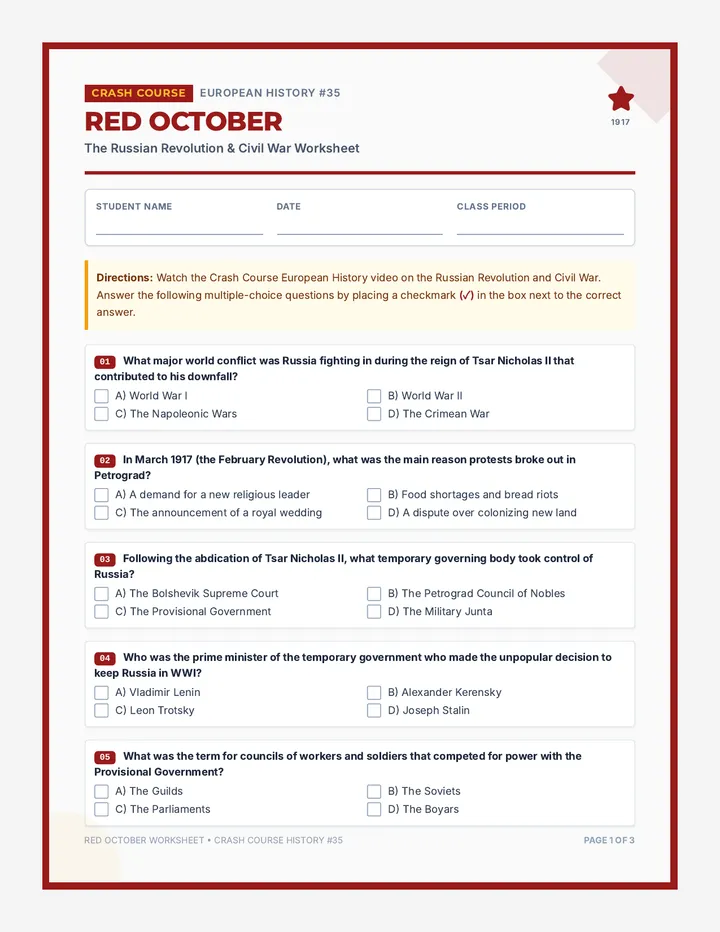
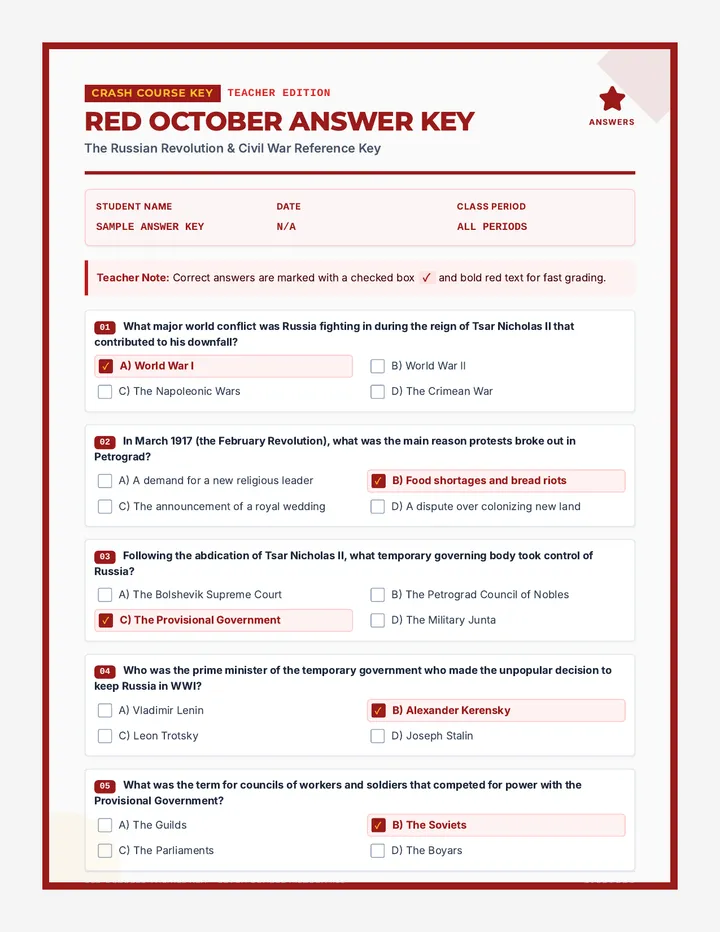
A comprehensive lesson focused on the Russian Revolution and Civil War, utilizing Crash Course European History #35. This lesson includes a 15-question comprehension worksheet, a complete teacher answer key, and specialized low-lexile definition flashcards for special education support.
A highly targeted lesson analyzing the film 'The Conspirator' (2010) through the lens of AP U.S. History Period 5 objectives. It explores the constitutional crises, civil liberties, and regional animosities surrounding the trial of the Lincoln assassination co-conspirators in 1865.
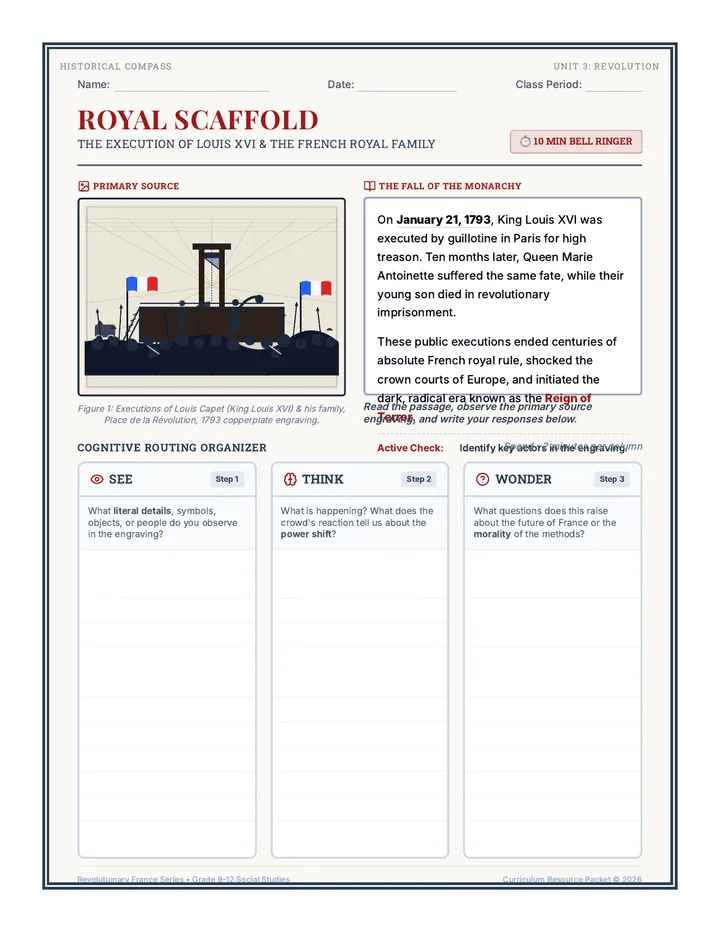
A quick, high-impact bell ringer lesson exploring the execution of King Louis XVI and the French royal family through a primary source engraving and a See-Think-Wonder cognitive routing activity.
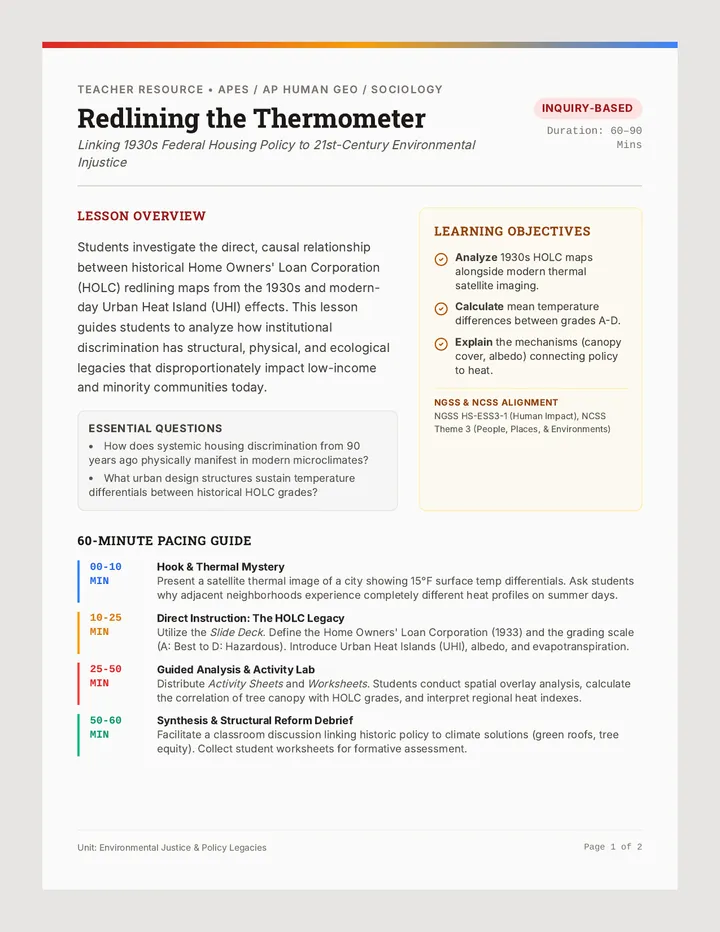
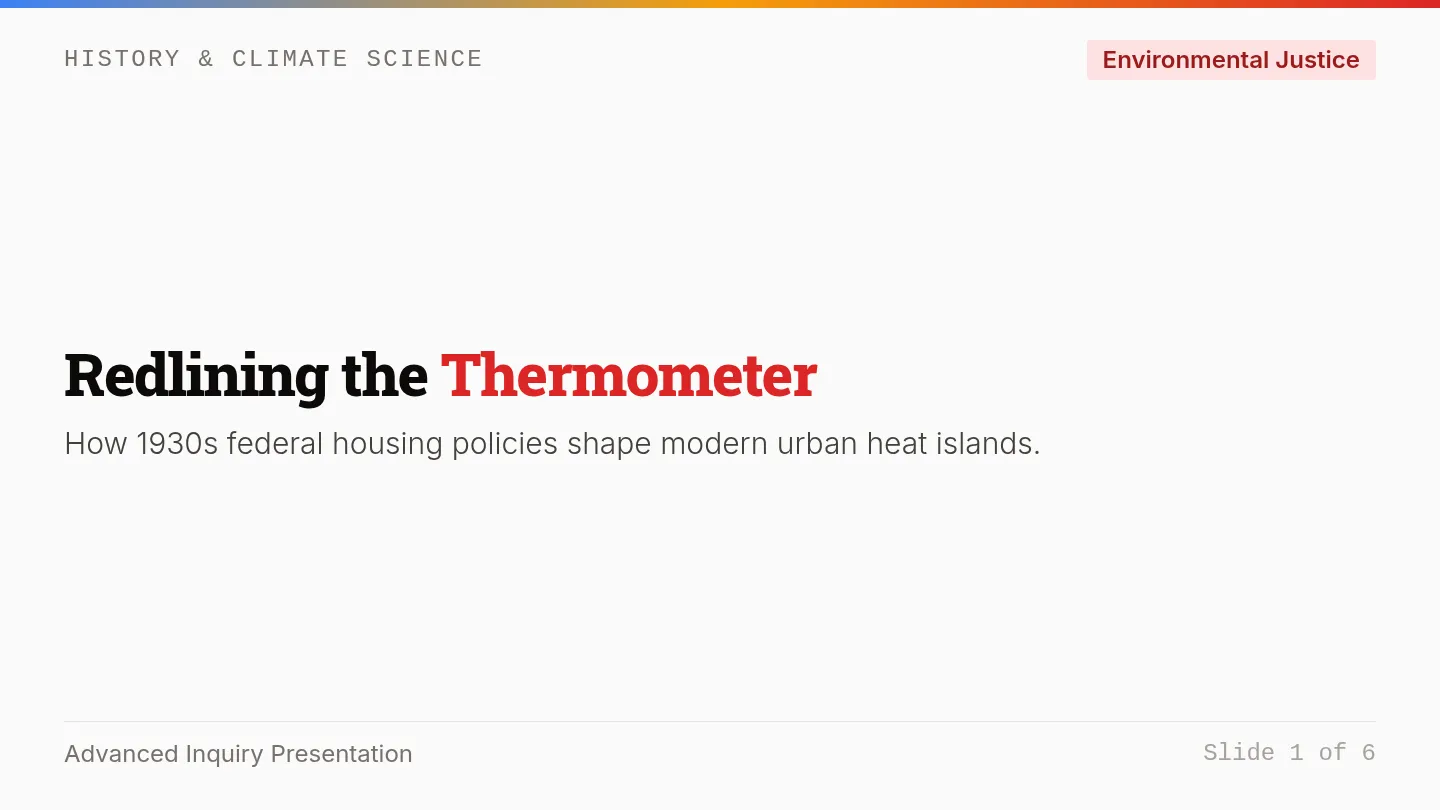
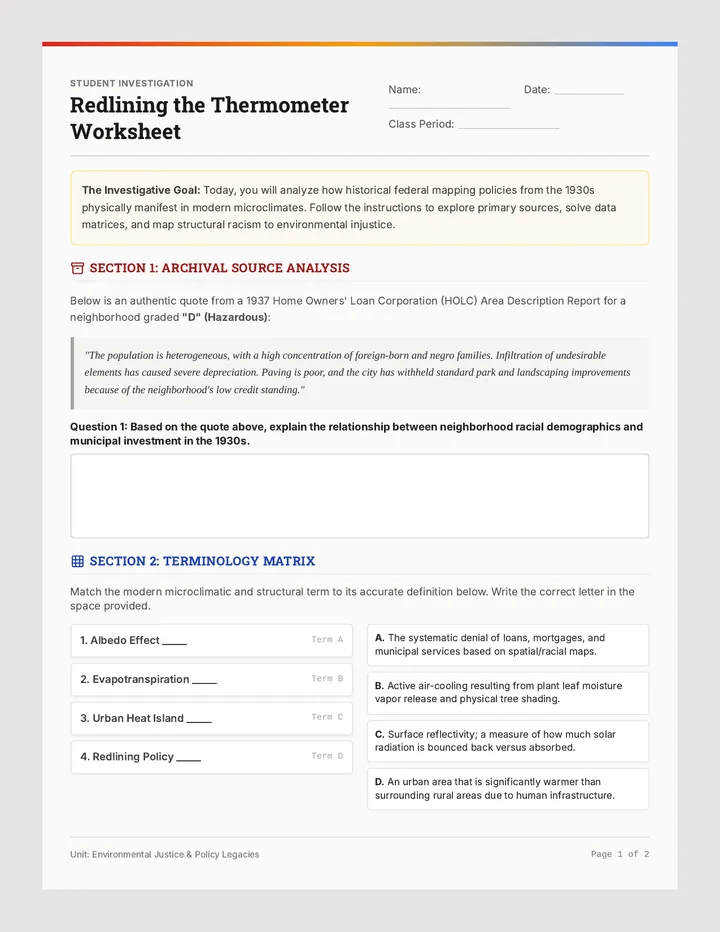
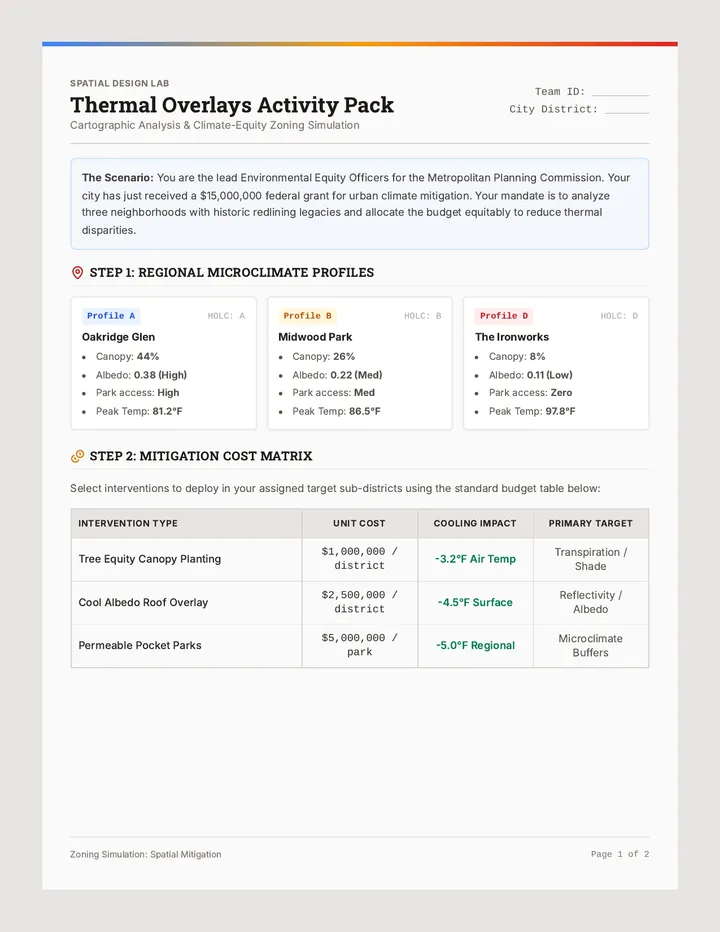
An advanced, interdisciplinary lesson for high school and undergraduate students exploring the causal relationship between 1930s Home Owners' Loan Corporation (HOLC) redlining maps and modern-day urban heat island (UHI) effects, analyzing systemic racism and environmental injustice.
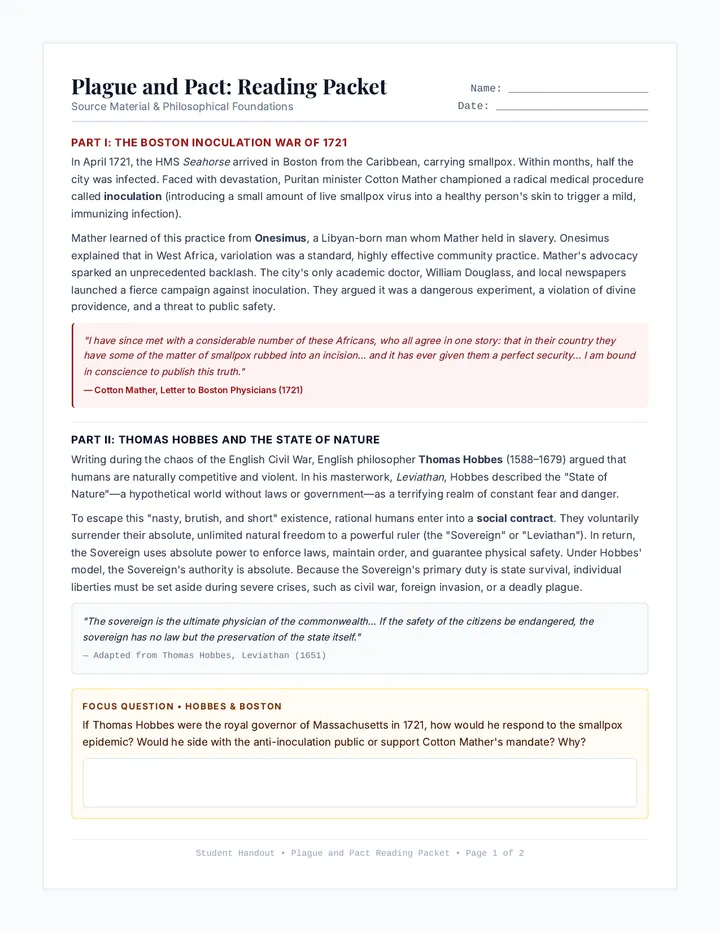
An inquiry-based lesson exploring how historical epidemics (from the Black Death to Smallpox inoculation) tested and reshaped the social contract between citizens and states, forcing a reckoning between personal liberty and public safety.
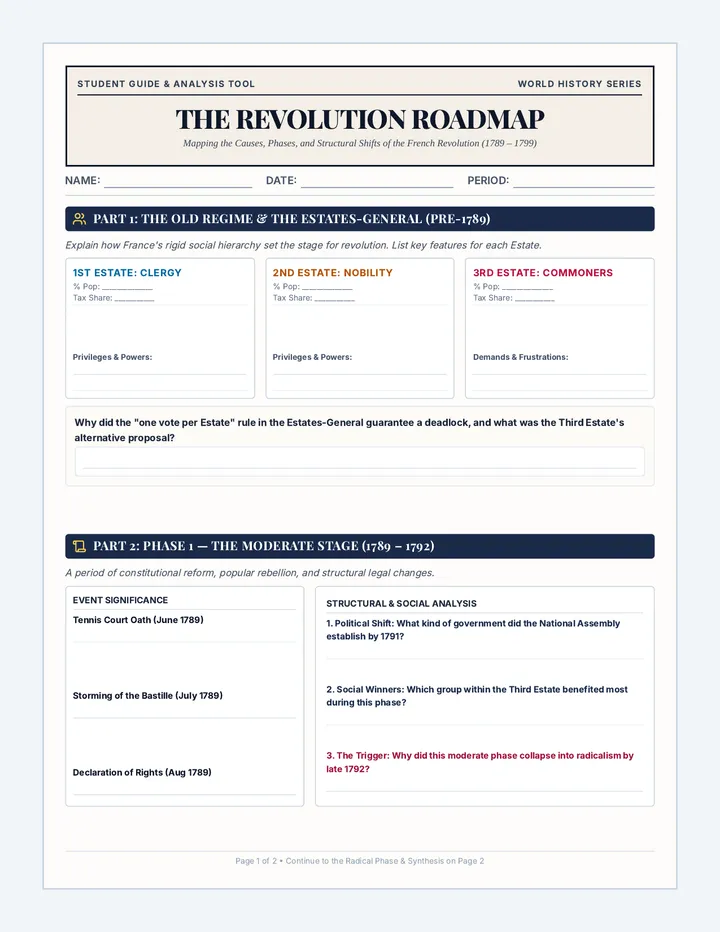
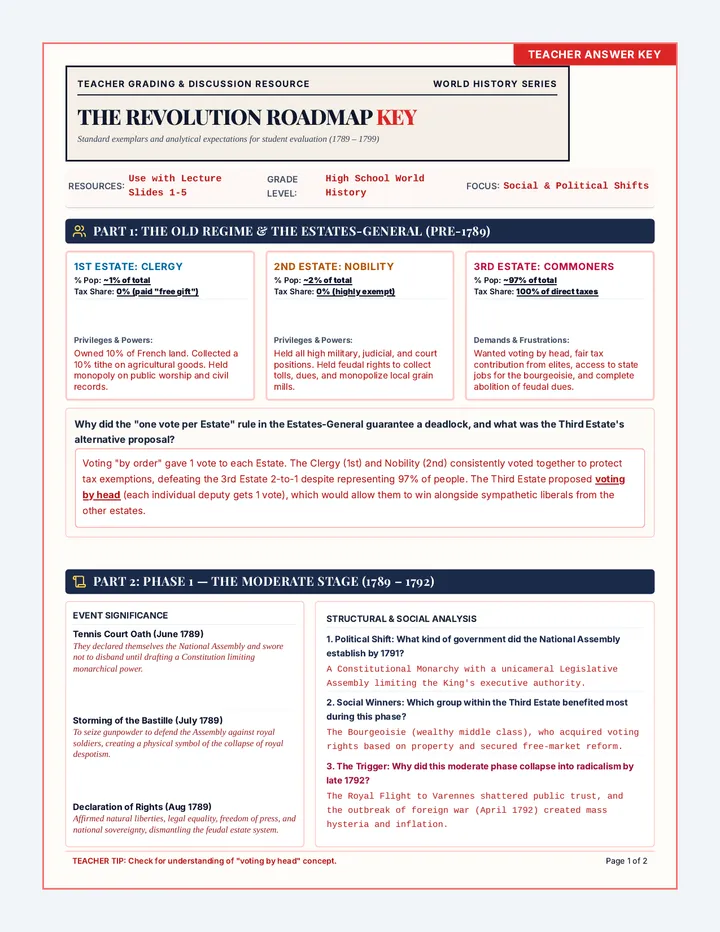
A lesson that contextualizes the key phases of the French Revolution (1789-1799) from the National Assembly to the Directory, guiding students to analyze social dynamics, political shifts, and cause-and-effect relationships.
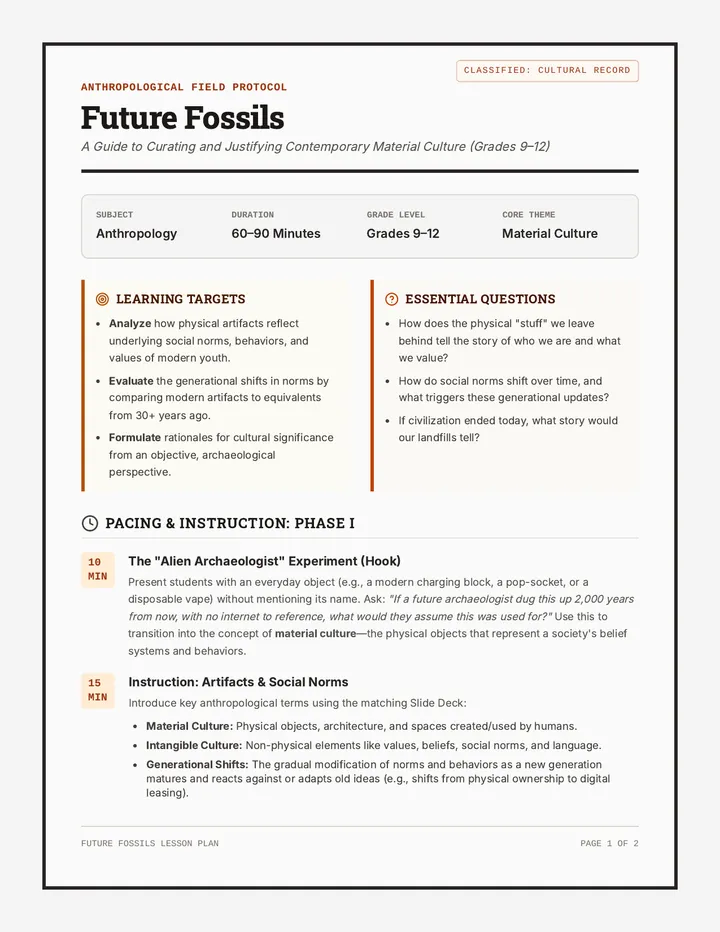
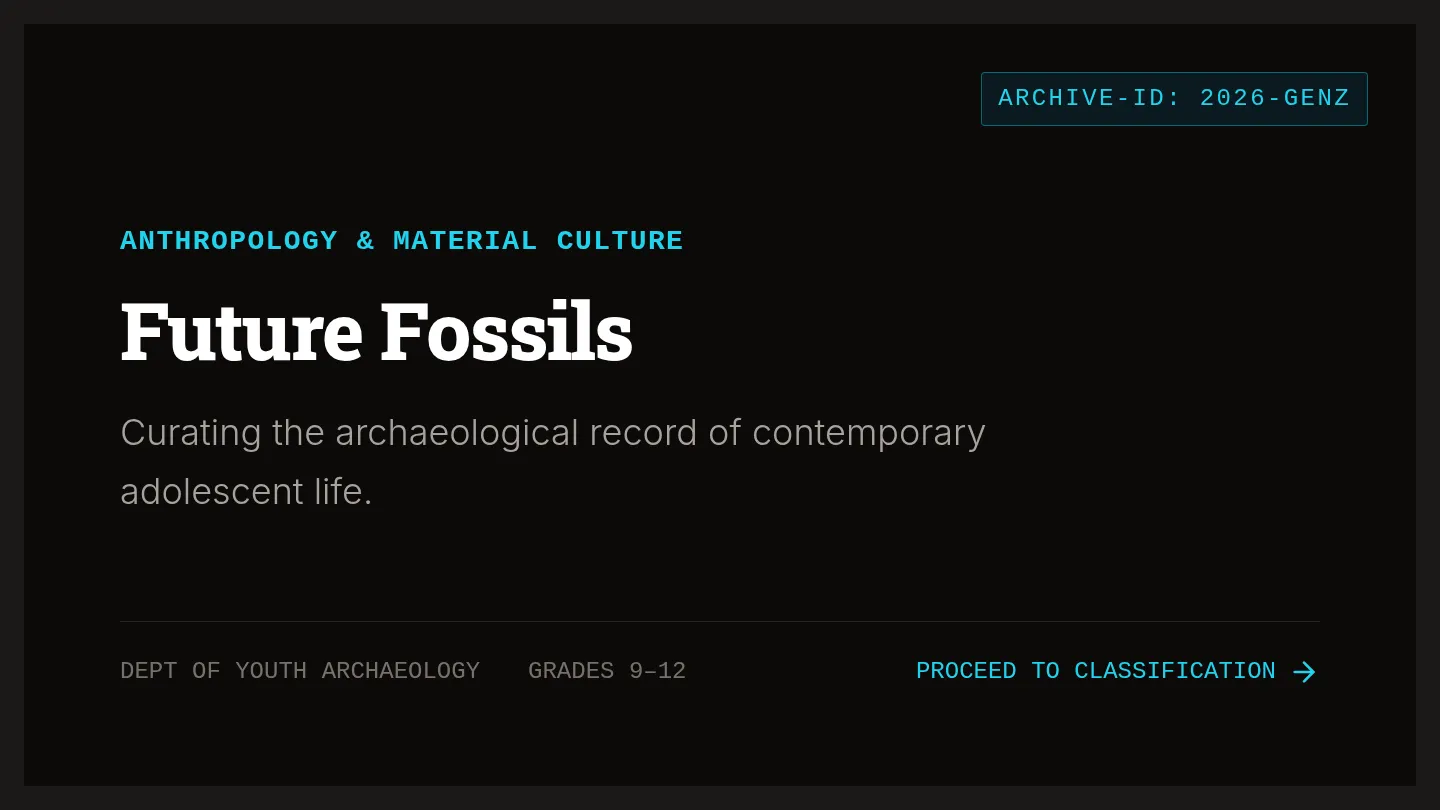
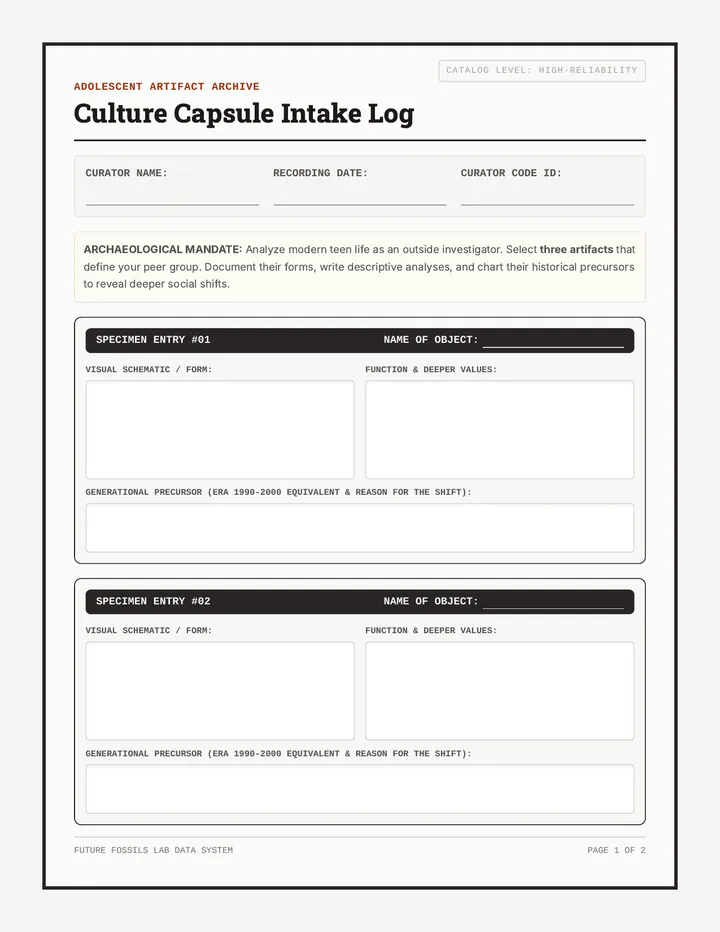
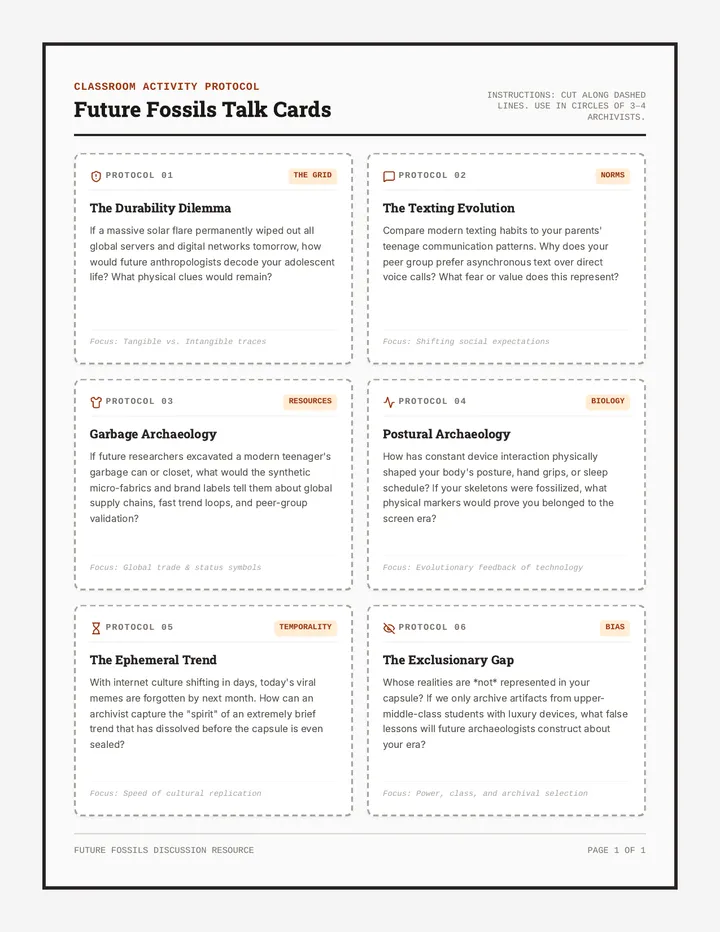
An anthropology lesson where high school students curate and analyze contemporary artifacts that represent modern adolescent culture, exploring generational shifts in social norms and material culture.