A kindergarten lesson exploring how animals use camouflage to hide in their environments using repetitive text and hands-on matching.
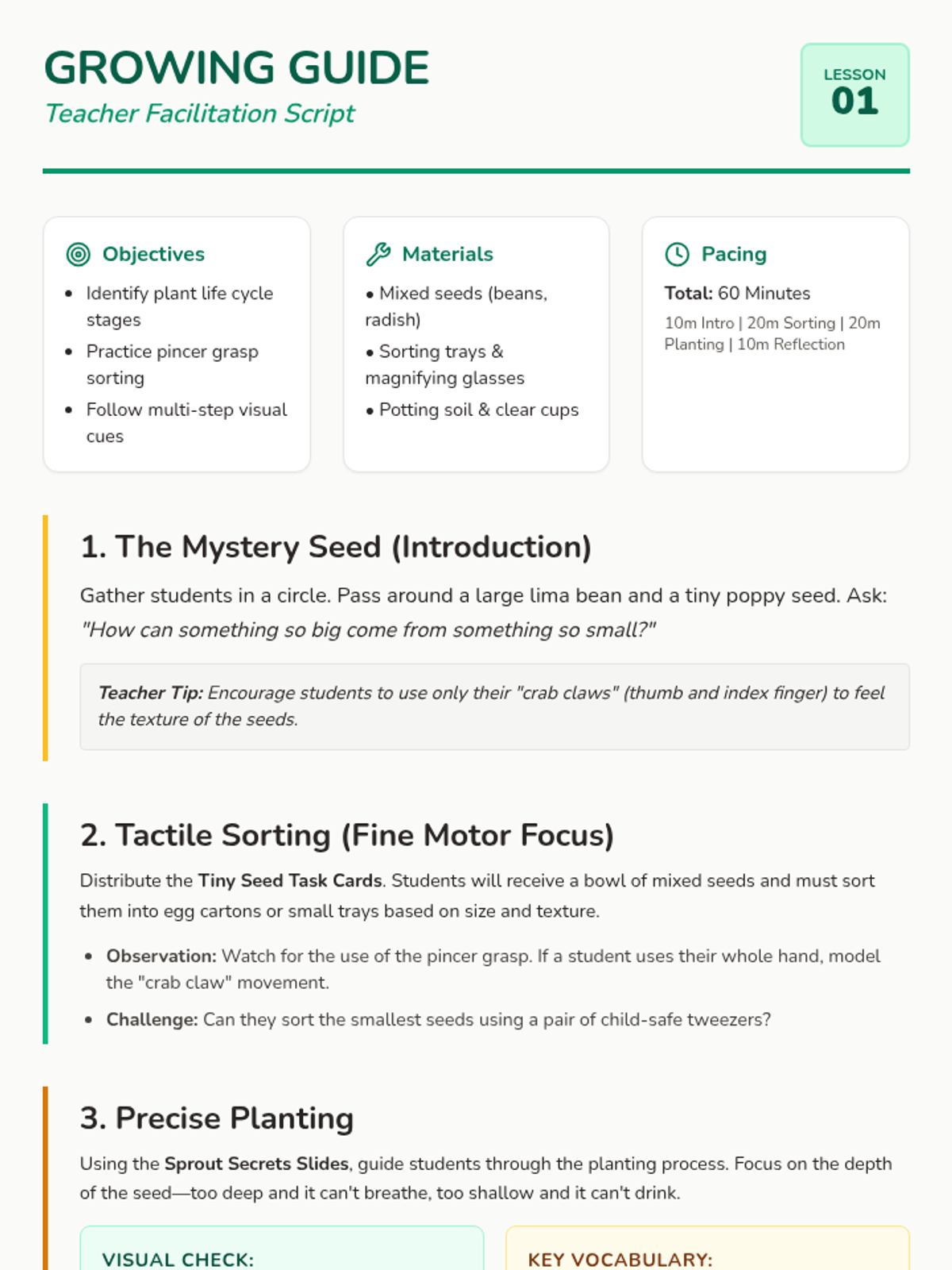
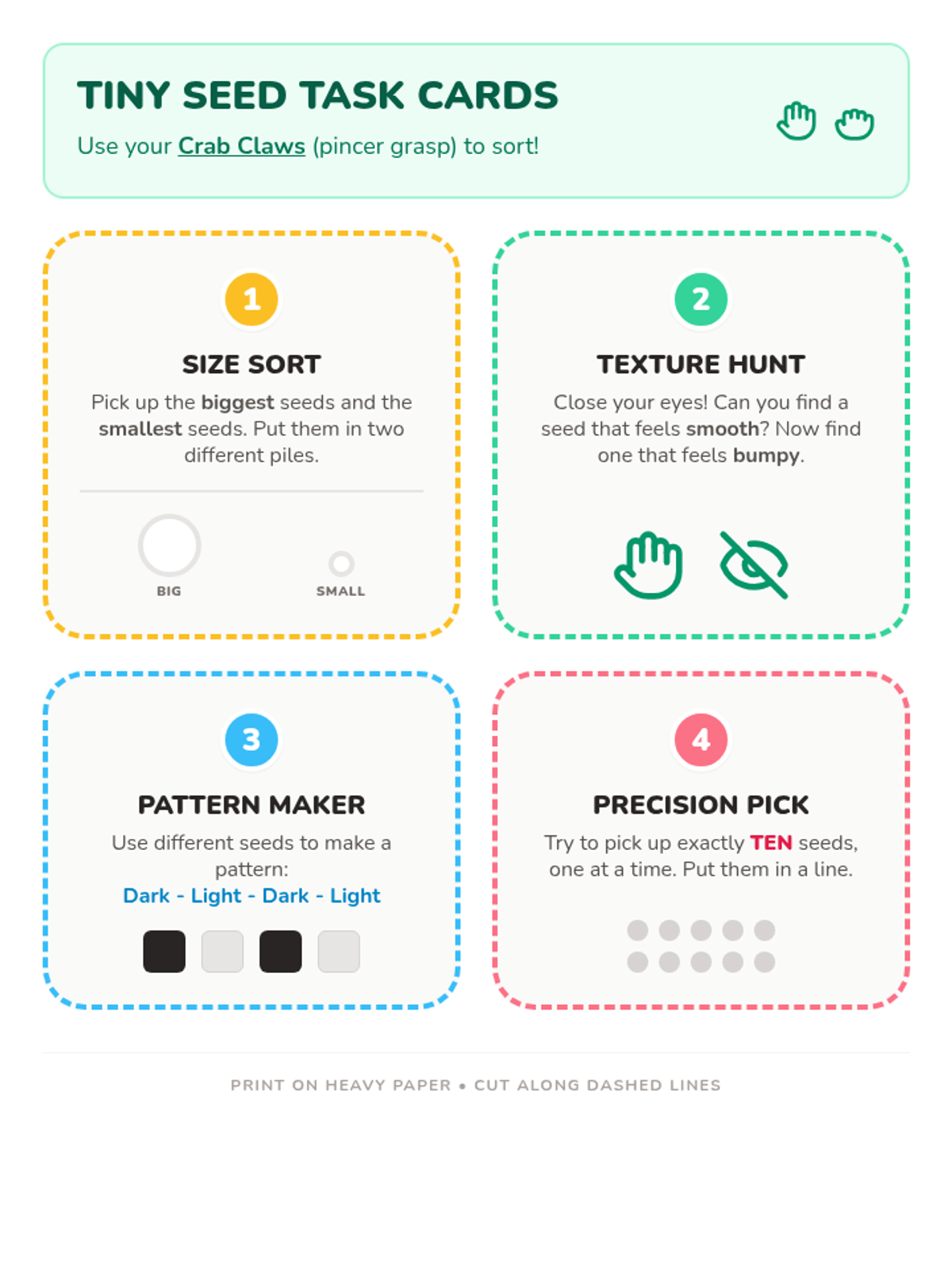
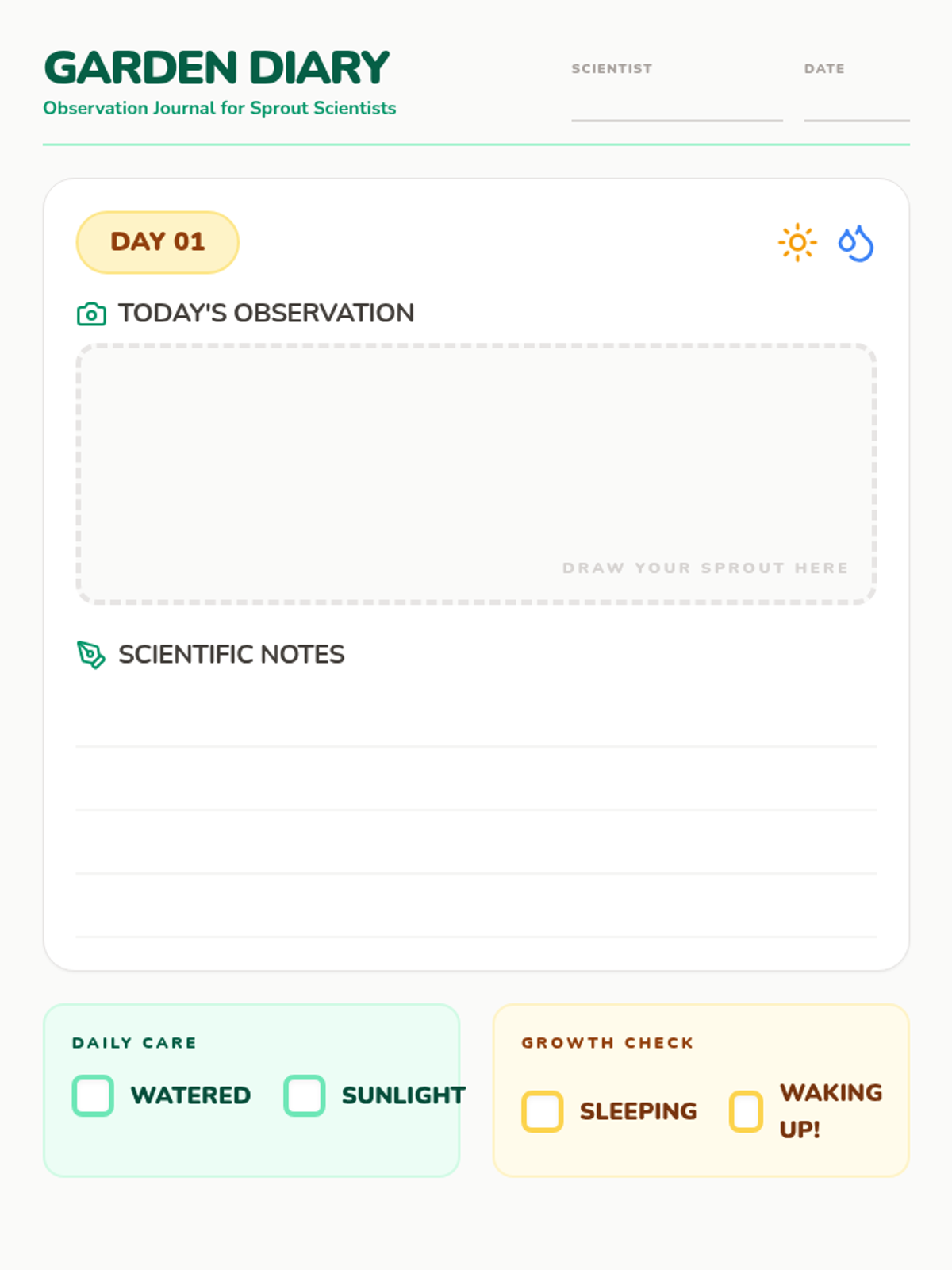
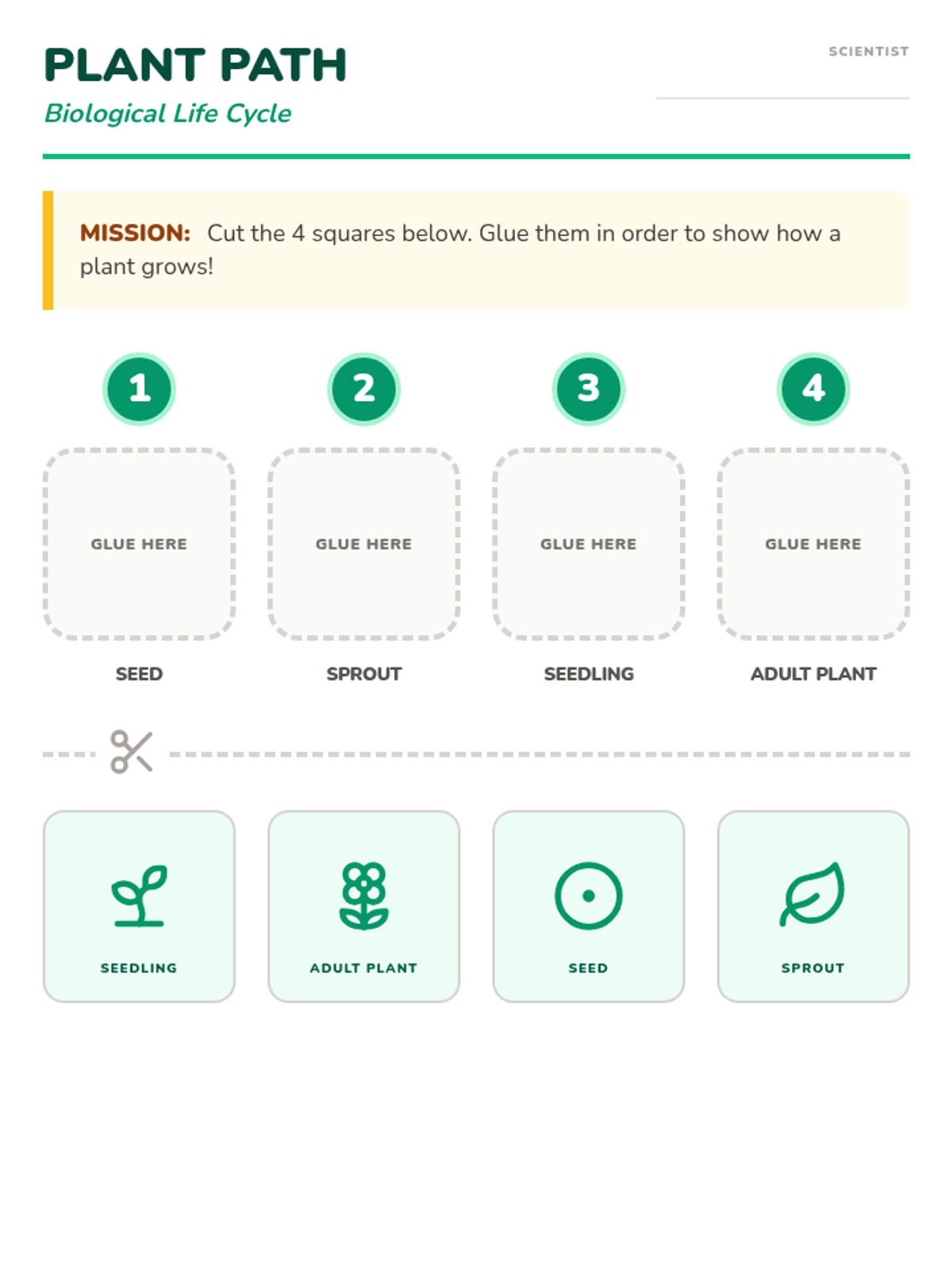
A sensory-rich lesson for K-3 students focusing on fine motor skills and plant life cycles through tactile seed sorting and indoor gardening. Students practice pincer grasps and follow visual directions to start their own sprout journey.
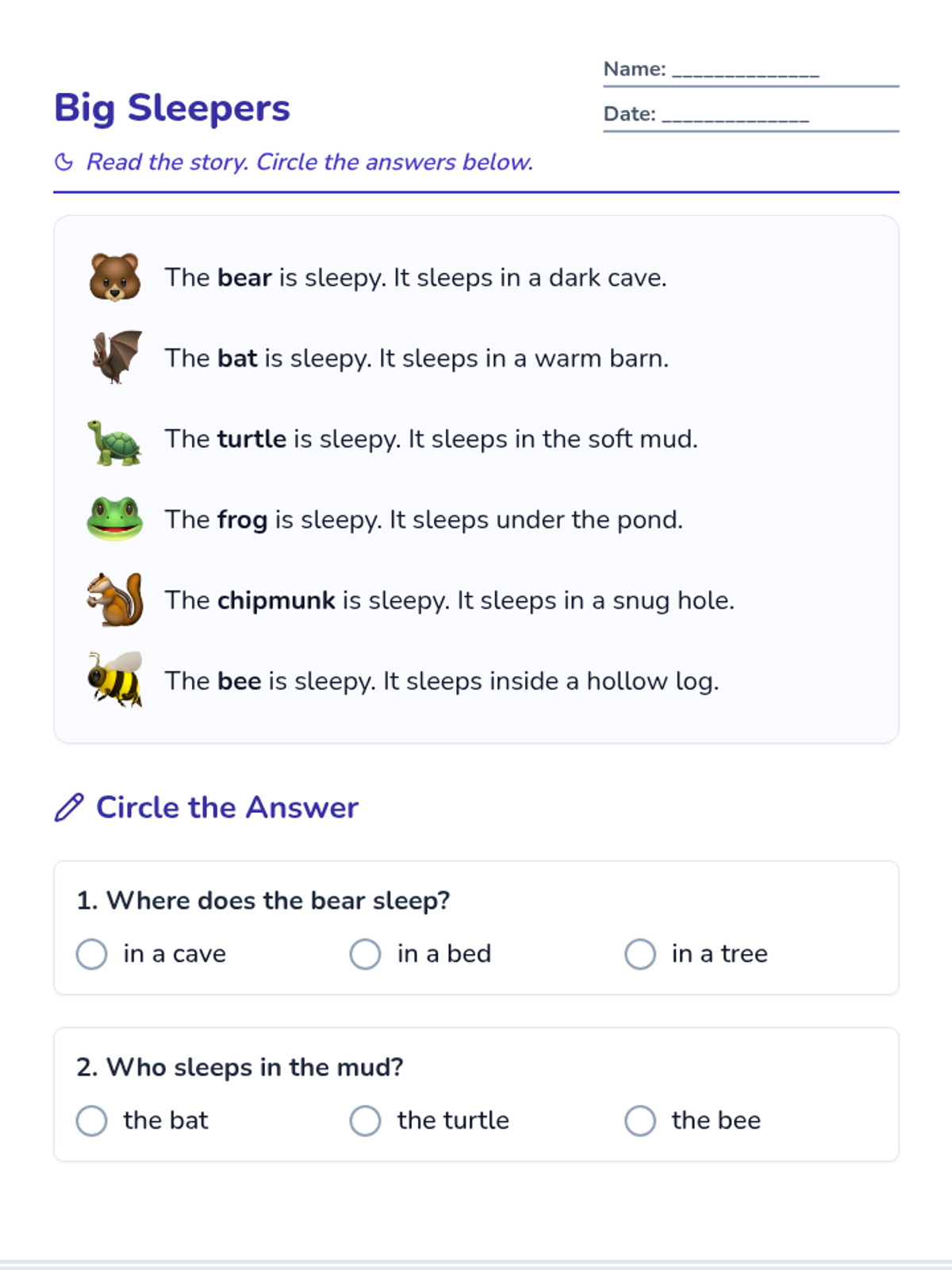
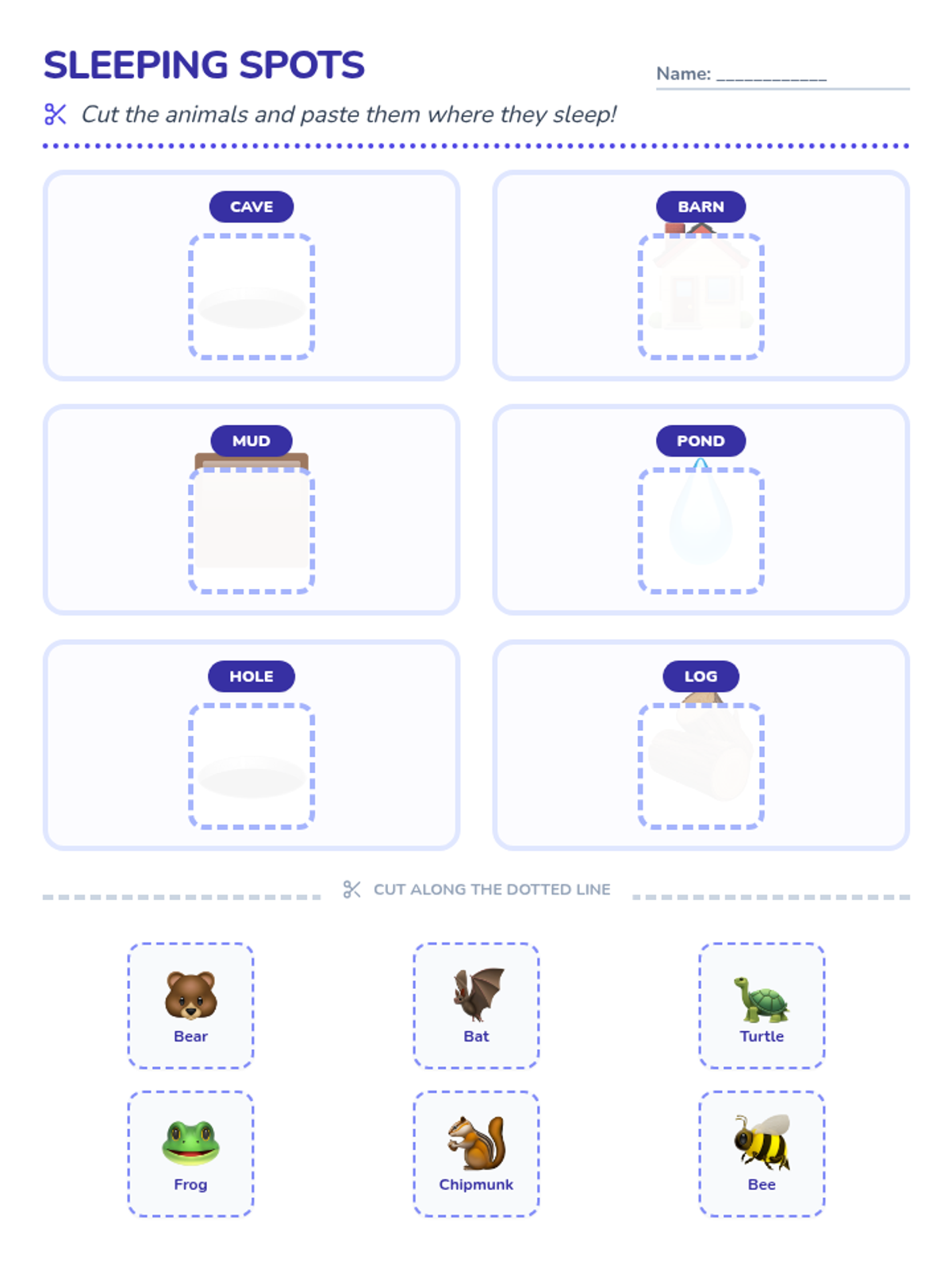
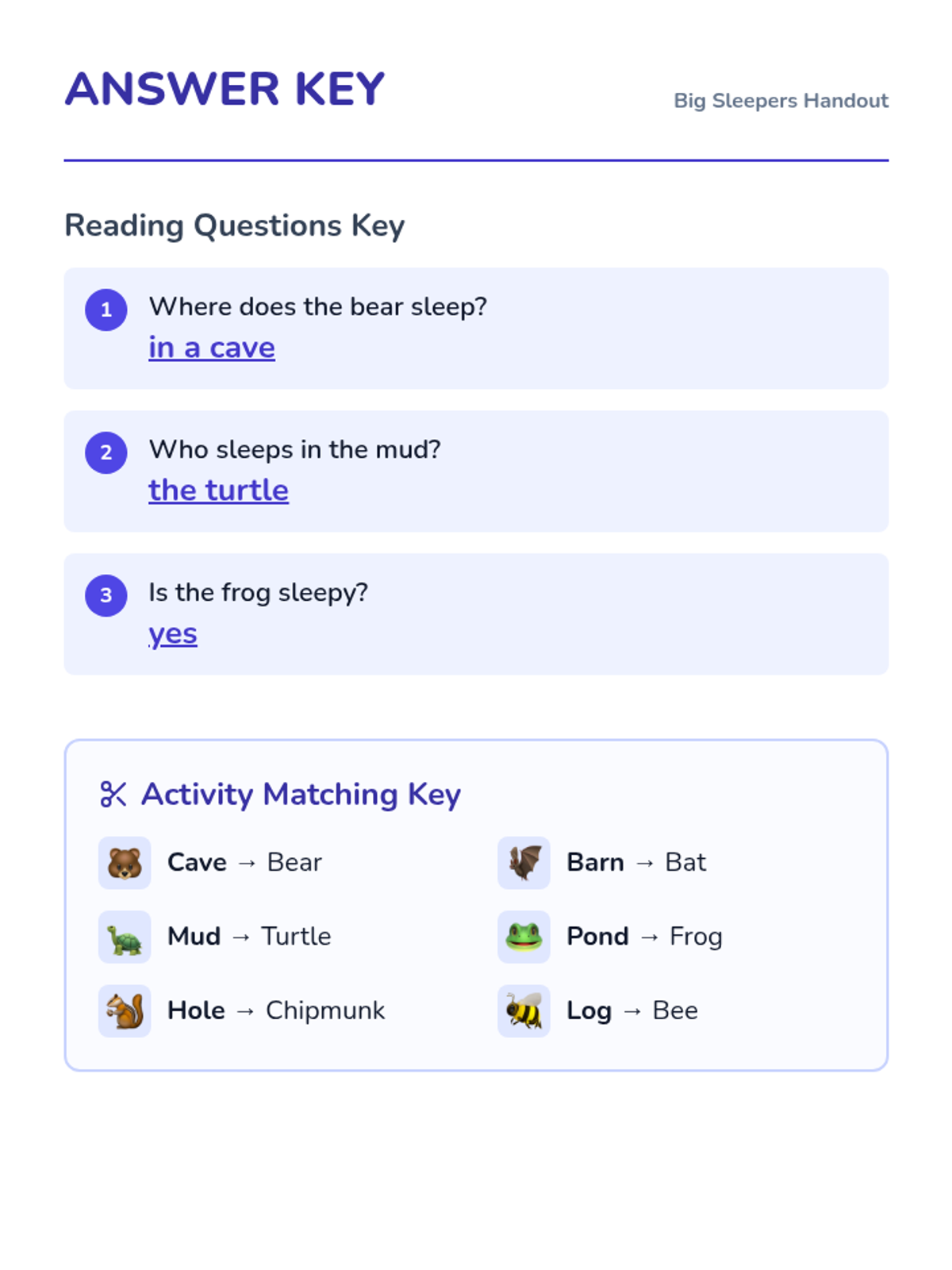
A kindergarten lesson exploring hibernation through repetitive text, simple comprehension questions, and a sorting activity.
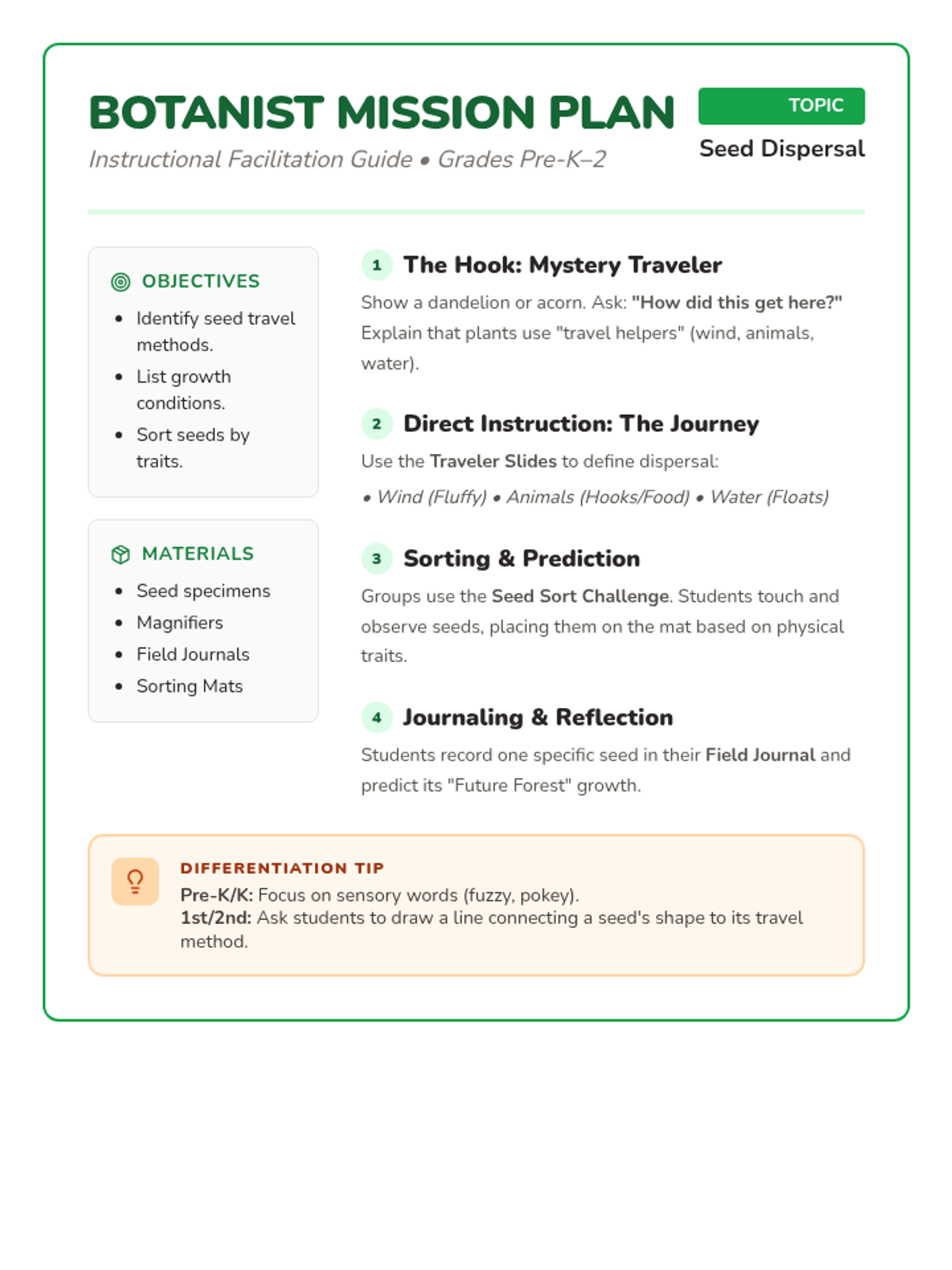
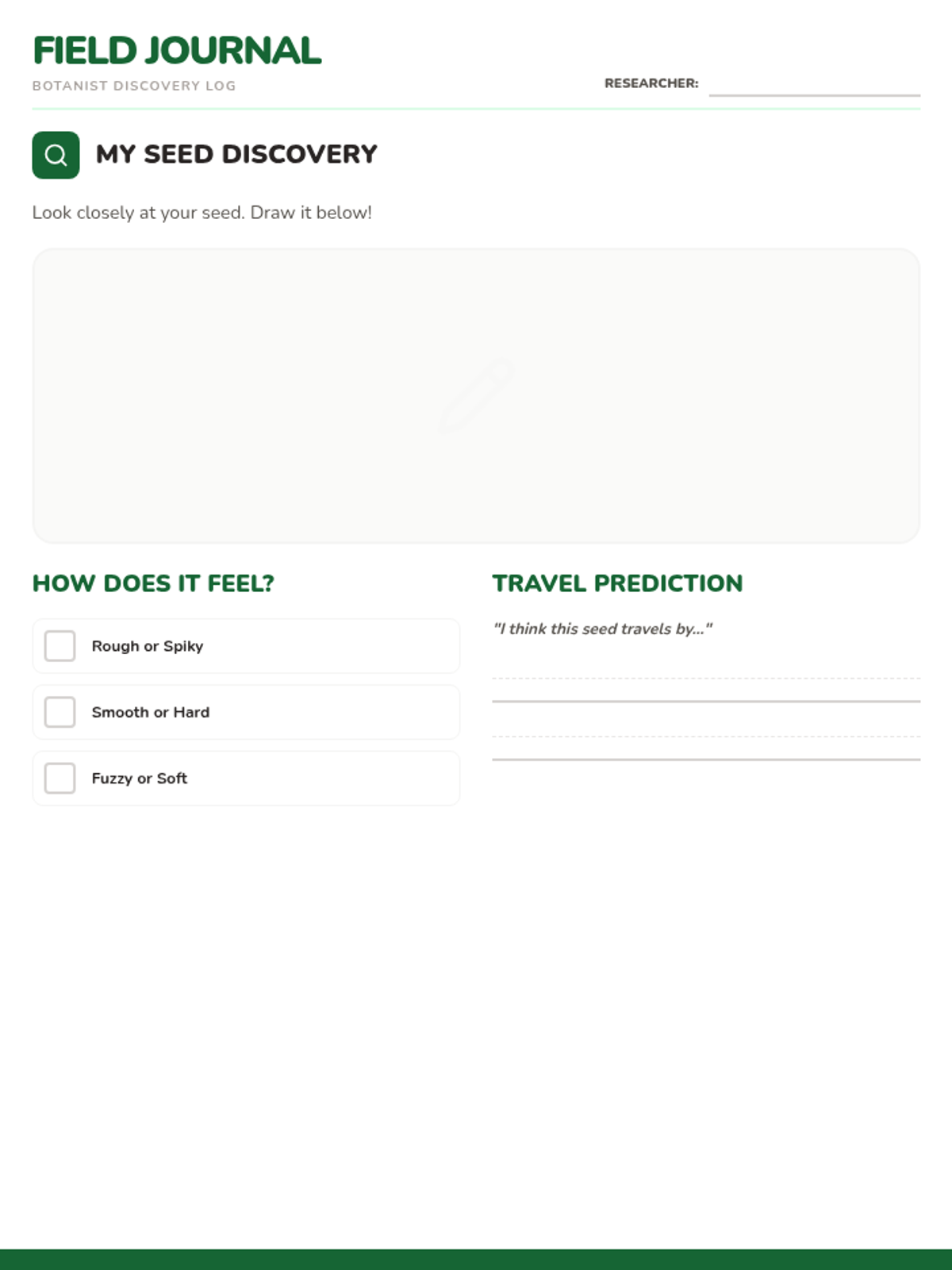
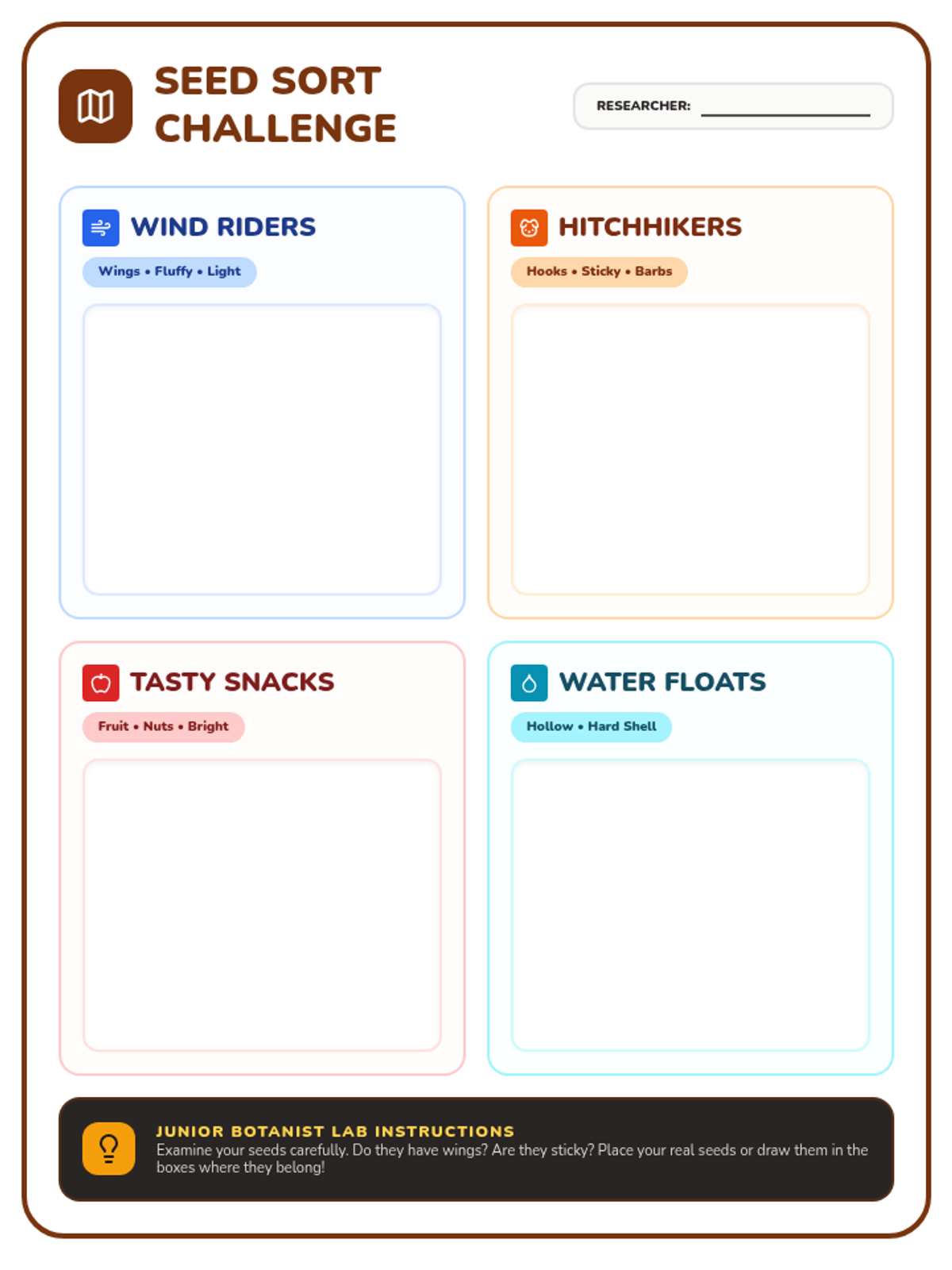
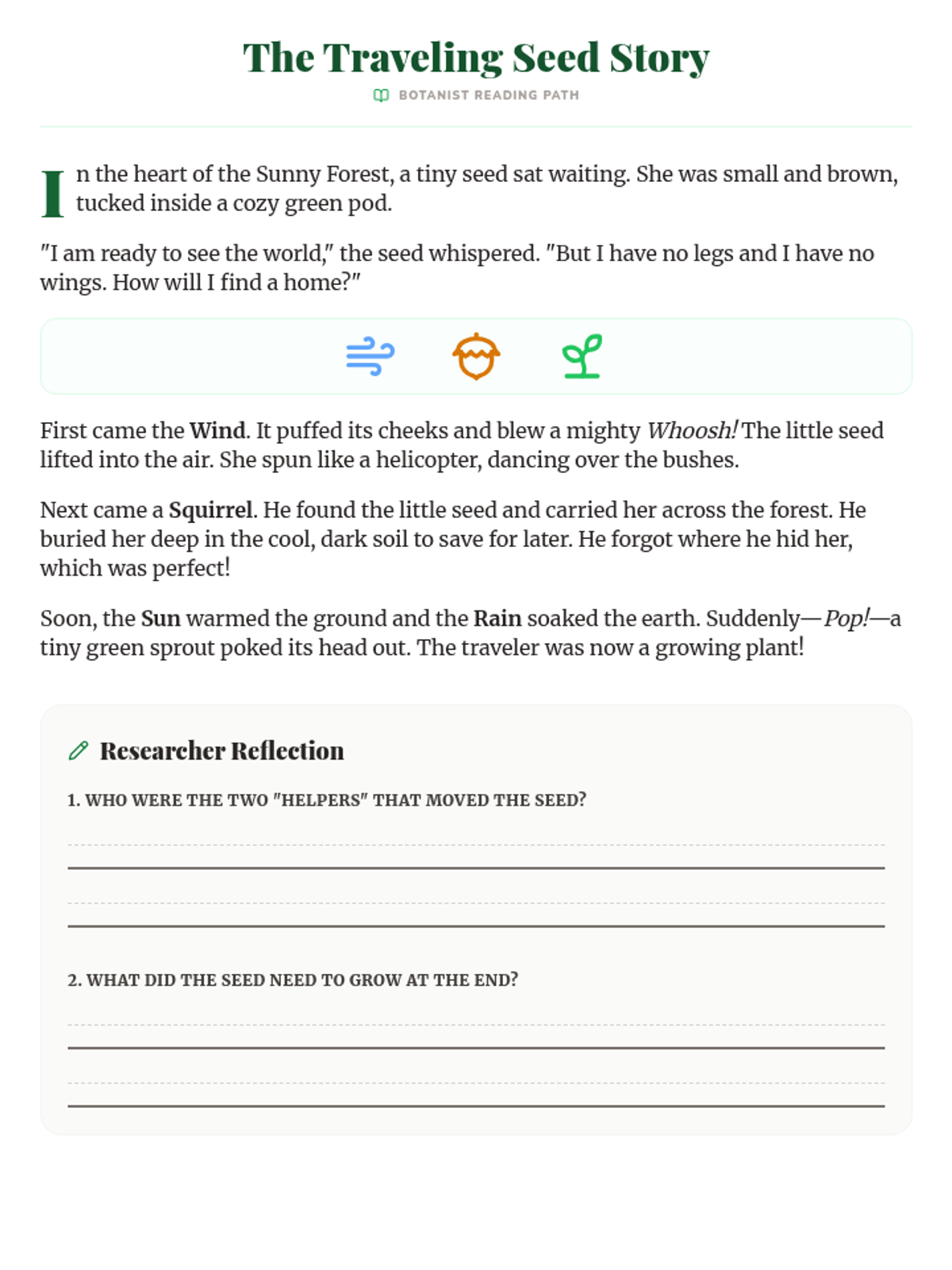
A comprehensive life science lesson for Pre-K to 2nd grade focused on seed dispersal, plant needs, and hands-on observation. Students act as junior botanists to explore how seeds move and what they need to grow into healthy plants.
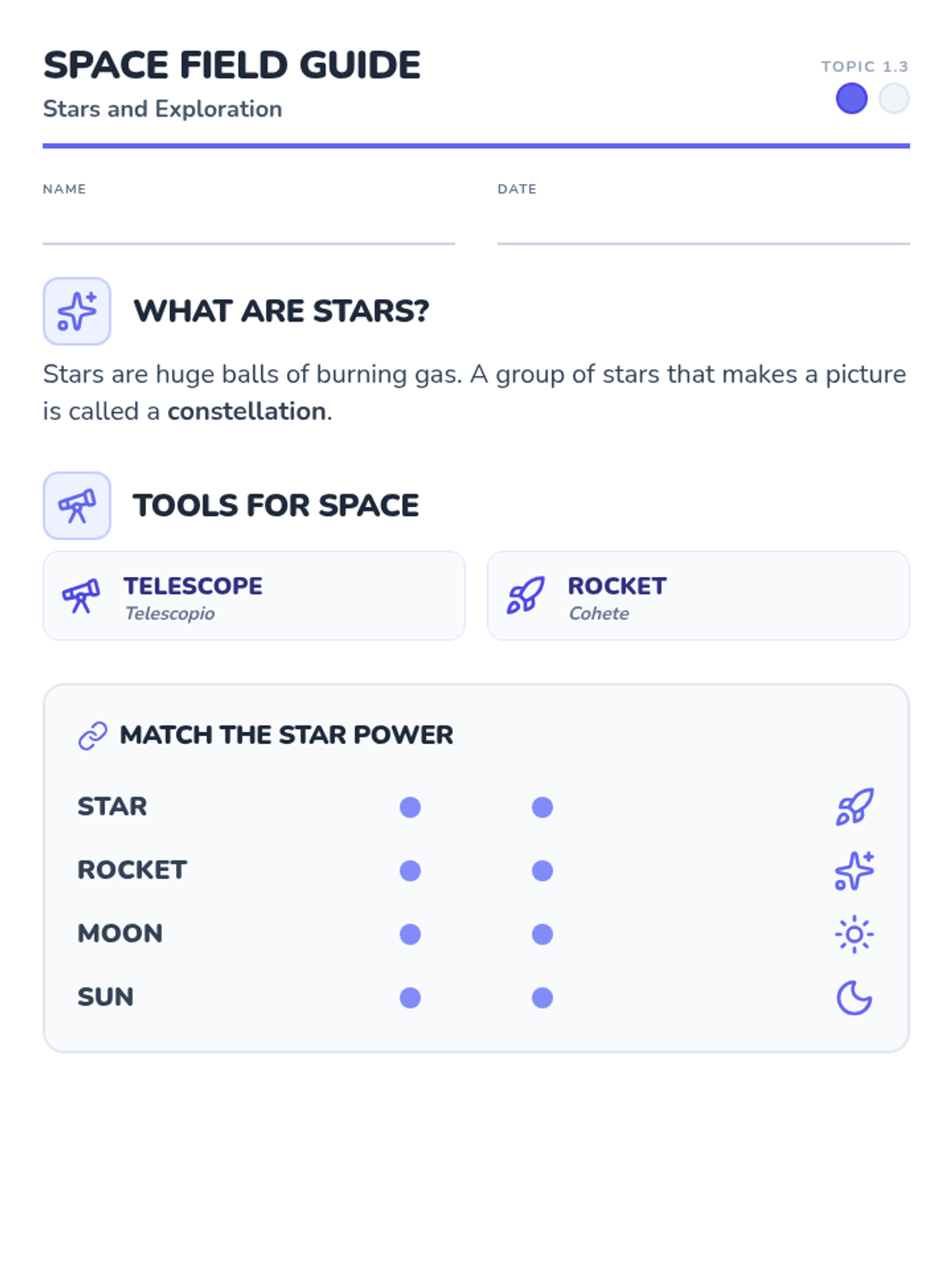
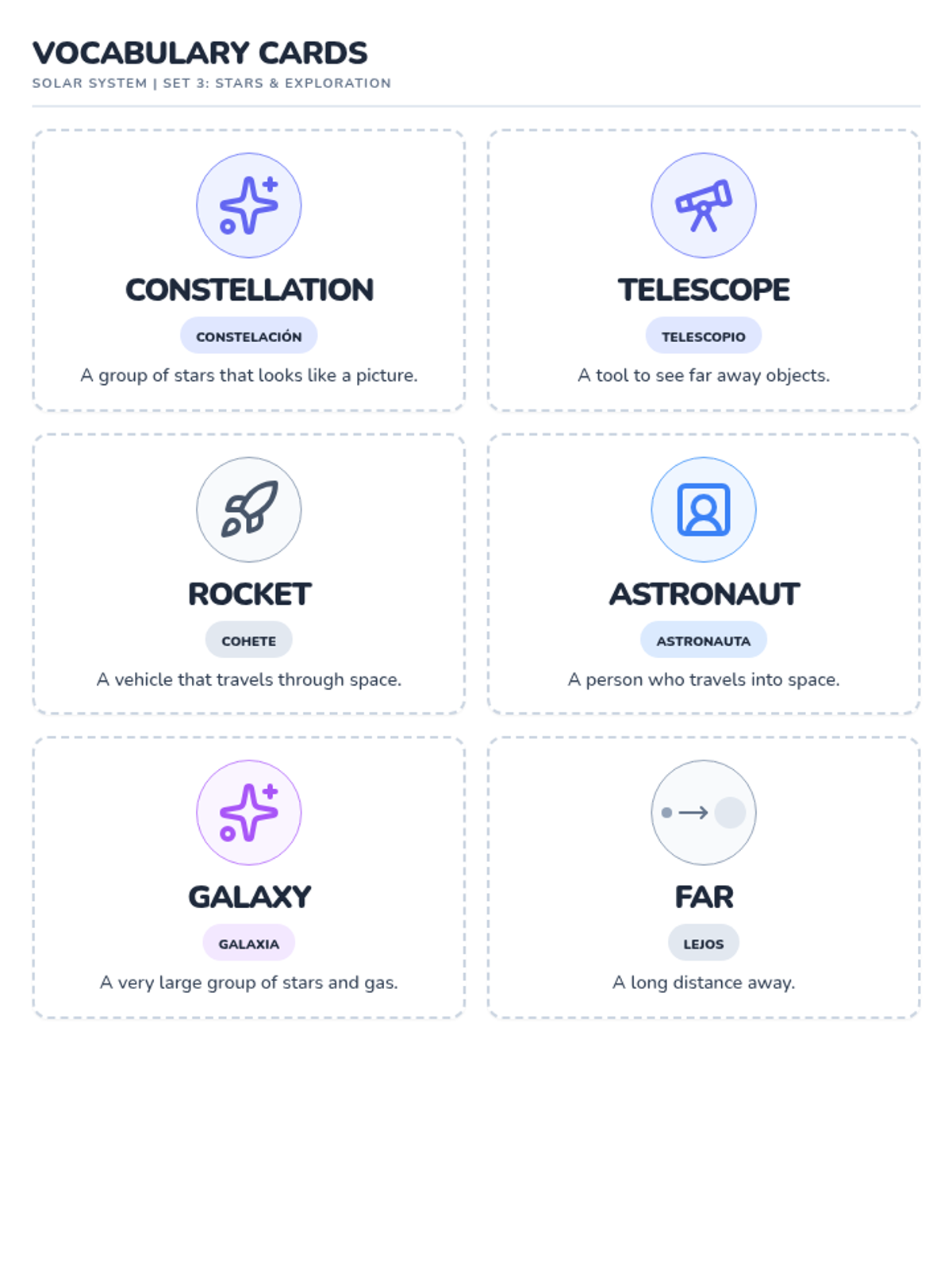
An exploration of stars, constellations, and the technology humans use to study deep space.
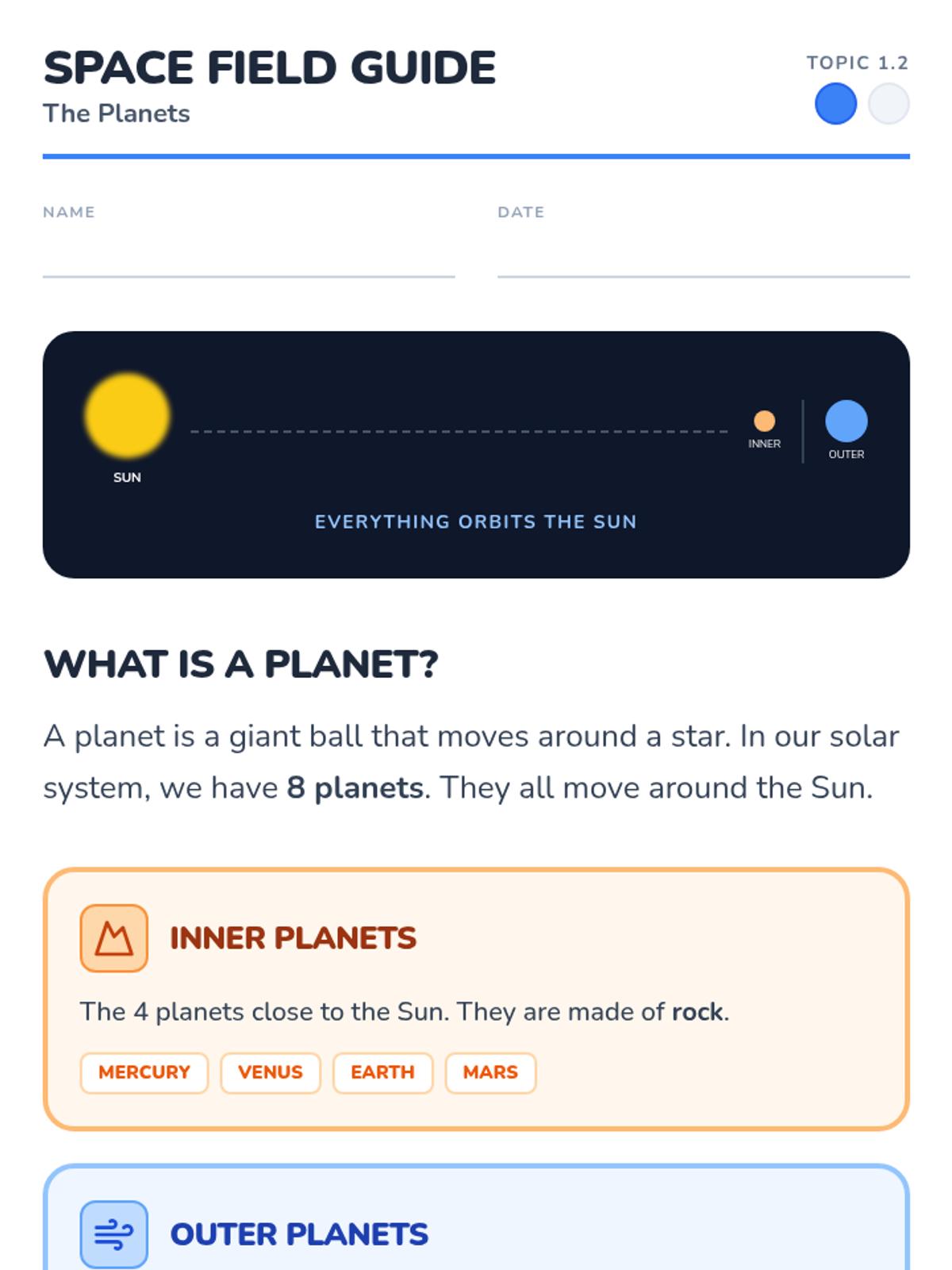
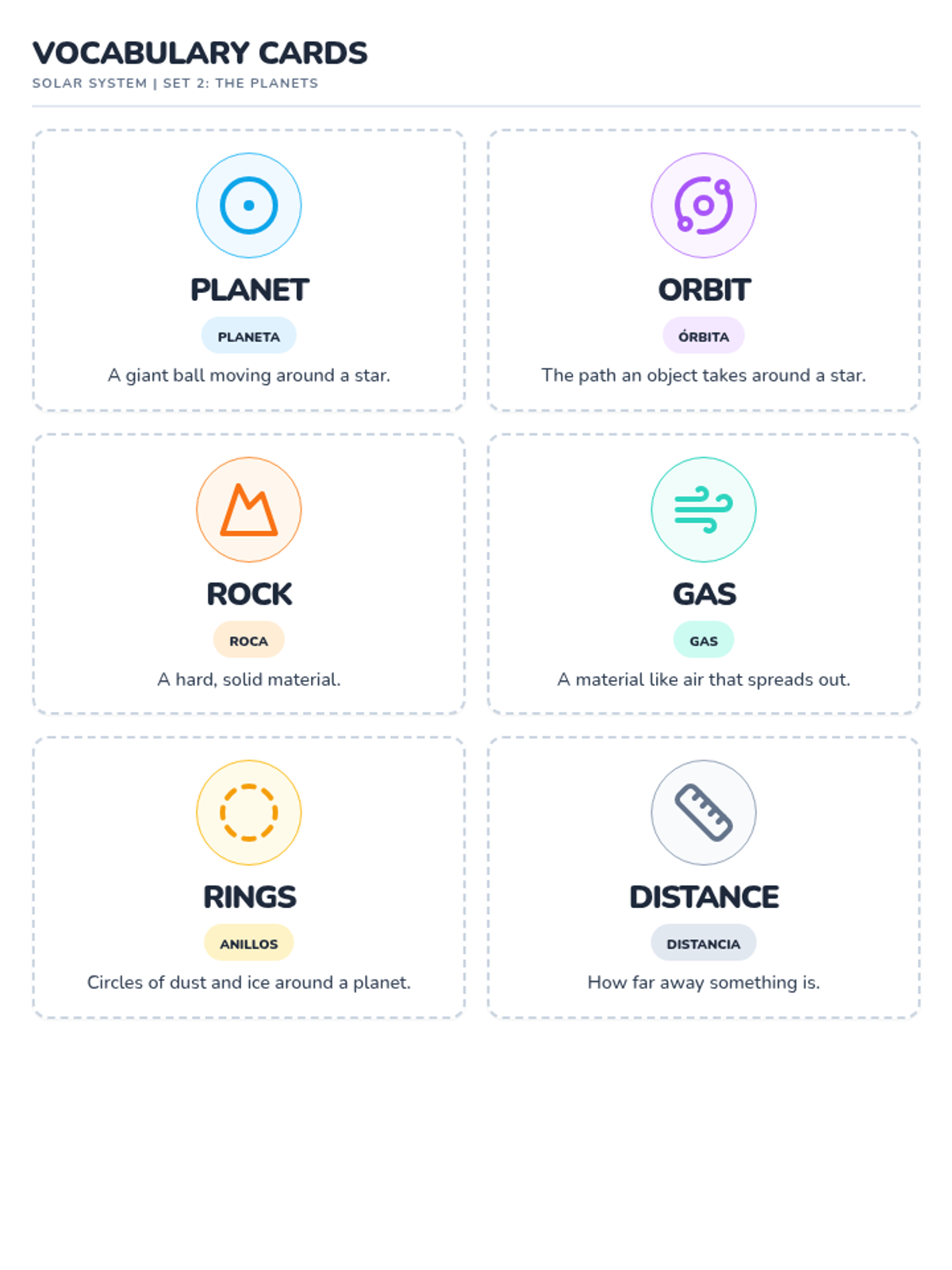
A simplified tour of the eight planets in our solar system, categorized into rocky inner planets and gas giant outer planets.
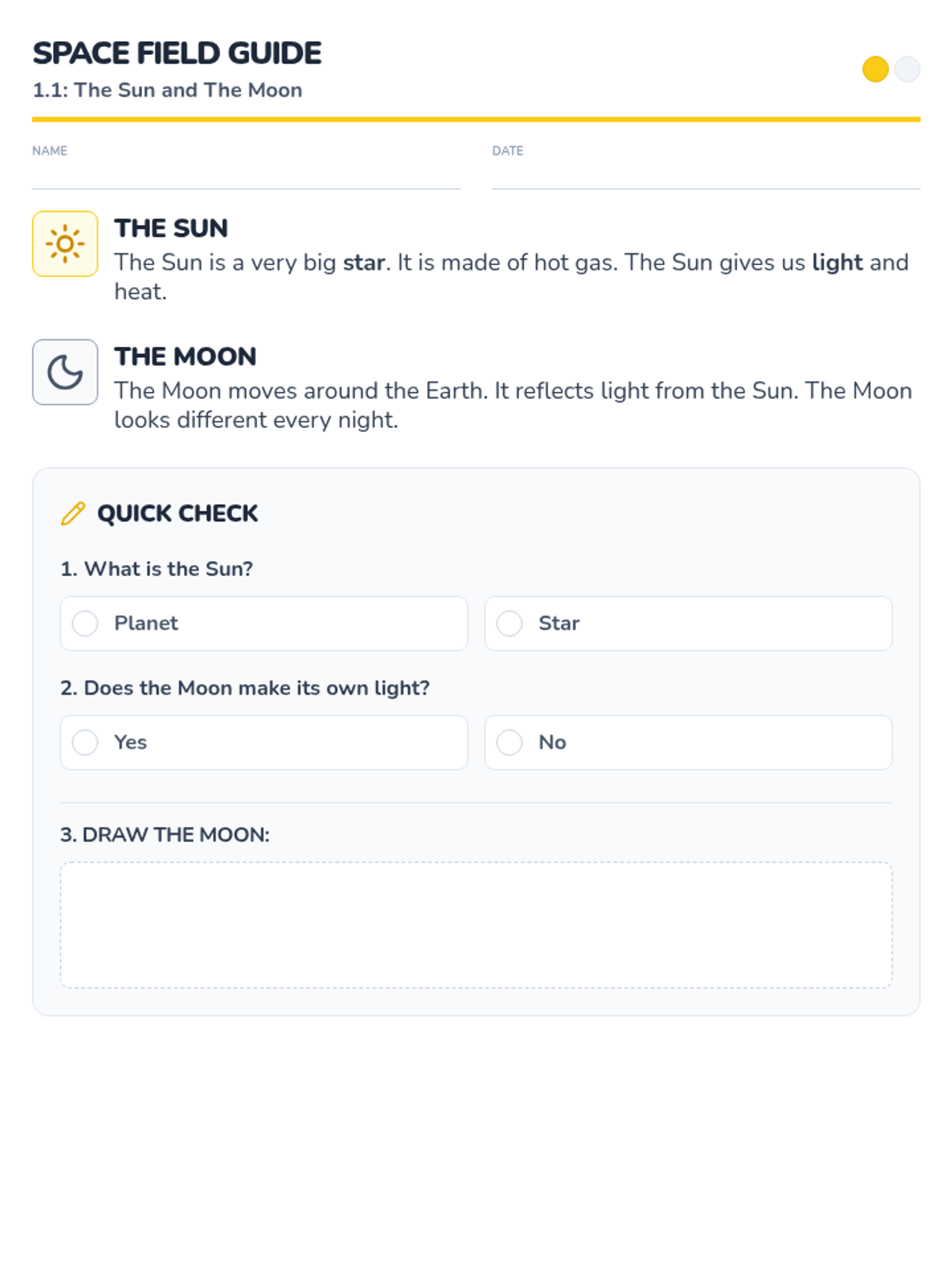
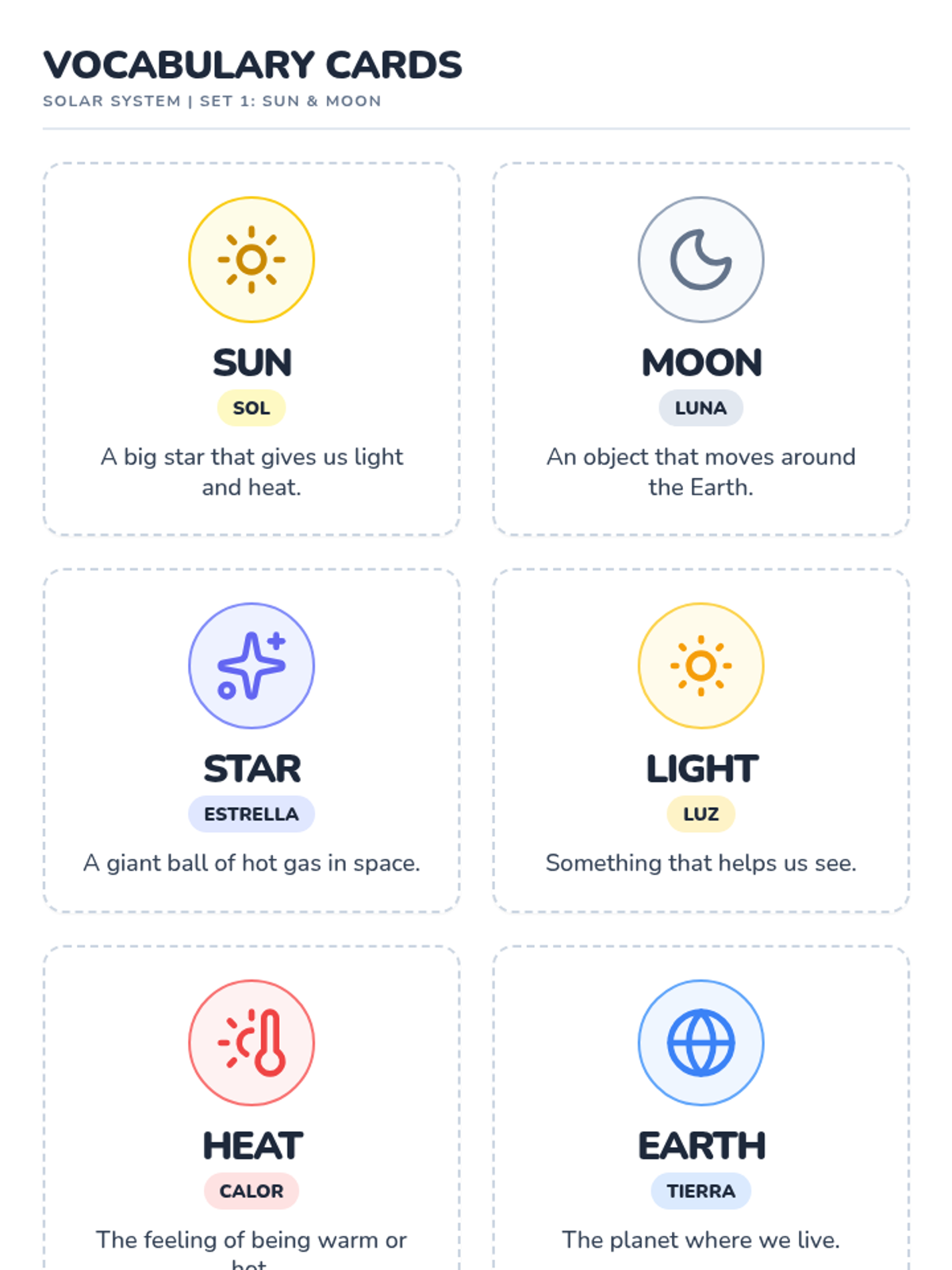
An introduction to our nearest neighbors in space: the Sun and the Moon, focusing on their basic characteristics and roles.
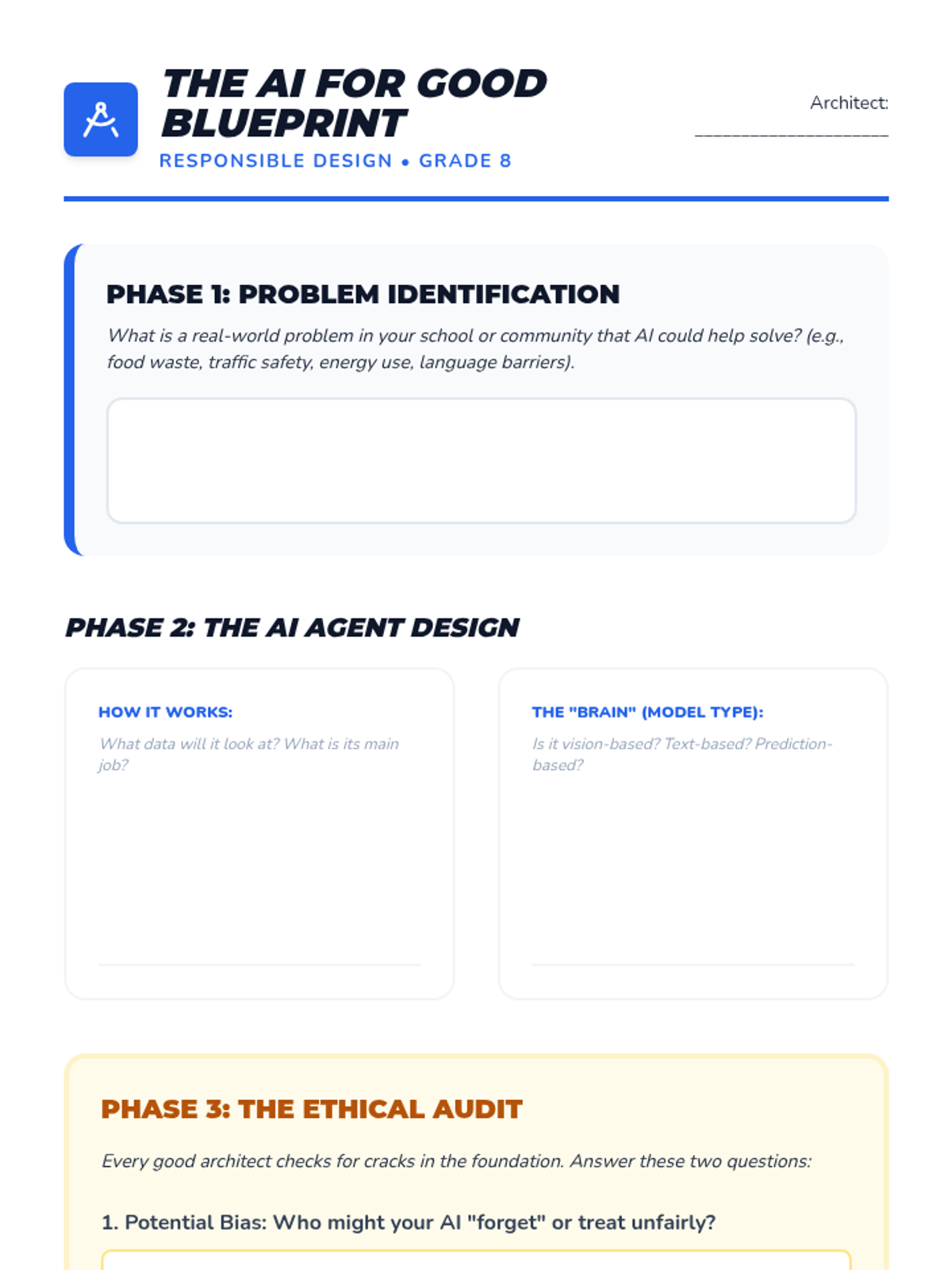
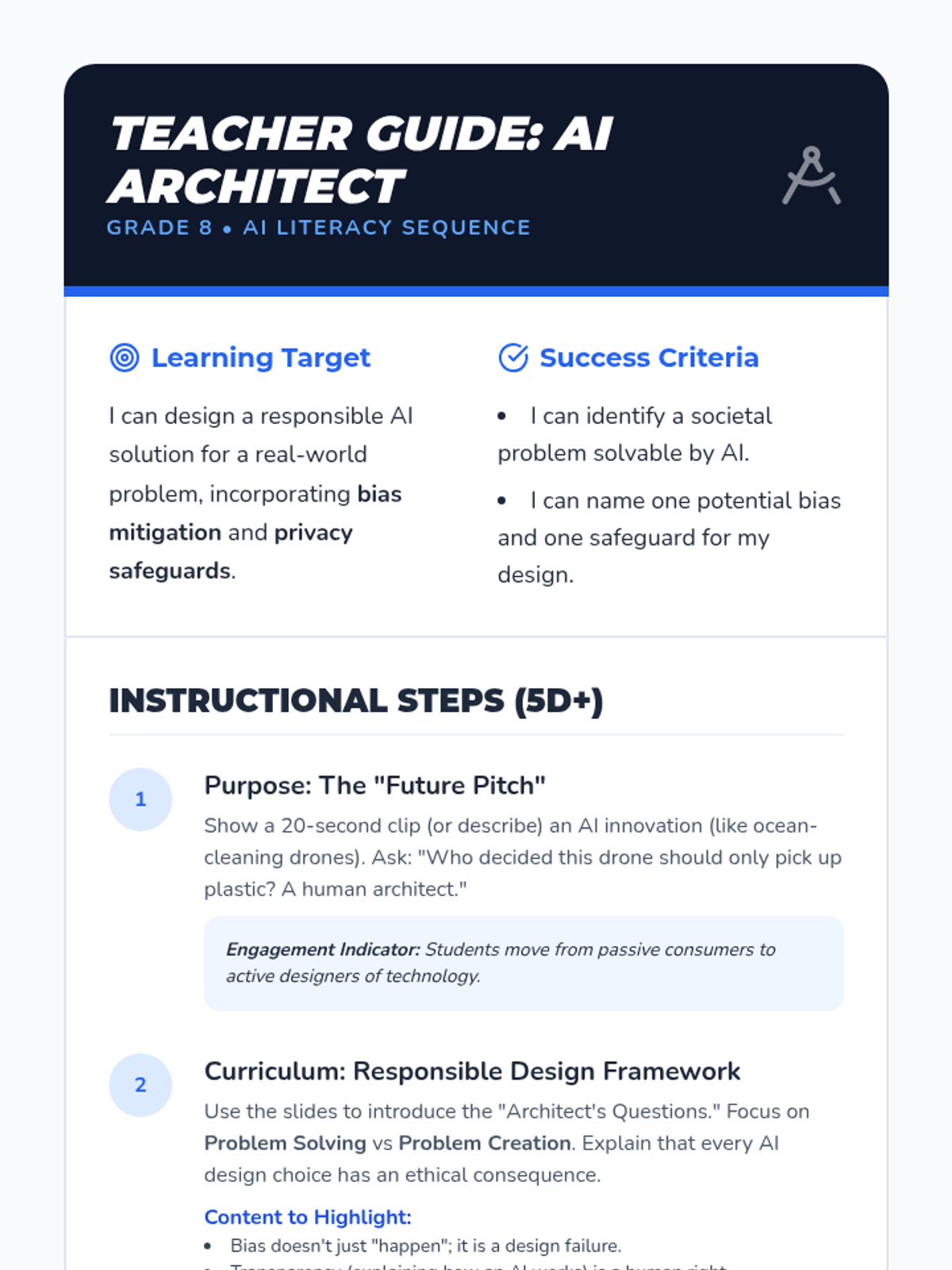
Students culminate their AI literacy journey by designing an AI solution for a real-world problem. They focus on responsible design, identifying potential biases, and ensuring societal benefit.
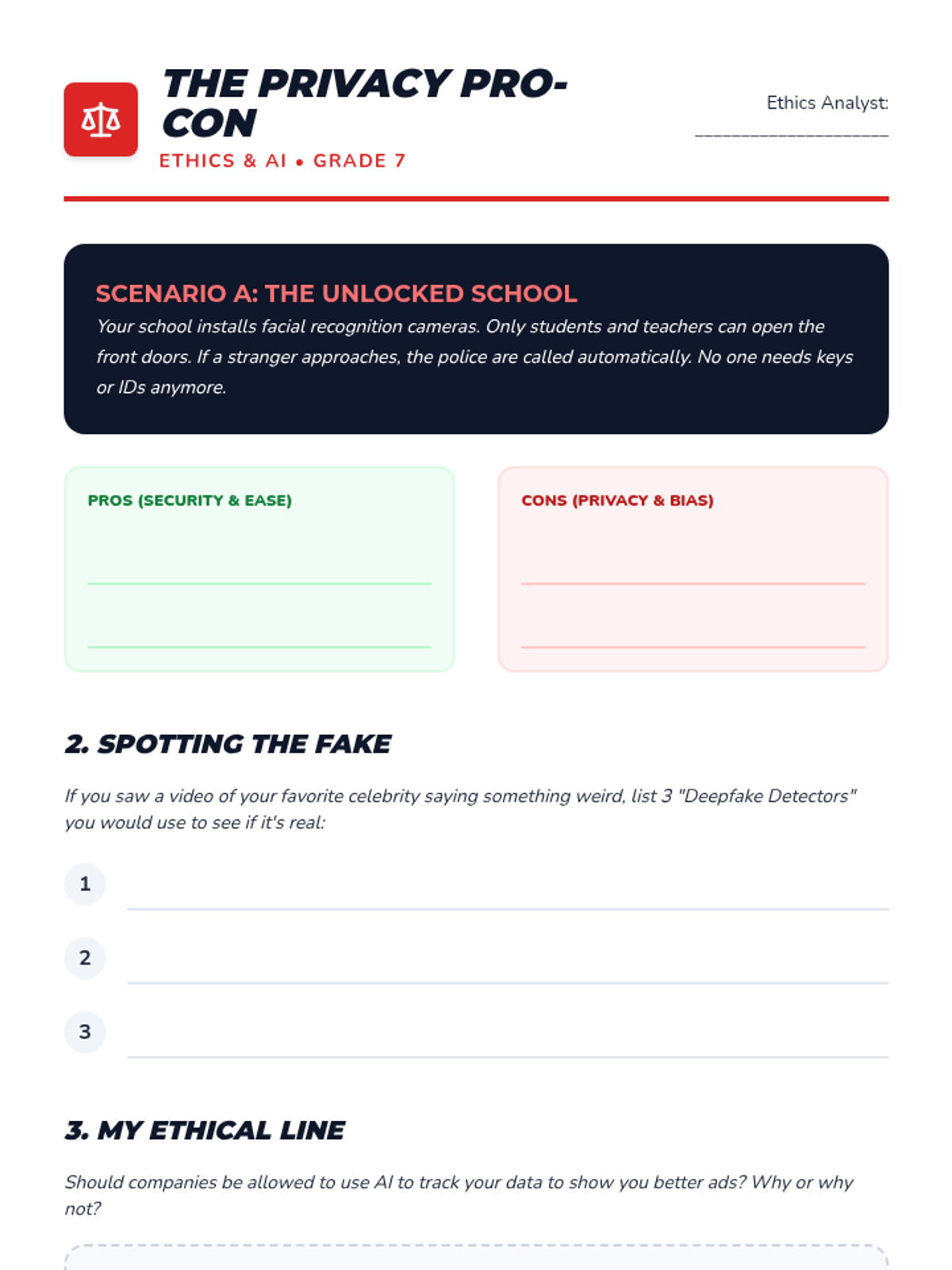
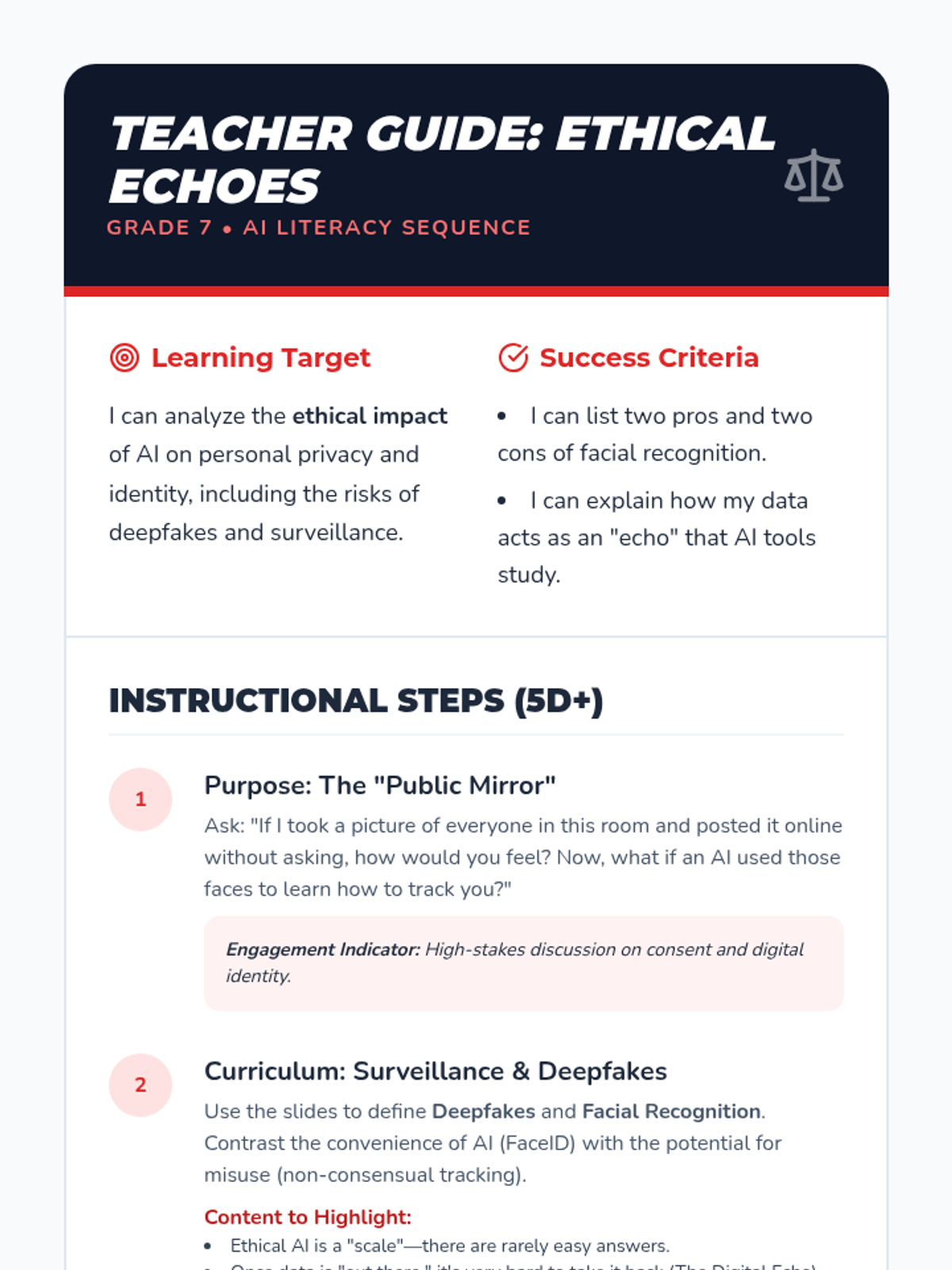
Students analyze the ethical implications of AI on privacy and identity. They explore deepfakes, facial recognition, and the balance between security and personal freedom.
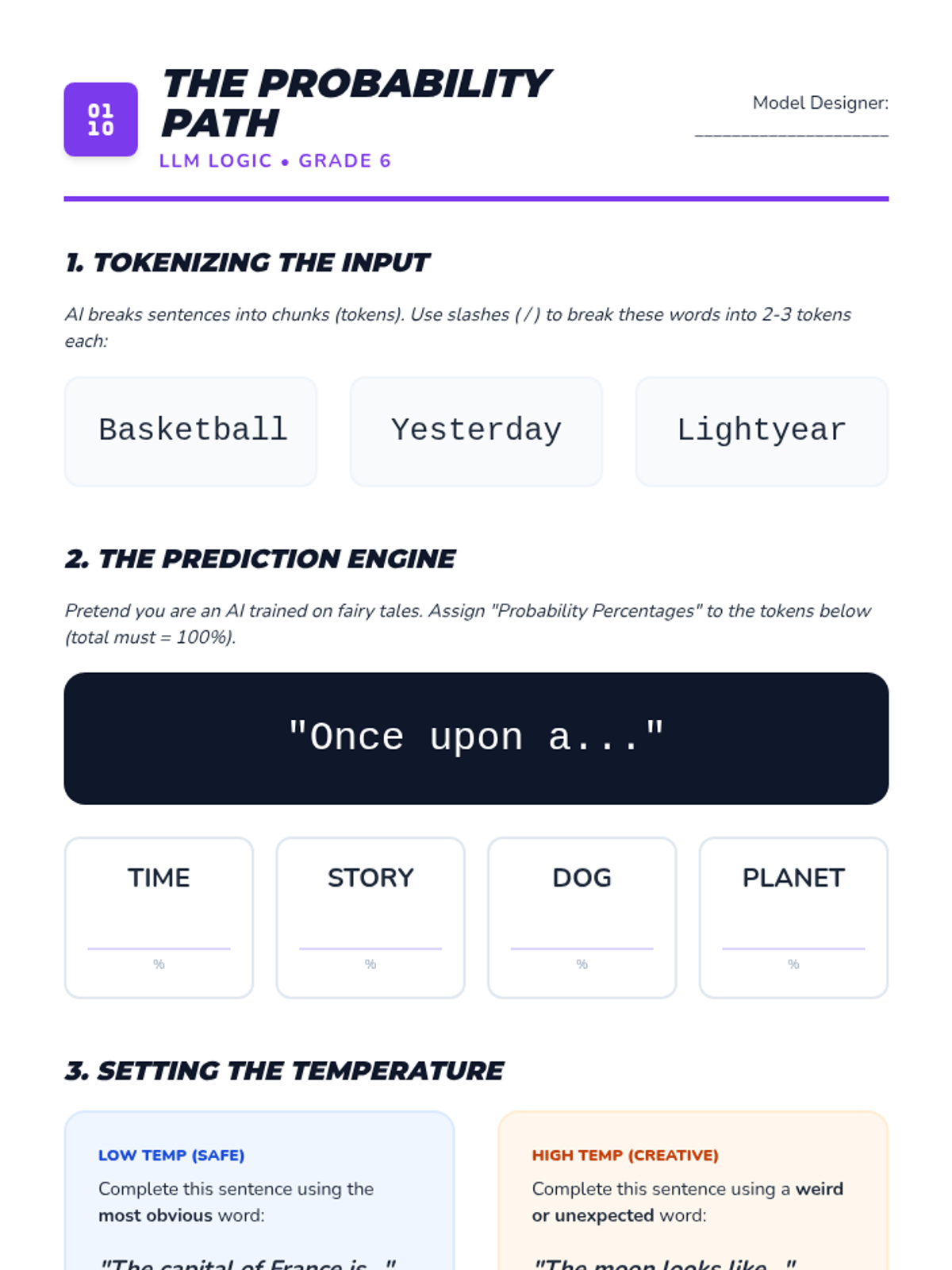
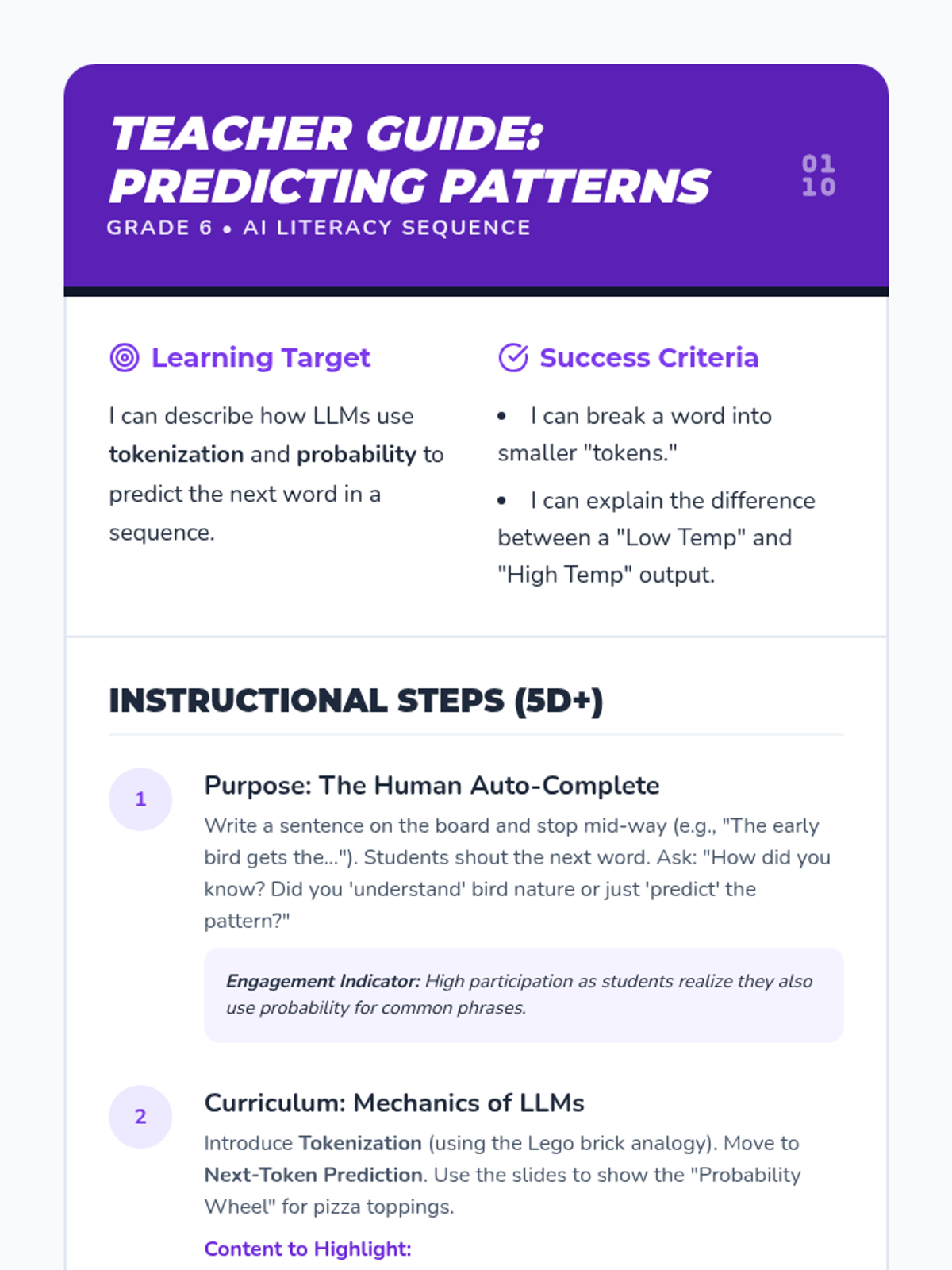
Middle school students dive into the mechanics of Large Language Models (LLMs). They learn about tokenization, probability, and how AI "predicts" the next word in a sequence.
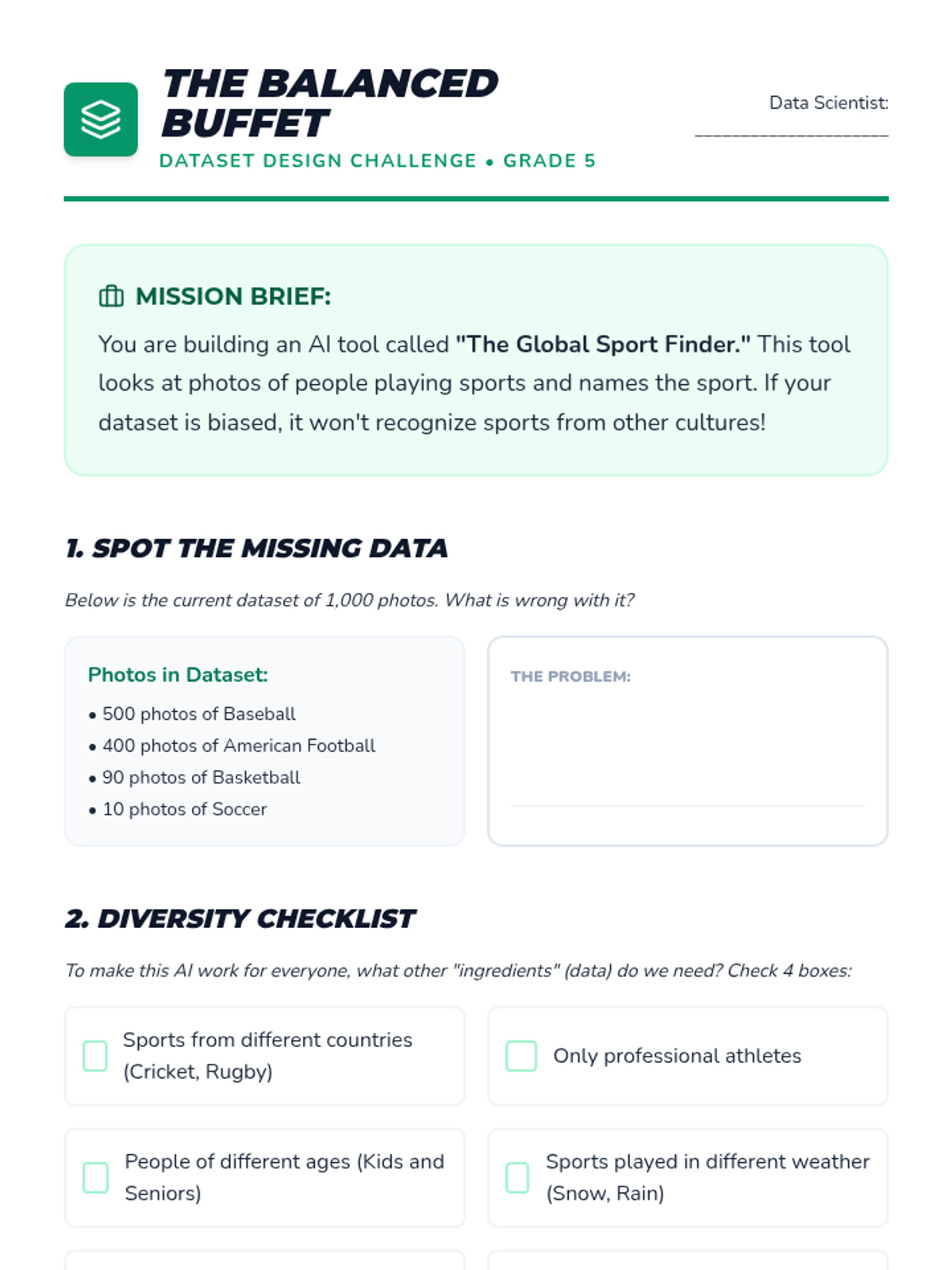
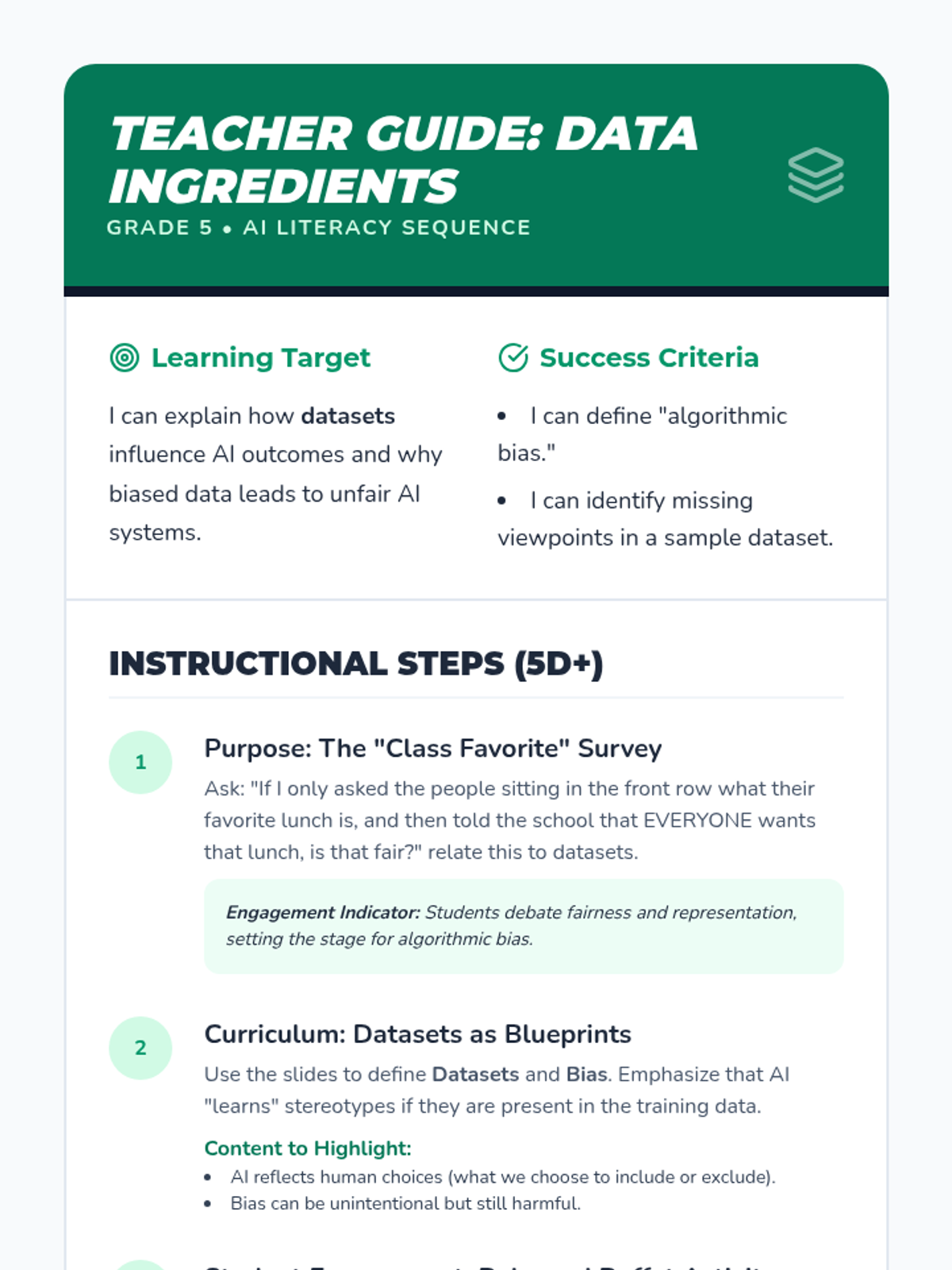
Students explore the "ingredients" of AI: datasets. They learn how biased or incomplete data can lead to unfair or inaccurate AI systems and practice creating a balanced dataset.
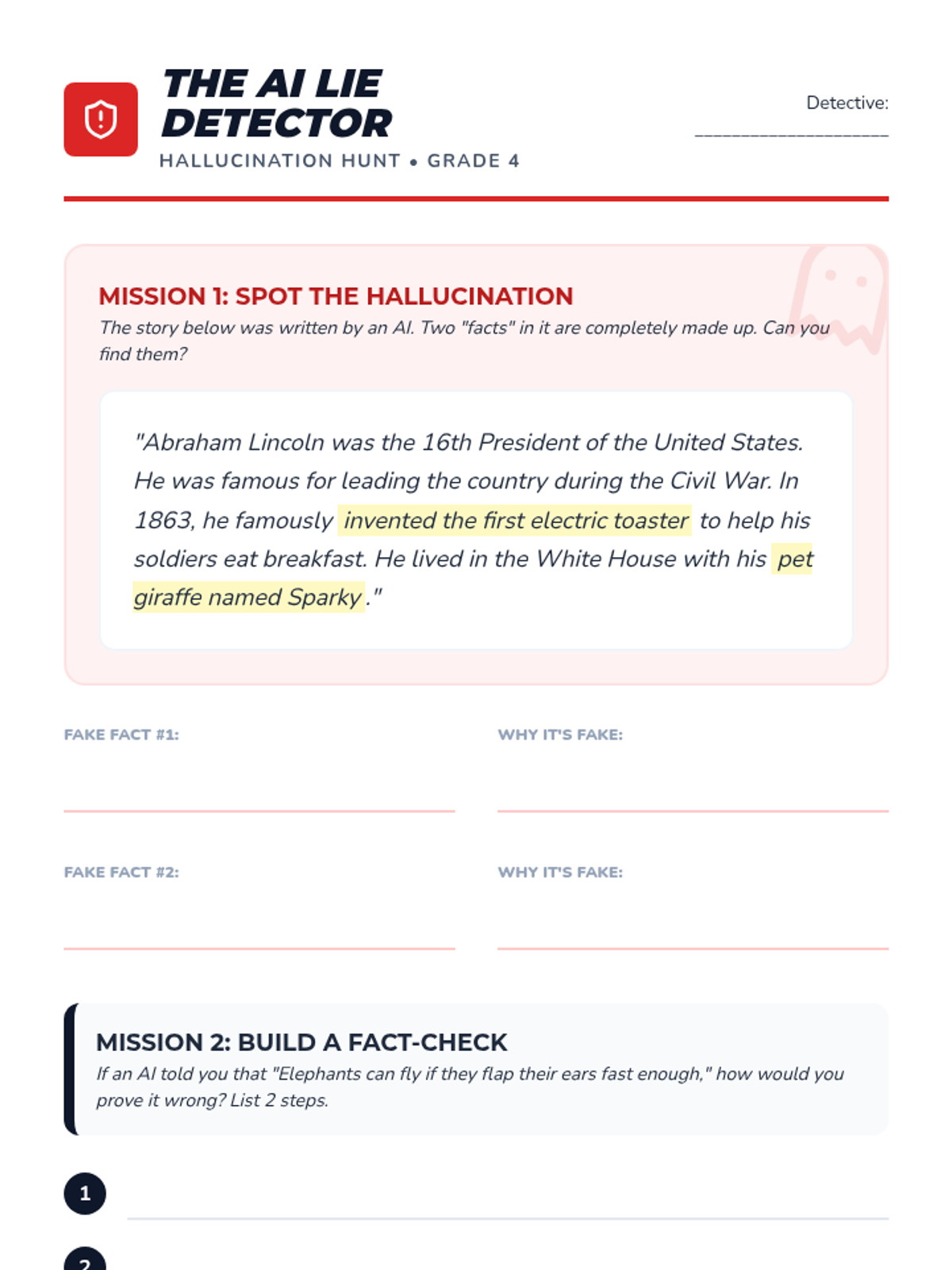
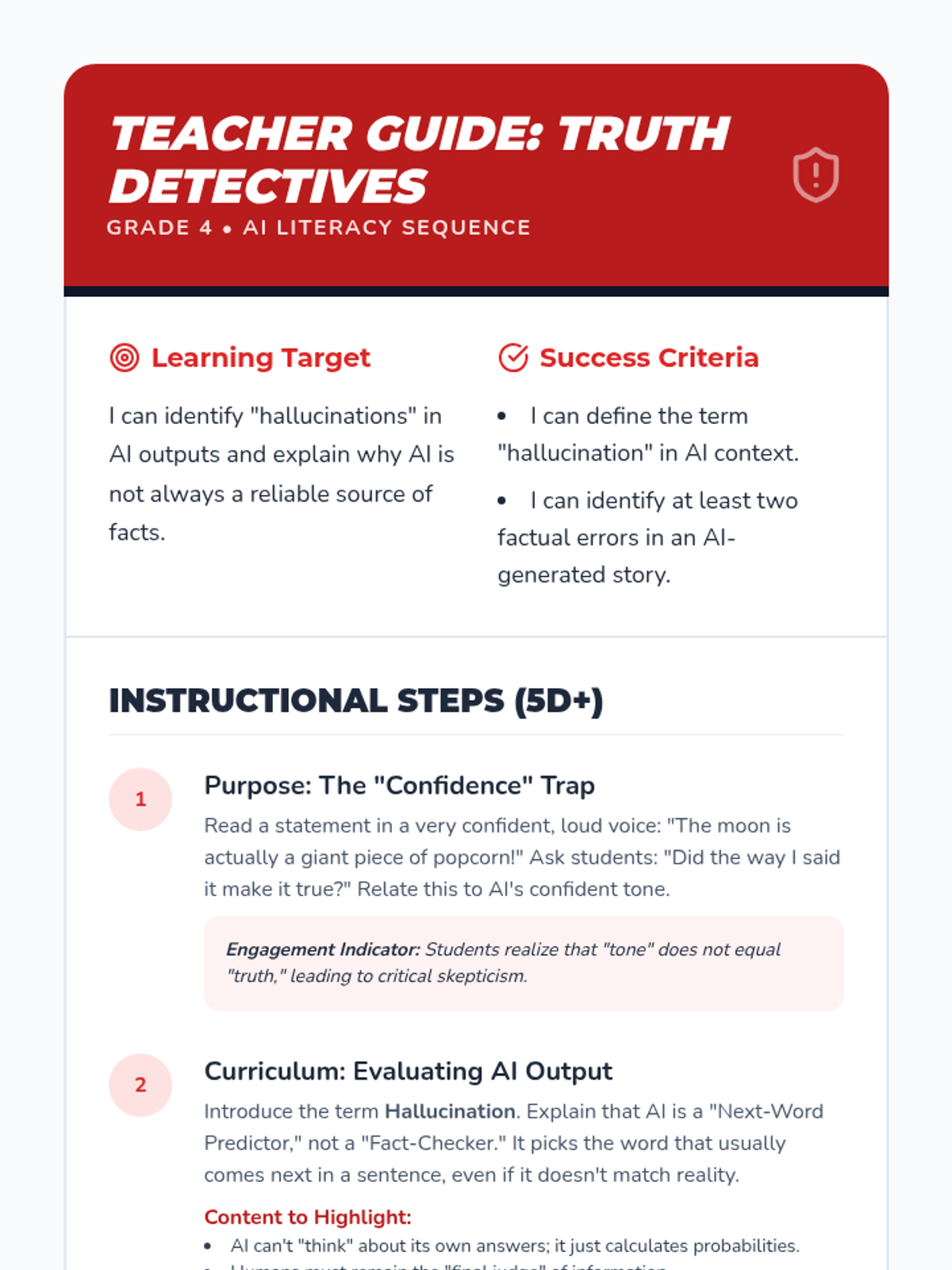
Students learn to critically evaluate AI outputs by identifying "hallucinations" and factual errors. They explore why AI sometimes makes mistakes and how to verify information.
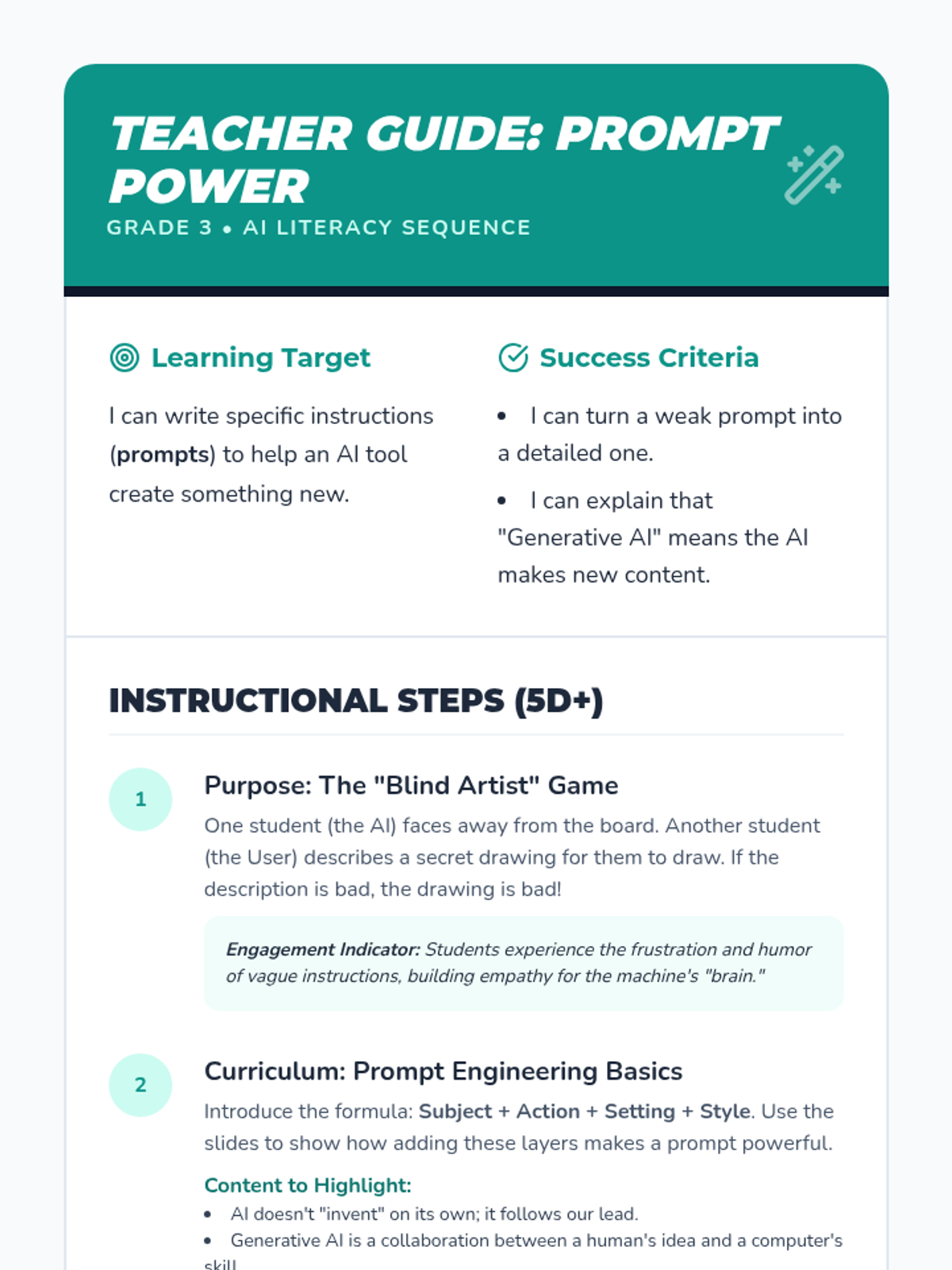
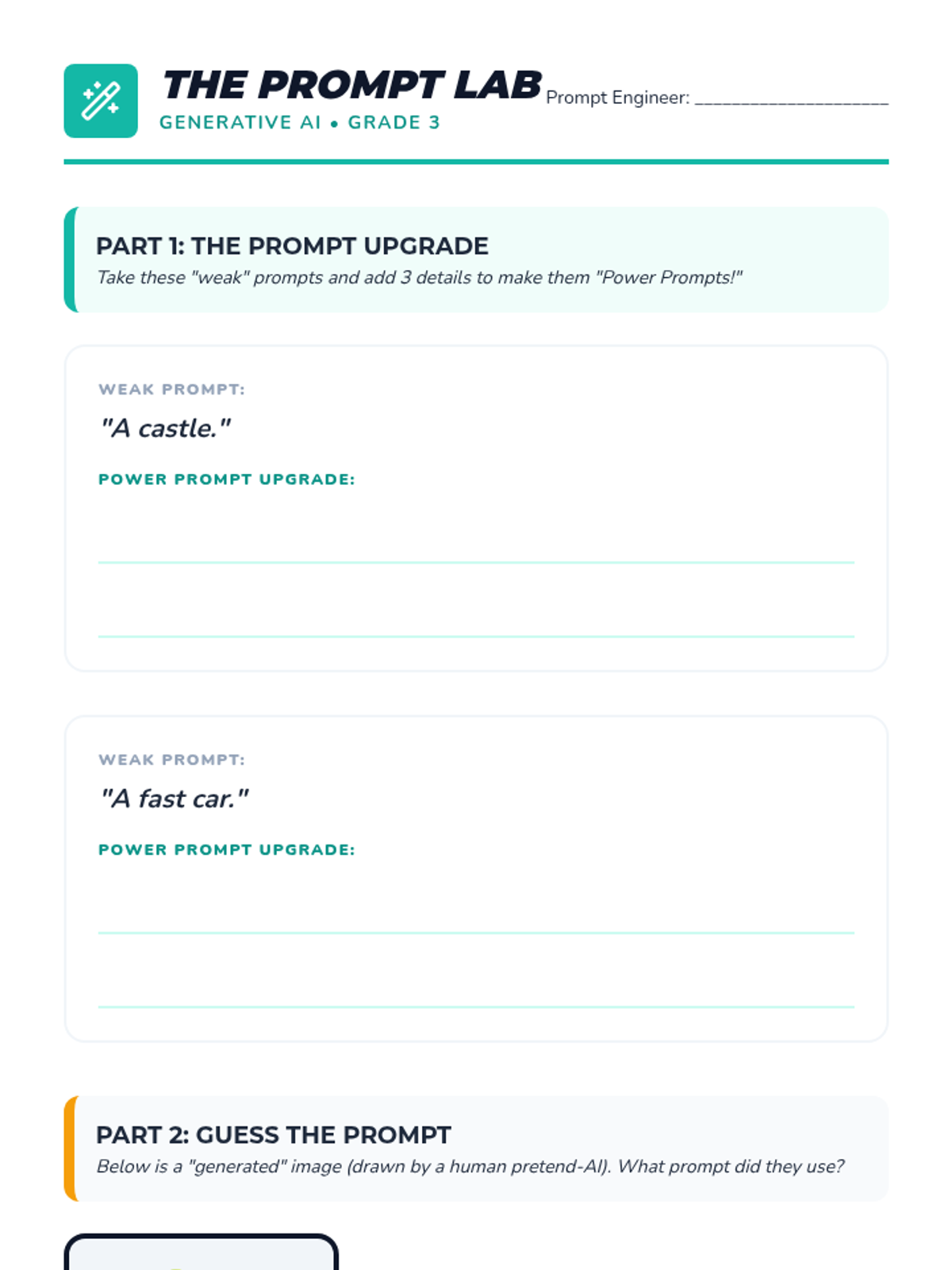
Students explore Generative AI and the importance of prompt engineering. They learn how to communicate effectively with AI to create specific images and text.
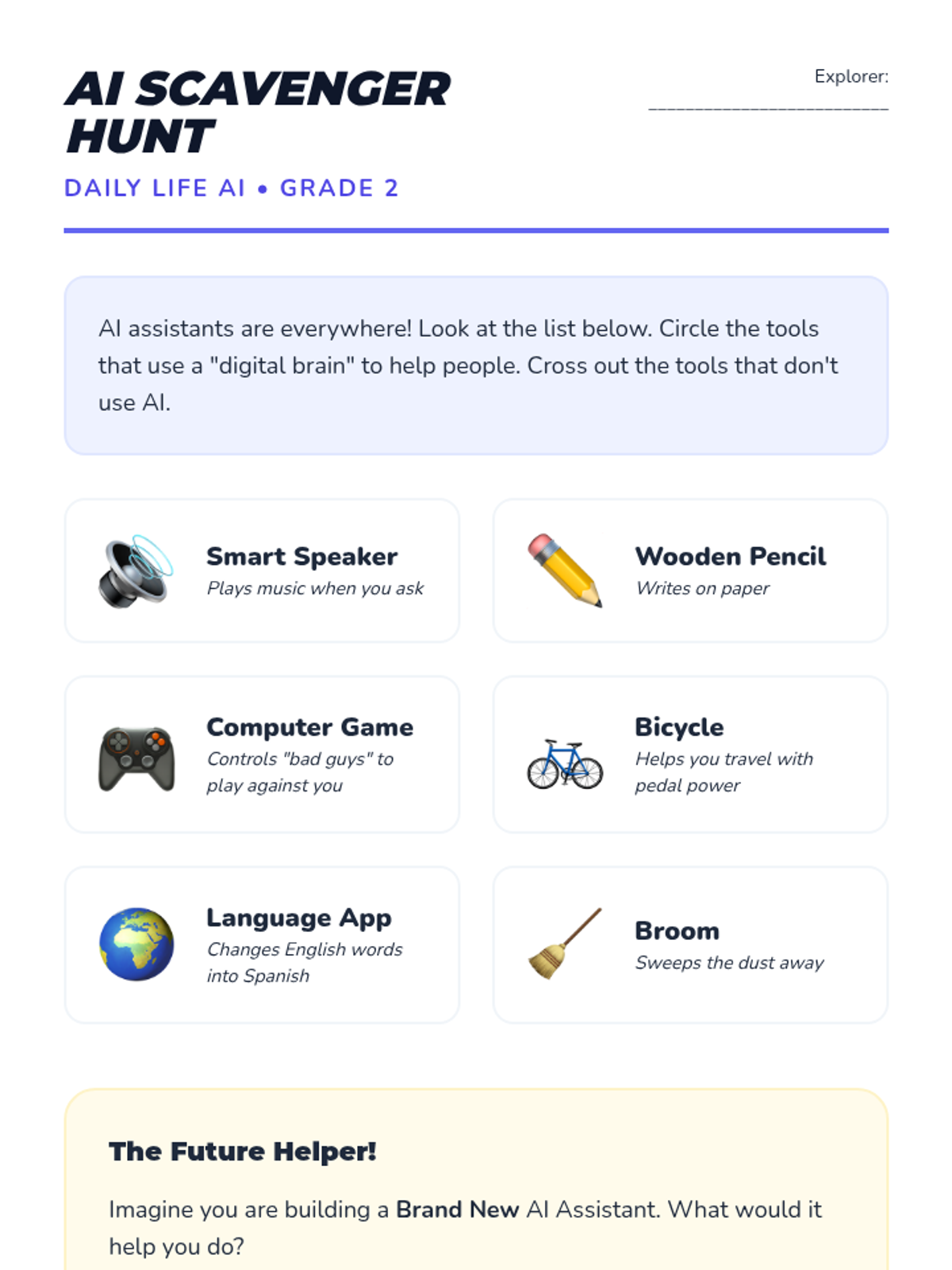
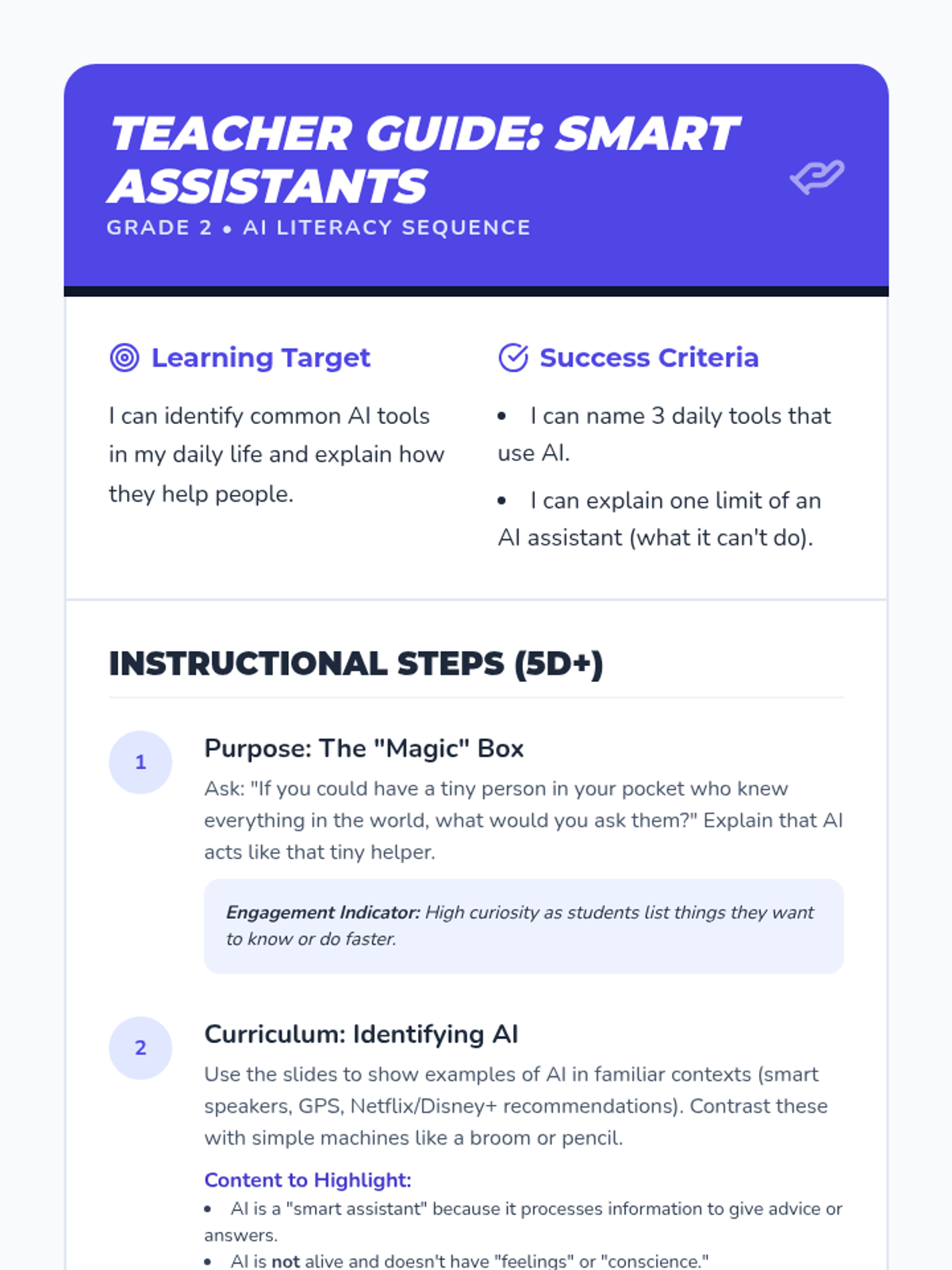
Students discover how AI works as a "smart assistant" in daily life. They identify AI in common devices and reflect on how it helps people solve problems.
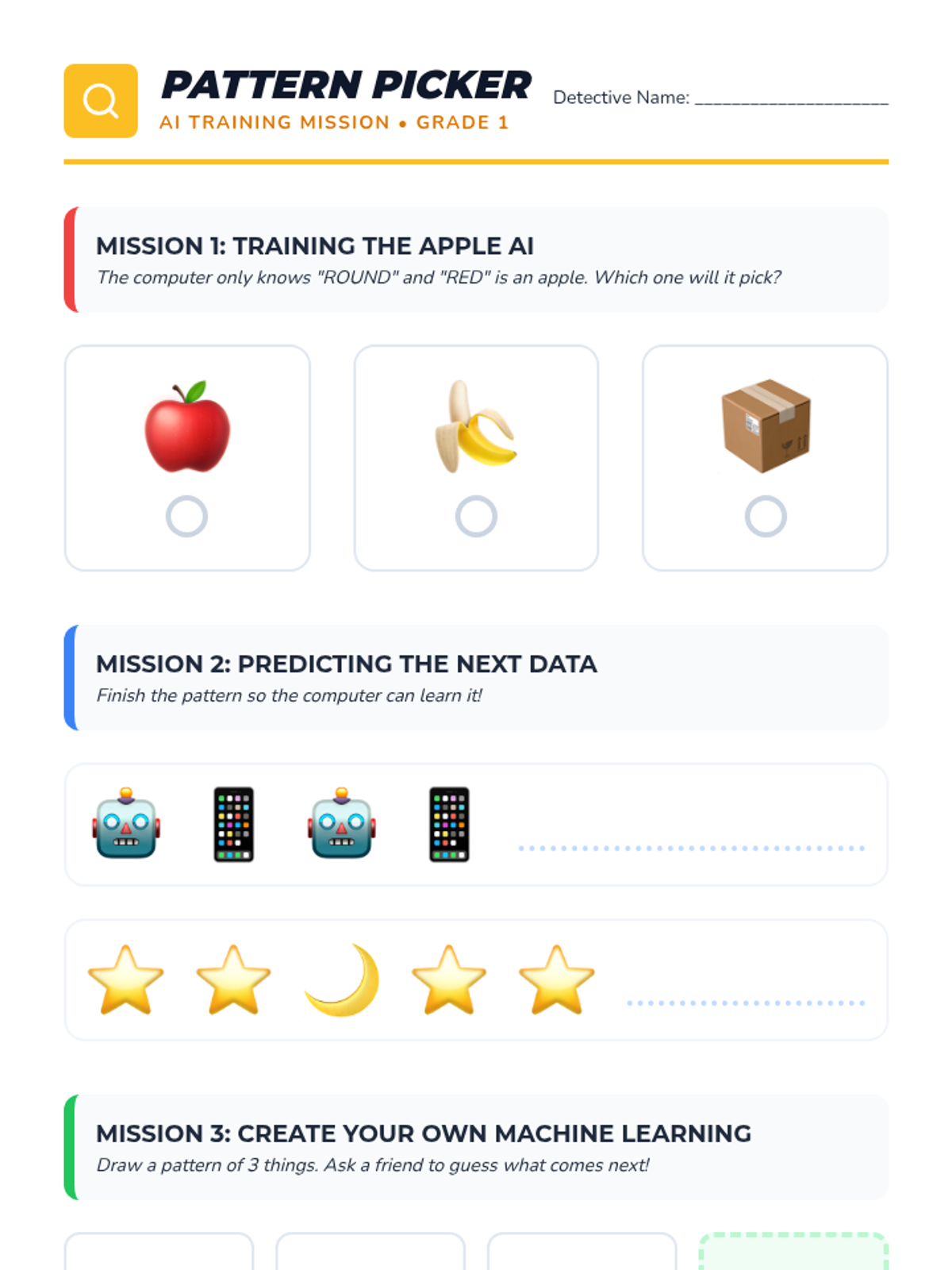
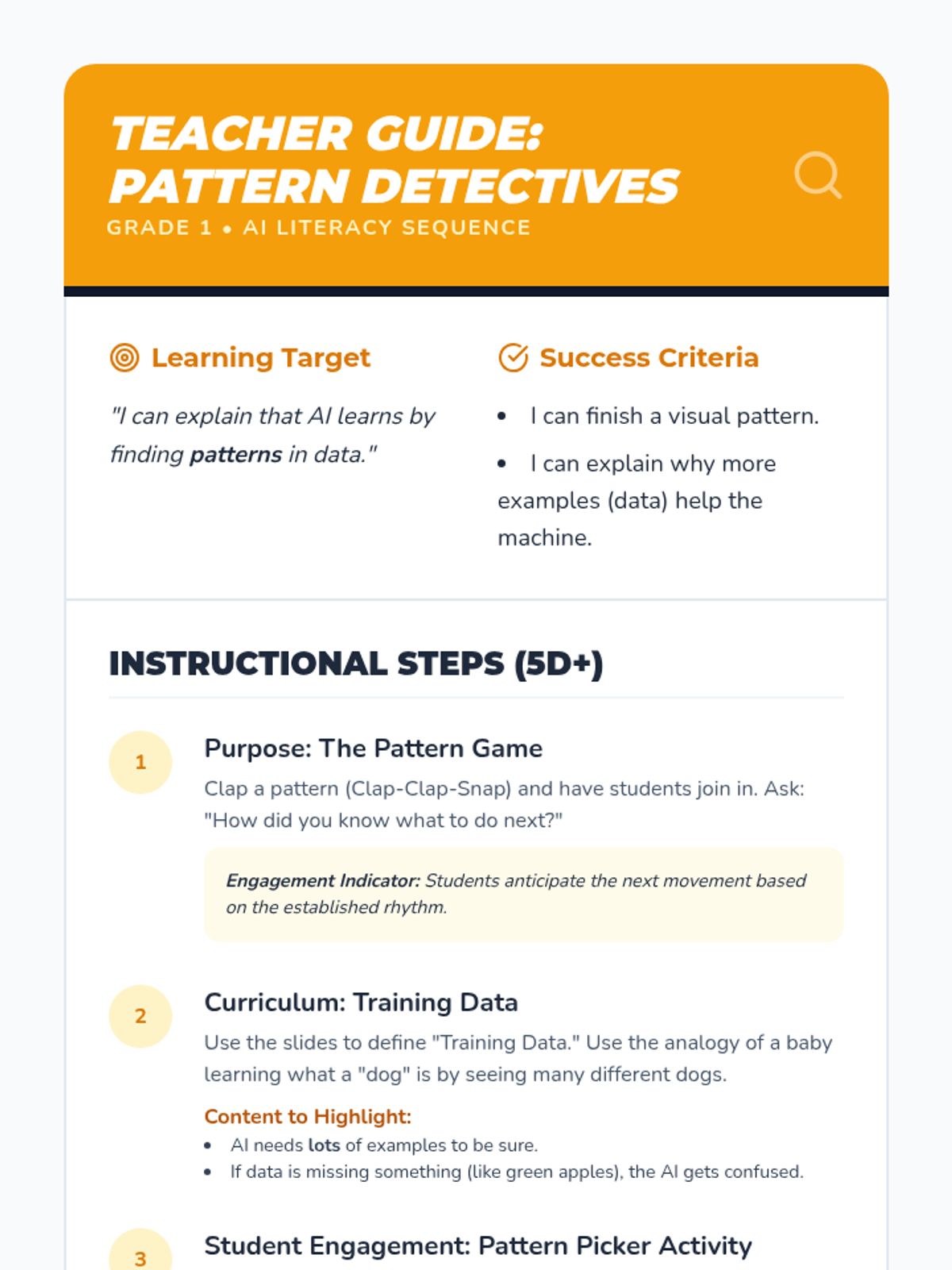
Students explore the foundation of AI learning: pattern recognition. They learn that computers need many examples (data) to understand rules and make predictions.
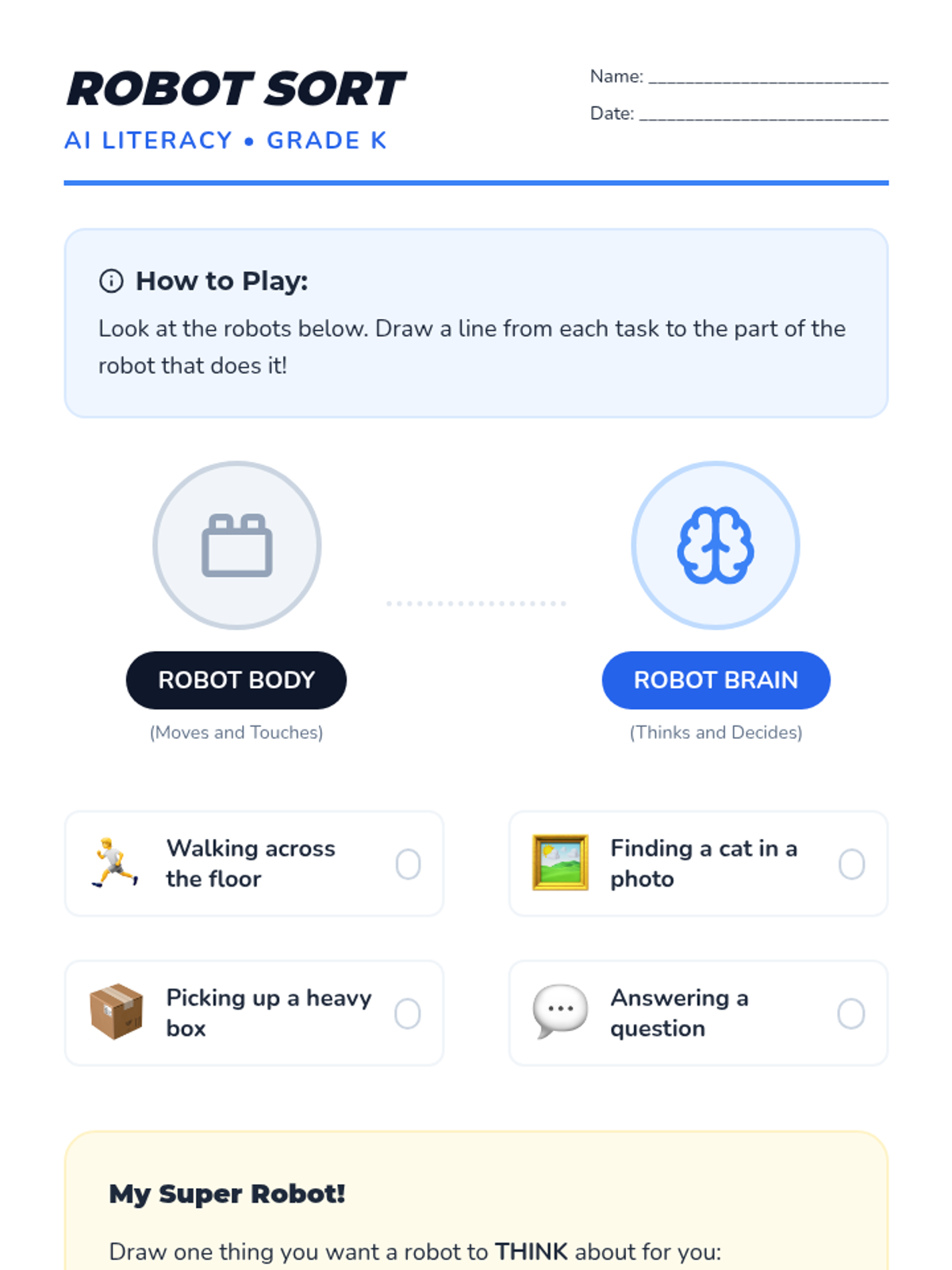
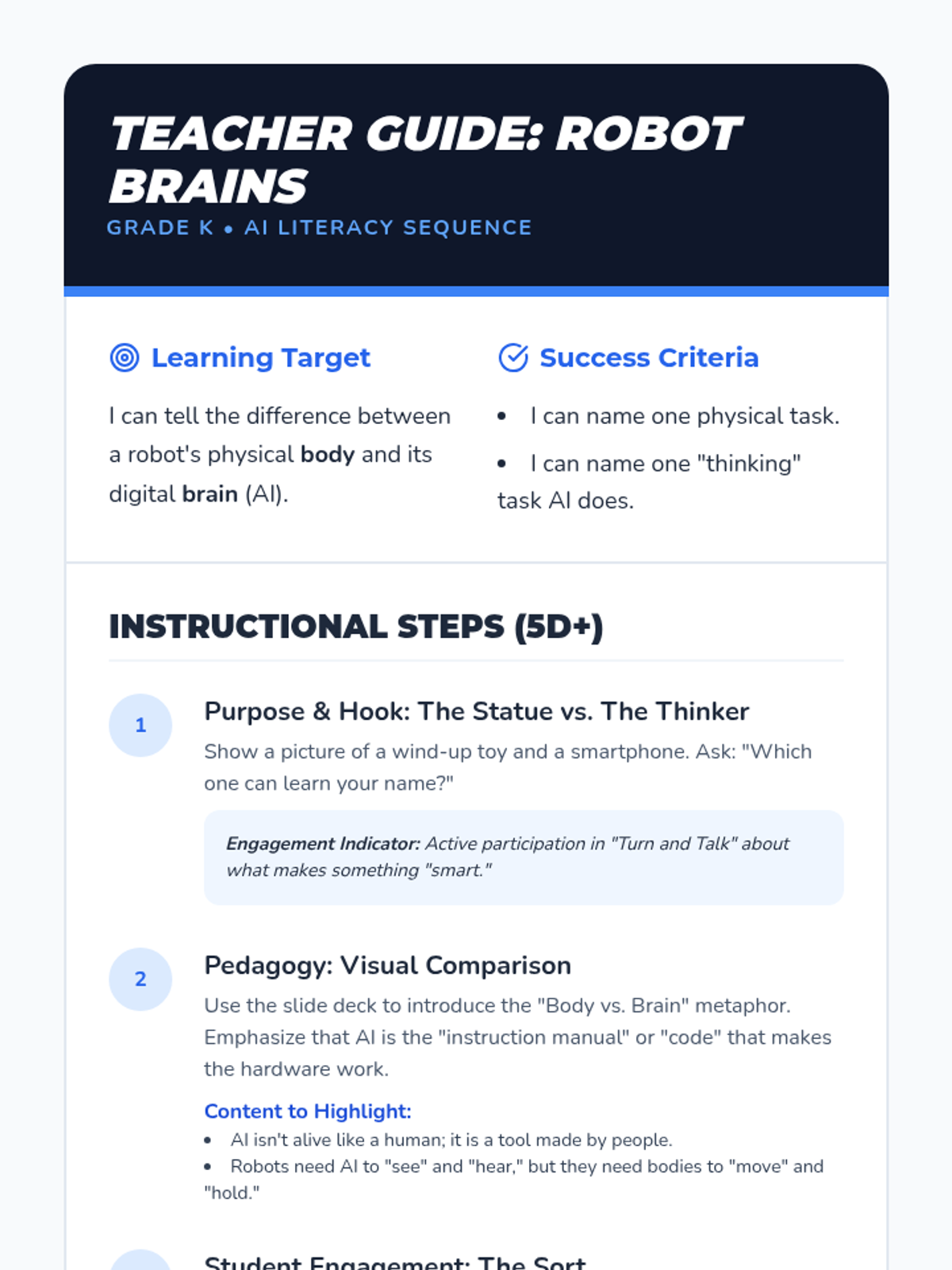
Introduces the concept of AI by distinguishing between a robot's physical body and its digital 'brain'. Students explore how AI 'thinks' differently than humans and machines.
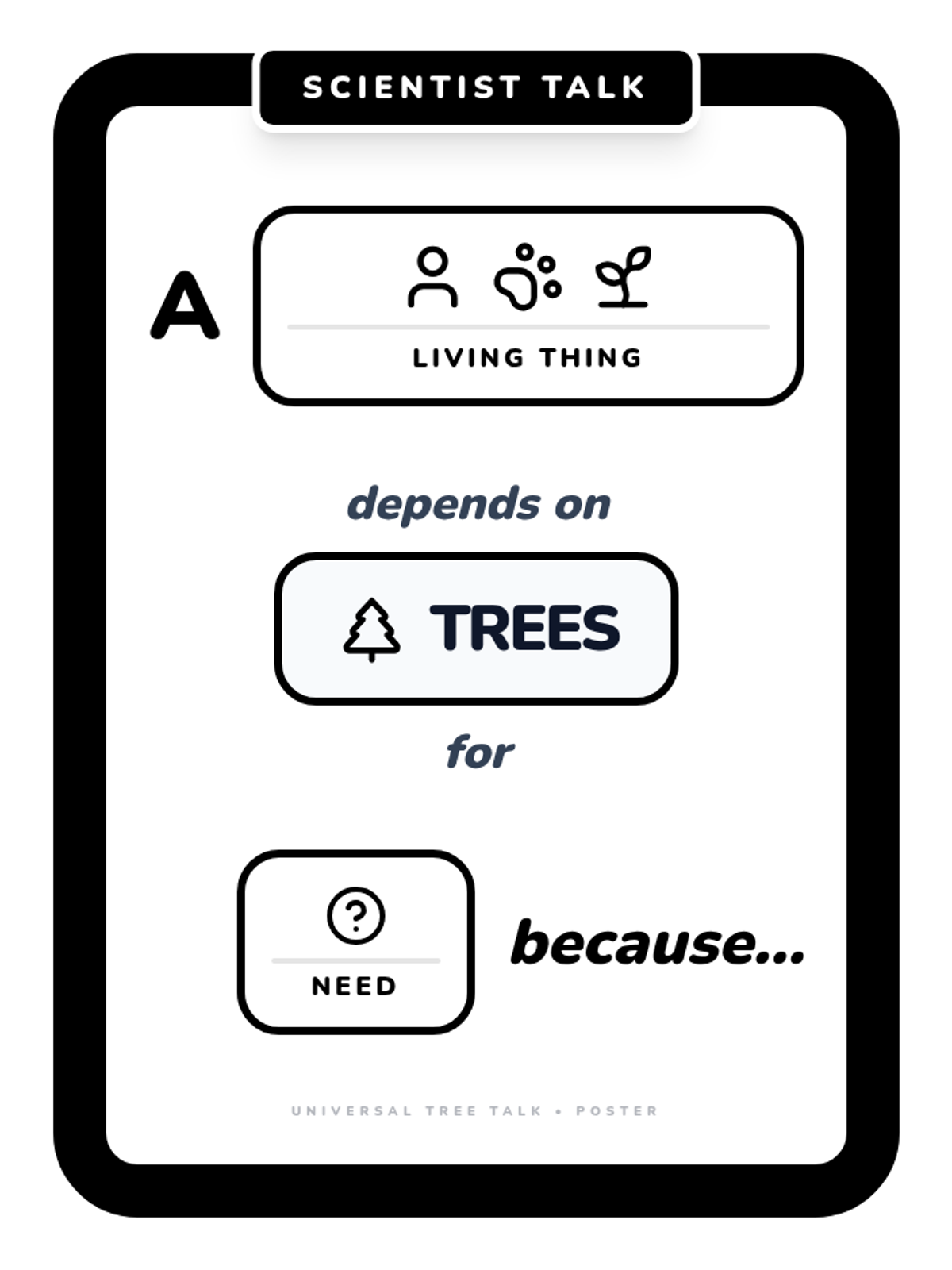
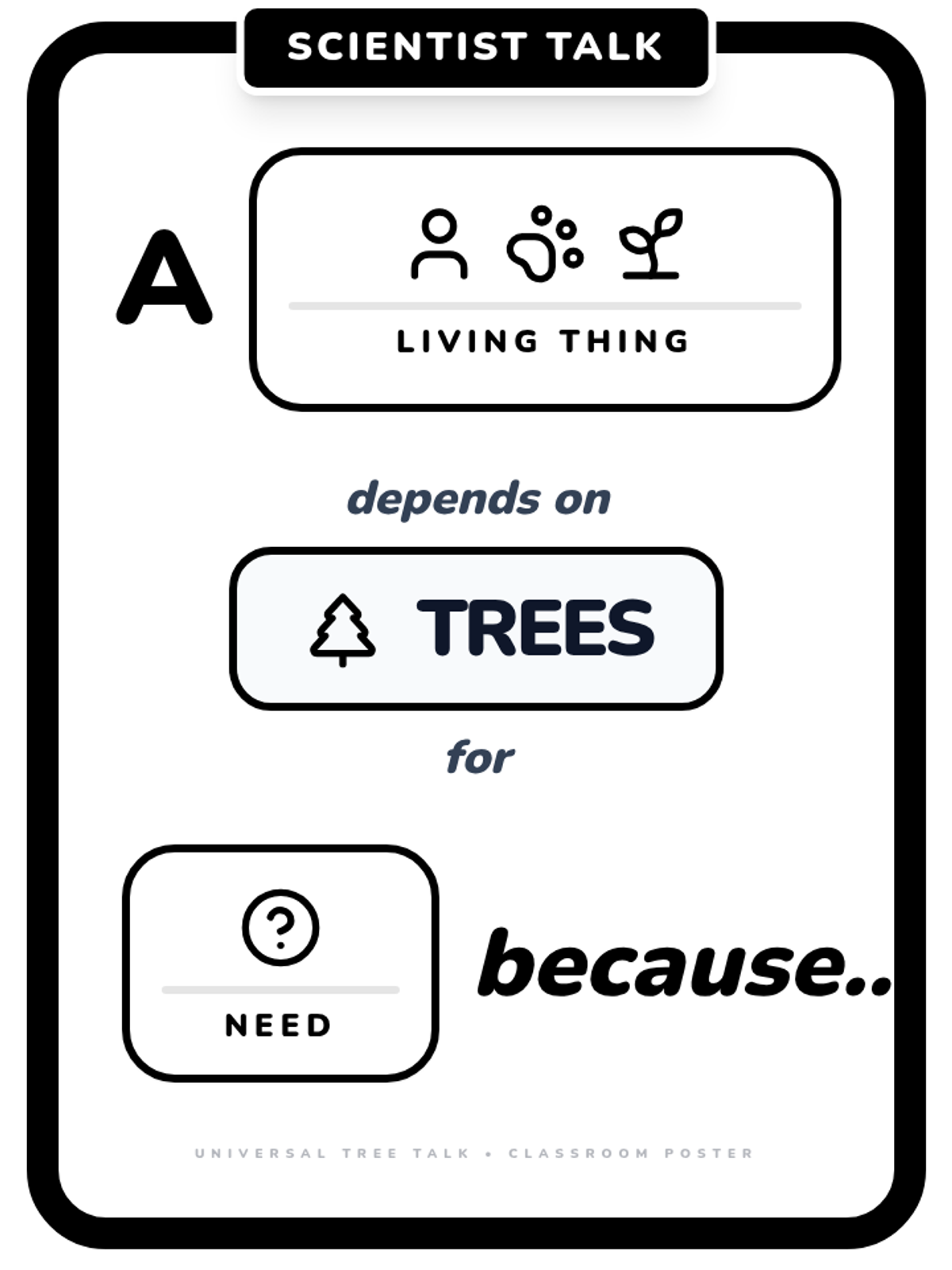
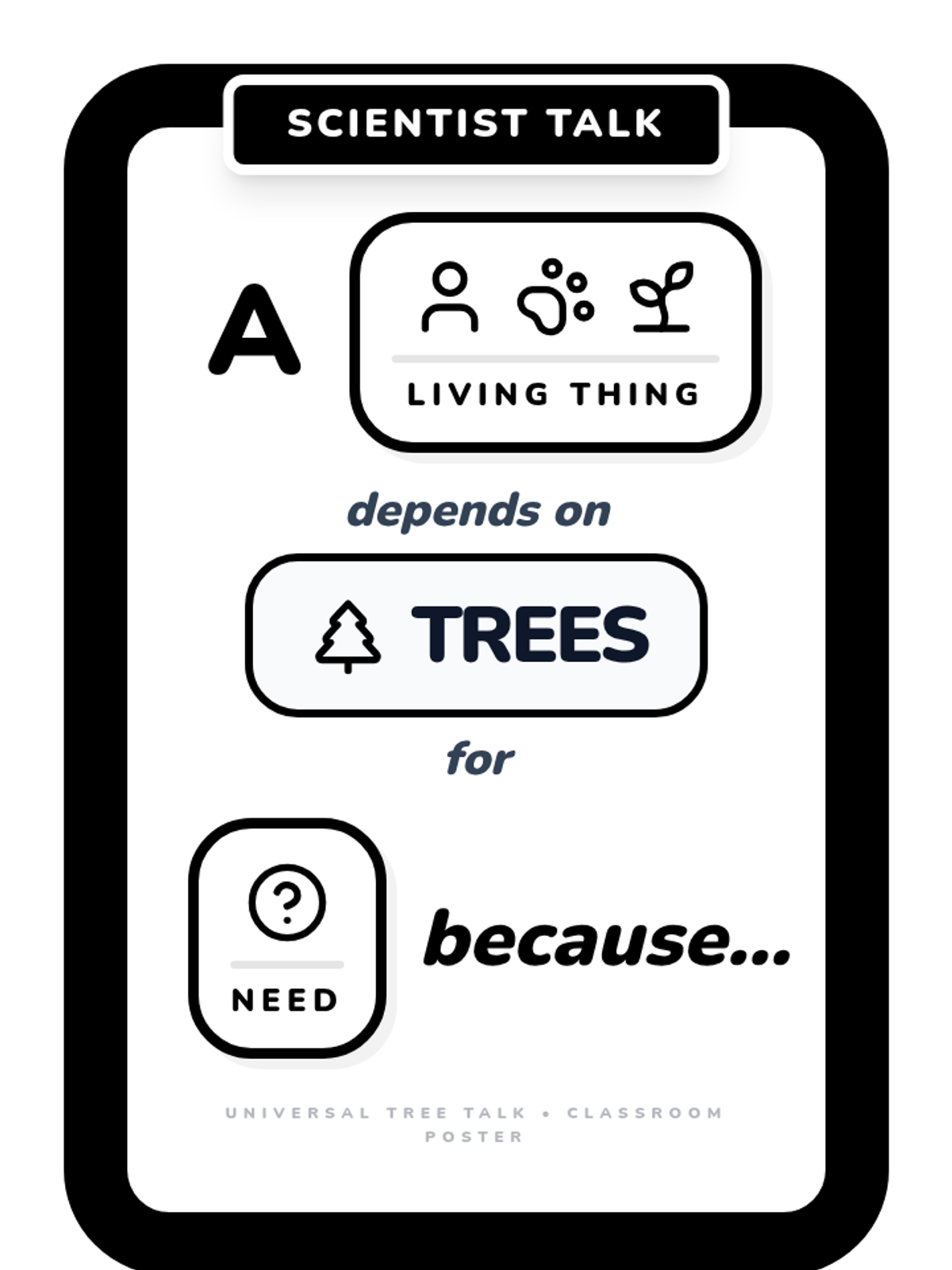
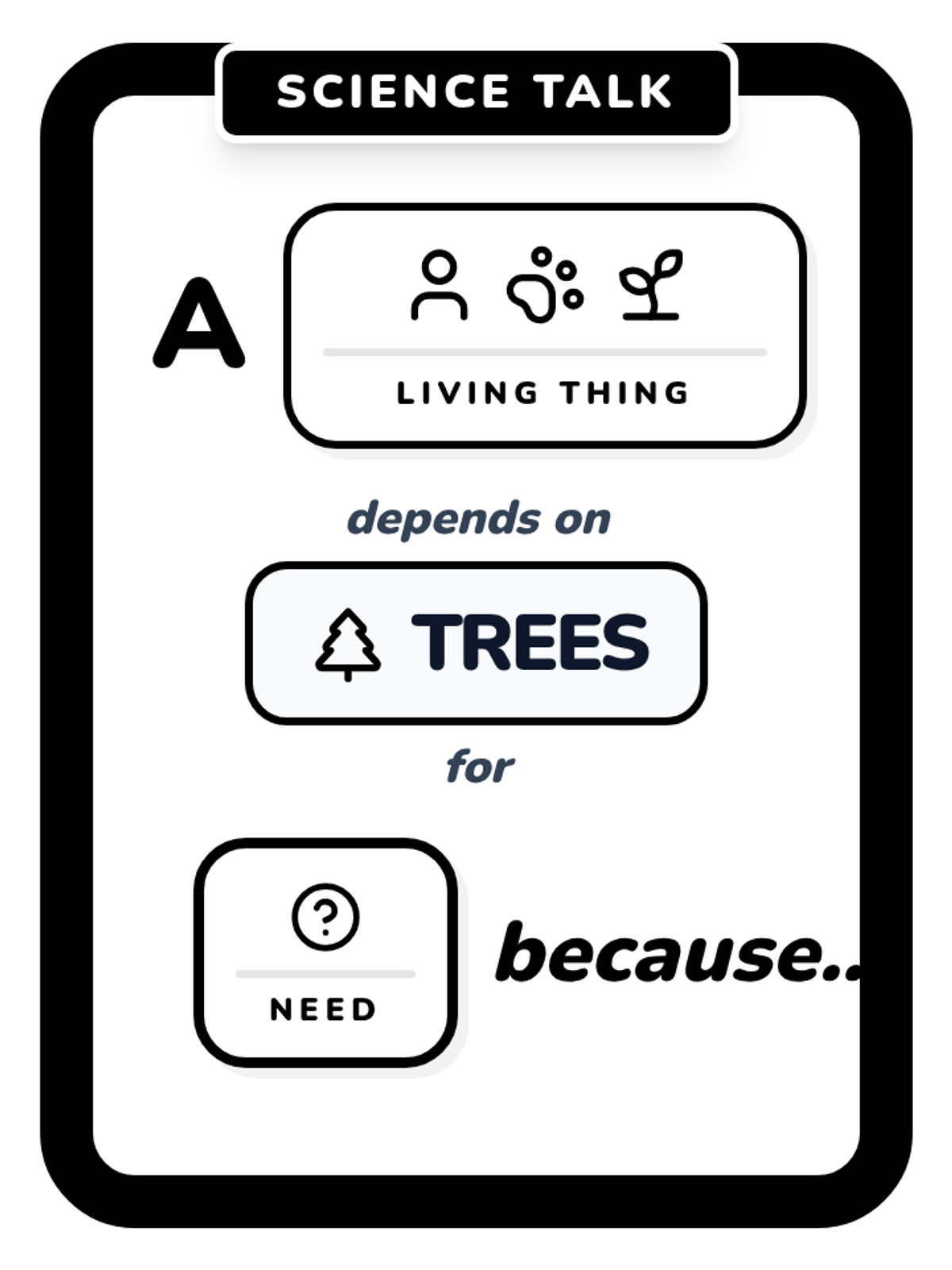
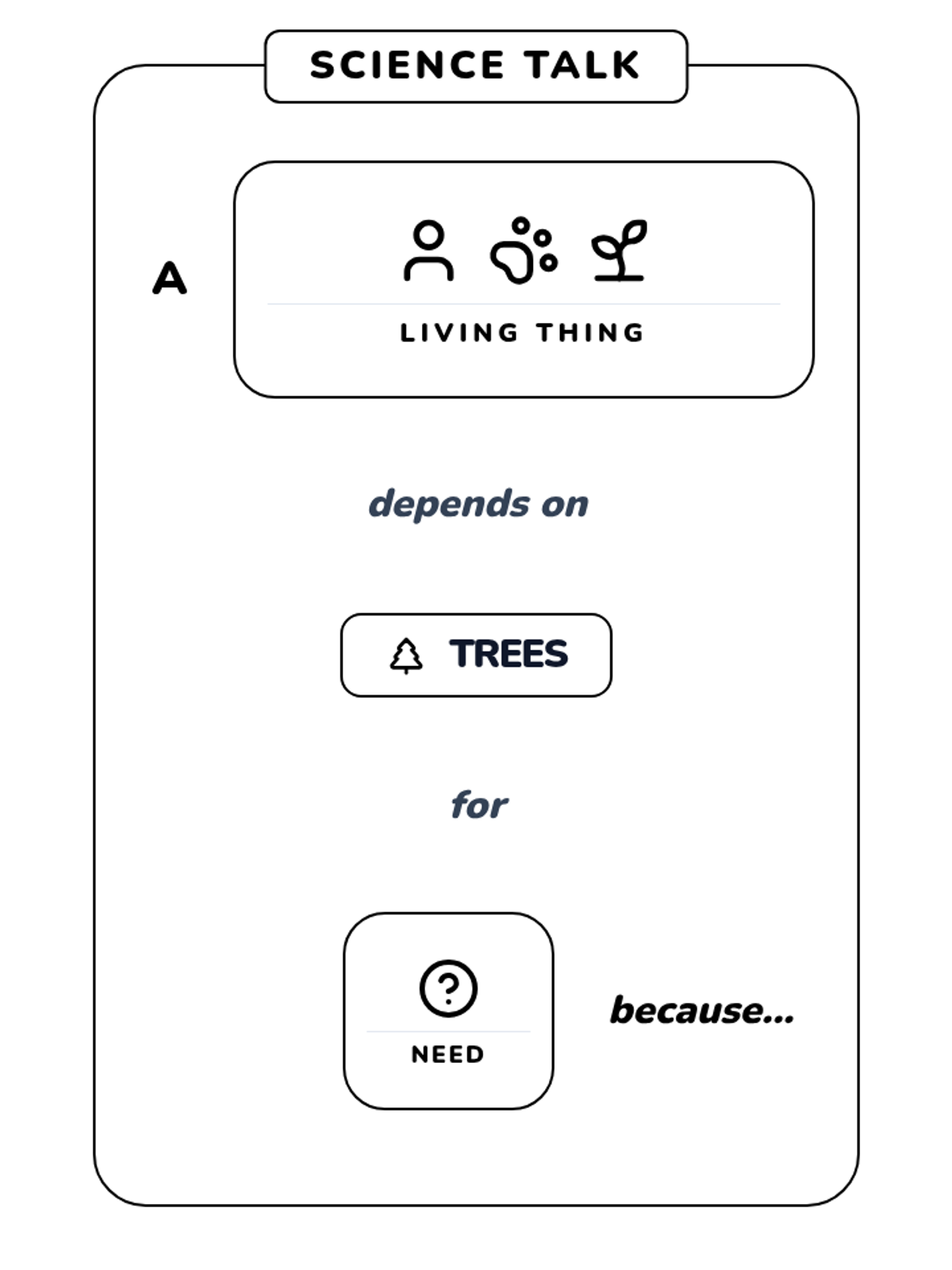
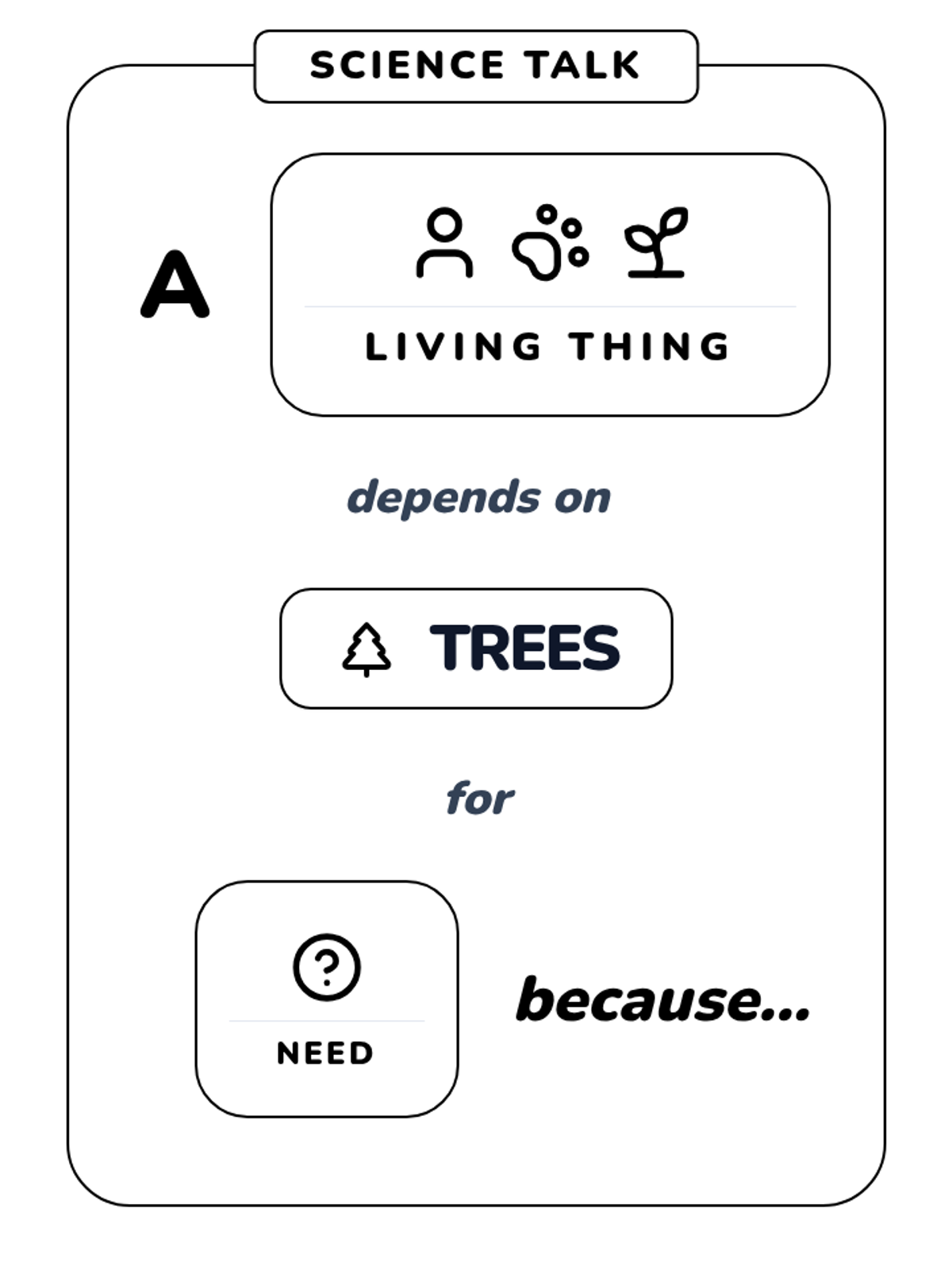
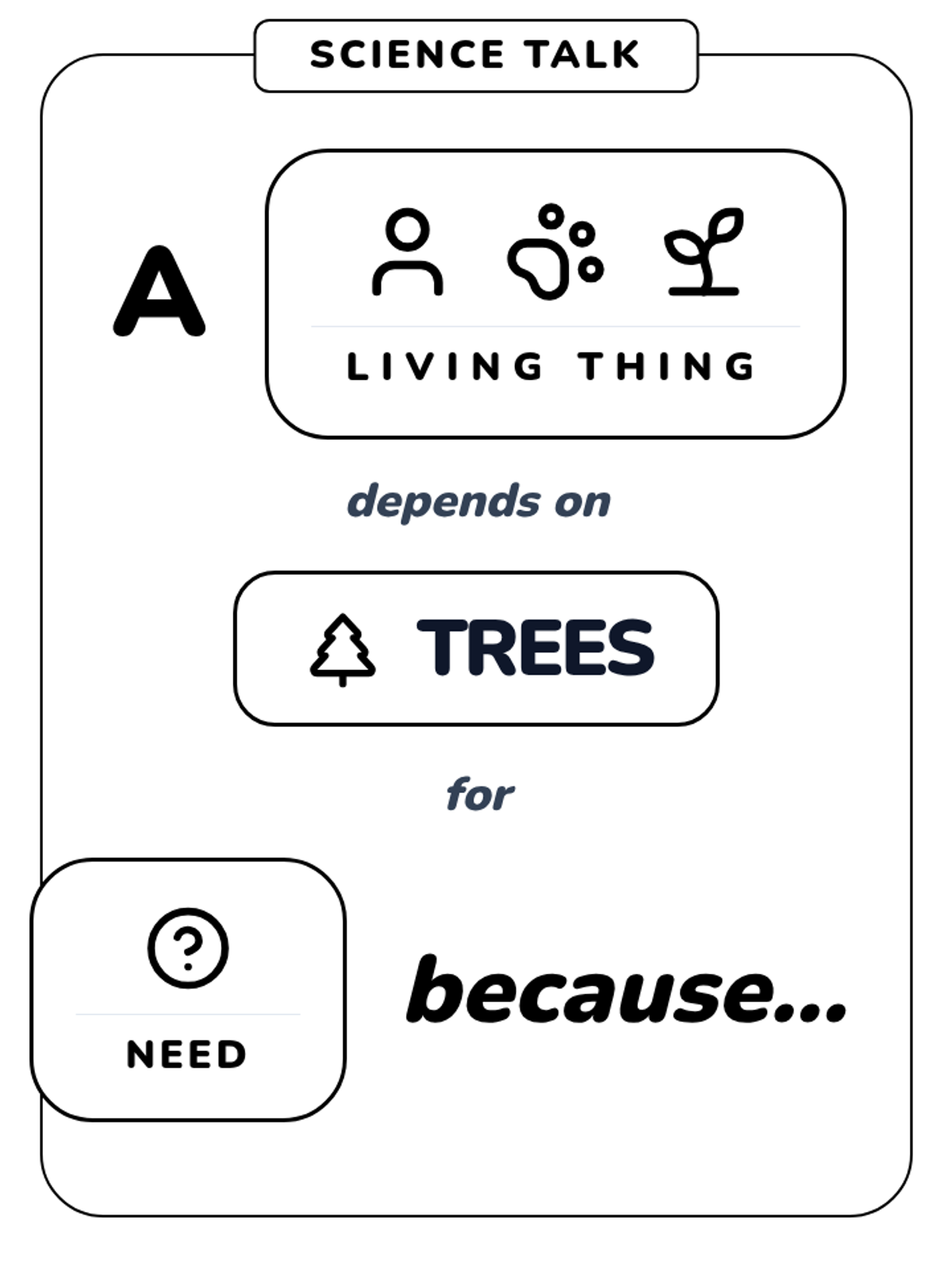
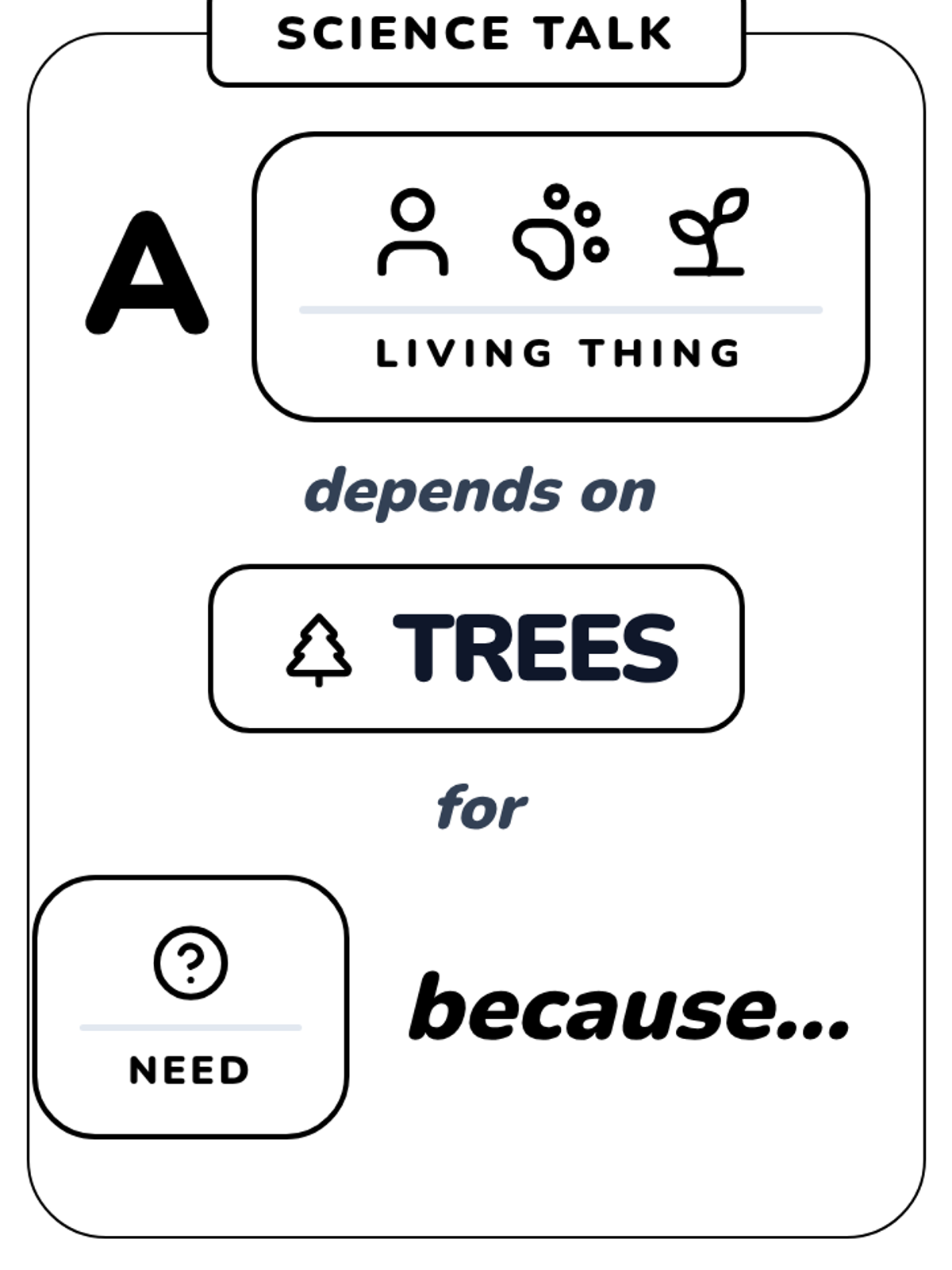
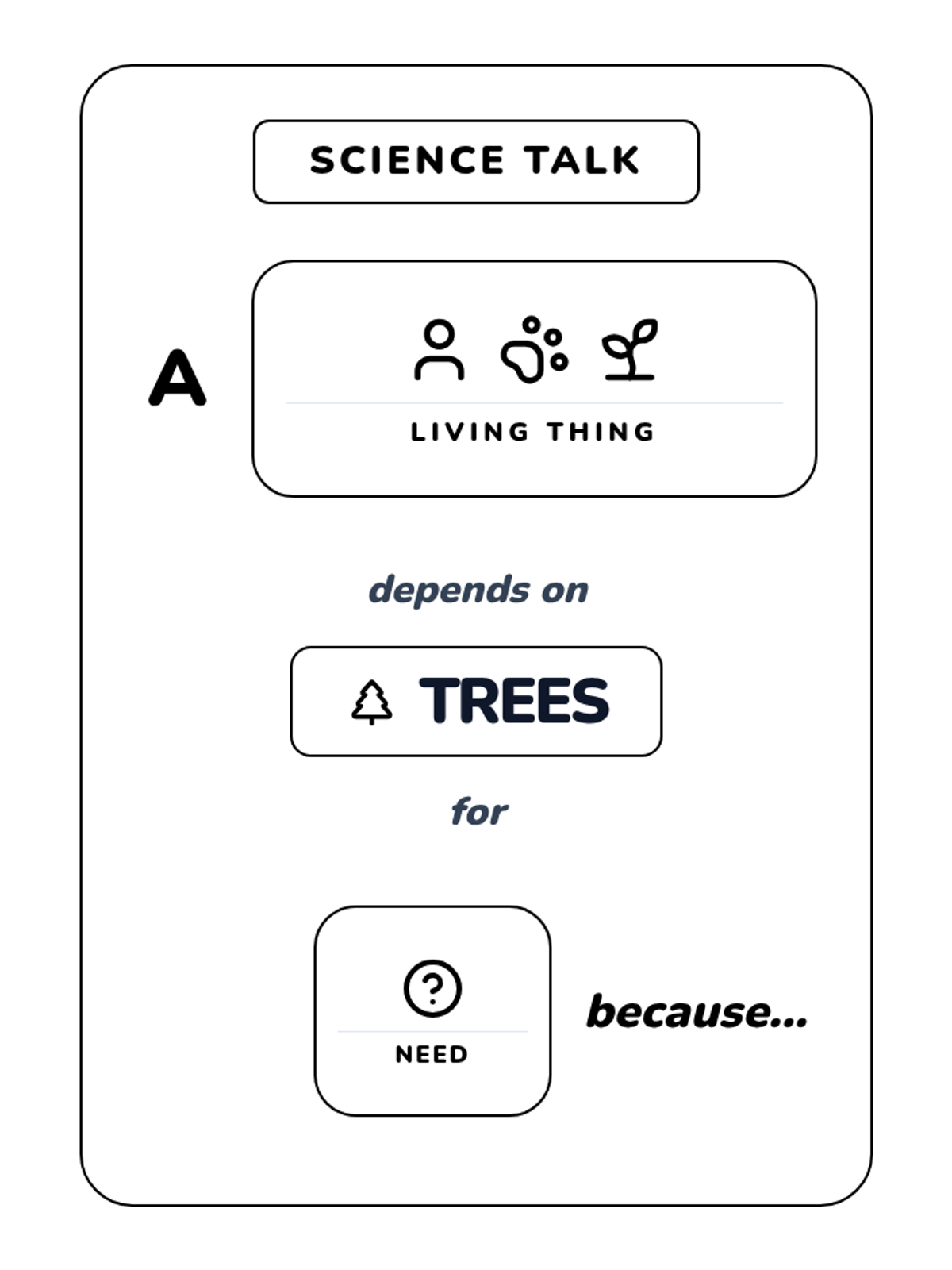
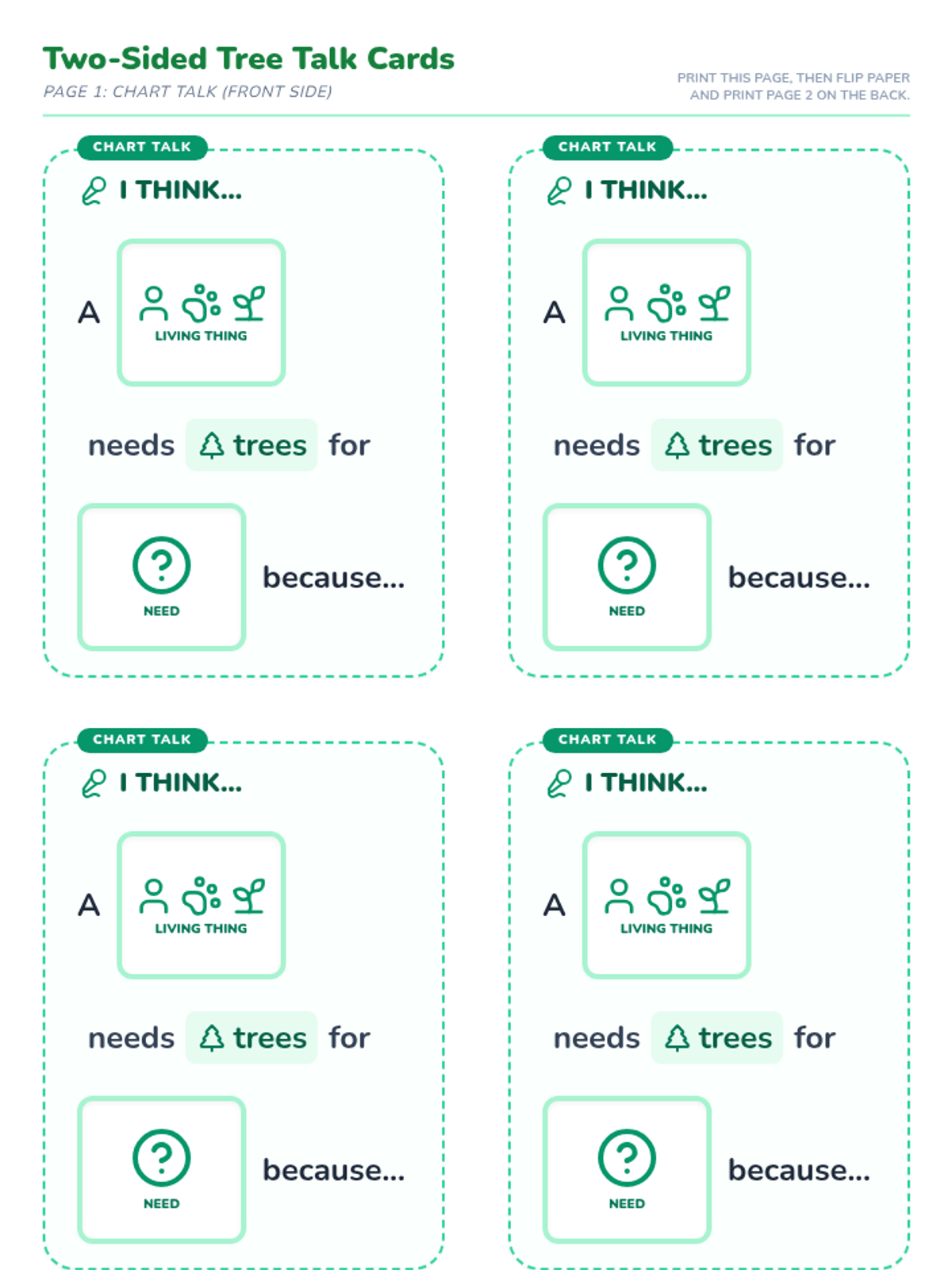
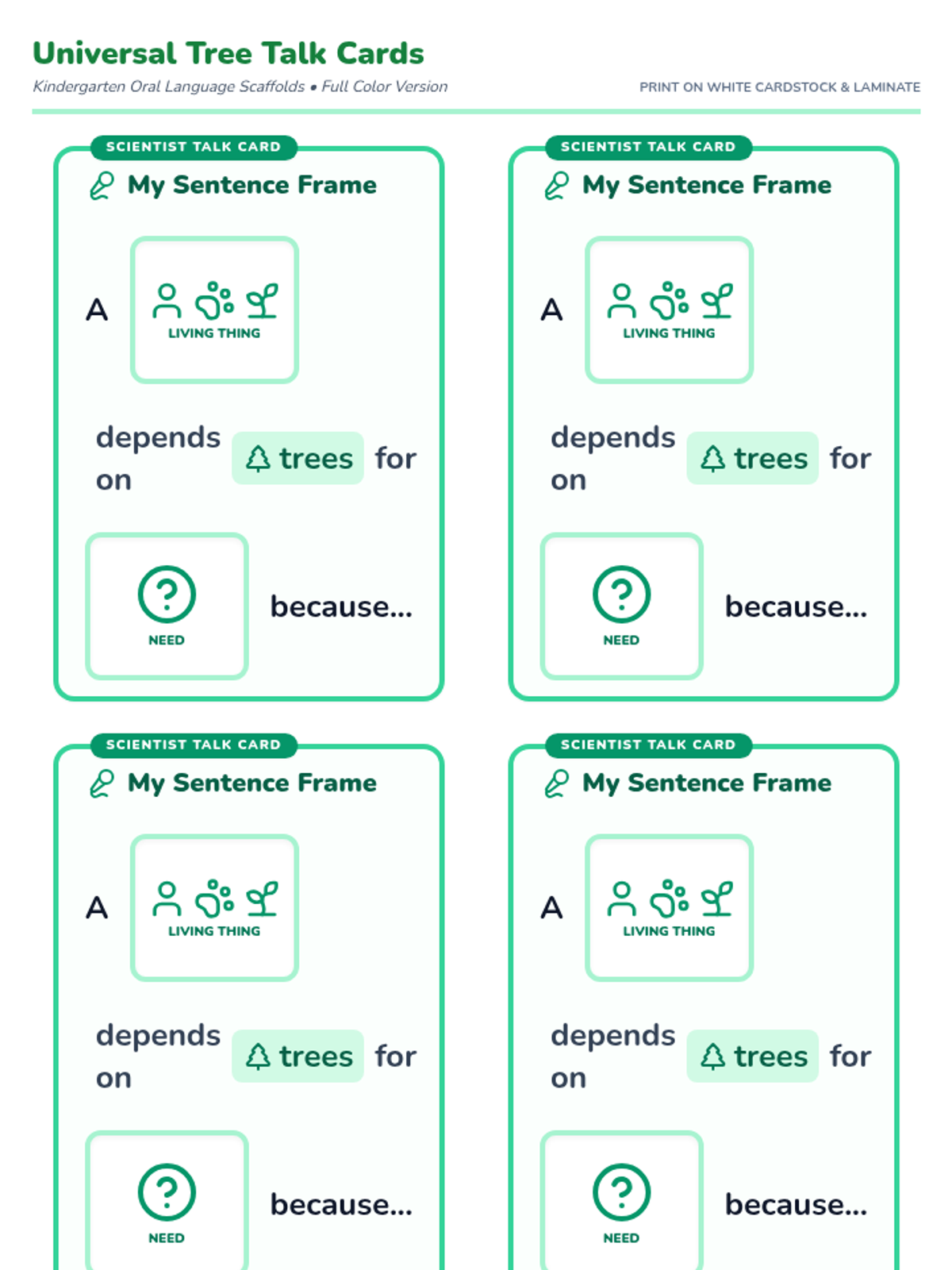
A lesson focused on how living things depend on trees for survival, utilizing visual sentence frames to support Kindergarten oral language development.
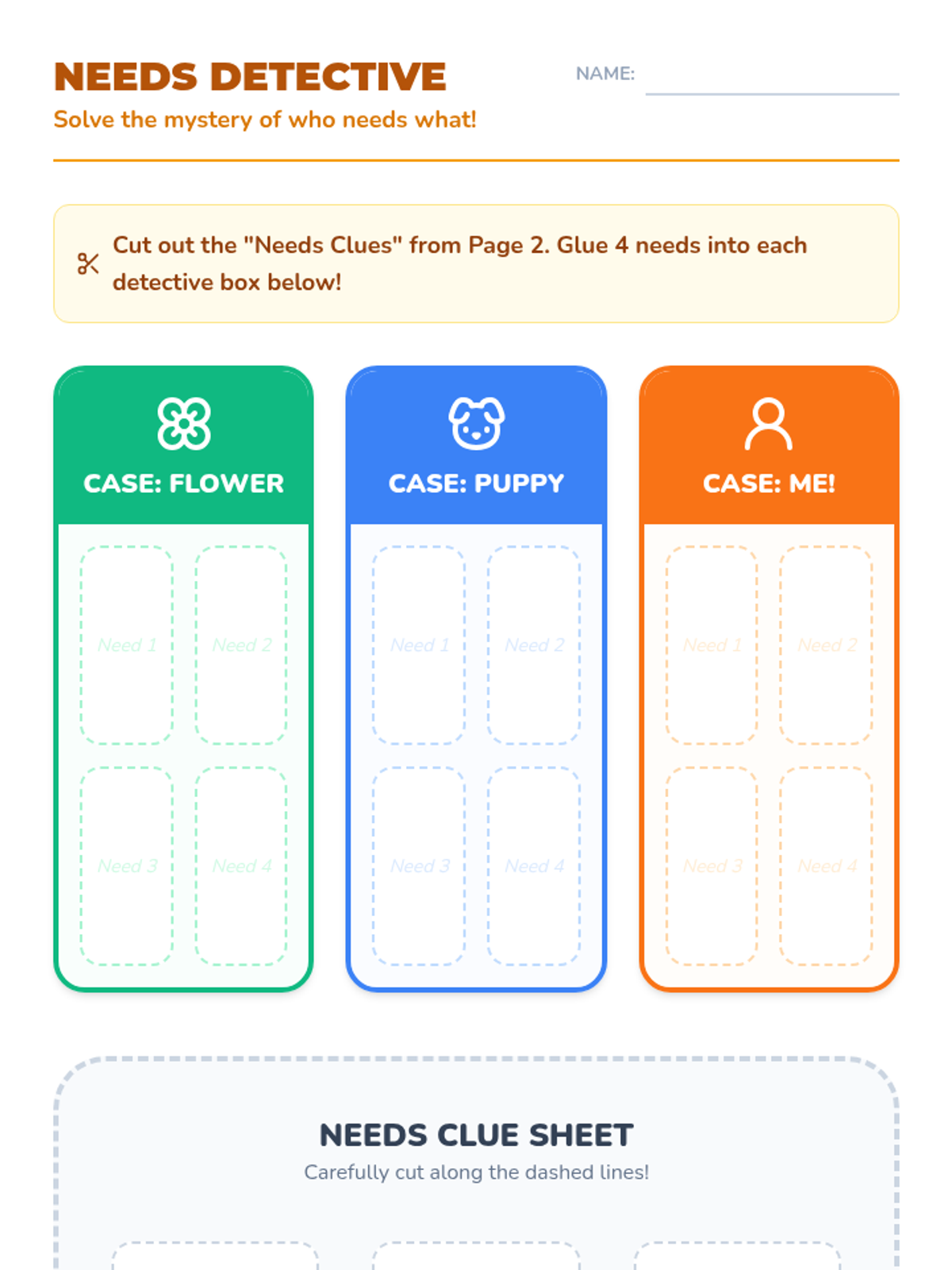
A synthesis lesson where students compare and sort the needs of all living things to identify patterns.
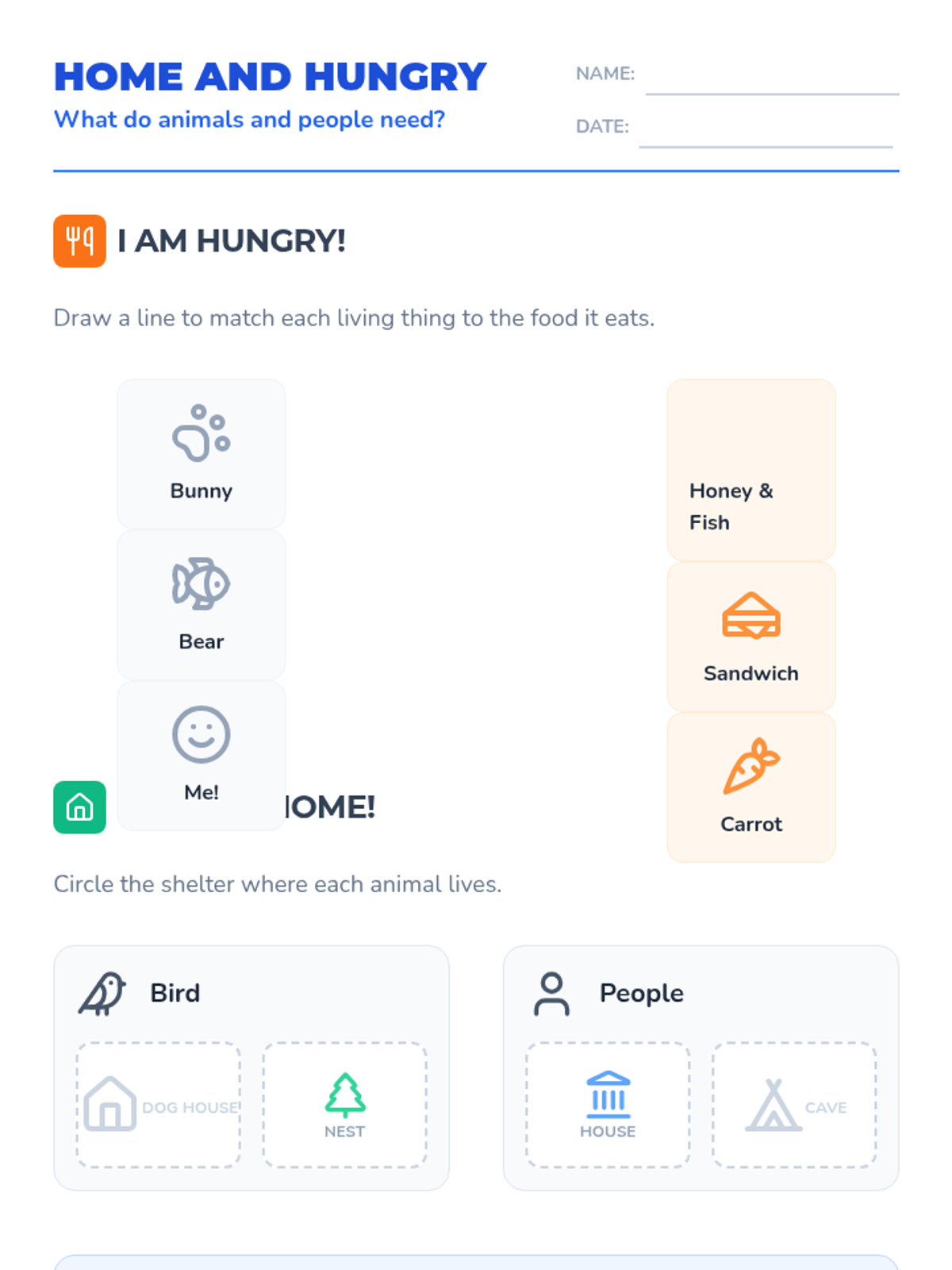
Explores the survival requirements of animals and humans, highlighting food, water, air, and shelter.