A 3rd-grade science and literacy lesson that helps students distinguish between Groundhog Day folklore and the actual biological behaviors of woodchucks using a SciShow Kids video.
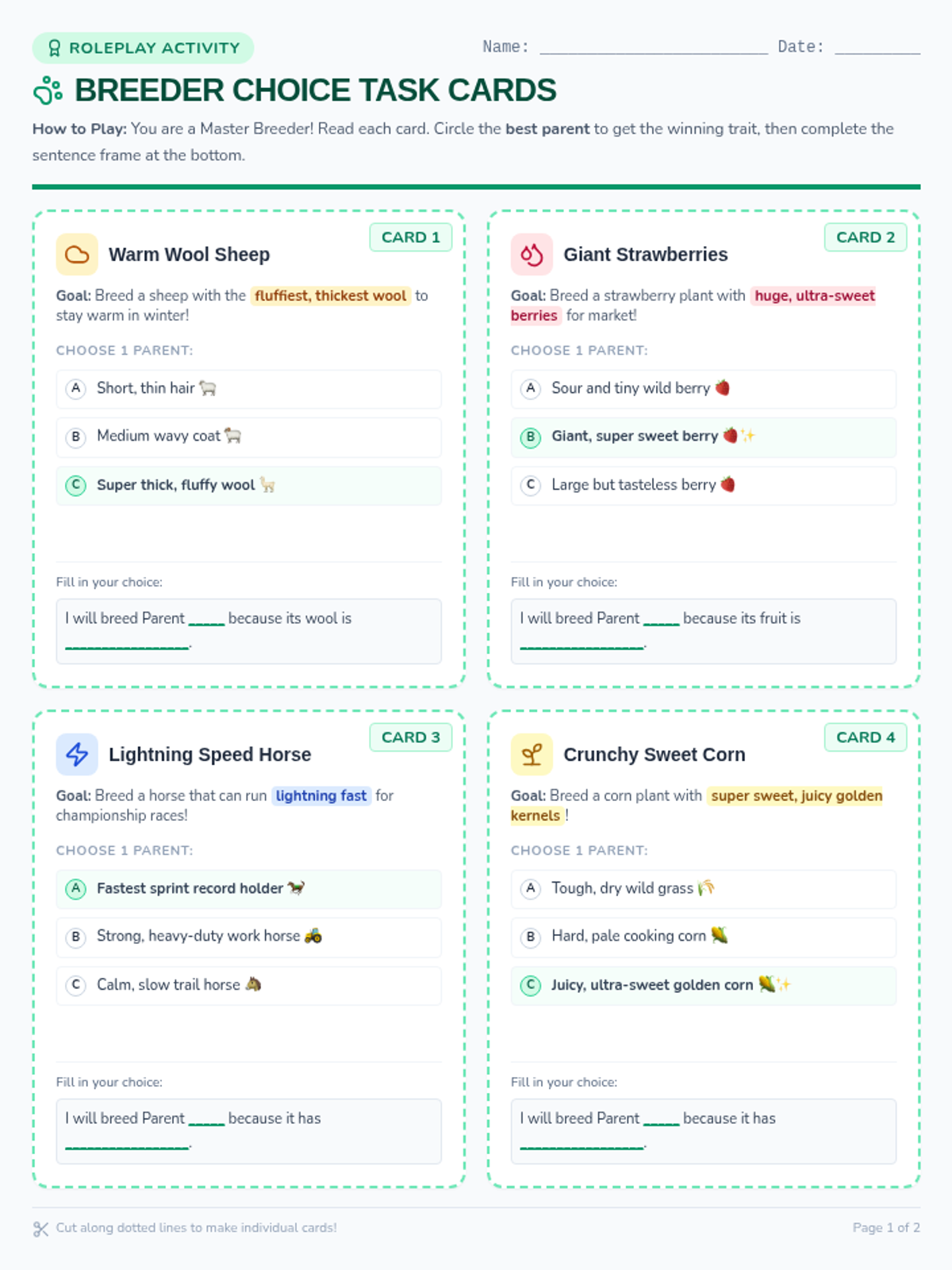
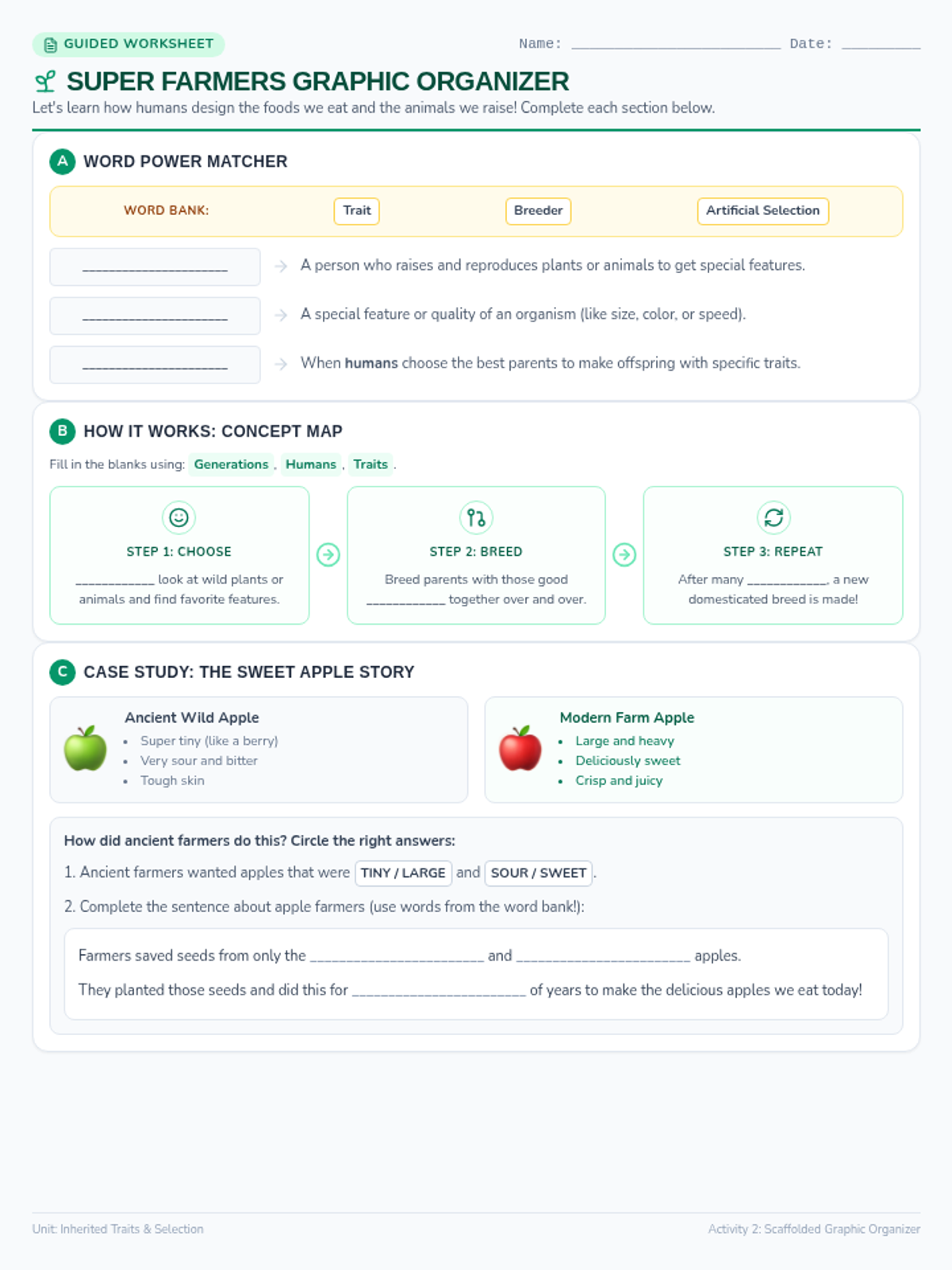
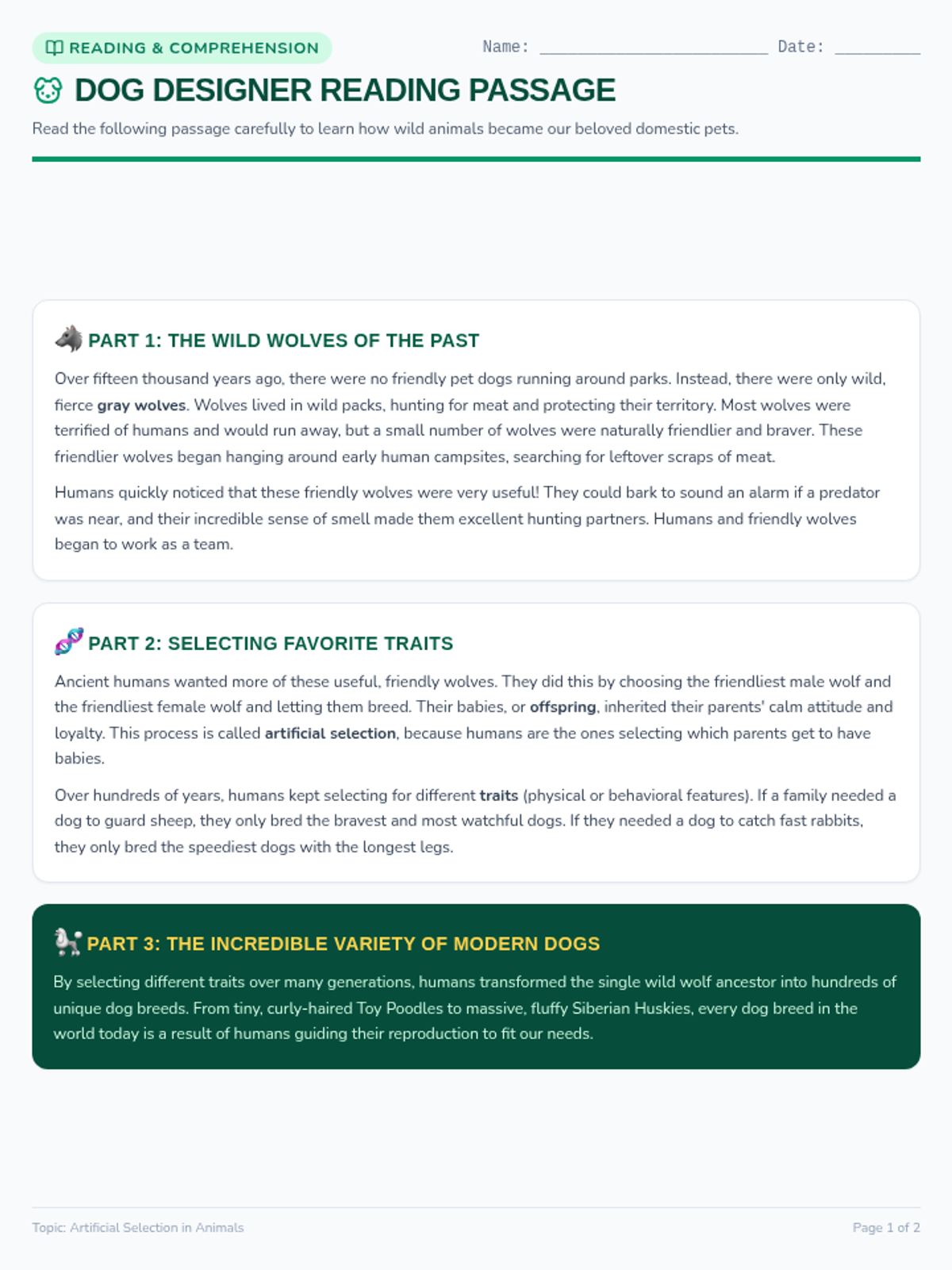
A hands-on, highly visual lesson where students explore artificial selection by roleplaying as breeders and farmers. Students analyze traits in dogs, crops, and livestock using scaffolded organizers, visual task cards, and matching tasks.
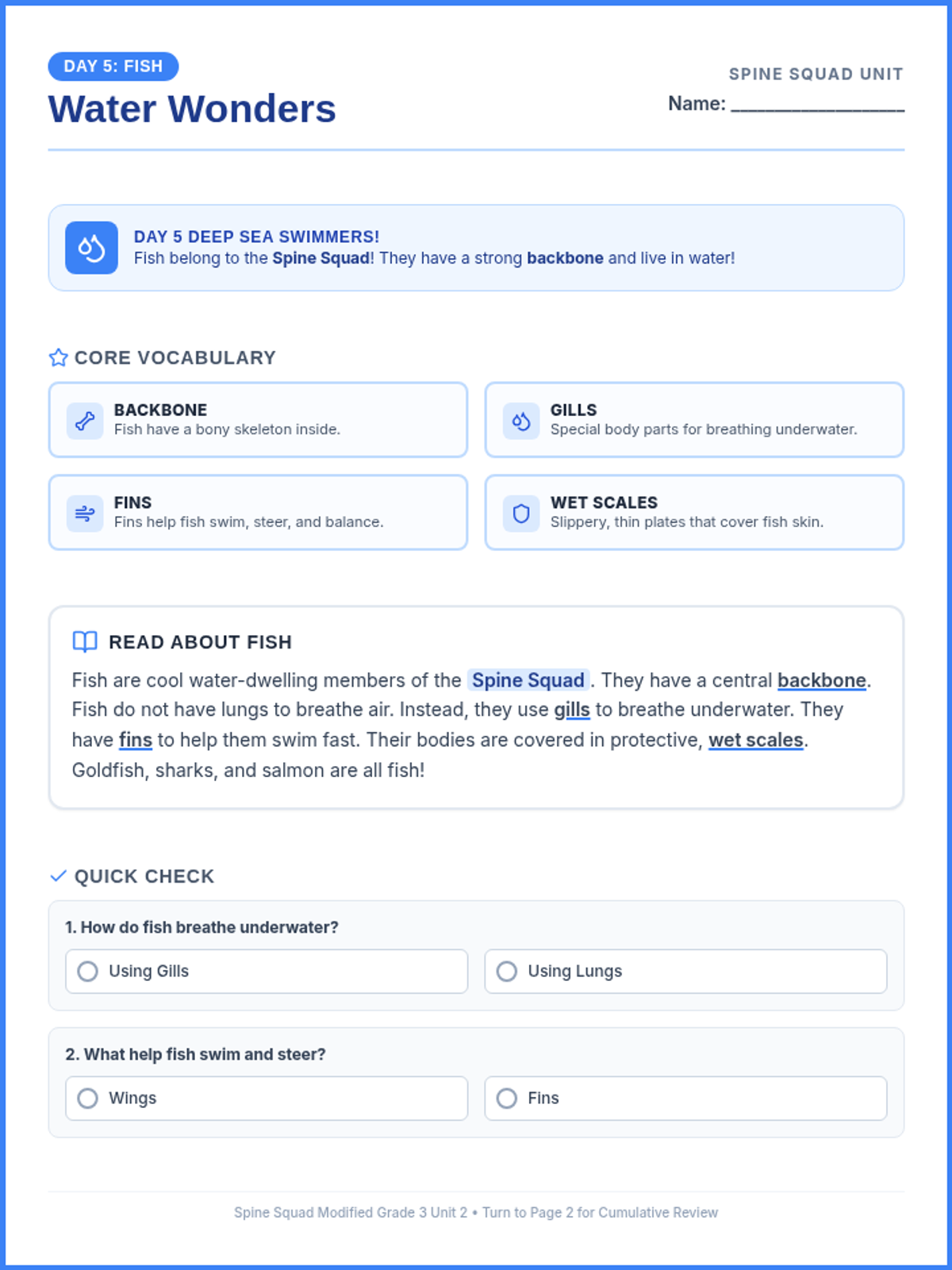
In this fifth and final lesson of the Spine Squad unit, students explore fish, focusing on gills, fins, scales, and underwater survival, with a final cumulative review of the five vertebrate groups.
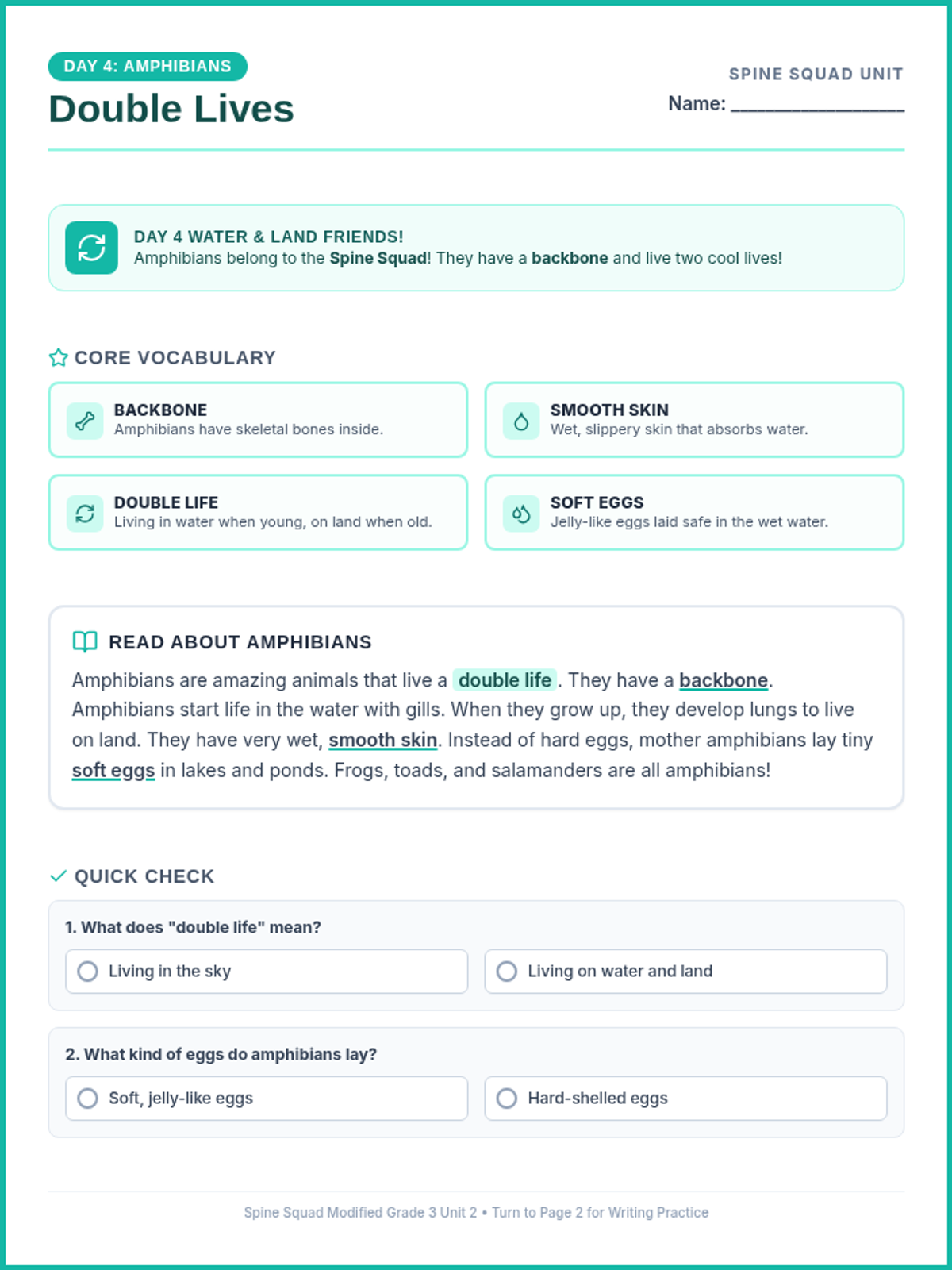
In this fourth lesson of the Spine Squad unit, students study amphibians, understanding how they live on water and land, lay soft eggs, and have smooth, wet skin, with scaffolded reading and tracing.
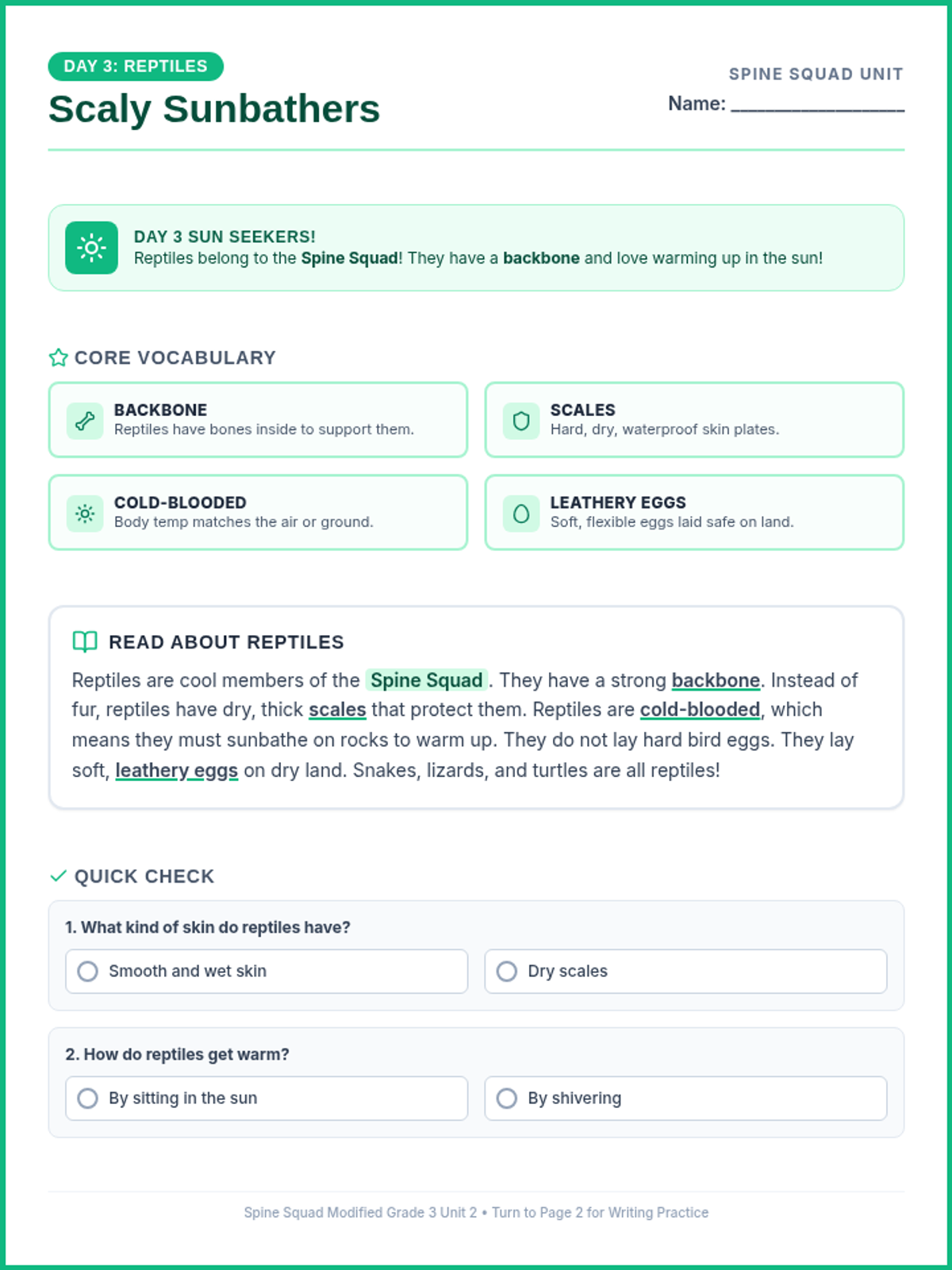
In this third lesson of the Spine Squad unit, students identify reptiles, exploring characteristics such as scales, cold-blooded regulation, and laying leathery eggs on land, supported by guided tracing.
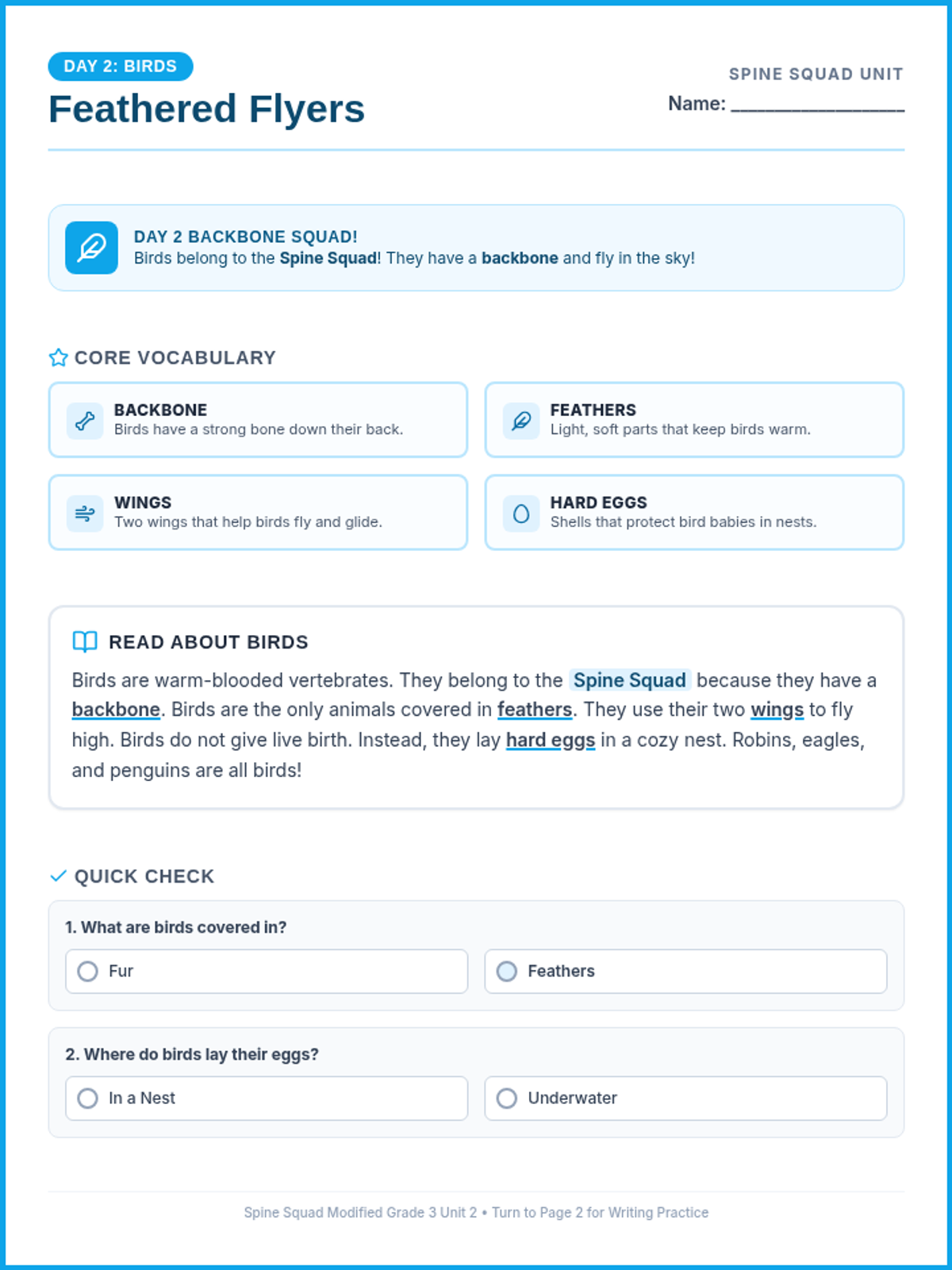
In this second lesson of the Spine Squad unit, students examine the key characteristics of birds, including feathers, wings, and laying hard-shelled eggs, using scaffolded comprehension prompts and tracing.
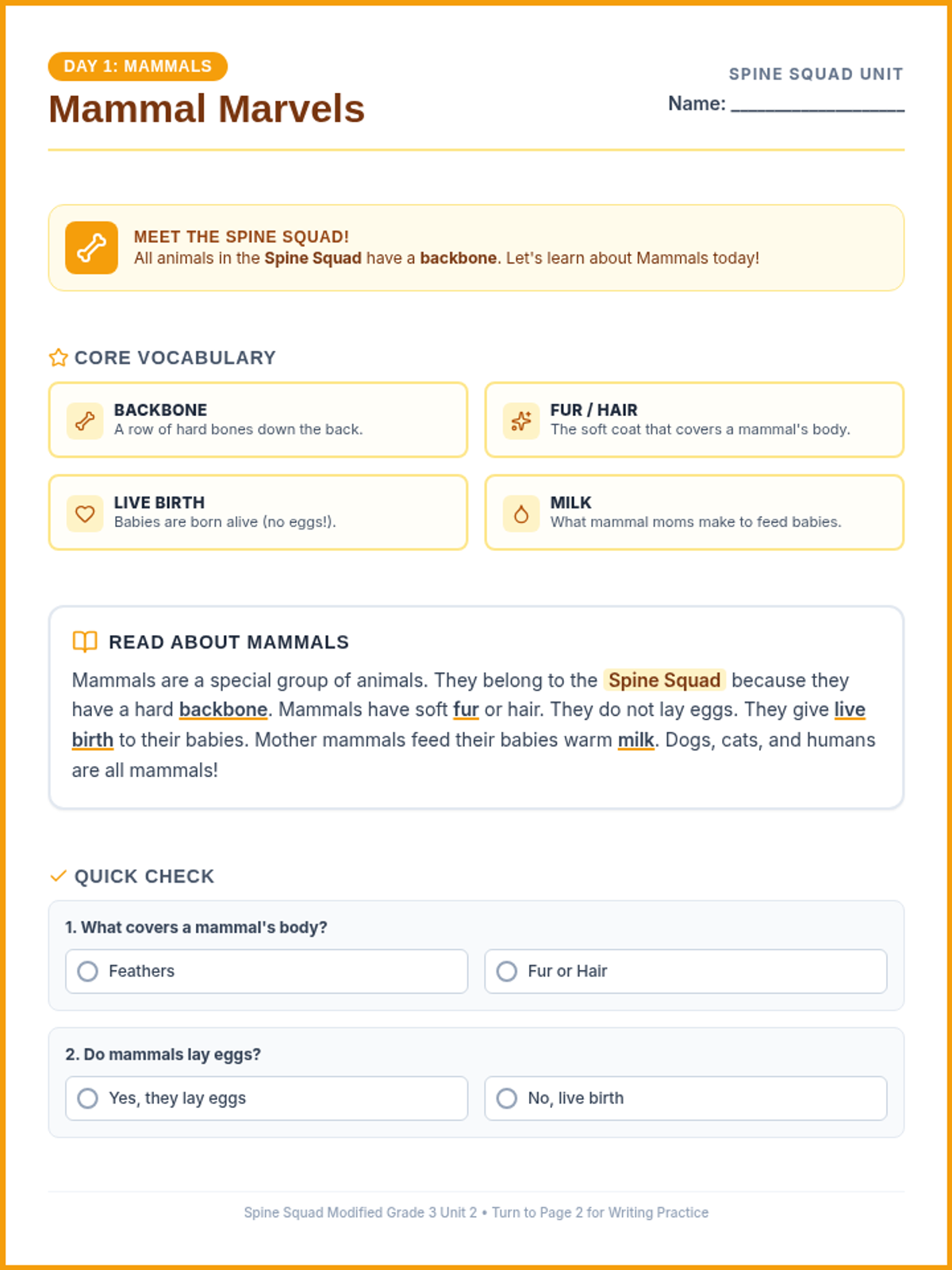
In this first lesson of the Spine Squad unit, students explore the unique traits of mammals, focusing on fur/hair, live birth, and milk production with heavy visual support and tracing activities.
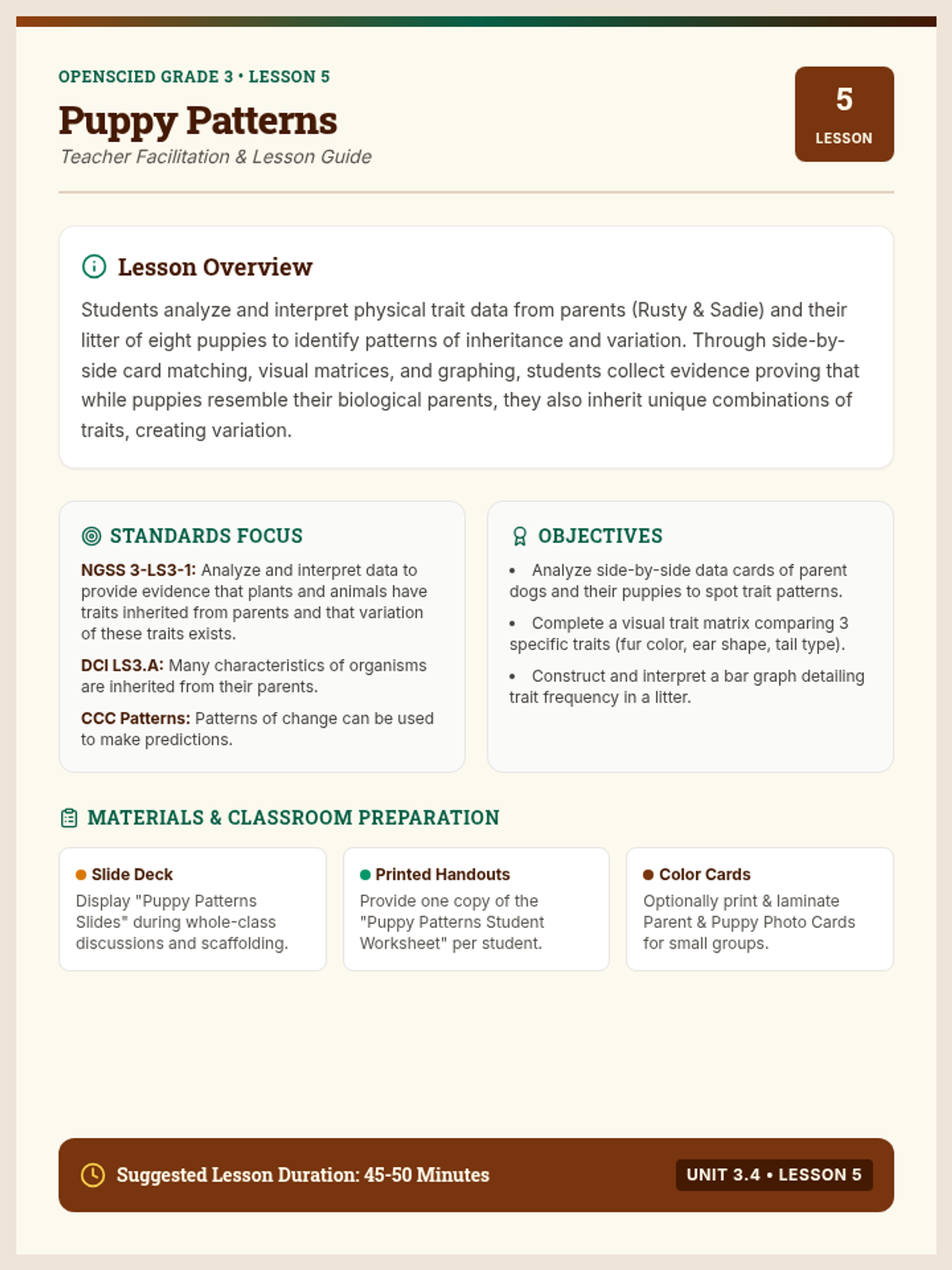
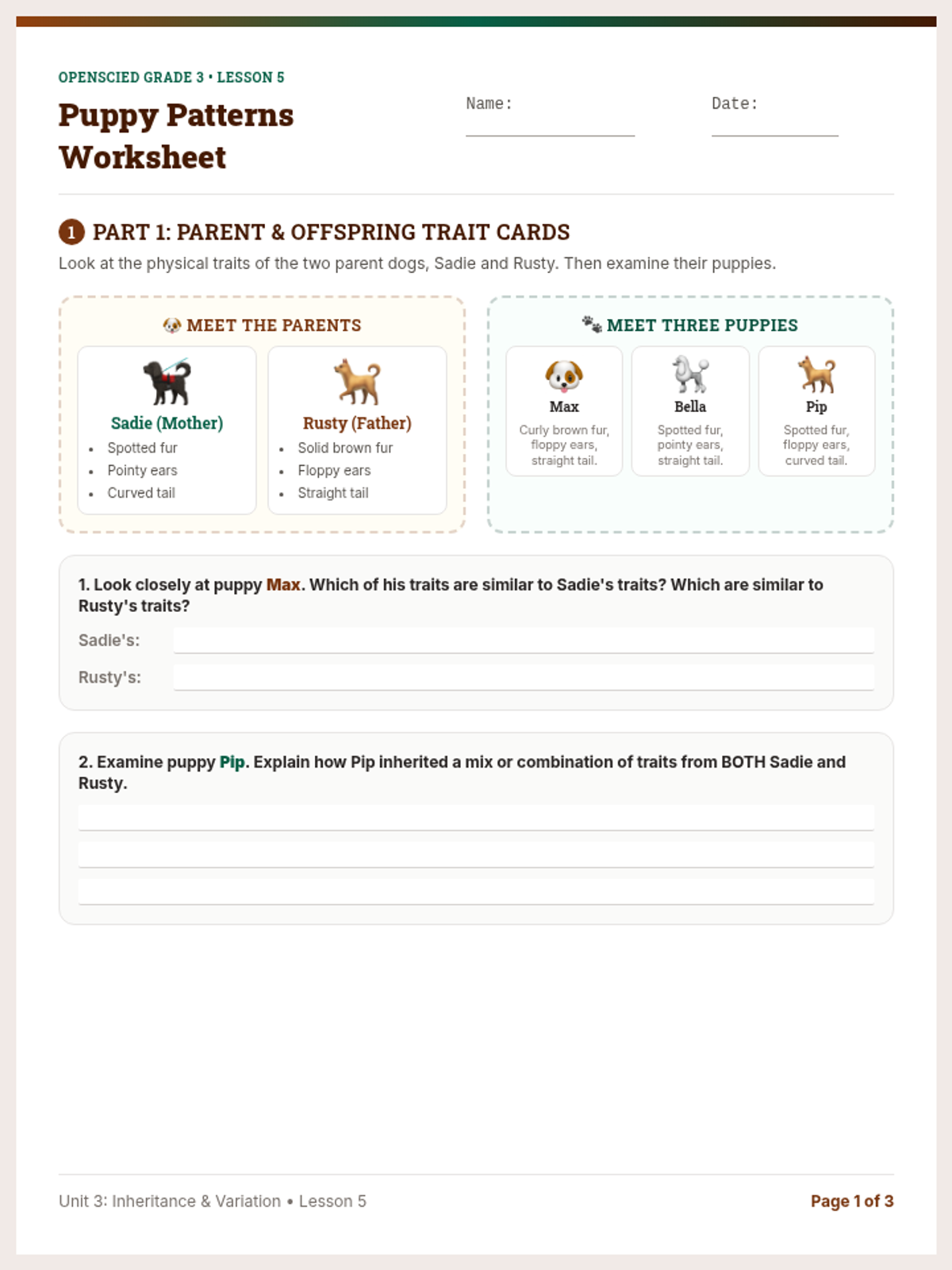
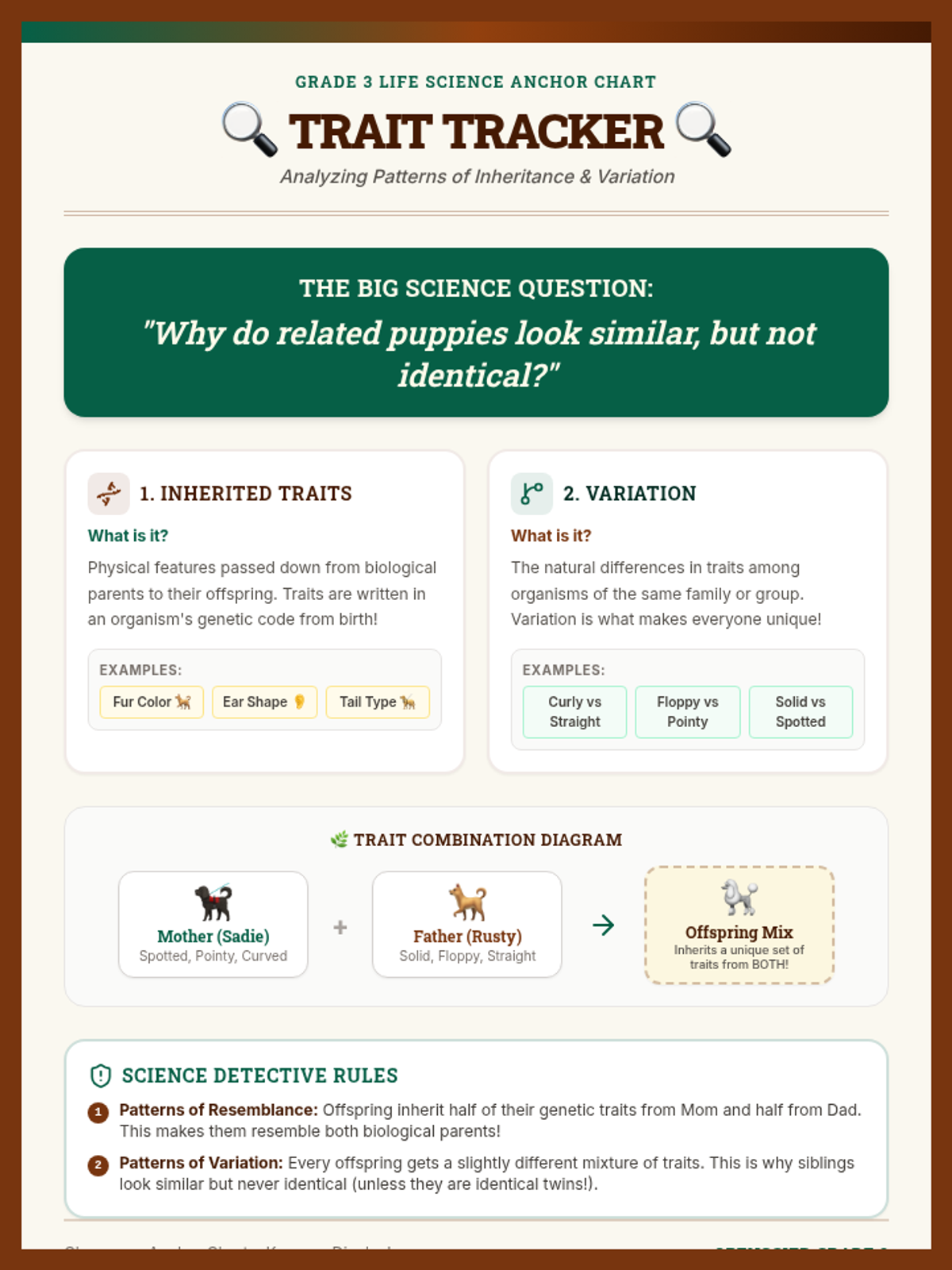
An OpenSciEd-aligned 3rd grade science lesson where students analyze and interpret data from parent dogs and their litters to discover patterns of inheritance and variation in physical traits.
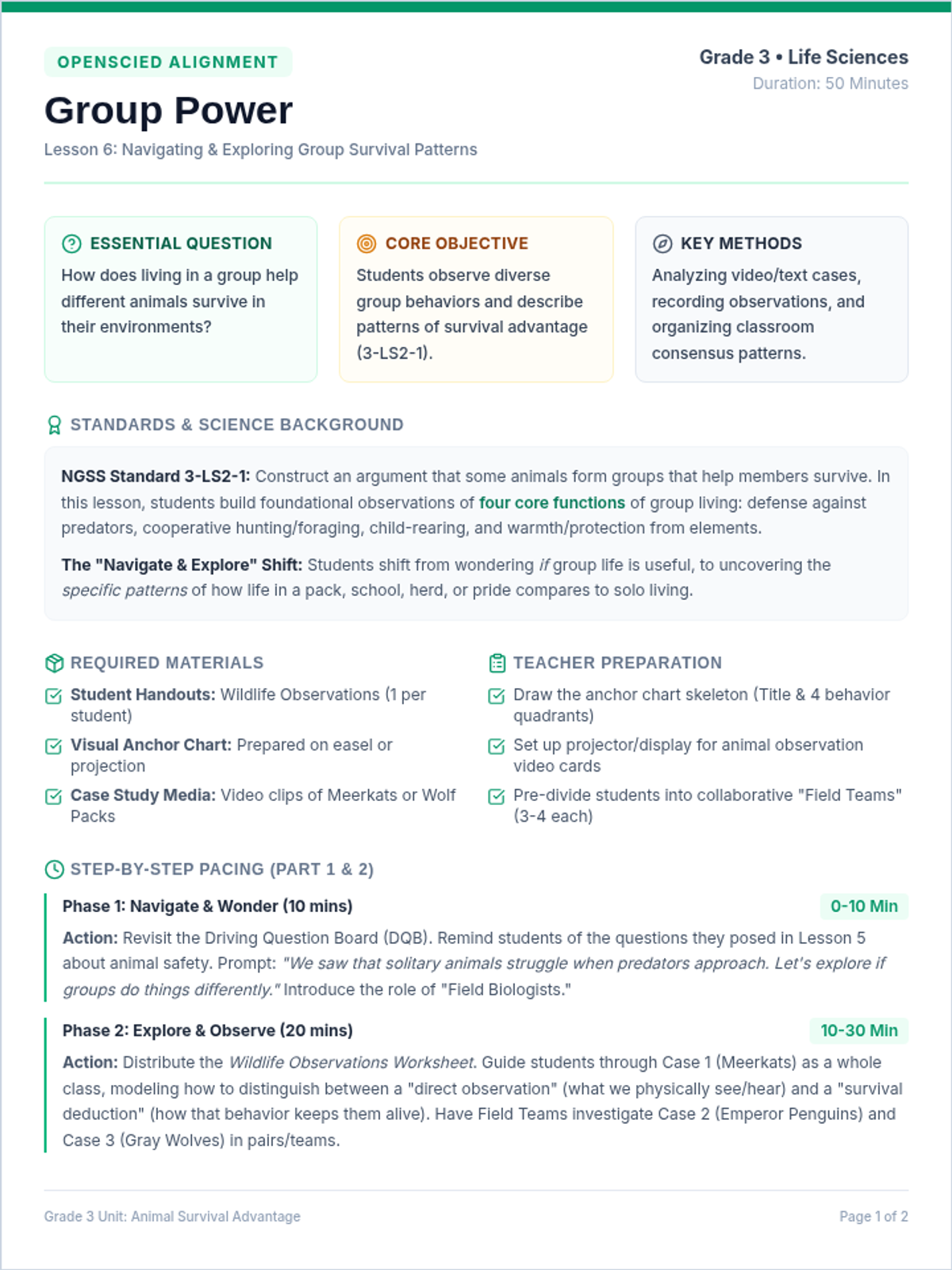
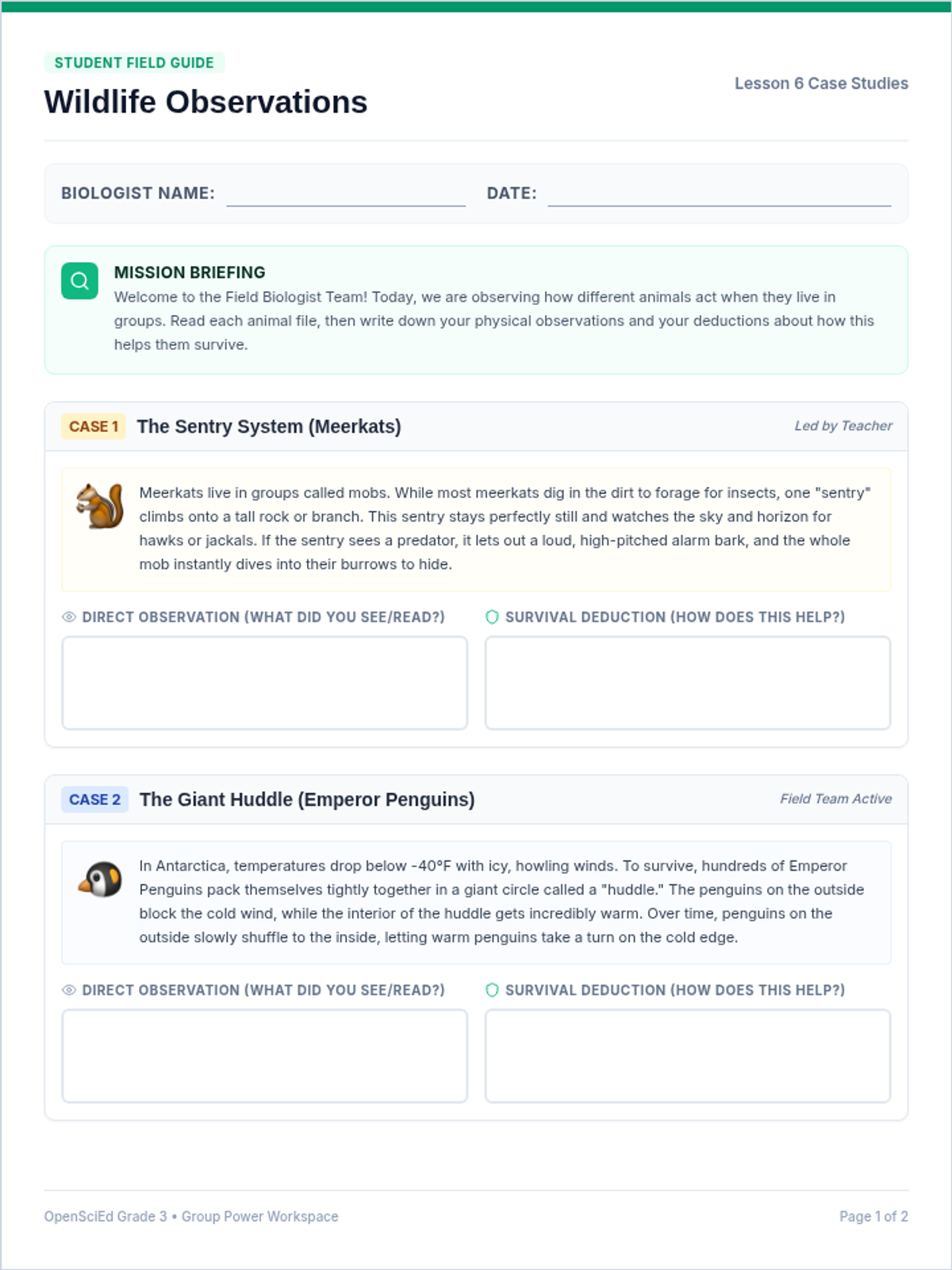
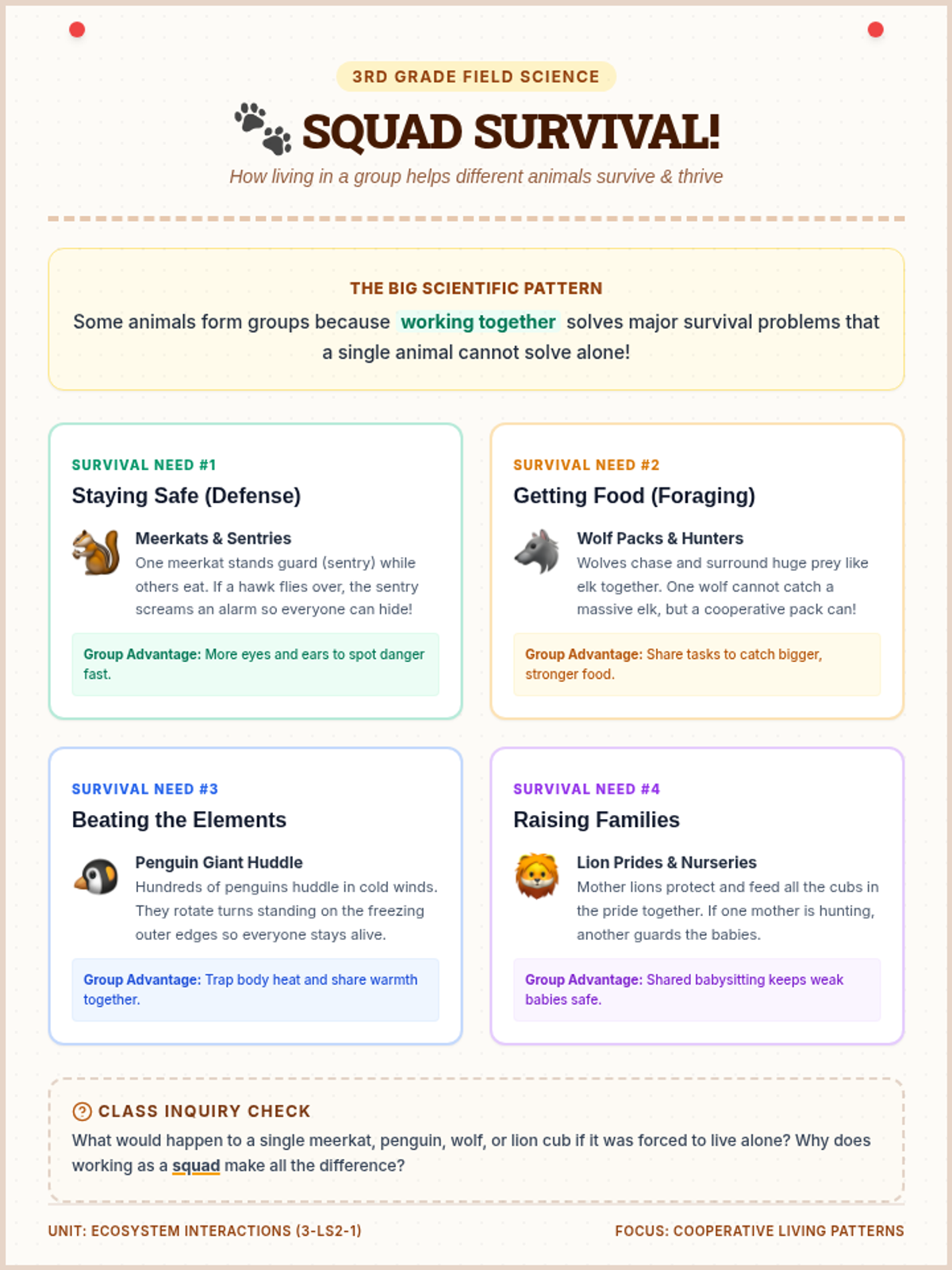
An OpenSciEd-aligned lesson where 3rd graders observe animal behaviors and describe patterns of how living in groups helps different species survive. Students analyze diverse wildlife examples to uncover the survival advantages of cooperative living.
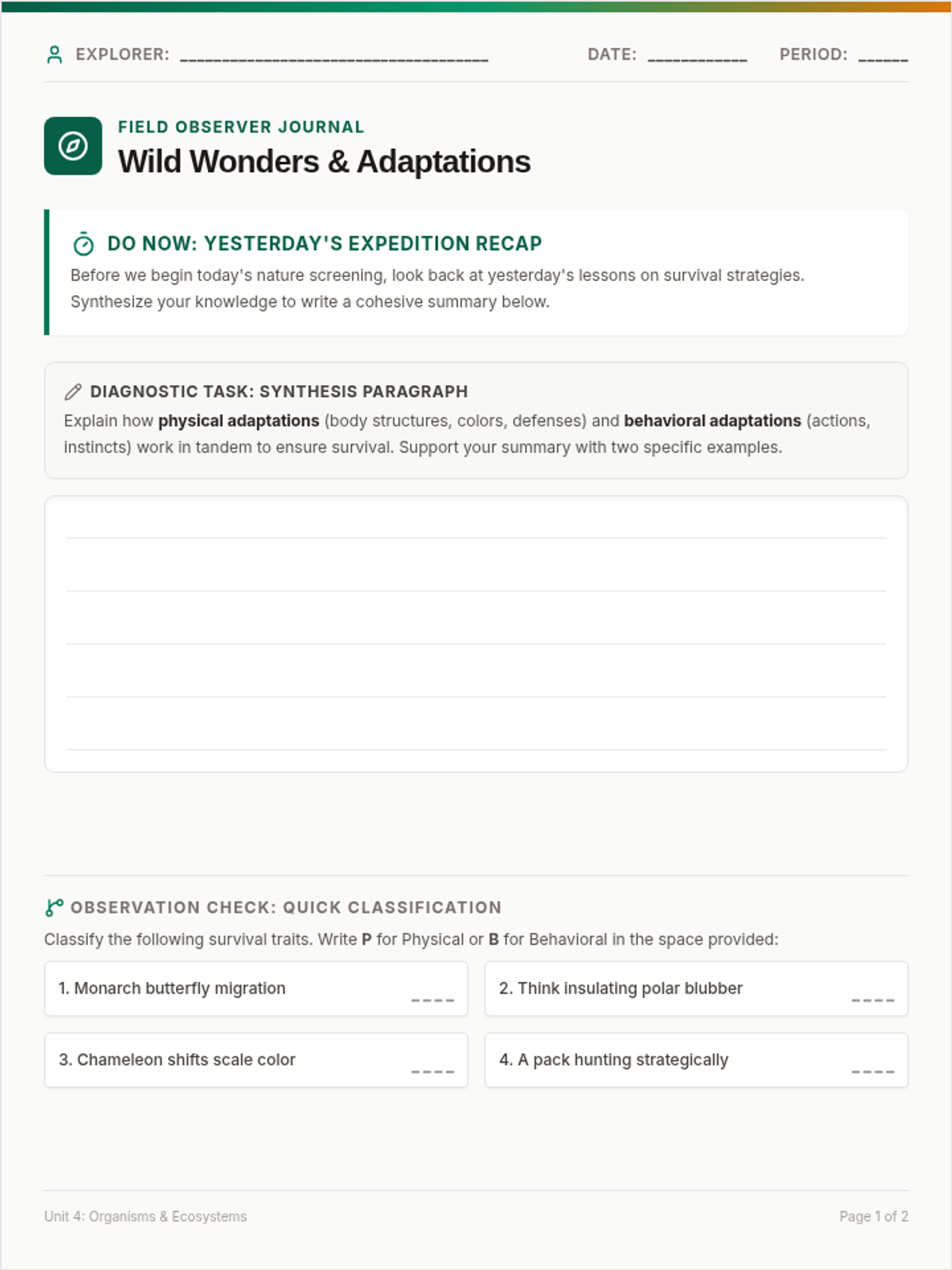
A lesson exploring how physical and behavioral traits help organisms survive in their environments, featuring a video documentary review and diagnostic summary.
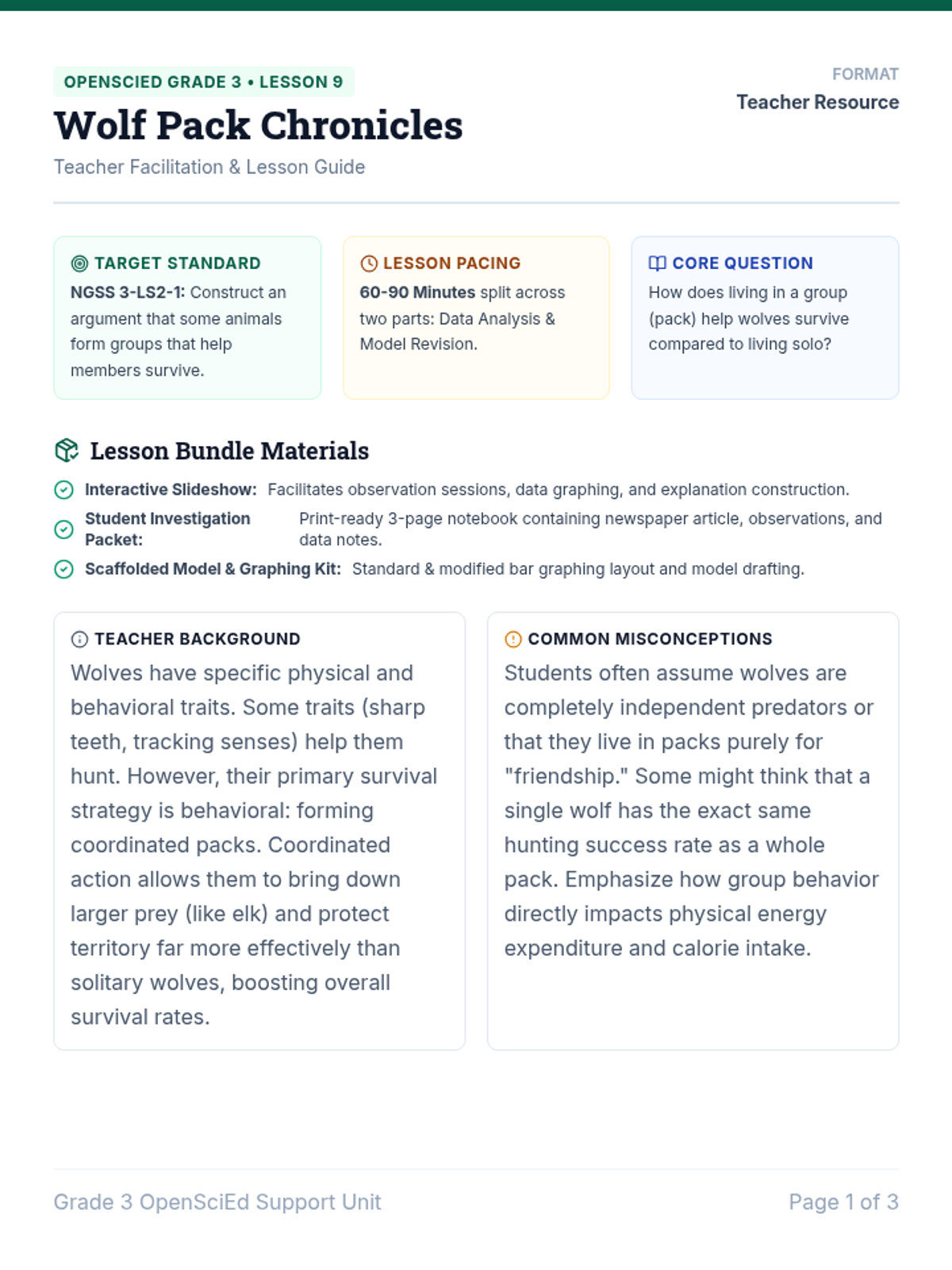
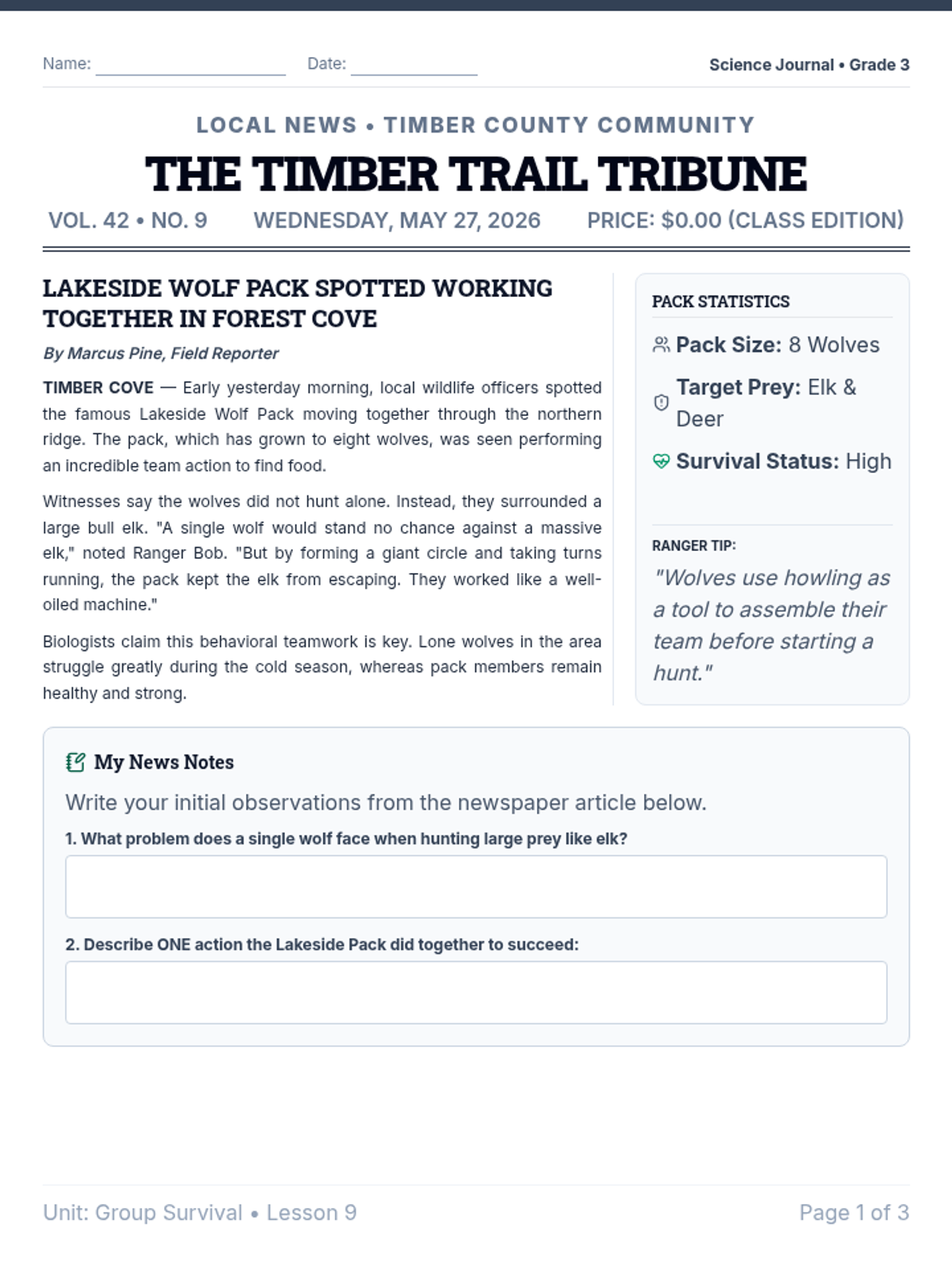
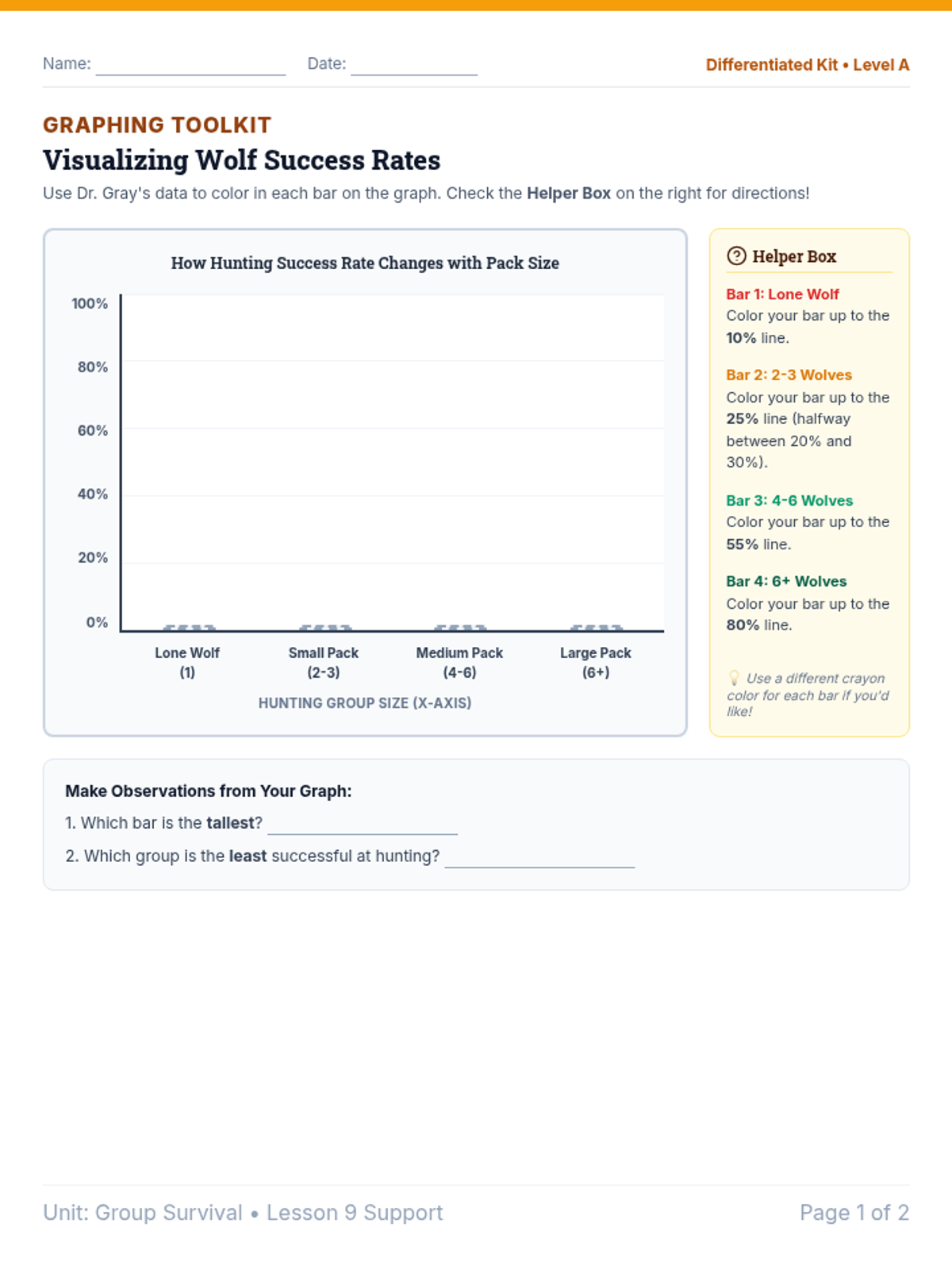
A third-grade OpenSciEd Lesson 9 investigation where students explore wolf traits and group survival. Students read a local newspaper article about a wolf pack, analyze expert data on traits, build a bar graph, and revise their models to explain how living in groups helps wolves survive.
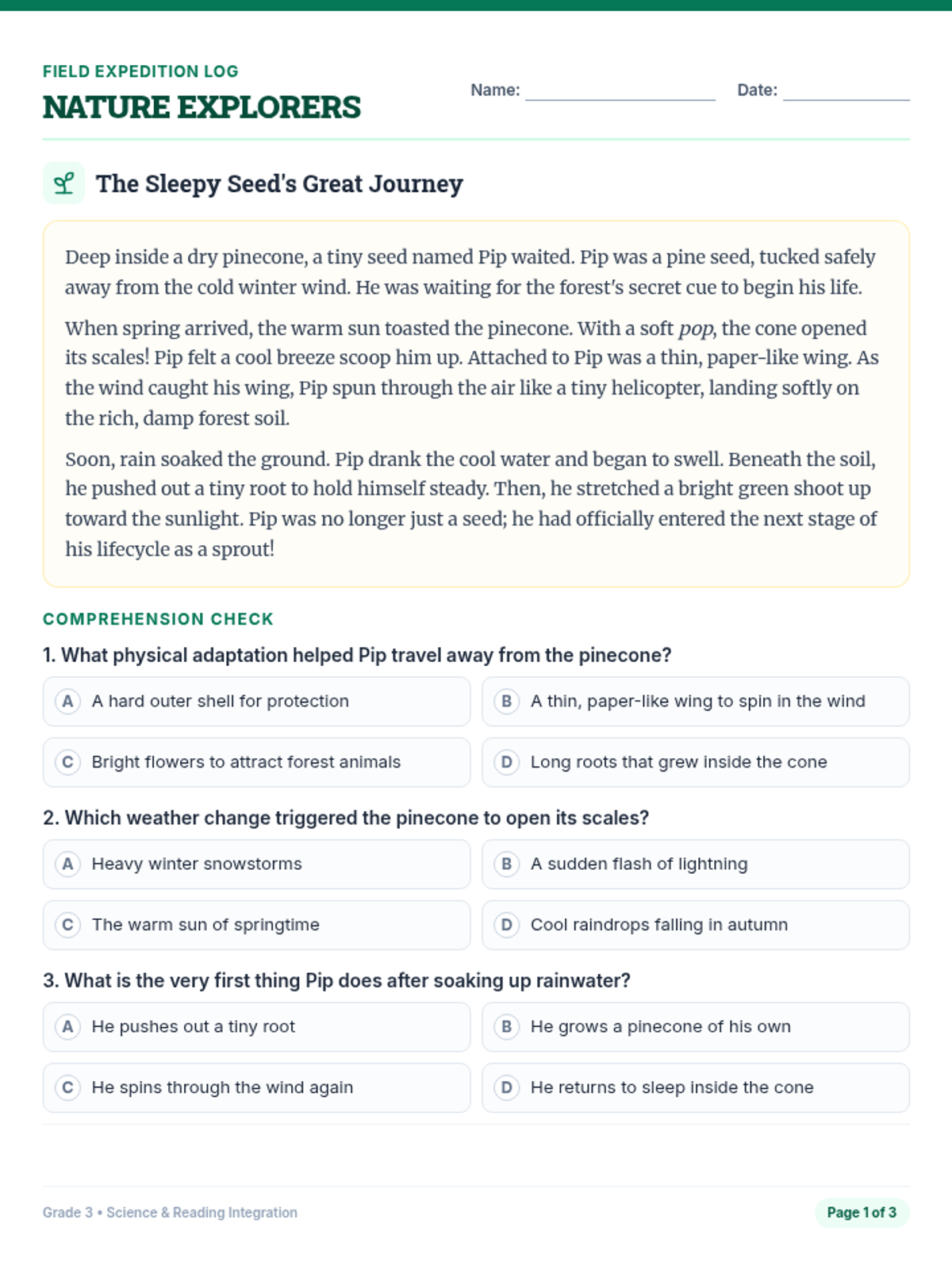
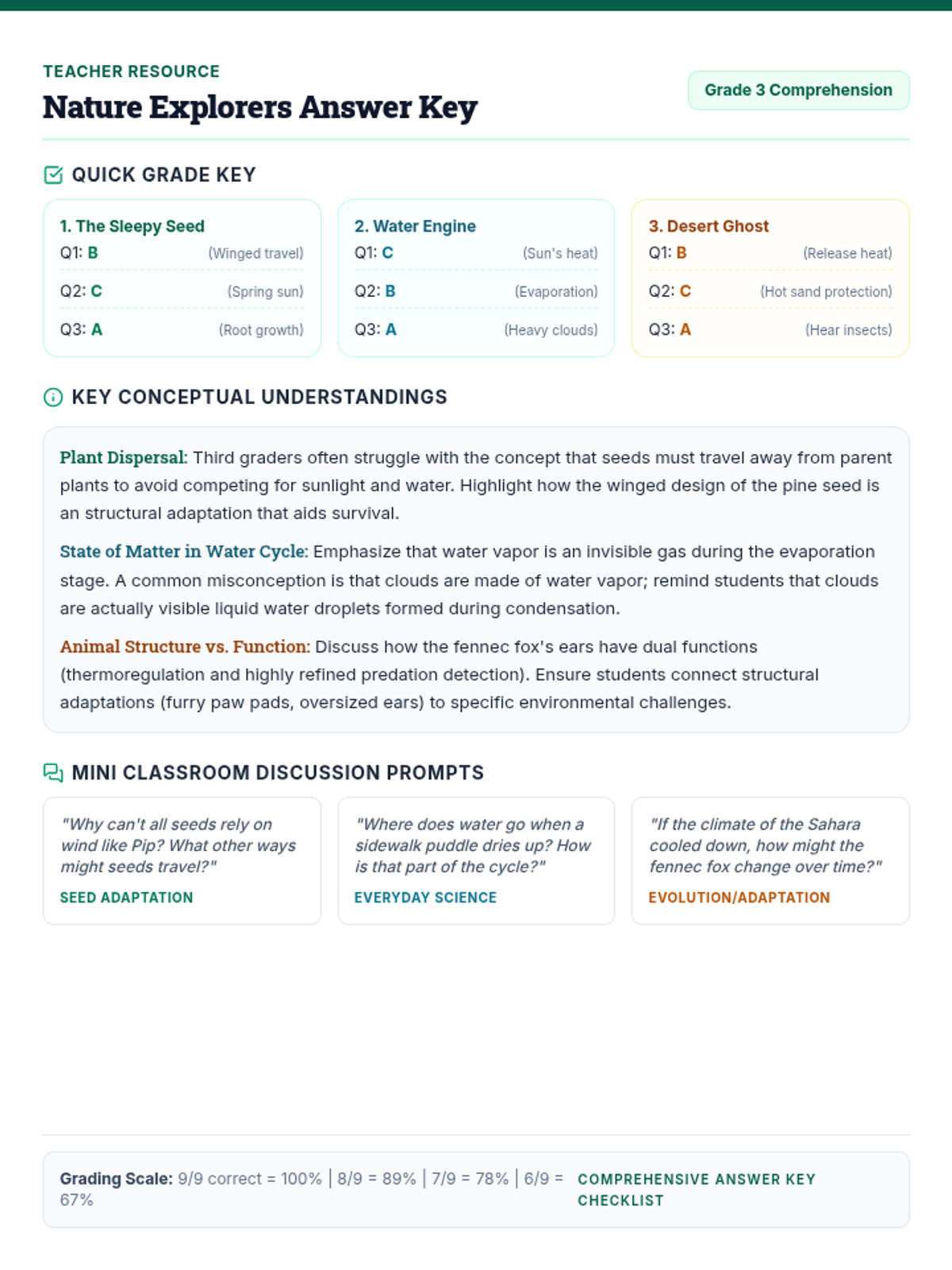
A comprehensive third-grade reading comprehension resource featuring engaging passages about plant lifecycles, weather patterns, and animal adaptations.