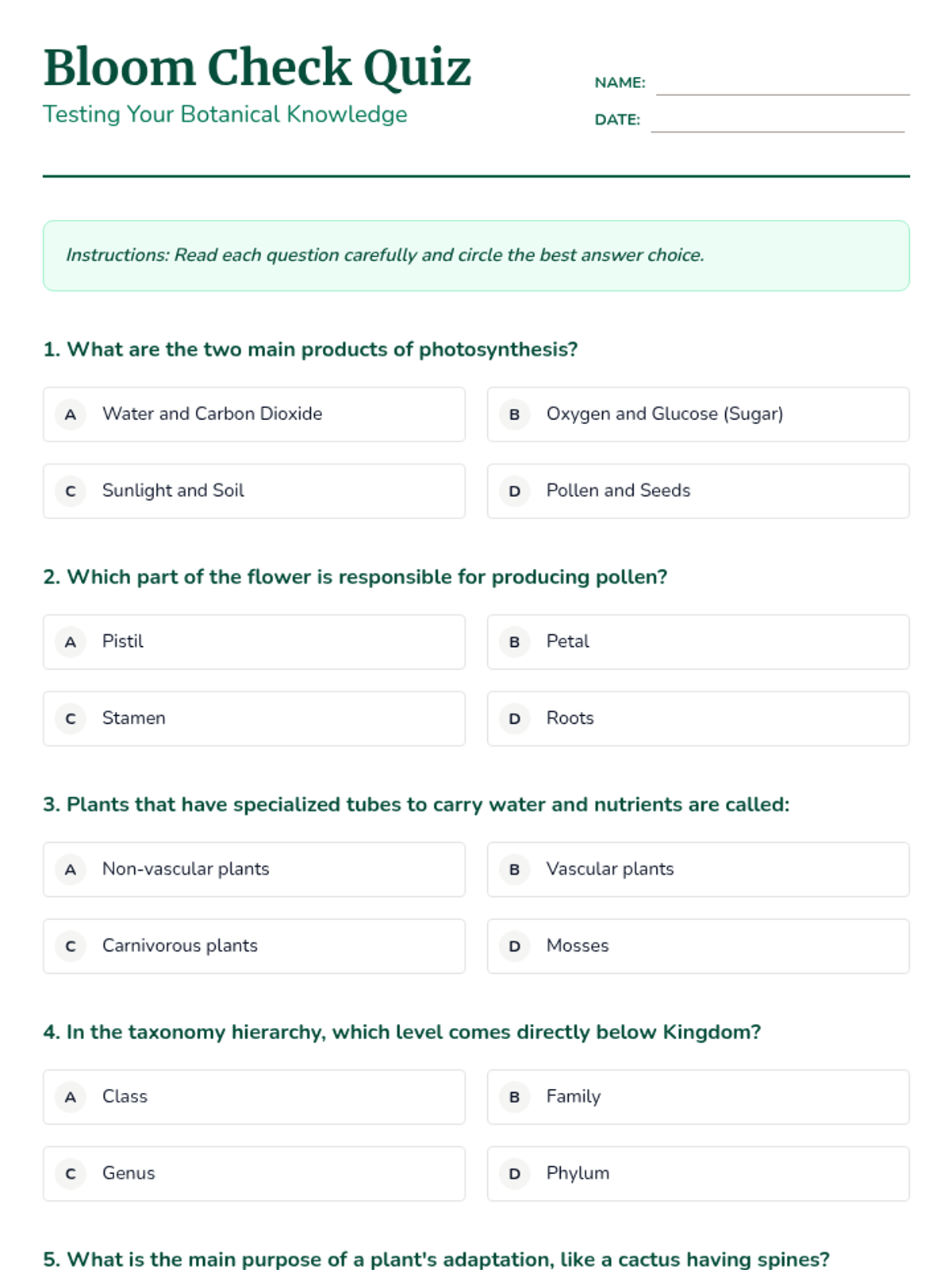
A quick 15-minute review session focusing on the essential inputs and outputs of photosynthesis, perfect for wrapping up a science unit or as a morning warm-up.
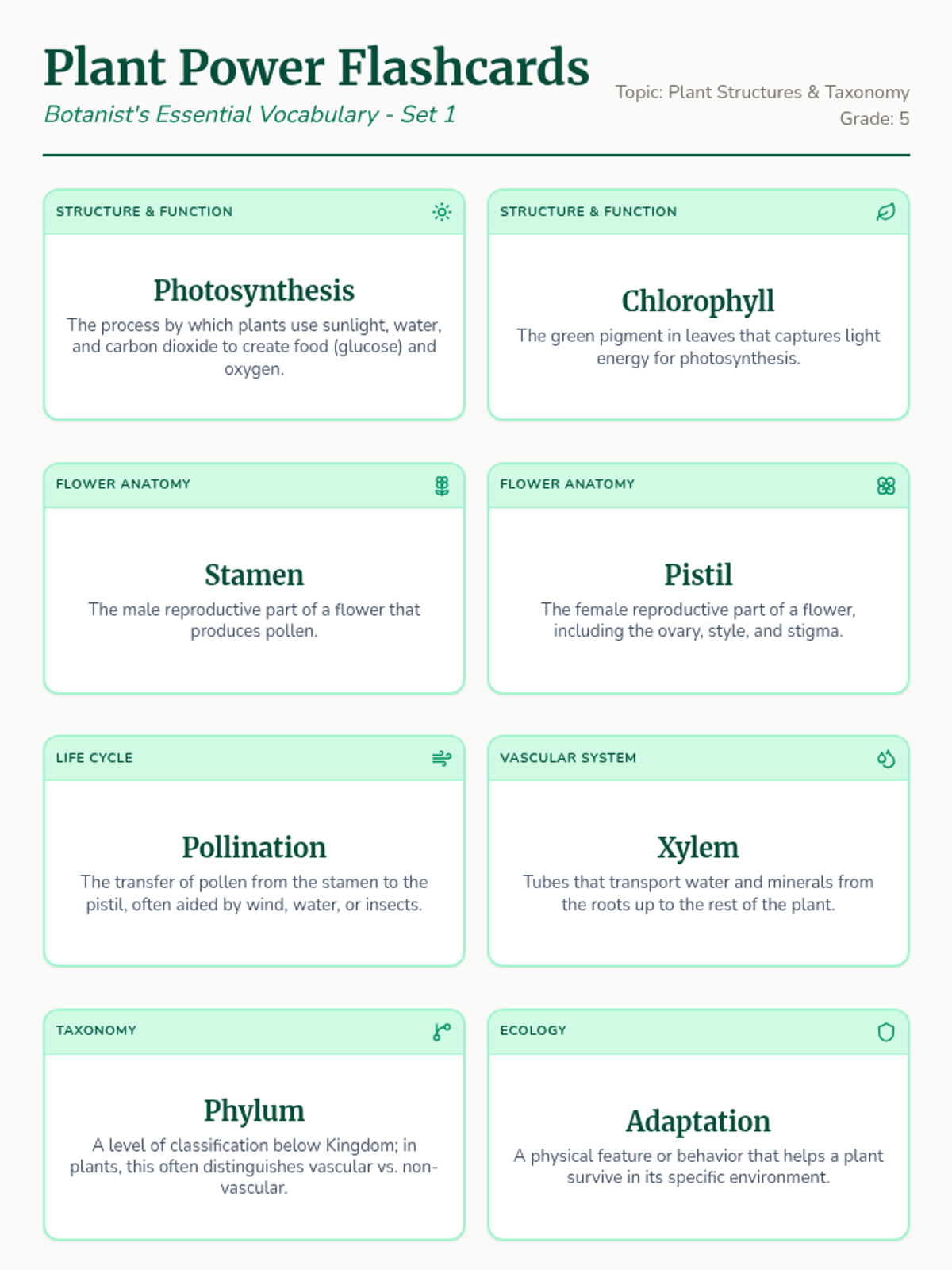
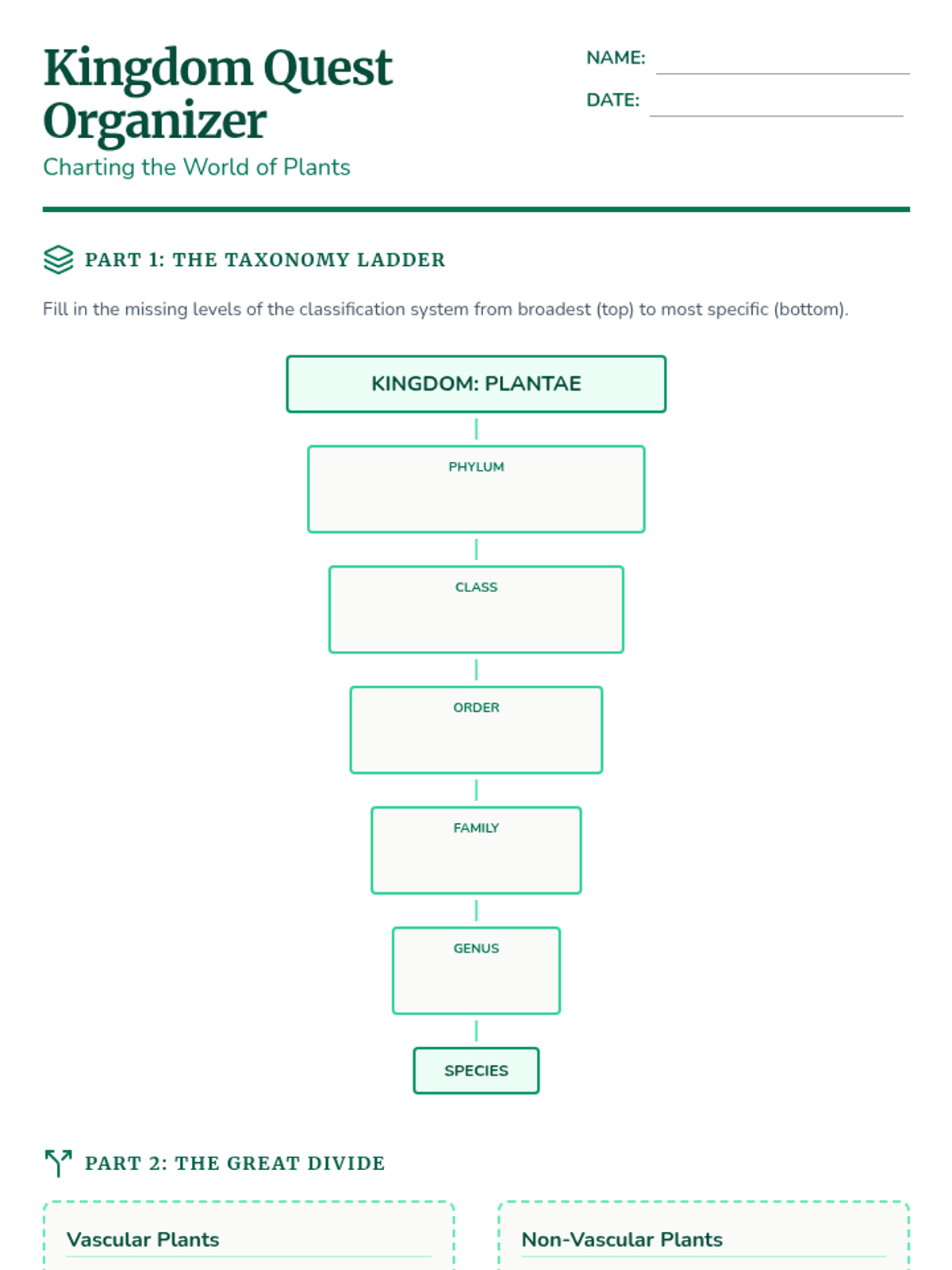
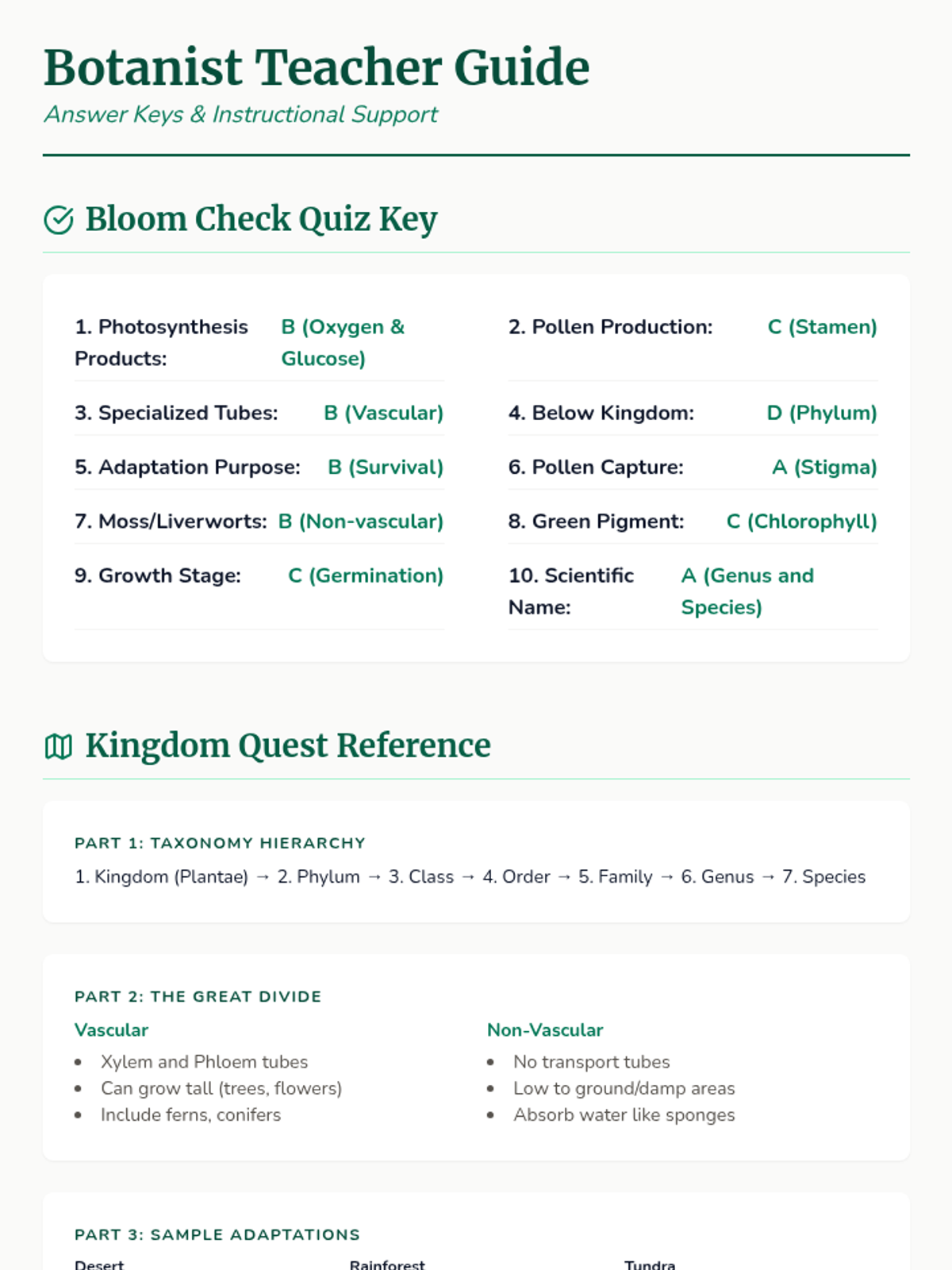
A comprehensive exploration of plant biology, covering anatomical structures, reproductive cycles, and the hierarchical classification system used by botanists. Students will investigate flower parts, photosynthesis, and how plants adapt to diverse environments.
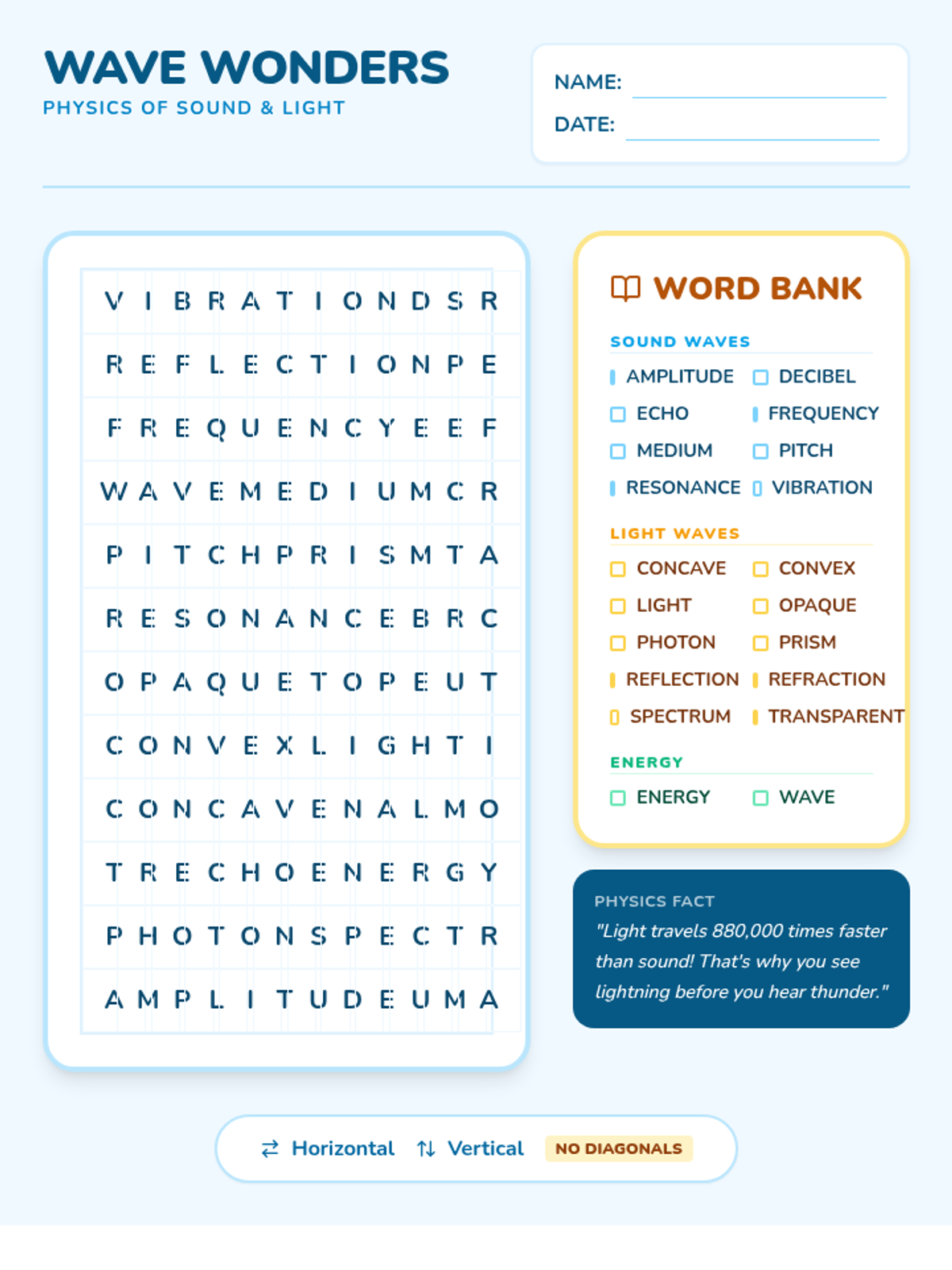
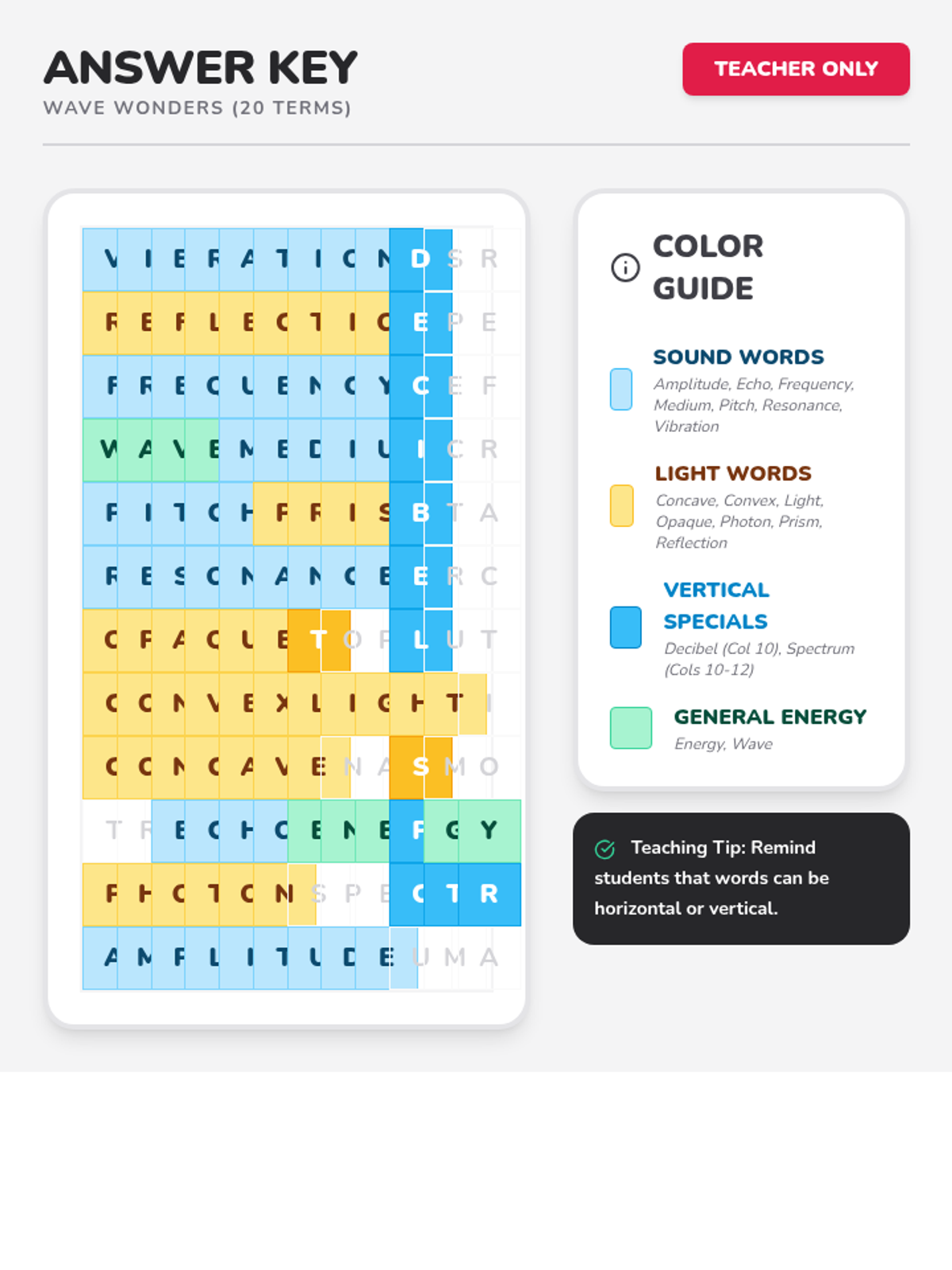
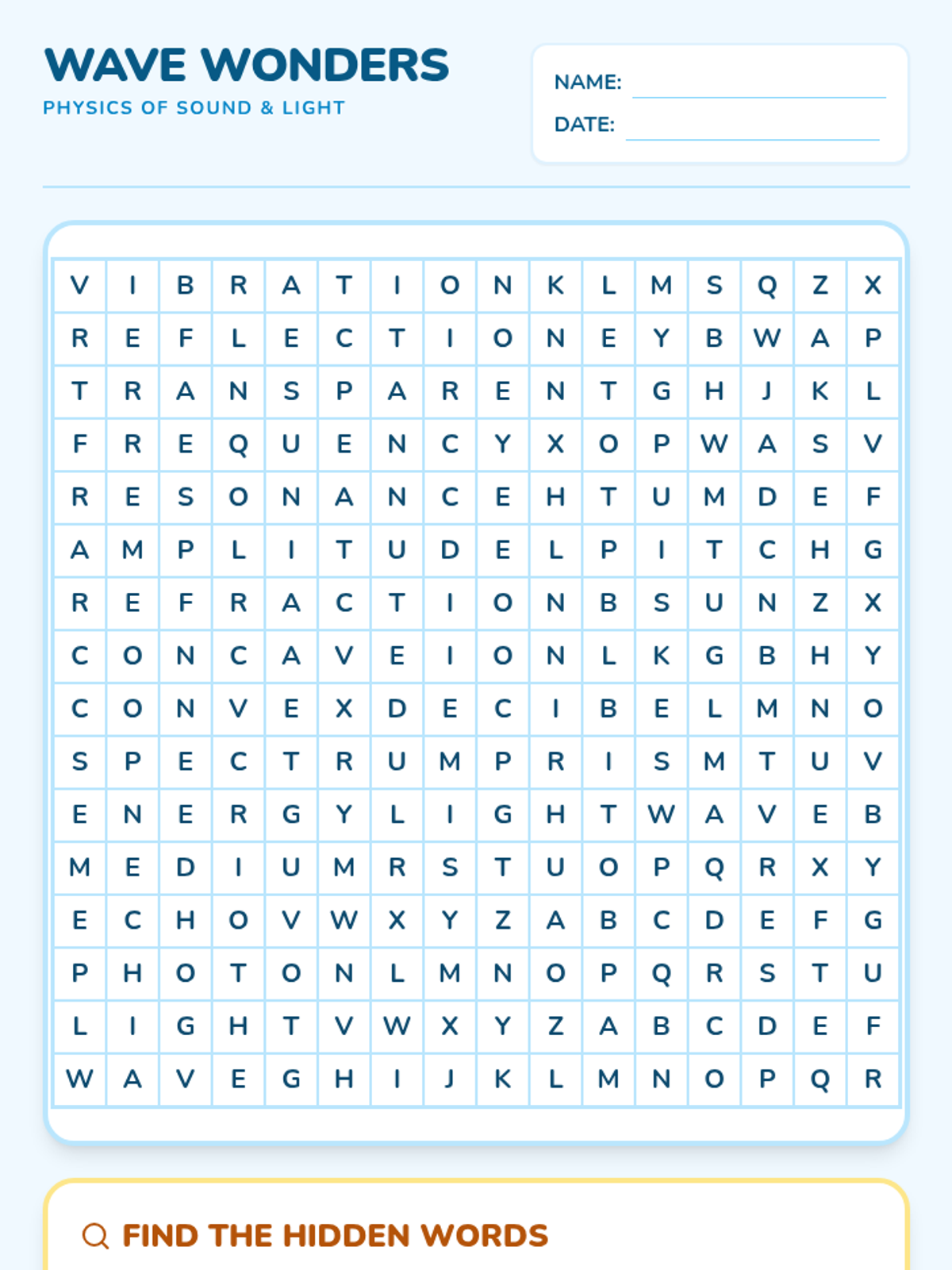
An introductory exploration of the physics of sound and light through vocabulary reinforcement and visual aids.
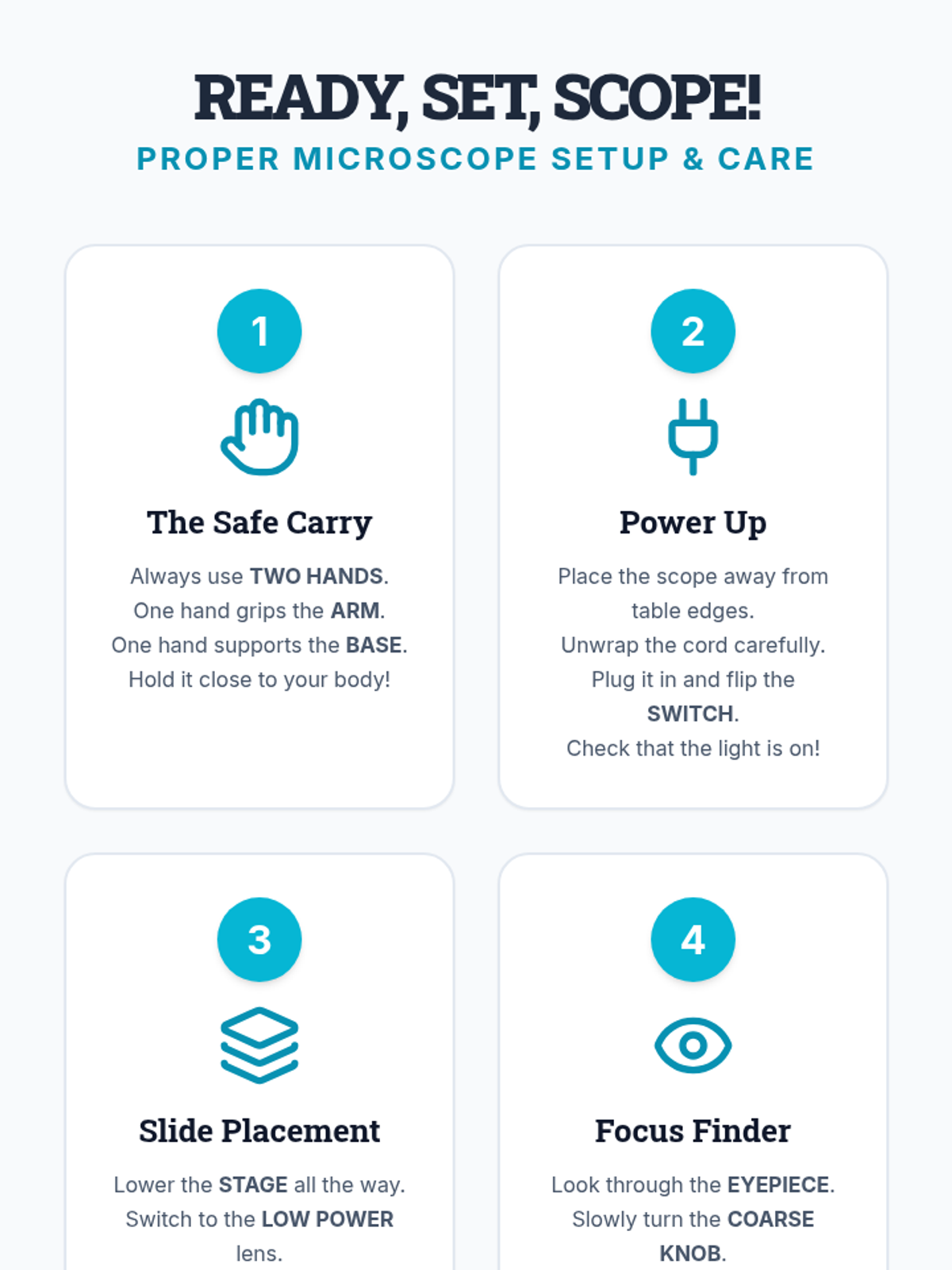
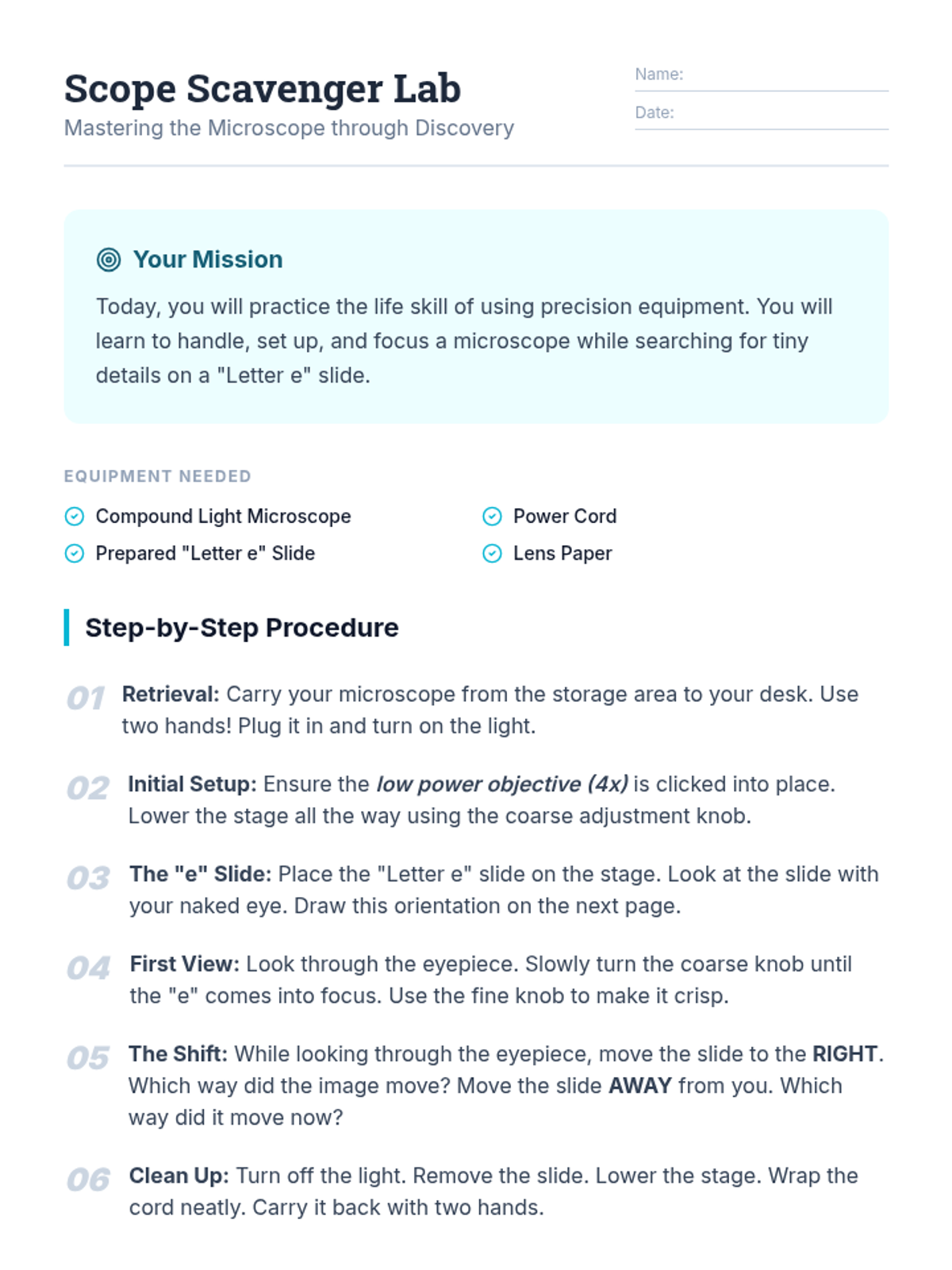
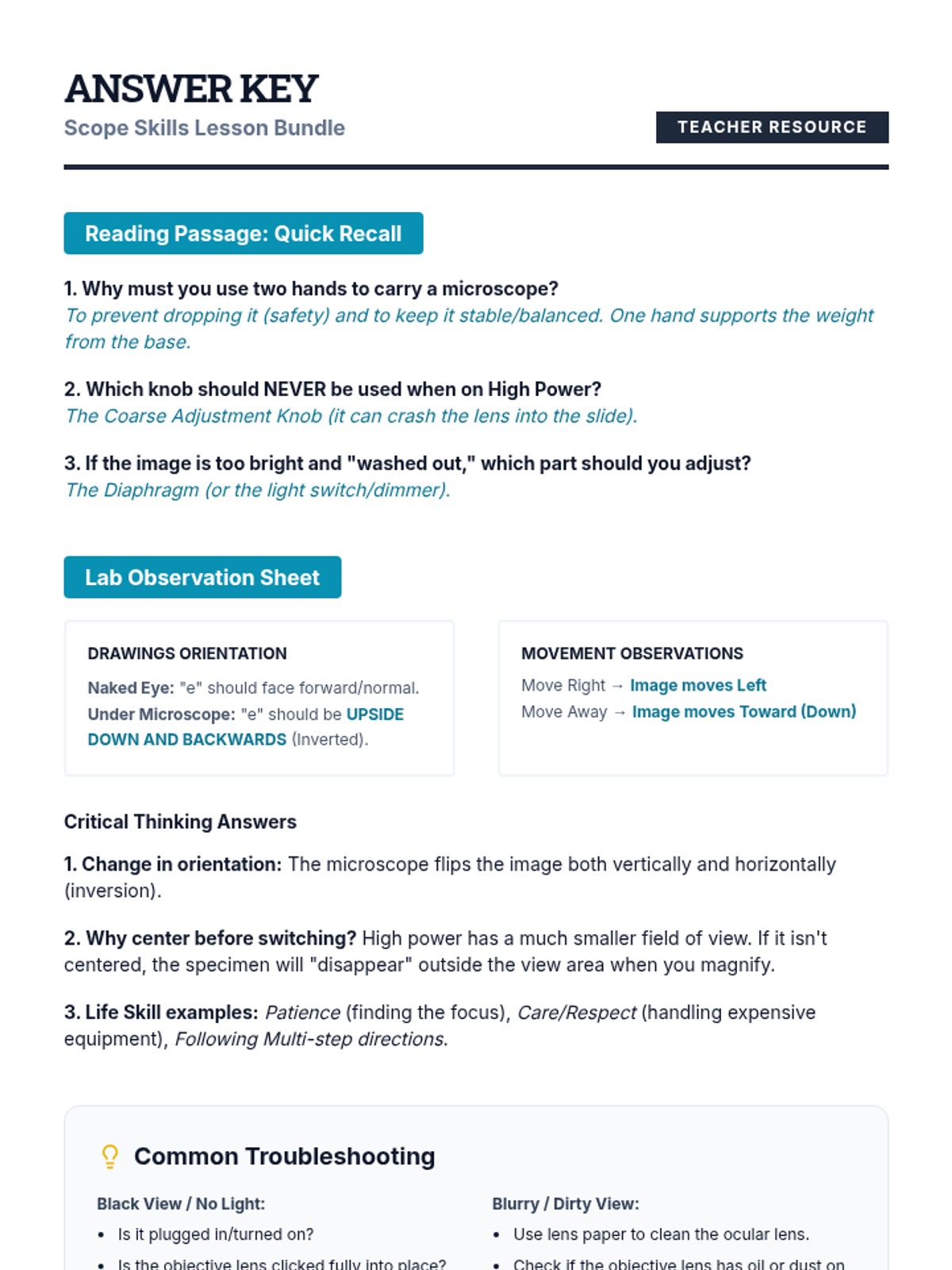
A foundational lesson on compound light microscopes, focusing on parts identification, proper handling, and the step-by-step process of focusing on a specimen. Students develop essential lab safety and precision skills.
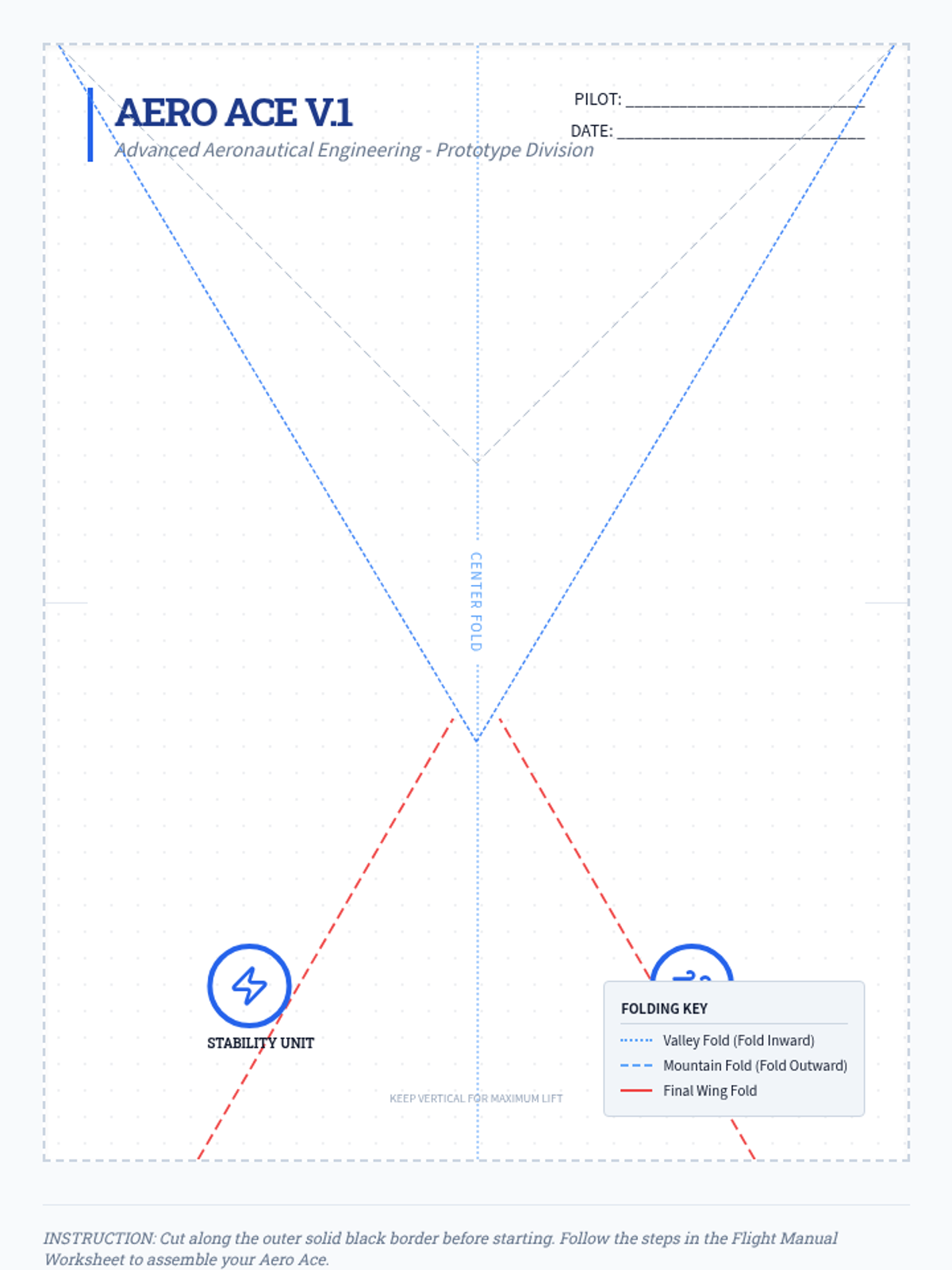
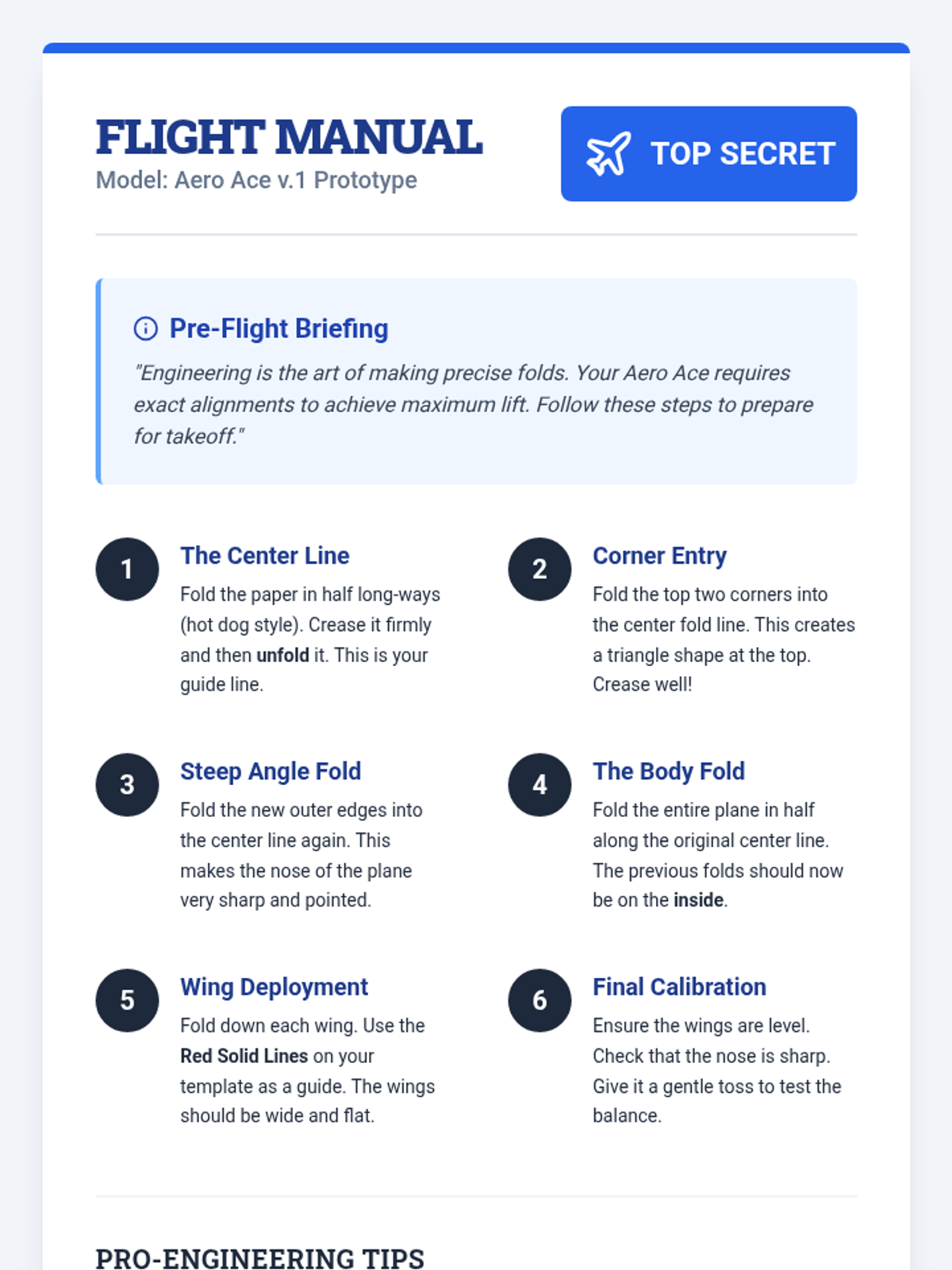
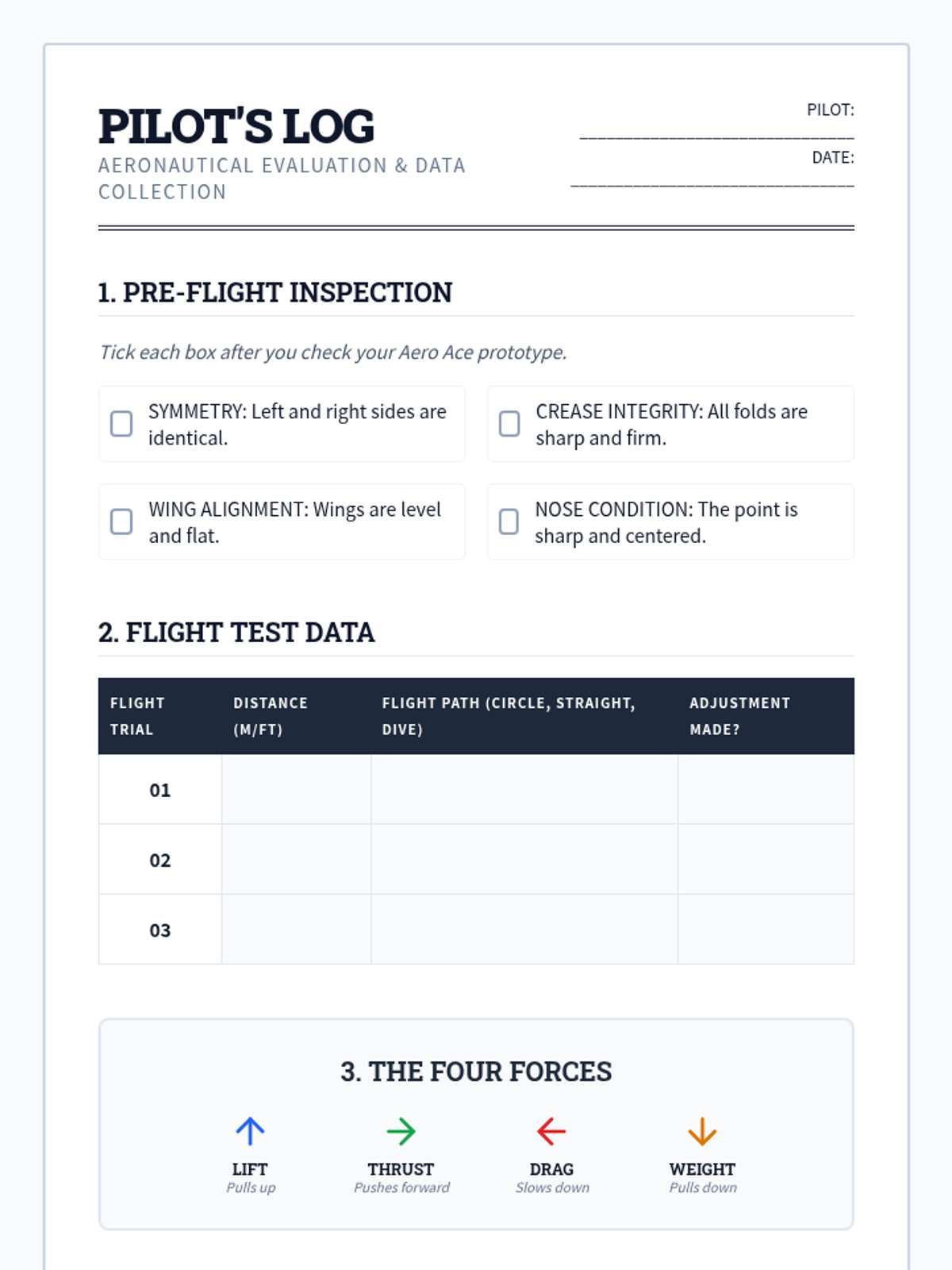
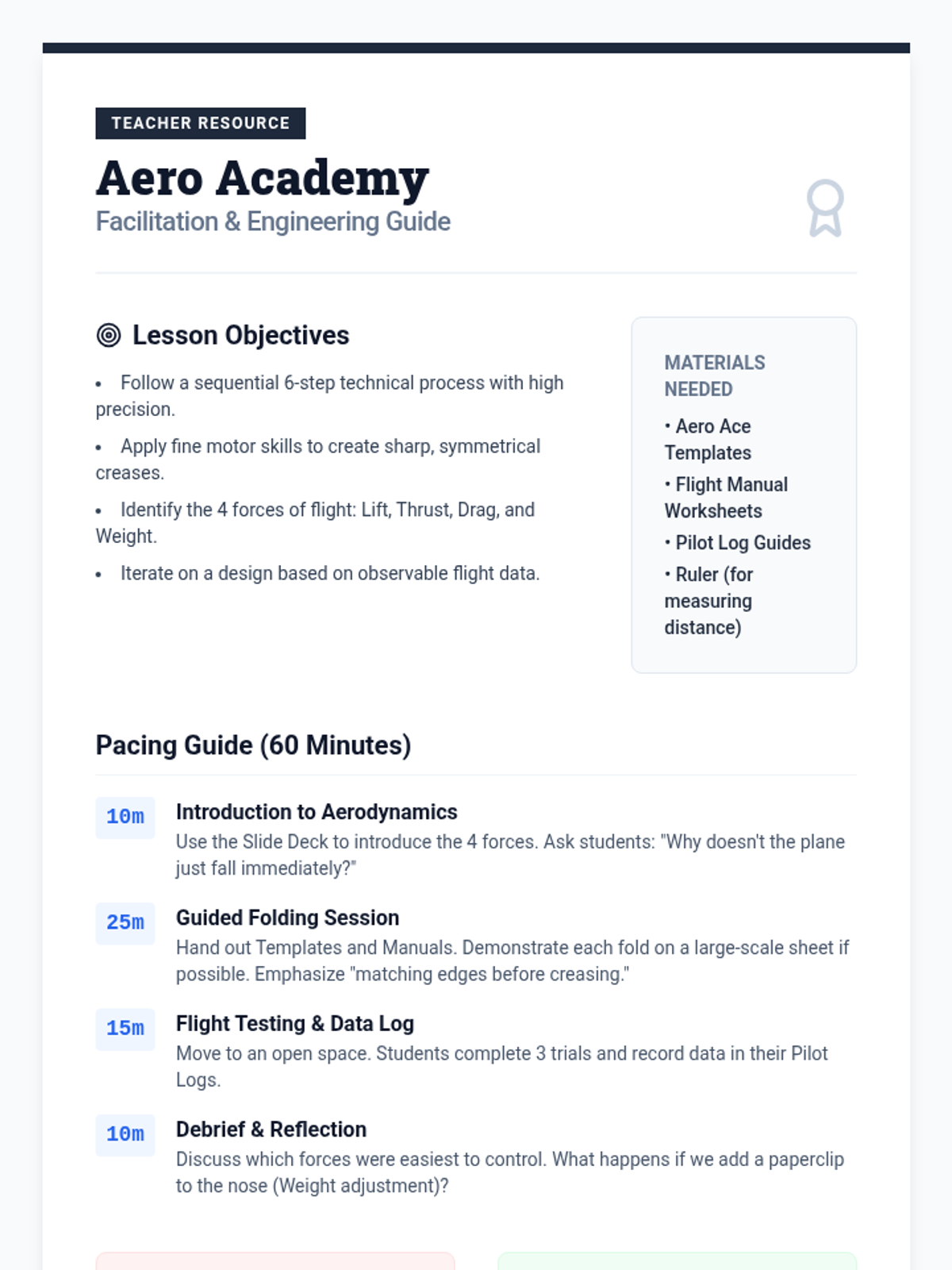
A hands-on engineering lesson where students follow precise directions to fold a high-performance paper airplane while learning the four forces of flight.
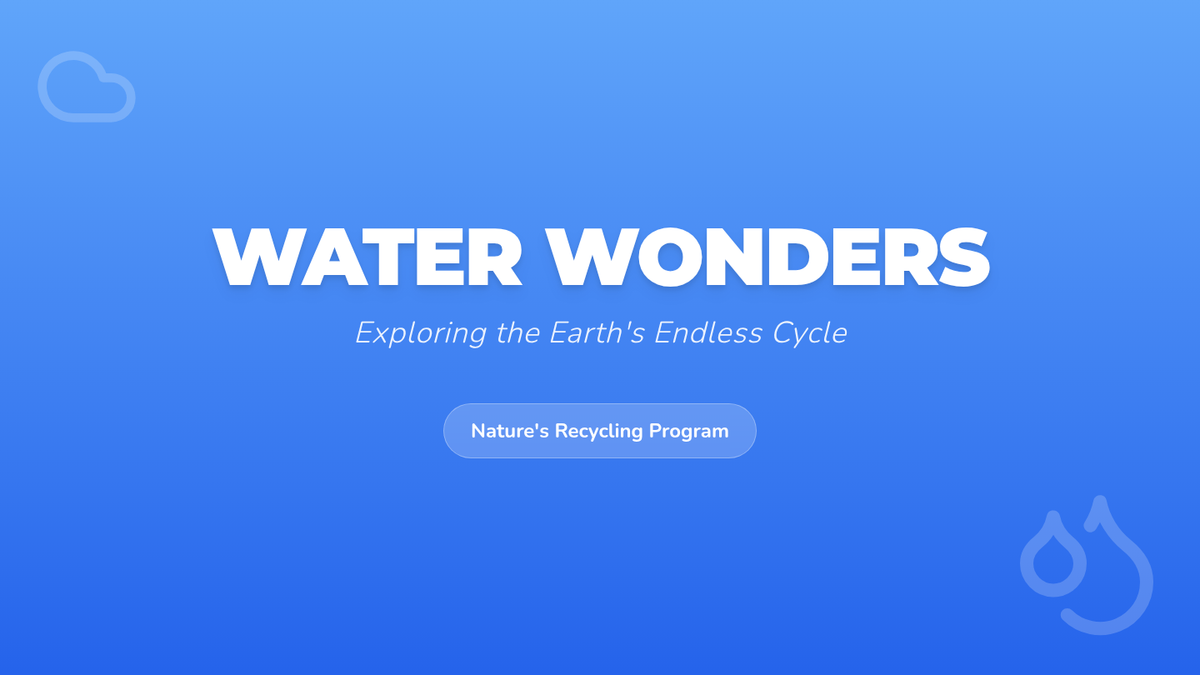
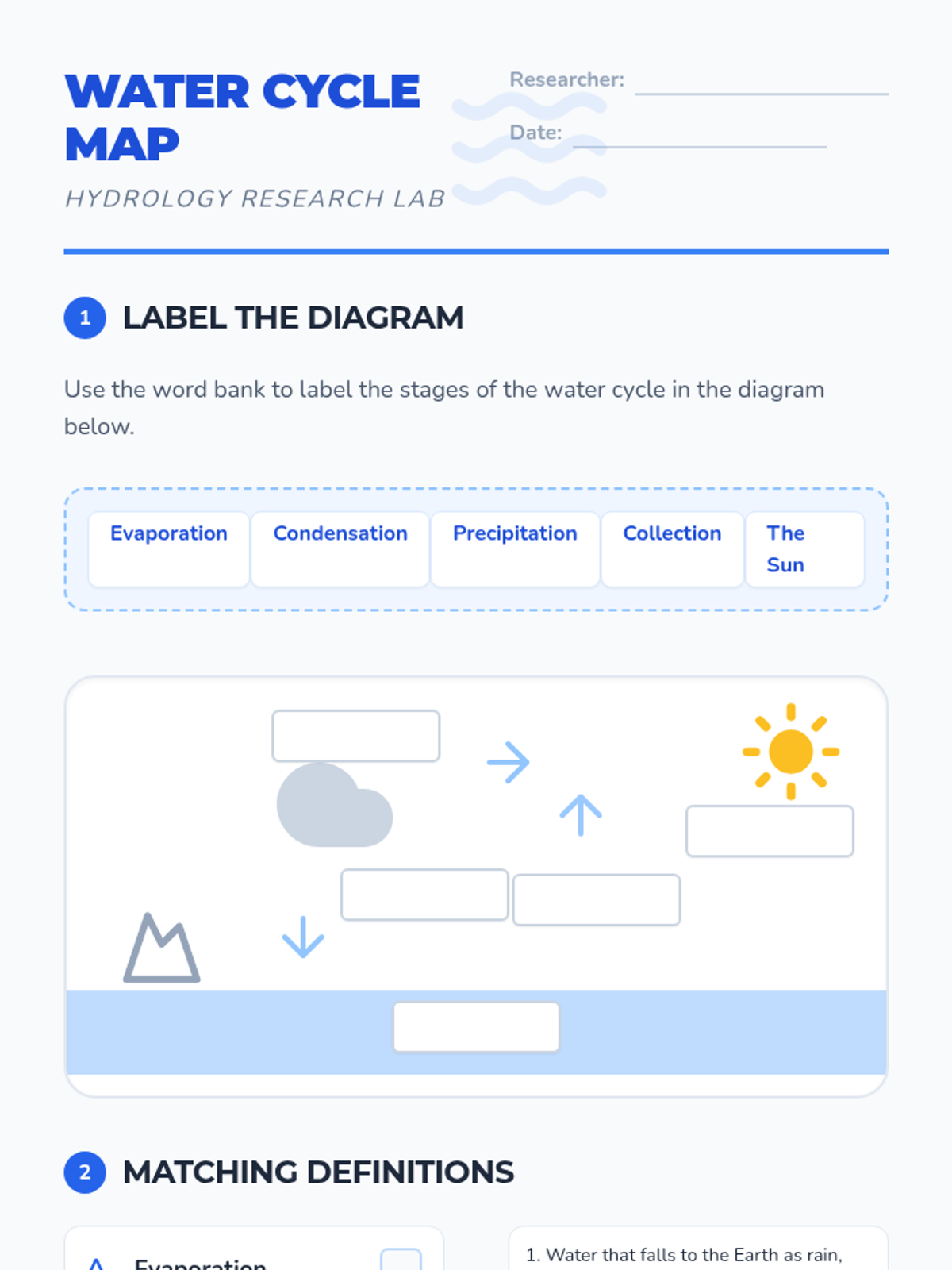
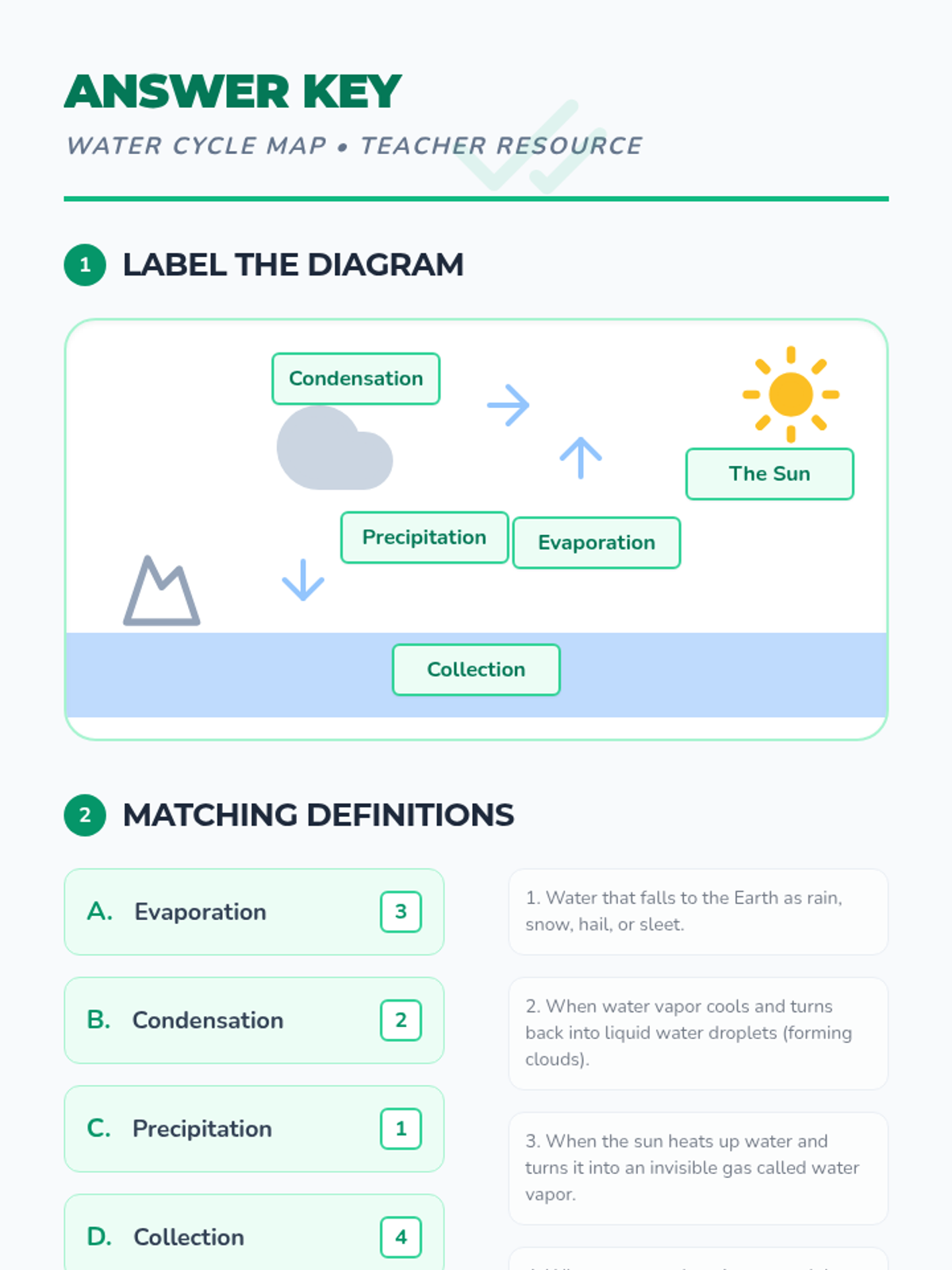
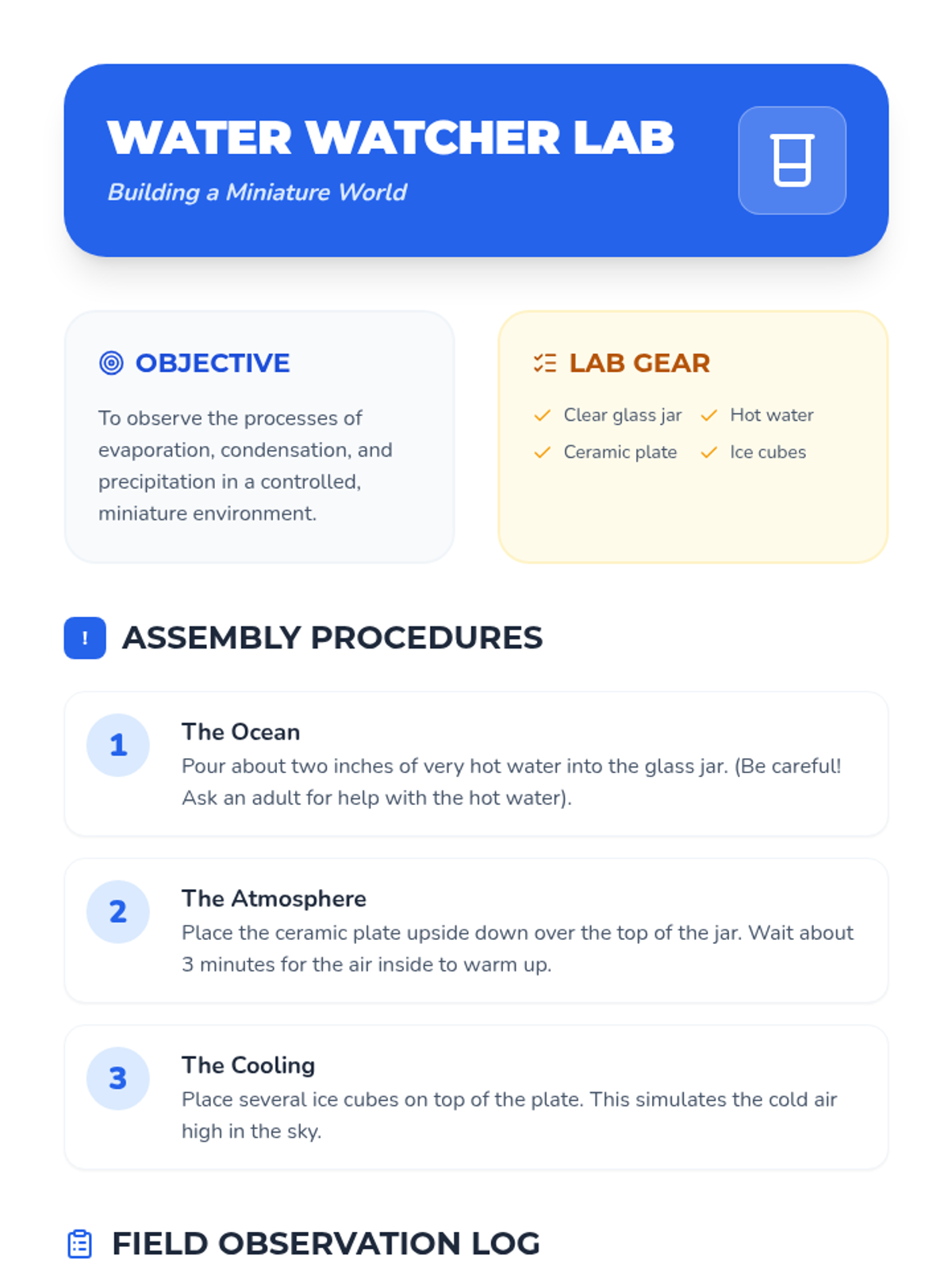
An introductory lesson on the continuous movement of water on, above, and below the surface of the Earth, focusing on the four main stages: evaporation, condensation, precipitation, and collection.
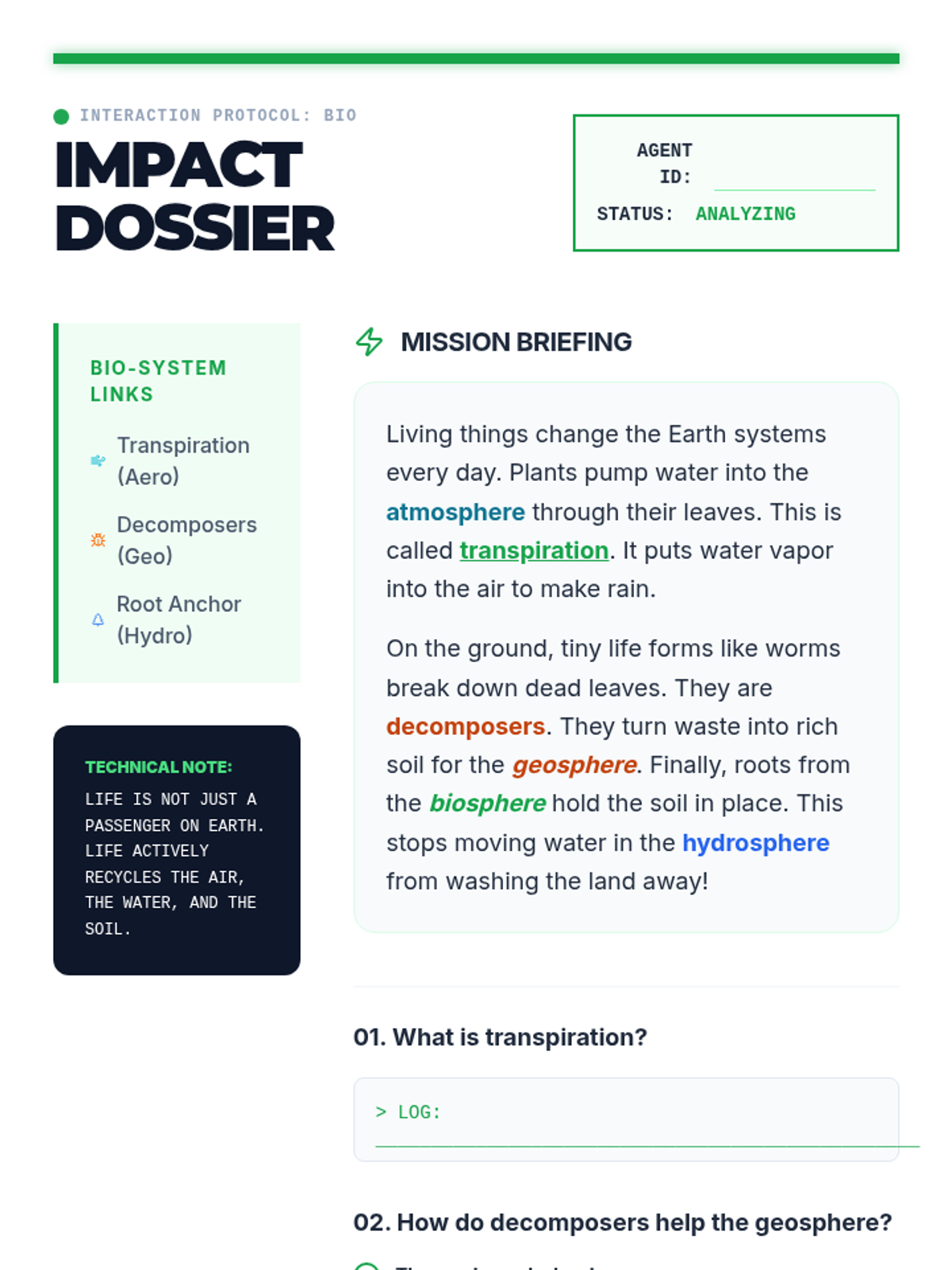
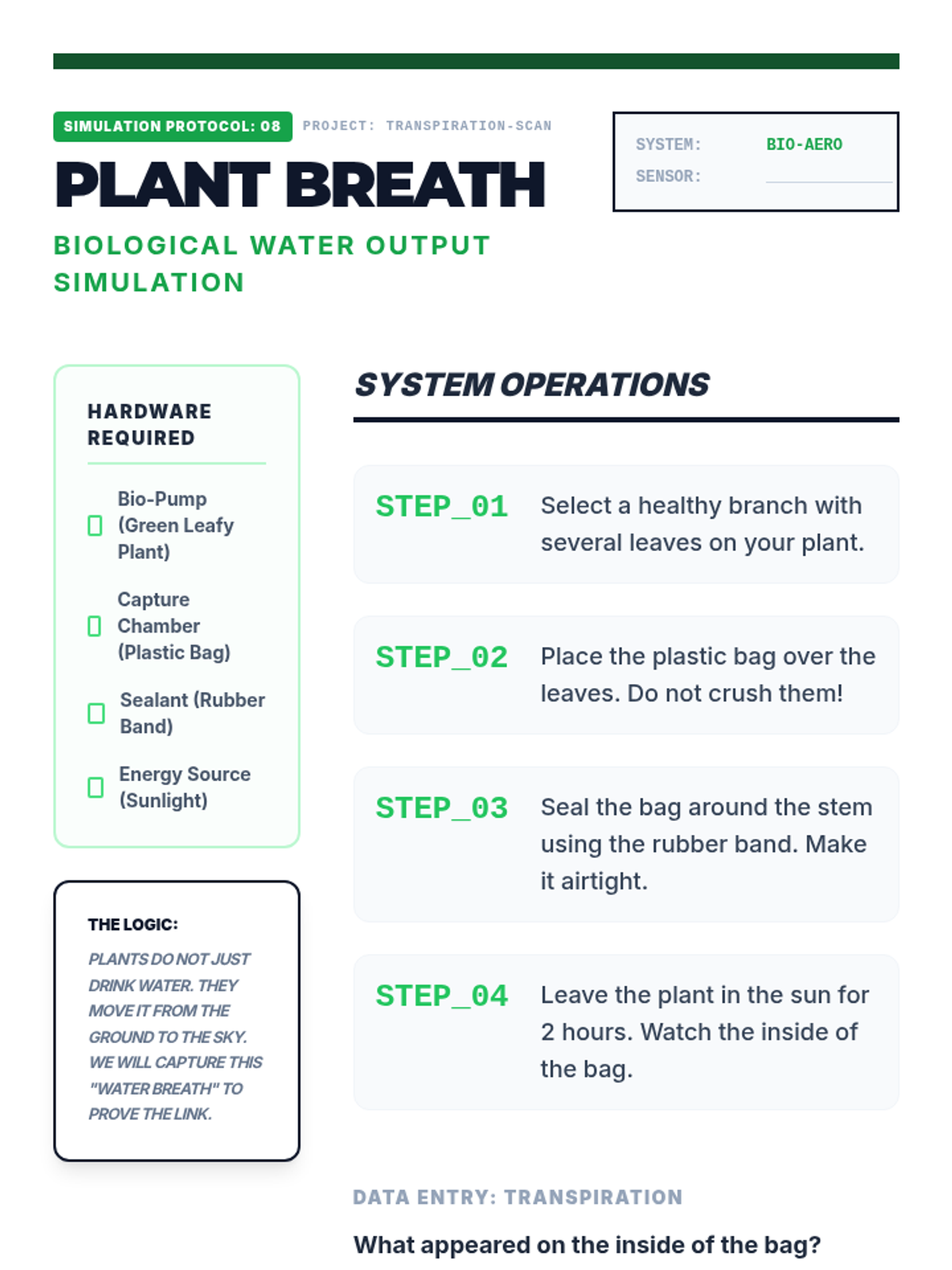
Students analyze how living things change their environment through processes like transpiration and decomposition.
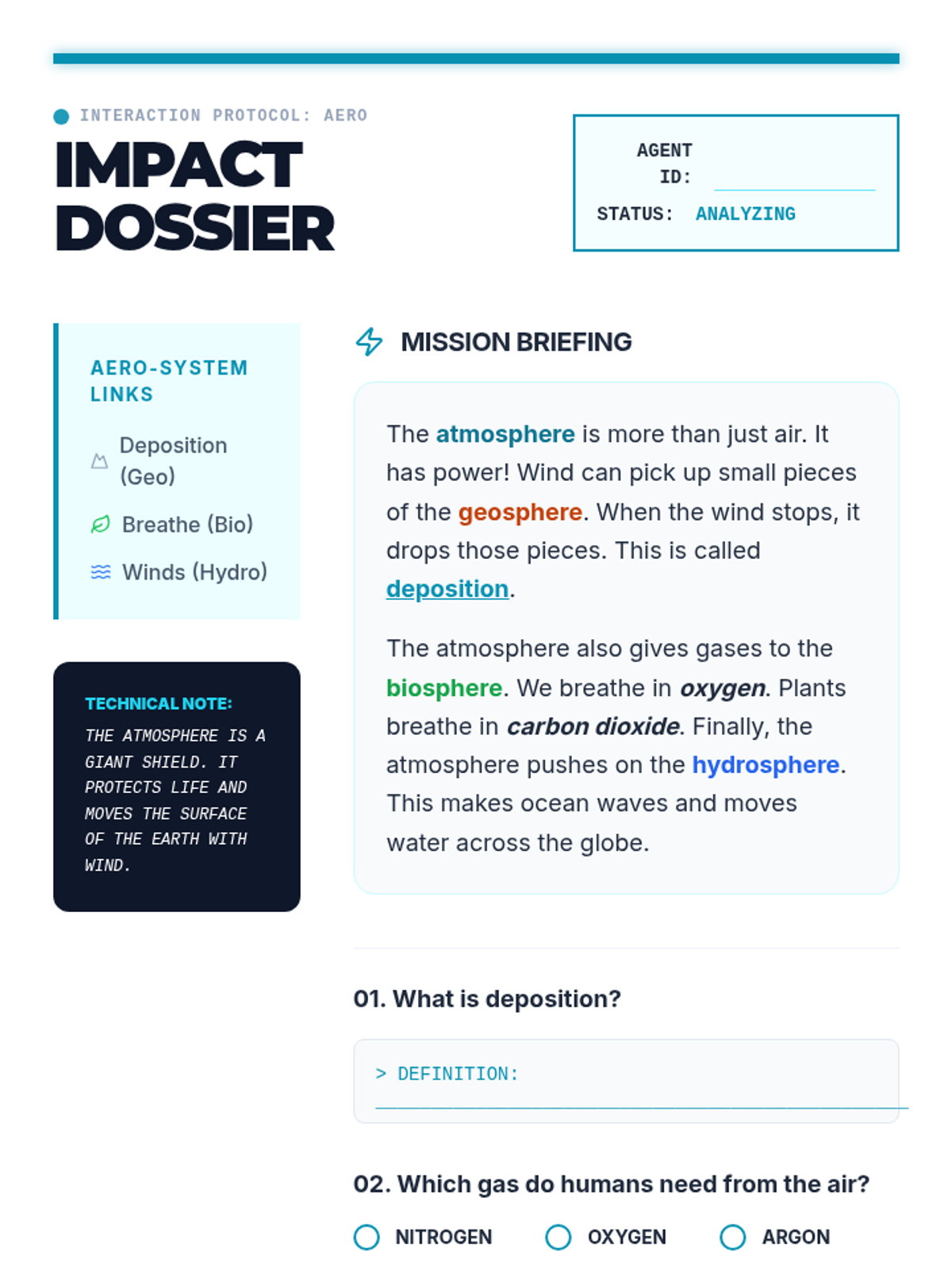
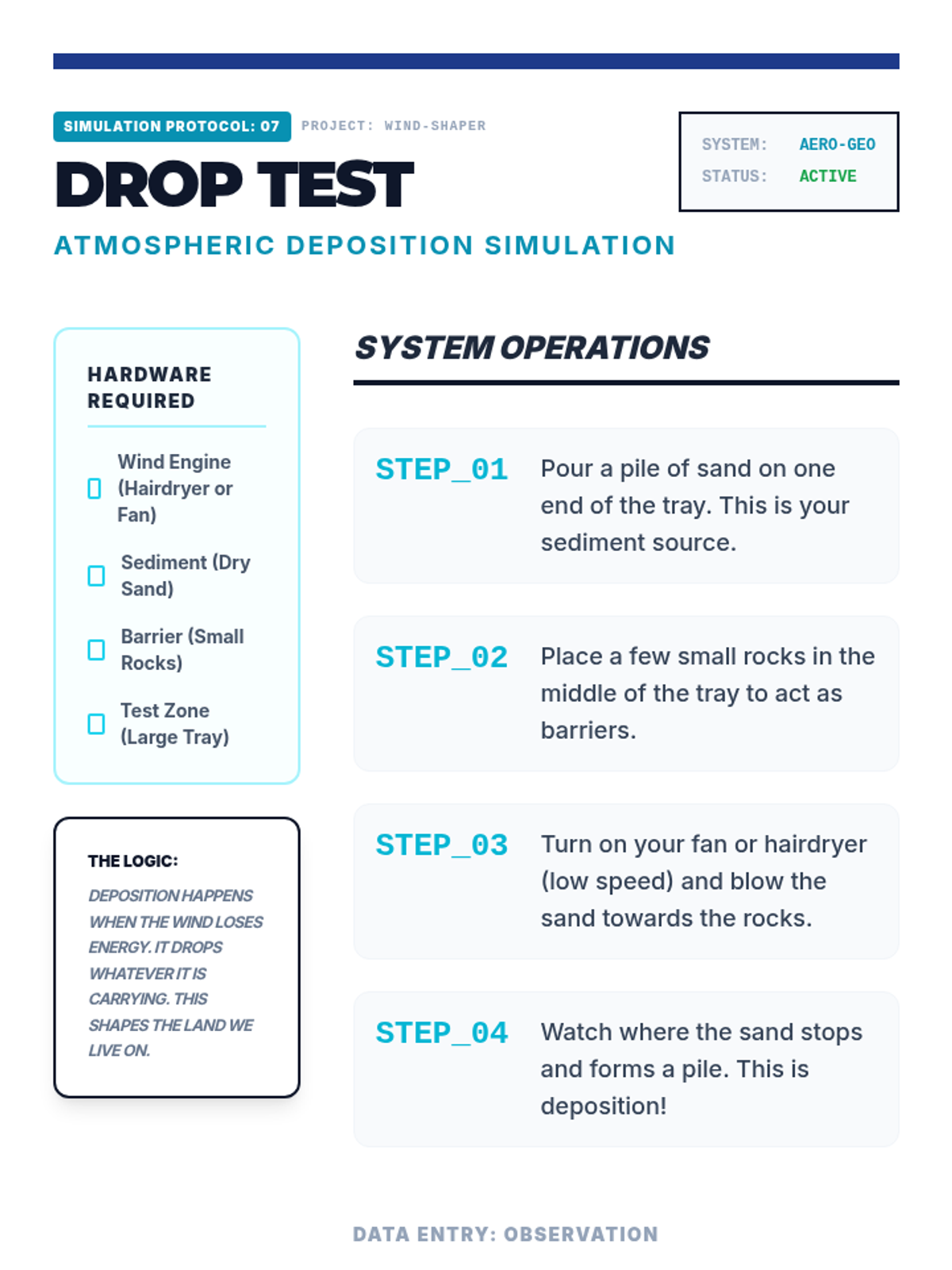
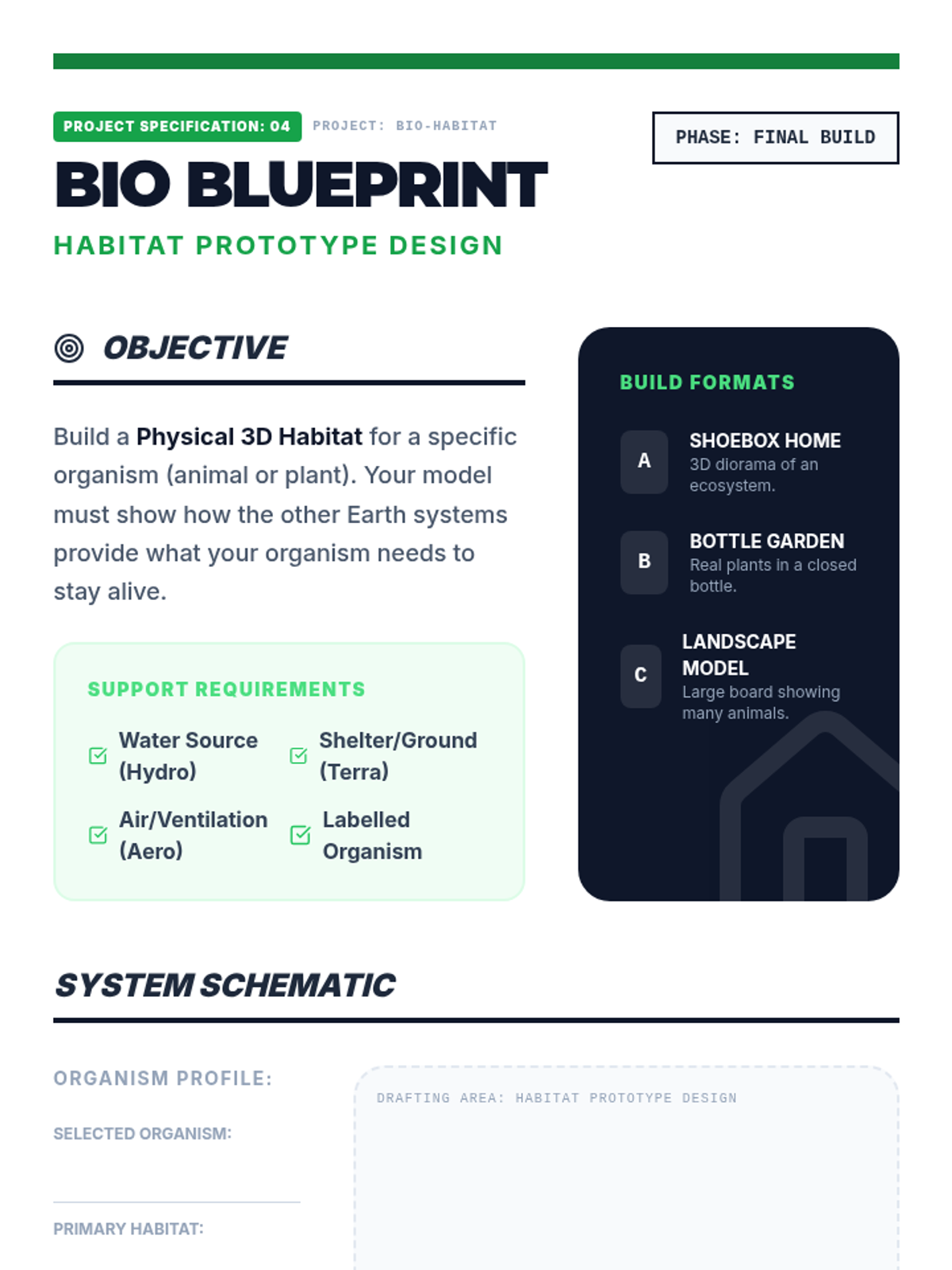
Students investigate how the atmosphere interacts with Earth's surface through deposition and how it provides essential gases for the biosphere.
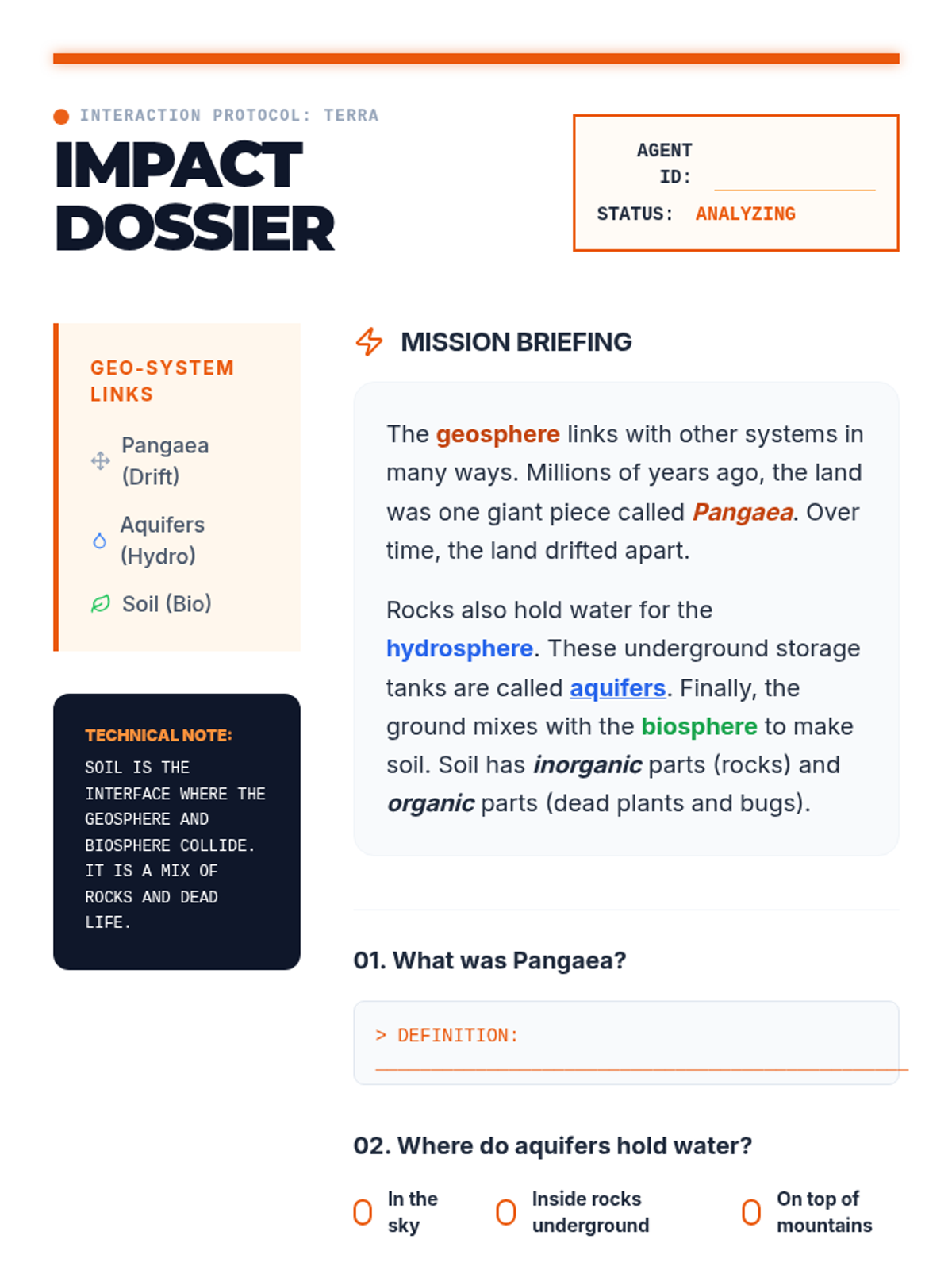
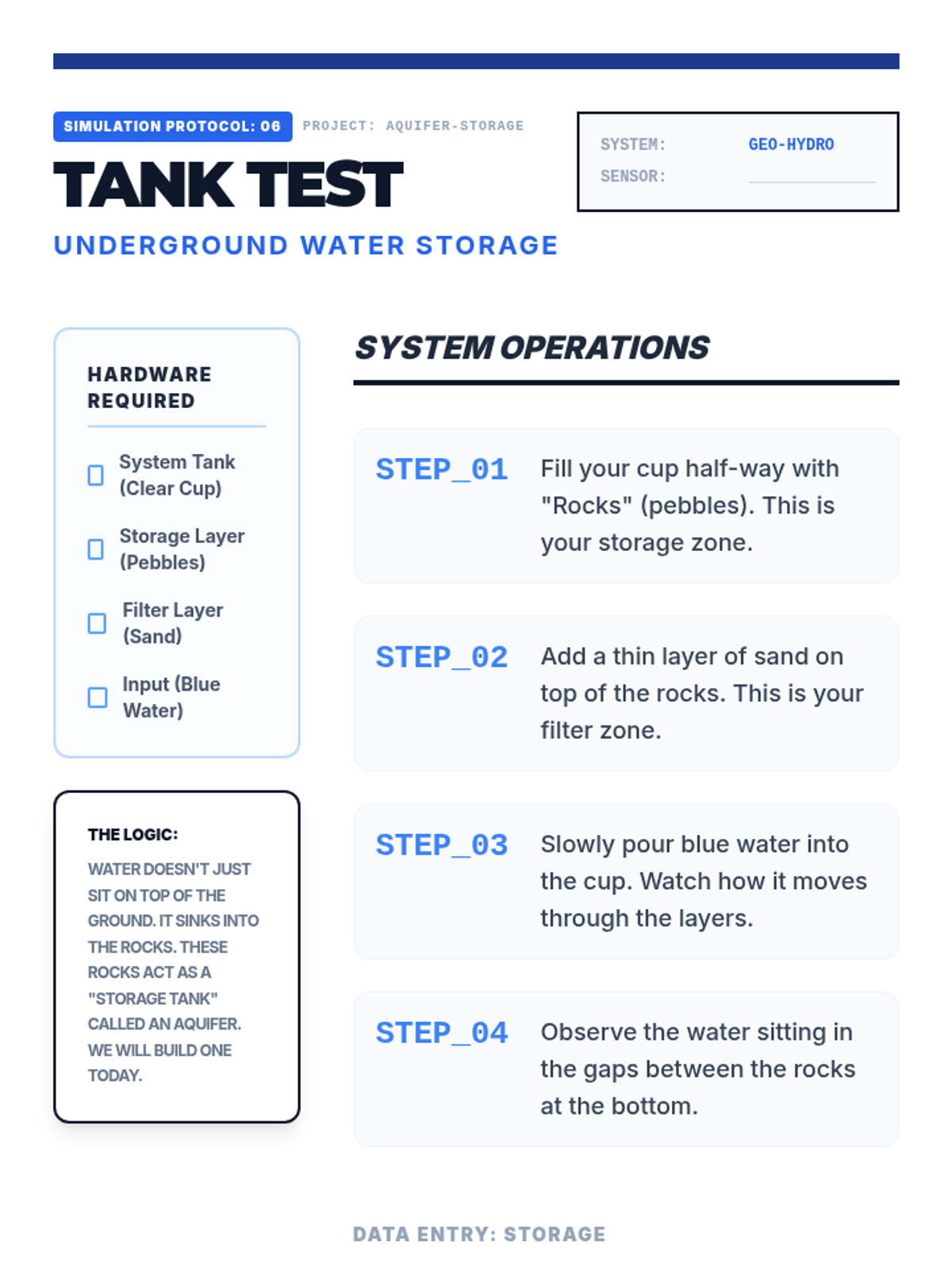
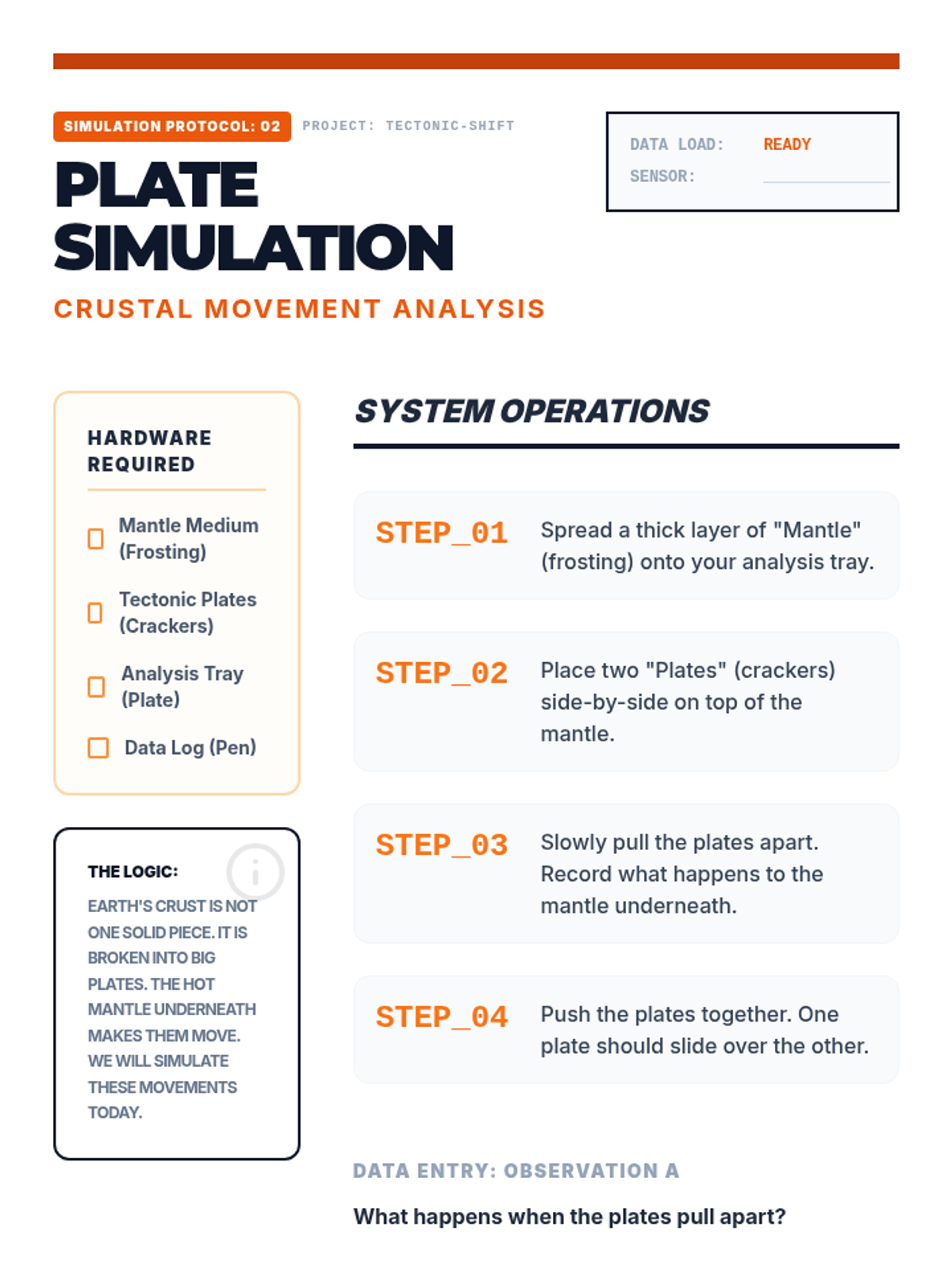
Students explore how the geosphere interacts with other systems, including the movement of continents (Pangaea), the formation of aquifers, and the role of organic materials in soil.
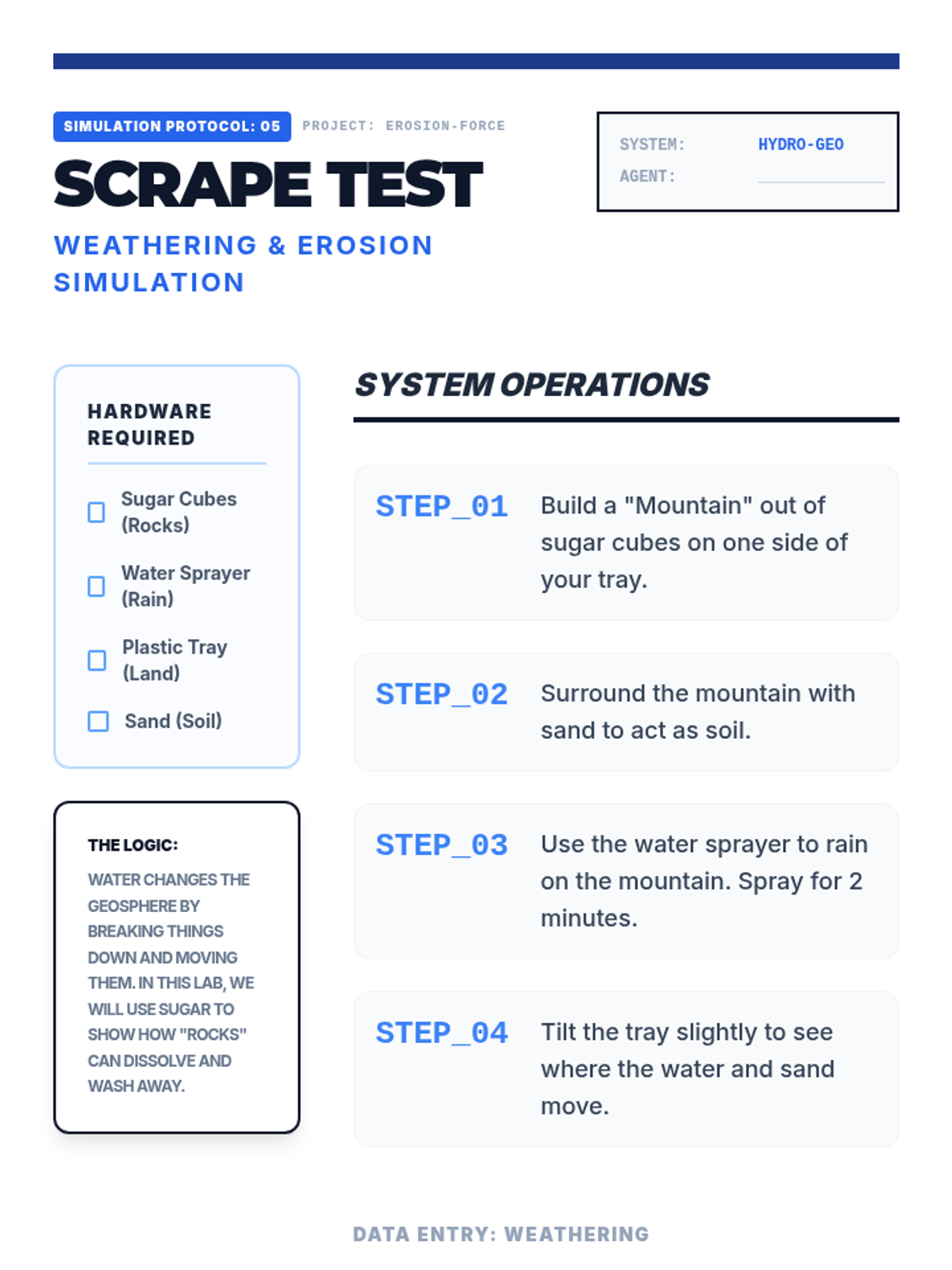
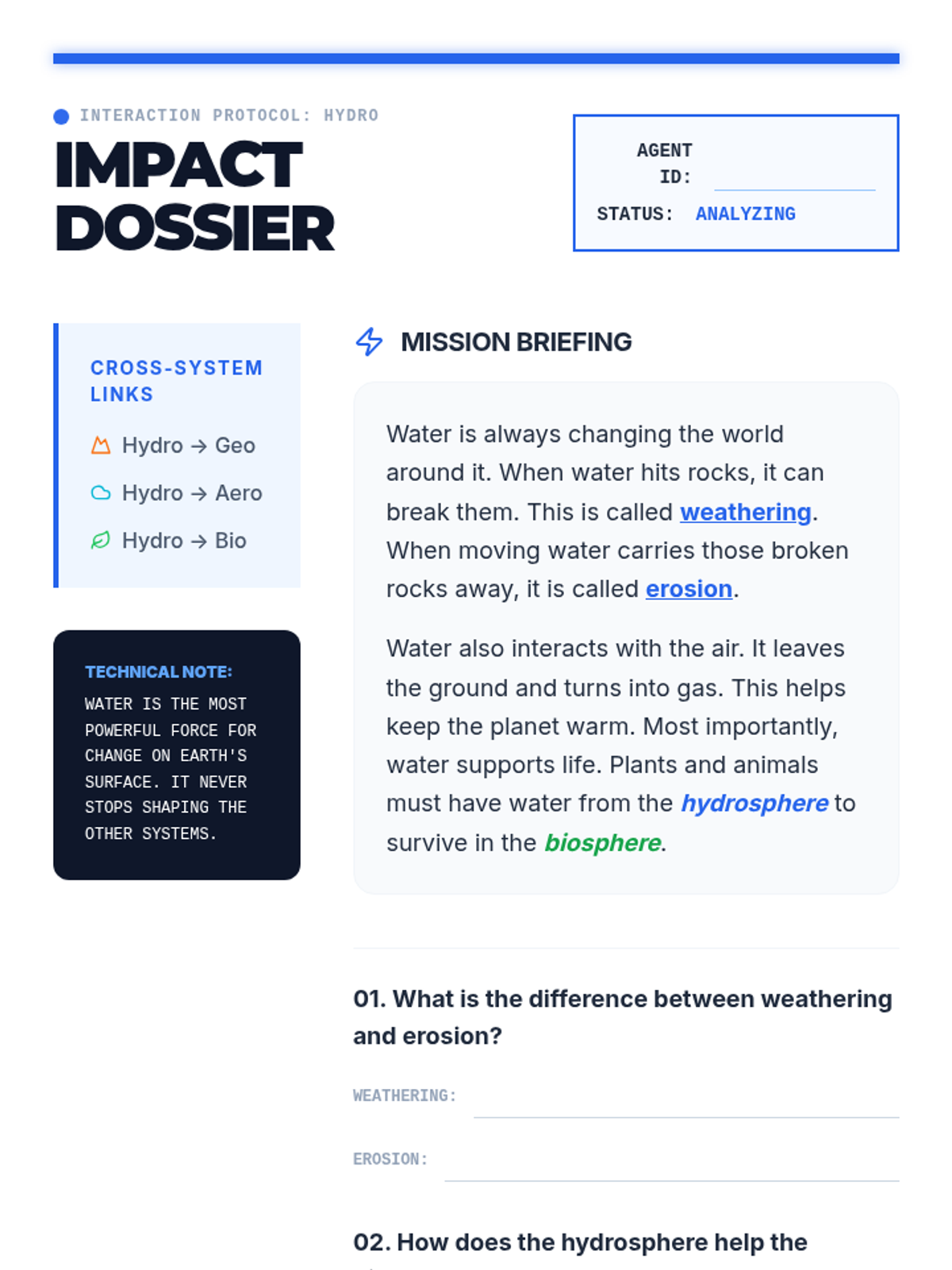
Students analyze how the hydrosphere interacts with other systems through weathering, erosion, and supporting life.
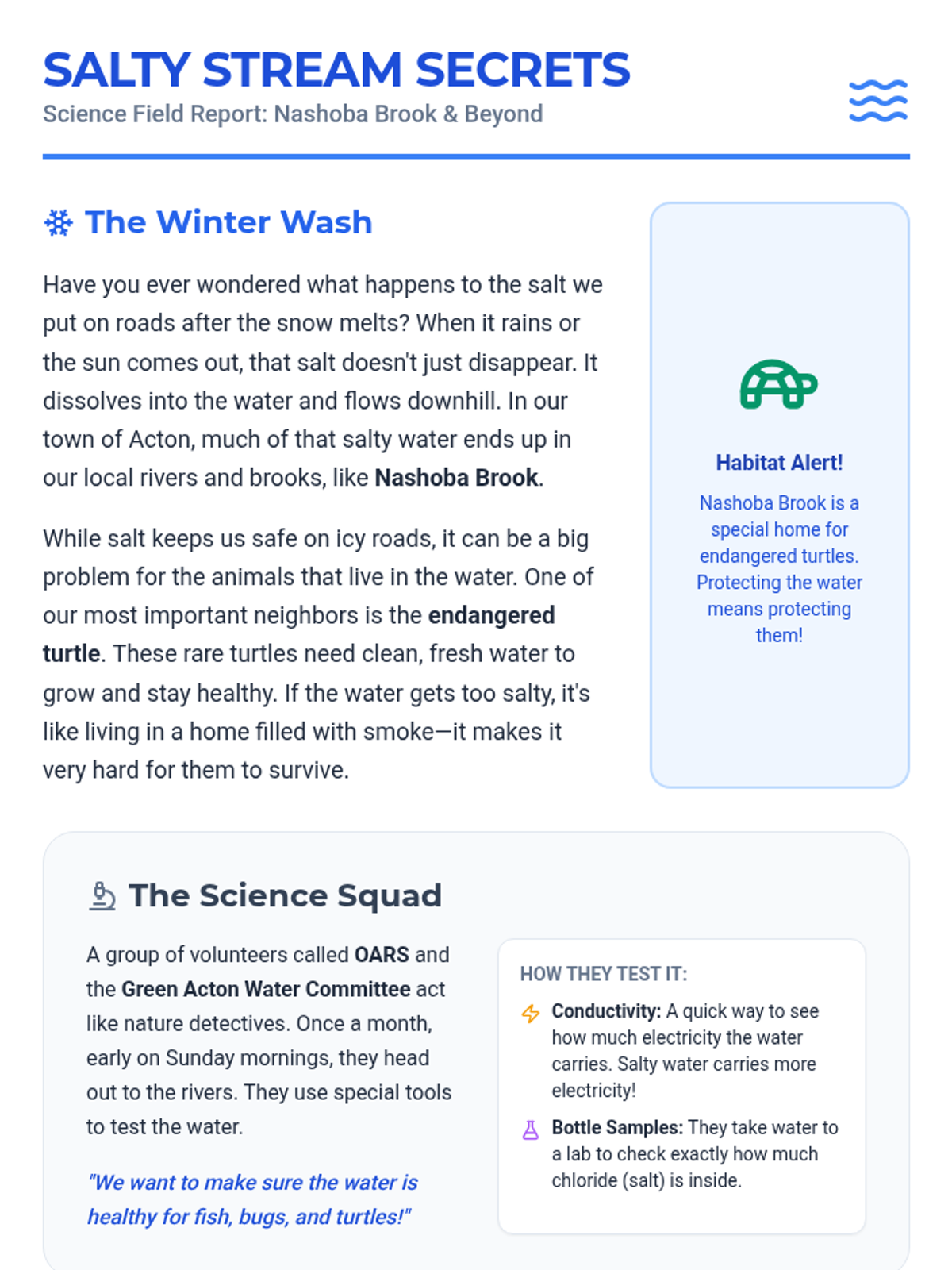
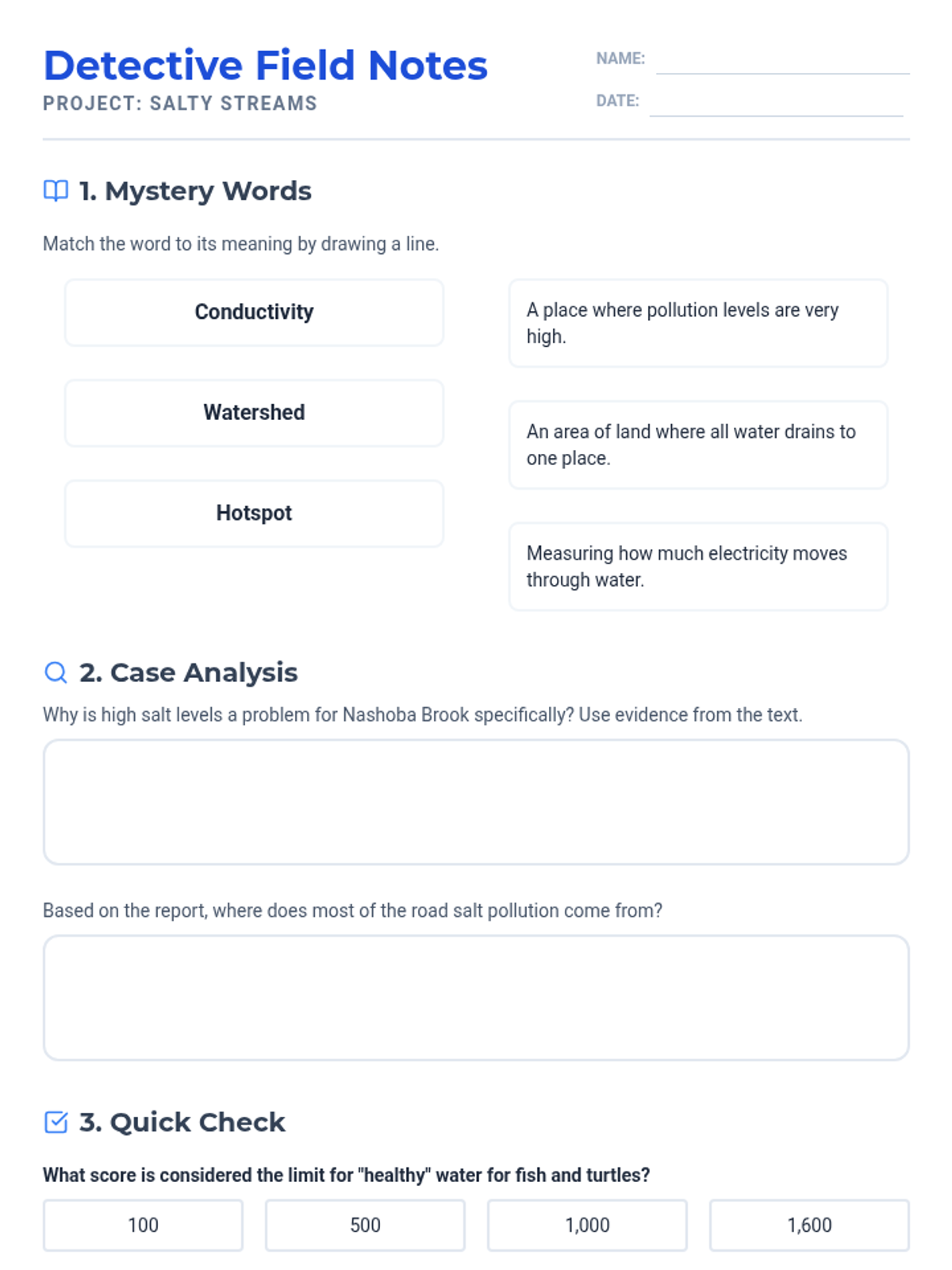
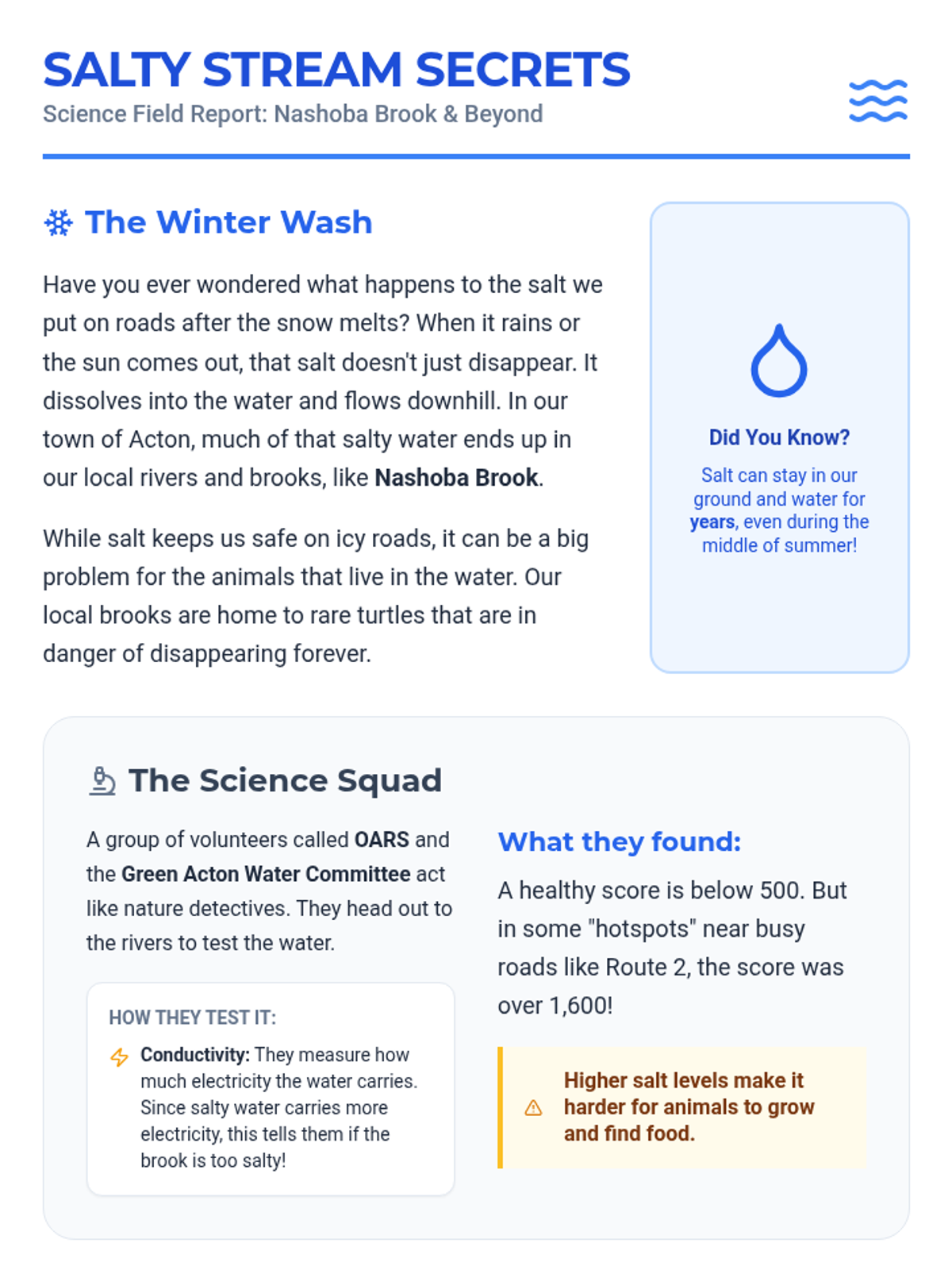
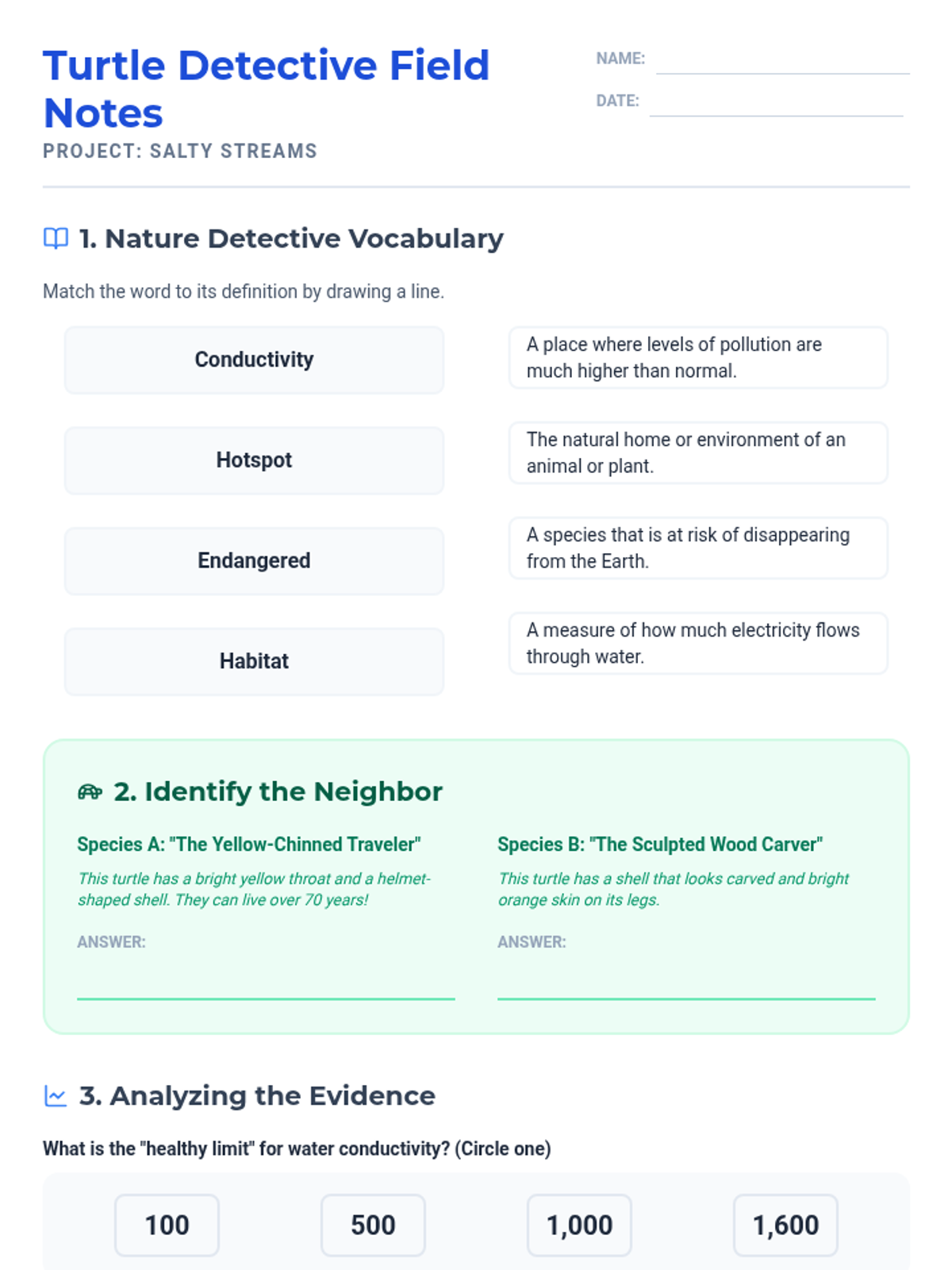
A lesson exploring the impact of road salt on local waterways, specifically focusing on how salt levels in Nashoba Brook affect endangered turtle habitats. Students will learn how community scientists measure water quality and what the data tells us about protecting our environment.
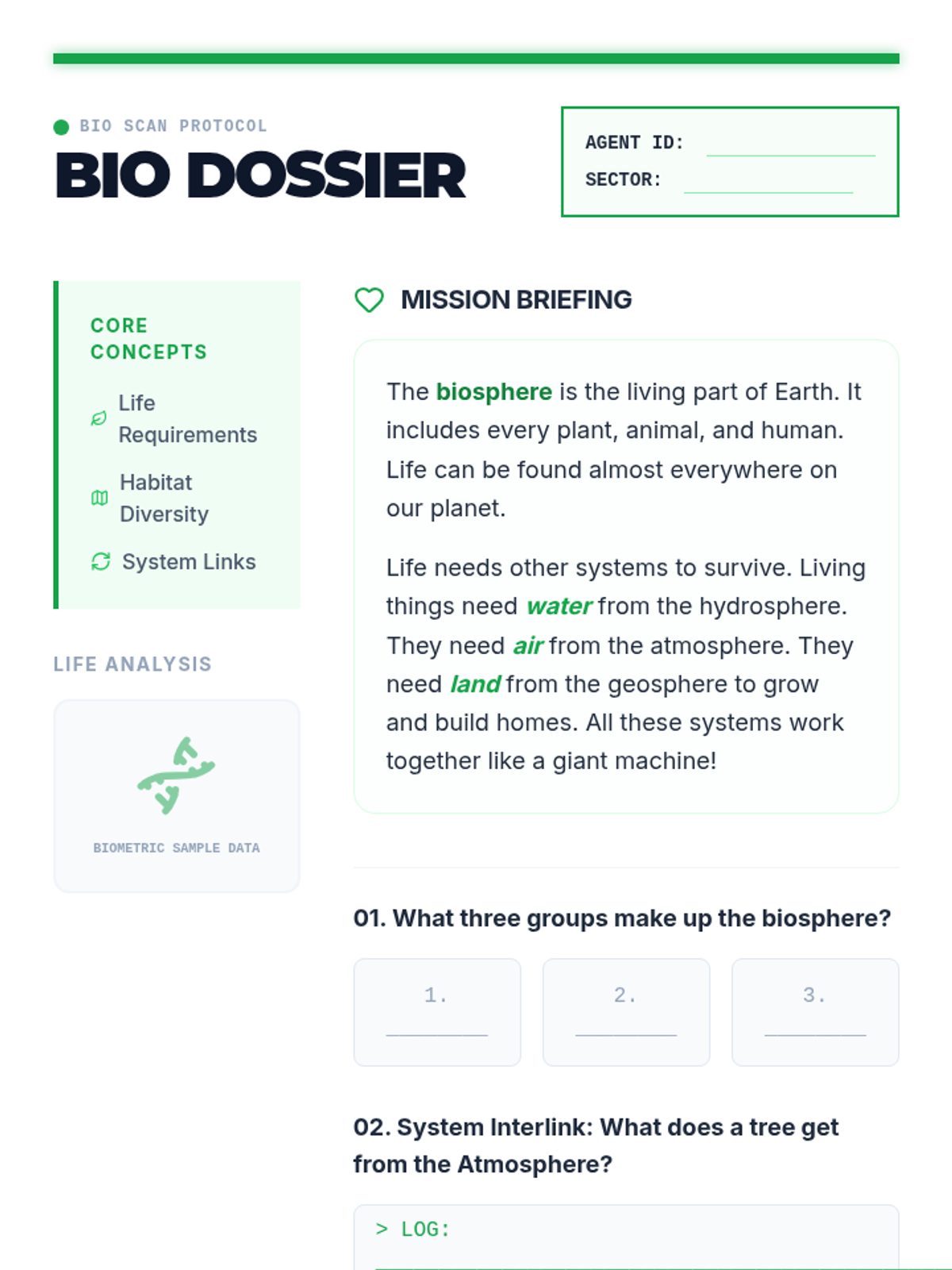
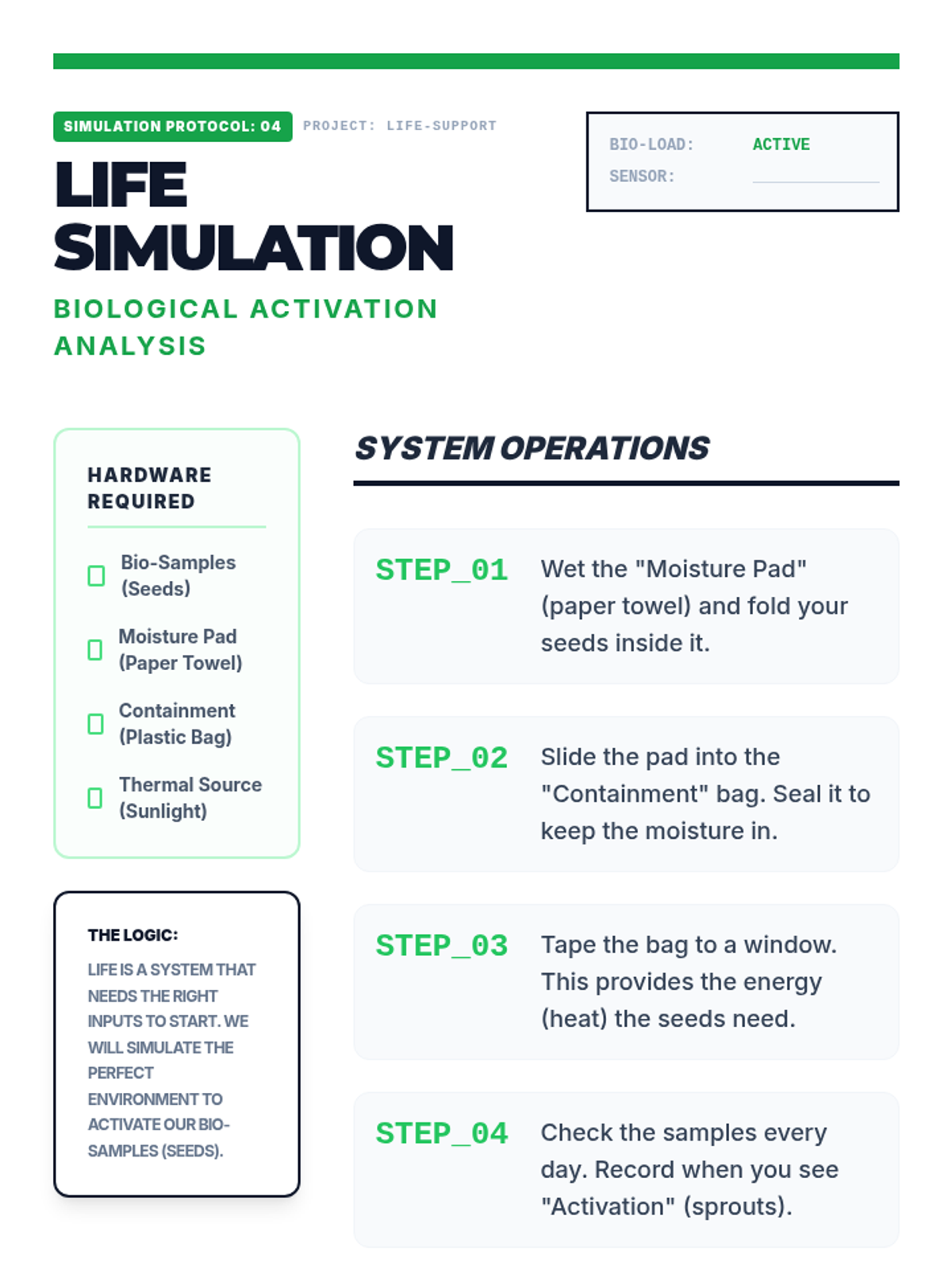
Students explore the biosphere, identifying how life exists in various environments and how living things interact with other Earth systems.
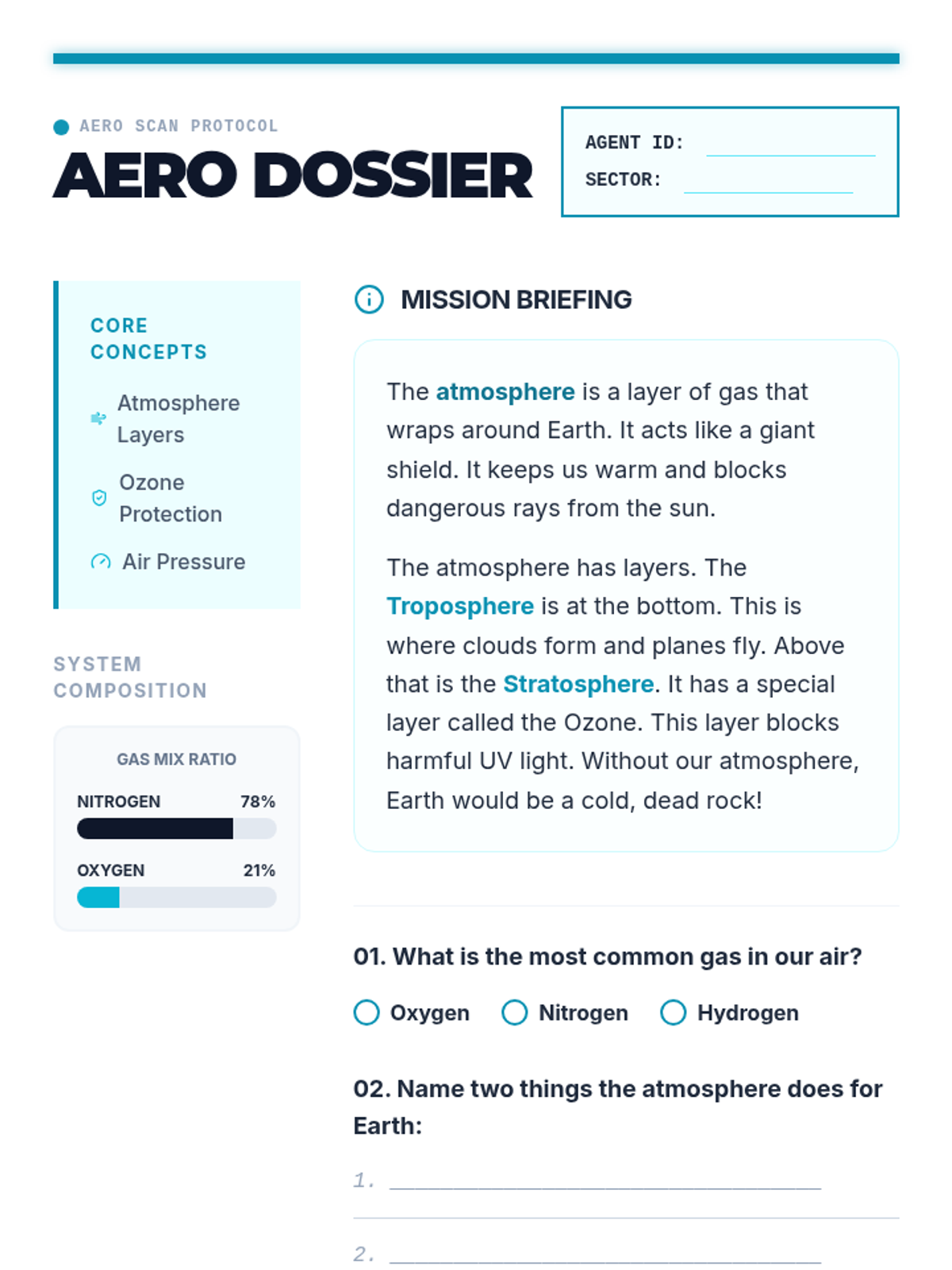
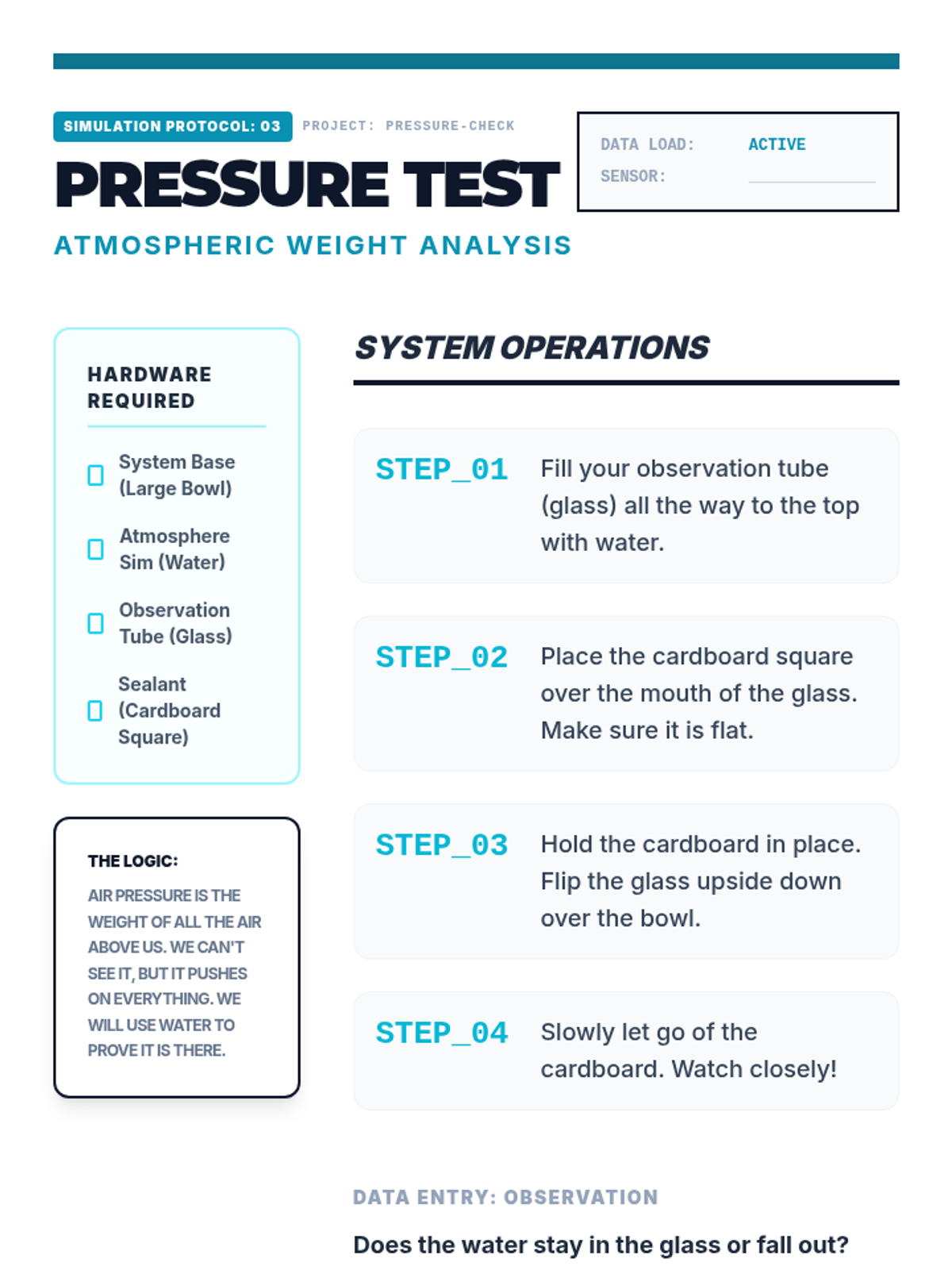
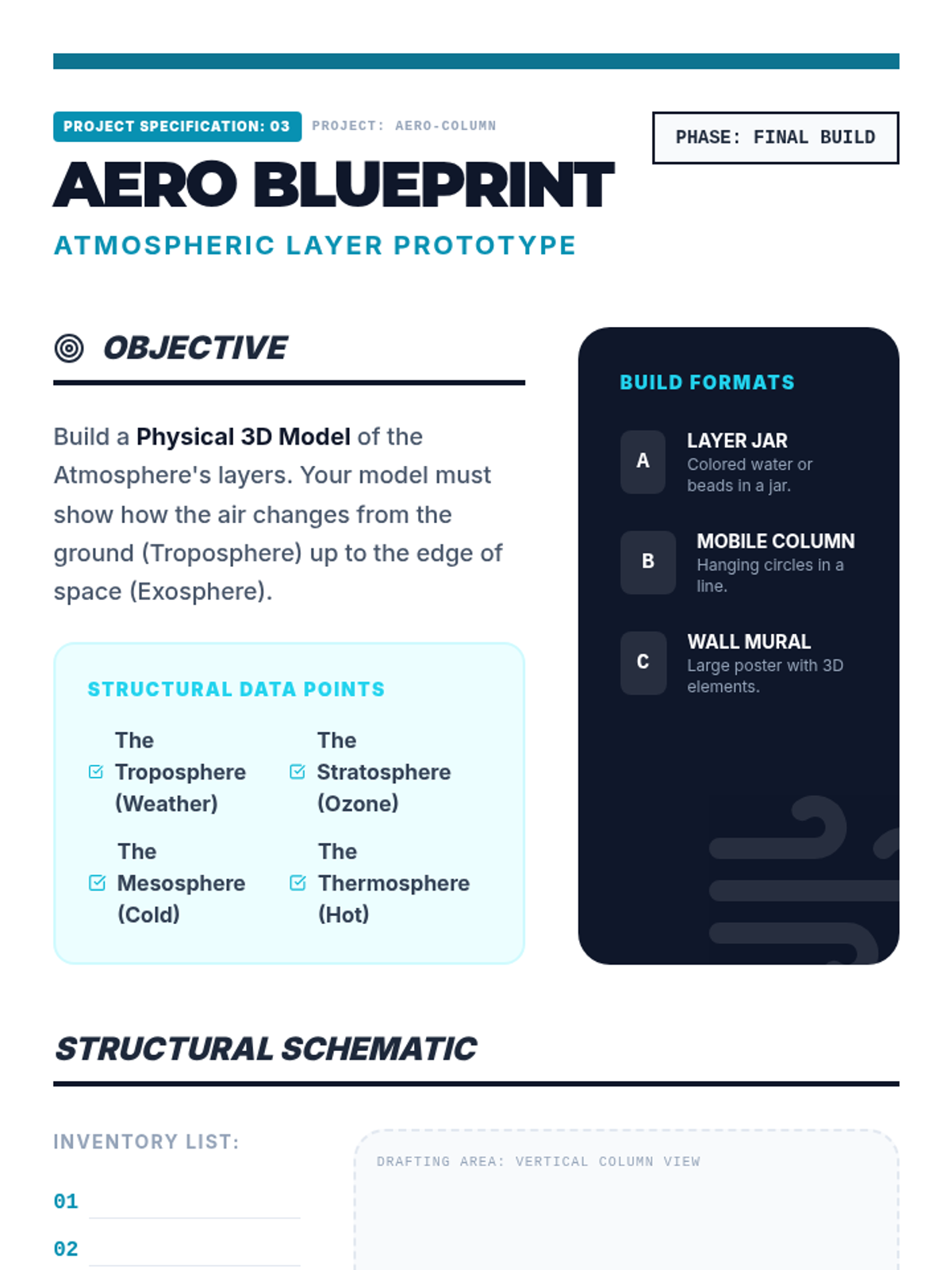
Students investigate the atmosphere, exploring the layers of air that protect Earth and the composition of gases necessary for life.
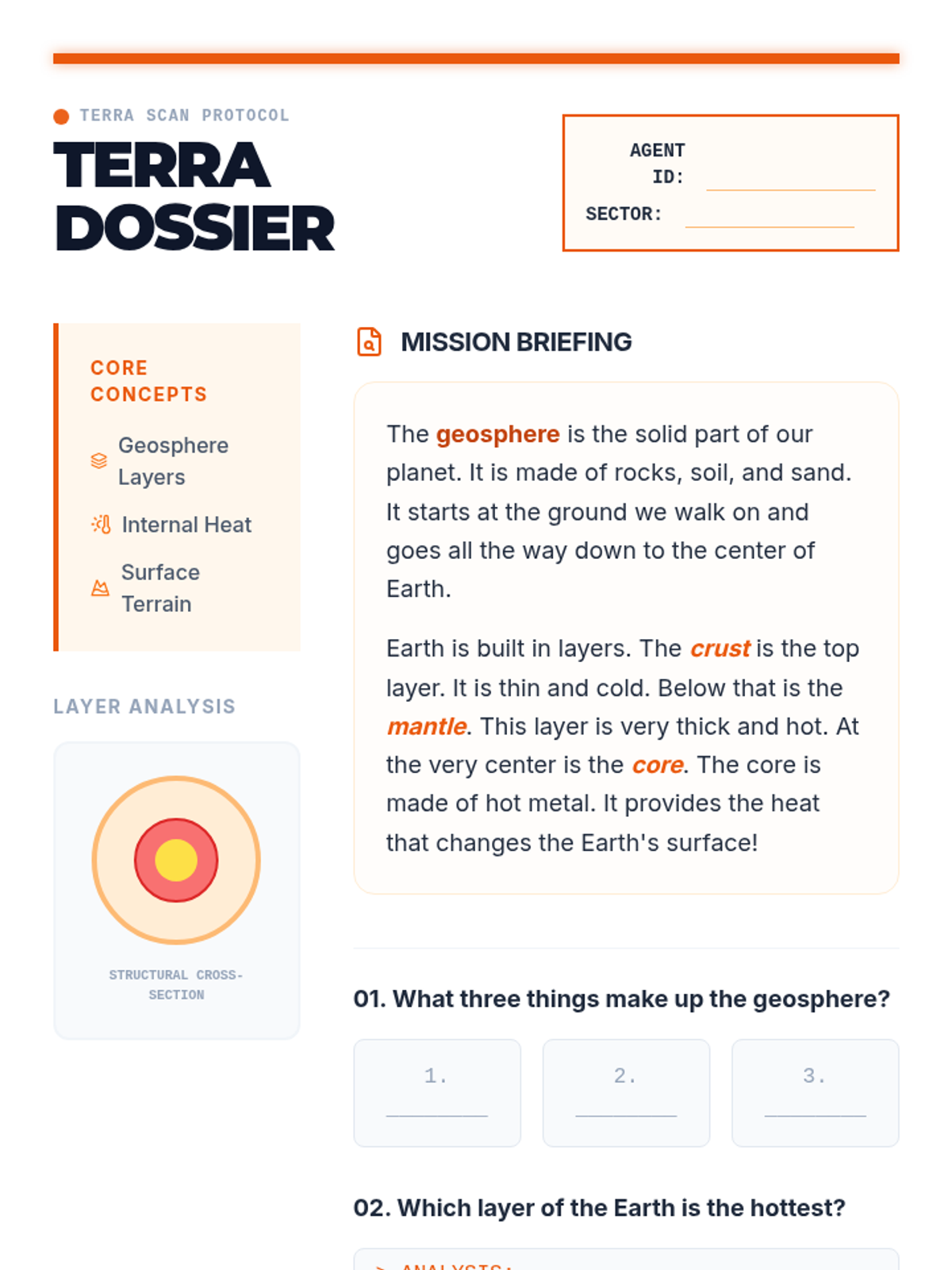
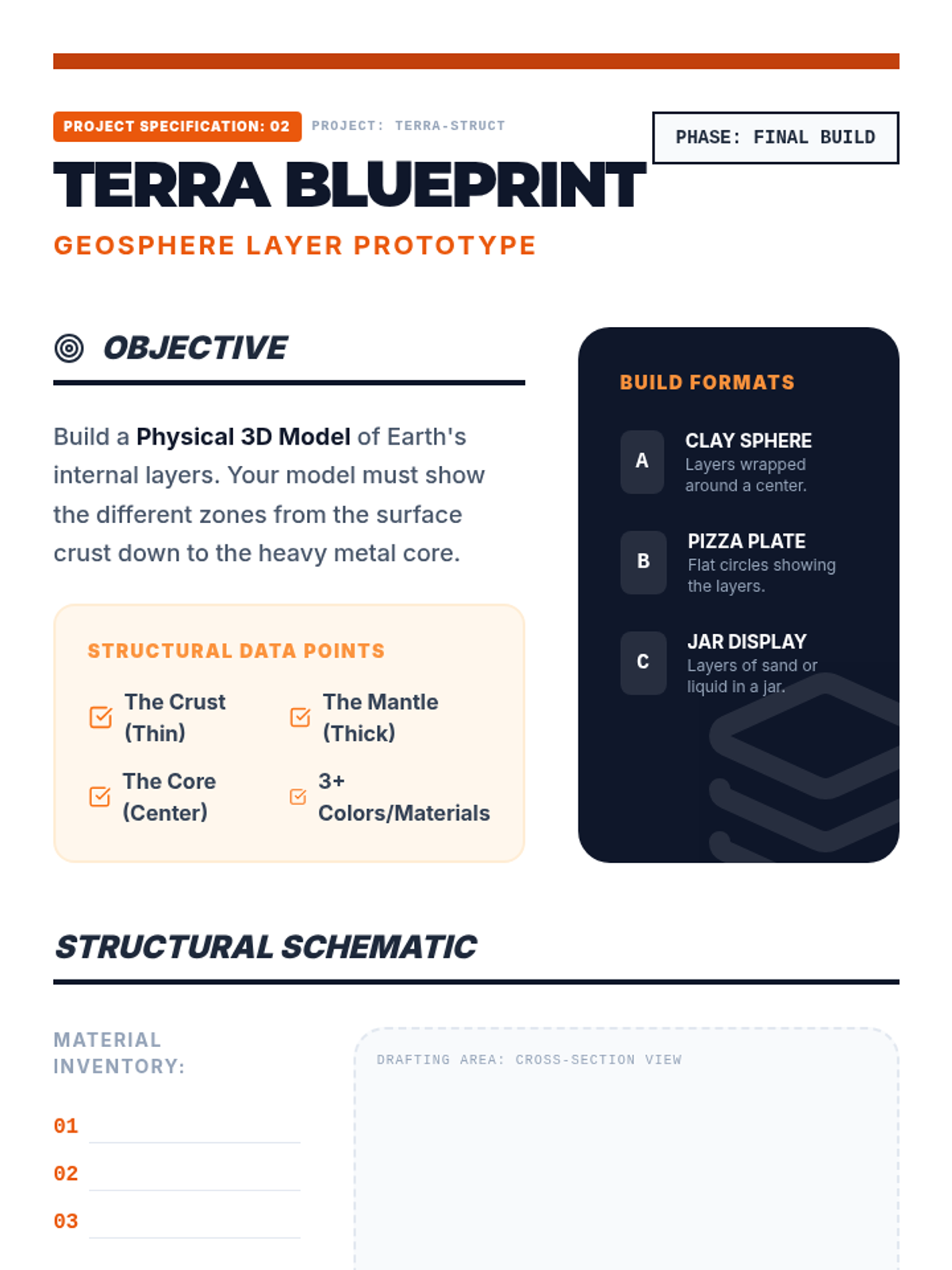
Students analyze the geosphere, exploring Earth's interior layers and the solid crust that forms the foundation of our planet's systems.
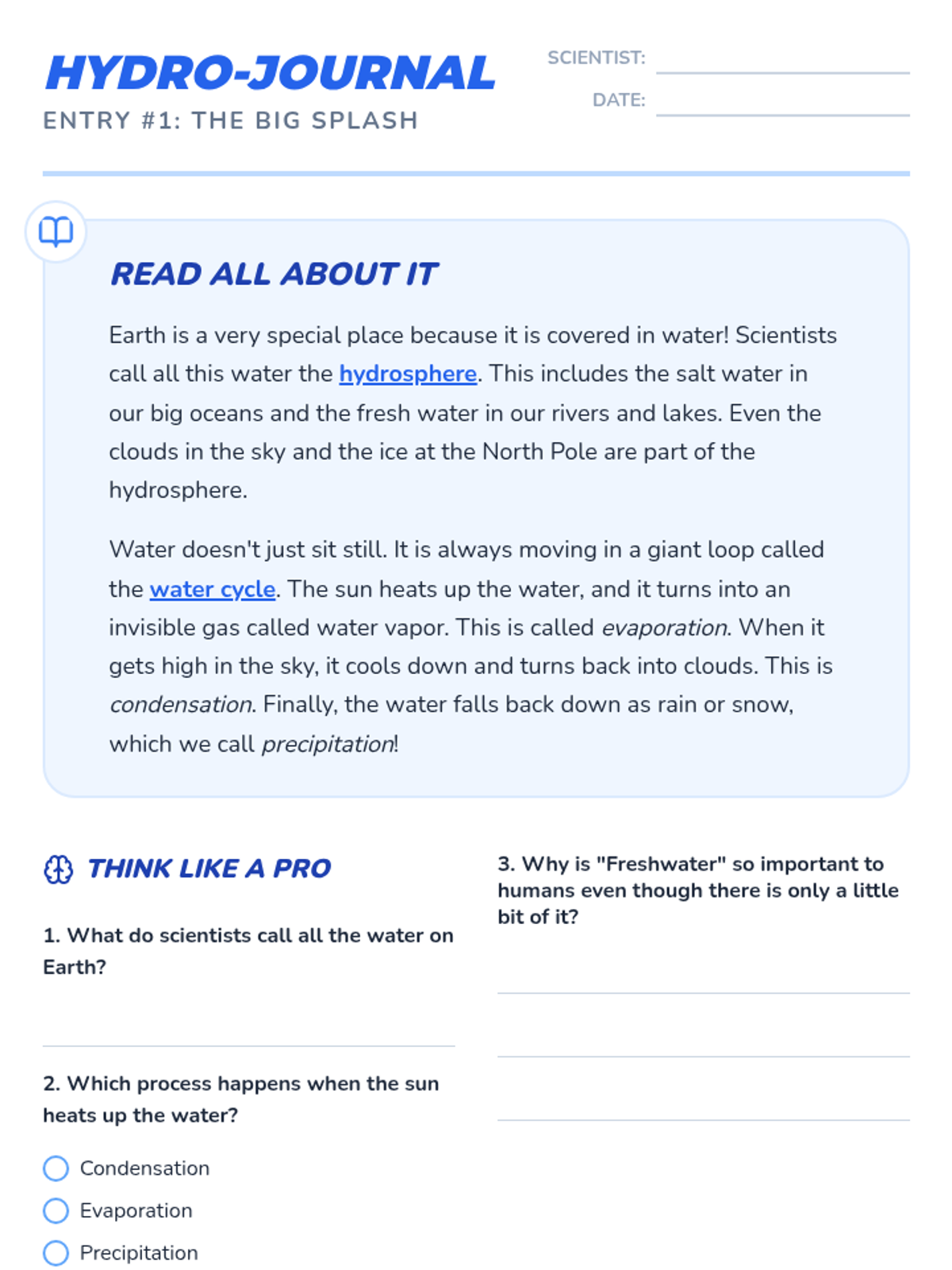
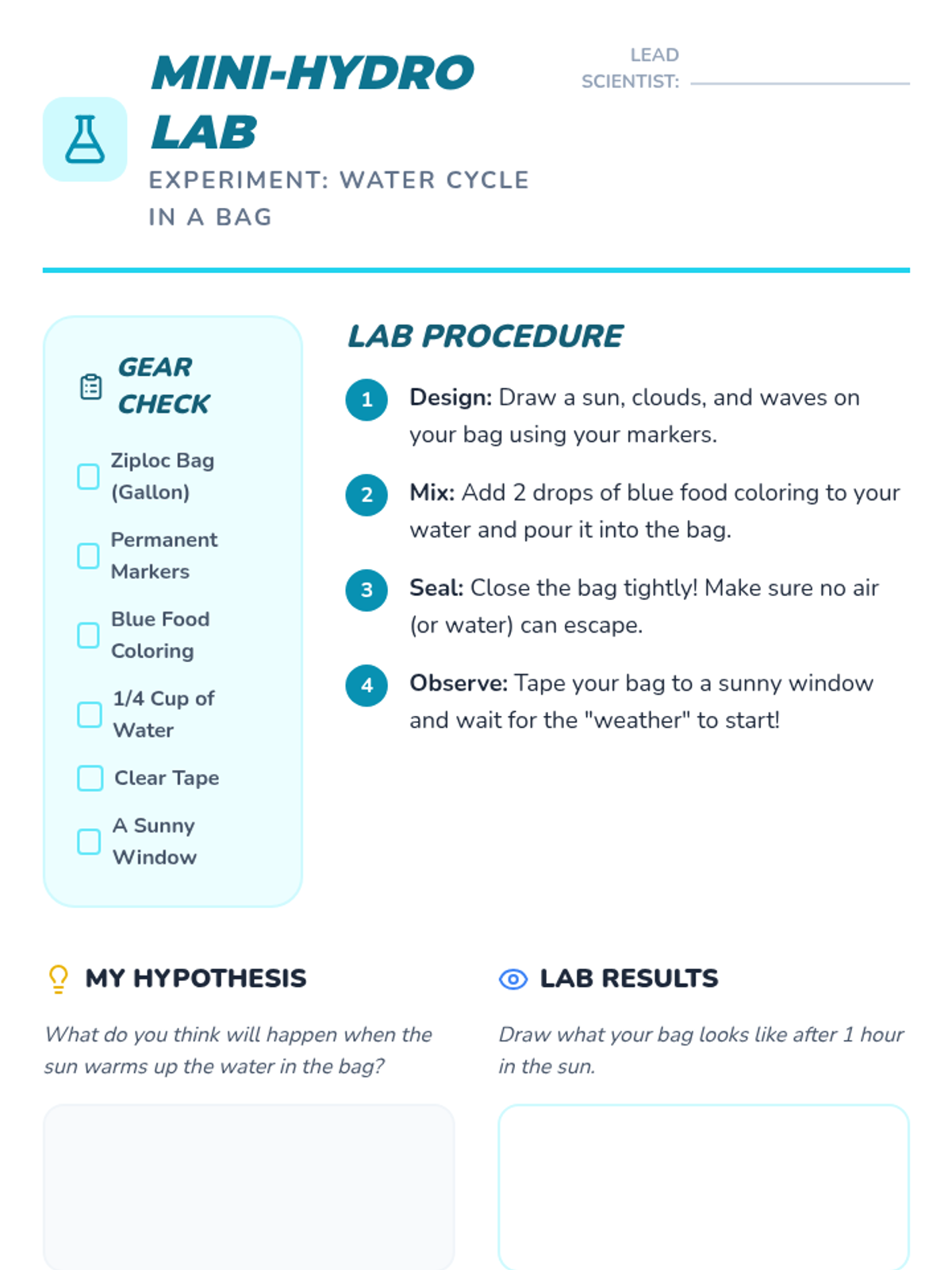
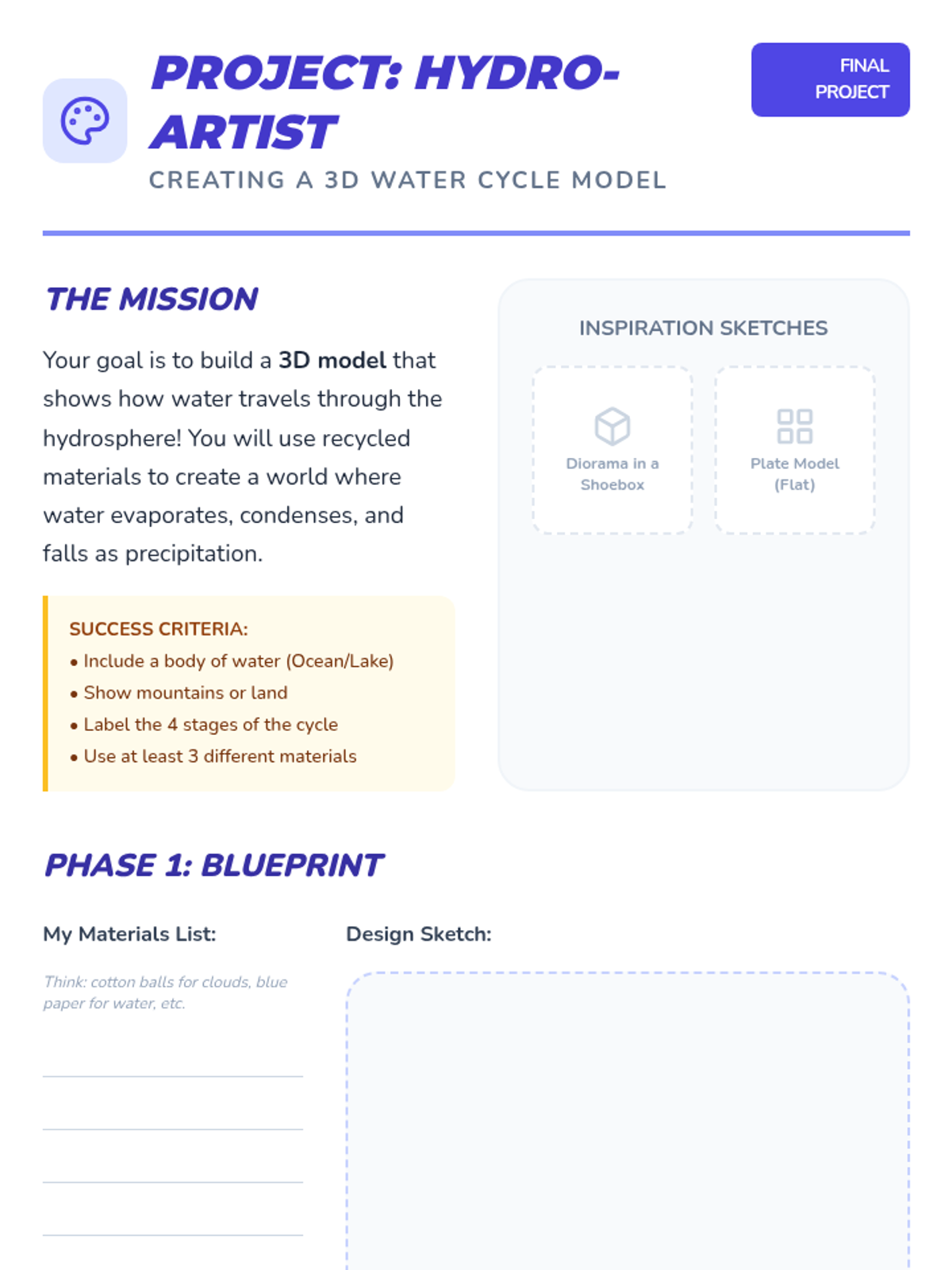
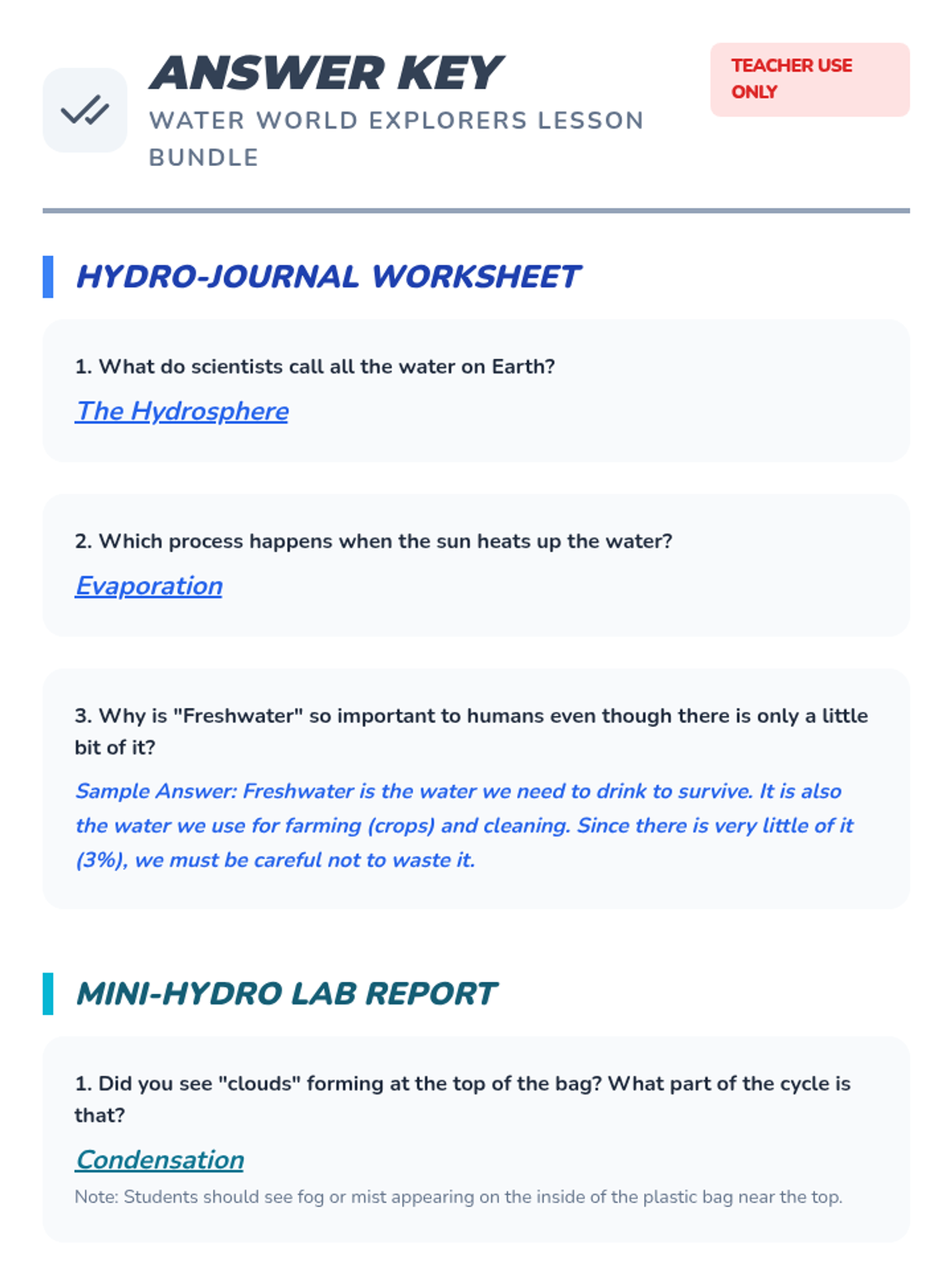
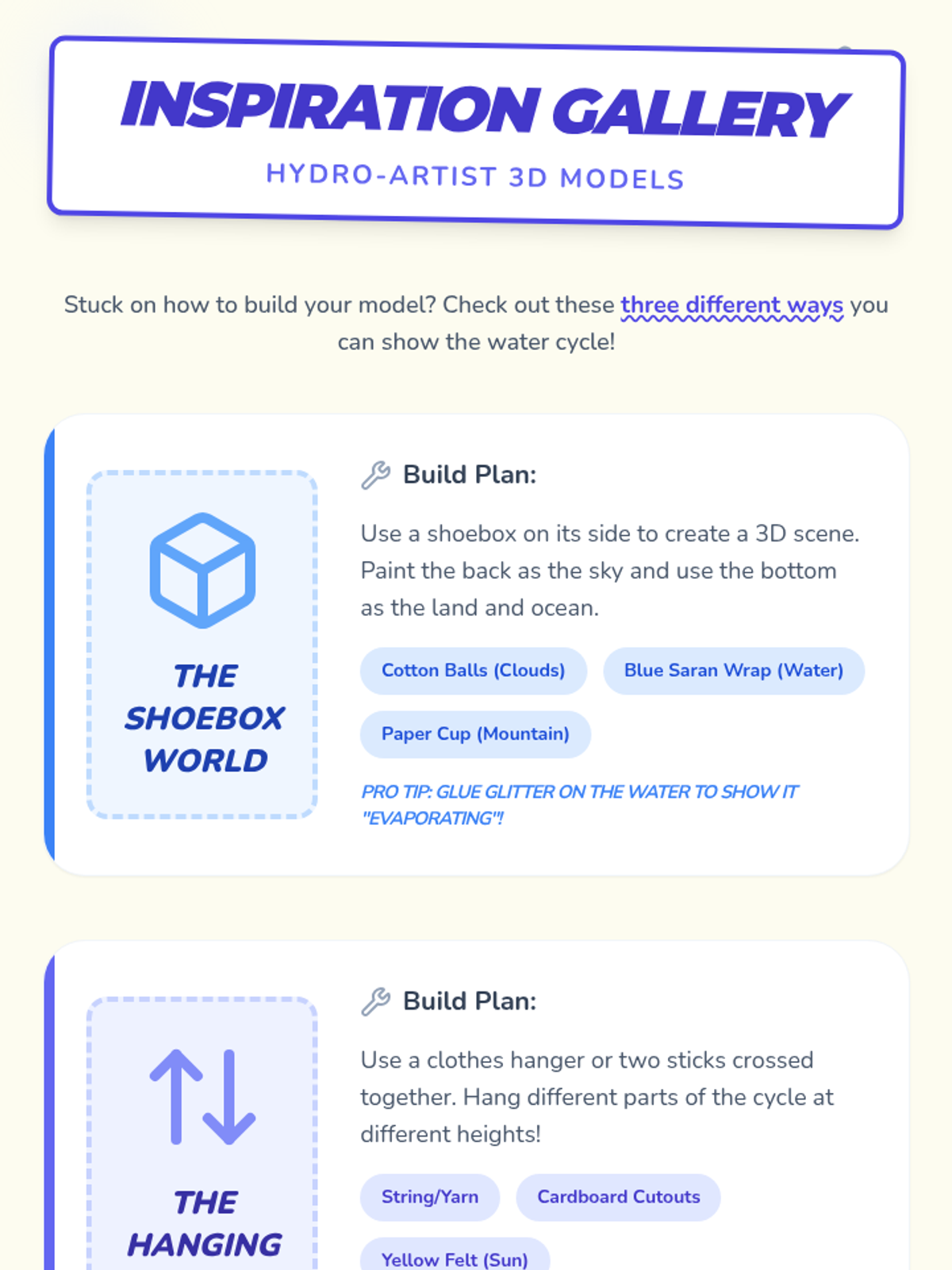
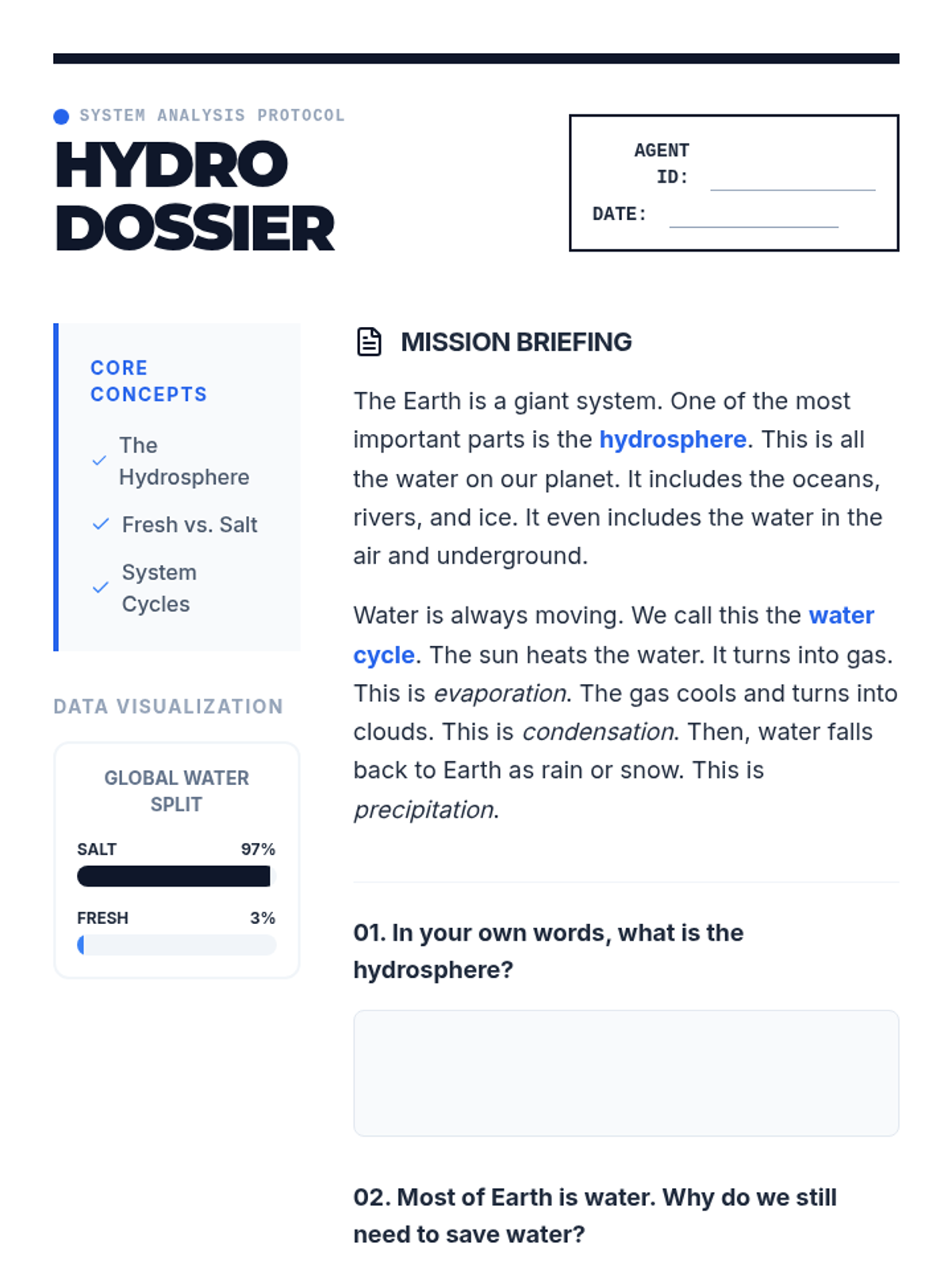
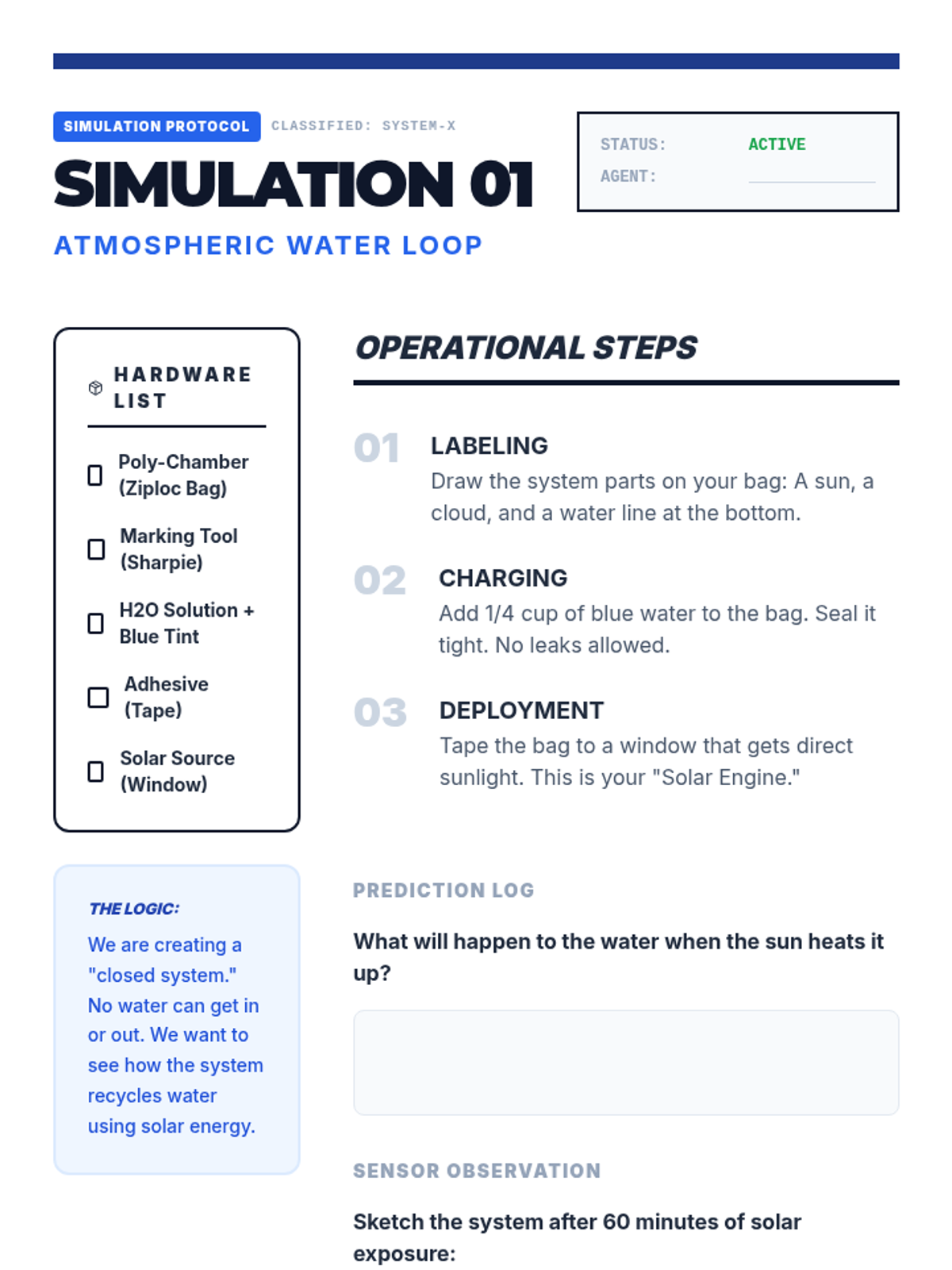
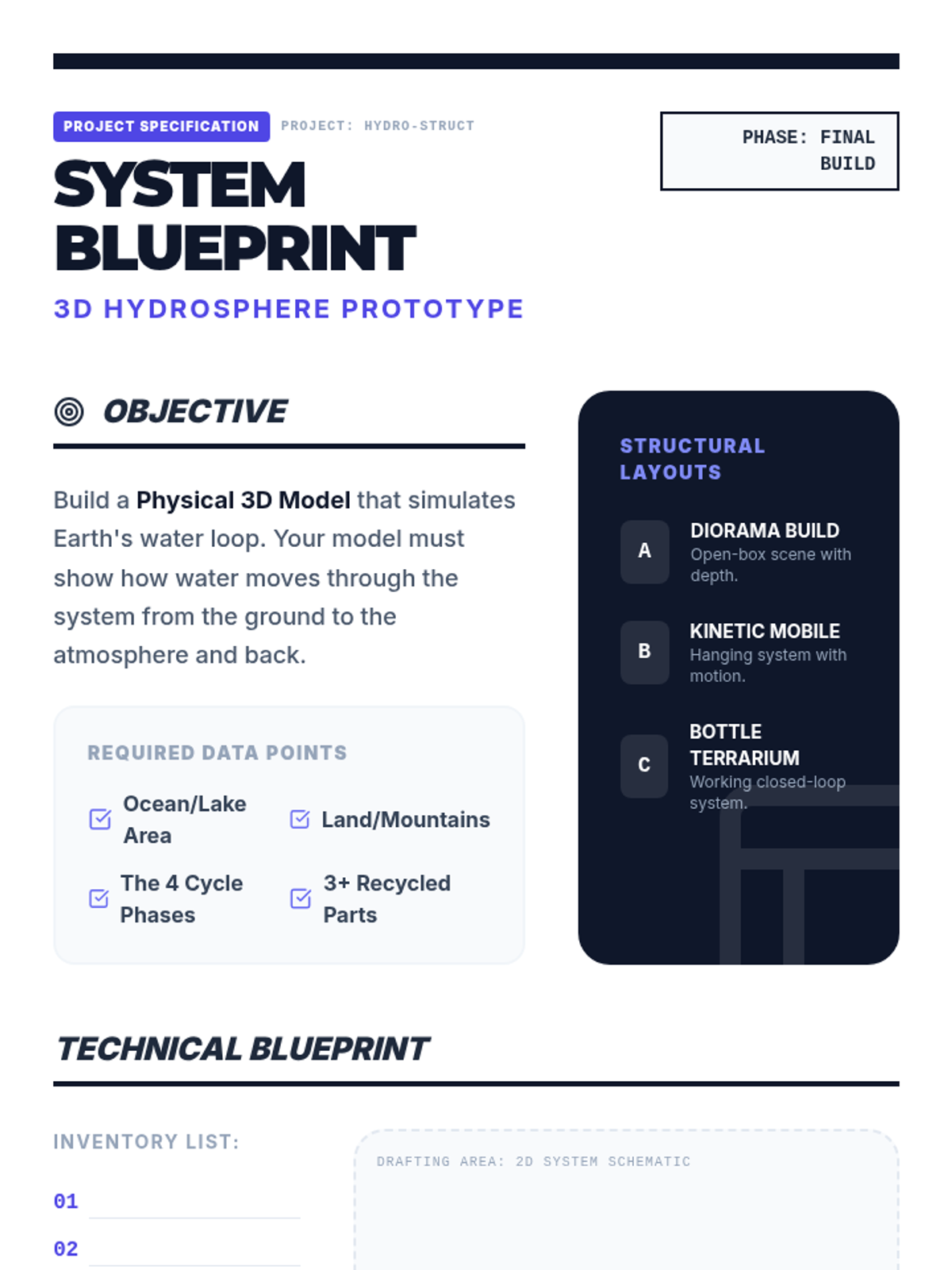
Students explore the hydrosphere, identifying where water is found on Earth and how it moves through the water cycle through drawing and hands-on experiments.
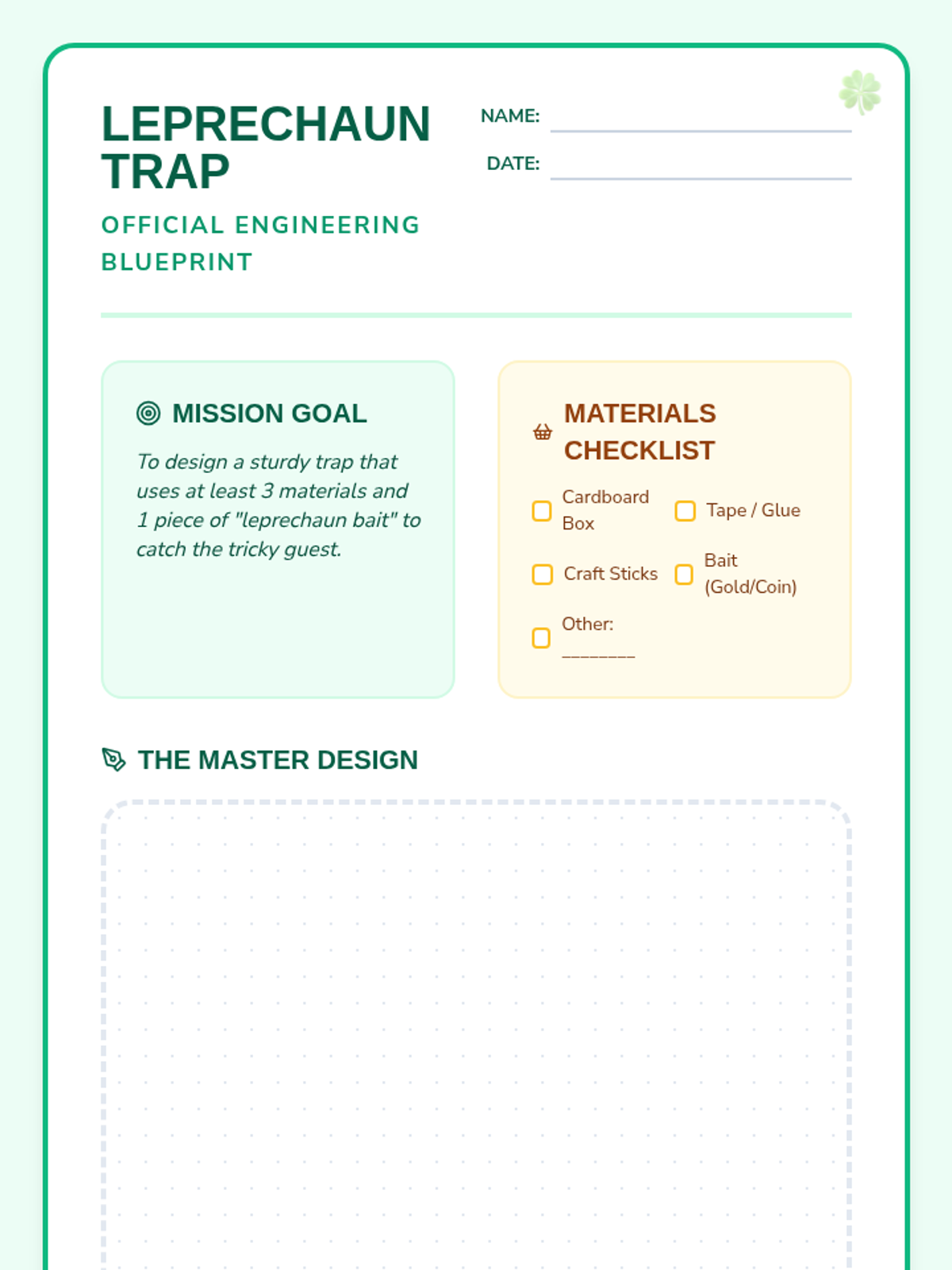
Students design and build a STEM leprechaun trap inspired by 'How to Catch a Leprechaun', focusing on multi-step directions and problem-solving through the engineering design process.
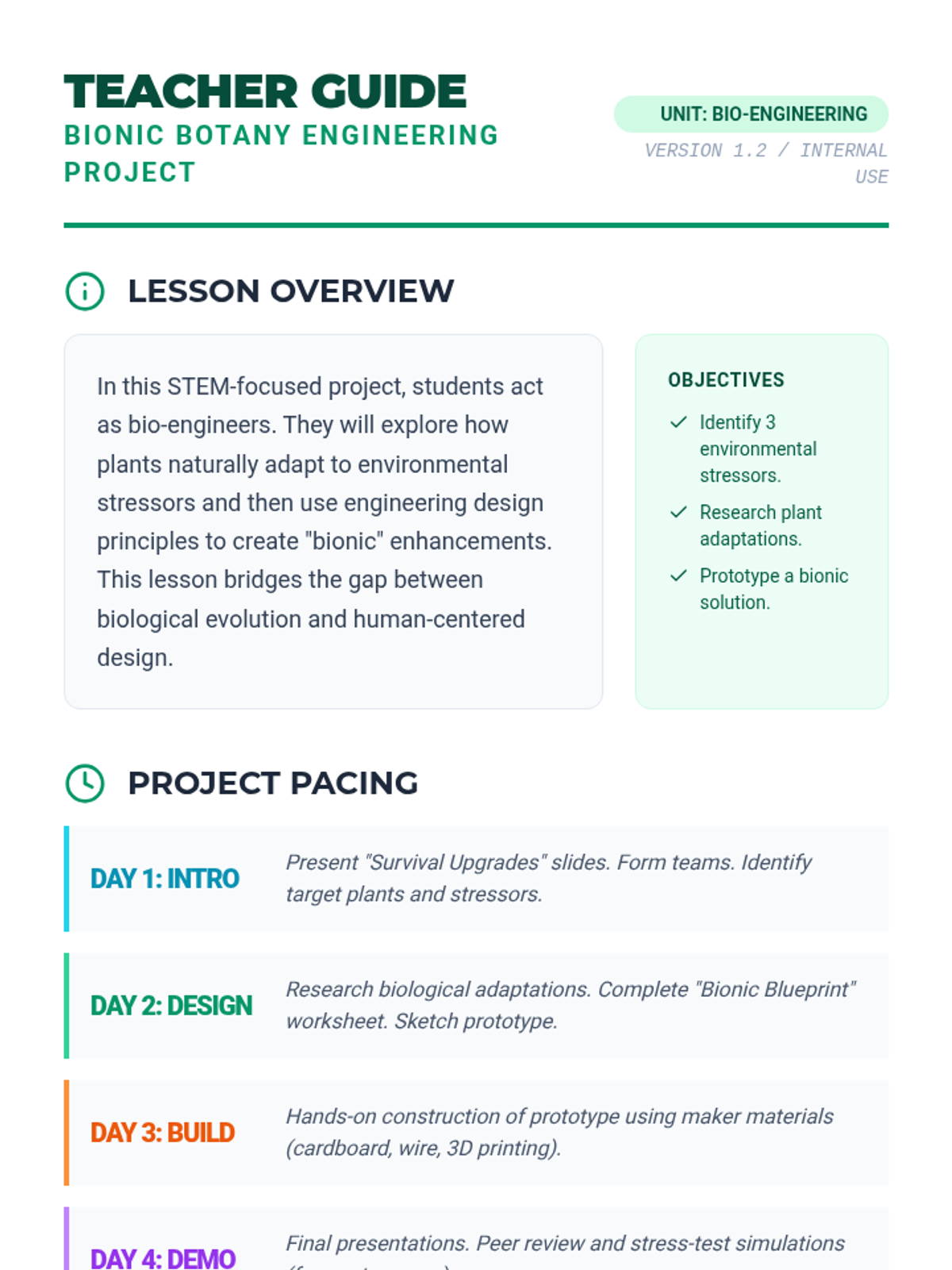
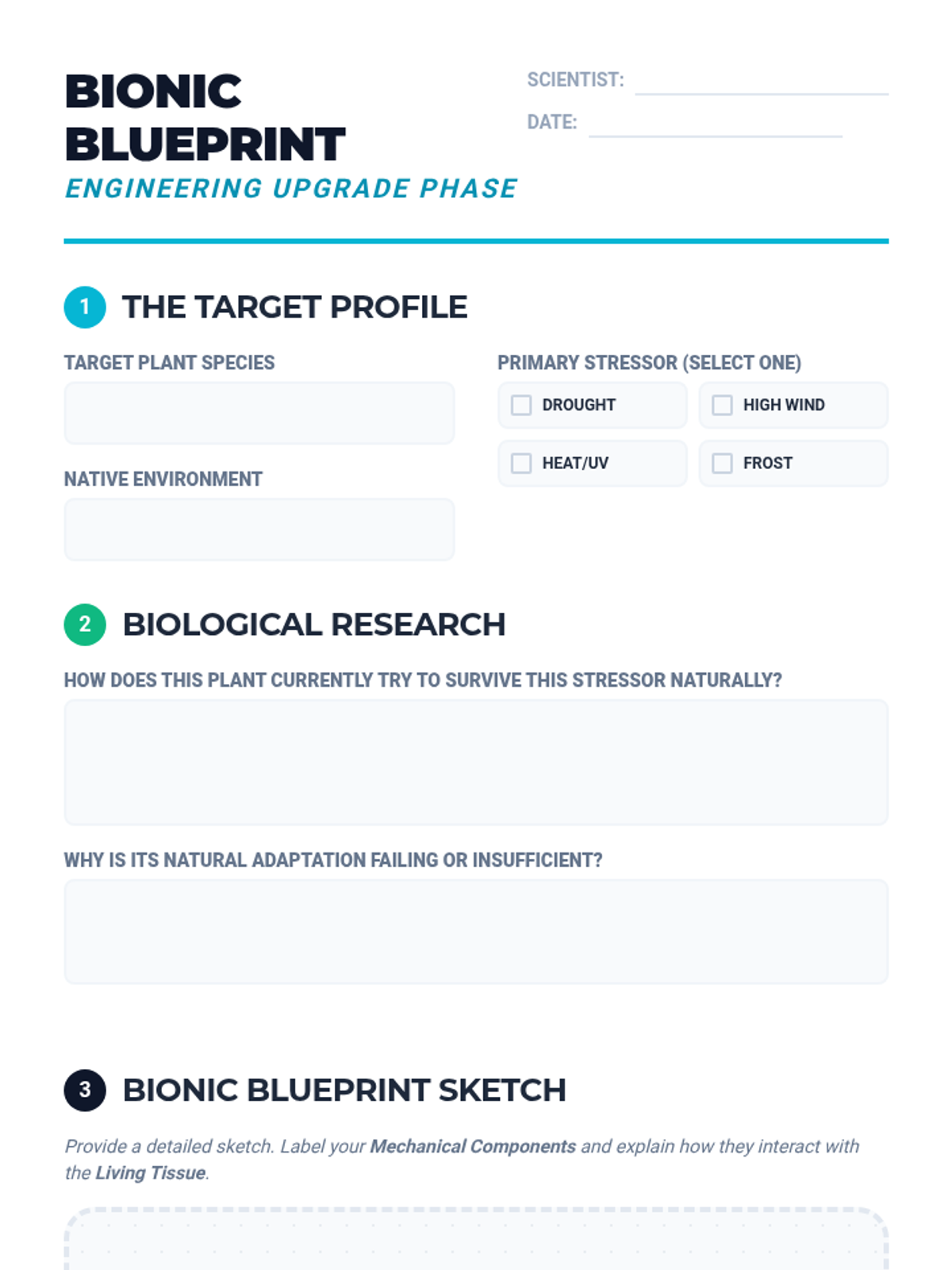
A STEM-focused lesson where students explore biological adaptations and apply engineering design principles to create 'bionic' enhancements for plants facing environmental stressors. Students research specific threats, brainstorm mechanical solutions, and prototype protective structures.