A fantasy-themed whole-class review game for 4th-grade students to master nouns, verbs, and adjectives. Students embark on a quest to recover the Grammar Gem by solving part-of-speech challenges.
A continuation of the Crystal Cave series. Students make deeper inferences about the cave's hidden chambers and the origins of the crystals. Practice focuses on 'show, don't tell' character actions.
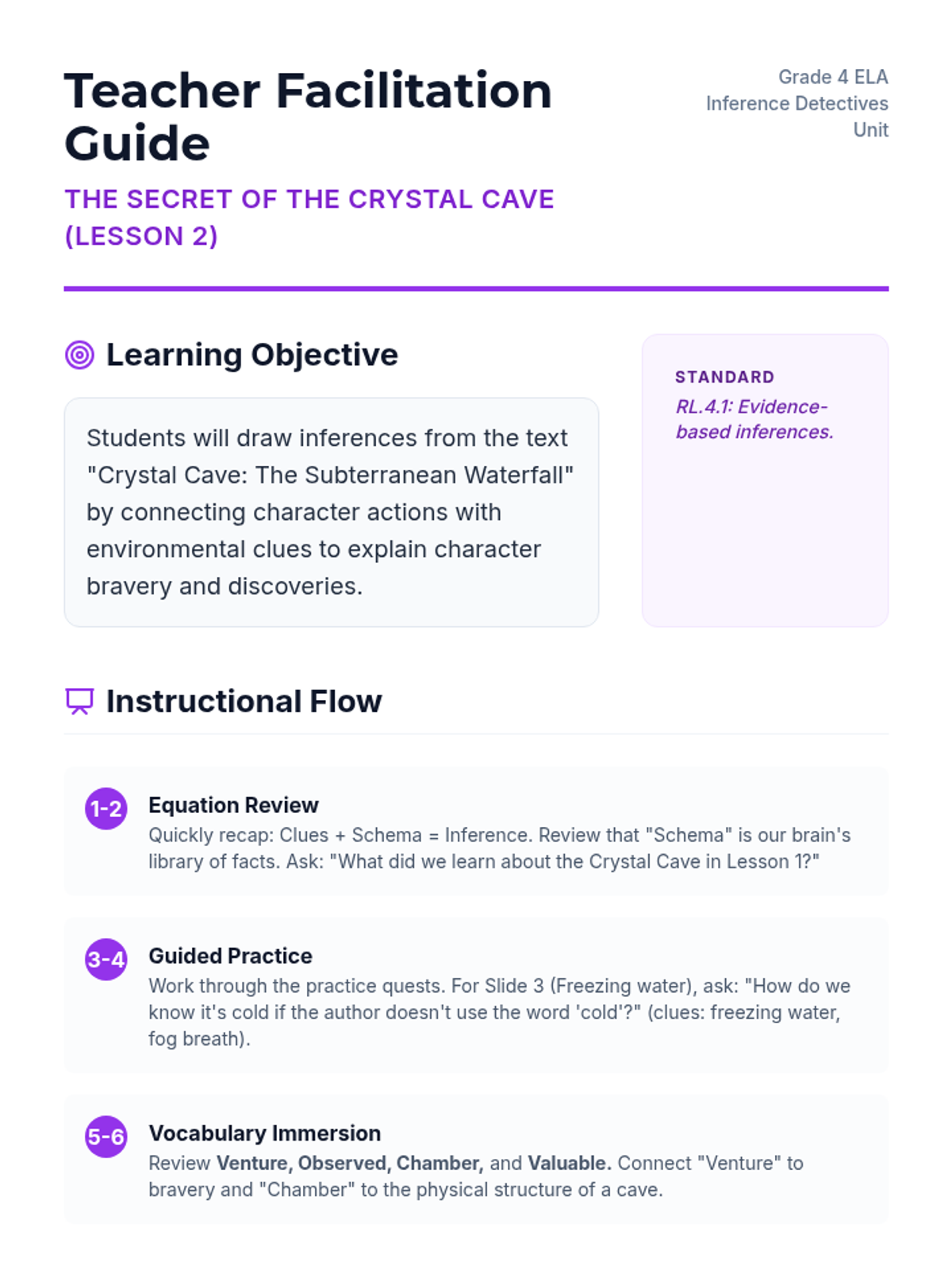
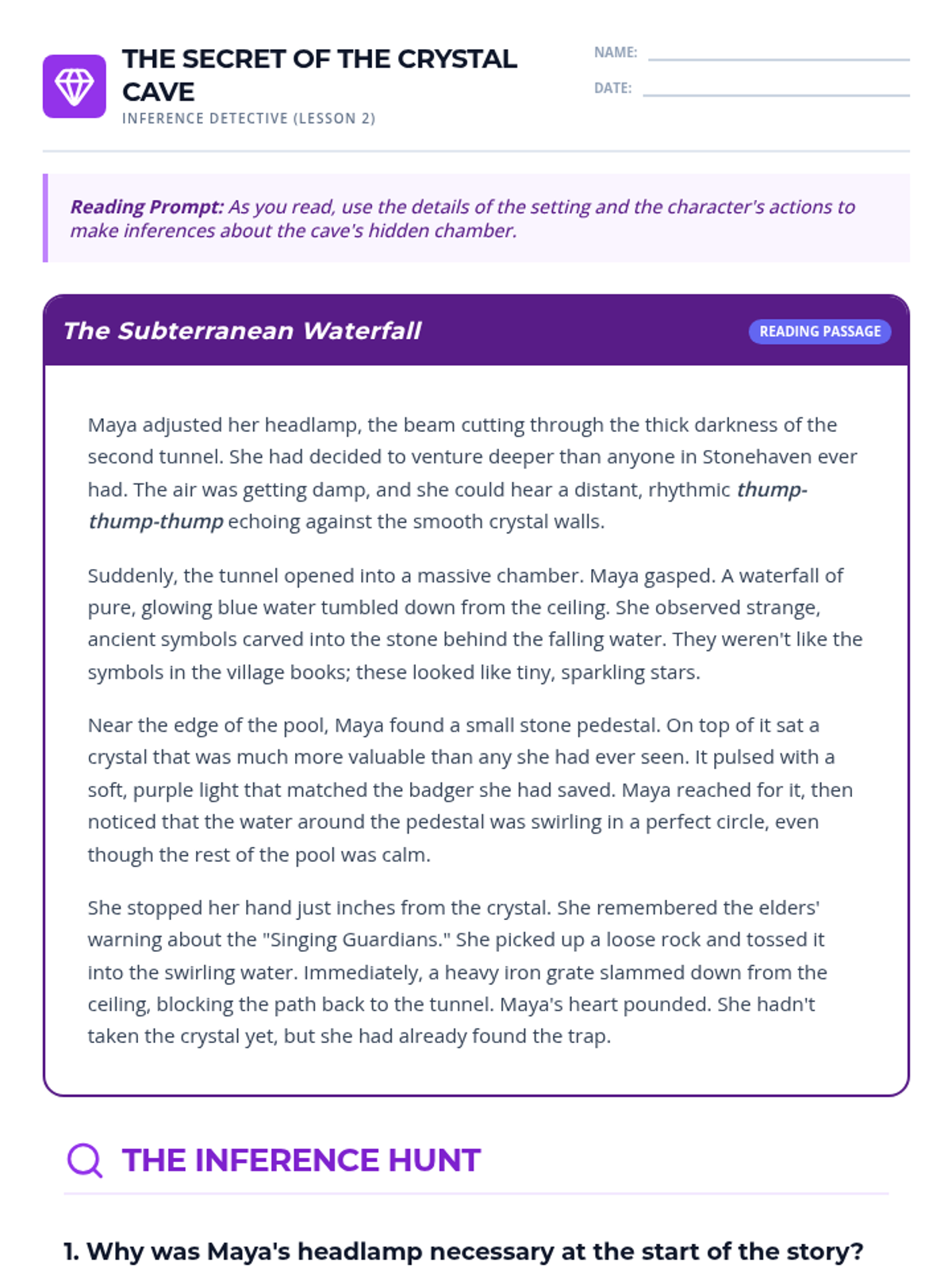
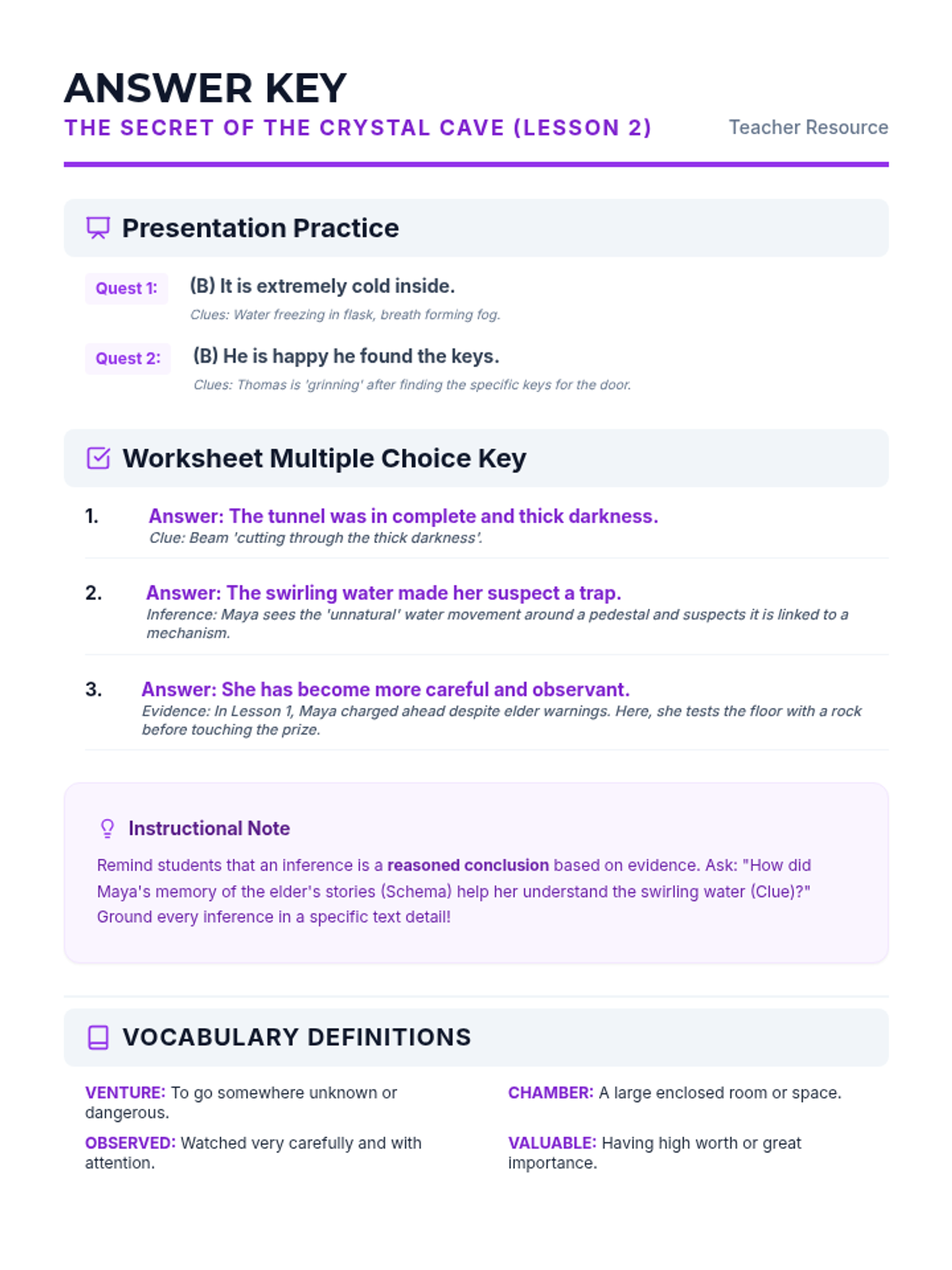
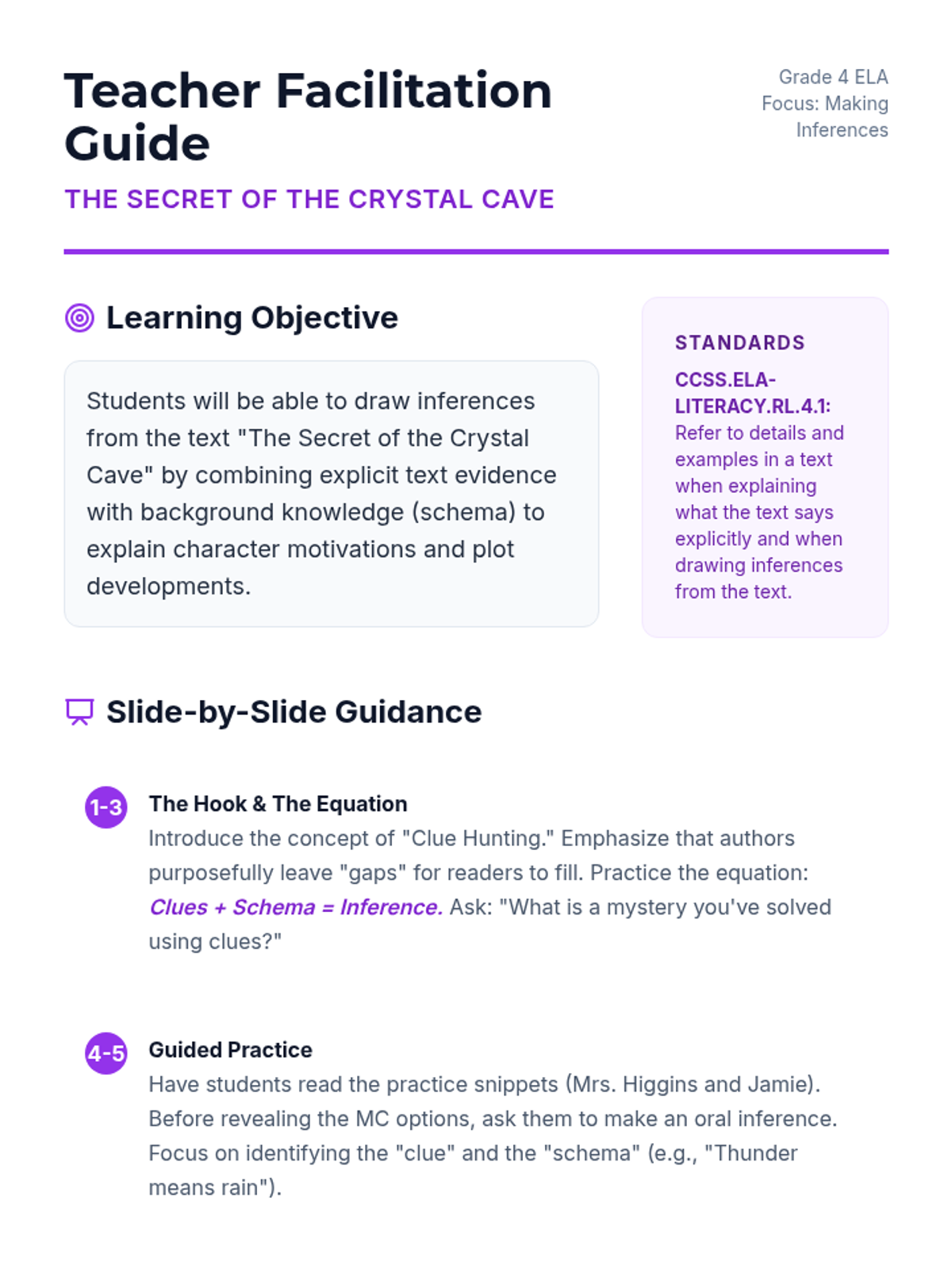
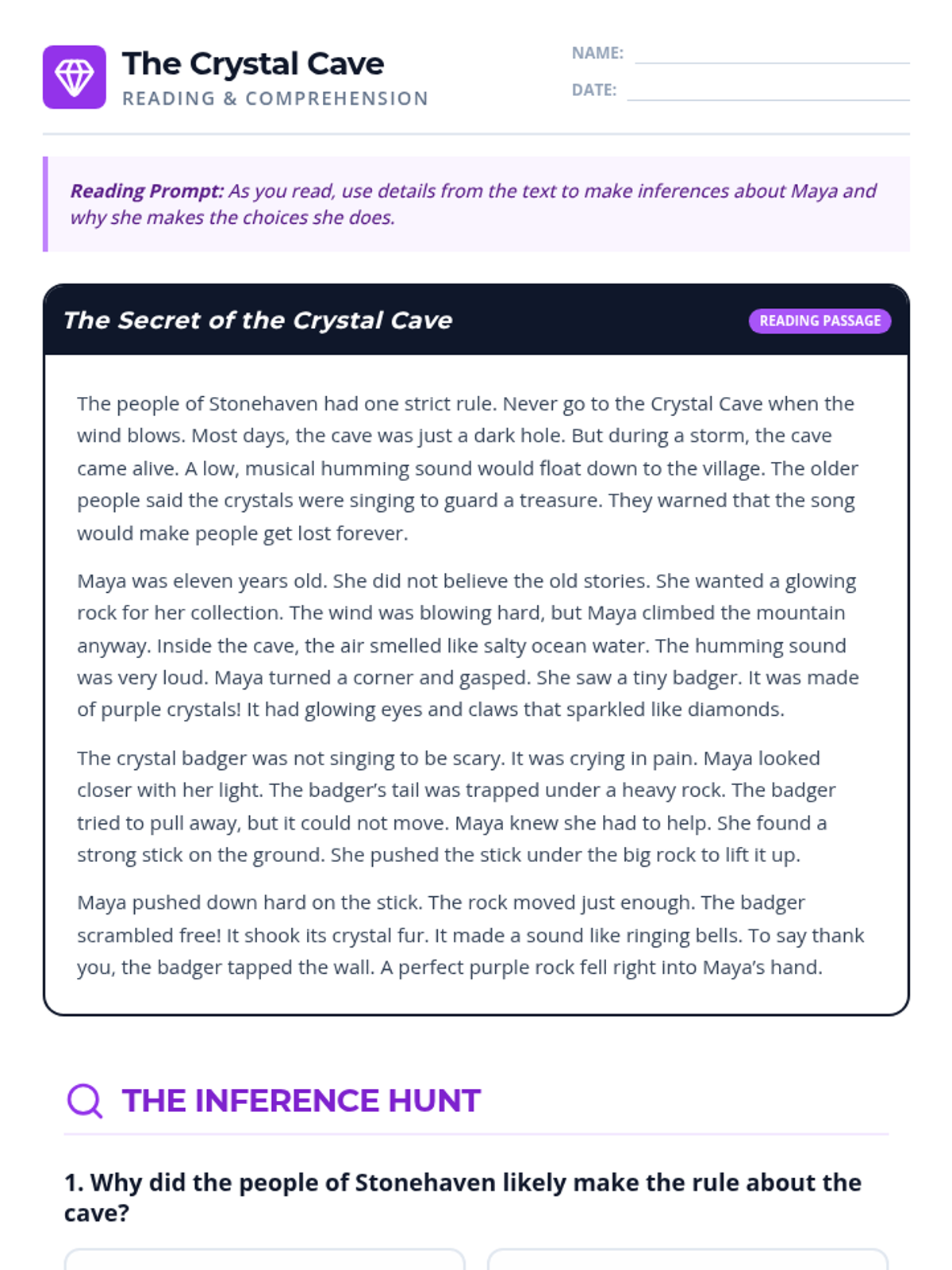
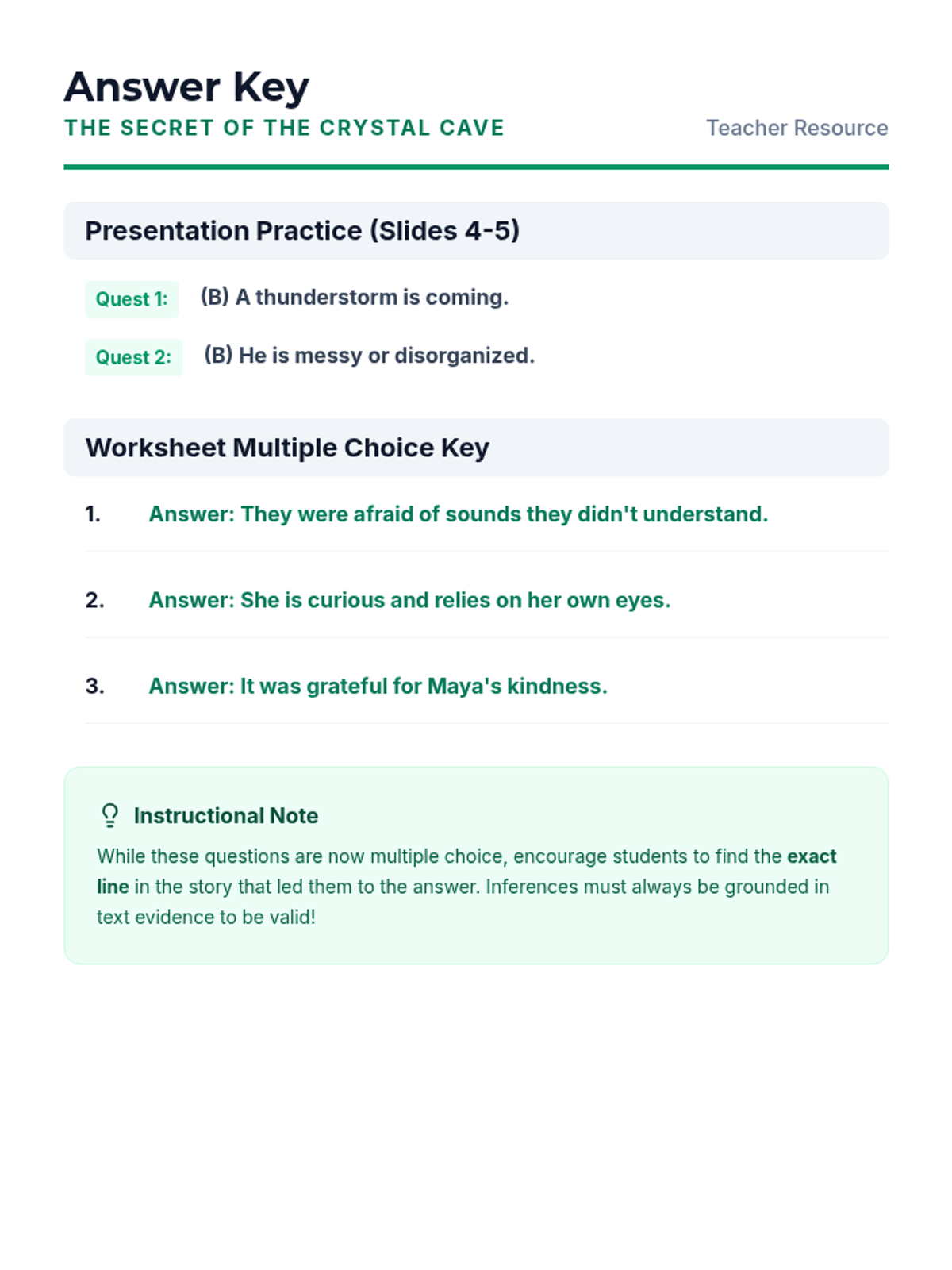
A reading comprehension lesson focused on making inferences using the story 'The Secret of the Crystal Cave'. Students will learn the inference equation, master key vocabulary, and practice using text evidence to draw conclusions about character motivations and plot.
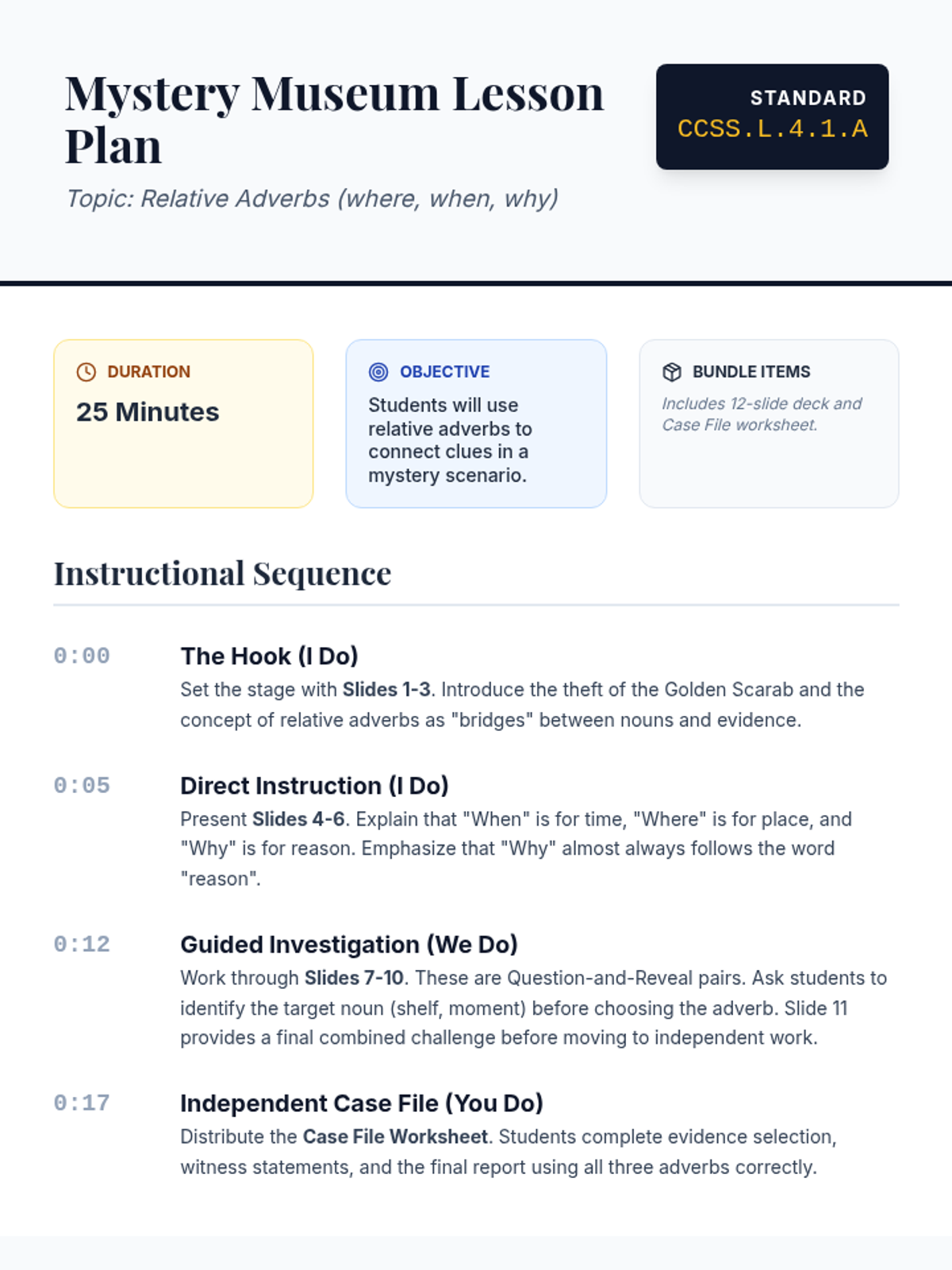
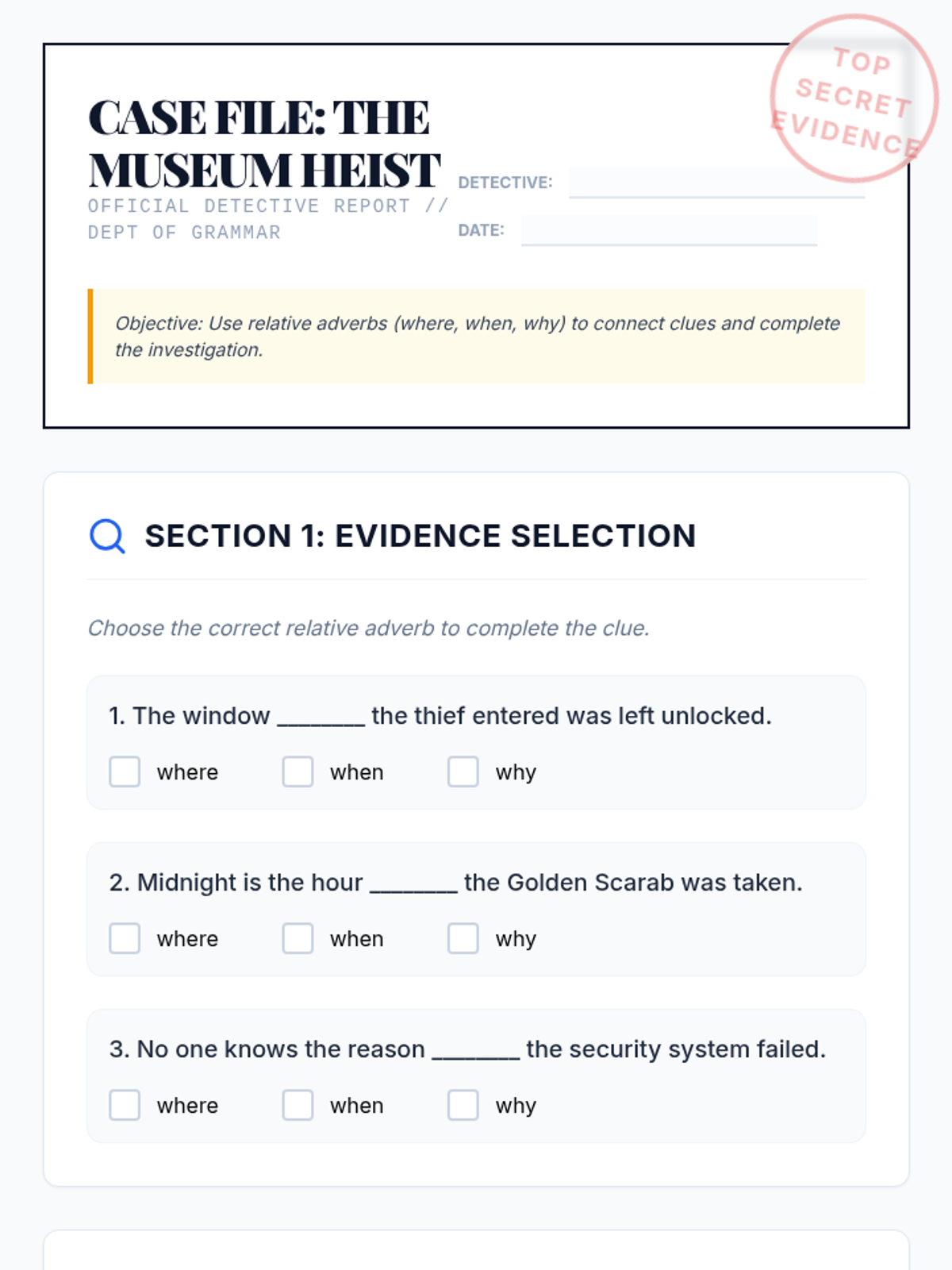
A 25-minute grammar lesson for 4th grade focusing on relative adverbs (where, when, why) within a 'Mystery at the Museum' theme. Includes a slide deck for instruction and a student worksheet for independent practice.
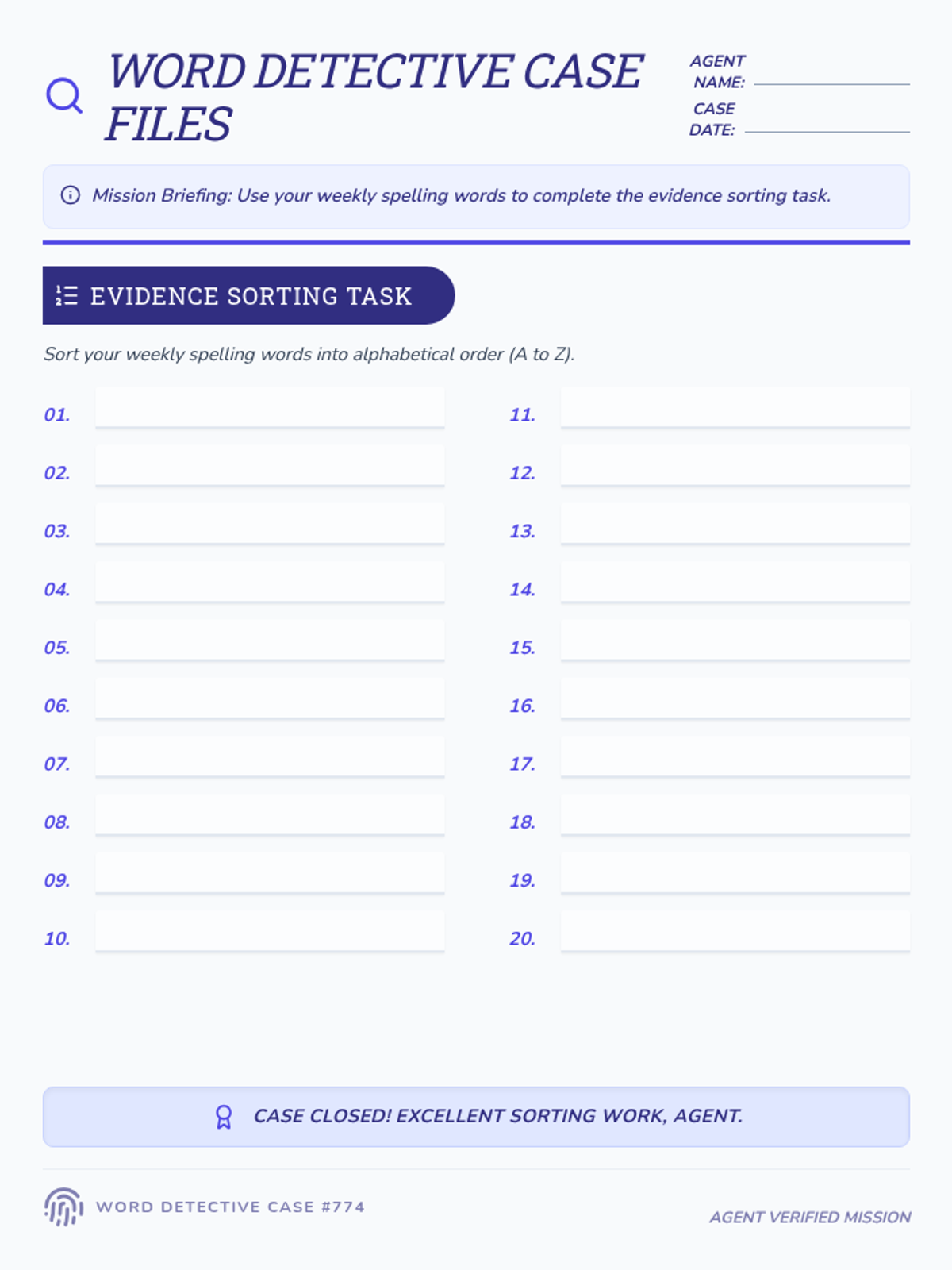
A practice session for students to master their weekly spelling list through organization and sentence construction.
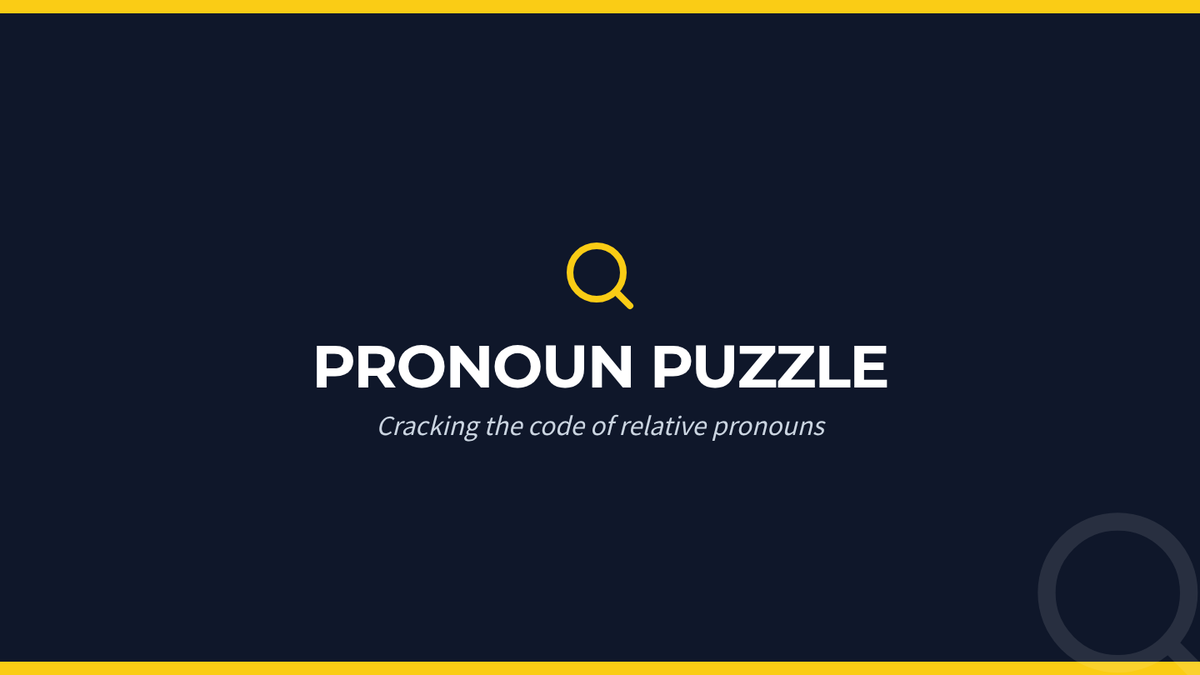
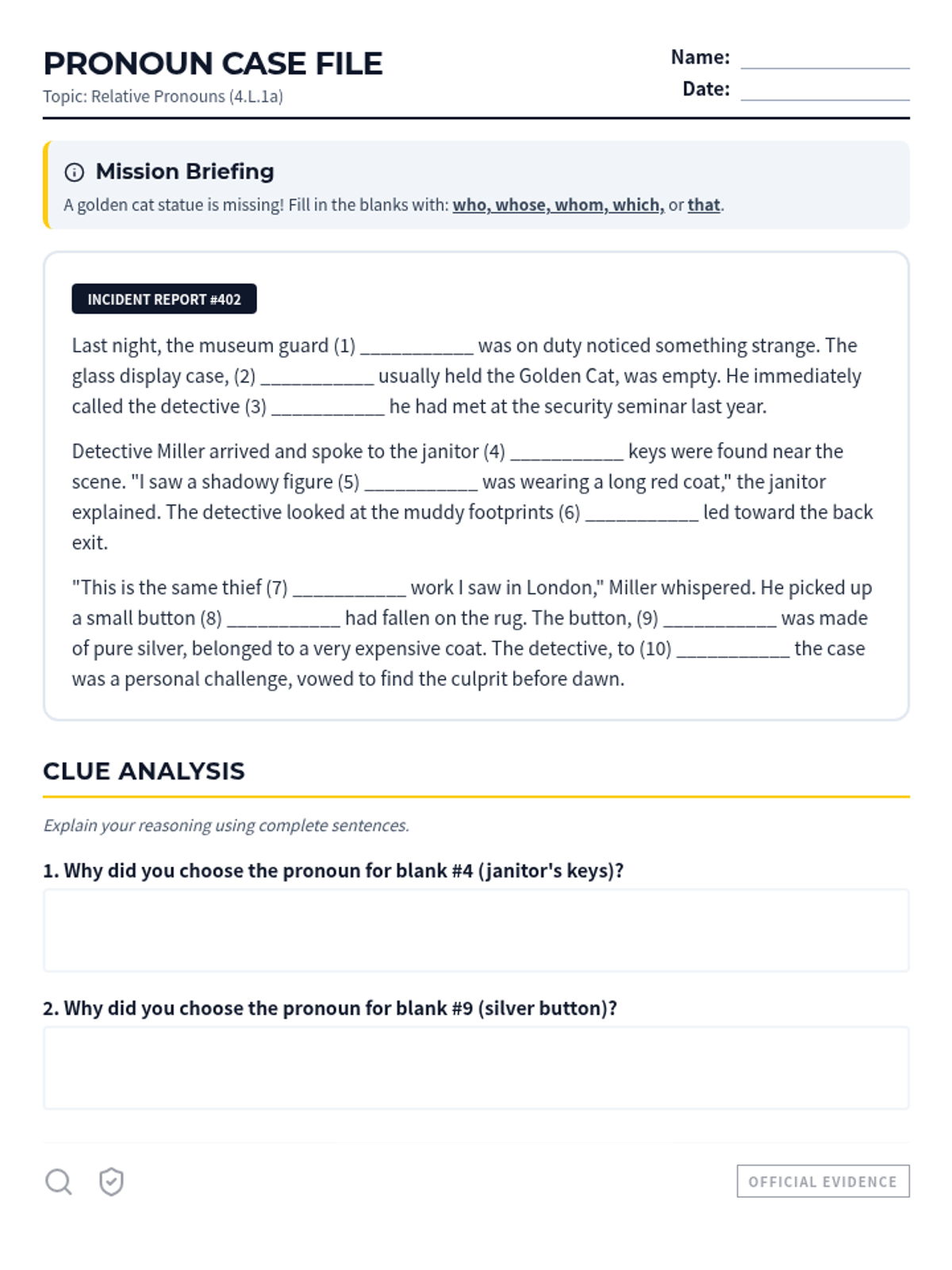
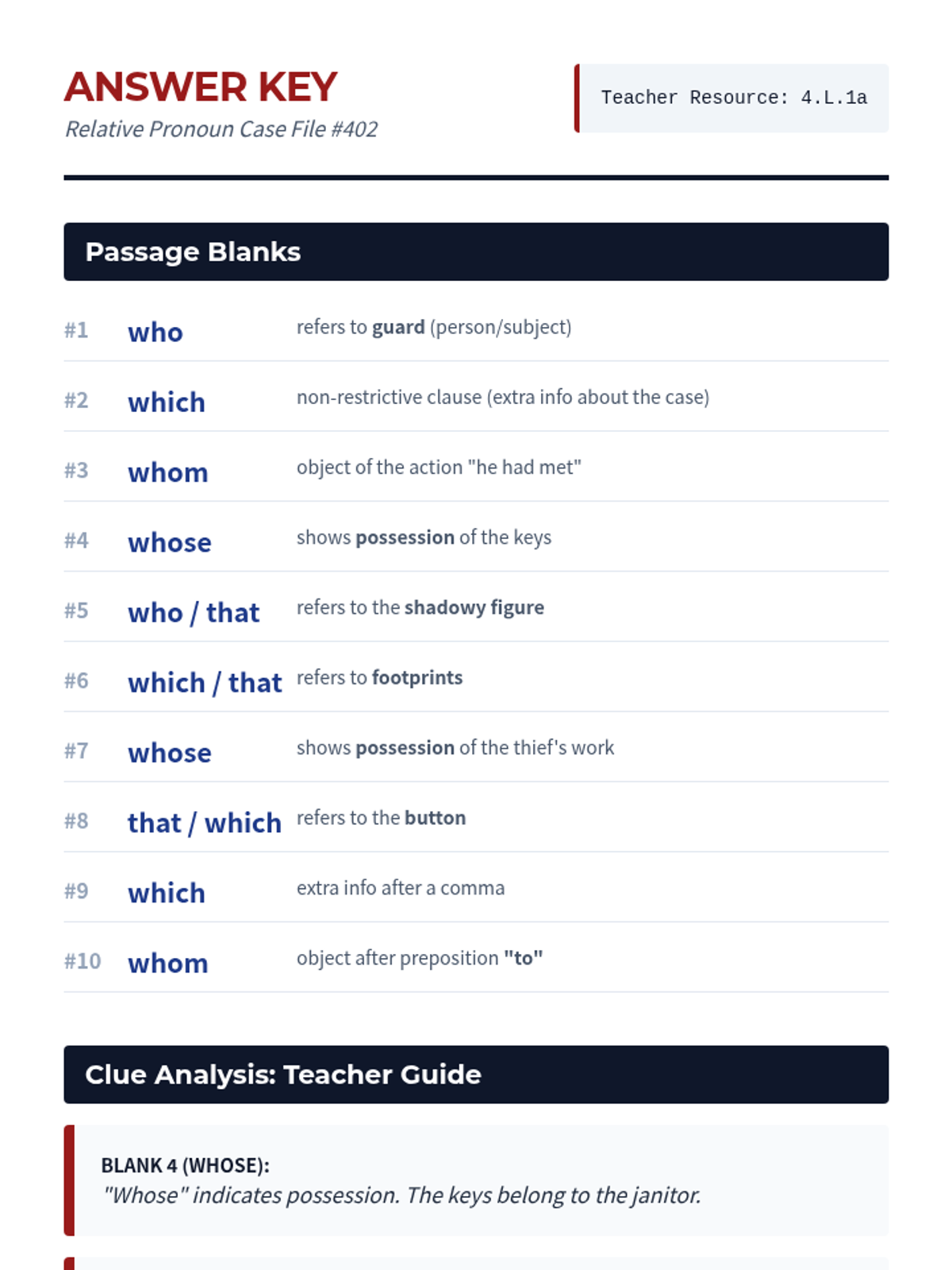
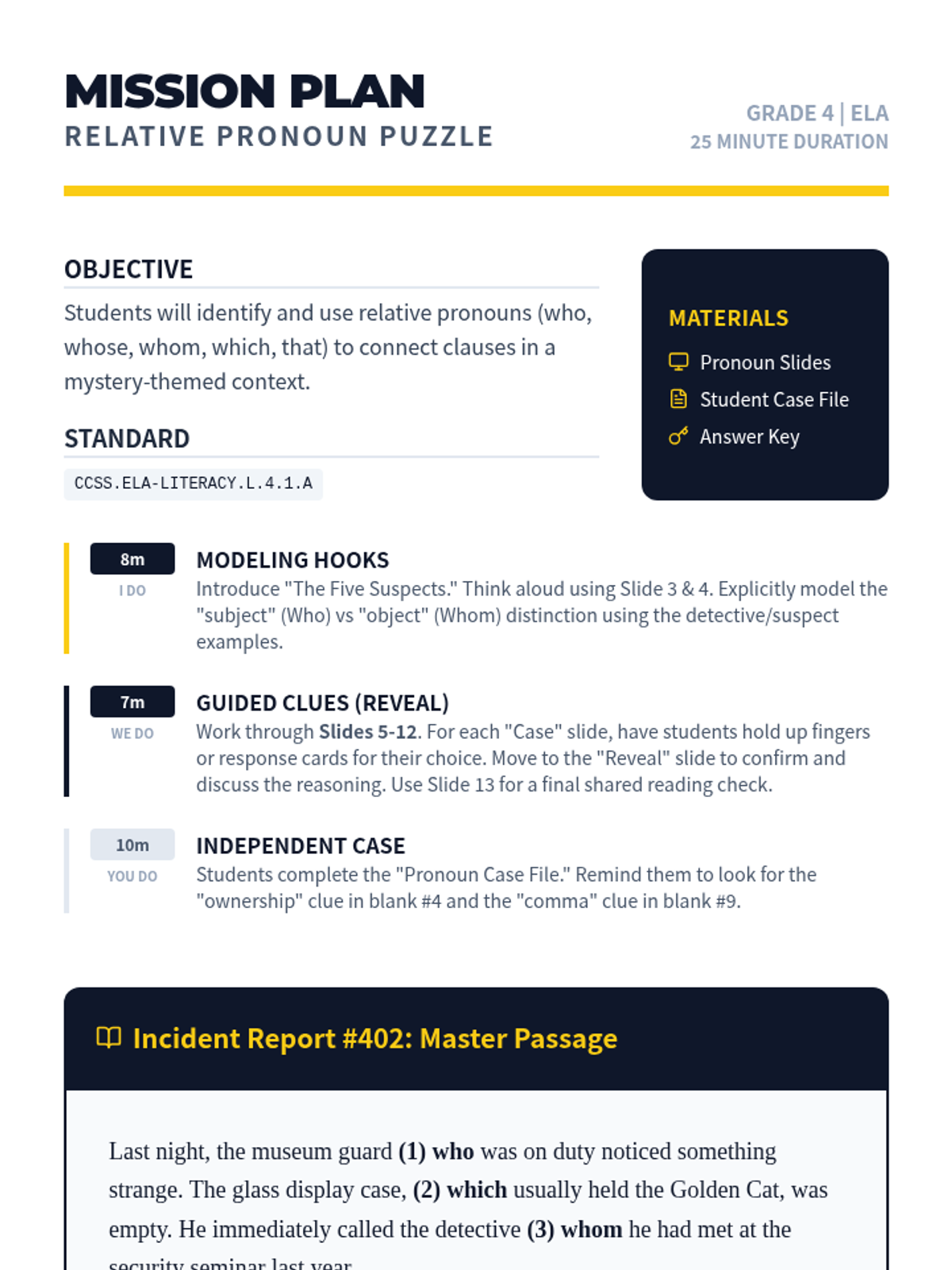
A fast-paced 25-minute lesson where students investigate how relative pronouns (who, whose, whom, which, that) connect ideas in sentences using a detective-themed approach.
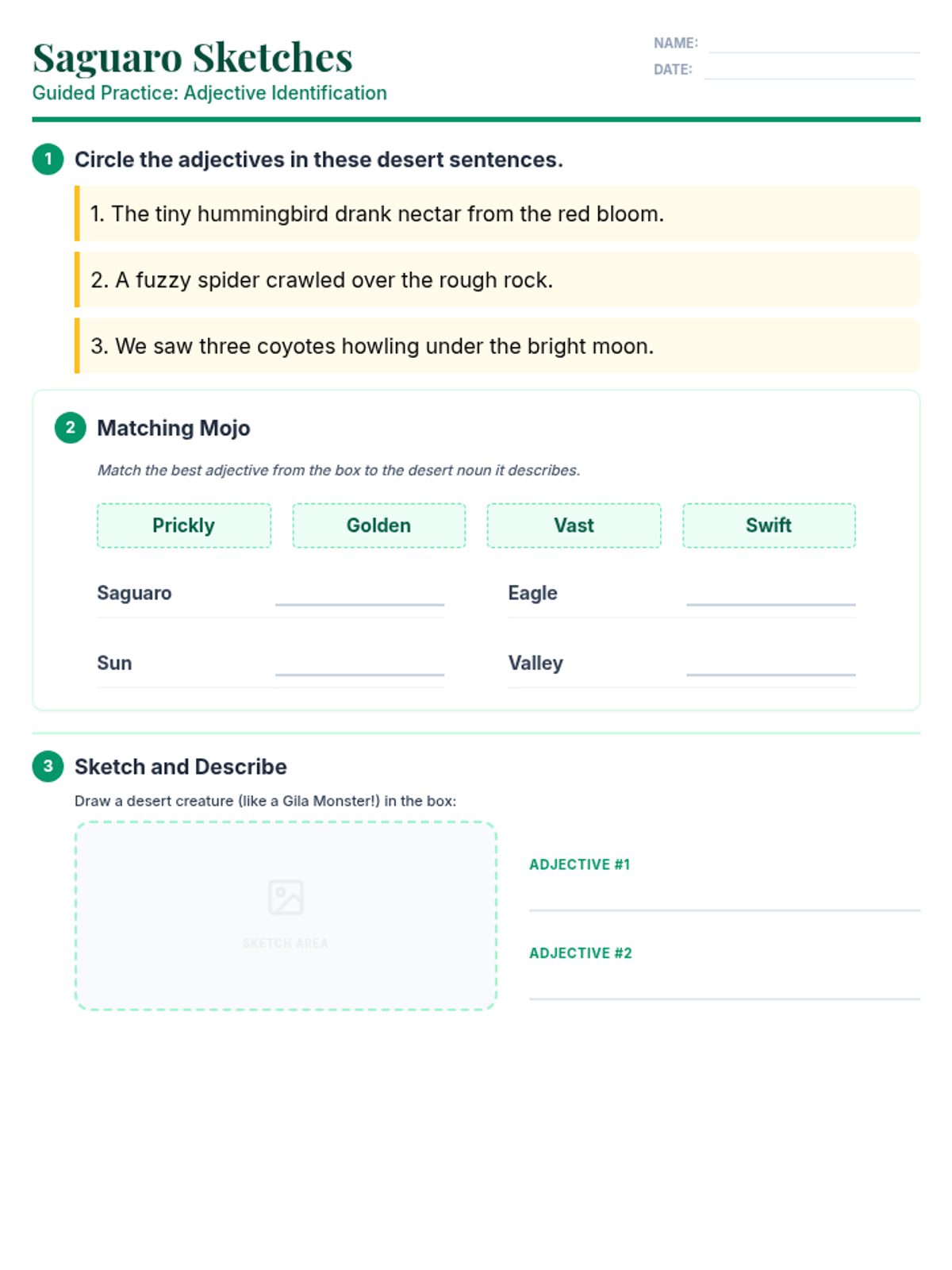
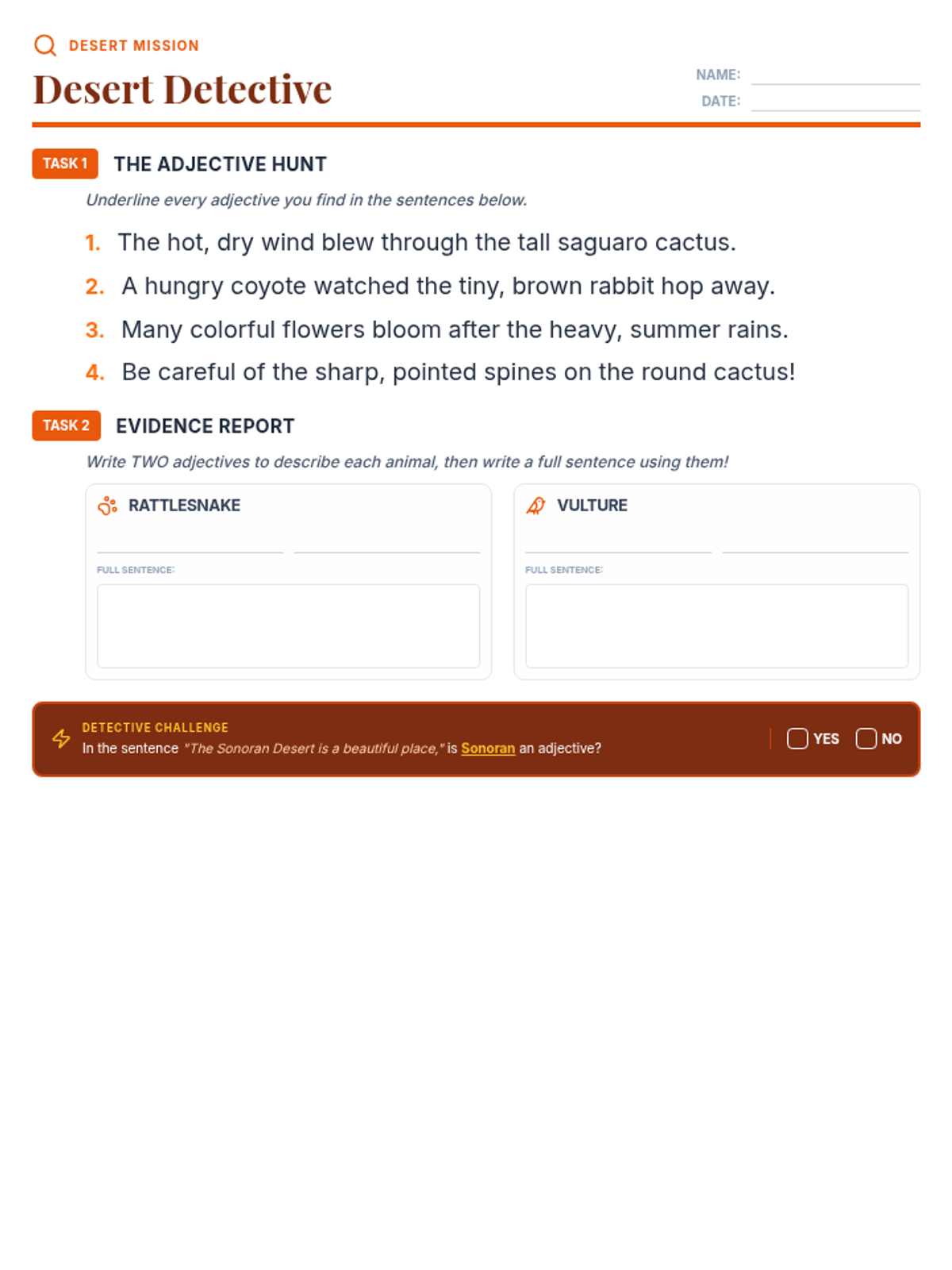
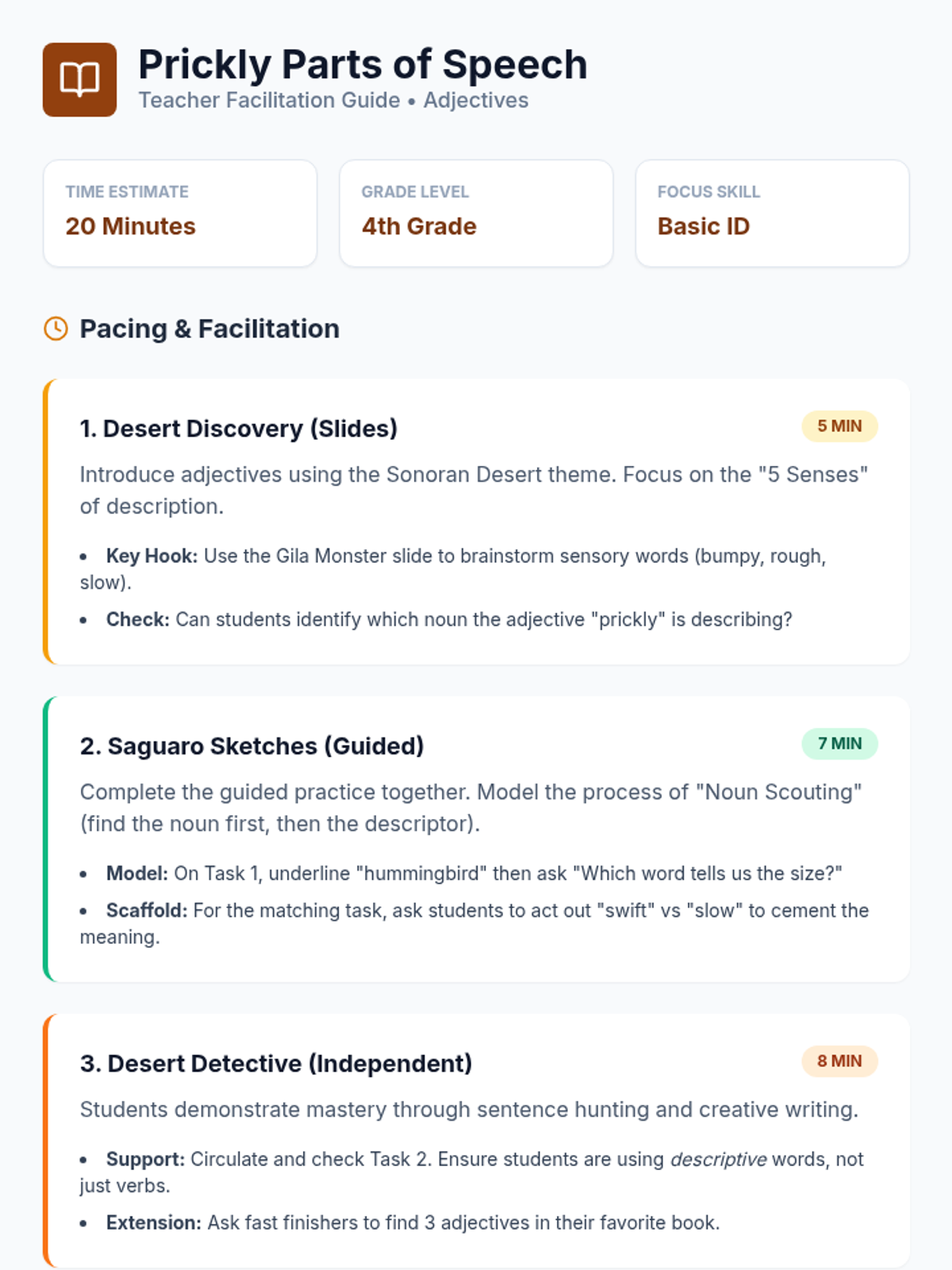
A 4th-grade lesson on identifying adjectives using the vibrant flora and fauna of the Sonoran Desert as a backdrop. Students will learn to use describing words to bring desert scenes to life.
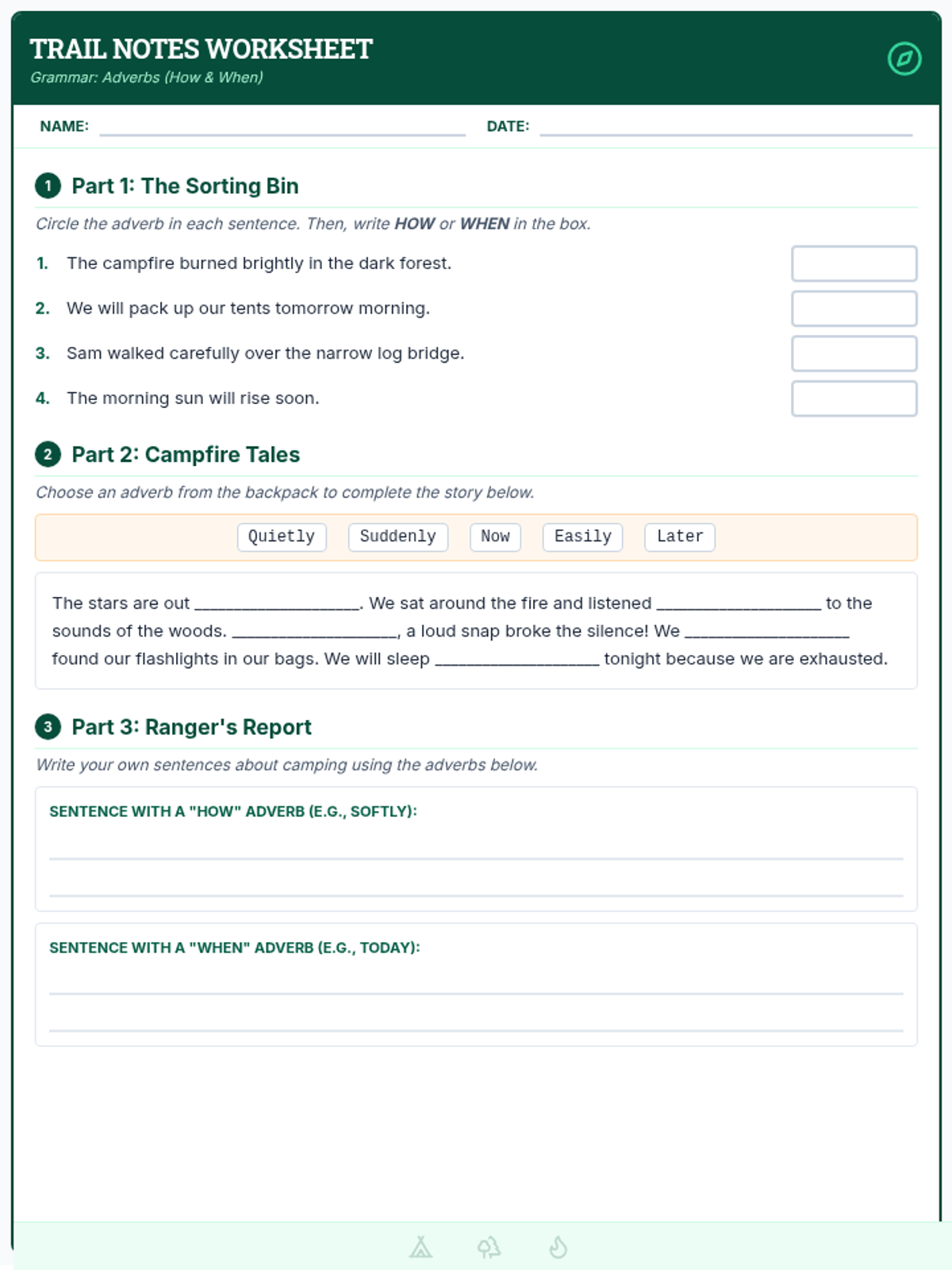
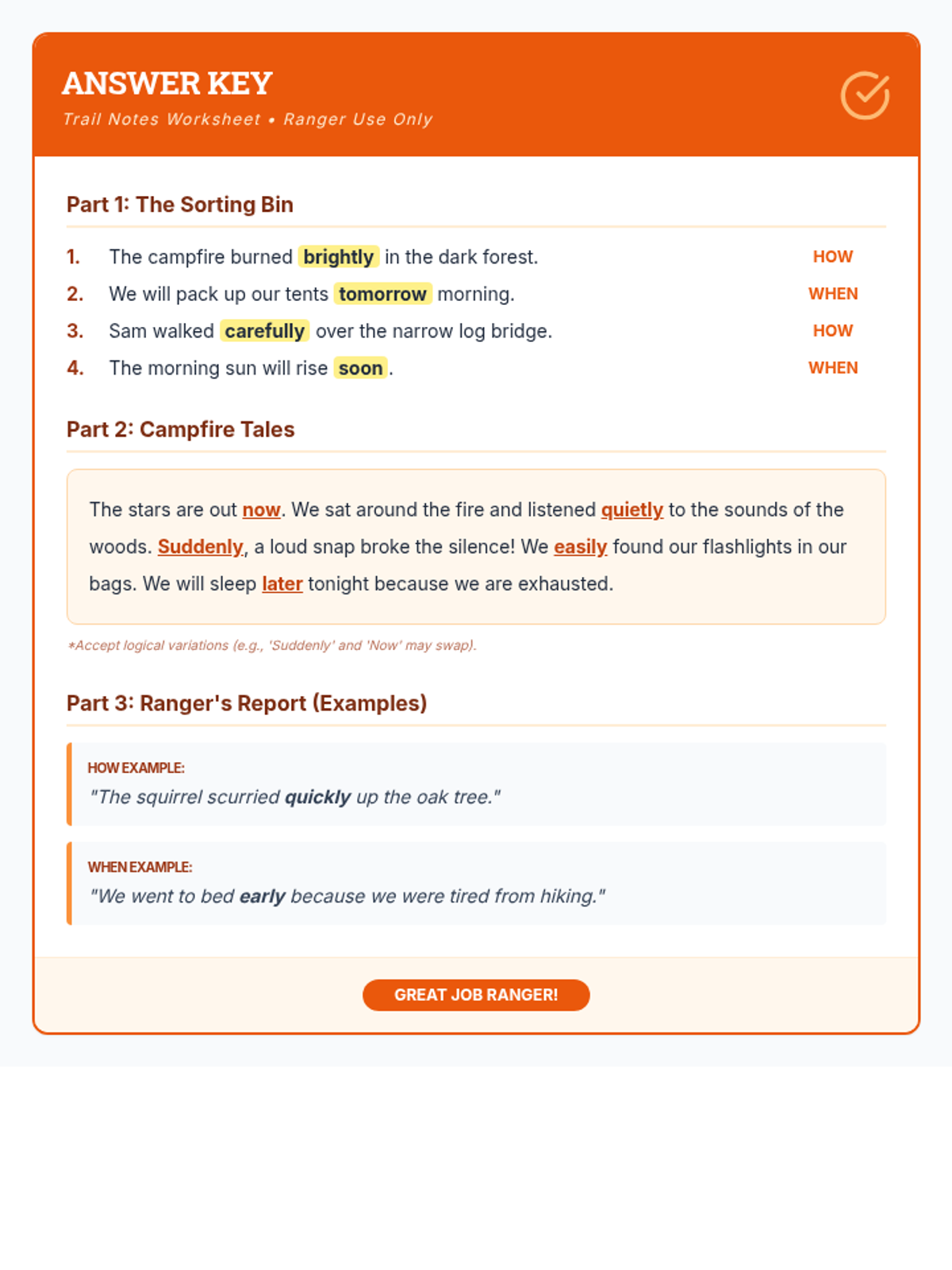
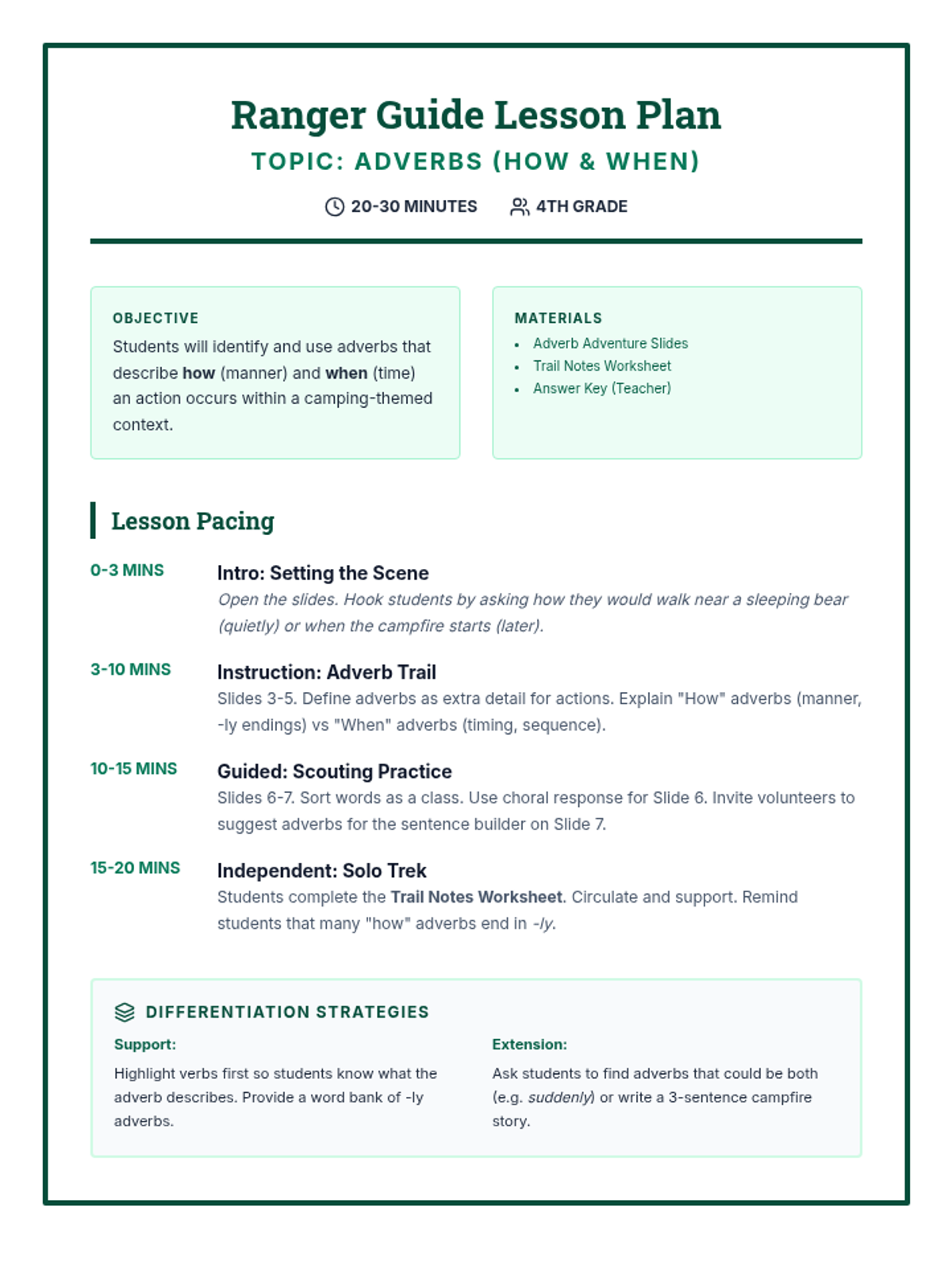
A 20-minute introductory lesson on 'how' and 'when' adverbs, set against a fun camping backdrop where students identify and use adverbs to describe their outdoor adventures.
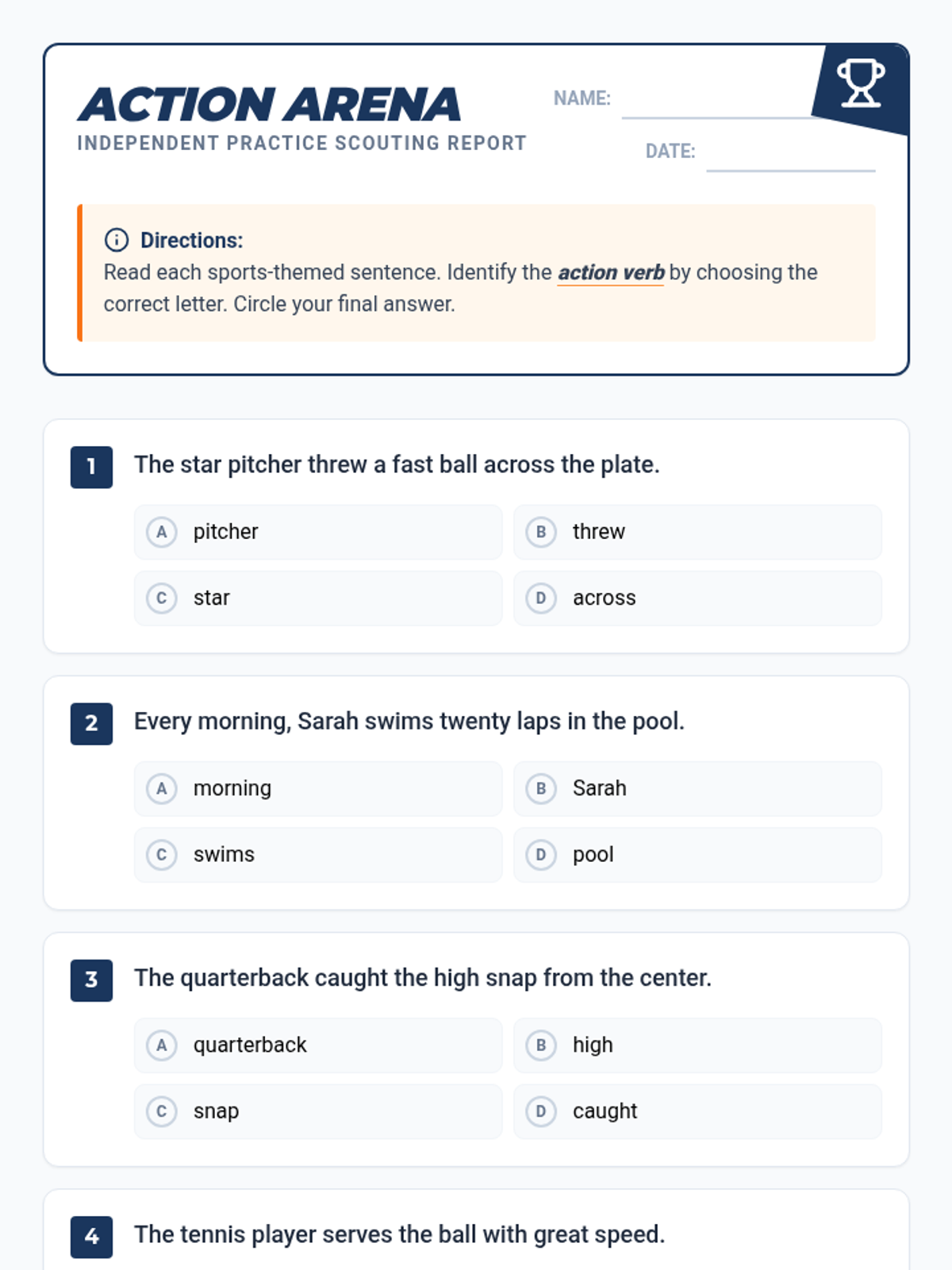
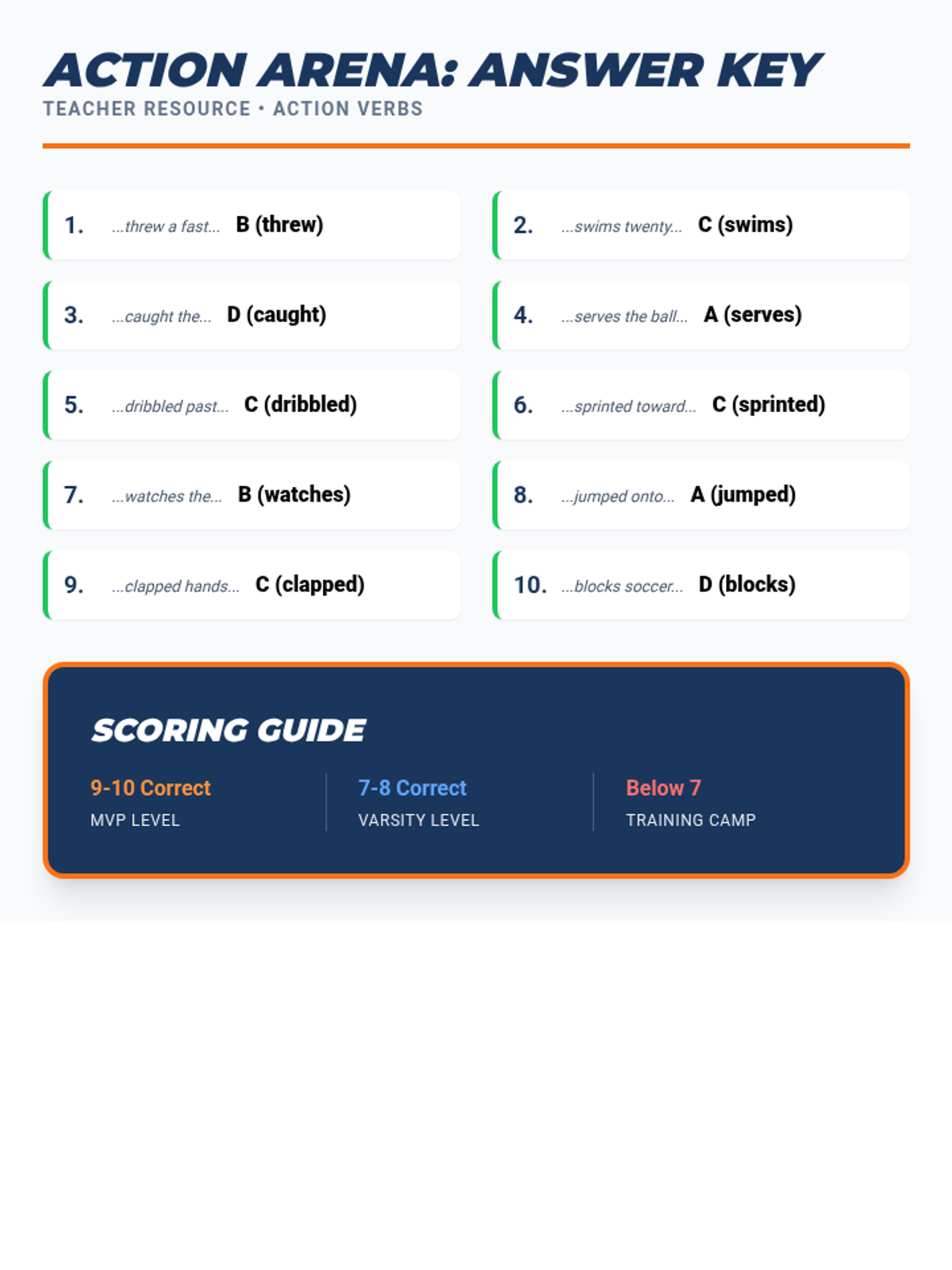
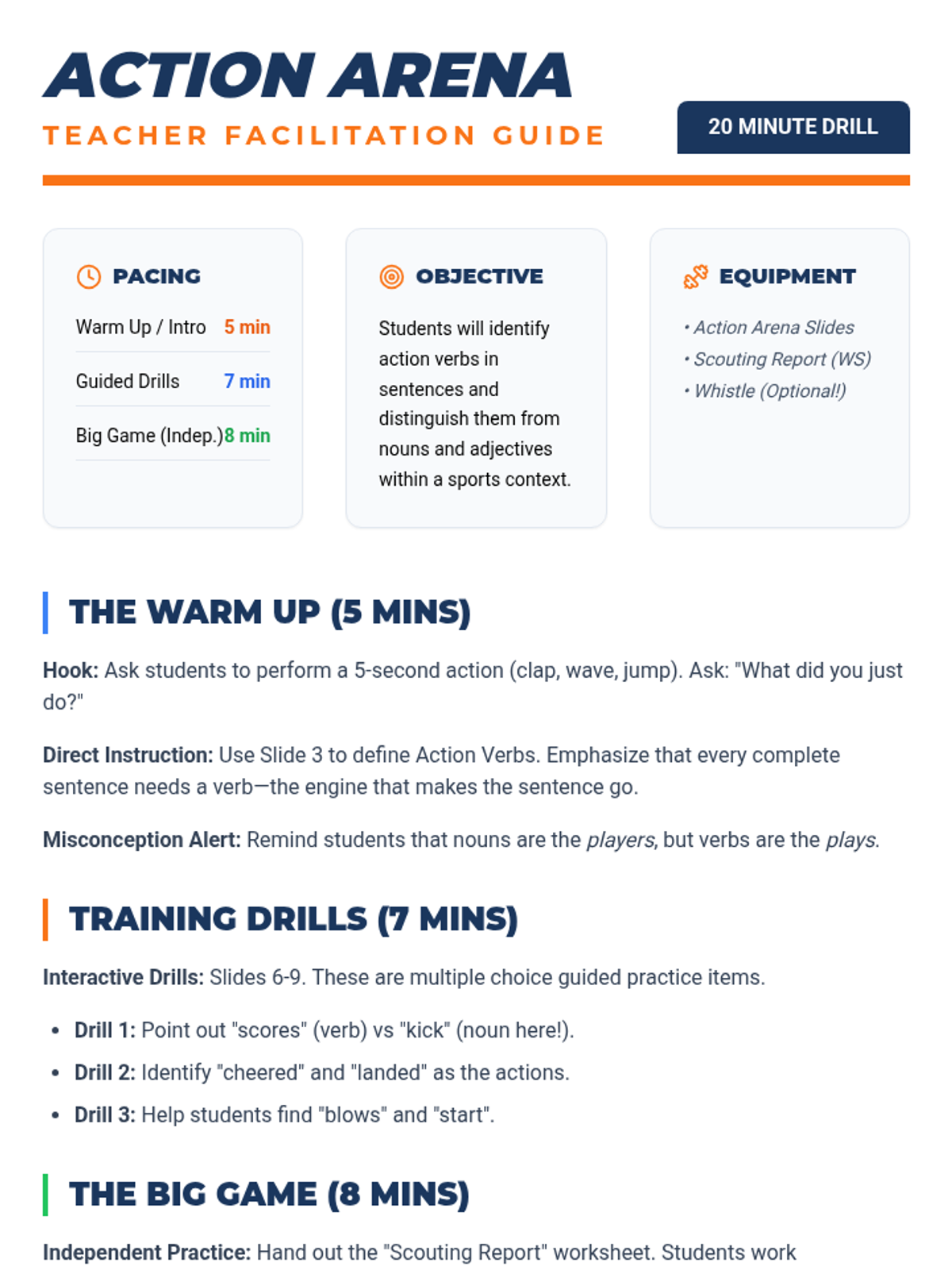
A high-energy, sports-themed lesson for 4th graders to master action verbs through 'The Action Arena' training and gameplay.
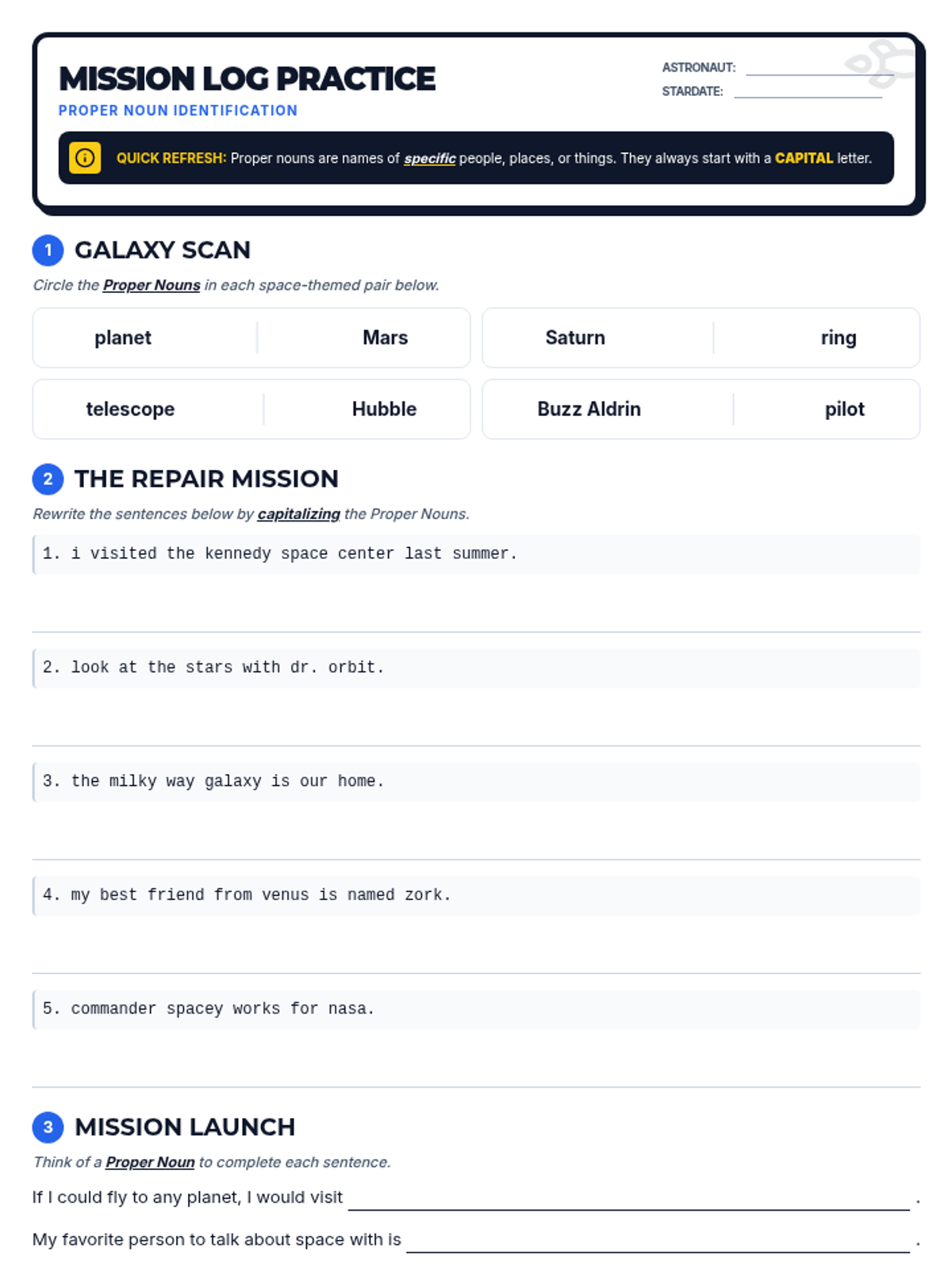
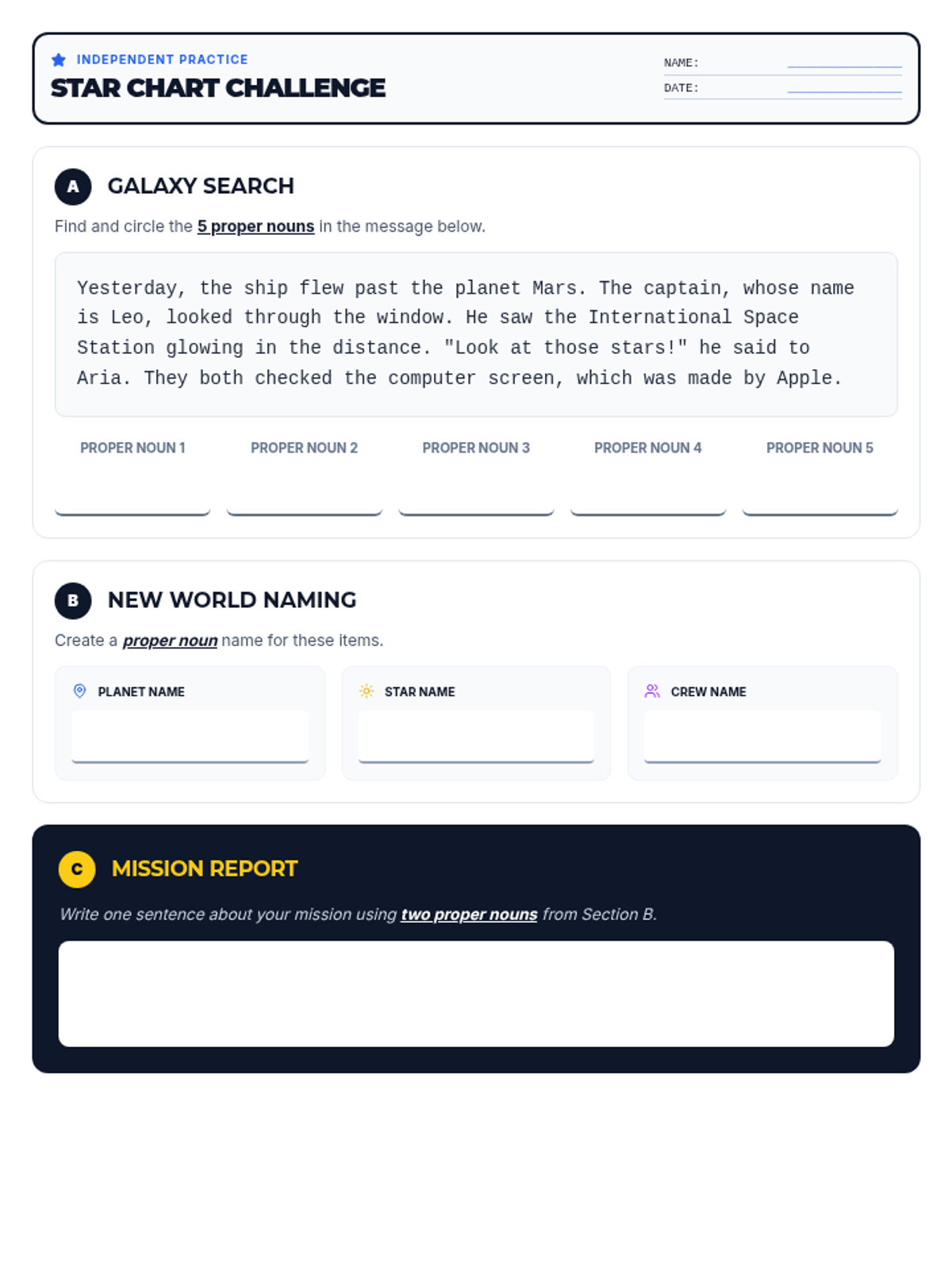
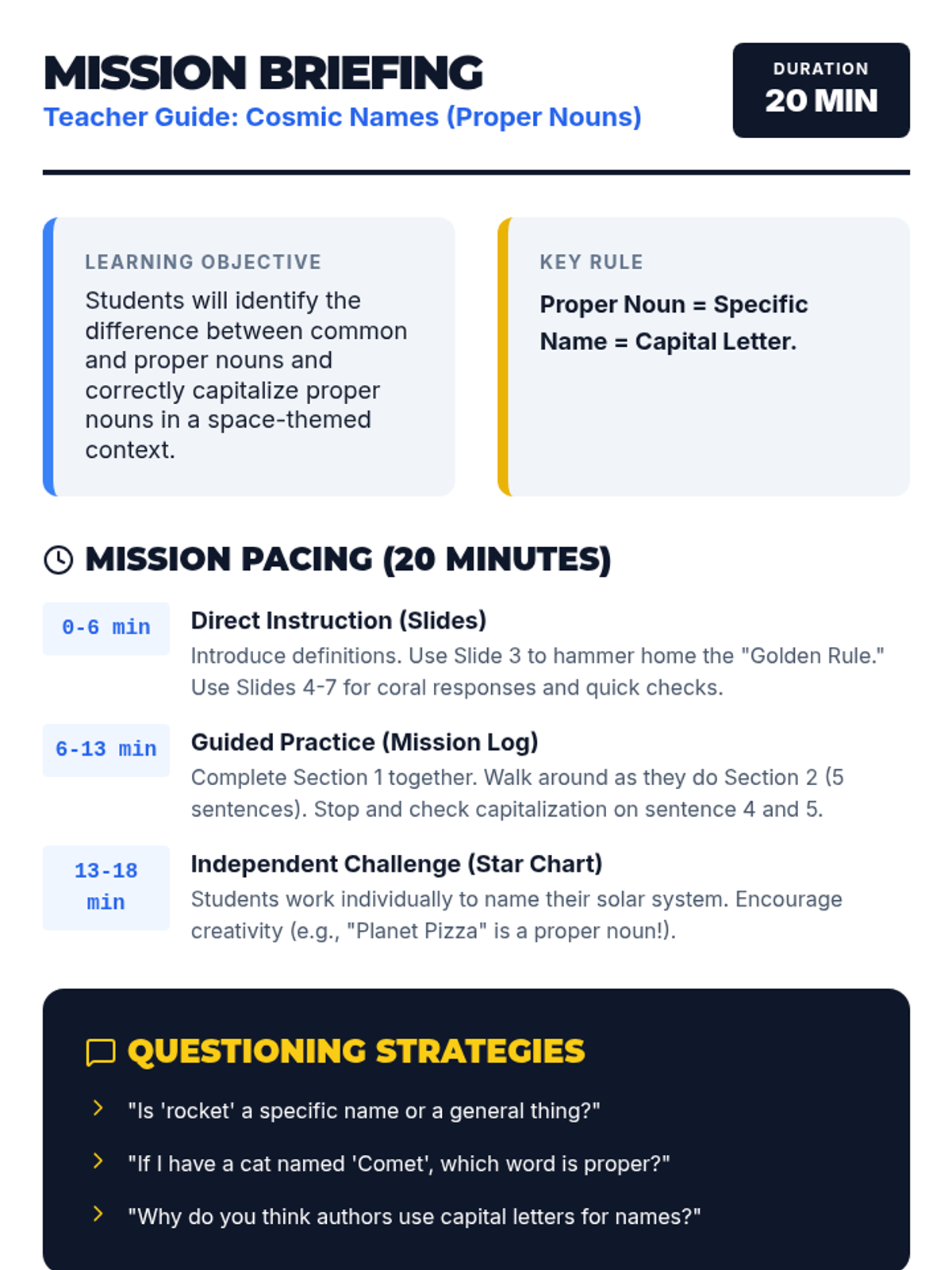
A fast-paced, space-themed introduction to proper nouns. Students learn to distinguish between general celestial objects and their specific names through a series of cosmic challenges.
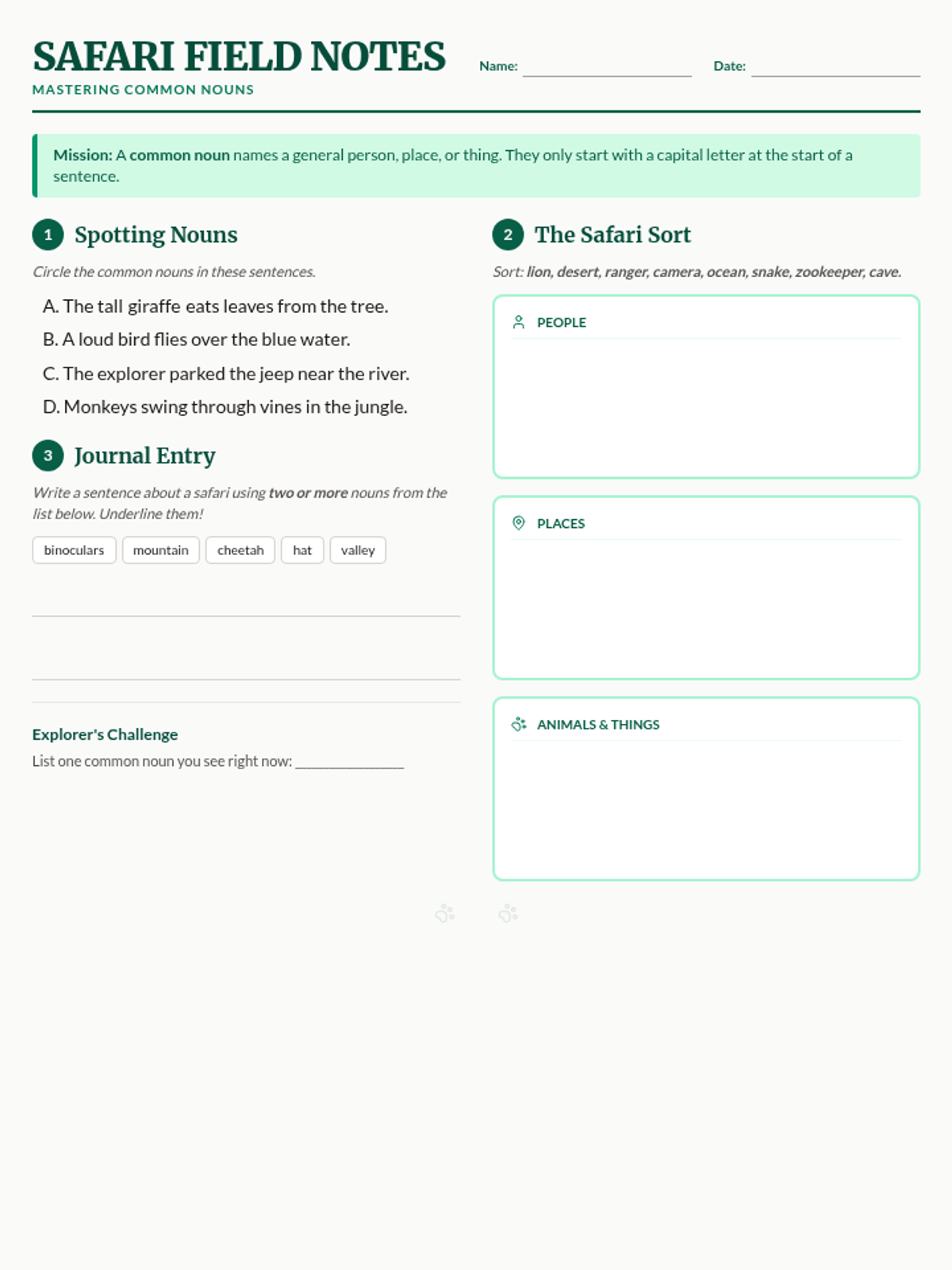
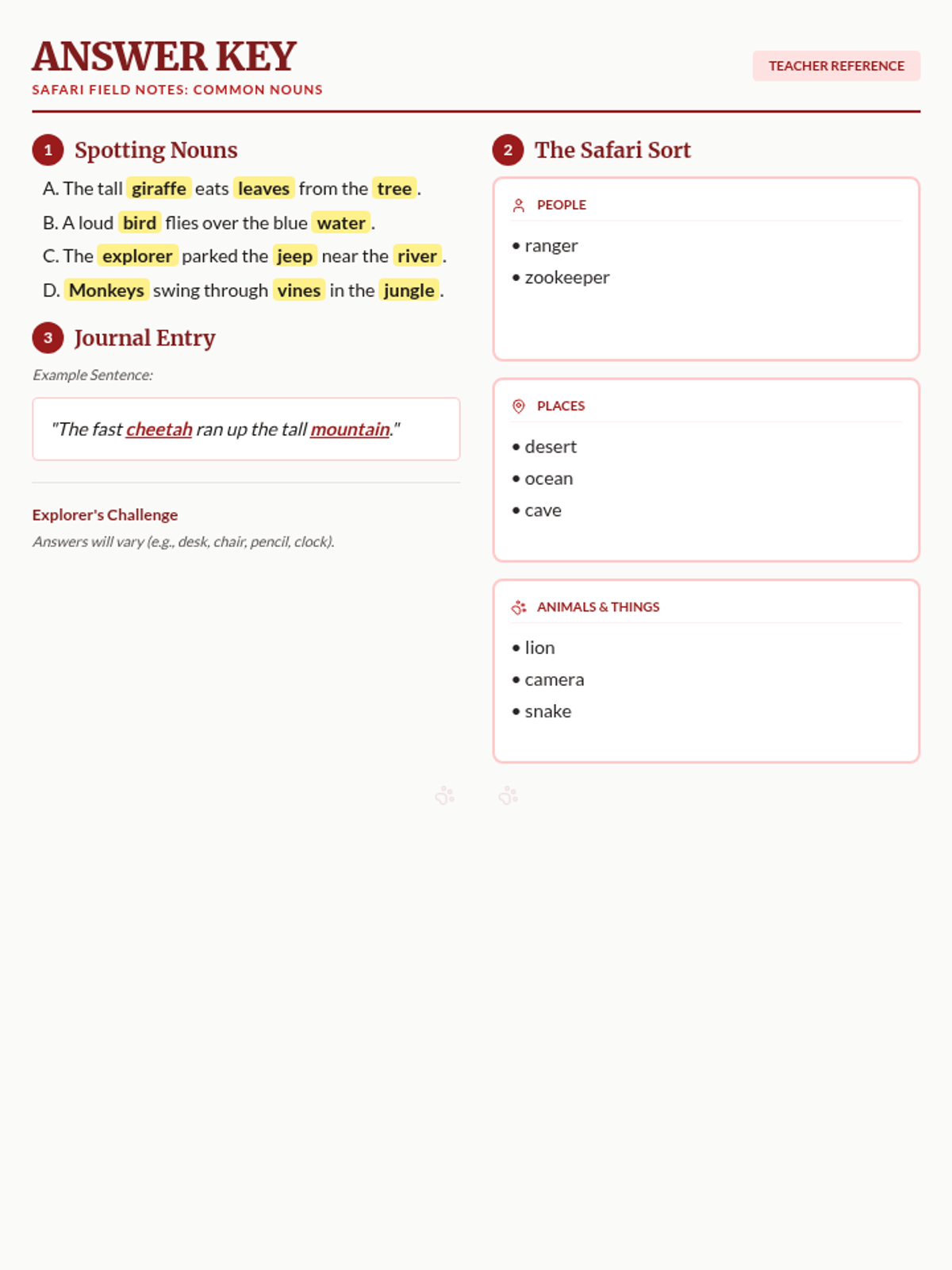
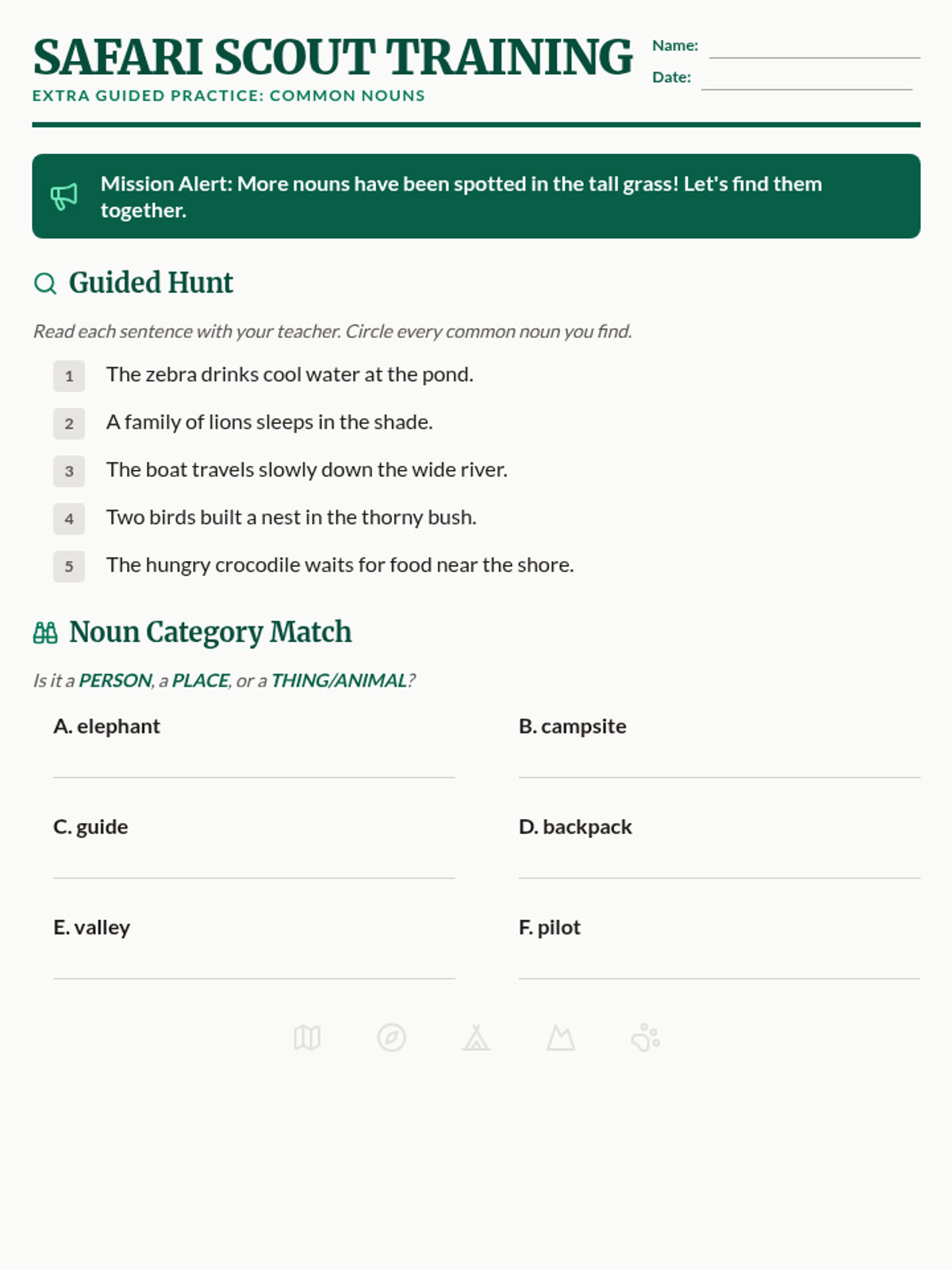
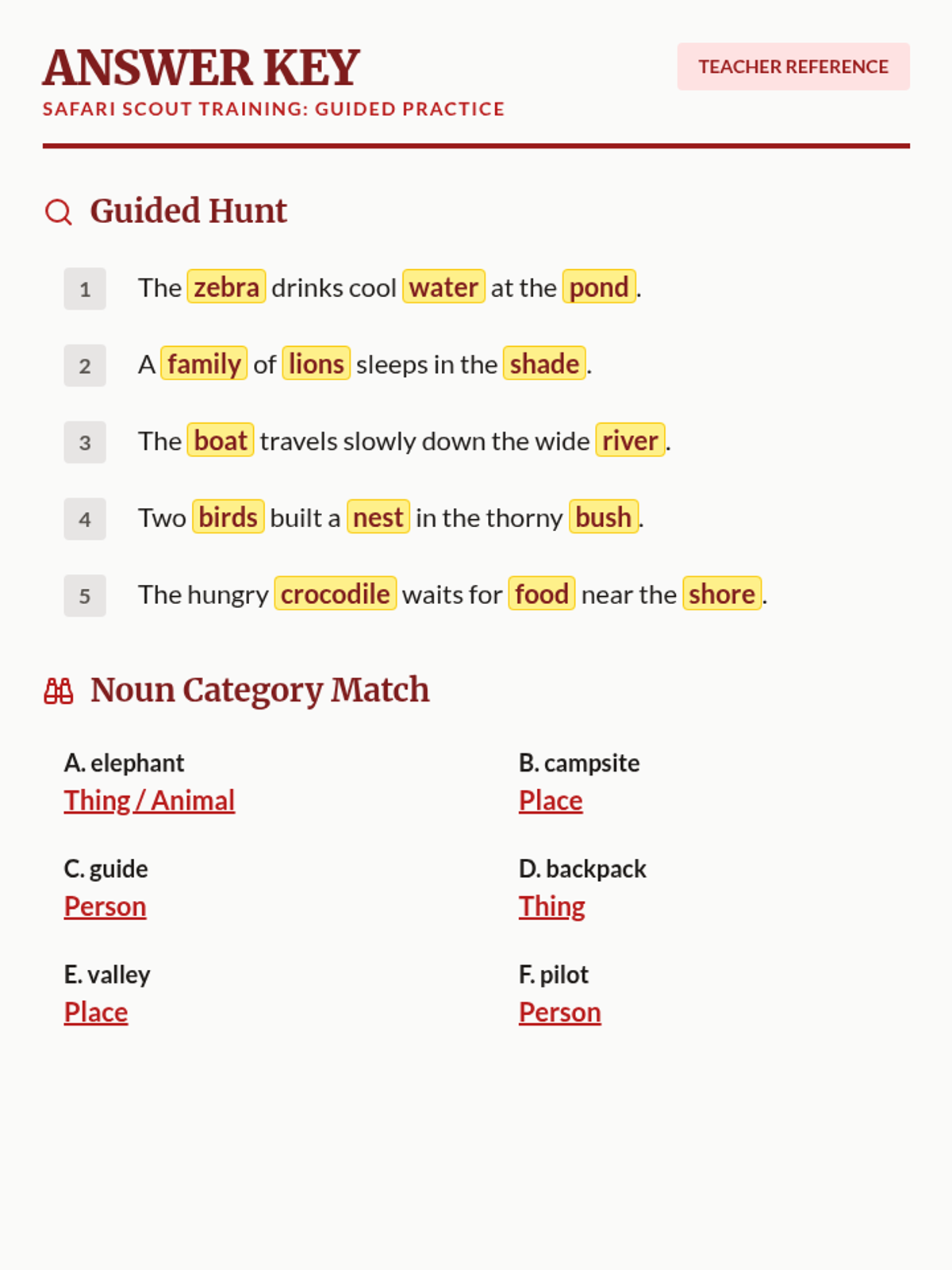
A foundational grammar lesson for 4th graders focusing on identifying and using common nouns within the context of an animal safari.
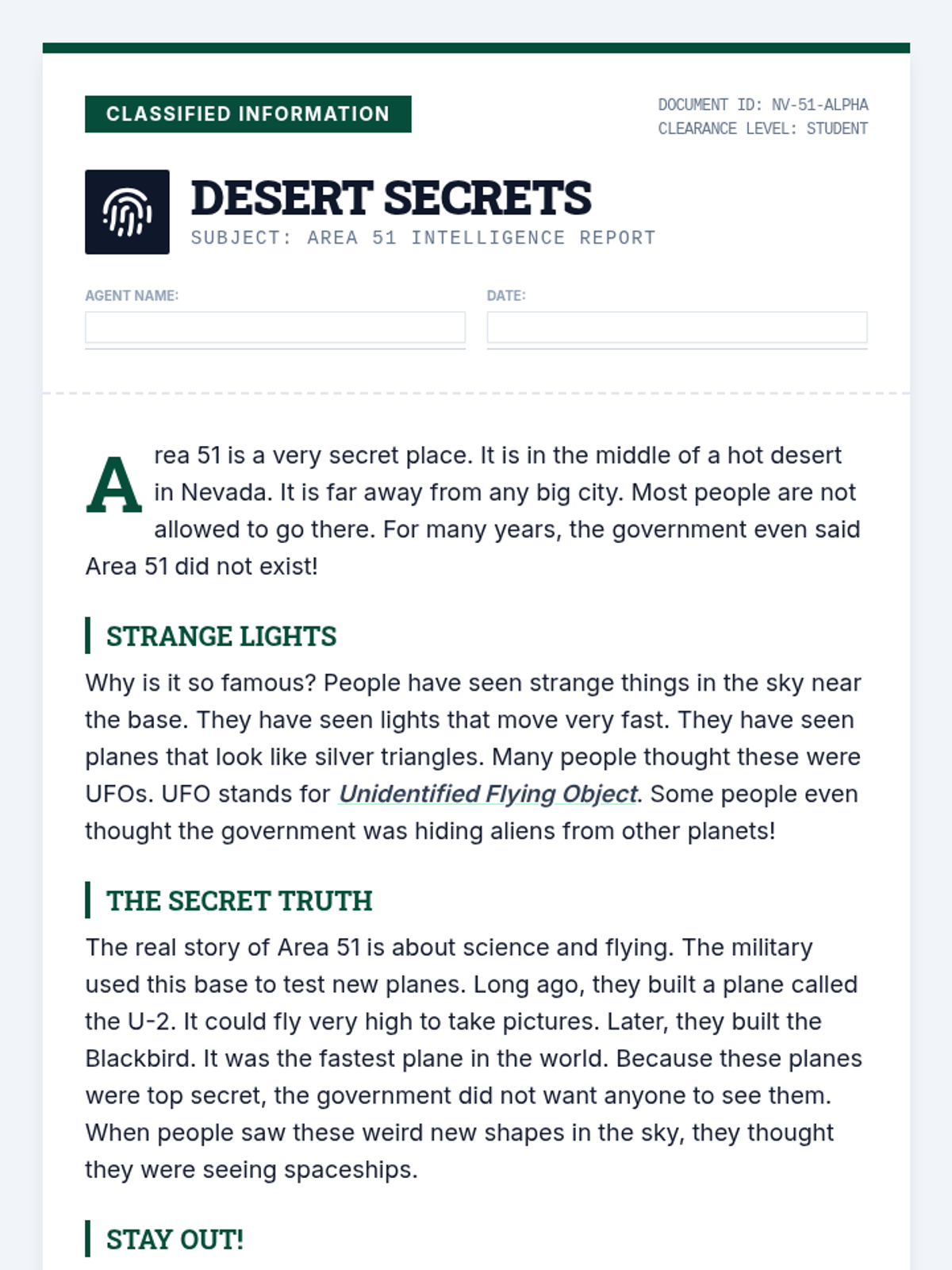
An investigative lesson centered on the mysteries and historical facts of Area 51, designed for students to practice reading comprehension through a high-interest topic.
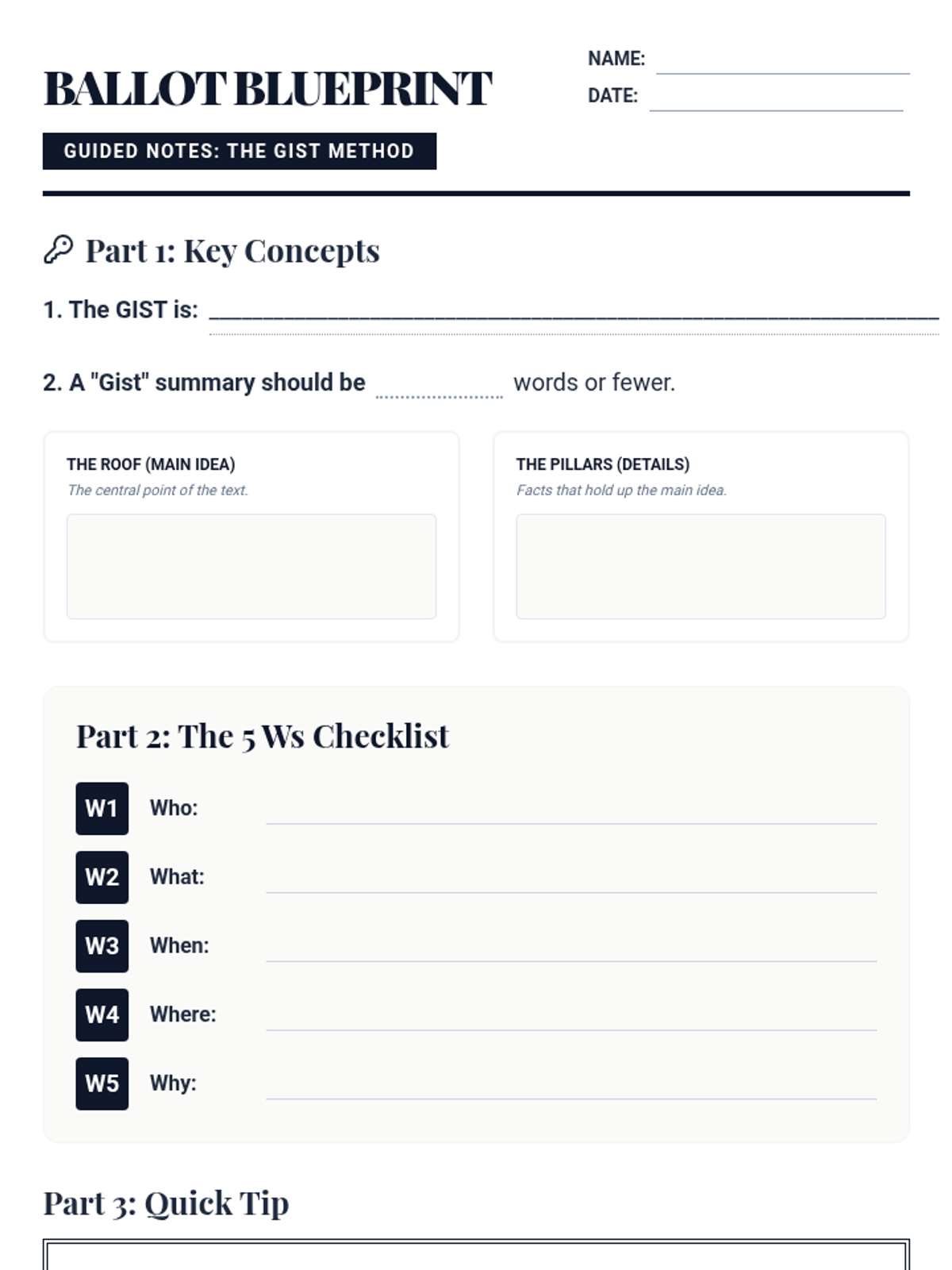
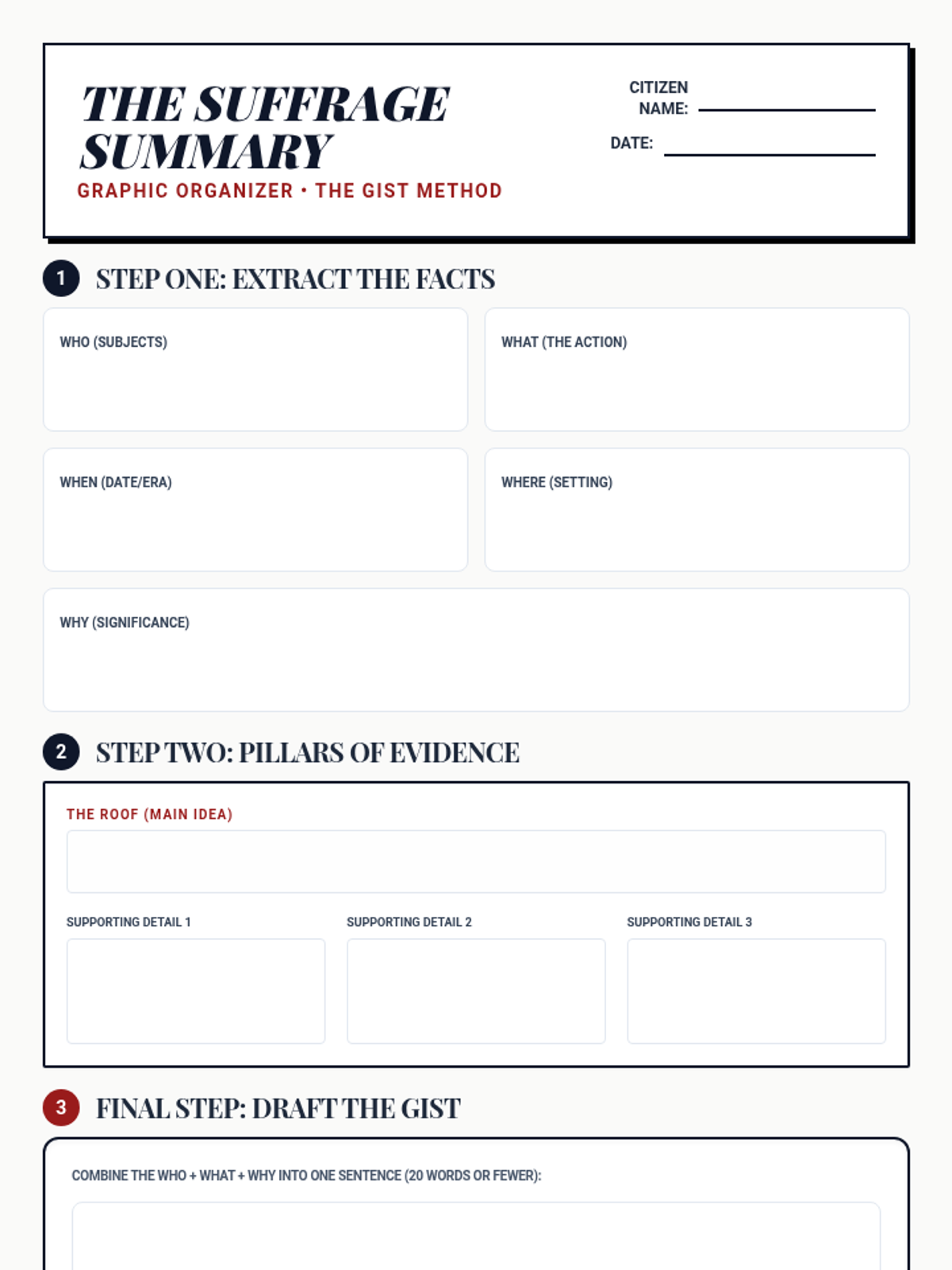
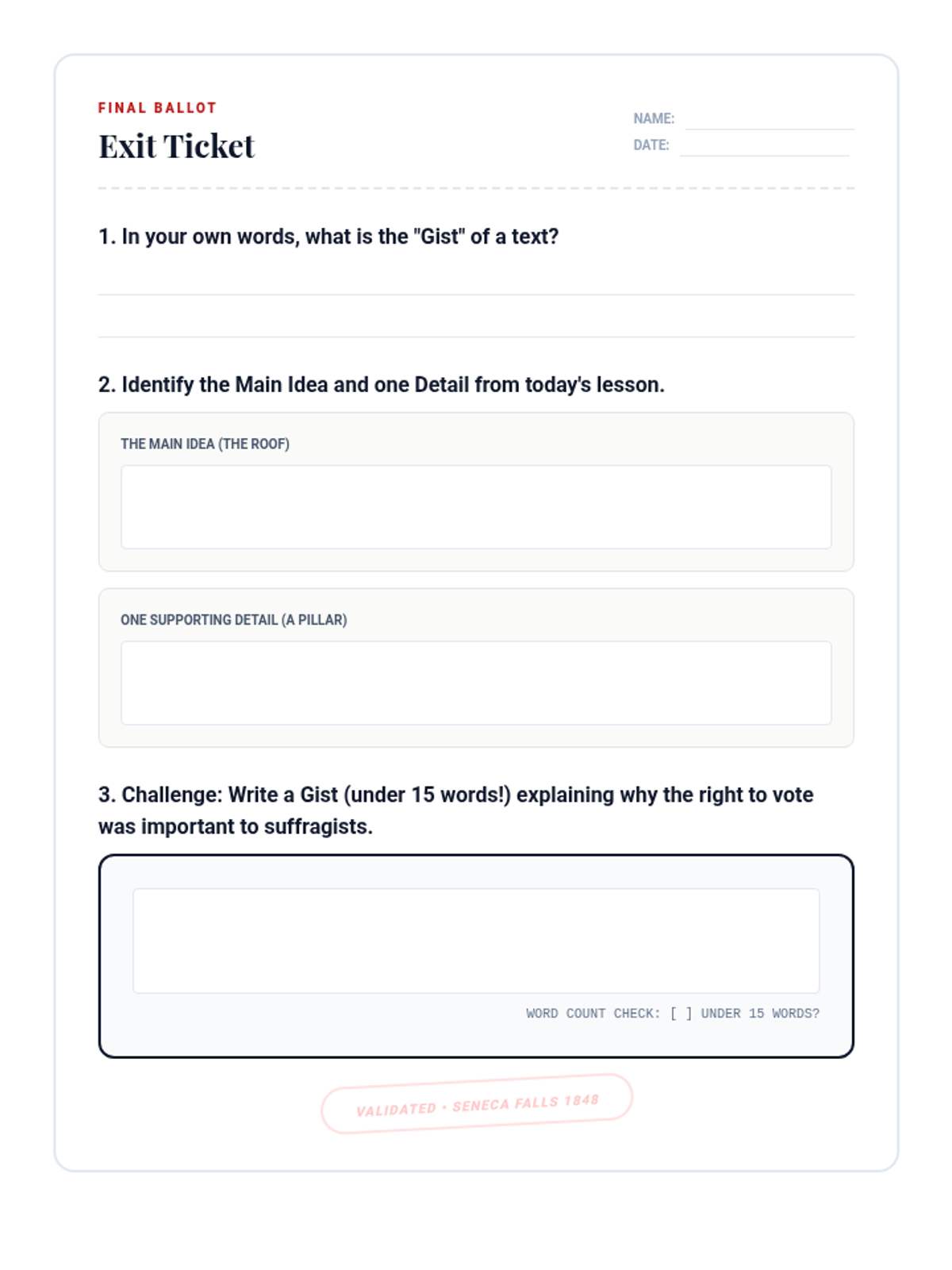
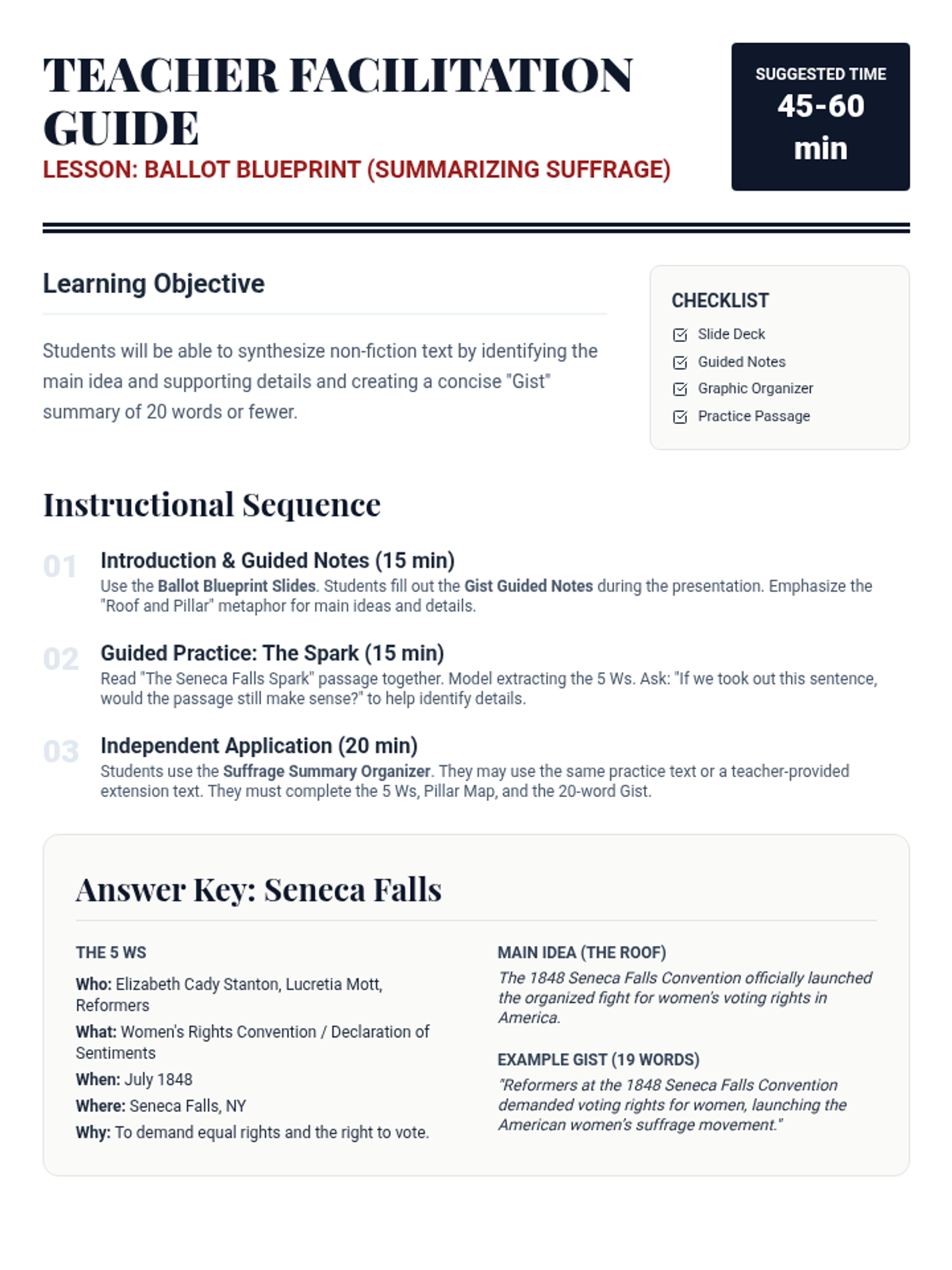
A mini-lesson on summarizing non-fiction texts about the women's suffrage movement using the 'Gist' method and identifying main ideas and supporting details.
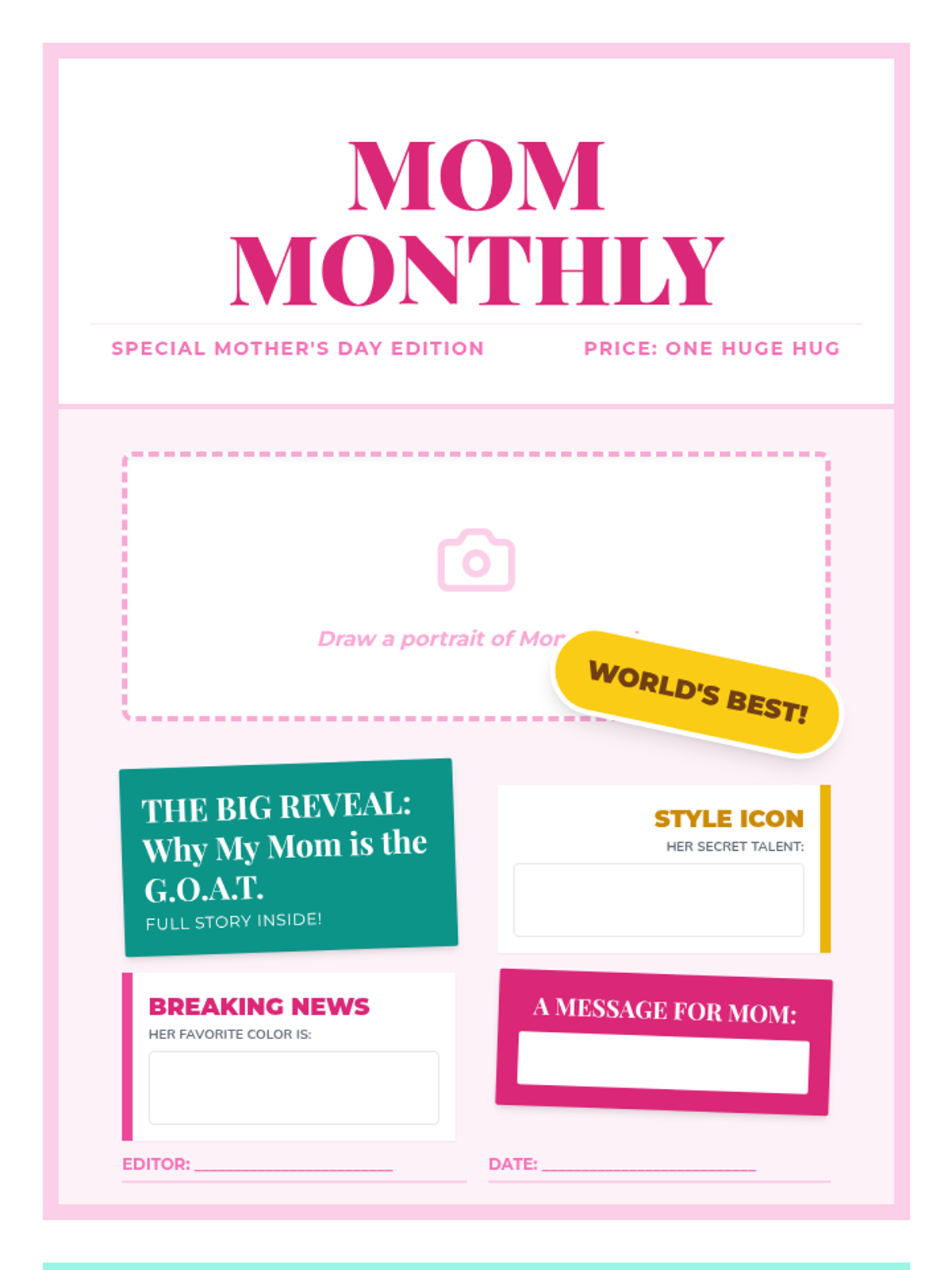
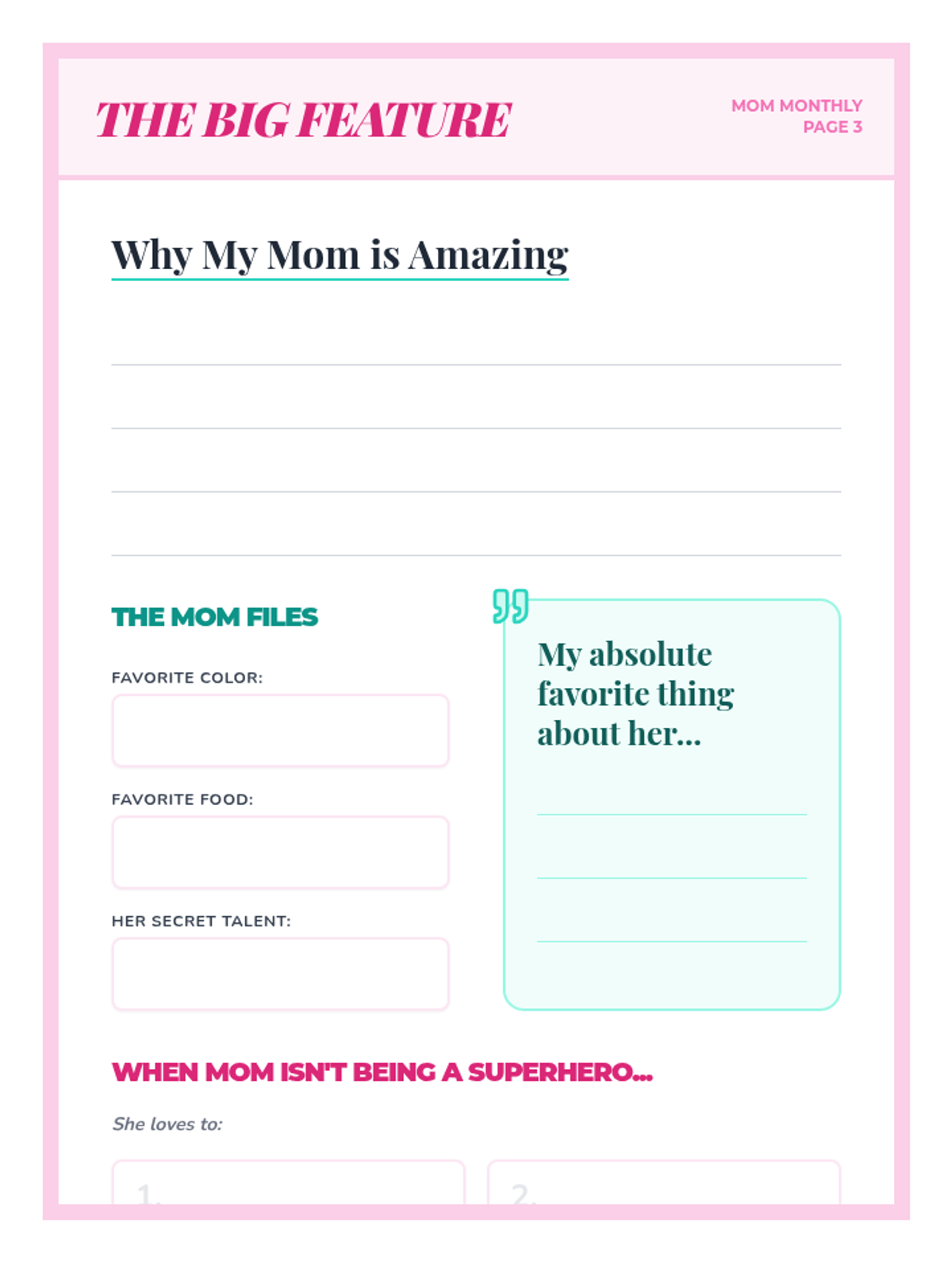
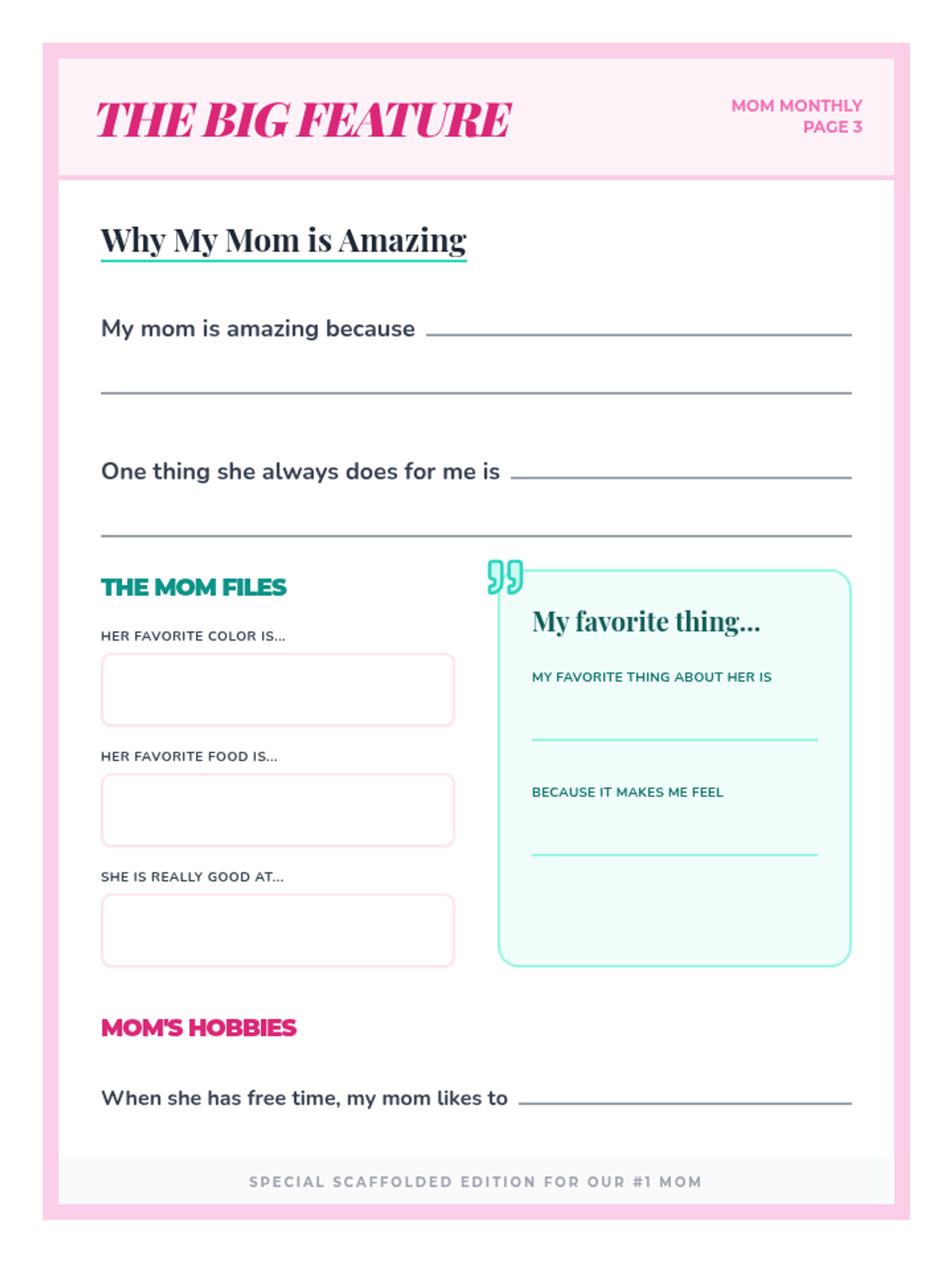
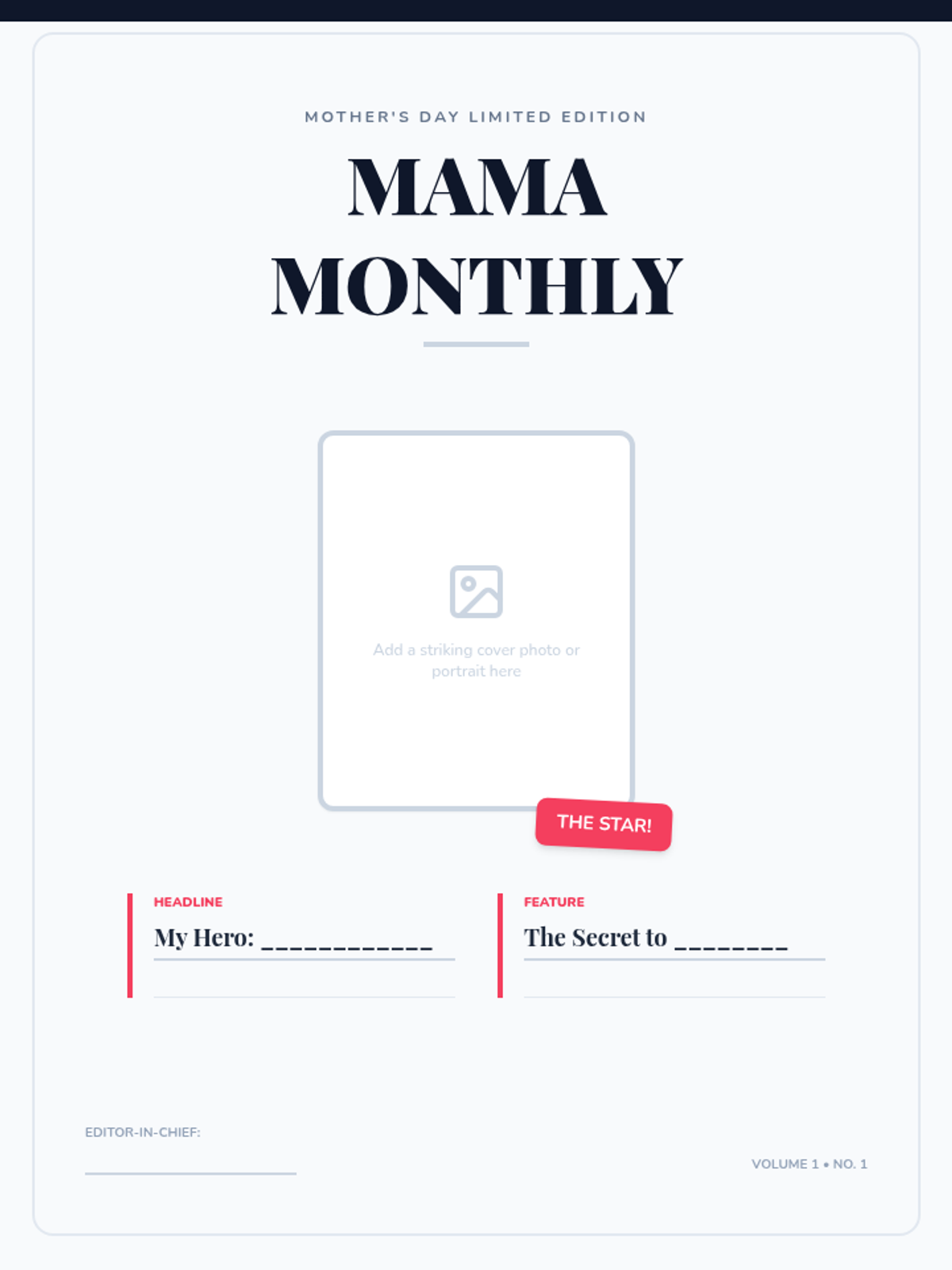
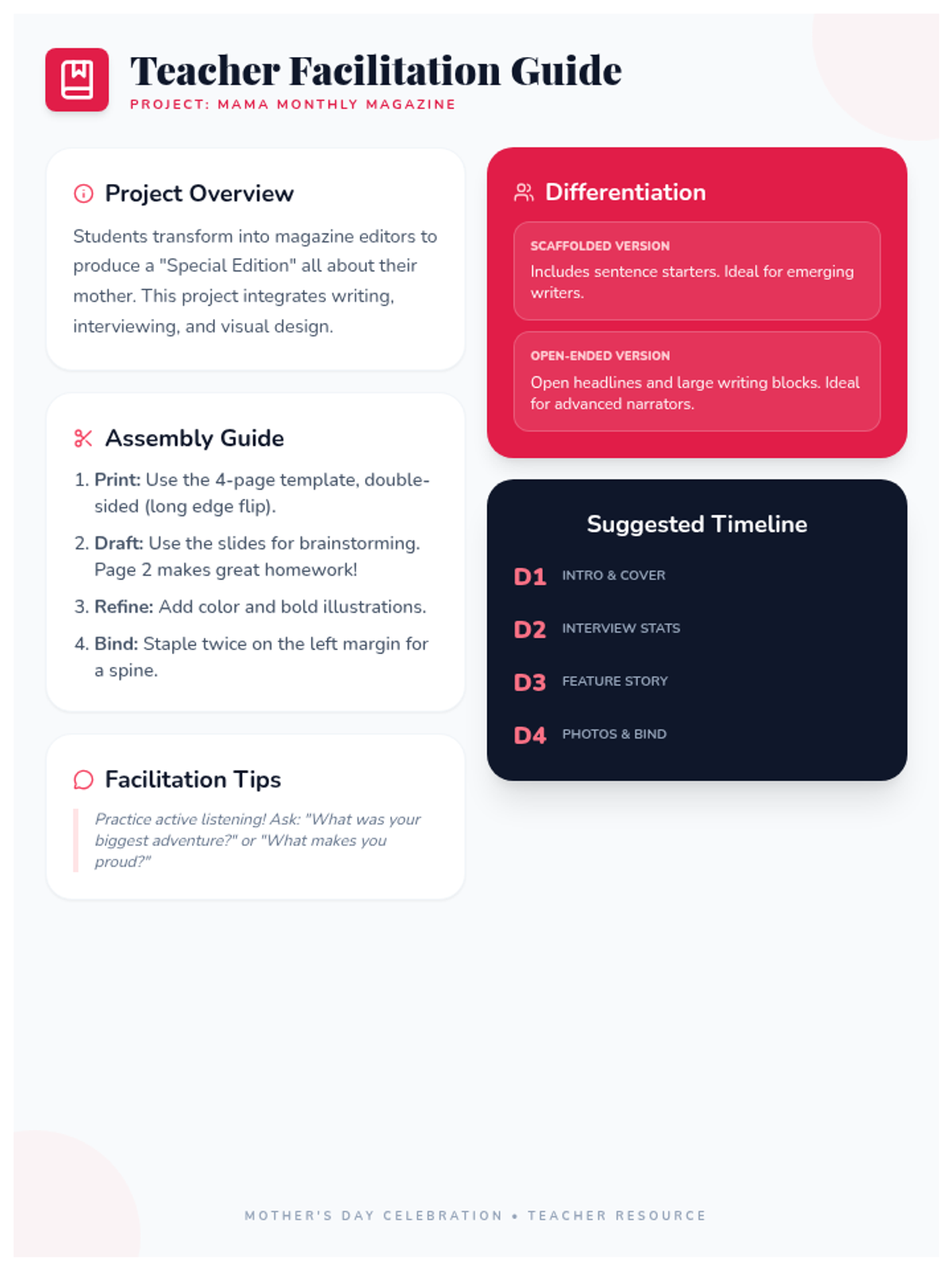
A creative Mother's Day activity where students design and write their own 'Mom Monthly' magazine to celebrate their mothers. Includes a stylish cover and interview-style features for different skill levels.
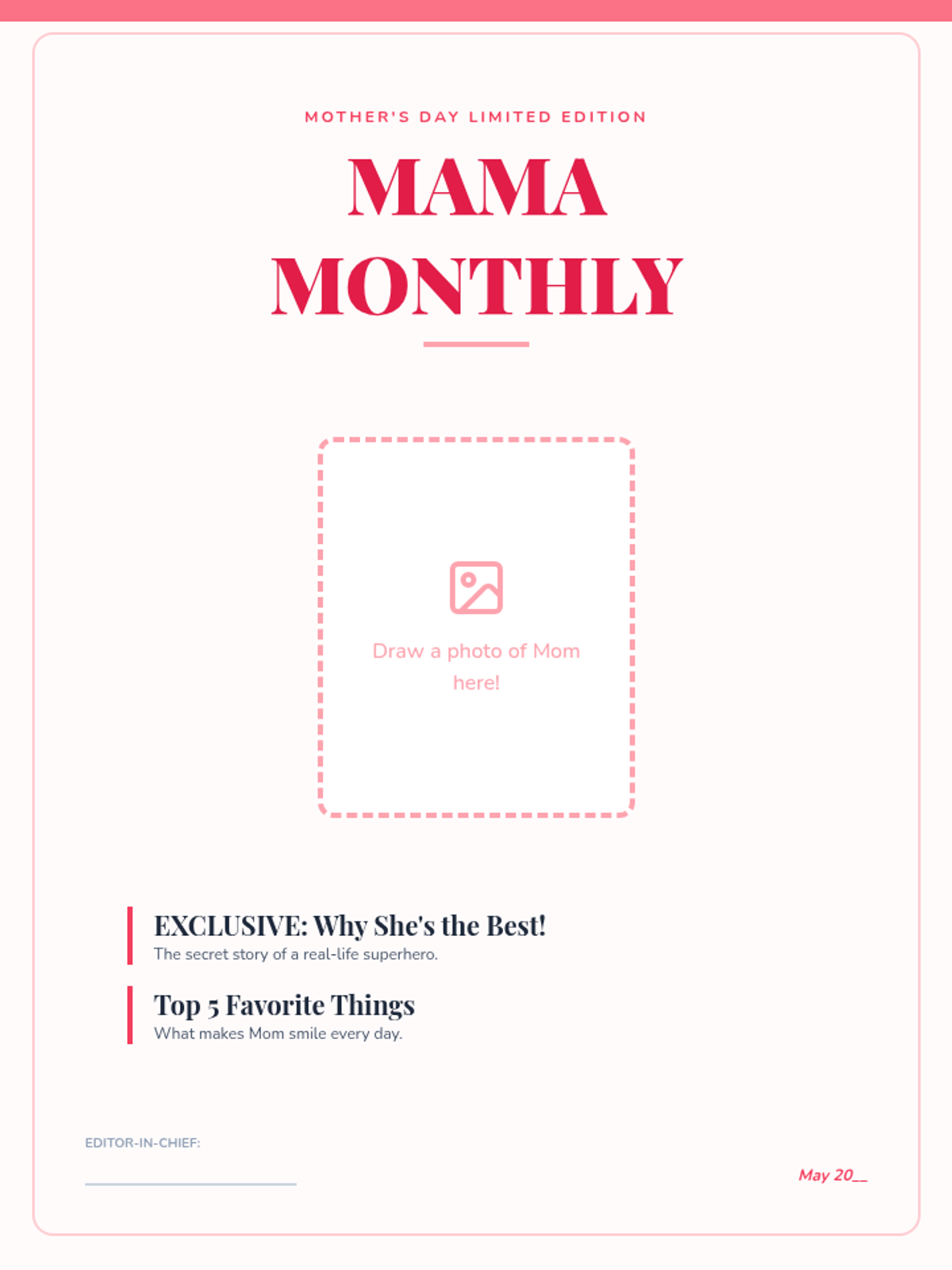
A creative project where students design and write their own 'Mama Monthly' magazine to celebrate Mother's Day, focusing on interviewing skills, descriptive writing, and gratitude.
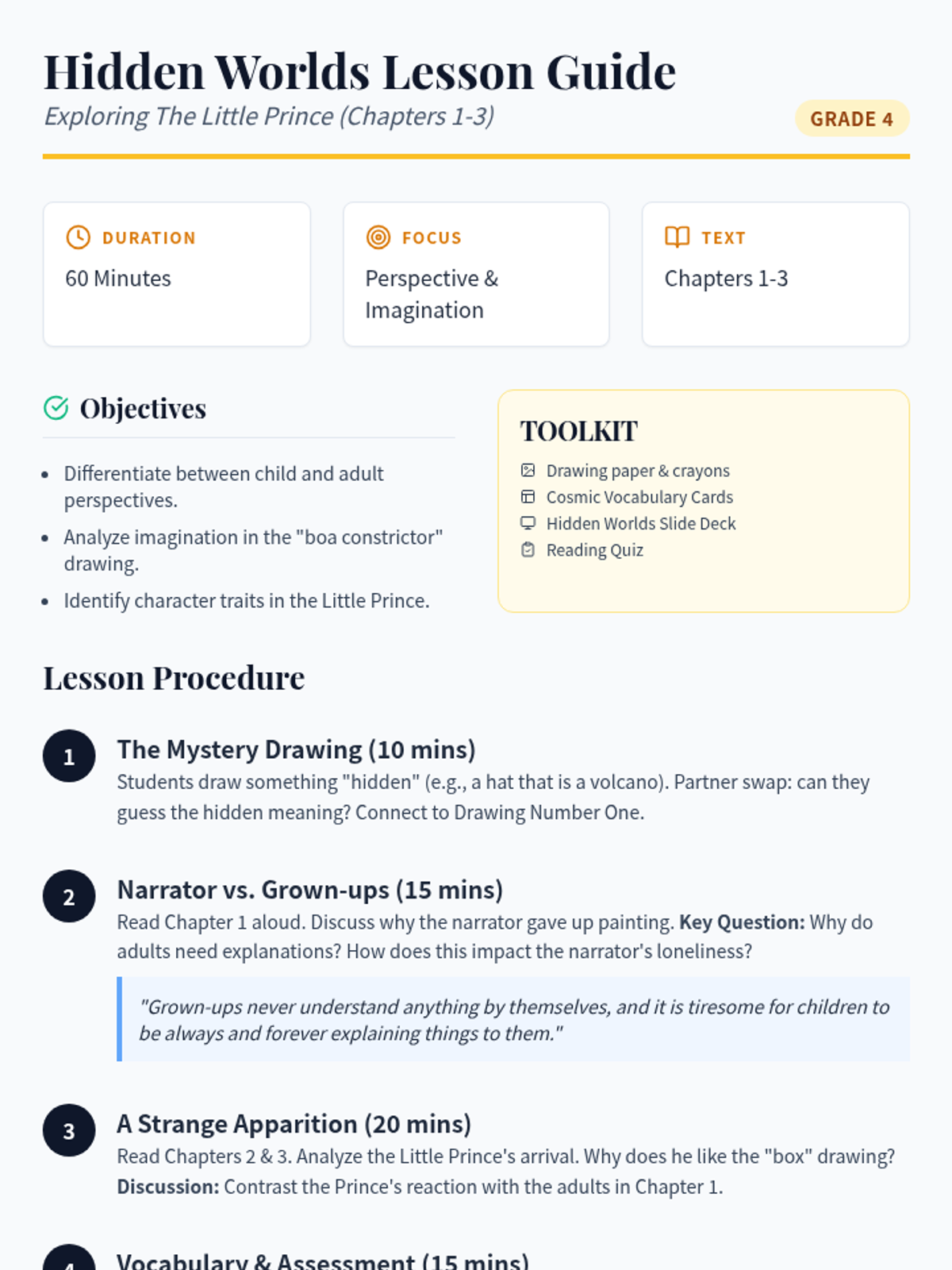
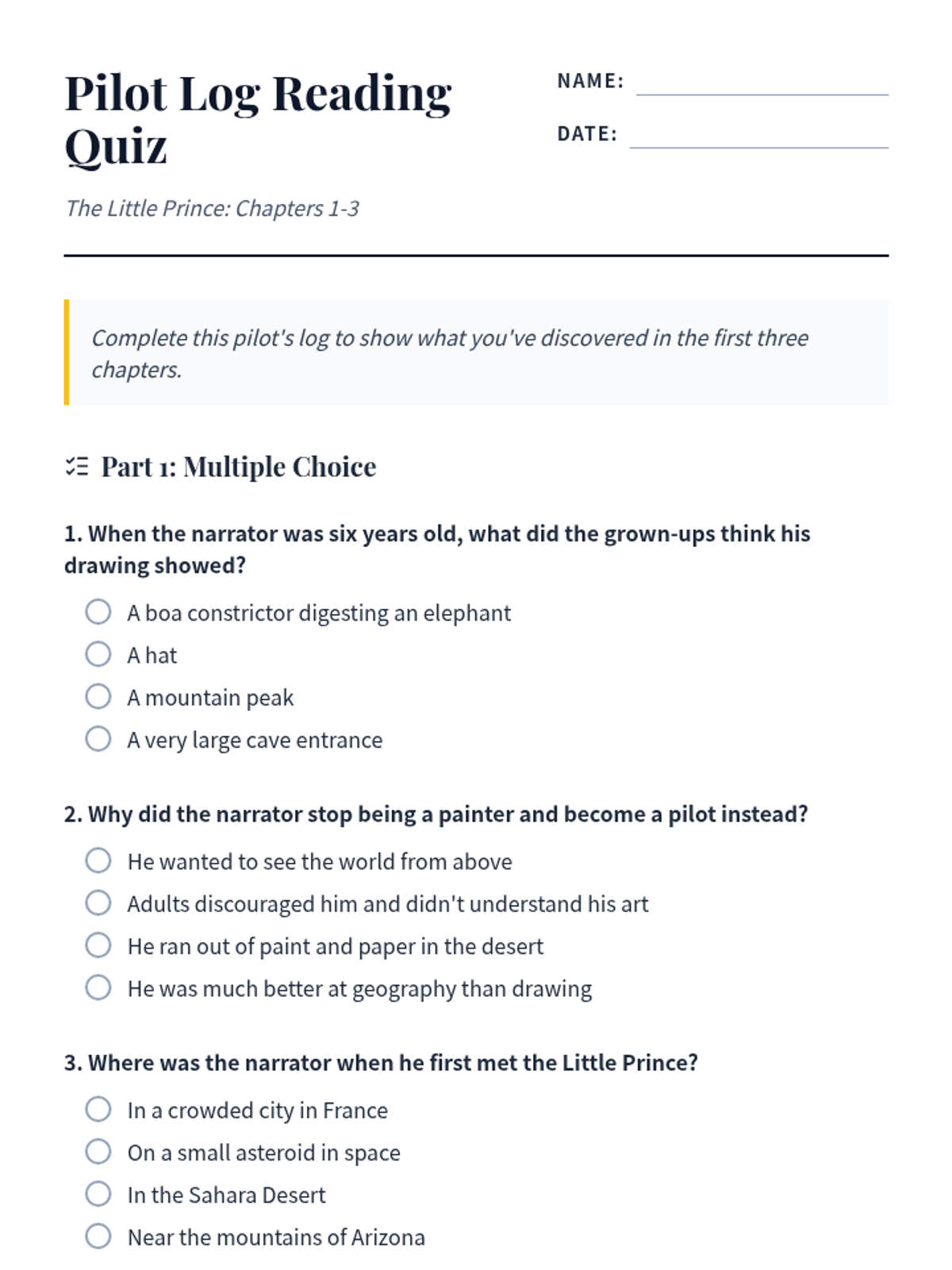
An introductory lesson on 'The Little Prince' focusing on the first three chapters. Students explore the narrator's childhood drawings, the difference between adult and child perspectives, and the core theme of imagination versus logic.
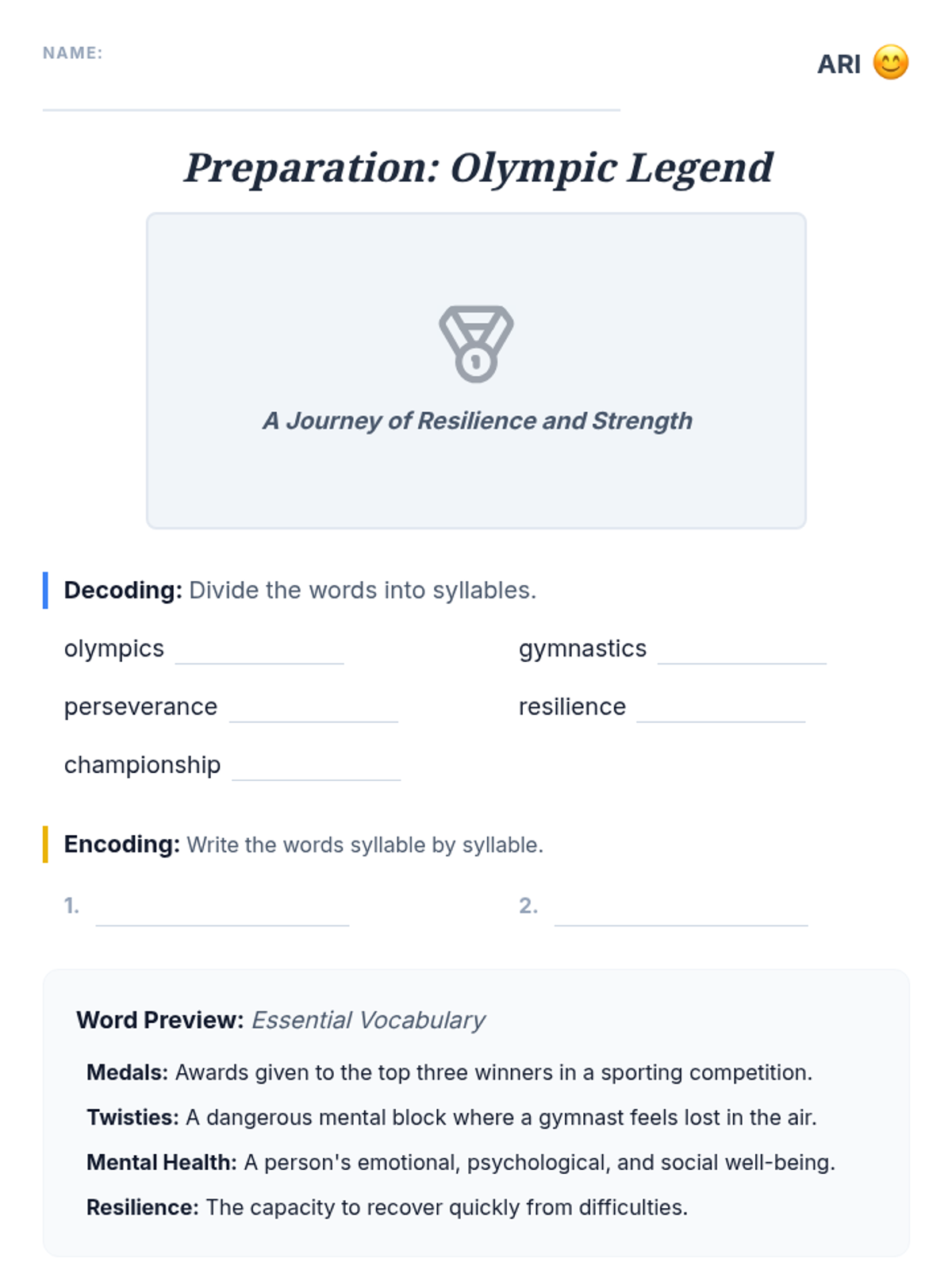
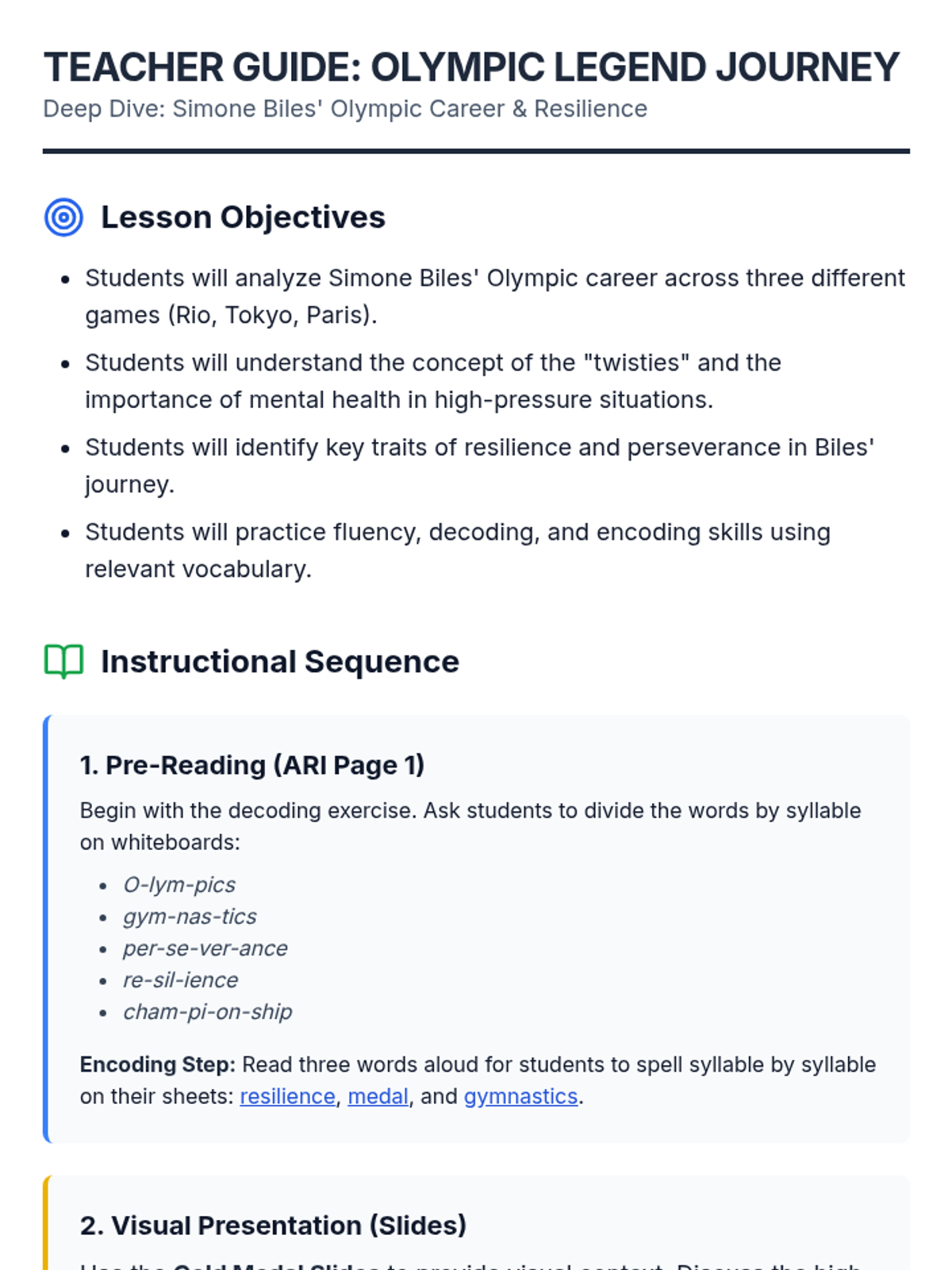
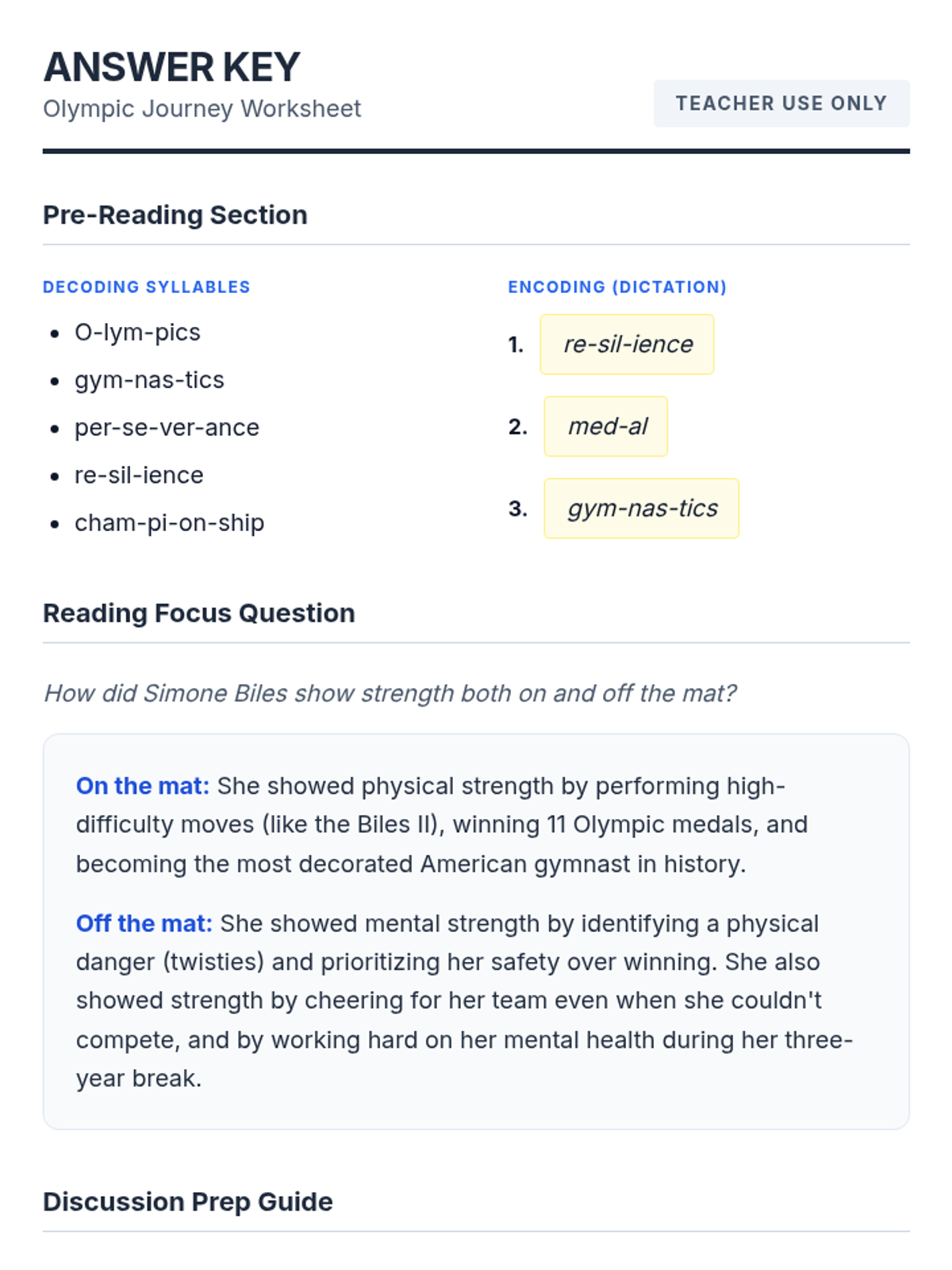
A deep dive into Simone Biles' Olympic career, covering her triumphs in Rio, her mental health advocacy in Tokyo, and her historic comeback in Paris.
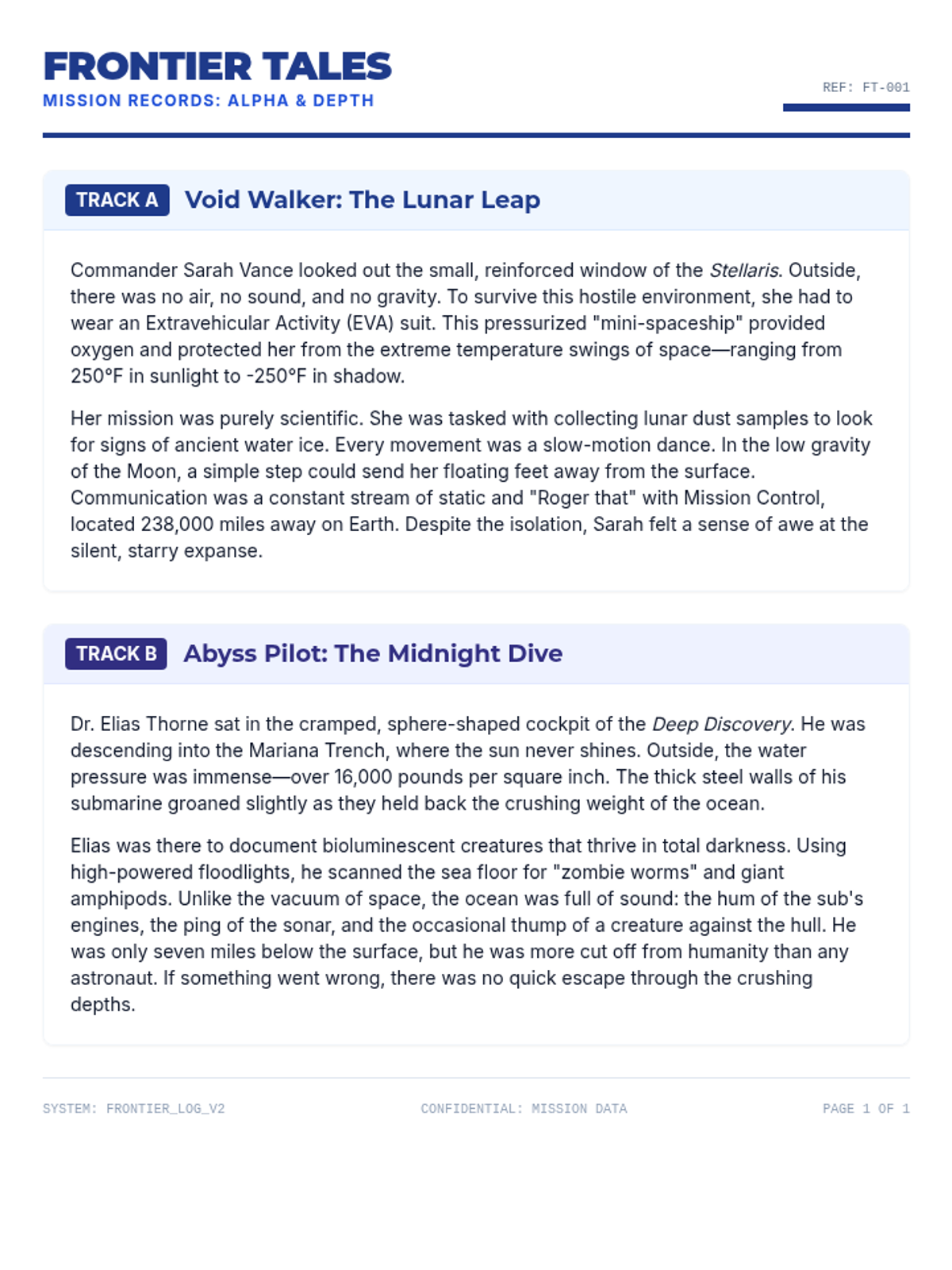
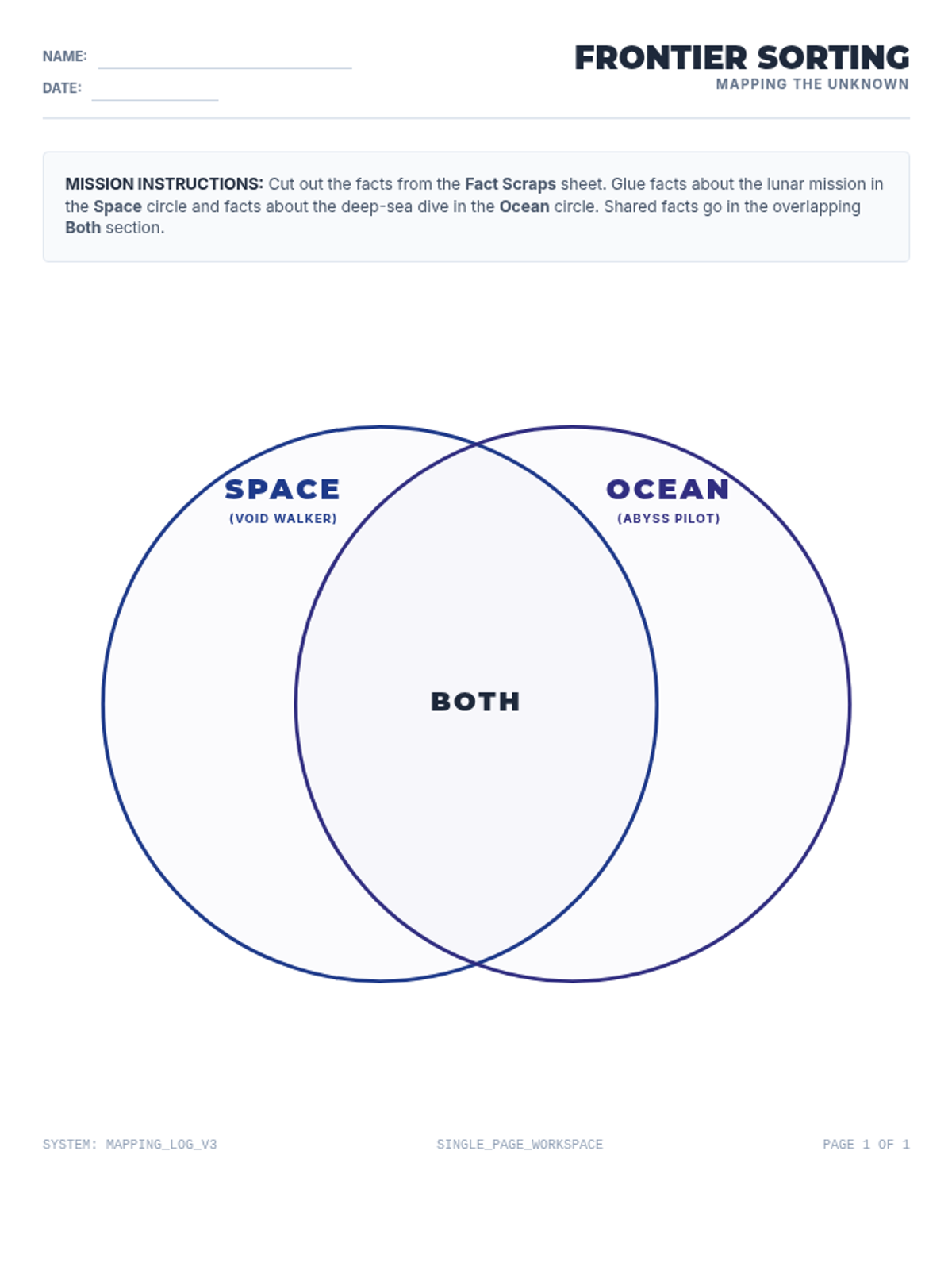
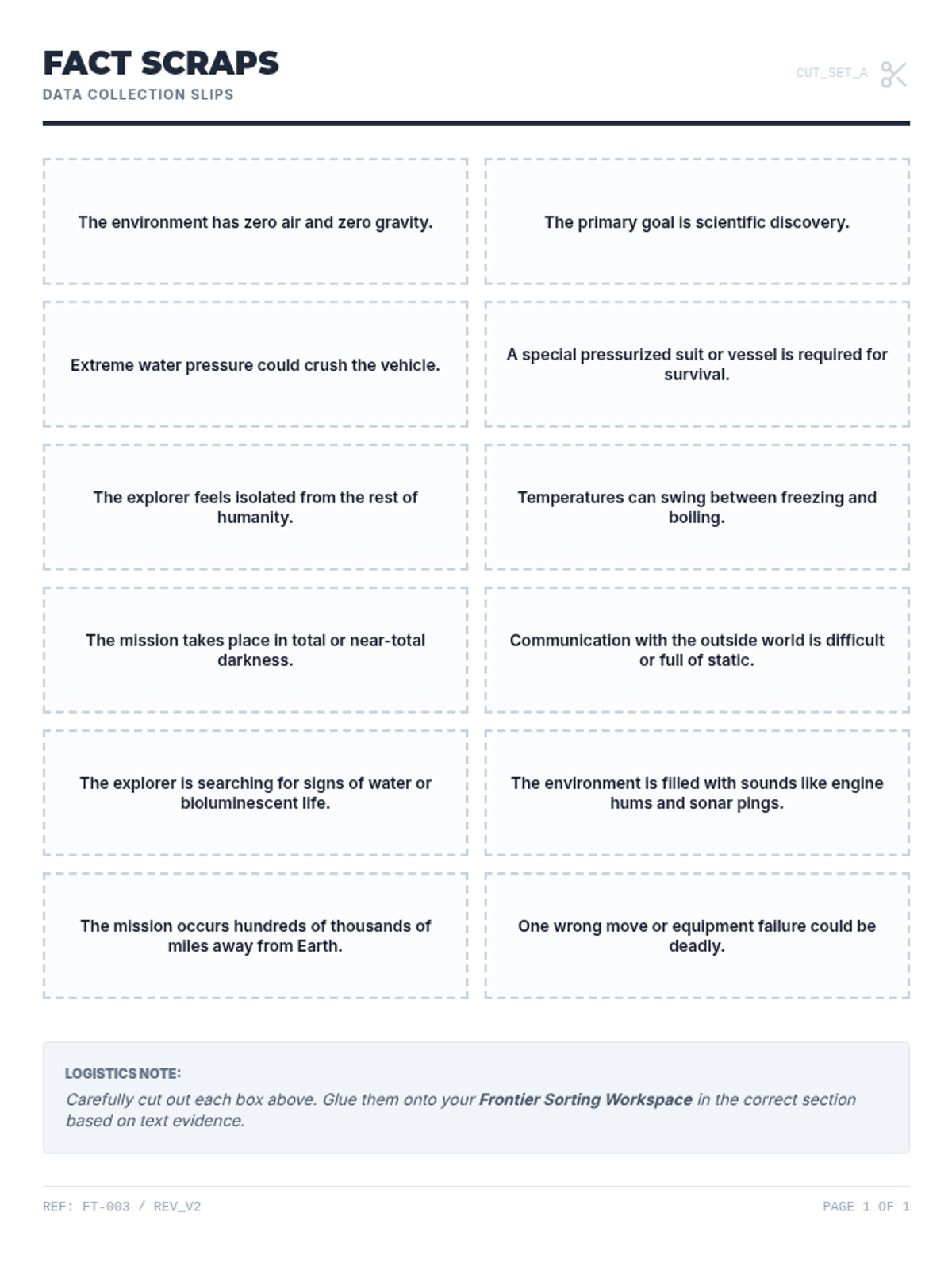
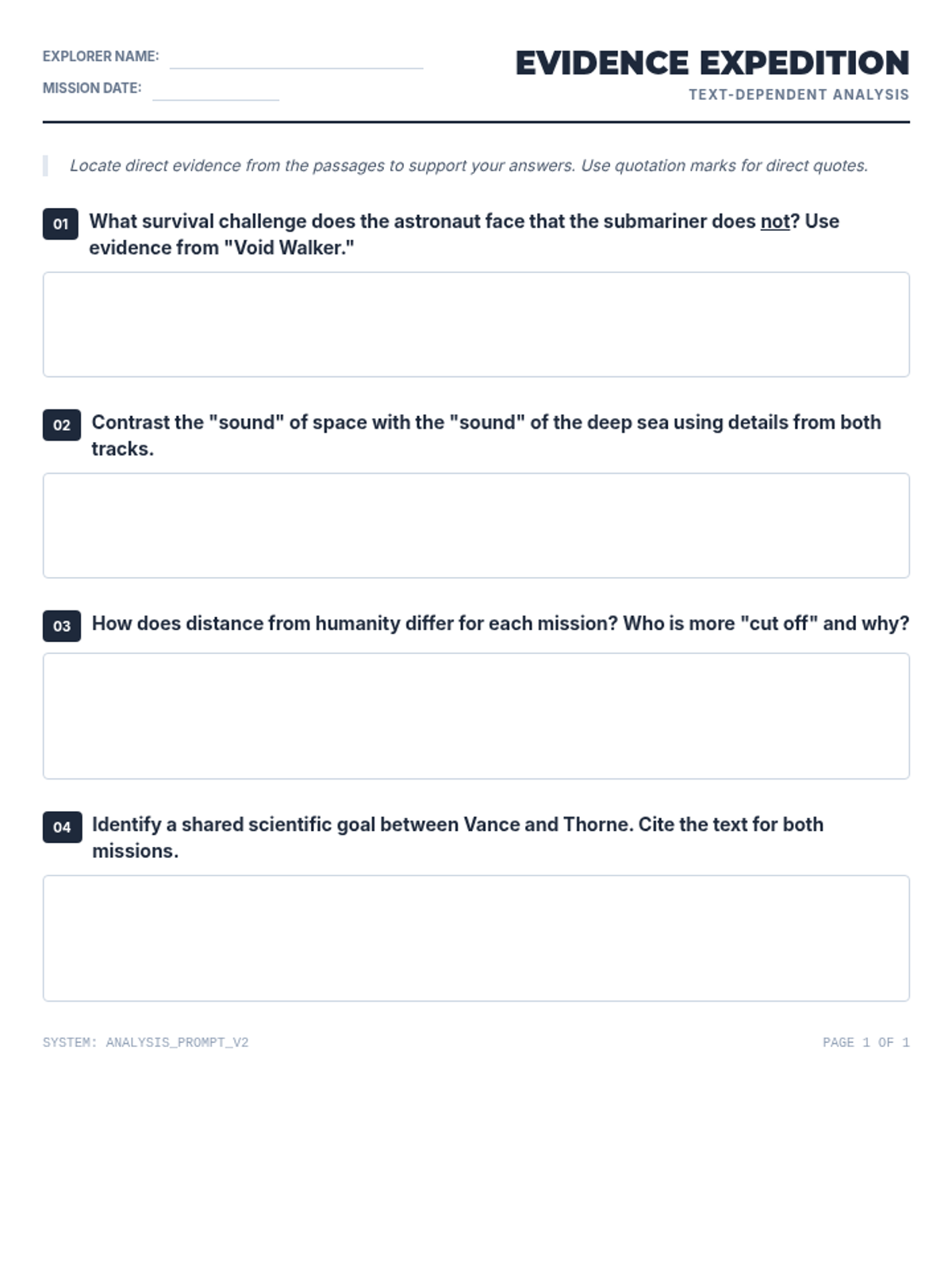
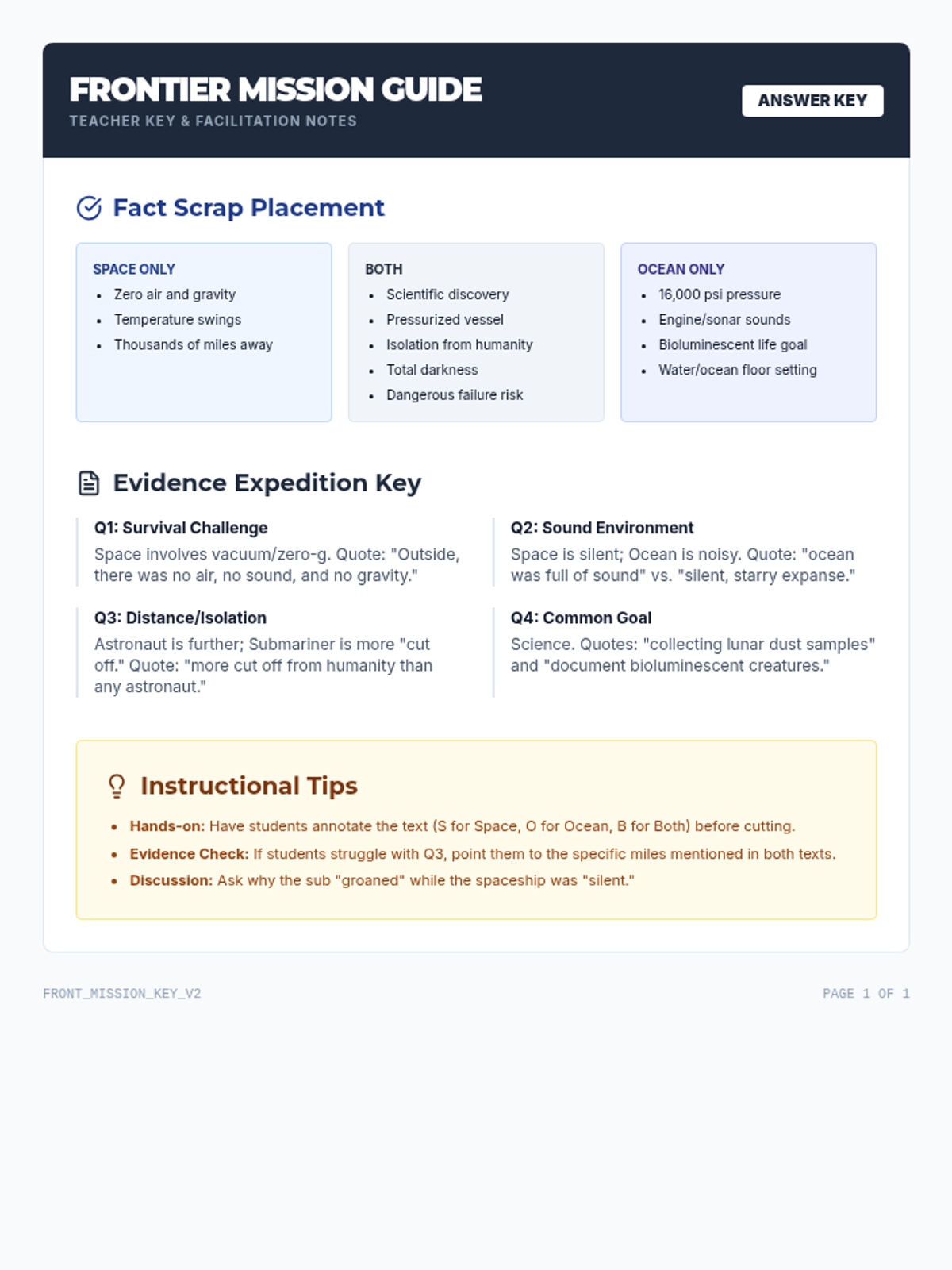
A hands-on lesson comparing and contrasting the extreme environments of space and the deep sea through the lens of astronaut and submariner experiences. Students will use direct evidence from paired texts to categorize facts and answer analytical questions.
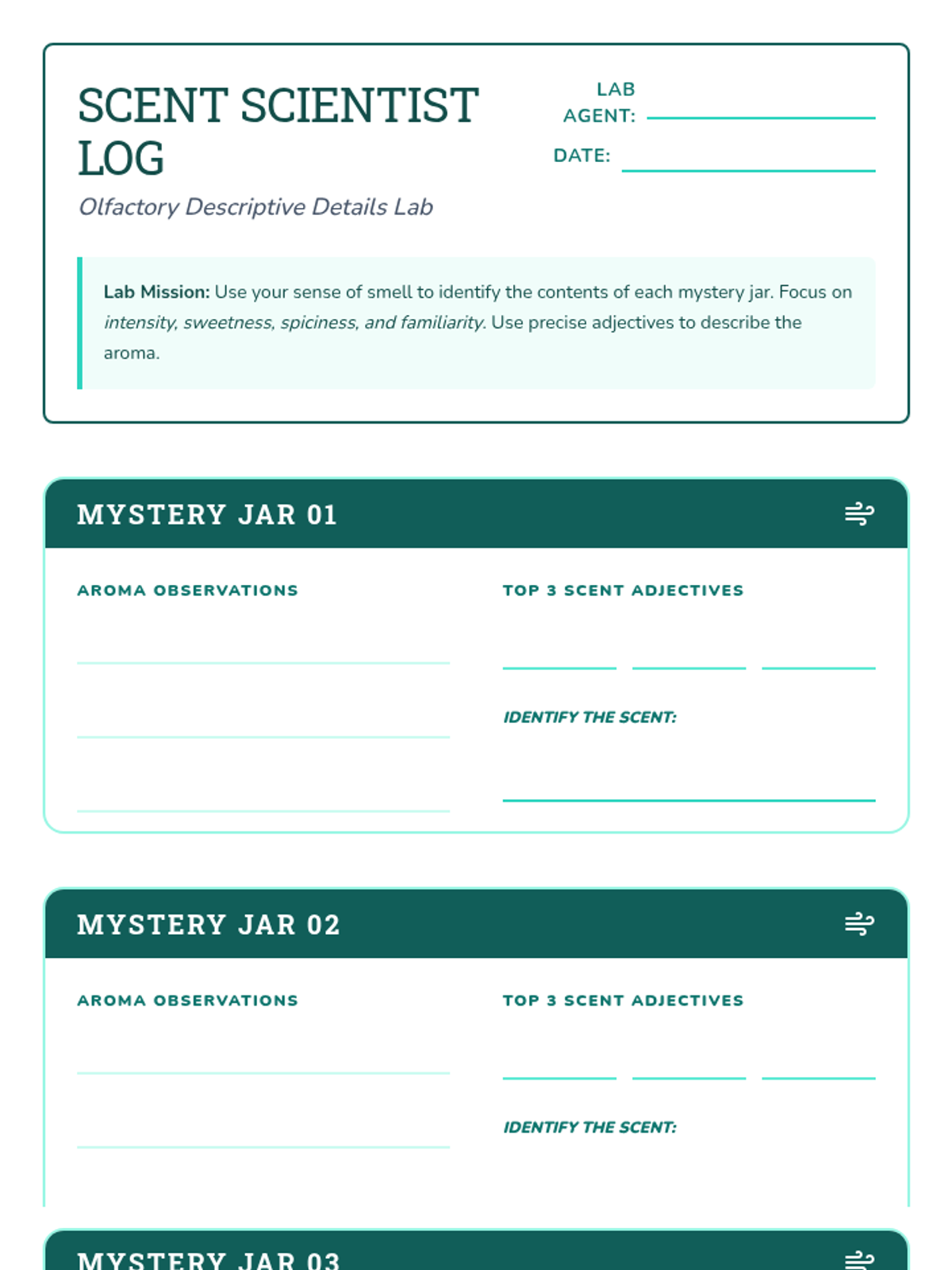
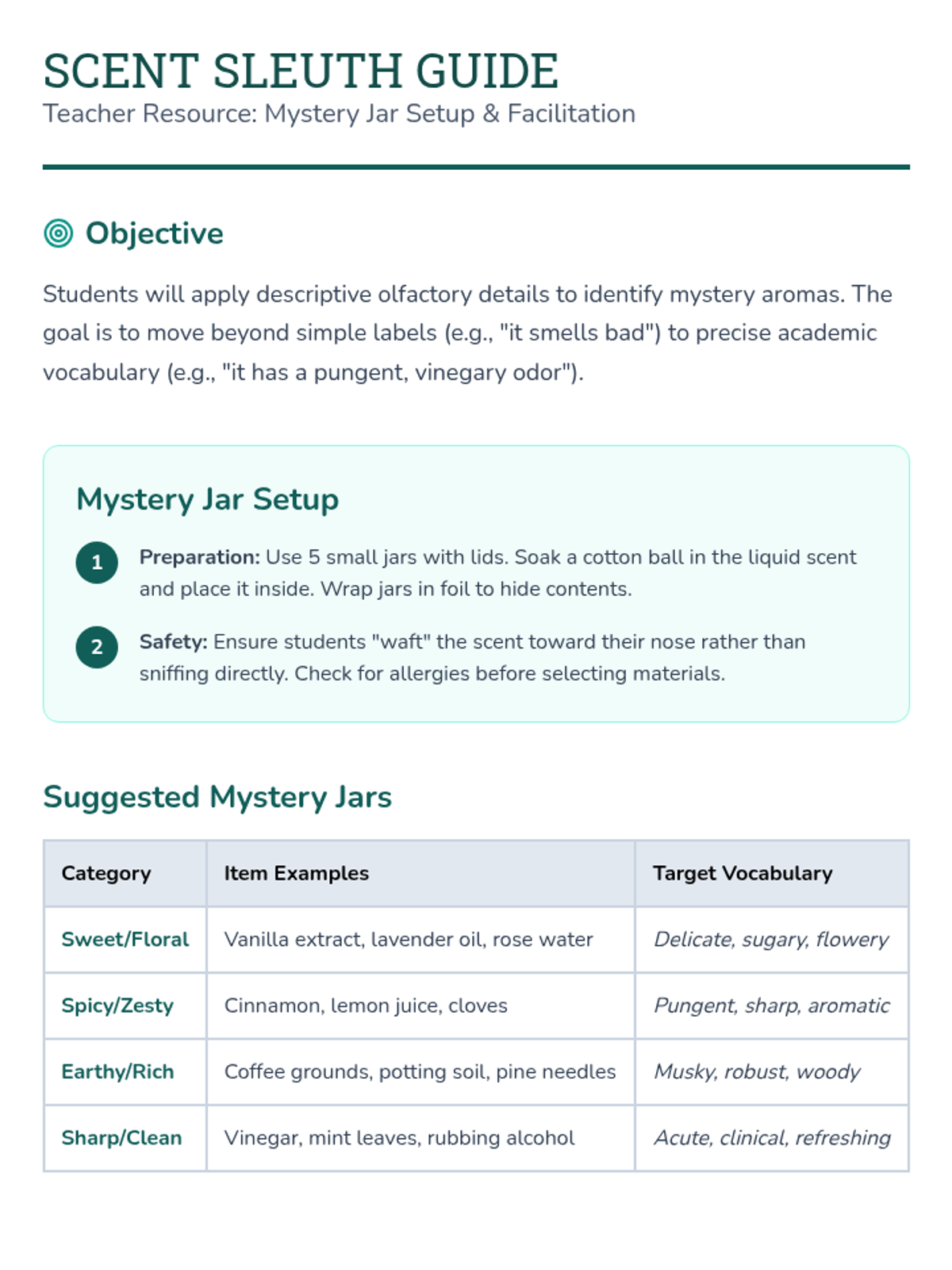
A hands-on science and ELA lesson where students explore mystery scents and use descriptive olfactory details to document their observations.
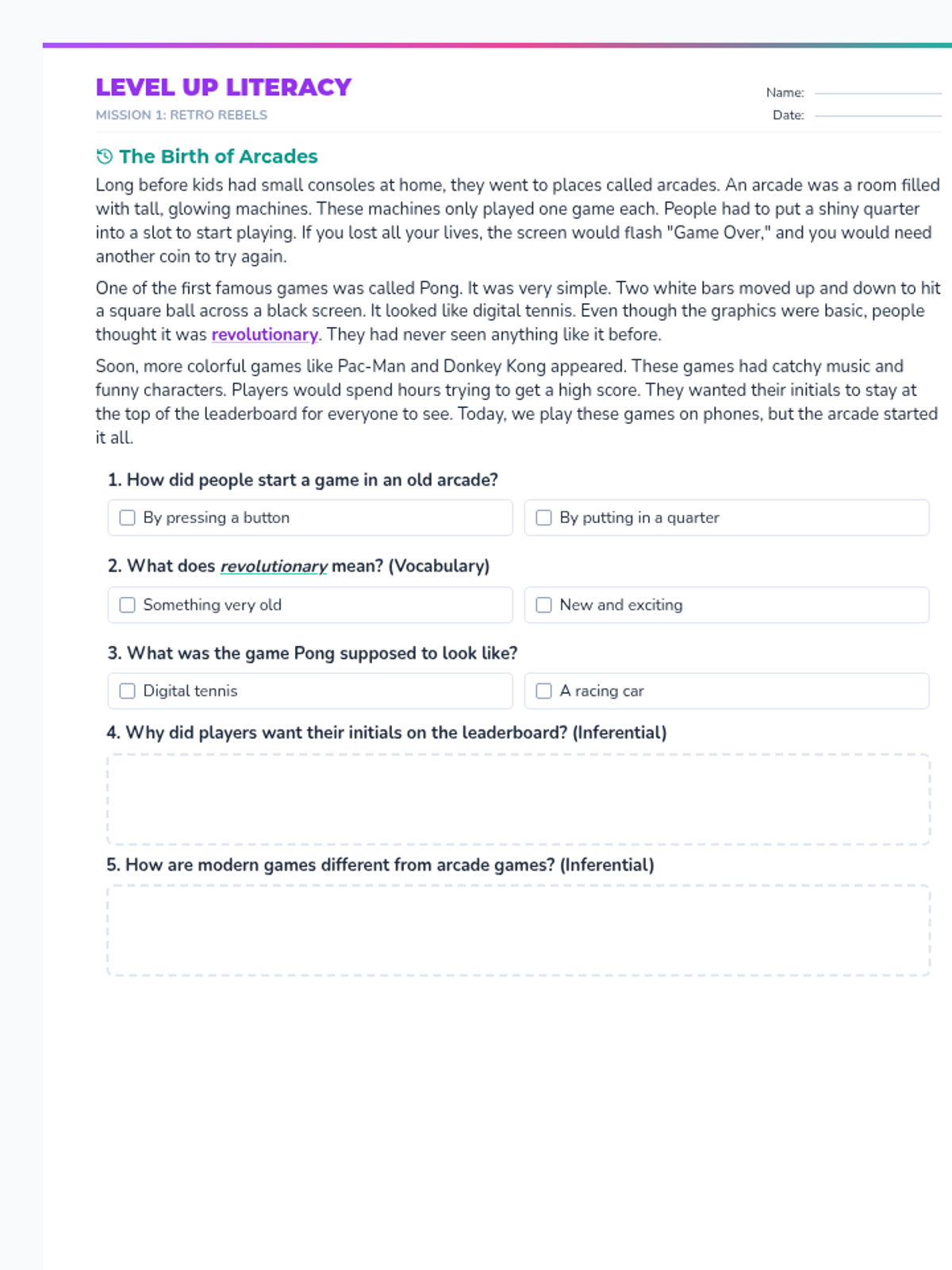
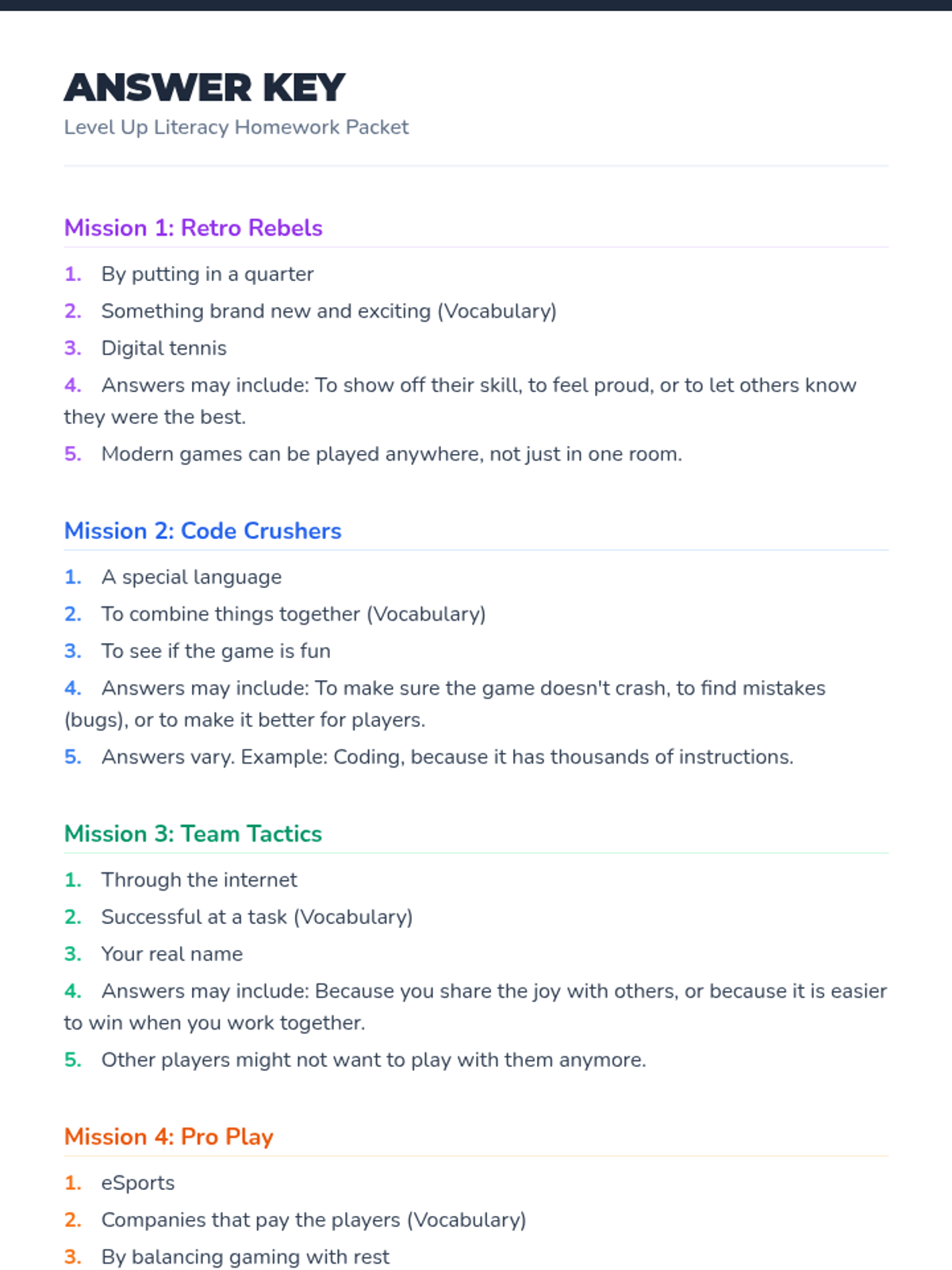
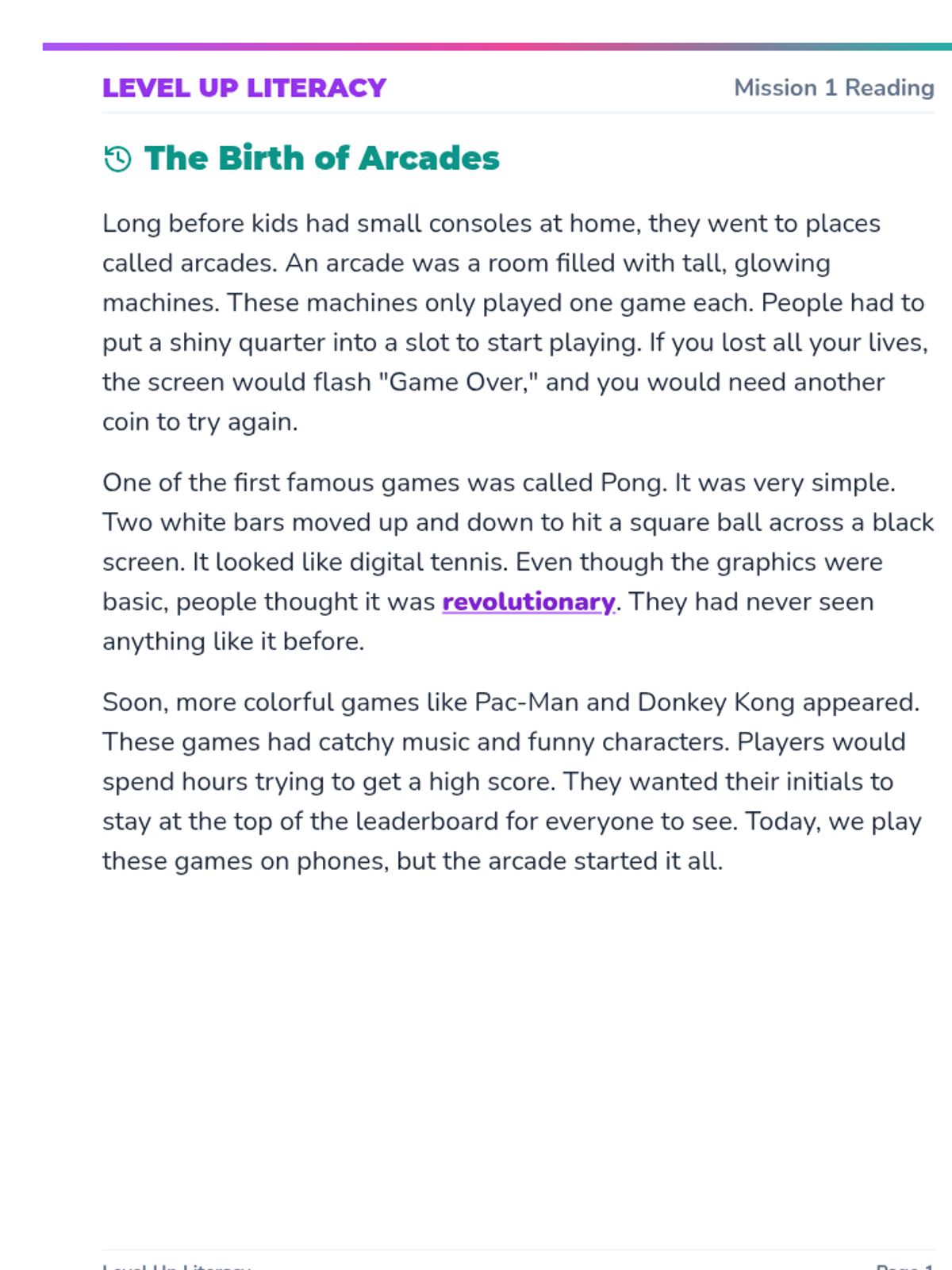
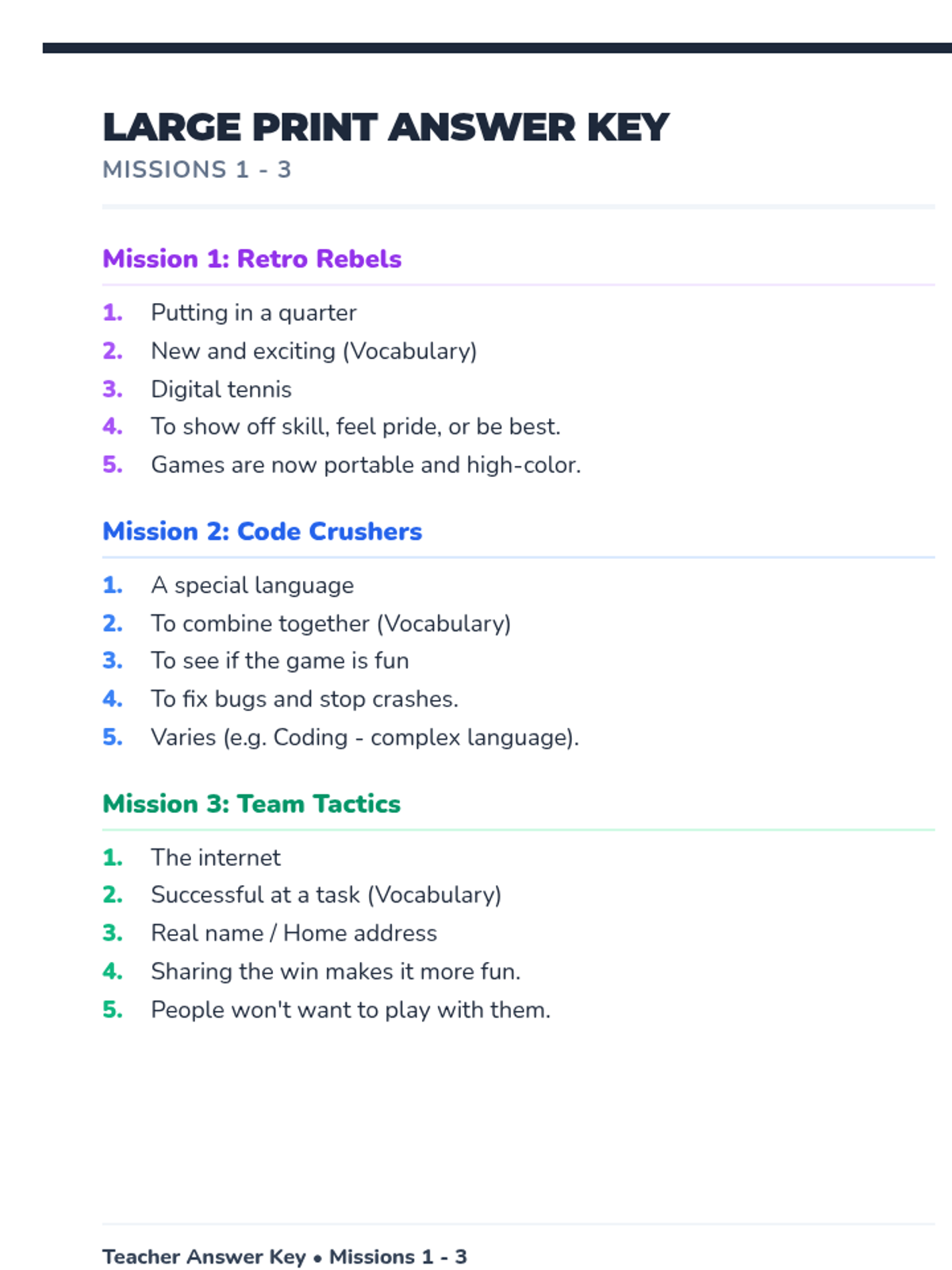
A collection of high-interest reading passages about video games, designed to improve comprehension and vocabulary for early fourth graders.
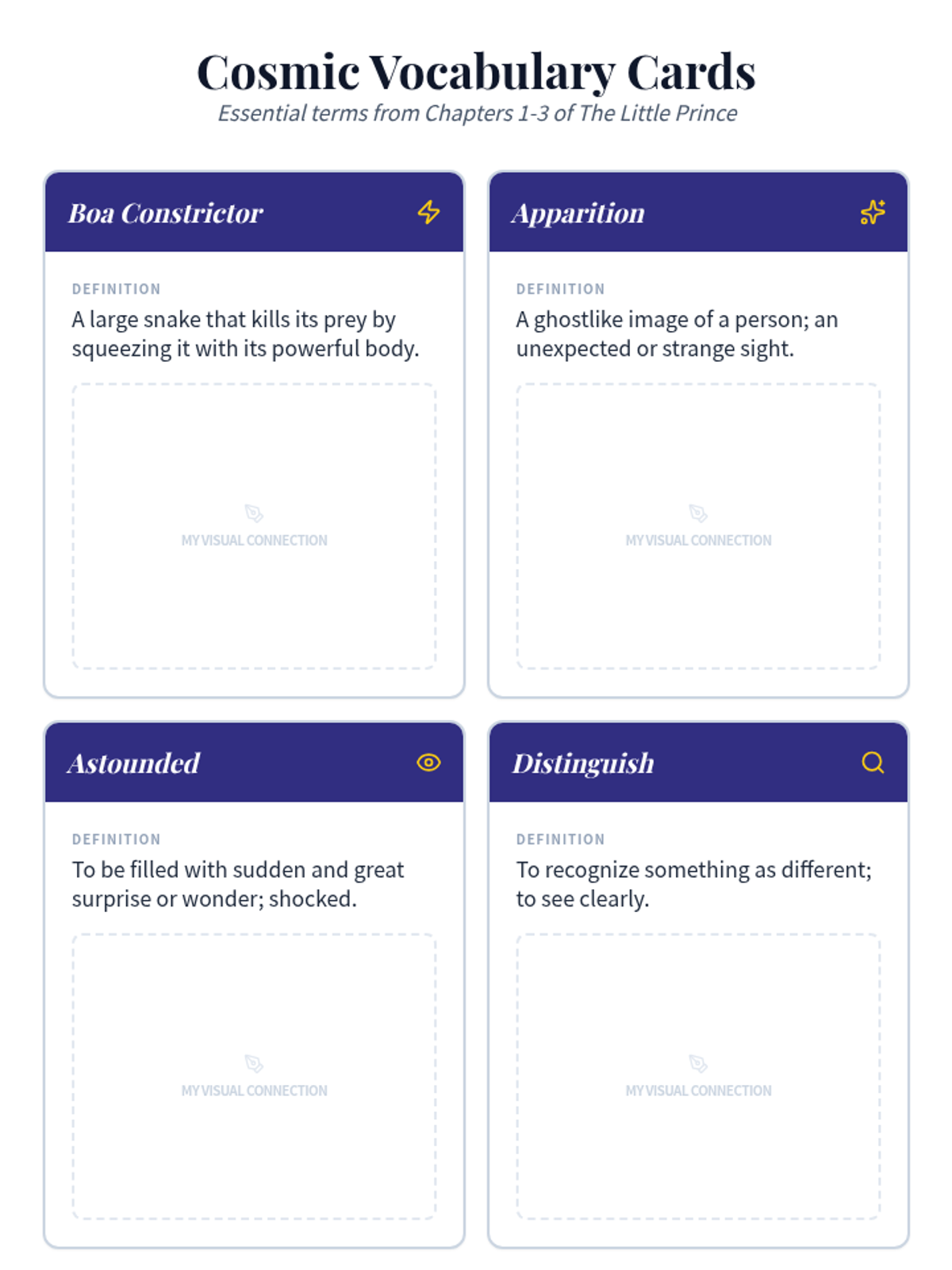
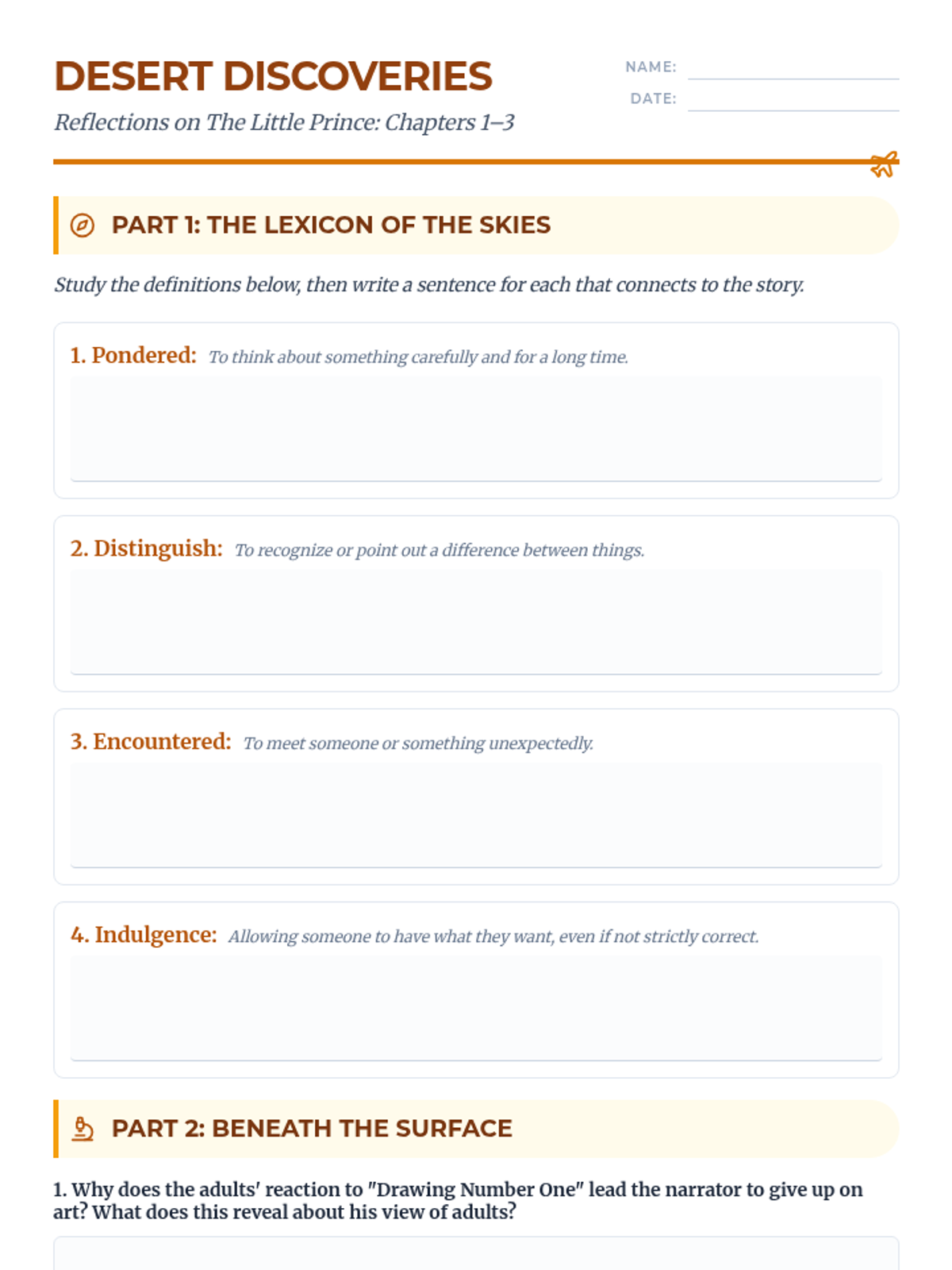
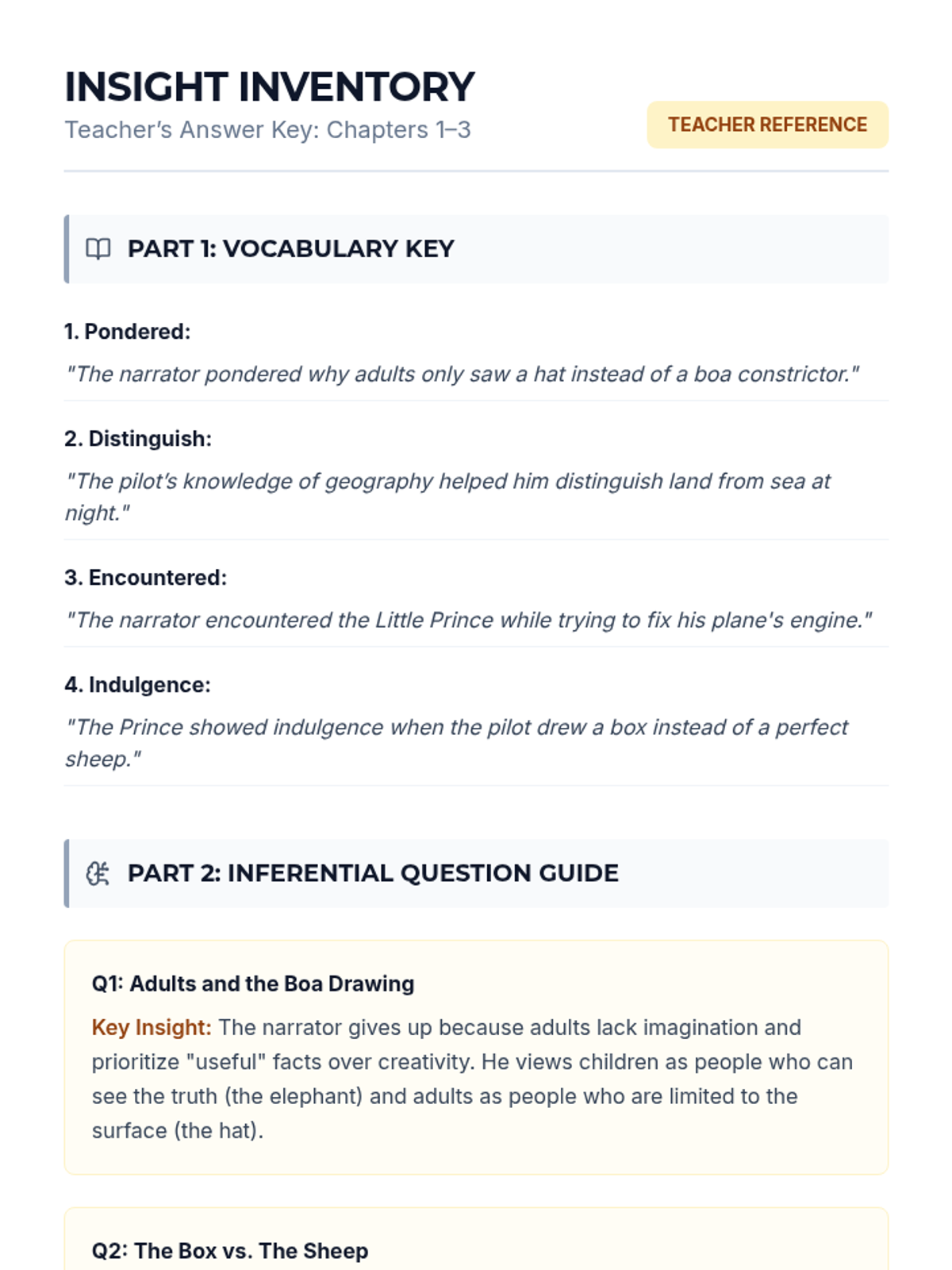
A deep dive into the opening chapters of The Little Prince, focusing on the narrator's childhood perspective and his fateful meeting with the prince in the Sahara. Students will analyze academic vocabulary and practice high-level inferential thinking.
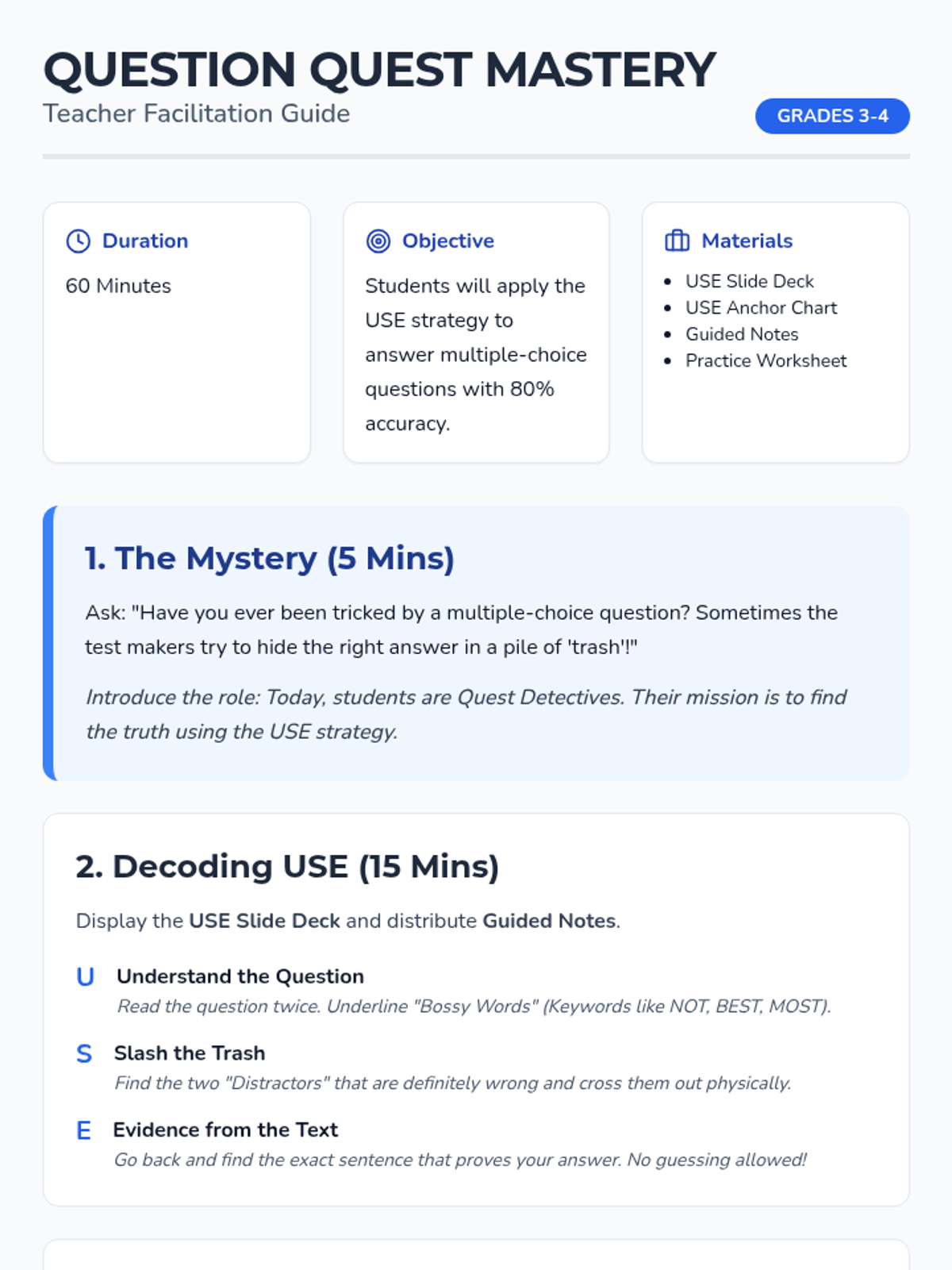
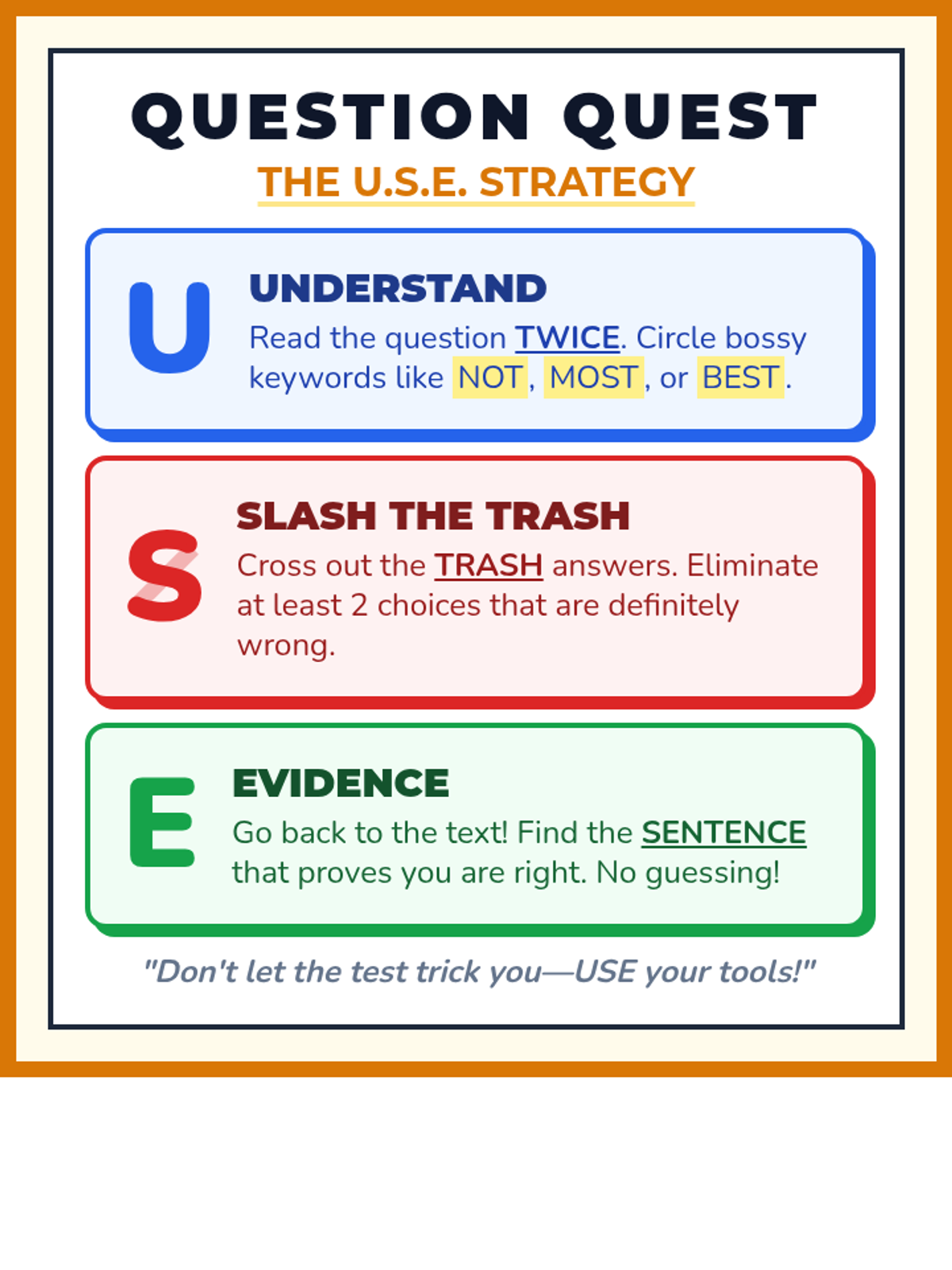
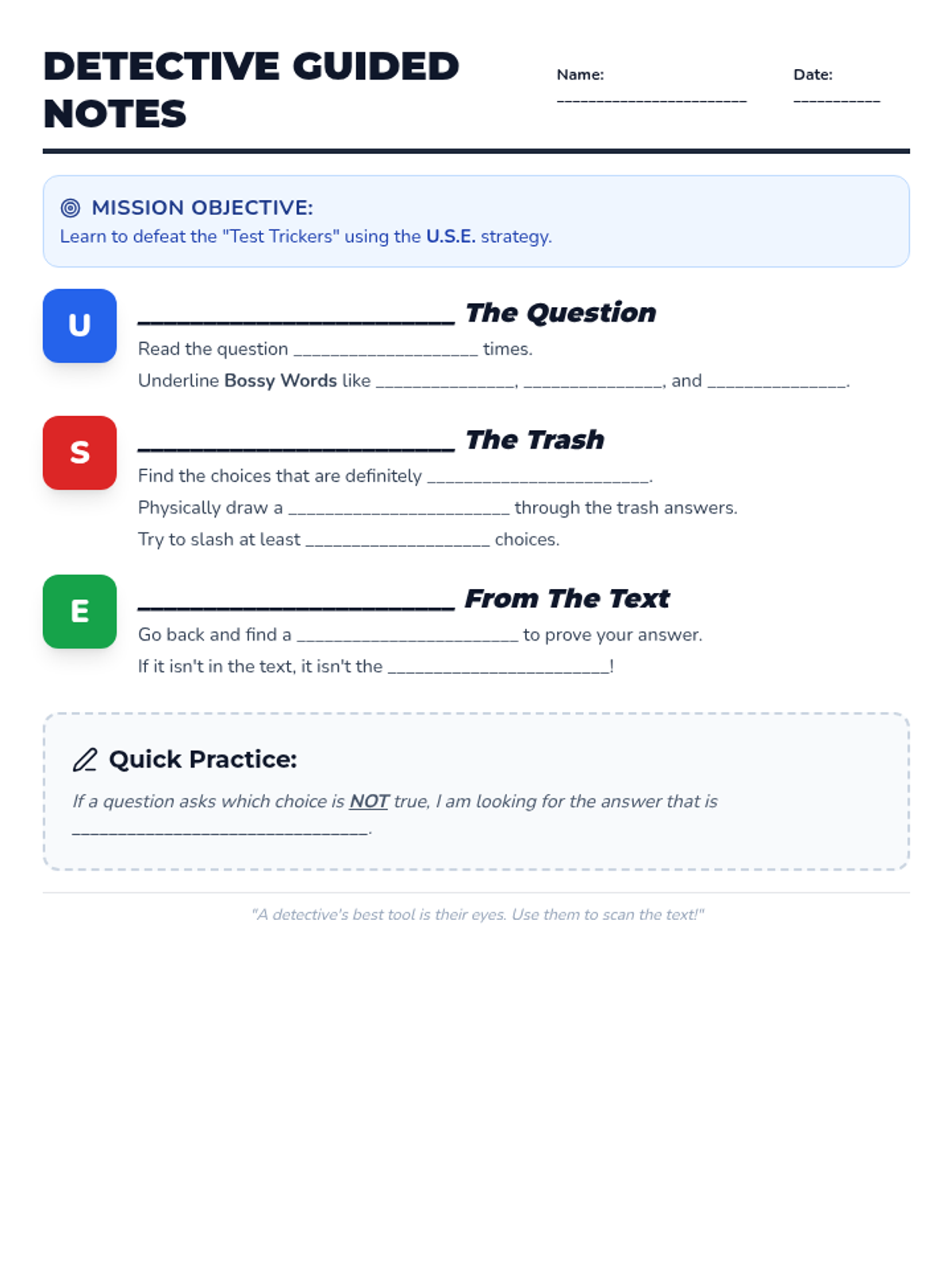
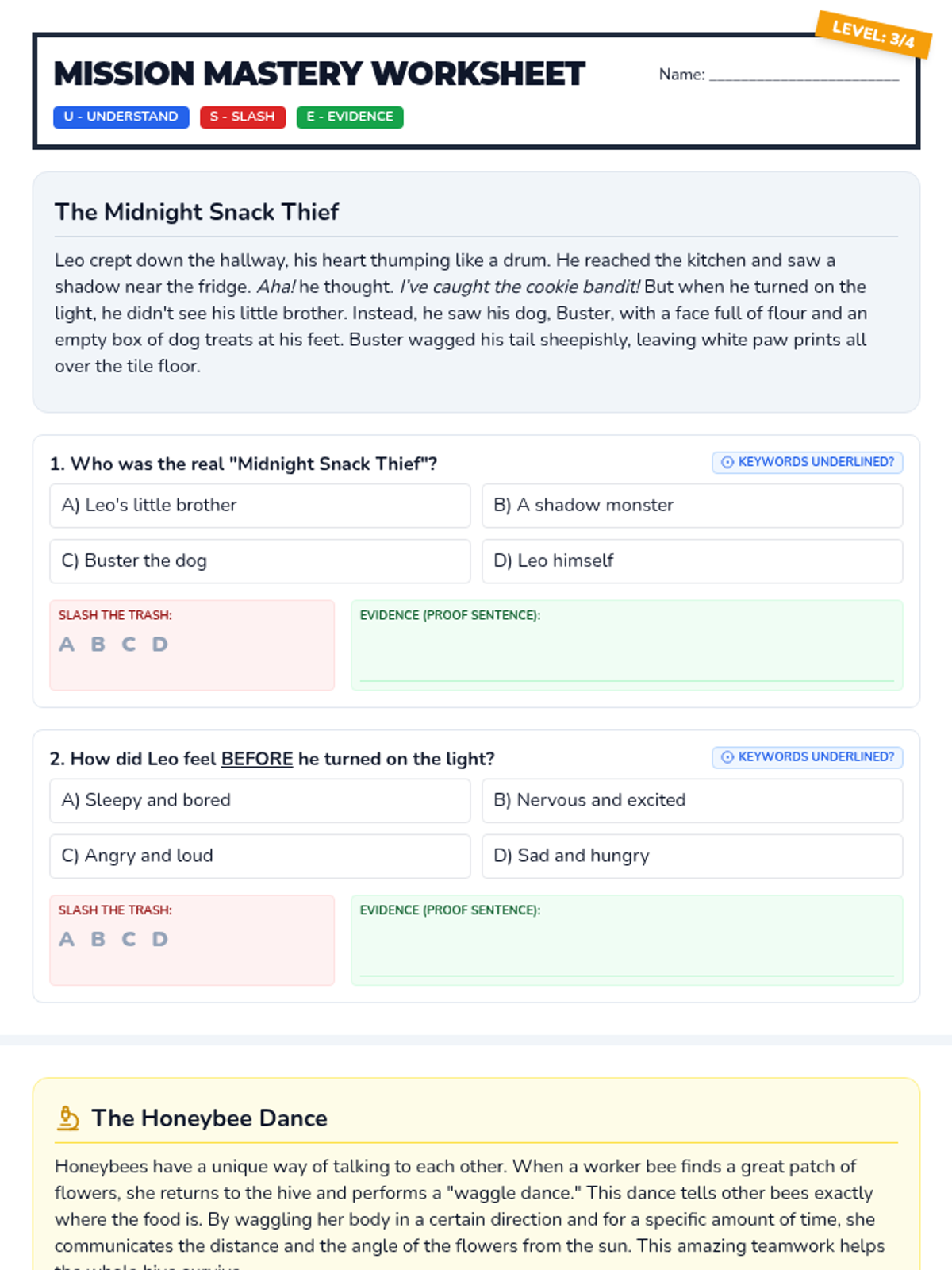
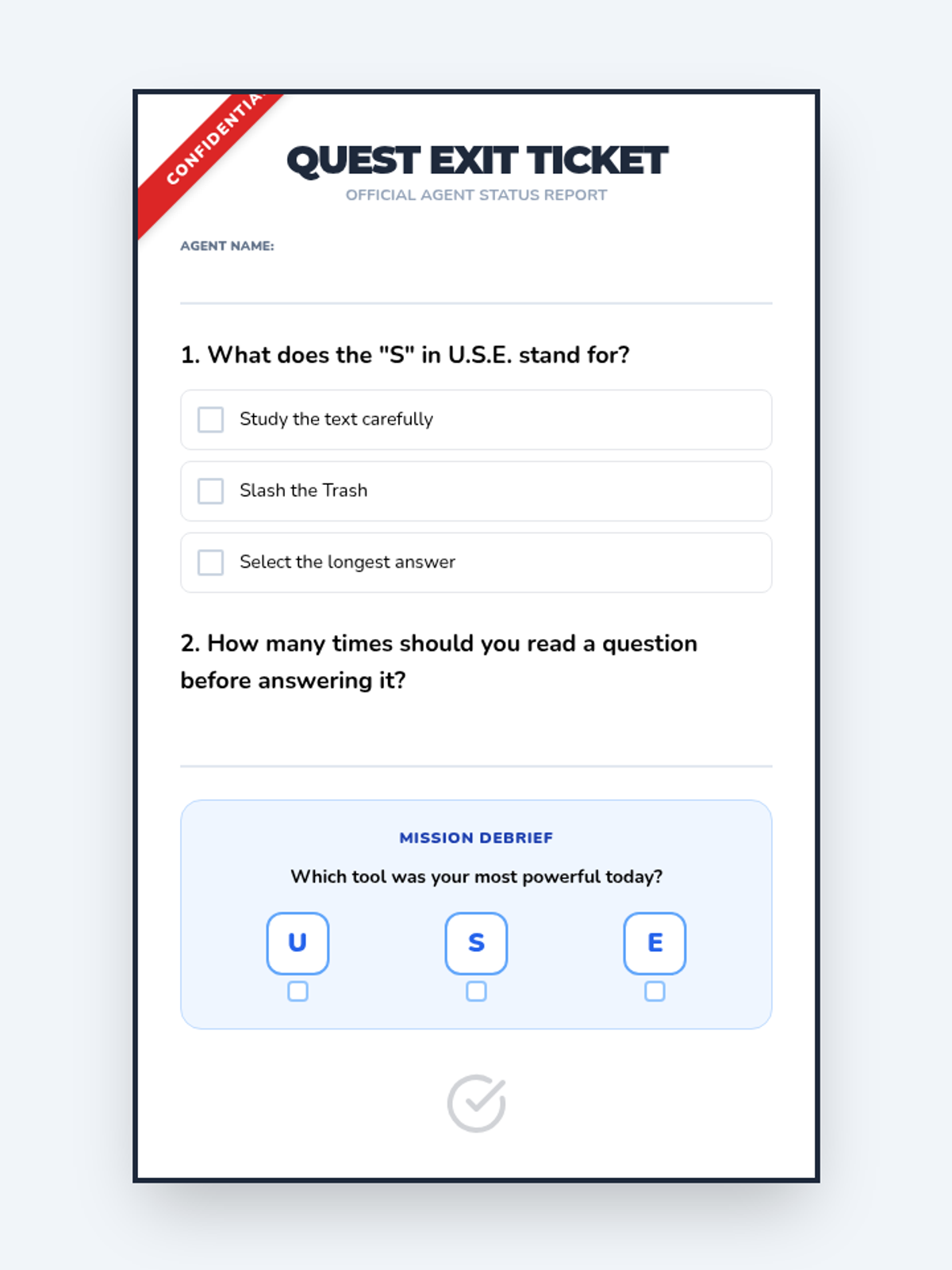
A comprehensive lesson for 3rd and 4th graders on the USE strategy (Understand, Slash, Evidence) to improve multiple-choice accuracy using fiction and science texts.
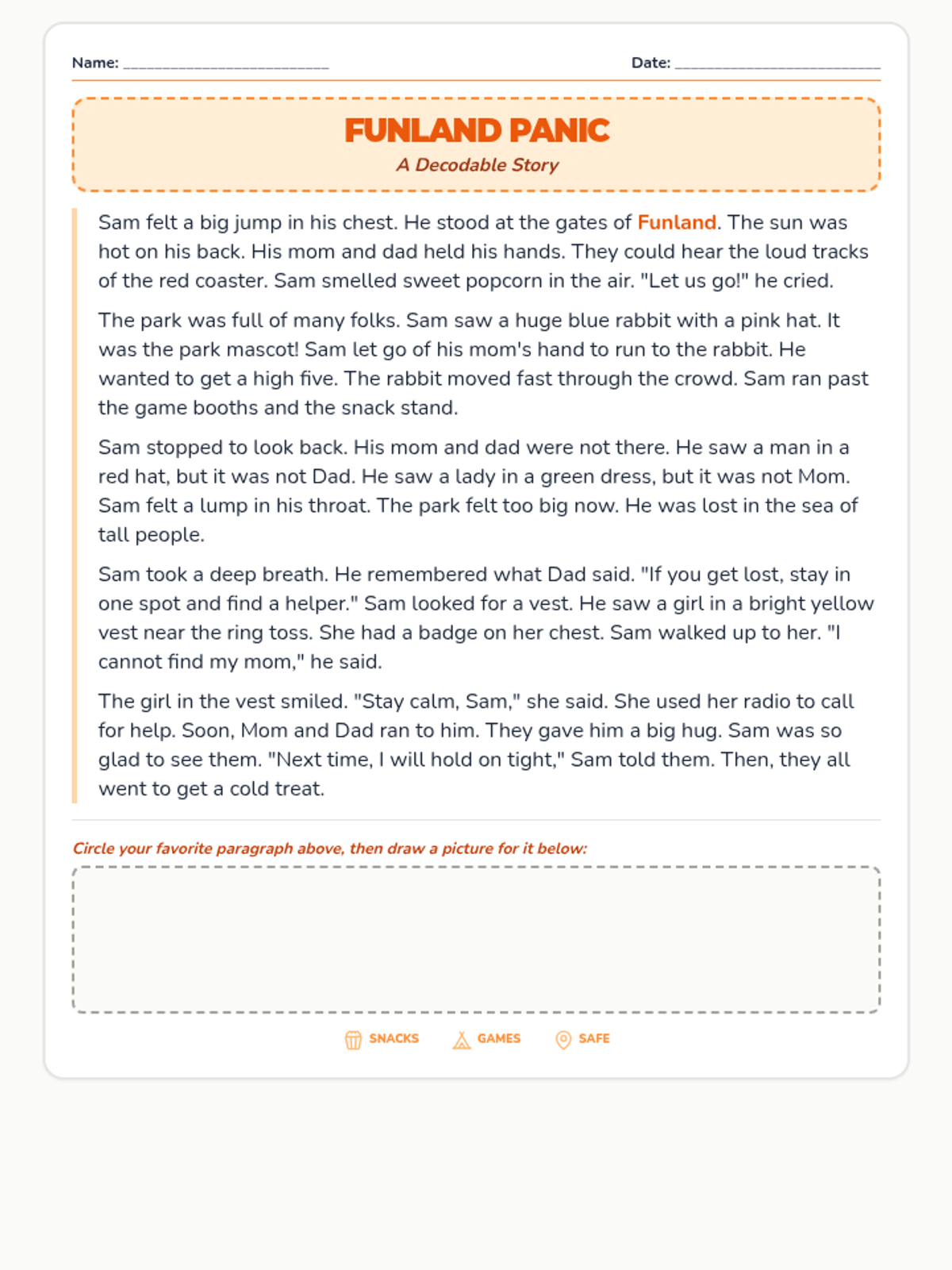
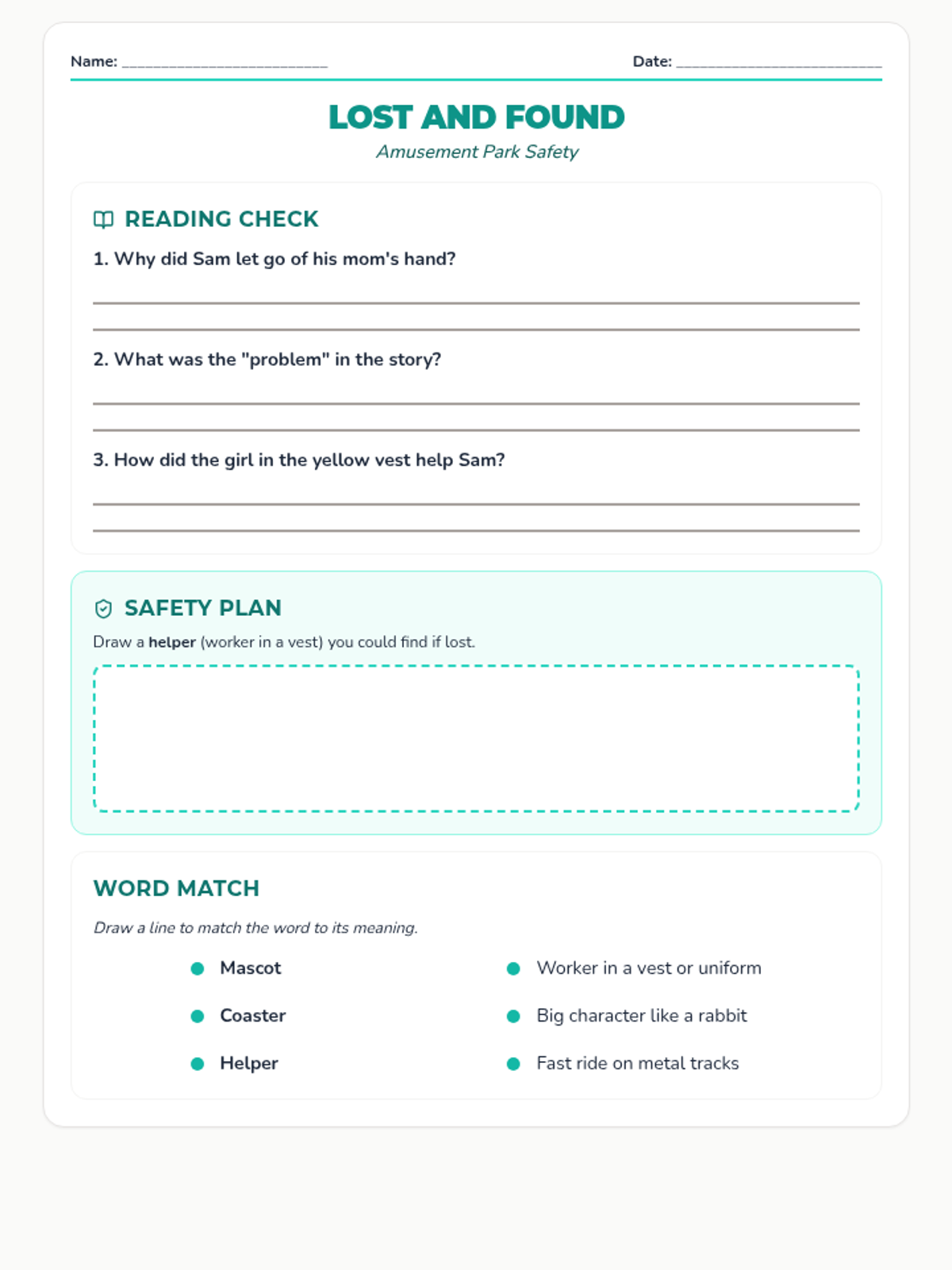
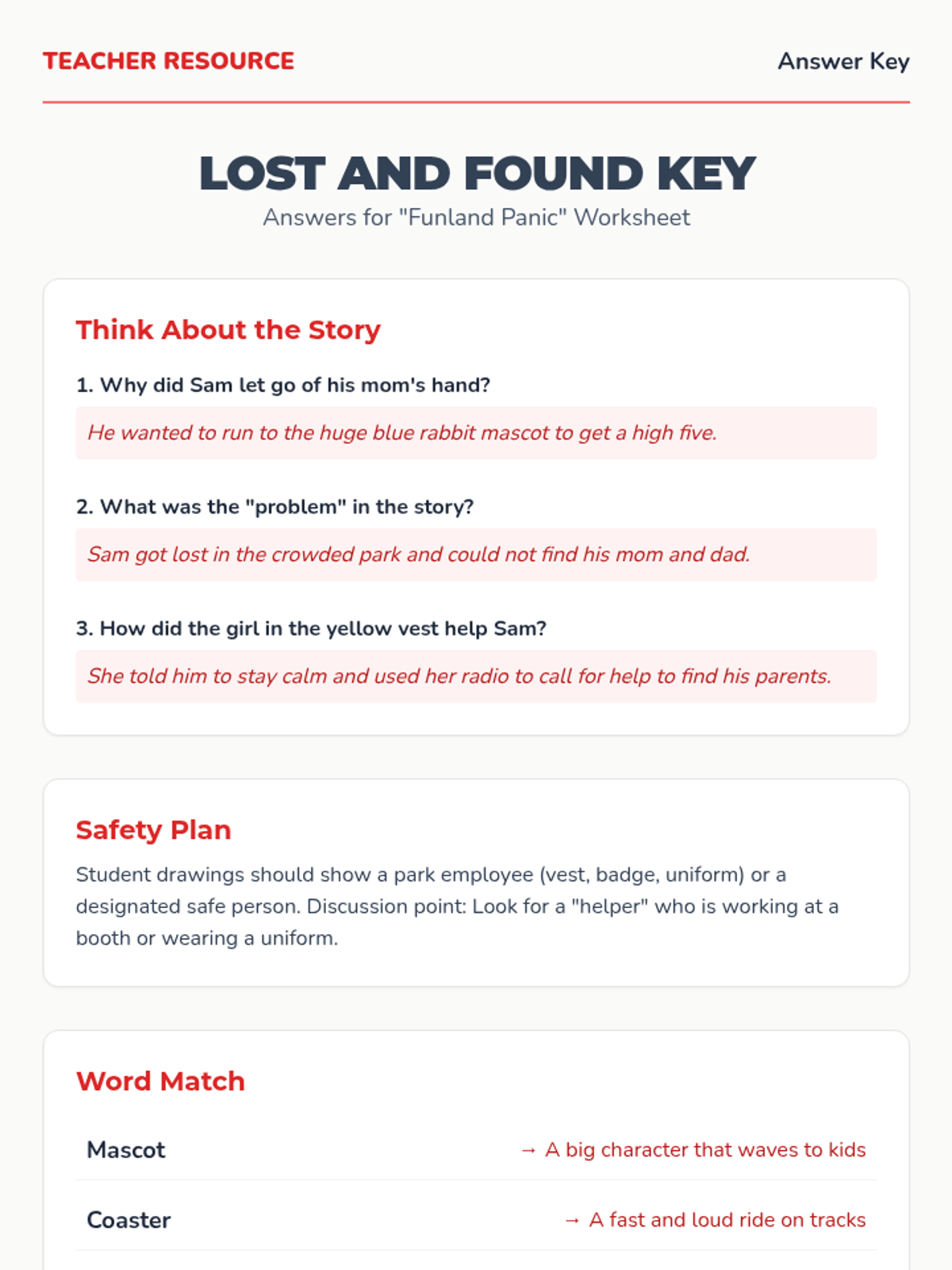
A decodable reading lesson centered on a story about getting lost at an amusement park, focusing on reading comprehension and safety rules.
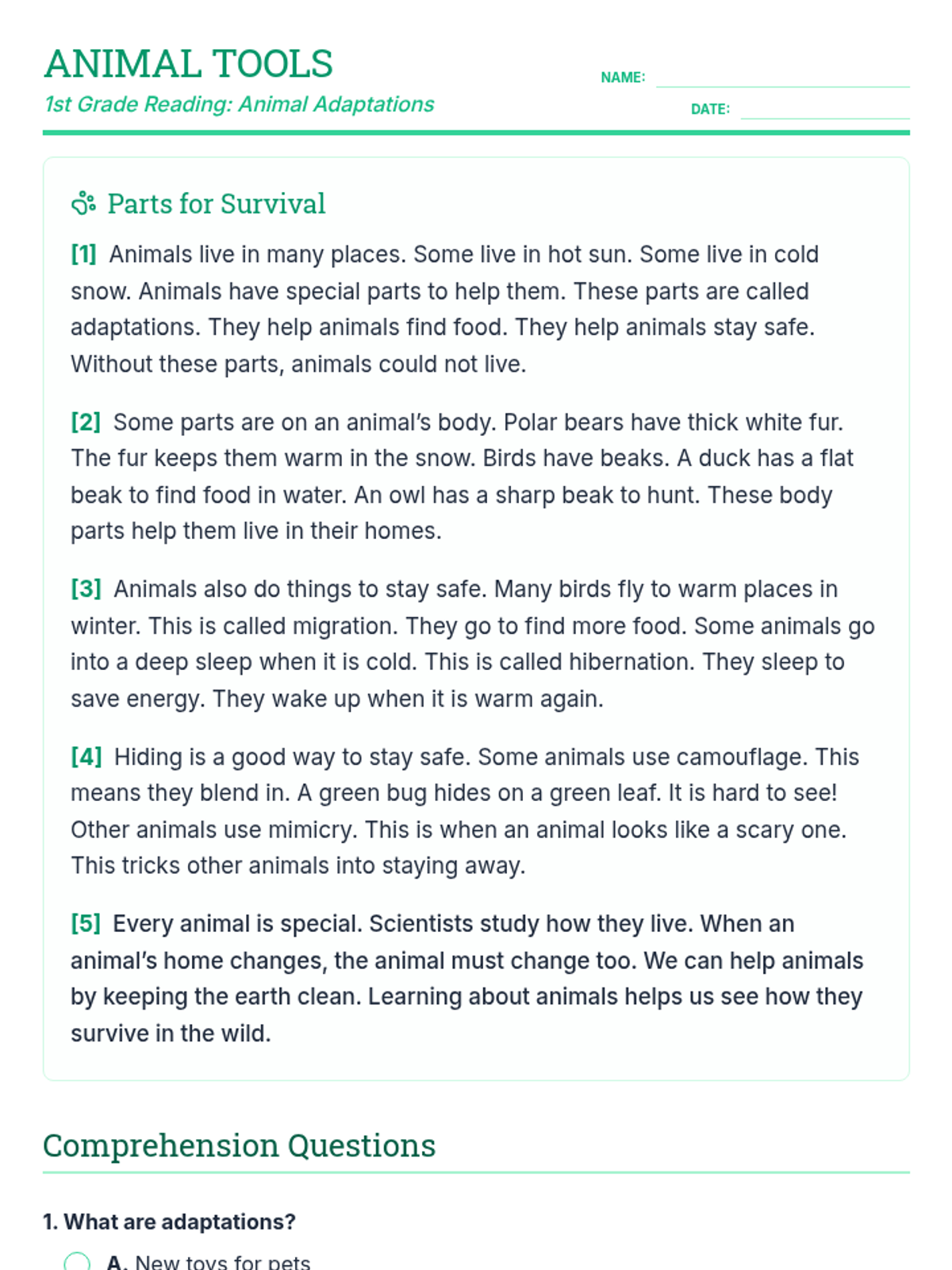
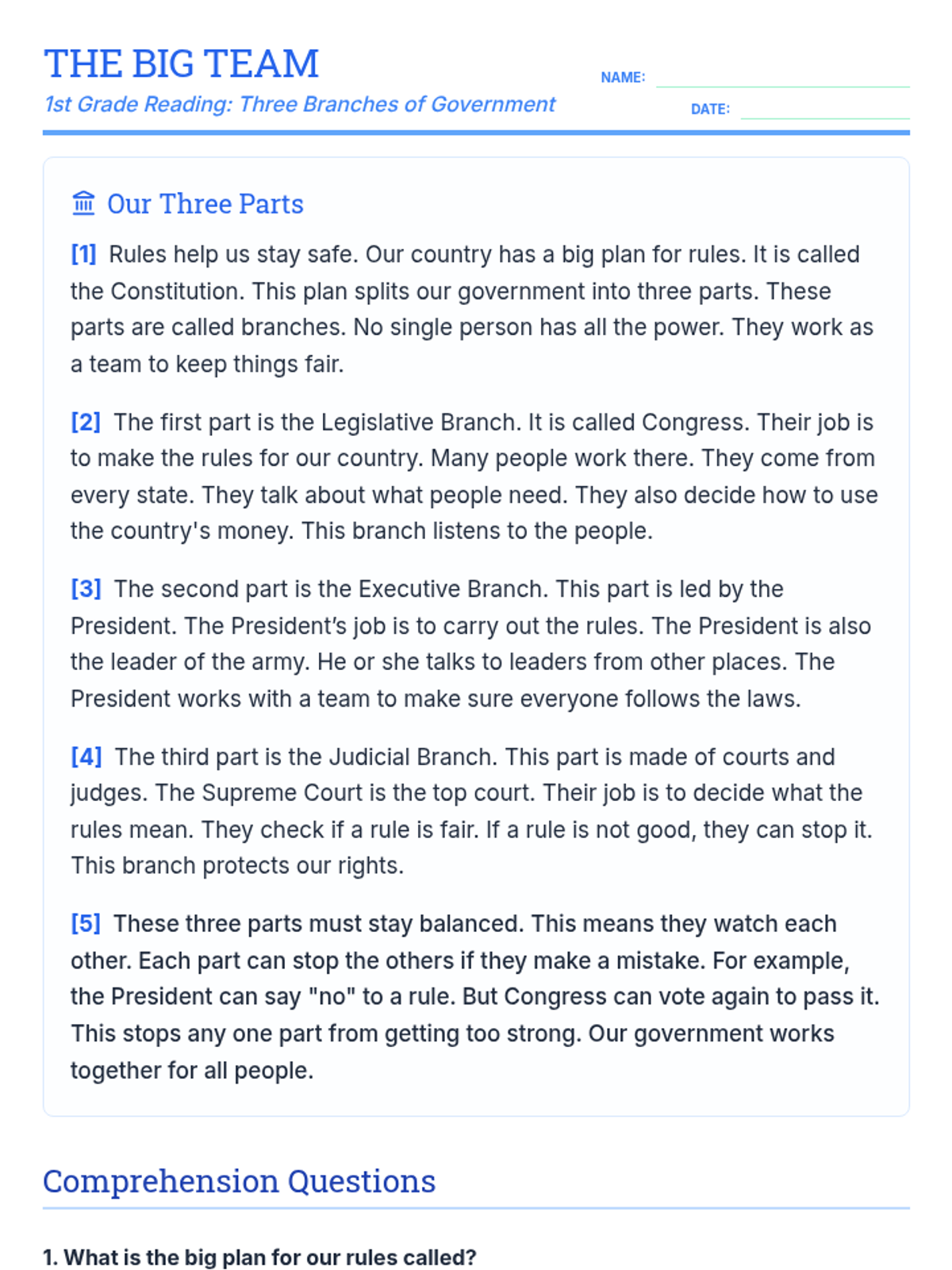
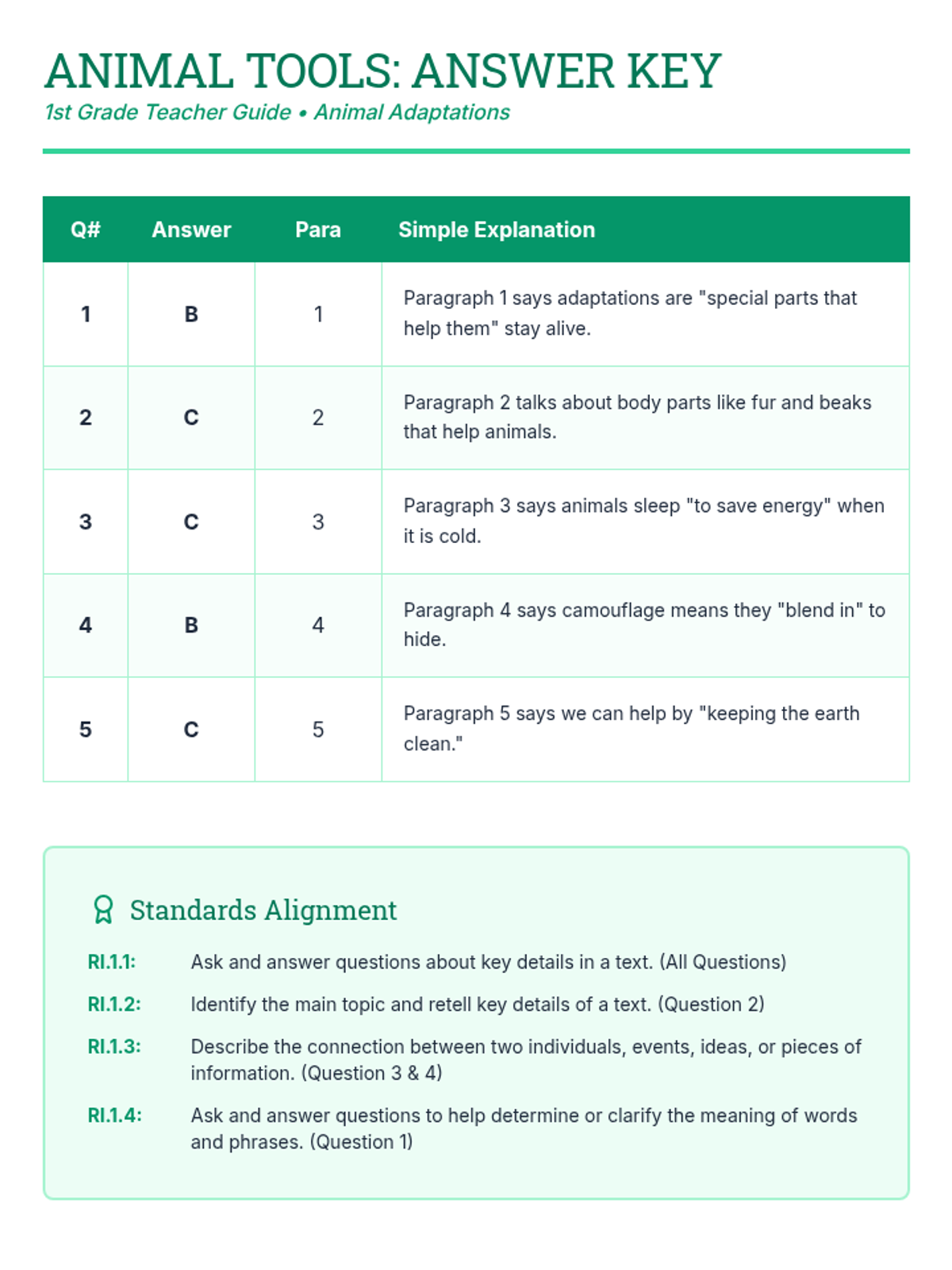
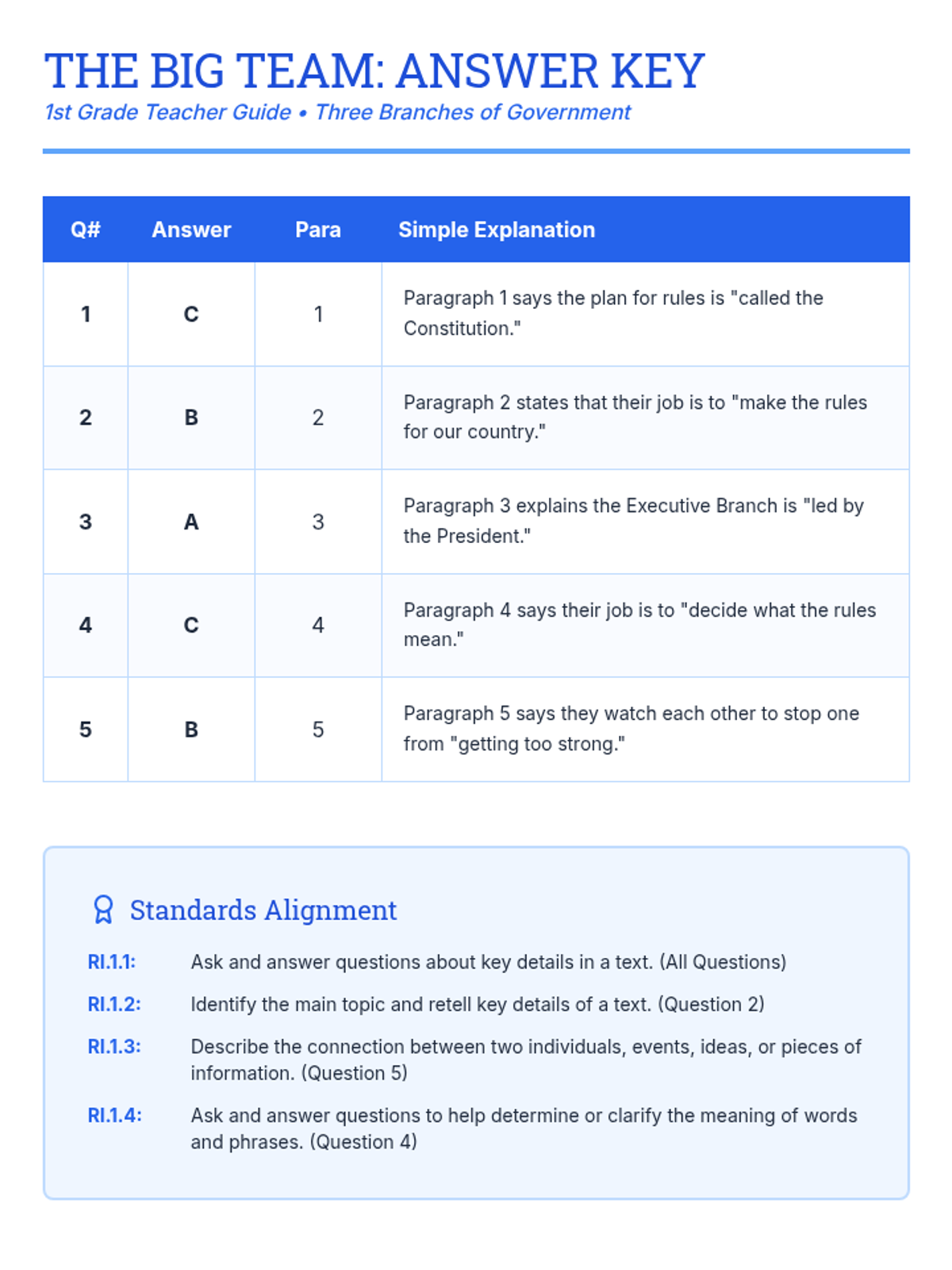
A comprehensive reading comprehension lesson focusing on RI.1, RI.2, RI.3, and RI.4 standards through the lenses of Animal Adaptations and the Three Branches of Government.
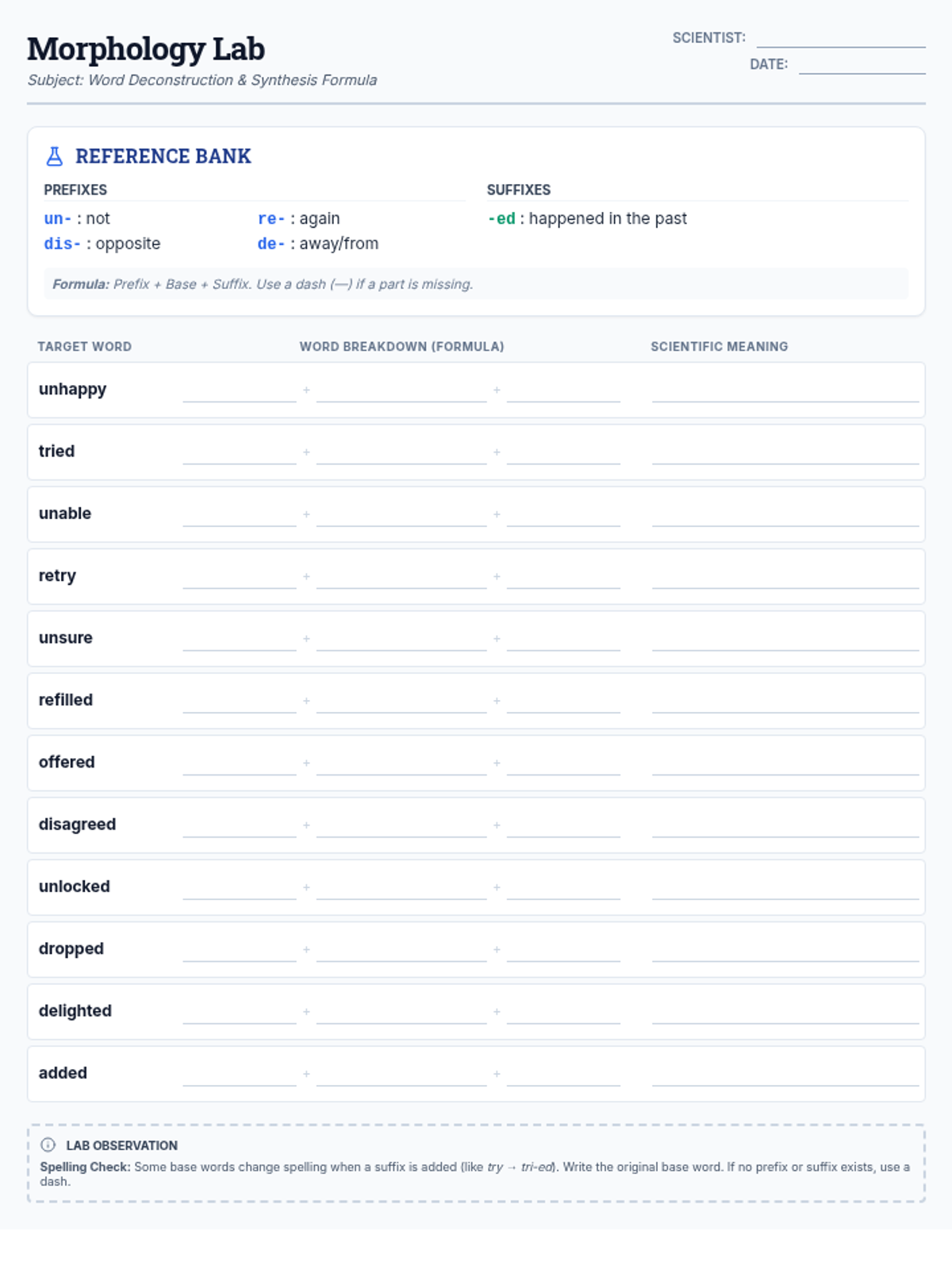
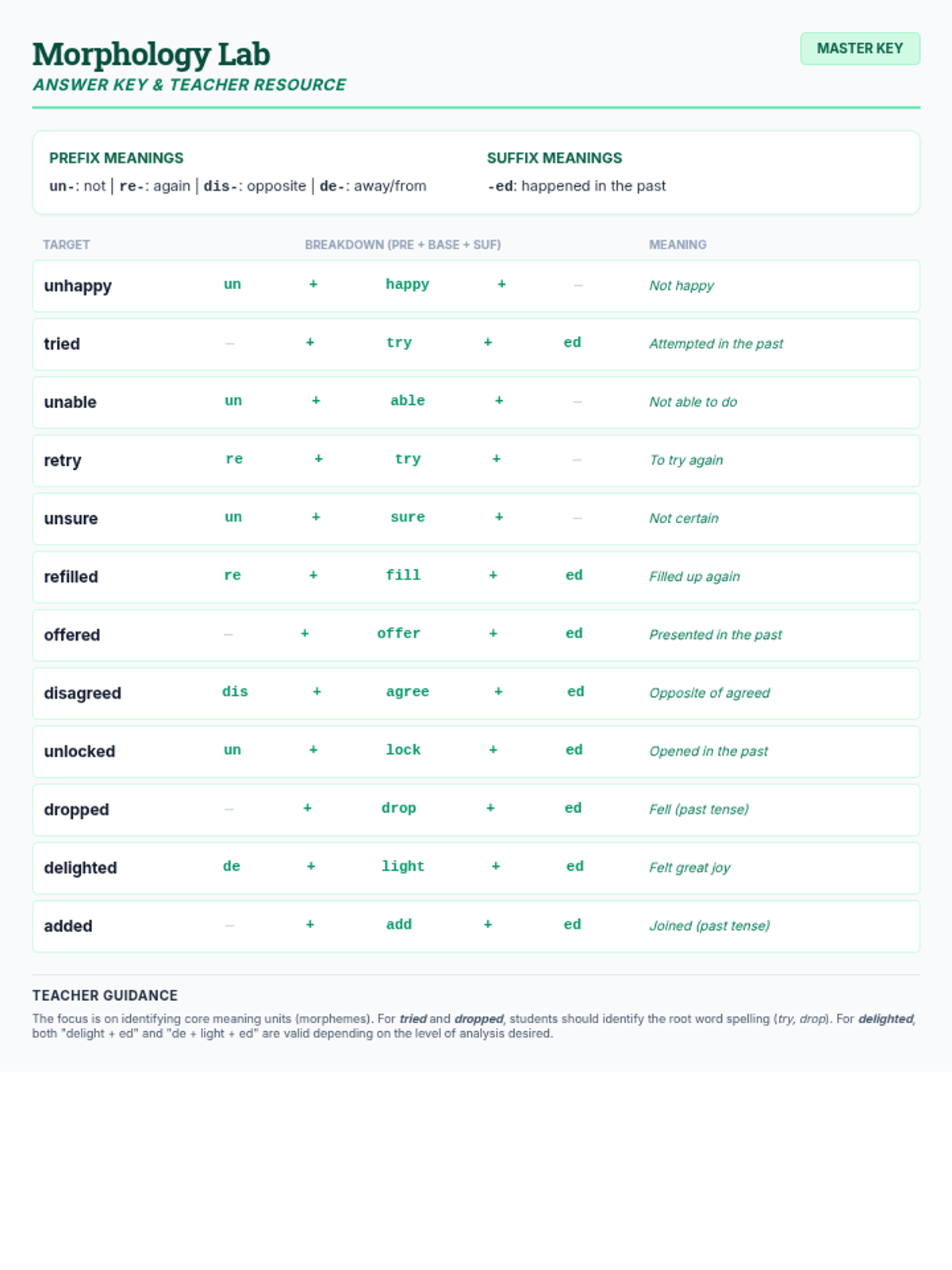
A lesson focused on morphology where students deconstruct words into prefixes, bases, and suffixes to determine their meanings using a word bank formula.
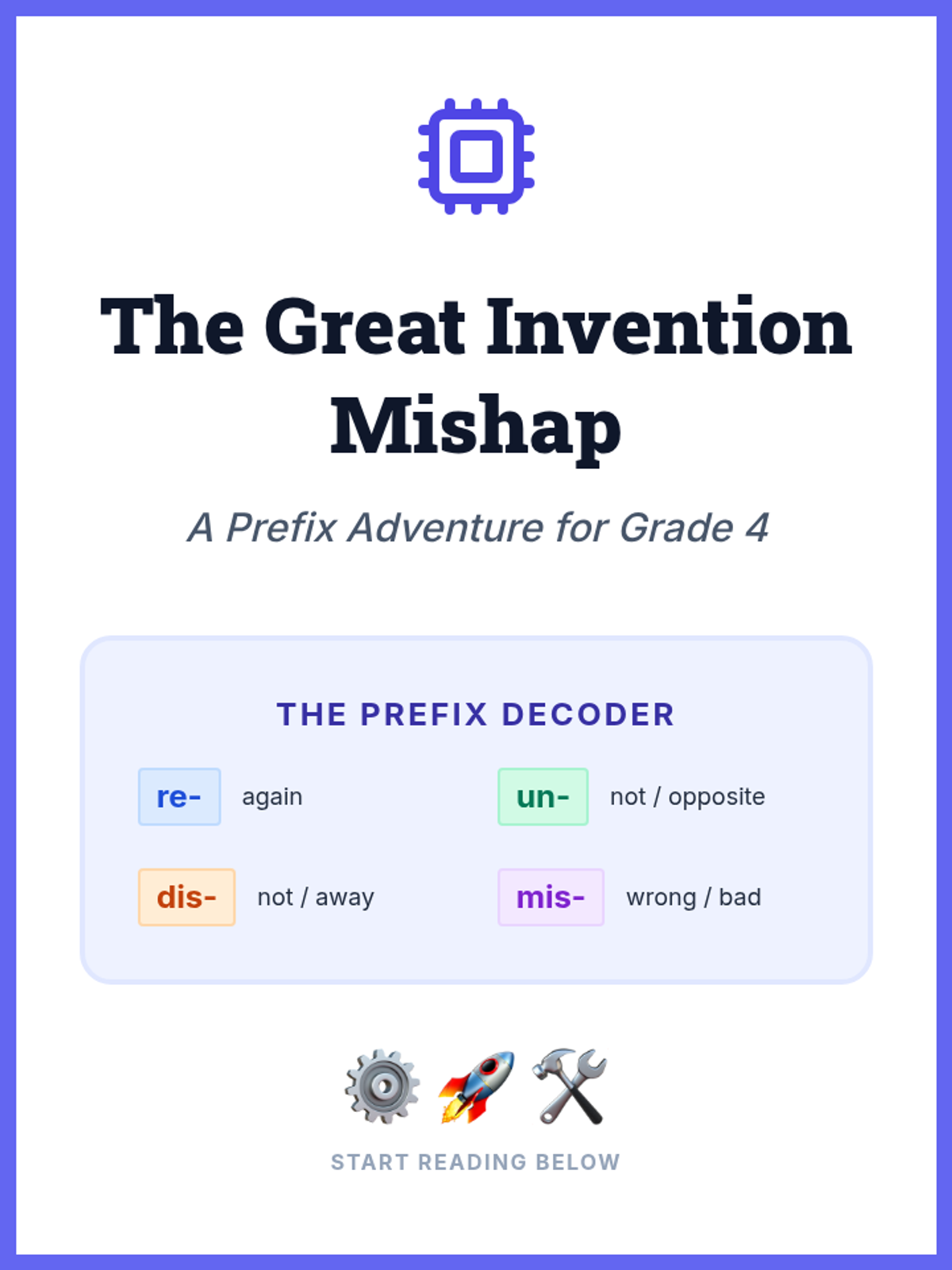
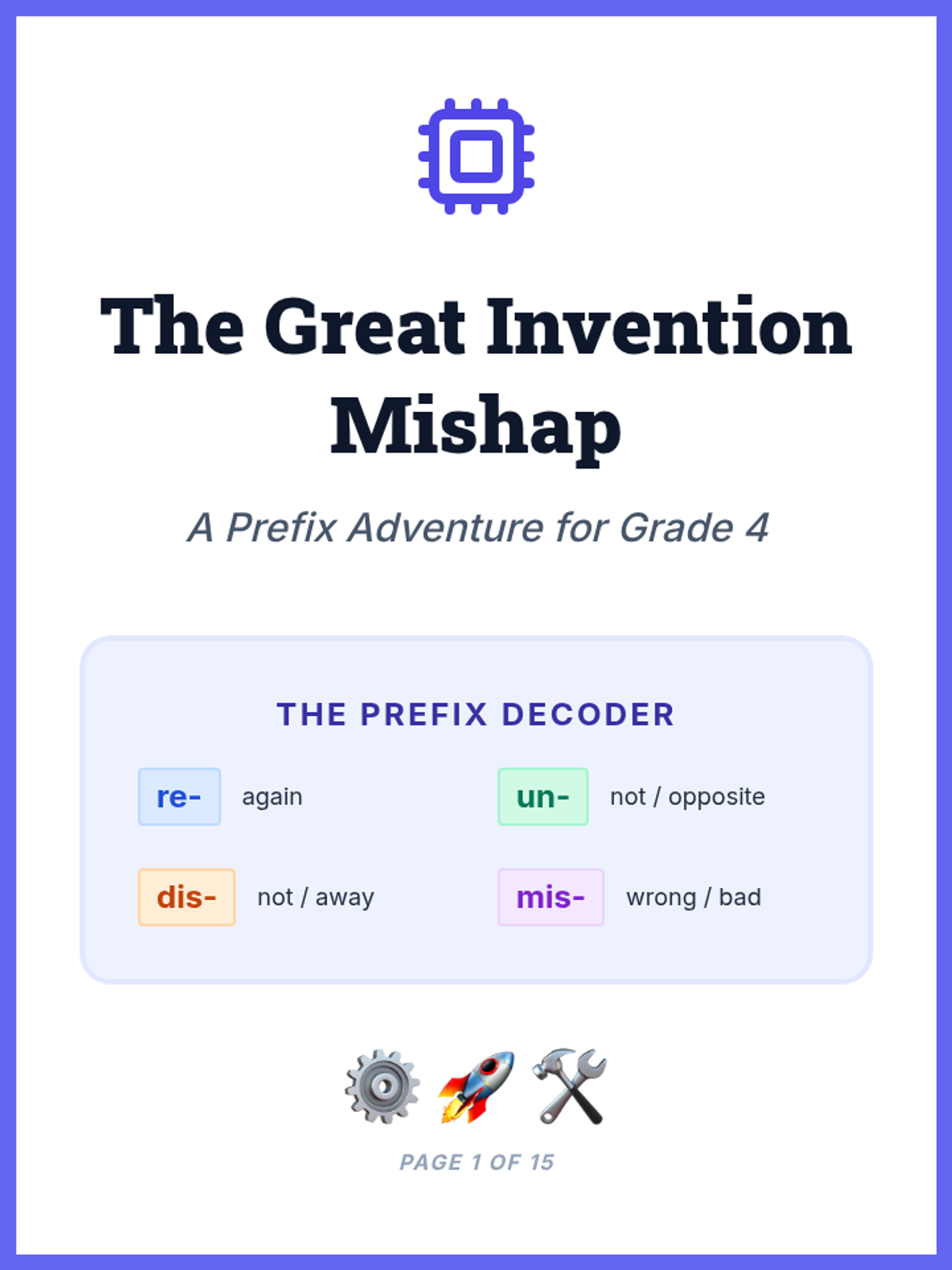
A Grade 4 literacy lesson focusing on the structural analysis of words with common prefixes: re-, mis-, dis-, and un-. Includes a multi-page reading passage and identification activities.
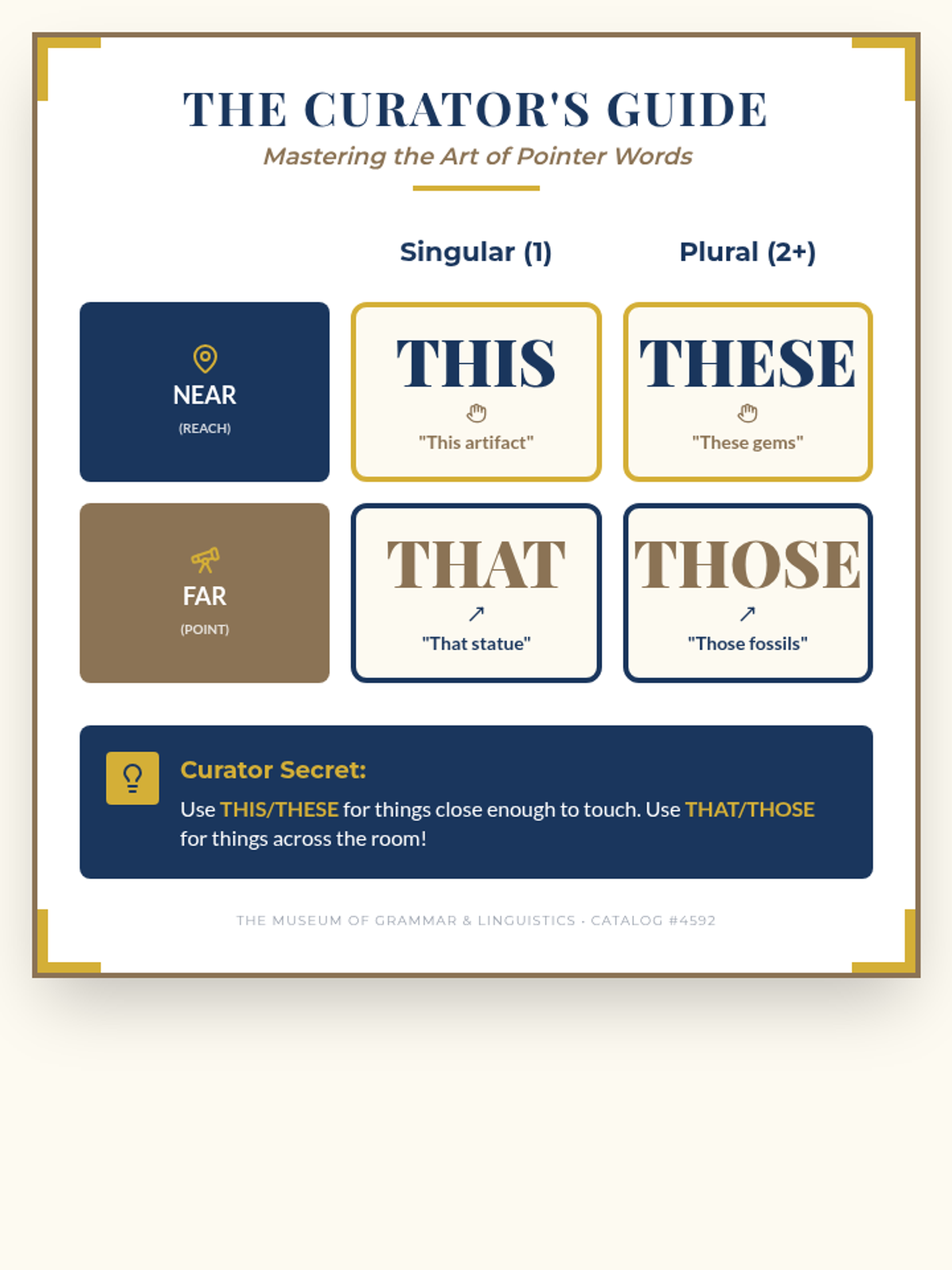
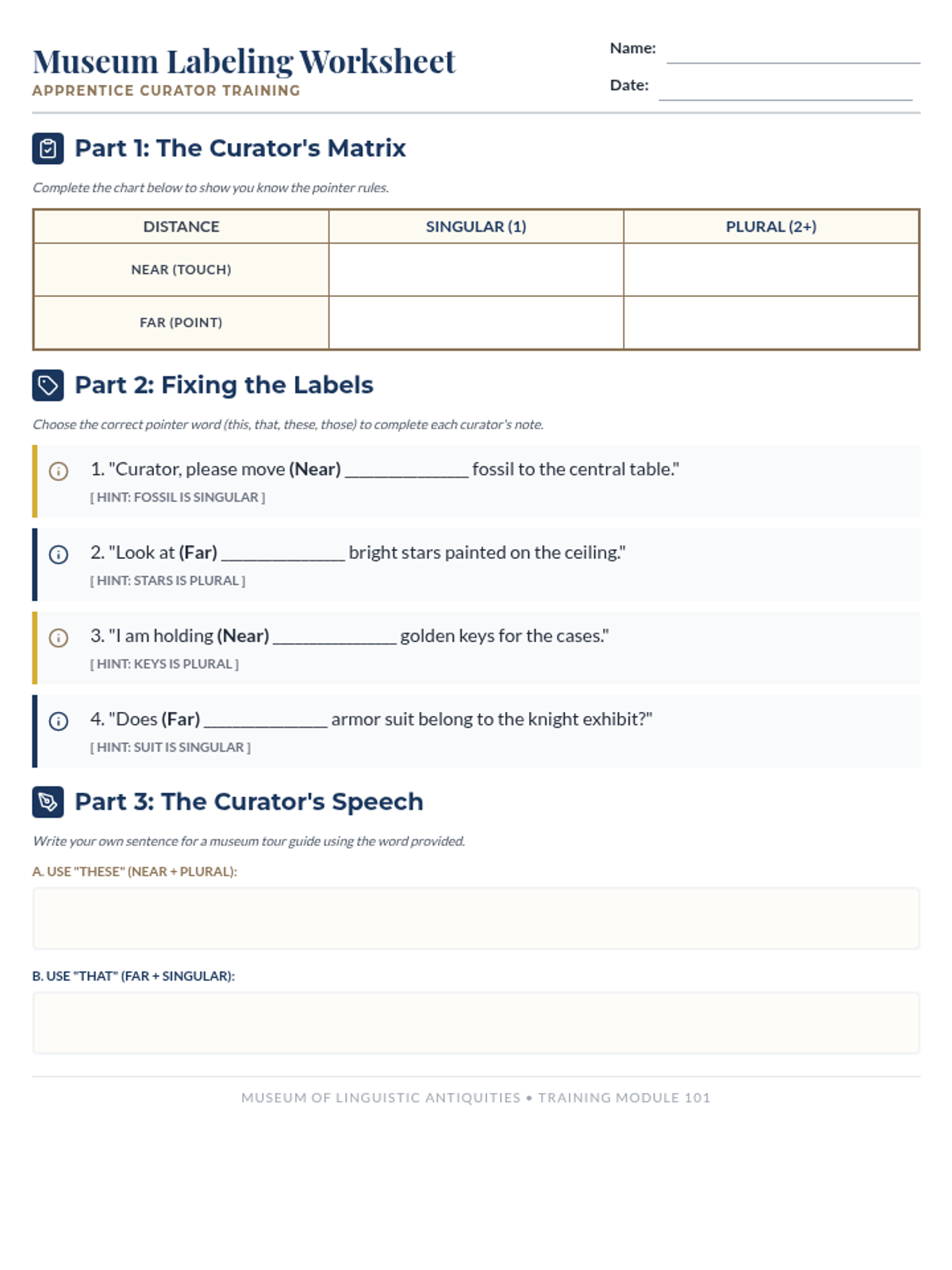
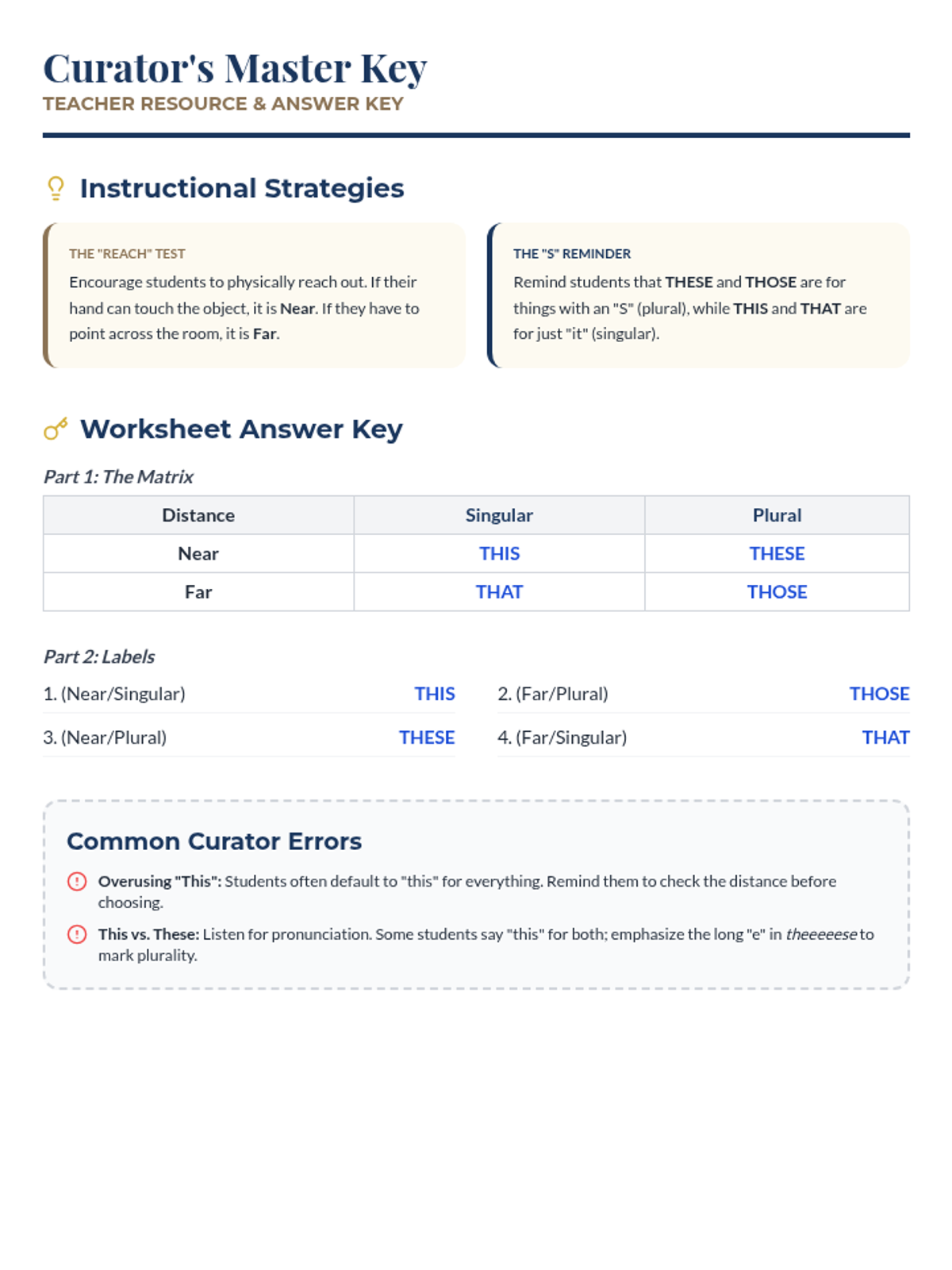
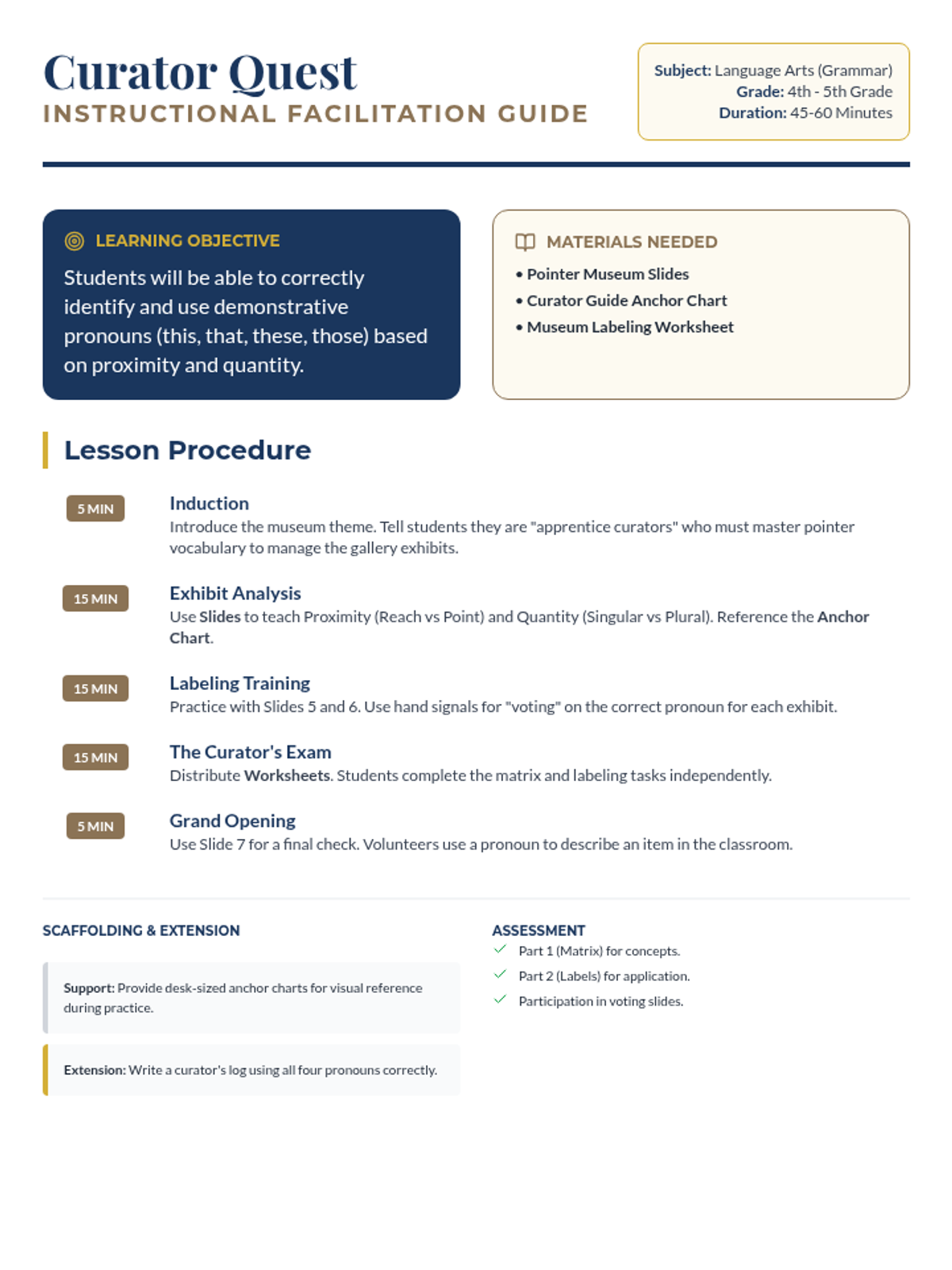
A comprehensive lesson on using demonstrative pronouns (this, that, these, those) through the lens of museum curators managing an exhibit. Students learn to distinguish between singular/plural and near/far objects.
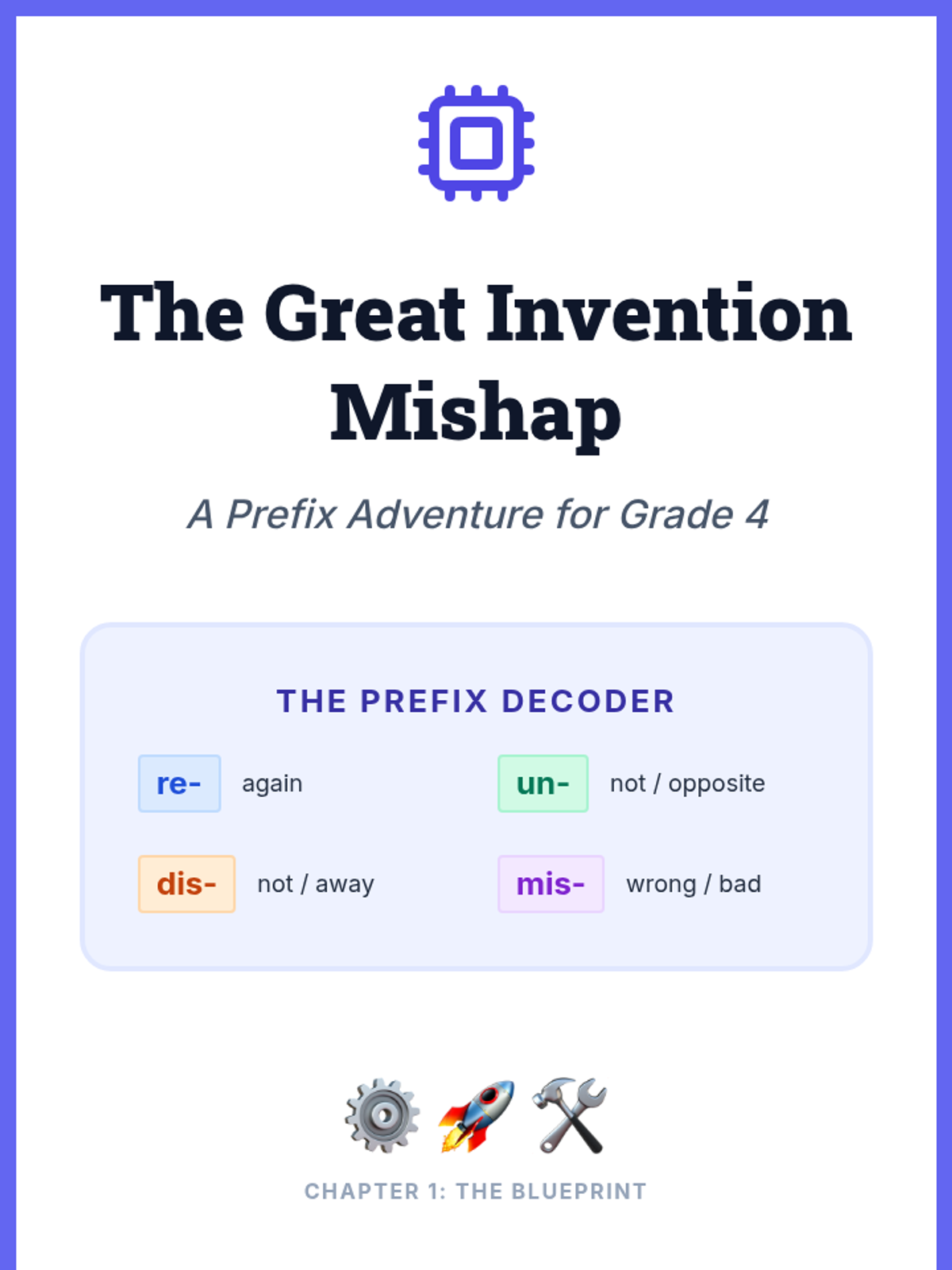
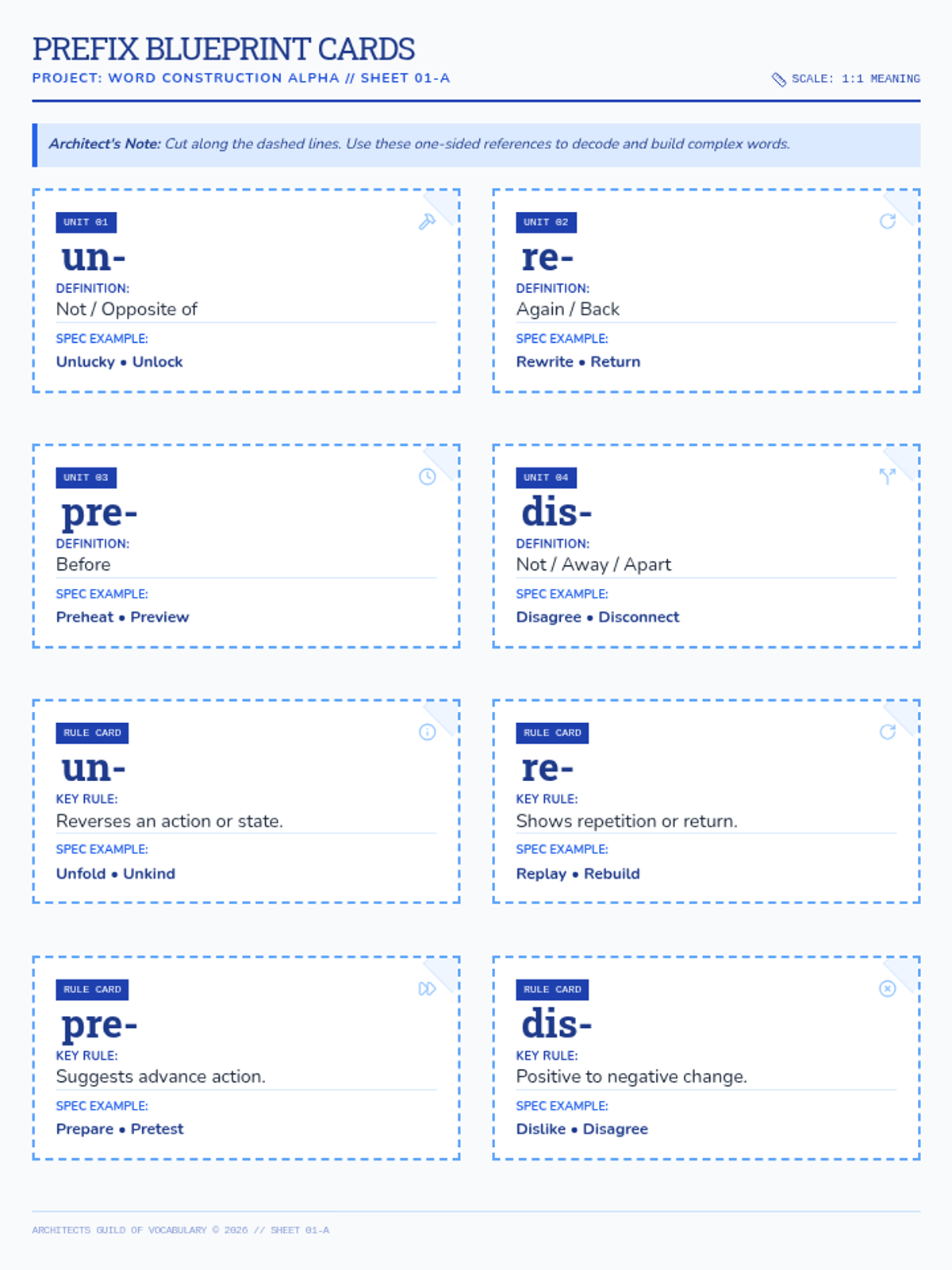
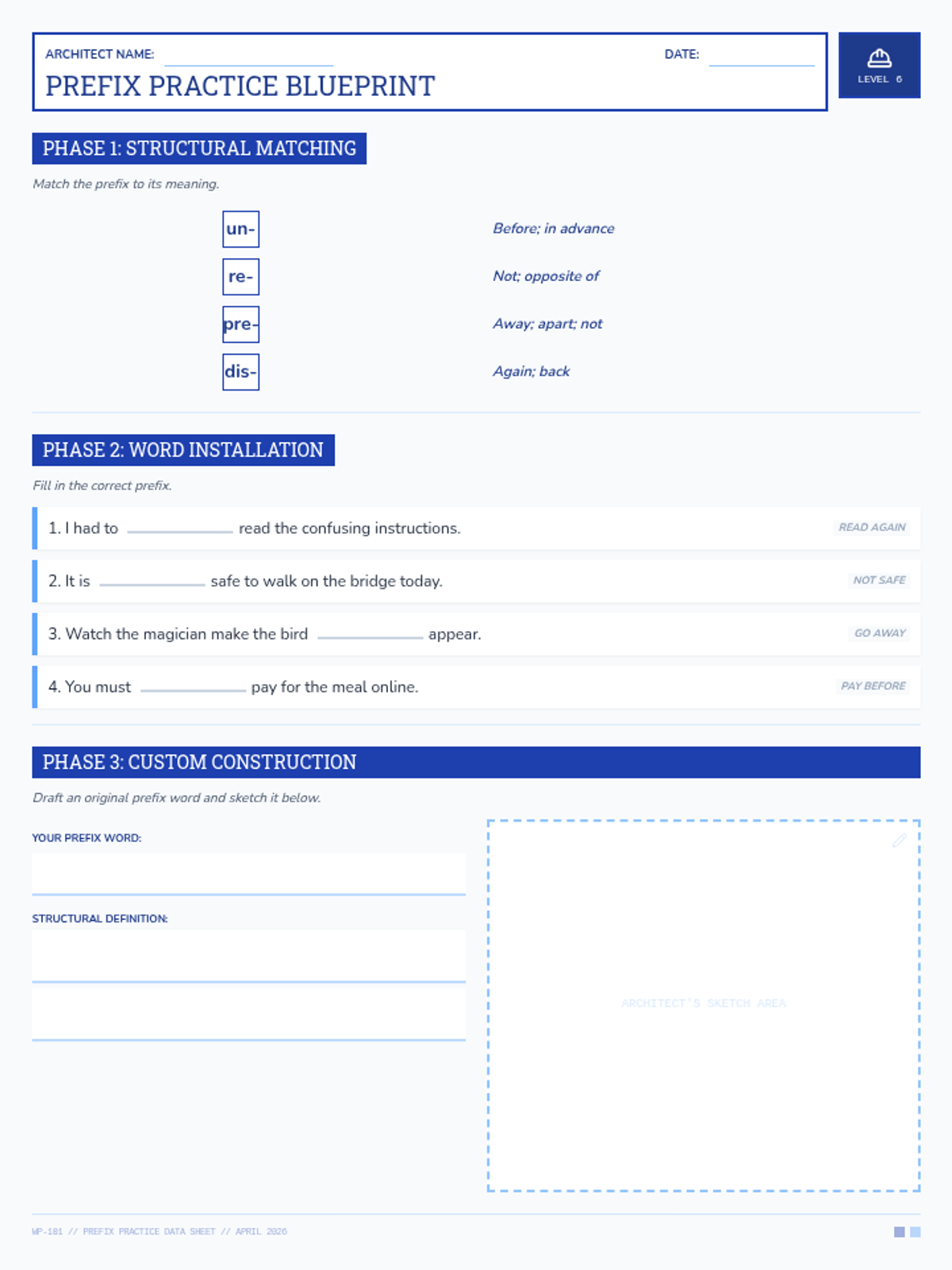
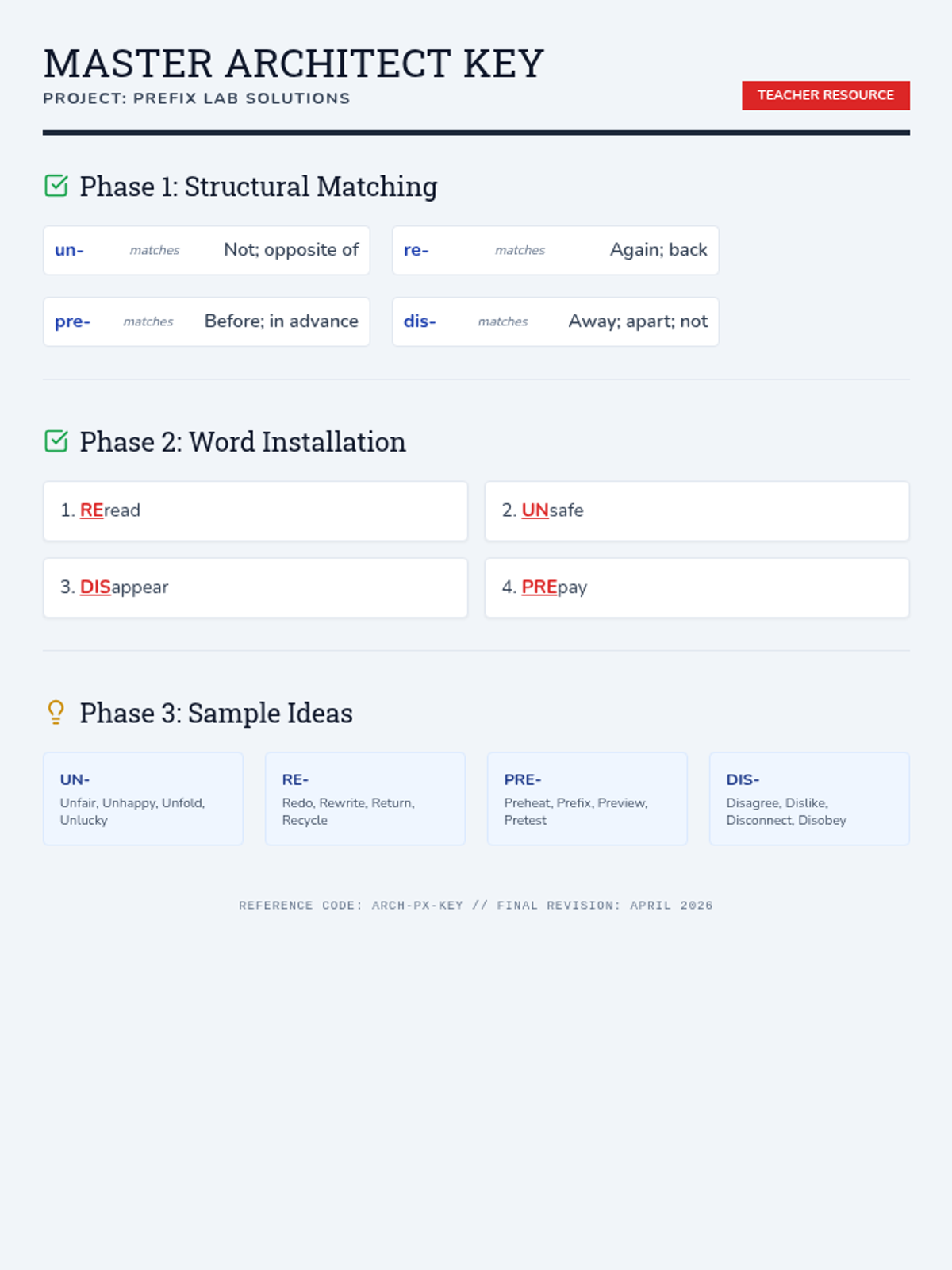
A foundational lesson on common prefixes (un-, re-, pre-, dis-) where students act as 'Word Architects' to build and deconstruct words.
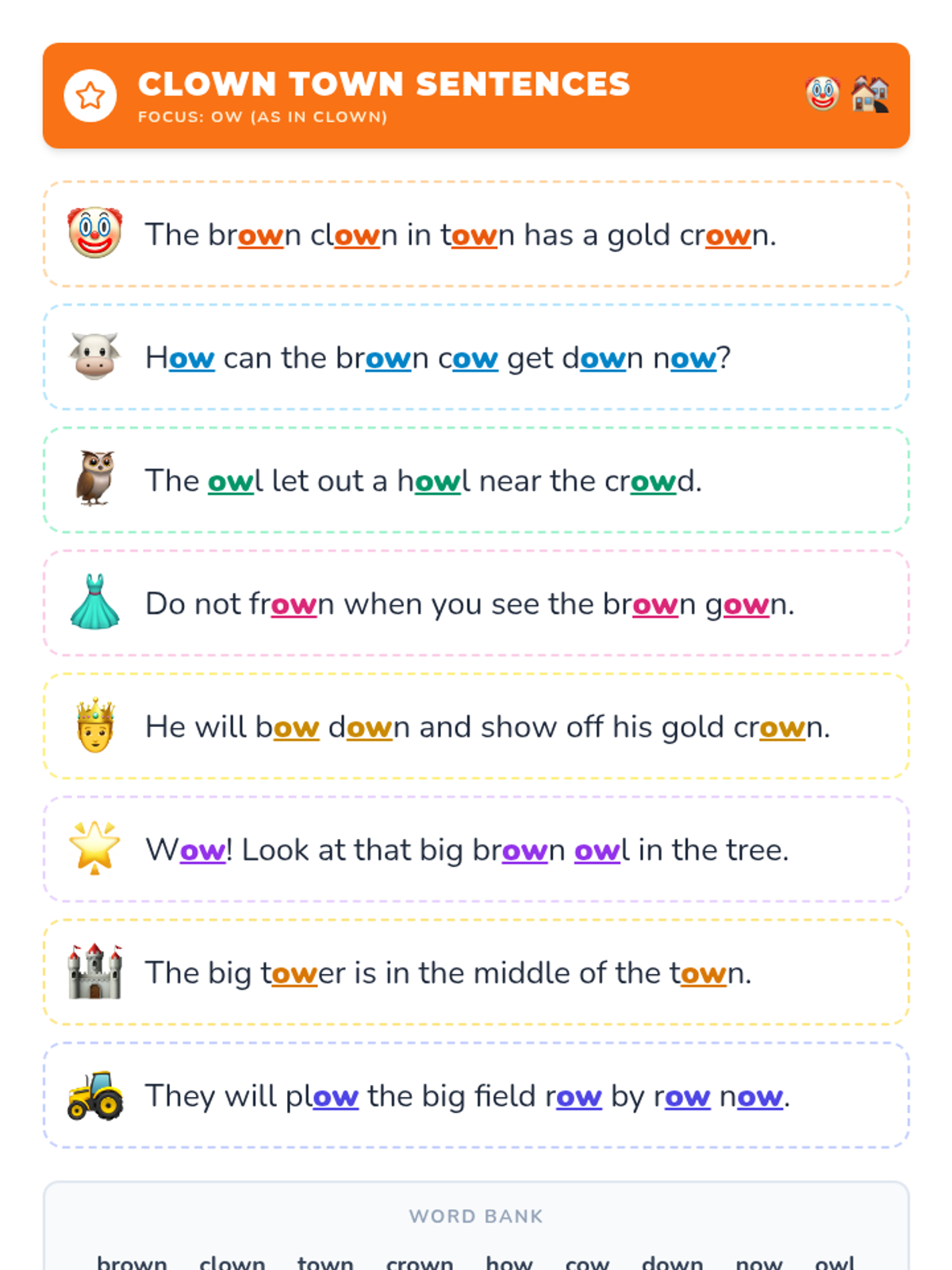
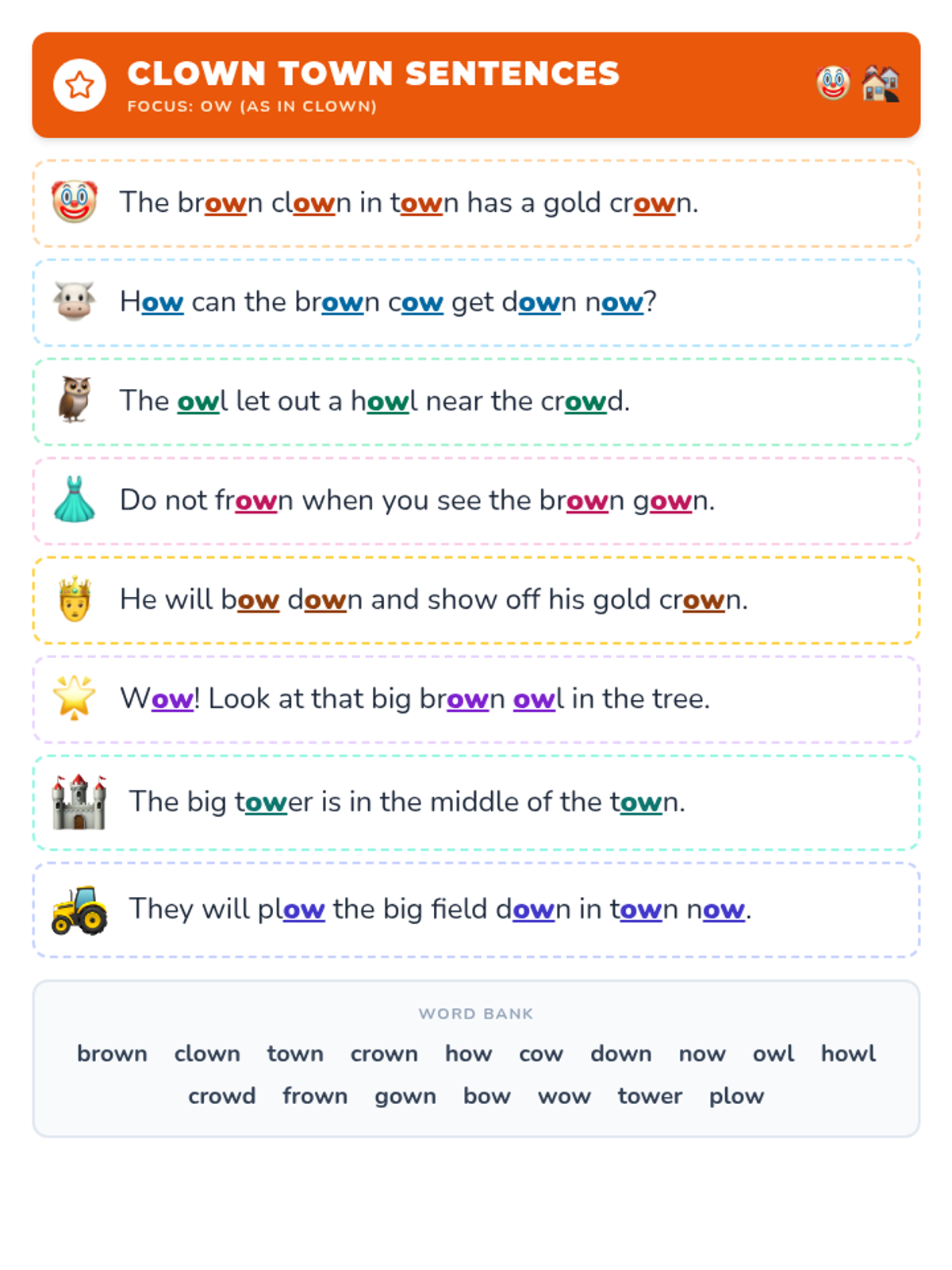
A phonics lesson focusing on the diphthong 'ow' as heard in 'clown' and 'town'.
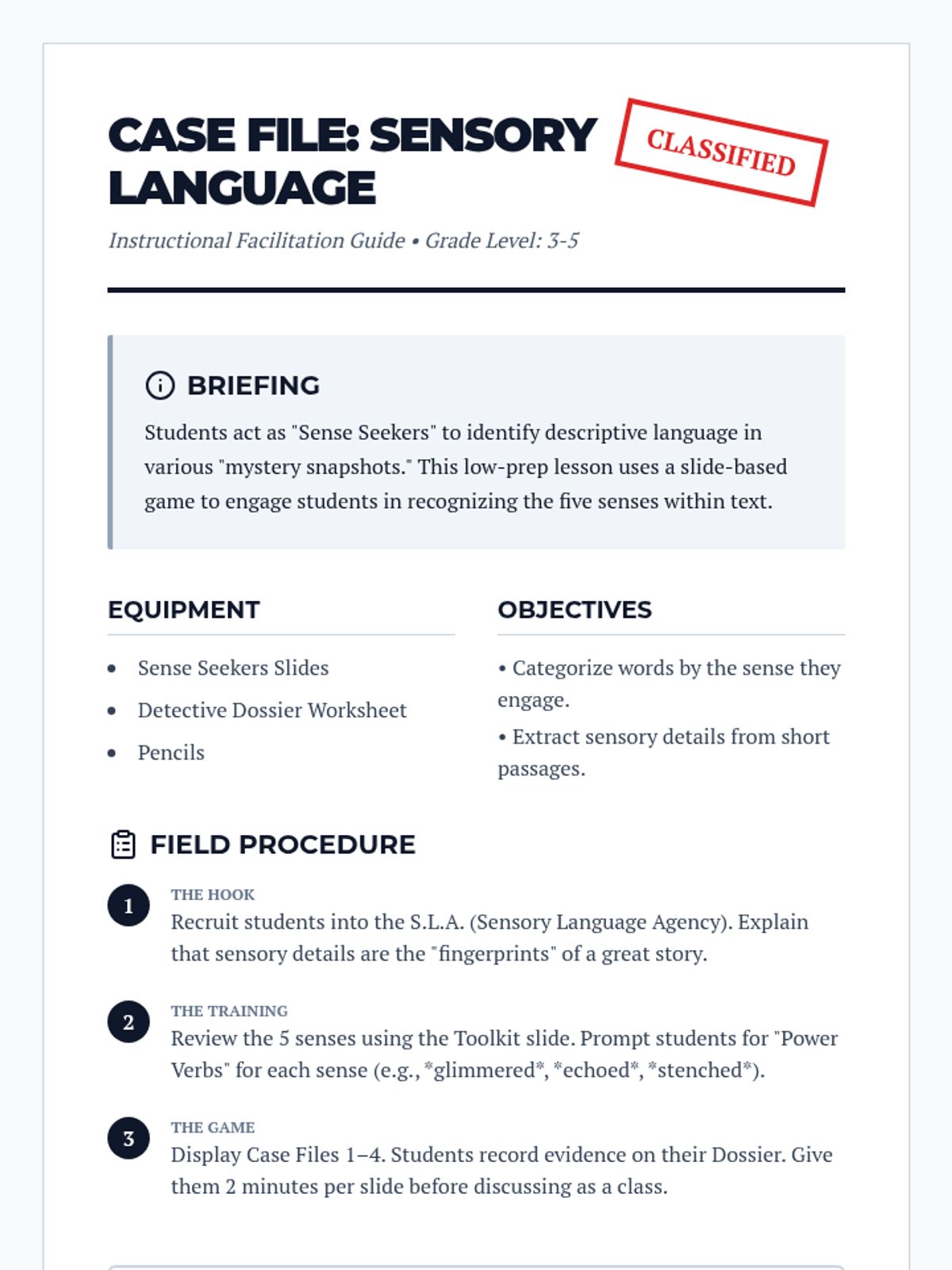
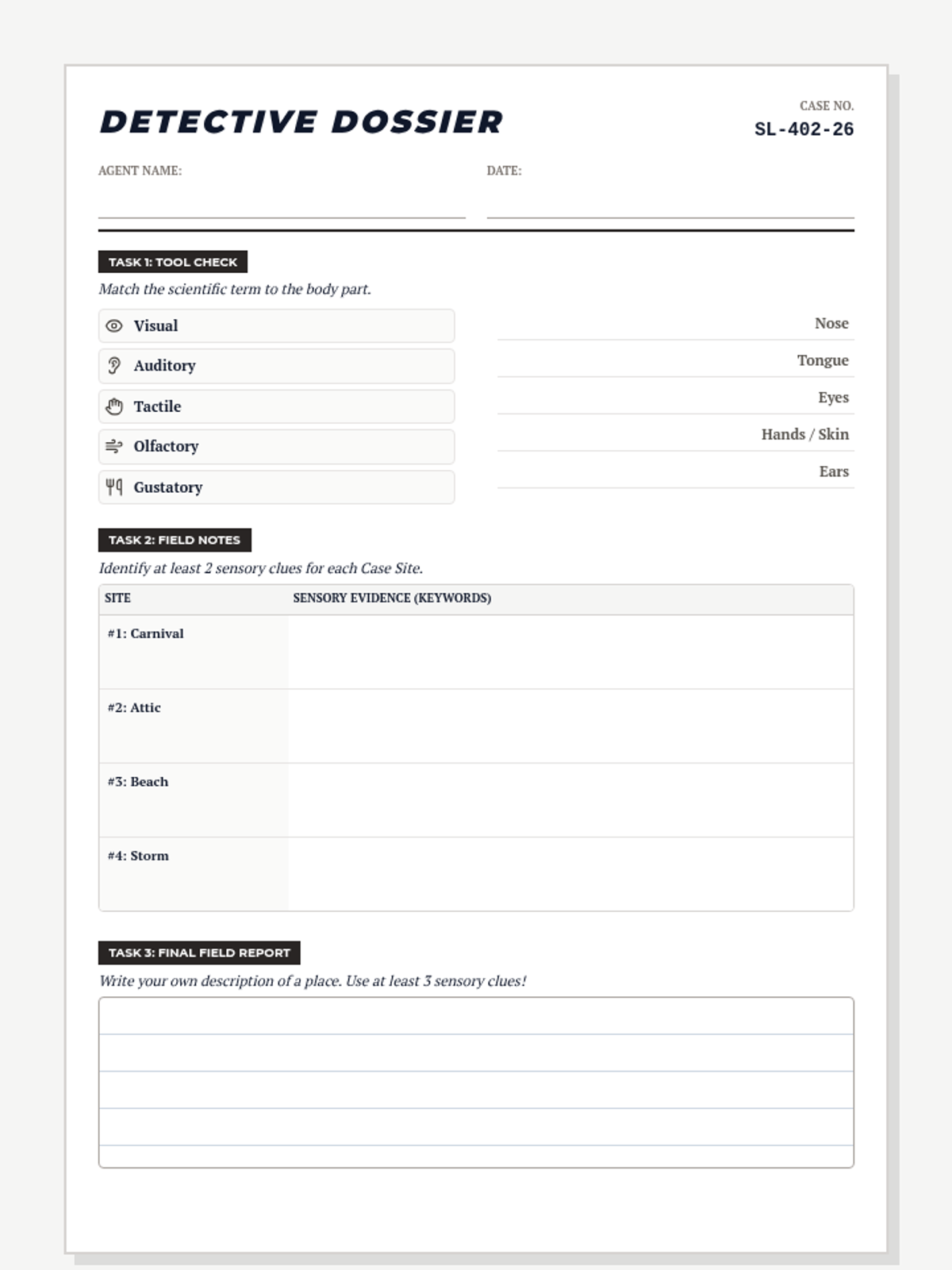
A lesson where students become 'Sense Seekers' to identify sensory language in descriptive text through a mystery-themed game.
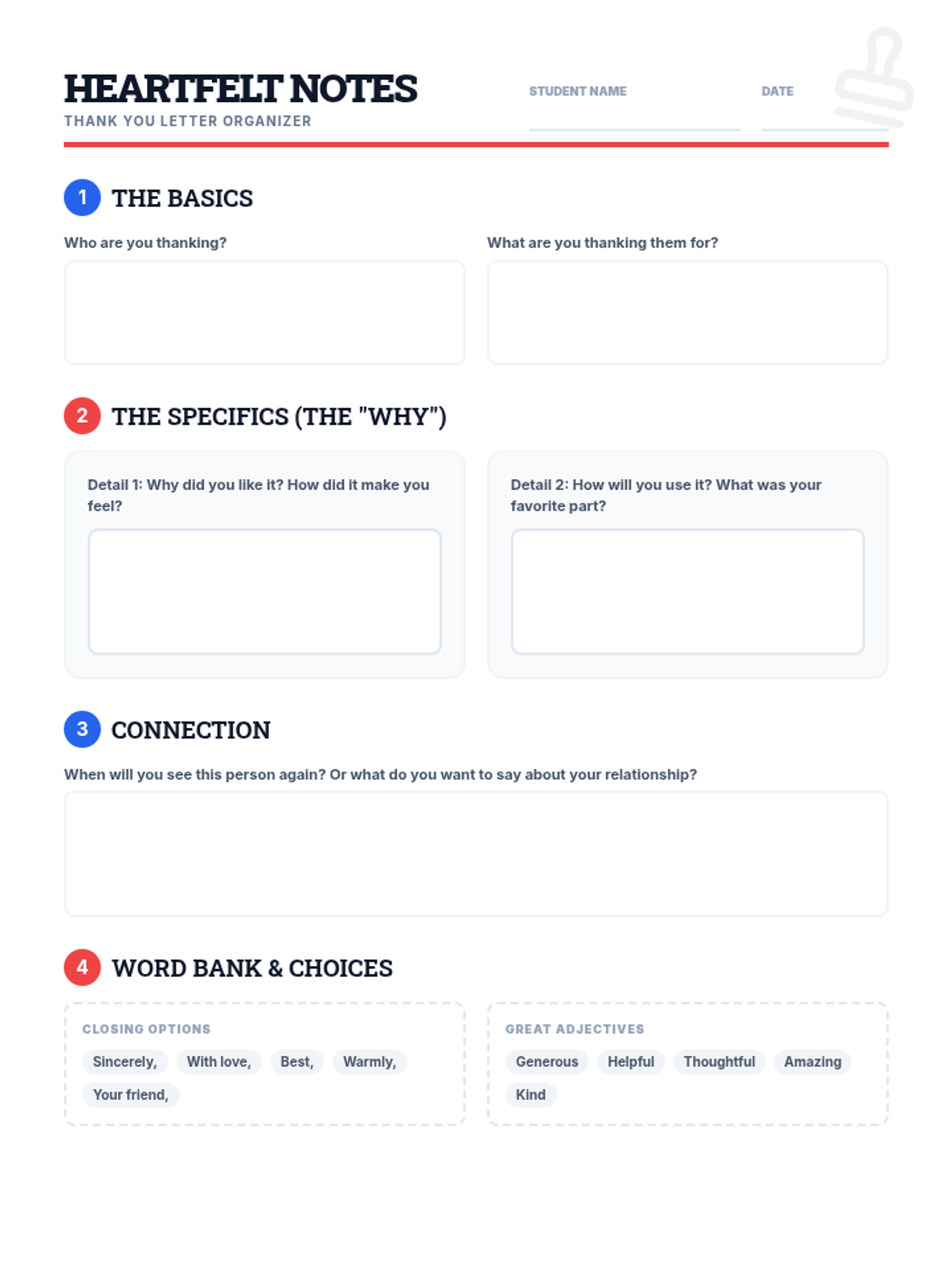
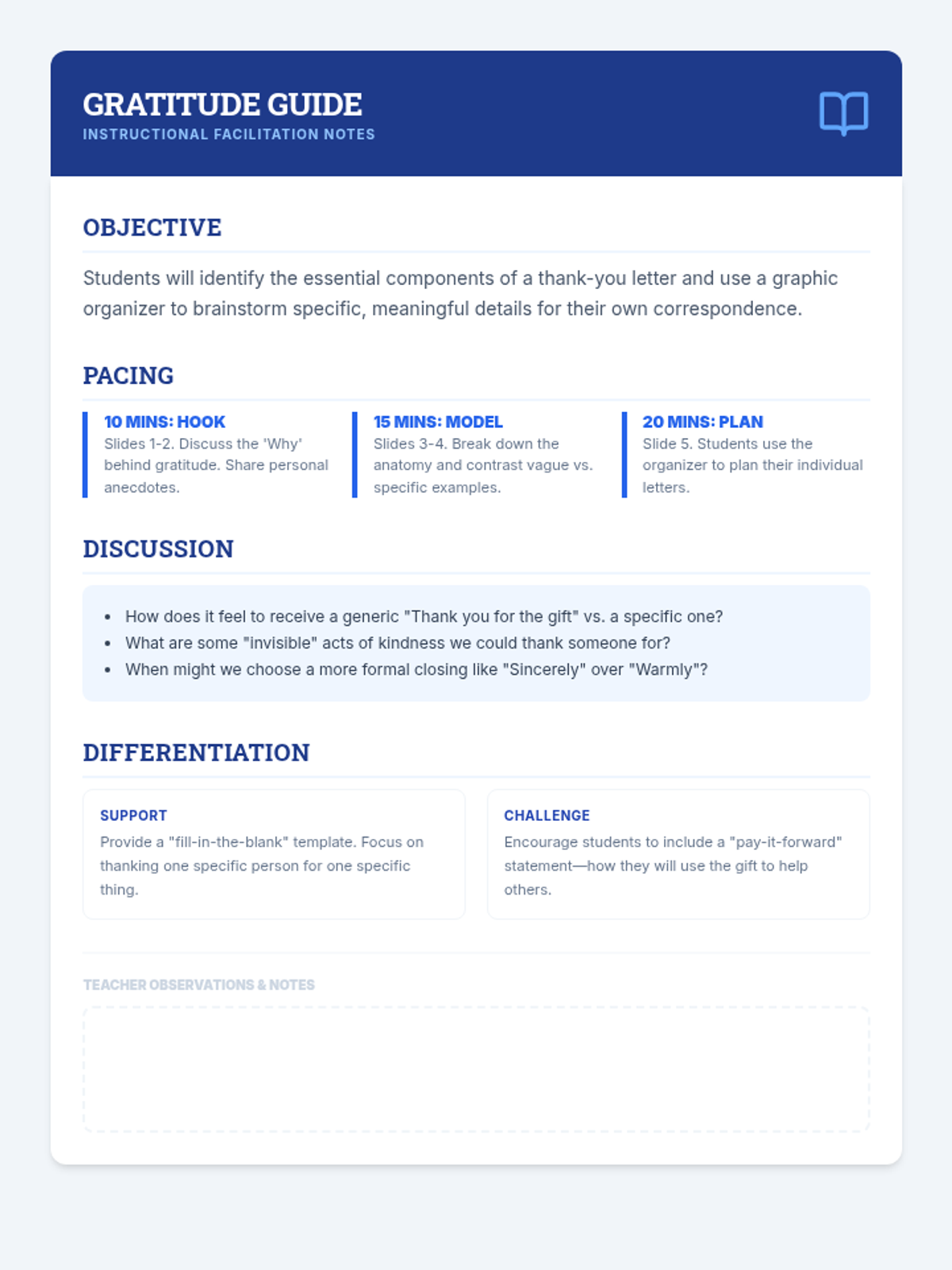
A lesson focused on the art of writing sincere thank-you letters, covering the essential components and the emotional impact of expressing gratitude.
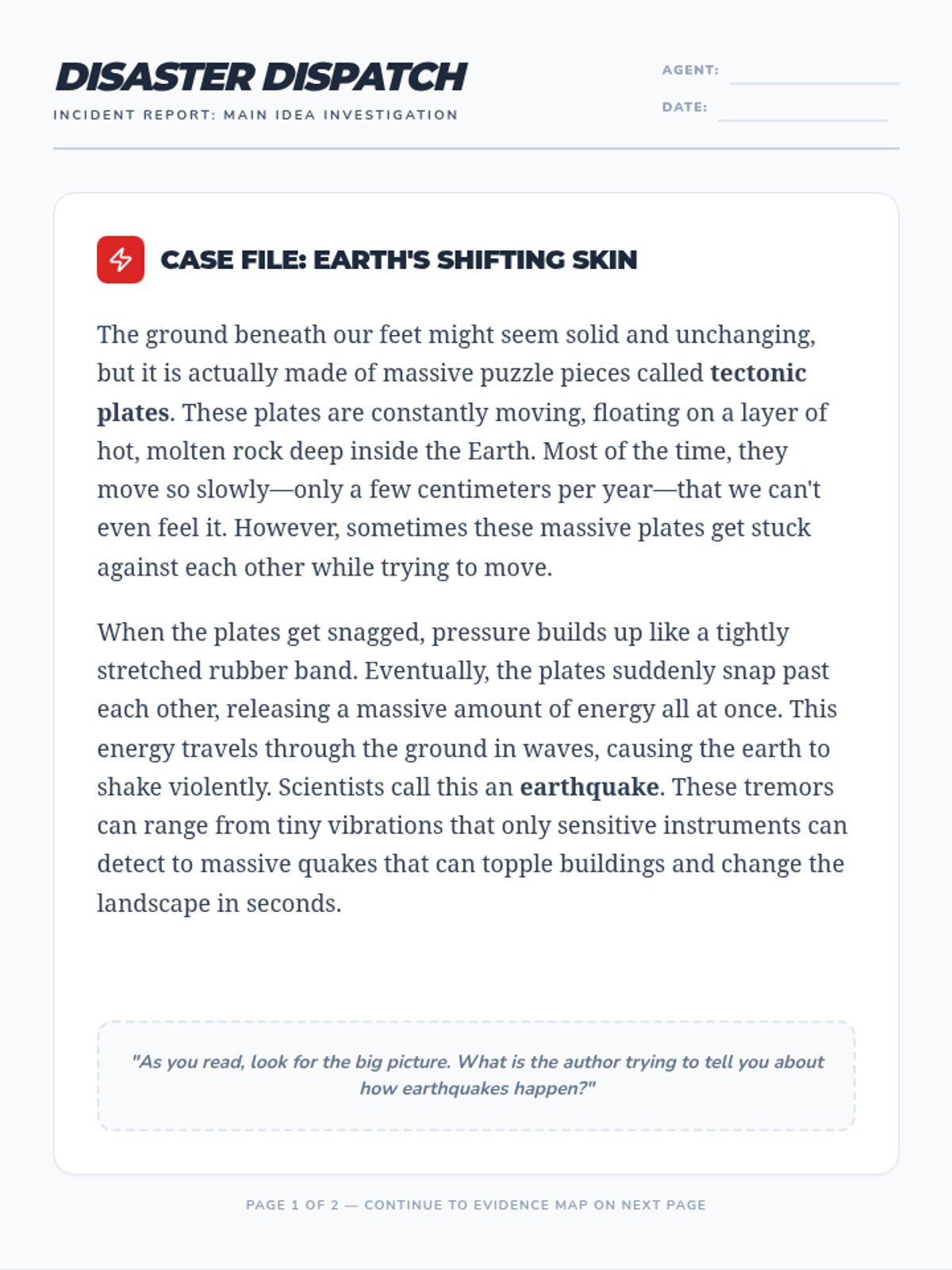
In this lesson, students practice identifying the main idea and supporting details in non-fiction texts about natural disasters. They will use a graphic organizer to map out the structure of a passage about earthquakes.
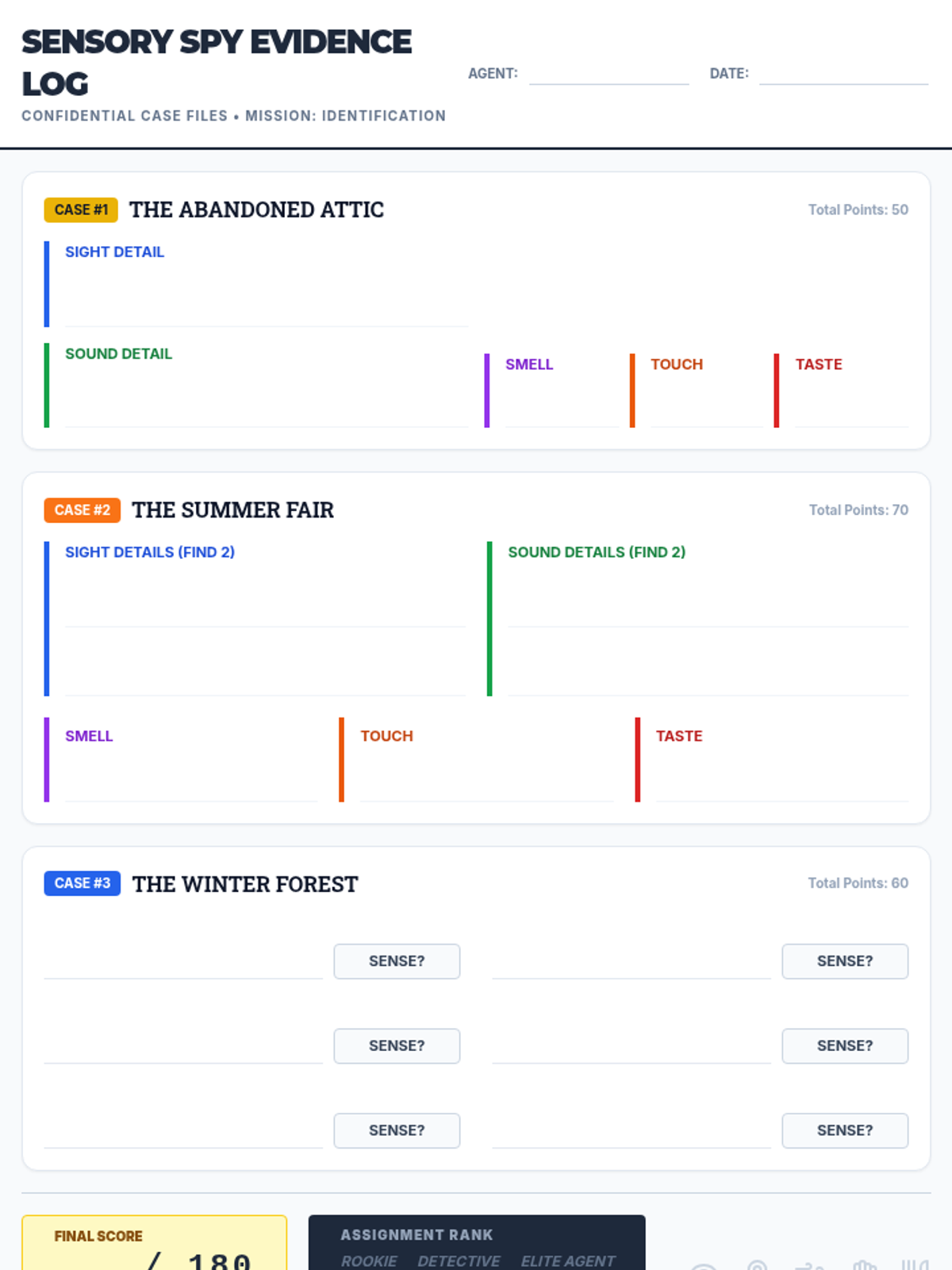
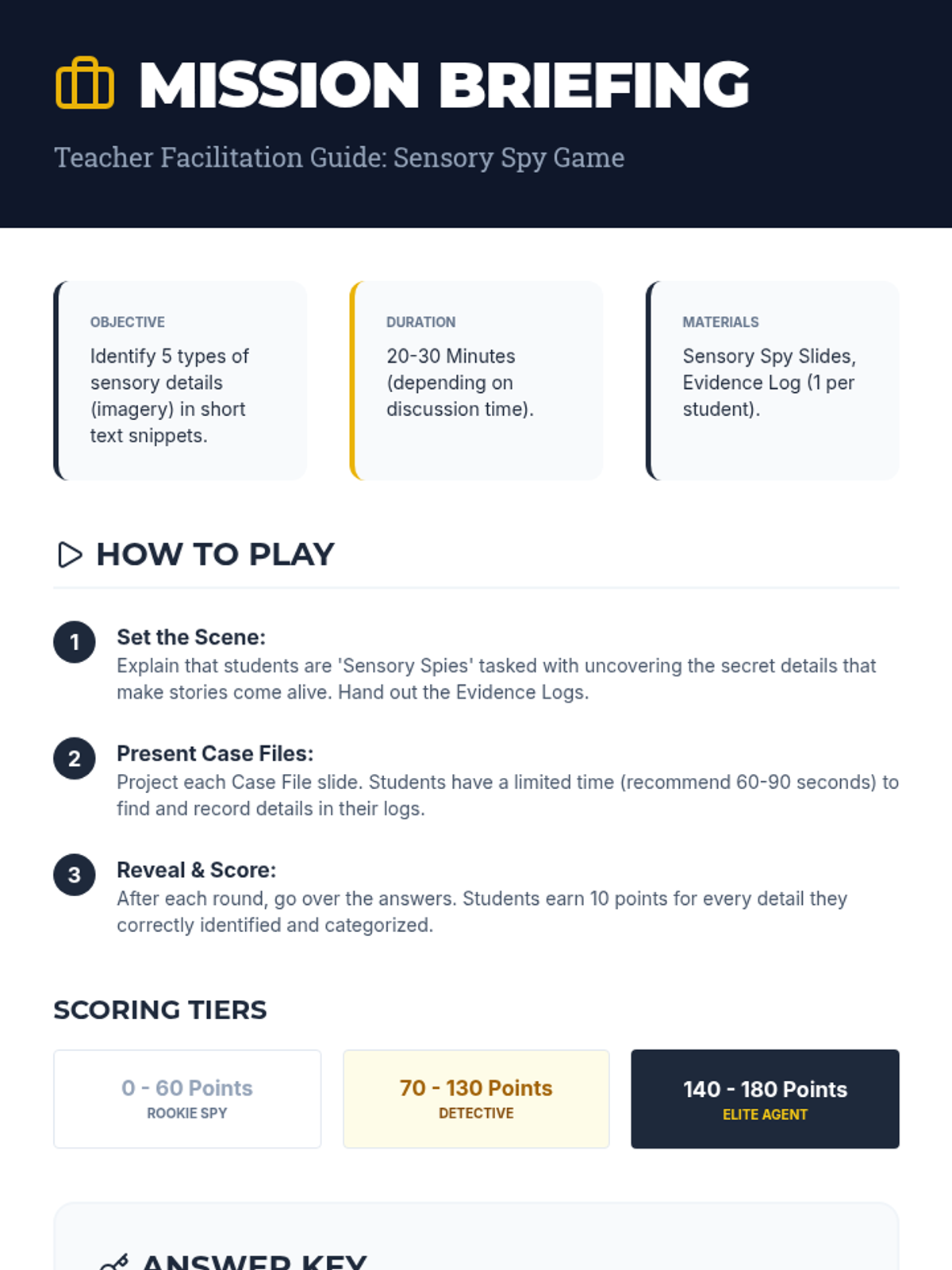
A fast-paced, interactive game where students become 'Sensory Spies' to track down descriptive language in high-interest short story snippets. Students compete to identify sights, sounds, smells, tastes, and textures hidden within case files.
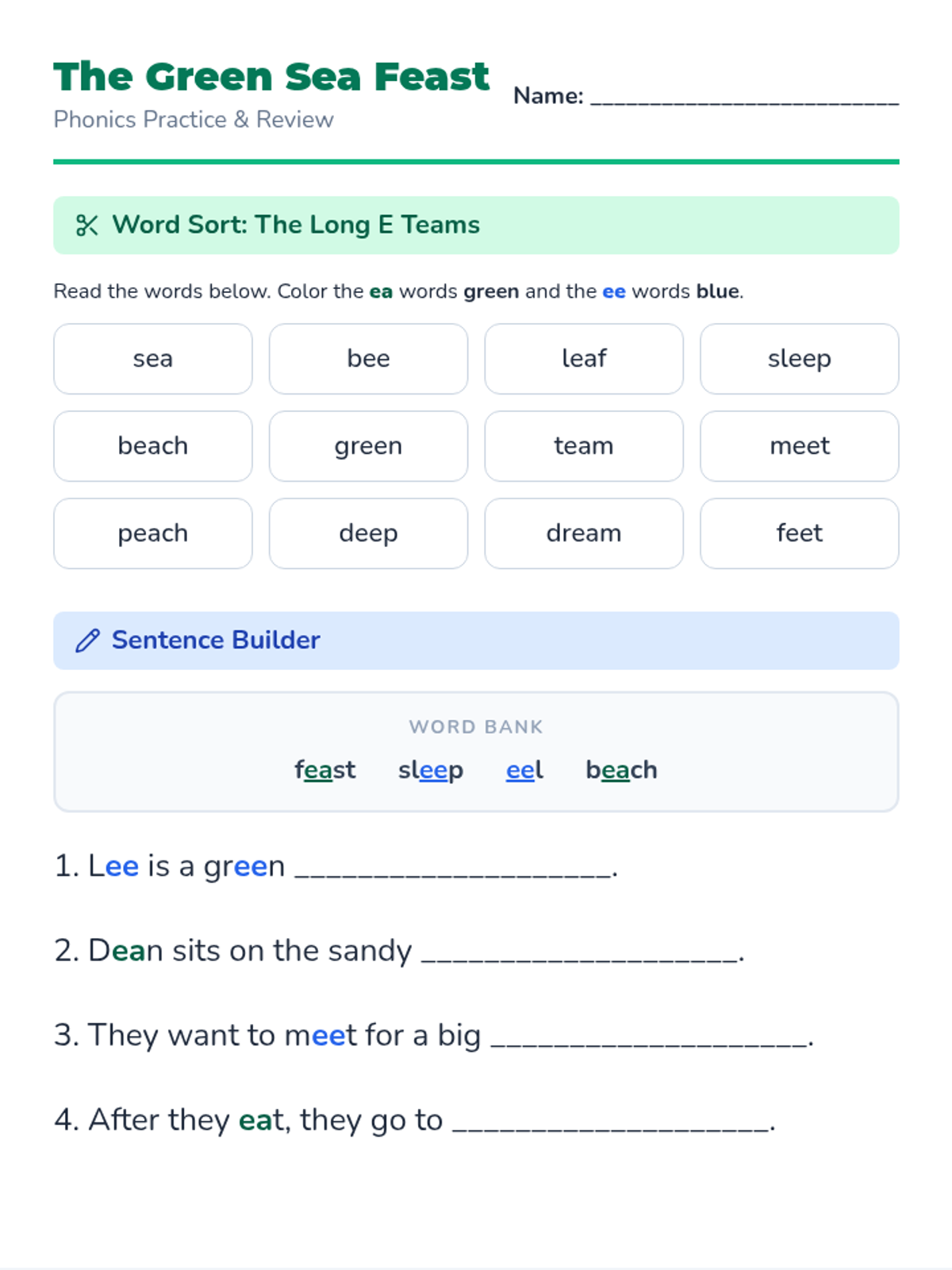
A Grade 2 literacy lesson focused on the long 'e' vowel teams 'ea' and 'ee' through a multi-page story, visual slides, and interactive practice.
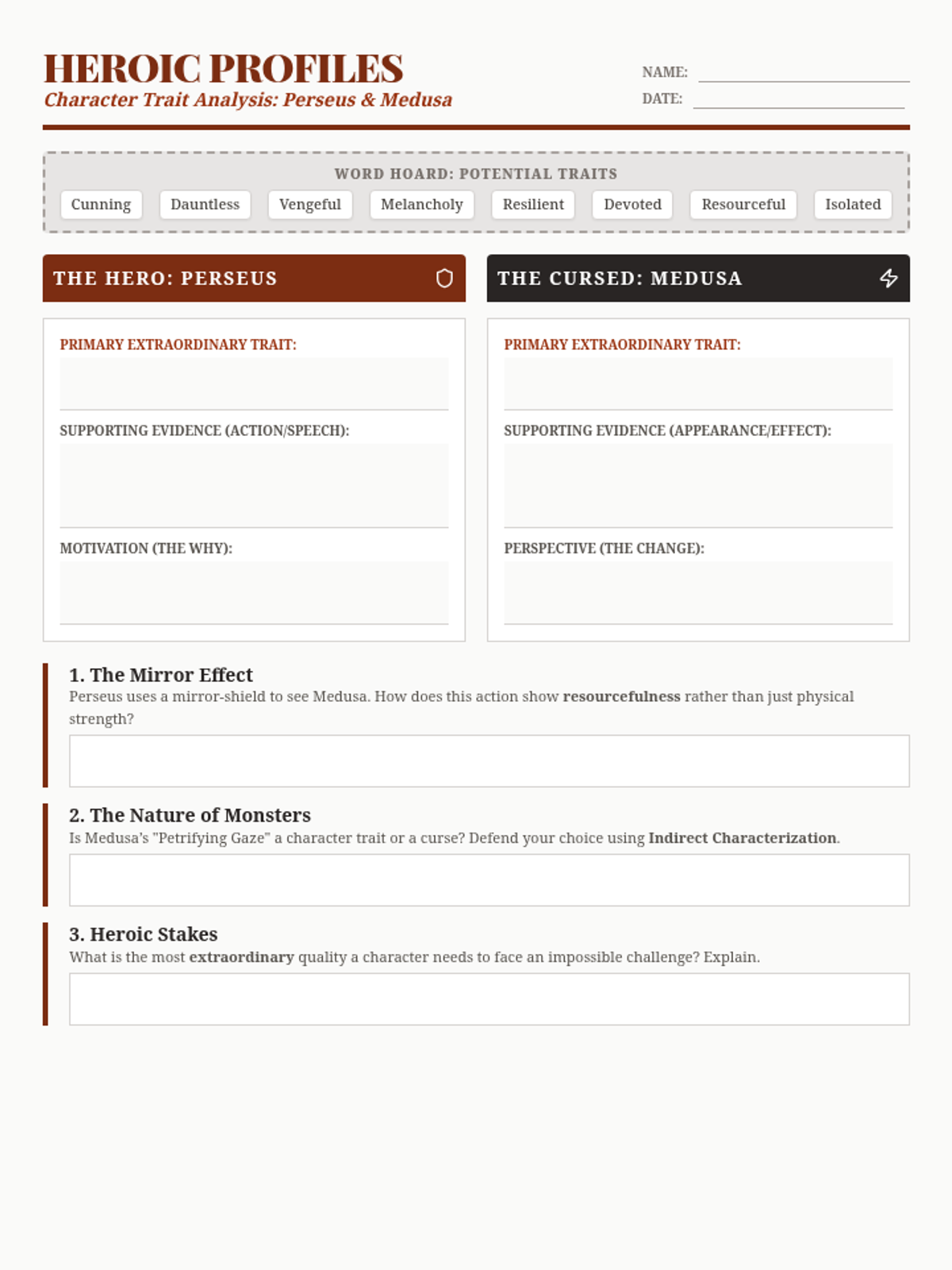
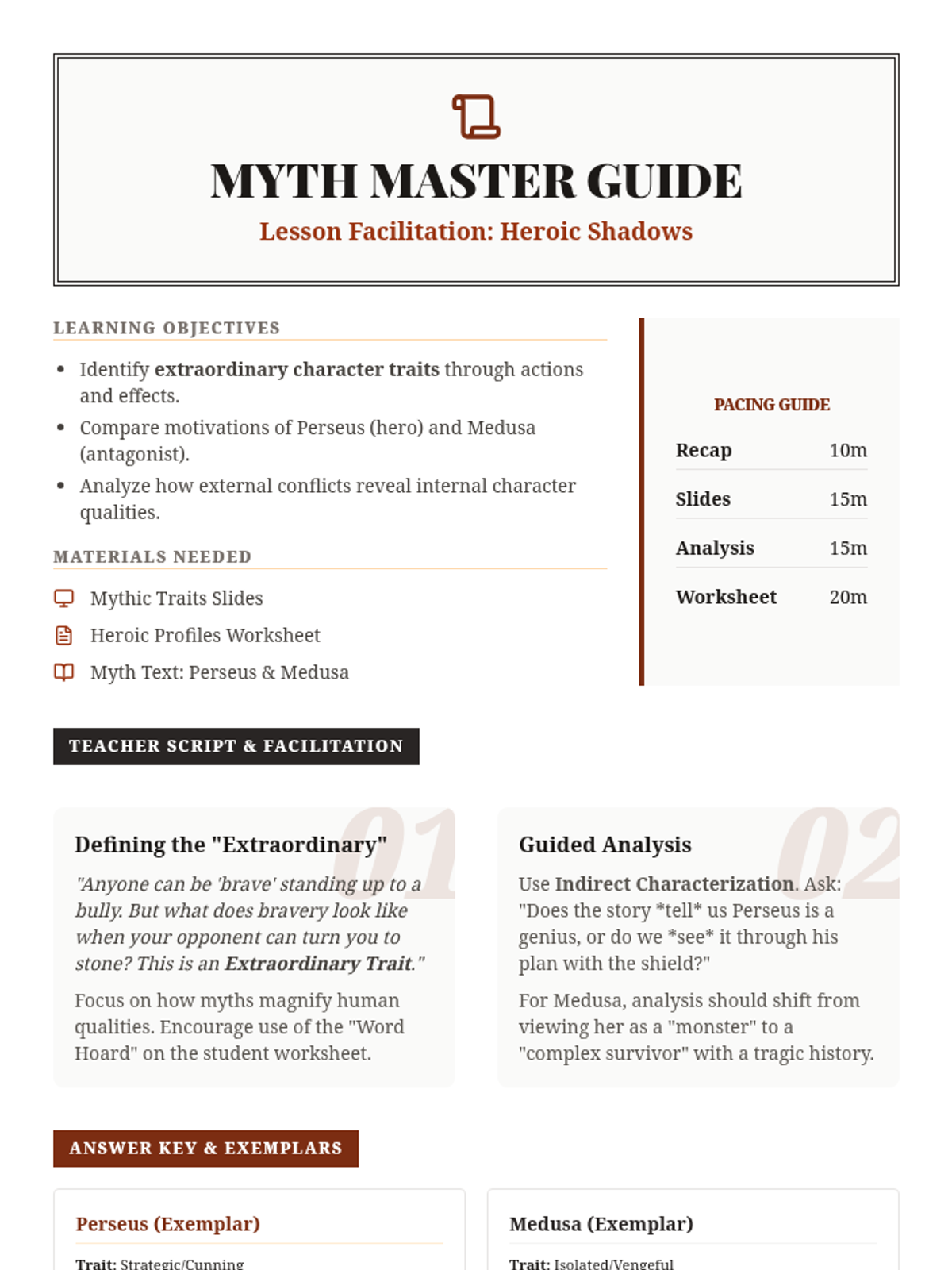
An analysis of character traits through the Greek myth of Perseus and Medusa, focusing on how extraordinary circumstances reveal inner qualities.
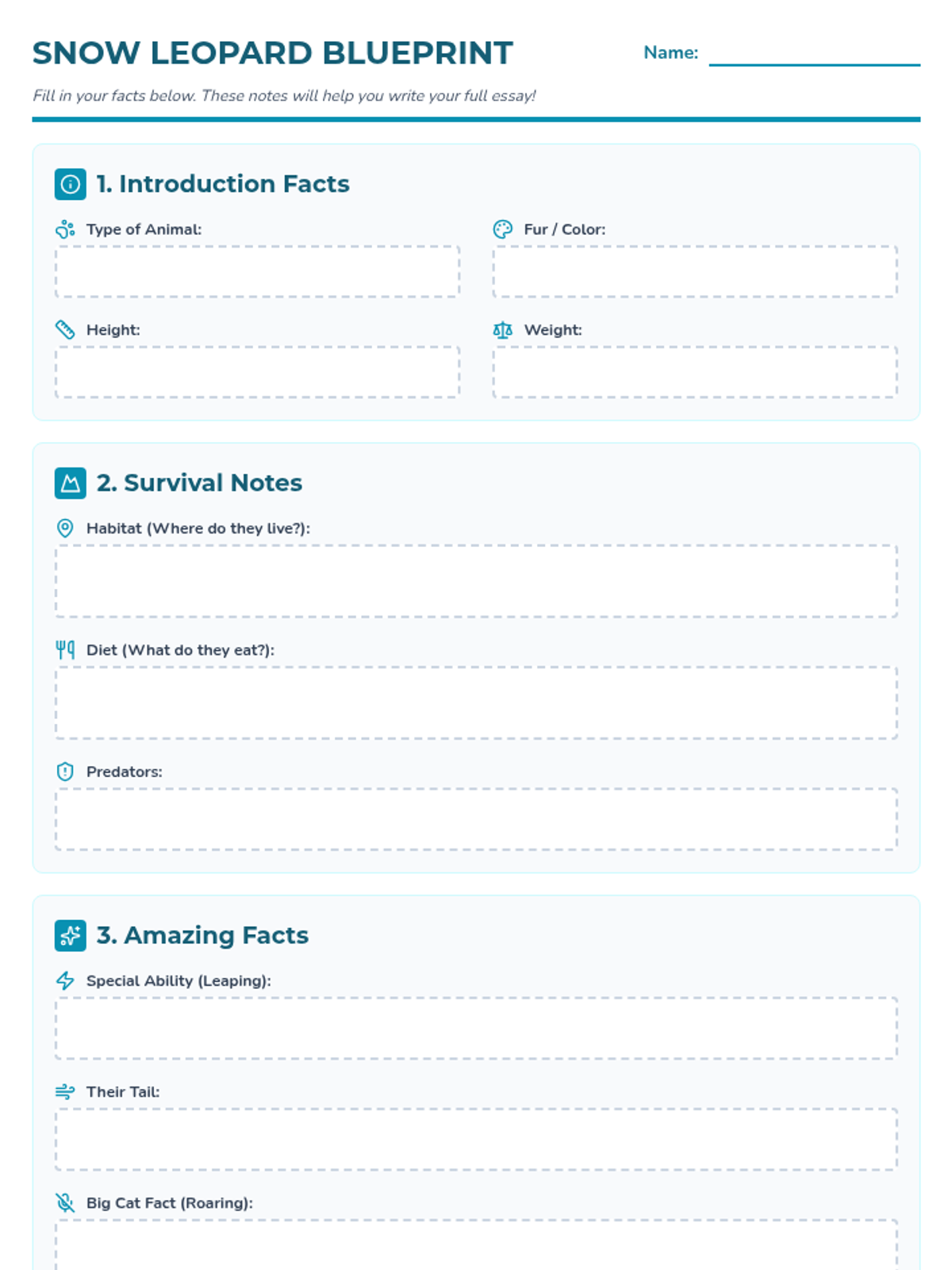
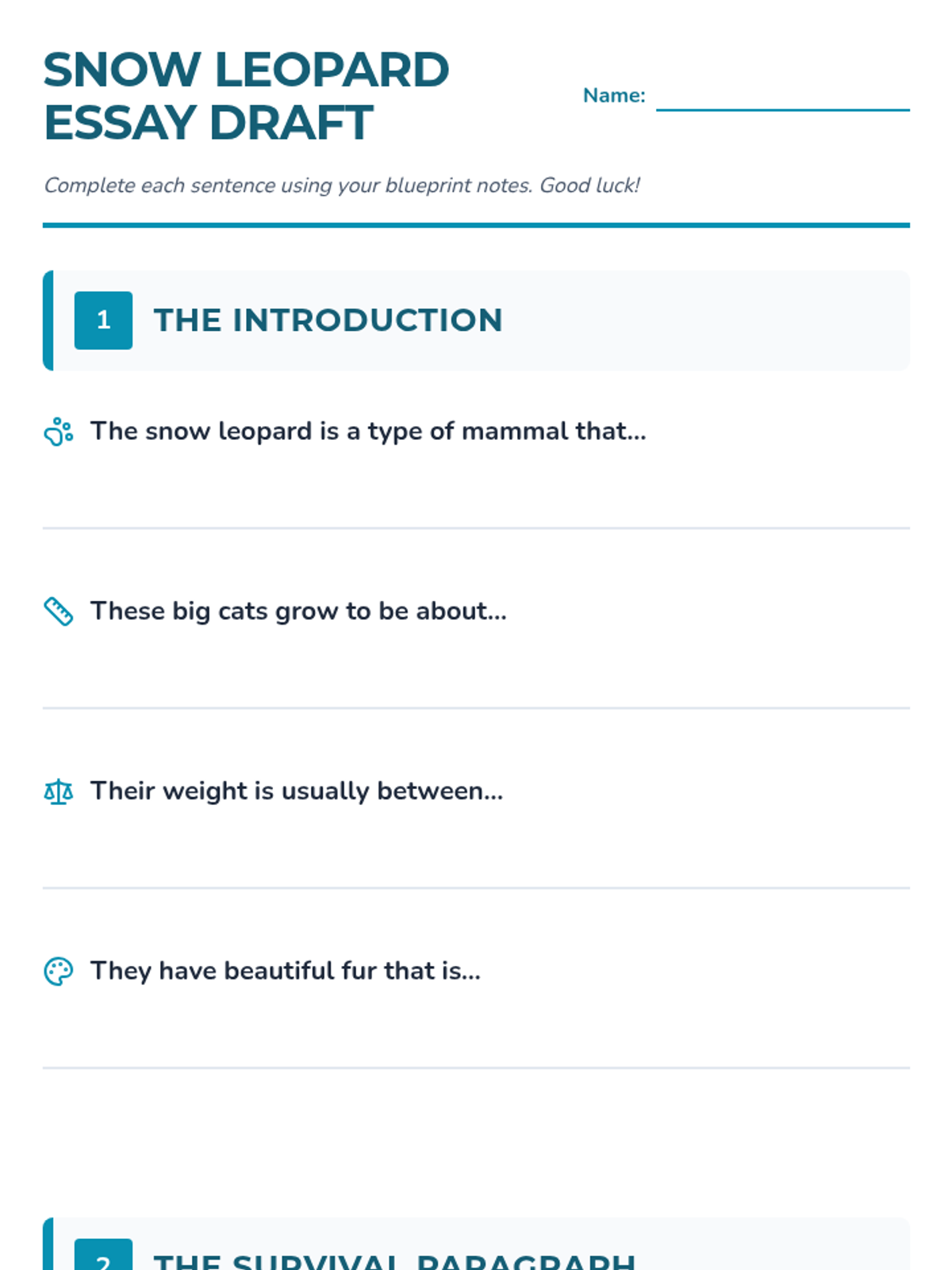
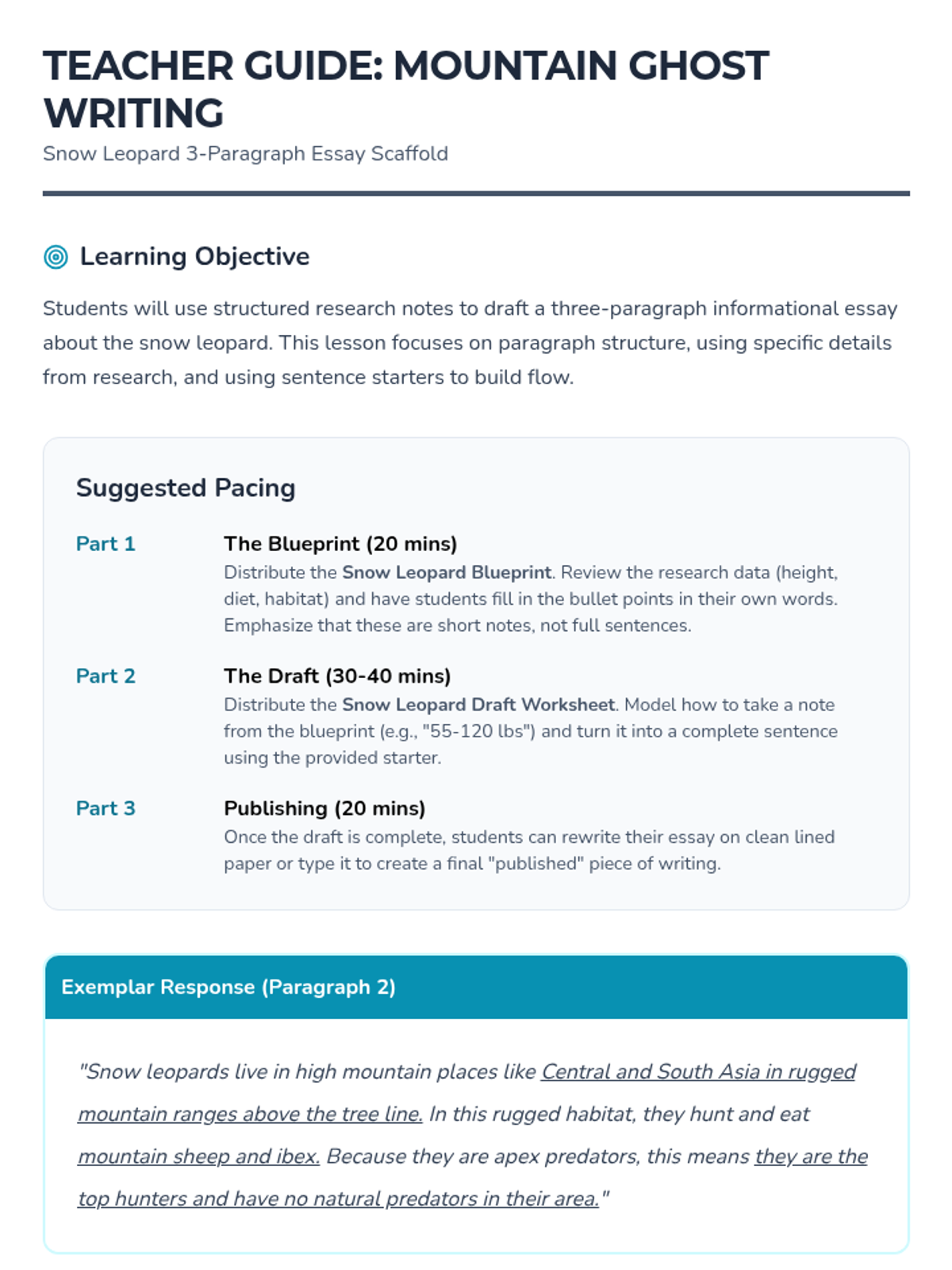
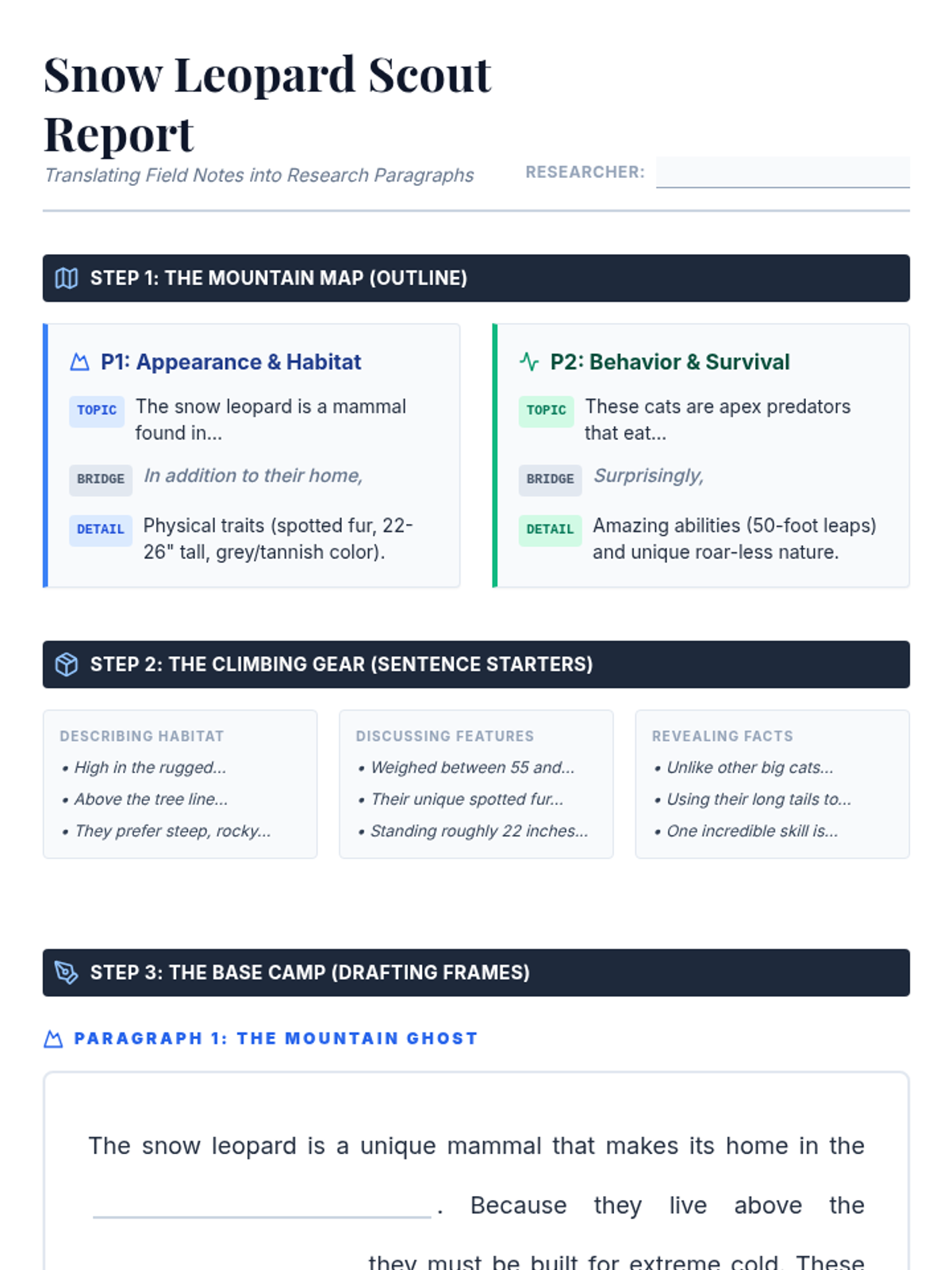
A scaffolded writing lesson designed to help students transition from research notes to a structured three-paragraph essay about the snow leopard. It includes a visual graphic organizer and a sentence-starter drafting sheet.
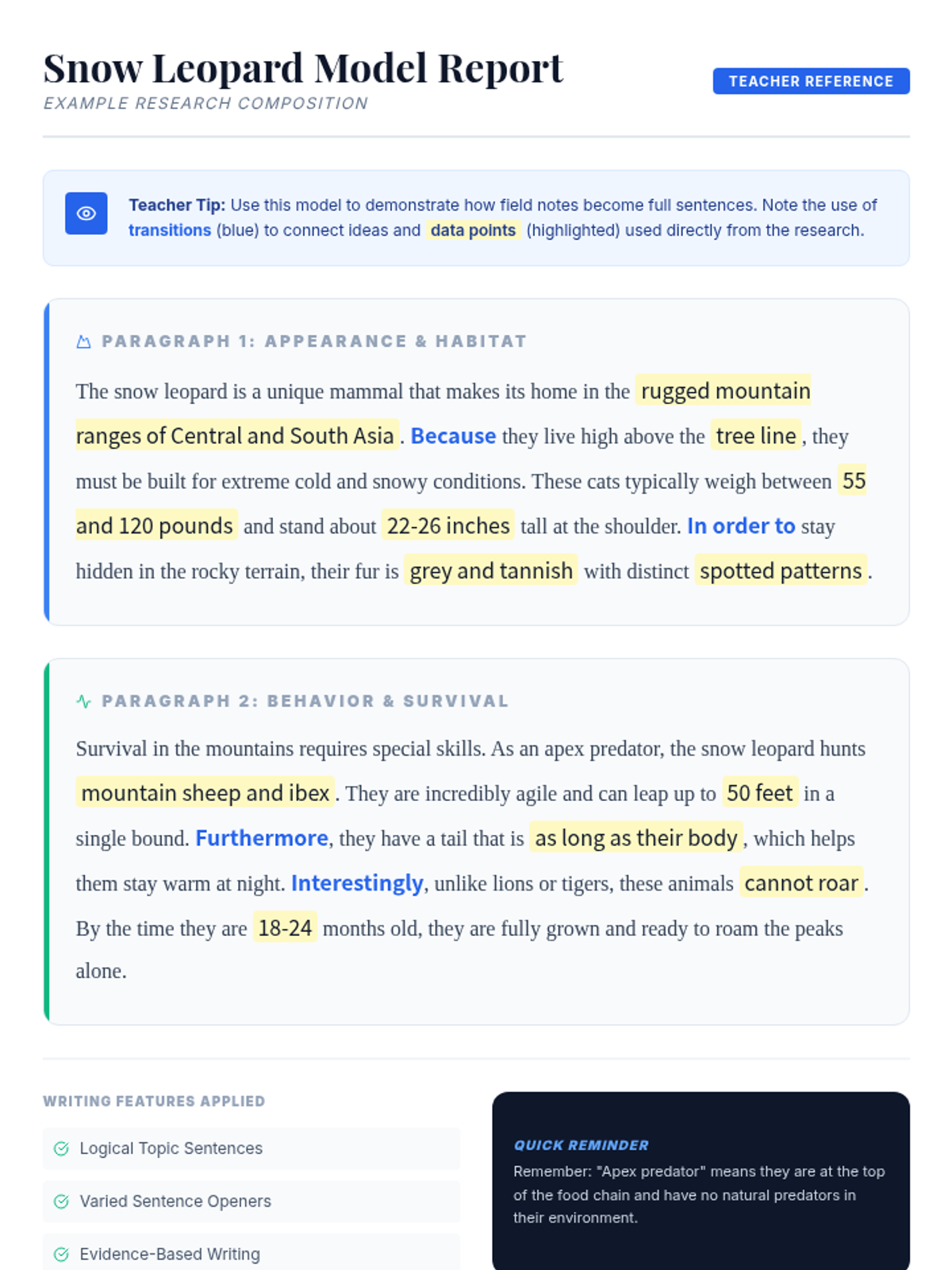
A lesson focused on transforming animal research notes into cohesive, descriptive paragraphs using structured writing supports like outlines and paragraph frames.