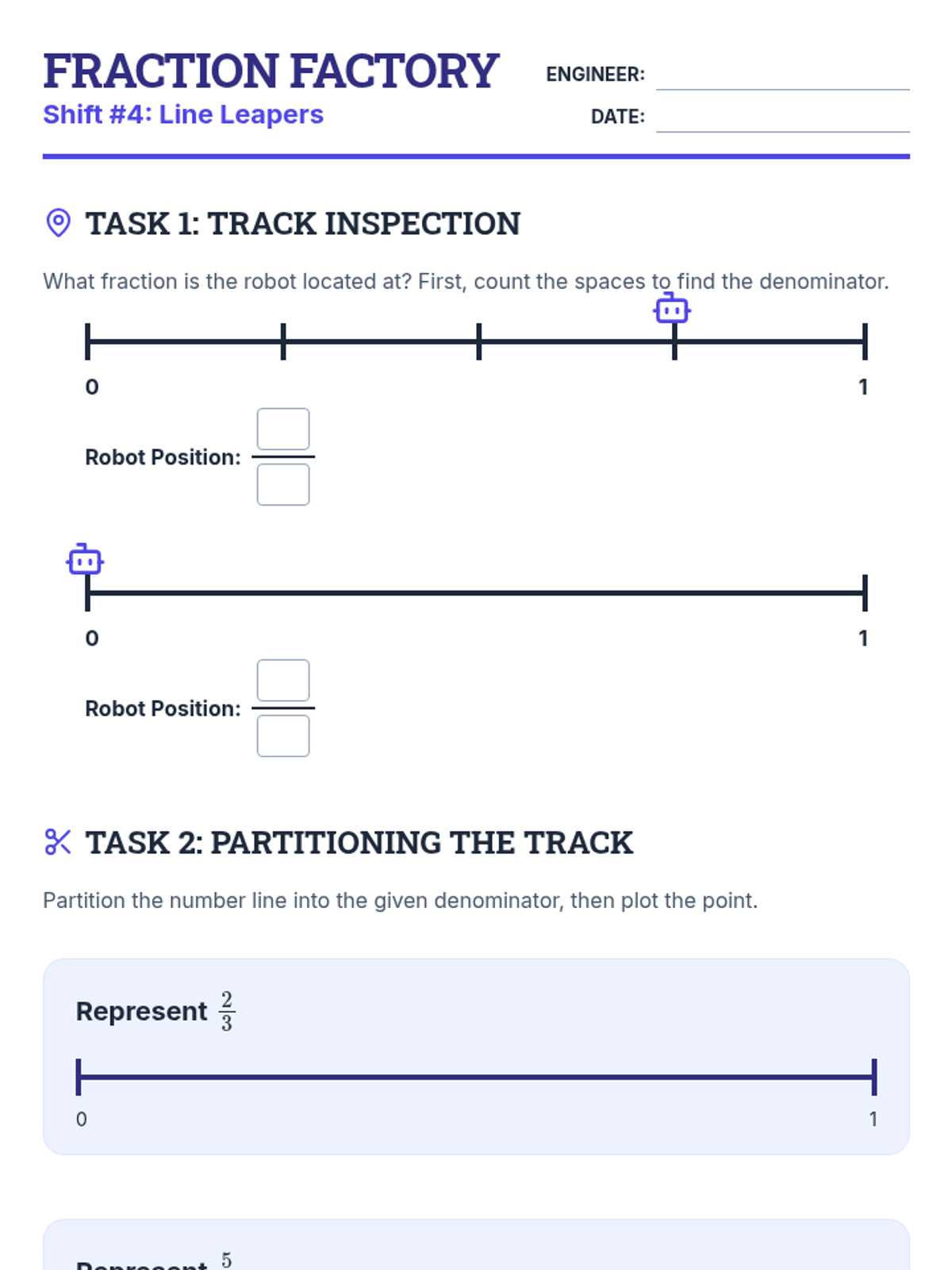
A 5-day spiral review focused on Arizona standard 3.NF.A.2, helping students master representing and identifying fractions on a number line through standardized test-style questions.
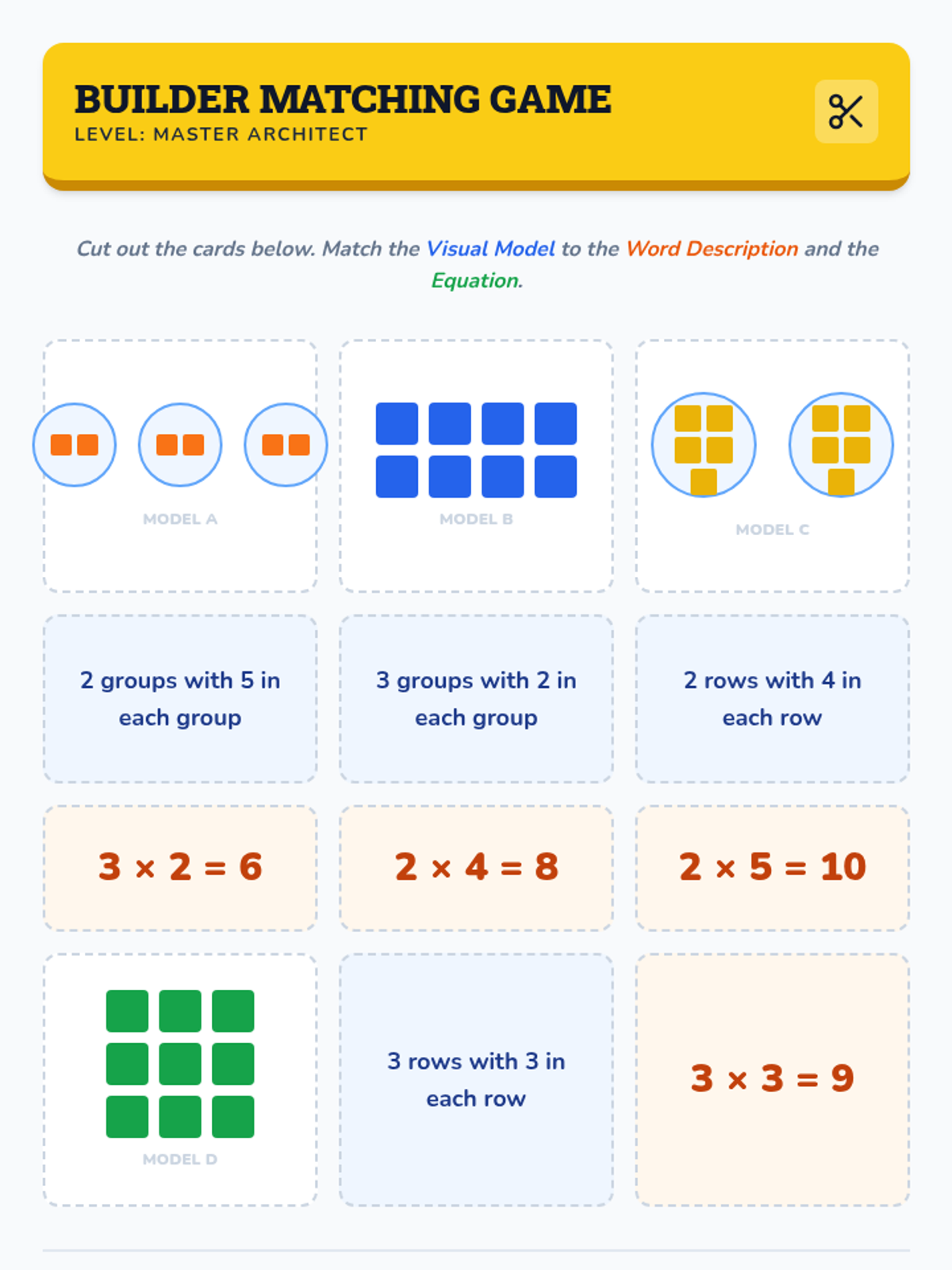
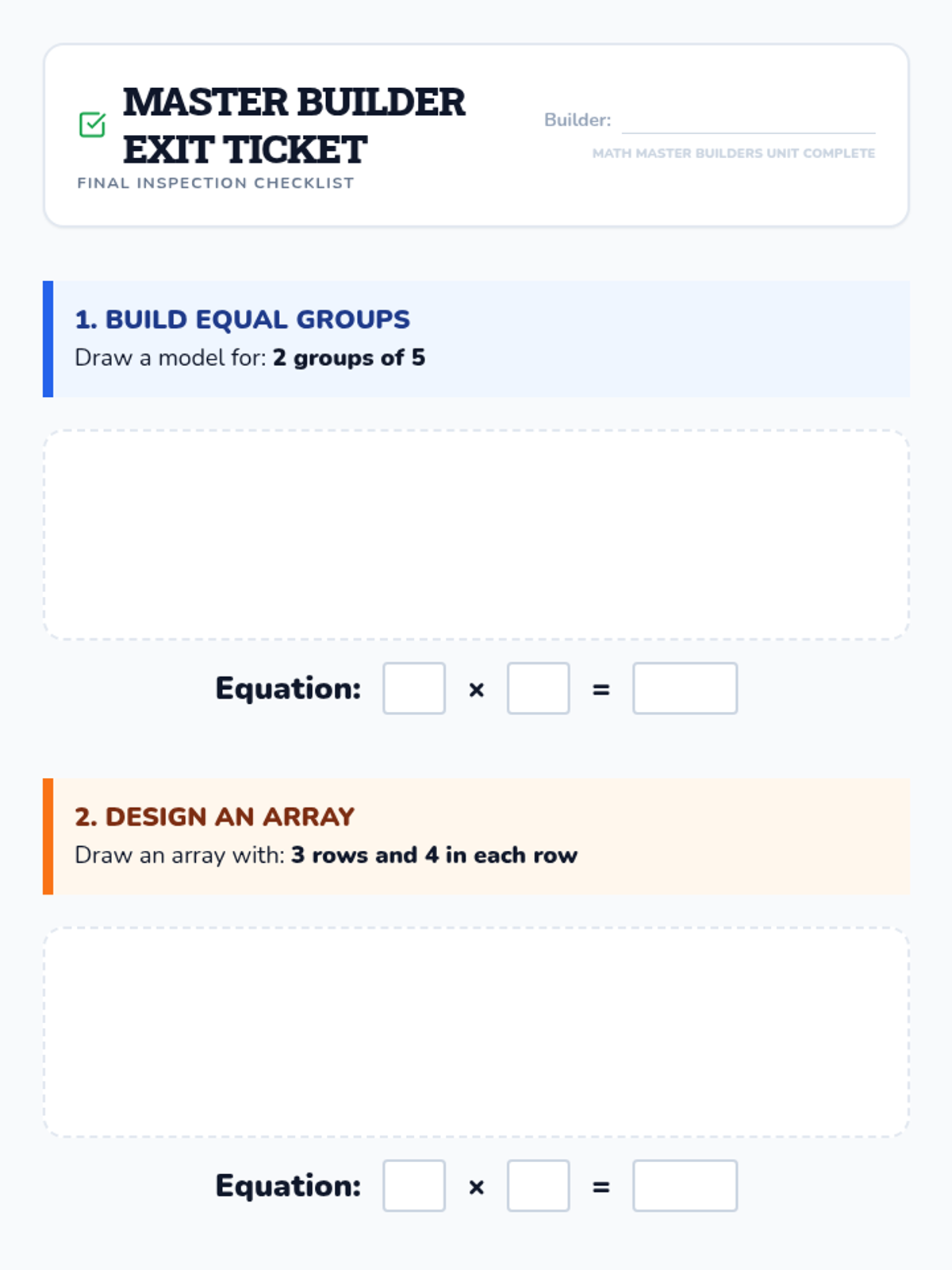
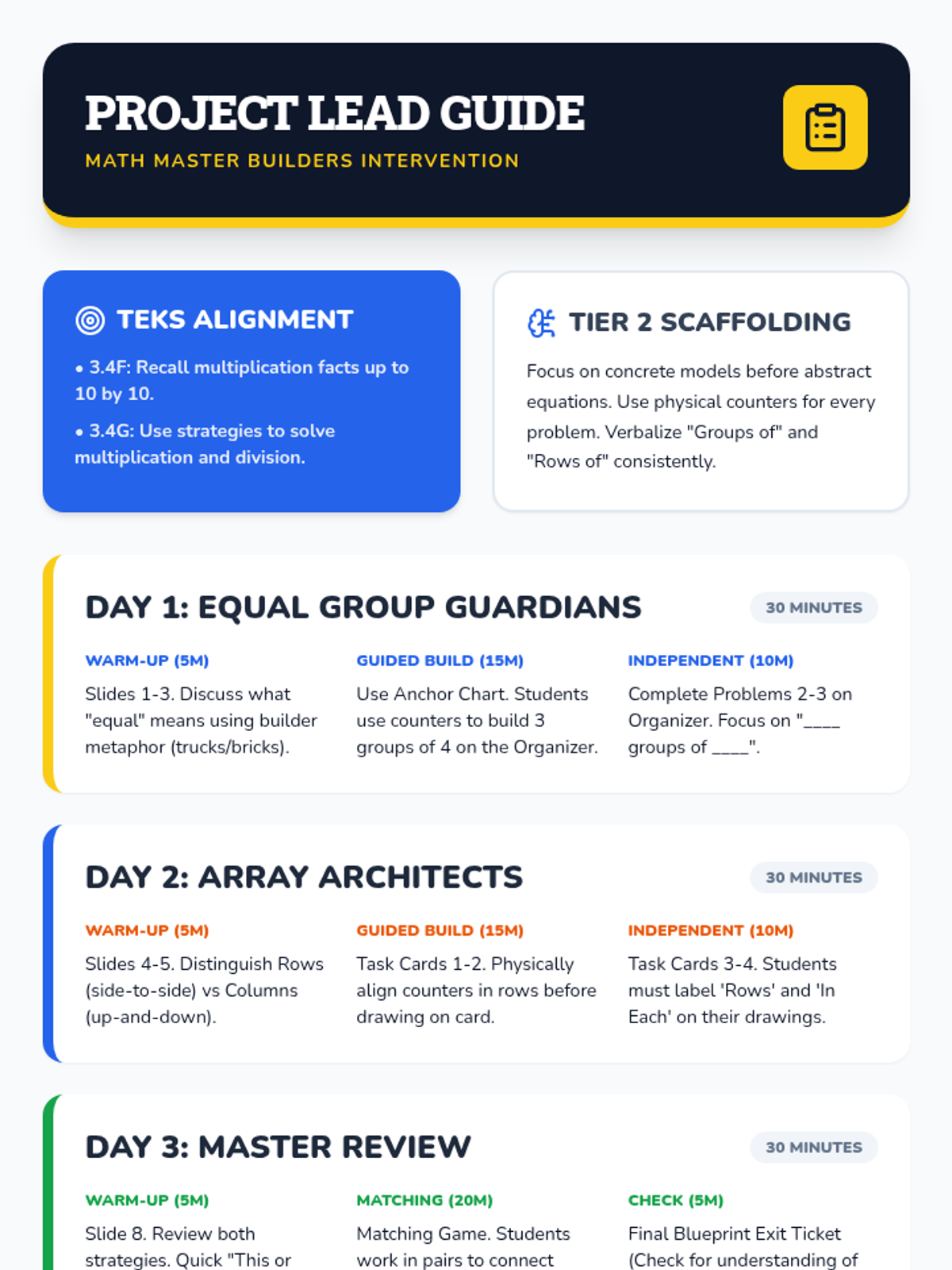
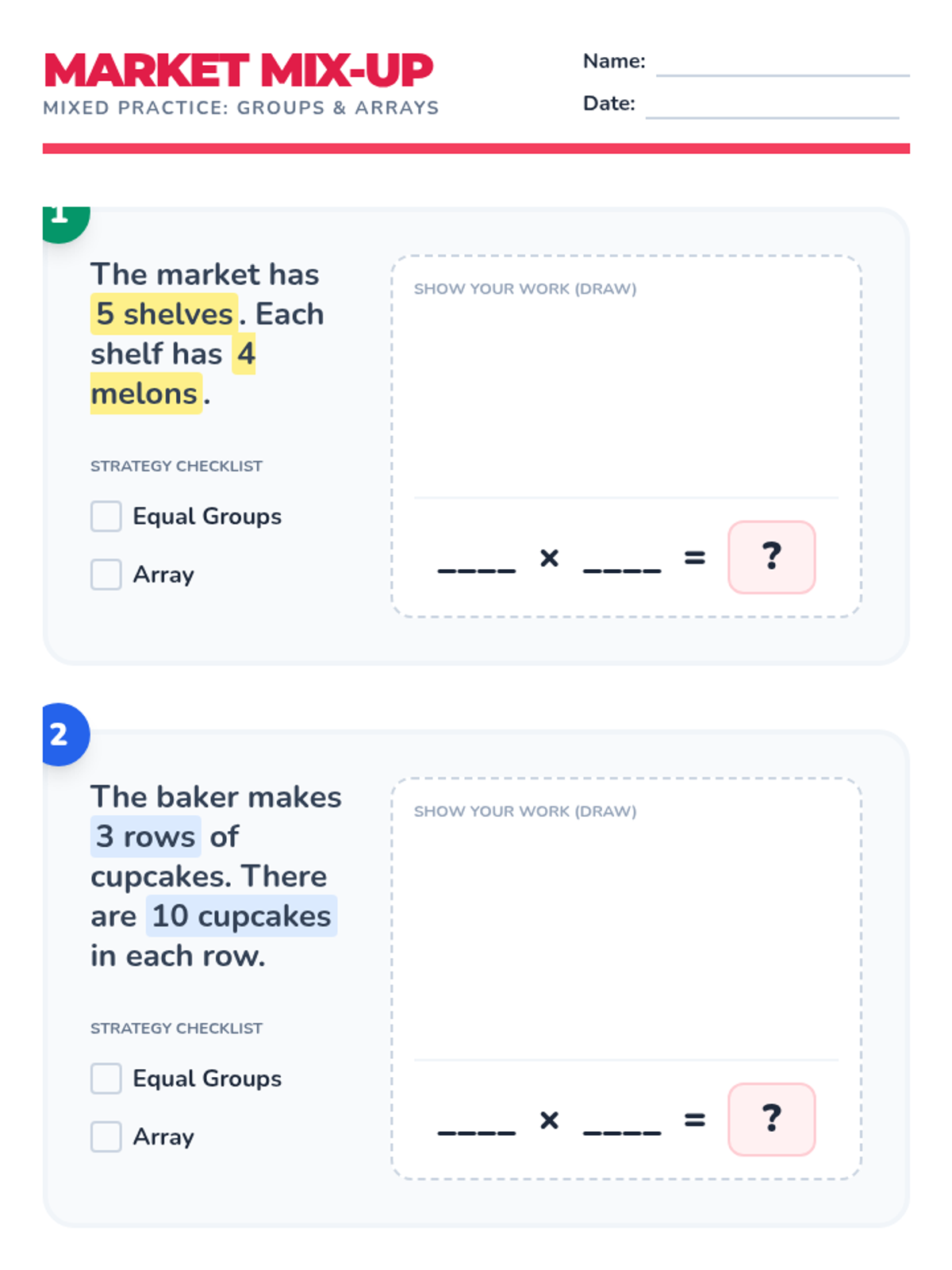
A cumulative review session where students mix groups and arrays to solve problems, culminating in a matching challenge to solidify conceptual understanding.
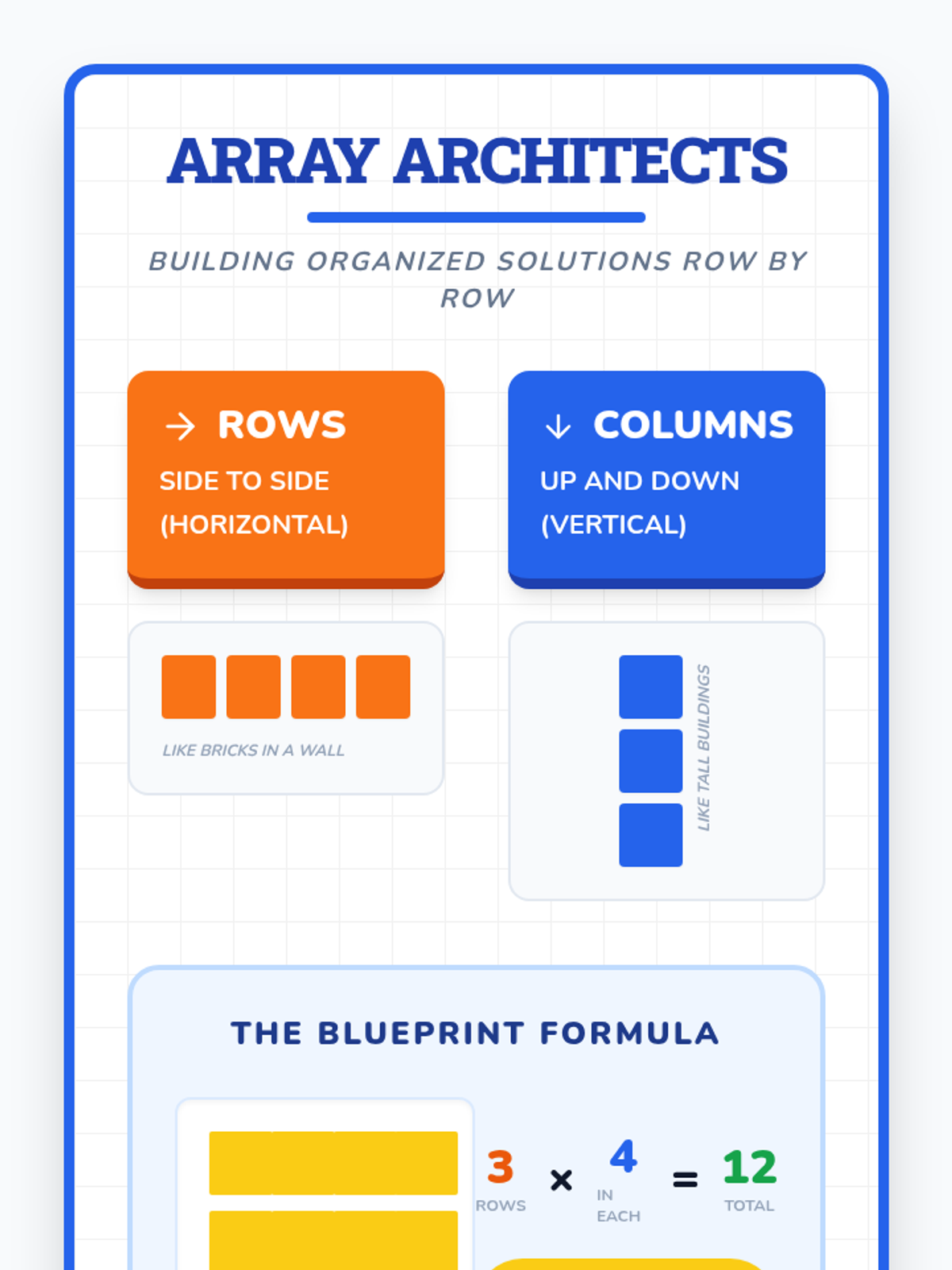
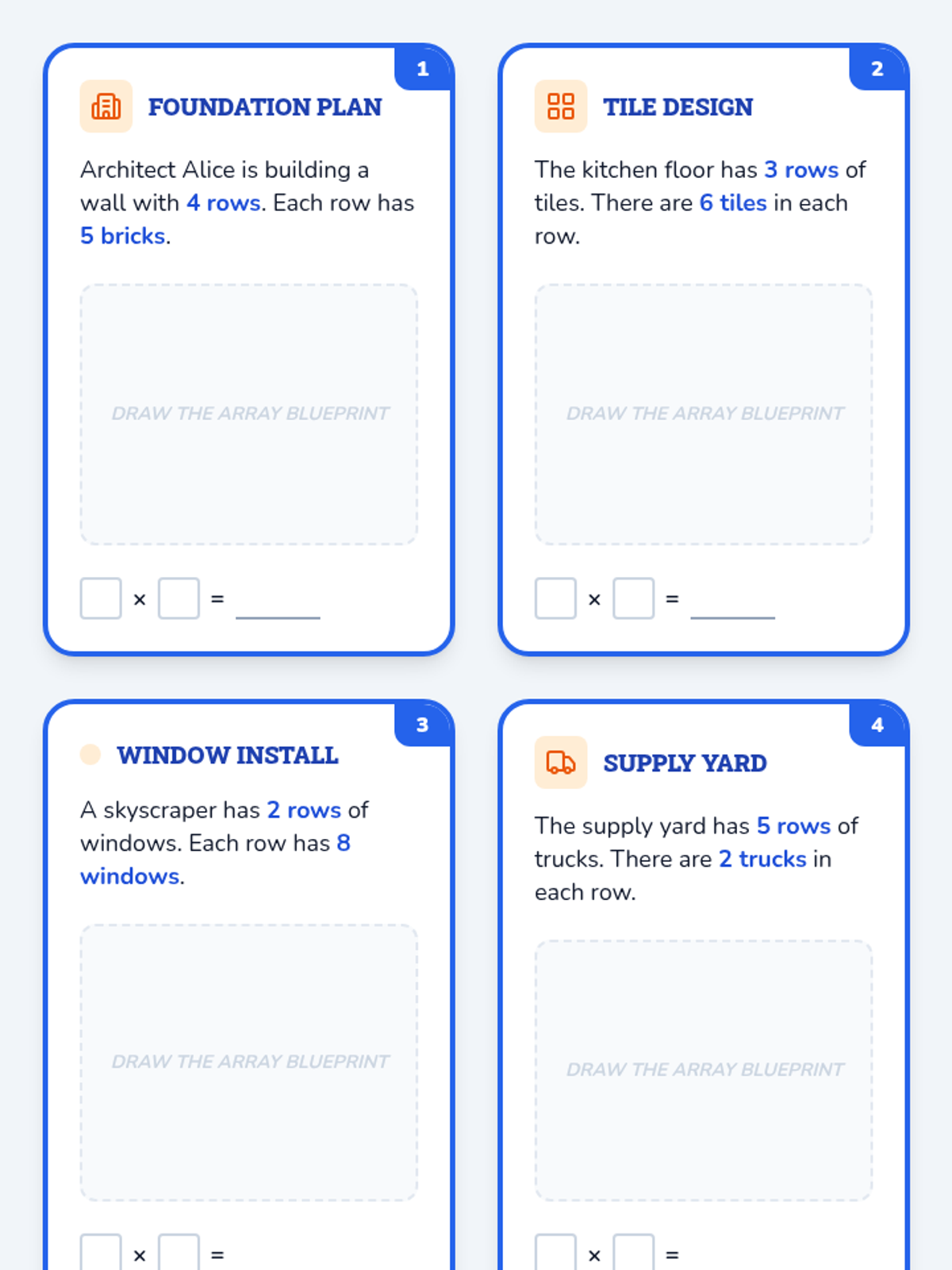
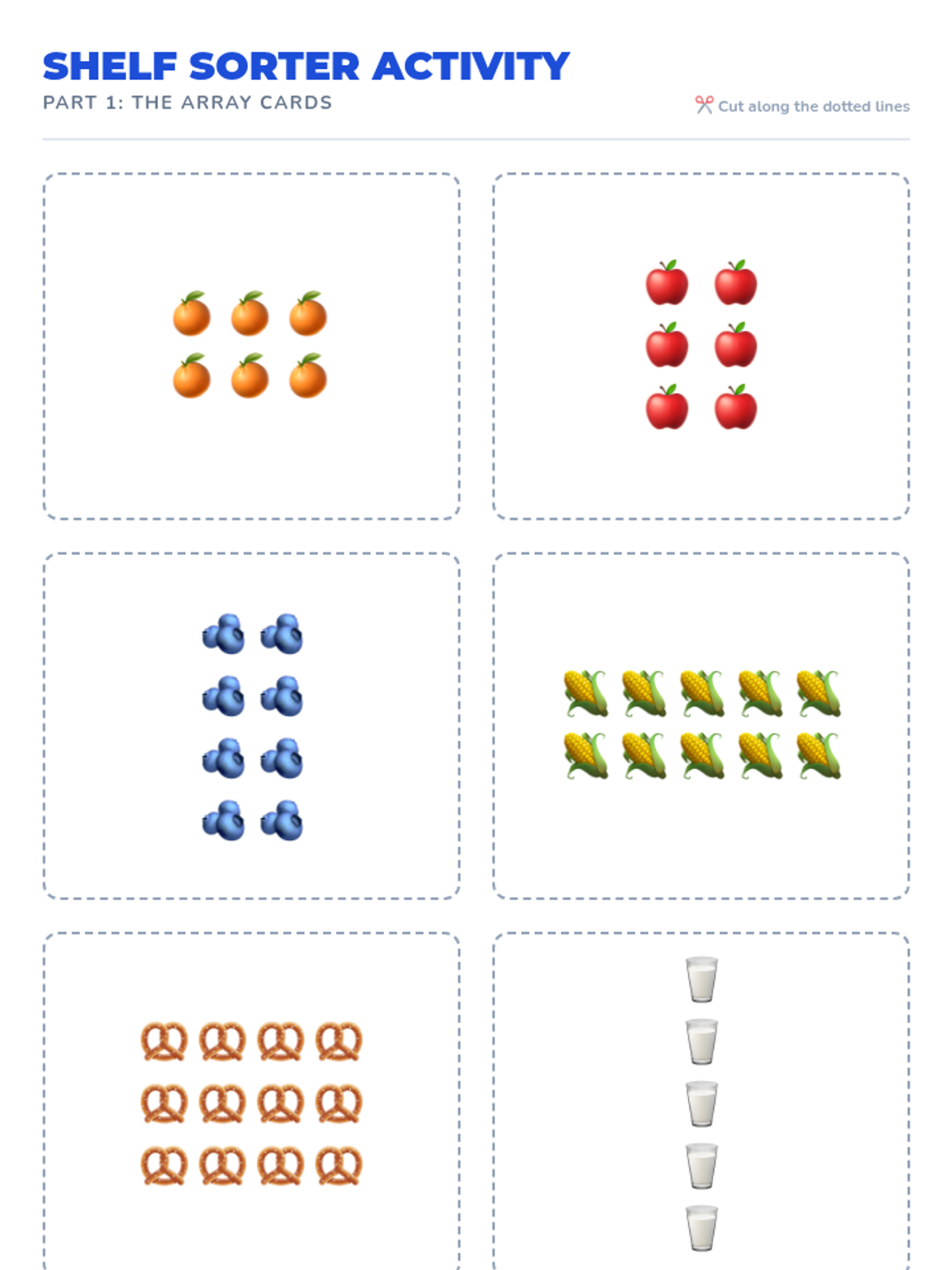
Focuses on building and analyzing arrays as a strategy for multiplication and division, supported by architectural-themed task cards and anchor charts.
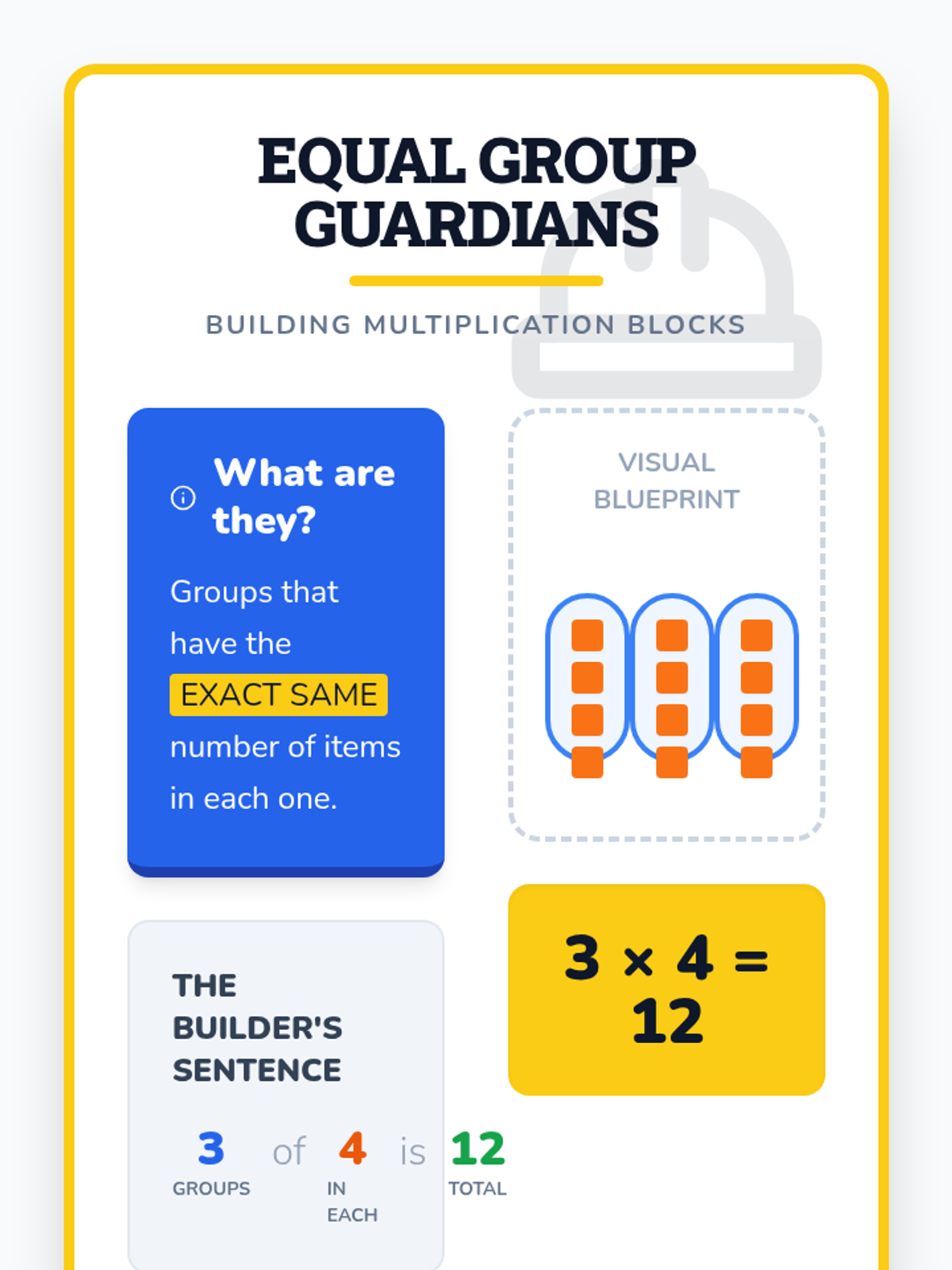
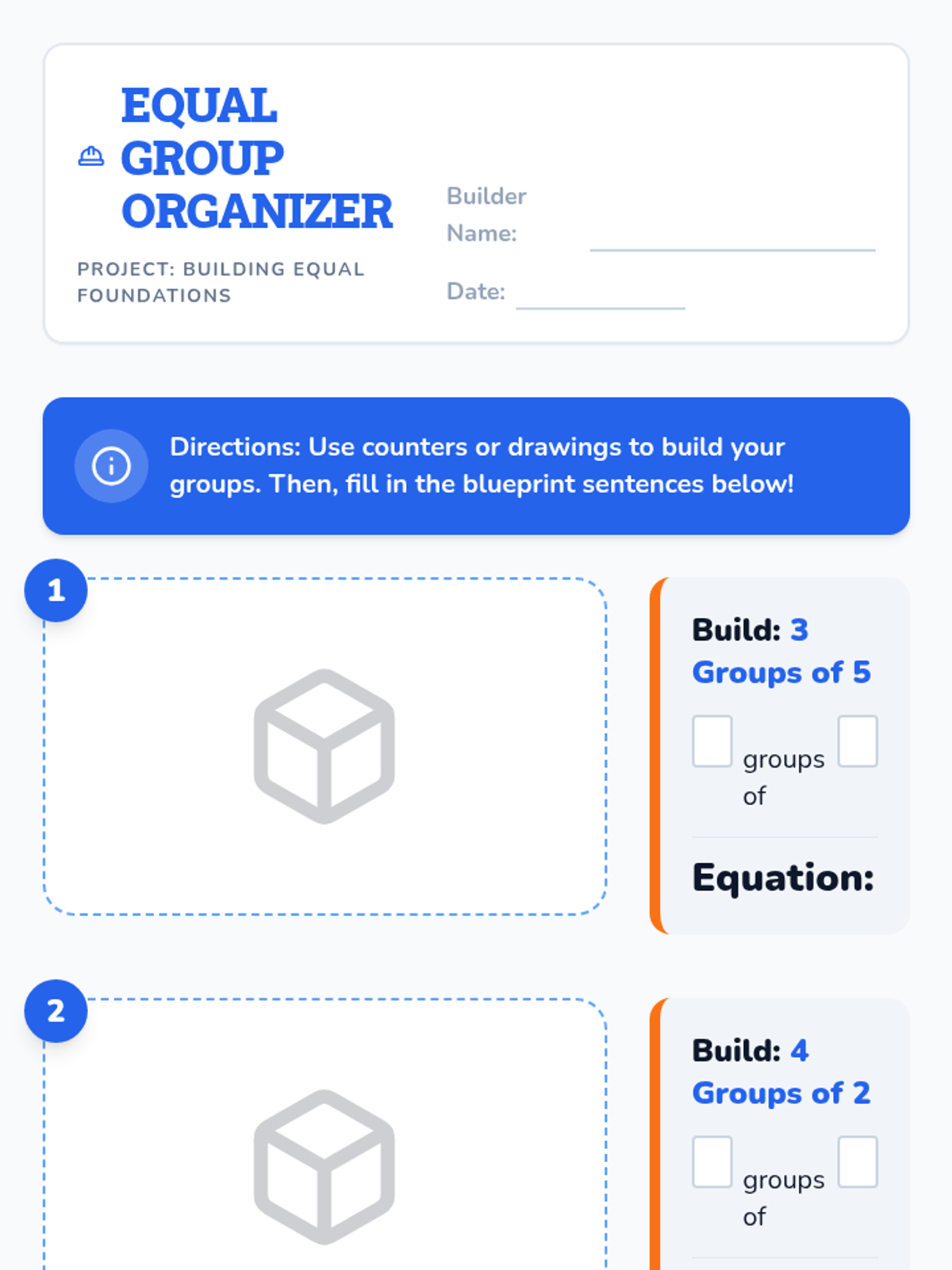
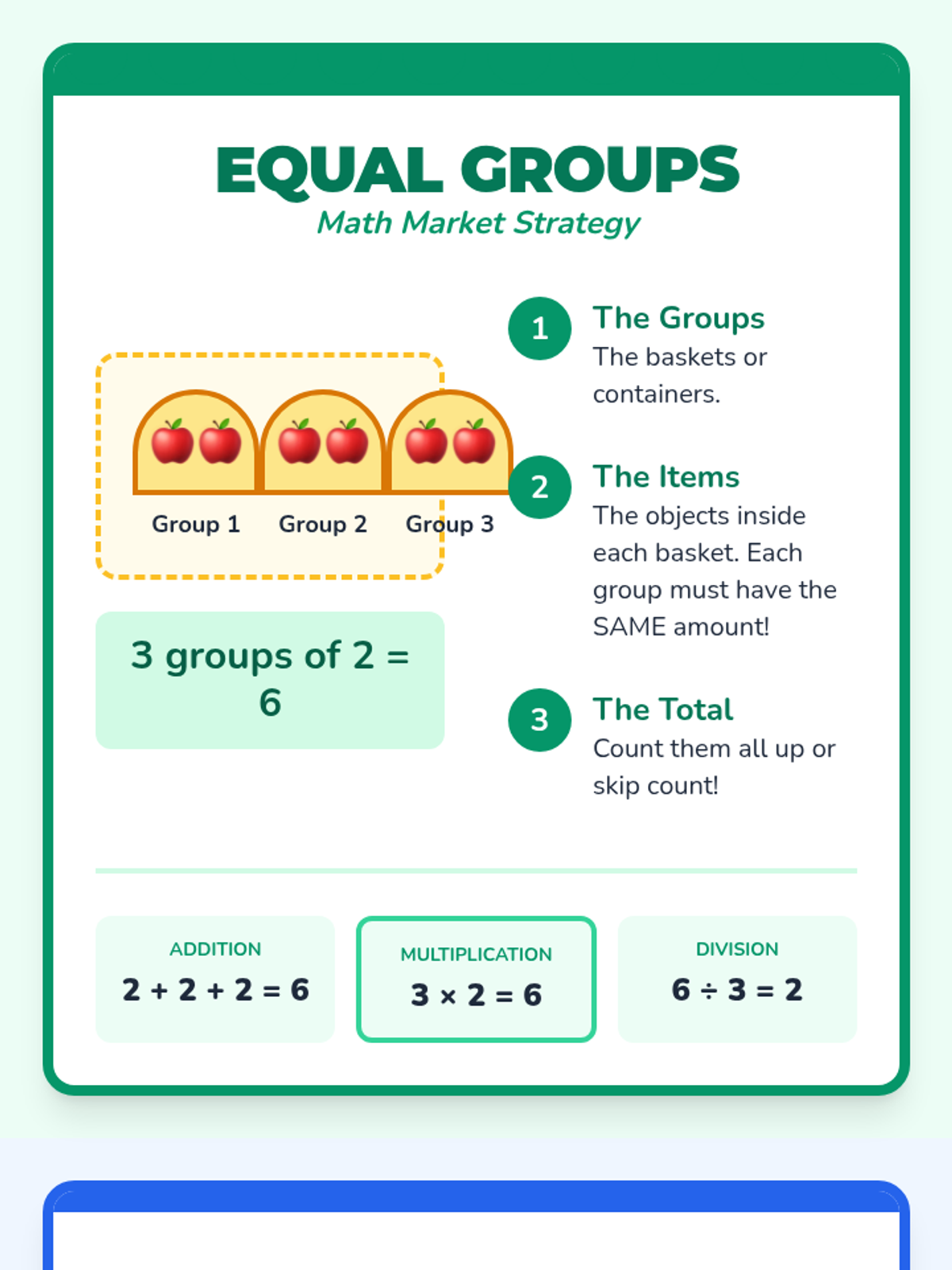
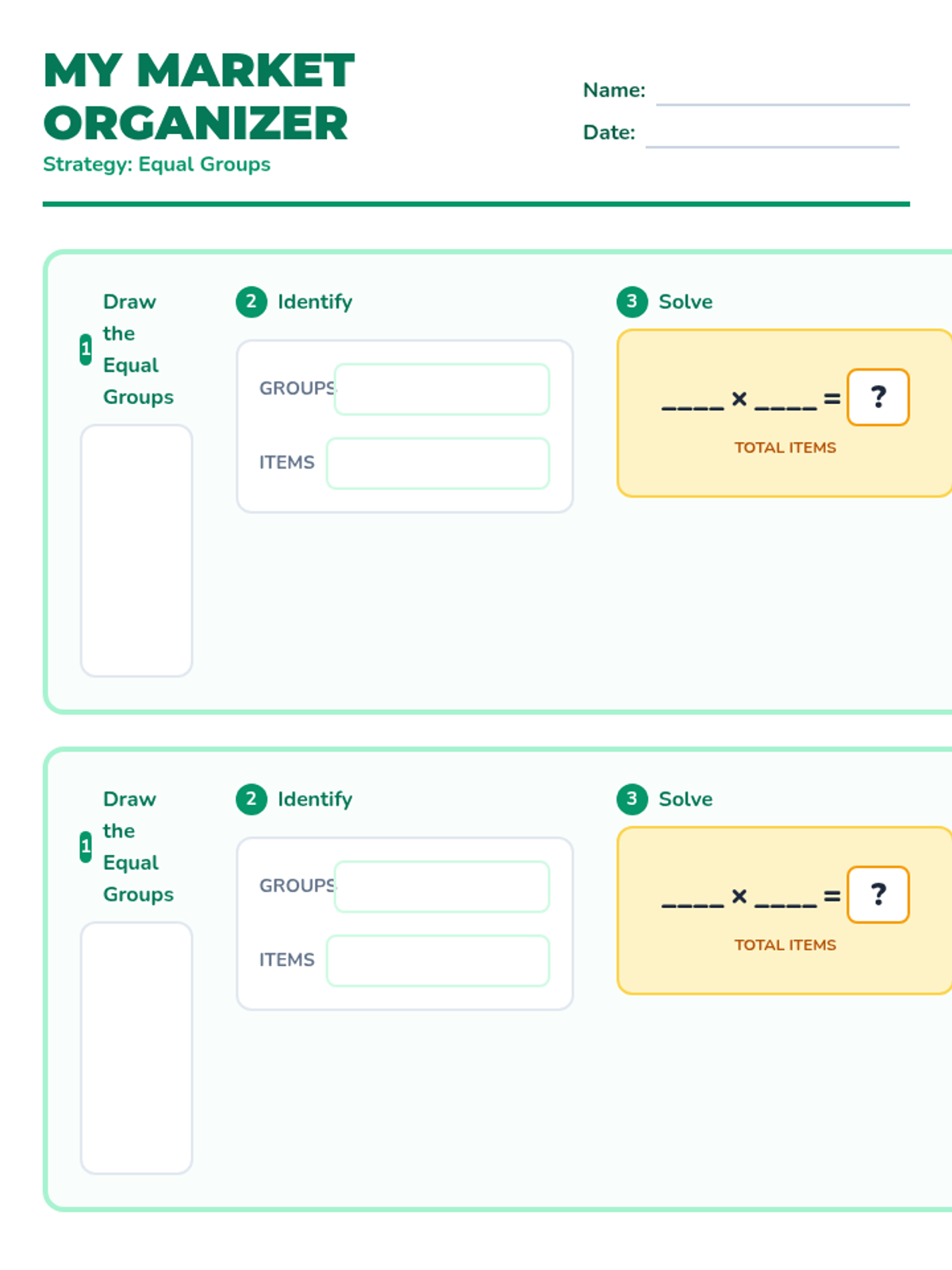
A visual introduction to multiplication and division using equal groups, featuring a dedicated anchor chart and a structured graphic organizer for hands-on practice.
A mixed practice lesson where students choose between equal groups and arrays to solve market-themed word problems and build fact recall.
Students transition to using arrays to represent multiplication and division, visualizing items on market shelves in rows and columns.
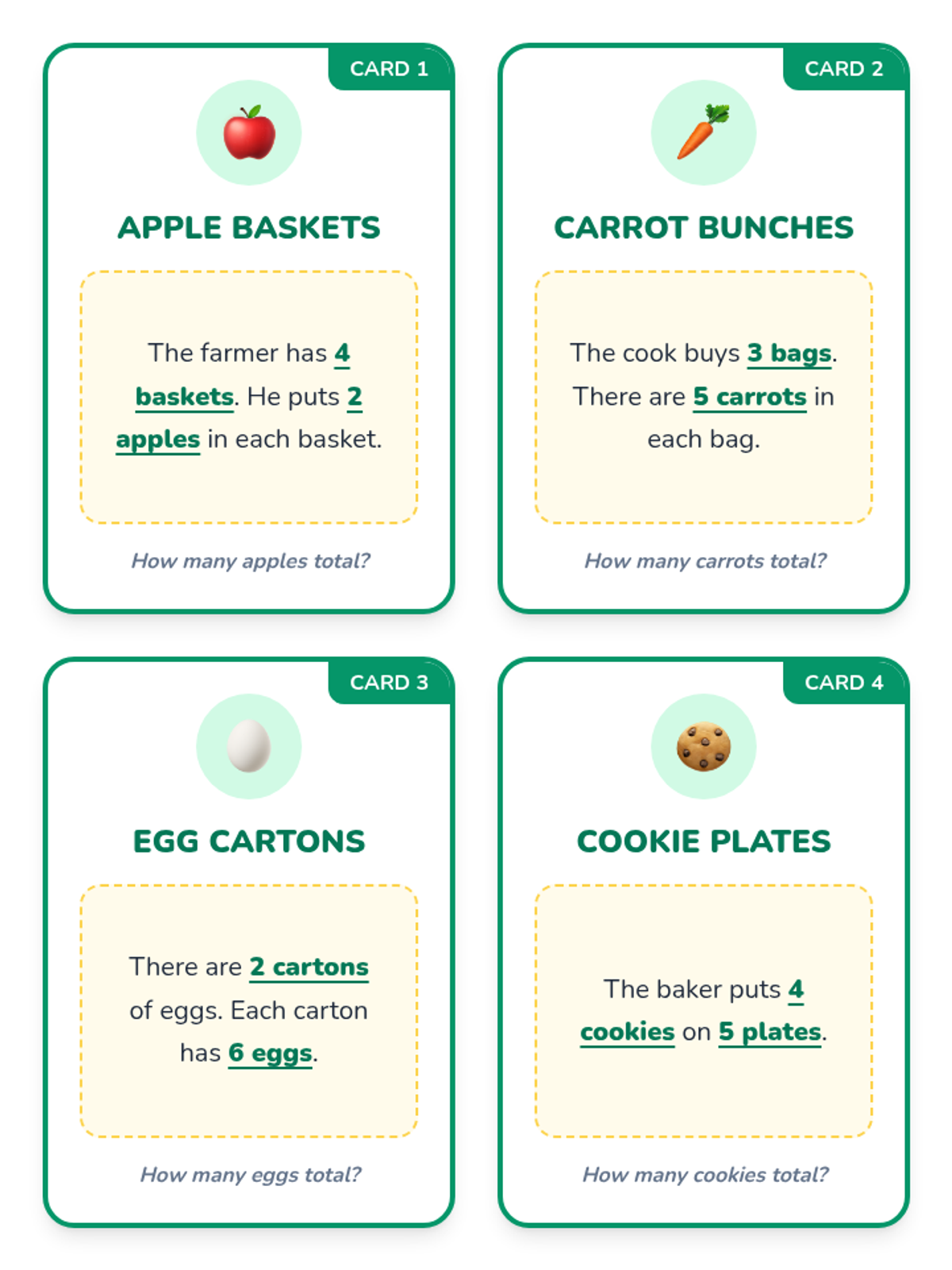
Students use equal groups to solve multiplication and division problems, using a 'Math Market' basket theme to visualize groups and items.
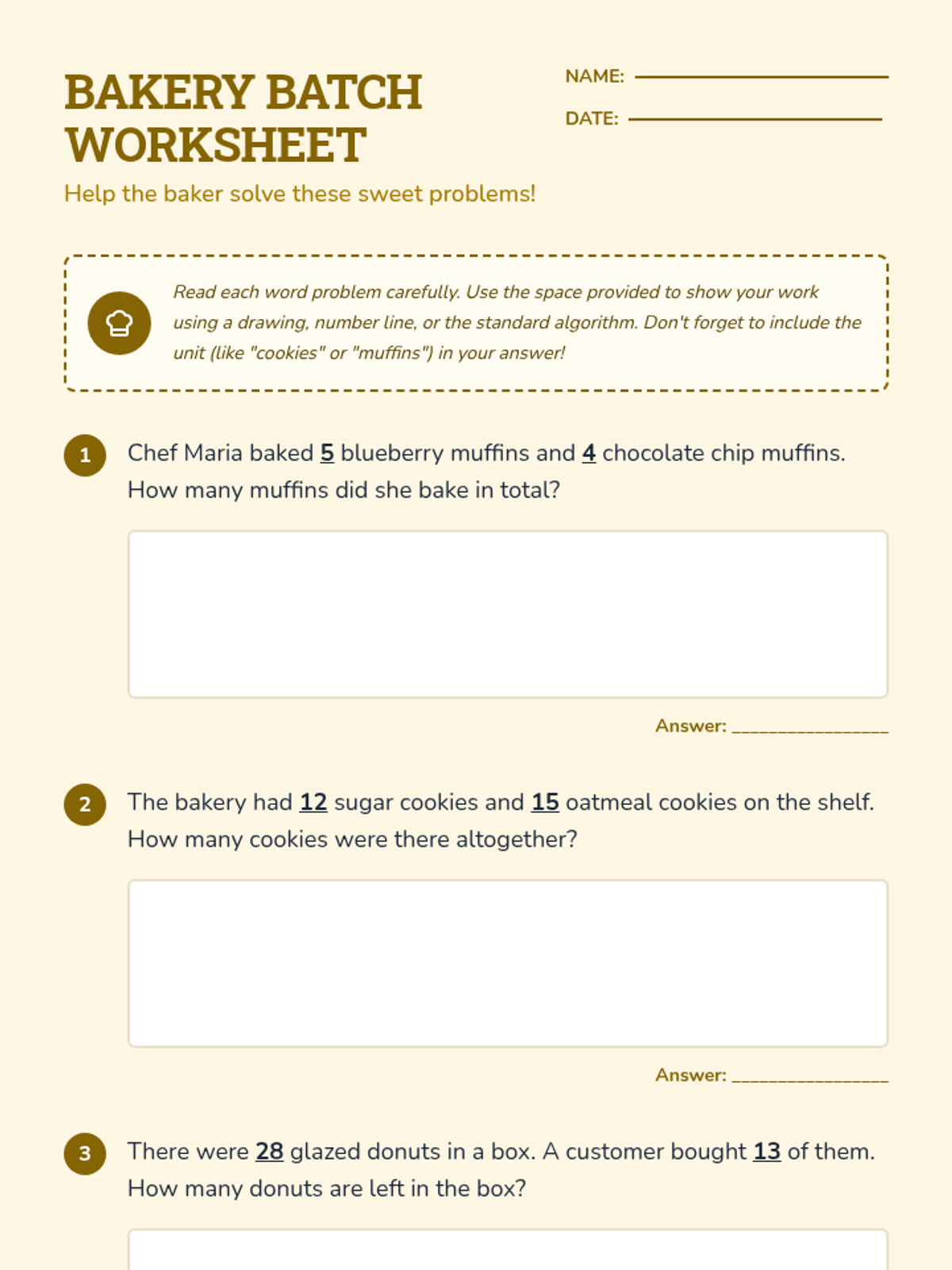
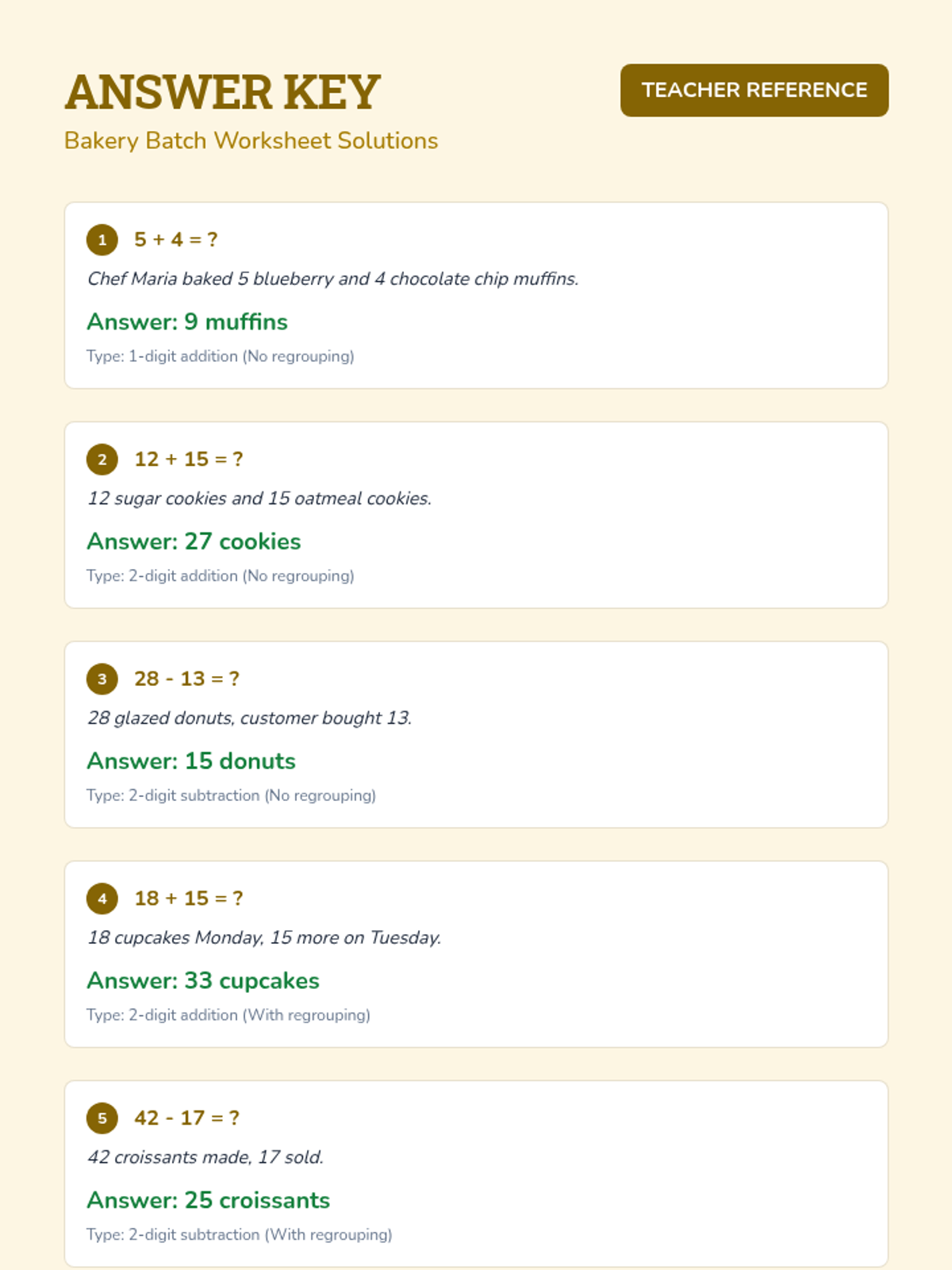
A lesson focused on solving 1 and 2-digit addition and subtraction word problems within a bakery-themed context, covering both regrouping and non-regrouping scenarios.
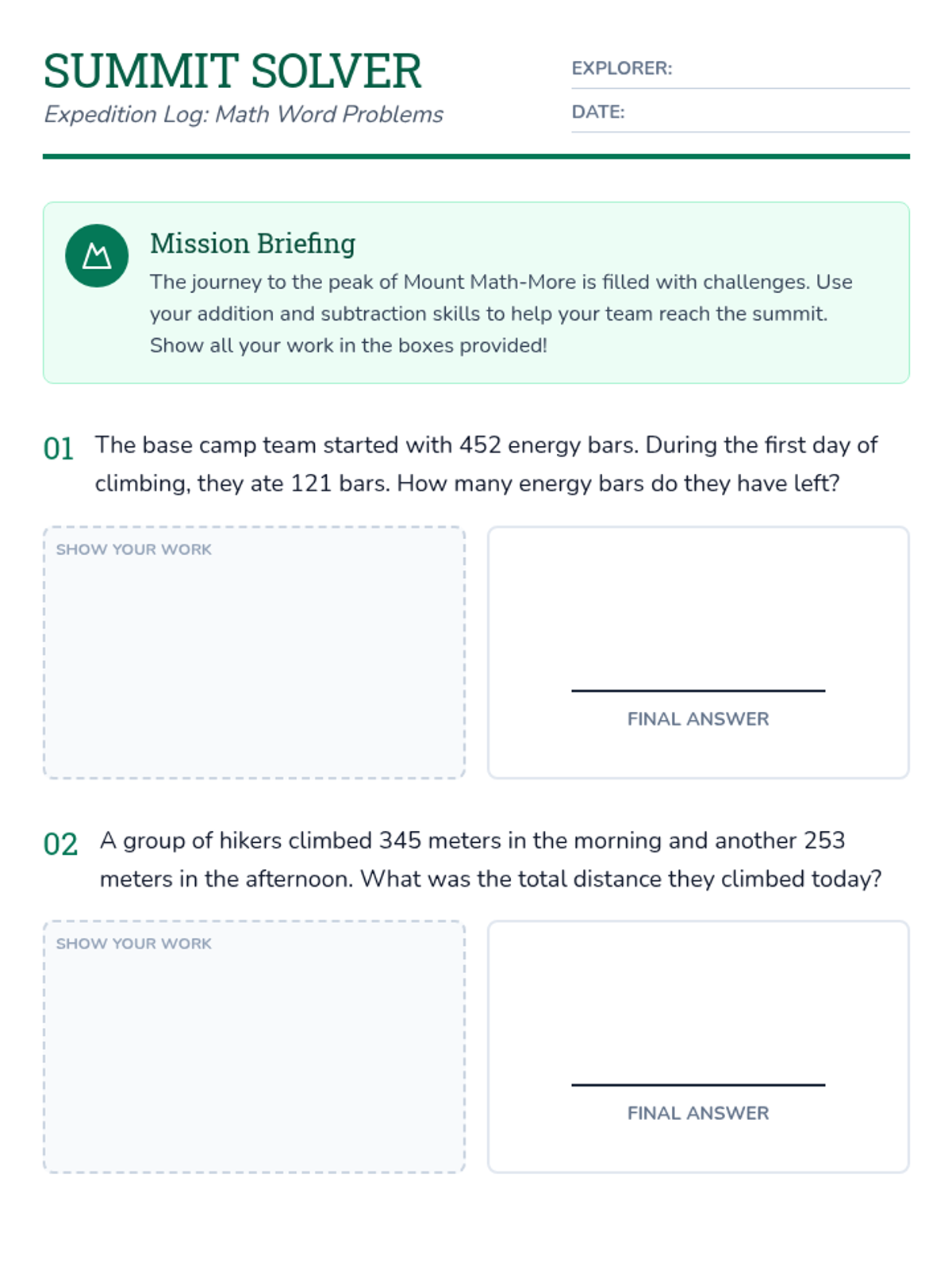
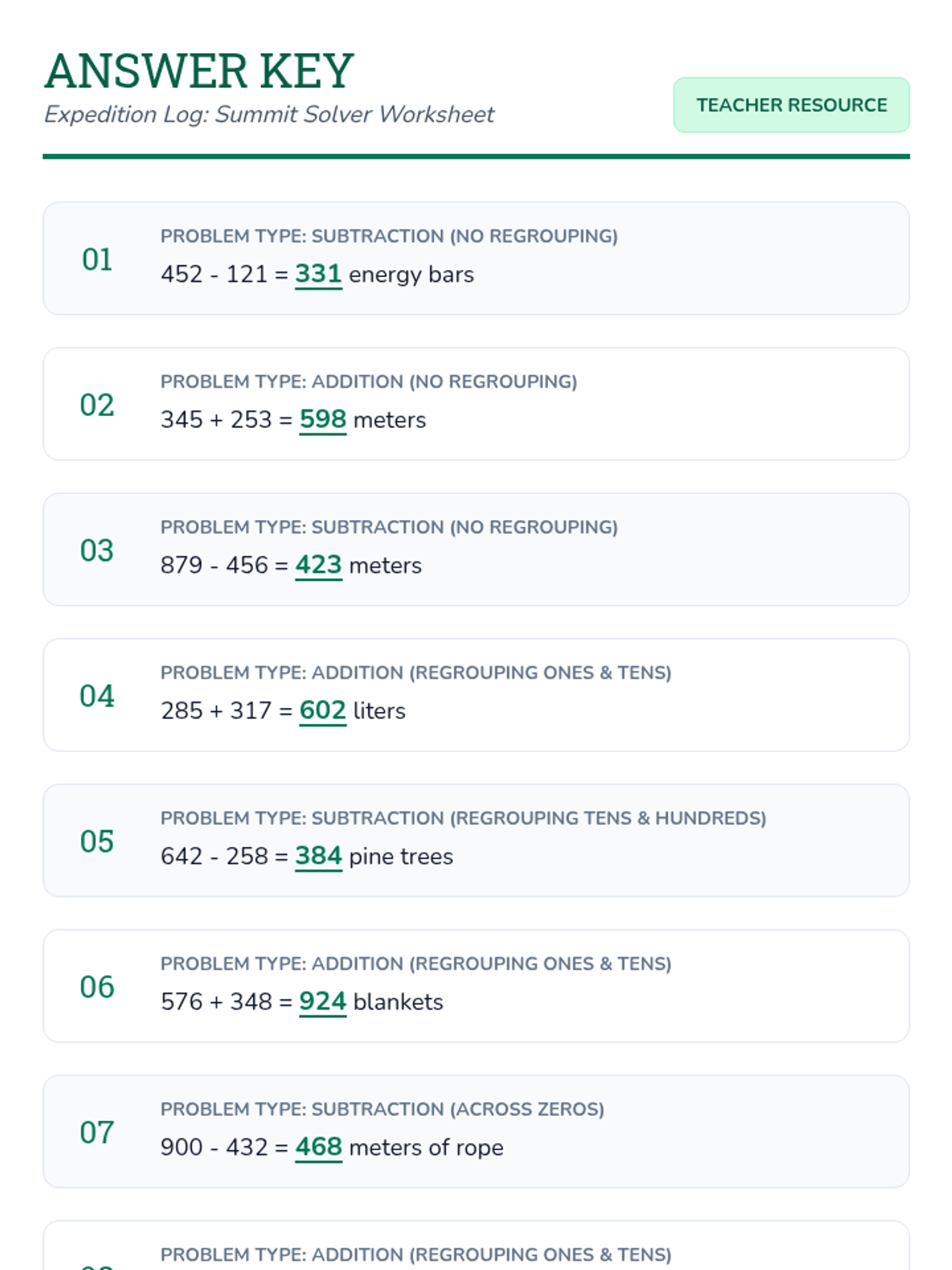
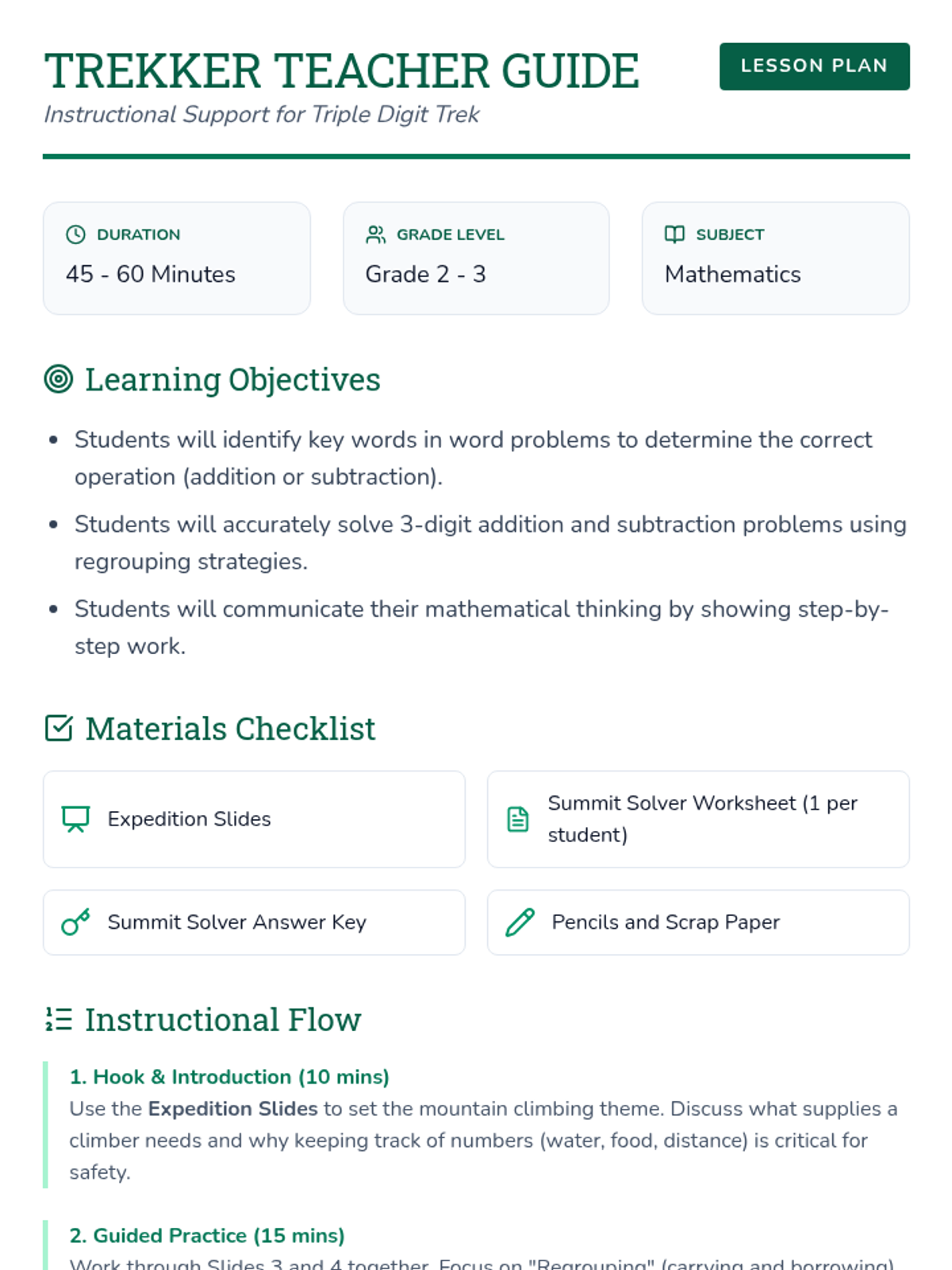
A math lesson focused on solving three-digit addition and subtraction word problems with a mountain climbing theme. Students practice regrouping skills through real-world scenarios encountered on an expedition.
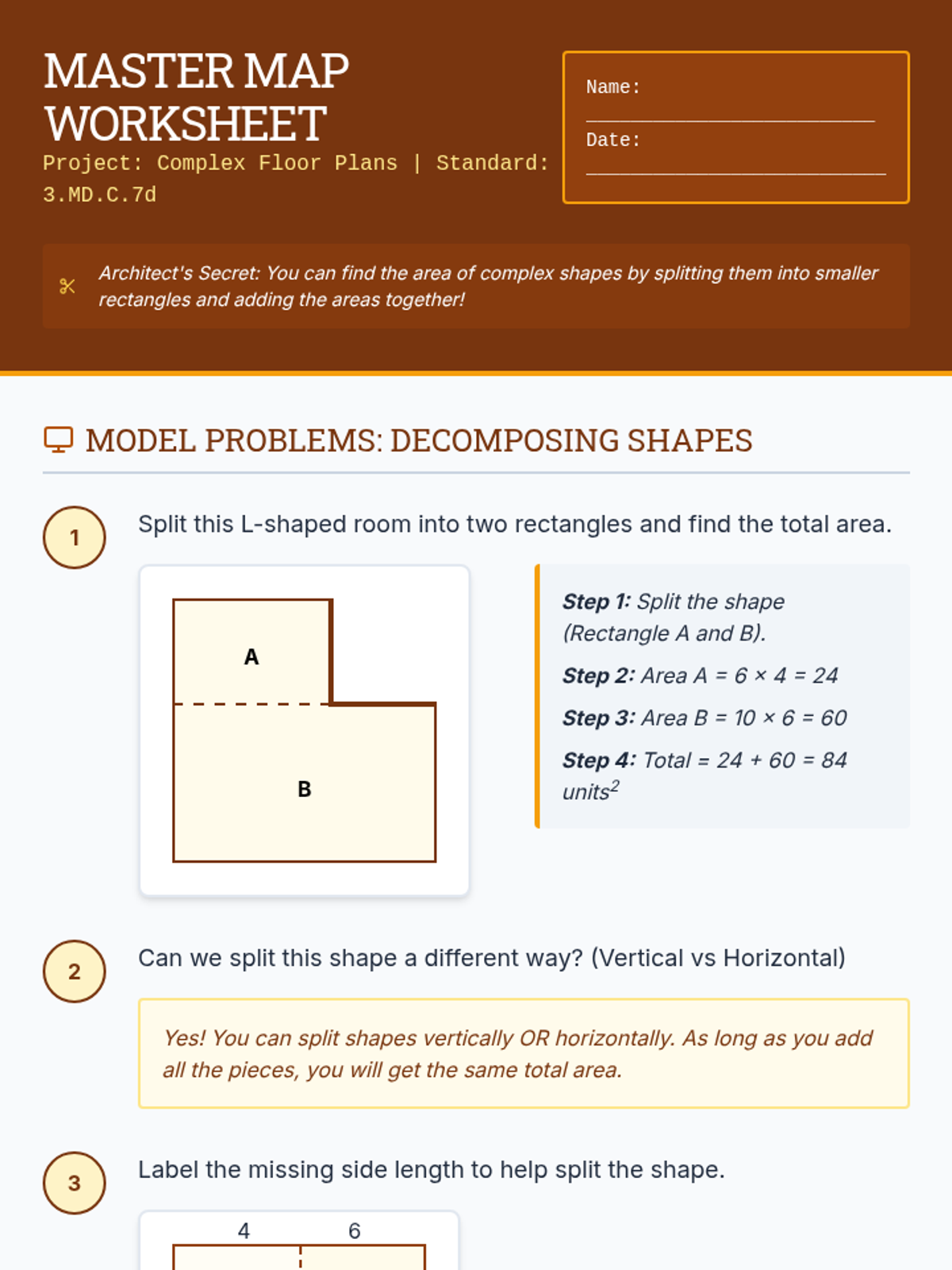
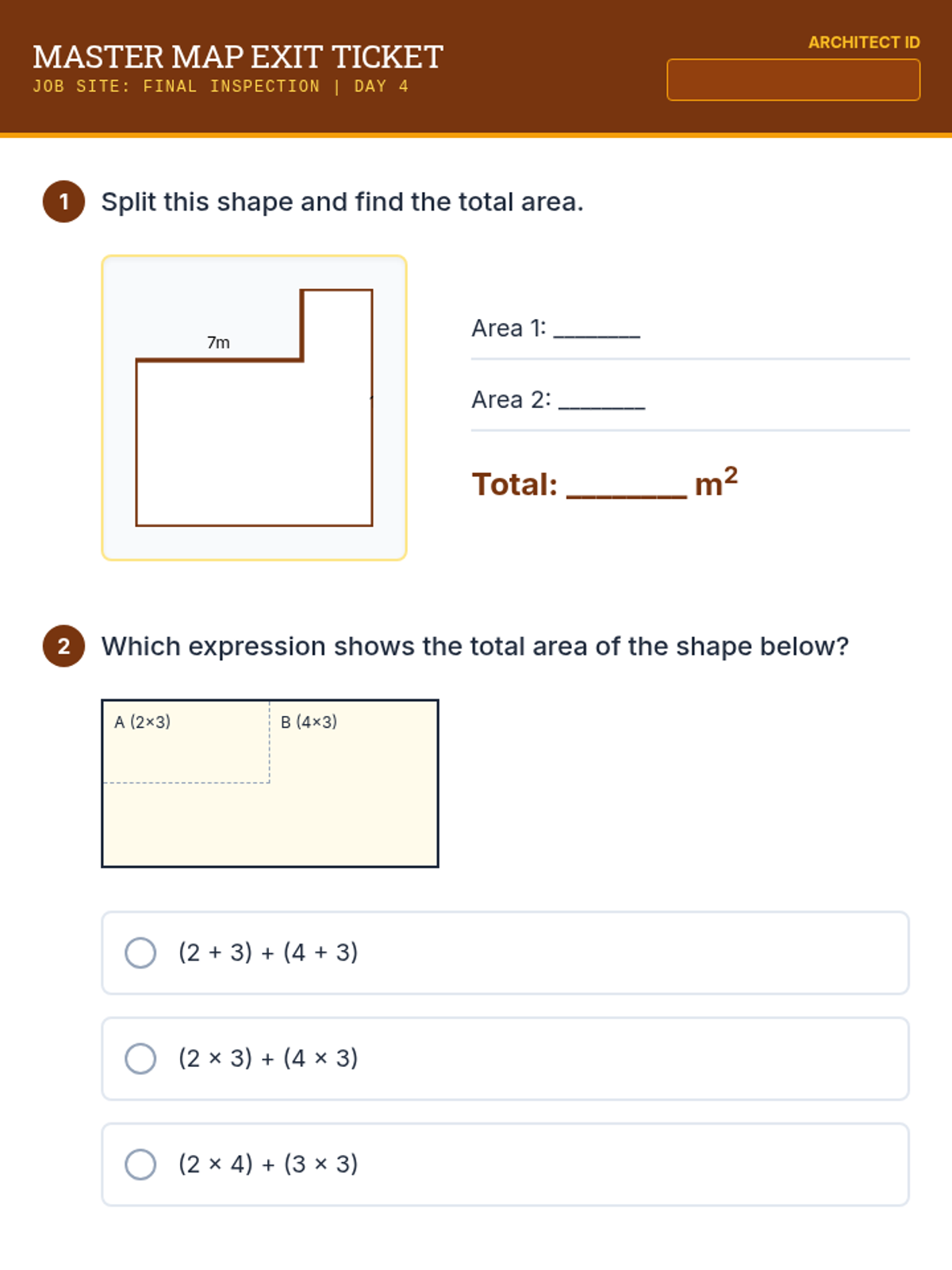
Students will find the area of rectilinear shapes by decomposing them into non-overlapping rectangles and adding their areas. This lesson covers AZ 3.MD.C.7d.
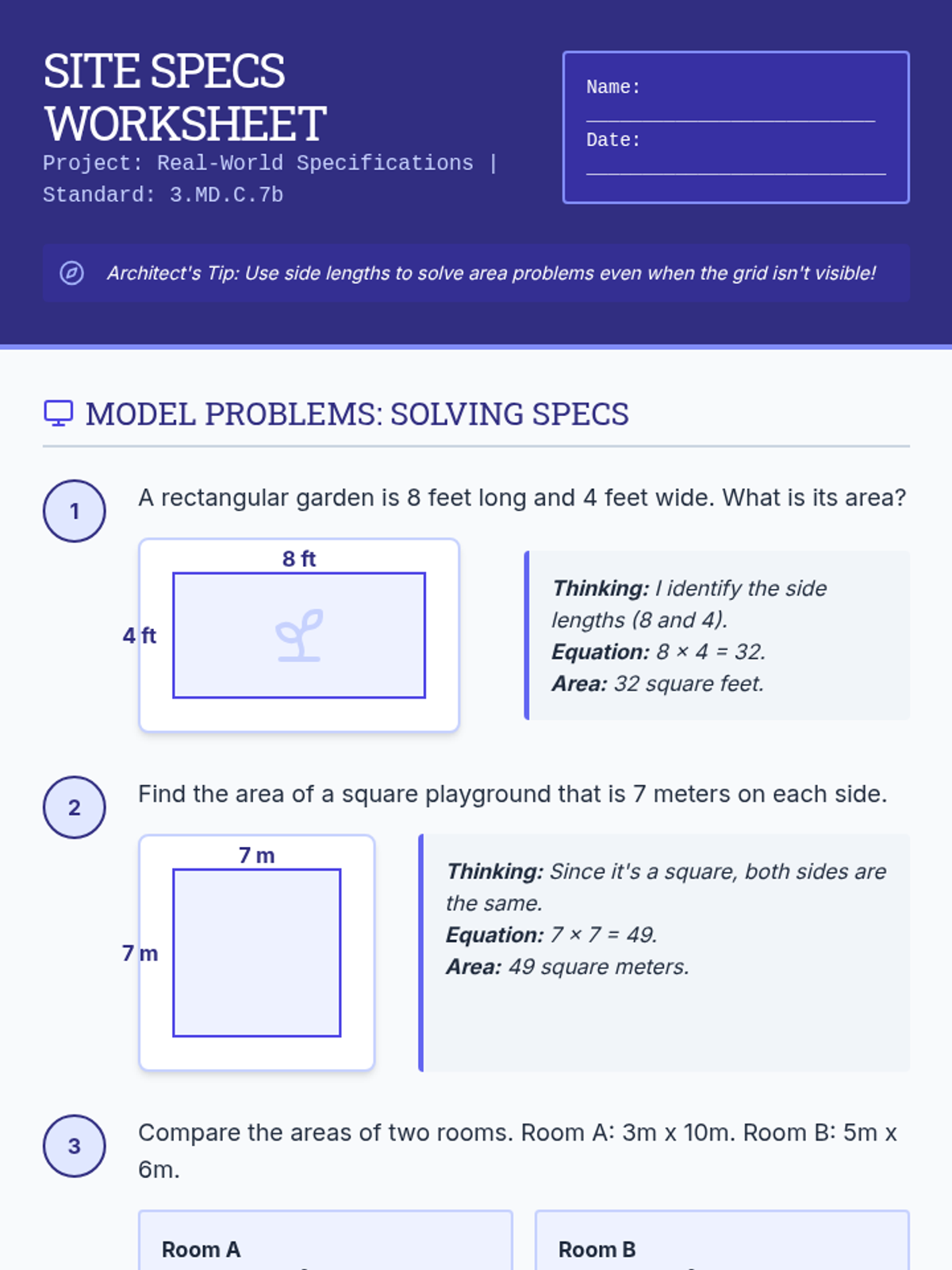
Students will apply their knowledge of multiplication to solve real-world area problems with missing side lengths or without grids. This lesson continues AZ 3.MD.C.7b.
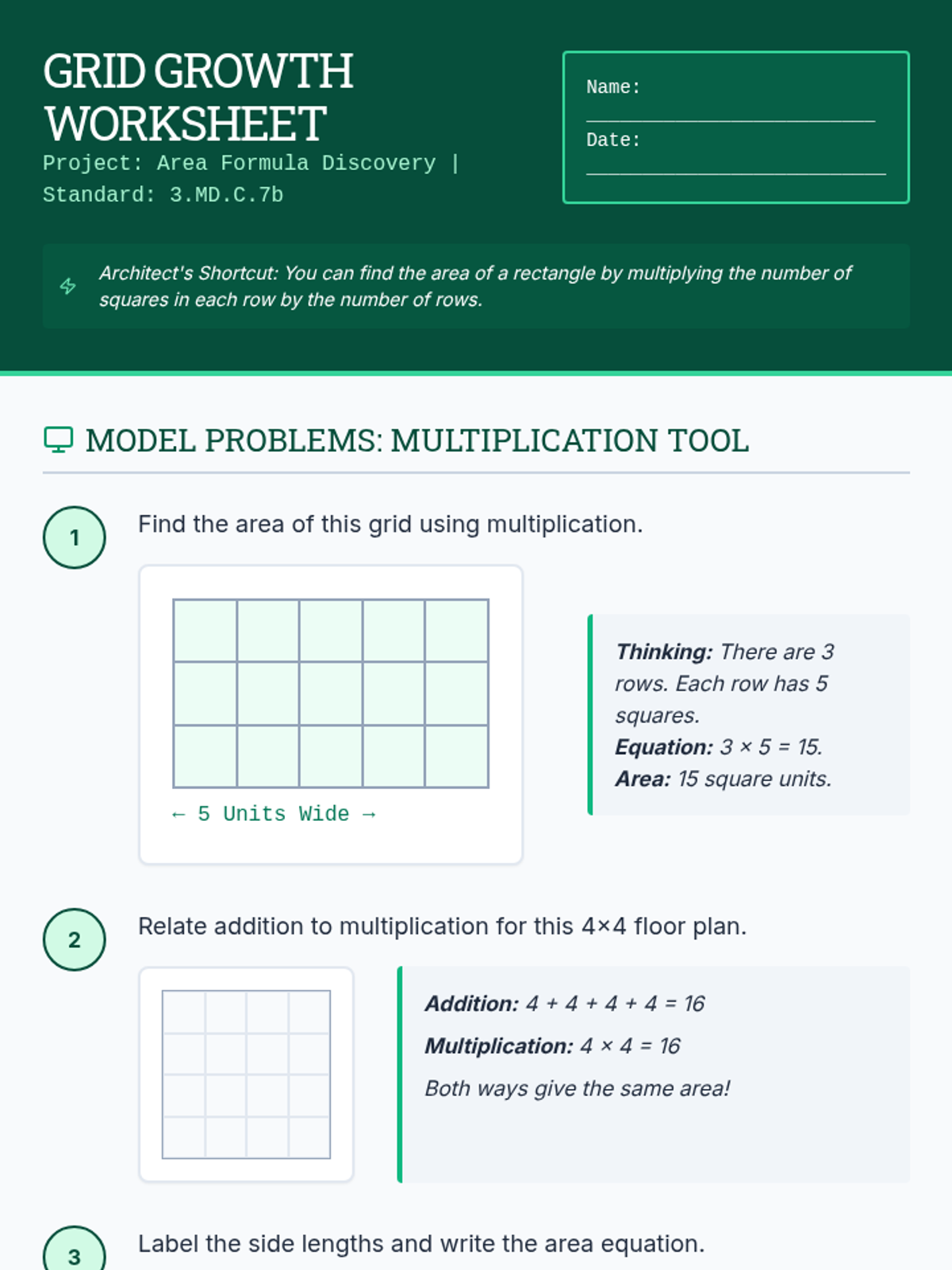
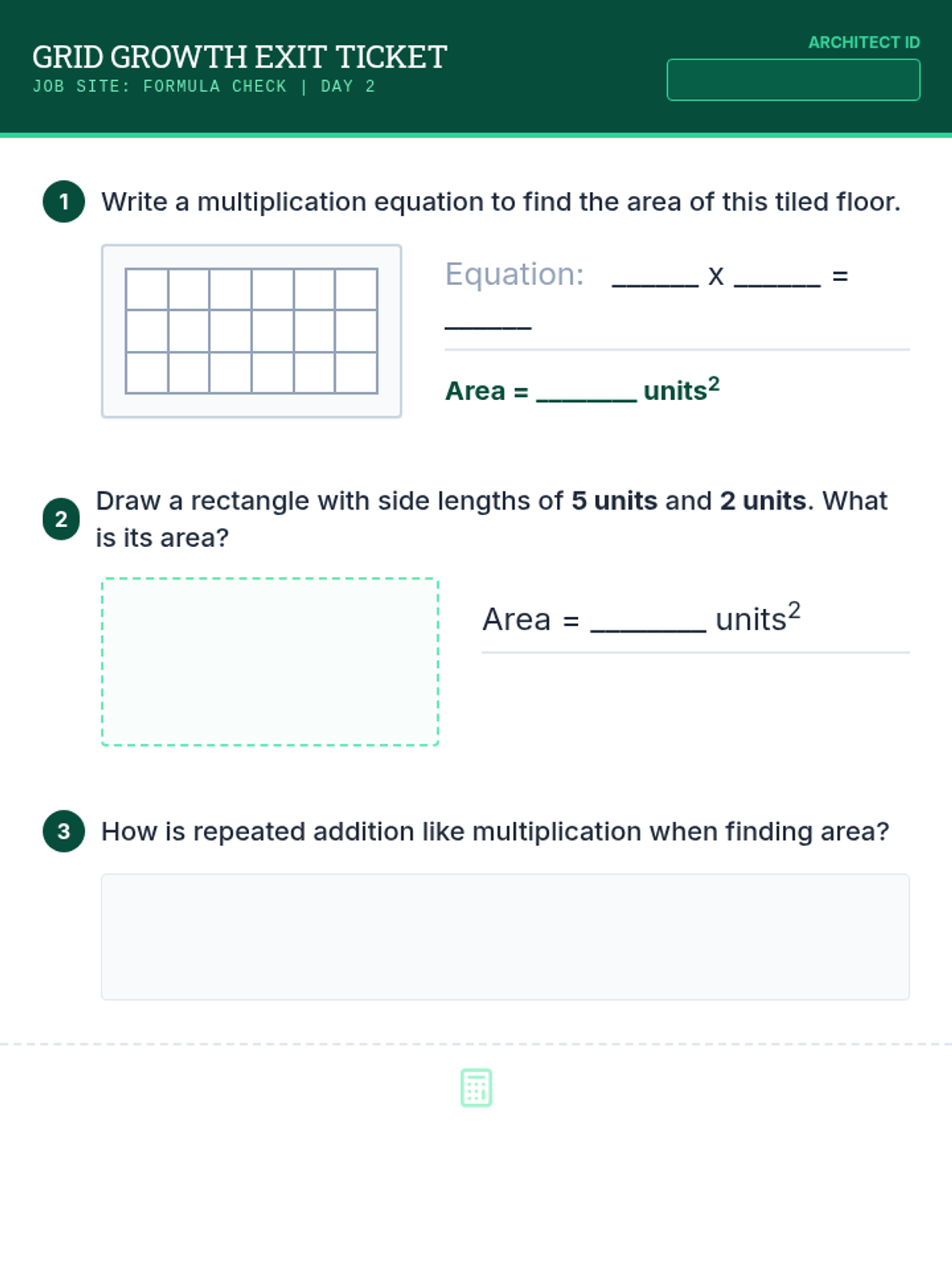
Students will relate the area of a rectangle to multiplication of its side lengths, connecting tiling to the formula L x W. This lesson covers AZ 3.MD.C.7b.
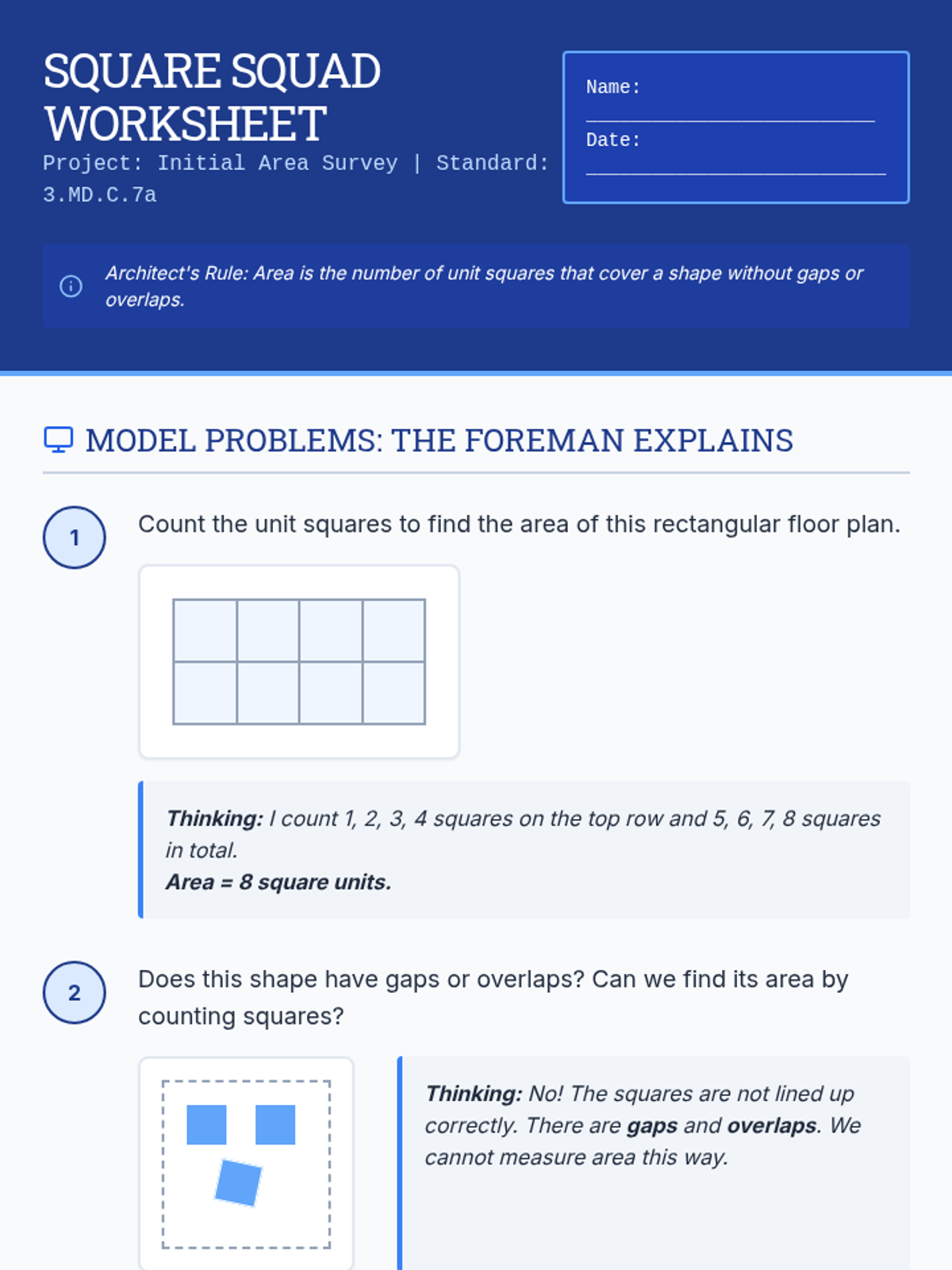
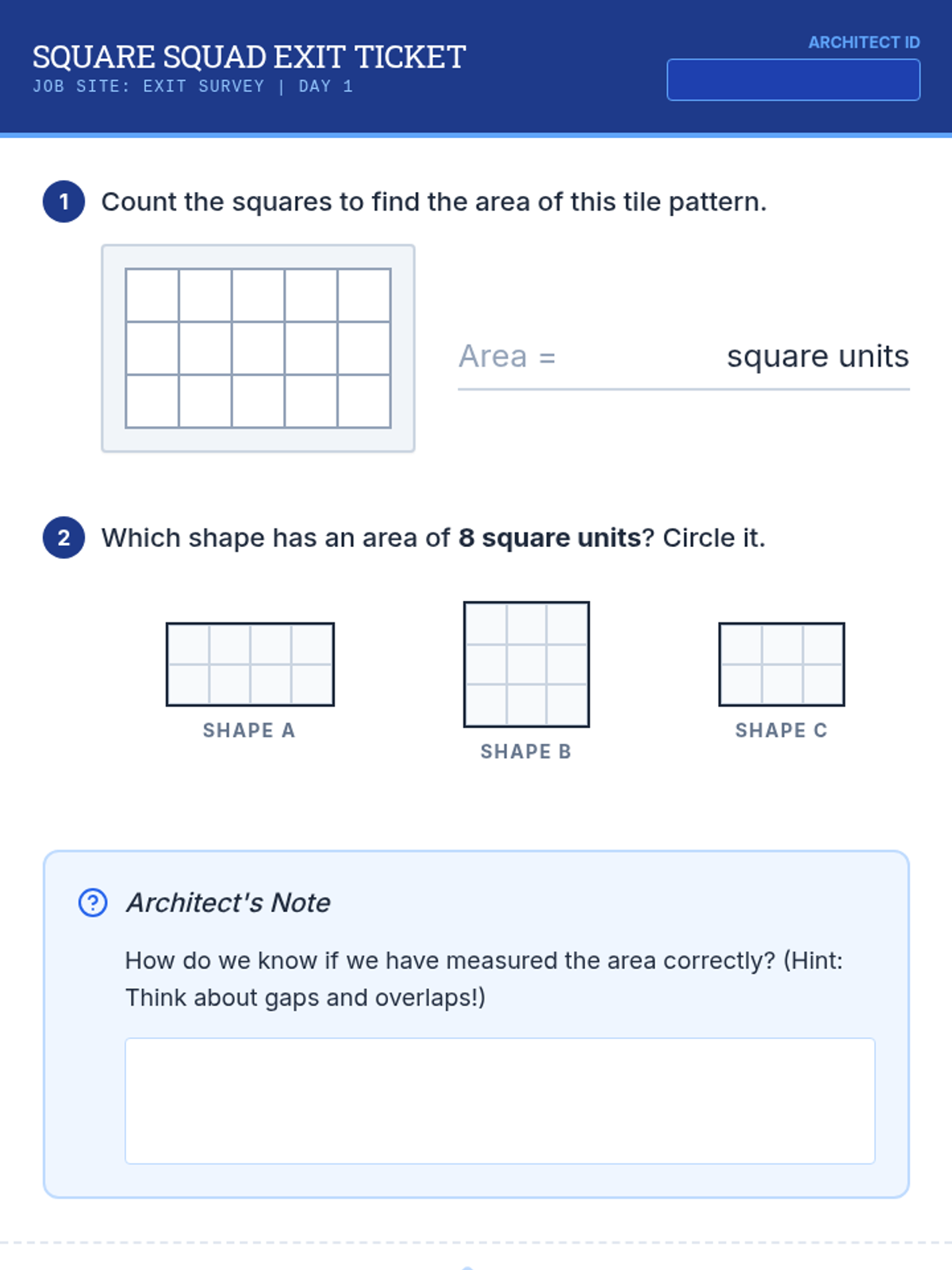
Students will understand area as the number of unit squares needed to cover a flat surface without gaps or overlaps. This lesson focuses on AZ 3.MD.C.7a by counting unit squares in rectangular grids.
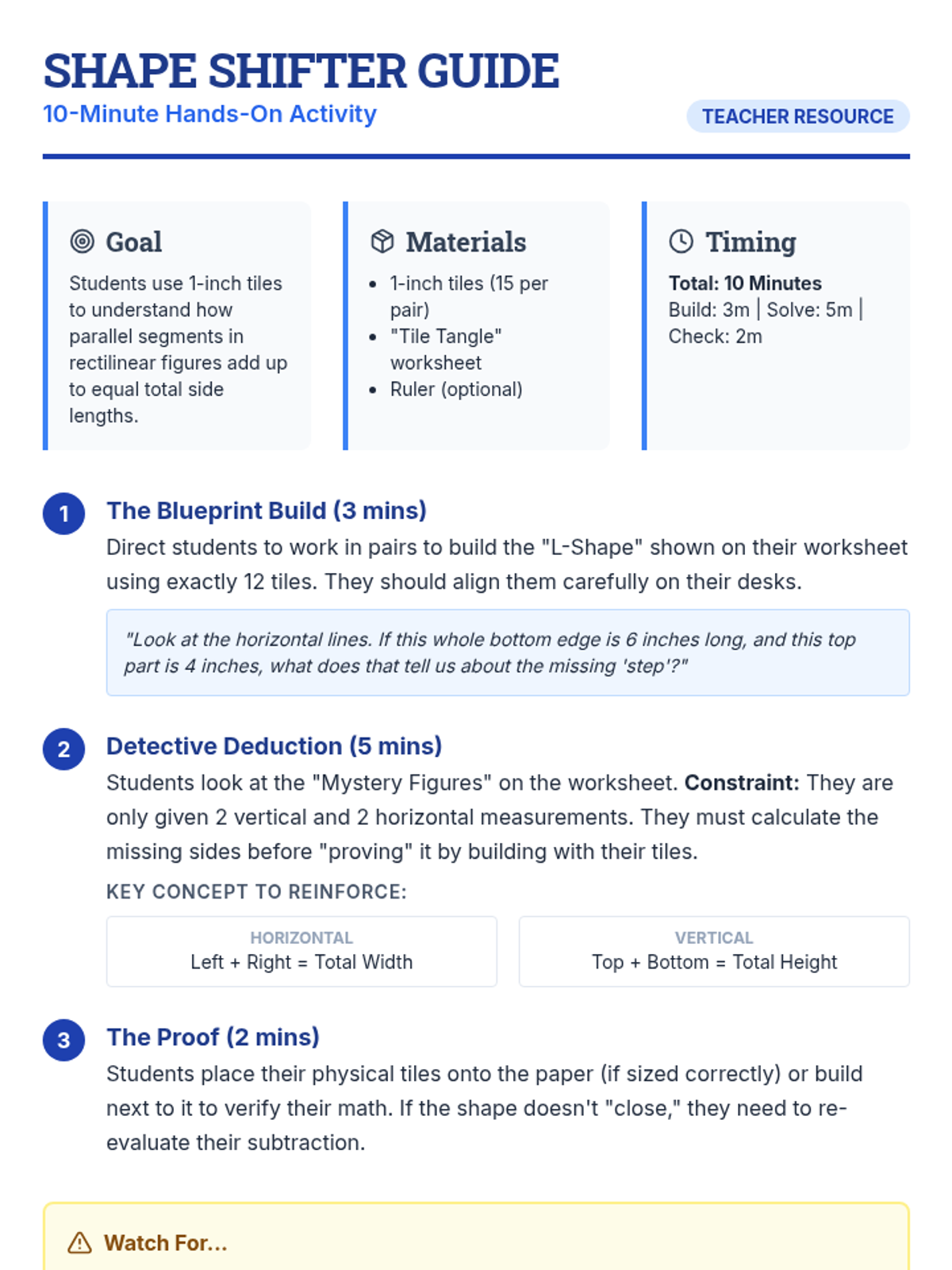
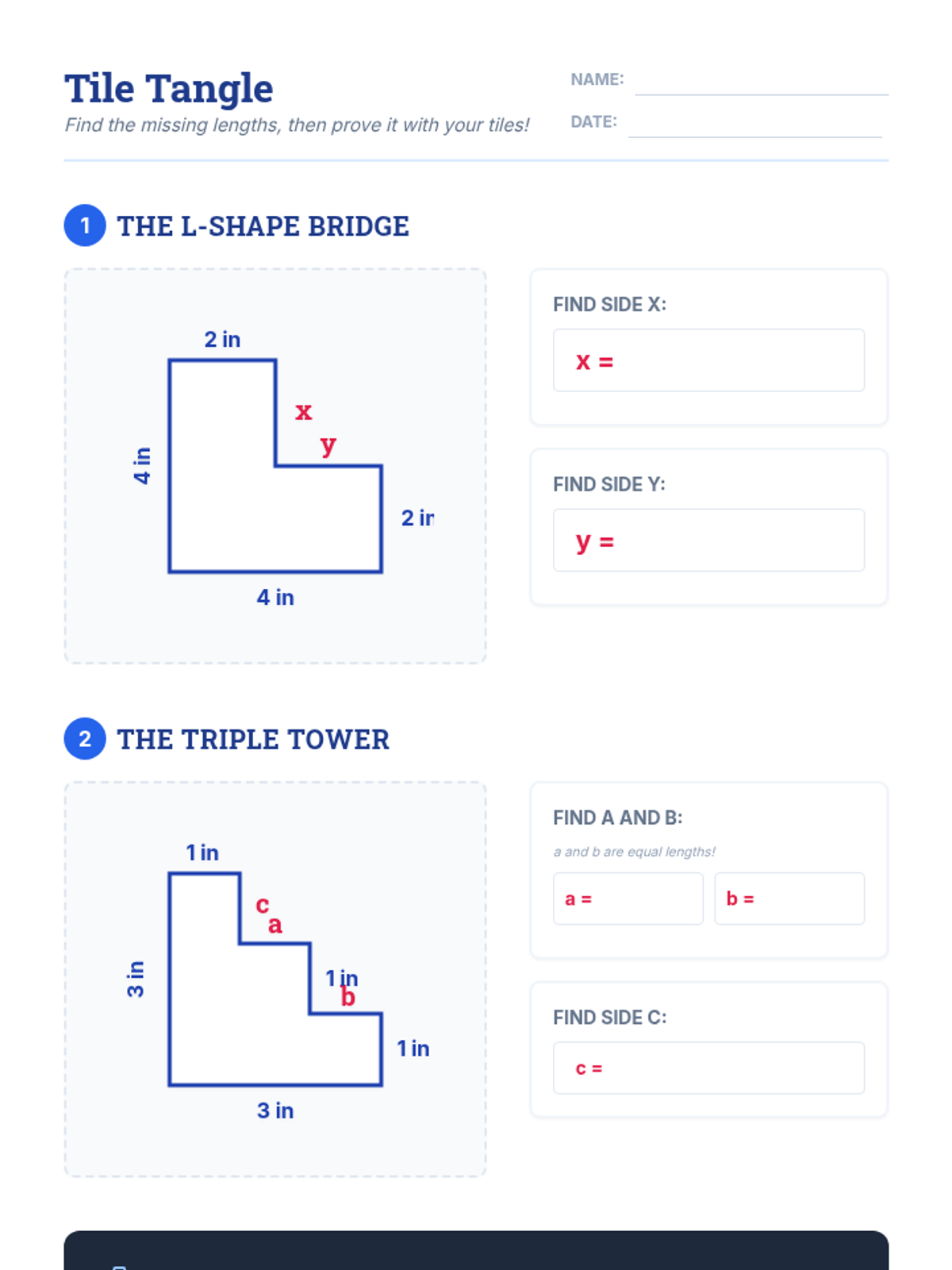
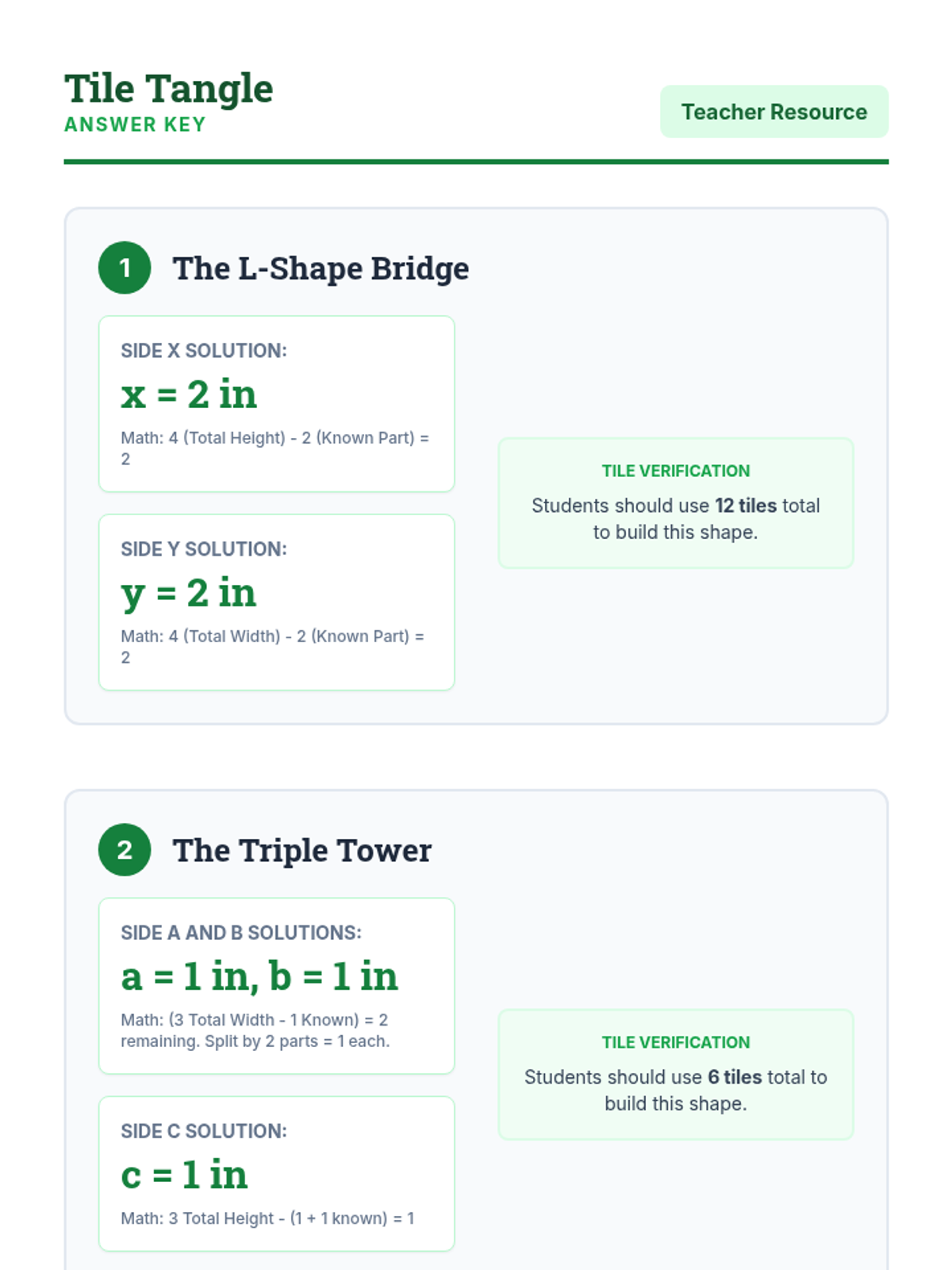
A quick, hands-on 10-minute activity where students use 1-inch tiles to construct rectilinear figures and calculate missing side lengths using the properties of parallel sides.
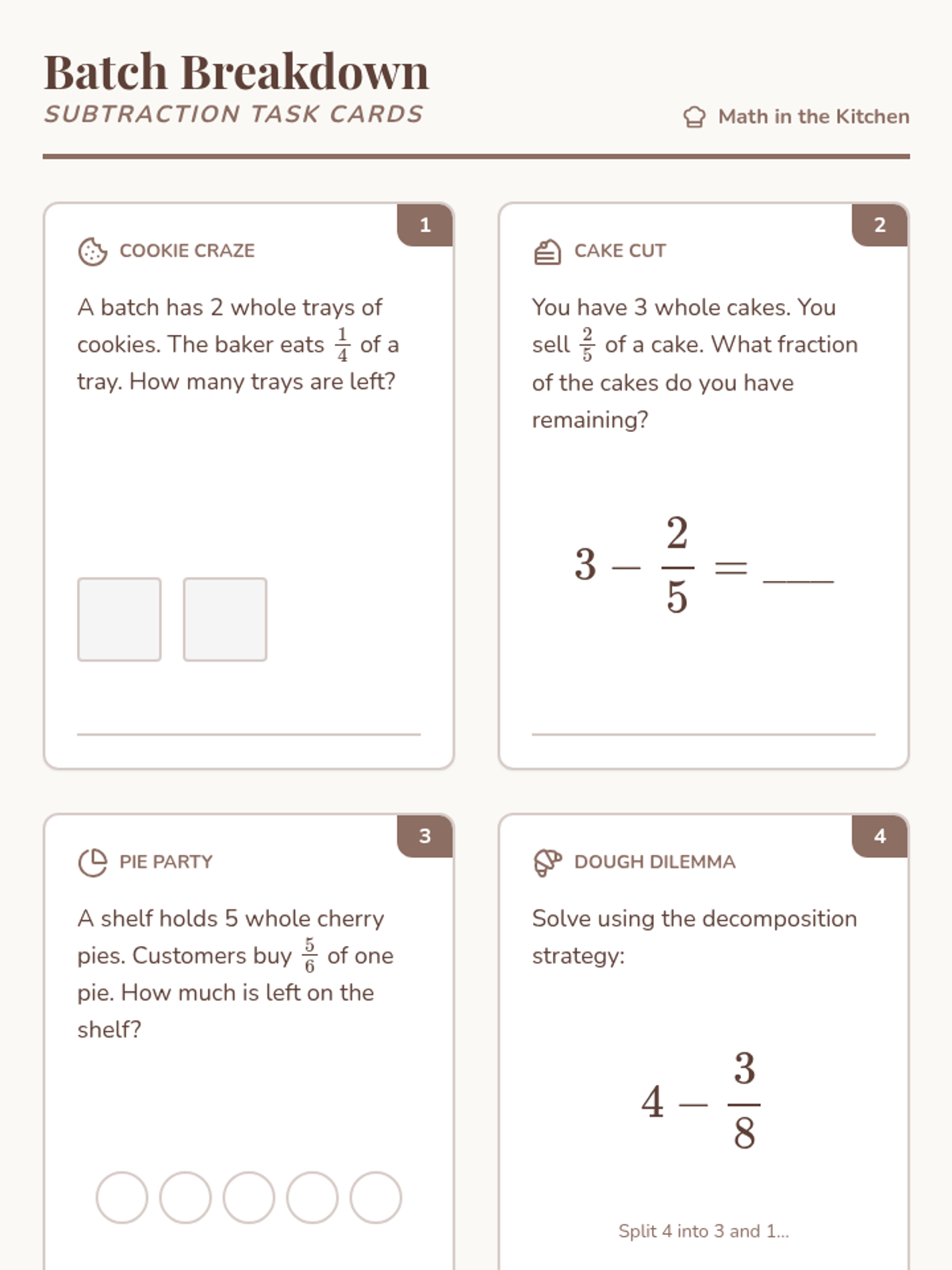
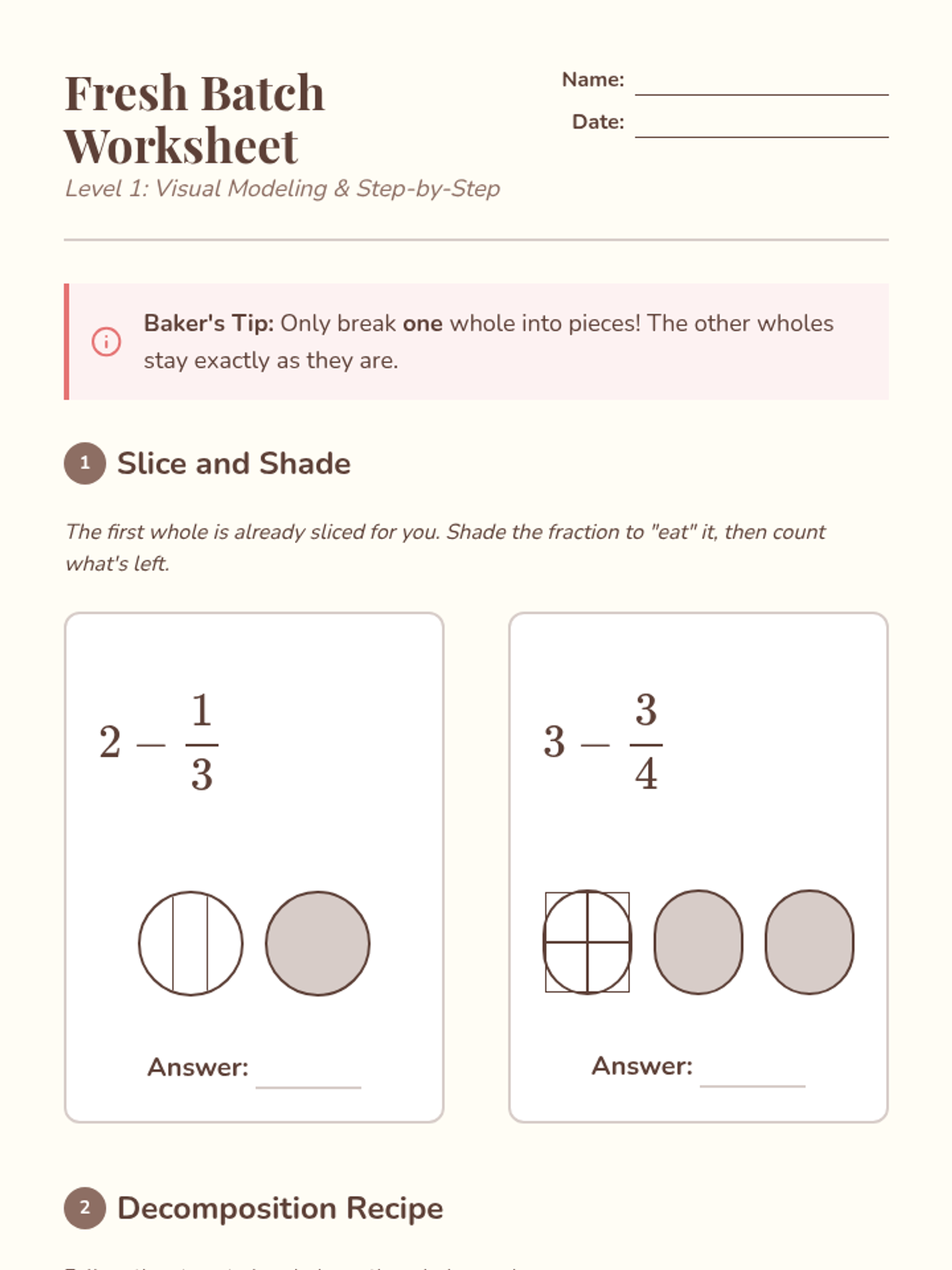
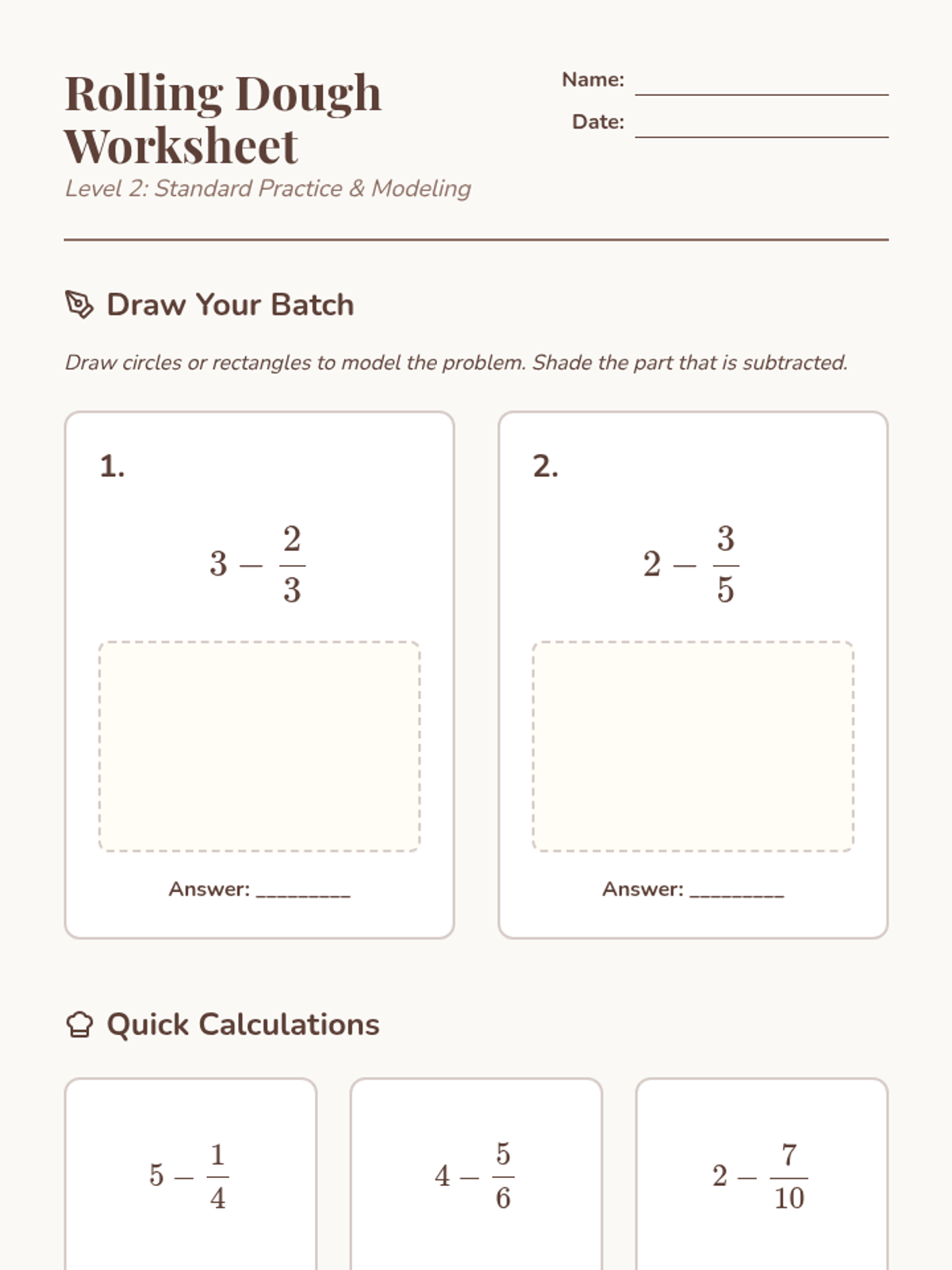
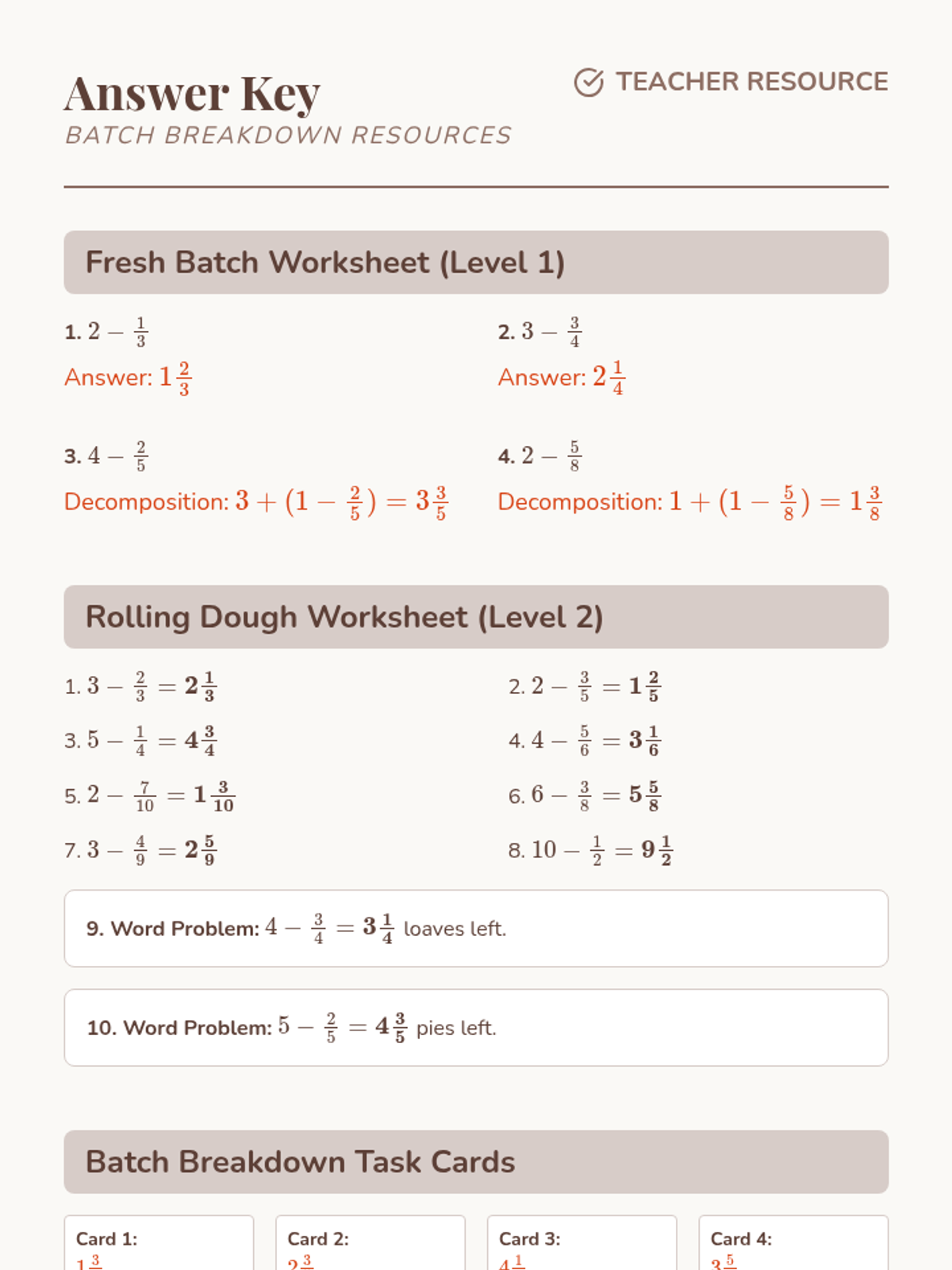
A comprehensive lesson on subtracting fractions from whole numbers greater than 1, focusing on pictorial representations and regrouping strategies through a bakery-themed lens.
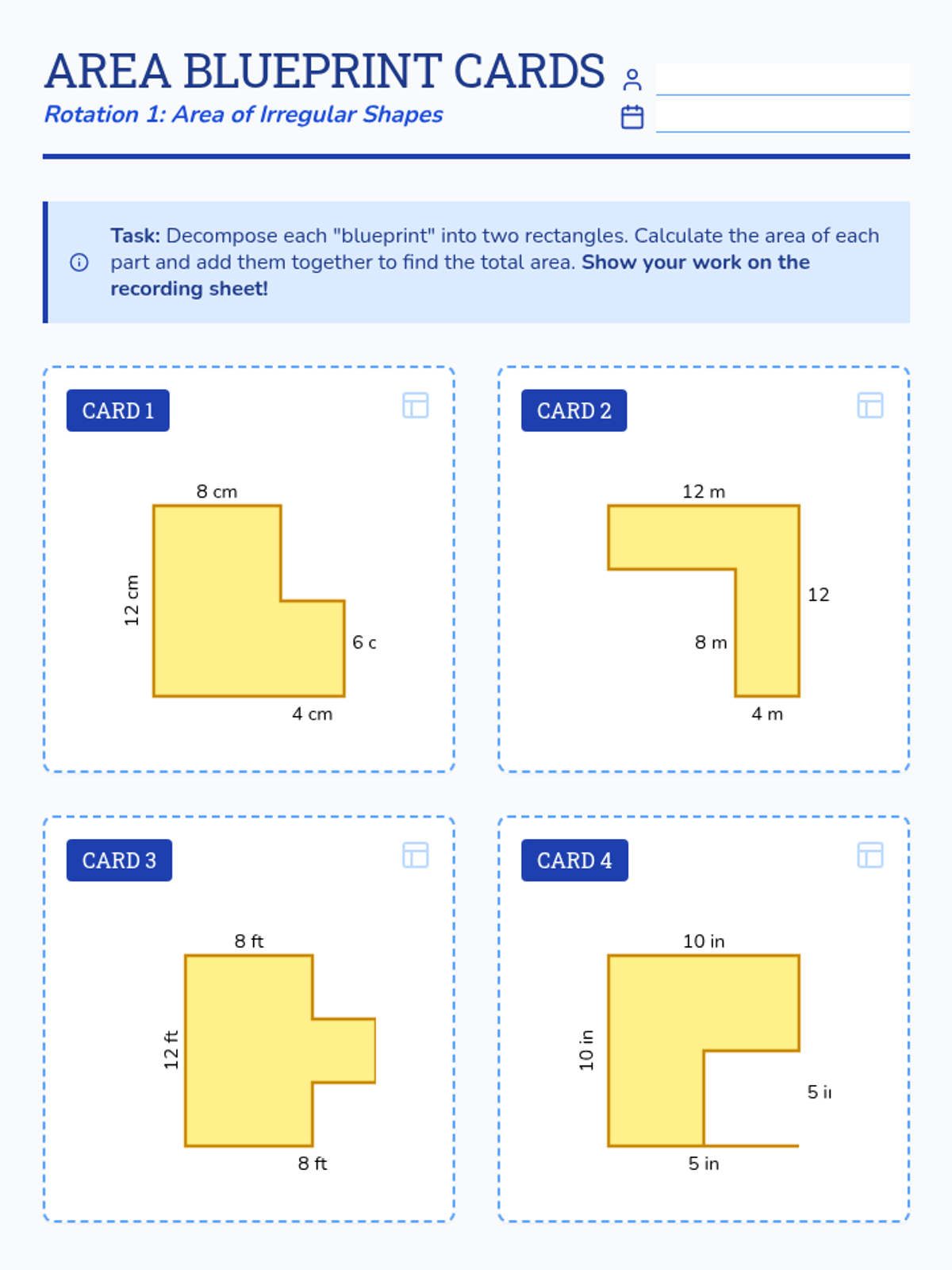
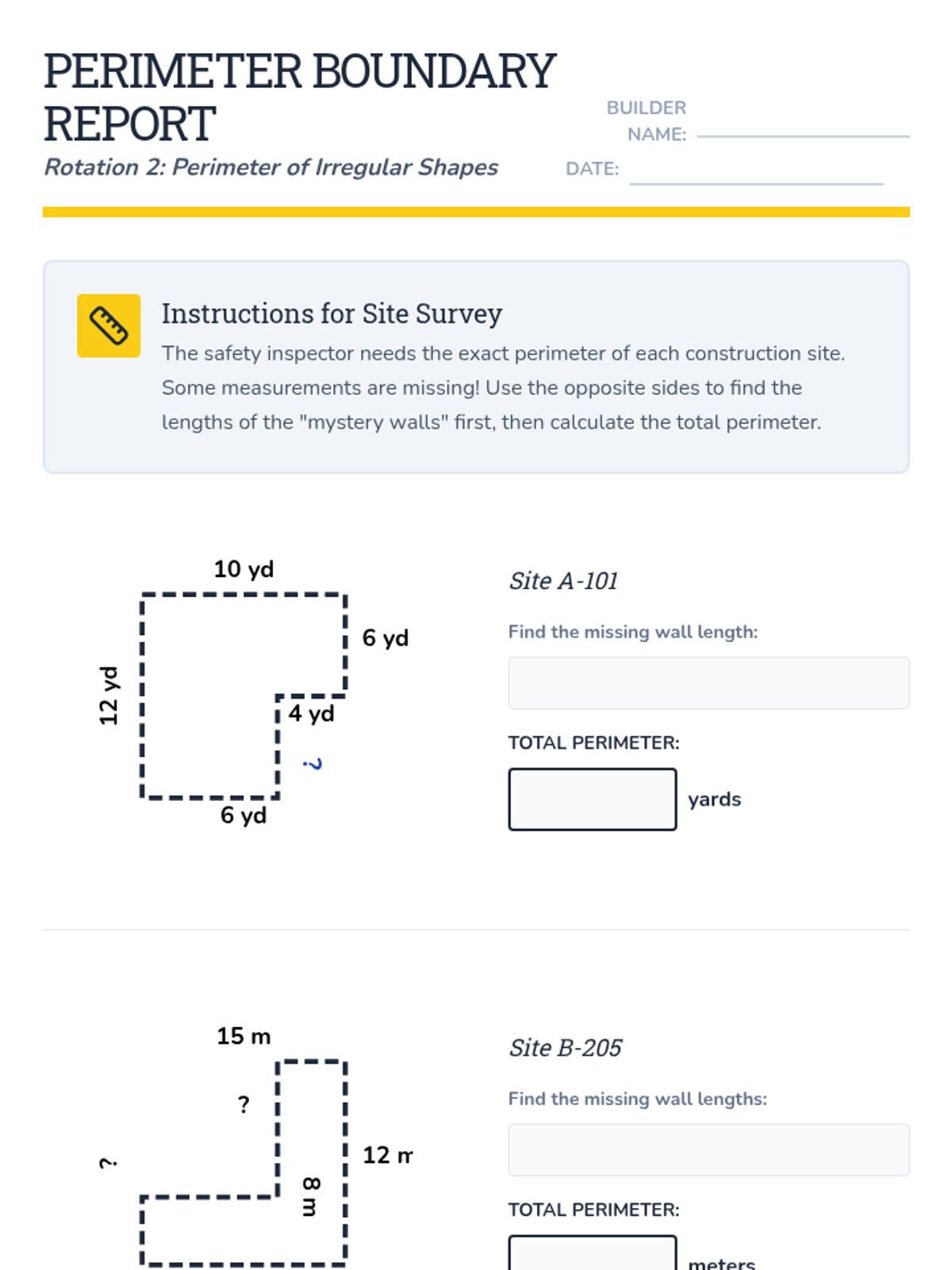
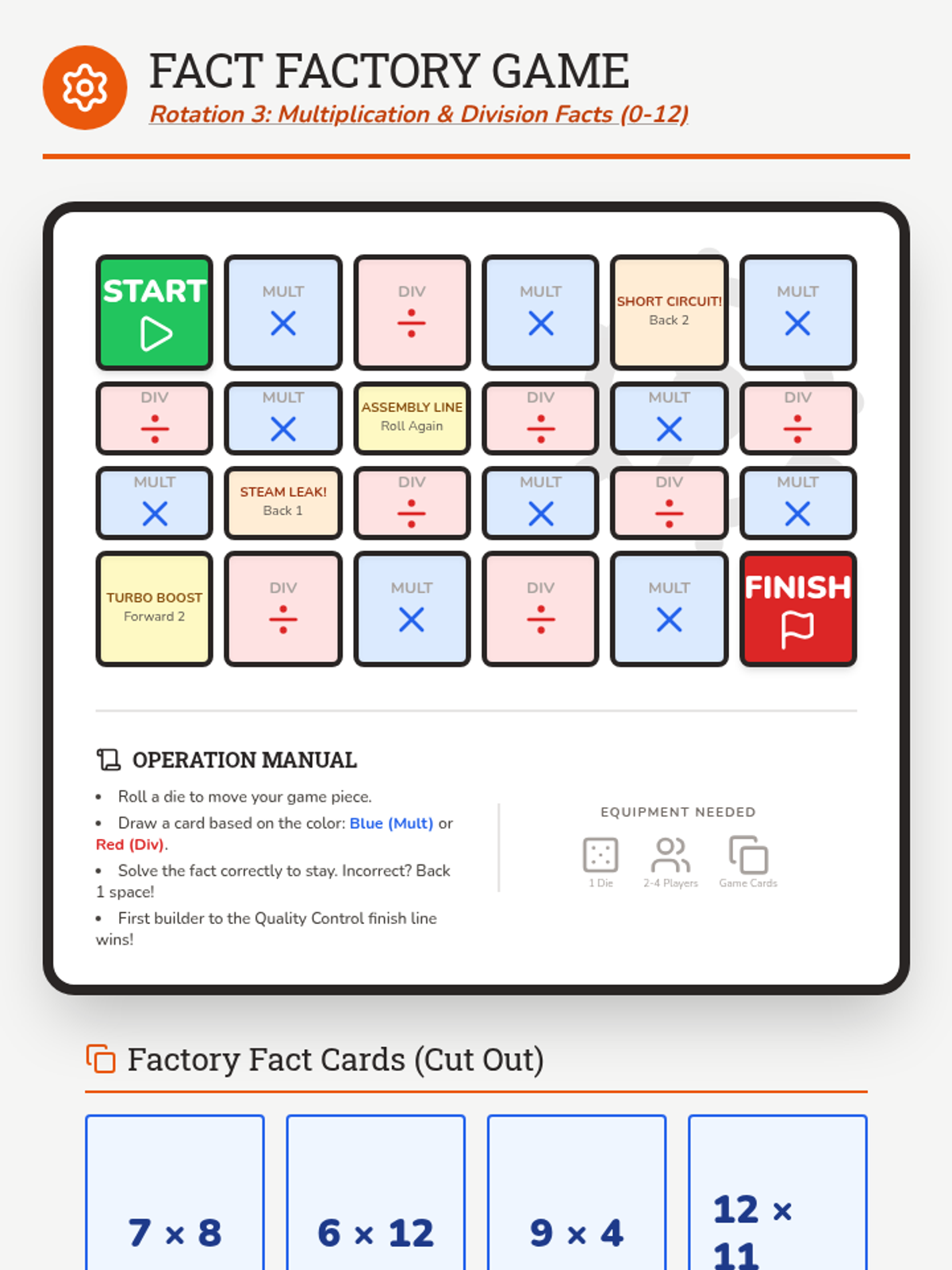
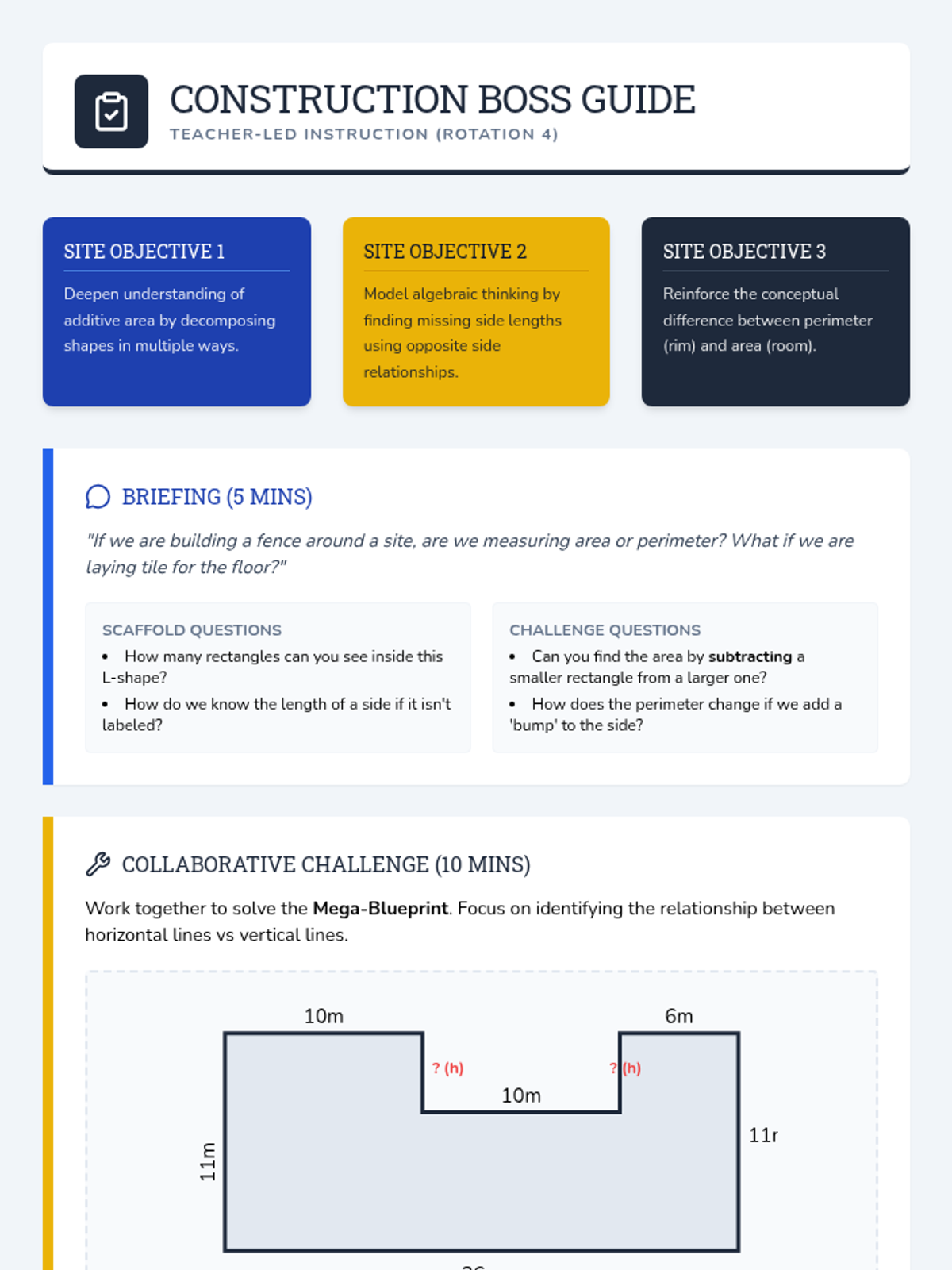
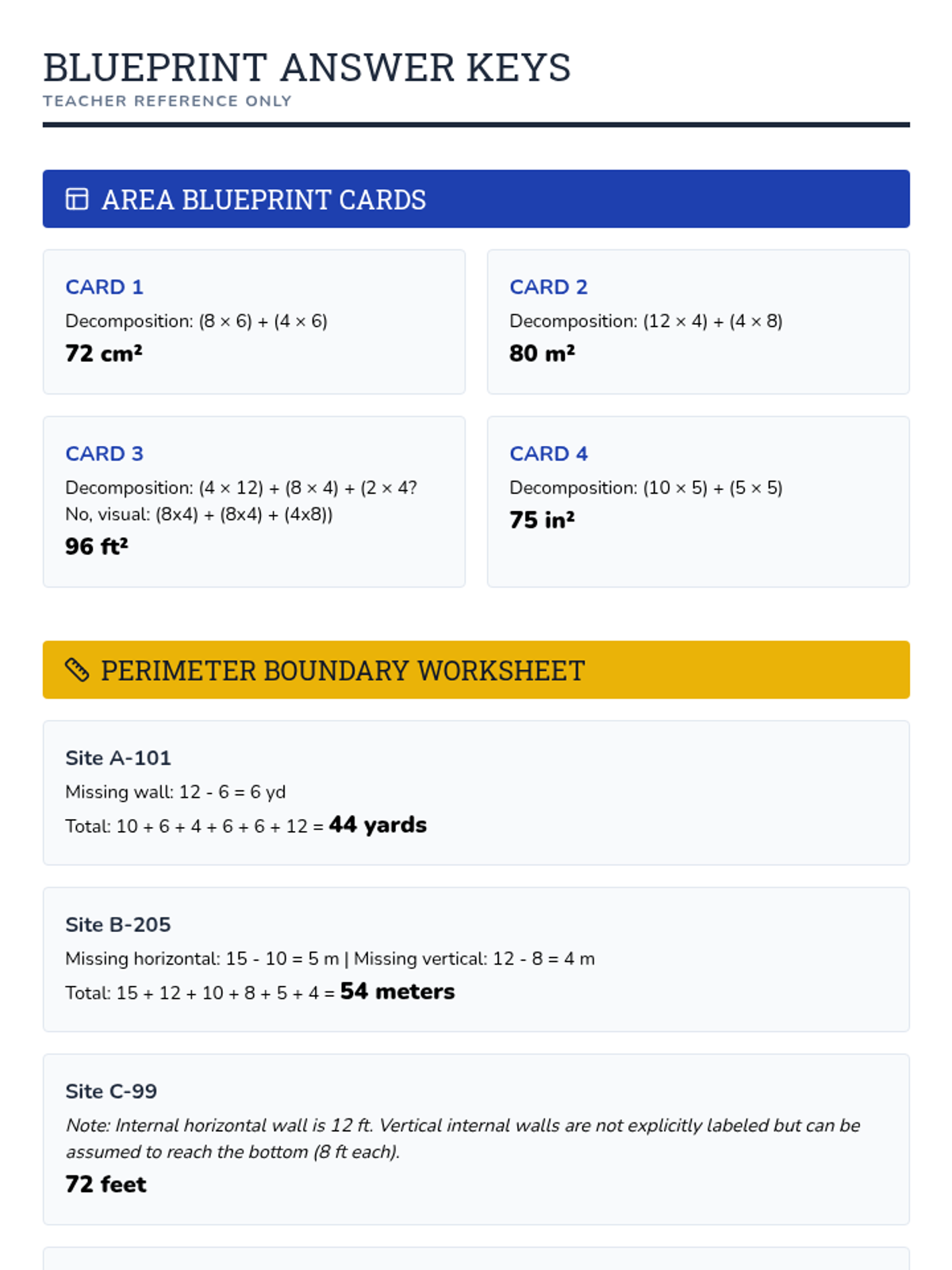
A set of four math center rotations themed around construction and blueprints, covering area and perimeter of rectilinear shapes, multiplication and division facts, and teacher-led instruction.
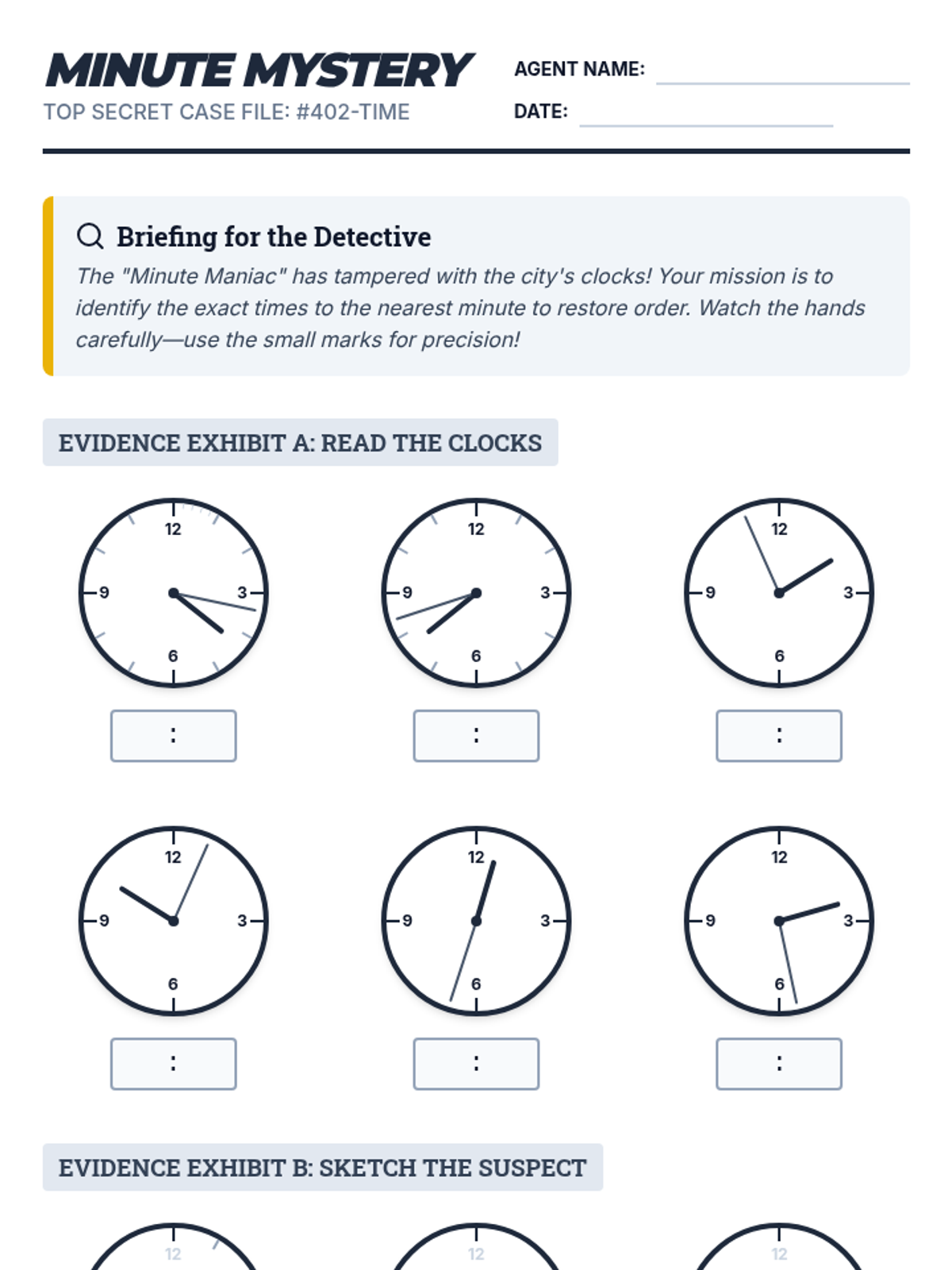
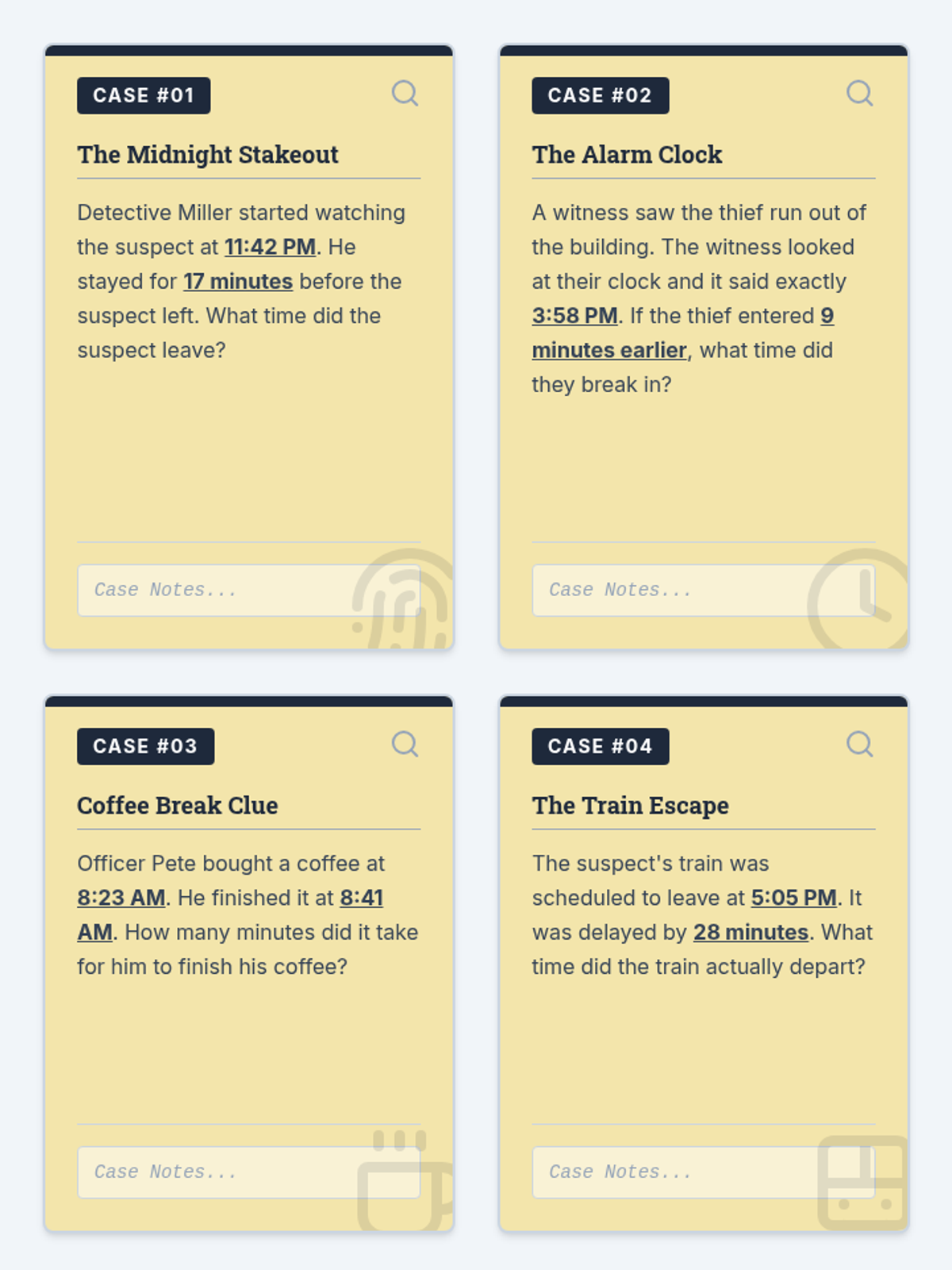
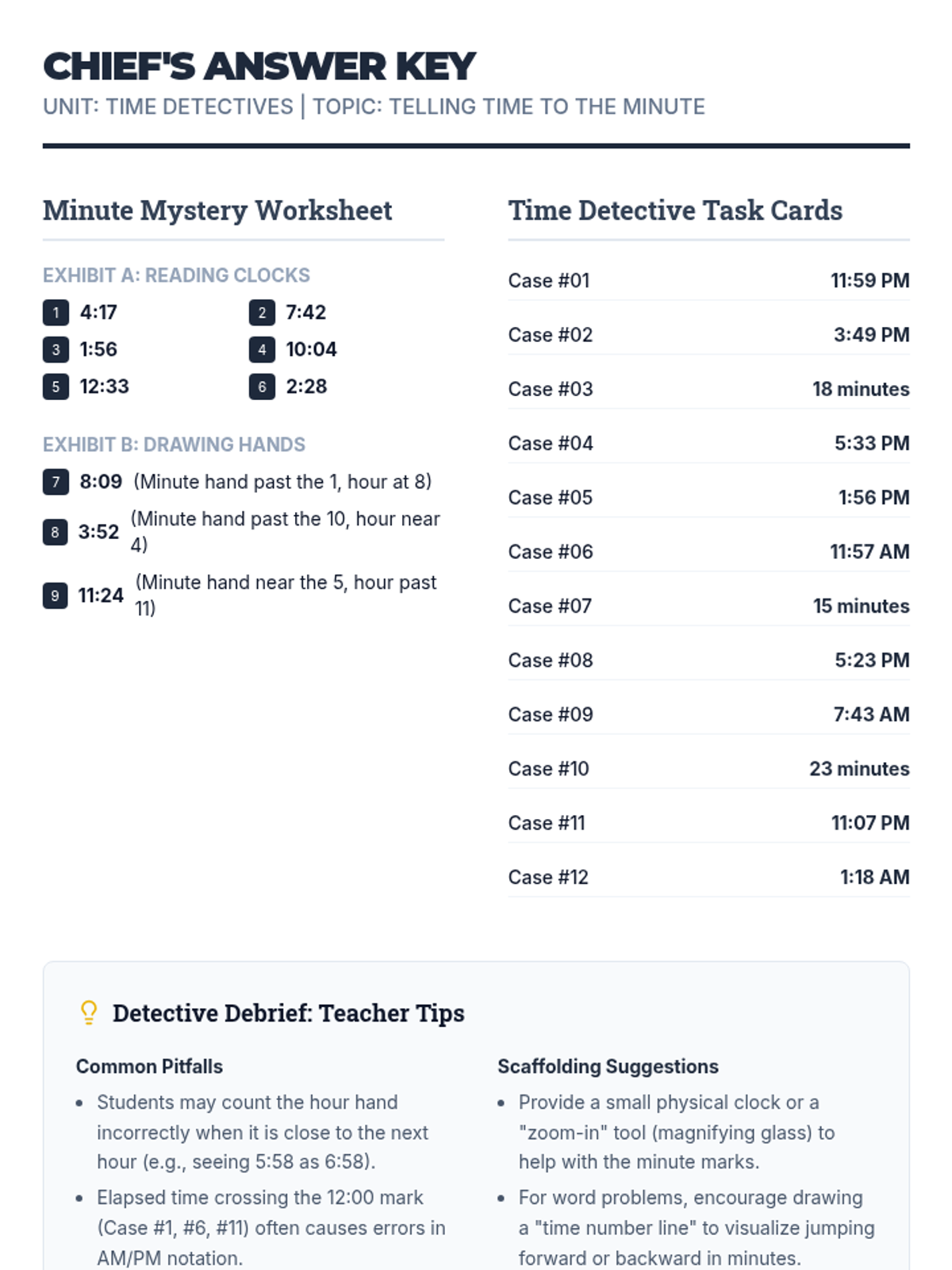
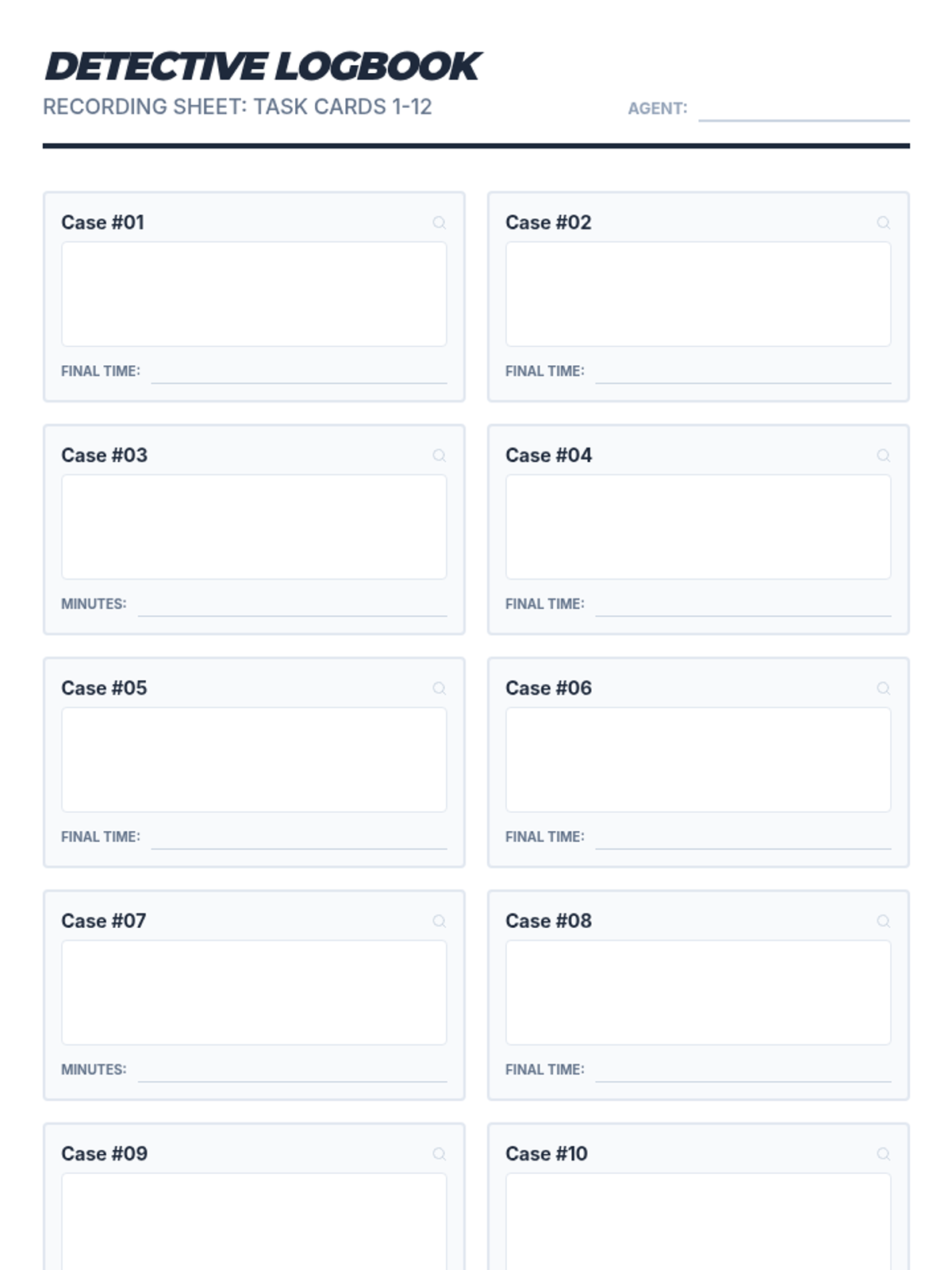
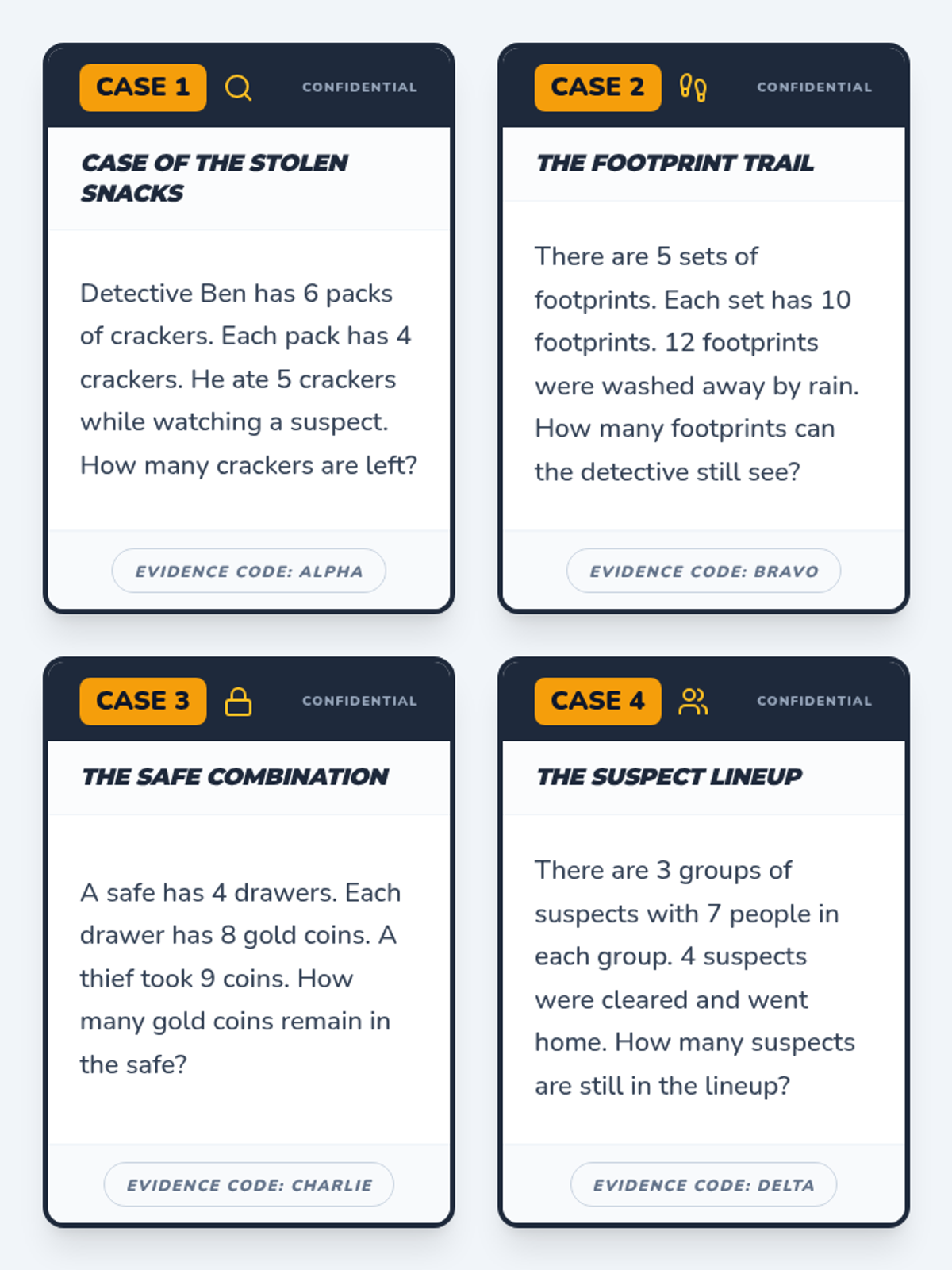
A detective-themed center activity focused on mastering telling time to the nearest minute through clock-reading and elapsed time word problems.
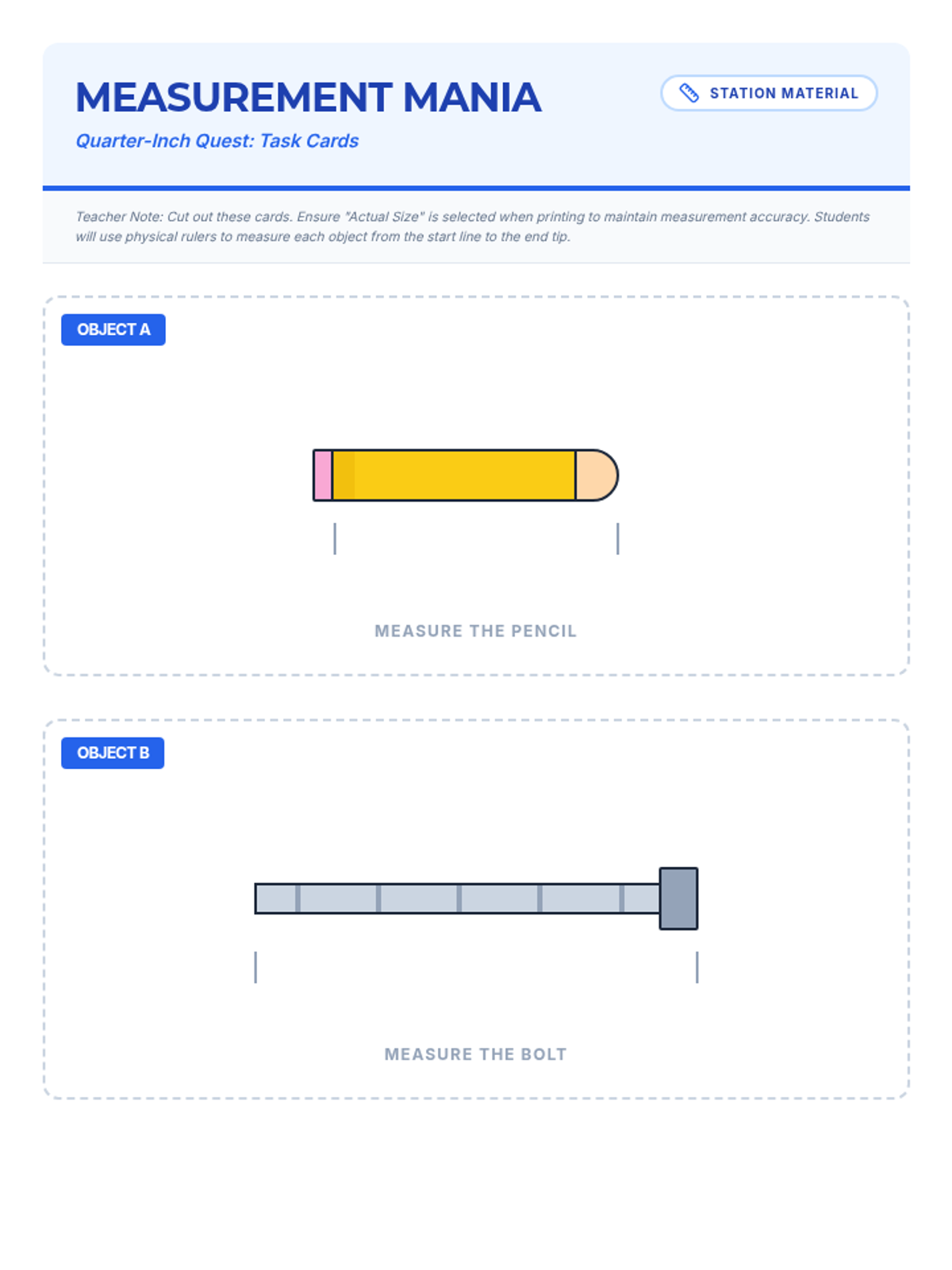
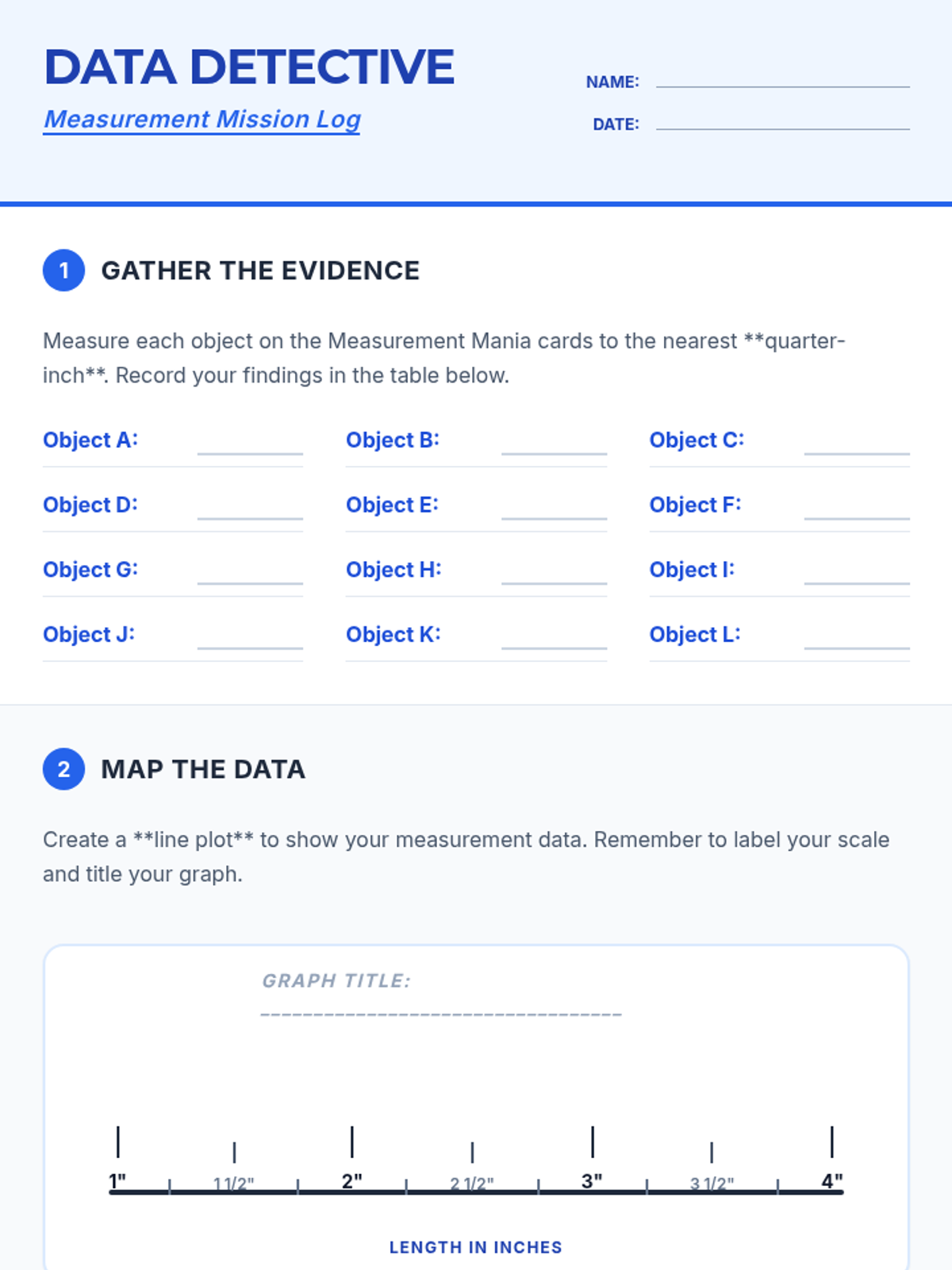
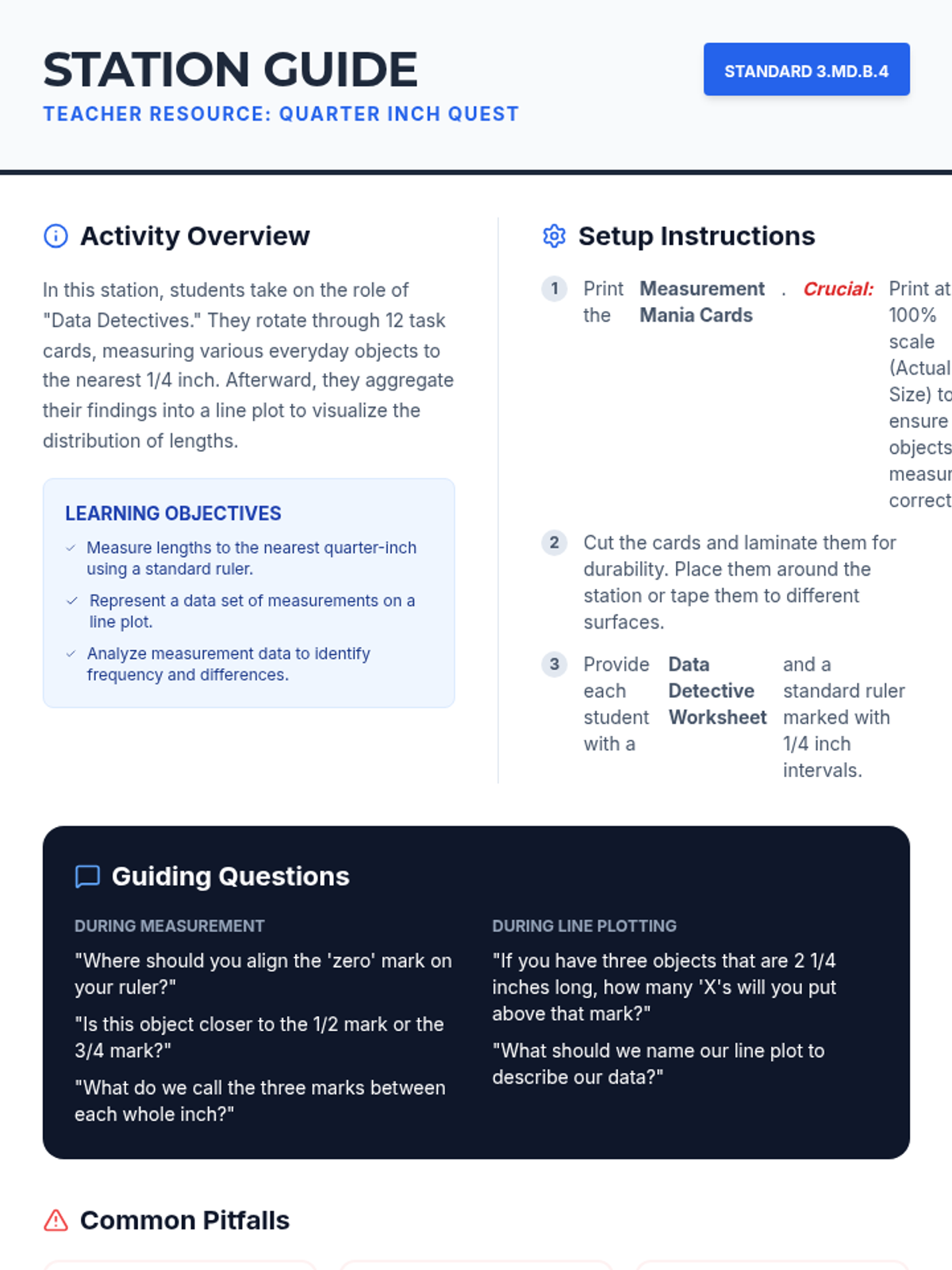
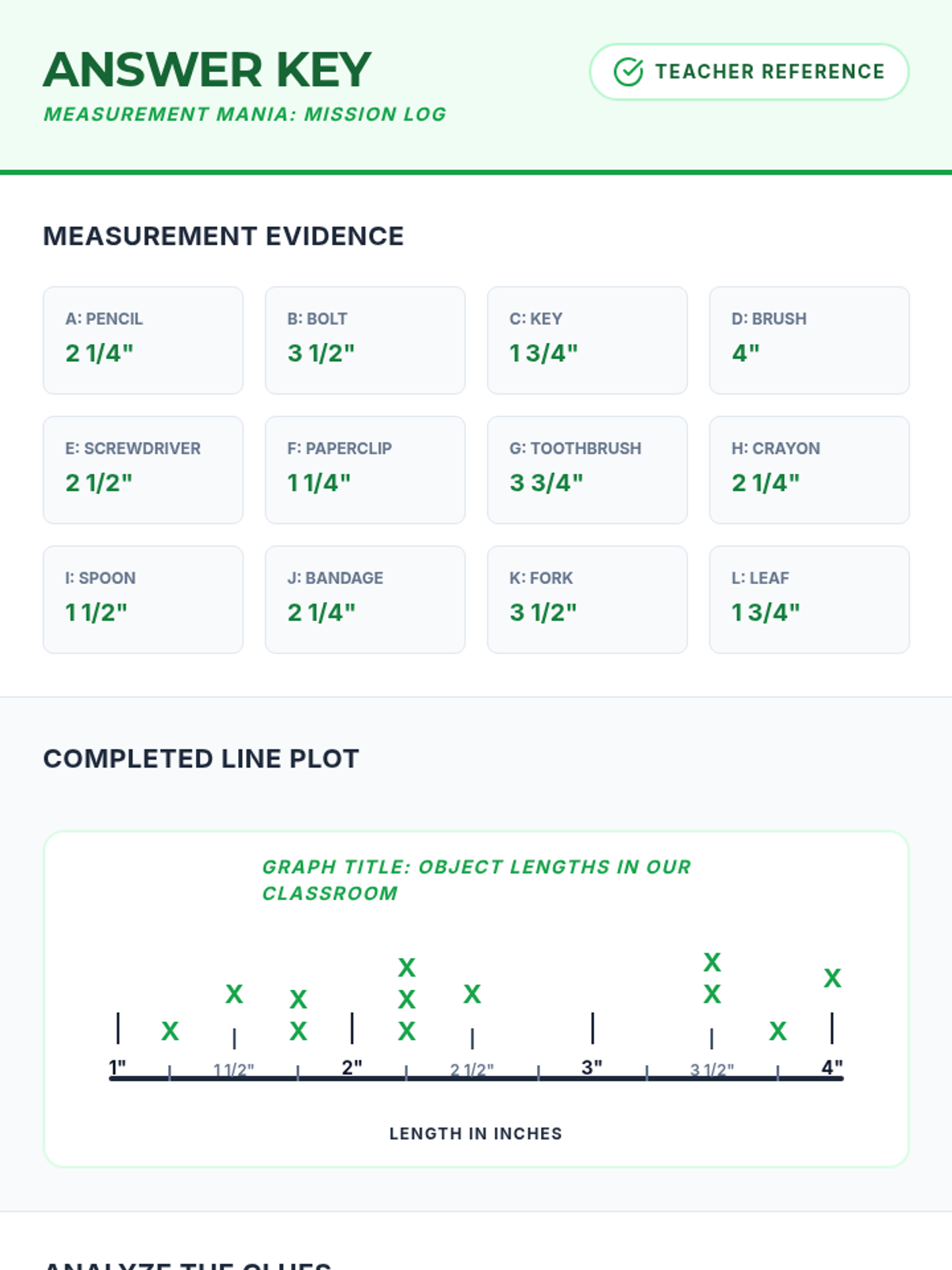
A hands-on measurement station where students measure objects to the nearest quarter-inch and represent their findings on a line plot.
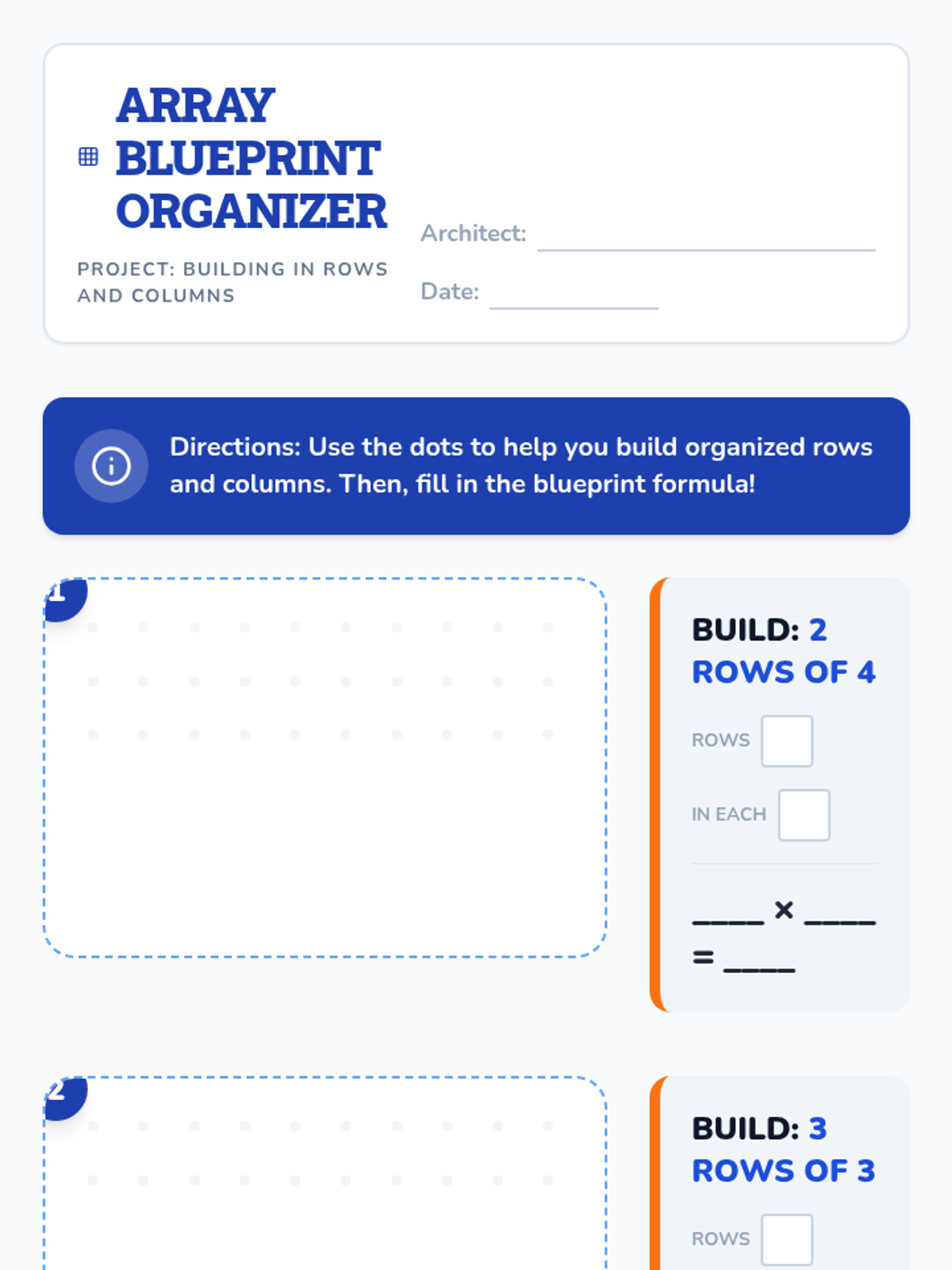
A foundational lesson for 3rd-grade students in self-contained SPED or Tier 2 intervention, focusing on the conceptual link between multiplication and division using visual arrays. Students act as 'Array Architects' to build and deconstruct rectangular models.
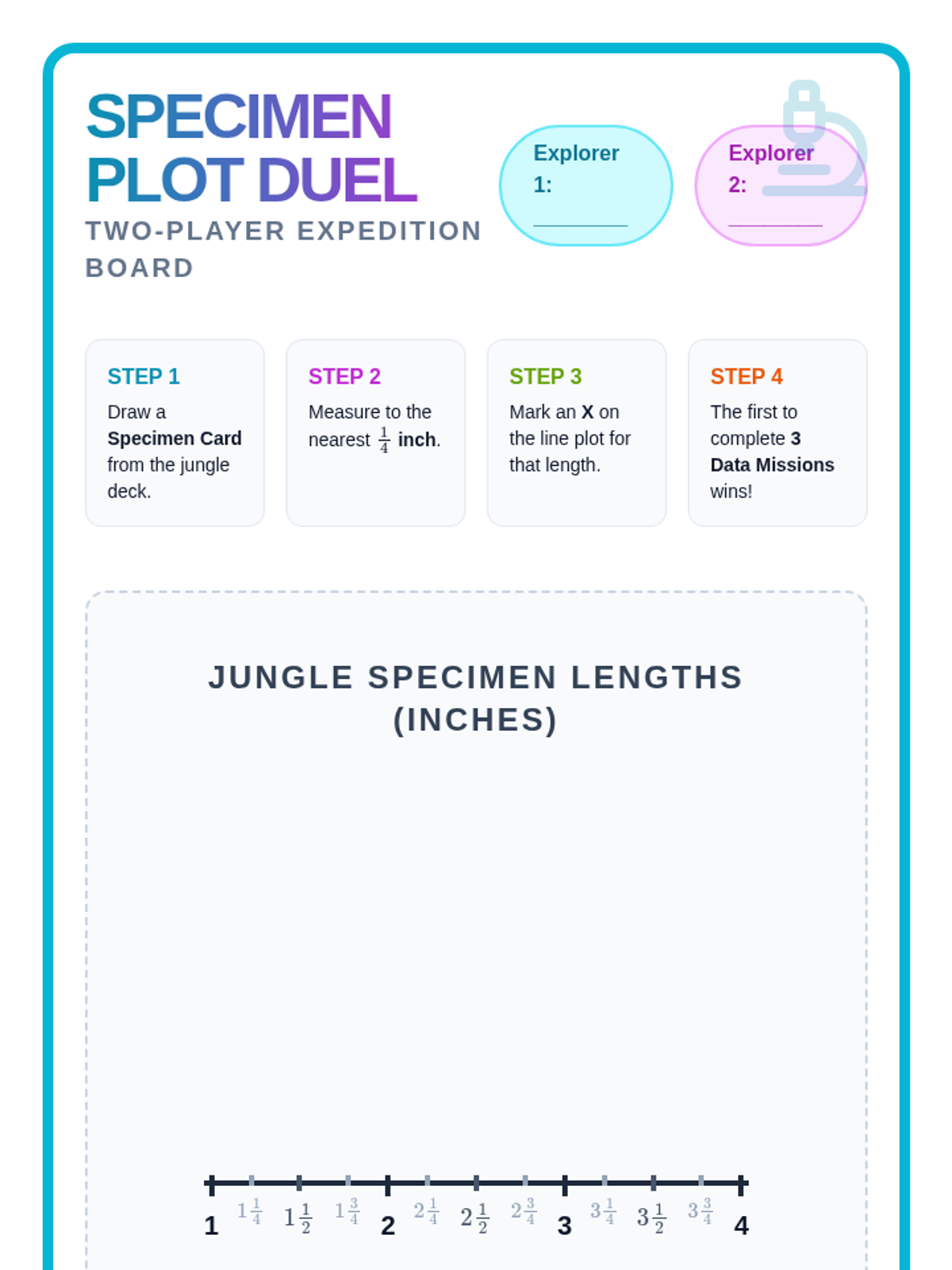
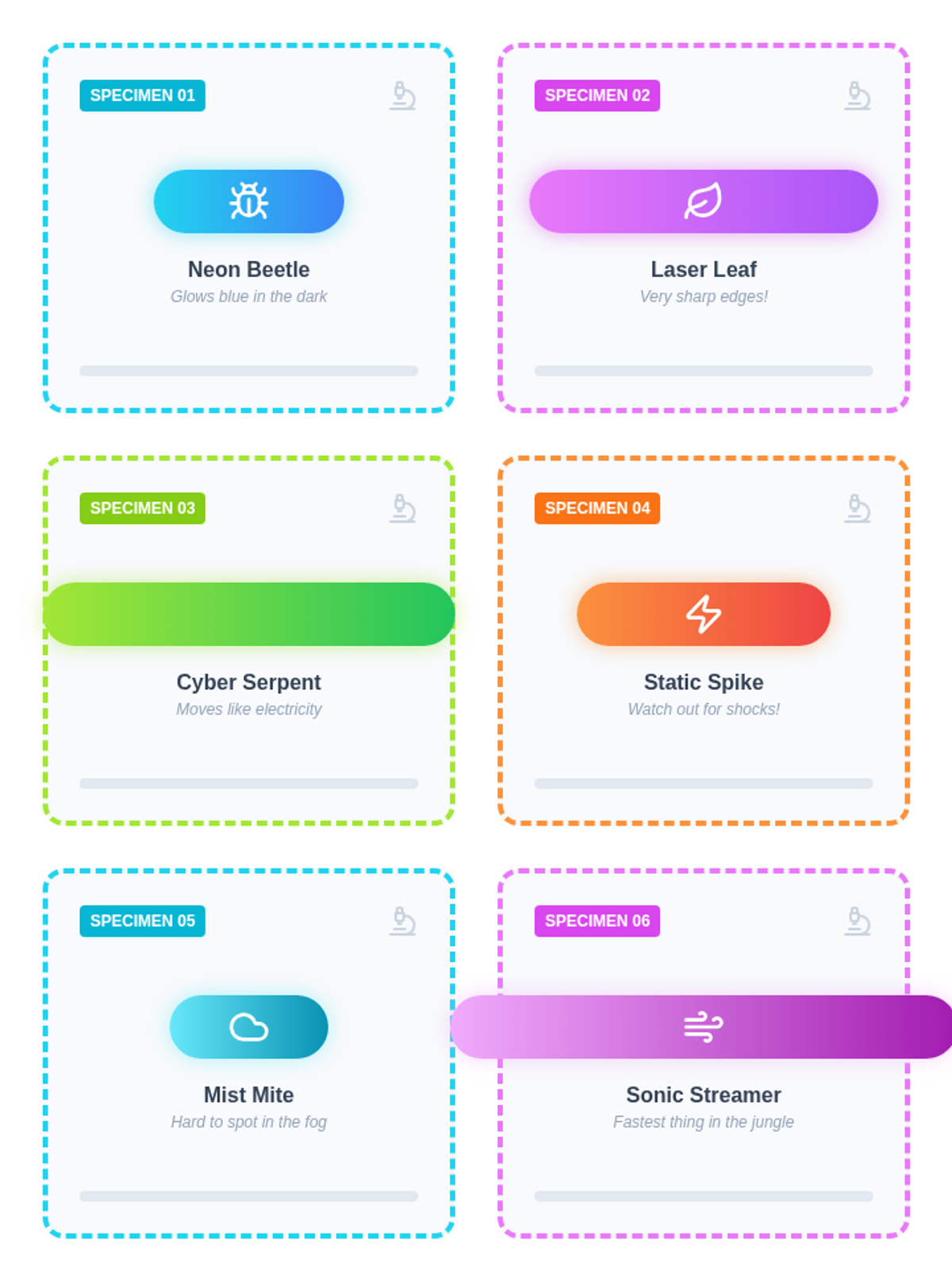
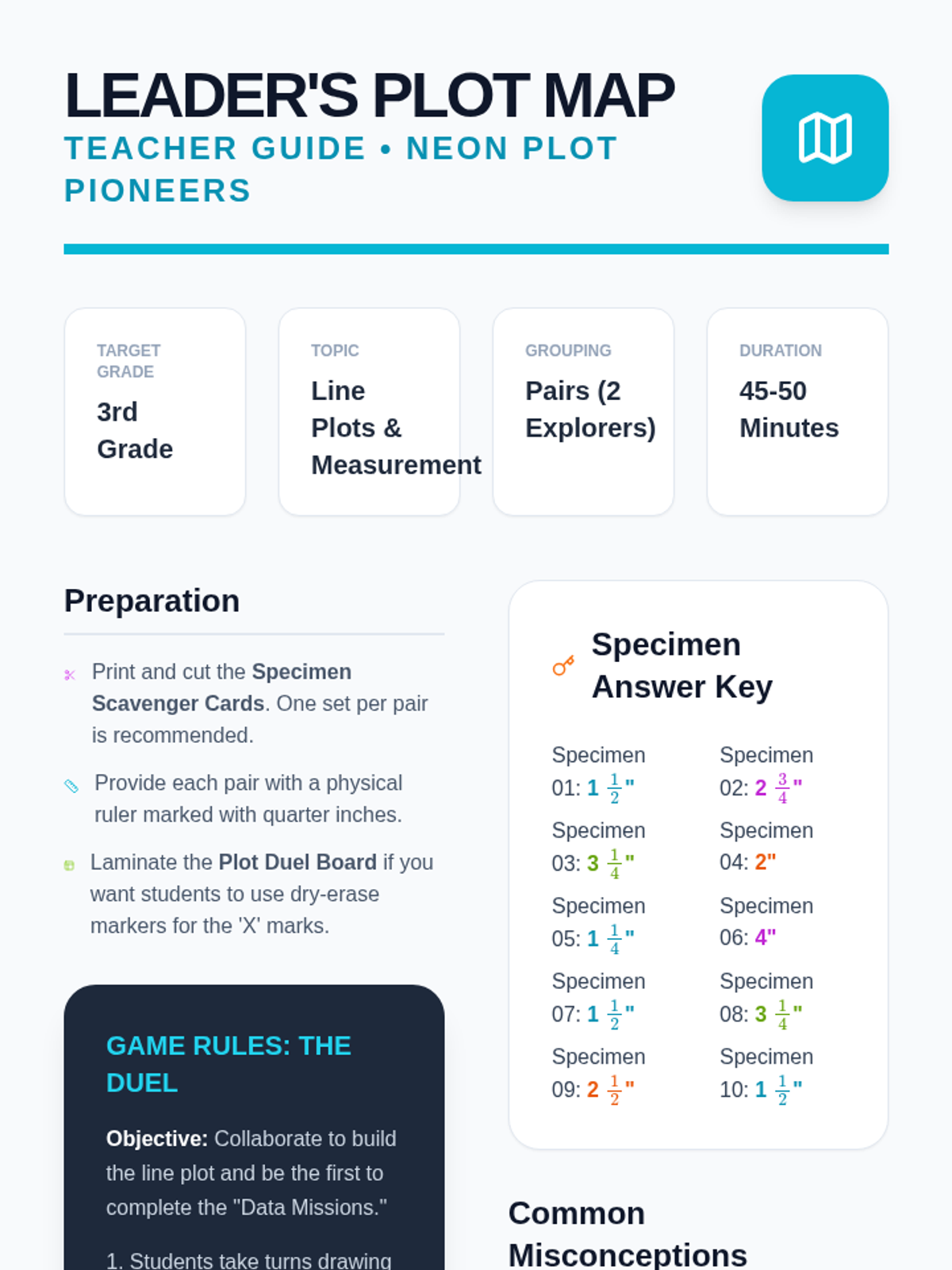
A collaborative measurement game where students collect and plot data from 'Neon Jungle' specimens. Focusing on measuring to the nearest quarter inch and creating accurate line plots.
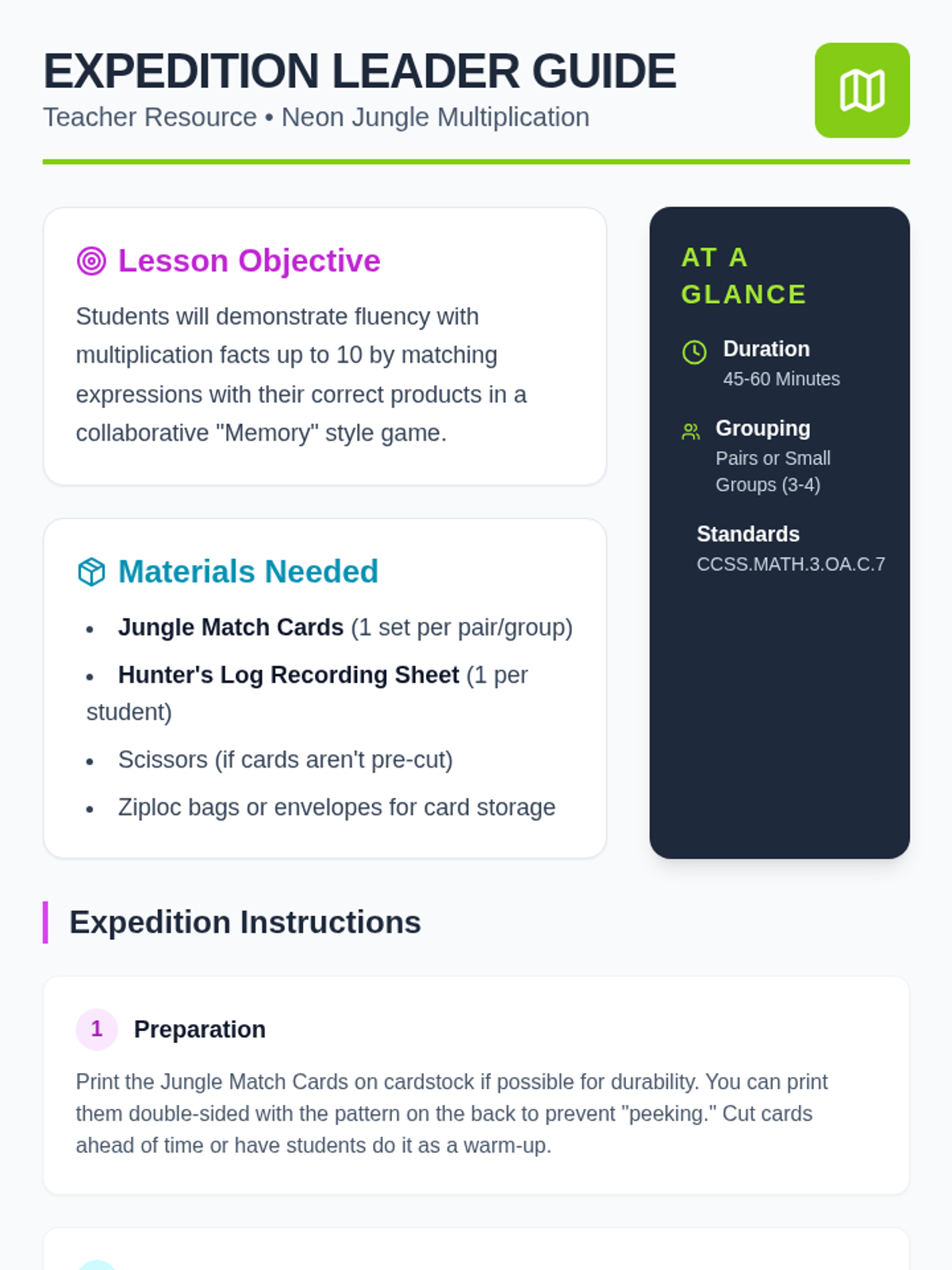
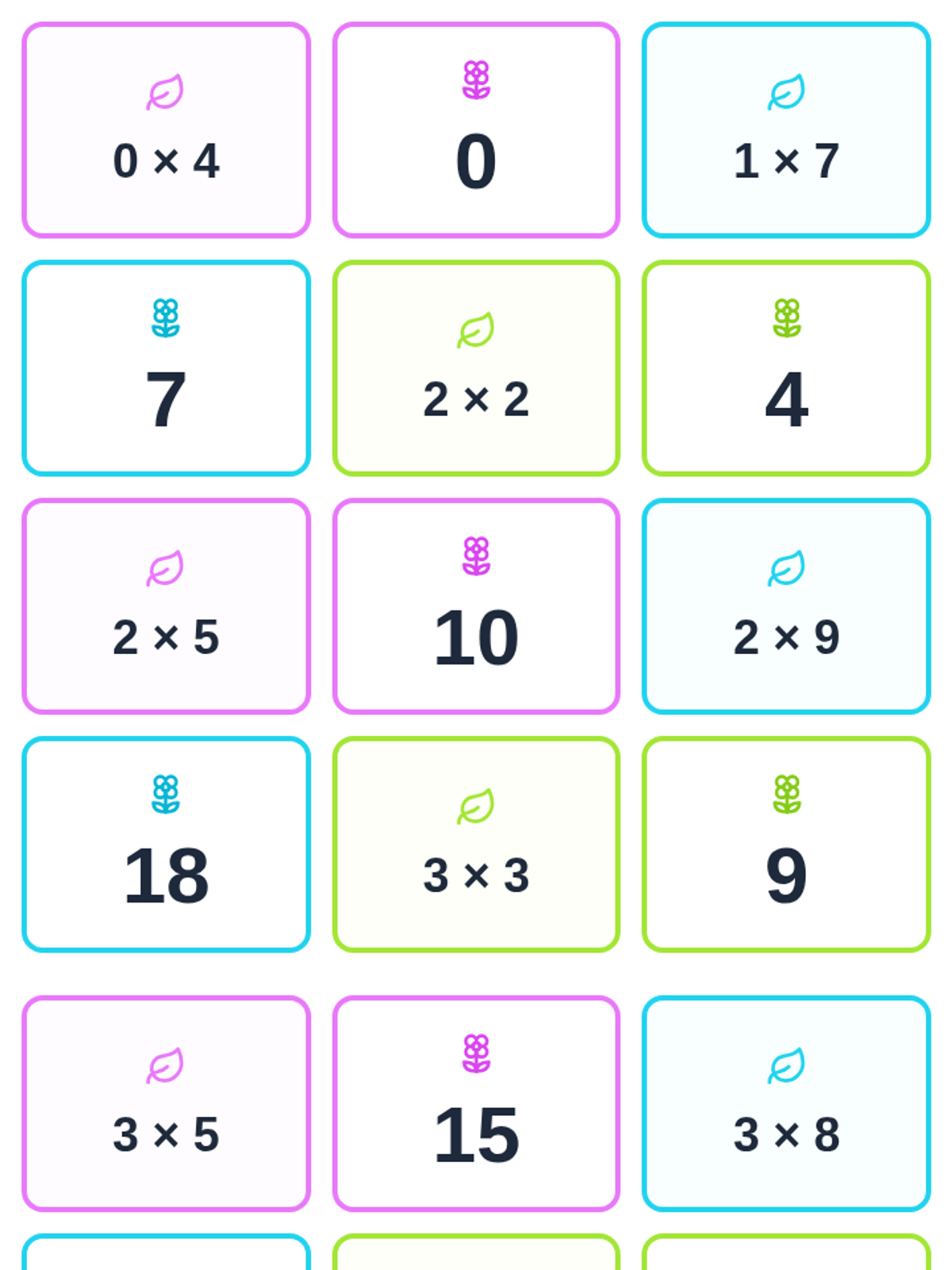
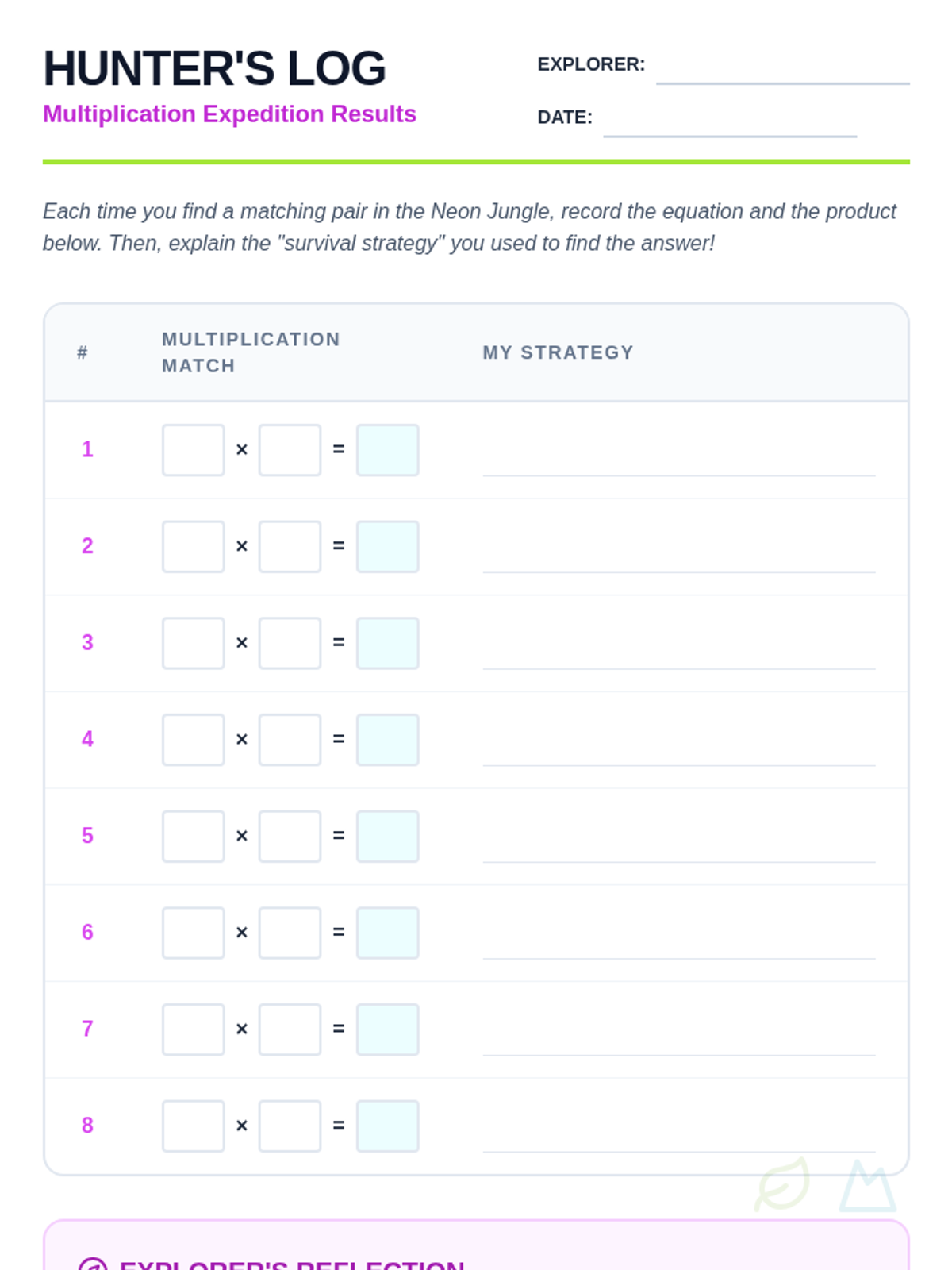
An engaging multiplication lesson centered around a 'Neon Jungle' theme, featuring a matching card game to reinforce facts up to 10. Students practice identifying products and building fluency through collaborative play.
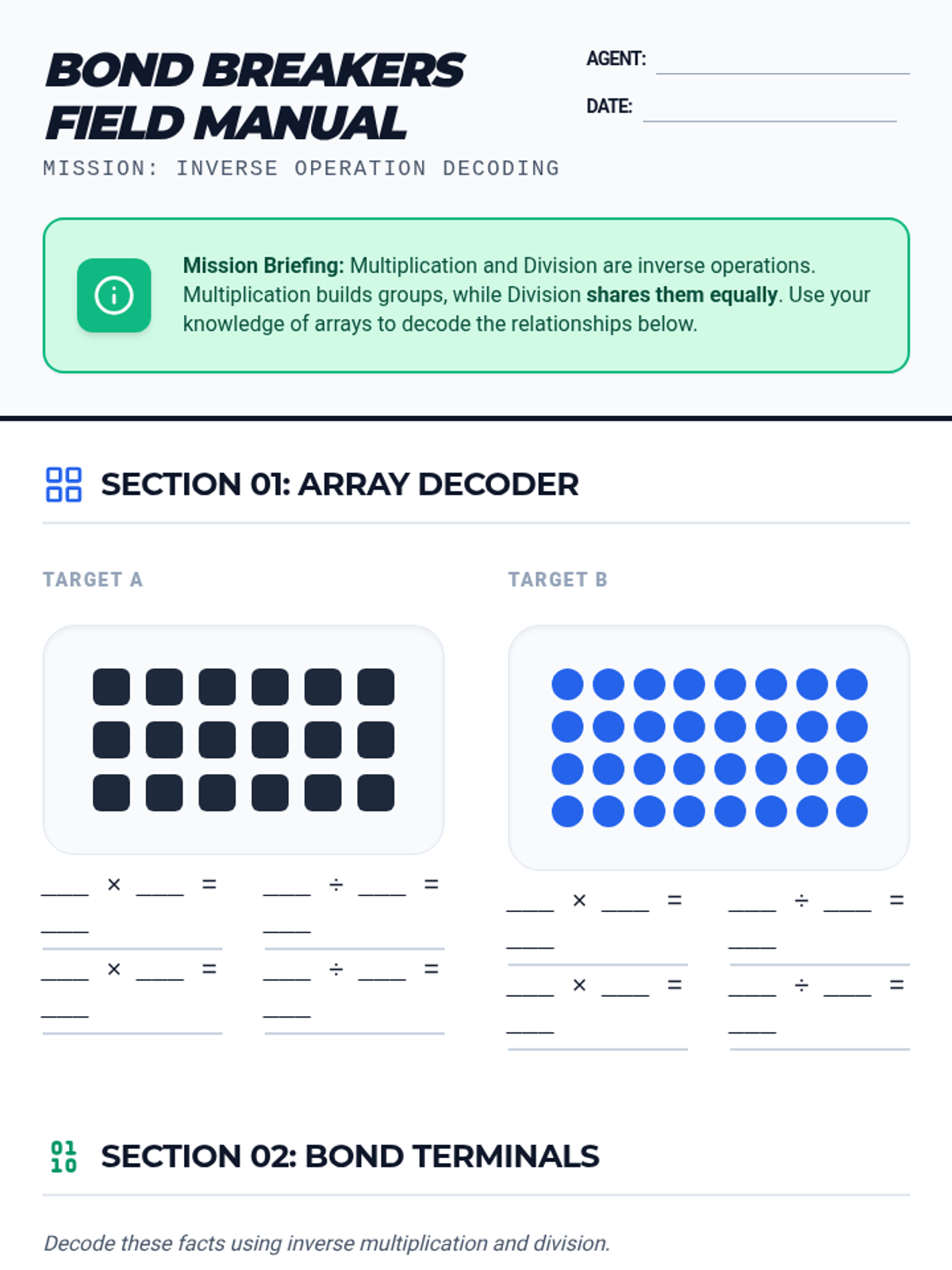
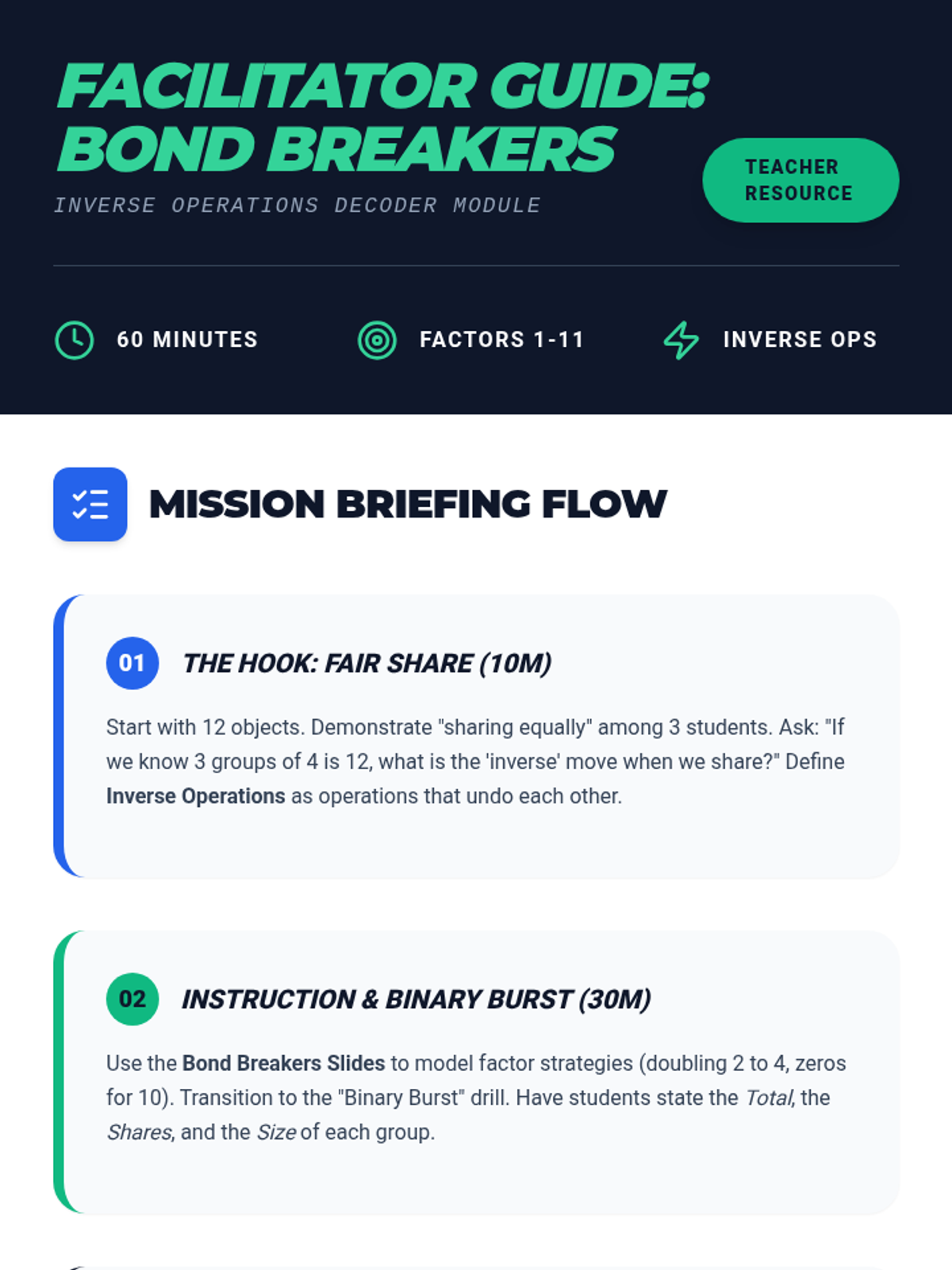
A lesson exploring the inverse relationship between multiplication and division using factors 1, 2, 3, 4, 5, 6, 8, 10, and 11. Students will use arrays and fact families to decode the connection between these two operations.
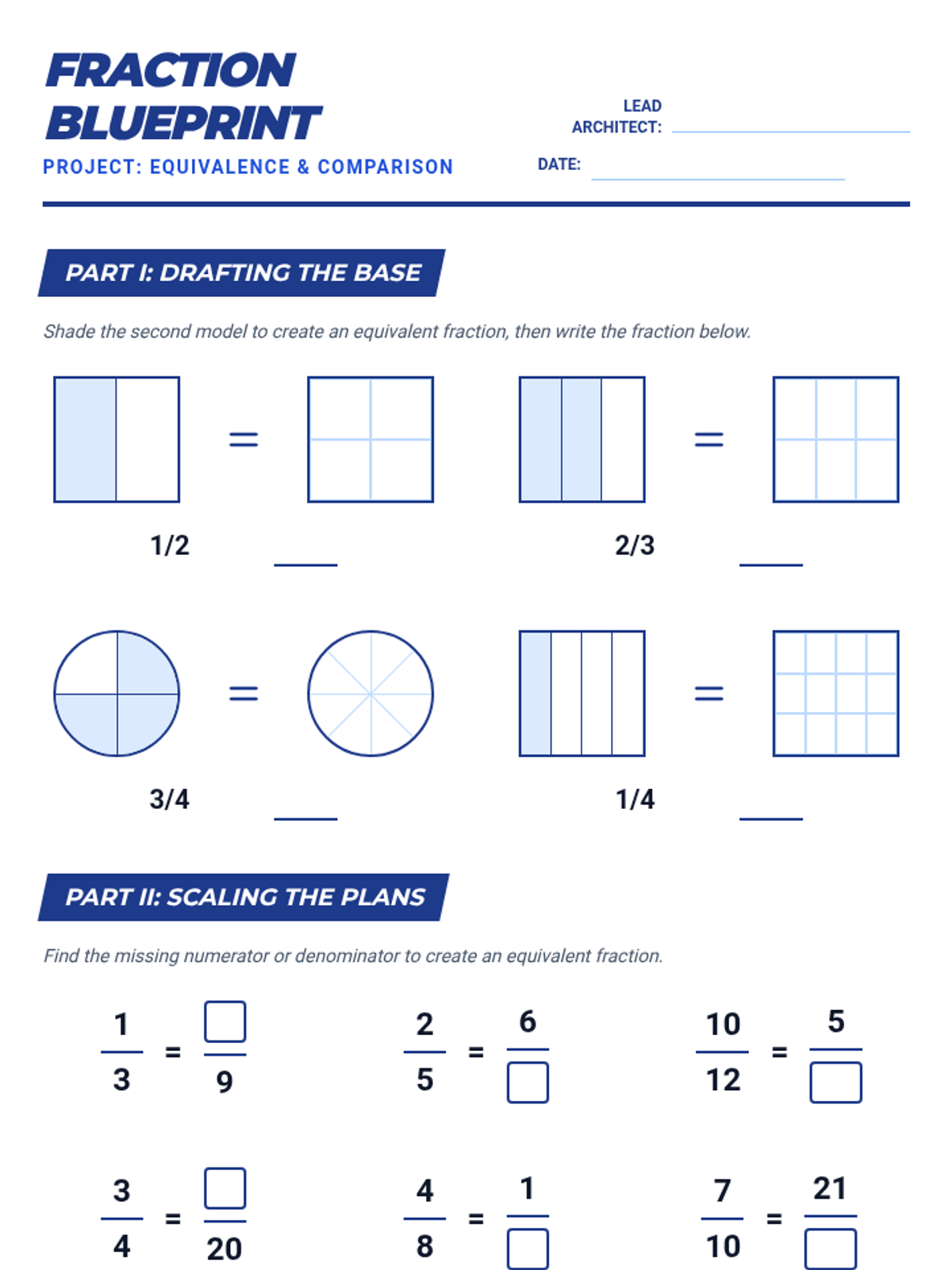
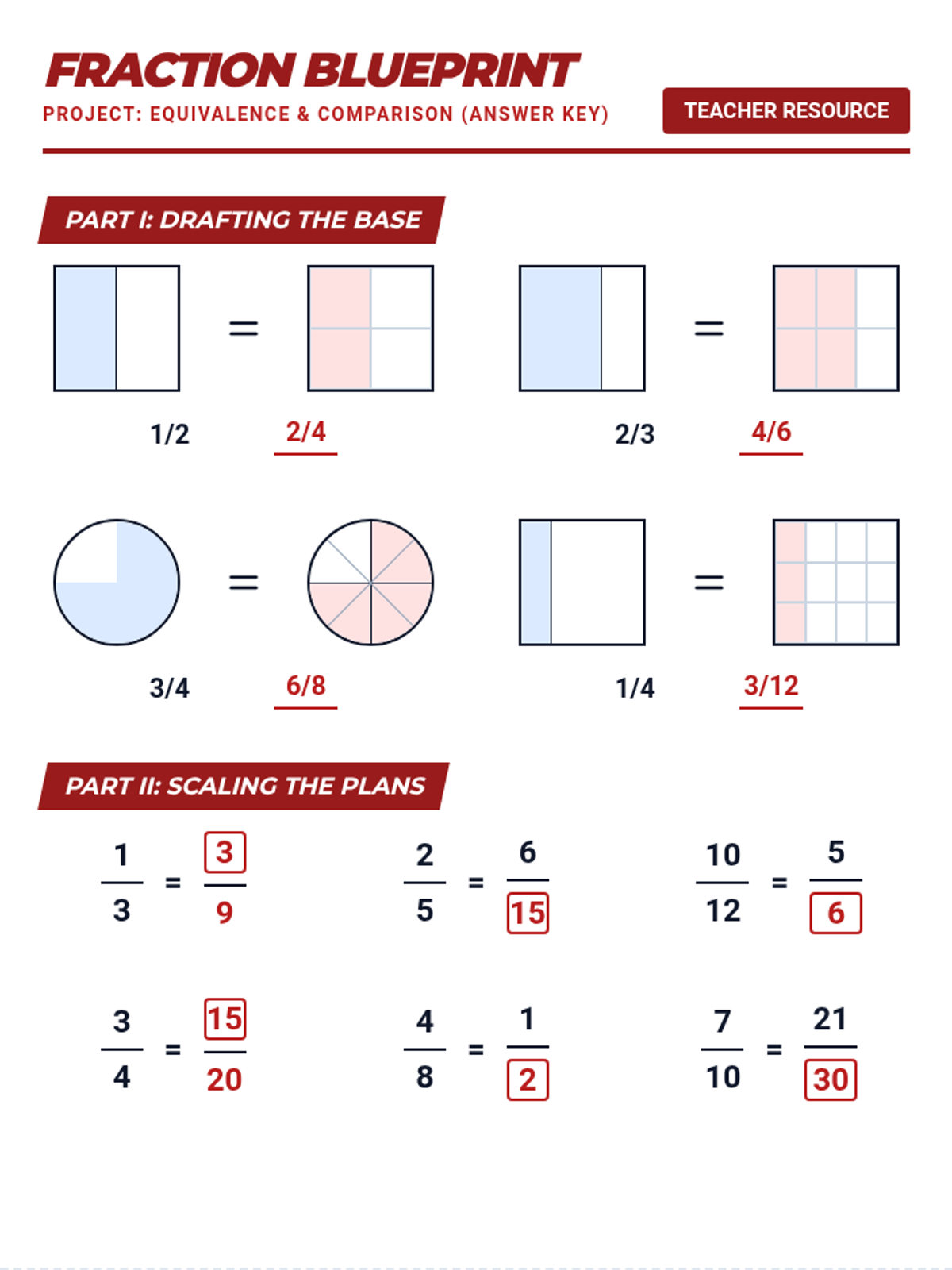
A lesson focused on identifying equivalent fractions through visual models and comparing them using common denominators, themed around architectural blueprints.
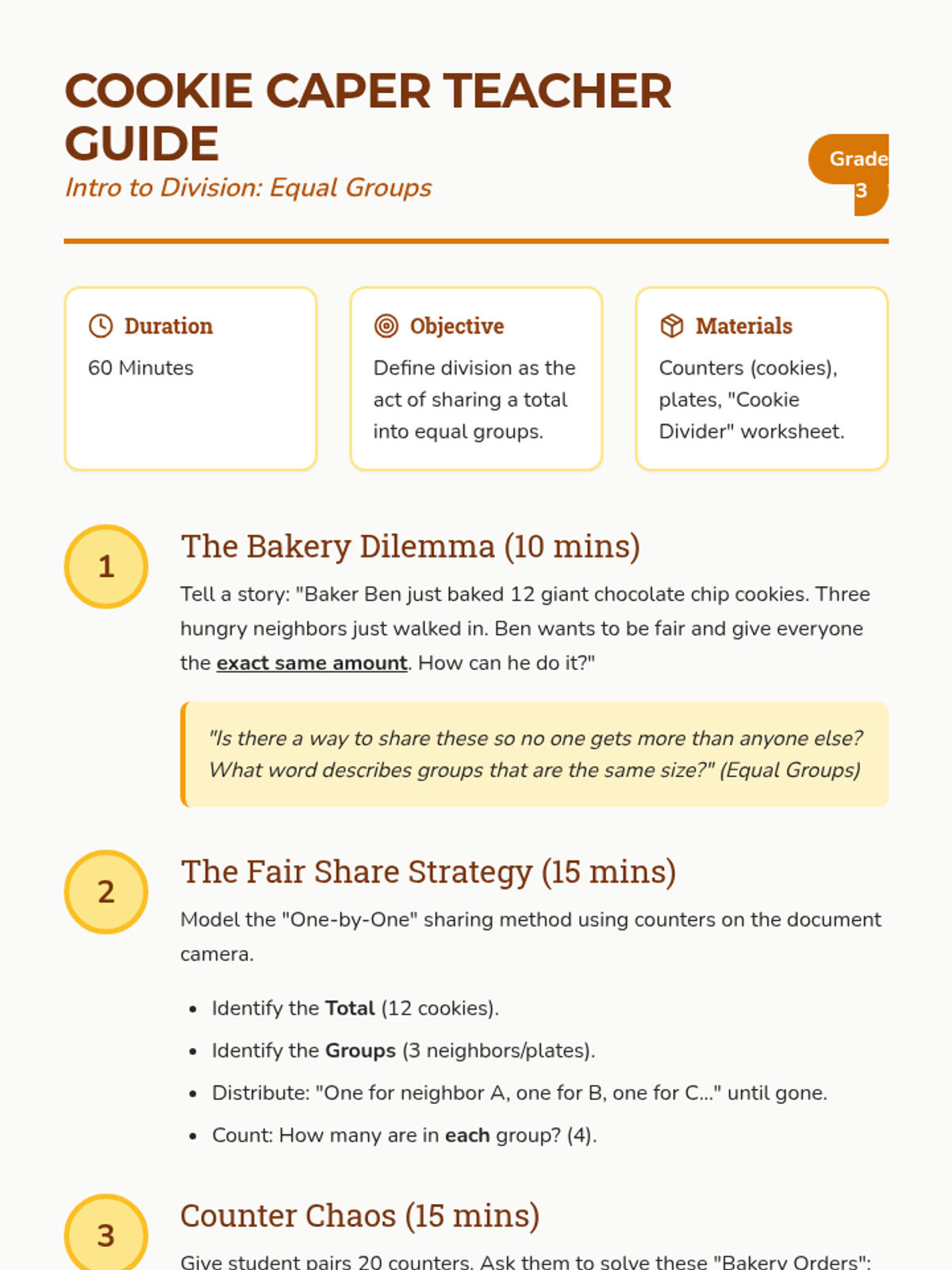
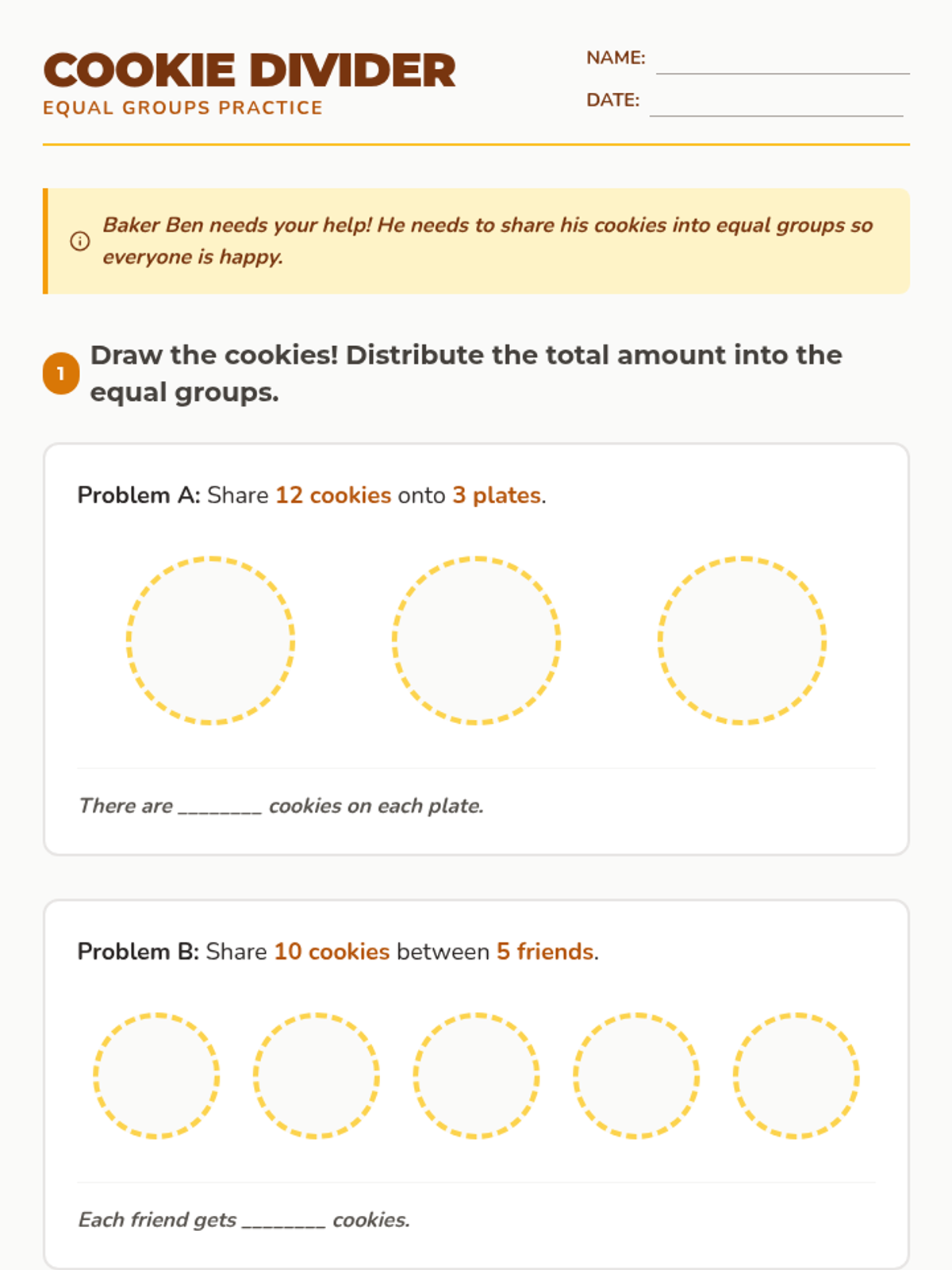
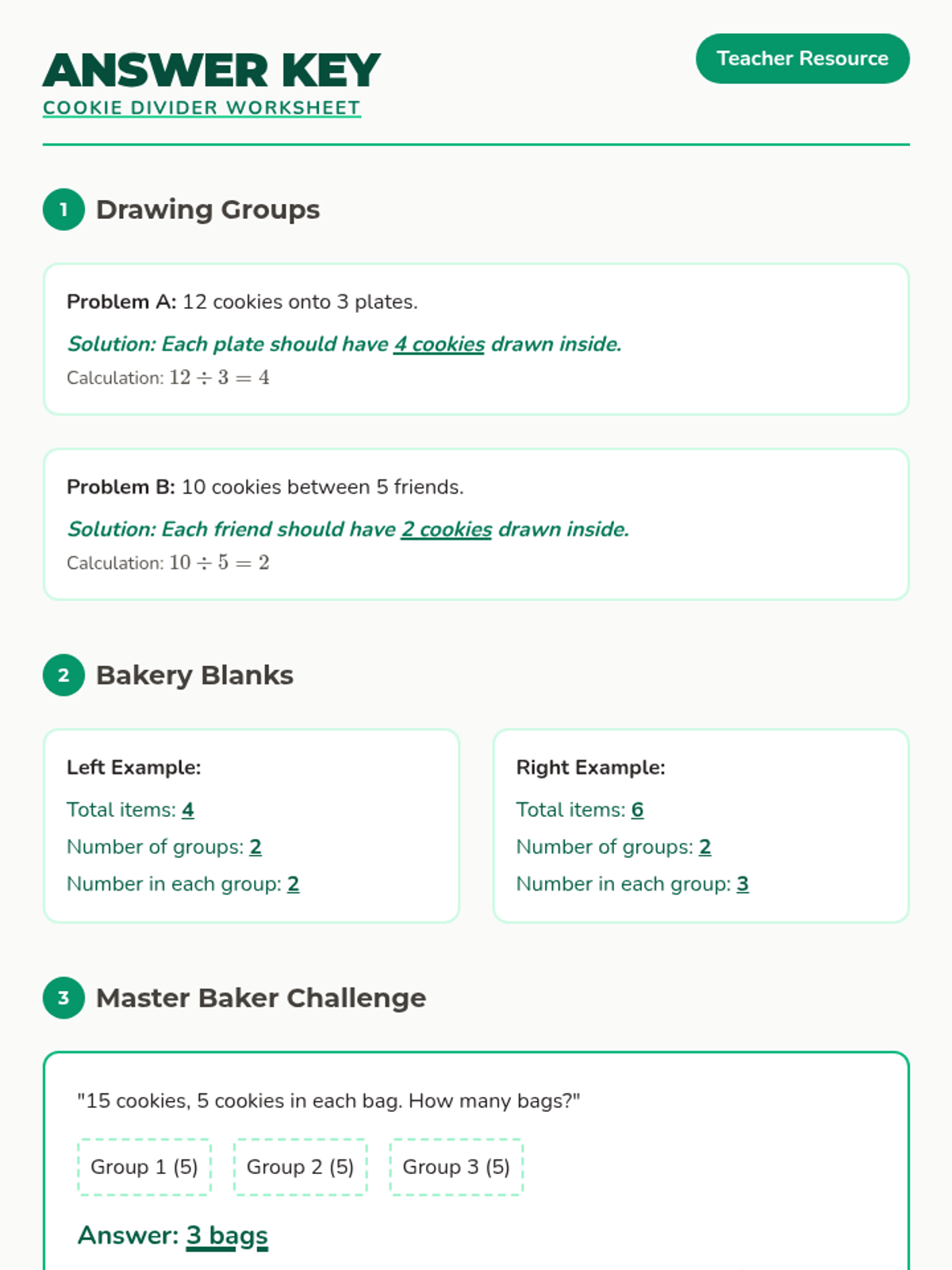
An introductory lesson on division where students learn to share items into equal groups through a fun bakery-themed narrative.
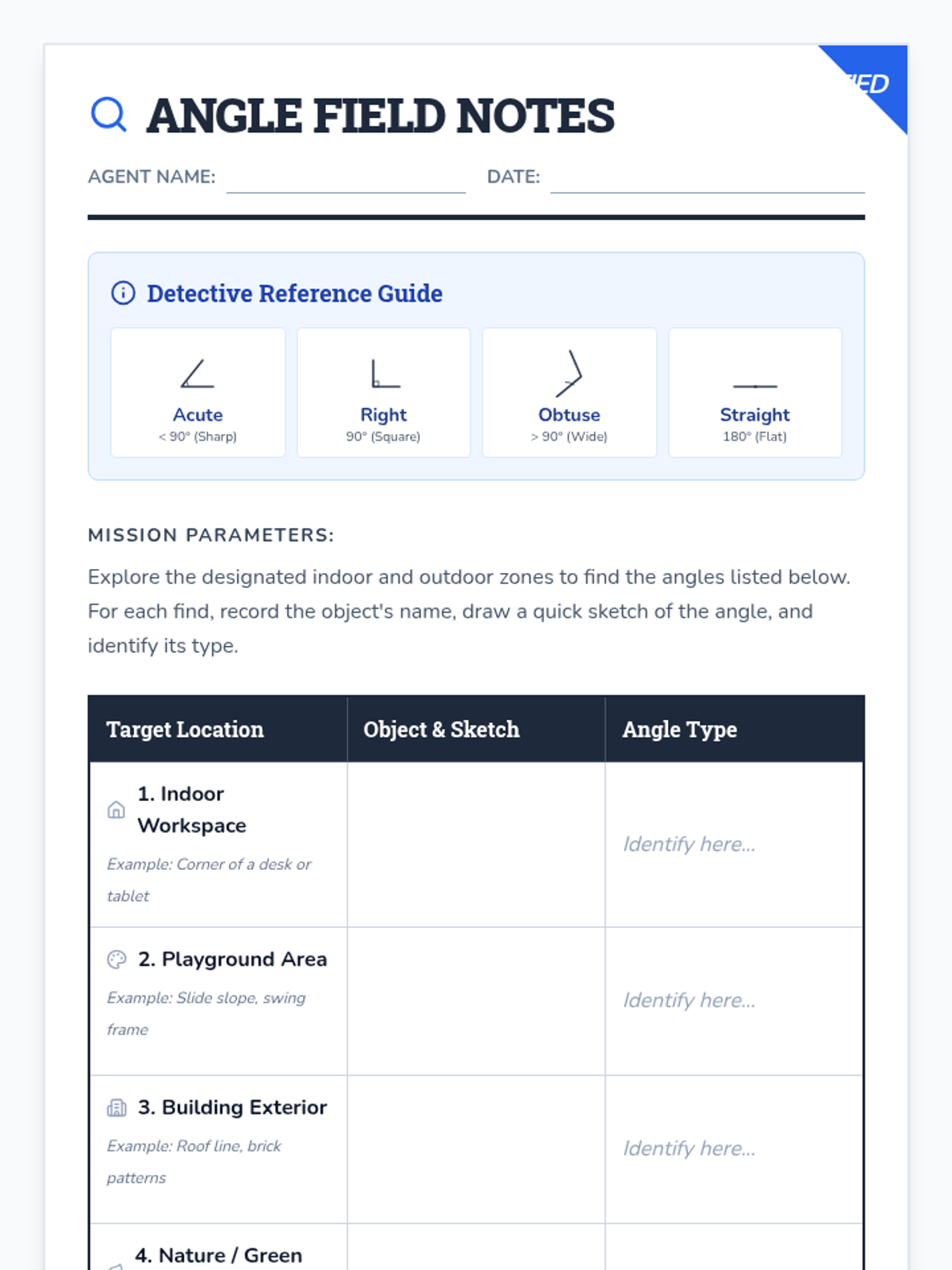
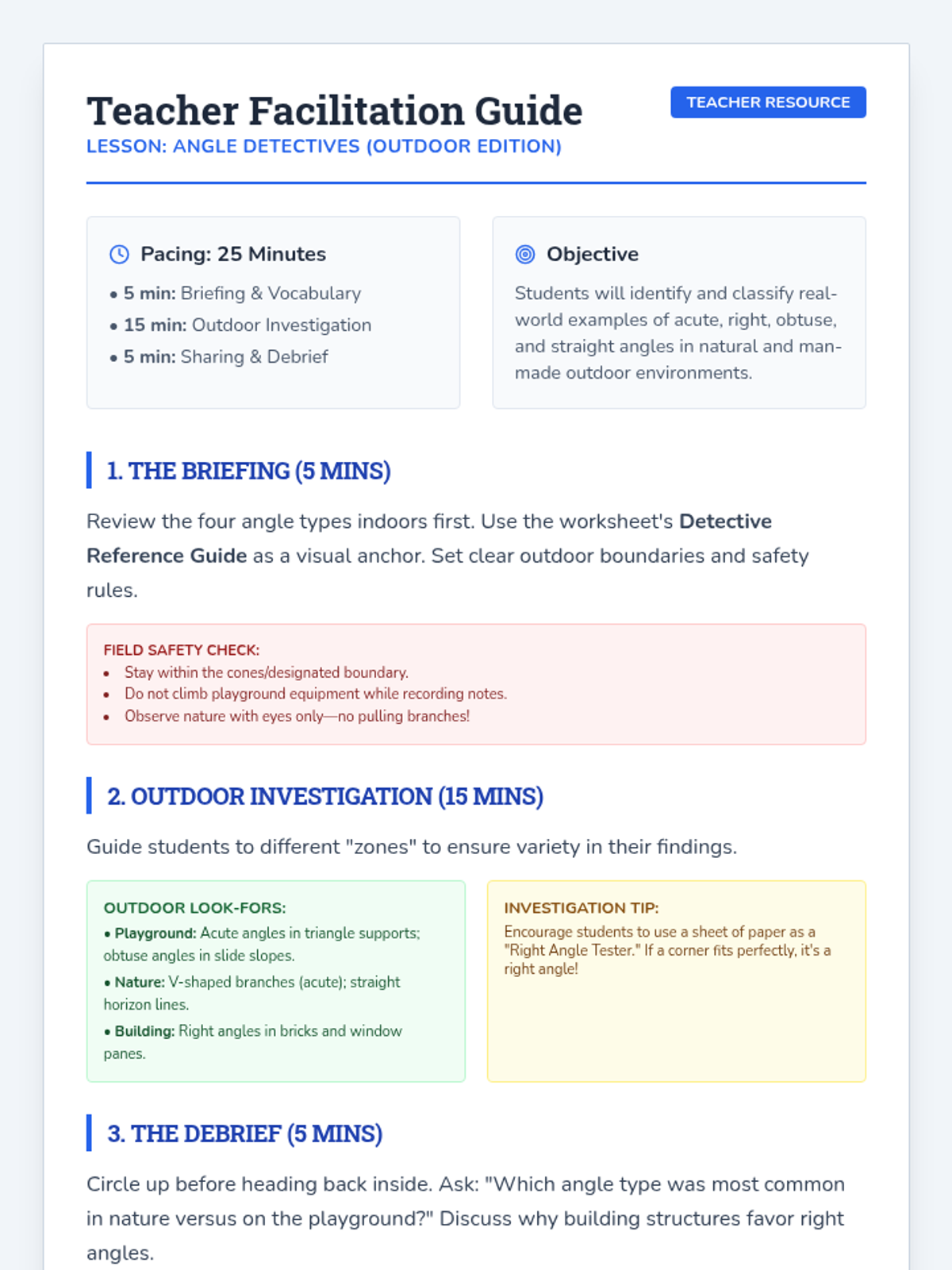
In this active geometry lesson, students become 'Angle Detectives' to identify right, acute, obtuse, and straight angles in their immediate environment. The lesson combines visual identification with hands-on exploration to reinforce geometric concepts.
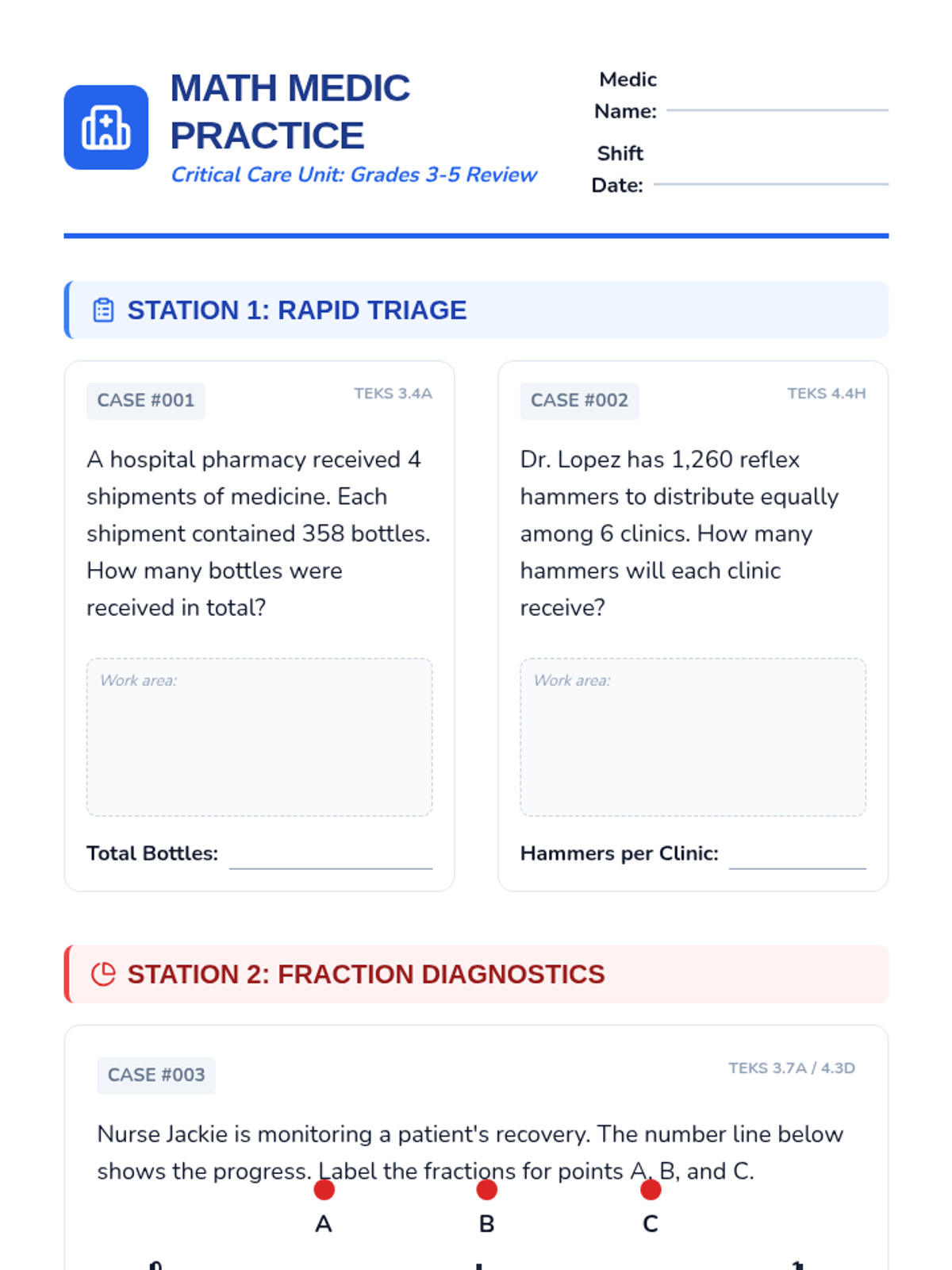
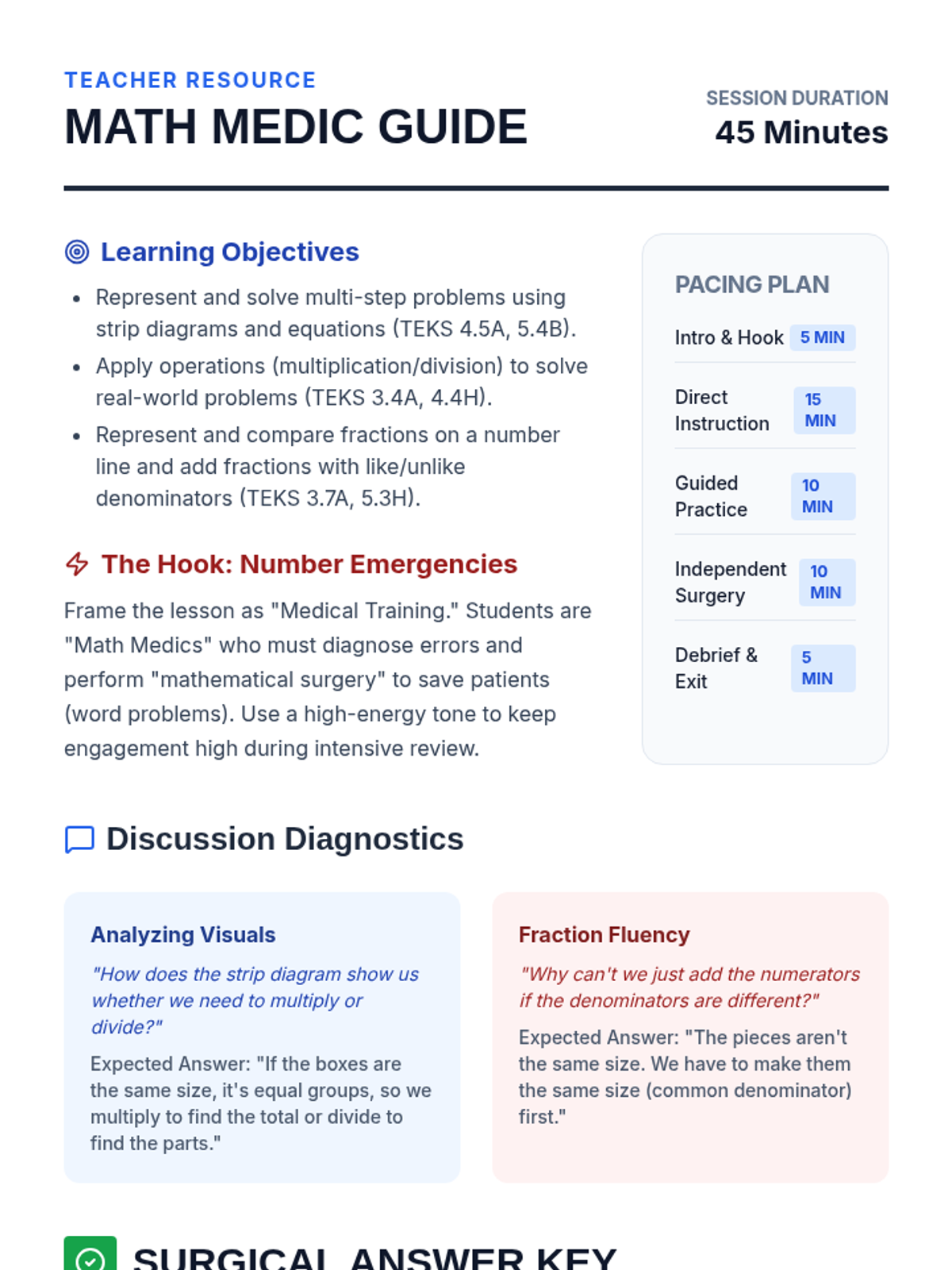
A high-energy math review lesson focused on TEKS standards for grades 3-5, covering operations, fractions, and multi-step word problems through the lens of 'Math Medics' diagnosing and solving number emergencies.
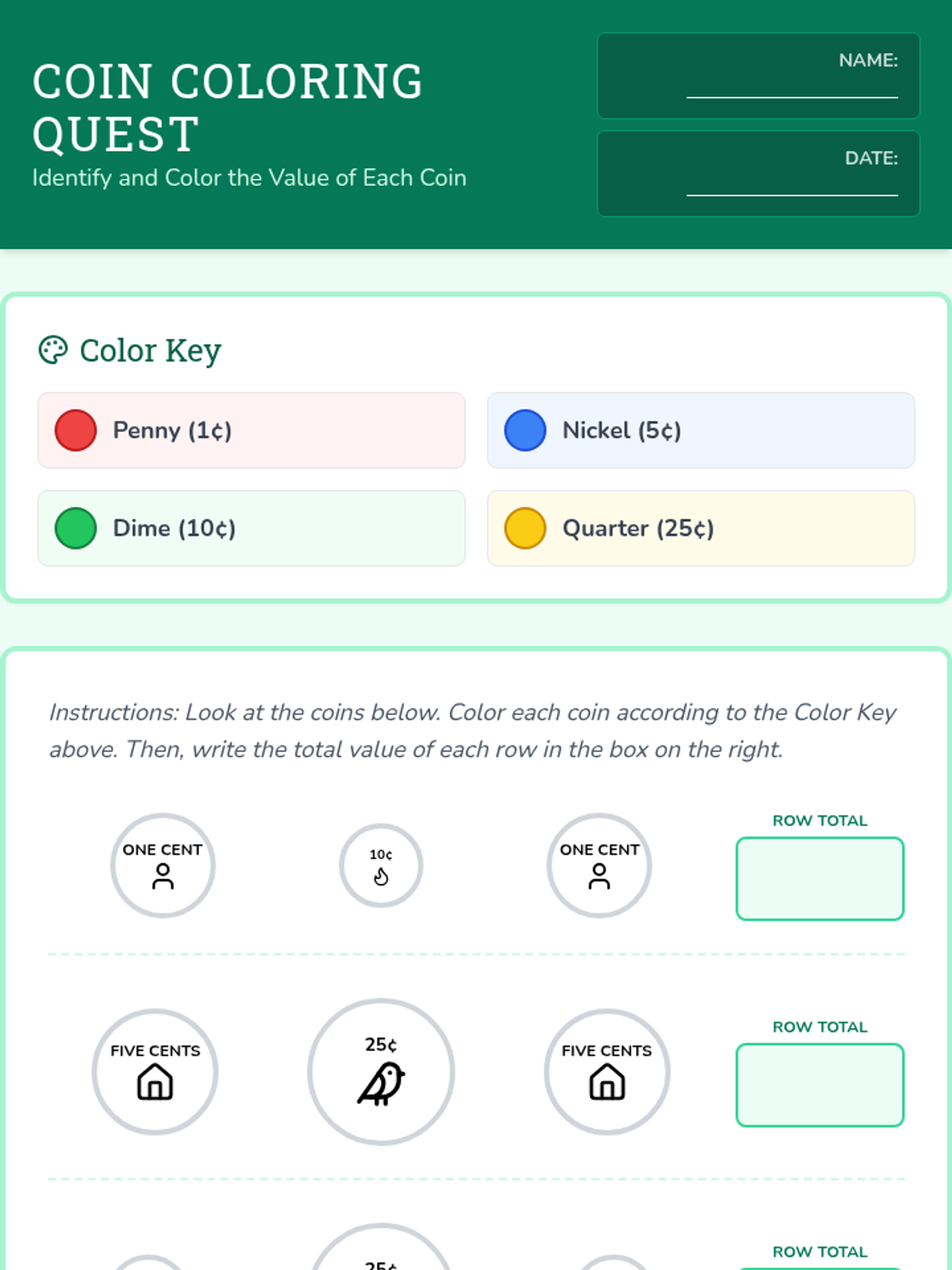
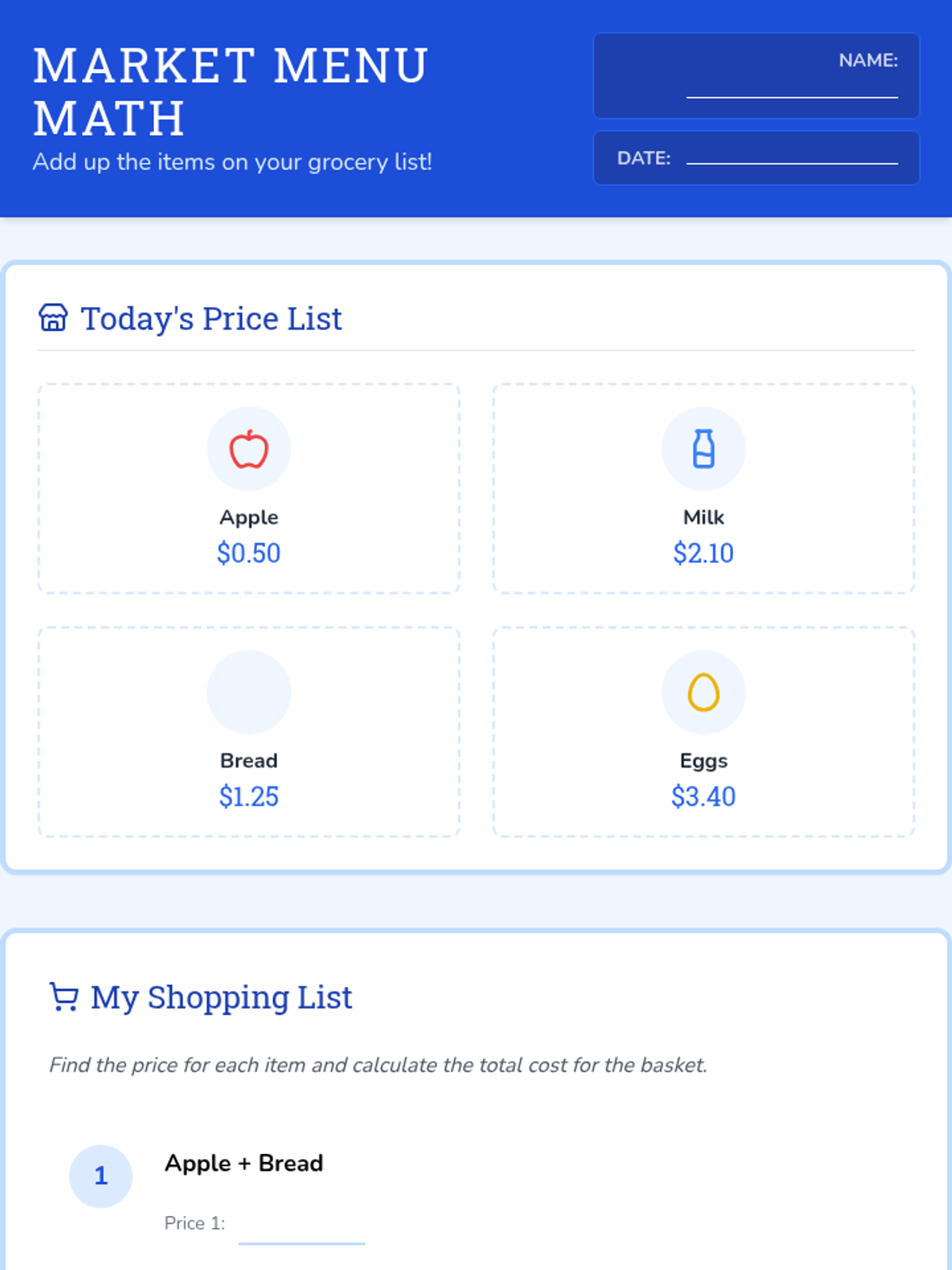
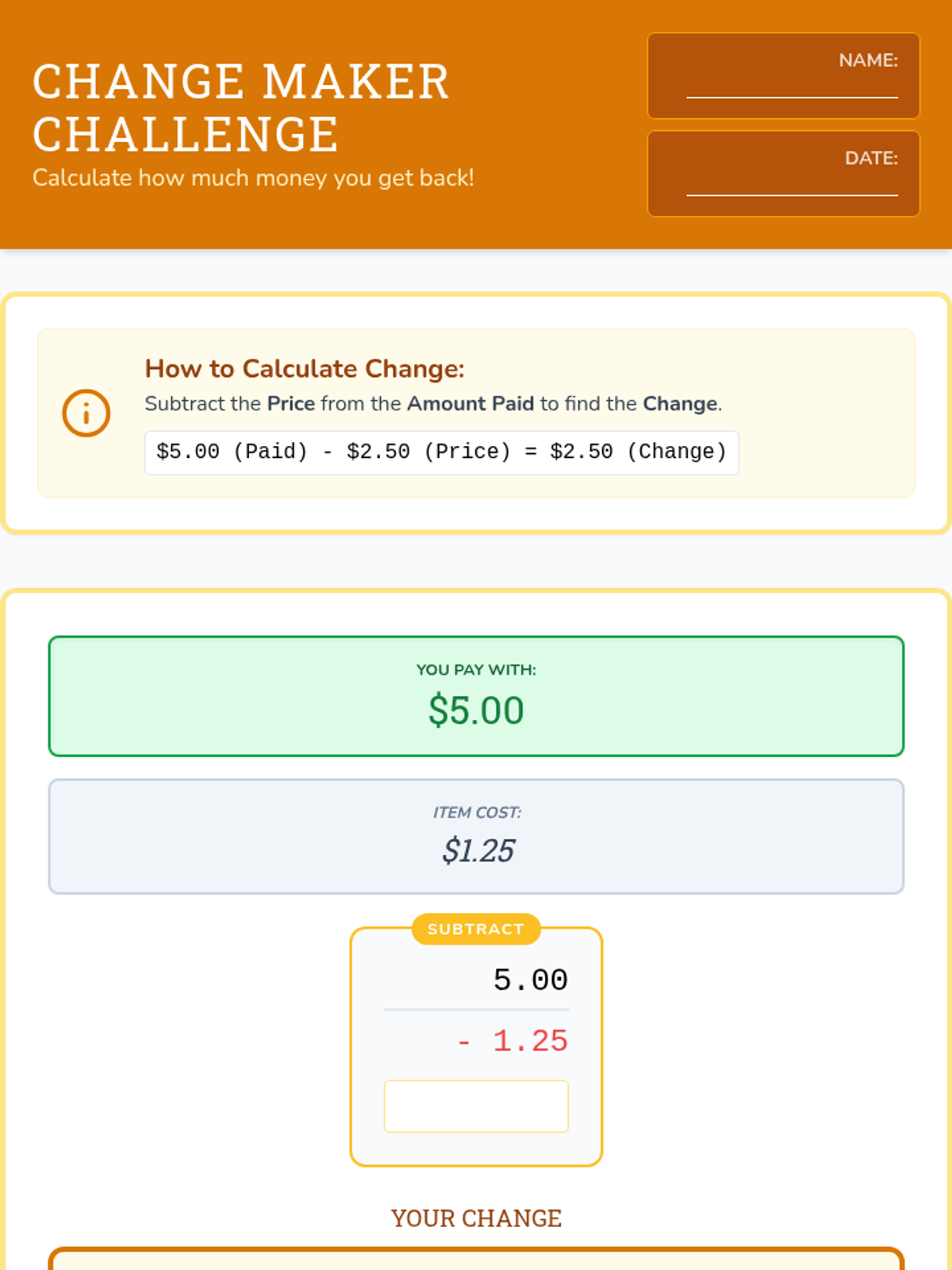
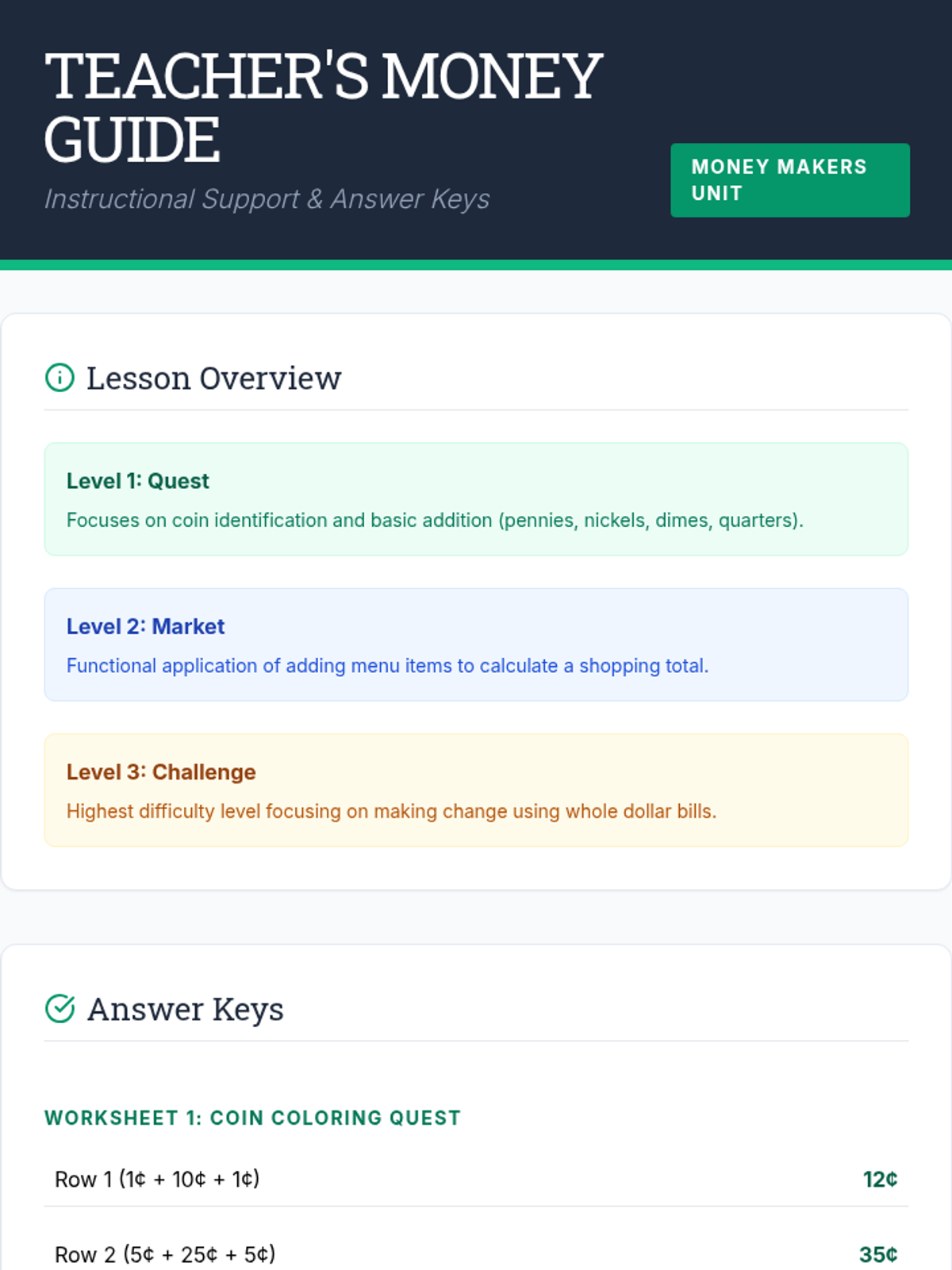
A comprehensive unit on functional money skills, ranging from coin identification to calculating change in real-world scenarios. Students practice counting, adding prices, and making purchasing decisions.
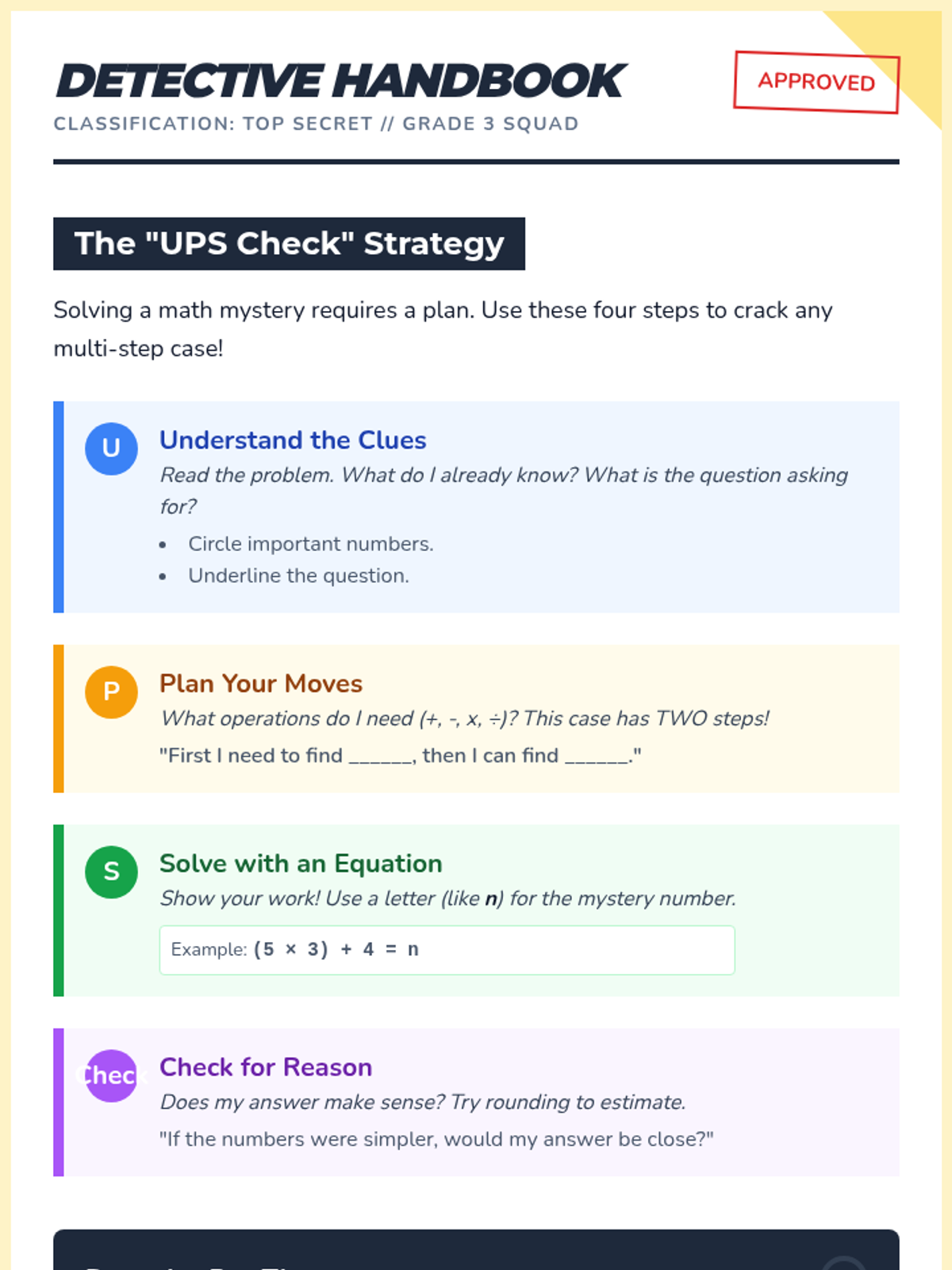
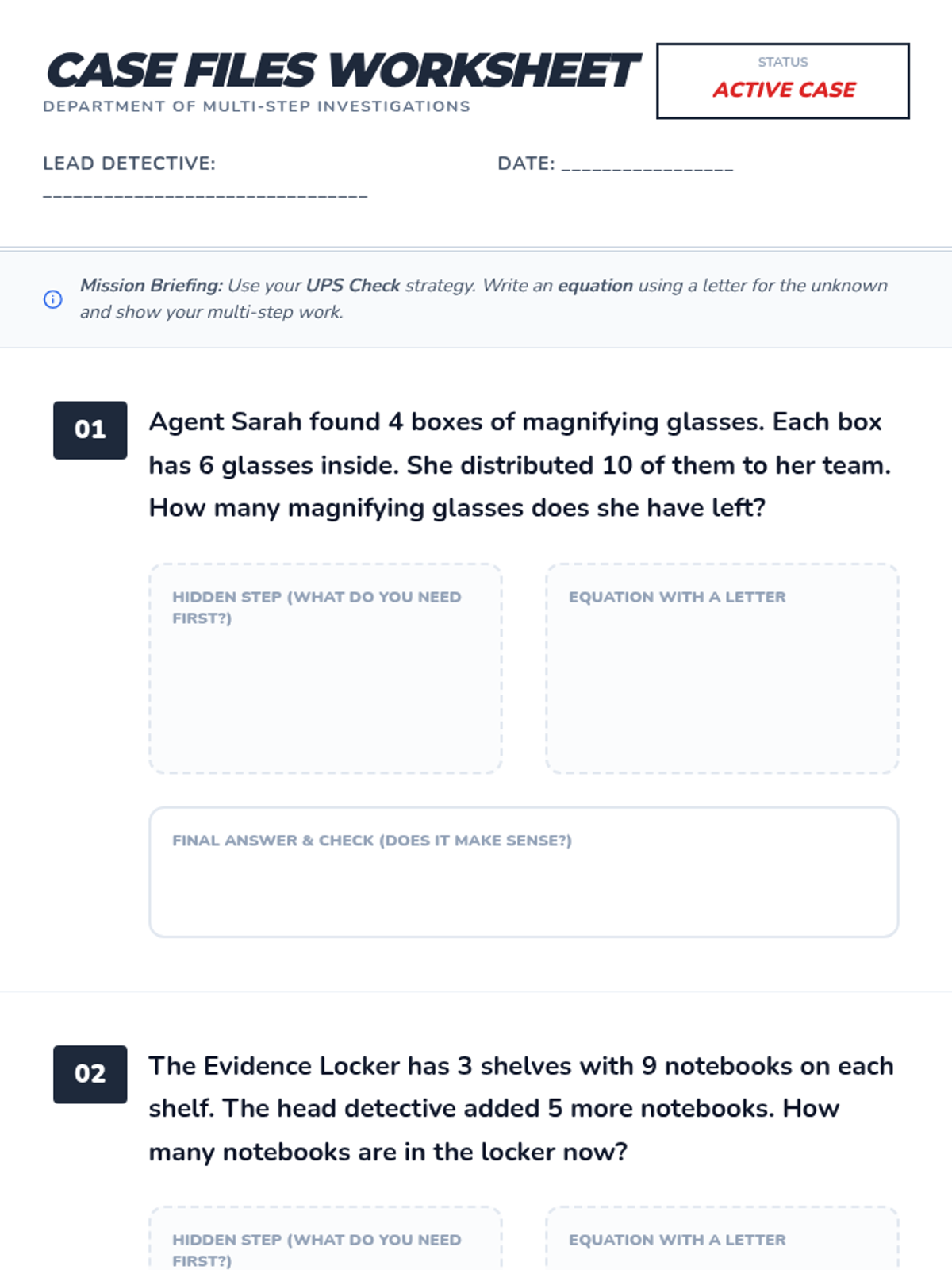
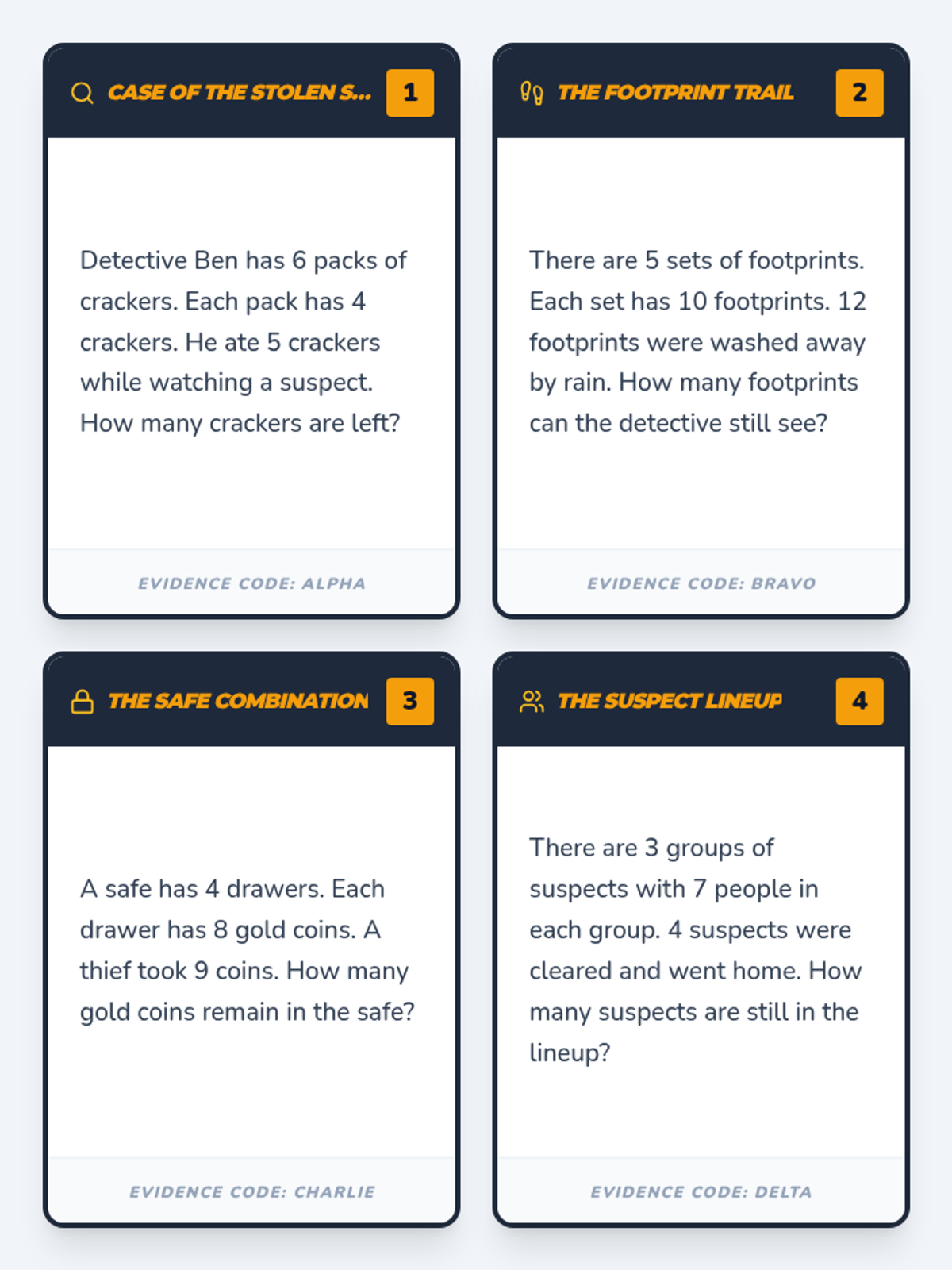
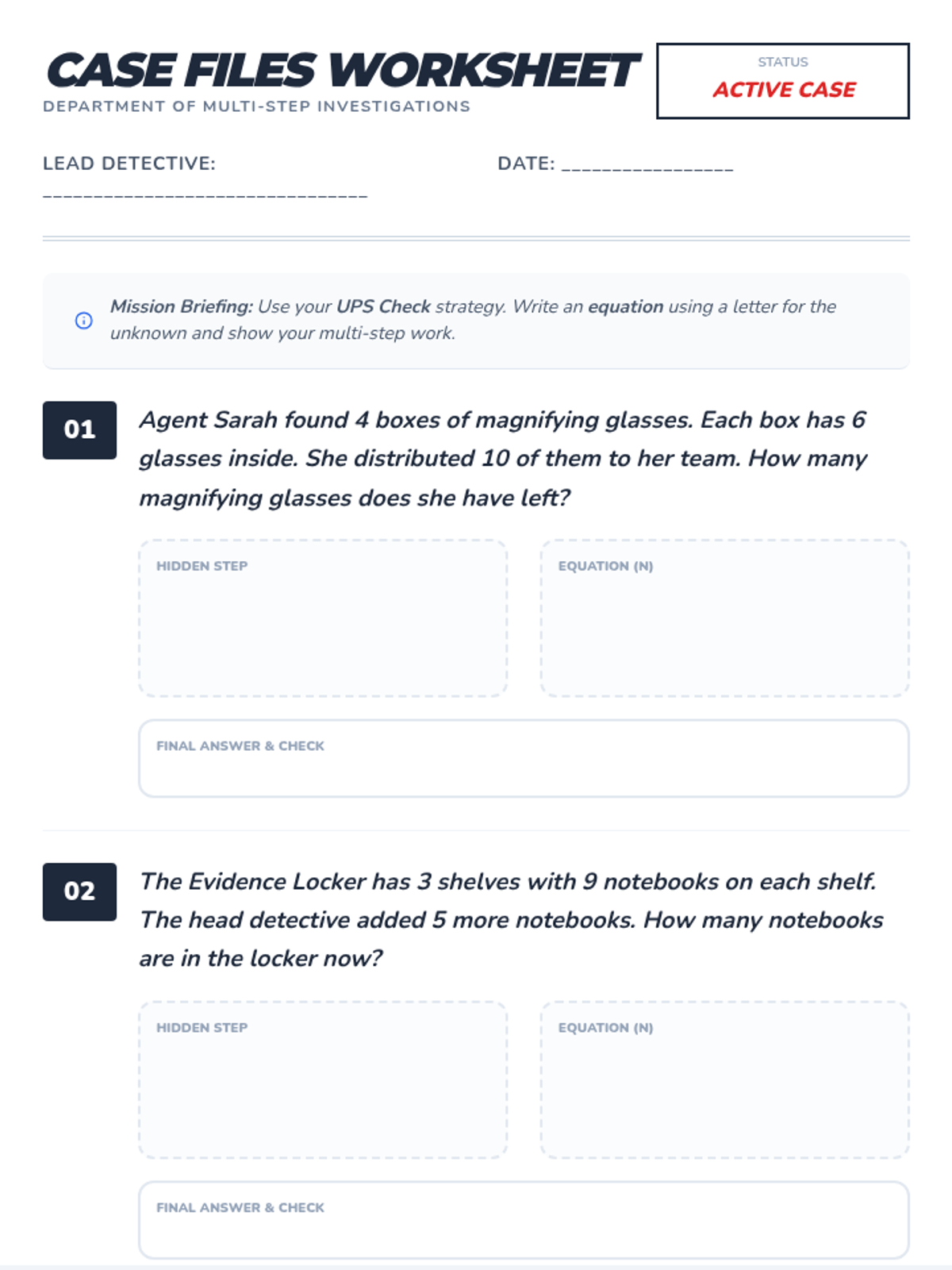
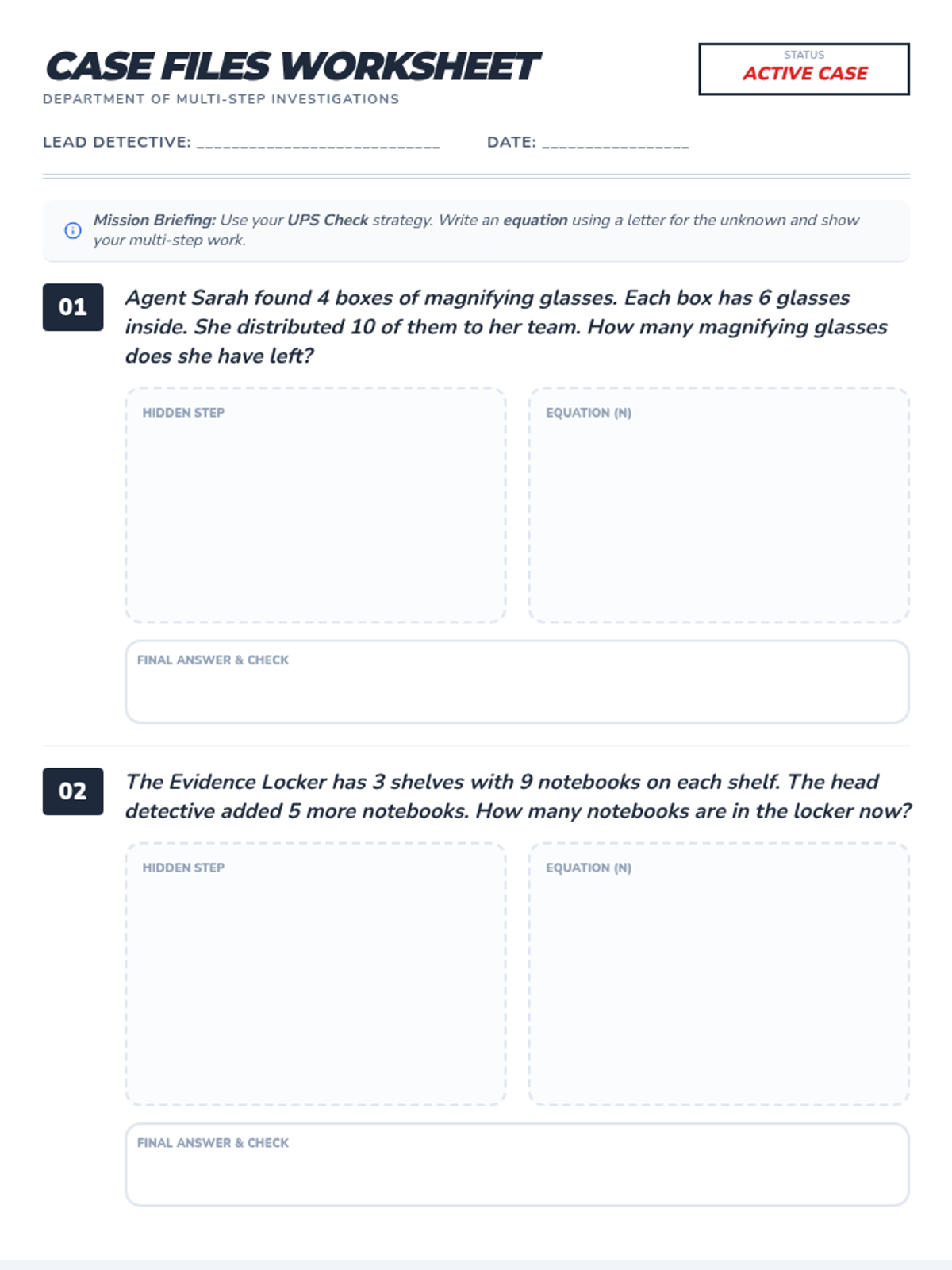
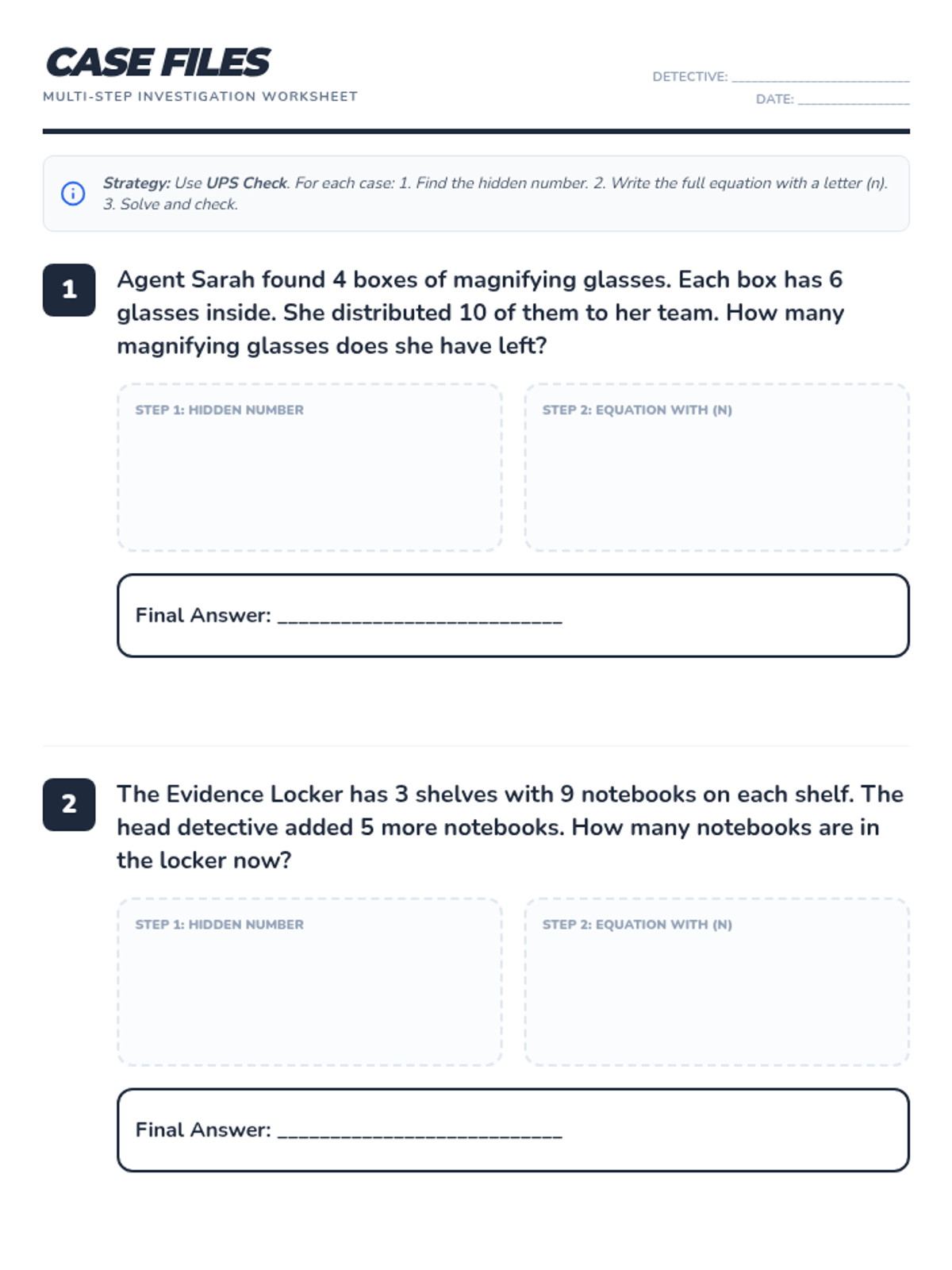
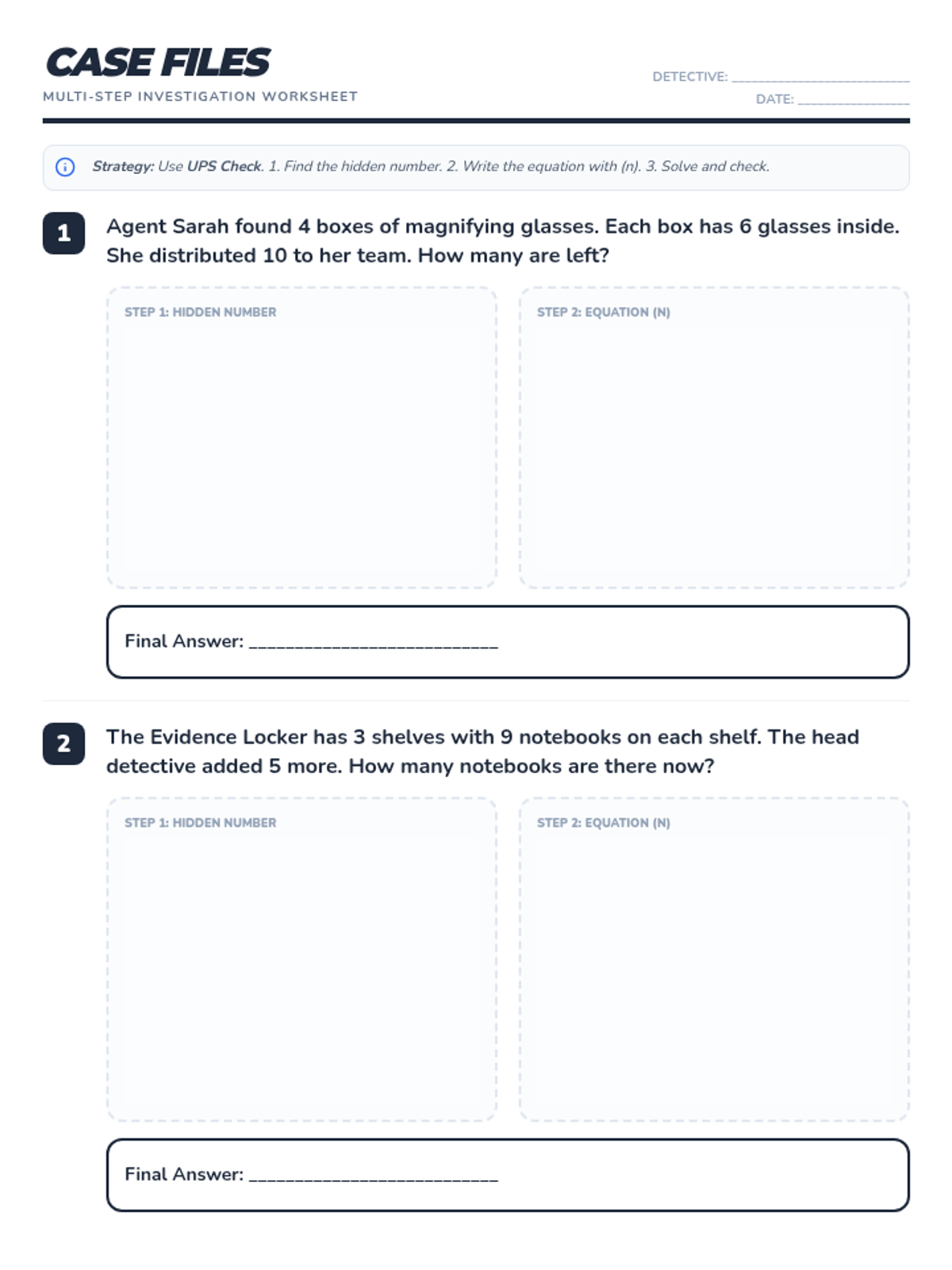
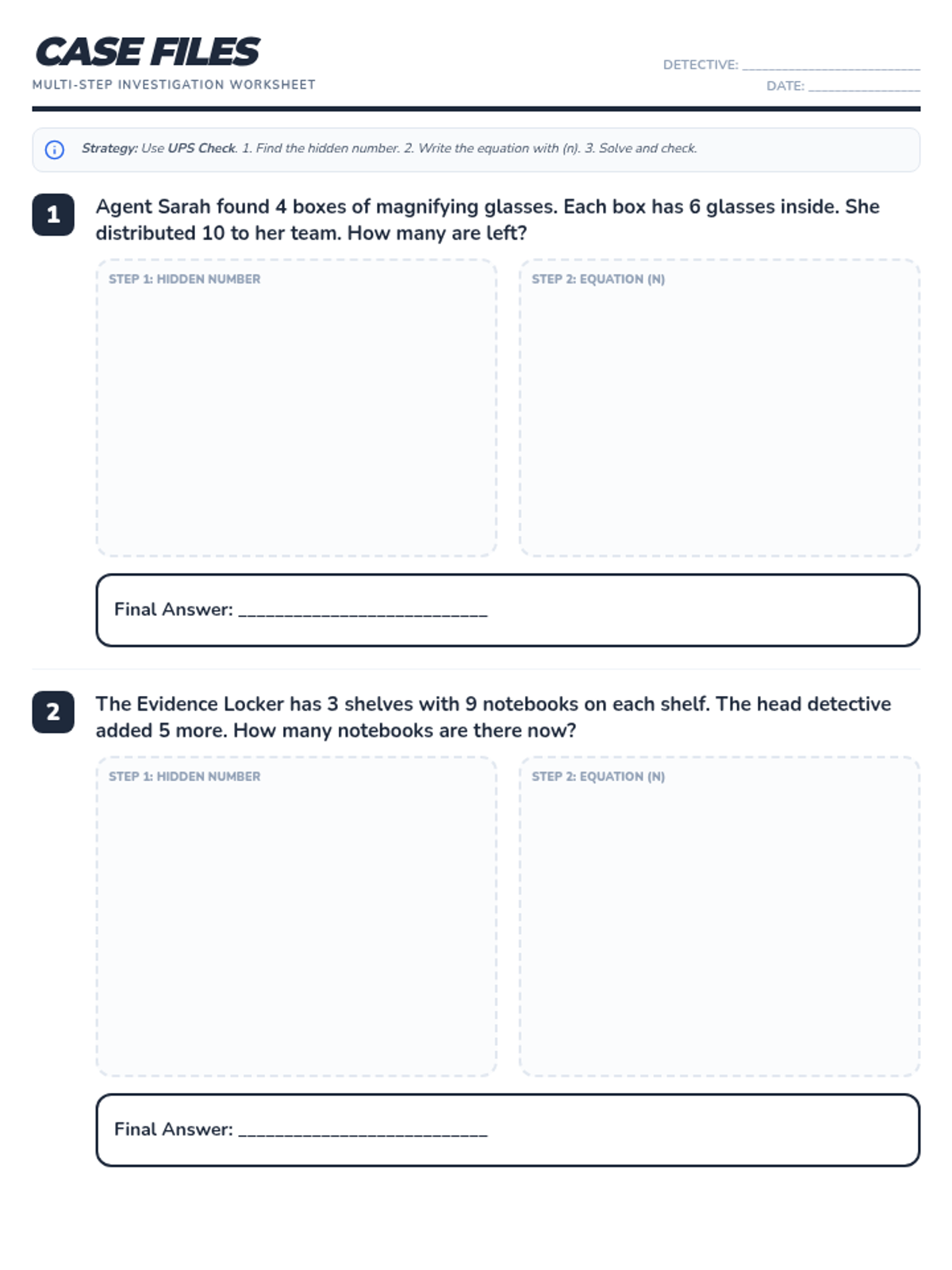
A lesson focused on solving two-step word problems using the four operations, representing unknowns with letters, and checking for reasonableness.
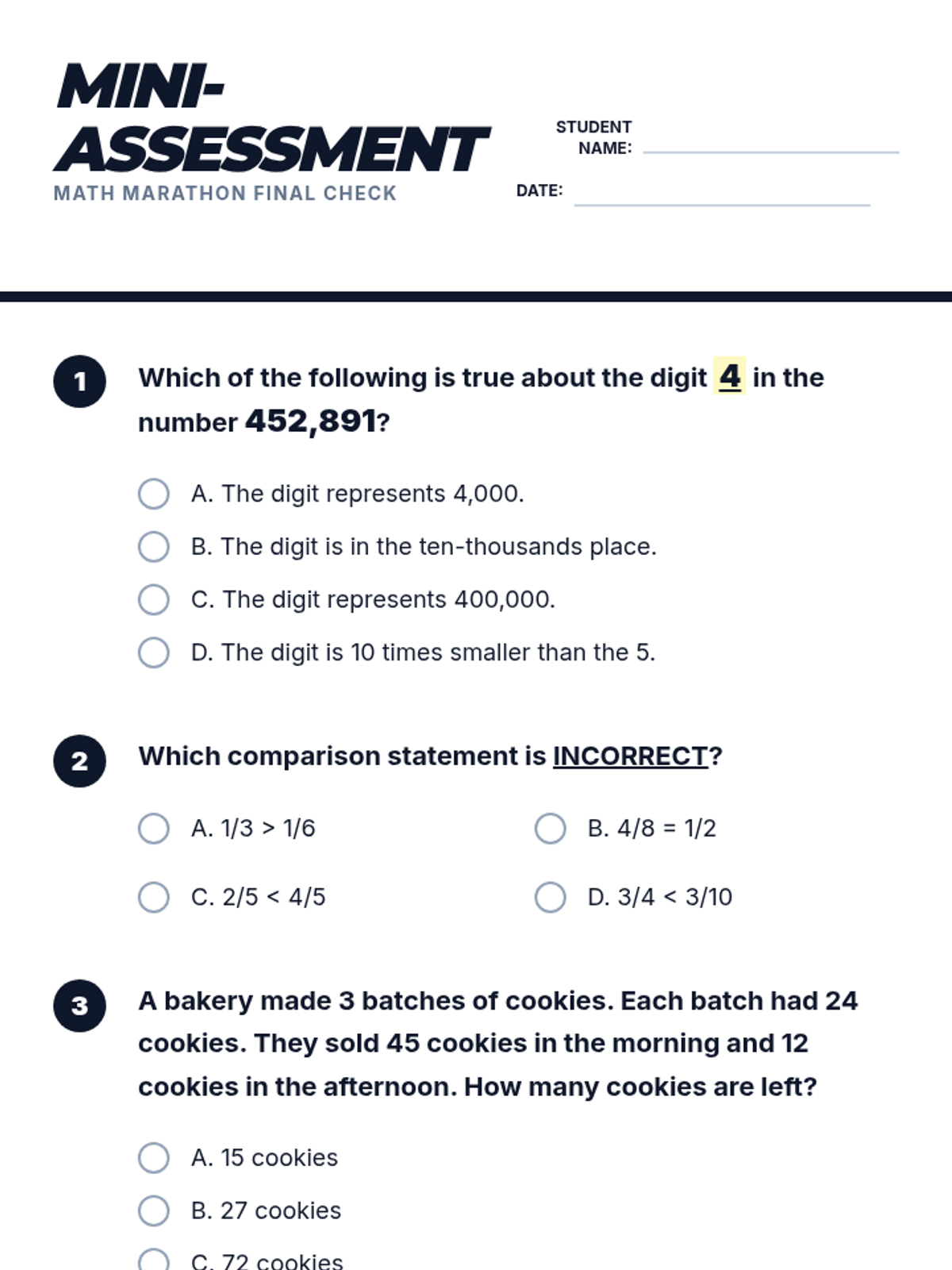
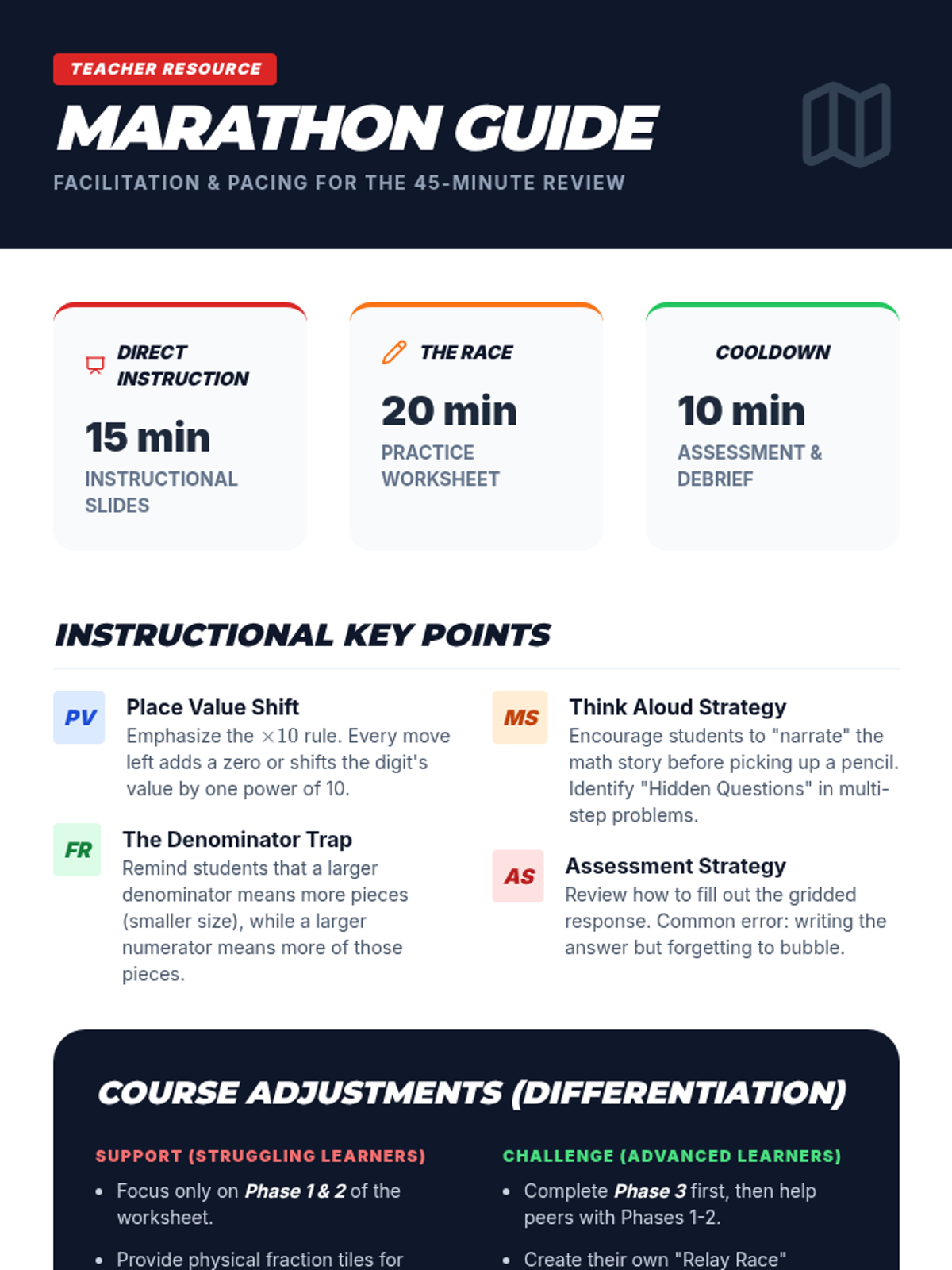
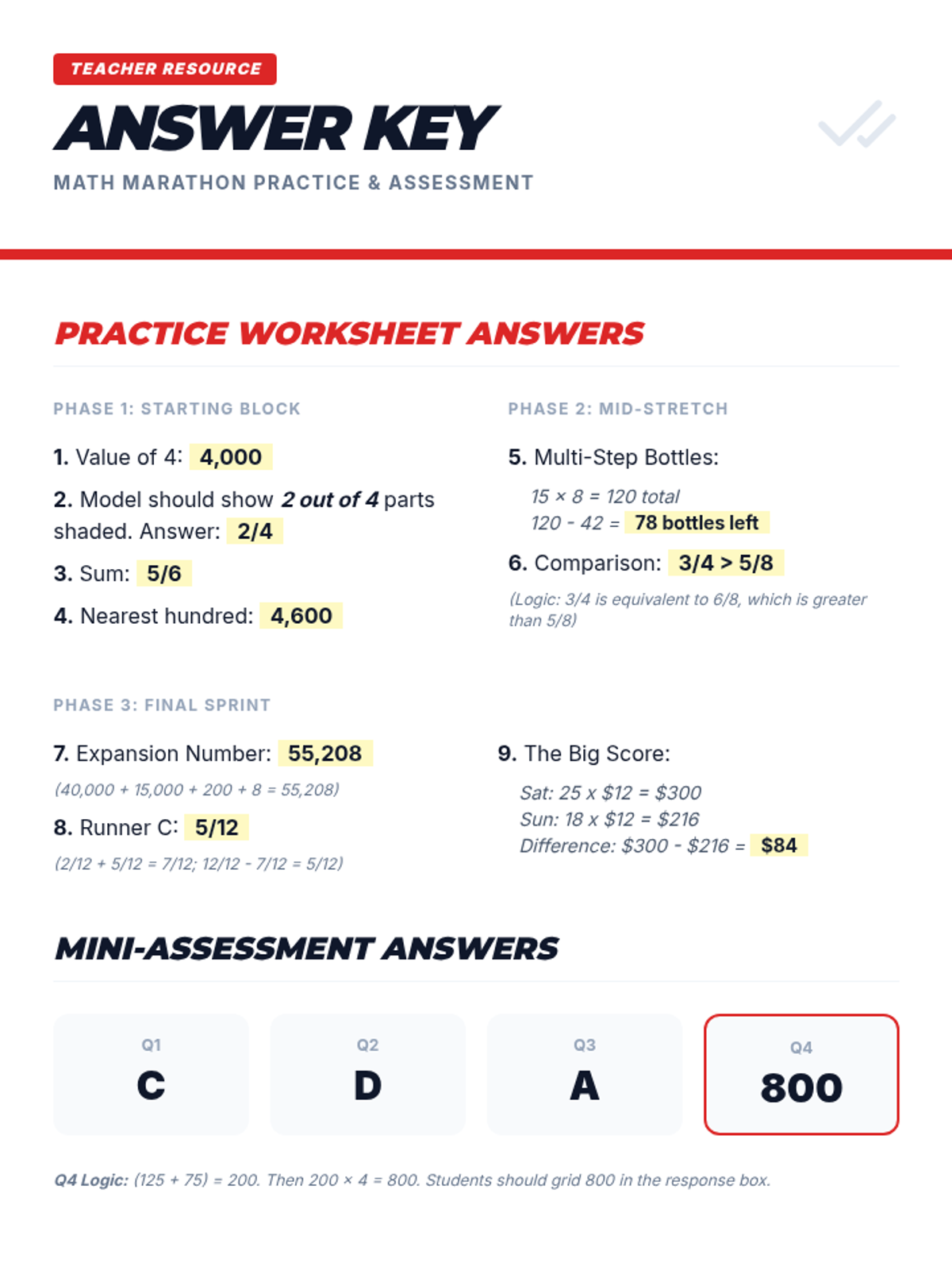
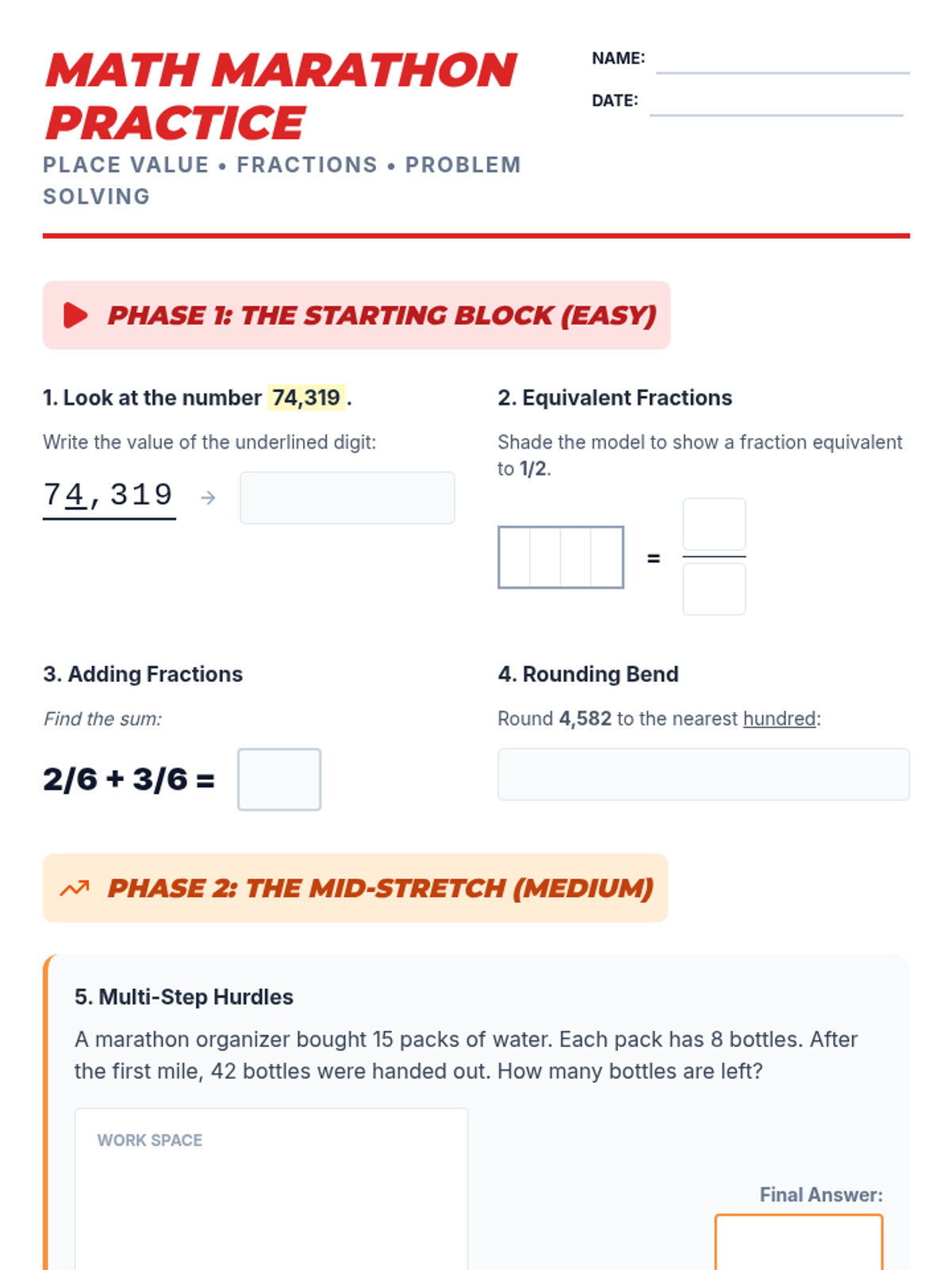
A high-energy, 45-minute comprehensive math review covering place value, fractions, and multi-step word problems for grades 3-5, designed as a 'Math Marathon'.
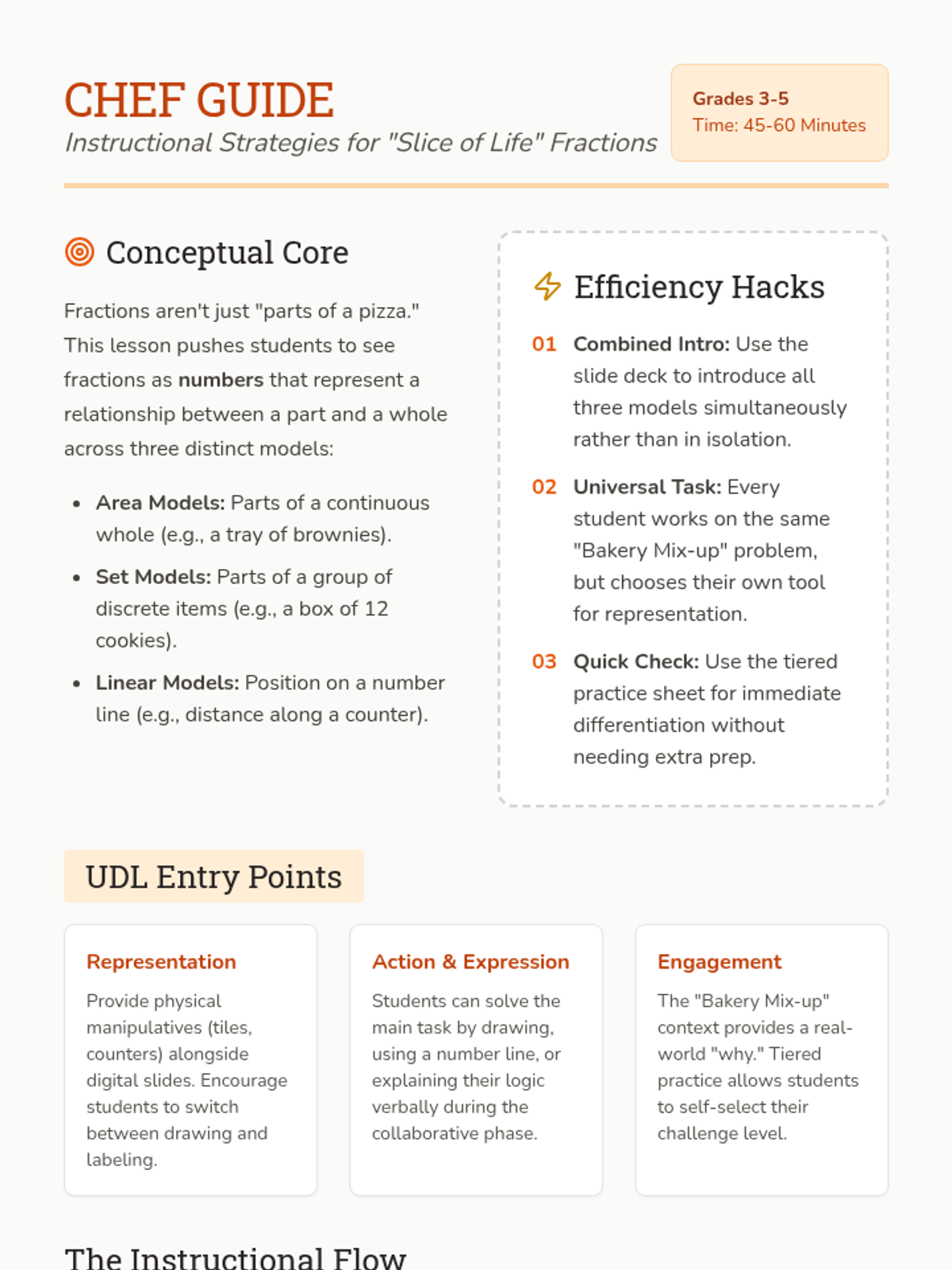
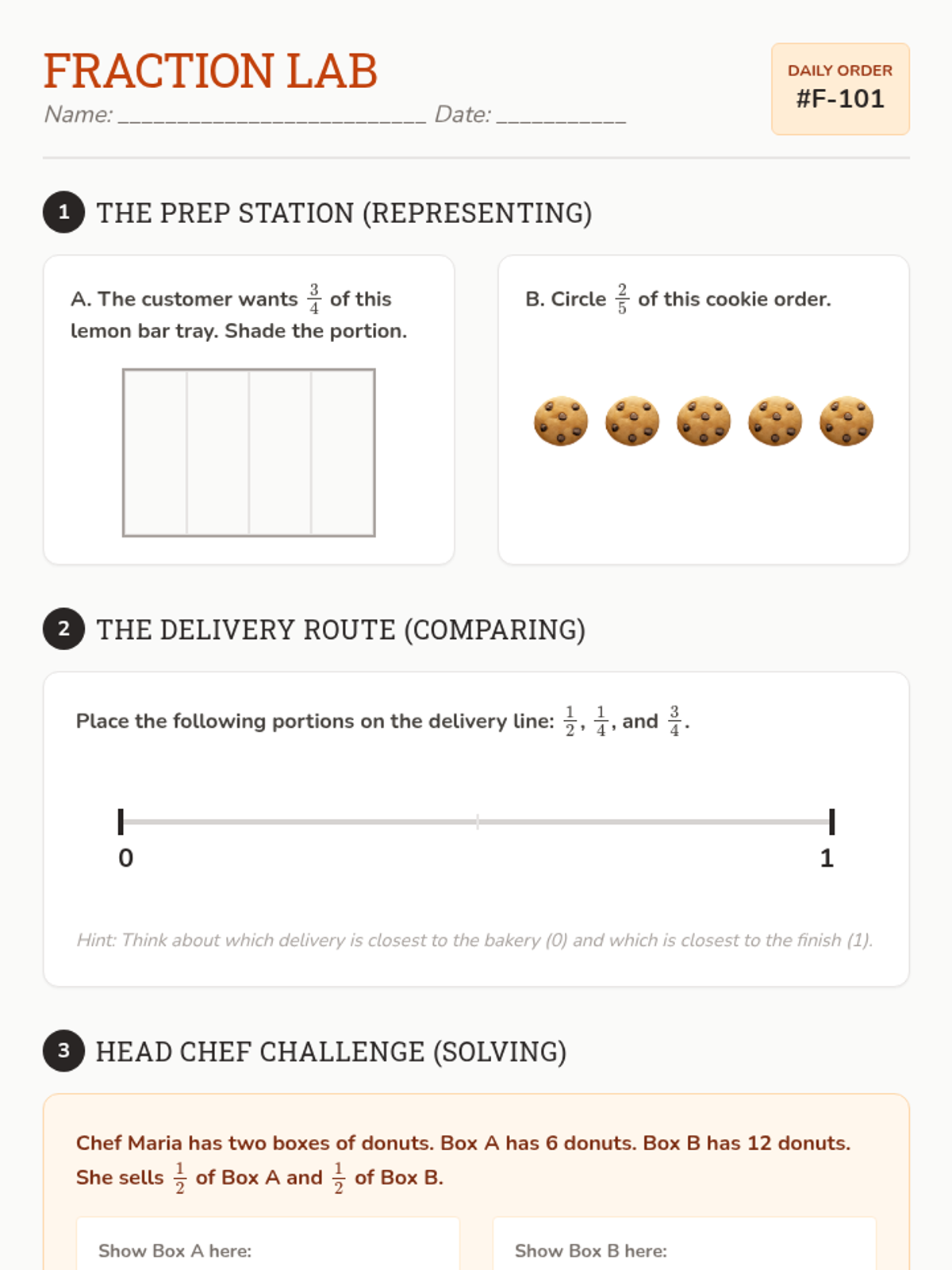
A conceptual introduction to fractions using a bakery theme. Students explore area, set, and linear models through a collaborative 'Great Bakery Mix-up' task designed with UDL principles to ensure all learners can access deep mathematical concepts.
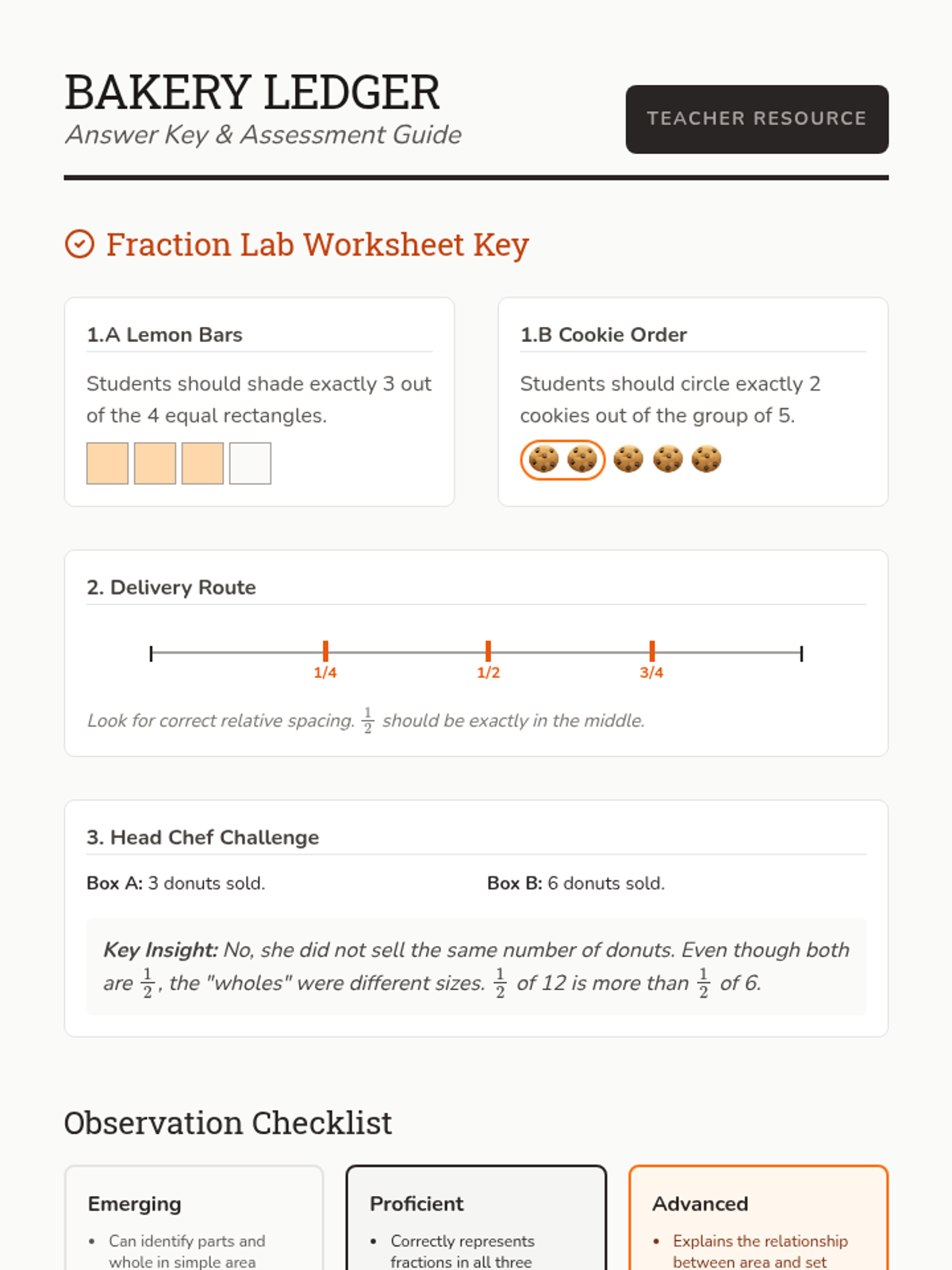
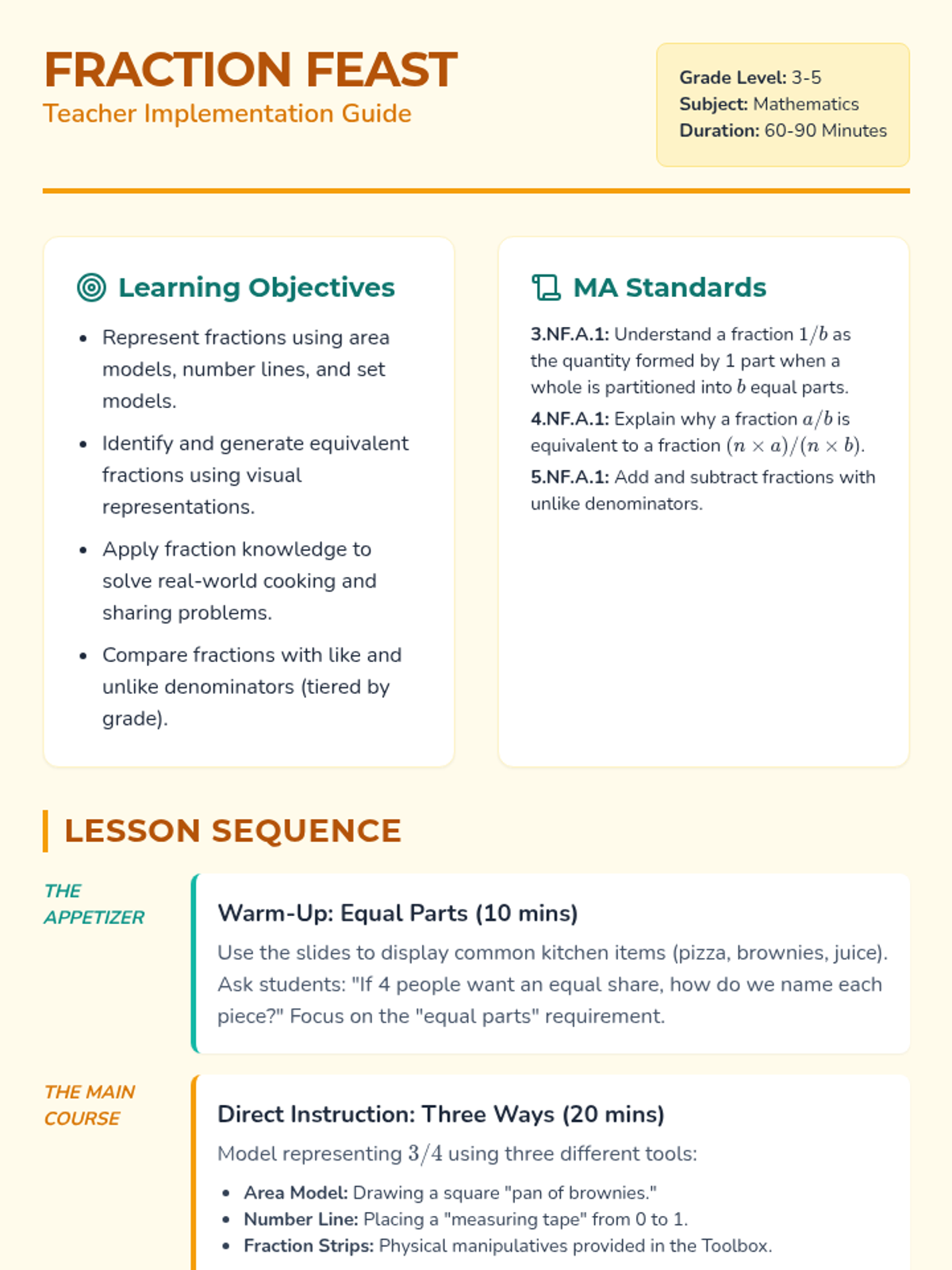
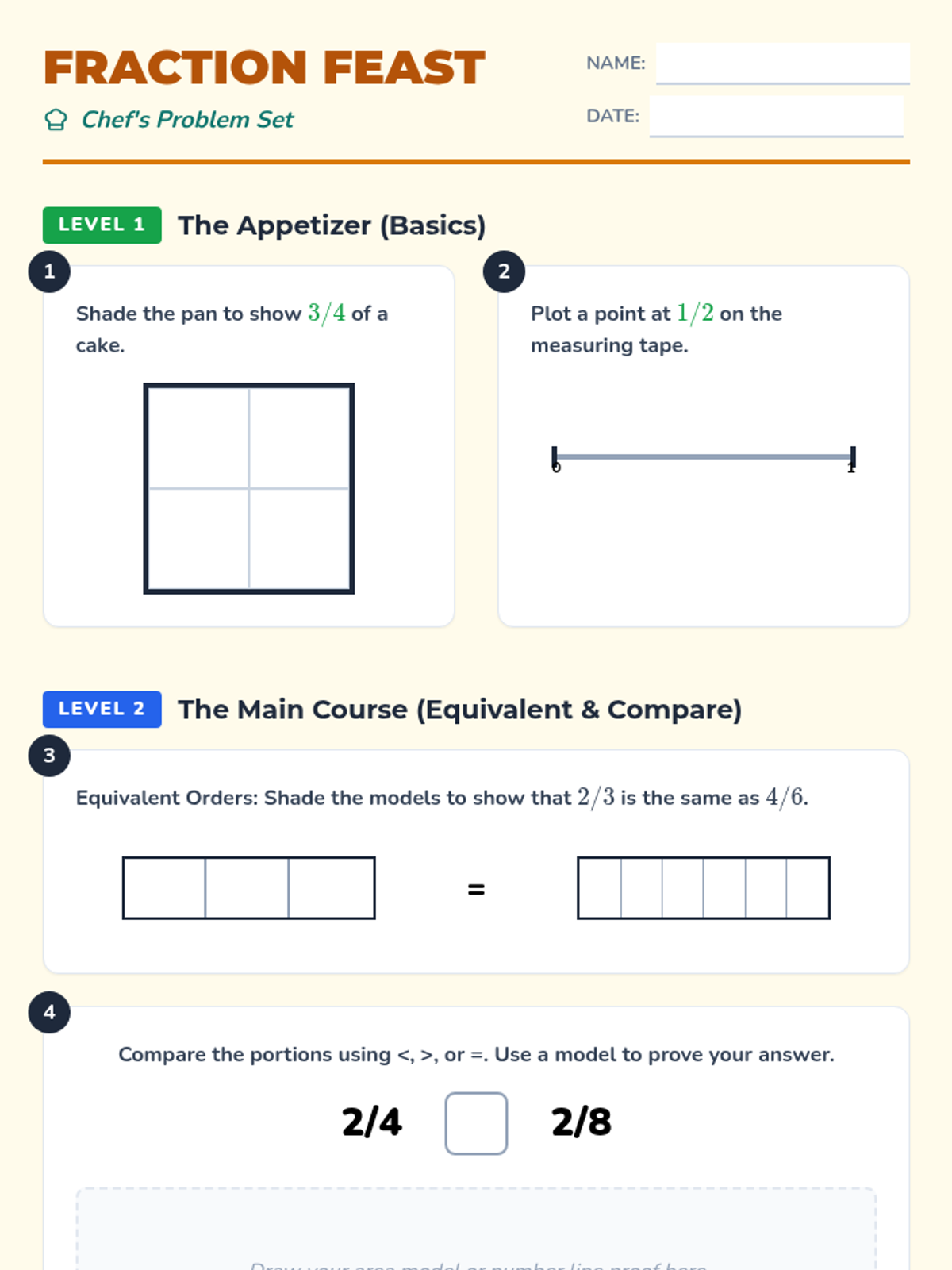
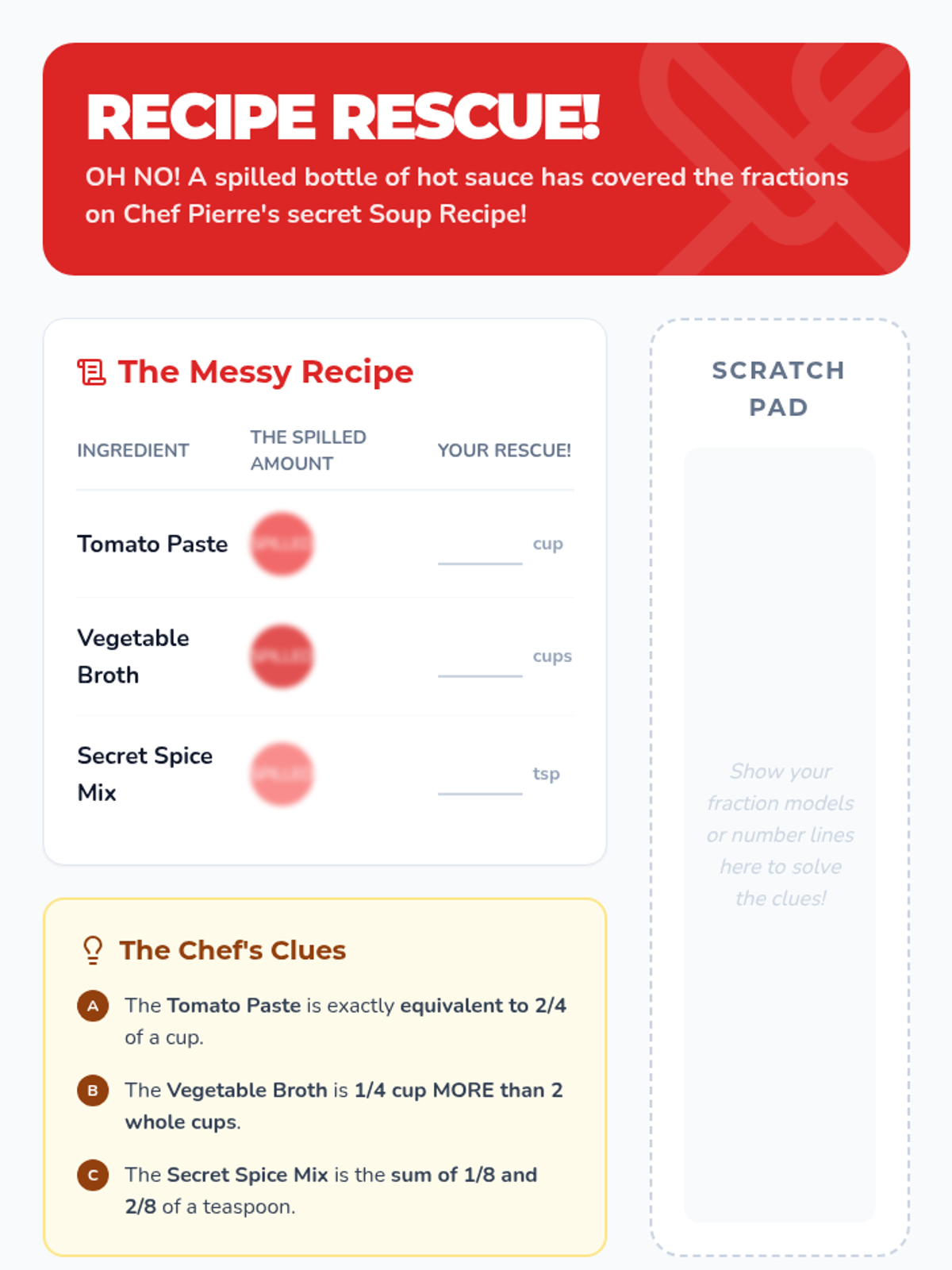
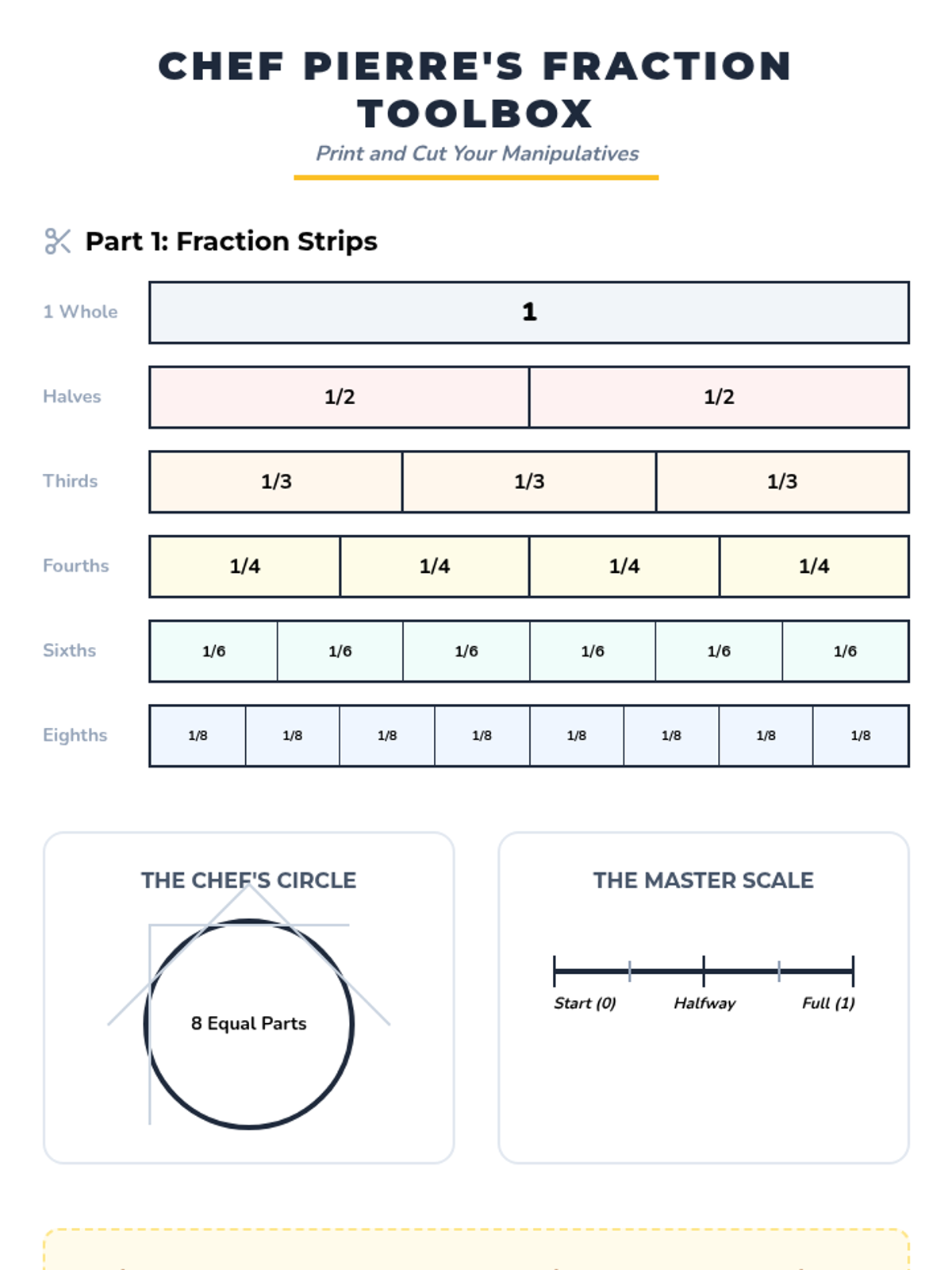
A hands-on, kitchen-themed lesson where students explore fractions through area models, number lines, and real-world cooking scenarios. Includes tiered tasks for grades 3-5 to master fractional representation and comparison.
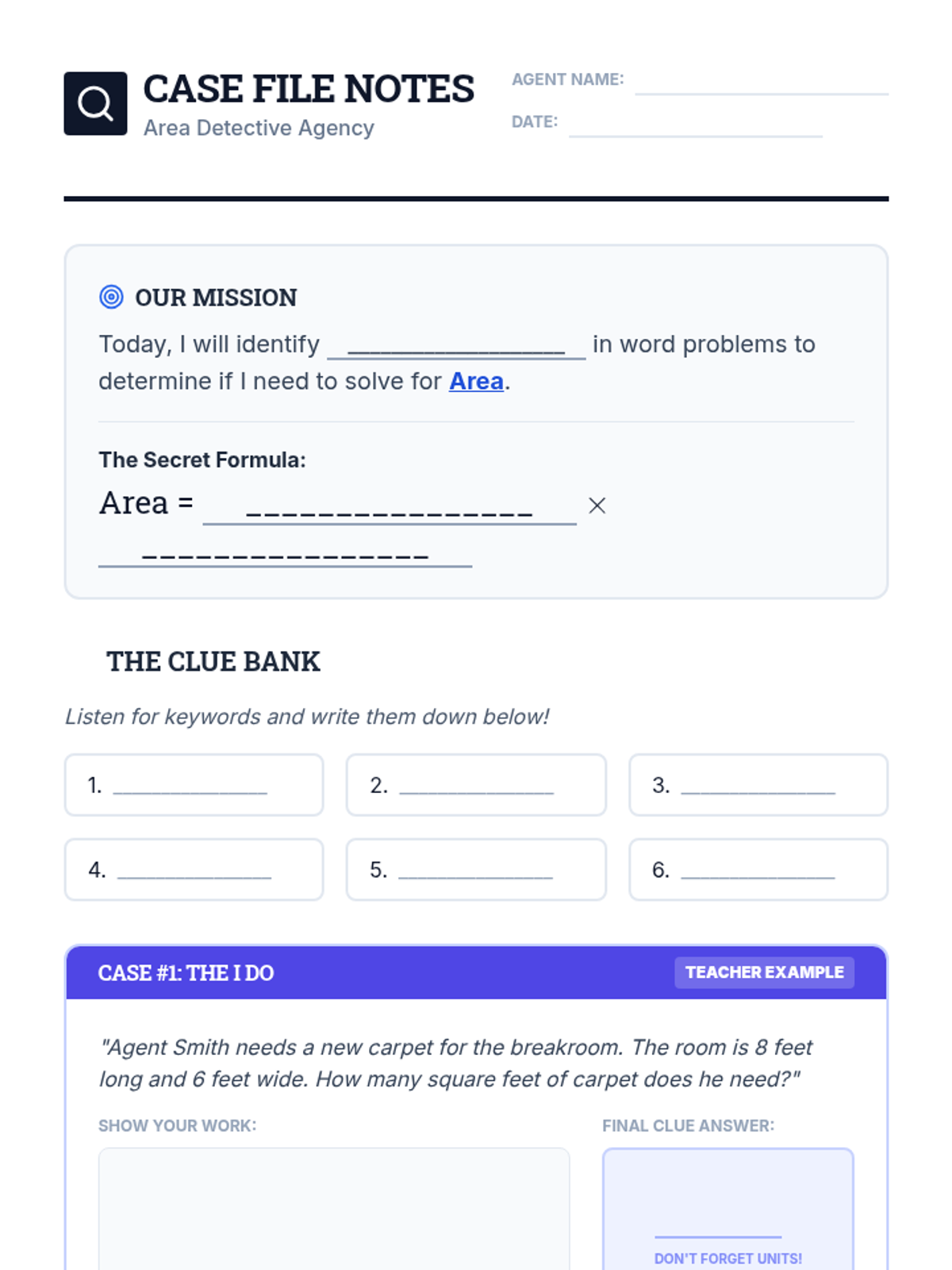
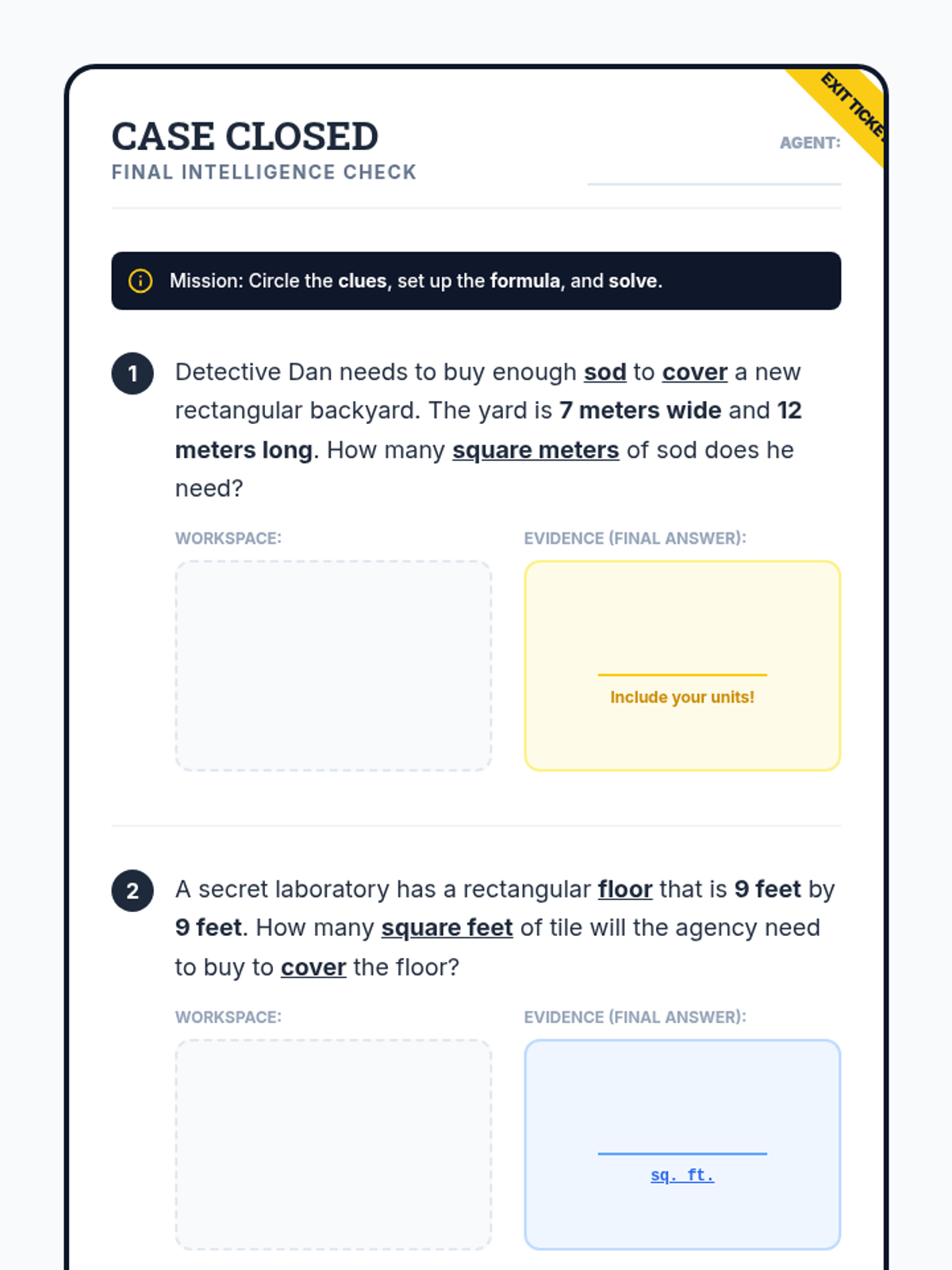
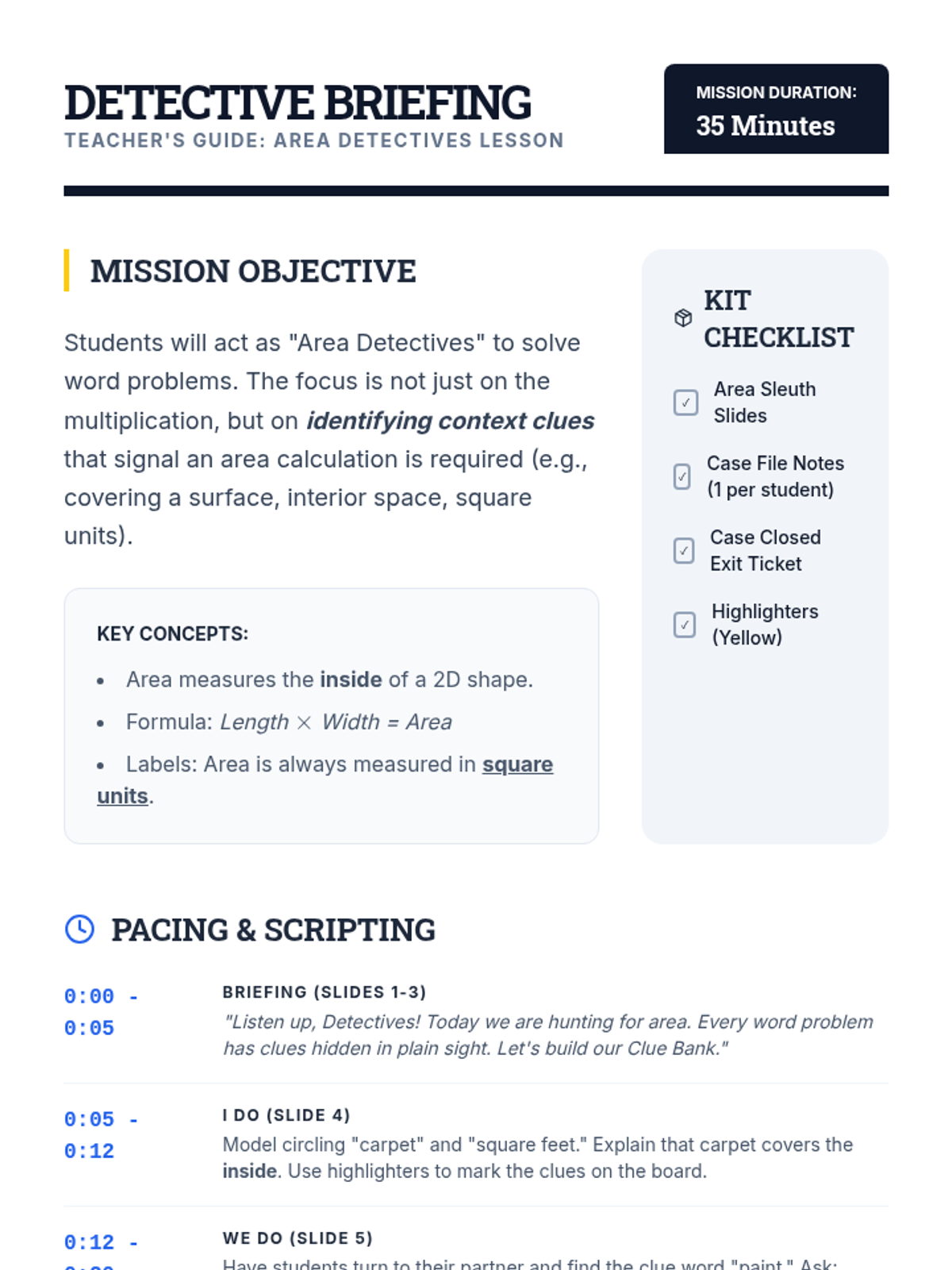
A 35-minute introductory lesson on solving area word problems using context clues and keywords. Students take on the role of 'Area Detectives' to identify when a problem is asking for area and how to calculate it using the length times width formula.
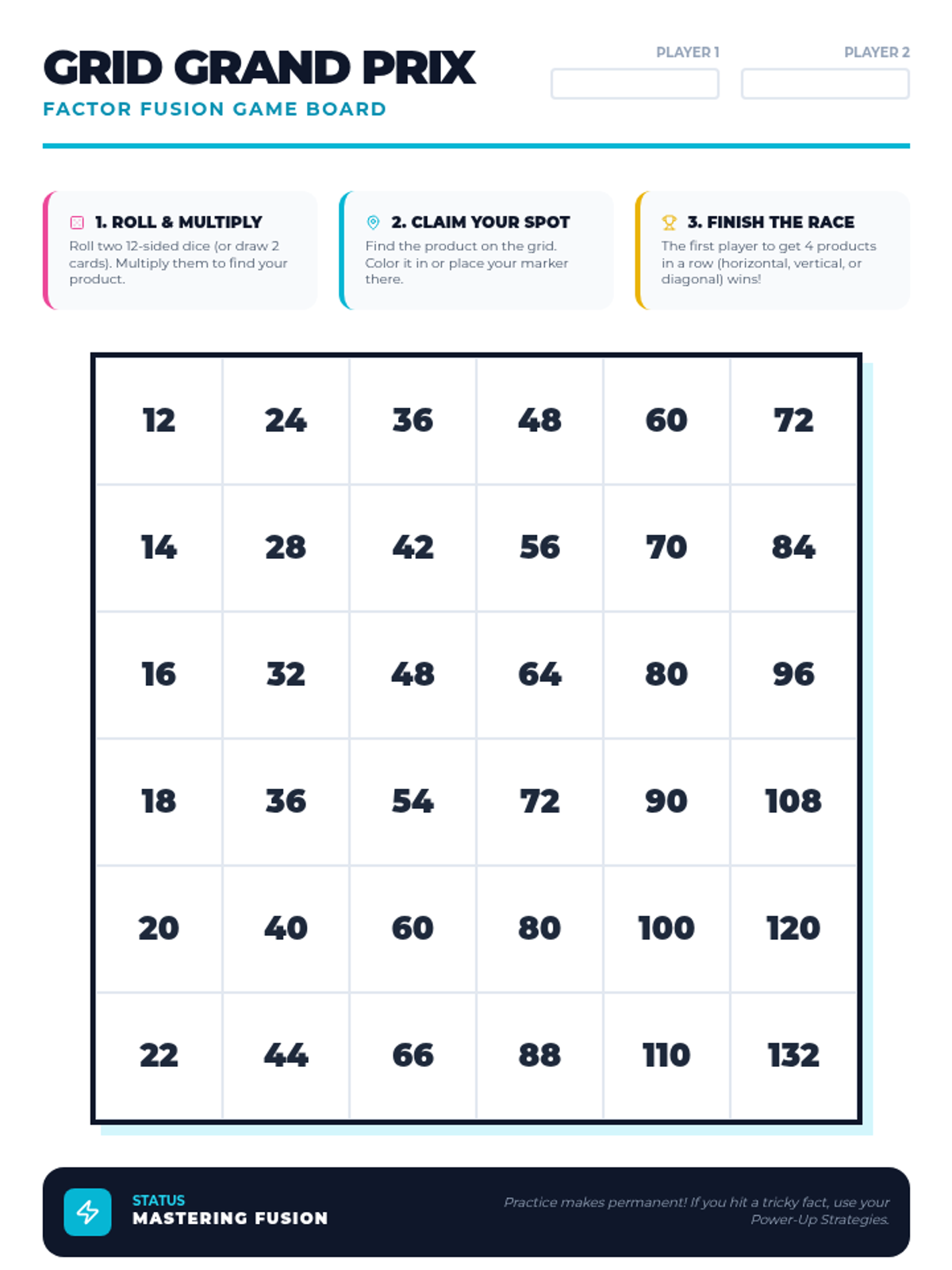
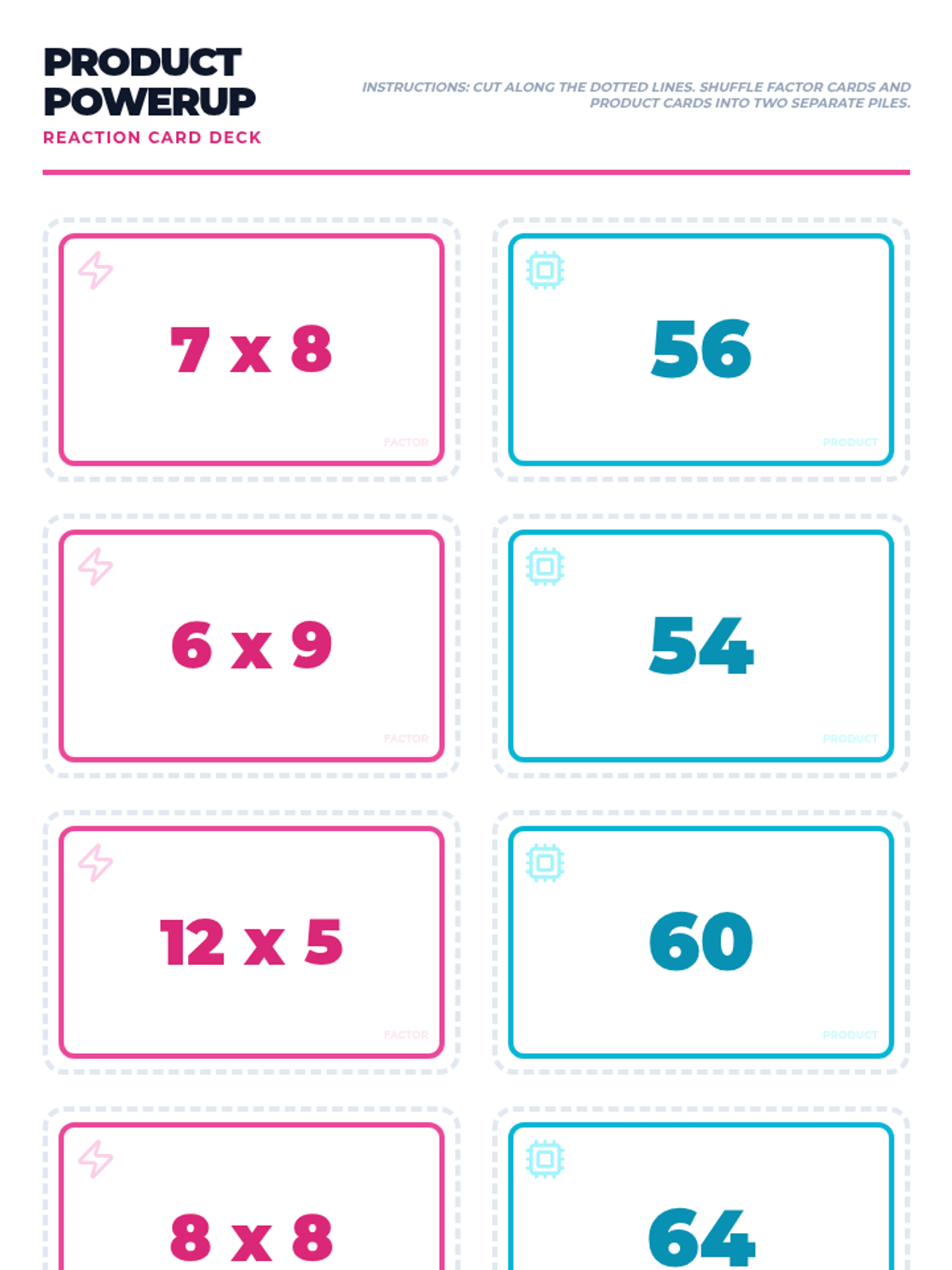
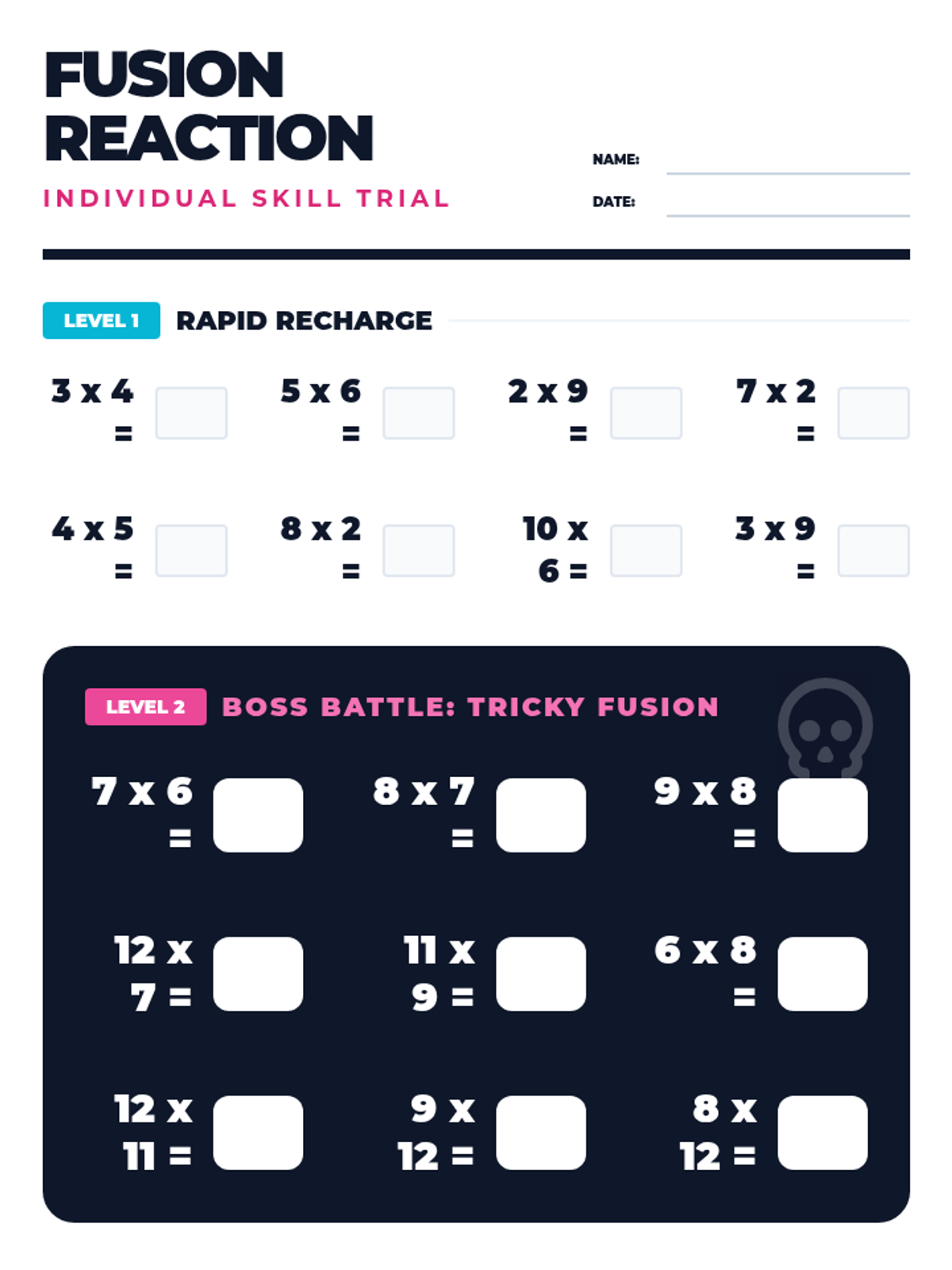
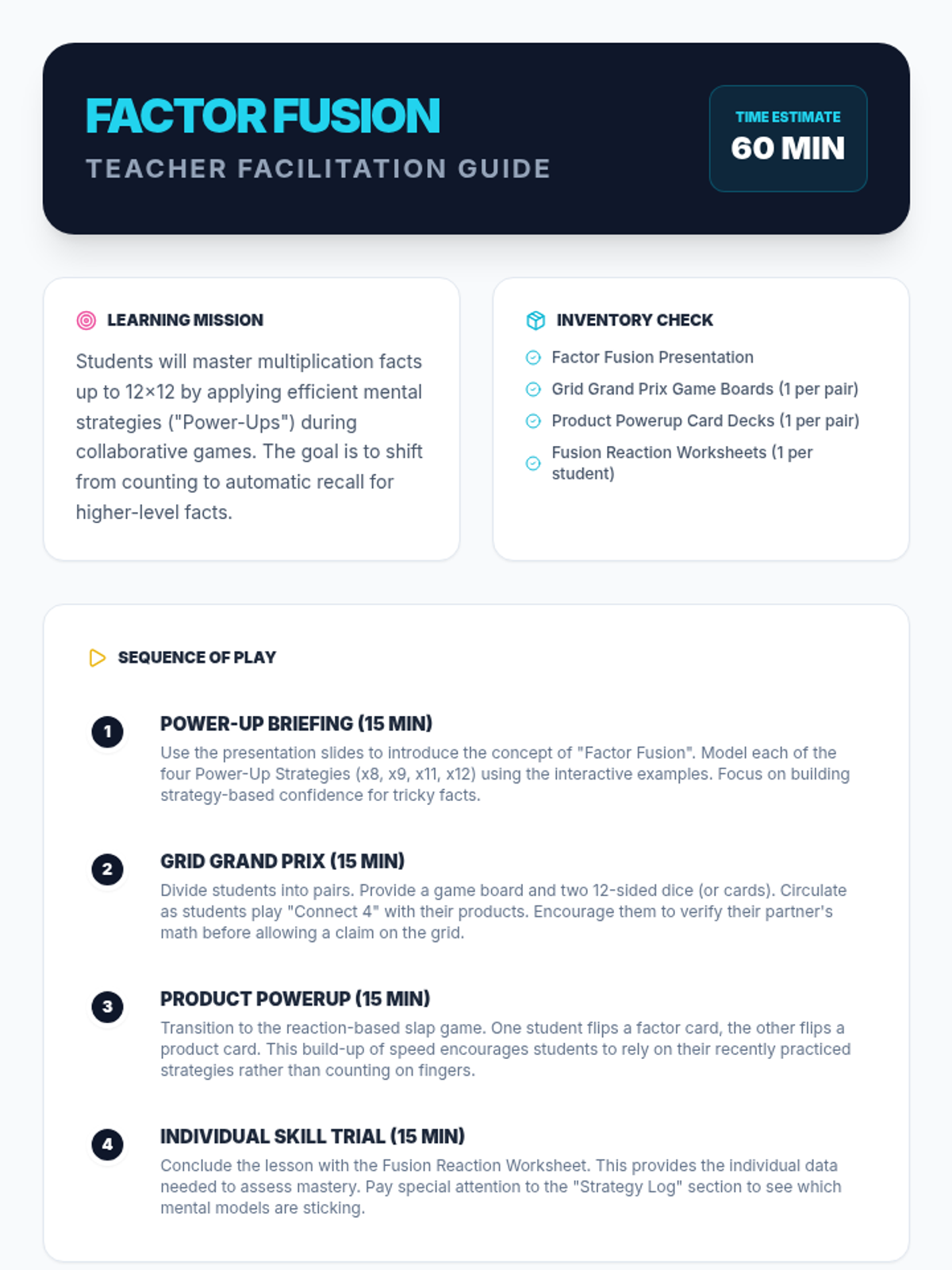
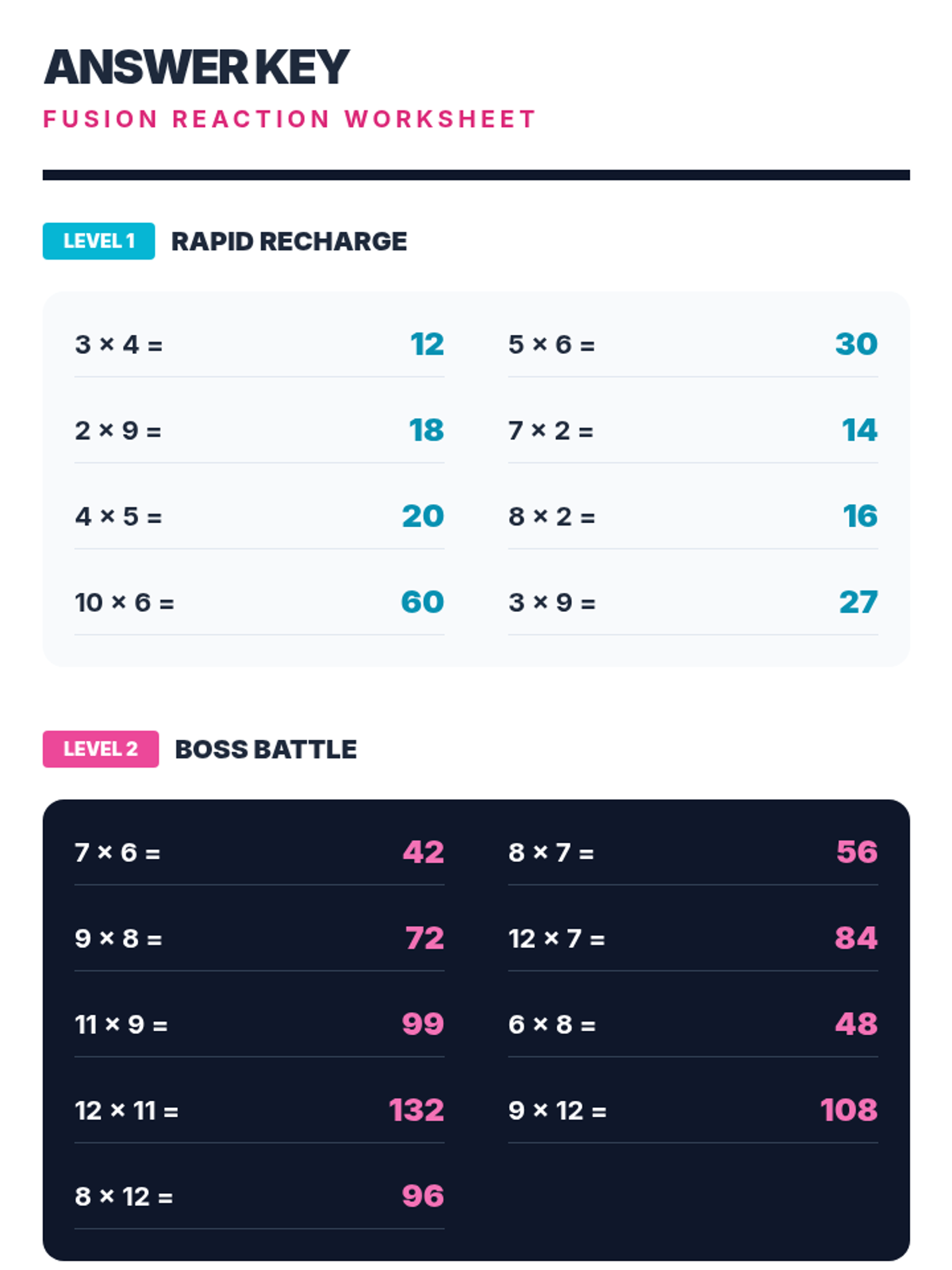
A high-energy lesson focused on mastering multiplication facts up to 12x12 through interactive arcade-themed games and collaborative challenges.
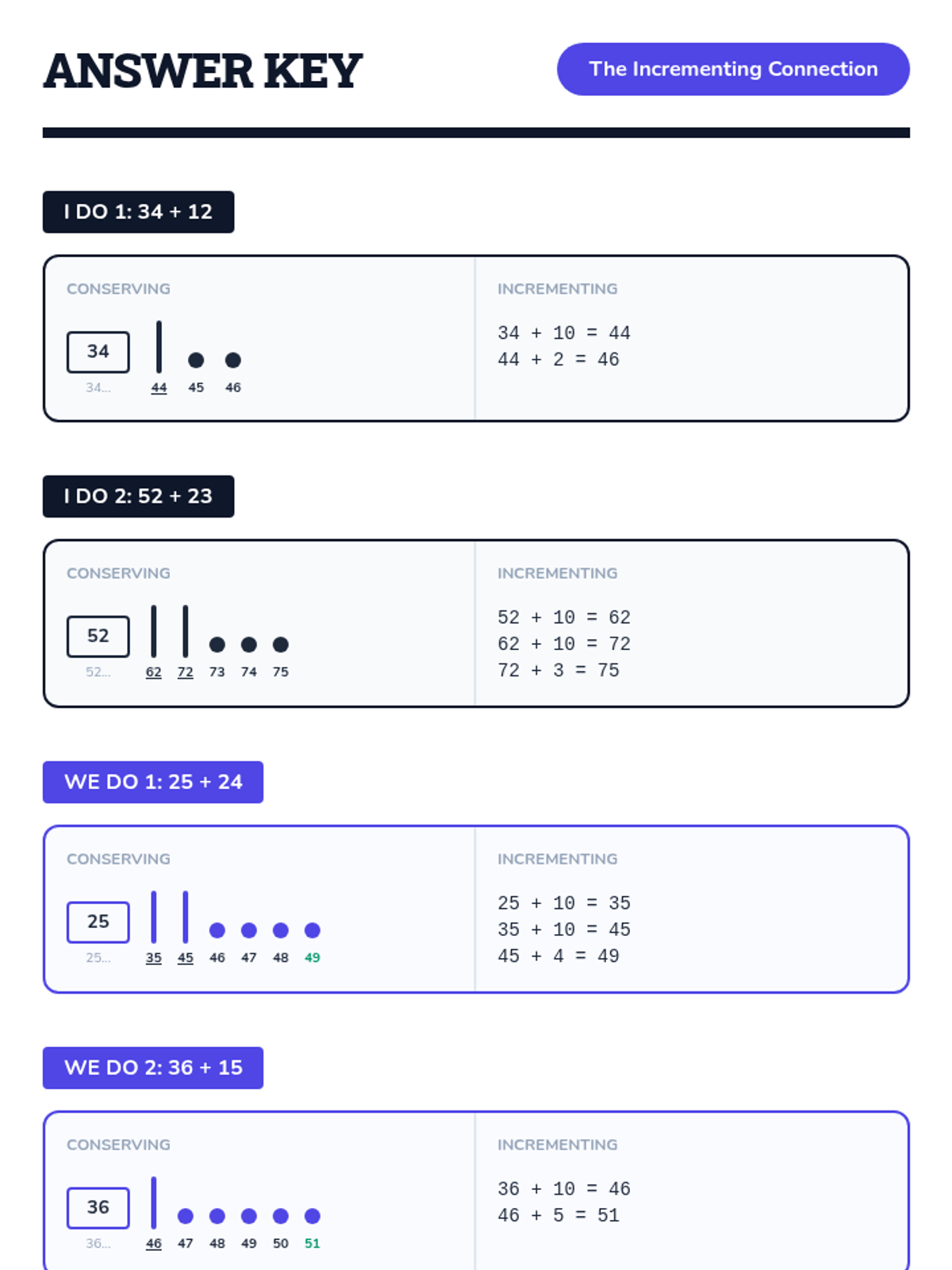
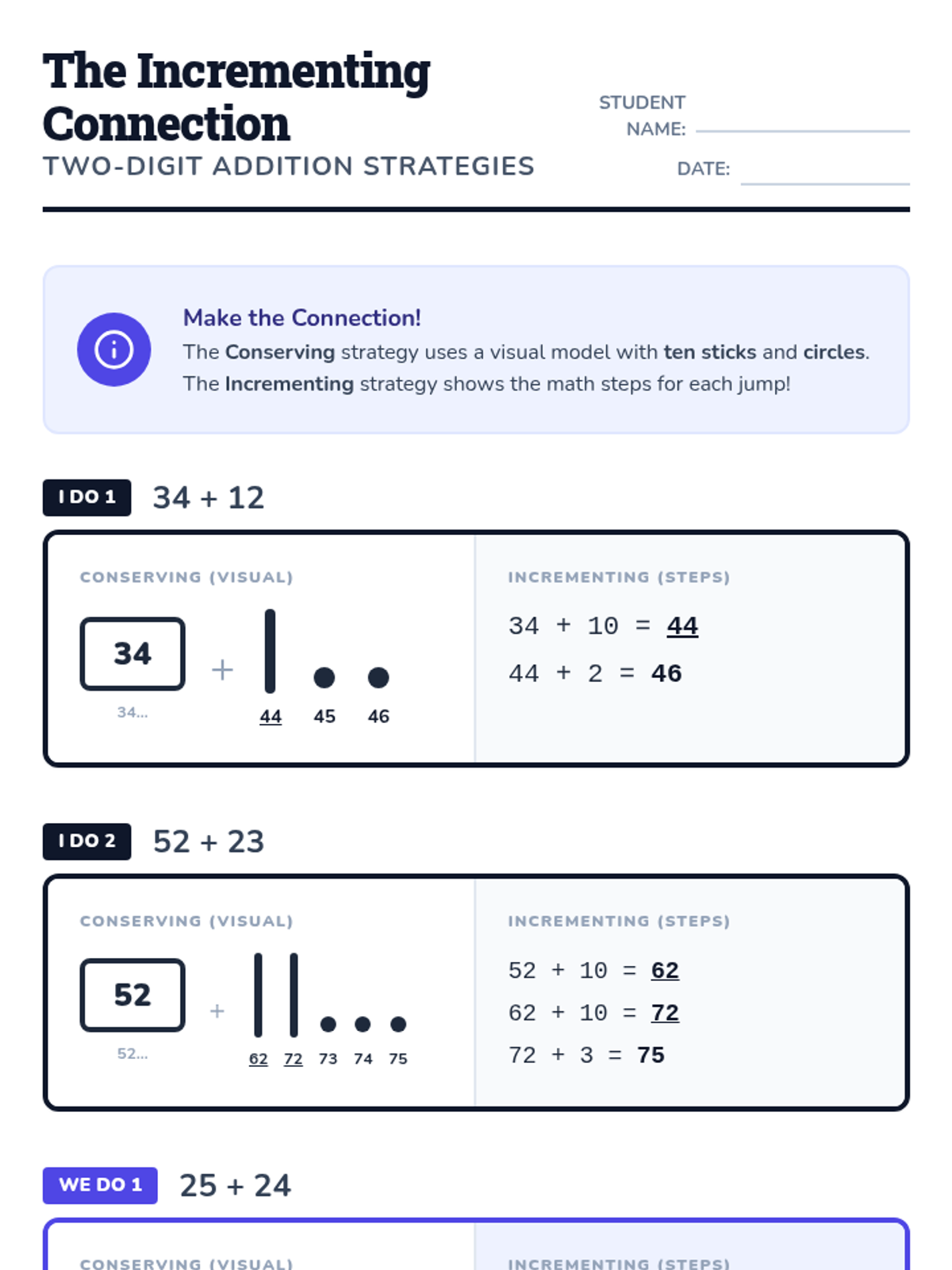
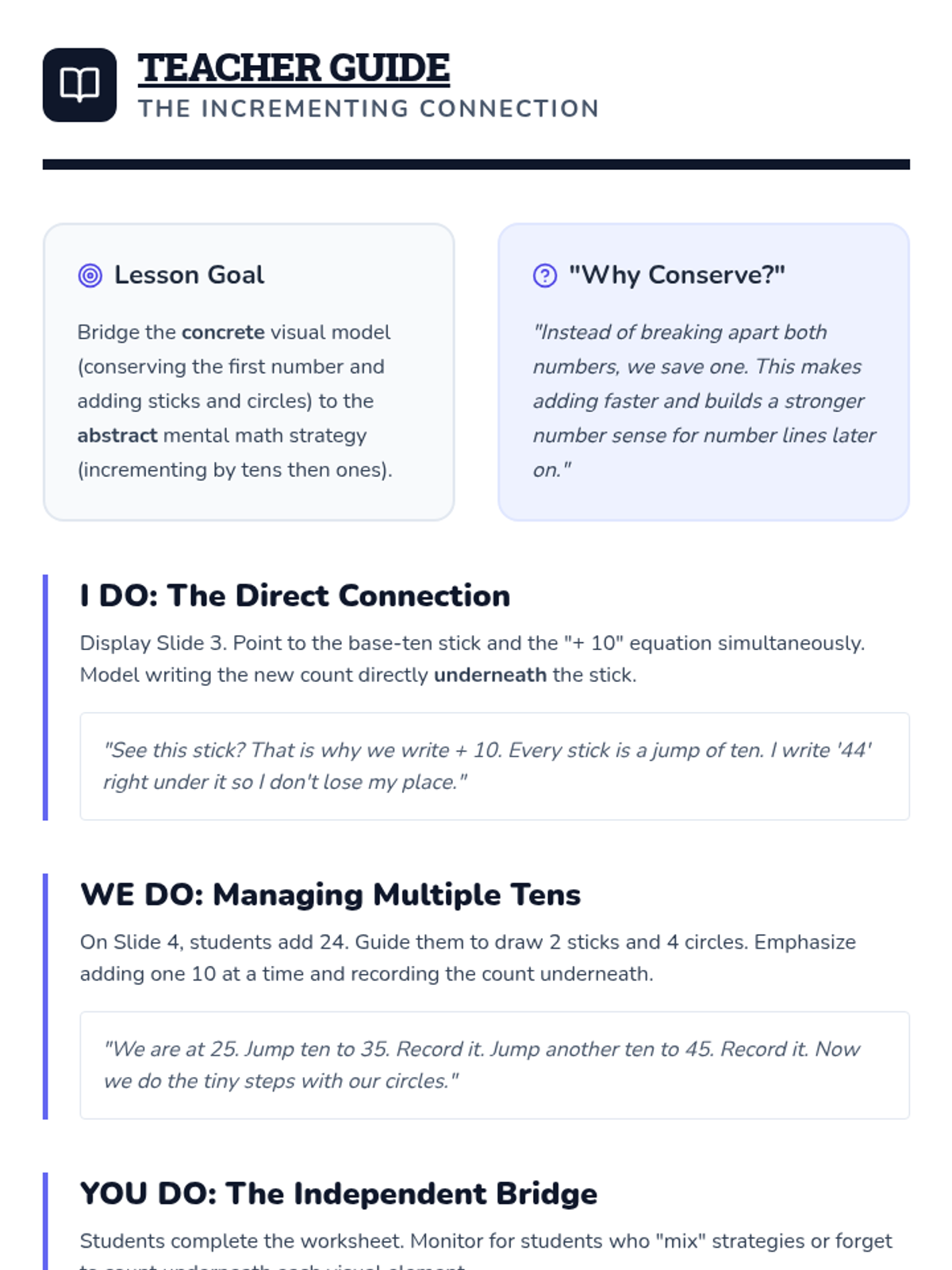
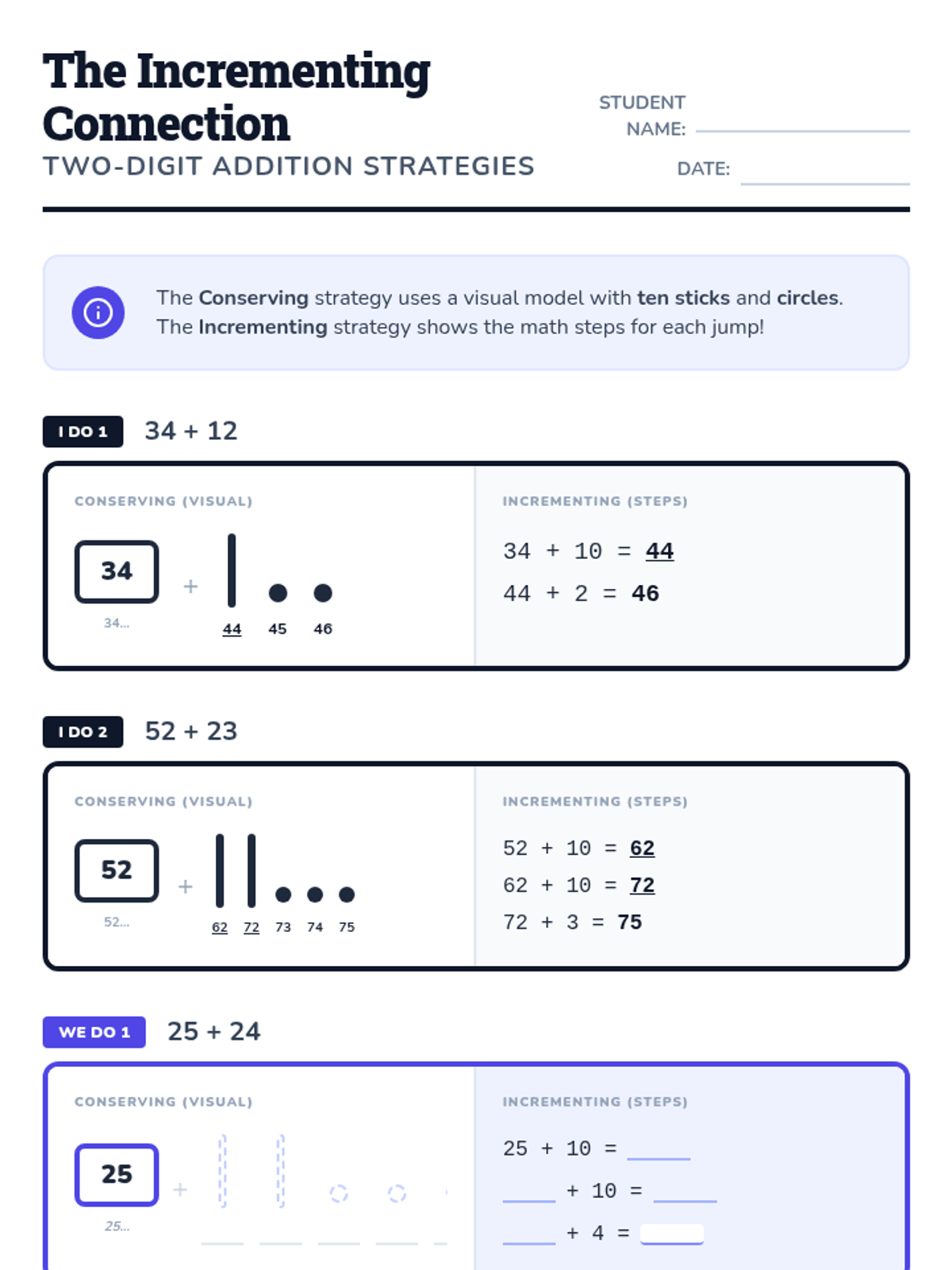
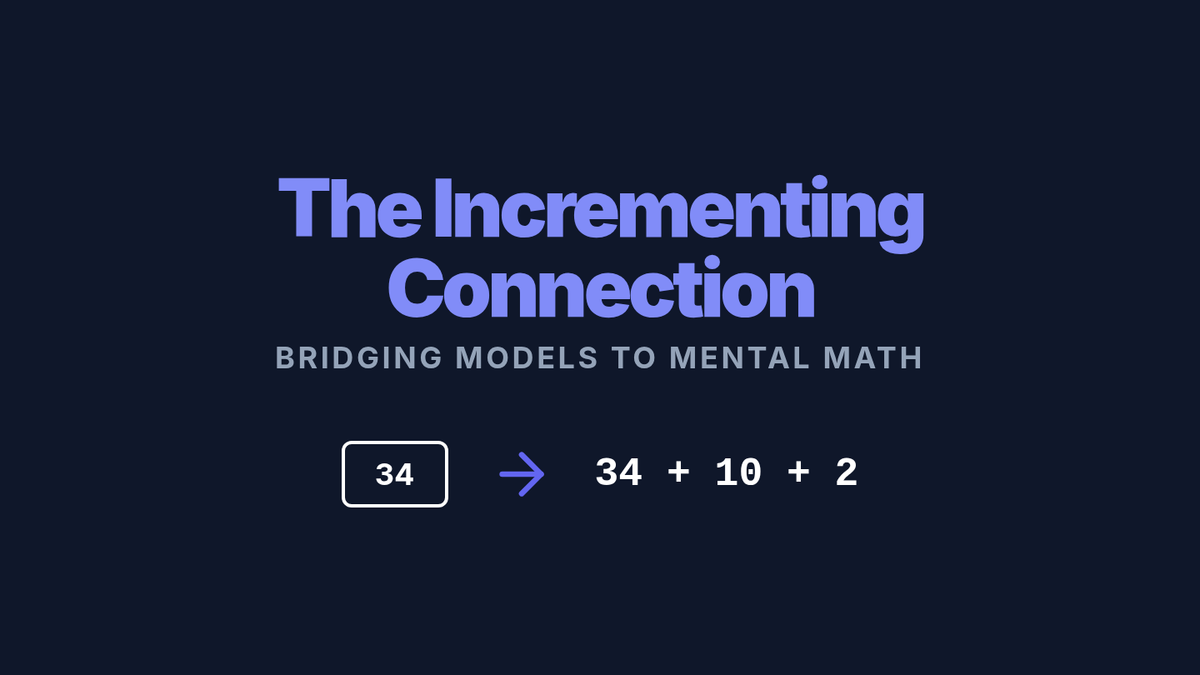
This lesson introduces two-digit addition using the conserving and incrementing strategies, showing students how to bridge visual base-ten models to mental step-by-step counting.
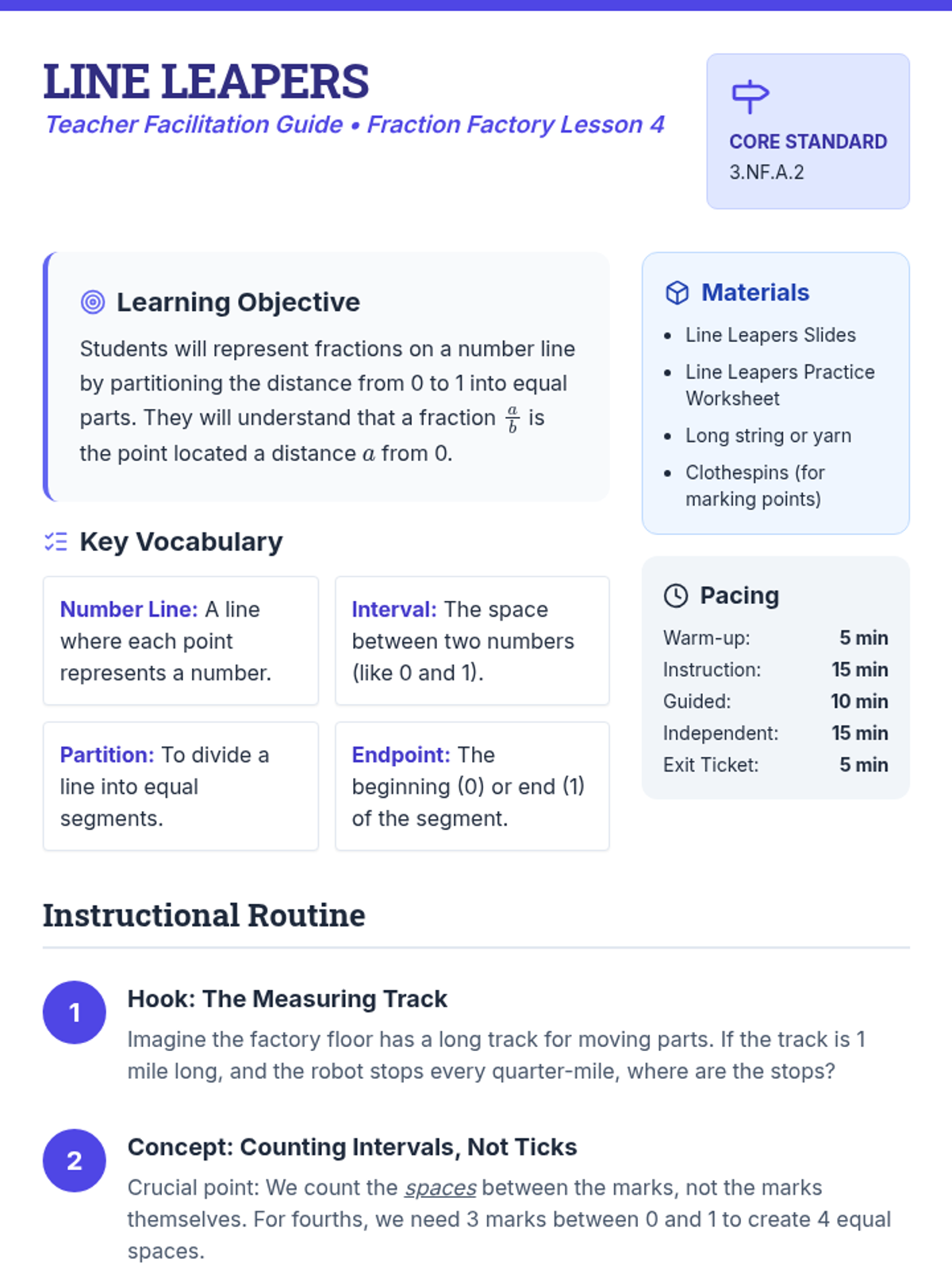
Students represent and compare fractions on a number line, understanding distance from zero.