A hands-on 3rd-grade math lesson where students run a virtual pizza parlor to master identifying, partitioning, and comparing fractions through creative pizza assembly.
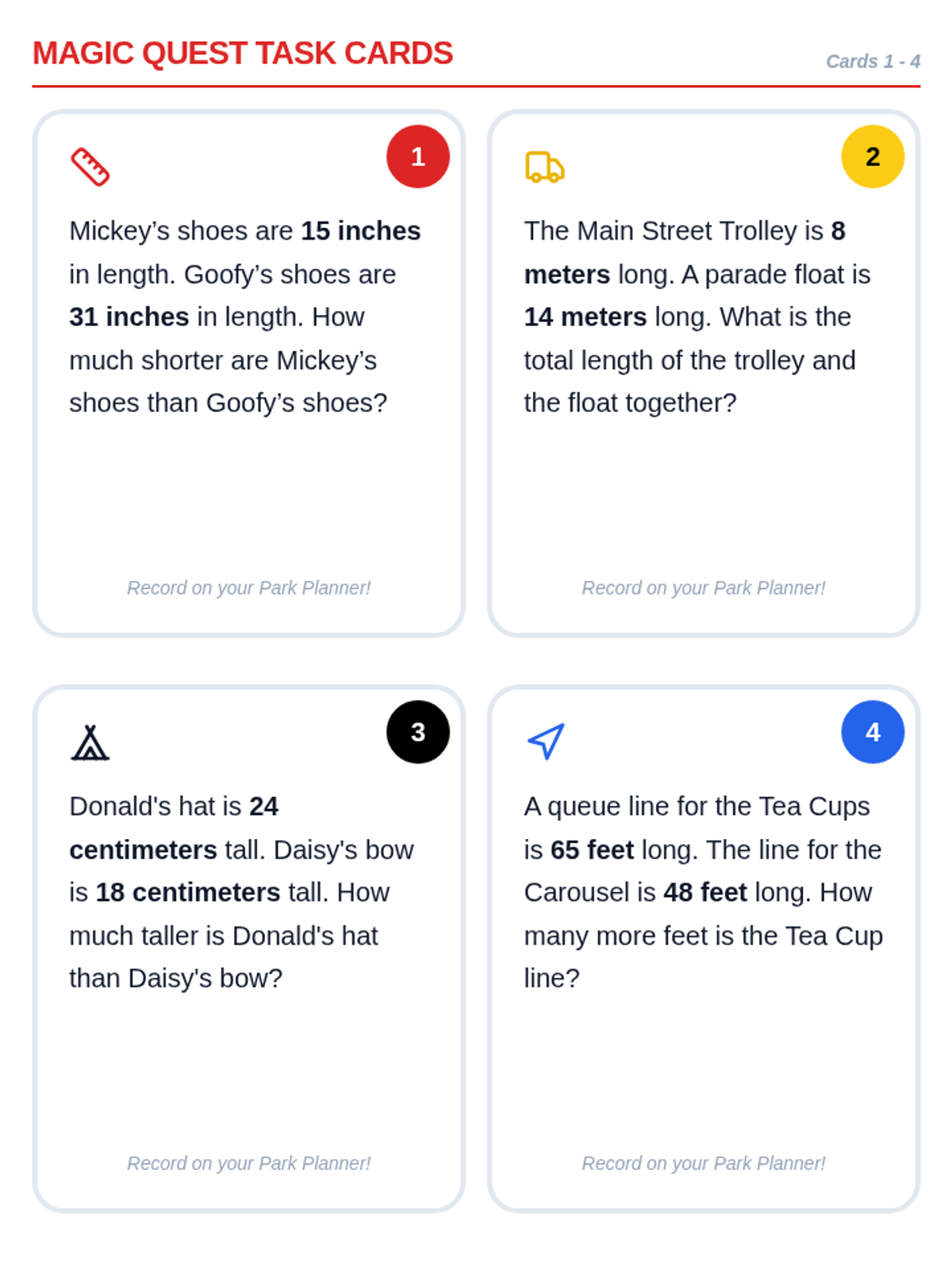
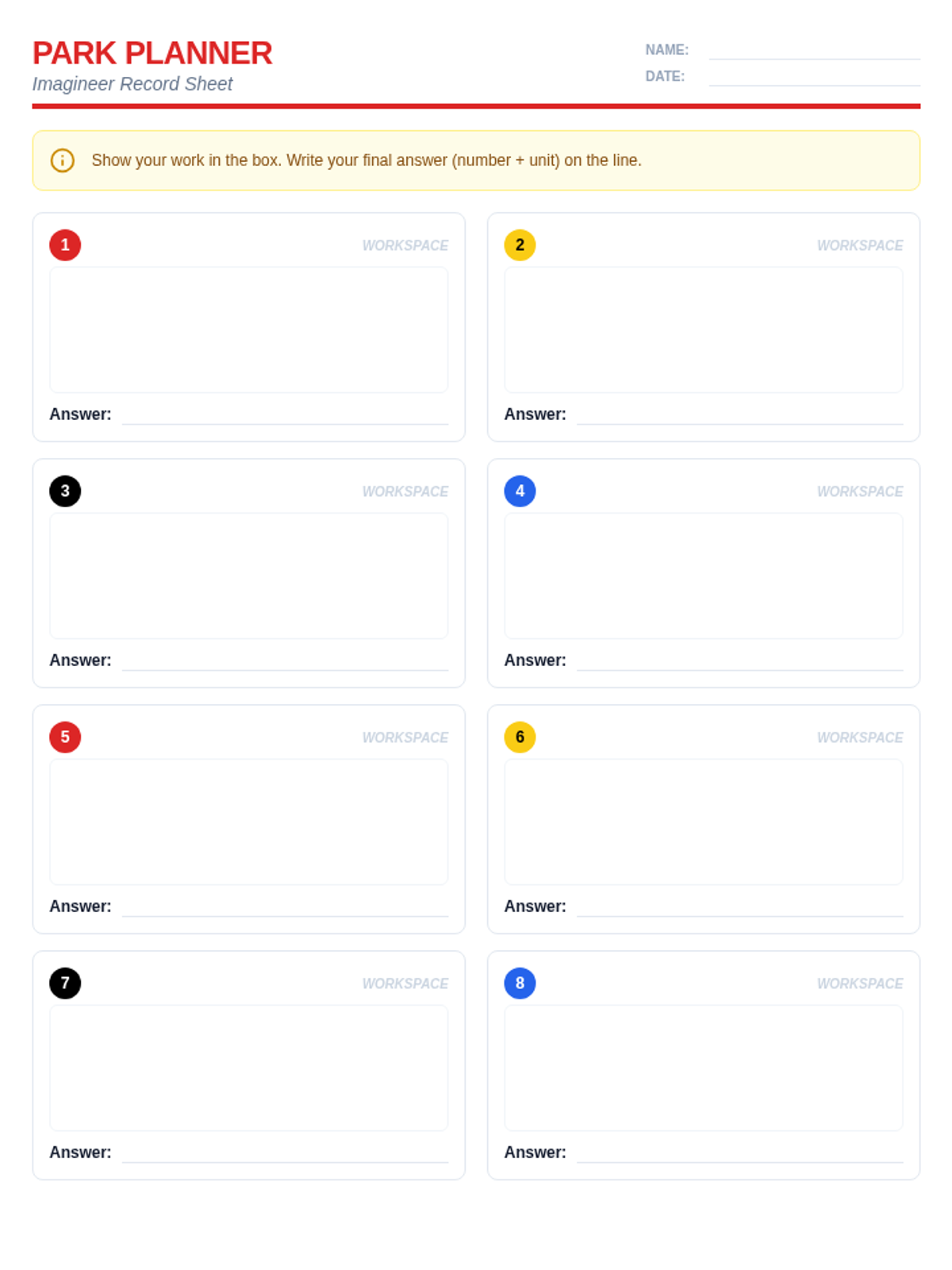
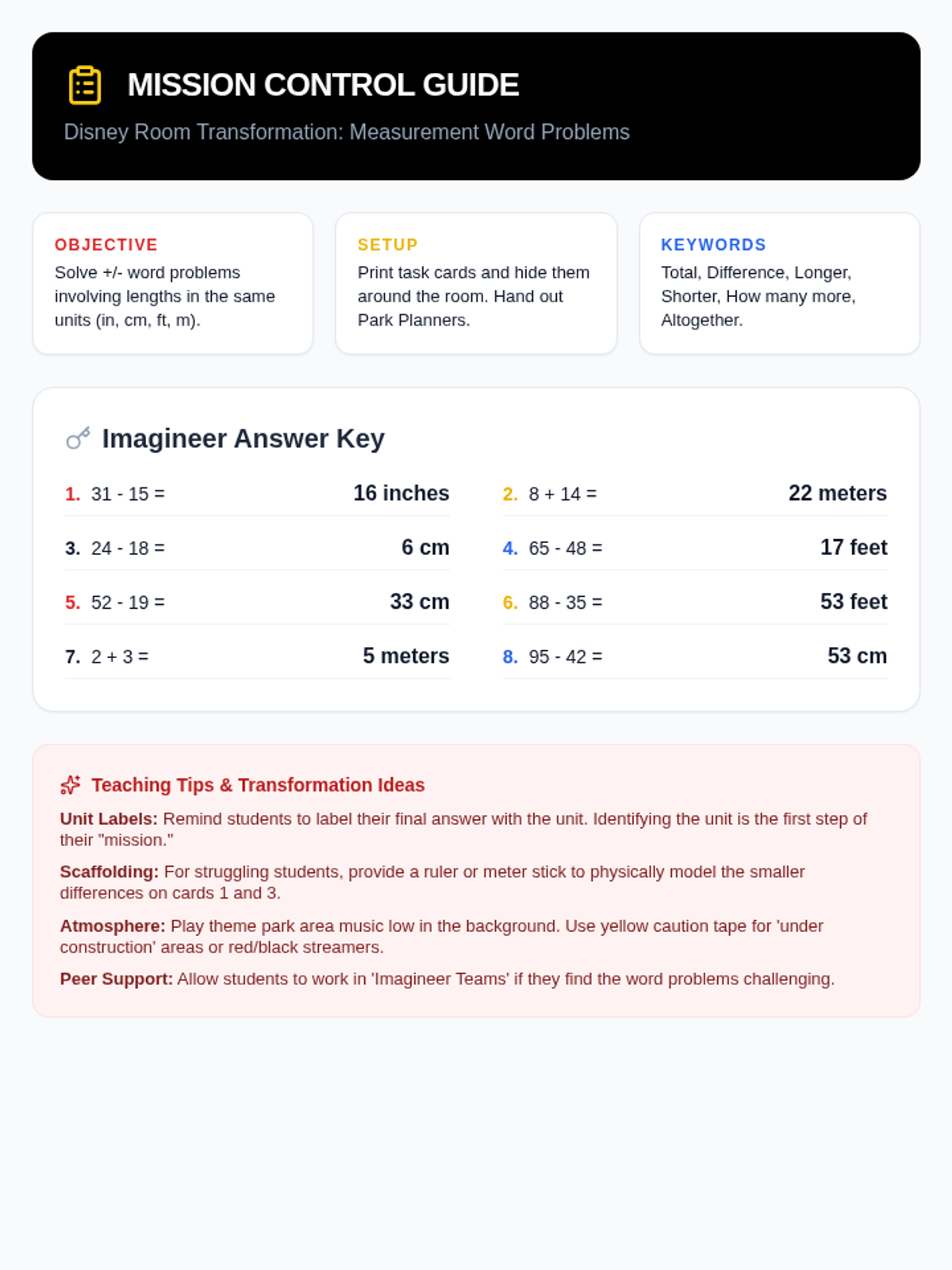
A high-energy measurement word problem lesson set in a magical theme park, designed for a room transformation experience. Students solve length comparison and addition problems using inches, centimeters, feet, and meters.
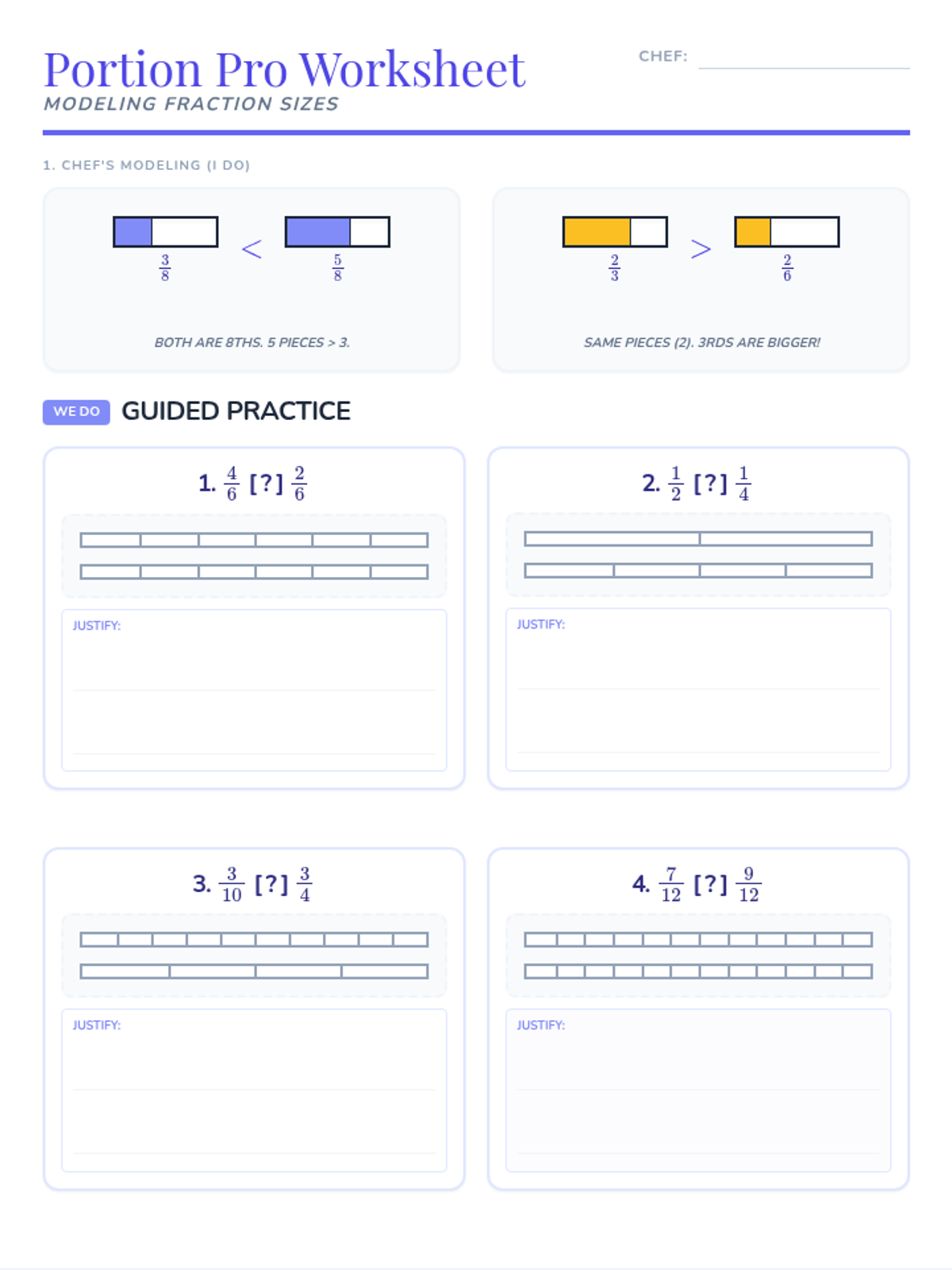
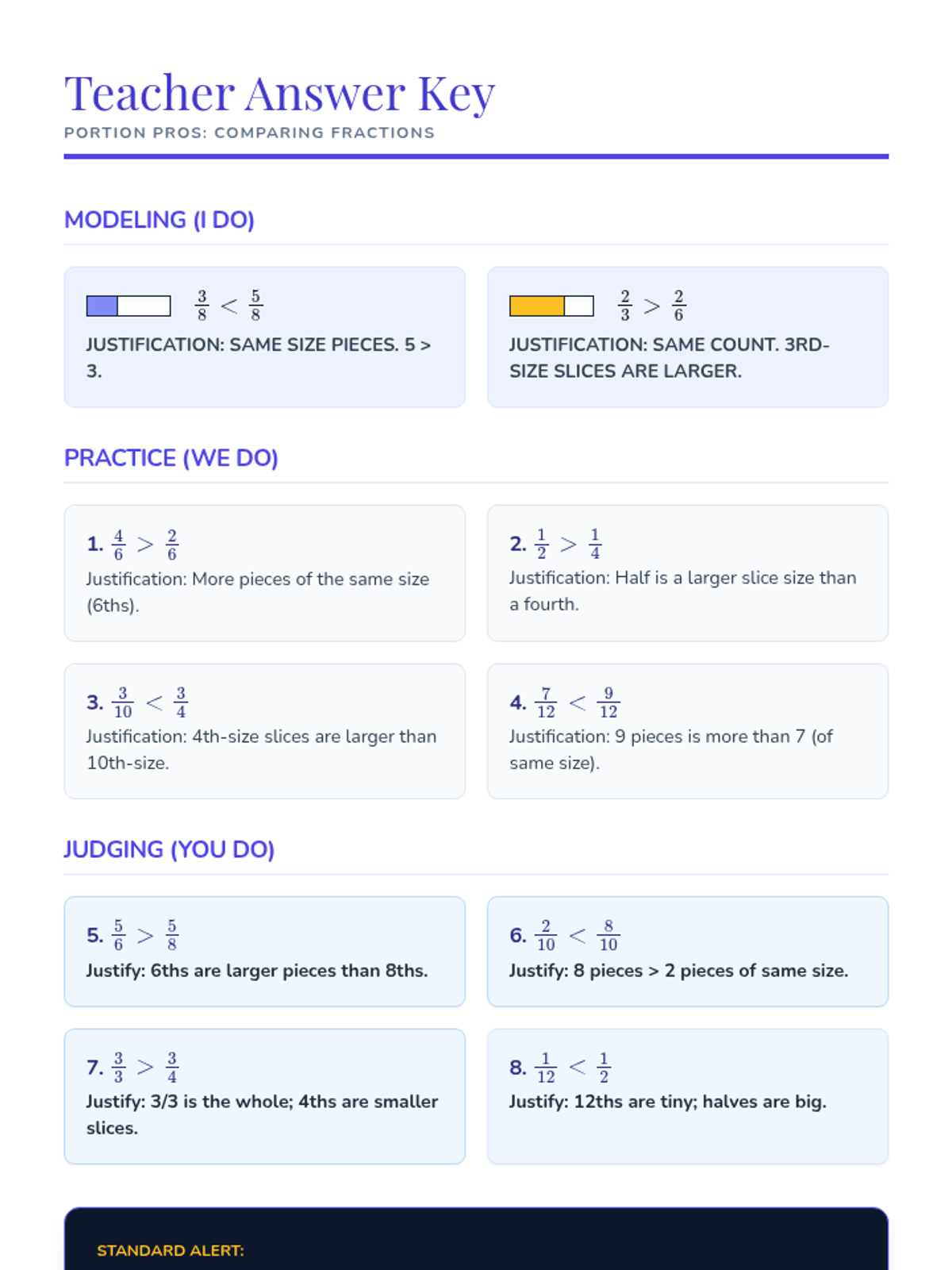
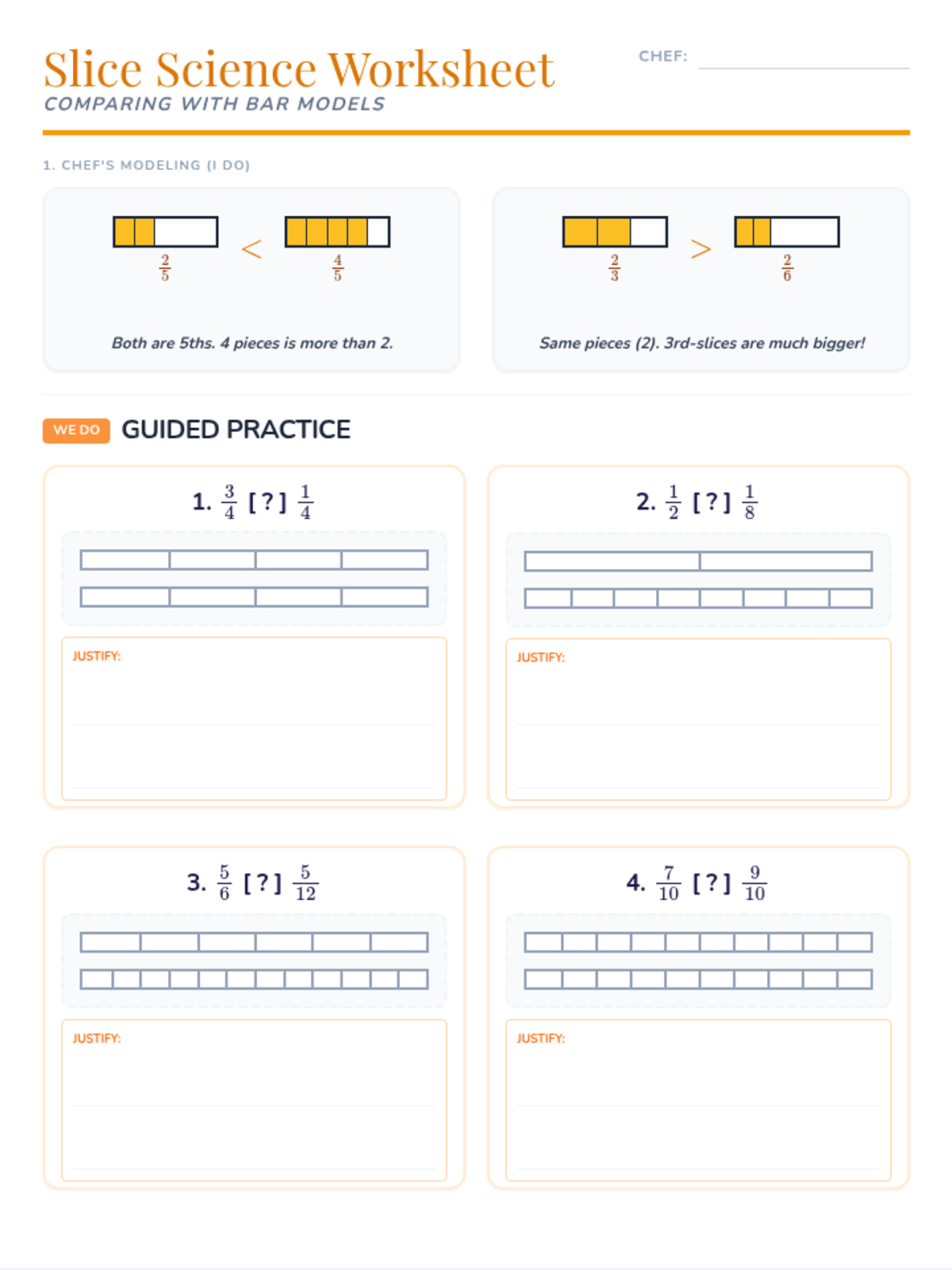
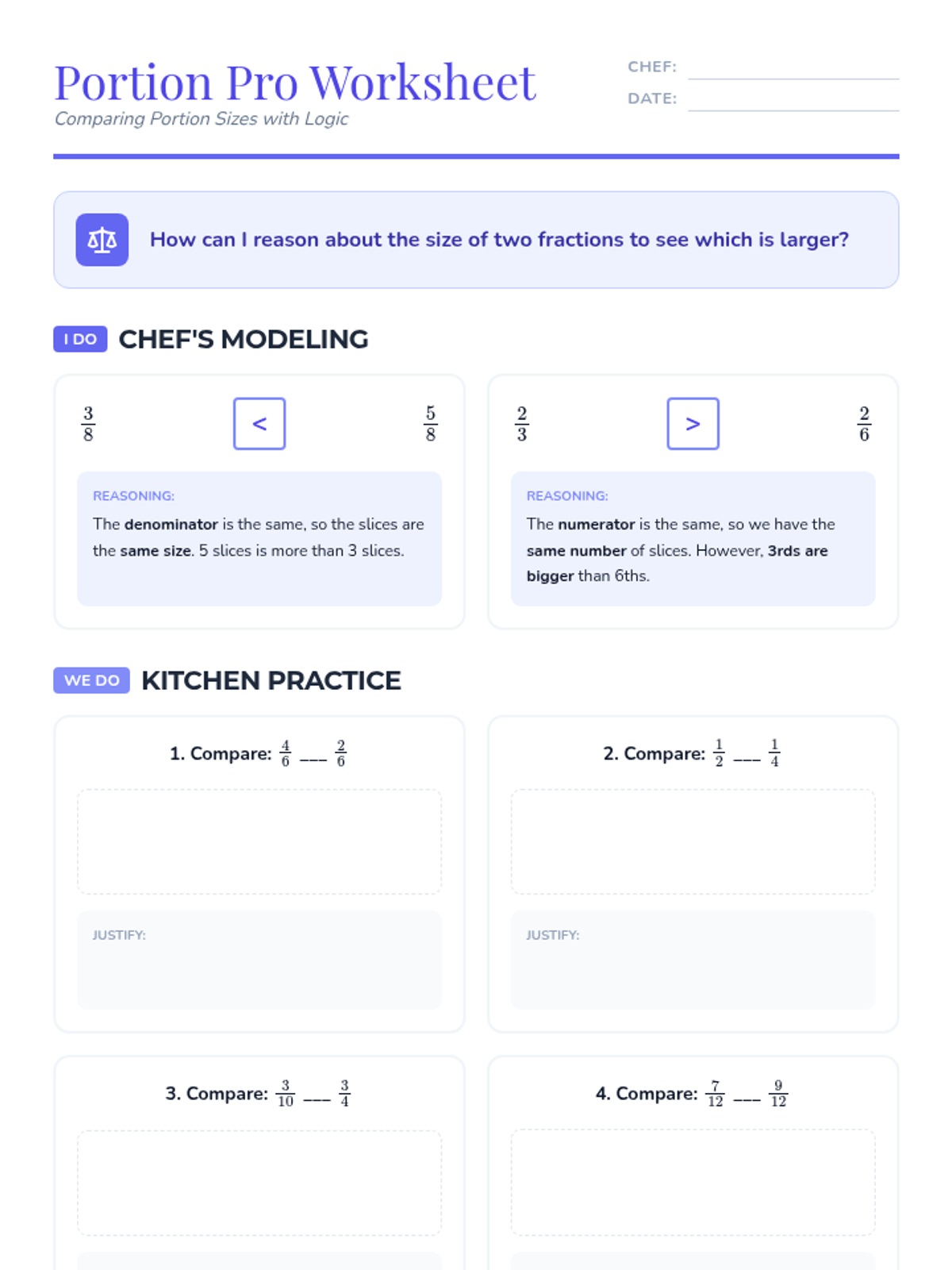
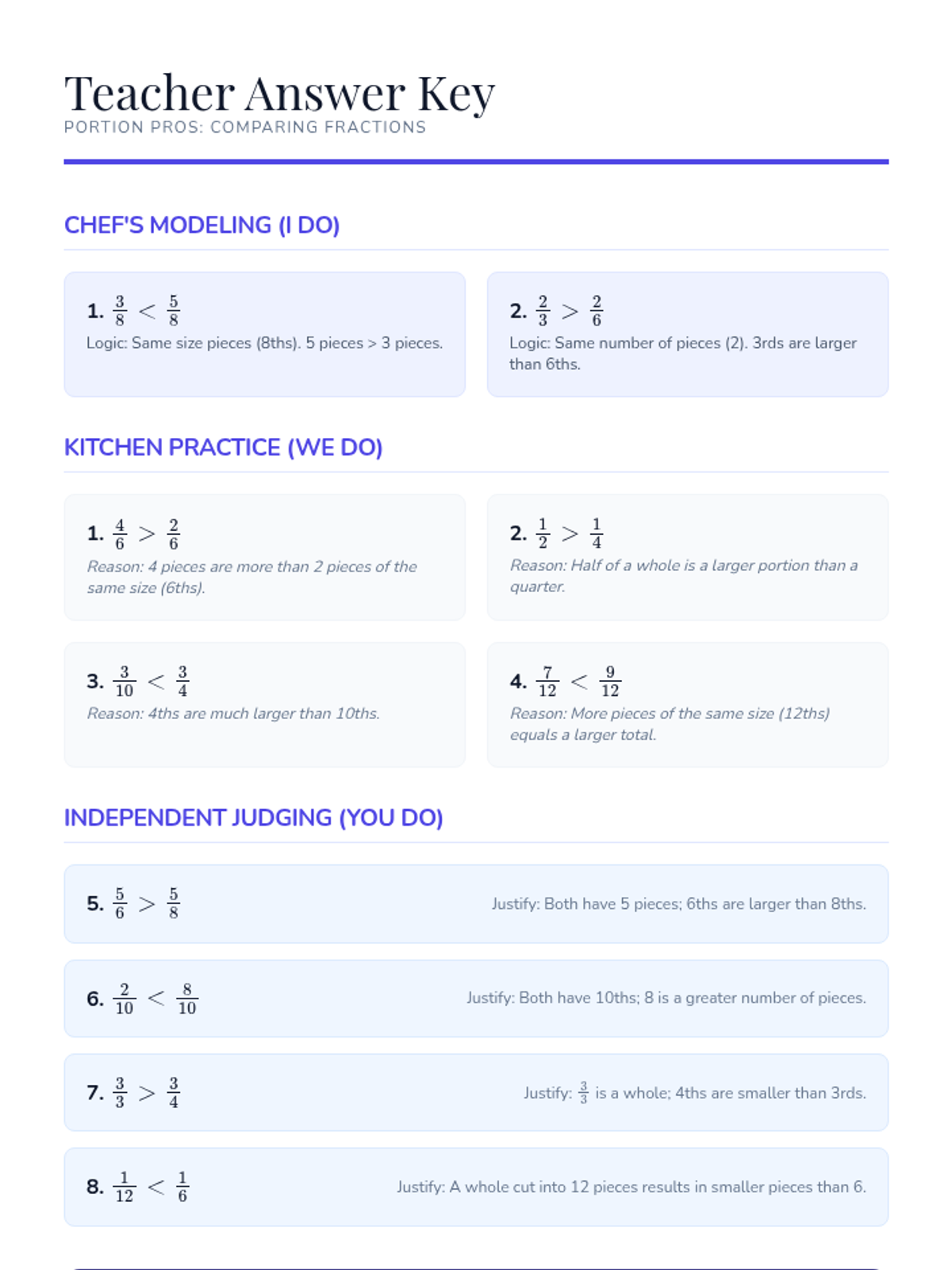
A 16:9 slide deck for teaching fraction comparison. Covers comparing fractions with common numerators and denominators using the Portion Pros bakery theme and visual bar models.
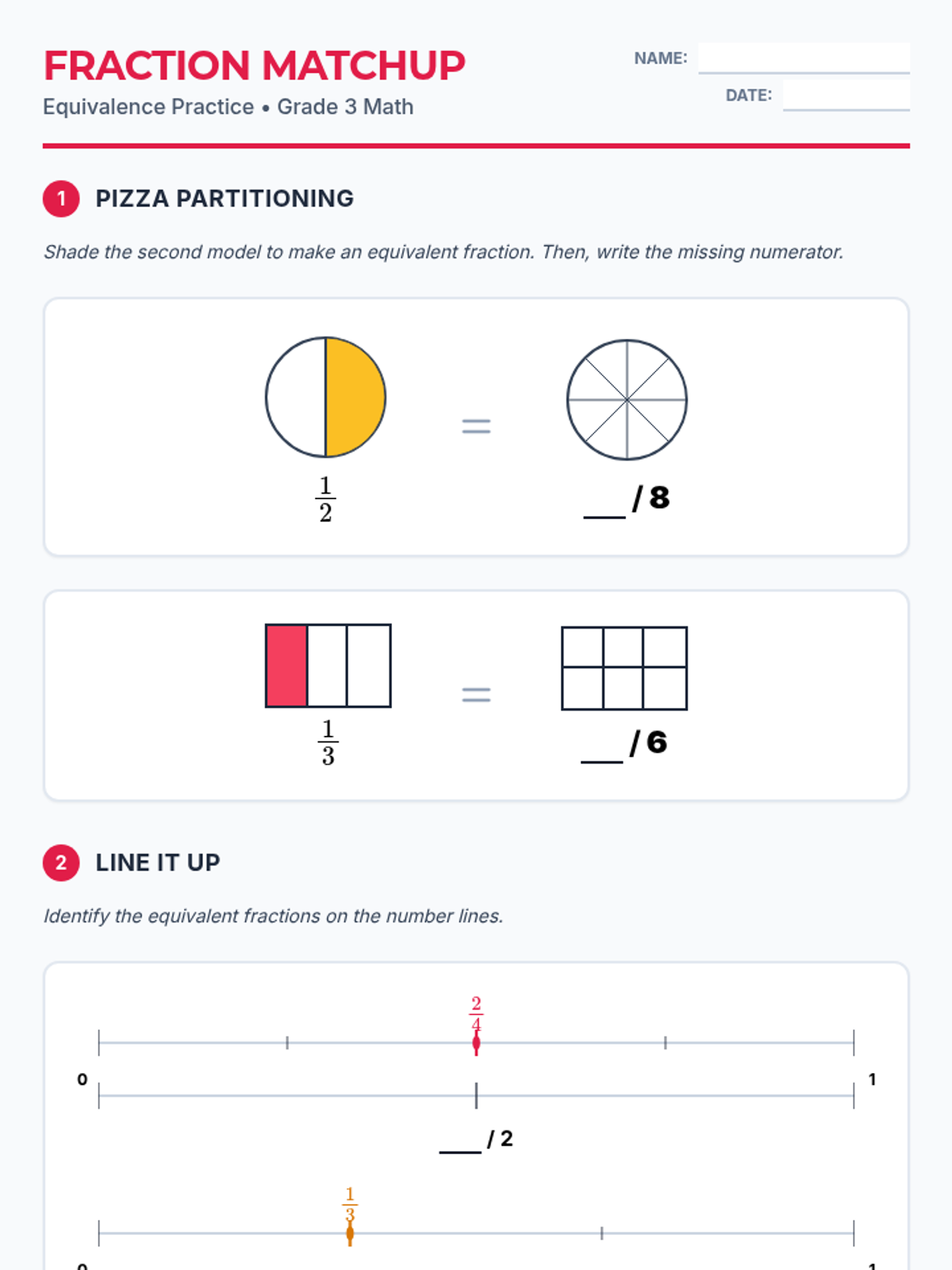
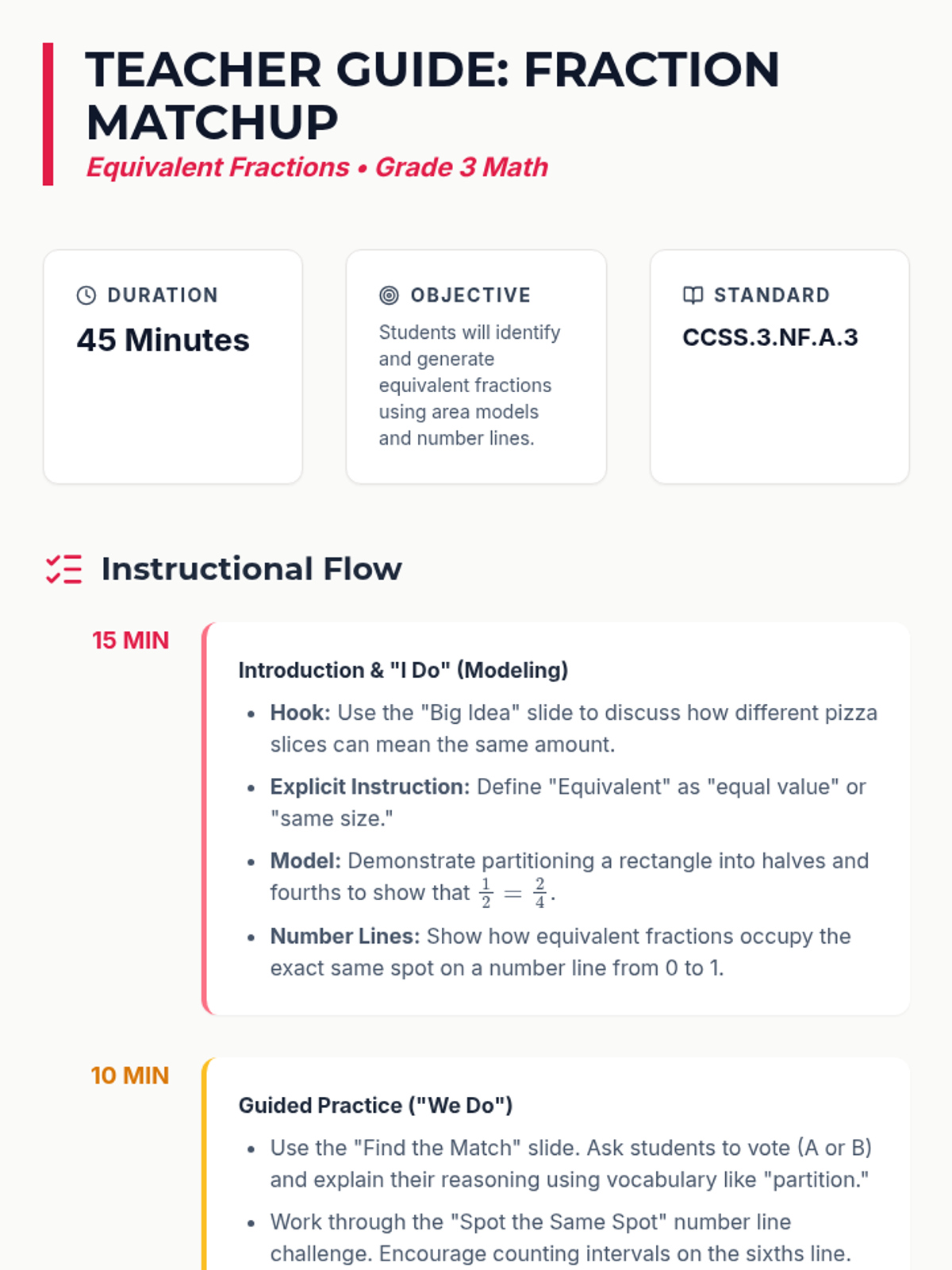
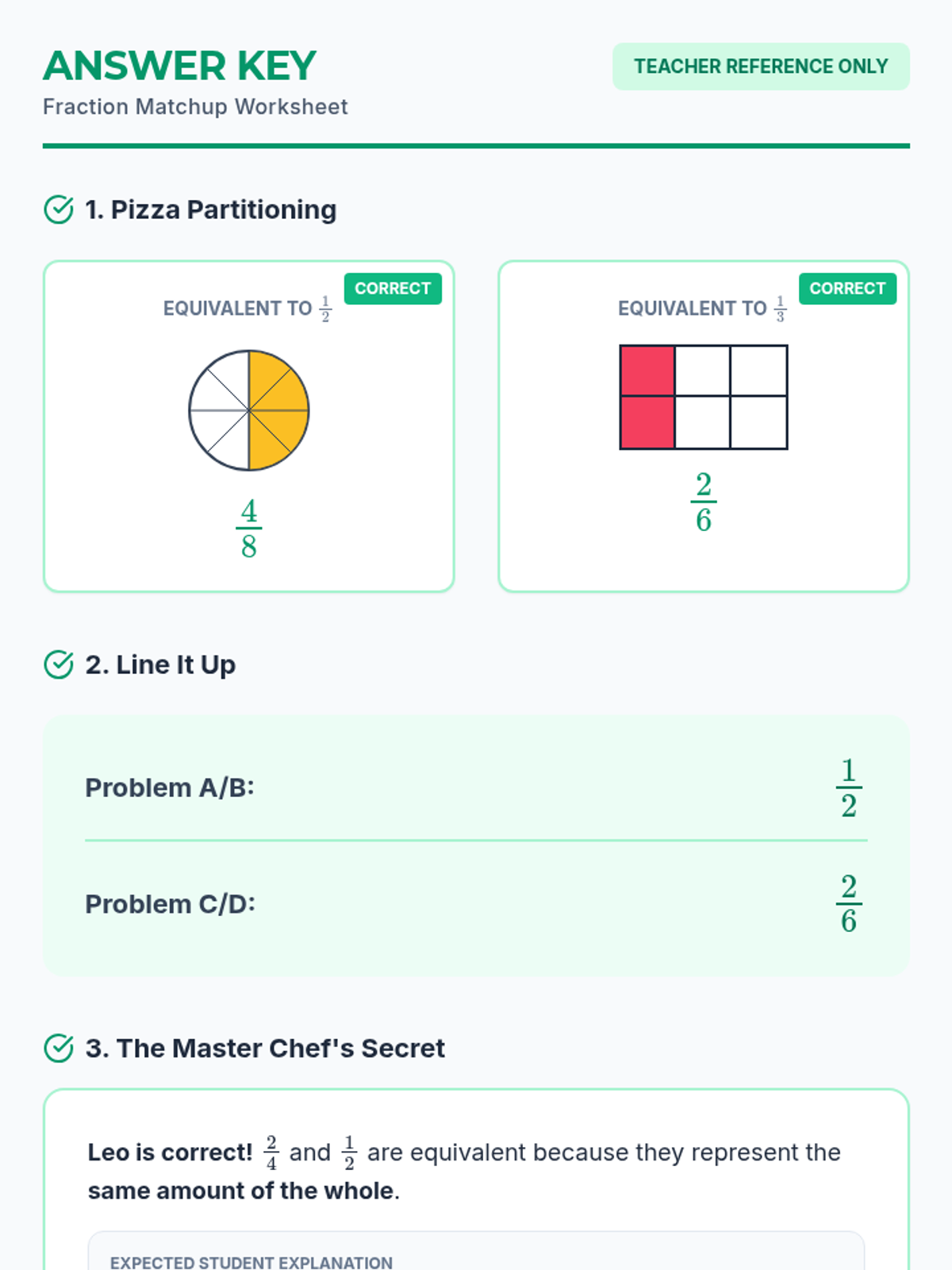
A comprehensive lesson on equivalent fractions using a bakery theme, featuring teacher modeling, guided practice, and independent student work.
A 45-minute lesson for 3rd graders focused on recognizing and generating simple equivalent fractions using area models and number lines. Students follow an 'I Do, We Do, You Do' instructional sequence to build conceptual understanding.
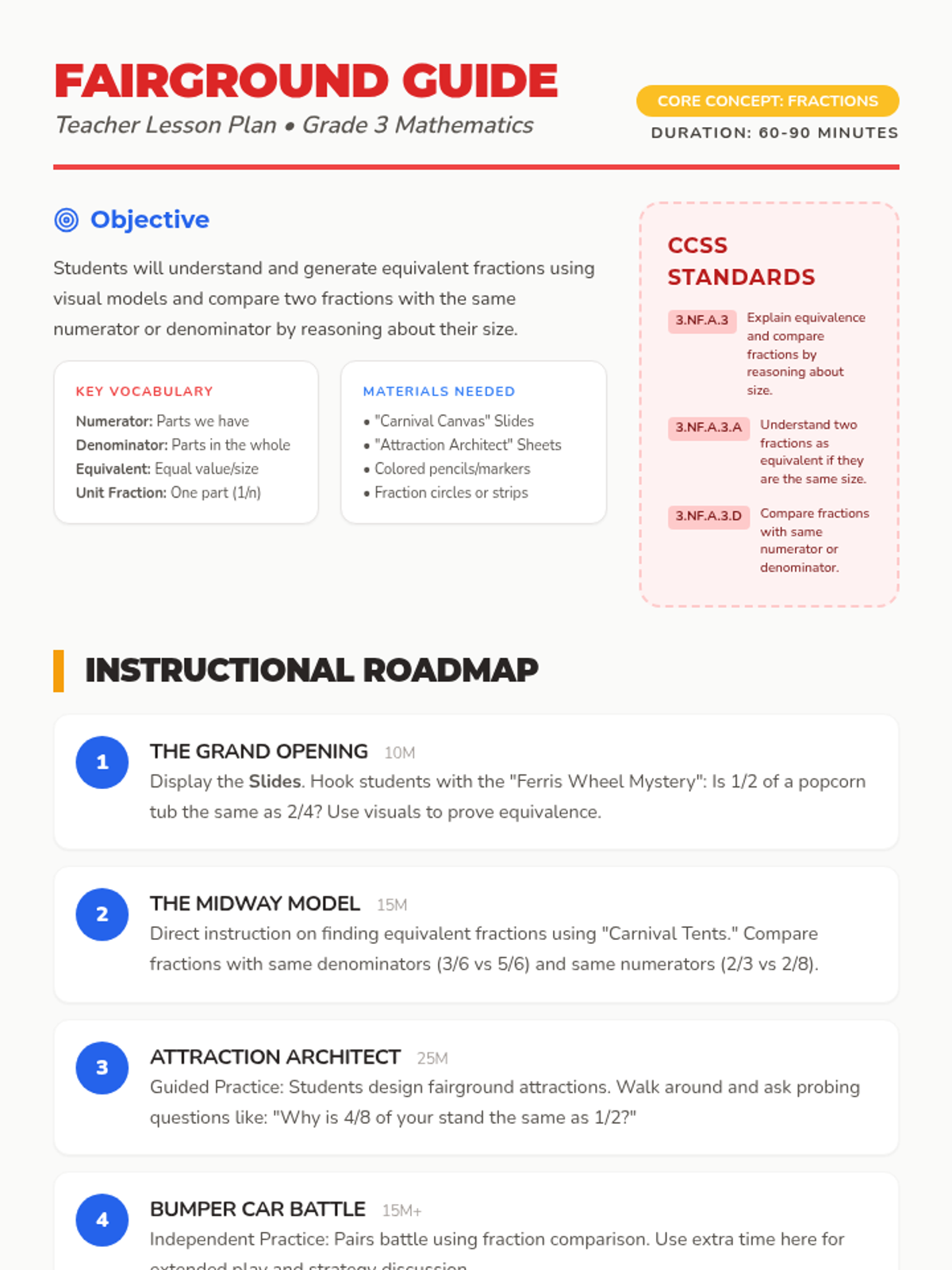
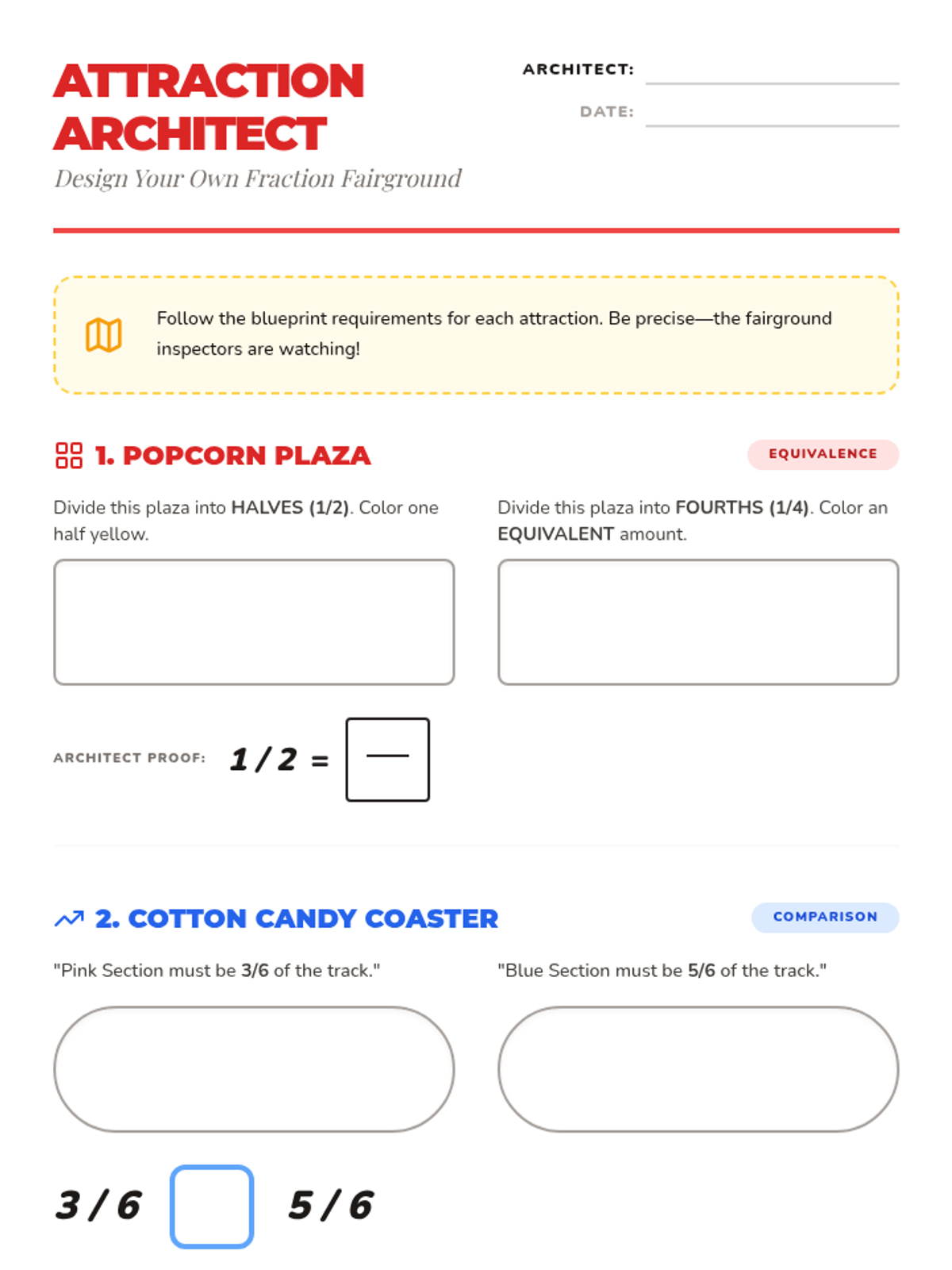
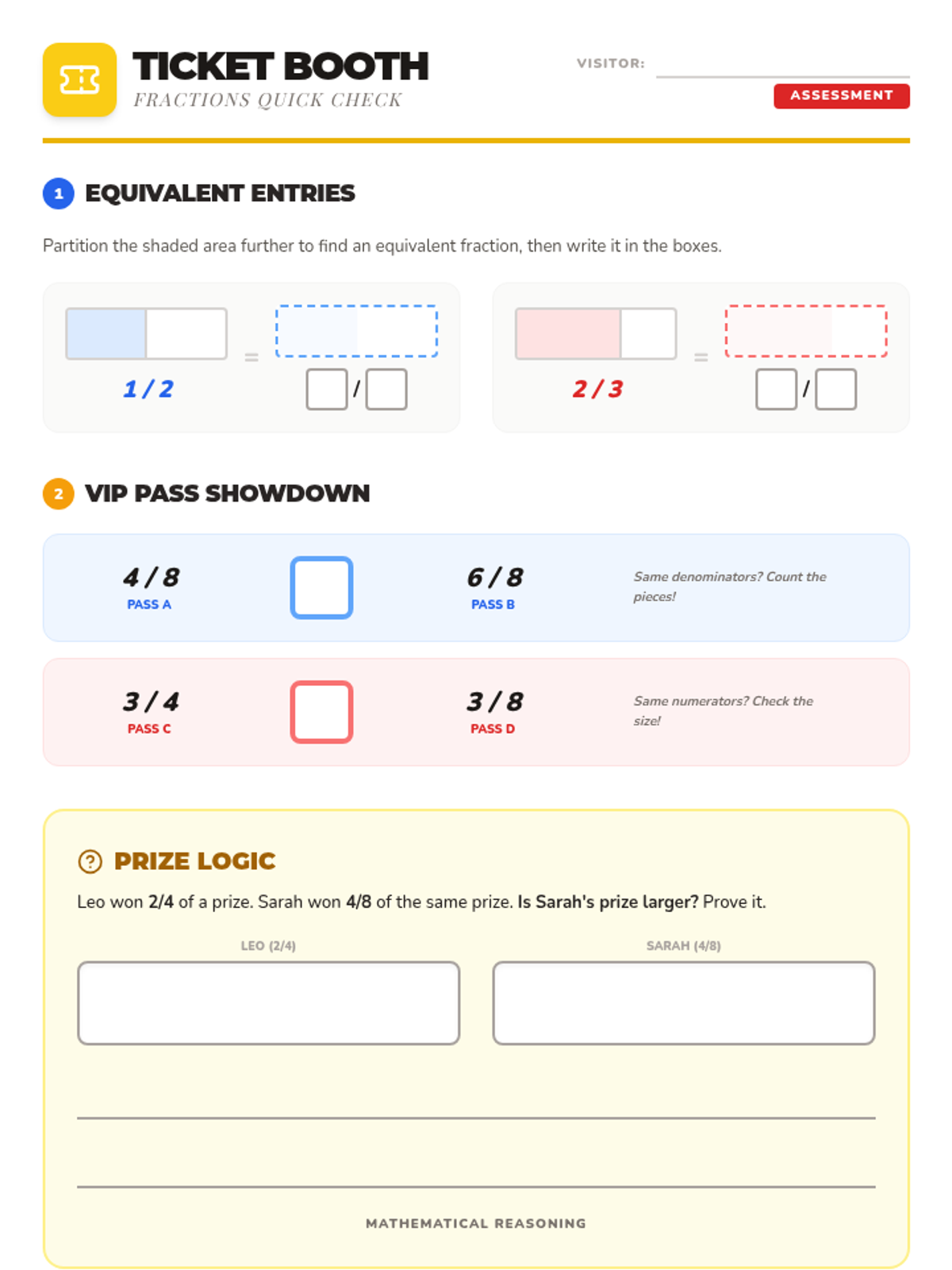
A festive, visual approach to 3rd-grade fractions where students design carnival attractions to master equivalent fractions and comparison. This lesson uses spatial reasoning and creative construction to build deep conceptual understanding.
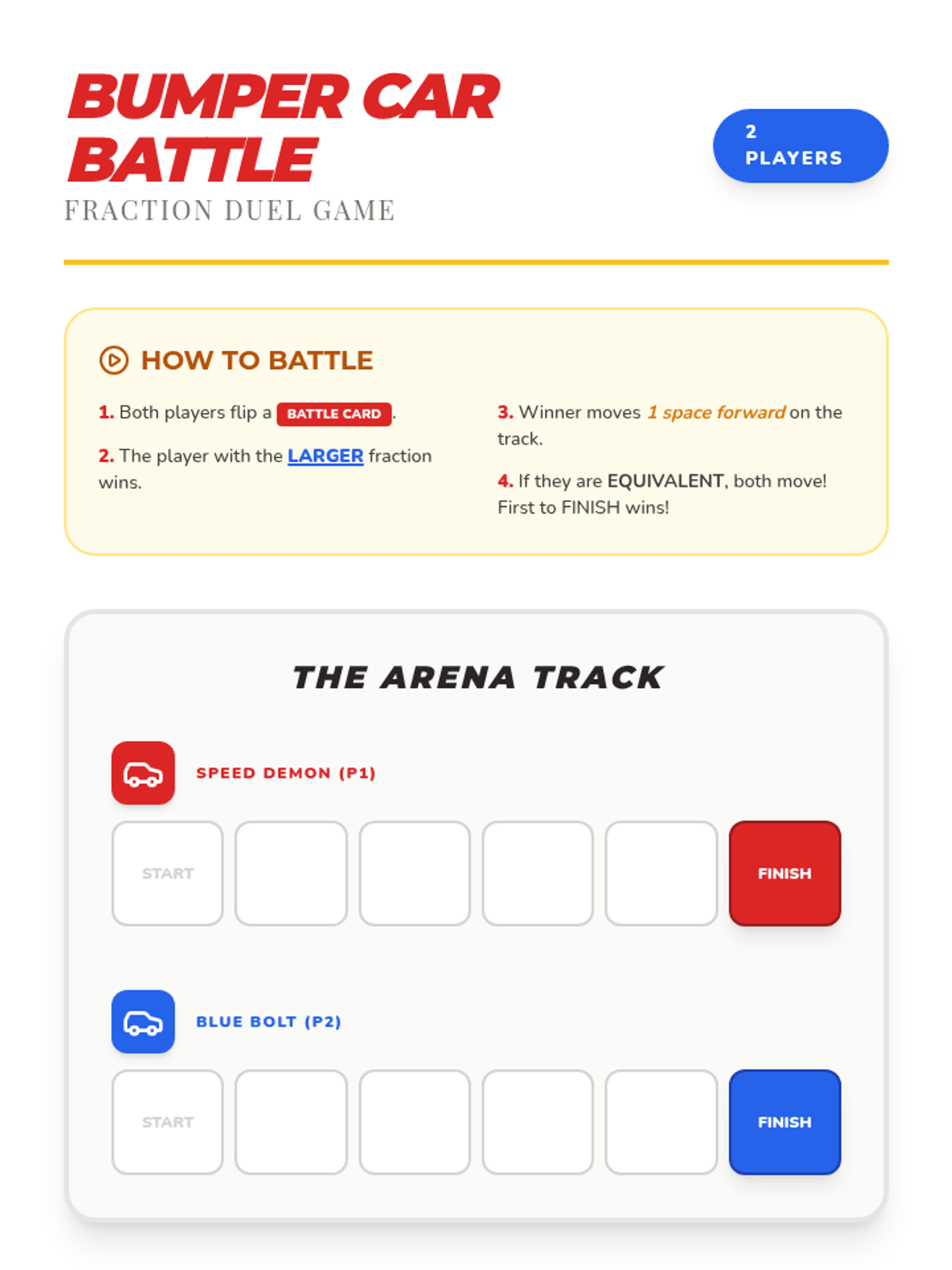
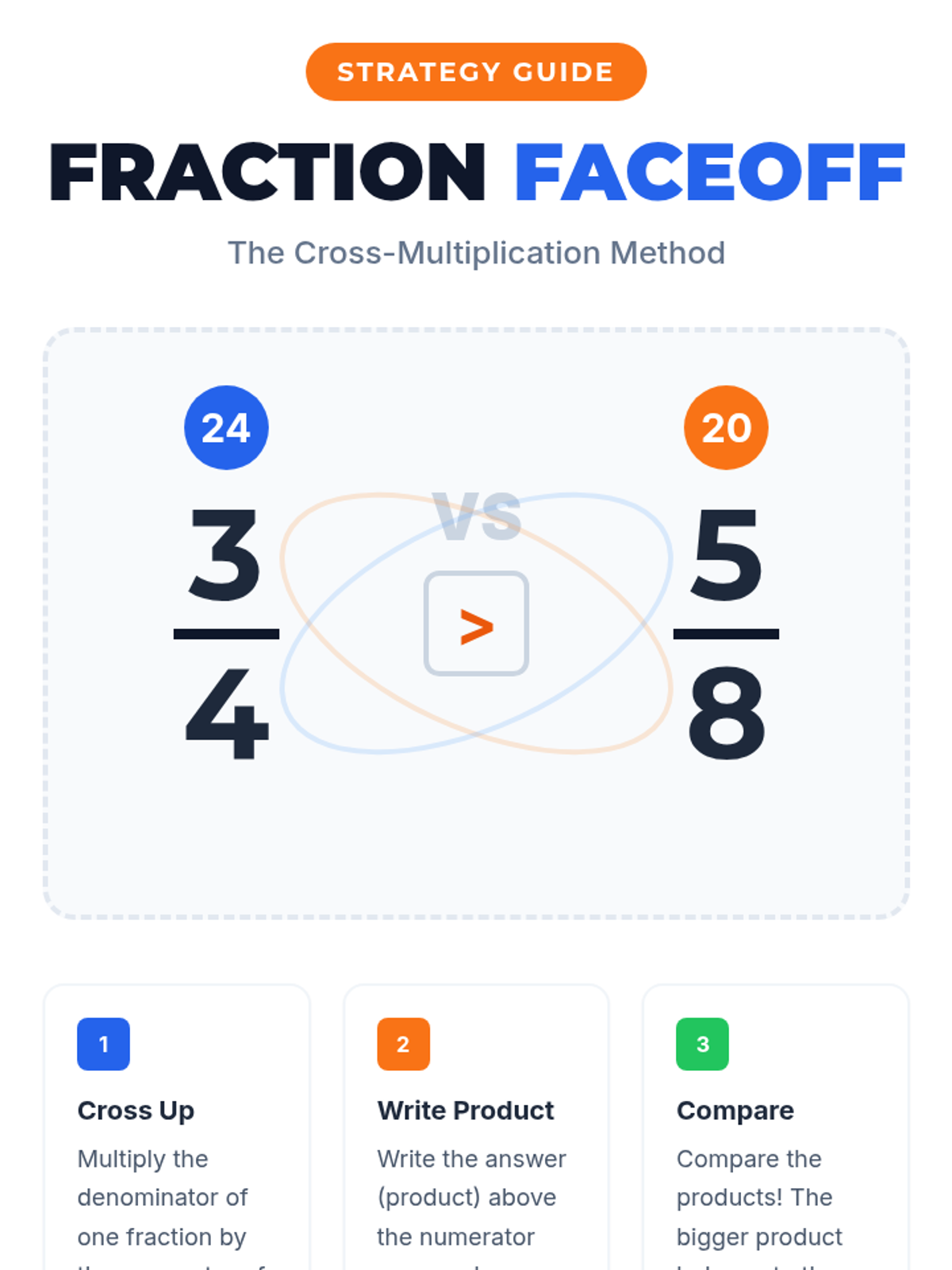
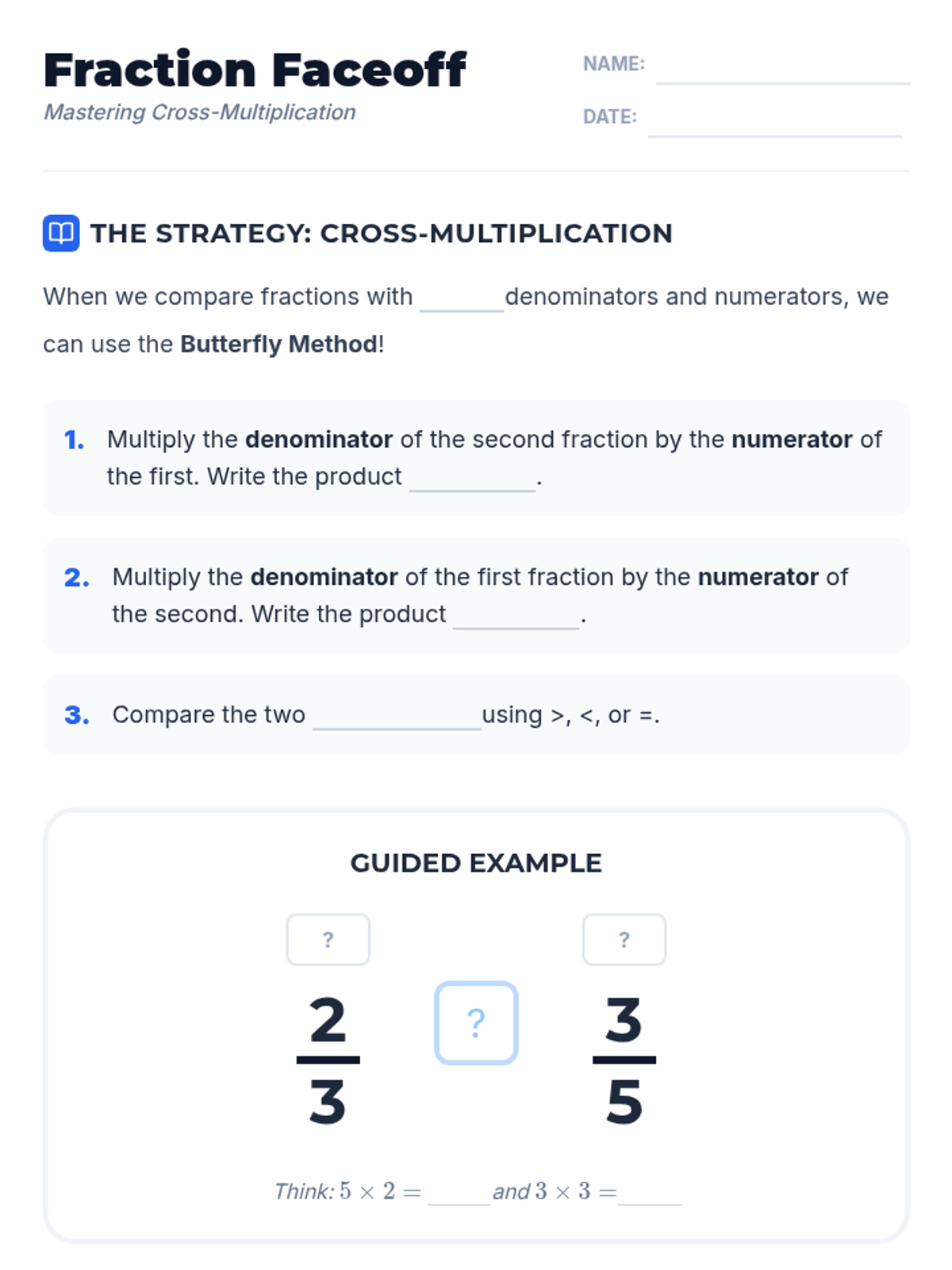
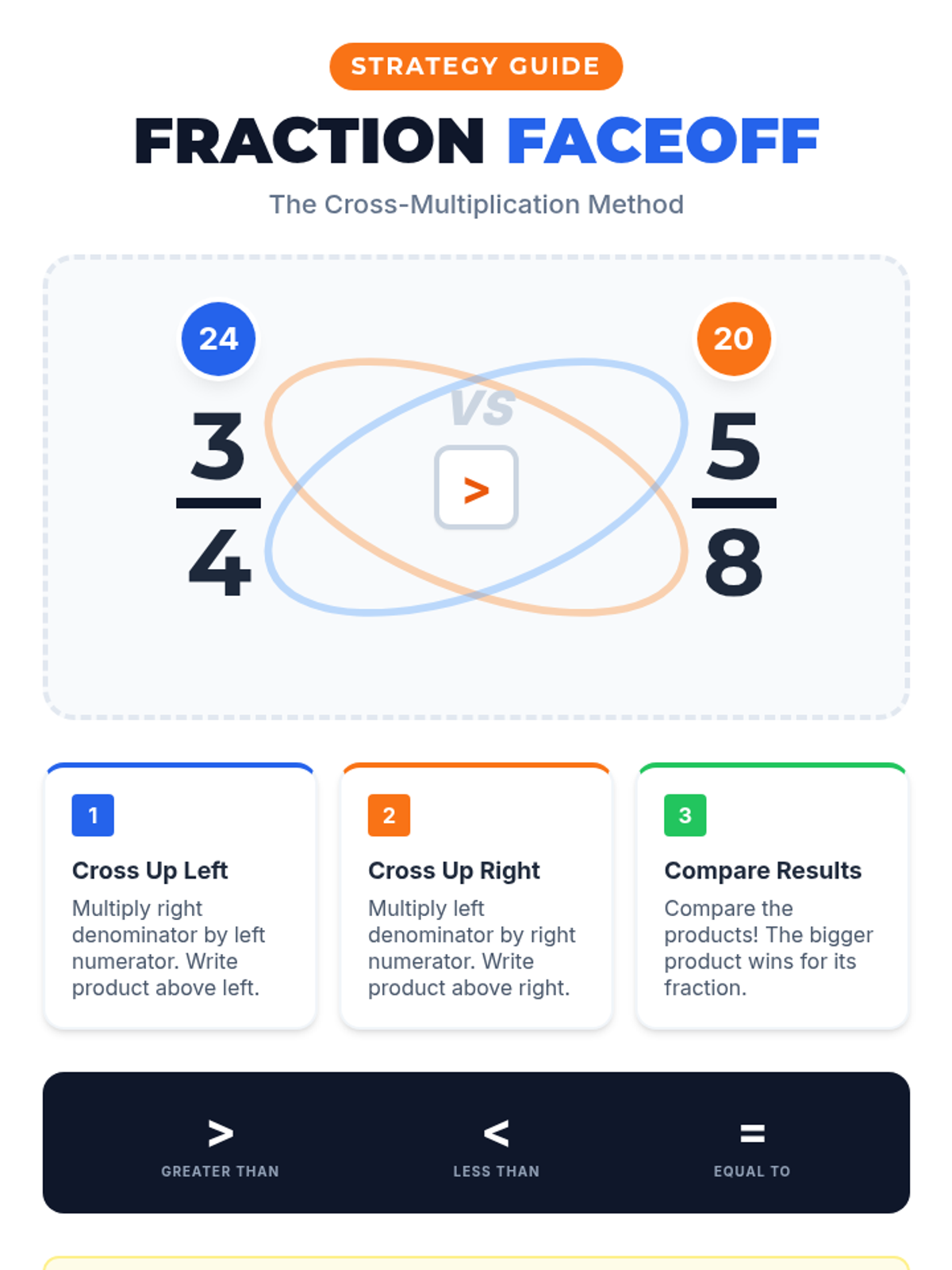
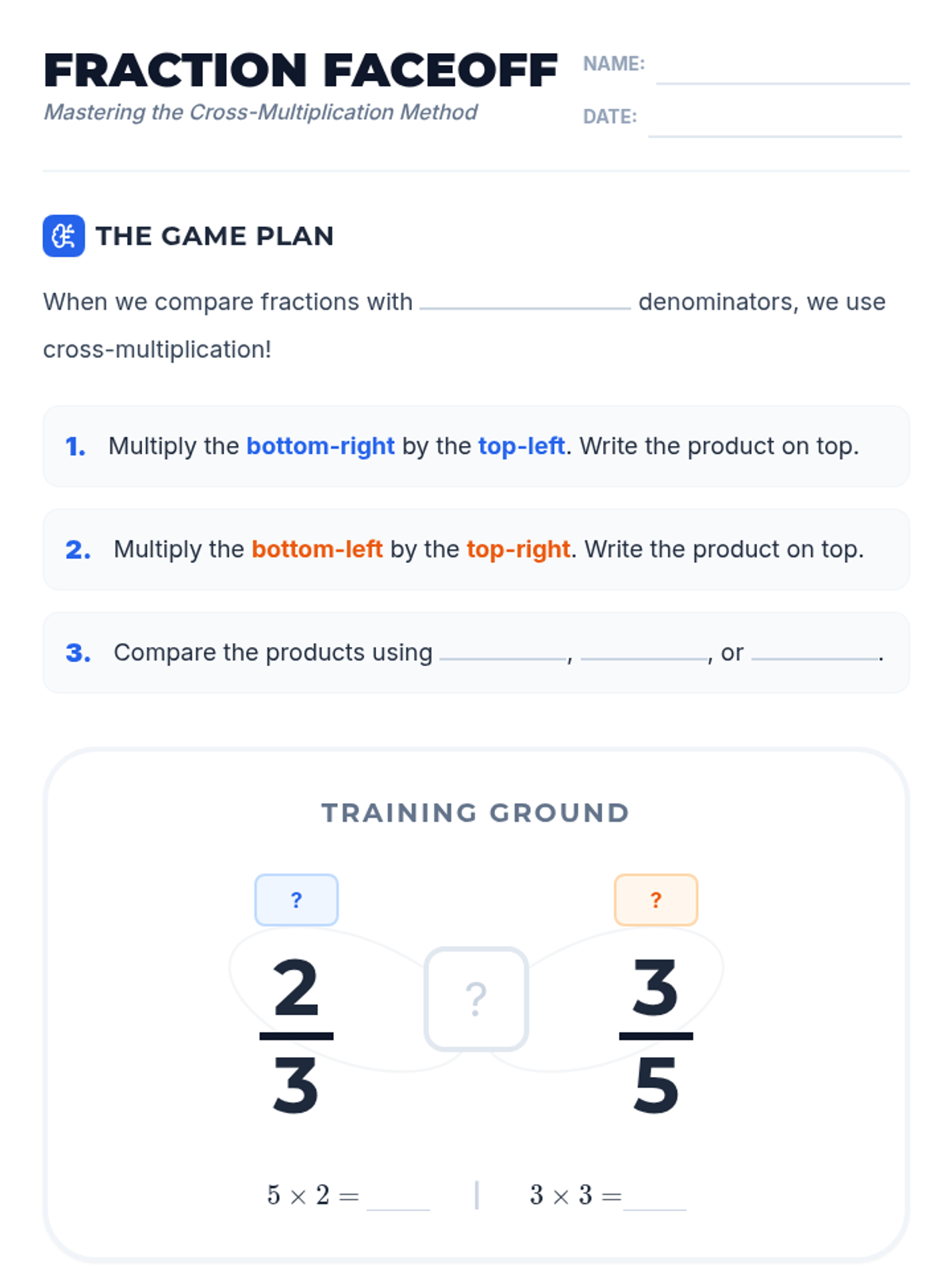
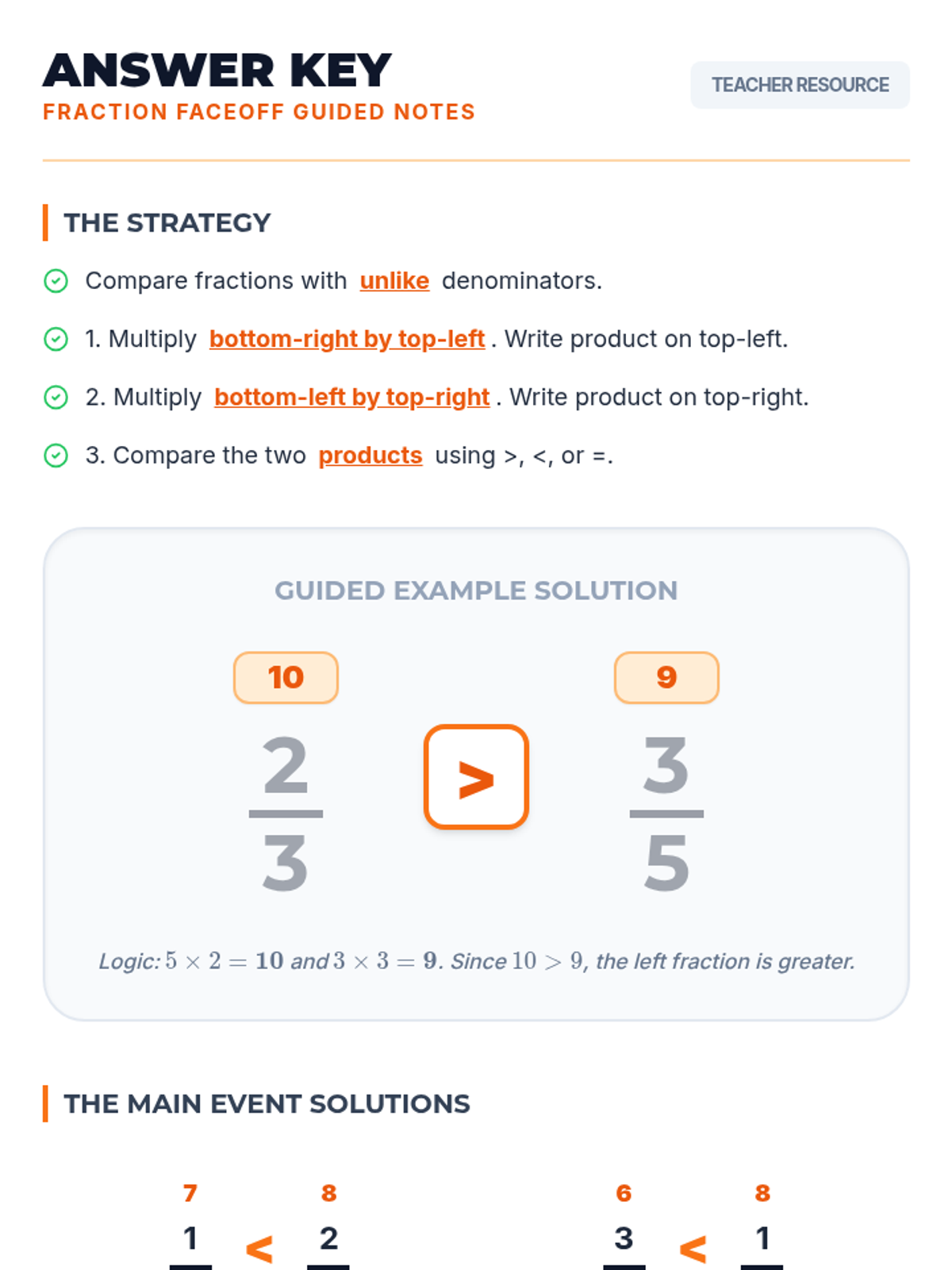
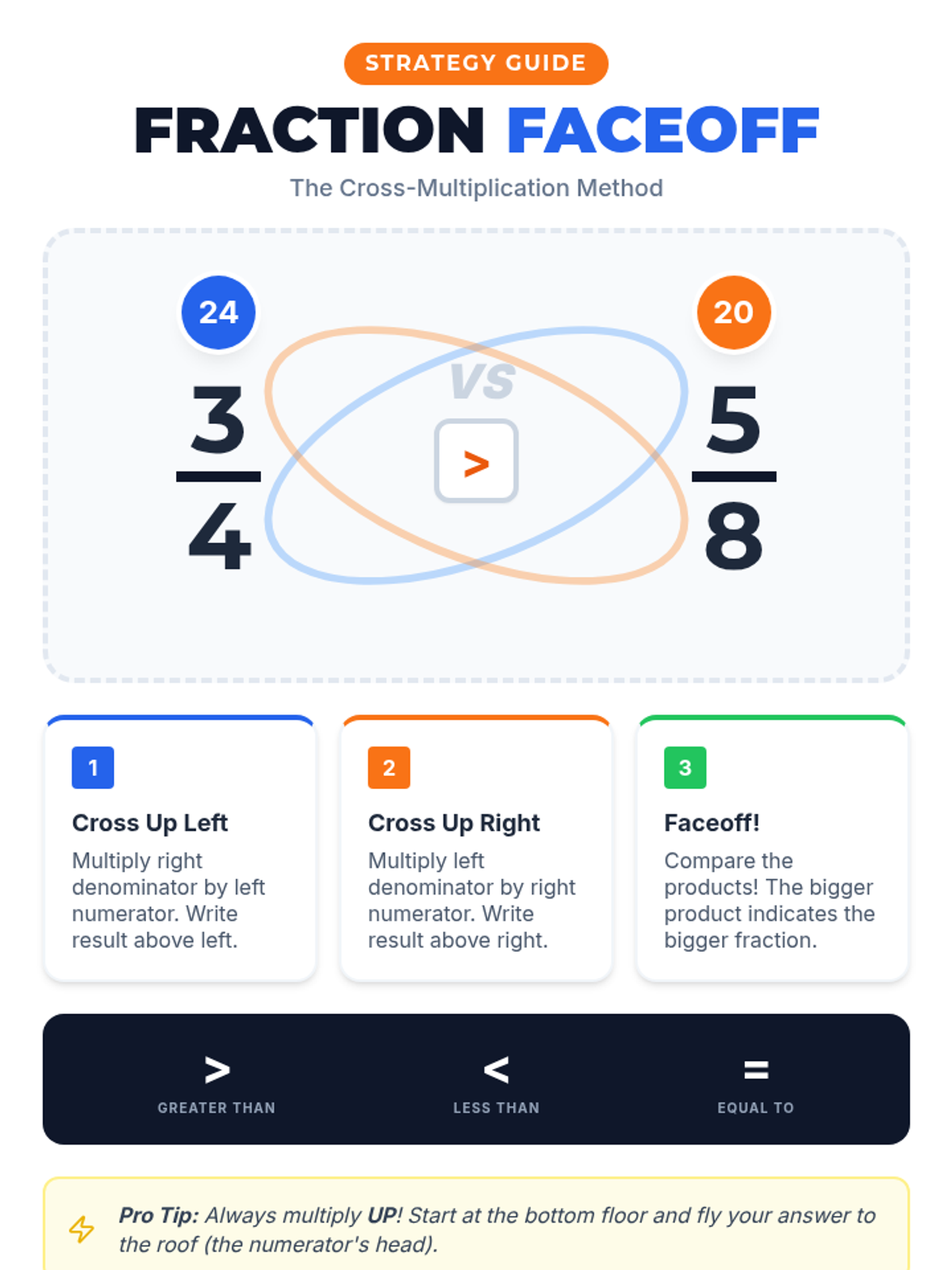
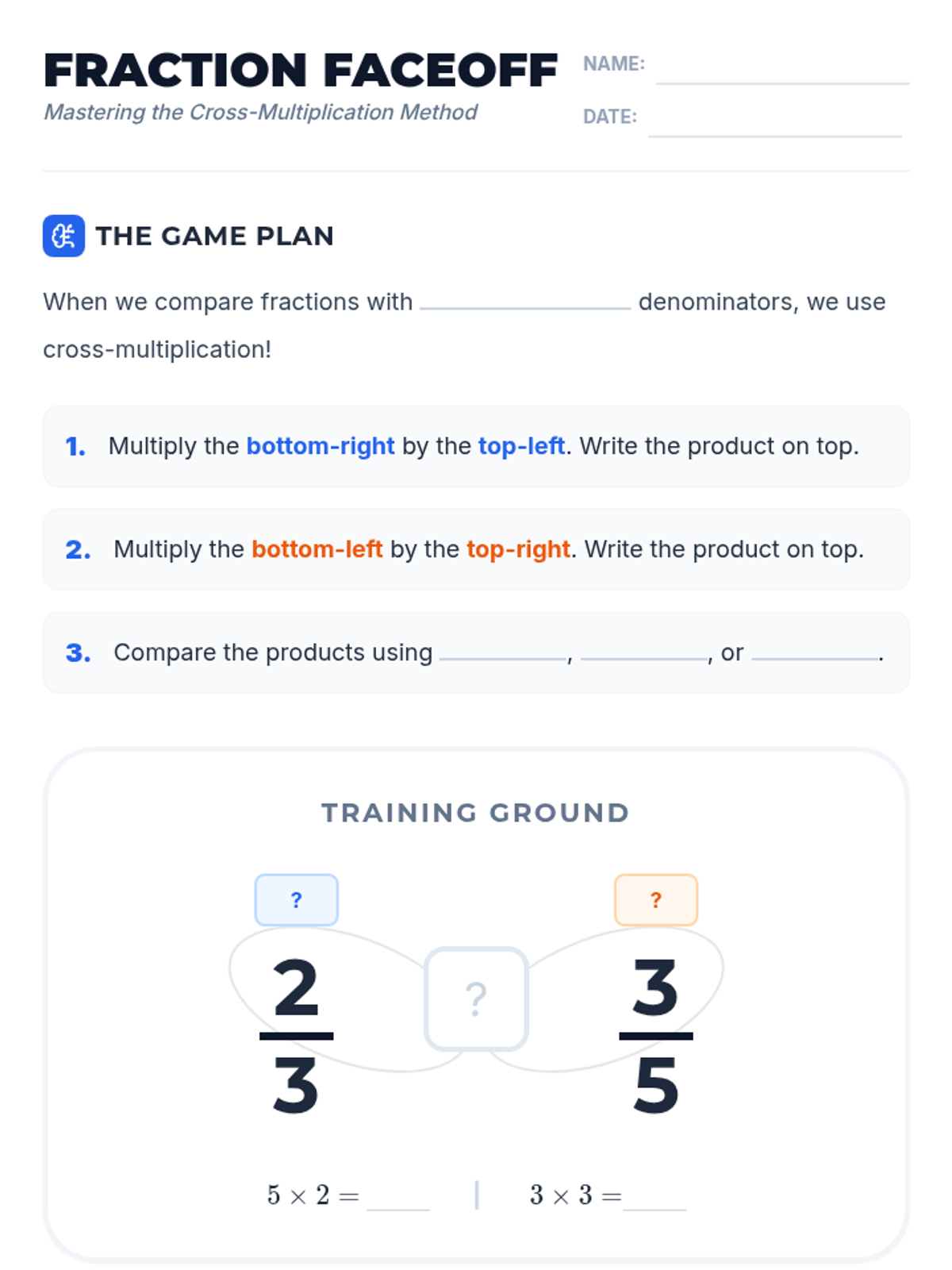
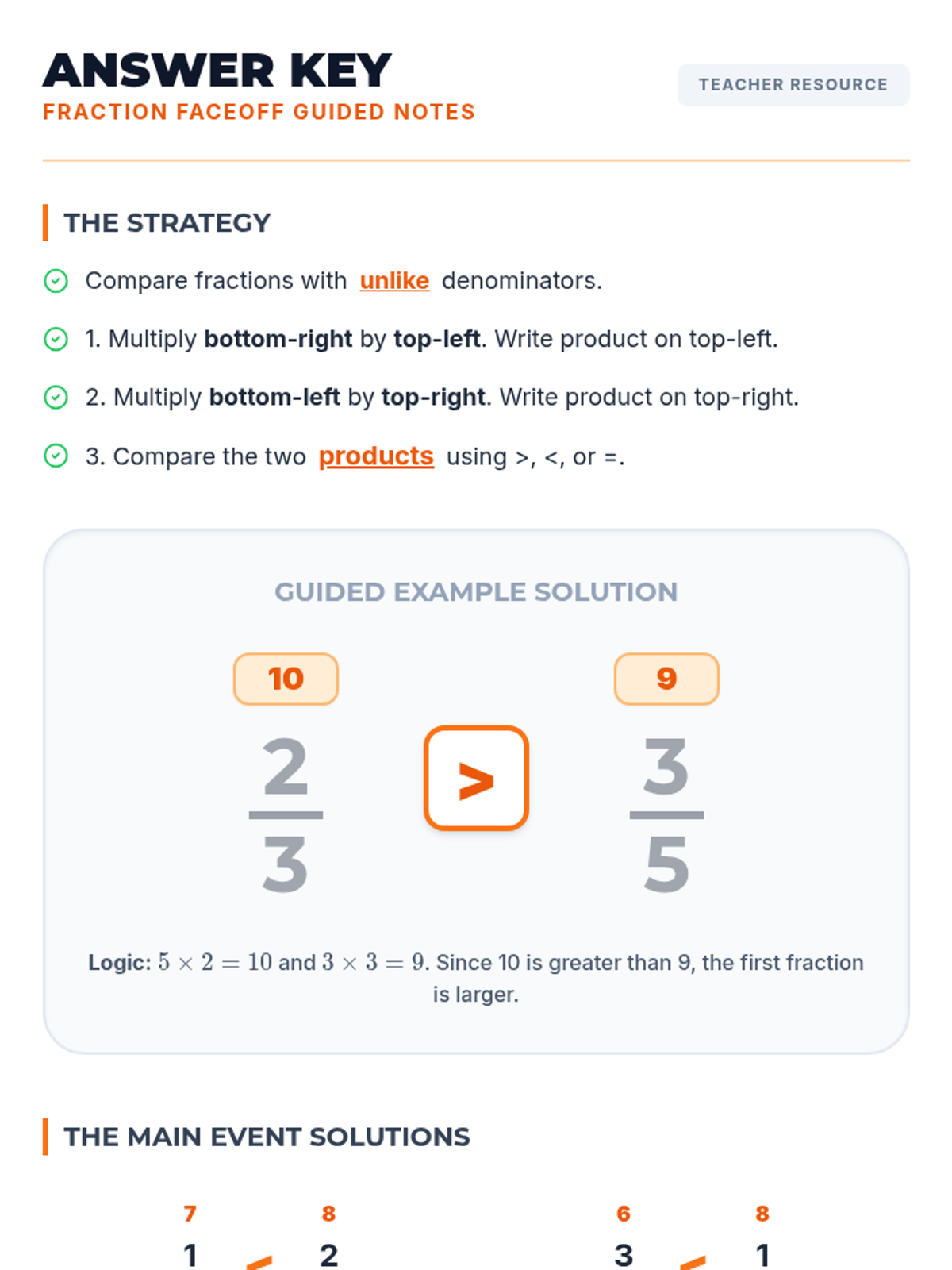
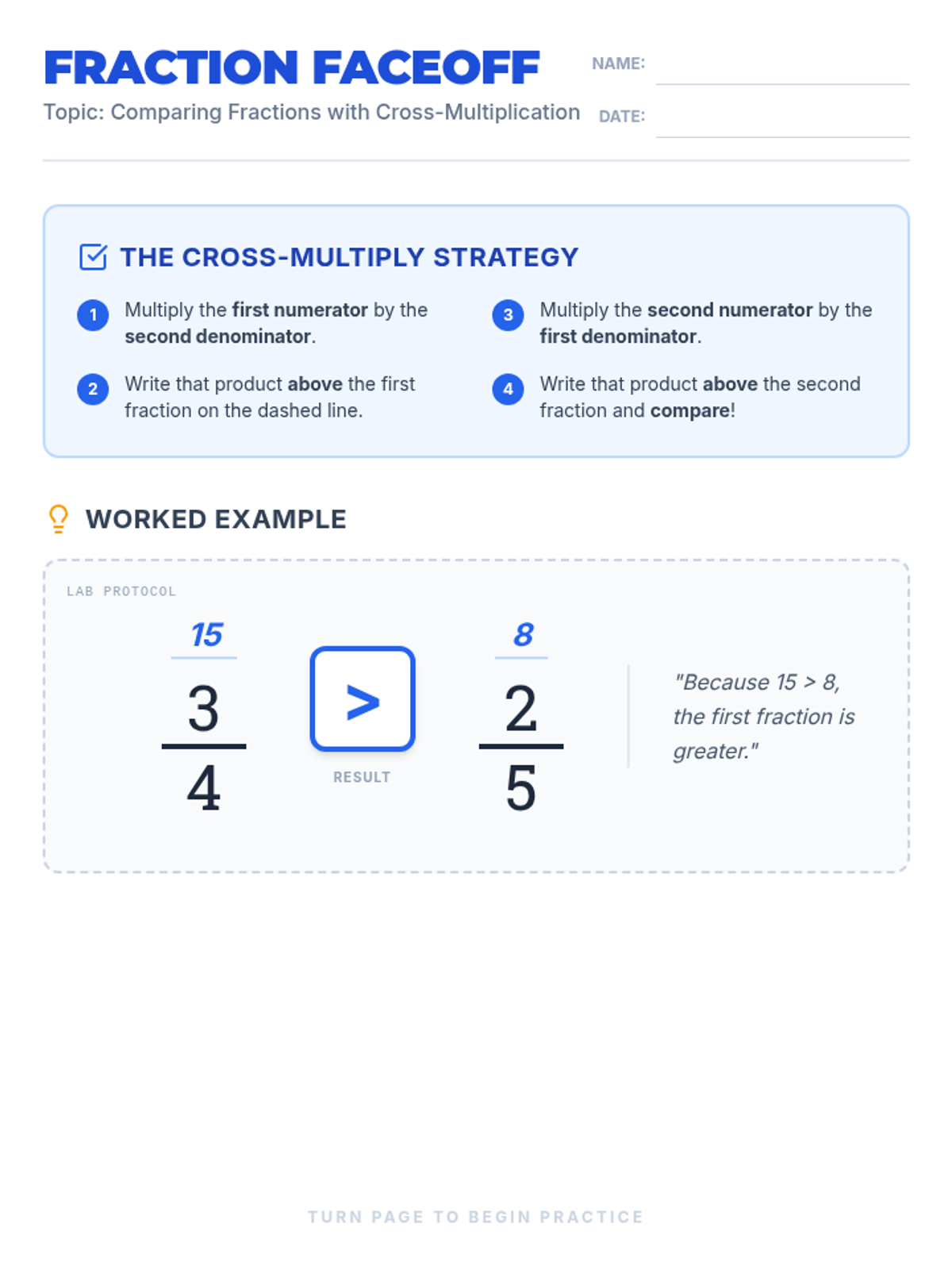
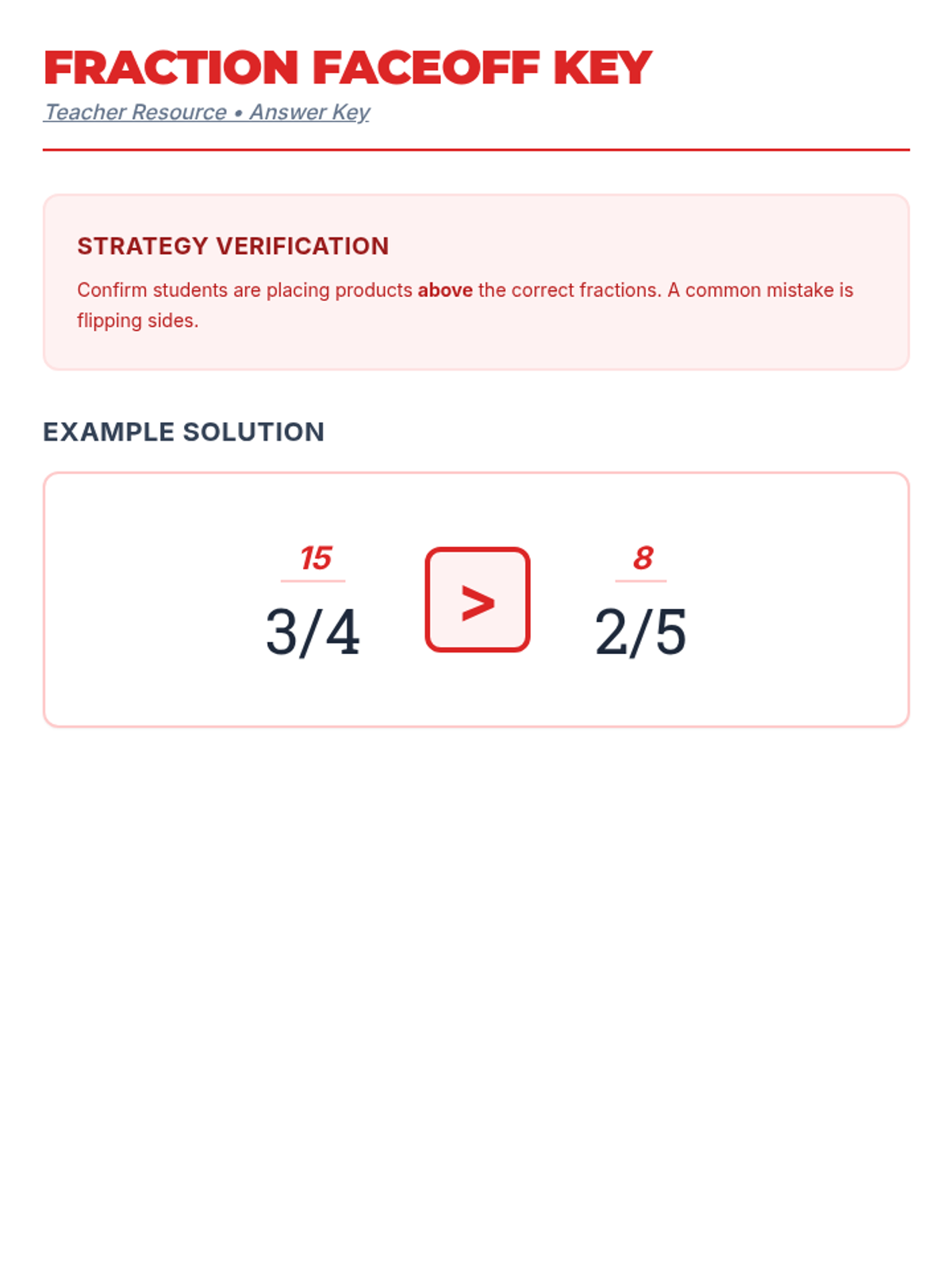
A lesson focused on comparing fractions with unlike denominators and numerators using the cross-multiplication (butterfly) strategy. Students will learn to visualize the process and use comparison symbols accurately.
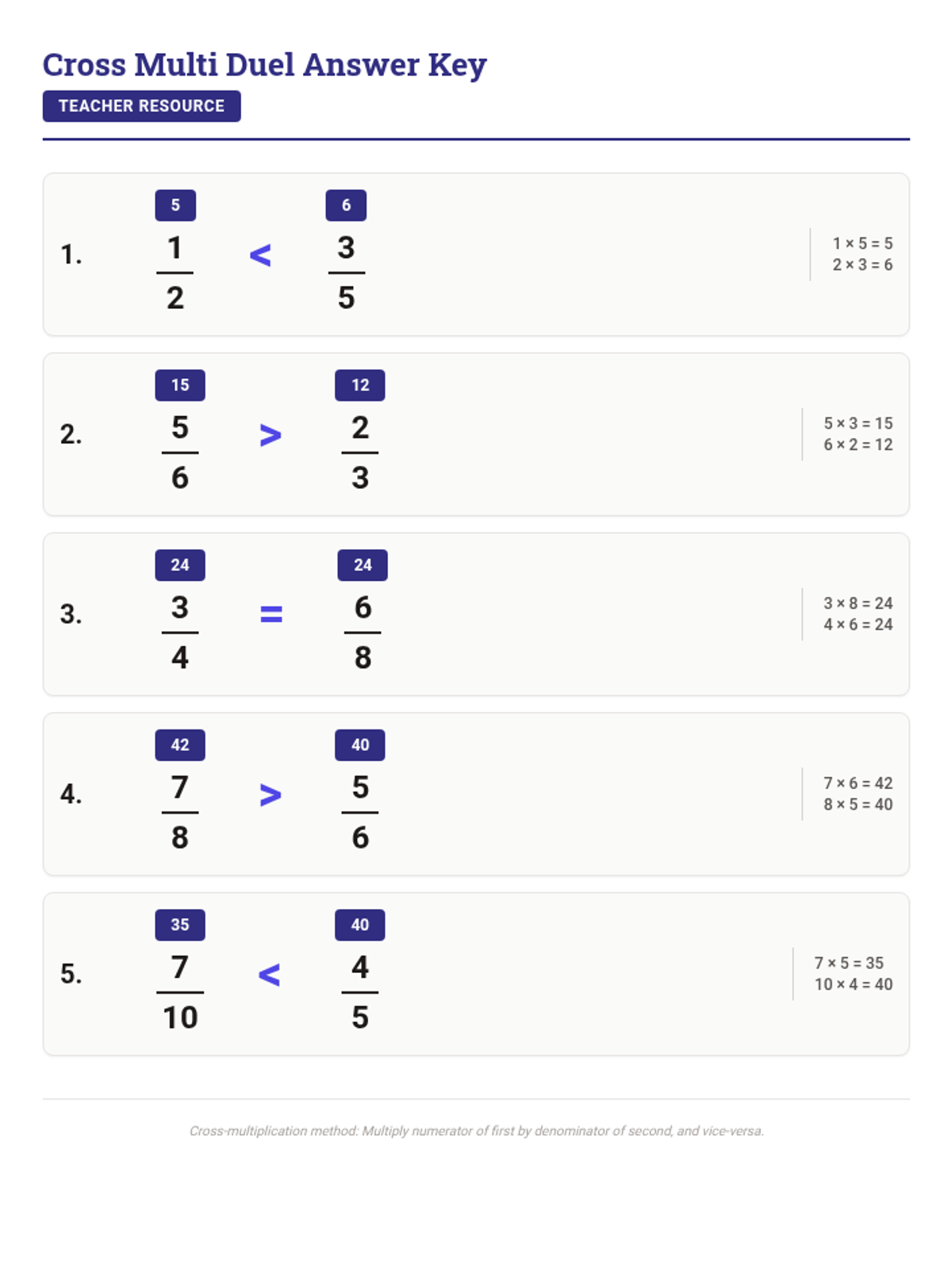
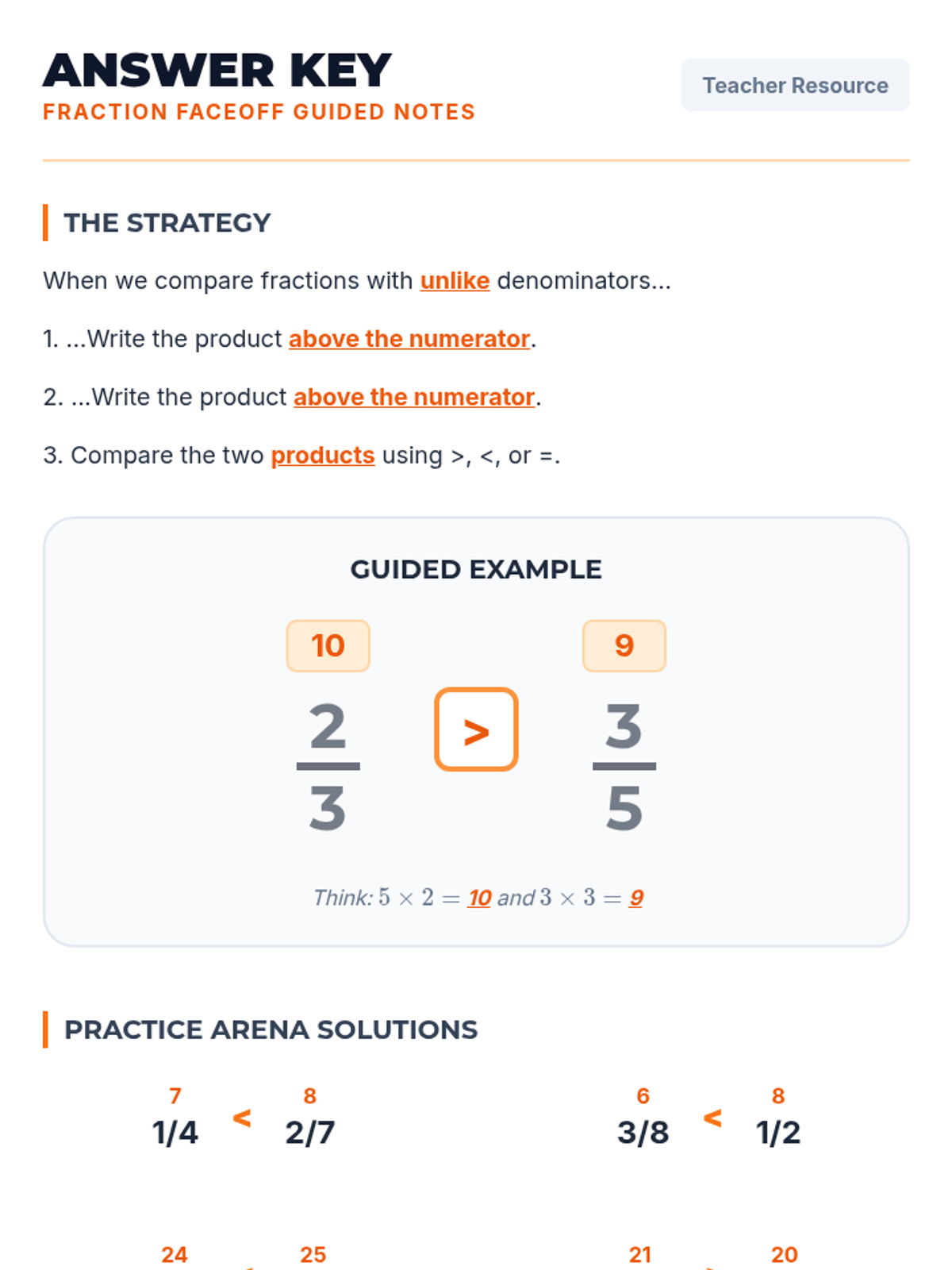
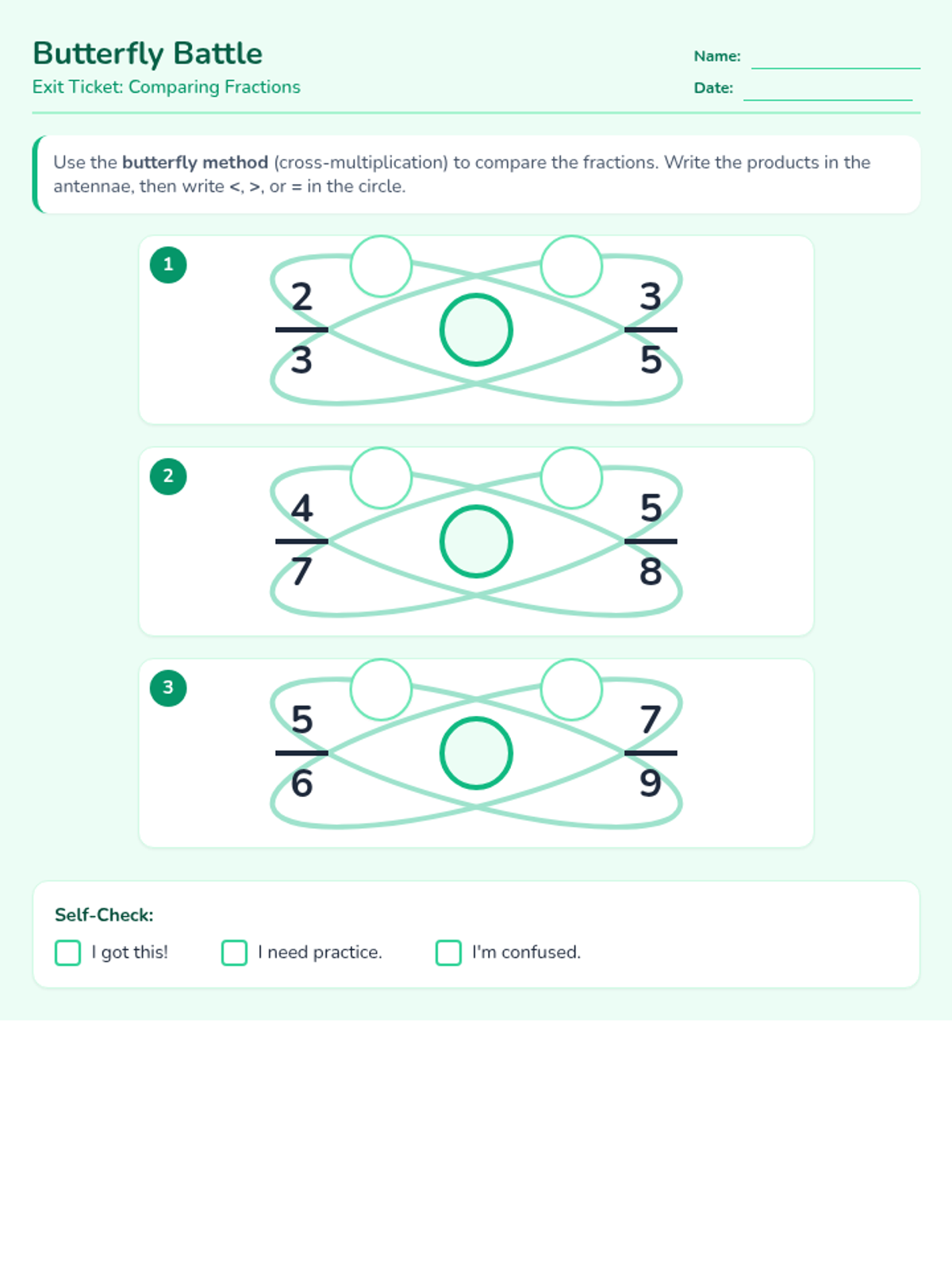
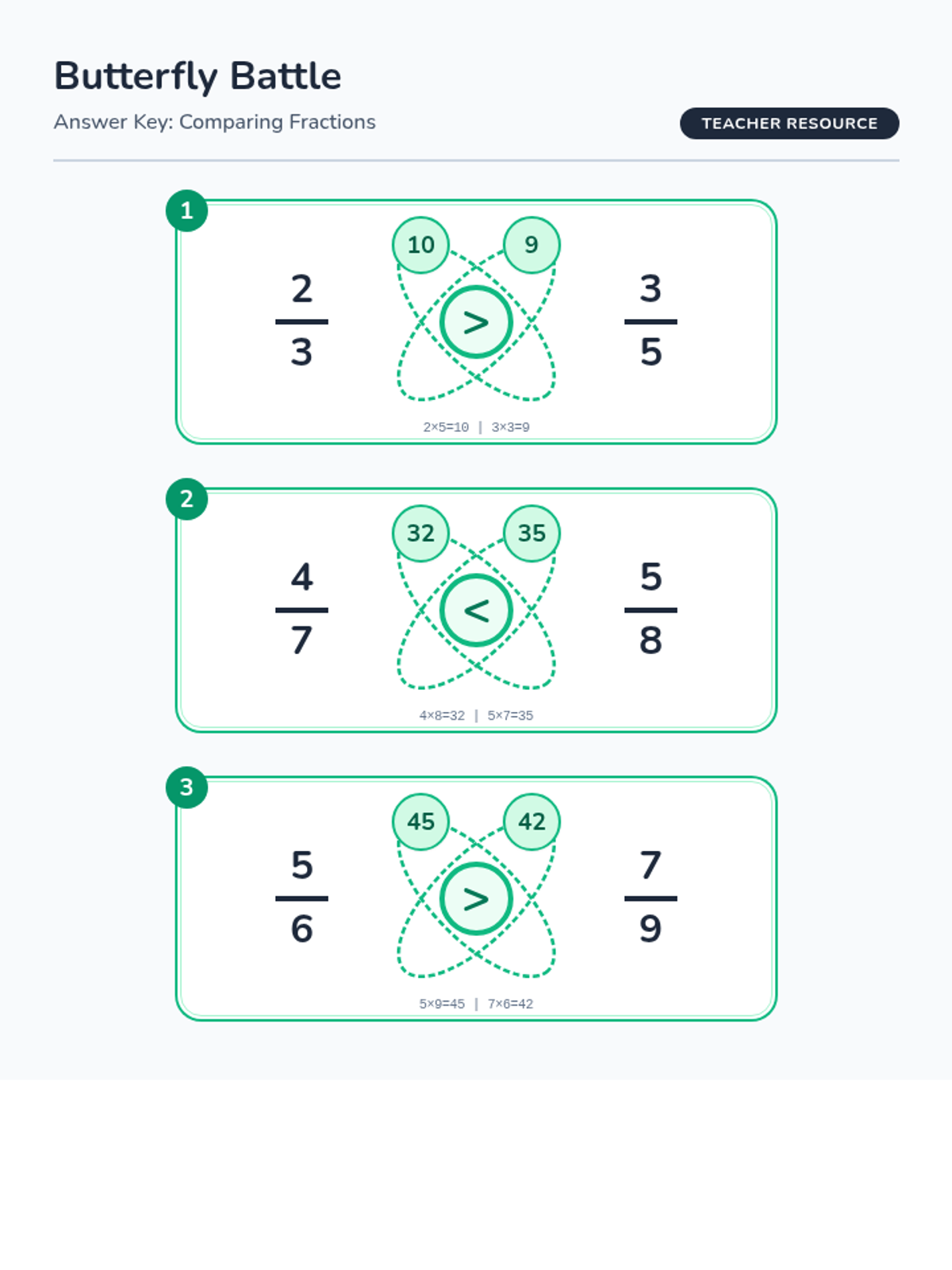
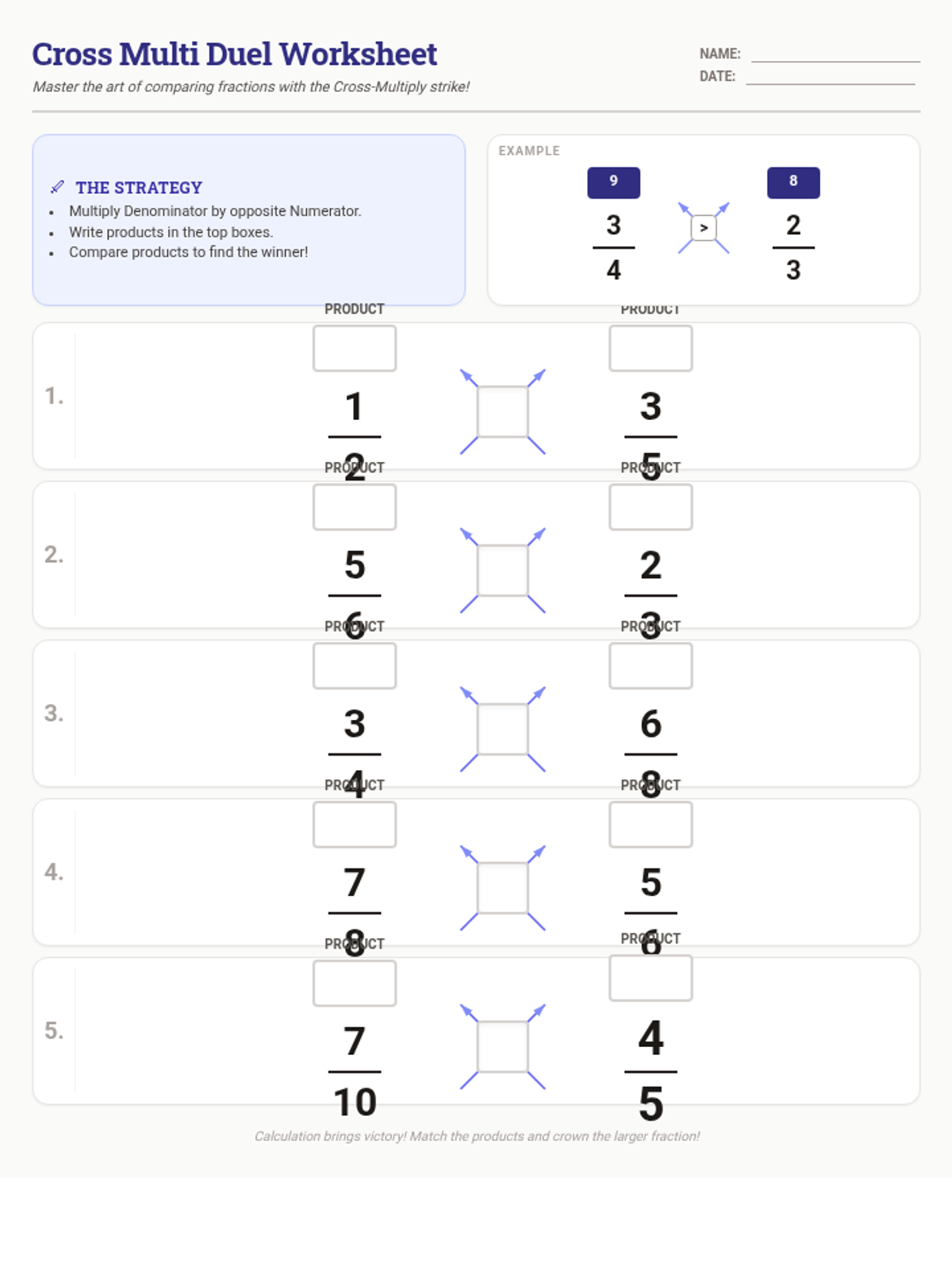
A quick assessment on comparing fractions with unlike denominators using the butterfly cross-multiplication method.
This lesson introduces the cross-multiplication (Butterfly Method) strategy for comparing fractions with unlike denominators and numerators. Students will follow a step-by-step checklist to find cross-products and determine which fraction is greater.
A focused lesson on comparing fractions with unlike denominators using the cross-multiplication method, featuring a medieval dueling theme.
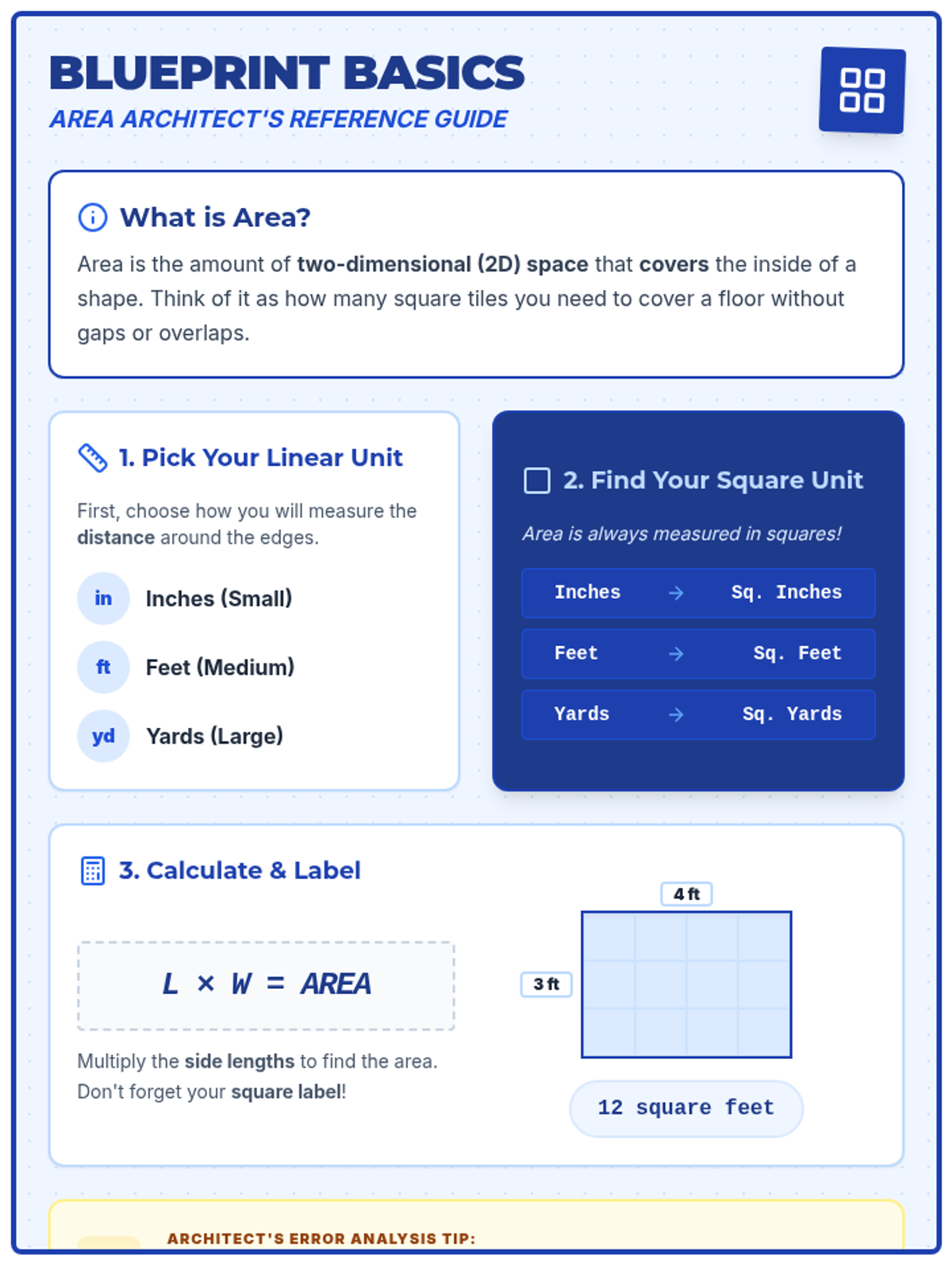
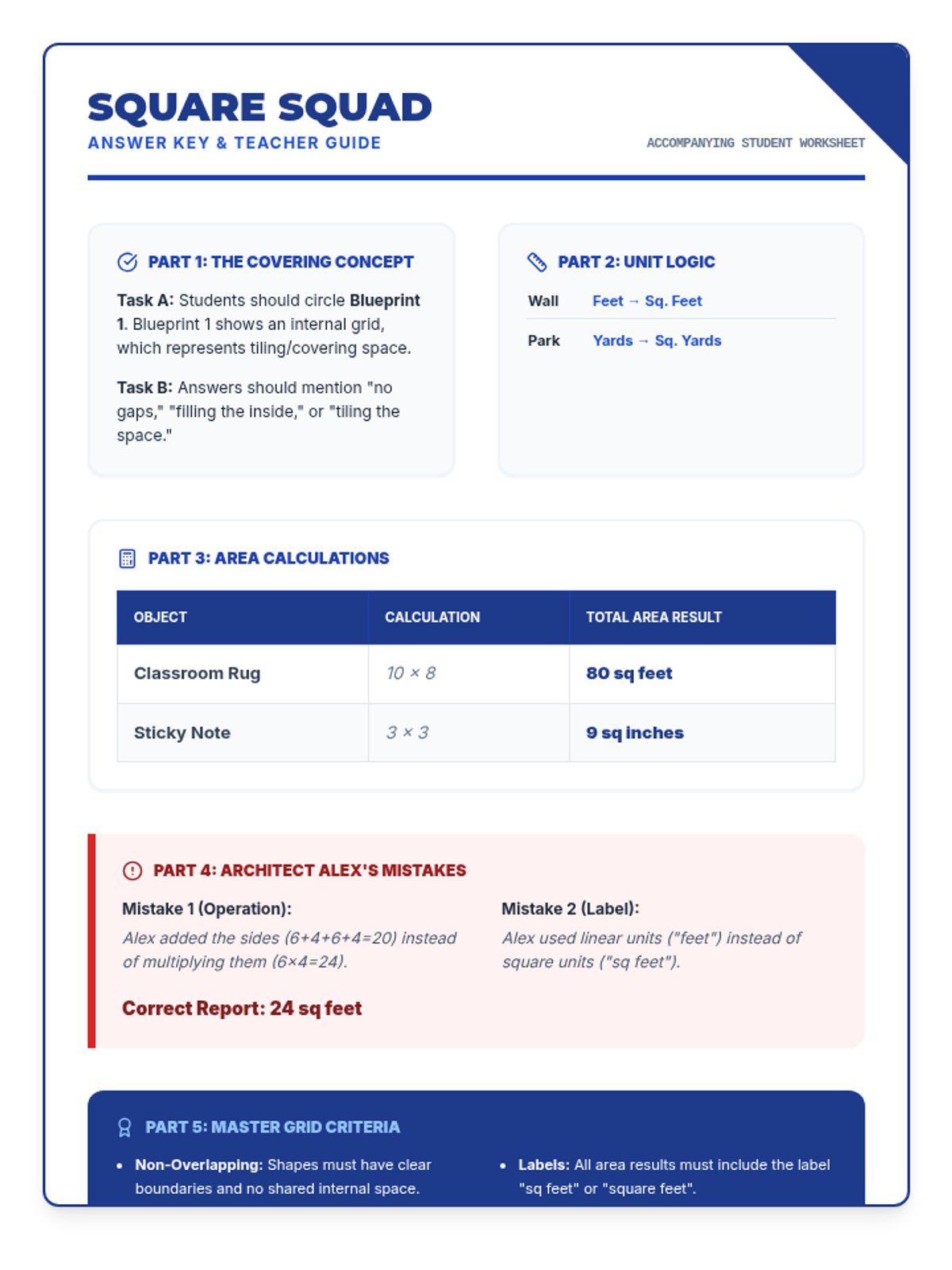
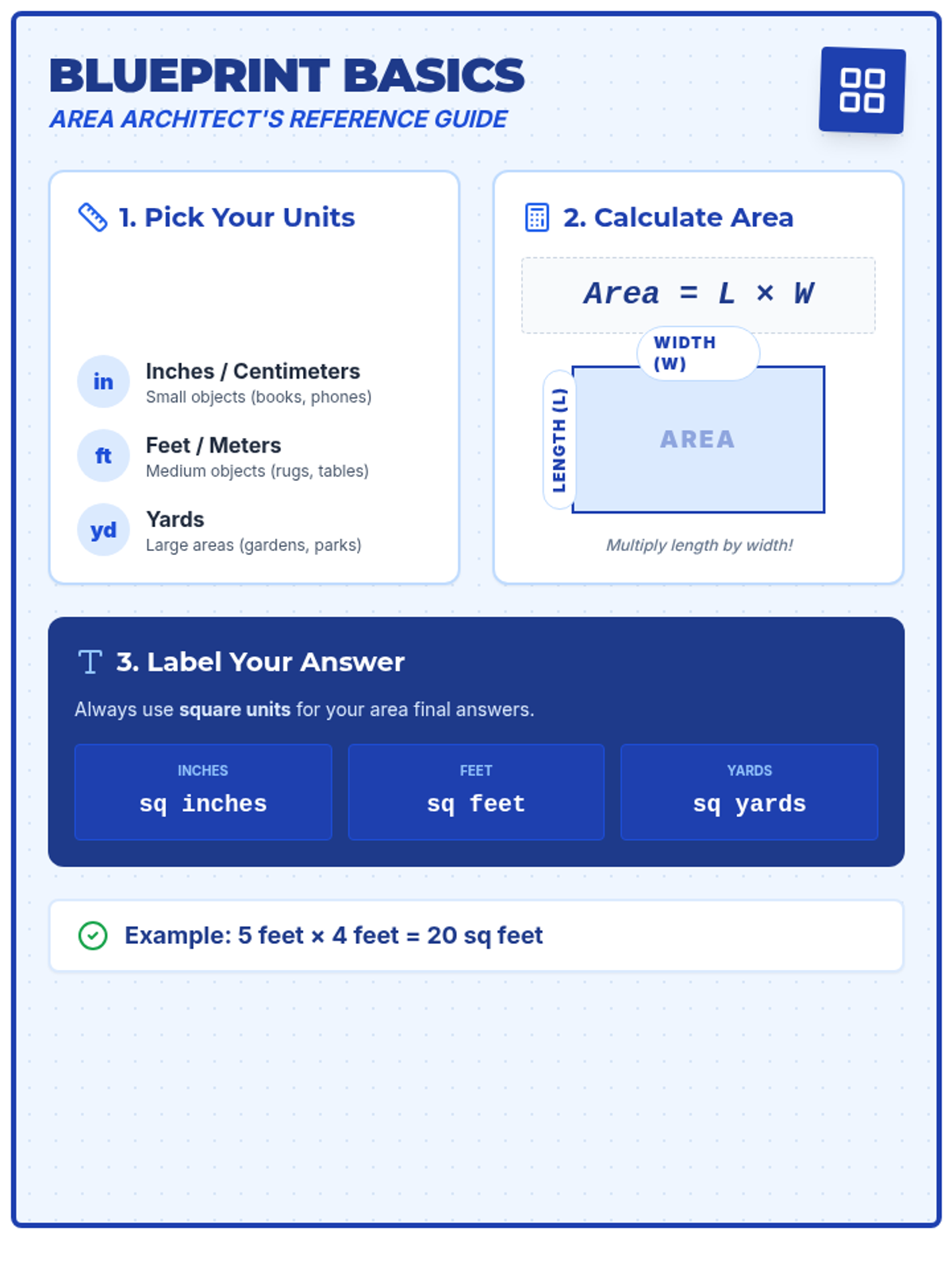
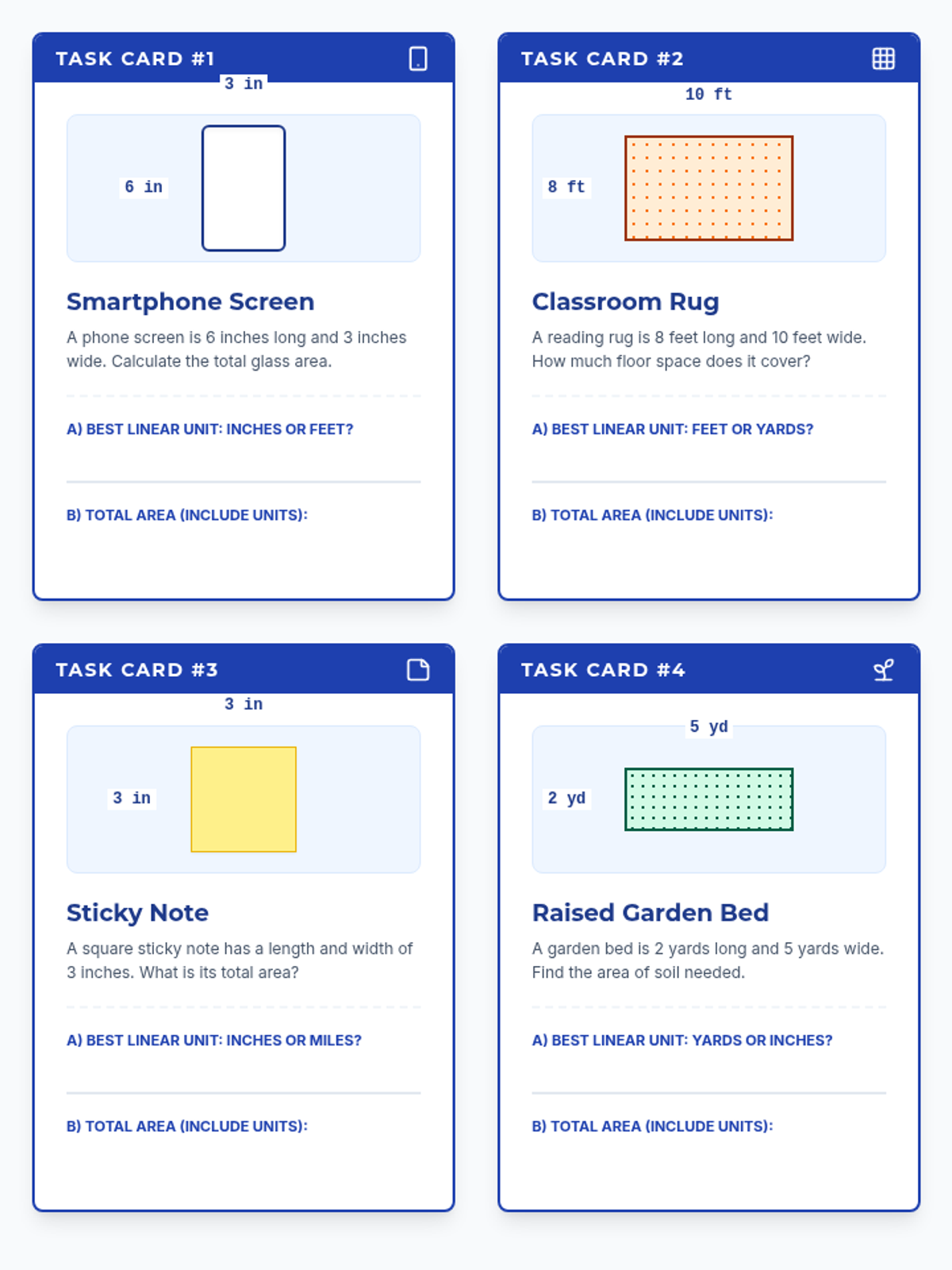
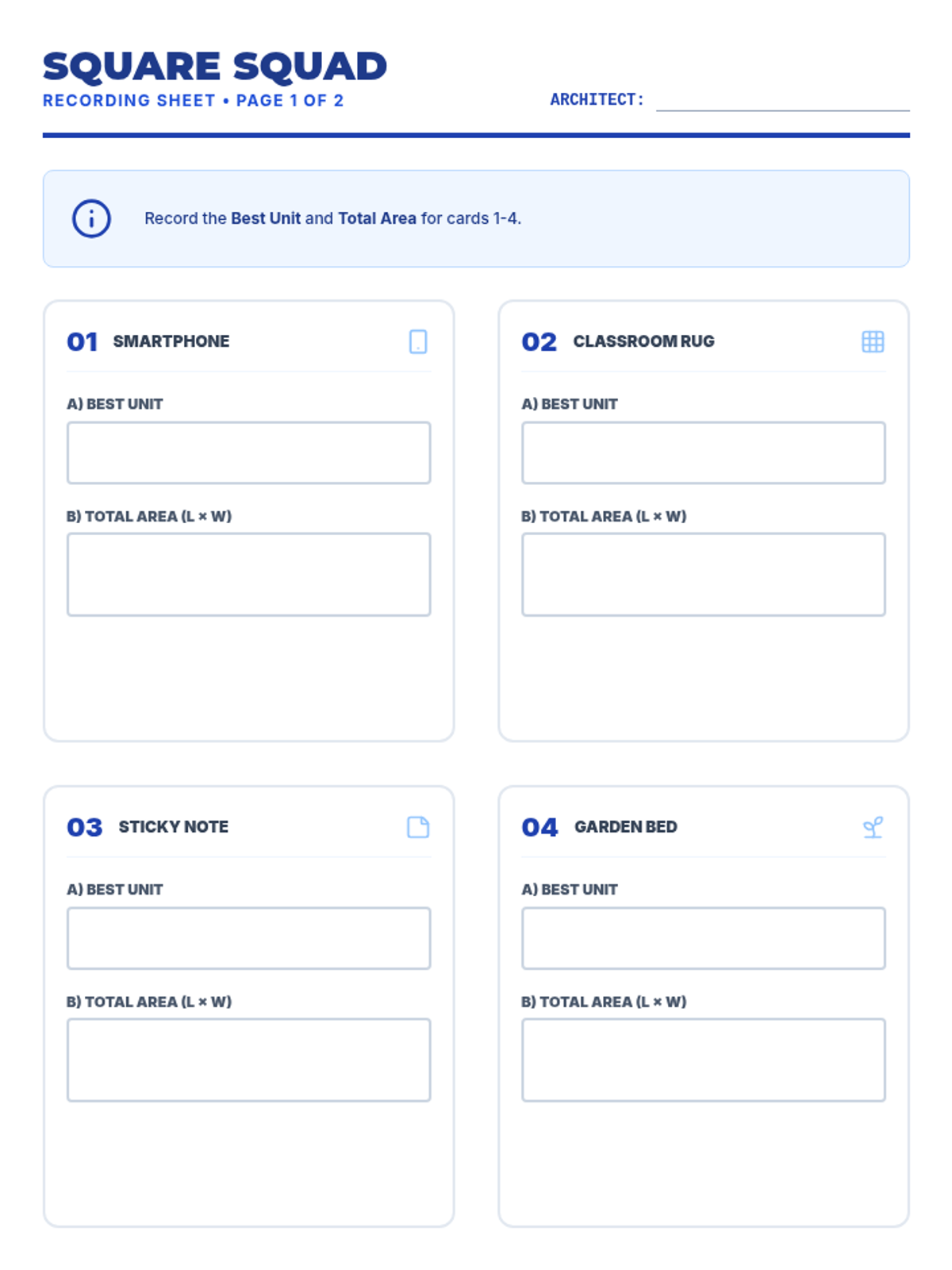
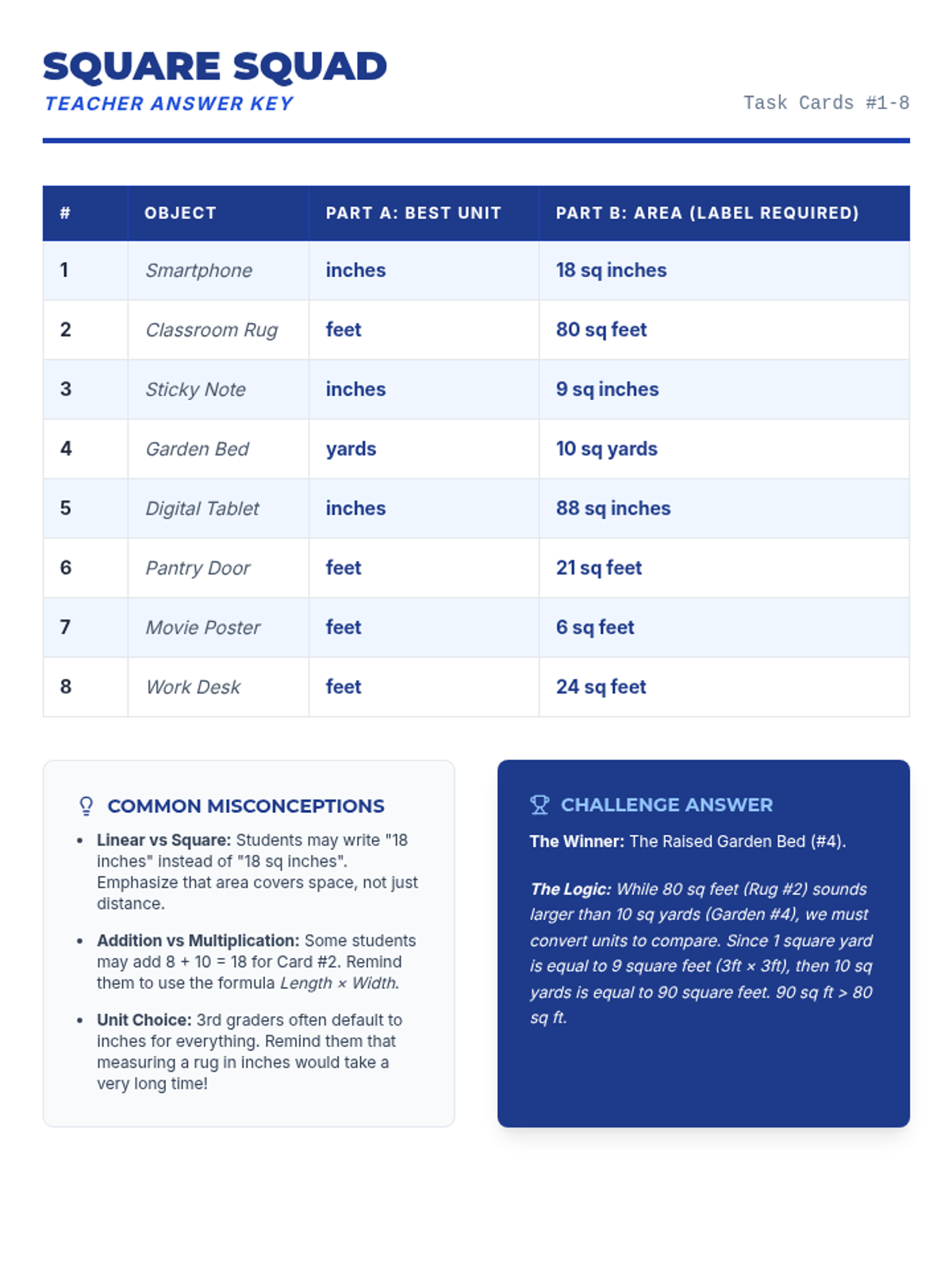
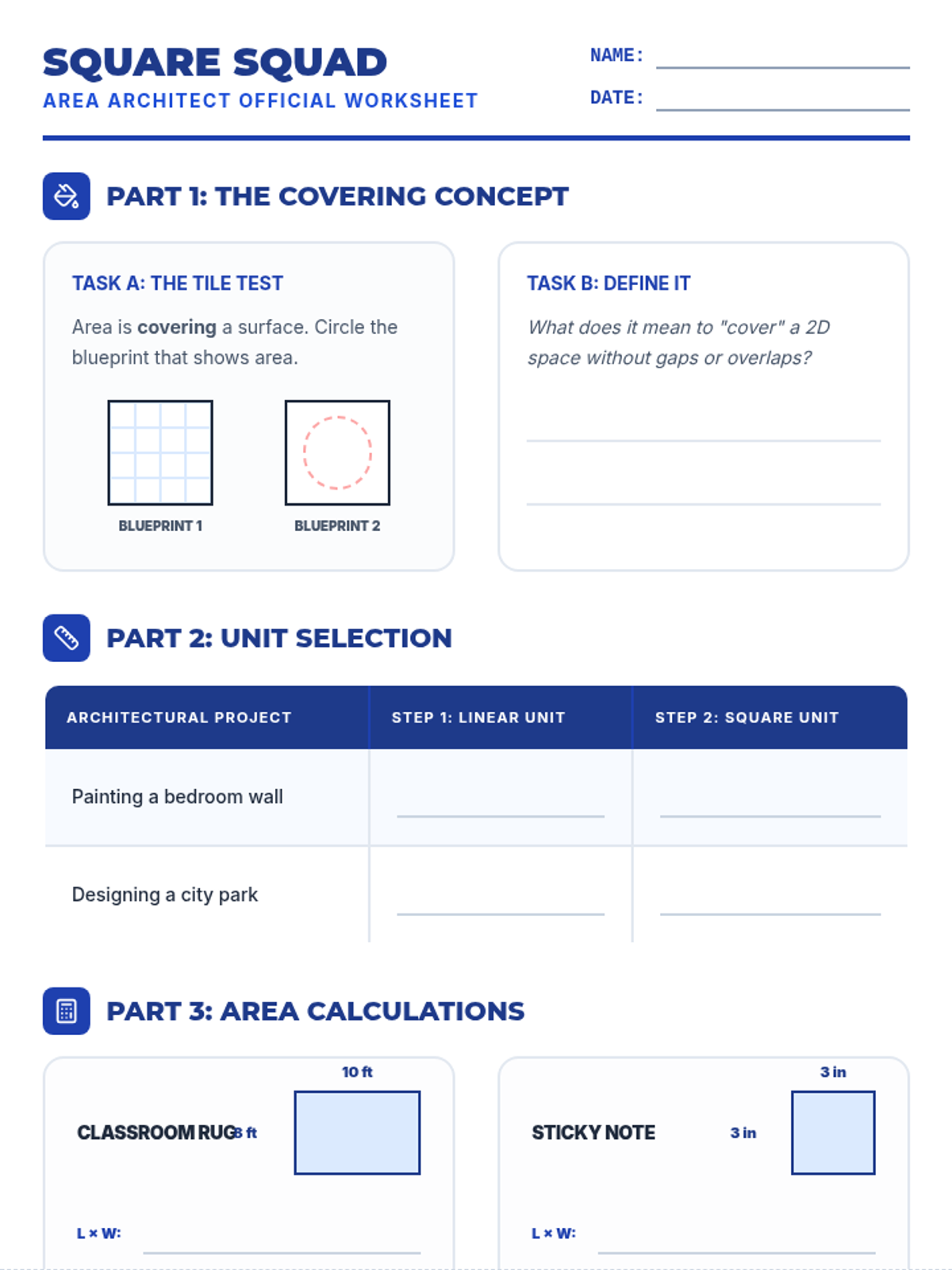
A 3rd-grade lesson where students act as 'Area Architects' to master the concept of area as covering 2D space. Students learn to choose linear units, derive square units, perform error analysis, and design layouts on a master grid.
A 3rd-grade lesson focused on mastering area through real-world measurement and calculation. Students act as 'Area Architects' to determine appropriate units and calculate the square units of everyday objects.
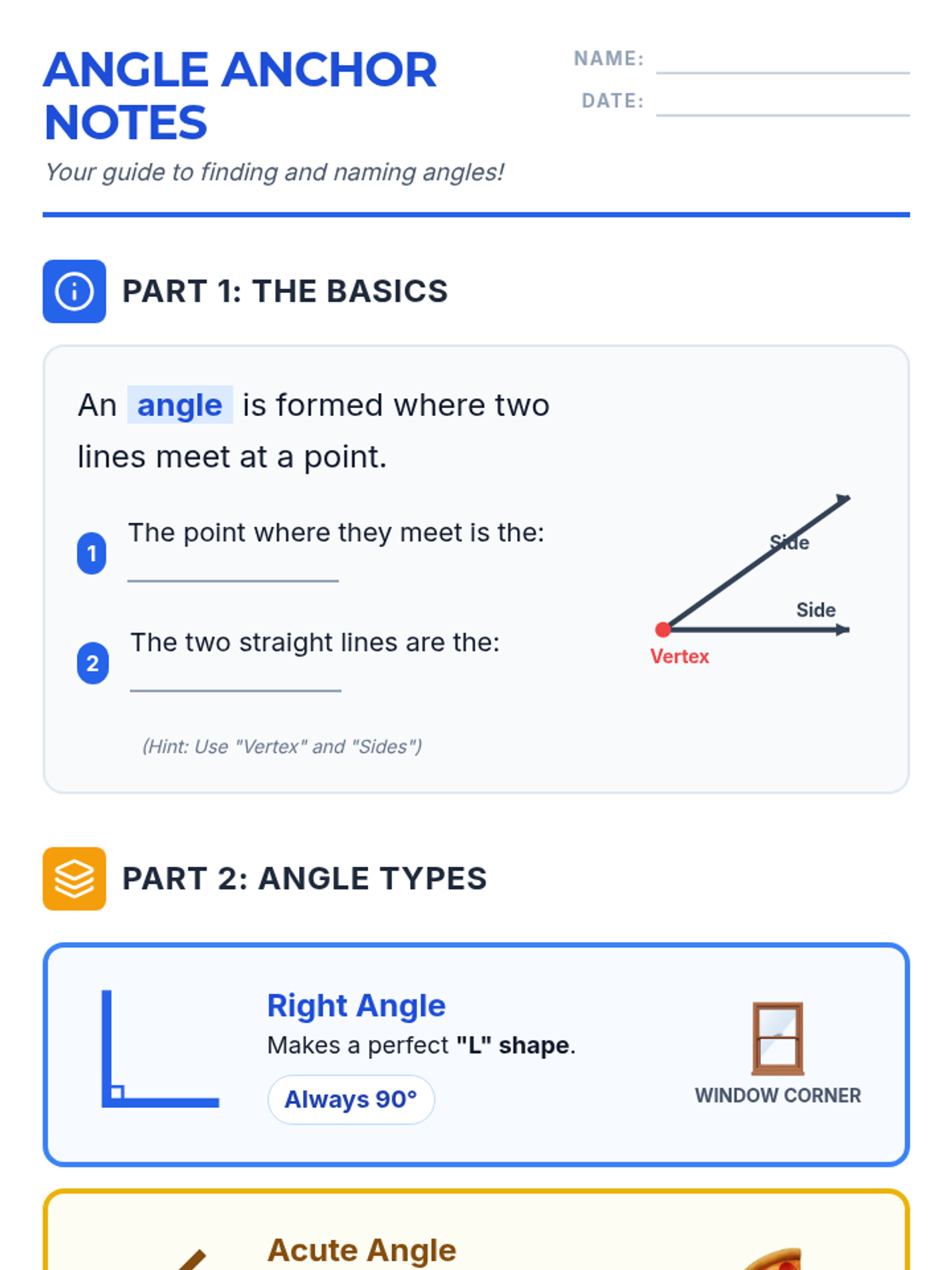
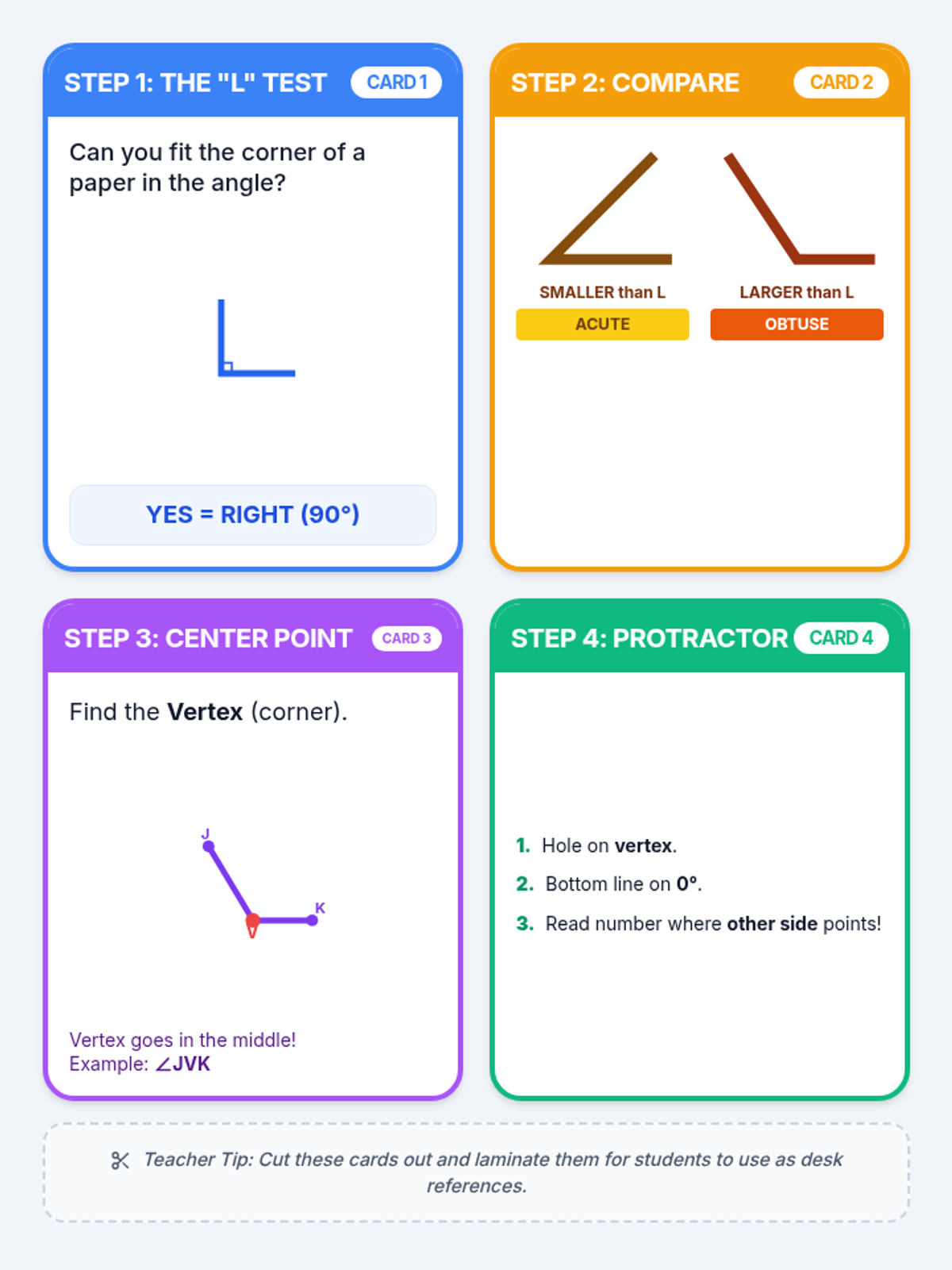
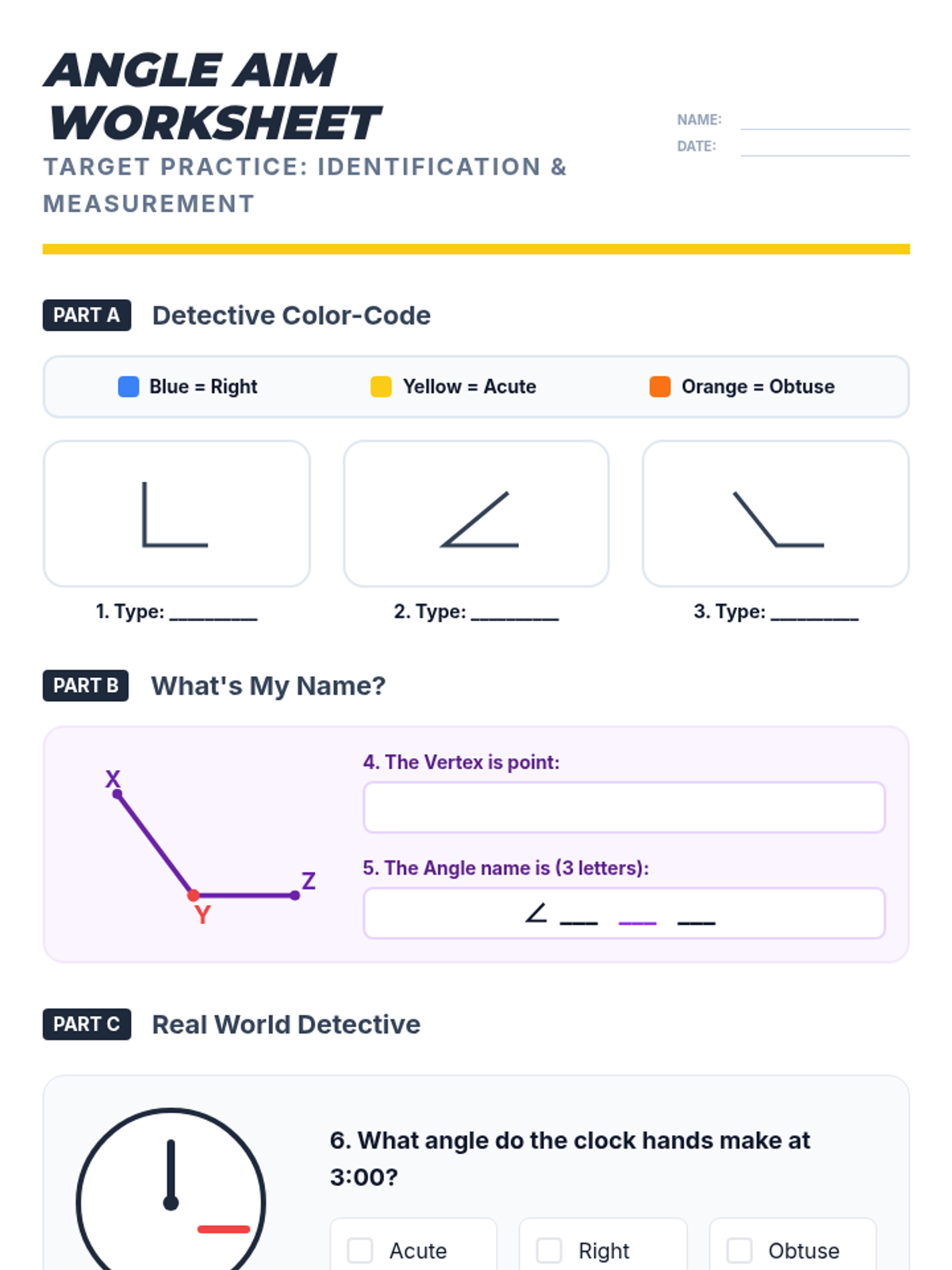
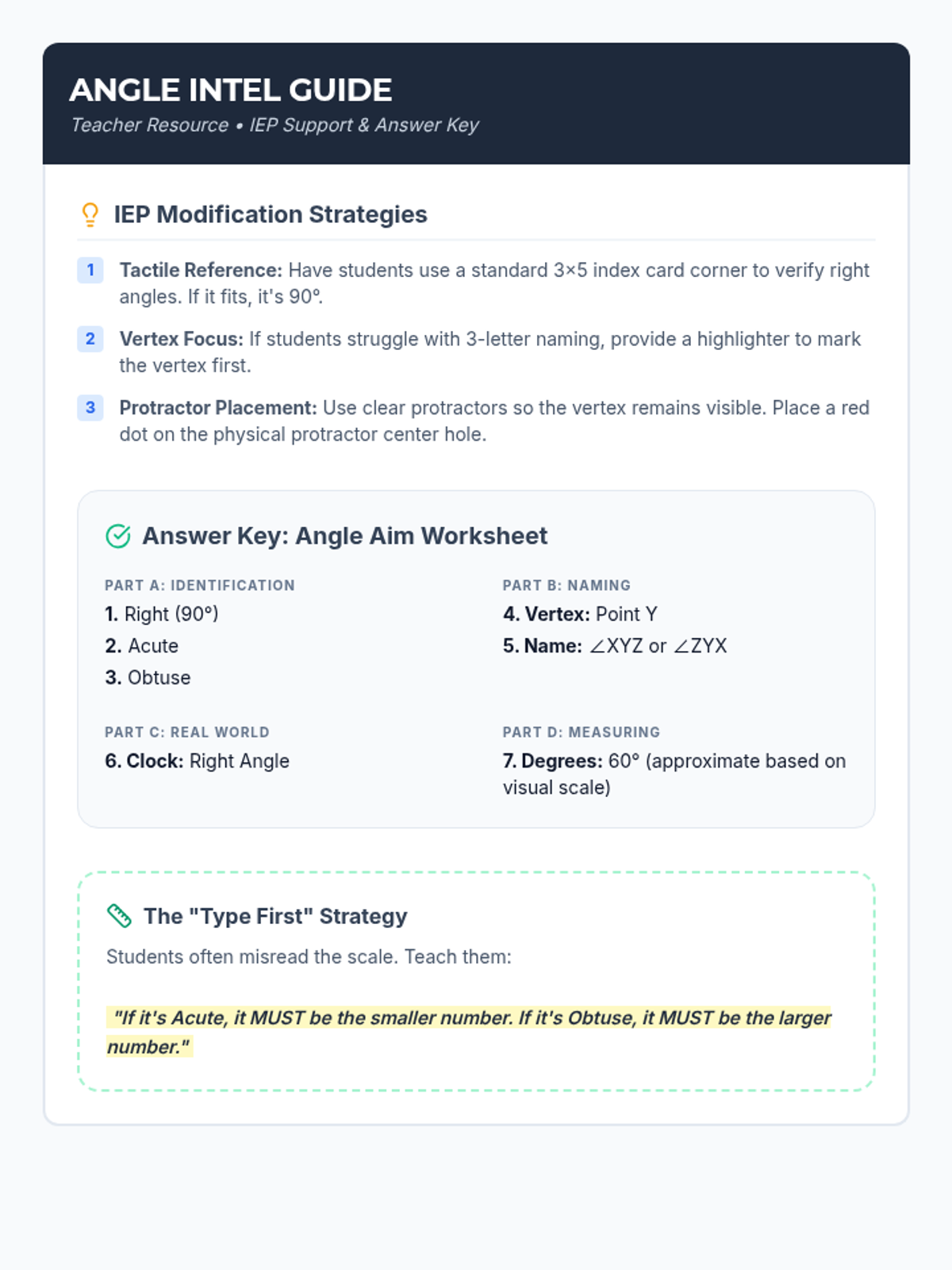
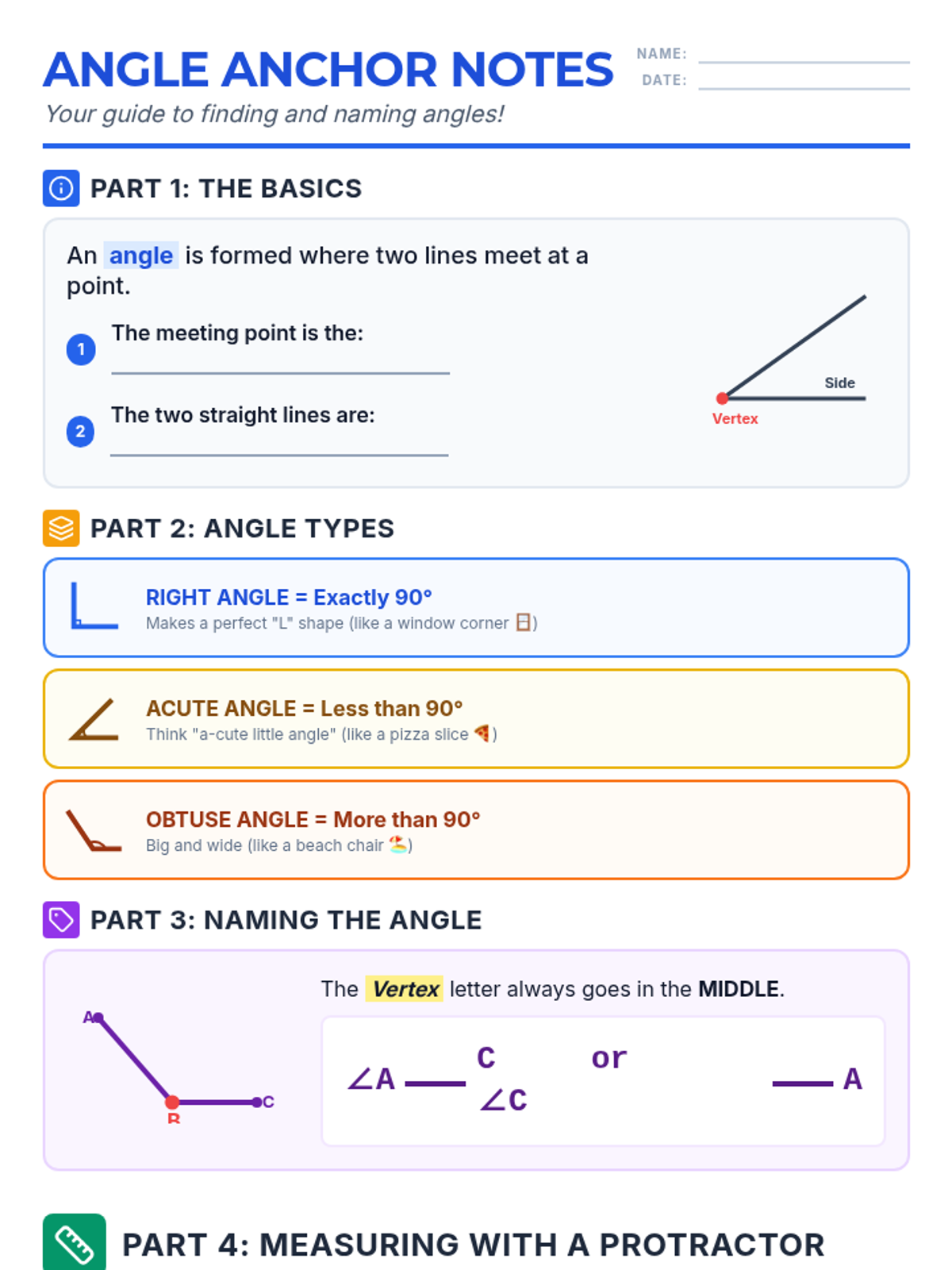
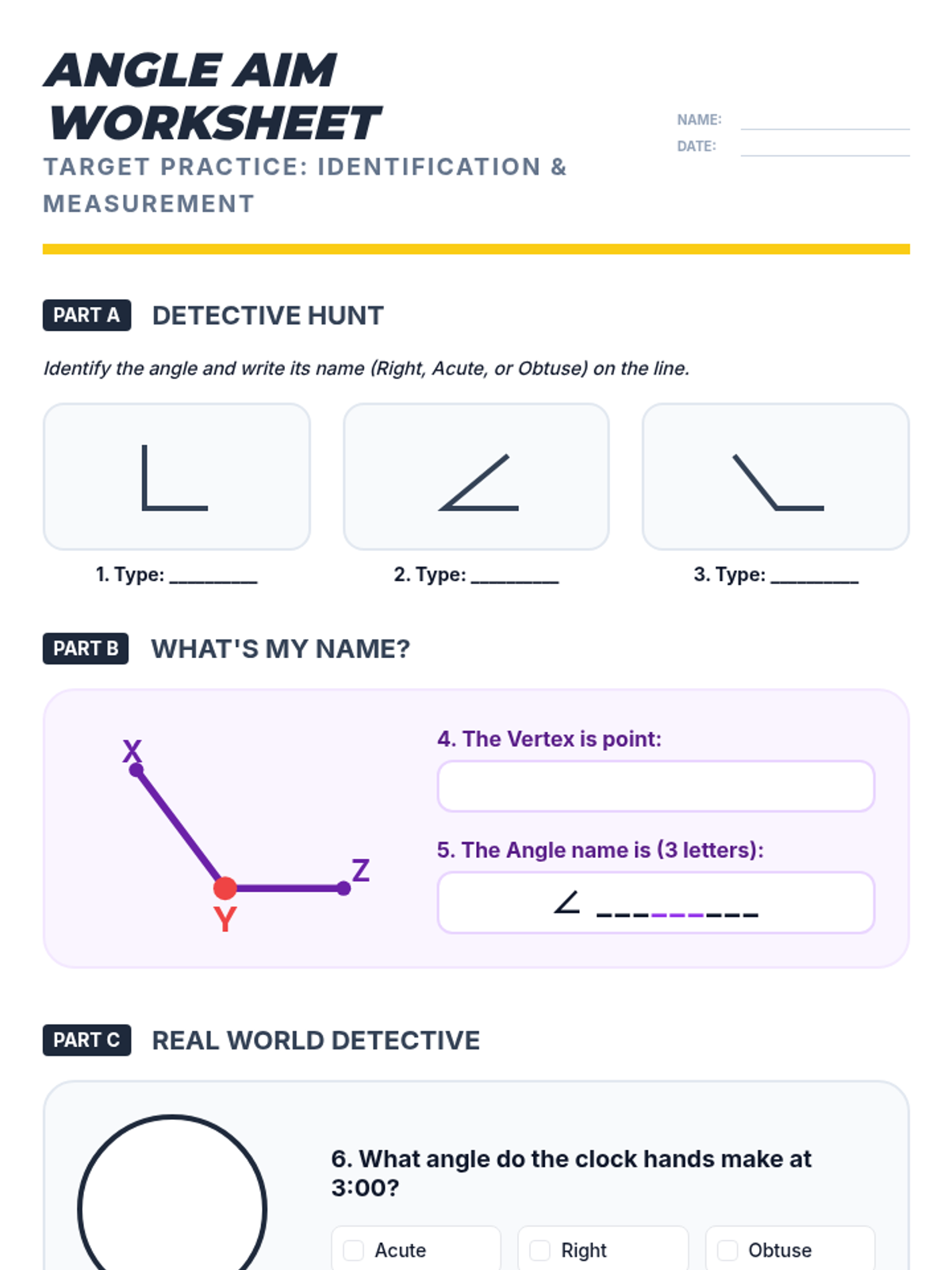
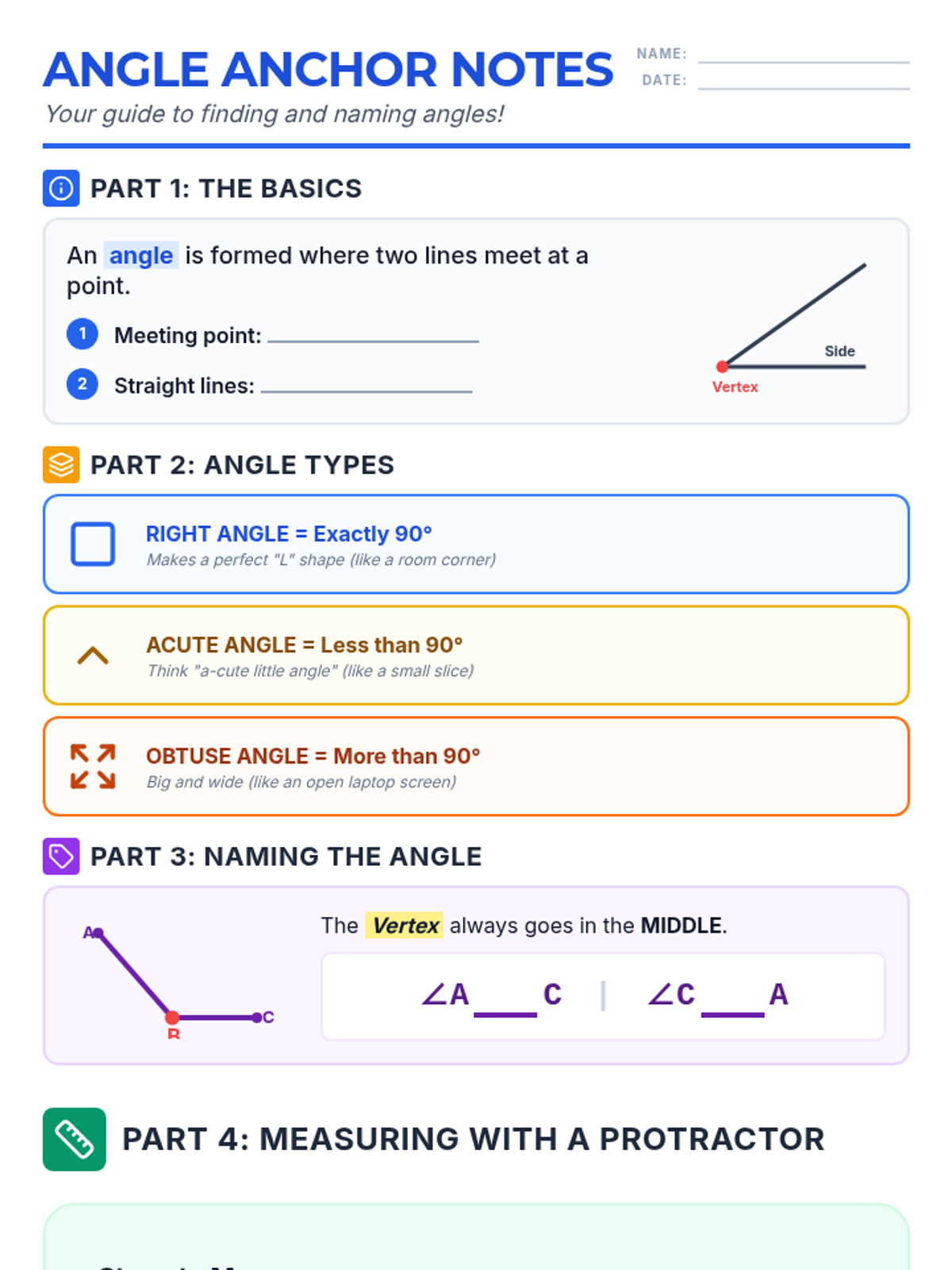
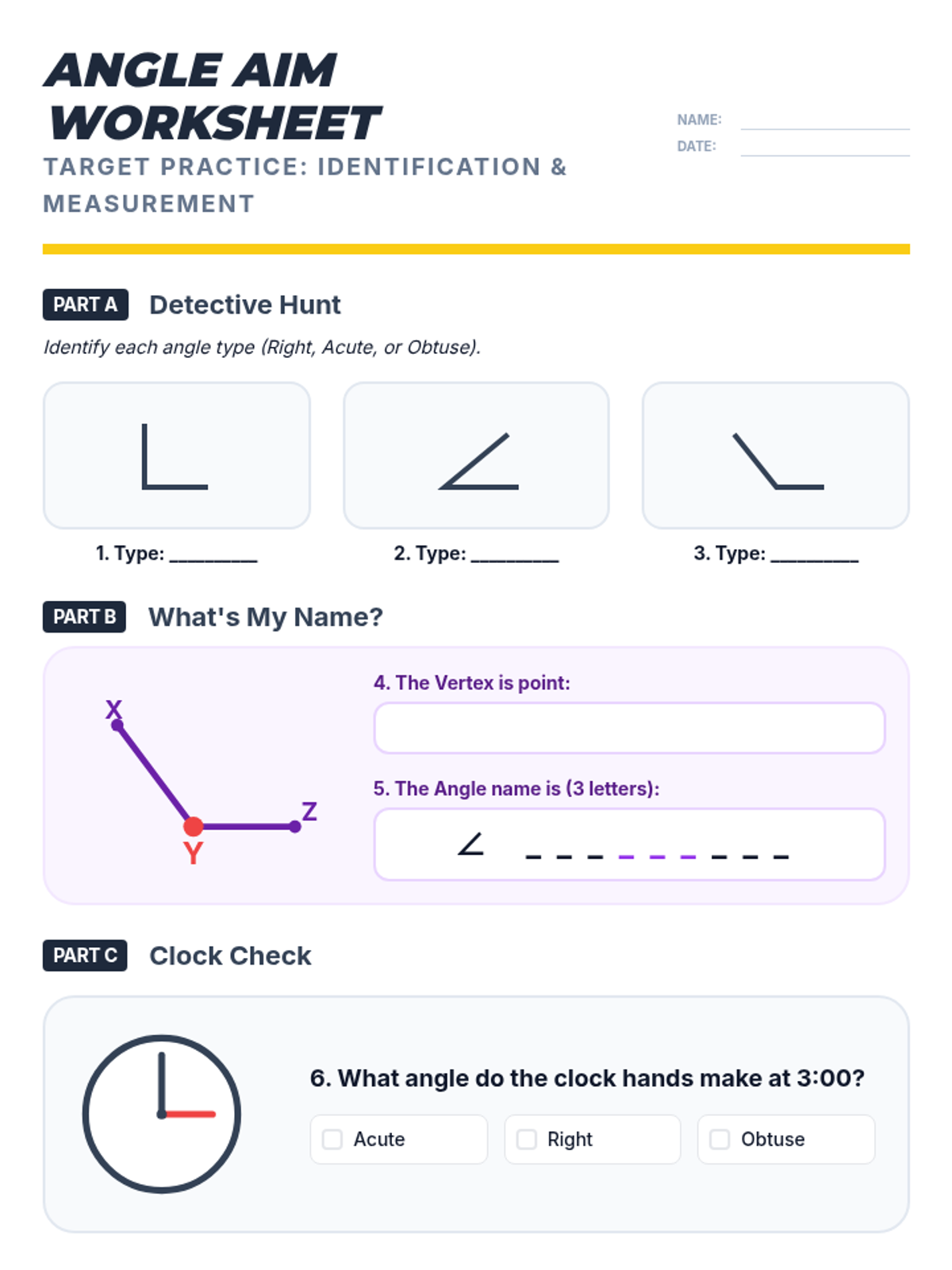
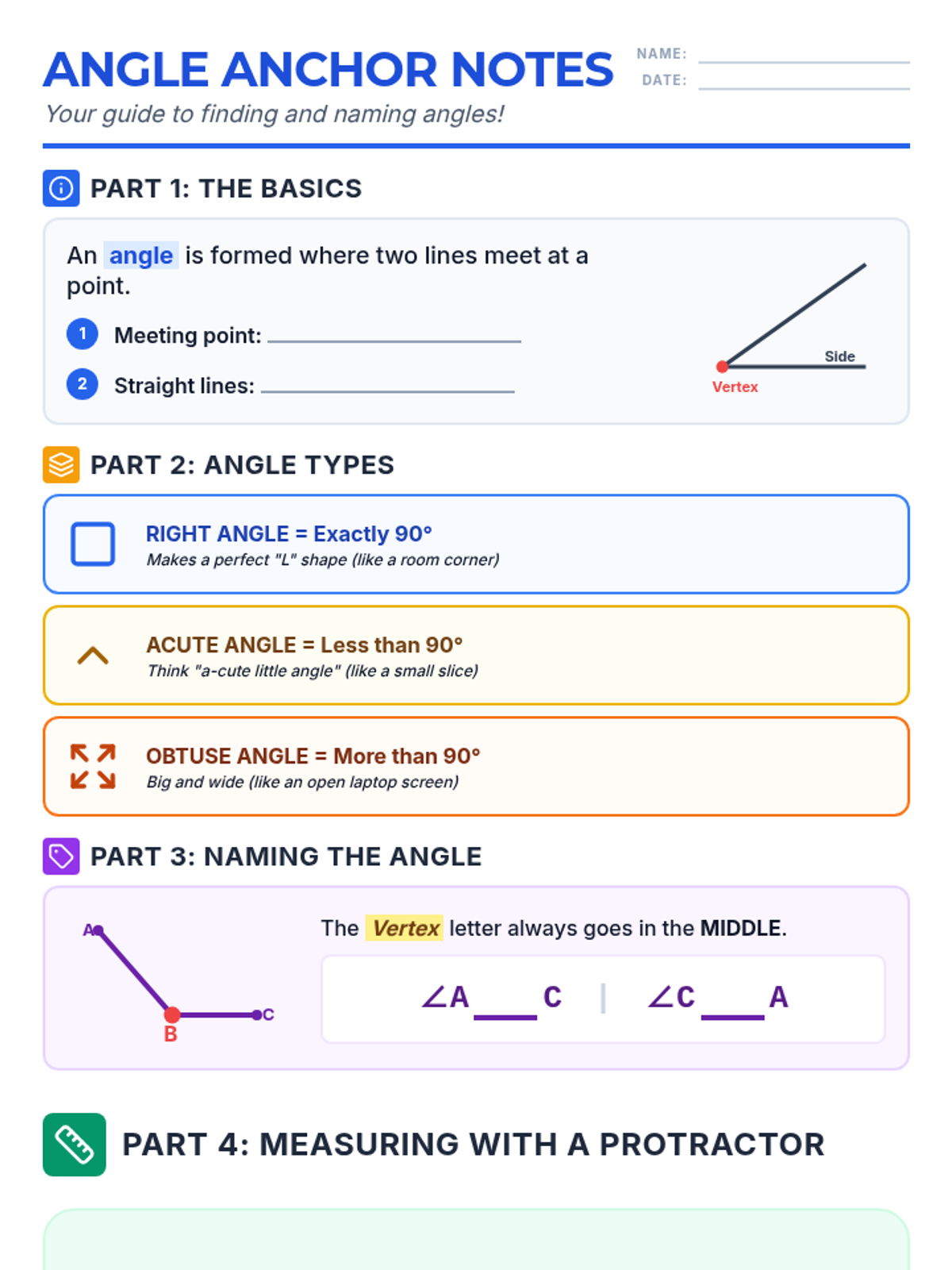
A foundational lesson on identifying, naming, and measuring angles, specifically designed with high-visual support and modified layouts for IEP students.
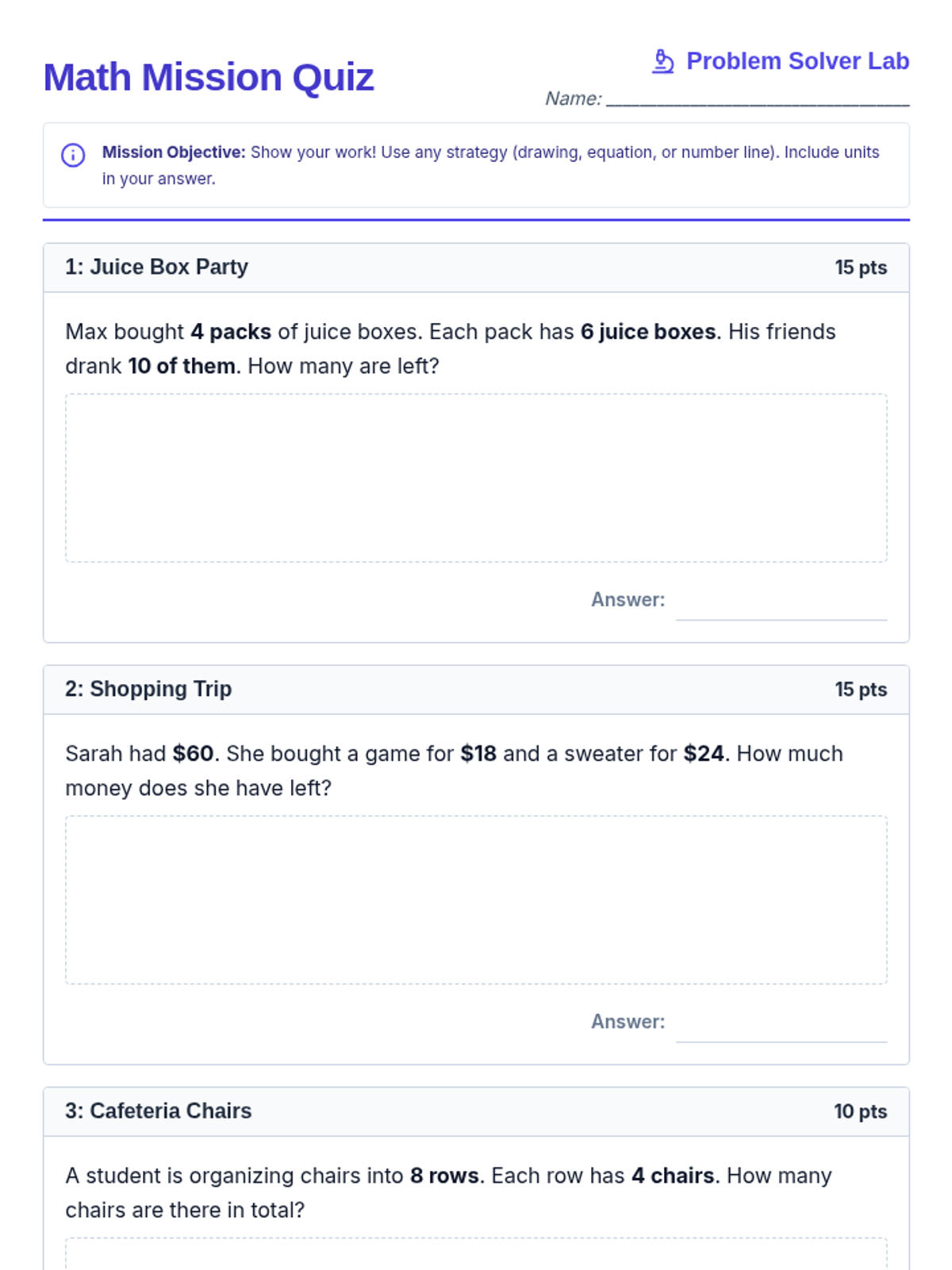
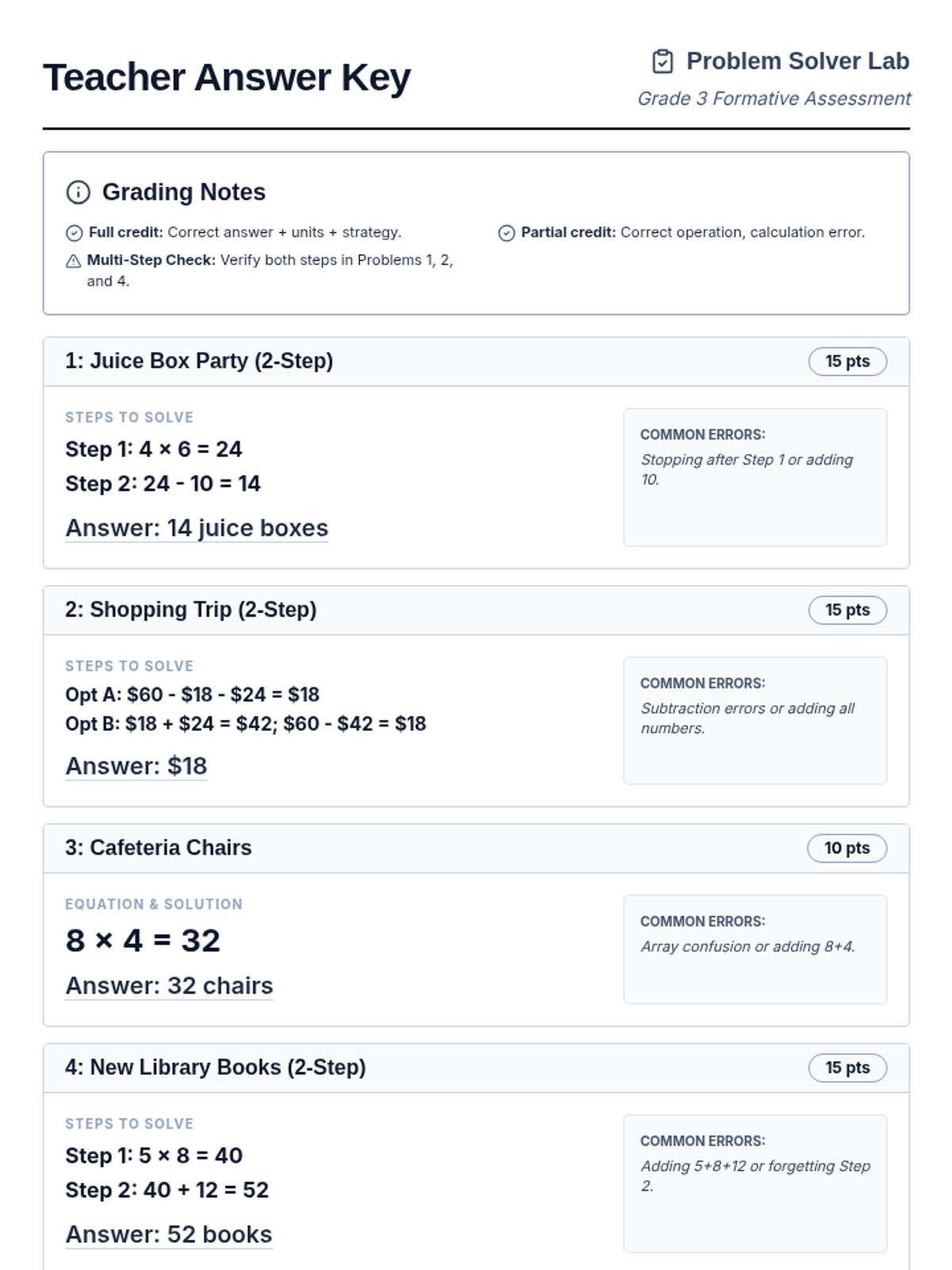
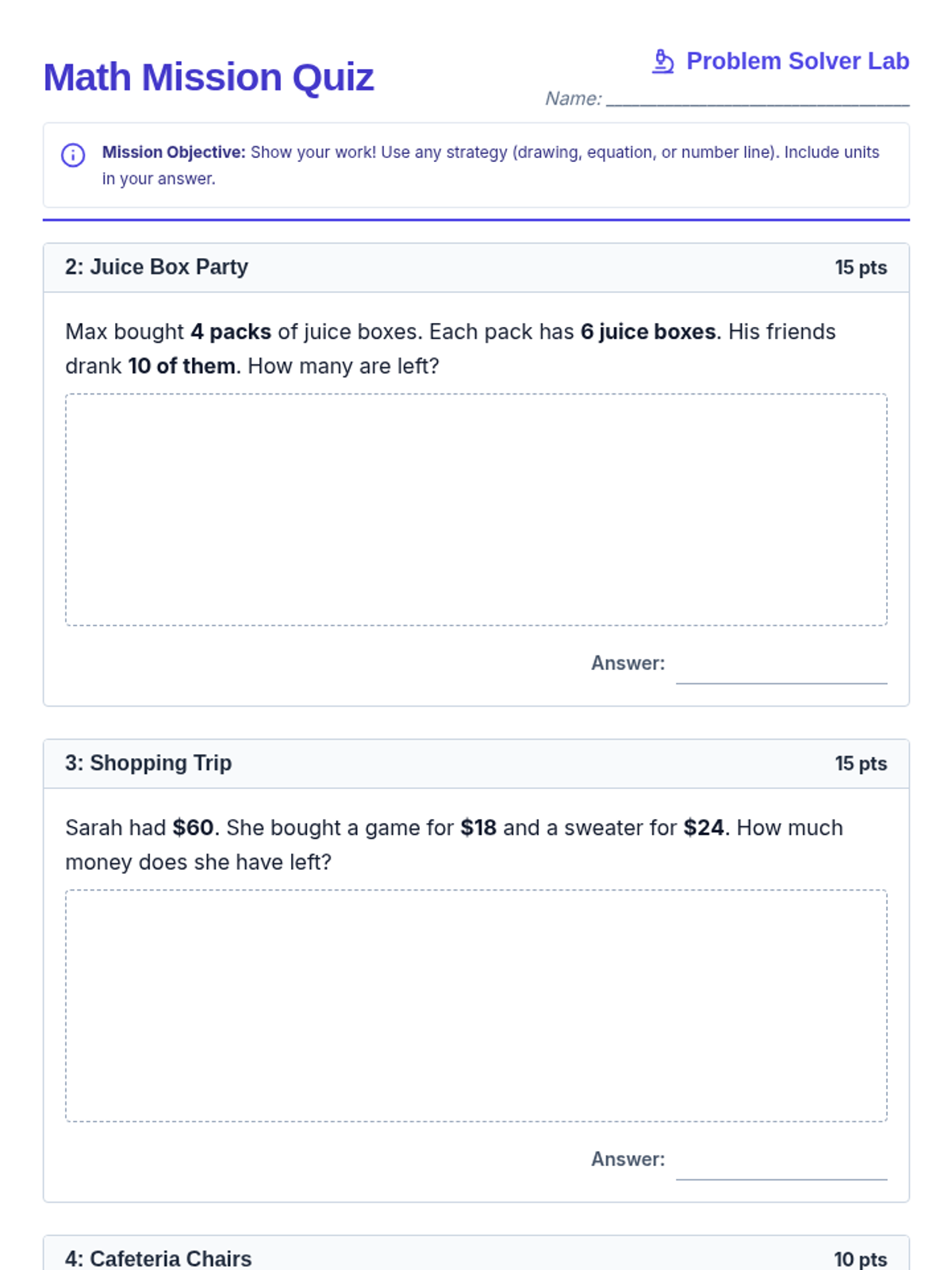
A formative assessment lesson focused on solving two-step word problems and multiplication/division within 100 for third-grade students.
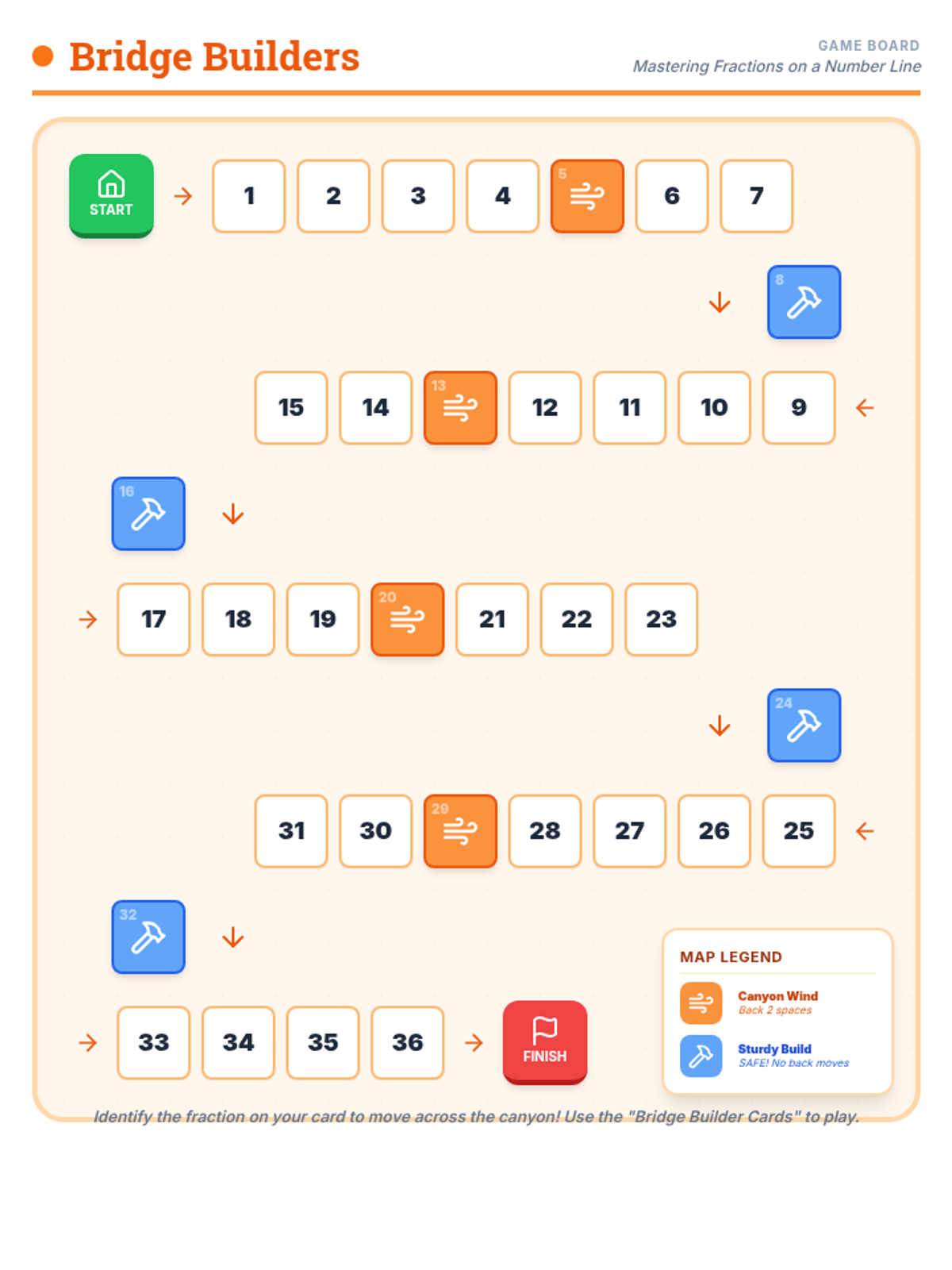
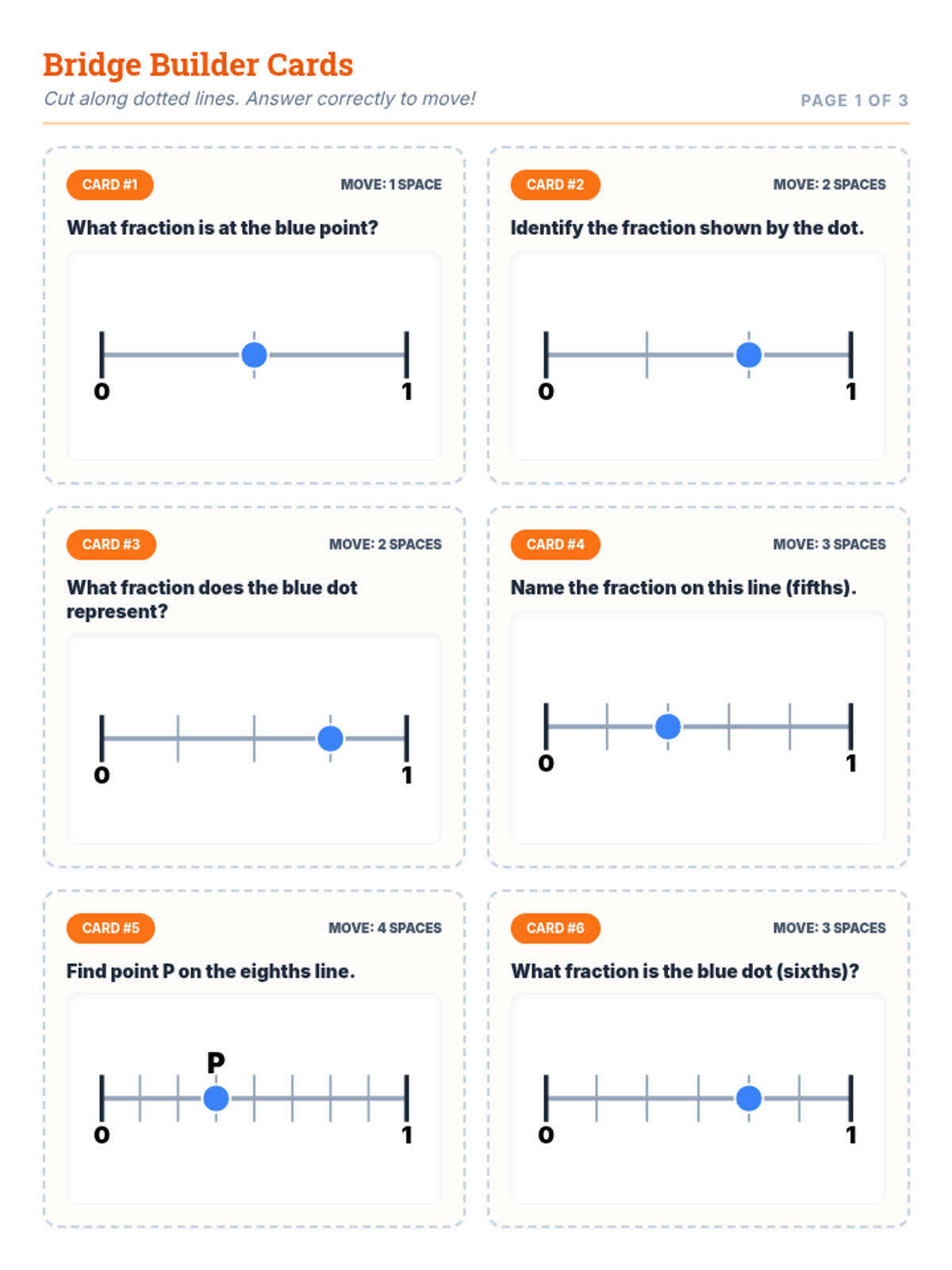
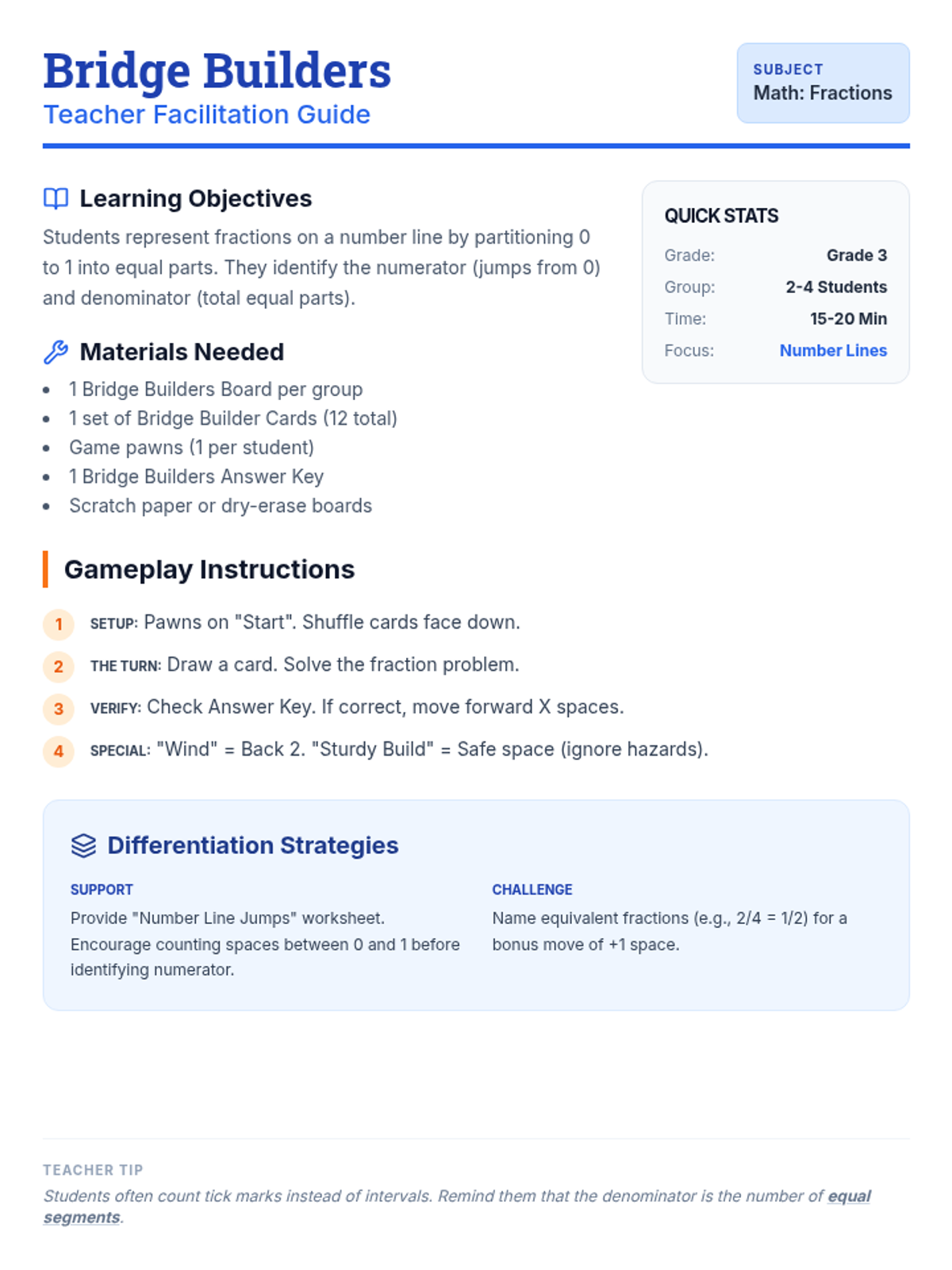
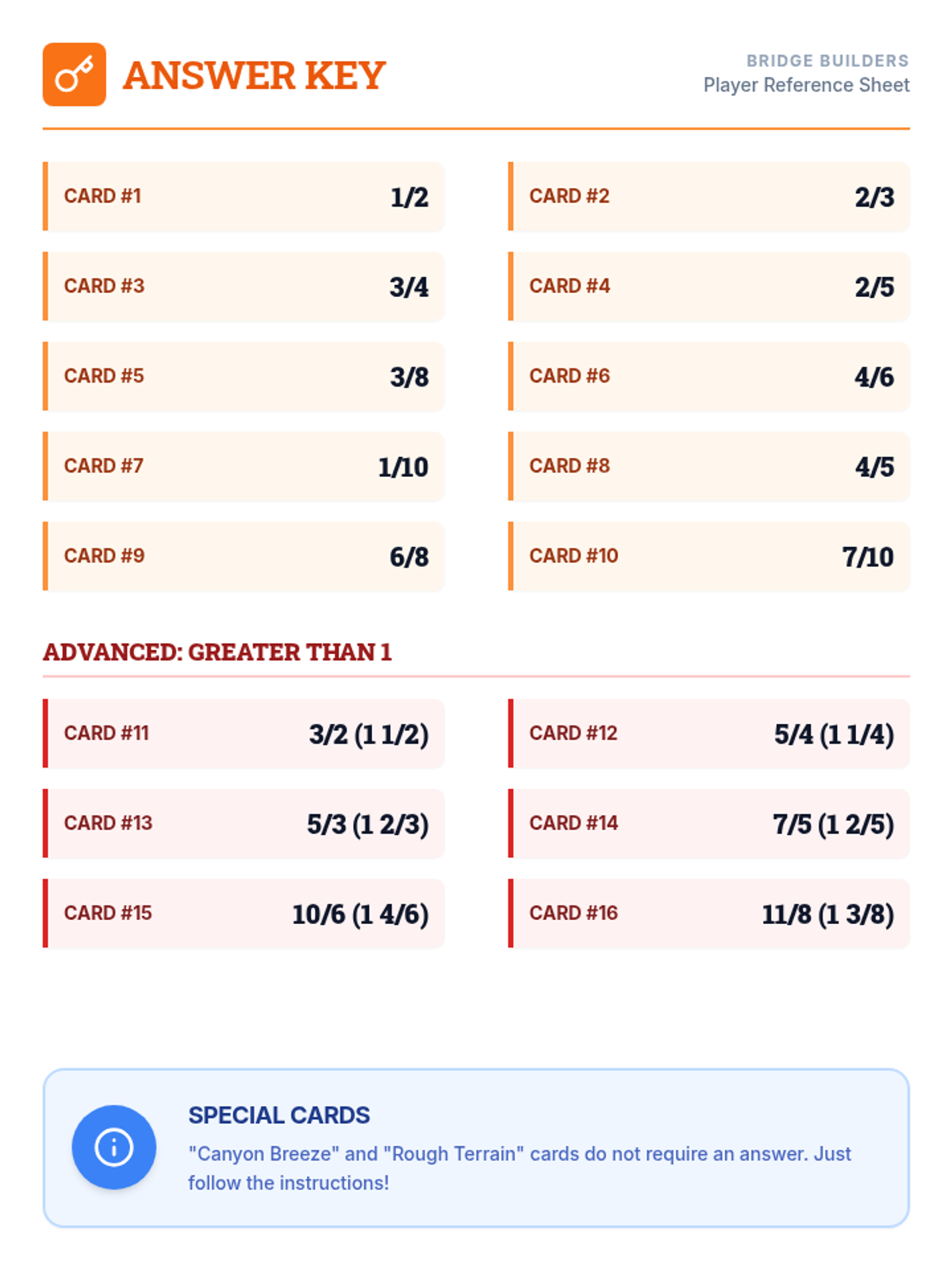
A hands-on board game where students practice identifying and placing fractions on a number line to build bridges across a canyon.
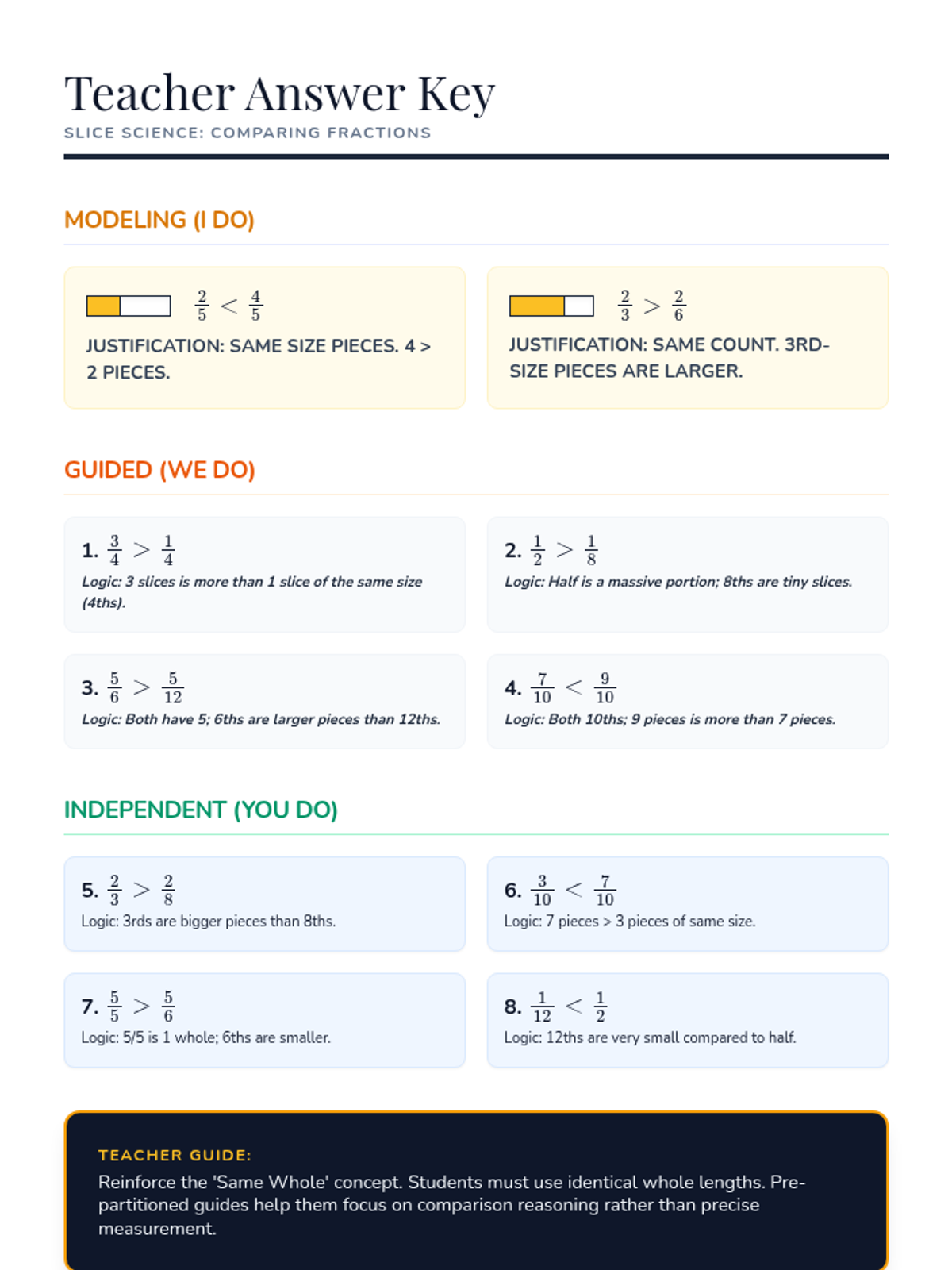
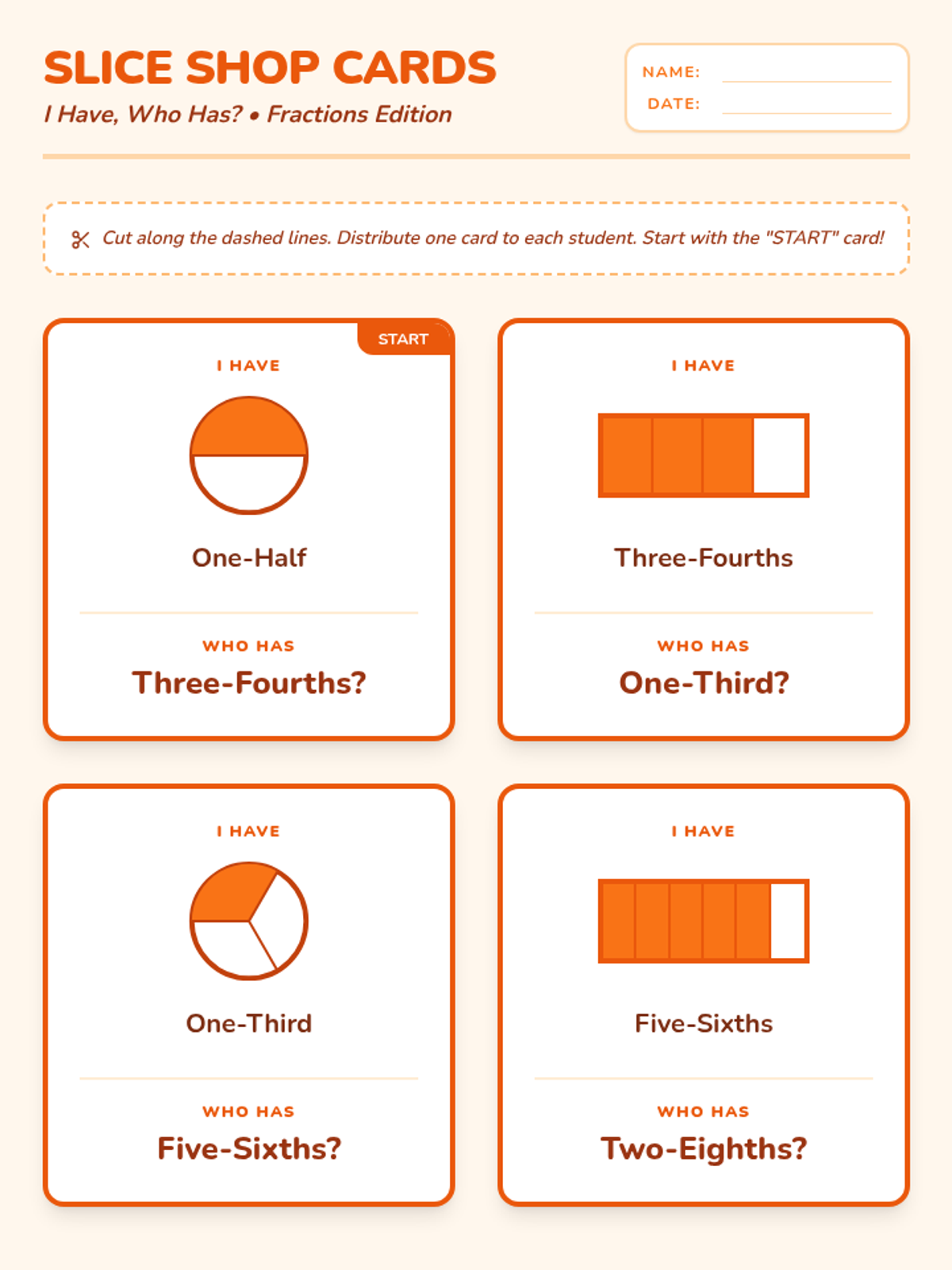
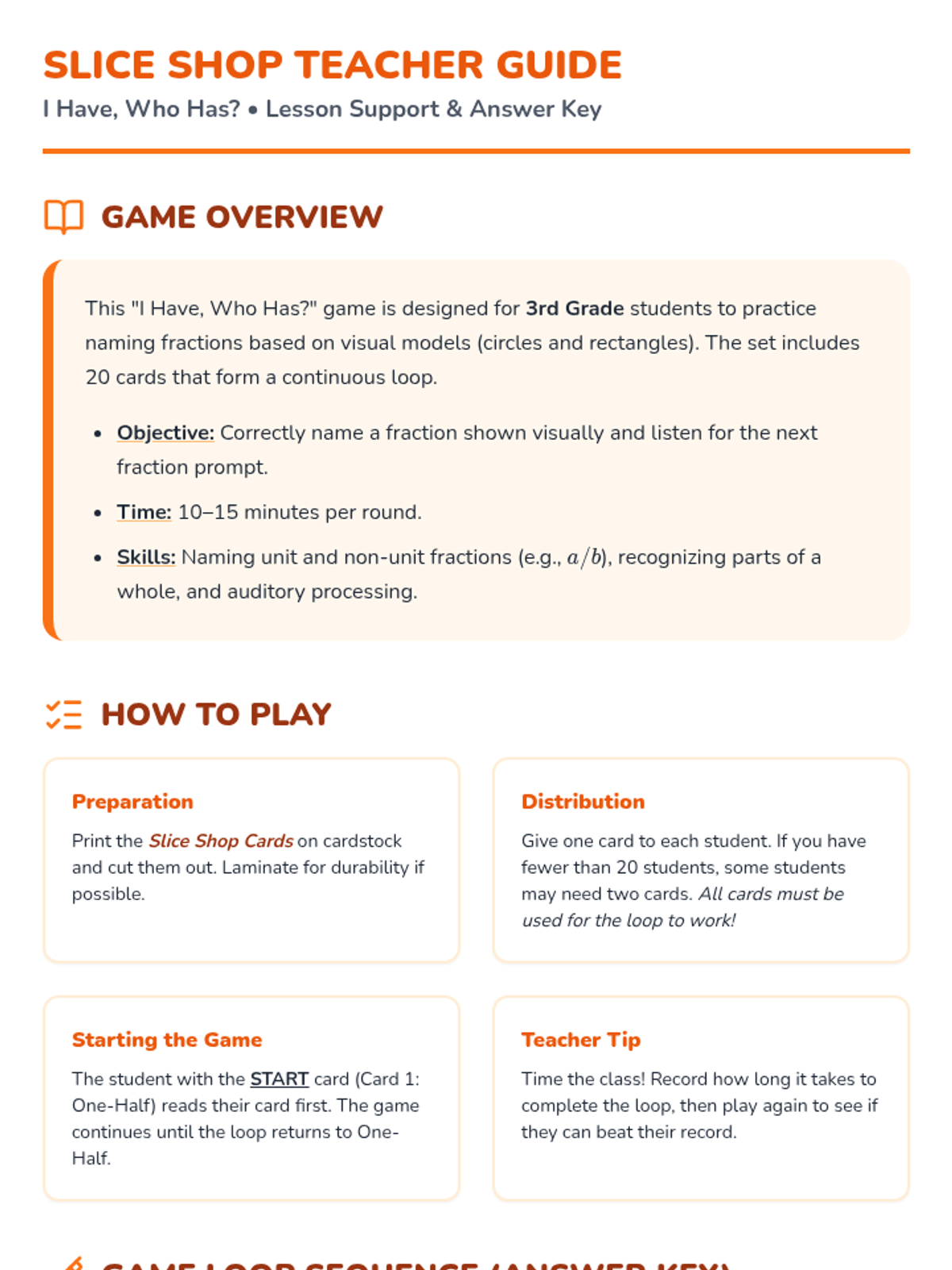
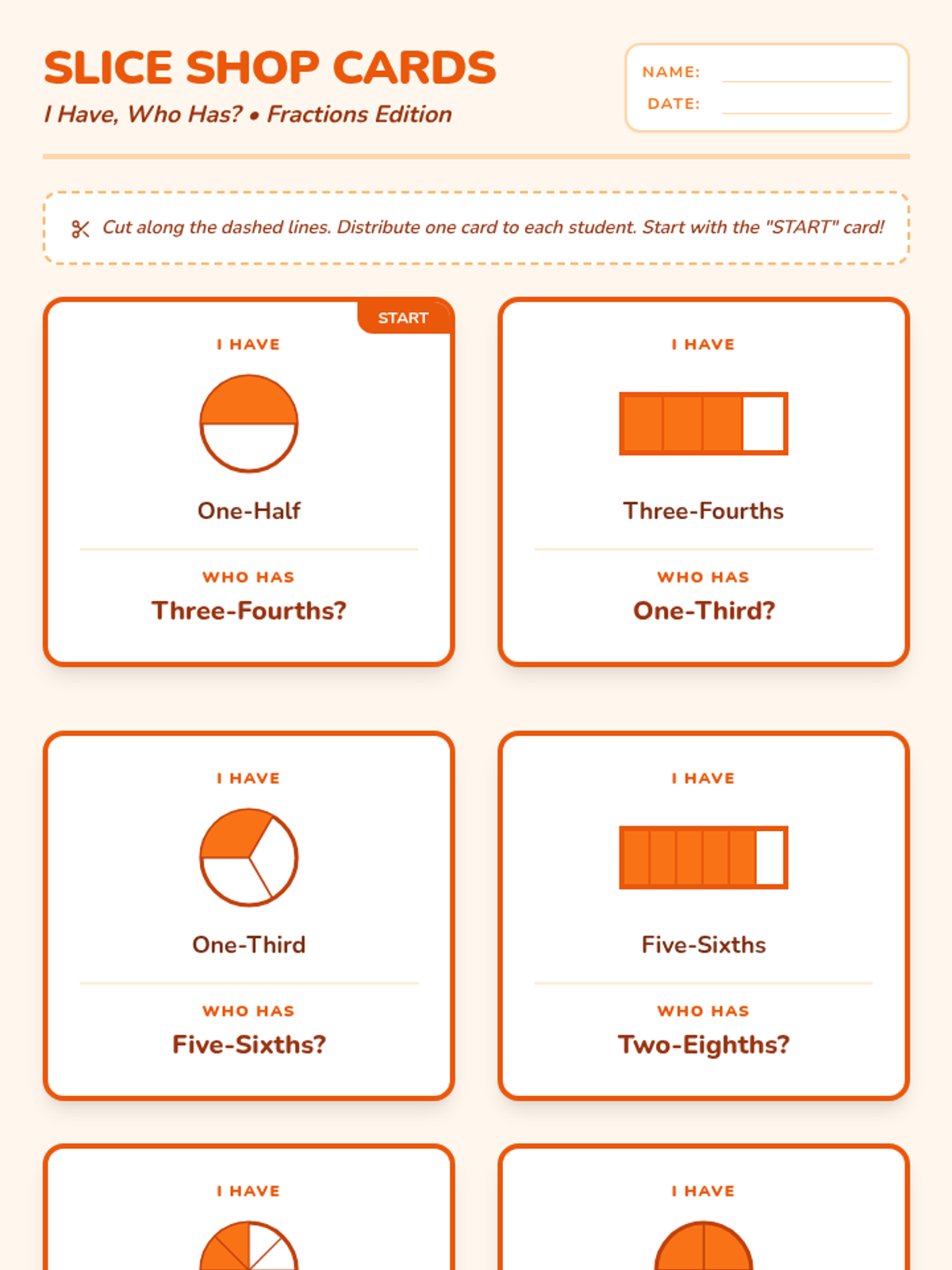
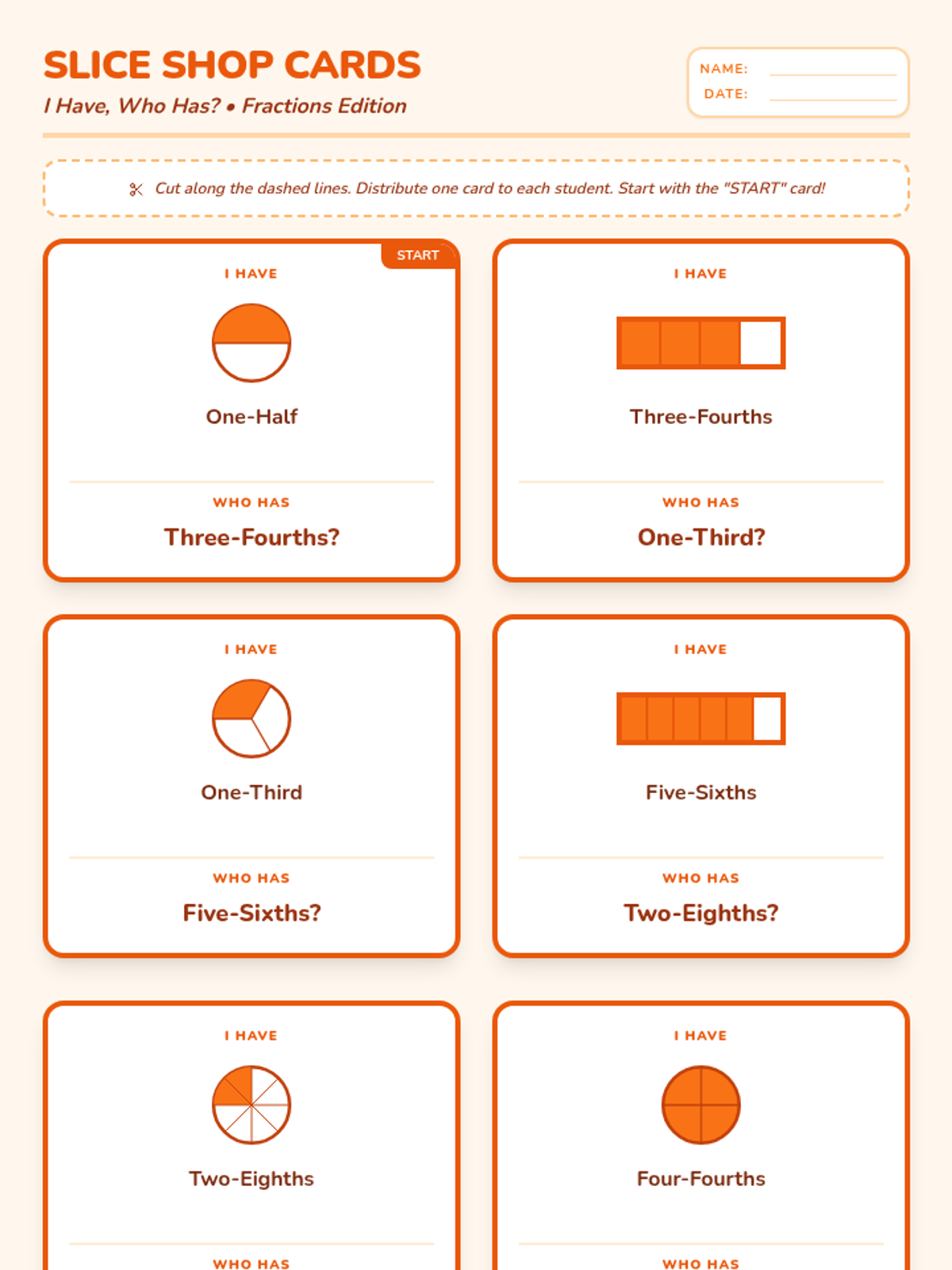
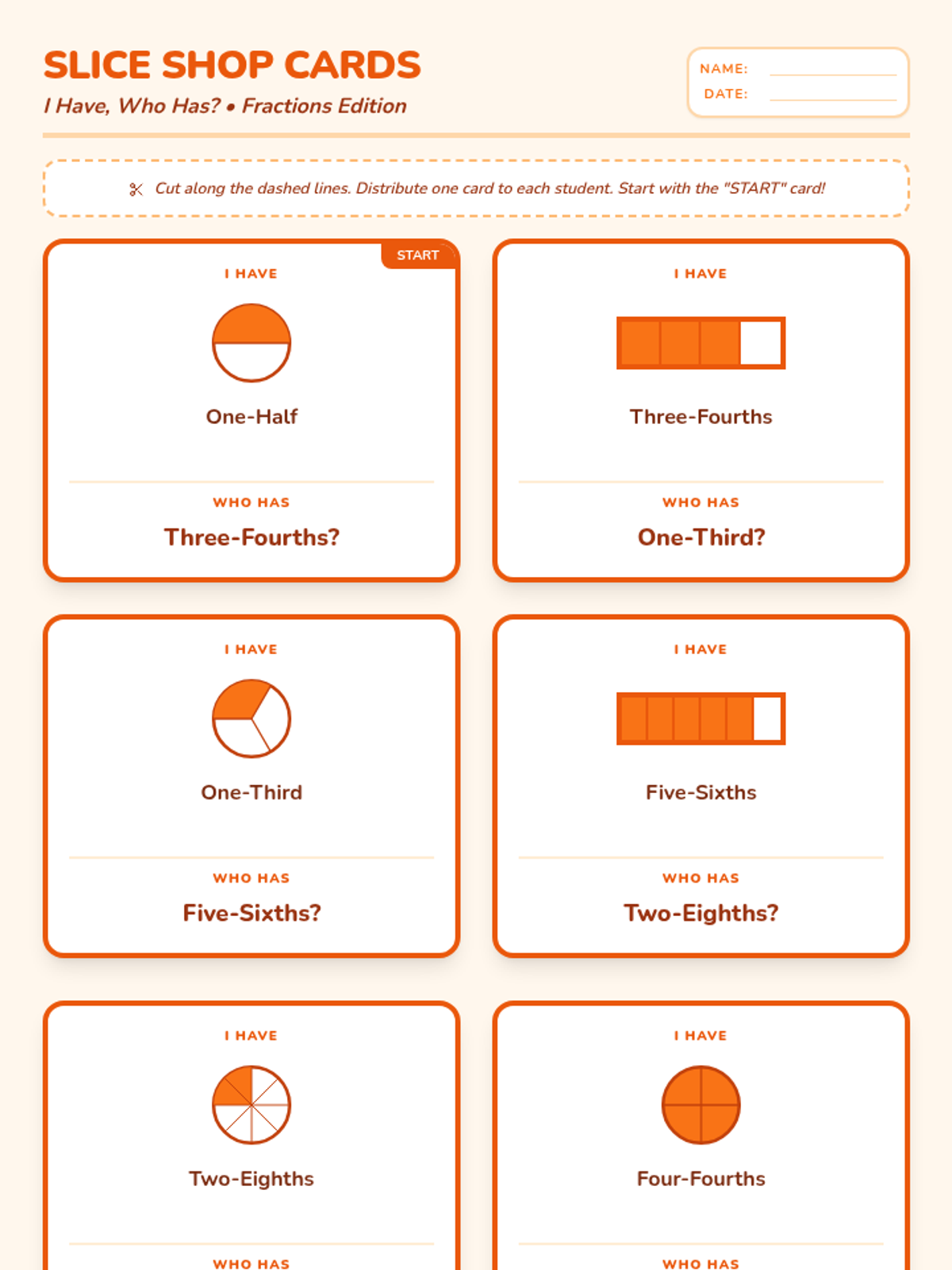
A fun, hands-on lesson focusing on identifying and naming fractions as parts of a whole using a 'Slice Shop' pizza and candy bar theme. Students will practice through visual slides and a collaborative 'I Have, Who Has' card game.
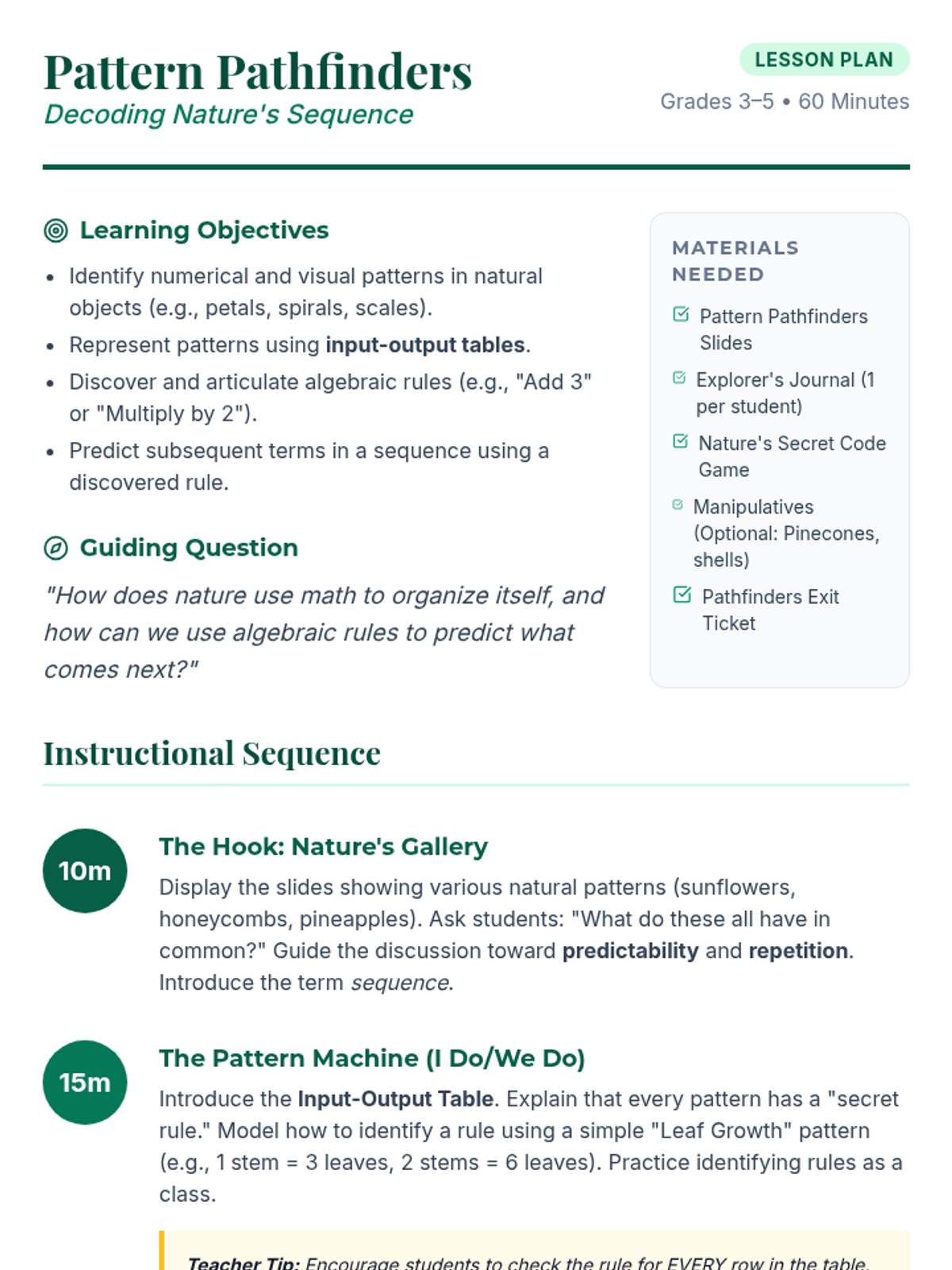
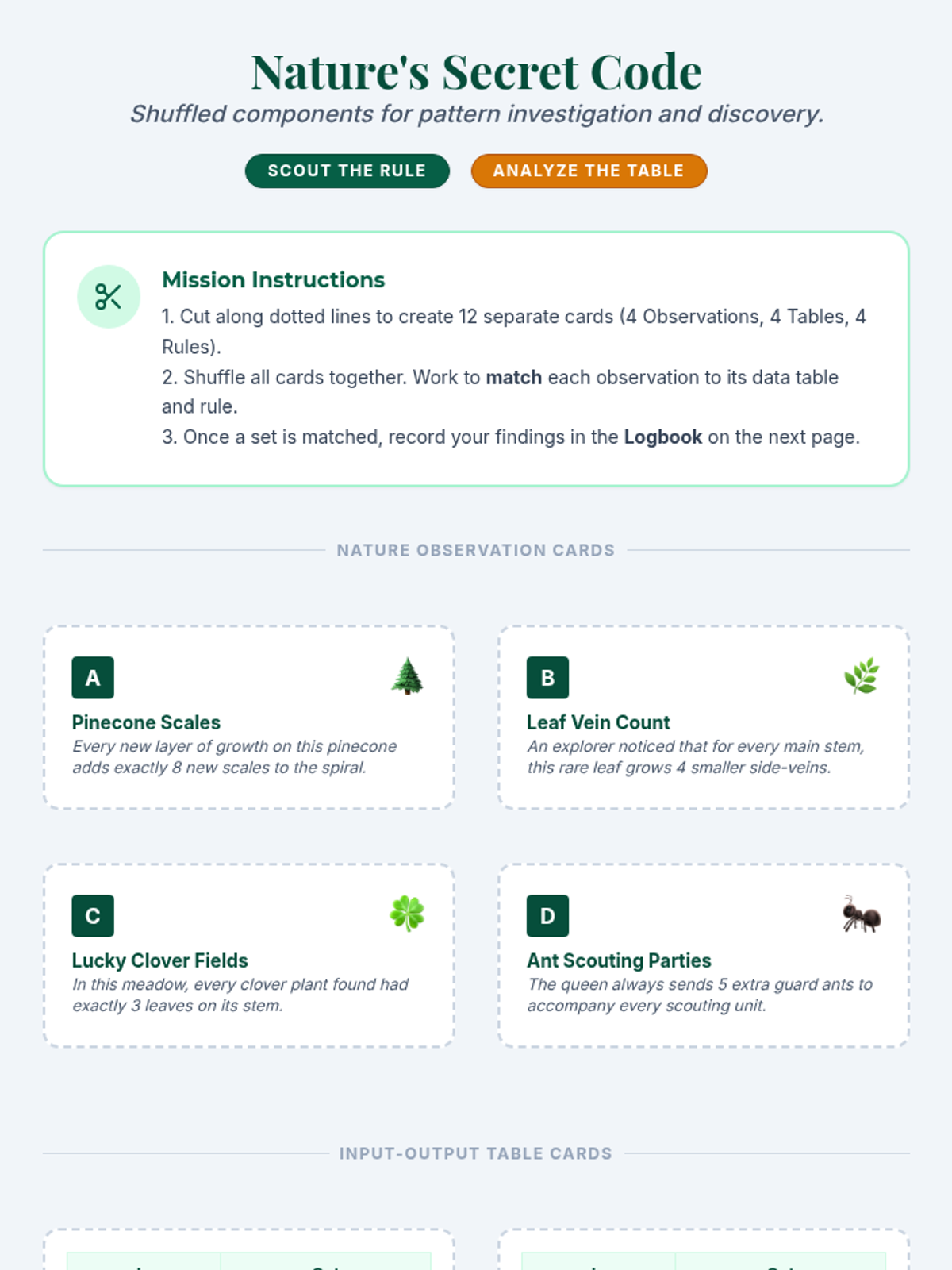
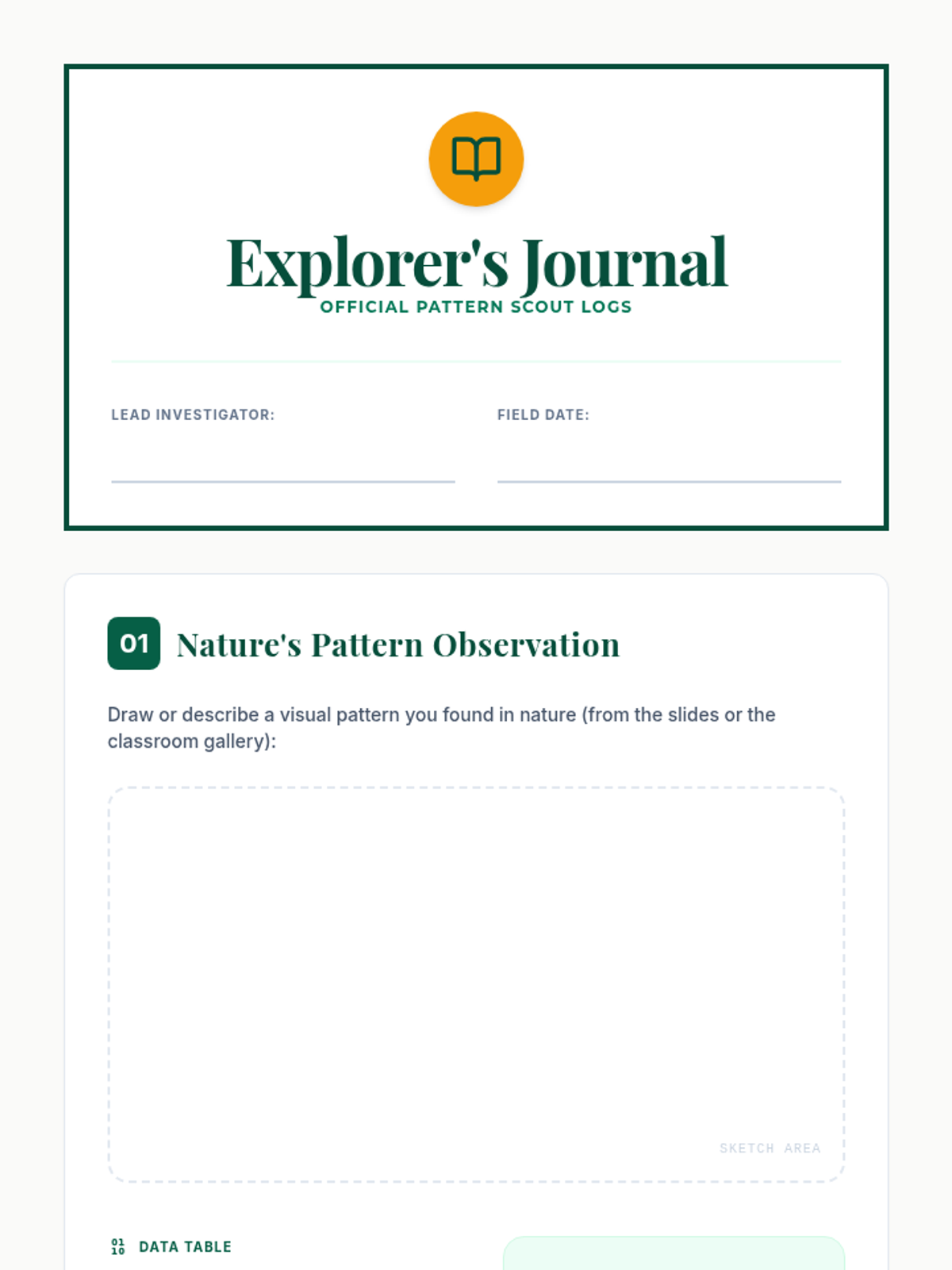
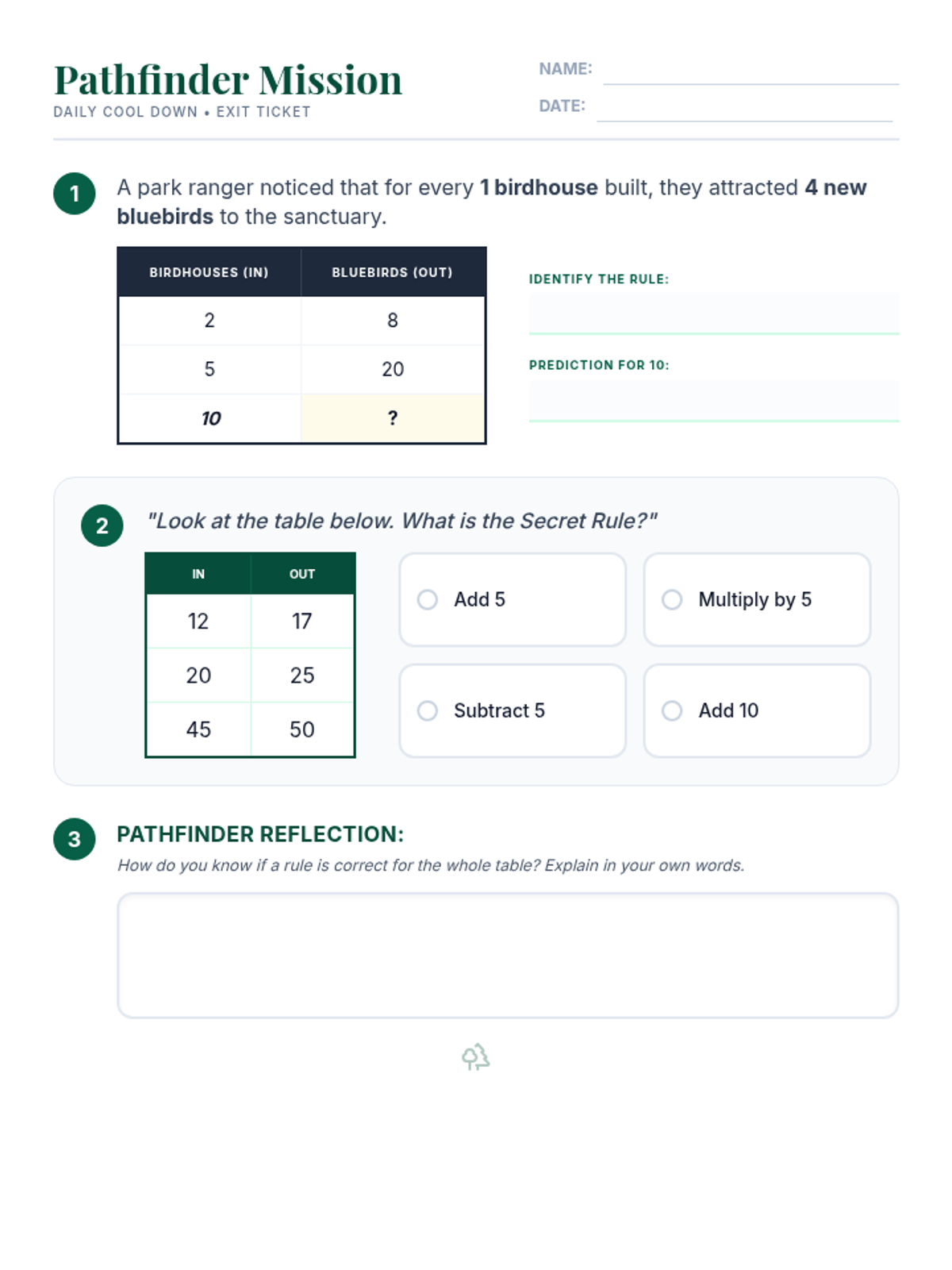
Students become mathematical explorers, discovering algebraic rules hidden in nature's patterns. They will use input-output tables to decode sequences found in shells, leaves, and honeycombs.
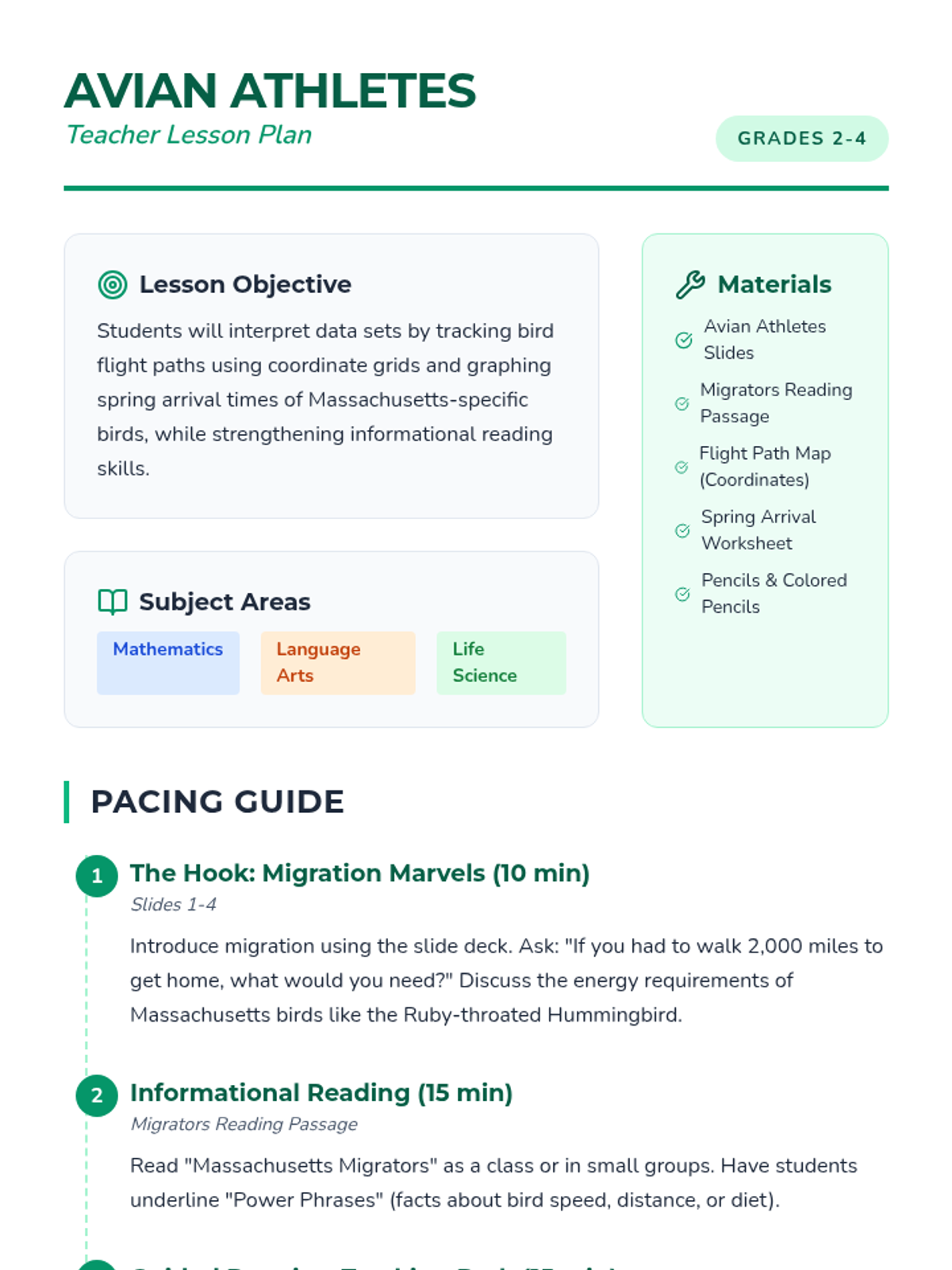
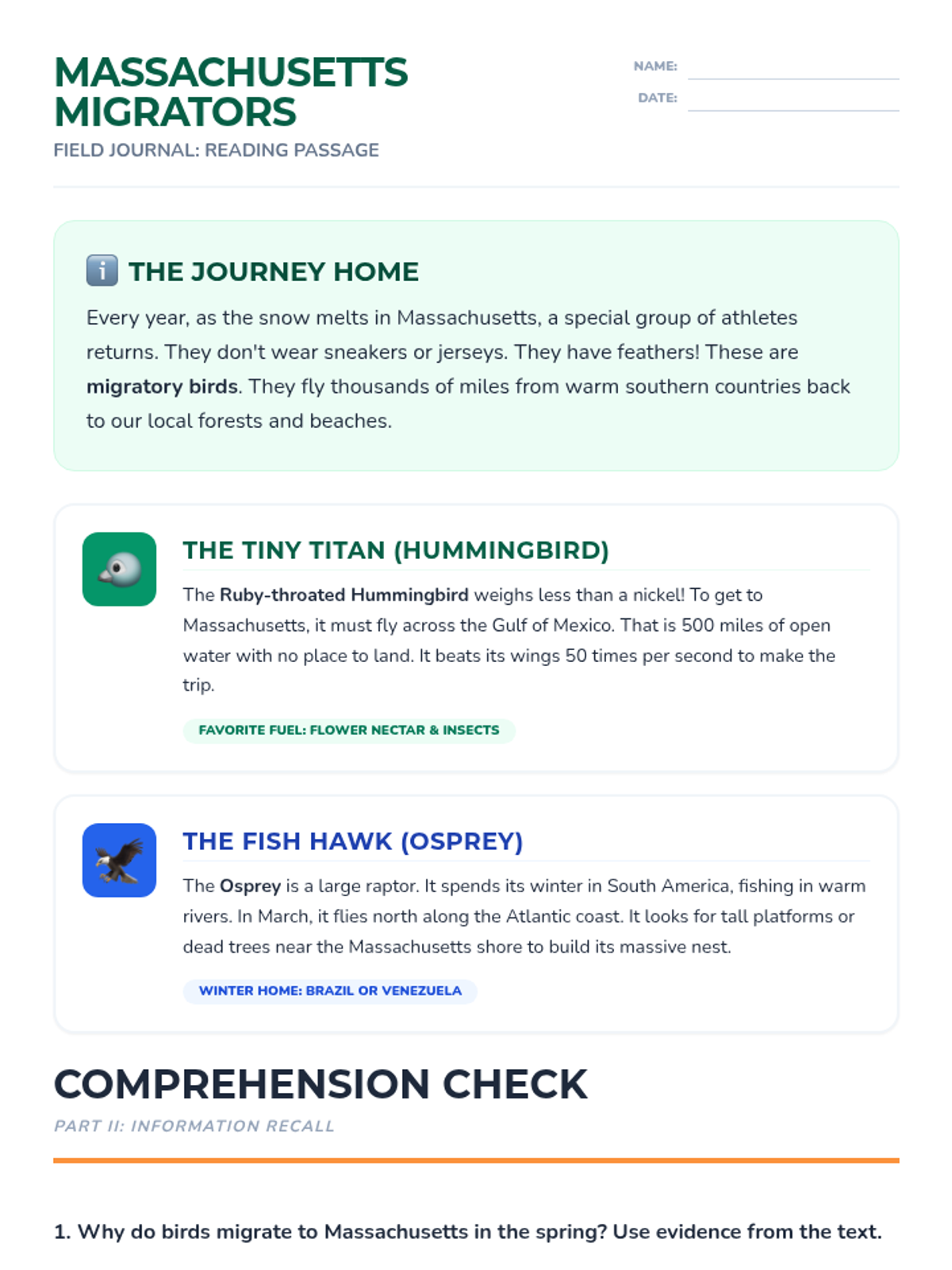
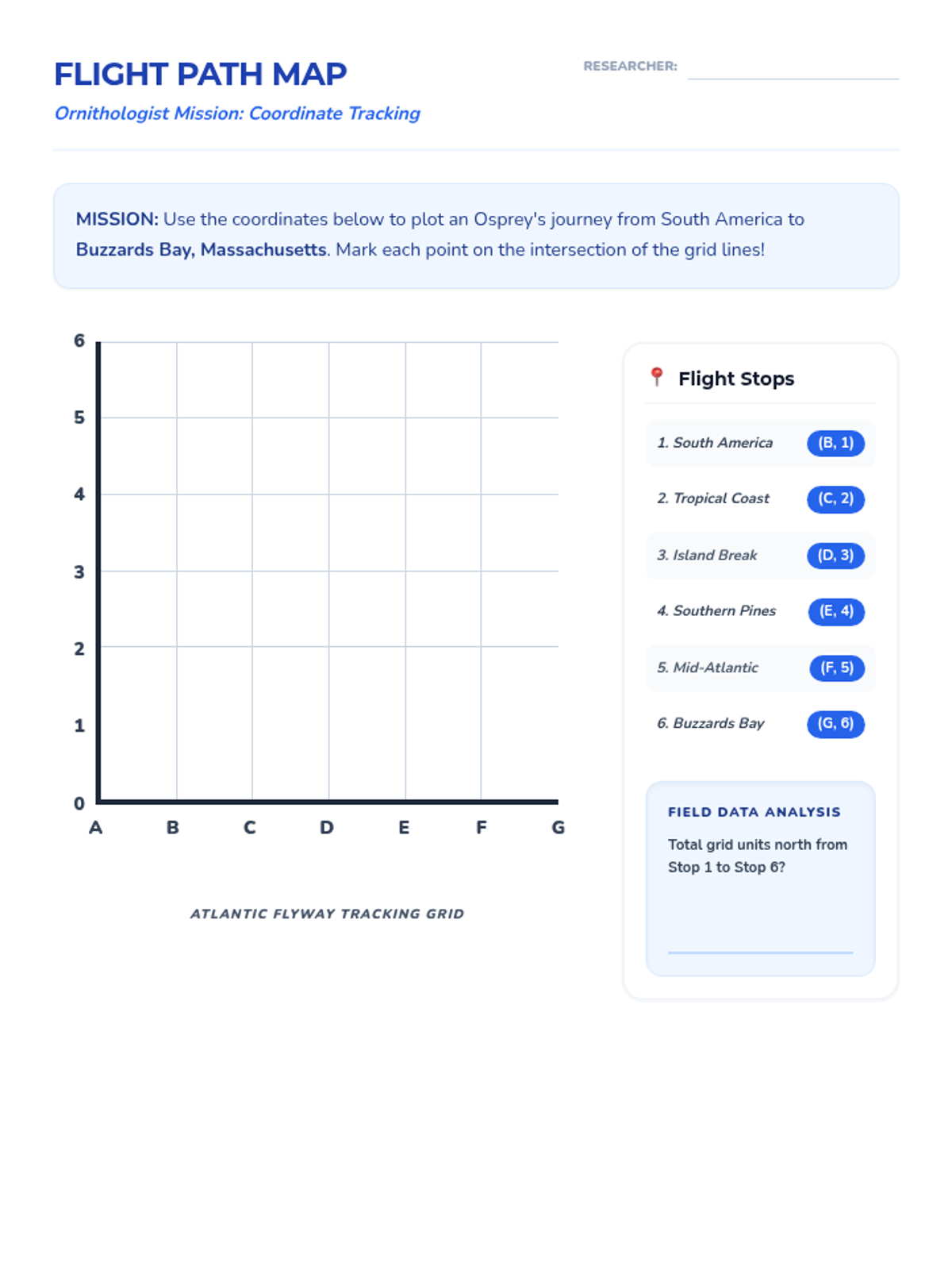
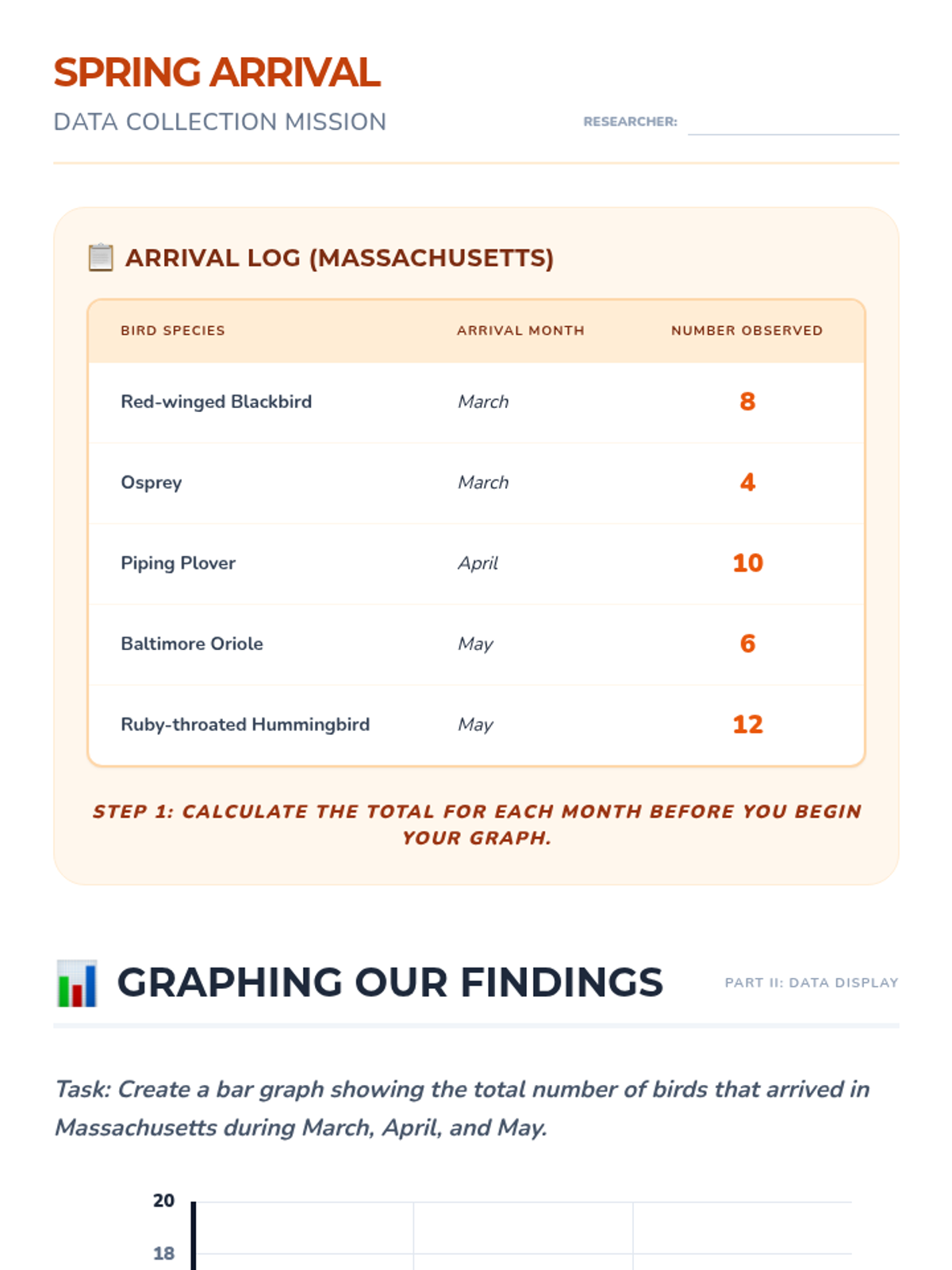
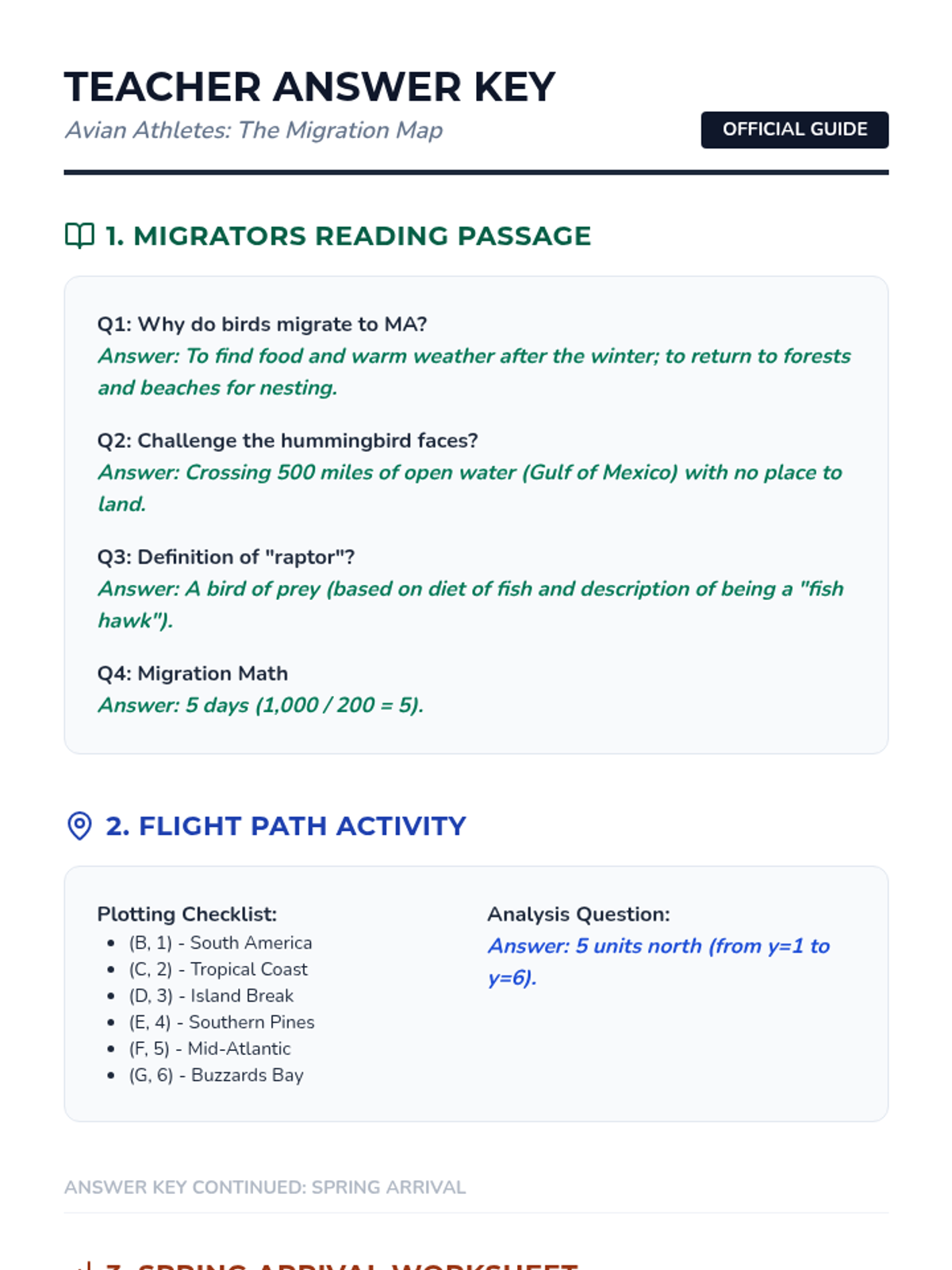
This lesson connects local Massachusetts bird migration to math and ELA standards. Students will use coordinate grids to track flight paths, graph arrival data, and read informational texts about native species like the Osprey and Piping Plover.
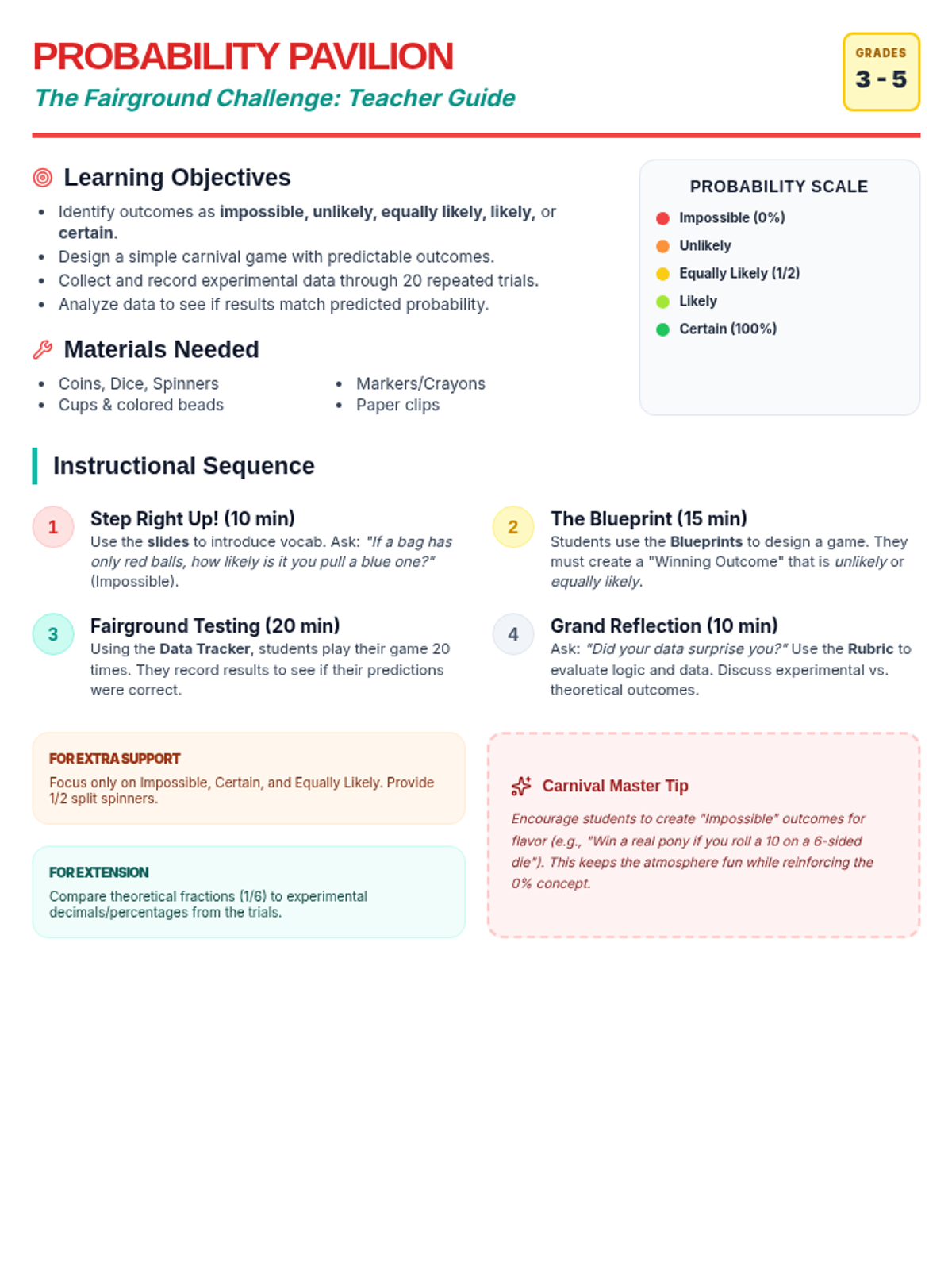
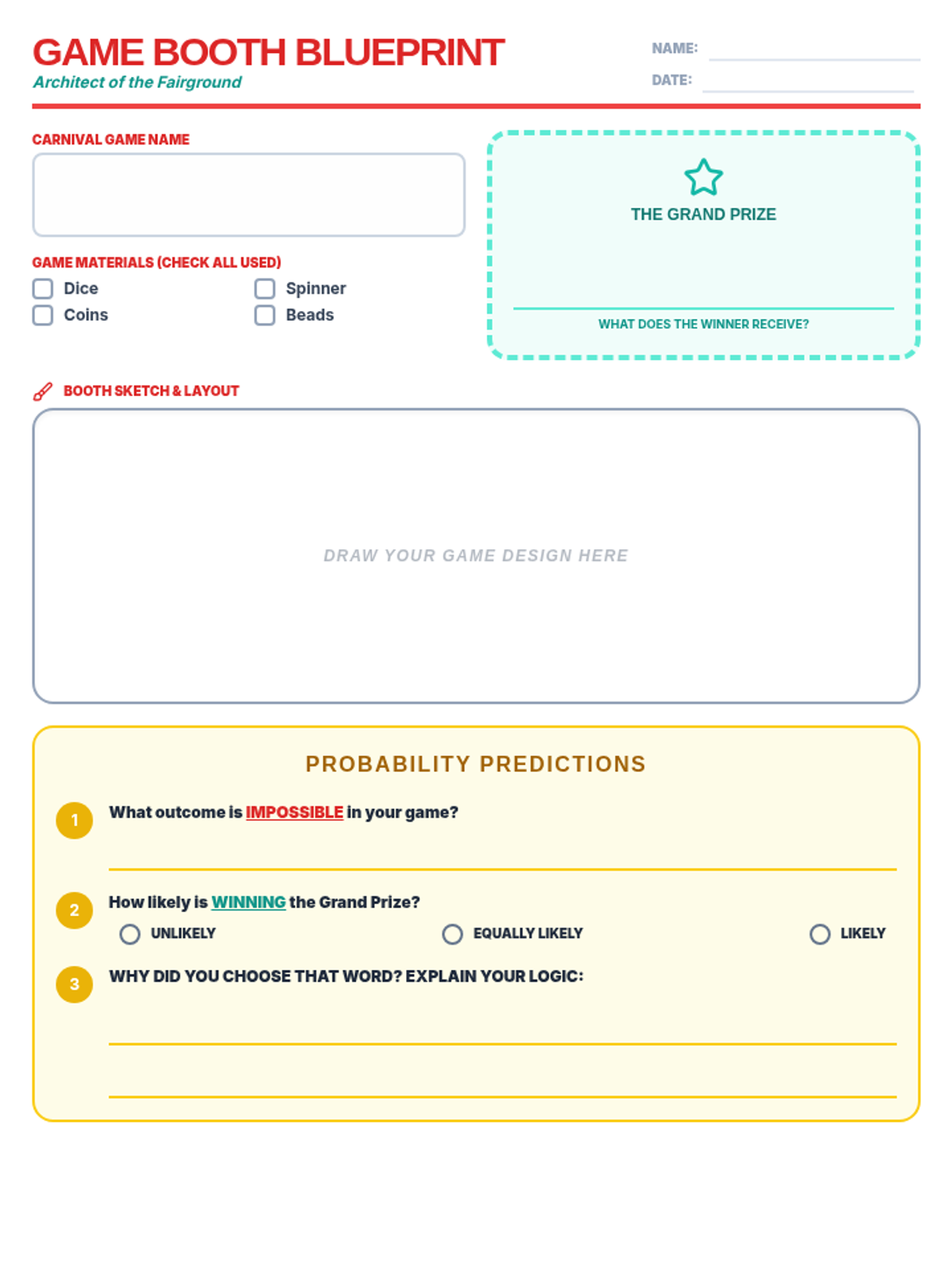
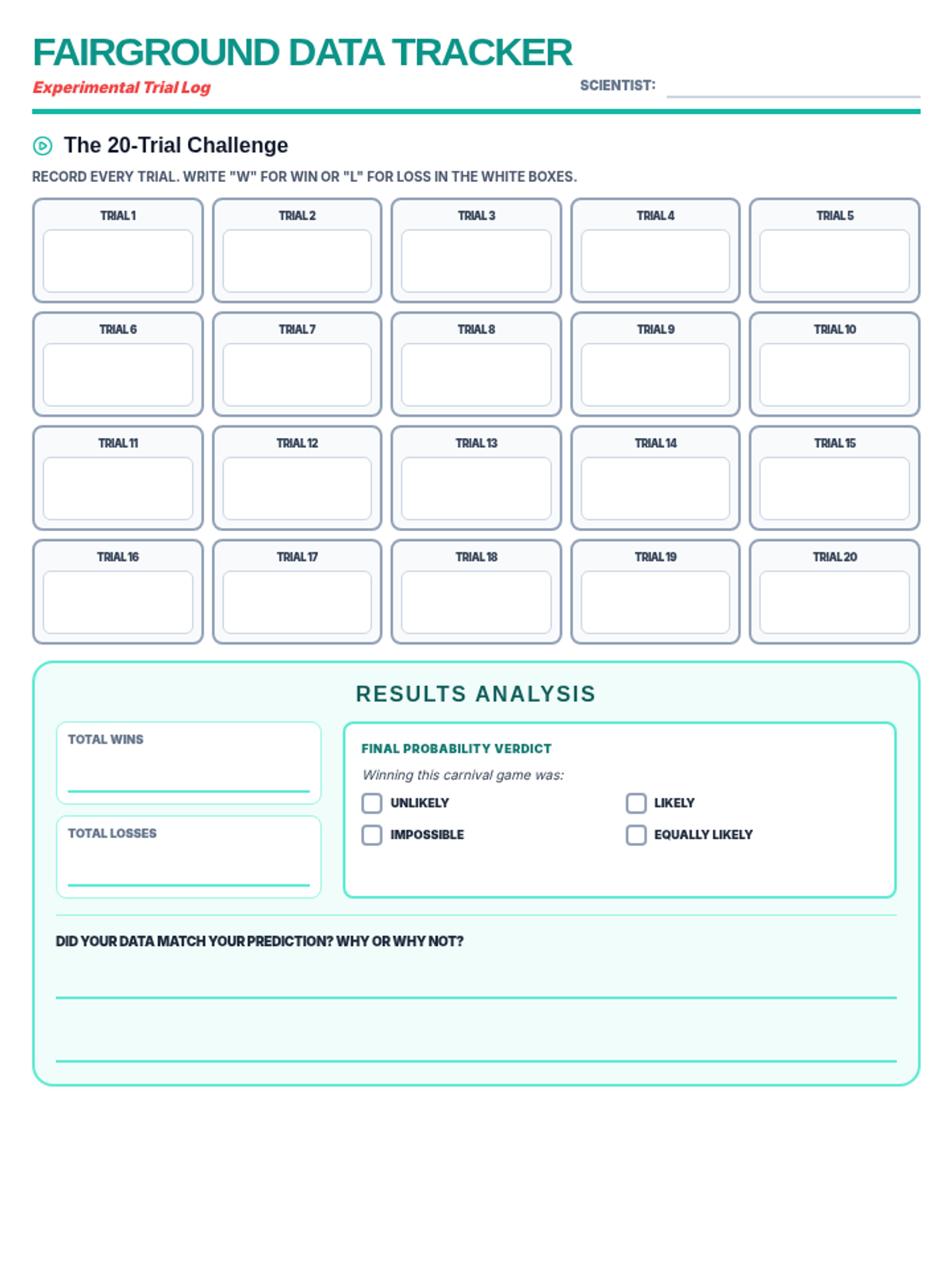
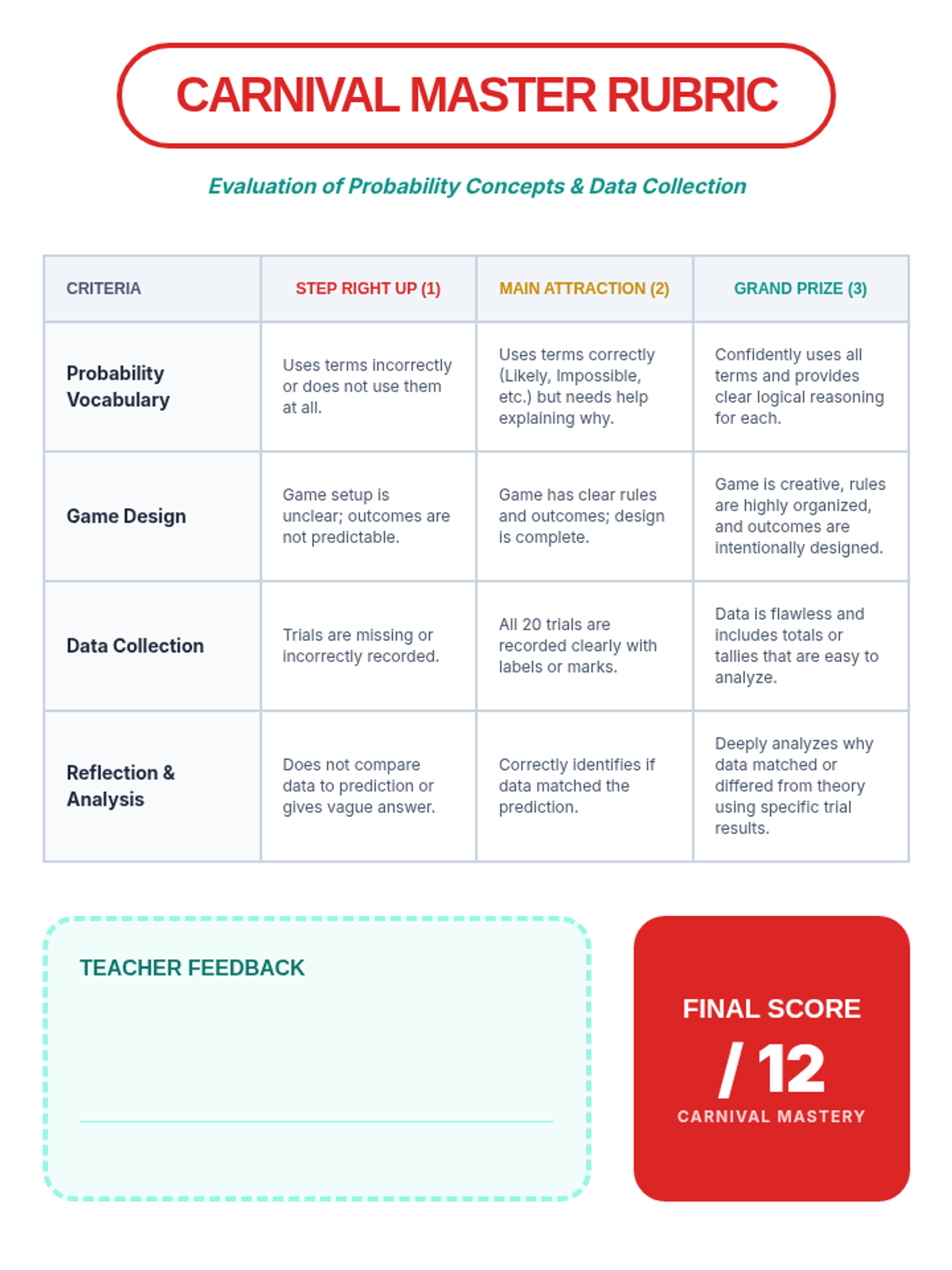
A hands-on exploration of probability where students design carnival games to test outcomes and classify events as certain, likely, equally likely, unlikely, or impossible.
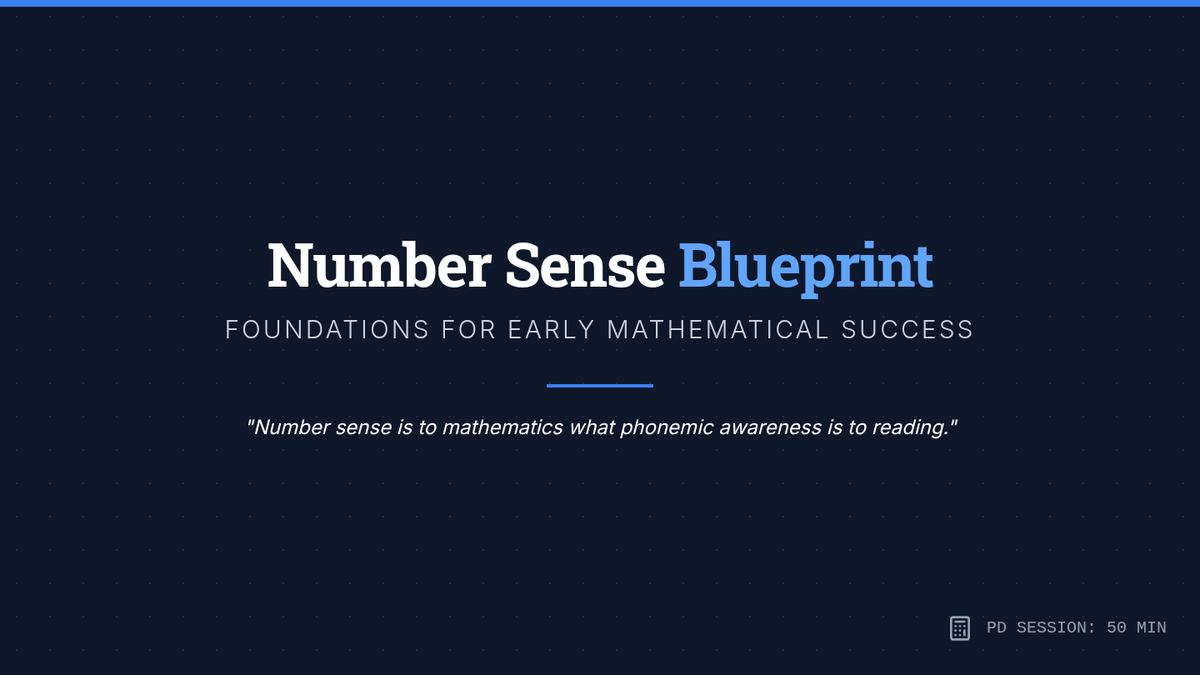
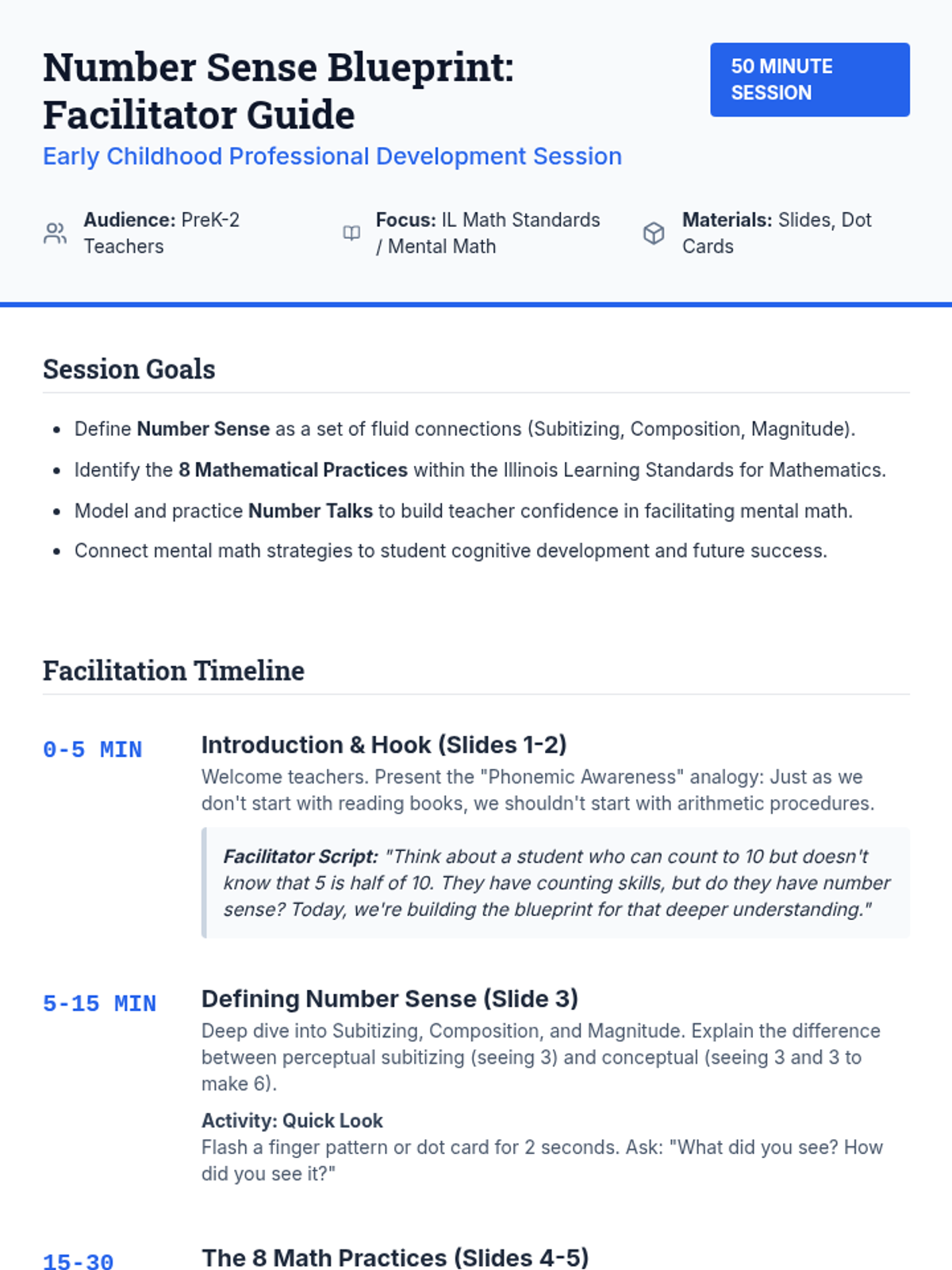
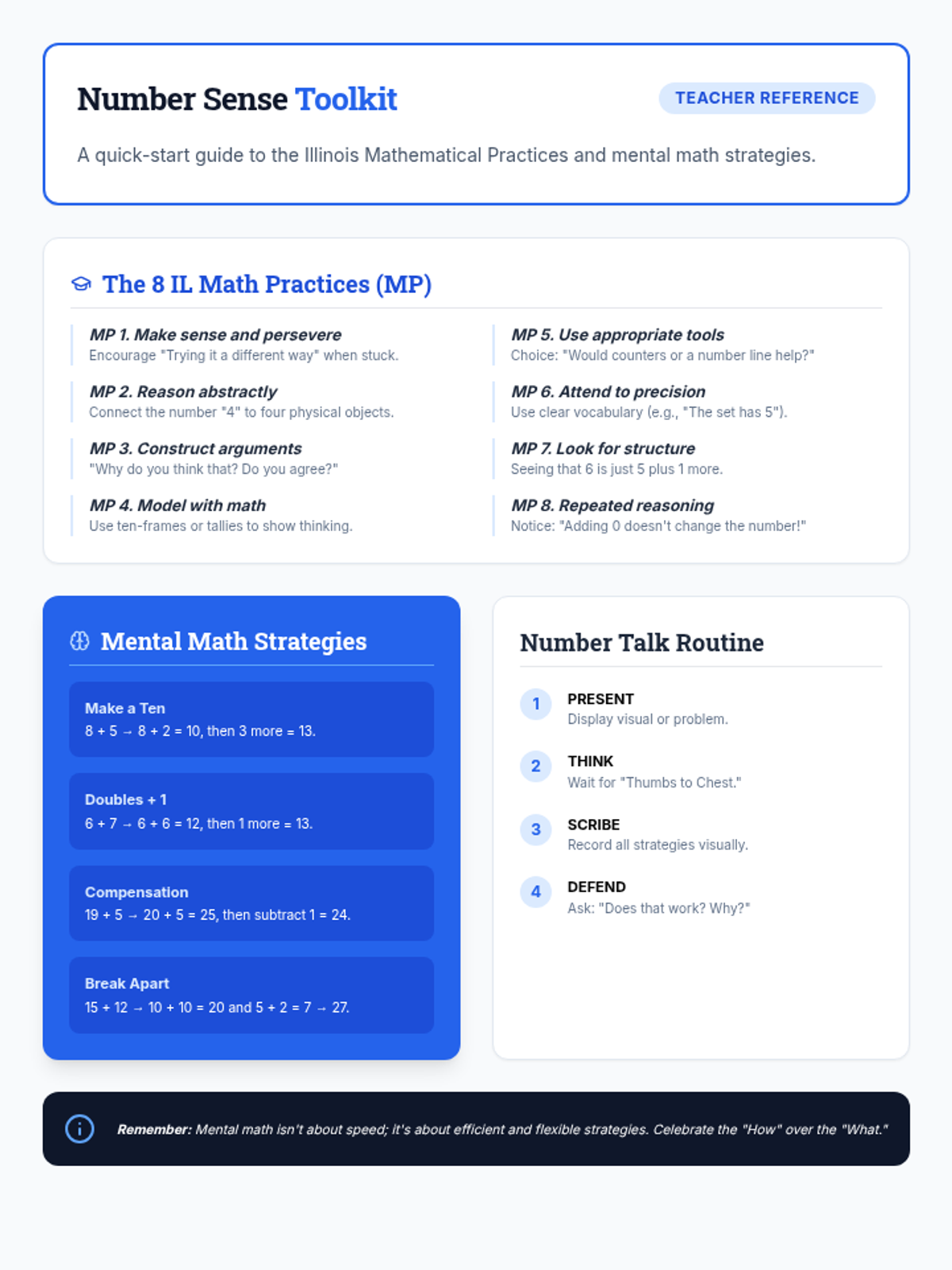
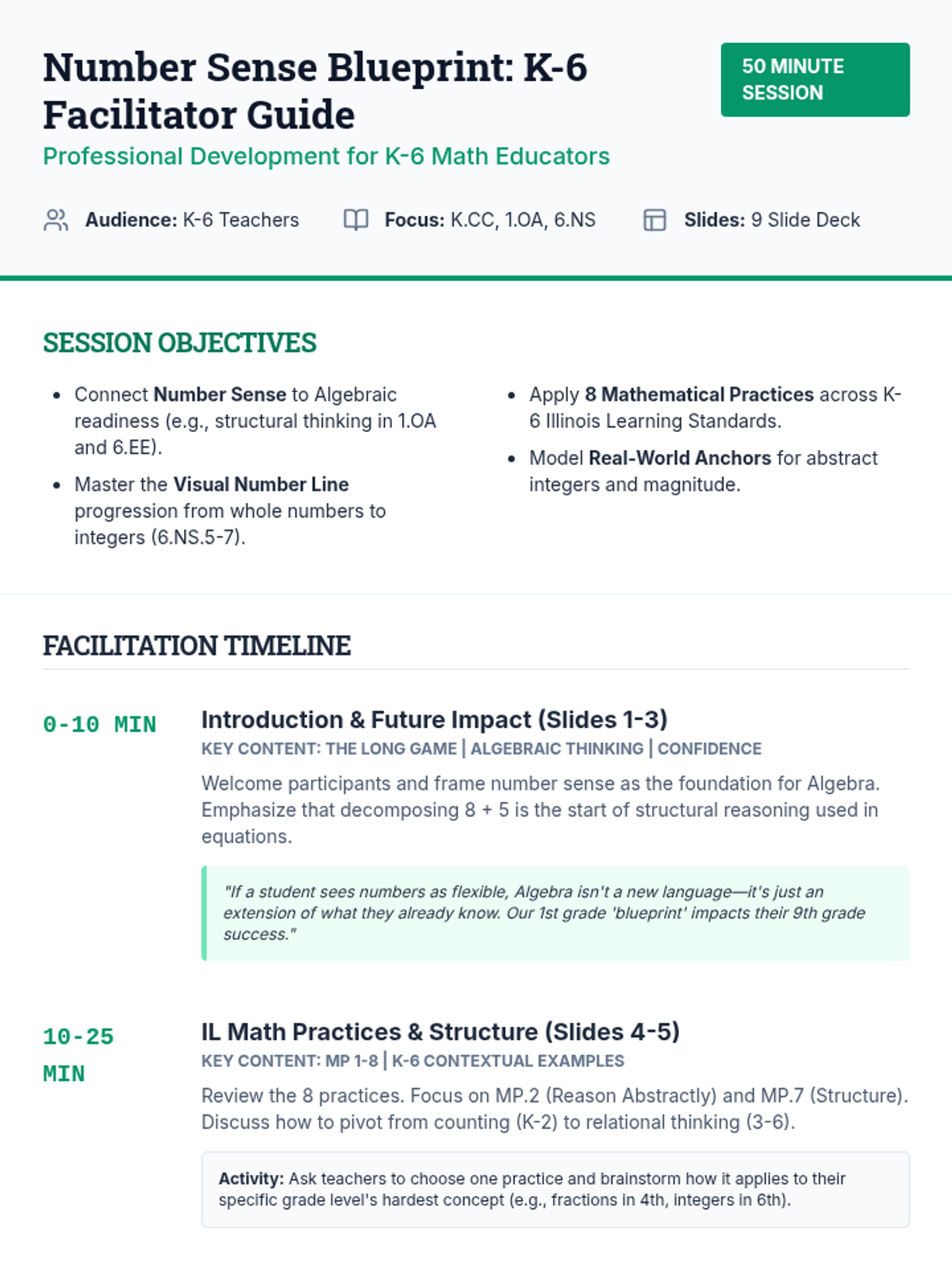
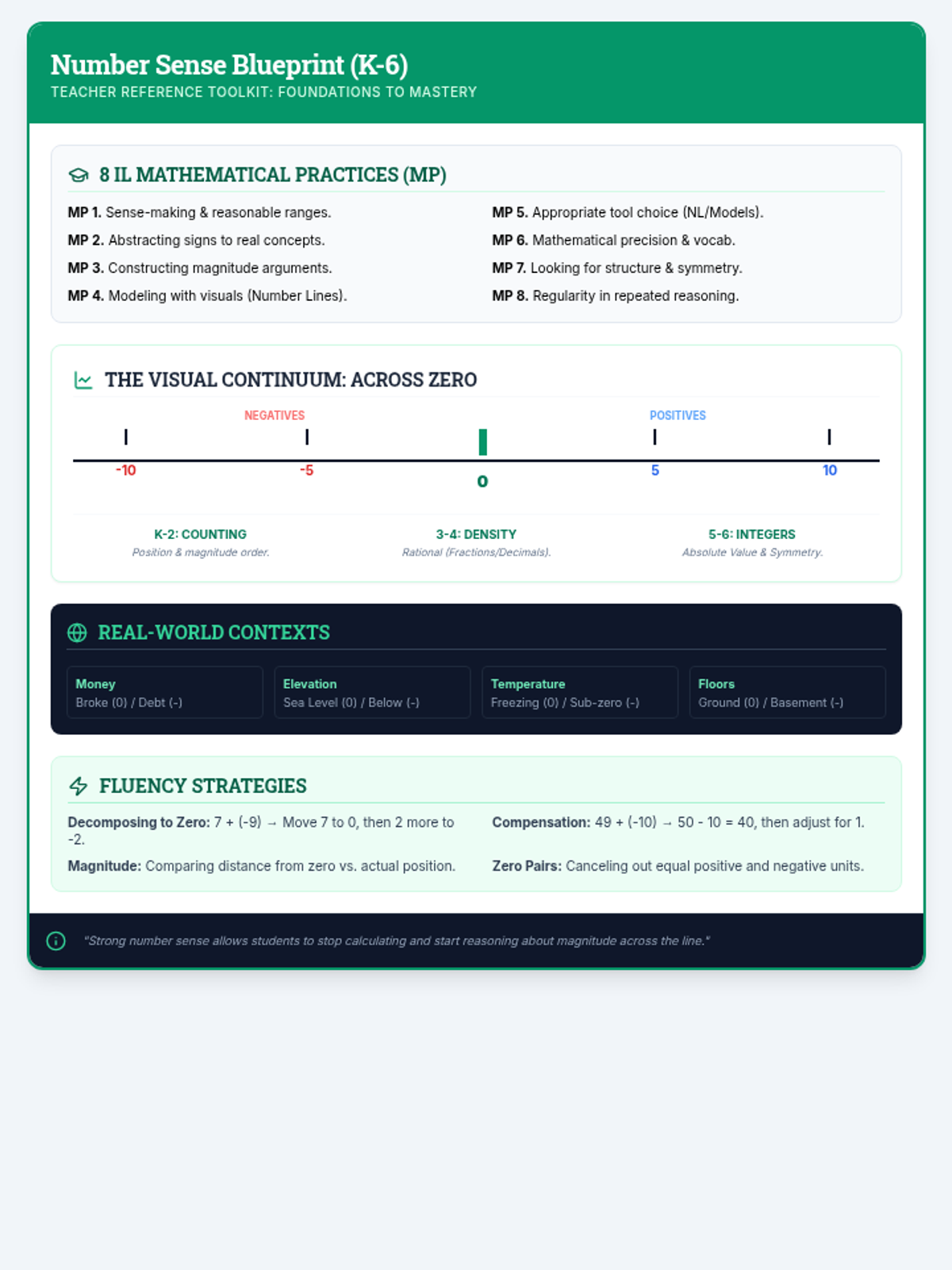
A 50-minute professional development session for K-6 educators focusing on number sense, the visual number line (positive and negative), real-world applications, and the 8 IL Mathematical Practices.
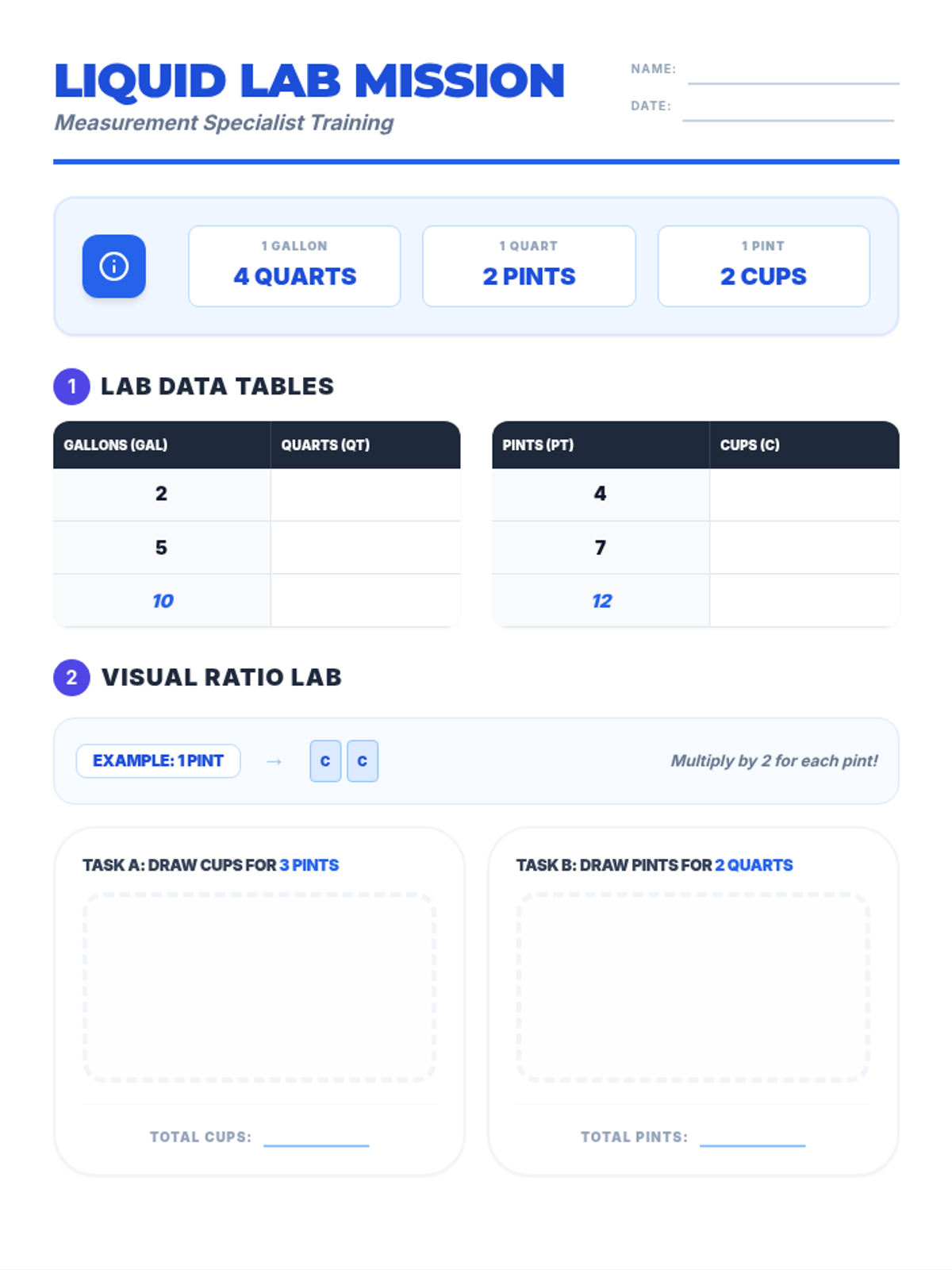
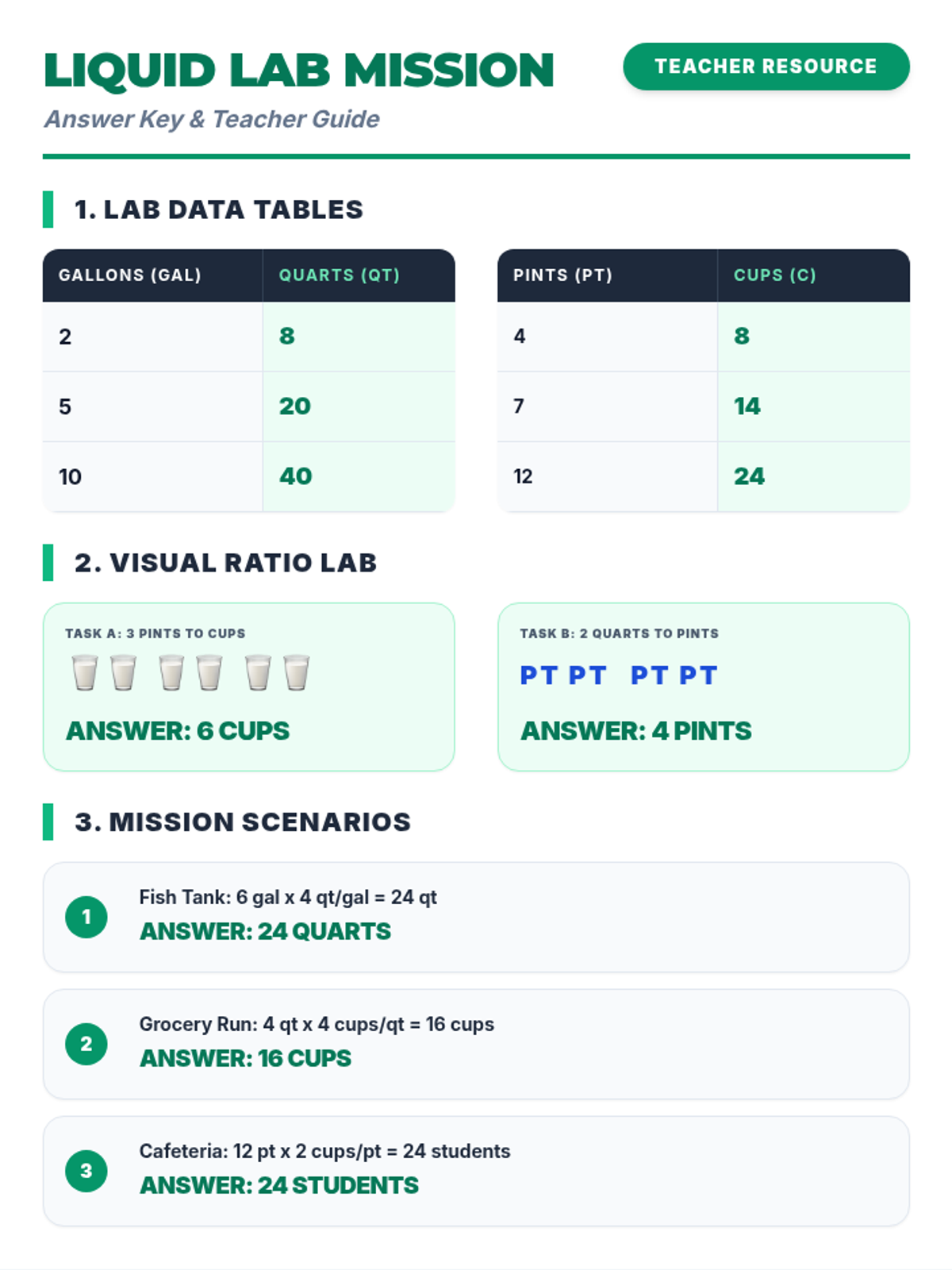
A lesson focused on converting liquid volume units (gallons, quarts, pints, cups) from larger to smaller units using visual ratios and step-by-step conversion tables. Students will apply these skills to real-world scenarios like cooking, grocery shopping, and school life.
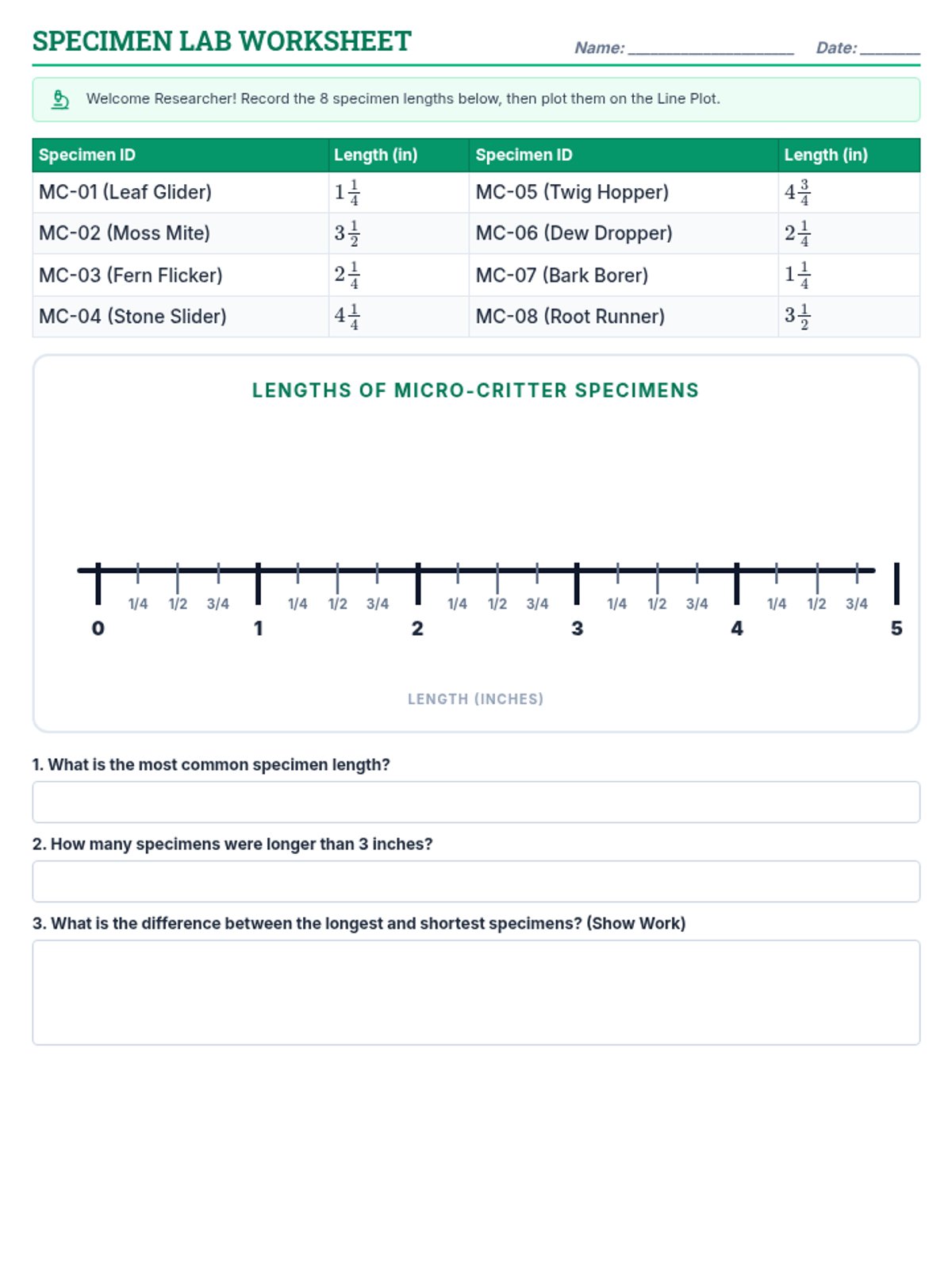
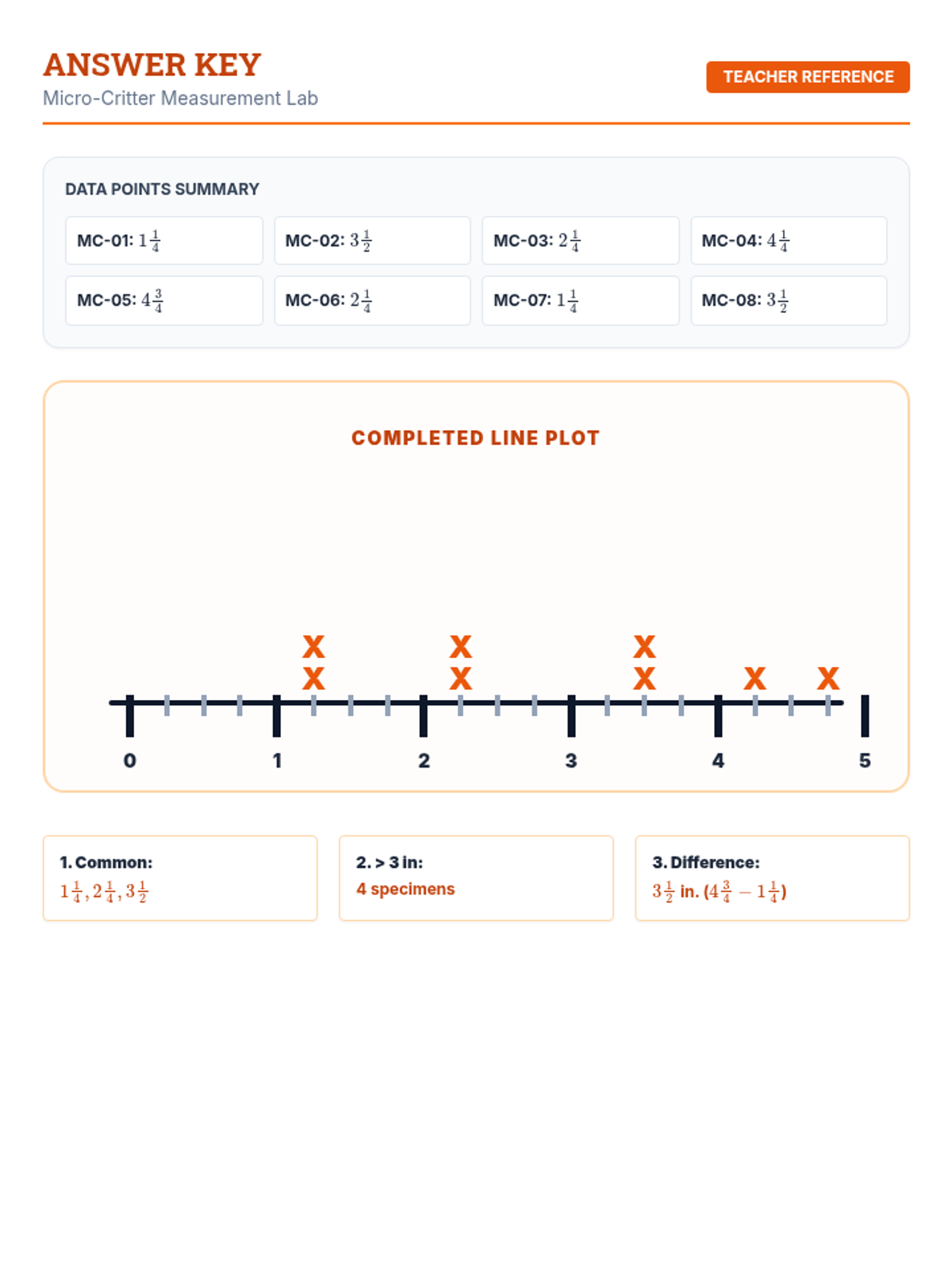
A lesson focused on measuring objects to the nearest quarter inch and displaying that data on a line plot scaled from 0 to 5. Students will collect 'specimen' data and analyze the distribution of lengths.