A focused lesson on converting mixed numbers to improper fractions using the MAD (Multiply, Add, Denominator) strategy. Includes a visual anchor chart and a practice worksheet.
Challenges students to solve complex division word problems with 4-digit dividends and interpret quotients in real-world contexts, including money (TEKS 5.3G).
Focuses on the standard algorithm for dividing decimals with whole number divisors, including estimation and checking for reasonableness (TEKS 5.3G).
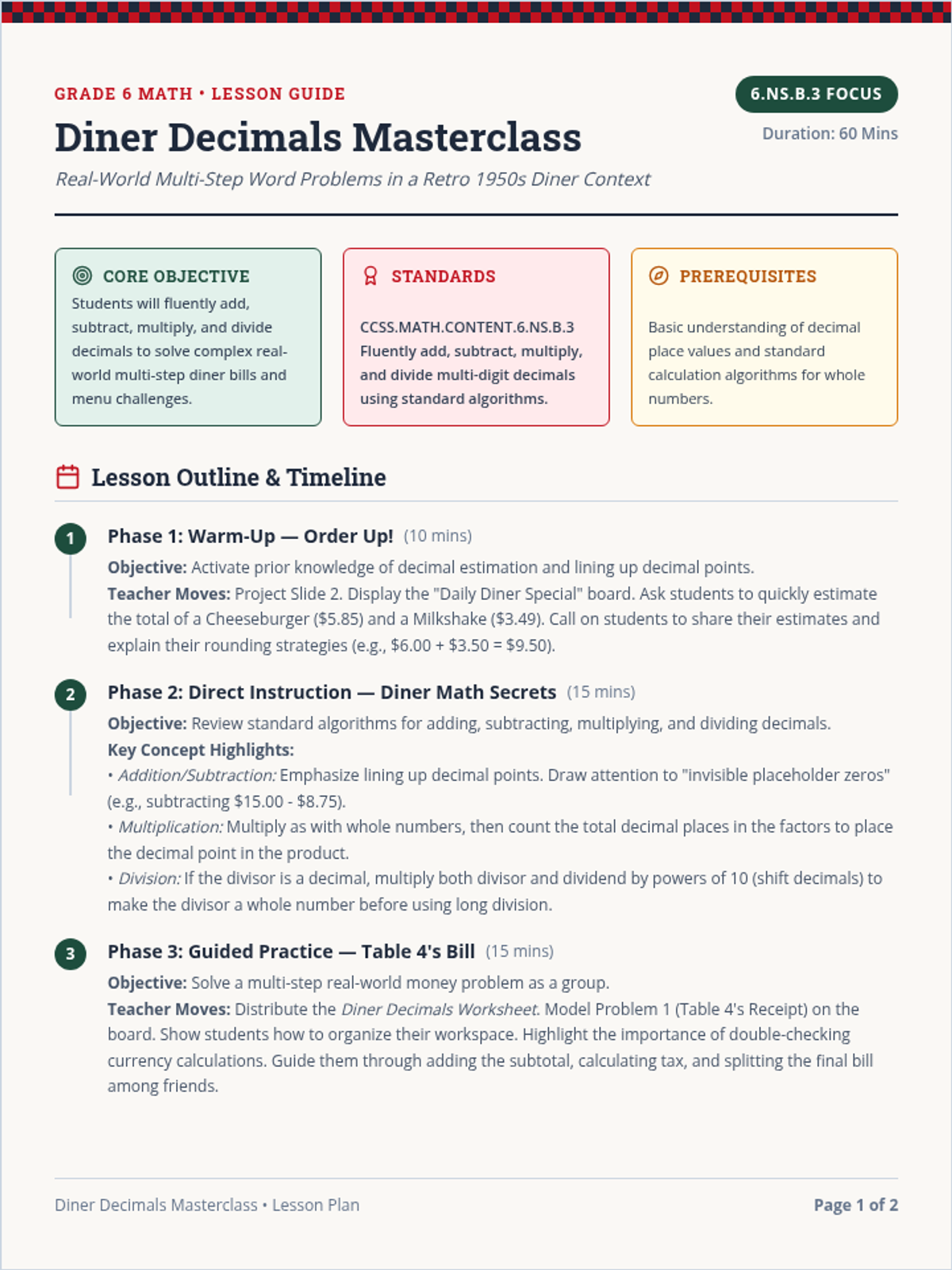
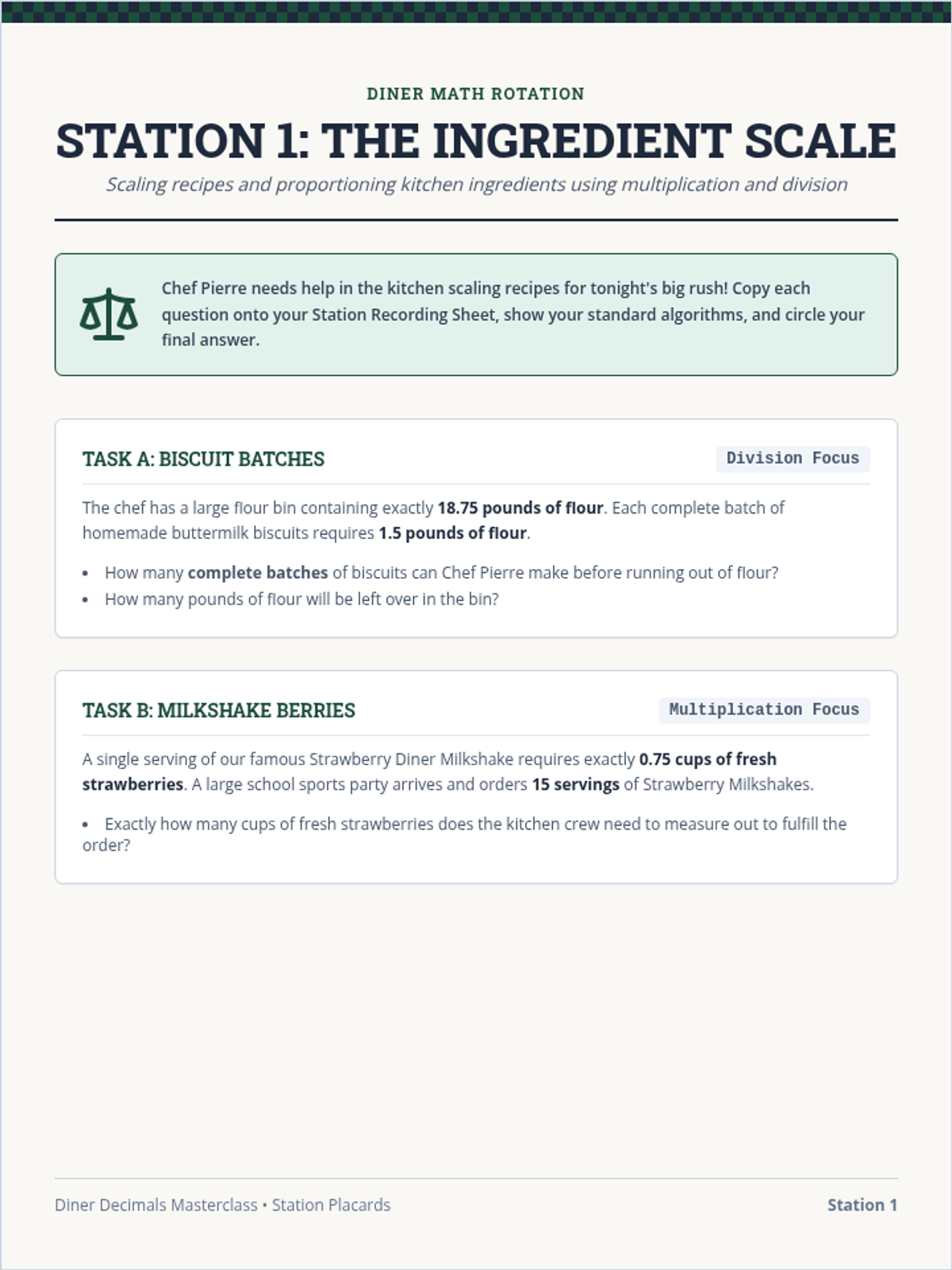
Applies decimal multiplication to multi-step word problems involving money and real-world costs, specifically targeting the rigor found in STAAR 5.3E.
Focuses on multiplication of decimals using models and strategies based on place value, aligned to TEKS 5.3E. Students will use the Precision Lab theme to calculate experimental yields.
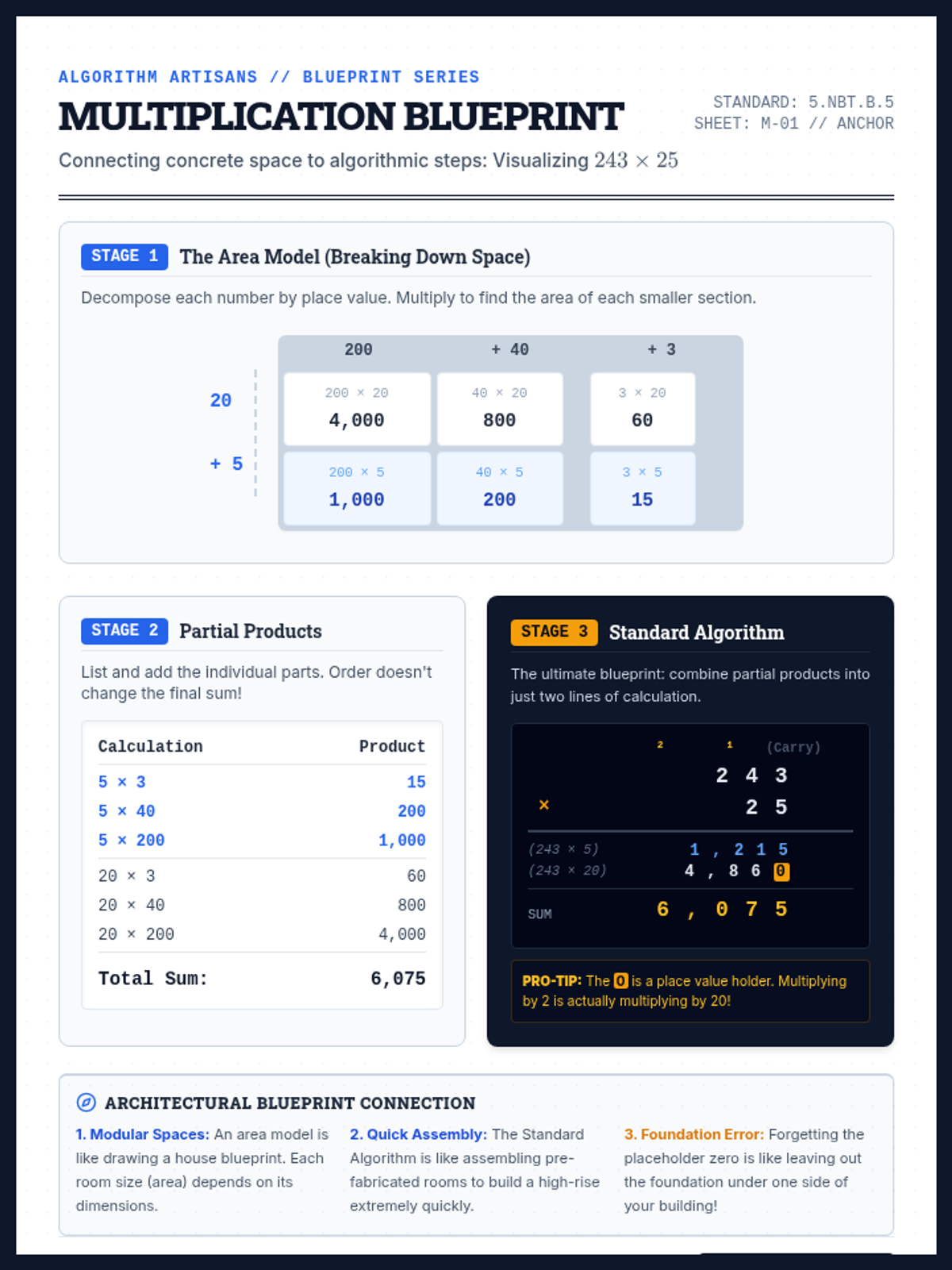
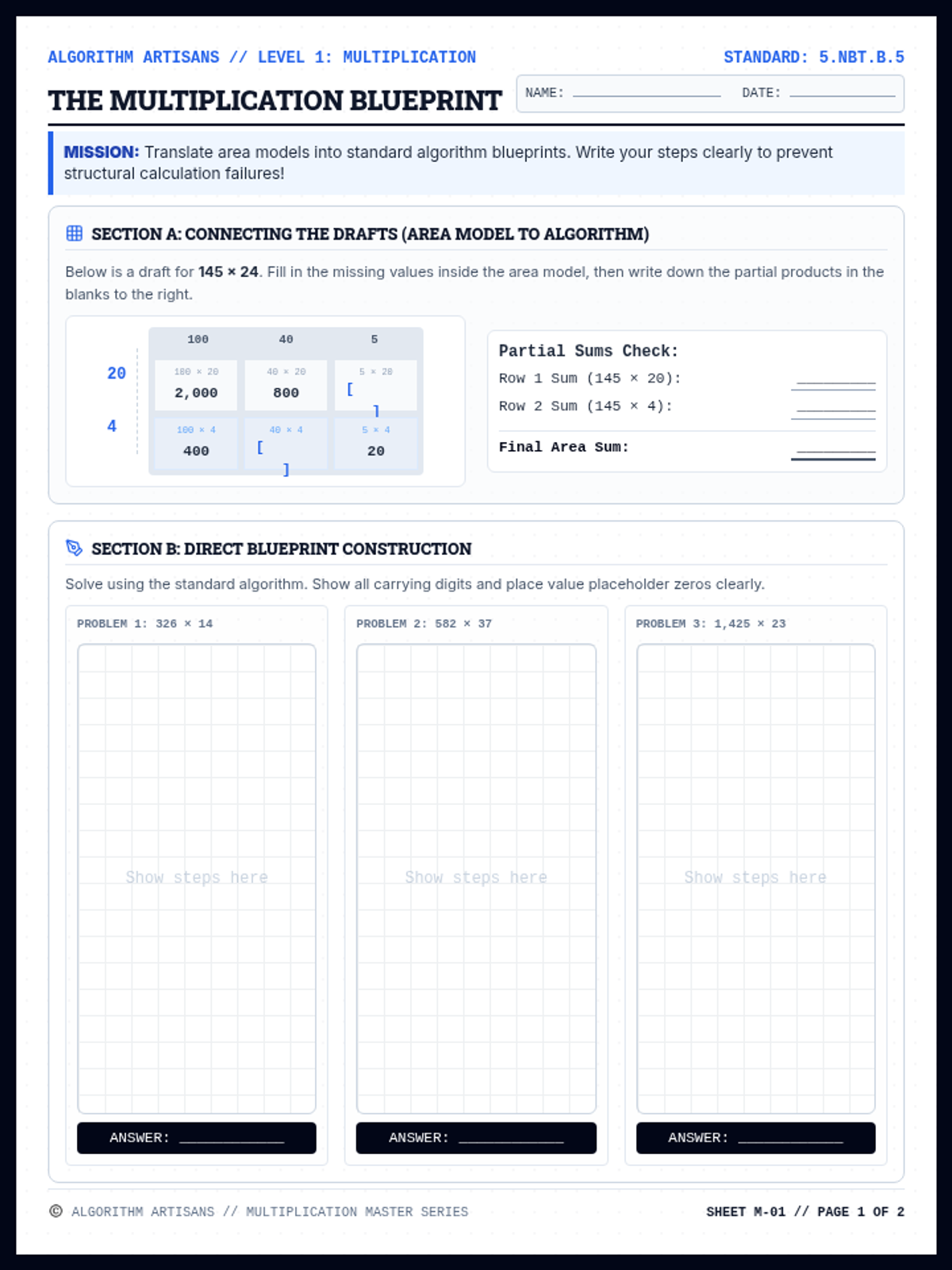
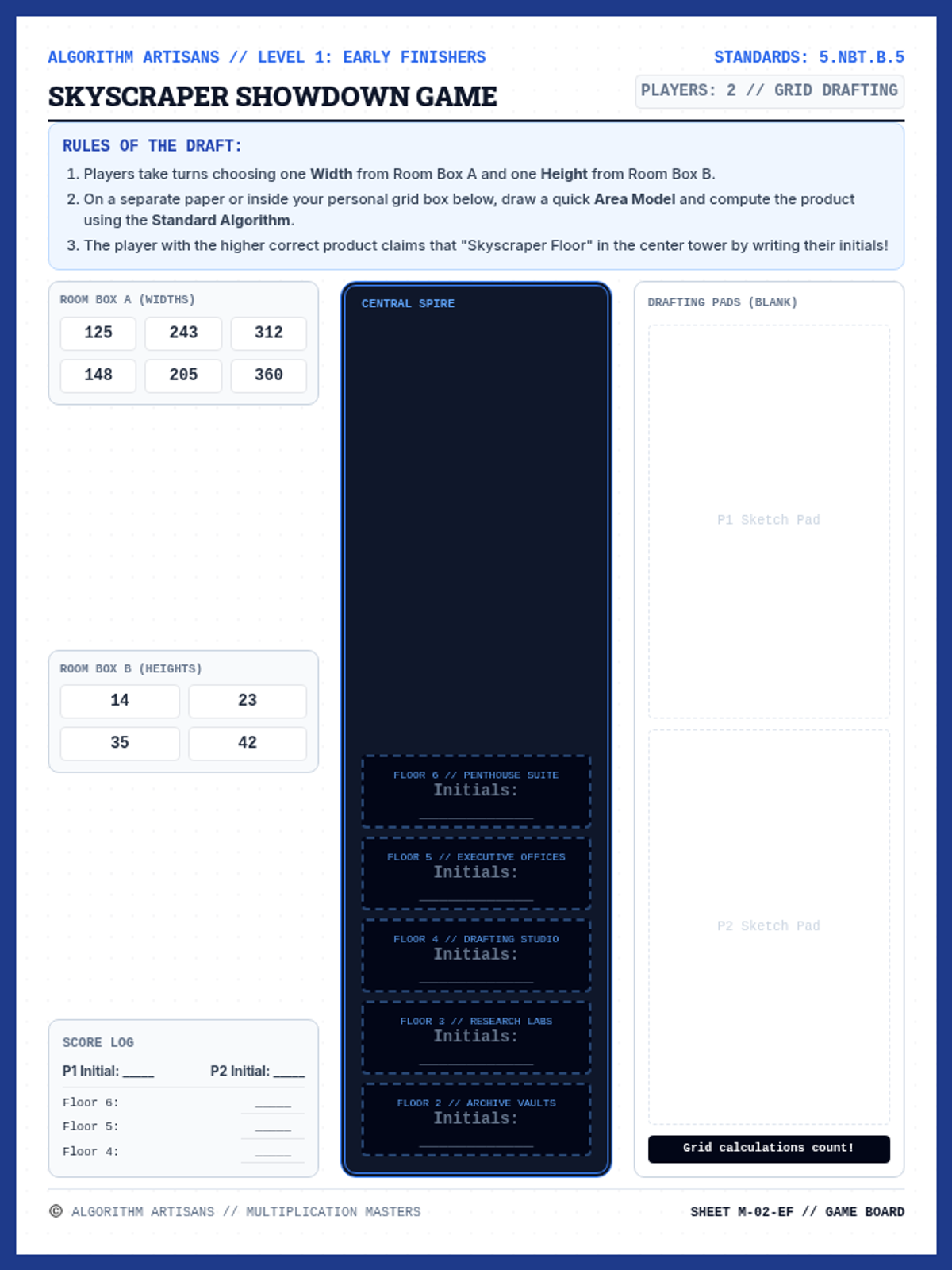
A lesson focused on the partial products method for multi-digit multiplication, using a 'blueprint' theme to help students visualize breaking down numbers into tens and ones.
A math lesson focused on dividing mixed numbers through the lens of cooking and recipes, providing students with practical applications of fraction division.
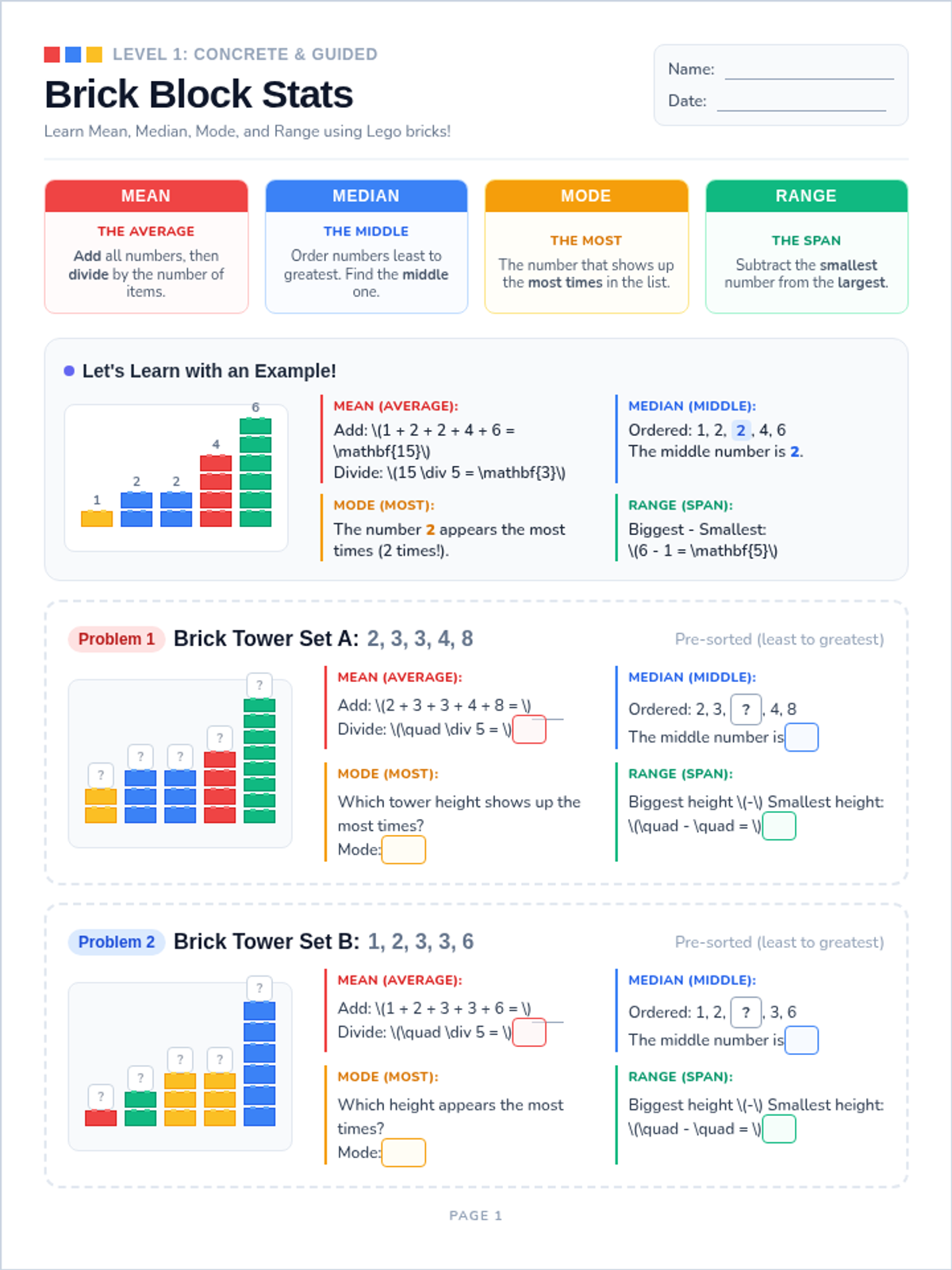
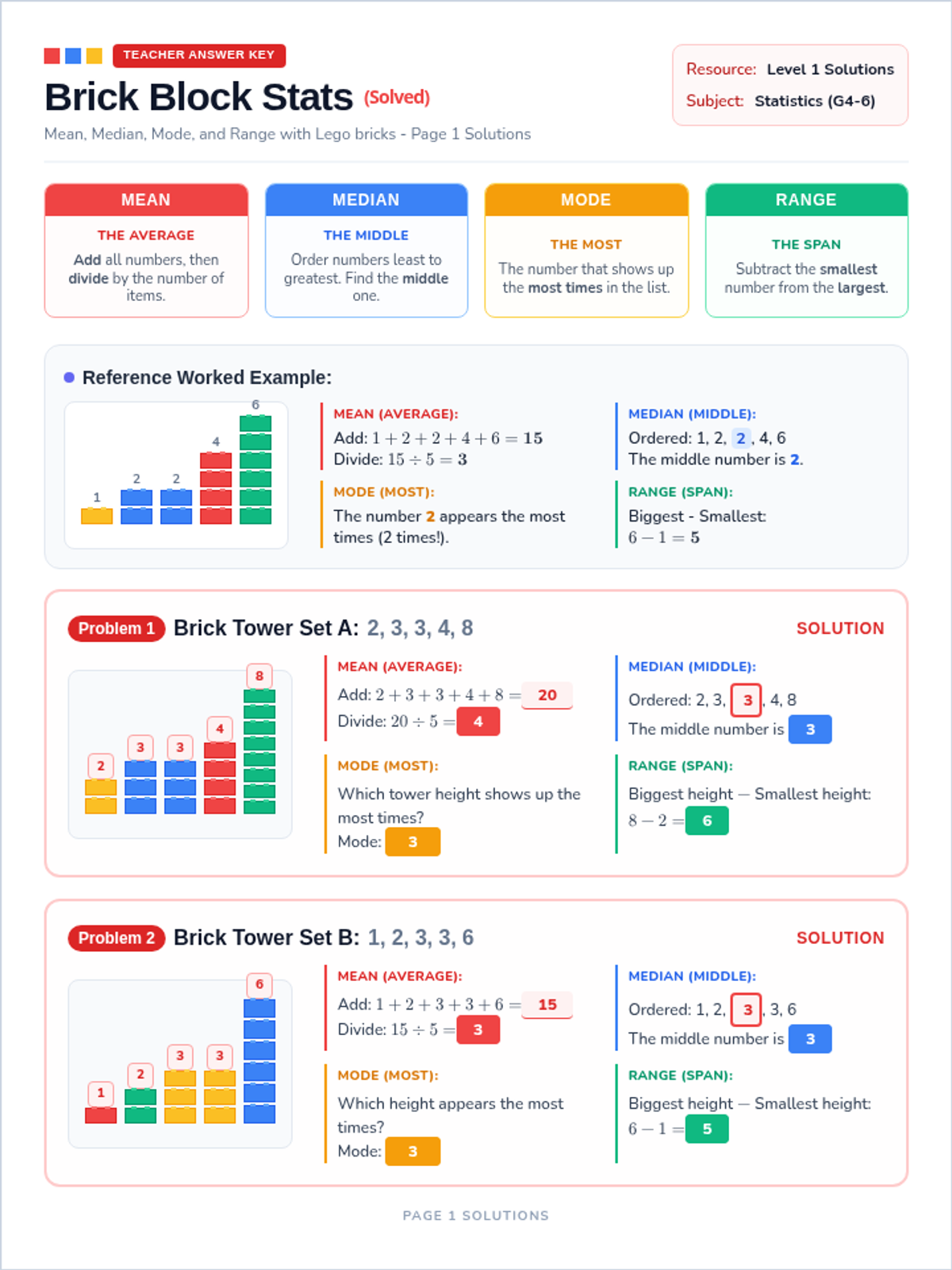
A comprehensive introduction to basic statistics using the world of the Teen Titans. Students will master Mean, Median, Mode, Range, and Probability through hands-on practice with their favorite heroes.
A fun, themed introduction to statistics covering central tendency, probability, and data visualization using the world of My Little Pony: Equestria Girls.
A lesson about identifying whole numbers from equivalent fractions using area models. Students practice with pre-filled models, shading blank models, and drawing their own models.
A comprehensive practice set for mastering the four basic operations with fractions, themed as an engineering workshop.
A lesson on comparing three fractions with unlike denominators using common denominators and inequality symbols.
A lesson focused on comparing and ordering sets of three fractions with unlike denominators by finding a common denominator, specifically using sets where denominators are related by common multiples.
Focuses on representing and solving problems involving perimeter, area, and volume. Students use their measurement skills as 'Dimension Detectives' for the final mission.
Focuses on classifying 2D figures in a hierarchy based on properties. Students identify relationships between sets and subsets to unlock the 'Geometric Gates'.
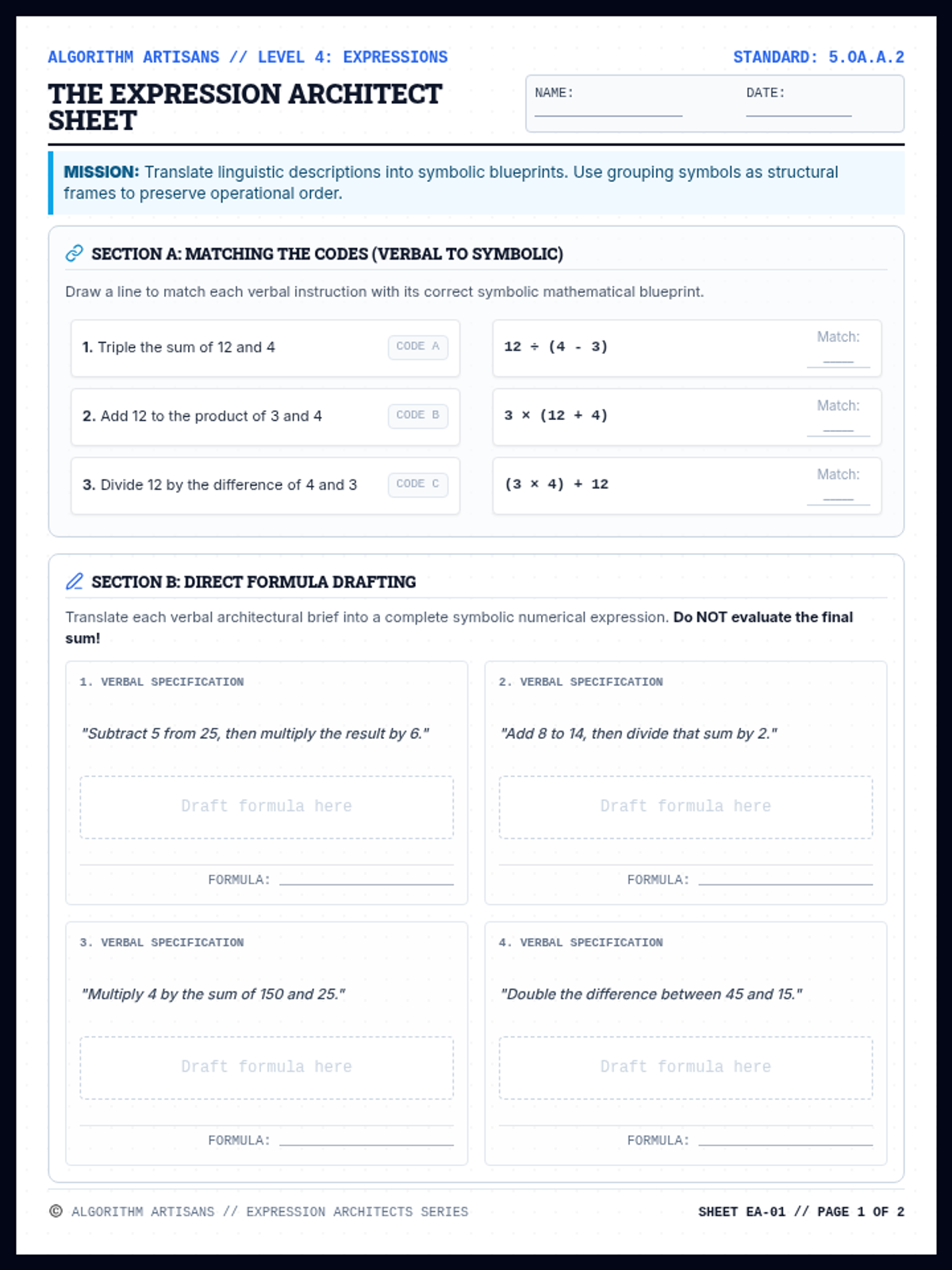
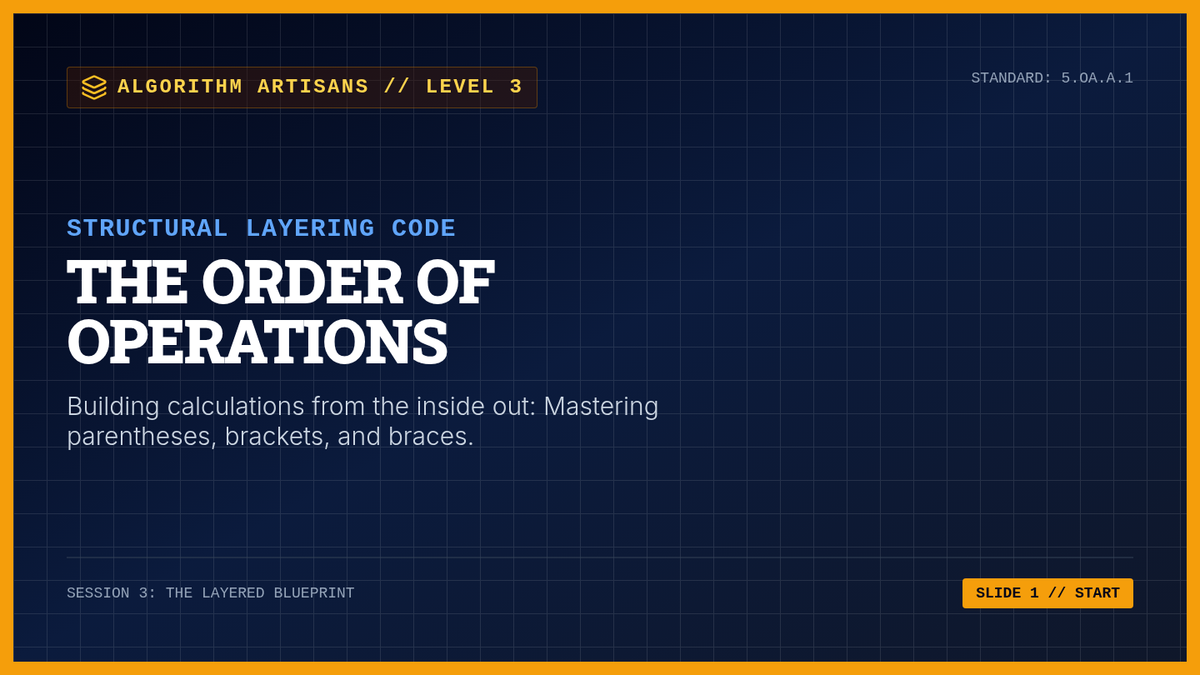
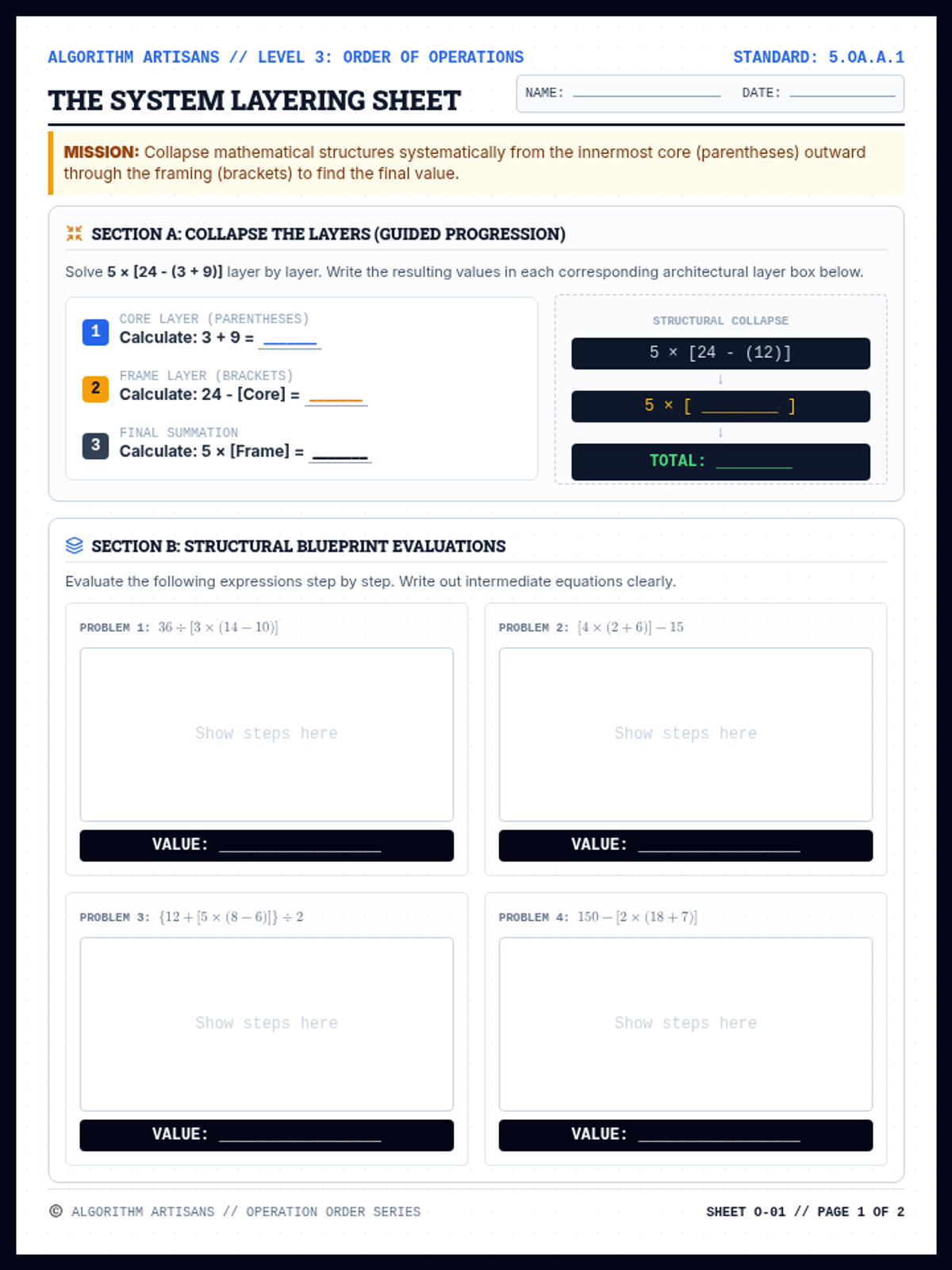
Focuses on simplifying numerical expressions using the order of operations, including up to two levels of grouping. Students solve 'Expression Enigmas' to find the vault combination.
Focuses on comparing and ordering decimals to the thousandths place using symbols and place value logic. Students act as 'Decimal Decoders' to crack a numeric sequence code.
A beginner-friendly introduction to fractions (halves, thirds, and fourths) designed for Level 1 English Language Learners with Chinese translation support and visual aids.
A lesson focused on converting mixed numbers to improper fractions using a step-by-step visual method. Students will practice building 'improper' structures from mixed foundations.
This lesson provides Grade 6 students with rigorous open-response practice for the MCAS math exam, focusing on equivalent expressions, surface area, and volume. Students will apply their knowledge to multi-part engineering and design challenges.
A comprehensive practice set covering the five major domains of Grade 6 Mathematics to prepare students for the MCAS state assessment. Includes multiple-choice and open-response questions modeled after official test items.
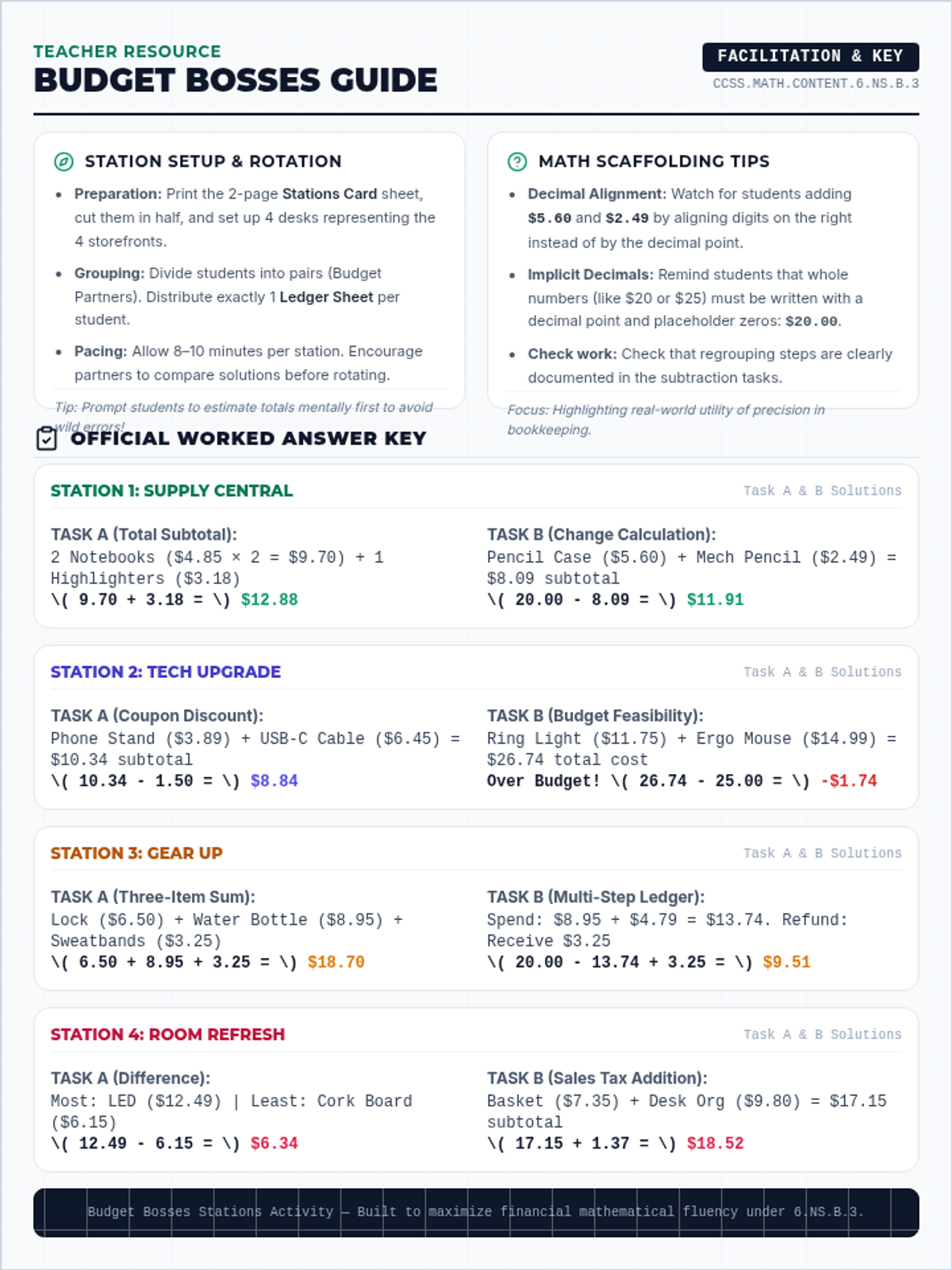
A comprehensive review of 4.2G, 4.6D, and 4.9A through a final mission. This lesson integrates all three standards into a culminating "Ultimate Heist" escape room challenge.
Focuses on TEKS 4.9A: Representing data on frequency tables, dot plots, and stem-and-leaf plots. Students act as investigators analyzing evidence files to solve a data-driven mystery.
Focuses on TEKS 4.6D: Classifying two-dimensional figures based on parallel and perpendicular lines and angle types. Students analyze evidence files (Task Cards) to identify high-security shapes.