Explores the dynamics of rotation, comparing linear force to torque, applying Newton's Second Law in angular form, and mastering the conditions for static equilibrium.
Students synthesize their knowledge to participate in a structured debate about the future of wildlife restoration.
Students analyze the differing viewpoints of ranchers, environmentalists, and local communities regarding predator reintroduction.
Students explore the scientific history of wolf reintroduction in Yellowstone and investigate the concept of trophic cascades and ecosystem engineering.
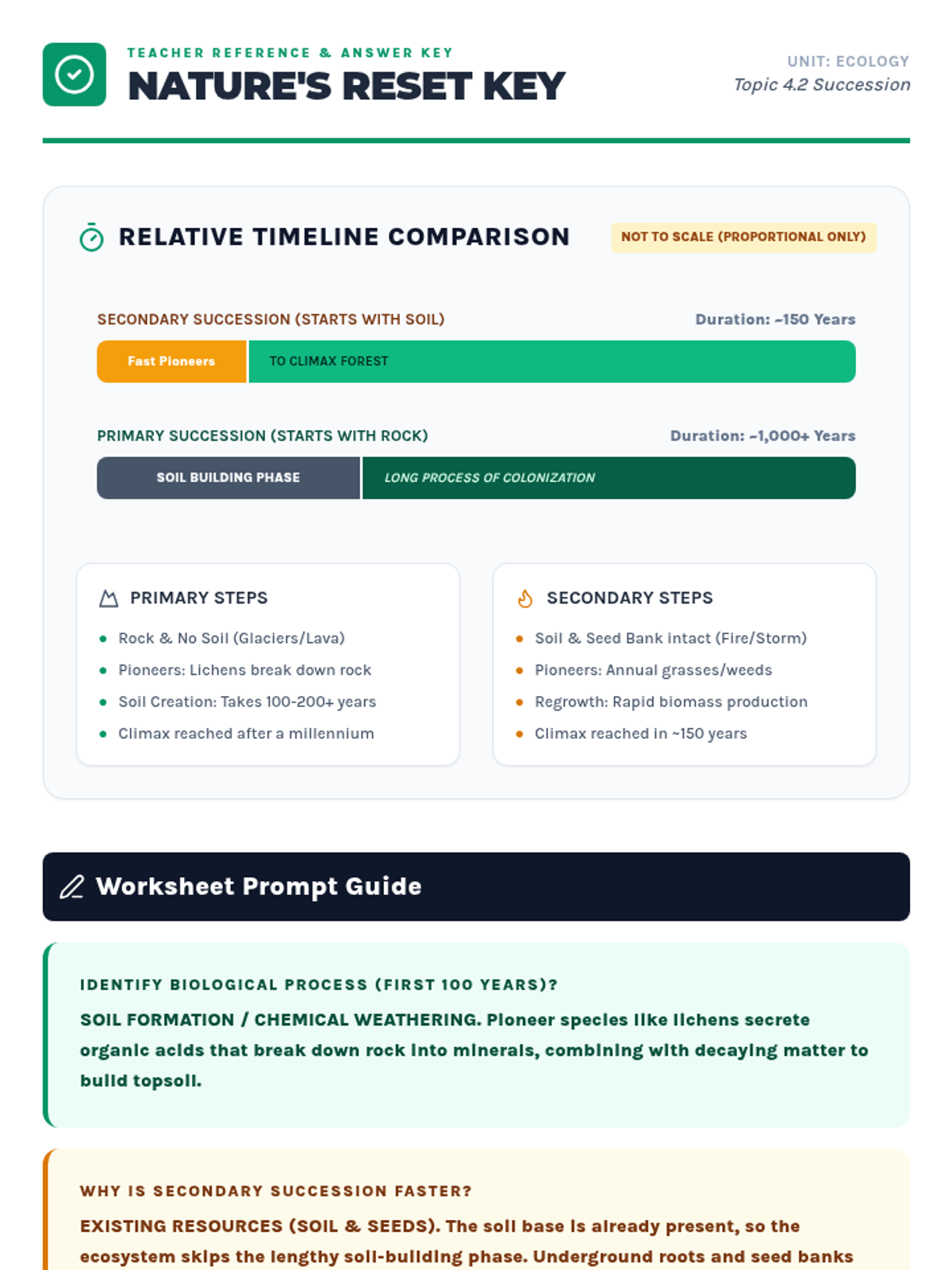
Explore how ecosystems respond to disturbances through primary and secondary succession, and analyze the relationship between biodiversity and ecosystem stability.
Students investigate radioactive decay in rocks from Afar to determine their age, using mathematical modeling and simulations to reconstruct the region's geologic history.
A lesson exploring how radioactive decay in Earth's mantle generates heat, driving the convection currents that move tectonic plates. Students will trace the energy path from atomic nuclei to the movement of continents.
A comprehensive assessment lesson focusing on the specific events of prophase, metaphase, anaphase, telophase, and cytokinesis through detailed matching exercises.
This lesson explores advanced rotational dynamics, focusing on the application of Newton's Second Law for rotation to massive pulleys and rolling objects where static friction provides the necessary torque for rolling without slipping.
A comprehensive 60-minute lesson exploring the differences and mathematical relationships between translational and rotational kinetic energy, featuring guided reading, visual organizers, and problem-solving.
A comprehensive look at the parallels between linear and angular motion, focusing on variable relationships, kinematic equations, and real-world rolling applications.
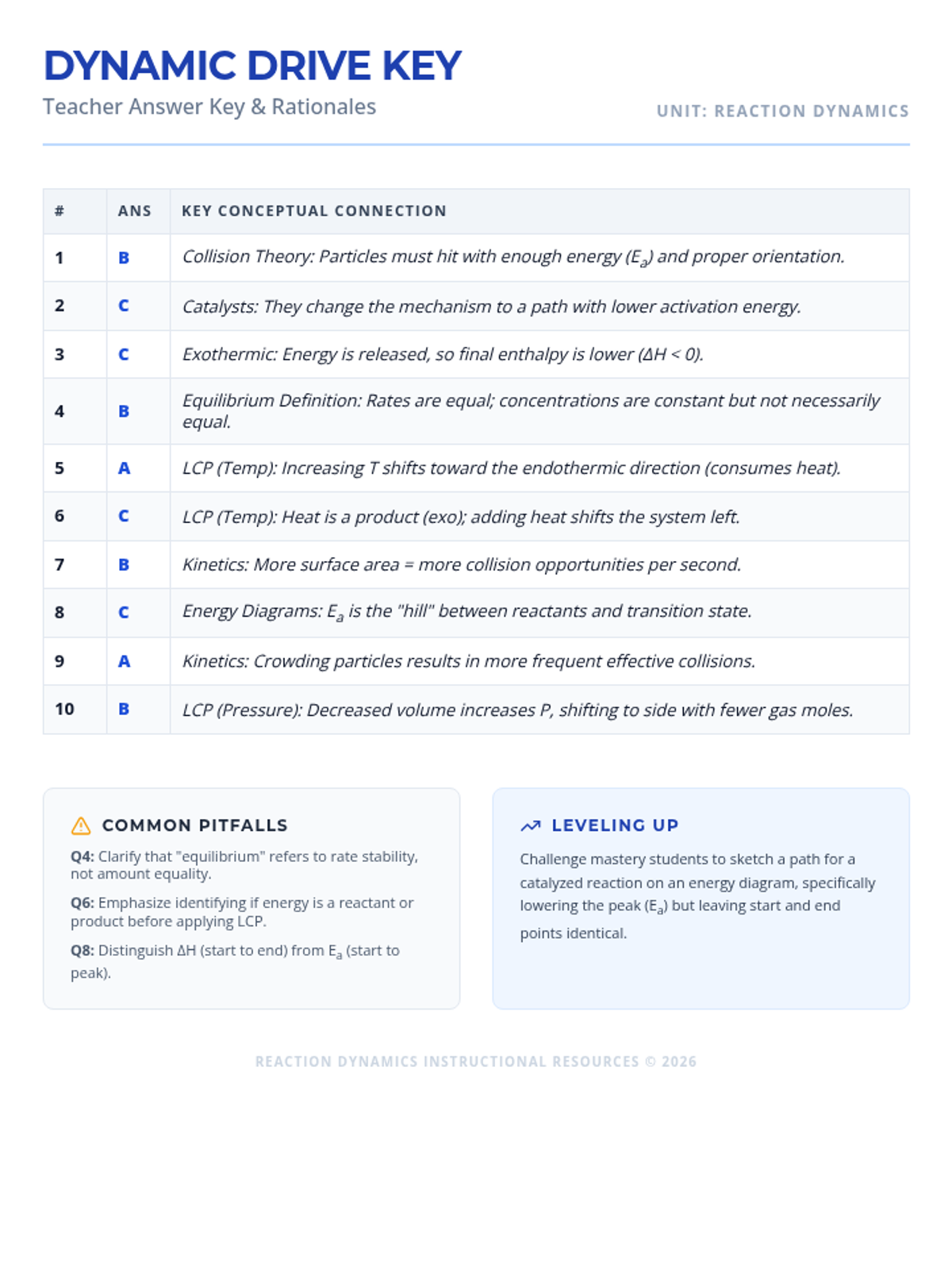
A comprehensive review of stoichiometry concepts including the law of conservation of mass, molar mass, mole ratios, limiting reactants, and percent yield. Includes instructional slides, a practice worksheet, and a realistic mock exam to prepare students for assessment.
A comprehensive lesson on mastering dimensional analysis through the 'bridge' method, focusing on unit cancellation strategies for high school science students.
Synthesis of the book's themes through a final design project where students create fear-free environments for animals.
Exploring the emotional lives, social structures, and intelligence of animals through small-group jigsaw analysis and field observations.
Introduction to Temple Grandin's unique perspective and the fundamental concepts of sensory perception in both autistic individuals and animals.
Esta lección profundiza en la diferencia fundamental entre atributos que pertenecen a la clase y aquellos que pertenecen a cada objeto individual en Python. A través de la analogía de una familia de perros y ejercicios prácticos de codificación, los estudiantes de secundaria superior aprenderán a modelar datos compartidos y únicos de manera eficiente.
An introductory lesson on the unique chemical and physical properties of water, focusing on how its polar nature leads to life-sustaining characteristics.
A targeted Tier 2 intervention lesson for 11th-grade chemistry students to master the organization and trends of the periodic table through visual mapping and guided practice.
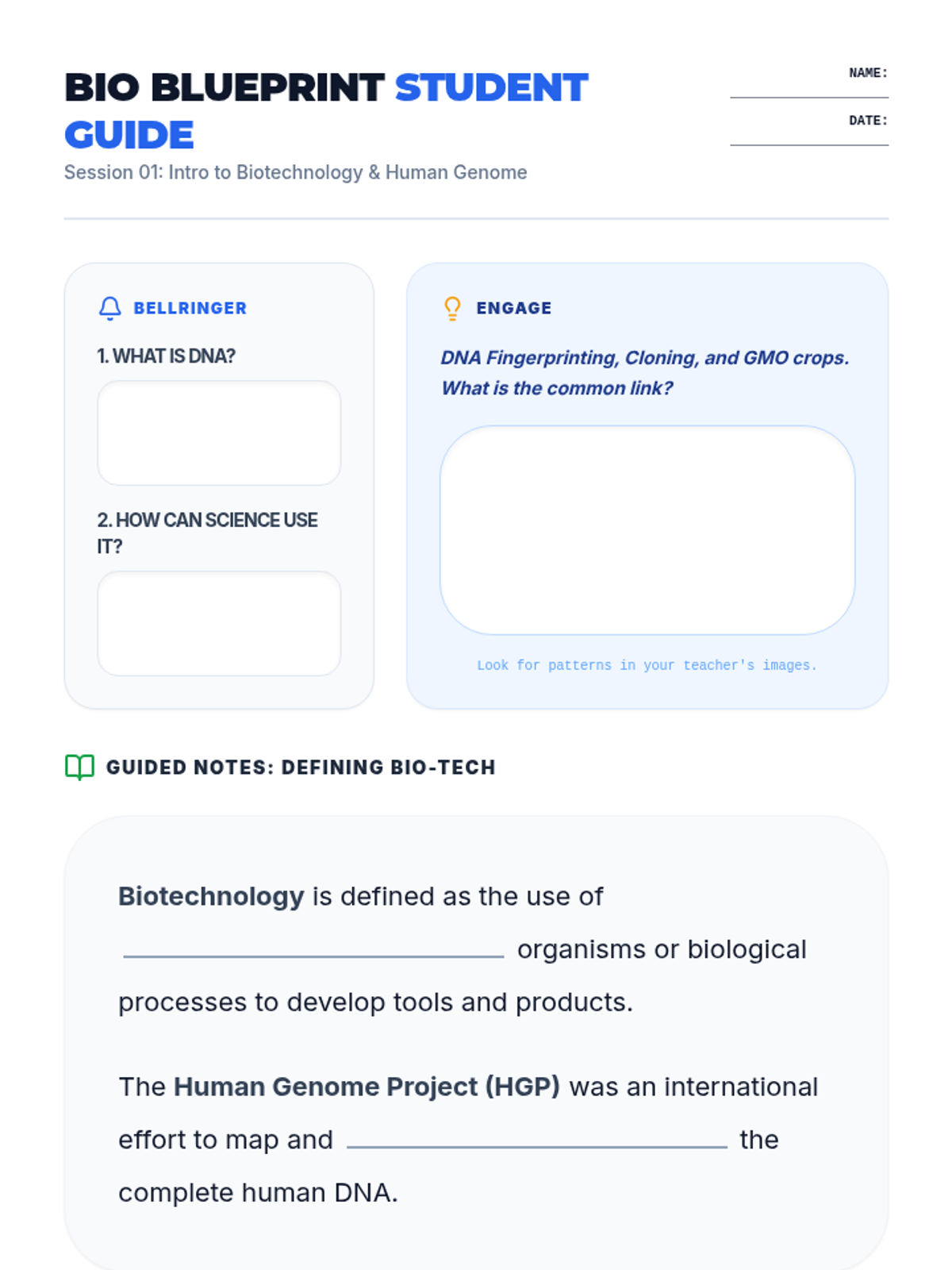
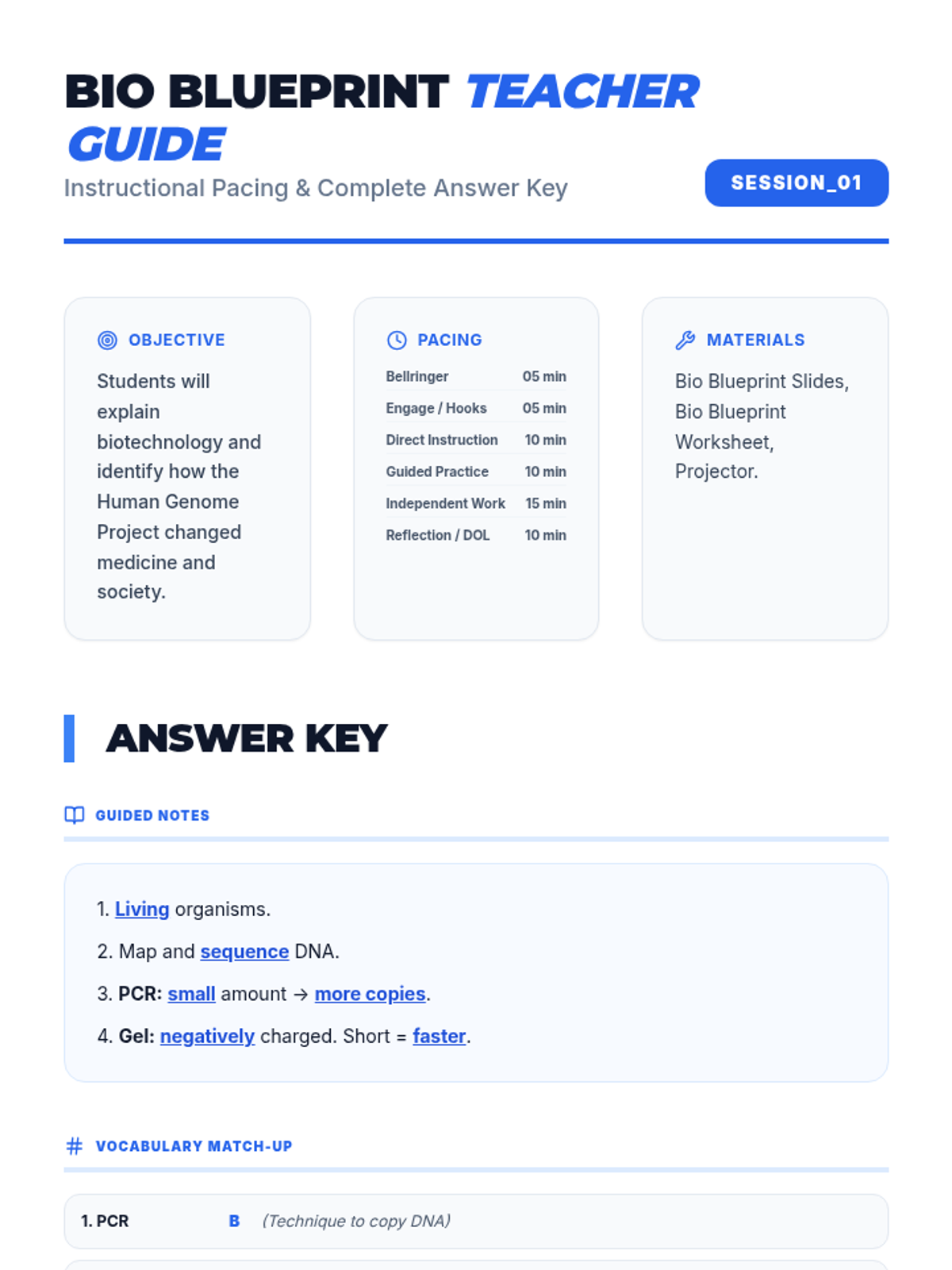
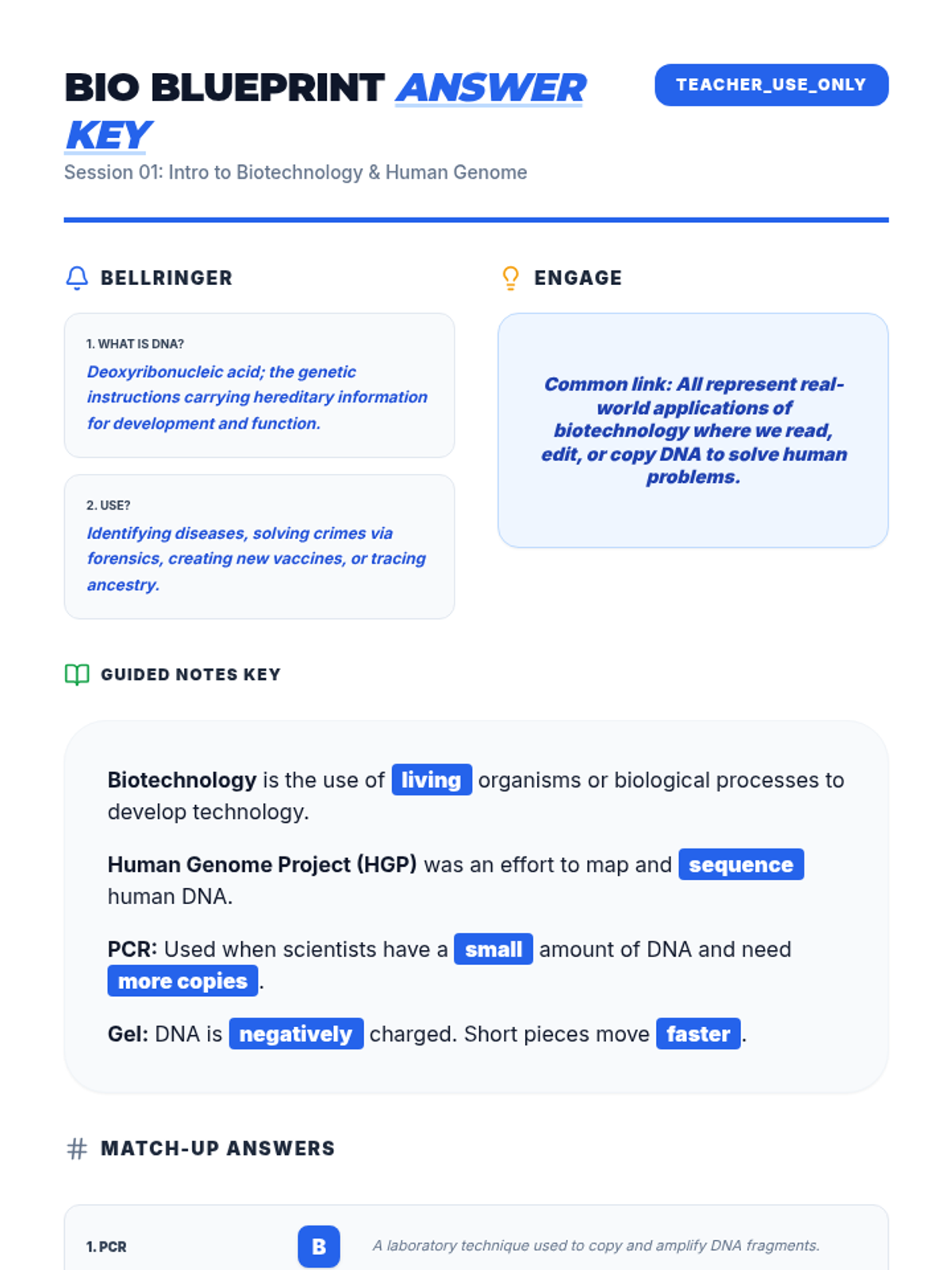
A concise overview of viruses and the immune system, spanning three experiences: viral mechanics, the immune response, and global disease trends.
A comprehensive review lesson for a Physics unit on Electric Forces, covering atomic structure, electric fields, Coulomb's Law calculations, and real-world applications of electrostatics.