Students investigate how sentence structure and topic complexity signal the intended reader. They create 'Audience Profiles' for different texts using specific textual evidence like jargon and complexity.
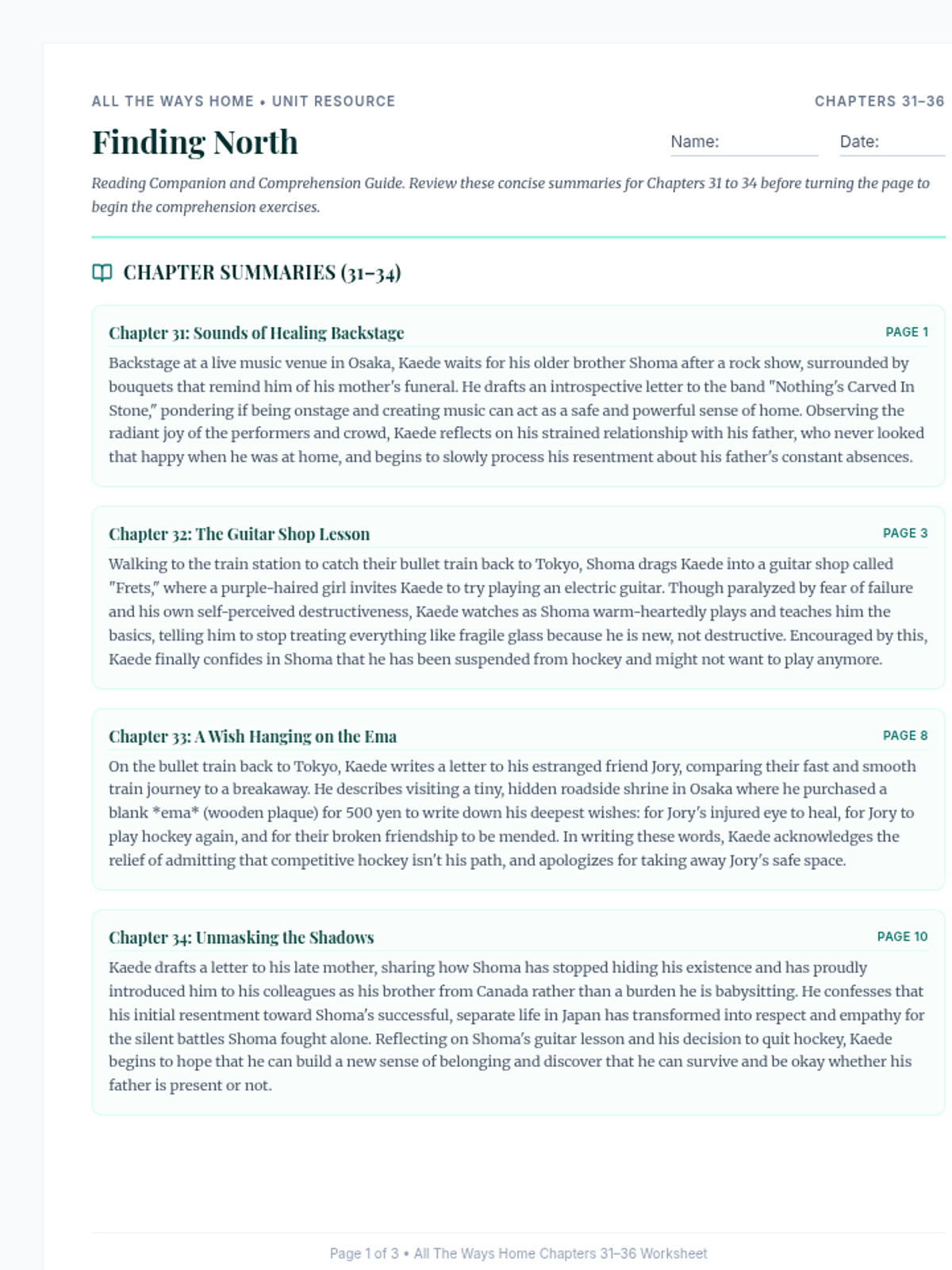
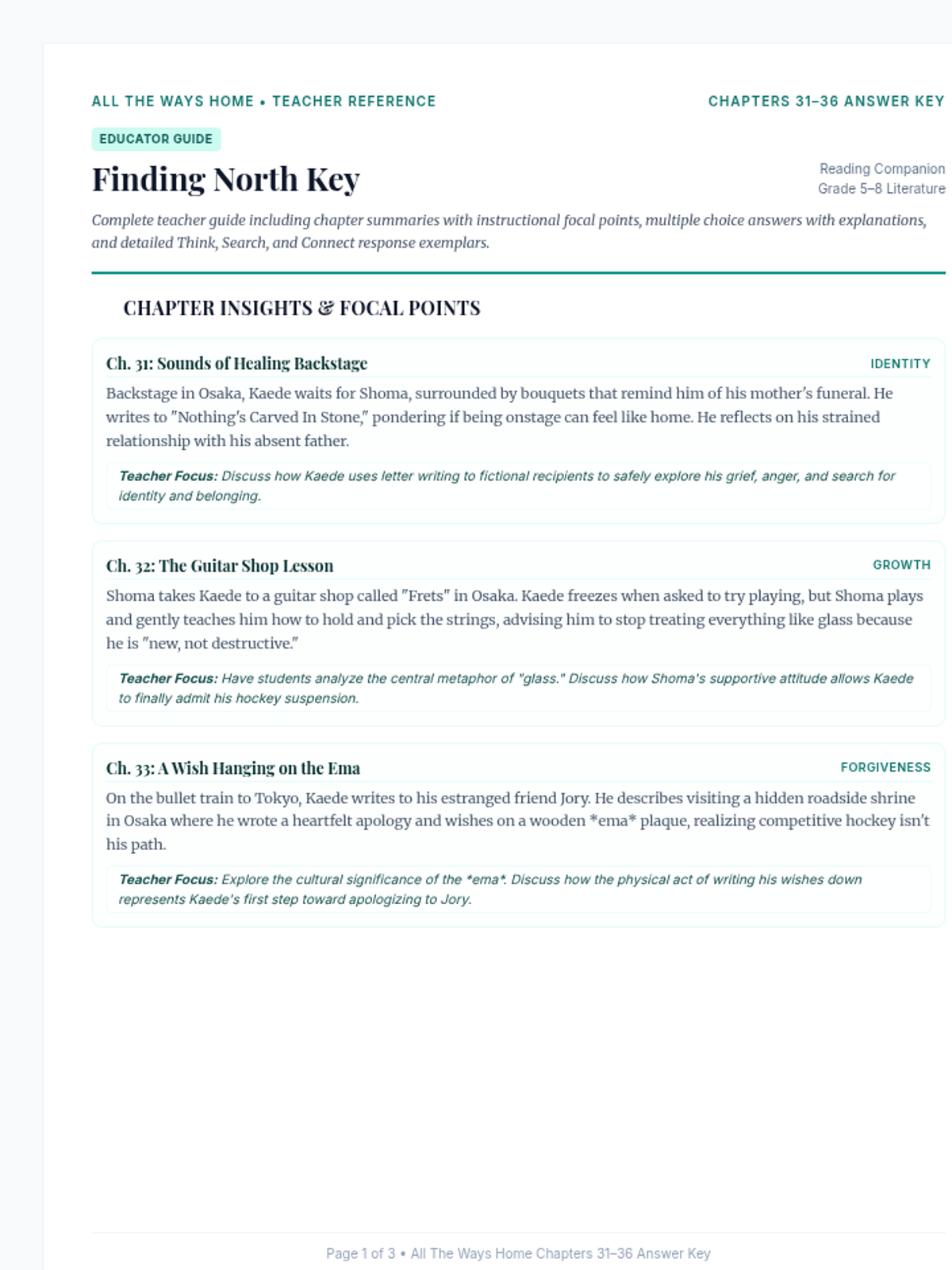
A study of Chapters 31-36 of Elsie Chapman's 'All The Ways Home'. Students explore Kaede's search for identity, his complex relationship with his brother Shoma, his father's painful abandonment, and his desperate choice to steal Shoma's bass to find his father in Sapporo.
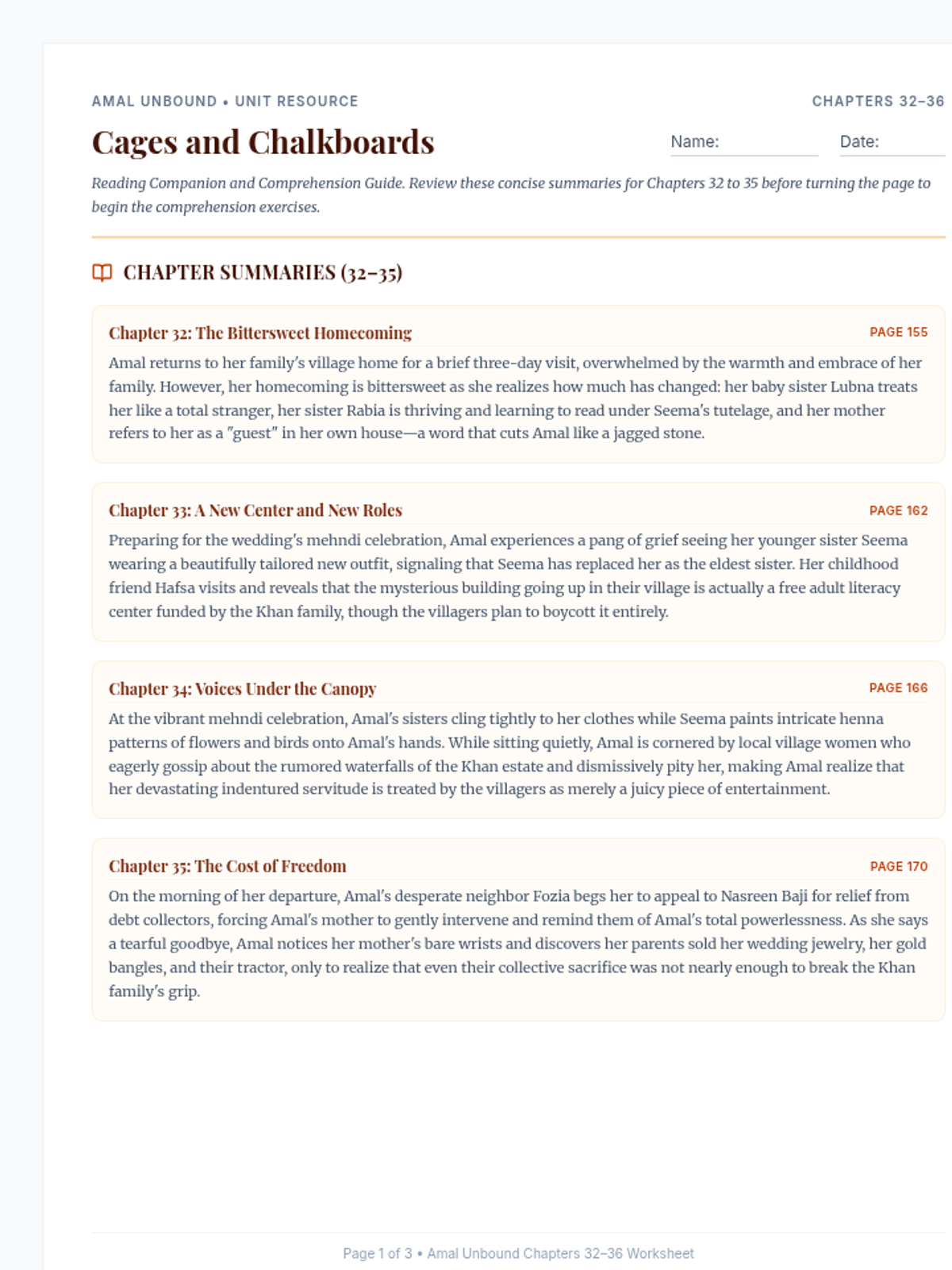
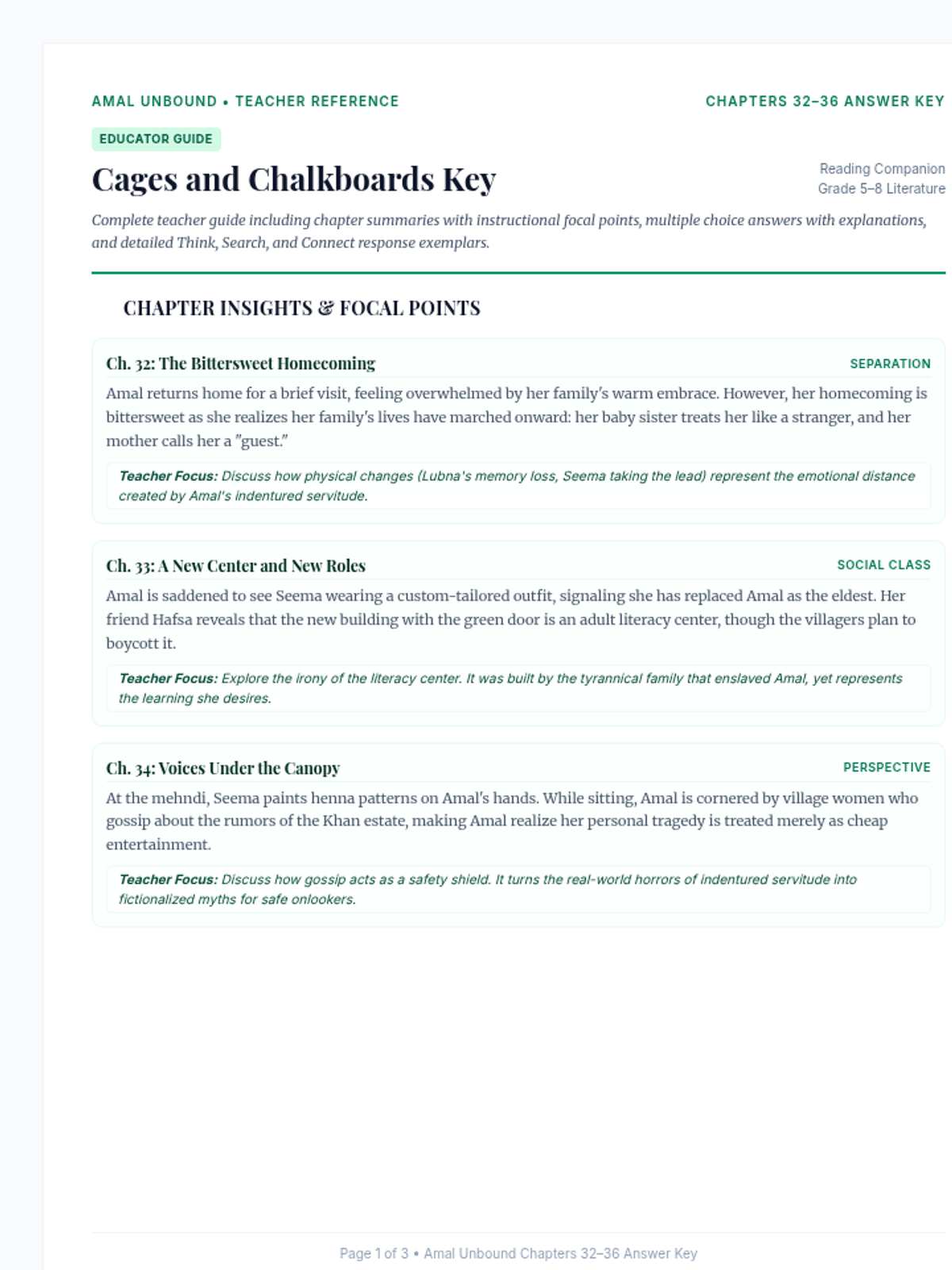
A lesson covering Chapters 32-36 of Aisha Saeed's 'Amal Unbound'. Students analyze Amal's bittersweet visit home, her realization of Nasreen Baji's gilded cage, and the unexpected opportunity to attend the new literacy center.
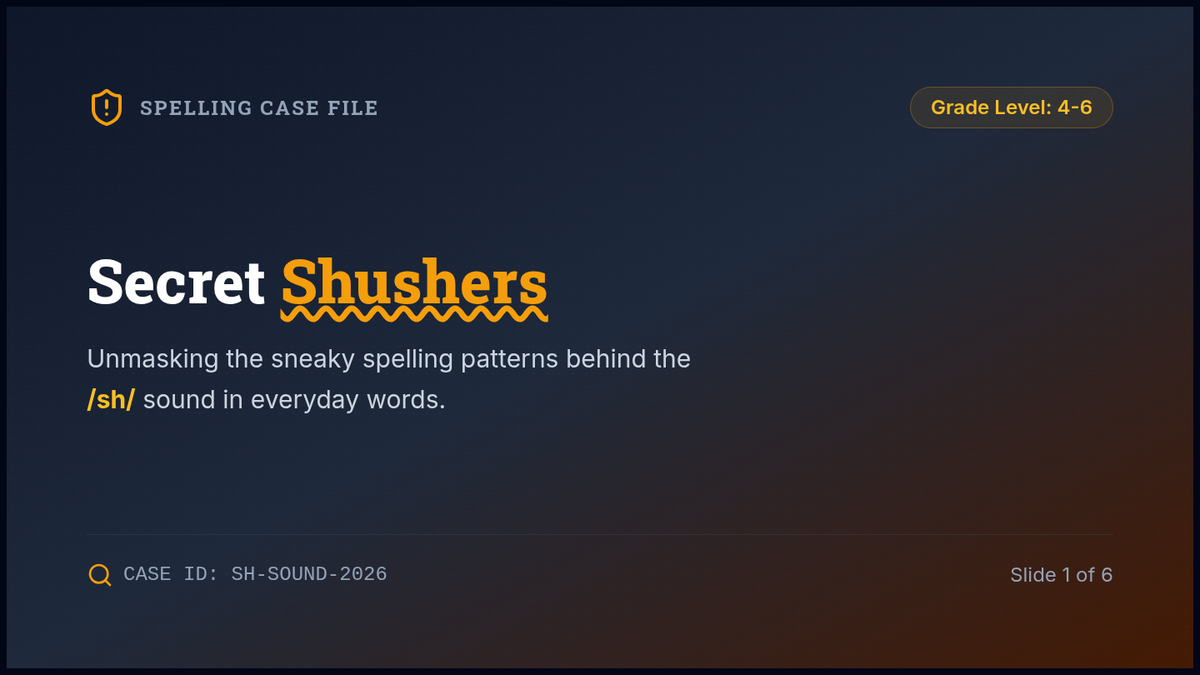
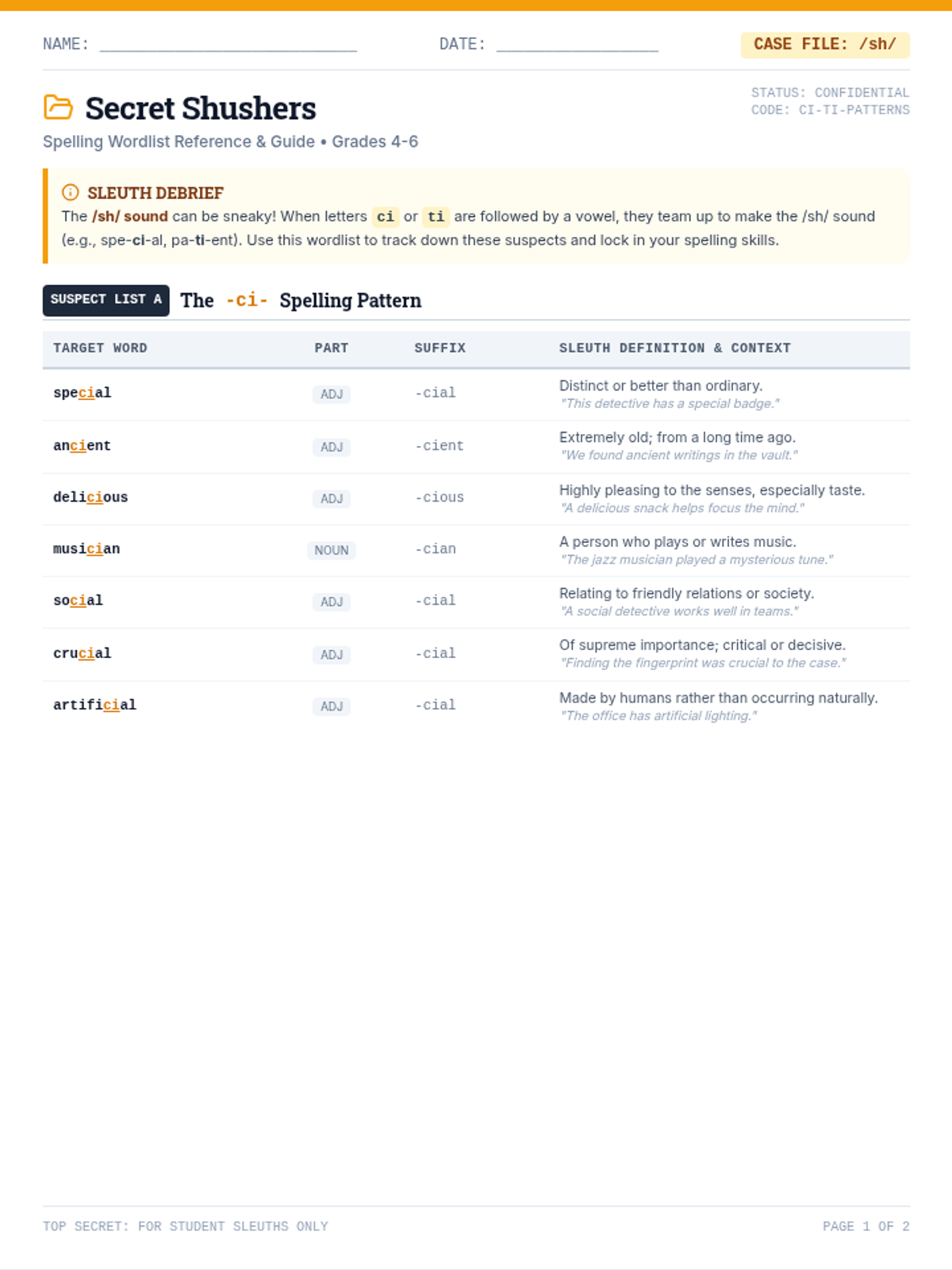
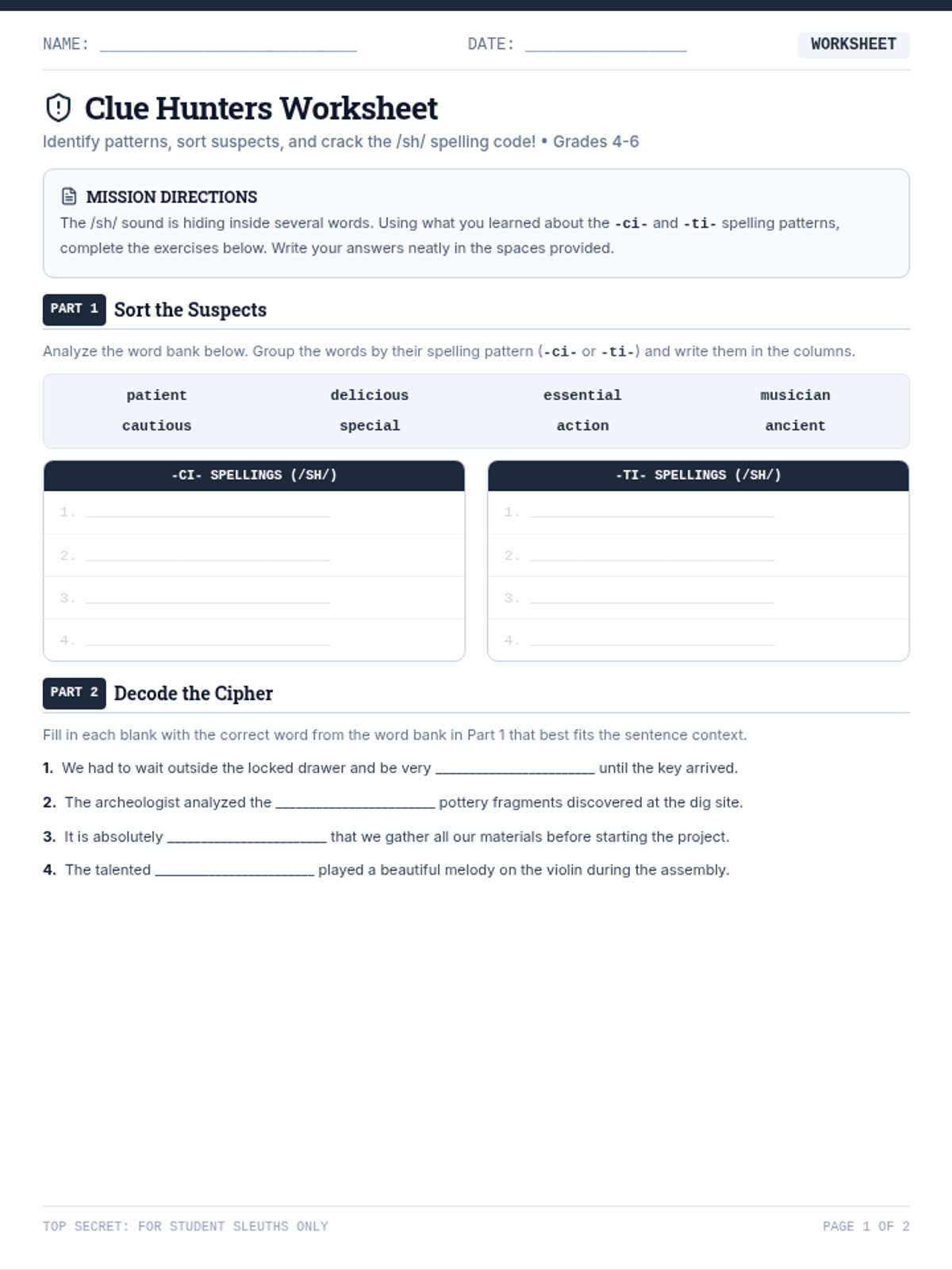
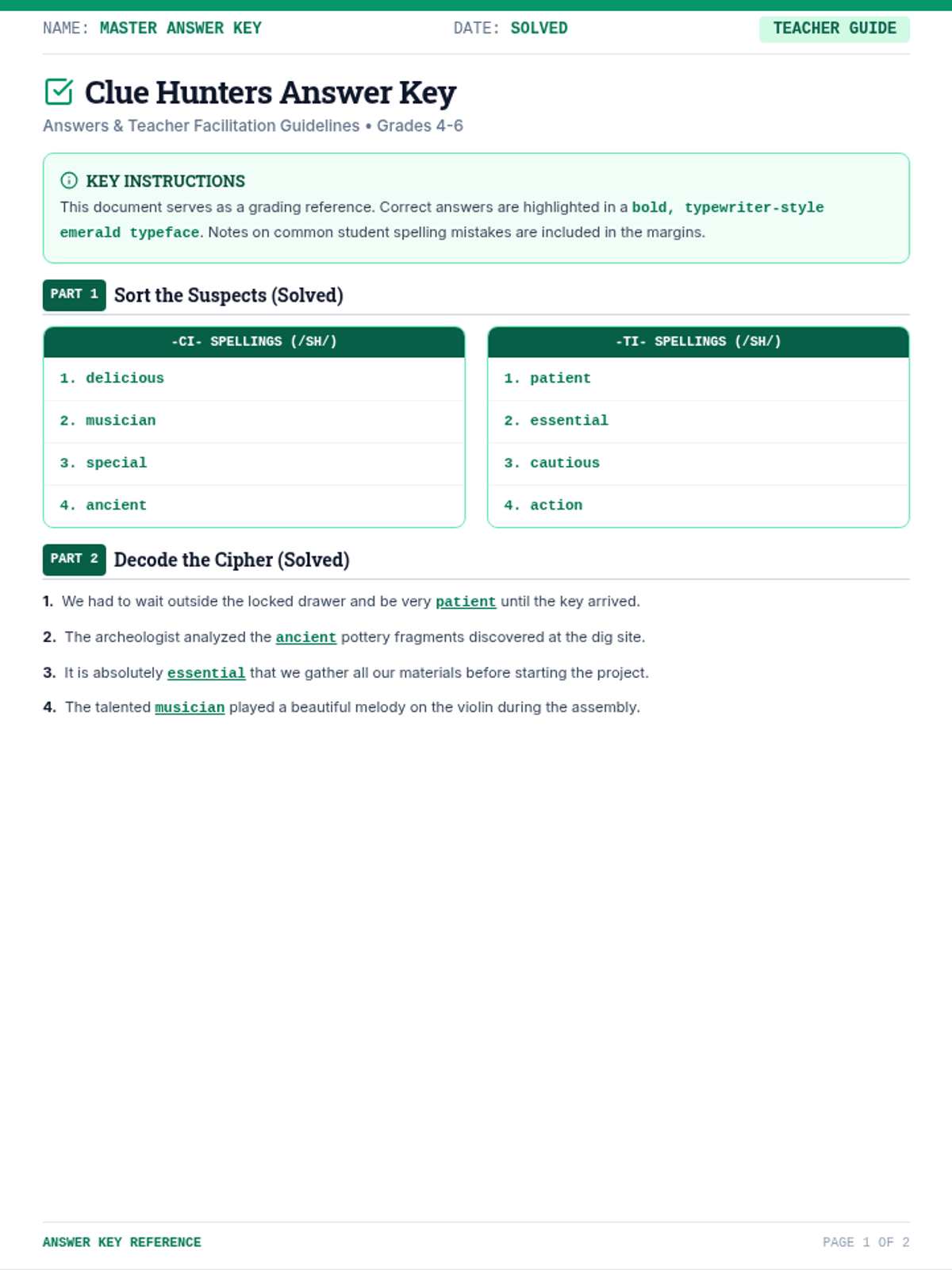
A spelling and phonics lesson for grades 4-6 focusing on the /sh/ sound spelled with 'ci' (as in special) and 'ti' (as in patient). Students explore patterns, organize words in detective-style case files, and apply their knowledge through interactive word hunts and spelling activities.
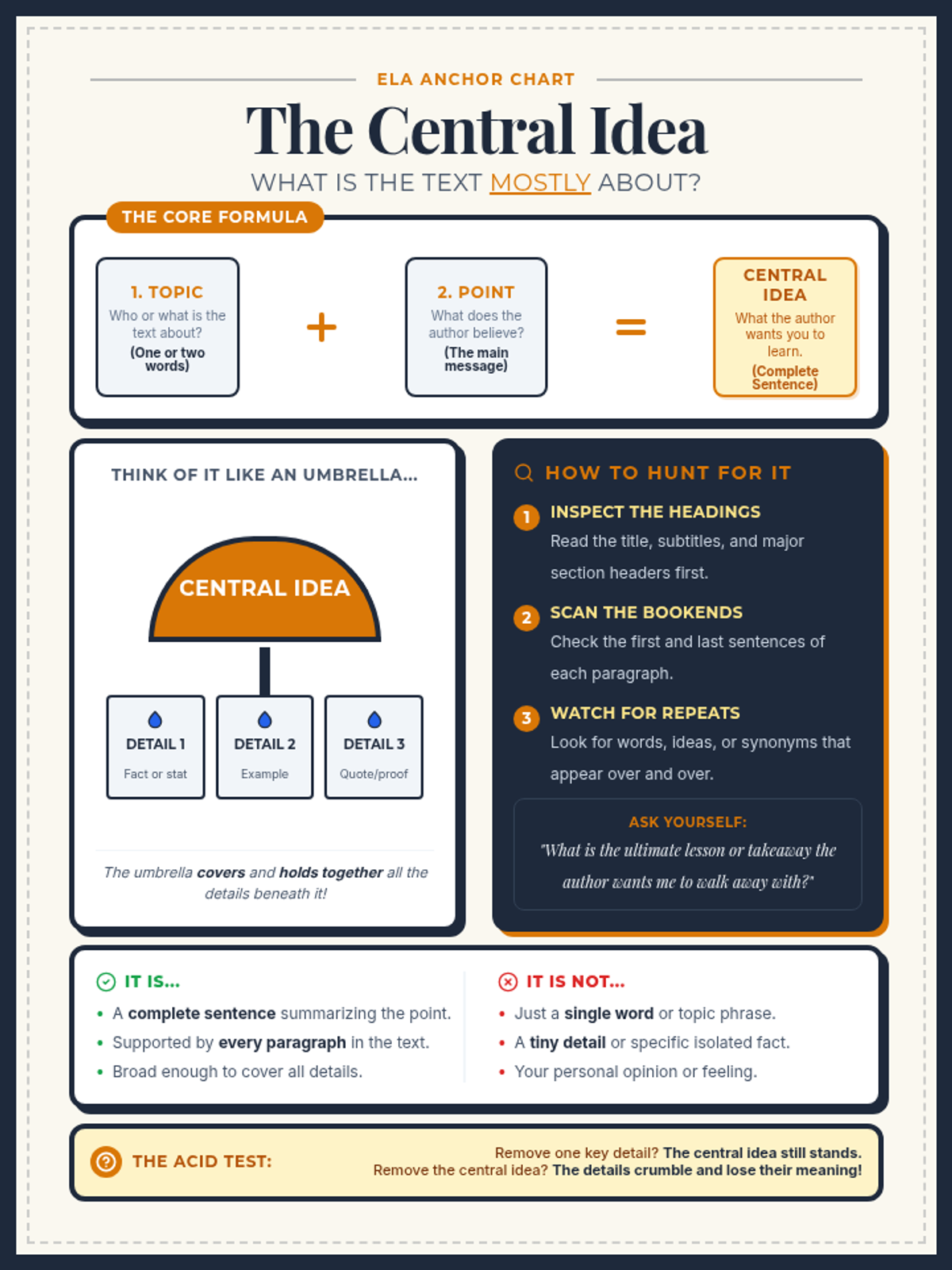
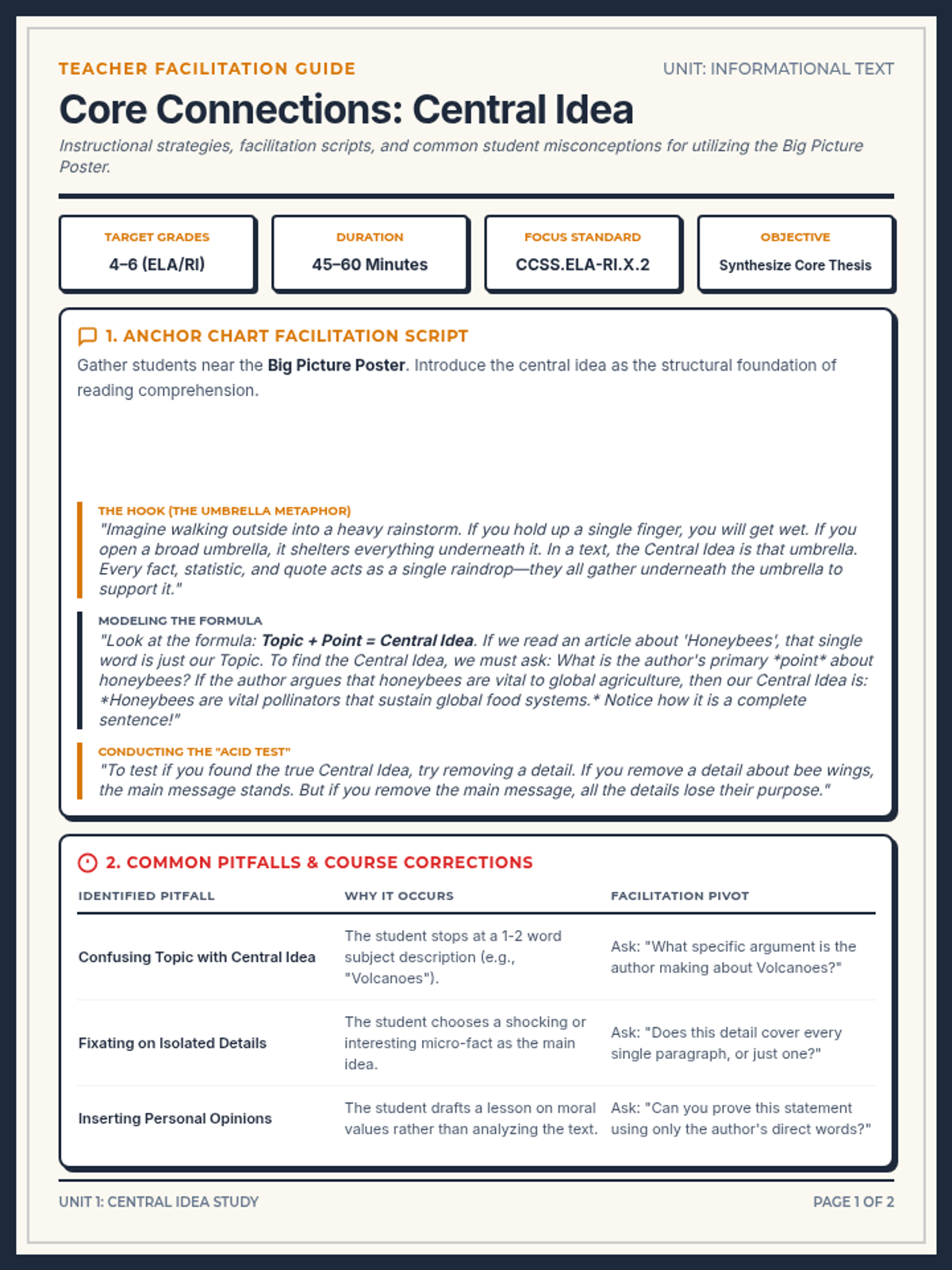
A lesson designed to guide students in identifying, analyzing, and synthesizing the central idea of informational texts. Features a visual anchor chart and a supporting teacher facilitation guide.
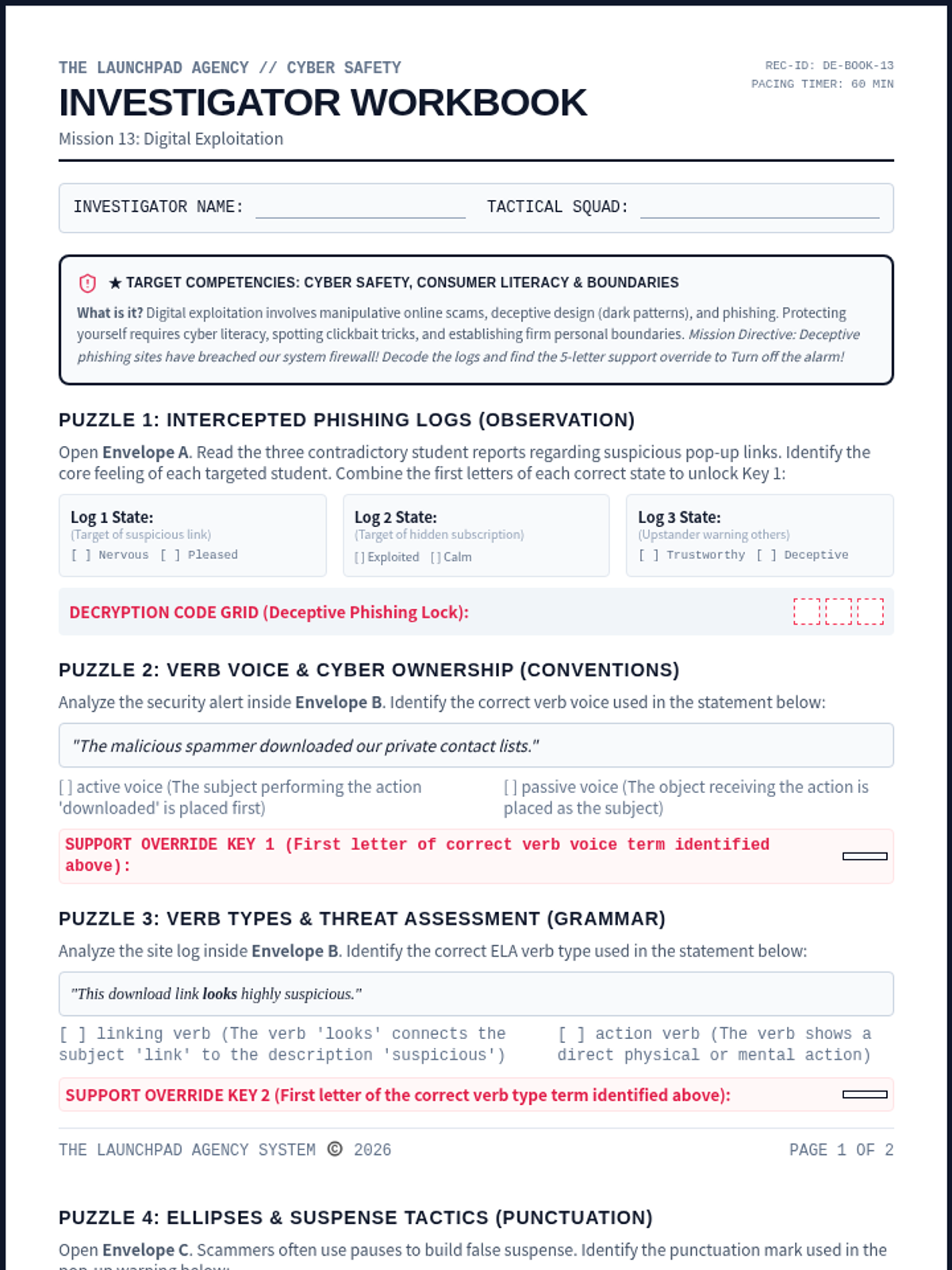
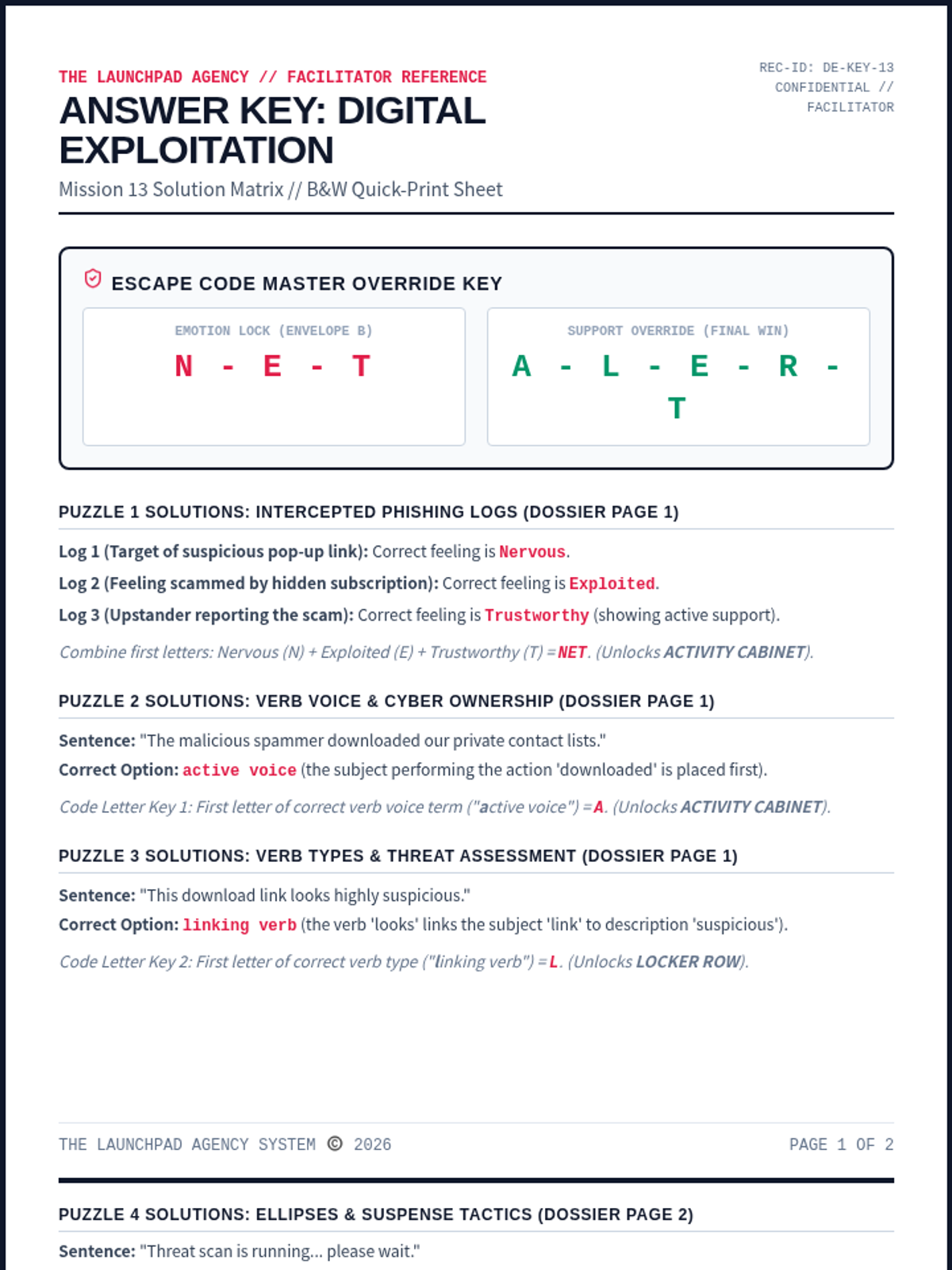
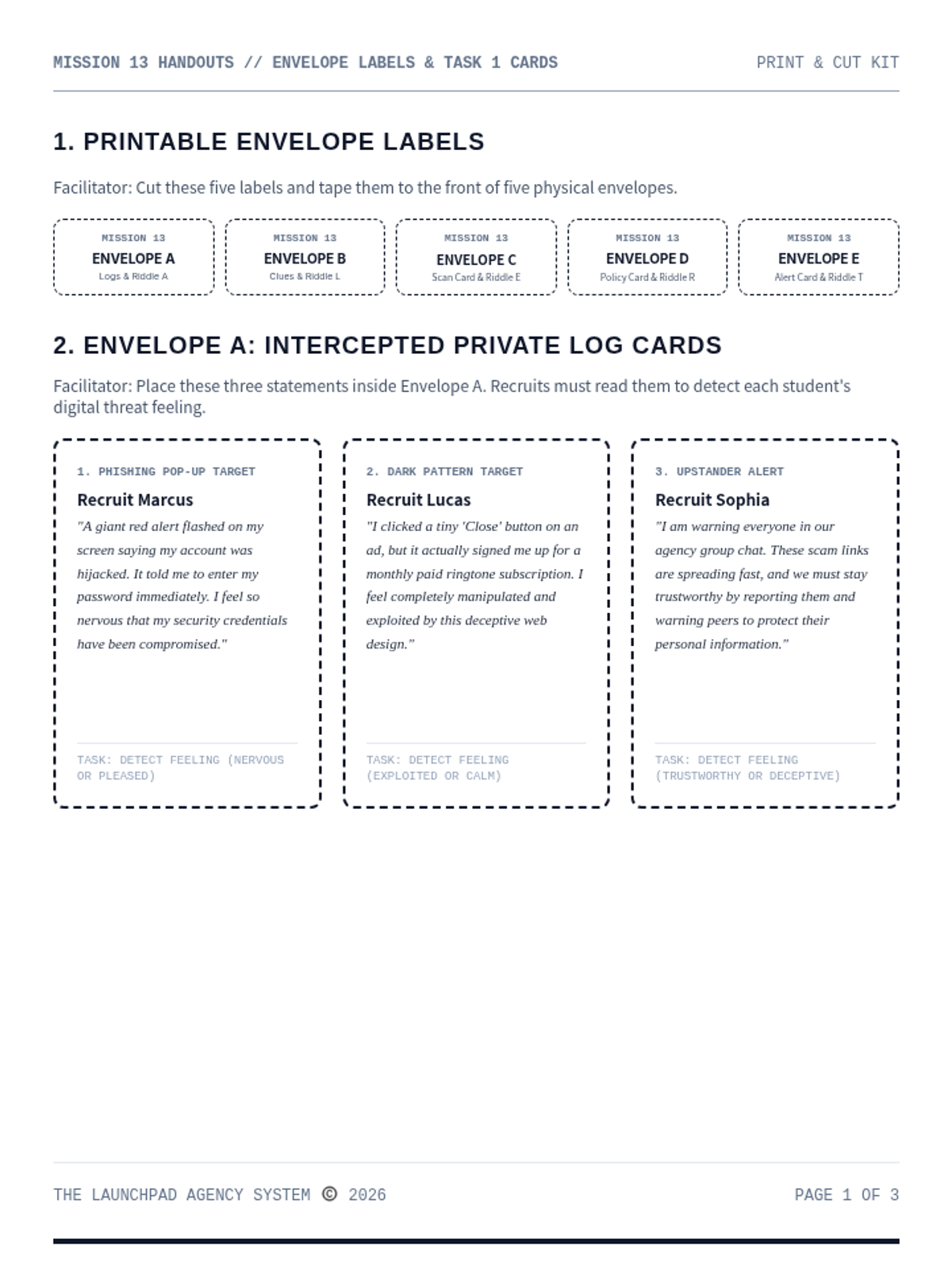
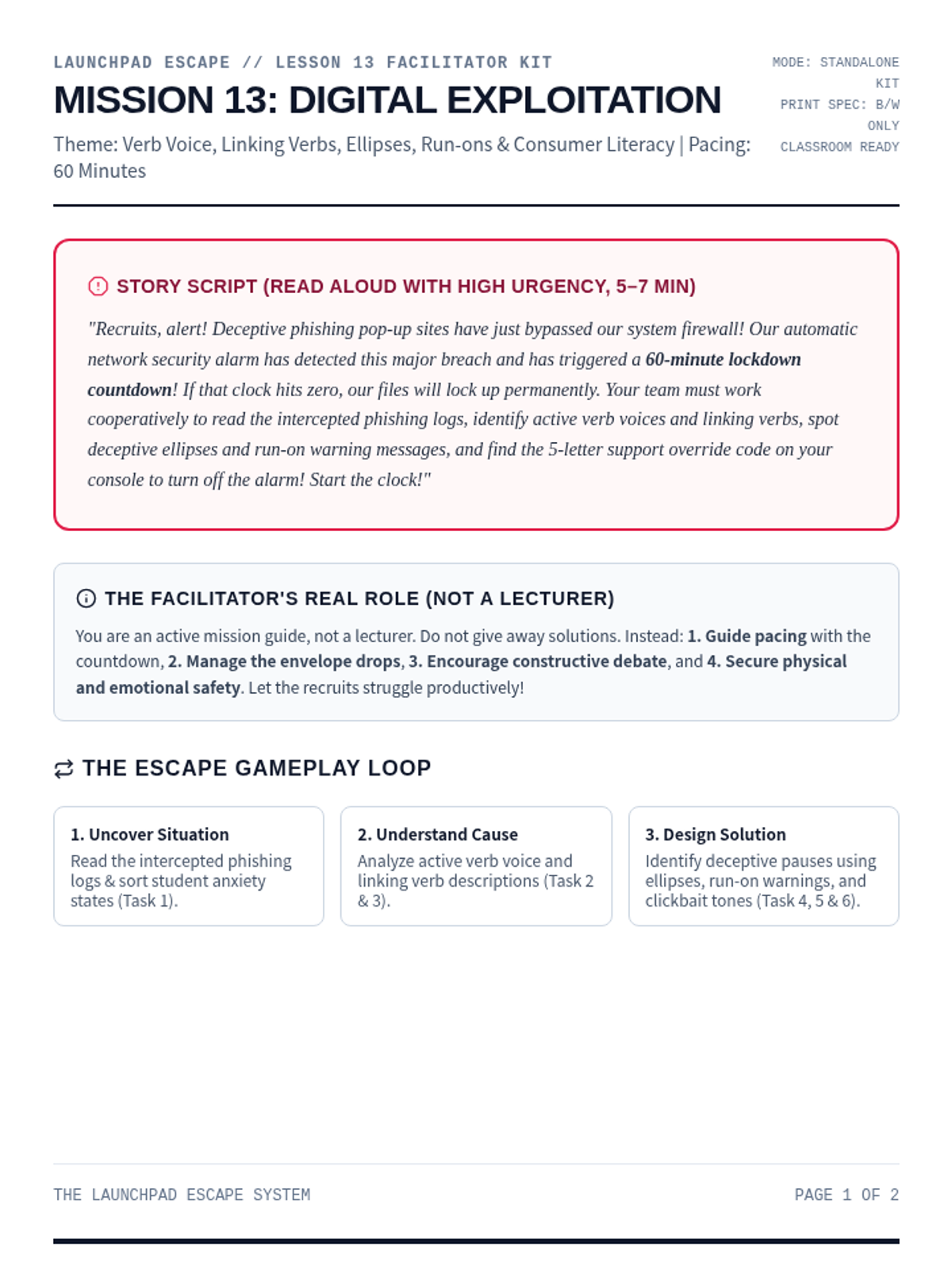
A high-stakes digital safety escape room focused on identifying online scams, recognizing manipulative dark patterns, and protecting personal data. Recruits analyze active verb voices, linking verbs, ellipses punctuation, and deceptive tones to decode the final alert.
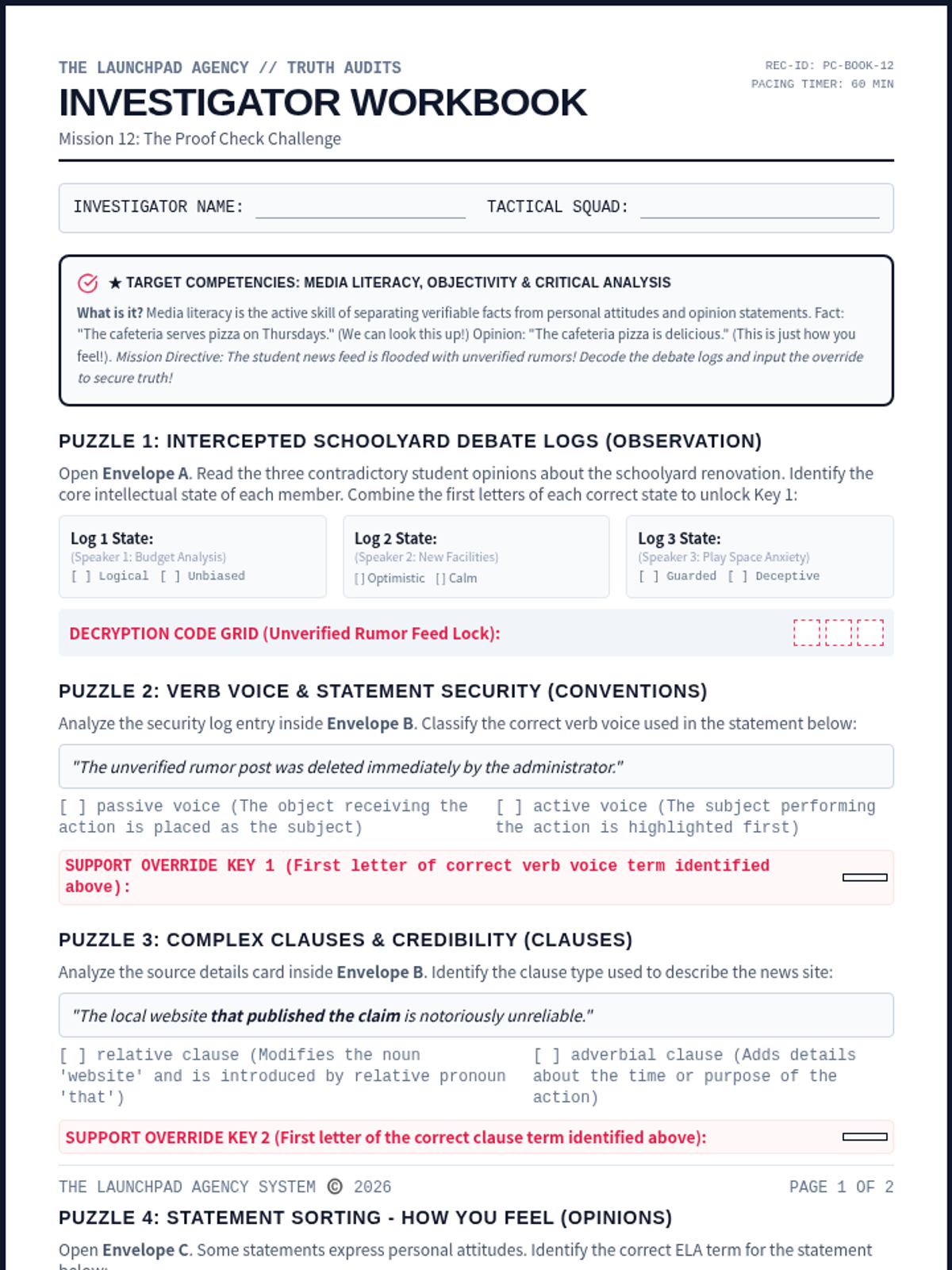
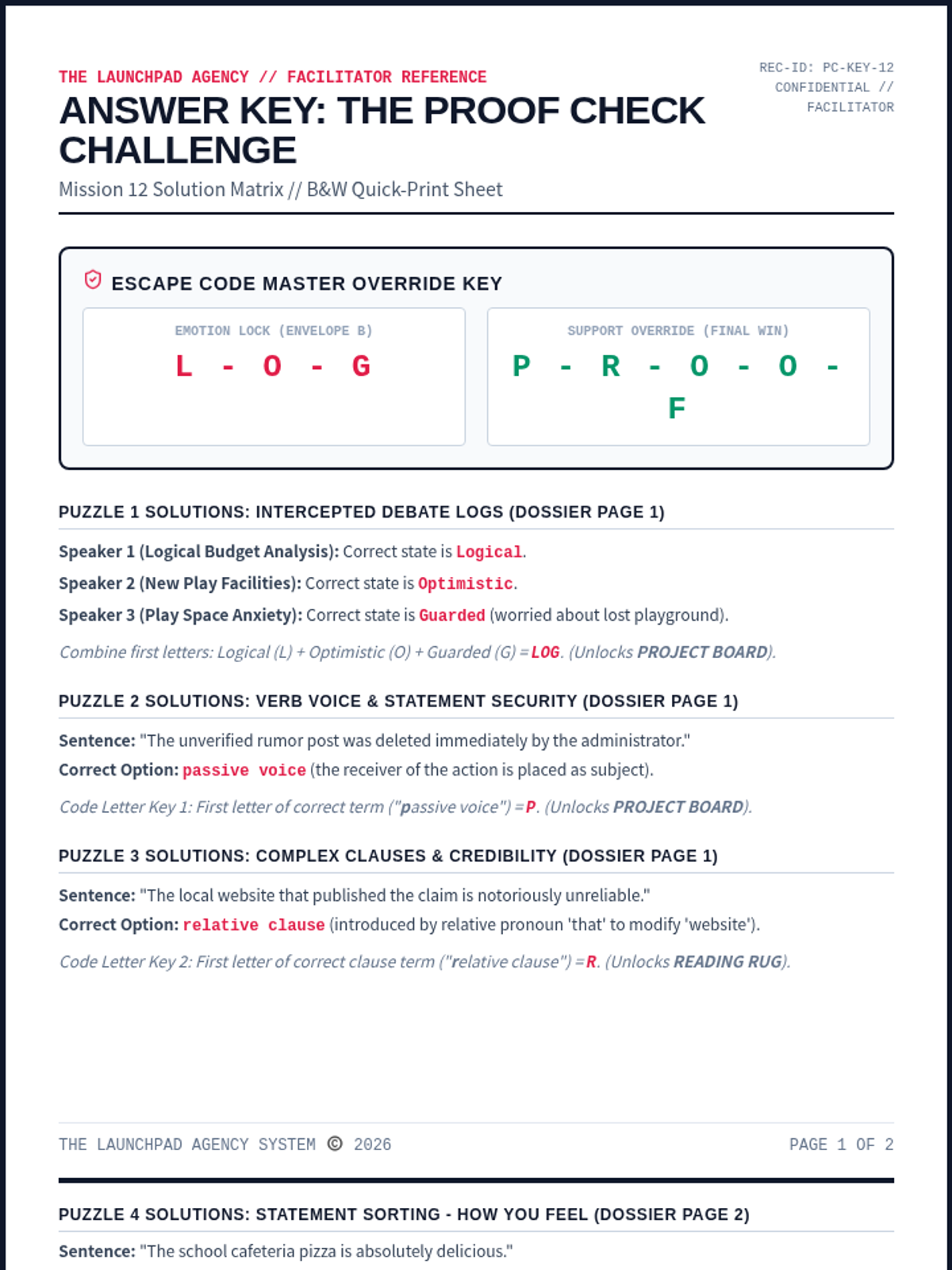
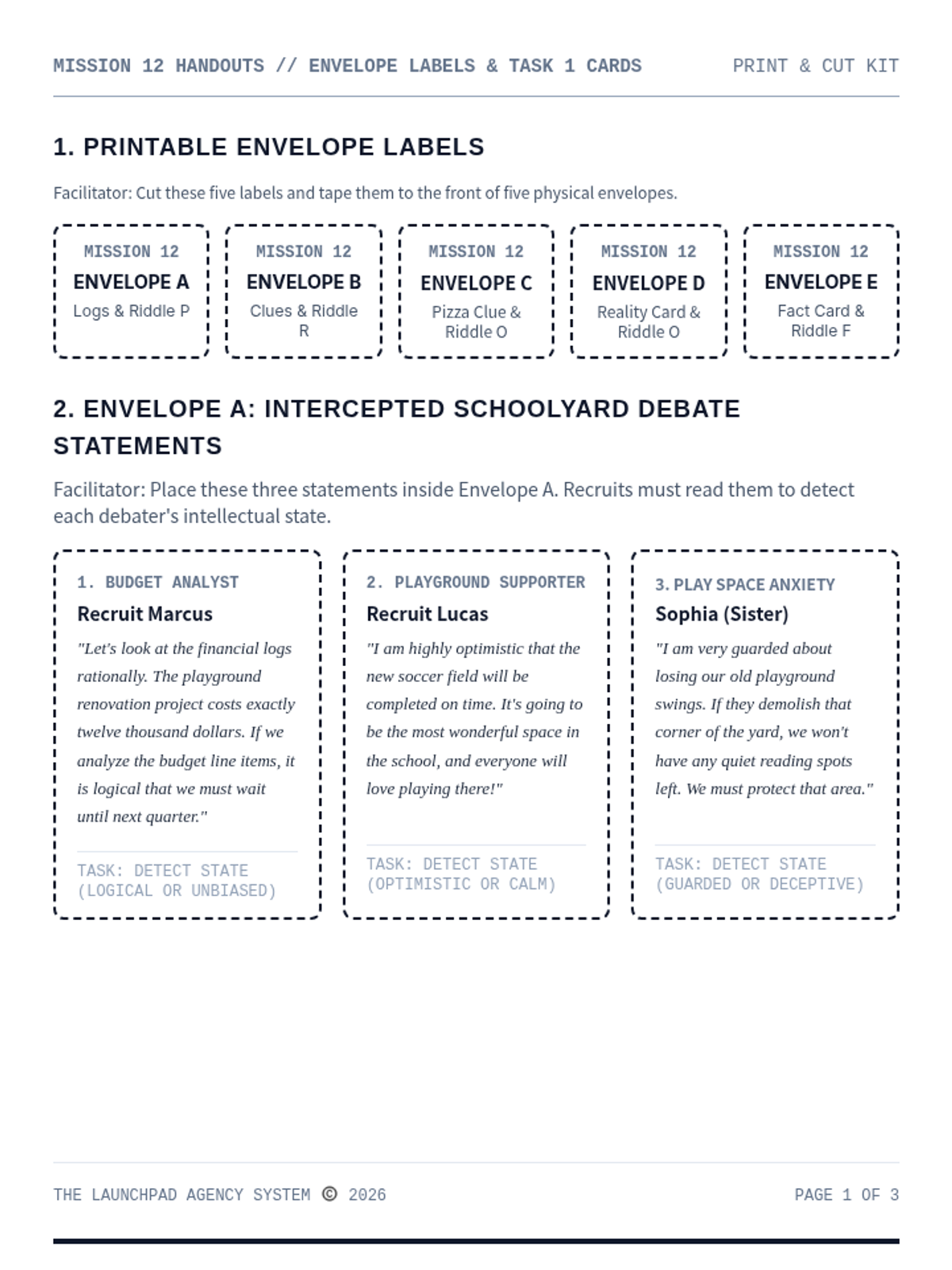
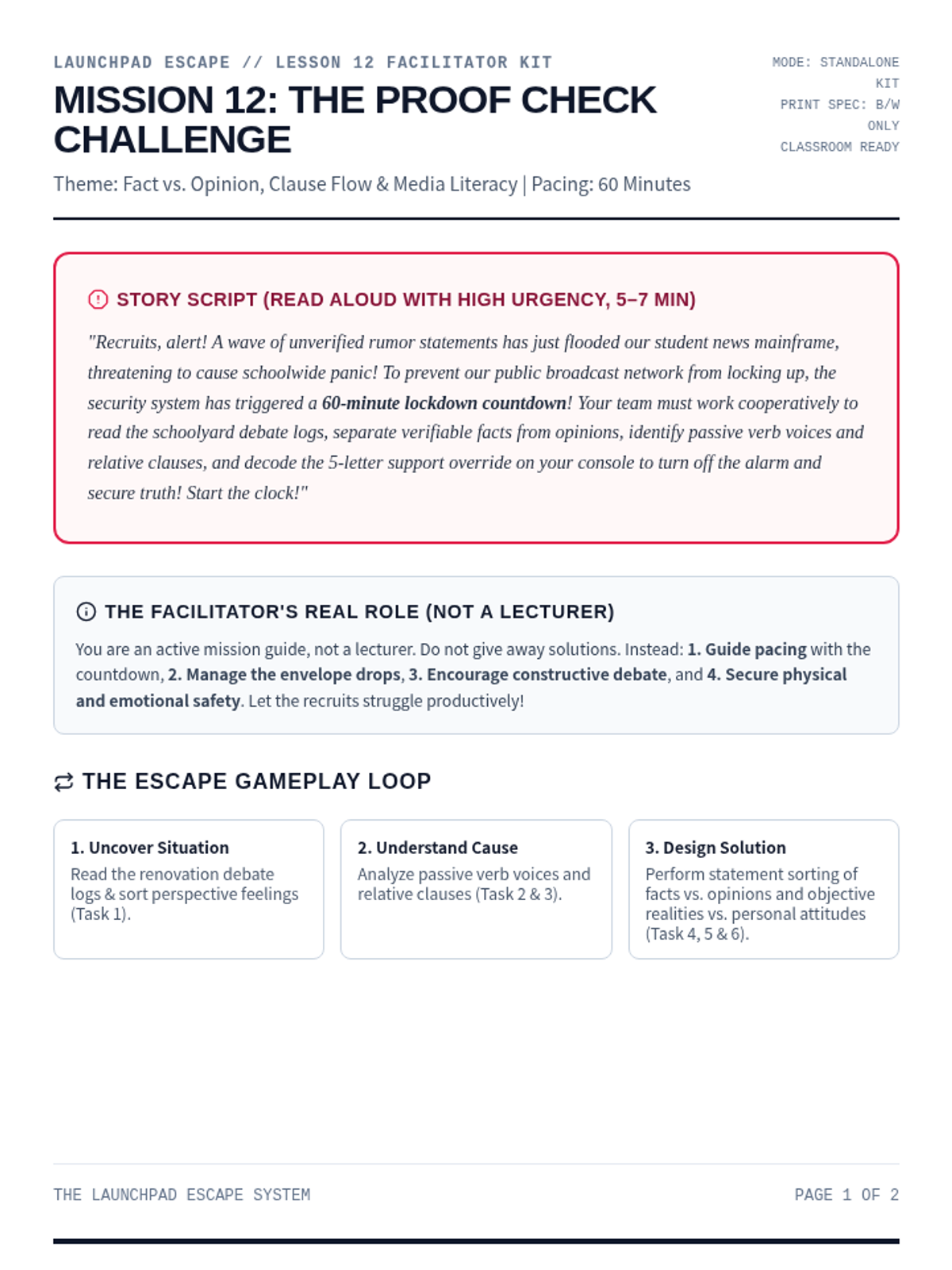
An advanced media literacy and communication escape room for Ages 13-15. Recruits distinguish facts from opinions, analyze objective realities, sort personal attitudes, and input the override PROOF to secure the school news mainframe.
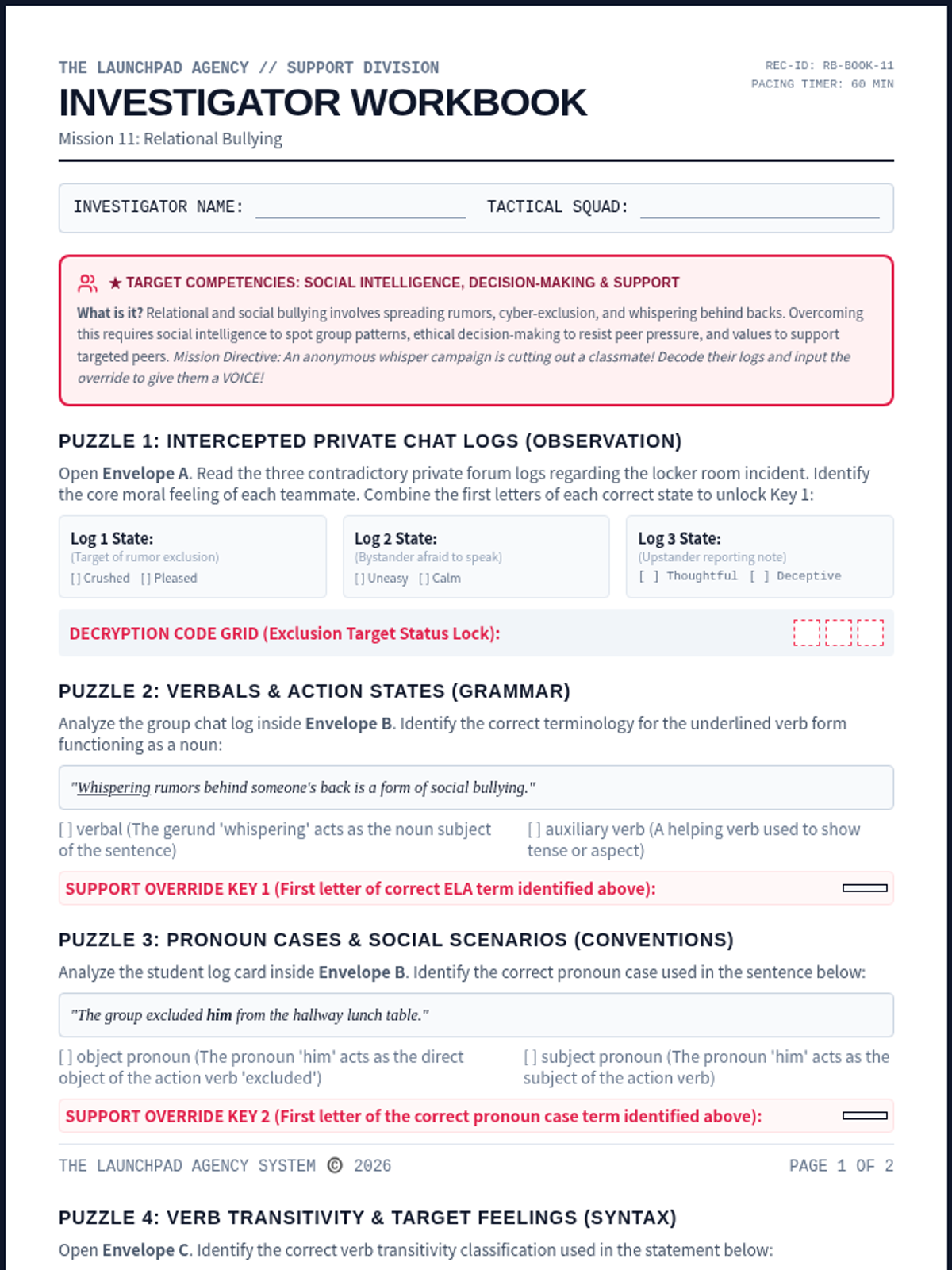
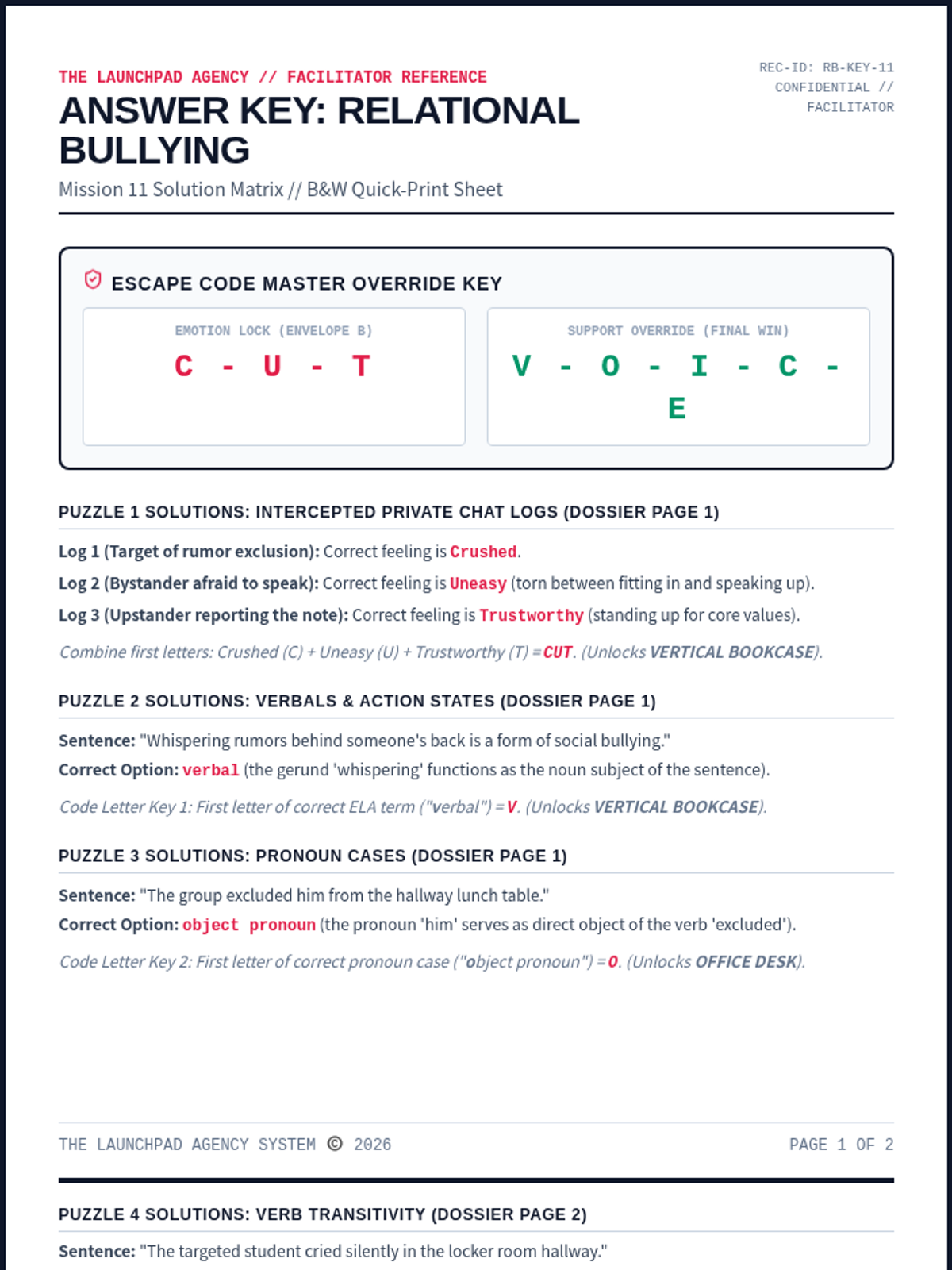
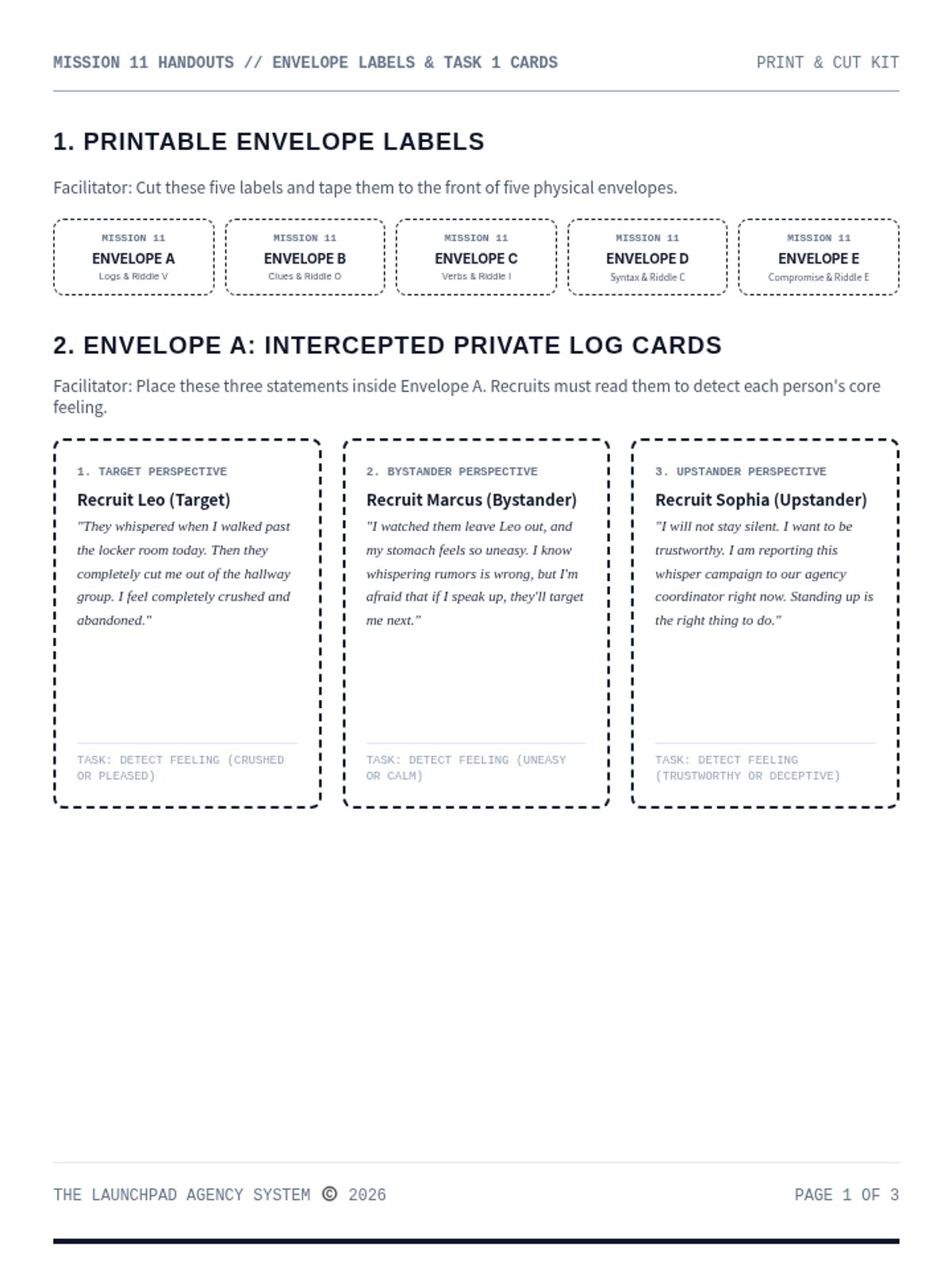
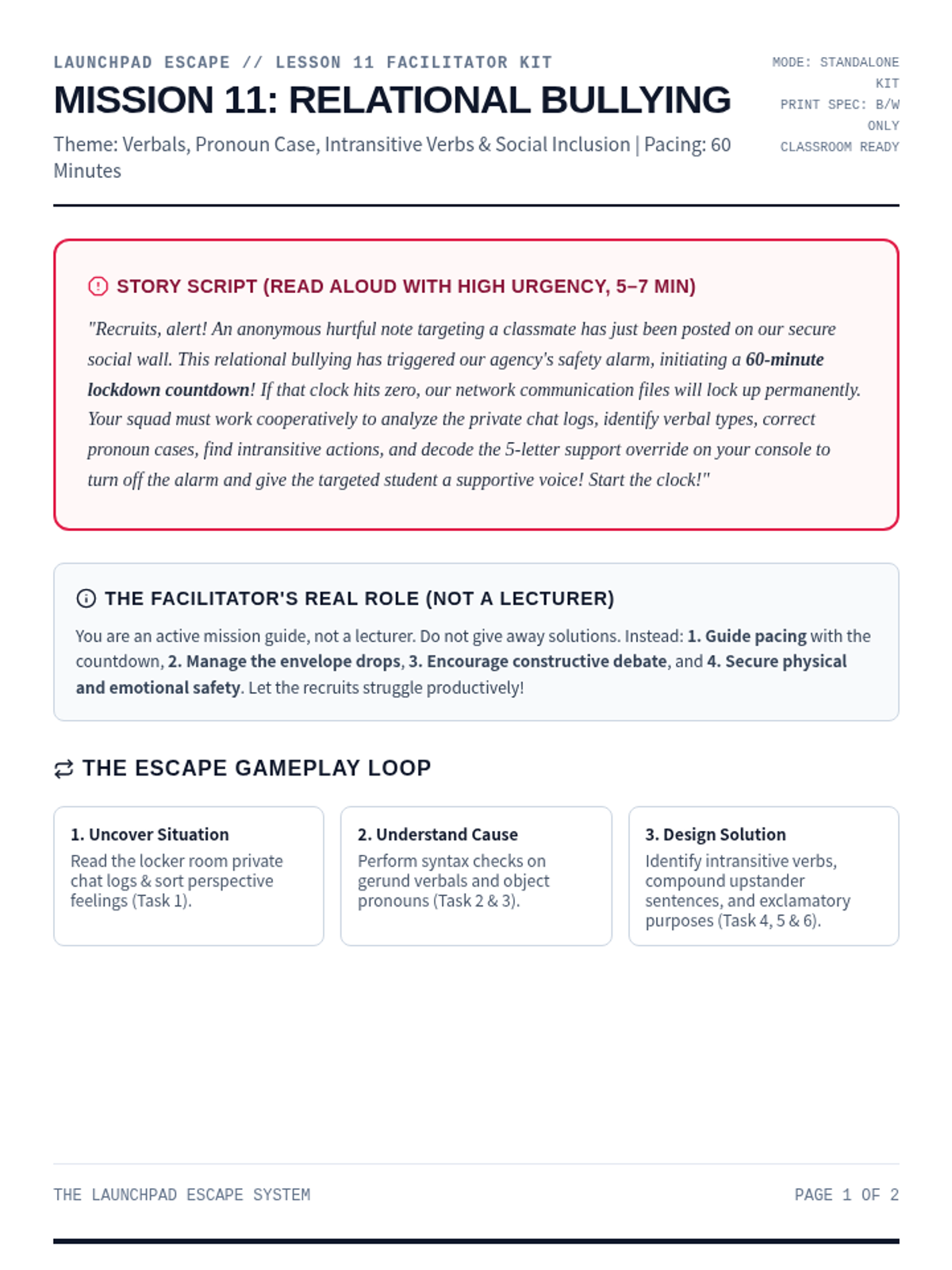
A collaborative social-emotional escape room focused on identifying relational and social bullying, supporting target peers, and standing up to cyber/verbal exclusion. Recruits analyze verb verbal types, pronoun cases, intransitive verbs, and compound syntax to decode the final override.
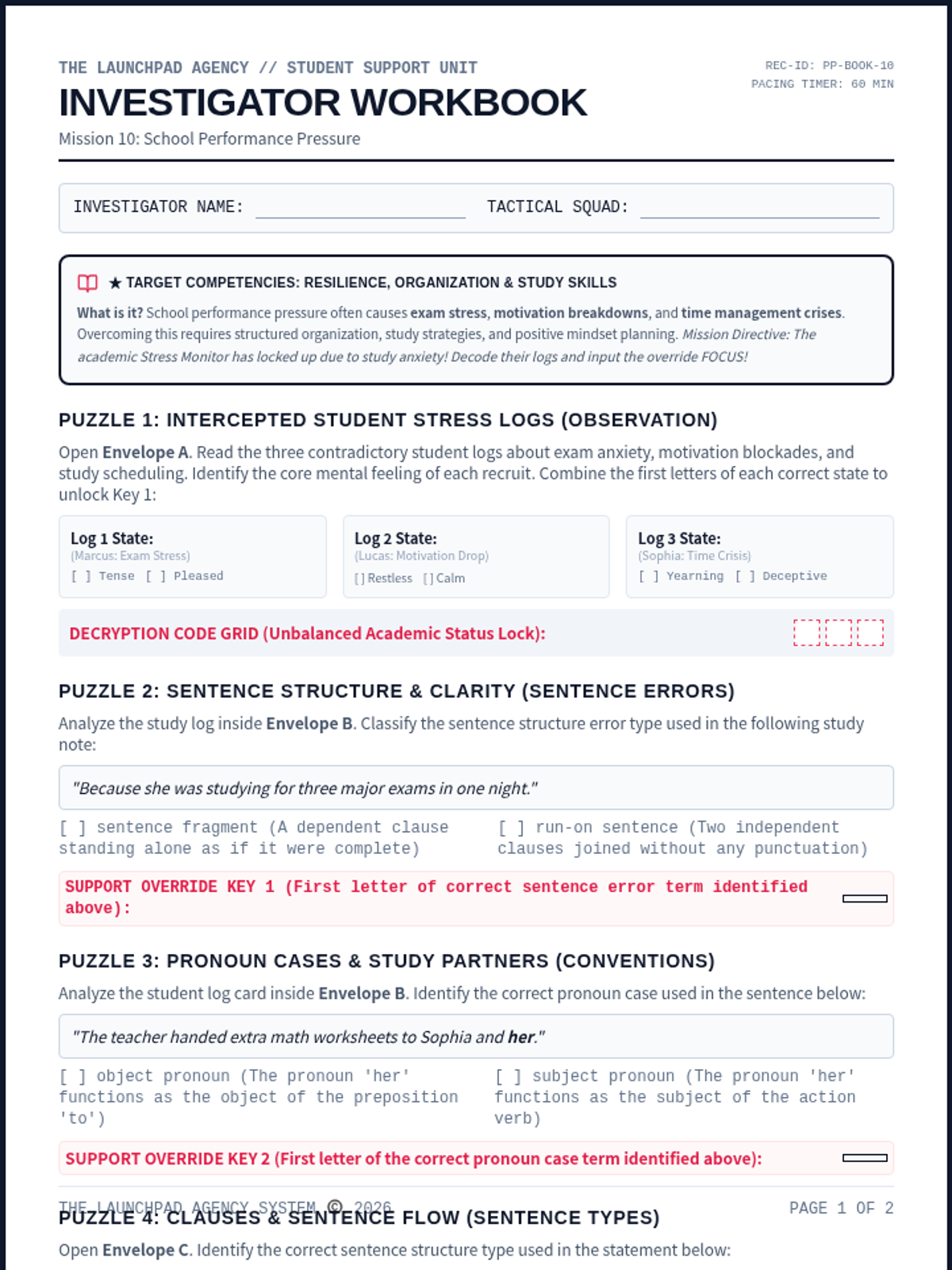
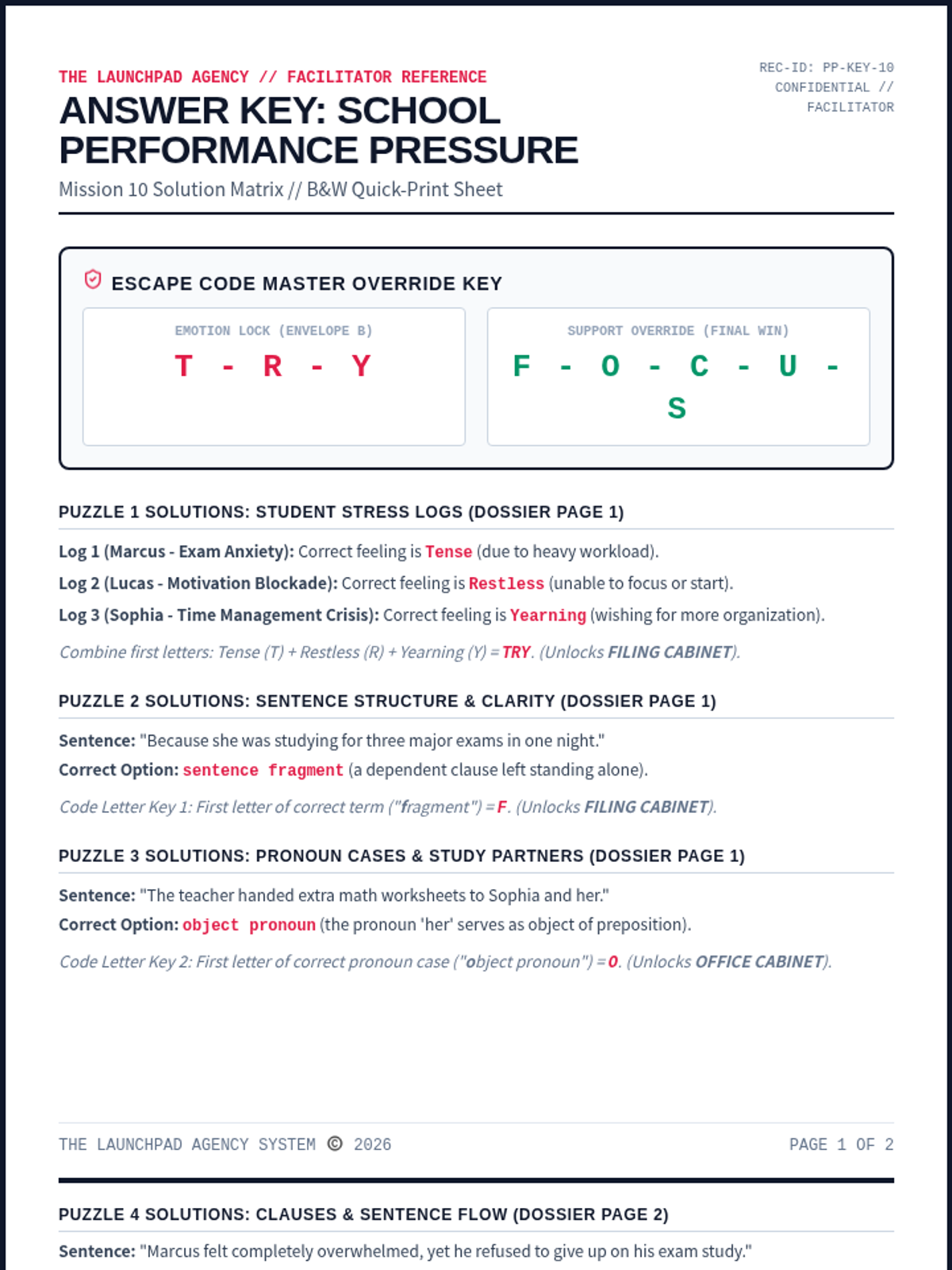
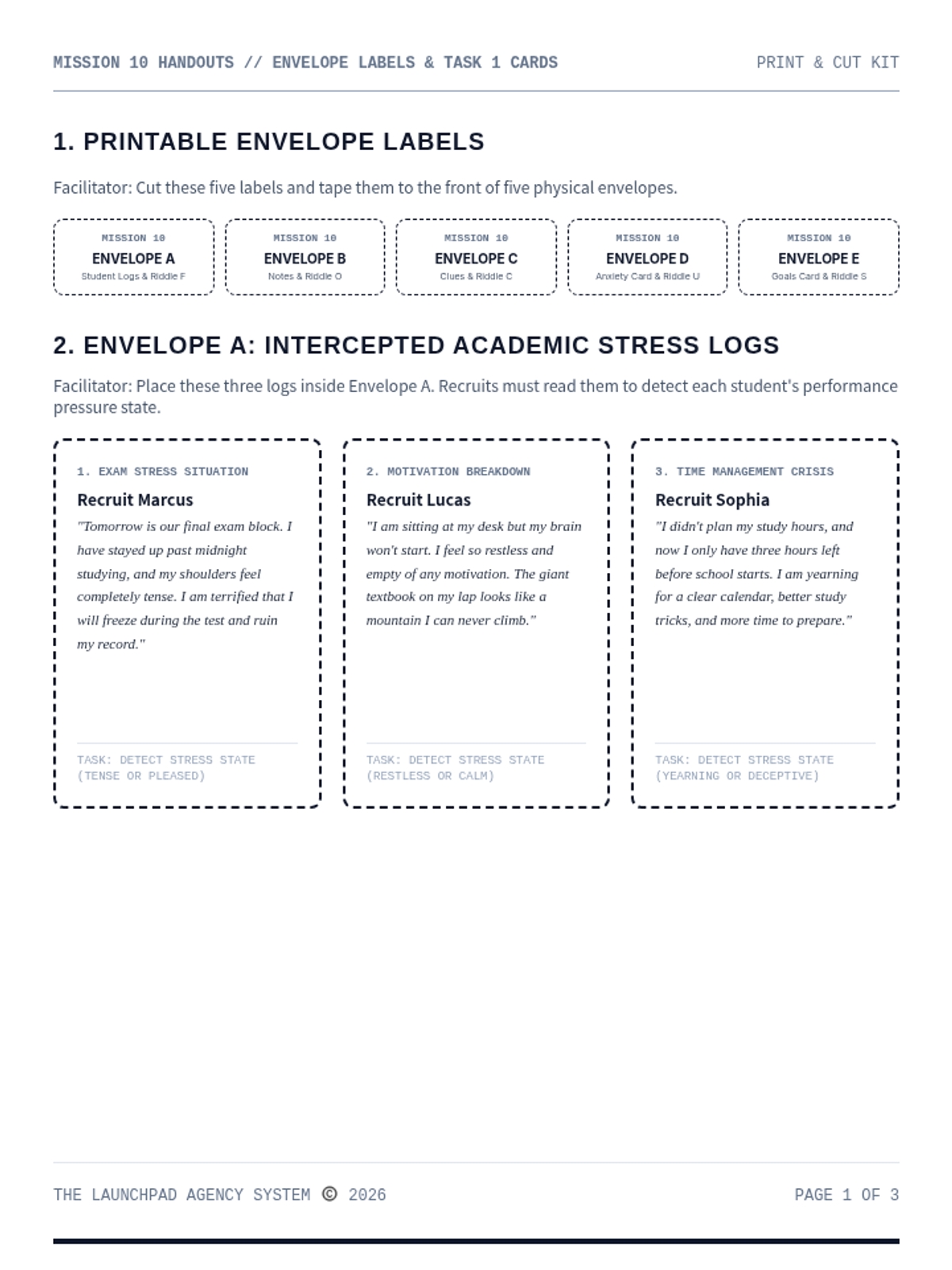
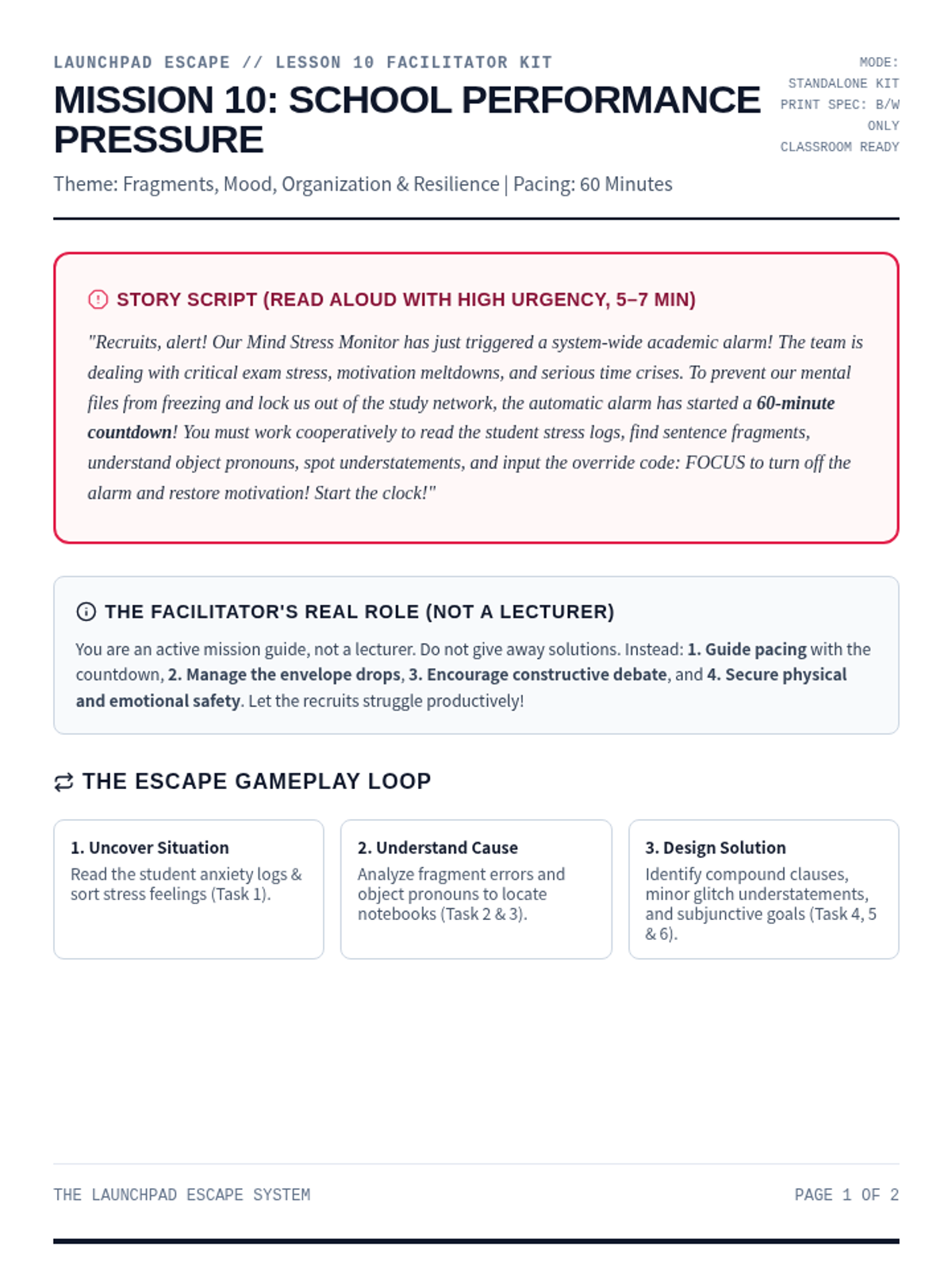
An immersive and strategic escape room focused on managing academic stress, avoiding burnout, and planning study habits. Recruits analyze student logs under performance anxiety, build efficient schedules, and decode the override to restore positive motivation.