Students explore the evolution of religious diversity in the US, focusing on instances of discrimination against Jewish immigrants and developing strategies for promoting tolerance through creative projects and circle discussions.
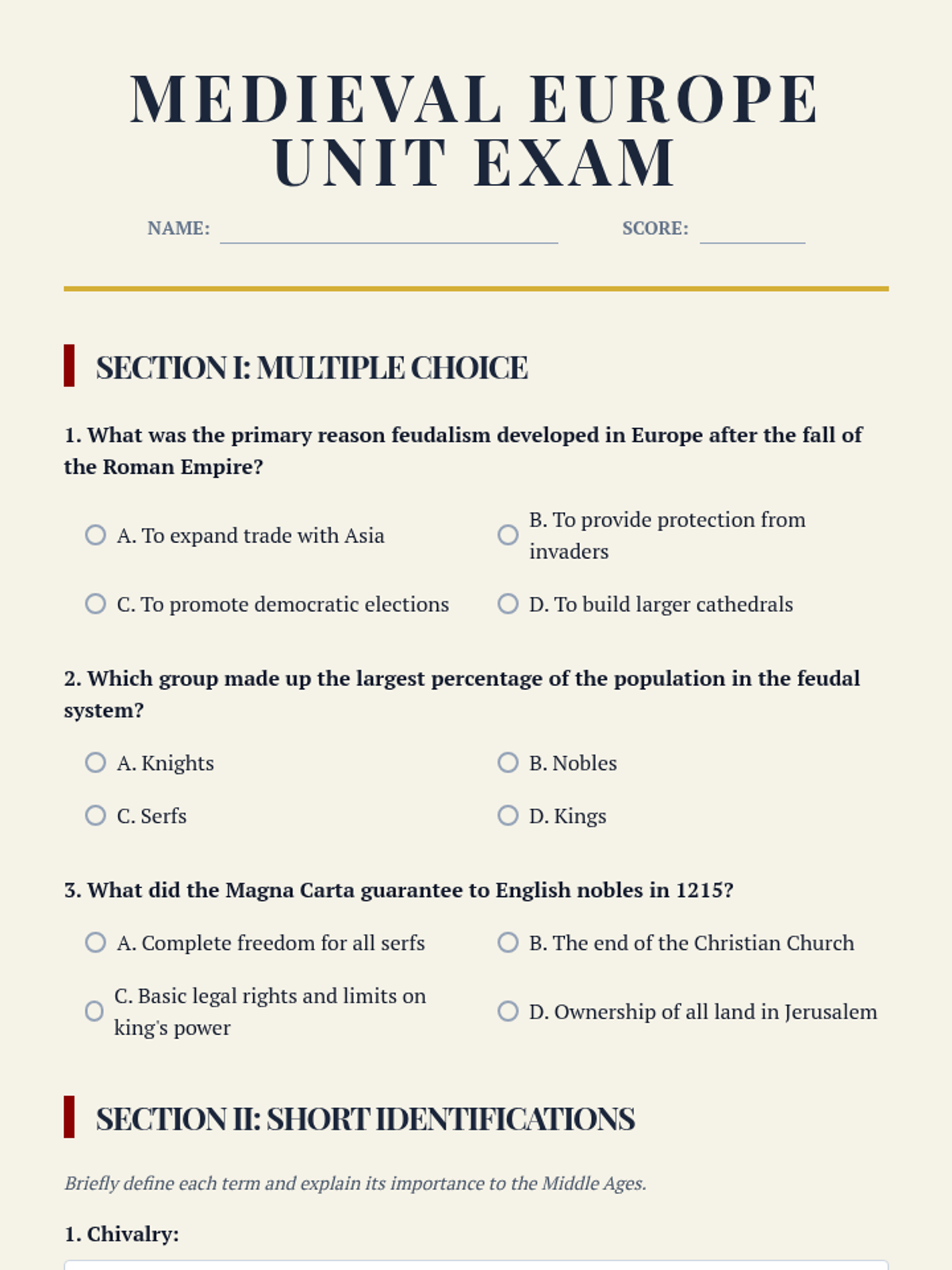
Examine the origins of constitutional government with the Magna Carta, the growth of medieval towns, and the transition toward the Renaissance.
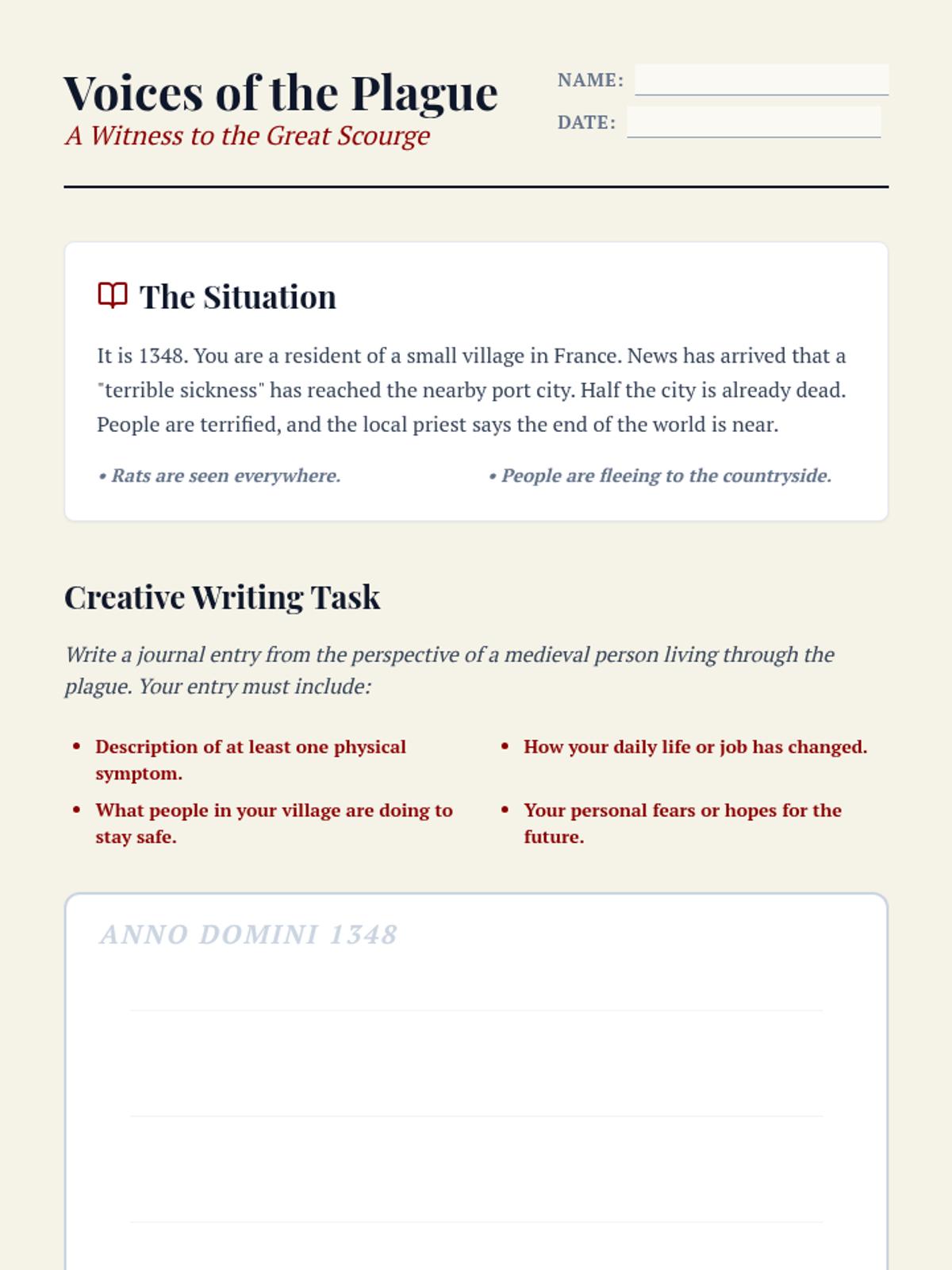
Investigate the origins, symptoms, and catastrophic social and economic consequences of the Bubonic Plague in 14th-century Europe.
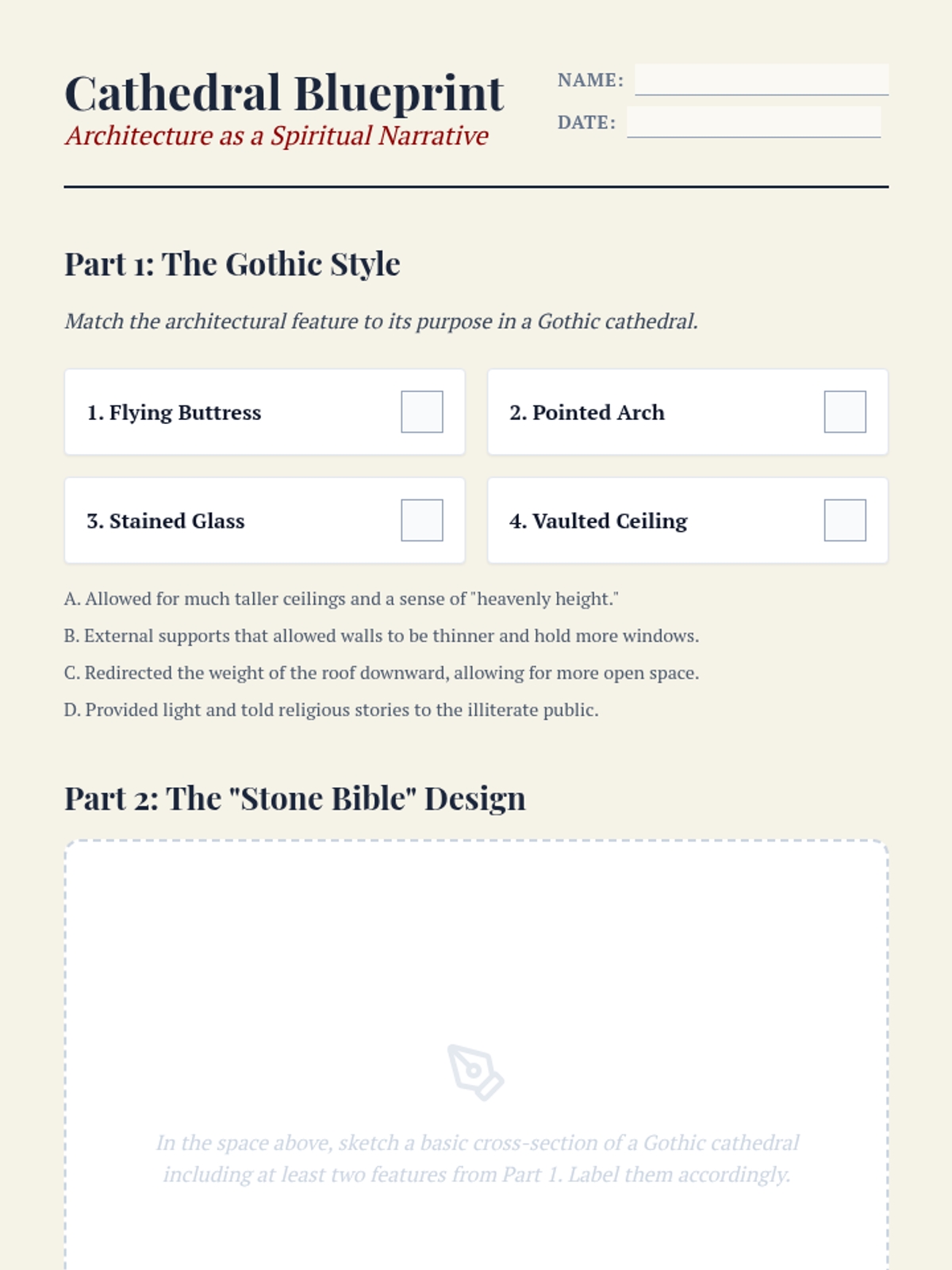
Analyze the immense power and influence of the Catholic Church on daily life, politics, and the cultural landscape of Medieval Europe.
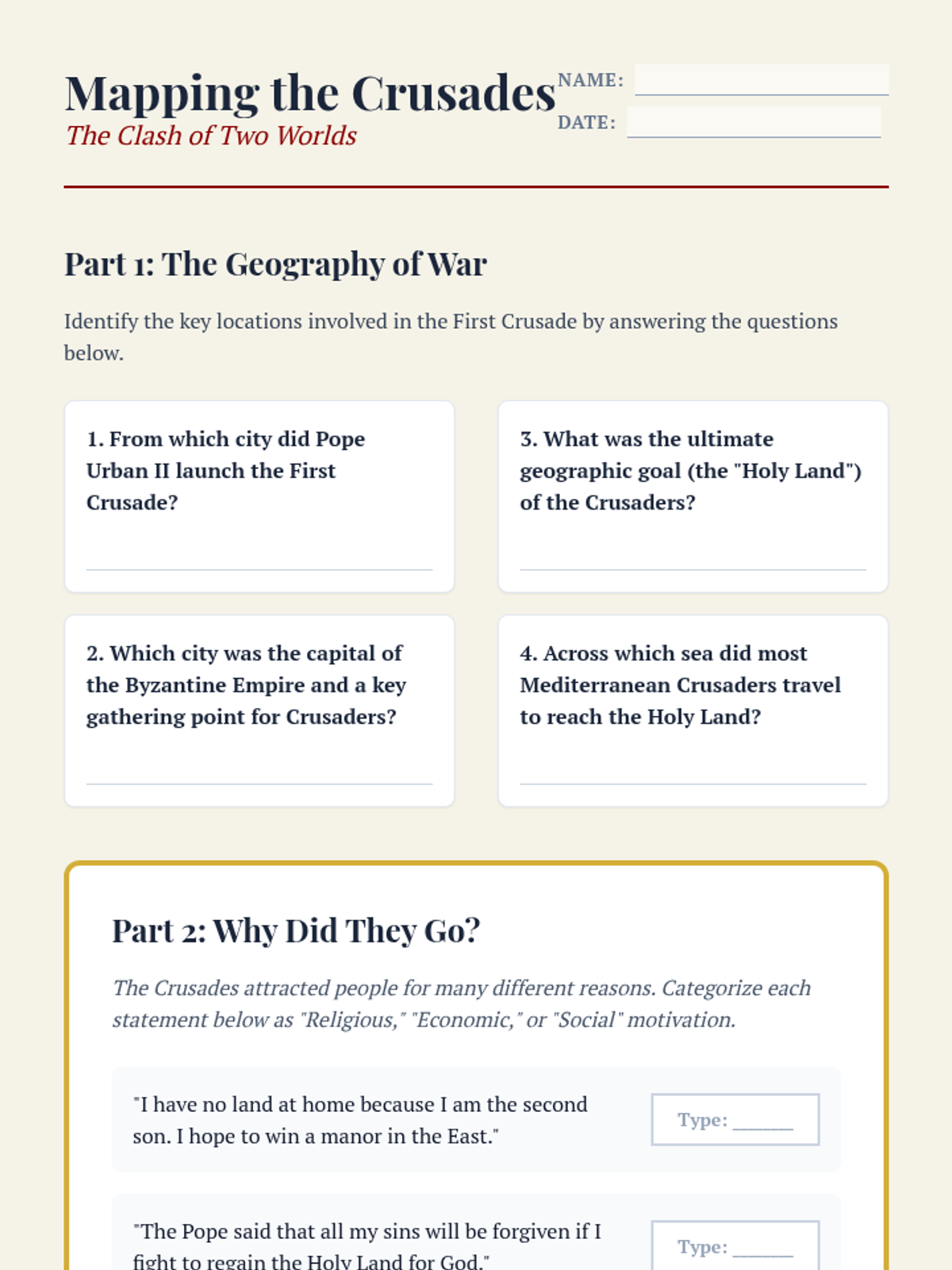
Explore the life of a medieval knight, the code of chivalry, and the religious motivations behind the Crusades.
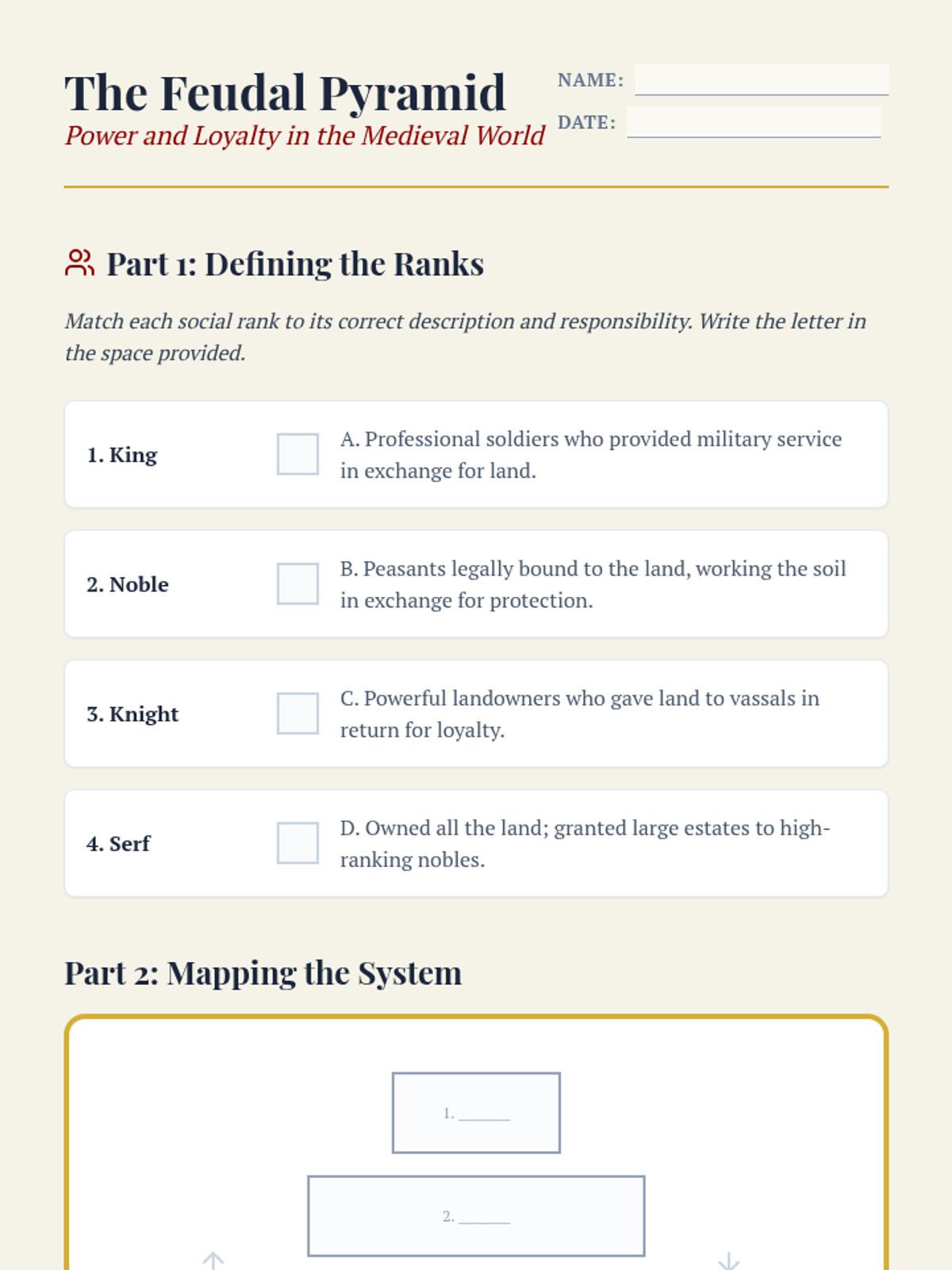
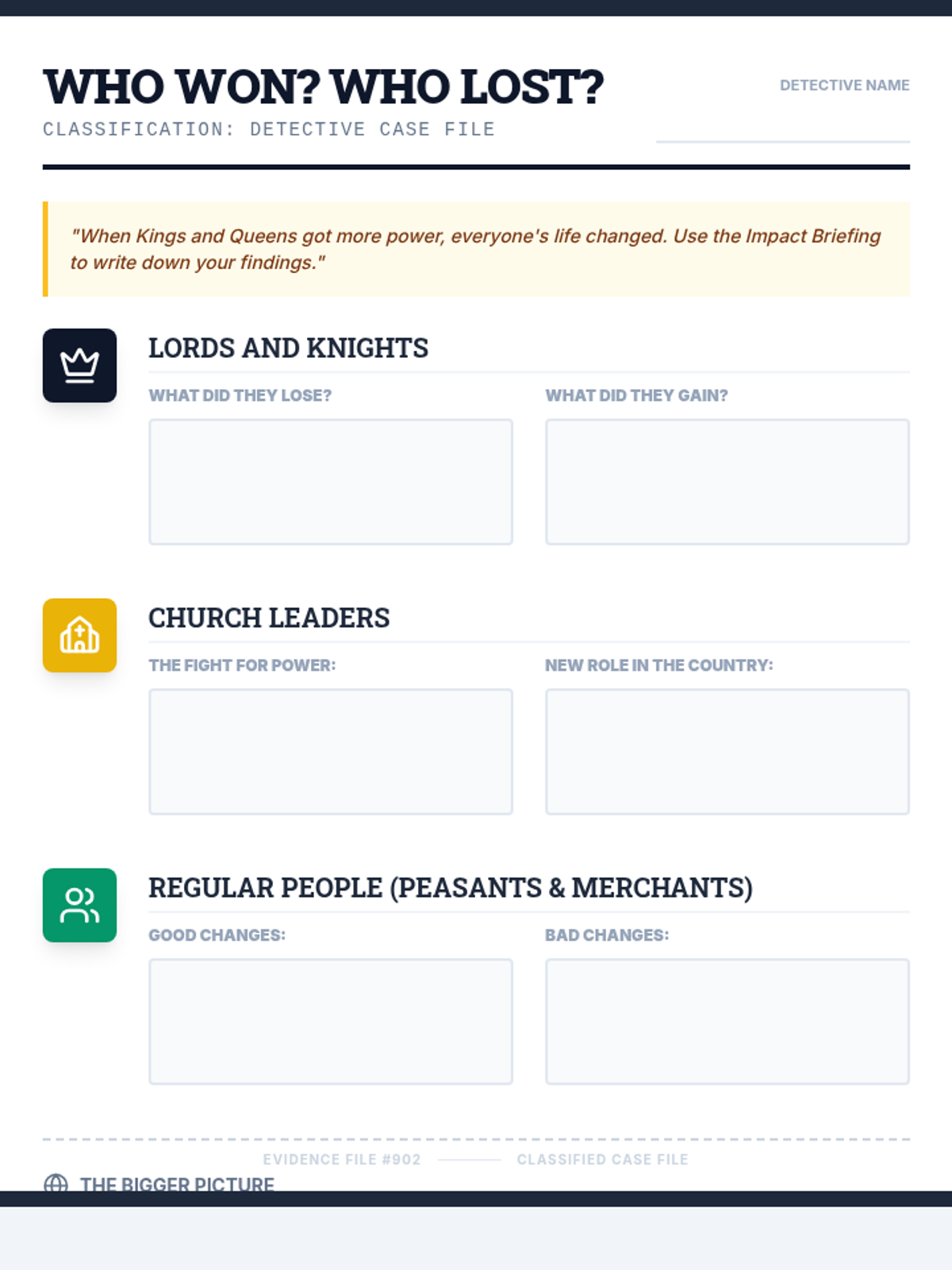
Explore the rigid social structure of feudalism and the economic system of manorialism that defined life in the Middle Ages.
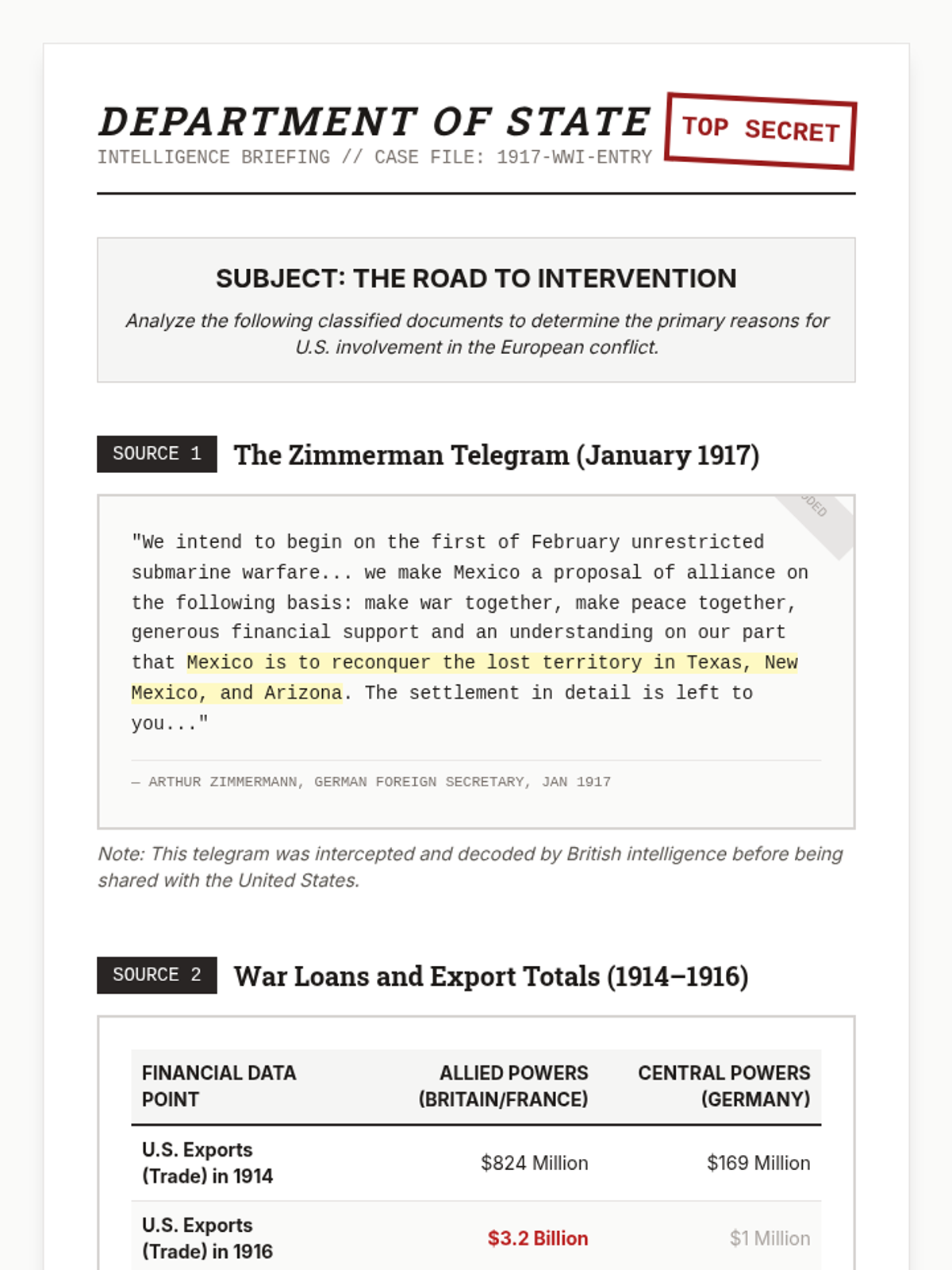
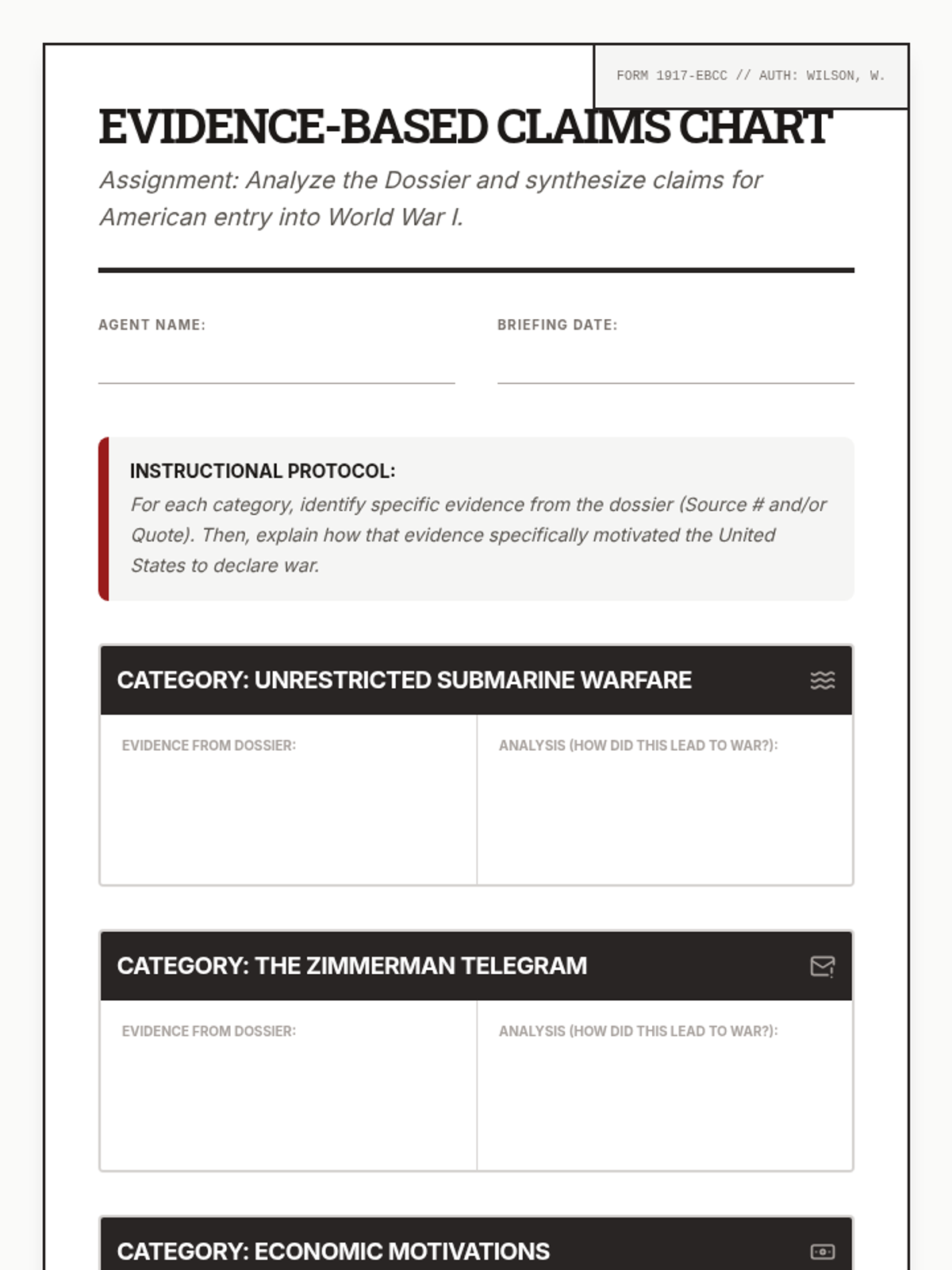
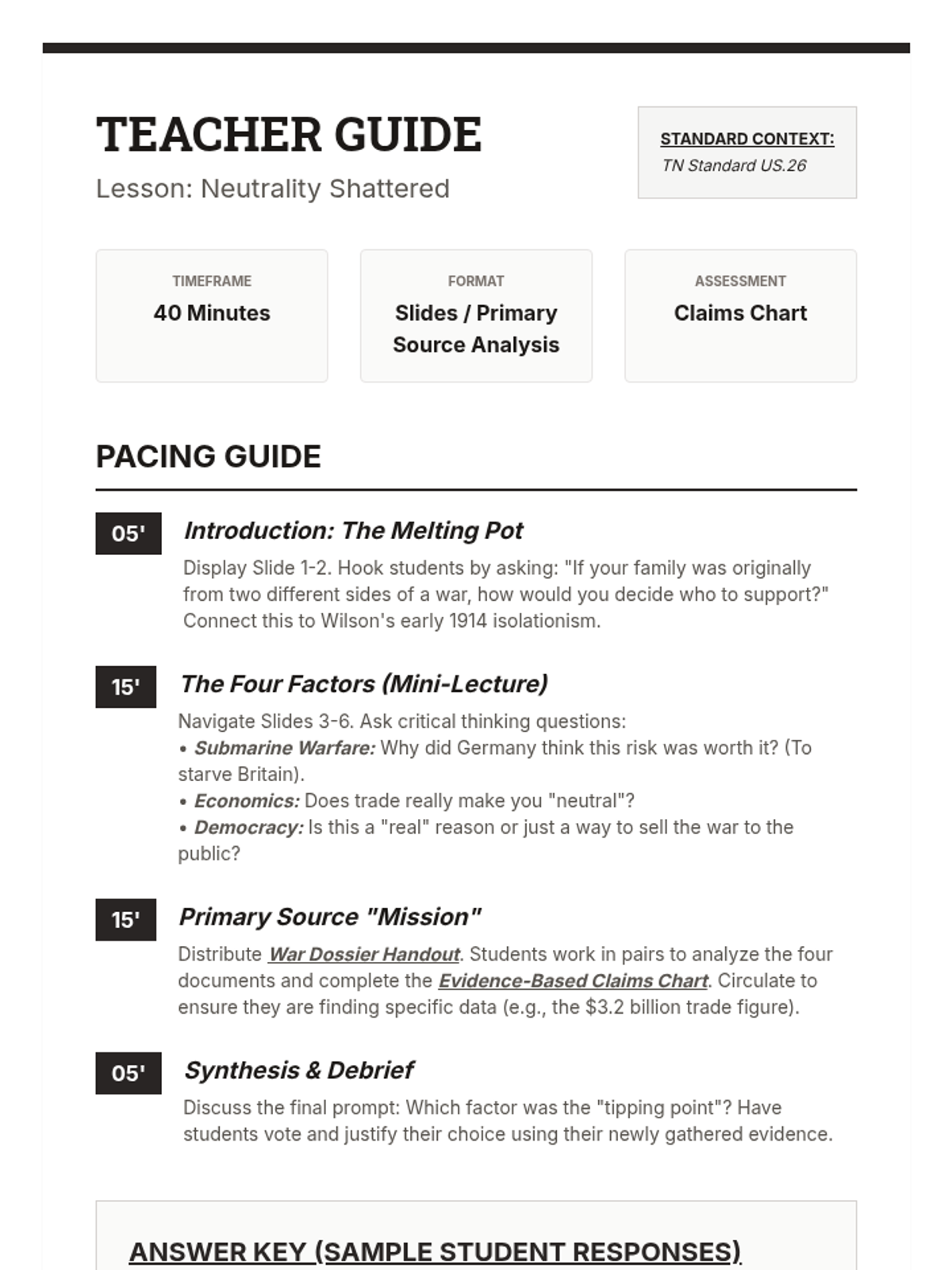
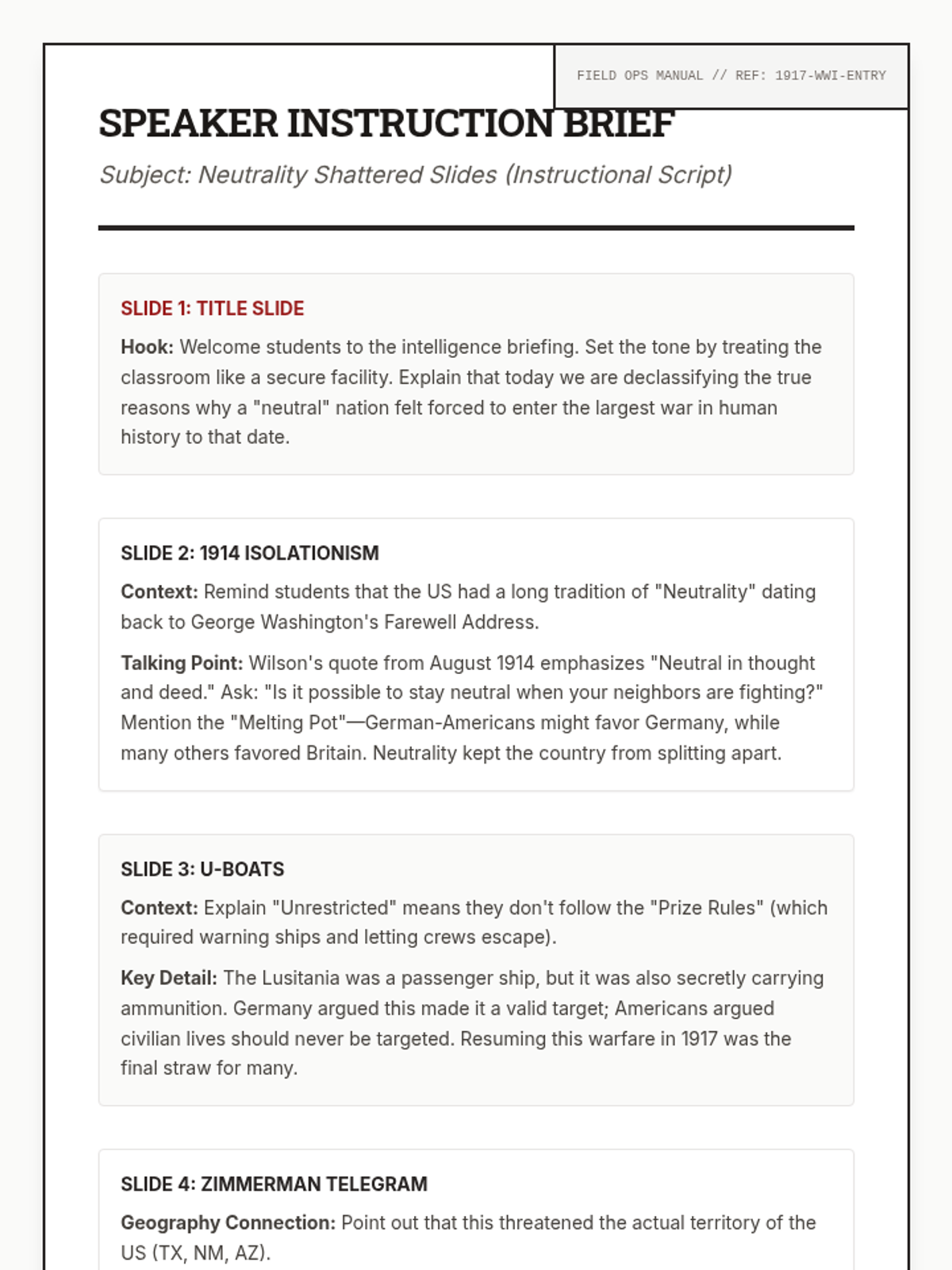
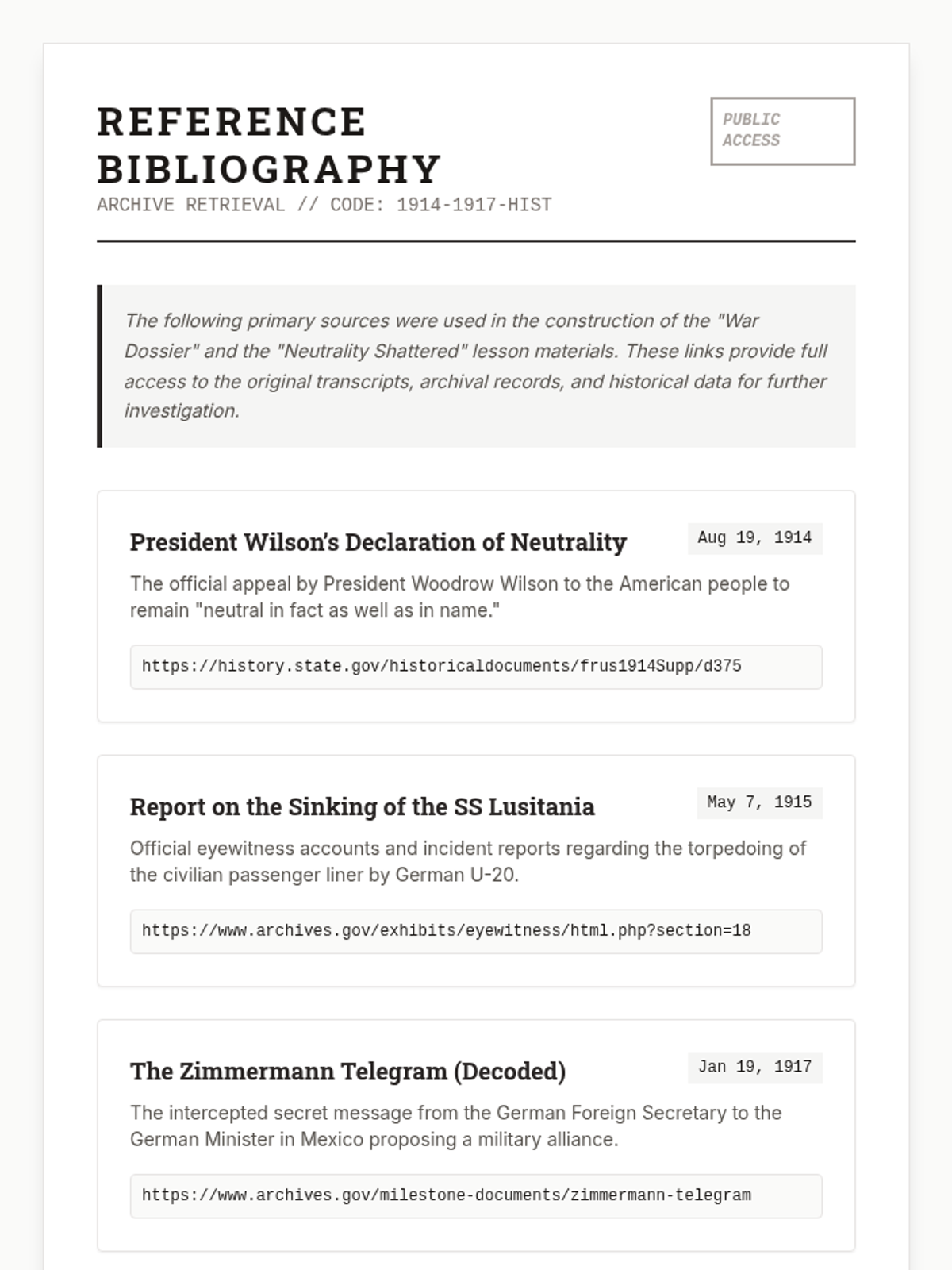
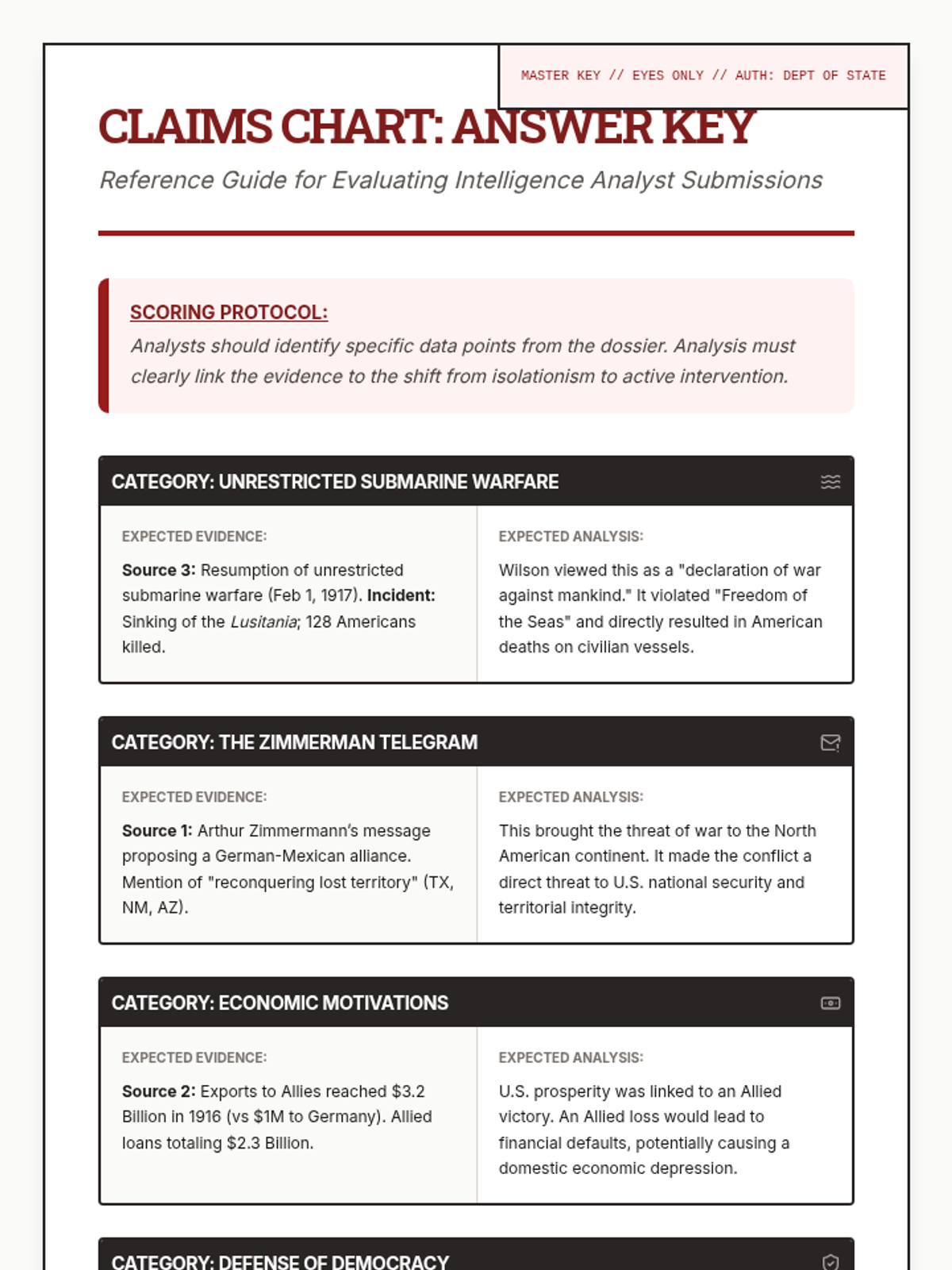
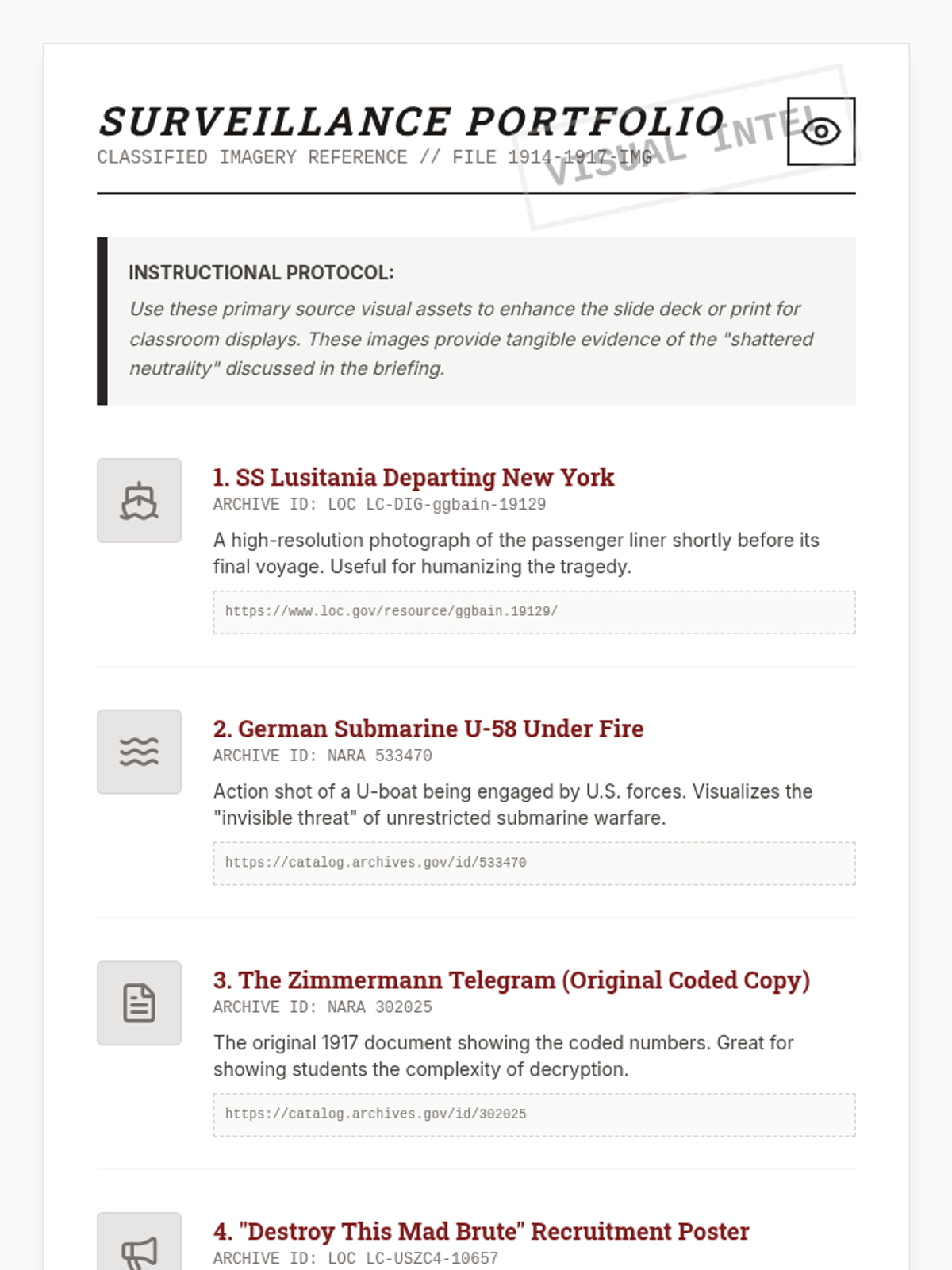
A 40-minute exploration of the factors that led the United States to abandon neutrality and enter World War I, focusing on unrestricted submarine warfare, the Zimmerman Telegram, and economic interests.
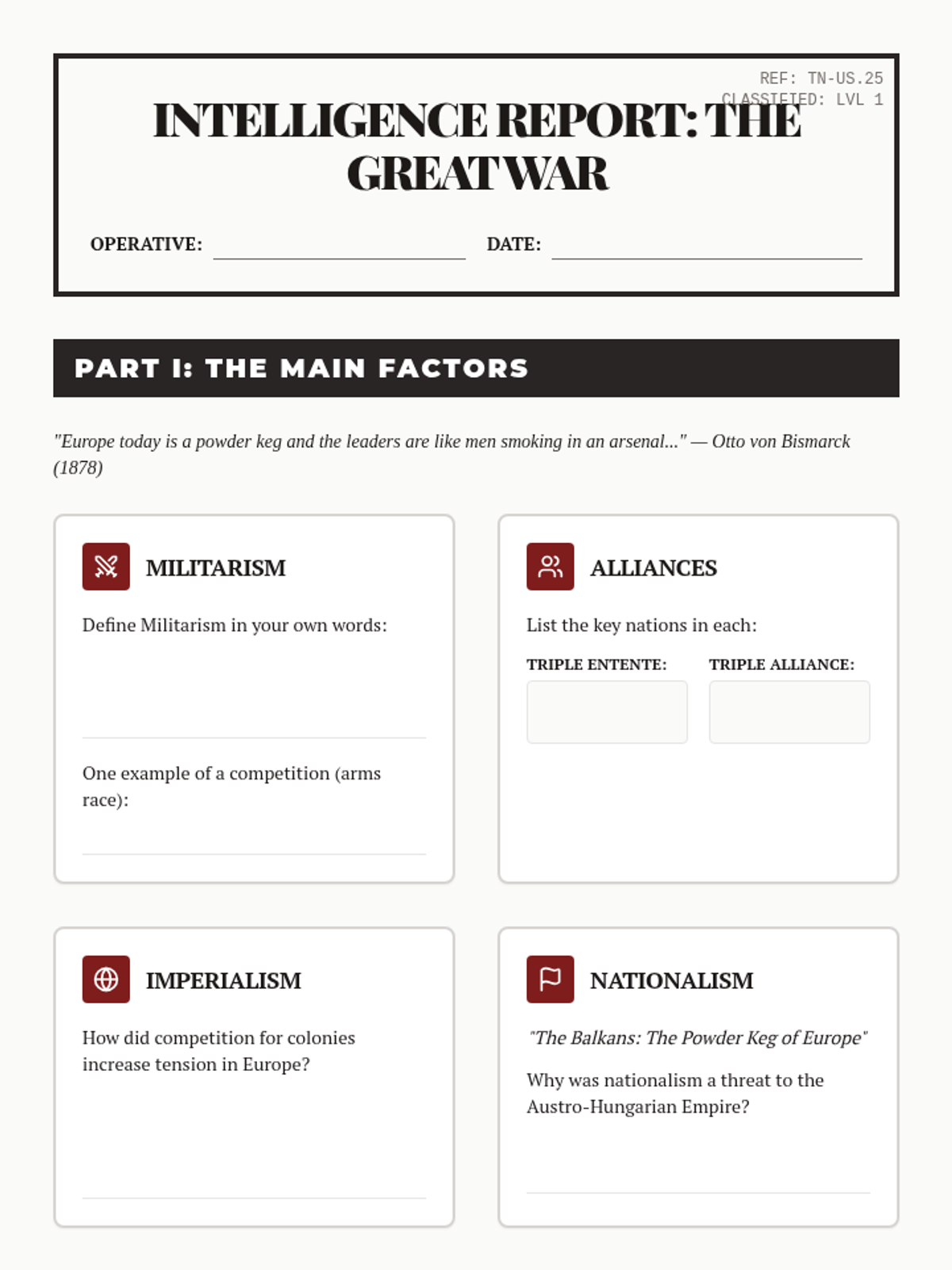
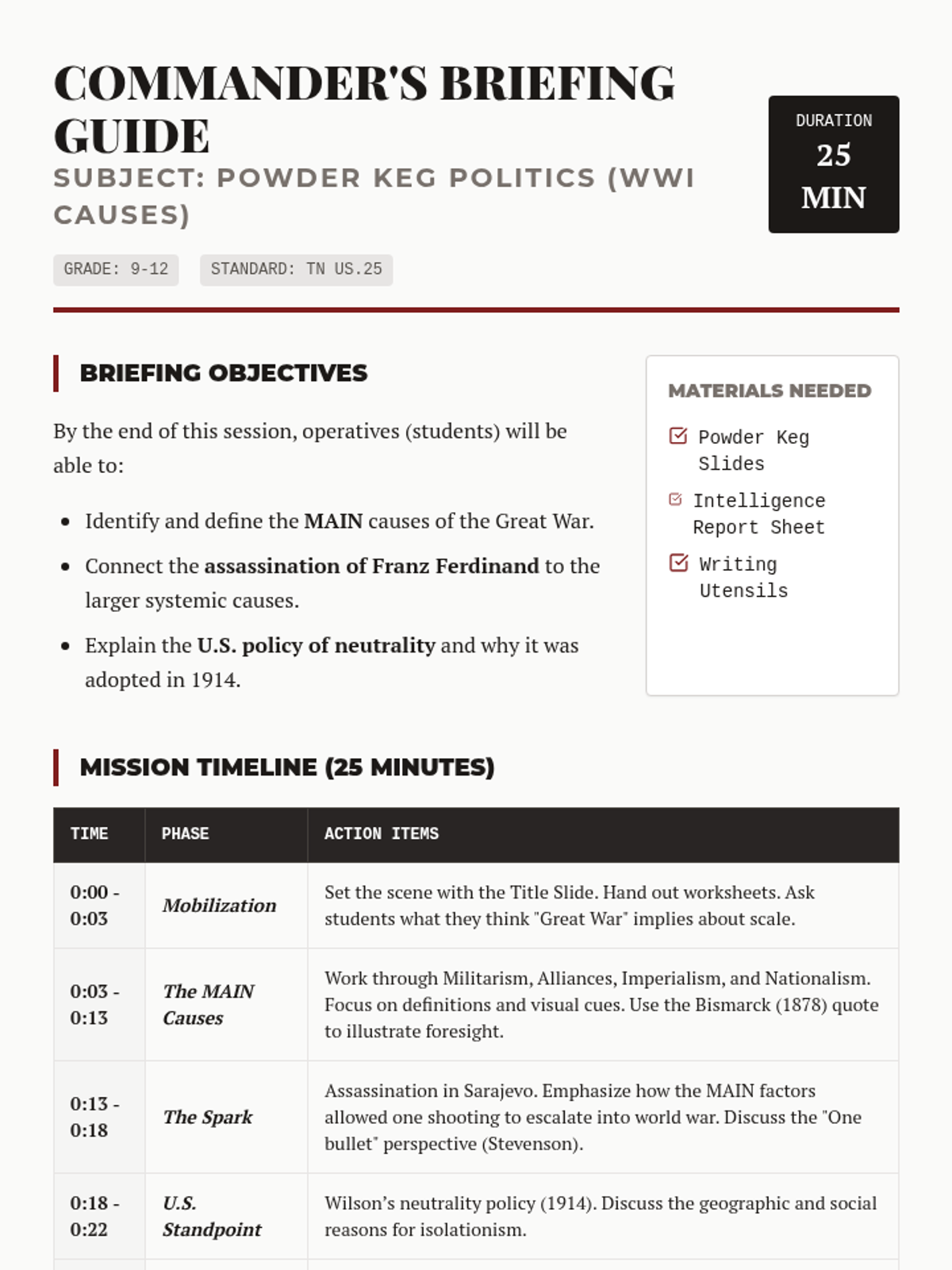
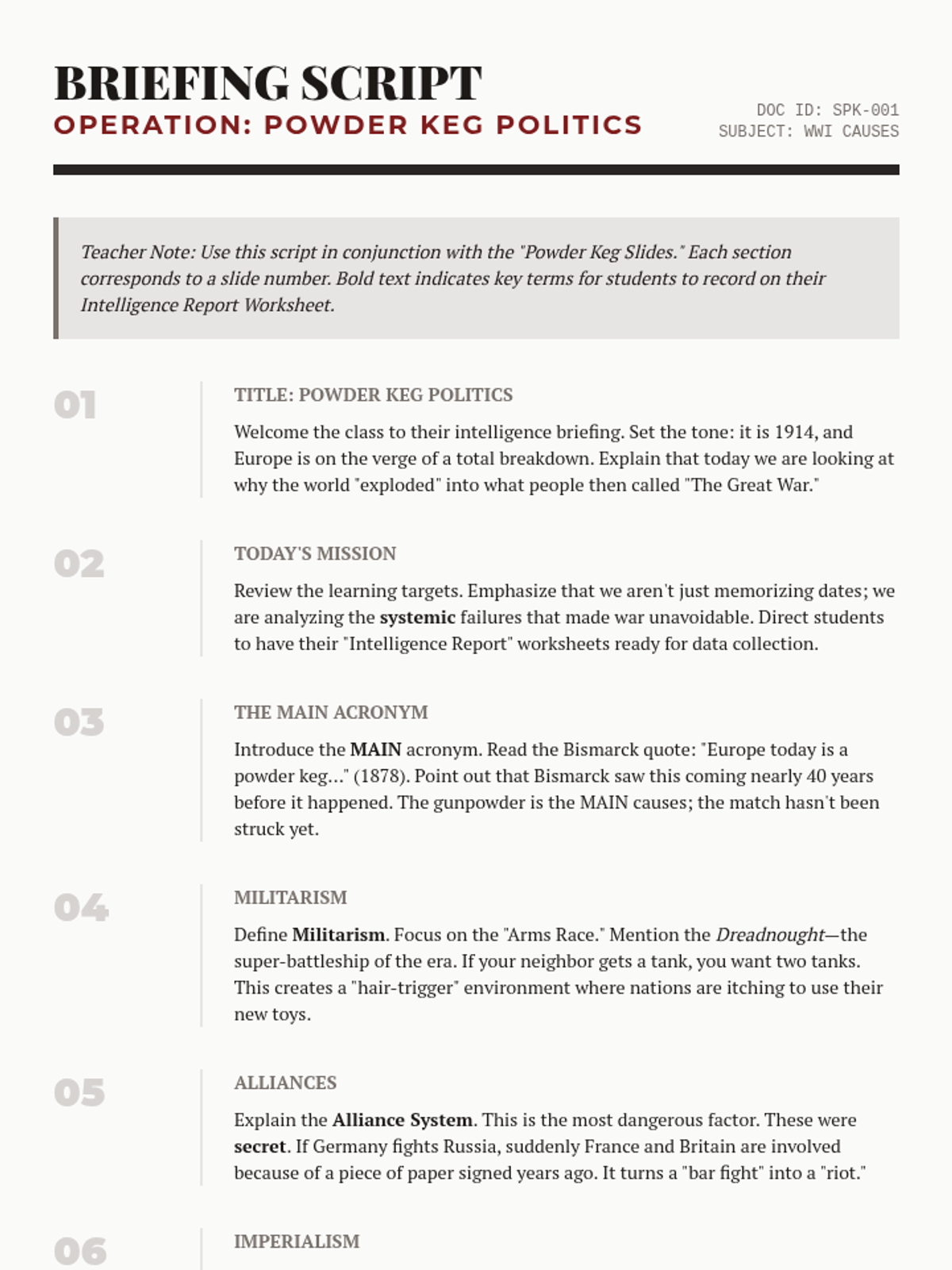
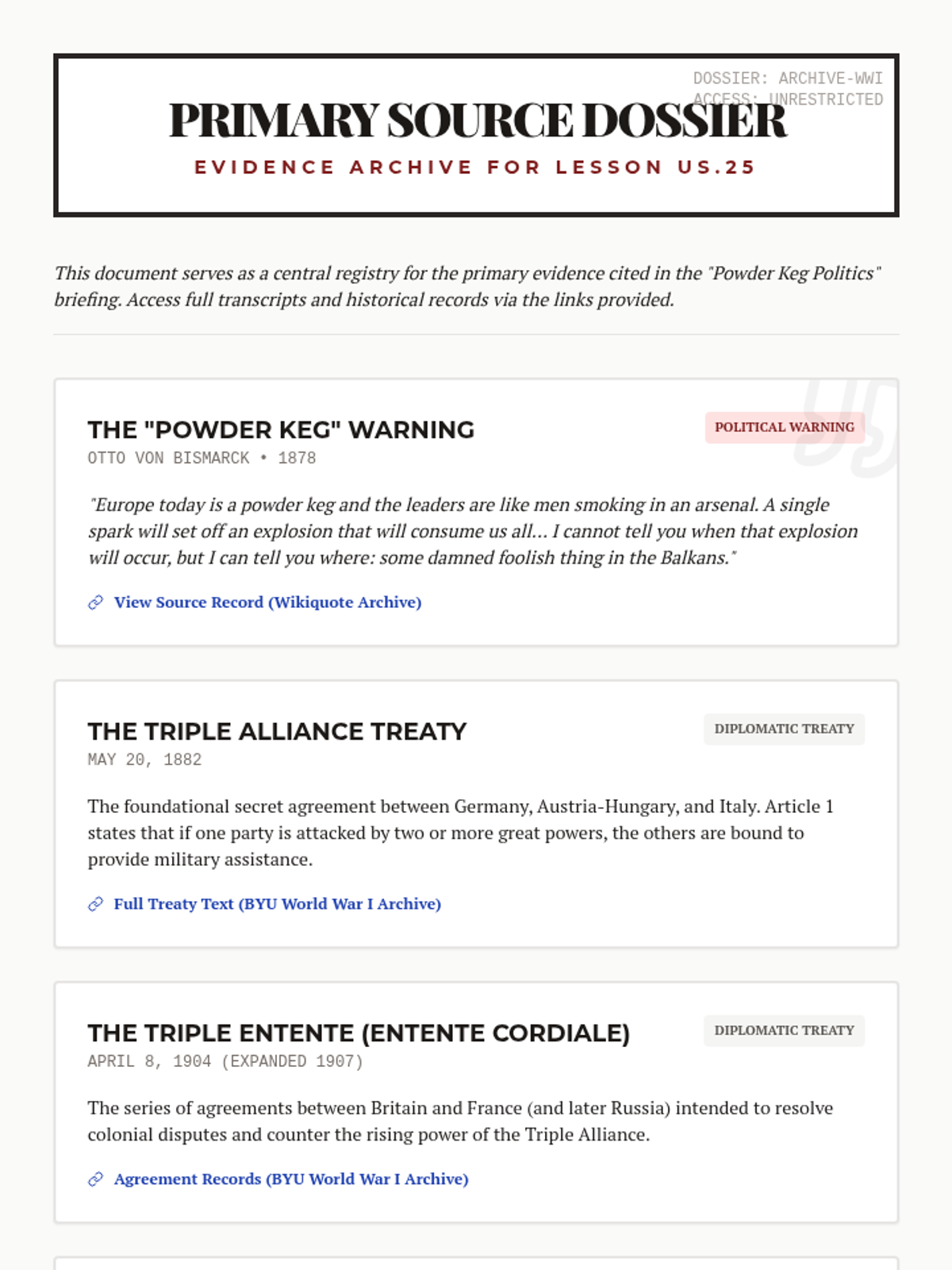
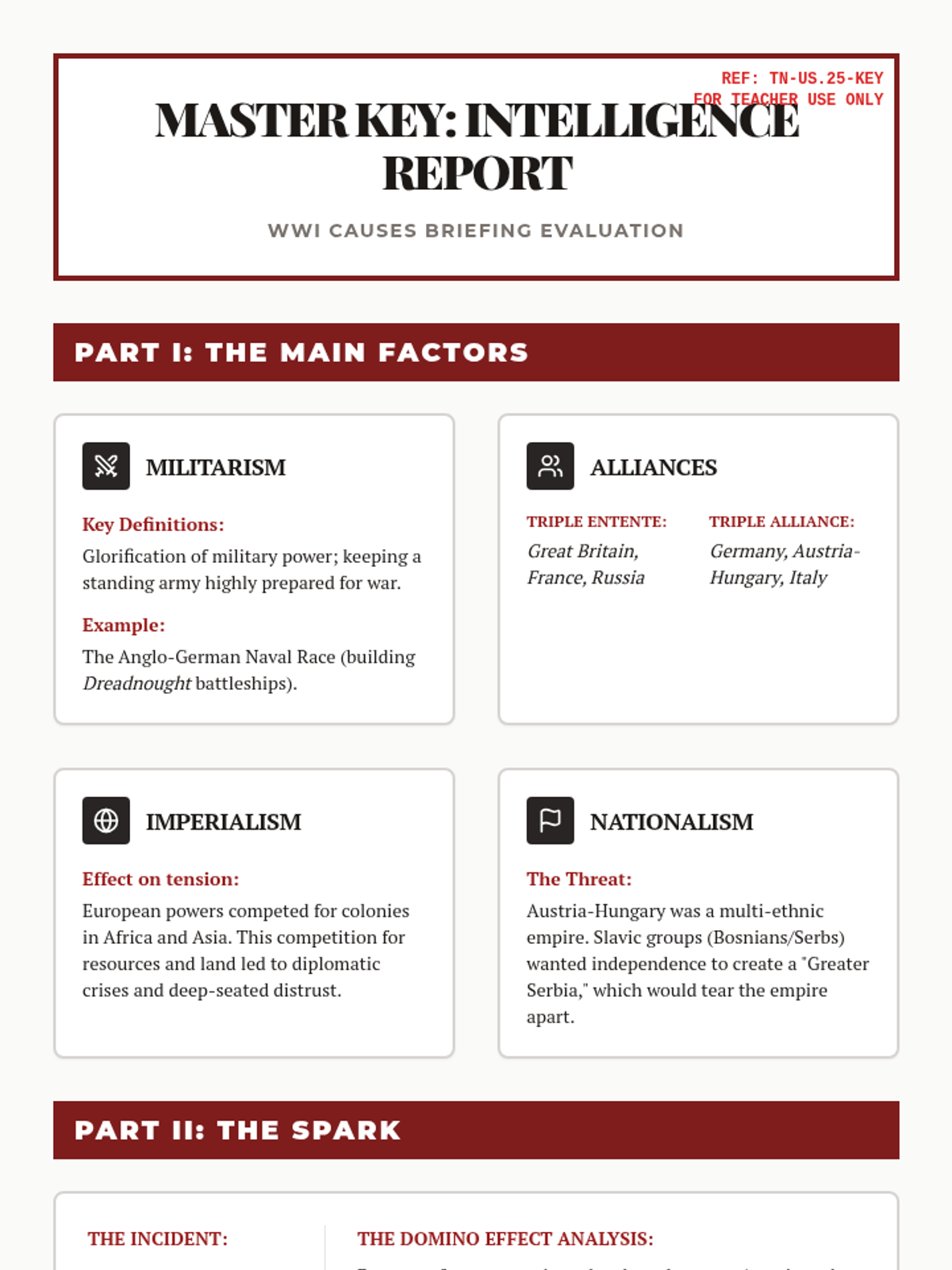
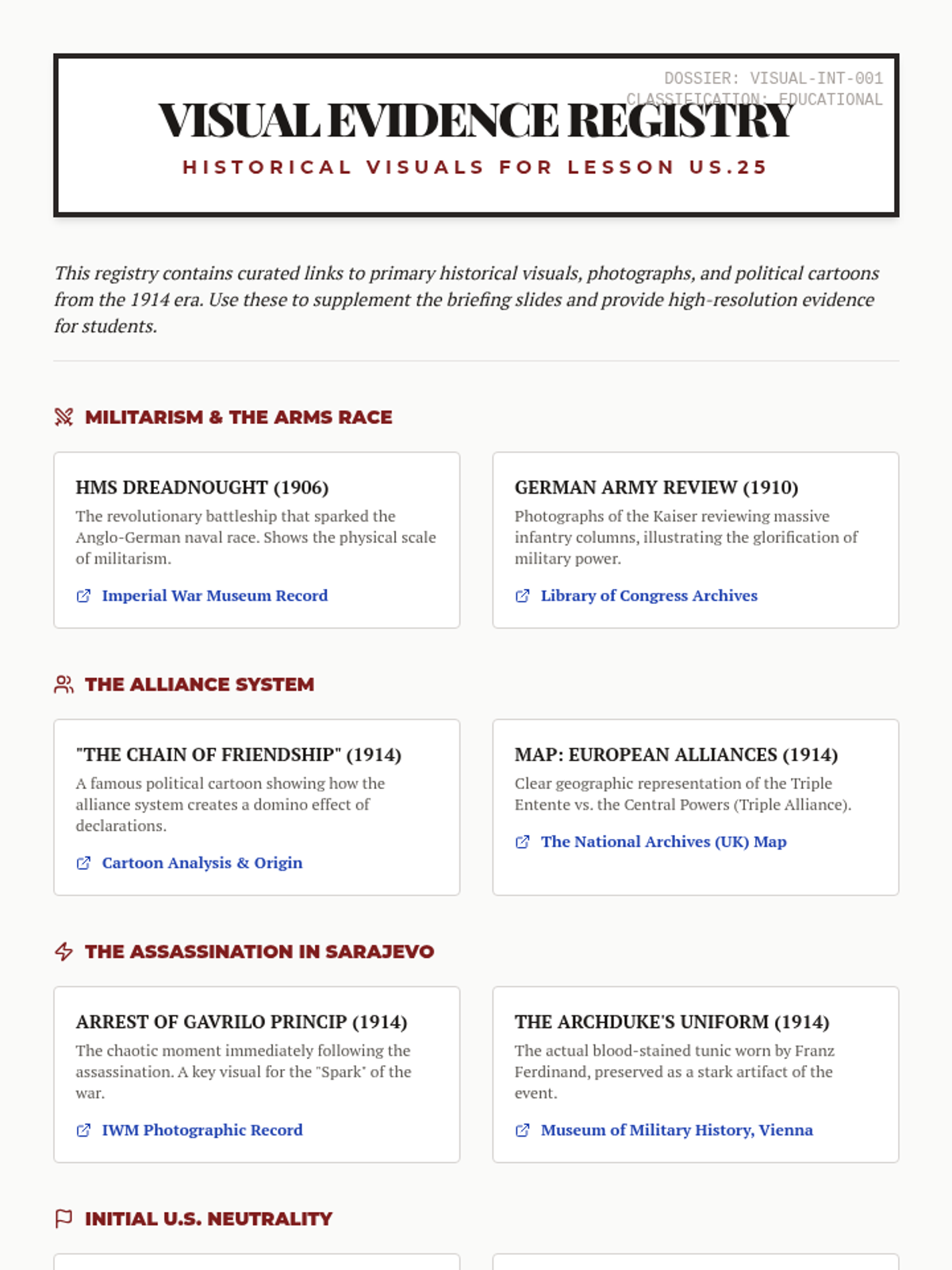
An introductory lesson on the causes of World War I, focusing on the MAIN factors (Militarism, Alliances, Imperialism, Nationalism) and the assassination of Archduke Franz Ferdinand that served as the spark. Students will also explore the initial U.S. stance of neutrality.
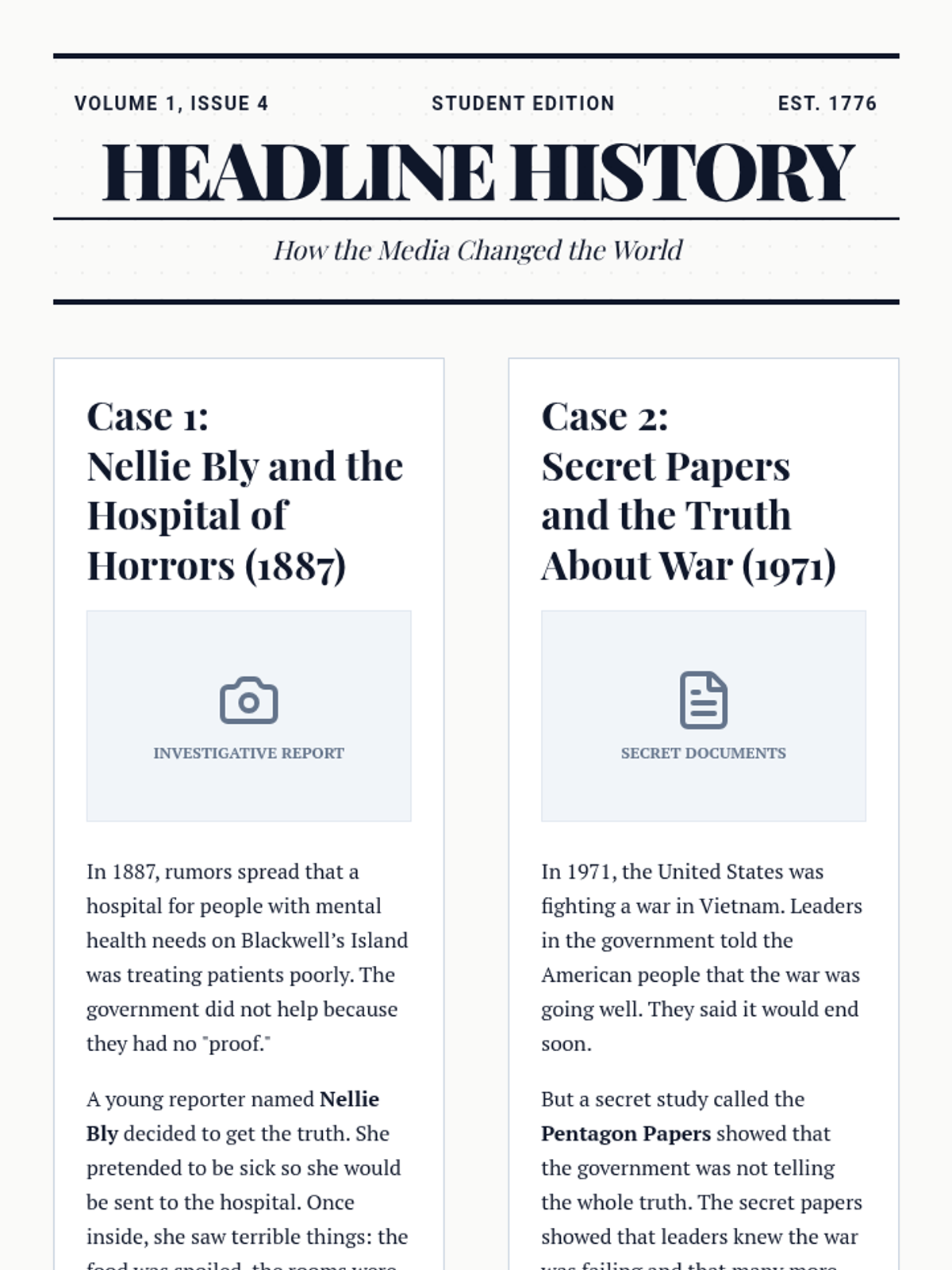
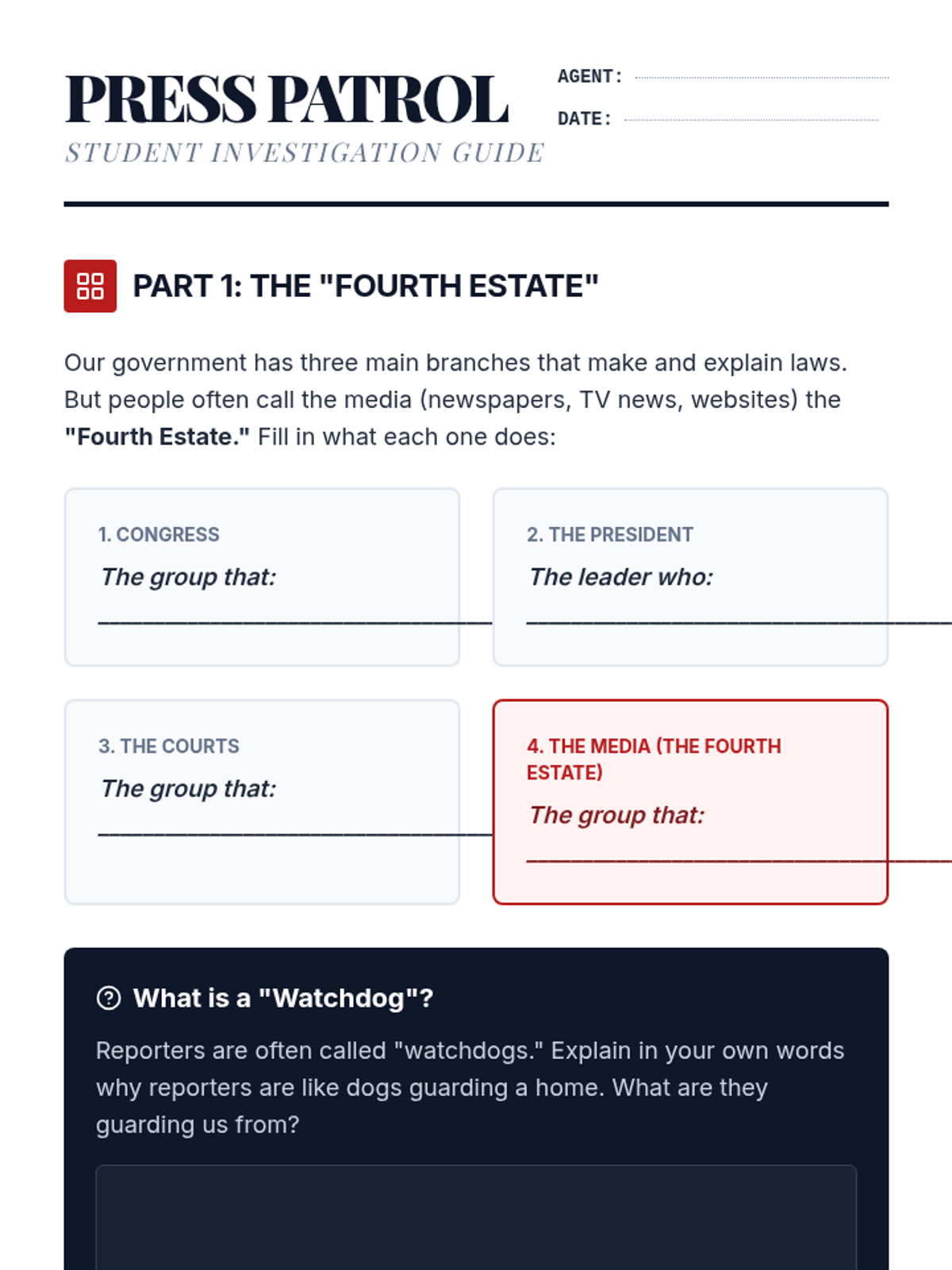
Students explore the vital role of a free press as the 'Fourth Estate' in a democracy, examining historical impact and current relevance through inquiry and analysis.
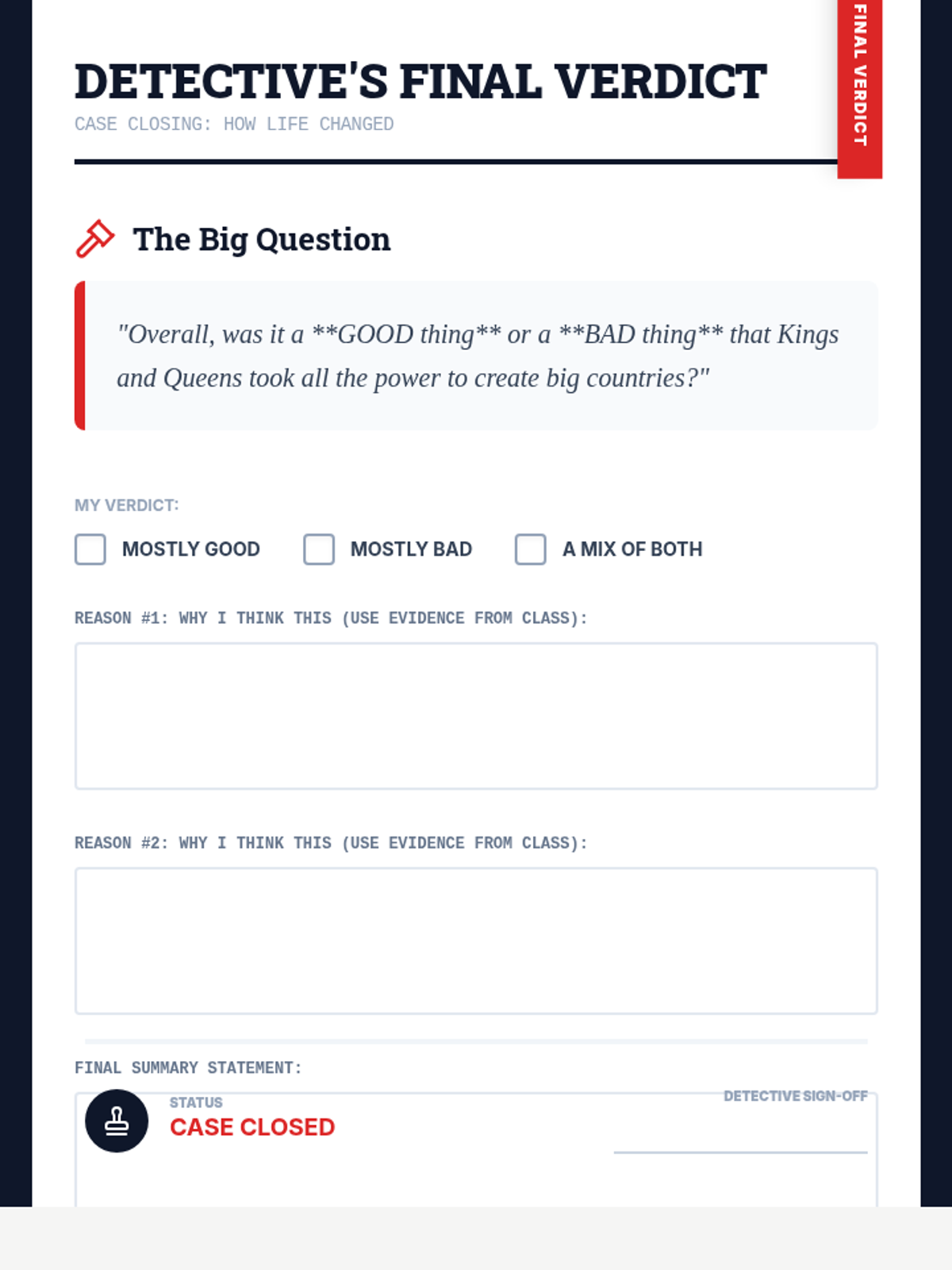
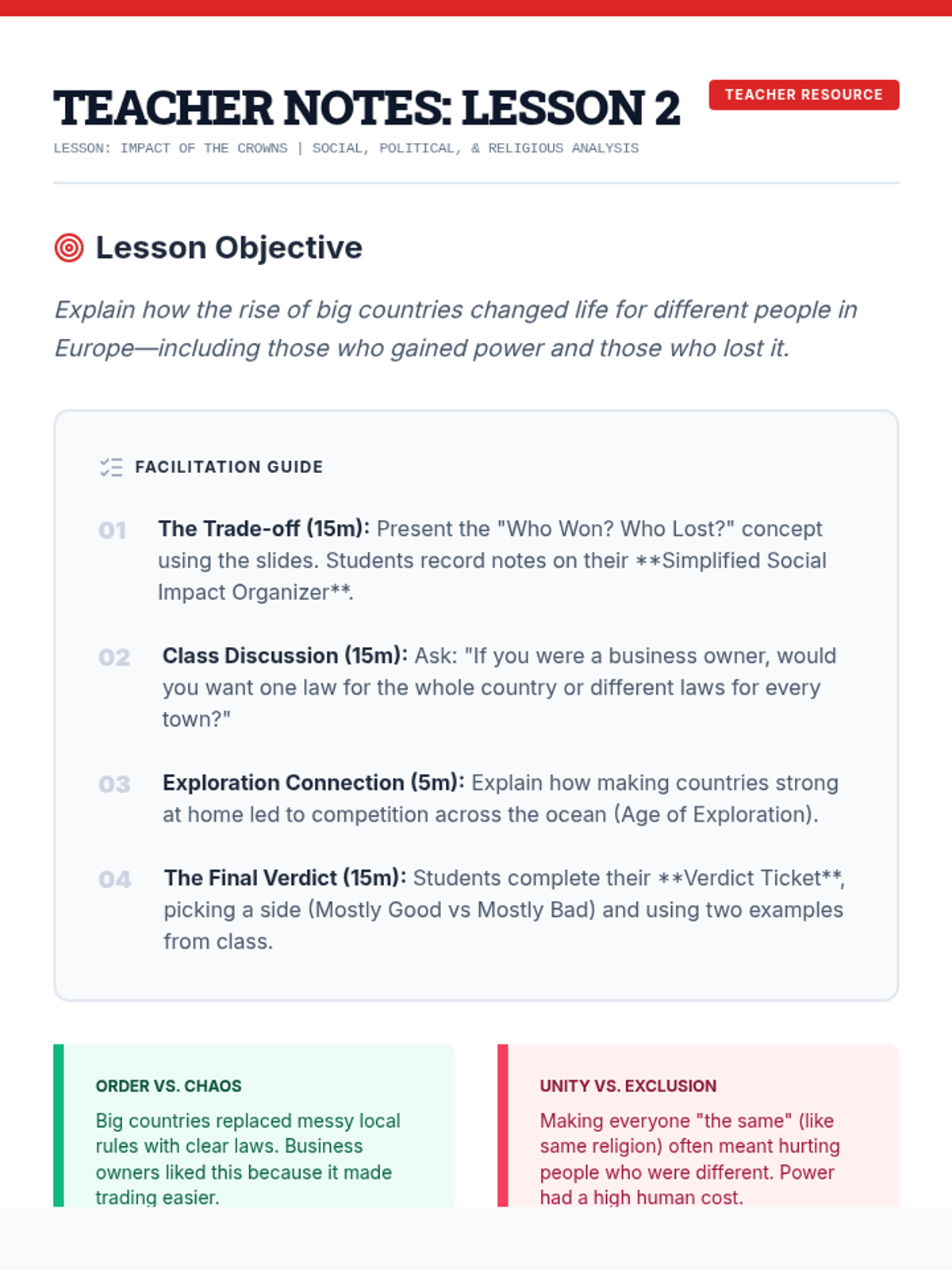
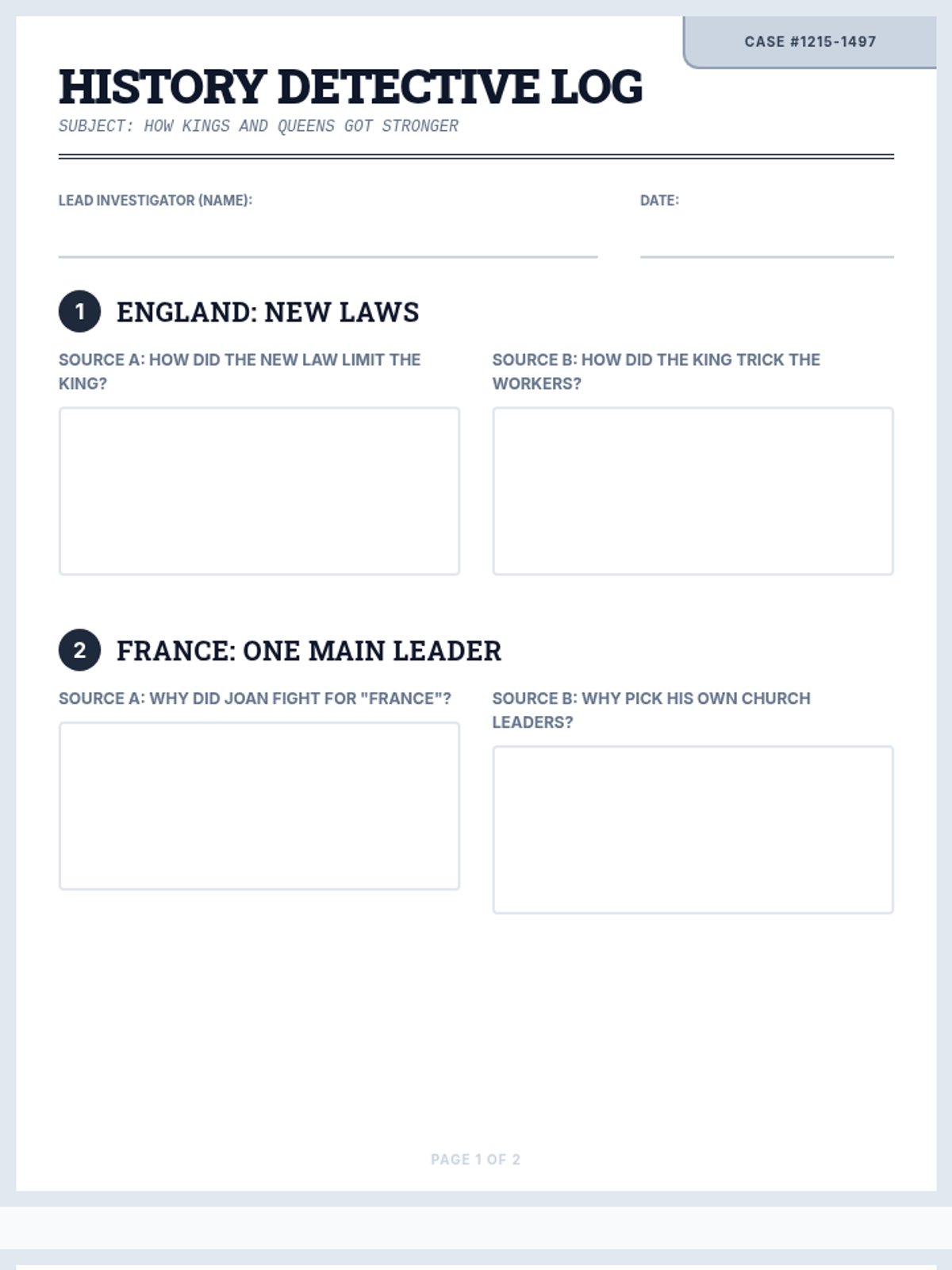
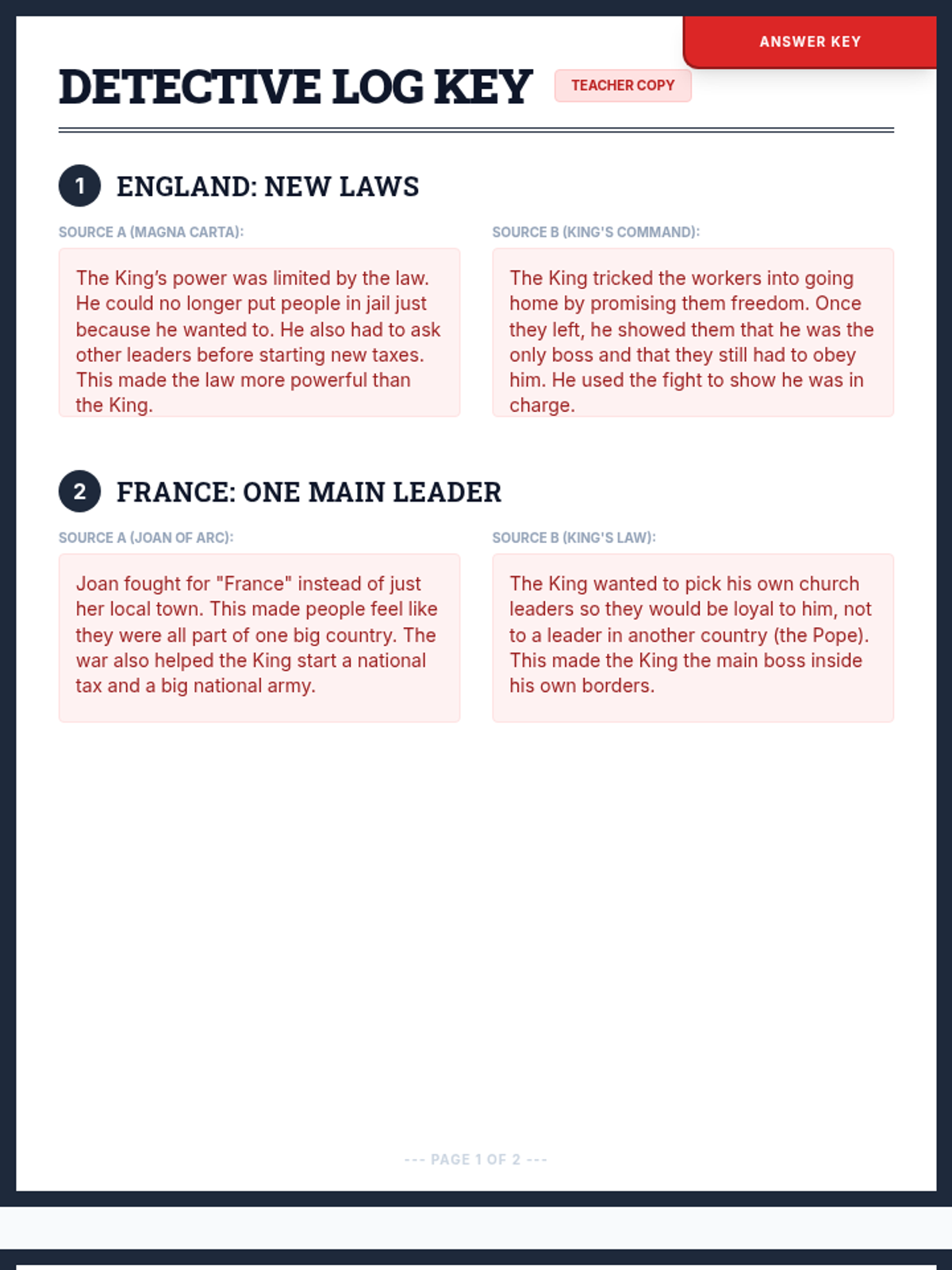
Students investigate the profound social, religious, and political impacts of centralized power, examining how the rise of nation-states led to both stability and systemic conflict across Europe.
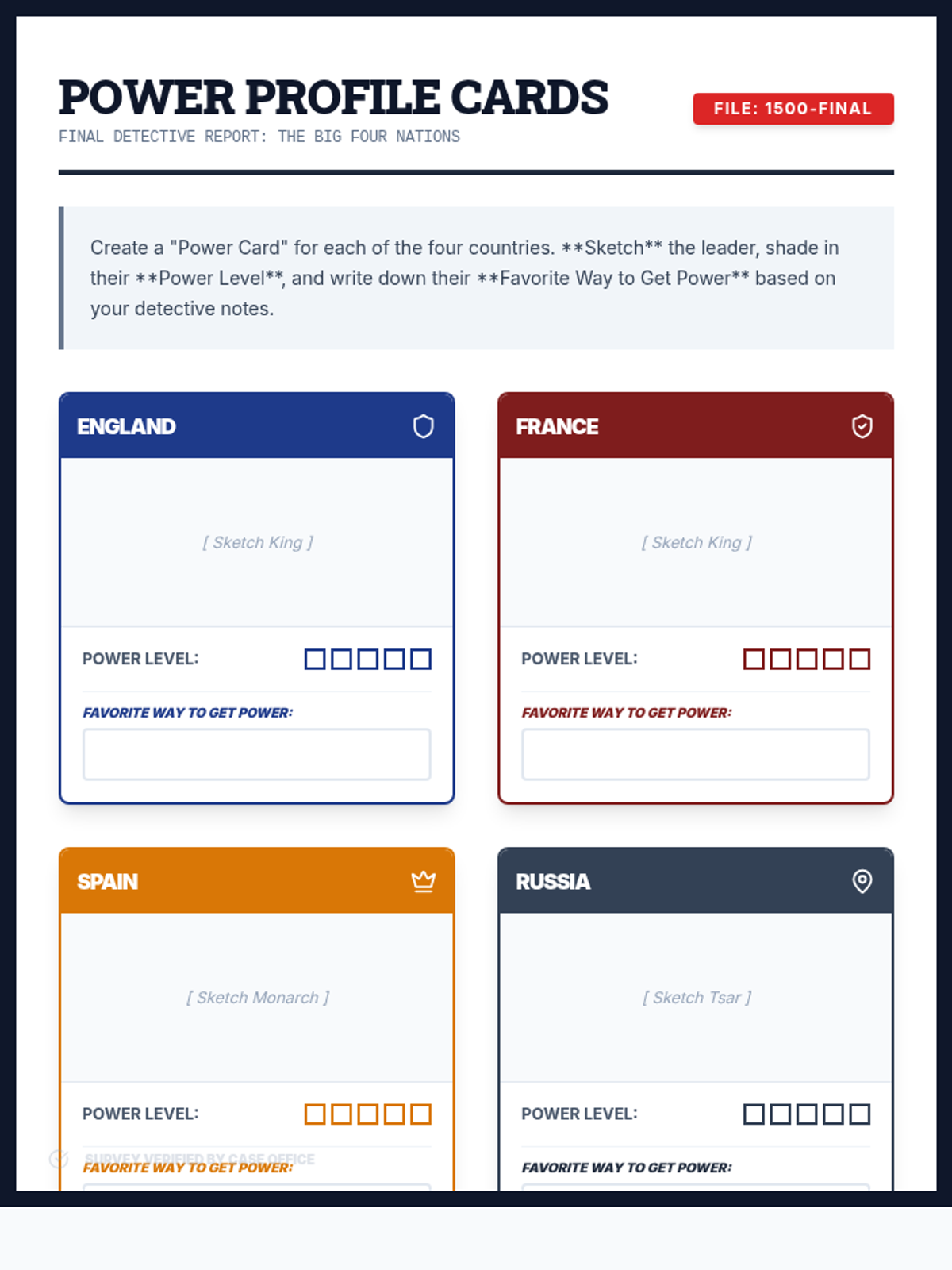
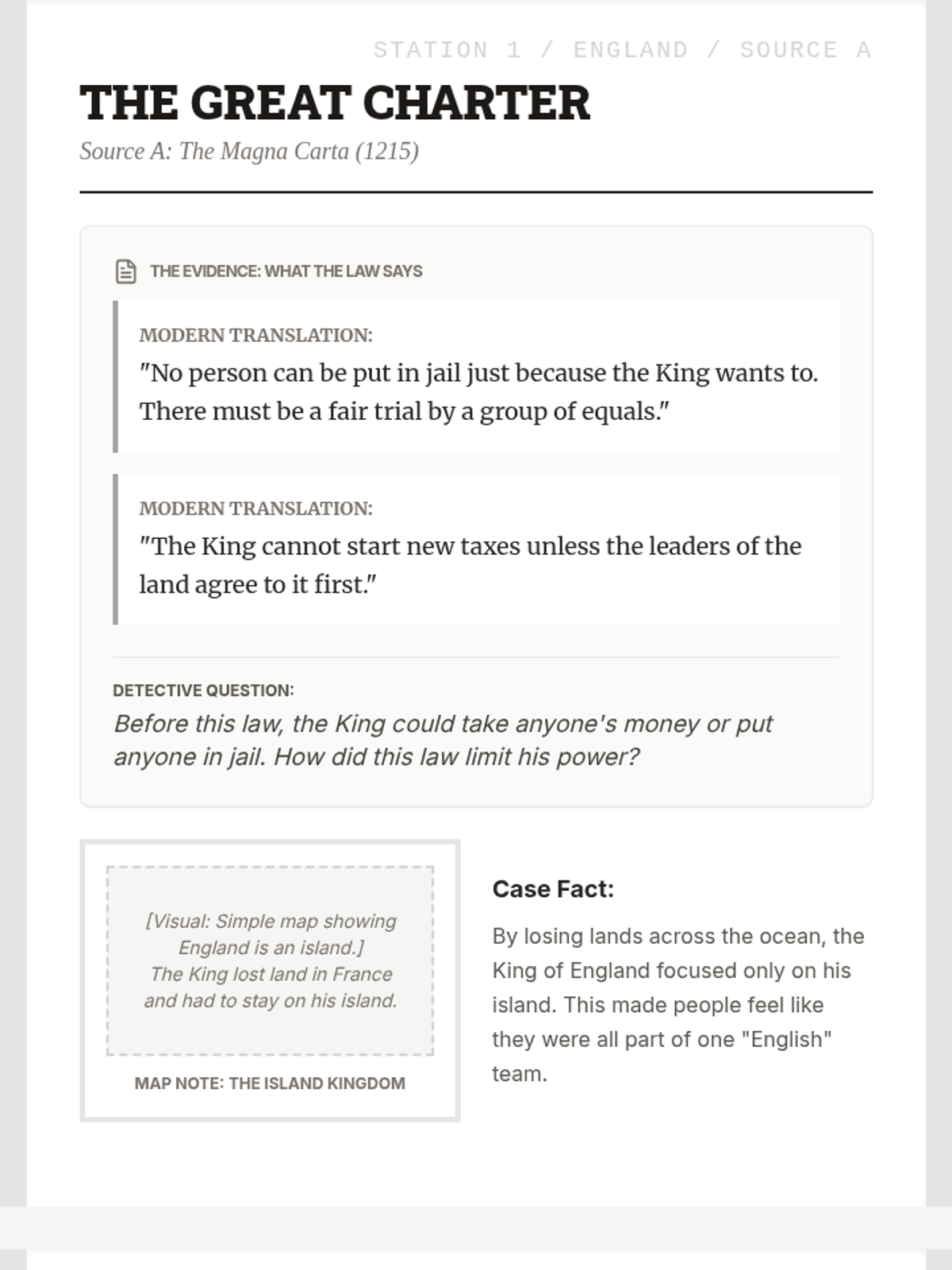
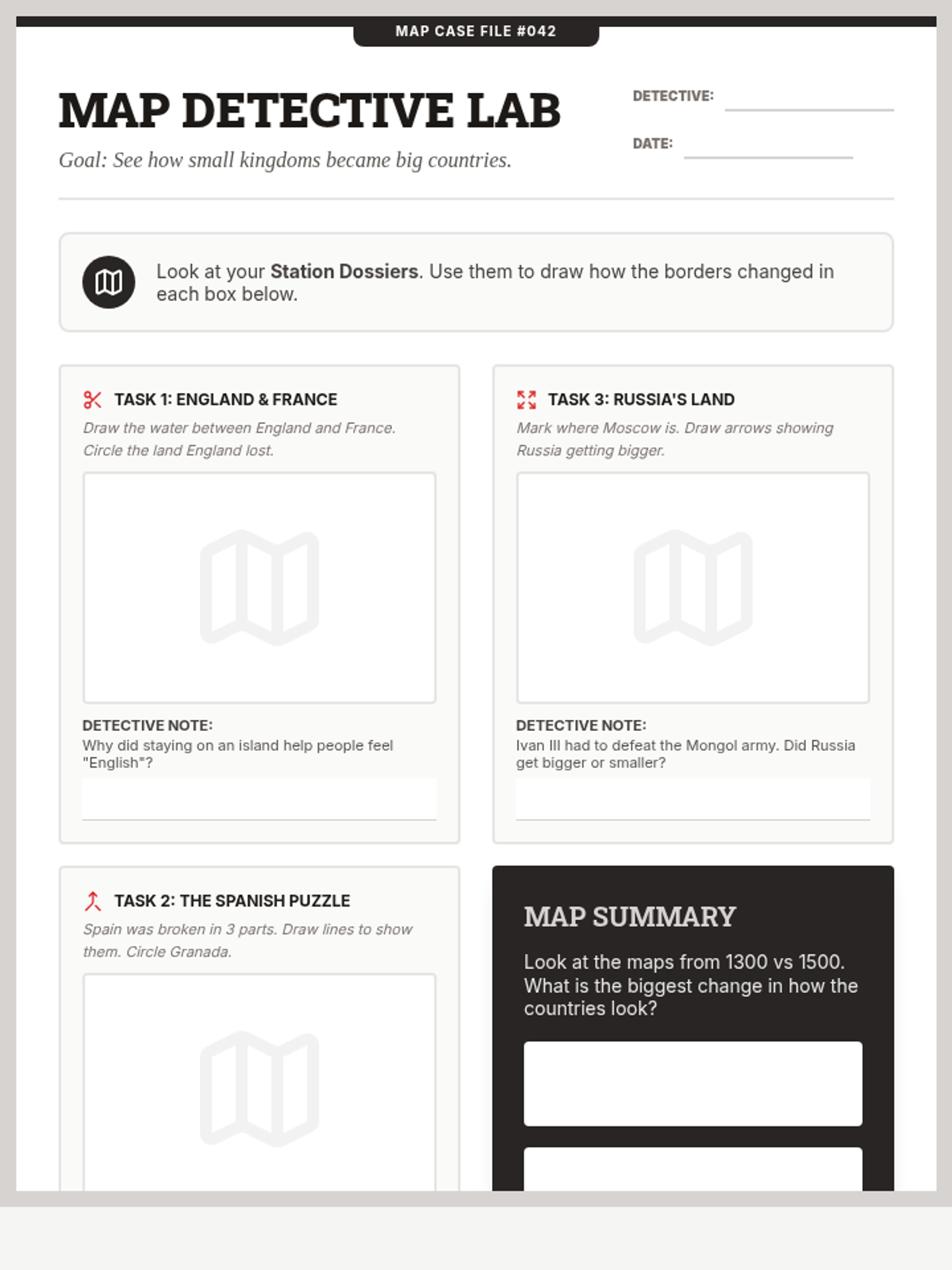
Students rotate through stations, analyzing maps, treaties, and accounts to understand how monarchs consolidated power and defined the borders of modern Europe.
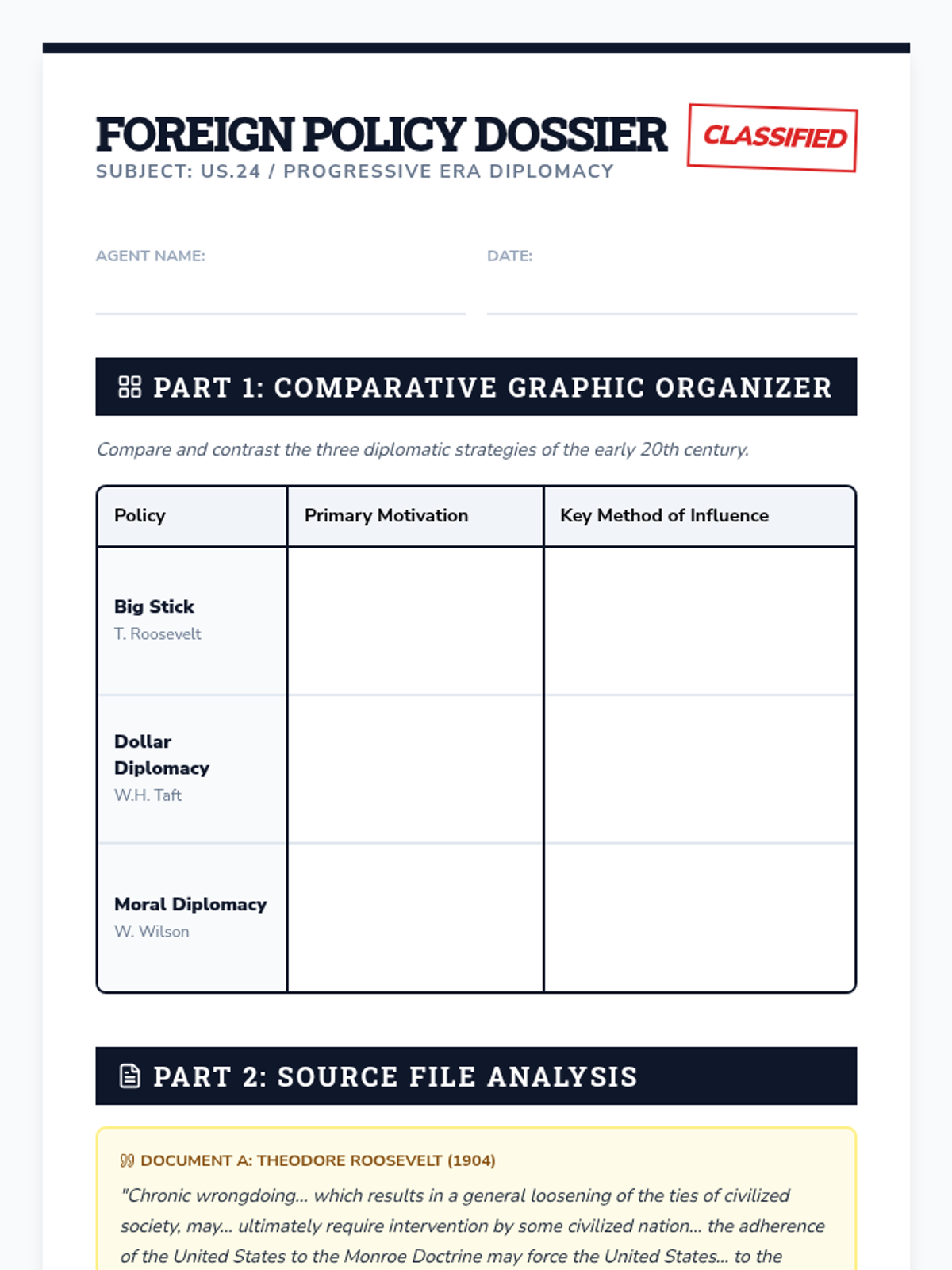
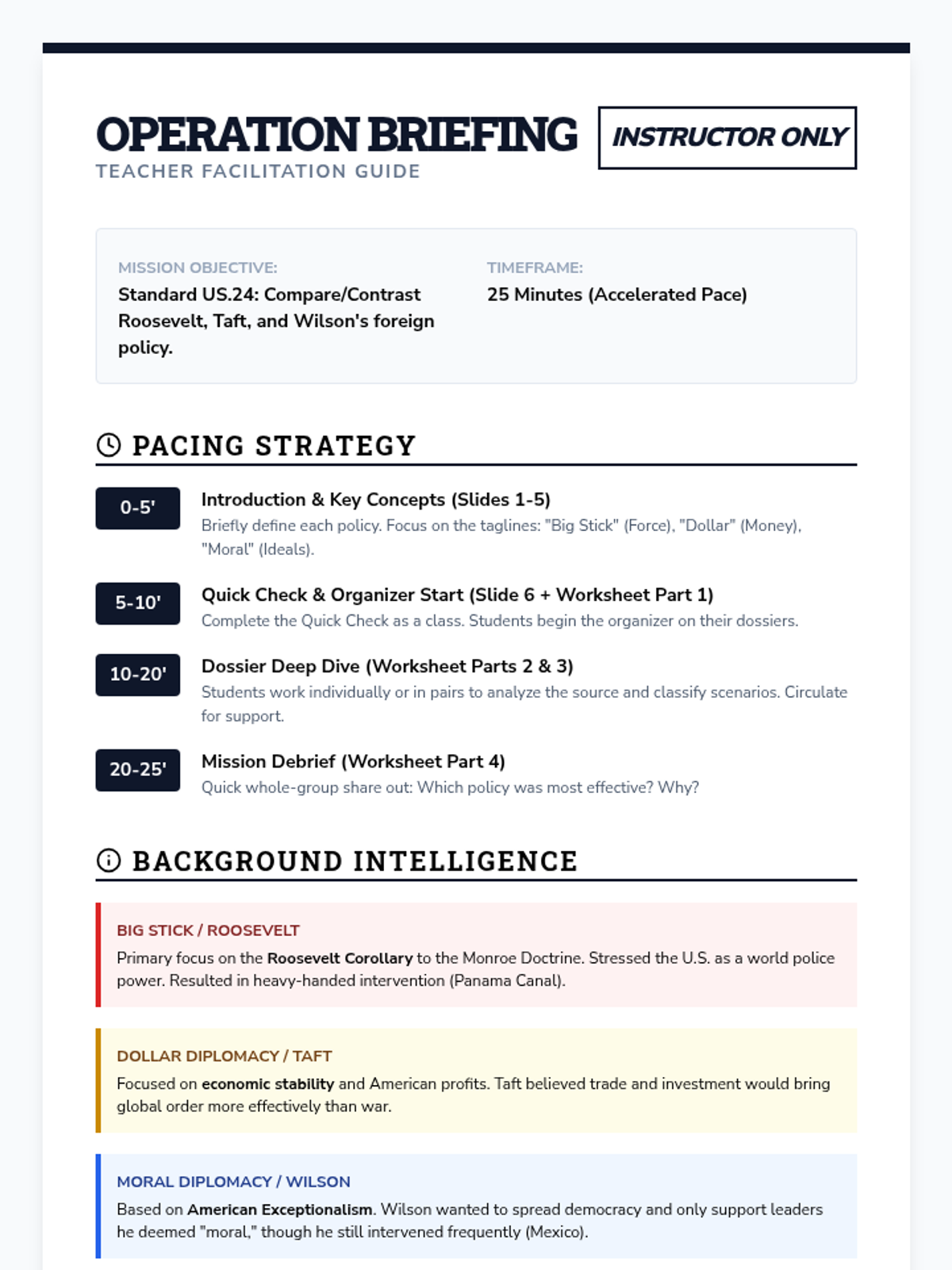
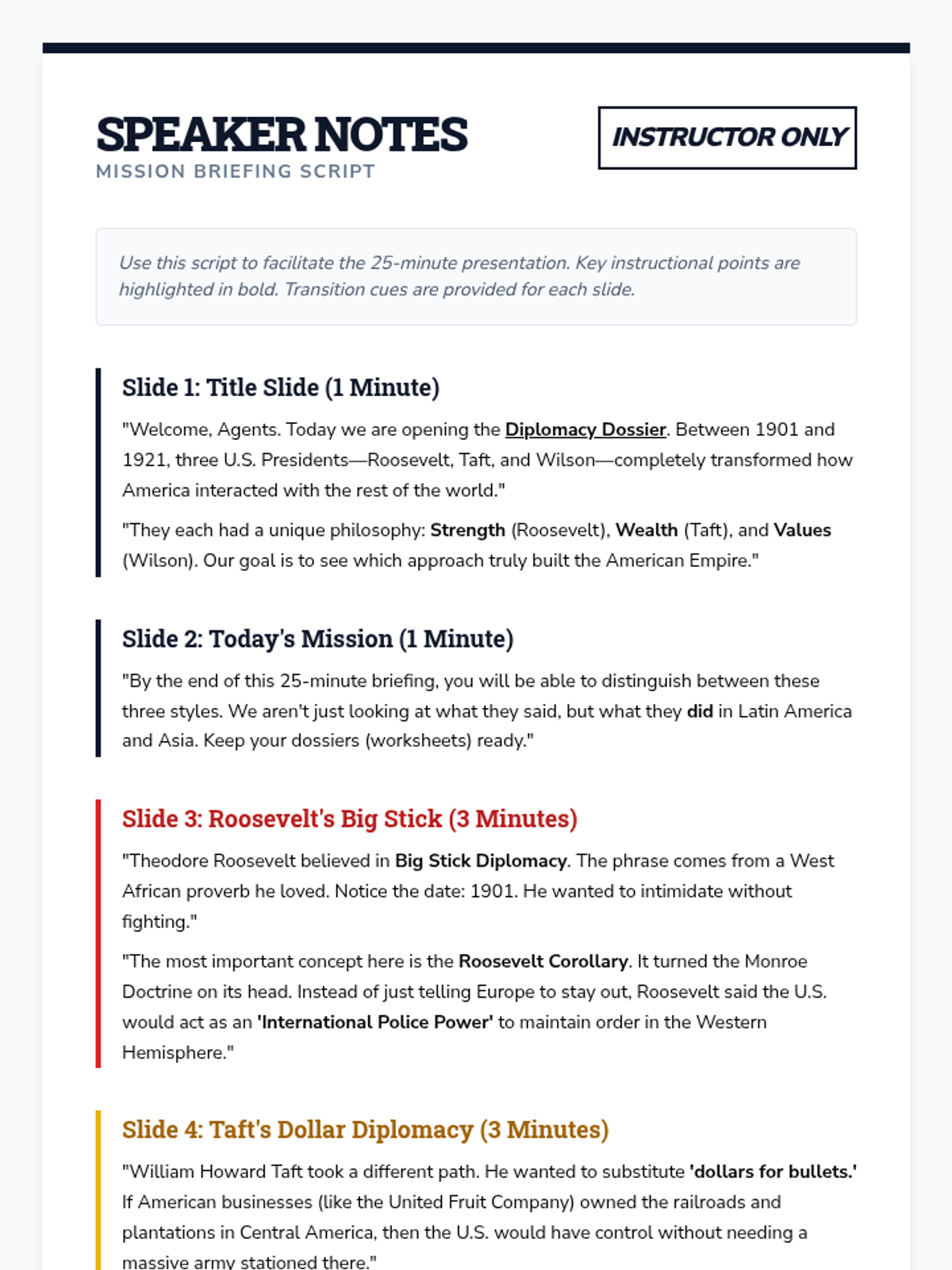
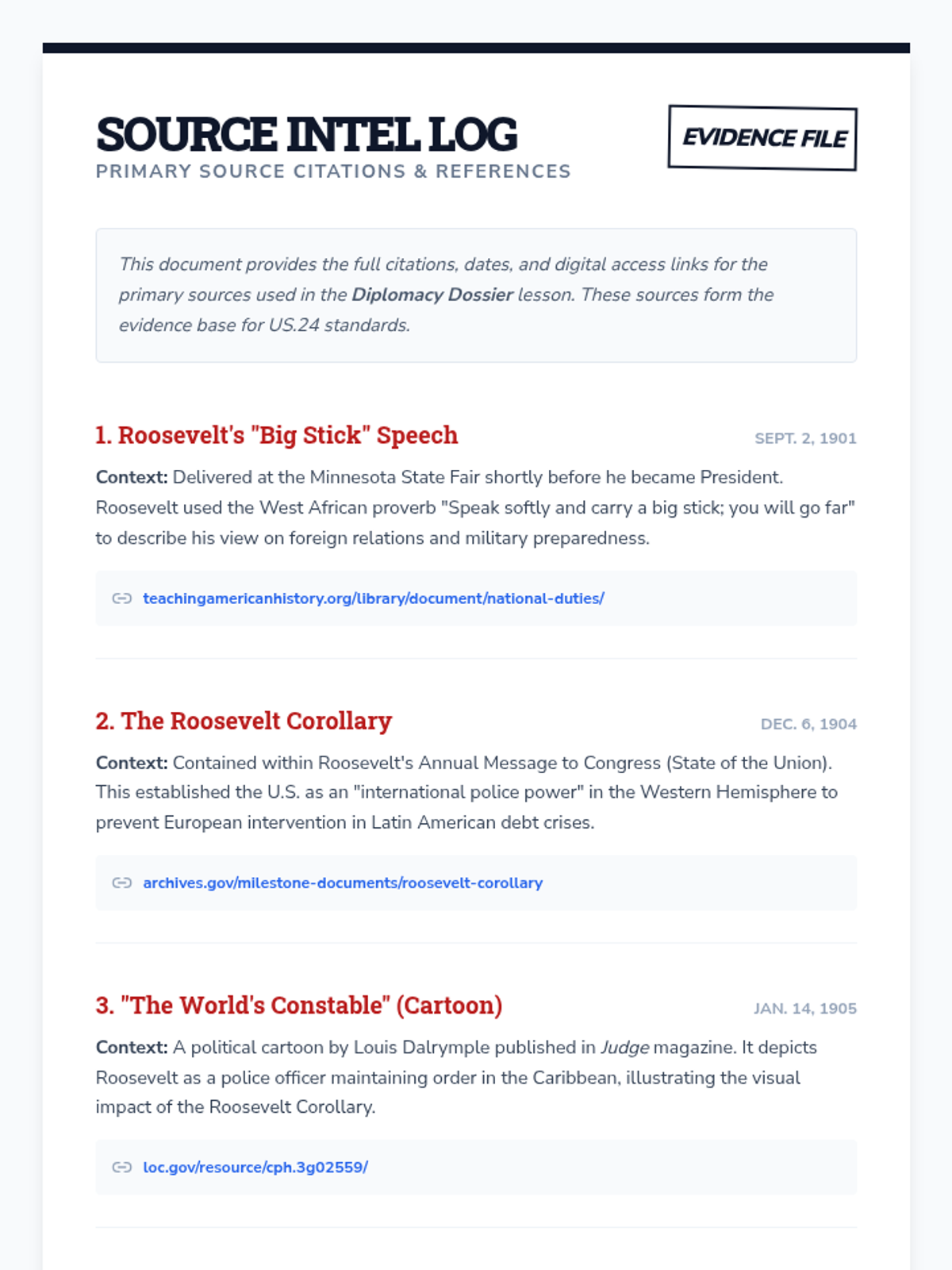
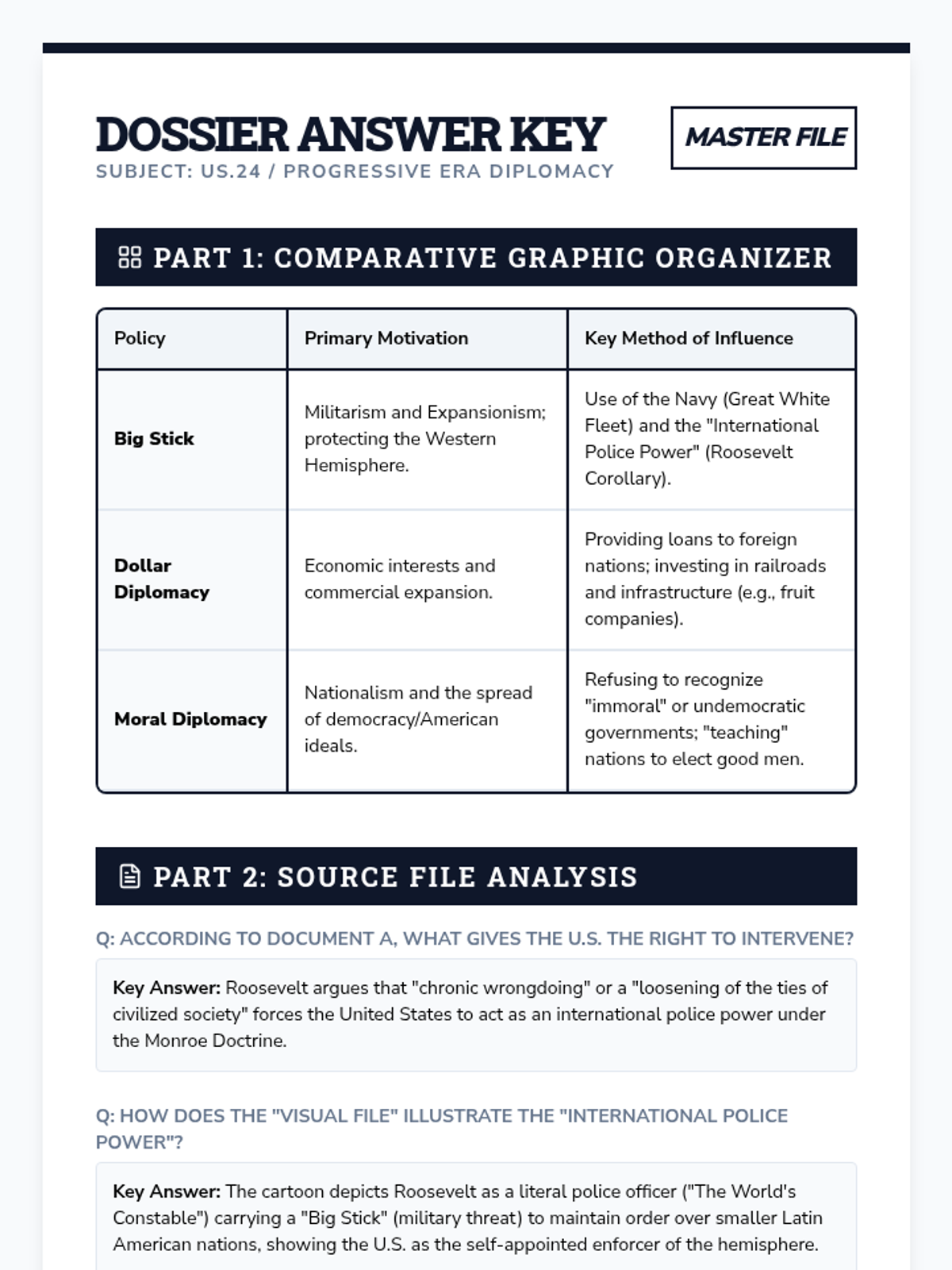
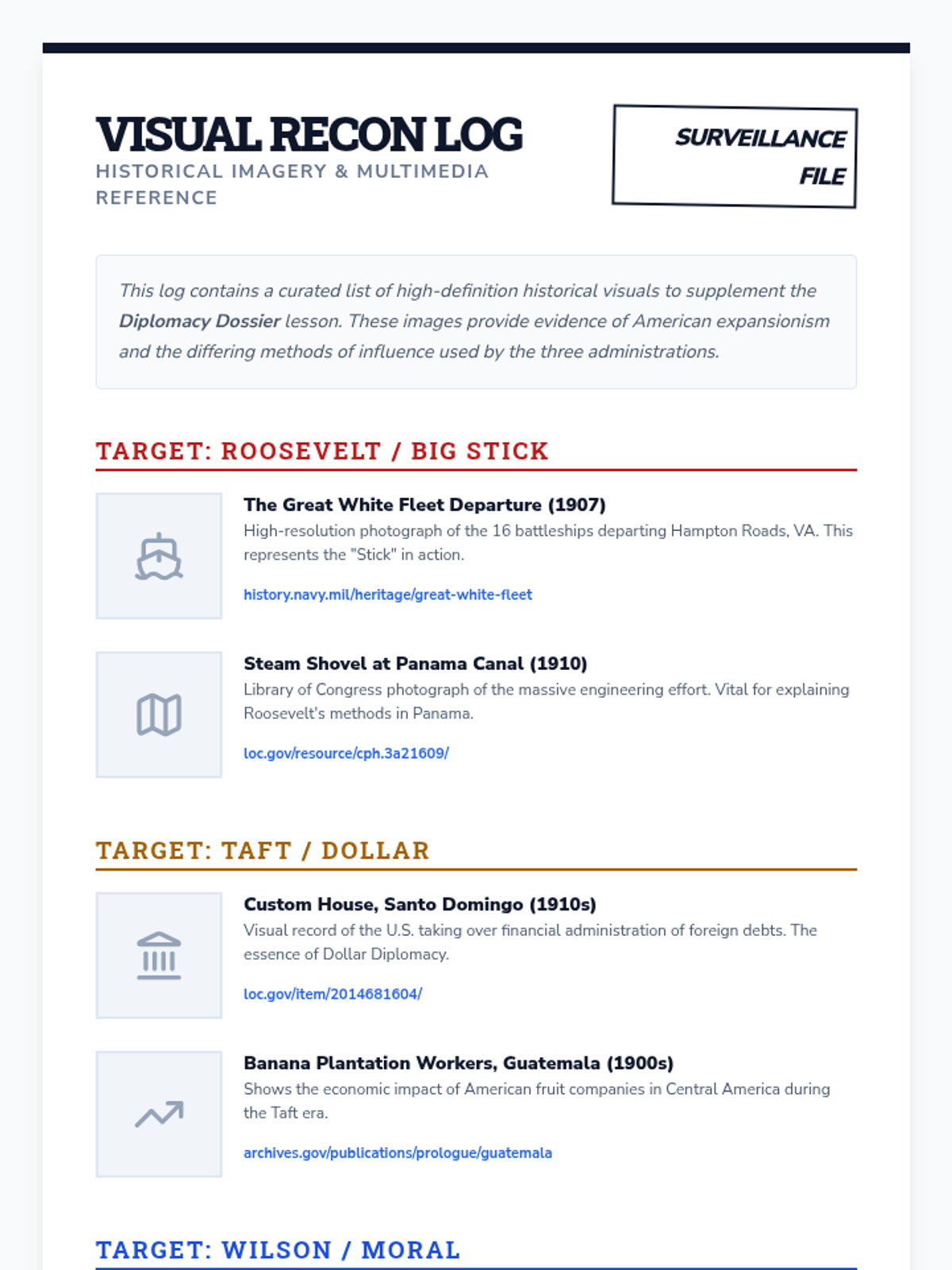
A high-speed 25-minute investigation into the three distinct foreign policy styles of the Progressive Era presidents: Roosevelt, Taft, and Wilson. Students use a comparative dossier approach to analyze motives, methods, and outcomes of American expansionism.
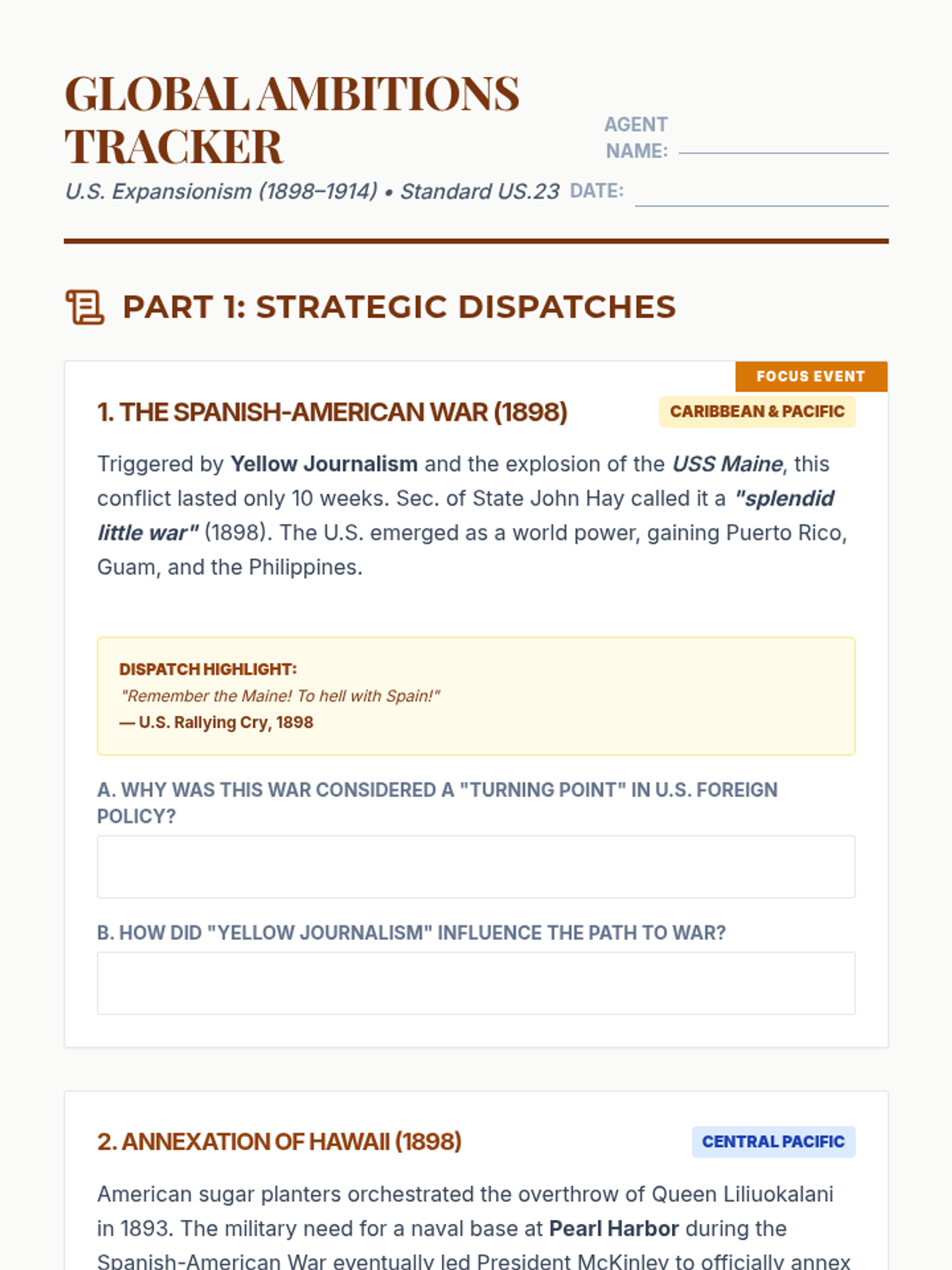
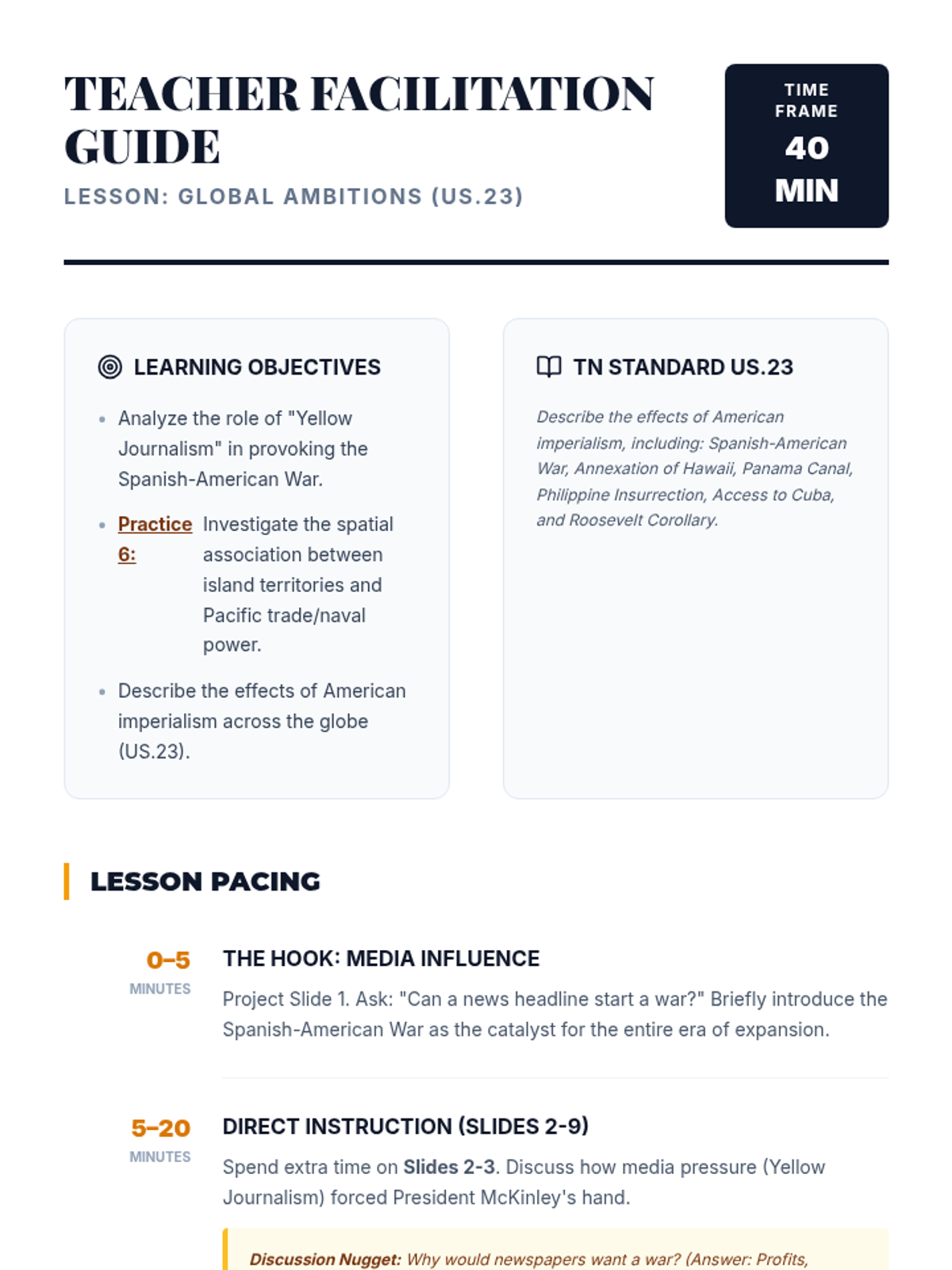
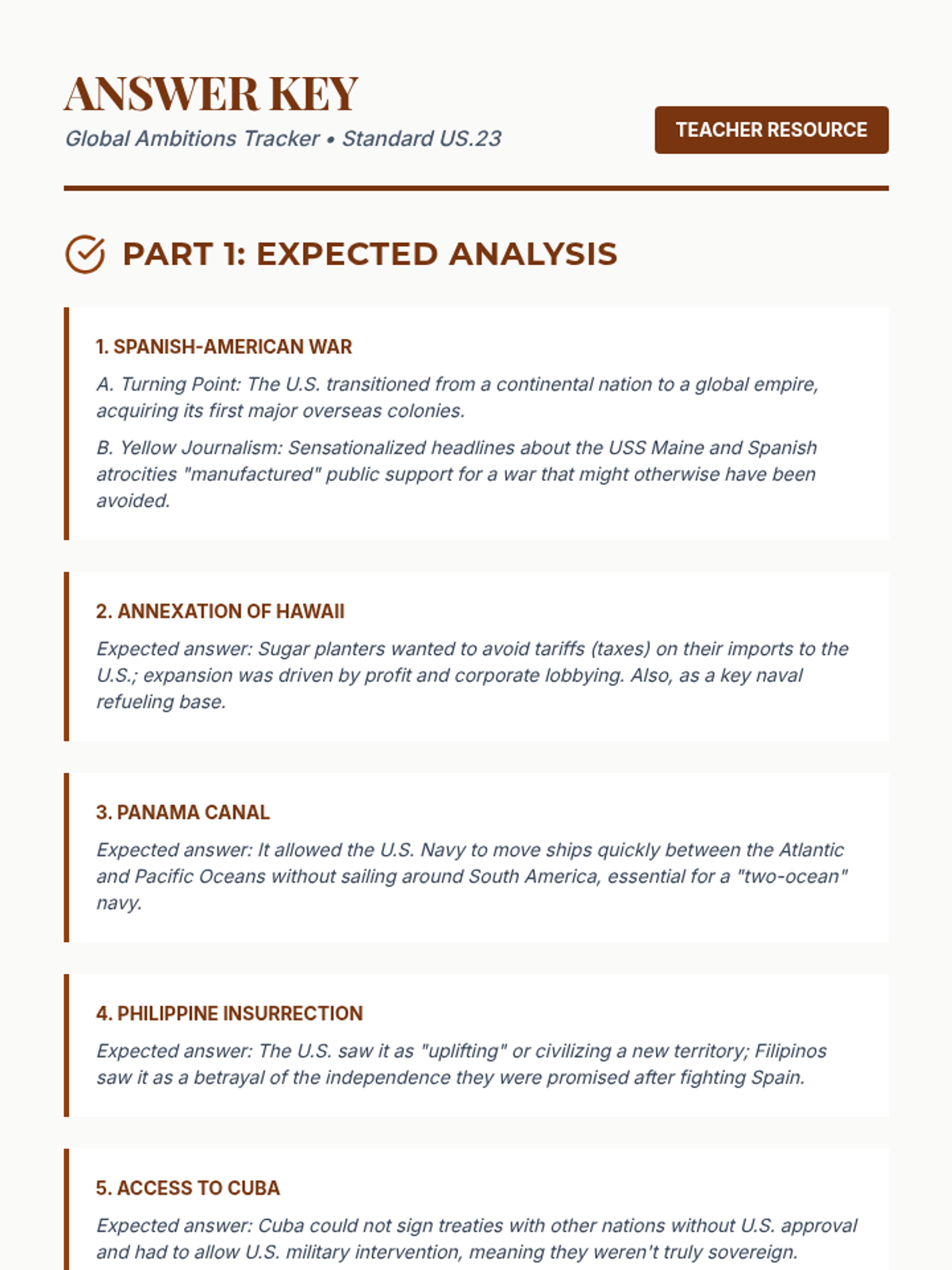
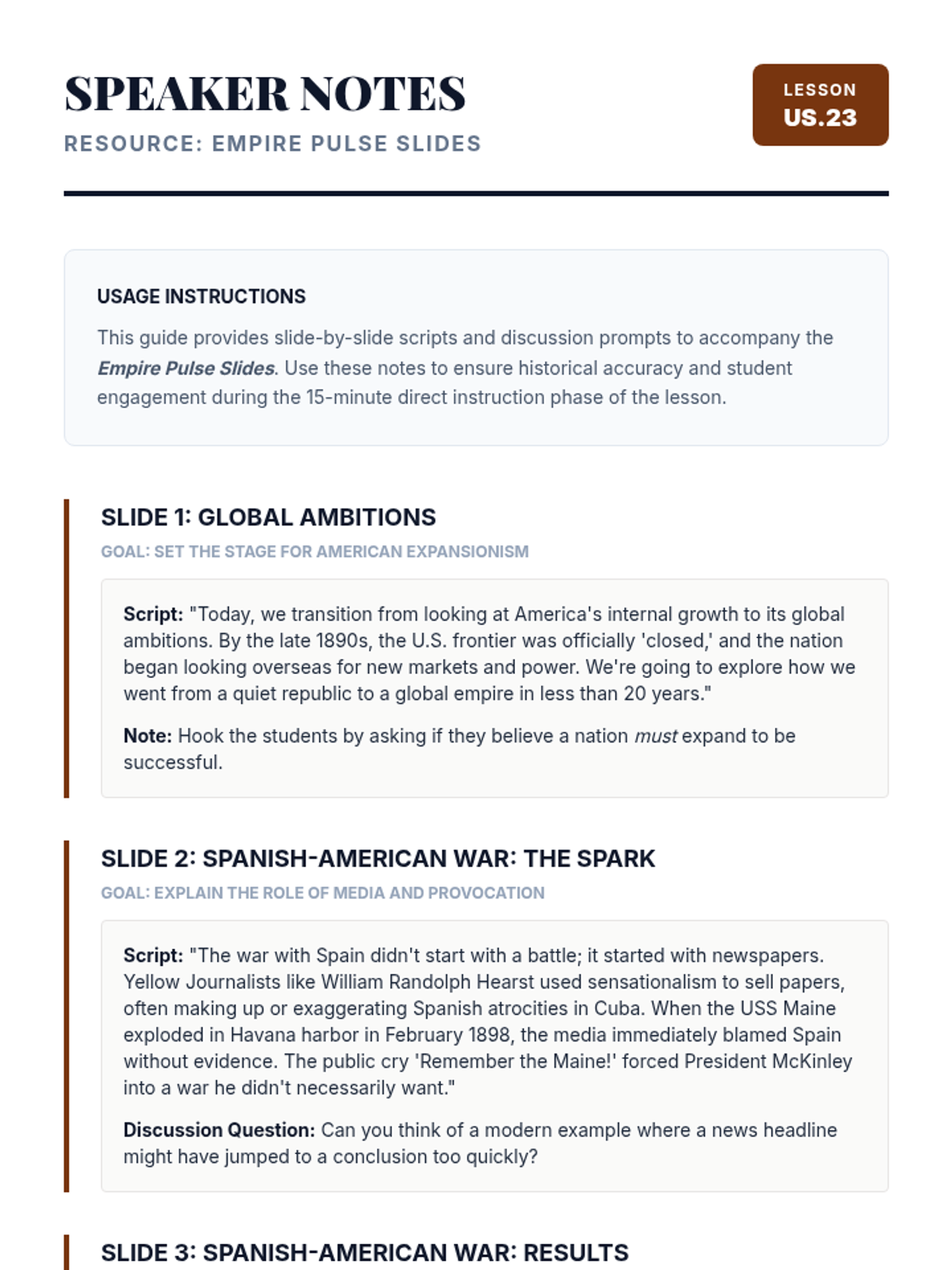
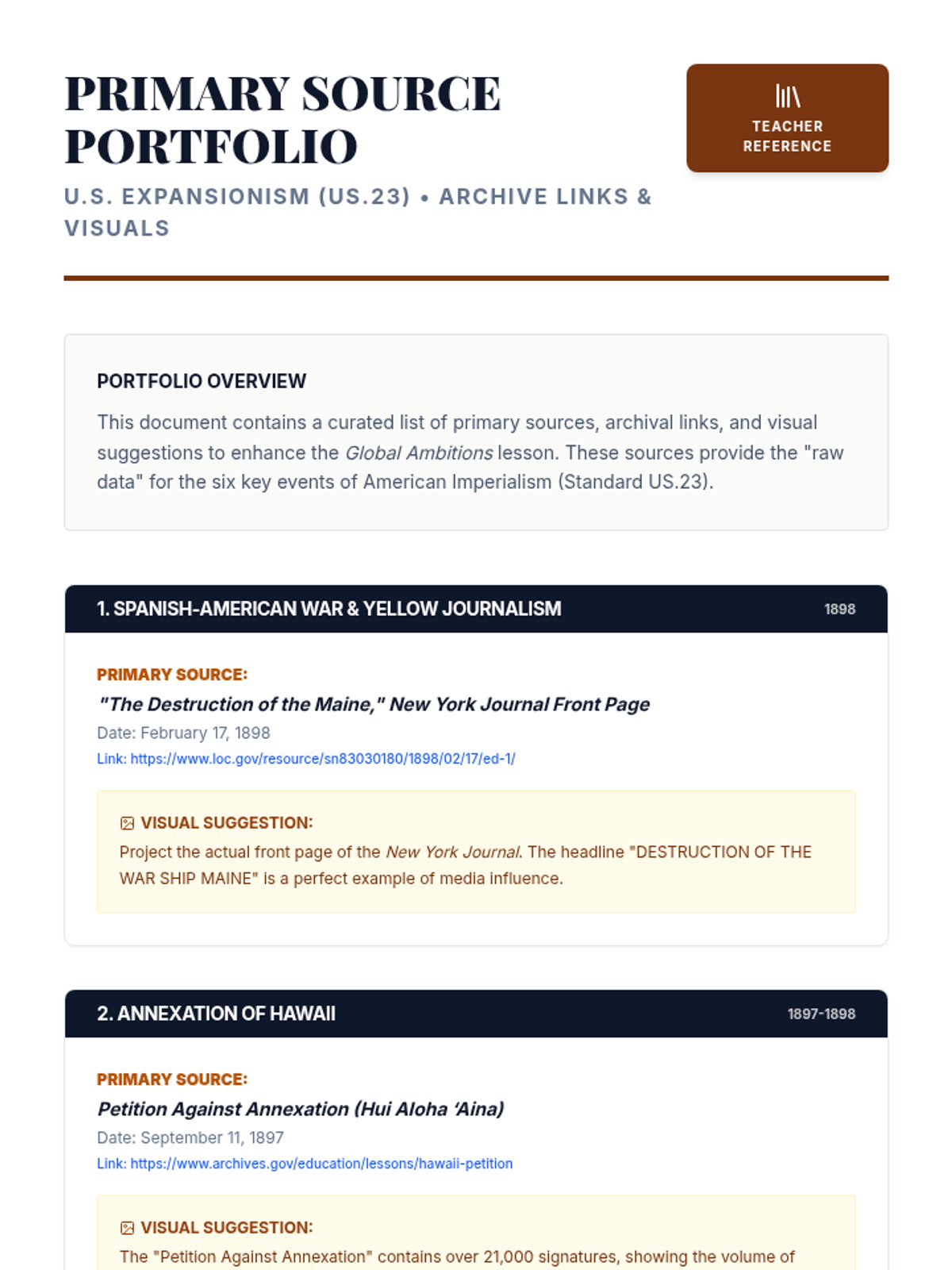
A comprehensive 40-minute exploration of late 19th and early 20th-century American expansionism, covering key events from the Spanish-American War to the Roosevelt Corollary through guided reading and cartographic analysis.