A targeted 30-minute intervention lesson framework and progress monitoring system designed to build multiplication and division fact fluency for students working below grade level.
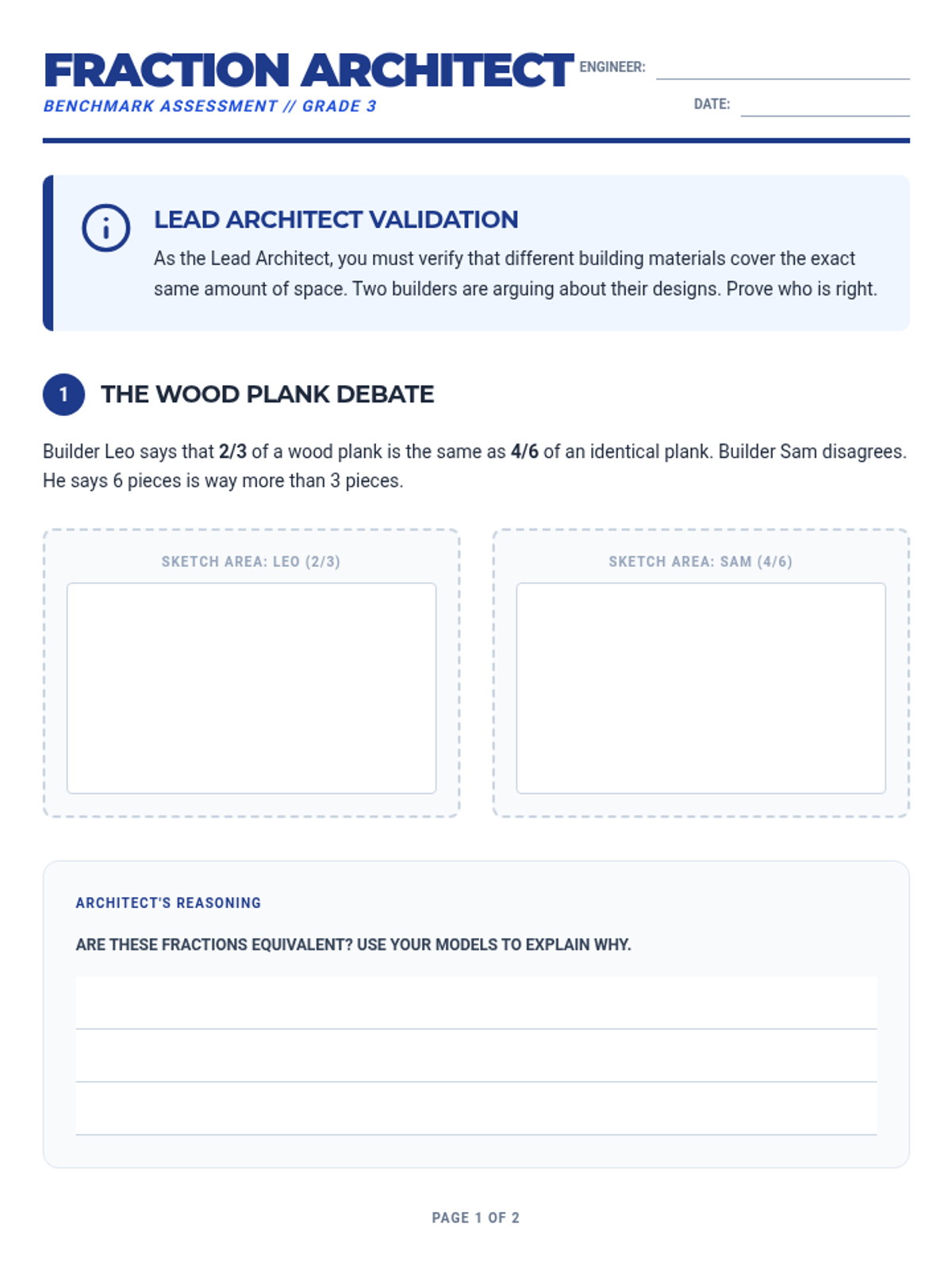
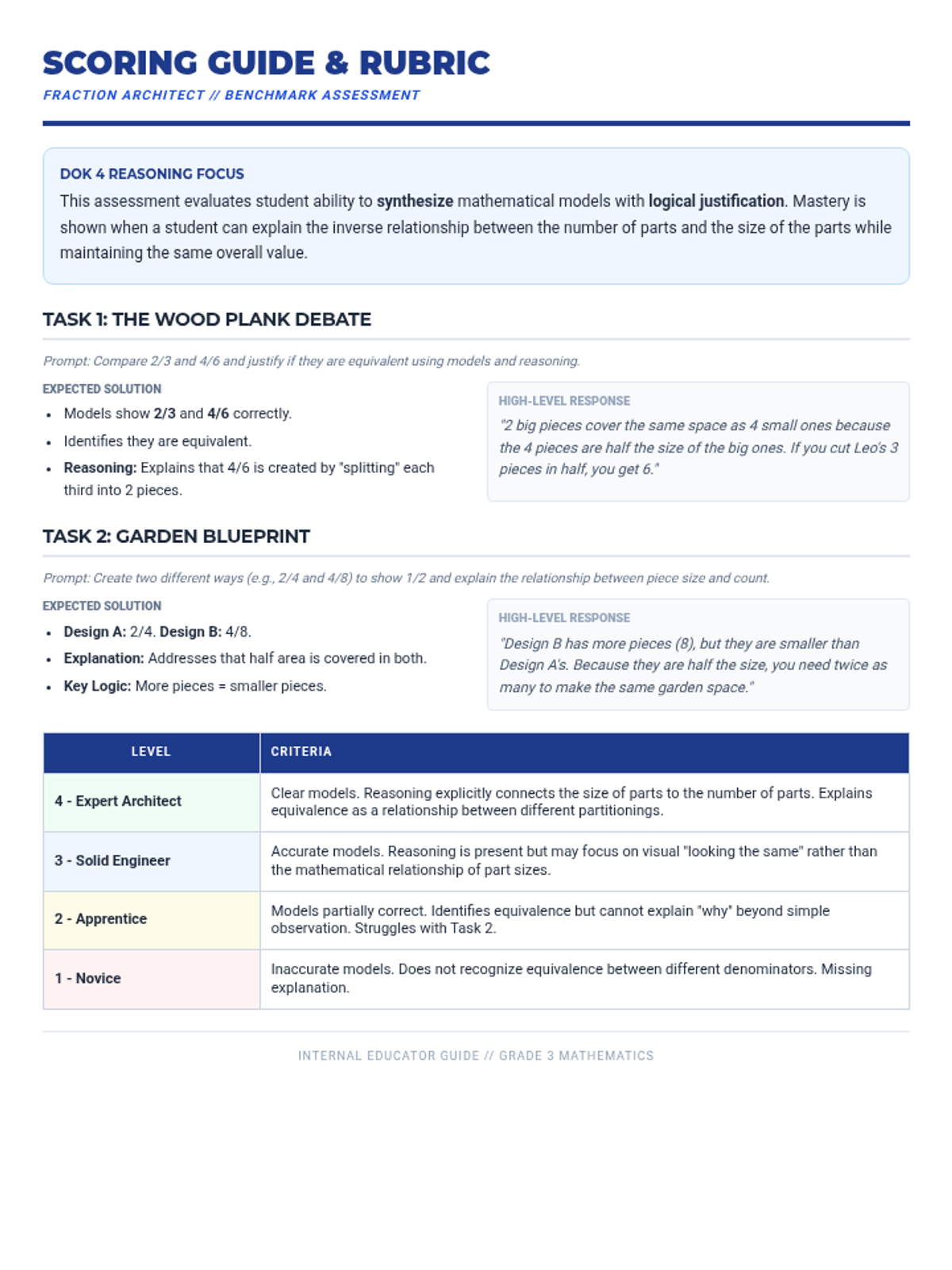
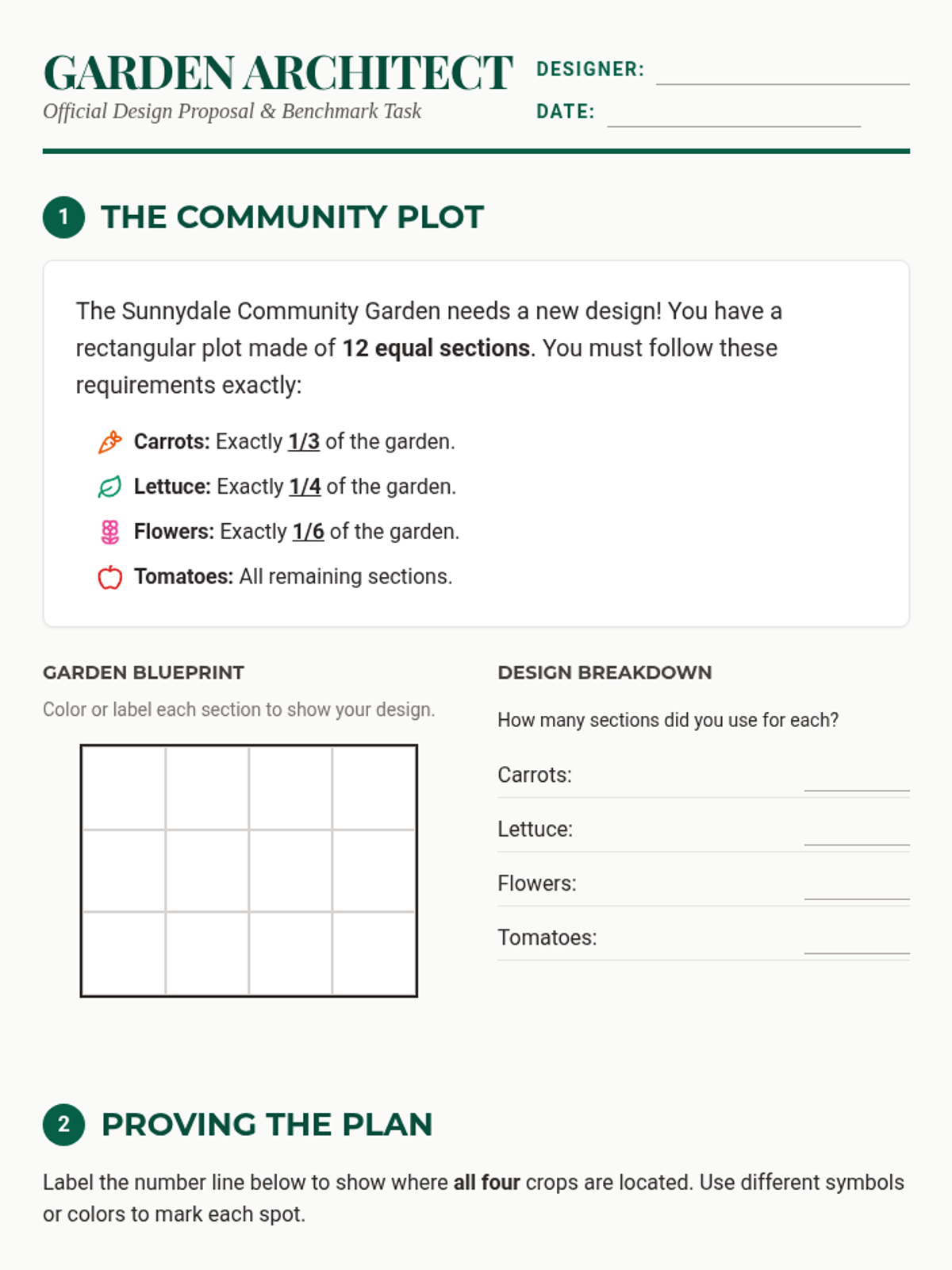
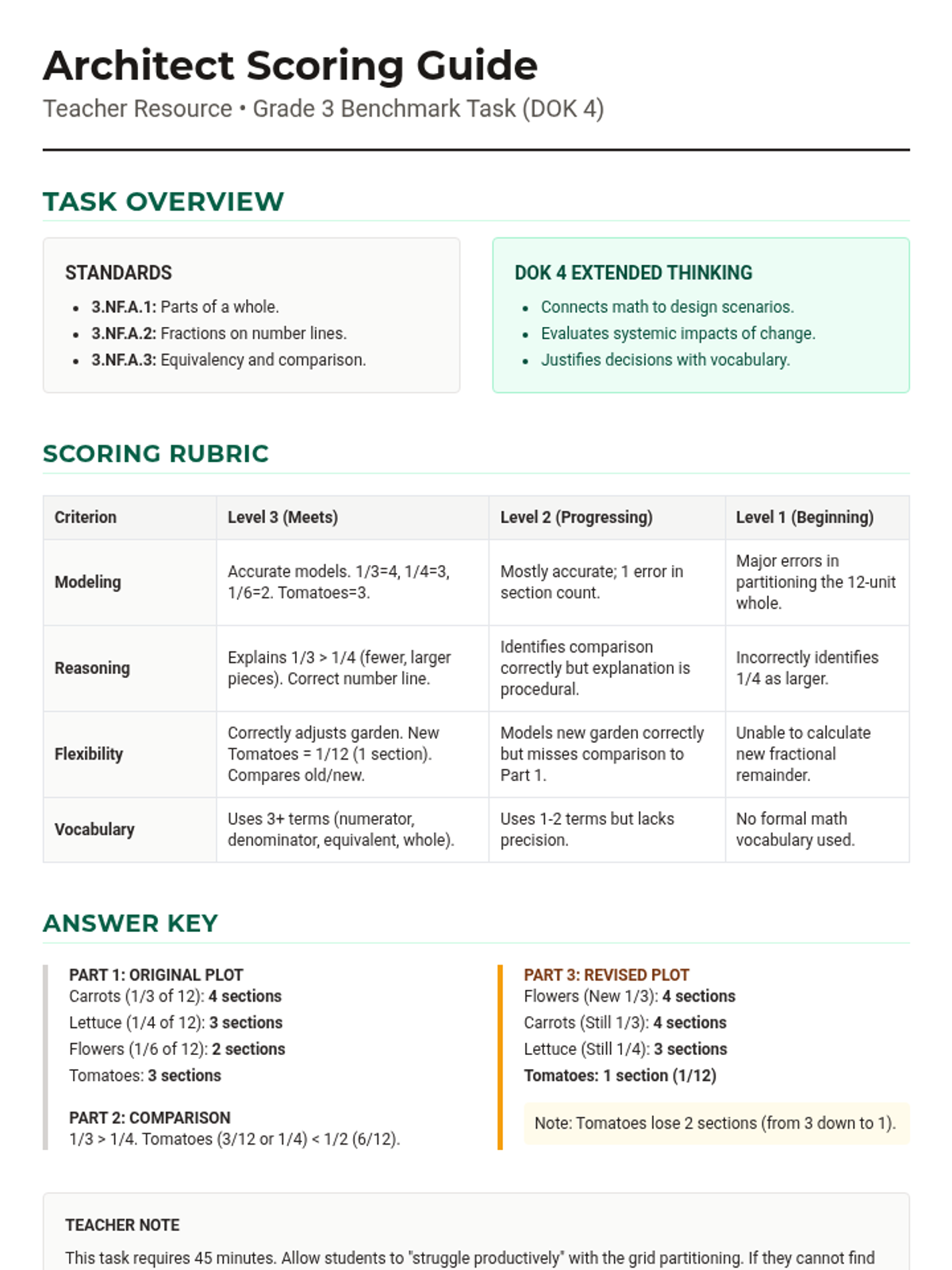
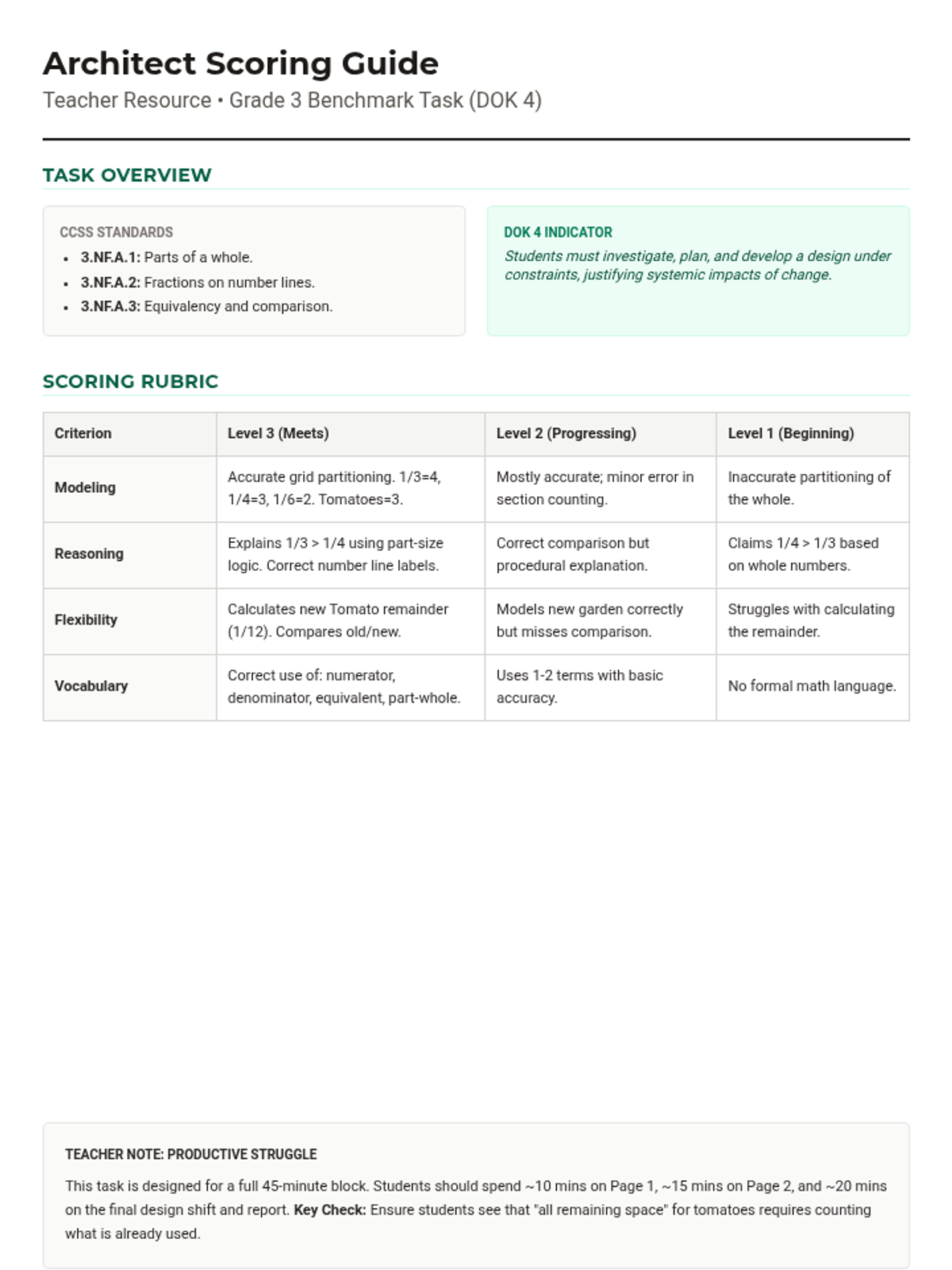
A short, high-level assessment focused on equivalent fractions through architectural design and reasoning. Students demonstrate Depth of Knowledge 4 by creating and justifying multiple representations of the same fractional value.
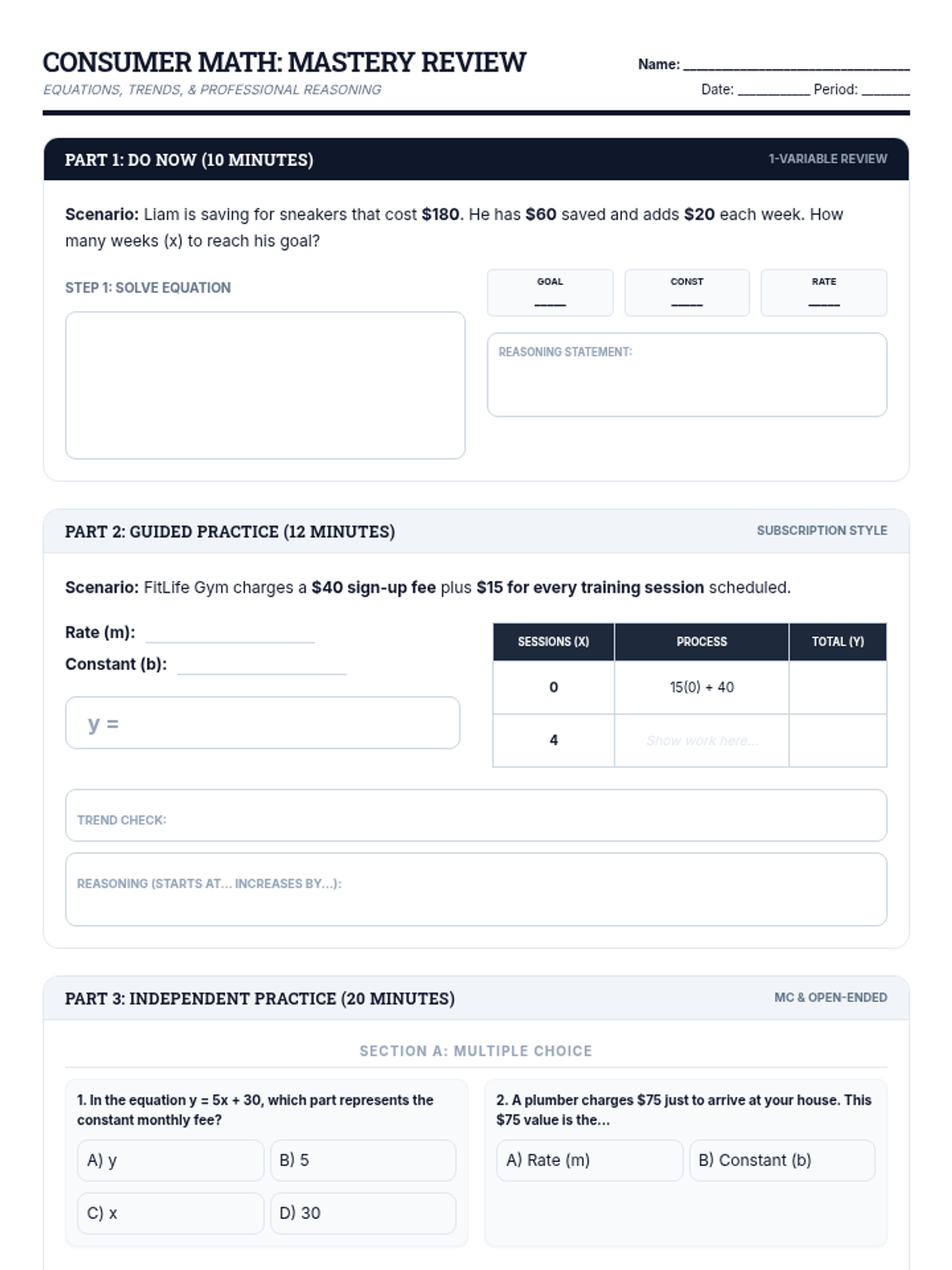
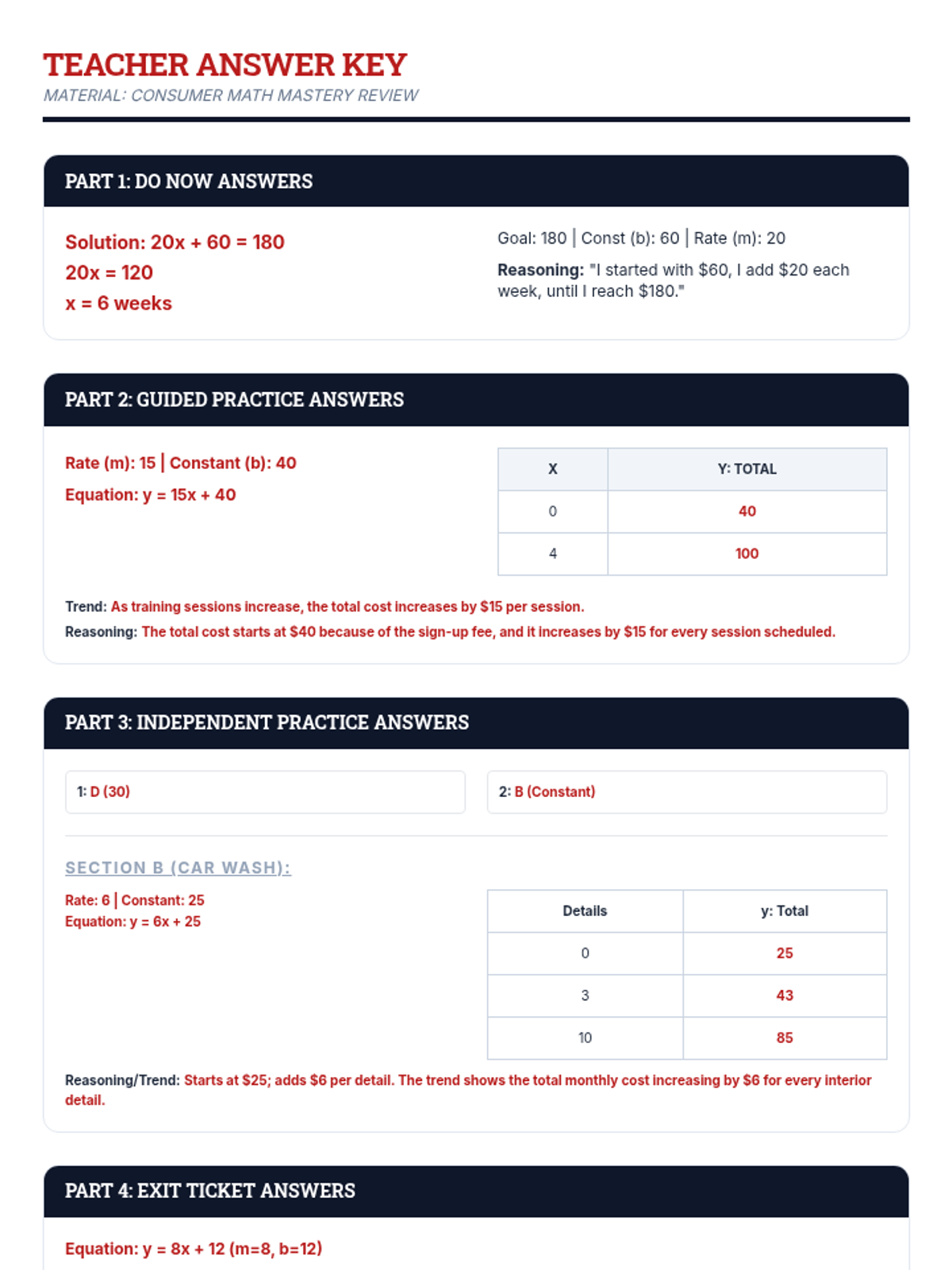
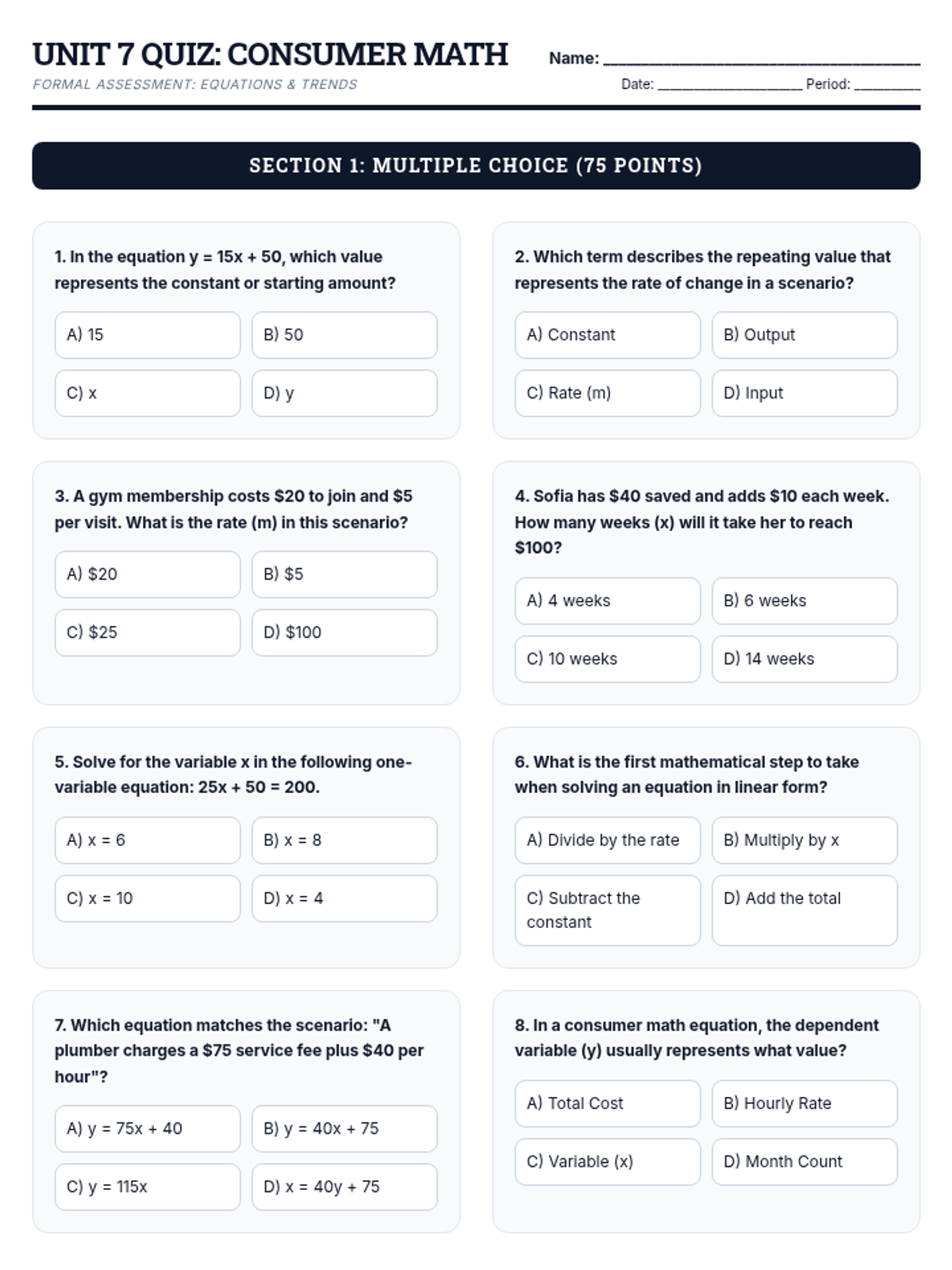
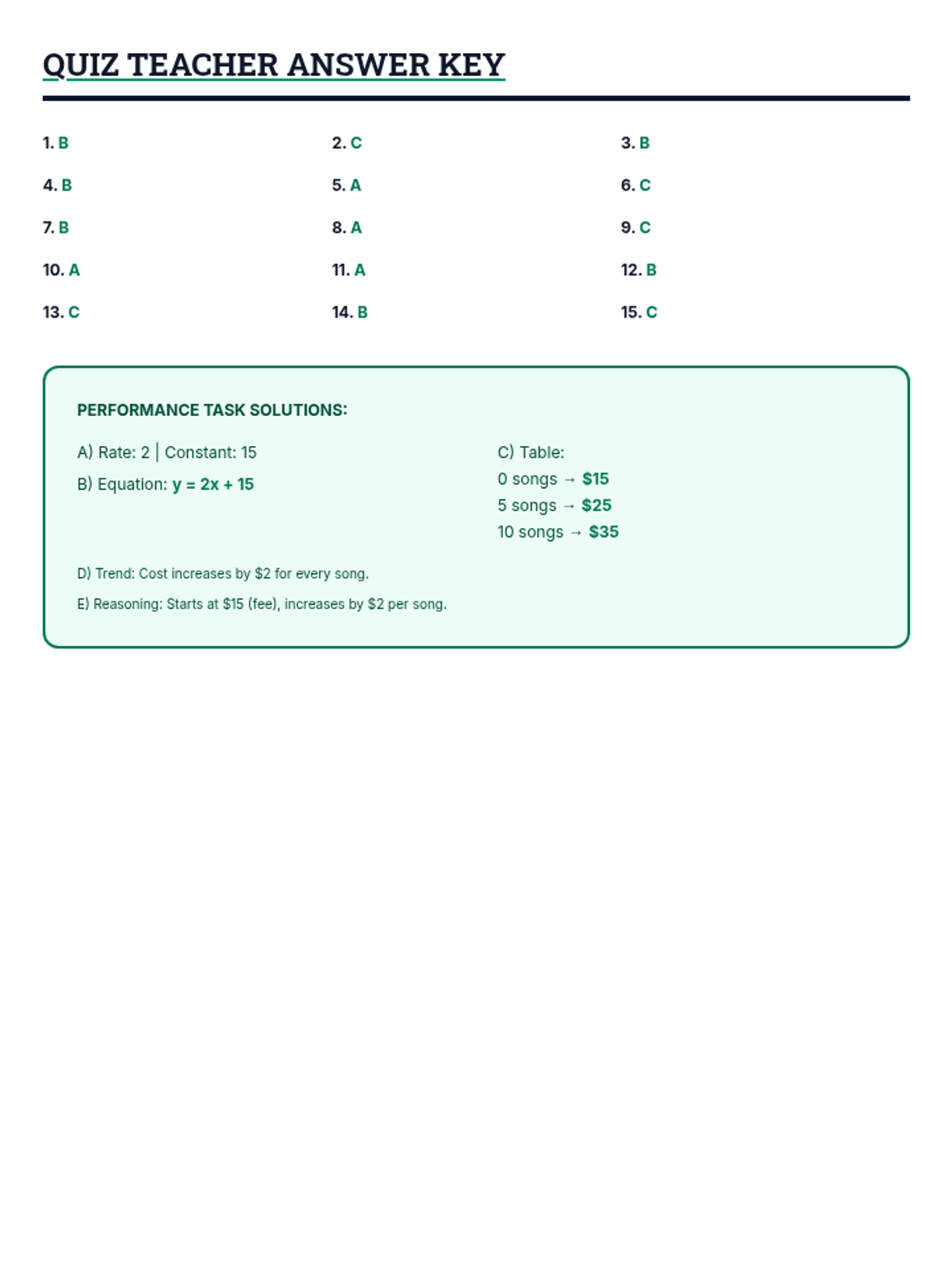
A comprehensive review of Consumer Math concepts including one and two-variable equations, written reasoning, and trend identification through tables. Includes a full 50-minute review handout and a 15-question multiple-choice quiz with an open-ended performance task.
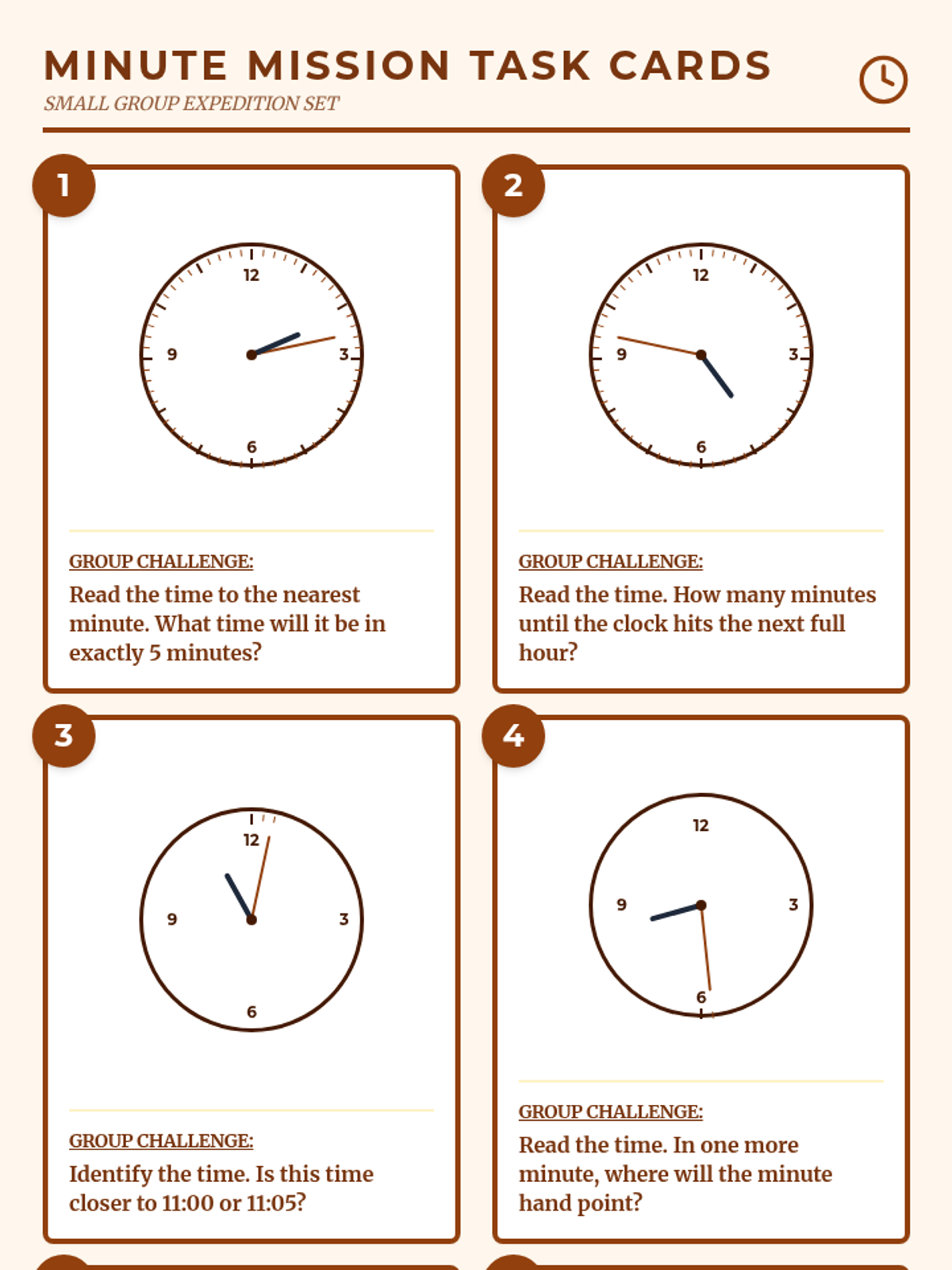
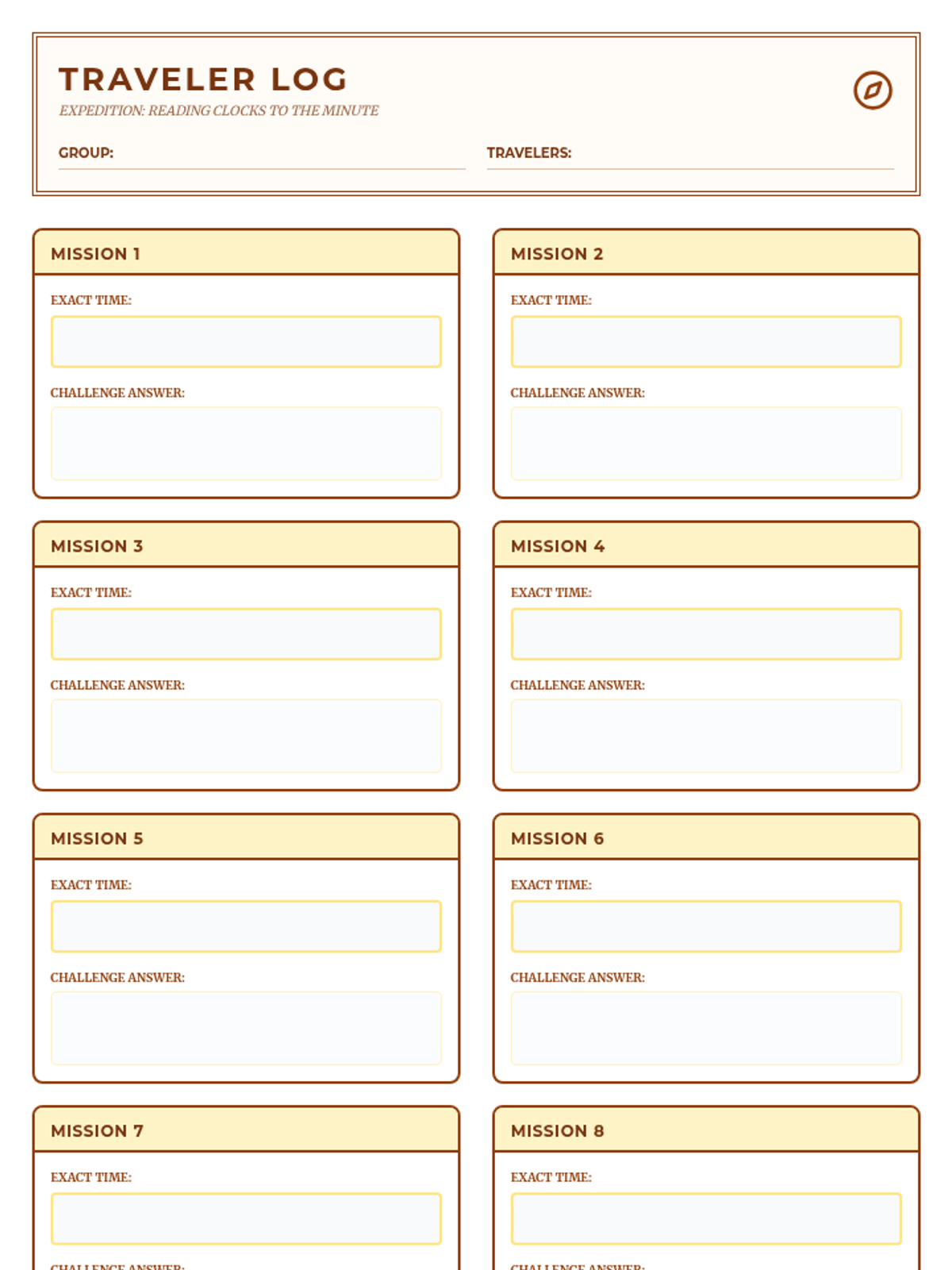
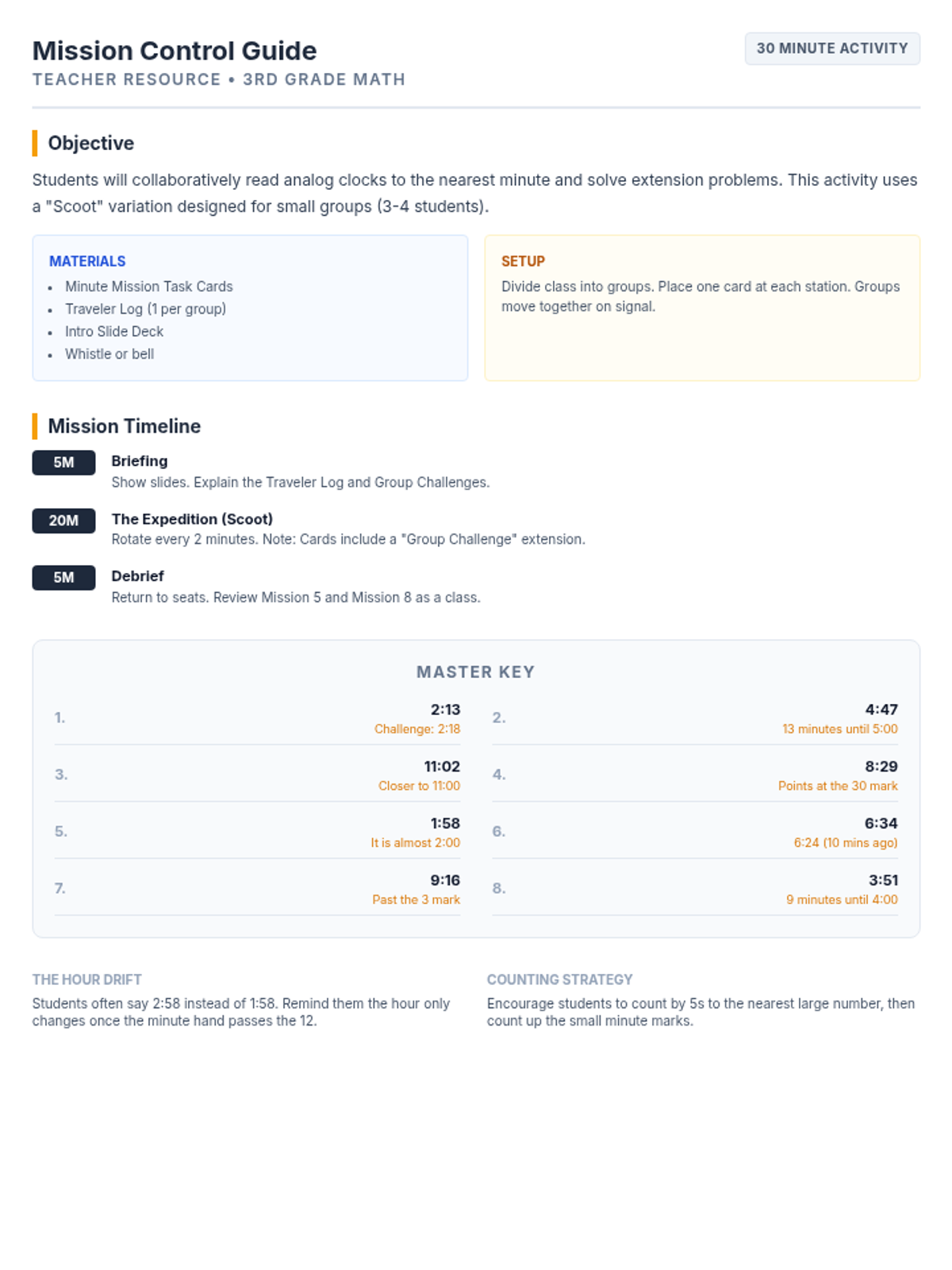
In this collaborative activity, student 'Time Travelers' work in small groups to master reading analog clocks to the nearest minute through a fast-paced 'Scoot' game. The lesson focuses on teamwork, precise observation, and understanding the minute hand's placement.
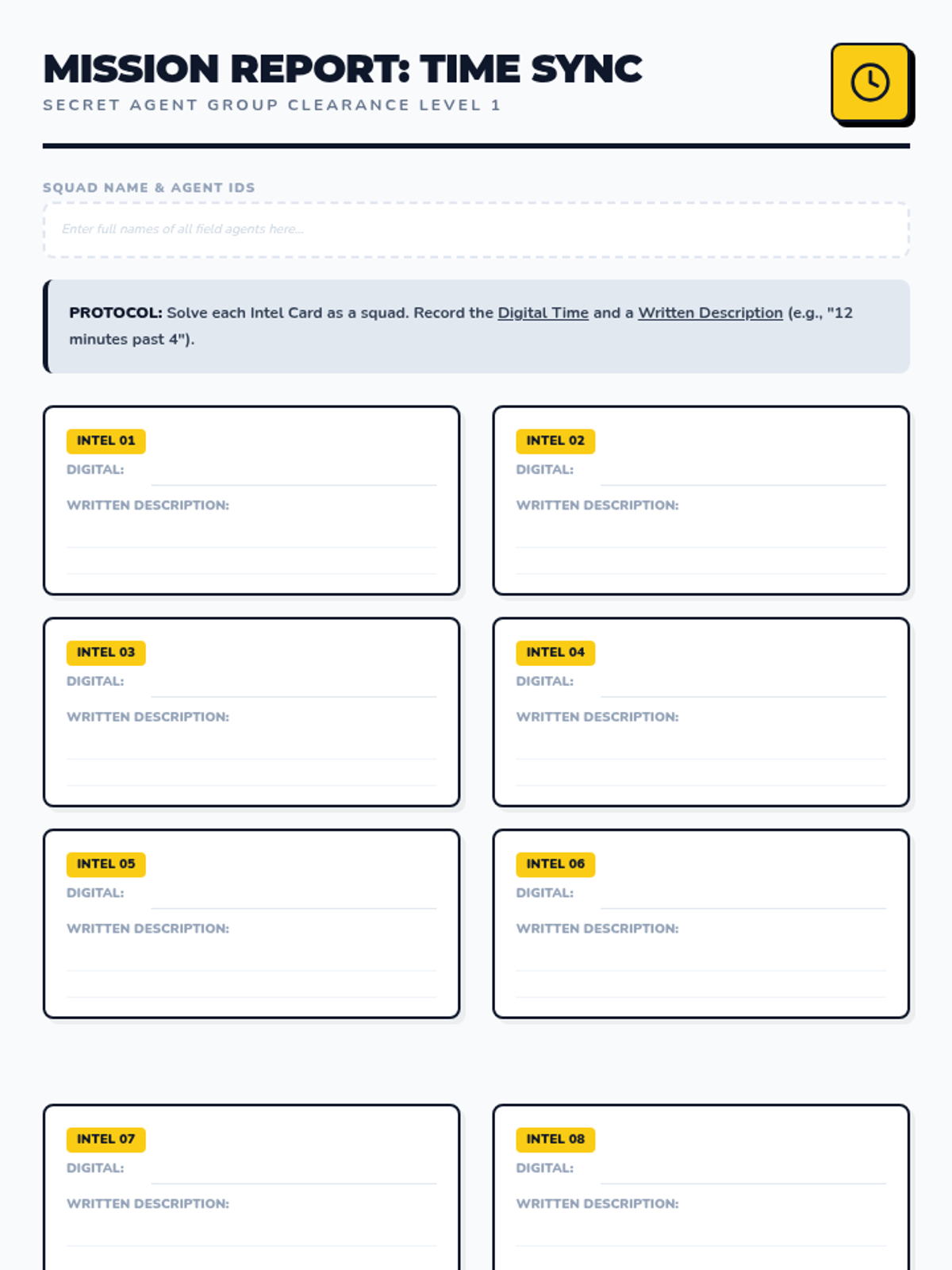
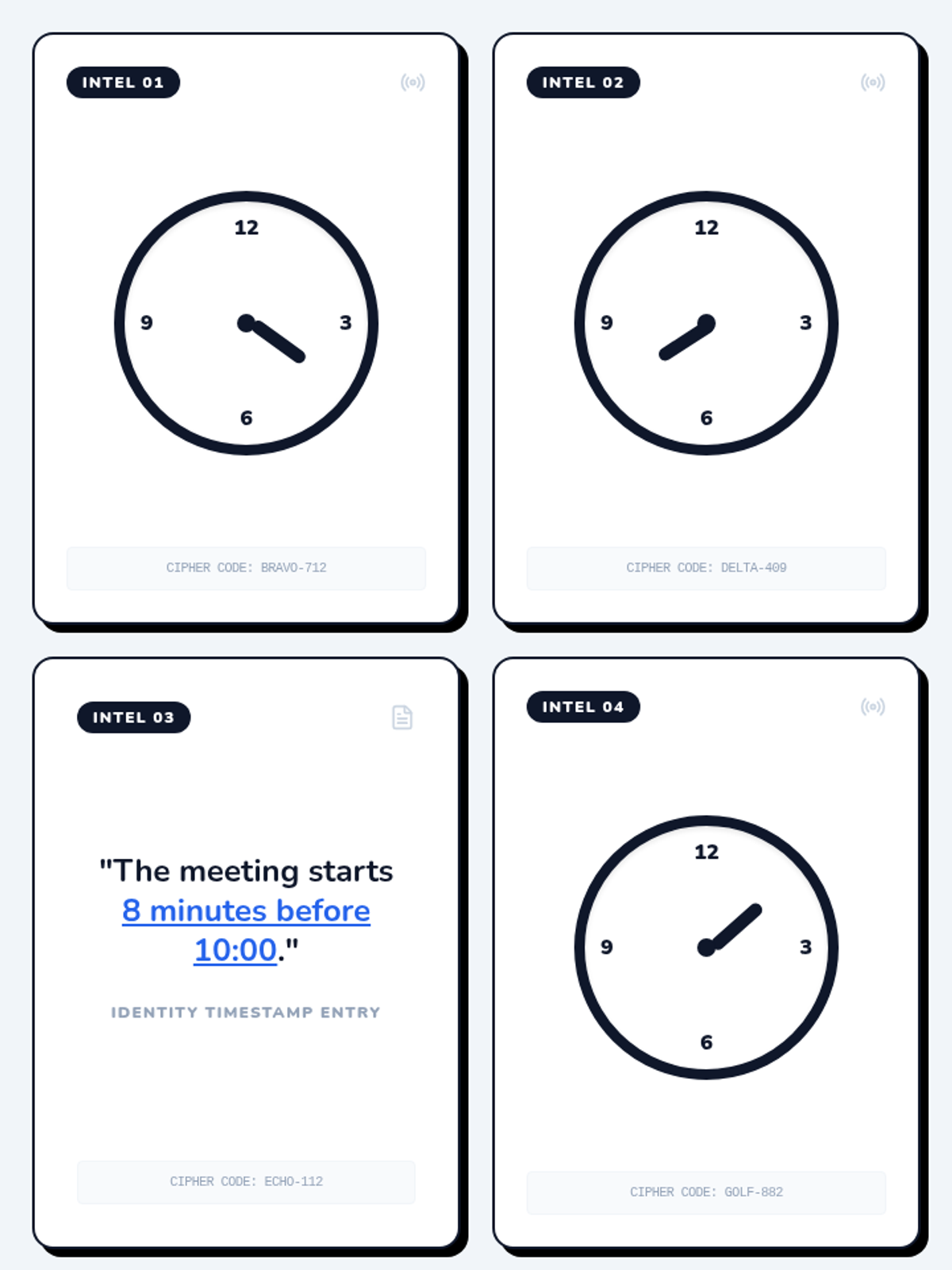
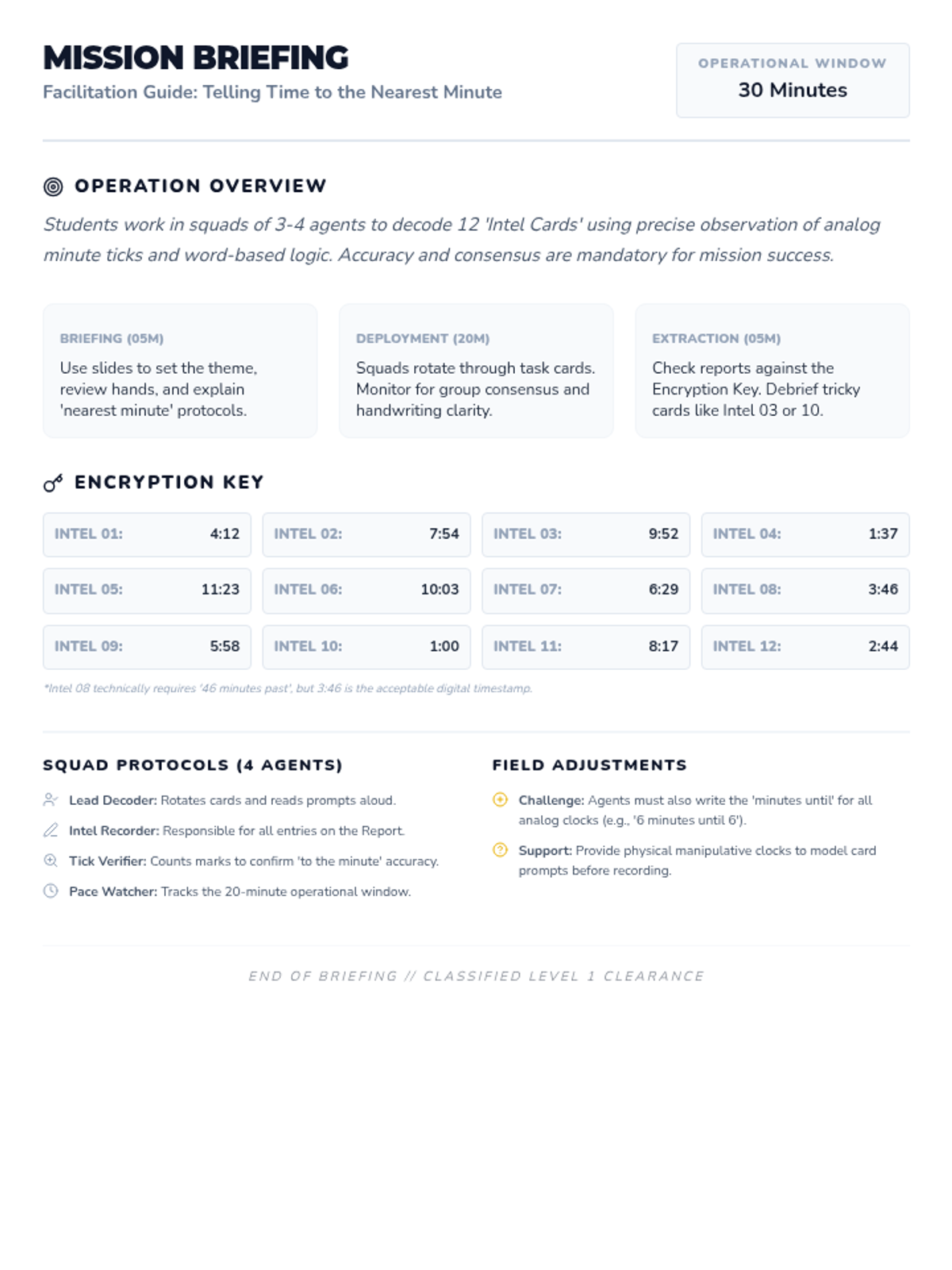
A collaborative secret agent-themed lesson where students work in small groups to solve time-telling challenges to the nearest minute. Students take on the role of agents decoding time-based clues to complete their mission.
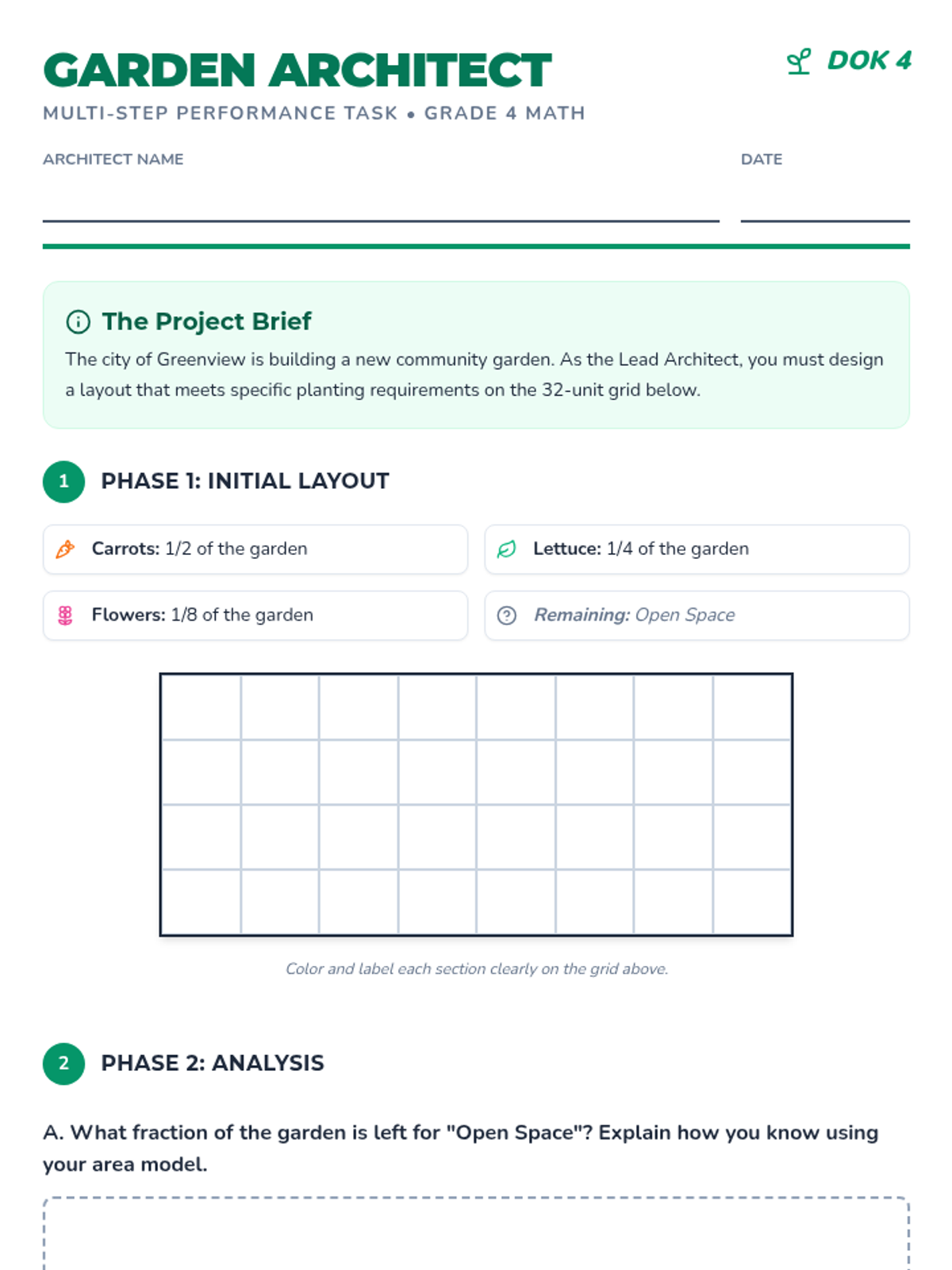
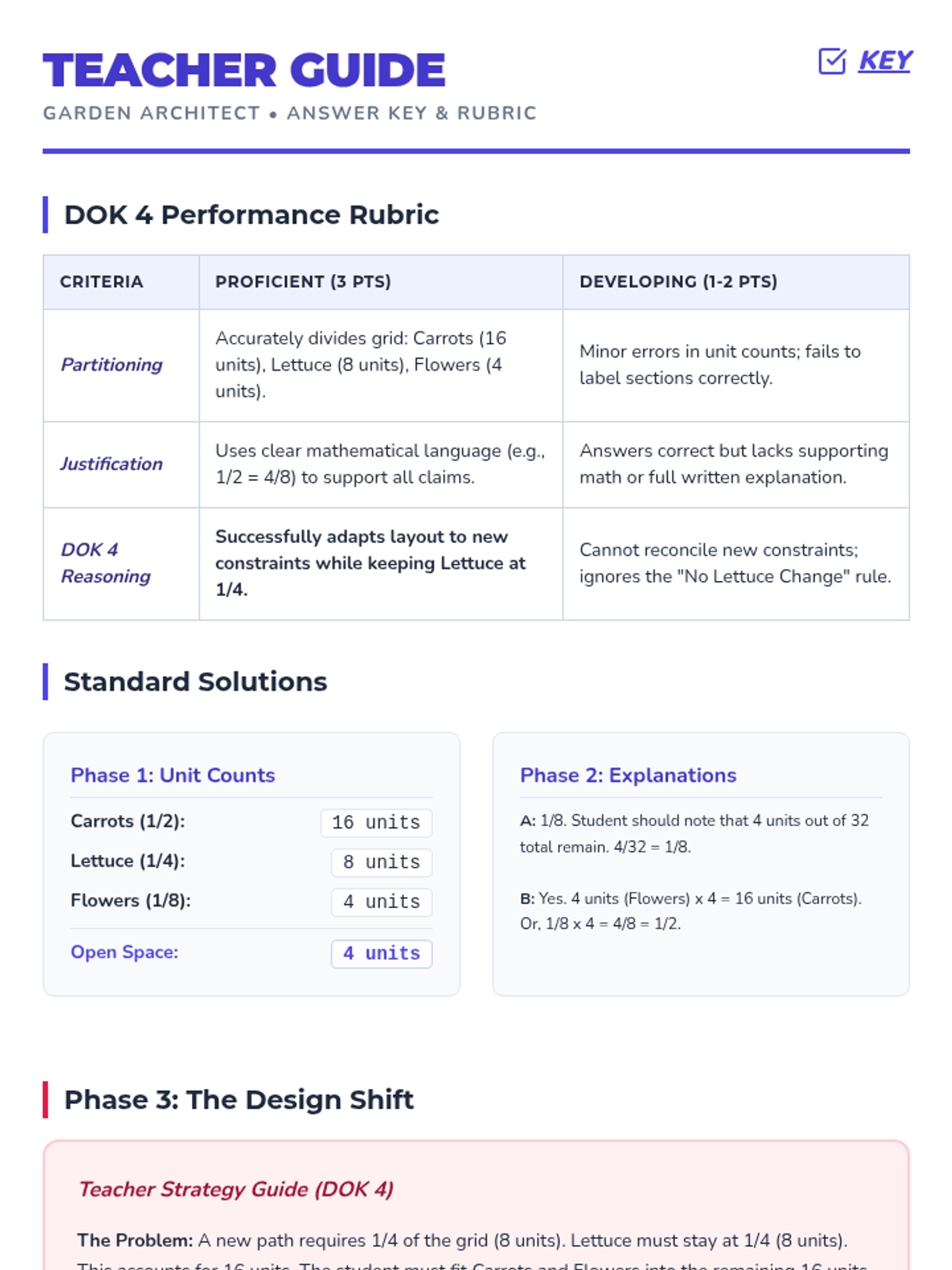
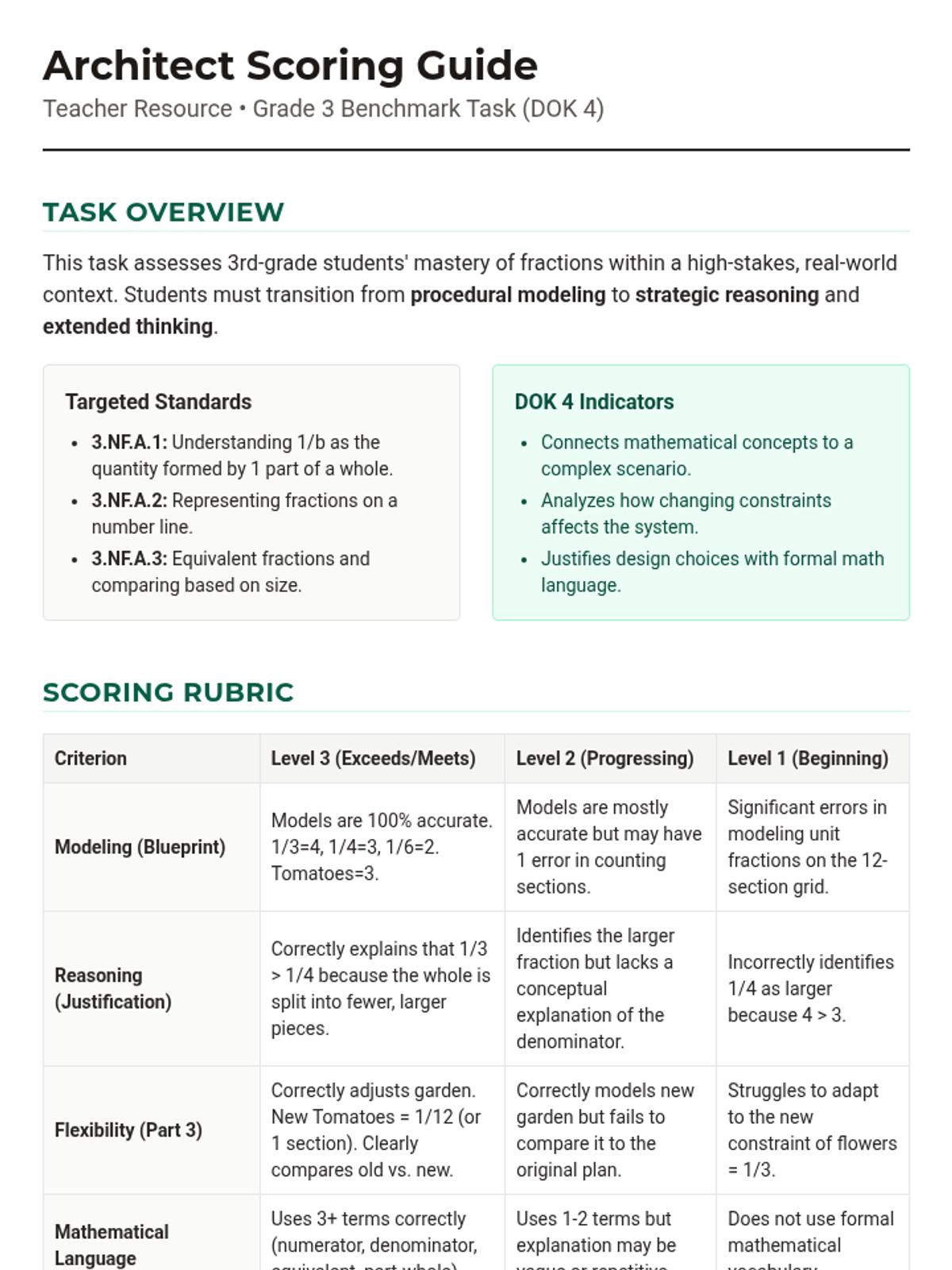
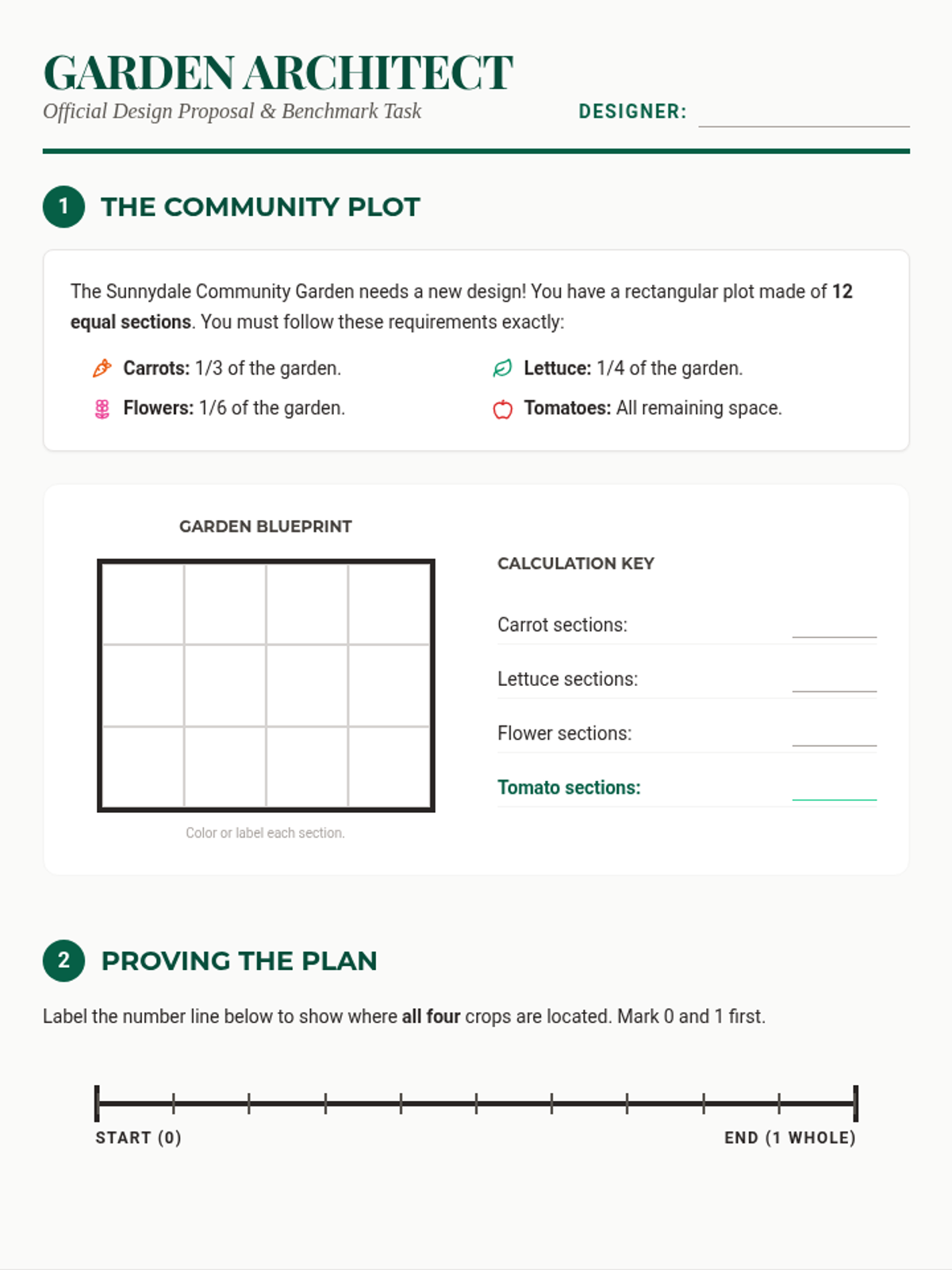
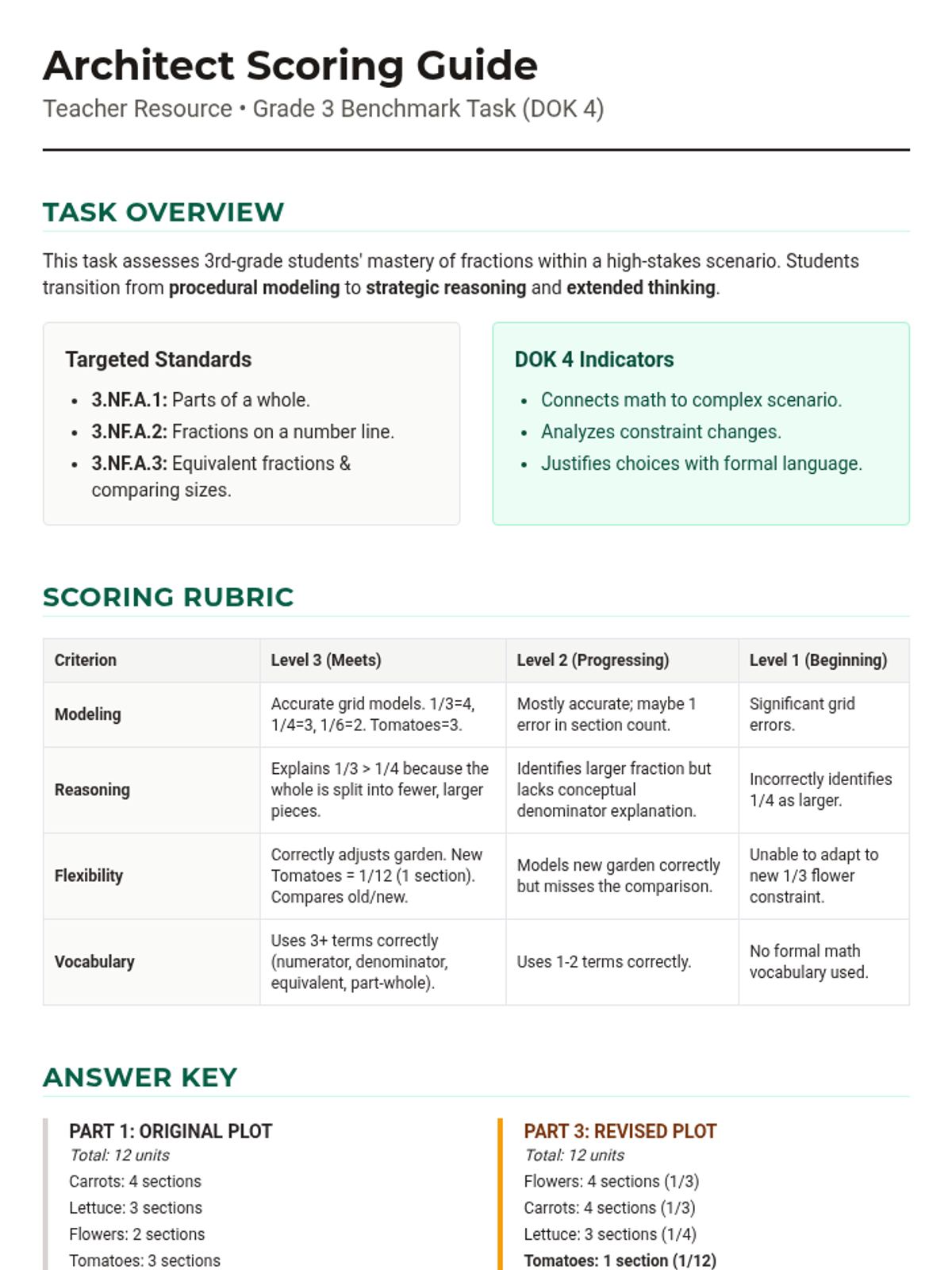
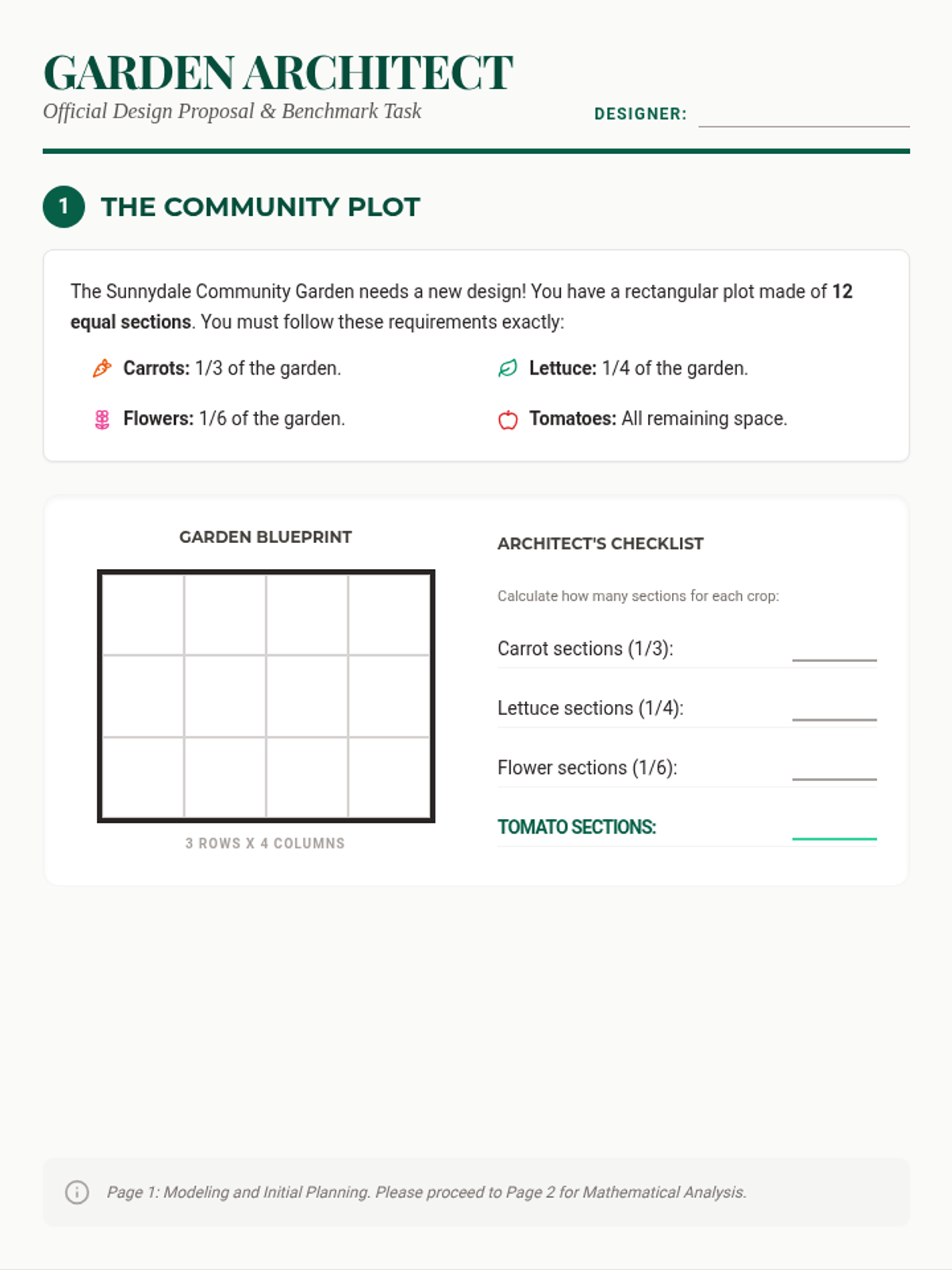
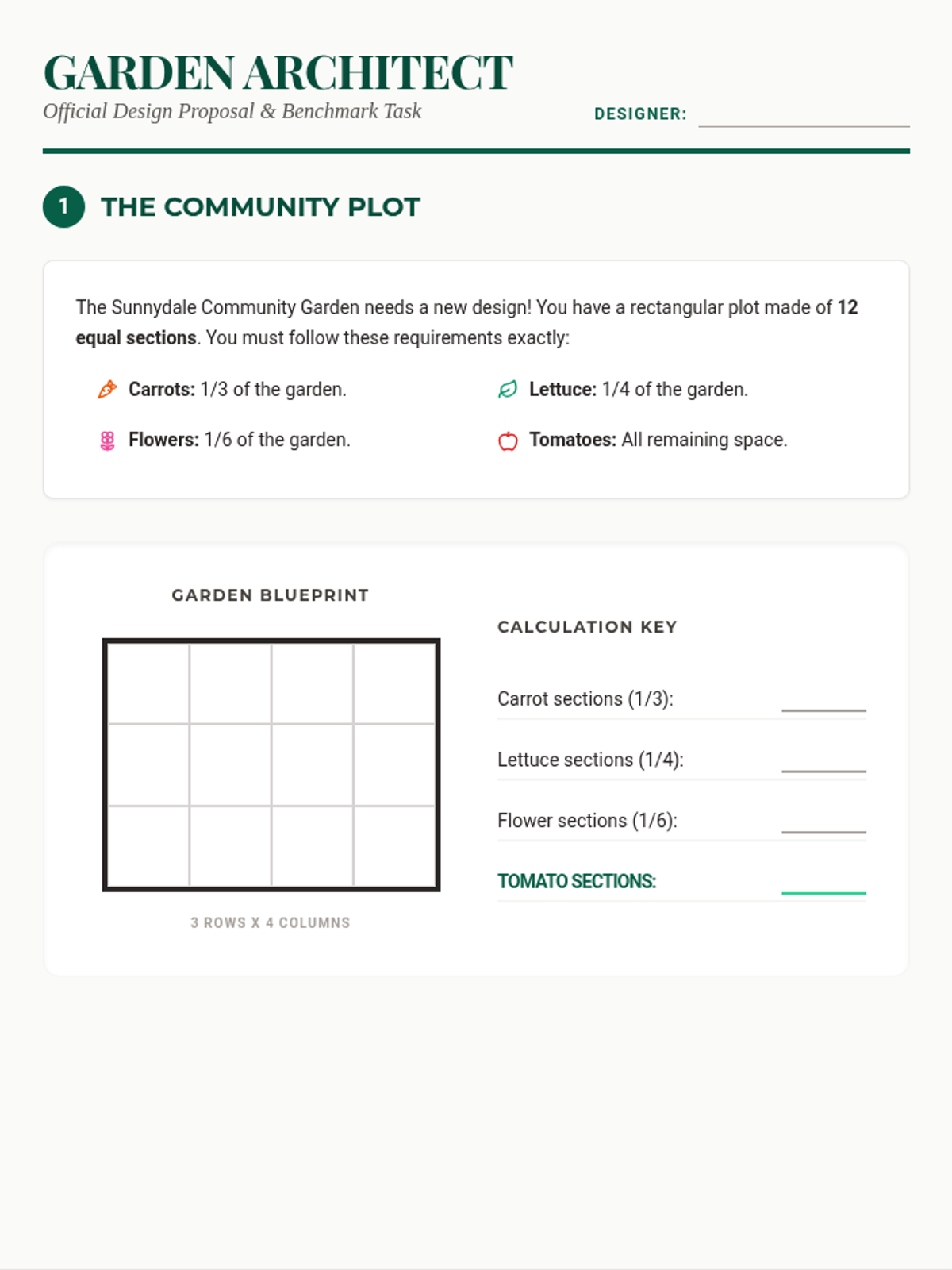
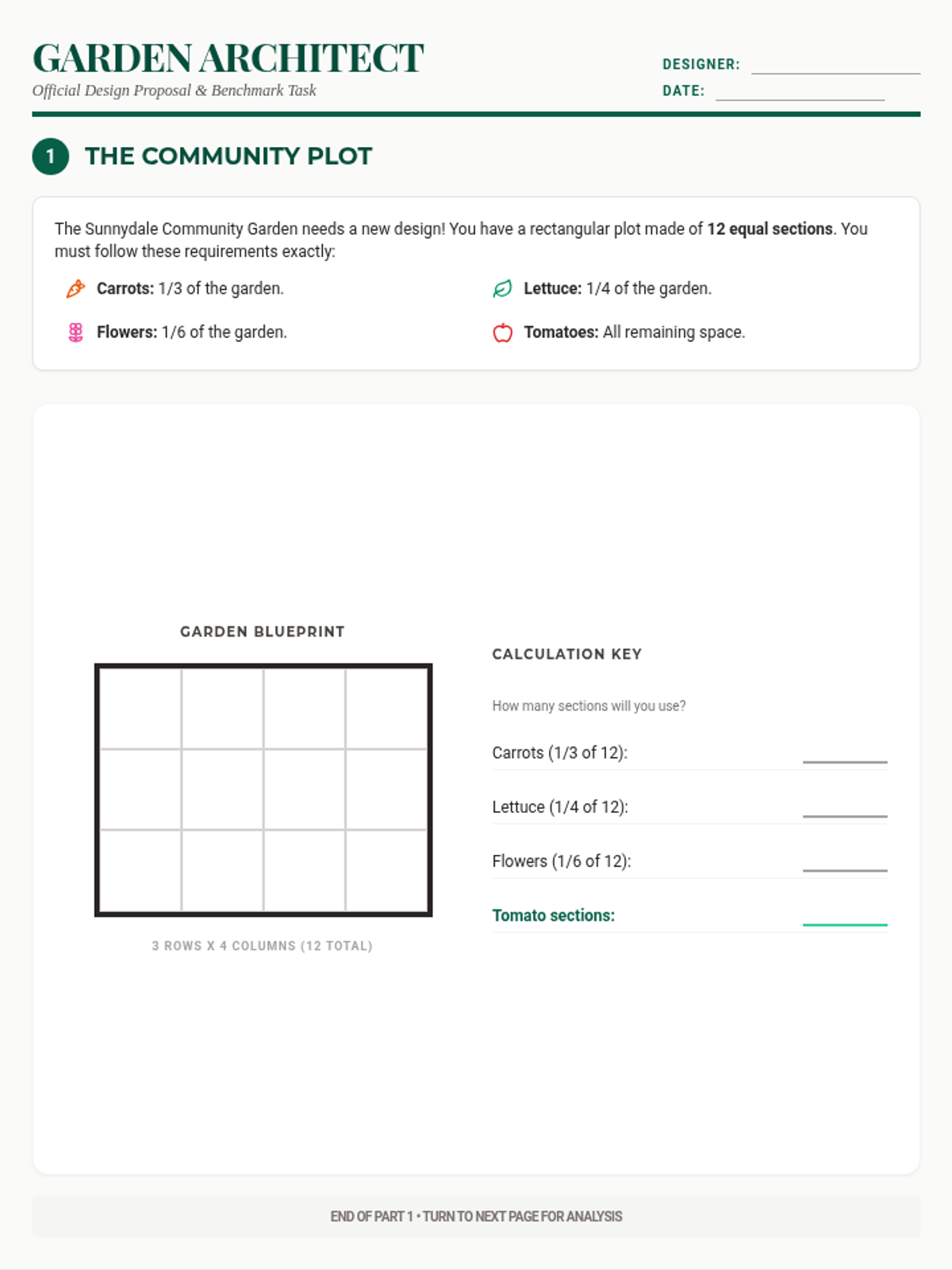
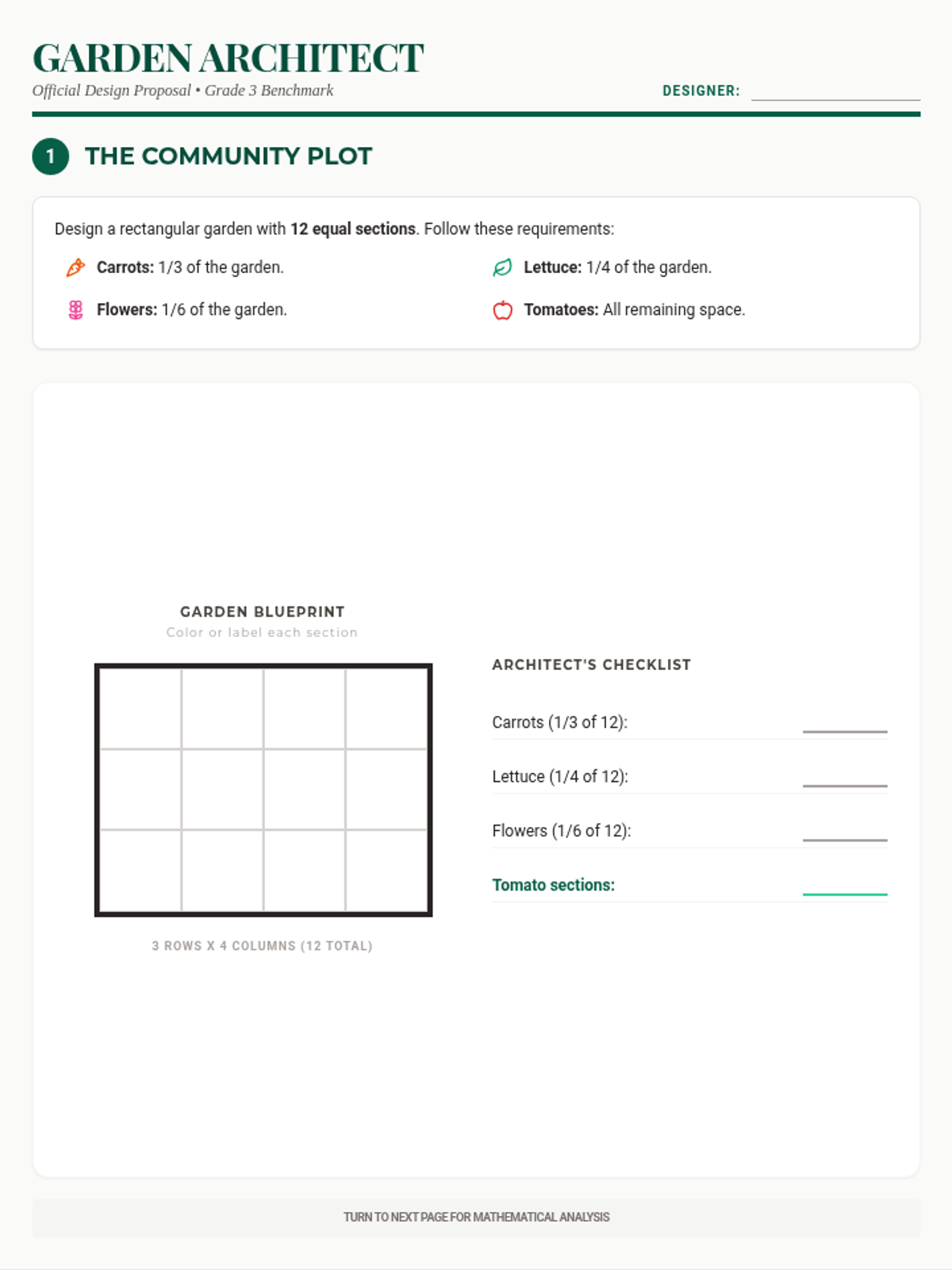
A high-level performance task where students design a community garden using area models to represent and compare fractions, culminating in a complex redesign based on new constraints.
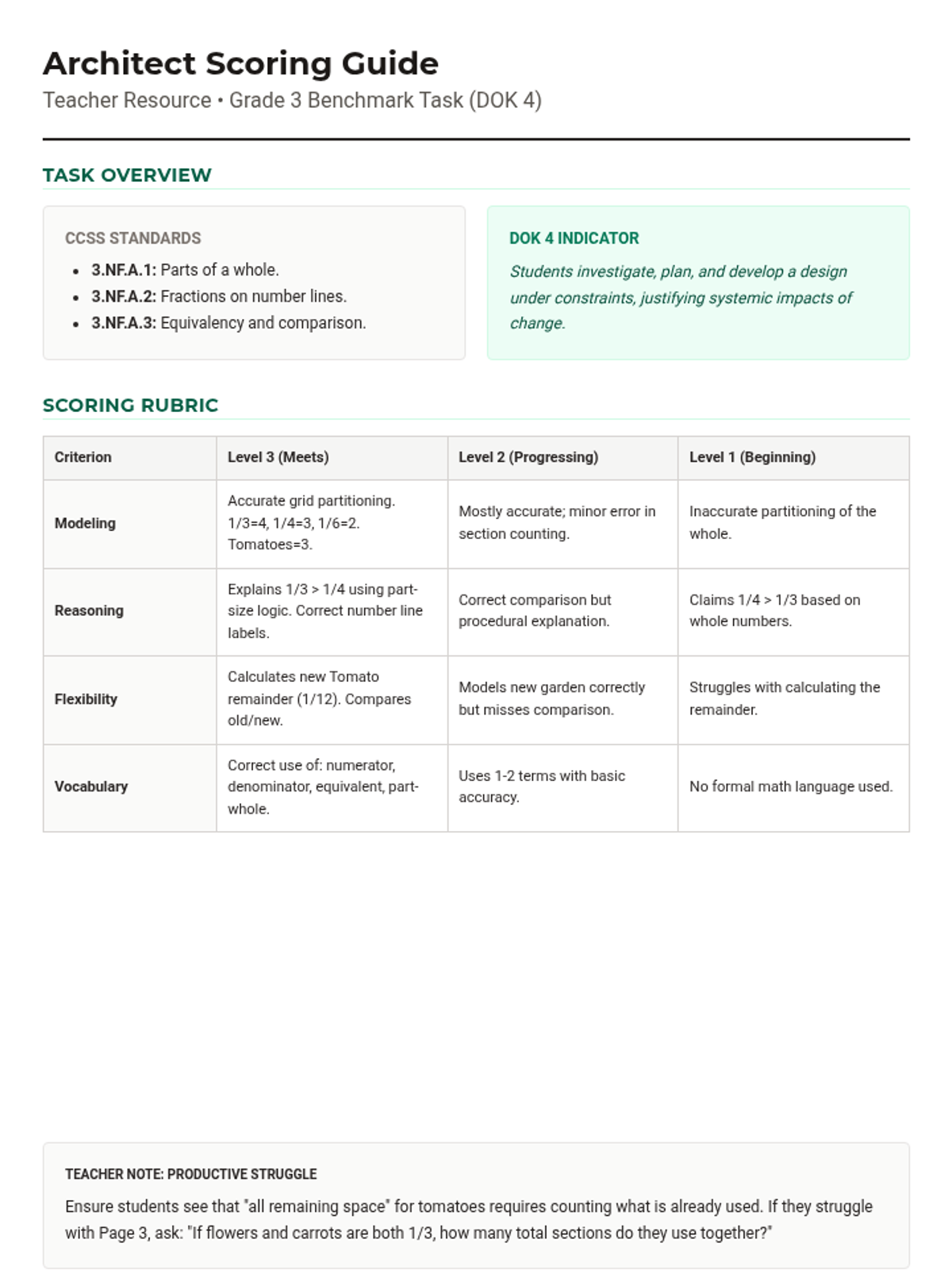
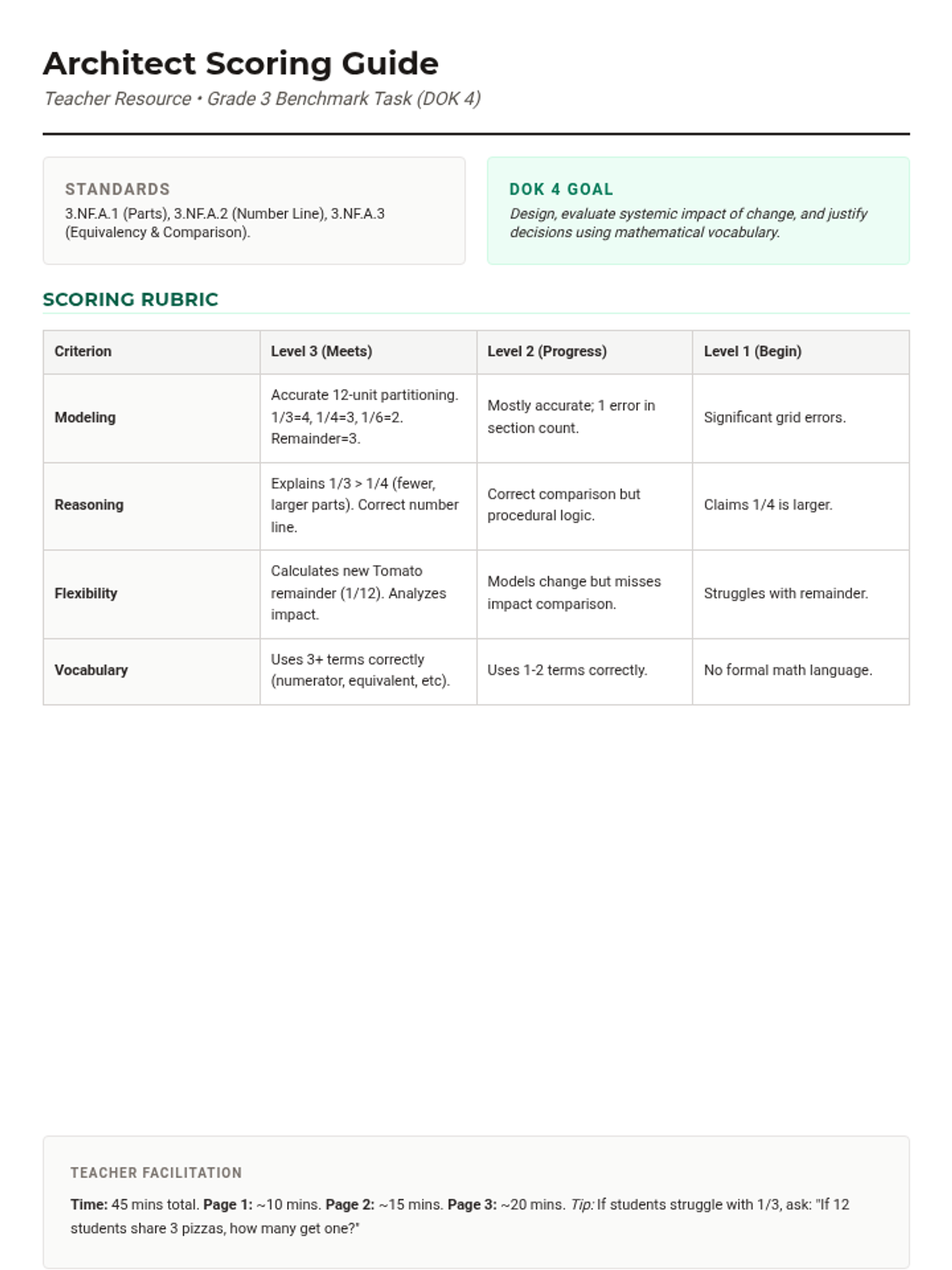
A 45-minute DOK 4 performance task where students act as garden architects. They must apply their knowledge of fraction parts, number lines, and equivalent fractions to design a community garden under specific constraints and justify their mathematical decisions.
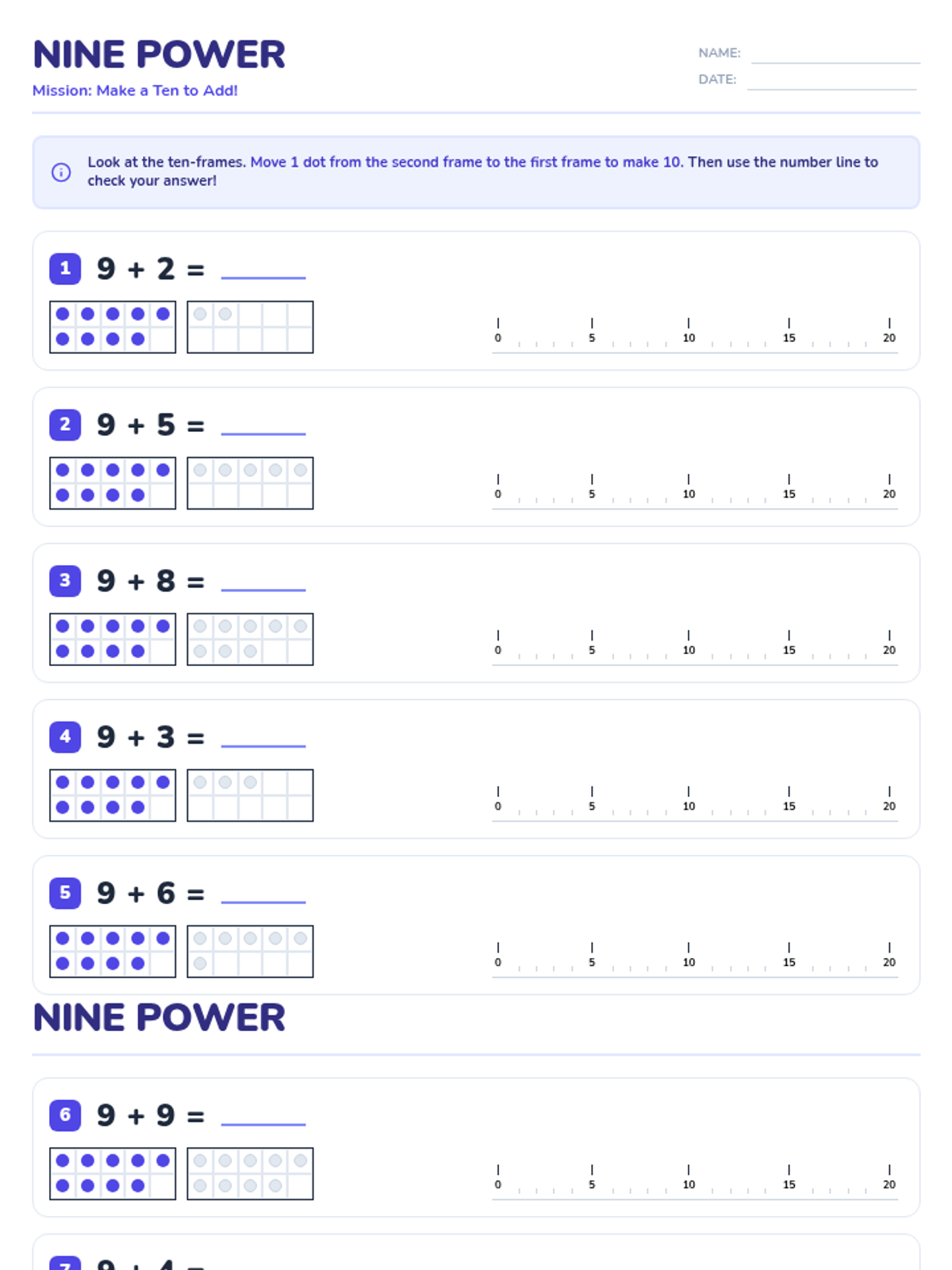
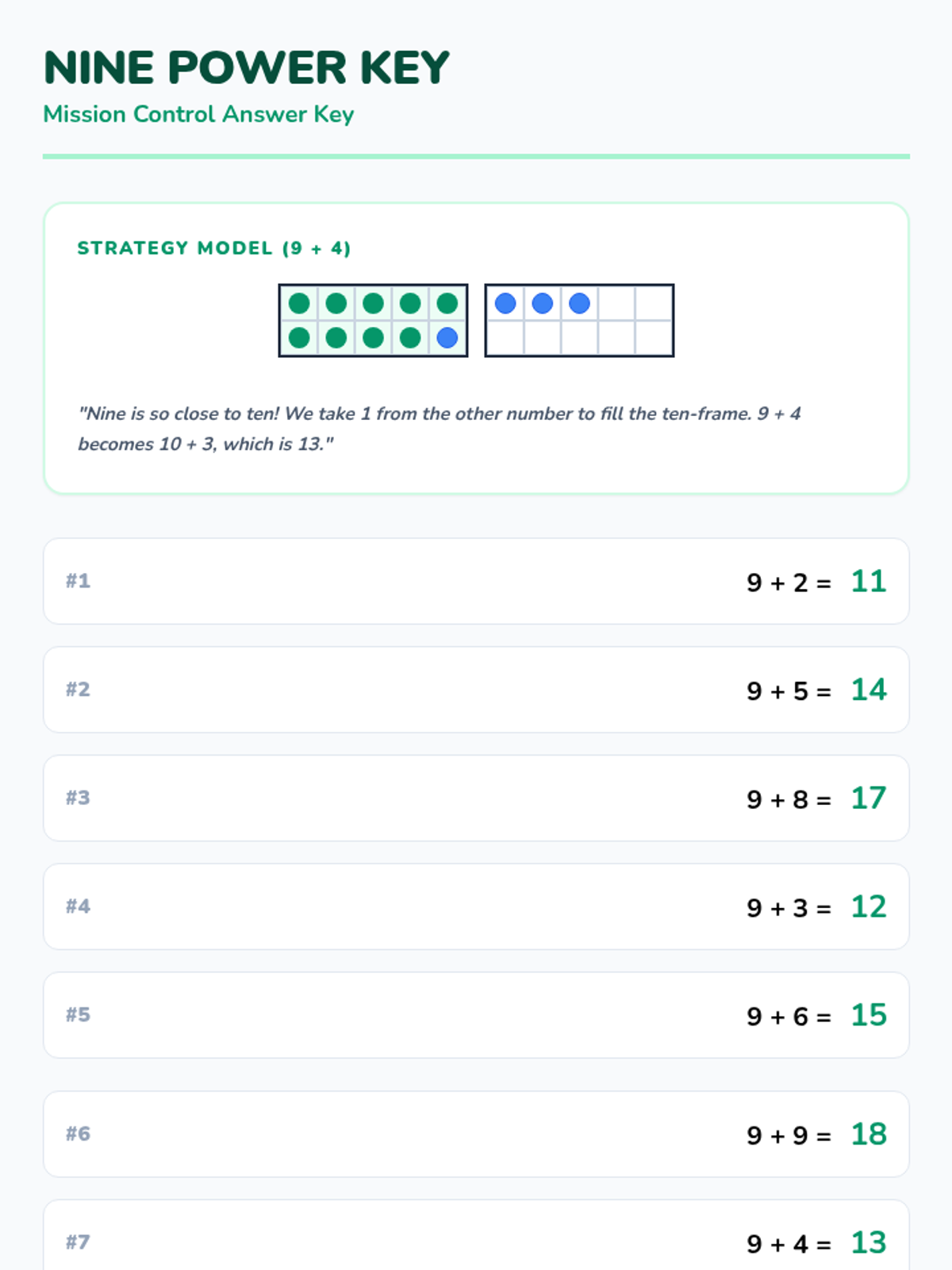
A focused lesson on the 'make a ten' strategy using the number nine as a base. Students use ten-frames and number lines to visualize adding to nine within twenty.
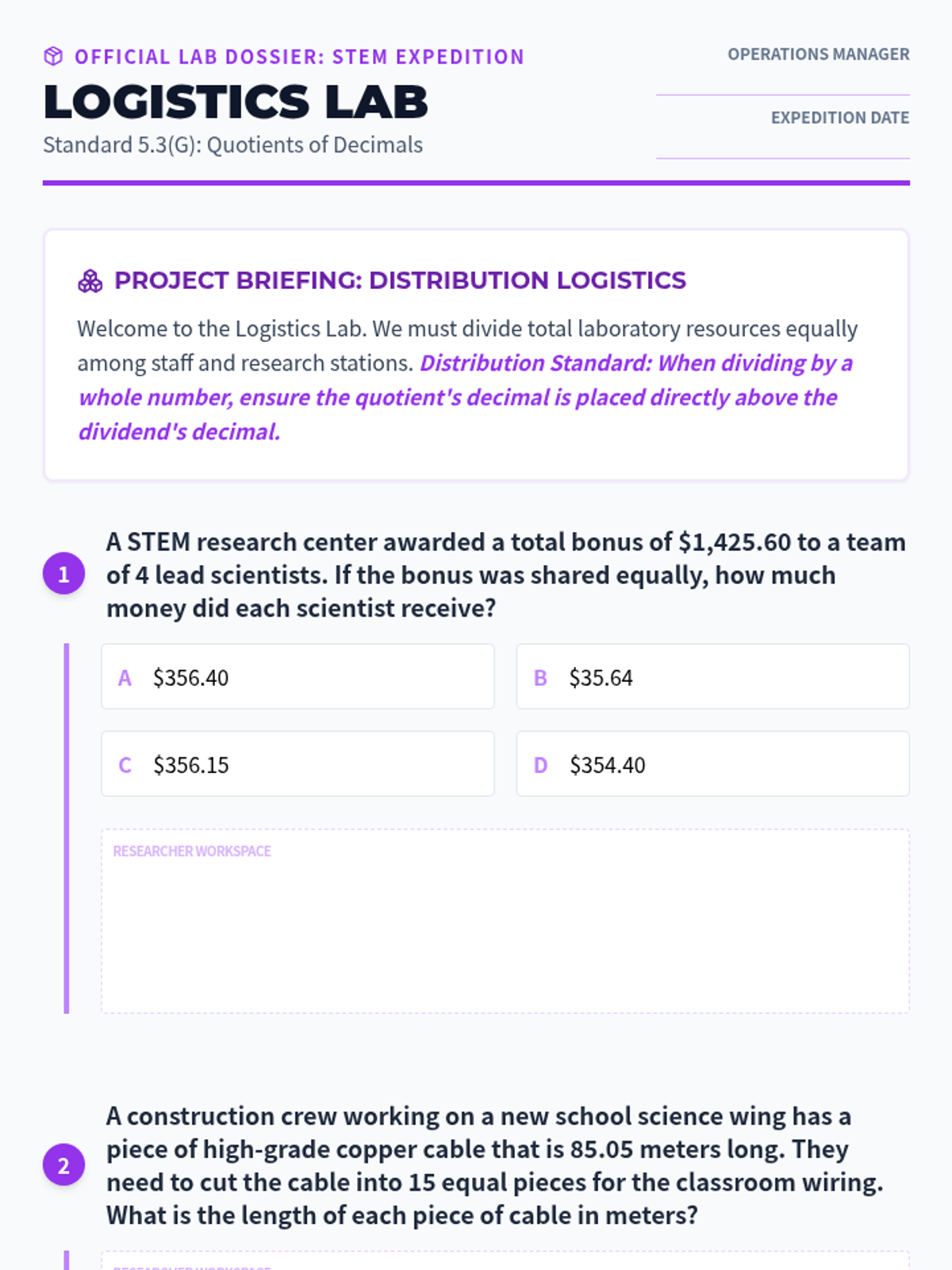
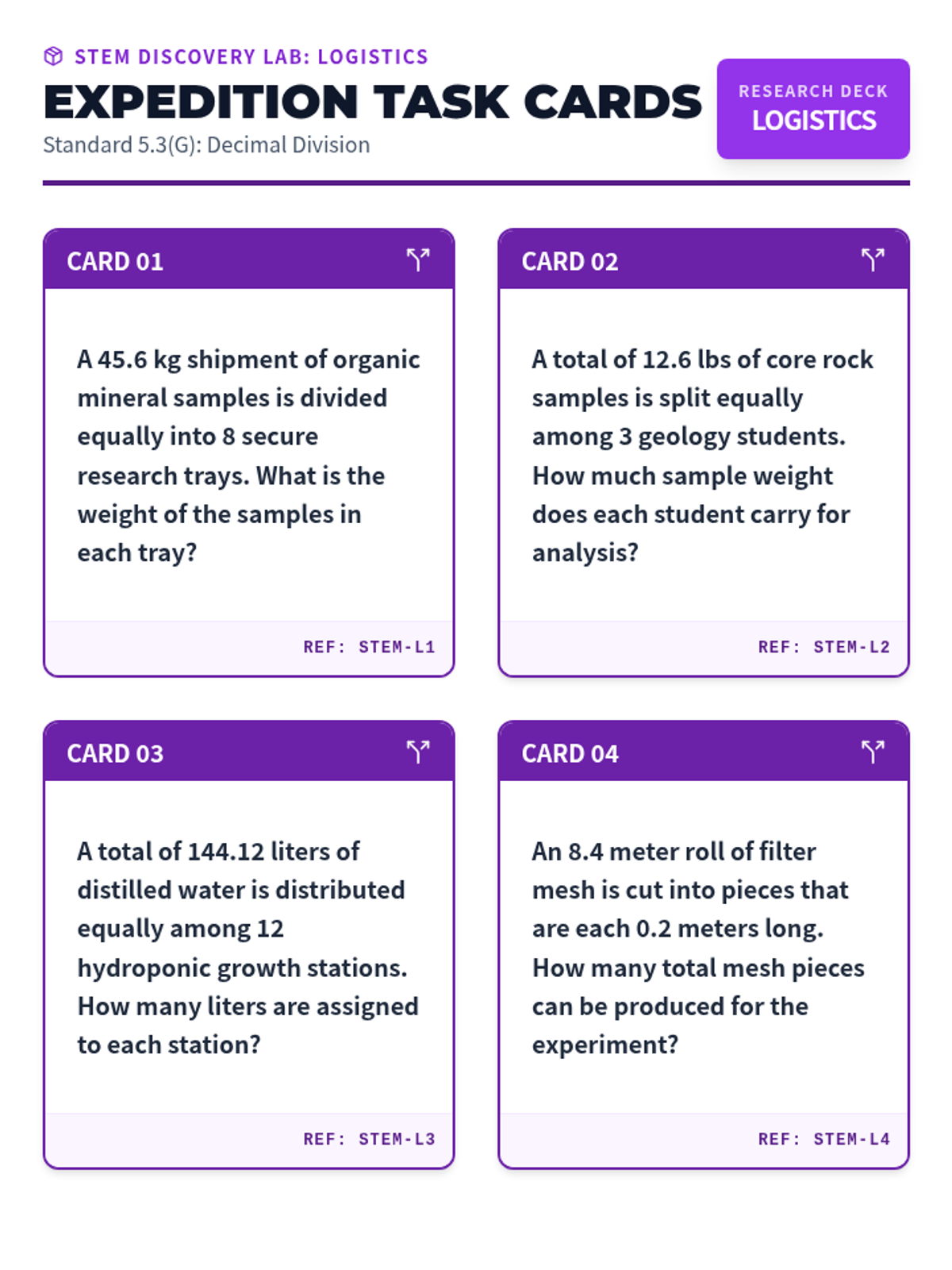
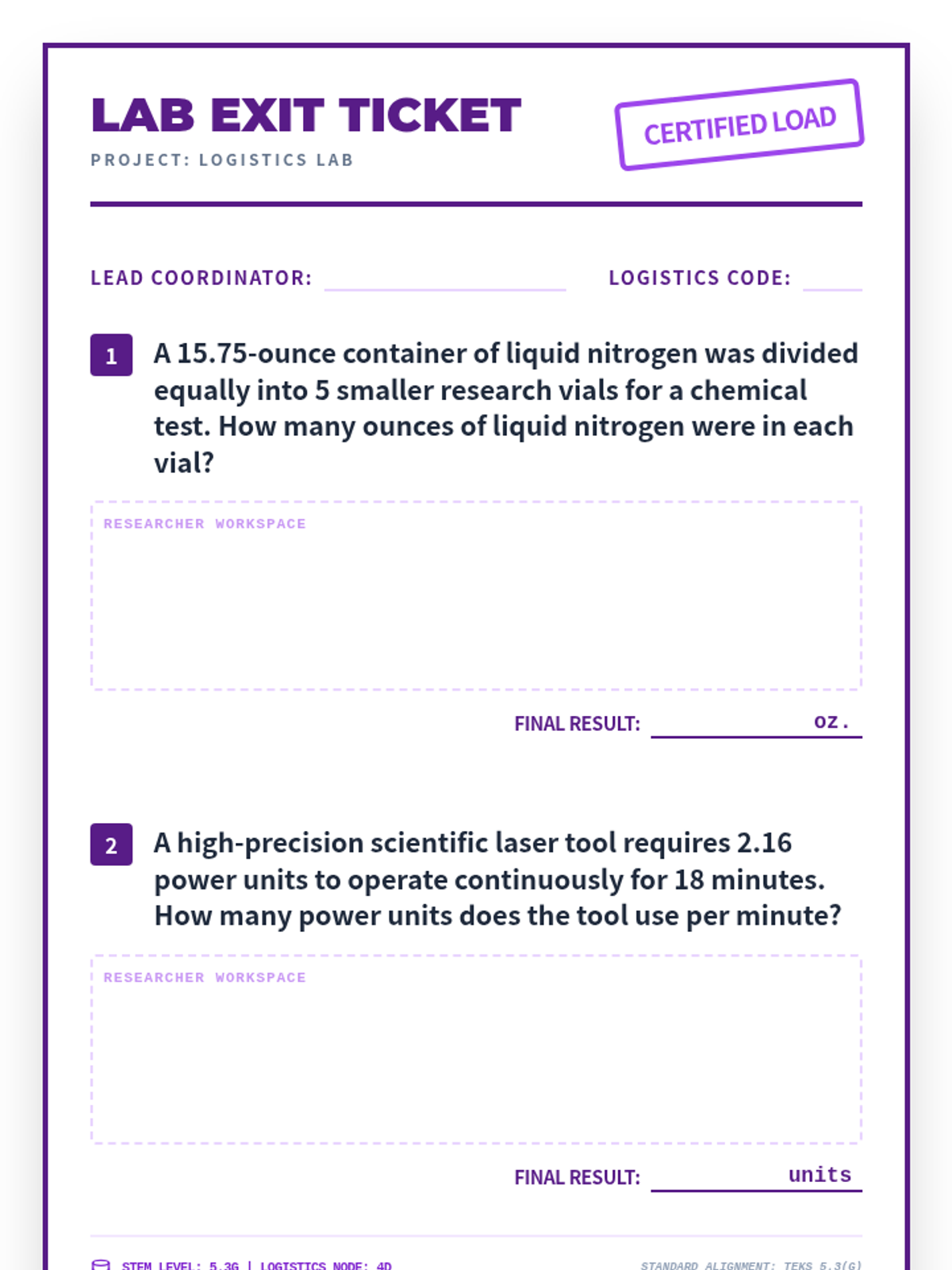
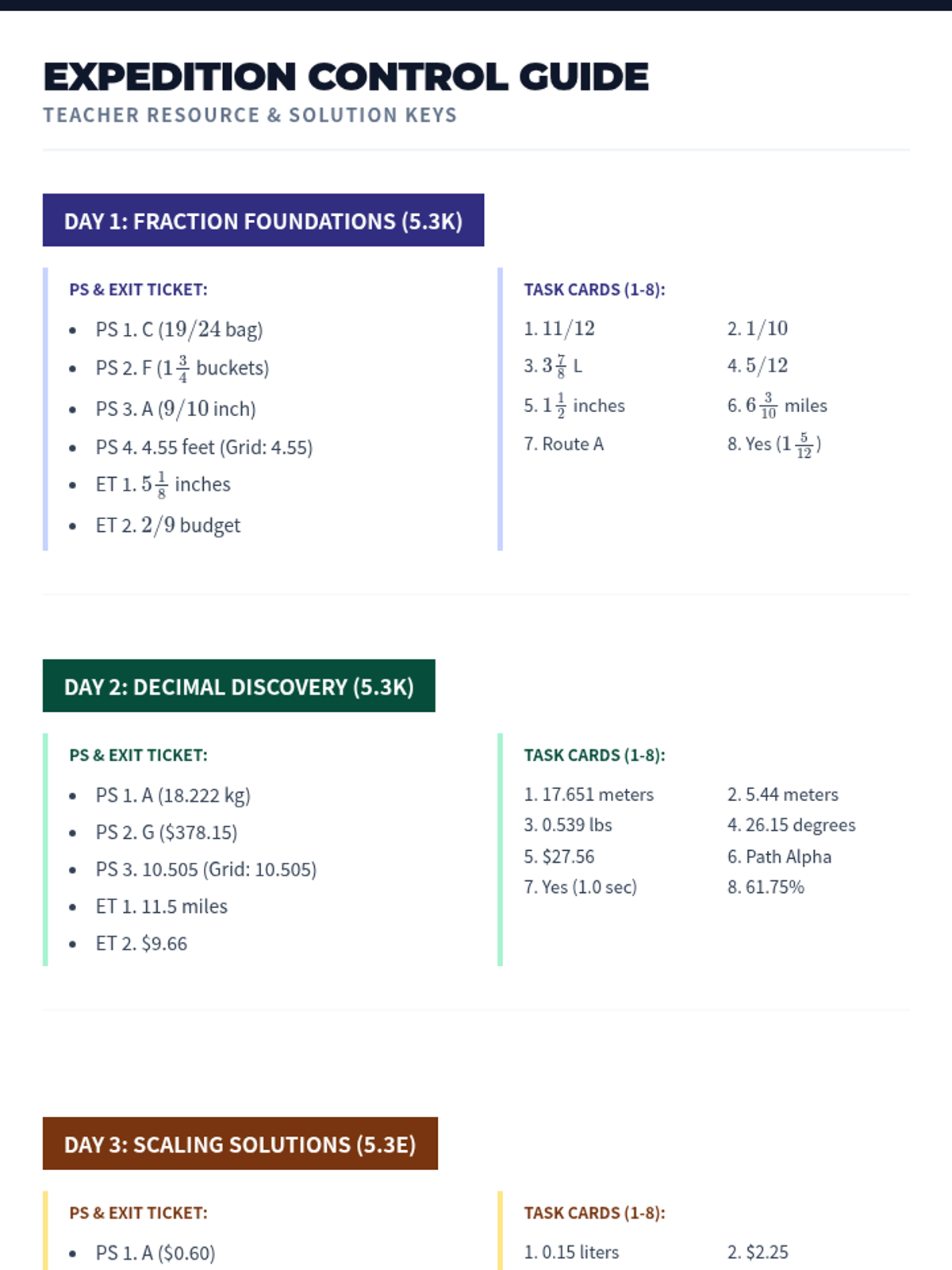
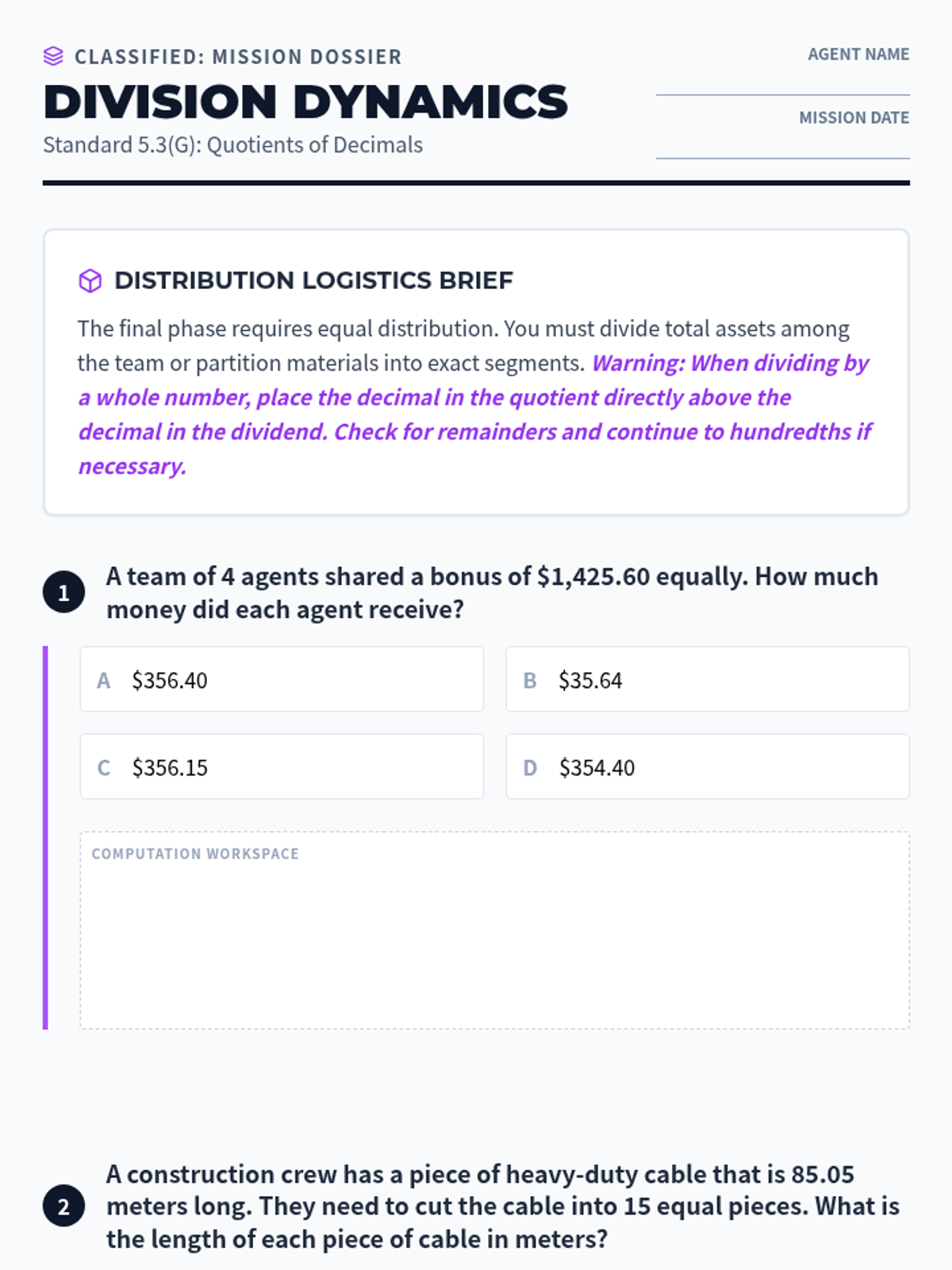
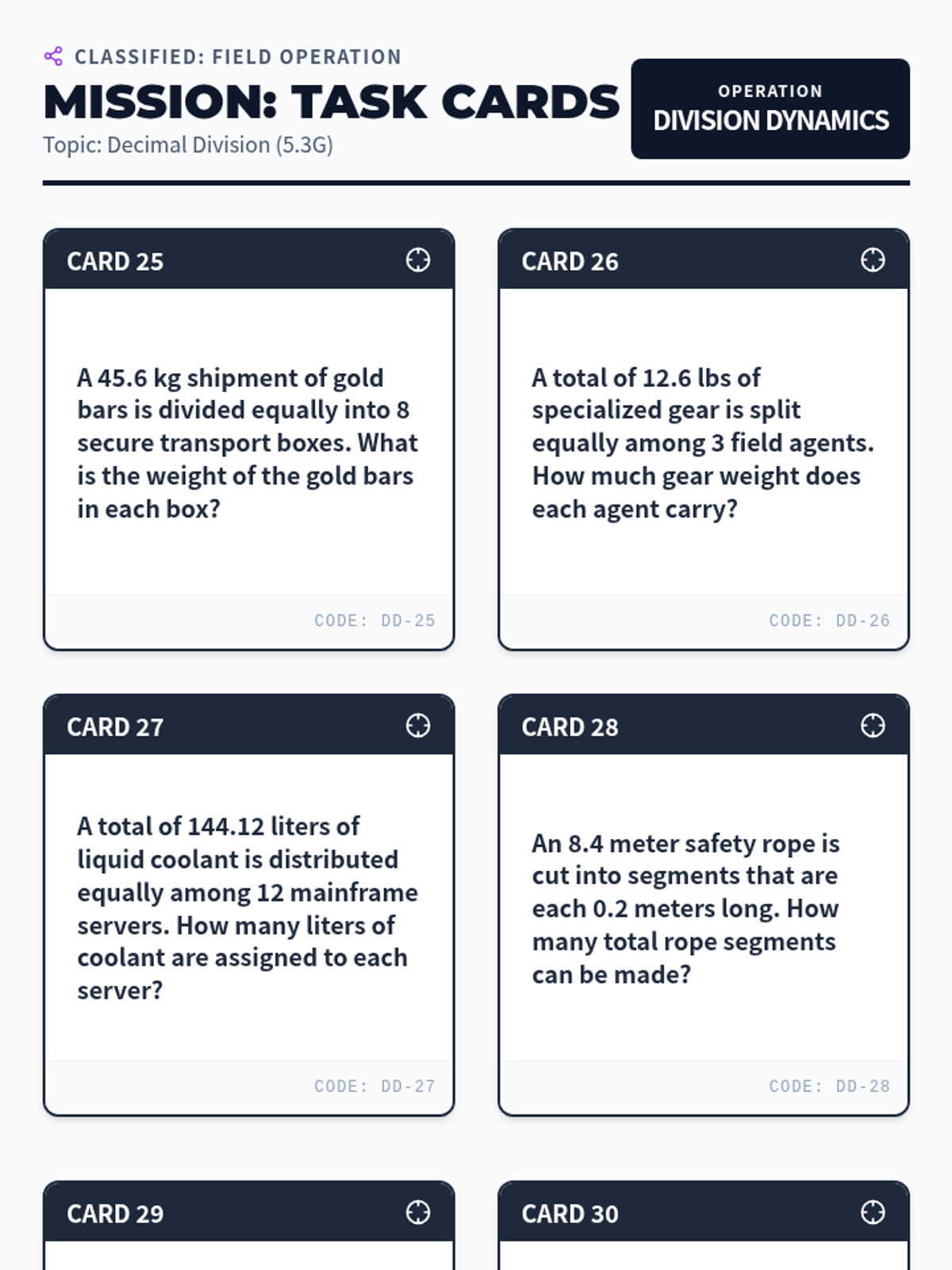
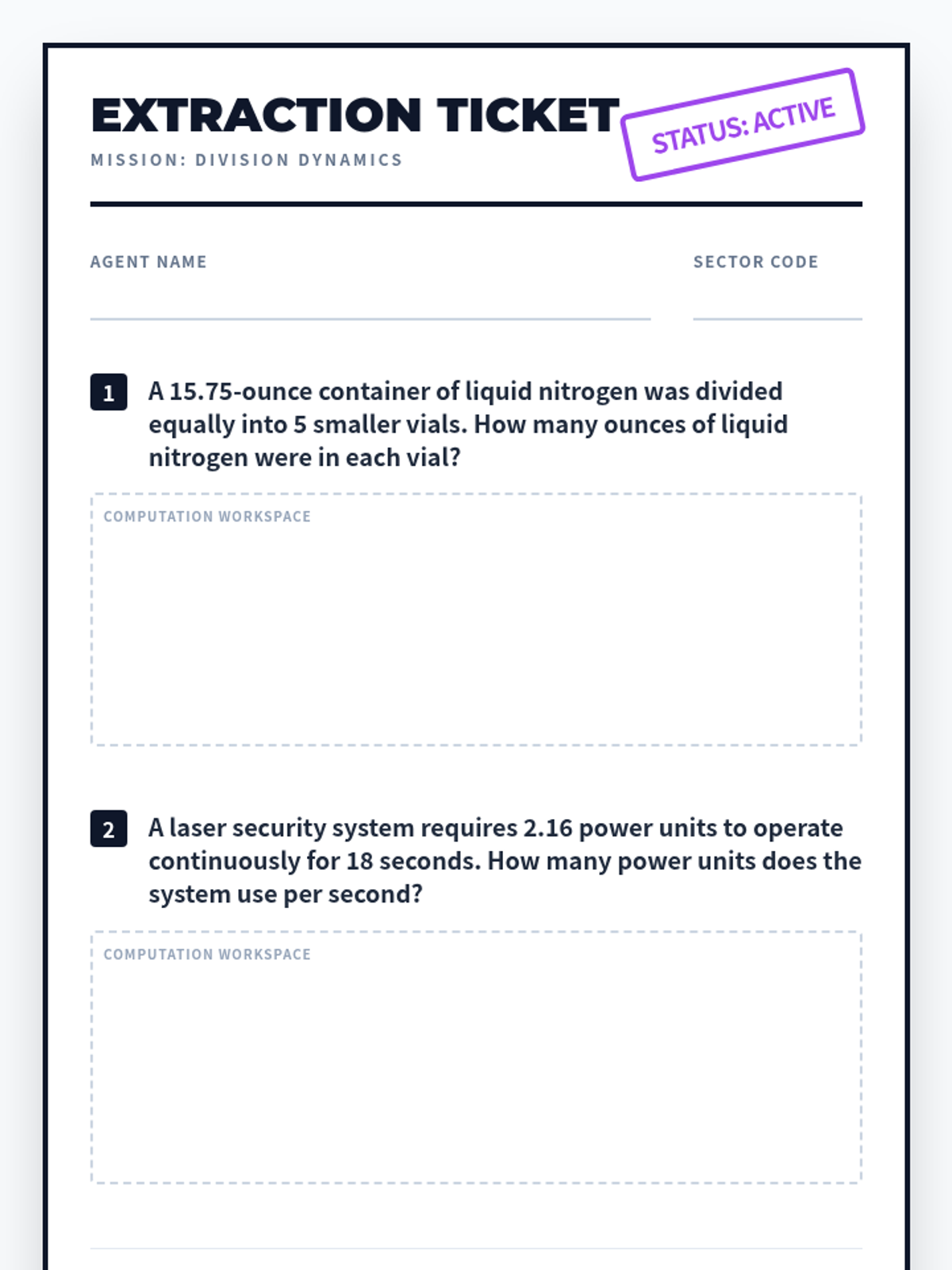
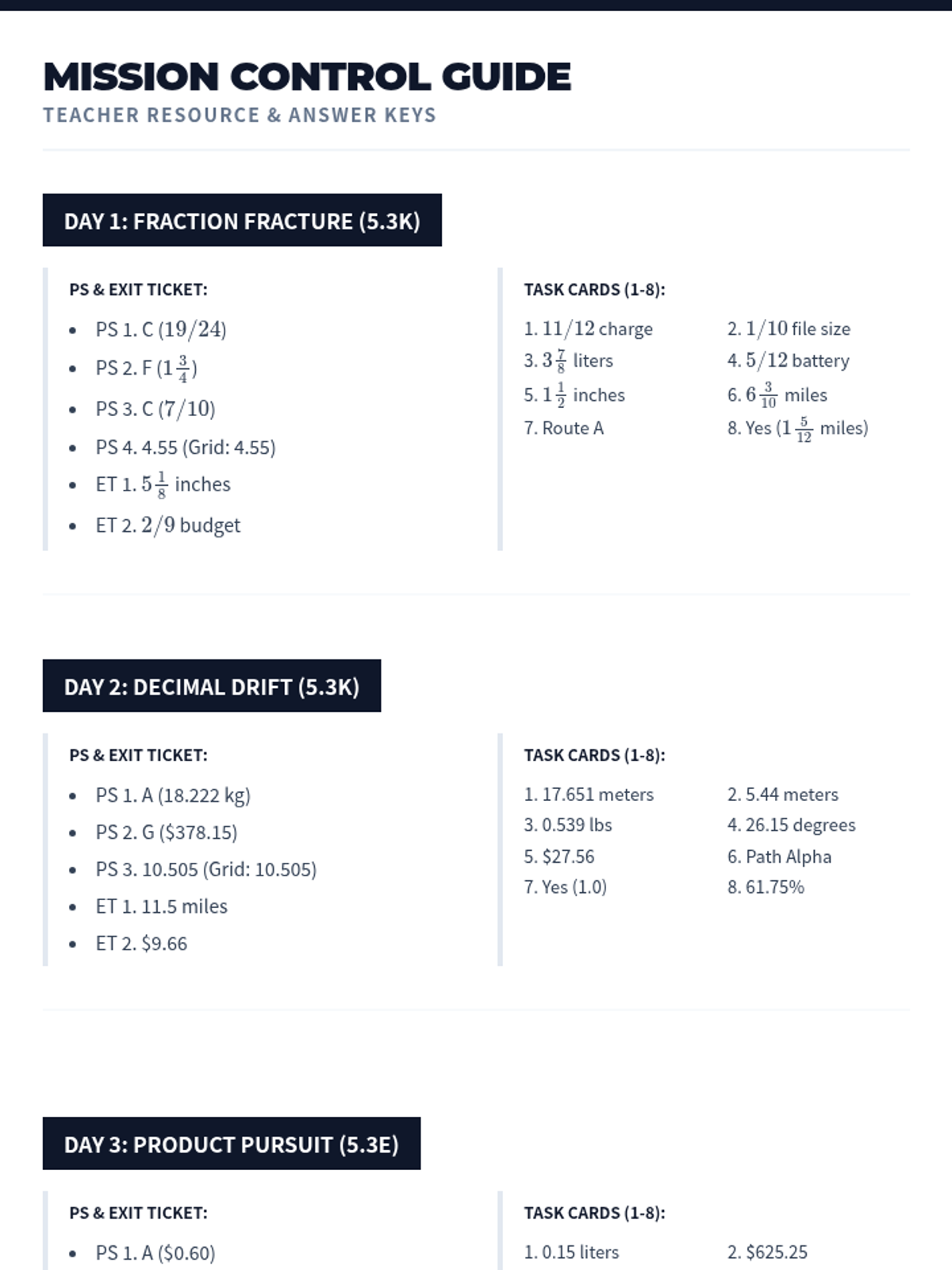
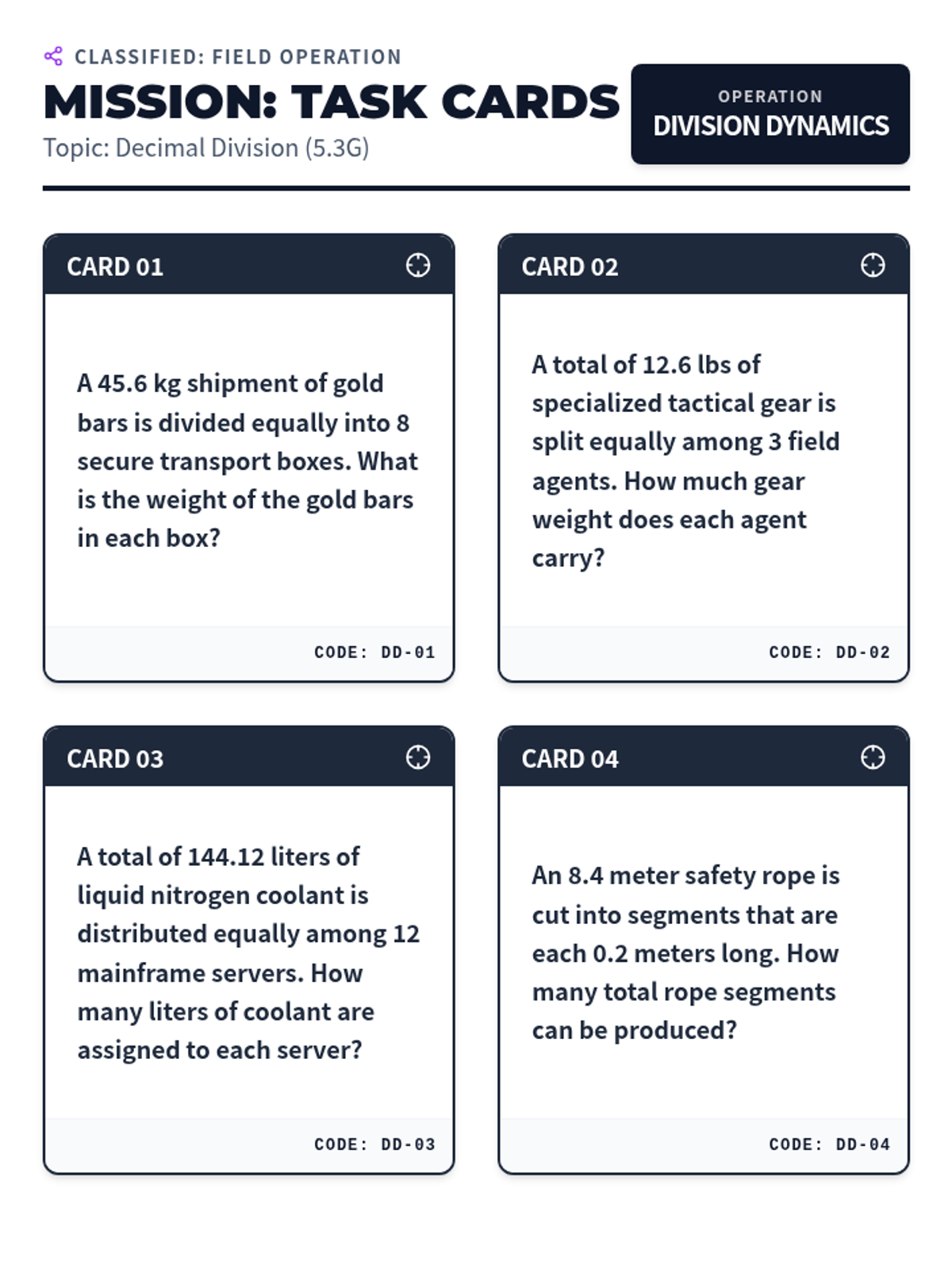
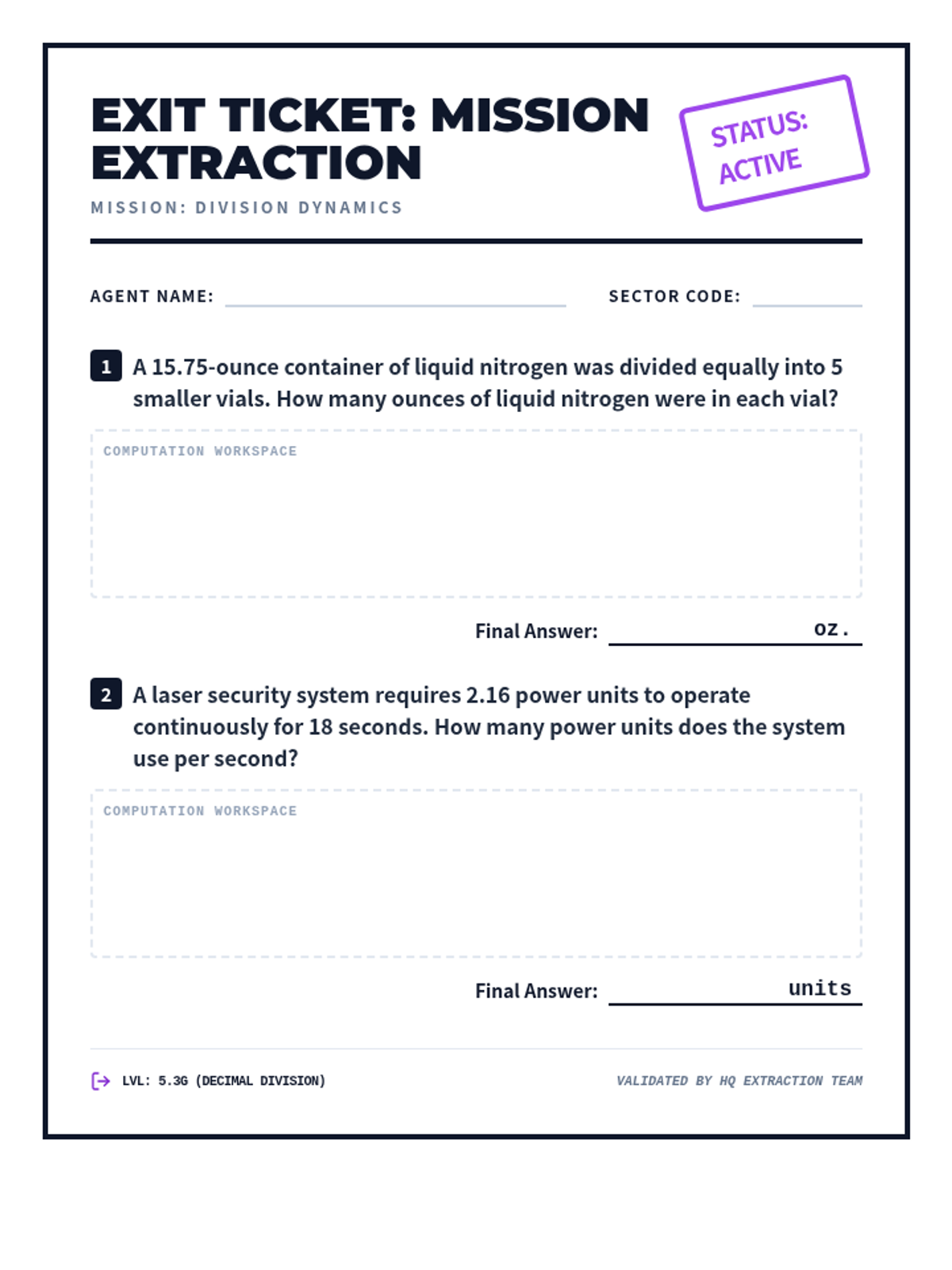
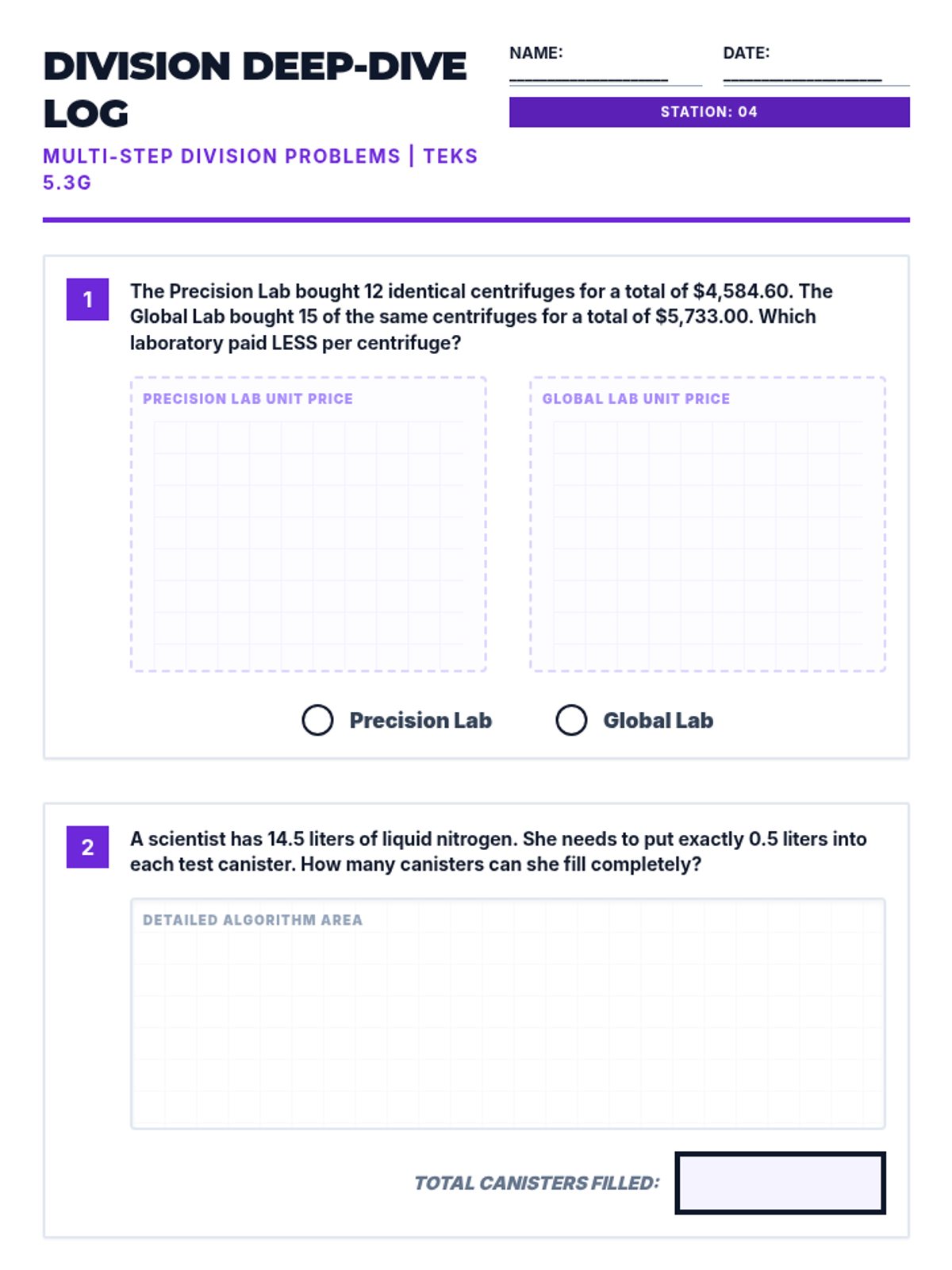
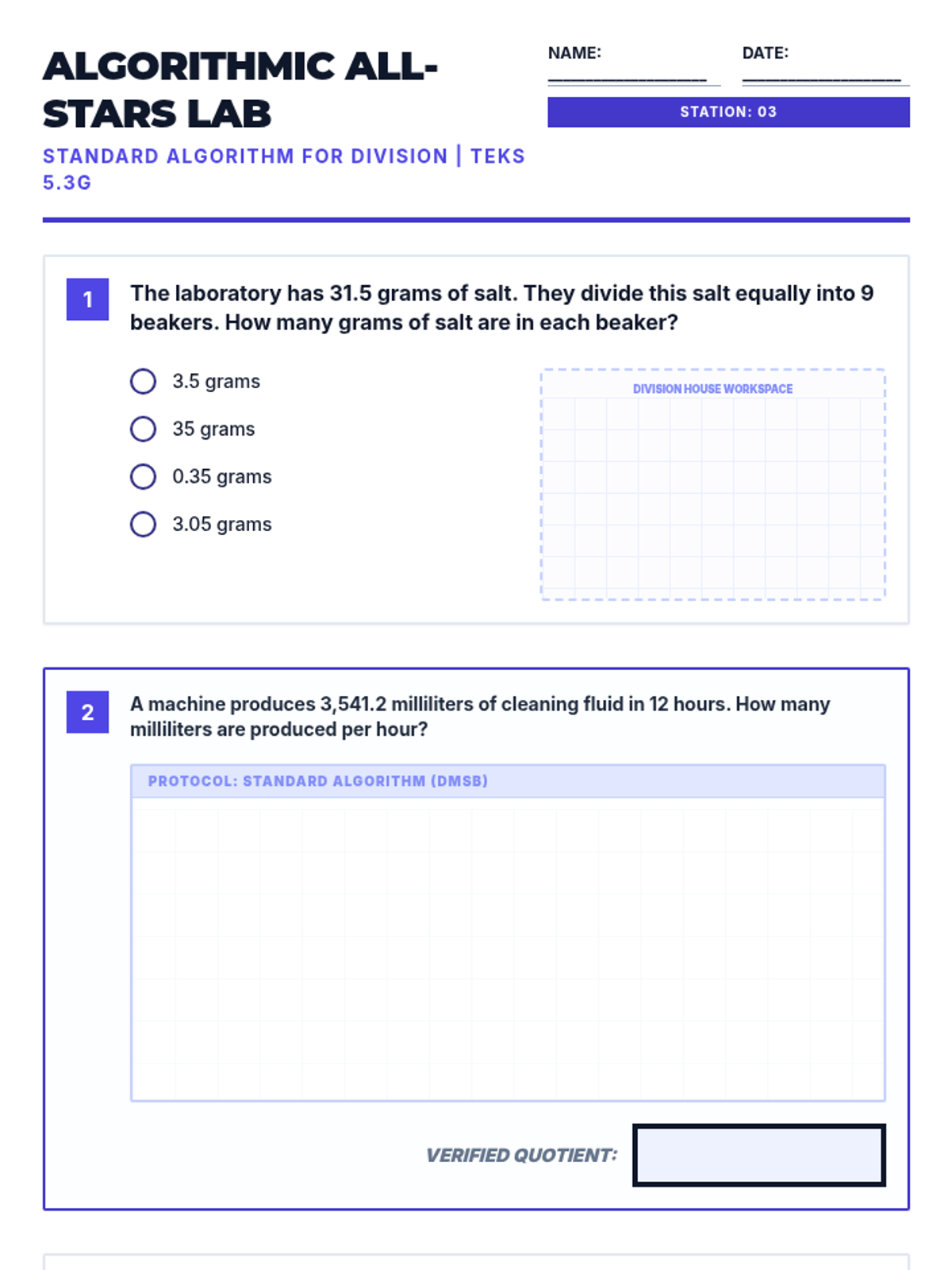
Solving for decimal quotients (5.3G) using distribution and logistics word problems.
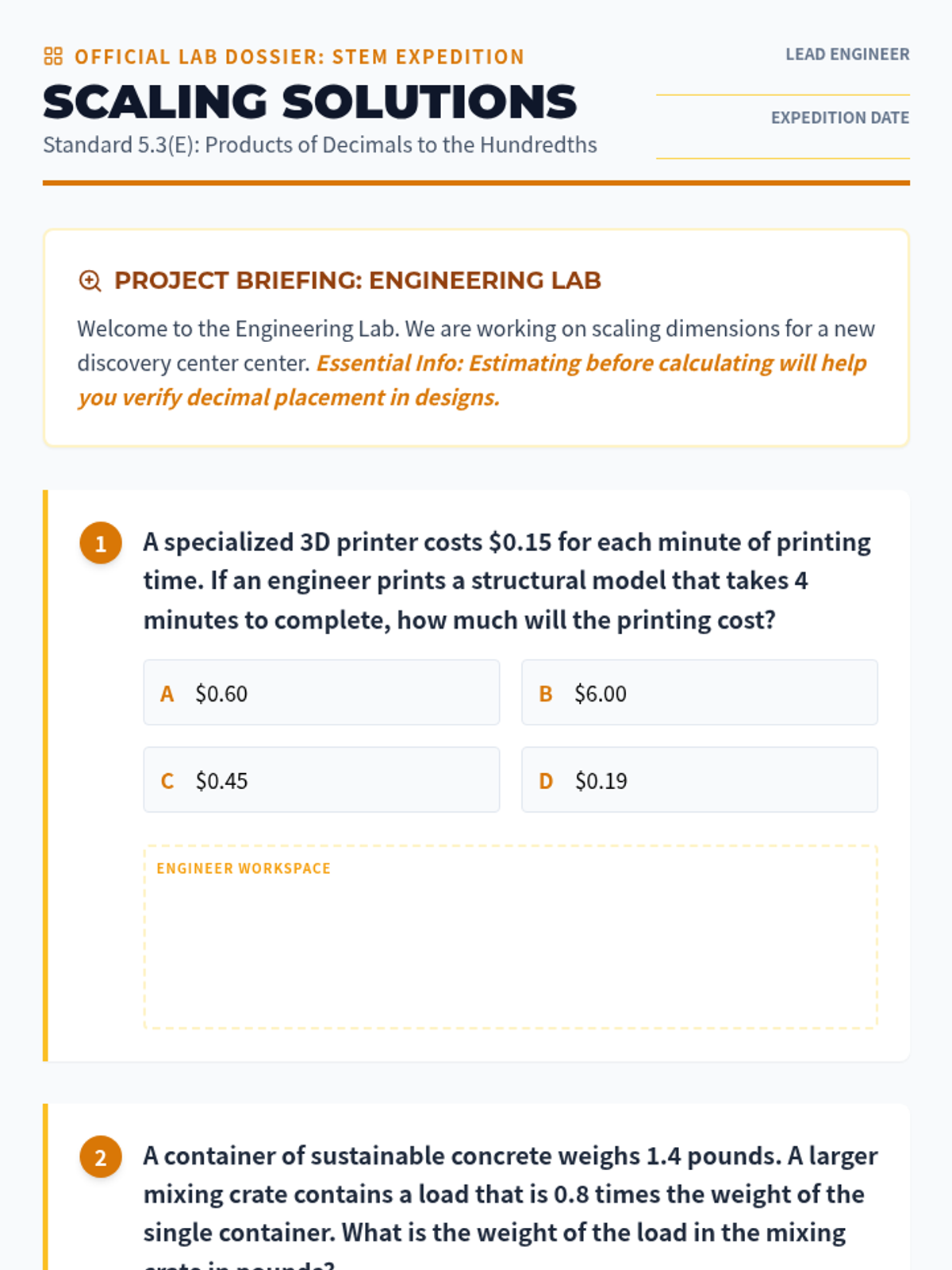
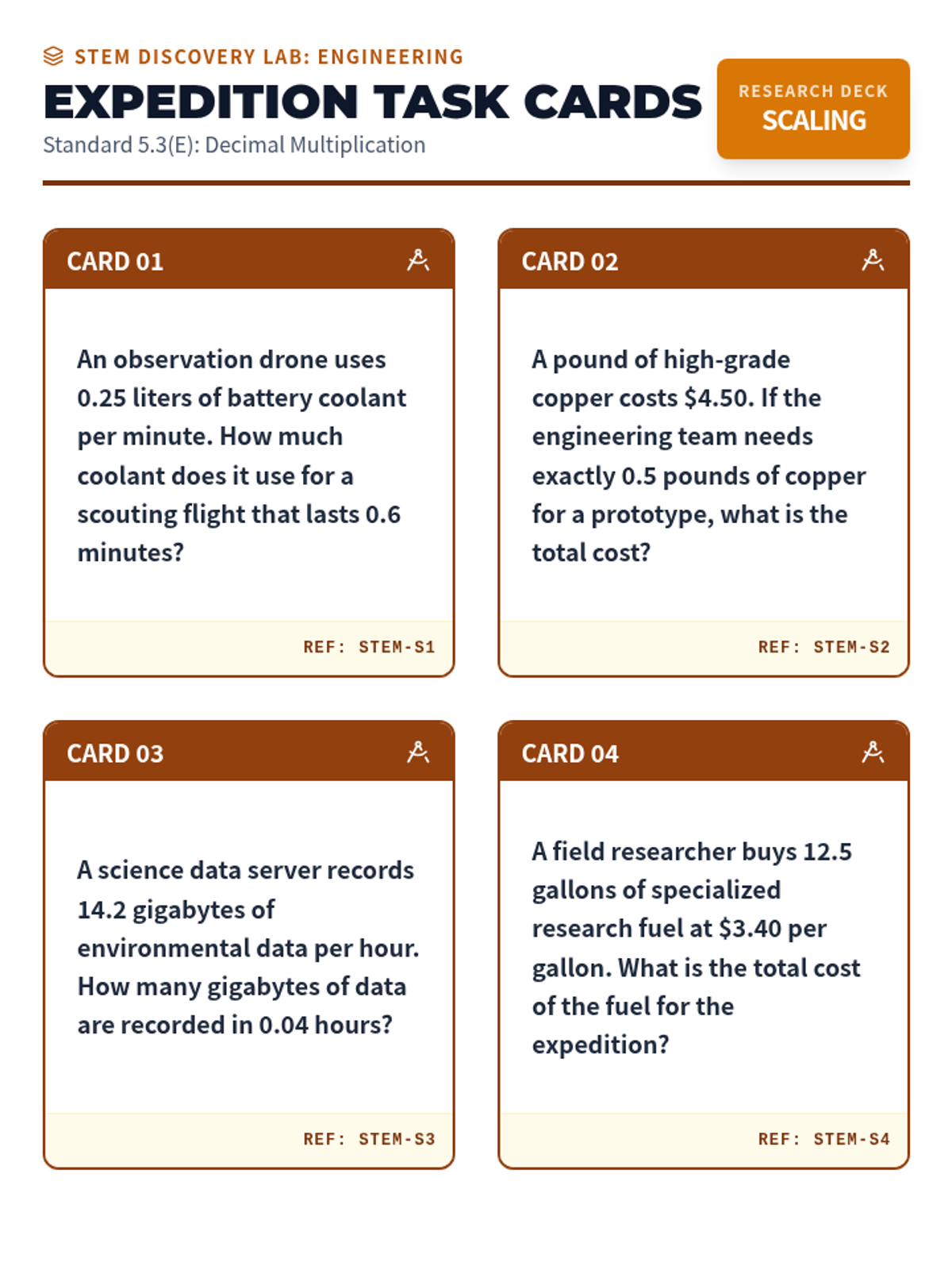
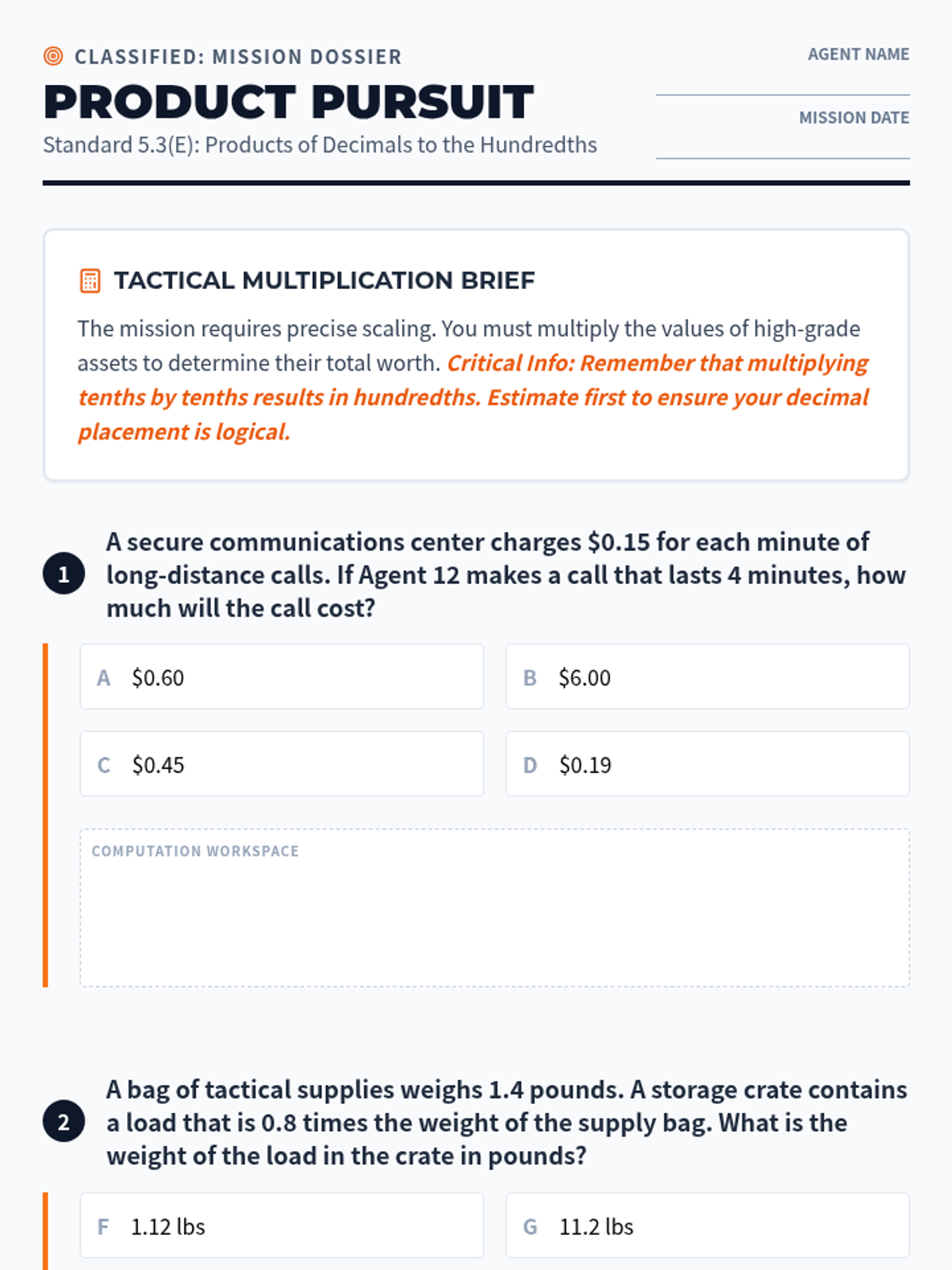
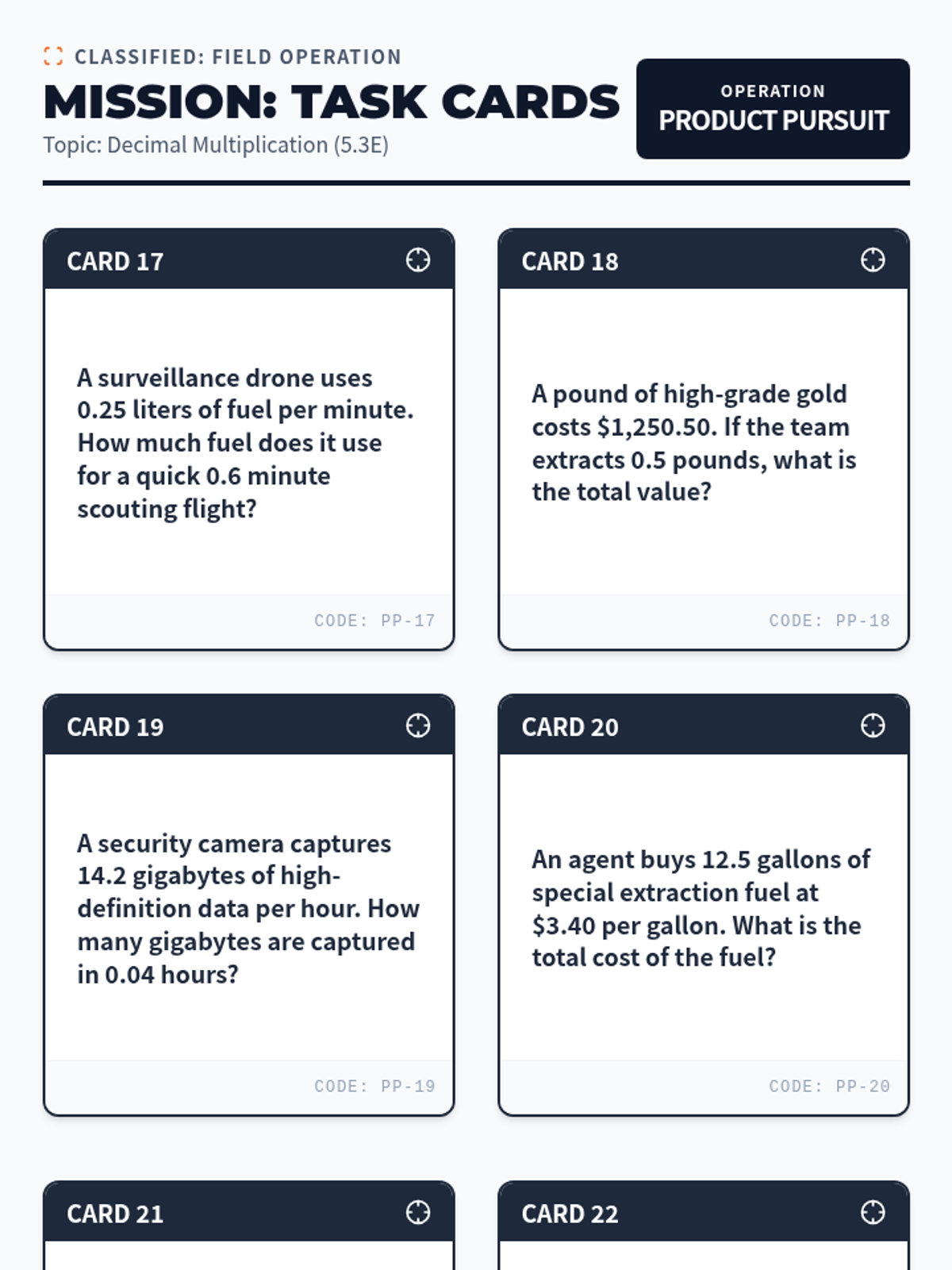
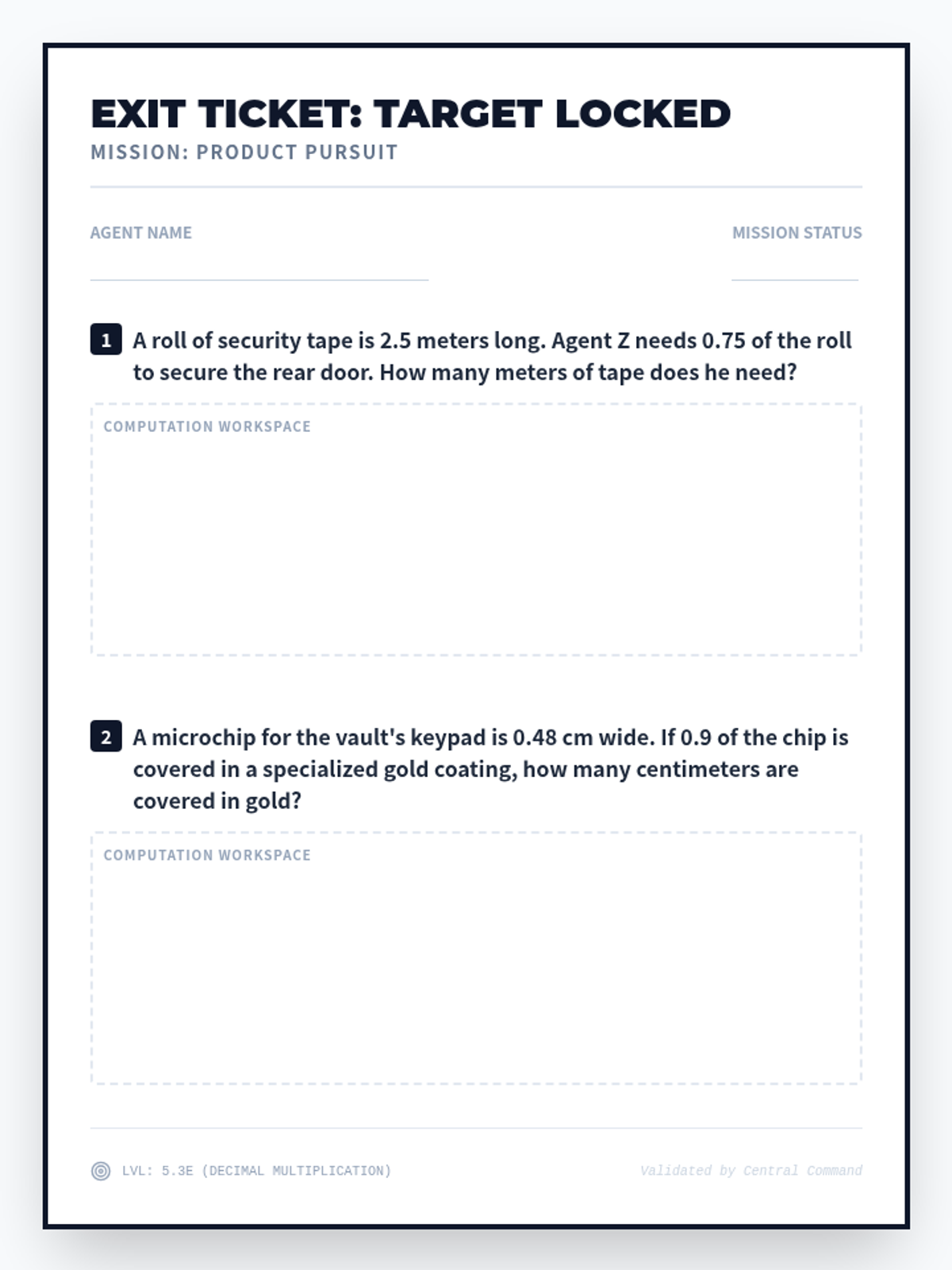
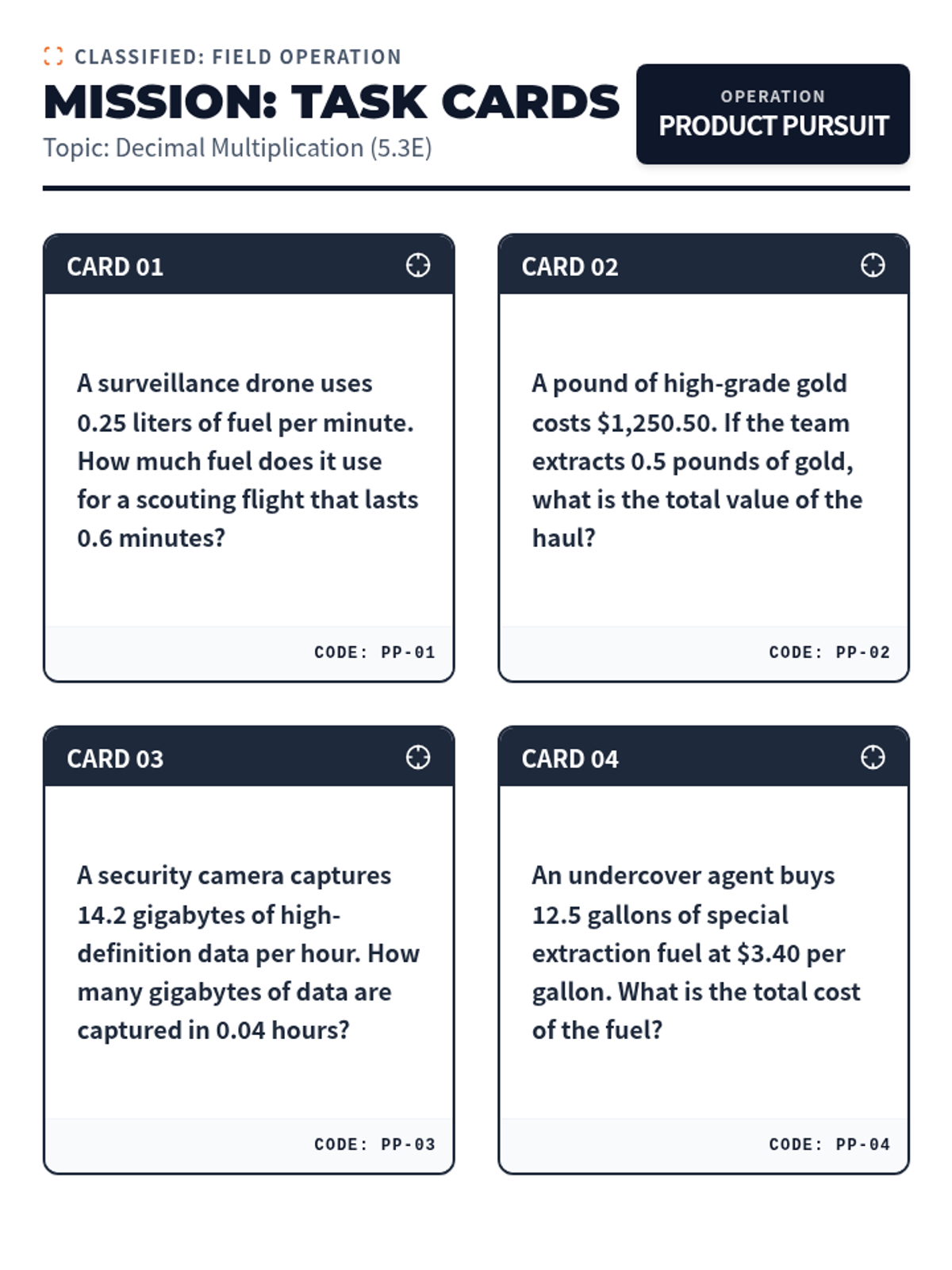
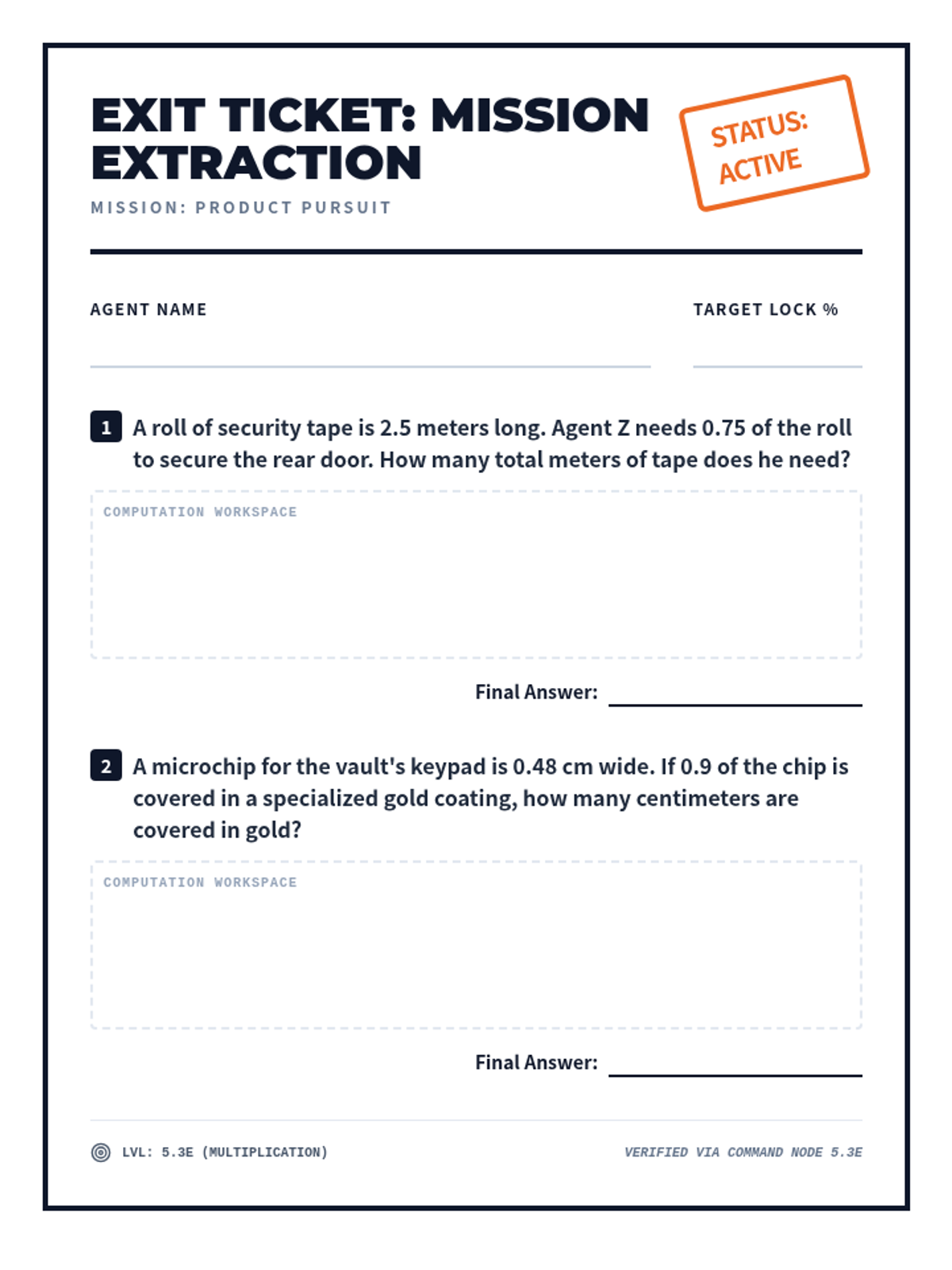
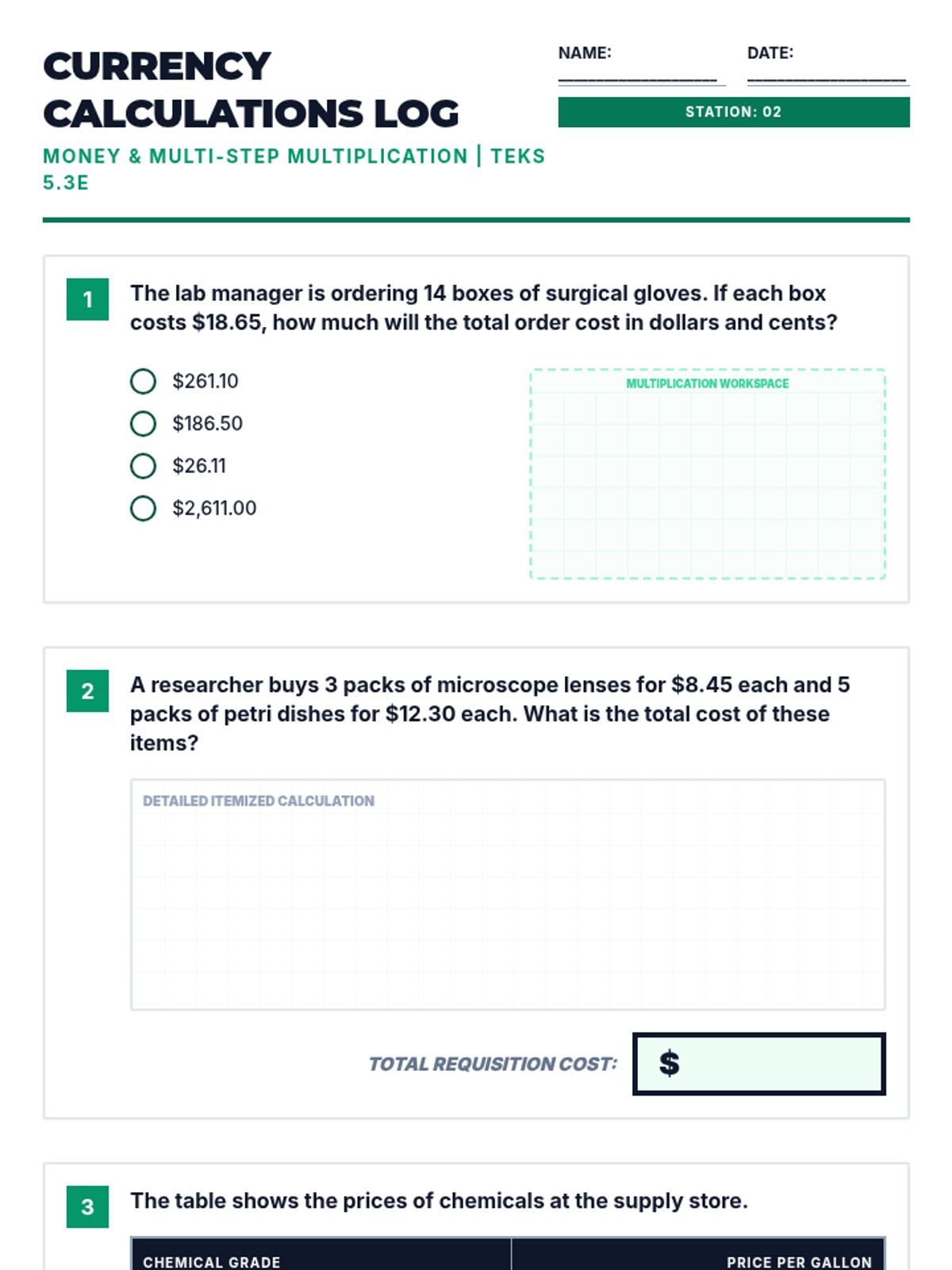
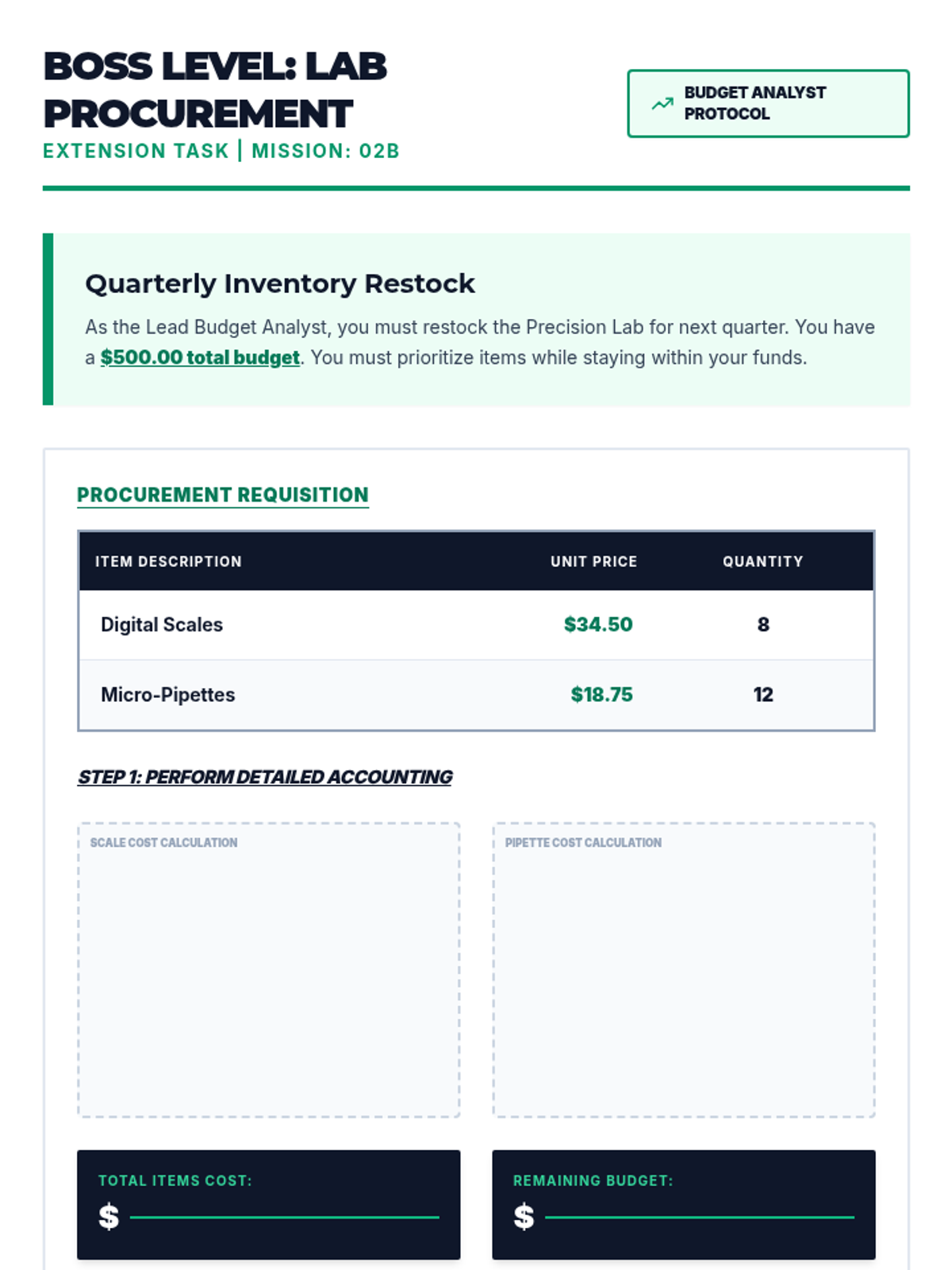
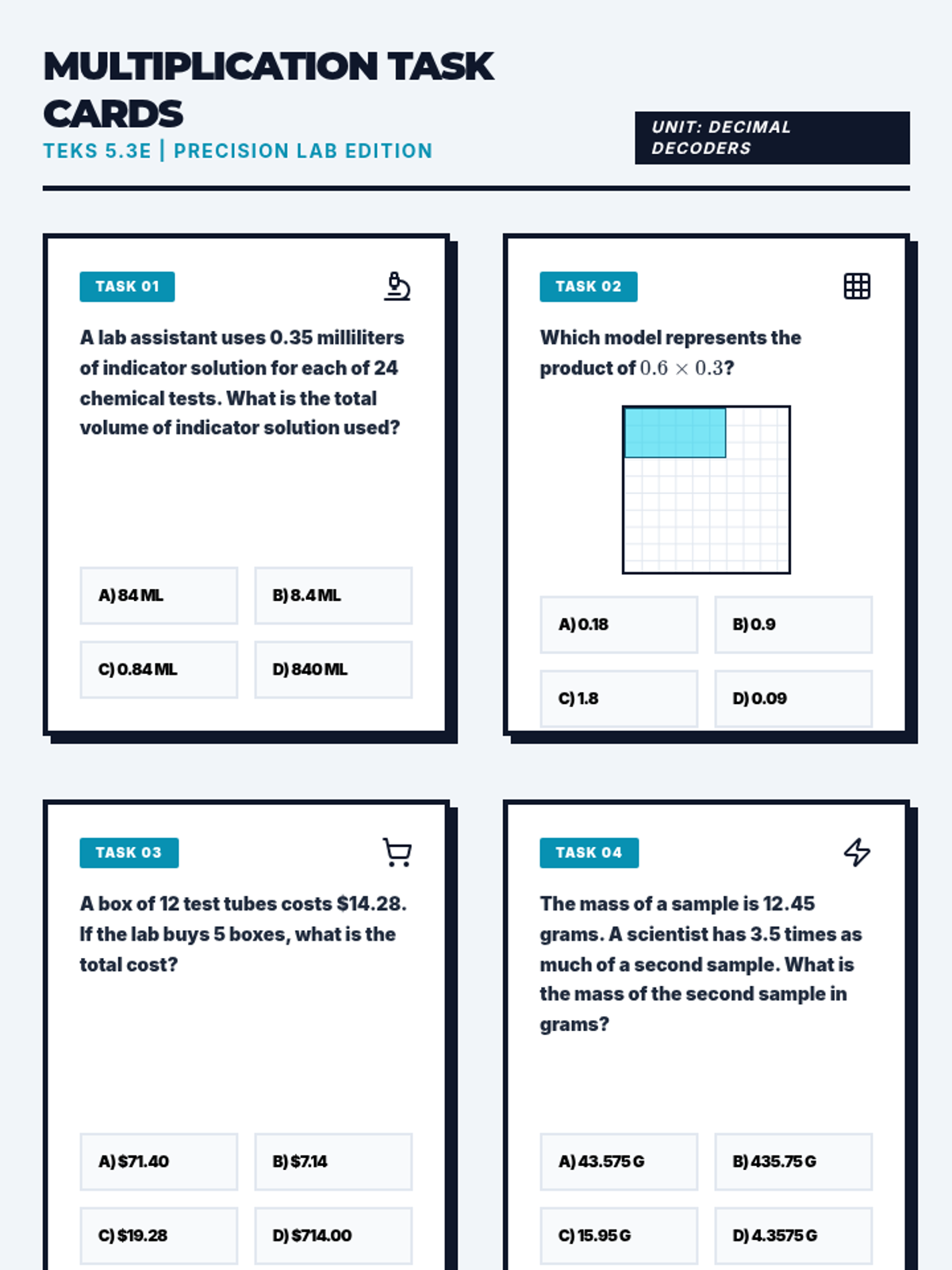
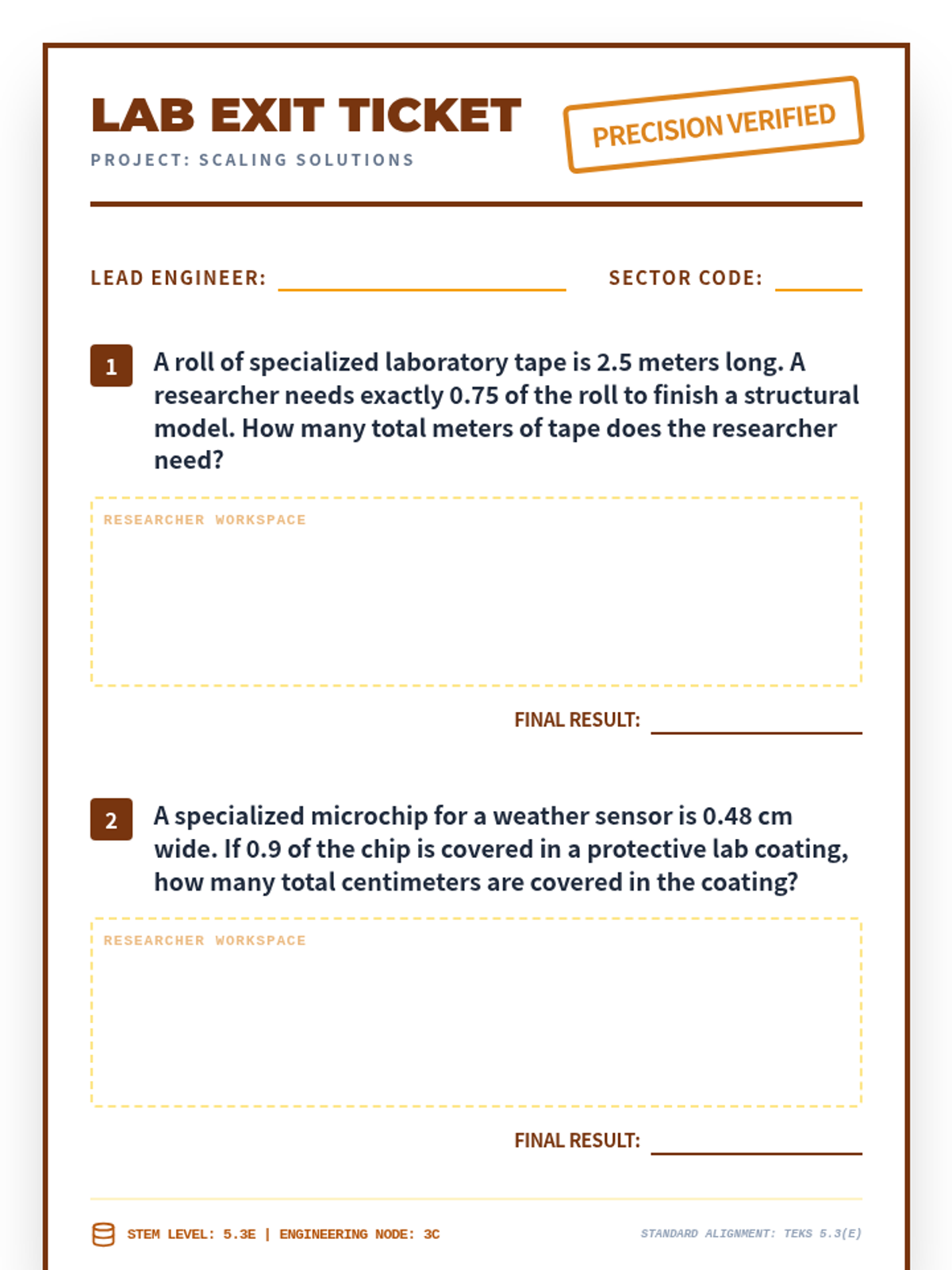
Mastering decimal multiplication (5.3E) through engineering and scaling word problems.
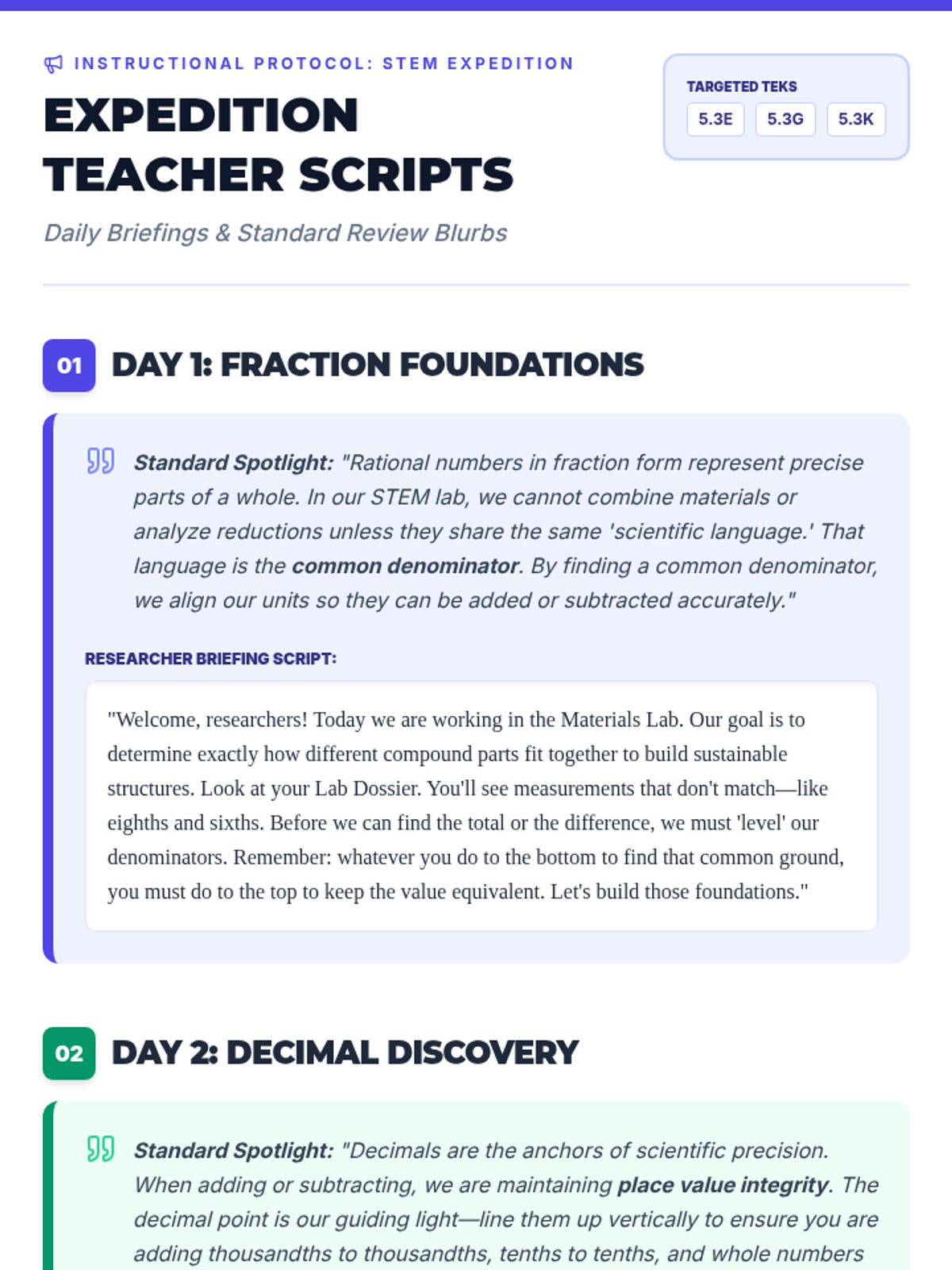
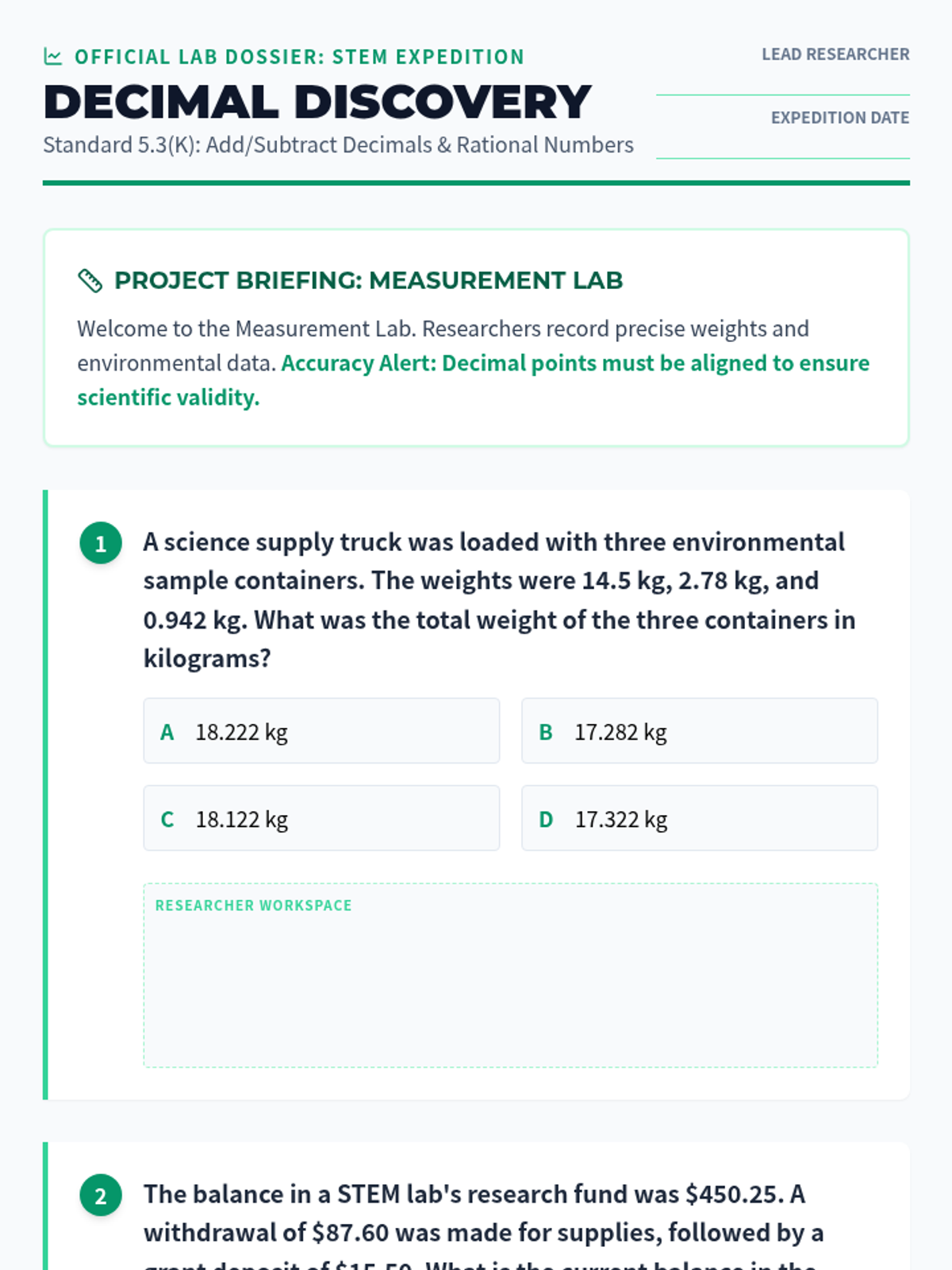
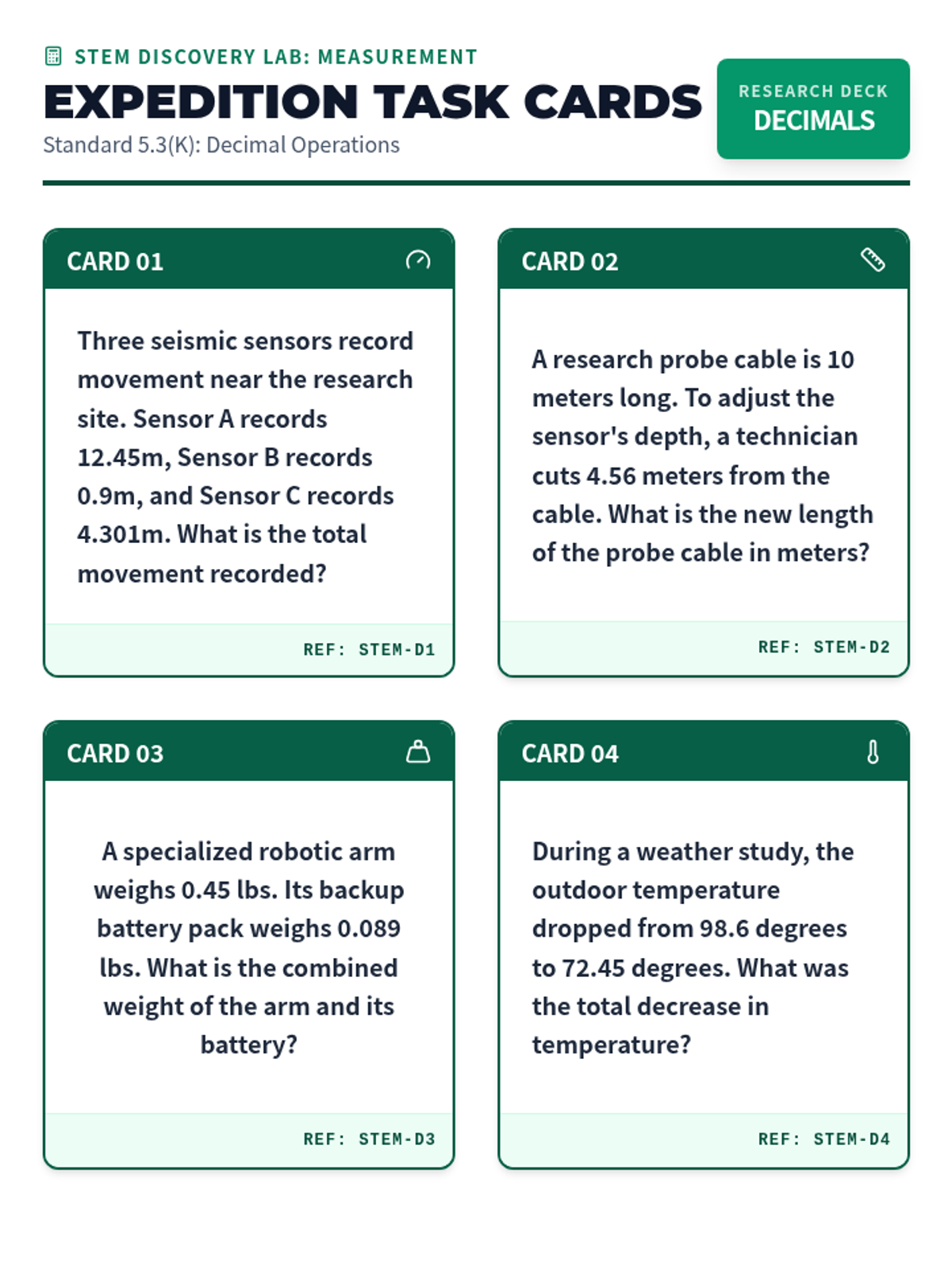
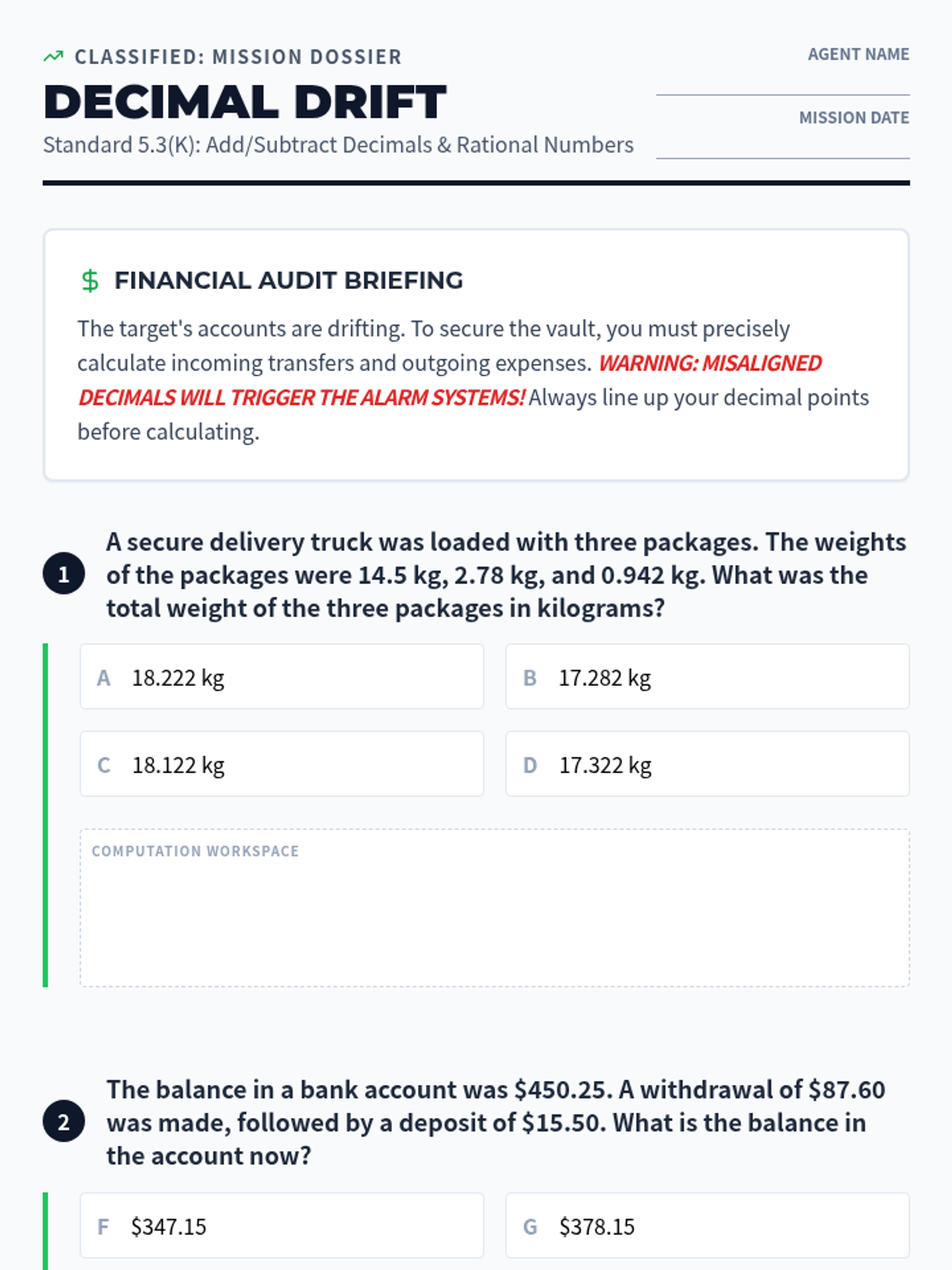
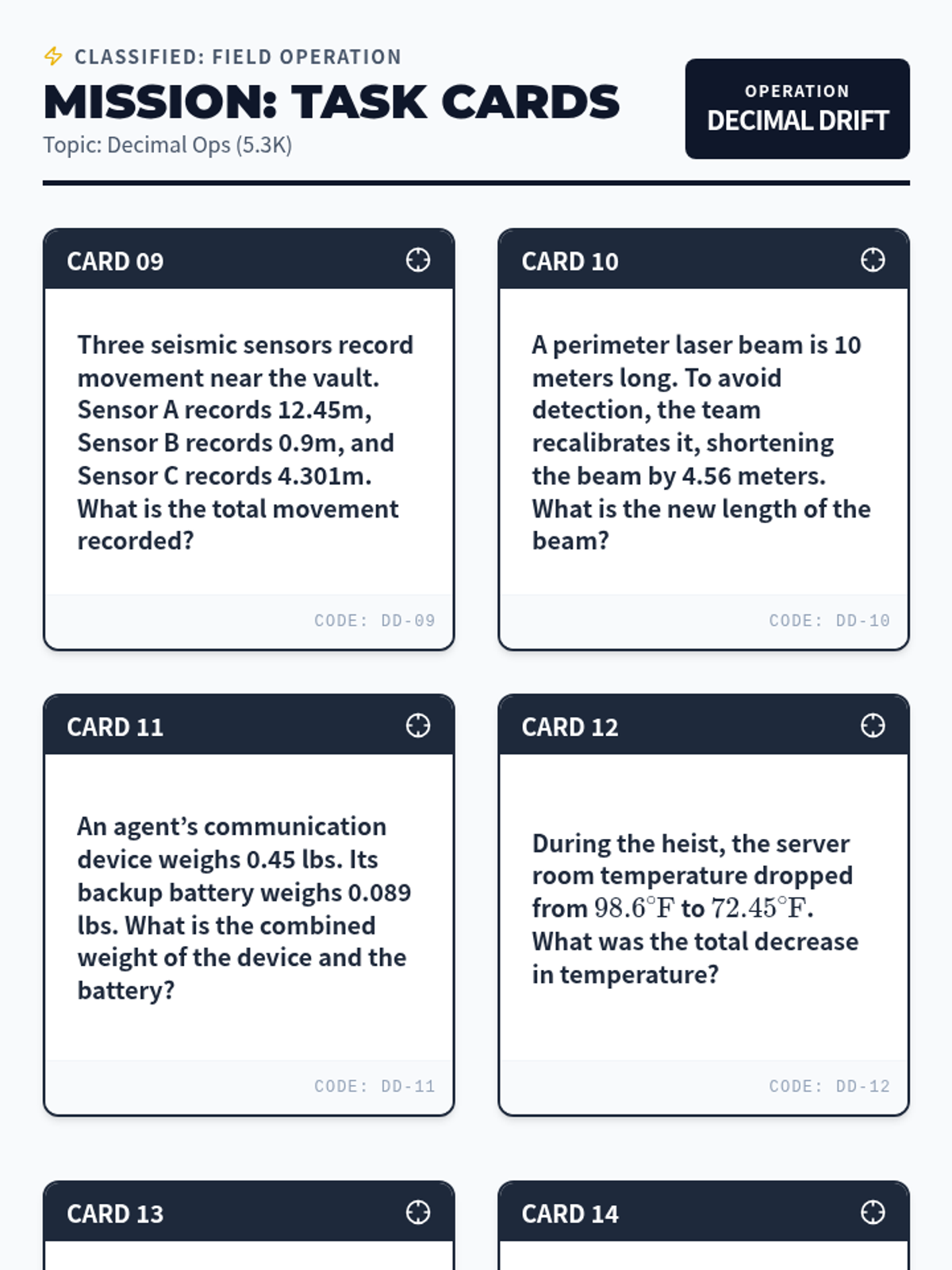
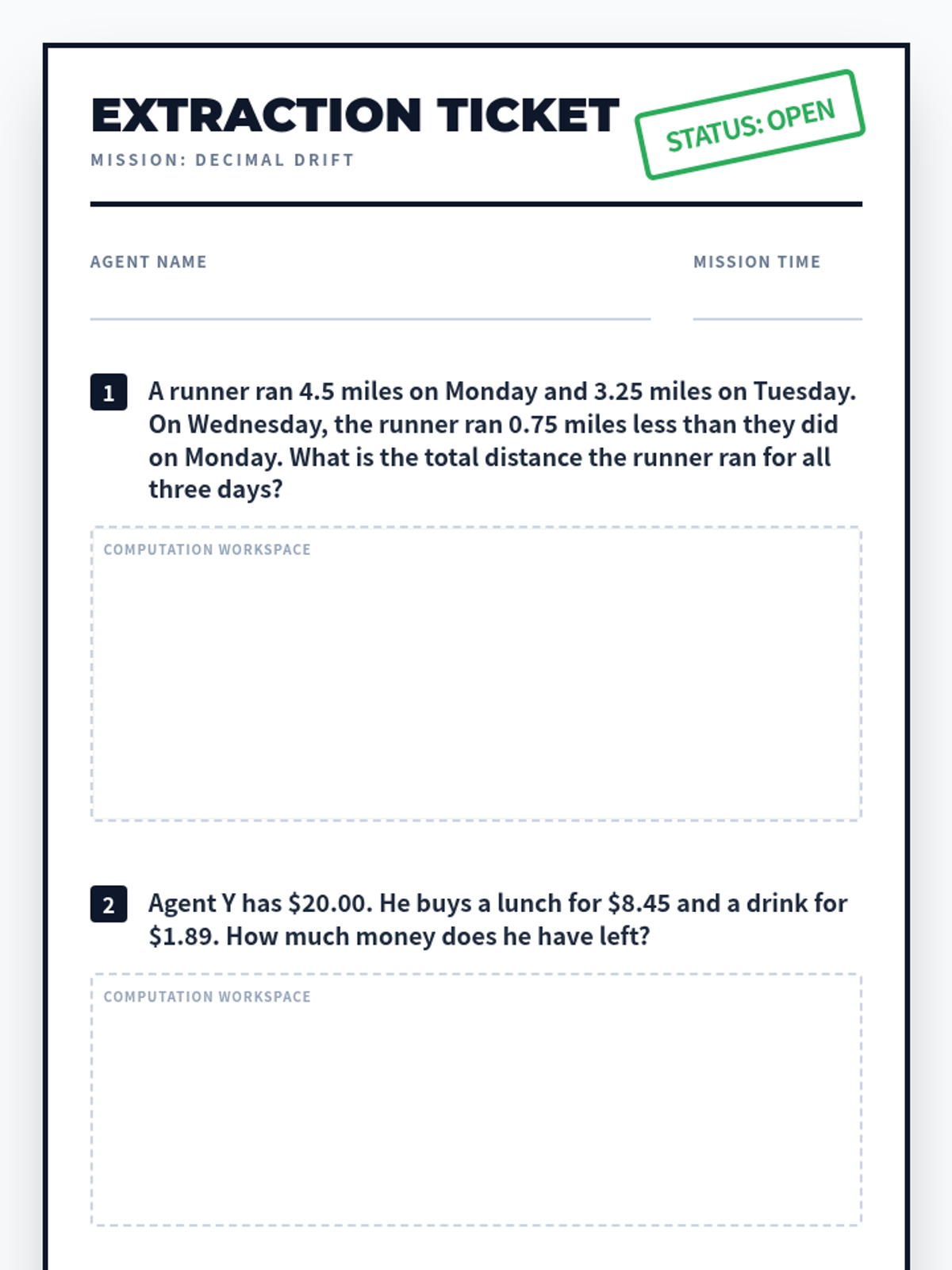
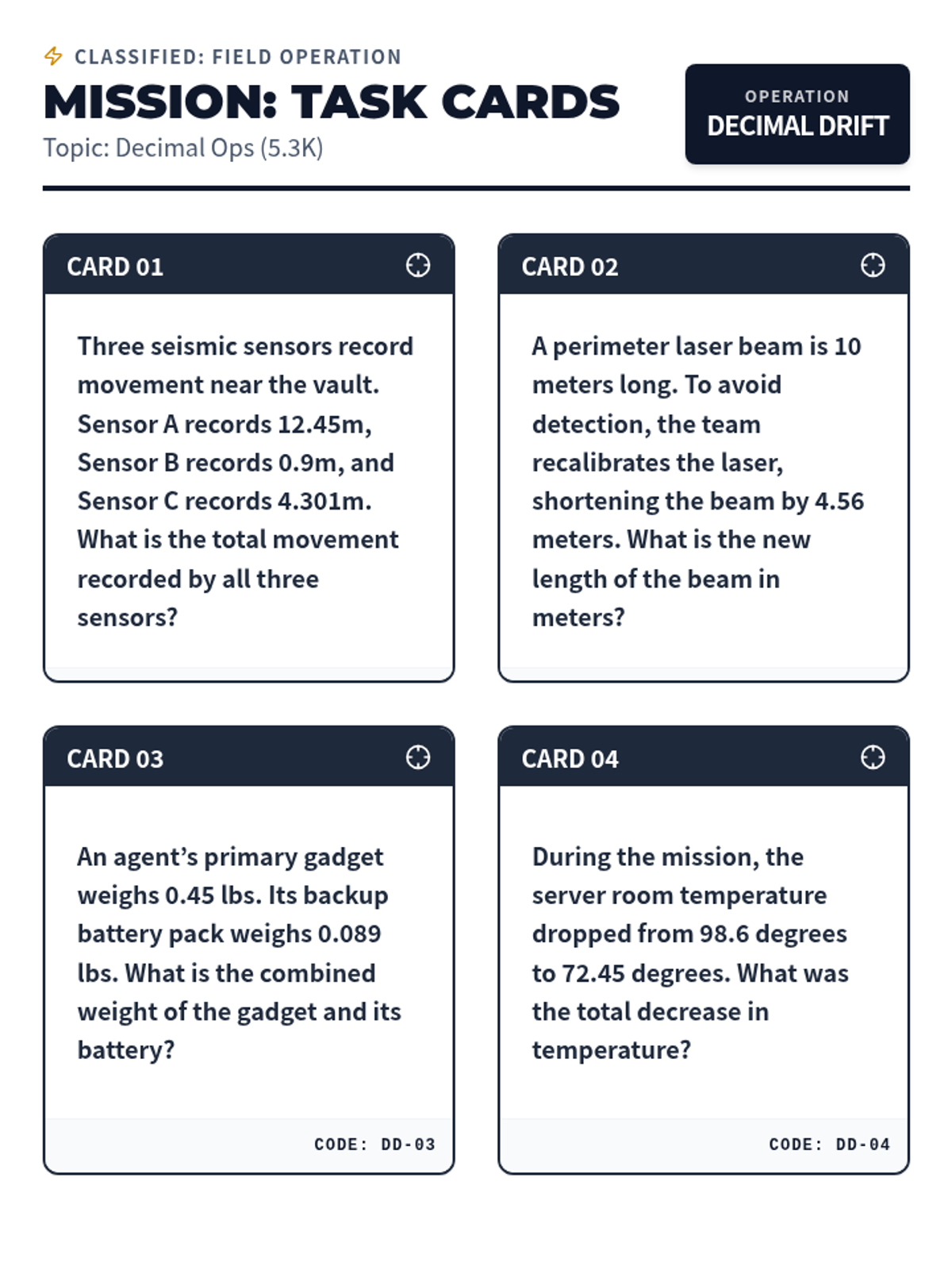
Deep dive into adding and subtracting decimals to the thousandths (5.3K) using measurement and data scenarios.
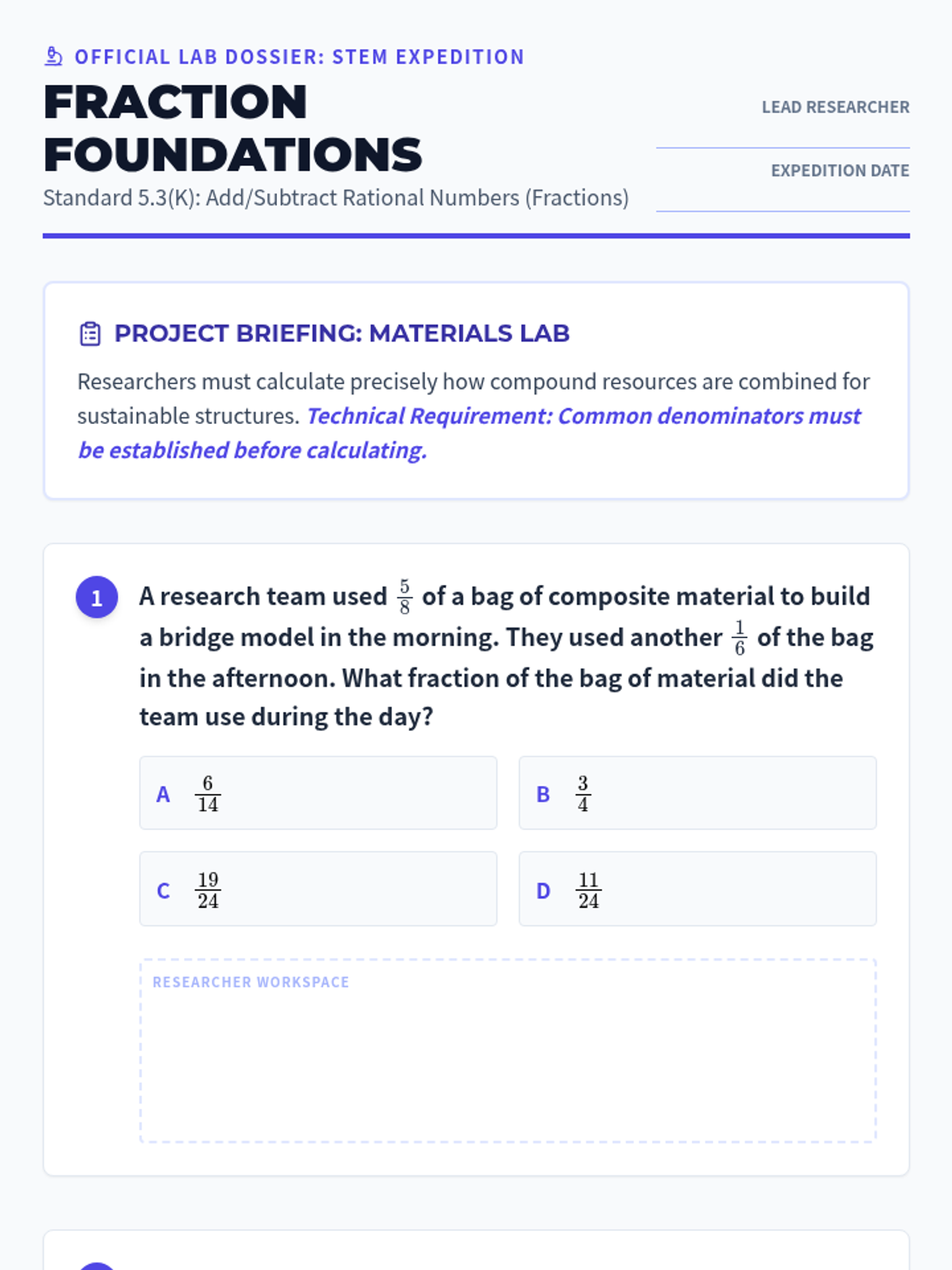
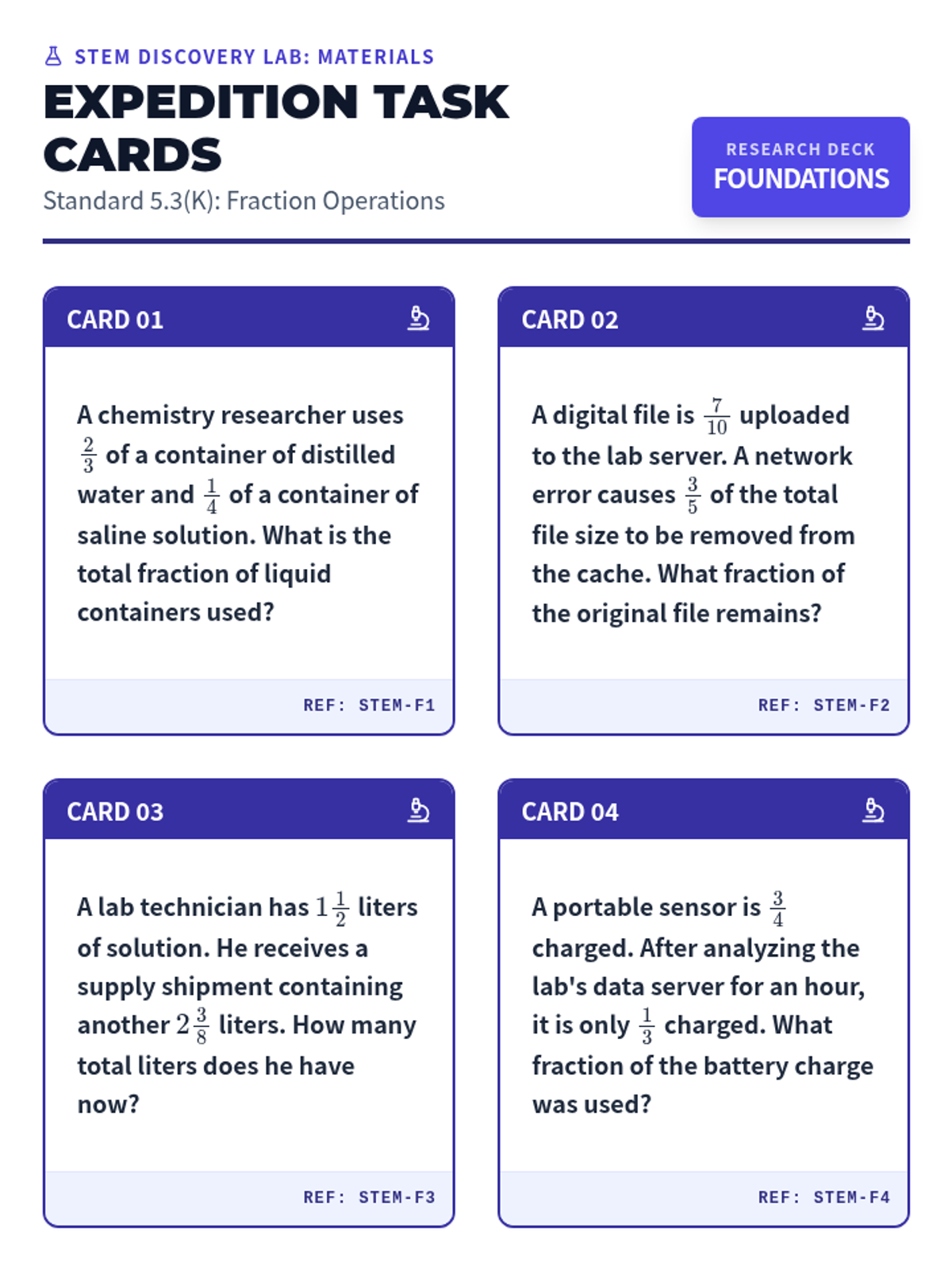
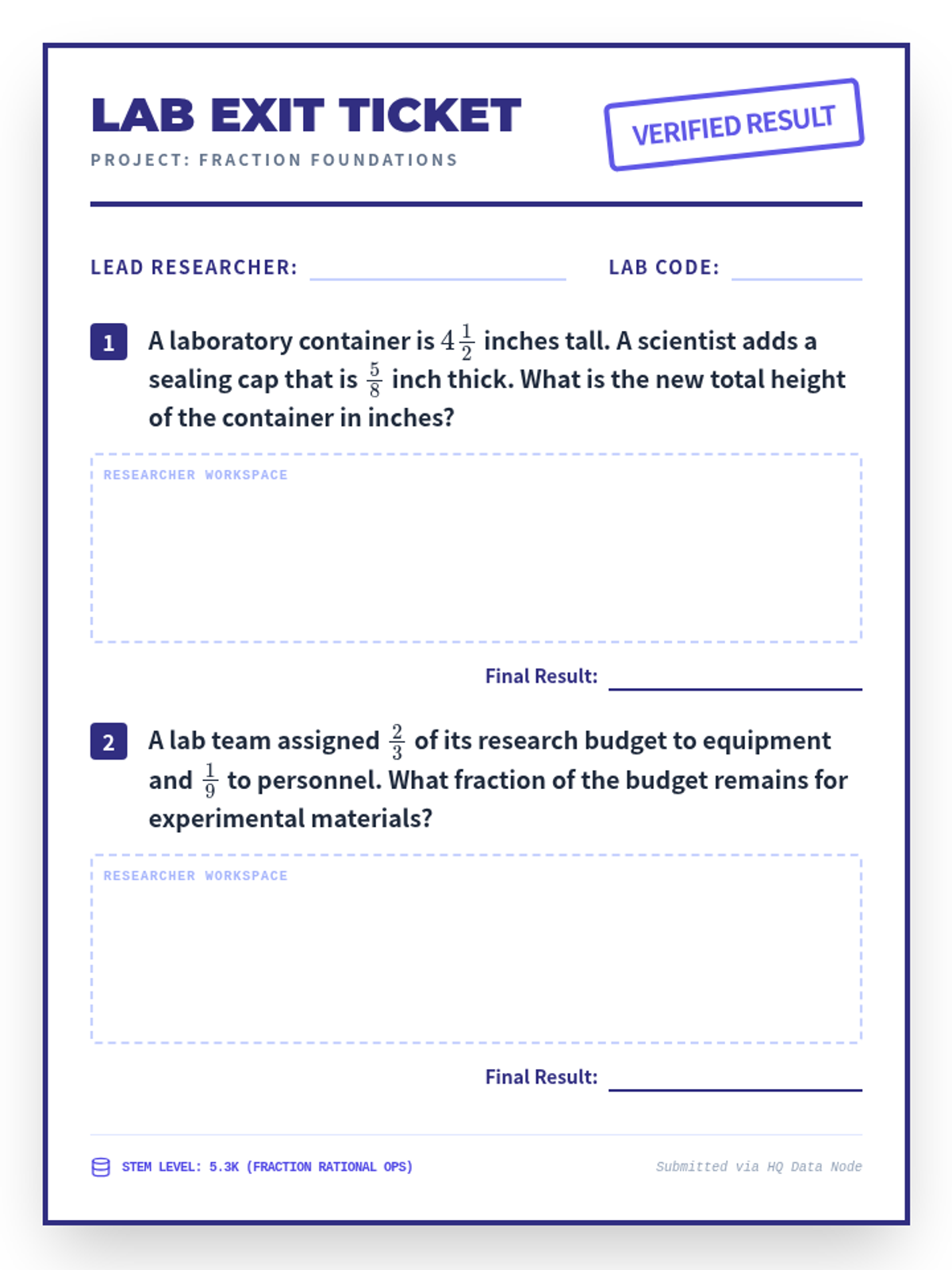
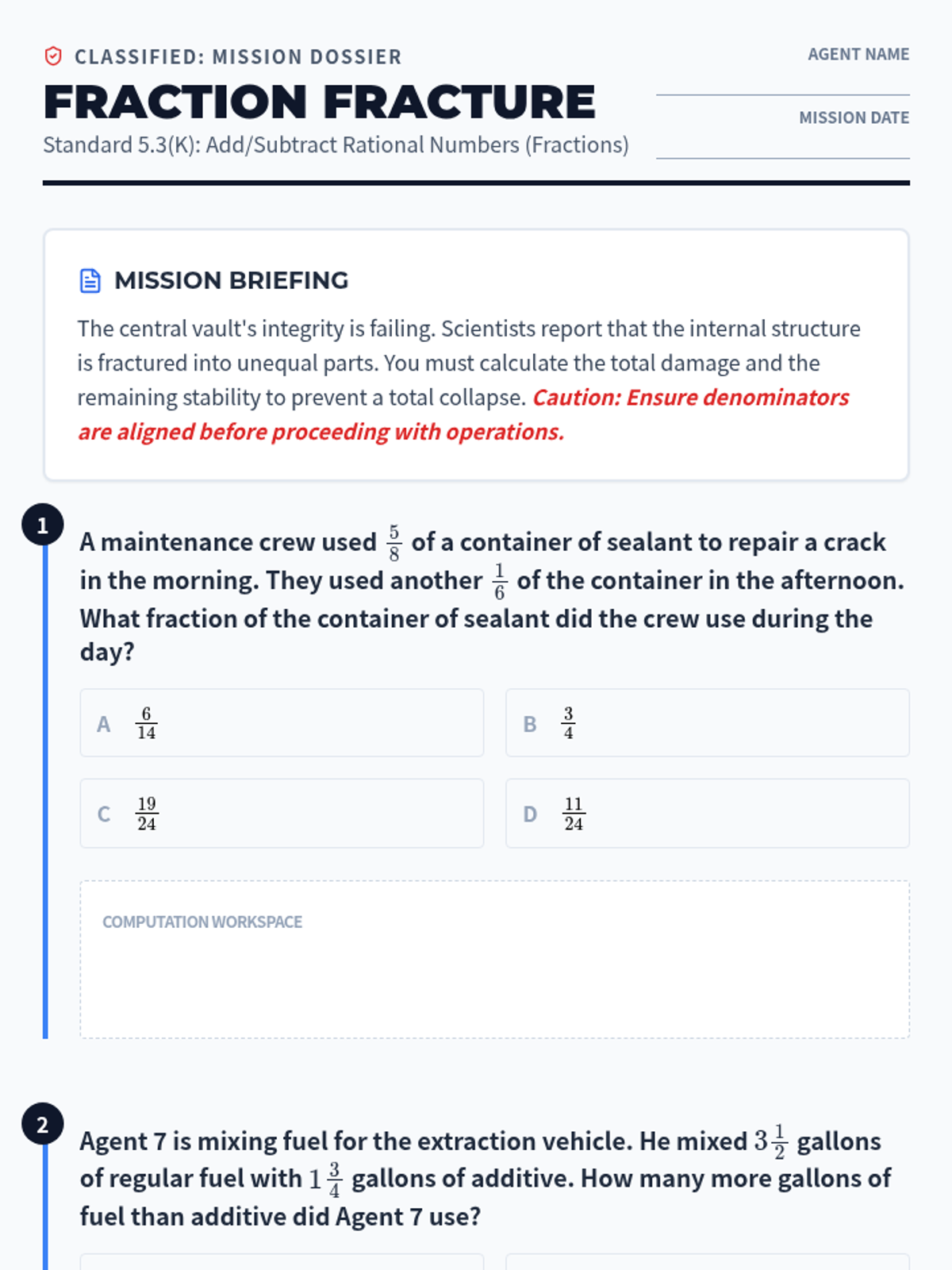
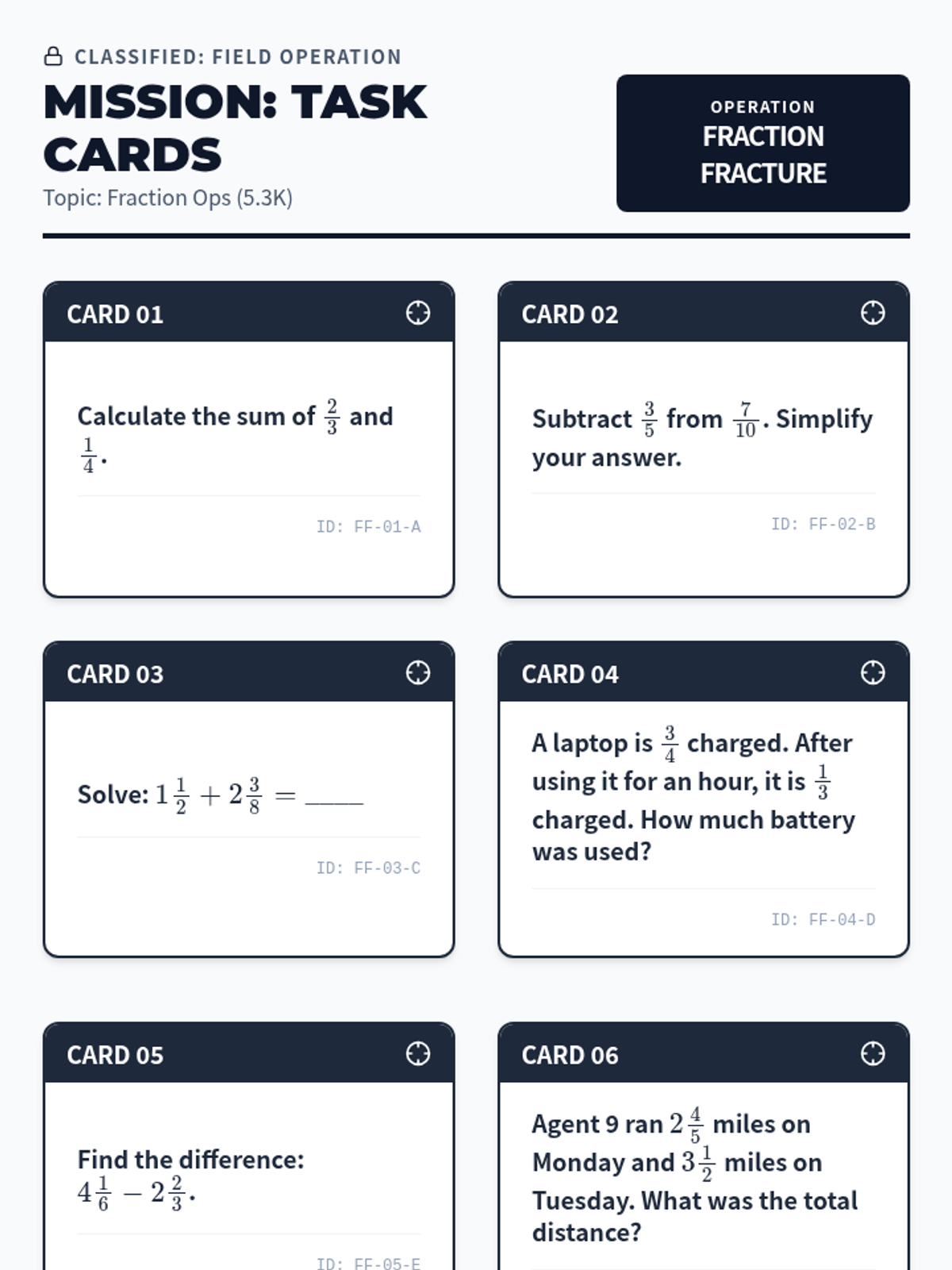
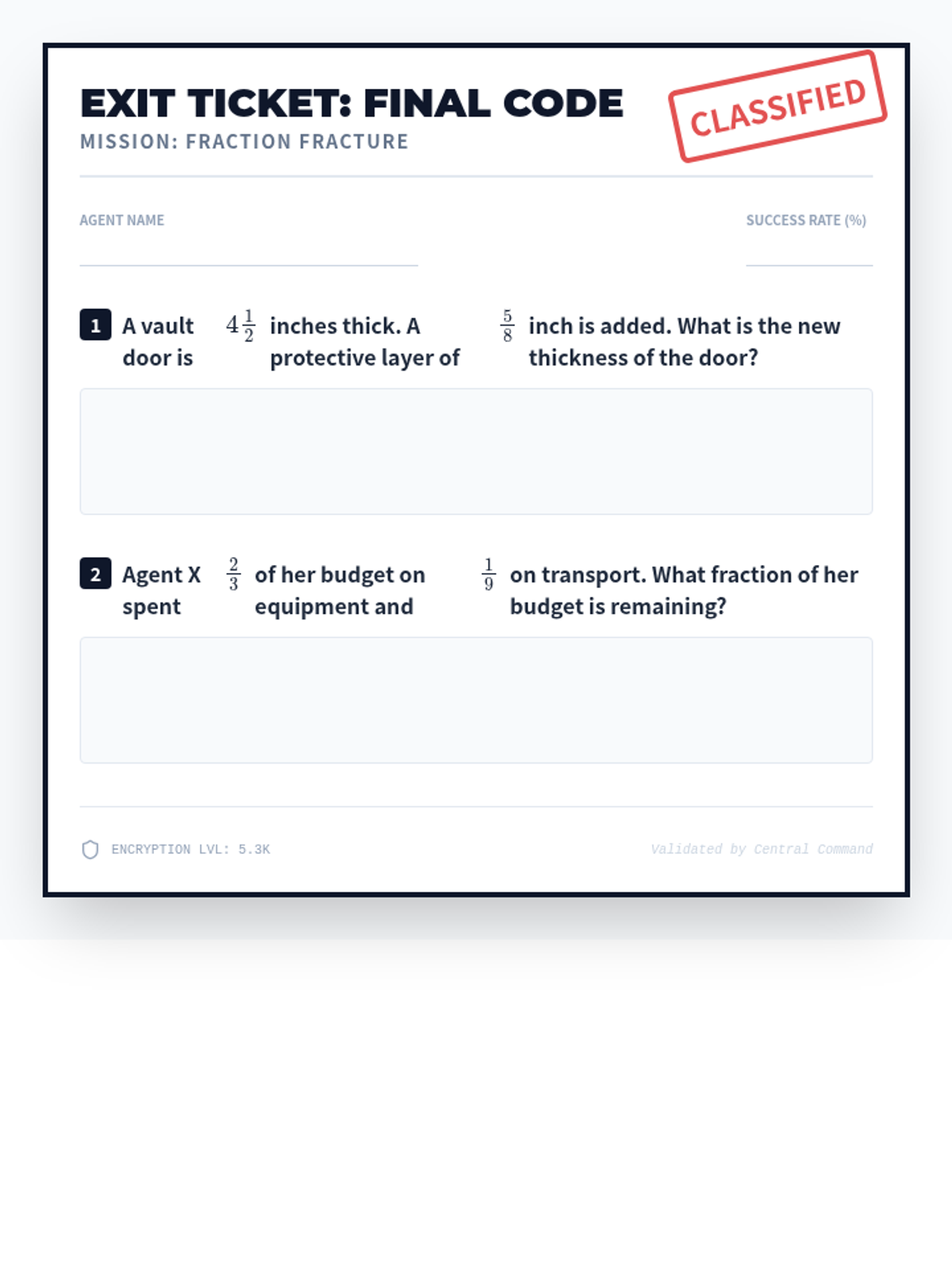
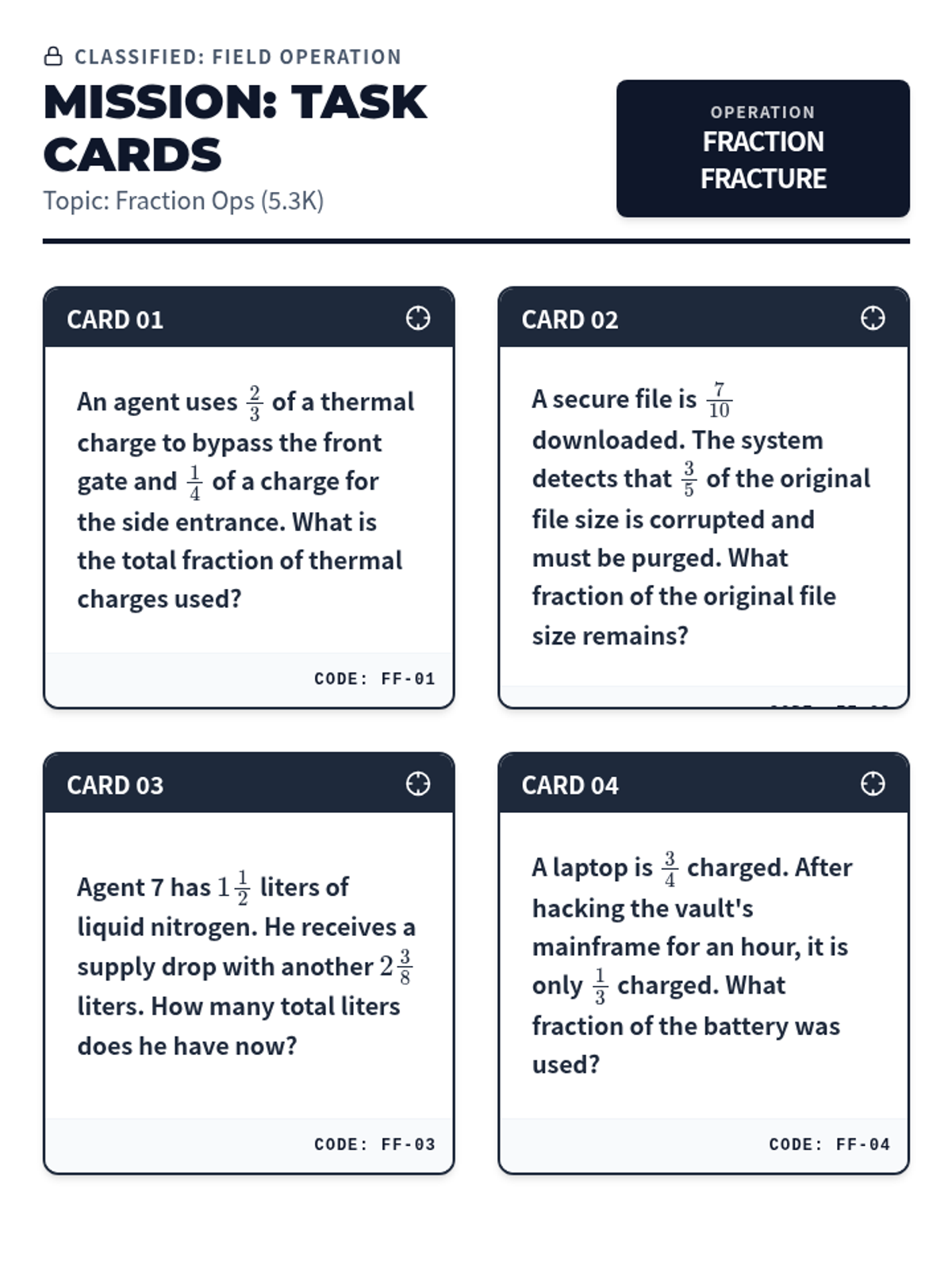
Focuses on adding and subtracting fractions with unequal denominators (5.3K) through lab-based word problems.
Solving for decimal quotients using the standard algorithm and estimation (5.3G).
Mastering decimal multiplication using place-value strategies and models (5.3E).
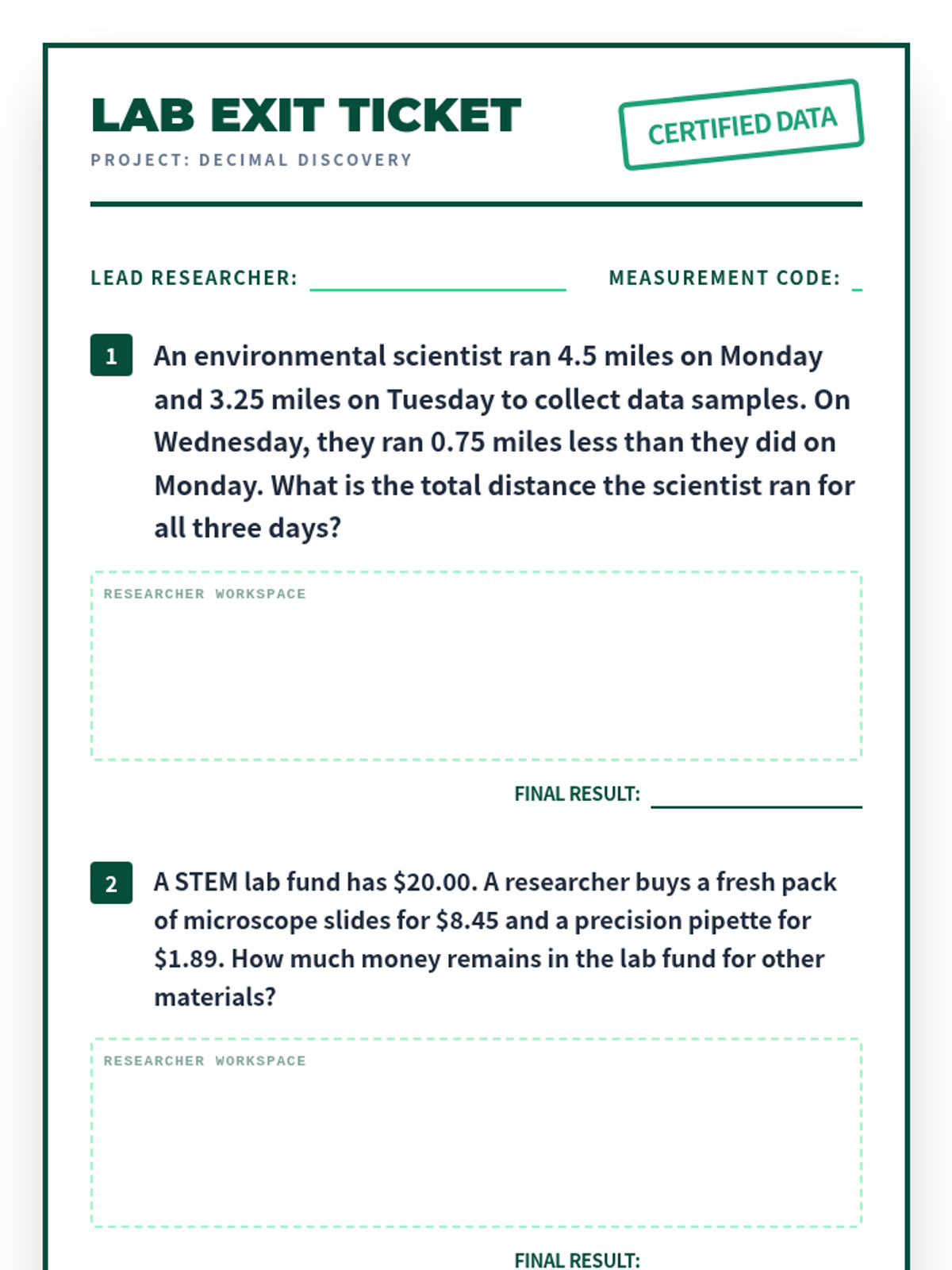
Deep dive into adding and subtracting decimals to the thousandths, including money applications (5.3K).
Focuses on adding and subtracting fractions with unequal denominators (5.3K) through word problems and modeling.
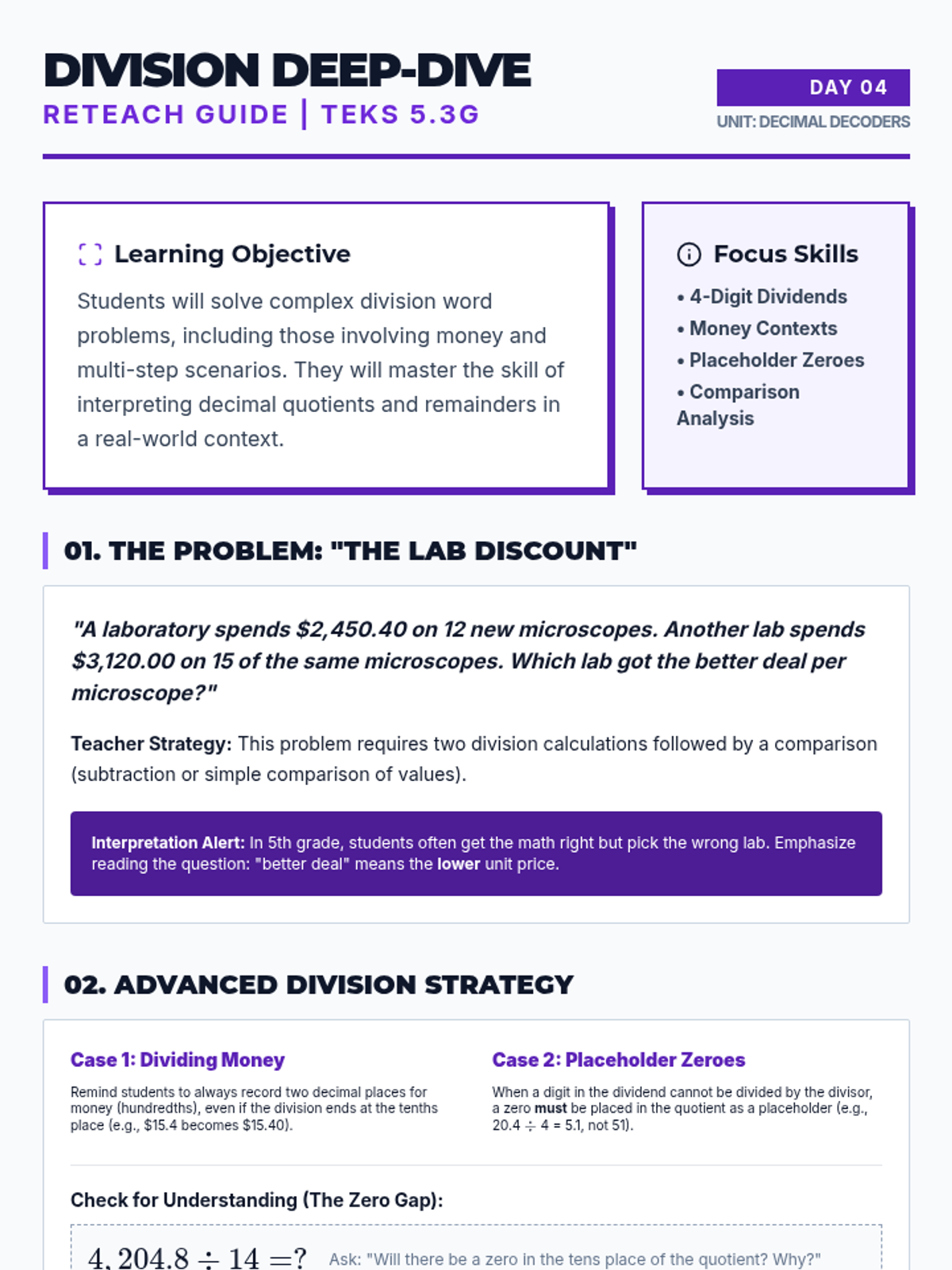
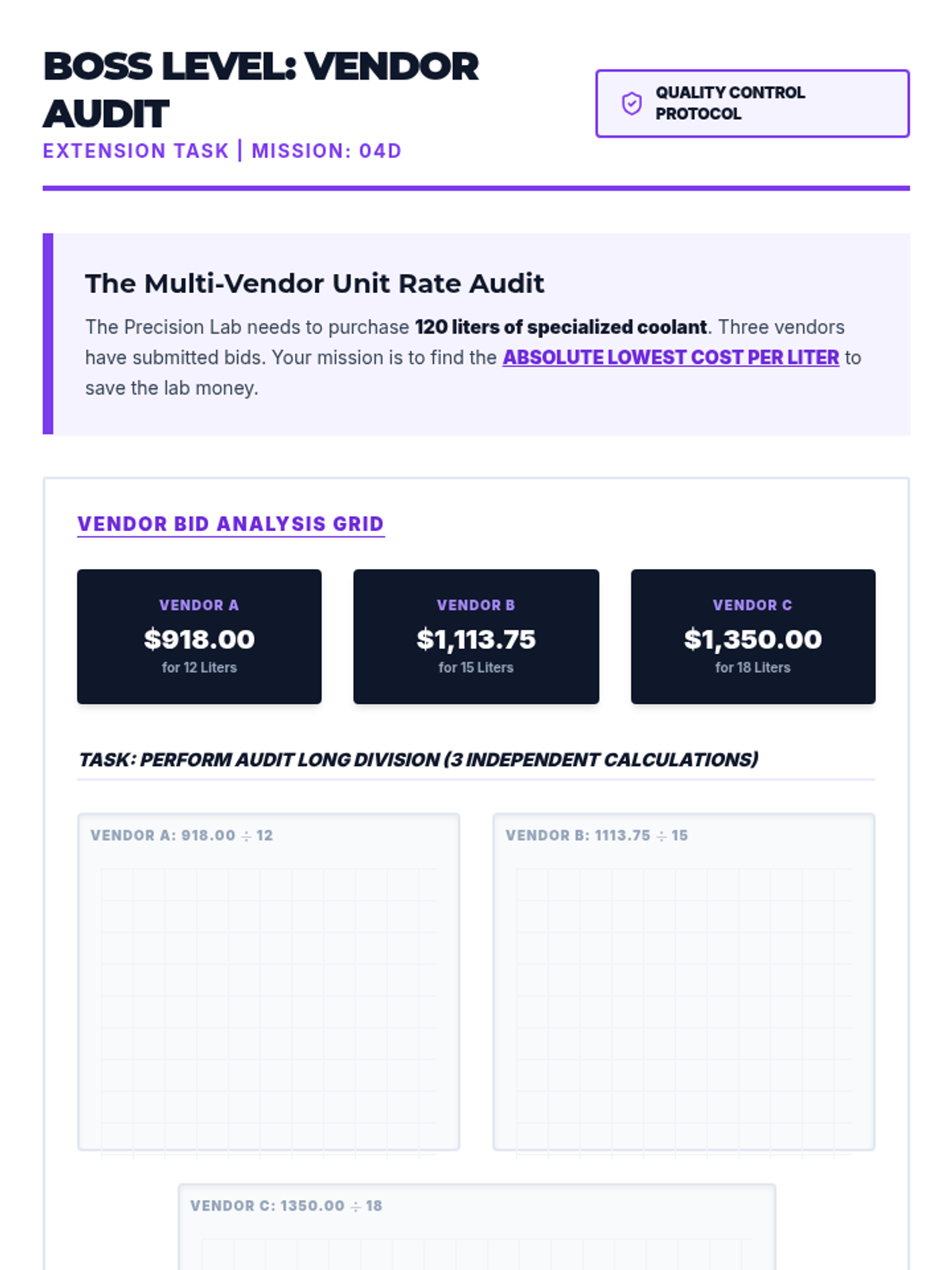
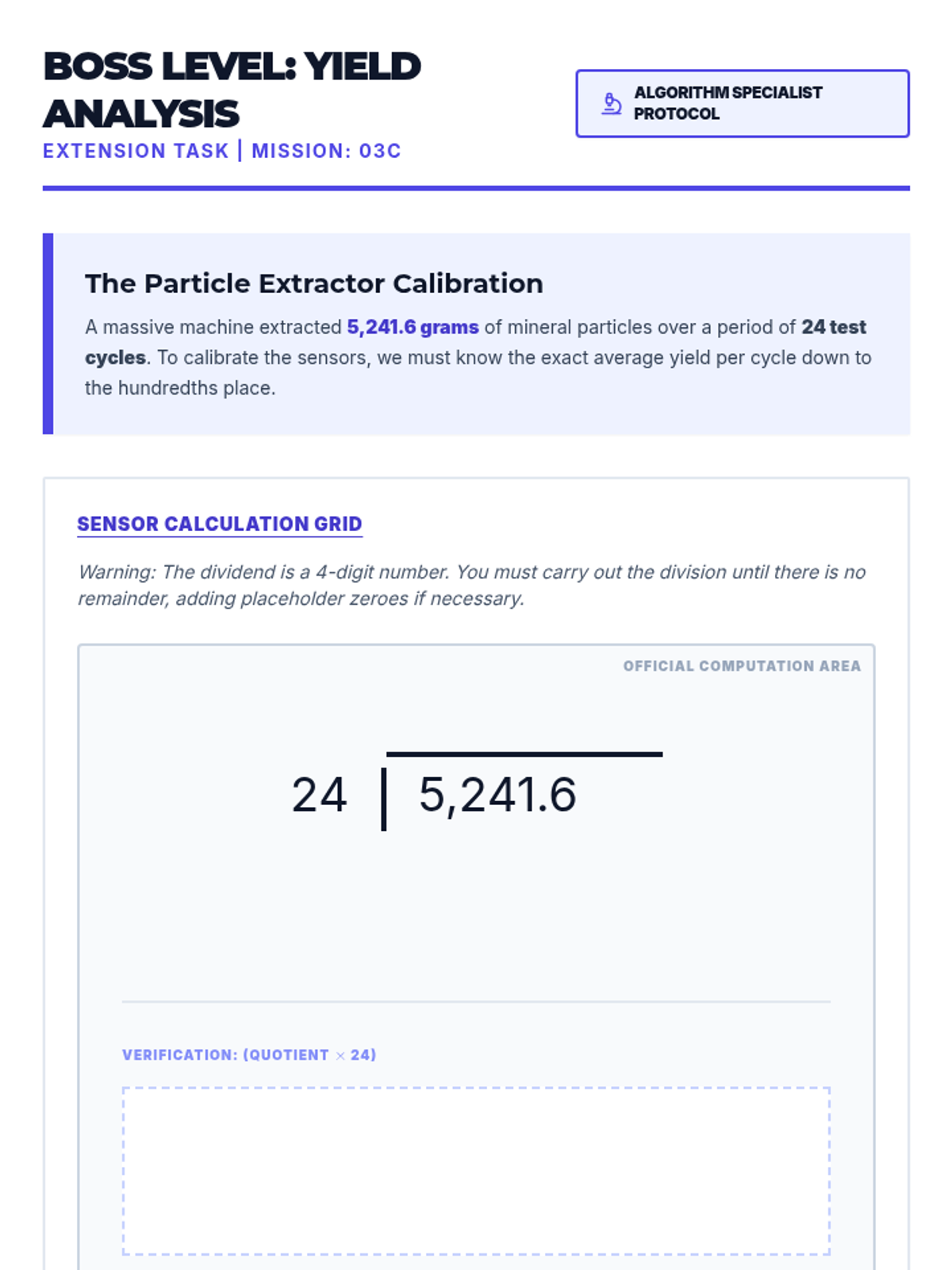
Challenges students to solve complex division word problems with 4-digit dividends and interpret quotients in real-world contexts, including money (TEKS 5.3G).
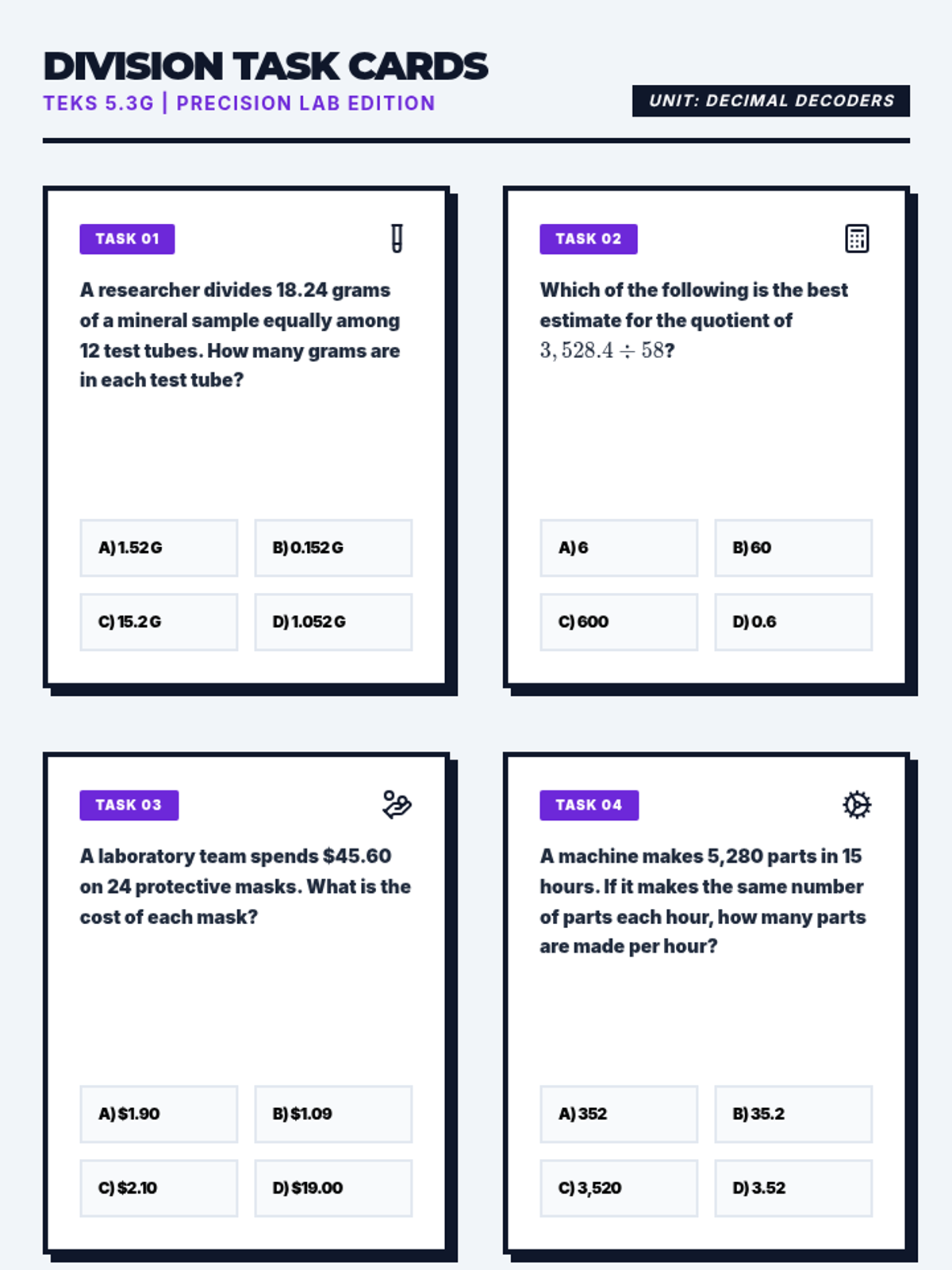
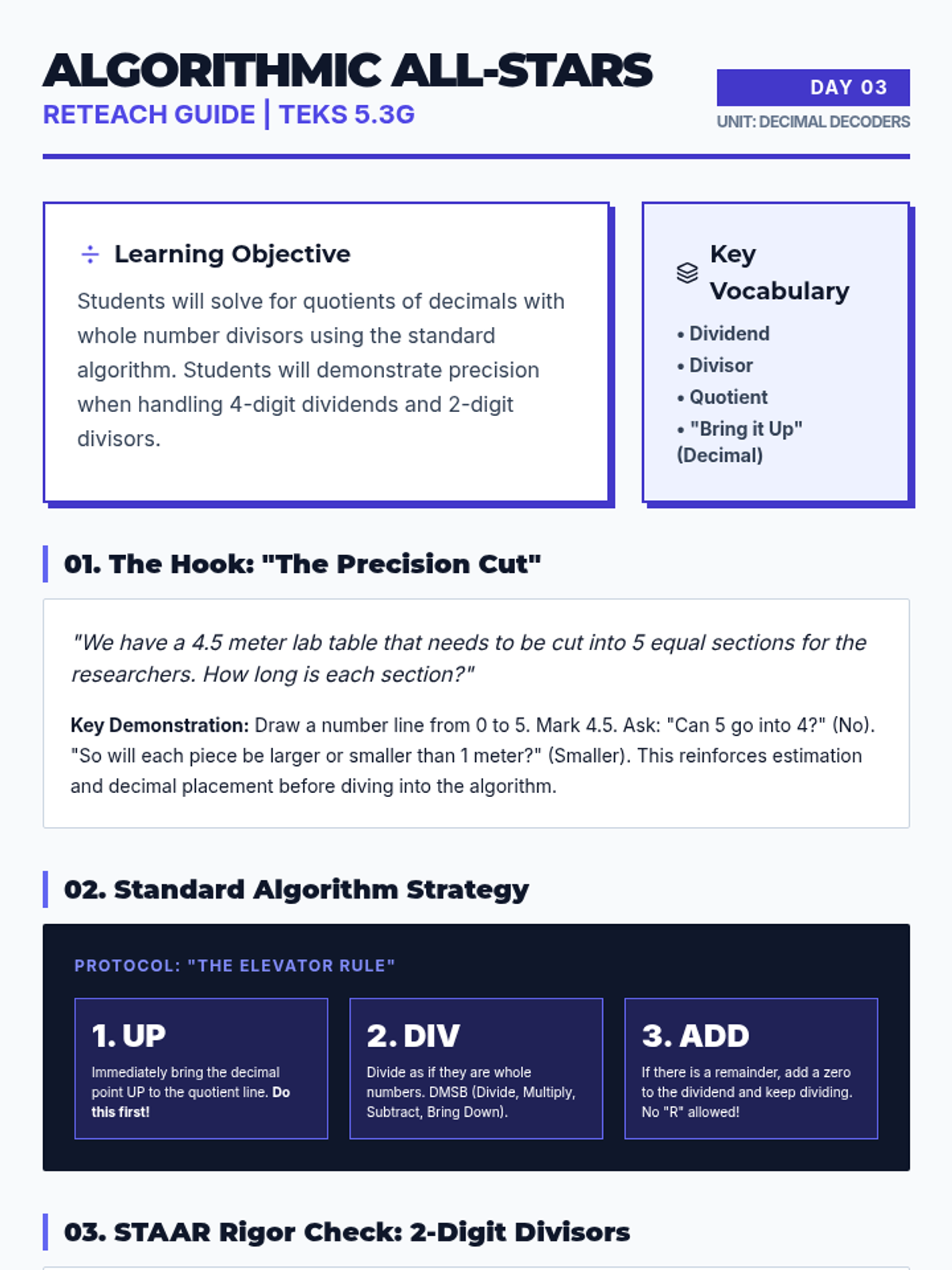
Focuses on the standard algorithm for dividing decimals with whole number divisors, including estimation and checking for reasonableness (TEKS 5.3G).
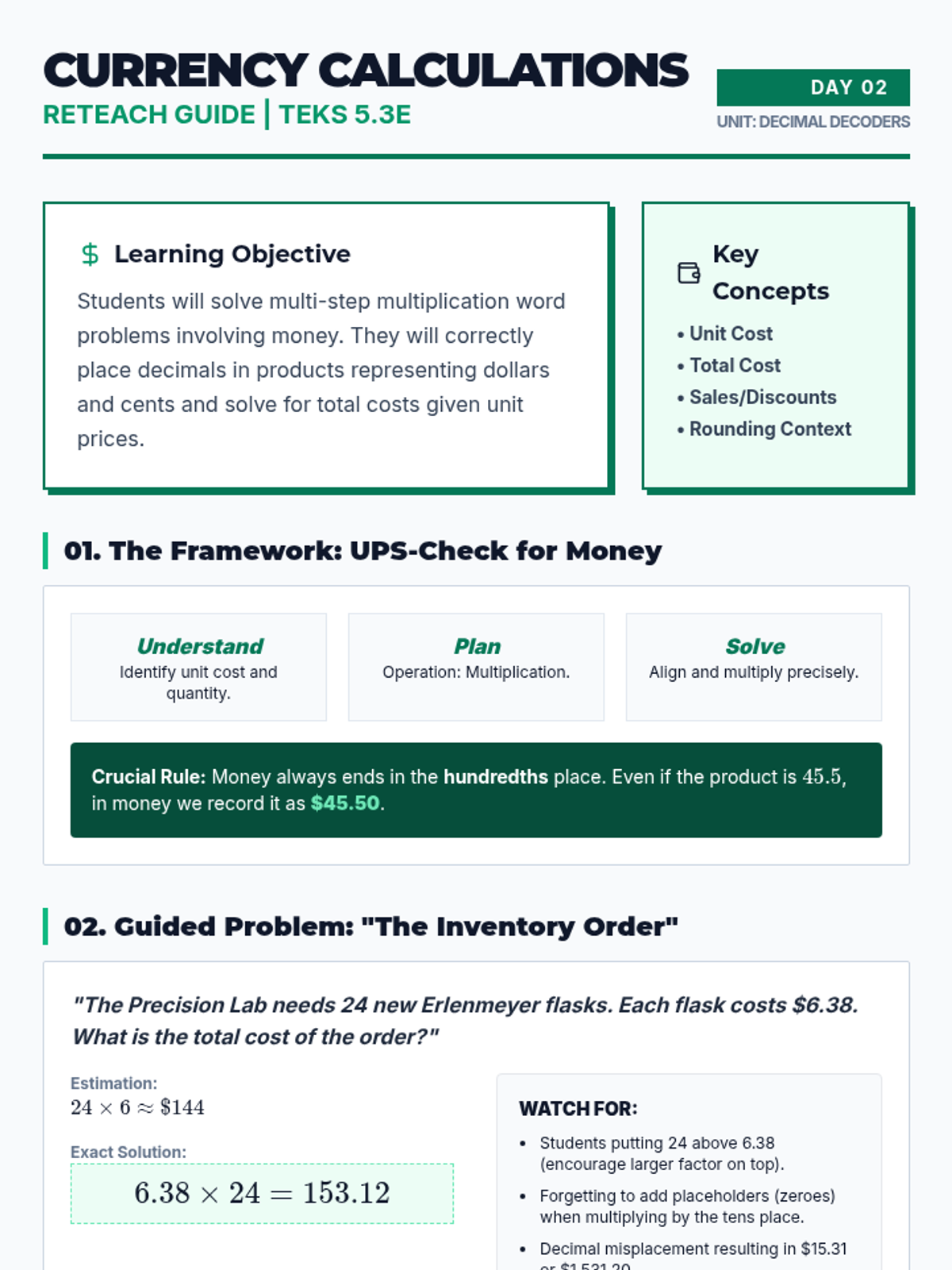
Applies decimal multiplication to multi-step word problems involving money and real-world costs, specifically targeting the rigor found in STAAR 5.3E.
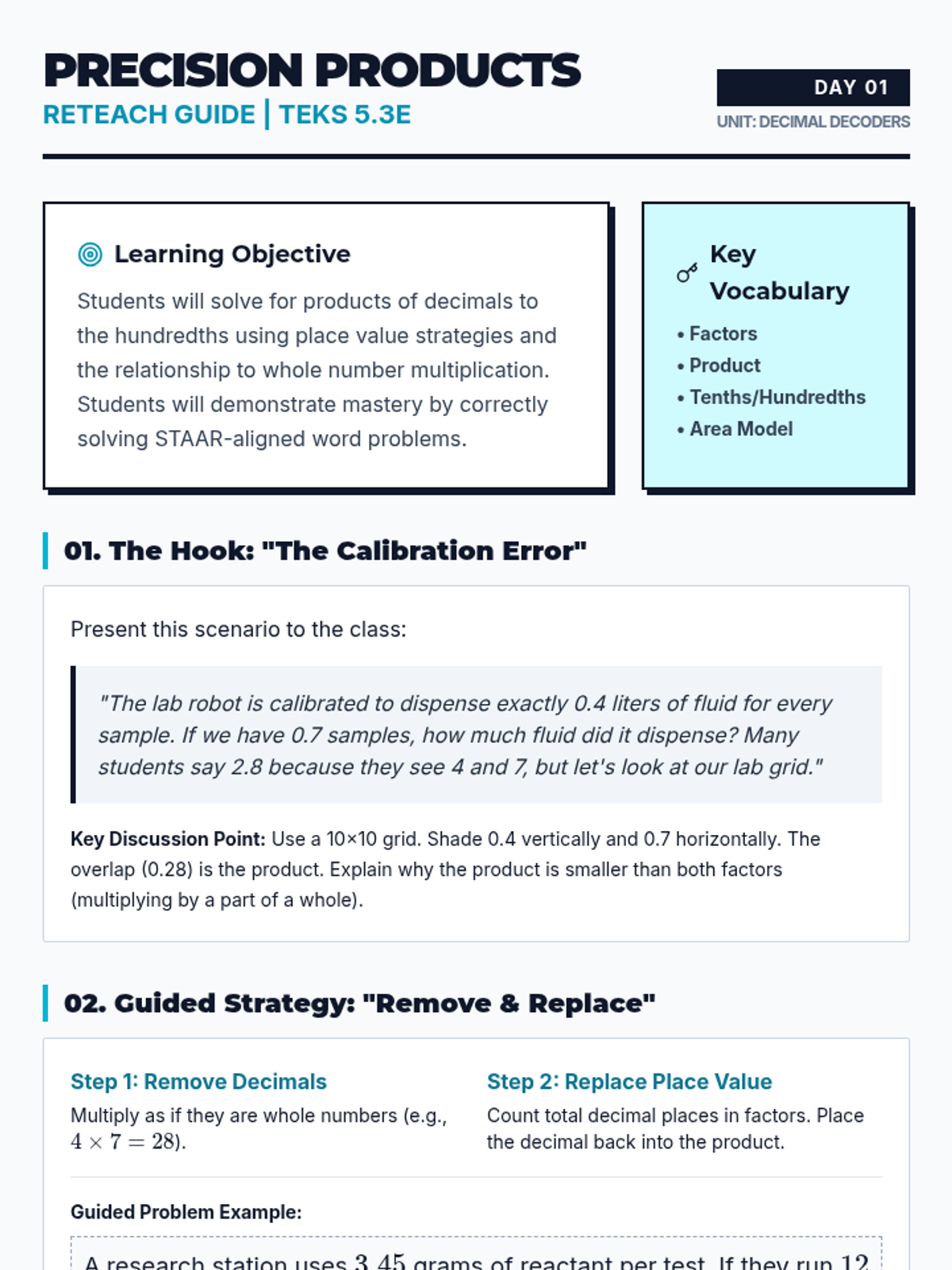
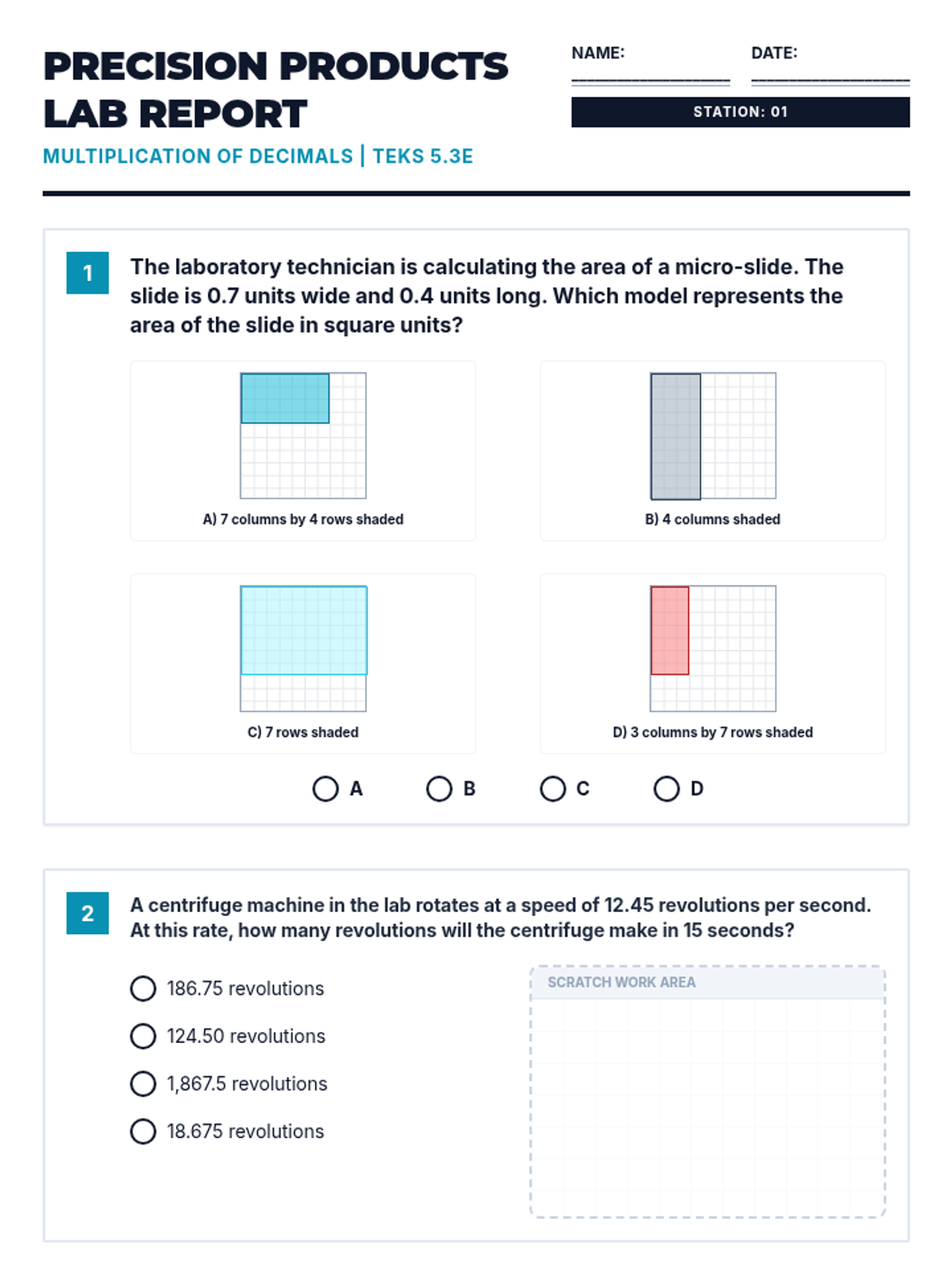
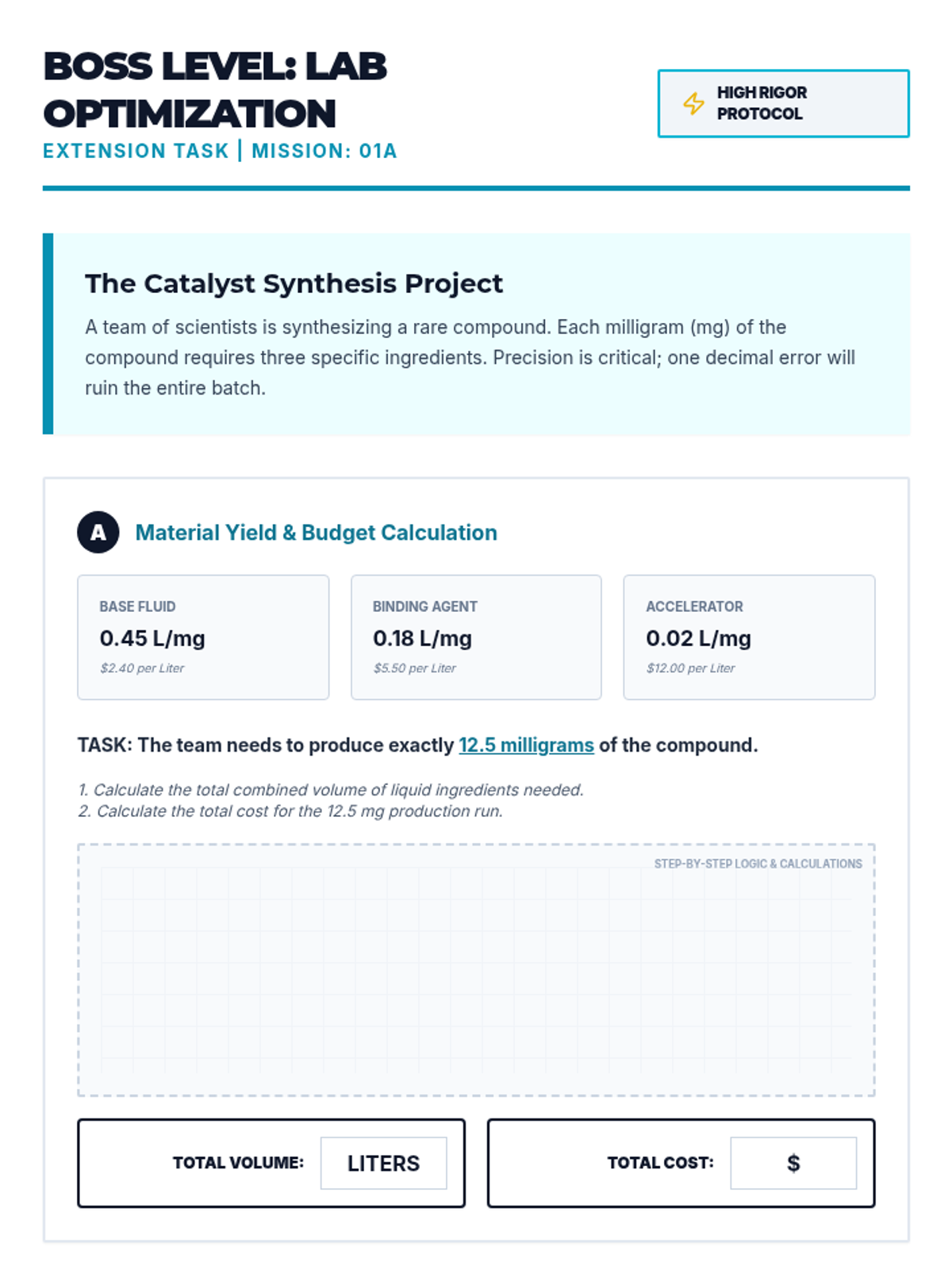
Focuses on multiplication of decimals using models and strategies based on place value, aligned to TEKS 5.3E. Students will use the Precision Lab theme to calculate experimental yields.
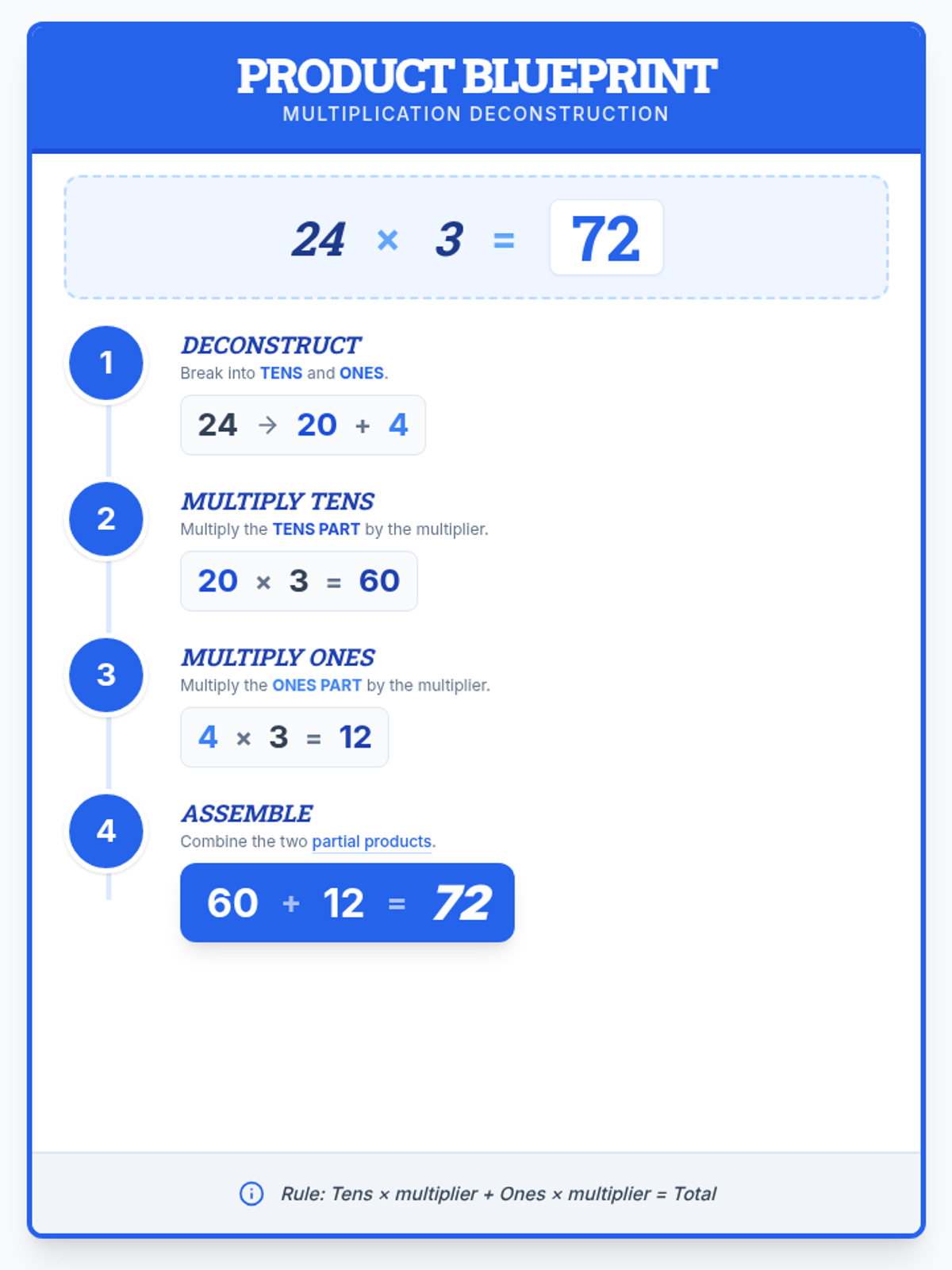
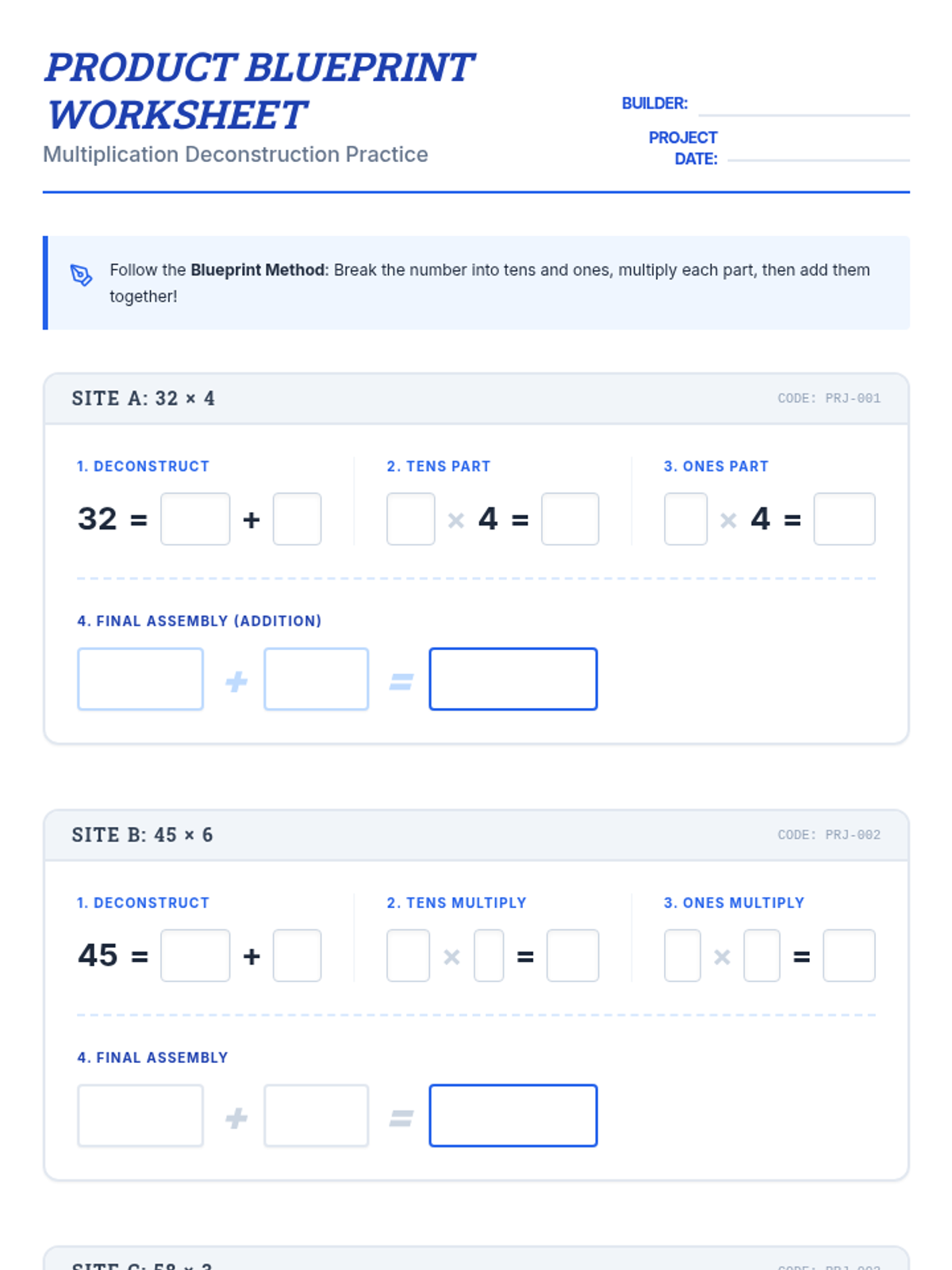
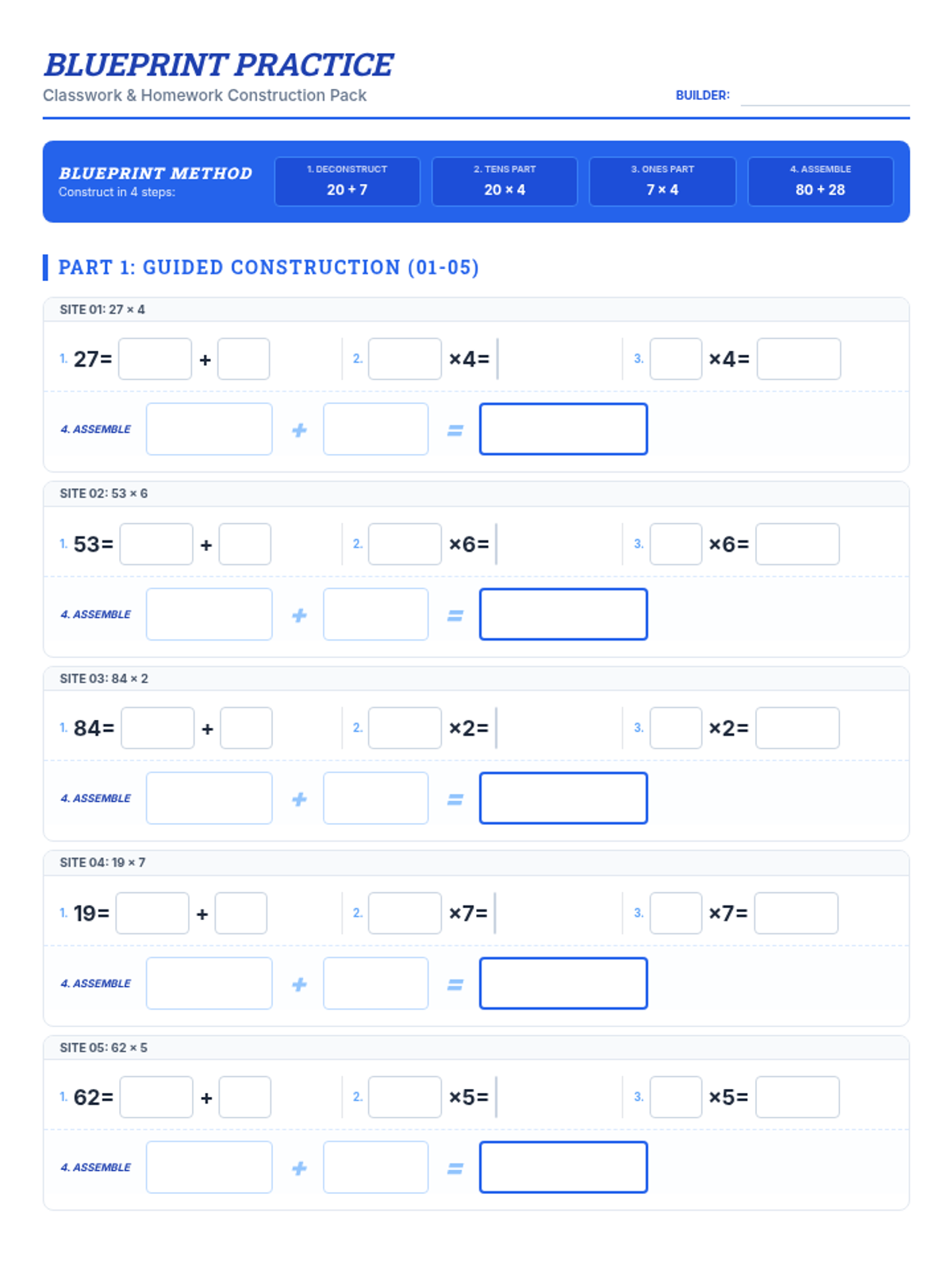
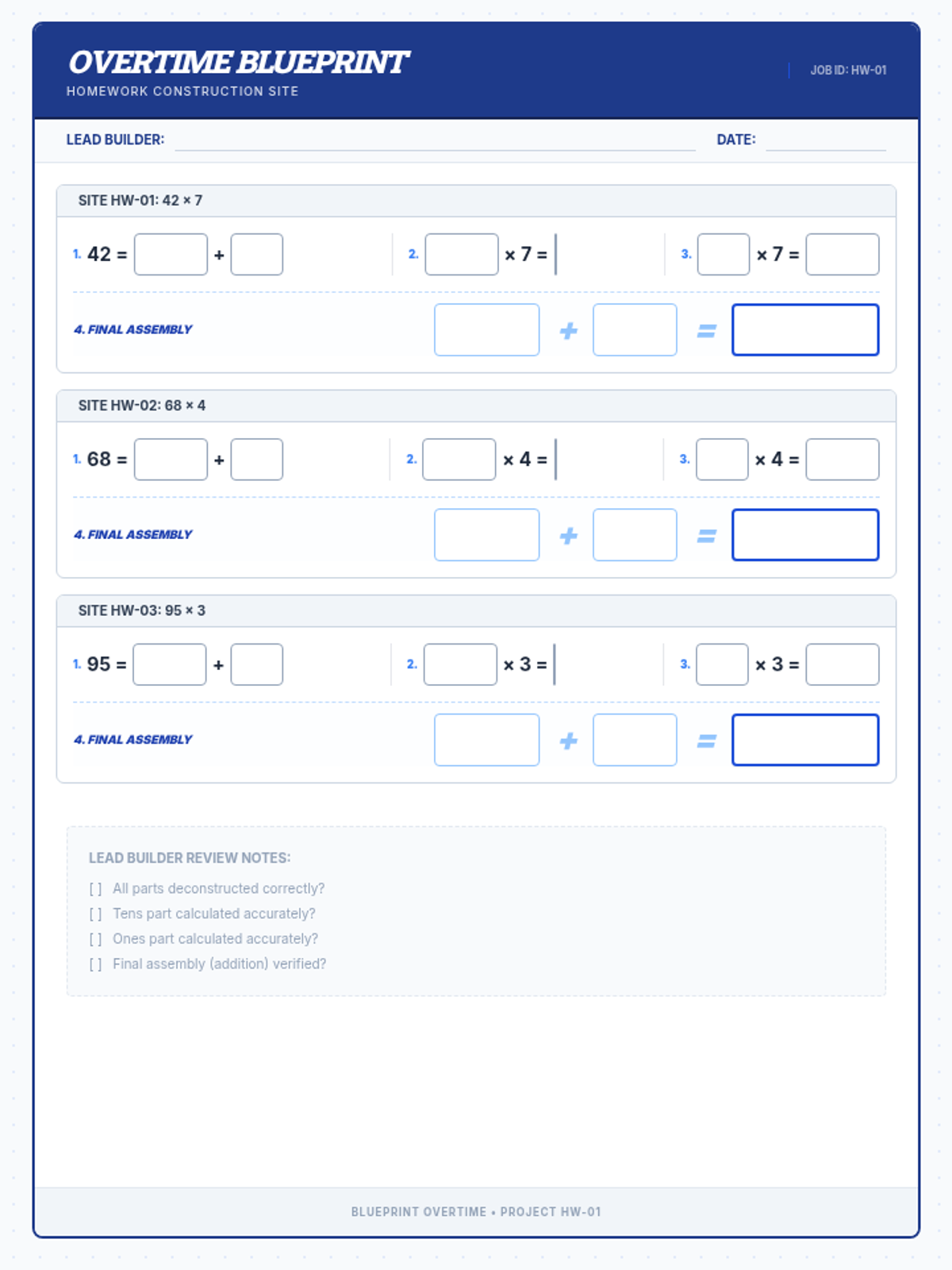
A lesson focused on the partial products method for multi-digit multiplication, using a 'blueprint' theme to help students visualize breaking down numbers into tens and ones.