Students explore the depths of C.S. Lewis's 'The Chronicles of Narnia', learning to identify and analyze allegory and symbolism. The lesson concludes with students applying their knowledge by designing their own allegorical story concepts.
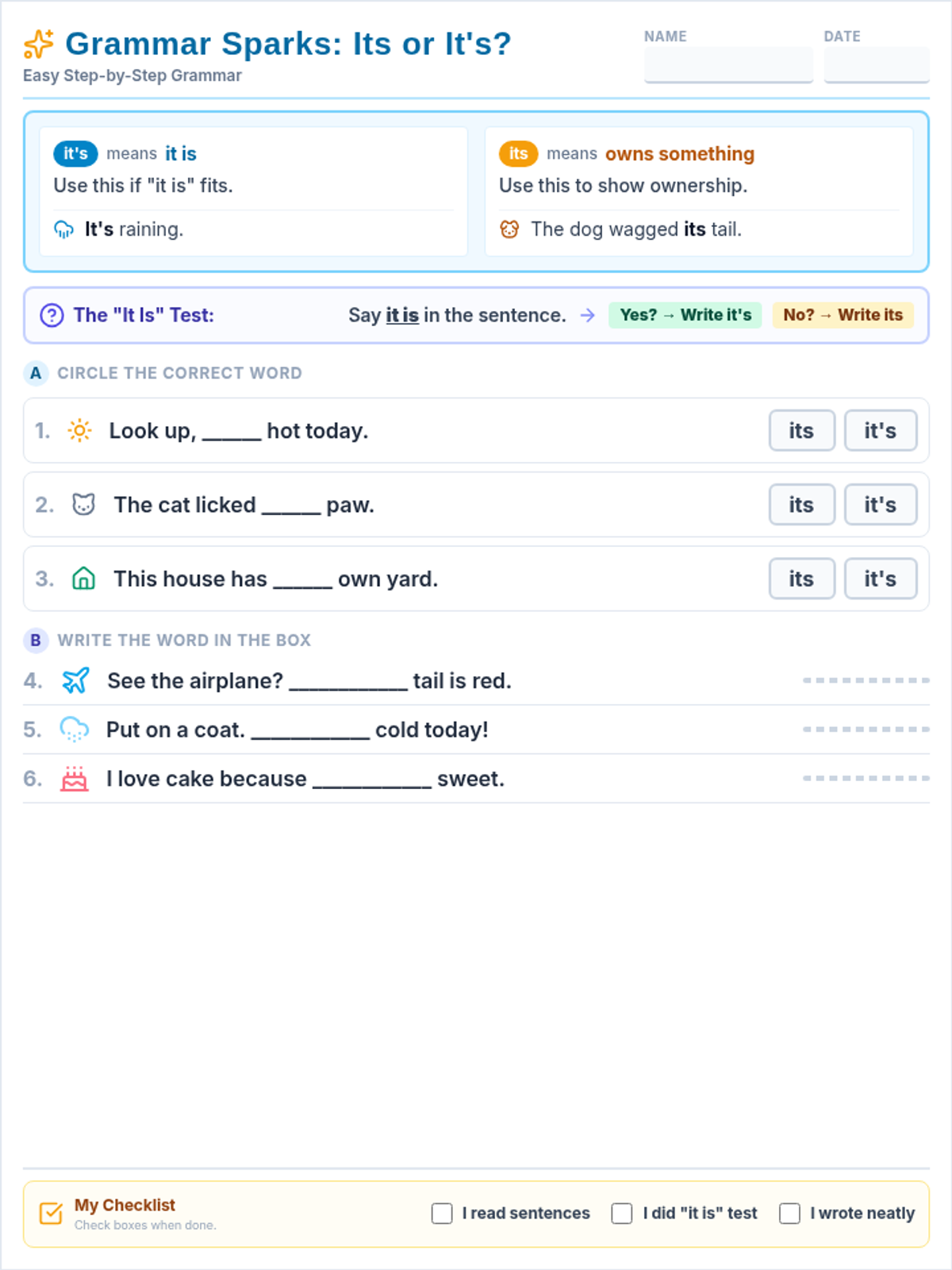
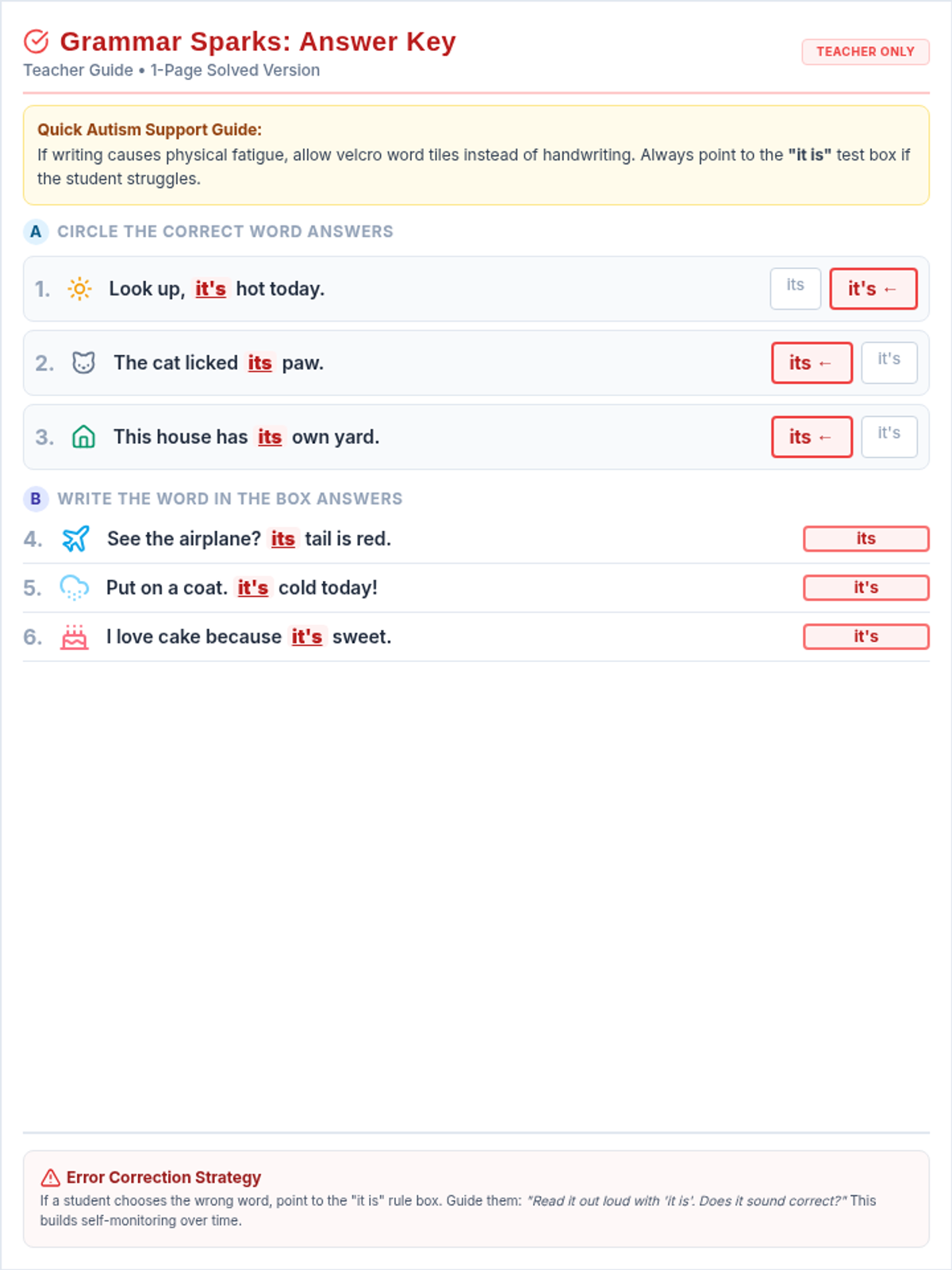
A highly structured grammar lesson focusing on the distinction between 'its' and 'it's', customized with visual icon supports, step-by-step rule scaffolding, and self-monitoring checklists for students who benefit from predictable layouts.
A comprehensive writing lesson focused on mastering introductions and conclusions for general essay writing. Students learn to build magnetic hooks, seamless bridges (transitions), and lasting final impressions using structural drafting formulas.
A high-interest persuasive writing lesson where students analyze the impact of technology on society, select a stance on topics like social media limits or video game benefits, and construct a structured persuasive argument.
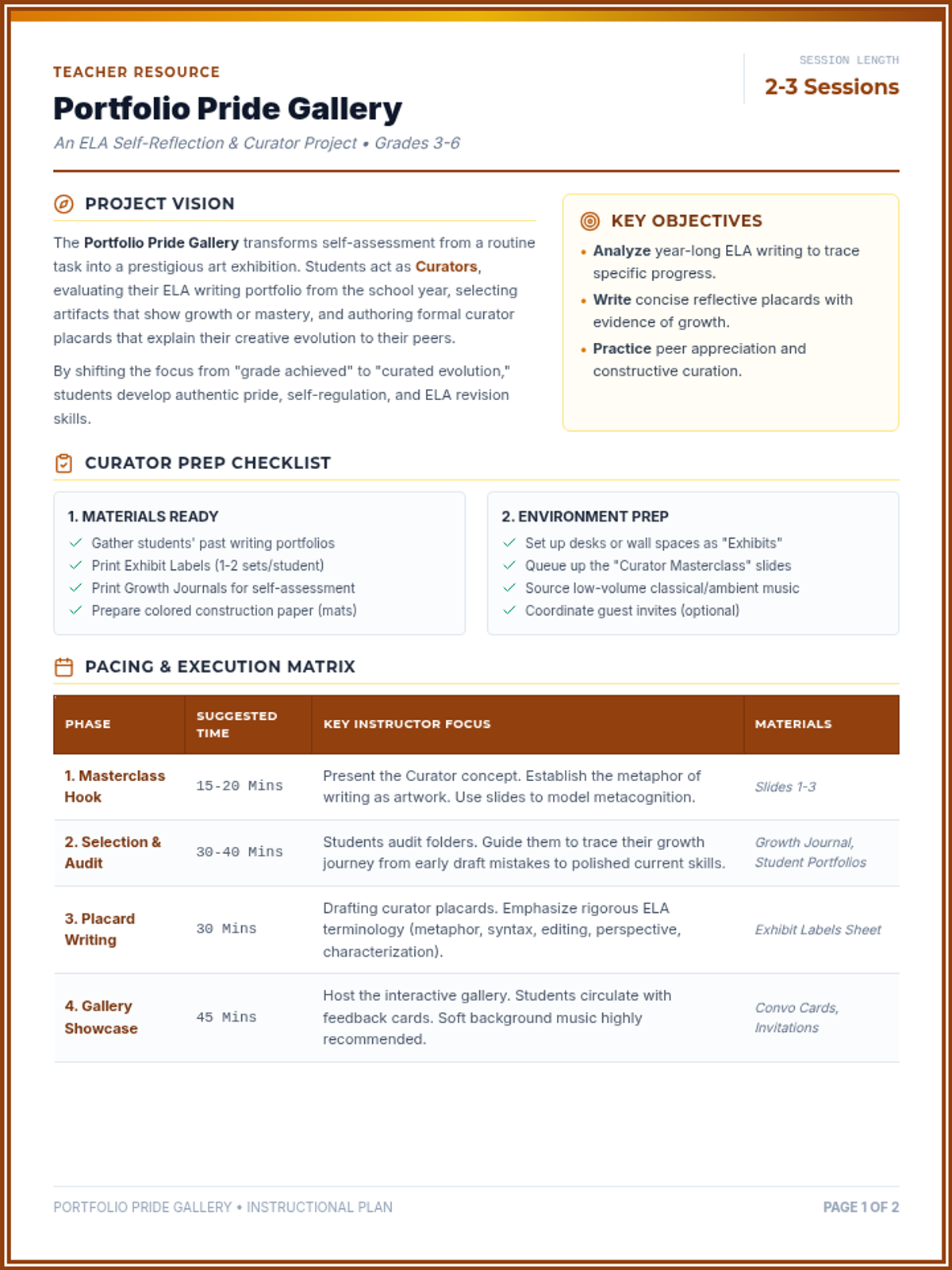
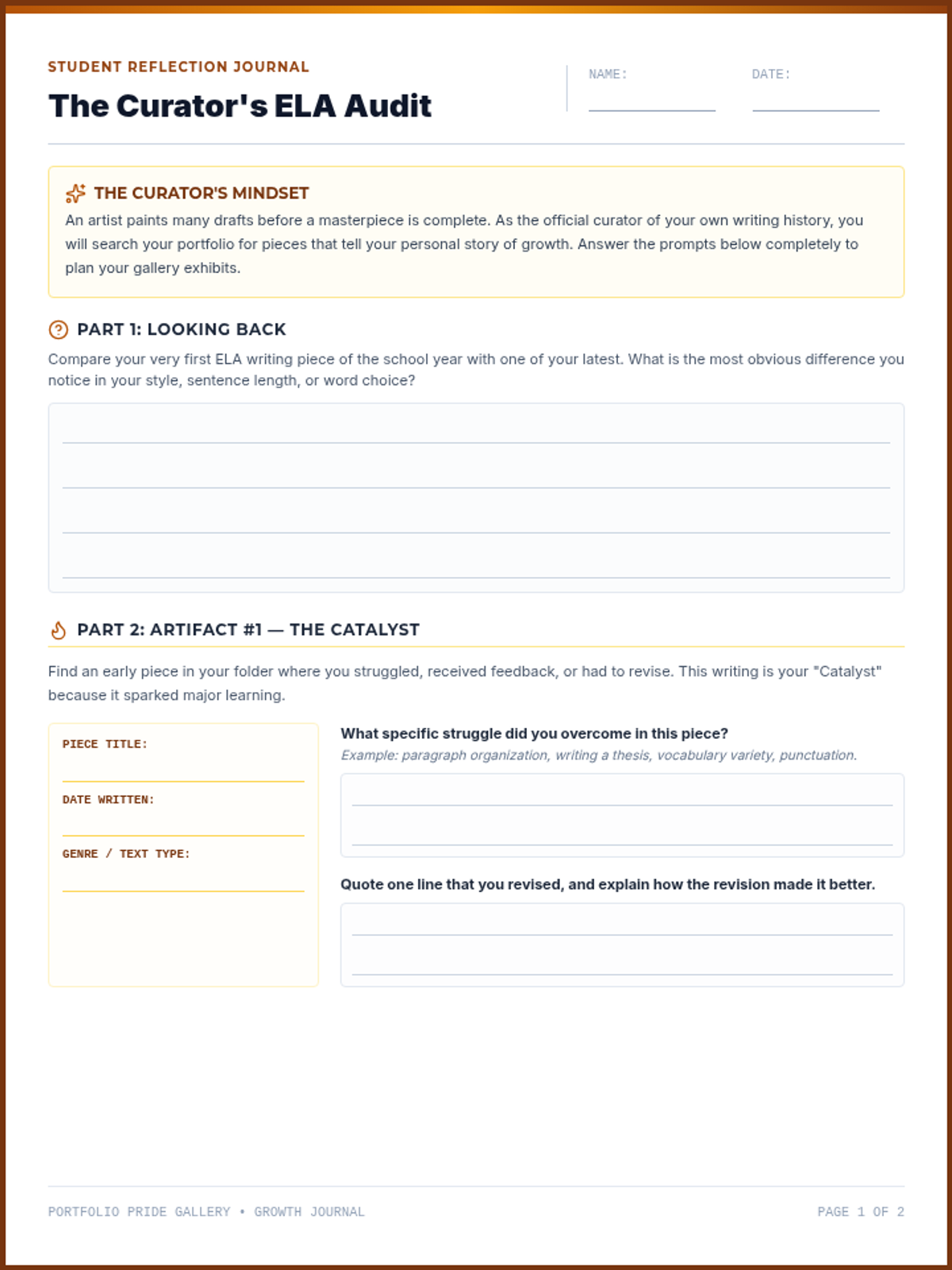
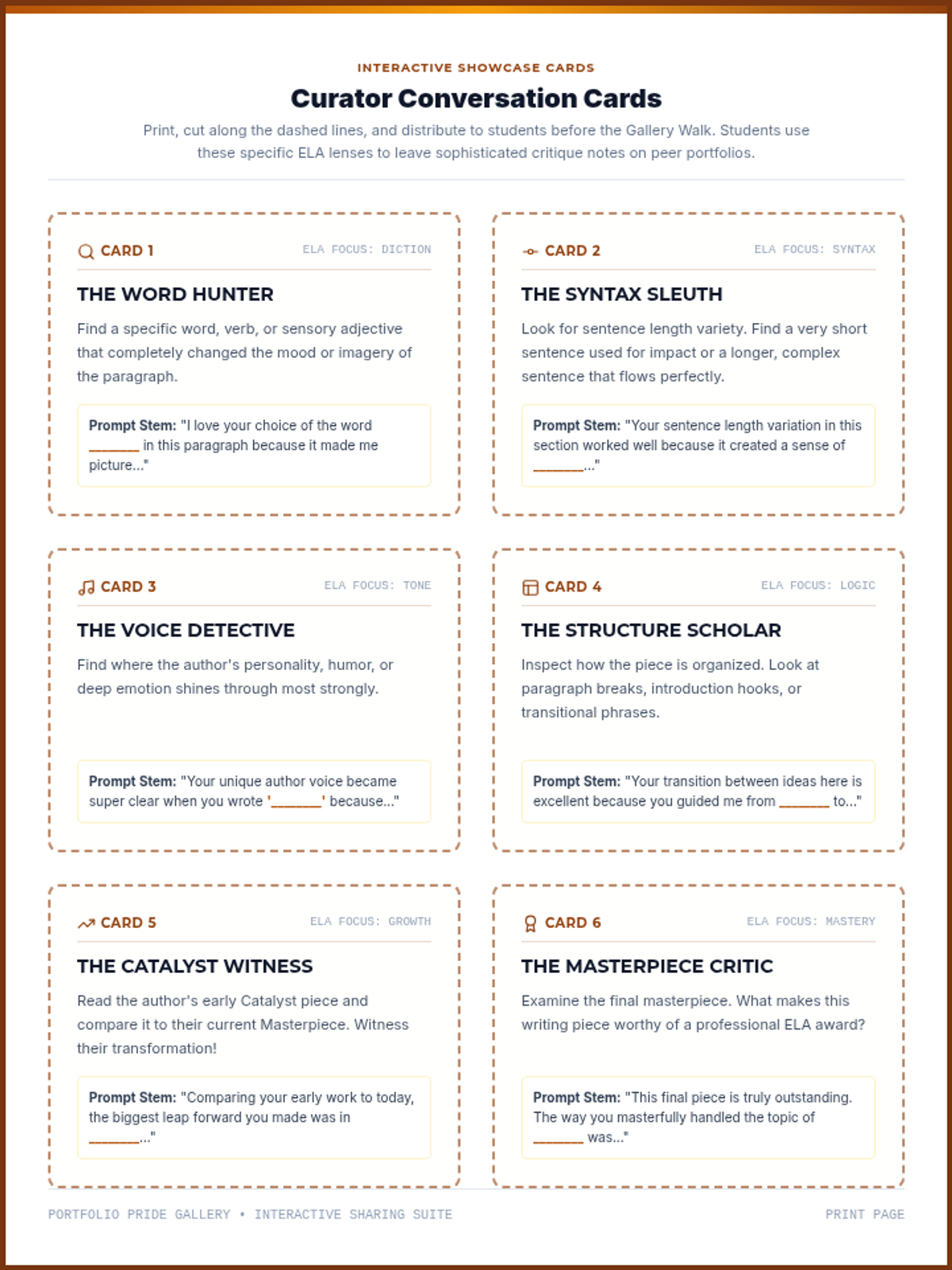
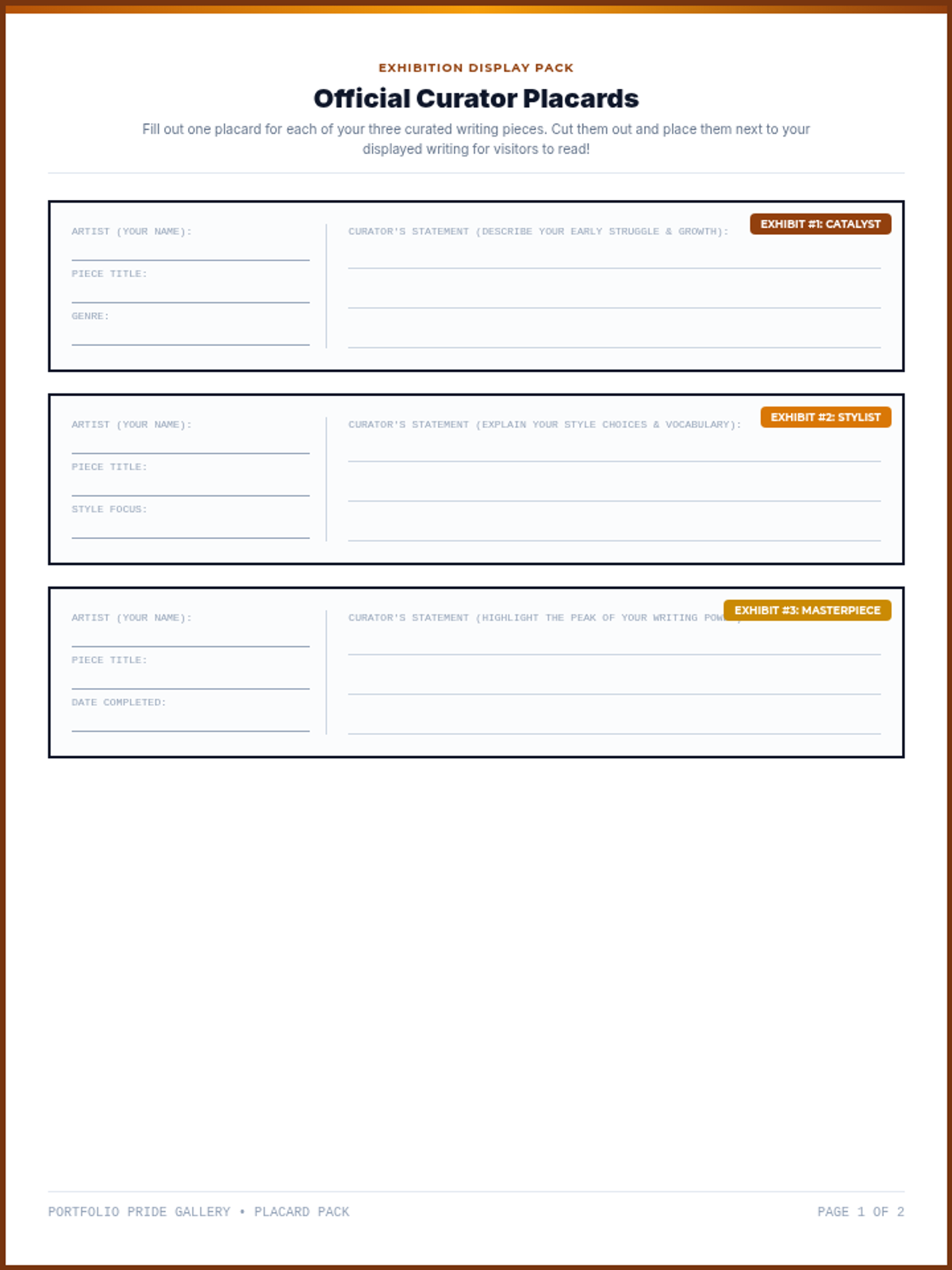
An ELA and self-reflection project where 3rd-6th grade students curate their year-long academic growth, select their best writing, and design an interactive art-gallery-style showcase of their progress.
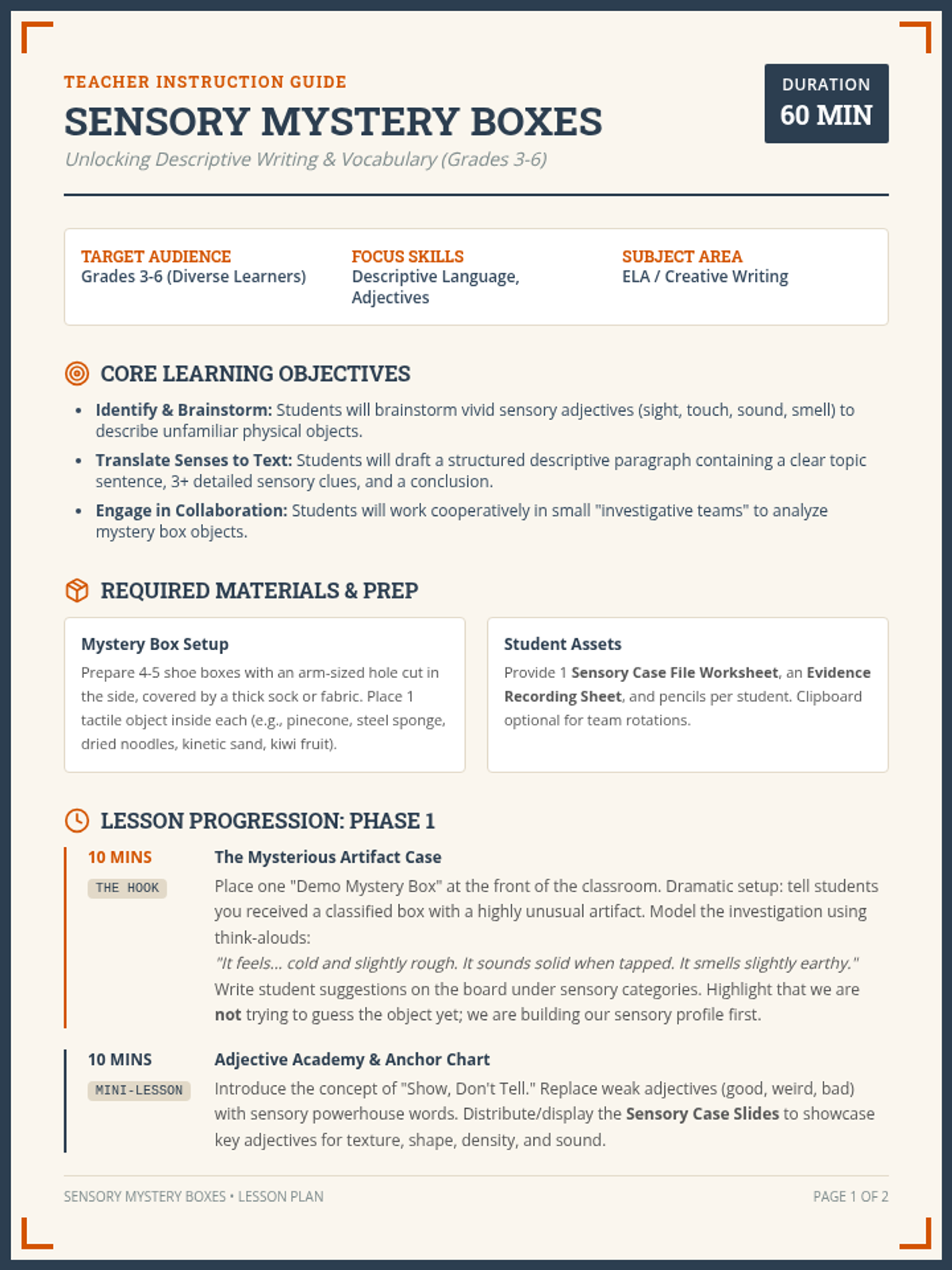
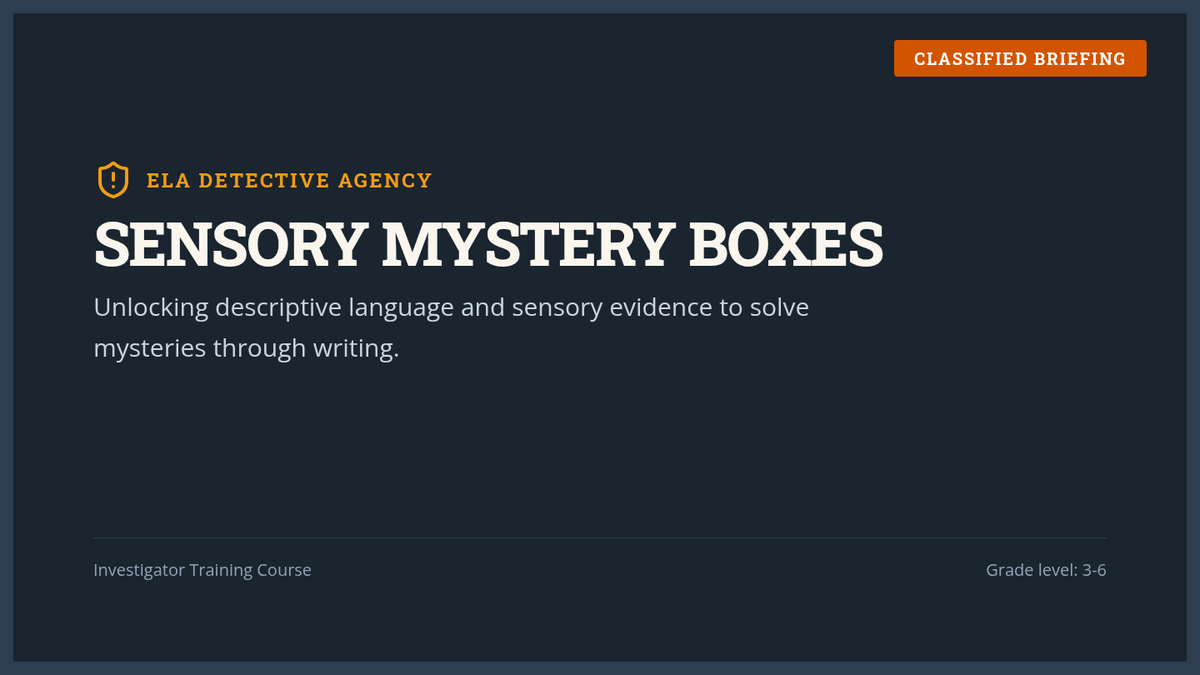
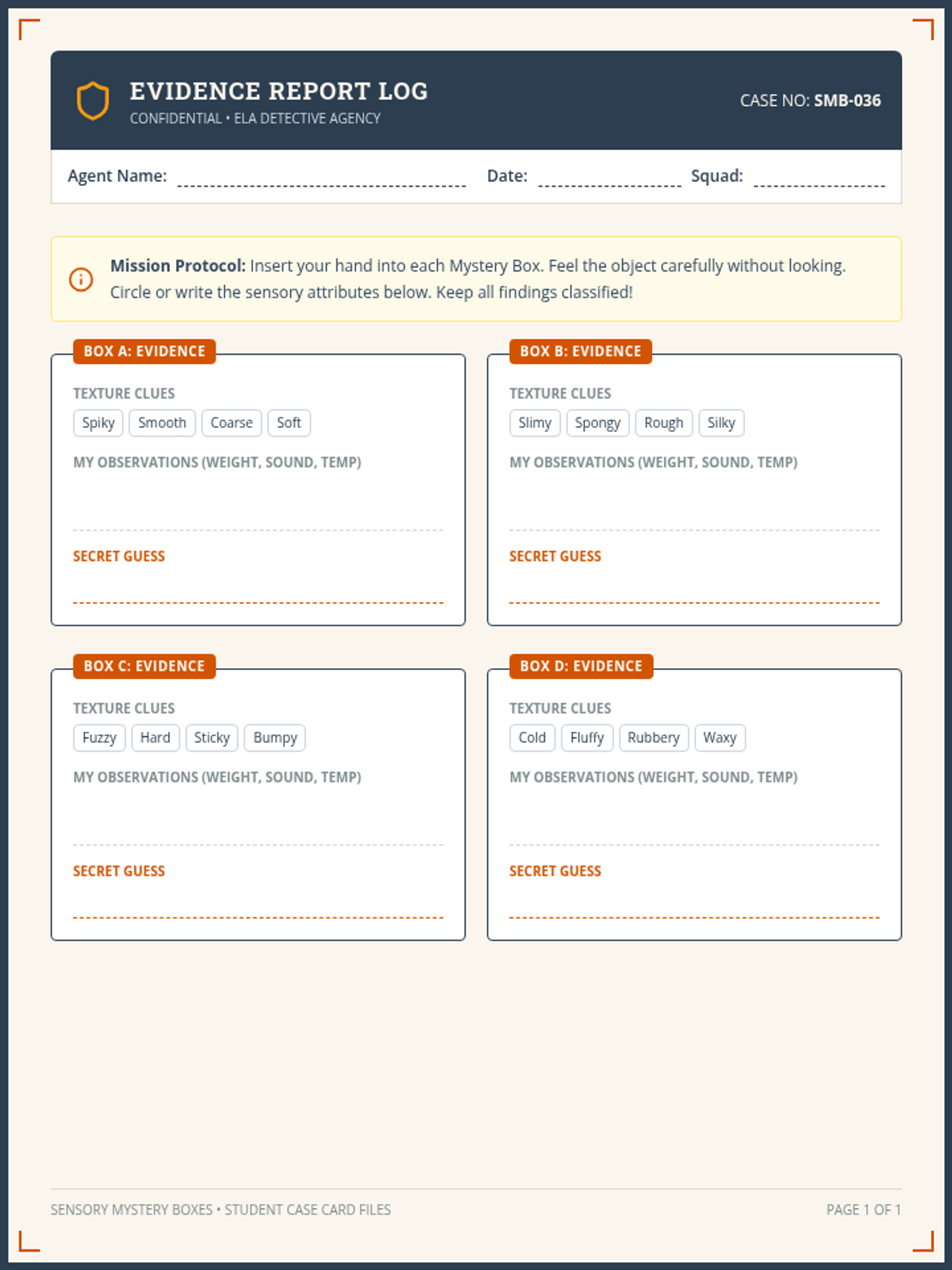
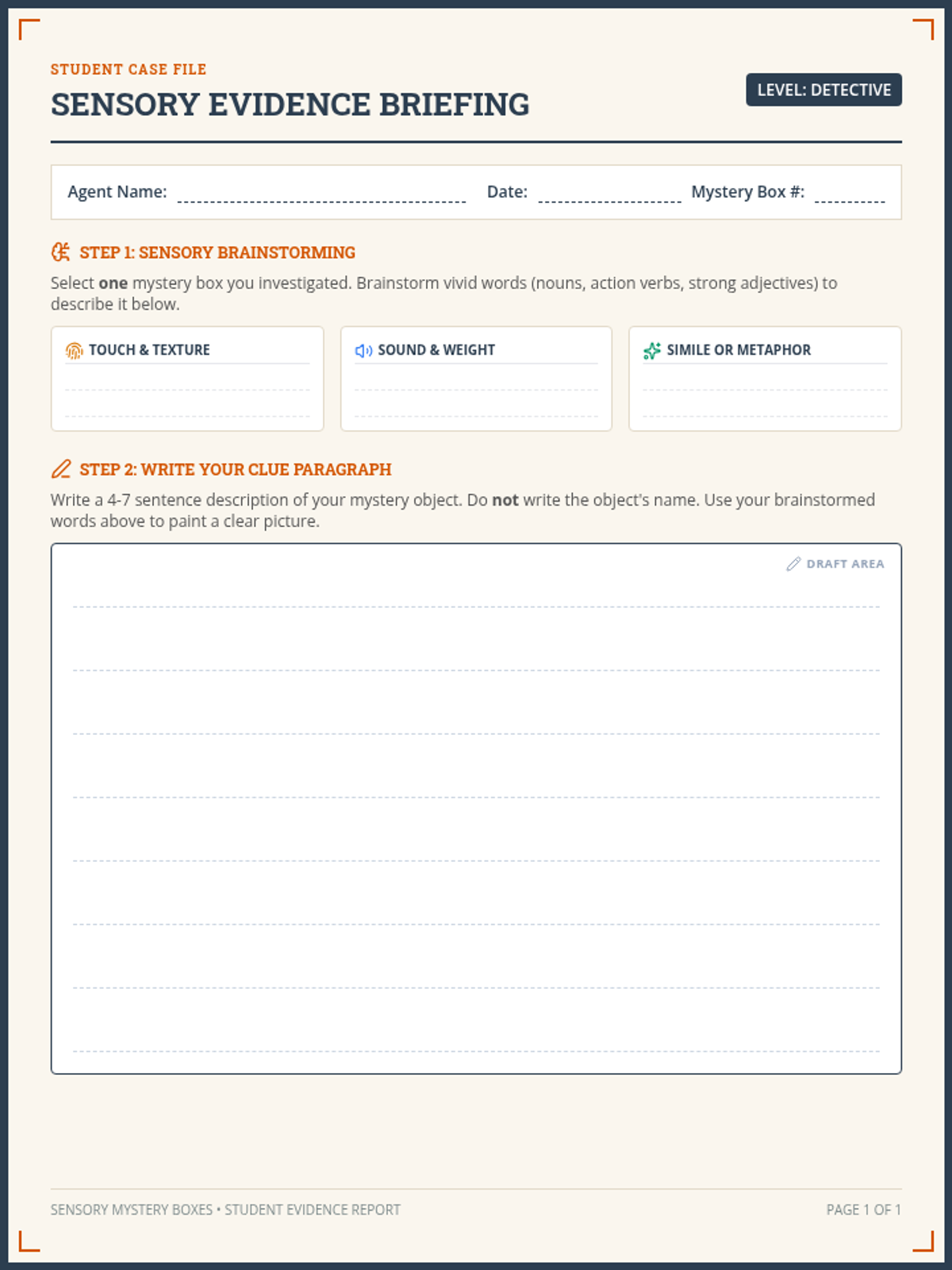
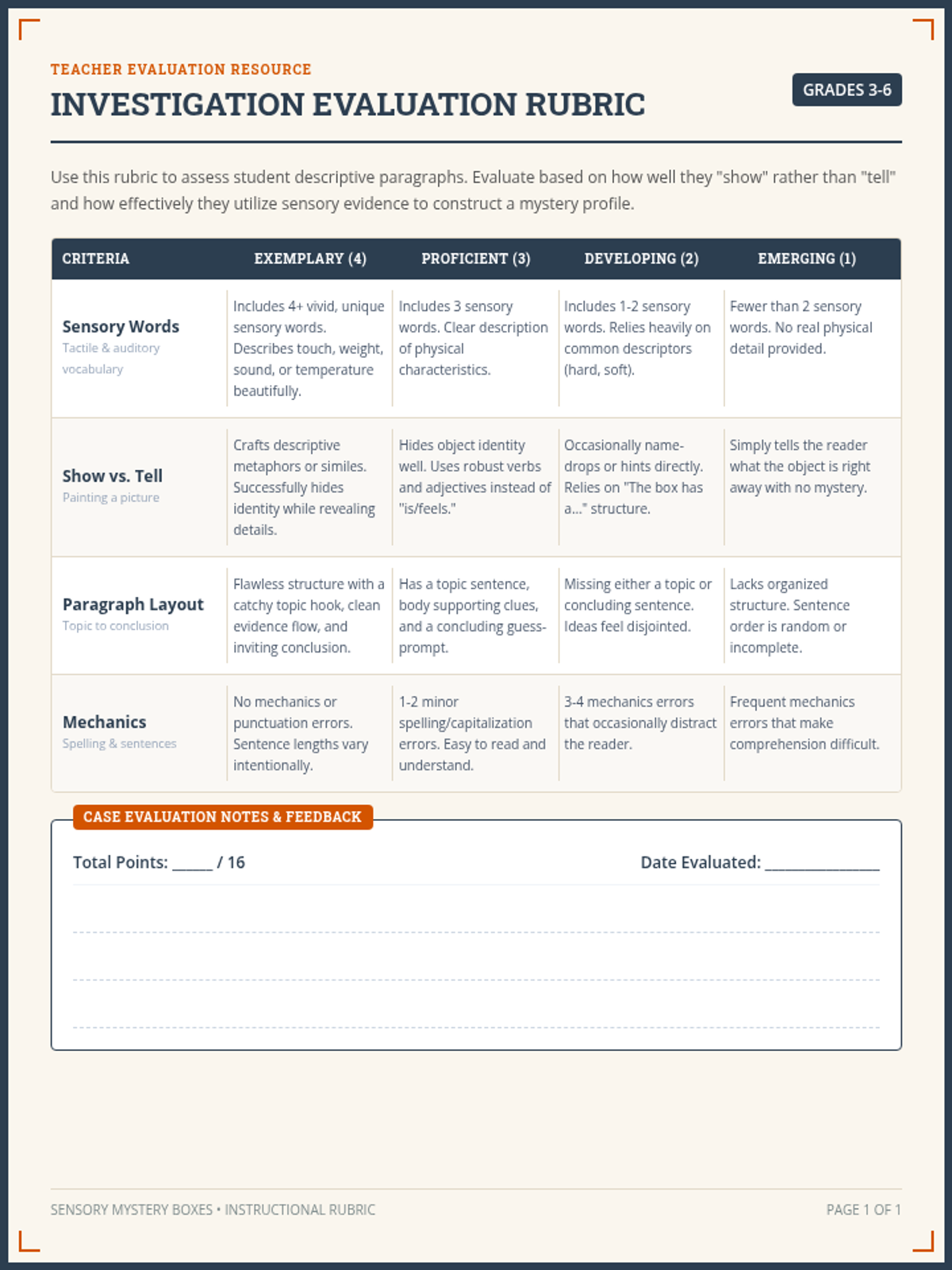
An immersive, multi-sensory ELA lesson designed for grades 3-6 to unlock descriptive writing. Students explore mystery tactile objects, build sensory vocabulary, and compose descriptive paragraphs.
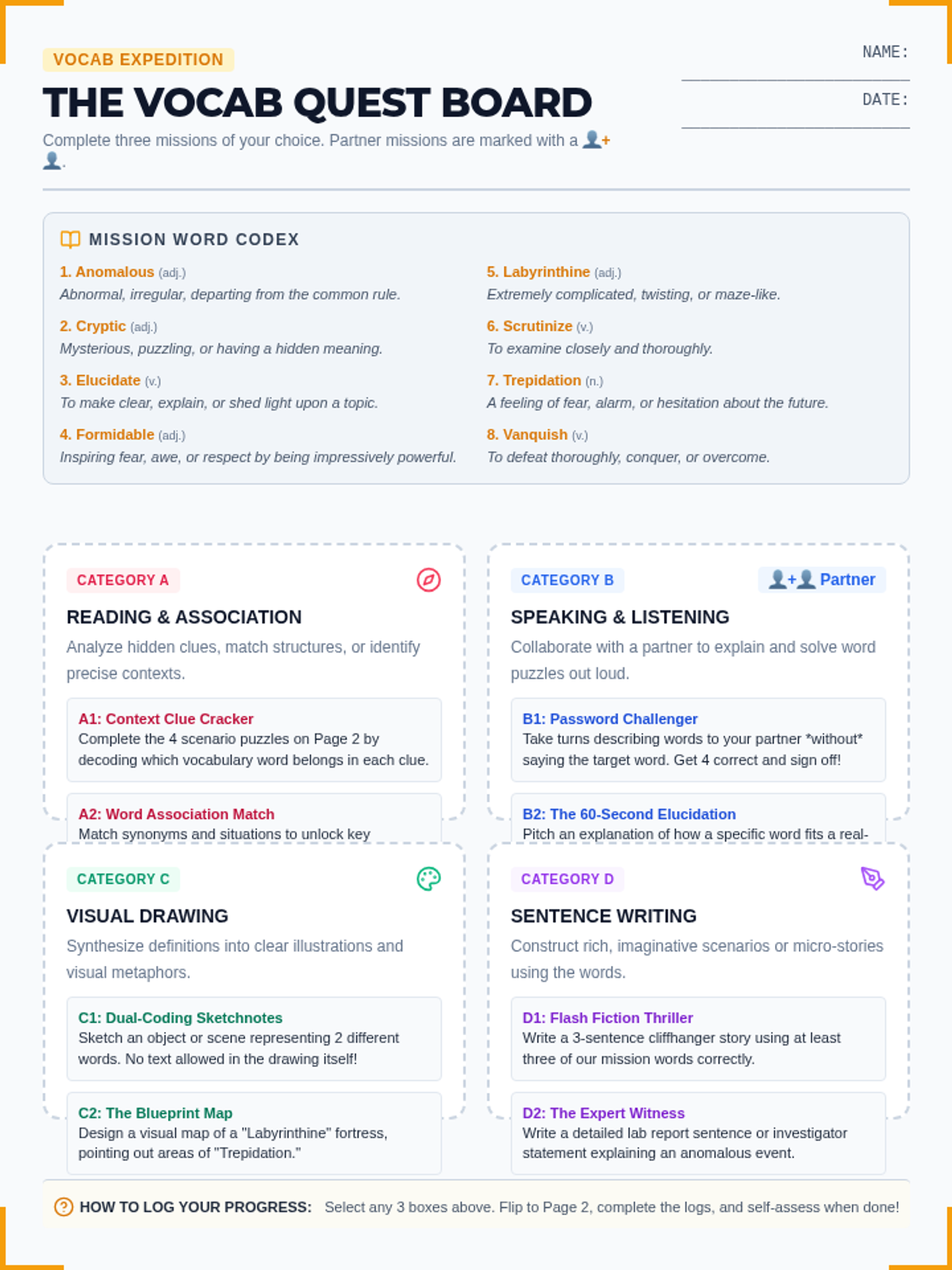
A vocabulary review lesson utilizing a thematic Choice Board Matrix, focusing on critical thinking, collaborative partner speaking, reading comprehension, visual sketching, and creative writing.
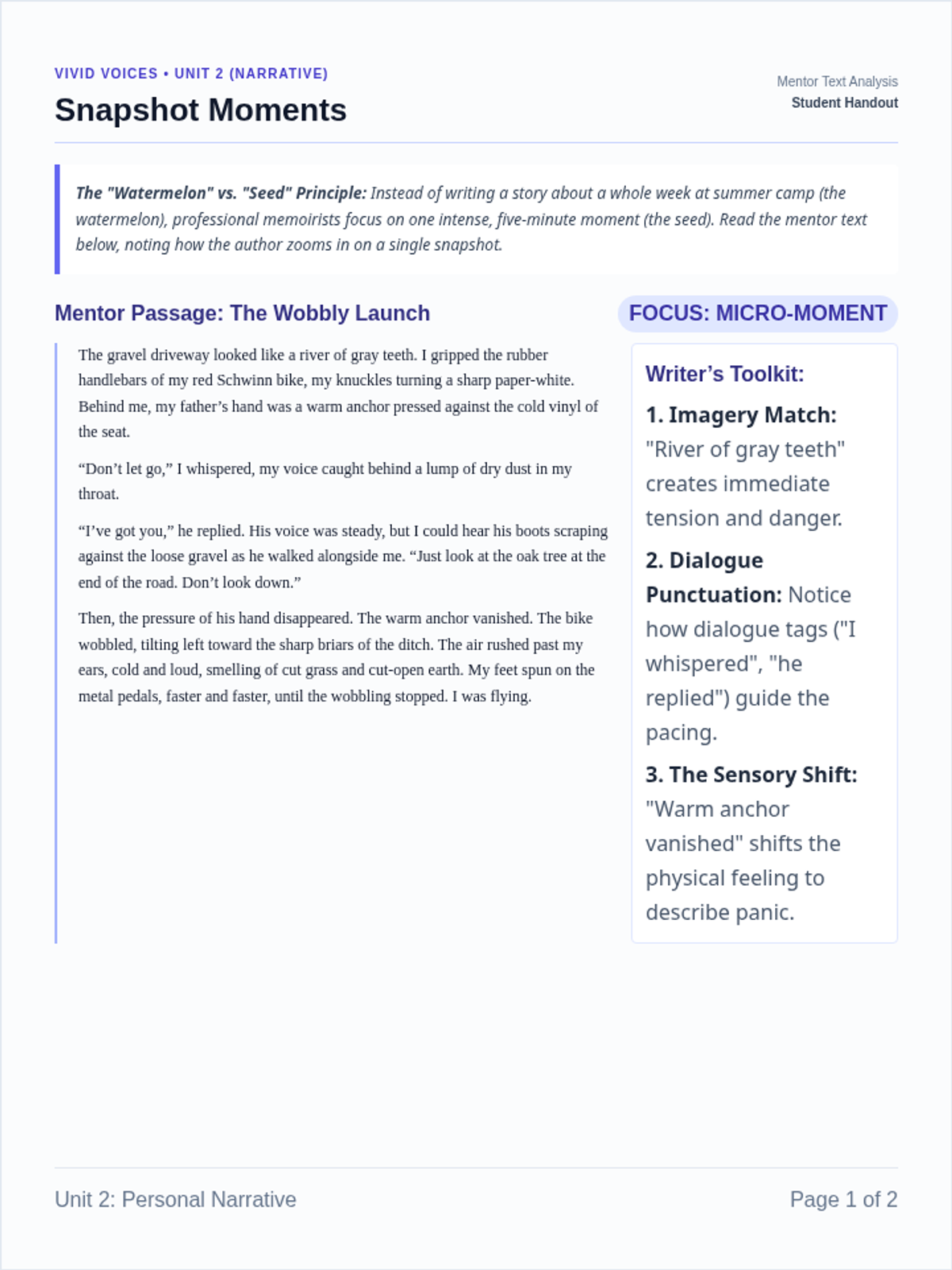
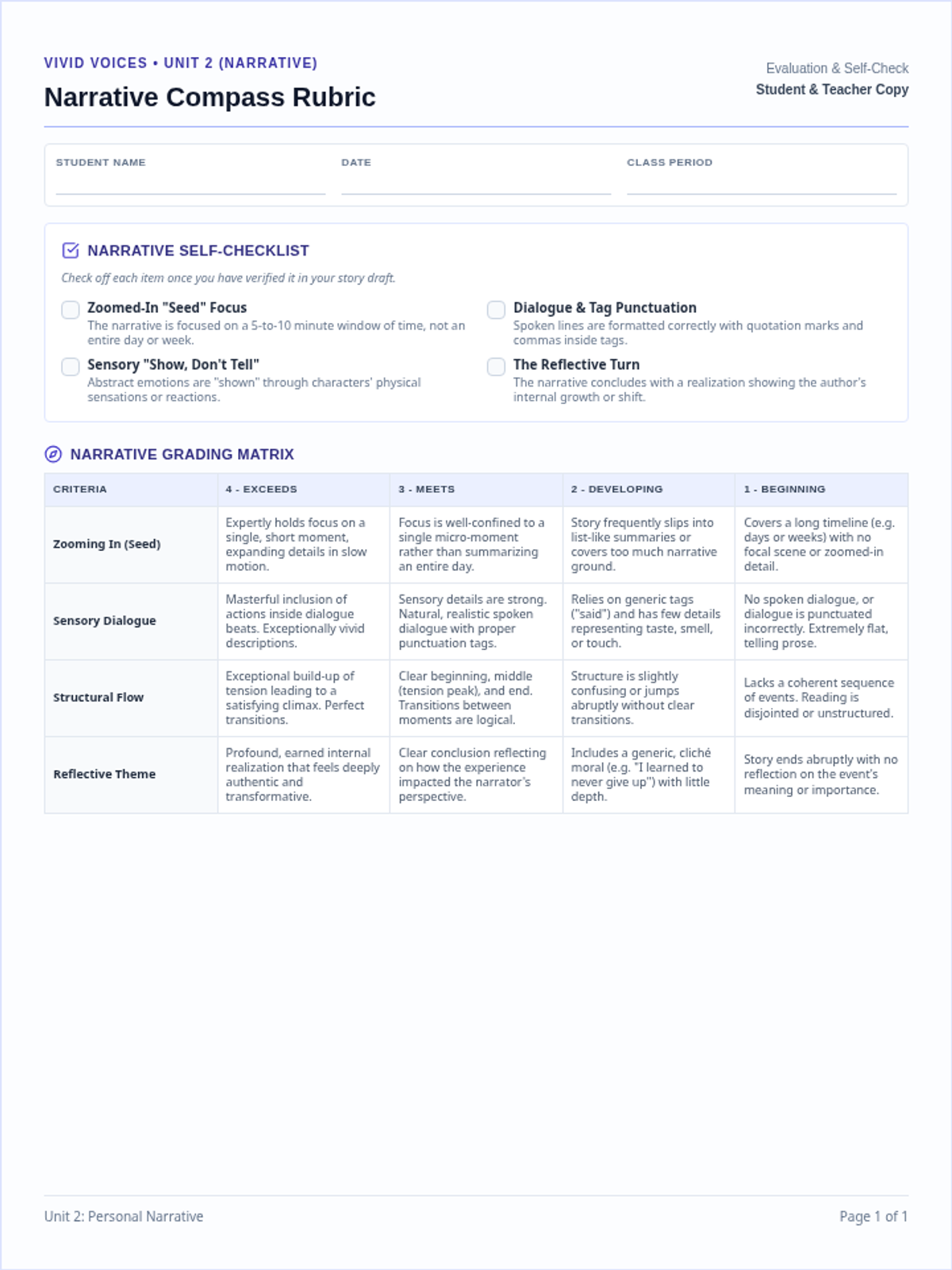
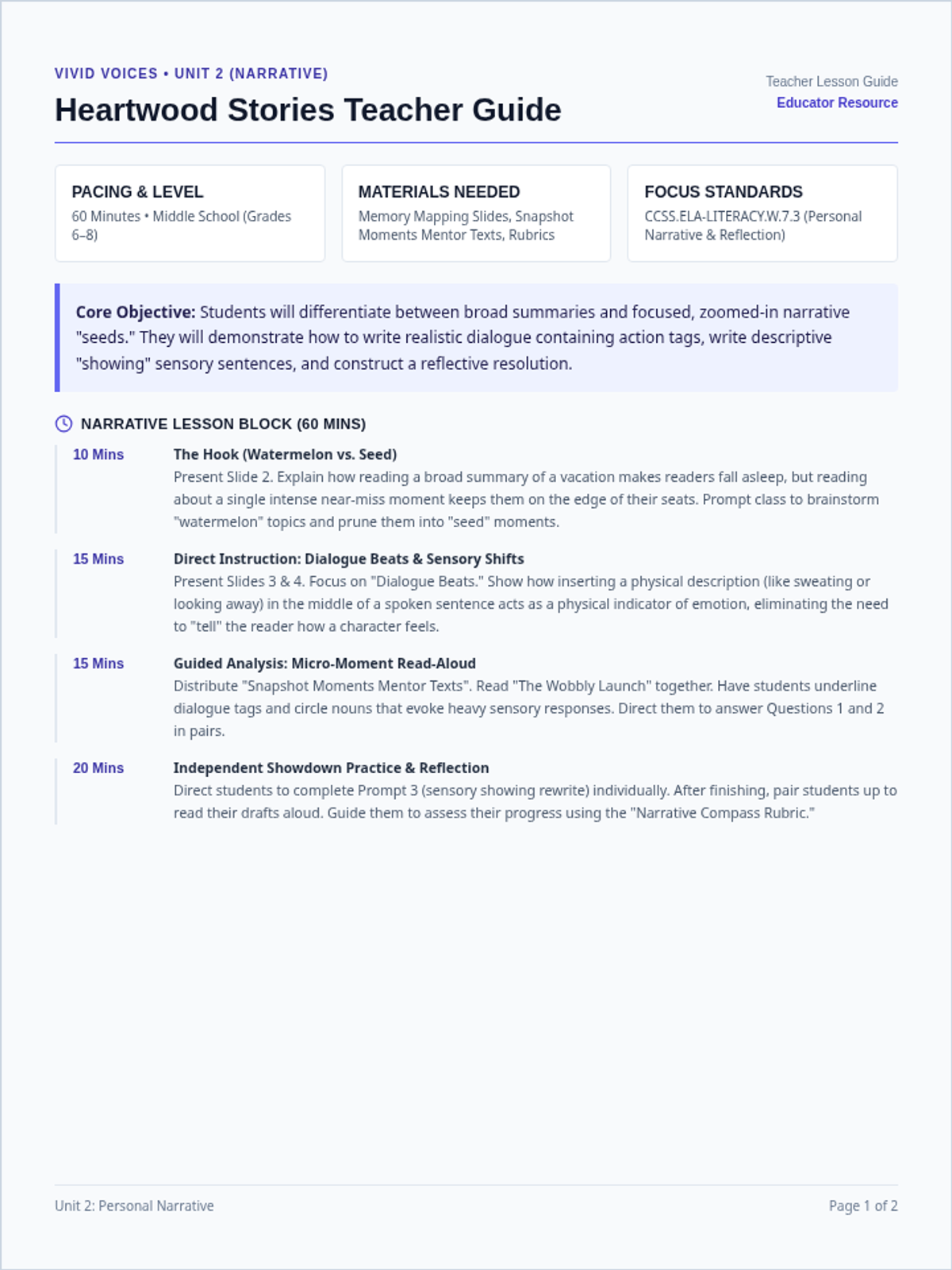
A journey into transforming real-life memories into vivid prose. Students practice zooming in on 'snapshot moments', writing realistic dialogue, and developing authentic reflective themes.
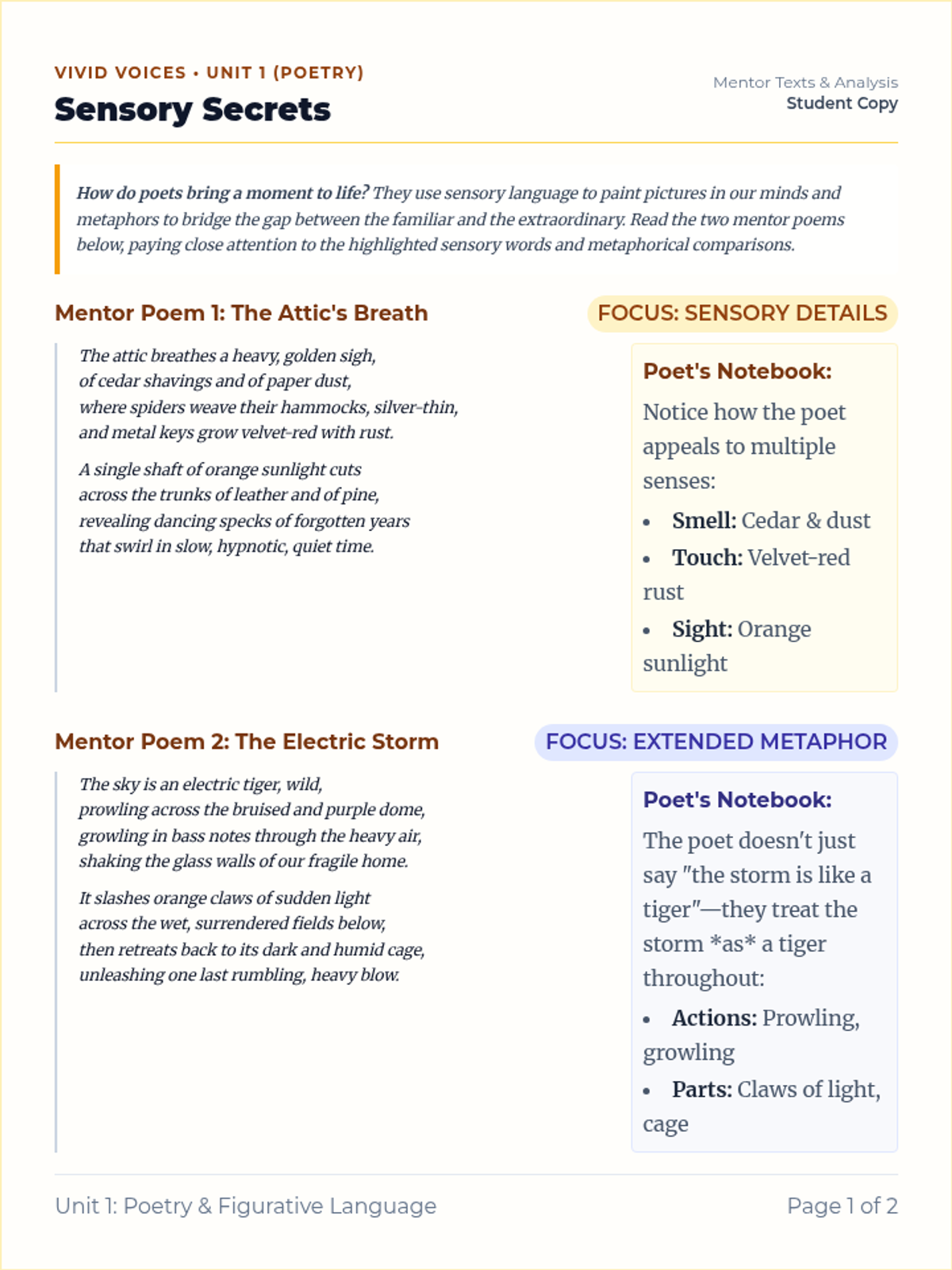
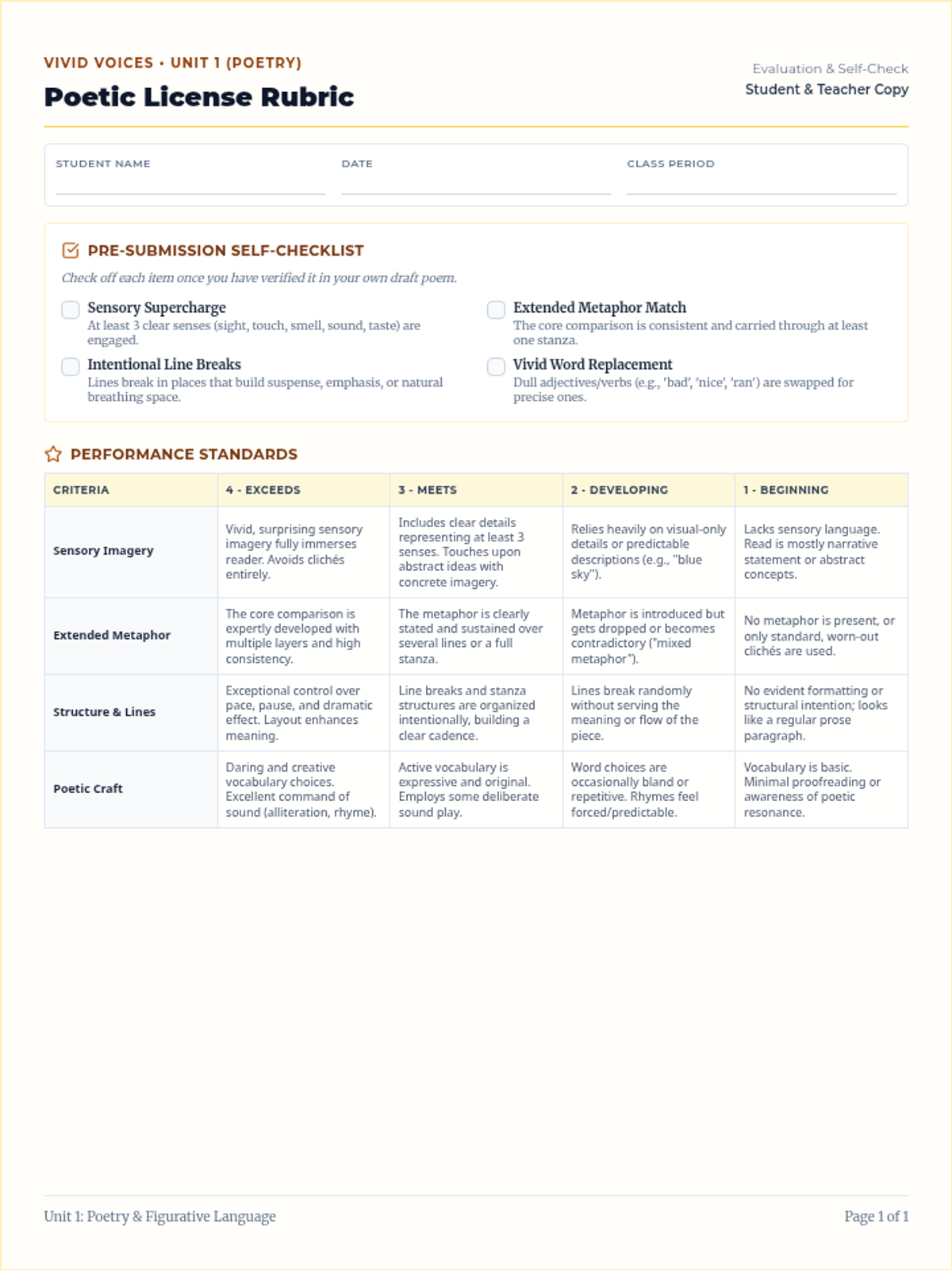
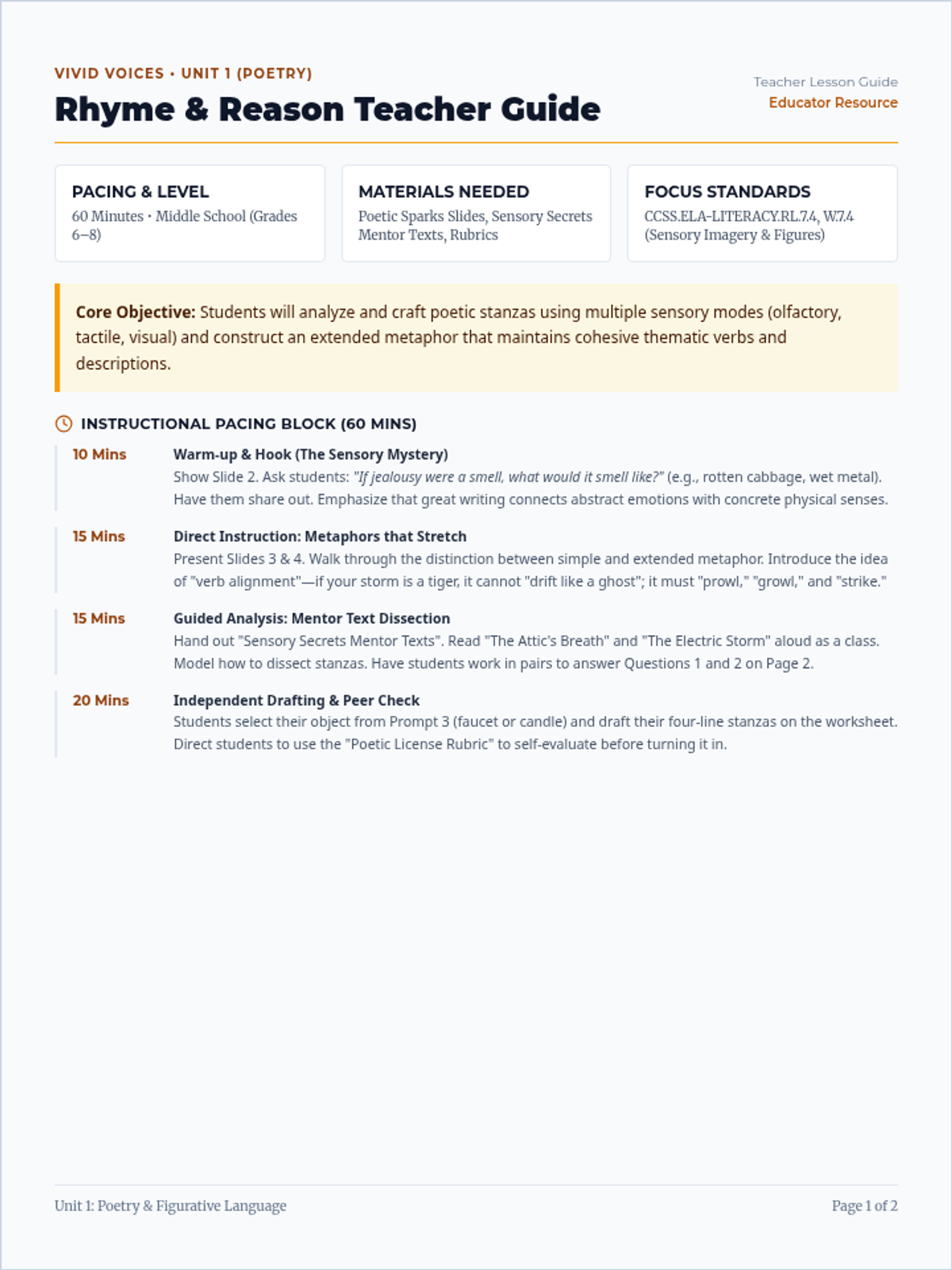
An immersive exploration of sensory imagery, metaphor, rhythm, and structure. Students examine classic and modern mentor poems and draft original pieces using figurative language.
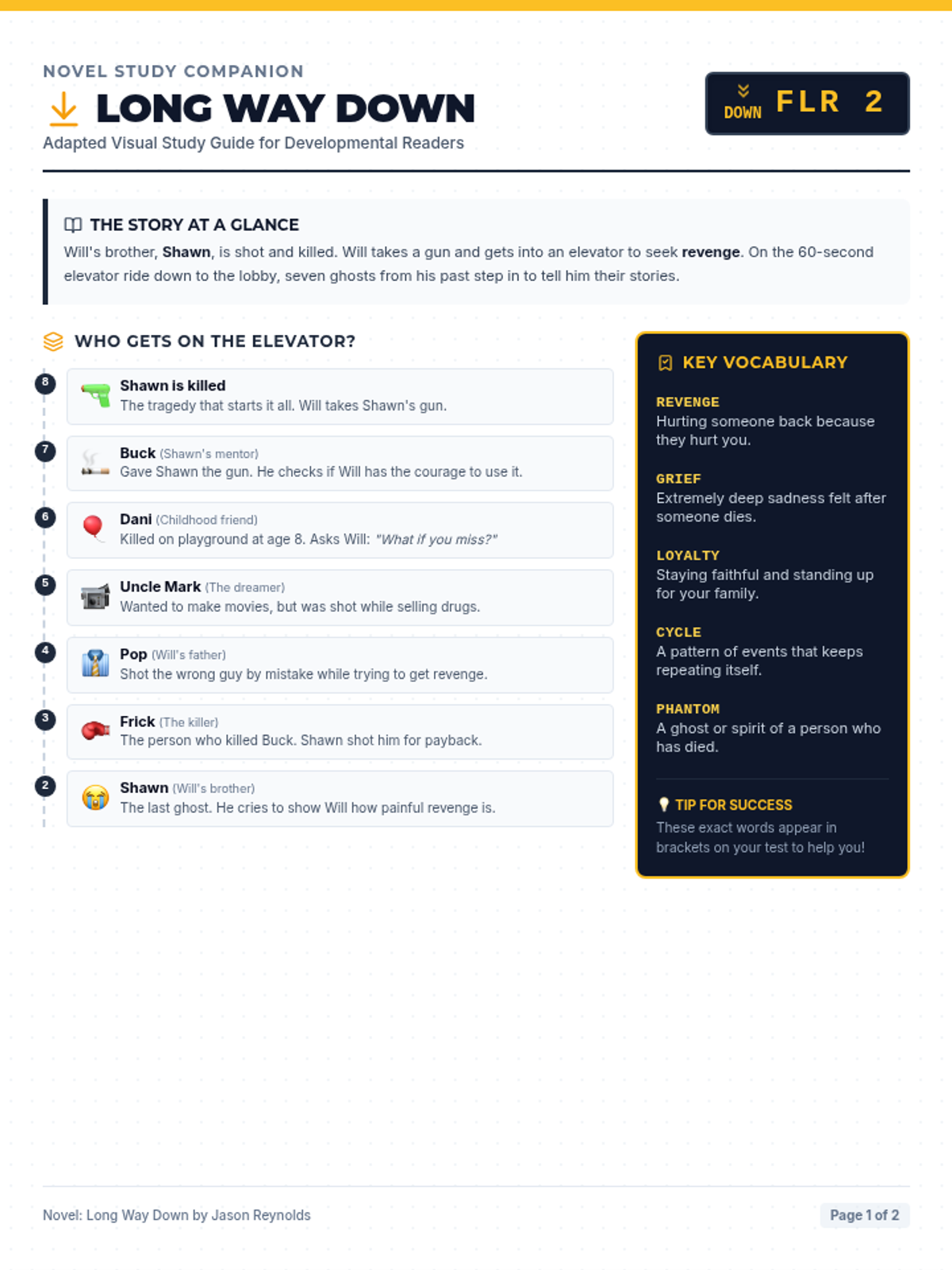
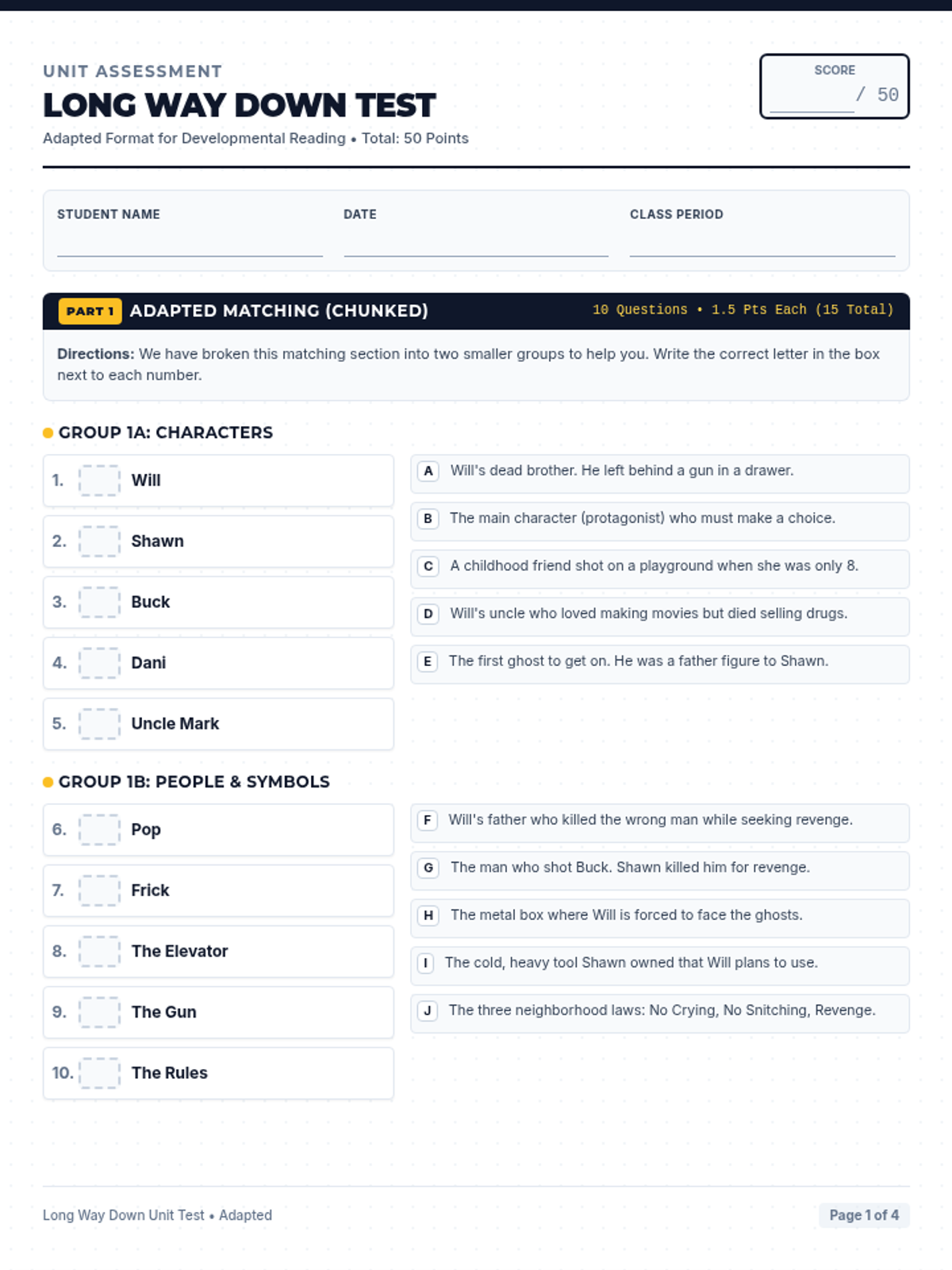
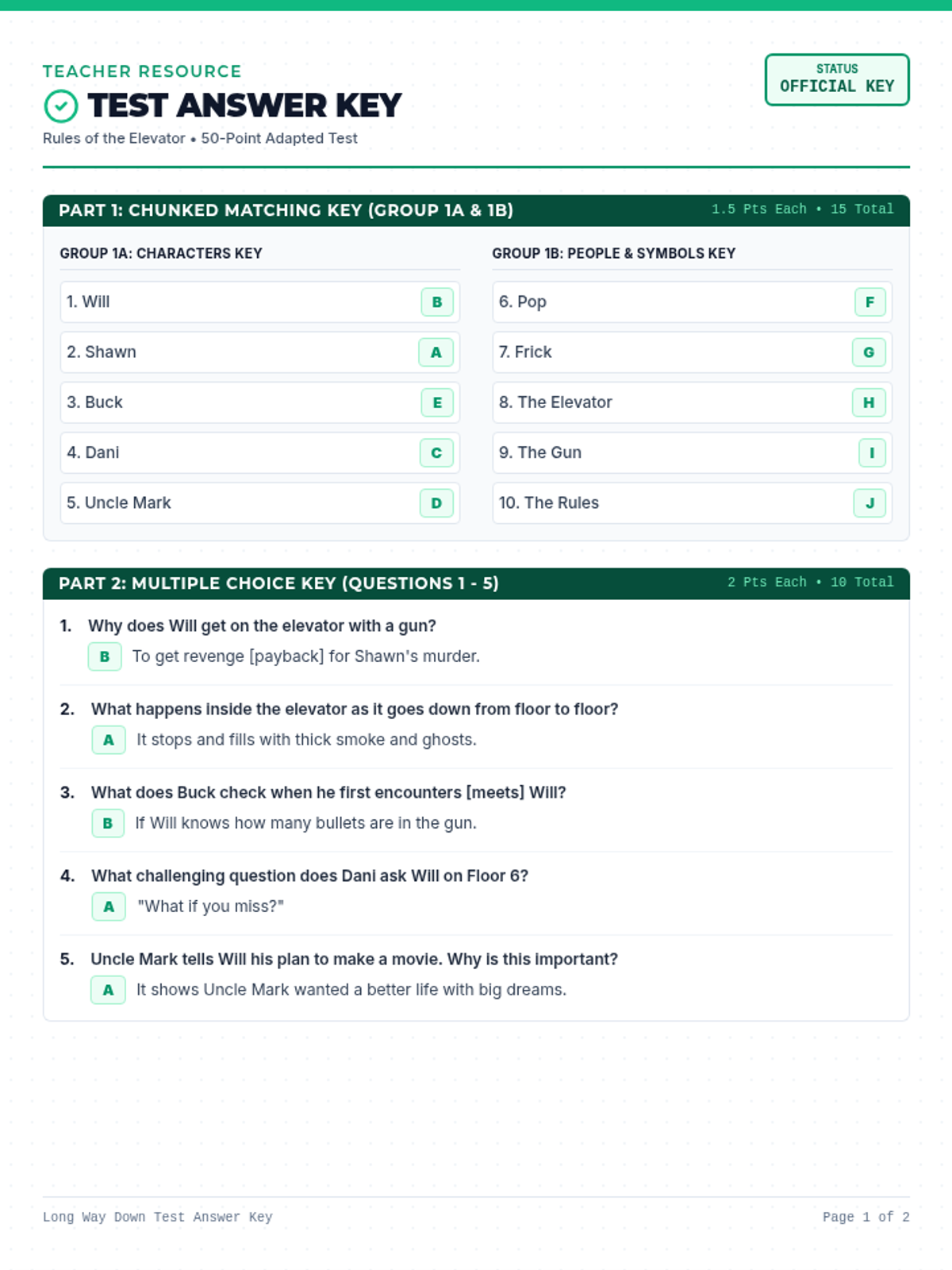
An assessment package for Jason Reynolds' novel Long Way Down, tailored for developmental reading students. Includes a highly visual study guide and a matching 50-point adapted test.
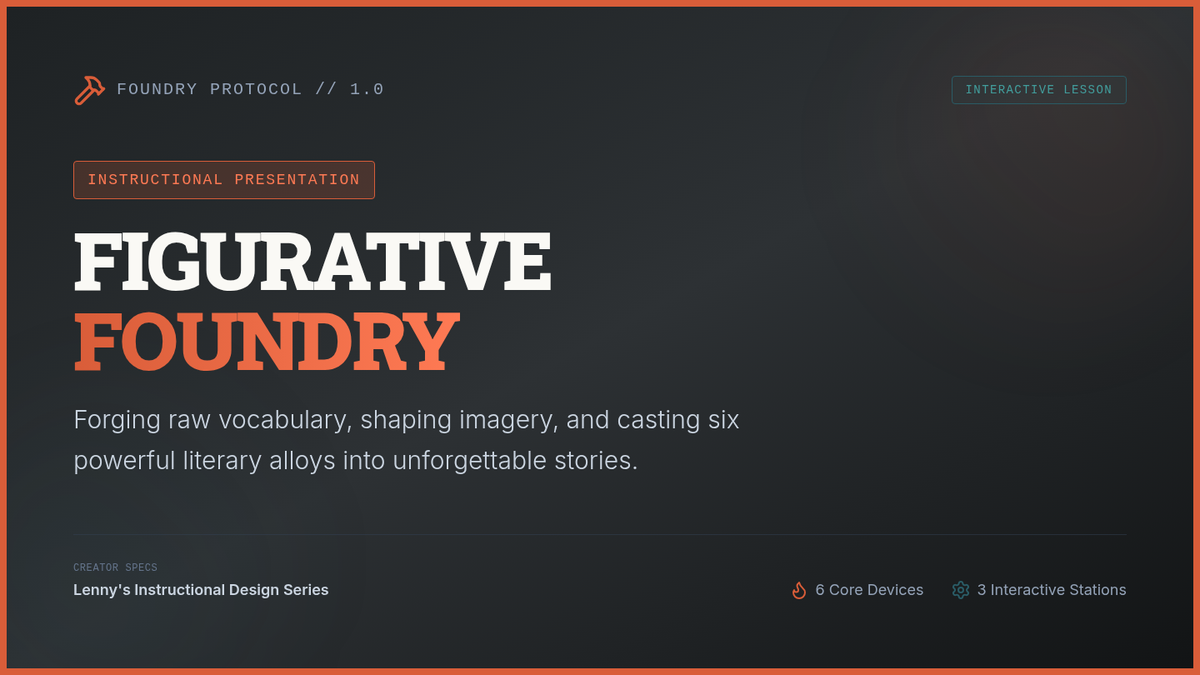
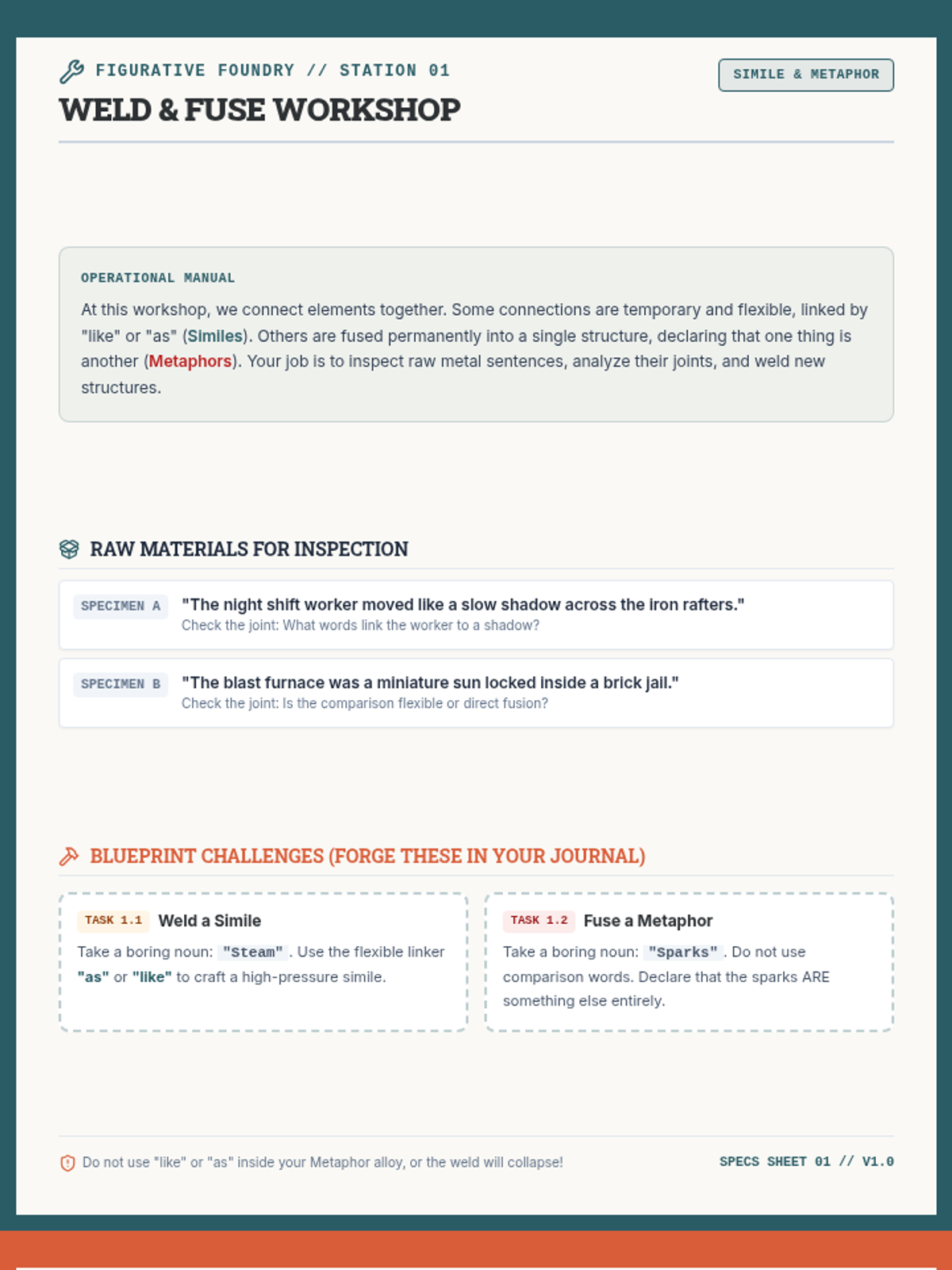
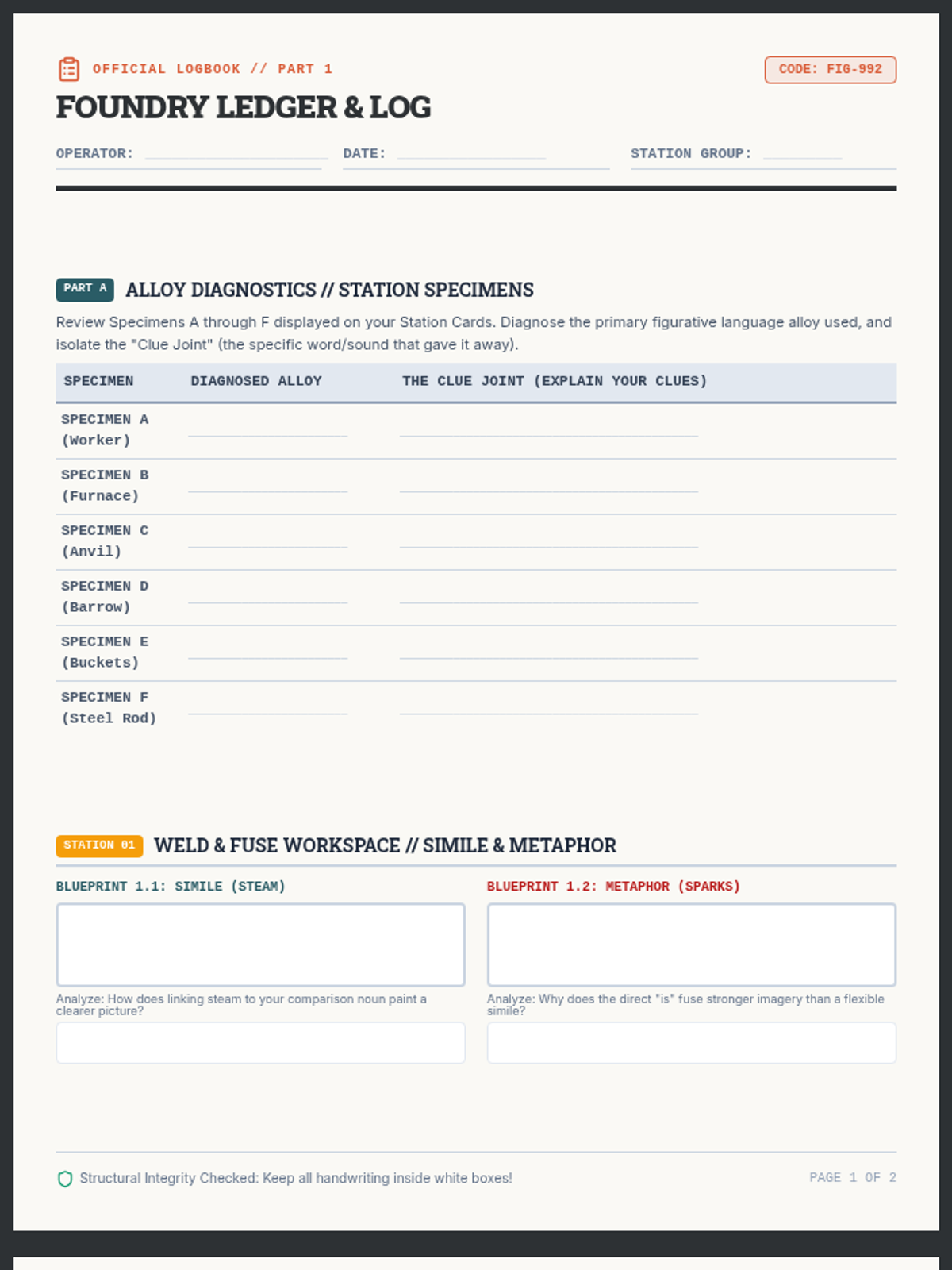
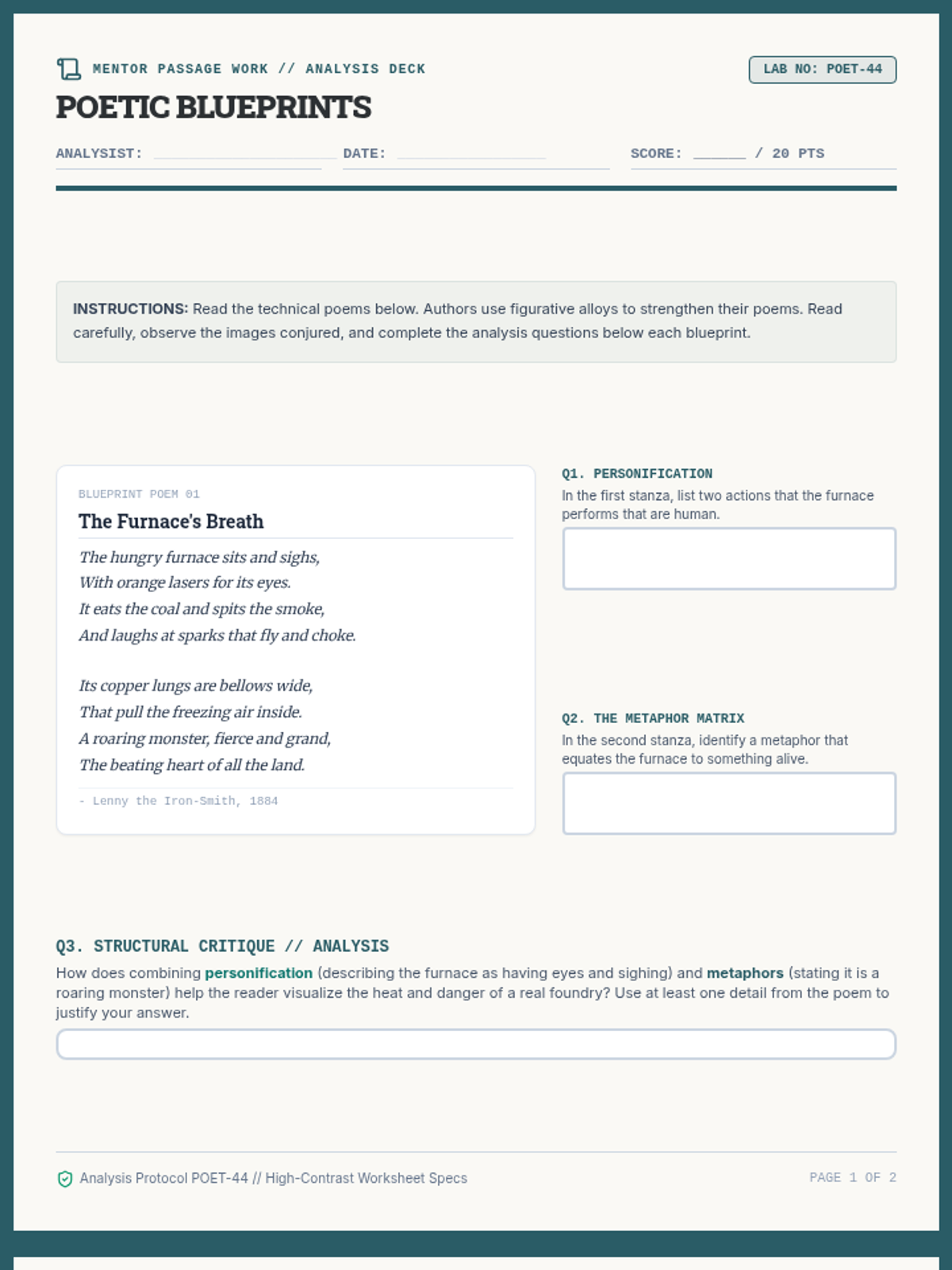
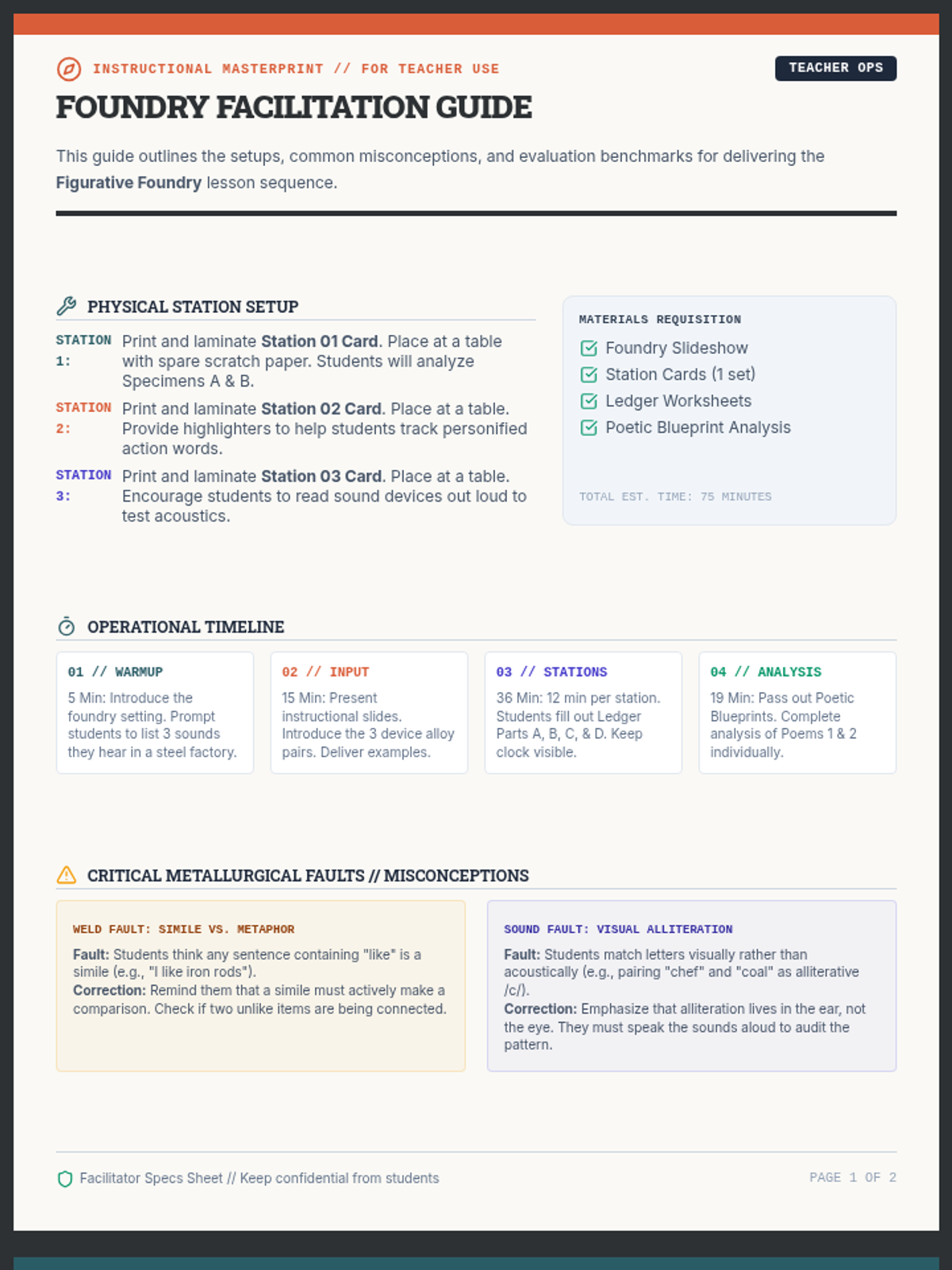
An immersive, hands-on lesson exploring six major types of figurative language through structured station activities, a collaborative workshop, mentor poetry analysis, and an interactive slideshow. Students learn to identify, analyze, and craft similes, metaphors, personification, hyperboles, alliteration, and onomatopoeia.
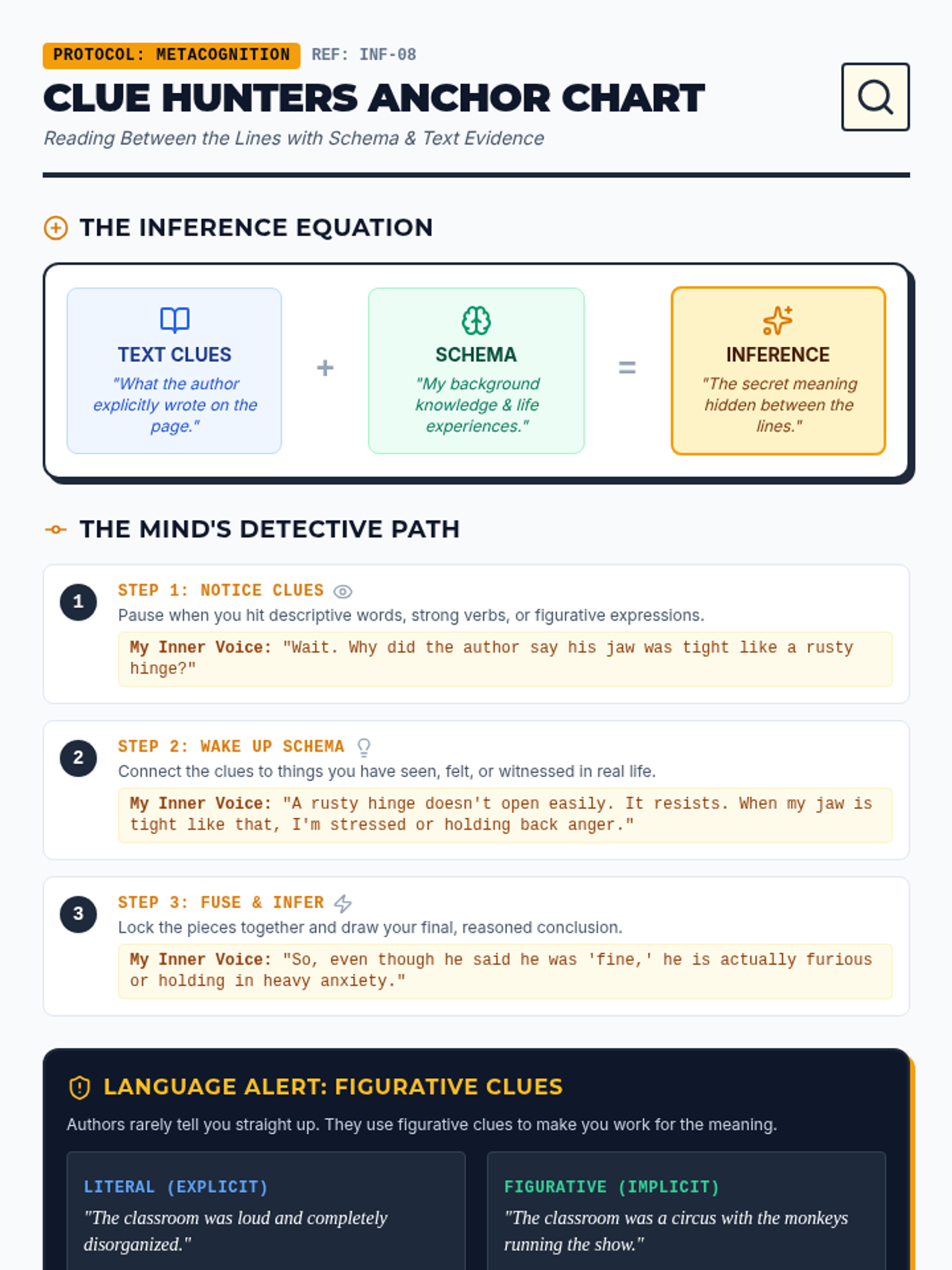
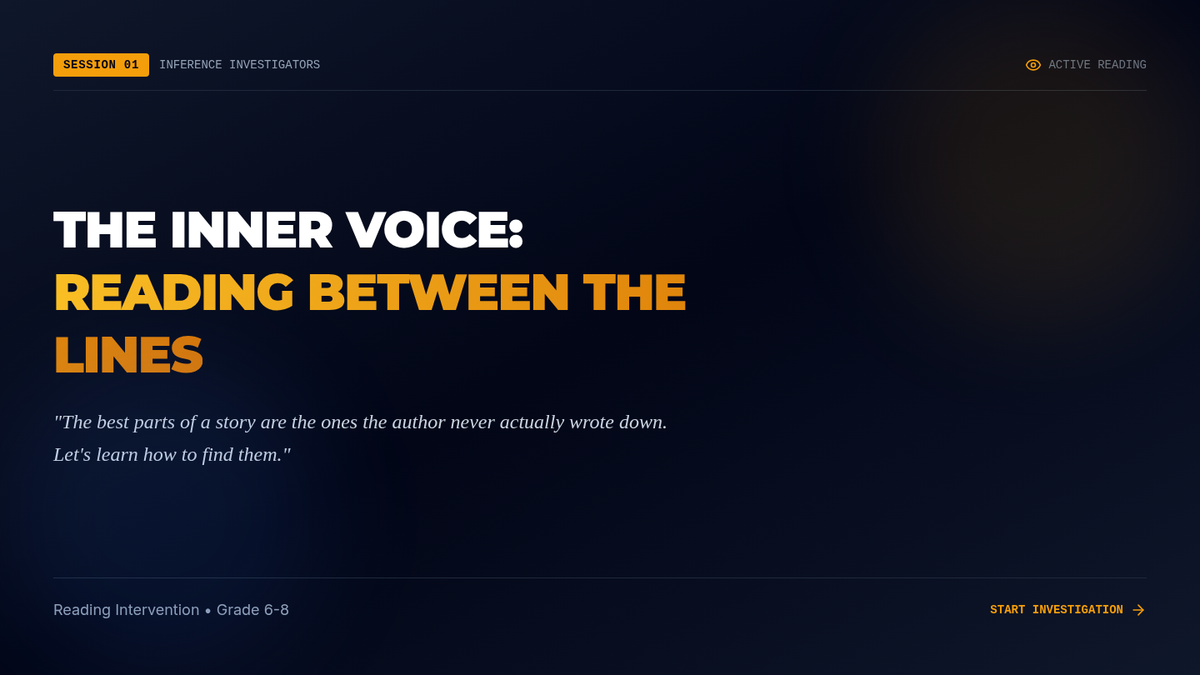
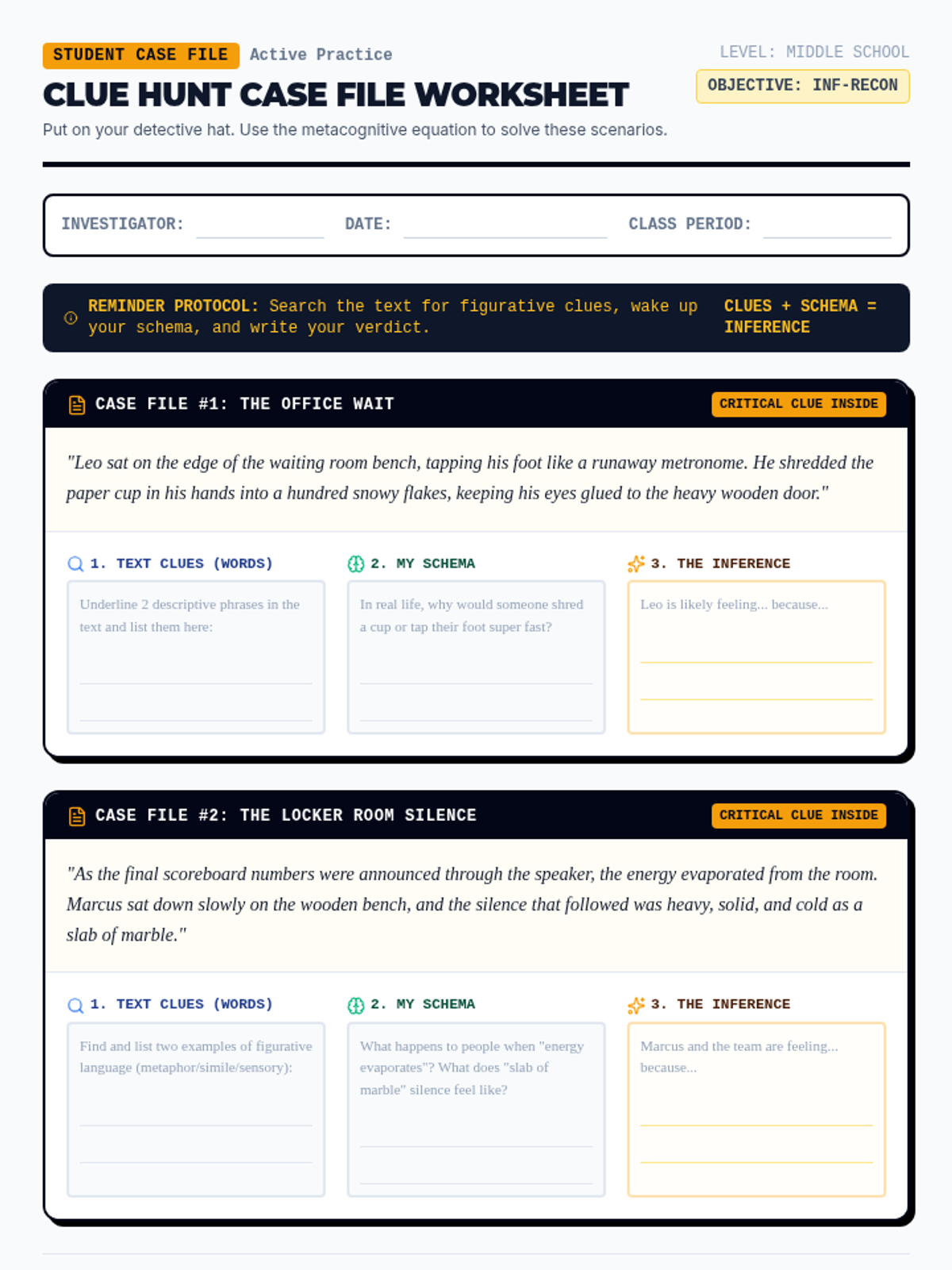
A middle school reading intervention lesson focusing on language and inference. Through metacognitive anchor charts, a guided presentation, and a structured case file worksheet, students learn to combine text clues with personal schema to decode figurative language and draw deep inferences.
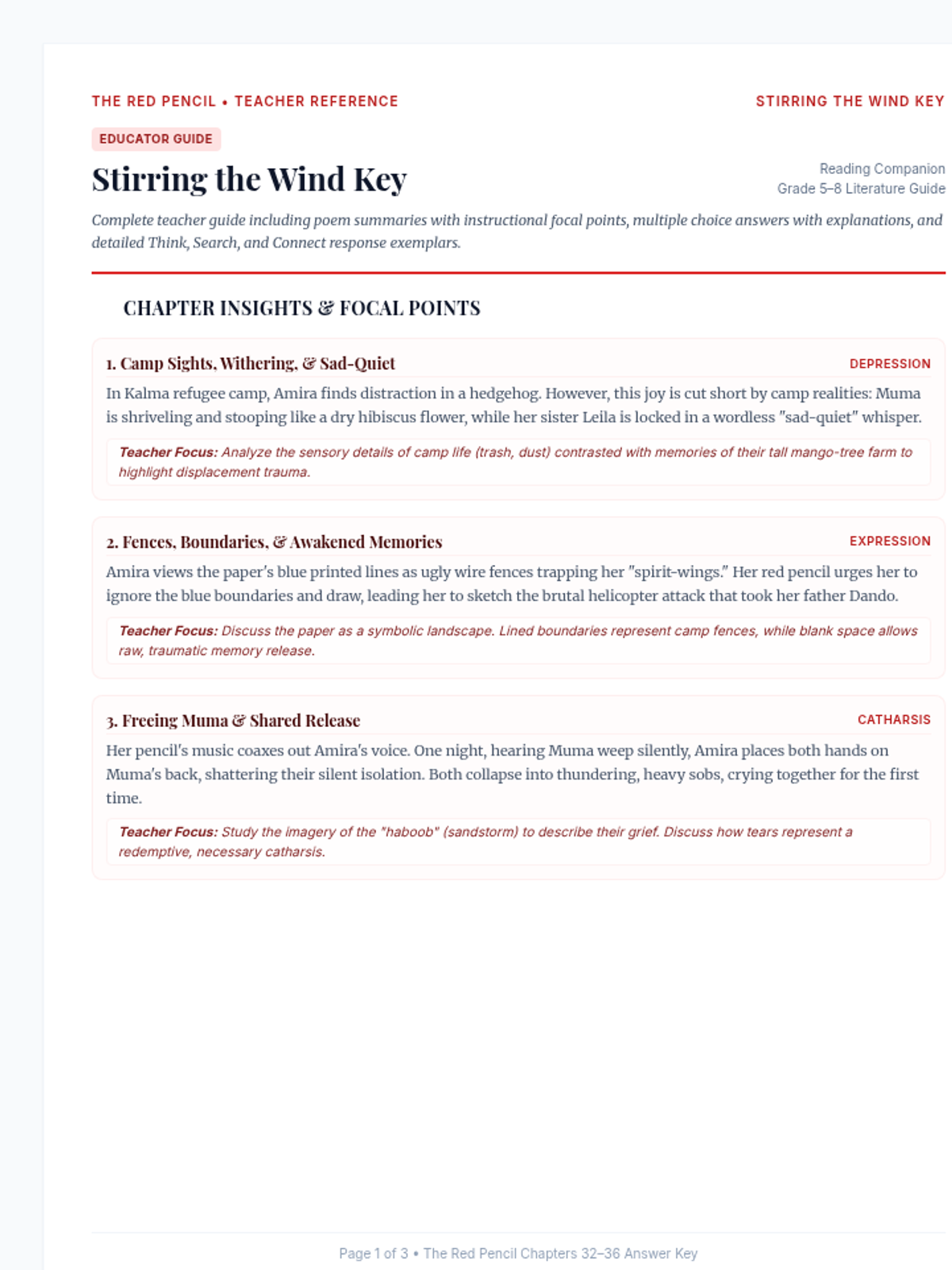
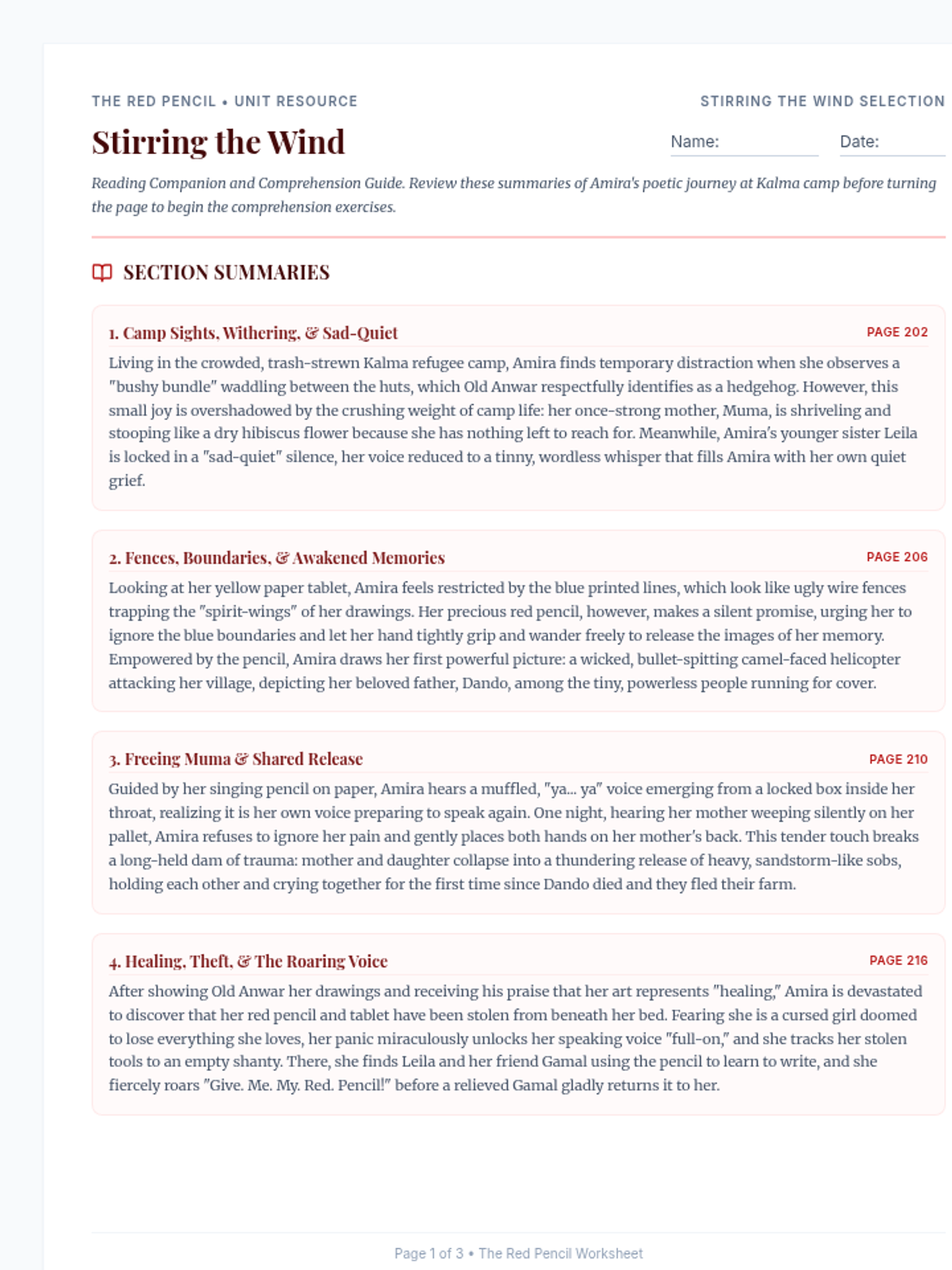
An exploration of Andrea Davis Pinkney's 'The Red Pencil'. Amira navigates the trauma of Kalma refugee camp, finding her voice and healing through her red pencil, secret nighttime reading lessons, and a powerful shared release of grief with her mother.
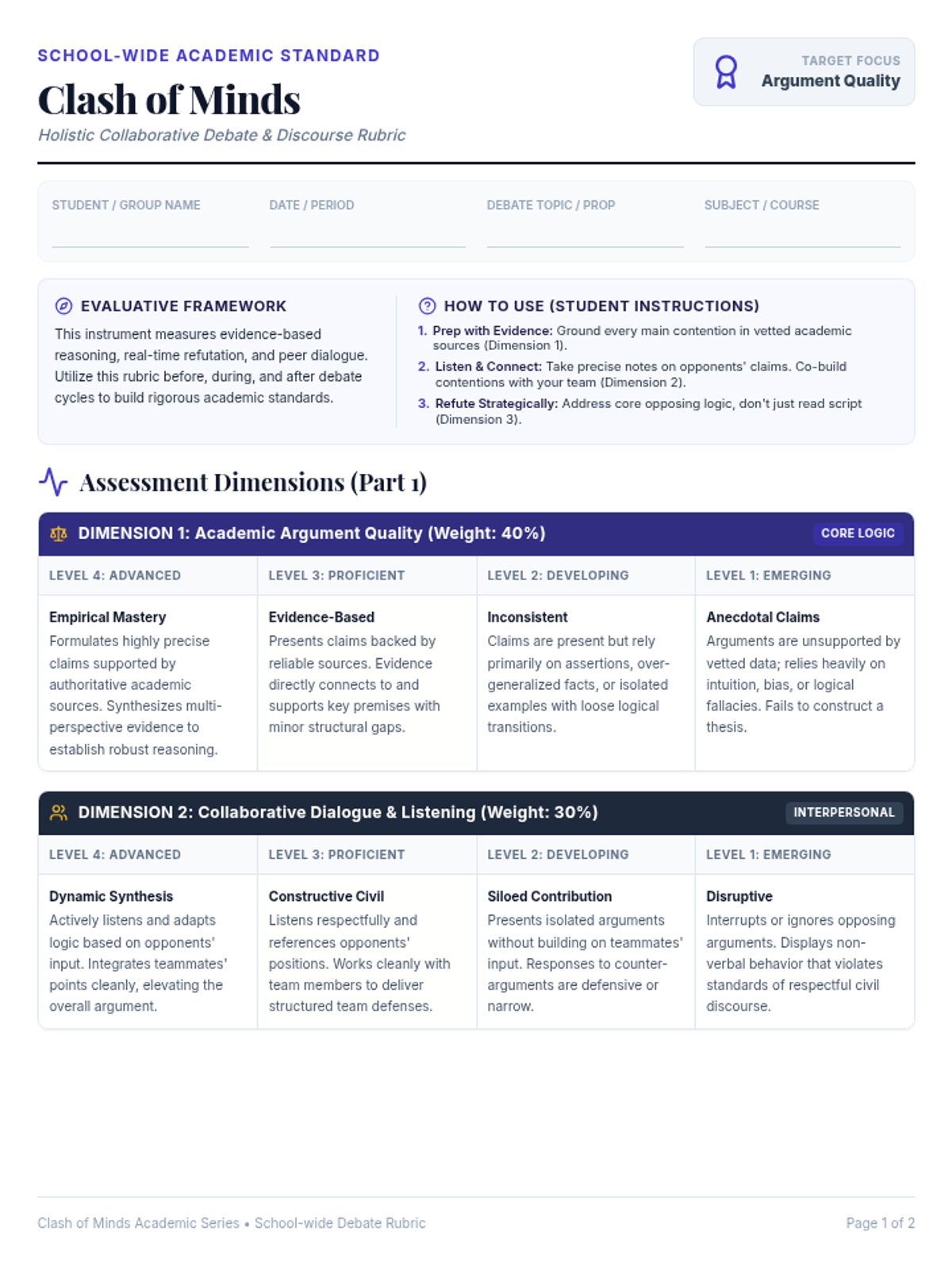
A foundational lesson containing frameworks and evaluative tools to support rigorous, evidence-based collaborative debate. It focuses on elevating academic argument quality, critical thinking, and respectful civil dialogue across different subjects and grade levels.