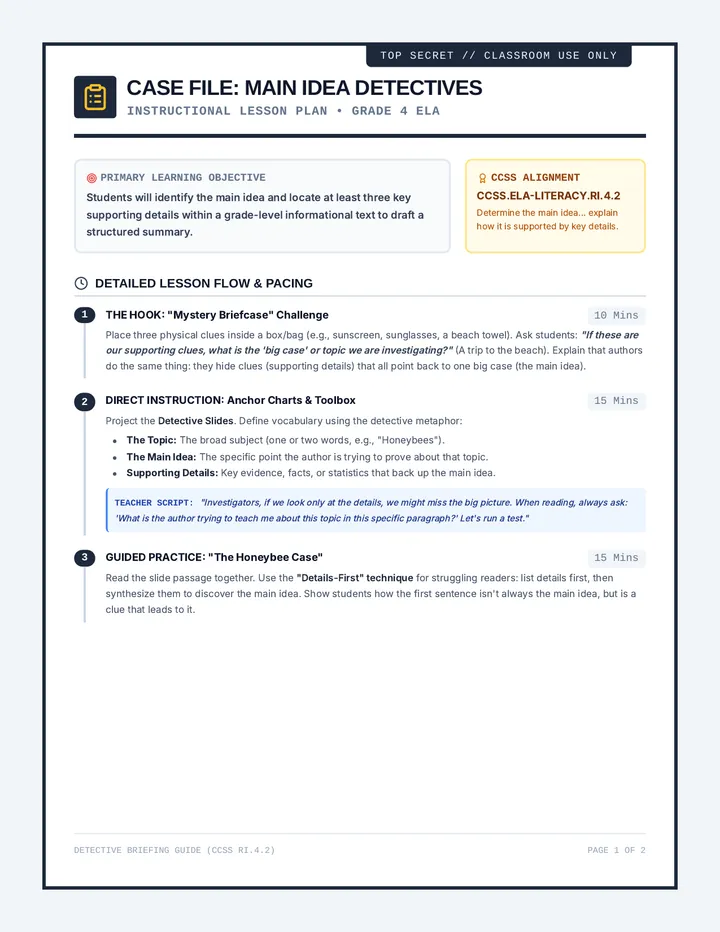
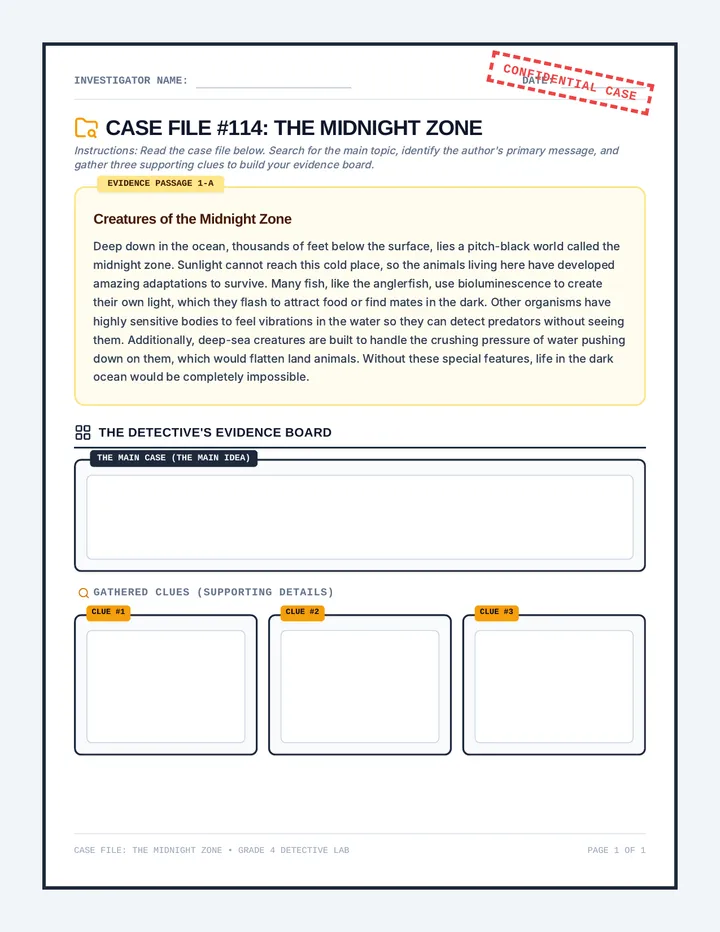
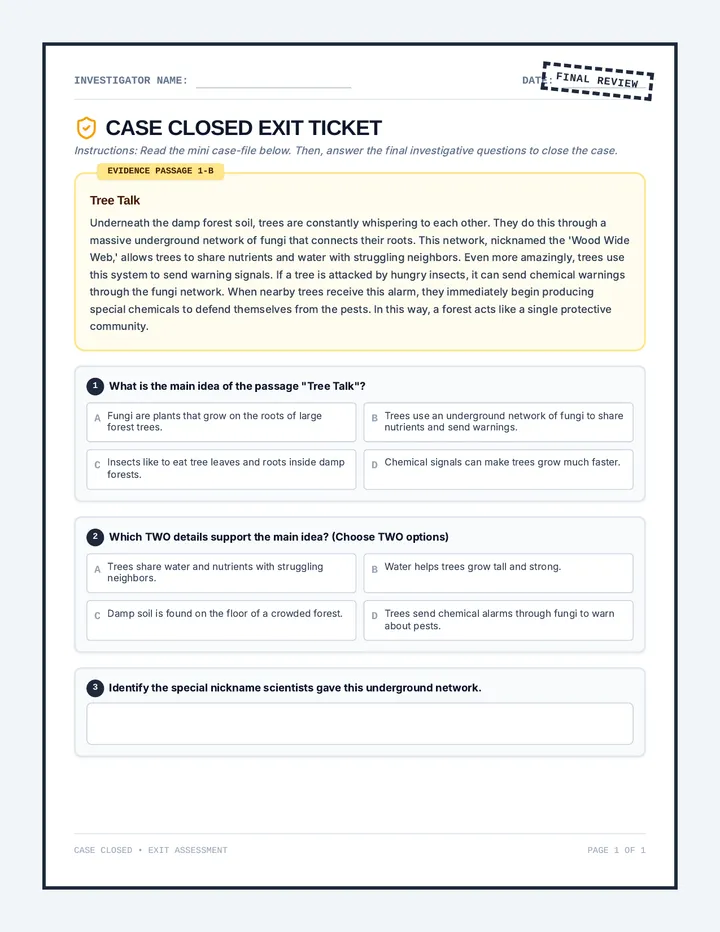
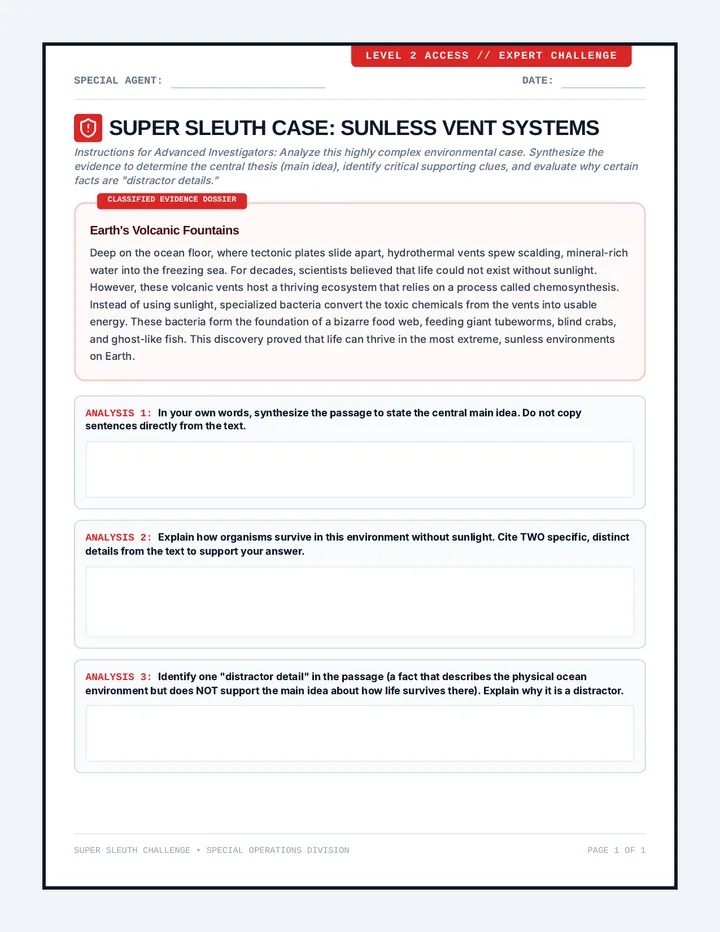
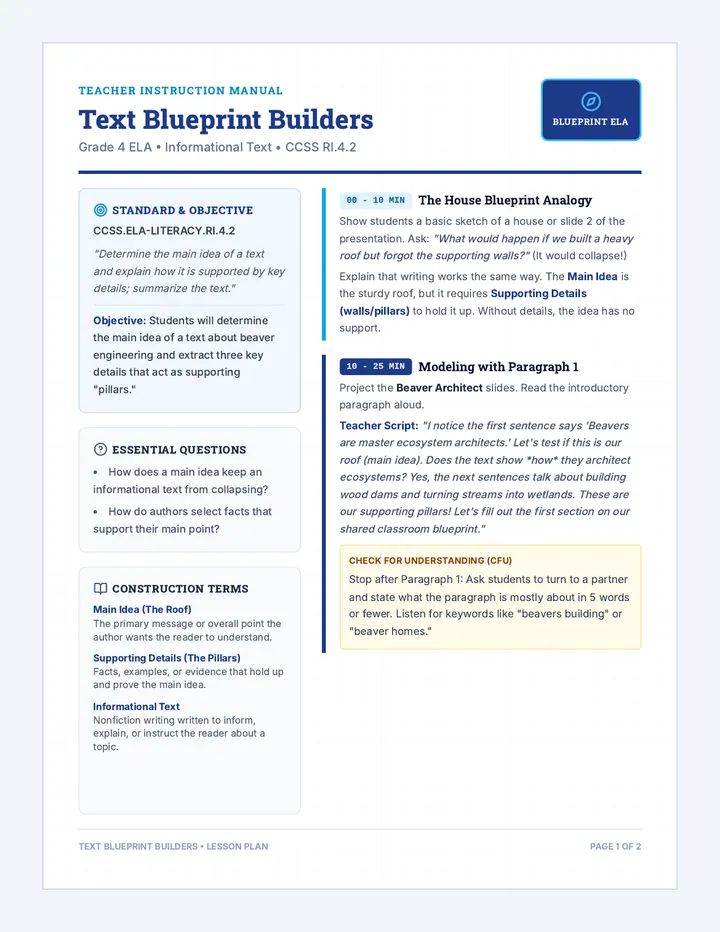
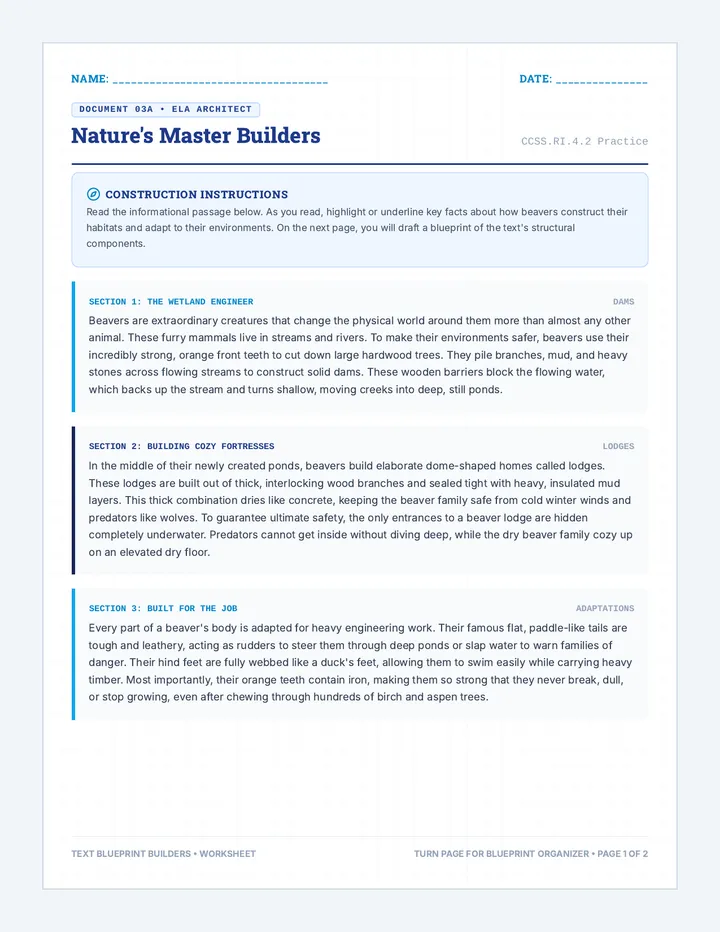
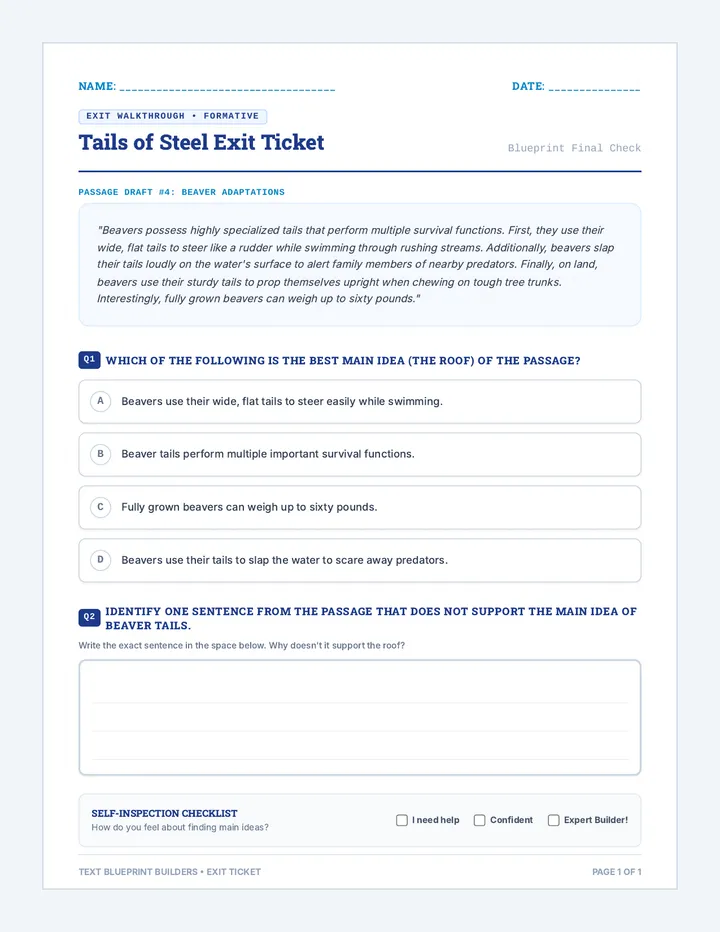
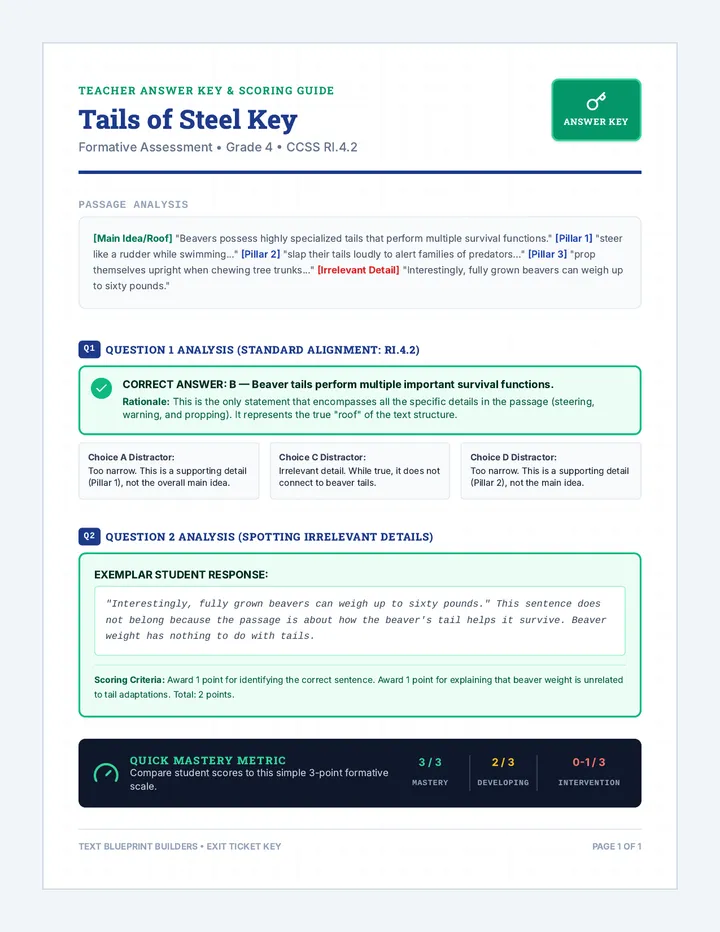
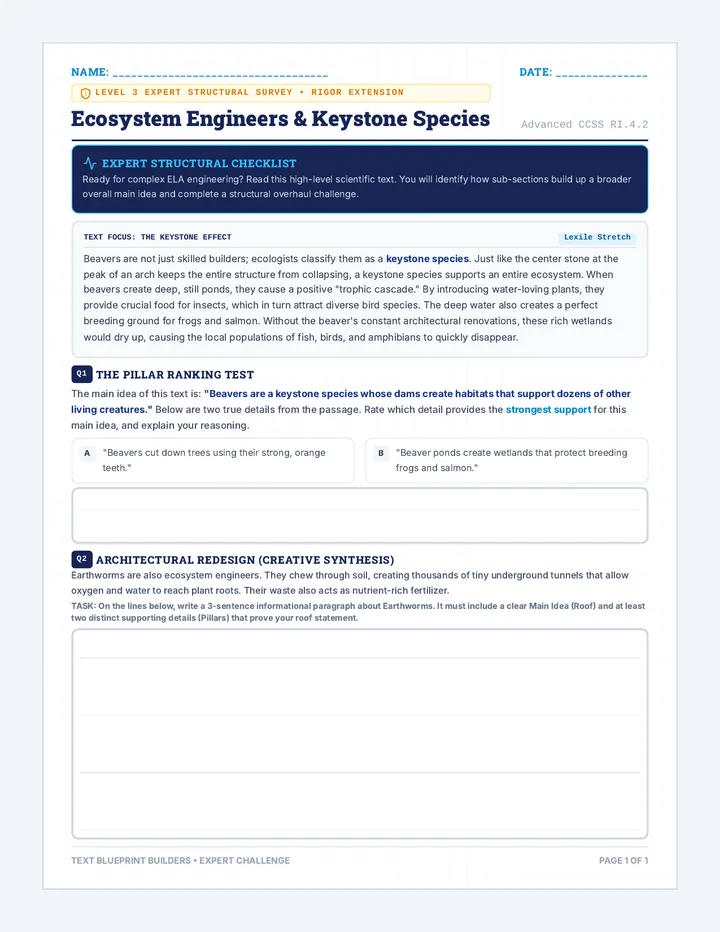
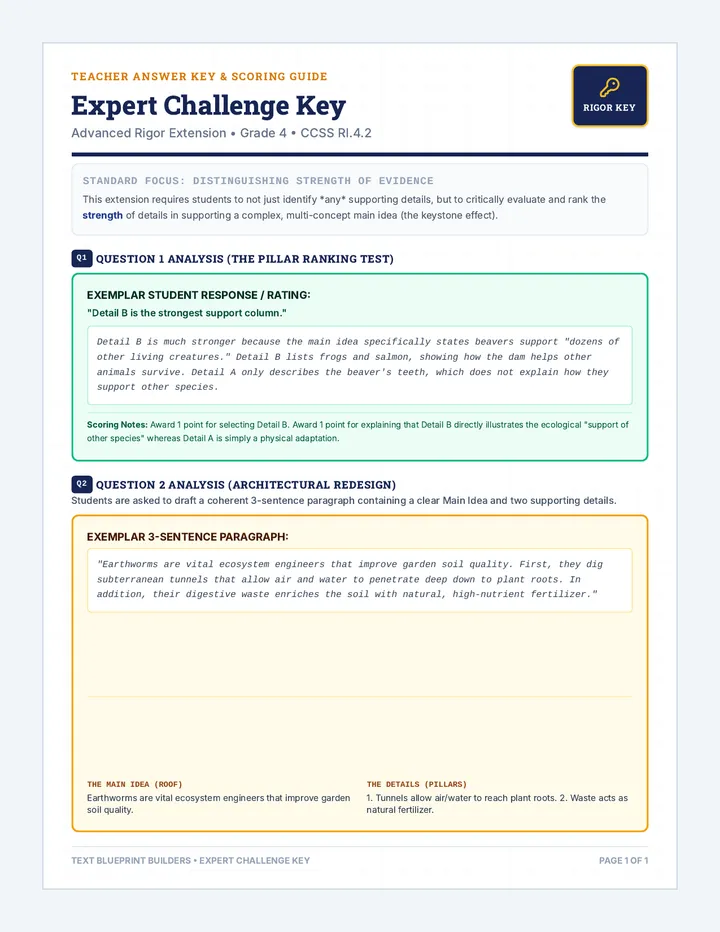
A comprehensive set of tools to help elementary students master the structure and clarity of explanatory writing, focusing on strong thesis statements, evidence-based supporting details, and logical coherence.
Final independent writing session where students apply their knowledge of Brain Frames to explain the Egyptian concept of the afterlife judgment in the Hall of Ma'at. Students choose the most appropriate frame (Sequencing or Telling) to organize their final paragraph.
Comparison of the lives of wealthy Egyptian nobles and poor farmers using a Comparing Frame. Focuses on using contrasting transition words to write a comparative paragraph about daily life in the Nile Valley.
Introduction to the Categorizing Frame (a variation of the Telling Frame) to explore Egyptian inventions and social roles. Students focus on grouping related ideas (e.g., writing, math, medicine) to write an organized informational paragraph.
Investigation into the 'why' and 'how' of pyramid construction using a Relationship Frame (Cause and Effect). Students explore the religious beliefs that led to tomb building and the engineering outcomes of these massive projects.
Comparison of two significant Egyptian pharaohs, Hatshepsut and Ramses II, using a Comparing Frame. Students focus on identifying similarities and differences in their leadership styles and achievements to write a comparative paragraph.
Introduction to the Sequencing Frame (Chronological/Step-by-step) through the study of the ancient Egyptian mummification process. Students focus on using sequential transition words to connect ideas in a paragraph.
Exploration of the Ancient Egyptian social structure using a Telling Frame to categorize different roles. Focuses on writing a paragraph that describes the hierarchy and the specific responsibilities of each group.
Introduction to the Telling Frame (Main Idea & Details) through the study of the Nile River's role in Ancient Egypt. Students learn to translate visual clusters into cohesive descriptive paragraphs.
A 45-minute introduction to beat reporting for 6th graders where students choose a specialized area of interest and map out their first major project timeline.
A comprehensive end-of-year assessment for Grade 4 ESL students, covering morphology, vocabulary, grammar, reading, writing, speaking, and listening.
A lesson focused on mastering academic vocabulary used in reading comprehension questions. Students will learn to distinguish between common analytical verbs and concepts through a hands-on matching game and reference guides.
A 45-minute Grade 5 ESL lesson focused on identifying the moral of a fable and supporting it with textual evidence using a 'Moral Detective' theme. Students analyze 'The Lion and the Mouse' to practice drawing evidence from literary texts.