Students combine supply and demand to find the 'clearing price.' Through a market simulation, they observe how competition and bidding lead to equilibrium, and identify the conditions of shortage and surplus.
Totalitarian Tactics, Radio Dispatch, Gatekeepers, War Room Briefings, Warrior Spirit, Justice Homefront, Home Front Heroines, Justice Denied, Home Front Heroes, Atomic Ambitions, and Yalta and Potsdam Conferences.
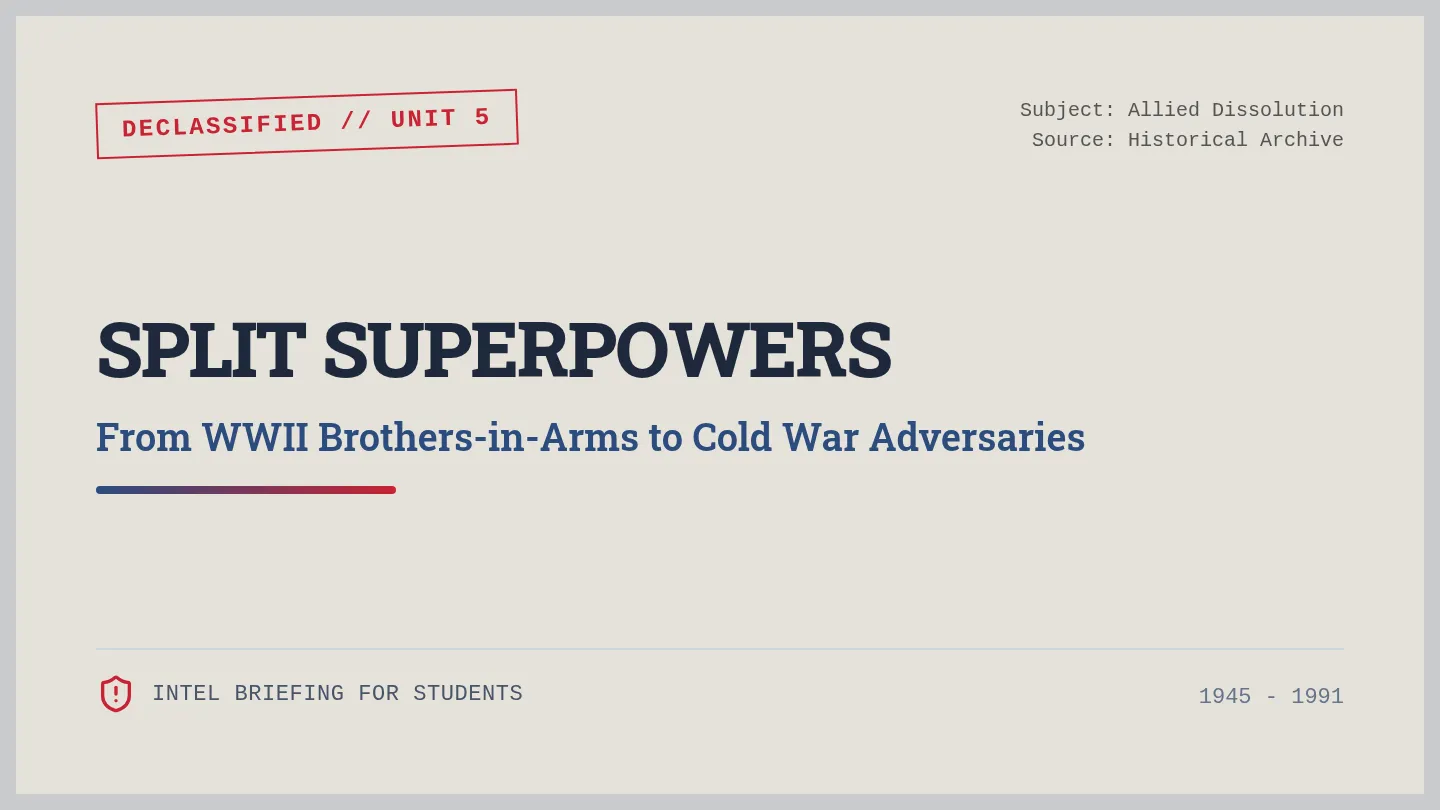
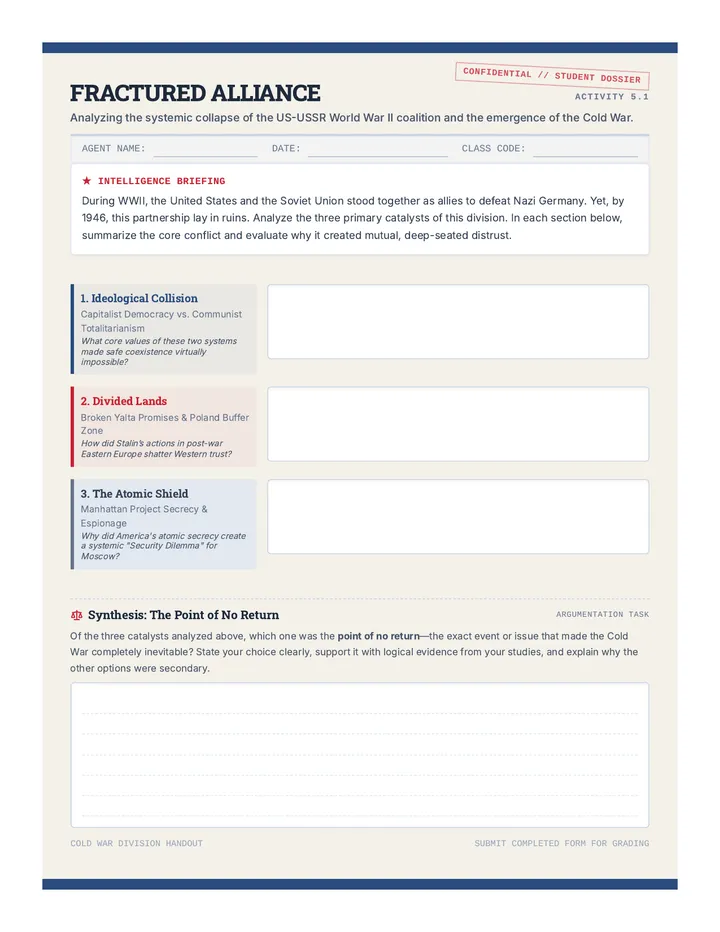
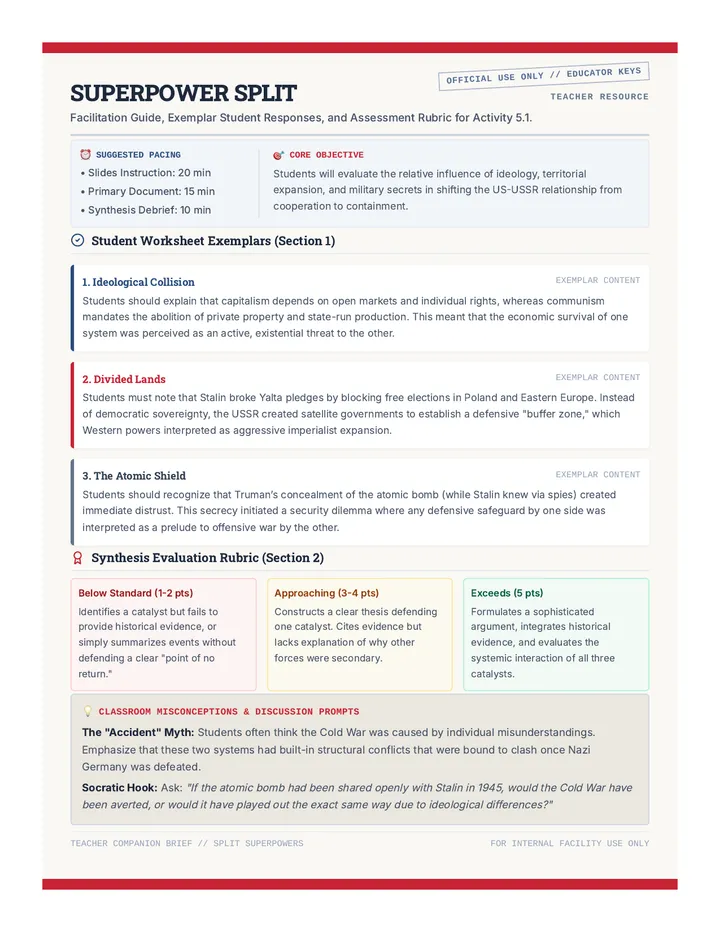
A comprehensive high school history lesson covering the Yalta and Potsdam Conferences, focusing on the division of Germany, the atomic bomb, and the onset of the Cold War.
A 25-minute intensive lesson on the Manhattan Project, focusing on the key sites (Oak Ridge, Los Alamos, Hanford) and President Truman's decision-making process for using the atomic bomb to end WWII.
A comprehensive lesson exploring the social, economic, and political impacts of World War II on the United States home front, covering rationing, industry, labor shifts, and civil unrest.
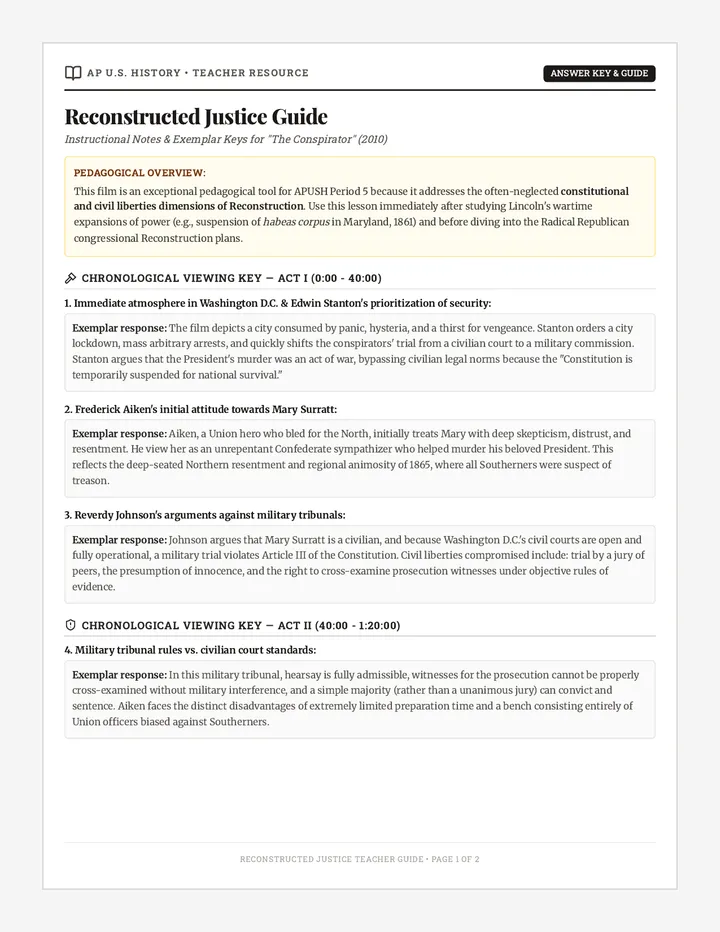
A focused examination of the constitutional issues, conditions, and historical impact of Japanese American internment during WWII, centered on Executive Order 9066 and the Korematsu v. US decision.
A comprehensive 35-minute lesson exploring the massive shift in American society as women entered the workforce and military during WWII, with a specific focus on Rosie the Riveter, Cornelia Fort, and the Women's Army Corps.
This lesson explores the economic and social impact of World War II on African Americans, focusing on the Double V campaign, the FEPC, and the integration of the military. Students will engage in a mock hearing to analyze employment discrimination and Truman's executive orders.
A fast-paced 25-minute lesson exploring the specialized units of WWII, focusing on the Tuskegee Airmen, 442nd Regimental Combat Team, and Navajo Code Talkers. Students analyze the unique contributions and systemic barriers faced by these soldiers through a lecture and graphic organizer.
Integrates the study of Jewish ethics (Tikkun Olam, Proverbs) and the practice of Shabbat.
Analyzes the giving of the Law at Mount Sinai, the Ten Commandments, and the 613 Mitzvot.
Focuses on the life of Moses, the Exodus from Egypt, and the significance of the Passover.
Examines the continuation of the Covenant through Isaac and Jacob and the formation of the Twelve Tribes.
Explores the origins of Judaism through the call of Abraham and the establishment of the first Covenant.
A master curriculum framework for World History that defines standards, objectives, skills, learning goals, and vocabulary for nine instructional units spanning 1200 C.E. to the present.
A master curriculum framework for Civic Literacy that defines standards, objectives, skills, learning goals, and vocabulary for thirteen instructional units.
A master curriculum framework for American History that defines standards, objectives, skills, learning goals, and vocabulary for thirteen instructional units.
A focused exploration of how the unique geography of the Nile River Valley shaped the development, stability, and culture of Ancient Egyptian civilization.
A comprehensive 60-minute lesson on the key figures, geography, and military factors of World War II's global theaters, aligned with TN standard US.50.
A comprehensive lesson on the shift in U.S. foreign policy from isolationism to interventionism under FDR, focusing on the key legislative and diplomatic steps leading to World War II.
A 25-minute lesson examining the rise and methods of control of 20th-century totalitarian leaders Adolf Hitler, Benito Mussolini, Joseph Stalin, and Hideki Tojo. Students analyze how economic instability and nationalist fervor paved the way for absolute power.