Students learn to calculate and interpret Cohen's d, distinguishing between statistical significance (is there an effect?) and practical importance (how big is the effect?).
Final review and post-assessment to measure progress across the 10-day intervention.
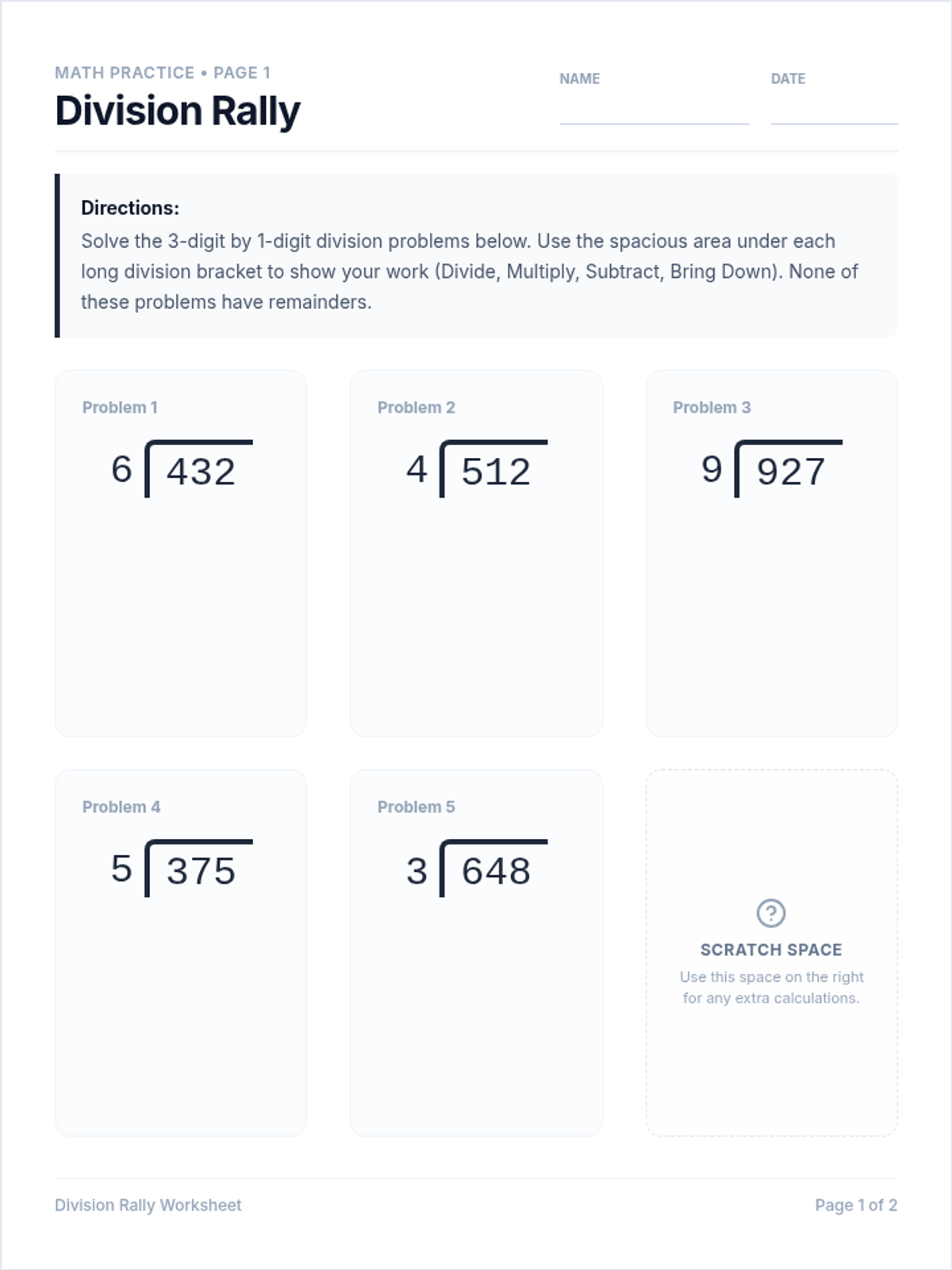
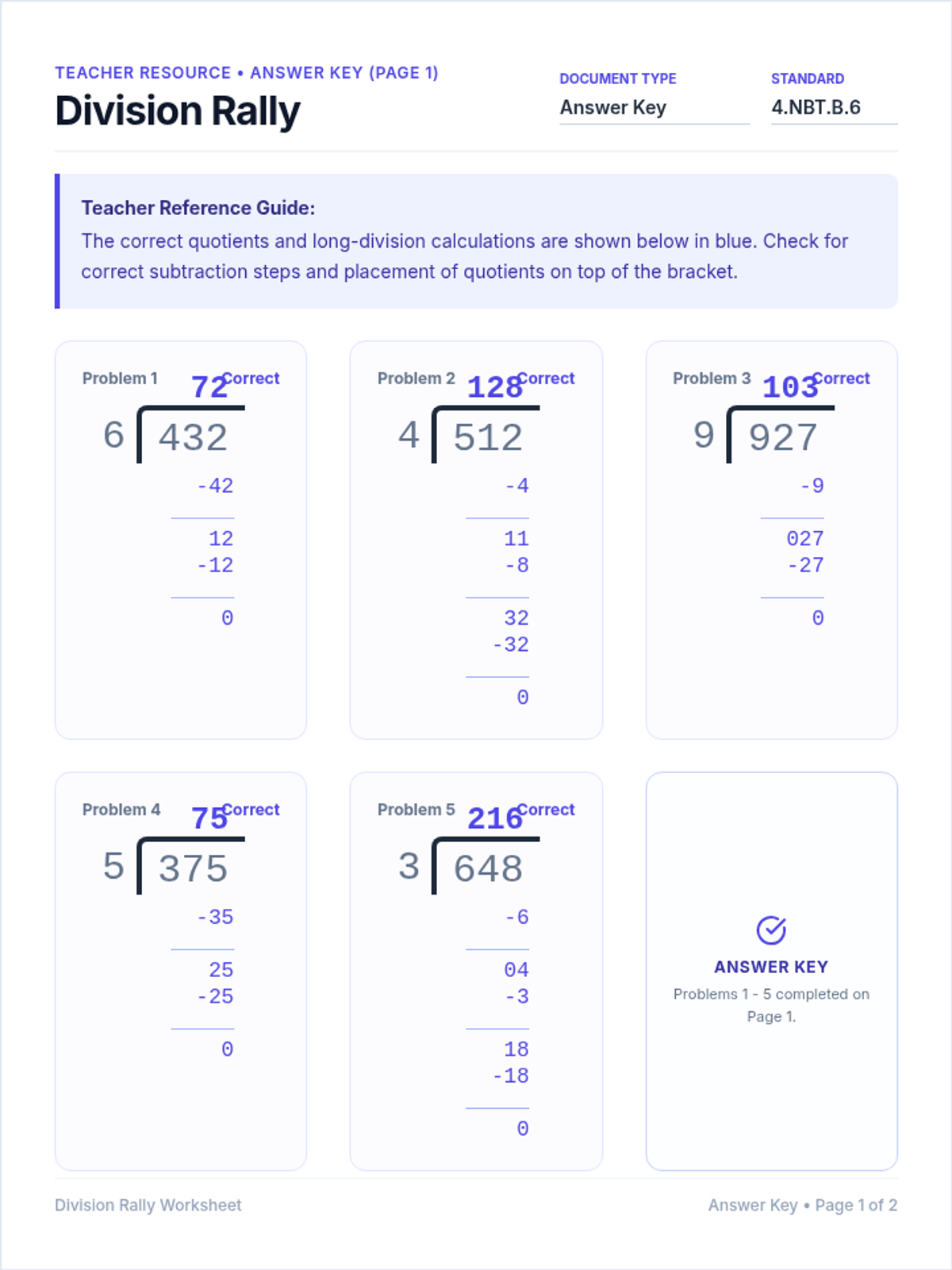
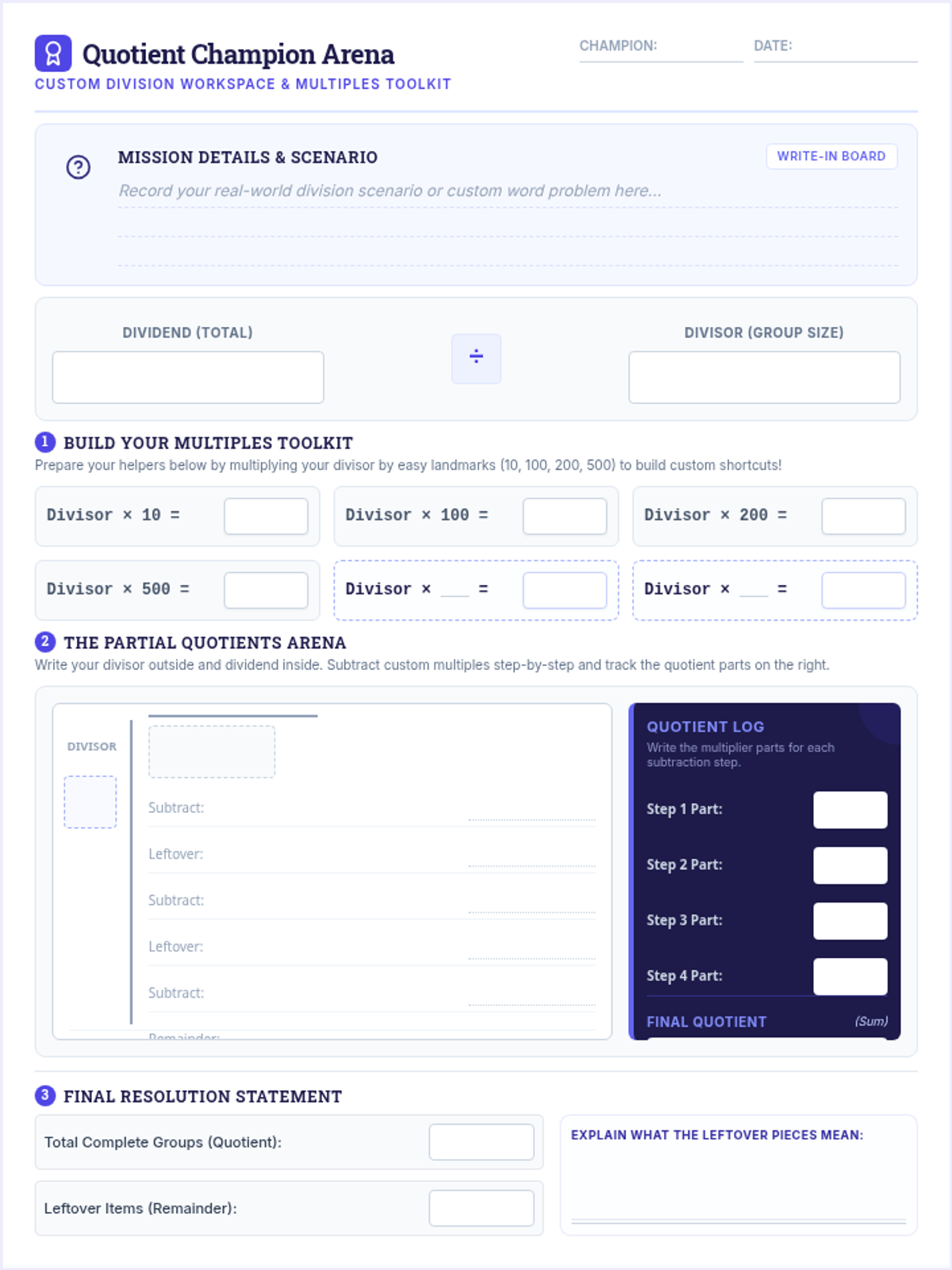
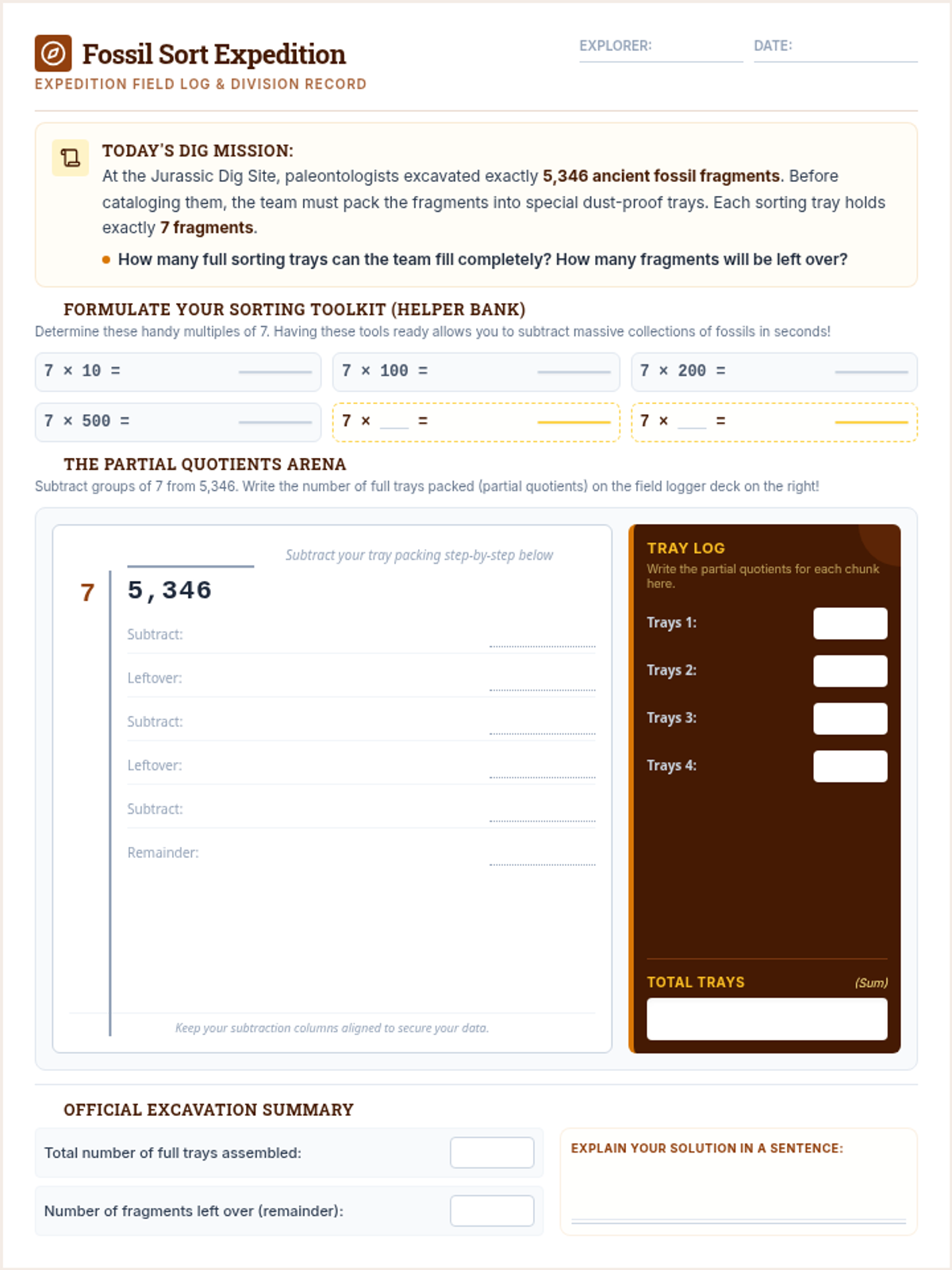
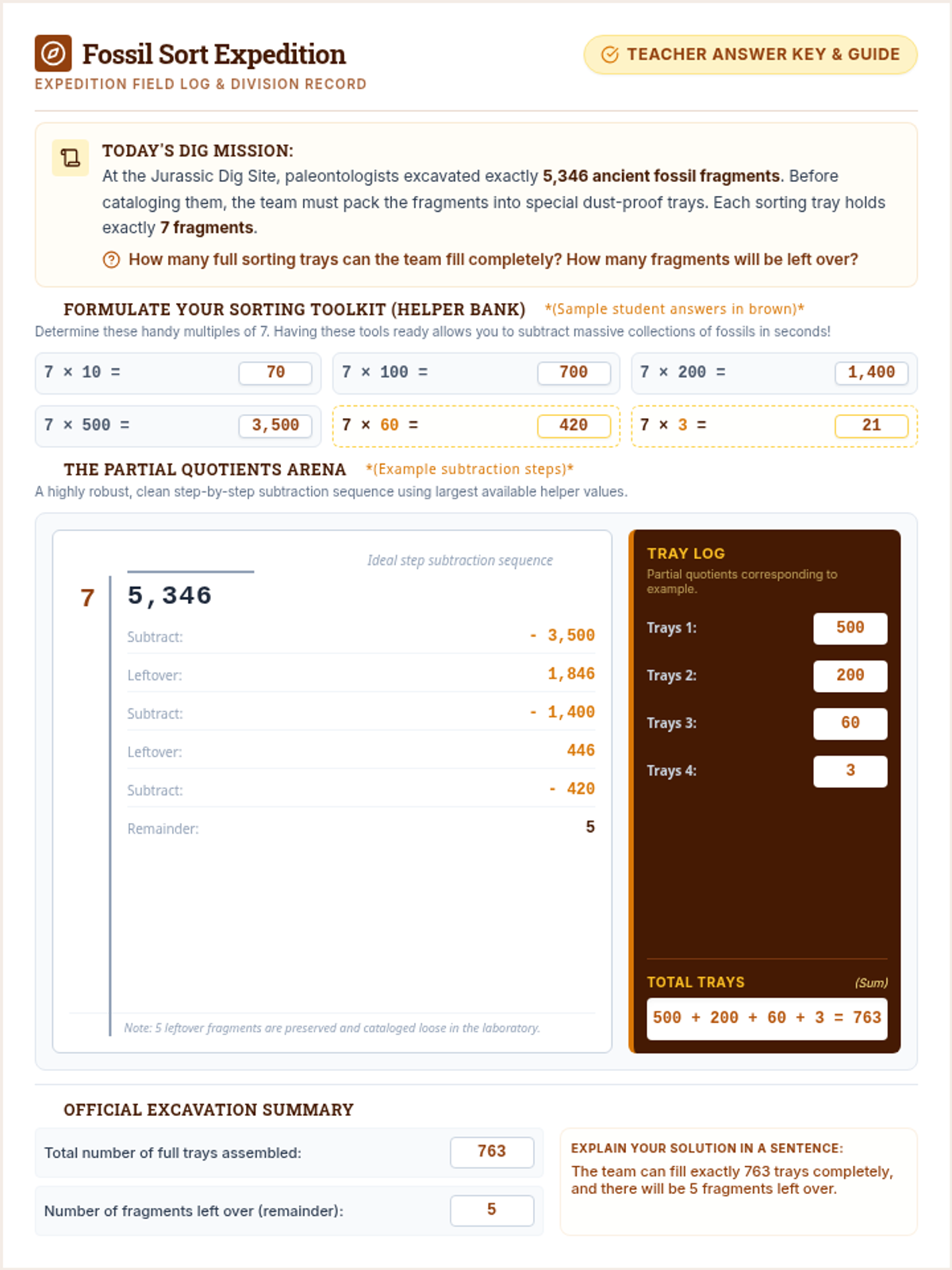
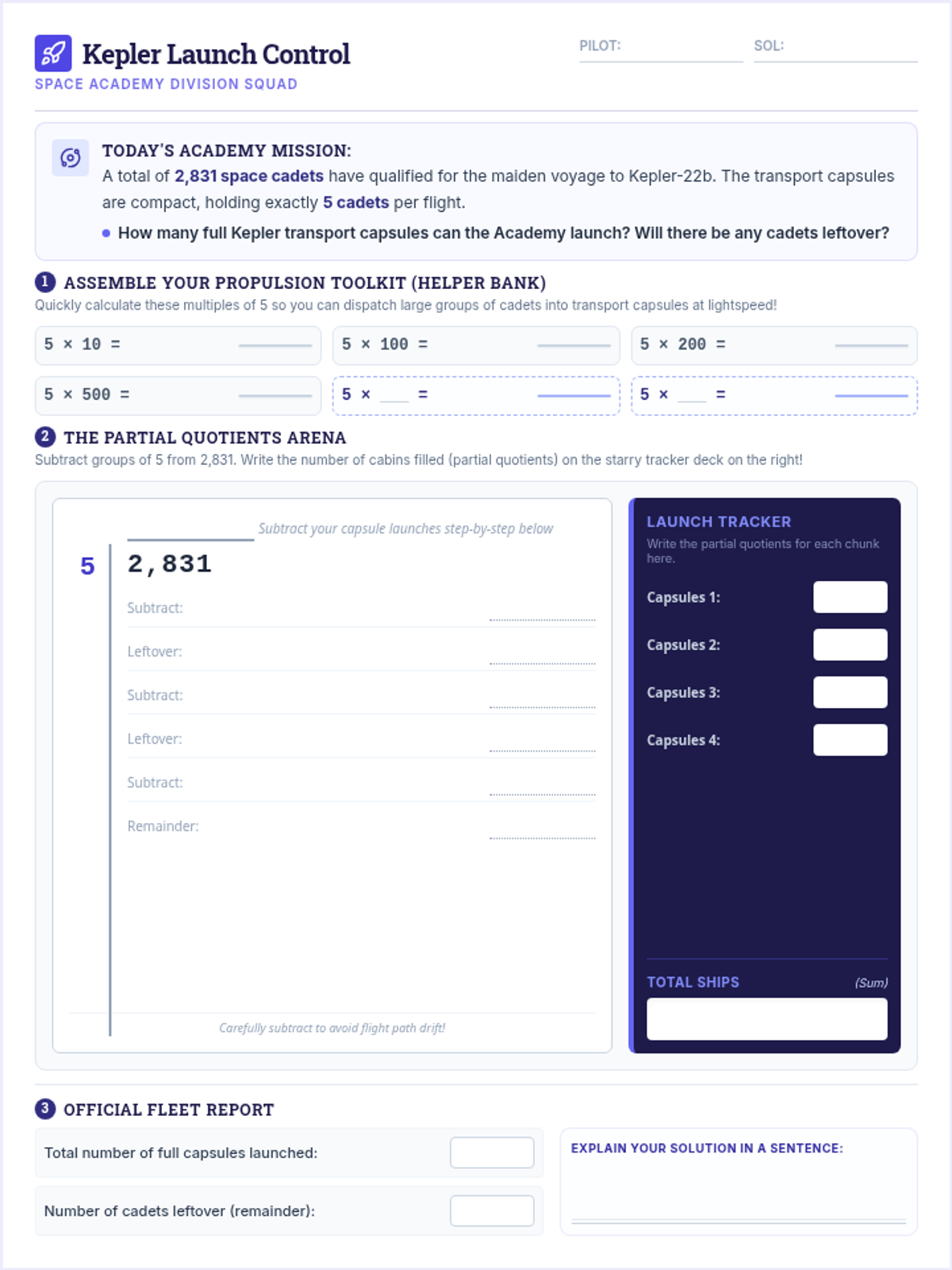
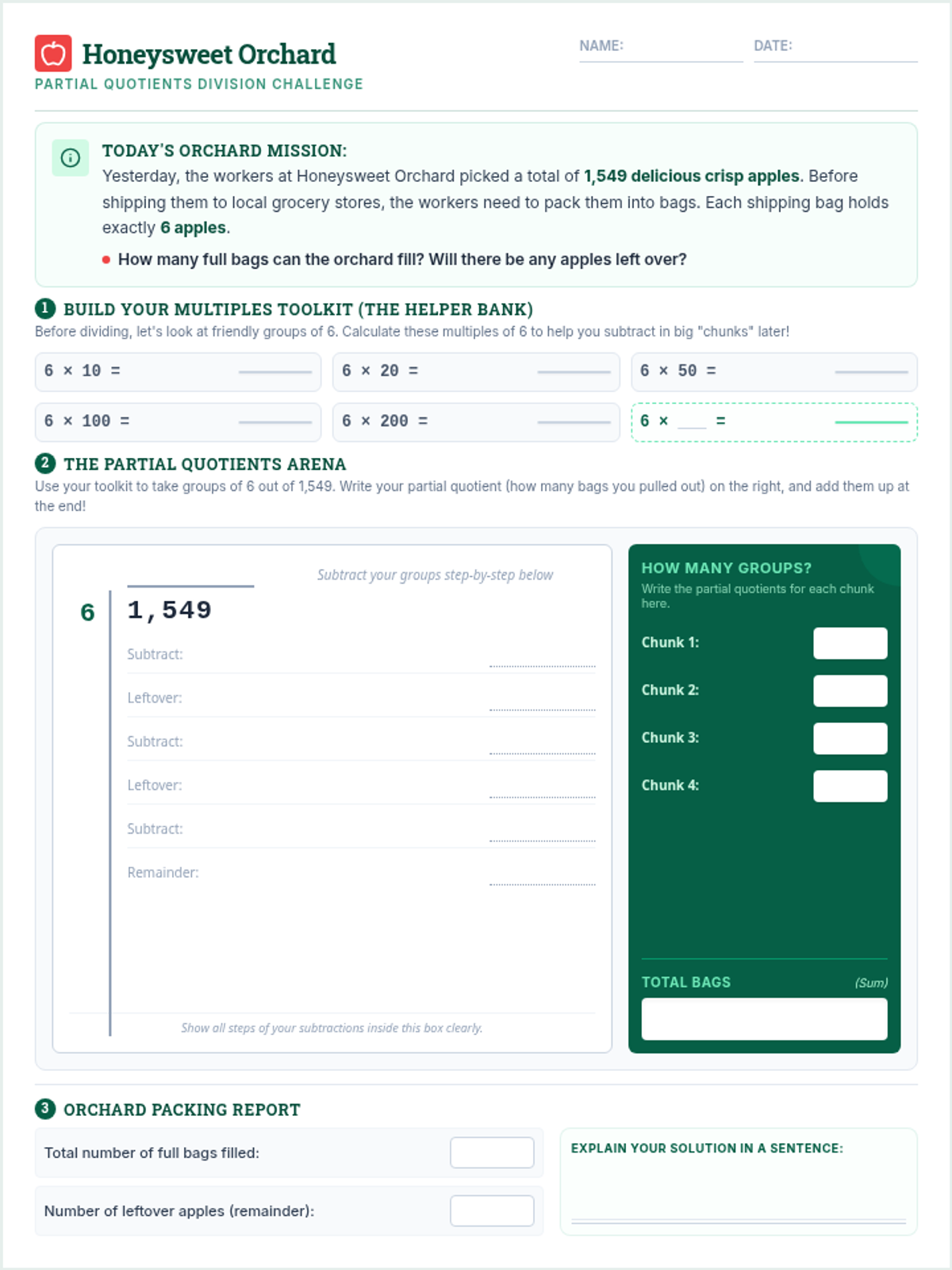
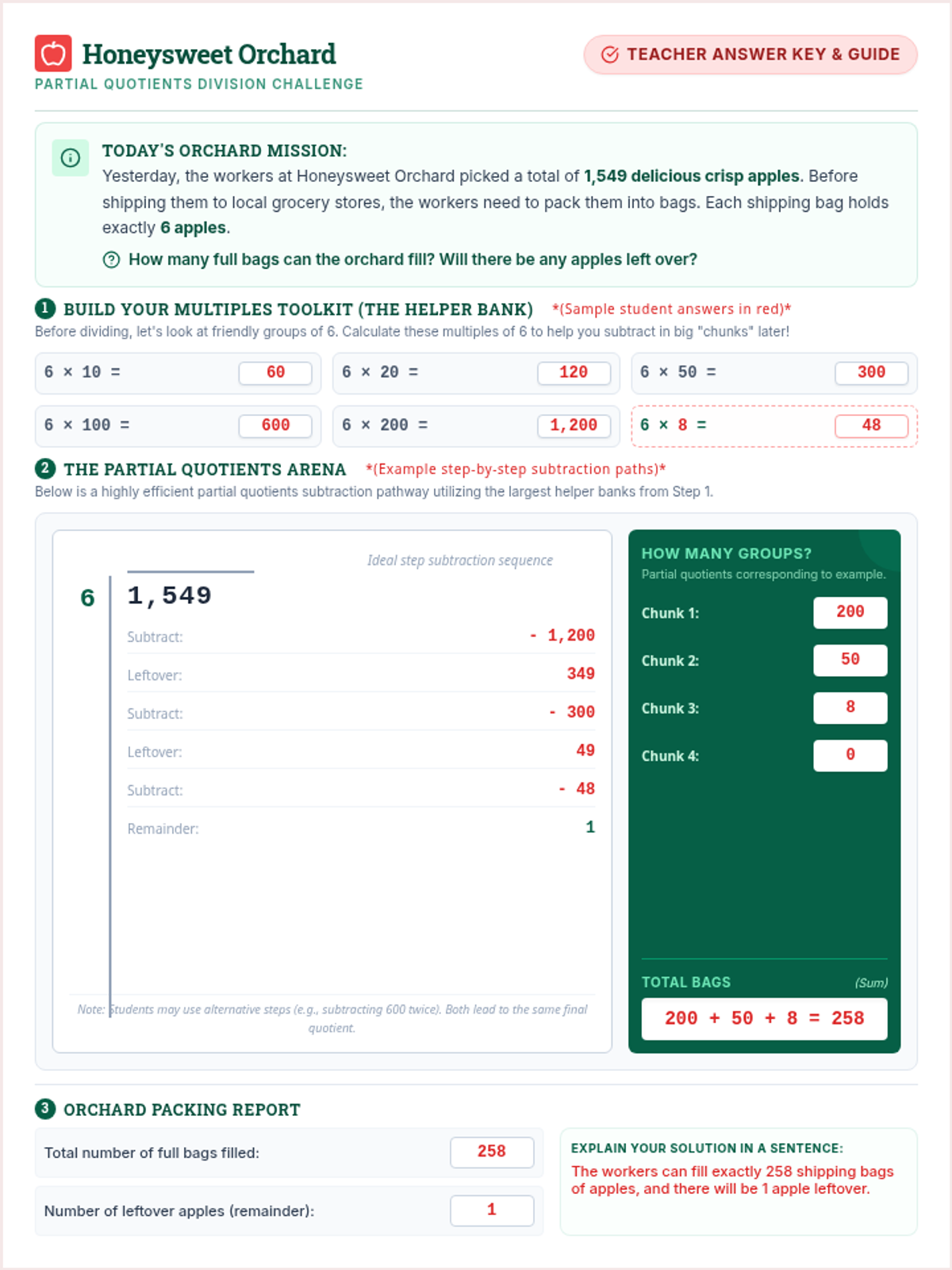
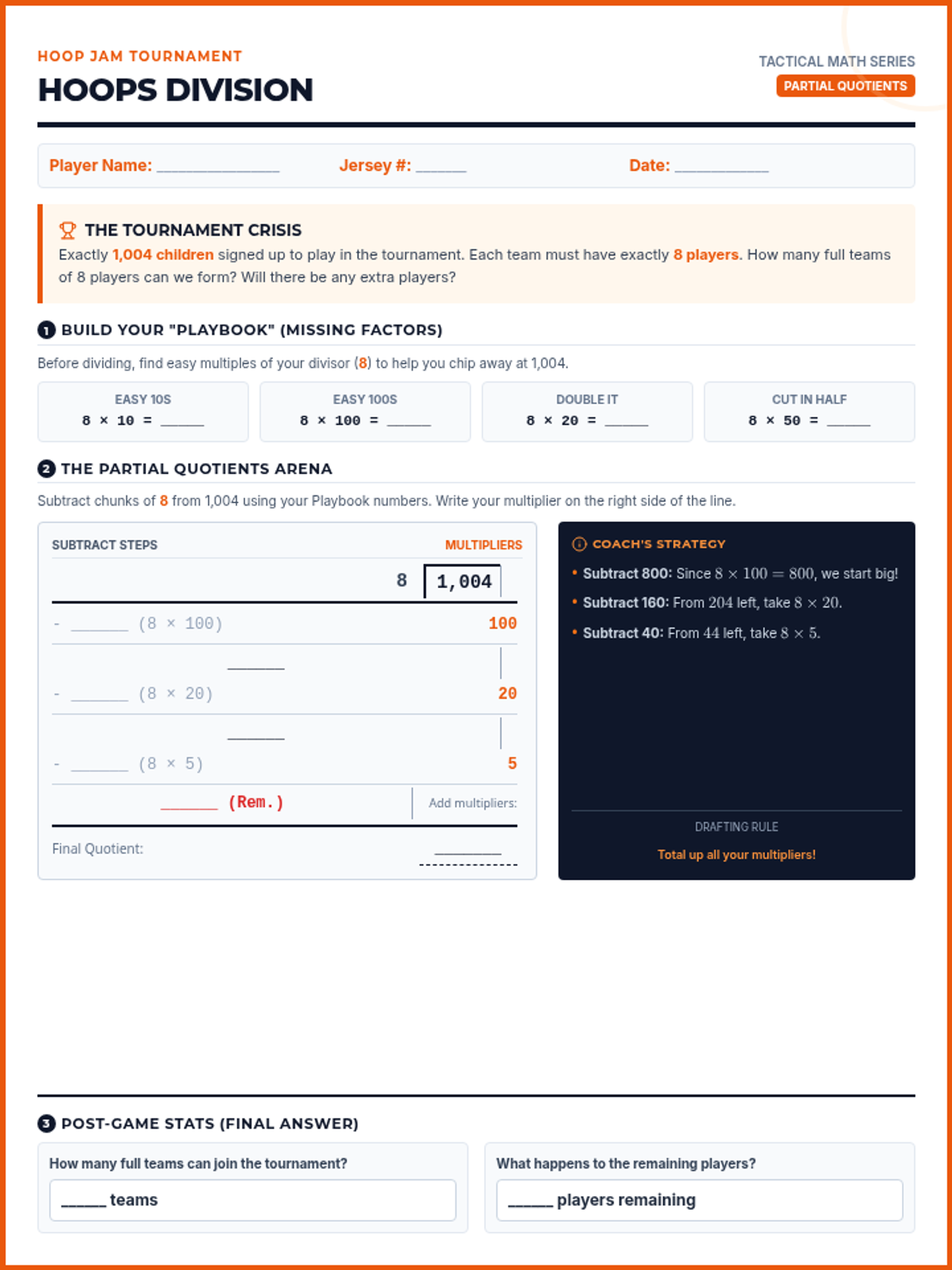
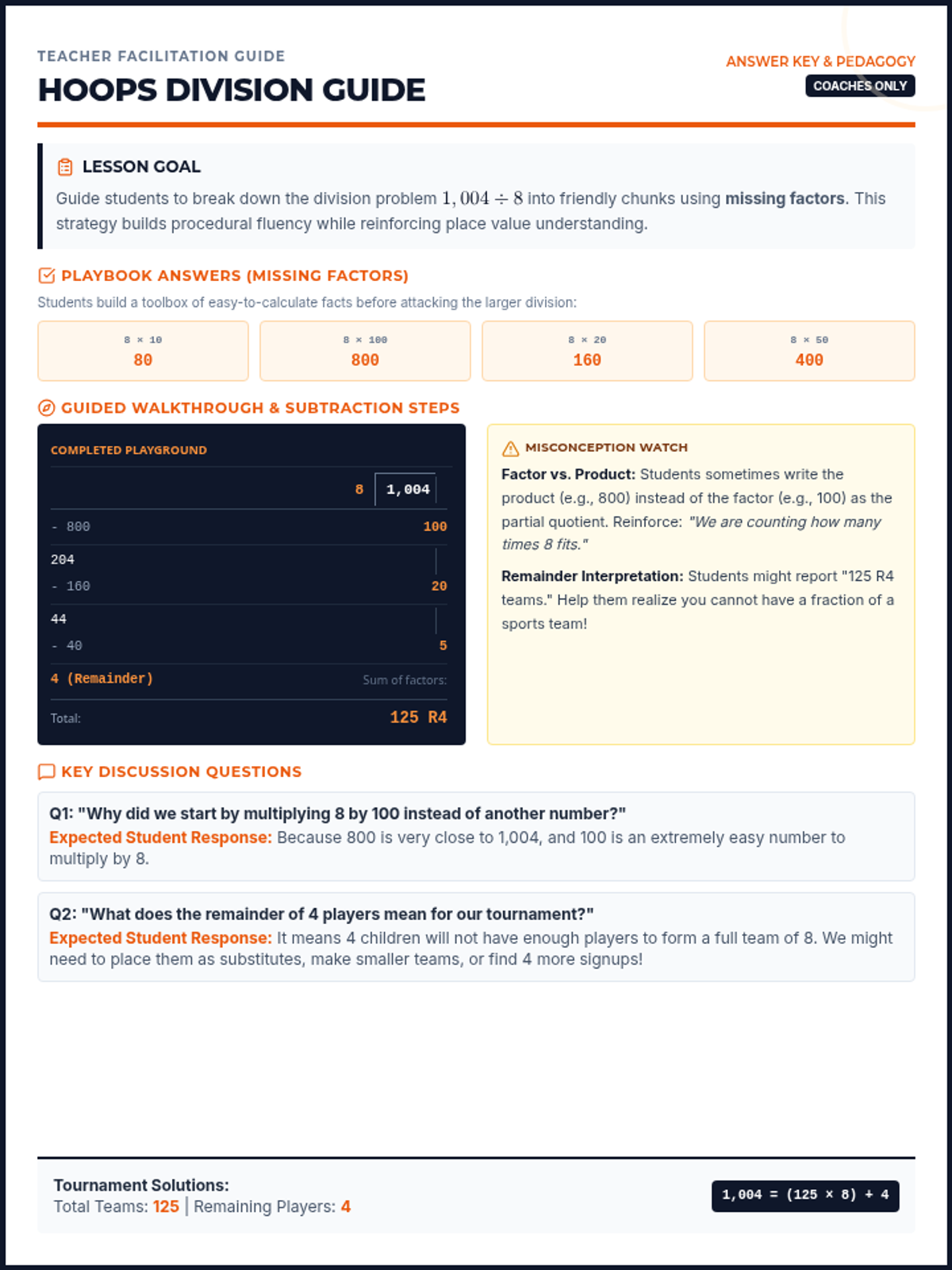
Synthesizing strategies to solve division problems with 3-digit dividends and 1-digit divisors.
Using the 100-beaded number line to visualize division as repeated subtraction and leaps.
Using base 10 blocks to regroup tens into ones when a number cannot be shared equally in its current form.
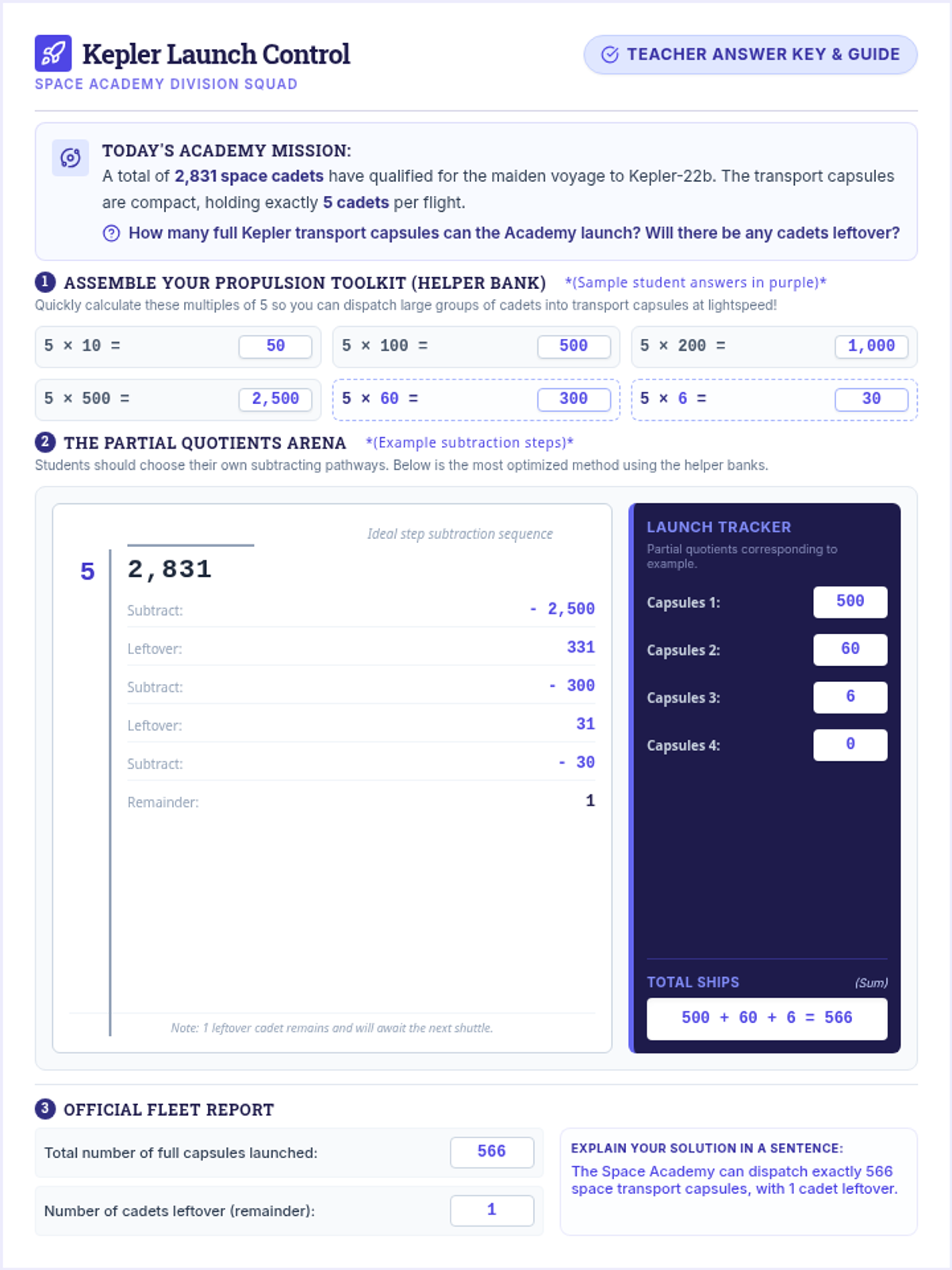
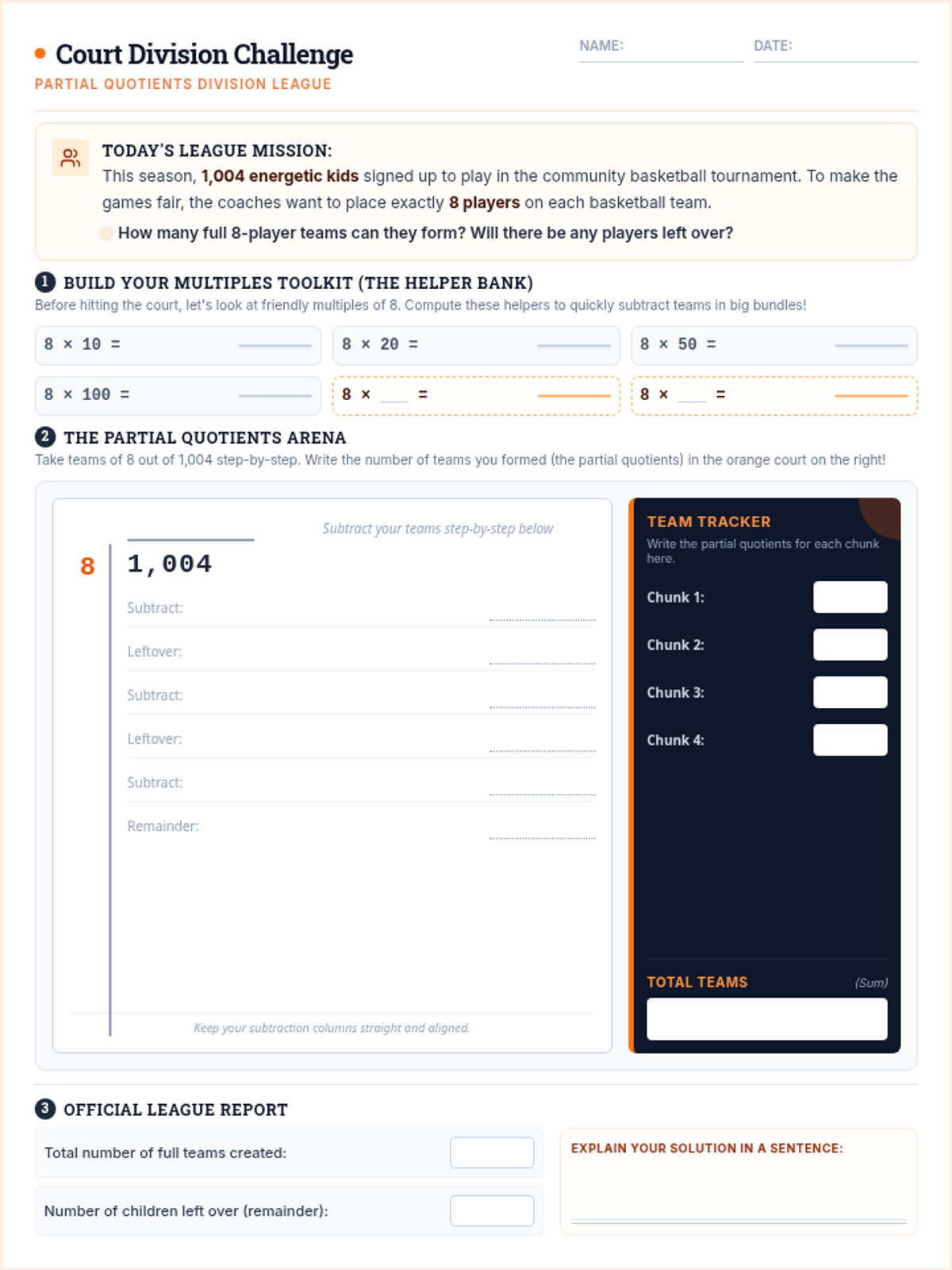
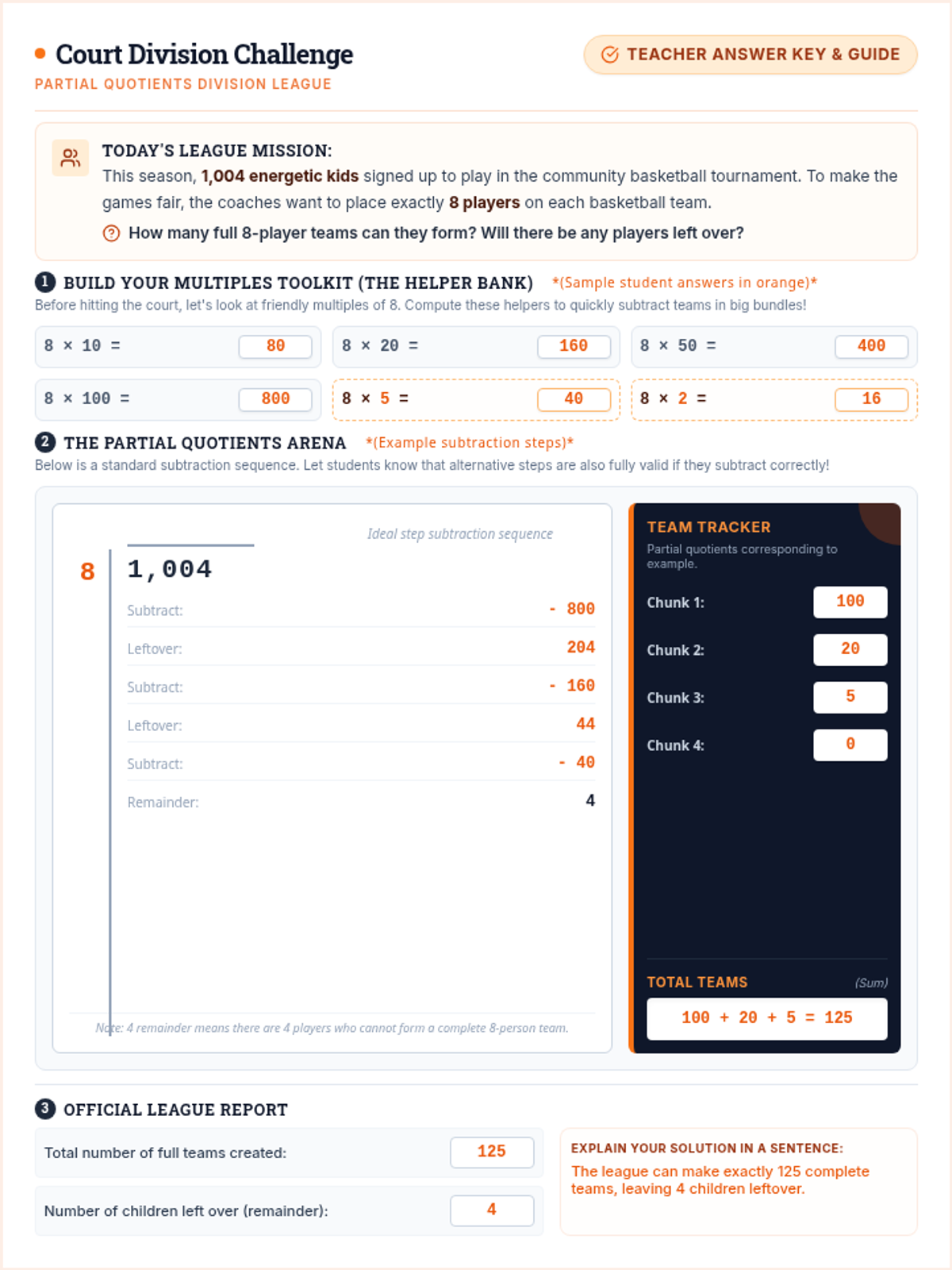
Applying division strategies to 2-digit numbers with small remainders or simple sharing scenarios.
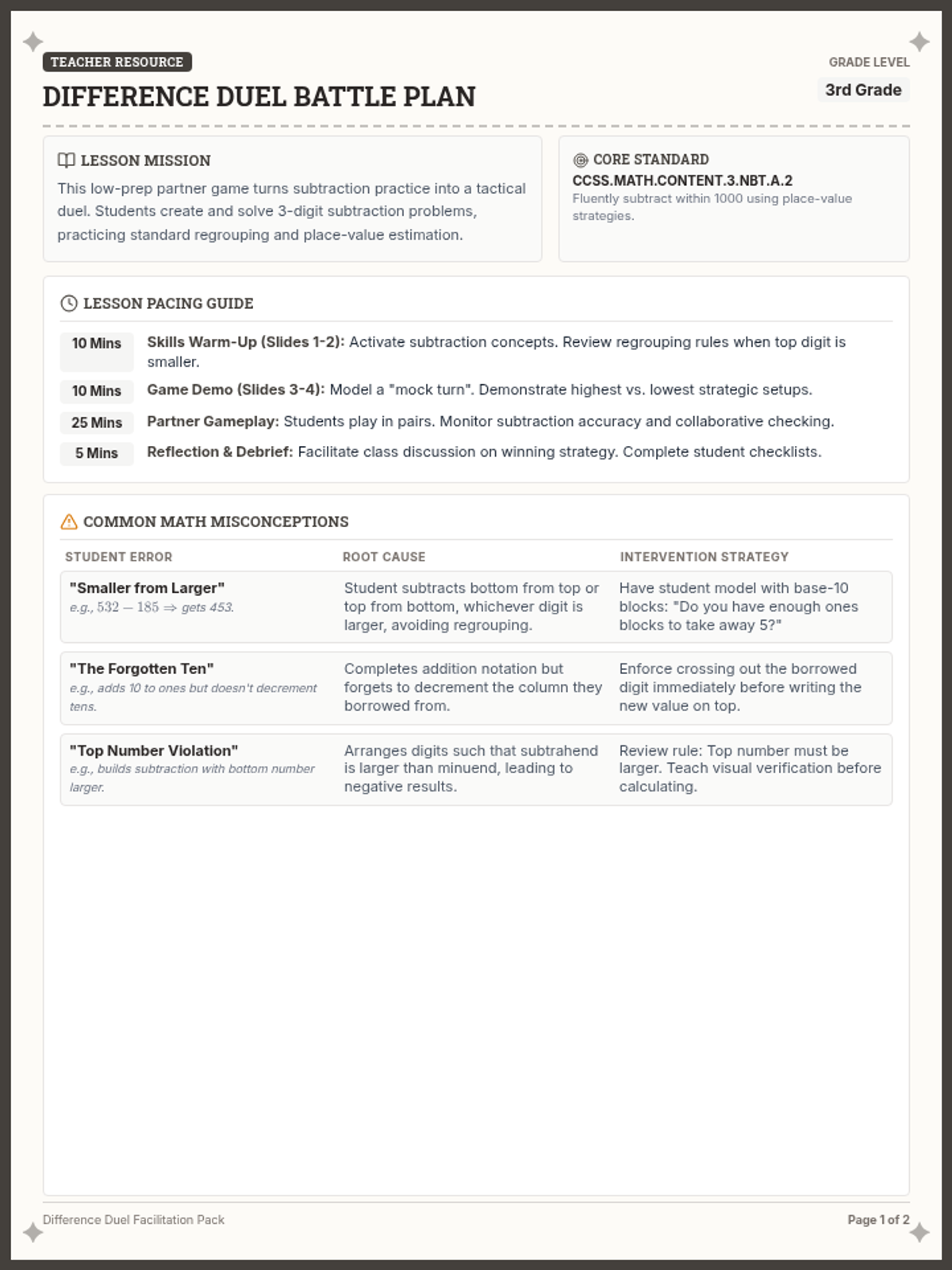
Introduction to multi-digit division by sharing tens and ones using base 10 blocks without regrouping.
Students build division fact fluency and strategy using the 100-bead Rekenrek to find 'how many groups'.
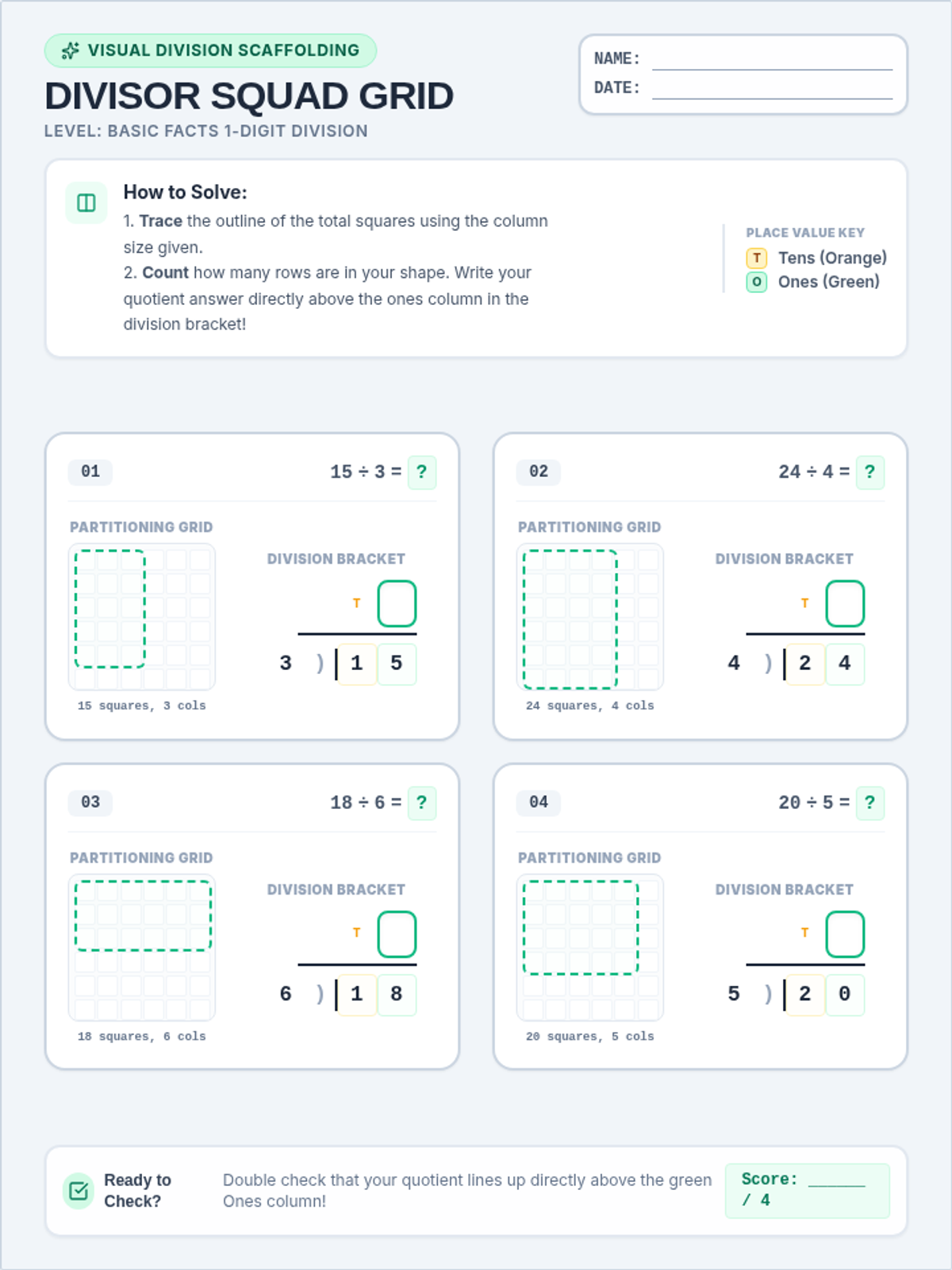
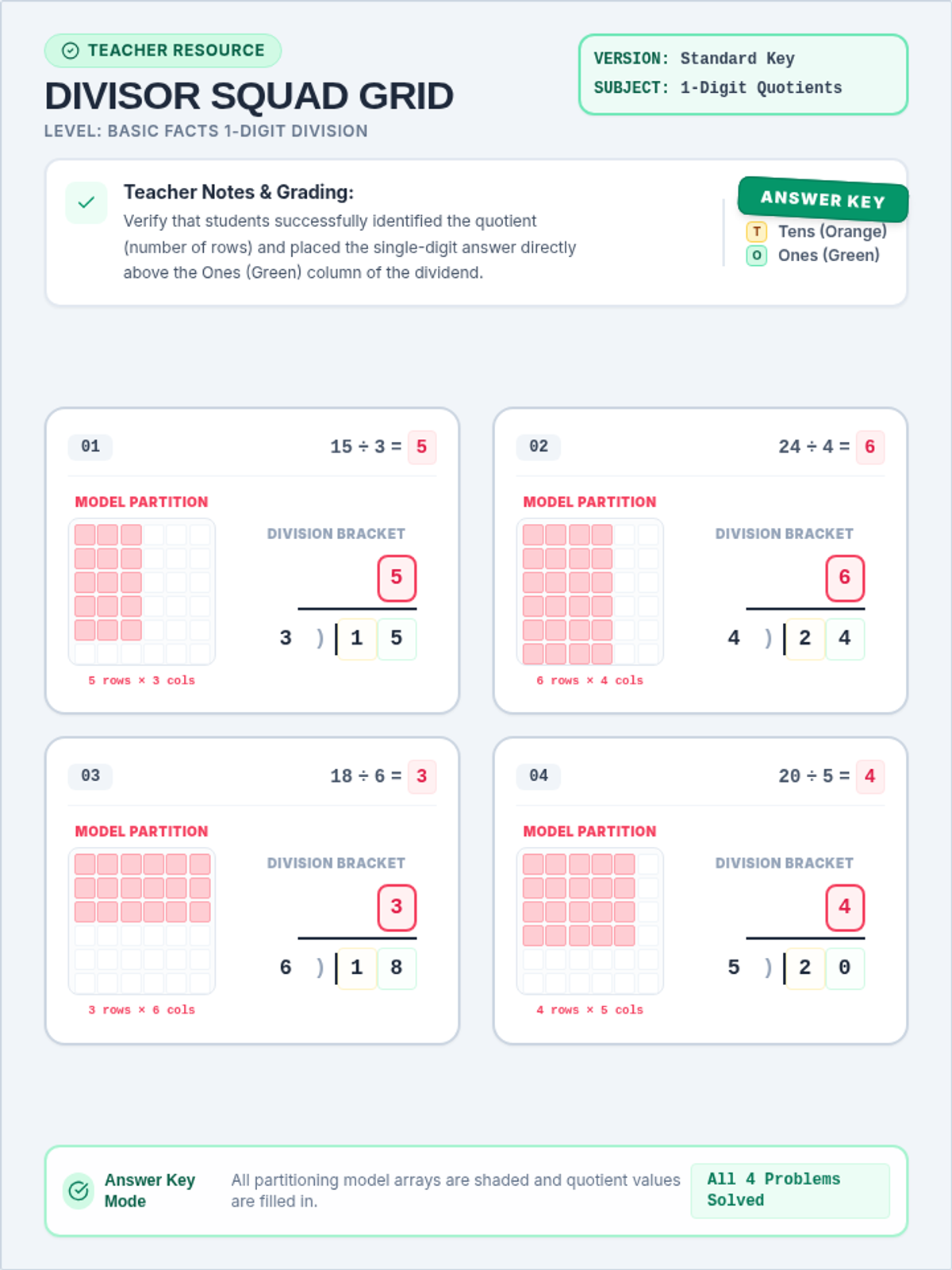
Students use counters and area models to visualize division as rows and columns in an animal parade.
Students explore division as 'grouping' or measurement division by organizing animals into habitats.
Students explore division as 'equal sharing' using counters to distribute snacks to hungry animals. Includes a baseline pre-assessment.
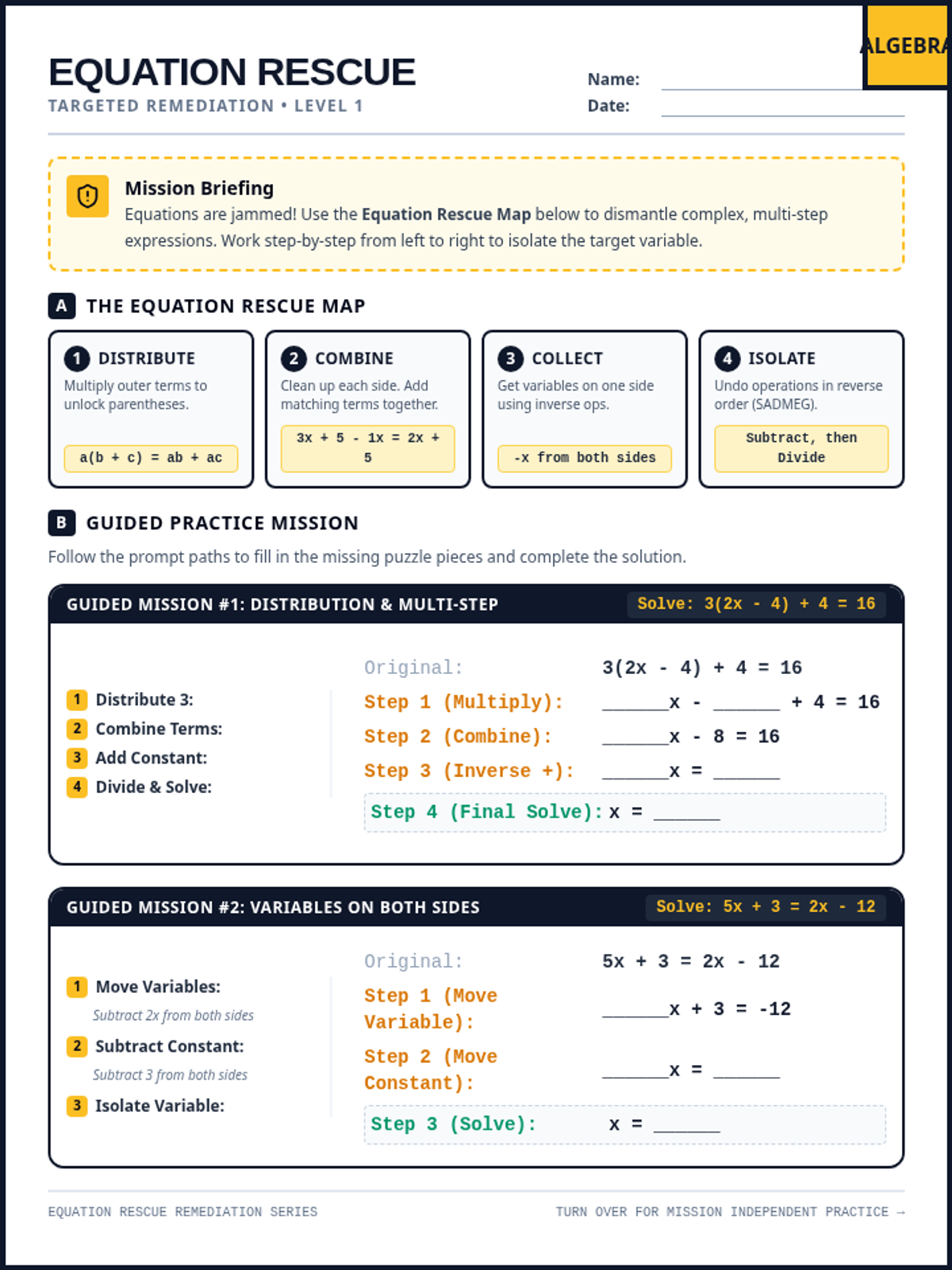
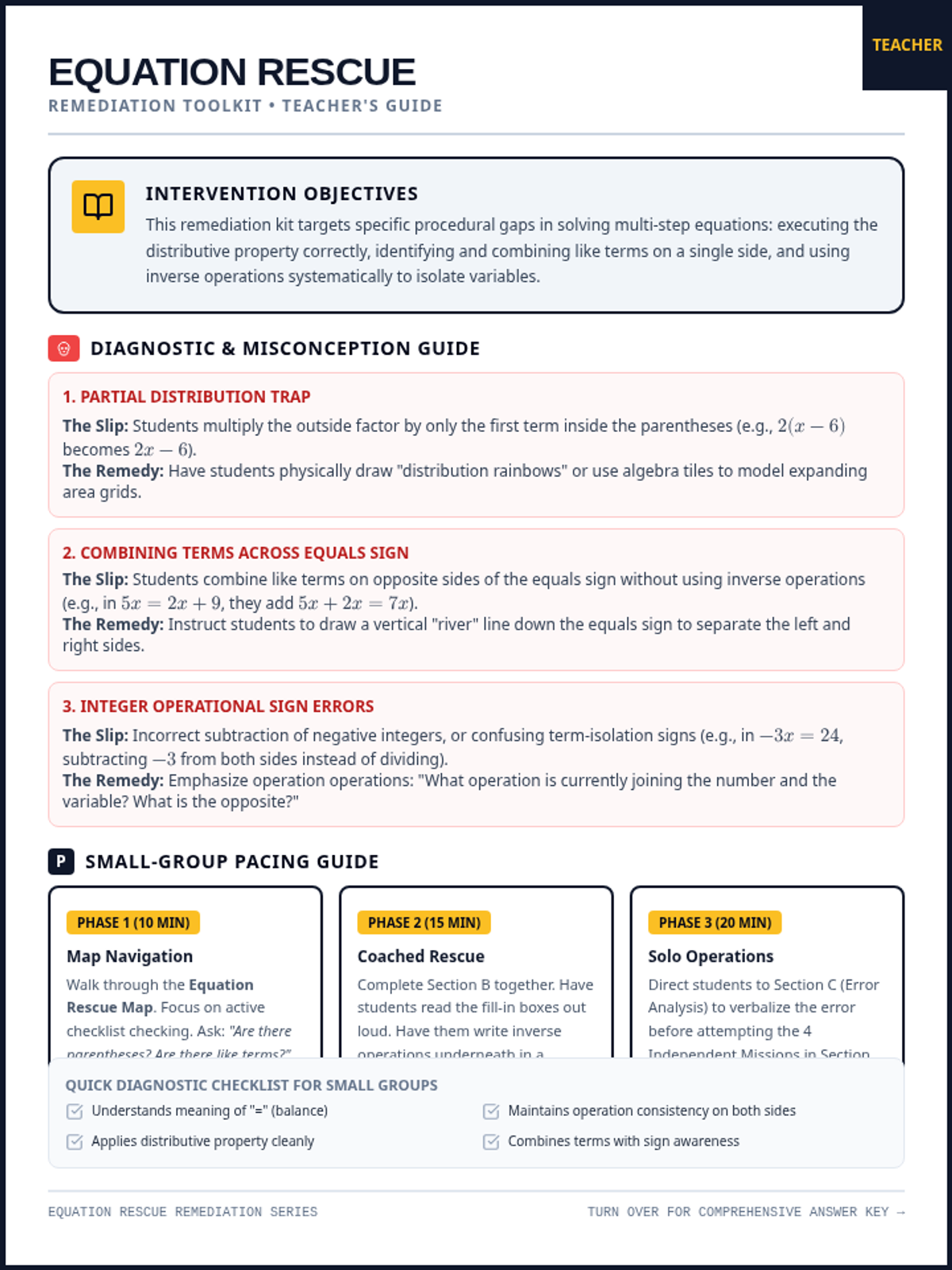
Introduces strategies for balancing and solving one-, two-, and multi-step linear equations using inverse operations.
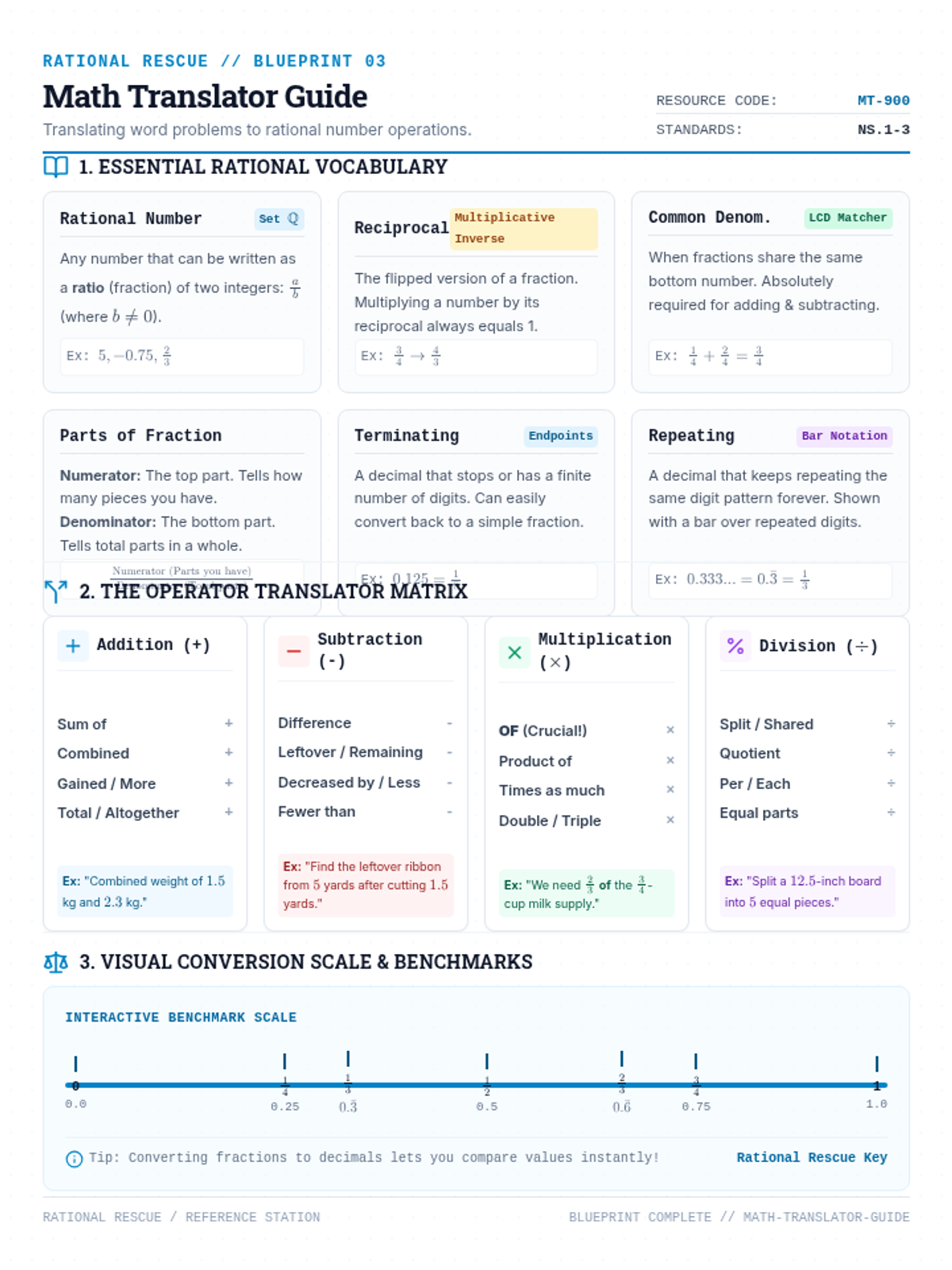
Focuses on mastery of integer operations, absolute value, and rational number properties through visual number line navigation.
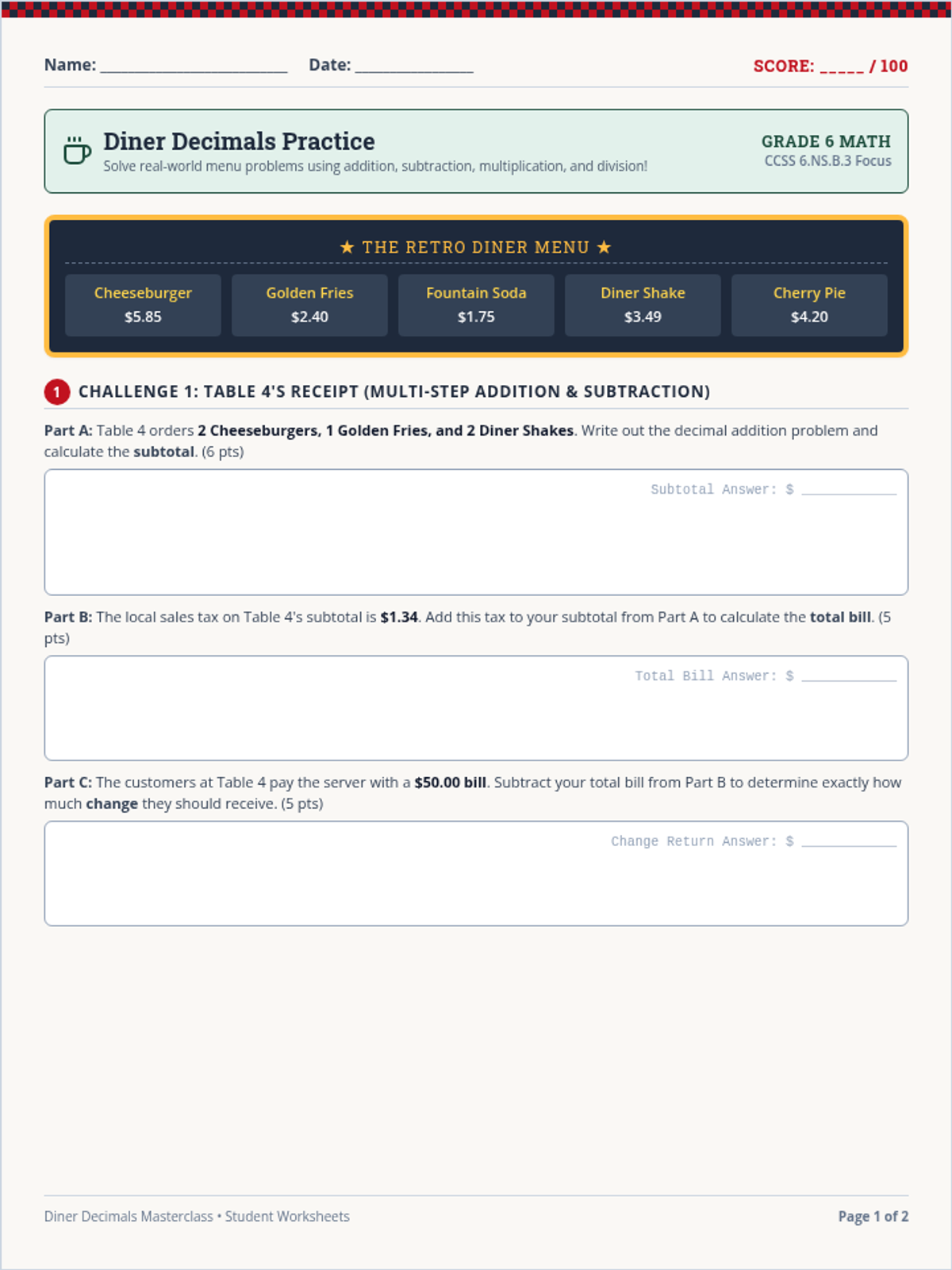
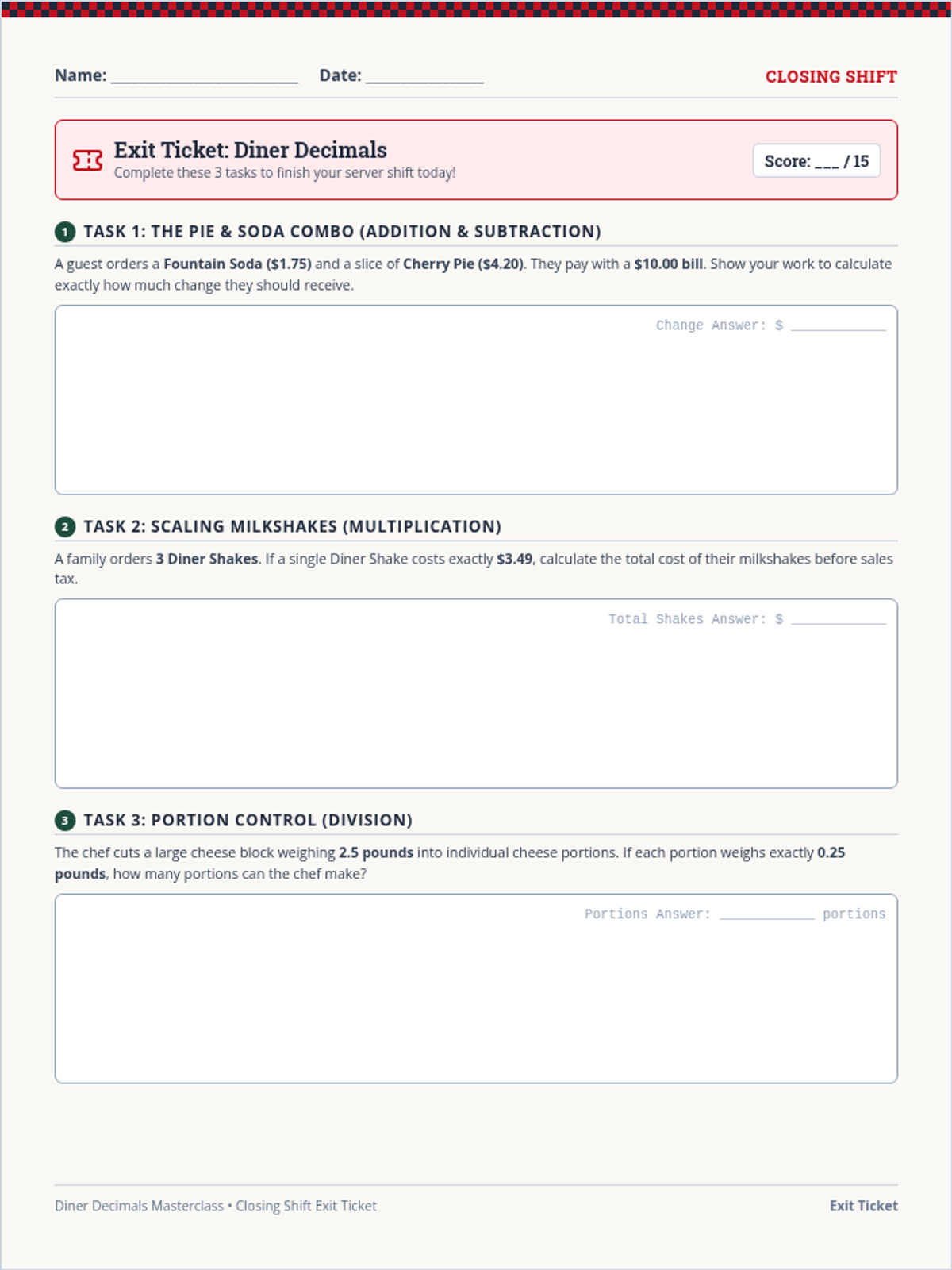
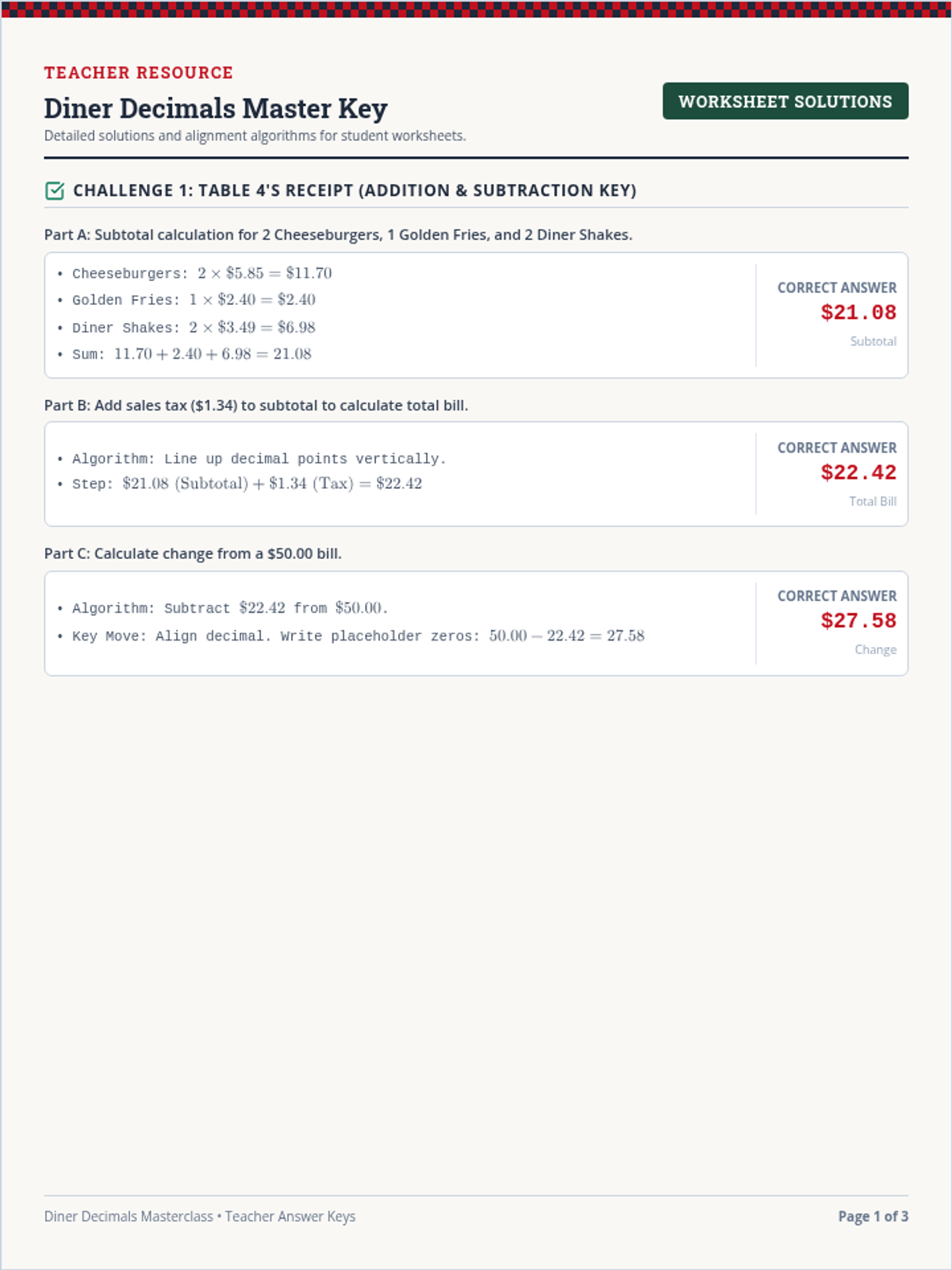
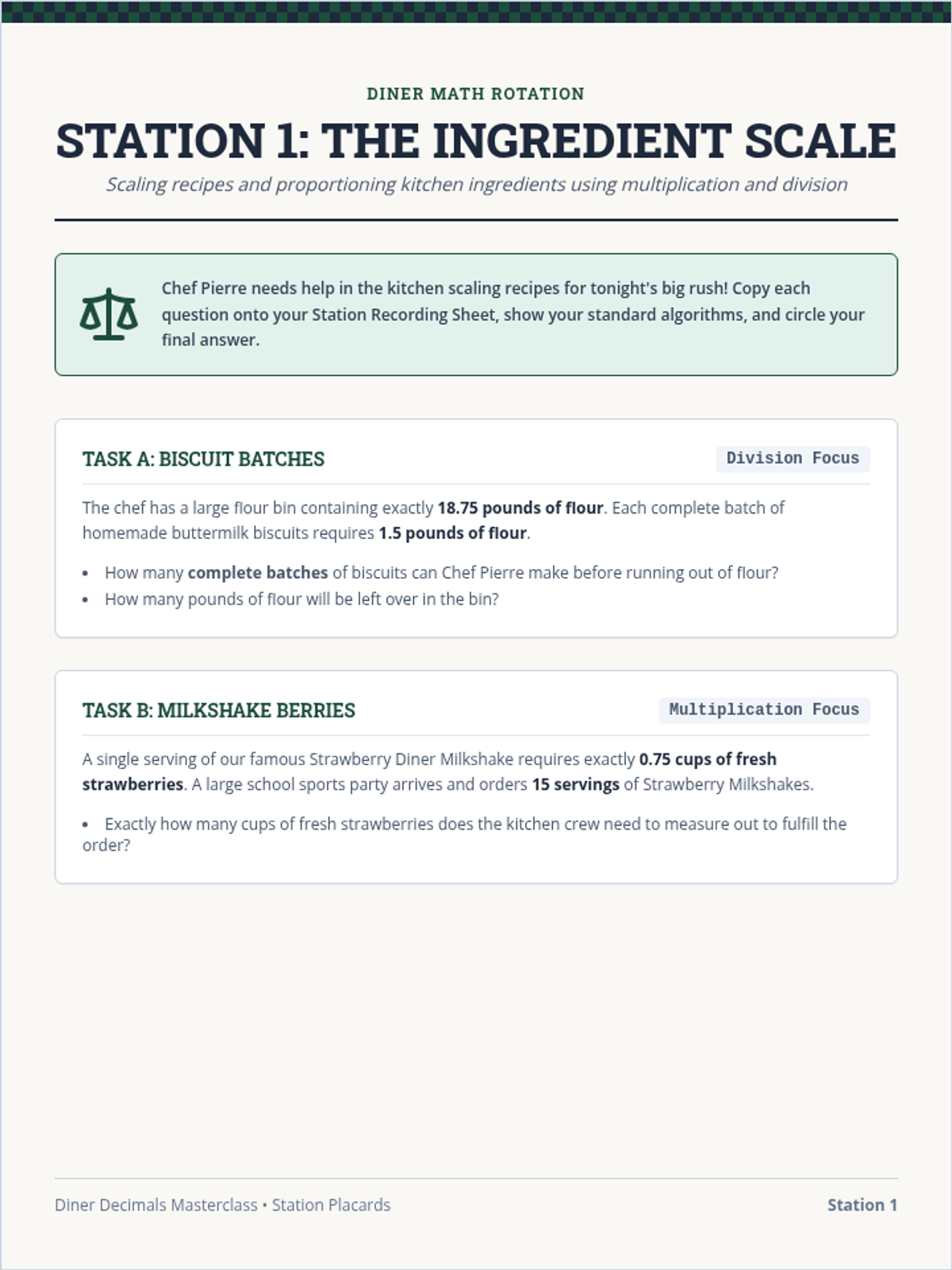
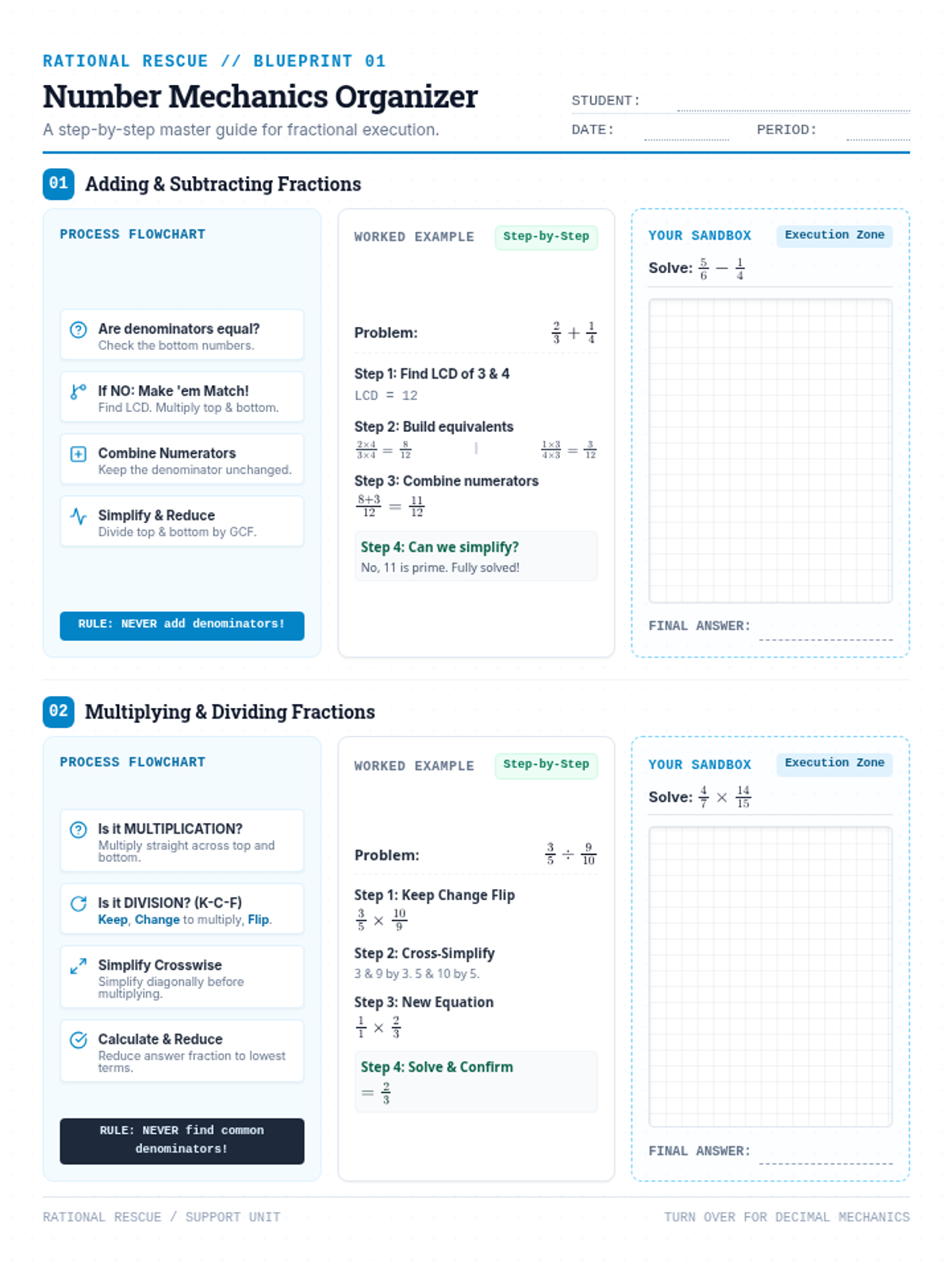
A lesson focused on bridging the conceptual understanding of decimal division with the standard algorithm, covering three key scenarios: decimal by whole number, whole number by decimal, and decimal by decimal.
A hands-on exploration of geometry and spatial reasoning using tangrams, featuring puzzles across four diverse themes with varying difficulty levels.
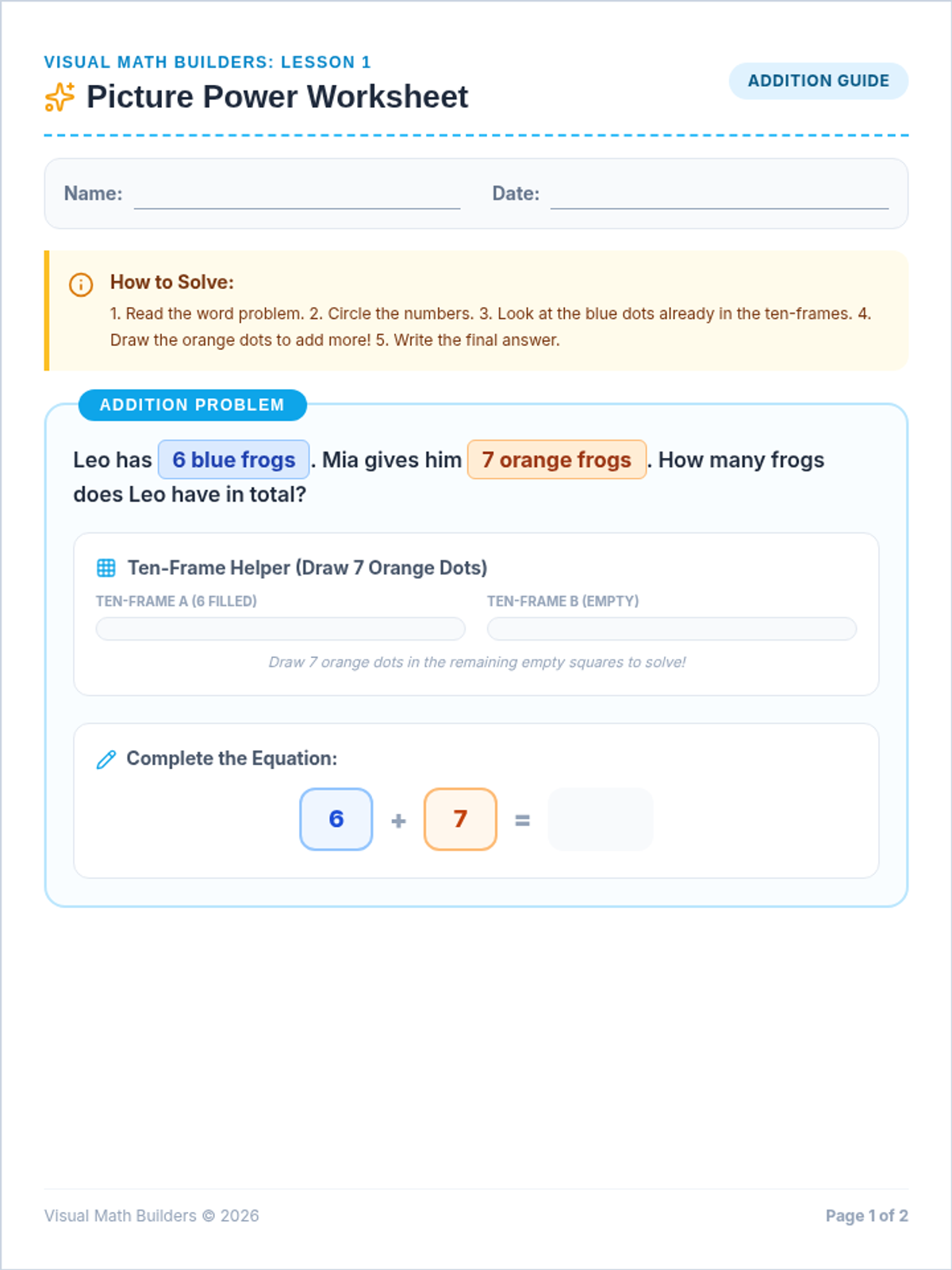
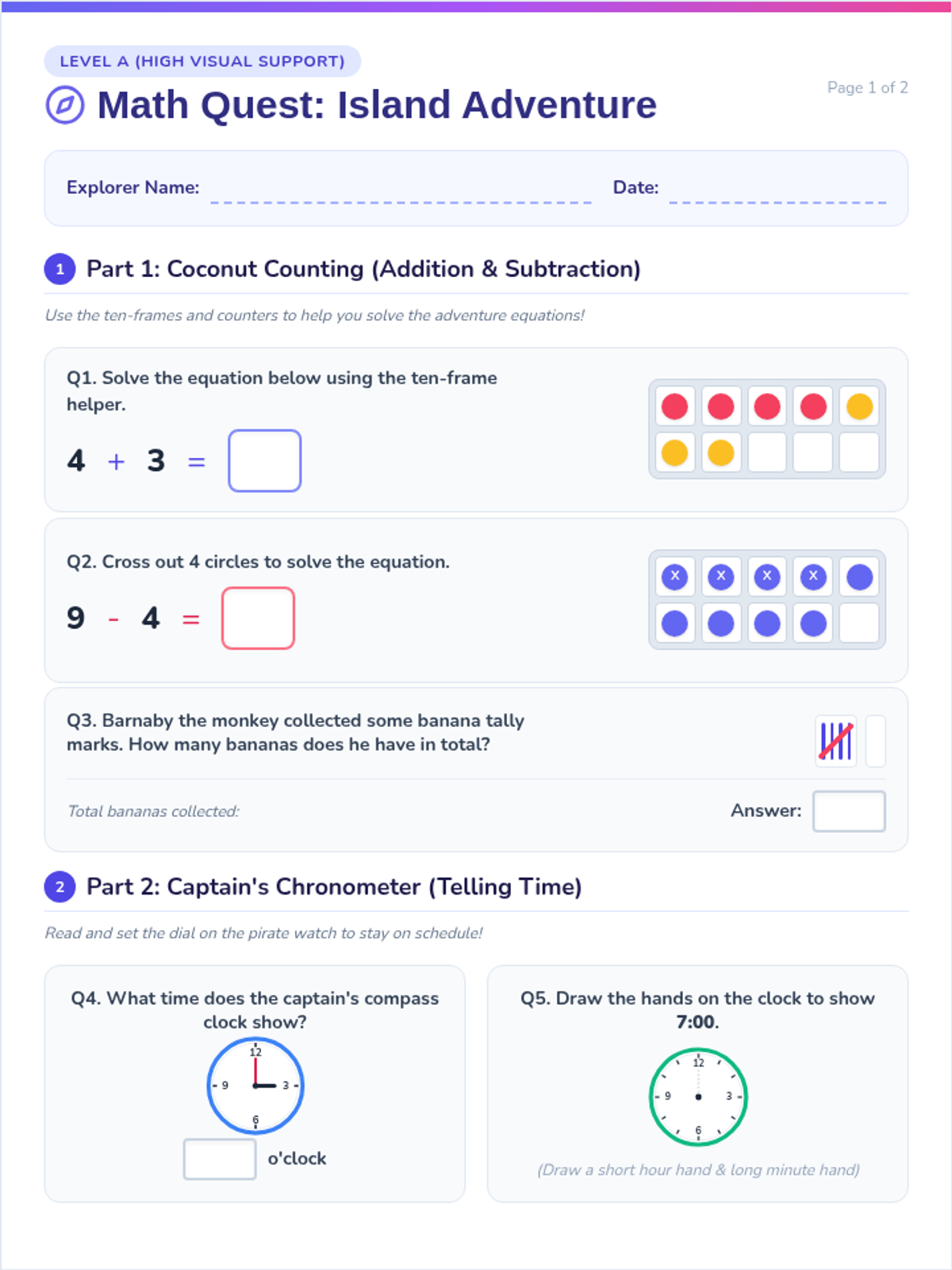
A math practice lesson focused on first-grade addition and time-telling skills, themed around the animals of the African savannah.
A collection of STAAR-aligned multi-step word problems for 4th-grade math, focusing on multiplication, division, fractions, and decimals using the RDW (Read, Draw, Write) strategy.
A 45-minute introductory lesson on independent and dependent variables using sports and nature contexts. Students will learn to identify variables, understand cause-and-effect relationships, and represent them in tables and graphs.
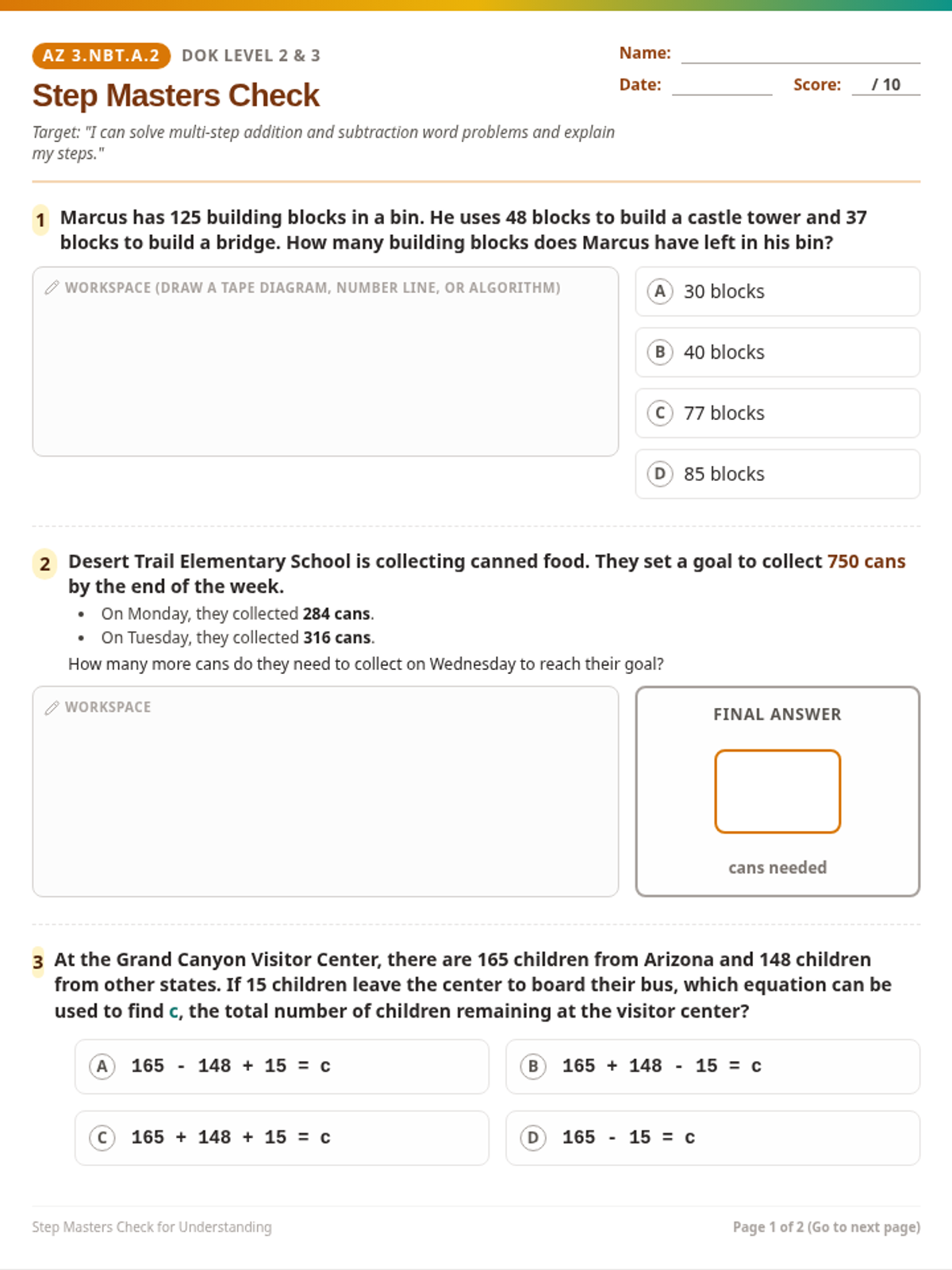
A collection of STAAR-aligned two-step word problems designed for 3rd-grade math mastery. This lesson focuses on problem-solving strategies for addition, subtraction, multiplication, and division scenarios commonly found on the Texas state assessment.
A comprehensive set of tools for assessing and tracking a student's ability to identify numbers 1 through 20 in randomized order.
A visual, video-game themed lesson on two-way frequency tables designed for 8th-grade special education students using Minecraft and Garry's Mod examples.
This lesson focuses on identifying and calculating measures for vertical and adjacent angles using simple one-step equations, designed specifically for learners who benefit from clear visual scaffolding.
A 3-minute curriculum-based measure designed for 5th-grade students to assess fluency and accuracy when adding fractions with common denominators, including computation and word problems.
A collection of hands-on partner activities for kindergarteners to master composing and decomposing the numbers 6-9 using snap cubes, counters, and ten-frames.
A comprehensive review of circle geometry for Honors students, covering angle-arc relationships (central, inscribed, interior, and exterior) and segment lengths (chords, secants, and tangents) through technical blueprint-style visuals and complex algebraic applications.
A high-energy review of operations with monomials and polynomials, focusing on addition, subtraction, multiplication, and division through a collaborative arcade-themed challenge.
A high-intensity review session for AP Precalculus Unit 3, covering trigonometric functions, inverse functions, and polar coordinates through a "Radar Tech" thematic lens.
A comprehensive review for Unit 3 of AP Precalculus, focusing on trigonometric and polar functions through reference materials and practice assessments.
A comprehensive introduction to Right Triangle Trigonometry (SOH CAH TOA) aligned with Illinois High School Geometry standards. Students will explore ratios, solve for missing dimensions, and apply trigonometry to real-world surveying scenarios.
A focused lesson on transformations of quadratic and polynomial functions, emphasizing multiple-select assessments and justification of work. Students will analyze how changes in function equations affect their graphical representations.
A comprehensive exploration of circle geometry, focusing on the relationships between tangents, secants, and chords, including segment lengths and angle-arc relationships.
A specialized lesson for adding fractions with unlike denominators (sum ≤ 1) designed for a modified 5th-grade math class, utilizing fraction strips as the primary visual model.
A series of high-level performance tasks where students apply fractional and decimal reasoning to real-world engineering and design challenges. Students will navigate budget constraints and spatial limitations to create blueprints and project plans.
A comprehensive lesson on circle geometry focusing on inscribed angles, angles in semicircles, and the properties of inscribed quadrilaterals. Students will learn the relationship between inscribed angles and their intercepted arcs through visual instruction and a set of 10 challenge questions.
A STAAR-aligned scavenger hunt focusing on graphing linear functions, writing equations from multiple representations, and solving linear inequalities. Students solve problems at various stations to find their next destination, reinforcing key attributes and solution sets.
A gamified, space-themed mission focused on mastering addition and subtraction of fractions with unlike denominators, designed to boost motivation during STAAR prep. Students act as 'Mission Specialists' to solve orbital calculations and rescue a stranded shuttle.
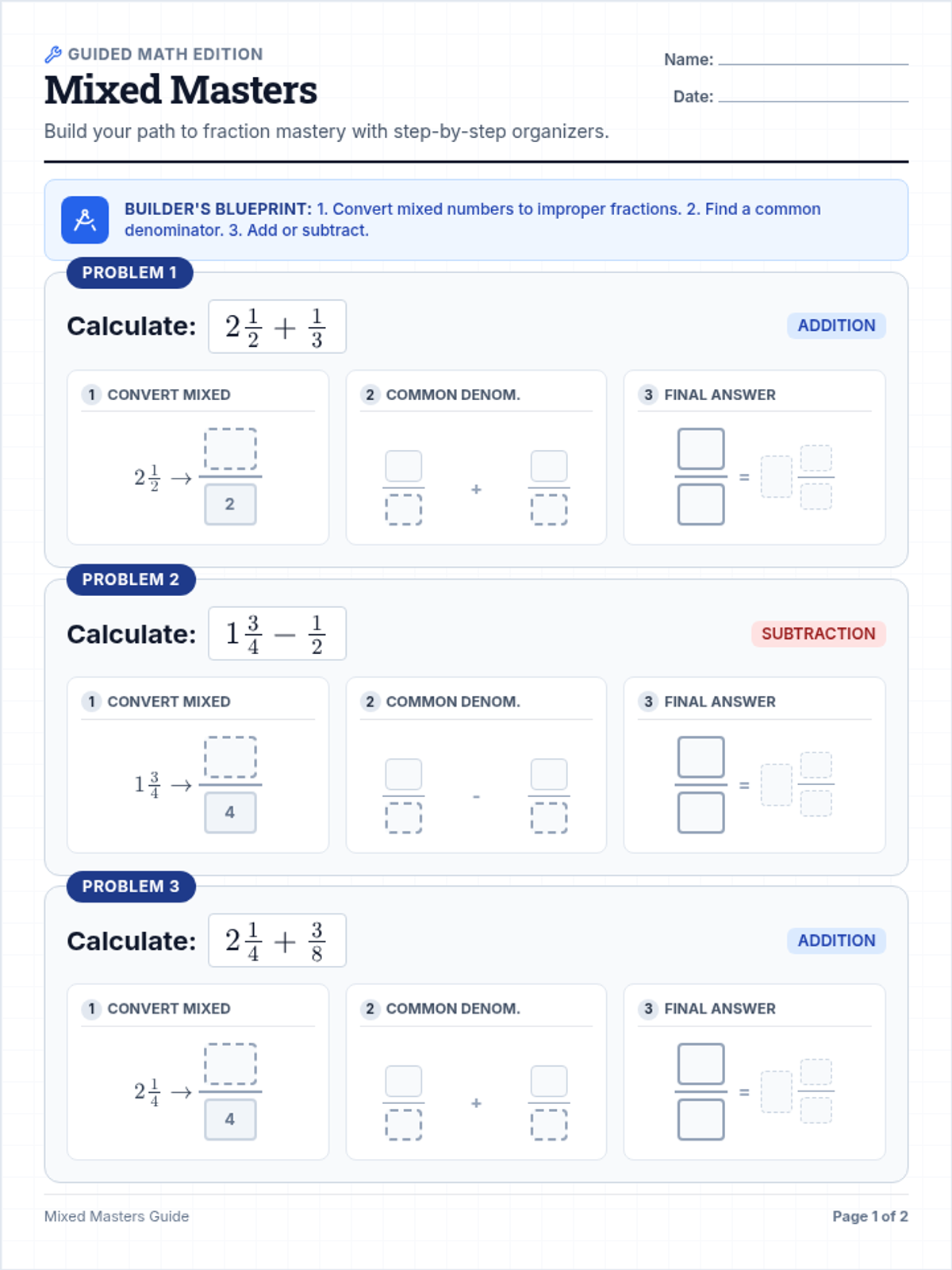
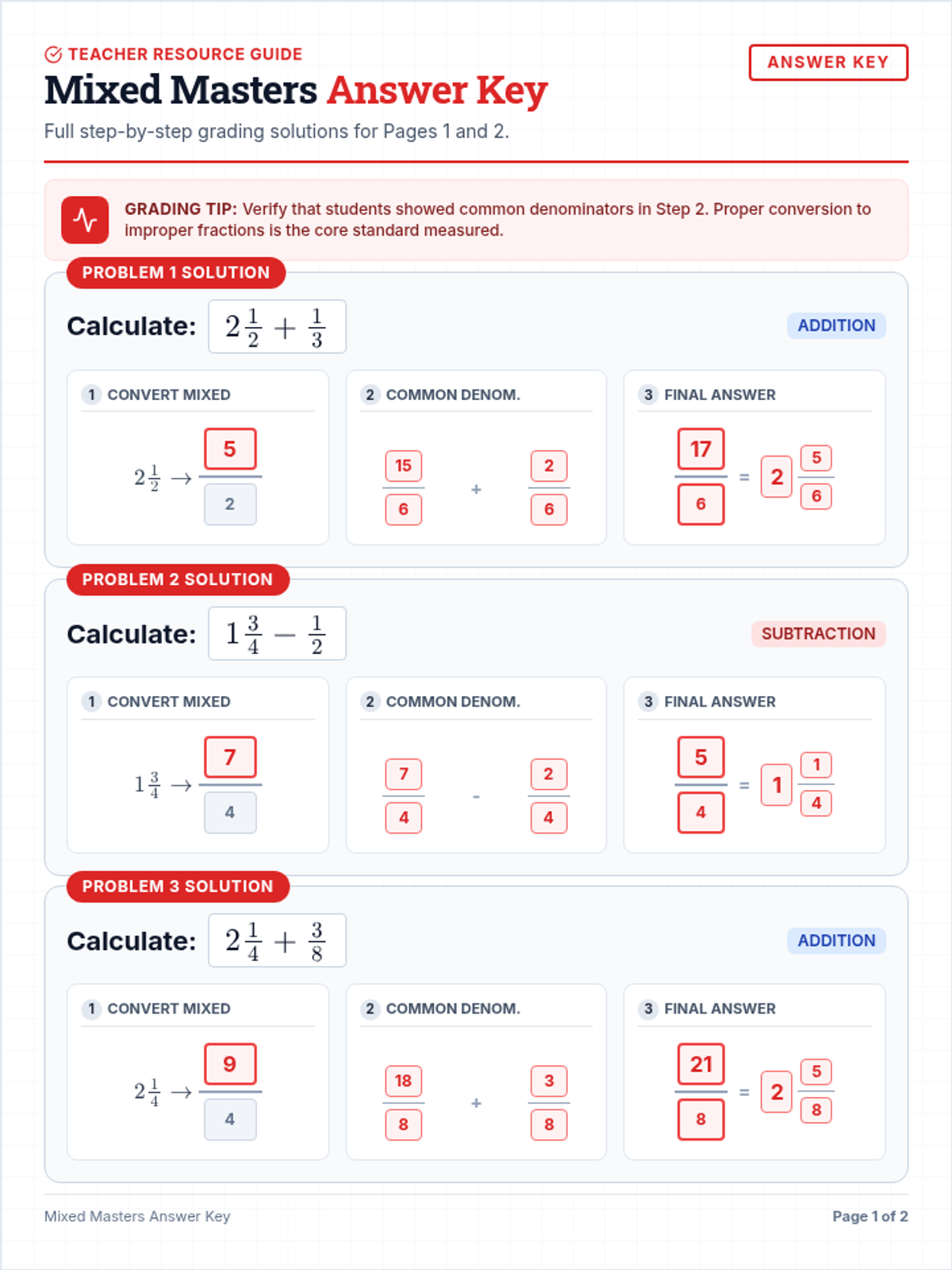
This lesson focuses on developing a deep understanding of fractions as numbers, including identifying parts of a whole, placing fractions on number lines, and comparing fractions with common numerators or denominators.
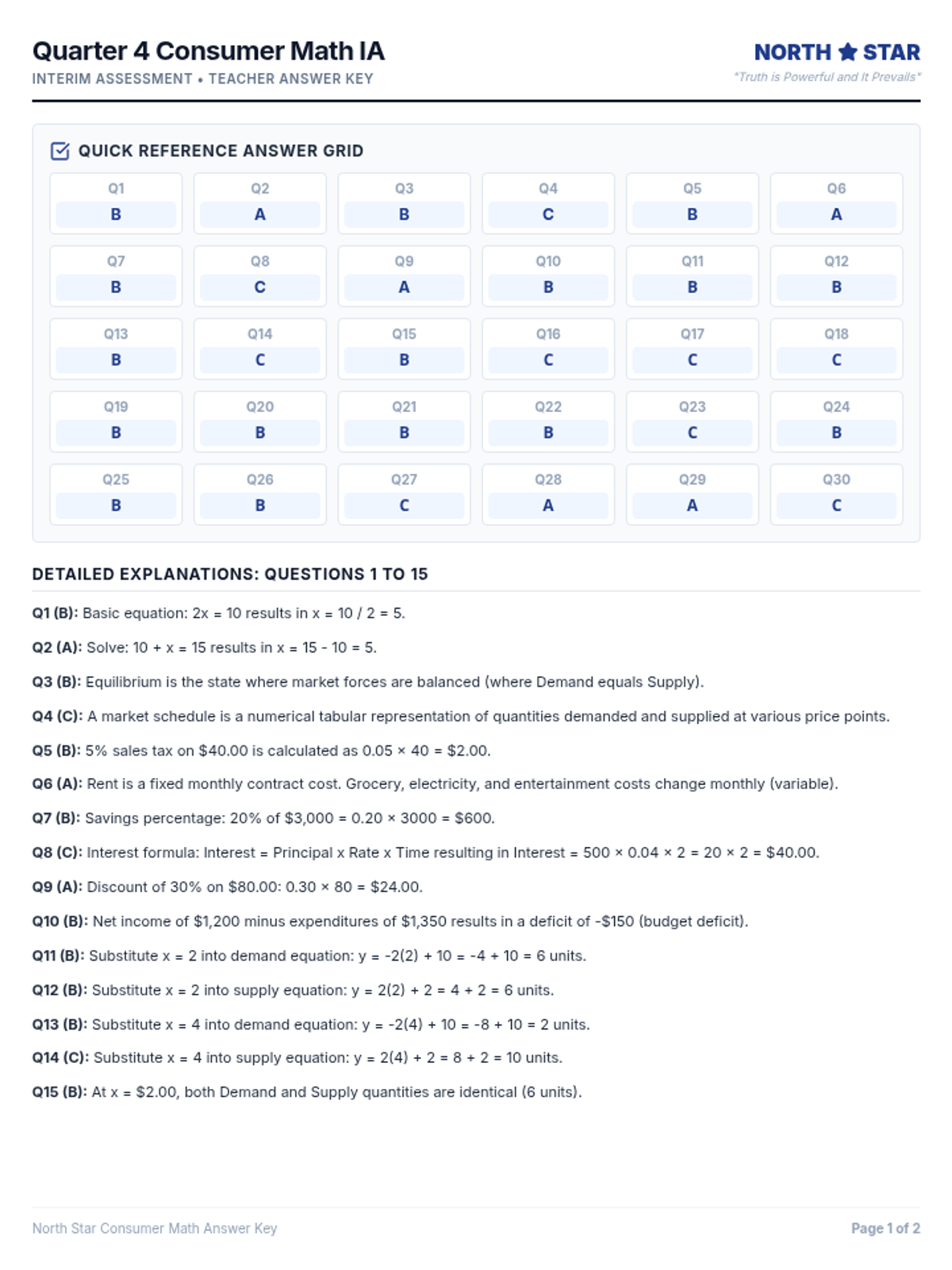
A scaffolded practice set for 8th-grade linear equations and systems, focusing on translation, solving, and verification of EOG-aligned problems.
A Grade 6 mathematics assessment focused on the NC.6.RP standard, challenging students to solve ratio problems using tables, double number lines, tape diagrams, and word problems.
A scaffolded practice set focused on North Carolina Standard NC.8.F, helping students define and compare functions across tables, graphs, and equations while distinguishing between proportional and non-proportional relationships.
A diagnostic mini-assessment focused on Grade 6 Expressions and Equations (NC.6.EE), featuring EOG-style questions on writing, evaluating, and solving algebraic expressions and one-step equations.
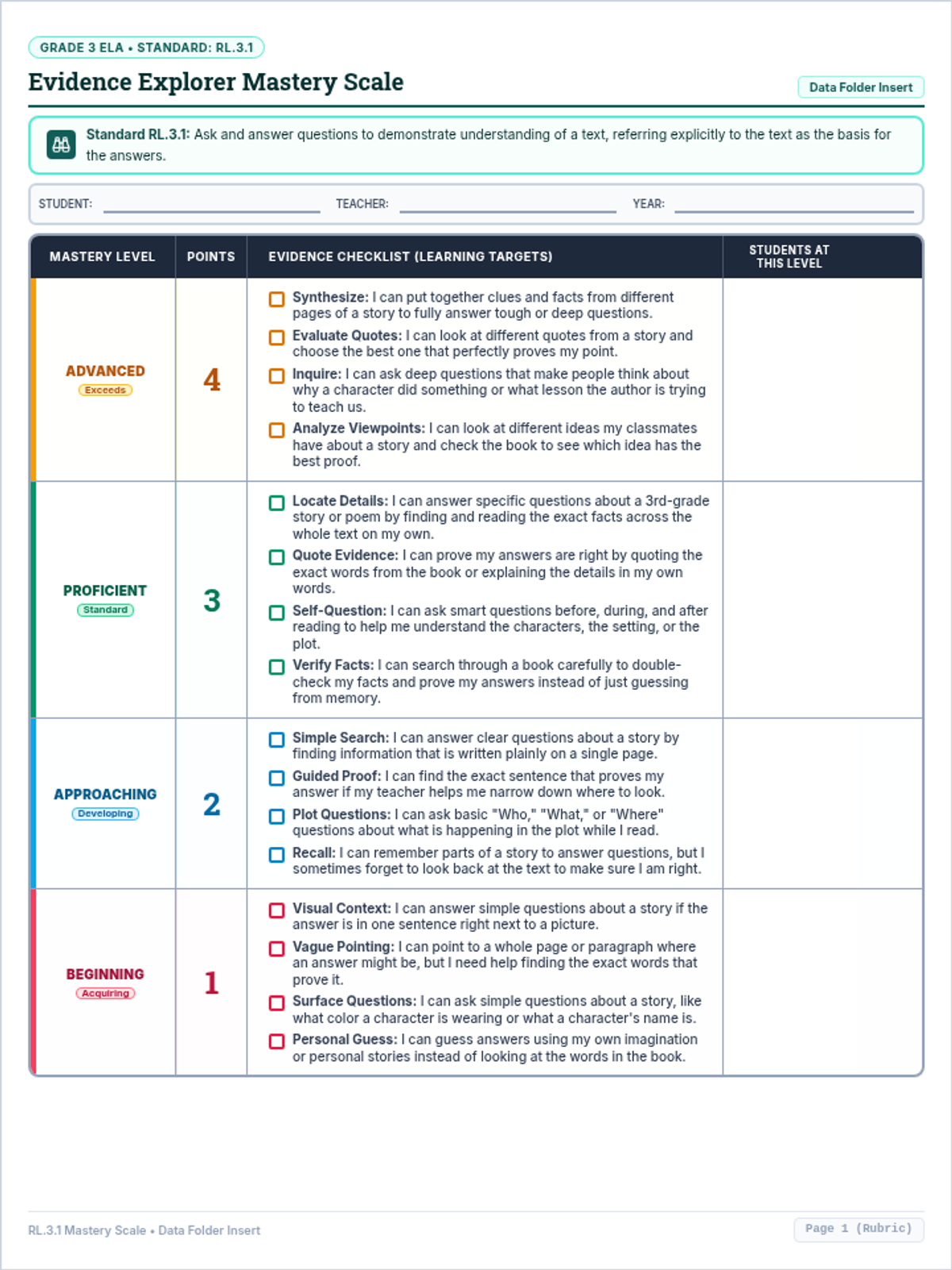
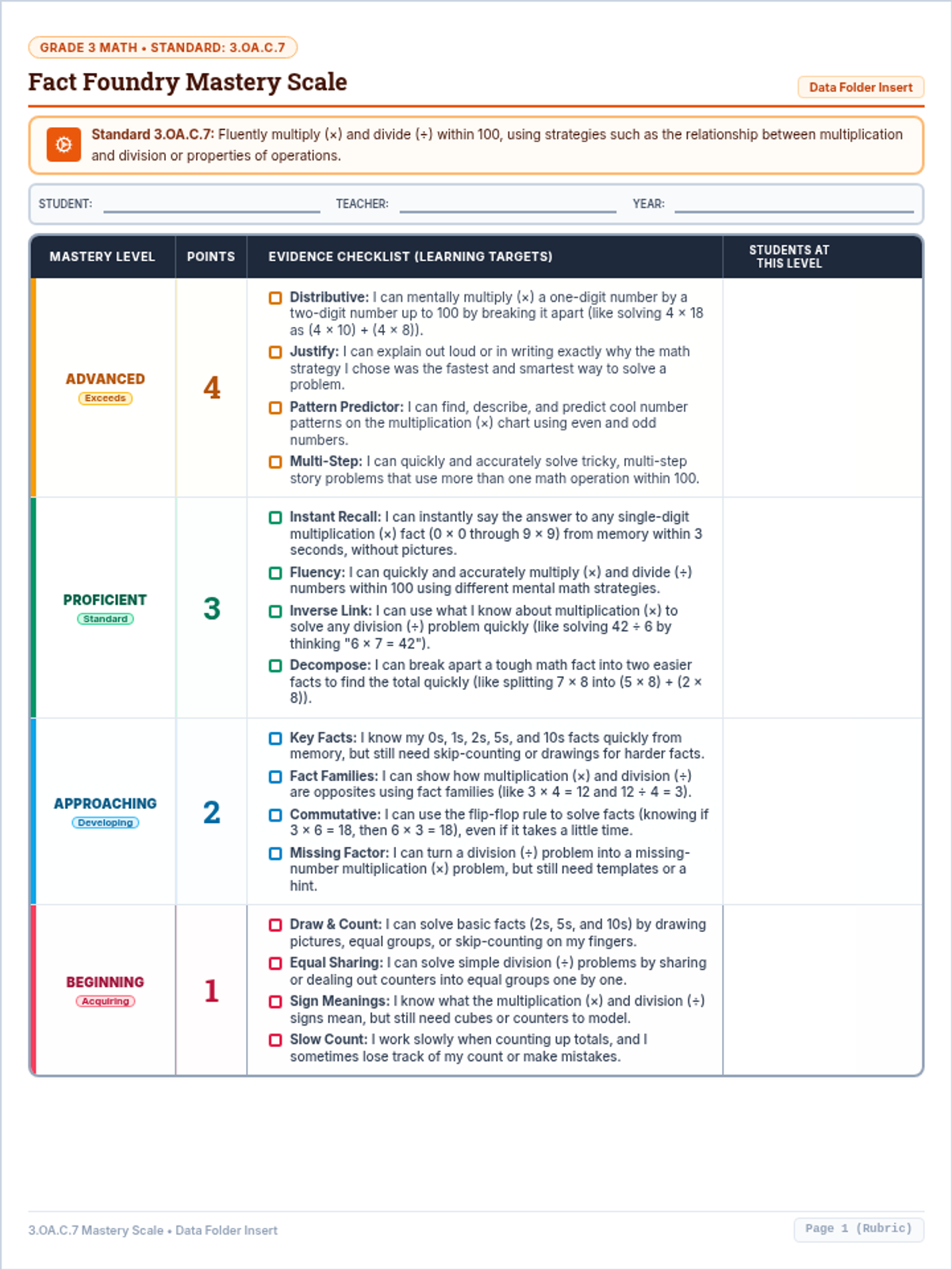
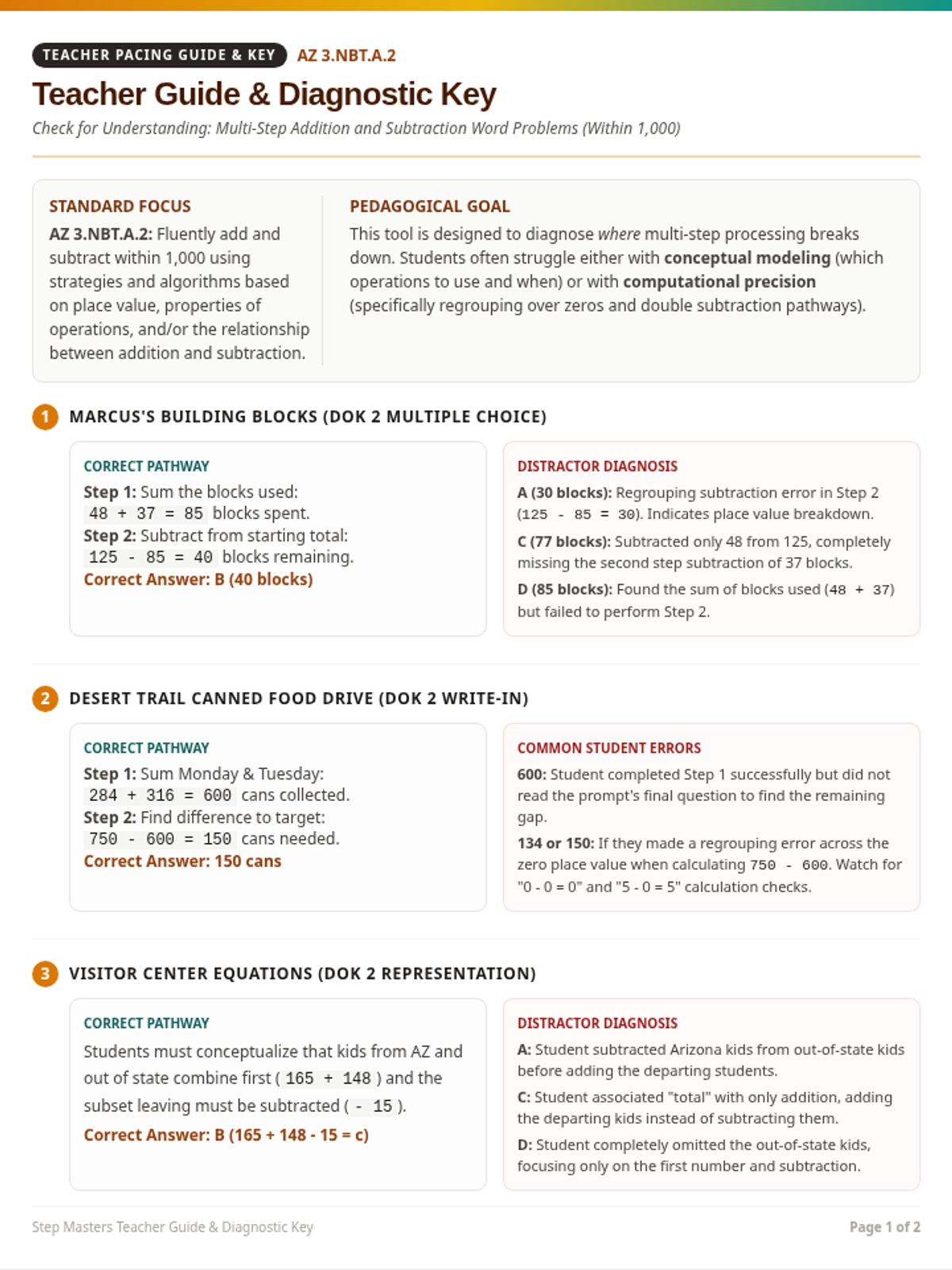
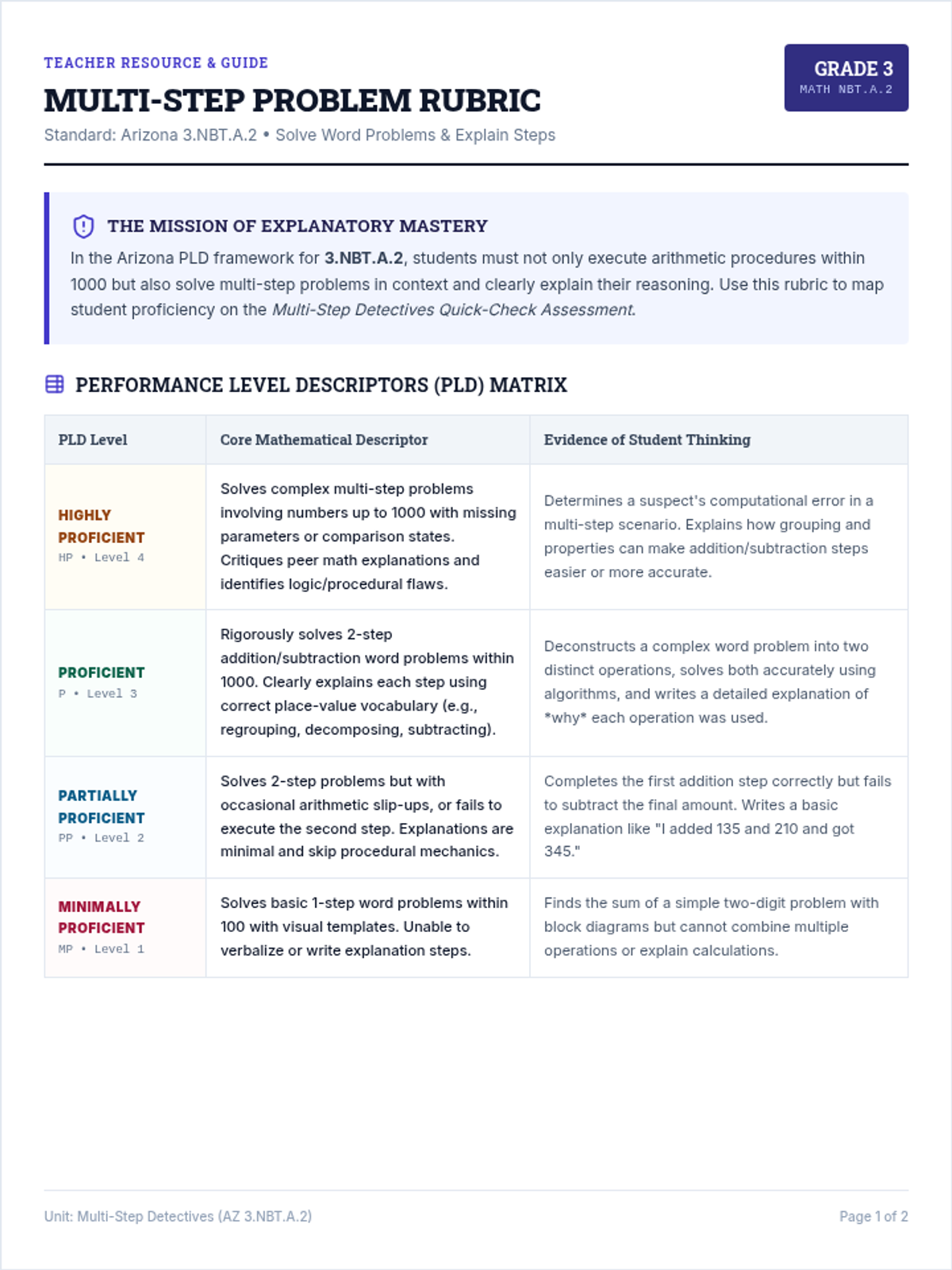
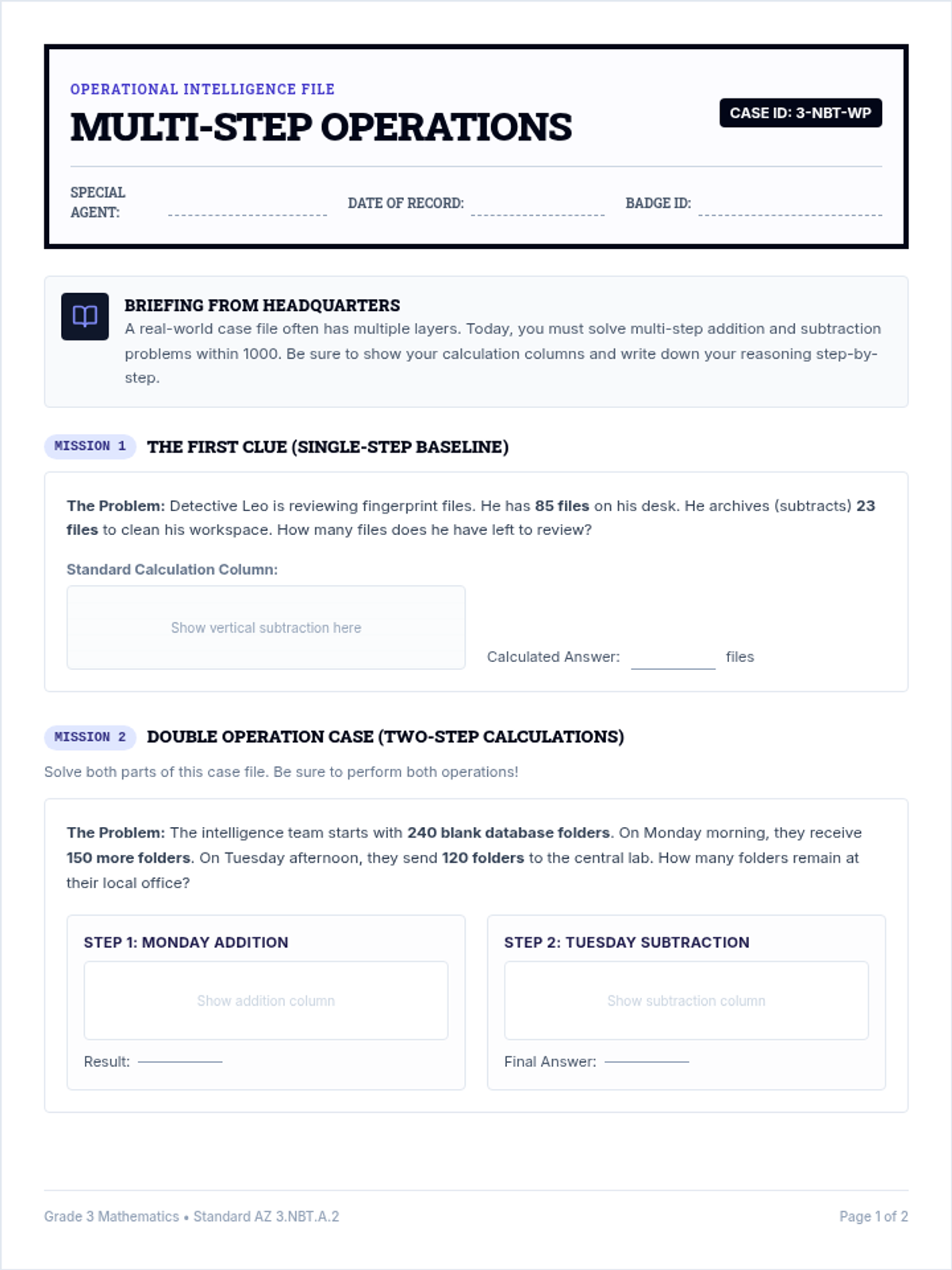
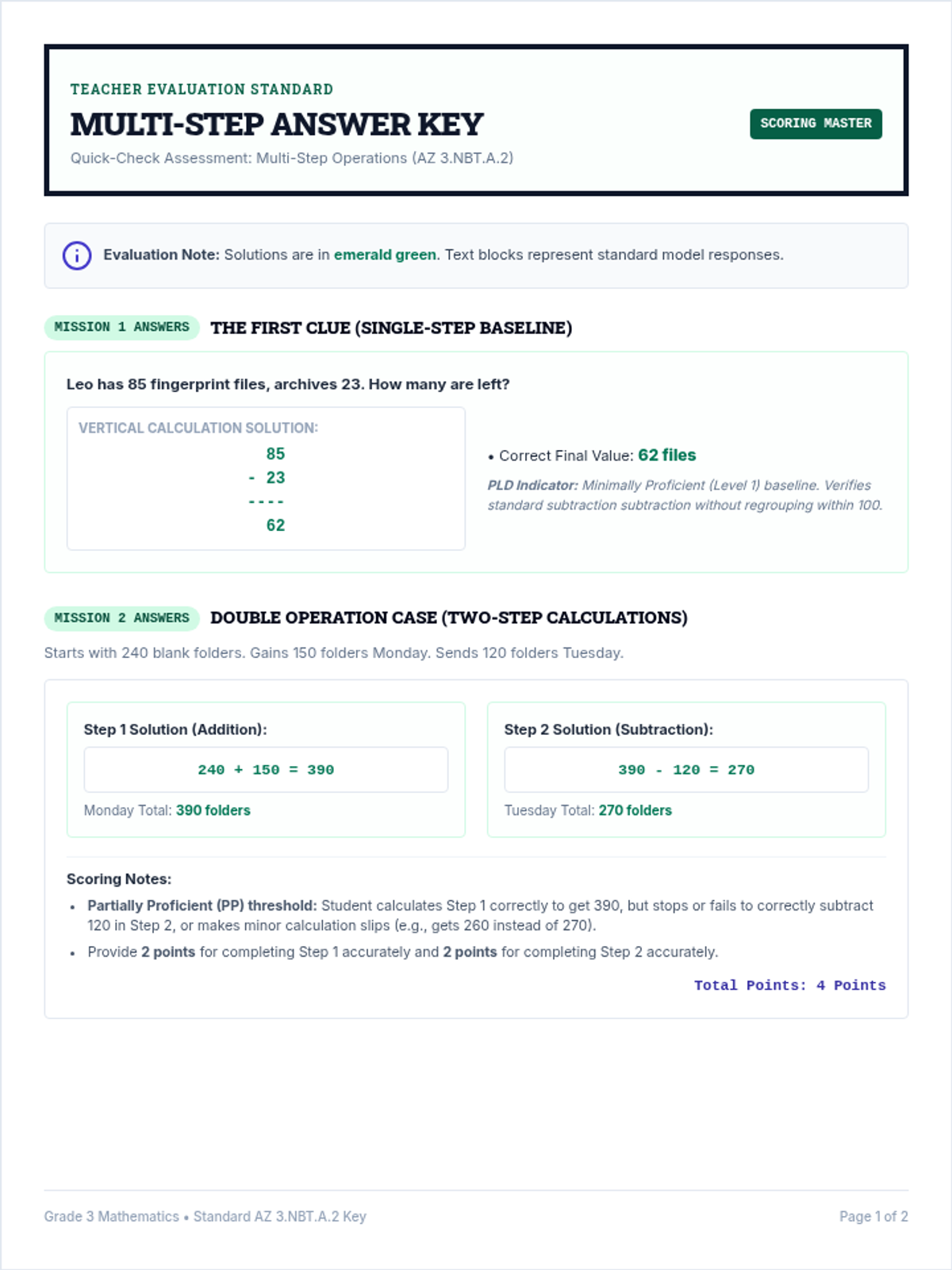
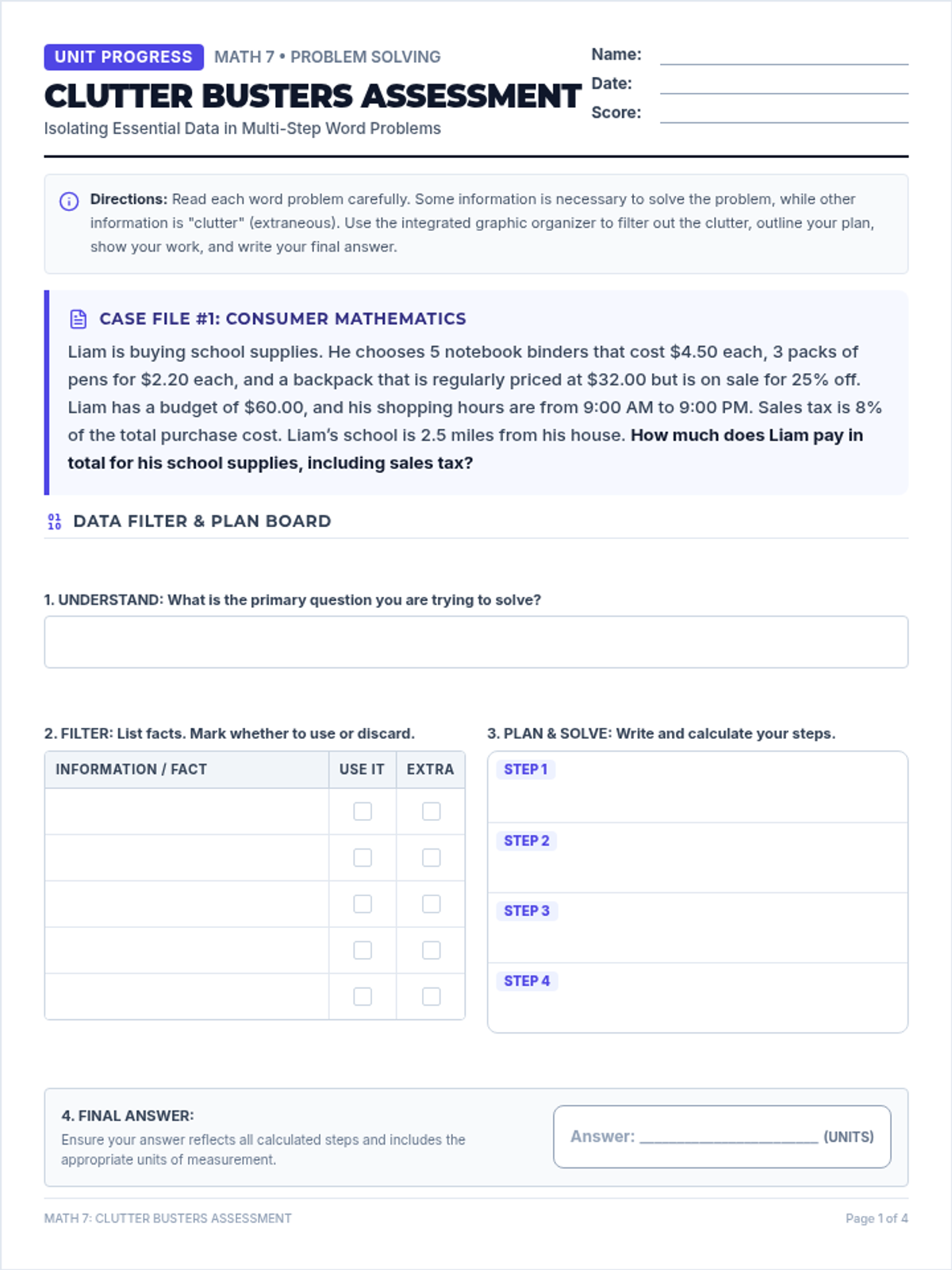
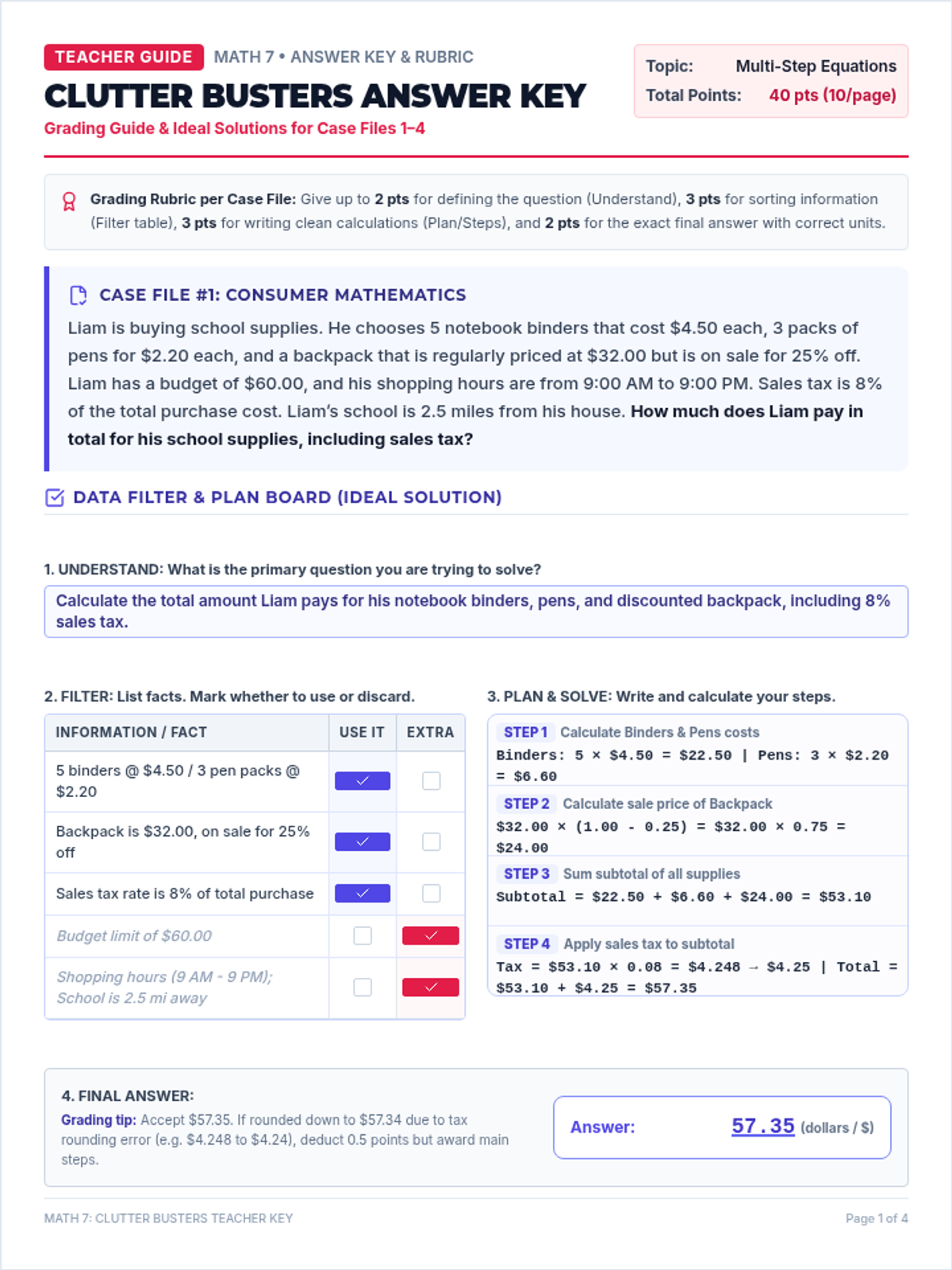
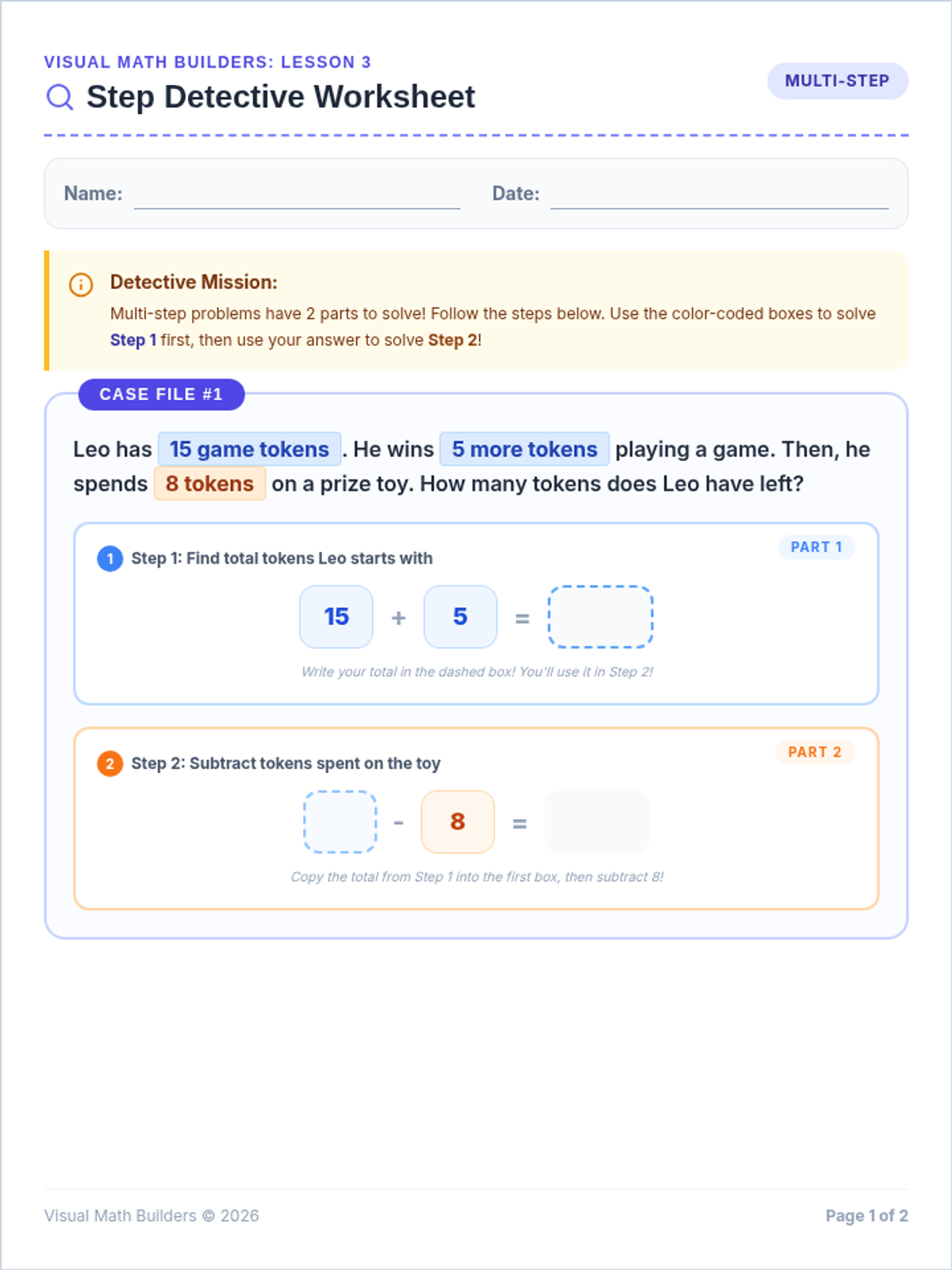
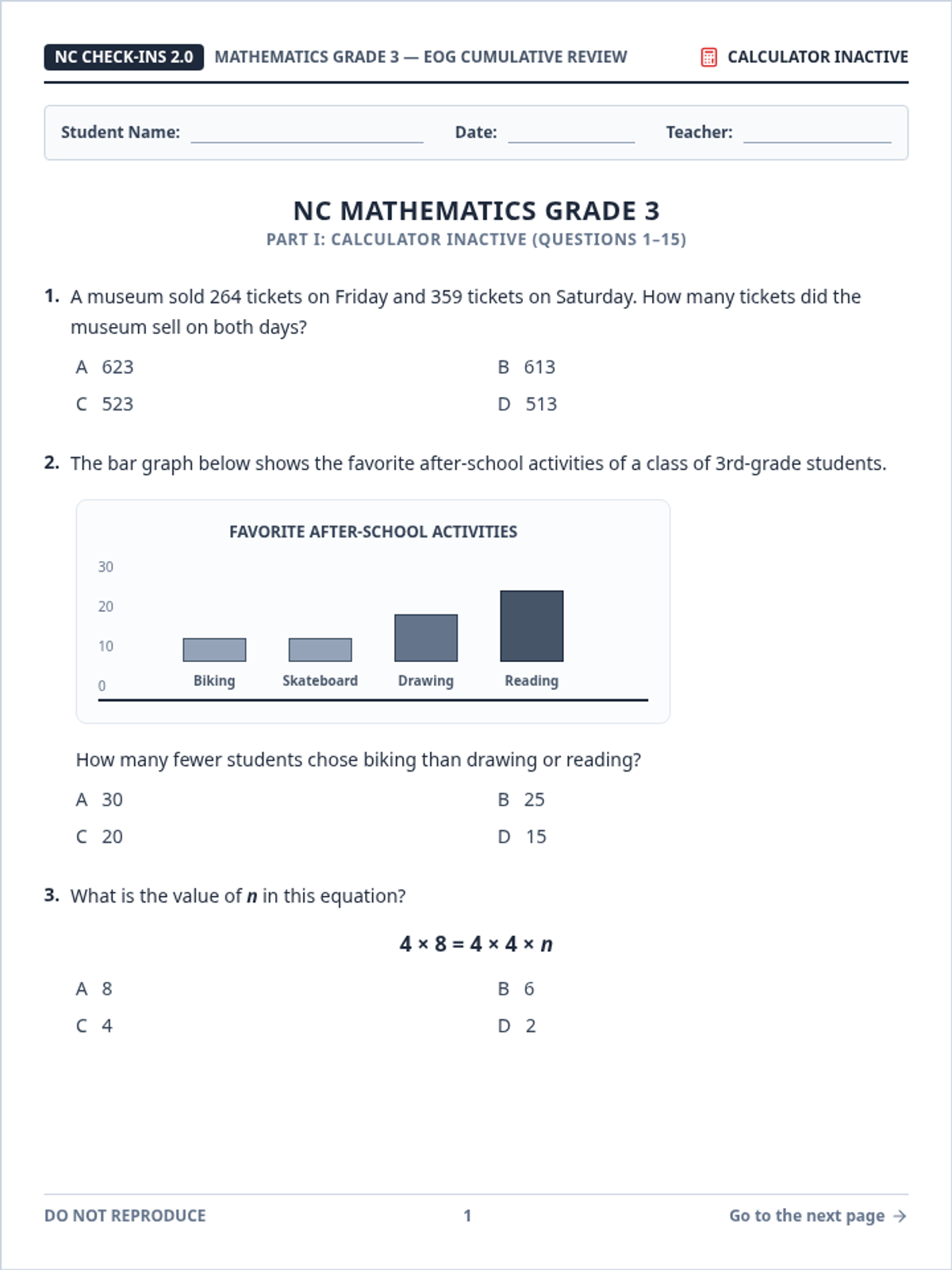
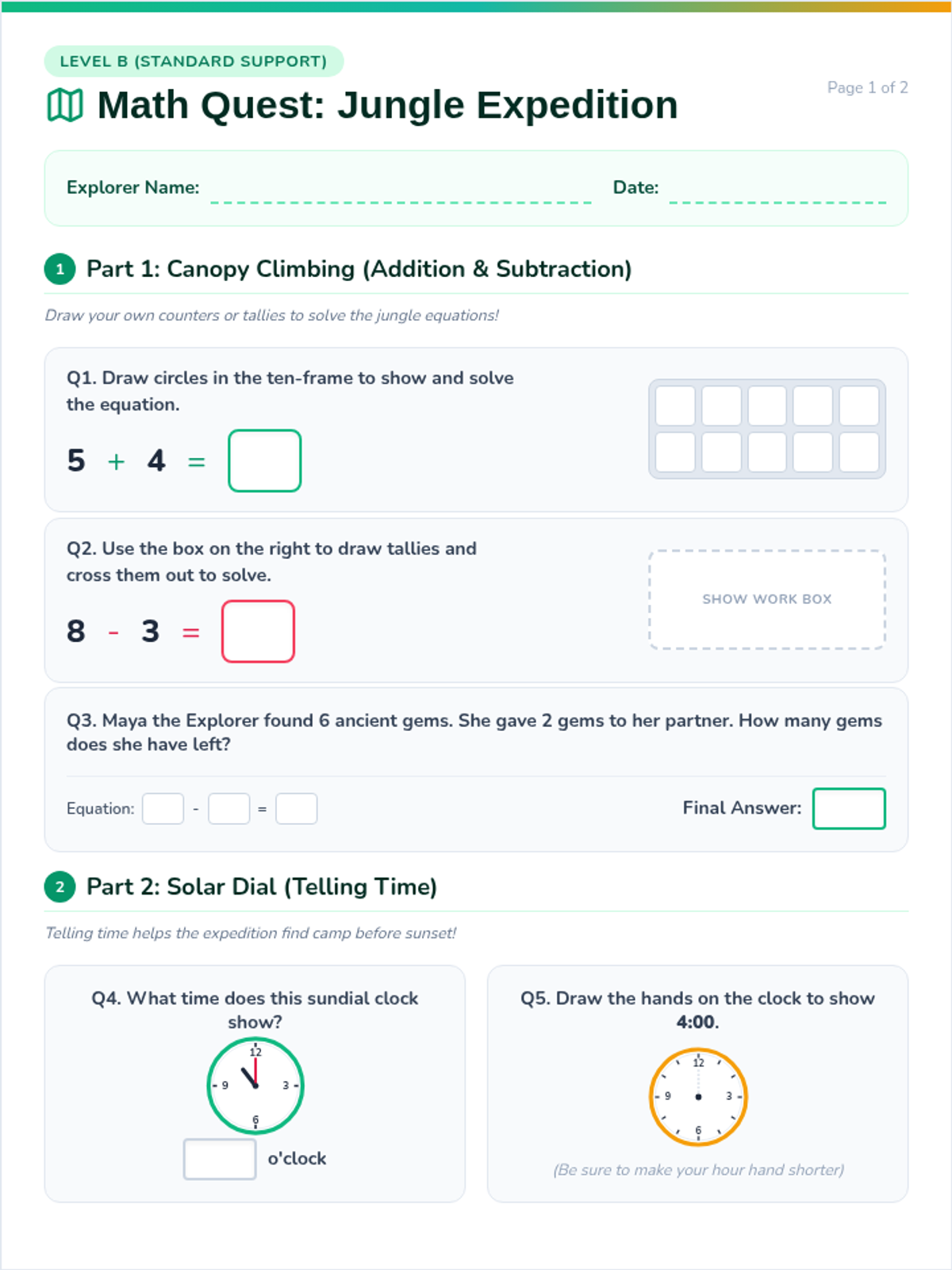
This lesson focuses on solving multi-step word problems using the four operations, specifically aligned with North Carolina Grade 3 standards (NC.3.OA). Students will practice identifying the correct operation, setting up equations, and computing accurately.
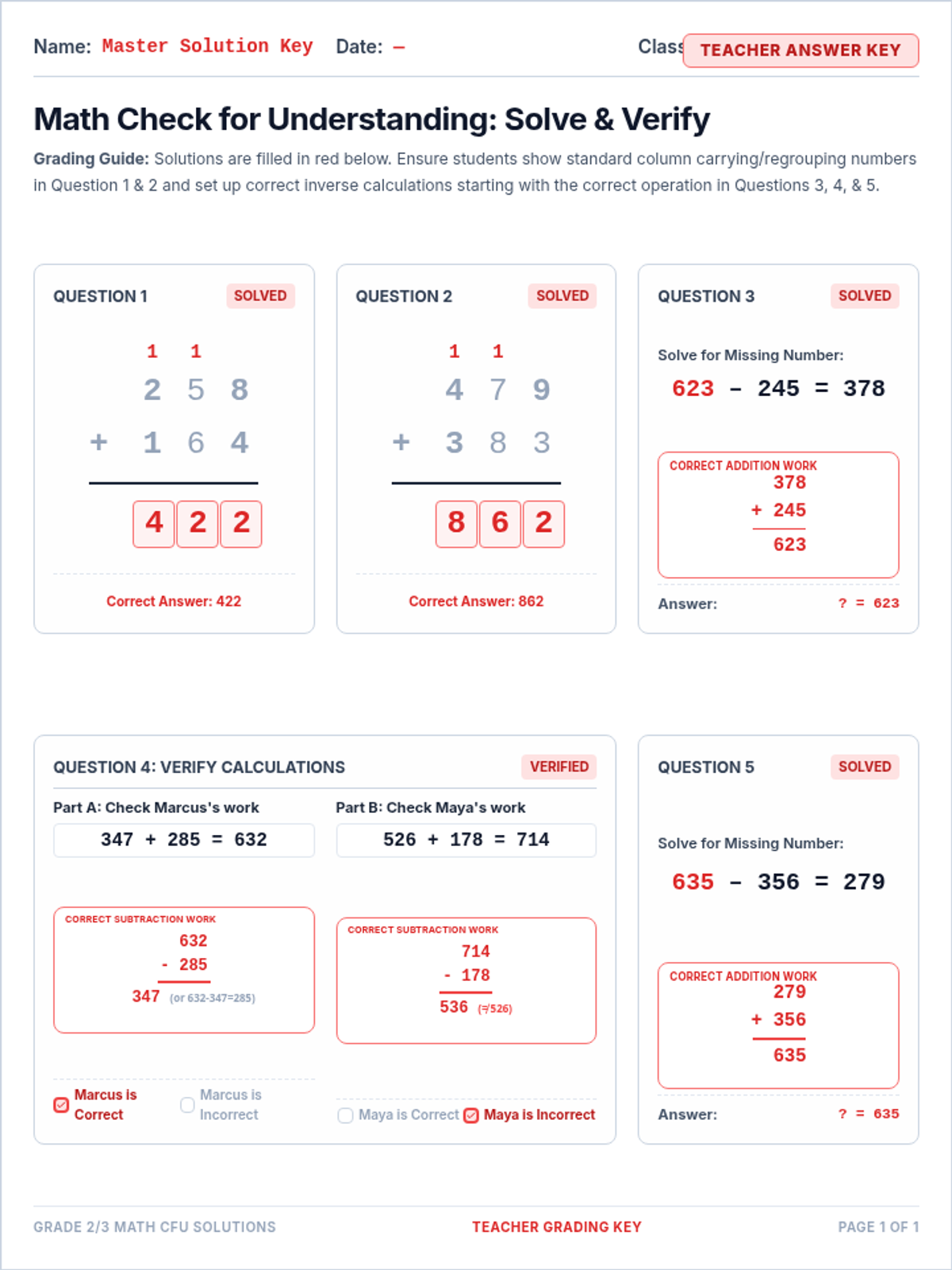
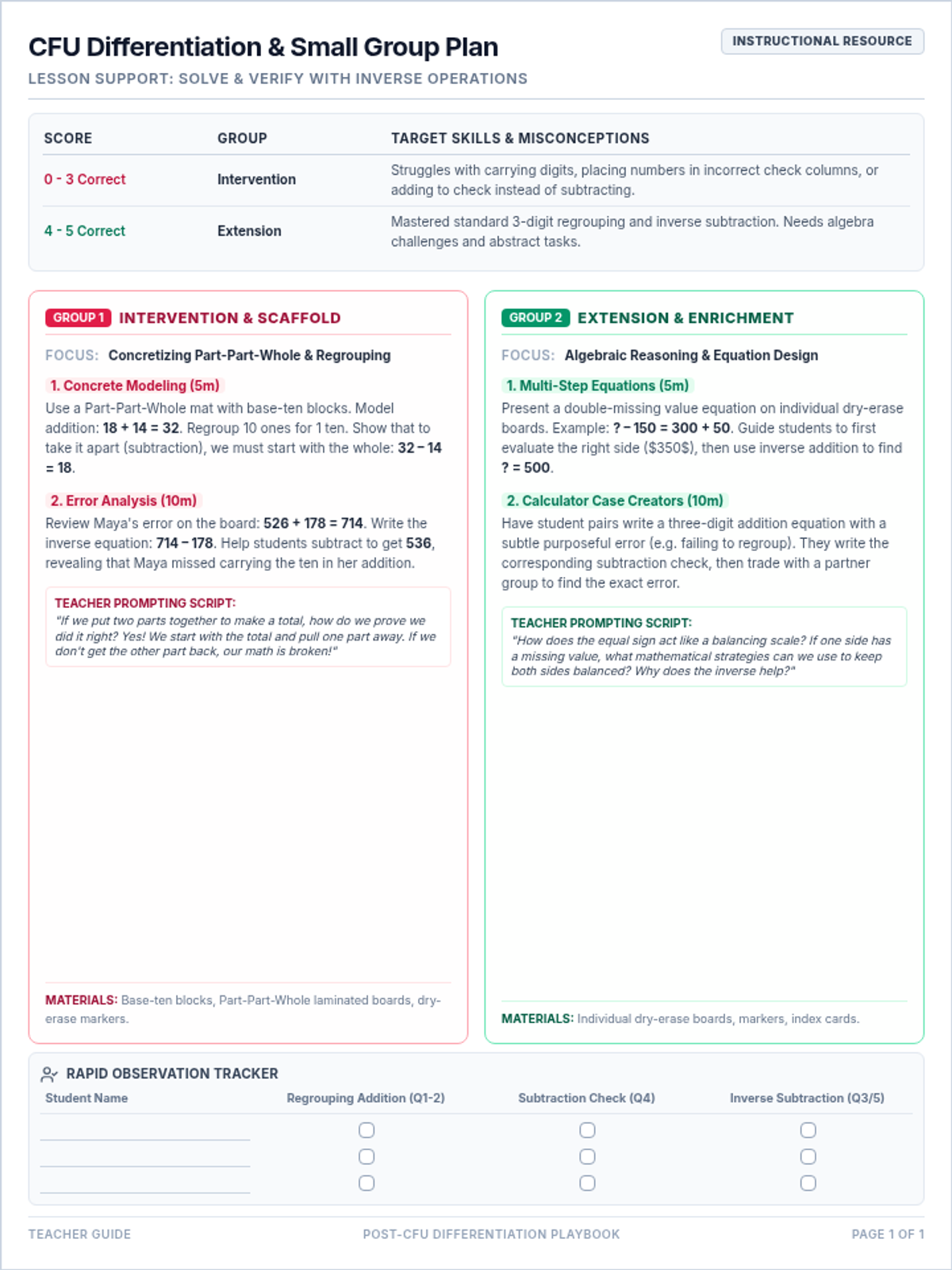
A high-intensity math practice session designed to build speed and accuracy for the calculator-inactive portion of the NC EOG. Students tackle 10 multi-grade level questions under a strict 15-minute limit followed by a metacognitive reflection on their pacing strategies.
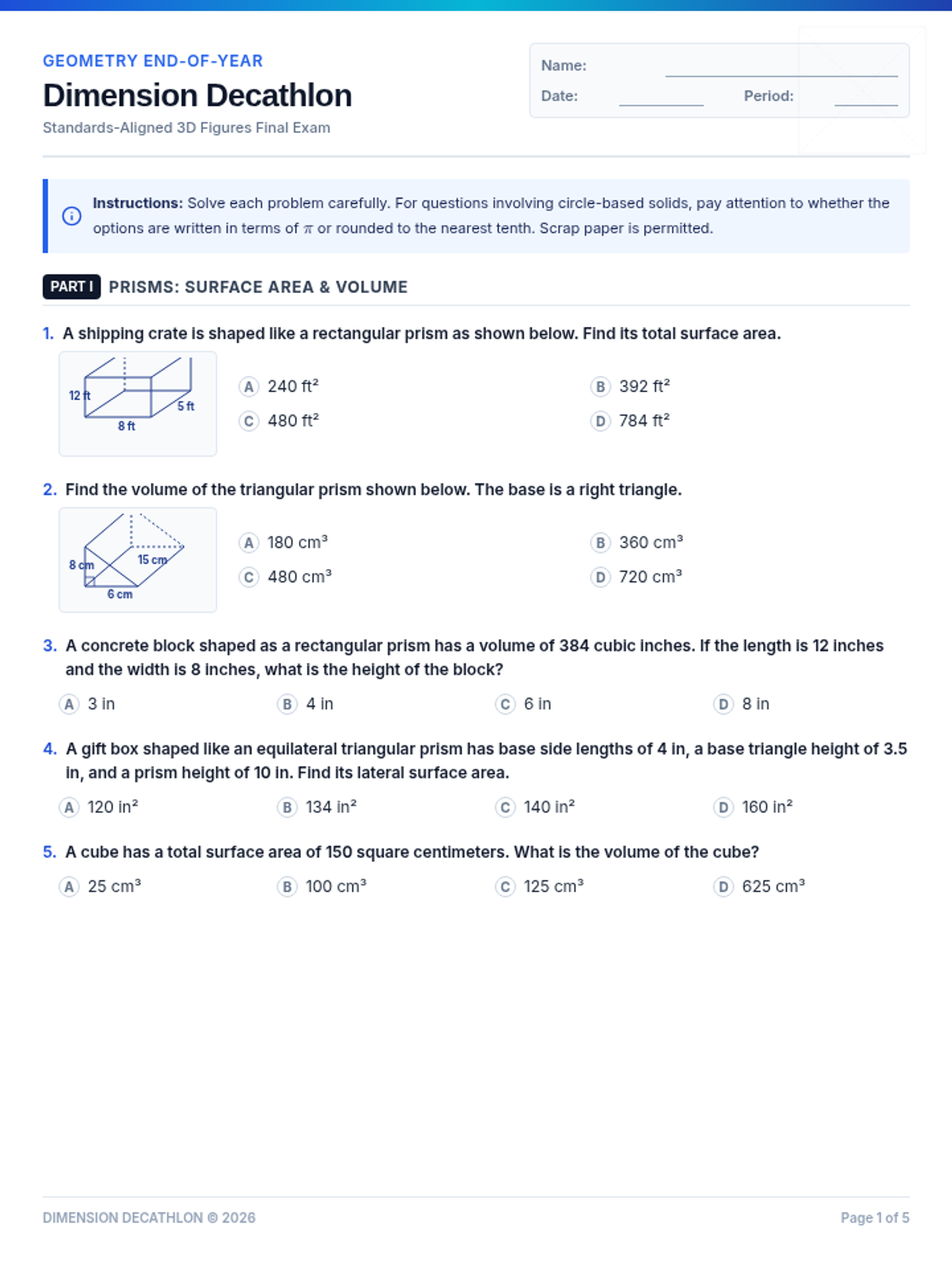
A high-impact mini-lesson focusing on common NC EOG traps in geometry and measurement, covering area vs. perimeter, volume concepts, and unit conversions.
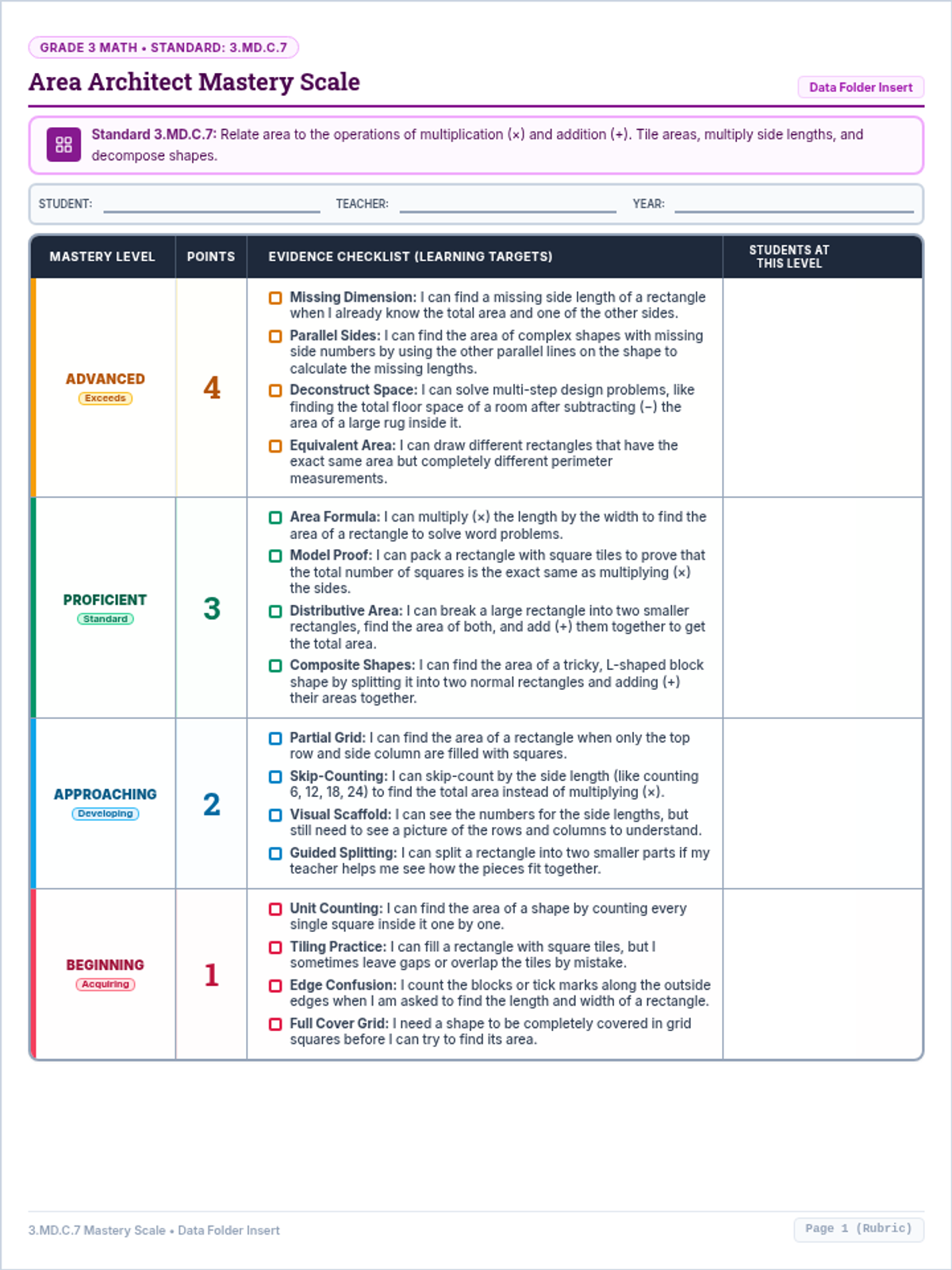
A diagnostic mini-assessment covering North Carolina Grade 3 standards for Geometry (NC.3.G) and Measurement and Data (NC.3.MD). Students will identify shape attributes, calculate area and perimeter, and solve measurement word problems.
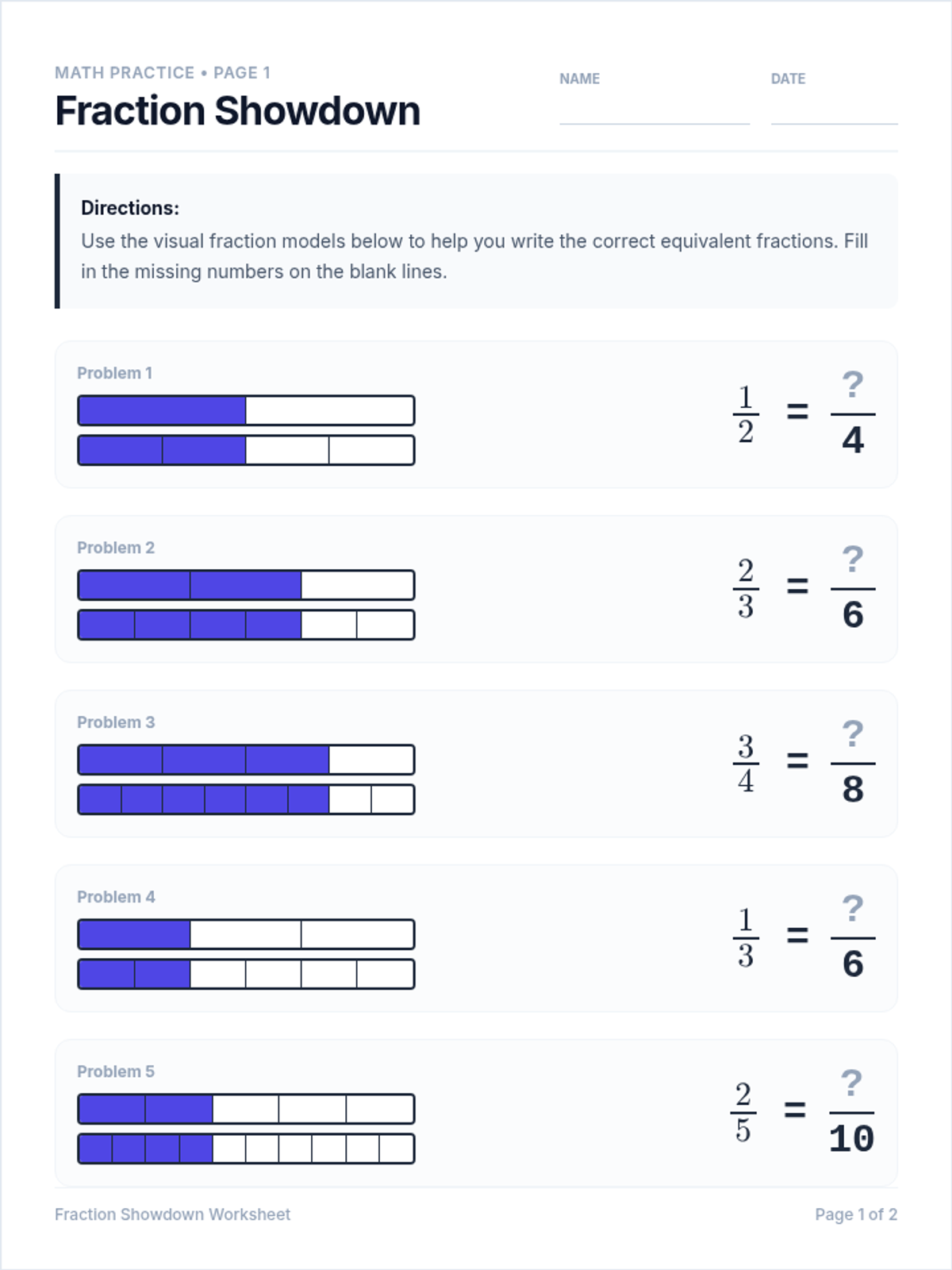
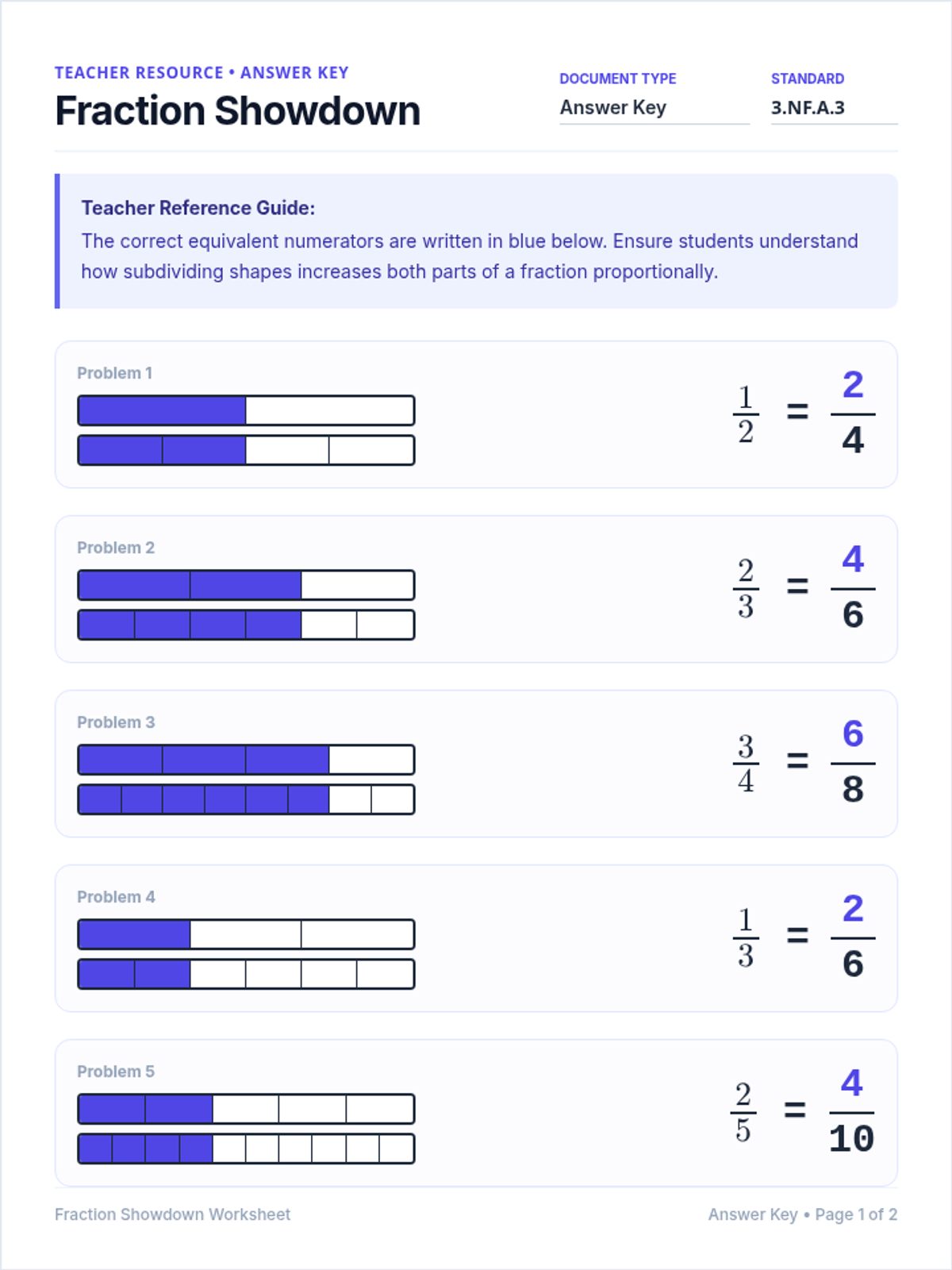
A rigorous Grade 4 practice quiz focused on NC.4.OA standards, including multi-step word problems and interpreting remainders. Students must apply all four operations to solve complex scenarios similar to EOG formats.
A mini-assessment focused on NC.4.NF standards, including equivalent fractions, comparison, and operations with like denominators.
A collection of statistics activities themed around Garfield the cat, covering data collection, central tendency, and probability for students working with functional math and decimals.
Explore the mesmerizing world of fractals where art meets mathematics. Students investigate recursive patterns, self-similarity, and the mind-bending paradox of infinite perimeters within finite spaces.