A 30-minute introductory lesson for 8th-grade students exploring Elie Wiesel's 'Night,' focusing on the themes of memory, testimony, and the historical context of the Holocaust.
A collection of five informational passages and assessments focused on RI.7.3, featuring modern icons like Simone Biles and Taylor Swift. Students will analyze how individuals and events are introduced and elaborated upon through anecdotes and examples.
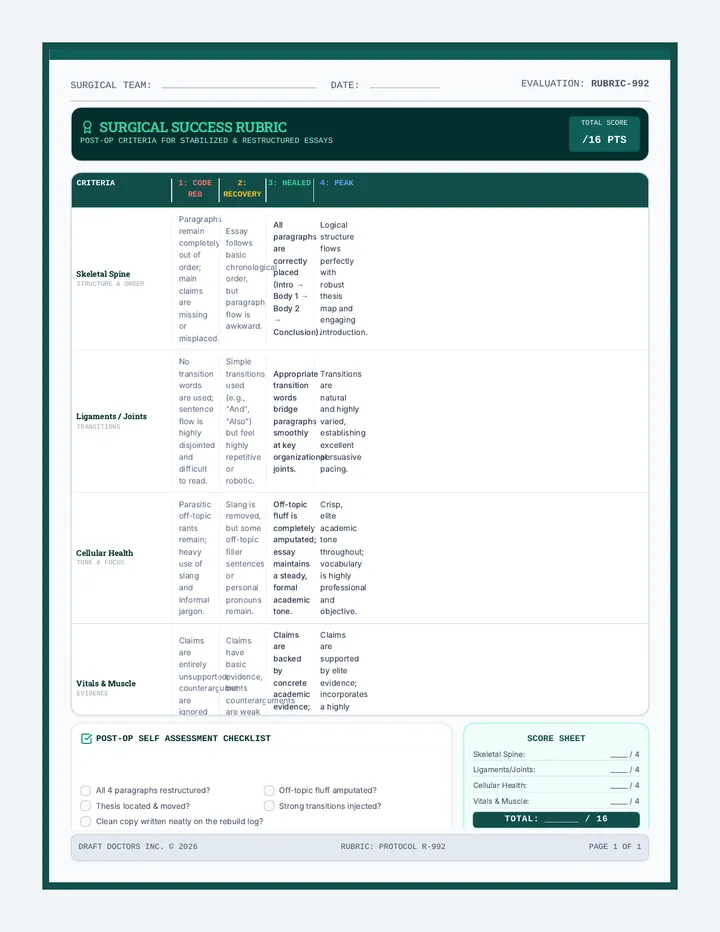
A lesson focusing on the transition of the Watson family from Flint to Birmingham, analyzing setting development and character shifts in chapters 12 and 13.
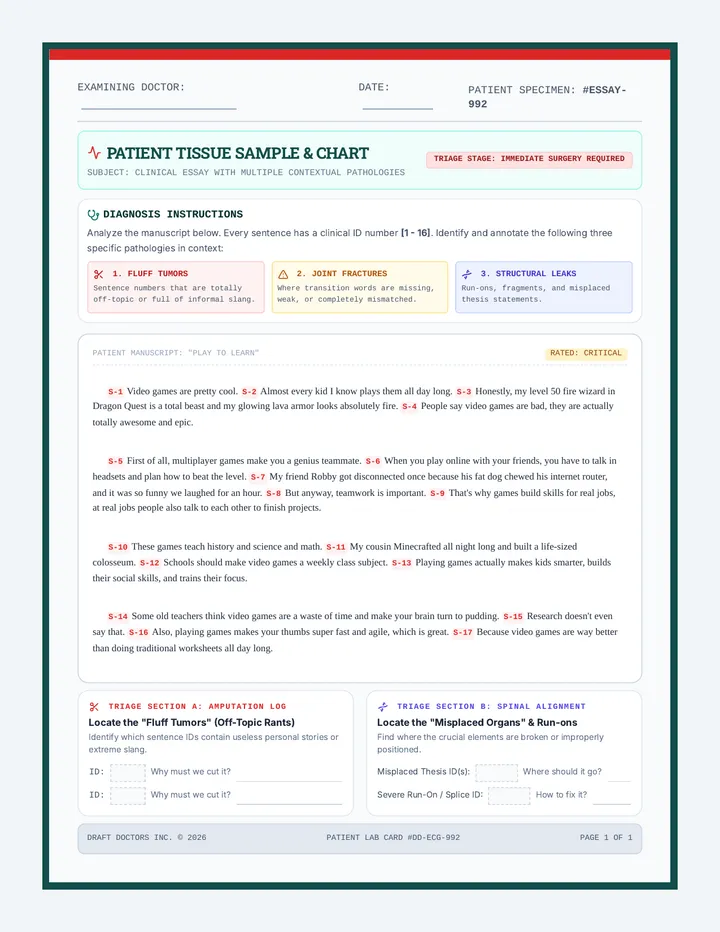
A deep dive into Chapter 10 of 'The Watsons Go to Birmingham – 1963', focusing on how the Appalachian setting and the shroud of night symbolize the growing racial tensions as the family heads South.
A middle school lesson on visual rhetoric, teaching students how to analyze and use color, layout, and typography to influence audience perception in media and advertising.
A 10-15 minute introductory lesson for 9th-grade students on navigating the information ecosystem, focusing on the differences between books, databases, and websites.
A lesson focusing on the cultural shift of the 1920s through the lens of flapper culture, designed with highly accessible text for middle school students reading at a 1st-grade level. Students will analyze diction to identify positive and negative connotations.
This lesson introduces students to Manor Farm through the first chapter of Animal Farm, focusing on Old Major's rhetorical speech. Students will master high-level vocabulary, practice oral reading fluency through dramatic speech excerpts, and begin their reading of the first 10 pages.
A final look at John Proctor's ultimate choice, the resolution of the play, and a comprehensive assessment of themes and motifs.
An exploration of the rising tensions in the Proctor household and the escalation of the witch trials in the Salem court.
An introduction to Puritan Salem, the historical context of McCarthyism, and the initial outbreak of hysteria in Act 1.
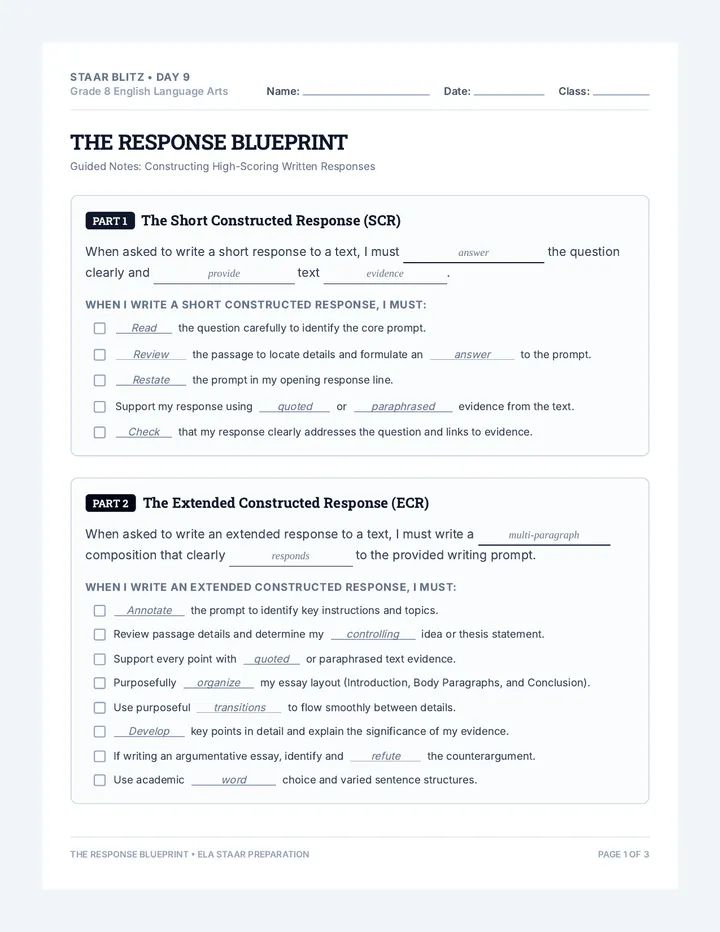
An 8th-grade analysis lesson where students evaluate the benefits and drawbacks of mandatory homework versus extra credit using visual prompts and structured evidence.
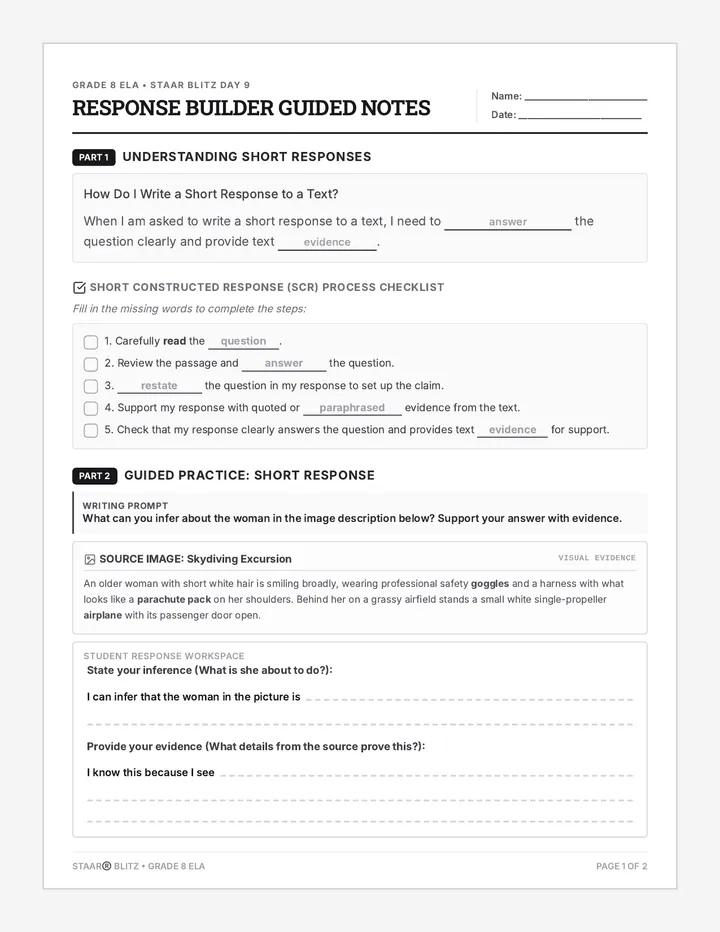
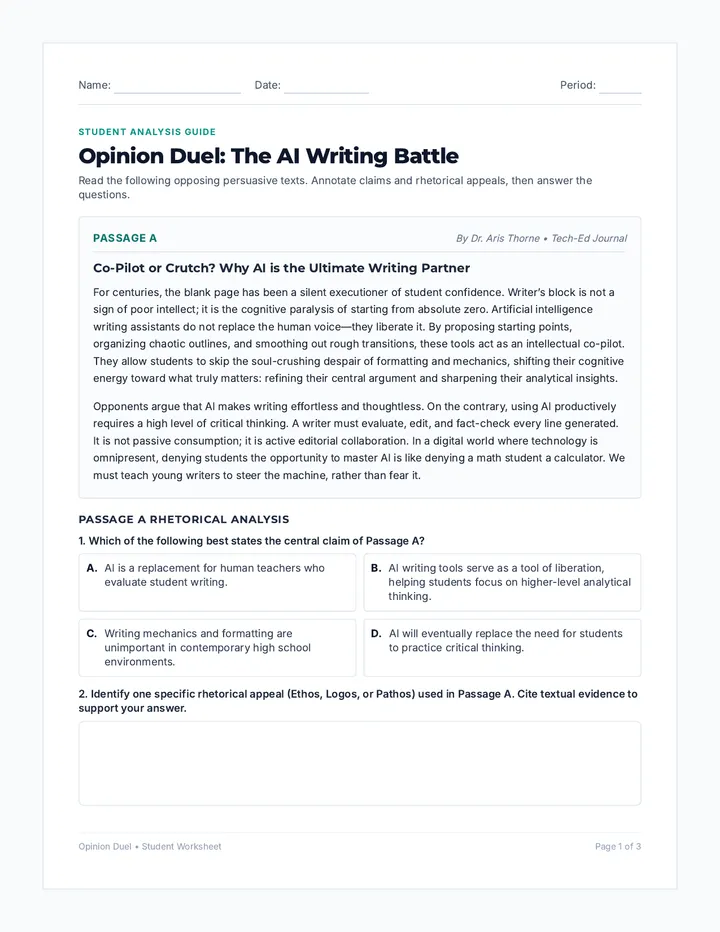
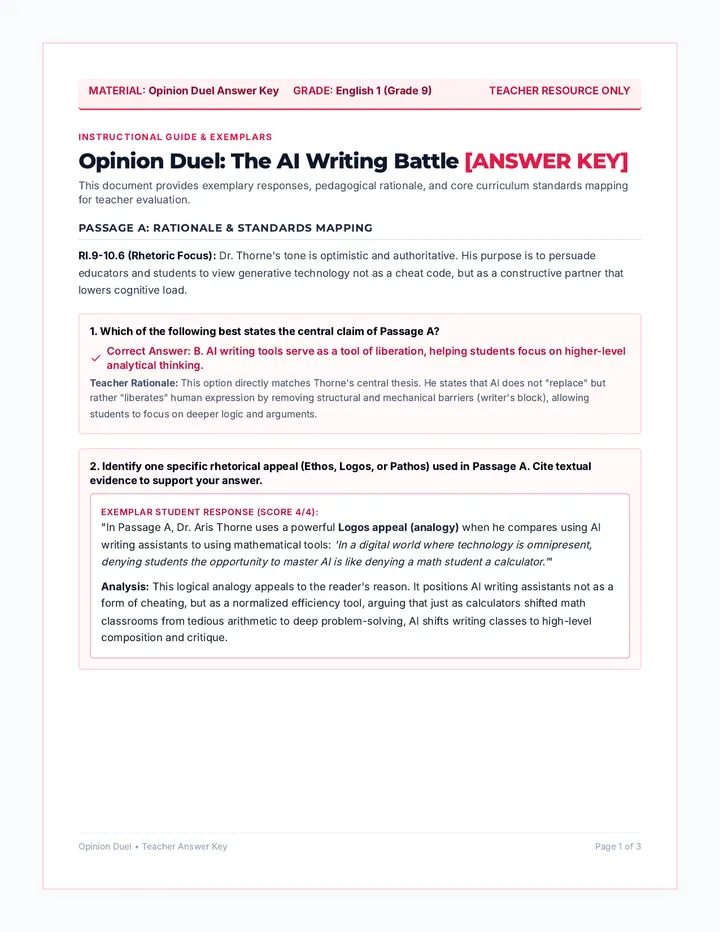
This lesson introduces 8th-grade students to the Claim-Evidence-Analysis (CEA) writing framework, focusing on how to construct objective arguments and effectively connect evidence to claims.
A comprehensive lesson on analyzing poetry using the TPCASTT method, featuring a deep dive into Robert Frost's 'The Road Not Taken' and a gallery walk of diverse poems.