Moves beyond literal recall to inferential thinking by using 'Why' and 'How' to discuss character motivations and story resolutions.
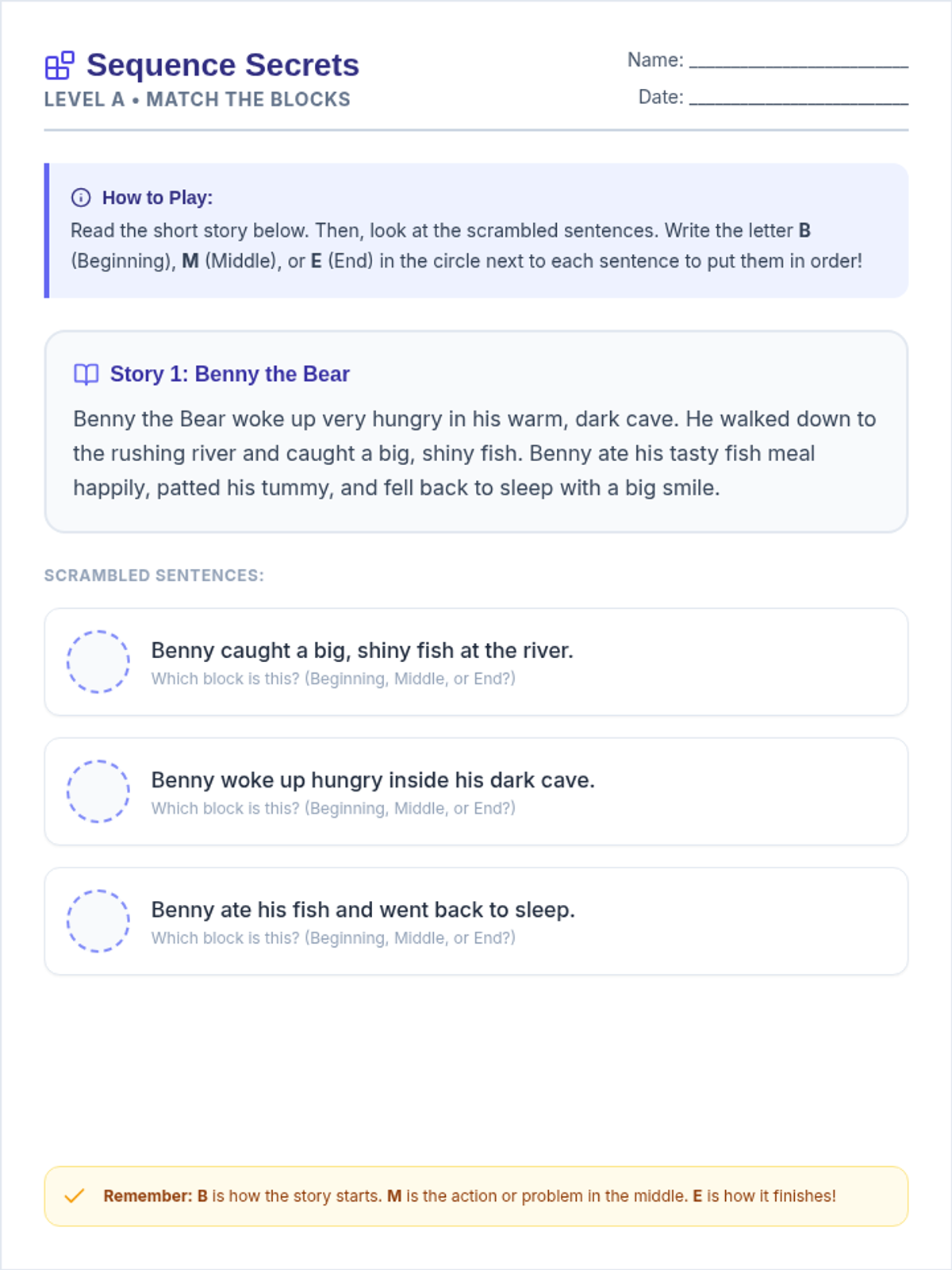
A step-by-step lesson on summarizing stories using the Beginning, Middle, and End (BME) framework, specially scaffolded for emerging readers and students with IEP accommodations.
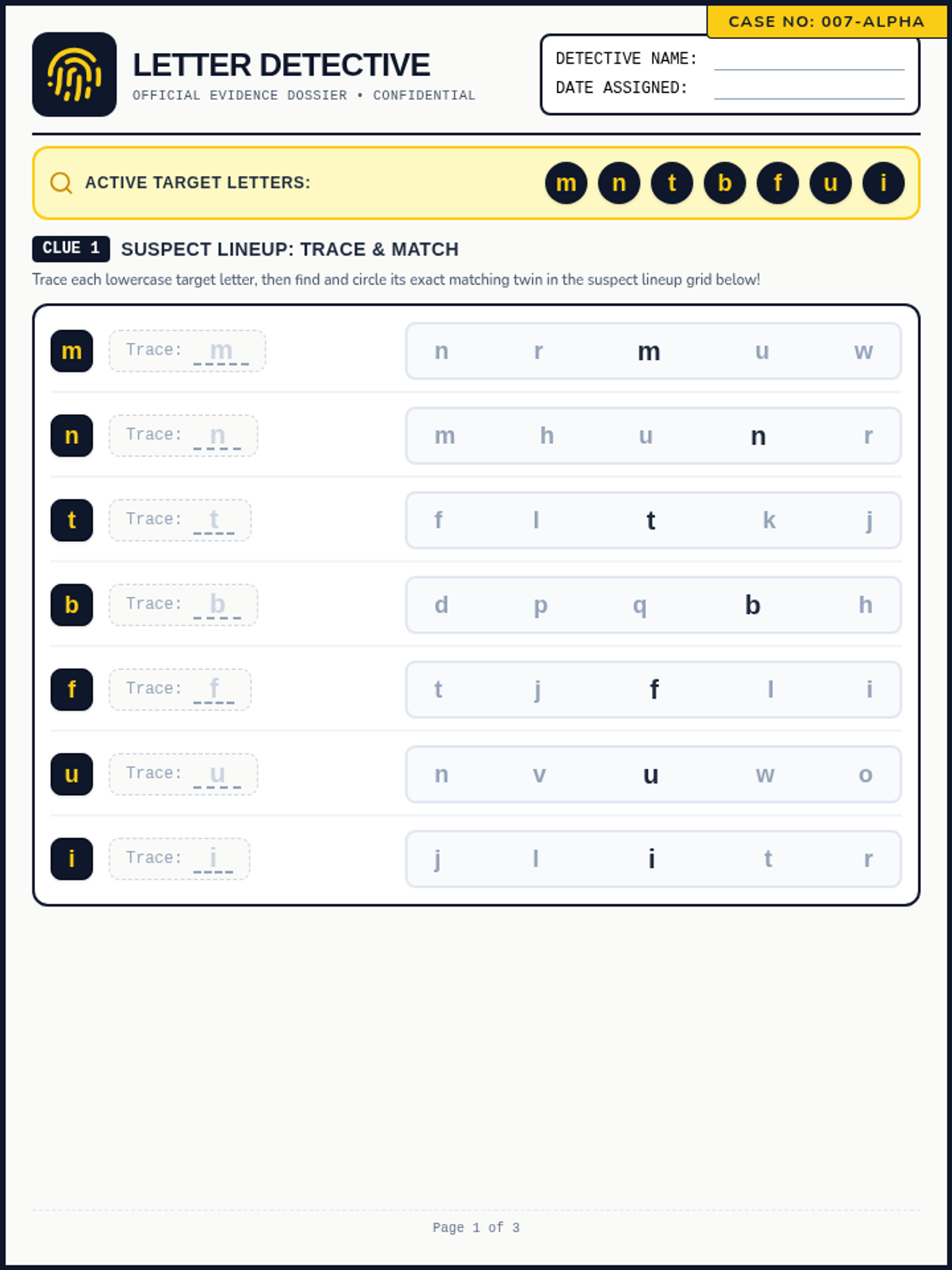
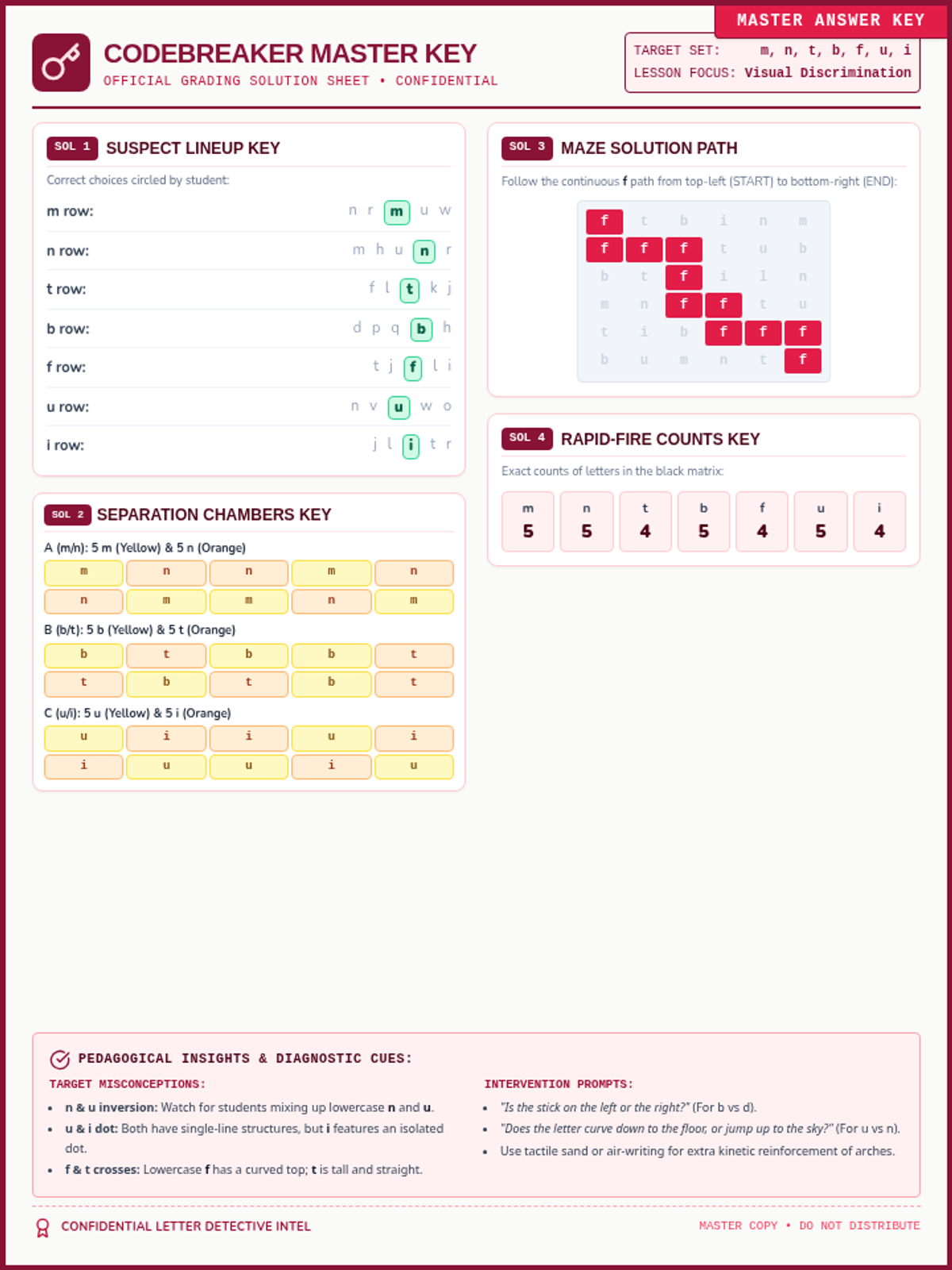
An engaging lowercase letter identification lab focusing on m, n, t, b, f, u, and i. Students build visual discrimination skills and complete fun puzzles to cement letter recognition.
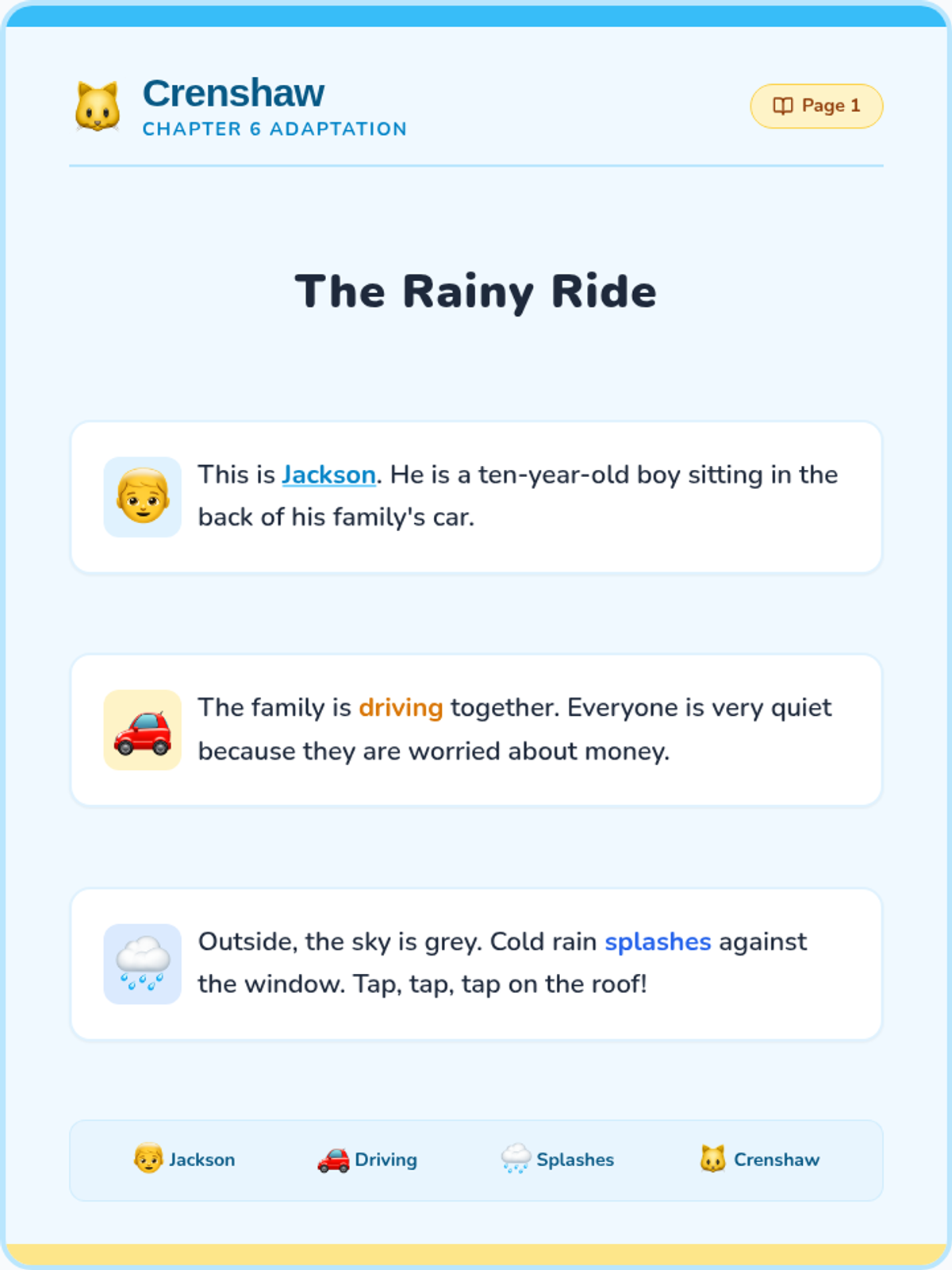
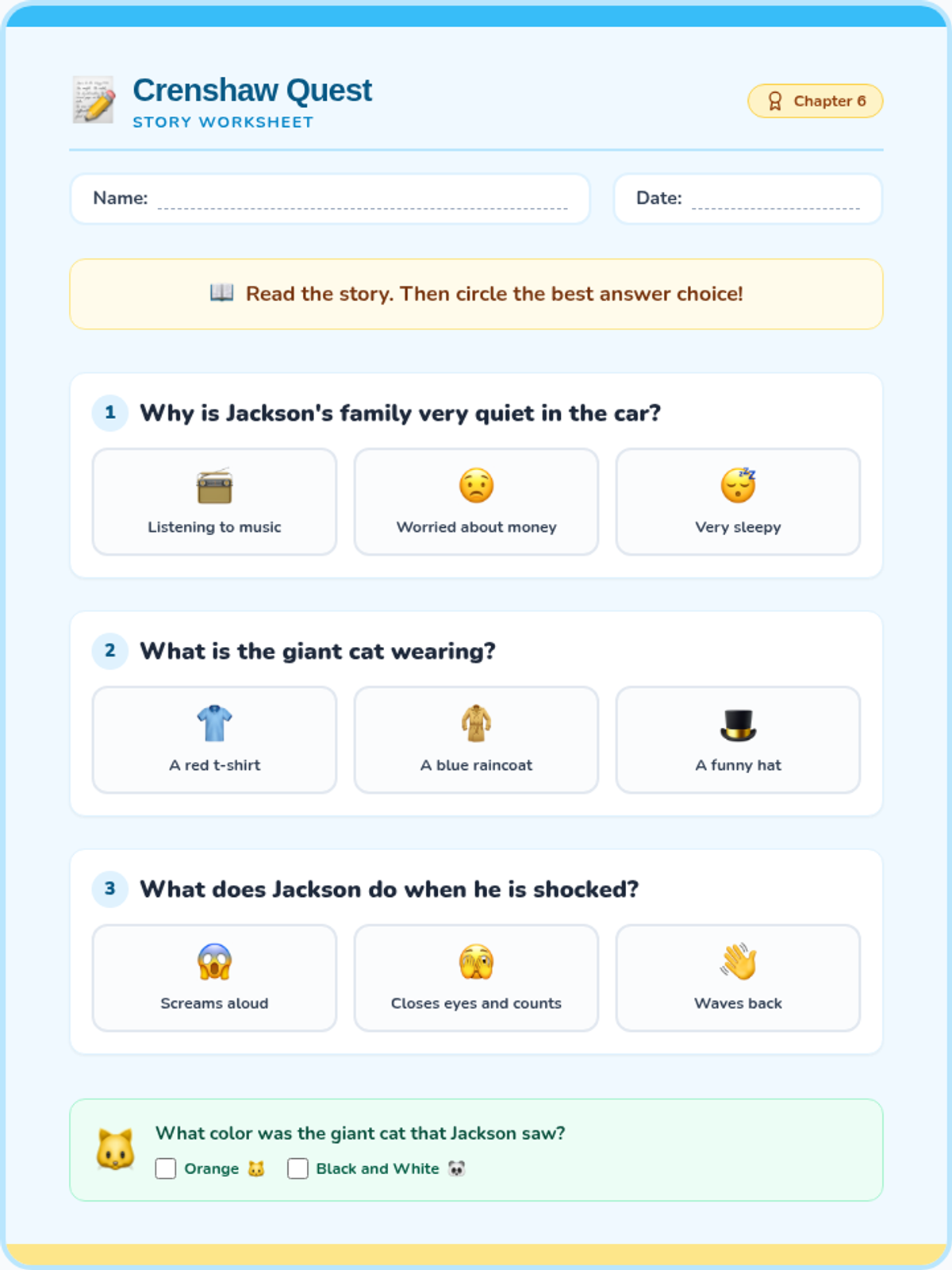
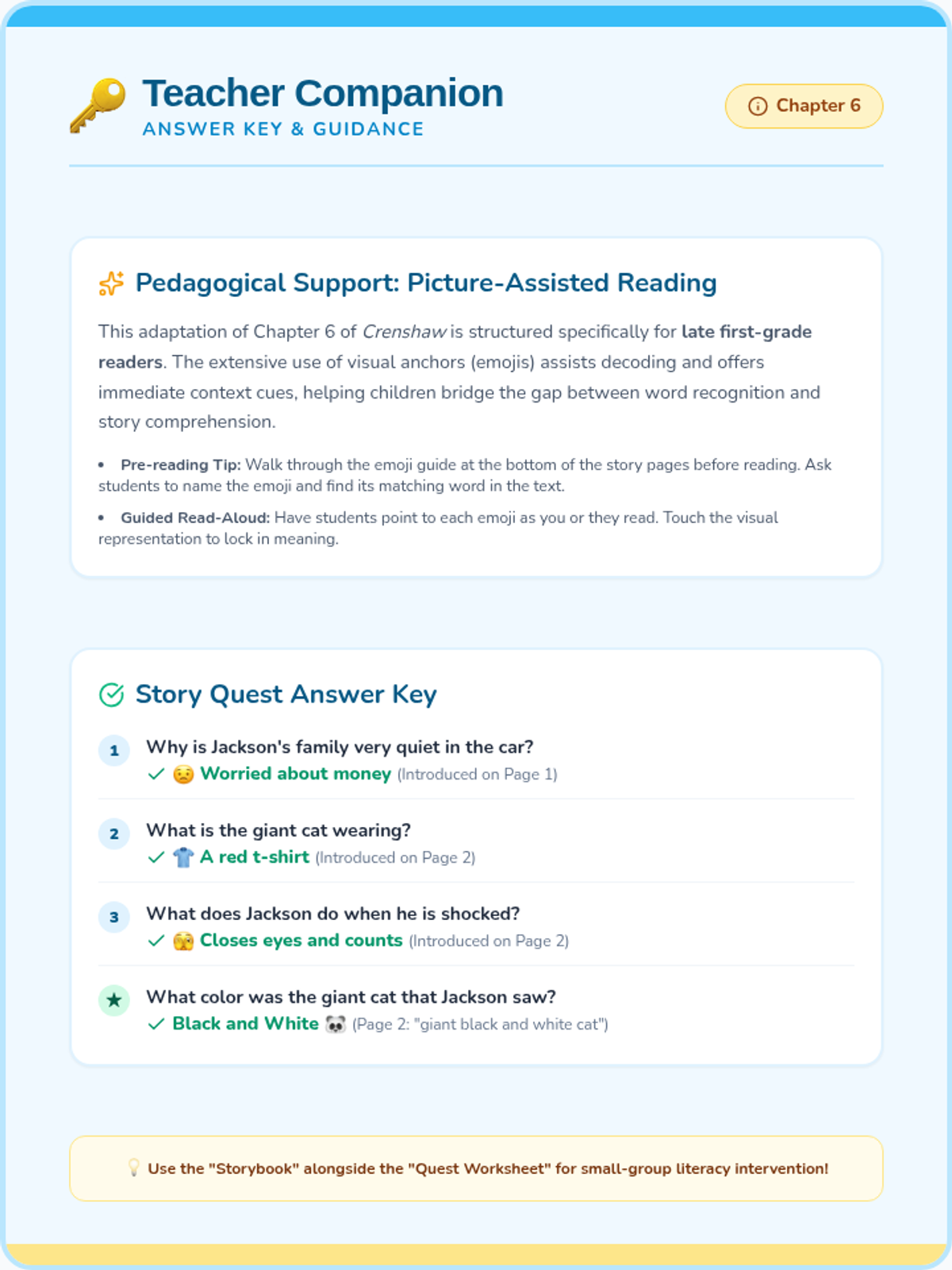
A first-grade friendly adaptation of Chapter 6 of Katherine Applegate's 'Crenshaw', using simplified, highly accessible language and extensive emoji picture-support to aid reading comprehension, accompanied by a student-facing multiple-choice worksheet and a teacher answer key.
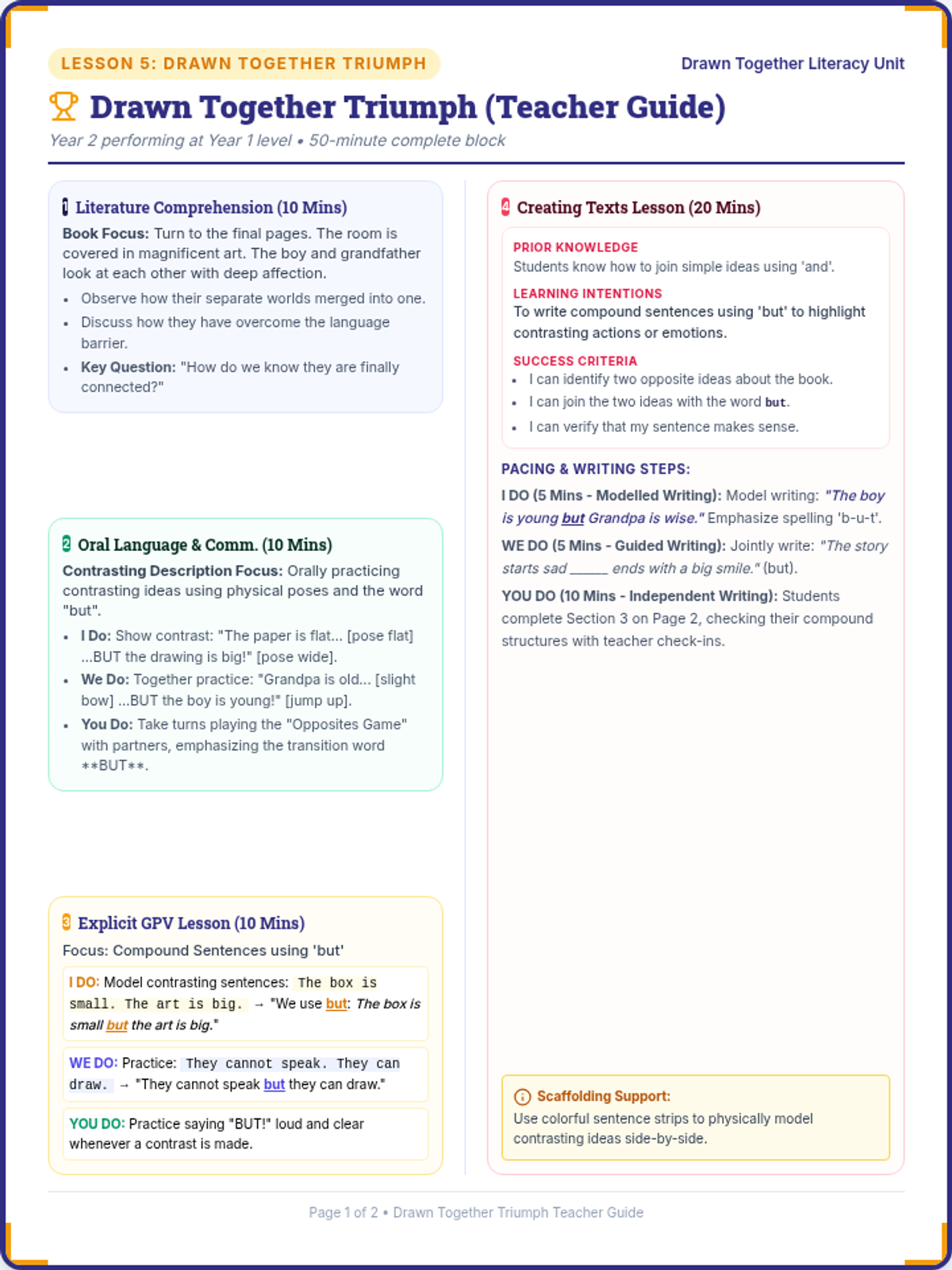
Students explore the book's resolution, where the physical artwork merges their worlds, and learn to write compound sentences with the conjunction 'but' to highlight contrasting actions or emotions before creating their final story narrative.
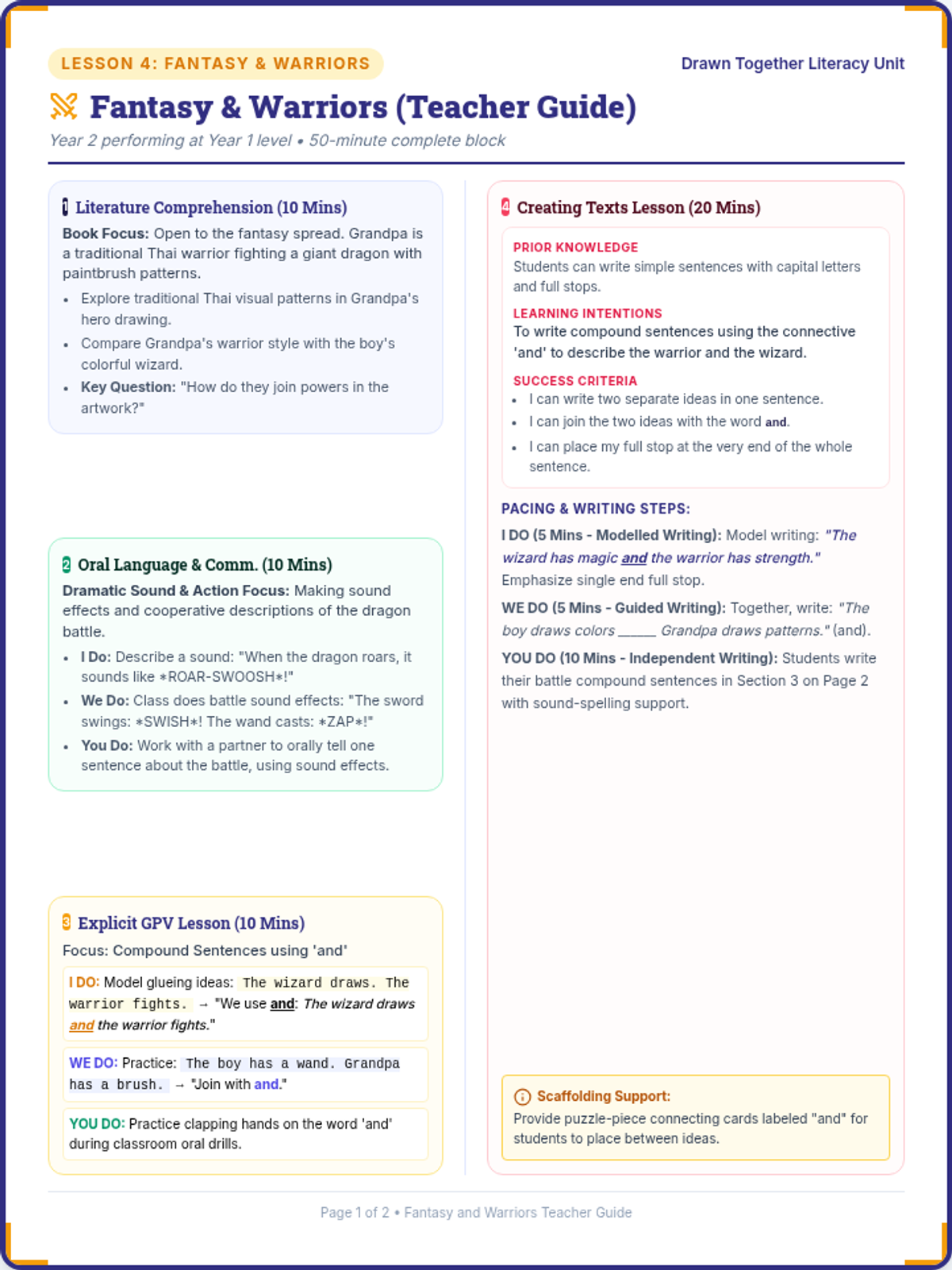
Students focus on the collaborative drawing of the fantasy world where the grandfather is a Thai warrior and the boy is a wizard, and learn to combine ideas into simple compound sentences using the conjunction 'and'.
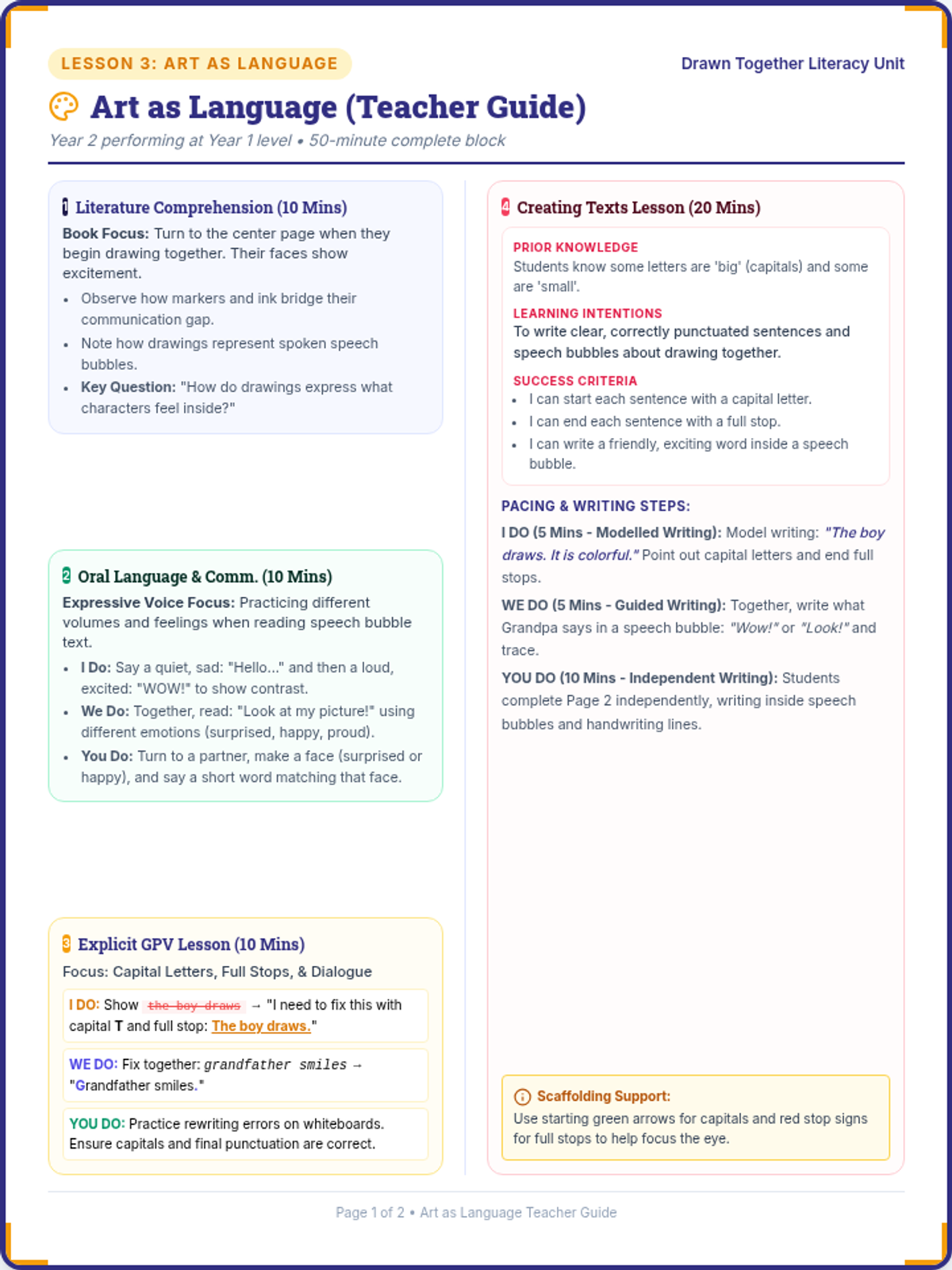
Students identify how the boy and his grandfather use drawing to communicate when spoken words fail, focusing on capital letters, full stops, and basic speech bubble text to describe characters' feelings.
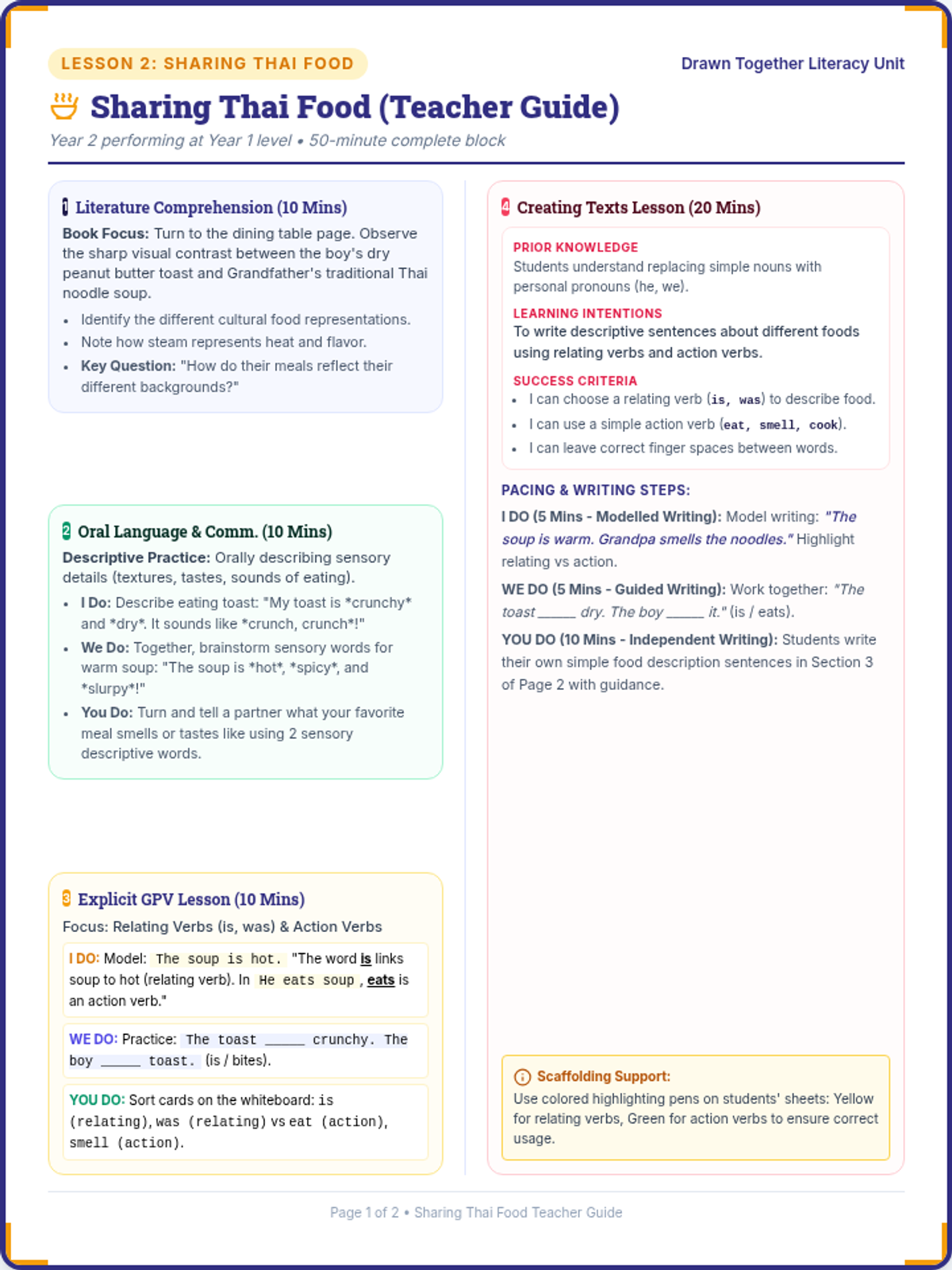
Students explore the cultural food scene in the book, focusing on the differences in what the boy and grandfather eat, and learn to use simple relating verbs (is, was) and action verbs to create a descriptive culinary narrative.
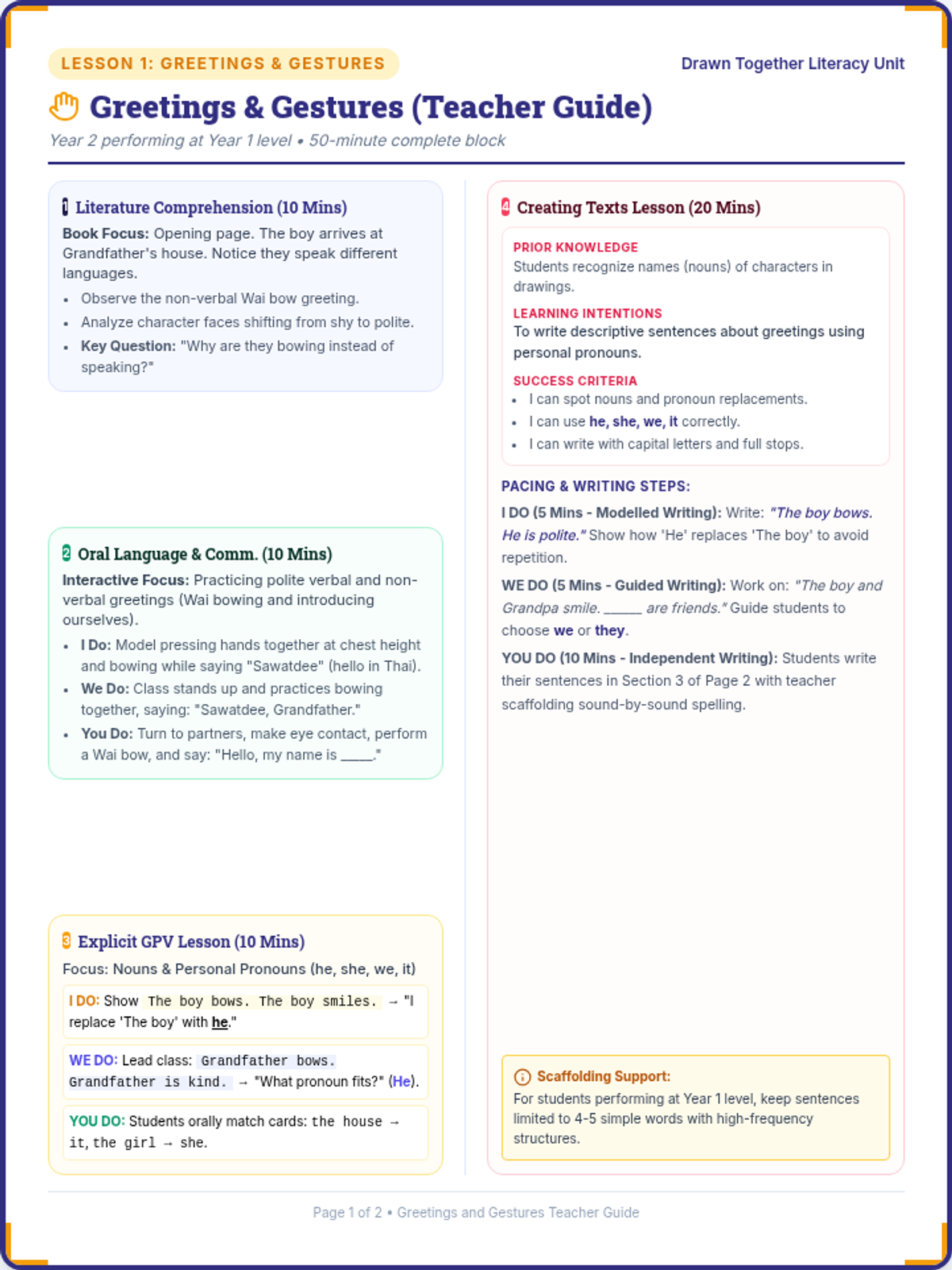
Students analyze the visual greeting between the boy and grandfather (the Wai bow) and learn to replace simple nouns with personal pronouns (he, she, we, it) before writing descriptive sentences about characters.