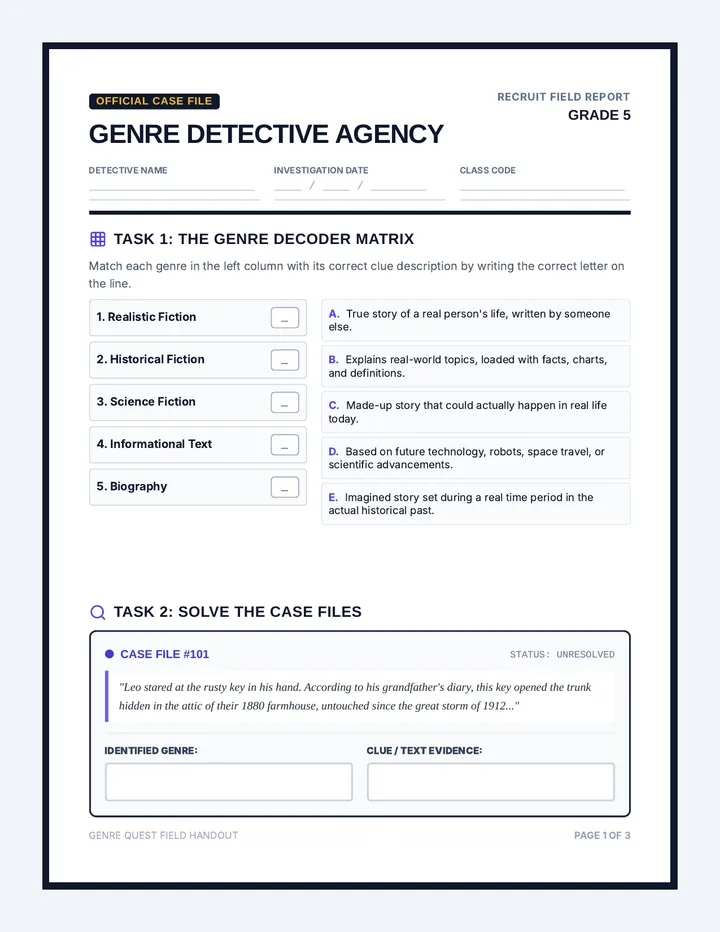
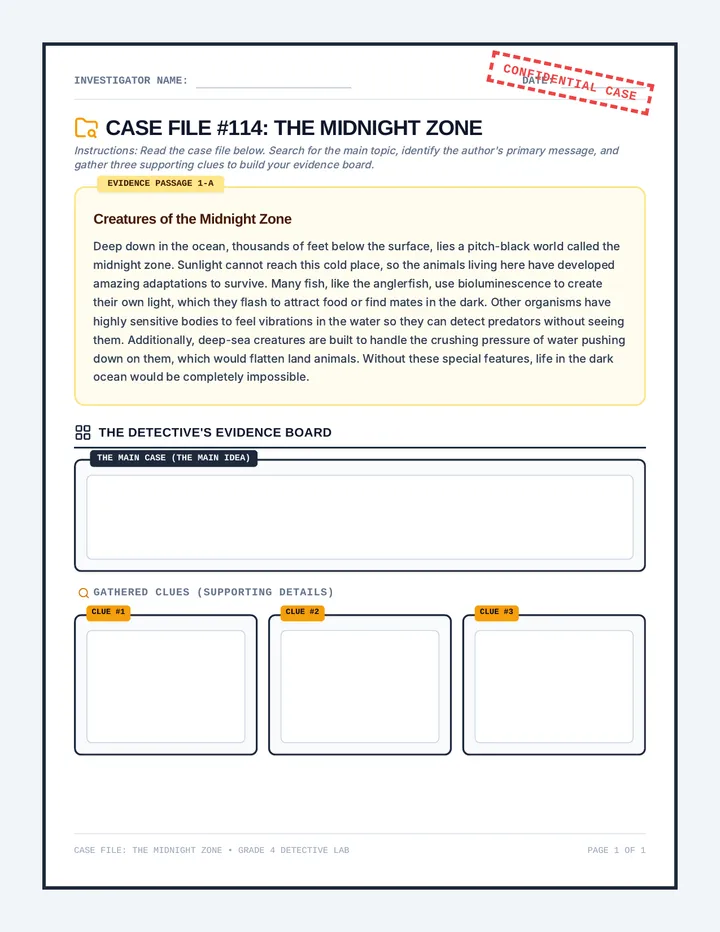
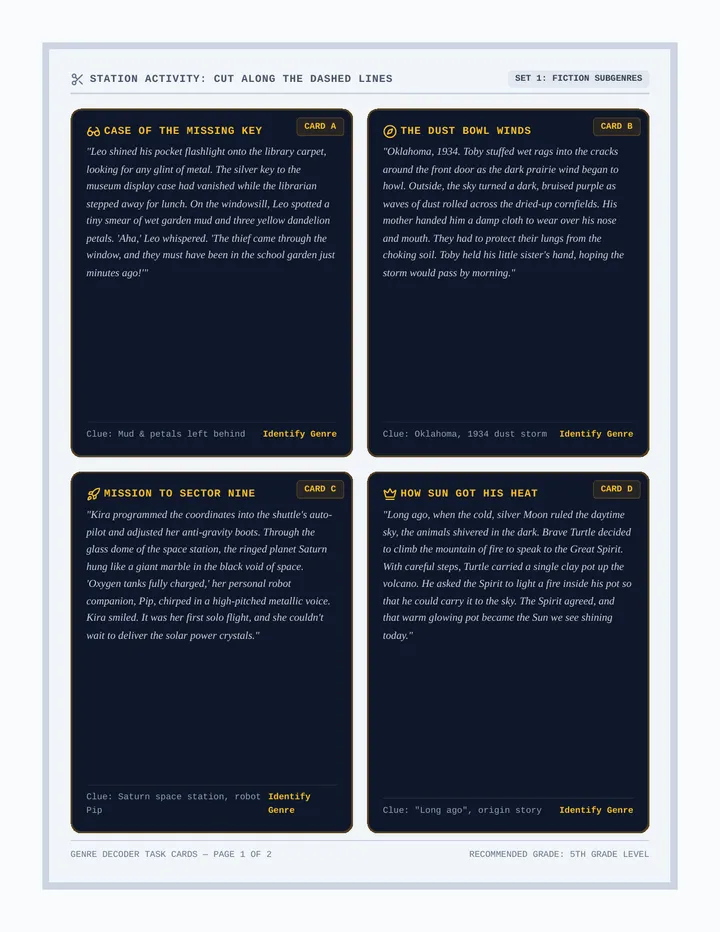
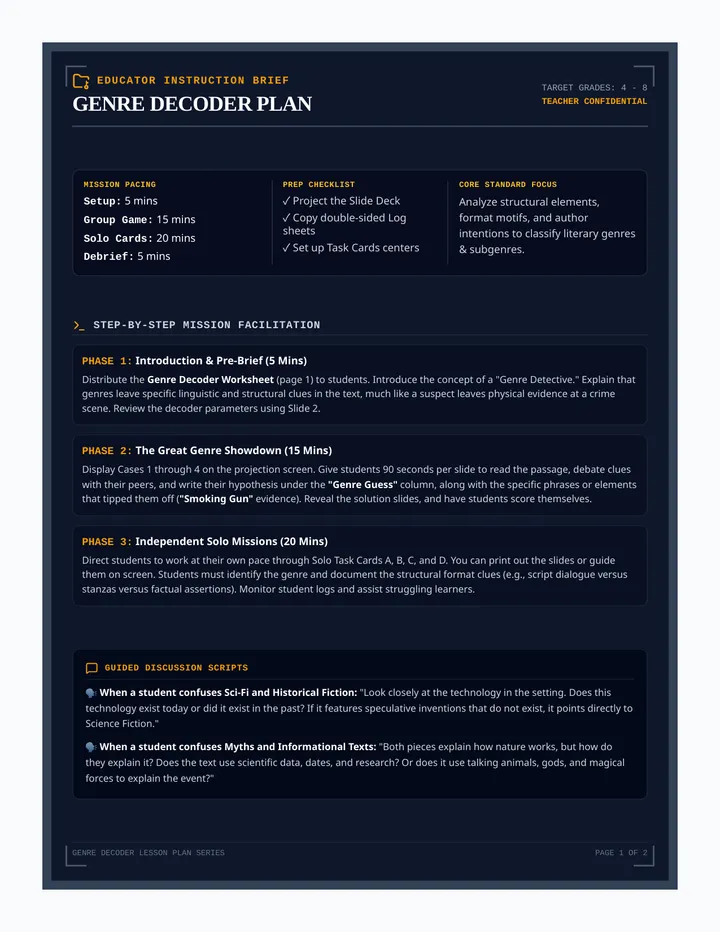
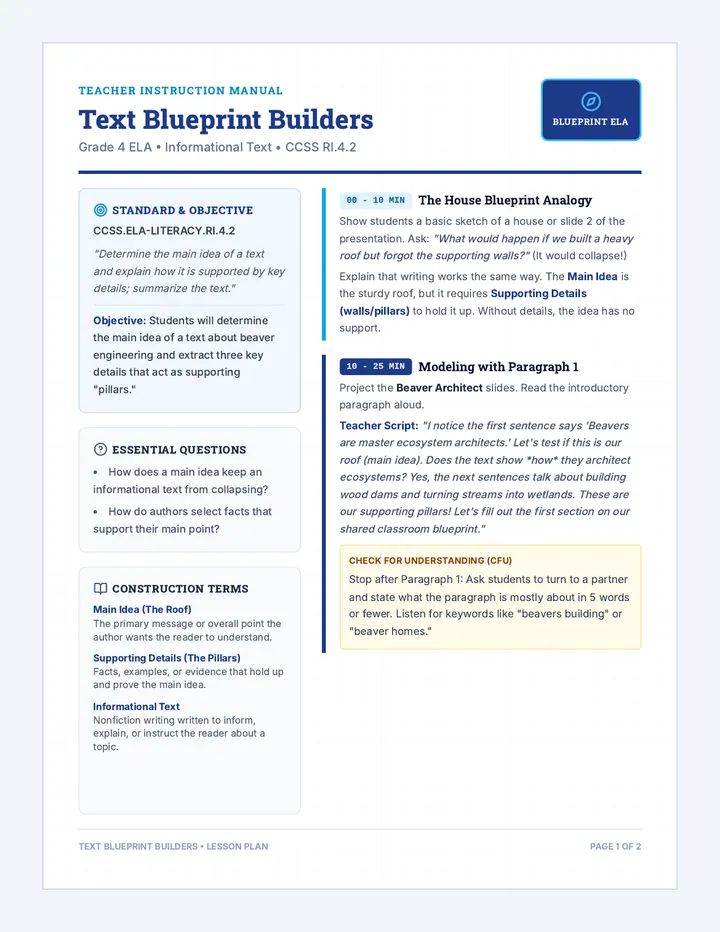
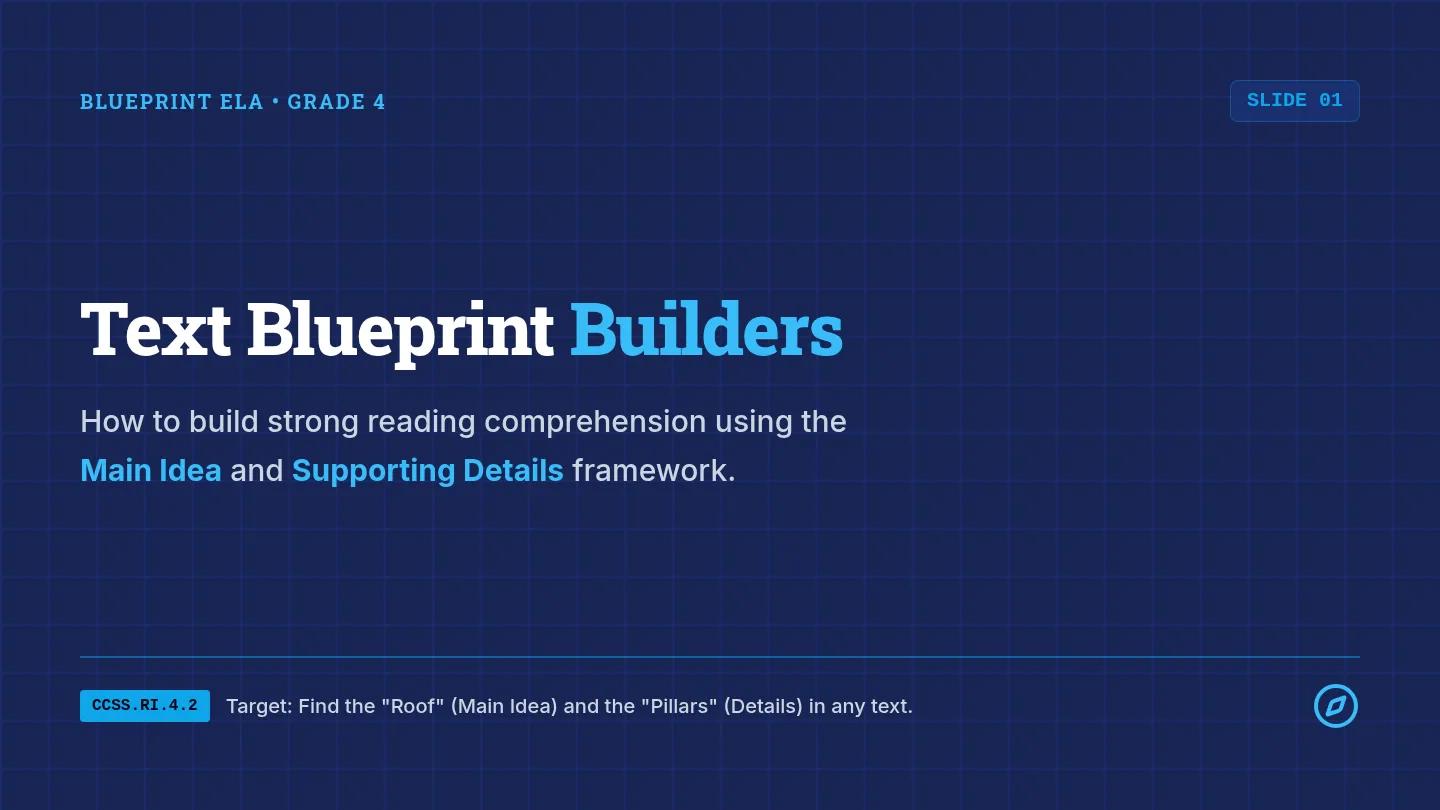
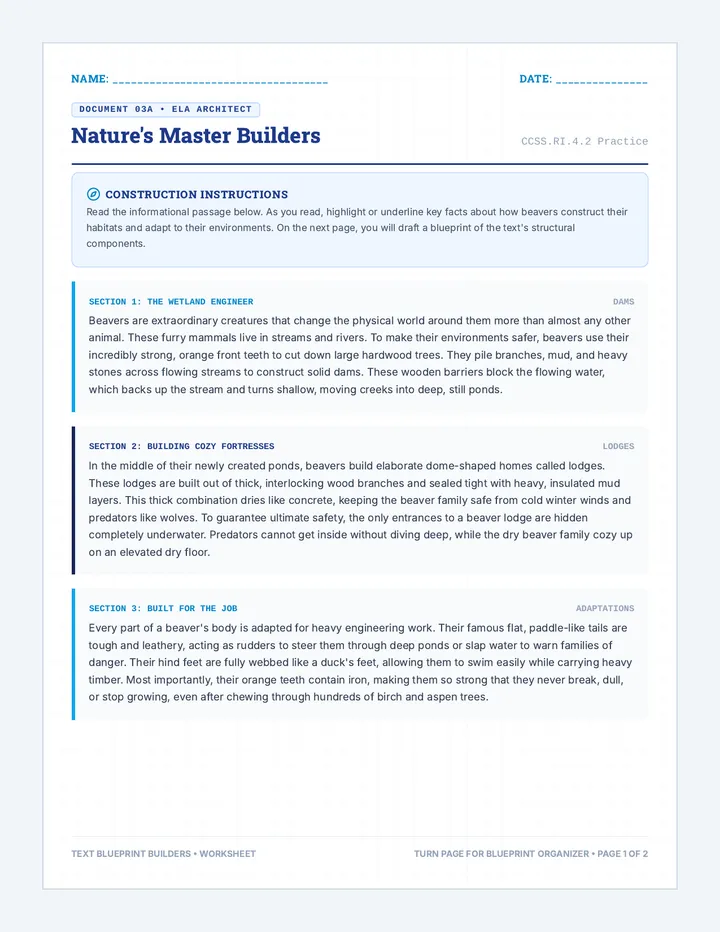
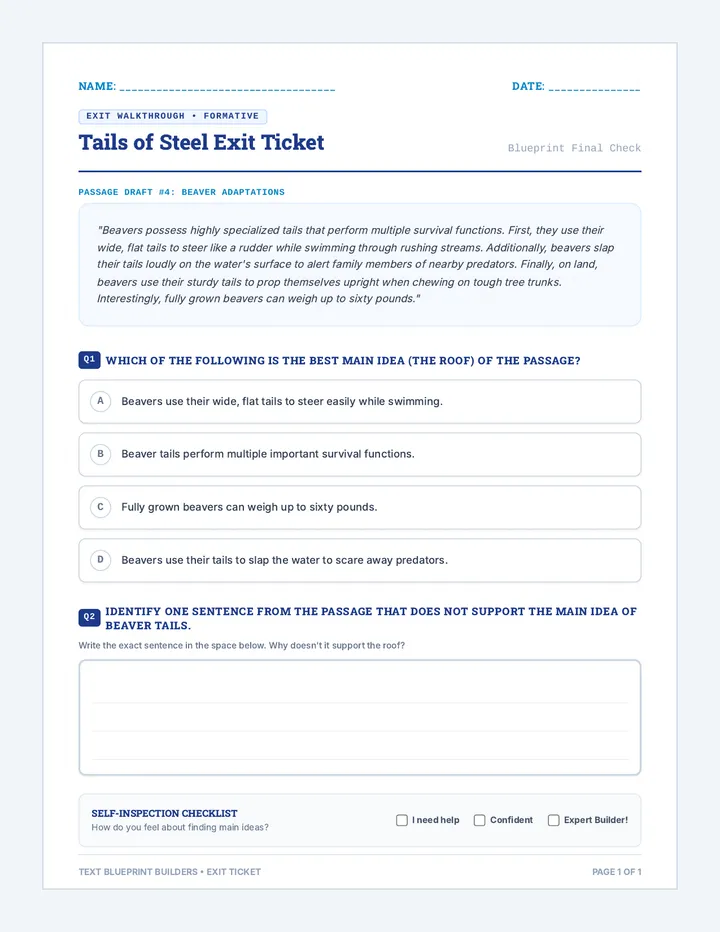
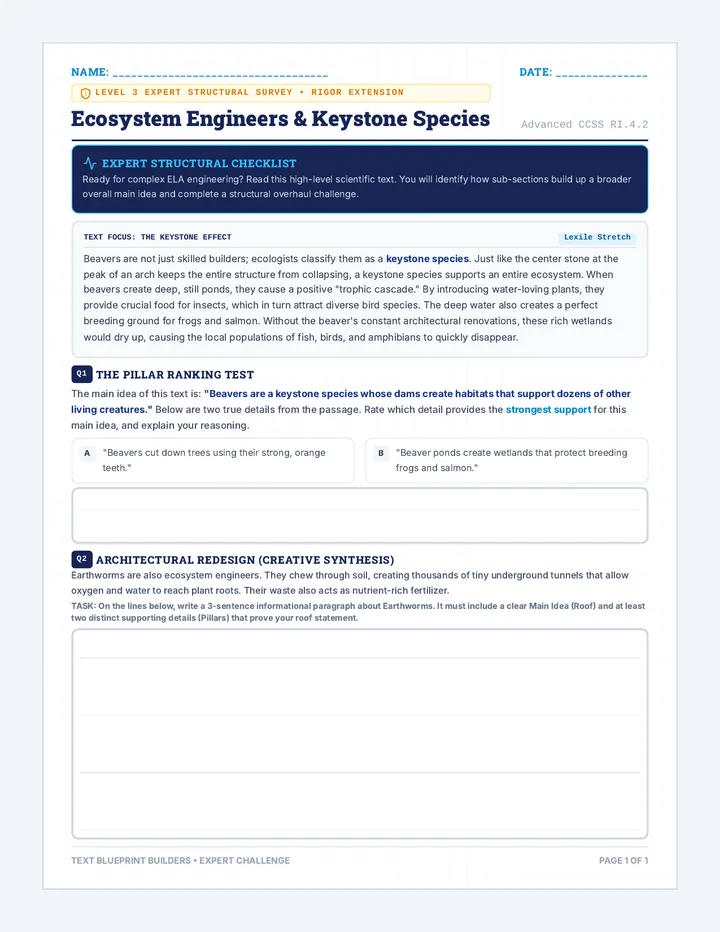
Clue Cracker Worksheet
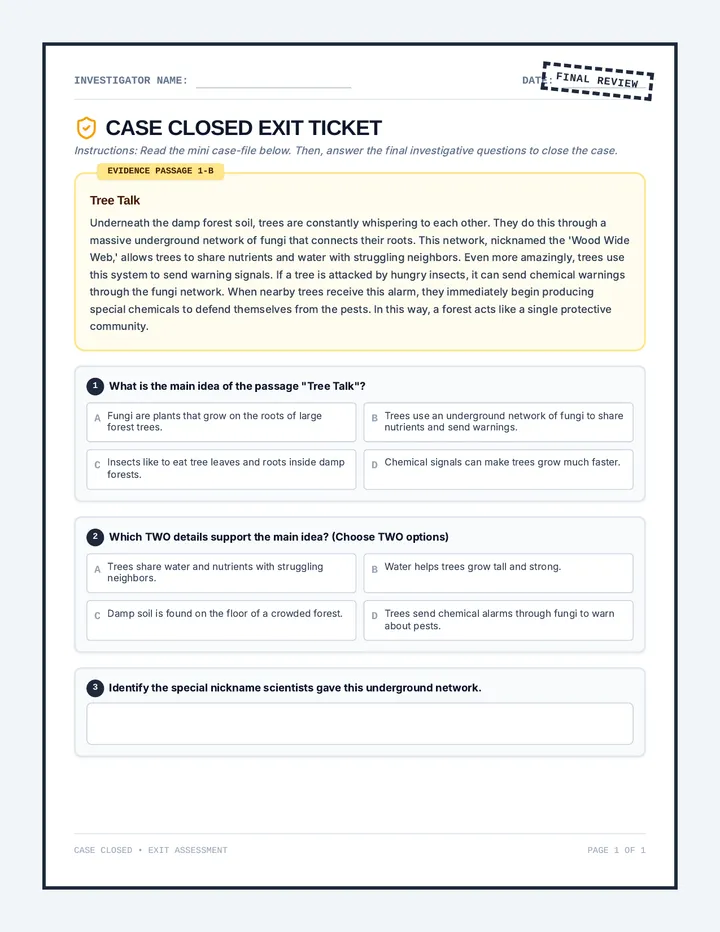
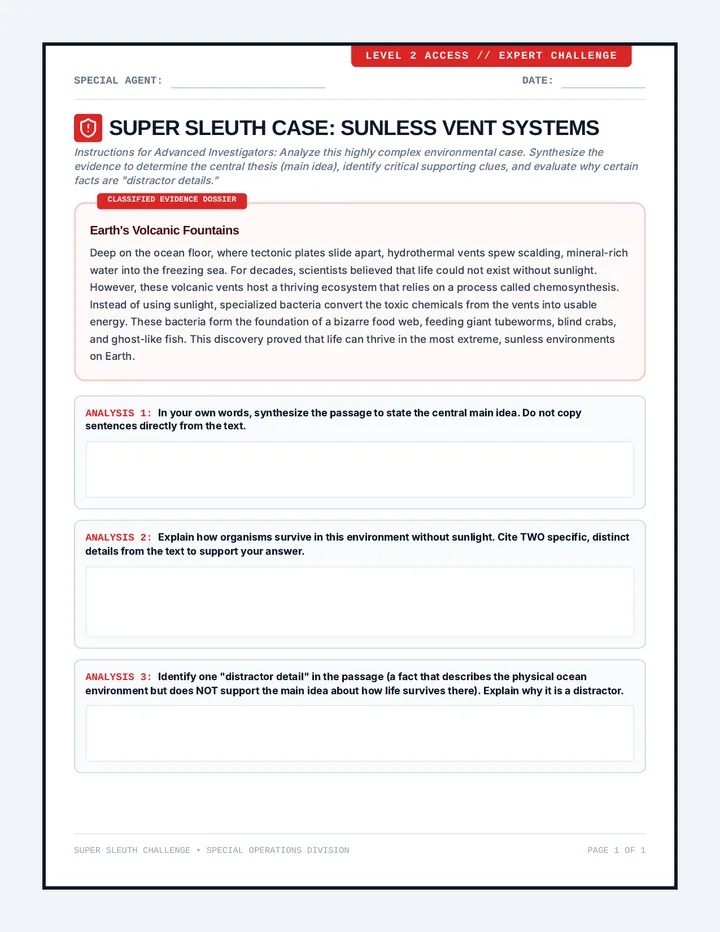
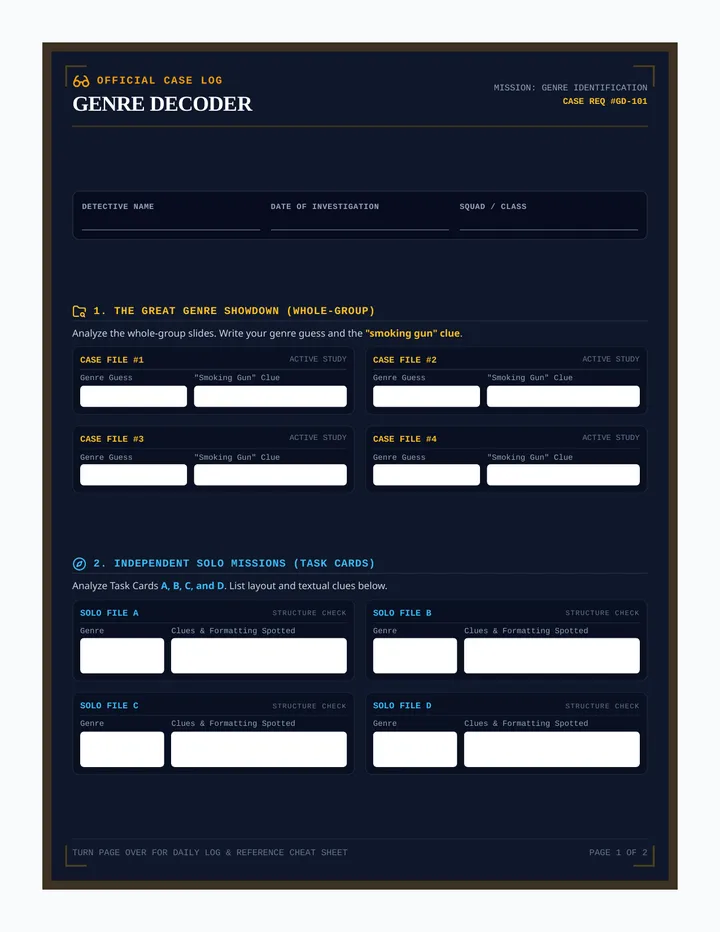
A detective-themed reading comprehension worksheet that guides students through active reading strategies like predicting, questioning, visualizing, and summarizing.
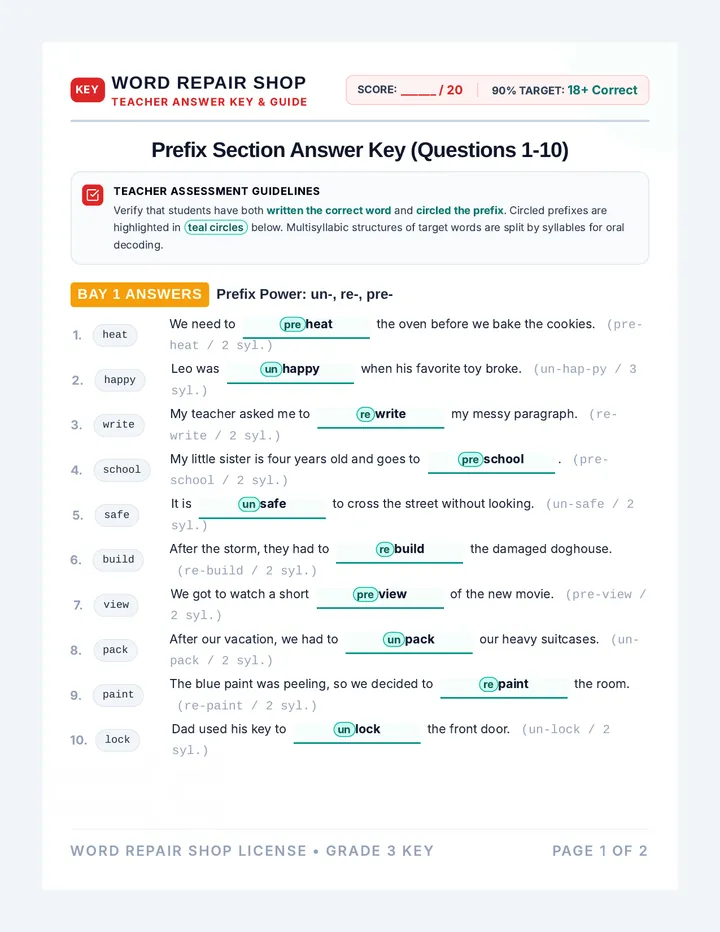
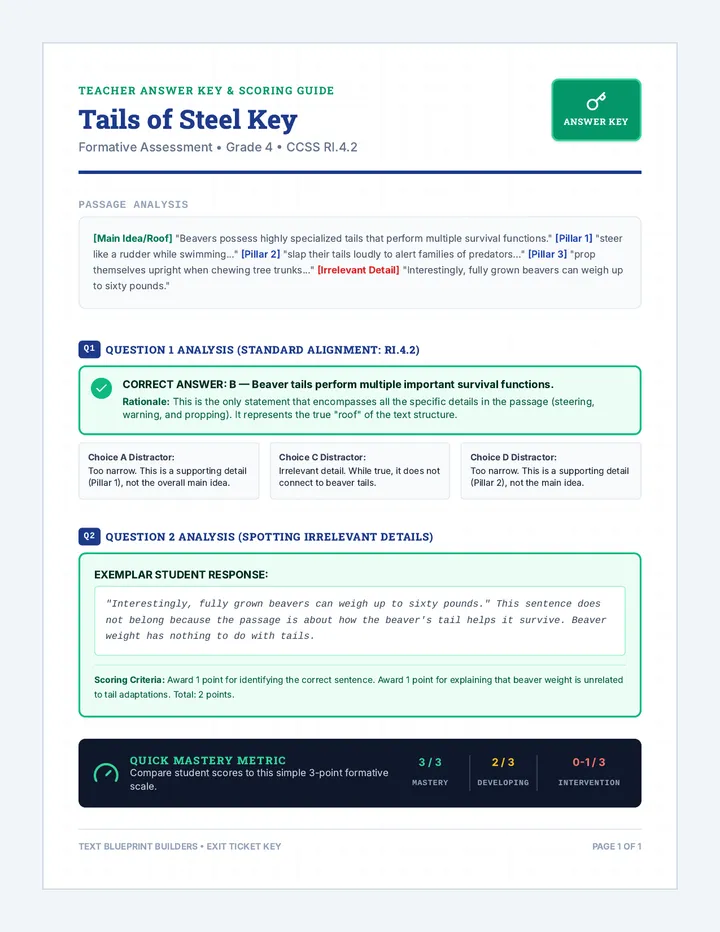
Case Closed Key
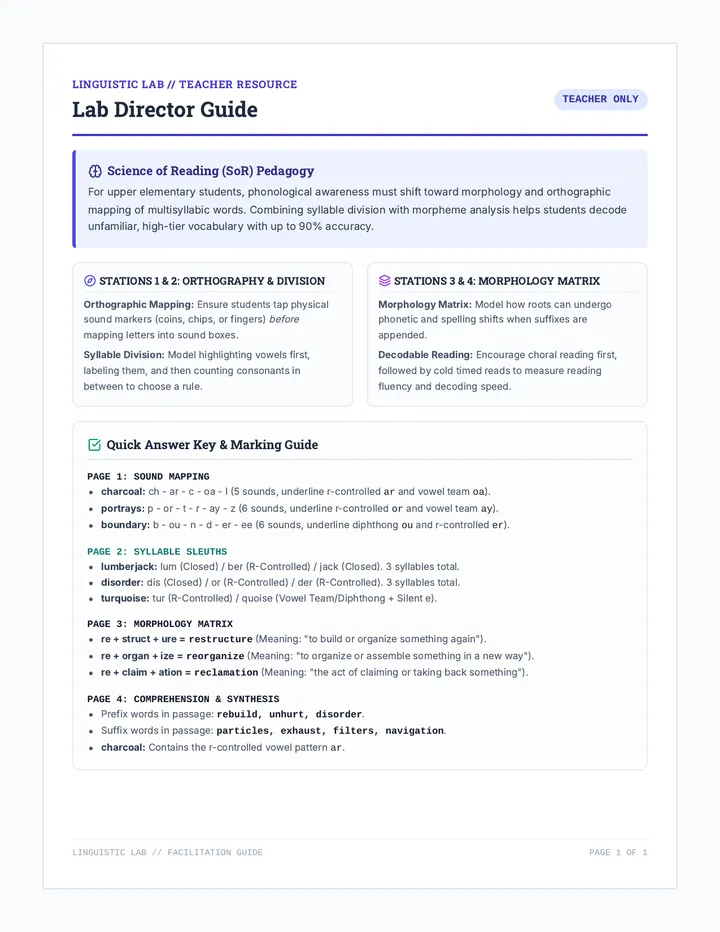
The answer key and assessment rubric for the Clue Cracker reading comprehension worksheet.
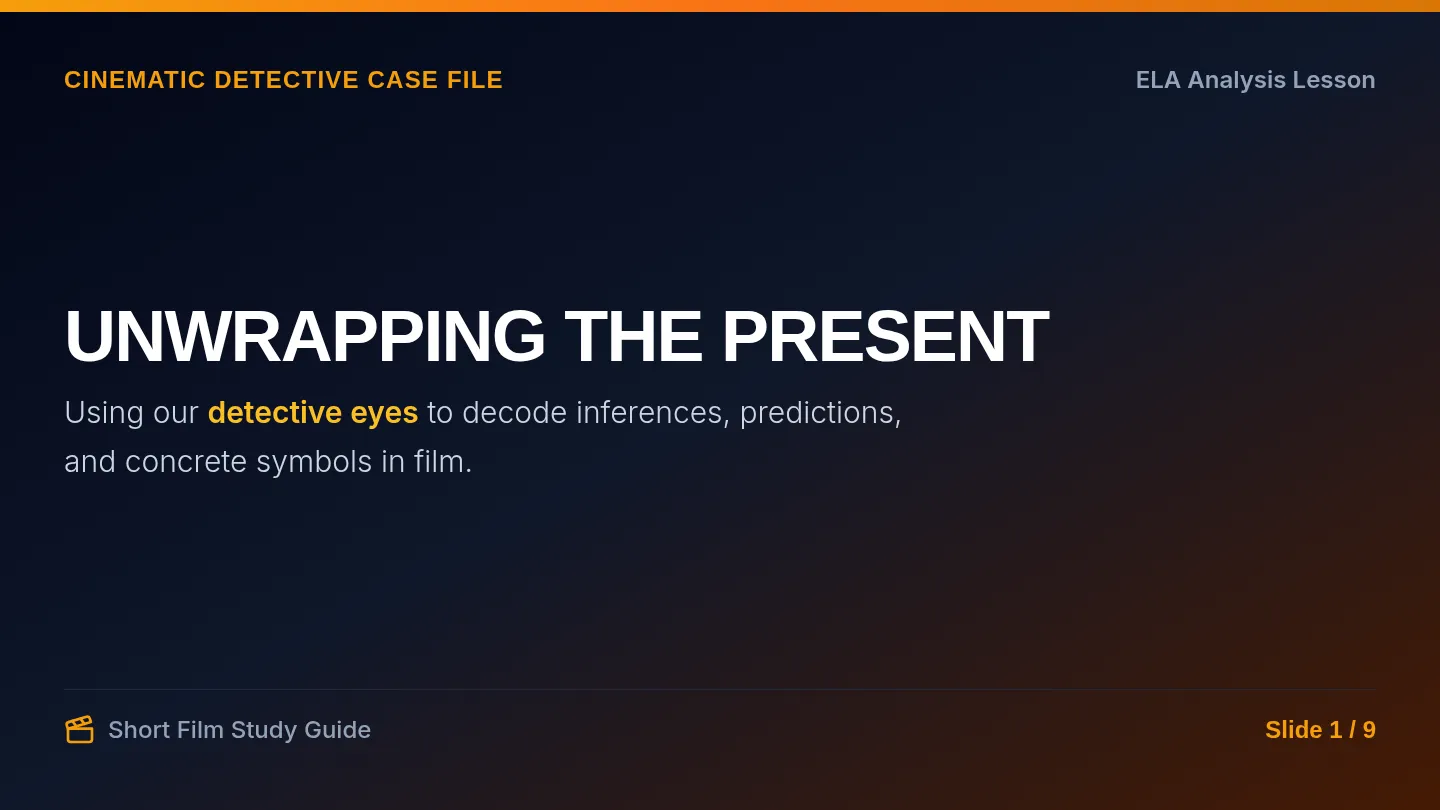
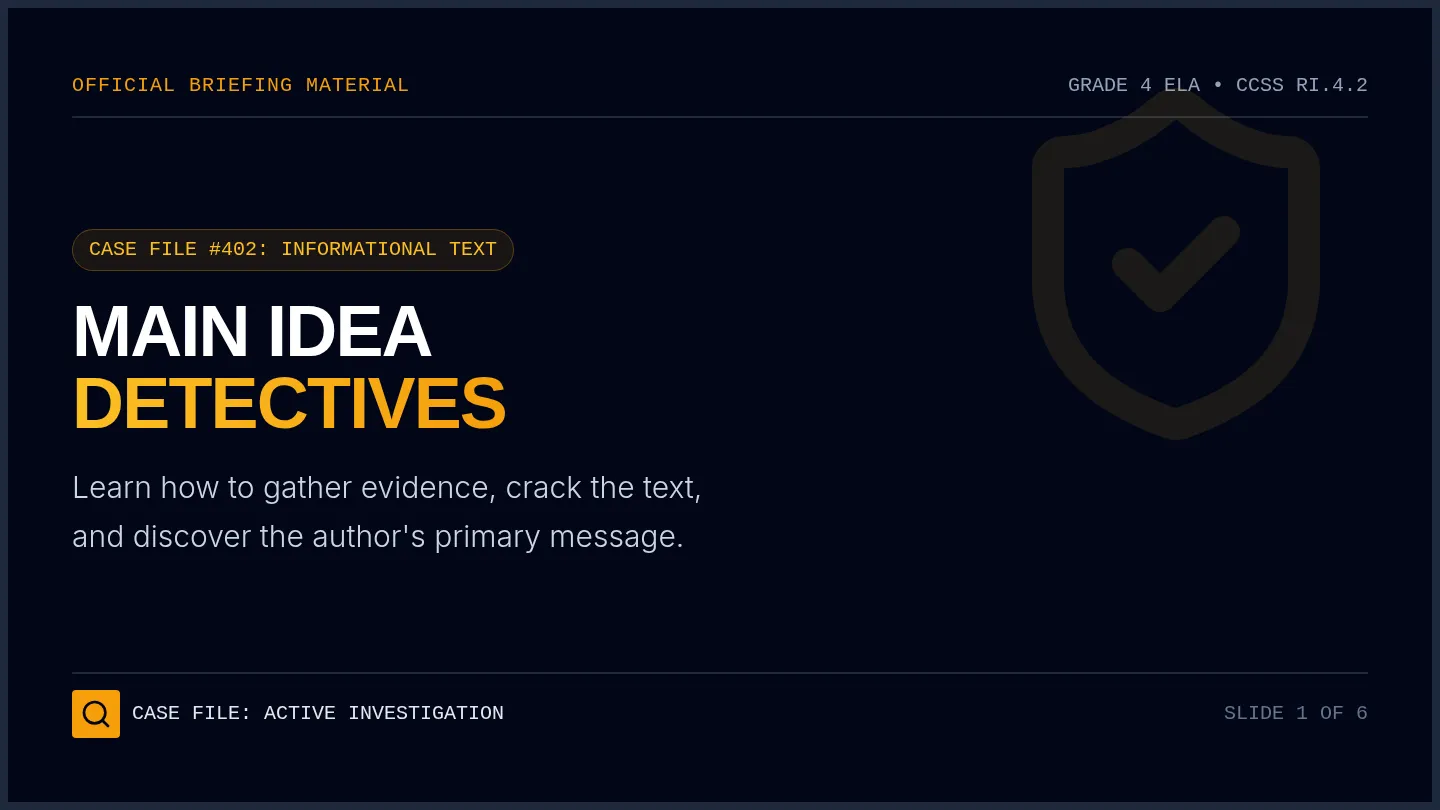
Clue Cracker Slides
A visual presentation for teaching reading comprehension strategies through a detective-themed lens.
Junior Clue Cracker Worksheet
A detective-themed reading comprehension worksheet simplified for Grades 2-3, featuring shorter sentences and vocabulary while practicing key reading strategies.
Junior Case Closed Key
A simplified answer key and rubric for the Junior Clue Cracker Worksheet, tailored for Grades 2-3 reading levels.
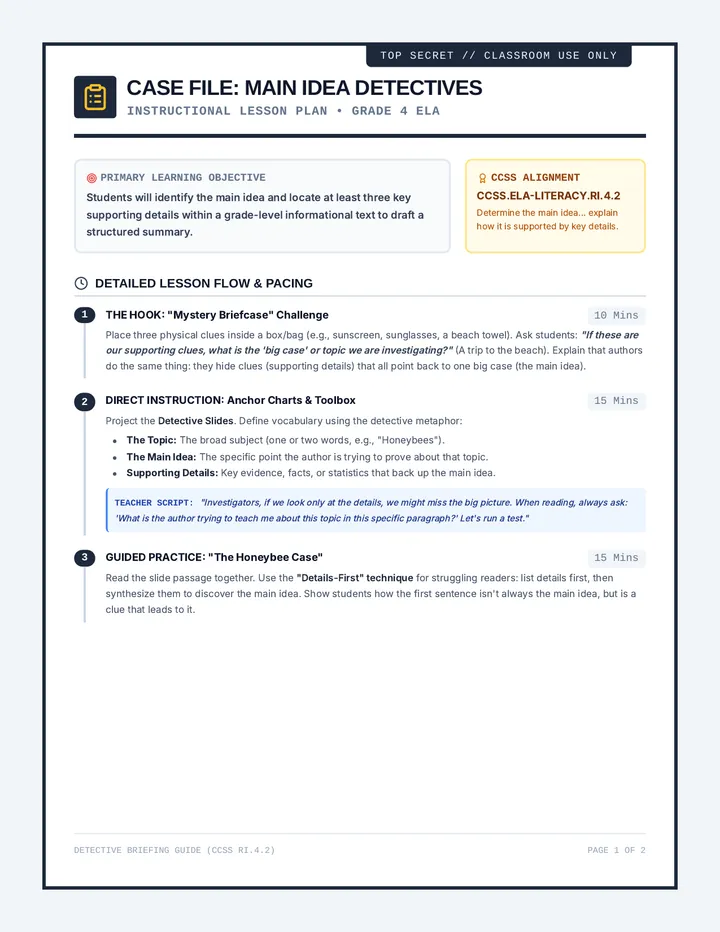
Junior Clue Cracker Slides
A simplified slide deck for teaching reading comprehension strategies to Grades 2-3, with direct language, larger fonts, and detective-themed visuals.